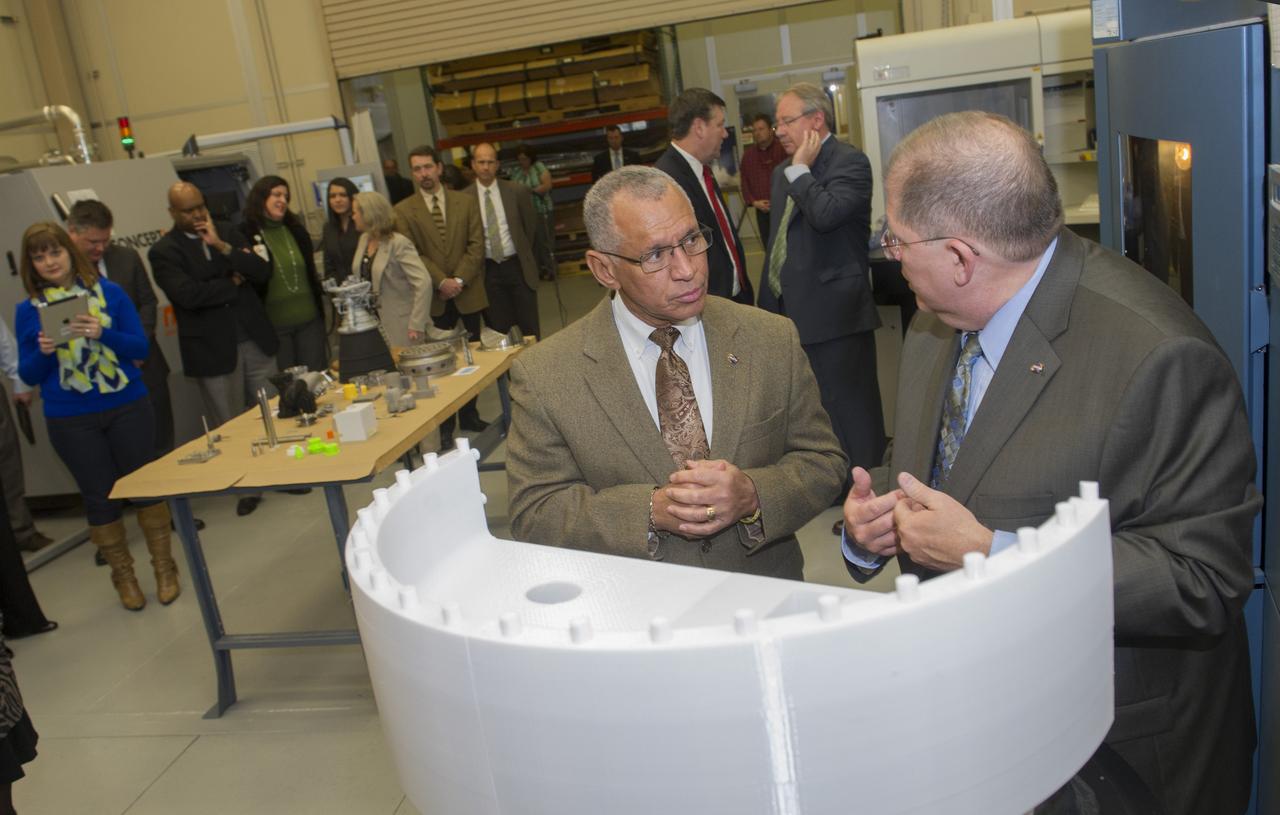
NASA ADMINISTRATOR CHARLES BOLDEN, LEFT, TALKS WITH FRANK LEDBETTER, CHIEF OF THE NONMETALLIC MATERIALS AND MANUFACTURING DIVISION AT MARSHALL, ABOUT A PART OF A PROTOTYPE FOR THE CORE STAGE-TO-BOOSTER ATTACH FITTING DURING BOLDEN'S FEB. 22 VISIT TO THE NATIONAL CENTER FOR ADVANCED MANUFACTURING RAPID PROTOTYPING FACILITY AT MARSHALL. DURING HIS TOUR, BOLDEN WATCHED RESEARCHERS EMPLOY A 3-D PRINTING PROCESS CALLED "SELECTIVE LASER MELTING" TO CREATE COMPLEX PARTS FOR THE J-2X AND RS-25 ROCKET ENGINES -- WITHOUT WELDING.
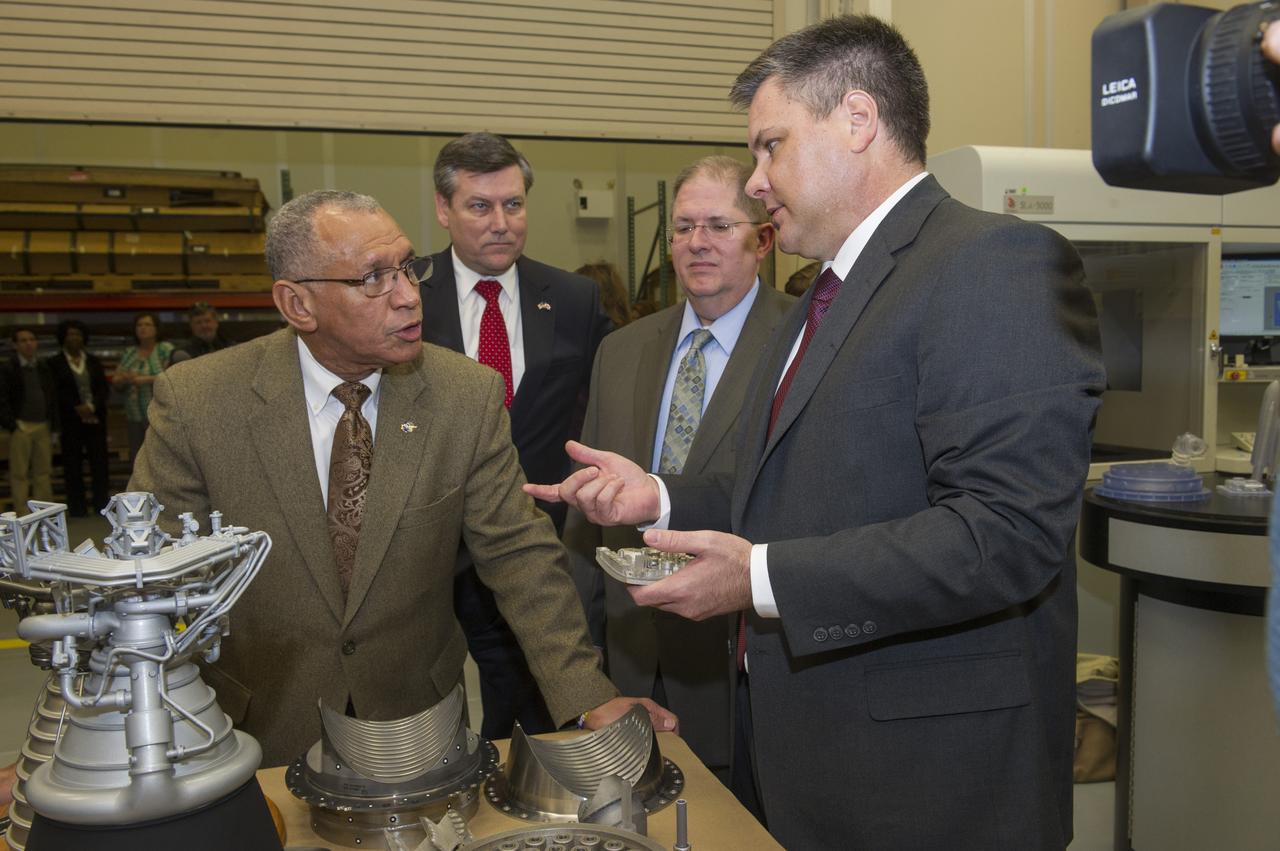
FROM LEFT, NASA ADMINISTRATOR CHARLES BOLDEN IS JOINED BY PATRICK SCHEUERMANN, NASA MARSHALL SPACE FLIGHT CENTER DIRECTOR; FRANK LEDBETTER, CHIEF OF NONMETALLIC MATERIALS AND MANUFACTURING DIVISION AT THE MARSHALL CENTER; AND ANDY HARDIN, NASA'S SPACE LAUNCH SYSTEM SUBSYSTEM MANAGER FOR LIQUID ENGINES DURING BOLDEN'S TOUR OF THE NATIONAL CENTER FOR ADVANCED MANUFACTURING RAPID PROTOTYPING FACILITY AT THE MARSHALL CENTER ON FRIDAY, FEB. 22.
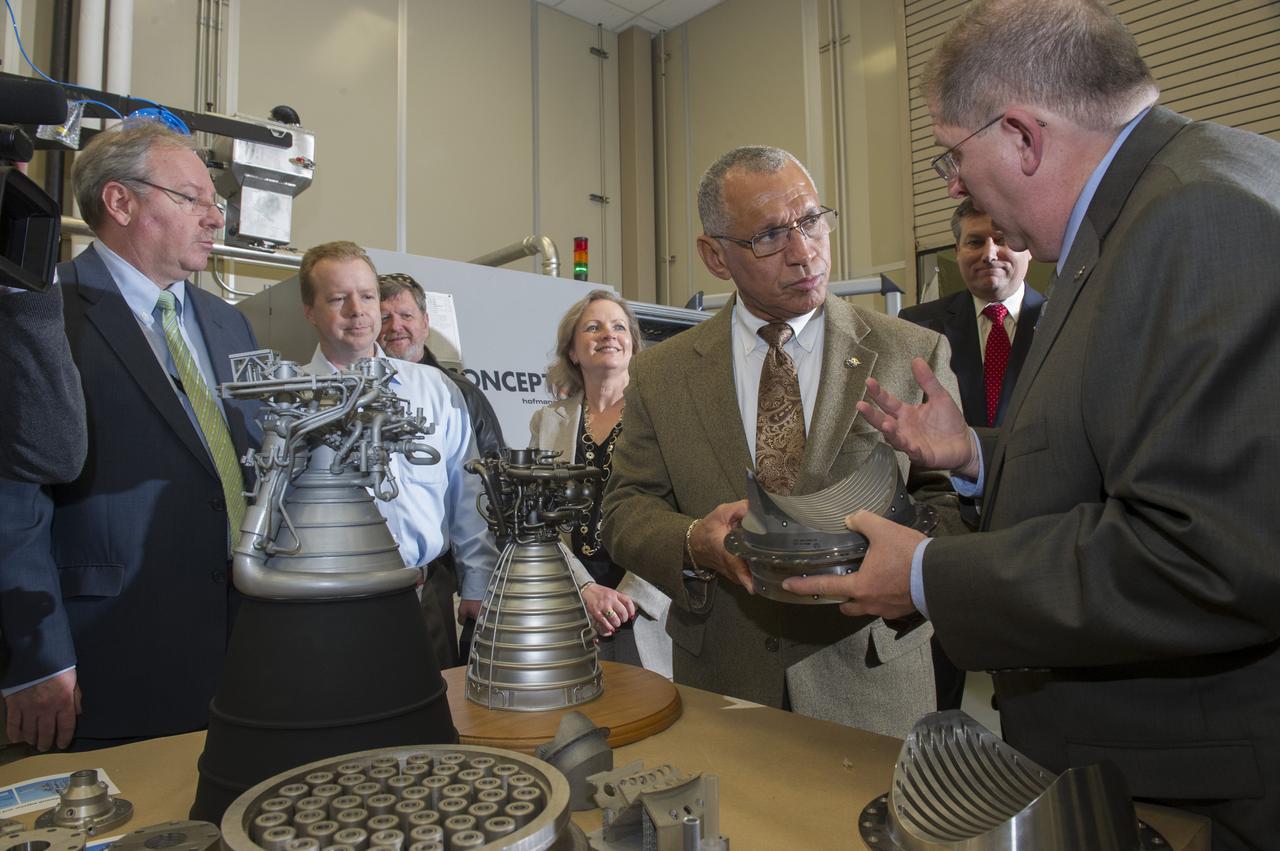
DURING HIS FEB. 22 VISIT TO THE NATIONAL CENTER FOR ADVANCED MANUFACTURING RAPID PROTOTYPING FACILITY AT NASA'S MARSHALL SPACE FLIGHT CENTER, NASA ADMINISTRATOR CHARLES BOLDEN, CENTER, TALKS WITH FRANK LEDBETTER, RIGHT, CHIEF OF THE NONMETALLIC MATERIALS AND MANUFACTURING DIVISION AT MARSHALL, ABOUT THE USE OF 3-D PRINTING AND PROTOTYPING TECHNOLOGY TO CREATE PARTS FOR THE SPACE LAUNCH SYSTEM. ALSO PARTICIPATING IN THE TOUR ARE, FROM BACK RIGHT, MARSHALL CENTER DIRECTOR PATRICK SCHEUERMANN; SHERRY KITTREDGE, DEPUTY MANAGER OF THE SLS LIQUID ENGINES OFFICE; MARSHALL FLIGHT SYSTEMS DESIGN ENGINEER ROB BLACK; AND JOHN VICKERS, MANAGER OF THE NATIONAL CENTER FOR ADVANCED MANUFACTURING.
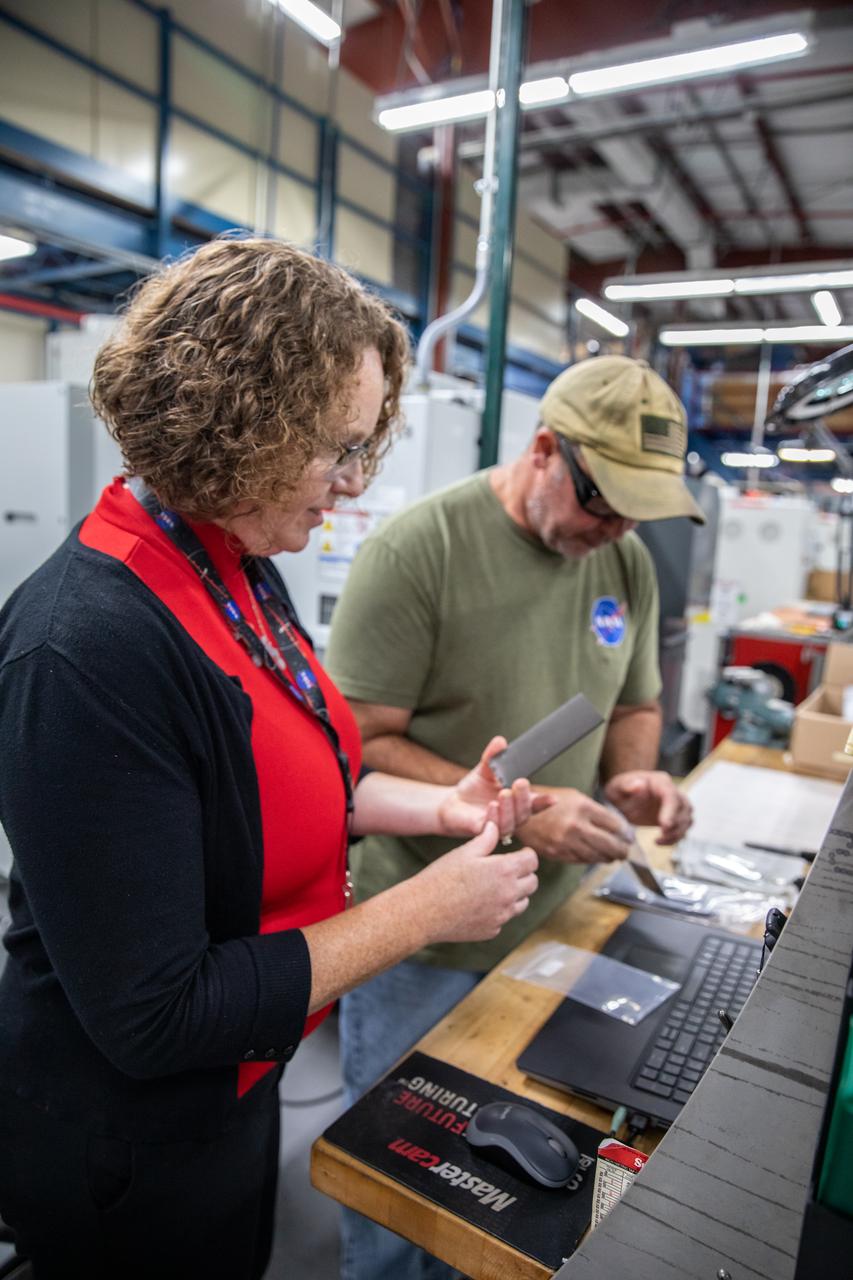
From left, Dr. Jennifer Williams, a NASA research chemical engineer, and Gerard Moscoso, a mechanical engineer technician, inspect specimens prepared forthe Plasma Rapid Oxidation Technique for Extending Component Tenability (PROTECT) experiment inside the Prototype Development Laboratory at NASA’s Kennedy Space Center in Florida on Nov. 2, 2022. Plasma electrolytic oxidation is a surface coating technology that produces oxide layers on the surface of light metals and their alloys to improve their performance characteristics. These coatings are tailored to provide a combination of characteristics such as corrosion protection, wear resistance, thermal management, extreme hardness, and fatigue performance. PROTECT is expected to demonstrate a 10 percent improved fatigue performance and a 70 percent improvement in corrosion characteristics on the interior of treated 3-D printed metallic parts when compared to non-treated parts. PROTECT could be applied used on spacecraft and launch vehicles.
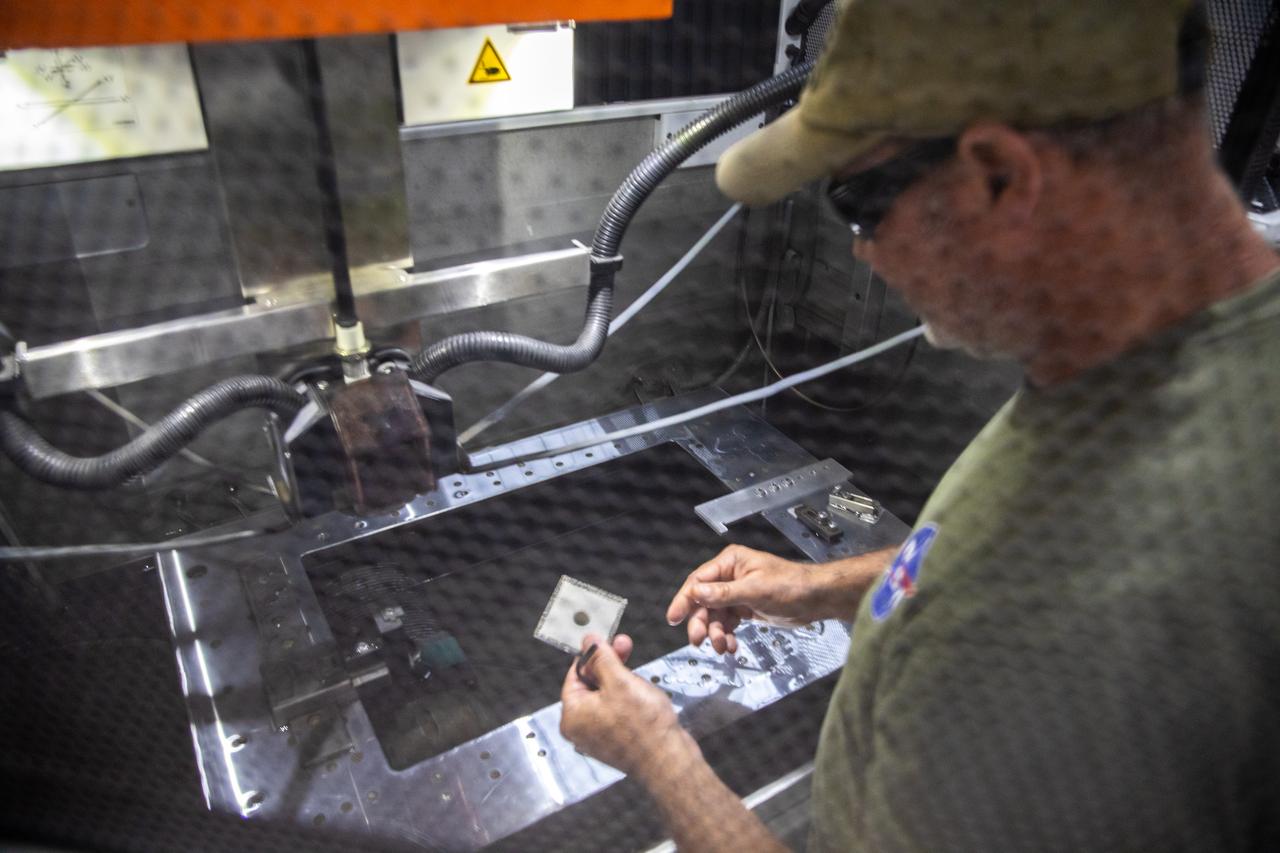
Gerard Moscoso, a mechanical engineer technician with NASA, prepares a sample for testing for the Plasma Rapid Oxidation Technique for Extending Component Tenability (PROTECT) project inside the Prototype Development Laboratory at NASA’s Kennedy Space Center in Florida on Nov. 2, 2022. Plasma electrolytic oxidation is a surface coating technology that produces oxide layers on the surface of light metals and their alloys to improve their performance characteristics. These coatings are tailored to provide a combination of characteristics such as corrosion protection, wear resistance, thermal management, extreme hardness, and fatigue performance. PROTECT is expected to demonstrate a 10 percent improved fatigue performance and a 70 percent improvement in corrosion characteristics on the interior of treated 3-D printed metallic parts when compared to non-treated parts. PROTECT could be applied on spacecraft and launch vehicles.
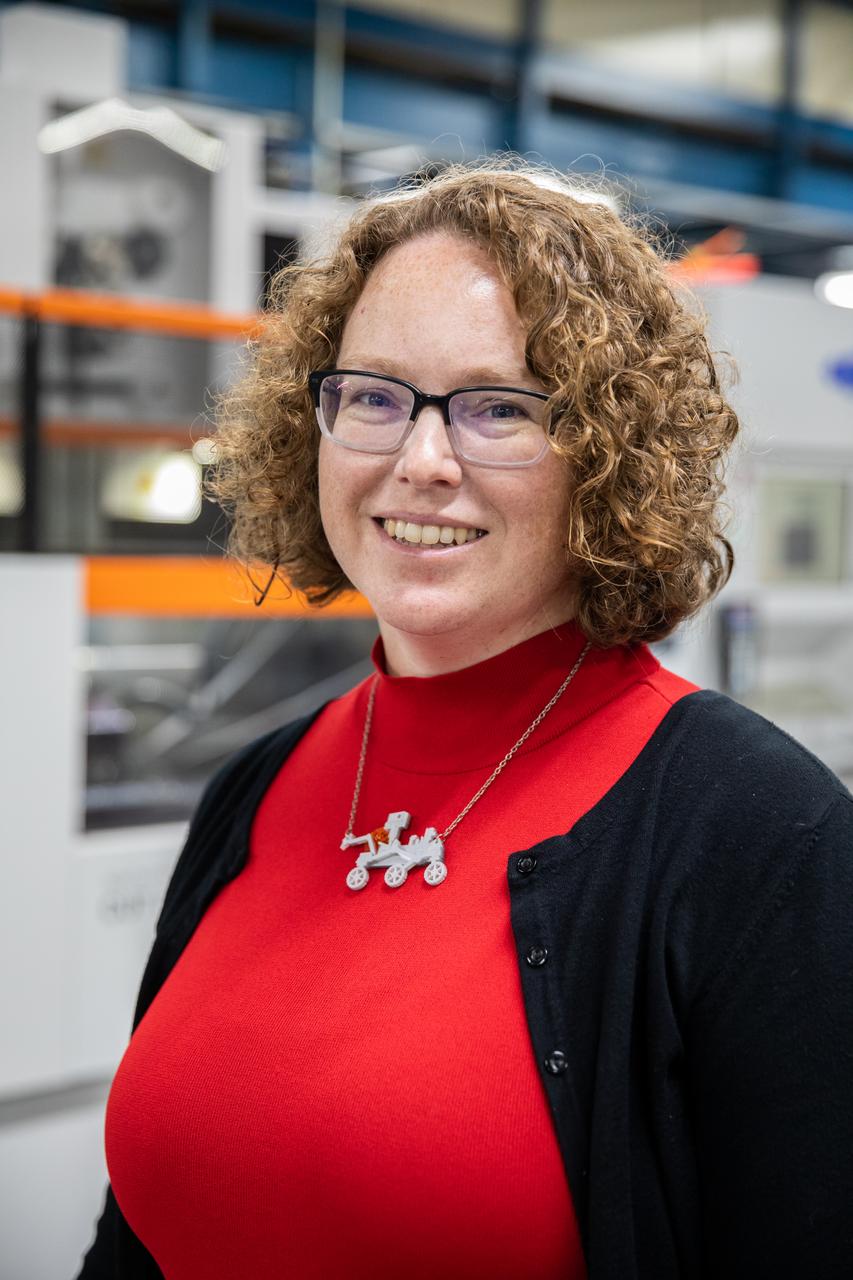
Dr. Jennifer Williams, a NASA research chemical engineer, is inside the Prototype Development Laboratory at NASA’s Kennedy Space Center in Florida to begin testing on the Plasma Rapid Oxidation Technique for Extending Component Tenability (PROTECT) project on Nov. 2, 2022. Plasma electrolytic oxidation is a surface coating technology that produces oxide layers on the surface of light metals and their alloys to improve their performance characteristics. These coatings are tailored to provide a combination of characteristics such as corrosion protection, wear resistance, thermal management, extreme hardness, and fatigue performance. PROTECT is expected to demonstrate a 10 percent improved fatigue performance and a 70 percent improvement in corrosion characteristics on the interior of treated 3-D printed metallic parts when compared to non-treated parts. PROTECT could be applied to spacecraft and launch vehicles.
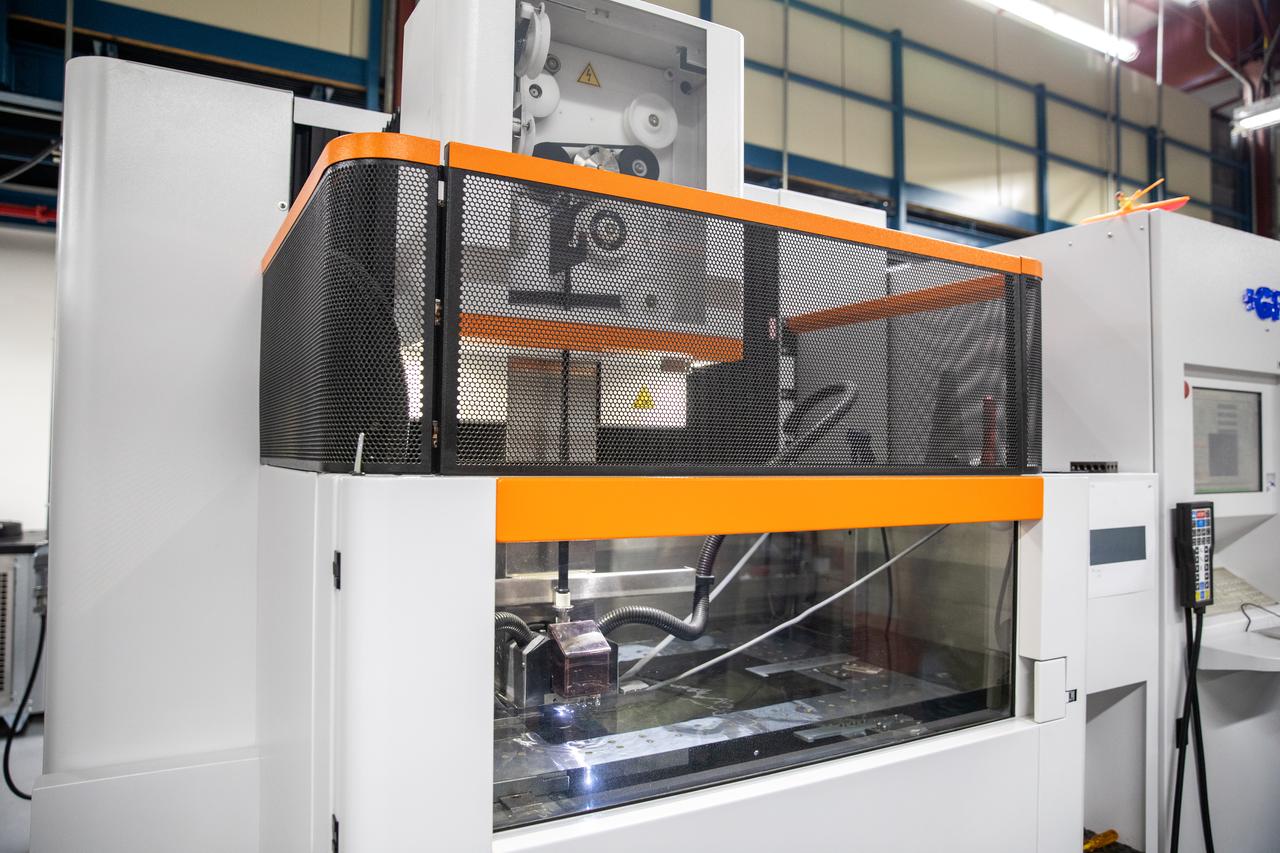
Testing of the Plasma Rapid Oxidation Technique for Extending Component Tenability (PROTECT) experiment is underway inside the Prototype Development Laboratory at NASA’s Kennedy Space Center in Florida on Nov. 2, 2022. Plasma electrolytic oxidation is a surface coating technology that produces oxide layers on the surface of light metals and their alloys to improve their performance characteristics. These coatings are tailored to provide a combination of characteristics such as corrosion protection, wear resistance, thermal management, extreme hardness, and fatigue performance. PROTECT is expected to demonstrate a ten percent improved fatigue performance and a 70 percent improvement in corrosion characteristics on the interior of treated 3-D printed metallic parts when compared to non-treated parts. PROTECT could be applied on spacecraft and launch vehicles.
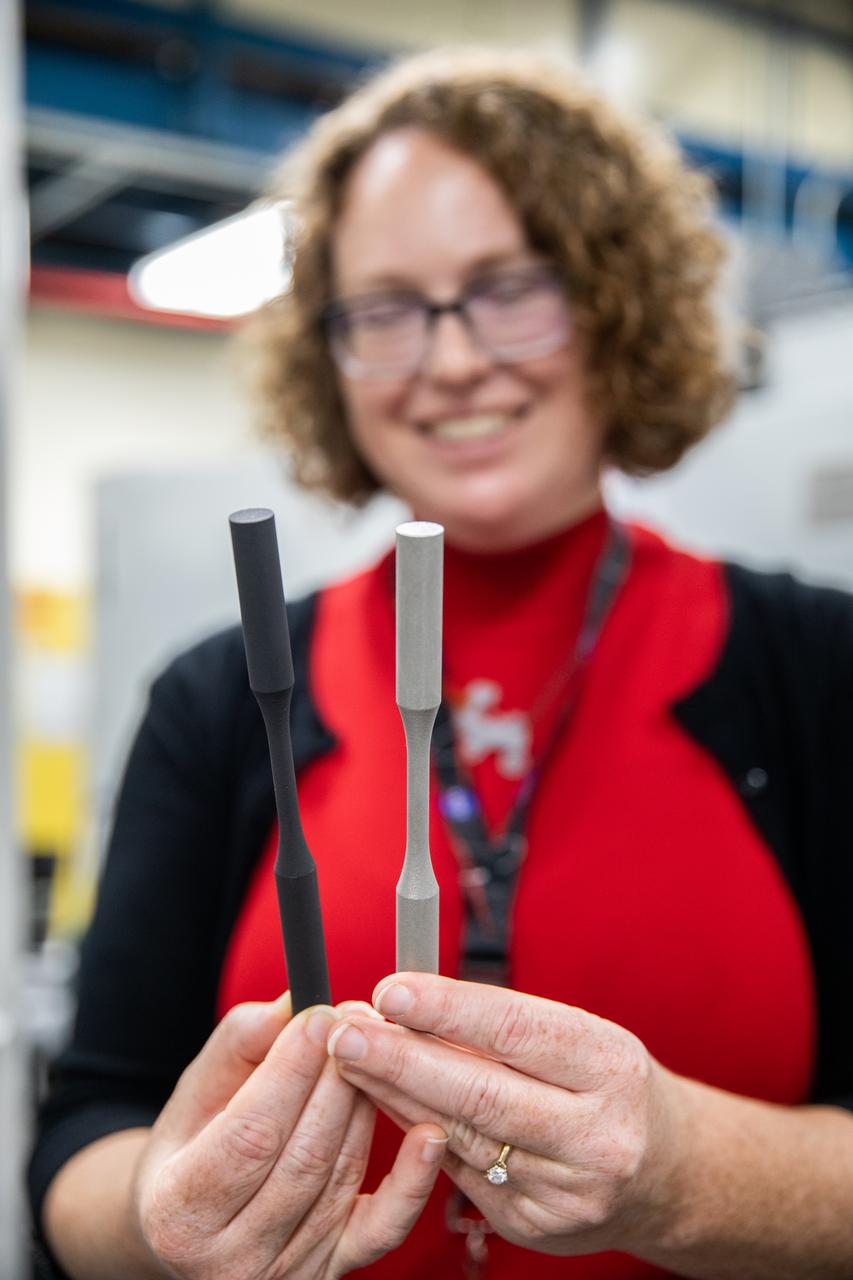
Dr. Jennifer Williams, a NASA research chemical engineer, displays two fatigue samples that will be tested in the Plasma Rapid Oxidation Technique for Extending Component Tenability (PROTECT) experiments inside the Prototype Laboratory at NASA’s Kennedy Space Center in Florida on Nov. 2, 2022. Plasma electrolytic oxidation is a surface coating technology that produces oxide layers on the surface of light metals and their alloys to improve their performance characteristics. These coatings are tailored to provide a combination of characteristics such as corrosion protection, wear resistance, thermal management, extreme hardness, and fatigue performance. PROTECT is expected to demonstrate a 10 percent improved fatigue performance and a 70 percent improvement in corrosion characteristics on the interior of treated 3-D printed metallic parts when compared to non-treated parts. PROTECT could be applied to spacecraft and launch vehicles.
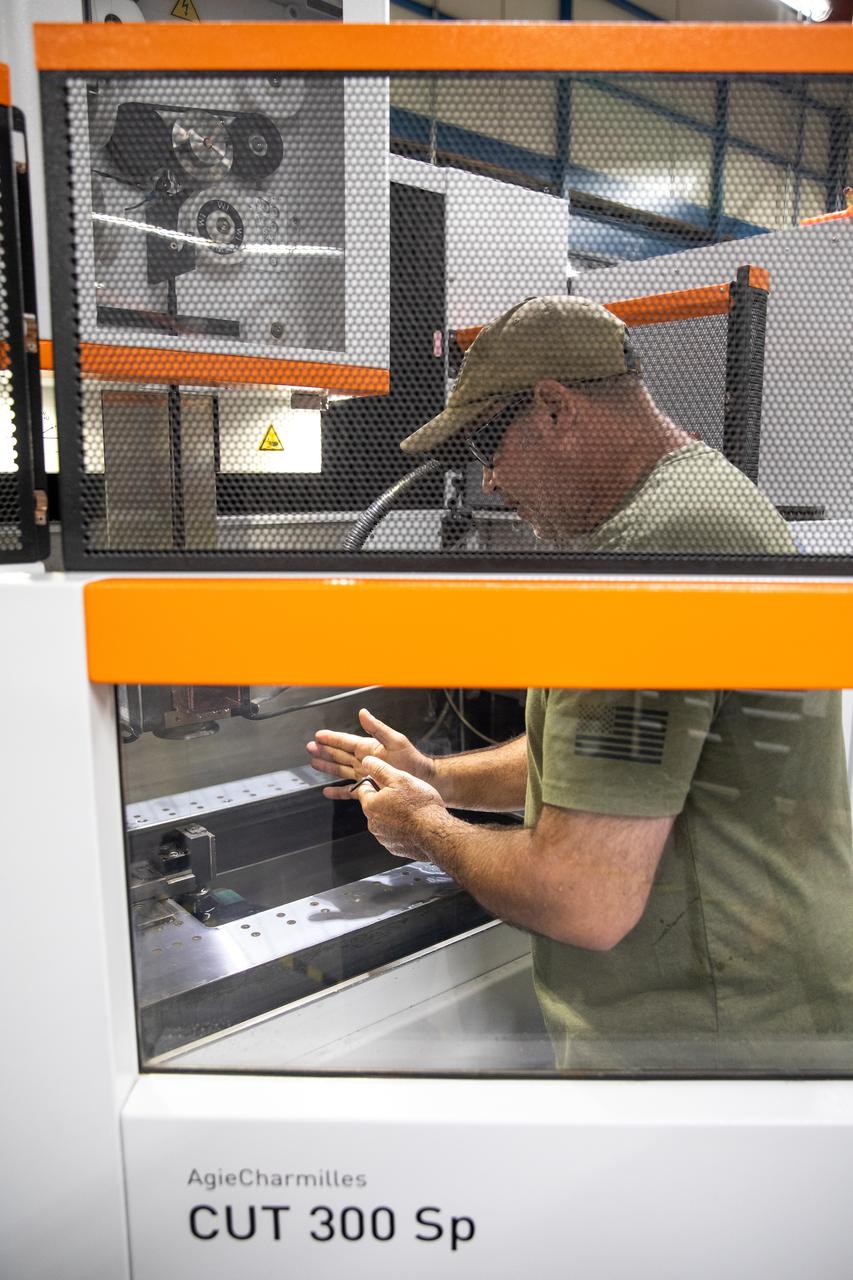
Gerard Moscoso, a mechanical engineer technician with NASA, handles a sample that is being prepared for fatigue and corrosion testing for the Plasma Rapid Oxidation Technique for Extending Component Tenability (PROTECT) project inside the Prototype Development Laboratory at NASA’s Kennedy Space Center in Florida on Nov. 2, 2022. Plasma electrolytic oxidation is a surface coating technology that produces oxide layers on the surface of light metals and their alloys to improve their performance characteristics. These coatings are tailored to provide a combination of characteristics such as corrosion protection, wear resistance, thermal management, extreme hardness, and fatigue performance. PROTECT is expected to demonstrate a ten percent improved fatigue performance and a 70 percent improvement in corrosion characteristics on the interior of treated 3-D printed metallic parts when compared to non-treated parts. PROTECT could be applied on spacecraft and launch vehicles.
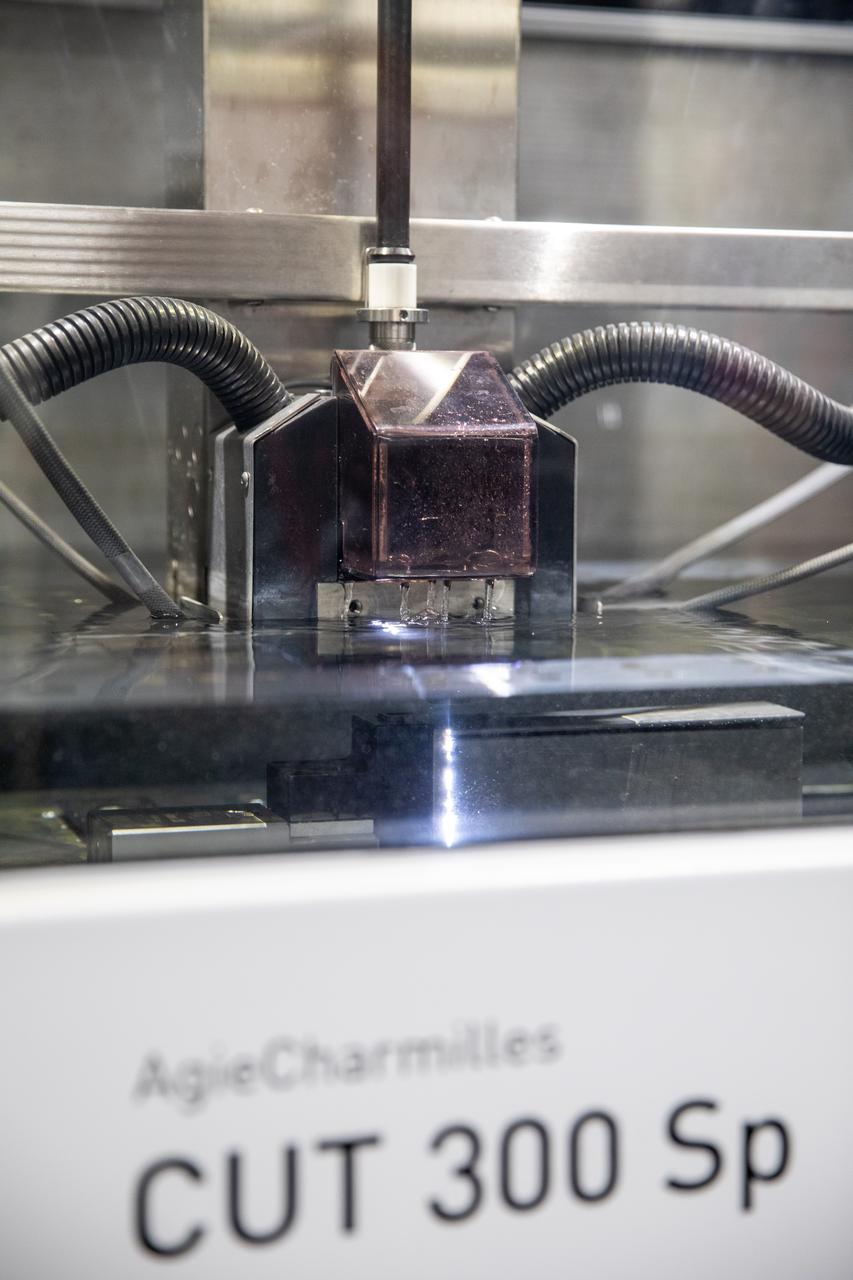
Testing of the Plasma Rapid Oxidation Technique for Extending Component Tenability (PROTECT) experiment is underway inside the Prototype Development Laboratory at NASA’s Kennedy Space Center in Florida on Nov. 2, 2022. Plasma electrolytic oxidation is a surface coating technology that produces oxide layers on the surface of light metals and their alloys to improve their performance characteristics. These coatings are tailored to provide a combination of characteristics such as corrosion protection, wear resistance, thermal management, extreme hardness, and fatigue performance. PROTECT is expected to demonstrate a 10 percent improved fatigue performance and a 70 percent improvement in corrosion characteristics on the interior of treated 3-D printed metallic parts when compared to non-treated parts. PROTECT could be applied on spacecraft and launch vehicles.
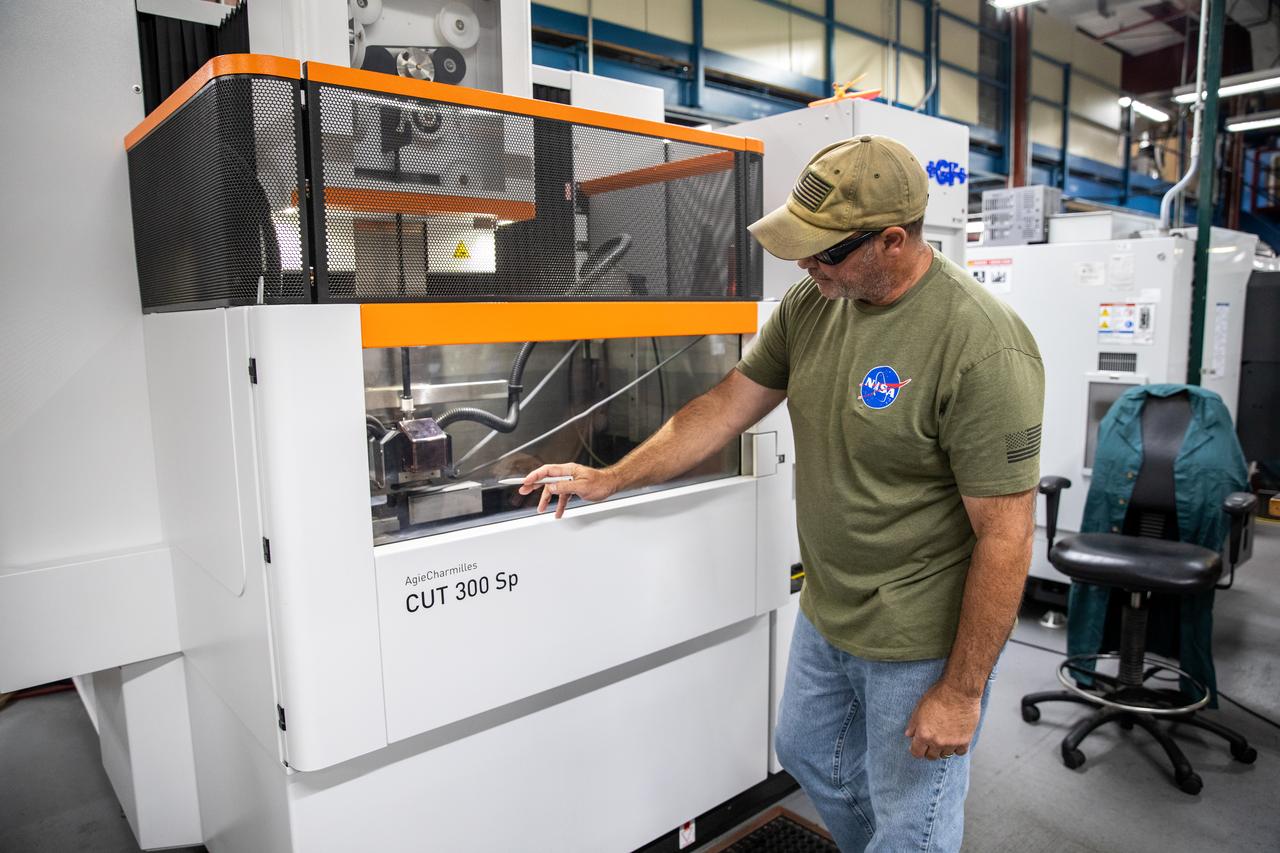
Gerard Moscoso, a mechanical engineer technician with NASA, prepares the Plasma Rapid Oxidation Technique for Extending Component Tenability (PROTECT) specimens for testing inside the Prototype Development Laboratory at NASA’s Kennedy Space Center in Florida on Nov. 2, 2022. Plasma electrolytic oxidation is a surface coating technology that produces oxide layers on the surface of light metals and their alloys to improve their performance characteristics. These coatings are tailored to provide a combination of characteristics such as corrosion protection, wear resistance, thermal management, extreme hardness, and fatigue performance. PROTECT is expected to demonstrate a 10 percent improved fatigue performance and a 70 percent improvement in corrosion characteristics on the interior of treated 3-D printed metallic parts when compared to non-treated parts. PROTECT could be applied on spacecraft and launch vehicles.
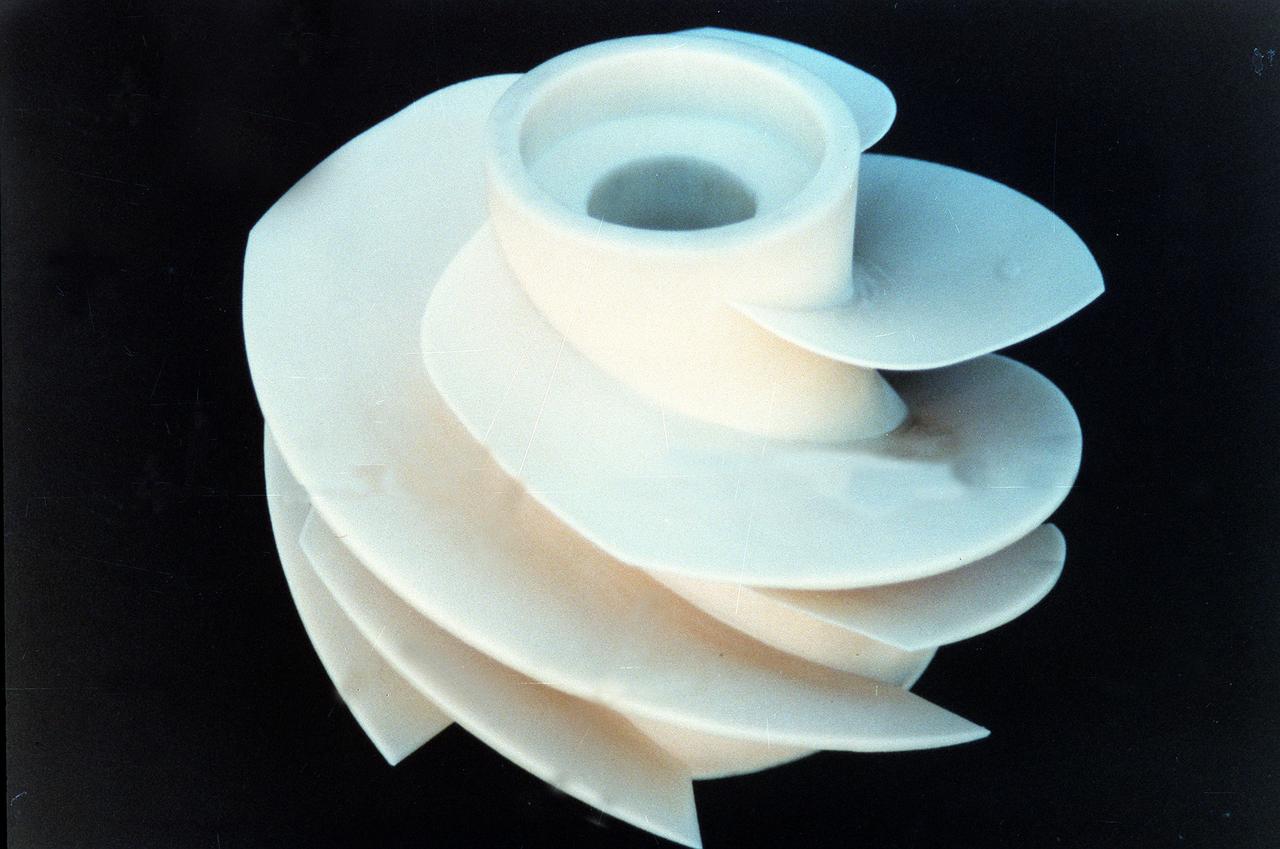
Marshall Space Flight Center engineers helped North American Marine Jet (NAMJ), Inc. improve the proposed design of a new impeller for jet propulsion system. With a three-dimensional computer model of the new marine jet engine blades, engineers were able to quickly create a solid ploycarbonate model of it. The rapid prototyping allowed the company to avoid many time-consuming and costly steps in creating the impeller.
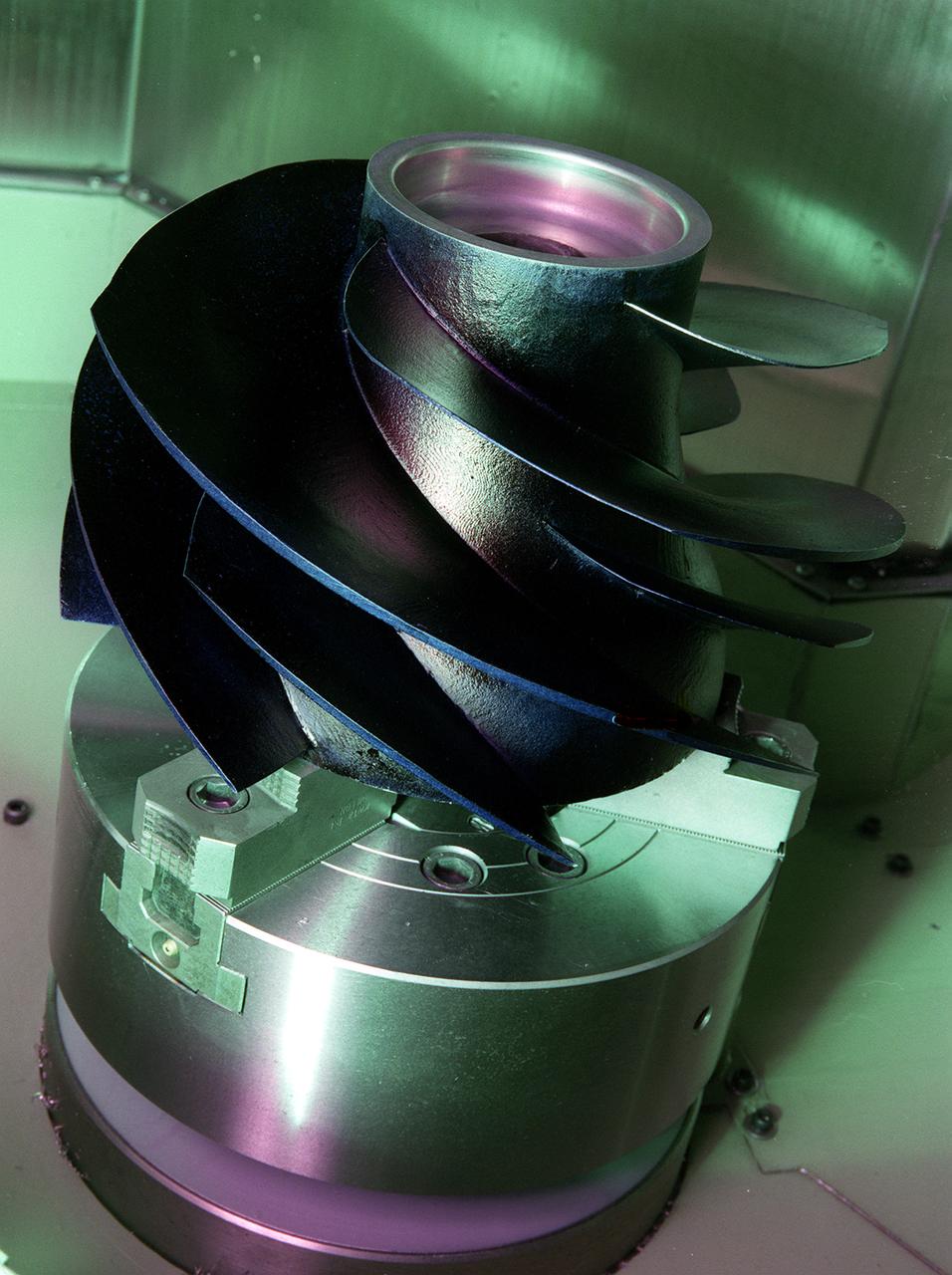
Marshall space Flight Center engineers helped North American Marine Jet (NAMJ), Inc. improve the proposed design of a new impeller for a jet-propulsion system. With a three-dimensional computer model of the new marine jet engine blades, engineers were able to quickly create a solid polycarbonate model of it. The rapid prototyping allowed the company to avoid many time-consuming and costly steps in creating the impeller.
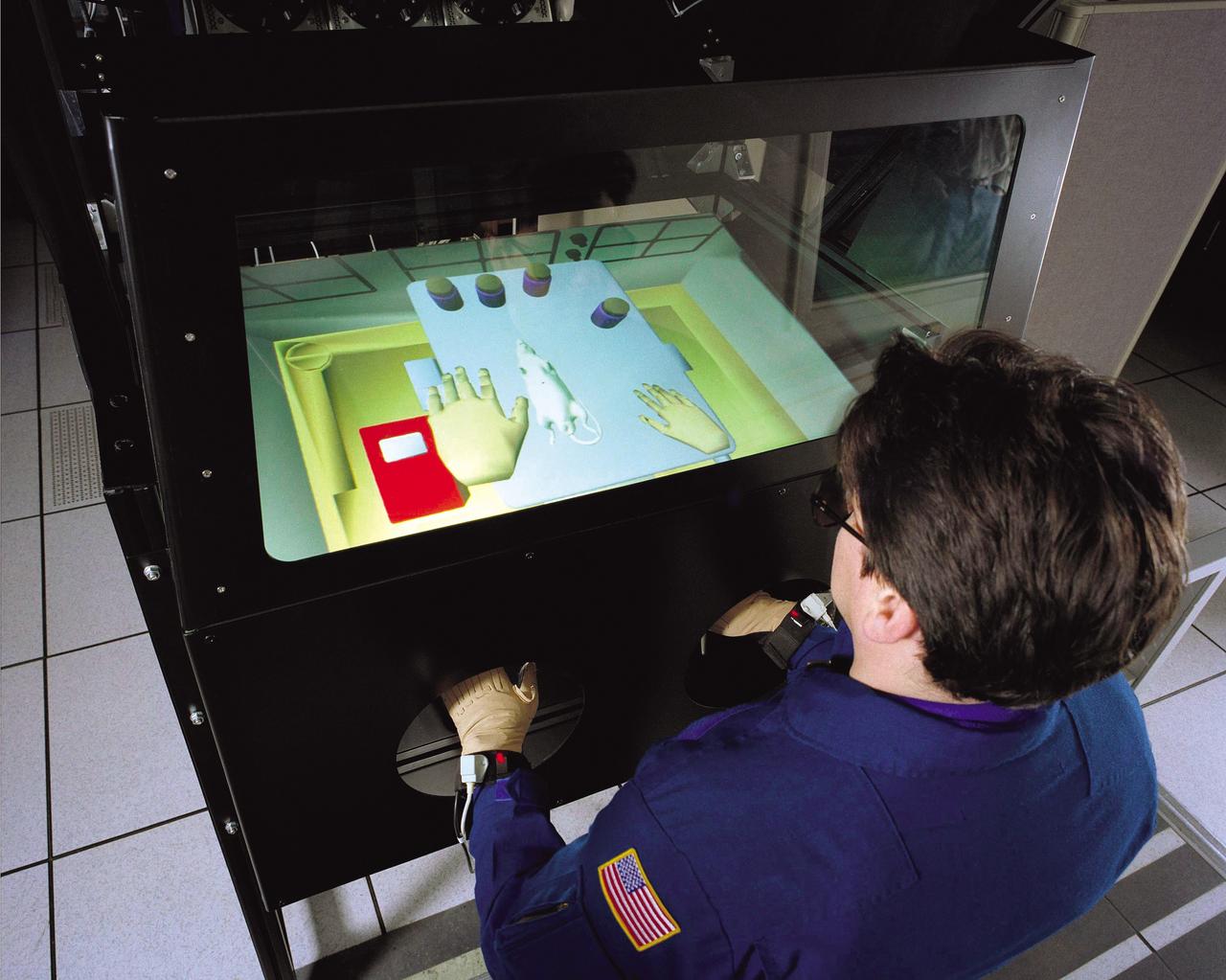
NASA’s Virtual Glovebox (VGX) was developed to allow astronauts on Earth to train for complex biology research tasks in space. The astronauts may reach into the virtual environment, naturally manipulating specimens, tools, equipment, and accessories in a simulated microgravity environment as they would do in space. Such virtual reality technology also provides engineers and space operations staff with rapid prototyping, planning, and human performance modeling capabilities. Other Earth based applications being explored for this technology include biomedical procedural training and training for disarming bio-terrorism weapons.
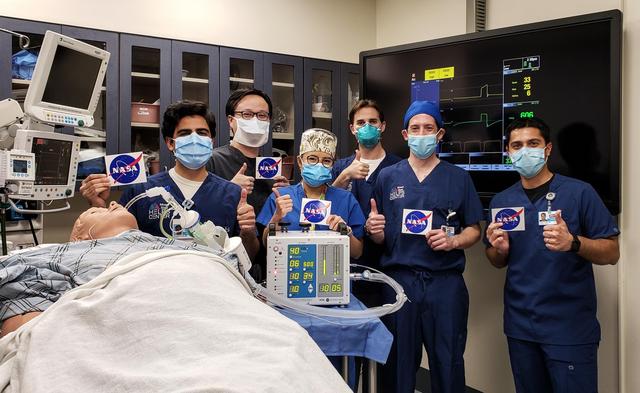
After testing a ventilator prototype developed by NASA's Jet Propulsion Laboratory, doctors in the Department of Anesthesiology and the Human Simulation Lab at the Icahn School of Medicine at Mount Sinai in New York City give a thumbs up. Developed in response to the coronavirus outbreak, the device, called VITAL (Ventilator Intervention Technology Accessible Locally), requires far fewer parts than traditional ventilators, making it cheaper to build and ideal for rapid manufacture. Lying on the bed is a human patient simulator used to test the device. https://photojournal.jpl.nasa.gov/catalog/PIA23772
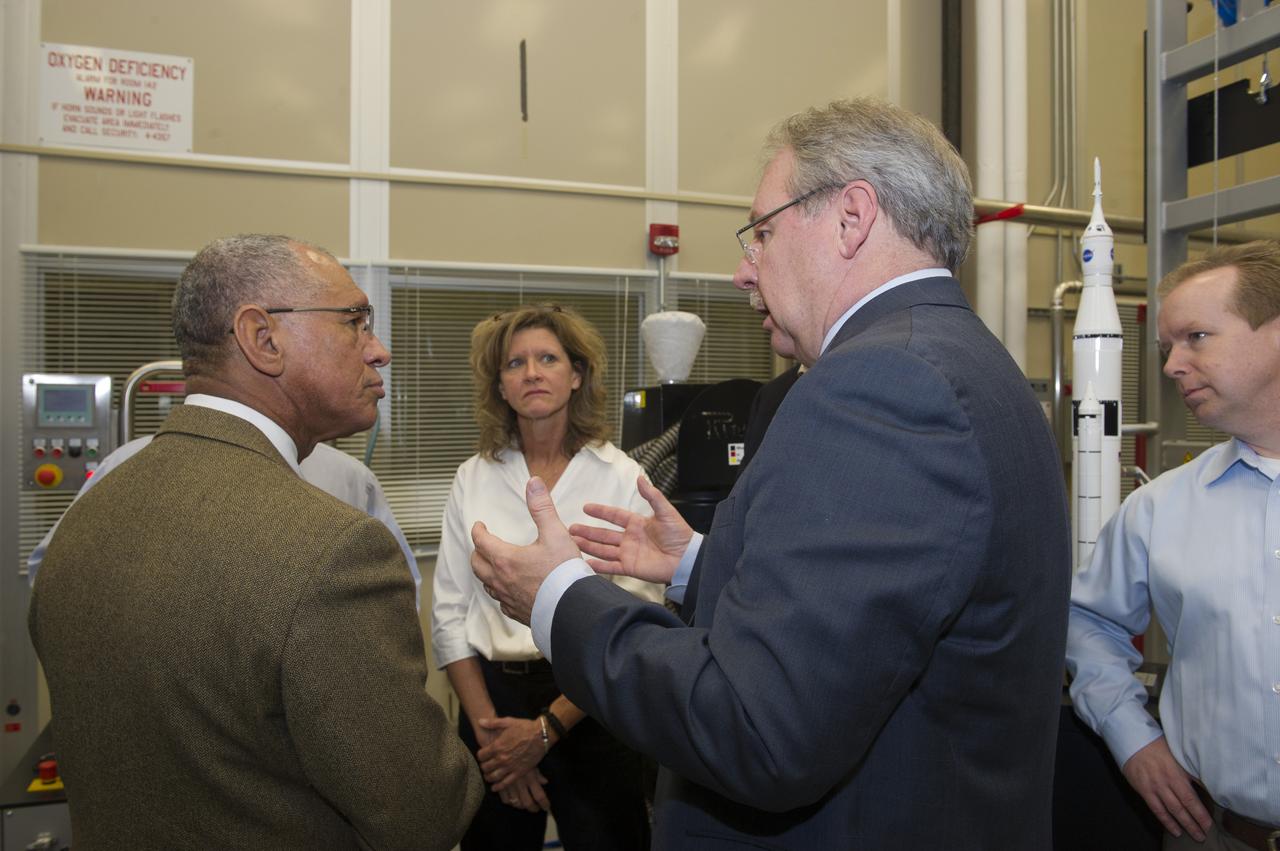
FROM LEFT, NASA ADMINISTRATOR CHARLES BOLDEN LISTENS TO MARSHALL MATERIALS ENGINEER NANCY TOLLIVER; JOHN VICKERS, MANAGER OF THE NATIONAL CENTER FOR ADVANCED MANUFACTURING; AND MARSHALL FLIGHT SYSTEMS DESIGN ENGINEER ROB BLACK AS THEY BRIEF HIM ON THE USE OF 3-D PRINTING AND PROTOTYPING TECHNOLOGY TO CREATE PARTS FOR THE SPACE LAUNCH SYSTEM
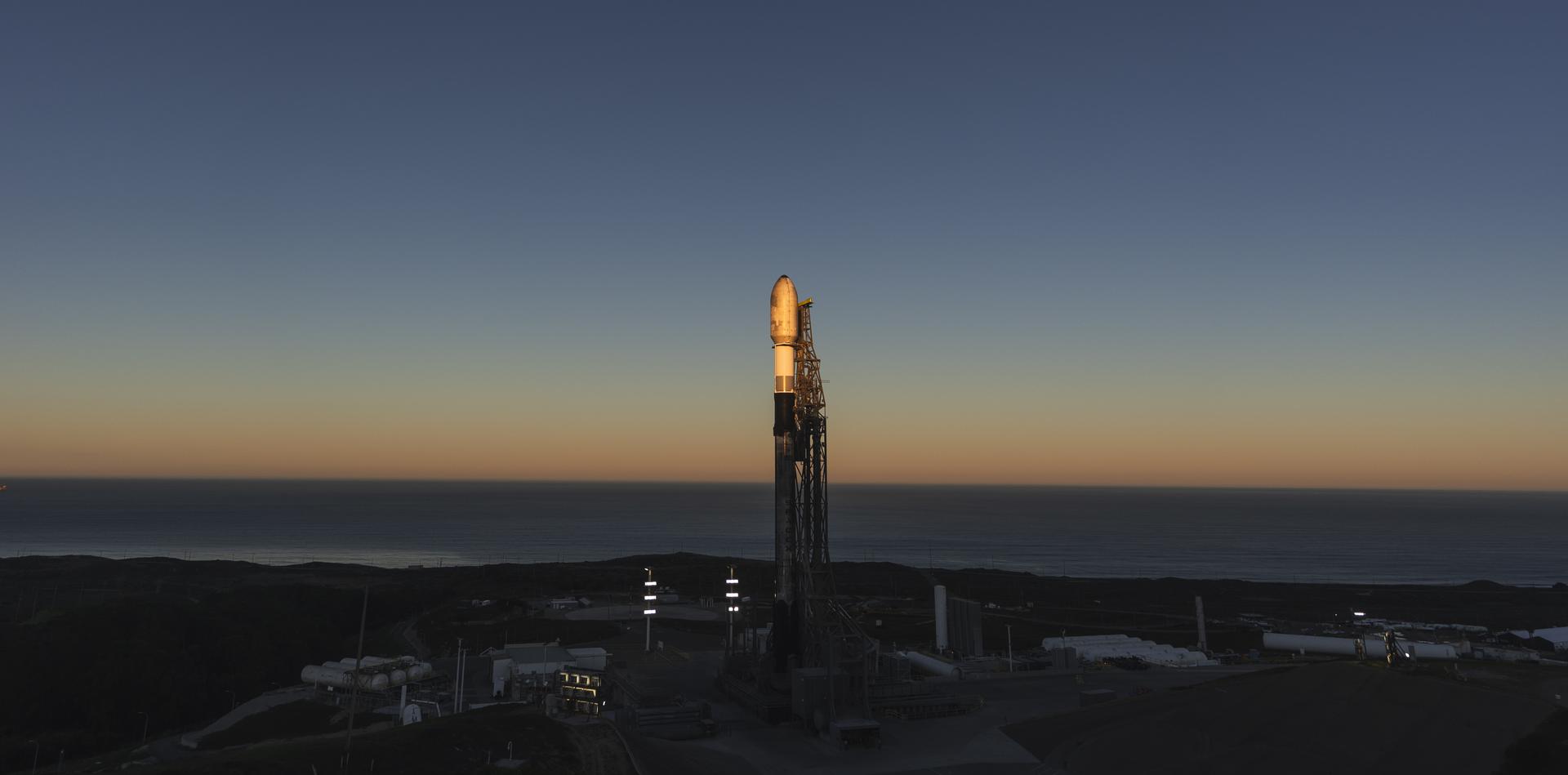
A SpaceX Falcon 9 rocket carrying NASA’s R5-S7 (Realizing Rapid, Reduced-cost high-Risk Research project Spacecraft 7) CubeSat along with several other satellites as part of the company’s Transporter-15 mission stands vertical on the launch pad of Space Launch Complex 4 East at Vandenberg Space Force Base in California on Wednesday, Nov. 26, 2025. The latest in a series of spacecraft, R5-S7 will explore ways to get multiple technology prototypes into low Earth orbit rapidly and at a low cost, accelerating the demonstration of these technologies in orbit and allowing engineers and scientists to more quickly prove them and make them available to NASA missions and other users.
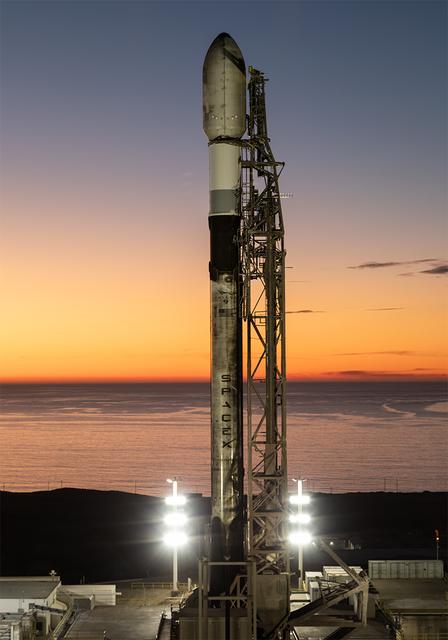
A SpaceX Falcon 9 rocket carrying NASA’s R5-S7 (Realizing Rapid, Reduced-cost high-Risk Research project Spacecraft 7) CubeSat along with several other satellites as part of the company’s Transporter-15 mission stands vertical on the launch pad of Space Launch Complex 4 East at Vandenberg Space Force Base in California on Thursday, Nov. 27, 2025. The latest in a series of spacecraft, R5-S7 will explore ways to get multiple technology prototypes into low Earth orbit rapidly and at a low cost, accelerating the demonstration of these technologies in orbit and allowing engineers and scientists to more quickly prove them and make them available to NASA missions and other users.
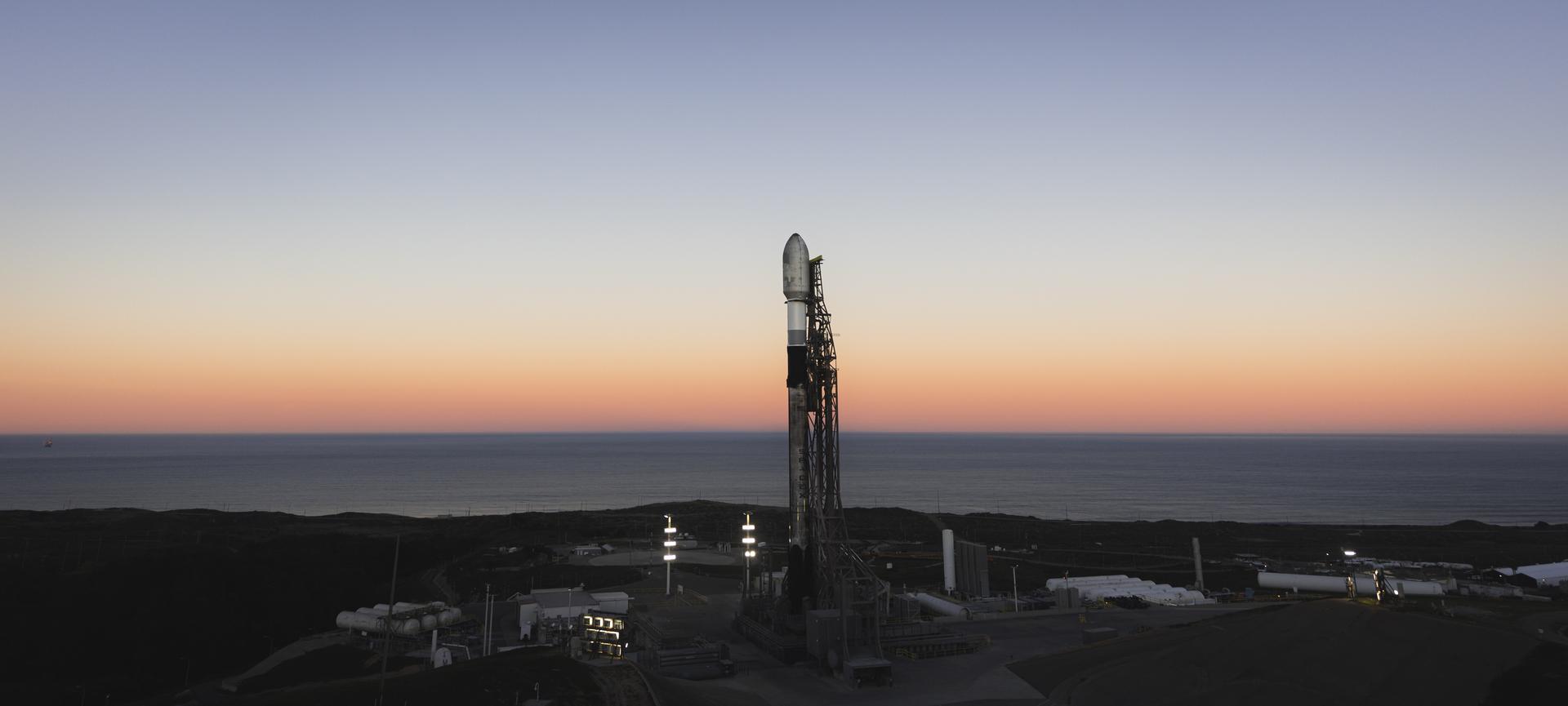
A SpaceX Falcon 9 rocket carrying NASA’s R5-S7 (Realizing Rapid, Reduced-cost high-Risk Research project Spacecraft 7) CubeSat along with several other satellites as part of the company’s Transporter-15 mission stands vertical on the launch pad of Space Launch Complex 4 East at Vandenberg Space Force Base in California on Wednesday, Nov. 26, 2025. The latest in a series of spacecraft, R5-S7 will explore ways to get multiple technology prototypes into low Earth orbit rapidly and at a low cost, accelerating the demonstration of these technologies in orbit and allowing engineers and scientists to more quickly prove them and make them available to NASA missions and other users.
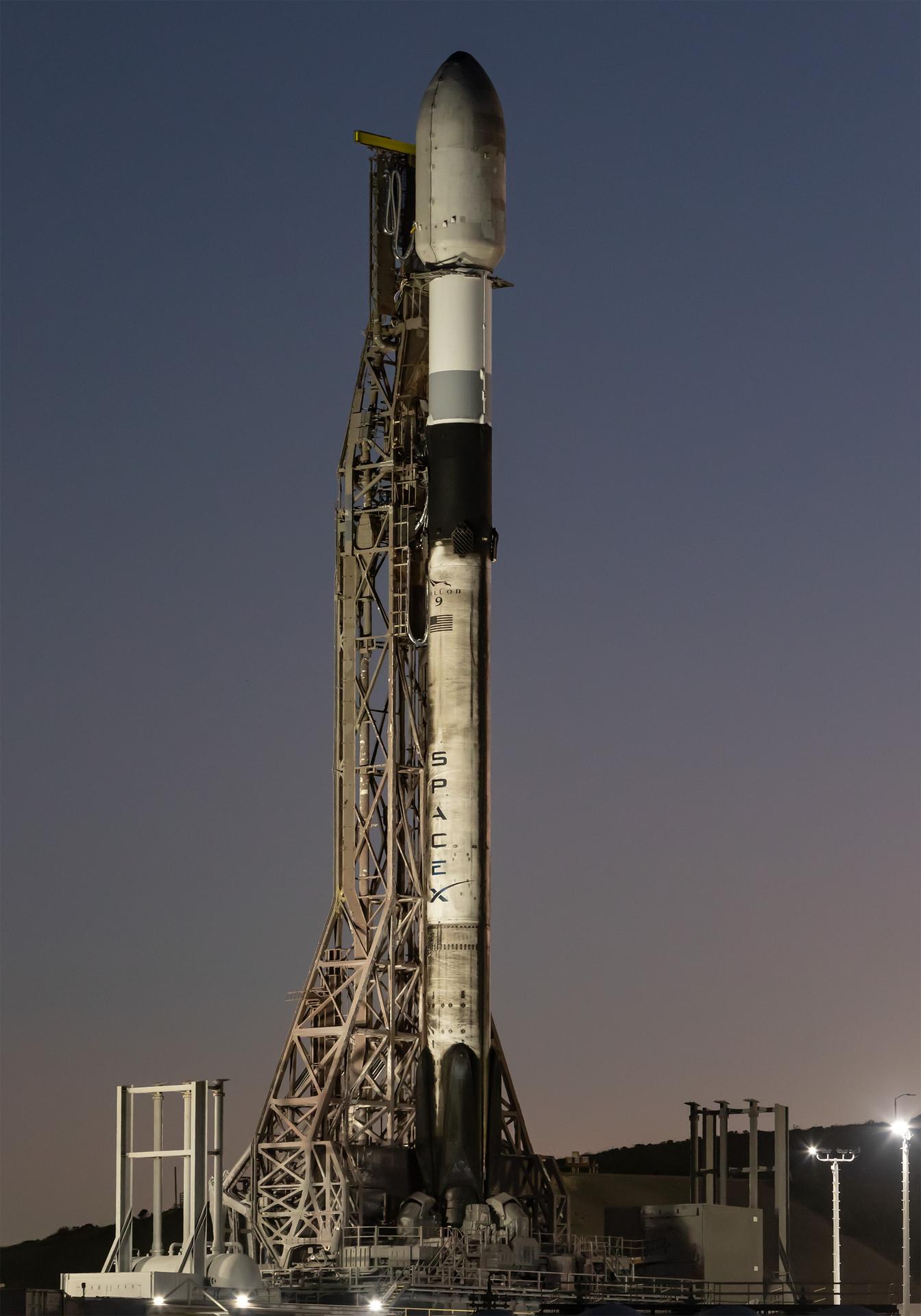
A SpaceX Falcon 9 rocket carrying NASA’s R5-S7 (Realizing Rapid, Reduced-cost high-Risk Research project Spacecraft 7) CubeSat along with several other satellites as part of the company’s Transporter-15 mission stands vertical on the launch pad of Space Launch Complex 4 East at Vandenberg Space Force Base in California on Wednesday, Nov. 26, 2025. The latest in a series of spacecraft, R5-S7 will explore ways to get multiple technology prototypes into low Earth orbit rapidly and at a low cost, accelerating the demonstration of these technologies in orbit and allowing engineers and scientists to more quickly prove them and make them available to NASA missions and other users.
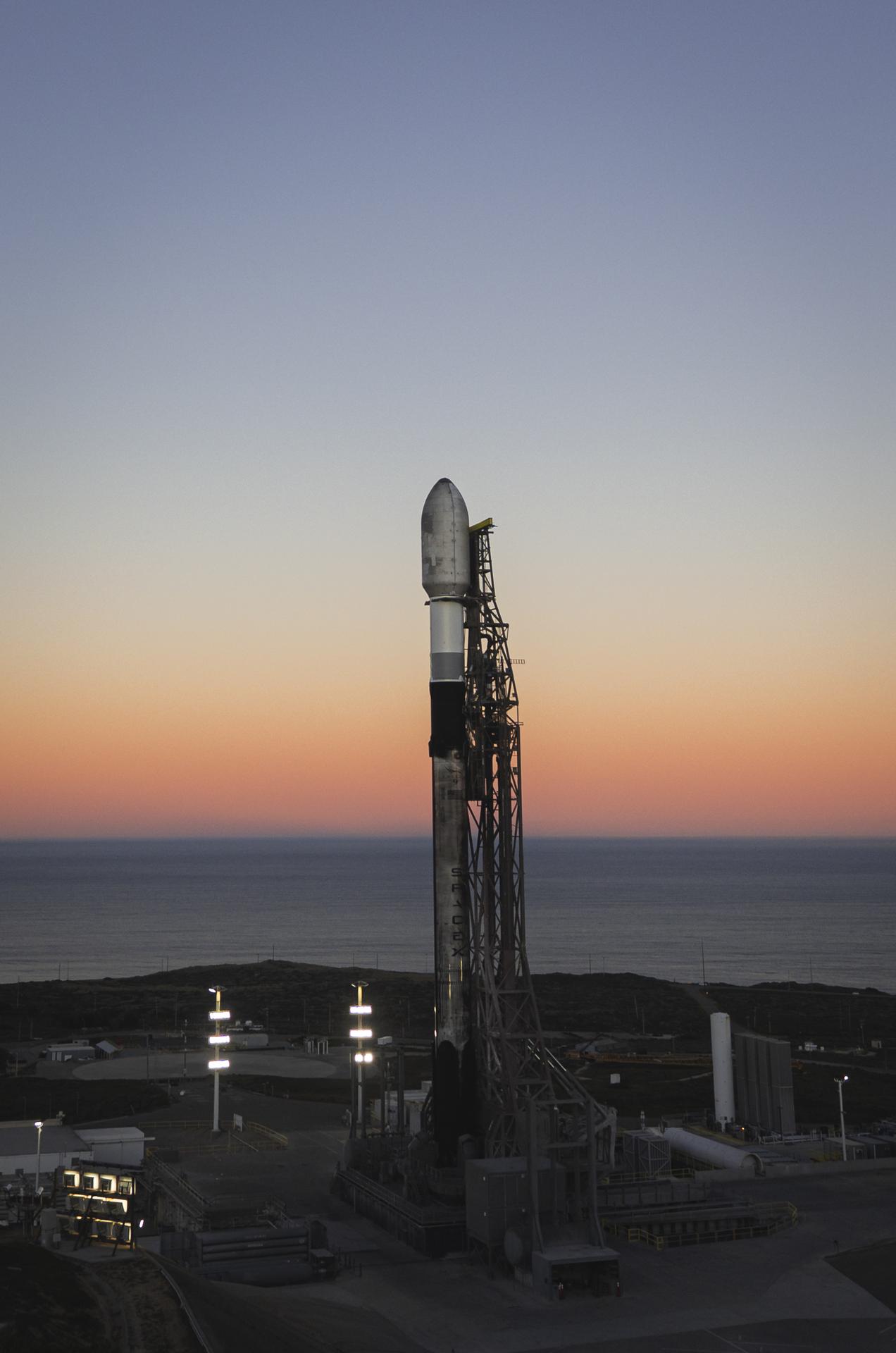
A SpaceX Falcon 9 rocket carrying NASA’s R5-S7 (Realizing Rapid, Reduced-cost high-Risk Research project Spacecraft 7) CubeSat along with several other satellites as part of the company’s Transporter-15 mission stands vertical on the launch pad of Space Launch Complex 4 East at Vandenberg Space Force Base in California on Wednesday, Nov. 26, 2025. The latest in a series of spacecraft, R5-S7 will explore ways to get multiple technology prototypes into low Earth orbit rapidly and at a low cost, accelerating the demonstration of these technologies in orbit and allowing engineers and scientists to more quickly prove them and make them available to NASA missions and other users.
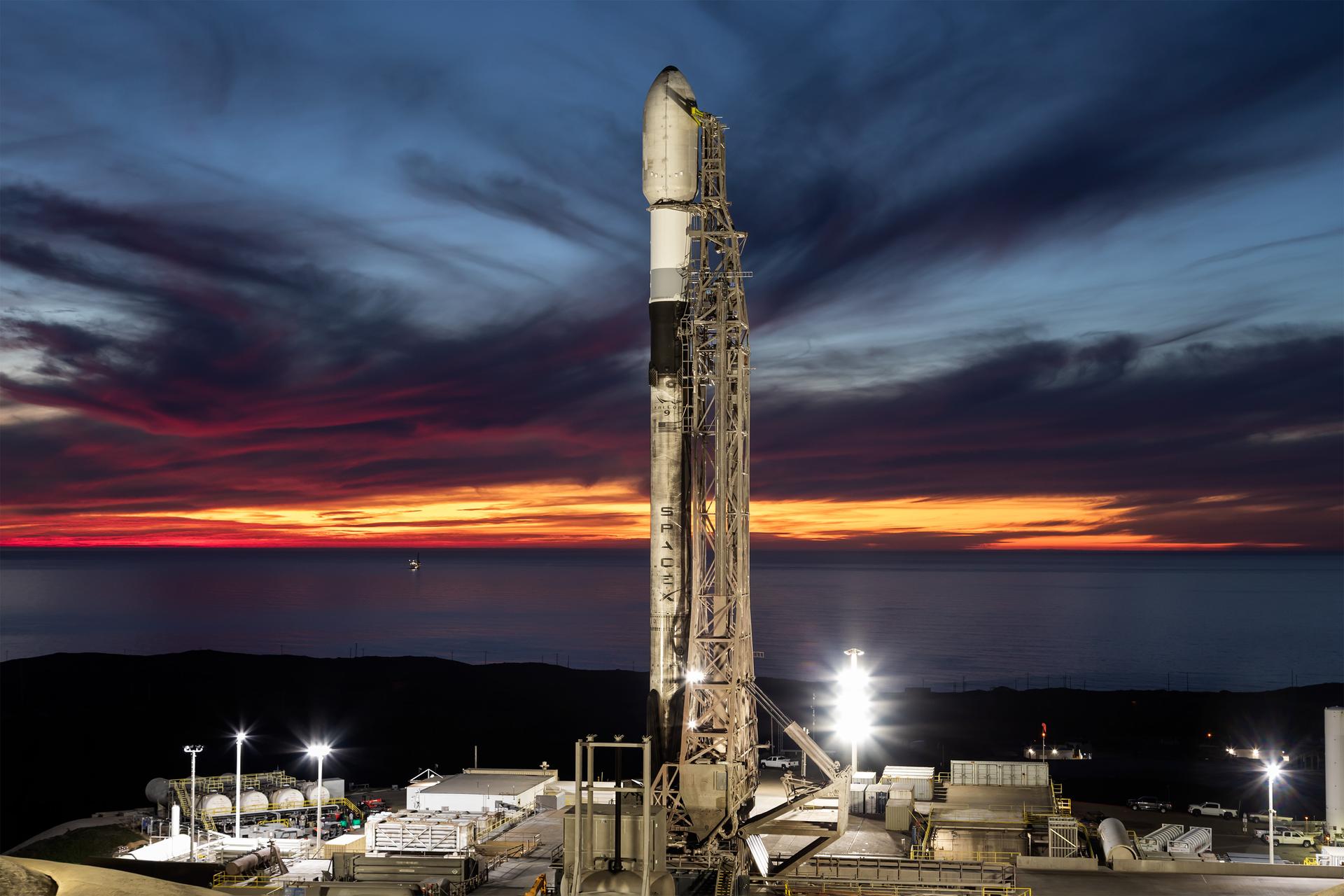
A SpaceX Falcon 9 rocket carrying NASA’s R5-S7 (Realizing Rapid, Reduced-cost high-Risk Research project Spacecraft 7) CubeSat along with several other satellites as part of the company’s Transporter-15 mission stands vertical on the launch pad of Space Launch Complex 4 East at Vandenberg Space Force Base in California on Thursday, Nov. 27, 2025. The latest in a series of spacecraft, R5-S7 will explore ways to get multiple technology prototypes into low Earth orbit rapidly and at a low cost, accelerating the demonstration of these technologies in orbit and allowing engineers and scientists to more quickly prove them and make them available to NASA missions and other users.
A SpaceX Falcon 9 rocket carrying NASA’s R5-S7 (Realizing Rapid, Reduced-cost high-Risk Research project Spacecraft 7) CubeSat along with several other satellites as part of the company’s Transporter-15 mission stands vertical on the launch pad of Space Launch Complex 4 East at Vandenberg Space Force Base in California on Thursday, Nov. 27, 2025. The latest in a series of spacecraft, R5-S7 will explore ways to get multiple technology prototypes into low Earth orbit rapidly and at a low cost, accelerating the demonstration of these technologies in orbit and allowing engineers and scientists to more quickly prove them and make them available to NASA missions and other users.
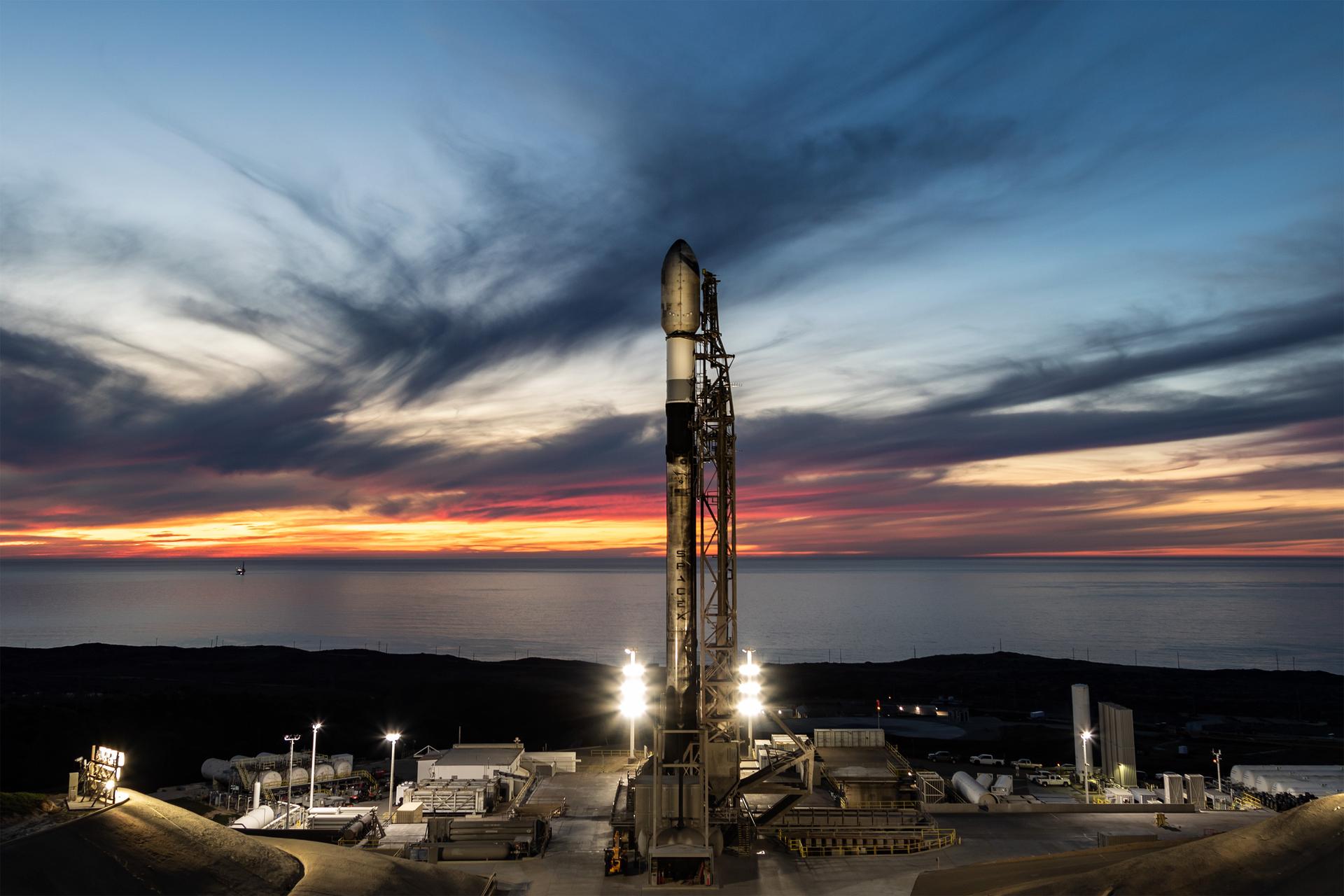
A SpaceX Falcon 9 rocket carrying NASA’s R5-S7 (Realizing Rapid, Reduced-cost high-Risk Research project Spacecraft 7) CubeSat along with several other satellites as part of the company’s Transporter-15 mission stands vertical on the launch pad of Space Launch Complex 4 East at Vandenberg Space Force Base in California on Thursday, Nov. 27, 2025. The latest in a series of spacecraft, R5-S7 will explore ways to get multiple technology prototypes into low Earth orbit rapidly and at a low cost, accelerating the demonstration of these technologies in orbit and allowing engineers and scientists to more quickly prove them and make them available to NASA missions and other users.
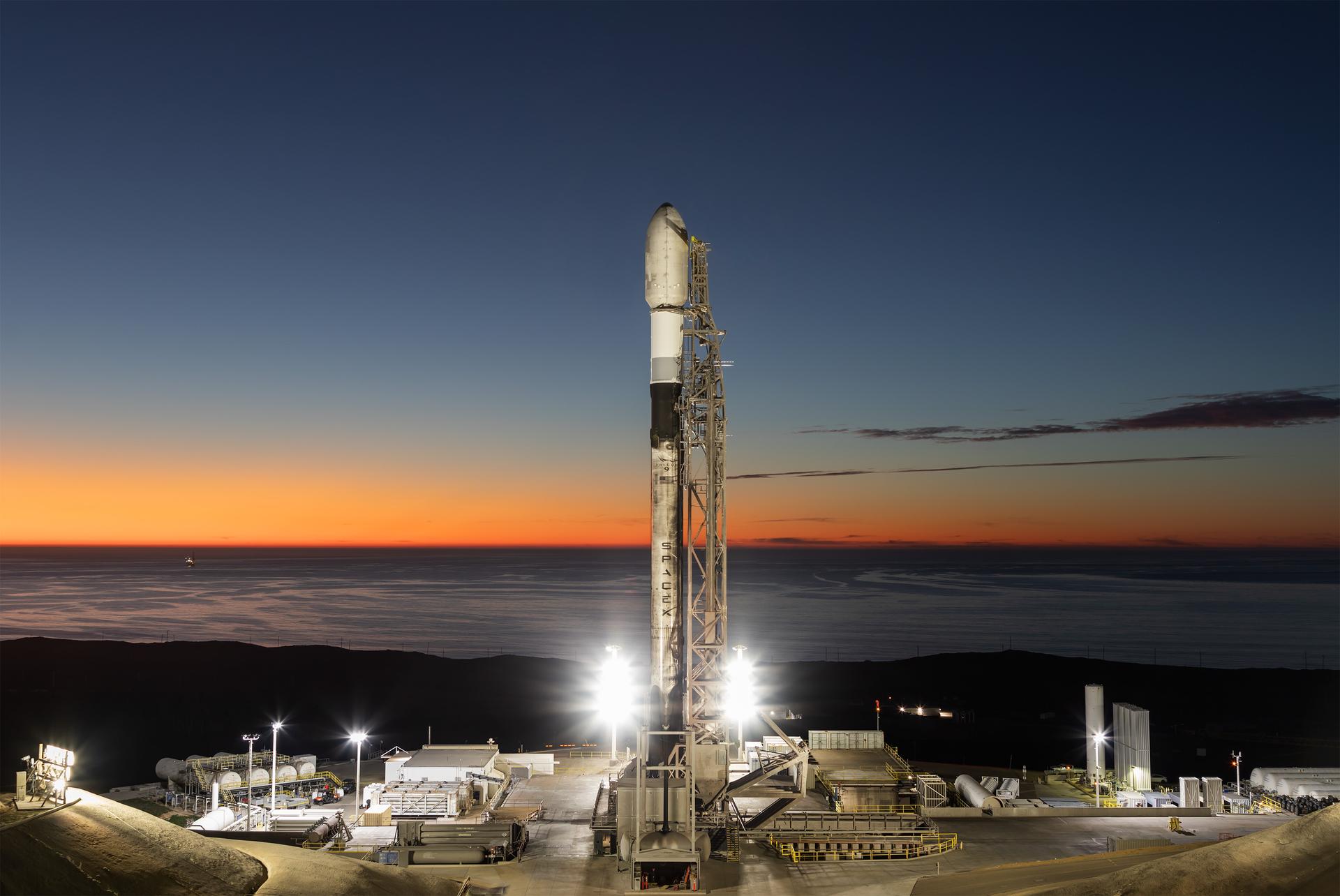
A SpaceX Falcon 9 rocket carrying NASA’s R5-S7 (Realizing Rapid, Reduced-cost high-Risk Research project Spacecraft 7) CubeSat along with several other satellites as part of the company’s Transporter-15 mission stands vertical on the launch pad of Space Launch Complex 4 East at Vandenberg Space Force Base in California on Thursday, Nov. 27, 2025. The latest in a series of spacecraft, R5-S7 will explore ways to get multiple technology prototypes into low Earth orbit rapidly and at a low cost, accelerating the demonstration of these technologies in orbit and allowing engineers and scientists to more quickly prove them and make them available to NASA missions and other users.
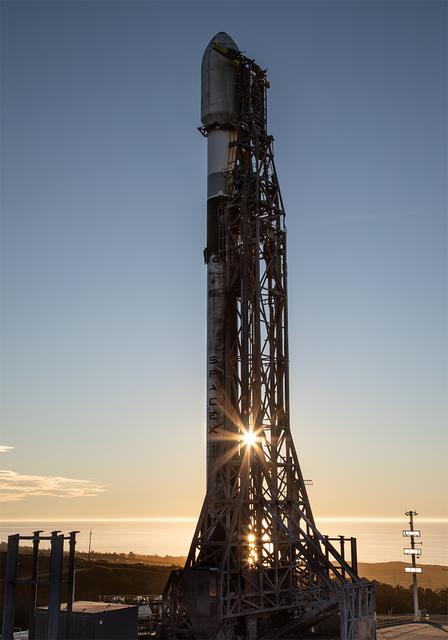
A SpaceX Falcon 9 rocket carrying NASA’s R5-S7 (Realizing Rapid, Reduced-cost high-Risk Research project Spacecraft 7) CubeSat along with several other satellites as part of the company’s Transporter-15 mission stands vertical on the launch pad of Space Launch Complex 4 East at Vandenberg Space Force Base in California on Thursday, Nov. 27, 2025. The latest in a series of spacecraft, R5-S7 will explore ways to get multiple technology prototypes into low Earth orbit rapidly and at a low cost, accelerating the demonstration of these technologies in orbit and allowing engineers and scientists to more quickly prove them and make them available to NASA missions and other users.

A SpaceX Falcon 9 rocket carrying NASA’s R5-S7 (Realizing Rapid, Reduced-cost high-Risk Research project Spacecraft 7) CubeSat along with several other satellites as part of the company’s Transporter-15 mission lifts off from Space Launch Complex 4 East at Vandenberg Space Force Base in California at 10:44 a.m. PST Friday, Nov. 28, 2025. The latest in a series of spacecraft, R5-S7 will explore ways to get multiple technology prototypes into low Earth orbit rapidly and at a low cost, accelerating the demonstration of these technologies in orbit and allowing engineers and scientists to more quickly prove them and make them available to NASA missions and other users.
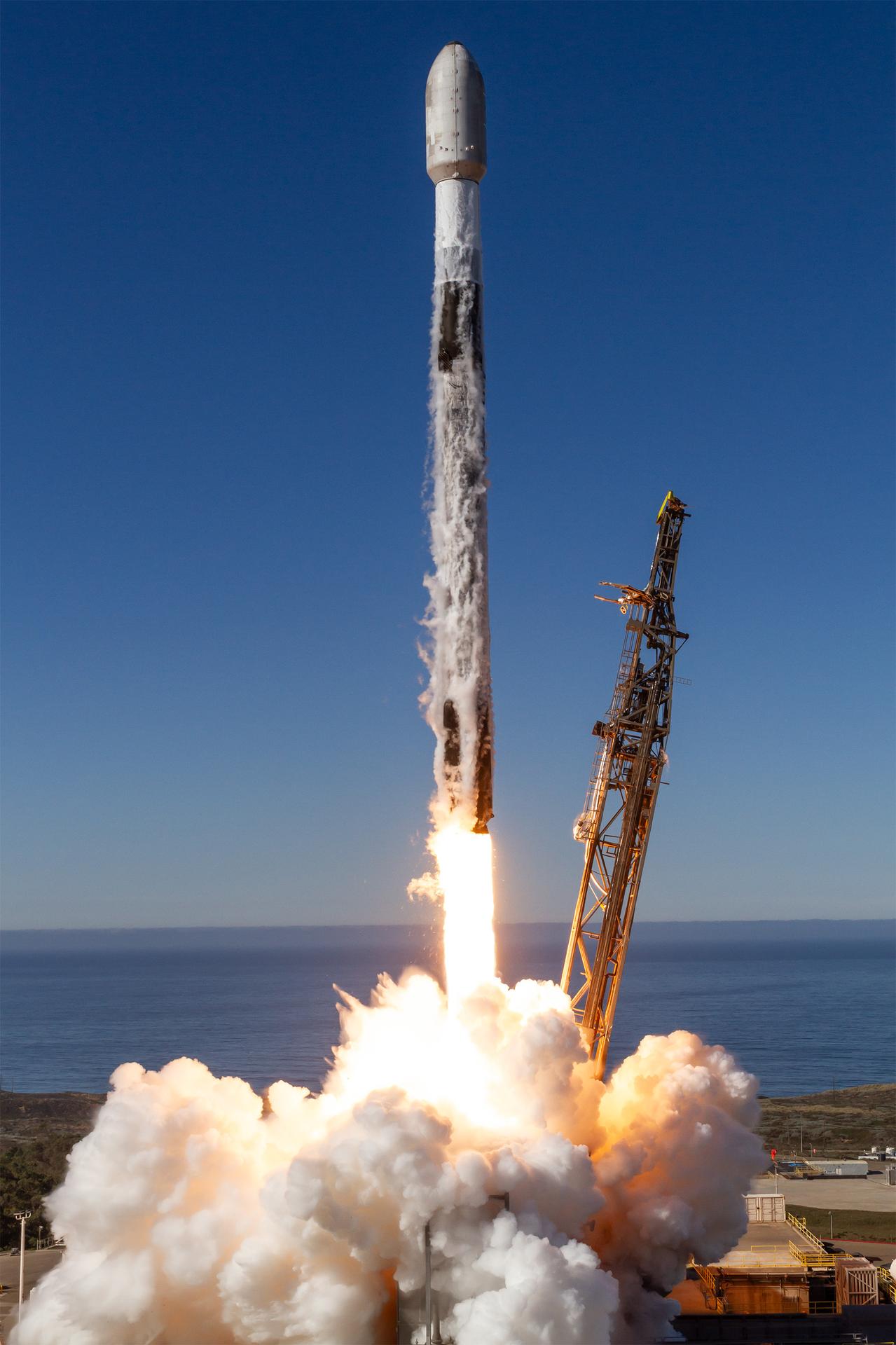
A SpaceX Falcon 9 rocket carrying NASA’s R5-S7 (Realizing Rapid, Reduced-cost high-Risk Research project Spacecraft 7) CubeSat along with several other satellites as part of the company’s Transporter-15 mission lifts off from Space Launch Complex 4 East at Vandenberg Space Force Base in California at 10:44 a.m. PST Friday, Nov. 28, 2025. The latest in a series of spacecraft, R5-S7 will explore ways to get multiple technology prototypes into low Earth orbit rapidly and at a low cost, accelerating the demonstration of these technologies in orbit and allowing engineers and scientists to more quickly prove them and make them available to NASA missions and other users.

A SpaceX Falcon 9 rocket carrying NASA’s R5-S7 (Realizing Rapid, Reduced-cost high-Risk Research project Spacecraft 7) CubeSat along with several other satellites as part of the company’s Transporter-15 mission lifts off from Space Launch Complex 4 East at Vandenberg Space Force Base in California at 10:44 a.m. PST Friday, Nov. 28, 2025. The latest in a series of spacecraft, R5-S7 will explore ways to get multiple technology prototypes into low Earth orbit rapidly and at a low cost, accelerating the demonstration of these technologies in orbit and allowing engineers and scientists to more quickly prove them and make them available to NASA missions and other users.
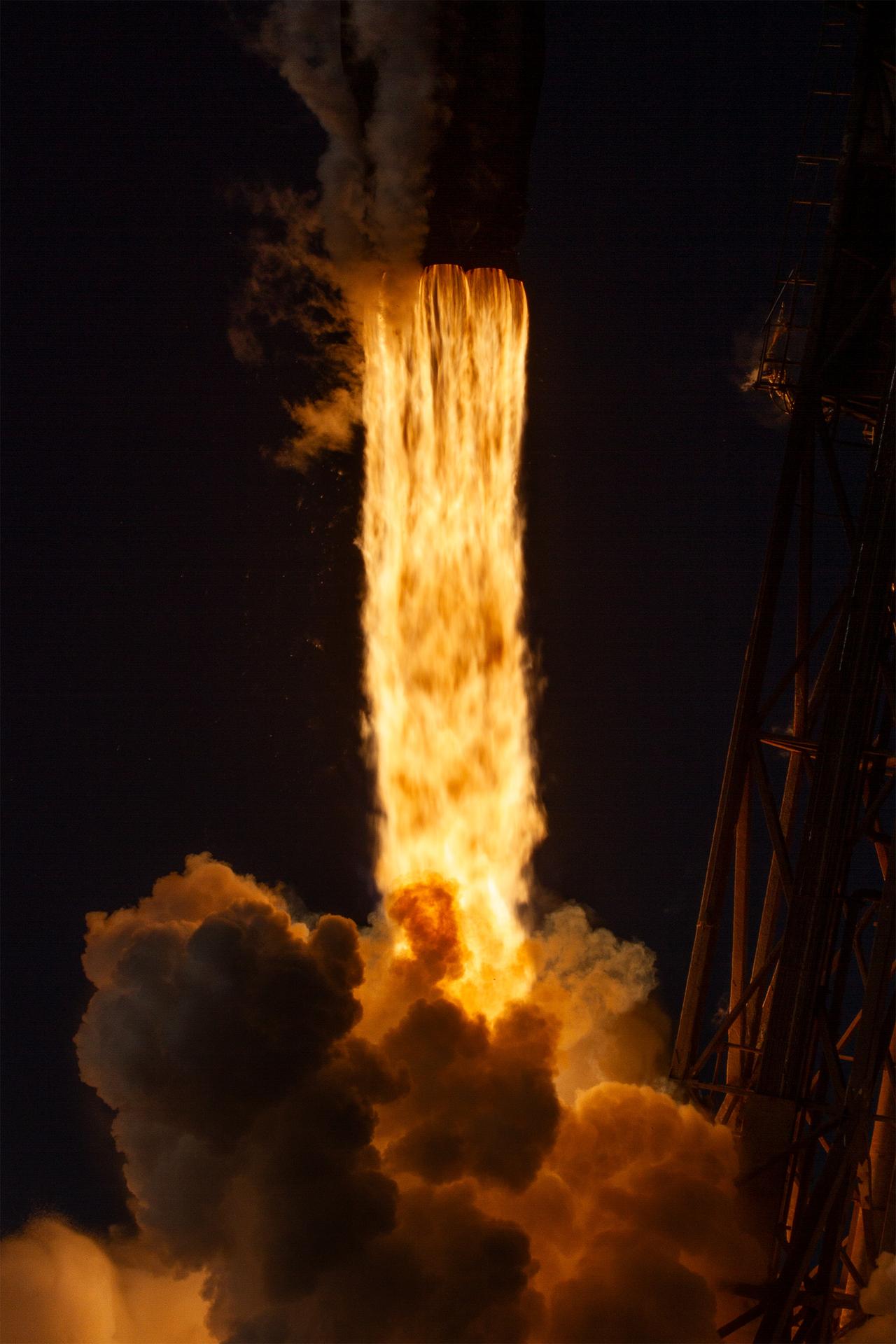
A SpaceX Falcon 9 rocket carrying NASA’s R5-S7 (Realizing Rapid, Reduced-cost high-Risk Research project Spacecraft 7) CubeSat along with several other satellites as part of the company’s Transporter-15 mission lifts off from Space Launch Complex 4 East at Vandenberg Space Force Base in California at 10:44 a.m. PST Friday, Nov. 28, 2025. The latest in a series of spacecraft, R5-S7 will explore ways to get multiple technology prototypes into low Earth orbit rapidly and at a low cost, accelerating the demonstration of these technologies in orbit and allowing engineers and scientists to more quickly prove them and make them available to NASA missions and other users.
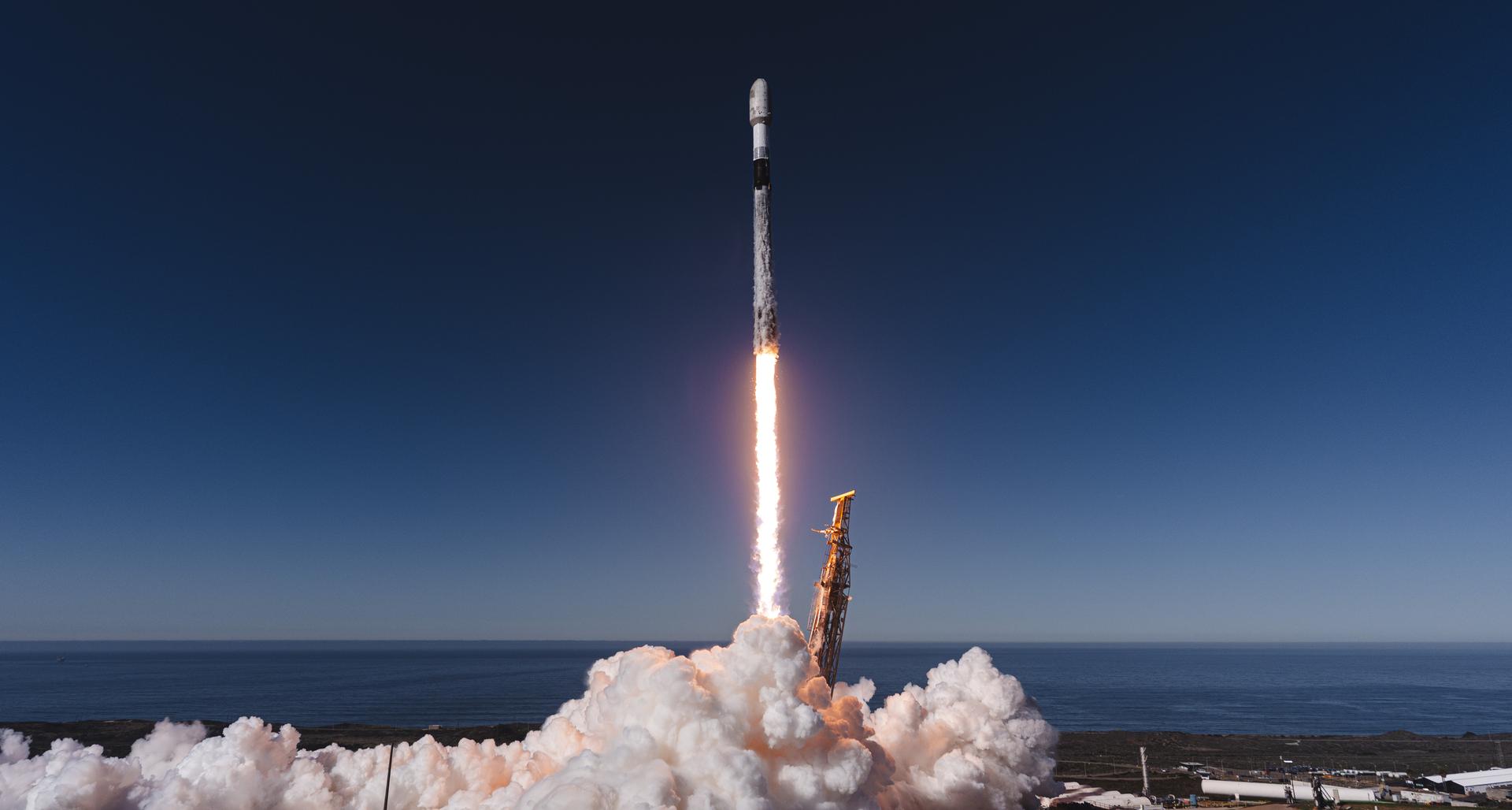
A SpaceX Falcon 9 rocket carrying NASA’s R5-S7 (Realizing Rapid, Reduced-cost high-Risk Research project Spacecraft 7) CubeSat along with several other satellites as part of the company’s Transporter-15 mission lifts off from Space Launch Complex 4 East at Vandenberg Space Force Base in California at 10:44 a.m. PST Friday, Nov. 28, 2025. The latest in a series of spacecraft, R5-S7 will explore ways to get multiple technology prototypes into low Earth orbit rapidly and at a low cost, accelerating the demonstration of these technologies in orbit and allowing engineers and scientists to more quickly prove them and make them available to NASA missions and other users.
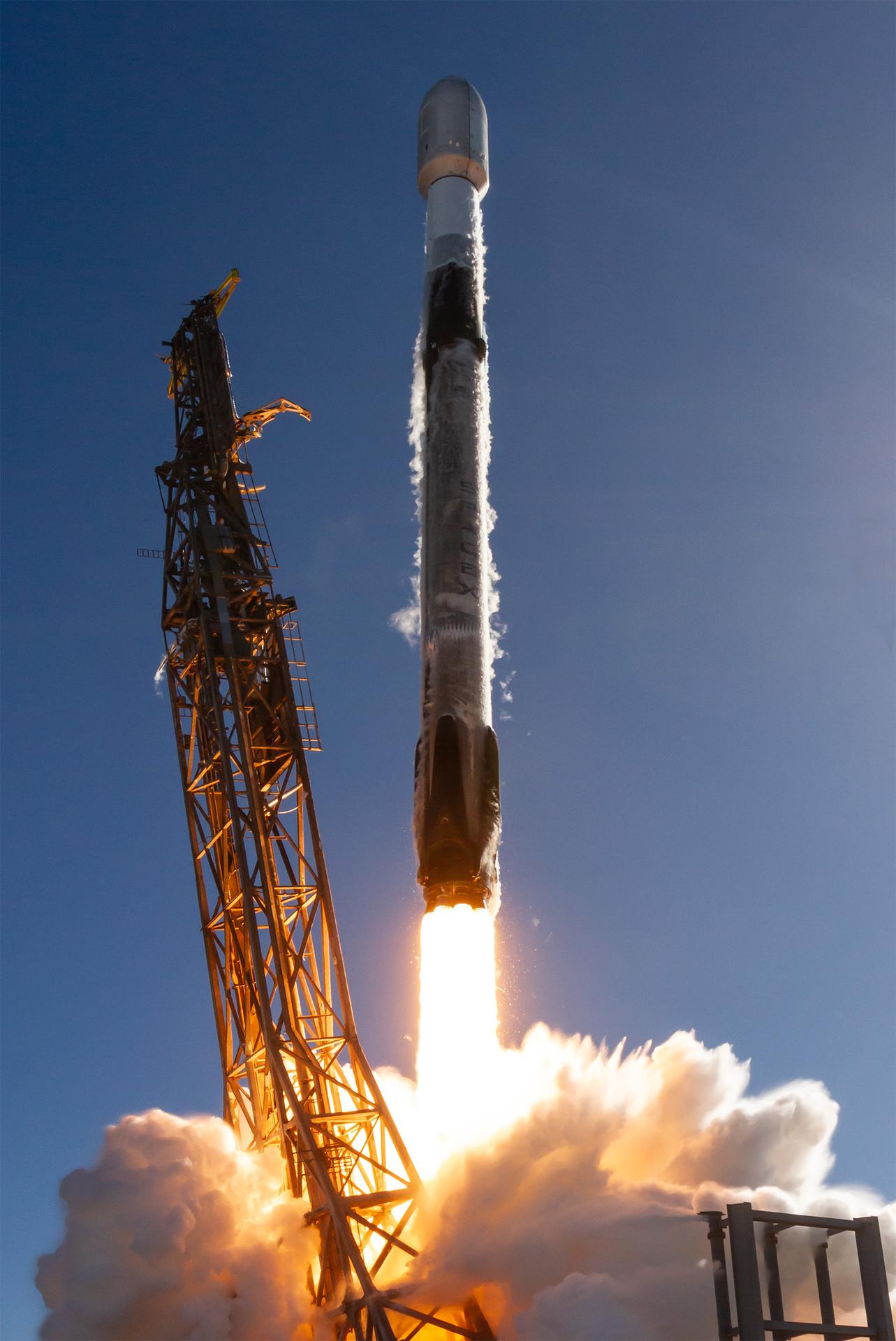
A SpaceX Falcon 9 rocket carrying NASA’s R5-S7 (Realizing Rapid, Reduced-cost high-Risk Research project Spacecraft 7) CubeSat along with several other satellites as part of the company’s Transporter-15 mission lifts off from Space Launch Complex 4 East at Vandenberg Space Force Base in California at 10:44 a.m. PST Friday, Nov. 28, 2025. The latest in a series of spacecraft, R5-S7 will explore ways to get multiple technology prototypes into low Earth orbit rapidly and at a low cost, accelerating the demonstration of these technologies in orbit and allowing engineers and scientists to more quickly prove them and make them available to NASA missions and other users.
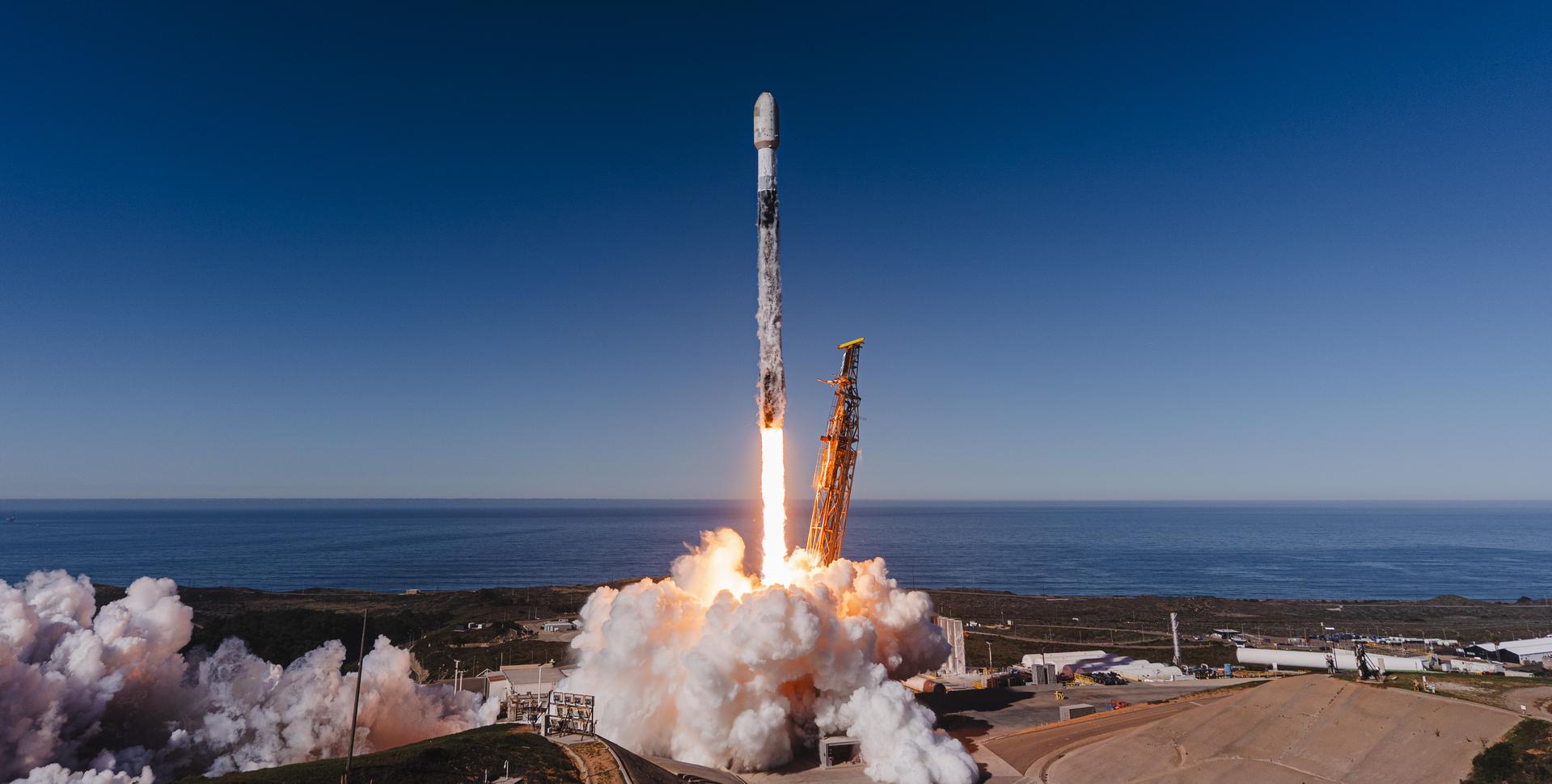
A SpaceX Falcon 9 rocket carrying NASA’s R5-S7 (Realizing Rapid, Reduced-cost high-Risk Research project Spacecraft 7) CubeSat along with several other satellites as part of the company’s Transporter-15 mission lifts off from Space Launch Complex 4 East at Vandenberg Space Force Base in California at 10:44 a.m. PST Friday, Nov. 28, 2025. The latest in a series of spacecraft, R5-S7 will explore ways to get multiple technology prototypes into low Earth orbit rapidly and at a low cost, accelerating the demonstration of these technologies in orbit and allowing engineers and scientists to more quickly prove them and make them available to NASA missions and other users.
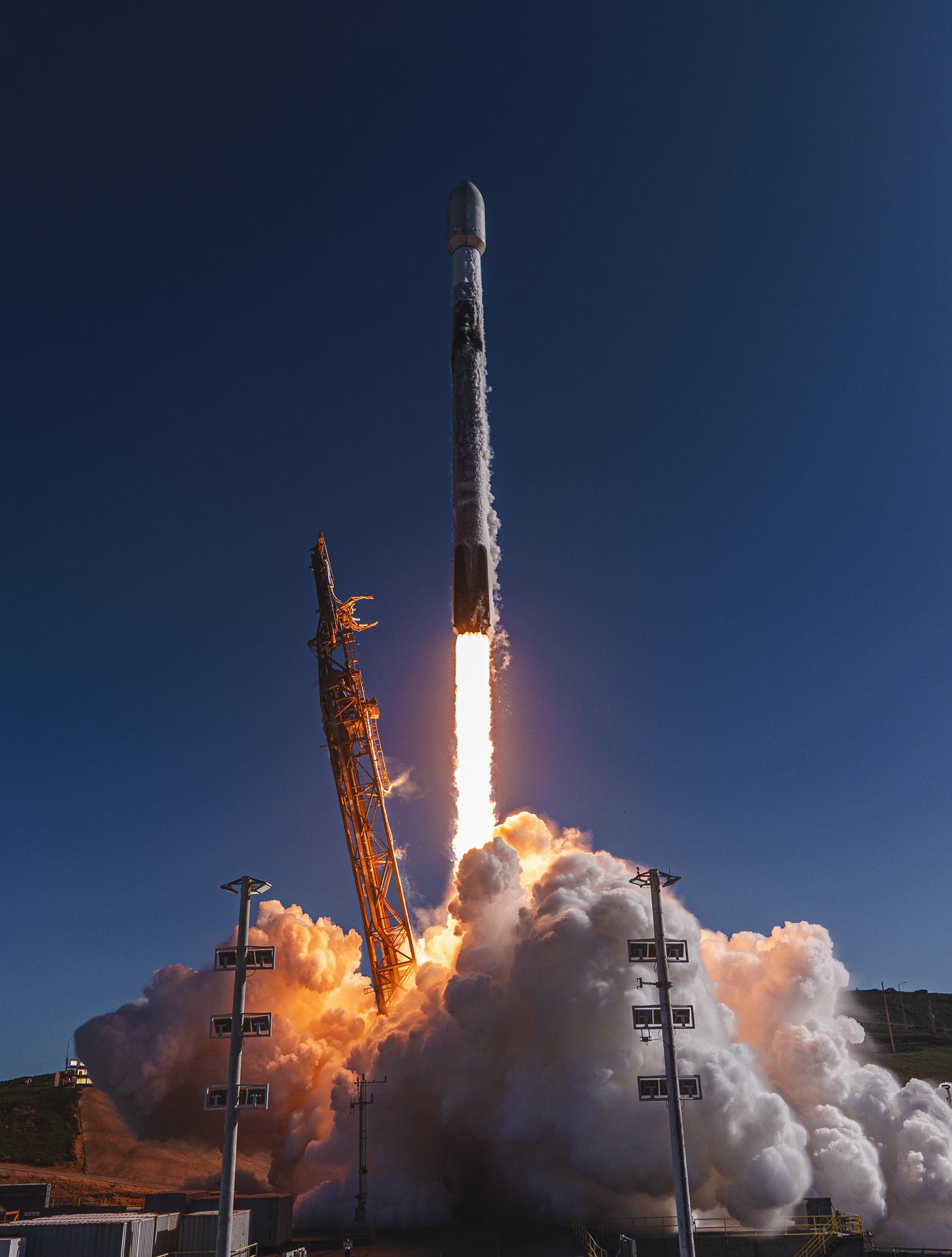
A SpaceX Falcon 9 rocket carrying NASA’s R5-S7 (Realizing Rapid, Reduced-cost high-Risk Research project Spacecraft 7) CubeSat along with several other satellites as part of the company’s Transporter-15 mission lifts off from Space Launch Complex 4 East at Vandenberg Space Force Base in California at 10:44 a.m. PST Friday, Nov. 28, 2025. The latest in a series of spacecraft, R5-S7 will explore ways to get multiple technology prototypes into low Earth orbit rapidly and at a low cost, accelerating the demonstration of these technologies in orbit and allowing engineers and scientists to more quickly prove them and make them available to NASA missions and other users.
![Teams encapsulate NASA’s R5-S7 (Realizing Rapid, Reduced-cost high-Risk Research project Spacecraft 7) CubeSat inside a SpaceX Falcon 9 payload fairing along with several other satellites at Vandenberg Space Force Base in California at [TIME, DAY, DATE], as part of the company’s Transporter-15 mission. The latest in a series of spacecraft, R5-S7 will explore ways to get multiple technology prototypes into low Earth orbit rapidly and at a low cost, accelerating the demonstration of these technologies in orbit and allowing engineers and scientists to more quickly prove them and make them available to NASA missions and other users. Launch of SpaceX’s Transporter-15 mission, carrying R5-S7, is scheduled for 10:18 a.m. PST Wednesday, Nov. 26, 2025, from Vandenberg’s Space Launch Complex 4 East.](https://images-assets.nasa.gov/image/KSC-20251126-PH-SPX01_0001/KSC-20251126-PH-SPX01_0001~large.jpg)
Teams encapsulate NASA’s R5-S7 (Realizing Rapid, Reduced-cost high-Risk Research project Spacecraft 7) CubeSat inside a SpaceX Falcon 9 payload fairing along with several other satellites at Vandenberg Space Force Base in California at [TIME, DAY, DATE], as part of the company’s Transporter-15 mission. The latest in a series of spacecraft, R5-S7 will explore ways to get multiple technology prototypes into low Earth orbit rapidly and at a low cost, accelerating the demonstration of these technologies in orbit and allowing engineers and scientists to more quickly prove them and make them available to NASA missions and other users. Launch of SpaceX’s Transporter-15 mission, carrying R5-S7, is scheduled for 10:18 a.m. PST Wednesday, Nov. 26, 2025, from Vandenberg’s Space Launch Complex 4 East.
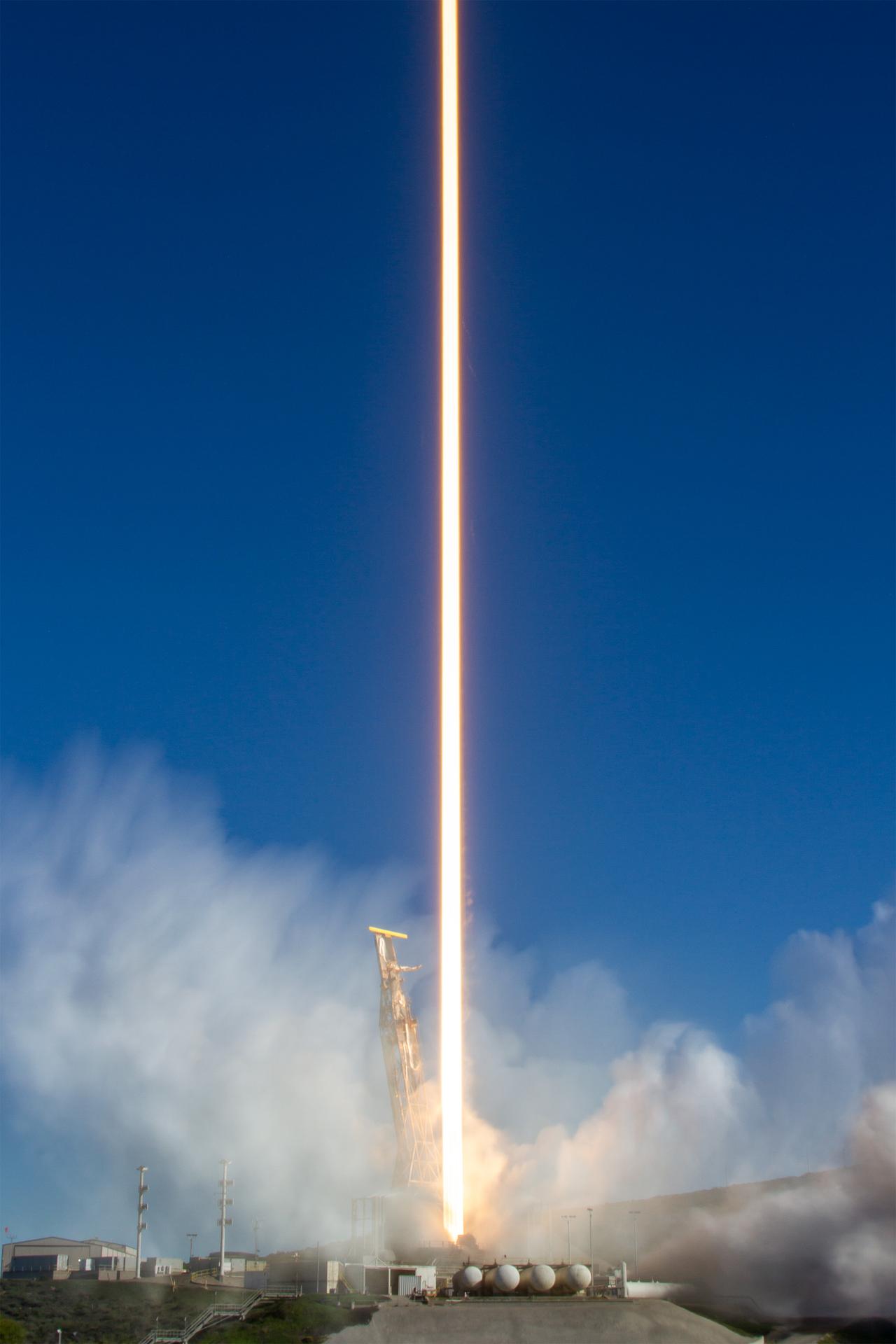
A SpaceX Falcon 9 rocket carrying NASA’s R5-S7 (Realizing Rapid, Reduced-cost high-Risk Research project Spacecraft 7) CubeSat along with several other satellites as part of the company’s Transporter-15 mission lifts off from Space Launch Complex 4 East at Vandenberg Space Force Base in California at 10:44 a.m. PST Friday, Nov. 28, 2025. The latest in a series of spacecraft, R5-S7 will explore ways to get multiple technology prototypes into low Earth orbit rapidly and at a low cost, accelerating the demonstration of these technologies in orbit and allowing engineers and scientists to more quickly prove them and make them available to NASA missions and other users.
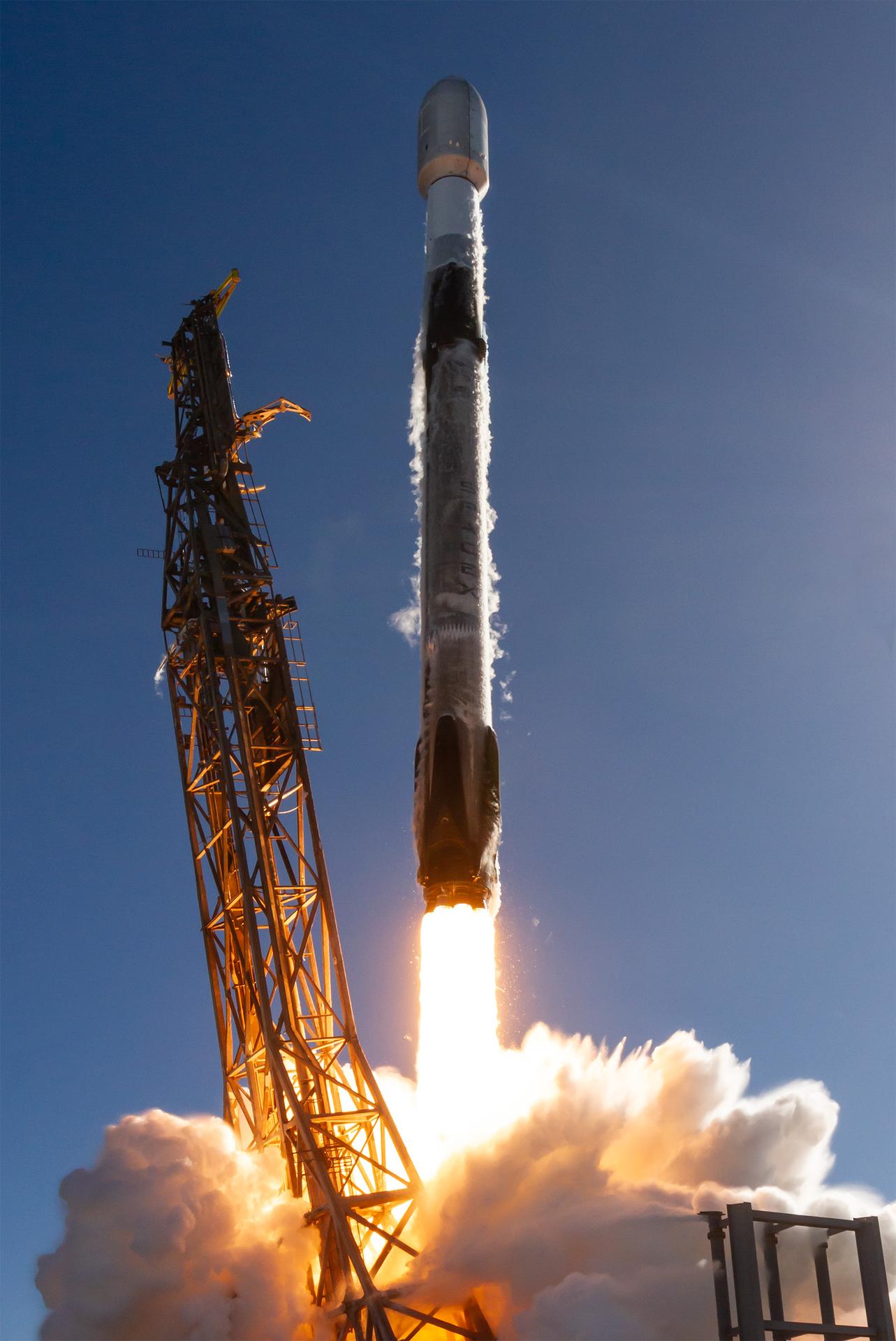
A SpaceX Falcon 9 rocket carrying NASA’s R5-S7 (Realizing Rapid, Reduced-cost high-Risk Research project Spacecraft 7) CubeSat along with several other satellites as part of the company’s Transporter-15 mission lifts off from Space Launch Complex 4 East at Vandenberg Space Force Base in California at 10:44 a.m. PST Friday, Nov. 28, 2025. The latest in a series of spacecraft, R5-S7 will explore ways to get multiple technology prototypes into low Earth orbit rapidly and at a low cost, accelerating the demonstration of these technologies in orbit and allowing engineers and scientists to more quickly prove them and make them available to NASA missions and other users.
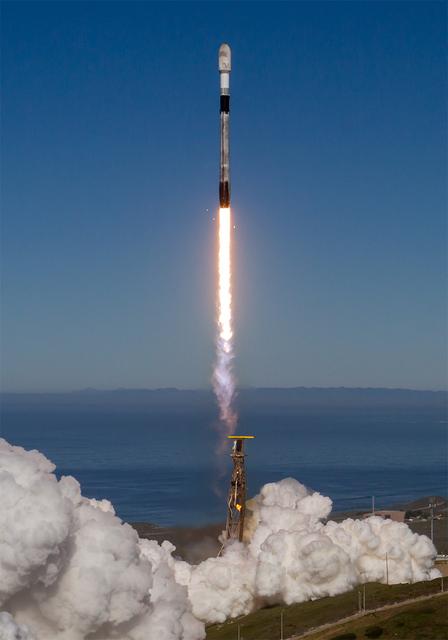
A SpaceX Falcon 9 rocket carrying NASA’s R5-S7 (Realizing Rapid, Reduced-cost high-Risk Research project Spacecraft 7) CubeSat along with several other satellites as part of the company’s Transporter-15 mission lifts off from Space Launch Complex 4 East at Vandenberg Space Force Base in California at 10:44 a.m. PST Friday, Nov. 28, 2025. The latest in a series of spacecraft, R5-S7 will explore ways to get multiple technology prototypes into low Earth orbit rapidly and at a low cost, accelerating the demonstration of these technologies in orbit and allowing engineers and scientists to more quickly prove them and make them available to NASA missions and other users.
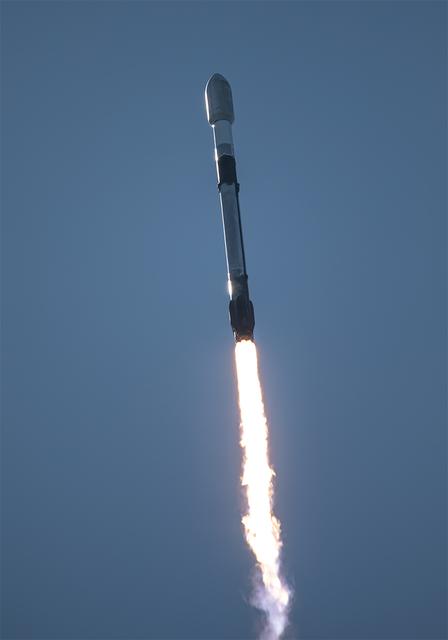
A SpaceX Falcon 9 rocket carrying NASA’s R5-S7 (Realizing Rapid, Reduced-cost high-Risk Research project Spacecraft 7) CubeSat along with several other satellites as part of the company’s Transporter-15 mission lifts off from Space Launch Complex 4 East at Vandenberg Space Force Base in California at 10:44 a.m. PST Friday, Nov. 28, 2025. The latest in a series of spacecraft, R5-S7 will explore ways to get multiple technology prototypes into low Earth orbit rapidly and at a low cost, accelerating the demonstration of these technologies in orbit and allowing engineers and scientists to more quickly prove them and make them available to NASA missions and other users.
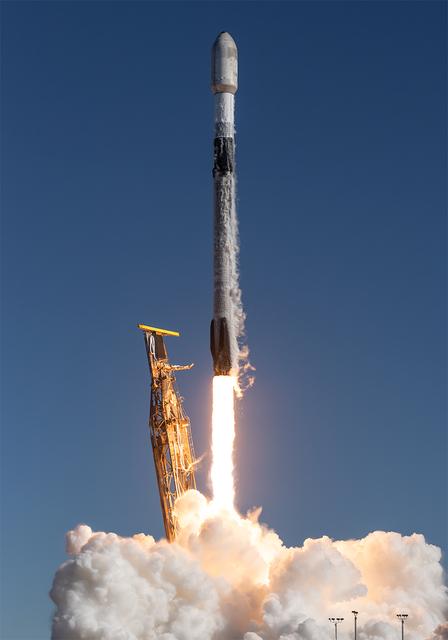
A SpaceX Falcon 9 rocket carrying NASA’s R5-S7 (Realizing Rapid, Reduced-cost high-Risk Research project Spacecraft 7) CubeSat along with several other satellites as part of the company’s Transporter-15 mission lifts off from Space Launch Complex 4 East at Vandenberg Space Force Base in California at 10:44 a.m. PST Friday, Nov. 28, 2025. The latest in a series of spacecraft, R5-S7 will explore ways to get multiple technology prototypes into low Earth orbit rapidly and at a low cost, accelerating the demonstration of these technologies in orbit and allowing engineers and scientists to more quickly prove them and make them available to NASA missions and other users.
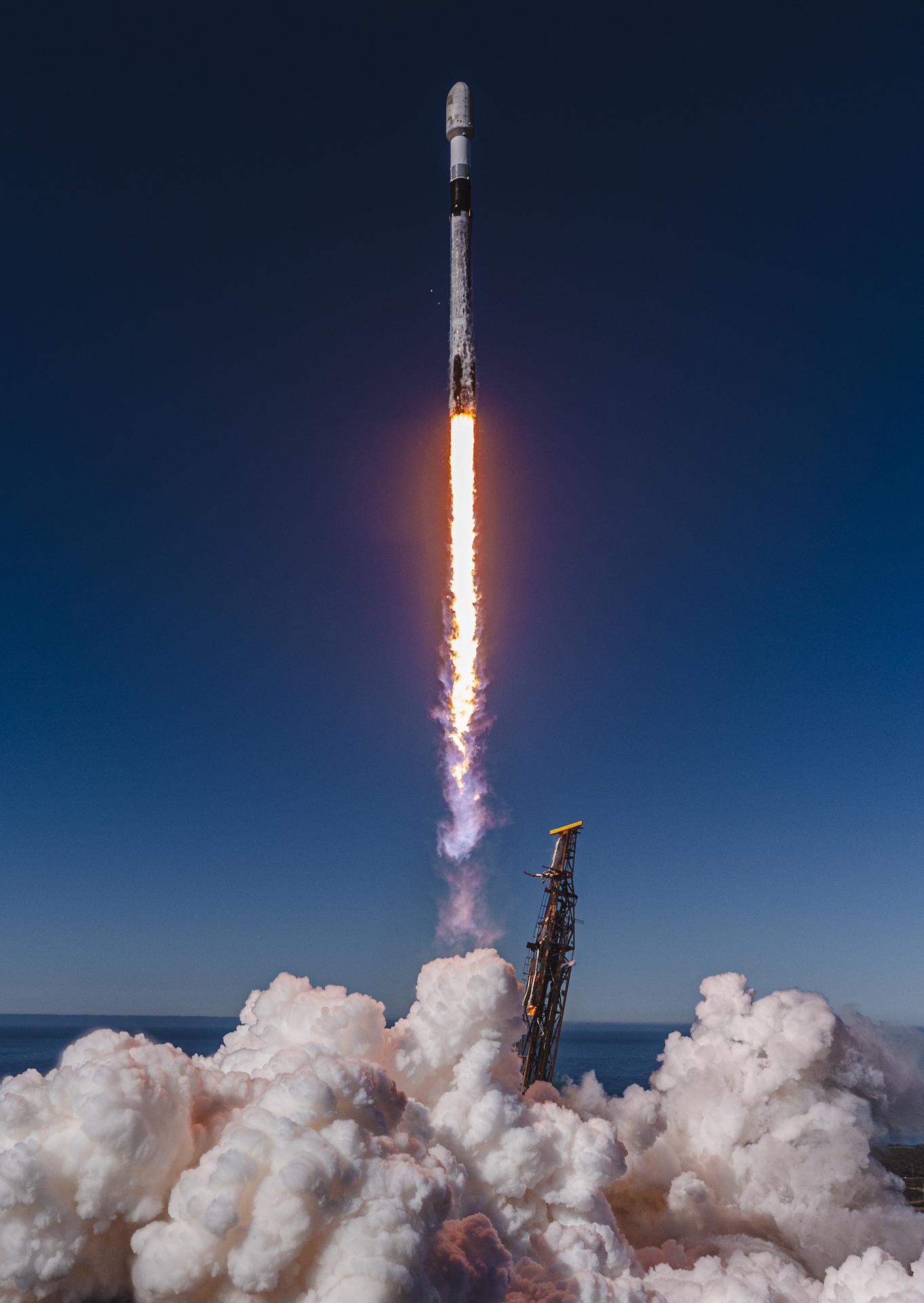
A SpaceX Falcon 9 rocket carrying NASA’s R5-S7 (Realizing Rapid, Reduced-cost high-Risk Research project Spacecraft 7) CubeSat along with several other satellites as part of the company’s Transporter-15 mission lifts off from Space Launch Complex 4 East at Vandenberg Space Force Base in California at 10:44 a.m. PST Friday, Nov. 28, 2025. The latest in a series of spacecraft, R5-S7 will explore ways to get multiple technology prototypes into low Earth orbit rapidly and at a low cost, accelerating the demonstration of these technologies in orbit and allowing engineers and scientists to more quickly prove them and make them available to NASA missions and other users.
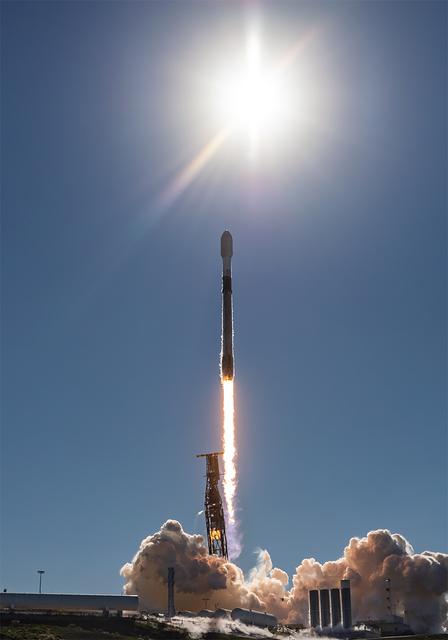
A SpaceX Falcon 9 rocket carrying NASA’s R5-S7 (Realizing Rapid, Reduced-cost high-Risk Research project Spacecraft 7) CubeSat along with several other satellites as part of the company’s Transporter-15 mission lifts off from Space Launch Complex 4 East at Vandenberg Space Force Base in California at 10:44 a.m. PST Friday, Nov. 28, 2025. The latest in a series of spacecraft, R5-S7 will explore ways to get multiple technology prototypes into low Earth orbit rapidly and at a low cost, accelerating the demonstration of these technologies in orbit and allowing engineers and scientists to more quickly prove them and make them available to NASA missions and other users.
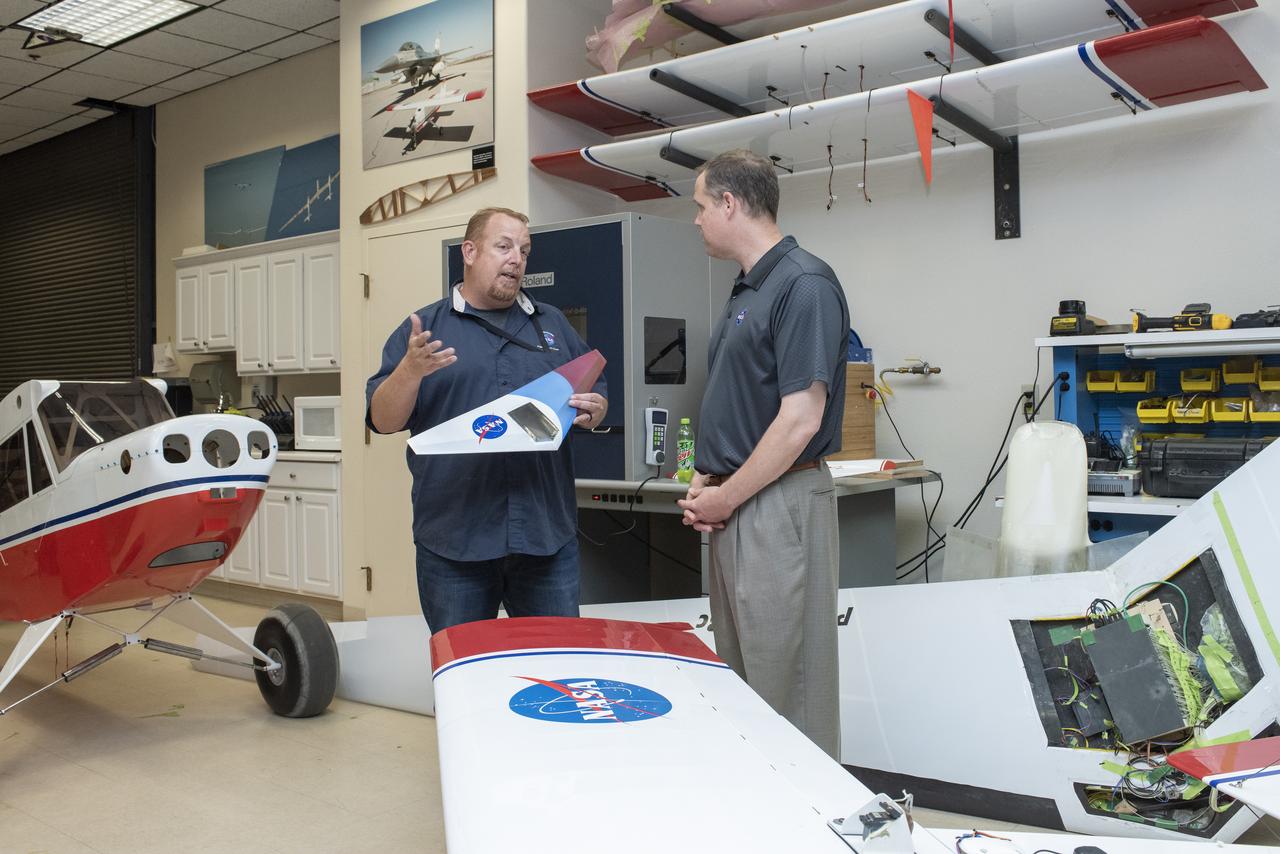
Armstrong's Robert "Red" Jensen talks to Bridenstine about using small scale aircraft to test aeronautical concepts keeping cost of aviation discoveries lower until technology is proved for larger aircraft.
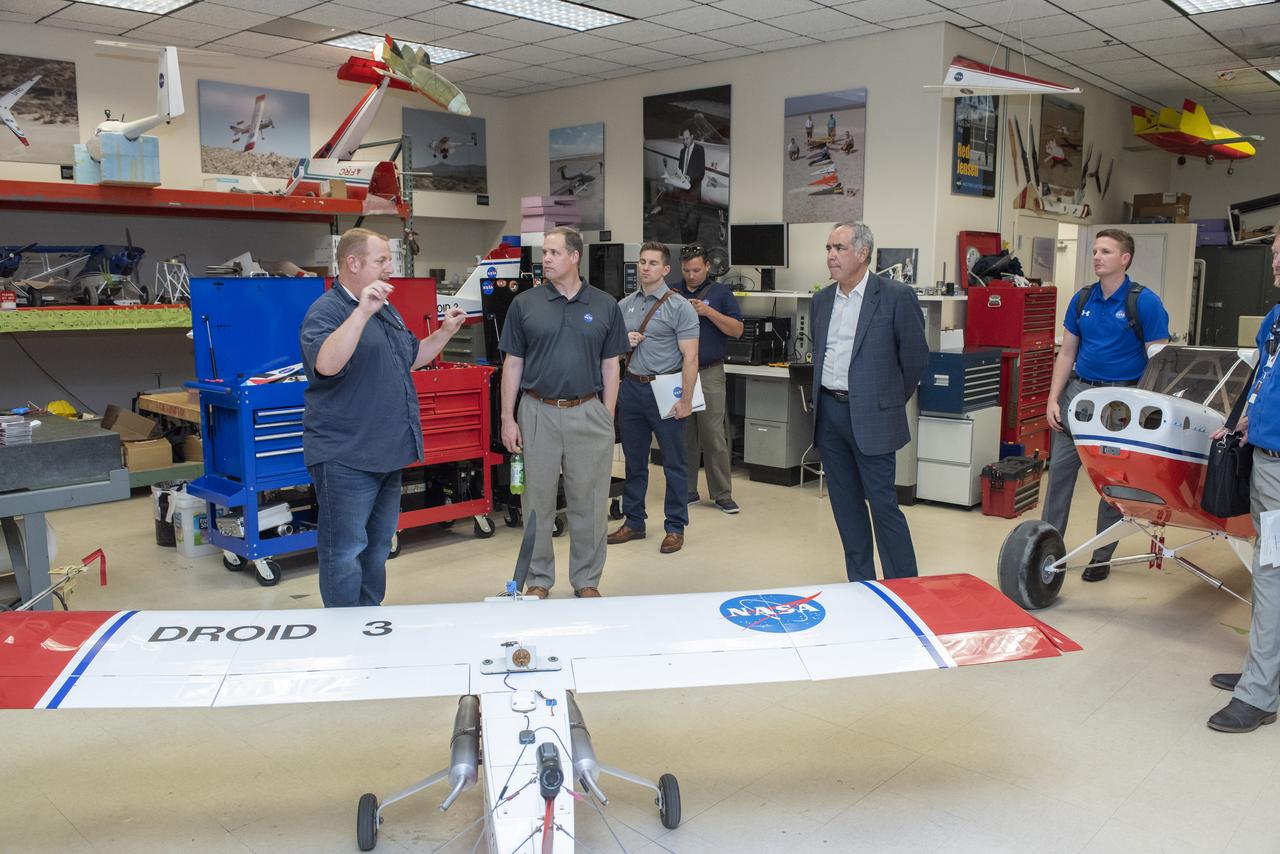
Armstrong's Robert "Red" Jensen talks to Bridenstine about using small scale aircraft to test aeronautical concepts keeping cost of aviation discoveries lower until technology is proved for larger aircraft.
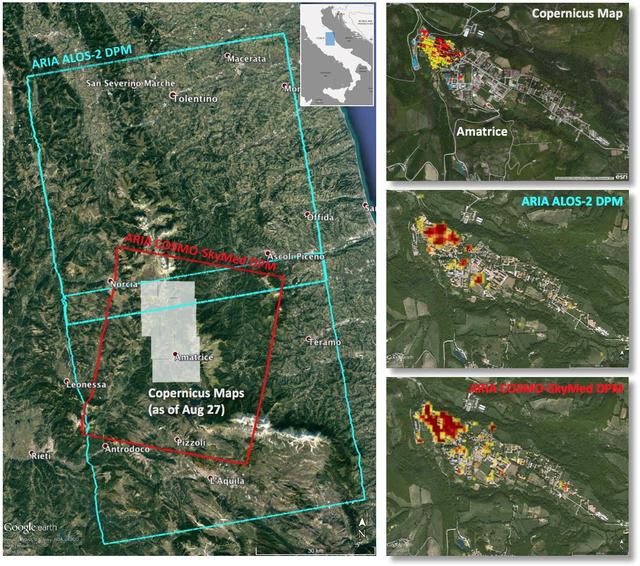
Italy earthquake. The quake has caused significant damage in the historic town of Amatrice. To assist in the disaster response efforts, scientists at NASA's Jet Propulsion Laboratory, Pasadena, California, and the California Institute of Technology in Pasadena, in collaboration with the Italian Space Agency (ASI), generated this image of the earthquake's hardest-hit region. The 40-by-75 mile (65-by-120 kilometer) Damage Proxy Map (DPM) was derived from two consecutive frames of the Japan Aerospace Exploration Agency's (JAXA's) L-band interferometric synthetic aperture radar (InSAR) data from the ALOS-2 satellite (cyan rectangles), and the 25-by-31 mile (40-by-50 kilometer) DPM was derived from InSAR data from the Agenzia Spaciale Italiana's (ASI's) X-band COSMO-SkyMed satellite (red rectangle). Both DPMs cover the historic town of Amatrice, revealing severe damage in the western side of the town (right panels). The time span of the data for the change is Jan. 27, 2016 to Aug. 24, 2016 for ALOS-2 and Aug. 20, 2016 to Aug. 28, 2016 for COSMO-SkyMed. Each pixel in the damage proxy map is about 100 feet (30 meters) across. The SAR data were processed by the Advanced Rapid Imaging and Analysis (ARIA) team at JPL and Caltech. The technique uses a prototype algorithm to rapidly detect surface changes caused by natural or human-produced damage. The assessment technique is most sensitive to destruction of the built environment. When the radar images areas with little to no destruction, its image pixels are transparent. Increased opacity of the radar image pixels reflects damage, with areas in red reflecting the heaviest damage to cities and towns. The color variations from yellow to red indicate increasingly more significant ground surface change. Preliminary validation was done by comparing the DPMs to a damage assessment map produced by the Copernicus Emergency Management Service, which is based on visual inspection of before and after high-resolution aerial imagery -- the extent indicated with gray boxes in the left panel. http://photojournal.jpl.nasa.gov/catalog/PIA20897