
CAPE CANAVERAL, Fla. - Inside the Astrotech payload processing facility near NASA’s Kennedy Space Center in Florida, technicians uncrate, inspect and prepare to uncover the nose cone fairing for the Radiation Belt Storm Probes, or RBSP, spacecraft. The nose faring will house and protect the RBSP during liftoff aboard an Atlas V rocket. NASA’s RBSP mission will help us understand the sun’s influence on Earth and near-Earth space by studying the Earth’s radiation belts on various scales of space and time. RBSP will begin its mission of exploration of Earth’s Van Allen radiation belts and the extremes of space weather after its liftoff aboard a United Launch Alliance Atlas V from Space Launch Complex 41 at Cape Canaveral Air Force Station, Fla. Liftoff is targeted for Aug. 23, 2012. For more information, visit http://www.nasa.gov/rbsp. Photo credit: NASA/Charisse Nahser

CAPE CANAVERAL, Fla. - Inside the Astrotech payload processing facility near NASA’s Kennedy Space Center in Florida, technicians uncrate and prepare to uncover the nose cone fairing for the Radiation Belt Storm Probes, or RBSP, spacecraft. The nose faring will house and protect the RBSP during liftoff aboard an Atlas V rocket. NASA’s RBSP mission will help us understand the sun’s influence on Earth and near-Earth space by studying the Earth’s radiation belts on various scales of space and time. RBSP will begin its mission of exploration of Earth’s Van Allen radiation belts and the extremes of space weather after its liftoff aboard a United Launch Alliance Atlas V from Space Launch Complex 41 at Cape Canaveral Air Force Station, Fla. Liftoff is targeted for Aug. 23, 2012. For more information, visit http://www.nasa.gov/rbsp. Photo credit: NASA/Charisse Nahser
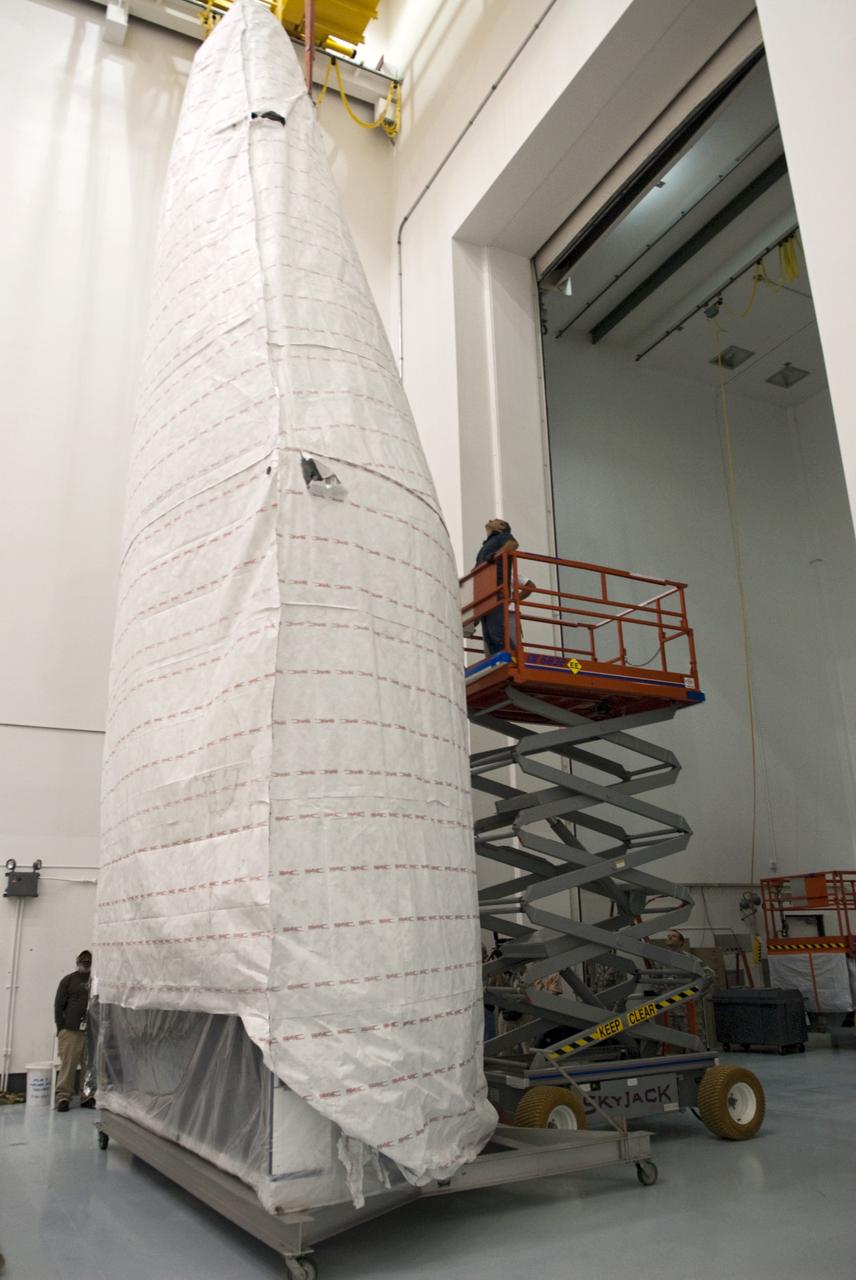
CAPE CANAVERAL, Fla. - Inside the Astrotech payload processing facility near NASA’s Kennedy Space Center in Florida, technicians use a lift to inspect the nose cone fairing for the Radiation Belt Storm Probes, or RBSP, spacecraft. The nose faring will house and protect the RBSP during liftoff aboard an Atlas V rocket. NASA’s RBSP mission will help us understand the sun’s influence on Earth and near-Earth space by studying the Earth’s radiation belts on various scales of space and time. RBSP will begin its mission of exploration of Earth’s Van Allen radiation belts and the extremes of space weather after its liftoff aboard a United Launch Alliance Atlas V from Space Launch Complex 41at Cape Canaveral Air Force Station, Fla. Liftoff is targeted for Aug. 23, 2012. For more information, visit http://www.nasa.gov/rbsp. Photo credit: NASA/Charisse Nahser
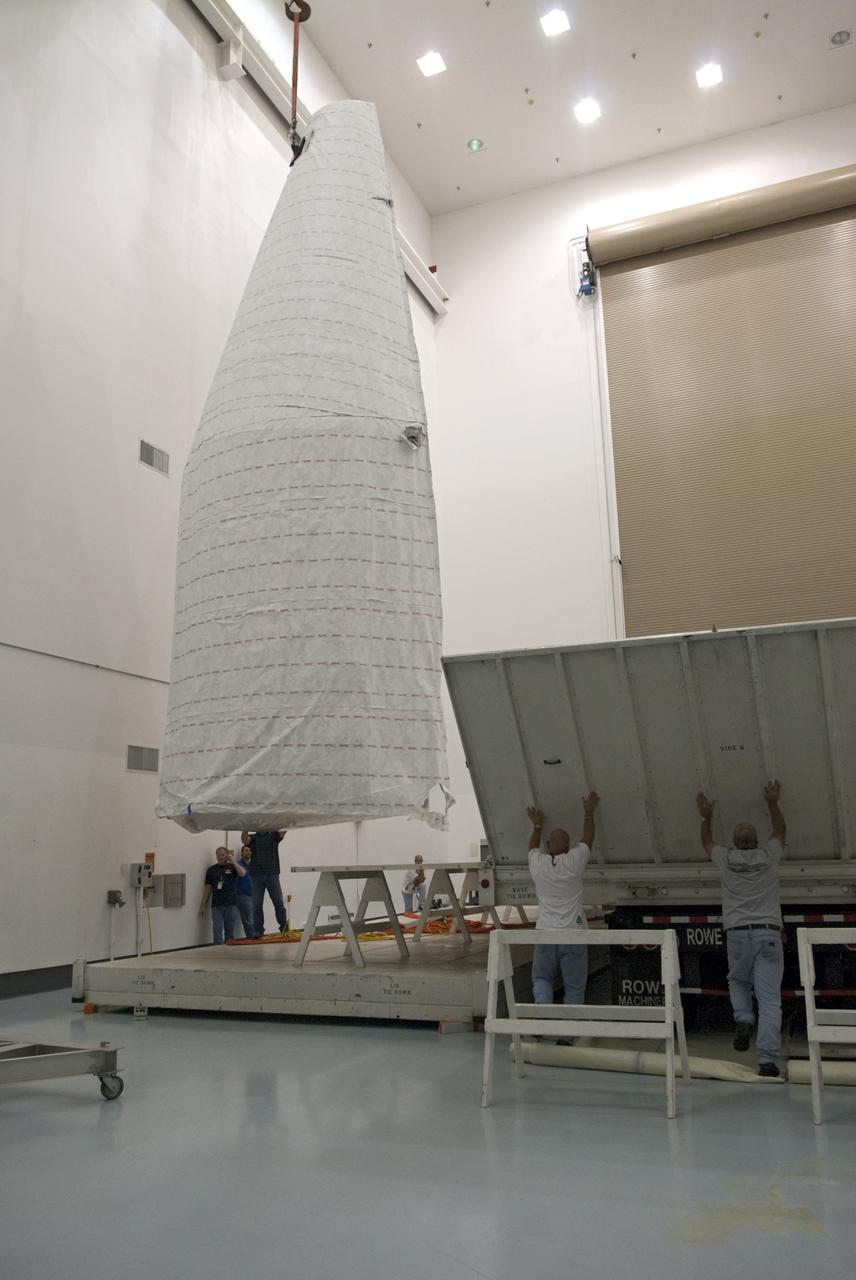
CAPE CANAVERAL, Fla. - Inside the Astrotech payload processing facility near NASA’s Kennedy Space Center in Florida, technicians uncrate, offload and prepare to uncover the nose cone fairing for the Radiation Belt Storm Probes, or RBSP, spacecraft. The nose faring will house and protect the RBSP during liftoff aboard an Atlas V rocket. NASA’s RBSP mission will help us understand the sun’s influence on Earth and near-Earth space by studying the Earth’s radiation belts on various scales of space and time. RBSP will begin its mission of exploration of Earth’s Van Allen radiation belts and the extremes of space weather after its liftoff aboard a United Launch Alliance Atlas V from Space Launch Complex 41 at Cape Canaveral Air Force Station, Fla. Liftoff is targeted for Aug. 23, 2012. For more information, visit http://www.nasa.gov/rbsp. Photo credit: NASA/Charisse Nahser
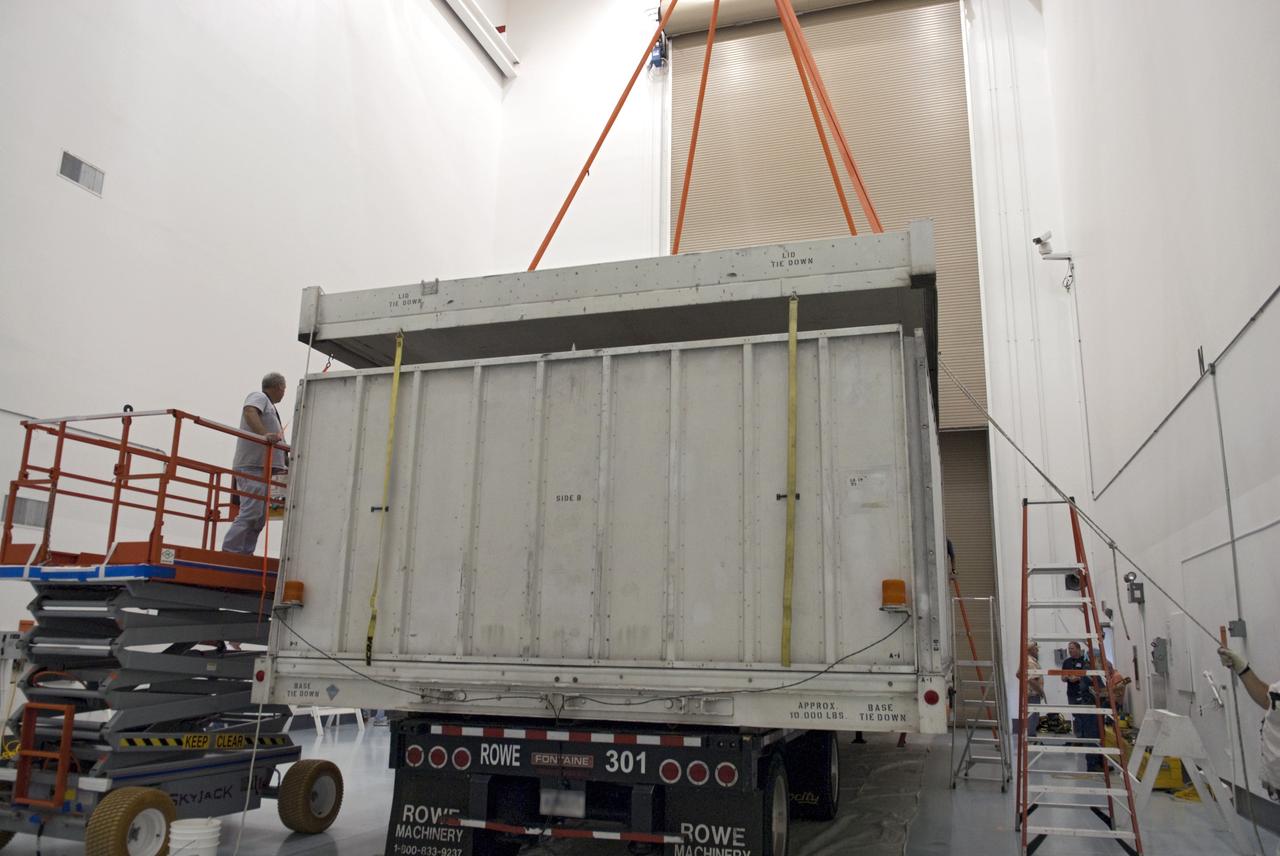
CAPE CANAVERAL, Fla. - Inside the Astrotech payload processing facility near NASA’s Kennedy Space Center in Florida, technicians open the shipping crate containing the nose cone fairing for the Radiation Belt Storm Probes, or RBSP, spacecraft. The nose faring will house and protect the RBSP during liftoff aboard an Atlas V rocket. NASA’s RBSP mission will help us understand the sun’s influence on Earth and near-Earth space by studying the Earth’s radiation belts on various scales of space and time. RBSP will begin its mission of exploration of Earth’s Van Allen radiation belts and the extremes of space weather after its liftoff aboard a United Launch Alliance Atlas V from Space Launch Complex 41 at Cape Canaveral Air Force Station, Fla. Liftoff is targeted for Aug. 23, 2012. For more information, visit http://www.nasa.gov/rbsp. Photo credit: NASA/Charisse Nahser
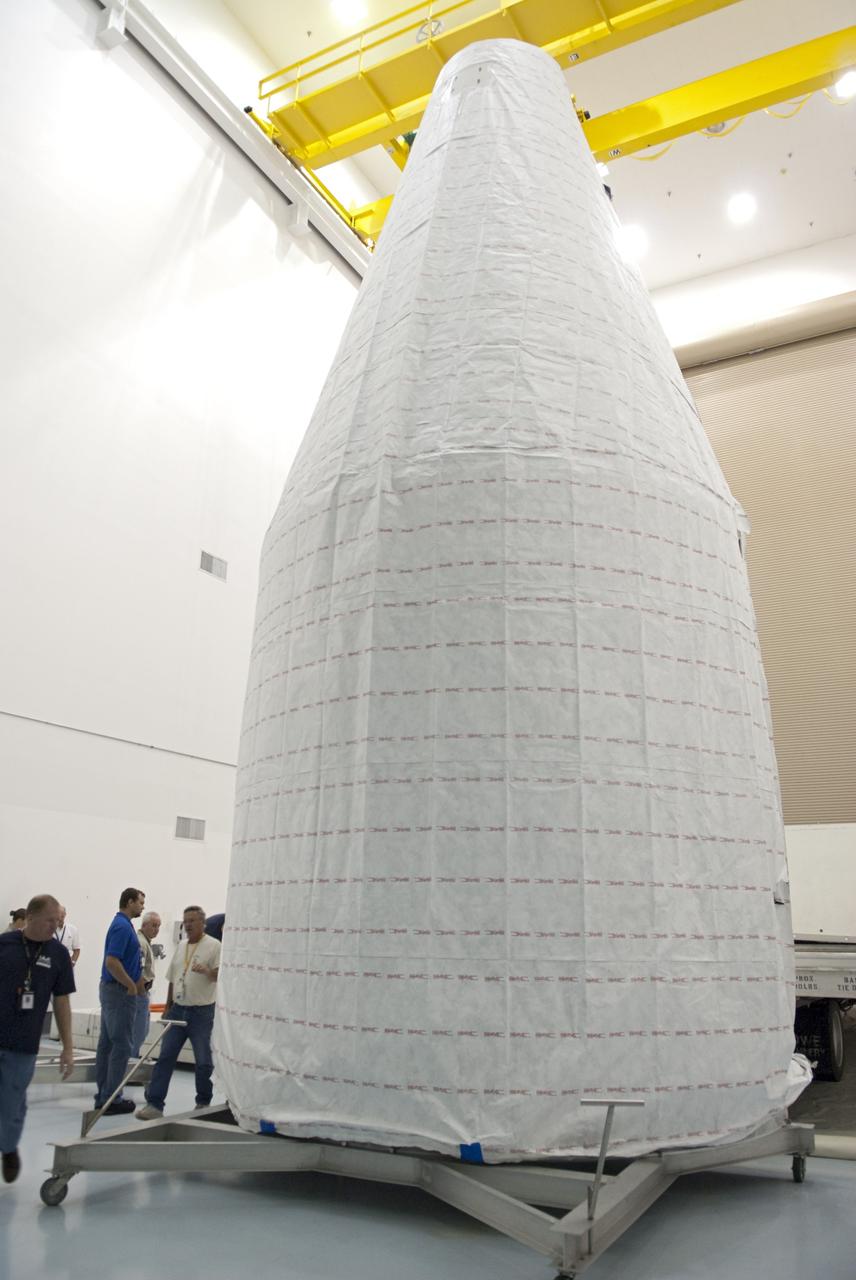
CAPE CANAVERAL, Fla. - Inside the Astrotech payload processing facility near NASA’s Kennedy Space Center in Florida, technicians offload, inspect and prepare to uncover the nose cone fairing for the Radiation Belt Storm Probes, or RBSP, spacecraft. The nose faring will house and protect the RBSP during liftoff aboard an Atlas V rocket. NASA’s RBSP mission will help us understand the sun’s influence on Earth and near-Earth space by studying the Earth’s radiation belts on various scales of space and time. RBSP will begin its mission of exploration of Earth’s Van Allen radiation belts and the extremes of space weather after its liftoff aboard a United Launch Alliance Atlas V from Space Launch Complex 41 at Cape Canaveral Air Force Station, Fla. Liftoff is targeted for Aug. 23, 2012. For more information, visit http://www.nasa.gov/rbsp. Photo credit: NASA/Charisse Nahser
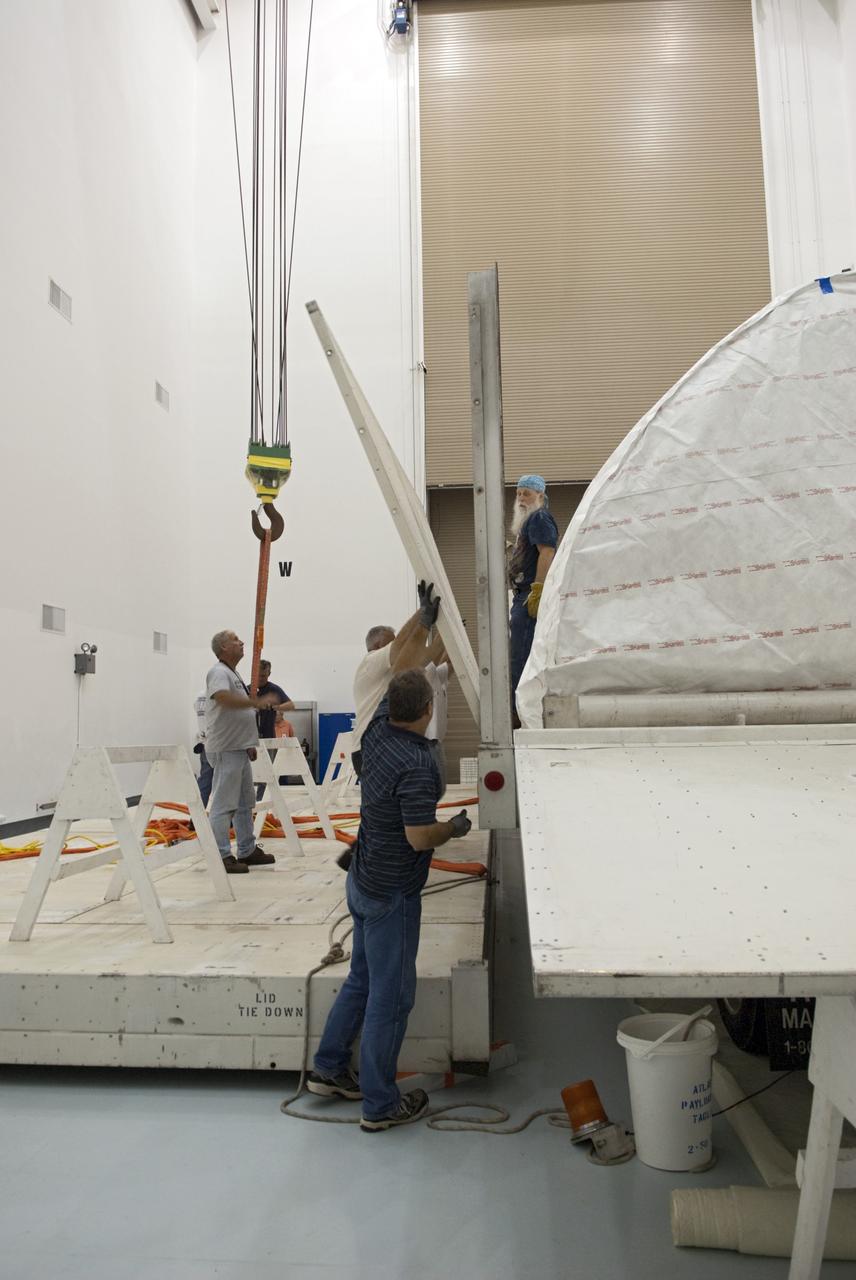
CAPE CANAVERAL, Fla. - Inside the Astrotech payload processing facility near NASA’s Kennedy Space Center in Florida, technicians uncrate and prepare to uncover the nose cone fairing for the Radiation Belt Storm Probes, or RBSP, spacecraft. The nose faring will house and protect the RBSP during liftoff aboard an Atlas V rocket. NASA’s RBSP mission will help us understand the sun’s influence on Earth and near-Earth space by studying the Earth’s radiation belts on various scales of space and time. RBSP will begin its mission of exploration of Earth’s Van Allen radiation belts and the extremes of space weather after its liftoff aboard a United Launch Alliance Atlas V from Space Launch Complex 41 at Cape Canaveral Air Force Station, Fla. Liftoff is targeted for Aug. 23, 2012. For more information, visit http://www.nasa.gov/rbsp. Photo credit: NASA/Charisse Nahser
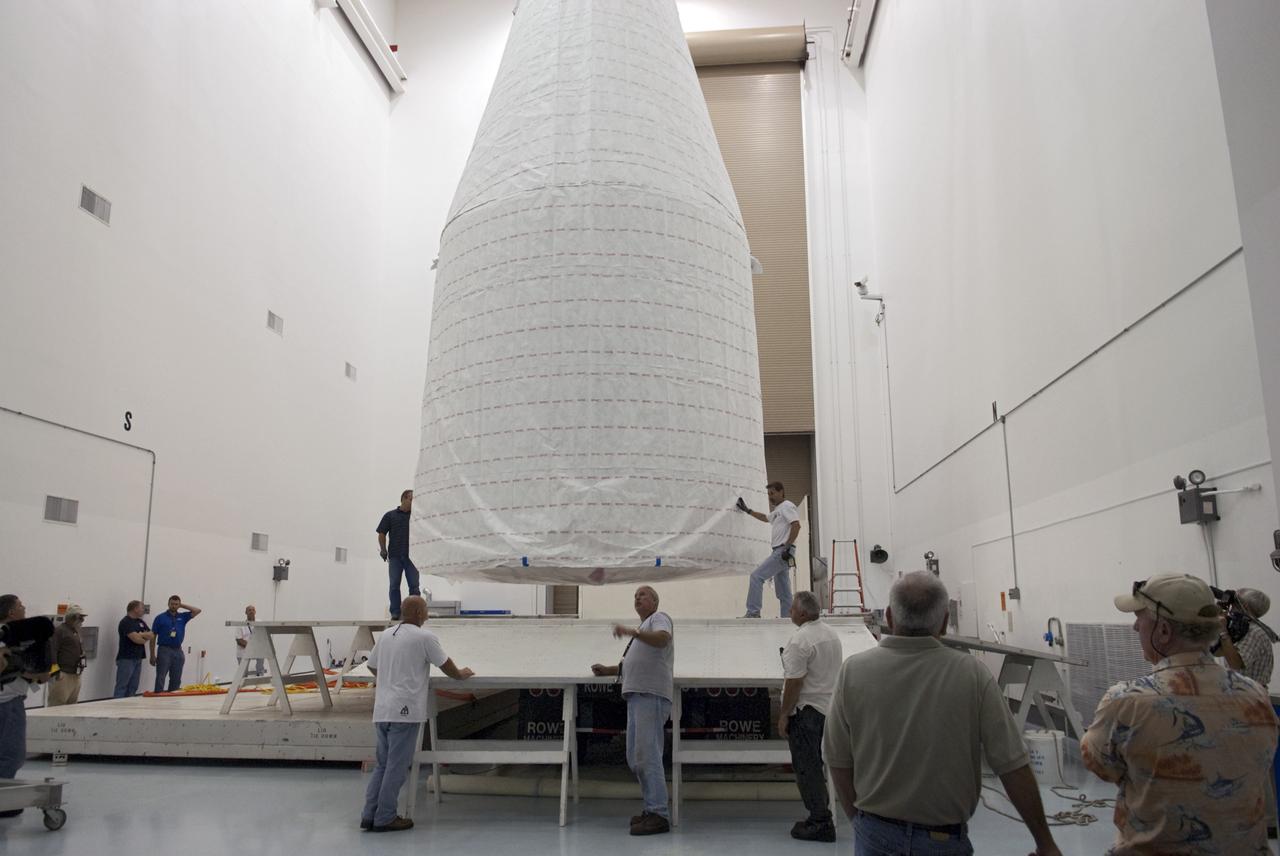
CAPE CANAVERAL, Fla. - Inside the Astrotech payload processing facility near NASA’s Kennedy Space Center in Florida, technicians offload, inspect and prepare to uncover the nose cone fairing for the Radiation Belt Storm Probes, or RBSP, spacecraft. The nose faring will house and protect the RBSP during liftoff aboard an Atlas V rocket. NASA’s RBSP mission will help us understand the sun’s influence on Earth and near-Earth space by studying the Earth’s radiation belts on various scales of space and time. RBSP will begin its mission of exploration of Earth’s Van Allen radiation belts and the extremes of space weather after its liftoff aboard a United Launch Alliance Atlas V from Space Launch Complex 41at Cape Canaveral Air Force Station, Fla. Liftoff is targeted for Aug. 23, 2012. For more information, visit http://www.nasa.gov/rbsp. Photo credit: NASA/Charisse Nahser

CAPE CANAVERAL, Fla. - Inside the Astrotech payload processing facility near NASA’s Kennedy Space Center in Florida, technicians offload and prepare to uncover the nose cone fairing for the Radiation Belt Storm Probes, or RBSP, spacecraft. The nose faring will house and protect the RBSP during liftoff aboard an Atlas V rocket. NASA’s RBSP mission will help us understand the sun’s influence on Earth and near-Earth space by studying the Earth’s radiation belts on various scales of space and time. RBSP will begin its mission of exploration of Earth’s Van Allen radiation belts and the extremes of space weather after its liftoff aboard a United Launch Alliance Atlas V from Space Launch Complex 41 at Cape Canaveral Air Force Station, Fla. Liftoff is targeted for Aug. 23, 2012. For more information, visit http://www.nasa.gov/rbsp. Photo credit: NASA/Charisse Nahser
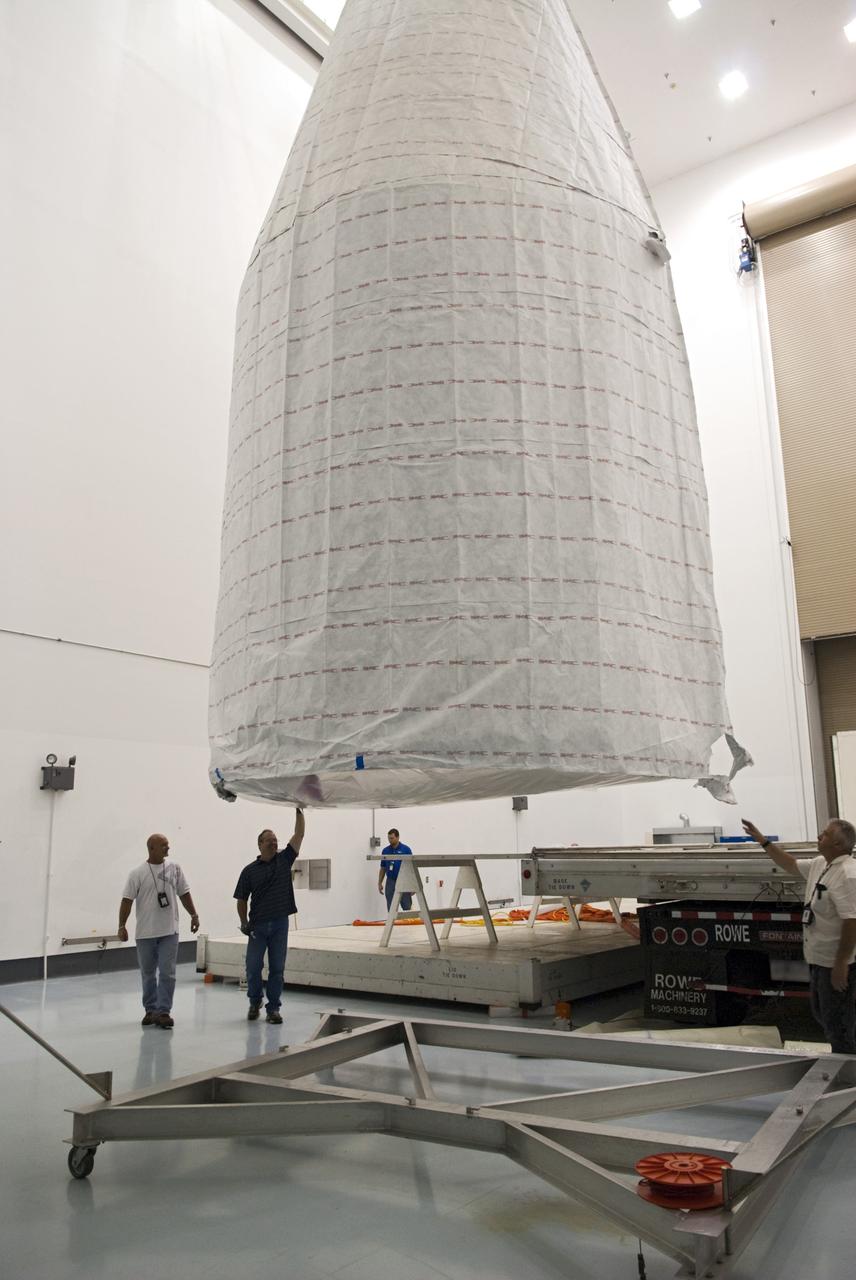
CAPE CANAVERAL, Fla. - Inside the Astrotech payload processing facility near NASA’s Kennedy Space Center in Florida, technicians offload, inspect and prepare to uncover the nose cone fairing for the Radiation Belt Storm Probes, or RBSP, spacecraft. The nose faring will house and protect the RBSP during liftoff aboard an Atlas V rocket. NASA’s RBSP mission will help us understand the sun’s influence on Earth and near-Earth space by studying the Earth’s radiation belts on various scales of space and time. RBSP will begin its mission of exploration of Earth’s Van Allen radiation belts and the extremes of space weather after its liftoff aboard a United Launch Alliance Atlas V from Space Launch Complex 41 at Cape Canaveral Air Force Station, Fla. Liftoff is targeted for Aug. 23, 2012. For more information, visit http://www.nasa.gov/rbsp. Photo credit: NASA/Charisse Nahser
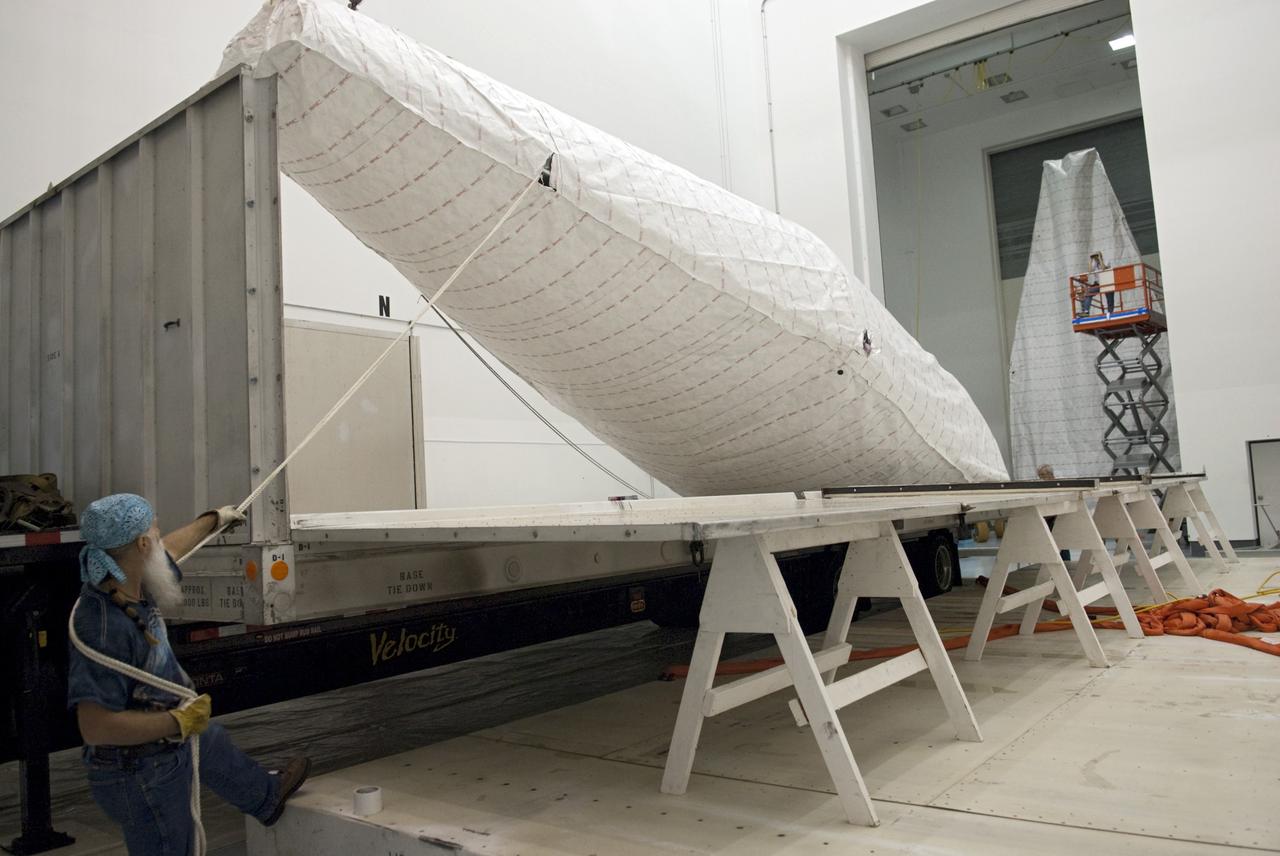
CAPE CANAVERAL, Fla. - Inside the Astrotech payload processing facility near NASA’s Kennedy Space Center in Florida, technicians offload and prepare to uncover the nose cone fairing for the Radiation Belt Storm Probes, or RBSP, spacecraft. The nose faring will house and protect the RBSP during liftoff aboard an Atlas V rocket. NASA’s RBSP mission will help us understand the sun’s influence on Earth and near-Earth space by studying the Earth’s radiation belts on various scales of space and time. RBSP will begin its mission of exploration of Earth’s Van Allen radiation belts and the extremes of space weather after its liftoff aboard a United Launch Alliance Atlas V from Space Launch Complex 41 at Cape Canaveral Air Force Station, Fla. Liftoff is targeted for Aug. 23, 2012. For more information, visit http://www.nasa.gov/rbsp. Photo credit: NASA/Charisse Nahser
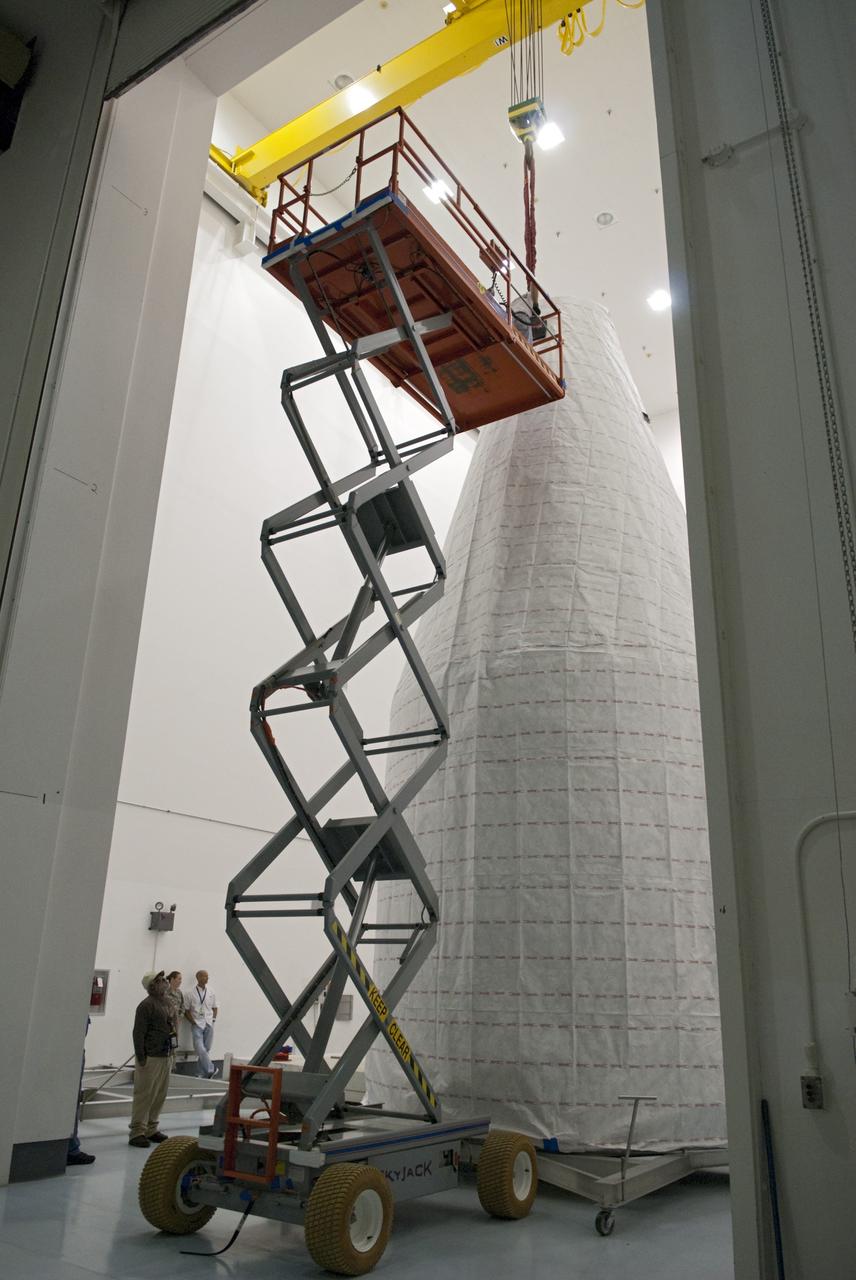
CAPE CANAVERAL, Fla. - Inside the Astrotech payload processing facility near NASA’s Kennedy Space Center in Florida, technicians use a lift to inspect the nose cone fairing for the Radiation Belt Storm Probes, or RBSP, spacecraft. The nose faring will house and protect the RBSP during liftoff aboard an Atlas V rocket. NASA’s RBSP mission will help us understand the sun’s influence on Earth and near-Earth space by studying the Earth’s radiation belts on various scales of space and time. RBSP will begin its mission of exploration of Earth’s Van Allen radiation belts and the extremes of space weather after its liftoff aboard a United Launch Alliance Atlas V from Space Launch Complex 41 at Cape Canaveral Air Force Station, Fla. Liftoff is targeted for Aug. 23, 2012. For more information, visit http://www.nasa.gov/rbsp. Photo credit: NASA/Charisse Nahser
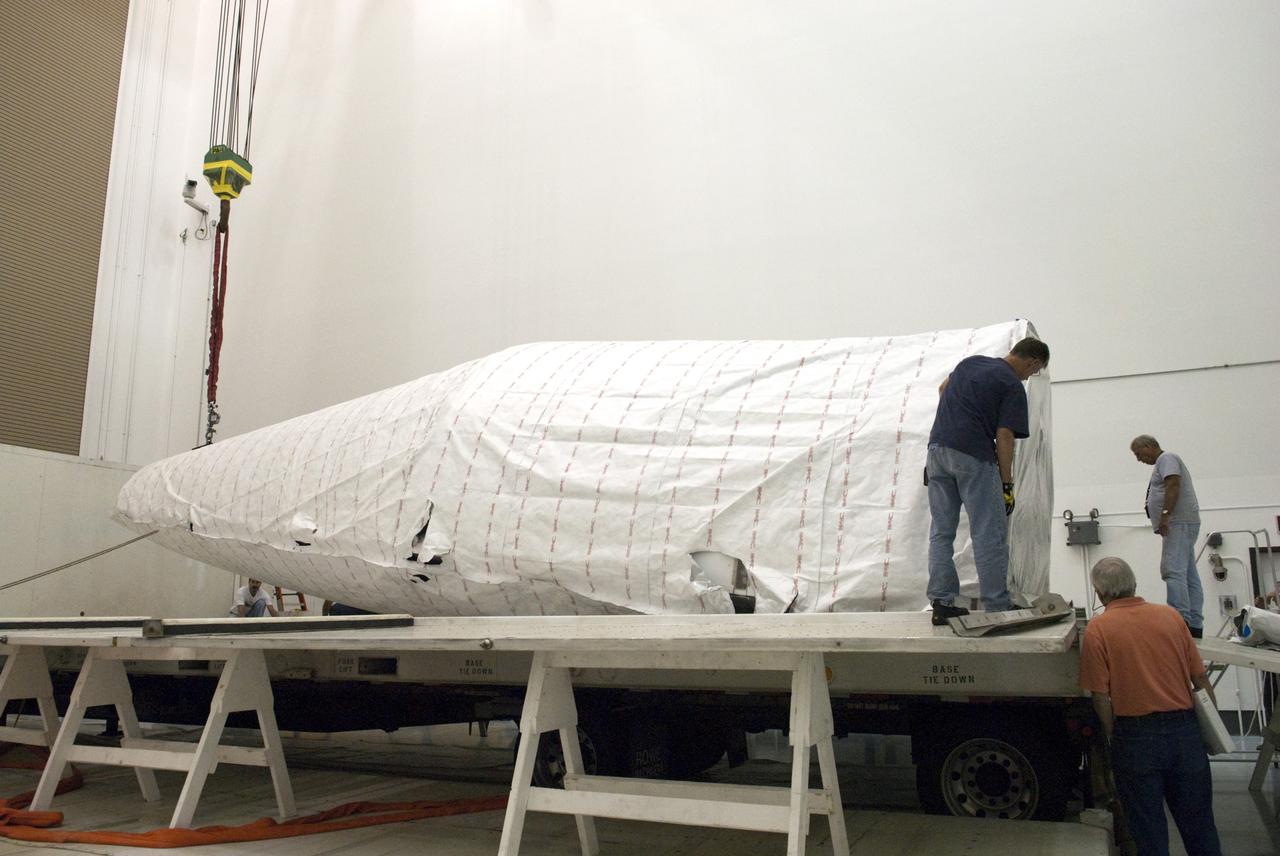
CAPE CANAVERAL, Fla. - Inside the Astrotech payload processing facility near NASA’s Kennedy Space Center in Florida, technicians uncrate and prepare to uncover the nose cone fairing for the Radiation Belt Storm Probes, or RBSP, spacecraft. The nose faring will house and protect the RBSP during liftoff aboard an Atlas V rocket. NASA’s RBSP mission will help us understand the sun’s influence on Earth and near-Earth space by studying the Earth’s radiation belts on various scales of space and time. RBSP will begin its mission of exploration of Earth’s Van Allen radiation belts and the extremes of space weather after its liftoff aboard a United Launch Alliance Atlas V from Space Launch Complex 41 at Cape Canaveral Air Force Station, Fla. Liftoff is targeted for Aug. 23, 2012. For more information, visit http://www.nasa.gov/rbsp. Photo credit: NASA/Charisse Nahser
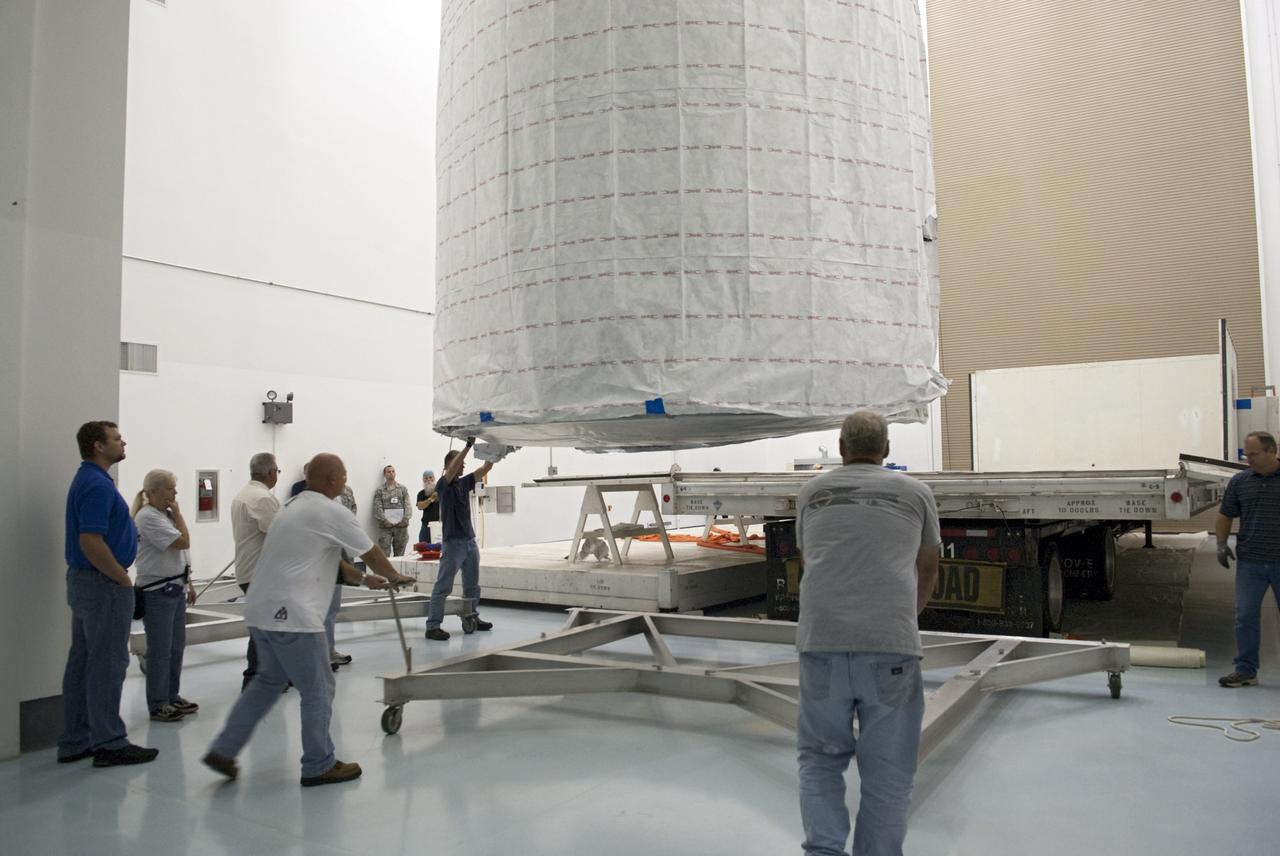
CAPE CANAVERAL, Fla. - Inside the Astrotech payload processing facility near NASA’s Kennedy Space Center in Florida, technicians offload and prepare to uncover the nose cone fairing for the Radiation Belt Storm Probes, or RBSP, spacecraft. The nose faring will house and protect the RBSP during liftoff aboard an Atlas V rocket. NASA’s RBSP mission will help us understand the sun’s influence on Earth and near-Earth space by studying the Earth’s radiation belts on various scales of space and time. RBSP will begin its mission of exploration of Earth’s Van Allen radiation belts and the extremes of space weather after its liftoff aboard a United Launch Alliance Atlas V from Space Launch Complex 41 at Cape Canaveral Air Force Station, Fla. Liftoff is targeted for Aug. 23, 2012. For more information, visit http://www.nasa.gov/rbsp. Photo credit: NASA/Charisse Nahser
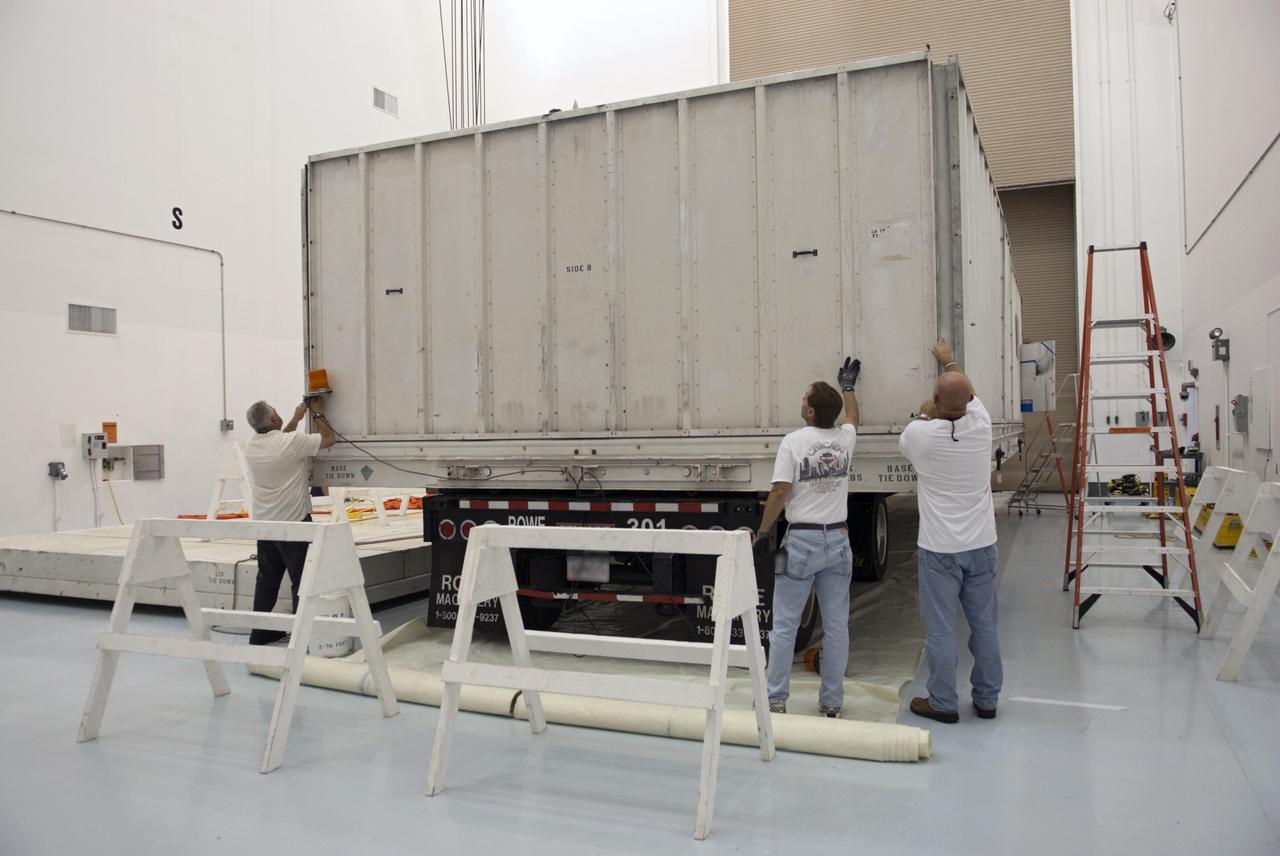
CAPE CANAVERAL, Fla. - Inside the Astrotech payload processing facility near NASA’s Kennedy Space Center in Florida, technicians open the shipping crate containing the nose cone fairing for the Radiation Belt Storm Probes, or RBSP, spacecraft. The nose faring will house and protect the RBSP during liftoff aboard an Atlas V rocket. NASA’s RBSP mission will help us understand the sun’s influence on Earth and near-Earth space by studying the Earth’s radiation belts on various scales of space and time. RBSP will begin its mission of exploration of Earth’s Van Allen radiation belts and the extremes of space weather after its liftoff aboard a United Launch Alliance Atlas V from Space Launch Complex 41 at Cape Canaveral Air Force Station, Fla. Liftoff is targeted for Aug. 23, 2012. For more information, visit http://www.nasa.gov/rbsp. Photo credit: NASA/Charisse Nahser
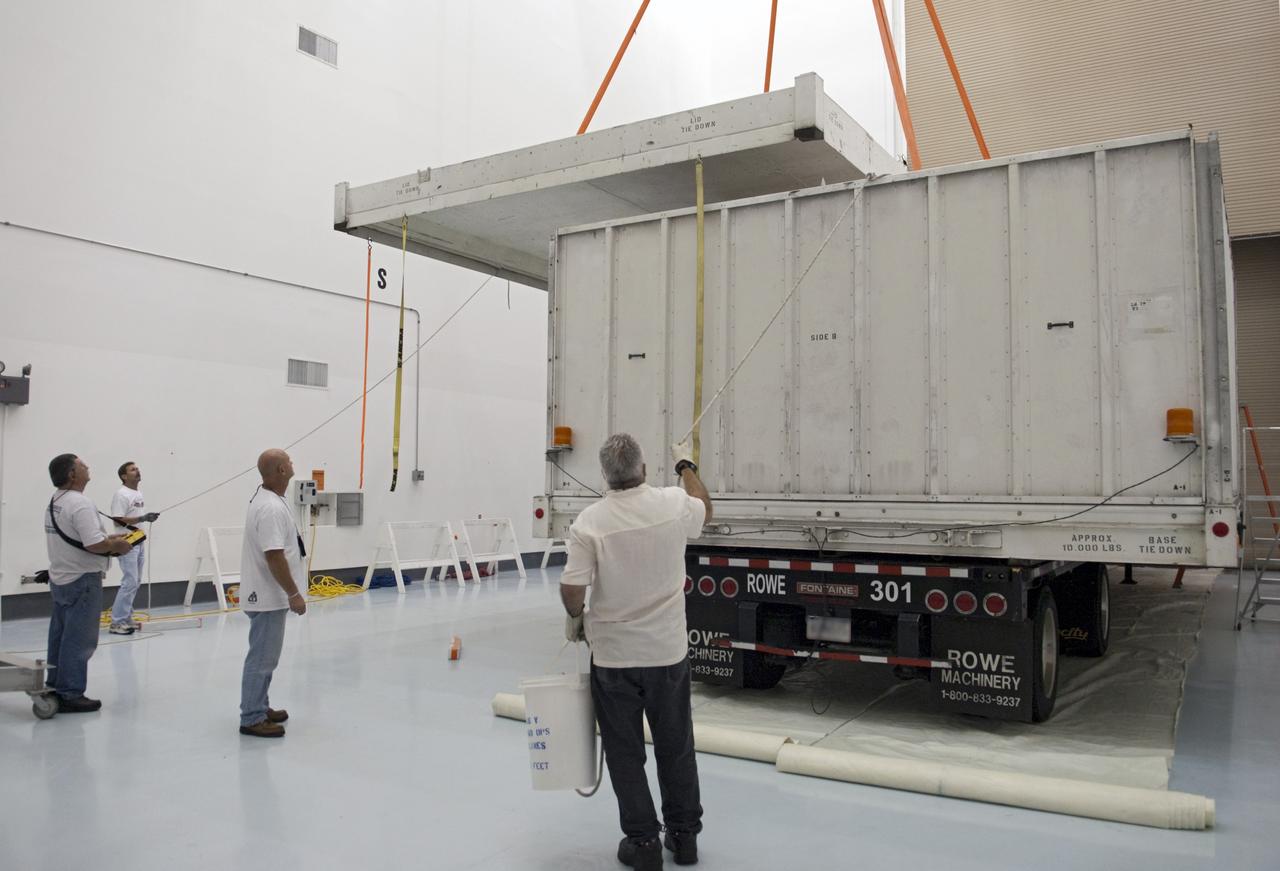
CAPE CANAVERAL, Fla. - Inside the Astrotech payload processing facility near NASA’s Kennedy Space Center in Florida, technicians open the shipping crate containing the nose cone fairing for the Radiation Belt Storm Probes, or RBSP, spacecraft. The nose faring will house and protect the RBSP during liftoff aboard an Atlas V rocket. NASA’s RBSP mission will help us understand the sun’s influence on Earth and near-Earth space by studying the Earth’s radiation belts on various scales of space and time. RBSP will begin its mission of exploration of Earth’s Van Allen radiation belts and the extremes of space weather after its liftoff aboard a United Launch Alliance Atlas V from Space Launch Complex 41 at Cape Canaveral Air Force Station, Fla. Liftoff is targeted for Aug. 23, 2012. For more information, visit http://www.nasa.gov/rbsp. Photo credit: NASA/Charisse Nahser
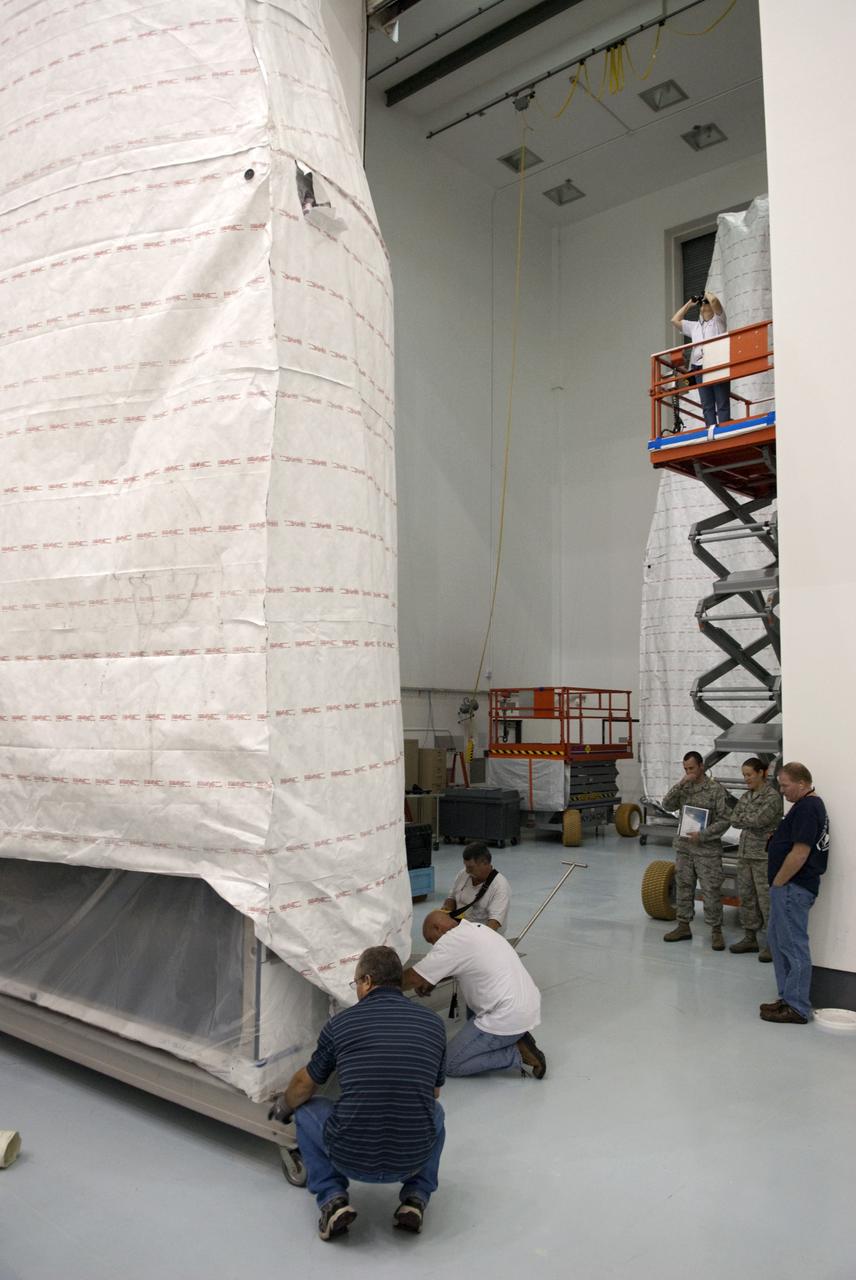
CAPE CANAVERAL, Fla. - Inside the Astrotech payload processing facility near NASA’s Kennedy Space Center in Florida, technicians uncrate, inspect and prepare to uncover the nose cone fairing for the Radiation Belt Storm Probes, or RBSP, spacecraft. The nose faring will house and protect the RBSP during liftoff aboard an Atlas V rocket. NASA’s RBSP mission will help us understand the sun’s influence on Earth and near-Earth space by studying the Earth’s radiation belts on various scales of space and time. RBSP will begin its mission of exploration of Earth’s Van Allen radiation belts and the extremes of space weather after its liftoff aboard a United Launch Alliance Atlas V from Space Launch Complex 41 at Cape Canaveral Air Force Station, Fla. Liftoff is targeted for Aug. 23, 2012. For more information, visit http://www.nasa.gov/rbsp. Photo credit: NASA/Charisse Nahser
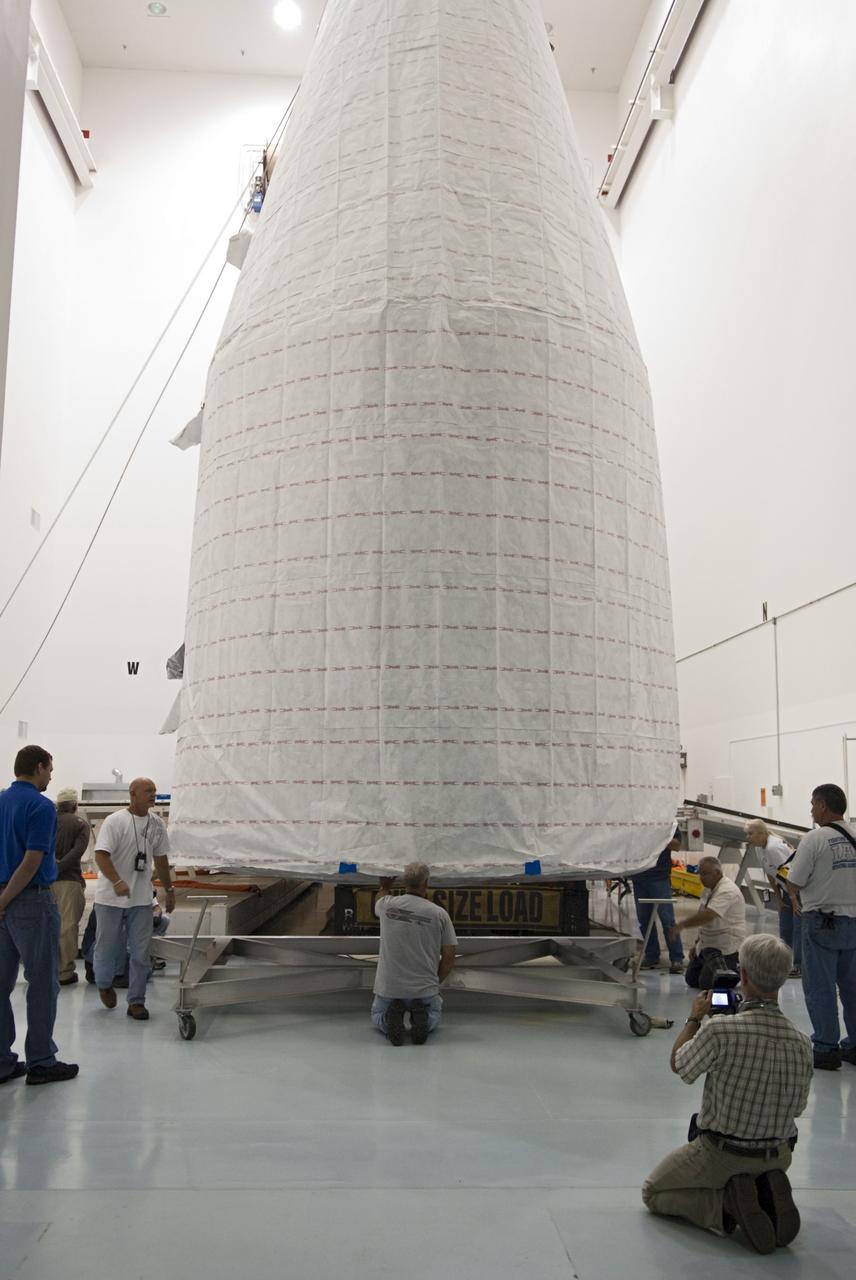
CAPE CANAVERAL, Fla. - Inside the Astrotech payload processing facility near NASA’s Kennedy Space Center in Florida, technicians offload, inspect and prepare to uncover the nose cone fairing for the Radiation Belt Storm Probes, or RBSP, spacecraft. The nose faring will house and protect the RBSP during liftoff aboard an Atlas V rocket. NASA’s RBSP mission will help us understand the sun’s influence on Earth and near-Earth space by studying the Earth’s radiation belts on various scales of space and time. RBSP will begin its mission of exploration of Earth’s Van Allen radiation belts and the extremes of space weather after its liftoff aboard a United Launch Alliance Atlas V from Space Launch Complex 41 at Cape Canaveral Air Force Station, Fla. Liftoff is targeted for Aug. 23, 2012. For more information, visit http://www.nasa.gov/rbsp. Photo credit: NASA/Charisse Nahser
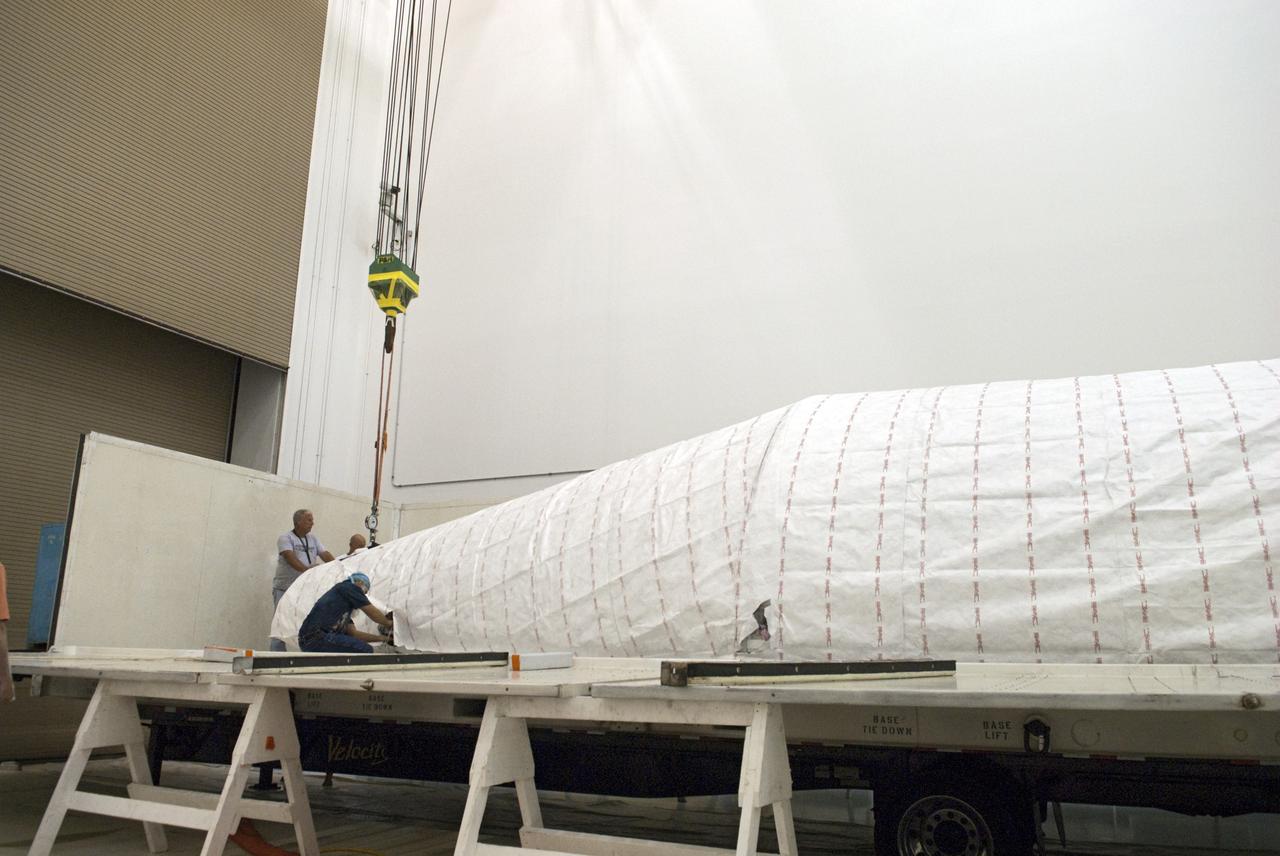
CAPE CANAVERAL, Fla. - Inside the Astrotech payload processing facility near NASA’s Kennedy Space Center in Florida, technicians uncrate and prepare to uncover the nose cone fairing for the Radiation Belt Storm Probes, or RBSP, spacecraft. The nose faring will house and protect the RBSP during liftoff aboard an Atlas V rocket. NASA’s RBSP mission will help us understand the sun’s influence on Earth and near-Earth space by studying the Earth’s radiation belts on various scales of space and time. RBSP will begin its mission of exploration of Earth’s Van Allen radiation belts and the extremes of space weather after its liftoff aboard a United Launch Alliance Atlas V from Space Launch Complex 41 at Cape Canaveral Air Force Station, Fla. Liftoff is targeted for Aug. 23, 2012. For more information, visit http://www.nasa.gov/rbsp. Photo credit: NASA/Charisse Nahser
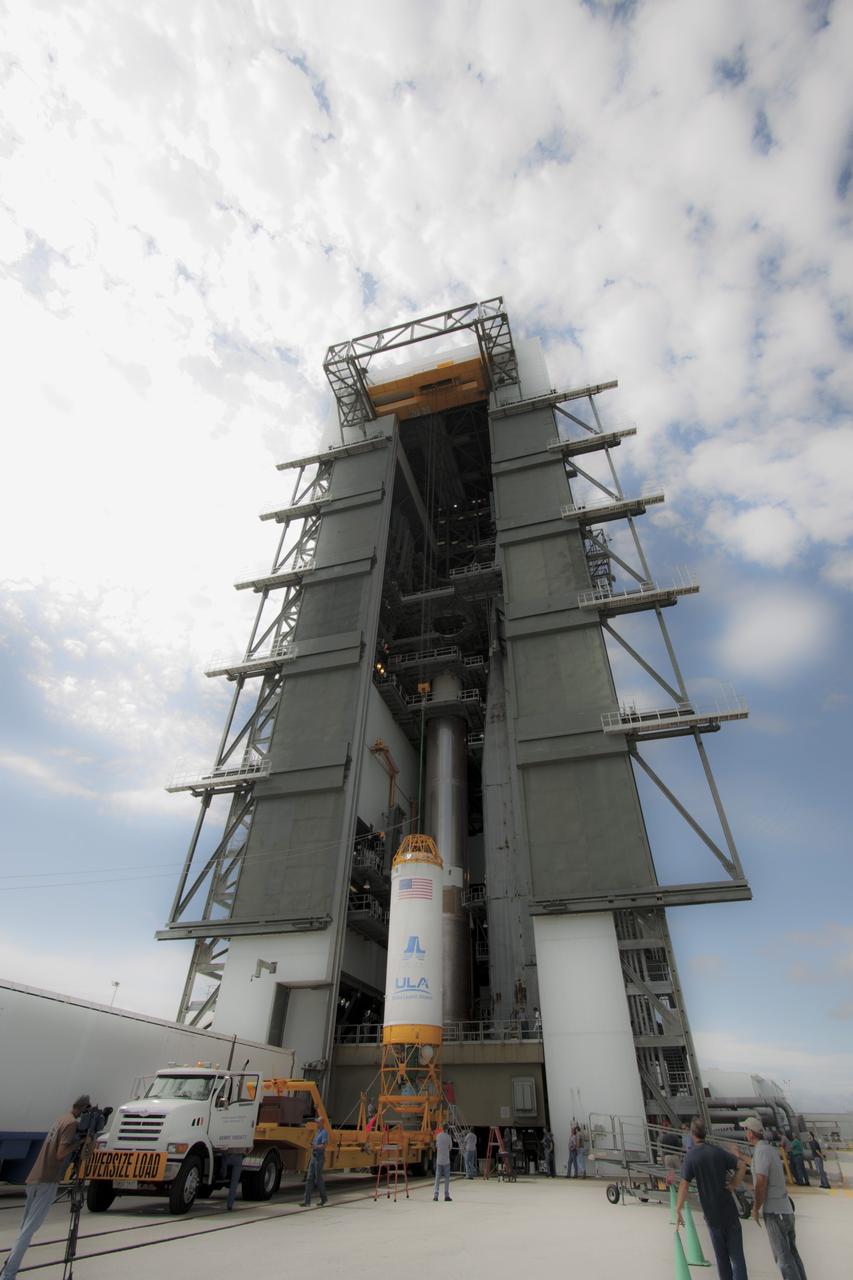
CAPE CANAVERAL, Fla. – At Space Launch Complex 41 at Cape Canaveral Air Force Station, Fla., United Launch Alliance technicians support the lifting operation as the Centaur stage is prepared for mating with the Atlas V rocket, which will launch the Radiation Belt Storm Probes, or RBSP, spacecraft. NASA’s RBSP mission will help us understand the sun’s influence on Earth and near-Earth space by studying the Earth’s radiation belts on various scales of space and time. RBSP will begin its mission of exploration of Earth’s Van Allen radiation belts and the extremes of space weather after its liftoff aboard a United Launch Alliance Atlas V from Cape Canaveral. Liftoff is targeted for Aug. 23, 2012. For more information, visit http://www.nasa.gov/rbsp. Photo credit: NASA/Jim Grossmann
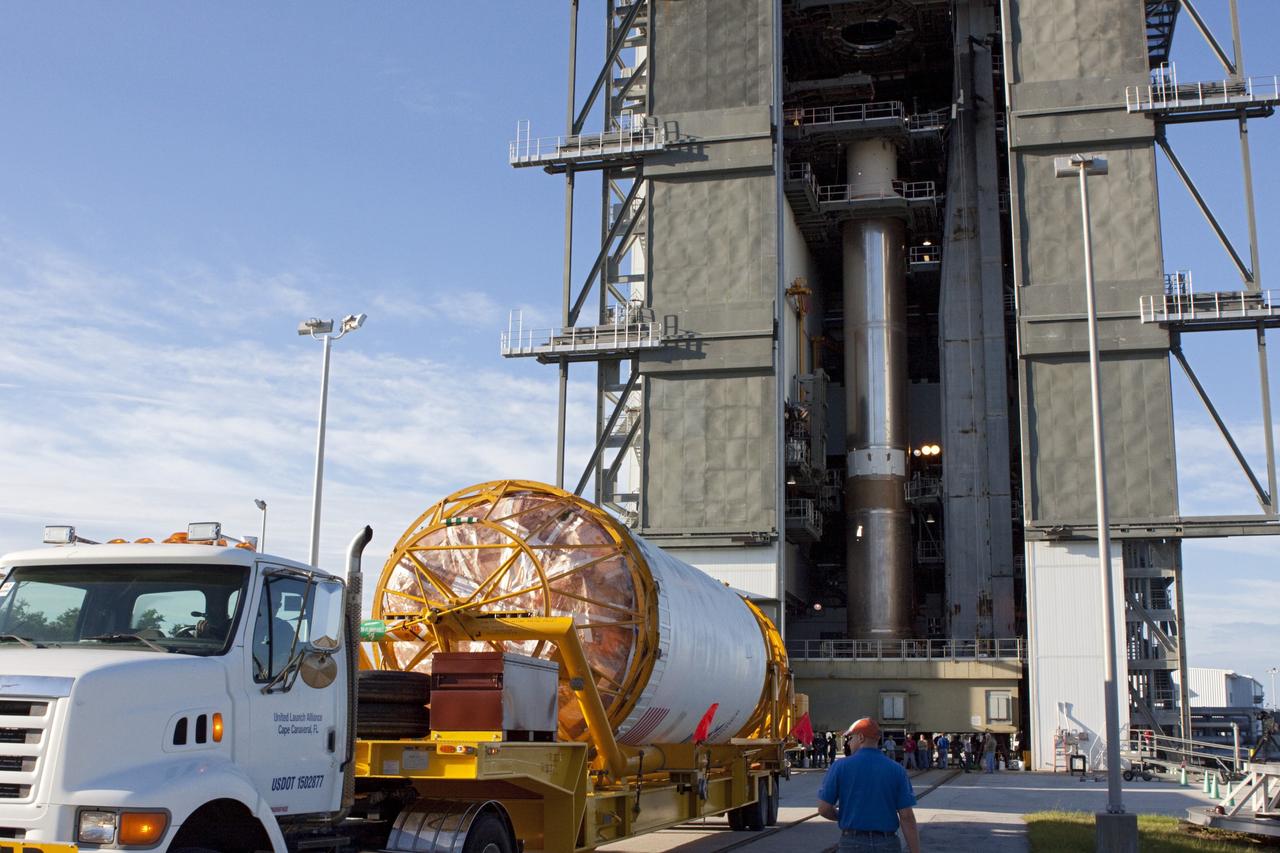
CAPE CANAVERAL, Fla. – At Space Launch Complex 41 at Cape Canaveral Air Force Station, Fla., the centaur stage is moved into position for mating with the Atlas V rocket, which will launch the Radiation Belt Storm Probes, or RBSP, spacecraft. NASA’s RBSP mission will help us understand the sun’s influence on Earth and near-Earth space by studying the Earth’s radiation belts on various scales of space and time. RBSP will begin its mission of exploration of Earth’s Van Allen radiation belts and the extremes of space weather after its liftoff aboard a United Launch Alliance Atlas V from Cape Canaveral. Liftoff is targeted for Aug. 23, 2012. For more information, visit http://www.nasa.gov/rbsp. Photo credit: NASA/Jim Grossmann
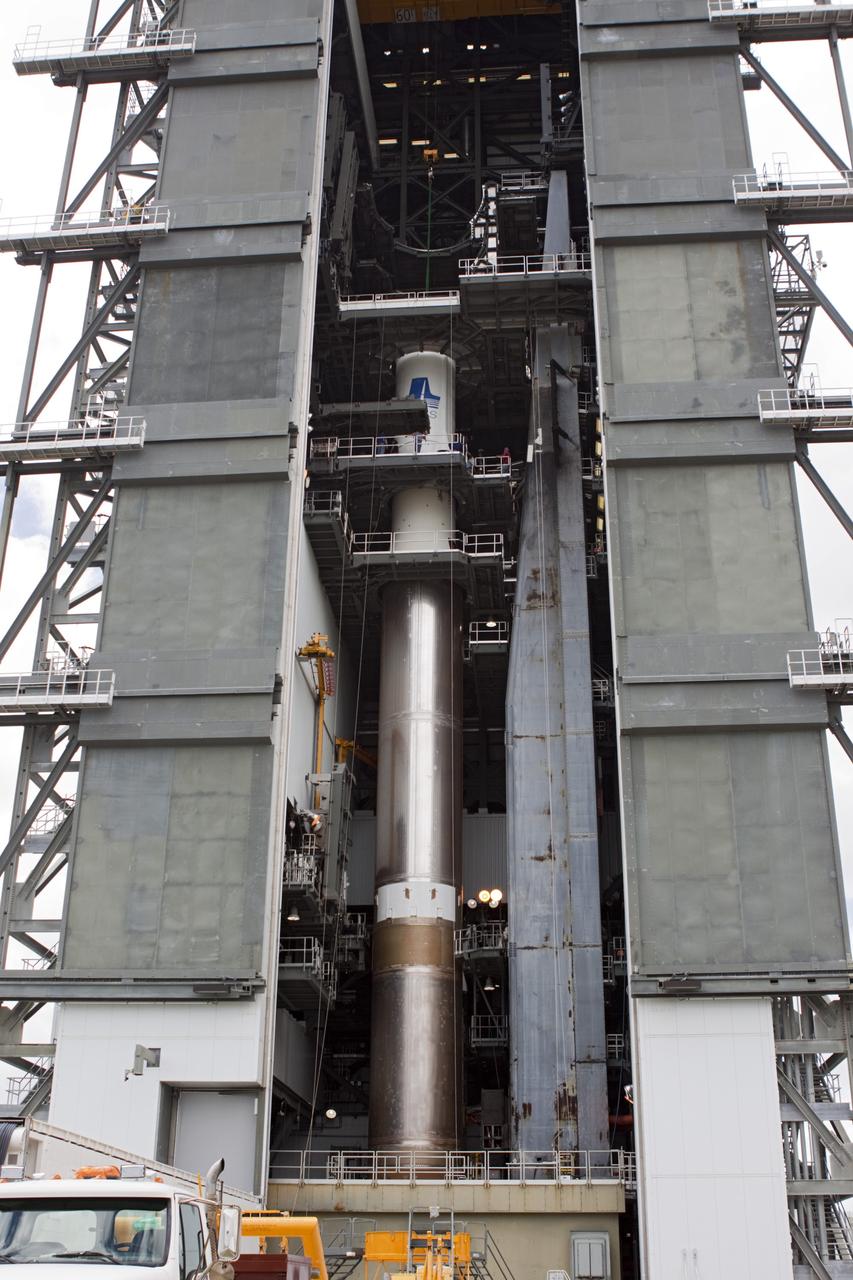
CAPE CANAVERAL, Fla. – At Space Launch Complex 41 at Cape Canaveral Air Force Station, Fla., the Centaur stage has just been mated with the Atlas V rocket, which will launch the Radiation Belt Storm Probes, or RBSP, spacecraft. NASA’s RBSP mission will help us understand the sun’s influence on Earth and near-Earth space by studying the Earth’s radiation belts on various scales of space and time. RBSP will begin its mission of exploration of Earth’s Van Allen radiation belts and the extremes of space weather after its liftoff aboard a United Launch Alliance Atlas V from Cape Canaveral. Liftoff is targeted for Aug. 23, 2012. For more information, visit http://www.nasa.gov/rbsp. Photo credit: NASA/Jim Grossmann
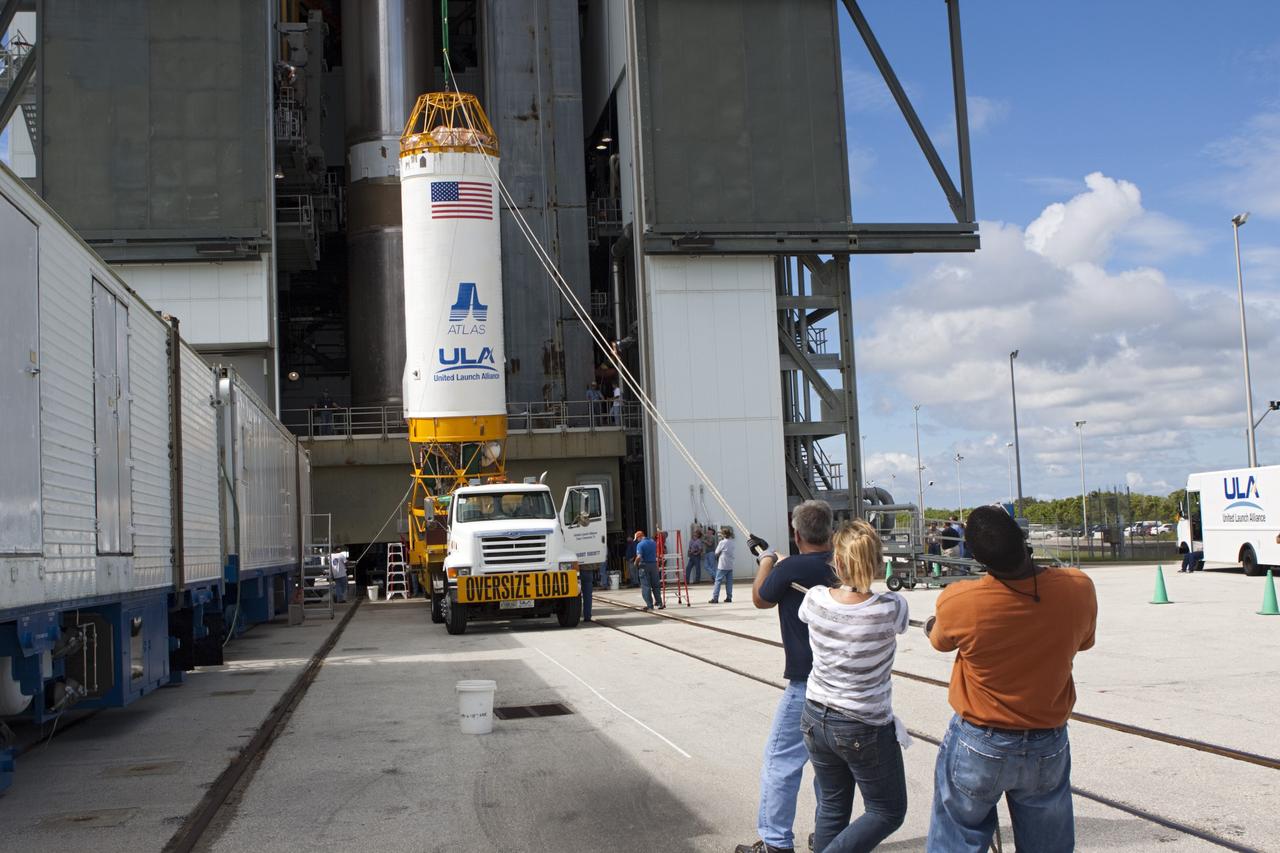
CAPE CANAVERAL, Fla. – At Space Launch Complex 41 at Cape Canaveral Air Force Station, Fla., United Launch Alliance technicians support the lifting operation as the Centaur stage is prepared for mating with the Atlas V rocket, which will launch the Radiation Belt Storm Probes, or RBSP, spacecraft. NASA’s RBSP mission will help us understand the sun’s influence on Earth and near-Earth space by studying the Earth’s radiation belts on various scales of space and time. RBSP will begin its mission of exploration of Earth’s Van Allen radiation belts and the extremes of space weather after its liftoff aboard a United Launch Alliance Atlas V from Cape Canaveral. Liftoff is targeted for Aug. 23, 2012. For more information, visit http://www.nasa.gov/rbsp. Photo credit: NASA/Jim Grossmann
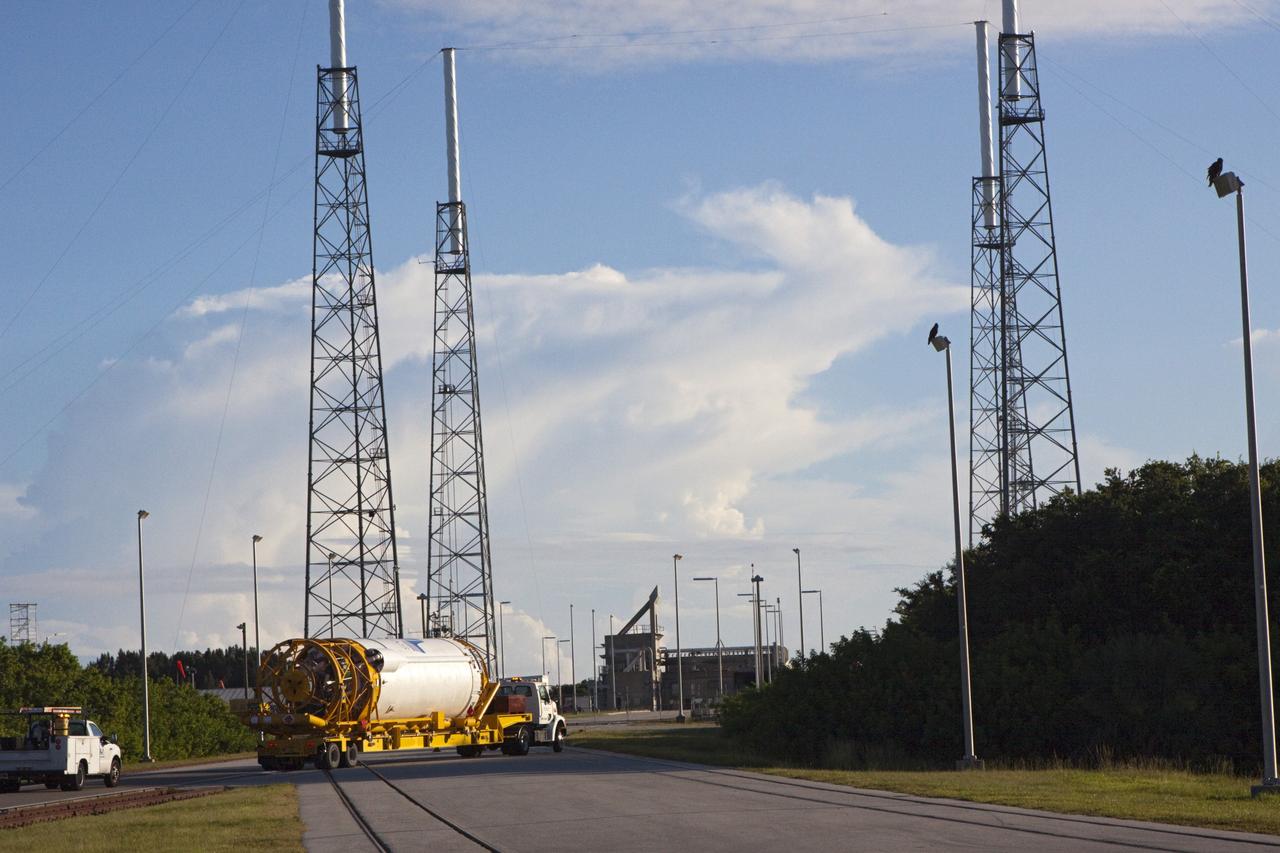
CAPE CANAVERAL, Fla. – At Space Launch Complex 41 at Cape Canaveral Air Force Station, Fla., the Centaur stage arrives for mating with the Atlas V rocket, which will launch the Radiation Belt Storm Probes, or RBSP, spacecraft. NASA’s RBSP mission will help us understand the sun’s influence on Earth and near-Earth space by studying the Earth’s radiation belts on various scales of space and time. RBSP will begin its mission of exploration of Earth’s Van Allen radiation belts and the extremes of space weather after its liftoff aboard a United Launch Alliance Atlas V from Cape Canaveral. Liftoff is targeted for Aug. 23, 2012. For more information, visit http://www.nasa.gov/rbsp. Photo credit: NASA/Jim Grossmann
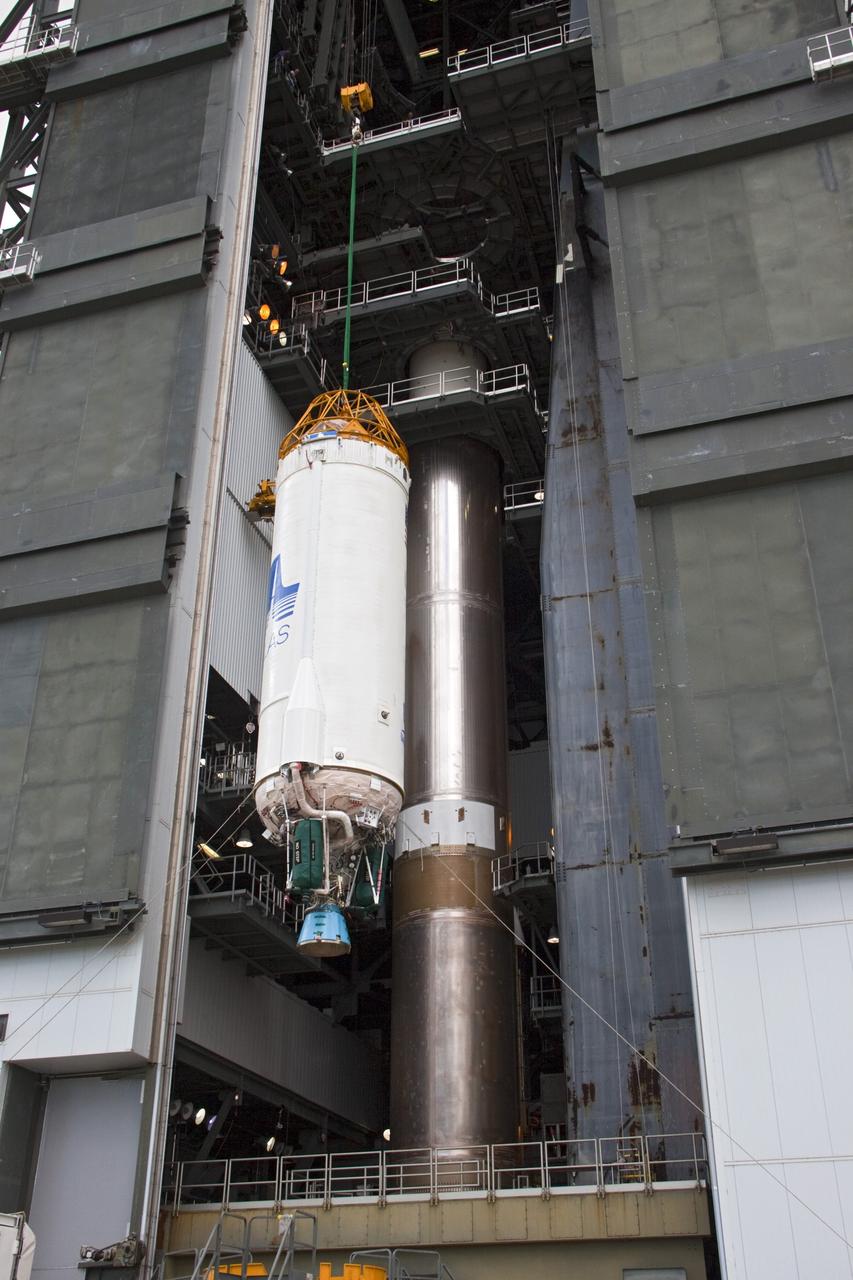
CAPE CANAVERAL, Fla. – At Space Launch Complex 41 at Cape Canaveral Air Force Station, Fla., the Centaur stage is being lifted for mating with the Atlas V rocket, which will launch the Radiation Belt Storm Probes, or RBSP, spacecraft. NASA’s RBSP mission will help us understand the sun’s influence on Earth and near-Earth space by studying the Earth’s radiation belts on various scales of space and time. RBSP will begin its mission of exploration of Earth’s Van Allen radiation belts and the extremes of space weather after its liftoff aboard a United Launch Alliance Atlas V from Cape Canaveral. Liftoff is targeted for Aug. 23, 2012. For more information, visit http://www.nasa.gov/rbsp. Photo credit: NASA/Jim Grossmann
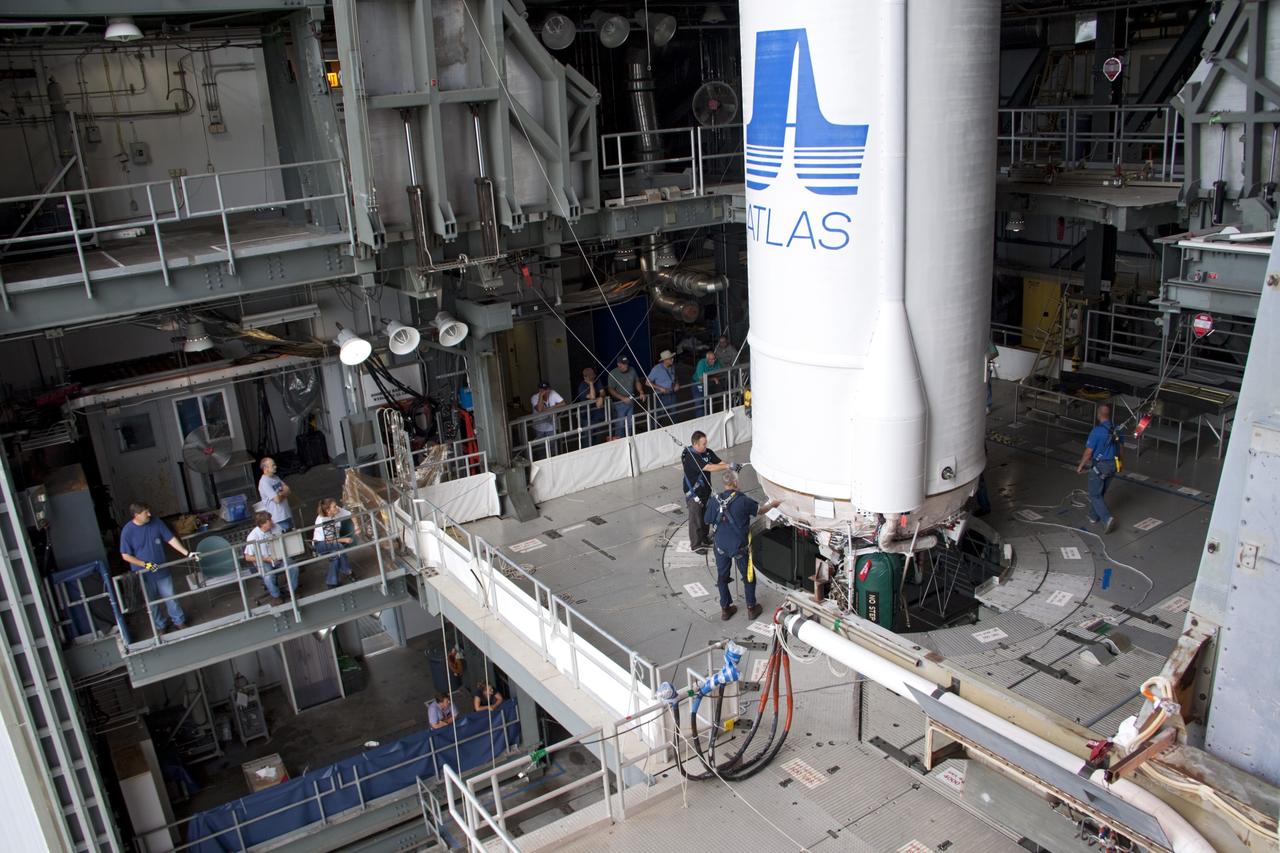
CAPE CANAVERAL, Fla. – At Space Launch Complex 41 at Cape Canaveral Air Force Station, Fla., United Launch Alliance technicians mate the Centaur stage with the Atlas V rocket, which will launch the Radiation Belt Storm Probes, or RBSP, spacecraft. NASA’s RBSP mission will help us understand the sun’s influence on Earth and near-Earth space by studying the Earth’s radiation belts on various scales of space and time. RBSP will begin its mission of exploration of Earth’s Van Allen radiation belts and the extremes of space weather after its liftoff aboard a United Launch Alliance Atlas V from Cape Canaveral. Liftoff is targeted for Aug. 23, 2012. For more information, visit http://www.nasa.gov/rbsp. Photo credit: NASA/Jim Grossmann
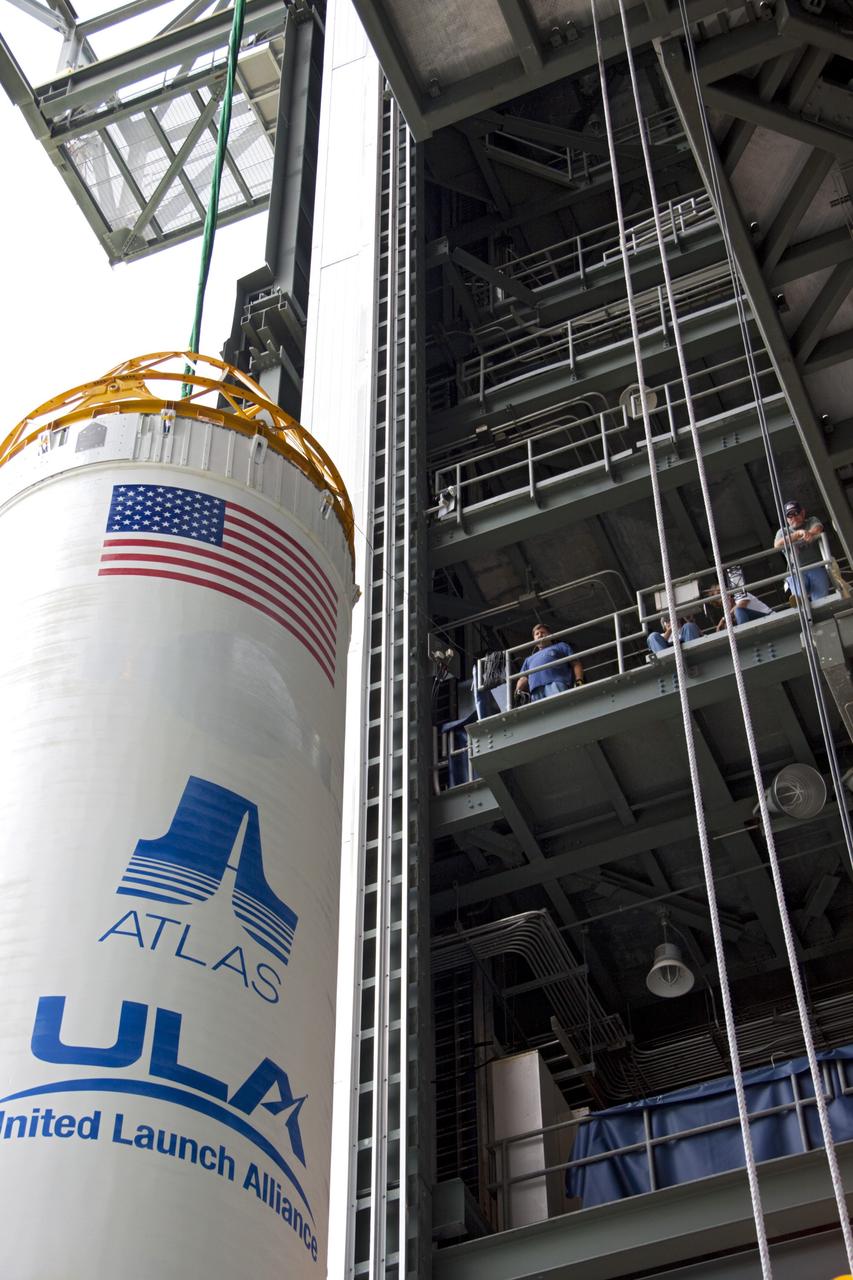
CAPE CANAVERAL, Fla. – At Space Launch Complex 41 at Cape Canaveral Air Force Station, Fla., United Launch Alliance technicians keep watch as the Centaur stage is being lifted for mating with the Atlas V rocket, which will launch the Radiation Belt Storm Probes, or RBSP, spacecraft. NASA’s RBSP mission will help us understand the sun’s influence on Earth and near-Earth space by studying the Earth’s radiation belts on various scales of space and time. RBSP will begin its mission of exploration of Earth’s Van Allen radiation belts and the extremes of space weather after its liftoff aboard a United Launch Alliance Atlas V from Cape Canaveral. Liftoff is targeted for Aug. 23, 2012. For more information, visit http://www.nasa.gov/rbsp. Photo credit: NASA/Jim Grossmann
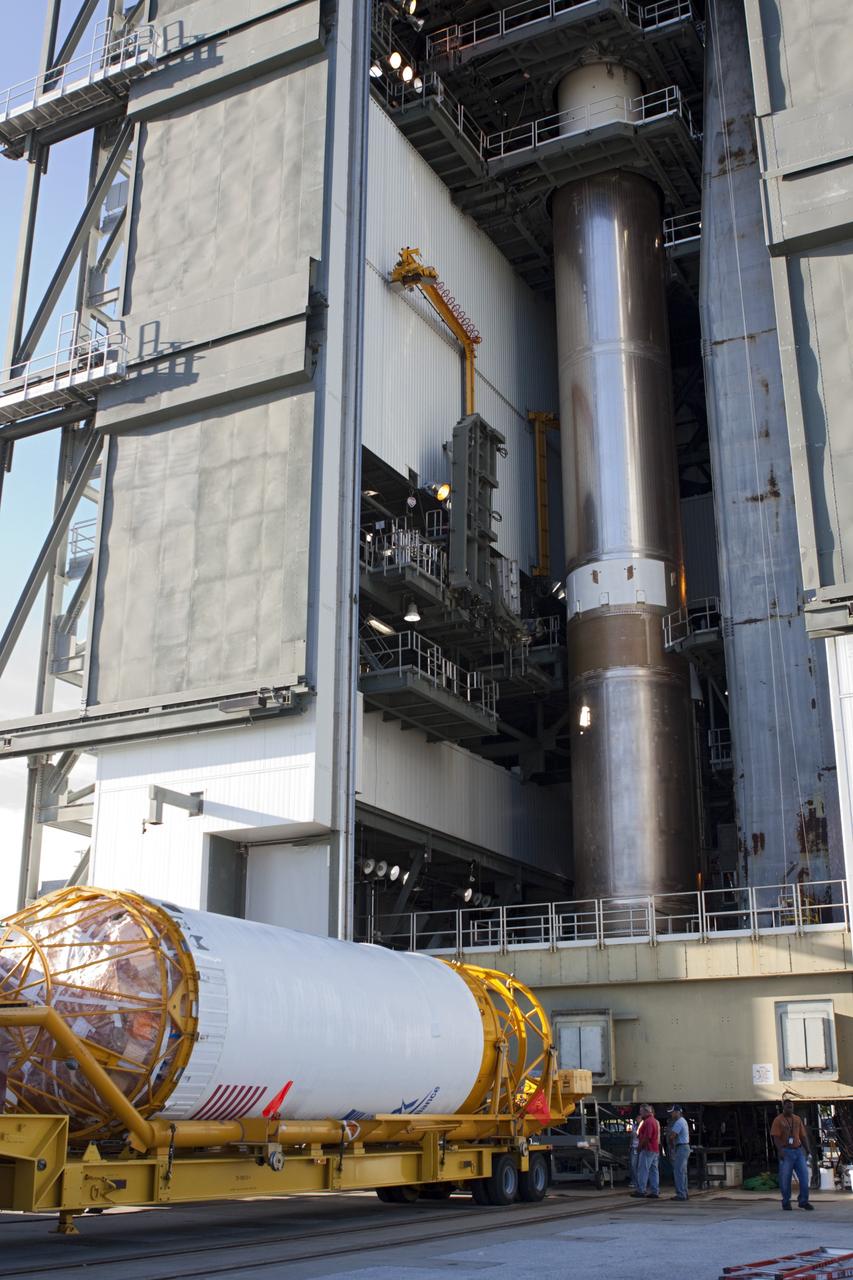
CAPE CANAVERAL, Fla. – At Space Launch Complex 41 at Cape Canaveral Air Force Station, Fla., United Launch Alliance technicians prepare to lift the Centaur stage for mating with the Atlas V rocket, which will launch the Radiation Belt Storm Probes, or RBSP, spacecraft. NASA’s RBSP mission will help us understand the sun’s influence on Earth and near-Earth space by studying the Earth’s radiation belts on various scales of space and time. RBSP will begin its mission of exploration of Earth’s Van Allen radiation belts and the extremes of space weather after its liftoff aboard a United Launch Alliance Atlas V from Cape Canaveral. Liftoff is targeted for Aug. 23, 2012. For more information, visit http://www.nasa.gov/rbsp. Photo credit: NASA/Jim Grossmann
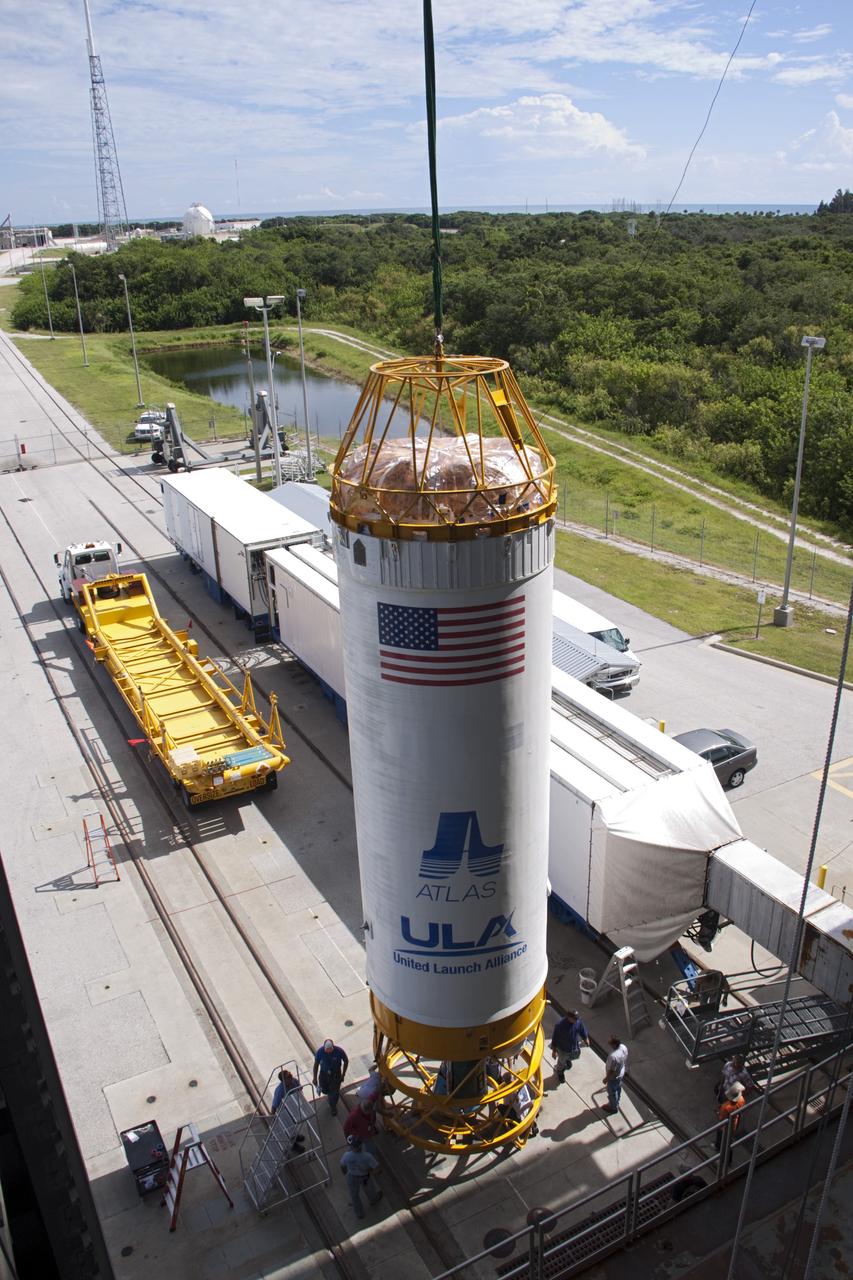
CAPE CANAVERAL, Fla. – At Space Launch Complex 41 at Cape Canaveral Air Force Station, Fla., the Centaur stage is being lifted for mating with the Atlas V rocket, which will launch the Radiation Belt Storm Probes, or RBSP, spacecraft. NASA’s RBSP mission will help us understand the sun’s influence on Earth and near-Earth space by studying the Earth’s radiation belts on various scales of space and time. RBSP will begin its mission of exploration of Earth’s Van Allen radiation belts and the extremes of space weather after its liftoff aboard a United Launch Alliance Atlas V from Cape Canaveral. Liftoff is targeted for Aug. 23, 2012. For more information, visit http://www.nasa.gov/rbsp. Photo credit: NASA/Jim Grossmann
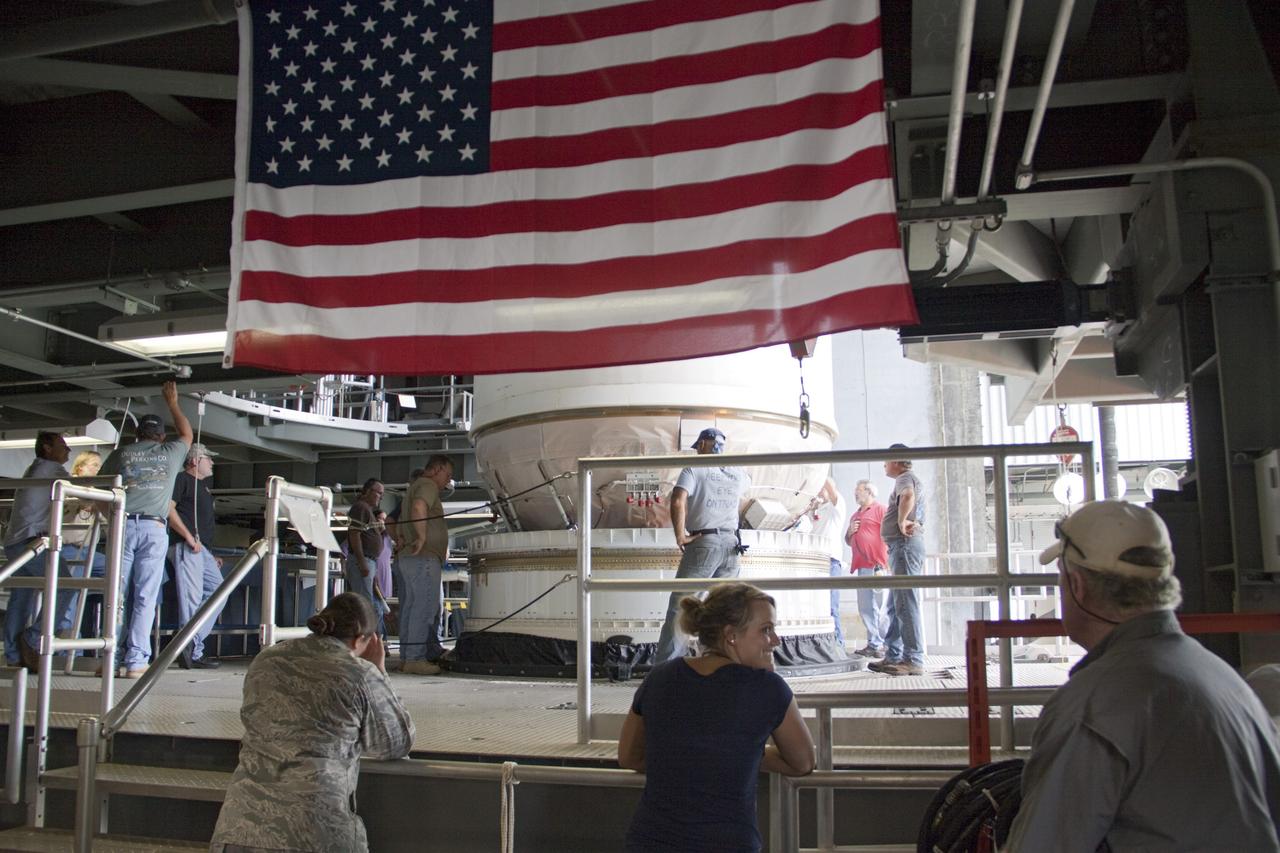
CAPE CANAVERAL, Fla. – At Space Launch Complex 41 at Cape Canaveral Air Force Station, Fla., United Launch Alliance technicians mate the Centaur stage with the Atlas V rocket, which will launch the Radiation Belt Storm Probes, or RBSP, spacecraft. NASA’s RBSP mission will help us understand the sun’s influence on Earth and near-Earth space by studying the Earth’s radiation belts on various scales of space and time. RBSP will begin its mission of exploration of Earth’s Van Allen radiation belts and the extremes of space weather after its liftoff aboard a United Launch Alliance Atlas V from Cape Canaveral. Liftoff is targeted for Aug. 23, 2012. For more information, visit http://www.nasa.gov/rbsp. Photo credit: NASA/Jim Grossmann
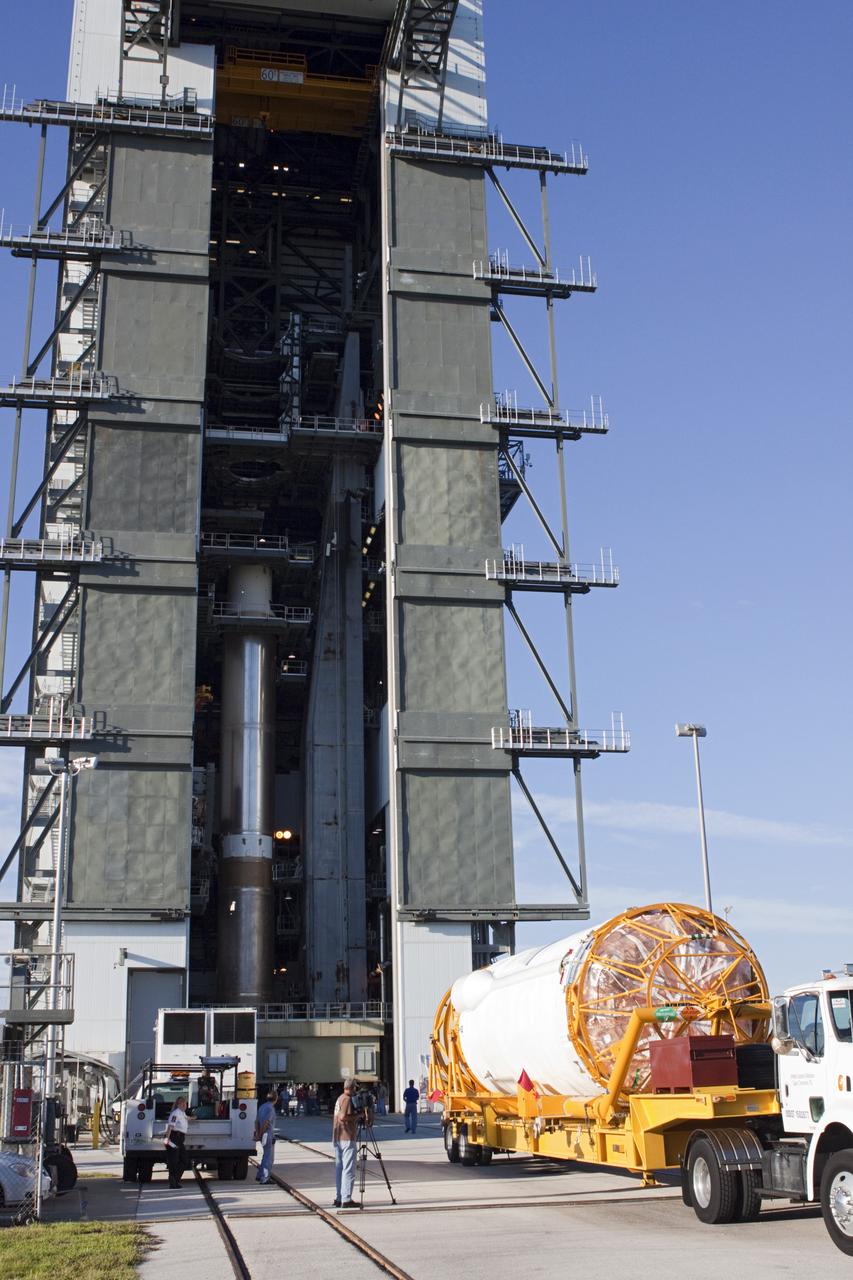
CAPE CANAVERAL, Fla. – At Space Launch Complex 41 at Cape Canaveral Air Force Station, Fla., the Centaur stage is moved into position for mating with the Atlas V rocket, which will launch the Radiation Belt Storm Probes, or RBSP, spacecraft. NASA’s RBSP mission will help us understand the sun’s influence on Earth and near-Earth space by studying the Earth’s radiation belts on various scales of space and time. RBSP will begin its mission of exploration of Earth’s Van Allen radiation belts and the extremes of space weather after its liftoff aboard a United Launch Alliance Atlas V from Cape Canaveral. Liftoff is targeted for Aug. 23, 2012. For more information, visit http://www.nasa.gov/rbsp. Photo credit: NASA/Jim Grossmann
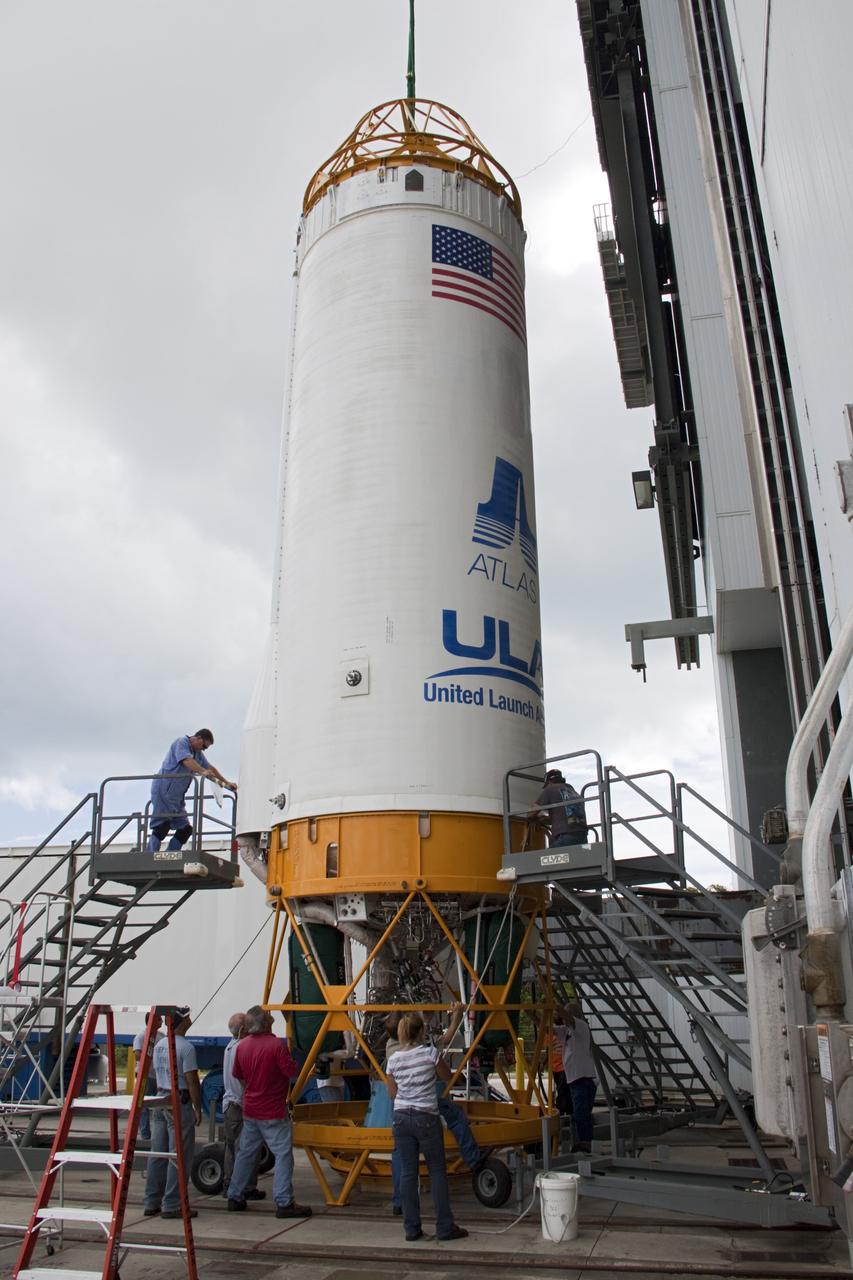
CAPE CANAVERAL, Fla. – At Space Launch Complex 41 at Cape Canaveral Air Force Station, Fla., United Launch Alliance technicians support the lifting operation as the Centaur stage is prepared for mating with the Atlas V rocket, which will launch the Radiation Belt Storm Probes, or RBSP, spacecraft. NASA’s RBSP mission will help us understand the sun’s influence on Earth and near-Earth space by studying the Earth’s radiation belts on various scales of space and time. RBSP will begin its mission of exploration of Earth’s Van Allen radiation belts and the extremes of space weather after its liftoff aboard a United Launch Alliance Atlas V from Cape Canaveral. Liftoff is targeted for Aug. 23, 2012. For more information, visit http://www.nasa.gov/rbsp. Photo credit: NASA/Jim Grossmann
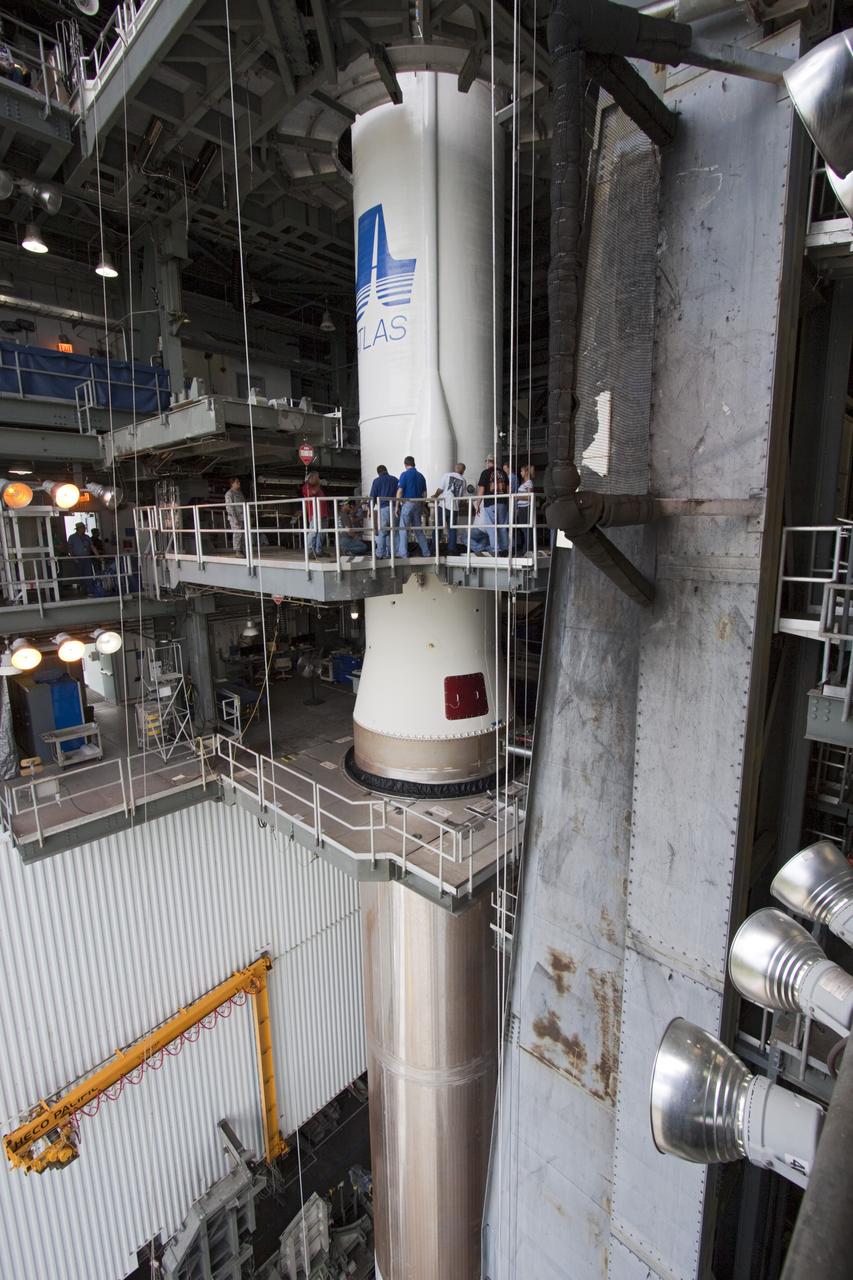
CAPE CANAVERAL, Fla. – At Space Launch Complex 41 at Cape Canaveral Air Force Station, Fla., United Launch Alliance technicians mate the Centaur stage with the Atlas V rocket, which will launch the Radiation Belt Storm Probes, or RBSP, spacecraft. NASA’s RBSP mission will help us understand the sun’s influence on Earth and near-Earth space by studying the Earth’s radiation belts on various scales of space and time. RBSP will begin its mission of exploration of Earth’s Van Allen radiation belts and the extremes of space weather after its liftoff aboard a United Launch Alliance Atlas V from Cape Canaveral. Liftoff is targeted for Aug. 23, 2012. For more information, visit http://www.nasa.gov/rbsp. Photo credit: NASA/Jim Grossmann
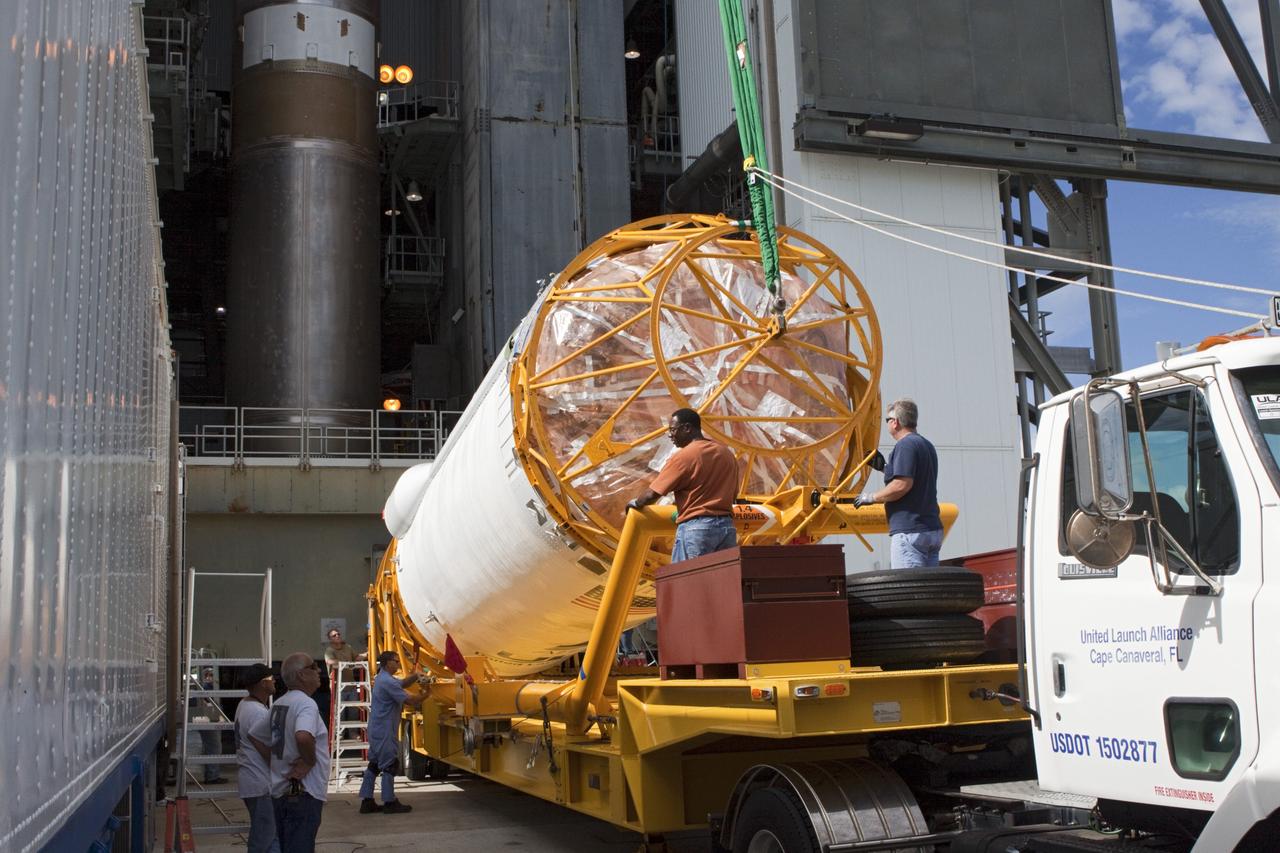
CAPE CANAVERAL, Fla. – At Space Launch Complex 41 at Cape Canaveral Air Force Station, Fla., United Launch Alliance technicians begin to lift the Centaur stage for mating with the Atlas V rocket, which will launch the Radiation Belt Storm Probes, or RBSP, spacecraft. NASA’s RBSP mission will help us understand the sun’s influence on Earth and near-Earth space by studying the Earth’s radiation belts on various scales of space and time. RBSP will begin its mission of exploration of Earth’s Van Allen radiation belts and the extremes of space weather after its liftoff aboard a United Launch Alliance Atlas V from Cape Canaveral. Liftoff is targeted for Aug. 23, 2012. For more information, visit http://www.nasa.gov/rbsp. Photo credit: NASA/Jim Grossmann

CAPE CANAVERAL, Fla. – The Radiation Belt Storm Probes, or RBSP, spacecraft are moved inside their payload fairing on the payload transporter from the Astrotech payload processing facility in Titusville, Fla. to Space Launch Complex-41 at Cape Canaveral Air Force Station. The fairing, which holds the twin RBSP spacecraft, will be lifted to the top of a United Launch Alliance Atlas V rocket for launch later in August. The two spacecraft are designed to study the Van Allen radiation belts in unprecedented detail. Photo credit: NASA/Dmitri Gerondidakis
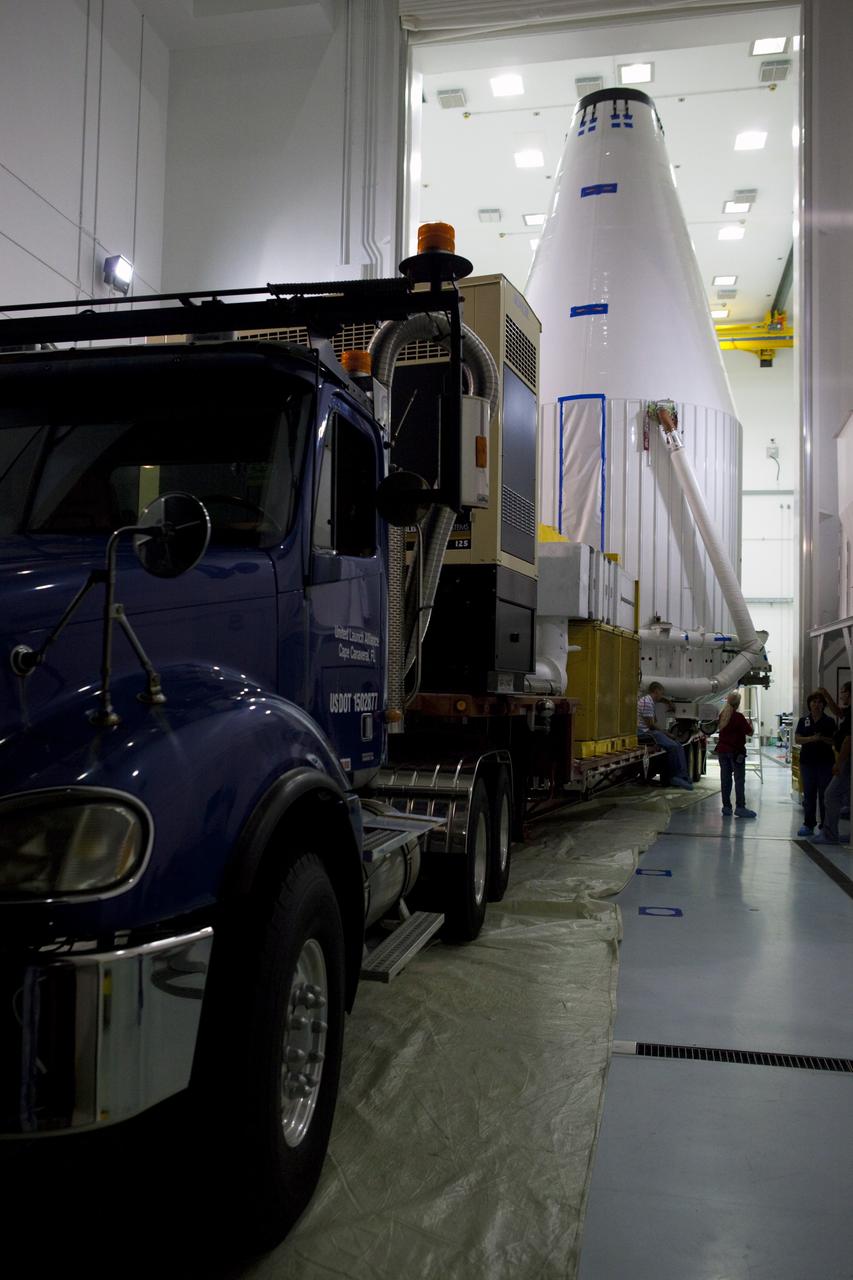
CAPE CANAVERAL, Fla. – The Radiation Belt Storm Probes, or RBSP, spacecraft are moved inside their payload fairing on the payload transporter from the Astrotech payload processing facility in Titusville, Fla. to Space Launch Complex-41 at Cape Canaveral Air Force Station. The fairing, which holds the twin RBSP spacecraft, will be lifted to the top of a United Launch Alliance Atlas V rocket for launch later in August. The two spacecraft are designed to study the Van Allen radiation belts in unprecedented detail. Photo credit: NASA/Dmitri Gerondidakis
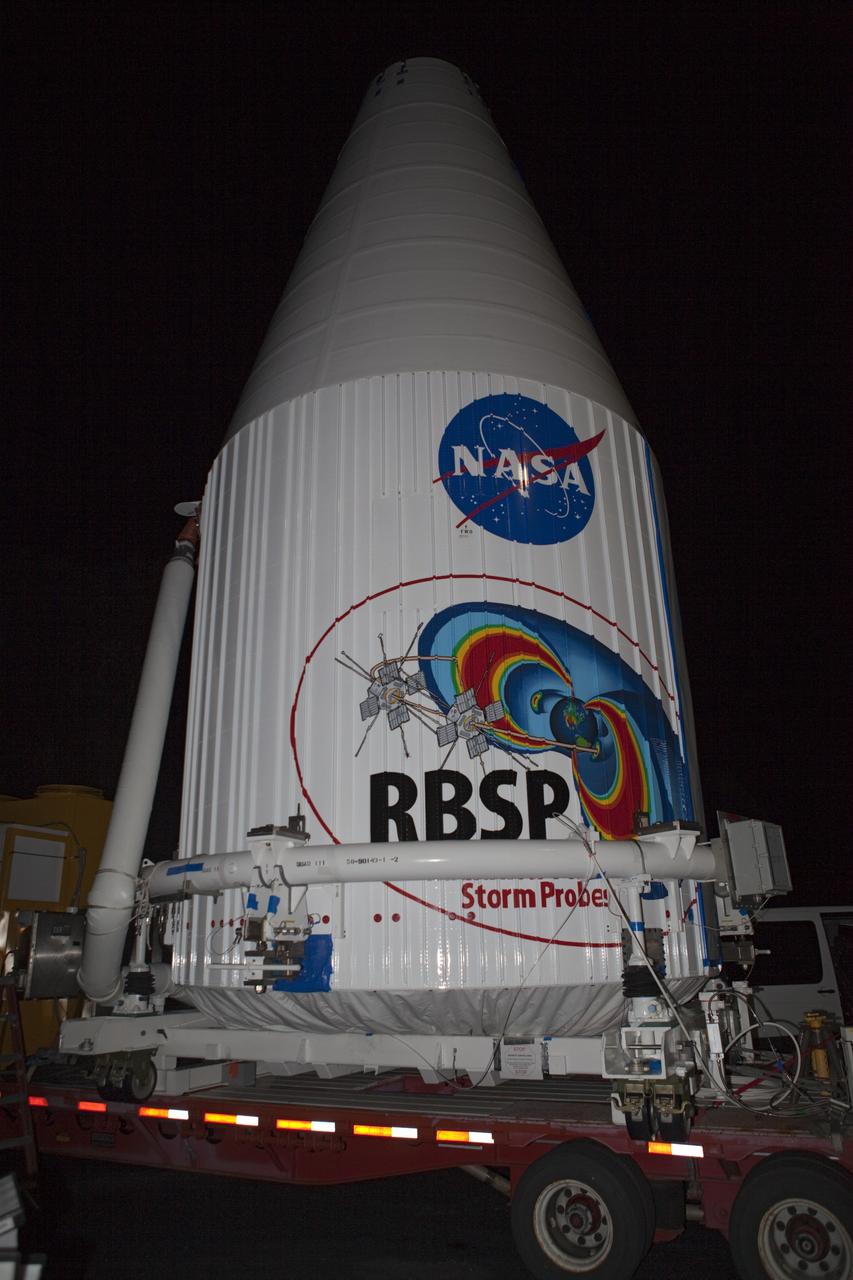
CAPE CANAVERAL, Fla. – The Radiation Belt Storm Probes, or RBSP, spacecraft are moved inside their payload fairing on the payload transporter from the Astrotech payload processing facility in Titusville, Fla. to Space Launch Complex-41 at Cape Canaveral Air Force Station. The fairing, which holds the twin RBSP spacecraft, will be lifted to the top of a United Launch Alliance Atlas V rocket for launch later in August. The two spacecraft are designed to study the Van Allen radiation belts in unprecedented detail. Photo credit: NASA/Dmitri Gerondidakis
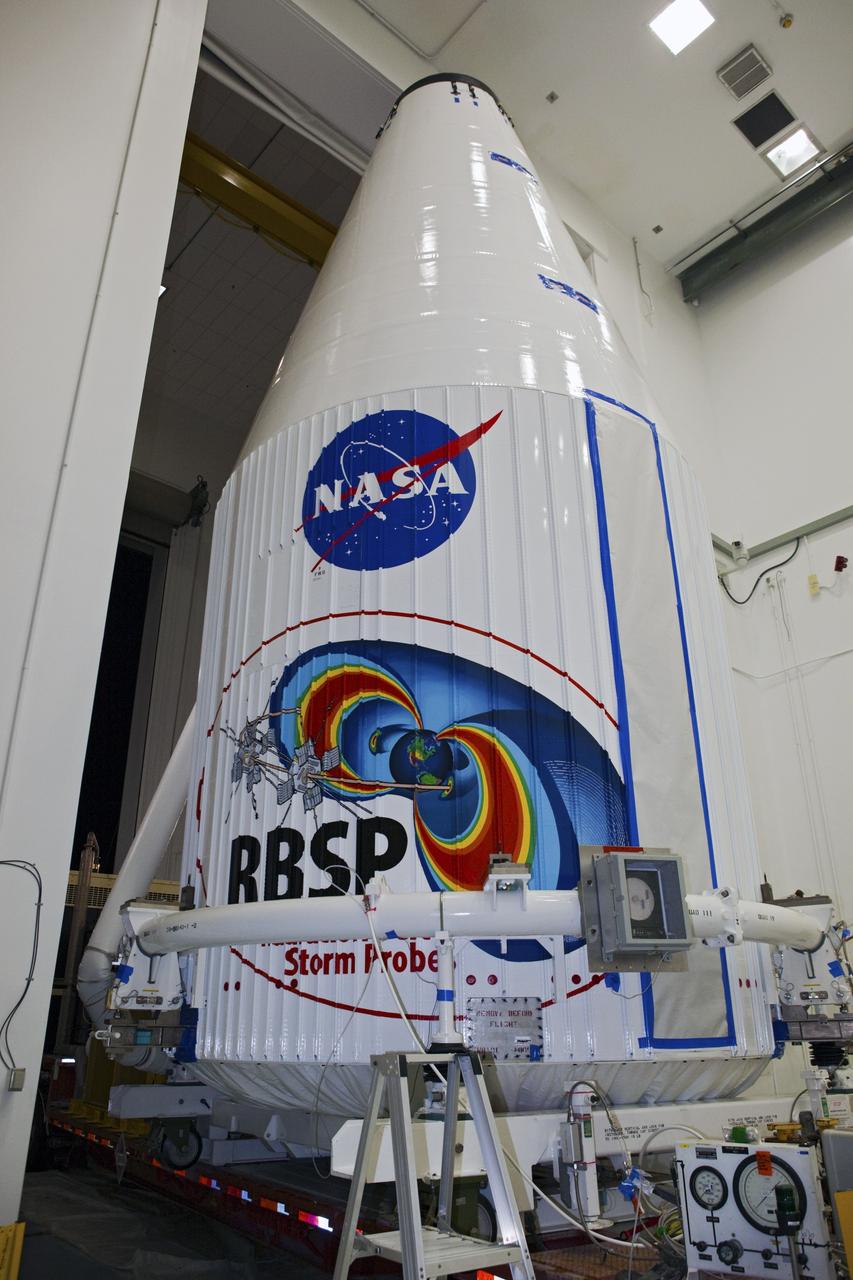
CAPE CANAVERAL, Fla. – The Radiation Belt Storm Probes, or RBSP, spacecraft are moved inside their payload fairing on the payload transporter from the Astrotech payload processing facility in Titusville, Fla. to Space Launch Complex-41 at Cape Canaveral Air Force Station. The fairing, which holds the twin RBSP spacecraft, will be lifted to the top of a United Launch Alliance Atlas V rocket for launch later in August. The two spacecraft are designed to study the Van Allen radiation belts in unprecedented detail. Photo credit: NASA/Dmitri Gerondidakis
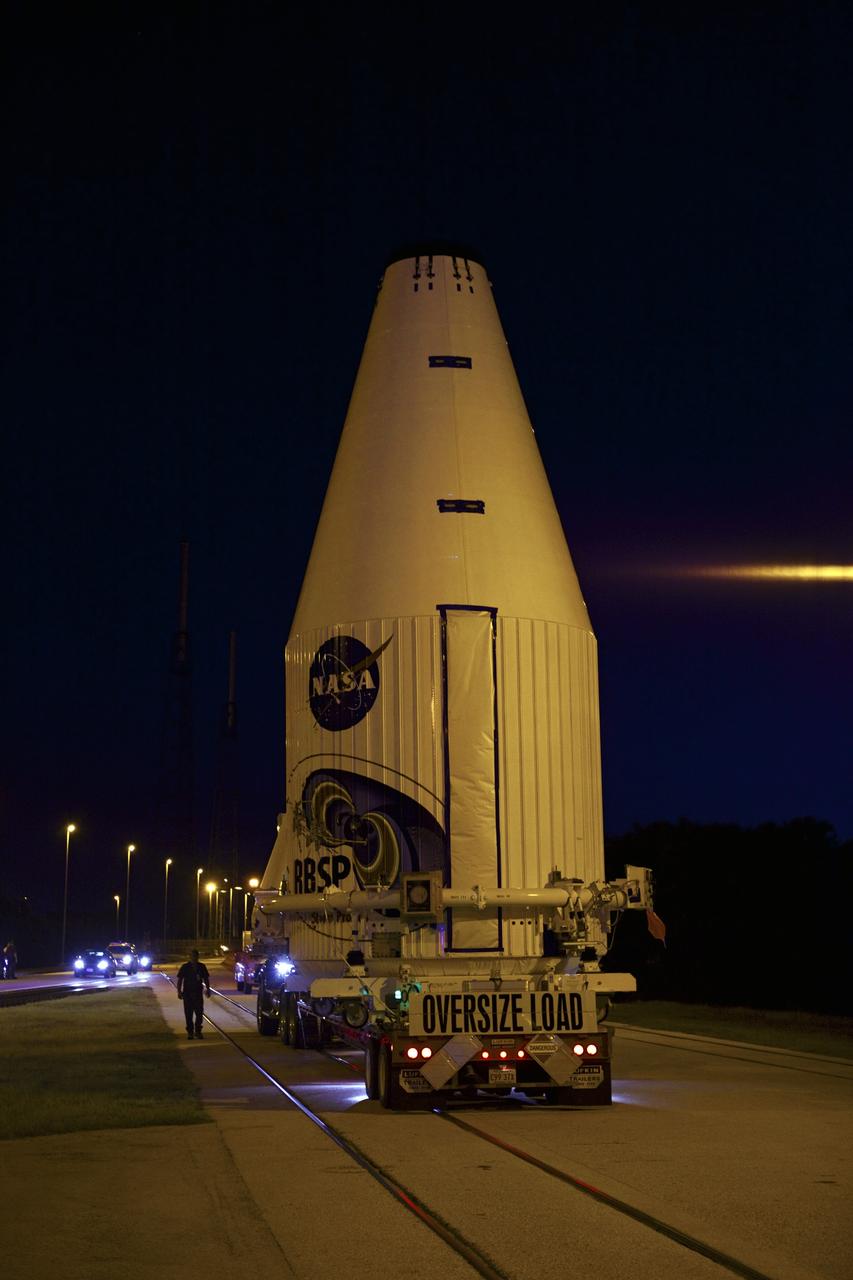
CAPE CANAVERAL, Fla. – The Radiation Belt Storm Probes, or RBSP, spacecraft are moved inside their payload fairing on the payload transporter from the Astrotech payload processing facility in Titusville, Fla. to Space Launch Complex-41 at Cape Canaveral Air Force Station. The fairing, which holds the twin RBSP spacecraft, will be lifted to the top of a United Launch Alliance Atlas V rocket for launch later in August. The two spacecraft are designed to study the Van Allen radiation belts in unprecedented detail. Photo credit: NASA/Dmitri Gerondidakis
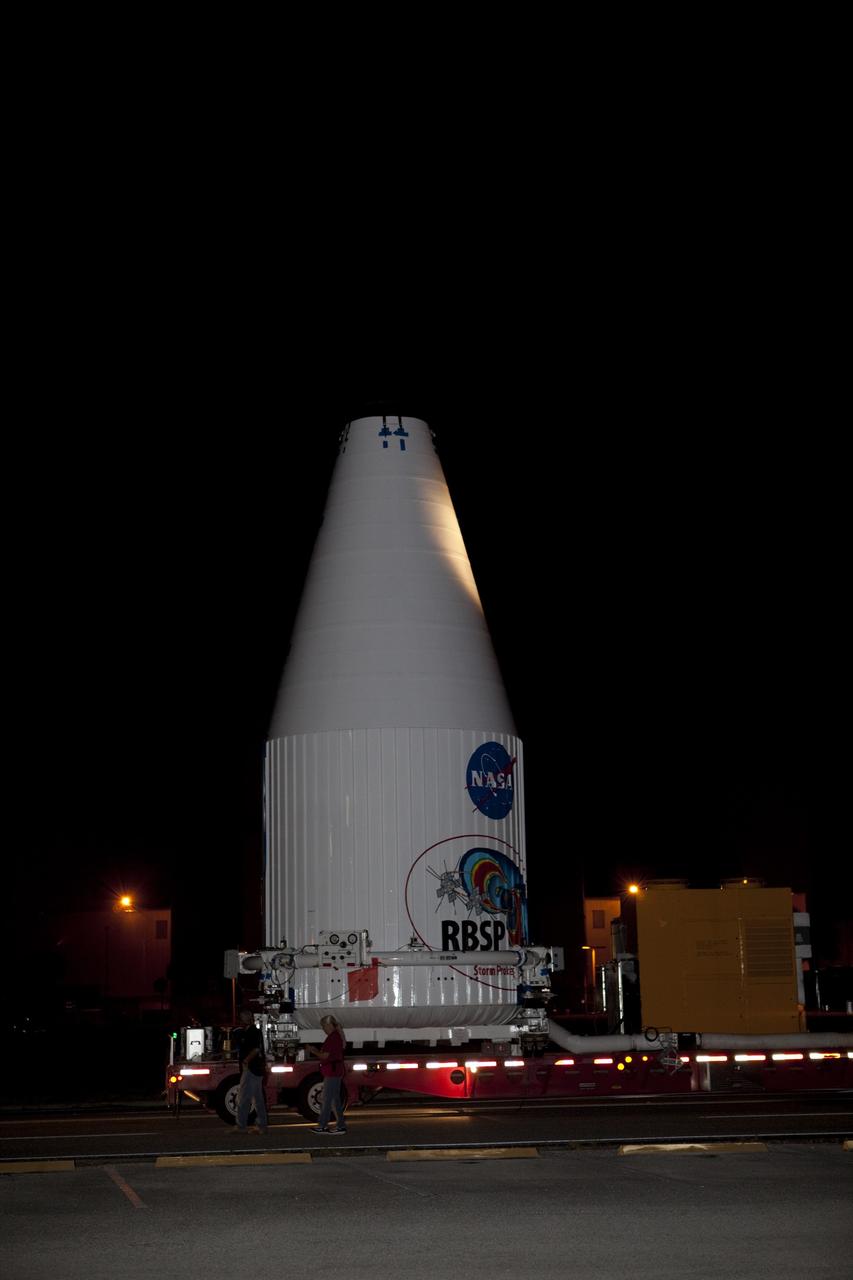
CAPE CANAVERAL, Fla. – The Radiation Belt Storm Probes, or RBSP, spacecraft are moved inside their payload fairing on the payload transporter from the Astrotech payload processing facility in Titusville, Fla. to Space Launch Complex-41 at Cape Canaveral Air Force Station. The fairing, which holds the twin RBSP spacecraft, will be lifted to the top of a United Launch Alliance Atlas V rocket for launch later in August. The two spacecraft are designed to study the Van Allen radiation belts in unprecedented detail. Photo credit: NASA/Dmitri Gerondidakis
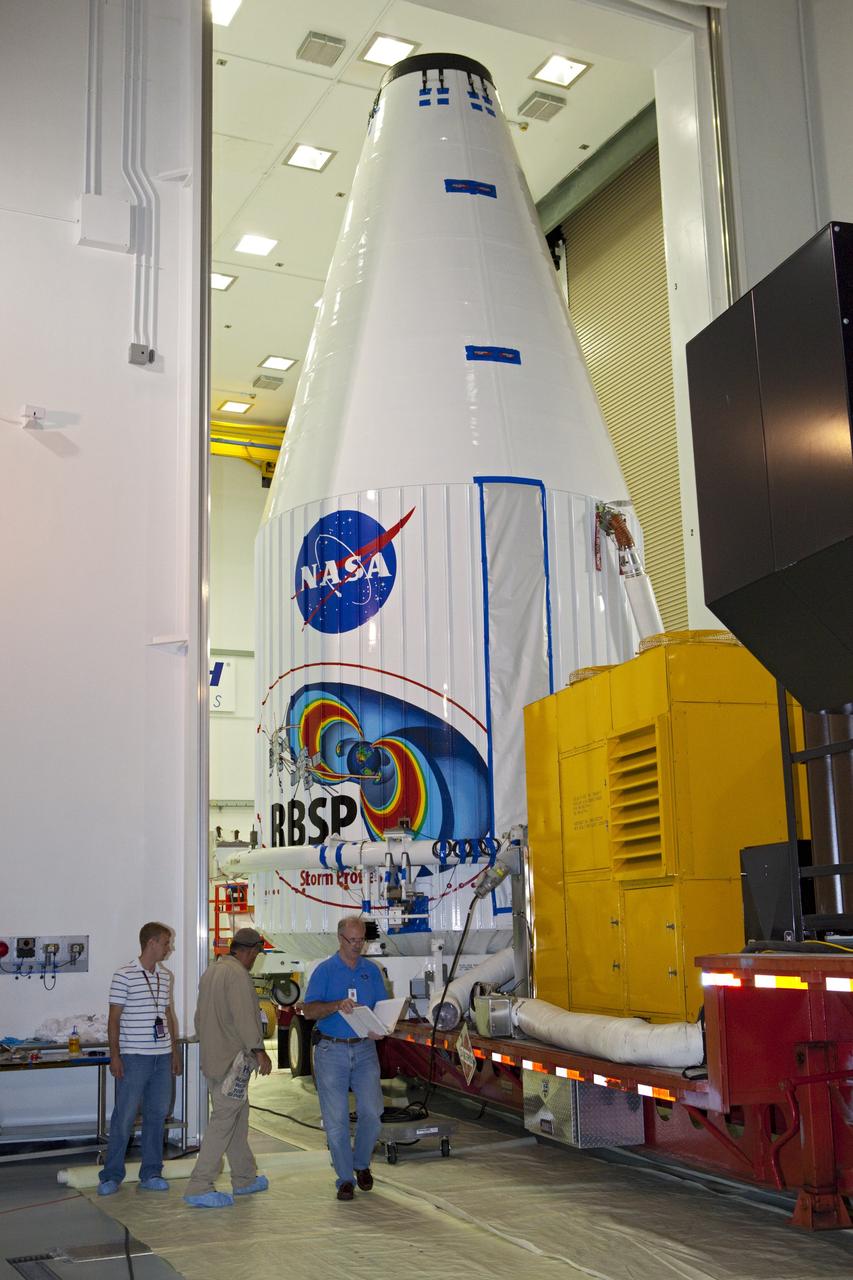
CAPE CANAVERAL, Fla. – The Radiation Belt Storm Probes, or RBSP, spacecraft are moved inside their payload fairing on the payload transporter from the Astrotech payload processing facility in Titusville, Fla. to Space Launch Complex-41 at Cape Canaveral Air Force Station. The fairing, which holds the twin RBSP spacecraft, will be lifted to the top of a United Launch Alliance Atlas V rocket for launch later in August. The two spacecraft are designed to study the Van Allen radiation belts in unprecedented detail. Photo credit: NASA/Dmitri Gerondidakis
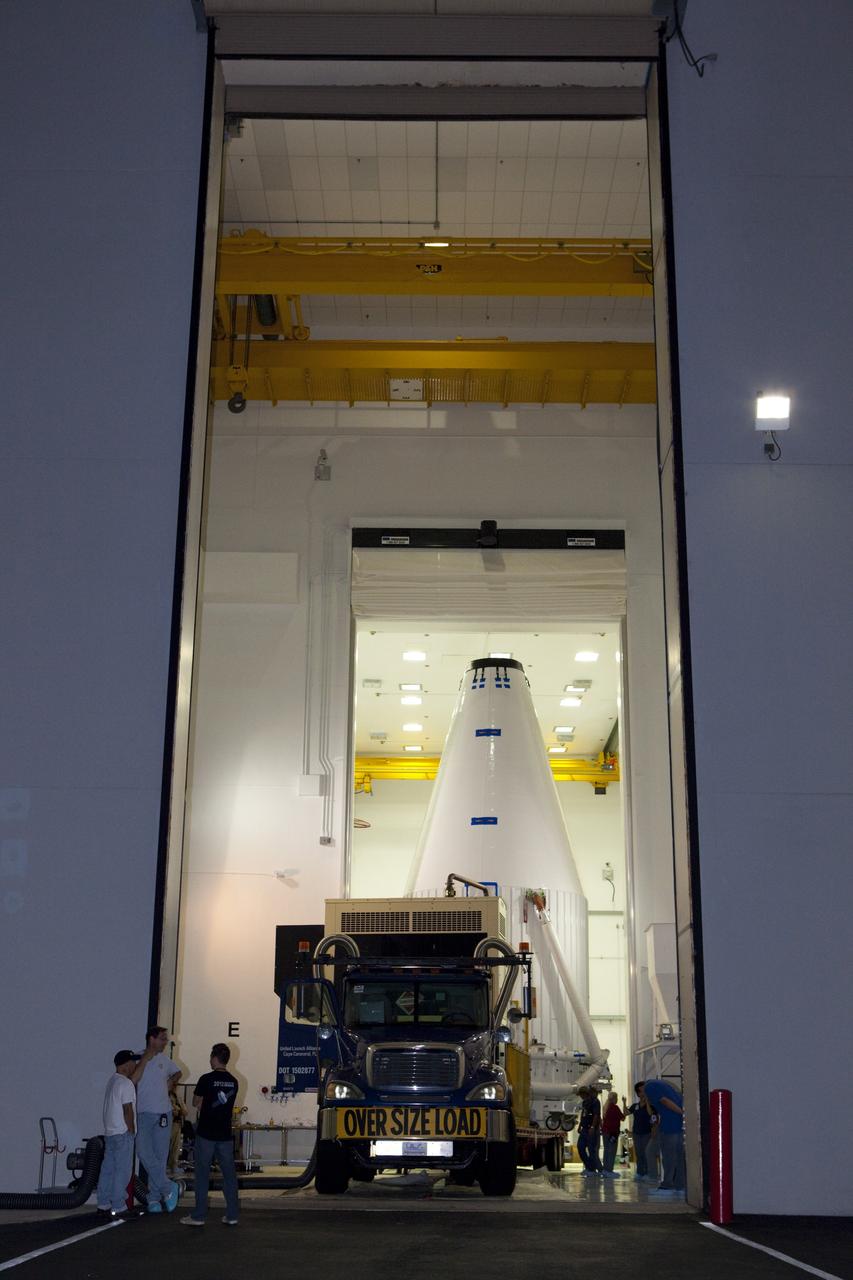
CAPE CANAVERAL, Fla. – The Radiation Belt Storm Probes, or RBSP, spacecraft are moved inside their payload fairing on the payload transporter from the Astrotech payload processing facility in Titusville, Fla. to Space Launch Complex-41 at Cape Canaveral Air Force Station. The fairing, which holds the twin RBSP spacecraft, will be lifted to the top of a United Launch Alliance Atlas V rocket for launch later in August. The two spacecraft are designed to study the Van Allen radiation belts in unprecedented detail. Photo credit: NASA/Dmitri Gerondidakis
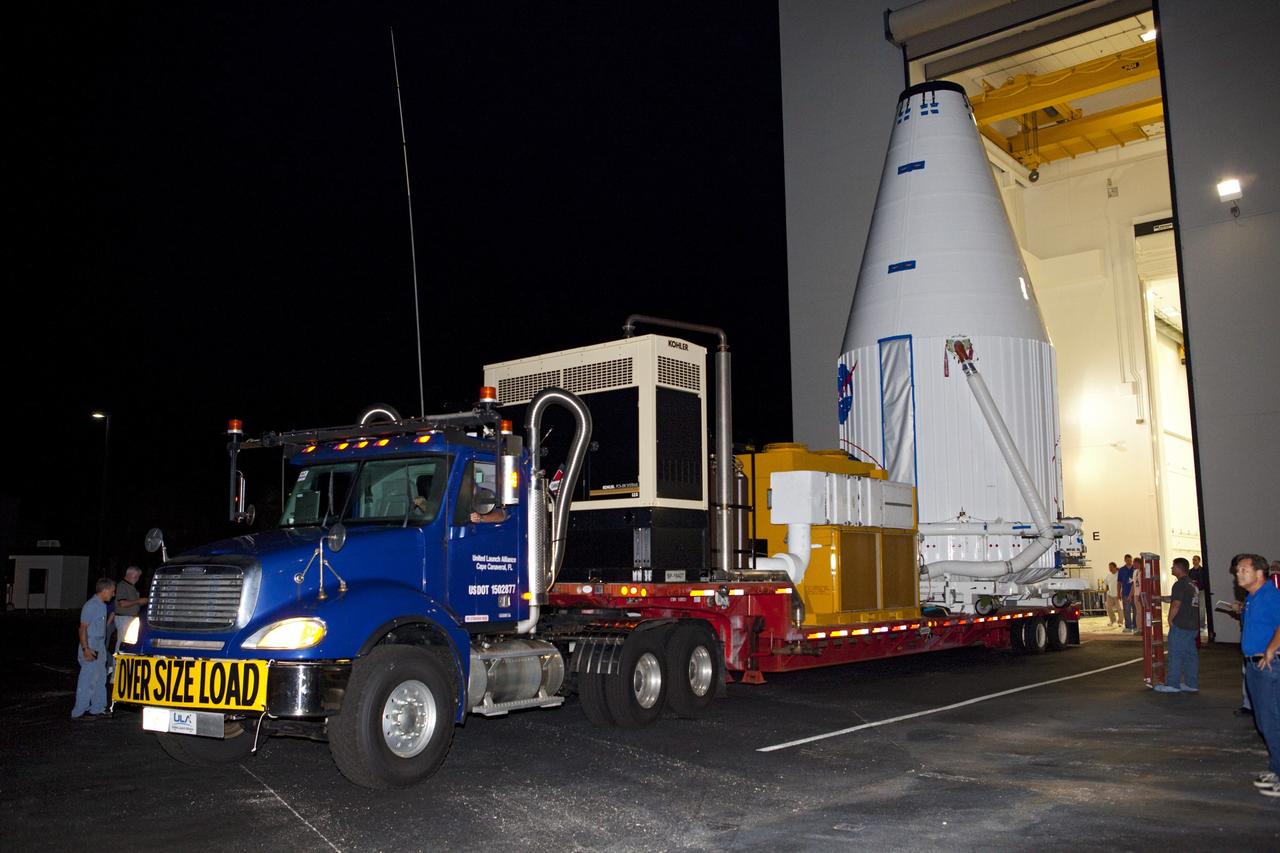
CAPE CANAVERAL, Fla. – The Radiation Belt Storm Probes, or RBSP, spacecraft are moved inside their payload fairing on the payload transporter from the Astrotech payload processing facility in Titusville, Fla. to Space Launch Complex-41 at Cape Canaveral Air Force Station. The fairing, which holds the twin RBSP spacecraft, will be lifted to the top of a United Launch Alliance Atlas V rocket for launch later in August. The two spacecraft are designed to study the Van Allen radiation belts in unprecedented detail. Photo credit: NASA/Dmitri Gerondidakis
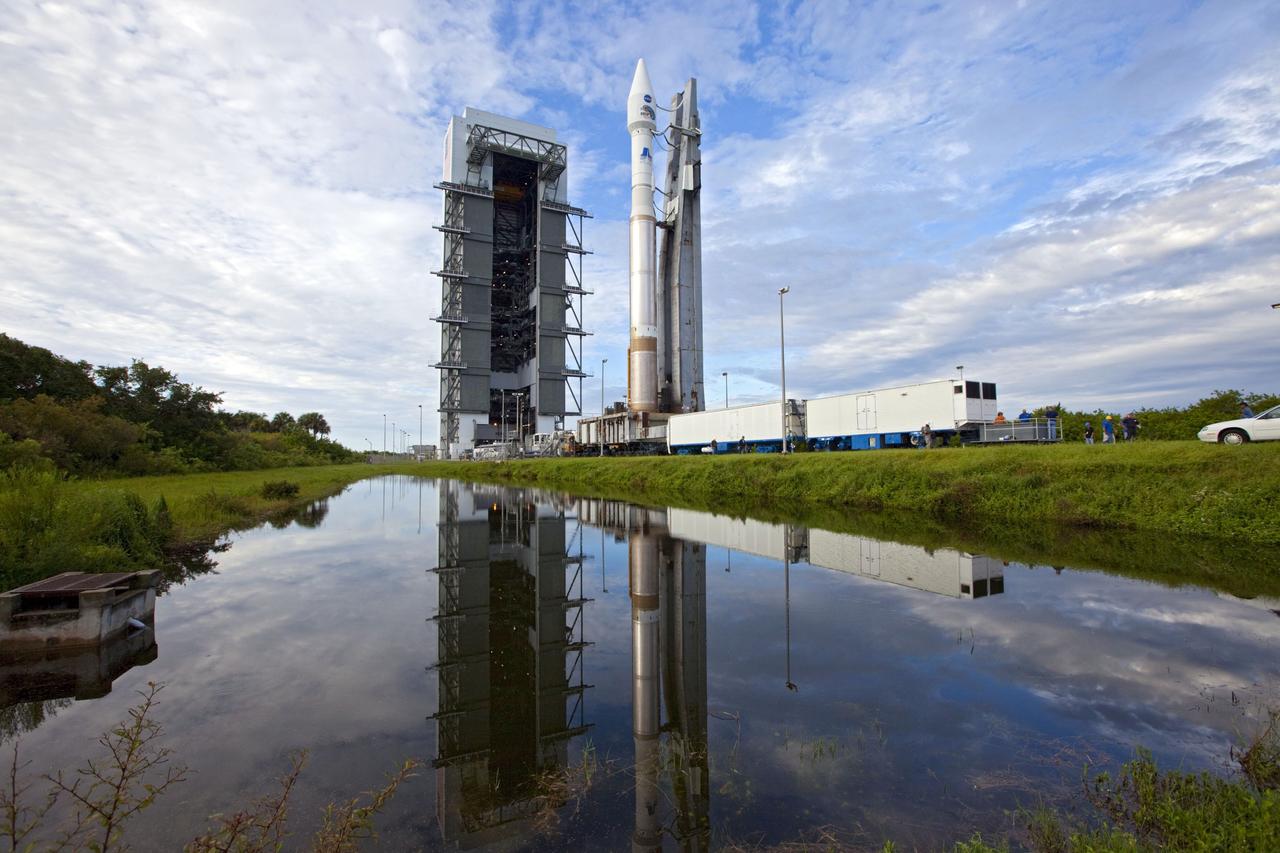
CAPE CANAVERAL, Fla. – The United Launch Alliance Atlas V rocket with the Radiation Belt Storm Probes, or RBSP, spacecraft aboard rolls to the launch pad at Space Launch Complex 41 at Cape Canaveral Air Force Station. NASA’s RBSP mission will help researchers understand the sun’s influence on Earth and near-Earth space by studying the Earth’s radiation belts on various scales of space and time. RBSP will begin its mission of exploration of Earth’s Van Allen radiation belts and the extremes of space weather after its launch aboard an Atlas V rocket. Launch is targeted for Aug. 24. Photo credit: NASA/Kim Shiflett
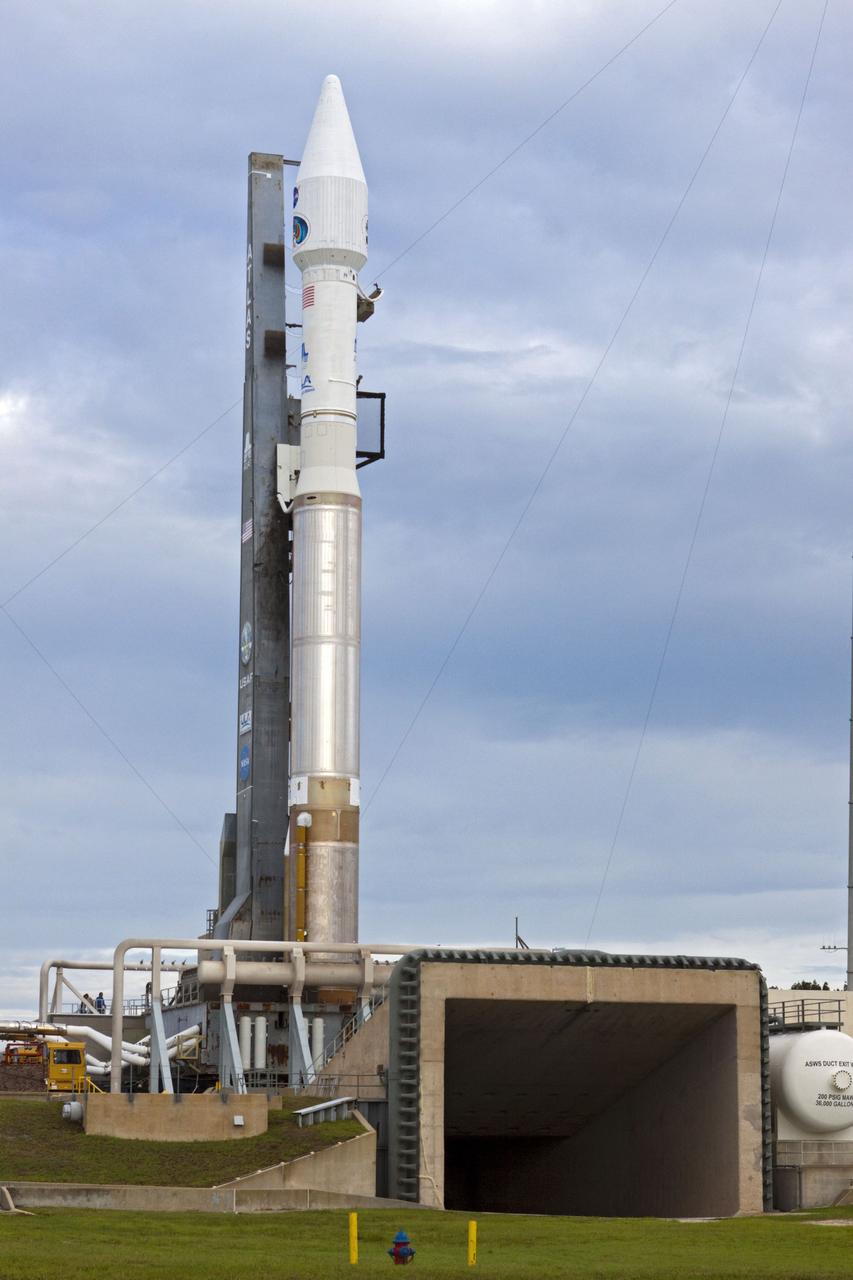
CAPE CANAVERAL, Fla. – The United Launch Alliance Atlas V rocket with the Radiation Belt Storm Probes, or RBSP, spacecraft aboard stands at the launch pad at Space Launch Complex 41 at Cape Canaveral Air Force Station. NASA’s RBSP mission will help researchers understand the sun’s influence on Earth and near-Earth space by studying the Earth’s radiation belts on various scales of space and time. RBSP will begin its mission of exploration of Earth’s Van Allen radiation belts and the extremes of space weather after its launch aboard an Atlas V rocket. Launch is targeted for Aug. 24. Photo credit: NASA/Kim Shiflett
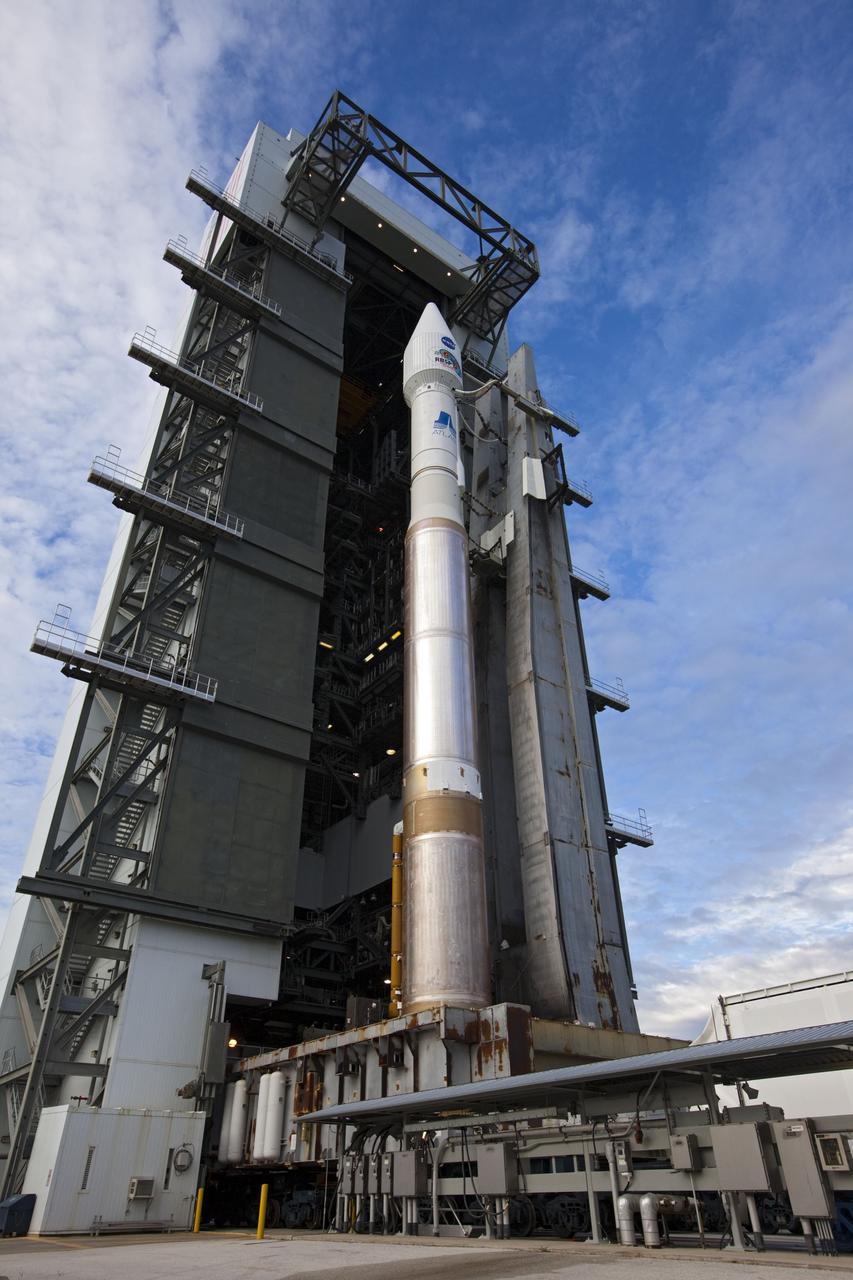
CAPE CANAVERAL, Fla. – The United Launch Alliance Atlas V rocket with the Radiation Belt Storm Probes, or RBSP, spacecraft aboard is readied for rollout to the launch pad at Space Launch Complex 41 at Cape Canaveral Air Force Station. NASA’s RBSP mission will help researchers understand the sun’s influence on Earth and near-Earth space by studying the Earth’s radiation belts on various scales of space and time. RBSP will begin its mission of exploration of Earth’s Van Allen radiation belts and the extremes of space weather after its launch aboard an Atlas V rocket. Launch is targeted for Aug. 24. Photo credit: NASA/Kim Shiflett
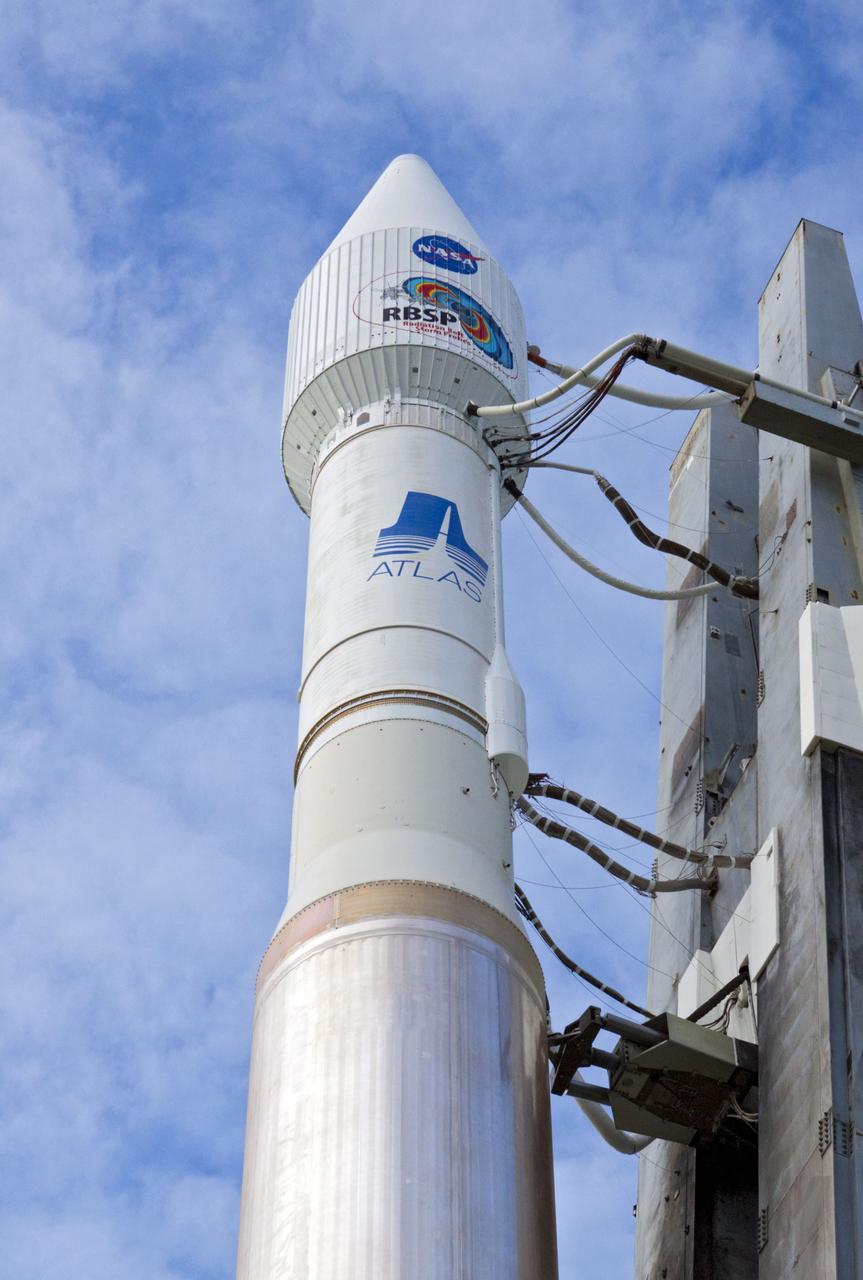
CAPE CANAVERAL, Fla. – The United Launch Alliance Atlas V rocket with the Radiation Belt Storm Probes, or RBSP, spacecraft aboard stands at the launch pad at Space Launch Complex 41 at Cape Canaveral Air Force Station. NASA’s RBSP mission will help researchers understand the sun’s influence on Earth and near-Earth space by studying the Earth’s radiation belts on various scales of space and time. RBSP will begin its mission of exploration of Earth’s Van Allen radiation belts and the extremes of space weather after its launch aboard an Atlas V rocket. Launch is targeted for Aug. 24. Photo credit: NASA/Kim Shiflett
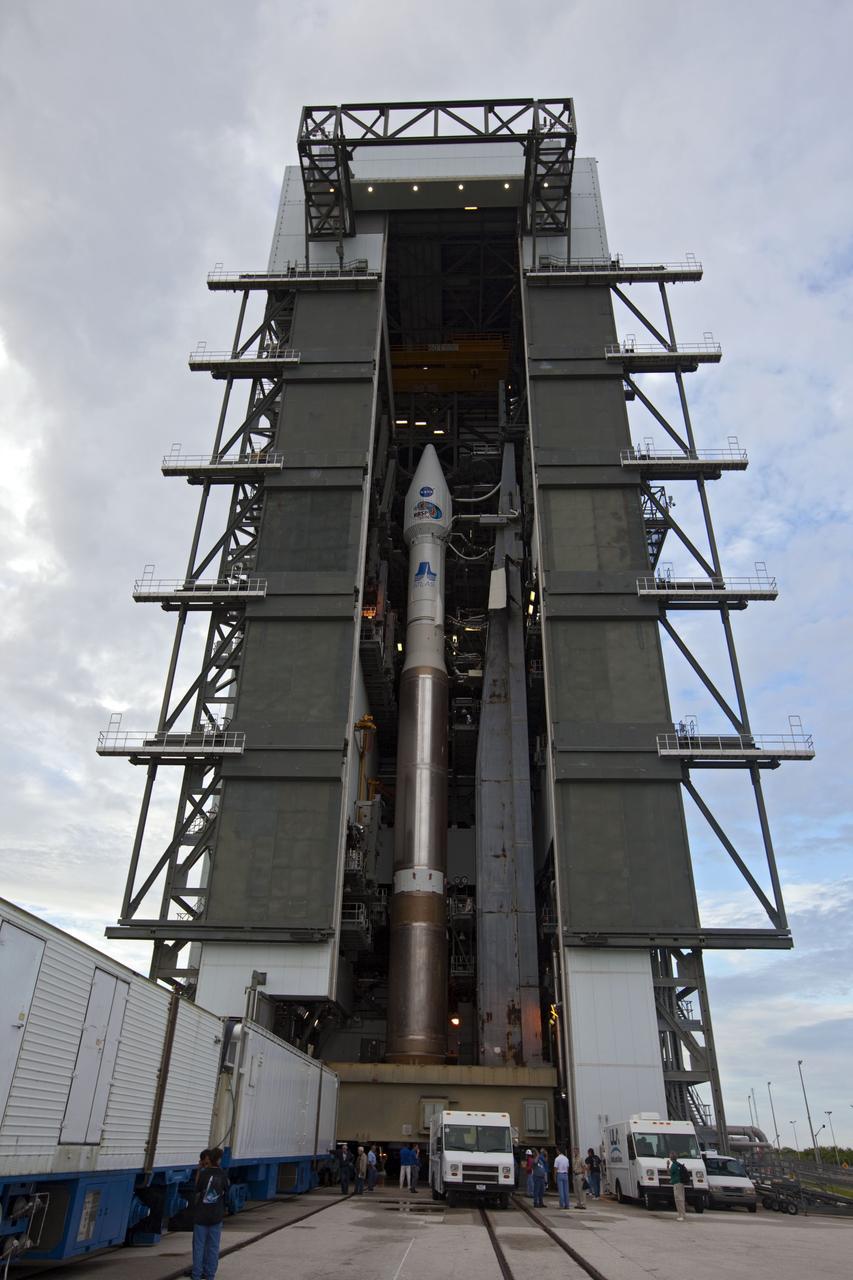
CAPE CANAVERAL, Fla. – The United Launch Alliance Atlas V rocket with the Radiation Belt Storm Probes, or RBSP, spacecraft aboard is readied for rollout to the launch pad at Space Launch Complex 41 at Cape Canaveral Air Force Station. NASA’s RBSP mission will help researchers understand the sun’s influence on Earth and near-Earth space by studying the Earth’s radiation belts on various scales of space and time. RBSP will begin its mission of exploration of Earth’s Van Allen radiation belts and the extremes of space weather after its launch aboard an Atlas V rocket. Launch is targeted for Aug. 24. Photo credit: NASA/Kim Shiflett
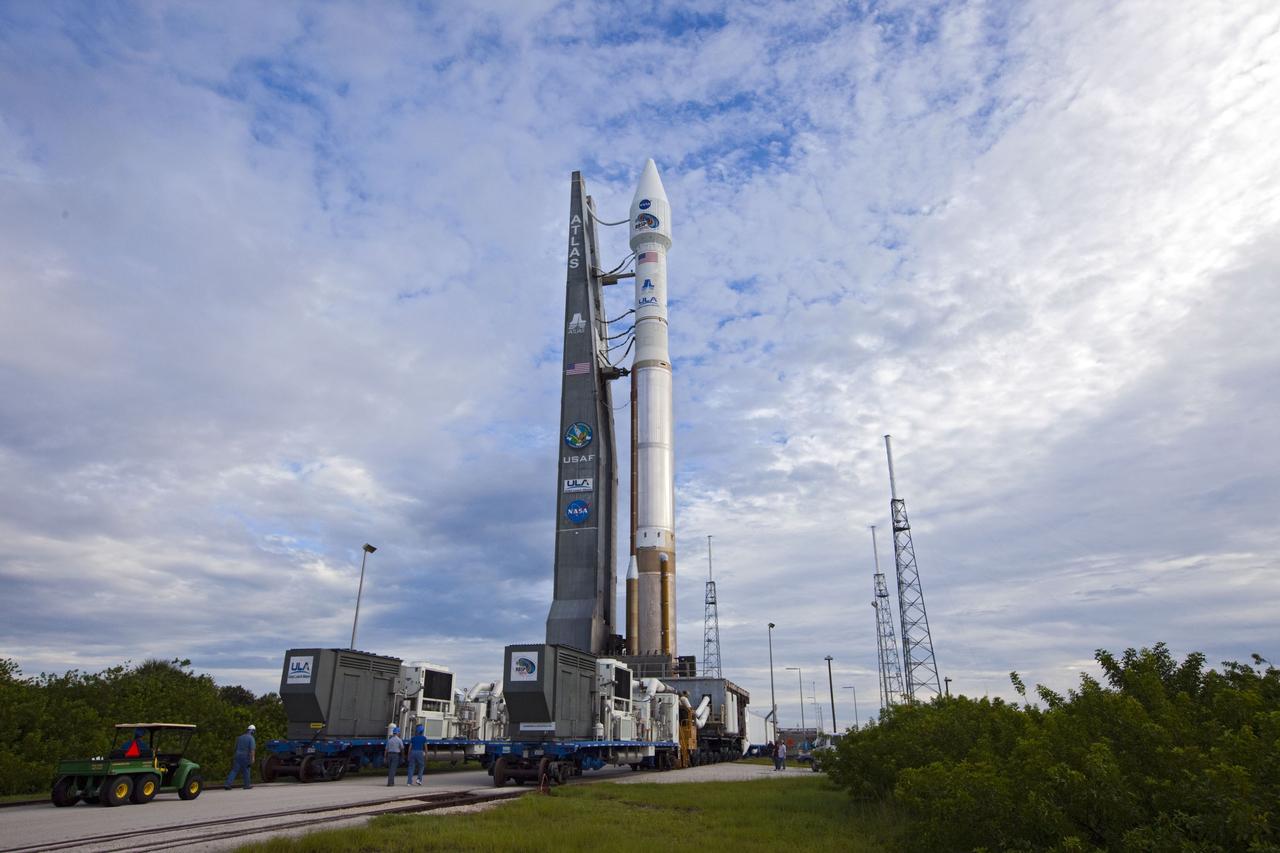
CAPE CANAVERAL, Fla. – Workers help guide the United Launch Alliance Atlas V rocket with the Radiation Belt Storm Probes, or RBSP, spacecraft aboard as it moves to the launch pad at Space Launch Complex 41 at Cape Canaveral Air Force Station. NASA’s RBSP mission will help researchers understand the sun’s influence on Earth and near-Earth space by studying the Earth’s radiation belts on various scales of space and time. RBSP will begin its mission of exploration of Earth’s Van Allen radiation belts and the extremes of space weather after its launch aboard an Atlas V rocket. Launch is targeted for Aug. 24. Photo credit: NASA/Kim Shiflett
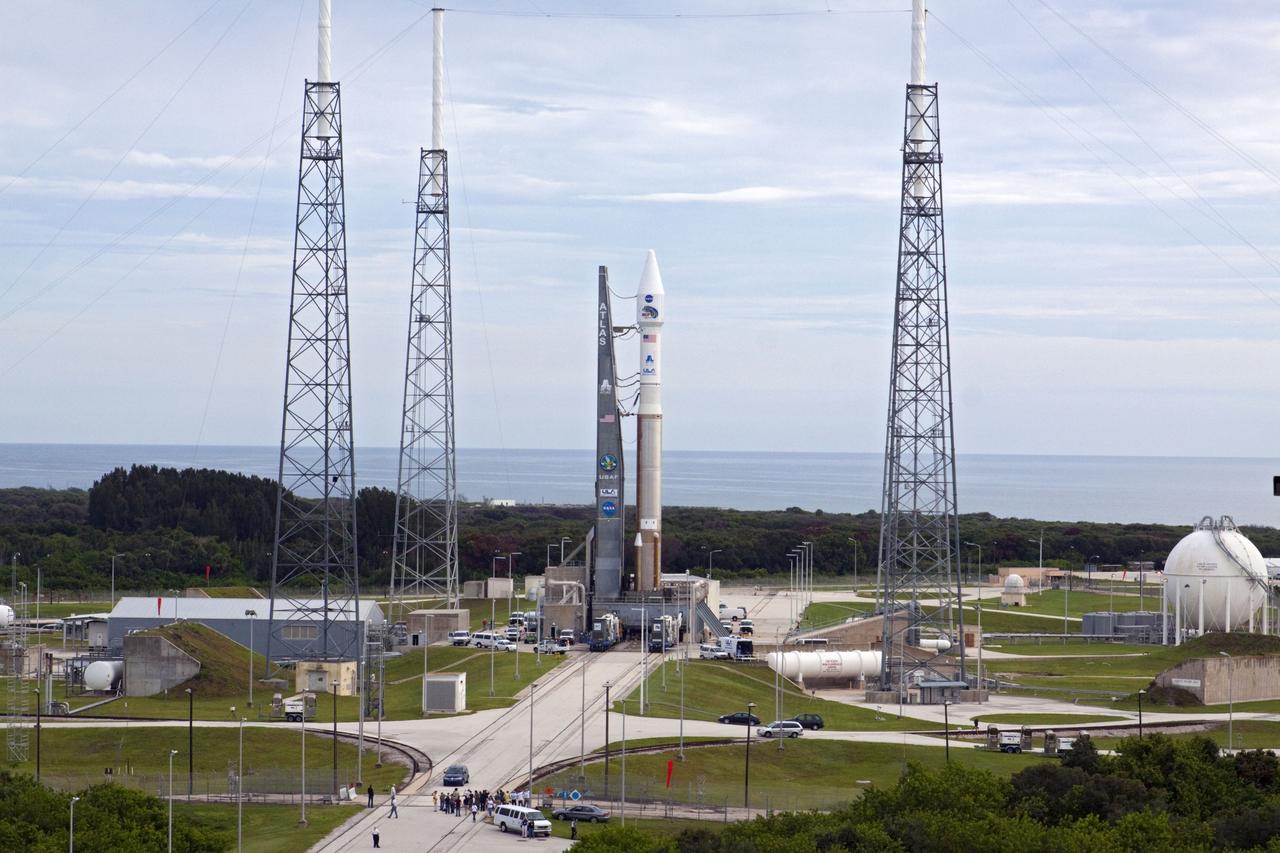
CAPE CANAVERAL, Fla. – The United Launch Alliance Atlas V rocket with the Radiation Belt Storm Probes, or RBSP, spacecraft aboard stands at the launch pad at Space Launch Complex 41 at Cape Canaveral Air Force Station. NASA’s RBSP mission will help researchers understand the sun’s influence on Earth and near-Earth space by studying the Earth’s radiation belts on various scales of space and time. RBSP will begin its mission of exploration of Earth’s Van Allen radiation belts and the extremes of space weather after its launch aboard an Atlas V rocket. Launch is targeted for Aug. 24. Photo credit: NASA/Kim Shiflett
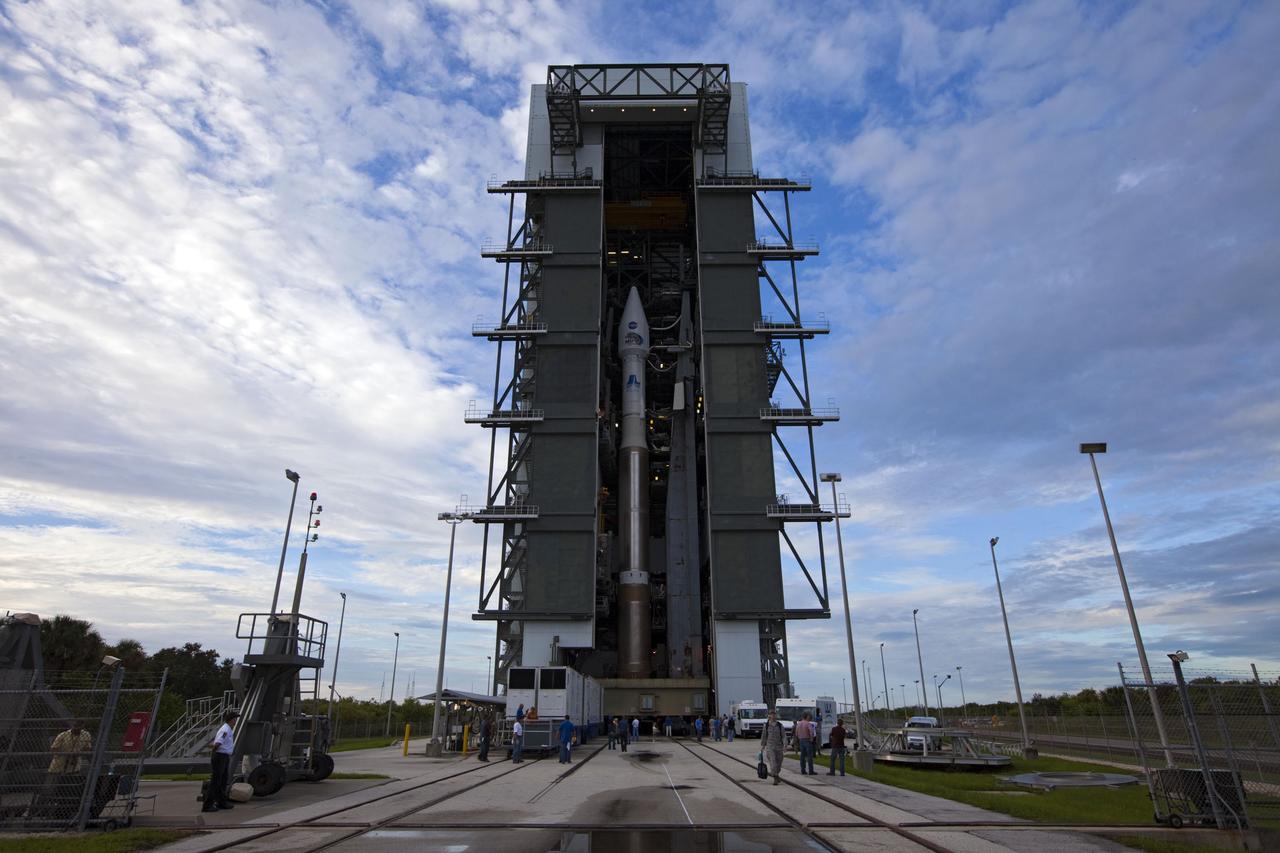
CAPE CANAVERAL, Fla. – The United Launch Alliance Atlas V rocket with the Radiation Belt Storm Probes, or RBSP, spacecraft aboard is readied for rollout to the launch pad at Space Launch Complex 41 at Cape Canaveral Air Force Station. NASA’s RBSP mission will help researchers understand the sun’s influence on Earth and near-Earth space by studying the Earth’s radiation belts on various scales of space and time. RBSP will begin its mission of exploration of Earth’s Van Allen radiation belts and the extremes of space weather after its launch aboard an Atlas V rocket. Launch is targeted for Aug. 24. Photo credit: NASA/Kim Shiflett
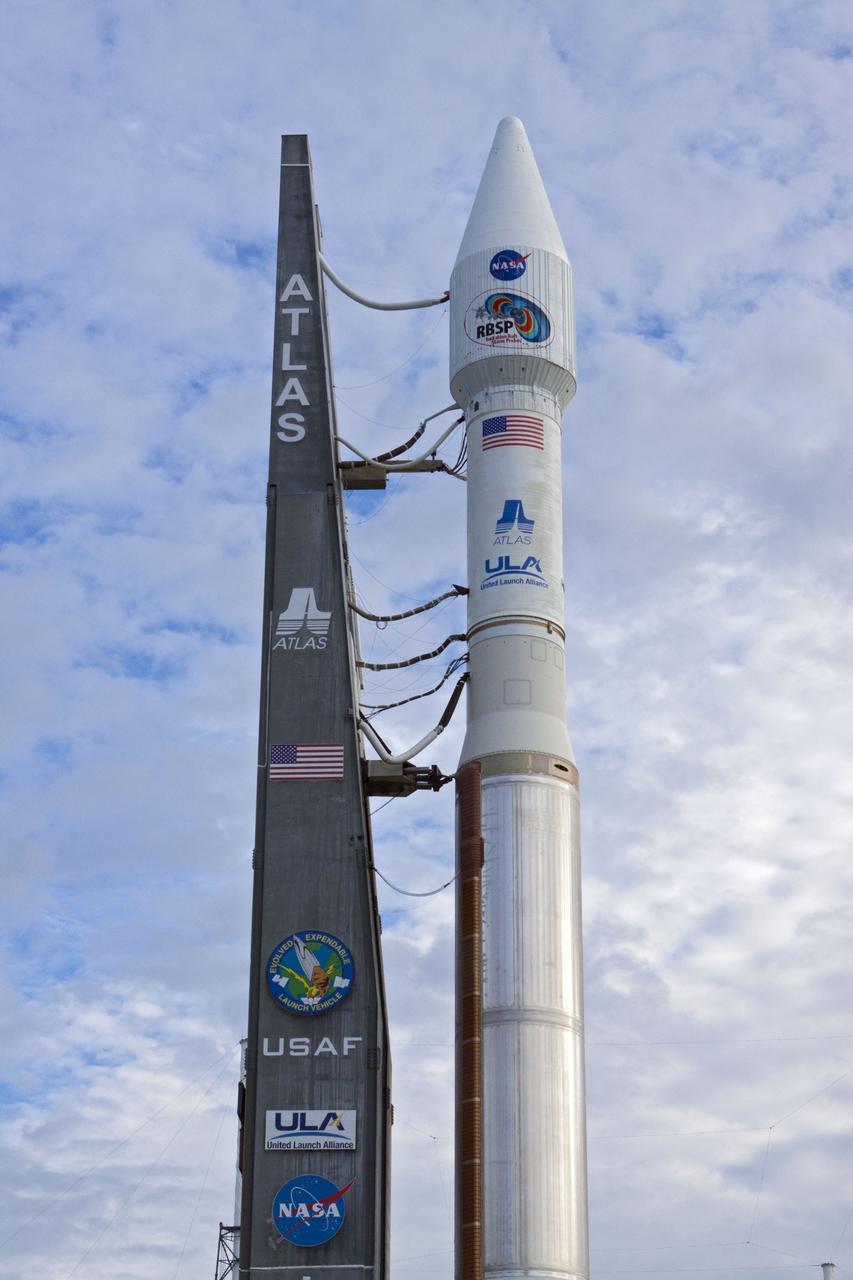
CAPE CANAVERAL, Fla. – The United Launch Alliance Atlas V rocket with the Radiation Belt Storm Probes, or RBSP, spacecraft aboard stands at the launch pad at Space Launch Complex 41 at Cape Canaveral Air Force Station. NASA’s RBSP mission will help researchers understand the sun’s influence on Earth and near-Earth space by studying the Earth’s radiation belts on various scales of space and time. RBSP will begin its mission of exploration of Earth’s Van Allen radiation belts and the extremes of space weather after its launch aboard an Atlas V rocket. Launch is targeted for Aug. 24. Photo credit: NASA/Kim Shiflett
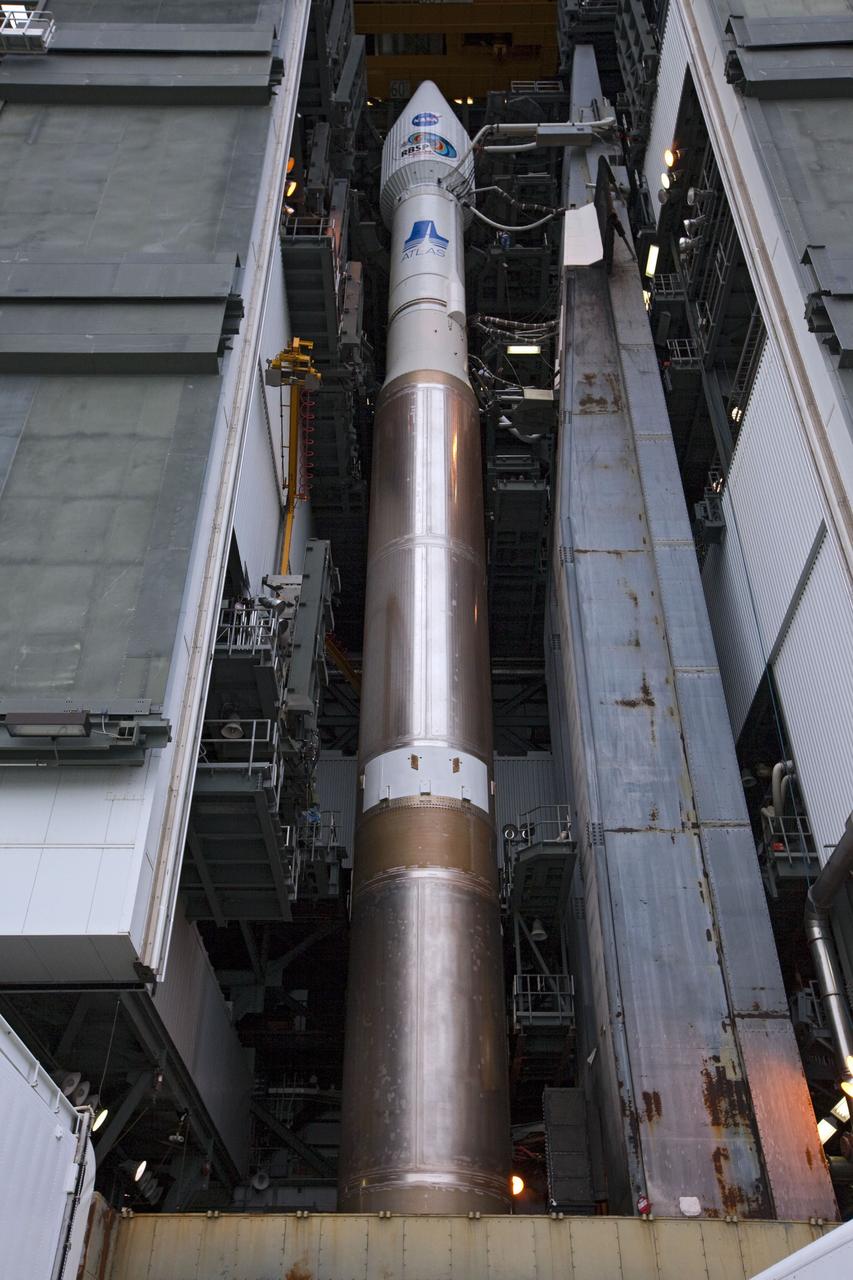
CAPE CANAVERAL, Fla. – The United Launch Alliance Atlas V rocket with the Radiation Belt Storm Probes, or RBSP, spacecraft aboard is readied for rollout to the launch pad at Space Launch Complex 41 at Cape Canaveral Air Force Station. NASA’s RBSP mission will help researchers understand the sun’s influence on Earth and near-Earth space by studying the Earth’s radiation belts on various scales of space and time. RBSP will begin its mission of exploration of Earth’s Van Allen radiation belts and the extremes of space weather after its launch aboard an Atlas V rocket. Launch is targeted for Aug. 24. Photo credit: NASA/Kim Shiflett

CAPE CANAVERAL, Fla. – Workers help guide the United Launch Alliance Atlas V rocket with the Radiation Belt Storm Probes, or RBSP, spacecraft aboard as it moves to the launch pad at Space Launch Complex 41 at Cape Canaveral Air Force Station. NASA’s RBSP mission will help researchers understand the sun’s influence on Earth and near-Earth space by studying the Earth’s radiation belts on various scales of space and time. RBSP will begin its mission of exploration of Earth’s Van Allen radiation belts and the extremes of space weather after its launch aboard an Atlas V rocket. Launch is targeted for Aug. 24. Photo credit: NASA/Kim Shiflett
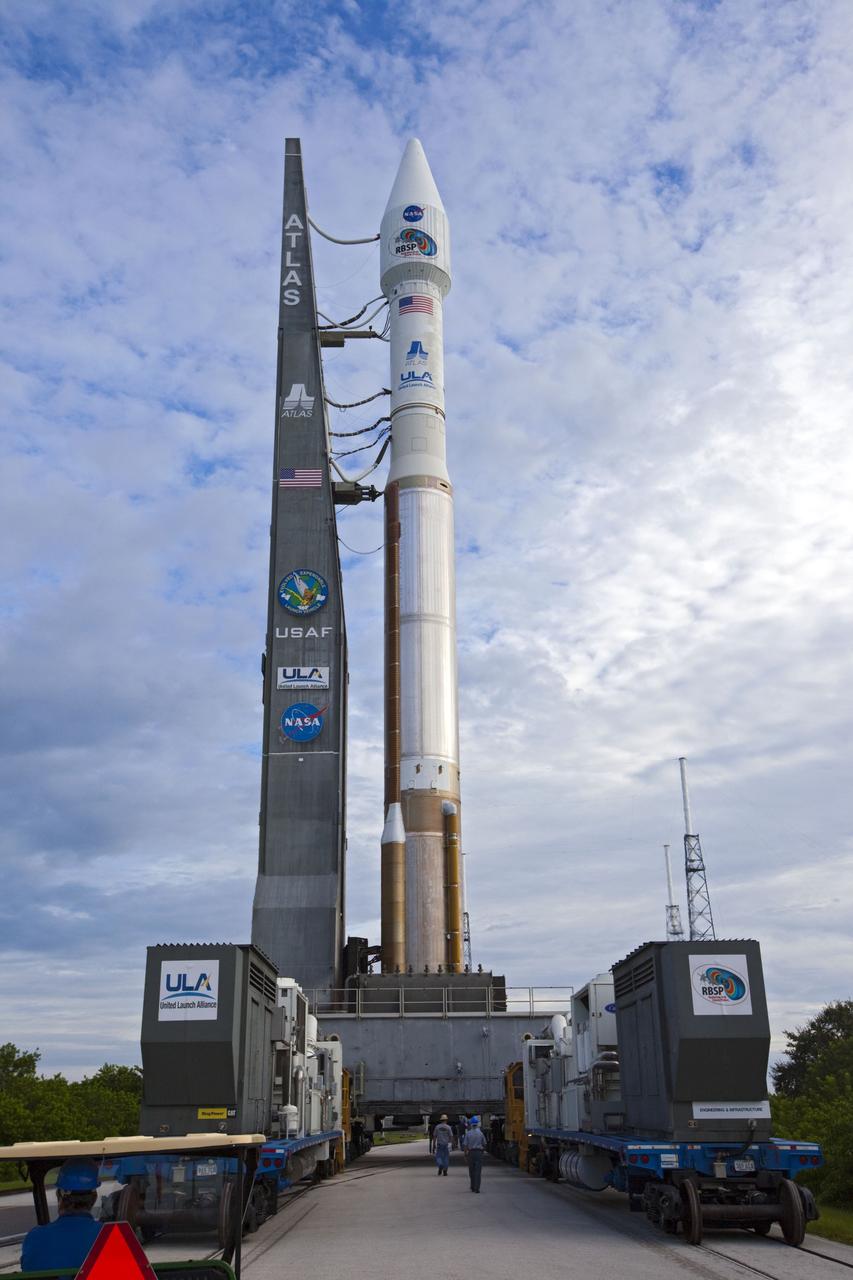
CAPE CANAVERAL, Fla. – Workers help guide the United Launch Alliance Atlas V rocket with the Radiation Belt Storm Probes, or RBSP, spacecraft aboard as it moves to the launch pad at Space Launch Complex 41 at Cape Canaveral Air Force Station. NASA’s RBSP mission will help researchers understand the sun’s influence on Earth and near-Earth space by studying the Earth’s radiation belts on various scales of space and time. RBSP will begin its mission of exploration of Earth’s Van Allen radiation belts and the extremes of space weather after its launch aboard an Atlas V rocket. Launch is targeted for Aug. 24. Photo credit: NASA/Kim Shiflett
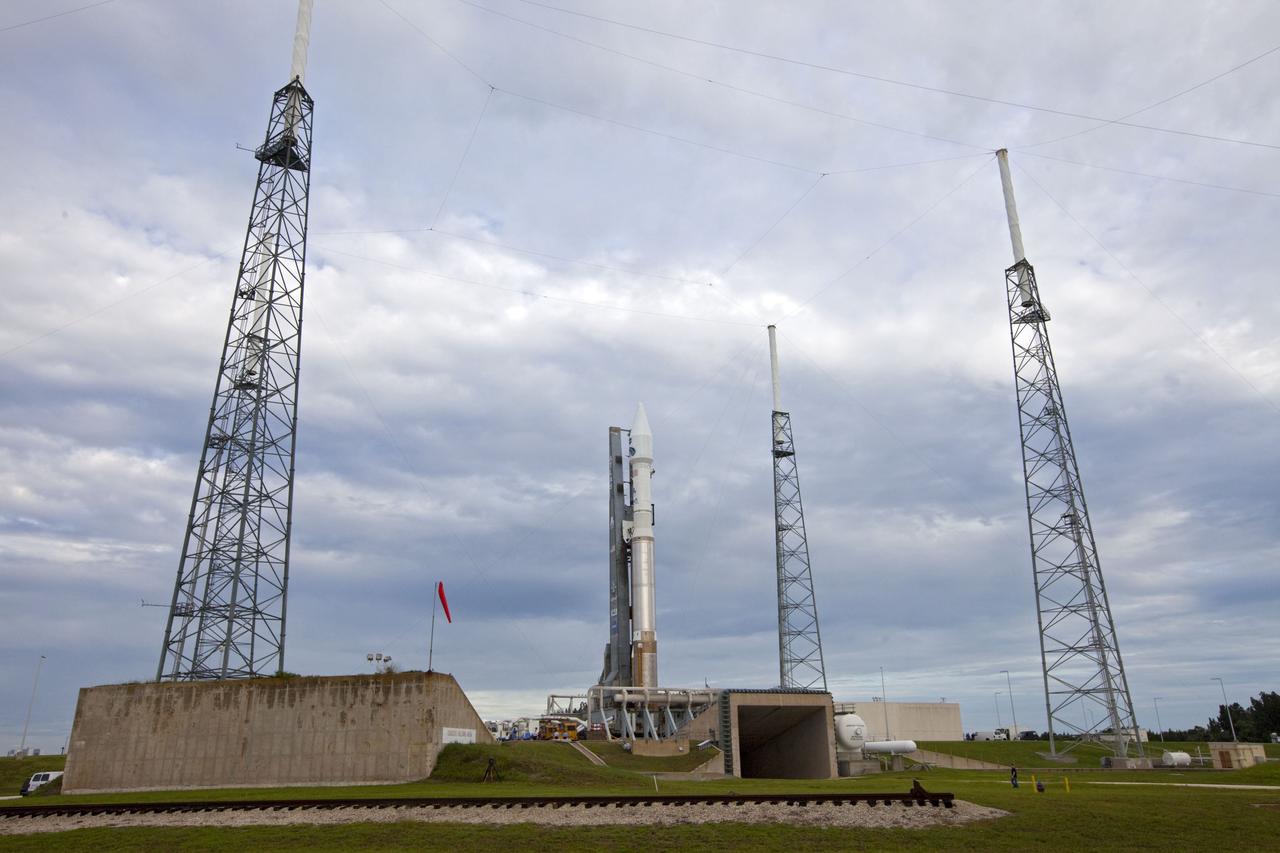
CAPE CANAVERAL, Fla. – The United Launch Alliance Atlas V rocket with the Radiation Belt Storm Probes, or RBSP, spacecraft aboard stands at the launch pad at Space Launch Complex 41 at Cape Canaveral Air Force Station. NASA’s RBSP mission will help researchers understand the sun’s influence on Earth and near-Earth space by studying the Earth’s radiation belts on various scales of space and time. RBSP will begin its mission of exploration of Earth’s Van Allen radiation belts and the extremes of space weather after its launch aboard an Atlas V rocket. Launch is targeted for Aug. 24. Photo credit: NASA/Kim Shiflett
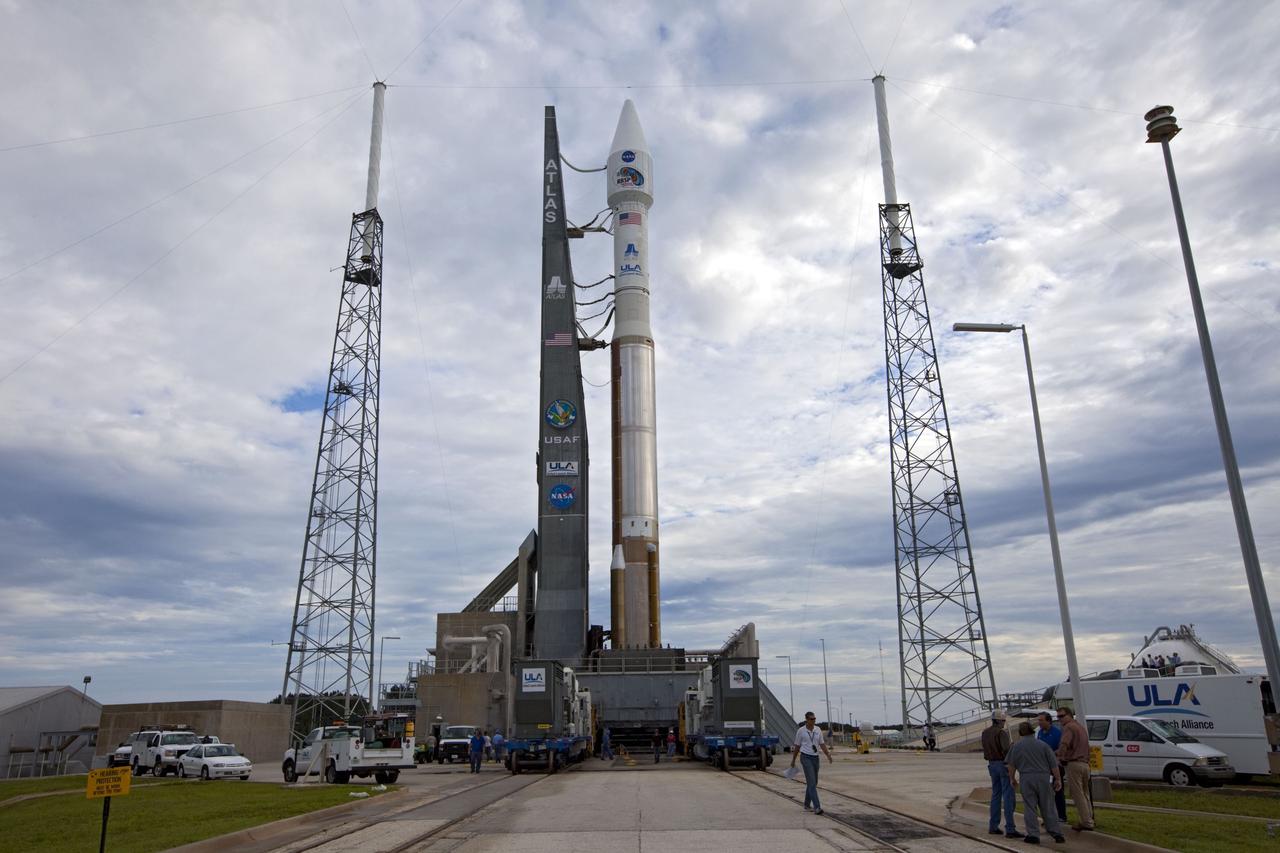
CAPE CANAVERAL, Fla. – The United Launch Alliance Atlas V rocket with the Radiation Belt Storm Probes, or RBSP, spacecraft aboard stands at the launch pad at Space Launch Complex 41 at Cape Canaveral Air Force Station. NASA’s RBSP mission will help researchers understand the sun’s influence on Earth and near-Earth space by studying the Earth’s radiation belts on various scales of space and time. RBSP will begin its mission of exploration of Earth’s Van Allen radiation belts and the extremes of space weather after its launch aboard an Atlas V rocket. Launch is targeted for Aug. 24. Photo credit: NASA/Kim Shiflett
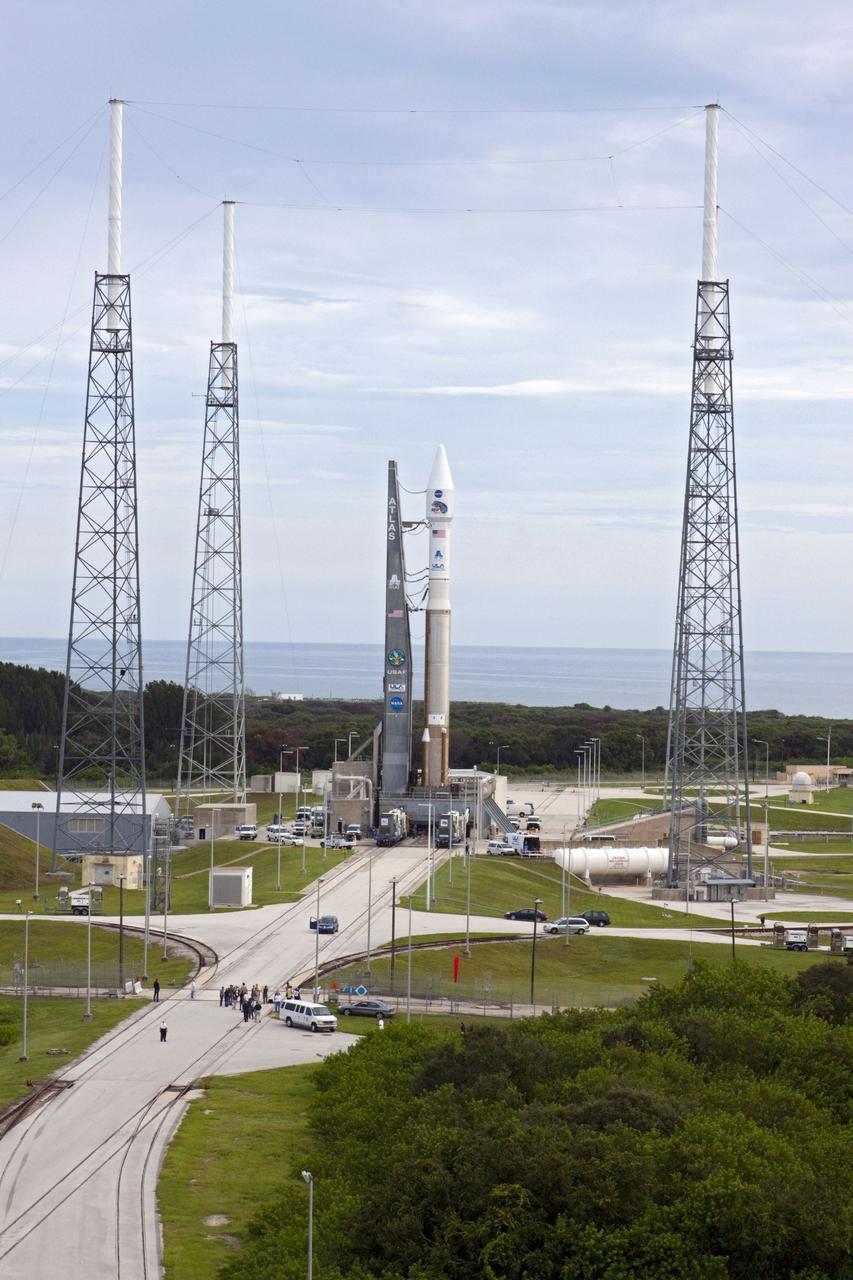
CAPE CANAVERAL, Fla. – The United Launch Alliance Atlas V rocket with the Radiation Belt Storm Probes, or RBSP, spacecraft aboard stands at the launch pad at Space Launch Complex 41 at Cape Canaveral Air Force Station. NASA’s RBSP mission will help researchers understand the sun’s influence on Earth and near-Earth space by studying the Earth’s radiation belts on various scales of space and time. RBSP will begin its mission of exploration of Earth’s Van Allen radiation belts and the extremes of space weather after its launch aboard an Atlas V rocket. Launch is targeted for Aug. 24. Photo credit: NASA/Kim Shiflett
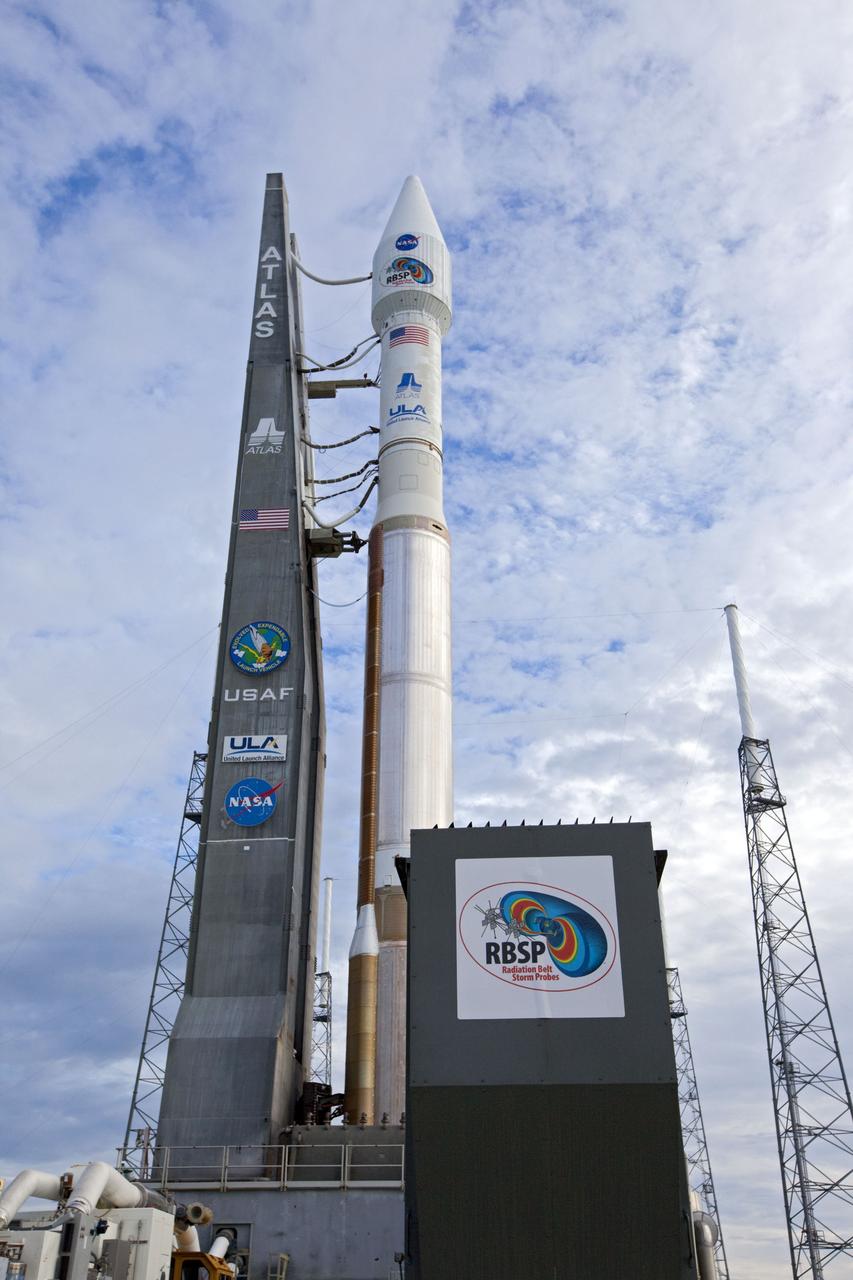
CAPE CANAVERAL, Fla. – The United Launch Alliance Atlas V rocket with the Radiation Belt Storm Probes, or RBSP, spacecraft aboard rolls to the launch pad at Space Launch Complex 41 at Cape Canaveral Air Force Station. NASA’s RBSP mission will help researchers understand the sun’s influence on Earth and near-Earth space by studying the Earth’s radiation belts on various scales of space and time. RBSP will begin its mission of exploration of Earth’s Van Allen radiation belts and the extremes of space weather after its launch aboard an Atlas V rocket. Launch is targeted for Aug. 24. Photo credit: NASA/Kim Shiflett
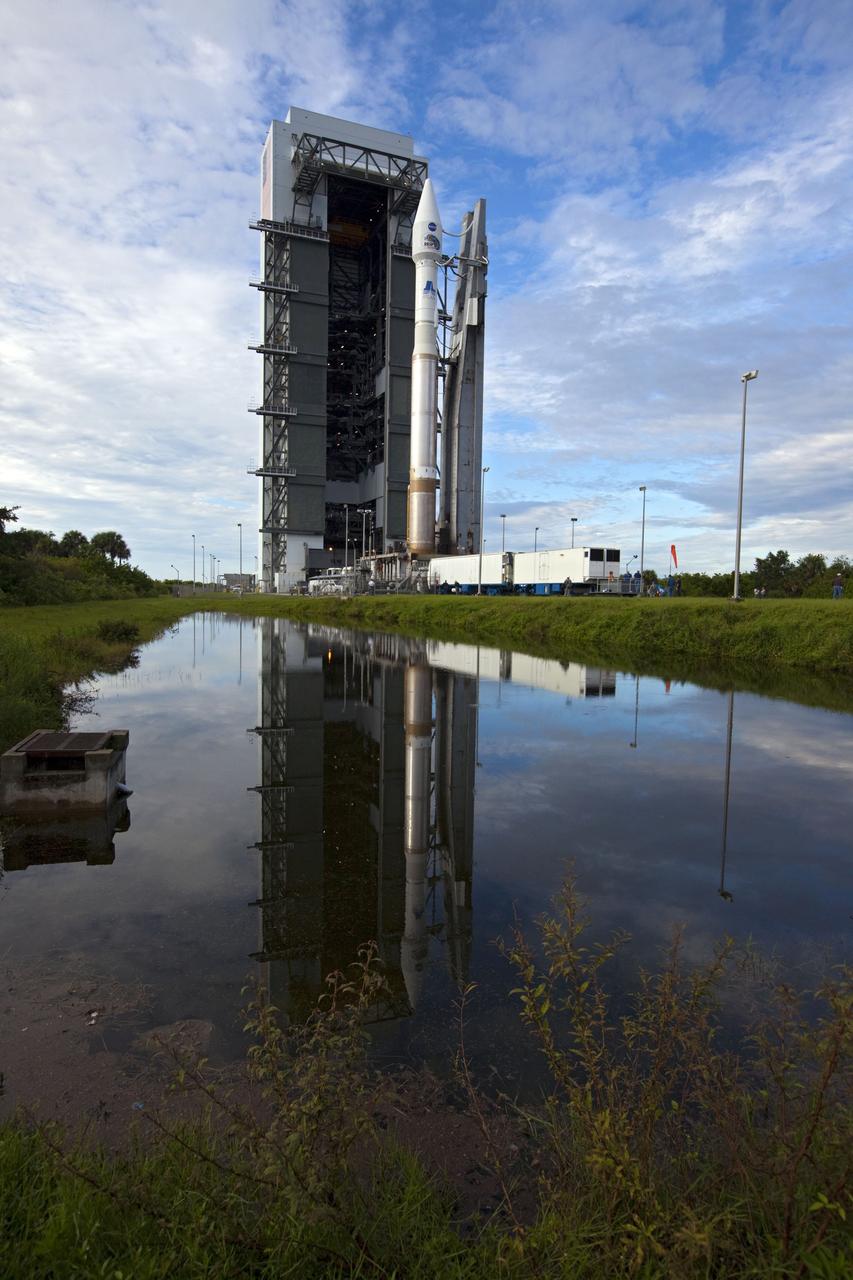
CAPE CANAVERAL, Fla. – The United Launch Alliance Atlas V rocket with the Radiation Belt Storm Probes, or RBSP, spacecraft aboard rolls to the launch pad at Space Launch Complex 41 at Cape Canaveral Air Force Station. NASA’s RBSP mission will help researchers understand the sun’s influence on Earth and near-Earth space by studying the Earth’s radiation belts on various scales of space and time. RBSP will begin its mission of exploration of Earth’s Van Allen radiation belts and the extremes of space weather after its launch aboard an Atlas V rocket. Launch is targeted for Aug. 24. Photo credit: NASA/Kim Shiflett
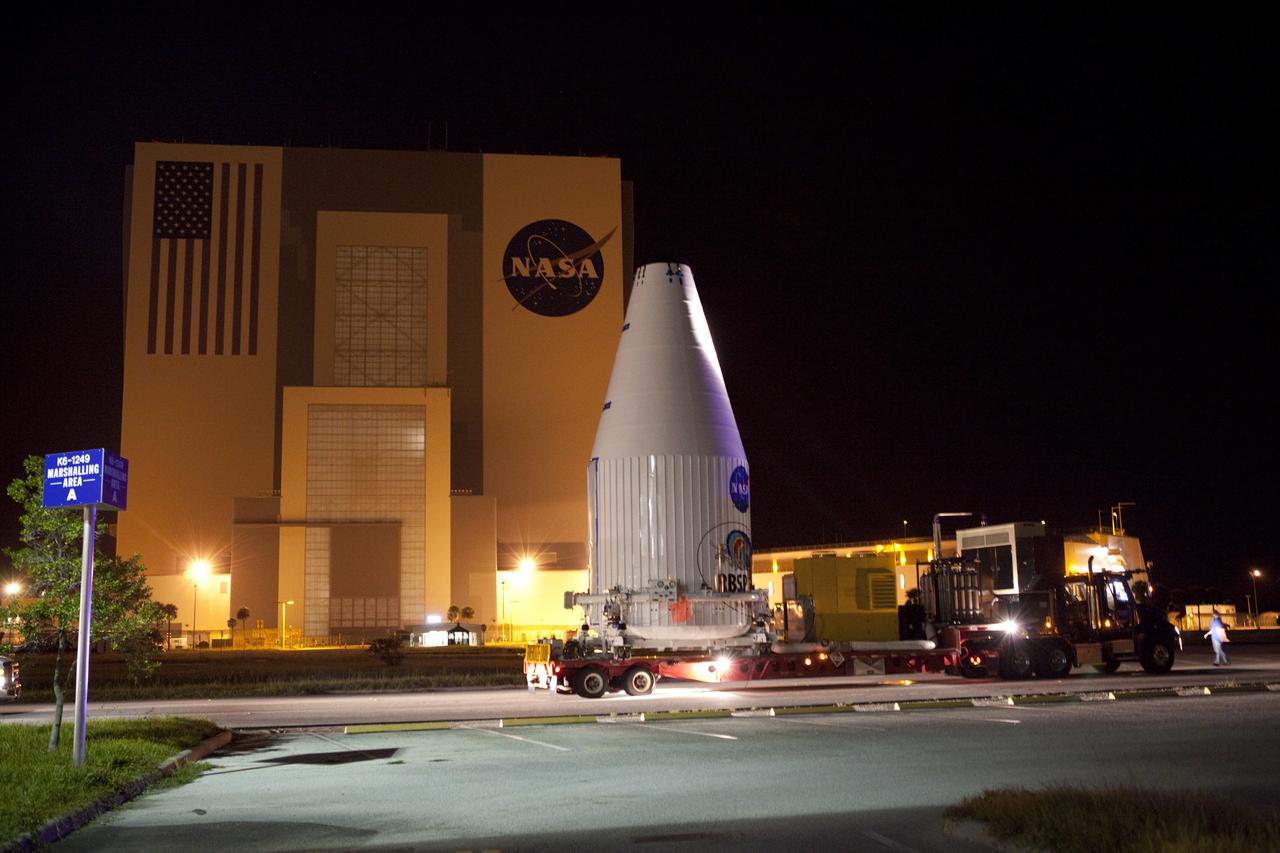
CAPE CANAVERAL, Fla. – The Radiation Belt Storm Probes, or RBSP, spacecraft are moved inside their payload fairing on the payload transporter from the Astrotech payload processing facility in Titusville, Fla. to Space Launch Complex-41 at Cape Canaveral Air Force Station. The convoy carried the spacecraft past the Vehicle Assembly Building at NASA's Kennedy Space Center. The fairing, which holds the twin RBSP spacecraft, will be lifted to the top of a United Launch Alliance Atlas V rocket for launch later in August. The two spacecraft are designed to study the Van Allen radiation belts in unprecedented detail. Photo credit: NASA/Dmitri Gerondidakis
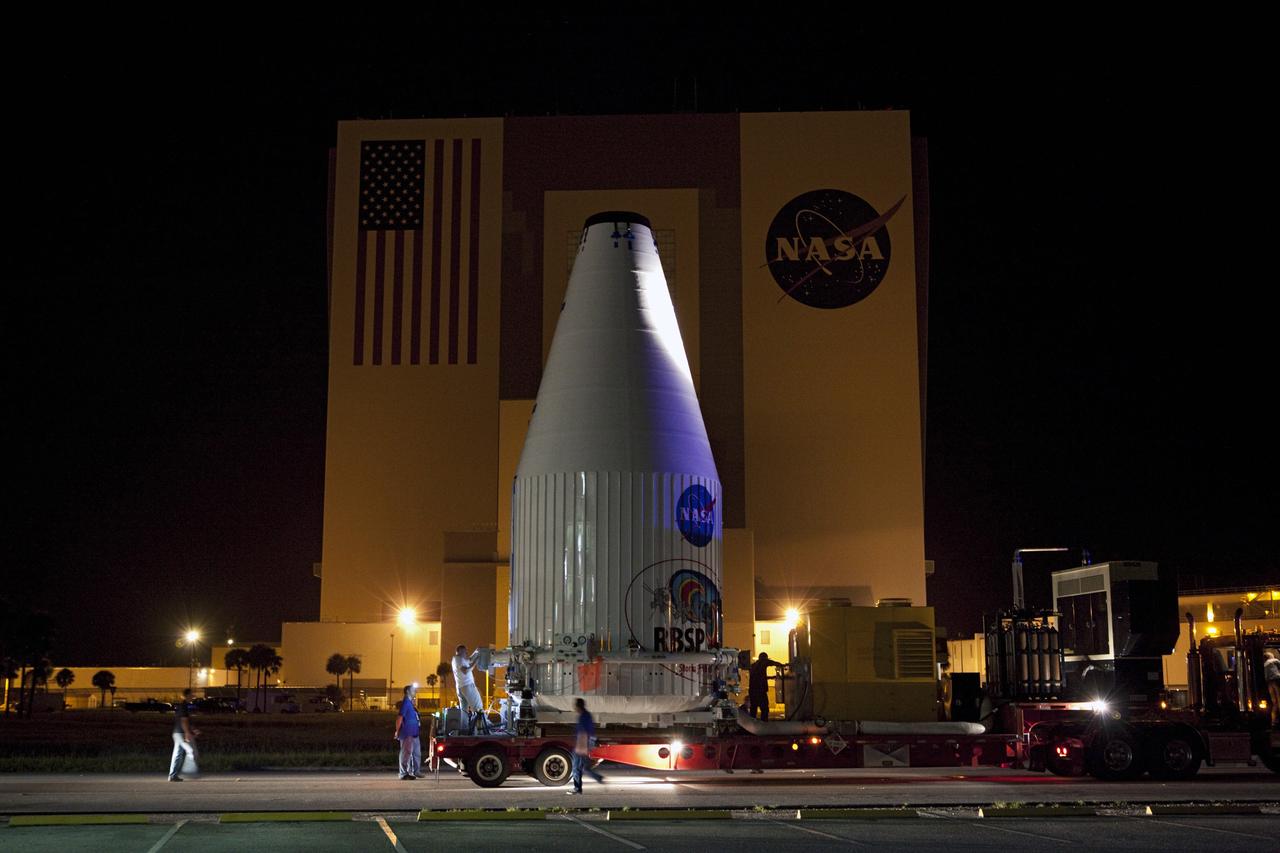
CAPE CANAVERAL, Fla. – The Radiation Belt Storm Probes, or RBSP, spacecraft are moved inside their payload fairing on the payload transporter from the Astrotech payload processing facility in Titusville, Fla. to Space Launch Complex-41 at Cape Canaveral Air Force Station. The convoy carried the spacecraft past the Vehicle Assembly Building at NASA's Kennedy Space Center. The fairing, which holds the twin RBSP spacecraft, will be lifted to the top of a United Launch Alliance Atlas V rocket for launch later in August. The two spacecraft are designed to study the Van Allen radiation belts in unprecedented detail. Photo credit: NASA/Dmitri Gerondidakis
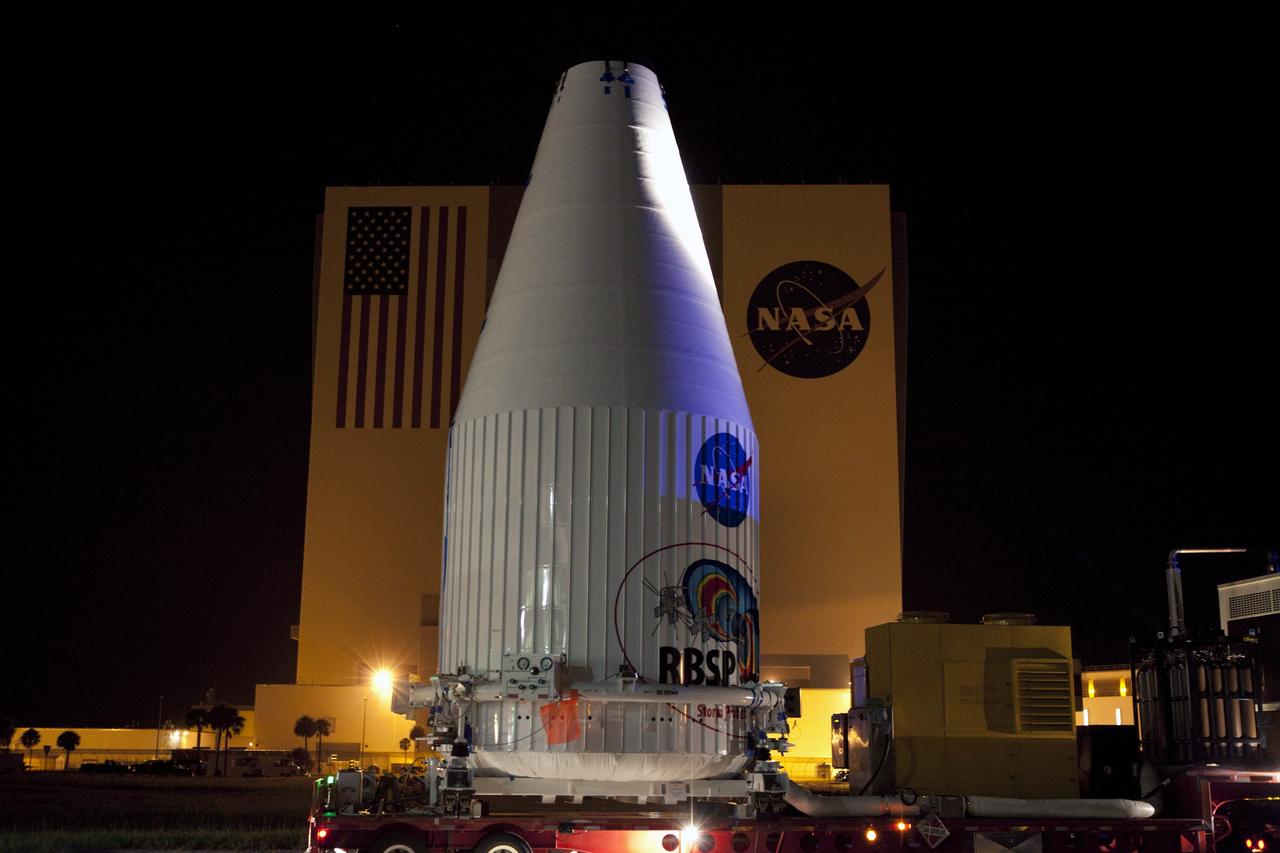
CAPE CANAVERAL, Fla. – The Radiation Belt Storm Probes, or RBSP, spacecraft are moved inside their payload fairing on the payload transporter from the Astrotech payload processing facility in Titusville, Fla. to Space Launch Complex-41 at Cape Canaveral Air Force Station. The convoy carried the spacecraft past the Vehicle Assembly Building at NASA's Kennedy Space Center. The fairing, which holds the twin RBSP spacecraft, will be lifted to the top of a United Launch Alliance Atlas V rocket for launch later in August. The two spacecraft are designed to study the Van Allen radiation belts in unprecedented detail. Photo credit: NASA/Dmitri Gerondidakis
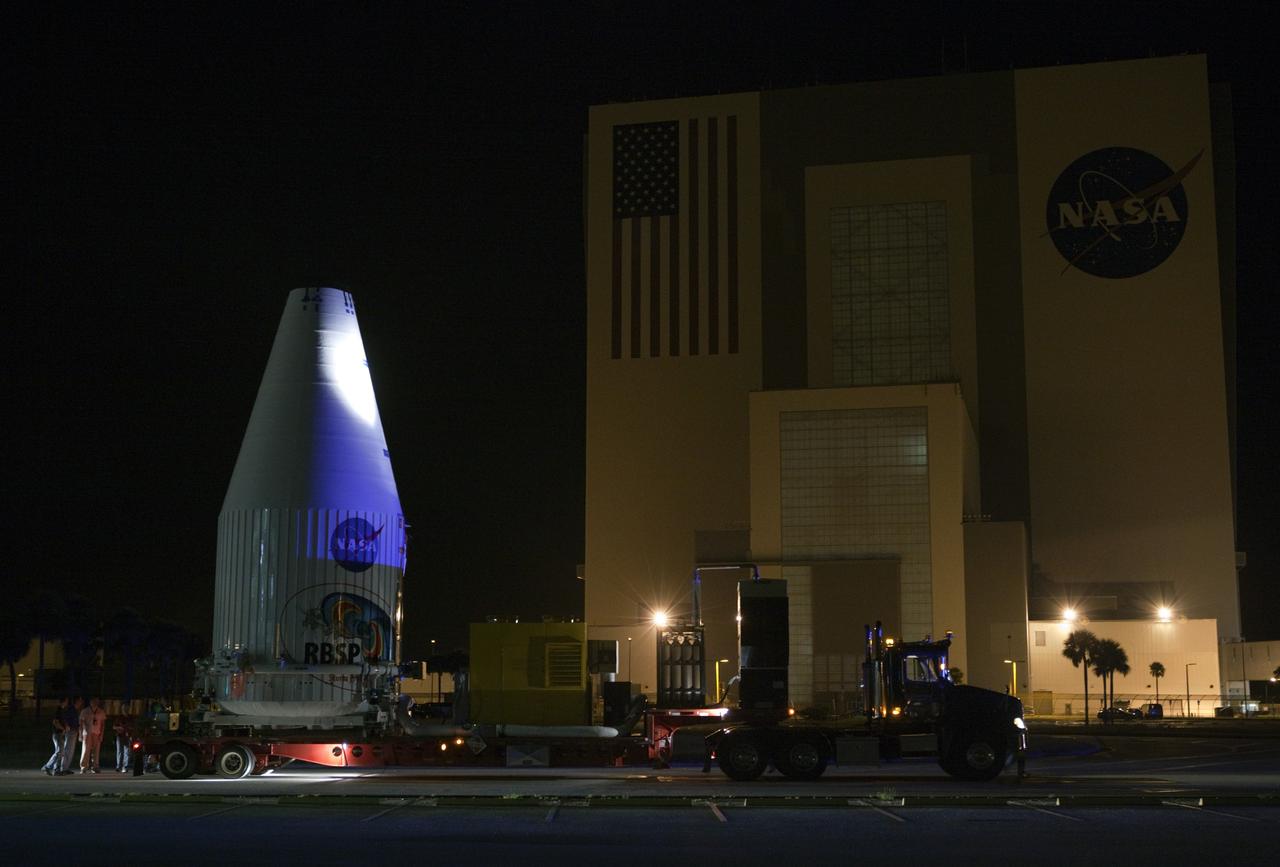
CAPE CANAVERAL, Fla. – The Radiation Belt Storm Probes, or RBSP, spacecraft are moved inside their payload fairing on the payload transporter from the Astrotech payload processing facility in Titusville, Fla. to Space Launch Complex-41 at Cape Canaveral Air Force Station. The convoy carried the spacecraft past the Vehicle Assembly Building at NASA's Kennedy Space Center. The fairing, which holds the twin RBSP spacecraft, will be lifted to the top of a United Launch Alliance Atlas V rocket for launch later in August. The two spacecraft are designed to study the Van Allen radiation belts in unprecedented detail. Photo credit: NASA/Dmitri Gerondidakis
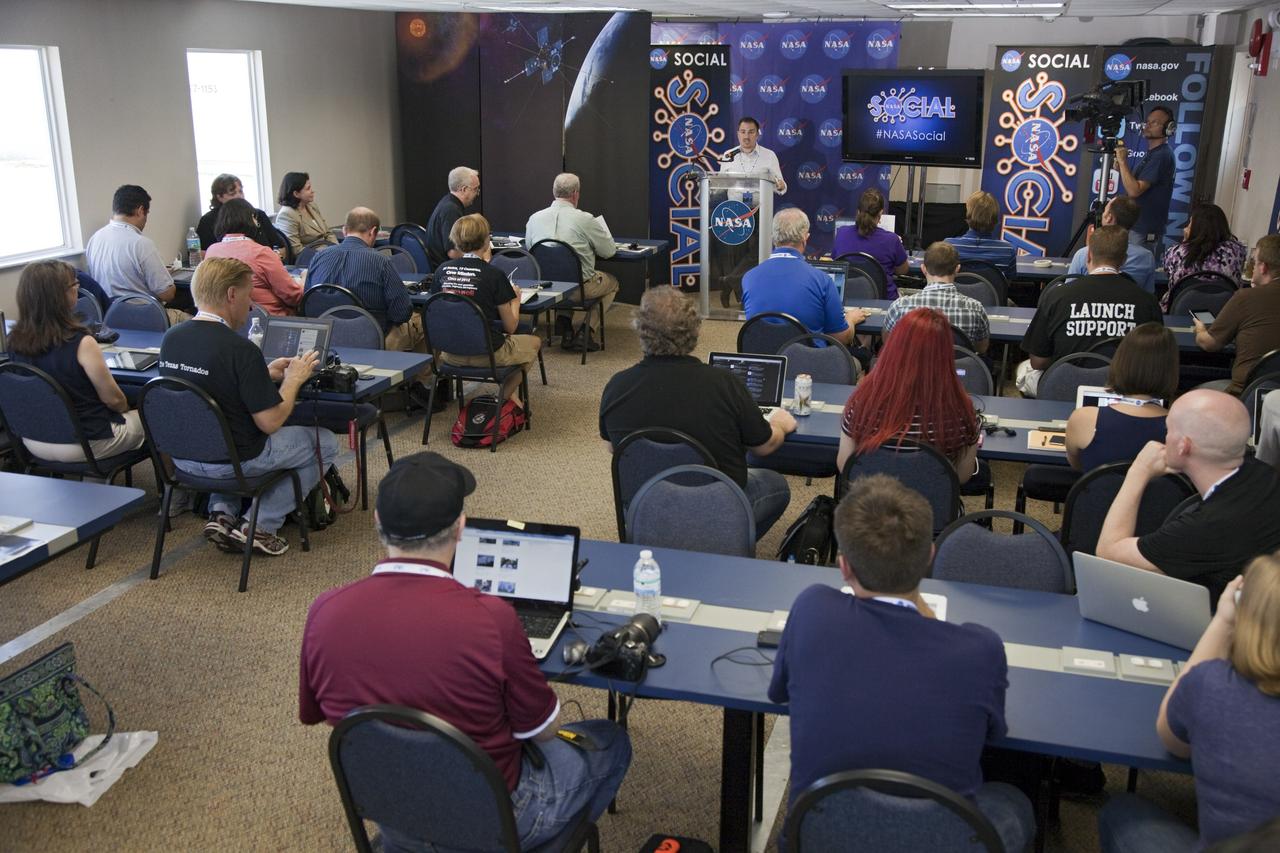
CAPE CANAVERAL, Fla. – At NASA's Kennedy Space Center in Florida, Jason Townsend of NASA's Social Media Team welcomes agency social media followers to the second day of activities revolving around NASA's Radiation Belt Storm Probes, or RBSP, mission. The probes are set to launch aboard a United Launch Alliance, or ULA, Atlas V rocket from nearby Cape Canaveral Air Force Station. About 40 followers were selected to participate in RBSP's prelaunch and launch activities and share them with their own fan base. The RBSP mission will help us understand the sun’s influence on Earth and near-Earth space by studying the Earth’s radiation belts on various scales of space and time. RBSP will begin its mission of exploration of Earth’s Van Allen radiation belts and the extremes of space weather. For more information, visit http://www.nasa.gov/rbsp. Photo credit: NASA/Frankie Martin
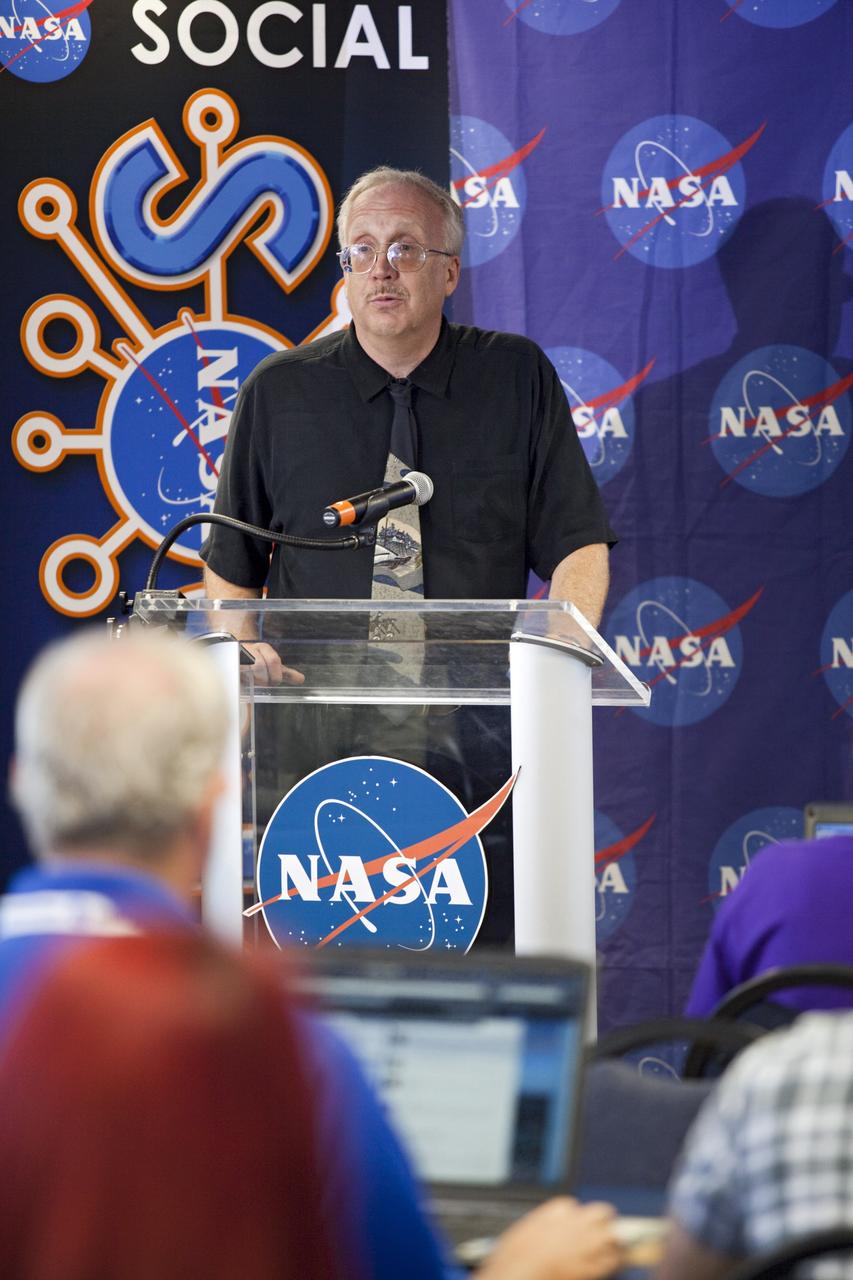
CAPE CANAVERAL, Fla. – At NASA's Kennedy Space Center in Florida, David Sibeck, NASA Living with a Star mission scientist from Goddard Space Flight Center, talks to agency social media followers during the second day of NASA Social activities revolving around NASA's Radiation Belt Storm Probes, or RBSP, mission. The probes are set to launch aboard a United Launch Alliance, or ULA, Atlas V rocket from nearby Cape Canaveral Air Force Station. About 40 followers were selected to participate in RBSP's prelaunch and launch activities. The RBSP mission will help us understand the sun’s influence on Earth and near-Earth space by studying the Earth’s radiation belts on various scales of space and time. RBSP will begin its mission of exploration of Earth’s Van Allen radiation belts and the extremes of space weather. For more information, visit http://www.nasa.gov/rbsp. Photo credit: NASA/Frankie Martin
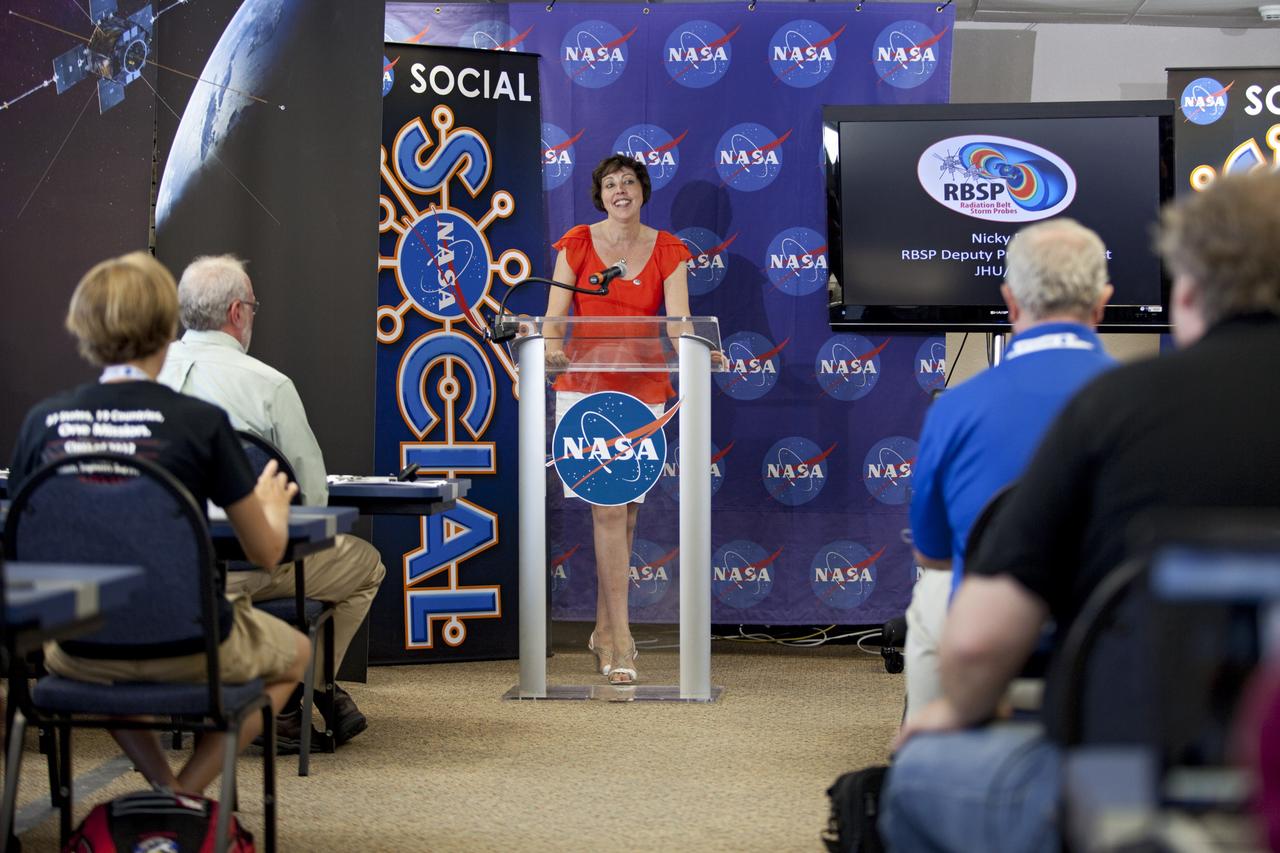
CAPE CANAVERAL, Fla. – At NASA's Kennedy Space Center in Florida, Nicky Fox, deputy project scientist of NASA's Radiation Belt Storm Probes, or RBSP, mission talks to agency social media followers during the second day of NASA Social activities. The probes are set to launch aboard a United Launch Alliance ULA Atlas V rocket from nearby Cape Canaveral Air Force Station. About 40 followers were selected to participate in RBSP's prelaunch and launch activities. The RBSP mission will help us understand the sun’s influence on Earth and near-Earth space by studying the Earth’s radiation belts on various scales of space and time. RBSP will begin its mission of exploration of Earth’s Van Allen radiation belts and the extremes of space weather. For more information, visit http://www.nasa.gov/rbsp. Photo credit: NASA/Frankie Martin
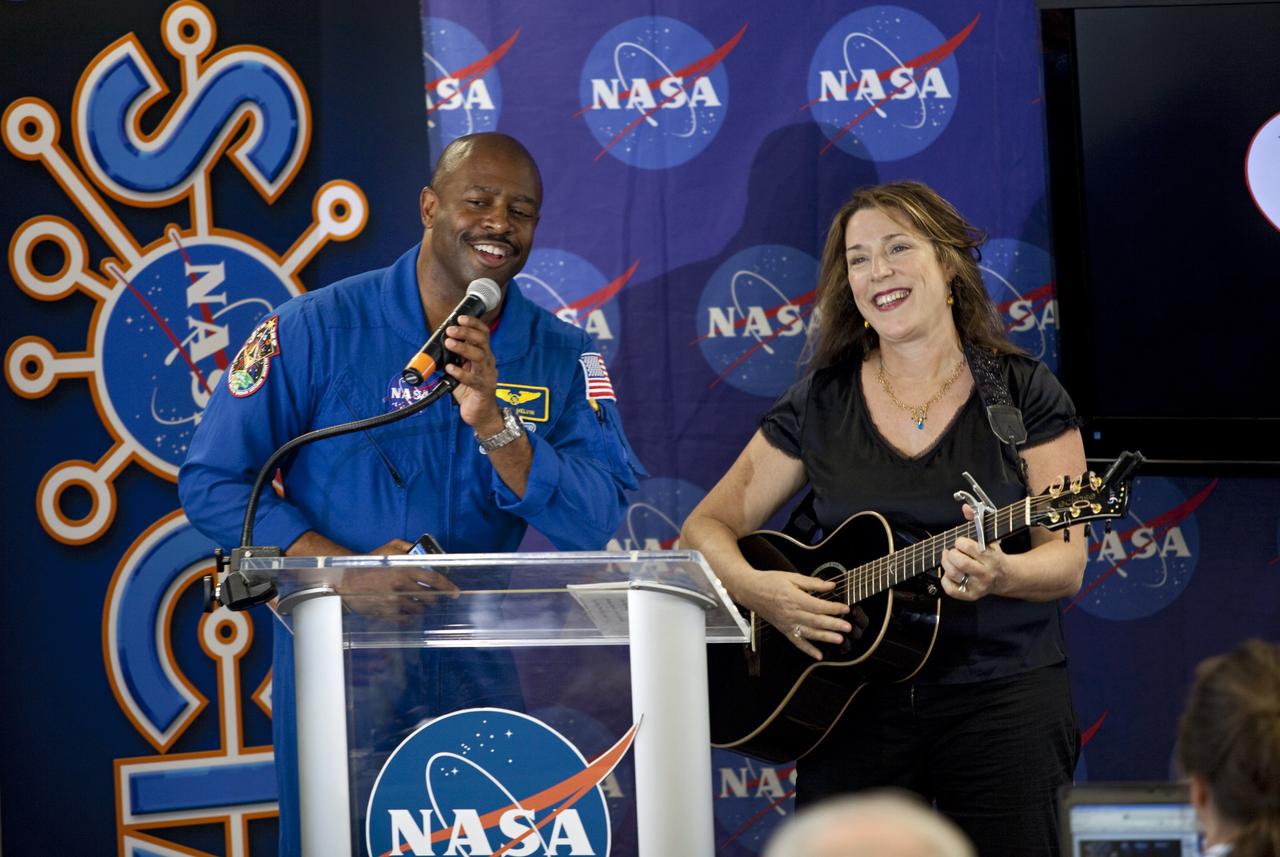
CAPE CANAVERAL, Fla. – At NASA's Kennedy Space Center in Florida, astronaut Leland Melvin, associate administrator of NASA Education, introduces performer Beth Nielson Chapman to agency social media followers during the second day of NASA Social activities revolving around NASA's Radiation Belt Storm Probes, or RBSP, mission. The probes are set to launch aboard a United Launch Alliance, or ULA, Atlas V rocket from nearby Cape Canaveral Air Force Station. About 40 followers were selected to participate in RBSP's prelaunch and launch activities. The RBSP mission will help us understand the sun’s influence on Earth and near-Earth space by studying the Earth’s radiation belts on various scales of space and time. RBSP will begin its mission of exploration of Earth’s Van Allen radiation belts and the extremes of space weather. For more information, visit http://www.nasa.gov/rbsp. Photo credit: NASA/Frankie Martin
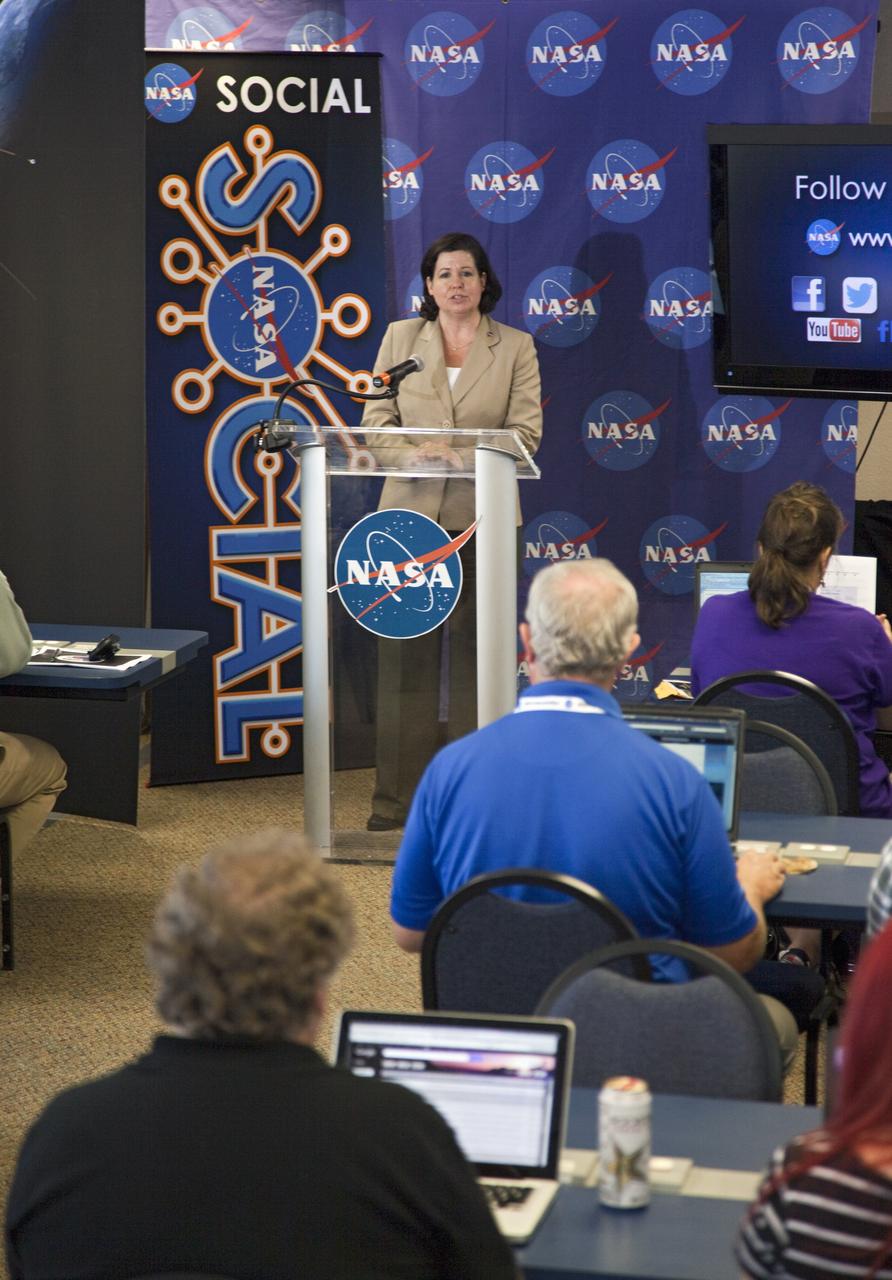
CAPE CANAVERAL, Fla. – At NASA's Kennedy Space Center in Florida, Barbara Giles, director of NASA's Science Mission Directorate Heliophysics Division, talks to agency social media followers during the second day of NASA Social activities revolving around NASA's Radiation Belt Storm Probes, or RBSP, mission. The probes are set to launch aboard a United Launch Alliance, or ULA, Atlas V rocket from nearby Cape Canaveral Air Force Station. About 40 followers were selected to participate in RBSP's prelaunch and launch activities. The RBSP mission will help us understand the sun’s influence on Earth and near-Earth space by studying the Earth’s radiation belts on various scales of space and time. RBSP will begin its mission of exploration of Earth’s Van Allen radiation belts and the extremes of space weather. For more information, visit http://www.nasa.gov/rbsp. Photo credit: NASA/Frankie Martin
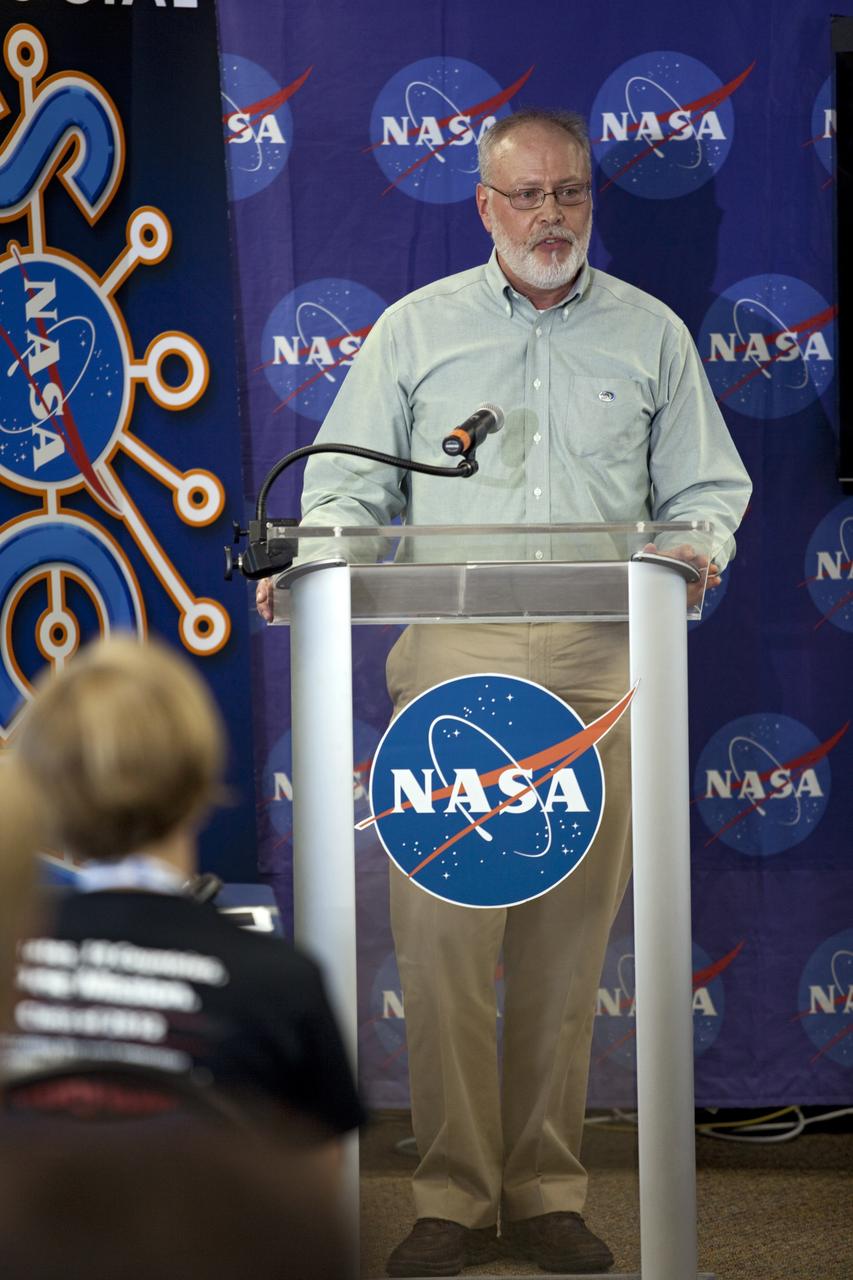
CAPE CANAVERAL, Fla. – At NASA's Kennedy Space Center in Florida, Dave "Kouch" Kusnierkiewicz, Space Department chief engineer from Johns Hopkins University's Applied Physics Laboratory, talks to agency social media followers during the second day of NASA Social activities revolving around NASA's Radiation Belt Storm Probes, or RBSP, mission. The probes are set to launch aboard a United Launch Alliance, or ULA, Atlas V rocket from nearby Cape Canaveral Air Force Station. About 40 followers were selected to participate in RBSP's prelaunch and launch activities. The RBSP mission will help us understand the sun’s influence on Earth and near-Earth space by studying the Earth’s radiation belts on various scales of space and time. RBSP will begin its mission of exploration of Earth’s Van Allen radiation belts and the extremes of space weather. For more information, visit http://www.nasa.gov/rbsp. Photo credit: NASA/Frankie Martin

CAPE CANAVERAL, Fla. – At NASA's Kennedy Space Center in Florida, astronaut Leland Melvin, associate administrator of NASA Education, talks to agency social media followers during the second day of NASA Social activities revolving around NASA's Radiation Belt Storm Probes, or RBSP, mission. The probes are set to launch aboard a United Launch Alliance, or ULA, Atlas V rocket from nearby Cape Canaveral Air Force Station. About 40 followers were selected to participate in RBSP's prelaunch and launch activities. The RBSP mission will help us understand the sun’s influence on Earth and near-Earth space by studying the Earth’s radiation belts on various scales of space and time. RBSP will begin its mission of exploration of Earth’s Van Allen radiation belts and the extremes of space weather. For more information, visit http://www.nasa.gov/rbsp. Photo credit: NASA/Frankie Martin
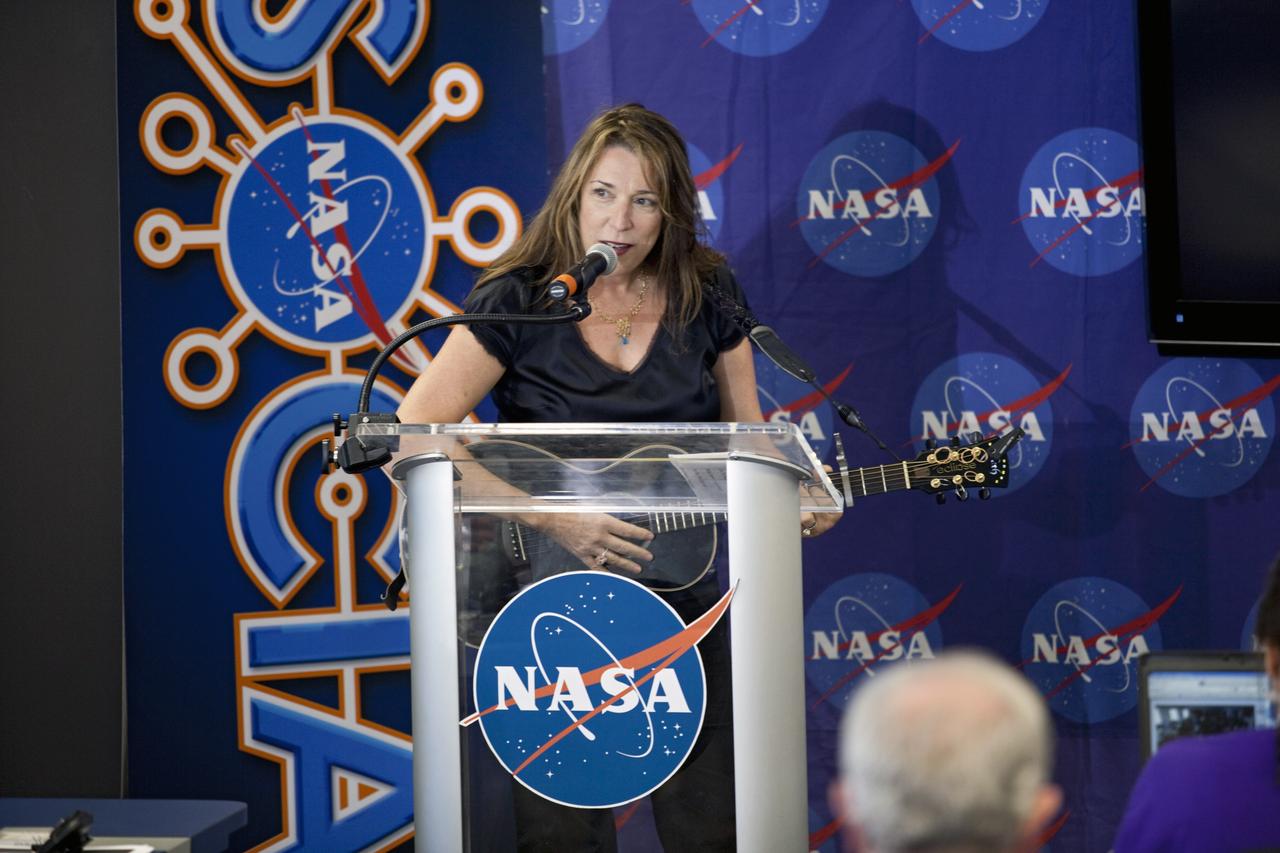
CAPE CANAVERAL, Fla. – At NASA's Kennedy Space Center in Florida, Beth Nielson Chapman performs "The Mighty Night Sky" for agency social media followers during the second day of NASA Social activities revolving around NASA's Radiation Belt Storm Probes, or RBSP, mission. The probes are set to launch aboard a United Launch Alliance, or ULA, Atlas V rocket from nearby Cape Canaveral Air Force Station. About 40 followers were selected to participate in RBSP's prelaunch and launch activities. The RBSP mission will help us understand the sun’s influence on Earth and near-Earth space by studying the Earth’s radiation belts on various scales of space and time. RBSP will begin its mission of exploration of Earth’s Van Allen radiation belts and the extremes of space weather. For more information, visit http://www.nasa.gov/rbsp. Photo credit: NASA/Frankie Martin
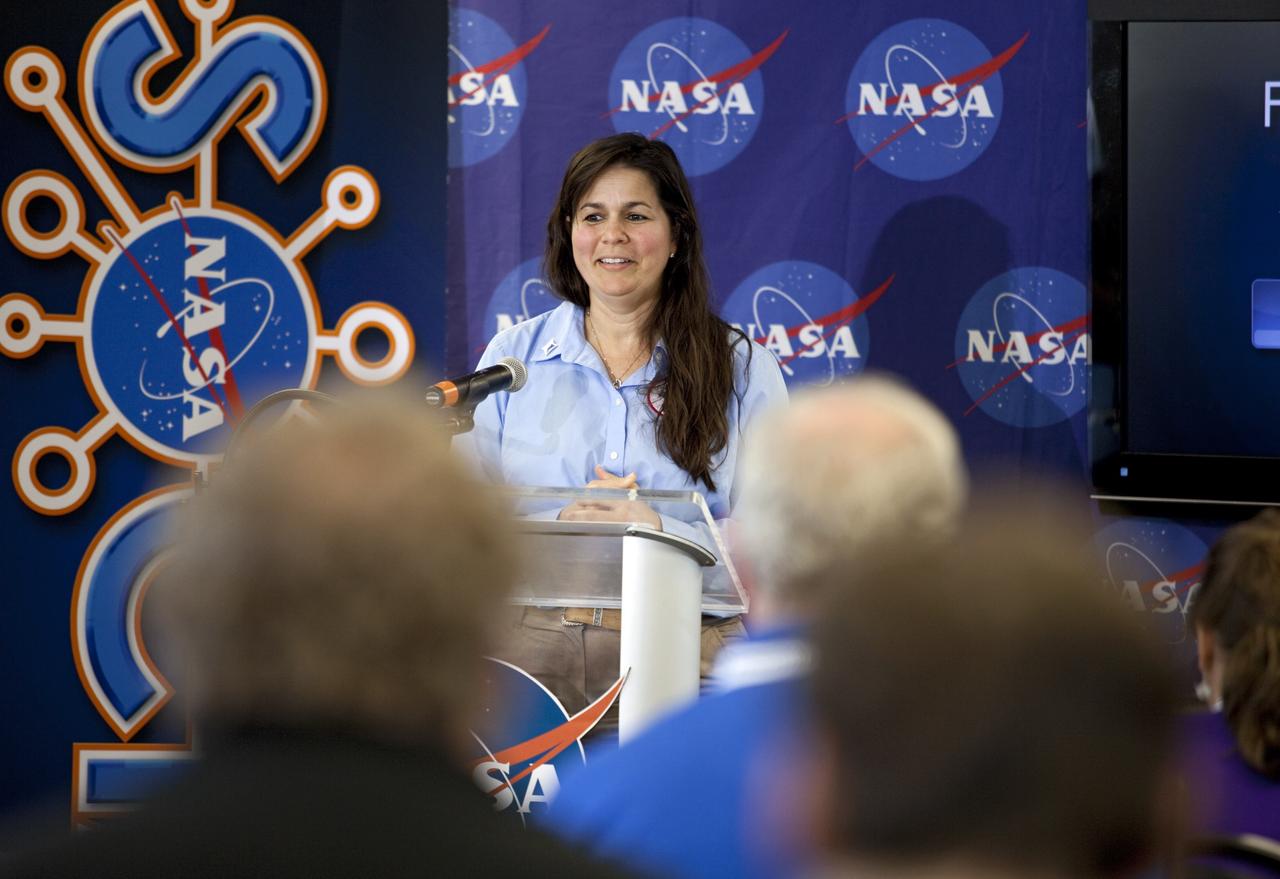
CAPE CANAVERAL, Fla. – At NASA's Kennedy Space Center in Florida, Aly Mendoza-Hill, NASA Launch Services Program mission manager, talks to agency social media followers during the second day of NASA Social activities revolving around NASA's Radiation Belt Storm Probes, or RBSP, mission. The probes are set to launch aboard a United Launch Alliance, or ULA, Atlas V rocket from nearby Cape Canaveral Air Force Station. About 40 followers were selected to participate in RBSP's prelaunch and launch activities. The RBSP mission will help us understand the sun’s influence on Earth and near-Earth space by studying the Earth’s radiation belts on various scales of space and time. RBSP will begin its mission of exploration of Earth’s Van Allen radiation belts and the extremes of space weather. For more information, visit http://www.nasa.gov/rbsp. Photo credit: NASA/Frankie Martin
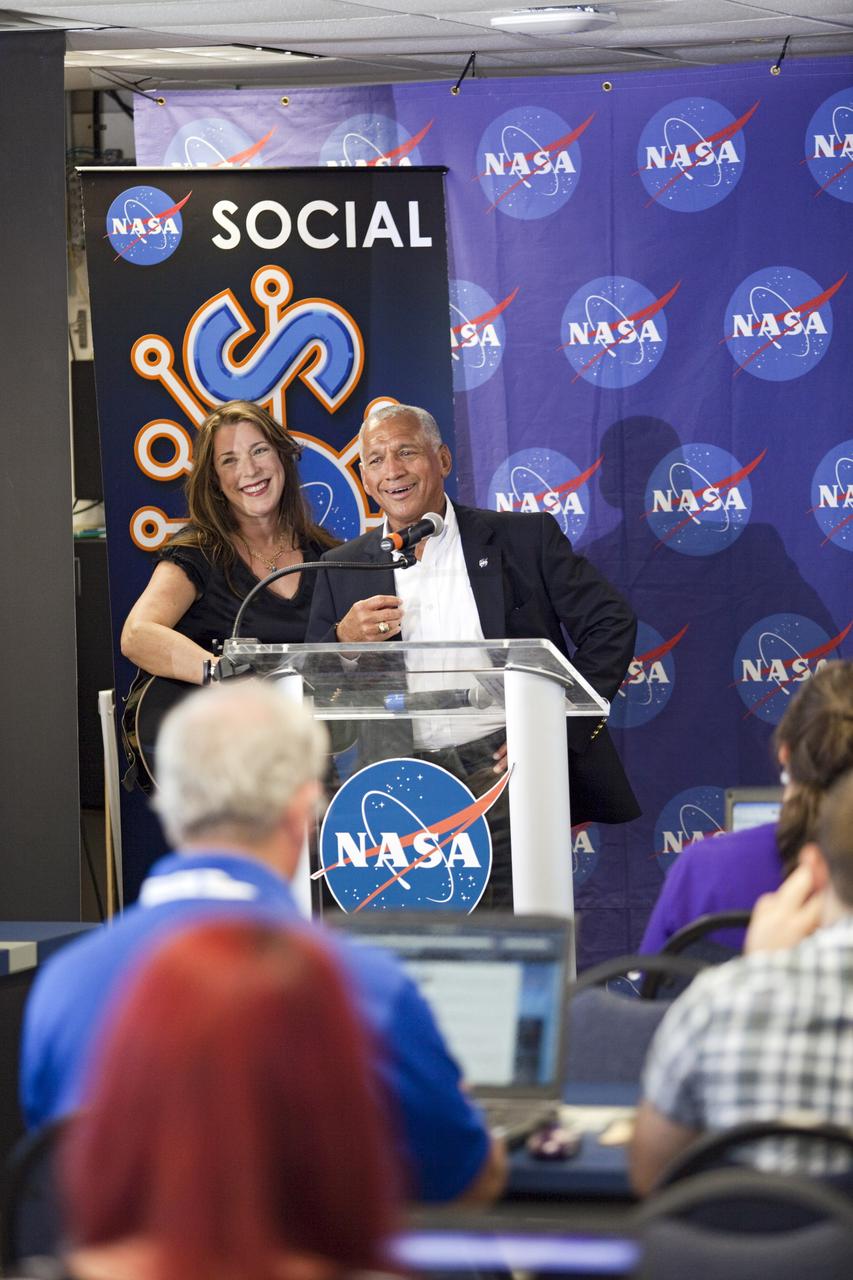
CAPE CANAVERAL, Fla. – At NASA's Kennedy Space Center in Florida, NASA Administrator Charlie Bolden talks to agency social media followers during the second day of NASA Social activities revolving around NASA's Radiation Belt Storm Probes, or RBSP, mission. At left is performer Beth Nielson Chapman. The probes are set to launch aboard a United Launch Alliance, or ULA, Atlas V rocket from nearby Cape Canaveral Air Force Station. About 40 followers were selected to participate in RBSP's prelaunch and launch activities. The RBSP mission will help us understand the sun’s influence on Earth and near-Earth space by studying the Earth’s radiation belts on various scales of space and time. RBSP will begin its mission of exploration of Earth’s Van Allen radiation belts and the extremes of space weather. For more information, visit http://www.nasa.gov/rbsp. Photo credit: NASA/Frankie Martin
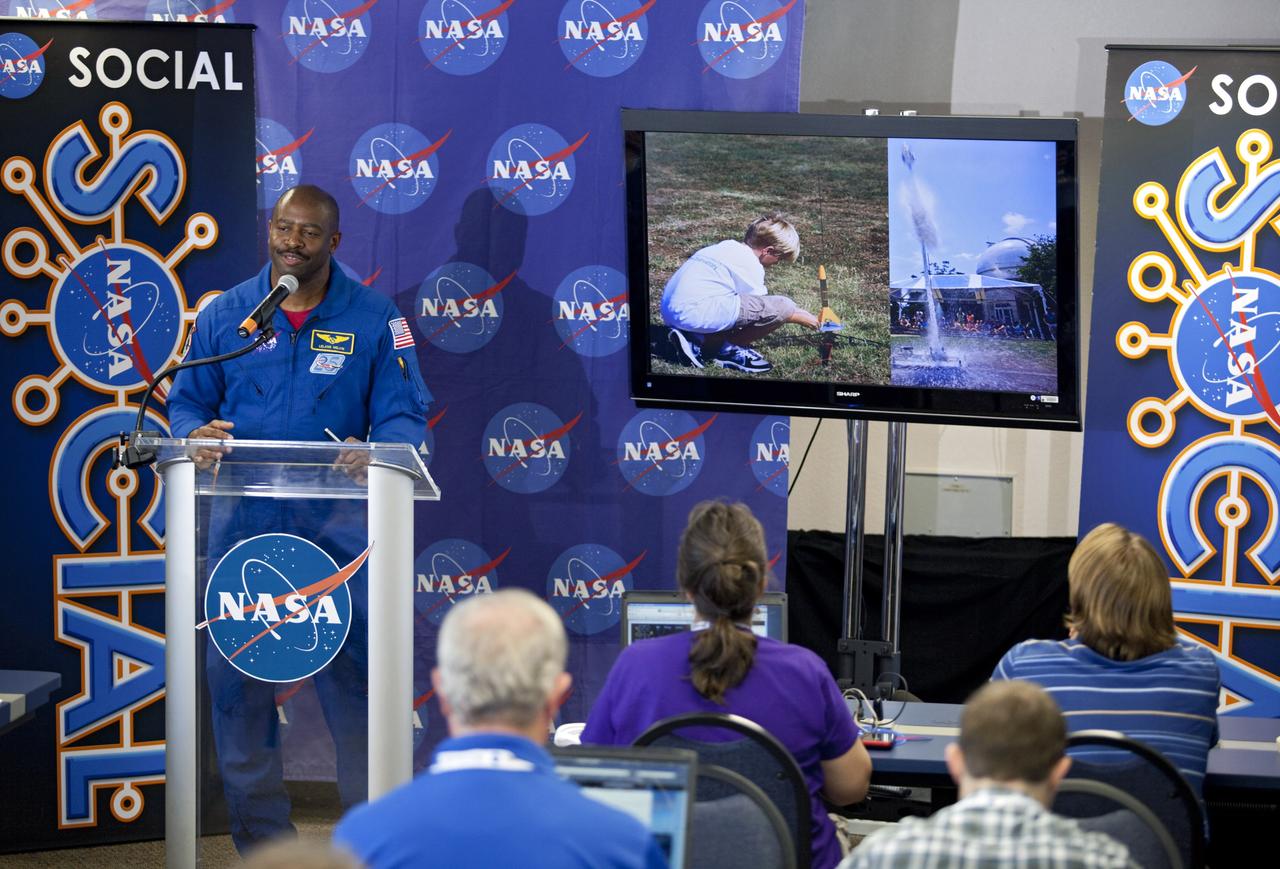
CAPE CANAVERAL, Fla. – At NASA's Kennedy Space Center in Florida, astronaut Leland Melvin, associate administrator of NASA Education, talks to agency social media followers during the second day of NASA Social activities revolving around NASA's Radiation Belt Storm Probes, or RBSP, mission. The probes are set to launch aboard a United Launch Alliance, or ULA, Atlas V rocket from nearby Cape Canaveral Air Force Station. About 40 followers were selected to participate in RBSP's prelaunch and launch activities. The RBSP mission will help us understand the sun’s influence on Earth and near-Earth space by studying the Earth’s radiation belts on various scales of space and time. RBSP will begin its mission of exploration of Earth’s Van Allen radiation belts and the extremes of space weather. For more information, visit http://www.nasa.gov/rbsp. Photo credit: NASA/Frankie Martin
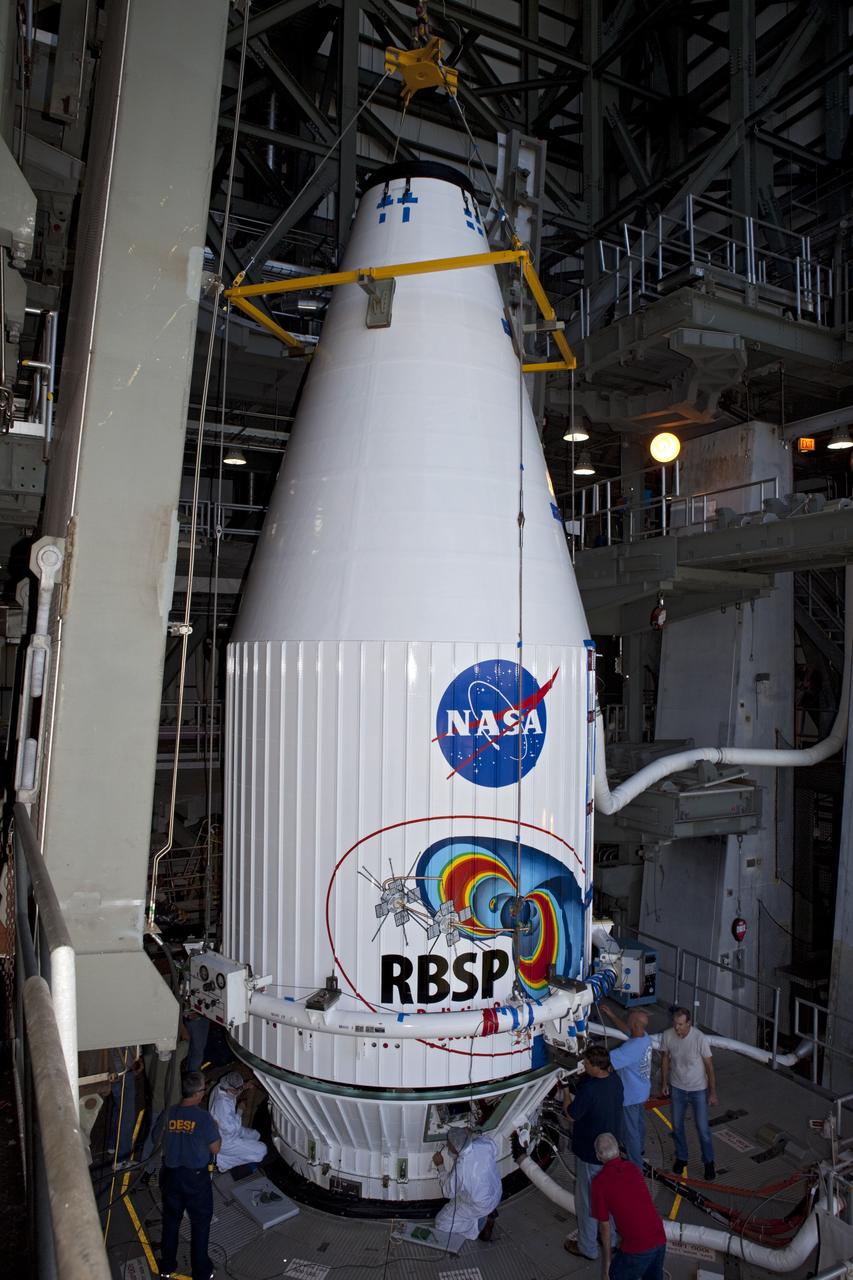
CAPE CANAVERAL, Fla. – Technicians attach the payload fairing holding the Radiation Belt Storm Probes, or RBSP, spacecraft to the top of a United Launch Alliance Atlas V rocket at Space Launch Complex-41 at Cape Canaveral Air Force Station. The two spacecraft are designed to study the Van Allen radiation belts in unprecedented detail. Photo credit: NASA/Dmitri Gerondidakis
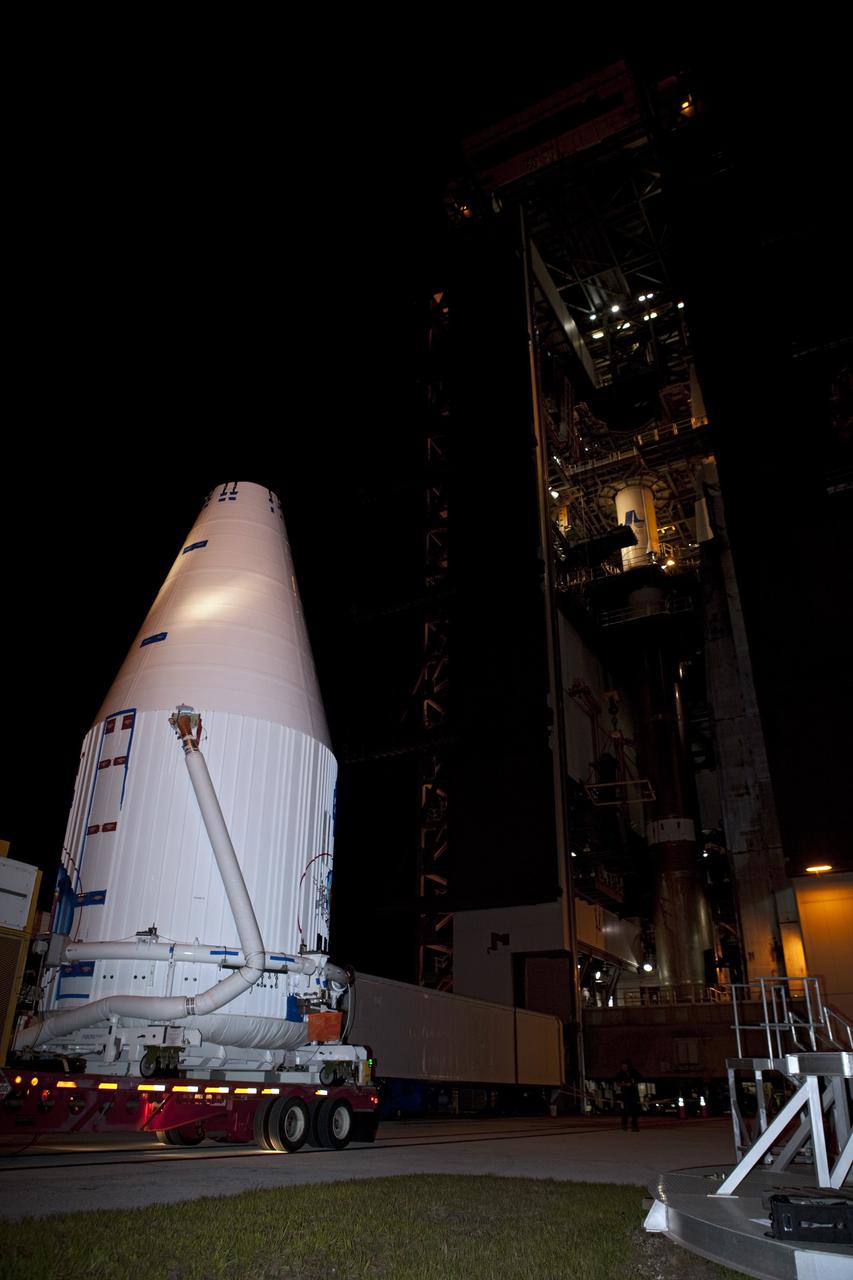
CAPE CANAVERAL, Fla. – The Radiation Belt Storm Probes, or RBSP, spacecraft arrive at Space Launch Complex-41 at Cape Canaveral Air Force Station inside their payload fairing. The twin spacecraft were moved on the payload transporter from the Astrotech payload processing facility in Titusville, Fla. The fairing with the spacecraft inside will be lifted to the top of a United Launch Alliance Atlas V rocket for launch later in August. The two spacecraft are designed to study the Van Allen radiation belts in unprecedented detail. Photo credit: NASA/Dmitri Gerondidakis
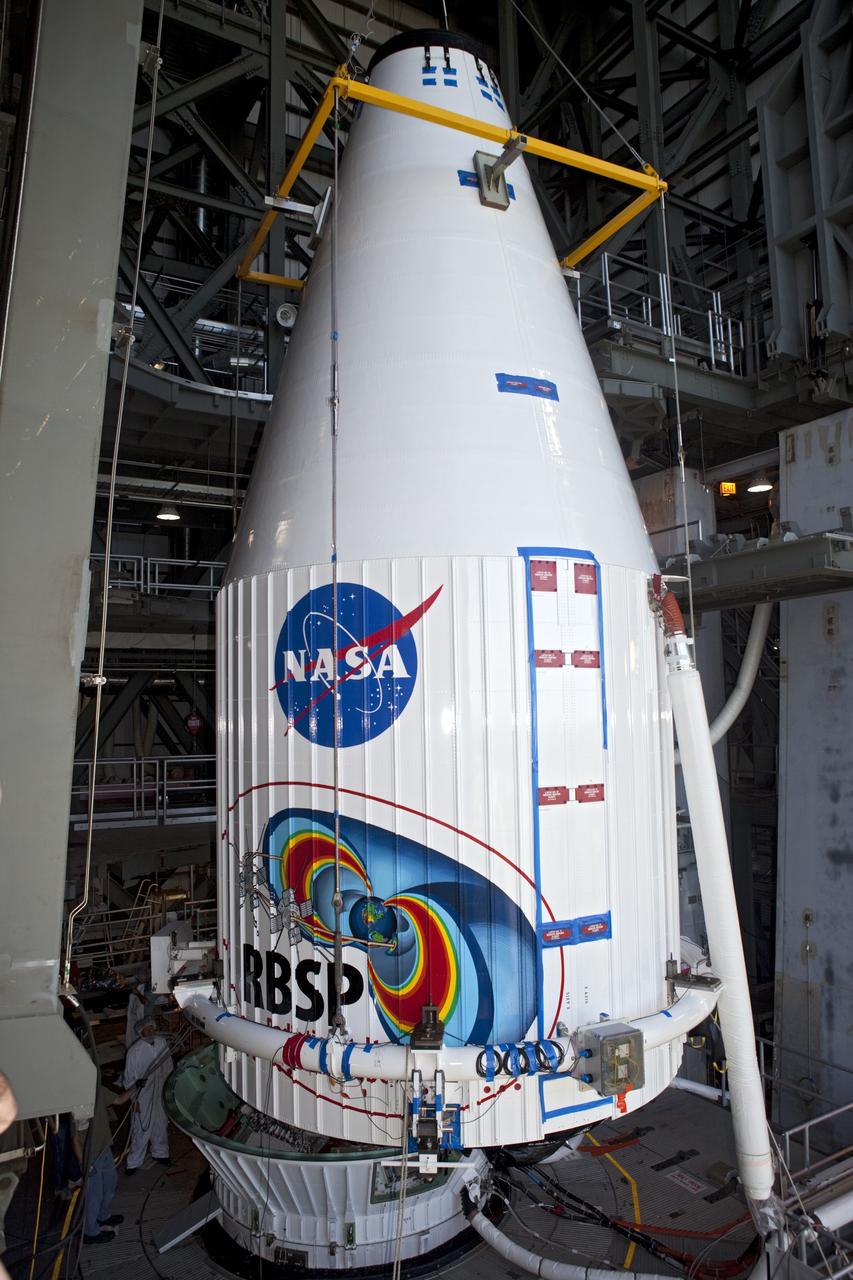
CAPE CANAVERAL, Fla. – Technicians set the Radiation Belt Storm Probes, or RBSP, spacecraft inside their payload fairing on the top of a United Launch Alliance Atlas V rocket at Space Launch Complex-41 at Cape Canaveral Air Force Station. The two spacecraft are designed to study the Van Allen radiation belts in unprecedented detail. Photo credit: NASA/Dmitri Gerondidakis
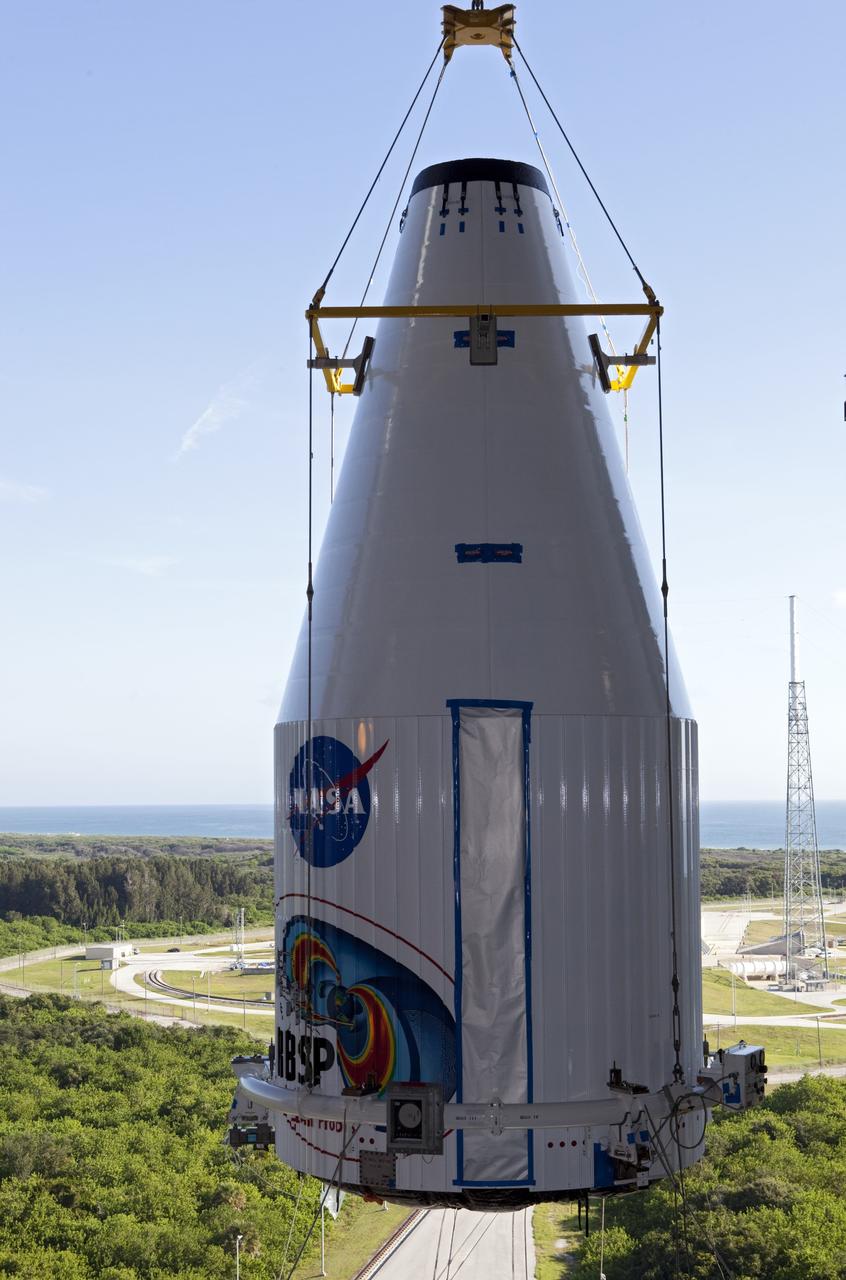
CAPE CANAVERAL, Fla. – Technicians hoist the Radiation Belt Storm Probes, or RBSP, spacecraft inside their payload fairing to the top of a United Launch Alliance Atlas V rocket at Space Launch Complex-41 at Cape Canaveral Air Force Station. The two spacecraft are designed to study the Van Allen radiation belts in unprecedented detail. Photo credit: NASA/Dmitri Gerondidakis
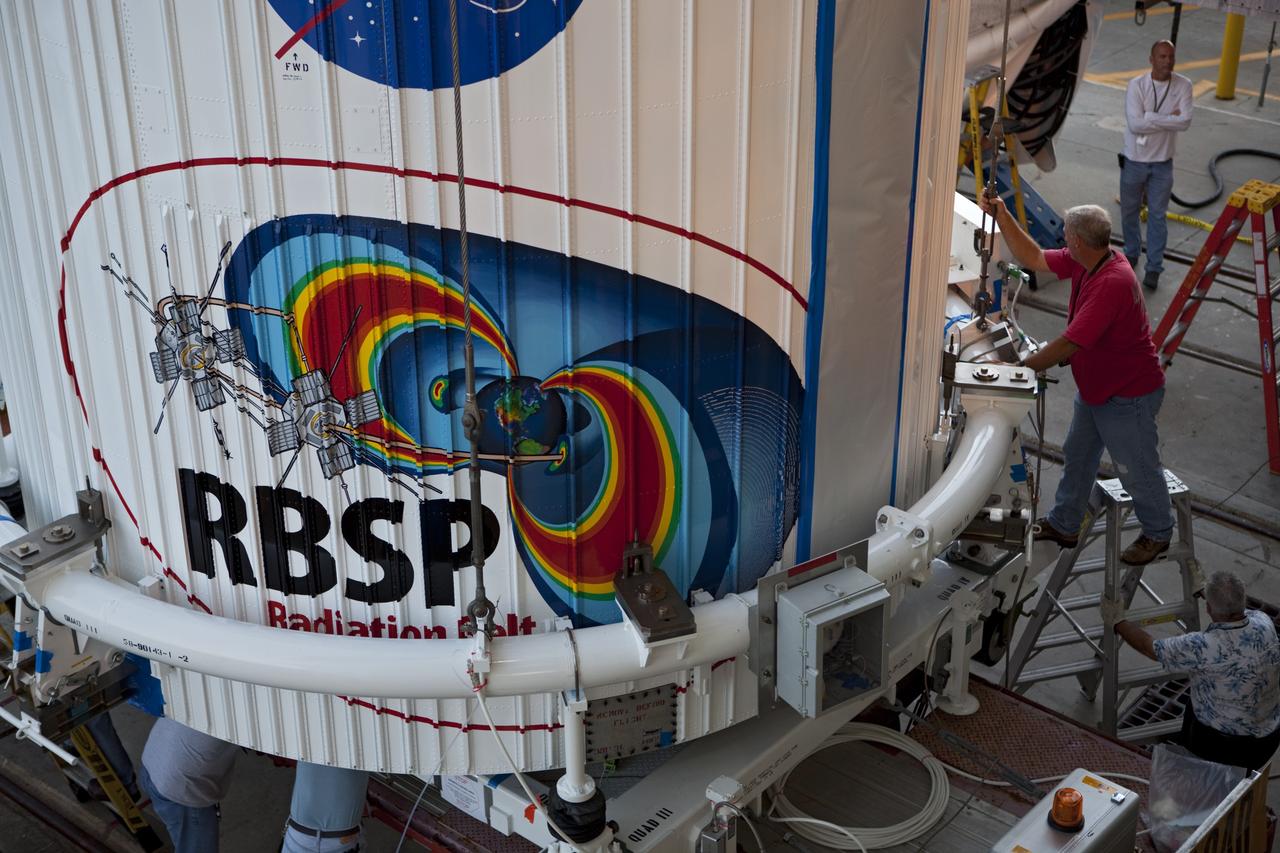
CAPE CANAVERAL, Fla. – The Radiation Belt Storm Probes, or RBSP, spacecraft inside their payload fairing are prepared before they are hoisted to the top of a United Launch Alliance Atlas V rocket at Space Launch Complex-41 at Cape Canaveral Air Force Station. The two spacecraft are designed to study the Van Allen radiation belts in unprecedented detail. Photo credit: NASA/Dmitri Gerondidakis
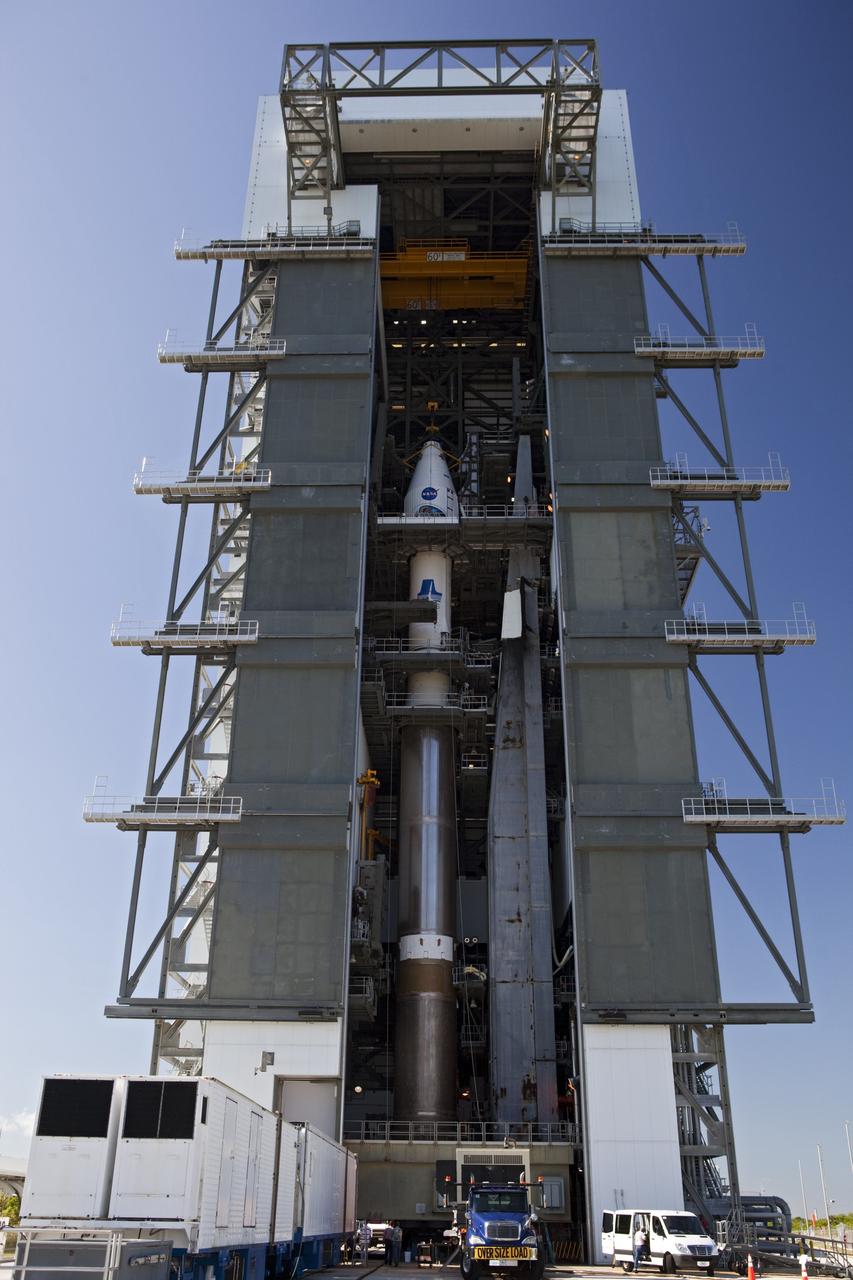
CAPE CANAVERAL, Fla. – Tucked inside their payload fairing, the twin Radiation Belt Storm Probes, or RBSP, spacecraft stand atop a United Launch Alliance Atlas V rocket at Space Launch Complex-41 at Cape Canaveral Air Force Station. The two spacecraft are designed to study the Van Allen radiation belts in unprecedented detail. Photo credit: NASA/Dmitri Gerondidakis
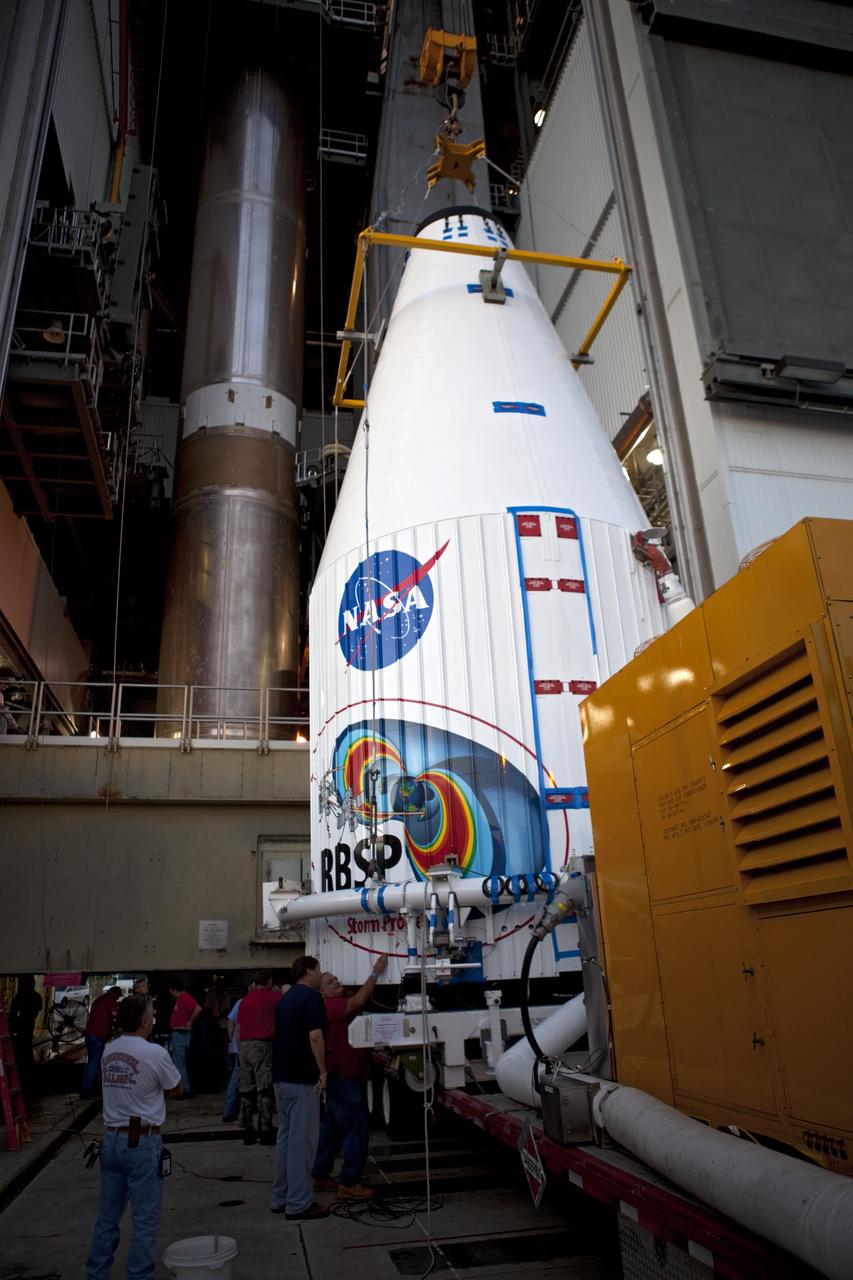
CAPE CANAVERAL, Fla. – Technicians prepare to hoist the Radiation Belt Storm Probes, or RBSP, spacecraft inside their payload fairing to the top of a United Launch Alliance Atlas V rocket at Space Launch Complex-41 at Cape Canaveral Air Force Station. The two spacecraft are designed to study the Van Allen radiation belts in unprecedented detail. Photo credit: NASA/Dmitri Gerondidakis
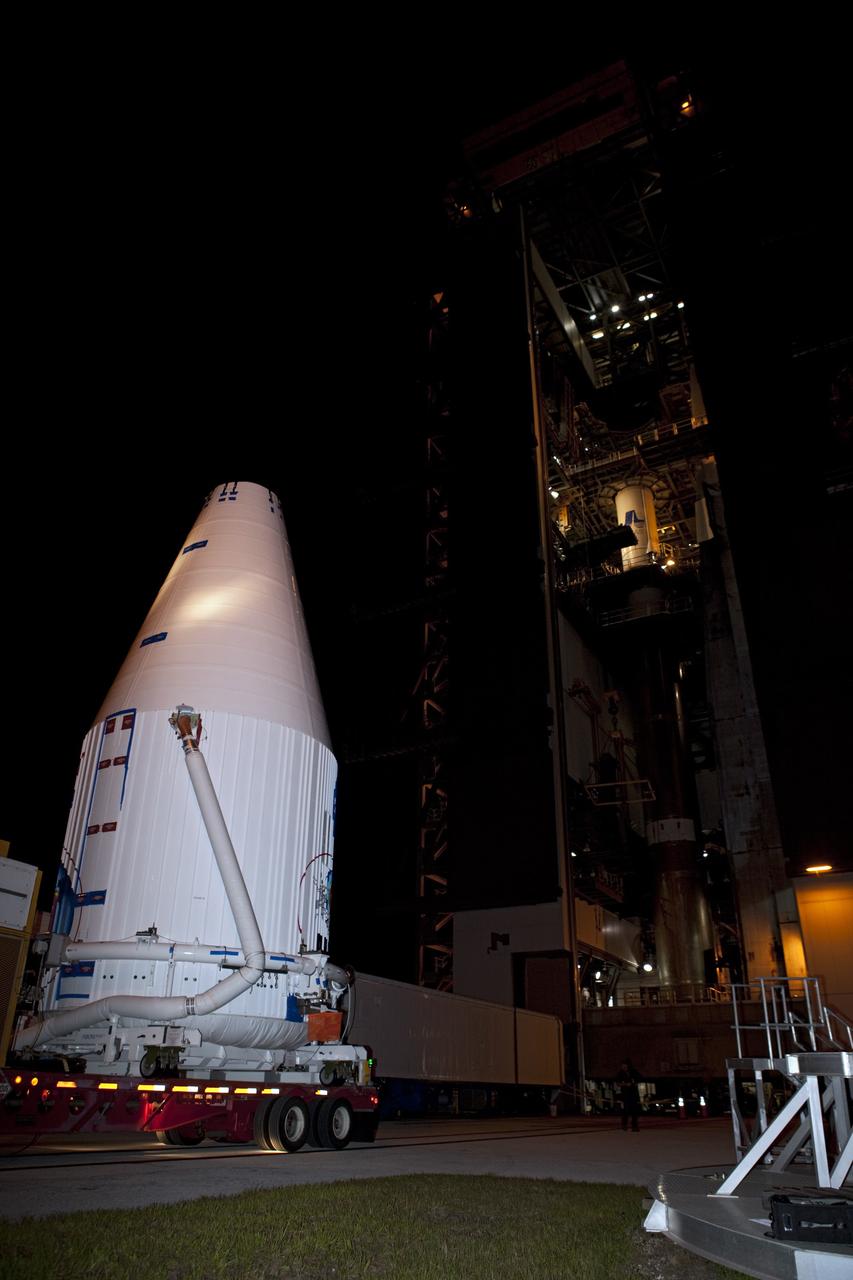
CAPE CANAVERAL, Fla. – The Radiation Belt Storm Probes, or RBSP, spacecraft arrive at Space Launch Complex-41 at Cape Canaveral Air Force Station inside their payload fairing. The twin spacecraft were moved on the payload transporter from the Astrotech payload processing facility in Titusville, Fla. The fairing with the spacecraft inside will be lifted to the top of a United Launch Alliance Atlas V rocket for launch later in August. The two spacecraft are designed to study the Van Allen radiation belts in unprecedented detail. Photo credit: NASA/Dmitri Gerondidakis
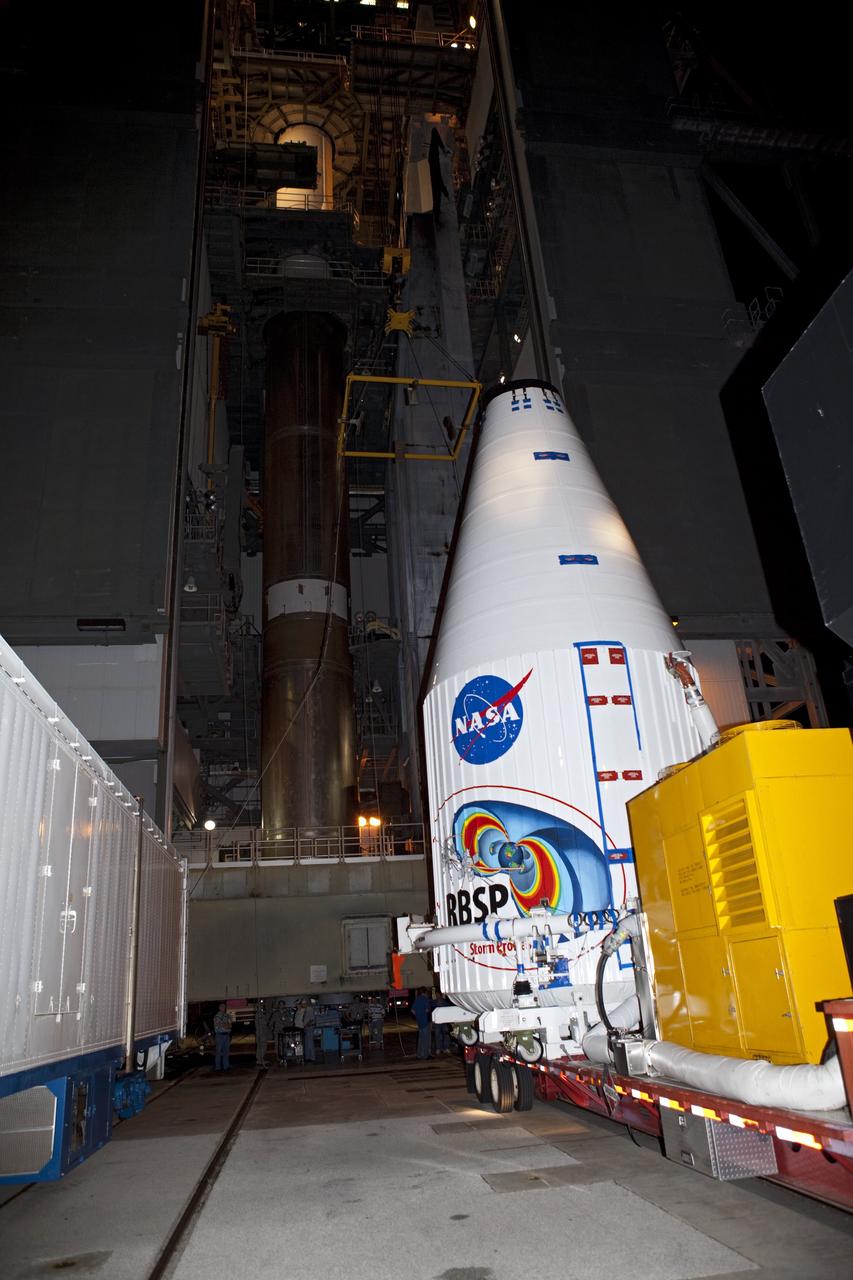
CAPE CANAVERAL, Fla. – The Radiation Belt Storm Probes, or RBSP, spacecraft arrive at Space Launch Complex-41 at Cape Canaveral Air Force Station inside their payload fairing. The twin spacecraft were moved on the payload transporter from the Astrotech payload processing facility in Titusville, Fla. The fairing with the spacecraft inside will be lifted to the top of a United Launch Alliance Atlas V rocket for launch later in August. The two spacecraft are designed to study the Van Allen radiation belts in unprecedented detail. Photo credit: NASA/Dmitri Gerondidakis
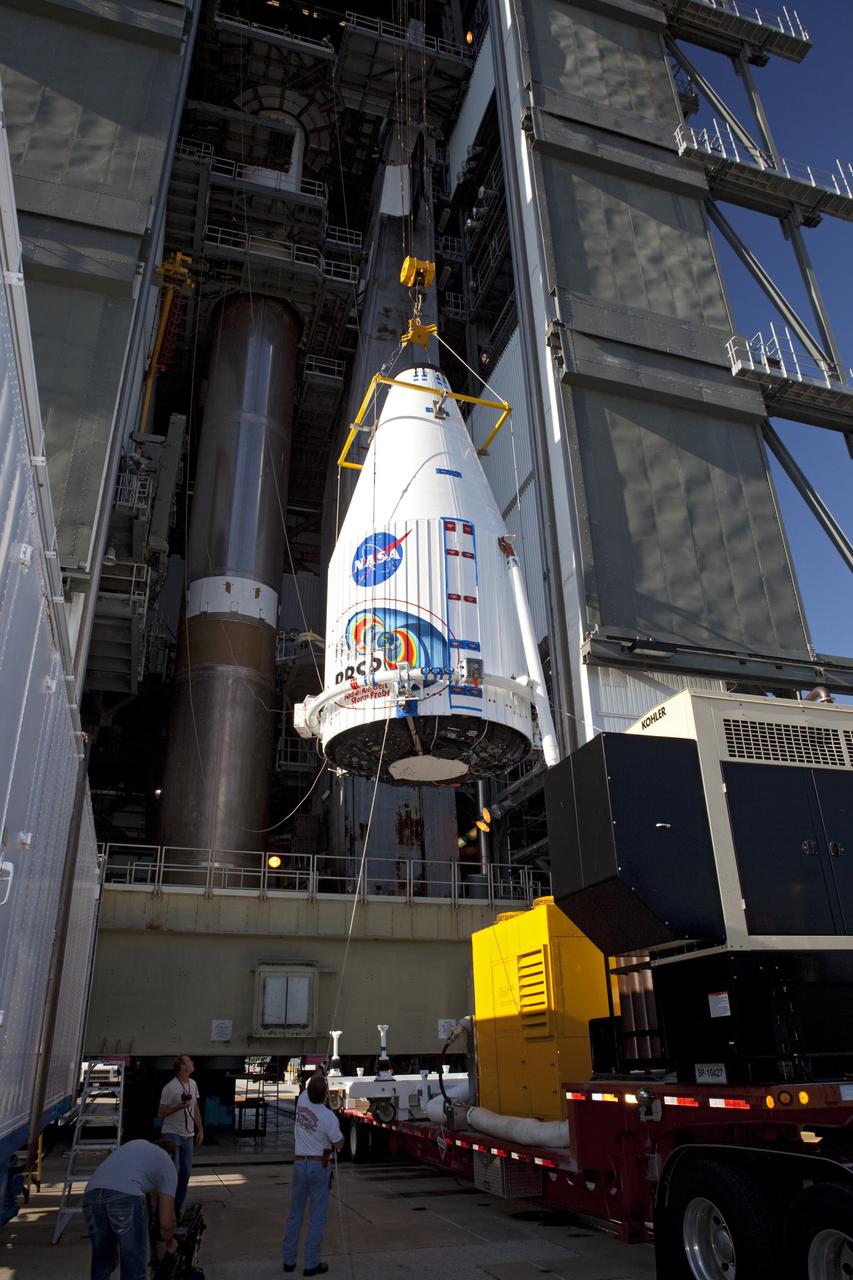
CAPE CANAVERAL, Fla. – Technicians hoist the Radiation Belt Storm Probes, or RBSP, spacecraft inside their payload fairing to the top of a United Launch Alliance Atlas V rocket at Space Launch Complex-41 at Cape Canaveral Air Force Station. The two spacecraft are designed to study the Van Allen radiation belts in unprecedented detail. Photo credit: NASA/Dmitri Gerondidakis
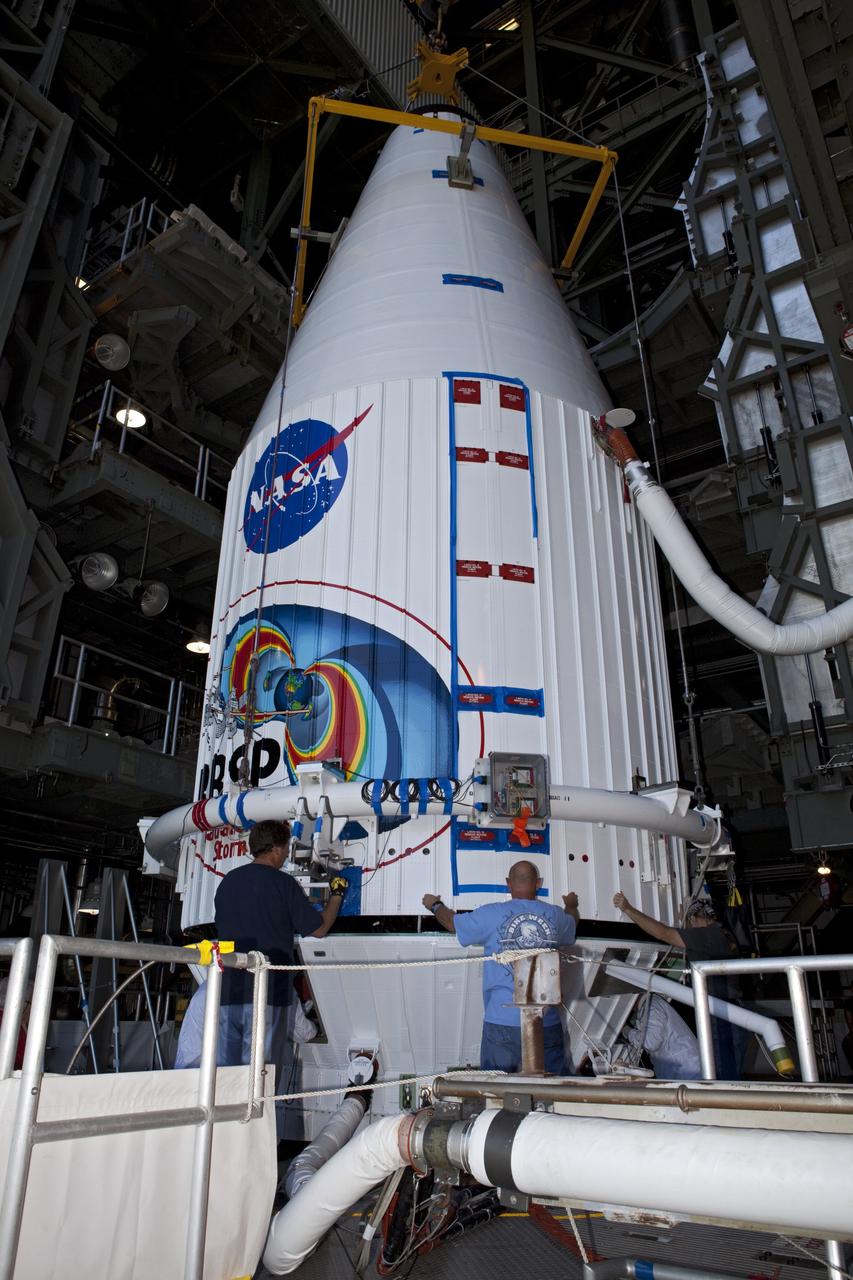
CAPE CANAVERAL, Fla. – Technicians attach the payload fairing holding the Radiation Belt Storm Probes, or RBSP, spacecraft to the top of a United Launch Alliance Atlas V rocket at Space Launch Complex-41 at Cape Canaveral Air Force Station. The two spacecraft are designed to study the Van Allen radiation belts in unprecedented detail. Photo credit: NASA/Dmitri Gerondidakis
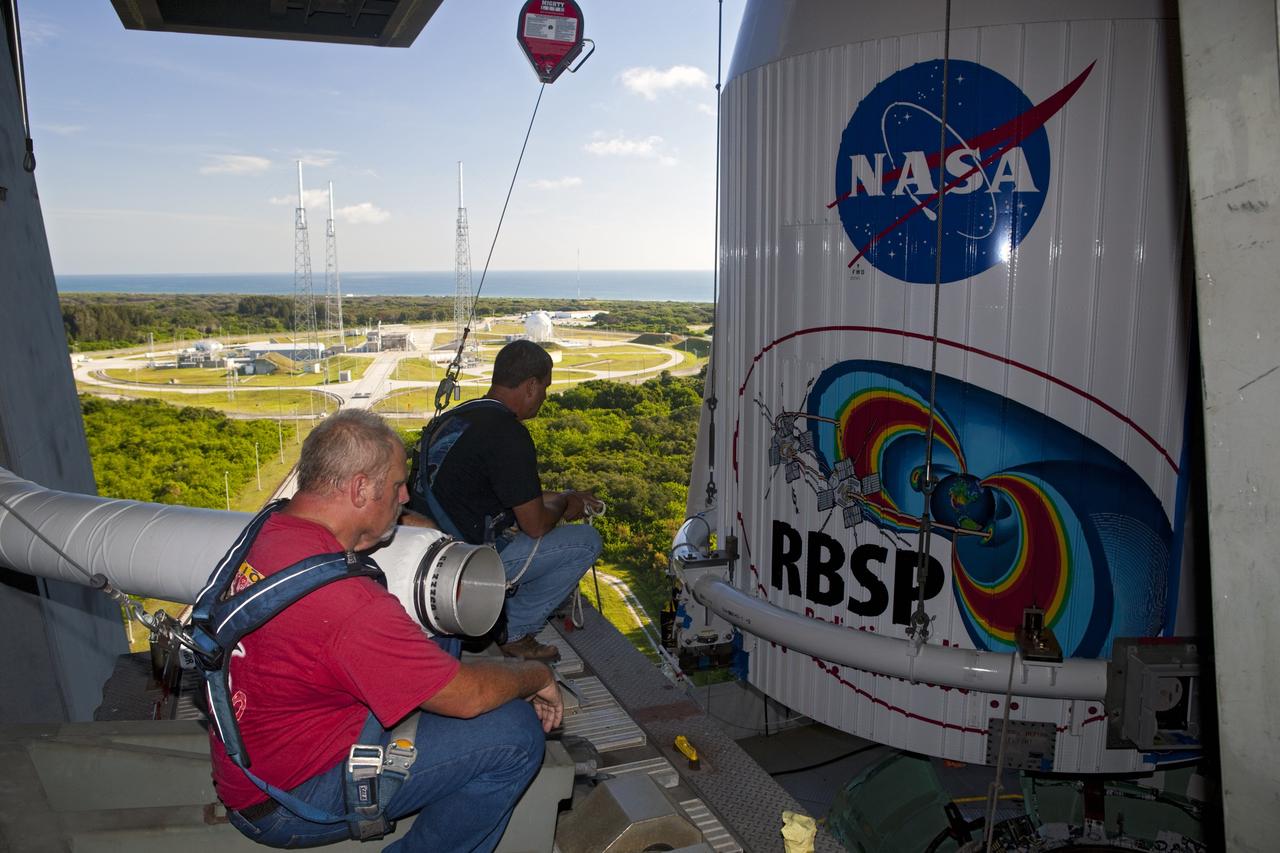
CAPE CANAVERAL, Fla. – Technicians attach the payload fairing holding the Radiation Belt Storm Probes, or RBSP, spacecraft to the top of a United Launch Alliance Atlas V rocket at Space Launch Complex-41 at Cape Canaveral Air Force Station. The two spacecraft are designed to study the Van Allen radiation belts in unprecedented detail. Photo credit: NASA/Dmitri Gerondidakis
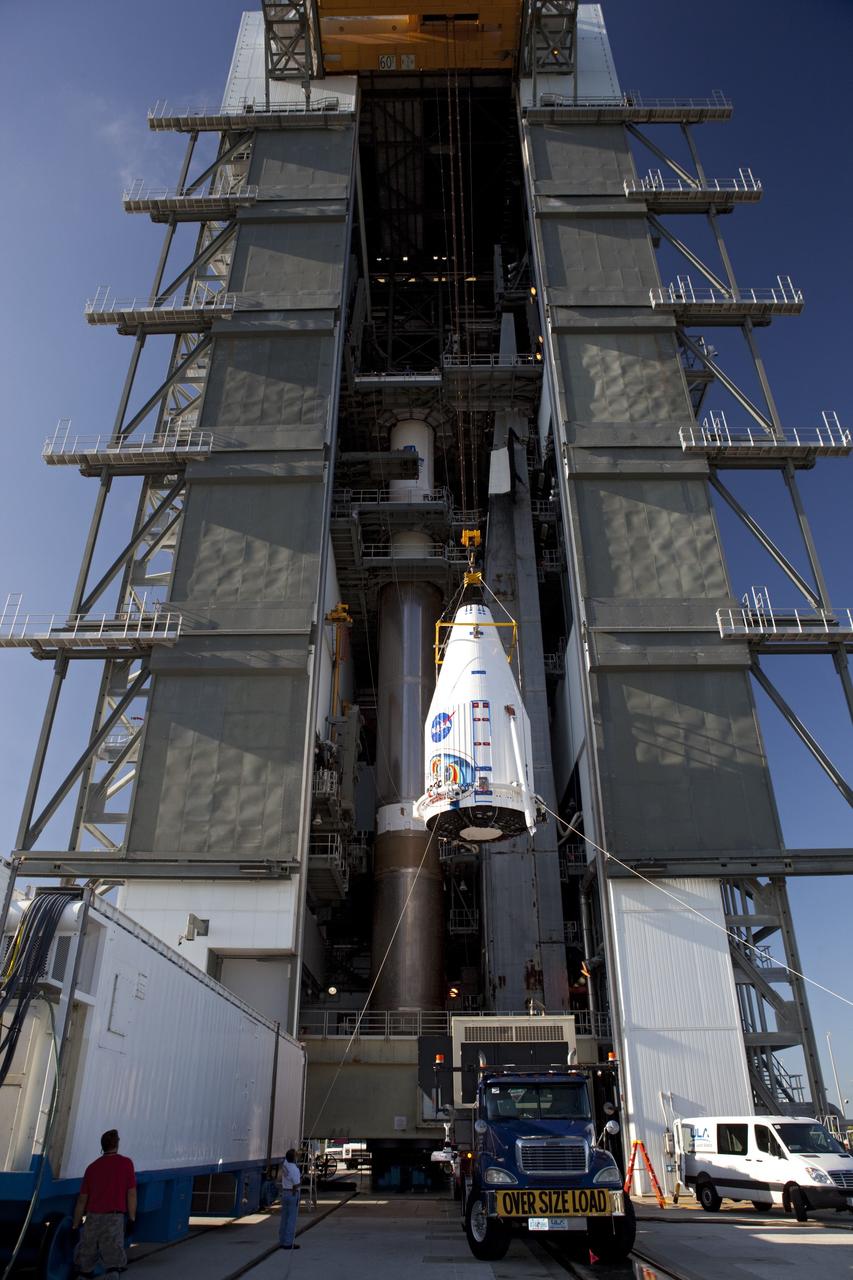
CAPE CANAVERAL, Fla. – Technicians hoist the Radiation Belt Storm Probes, or RBSP, spacecraft inside their payload fairing to the top of a United Launch Alliance Atlas V rocket at Space Launch Complex-41 at Cape Canaveral Air Force Station. The two spacecraft are designed to study the Van Allen radiation belts in unprecedented detail. Photo credit: NASA/Dmitri Gerondidakis
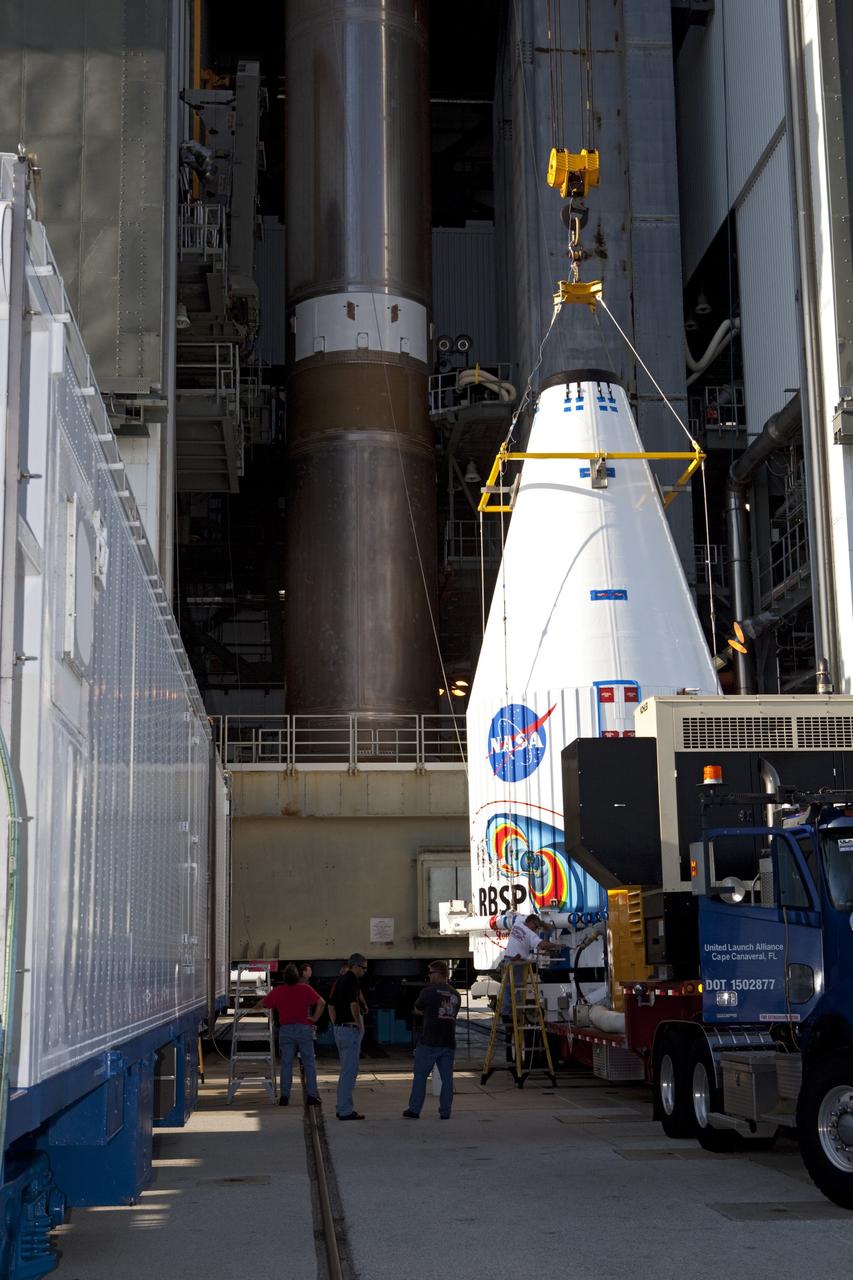
CAPE CANAVERAL, Fla. – Technicians prepare to hoist the Radiation Belt Storm Probes, or RBSP, spacecraft inside their payload fairing to the top of a United Launch Alliance Atlas V rocket at Space Launch Complex-41 at Cape Canaveral Air Force Station. The two spacecraft are designed to study the Van Allen radiation belts in unprecedented detail. Photo credit: NASA/Dmitri Gerondidakis
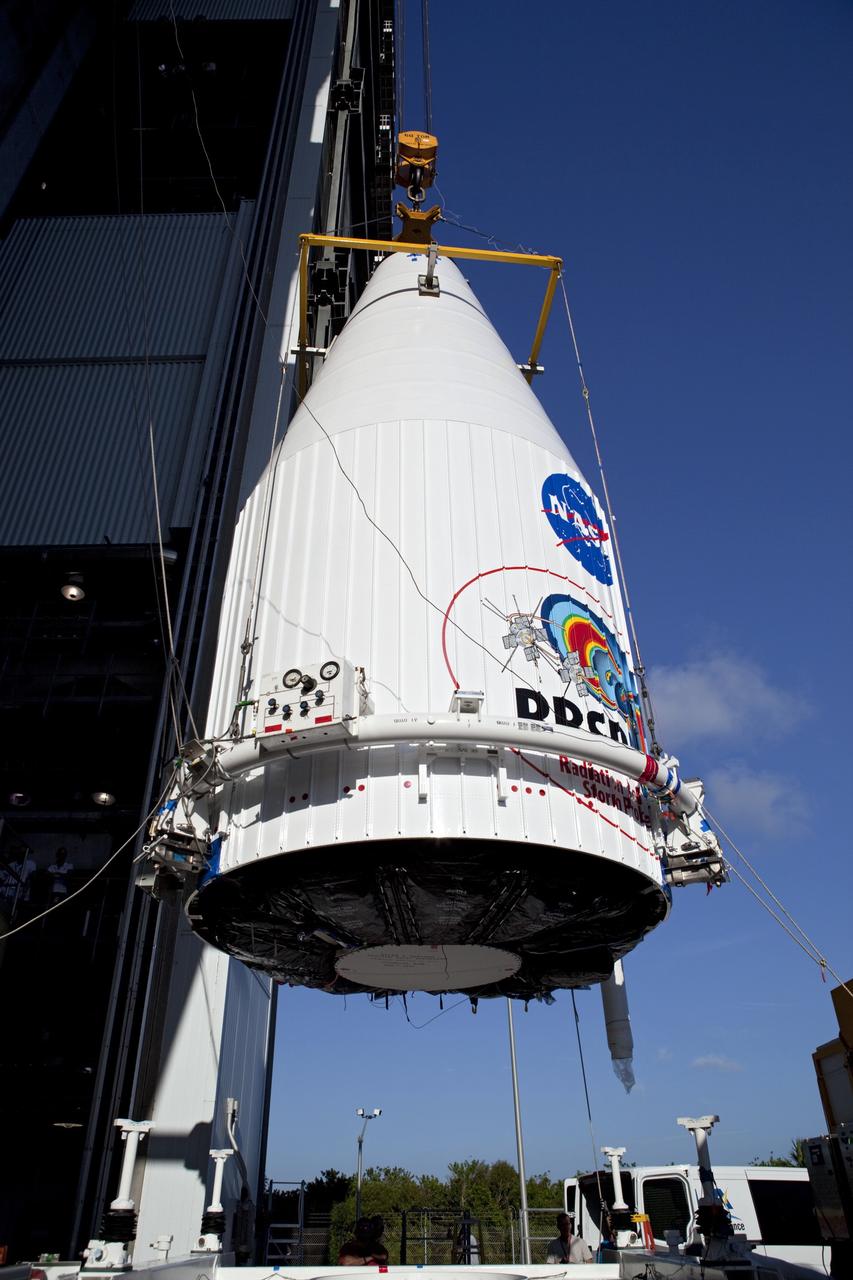
CAPE CANAVERAL, Fla. – Technicians hoist the Radiation Belt Storm Probes, or RBSP, spacecraft inside their payload fairing to the top of a United Launch Alliance Atlas V rocket at Space Launch Complex-41 at Cape Canaveral Air Force Station. The two spacecraft are designed to study the Van Allen radiation belts in unprecedented detail. Photo credit: NASA/Dmitri Gerondidakis
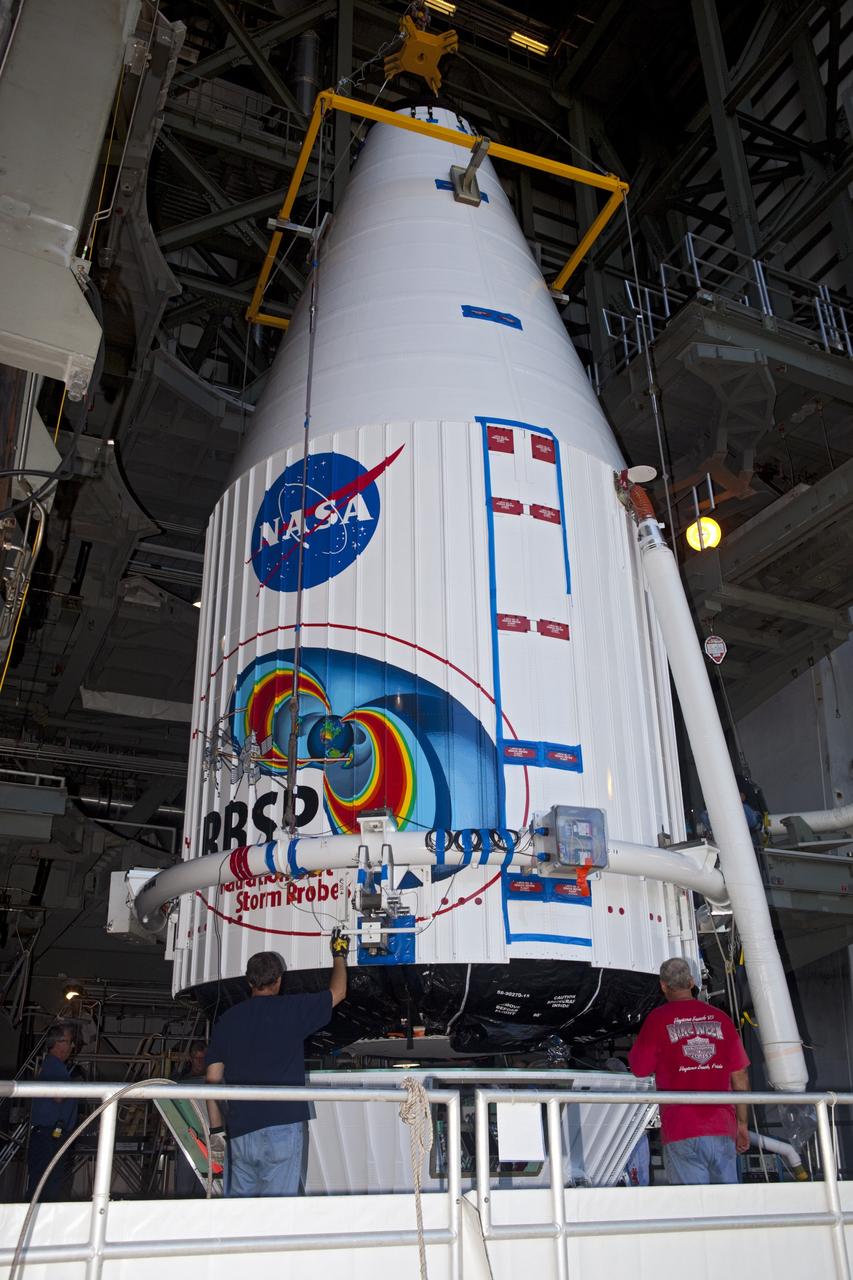
CAPE CANAVERAL, Fla. – Technicians attach the payload fairing holding the Radiation Belt Storm Probes, or RBSP, spacecraft to the top of a United Launch Alliance Atlas V rocket at Space Launch Complex-41 at Cape Canaveral Air Force Station. The two spacecraft are designed to study the Van Allen radiation belts in unprecedented detail. Photo credit: NASA/Dmitri Gerondidakis
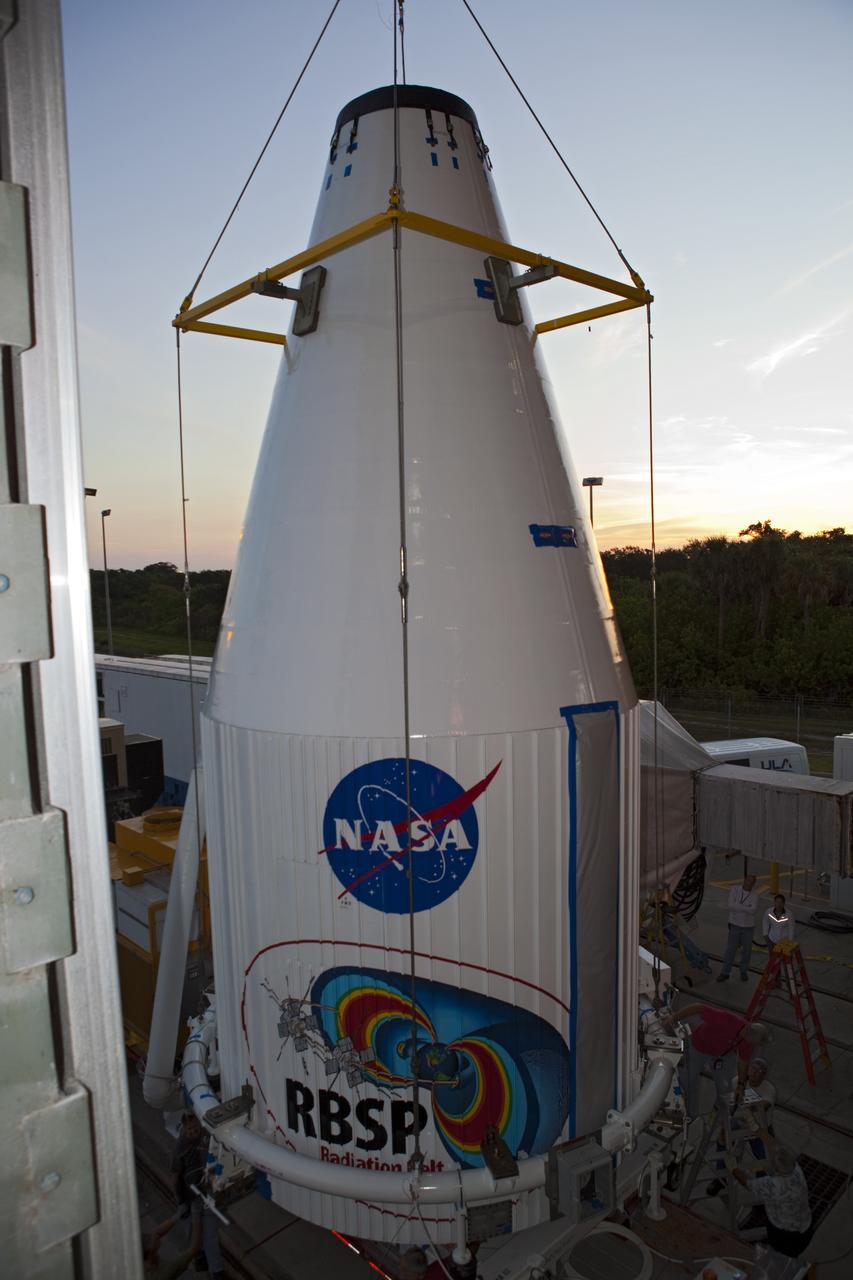
CAPE CANAVERAL, Fla. – The Radiation Belt Storm Probes, or RBSP, spacecraft inside their payload fairing are prepared before they are hoisted to the top of a United Launch Alliance Atlas V rocket at Space Launch Complex-41 at Cape Canaveral Air Force Station. The two spacecraft are designed to study the Van Allen radiation belts in unprecedented detail. Photo credit: NASA/Dmitri Gerondidakis

CAPE CANAVERAL, Fla. – The Radiation Belt Storm Probes, or RBSP, spacecraft inside their payload fairing are prepared before they are hoisted to the top of a United Launch Alliance Atlas V rocket at Space Launch Complex-41 at Cape Canaveral Air Force Station. The two spacecraft are designed to study the Van Allen radiation belts in unprecedented detail. Photo credit: NASA/Dmitri Gerondidakis
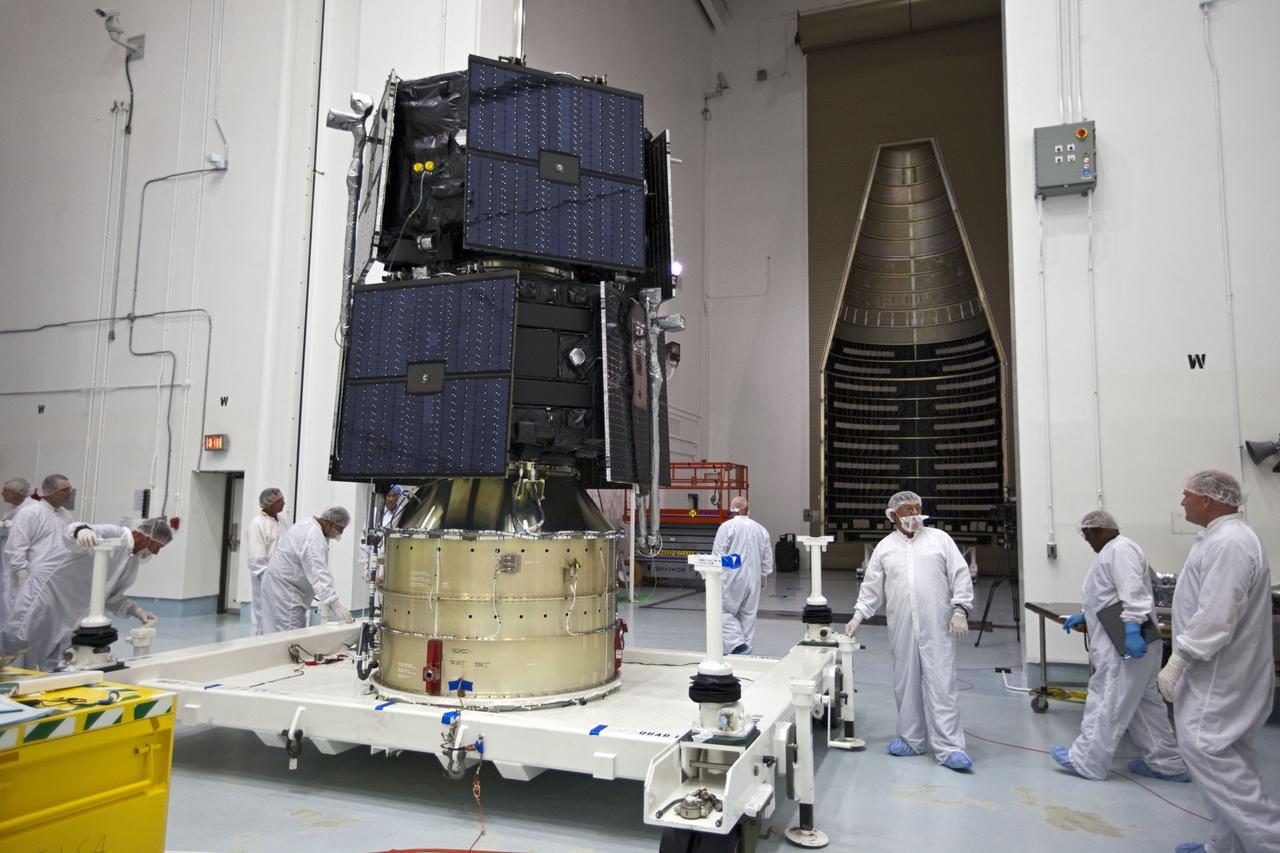
TITUSVILLE, Fla. - Inside the Astrotech payload processing facility in Titusville, Fla. near NASA’s Kennedy Space Center, technicians prepare the two Radiation Belt Storm Probes, or RBSP, spacecraft prior for encapsulation in payload faring. The fairing will house and protect the RBSP during liftoff and flight through the atmosphere aboard an Atlas V rocket. NASA’s RBSP mission will help us understand the sun’s influence on Earth and near-Earth space by studying the Earth’s radiation belts on various scales of space and time. RBSP will begin its mission of exploration of Earth’s Van Allen radiation belts and the extremes of space weather after its liftoff aboard a United Launch Alliance Atlas V from Space Launch Complex 41 at Cape Canaveral Air Force Station, Fla. Liftoff is targeted for Aug. 23, 2012. For more information, visit http://www.nasa.gov/rbsp. Photo credit: NASA/ Kim Shiflett
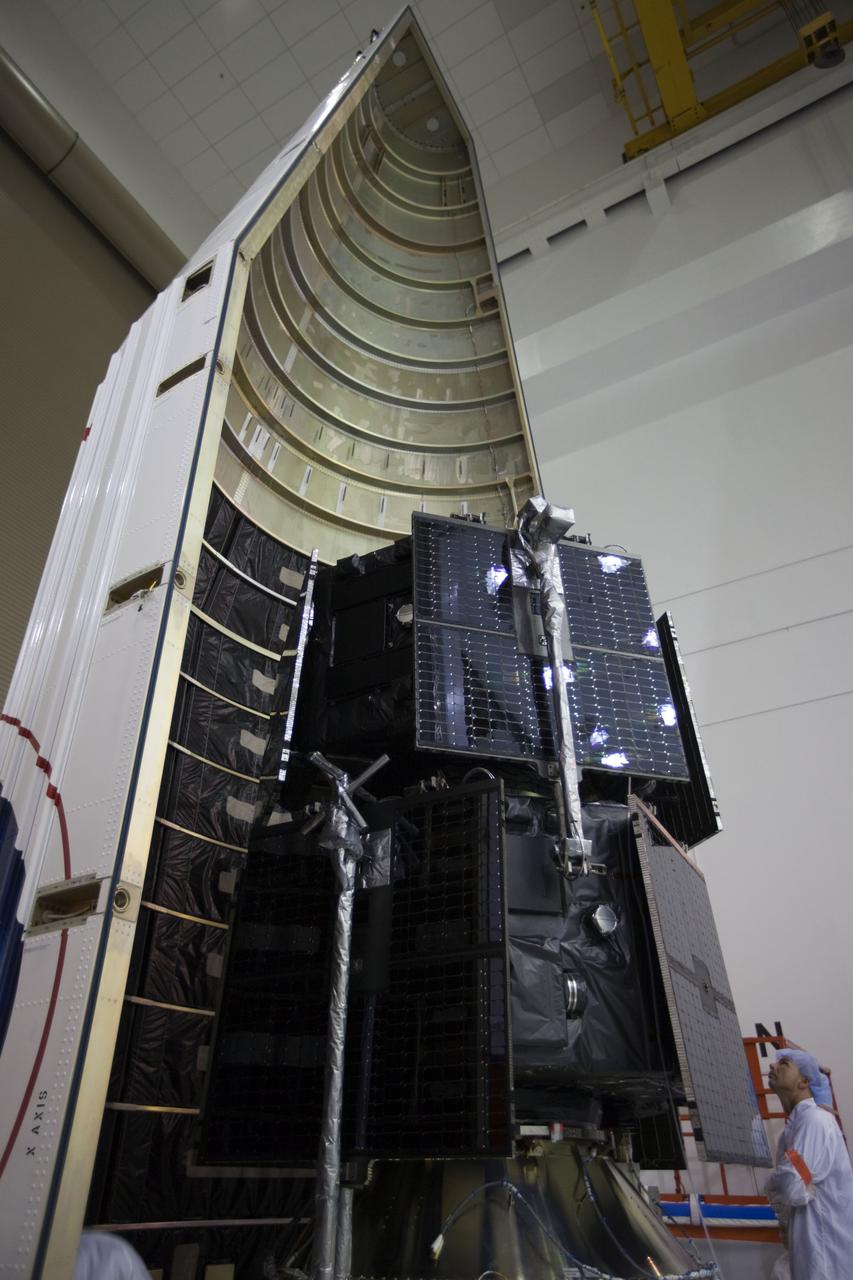
TITUSVILLE, Fla. - Inside the Astrotech payload processing facility in Titusville, Fla. near NASA’s Kennedy Space Center, a technician checks out the two Radiation Belt Storm Probes, or RBSP, spacecraft as they are being encapsulated in the payload faring. The fairing will house and protect the RBSP during liftoff and flight through the atmosphere aboard an Atlas V rocket. NASA’s RBSP mission will help us understand the sun’s influence on Earth and near-Earth space by studying the Earth’s radiation belts on various scales of space and time. RBSP will begin its mission of exploration of Earth’s Van Allen radiation belts and the extremes of space weather after its liftoff aboard a United Launch Alliance Atlas V from Space Launch Complex 41 at Cape Canaveral Air Force Station, Fla. Liftoff is targeted for Aug. 23, 2012. For more information, visit http://www.nasa.gov/rbsp. Photo credit: NASA/ Kim Shiflett
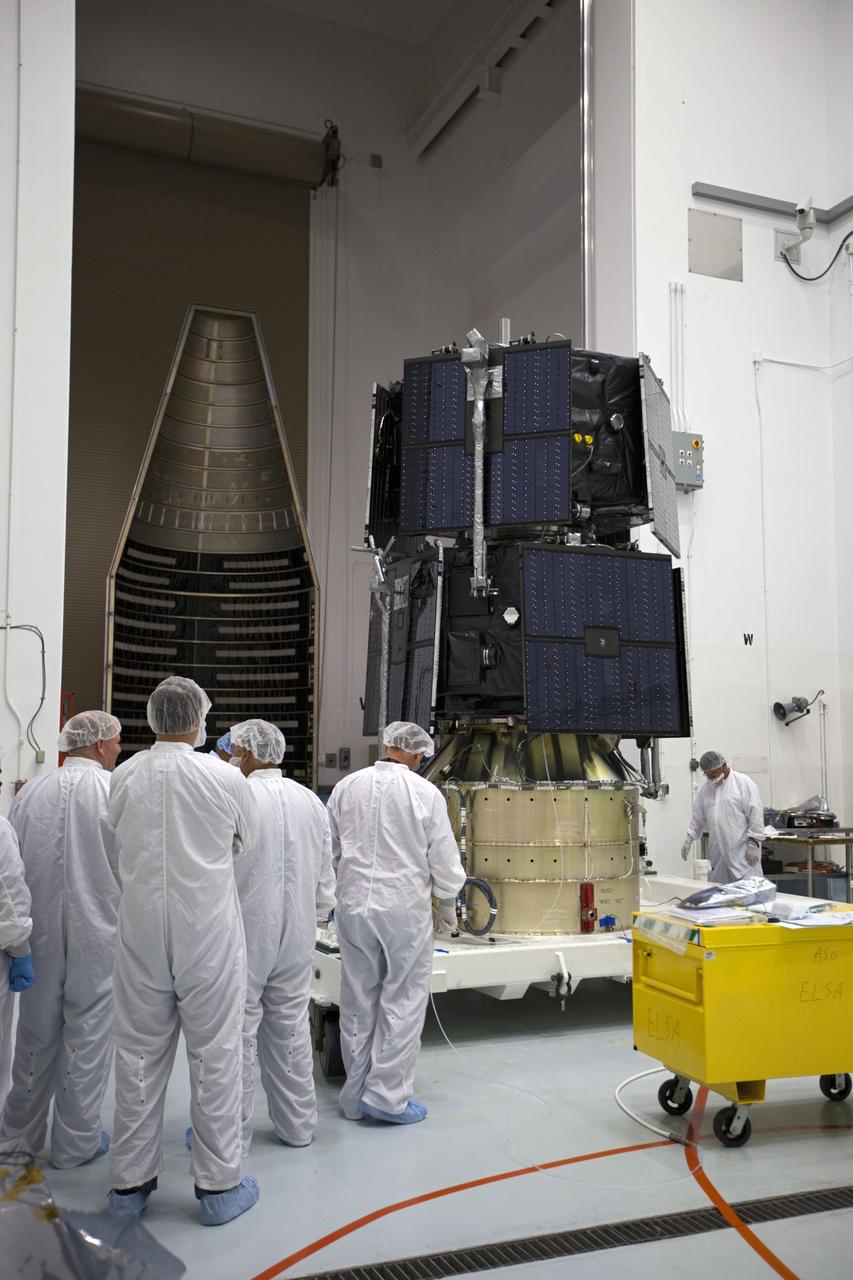
TITUSVILLE, Fla. - Inside the Astrotech payload processing facility in Titusville, Fla. near NASA’s Kennedy Space Center, technicians prepare the two Radiation Belt Storm Probes, or RBSP, spacecraft prior for encapsulation in the payload faring. The fairing will house and protect the RBSP during liftoff and flight through the atmosphere aboard an Atlas V rocket. NASA’s RBSP mission will help us understand the sun’s influence on Earth and near-Earth space by studying the Earth’s radiation belts on various scales of space and time. RBSP will begin its mission of exploration of Earth’s Van Allen radiation belts and the extremes of space weather after its liftoff aboard a United Launch Alliance Atlas V from Space Launch Complex 41 at Cape Canaveral Air Force Station, Fla. Liftoff is targeted for Aug. 23, 2012. For more information, visit http://www.nasa.gov/rbsp. Photo credit: NASA/ Kim Shiflett
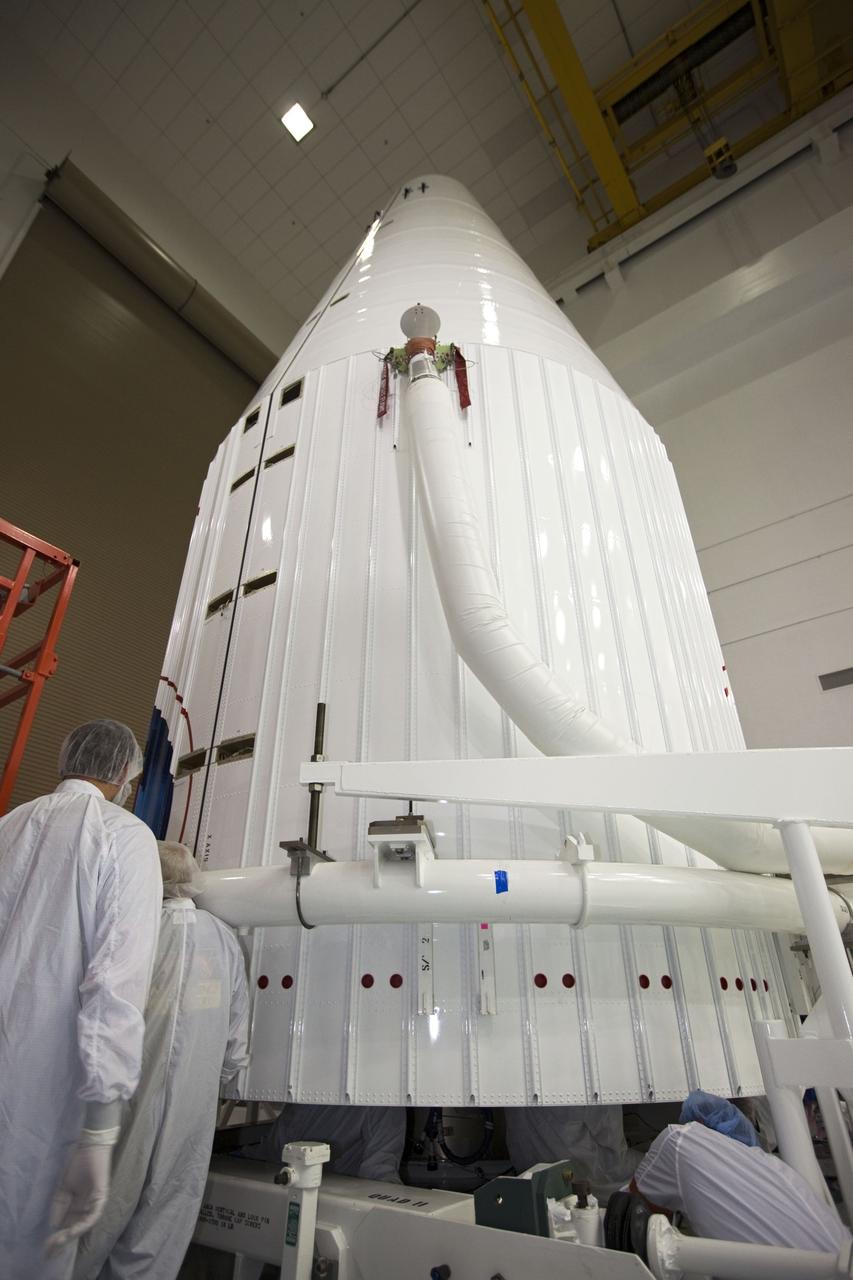
TITUSVILLE, Fla. - Inside the Astrotech payload processing facility in Titusville, Fla. near NASA’s Kennedy Space Center, technicians complete checkouts following encapsulation of the two Radiation Belt Storm Probes, or RBSP, spacecraft with its payload faring. The fairing will house and protect the RBSP during liftoff and flight through the atmosphere aboard an Atlas V rocket. NASA’s RBSP mission will help us understand the sun’s influence on Earth and near-Earth space by studying the Earth’s radiation belts on various scales of space and time. RBSP will begin its mission of exploration of Earth’s Van Allen radiation belts and the extremes of space weather after its liftoff aboard a United Launch Alliance Atlas V from Space Launch Complex 41 at Cape Canaveral Air Force Station, Fla. Liftoff is targeted for Aug. 23, 2012. For more information, visit http://www.nasa.gov/rbsp. Photo credit: NASA/ Kim Shiflett

TITUSVILLE, Fla. - Inside the Astrotech payload processing facility in Titusville, Fla. near NASA’s Kennedy Space Center, technicians prepare the two Radiation Belt Storm Probes, or RBSP, spacecraft for encapsulation in the payload faring. The fairing will house and protect the RBSP during liftoff and flight through the atmosphere aboard an Atlas V rocket. NASA’s RBSP mission will help us understand the sun’s influence on Earth and near-Earth space by studying the Earth’s radiation belts on various scales of space and time. RBSP will begin its mission of exploration of Earth’s Van Allen radiation belts and the extremes of space weather after its liftoff aboard a United Launch Alliance Atlas V from Space Launch Complex 41 at Cape Canaveral Air Force Station, Fla. Liftoff is targeted for Aug. 23, 2012. For more information, visit http://www.nasa.gov/rbsp. Photo credit: NASA/ Kim Shiflett
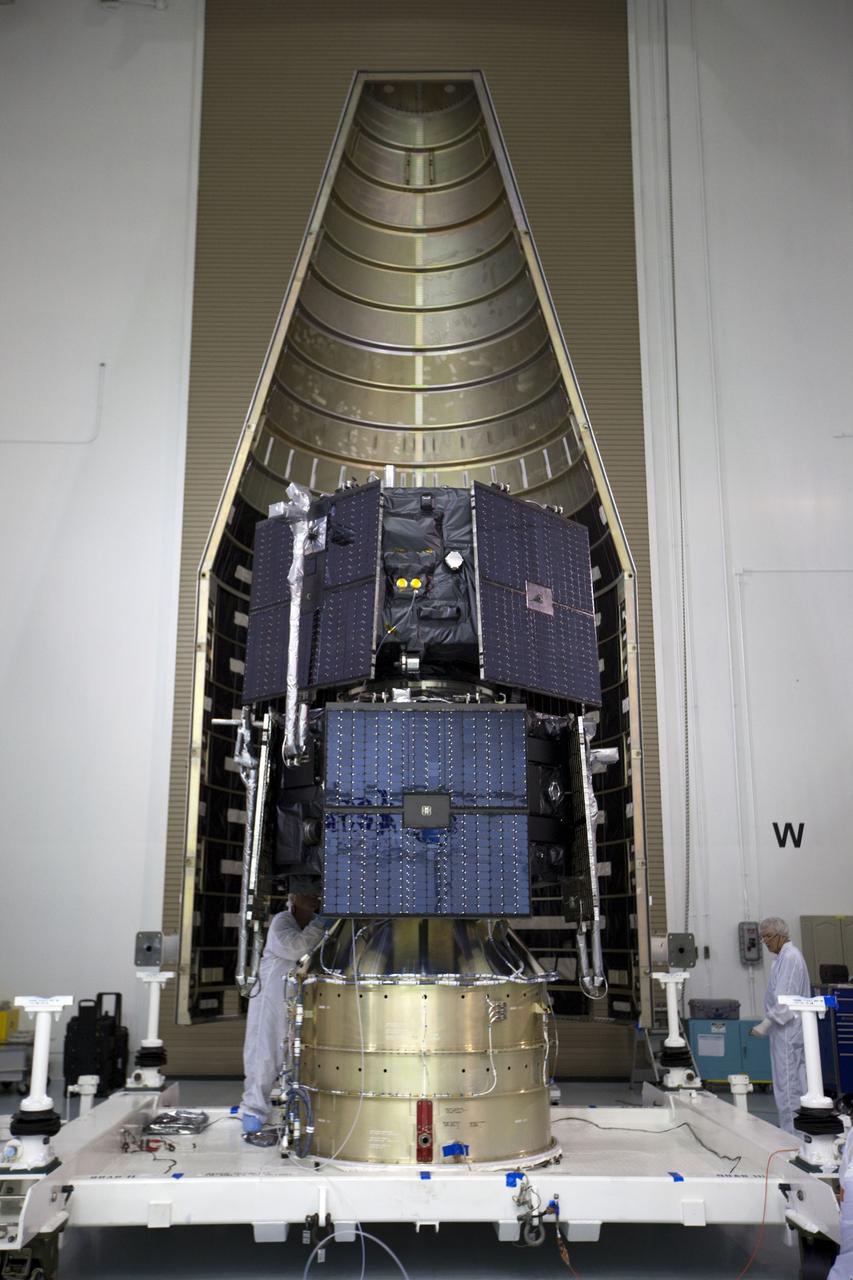
TITUSVILLE, Fla. - Inside the Astrotech payload processing facility in Titusville, Fla. near NASA’s Kennedy Space Center, a technician checks out the two Radiation Belt Storm Probes, or RBSP, spacecraft as they are being encapsulated in the payload faring. The fairing will house and protect the RBSP during liftoff and flight through the atmosphere aboard an Atlas V rocket. NASA’s RBSP mission will help us understand the sun’s influence on Earth and near-Earth space by studying the Earth’s radiation belts on various scales of space and time. RBSP will begin its mission of exploration of Earth’s Van Allen radiation belts and the extremes of space weather after its liftoff aboard a United Launch Alliance Atlas V from Space Launch Complex 41 at Cape Canaveral Air Force Station, Fla. Liftoff is targeted for Aug. 23, 2012. For more information, visit http://www.nasa.gov/rbsp. Photo credit: NASA/ Kim Shiflett
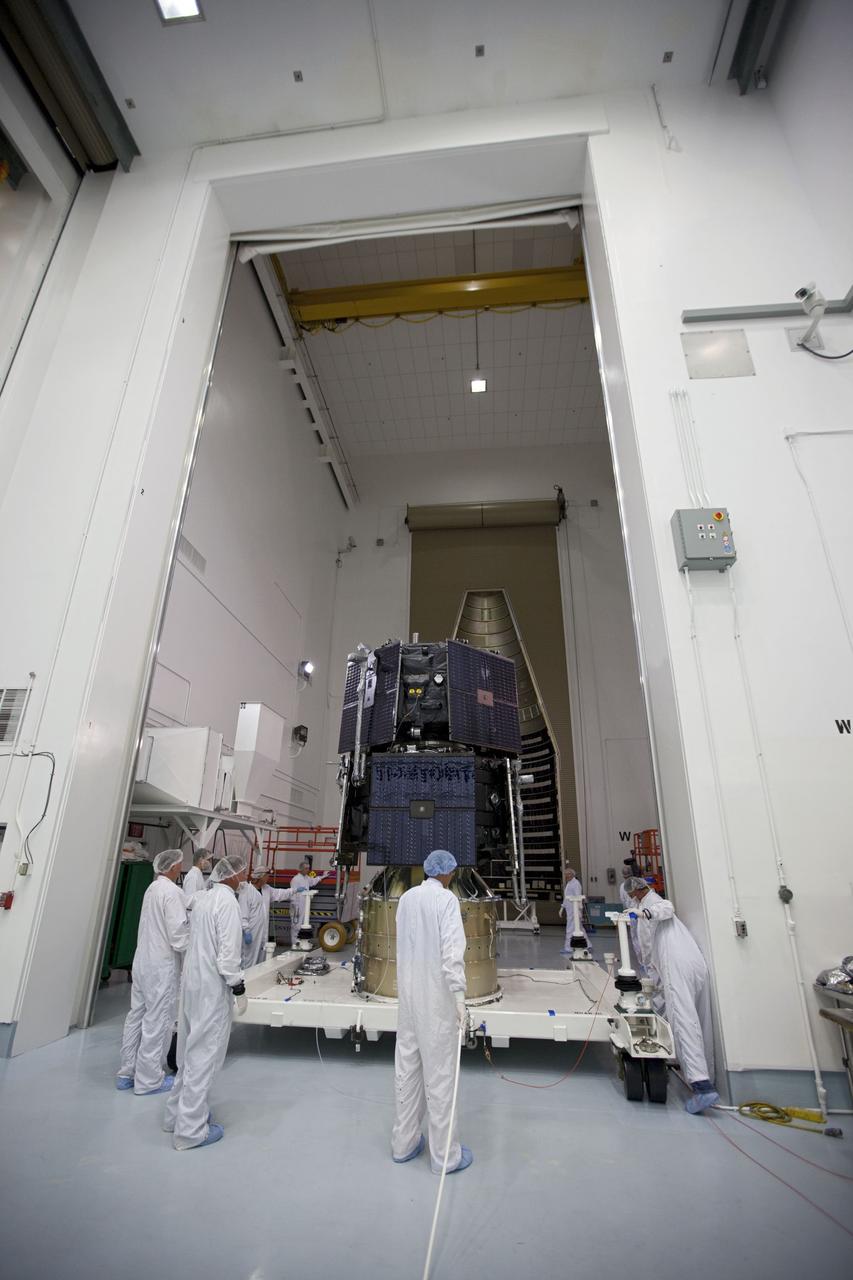
TITUSVILLE, Fla. - Inside the Astrotech payload processing facility in Titusville, Fla. near NASA’s Kennedy Space Center, technicians move the two Radiation Belt Storm Probes, or RBSP, spacecraft into position for encapsulation in the payload faring. The fairing will house and protect the RBSP during liftoff and flight through the atmosphere aboard an Atlas V rocket. NASA’s RBSP mission will help us understand the sun’s influence on Earth and near-Earth space by studying the Earth’s radiation belts on various scales of space and time. RBSP will begin its mission of exploration of Earth’s Van Allen radiation belts and the extremes of space weather after its liftoff aboard a United Launch Alliance Atlas V from Space Launch Complex 41 at Cape Canaveral Air Force Station, Fla. Liftoff is targeted for Aug. 23, 2012. For more information, visit http://www.nasa.gov/rbsp. Photo credit: NASA/ Kim Shiflett