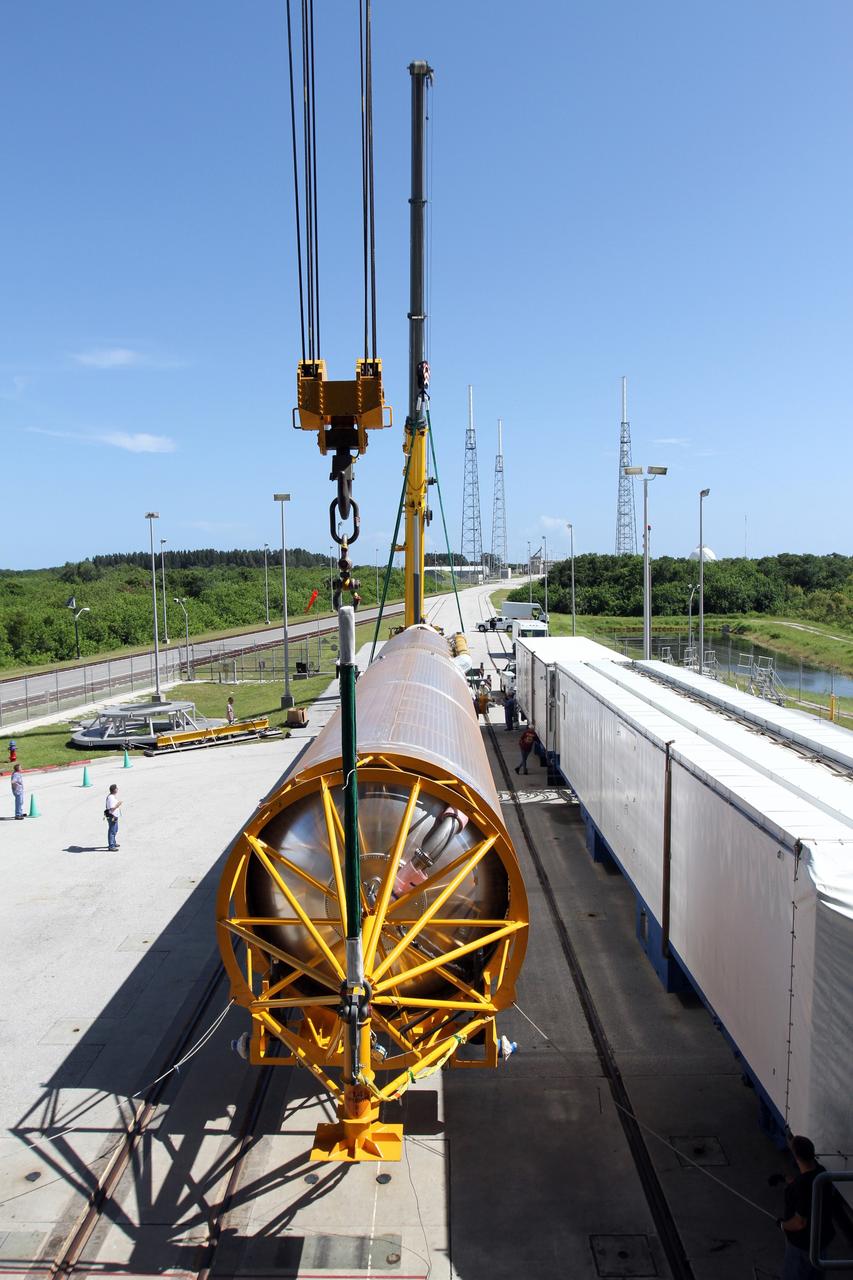
CAPE CANAVERAL, Fla. - At Launch Complex 41 at Cape Canaveral Air Force Station in Florida, preparations are underway to lift the first stage of the United Launch Alliance Atlas V rocket into the vertical position. The Atlas V is being prepared for the Radiation Belt Storm Probes, or RBSP, mission. NASA’s RBSP mission will help us understand the sun’s influence on Earth and near-Earth space by studying the Earth’s radiation belts on various scales of space and time. RBSP will begin its mission of exploration of Earth’s Van Allen radiation belts and the extremes of space weather after its launch aboard an Atlas V rocket. Launch is targeted for Aug. 23. For more information, visit http://www.nasa.gov/rbsp. Photo credit: NASA/Cory Huston
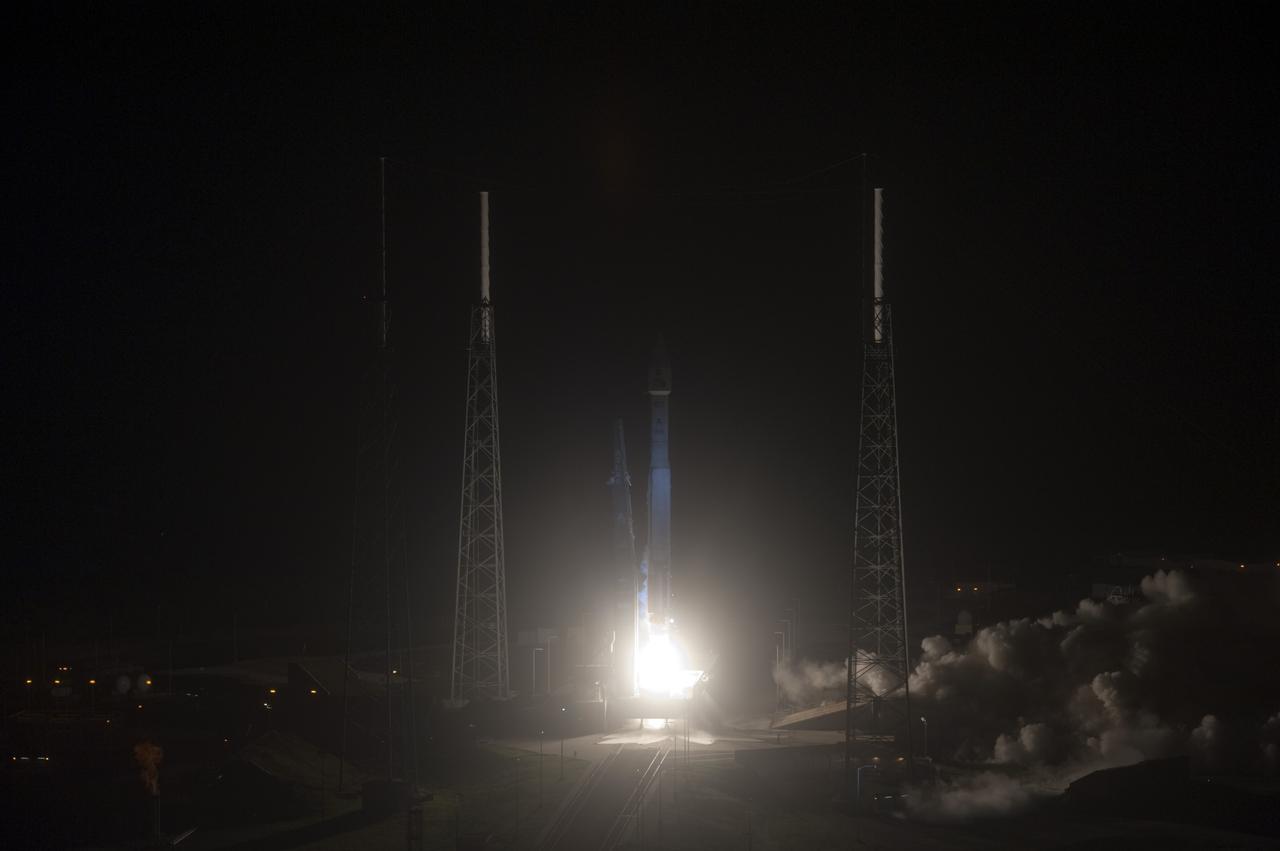
CAPE CANAVERAL, Fla. – The United Launch Alliance Atlas V rocket carrying NASA's Radiation Belt Storm Probes, or RBSP, lifts off Space Launch Complex 41 on Cape Canaveral Air Force Station in Florida at 4:05 a.m. EDT. RBSP will explore changes in Earth's space environment caused by the sun -- known as "space weather" -- that can disable satellites, create power-grid failures and disrupt GPS service. The mission also will provide data on the fundamental radiation and particle acceleration processes throughout the universe. For more information on RBSP, visit http://www.nasa.gov/rbsp. Photo credit: NASA/Tony Gray and Robert Murray
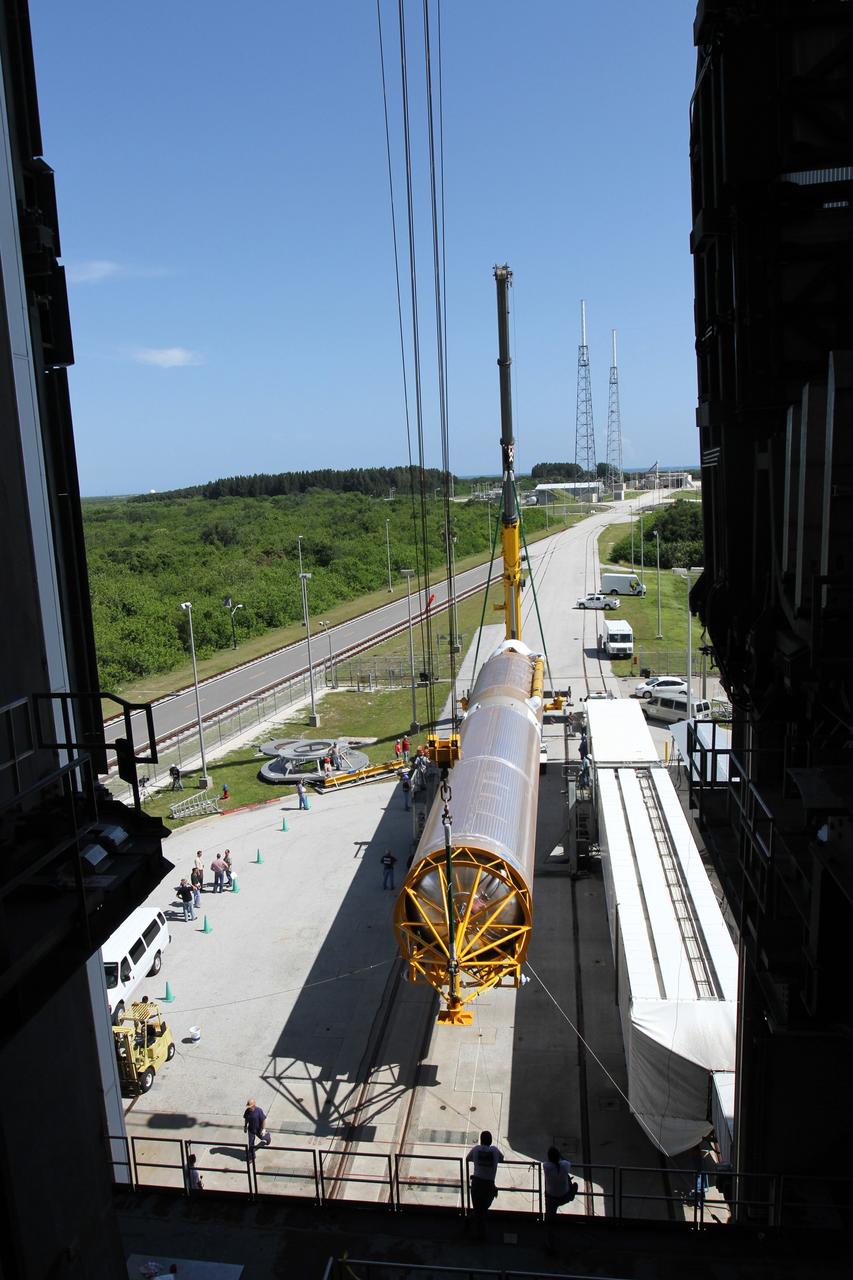
CAPE CANAVERAL, Fla. - At Launch Complex 41 at Cape Canaveral Air Force Station in Florida, a large crane begins to lift the first stage of the United Launch Alliance Atlas V rocket into the vertical position. The Atlas V is being prepared for the Radiation Belt Storm Probes, or RBSP, mission. NASA’s RBSP mission will help us understand the sun’s influence on Earth and near-Earth space by studying the Earth’s radiation belts on various scales of space and time. RBSP will begin its mission of exploration of Earth’s Van Allen radiation belts and the extremes of space weather after its launch aboard an Atlas V rocket. Launch is targeted for Aug. 23. For more information, visit http://www.nasa.gov/rbsp. Photo credit: NASA/Cory Huston
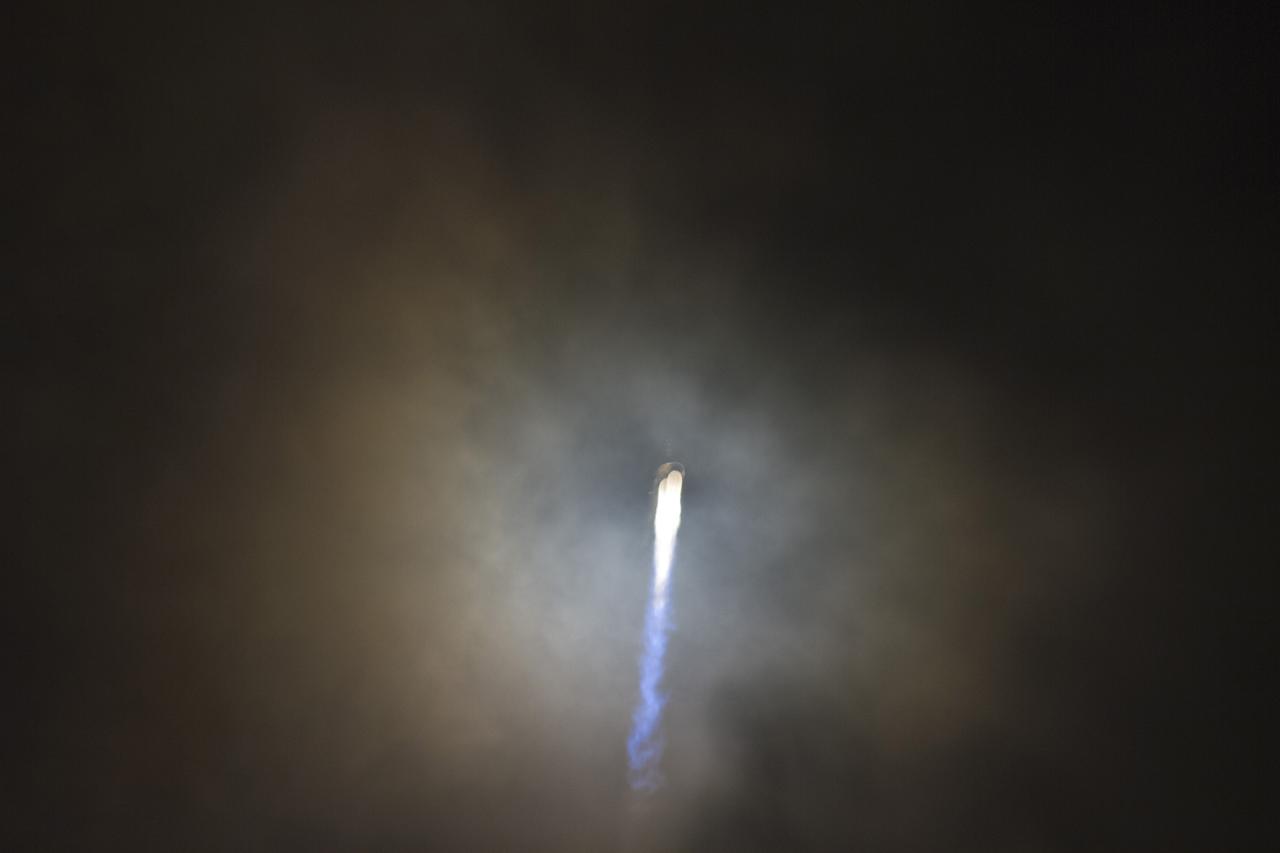
CAPE CANAVERAL, Fla. - With its engines burning bright against the late night sky, the United Launch Alliance Atlas V rocket carrying NASA's Radiation Belt Storm Probes, or RBSP, travels upward after lifting off Space Launch Complex 41 on Cape Canaveral Air Force Station in Florida at 4:05 a.m. EDT. RBSP will explore changes in Earth's space environment caused by the sun -- known as "space weather" -- that can disable satellites, create power-grid failures and disrupt GPS service. The mission also will provide data on the fundamental radiation and particle acceleration processes throughout the universe. For more information on RBSP, visit http://www.nasa.gov/rbsp. Photo credit: NASA/Rusty Backer
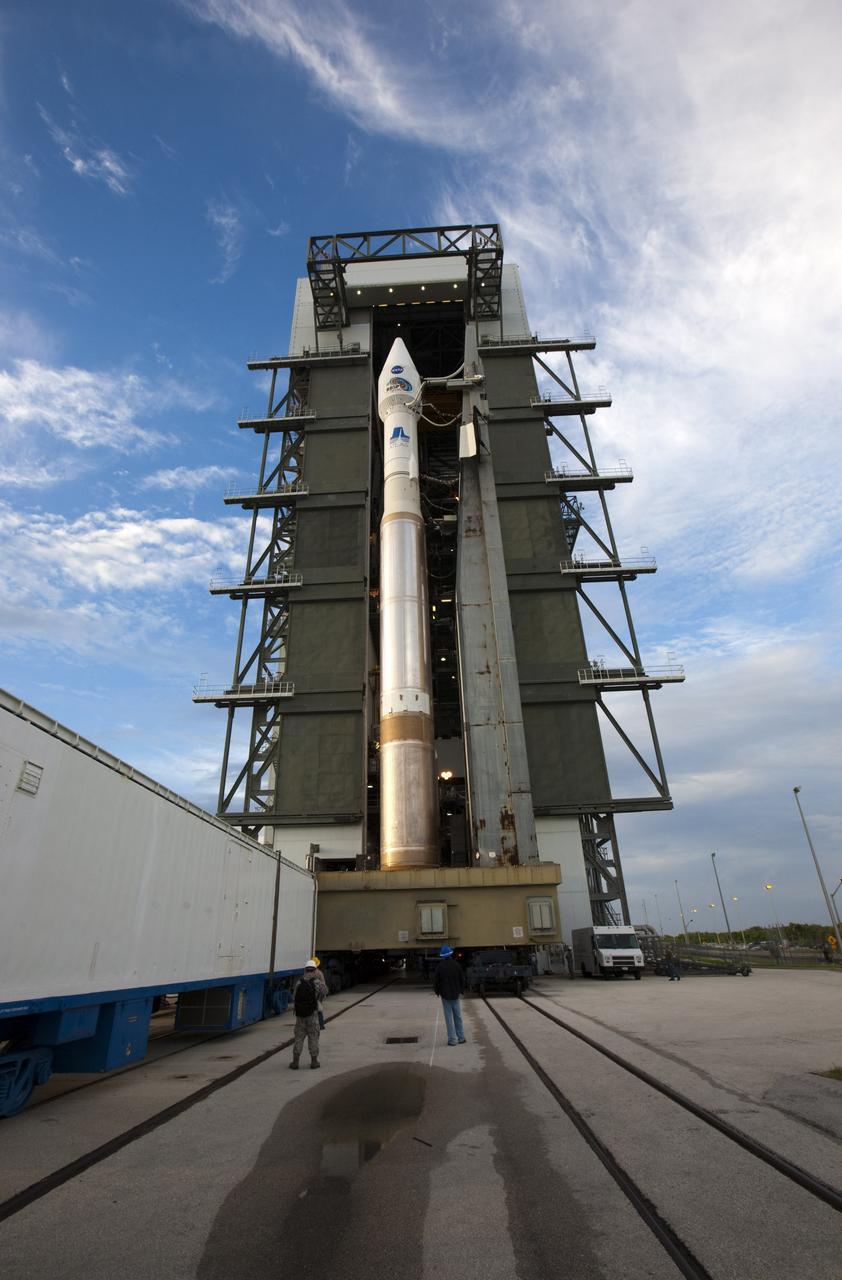
CAPE CANAVERAL, Fla. – At Cape Canaveral Air Force Station in Florida, United Launch Alliance, or ULA, technicians monitor the progress as the ULA Atlas V rocket with NASA’s twin Radiation Belt Storm Probes, or RBSP, rolls back to the Vertical Integration Facility from Space Launch Complex 41. The rocket and spacecraft will be secured and protected from inclement weather due to Tropical Storm Isaac. RBSP will explore changes in Earth's space environment caused by the sun -- known as "space weather" -- that can disable satellites, create power-grid failures and disrupt GPS service. The mission also will provide data on the fundamental radiation and particle acceleration processes throughout the universe. The launch is rescheduled for 4:05 a.m. EDT on Aug. 30, pending approval from the range. For more information on RBSP, visit http://www.nasa.gov/rbsp. Photo credit: NASA/Ben Smegelsky

CAPE CANAVERAL, Fla. – Spotlights bounce off the clouds over Space Launch Complex 41 on Cape Canaveral Air Force Station as NASA's Radiation Belt Storm Probes, or RBSP, lift off the pad at 4:05 a.m. EDT aboard a United Launch Alliance Atlas V rocket. RBSP will explore changes in Earth's space environment caused by the sun -- known as "space weather" -- that can disable satellites, create power-grid failures and disrupt GPS service. The mission also will provide data on the fundamental radiation and particle acceleration processes throughout the universe. For more information on RBSP, visit http://www.nasa.gov/rbsp. Photo credit: NASA/Ben Smegelsky and Gary Thompson
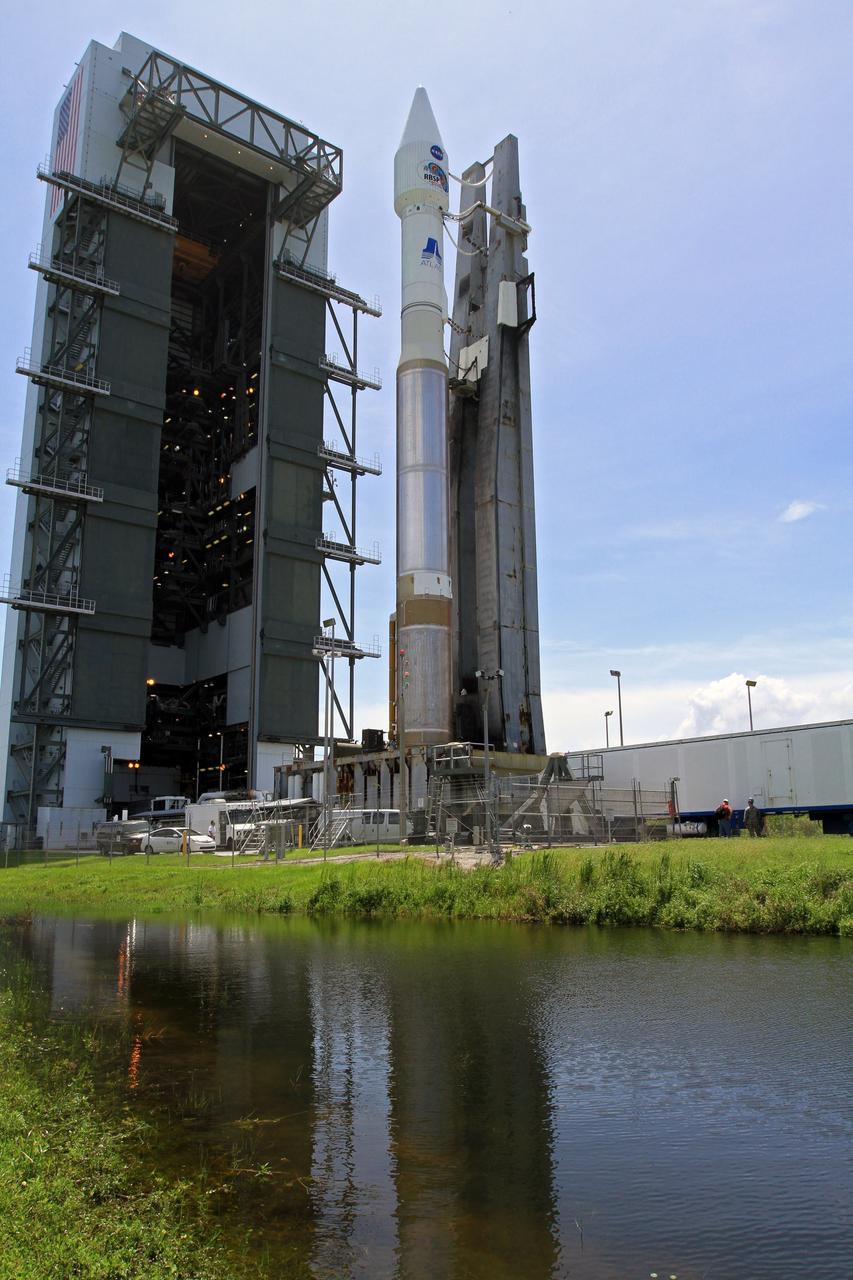
CAPE CANAVERAL, Fla. – At Cape Canaveral Air Force Station in Florida, the United Launch Alliance, or ULA, Atlas V rocket carrying NASA’s twin Radiation Belt Storm Probes, or RBSP, rolled out of the ULA Vertical Integration Facility at Space Launch Complex 41 at 1:59 p.m. EDT heading to the launch pad. The Atlas V rocket had been rolled back to the facility on August 26 to ensure the launch vehicle and RBSP spacecraft were secured and protected from inclement weather caused by Tropical Storm Isaac. RBSP will explore changes in Earth's space environment caused by the sun -- known as "space weather" -- that can disable satellites, create power-grid failures and disrupt GPS service. The mission also will provide data on the fundamental radiation and particle acceleration processes throughout the universe. The launch is rescheduled for 4:05 a.m. EDT on Aug. 30. For more information on RBSP, visit http://www.nasa.gov/rbsp. Photo credit: NASA/Kim Shiflett
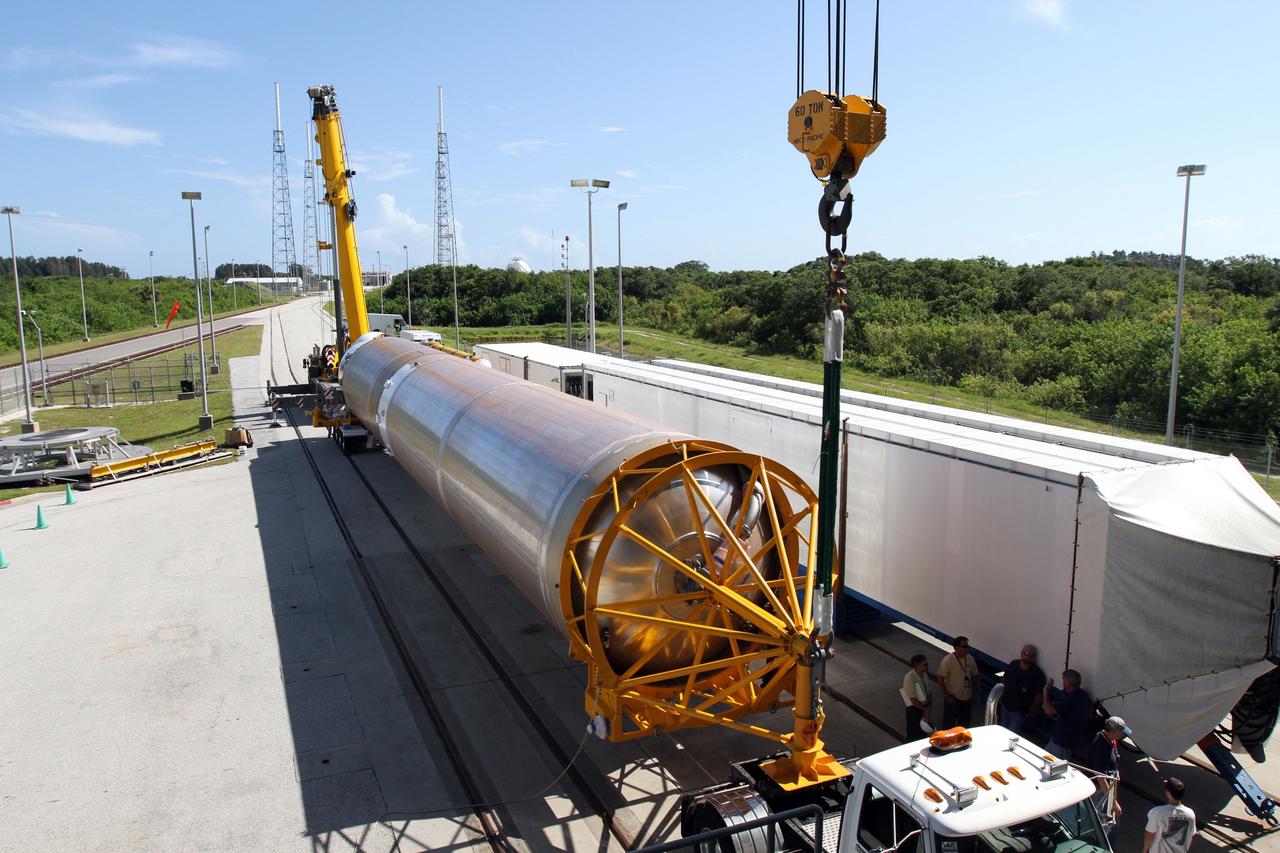
CAPE CANAVERAL, Fla. - The first stage of the United Launch Alliance Atlas V rocket arrives at Launch Complex 41 at Cape Canaveral Air Force Station in Florida for the Radiation Belt Storm Probes, or RBSP, mission. NASA’s RBSP mission will help us understand the sun’s influence on Earth and near-Earth space by studying the Earth’s radiation belts on various scales of space and time. RBSP will begin its mission of exploration of Earth’s Van Allen radiation belts and the extremes of space weather after its launch aboard an Atlas V rocket. Launch is targeted for Aug. 23. For more information, visit http://www.nasa.gov/rbsp. Photo credit: NASA/Cory Huston

CAPE CANAVERAL, Fla. – At Cape Canaveral Air Force Station in Florida, the United Launch Alliance, or ULA, Atlas V rocket carrying NASA’s twin Radiation Belt Storm Probes, or RBSP, rolled out of the ULA Vertical Integration Facility at Space Launch Complex 41 at 1:59 p.m. EDT heading to the launch pad. The Atlas V rocket had been rolled back to the facility on August 26 to ensure the launch vehicle and RBSP spacecraft were secured and protected from inclement weather caused by Tropical Storm Isaac. RBSP will explore changes in Earth's space environment caused by the sun -- known as "space weather" -- that can disable satellites, create power-grid failures and disrupt GPS service. The mission also will provide data on the fundamental radiation and particle acceleration processes throughout the universe. The launch is rescheduled for 4:05 a.m. EDT on Aug. 30. For more information on RBSP, visit http://www.nasa.gov/rbsp. Photo credit: NASA/Kim Shiflett
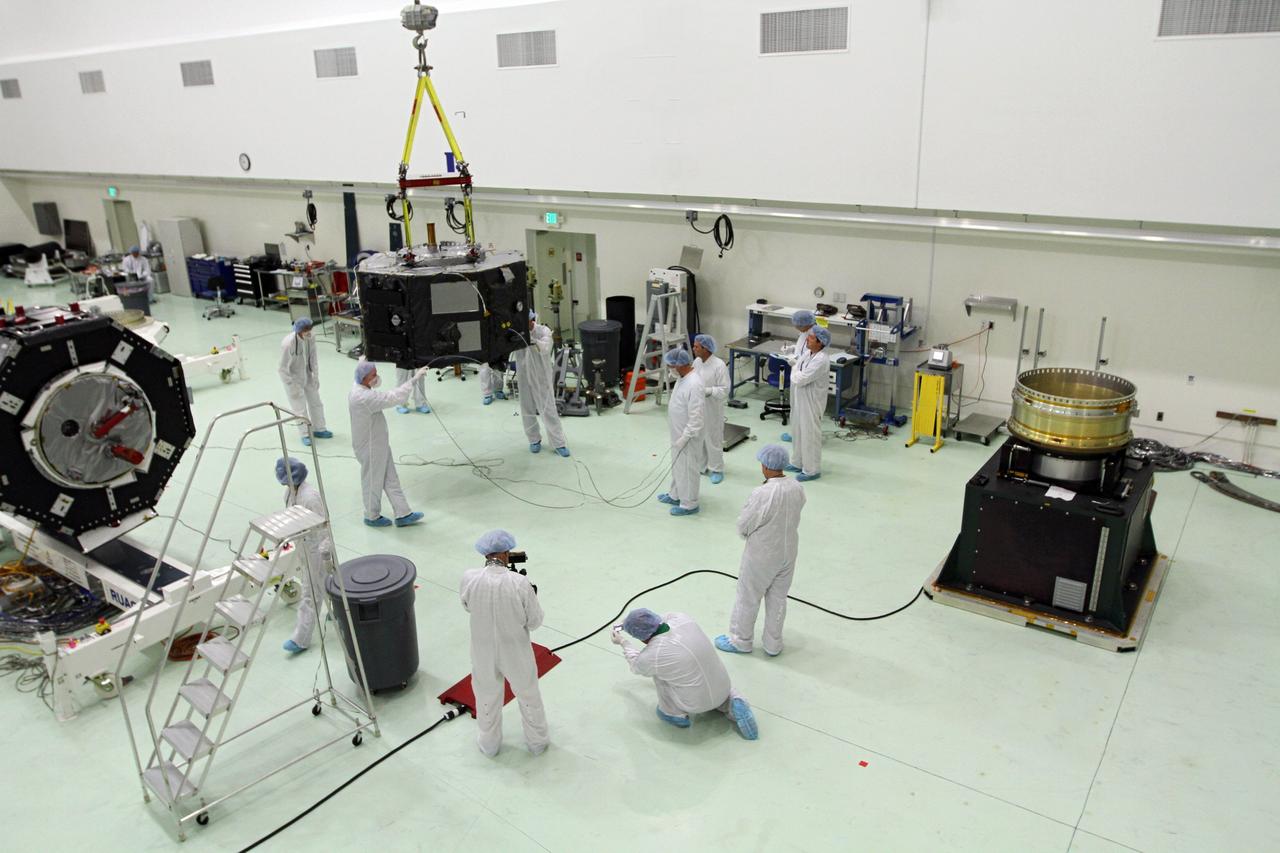
CAPE CANAVERAL, Fla. - Inside the Astrotech payload processing facility near NASA’s Kennedy Space Center in Florida, technicians prepare Radiation Belt Storm Probes, or RBSP, spacecraft A for a spin test. During the spin test, the spacecraft is turned at a rate of 55 rpm to ensure that it is properly balanced. NASA’s RBSP mission will help us understand the sun’s influence on Earth and near-Earth space by studying the Earth’s radiation belts on various scales of space and time. RBSP will begin its mission of exploration of Earth’s Van Allen radiation belts and the extremes of space weather after its launch aboard a United Launch Alliance Atlas V rocket. Launch is targeted for Aug. 23. For more information, visit http://www.nasa.gov/rbsp. Photo credit: NASA/Charisse Nahser
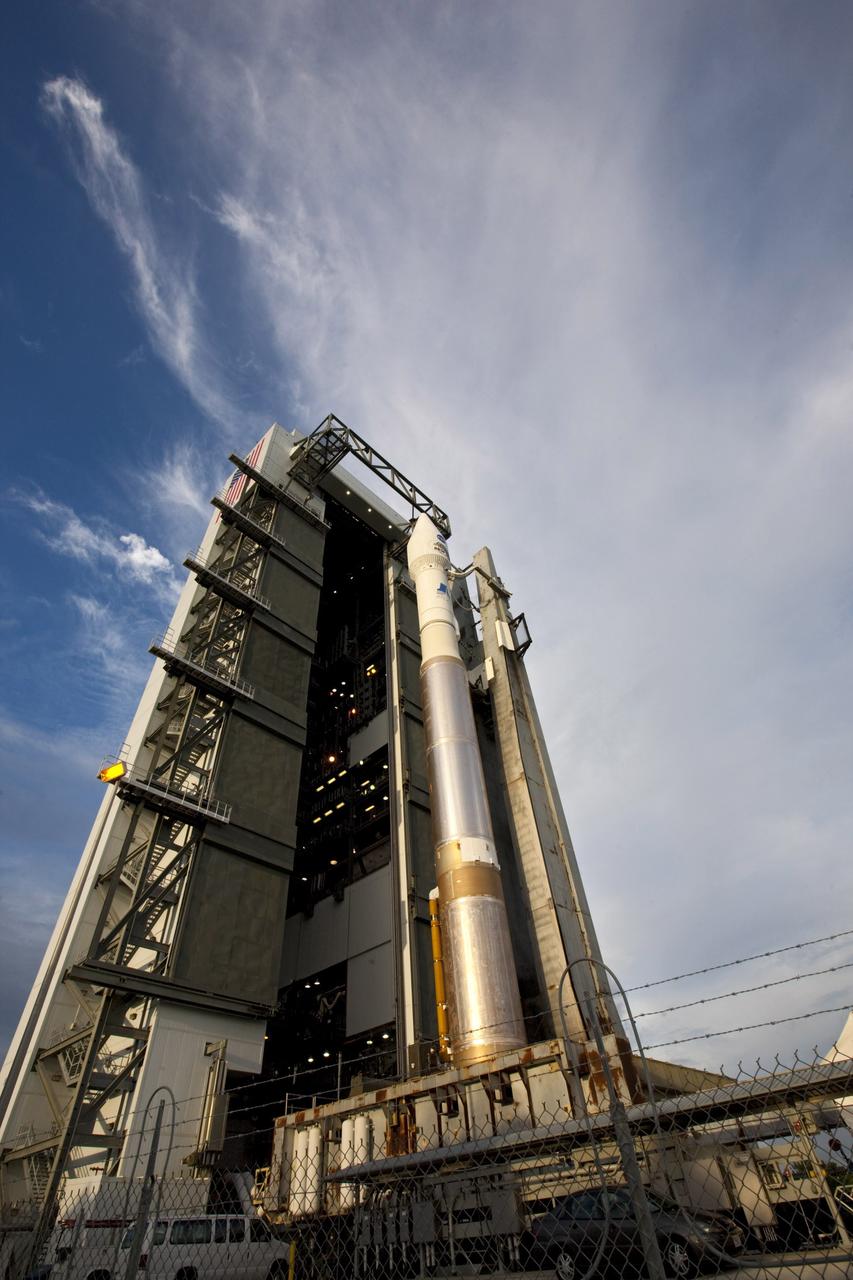
CAPE CANAVERAL, Fla. – At Cape Canaveral Air Force Station in Florida, the United Launch Alliance, or ULA, Atlas V rocket with NASA’s twin Radiation Belt Storm Probes, or RBSP, rolls back to the Vertical Integration Facility from Space Launch Complex 41. The rocket and spacecraft will be secured and protected from inclement weather due to Tropical Storm Isaac. RBSP will explore changes in Earth's space environment caused by the sun -- known as "space weather" -- that can disable satellites, create power-grid failures and disrupt GPS service. The mission also will provide data on the fundamental radiation and particle acceleration processes throughout the universe. The launch is rescheduled for 4:05 a.m. EDT on Aug. 30, pending approval from the range. For more information on RBSP, visit http://www.nasa.gov/rbsp. Photo credit: NASA/Ben Smegelsky

CAPE CANAVERAL, Fla. - The United Launch Alliance Atlas V rocket carrying NASA's Radiation Belt Storm Probes, or RBSP, lifts off Space Launch Complex 41 on Cape Canaveral Air Force Station in Florida at 4:05 a.m. EDT. RBSP will explore changes in Earth's space environment caused by the sun -- known as "space weather" -- that can disable satellites, create power-grid failures and disrupt GPS service. The mission also will provide data on the fundamental radiation and particle acceleration processes throughout the universe. For more information on RBSP, visit http://www.nasa.gov/rbsp. Photo credit: NASA/Rusty Backer
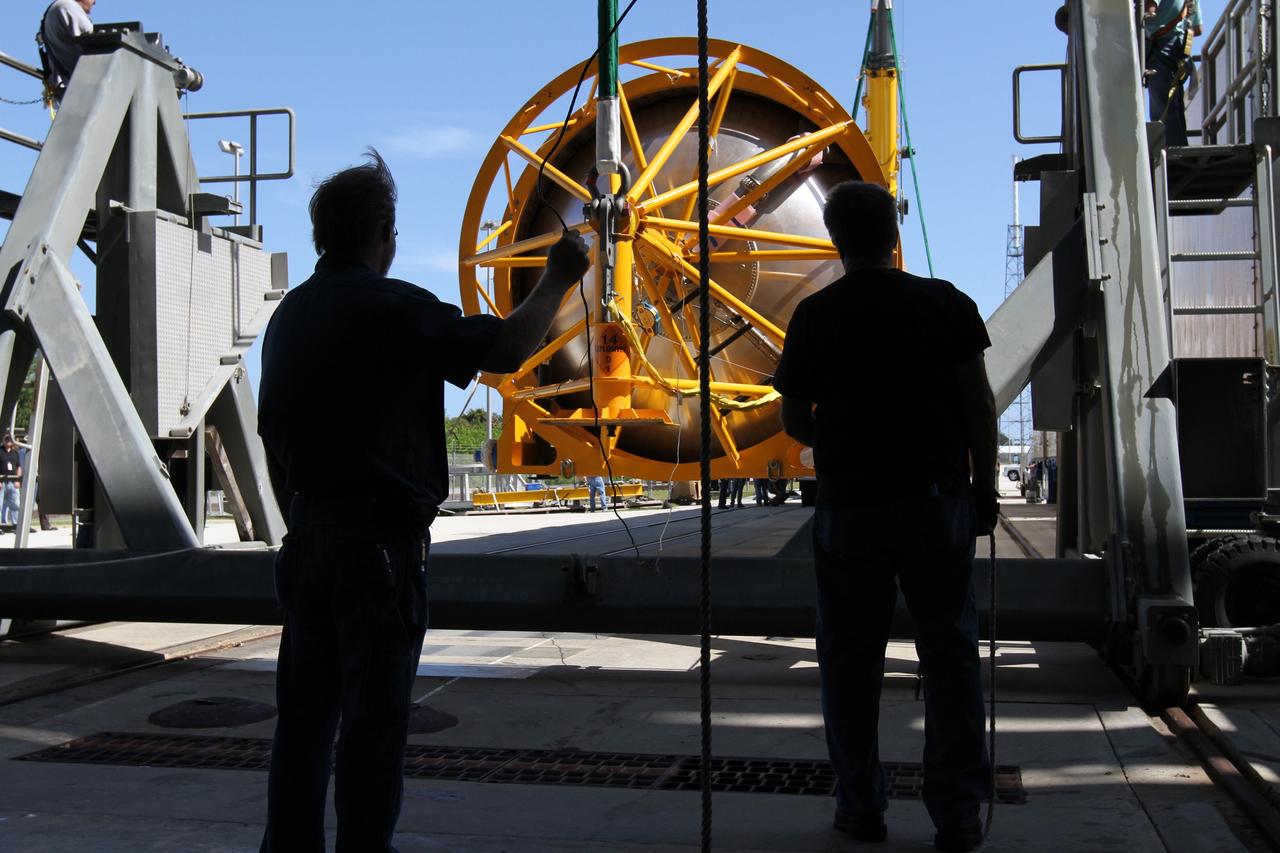
CAPE CANAVERAL, Fla. - At Launch Complex 41 at Cape Canaveral Air Force Station in Florida, preparations are underway to lift the first stage of the United Launch Alliance Atlas V rocket into the vertical position. The Atlas V is being prepared for the Radiation Belt Storm Probes, or RBSP, mission. NASA’s RBSP mission will help us understand the sun’s influence on Earth and near-Earth space by studying the Earth’s radiation belts on various scales of space and time. RBSP will begin its mission of exploration of Earth’s Van Allen radiation belts and the extremes of space weather after its launch aboard an Atlas V rocket. Launch is targeted for Aug. 23. For more information, visit http://www.nasa.gov/rbsp. Photo credit: NASA/Cory Huston
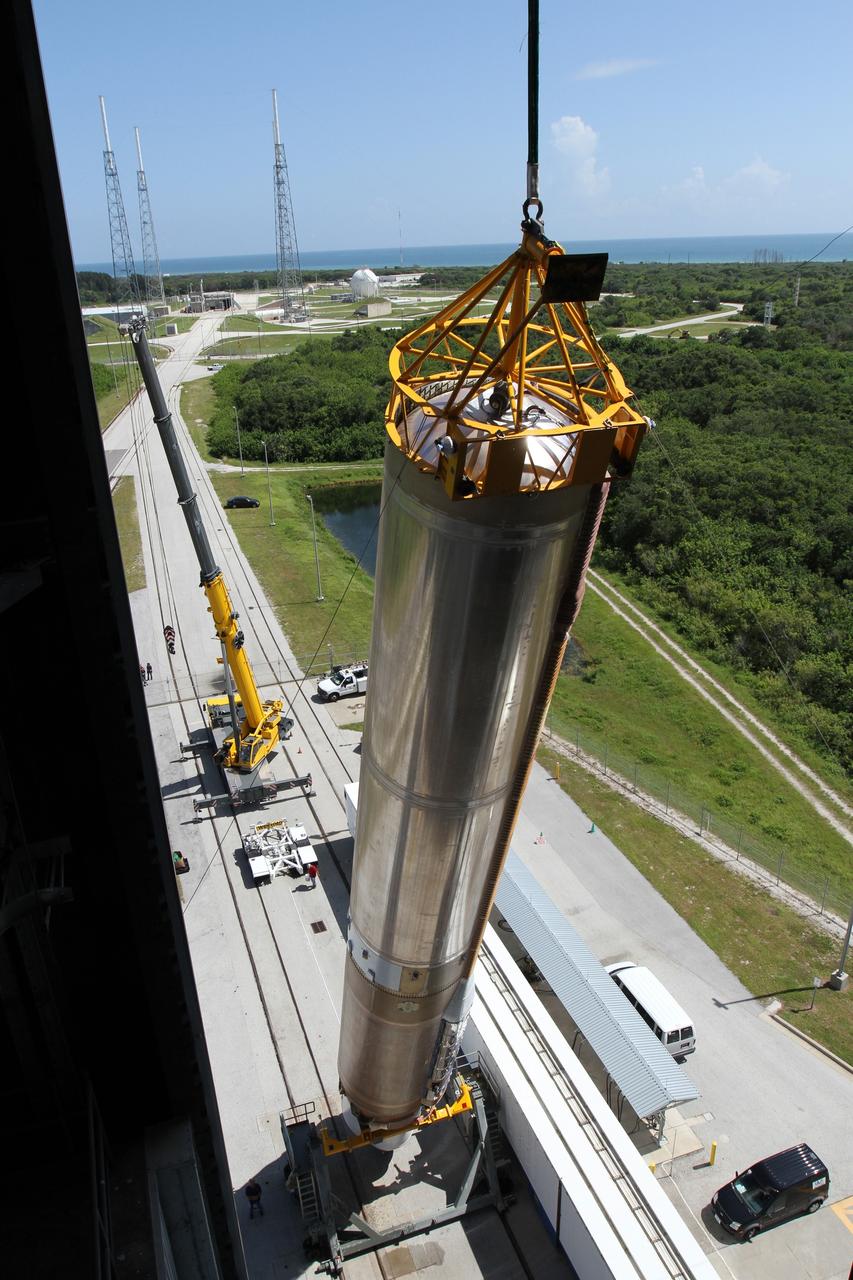
CAPE CANAVERAL, Fla. - At Launch Complex 41 at Cape Canaveral Air Force Station in Florida, a large crane lifts the first stage of the United Launch Alliance Atlas V rocket into the vertical position. The Atlas V is being prepared for the Radiation Belt Storm Probes, or RBSP, mission. NASA’s RBSP mission will help us understand the sun’s influence on Earth and near-Earth space by studying the Earth’s radiation belts on various scales of space and time. RBSP will begin its mission of exploration of Earth’s Van Allen radiation belts and the extremes of space weather after its launch aboard an Atlas V rocket. Launch is targeted for Aug. 23. For more information, visit http://www.nasa.gov/rbsp. Photo credit: NASA/Cory Huston
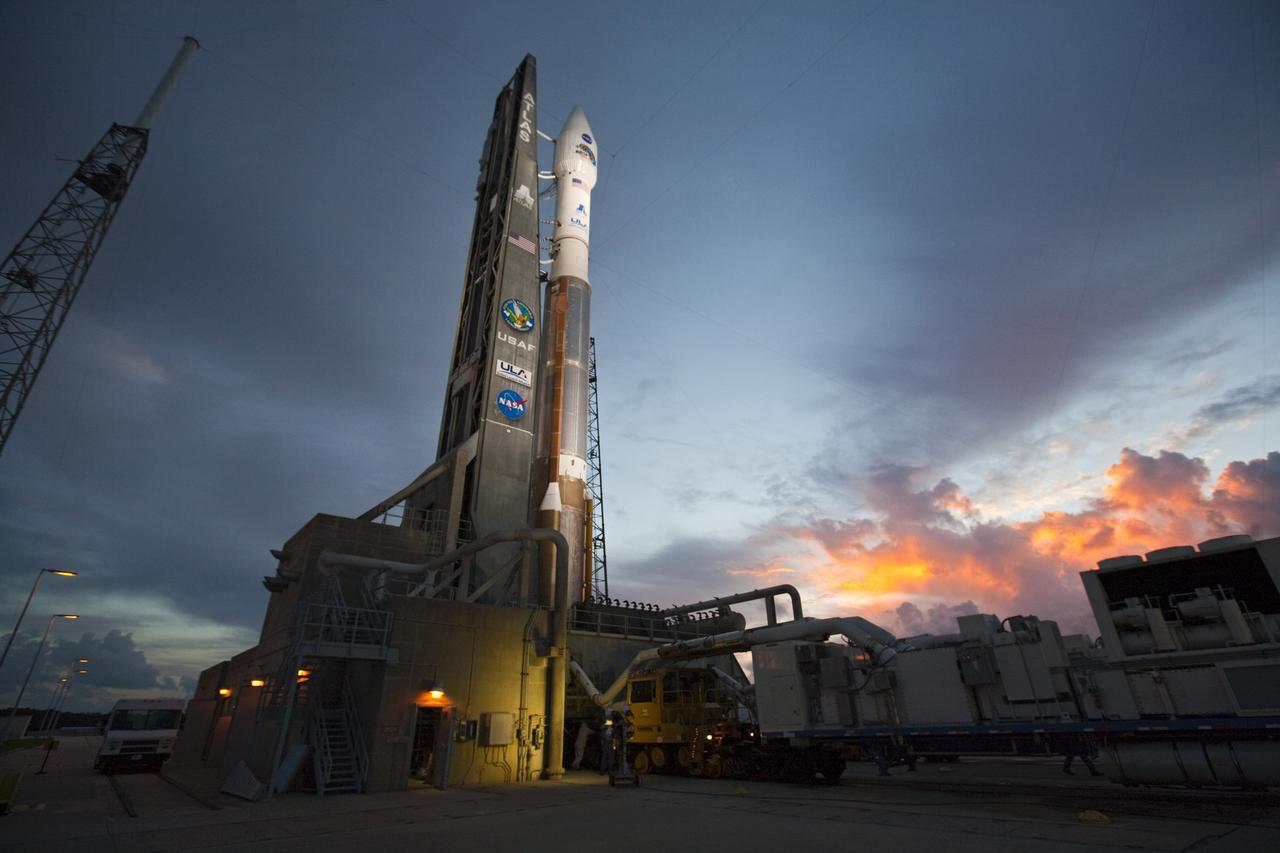
CAPE CANAVERAL, Fla. – An unfavorable weather forecast as a result of Tropical Storm Isaac approaching Florida kept NASA's twin Radiation Belt Storm Probes, or RBSP, on Space Launch Complex 41 at Cape Canaveral Air Force Station in Florida. Managers decided to roll the Atlas V rocket off the launch pad and back to the Vertical Integration Facility to ensure the launch vehicle and RBSP spacecraft are secured and protected from inclement weather. RBSP will explore changes in Earth's space environment caused by the sun -- known as "space weather" -- that can disable satellites, create power-grid failures and disrupt GPS service. The mission also will provide data on the fundamental radiation and particle acceleration processes throughout the universe. The launch is rescheduled for 4:05 a.m. EDT on Aug. 30, pending approval from the range. For more information on RBSP, visit http://www.nasa.gov/rbsp. Photo credit: NASA/Ben Smegelsky
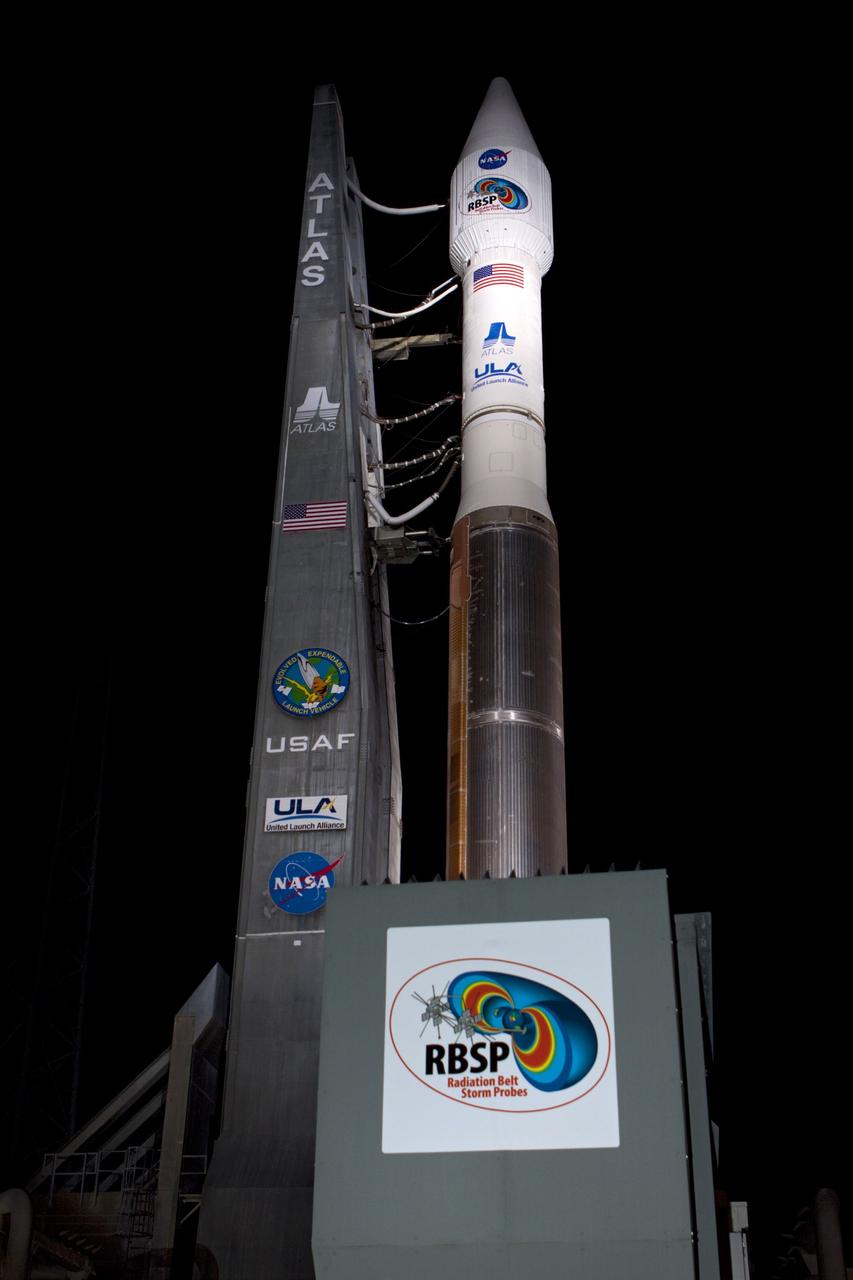
CAPE CANAVERAL, Fla. – An unfavorable weather forecast as a result of Tropical Storm Isaac approaching Florida kept NASA's twin Radiation Belt Storm Probes, or RBSP, on Space Launch Complex 41 at Cape Canaveral Air Force Station in Florida. Managers decided to roll the Atlas V rocket off the launch pad and back to the Vertical Integration Facility to ensure the launch vehicle and RBSP spacecraft are secured and protected from inclement weather. RBSP will explore changes in Earth's space environment caused by the sun -- known as "space weather" -- that can disable satellites, create power-grid failures and disrupt GPS service. The mission also will provide data on the fundamental radiation and particle acceleration processes throughout the universe. The launch is rescheduled for 4:05 a.m. EDT on Aug. 30, pending approval from the range. For more information on RBSP, visit http://www.nasa.gov/rbsp. Photo credit: NASA/Ben Smegelsky

CAPE CANAVERAL, Fla. - Inside the Astrotech payload processing facility near NASA’s Kennedy Space Center in Florida, technicians prepare Radiation Belt Storm Probes, or RBSP, spacecraft A for a spin test. During the spin test, the spacecraft is turned at a rate of 55 rpm to ensure that it is properly balanced. NASA’s RBSP mission will help us understand the sun’s influence on Earth and near-Earth space by studying the Earth’s radiation belts on various scales of space and time. RBSP will begin its mission of exploration of Earth’s Van Allen radiation belts and the extremes of space weather after its launch aboard a United Launch Alliance Atlas V rocket. Launch is targeted for Aug. 23. For more information, visit http://www.nasa.gov/rbsp. Photo credit: NASA/Charisse Nahser
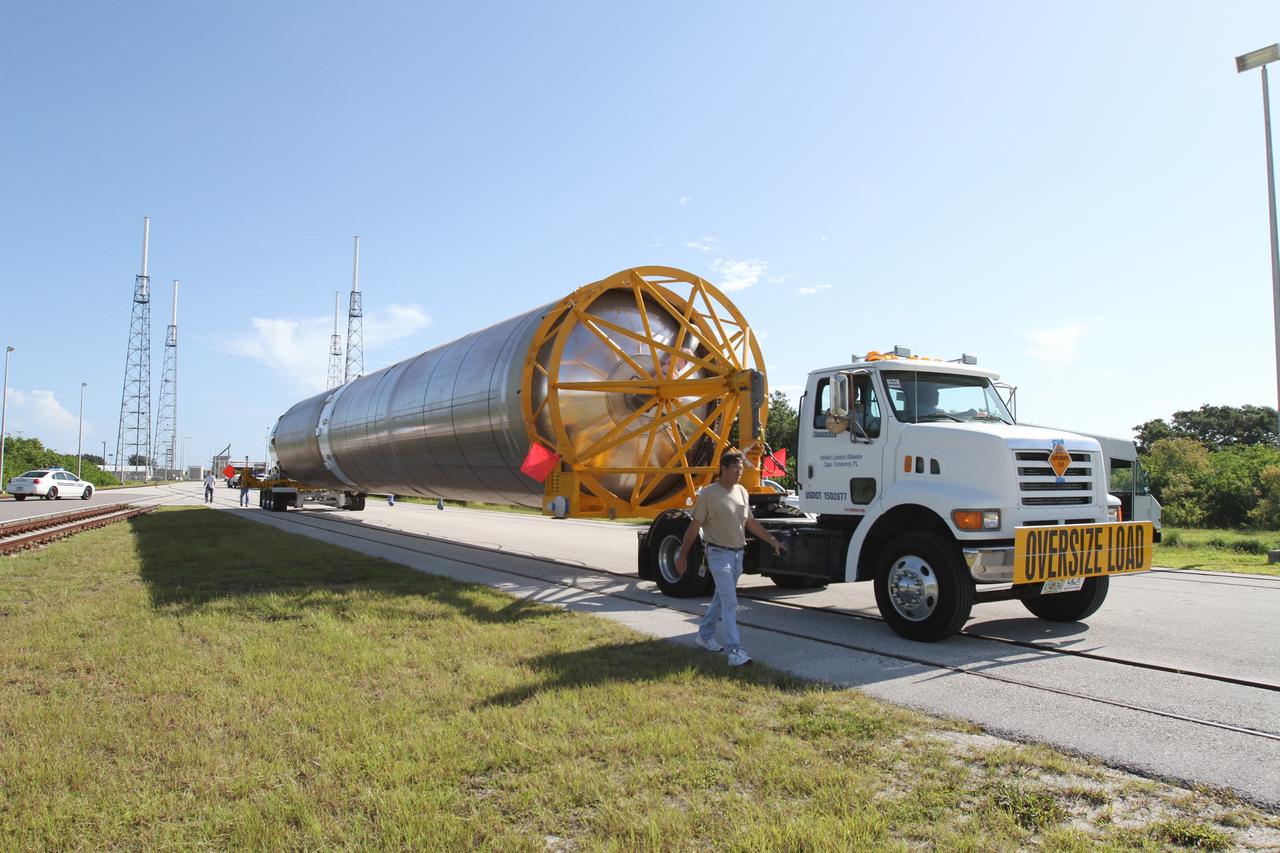
CAPE CANAVERAL, Fla. - The first stage of the United Launch Alliance Atlas V rocket is being transported to Launch Complex 41 at Cape Canaveral Air Force Station in Florida for the Radiation Belt Storm Probes, or RBSP, mission. NASA’s RBSP mission will help us understand the sun’s influence on Earth and near-Earth space by studying the Earth’s radiation belts on various scales of space and time. RBSP will begin its mission of exploration of Earth’s Van Allen radiation belts and the extremes of space weather after its launch aboard an Atlas V rocket. Launch is targeted for Aug. 23. For more information, visit http://www.nasa.gov/rbsp. Photo credit: NASA/Cory Huston
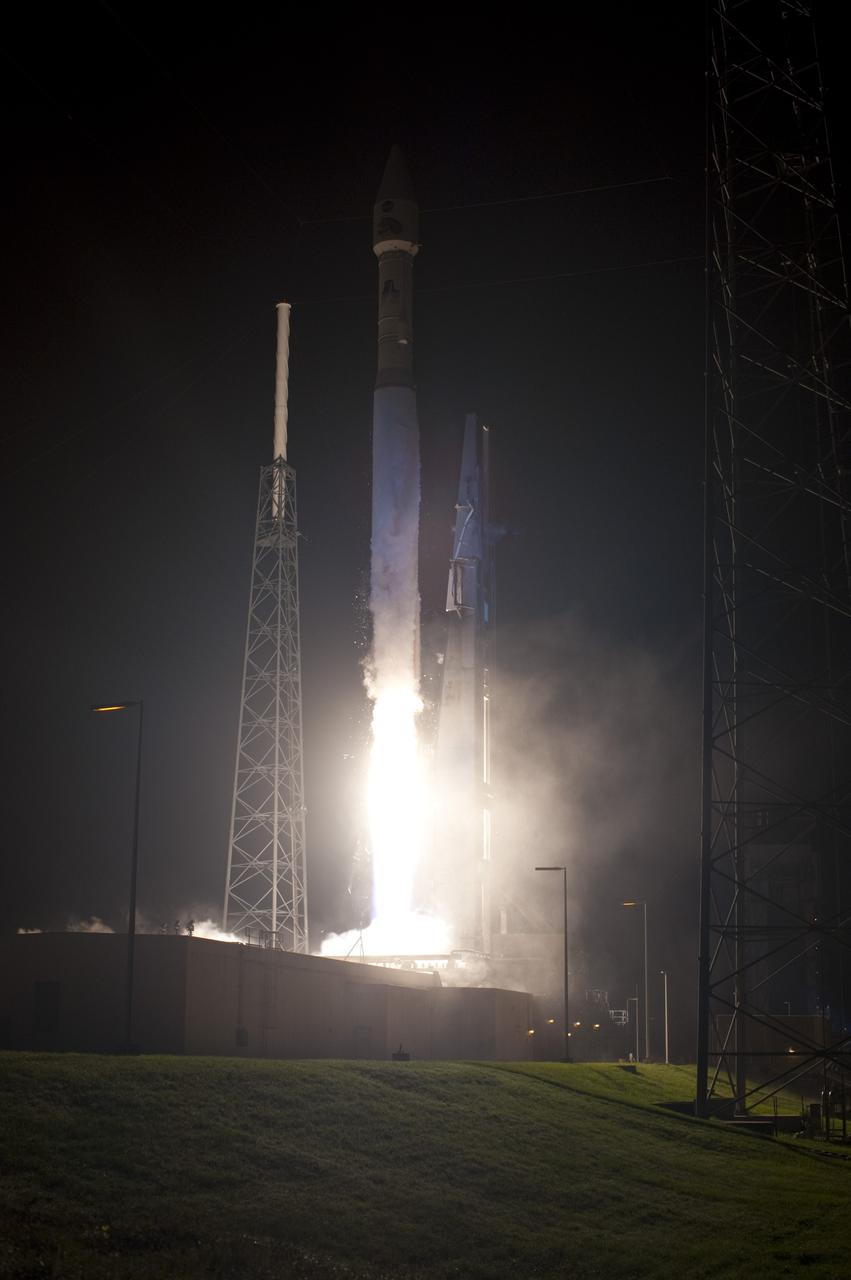
CAPE CANAVERAL, Fla. – The United Launch Alliance Atlas V rocket carrying NASA's Radiation Belt Storm Probes, or RBSP, lifts off Space Launch Complex 41 on Cape Canaveral Air Force Station in Florida at 4:05 a.m. EDT. RBSP will explore changes in Earth's space environment caused by the sun -- known as "space weather" -- that can disable satellites, create power-grid failures and disrupt GPS service. The mission also will provide data on the fundamental radiation and particle acceleration processes throughout the universe. For more information on RBSP, visit http://www.nasa.gov/rbsp. Photo credit: NASA/Tony Gray and Robert Murray
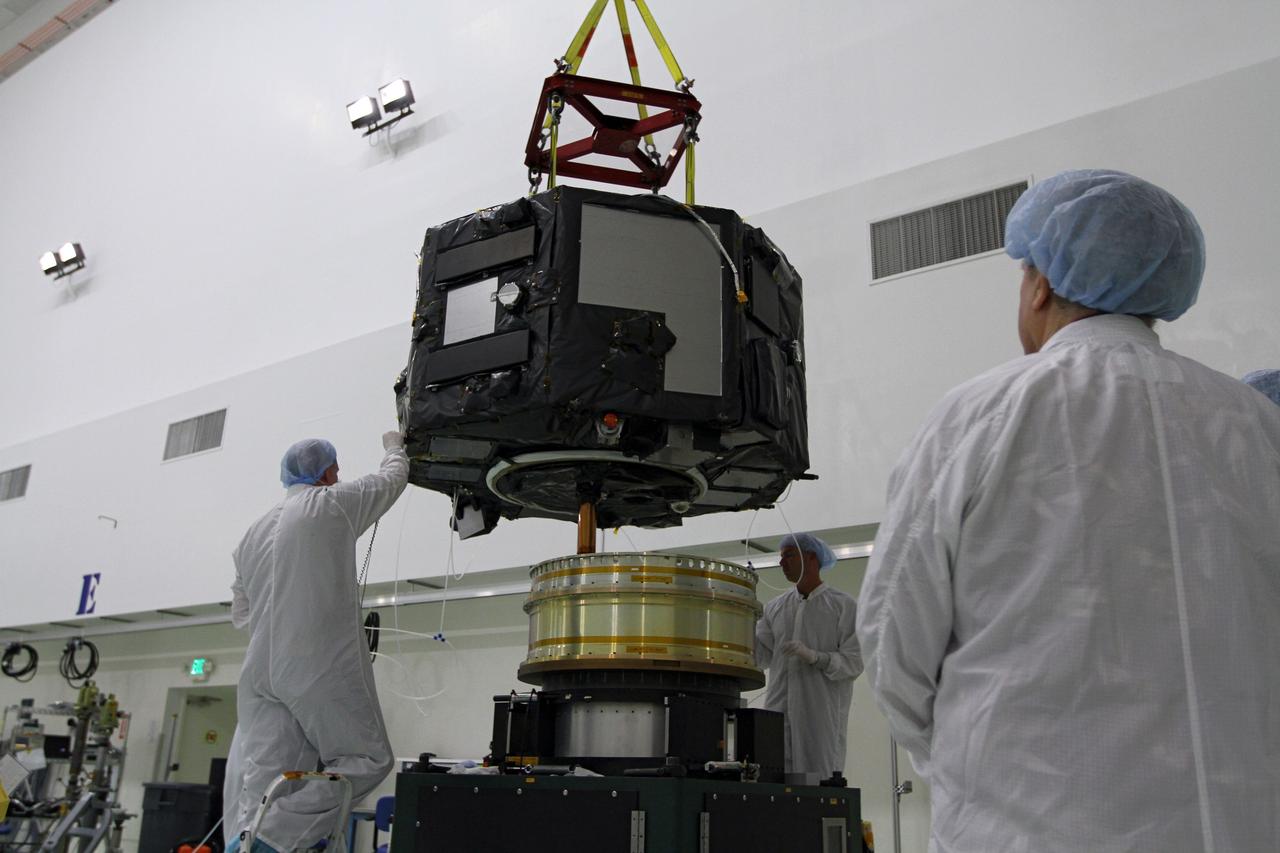
CAPE CANAVERAL, Fla. - Inside the Astrotech payload processing facility near NASA’s Kennedy Space Center in Florida, technicians prepare to place Radiation Belt Storm Probes, or RBSP, spacecraft A on a spin test stand. During the spin test, the spacecraft is turned at a rate of 55 rpm to ensure that it is properly balanced. NASA’s RBSP mission will help us understand the sun’s influence on Earth and near-Earth space by studying the Earth’s radiation belts on various scales of space and time. RBSP will begin its mission of exploration of Earth’s Van Allen radiation belts and the extremes of space weather after its launch aboard a United Launch Alliance Atlas V rocket. Launch is targeted for Aug. 23. For more information, visit http://www.nasa.gov/rbsp. Photo credit: NASA/Charisse Nahser
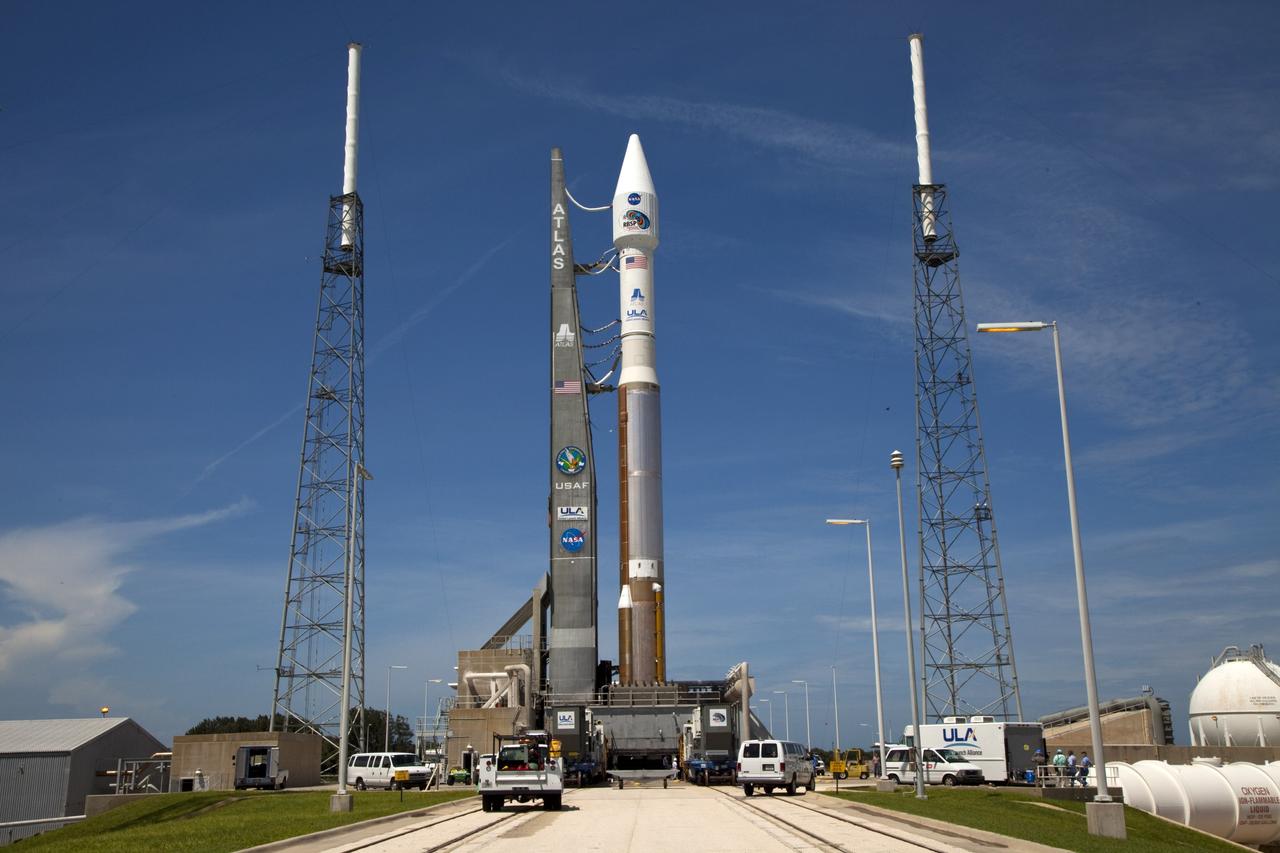
CAPE CANAVERAL, Fla. – At Cape Canaveral Air Force Station in Florida, the United Launch Alliance, or ULA, Atlas V rocket carrying NASA’s twin Radiation Belt Storm Probes, or RBSP, rolled out of the ULA Vertical Integration Facility at Space Launch Complex 41 at 1:59 p.m. EDT and has arrived at the launch pad. The Atlas V rocket had been rolled back to the facility on August 26 to ensure the launch vehicle and RBSP spacecraft were secured and protected from inclement weather caused by Tropical Storm Isaac. RBSP will explore changes in Earth's space environment caused by the sun -- known as "space weather" -- that can disable satellites, create power-grid failures and disrupt GPS service. The mission also will provide data on the fundamental radiation and particle acceleration processes throughout the universe. The launch is rescheduled for 4:05 a.m. EDT on Aug. 30. For more information on RBSP, visit http://www.nasa.gov/rbsp. Photo credit: NASA/Kim Shiflett
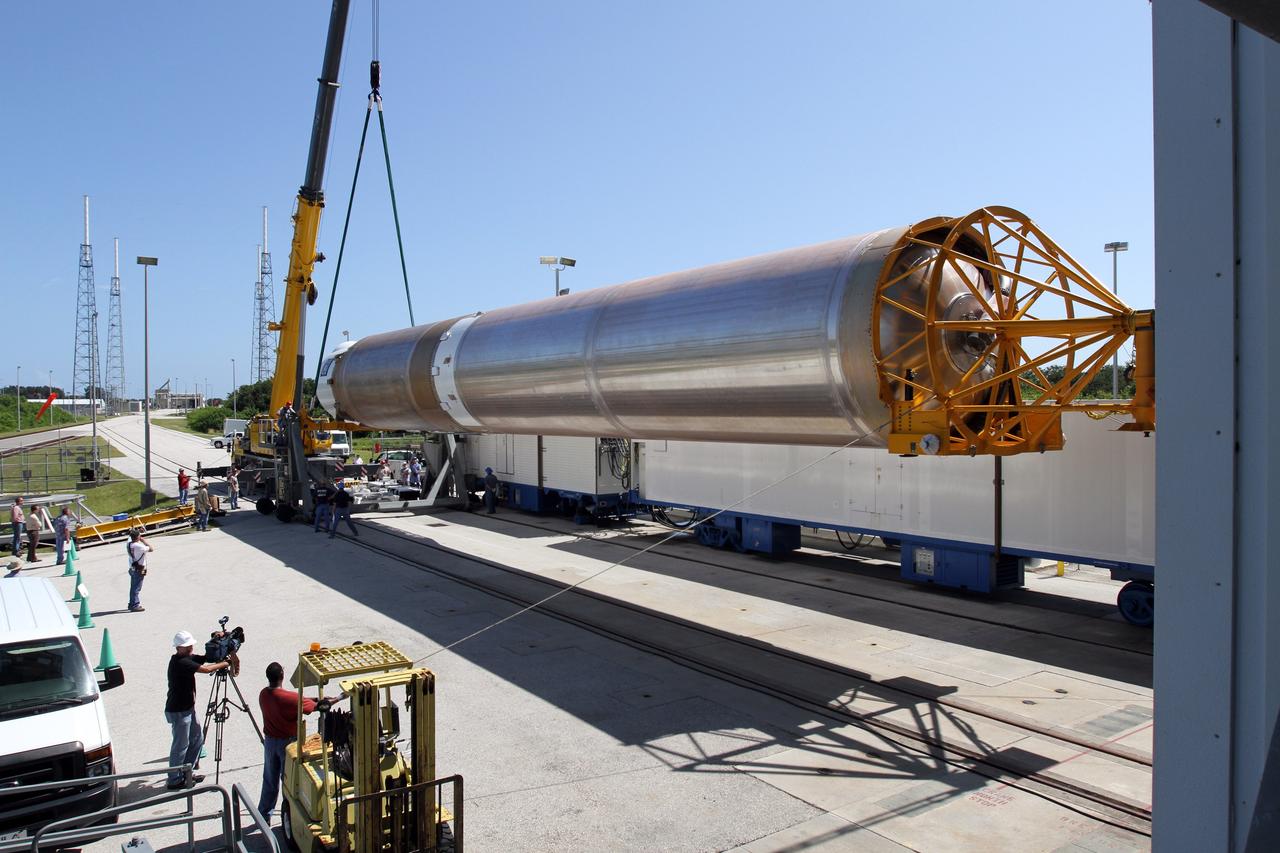
CAPE CANAVERAL, Fla. - At Launch Complex 41 at Cape Canaveral Air Force Station in Florida, technicians monitor the progress as a large crane begins to lift the first stage of the United Launch Alliance Atlas V rocket into the vertical position. The Atlas V is being prepared for the Radiation Belt Storm Probes, or RBSP, mission. NASA’s RBSP mission will help us understand the sun’s influence on Earth and near-Earth space by studying the Earth’s radiation belts on various scales of space and time. RBSP will begin its mission of exploration of Earth’s Van Allen radiation belts and the extremes of space weather after its launch aboard an Atlas V rocket. Launch is targeted for Aug. 23. For more information, visit http://www.nasa.gov/rbsp. Photo credit: NASA/Cory Huston
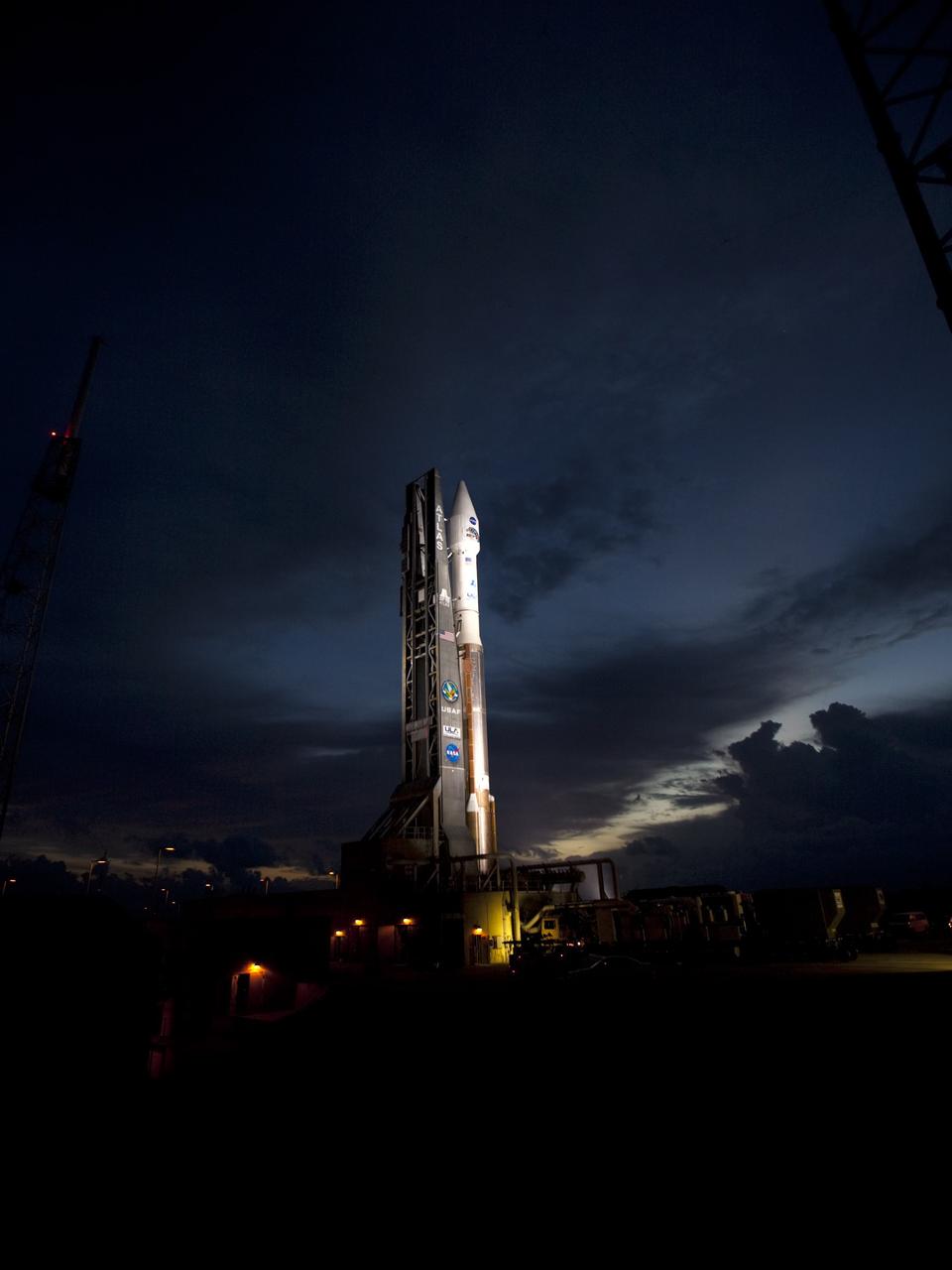
CAPE CANAVERAL, Fla. – At Cape Canaveral Air Force Station in Florida, the United Launch Alliance Atlas V rocket, carrying NASA’s twin Radiation Belt Storm Probes, or RBSP, is rolled back from Space Launch Complex 41 to the Vertical Integration Facility. The rocket and spacecraft will be secured and protected from inclement weather due to Tropical Storm Isaac. RBSP will explore changes in Earth's space environment caused by the sun -- known as "space weather" -- that can disable satellites, create power-grid failures and disrupt GPS service. The mission also will provide data on the fundamental radiation and particle acceleration processes throughout the universe. The launch is rescheduled for 4:05 a.m. EDT on Aug. 30, pending approval from the range. For more information on RBSP, visit http://www.nasa.gov/rbsp. Photo credit: NASA/Ben Smegelsky
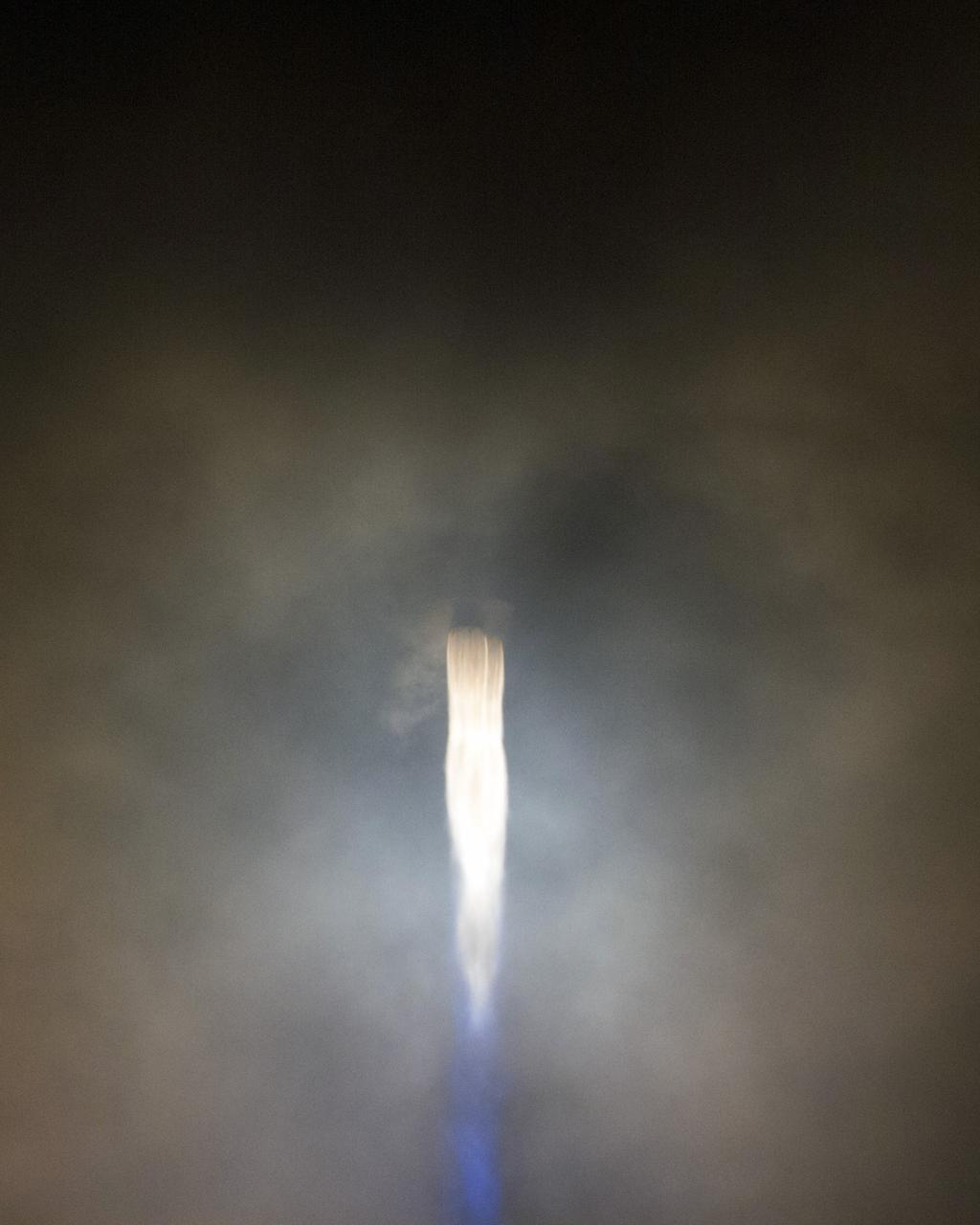
CAPE CANAVERAL, Fla. - With its engines burning bright against the late night sky, the United Launch Alliance Atlas V rocket carrying NASA's Radiation Belt Storm Probes, or RBSP, travels upward after lifting off Space Launch Complex 41 on Cape Canaveral Air Force Station in Florida at 4:05 a.m. EDT. RBSP will explore changes in Earth's space environment caused by the sun -- known as "space weather" -- that can disable satellites, create power-grid failures and disrupt GPS service. The mission also will provide data on the fundamental radiation and particle acceleration processes throughout the universe. For more information on RBSP, visit http://www.nasa.gov/rbsp. Photo credit: NASA/Kenny Allen
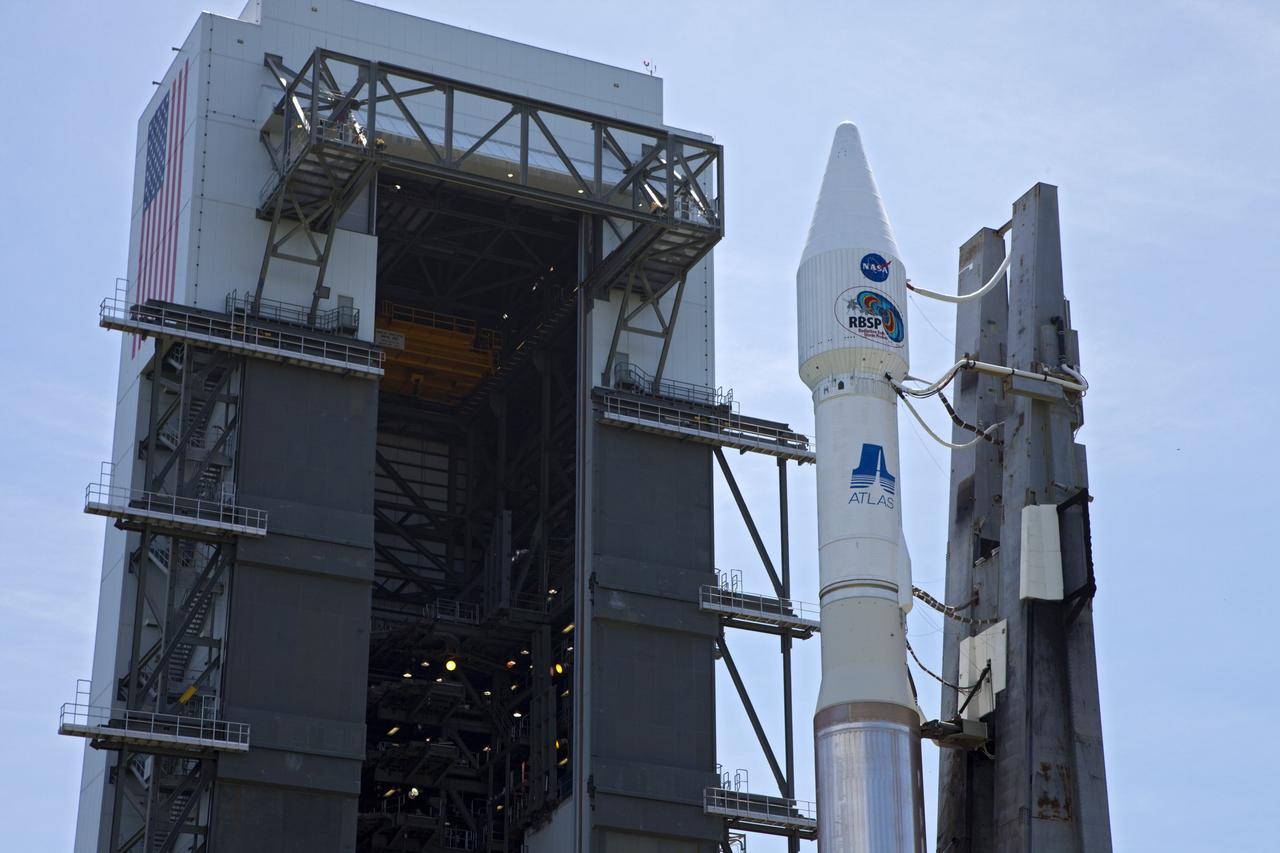
CAPE CANAVERAL, Fla. – At Cape Canaveral Air Force Station in Florida, the United Launch Alliance, or ULA, Atlas V rocket carrying NASA’s twin Radiation Belt Storm Probes, or RBSP, began rolling out of the ULA Vertical Integration Facility at Space Launch Complex 41 at 1:59 p.m. EDT heading to the launch pad. The Atlas V rocket had been rolled back to the facility on August 26 to ensure the launch vehicle and RBSP spacecraft were secured and protected from inclement weather caused by Tropical Storm Isaac. RBSP will explore changes in Earth's space environment caused by the sun -- known as "space weather" -- that can disable satellites, create power-grid failures and disrupt GPS service. The mission also will provide data on the fundamental radiation and particle acceleration processes throughout the universe. The launch is rescheduled for 4:05 a.m. EDT on Aug. 30. For more information on RBSP, visit http://www.nasa.gov/rbsp. Photo credit: NASA/Kim Shiflett
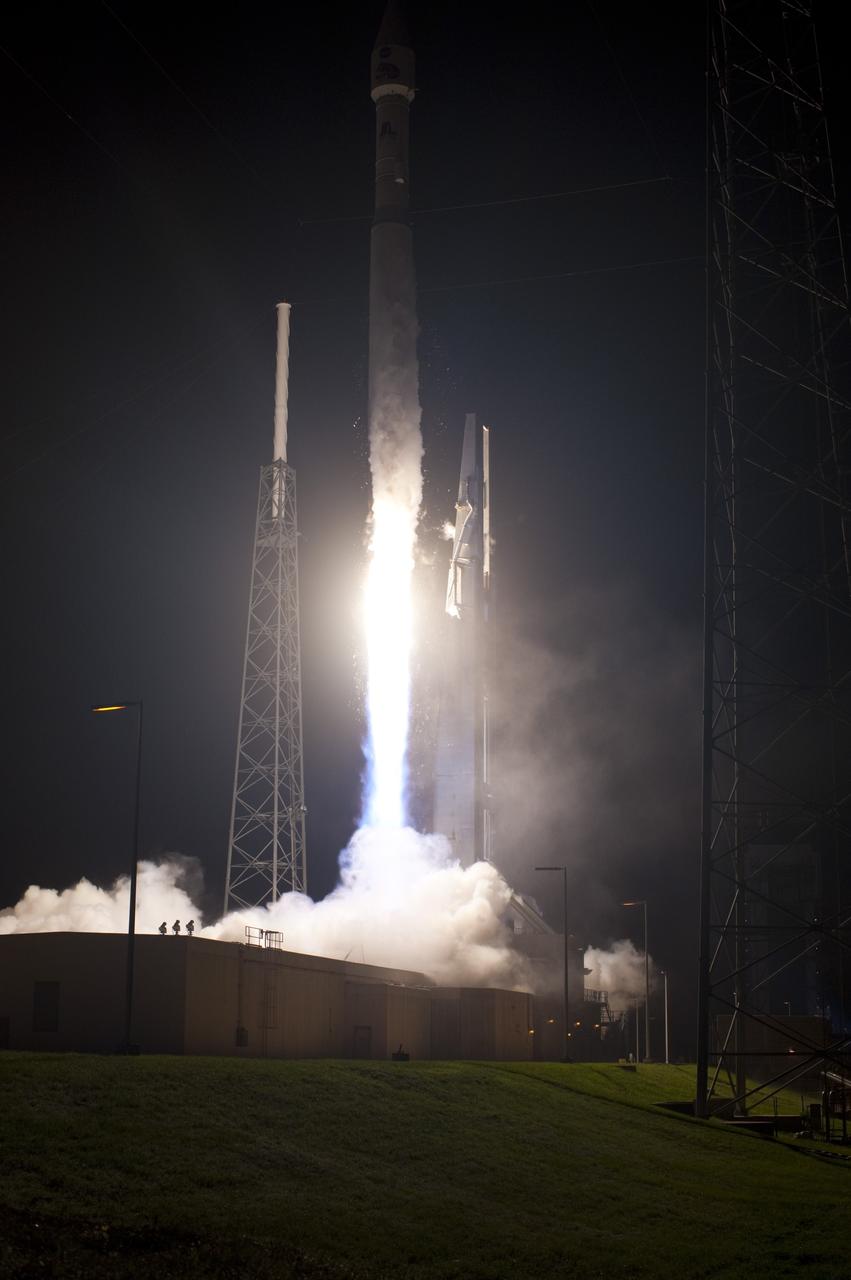
CAPE CANAVERAL, Fla. – The United Launch Alliance Atlas V rocket carrying NASA's Radiation Belt Storm Probes, or RBSP, lifts off Space Launch Complex 41 on Cape Canaveral Air Force Station in Florida at 4:05 a.m. EDT. RBSP will explore changes in Earth's space environment caused by the sun -- known as "space weather" -- that can disable satellites, create power-grid failures and disrupt GPS service. The mission also will provide data on the fundamental radiation and particle acceleration processes throughout the universe. For more information on RBSP, visit http://www.nasa.gov/rbsp. Photo credit: NASA/Tony Gray and Robert Murray
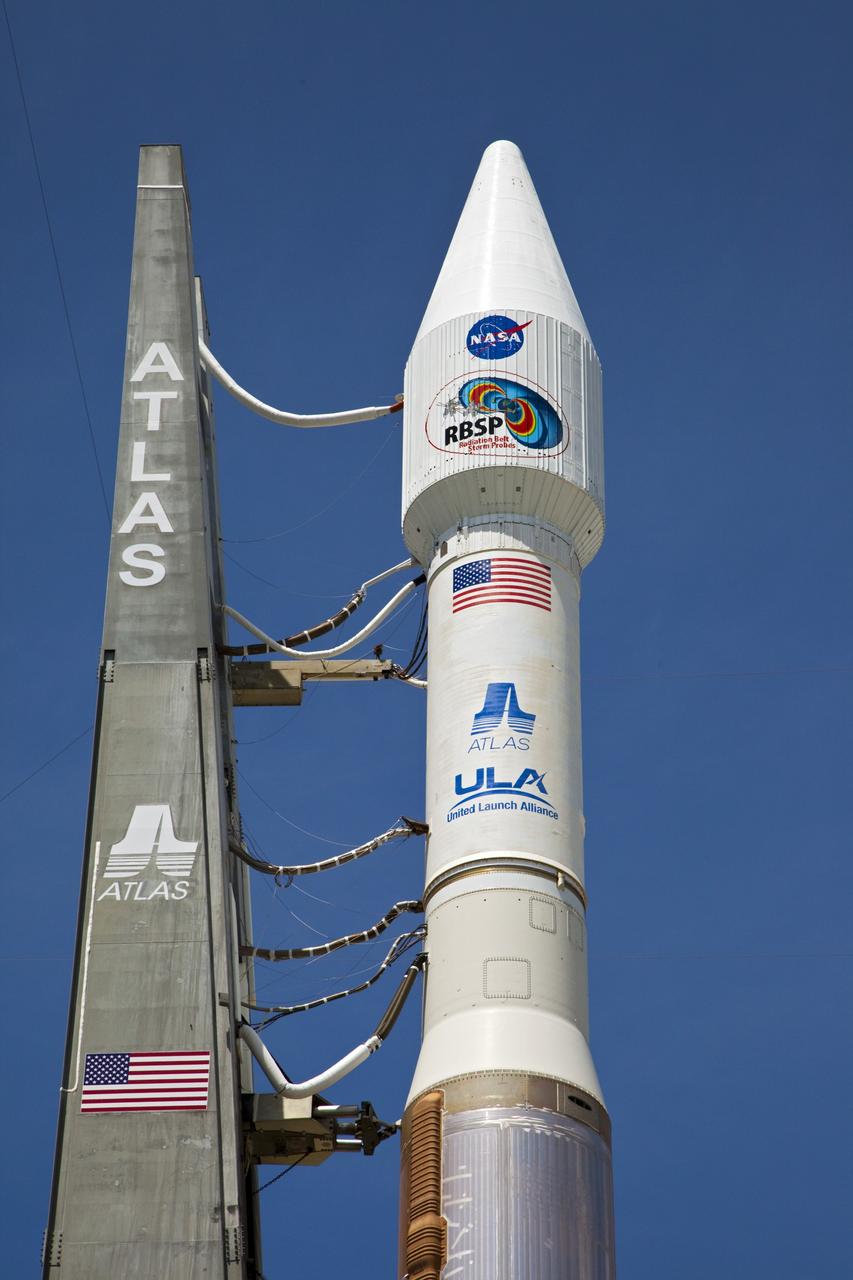
CAPE CANAVERAL, Fla. – At Cape Canaveral Air Force Station in Florida, the United Launch Alliance, or ULA, Atlas V rocket carrying NASA’s twin Radiation Belt Storm Probes, or RBSP, rolled out of the ULA Vertical Integration Facility at Space Launch Complex 41 at 1:59 p.m. EDT and is on its way to the launch pad. The Atlas V rocket had been rolled back to the facility on August 26 to ensure the launch vehicle and RBSP spacecraft were secured and protected from inclement weather caused by Tropical Storm Isaac. RBSP will explore changes in Earth's space environment caused by the sun -- known as "space weather" -- that can disable satellites, create power-grid failures and disrupt GPS service. The mission also will provide data on the fundamental radiation and particle acceleration processes throughout the universe. The launch is rescheduled for 4:05 a.m. EDT on Aug. 30. For more information on RBSP, visit http://www.nasa.gov/rbsp. Photo credit: NASA/Kim Shiflett
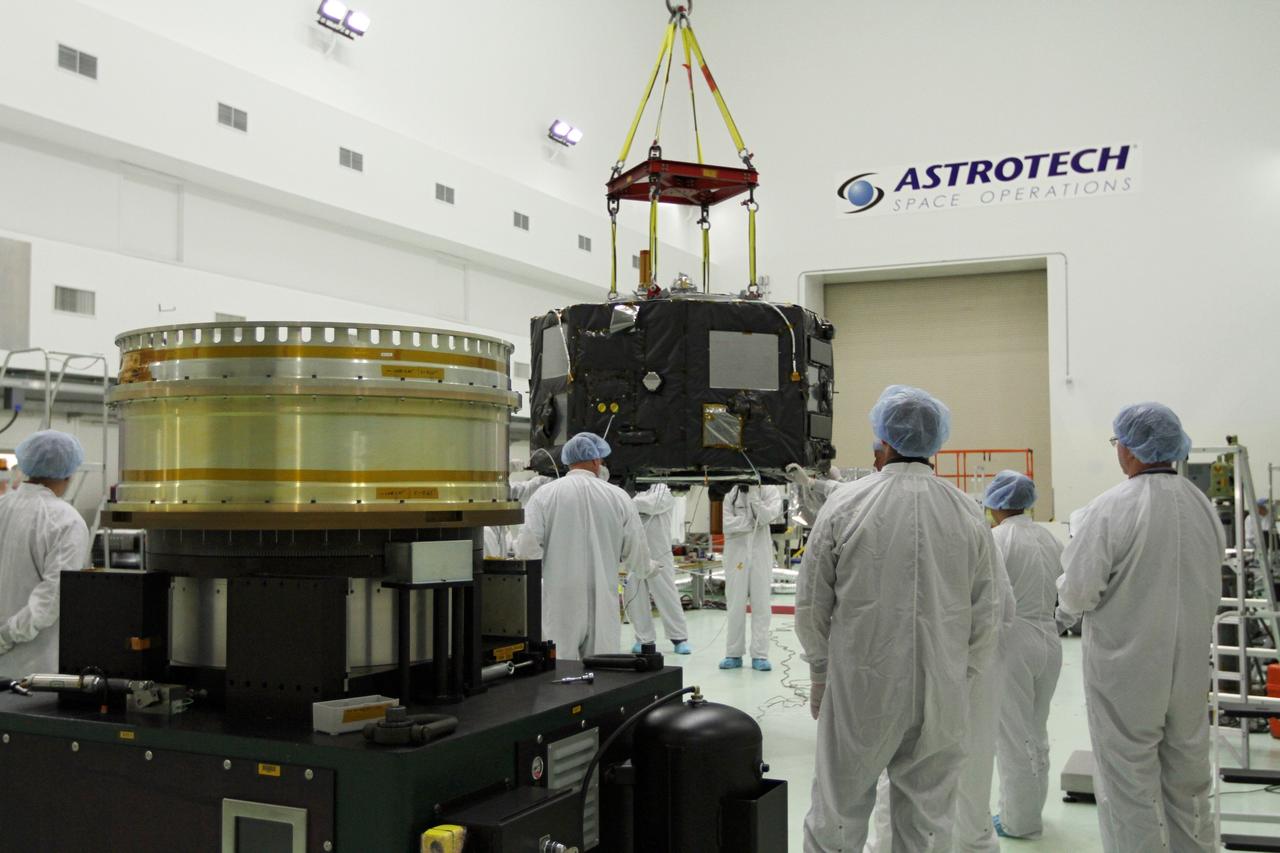
CAPE CANAVERAL, Fla. - Inside the Astrotech payload processing facility near NASA’s Kennedy Space Center in Florida, technicians prepare Radiation Belt Storm Probes, or RBSP, spacecraft A for a spin test. During the spin test, the spacecraft is turned at a rate of 55 rpm to ensure that it is properly balanced. NASA’s RBSP mission will help us understand the sun’s influence on Earth and near-Earth space by studying the Earth’s radiation belts on various scales of space and time. RBSP will begin its mission of exploration of Earth’s Van Allen radiation belts and the extremes of space weather after its launch aboard a United Launch Alliance Atlas V rocket. Launch is targeted for Aug. 23. For more information, visit http://www.nasa.gov/rbsp. Photo credit: NASA/Charisse Nahser

CAPE CANAVERAL, Fla. – The United Launch Alliance Atlas V rocket carrying NASA's Radiation Belt Storm Probes, or RBSP, lifts off Space Launch Complex 41 on Cape Canaveral Air Force Station in Florida at 4:05 a.m. EDT. RBSP will explore changes in Earth's space environment caused by the sun -- known as "space weather" -- that can disable satellites, create power-grid failures and disrupt GPS service. The mission also will provide data on the fundamental radiation and particle acceleration processes throughout the universe. For more information on RBSP, visit http://www.nasa.gov/rbsp. Photo credit: NASA/Tony Gray and Robert Murray
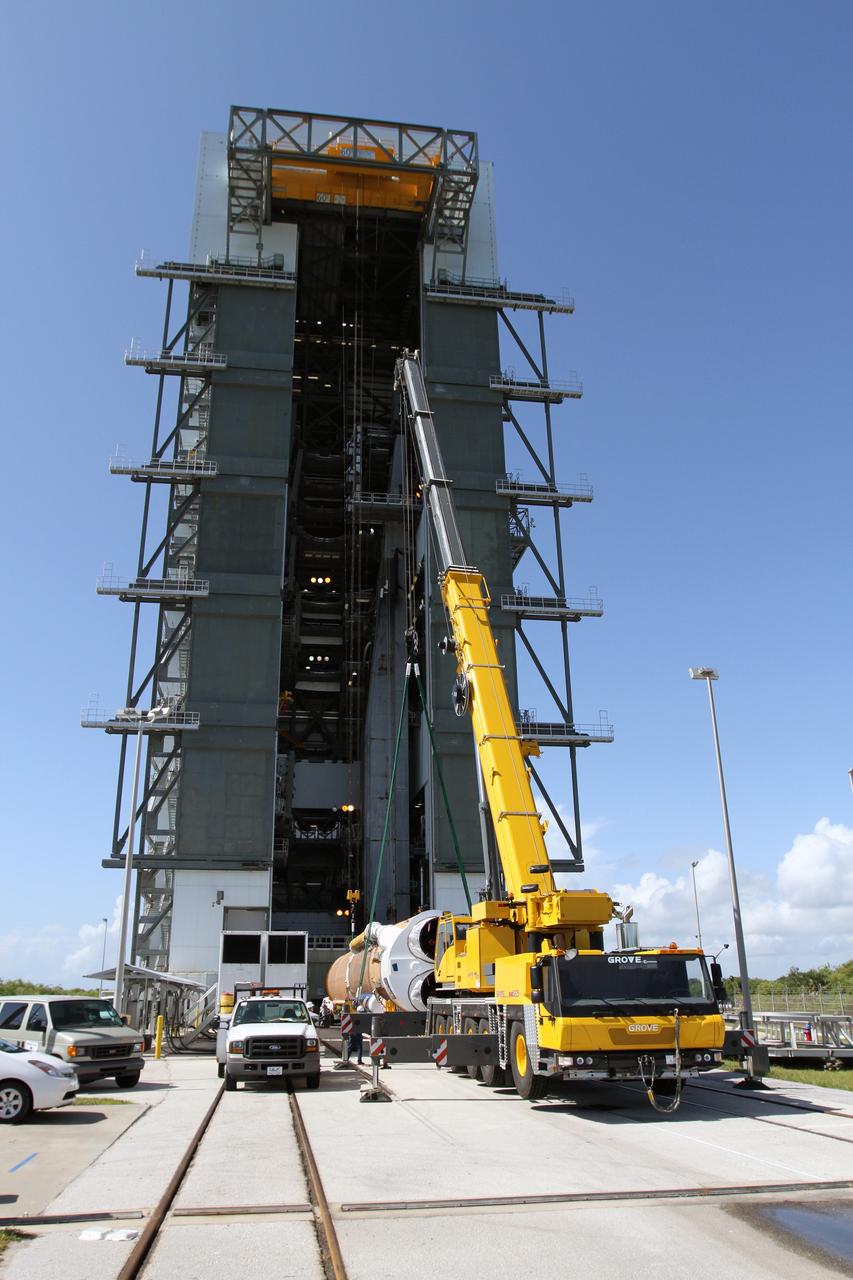
CAPE CANAVERAL, Fla. - At Launch Complex 41 at Cape Canaveral Air Force Station in Florida, preparations are underway to lift the first stage of the United Launch Alliance Atlas V rocket into the vertical position. The Atlas V is being prepared for the Radiation Belt Storm Probes, or RBSP, mission. NASA’s RBSP mission will help us understand the sun’s influence on Earth and near-Earth space by studying the Earth’s radiation belts on various scales of space and time. RBSP will begin its mission of exploration of Earth’s Van Allen radiation belts and the extremes of space weather after its launch aboard an Atlas V rocket. Launch is targeted for Aug. 23. For more information, visit http://www.nasa.gov/rbsp. Photo credit: NASA/Cory Huston
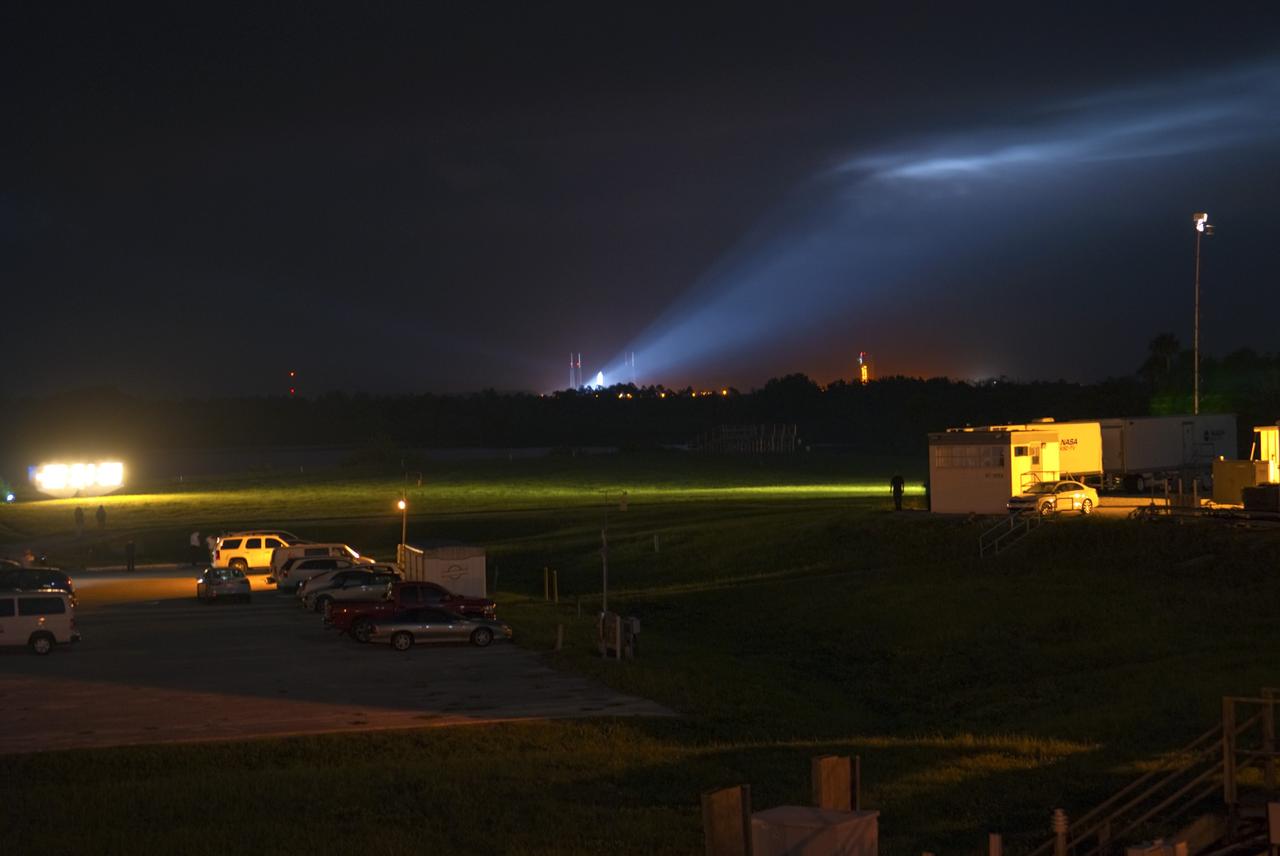
CAPE CANAVERAL, Fla. – Spotlights bounce off the clouds over Space Launch Complex 41 on Cape Canaveral Air Force Station as NASA's Radiation Belt Storm Probes, or RBSP, lift off the pad at 4:05 a.m. EDT aboard a United Launch Alliance Atlas V rocket. In the foreground, at left, is the countdown clock at the Press Site at NASA's Kennedy Space Center. RBSP will explore changes in Earth's space environment caused by the sun -- known as "space weather" -- that can disable satellites, create power-grid failures and disrupt GPS service. The mission also will provide data on the fundamental radiation and particle acceleration processes throughout the universe. For more information on RBSP, visit http://www.nasa.gov/rbsp. Photo credit: NASA/David Lee
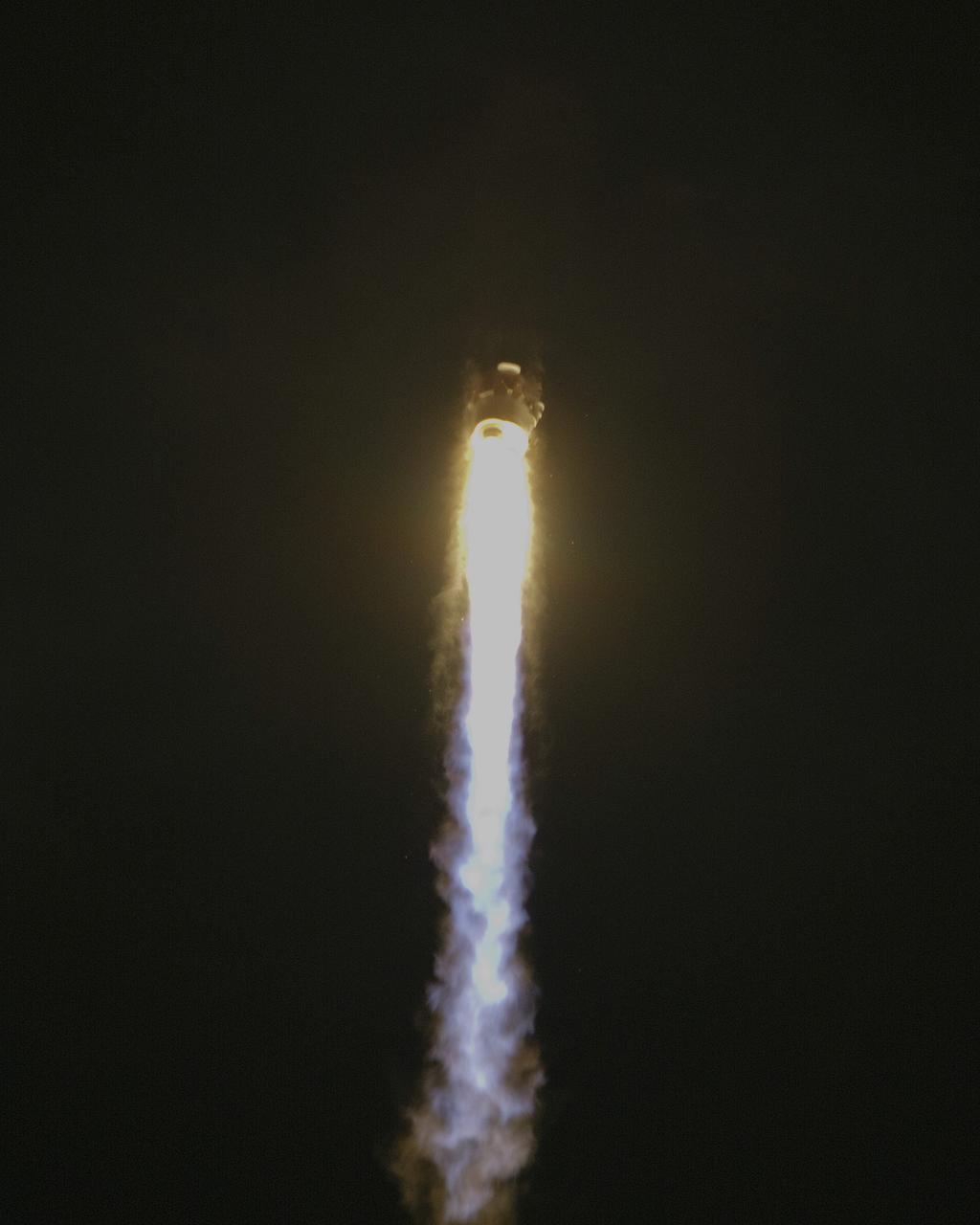
CAPE CANAVERAL, Fla. - With its engines burning bright against the late night sky, the United Launch Alliance Atlas V rocket carrying NASA's Radiation Belt Storm Probes, or RBSP, travels upward after lifting off Space Launch Complex 41 on Cape Canaveral Air Force Station in Florida at 4:05 a.m. EDT. RBSP will explore changes in Earth's space environment caused by the sun -- known as "space weather" -- that can disable satellites, create power-grid failures and disrupt GPS service. The mission also will provide data on the fundamental radiation and particle acceleration processes throughout the universe. For more information on RBSP, visit http://www.nasa.gov/rbsp. Photo credit: NASA/Kenny Allen
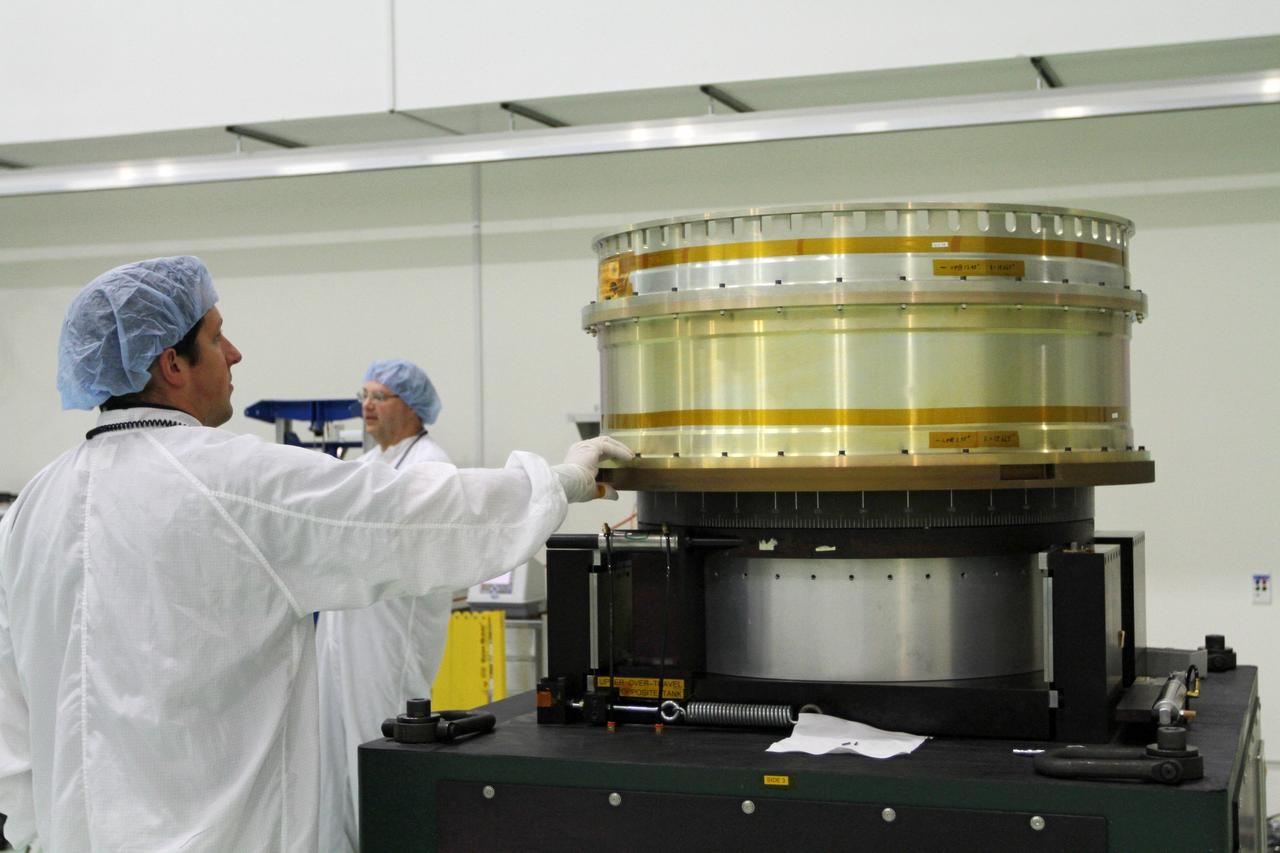
CAPE CANAVERAL, Fla. - Inside the Astrotech payload processing facility near NASA’s Kennedy Space Center in Florida, technicians prepare the test stand for Radiation Belt Storm Probes, or RBSP, spacecraft A for a spin test. During the spin test, the spacecraft is turned at a rate of 55 rpm to ensure that it is properly balanced. NASA’s RBSP mission will help us understand the sun’s influence on Earth and near-Earth space by studying the Earth’s radiation belts on various scales of space and time. RBSP will begin its mission of exploration of Earth’s Van Allen radiation belts and the extremes of space weather after its launch aboard a United Launch Alliance Atlas V rocket. Launch is targeted for Aug. 23. For more information, visit http://www.nasa.gov/rbsp. Photo credit: NASA/Charisse Nahser
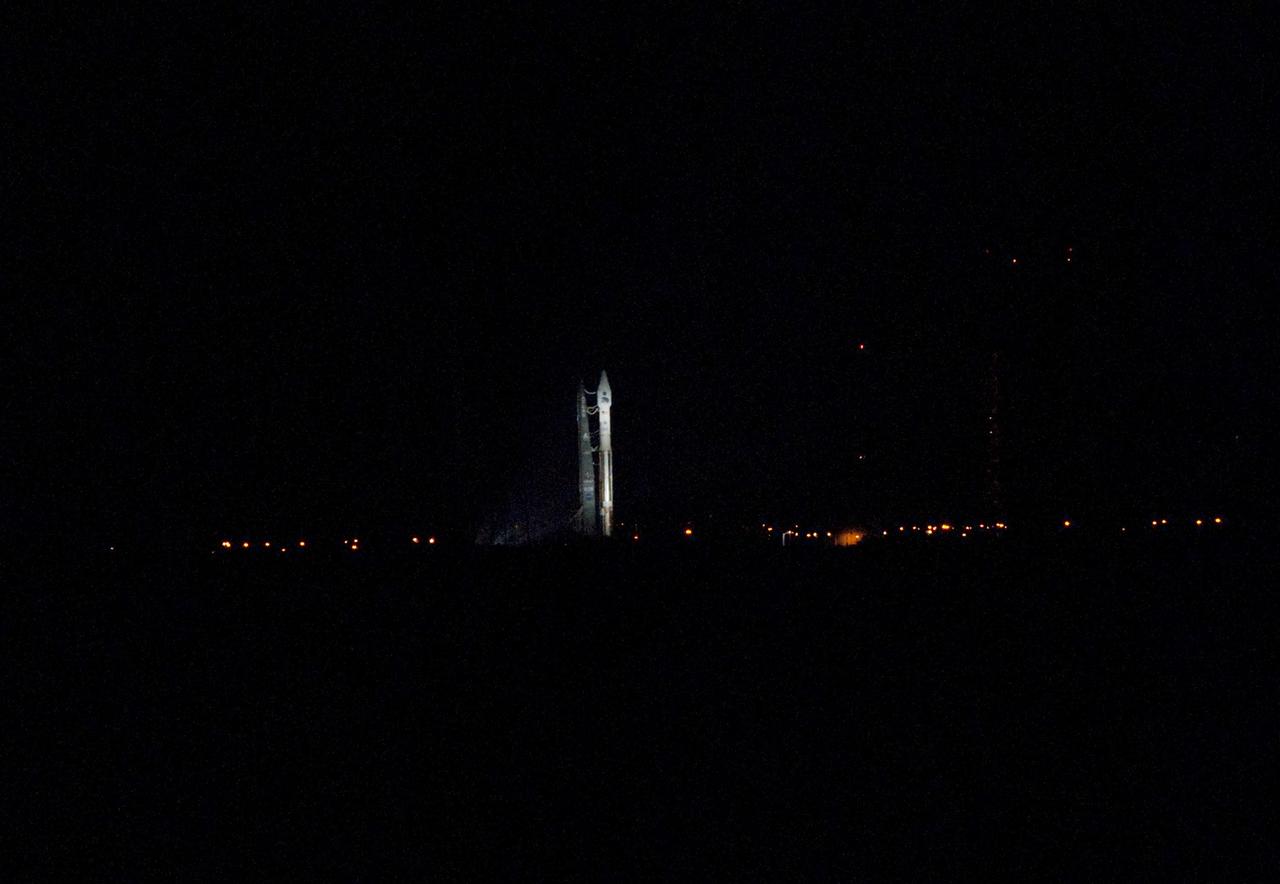
CAPE CANAVERAL, Fla. – The United Launch Alliance Atlas V rocket carrying NASA's Radiation Belt Storm Probes, or RBSP, is a breath away from lifting off Space Launch Complex 41 on Cape Canaveral Air Force Station in Florida at 4:05 a.m. EDT. RBSP will explore changes in Earth's space environment caused by the sun -- known as "space weather" -- that can disable satellites, create power-grid failures and disrupt GPS service. The mission also will provide data on the fundamental radiation and particle acceleration processes throughout the universe. For more information on RBSP, visit http://www.nasa.gov/rbsp. Photo credit: NASA/Ben Smegelsky

CAPE CANAVERAL, Fla. – The United Launch Alliance Atlas V rocket carrying NASA's Radiation Belt Storm Probes, or RBSP, disappears into the night sky over Space Launch Complex 41 on Cape Canaveral Air Force Station in Florida at 4:05 a.m. EDT. RBSP will explore changes in Earth's space environment caused by the sun -- known as "space weather" -- that can disable satellites, create power-grid failures and disrupt GPS service. The mission also will provide data on the fundamental radiation and particle acceleration processes throughout the universe. For more information on RBSP, visit http://www.nasa.gov/rbsp. Photo credit: NASA/Jim Grossmann
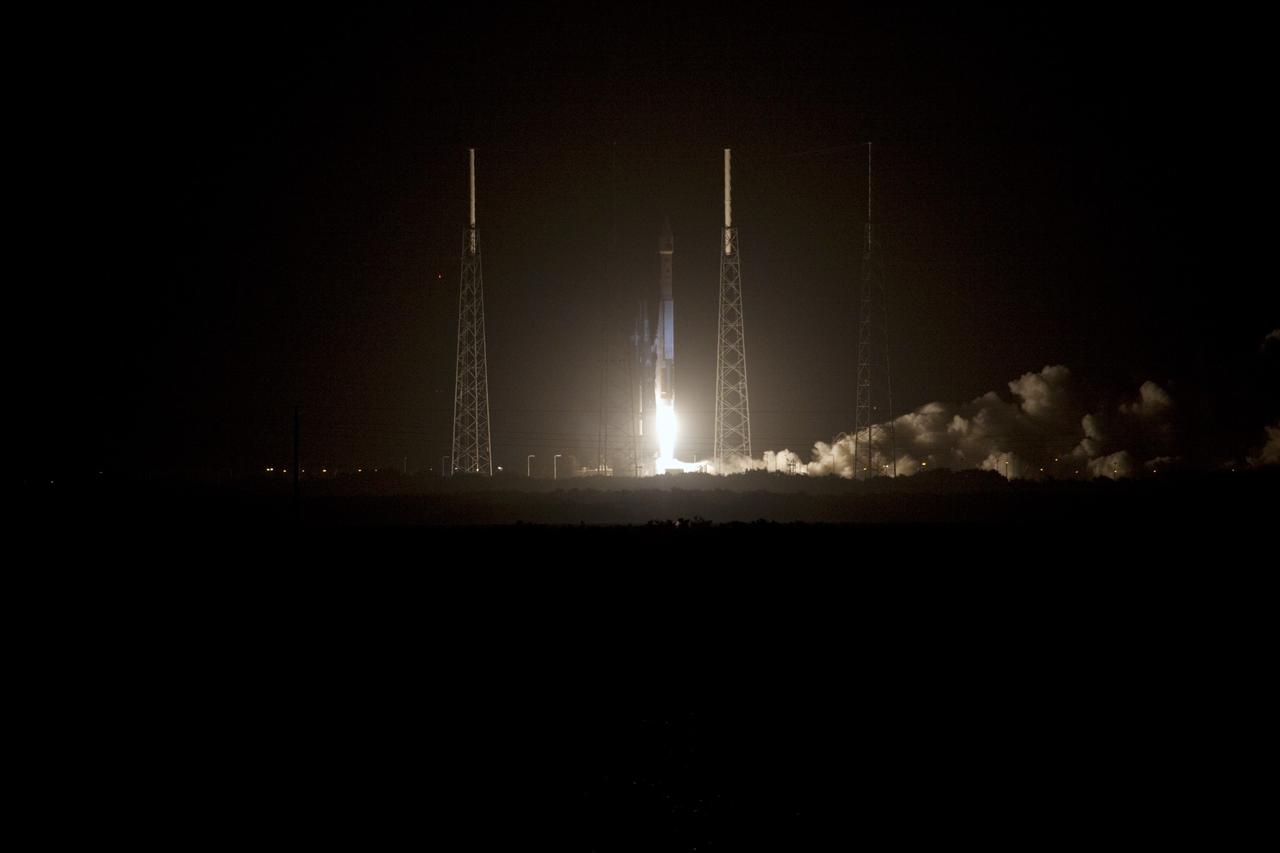
CAPE CANAVERAL, Fla. – The United Launch Alliance Atlas V rocket carrying NASA's Radiation Belt Storm Probes, or RBSP, rumbles off Space Launch Complex 41 on Cape Canaveral Air Force Station in Florida at 4:05 a.m. EDT. RBSP will explore changes in Earth's space environment caused by the sun -- known as "space weather" -- that can disable satellites, create power-grid failures and disrupt GPS service. The mission also will provide data on the fundamental radiation and particle acceleration processes throughout the universe. For more information on RBSP, visit http://www.nasa.gov/rbsp. Photo credit: NASA/Jim Grossmann
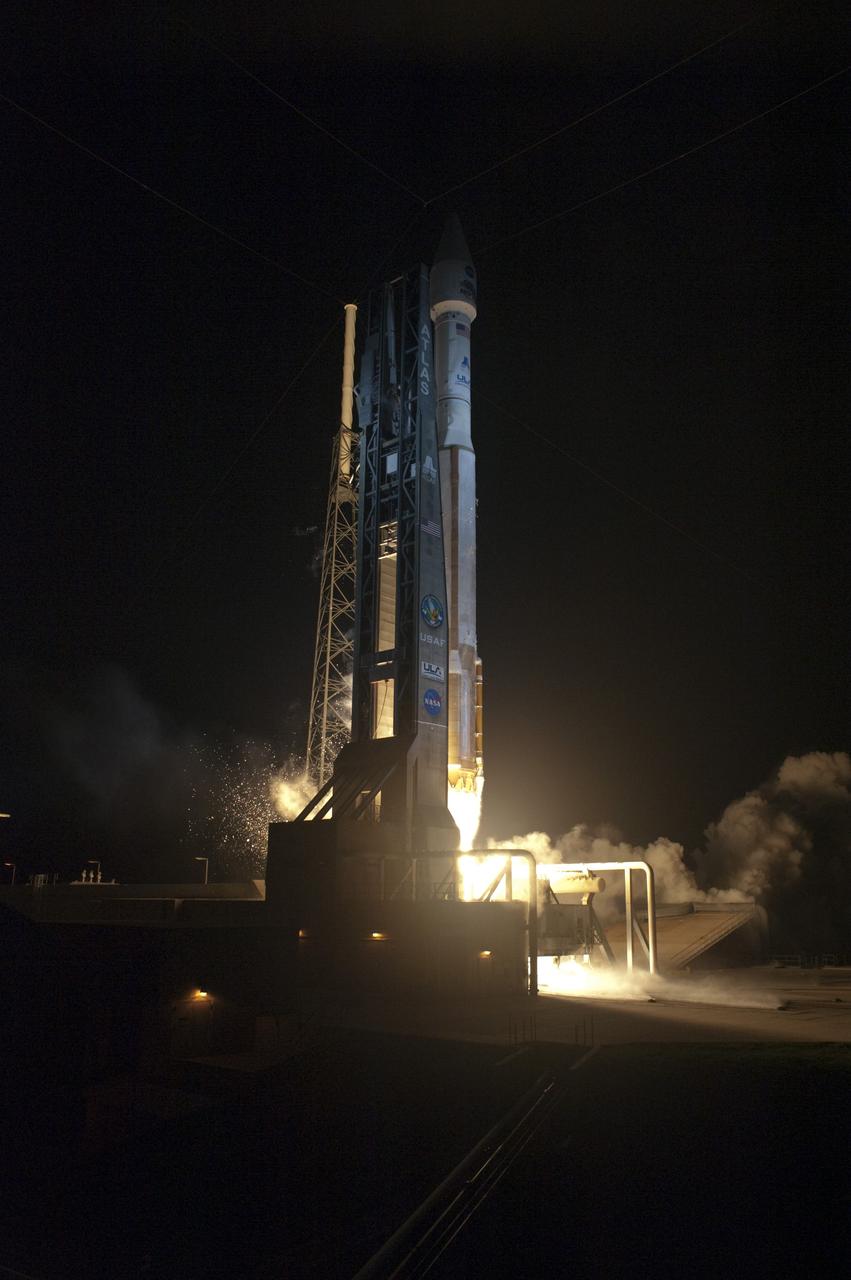
CAPE CANAVERAL, Fla. – The United Launch Alliance Atlas V rocket carrying NASA's Radiation Belt Storm Probes, or RBSP, lifts off Space Launch Complex 41 on Cape Canaveral Air Force Station in Florida at 4:05 a.m. EDT. RBSP will explore changes in Earth's space environment caused by the sun -- known as "space weather" -- that can disable satellites, create power-grid failures and disrupt GPS service. The mission also will provide data on the fundamental radiation and particle acceleration processes throughout the universe. For more information on RBSP, visit http://www.nasa.gov/rbsp. Photo credit: NASA/Tony Gray and Robert Murray

CAPE CANAVERAL, Fla. – The engines ignite under the United Launch Alliance Atlas V rocket at 4:05 a.m. EDT lifting NASA's Radiation Belt Storm Probes, or RBSP, off Space Launch Complex 41 on Cape Canaveral Air Force Station in Florida. RBSP will explore changes in Earth's space environment caused by the sun -- known as "space weather" -- that can disable satellites, create power-grid failures and disrupt GPS service. The mission also will provide data on the fundamental radiation and particle acceleration processes throughout the universe. For more information on RBSP, visit http://www.nasa.gov/rbsp. Photo credit: NASA/Jim Grossmann

CAPE CANAVERAL, Fla. -The first stage of the United Launch Alliance Atlas V rocket arrives at Launch Complex 41 at Cape Canaveral Air Force Station in Florida for the Radiation Belt Storm Probes, or RBSP, mission. NASA’s RBSP mission will help us understand the sun’s influence on Earth and near-Earth space by studying the Earth’s radiation belts on various scales of space and time. RBSP will begin its mission of exploration of Earth’s Van Allen radiation belts and the extremes of space weather after its launch aboard an Atlas V rocket. Launch is targeted for Aug. 23. For more information, visit http://www.nasa.gov/rbsp. Photo credit: NASA/Cory Huston
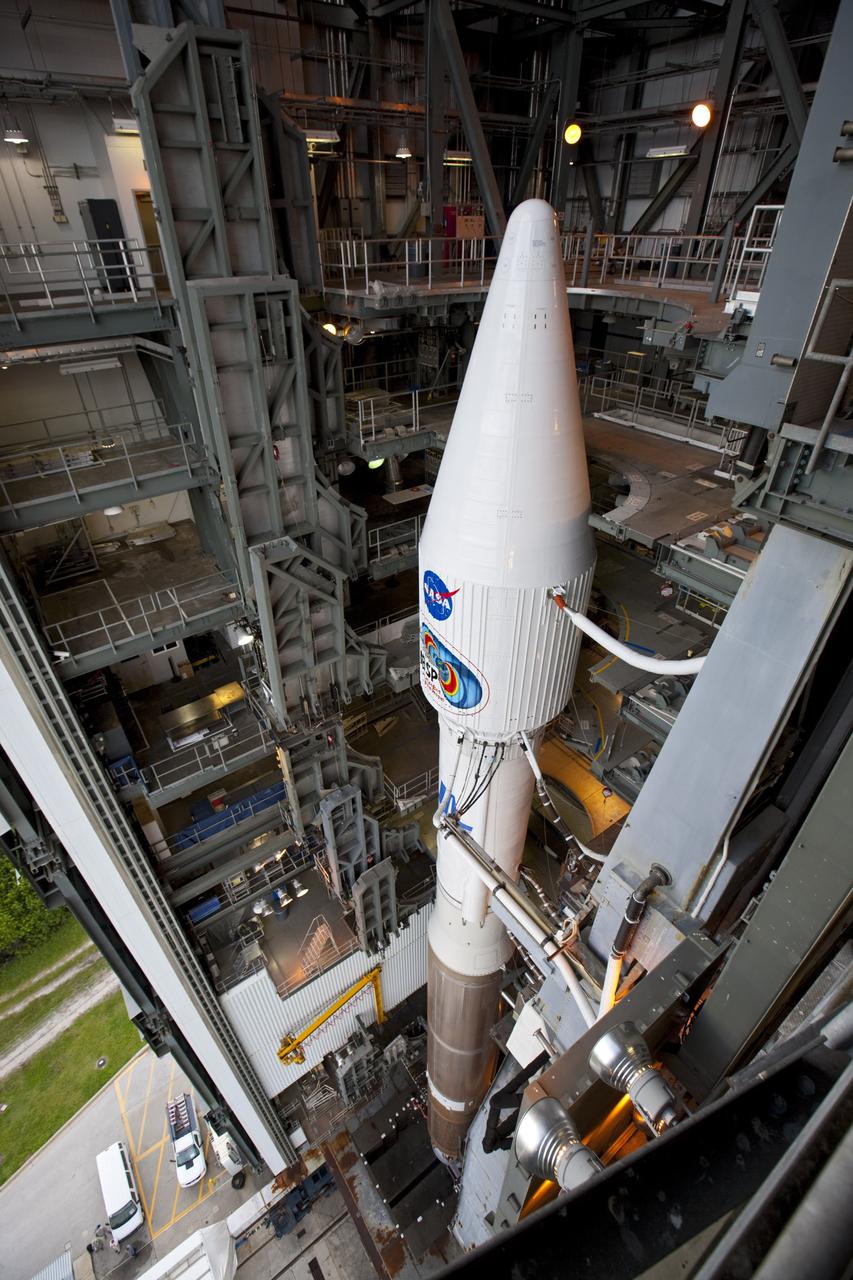
CAPE CANAVERAL, Fla. – A view from above shows the United Launch Alliance Atlas V rocket, carrying NASA’s twin Radiation Belt Storm Probes, or RBSP, inside the Vertical Integration Facility after rolling back from Space Launch Complex 41 at Cape Canaveral Air Force Station in Florida. The rocket and spacecraft will be secured and protected from inclement weather due to Tropical Storm Isaac. RBSP will explore changes in Earth's space environment caused by the sun -- known as "space weather" -- that can disable satellites, create power-grid failures and disrupt GPS service. The mission also will provide data on the fundamental radiation and particle acceleration processes throughout the universe. The launch is rescheduled for 4:05 a.m. EDT on Aug. 30, pending approval from the range. For more information on RBSP, visit http://www.nasa.gov/rbsp. Photo credit: NASA/Ben Smegelsky
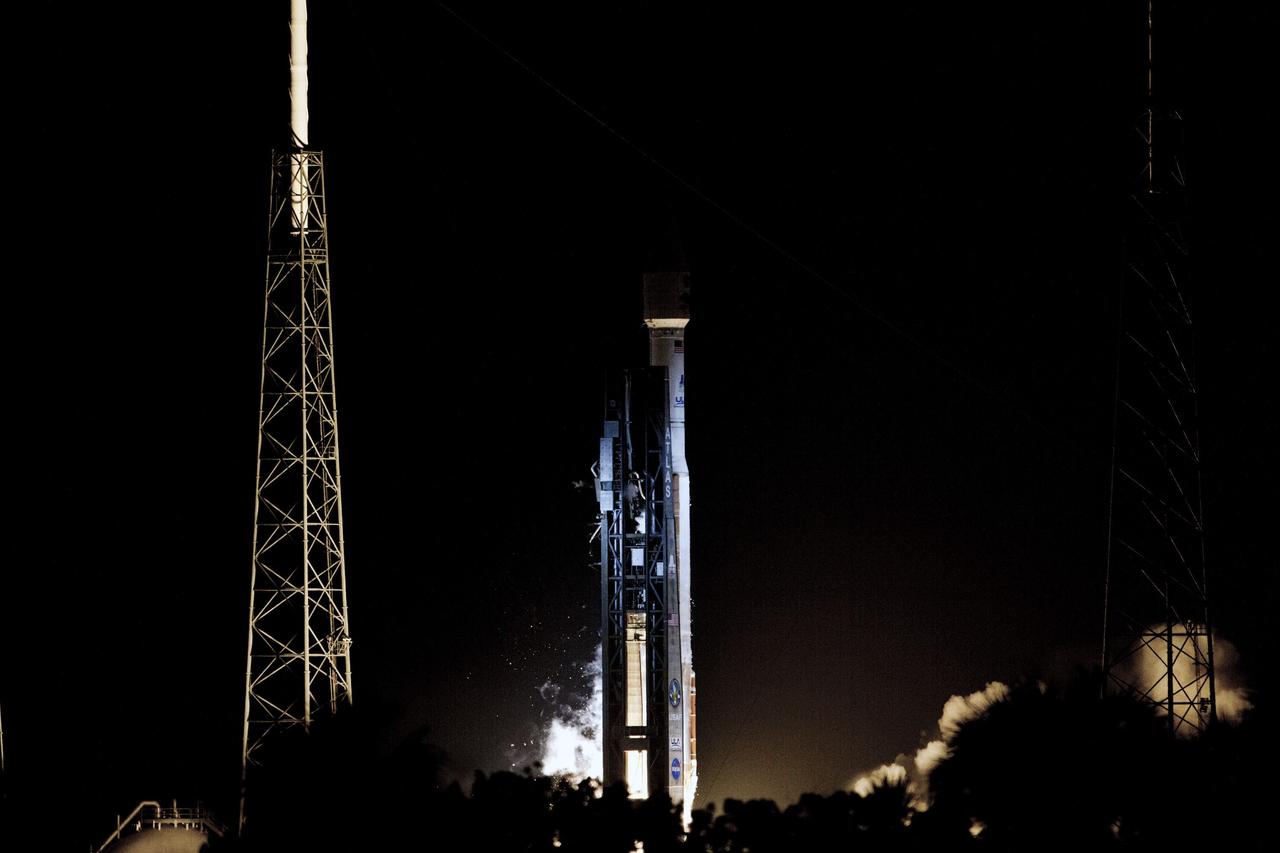
CAPE CANAVERAL, Fla. - The engines ignite under the United Launch Alliance Atlas V rocket at 4:05 a.m. EDT lifting NASA's Radiation Belt Storm Probes, or RBSP, off Space Launch Complex 41 on Cape Canaveral Air Force Station in Florida. RBSP will explore changes in Earth's space environment caused by the sun -- known as "space weather" -- that can disable satellites, create power-grid failures and disrupt GPS service. The mission also will provide data on the fundamental radiation and particle acceleration processes throughout the universe. For more information on RBSP, visit http://www.nasa.gov/rbsp. Photo credit: NASA/Kenny Allen
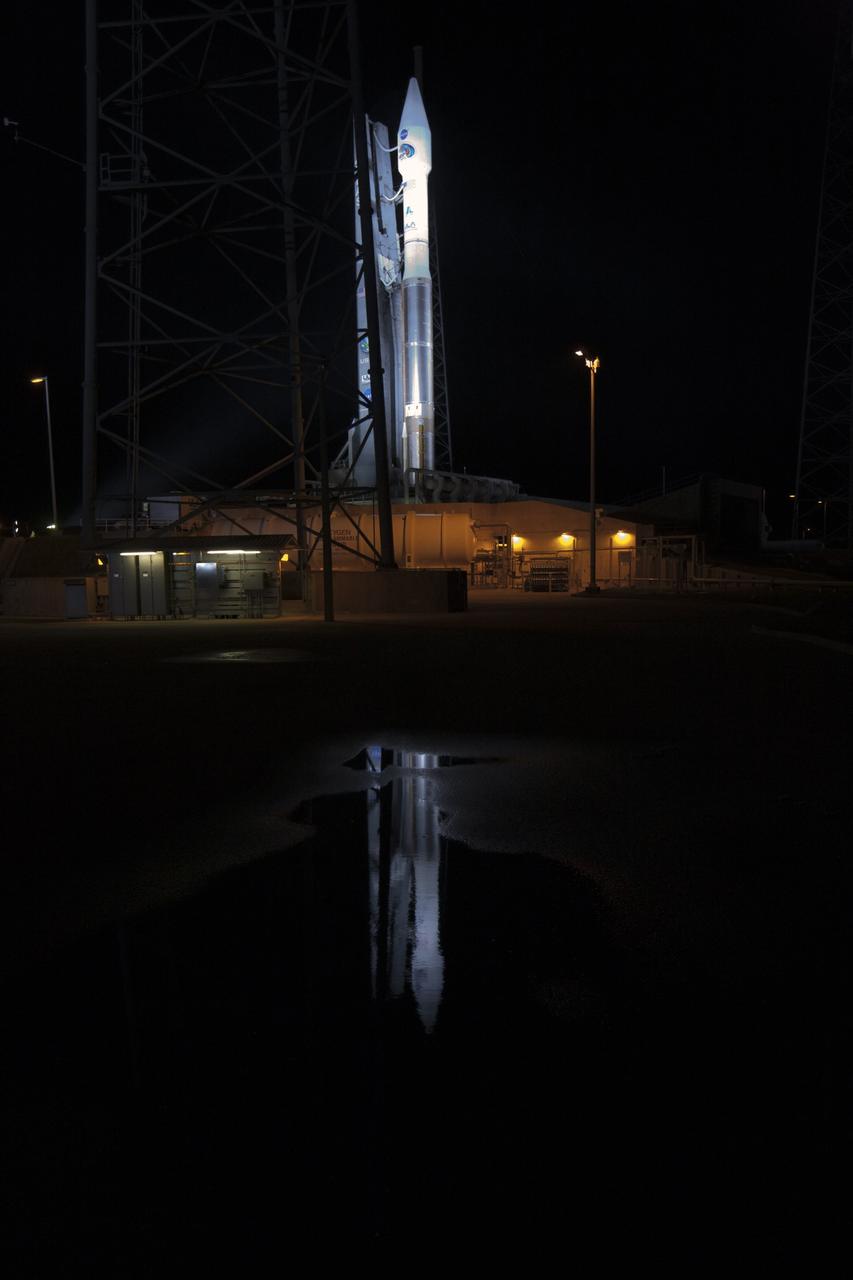
CAPE CANAVERAL, Fla. – An unfavorable weather forecast as a result of Tropical Storm Isaac approaching Florida kept NASA's twin Radiation Belt Storm Probes, or RBSP, on Space Launch Complex 41 at Cape Canaveral Air Force Station in Florida. Managers decided to roll the Atlas V rocket off the launch pad and back to the Vertical Integration Facility to ensure the launch vehicle and RBSP spacecraft are secured and protected from inclement weather. RBSP will explore changes in Earth's space environment caused by the sun -- known as "space weather" -- that can disable satellites, create power-grid failures and disrupt GPS service. The mission also will provide data on the fundamental radiation and particle acceleration processes throughout the universe. The launch is rescheduled for 4:05 a.m. EDT on Aug. 30, pending approval from the range. For more information on RBSP, visit http://www.nasa.gov/rbsp. Photo credit: NASA/Ben Smegelsky
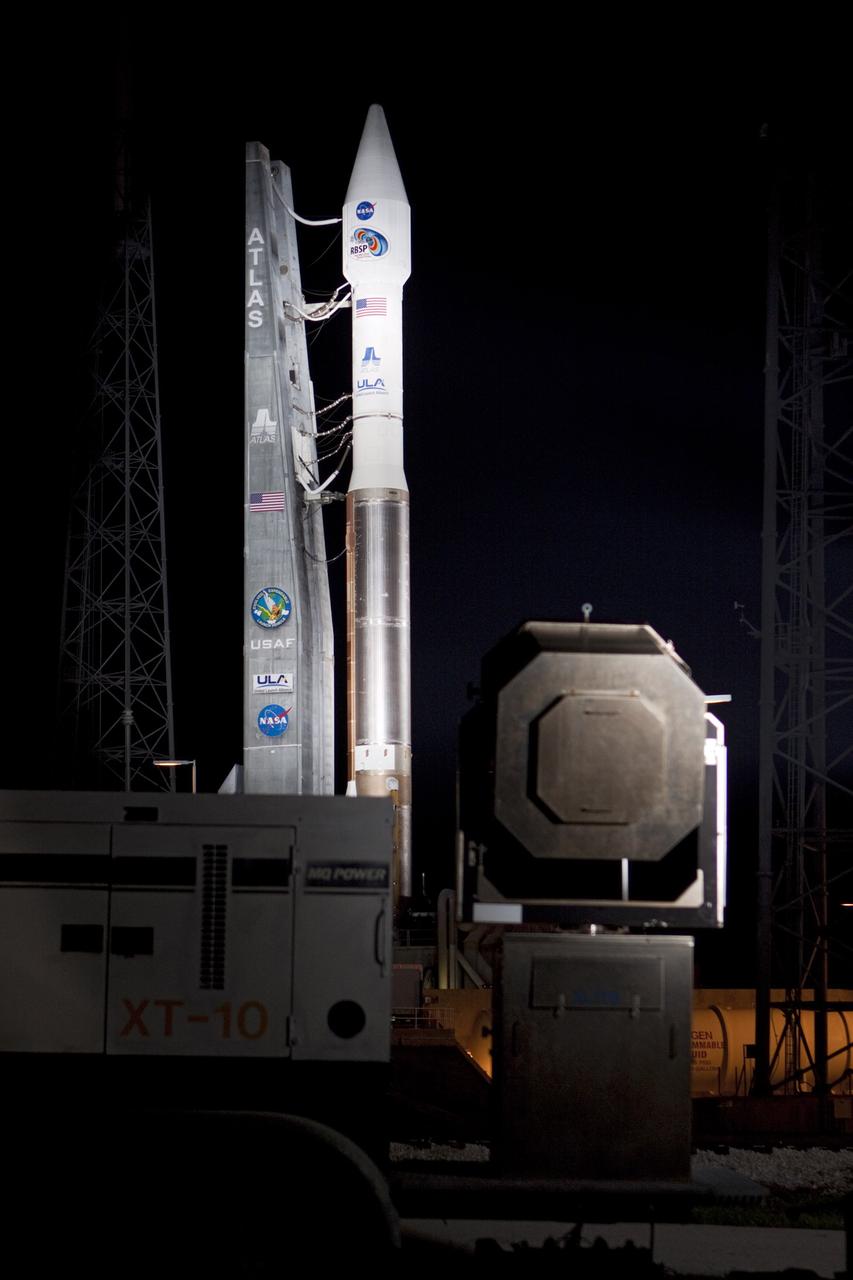
CAPE CANAVERAL, Fla. – At Cape Canaveral Air Force Station in Florida, the United Launch Alliance Atlas V rocket, carrying NASA’s twin Radiation Belt Storm Probes, or RBSP, is rolled back from Space Launch Complex 41 to the Vertical Integration Facility where they will be secured and protected from inclement weather due to Tropical Storm Isaac. RBSP will explore changes in Earth's space environment caused by the sun -- known as "space weather" -- that can disable satellites, create power-grid failures and disrupt GPS service. The mission also will provide data on the fundamental radiation and particle acceleration processes throughout the universe. The launch is rescheduled for 4:05 a.m. EDT on Aug. 30, pending approval from the range. For more information on RBSP, visit http://www.nasa.gov/rbsp. Photo credit: NASA/Ben Smegelsky

CAPE CANAVERAL, Fla. – At Cape Canaveral Air Force Station in Florida, the United Launch Alliance, or ULA, Atlas V rocket carrying NASA’s twin Radiation Belt Storm Probes, or RBSP, began rolling out of the ULA Vertical Integration Facility at Space Launch Complex 41 at 1:59 p.m. EDT heading to the launch pad. The Atlas V rocket had been rolled back to the facility on August 26 to ensure the launch vehicle and RBSP spacecraft were secured and protected from inclement weather caused by Tropical Storm Isaac. RBSP will explore changes in Earth's space environment caused by the sun -- known as "space weather" -- that can disable satellites, create power-grid failures and disrupt GPS service. The mission also will provide data on the fundamental radiation and particle acceleration processes throughout the universe. The launch is rescheduled for 4:05 a.m. EDT on Aug. 30. For more information on RBSP, visit http://www.nasa.gov/rbsp. Photo credit: NASA/Kim Shiflett
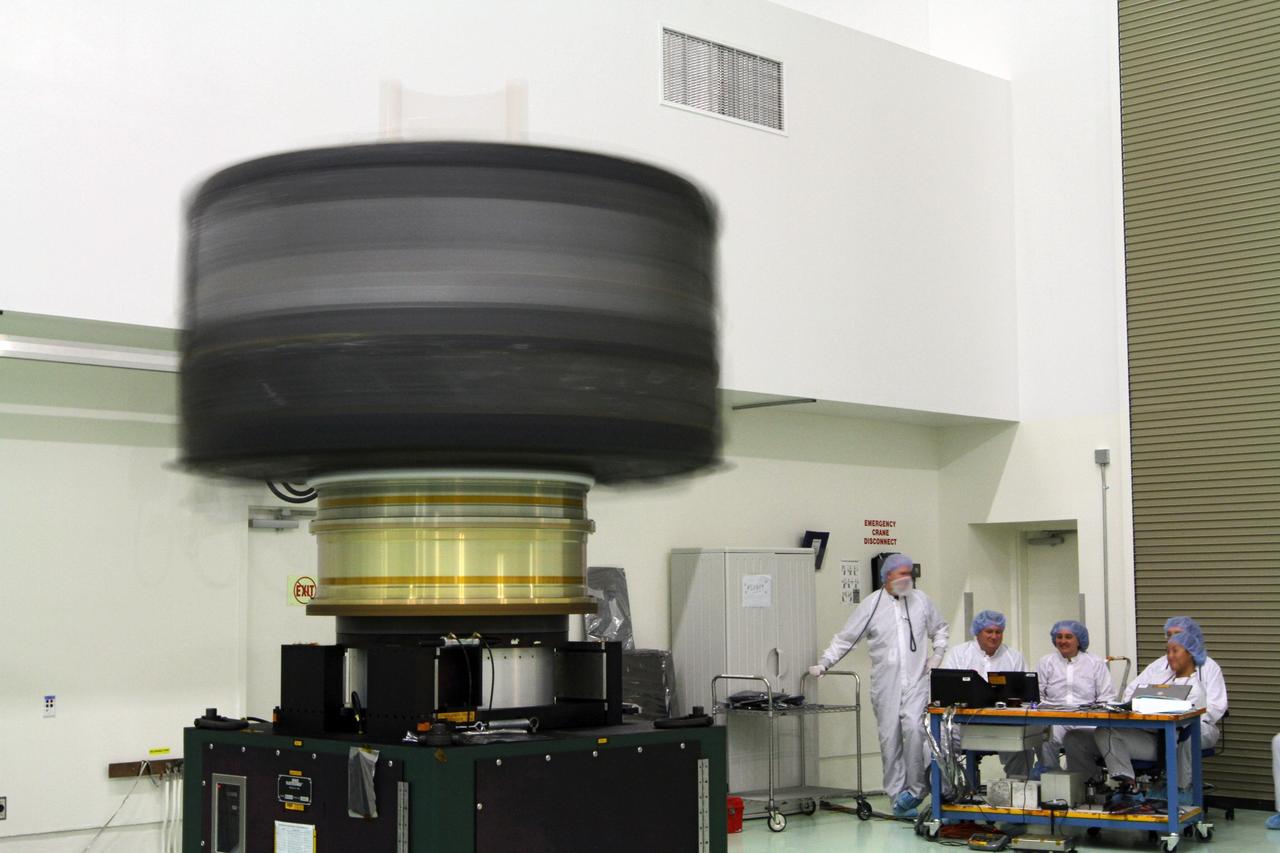
CAPE CANAVERAL, Fla. - Inside the Astrotech payload processing facility near NASA’s Kennedy Space Center in Florida, technicians monitor the progress as the Radiation Belt Storm Probes, or RBSP, spacecraft A undergoes a spin test. During the spin test, the spacecraft is turned at a rate of 55 rpm to ensure that it is properly balanced. NASA’s RBSP mission will help us understand the sun’s influence on Earth and near-Earth space by studying the Earth’s radiation belts on various scales of space and time. RBSP will begin its mission of exploration of Earth’s Van Allen radiation belts and the extremes of space weather after its launch aboard a United Launch Alliance Atlas V rocket. Launch is targeted for Aug. 23. For more information, visit http://www.nasa.gov/rbsp. Photo credit: NASA/Charisse Nahser
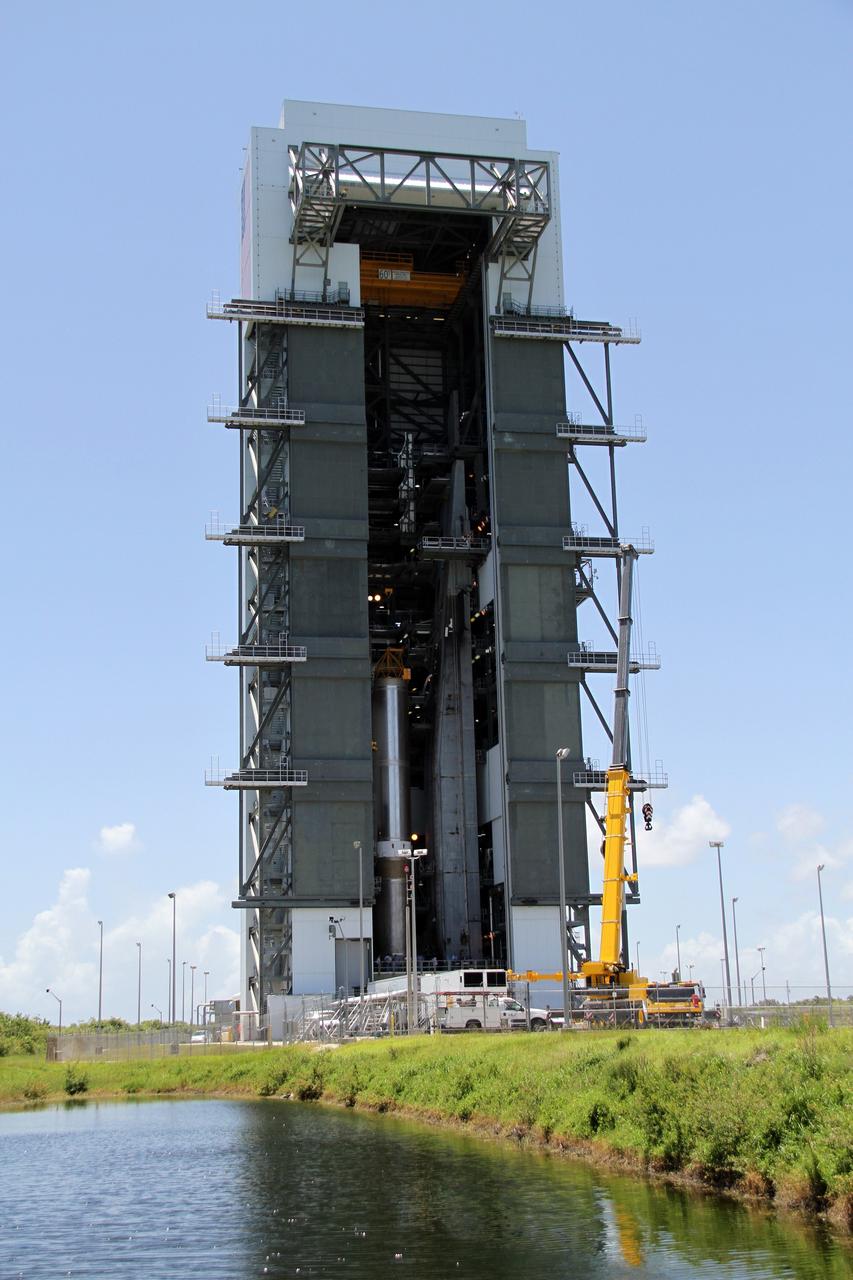
CAPE CANAVERAL, Fla. - At Launch Complex 41 at Cape Canaveral Air Force Station in Florida, the first stage of the United Launch Alliance Atlas V rocket is in the Vertical Integration Facility. The Atlas V is being prepared for the Radiation Belt Storm Probes, or RBSP, mission. NASA’s RBSP mission will help us understand the sun’s influence on Earth and near-Earth space by studying the Earth’s radiation belts on various scales of space and time. RBSP will begin its mission of exploration of Earth’s Van Allen radiation belts and the extremes of space weather after its launch aboard an Atlas V rocket. Launch is targeted for Aug. 23. For more information, visit http://www.nasa.gov/rbsp. Photo credit: NASA/Cory Huston
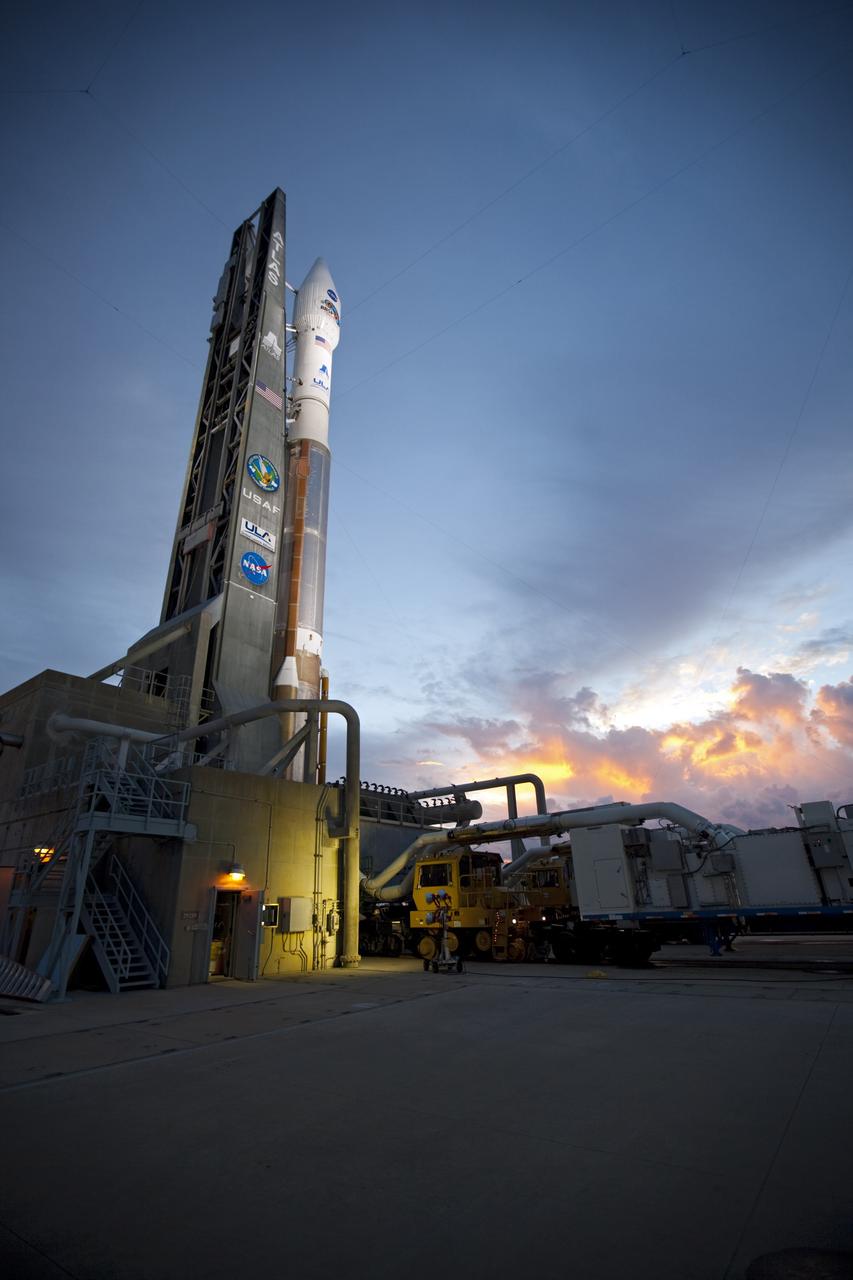
CAPE CANAVERAL, Fla. – An unfavorable weather forecast as a result of Tropical Storm Isaac approaching Florida kept NASA's twin Radiation Belt Storm Probes, or RBSP, on Space Launch Complex 41 at Cape Canaveral Air Force Station in Florida. Managers decided to roll the Atlas V rocket off the launch pad and back to the Vertical Integration Facility to ensure the launch vehicle and RBSP spacecraft are secured and protected from inclement weather. RBSP will explore changes in Earth's space environment caused by the sun -- known as "space weather" -- that can disable satellites, create power-grid failures and disrupt GPS service. The mission also will provide data on the fundamental radiation and particle acceleration processes throughout the universe. The launch is rescheduled for 4:05 a.m. EDT on Aug. 30, pending approval from the range. For more information on RBSP, visit http://www.nasa.gov/rbsp. Photo credit: NASA/Ben Smegelsky
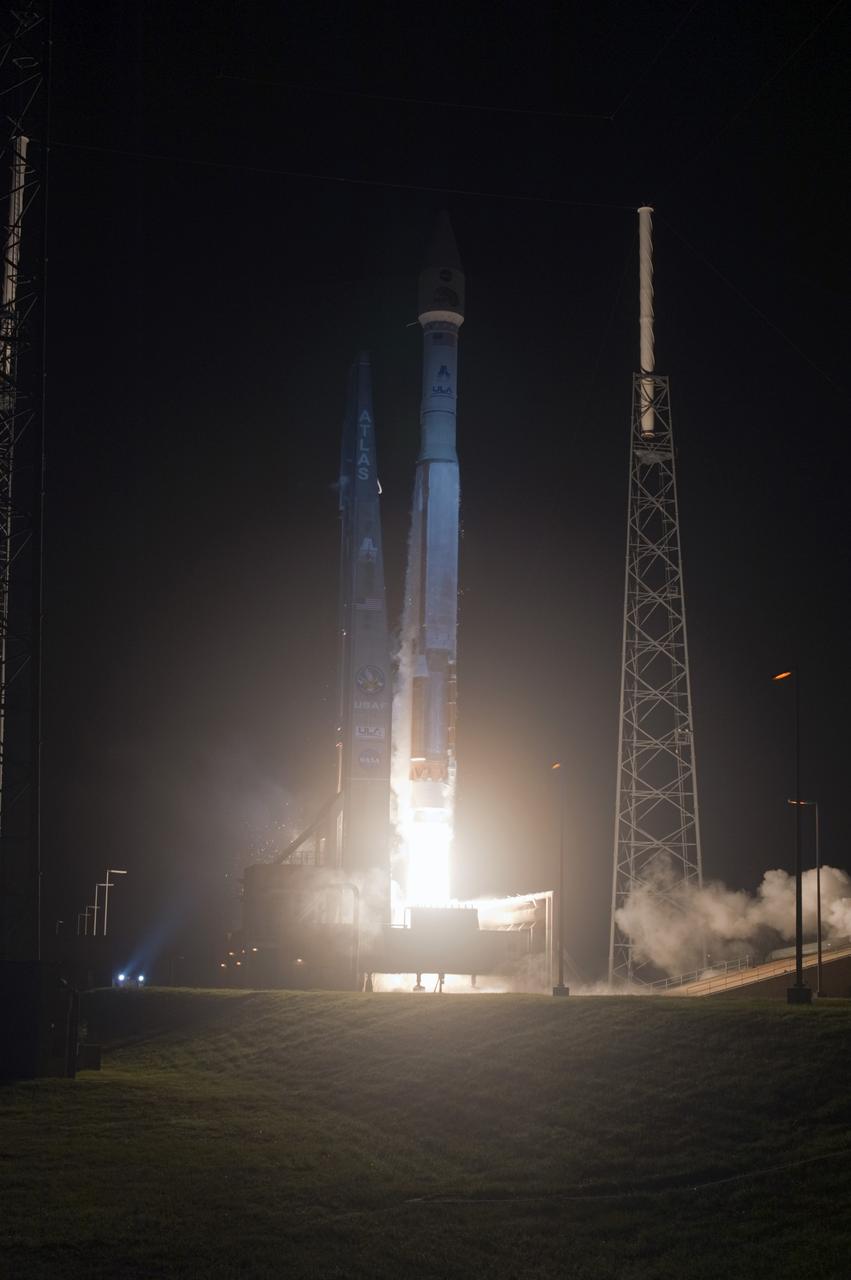
CAPE CANAVERAL, Fla. – Illuminated with a blue hue from bright xenon lights, the United Launch Alliance Atlas V rocket carrying NASA’s Radiation Belt Storm Probes, or RBSP, spacecraft lifts off Space Launch Complex 41 on Cape Canaveral Air Force Station in Florida at 4:05 a.m. EDT. RBSP will explore changes in Earth's space environment caused by the sun -- known as "space weather" -- that can disable satellites, create power-grid failures and disrupt GPS service. The mission also will provide data on the fundamental radiation and particle acceleration processes throughout the universe. For more information on RBSP, visit http://www.nasa.gov/rbsp. Photo credit: NASA/Tony Gray and Robert Murray
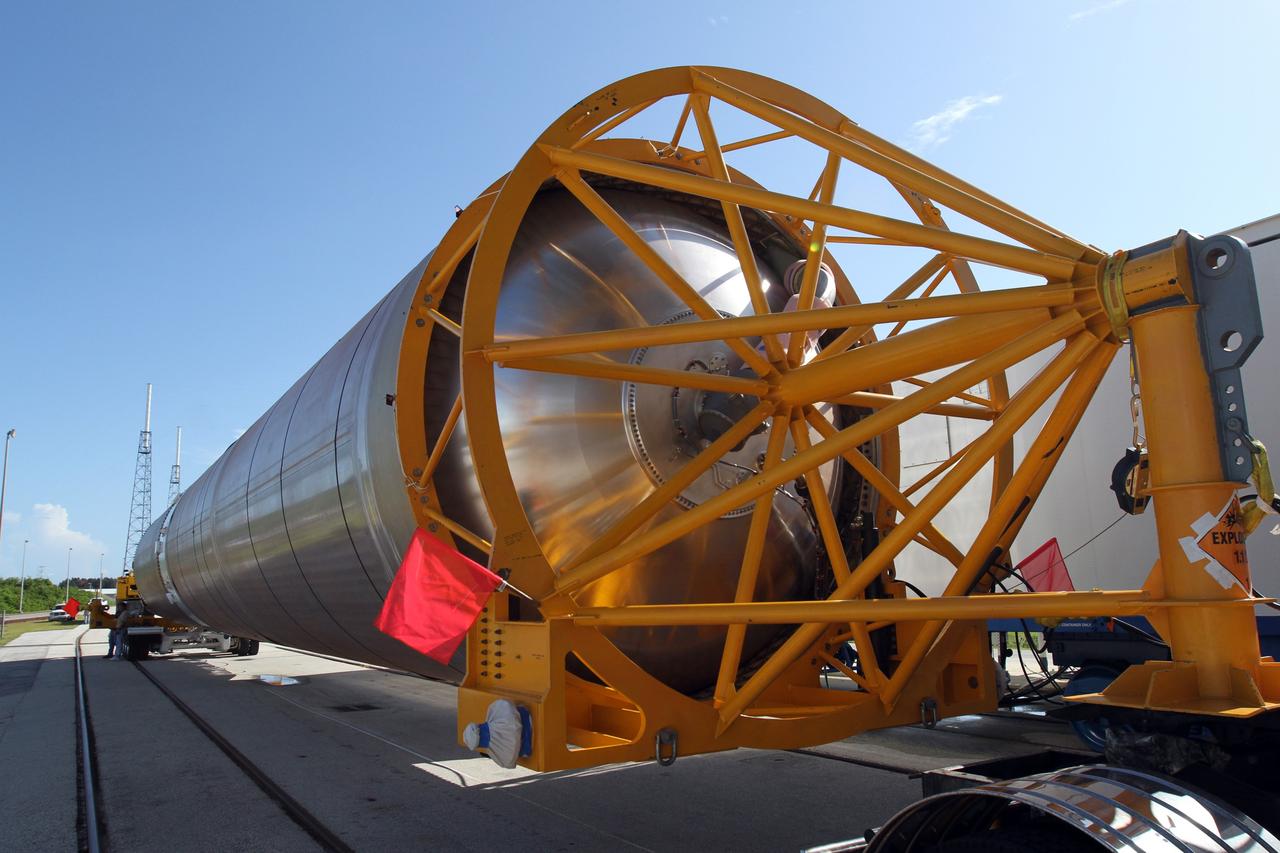
CAPE CANAVERAL, Fla. - In this close-up view, the first stage of the United Launch Alliance Atlas V rocket arrives at Launch Complex 41 at Cape Canaveral Air Force Station in Florida for the Radiation Belt Storm Probes, or RBSP, mission. NASA’s RBSP mission will help us understand the sun’s influence on Earth and near-Earth space by studying the Earth’s radiation belts on various scales of space and time. RBSP will begin its mission of exploration of Earth’s Van Allen radiation belts and the extremes of space weather after its launch aboard an Atlas V rocket. Launch is targeted for Aug. 23. For more information, visit http://www.nasa.gov/rbsp. Photo credit: NASA/Cory Huston
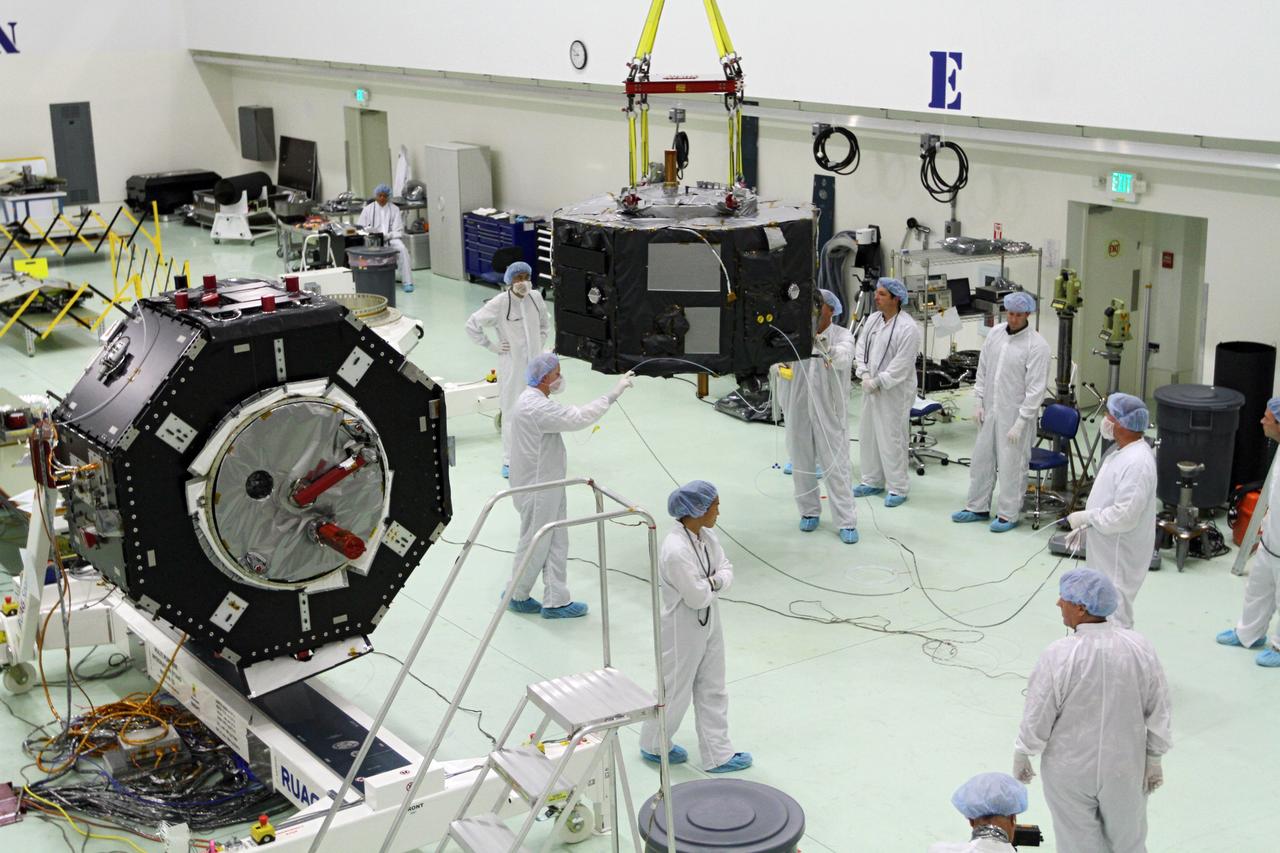
CAPE CANAVERAL, Fla. - Inside the Astrotech payload processing facility near NASA’s Kennedy Space Center in Florida, technicians prepare Radiation Belt Storm Probes, or RBSP, spacecraft A for a spin test. During the spin test, the spacecraft is turned at a rate of 55 rpm to ensure that it is properly balanced. NASA’s RBSP mission will help us understand the sun’s influence on Earth and near-Earth space by studying the Earth’s radiation belts on various scales of space and time. RBSP will begin its mission of exploration of Earth’s Van Allen radiation belts and the extremes of space weather after its launch aboard a United Launch Alliance Atlas V rocket. Launch is targeted for Aug. 23. For more information, visit http://www.nasa.gov/rbsp. Photo credit: NASA/Charisse Nahser
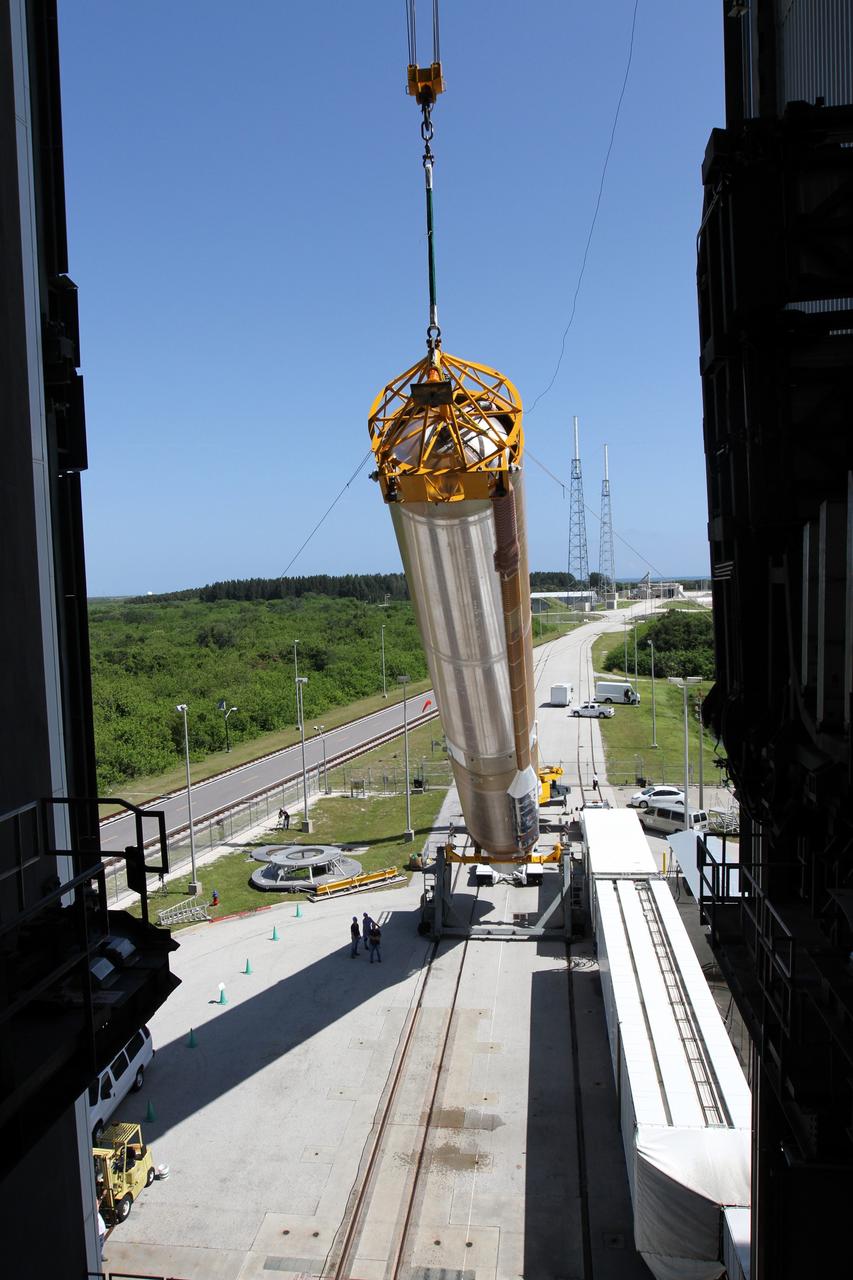
CAPE CANAVERAL, Fla. - At Launch Complex 41 at Cape Canaveral Air Force Station in Florida, a large crane lifts the first stage of the United Launch Alliance Atlas V rocket into the vertical position. The Atlas V is being prepared for the Radiation Belt Storm Probes, or RBSP, mission. NASA’s RBSP mission will help us understand the sun’s influence on Earth and near-Earth space by studying the Earth’s radiation belts on various scales of space and time. RBSP will begin its mission of exploration of Earth’s Van Allen radiation belts and the extremes of space weather after its launch aboard an Atlas V rocket. Launch is targeted for Aug. 23. For more information, visit http://www.nasa.gov/rbsp. Photo credit: NASA/Cory Huston

CAPE CANAVERAL, Fla. – At Cape Canaveral Air Force Station in Florida, United Launch Alliance, or ULA, technicians monitor the progress as the ULA Atlas V rocket, carrying NASA’s twin Radiation Belt Storm Probes, or RBSP, are rolled back from Space Launch Complex 41 to the Vertical Integration Facility. The rocket and spacecraft will be secured and protected from inclement weather due to Tropical Storm Isaac. RBSP will explore changes in Earth's space environment caused by the sun -- known as "space weather" -- that can disable satellites, create power-grid failures and disrupt GPS service. The mission also will provide data on the fundamental radiation and particle acceleration processes throughout the universe. The launch is rescheduled for 4:05 a.m. EDT on Aug. 30, pending approval from the range. For more information on RBSP, visit http://www.nasa.gov/rbsp. Photo credit: NASA/Ben Smegelsky
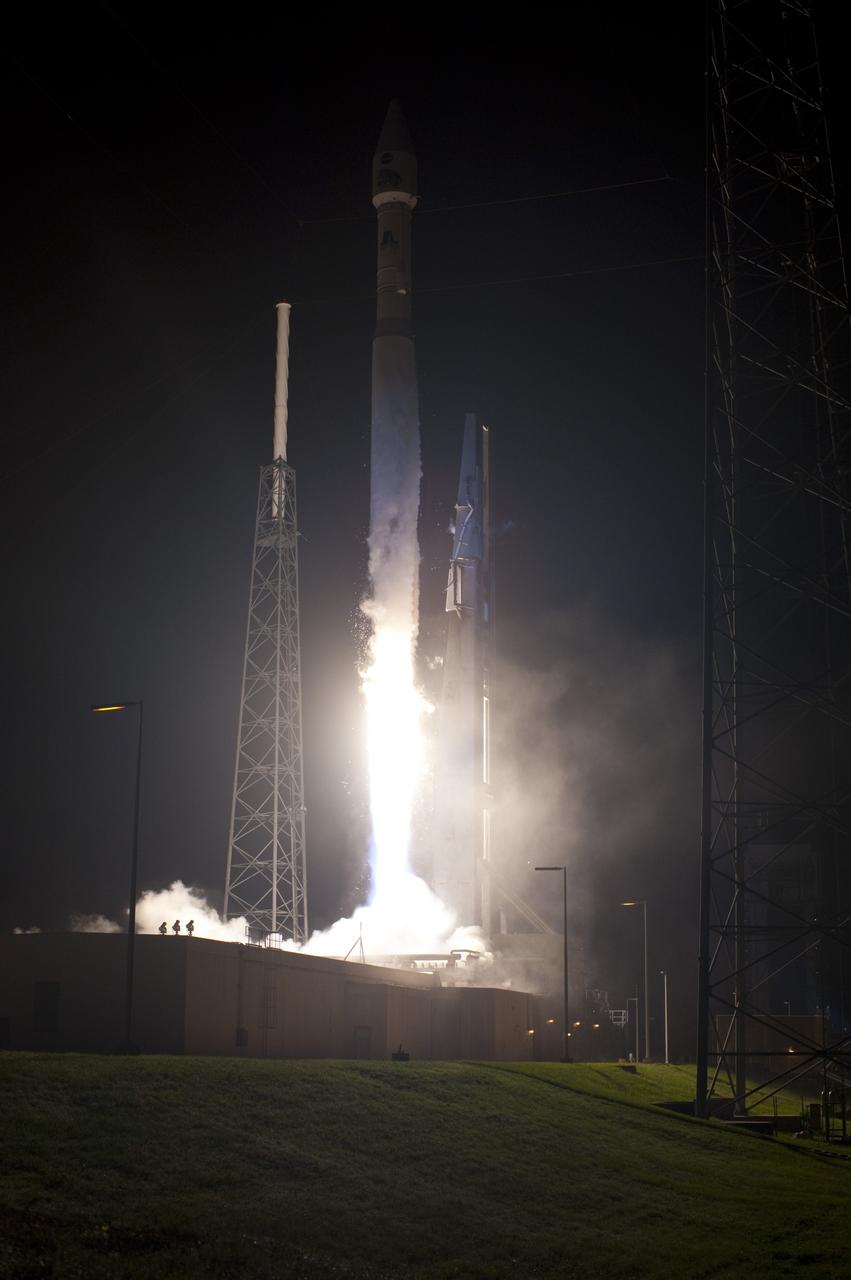
CAPE CANAVERAL, Fla. – The United Launch Alliance Atlas V rocket carrying NASA's Radiation Belt Storm Probes, or RBSP, lifts off Space Launch Complex 41 on Cape Canaveral Air Force Station in Florida at 4:05 a.m. EDT. RBSP will explore changes in Earth's space environment caused by the sun -- known as "space weather" -- that can disable satellites, create power-grid failures and disrupt GPS service. The mission also will provide data on the fundamental radiation and particle acceleration processes throughout the universe. For more information on RBSP, visit http://www.nasa.gov/rbsp. Photo credit: NASA/Tony Gray and Robert Murray
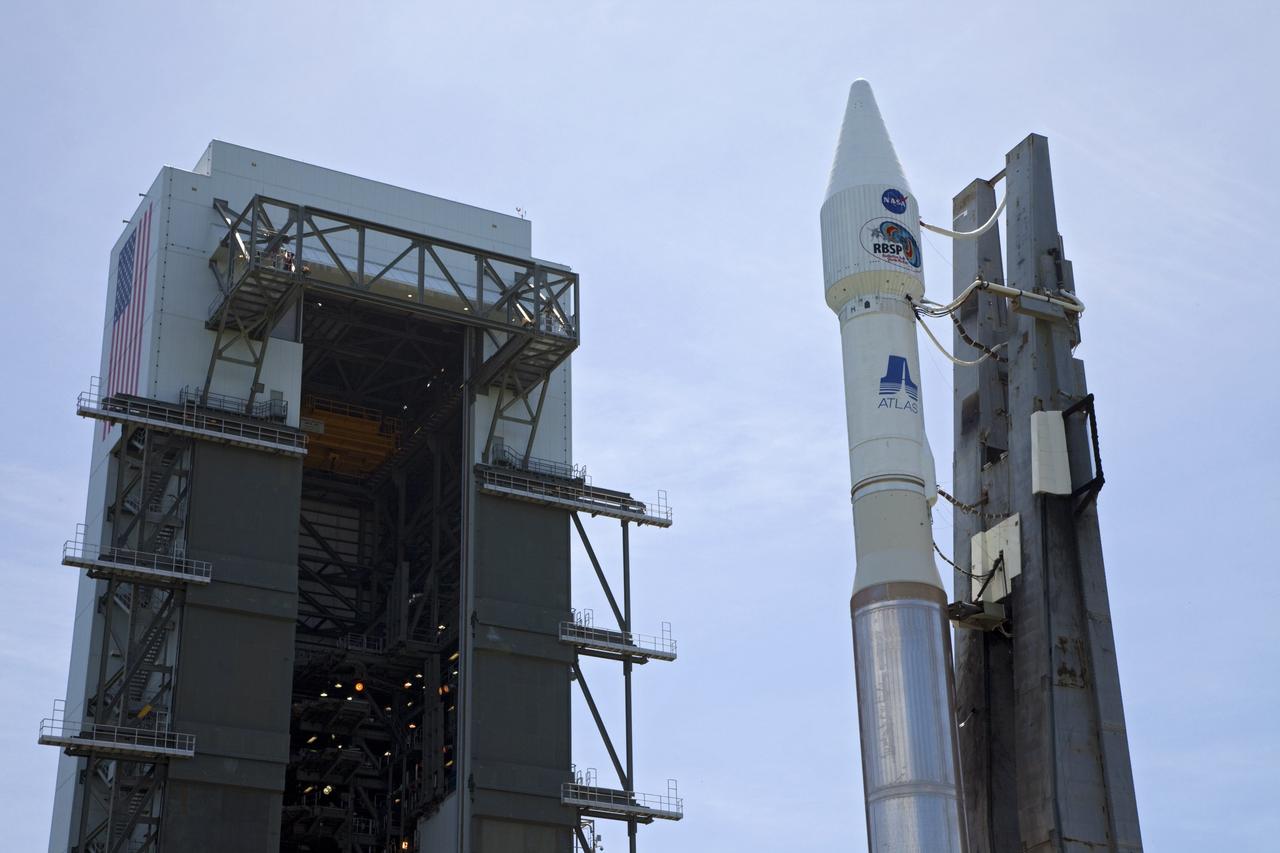
CAPE CANAVERAL, Fla. – At Cape Canaveral Air Force Station in Florida, the United Launch Alliance, or ULA, Atlas V rocket carrying NASA’s twin Radiation Belt Storm Probes, or RBSP, began rolling out of the ULA Vertical Integration Facility at Space Launch Complex 41 at 1:59 p.m. EDT heading to the launch pad. The Atlas V rocket had been rolled back to the facility on August 26 to ensure the launch vehicle and RBSP spacecraft were secured and protected from inclement weather caused by Tropical Storm Isaac. RBSP will explore changes in Earth's space environment caused by the sun -- known as "space weather" -- that can disable satellites, create power-grid failures and disrupt GPS service. The mission also will provide data on the fundamental radiation and particle acceleration processes throughout the universe. The launch is rescheduled for 4:05 a.m. EDT on Aug. 30. For more information on RBSP, visit http://www.nasa.gov/rbsp. Photo credit: NASA/Kim Shiflett
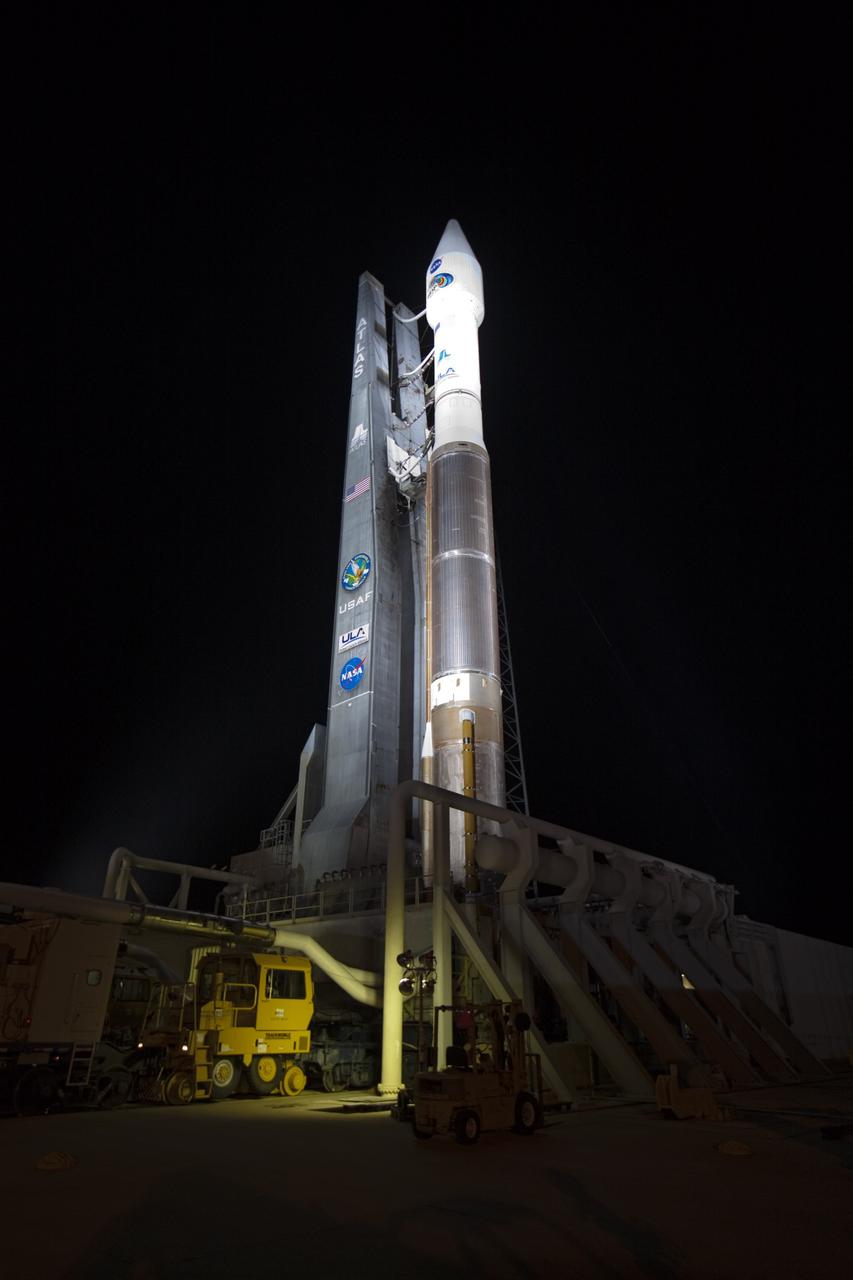
CAPE CANAVERAL, Fla. – An unfavorable weather forecast as a result of Tropical Storm Isaac approaching Florida kept NASA's twin Radiation Belt Storm Probes, or RBSP, on Space Launch Complex 41 at Cape Canaveral Air Force Station in Florida. Managers decided to roll the Atlas V rocket off the launch pad and back to the Vertical Integration Facility to ensure the launch vehicle and RBSP spacecraft are secured and protected from inclement weather. RBSP will explore changes in Earth's space environment caused by the sun -- known as "space weather" -- that can disable satellites, create power-grid failures and disrupt GPS service. The mission also will provide data on the fundamental radiation and particle acceleration processes throughout the universe. The launch is rescheduled for 4:05 a.m. EDT on Aug. 30, pending approval from the range. For more information on RBSP, visit http://www.nasa.gov/rbsp. Photo credit: NASA/Ben Smegelsky
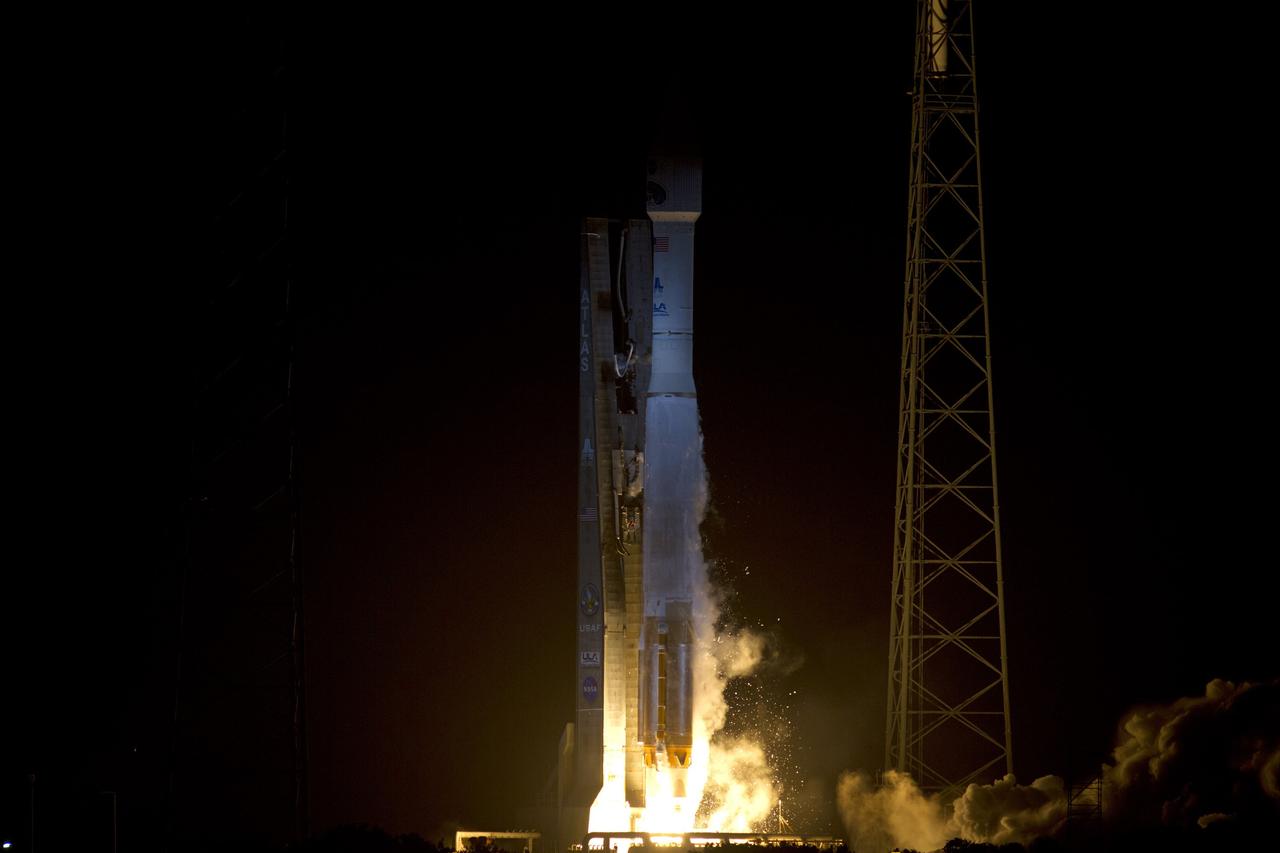
CAPE CANAVERAL, Fla. - The United Launch Alliance Atlas V rocket carrying NASA's Radiation Belt Storm Probes, or RBSP, lifts off Space Launch Complex 41 on Cape Canaveral Air Force Station in Florida at 4:05 a.m. EDT. RBSP will explore changes in Earth's space environment caused by the sun -- known as "space weather" -- that can disable satellites, create power-grid failures and disrupt GPS service. The mission also will provide data on the fundamental radiation and particle acceleration processes throughout the universe. For more information on RBSP, visit http://www.nasa.gov/rbsp. Photo credit: NASA/Rusty Backer
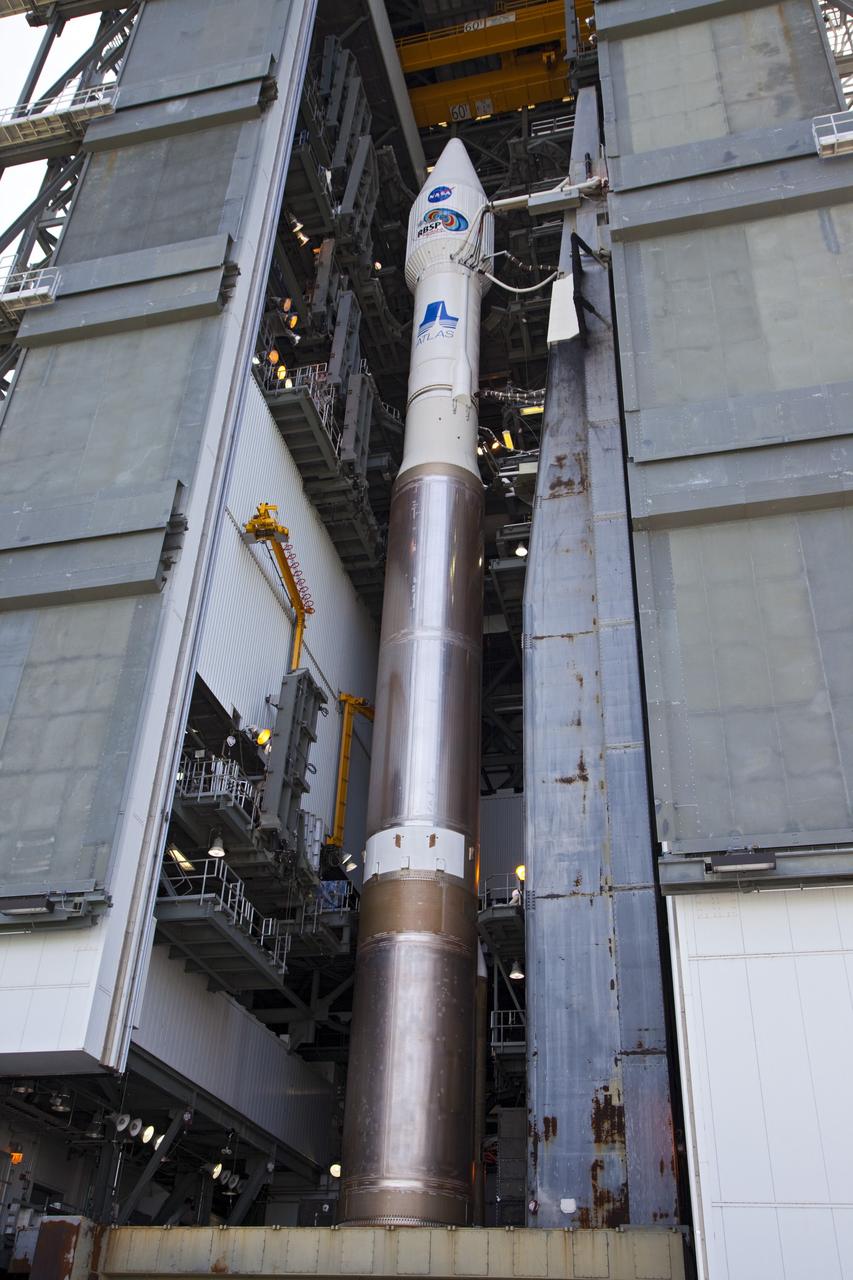
CAPE CANAVERAL, Fla. – At Cape Canaveral Air Force Station in Florida, the United Launch Alliance, or ULA, Atlas V rocket carrying NASA’s twin Radiation Belt Storm Probes, or RBSP, is inside the ULA Vertical Integration Facility at Space Launch Complex 41 before it begins rollout to the launch pad. The Atlas V rocket had been rolled back to the facility on August 26 to ensure the launch vehicle and RBSP spacecraft were secured and protected from inclement weather caused by Tropical Storm Isaac. RBSP will explore changes in Earth's space environment caused by the sun -- known as "space weather" -- that can disable satellites, create power-grid failures and disrupt GPS service. The mission also will provide data on the fundamental radiation and particle acceleration processes throughout the universe. The launch is rescheduled for 4:05 a.m. EDT on Aug. 30. For more information on RBSP, visit http://www.nasa.gov/rbsp. Photo credit: NASA/Kim Shiflett
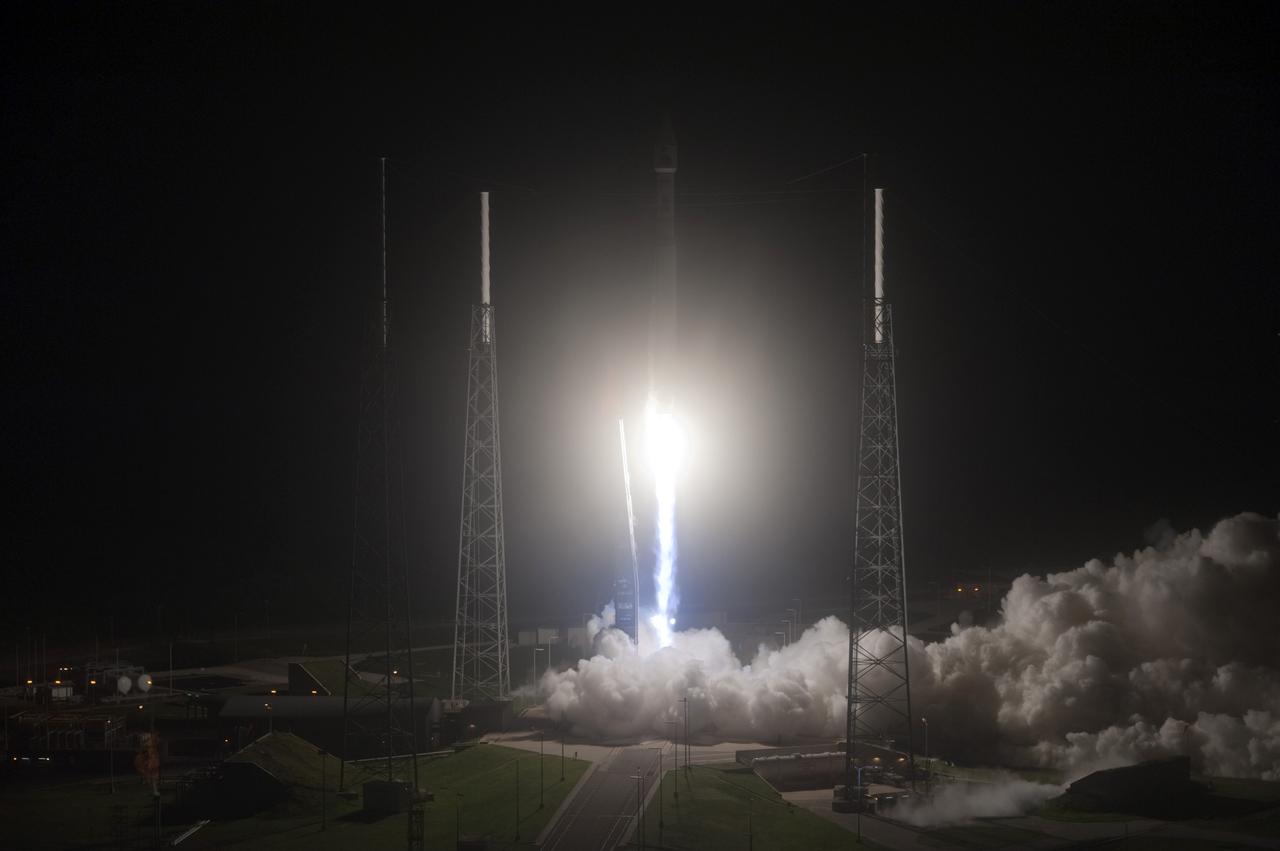
CAPE CANAVERAL, Fla. – The United Launch Alliance Atlas V rocket carrying NASA's Radiation Belt Storm Probes, or RBSP, lifted off Space Launch Complex 41 on Cape Canaveral Air Force Station in Florida at 4:05 a.m. EDT. RBSP will explore changes in Earth's space environment caused by the sun -- known as "space weather" -- that can disable satellites, create power-grid failures and disrupt GPS service. The mission also will provide data on the fundamental radiation and particle acceleration processes throughout the universe. For more information on RBSP, visit http://www.nasa.gov/rbsp. Photo credit: NASA/Tony Gray and Robert Murray
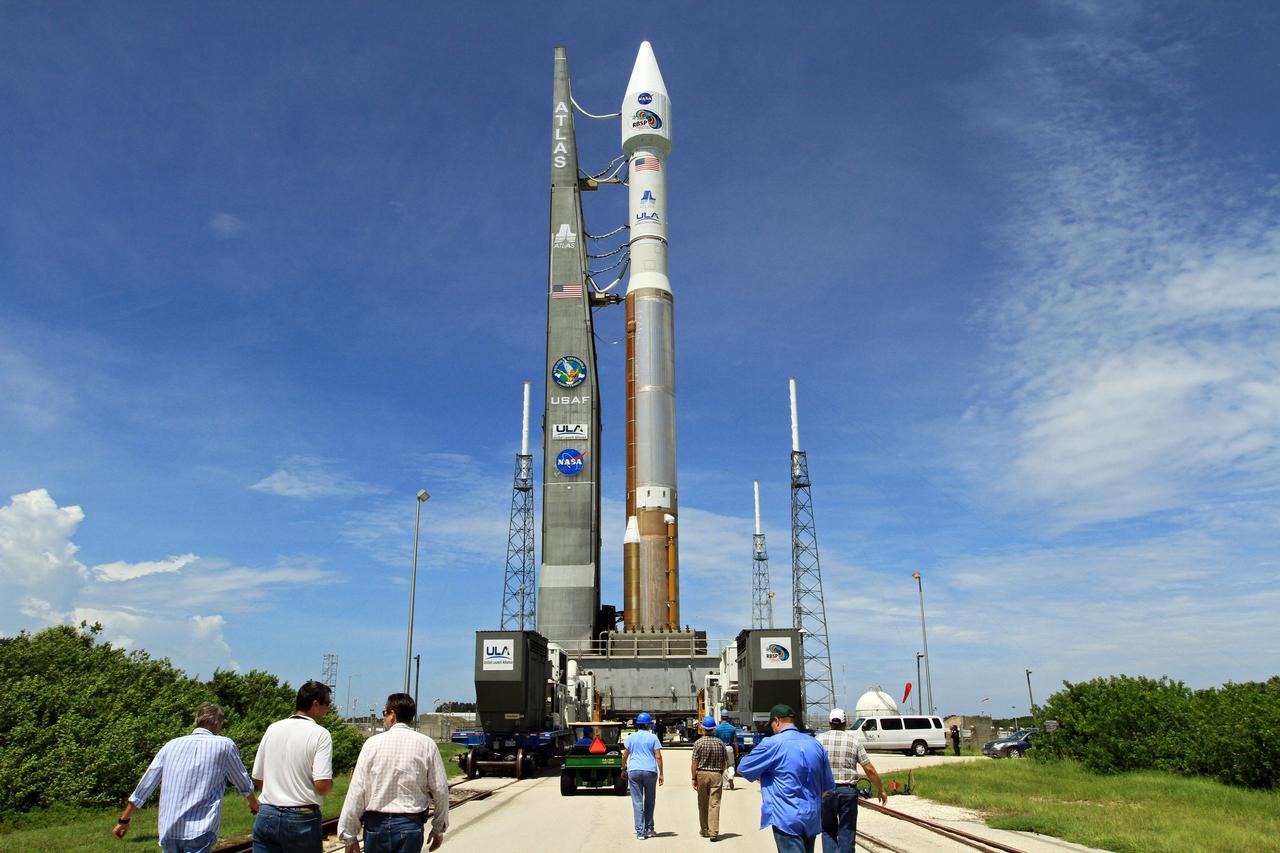
CAPE CANAVERAL, Fla. – At Cape Canaveral Air Force Station in Florida, the United Launch Alliance, or ULA, Atlas V rocket carrying NASA’s twin Radiation Belt Storm Probes, or RBSP, rolled out of the ULA Vertical Integration Facility at Space Launch Complex 41 at 1:59 p.m. EDT heading to the launch pad. The Atlas V rocket had been rolled back to the facility on August 26 to ensure the launch vehicle and RBSP spacecraft were secured and protected from inclement weather caused by Tropical Storm Isaac. RBSP will explore changes in Earth's space environment caused by the sun -- known as "space weather" -- that can disable satellites, create power-grid failures and disrupt GPS service. The mission also will provide data on the fundamental radiation and particle acceleration processes throughout the universe. The launch is rescheduled for 4:05 a.m. EDT on Aug. 30, pending approval from the range. For more information on RBSP, visit http://www.nasa.gov/rbsp. Photo credit: NASA/Kim Shiflett

CAPE CANAVERAL, Fla. – At Cape Canaveral Air Force Station in Florida, the United Launch Alliance, or ULA, Atlas V rocket carrying NASA’s twin Radiation Belt Storm Probes, or RBSP, rolled out of the ULA Vertical Integration Facility at Space Launch Complex 41 at 1:59 p.m. EDT and has arrived at the launch pad. The Atlas V rocket had been rolled back to the facility on August 26 to ensure the launch vehicle and RBSP spacecraft were secured and protected from inclement weather caused by Tropical Storm Isaac. RBSP will explore changes in Earth's space environment caused by the sun -- known as "space weather" -- that can disable satellites, create power-grid failures and disrupt GPS service. The mission also will provide data on the fundamental radiation and particle acceleration processes throughout the universe. The launch is rescheduled for 4:05 a.m. EDT on Aug. 30. For more information on RBSP, visit http://www.nasa.gov/rbsp. Photo credit: NASA/Kim Shiflett
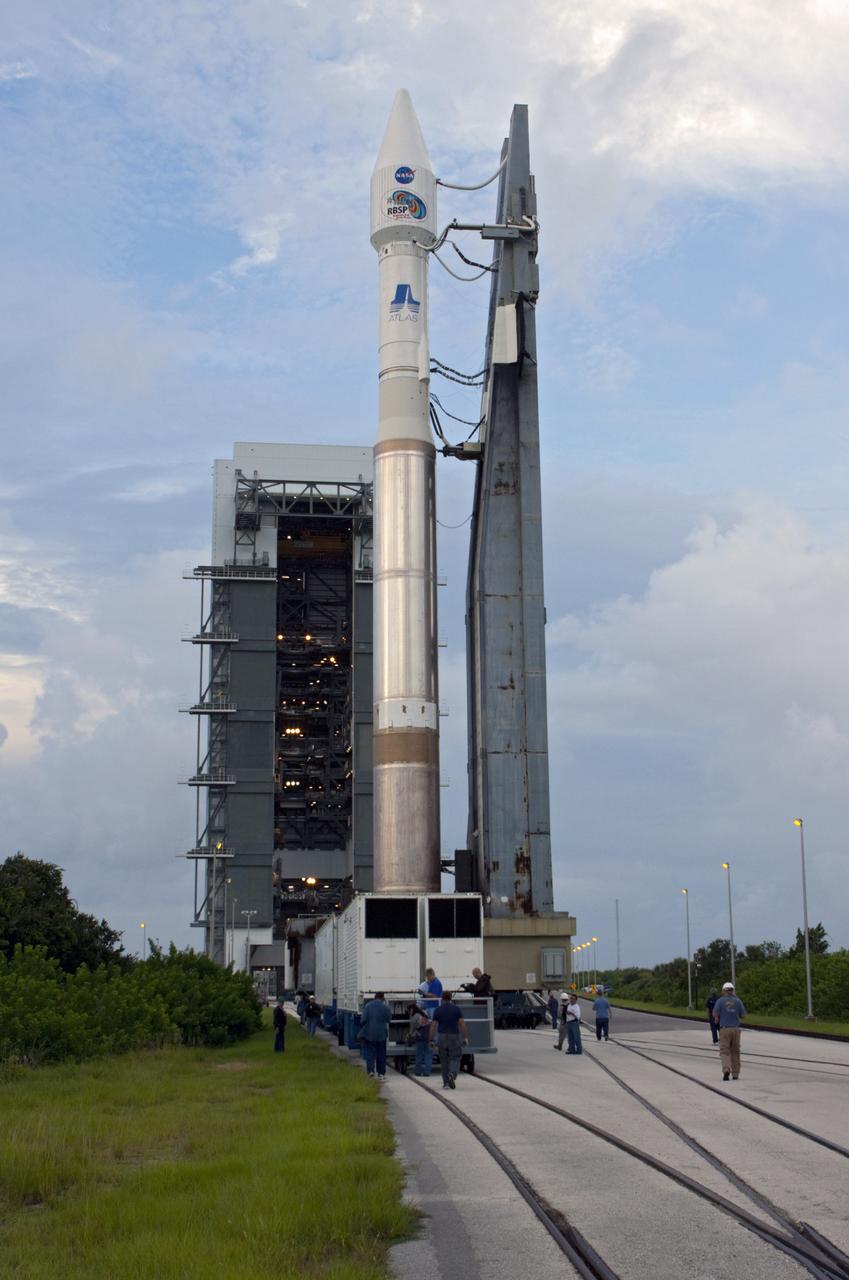
CAPE CANAVERAL, Fla. – At Cape Canaveral Air Force Station in Florida, United Launch Alliance, or ULA, technicians monitor the progress as the ULA Atlas V rocket with NASA’s twin Radiation Belt Storm Probes, or RBSP, rolls back to the Vertical Integration Facility from Space Launch Complex 41. The rocket and spacecraft will be secured and protected from inclement weather due to Tropical Storm Isaac. RBSP will explore changes in Earth's space environment caused by the sun -- known as "space weather" -- that can disable satellites, create power-grid failures and disrupt GPS service. The mission also will provide data on the fundamental radiation and particle acceleration processes throughout the universe. The launch is rescheduled for 4:05 a.m. EDT on Aug. 30, pending approval from the range. For more information on RBSP, visit http://www.nasa.gov/rbsp. Photo credit: NASA/Ben Smegelsky
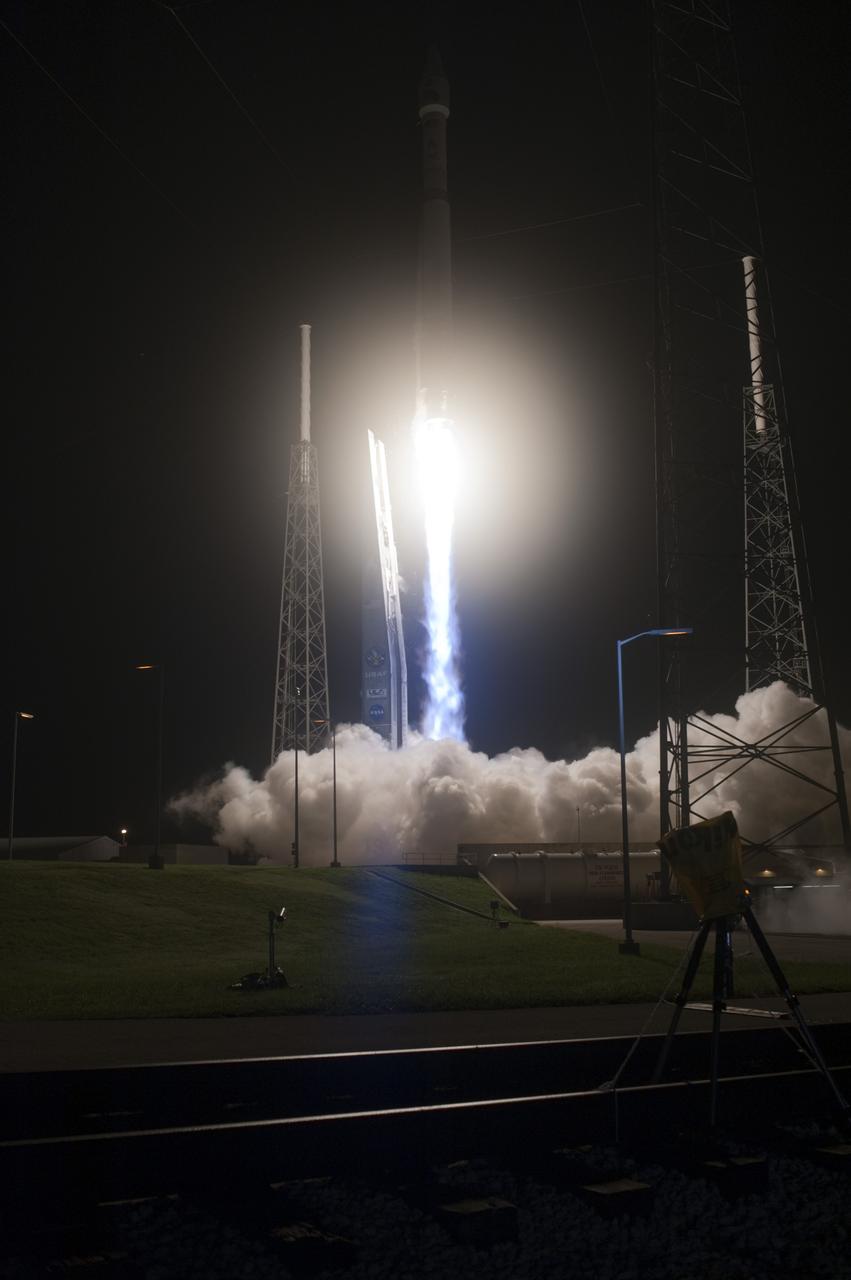
CAPE CANAVERAL, Fla. – The United Launch Alliance Atlas V rocket carrying NASA’s Radiation Belt Storm Probes, or RBSP, spacecraft creates a halo of light at Space Launch Complex 41 on Cape Canaveral Air Force Station in Florida as it lifts off the pad at 4:05 a.m. EDT. RBSP will explore changes in Earth's space environment caused by the sun -- known as "space weather" -- that can disable satellites, create power-grid failures and disrupt GPS service. The mission also will provide data on the fundamental radiation and particle acceleration processes throughout the universe. For more information on RBSP, visit http://www.nasa.gov/rbsp. Photo credit: NASA/Tony Gray and Robert Murray
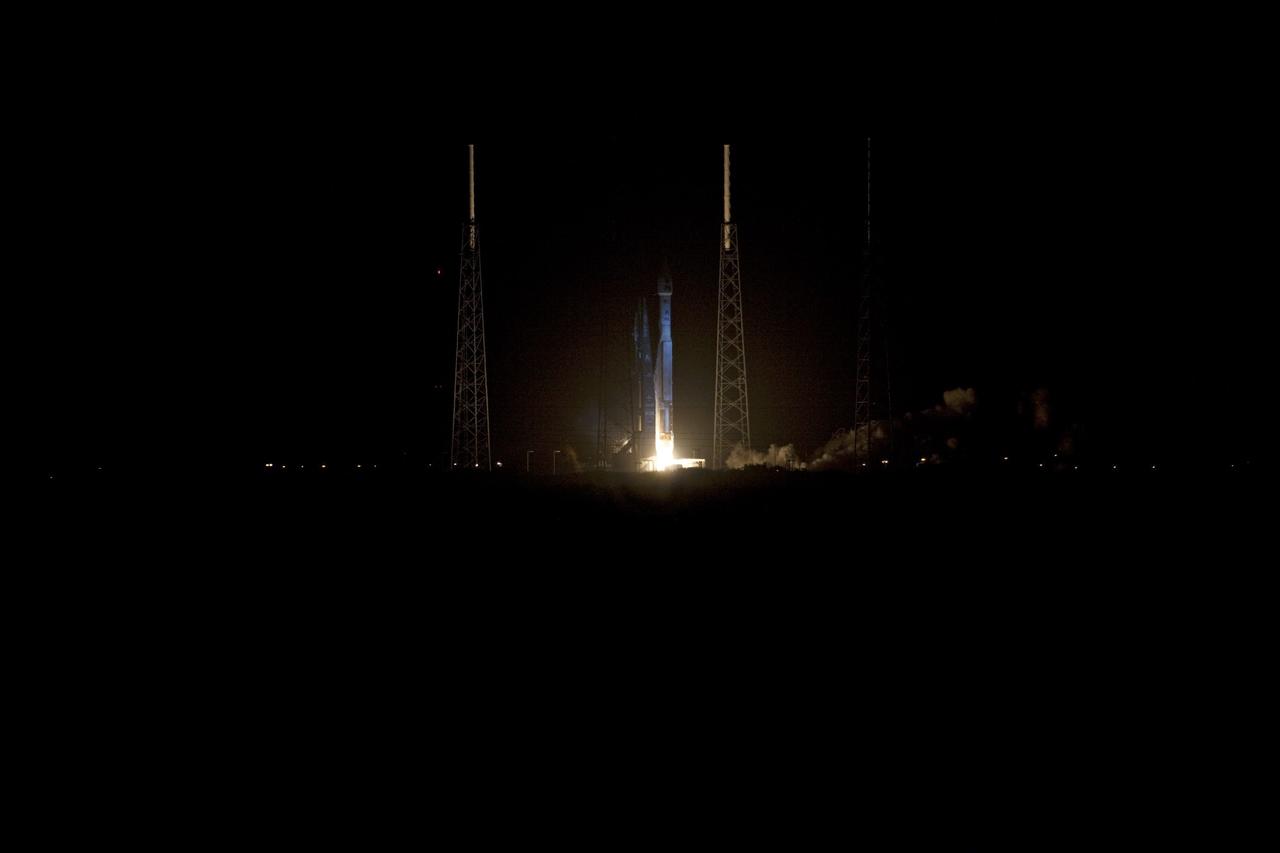
CAPE CANAVERAL, Fla. – NASA's Radiation Belt Storm Probes, or RBSP, lift off Space Launch Complex 41 on Cape Canaveral Air Force Station in Florida aboard a United Launch Alliance Atlas V rocket at 4:05 a.m. EDT. RBSP will explore changes in Earth's space environment caused by the sun -- known as "space weather" -- that can disable satellites, create power-grid failures and disrupt GPS service. The mission also will provide data on the fundamental radiation and particle acceleration processes throughout the universe. For more information on RBSP, visit http://www.nasa.gov/rbsp. Photo credit: NASA/Jim Grossmann
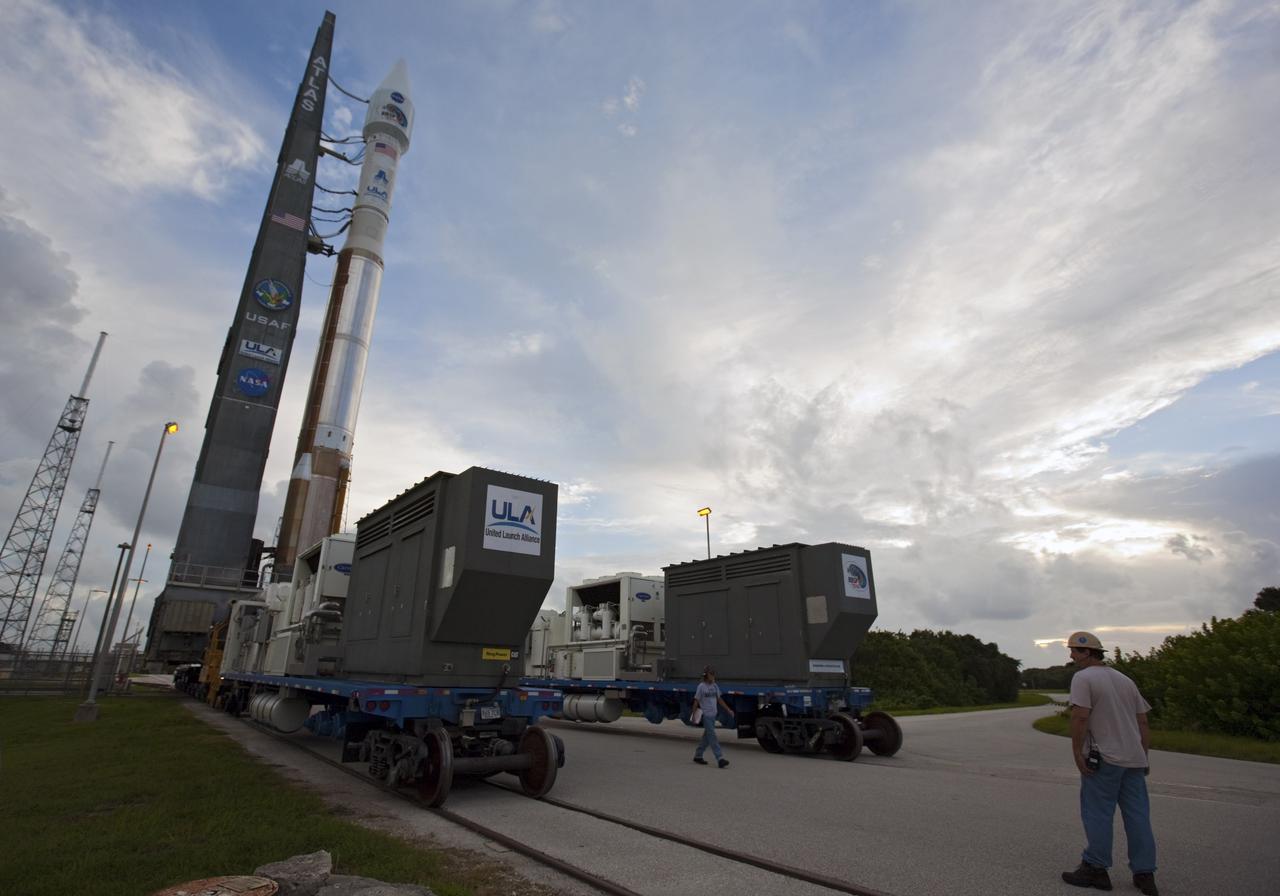
CAPE CANAVERAL, Fla. – At Cape Canaveral Air Force Station in Florida, United Launch Alliance, or ULA, technicians monitor the progress as the ULA Atlas V rocket, carrying NASA’s twin Radiation Belt Storm Probes, or RBSP, rolls back from Space Launch Complex 41 to the Vertical Integration Facility. The rocket and spacecraft will be secured and protected from inclement weather due to Tropical Storm Isaac. RBSP will explore changes in Earth's space environment caused by the sun -- known as "space weather" -- that can disable satellites, create power-grid failures and disrupt GPS service. The mission also will provide data on the fundamental radiation and particle acceleration processes throughout the universe. The launch is rescheduled for 4:05 a.m. EDT on Aug. 30, pending approval from the range. For more information on RBSP, visit http://www.nasa.gov/rbsp. Photo credit: NASA/Ben Smegelsky
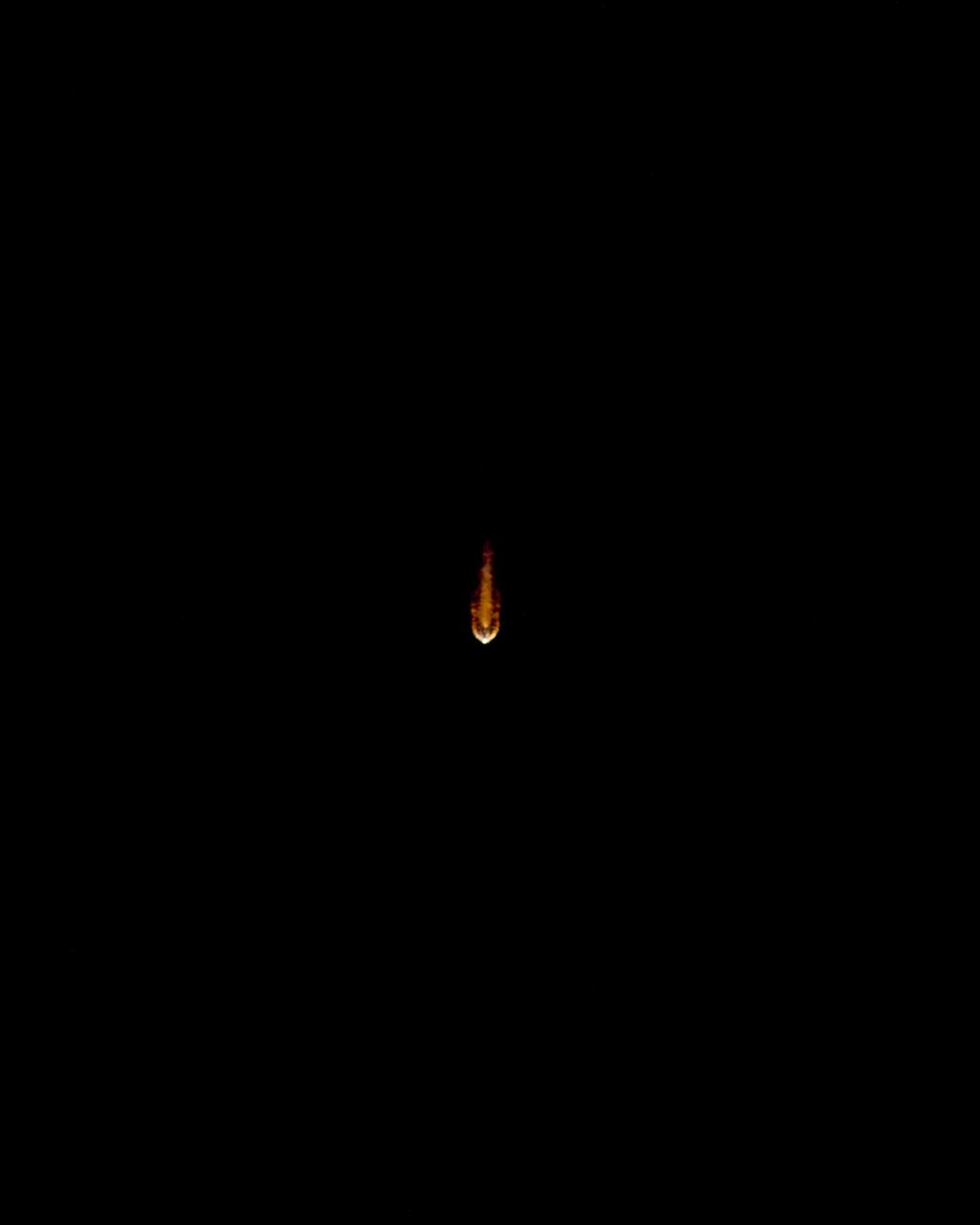
CAPE CANAVERAL, Fla. - The red glow of engines is all that can be see against the late night sky, as the United Launch Alliance Atlas V rocket carrying NASA's Radiation Belt Storm Probes, or RBSP, travels upward after lifting off Space Launch Complex 41 on Cape Canaveral Air Force Station in Florida at 4:05 a.m. EDT. RBSP will explore changes in Earth's space environment caused by the sun -- known as "space weather" -- that can disable satellites, create power-grid failures and disrupt GPS service. The mission also will provide data on the fundamental radiation and particle acceleration processes throughout the universe. For more information on RBSP, visit http://www.nasa.gov/rbsp. Photo credit: NASA/Rusty Backer
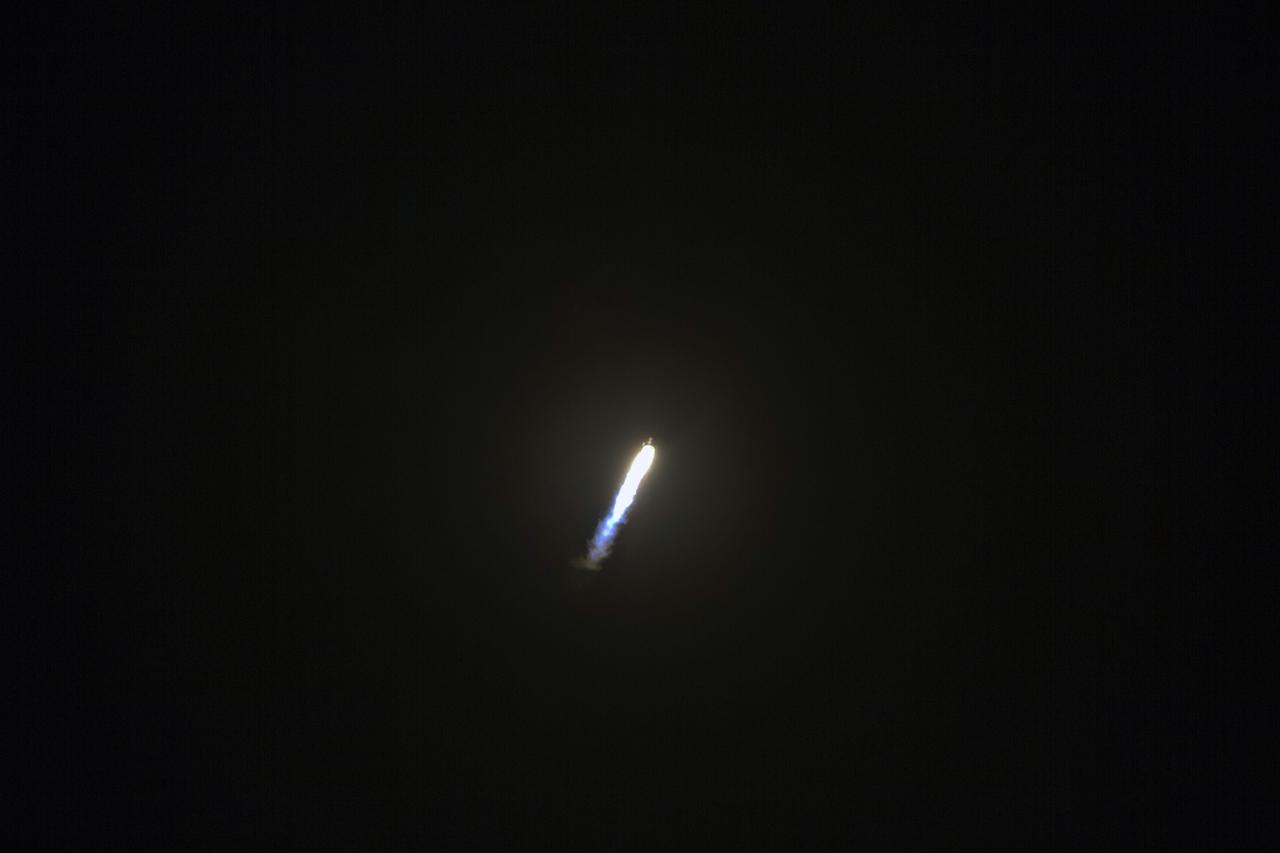
CAPE CANAVERAL, Fla. - With its engines burning bright against the late night sky, the United Launch Alliance Atlas V rocket carrying NASA's Radiation Belt Storm Probes, or RBSP, travels upward after lifting off Space Launch Complex 41 on Cape Canaveral Air Force Station in Florida at 4:05 a.m. EDT. RBSP will explore changes in Earth's space environment caused by the sun -- known as "space weather" -- that can disable satellites, create power-grid failures and disrupt GPS service. The mission also will provide data on the fundamental radiation and particle acceleration processes throughout the universe. For more information on RBSP, visit http://www.nasa.gov/rbsp. Photo credit: NASA/Rusty Backer
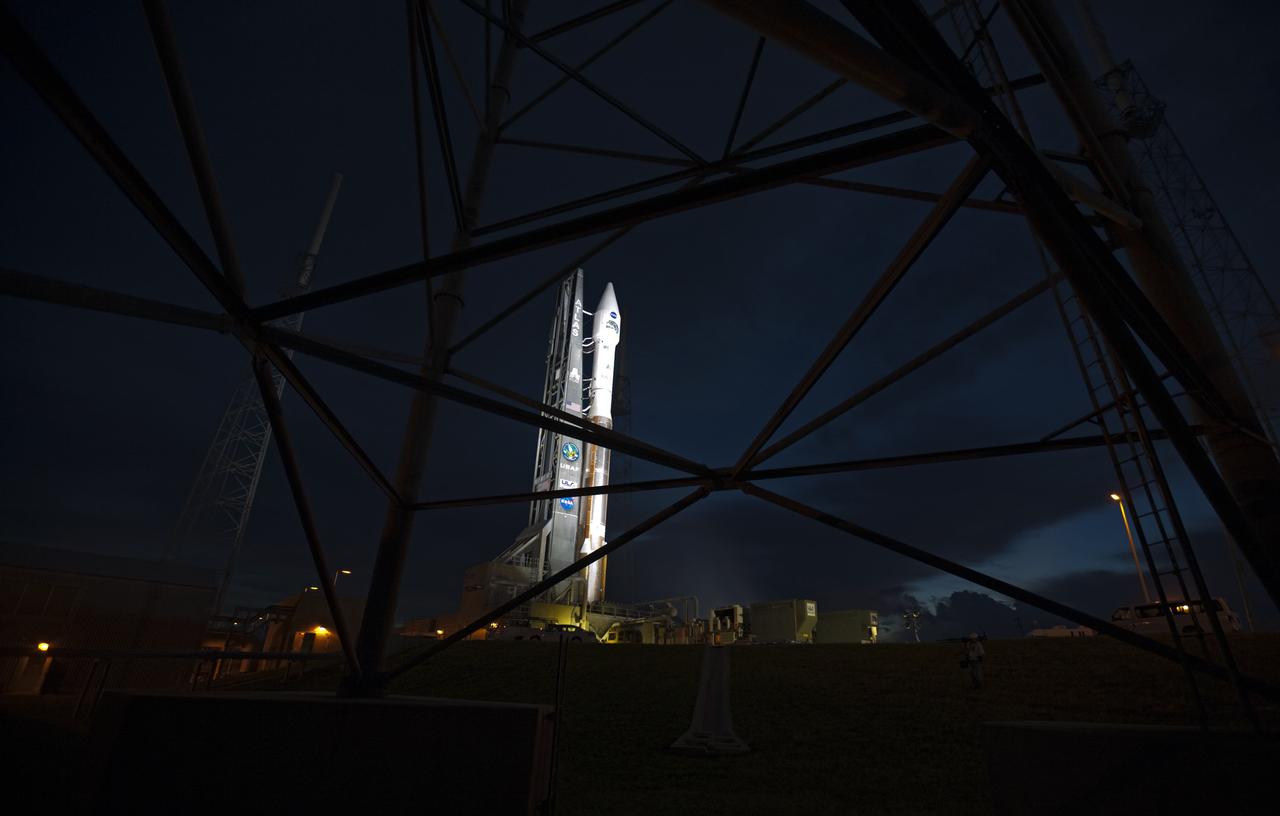
CAPE CANAVERAL, Fla. – At Cape Canaveral Air Force Station in Florida, the United Launch Alliance Atlas V rocket, carrying NASA’s twin Radiation Belt Storm Probes, or RBSP, is rolled back from Space Launch Complex 41 to the Vertical Integration Facility. The rocket and spacecraft will be secured and protected from inclement weather due to Tropical Storm Isaac. RBSP will explore changes in Earth's space environment caused by the sun -- known as "space weather" -- that can disable satellites, create power-grid failures and disrupt GPS service. The mission also will provide data on the fundamental radiation and particle acceleration processes throughout the universe. The launch is rescheduled for 4:05 a.m. EDT on Aug. 30, pending approval from the range. For more information on RBSP, visit http://www.nasa.gov/rbsp. Photo credit: NASA/Ben Smegelsky
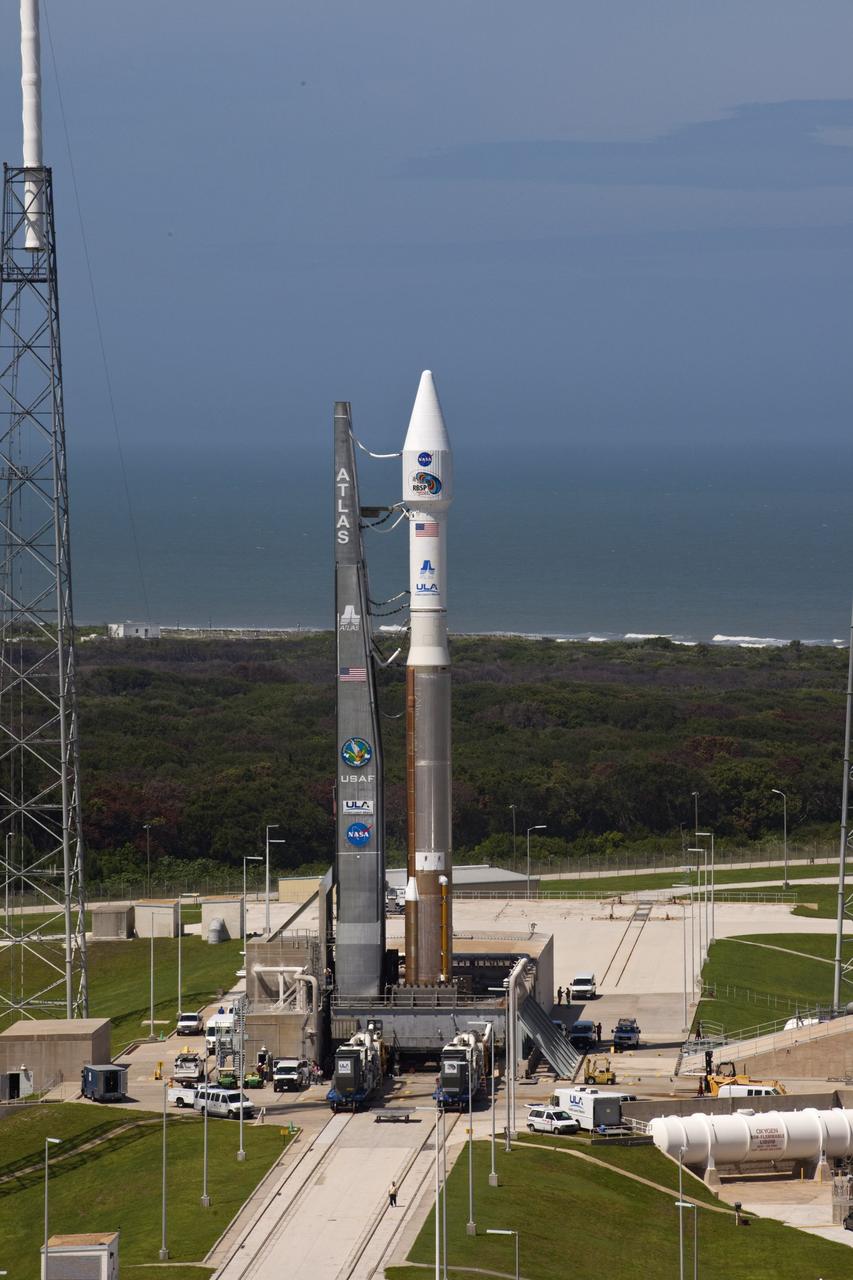
CAPE CANAVERAL, Fla. – At Cape Canaveral Air Force Station in Florida, the United Launch Alliance, or ULA, Atlas V rocket carrying NASA’s twin Radiation Belt Storm Probes, or RBSP, rolled out of the ULA Vertical Integration Facility at Space Launch Complex 41 at 1:59 p.m. EDT and was fully secured in position on the pad at 2:57 p.m. The Atlas V rocket had been rolled back to the facility on August 26 to ensure the launch vehicle and RBSP spacecraft were secured and protected from inclement weather caused by Tropical Storm Isaac. RBSP will explore changes in Earth's space environment caused by the sun -- known as "space weather" -- that can disable satellites, create power-grid failures and disrupt GPS service. The mission also will provide data on the fundamental radiation and particle acceleration processes throughout the universe. The launch is rescheduled for 4:05 a.m. EDT on Aug. 30. For more information on RBSP, visit http://www.nasa.gov/rbsp. Photo credit: NASA/Kim Shiflett

CAPE CANAVERAL, Fla. – At Cape Canaveral Air Force Station in Florida, the United Launch Alliance, or ULA, Atlas V rocket carrying NASA’s twin Radiation Belt Storm Probes, or RBSP, rolled out of the ULA Vertical Integration Facility at Space Launch Complex 41 at 1:59 p.m. EDT and is on its way to the launch pad. The Atlas V rocket had been rolled back to the facility on August 26 to ensure the launch vehicle and RBSP spacecraft were secured and protected from inclement weather caused by Tropical Storm Isaac. RBSP will explore changes in Earth's space environment caused by the sun -- known as "space weather" -- that can disable satellites, create power-grid failures and disrupt GPS service. The mission also will provide data on the fundamental radiation and particle acceleration processes throughout the universe. The launch is rescheduled for 4:05 a.m. EDT on Aug. 30. For more information on RBSP, visit http://www.nasa.gov/rbsp. Photo credit: NASA/Kim Shiflett
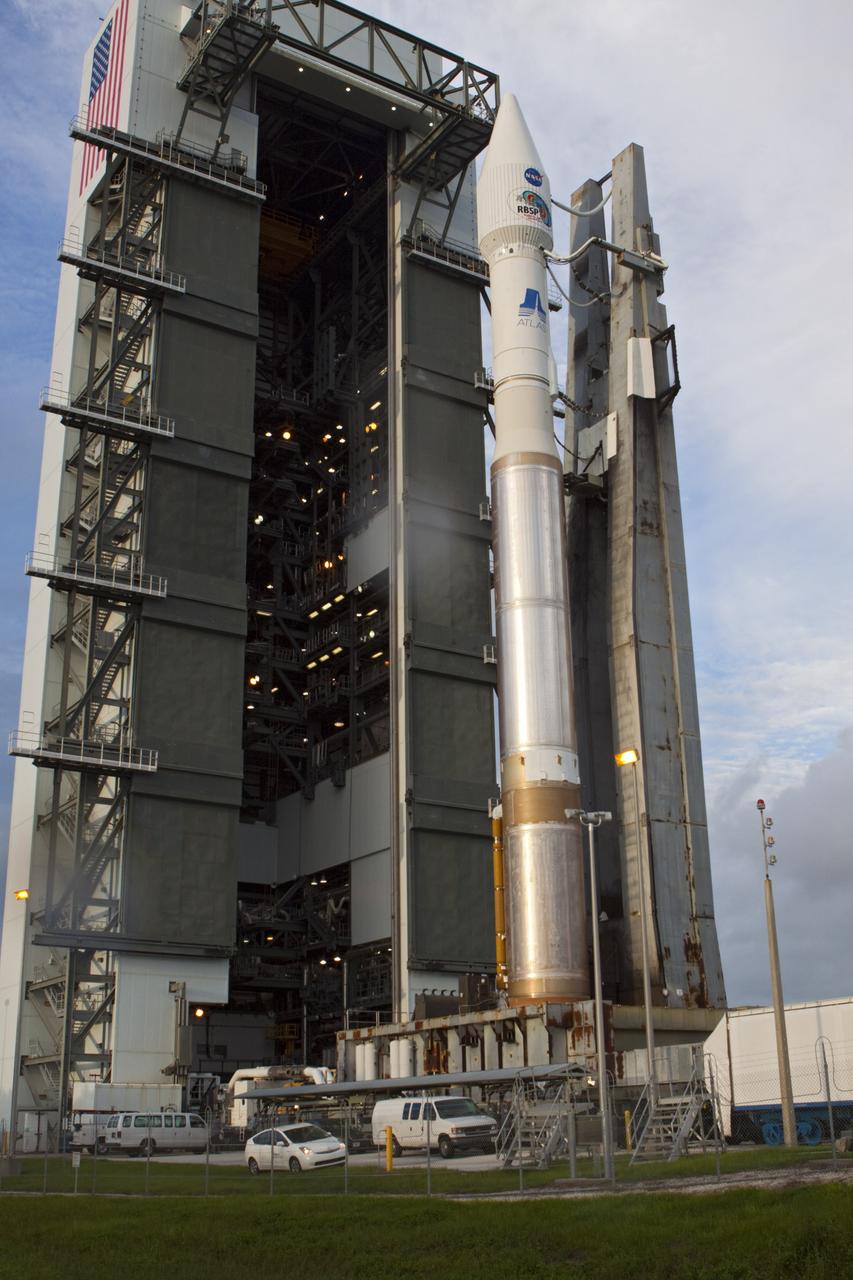
CAPE CANAVERAL, Fla. – At Cape Canaveral Air Force Station in Florida, the United Launch Alliance, or ULA, Atlas V rocket with NASA’s twin Radiation Belt Storm Probes, or RBSP, rolls back to the Vertical Integration Facility from Space Launch Complex 41. The rocket and spacecraft will be secured and protected from inclement weather due to Tropical Storm Isaac. RBSP will explore changes in Earth's space environment caused by the sun -- known as "space weather" -- that can disable satellites, create power-grid failures and disrupt GPS service. The mission also will provide data on the fundamental radiation and particle acceleration processes throughout the universe. The launch is rescheduled for 4:05 a.m. EDT on Aug. 30, pending approval from the range. For more information on RBSP, visit http://www.nasa.gov/rbsp. Photo credit: NASA/Ben Smegelsky
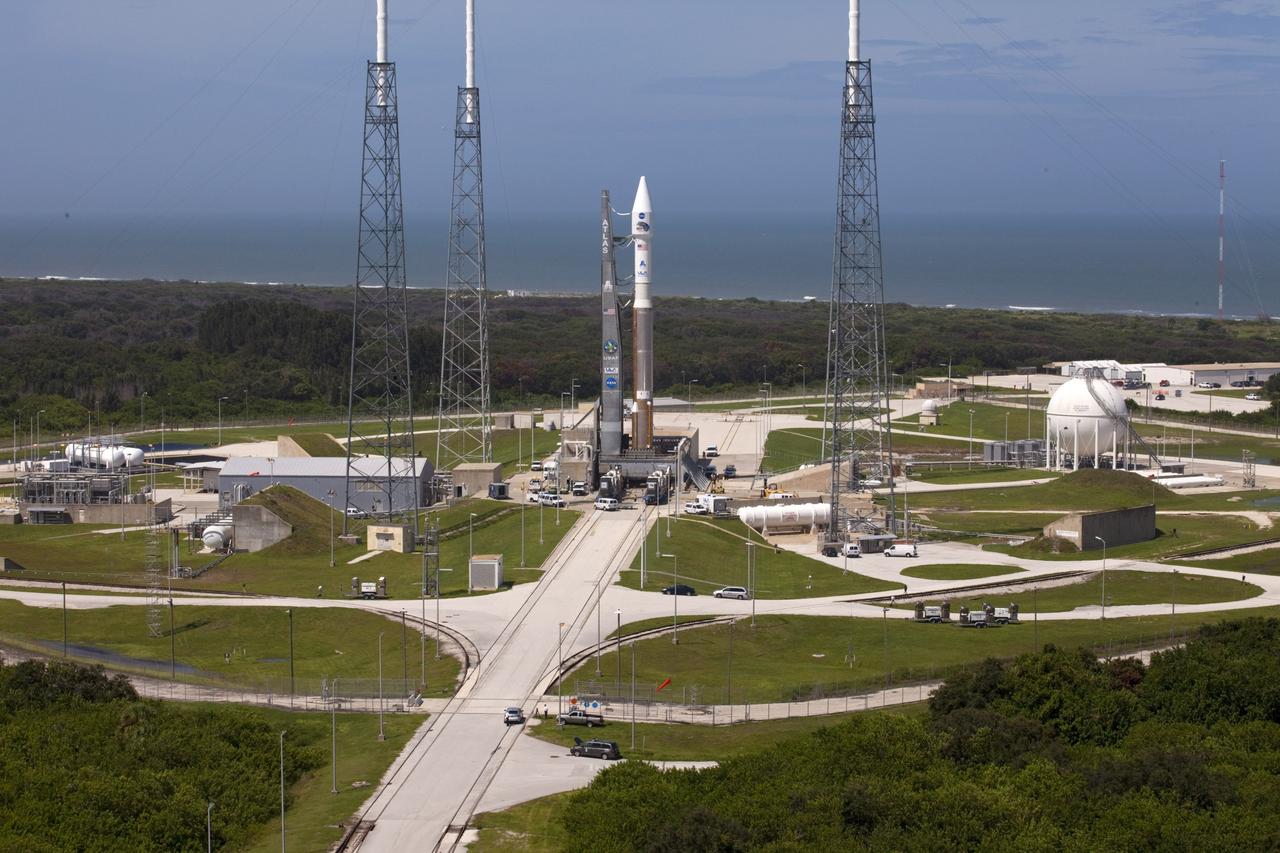
CAPE CANAVERAL, Fla. – At Cape Canaveral Air Force Station in Florida, the United Launch Alliance, or ULA, Atlas V rocket carrying NASA’s twin Radiation Belt Storm Probes, or RBSP, rolled out of the ULA Vertical Integration Facility at Space Launch Complex 41 at 1:59 p.m. EDT and was fully secured in position on the pad at 2:57 p.m. The Atlas V rocket had been rolled back to the facility on August 26 to ensure the launch vehicle and RBSP spacecraft were secured and protected from inclement weather caused by Tropical Storm Isaac. RBSP will explore changes in Earth's space environment caused by the sun -- known as "space weather" -- that can disable satellites, create power-grid failures and disrupt GPS service. The mission also will provide data on the fundamental radiation and particle acceleration processes throughout the universe. The launch is rescheduled for 4:05 a.m. EDT on Aug. 30, pending approval from the range. For more information on RBSP, visit http://www.nasa.gov/rbsp. Photo credit: NASA/Kim Shiflett
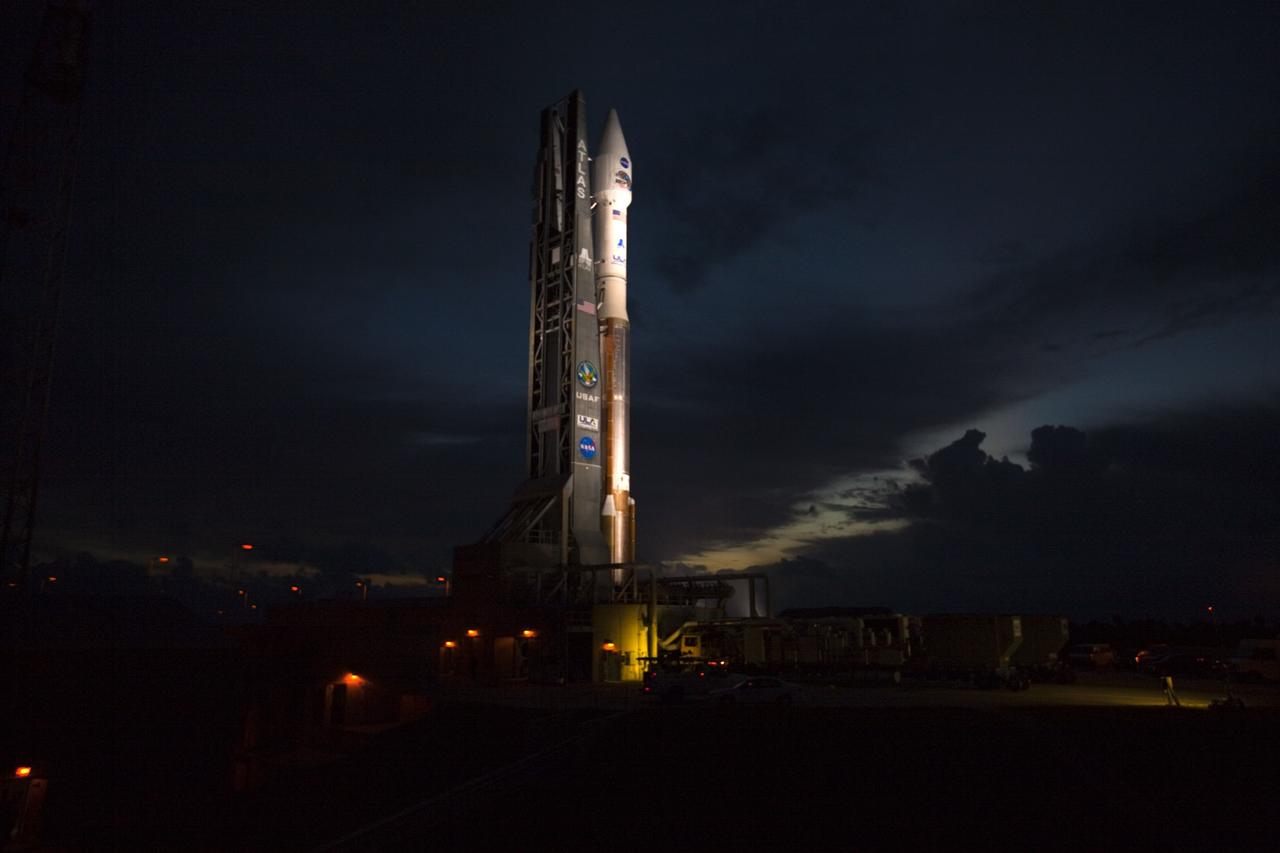
CAPE CANAVERAL, Fla. – At Cape Canaveral Air Force Station in Florida, the United Launch Alliance Atlas V rocket, carrying NASA’s twin Radiation Belt Storm Probes, or RBSP, is rolled back from Space Launch Complex 41 to the Vertical Integration Facility. The rocket and spacecraft will be secured and protected from inclement weather due to Tropical Storm Isaac. RBSP will explore changes in Earth's space environment caused by the sun -- known as "space weather" -- that can disable satellites, create power-grid failures and disrupt GPS service. The mission also will provide data on the fundamental radiation and particle acceleration processes throughout the universe. The launch is rescheduled for 4:05 a.m. EDT on Aug. 30, pending approval from the range. For more information on RBSP, visit http://www.nasa.gov/rbsp. Photo credit: NASA/Ben Smegelsky
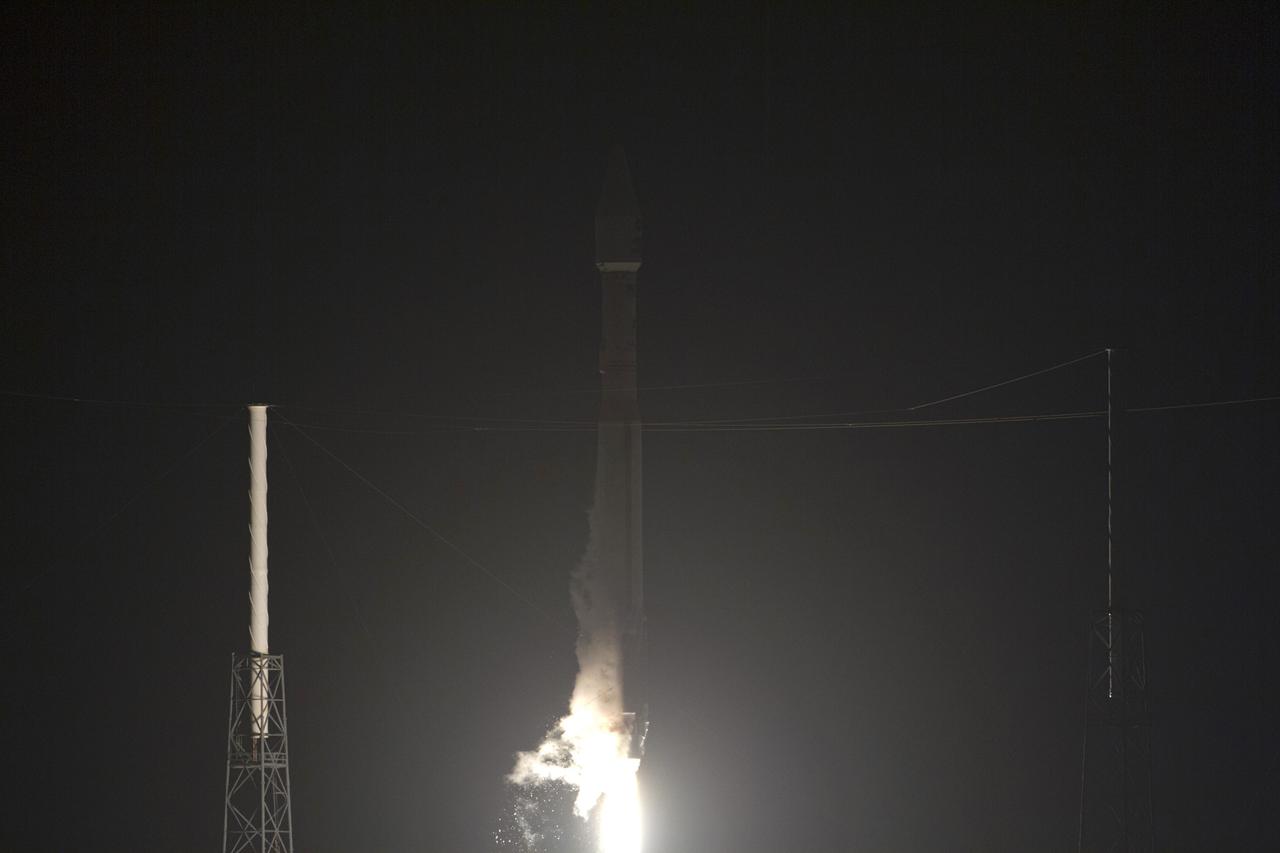
CAPE CANAVERAL, Fla. - The United Launch Alliance Atlas V rocket carrying NASA's Radiation Belt Storm Probes, or RBSP, lifts off Space Launch Complex 41 on Cape Canaveral Air Force Station in Florida at 4:05 a.m. EDT. RBSP will explore changes in Earth's space environment caused by the sun -- known as "space weather" -- that can disable satellites, create power-grid failures and disrupt GPS service. The mission also will provide data on the fundamental radiation and particle acceleration processes throughout the universe. For more information on RBSP, visit http://www.nasa.gov/rbsp. Photo credit: NASA/Kenny Allen
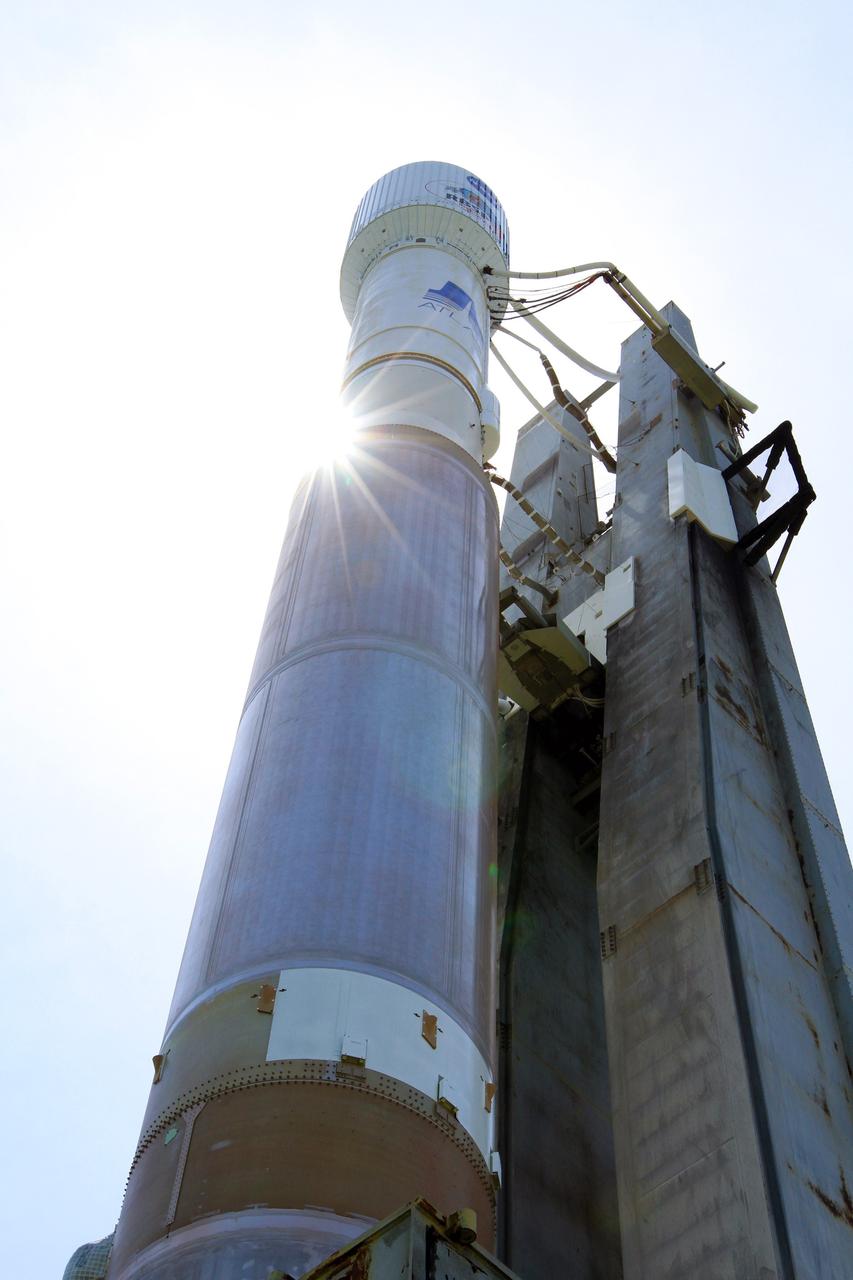
CAPE CANAVERAL, Fla. – At Cape Canaveral Air Force Station in Florida, the United Launch Alliance, or ULA, Atlas V rocket carrying NASA’s twin Radiation Belt Storm Probes, or RBSP, rolled out of the ULA Vertical Integration Facility at Space Launch Complex 41 at 1:59 p.m. EDT heading to the launch pad. The Atlas V rocket had been rolled back to the facility on August 26 to ensure the launch vehicle and RBSP spacecraft were secured and protected from inclement weather caused by Tropical Storm Isaac. RBSP will explore changes in Earth's space environment caused by the sun -- known as "space weather" -- that can disable satellites, create power-grid failures and disrupt GPS service. The mission also will provide data on the fundamental radiation and particle acceleration processes throughout the universe. The launch is rescheduled for 4:05 a.m. EDT on Aug. 30. For more information on RBSP, visit http://www.nasa.gov/rbsp. Photo credit: NASA/Kim Shiflett
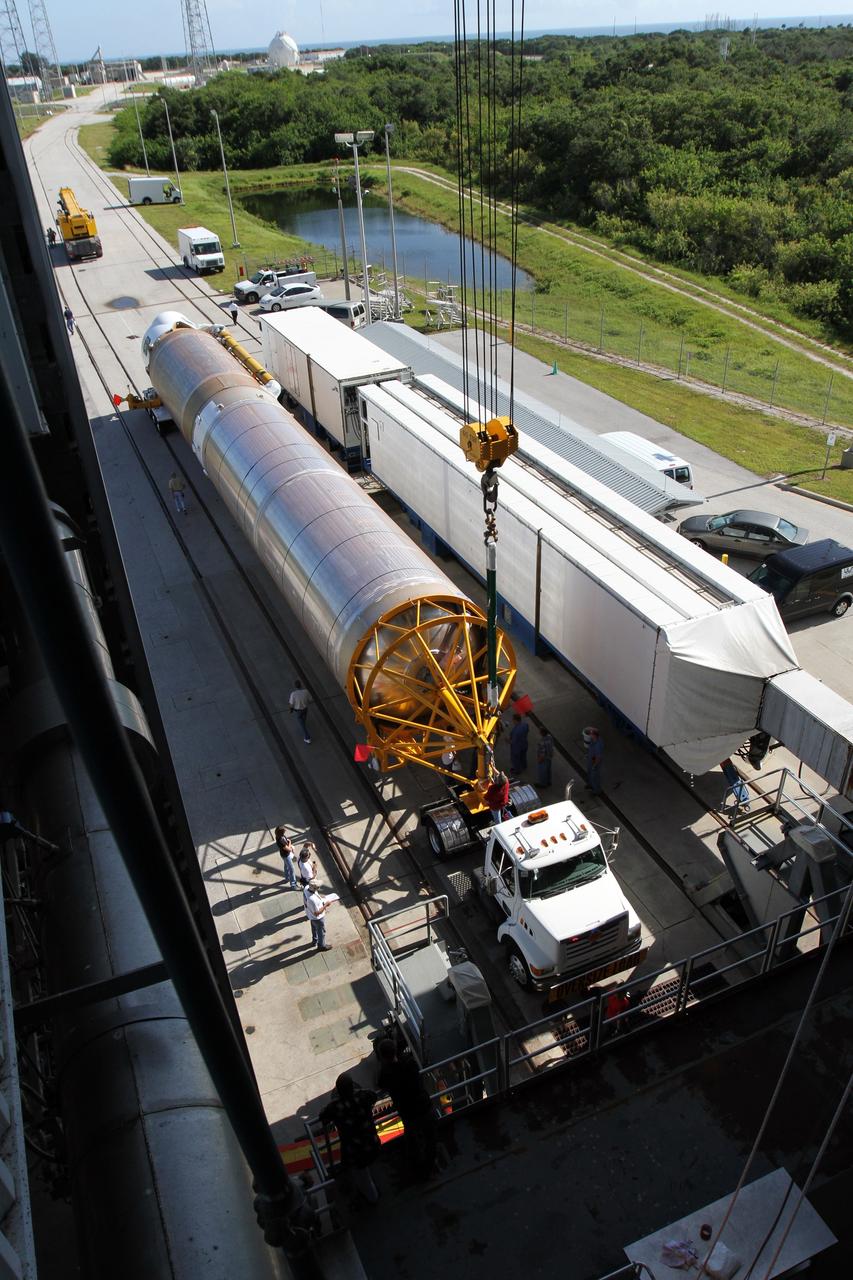
CAPE CANAVERAL, Fla. - A unique aerial view shows the arrival of the first stage of the United Launch Alliance Atlas V rocket at Launch Complex 41 at Cape Canaveral Air Force Station in Florida for the Radiation Belt Storm Probes, or RBSP, mission. NASA’s RBSP mission will help us understand the sun’s influence on Earth and near-Earth space by studying the Earth’s radiation belts on various scales of space and time. RBSP will begin its mission of exploration of Earth’s Van Allen radiation belts and the extremes of space weather after its launch aboard an Atlas V rocket. Launch is targeted for Aug. 23. For more information, visit http://www.nasa.gov/rbsp. Photo credit: NASA/Cory Huston
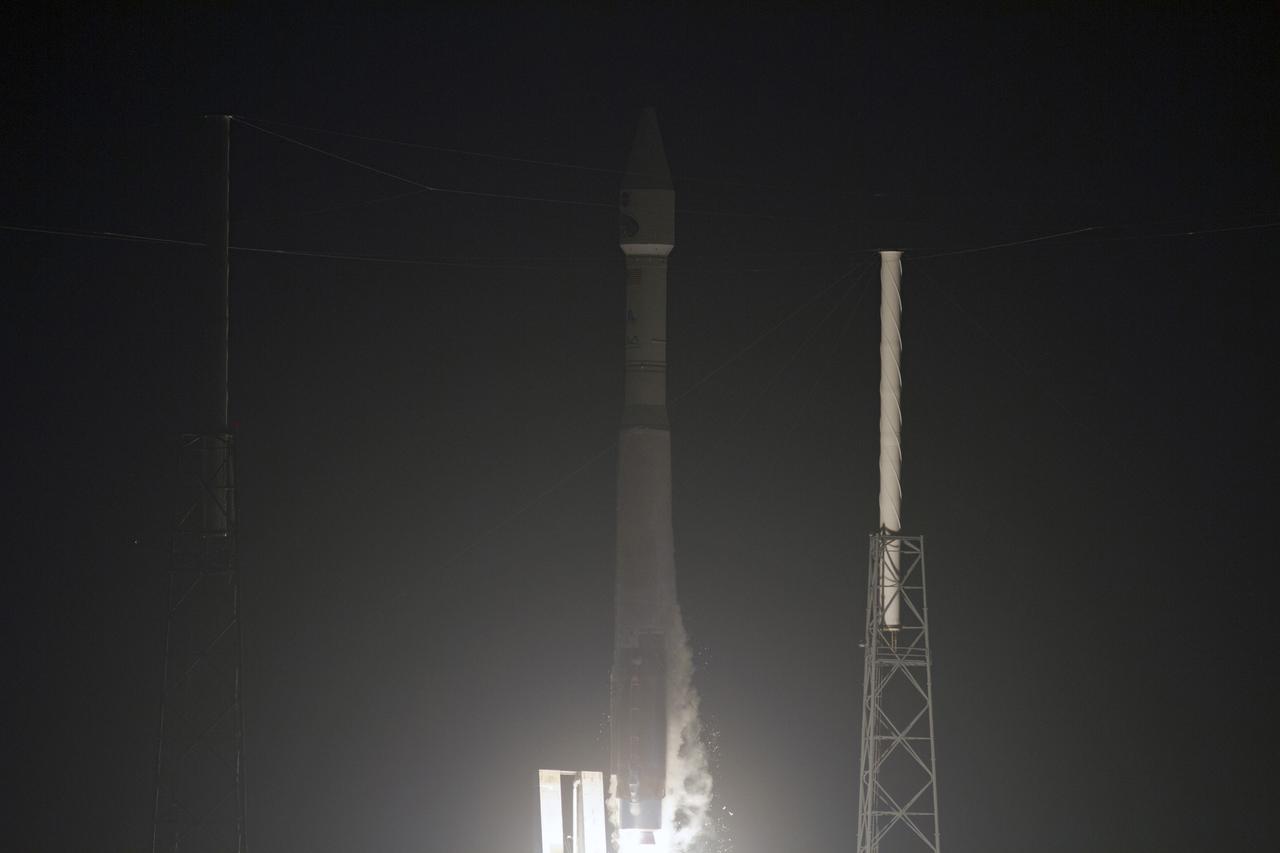
CAPE CANAVERAL, Fla. - The United Launch Alliance Atlas V rocket carrying NASA's Radiation Belt Storm Probes, or RBSP, lifted off Space Launch Complex 41 on Cape Canaveral Air Force Station in Florida at 4:05 a.m. EDT. RBSP will explore changes in Earth's space environment caused by the sun -- known as "space weather" -- that can disable satellites, create power-grid failures and disrupt GPS service. The mission also will provide data on the fundamental radiation and particle acceleration processes throughout the universe. For more information on RBSP, visit http://www.nasa.gov/rbsp. Photo credit: NASA/Rusty Backer
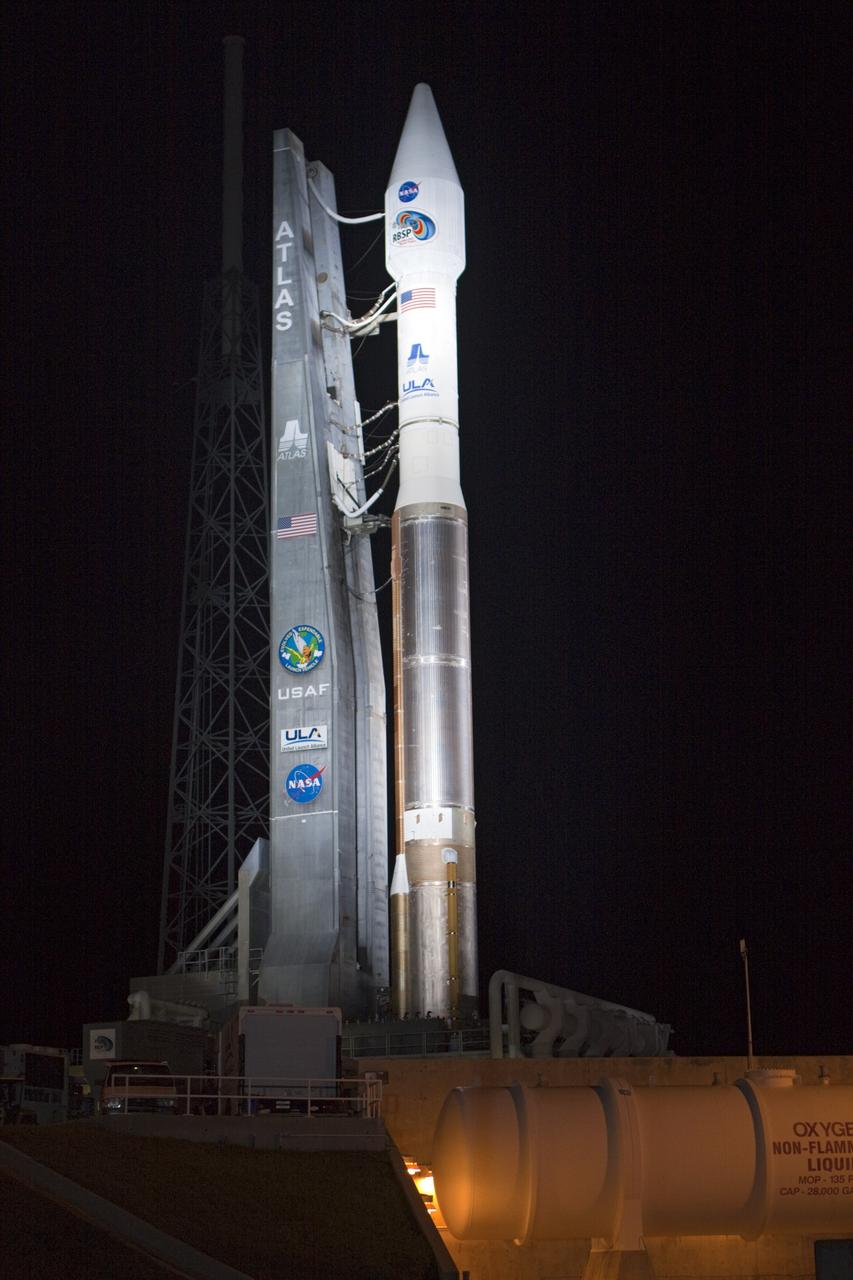
CAPE CANAVERAL, Fla. – At Cape Canaveral Air Force Station in Florida, the United Launch Alliance Atlas V rocket, carrying NASA’s twin Radiation Belt Storm Probes, or RBSP, is rolled back from Space Launch Complex 41 to the Vertical Integration Facility where they will be secured and protected from inclement weather due to Tropical Storm Isaac. RBSP will explore changes in Earth's space environment caused by the sun -- known as "space weather" -- that can disable satellites, create power-grid failures and disrupt GPS service. The mission also will provide data on the fundamental radiation and particle acceleration processes throughout the universe. The launch is rescheduled for 4:05 a.m. EDT on Aug. 30, pending approval from the range. For more information on RBSP, visit http://www.nasa.gov/rbsp. Photo credit: NASA/Ben Smegelsky
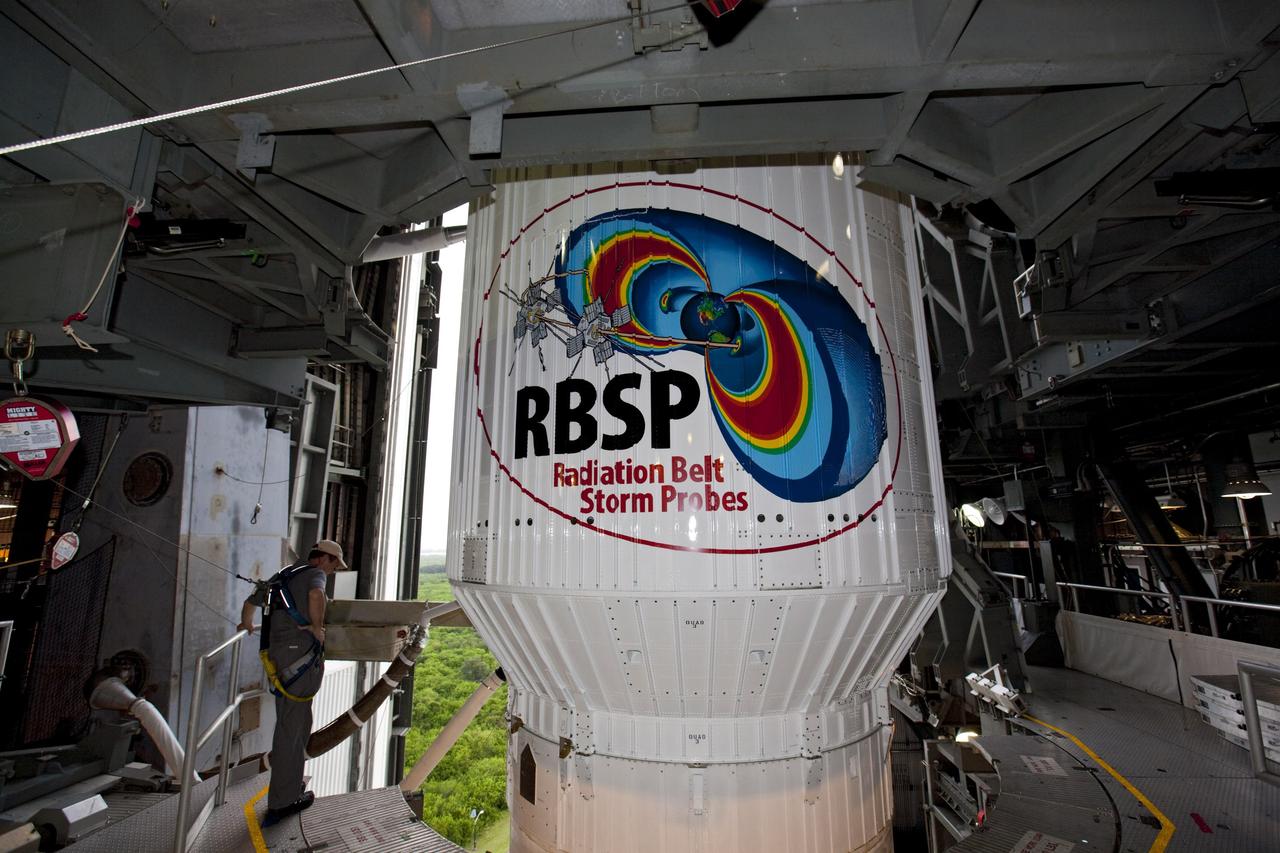
CAPE CANAVERAL, Fla. – At Cape Canaveral Air Force Station in Florida, United Launch Alliance, or ULA, technicians monitor the progress as the Atlas V rocket carrying NASA’s twin Radiation Belt Storm Probes, or RBSP, is moved into the Vertical Integration Facility after rolling back from Space Launch Complex 41. The rocket and spacecraft will be secured and protected from inclement weather due to Tropical Storm Isaac. The RBSP logo on the Atlas V rocket is not a decal. For this mission, the logo was hand painted onto the rocket. RBSP will explore changes in Earth's space environment caused by the sun -- known as "space weather" -- that can disable satellites, create power-grid failures and disrupt GPS service. The mission also will provide data on the fundamental radiation and particle acceleration processes throughout the universe. The launch is rescheduled for 4:05 a.m. EDT on Aug. 30, pending approval from the range. For more information on RBSP, visit http://www.nasa.gov/rbsp. Photo credit: NASA/Ben Smegelsky
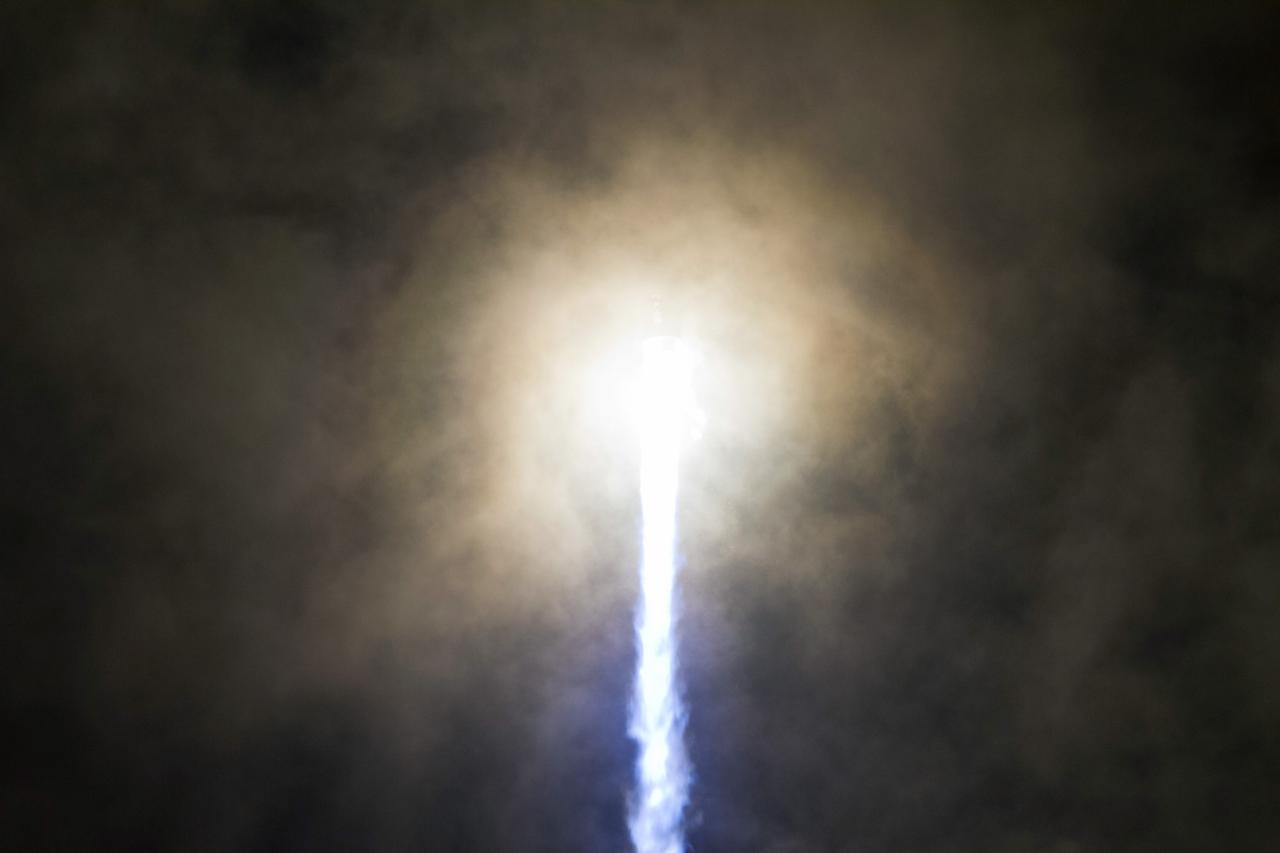
CAPE CANAVERAL, Fla. - With its engines burning bright against the late night sky, the United Launch Alliance Atlas V rocket carrying NASA's Radiation Belt Storm Probes, or RBSP, travels upward after lifting off Space Launch Complex 41 on Cape Canaveral Air Force Station in Florida at 4:05 a.m. EDT. RBSP will explore changes in Earth's space environment caused by the sun -- known as "space weather" -- that can disable satellites, create power-grid failures and disrupt GPS service. The mission also will provide data on the fundamental radiation and particle acceleration processes throughout the universe. For more information on RBSP, visit http://www.nasa.gov/rbsp. Photo credit: NASA/Rusty Backer
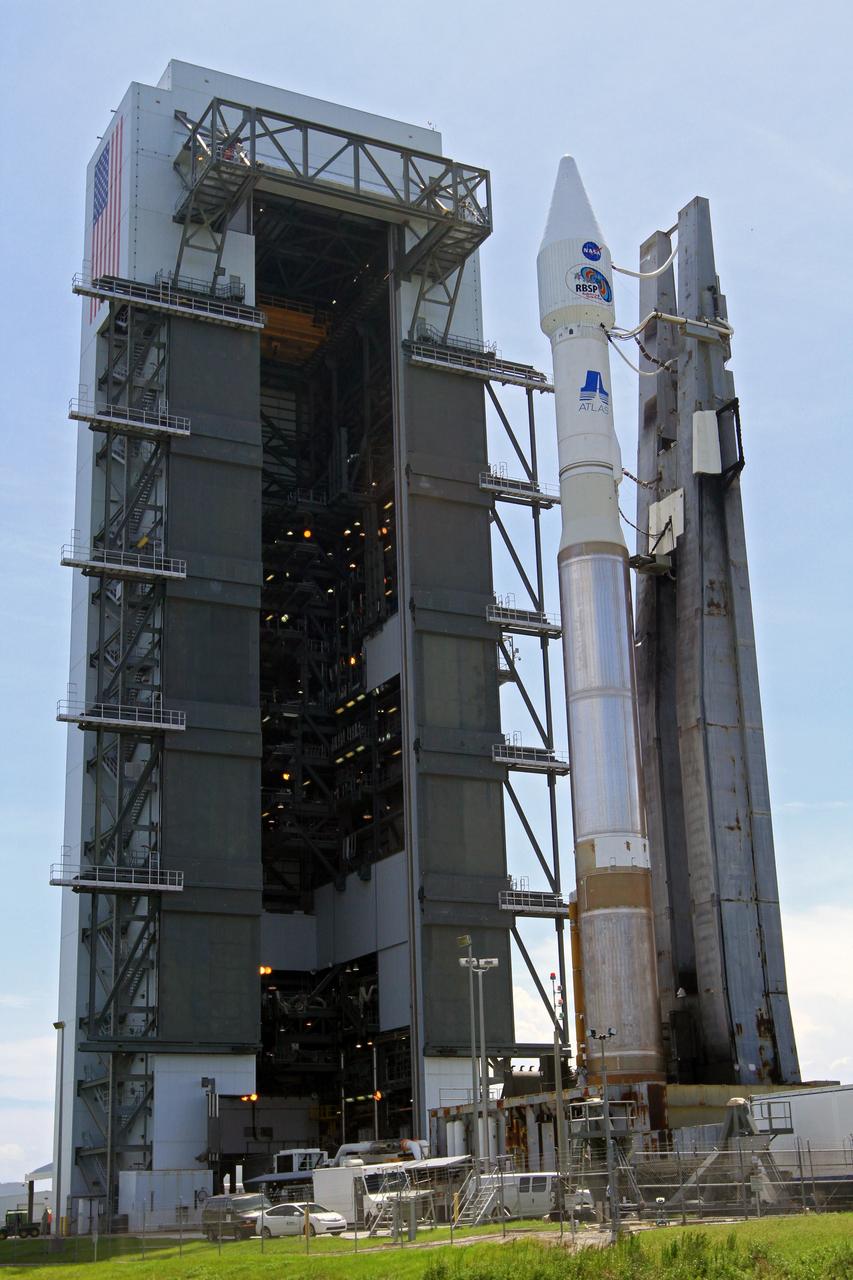
CAPE CANAVERAL, Fla. – At Cape Canaveral Air Force Station in Florida, the United Launch Alliance, or ULA, Atlas V rocket carrying NASA’s twin Radiation Belt Storm Probes, or RBSP, rolled out of the ULA Vertical Integration Facility at Space Launch Complex 41 at 1:59 p.m. EDT heading to the launch pad. The Atlas V rocket had been rolled back to the facility on August 26 to ensure the launch vehicle and RBSP spacecraft were secured and protected from inclement weather caused by Tropical Storm Isaac. RBSP will explore changes in Earth's space environment caused by the sun -- known as "space weather" -- that can disable satellites, create power-grid failures and disrupt GPS service. The mission also will provide data on the fundamental radiation and particle acceleration processes throughout the universe. The launch is rescheduled for 4:05 a.m. EDT on Aug. 30. For more information on RBSP, visit http://www.nasa.gov/rbsp. Photo credit: NASA/Kim Shiflett
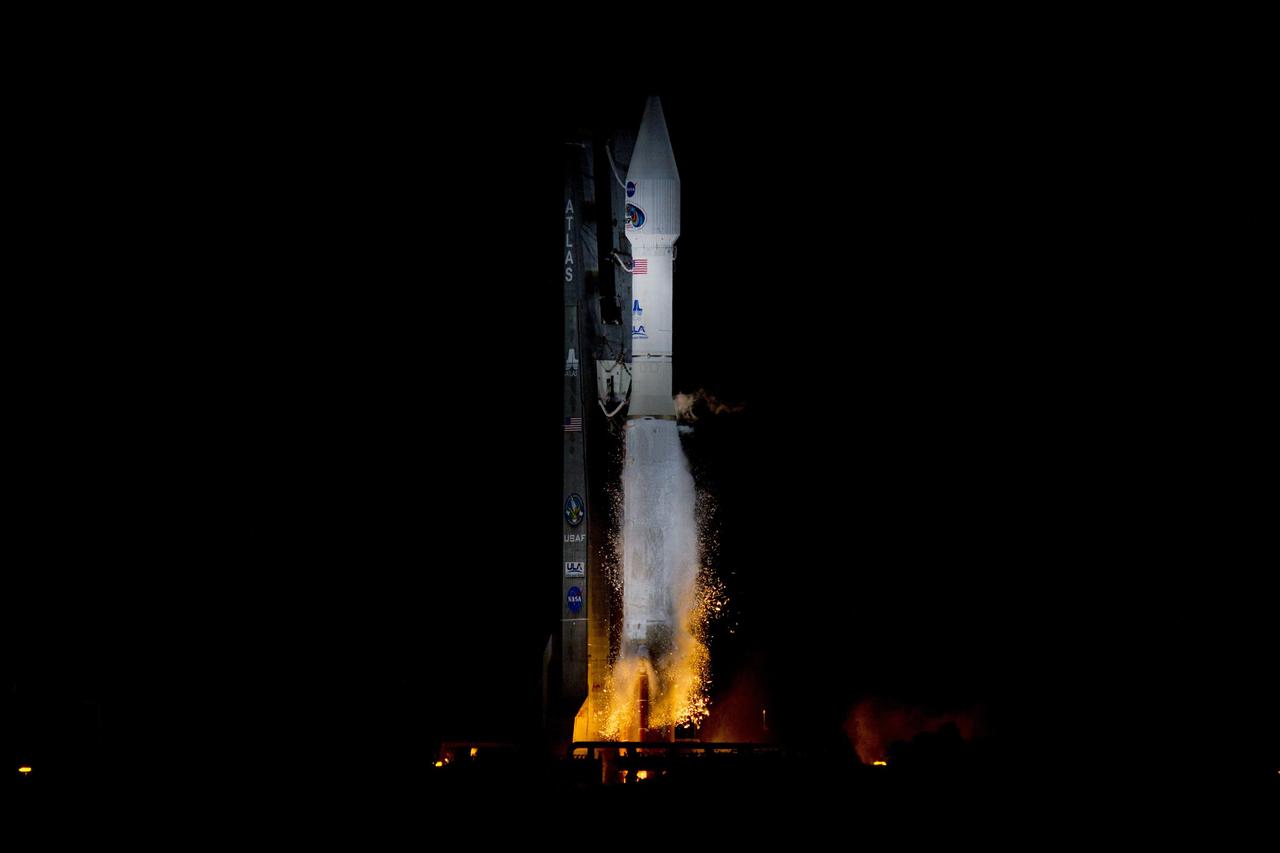
CAPE CANAVERAL, Fla. - The engines ignite under the United Launch Alliance Atlas V rocket at 4:05 a.m. EDT lifting NASA's Radiation Belt Storm Probes, or RBSP, off Space Launch Complex 41 on Cape Canaveral Air Force Station in Florida. RBSP will explore changes in Earth's space environment caused by the sun -- known as "space weather" -- that can disable satellites, create power-grid failures and disrupt GPS service. The mission also will provide data on the fundamental radiation and particle acceleration processes throughout the universe. For more information on RBSP, visit http://www.nasa.gov/rbsp. Photo credit: NASA/Rusty Backer
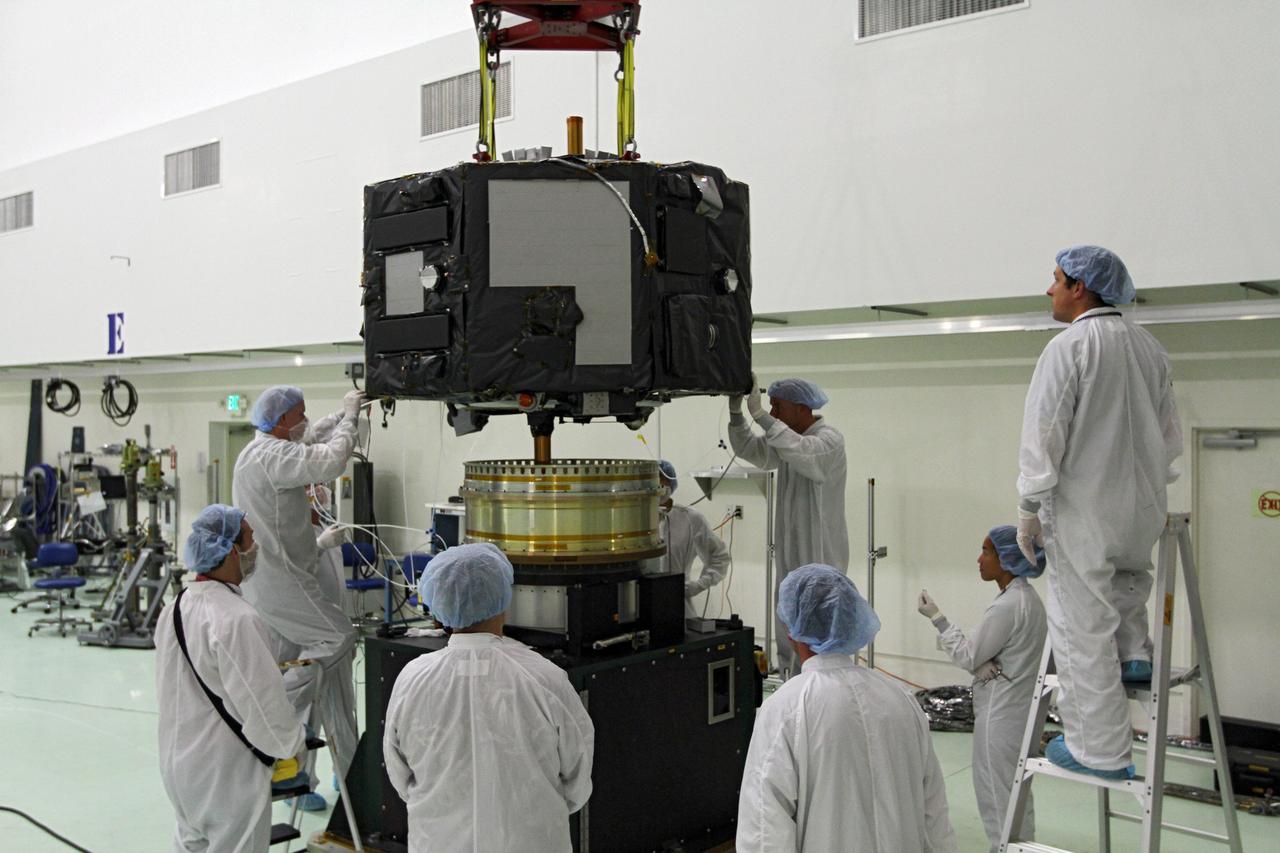
CAPE CANAVERAL, Fla. - Inside the Astrotech payload processing facility near NASA’s Kennedy Space Center in Florida, technicians prepare to place Radiation Belt Storm Probes, or RBSP, spacecraft A on a spin test stand. During the spin test, the spacecraft is turned at a rate of 55 rpm to ensure that it is properly balanced. NASA’s RBSP mission will help us understand the sun’s influence on Earth and near-Earth space by studying the Earth’s radiation belts on various scales of space and time. RBSP will begin its mission of exploration of Earth’s Van Allen radiation belts and the extremes of space weather after its launch aboard a United Launch Alliance Atlas V rocket. Launch is targeted for Aug. 23. For more information, visit http://www.nasa.gov/rbsp. Photo credit: NASA/Charisse Nahser
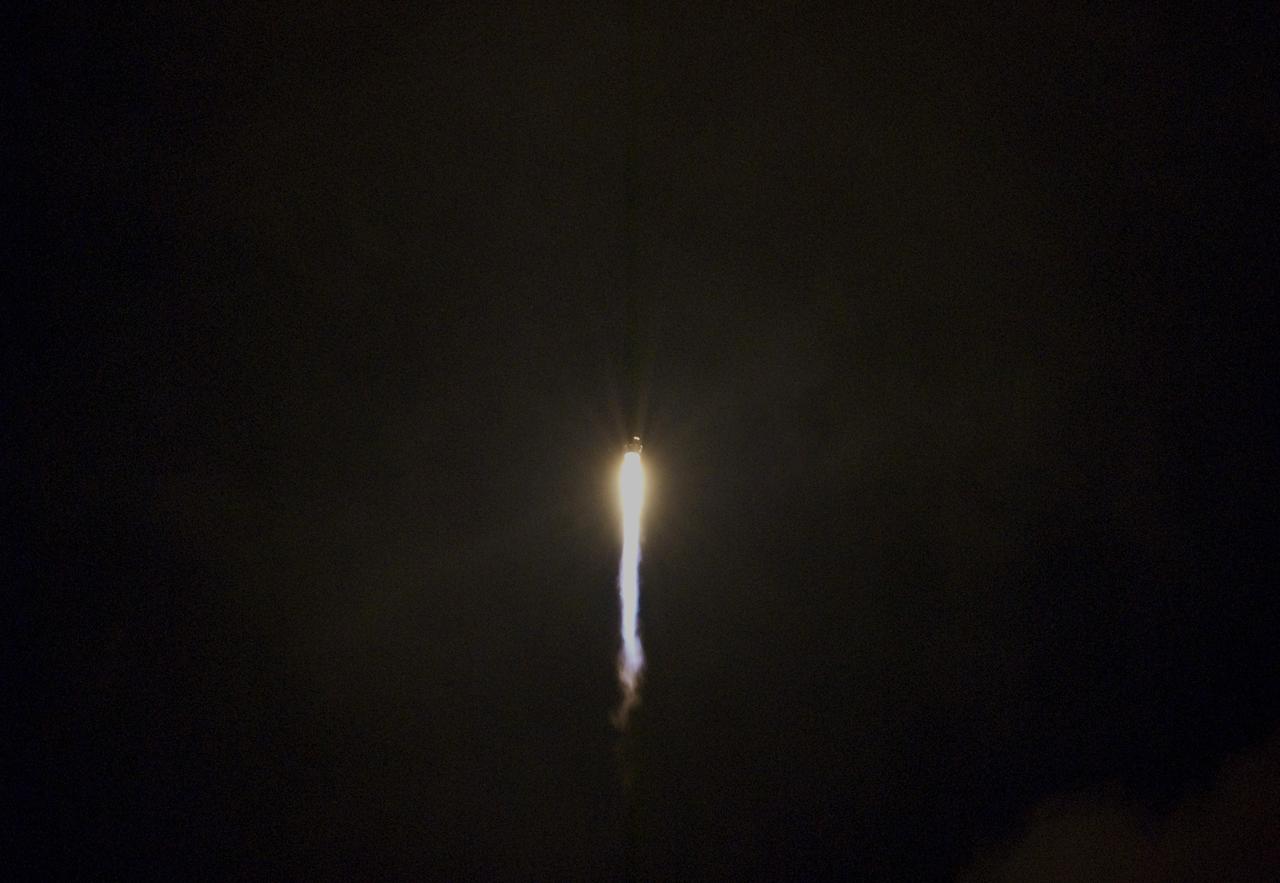
CAPE CANAVERAL, Fla. – The United Launch Alliance Atlas V rocket carrying NASA's Radiation Belt Storm Probes, or RBSP, disappears into the night sky over Space Launch Complex 41 on Cape Canaveral Air Force Station in Florida following liftoff at 4:05 a.m. EDT. RBSP will explore changes in Earth's space environment caused by the sun -- known as "space weather" -- that can disable satellites, create power-grid failures and disrupt GPS service. The mission also will provide data on the fundamental radiation and particle acceleration processes throughout the universe. For more information on RBSP, visit http://www.nasa.gov/rbsp. Photo credit: NASA/Gianni Woods
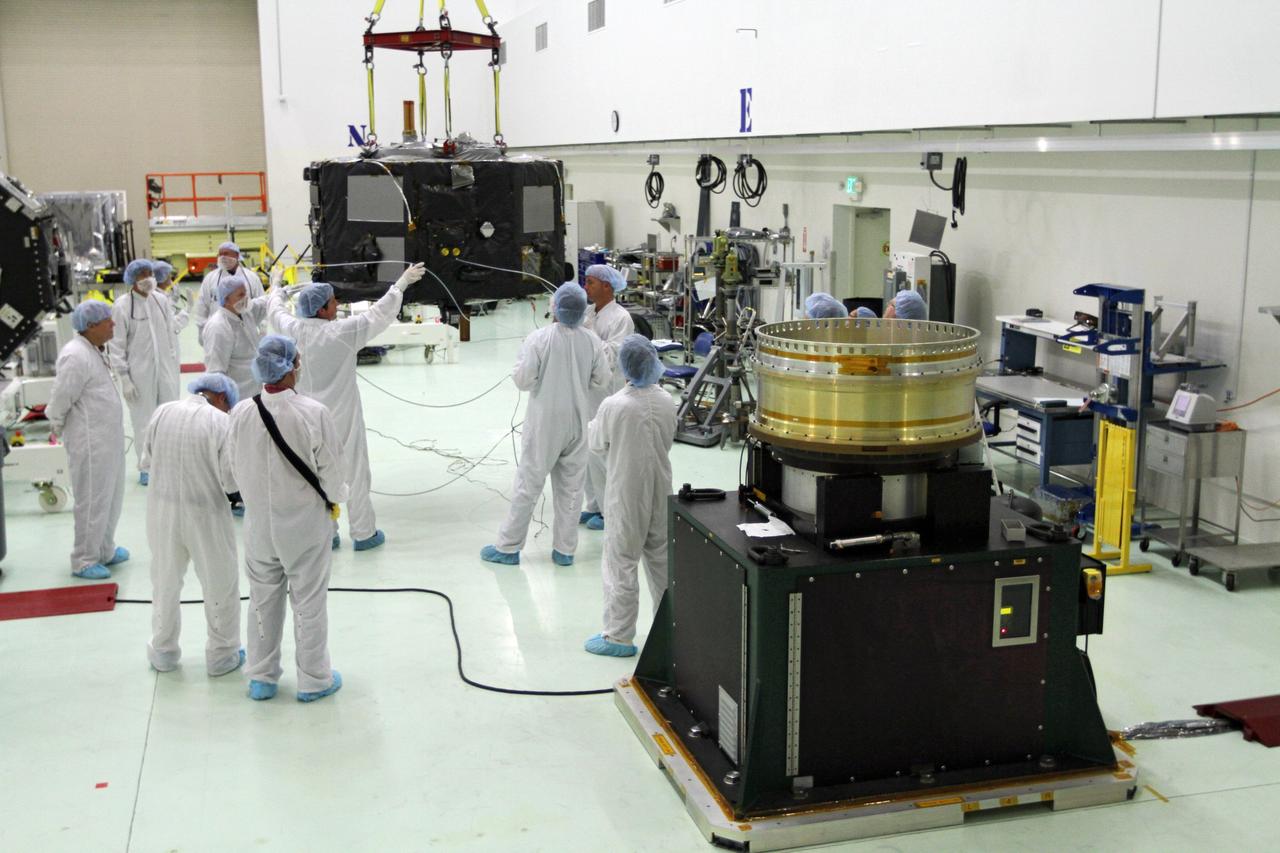
CAPE CANAVERAL, Fla. - Inside the Astrotech payload processing facility near NASA’s Kennedy Space Center in Florida, technicians prepare Radiation Belt Storm Probes, or RBSP, spacecraft A for a spin test. During the spin test, the spacecraft is turned at a rate of 55 rpm to ensure that it is properly balanced. NASA’s RBSP mission will help us understand the sun’s influence on Earth and near-Earth space by studying the Earth’s radiation belts on various scales of space and time. RBSP will begin its mission of exploration of Earth’s Van Allen radiation belts and the extremes of space weather after its launch aboard a United Launch Alliance Atlas V rocket. Launch is targeted for Aug. 23. For more information, visit http://www.nasa.gov/rbsp. Photo credit: NASA/Charisse Nahser
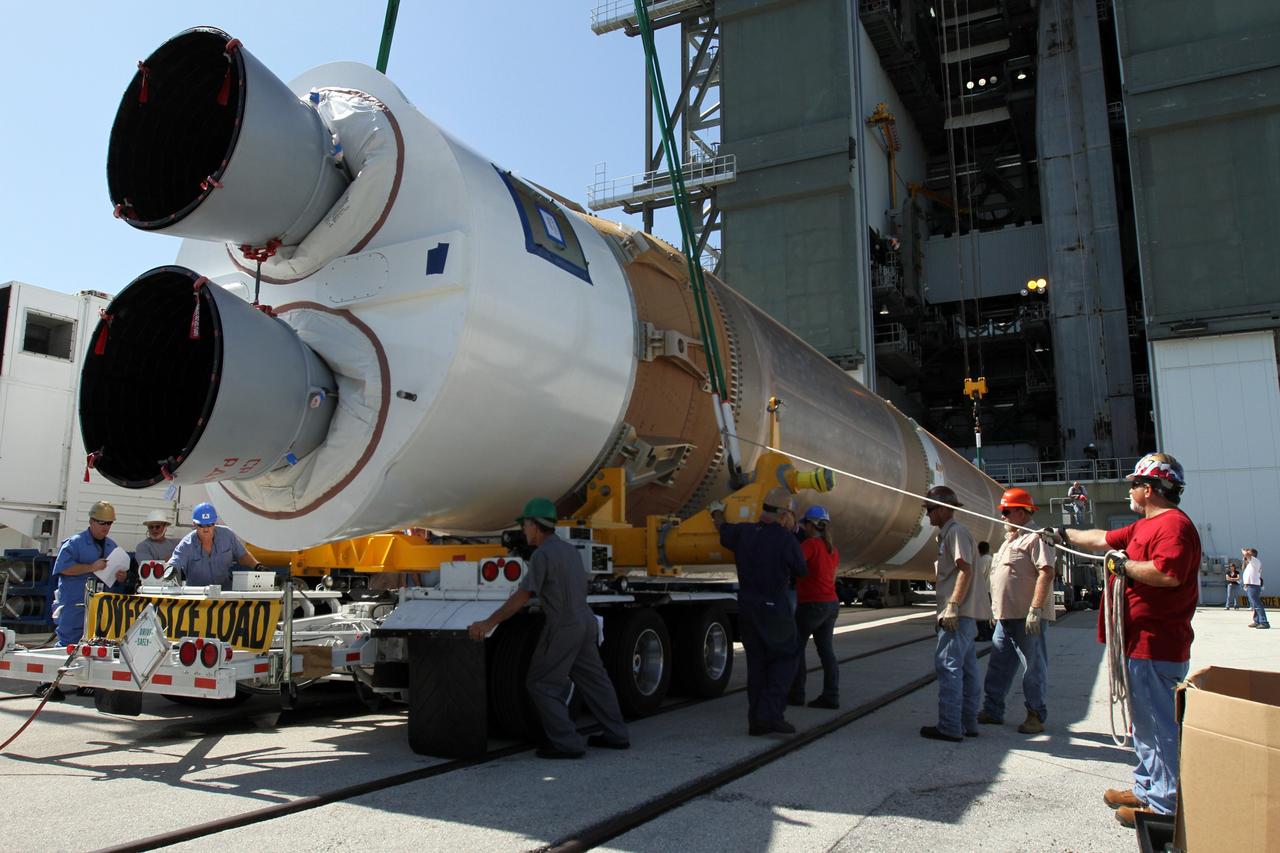
CAPE CANAVERAL, Fla. - At Launch Complex 41 at Cape Canaveral Air Force Station in Florida, preparations are underway to lift the first stage of the United Launch Alliance Atlas V rocket into the vertical position. The Atlas V is being prepared for the Radiation Belt Storm Probes, or RBSP, mission. NASA’s RBSP mission will help us understand the sun’s influence on Earth and near-Earth space by studying the Earth’s radiation belts on various scales of space and time. RBSP will begin its mission of exploration of Earth’s Van Allen radiation belts and the extremes of space weather after its launch aboard an Atlas V rocket. Launch is targeted for Aug. 23. For more information, visit http://www.nasa.gov/rbsp. Photo credit: NASA/Cory Huston
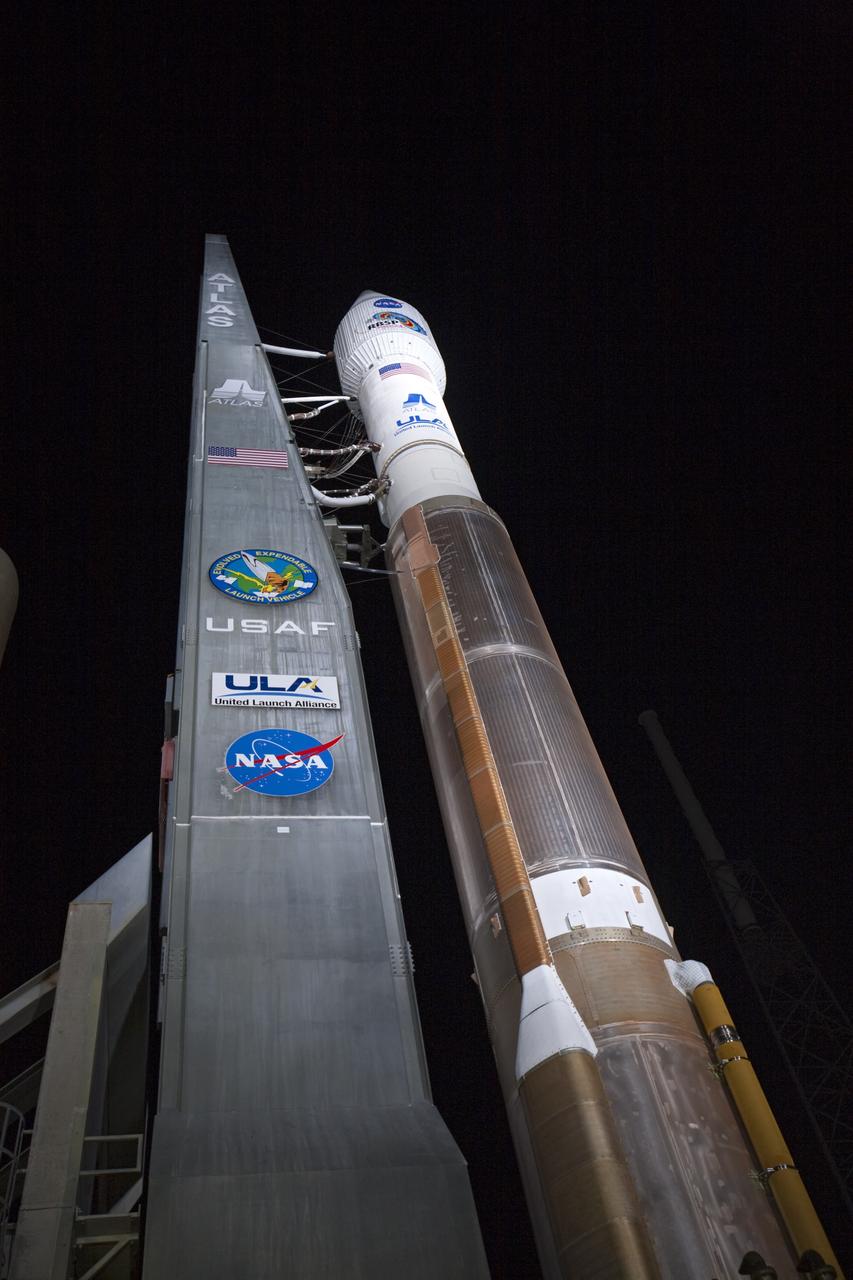
CAPE CANAVERAL, Fla. – An unfavorable weather forecast as a result of Tropical Storm Isaac approaching Florida kept NASA's twin Radiation Belt Storm Probes, or RBSP, on Space Launch Complex 41 at Cape Canaveral Air Force Station in Florida. Managers decided to roll the Atlas V rocket off the launch pad and back to the Vertical Integration Facility to ensure the launch vehicle and RBSP spacecraft are secured and protected from inclement weather. RBSP will explore changes in Earth's space environment caused by the sun -- known as "space weather" -- that can disable satellites, create power-grid failures and disrupt GPS service. The mission also will provide data on the fundamental radiation and particle acceleration processes throughout the universe. The launch is rescheduled for 4:05 a.m. EDT on Aug. 30, pending approval from the range. For more information on RBSP, visit http://www.nasa.gov/rbsp. Photo credit: NASA/Ben Smegelsky

CAPE CANAVERAL, Fla. – At Cape Canaveral Air Force Station in Florida, the United Launch Alliance, or ULA, Atlas V rocket carrying NASA’s twin Radiation Belt Storm Probes, or RBSP, is moved into the Vertical Integration Facility after rolling back from Space Launch Complex 41. The rocket and spacecraft will be secured and protected from inclement weather due to Tropical Storm Isaac. RBSP will explore changes in Earth's space environment caused by the sun -- known as "space weather" -- that can disable satellites, create power-grid failures and disrupt GPS service. The mission also will provide data on the fundamental radiation and particle acceleration processes throughout the universe. The launch is rescheduled for 4:05 a.m. EDT on Aug. 30, pending approval from the range. For more information on RBSP, visit http://www.nasa.gov/rbsp. Photo credit: NASA/Ben Smegelsky
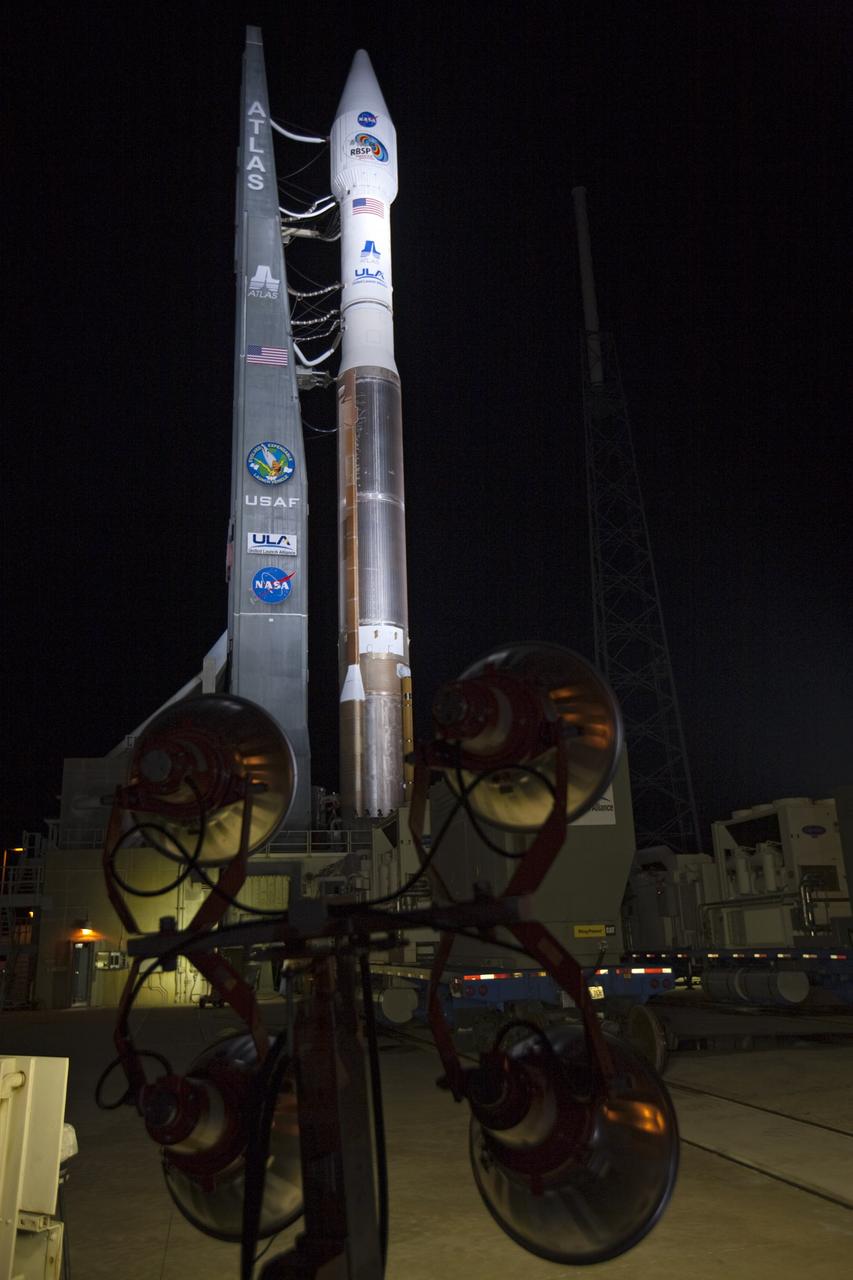
CAPE CANAVERAL, Fla. – At Cape Canaveral Air Force Station in Florida, the United Launch Alliance Atlas V rocket, carrying NASA’s twin Radiation Belt Storm Probes, or RBSP, is rolled back from Space Launch Complex 41 to the Vertical Integration Facility where they will be secured and protected from inclement weather due to Tropical Storm Isaac. RBSP will explore changes in Earth's space environment caused by the sun -- known as "space weather" -- that can disable satellites, create power-grid failures and disrupt GPS service. The mission also will provide data on the fundamental radiation and particle acceleration processes throughout the universe. The launch is rescheduled for 4:05 a.m. EDT on Aug. 30, pending approval from the range. For more information on RBSP, visit http://www.nasa.gov/rbsp. Photo credit: NASA/Ben Smegelsky
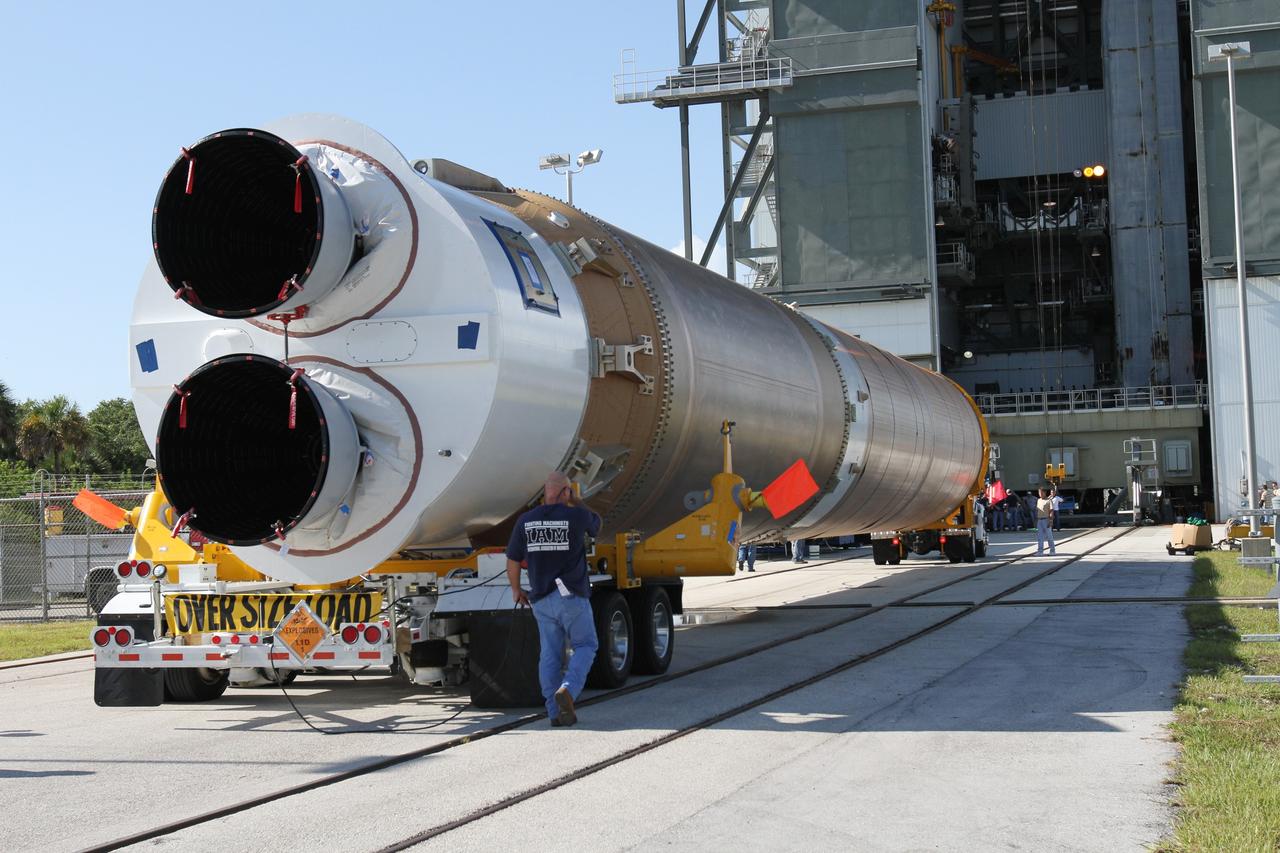
CAPE CANAVERAL, Fla. - The first stage of the United Launch Alliance Atlas V rocket arrives at Launch Complex 41 at Cape Canaveral Air Force Station in Florida for the Radiation Belt Storm Probes, or RBSP, mission. NASA’s RBSP mission will help us understand the sun’s influence on Earth and near-Earth space by studying the Earth’s radiation belts on various scales of space and time. RBSP will begin its mission of exploration of Earth’s Van Allen radiation belts and the extremes of space weather after its launch aboard an Atlas V rocket. Launch is targeted for Aug. 23. For more information, visit http://www.nasa.gov/rbsp. Photo credit: NASA/Cory Huston

CAPE CANAVERAL, Fla. – At Cape Canaveral Air Force Station in Florida, the United Launch Alliance Atlas V rocket, carrying NASA’s twin Radiation Belt Storm Probes, or RBSP, is rolled back from Space Launch Complex 41 to the Vertical Integration Facility where they will be secured and protected from inclement weather due to Tropical Storm Isaac. RBSP will explore changes in Earth's space environment caused by the sun -- known as "space weather" -- that can disable satellites, create power-grid failures and disrupt GPS service. The mission also will provide data on the fundamental radiation and particle acceleration processes throughout the universe. The launch is rescheduled for 4:05 a.m. EDT on Aug. 30, pending approval from the range. For more information on RBSP, visit http://www.nasa.gov/rbsp. Photo credit: NASA/Ben Smegelsky
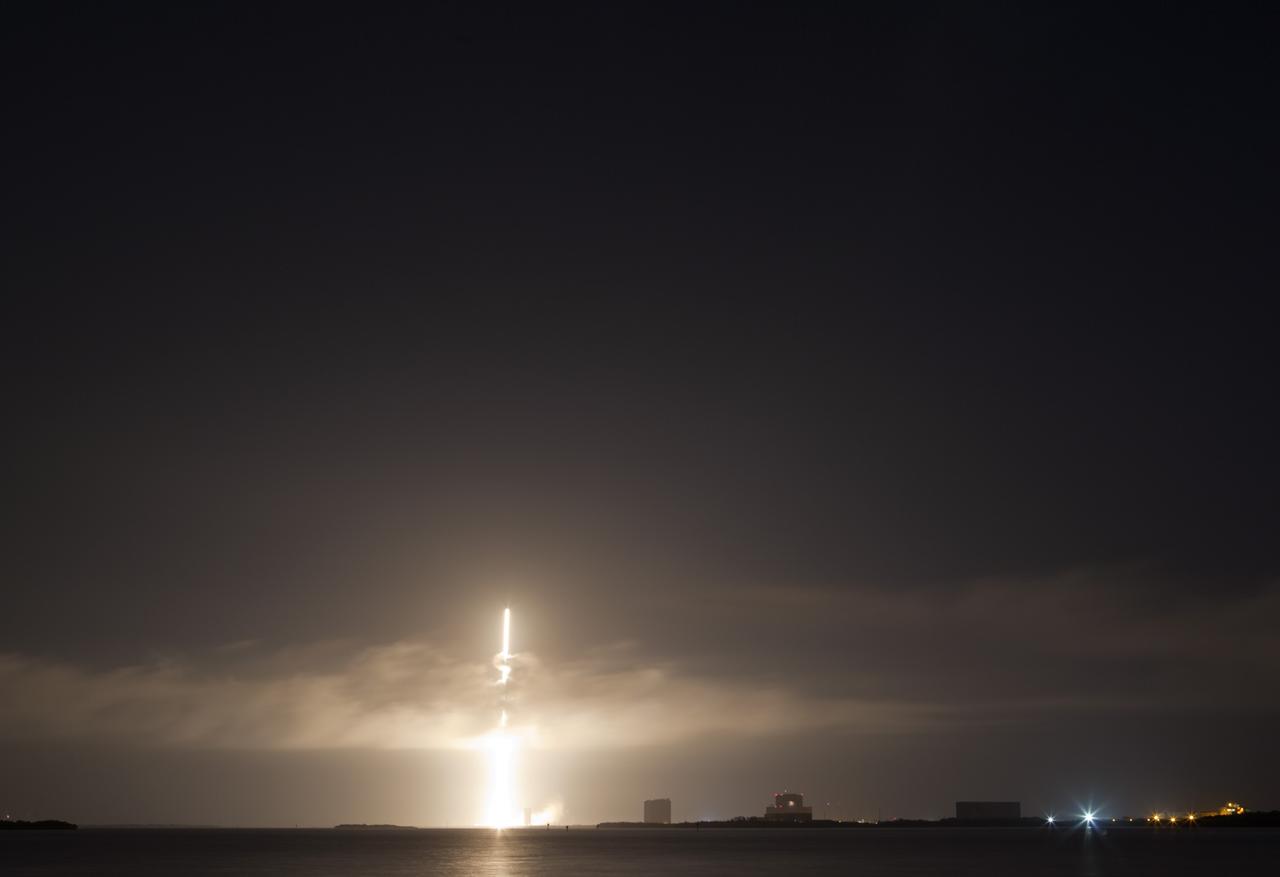
CAPE CANAVERAL, Fla. – The United Launch Alliance Atlas V rocket carrying NASA's Radiation Belt Storm Probes, or RBSP, rises through the clouds over Space Launch Complex 41 on Cape Canaveral Air Force Station in Florida following liftoff at 4:05 a.m. EDT. RBSP will explore changes in Earth's space environment caused by the sun -- known as "space weather" -- that can disable satellites, create power-grid failures and disrupt GPS service. The mission also will provide data on the fundamental radiation and particle acceleration processes throughout the universe. For more information on RBSP, visit http://www.nasa.gov/rbsp. Photo credit: NASA/Ben Smegelsky and Gary Thompson
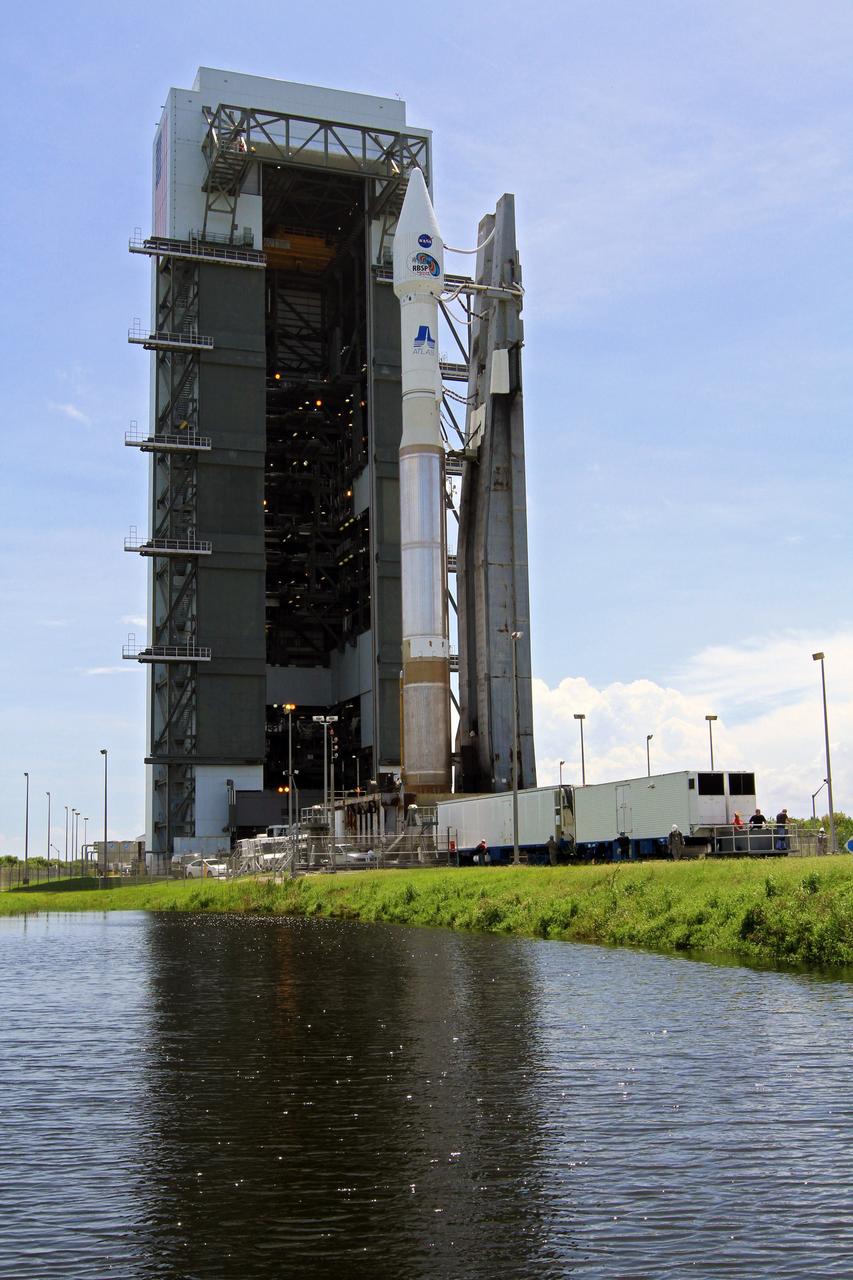
CAPE CANAVERAL, Fla. – At Cape Canaveral Air Force Station in Florida, the United Launch Alliance, or ULA, Atlas V rocket carrying NASA’s twin Radiation Belt Storm Probes, or RBSP, rolled out of the ULA Vertical Integration Facility at Space Launch Complex 41 at 1:59 p.m. EDT heading to the launch pad. The Atlas V rocket had been rolled back to the facility on August 26 to ensure the launch vehicle and RBSP spacecraft were secured and protected from inclement weather caused by Tropical Storm Isaac. RBSP will explore changes in Earth's space environment caused by the sun -- known as "space weather" -- that can disable satellites, create power-grid failures and disrupt GPS service. The mission also will provide data on the fundamental radiation and particle acceleration processes throughout the universe. The launch is rescheduled for 4:05 a.m. EDT on Aug. 30, pending approval from the range. For more information on RBSP, visit http://www.nasa.gov/rbsp. Photo credit: NASA/Kim Shiflett

CAPE CANAVERAL, Fla. – The United Launch Alliance Atlas V rocket carrying NASA’s Radiation Belt Storm Probes, or RBSP, spacecraft creates a halo of light at Space Launch Complex 41 on Cape Canaveral Air Force Station in Florida as it lifts off the pad at 4:05 a.m. EDT. RBSP will explore changes in Earth's space environment caused by the sun -- known as "space weather" -- that can disable satellites, create power-grid failures and disrupt GPS service. The mission also will provide data on the fundamental radiation and particle acceleration processes throughout the universe. For more information on RBSP, visit http://www.nasa.gov/rbsp. Photo credit: NASA/Tony Gray and Robert Murray
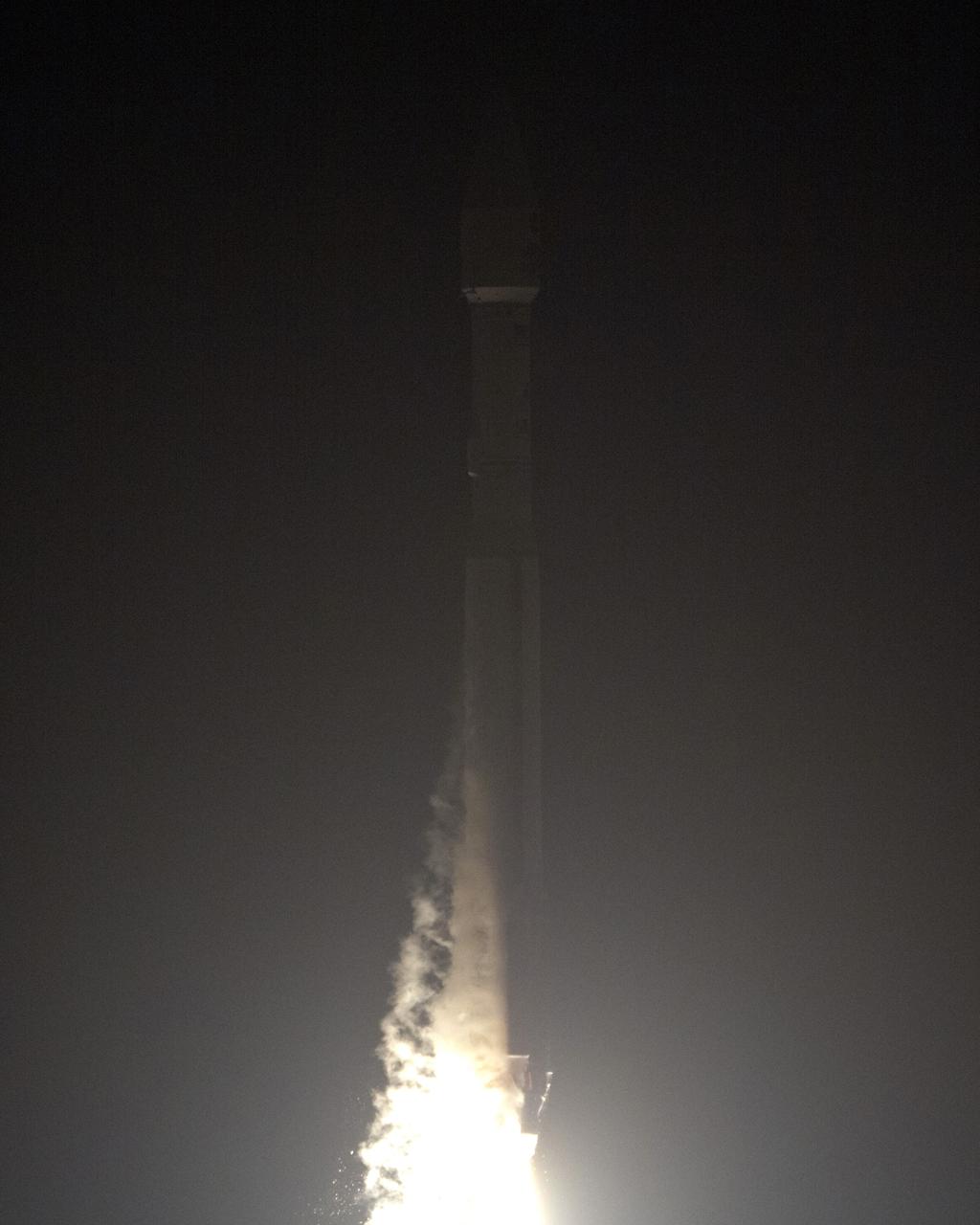
CAPE CANAVERAL, Fla. - The United Launch Alliance Atlas V rocket carrying NASA's Radiation Belt Storm Probes, or RBSP, lifted off Space Launch Complex 41 on Cape Canaveral Air Force Station in Florida at 4:05 a.m. EDT. RBSP will explore changes in Earth's space environment caused by the sun -- known as "space weather" -- that can disable satellites, create power-grid failures and disrupt GPS service. The mission also will provide data on the fundamental radiation and particle acceleration processes throughout the universe. For more information on RBSP, visit http://www.nasa.gov/rbsp. Photo credit: NASA/Kenny Allen

CAPE CANAVERAL, Fla. – At Cape Canaveral Air Force Station in Florida, United Launch Alliance, or ULA, workers monitor the progress as a ULA Atlas V rocket carrying NASA’s twin Radiation Belt Storm Probes, or RBSP, rolled out of the ULA Vertical Integration Facility at Space Launch Complex 41 at 1:59 p.m. EDT heading to the launch pad. The Atlas V rocket had been rolled back to the facility on August 26 to ensure the launch vehicle and RBSP spacecraft were secured and protected from inclement weather caused by Tropical Storm Isaac. RBSP will explore changes in Earth's space environment caused by the sun -- known as "space weather" -- that can disable satellites, create power-grid failures and disrupt GPS service. The mission also will provide data on the fundamental radiation and particle acceleration processes throughout the universe. The launch is rescheduled for 4:05 a.m. EDT on Aug. 30, pending approval from the range. For more information on RBSP, visit http://www.nasa.gov/rbsp. Photo credit: NASA/Kim Shiflett
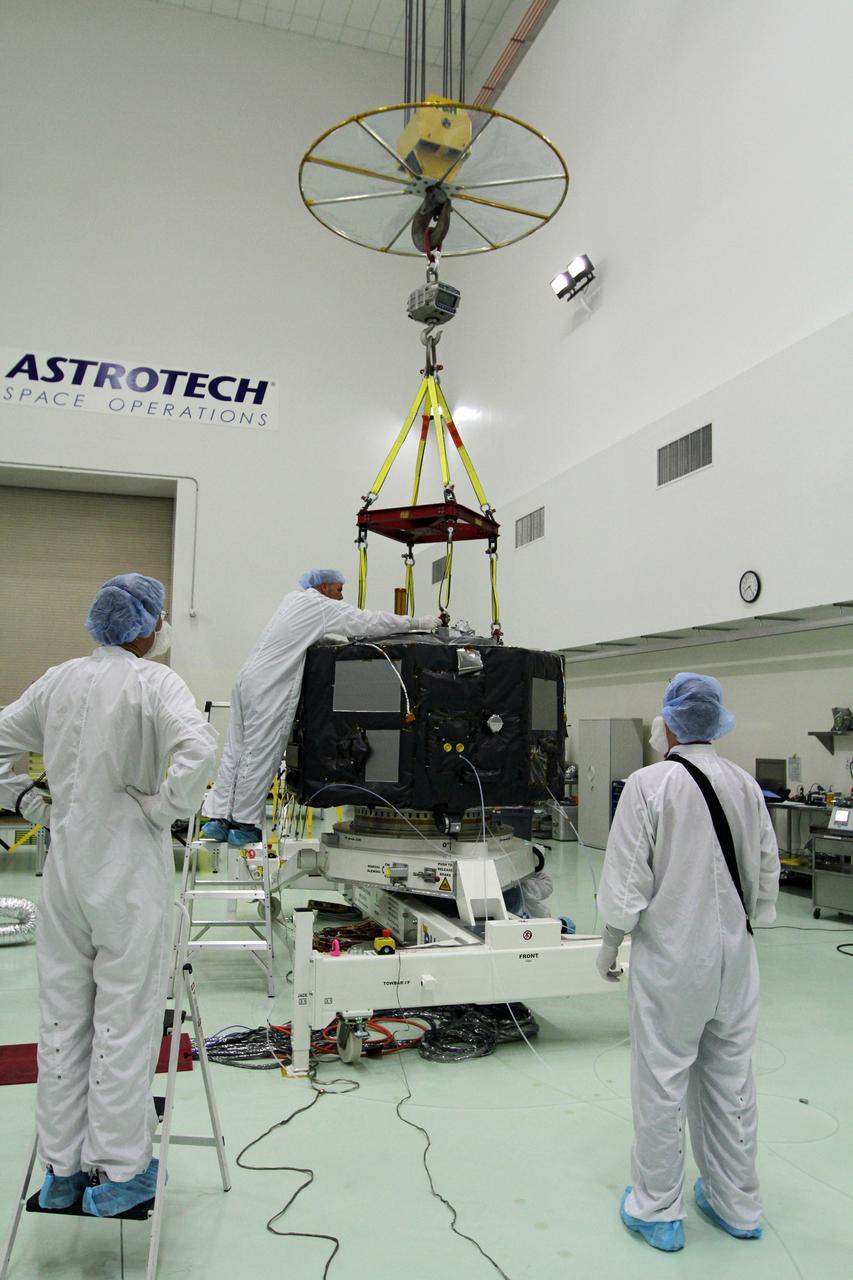
CAPE CANAVERAL, Fla. - Inside the Astrotech payload processing facility near NASA’s Kennedy Space Center in Florida, technicians prepare Radiation Belt Storm Probes, or RBSP, spacecraft A for a spin test. During the spin test, the spacecraft is turned at a rate of 55 rpm to ensure that it is properly balanced. NASA’s RBSP mission will help us understand the sun’s influence on Earth and near-Earth space by studying the Earth’s radiation belts on various scales of space and time. RBSP will begin its mission of exploration of Earth’s Van Allen radiation belts and the extremes of space weather after its launch aboard a United Launch Alliance Atlas V rocket. Launch is targeted for Aug. 23. For more information, visit http://www.nasa.gov/rbsp. Photo credit: NASA/Charisse Nahser
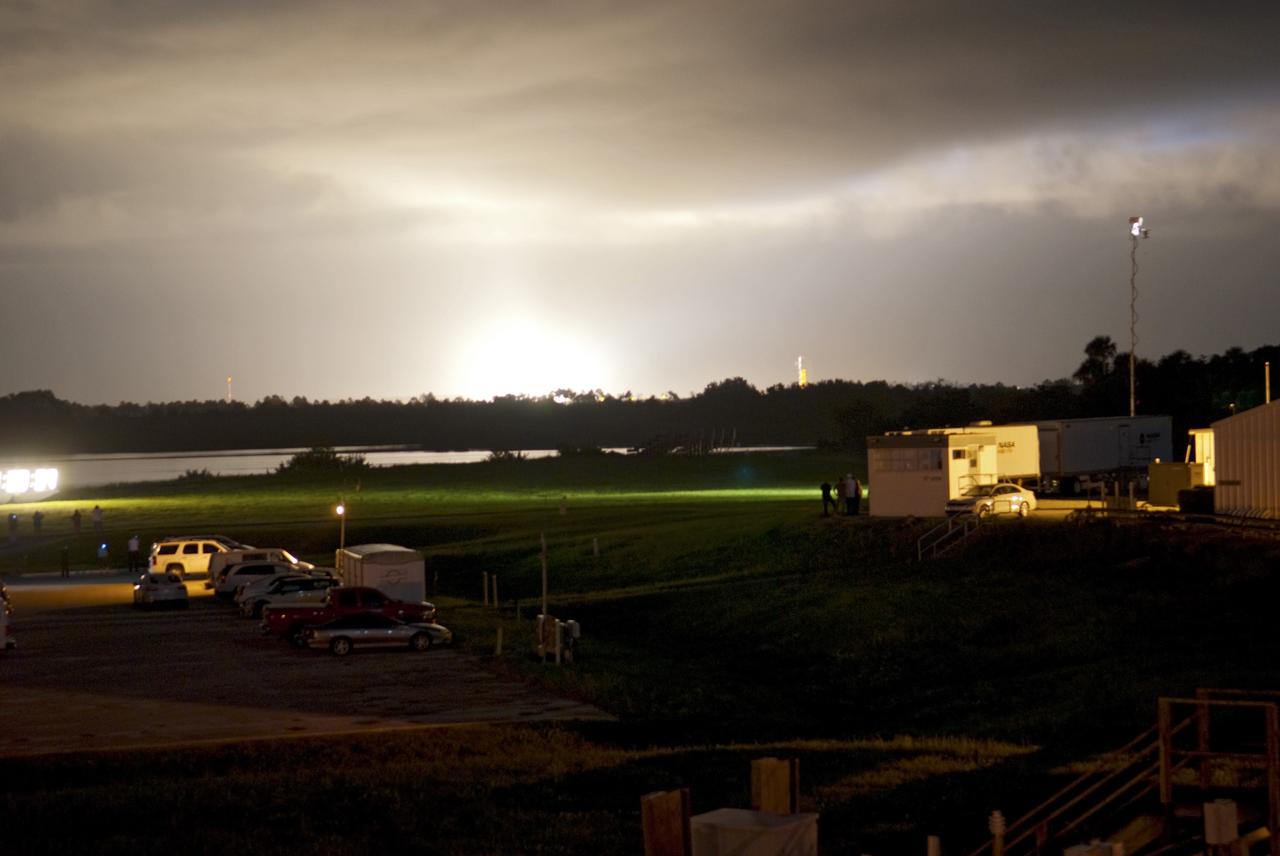
CAPE CANAVERAL, Fla. – Liftoff of NASA's Radiation Belt Storm Probes, or RBSP, lights up the sky near the NASA Press Site at Kennedy Space Center in Florida. Launch was on time at 4:05 a.m. EDT from Space Launch Complex 41 on Cape Canaveral Air Force Station aboard a United Launch Alliance Atlas V rocket. RBSP will explore changes in Earth's space environment caused by the sun -- known as "space weather" -- that can disable satellites, create power-grid failures and disrupt GPS service. The mission also will provide data on the fundamental radiation and particle acceleration processes throughout the universe. For more information on RBSP, visit http://www.nasa.gov/rbsp. Photo credit: NASA/David Lee
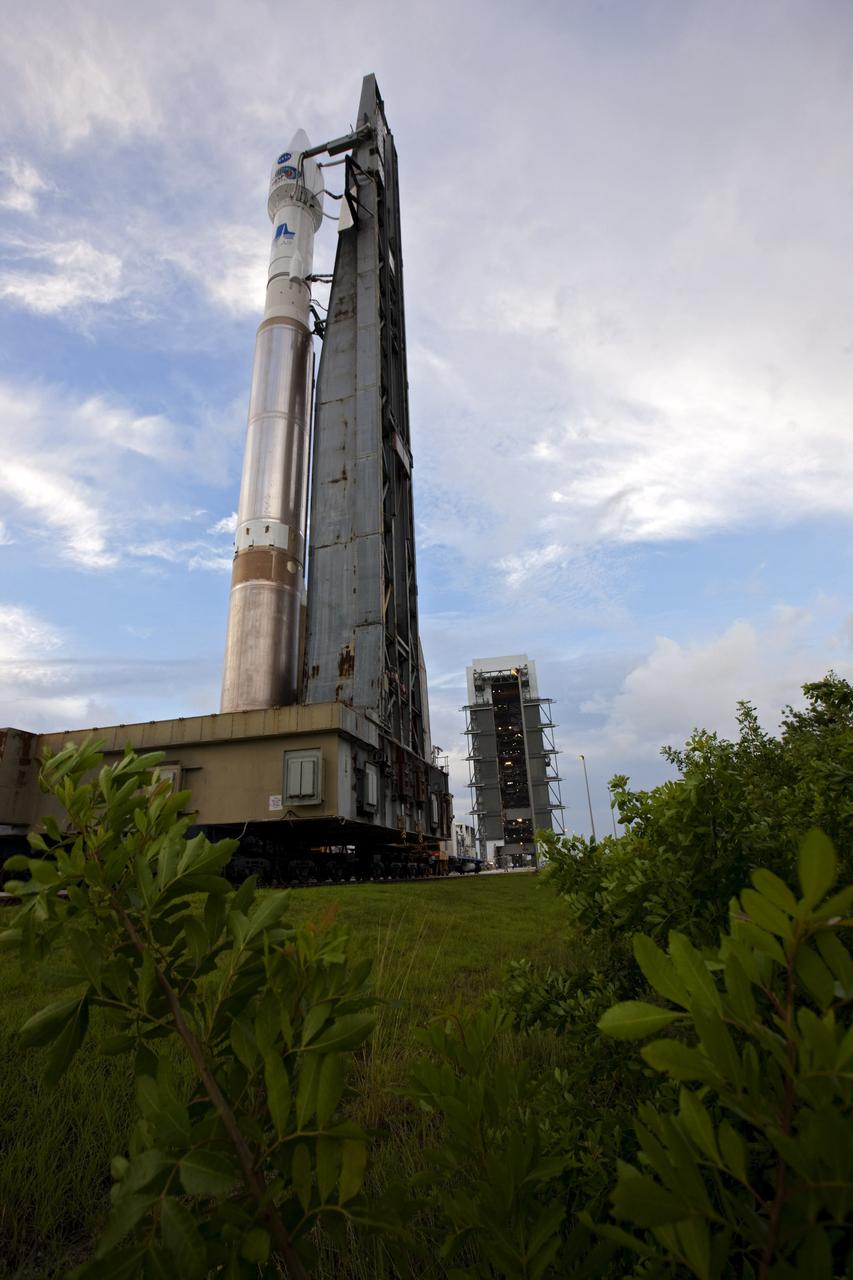
CAPE CANAVERAL, Fla. – At Cape Canaveral Air Force Station in Florida, the United Launch Alliance Atlas V rocket, carrying NASA’s twin Radiation Belt Storm Probes, or RBSP, is rolled back from Space Launch Complex 41 to the Vertical Integration Facility. The rocket and spacecraft will be secured and protected from inclement weather due to Tropical Storm Isaac. RBSP will explore changes in Earth's space environment caused by the sun -- known as "space weather" -- that can disable satellites, create power-grid failures and disrupt GPS service. The mission also will provide data on the fundamental radiation and particle acceleration processes throughout the universe. The launch is rescheduled for 4:05 a.m. EDT on Aug. 30, pending approval from the range. For more information on RBSP, visit http://www.nasa.gov/rbsp. Photo credit: NASA/Ben Smegelsky
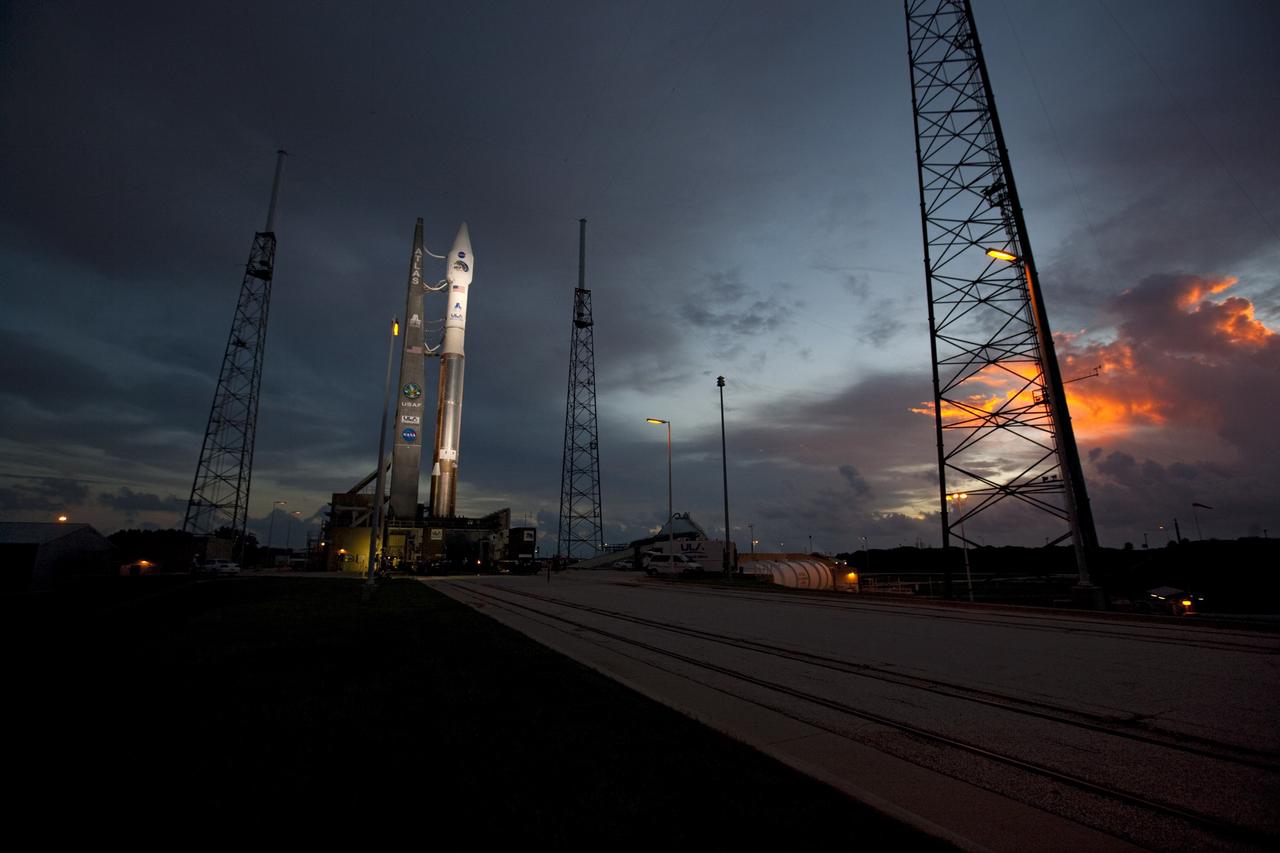
CAPE CANAVERAL, Fla. – An unfavorable weather forecast as a result of Tropical Storm Isaac approaching Florida kept NASA's twin Radiation Belt Storm Probes, or RBSP, on Space Launch Complex 41 at Cape Canaveral Air Force Station in Florida. Managers decided to roll the Atlas V rocket off the launch pad and back to the Vertical Integration Facility to ensure the launch vehicle and RBSP spacecraft are secured and protected from inclement weather. RBSP will explore changes in Earth's space environment caused by the sun -- known as "space weather" -- that can disable satellites, create power-grid failures and disrupt GPS service. The mission also will provide data on the fundamental radiation and particle acceleration processes throughout the universe. The launch is rescheduled for 4:05 a.m. EDT on Aug. 30, pending approval from the range. For more information on RBSP, visit http://www.nasa.gov/rbsp. Photo credit: NASA/Ben Smegelsky
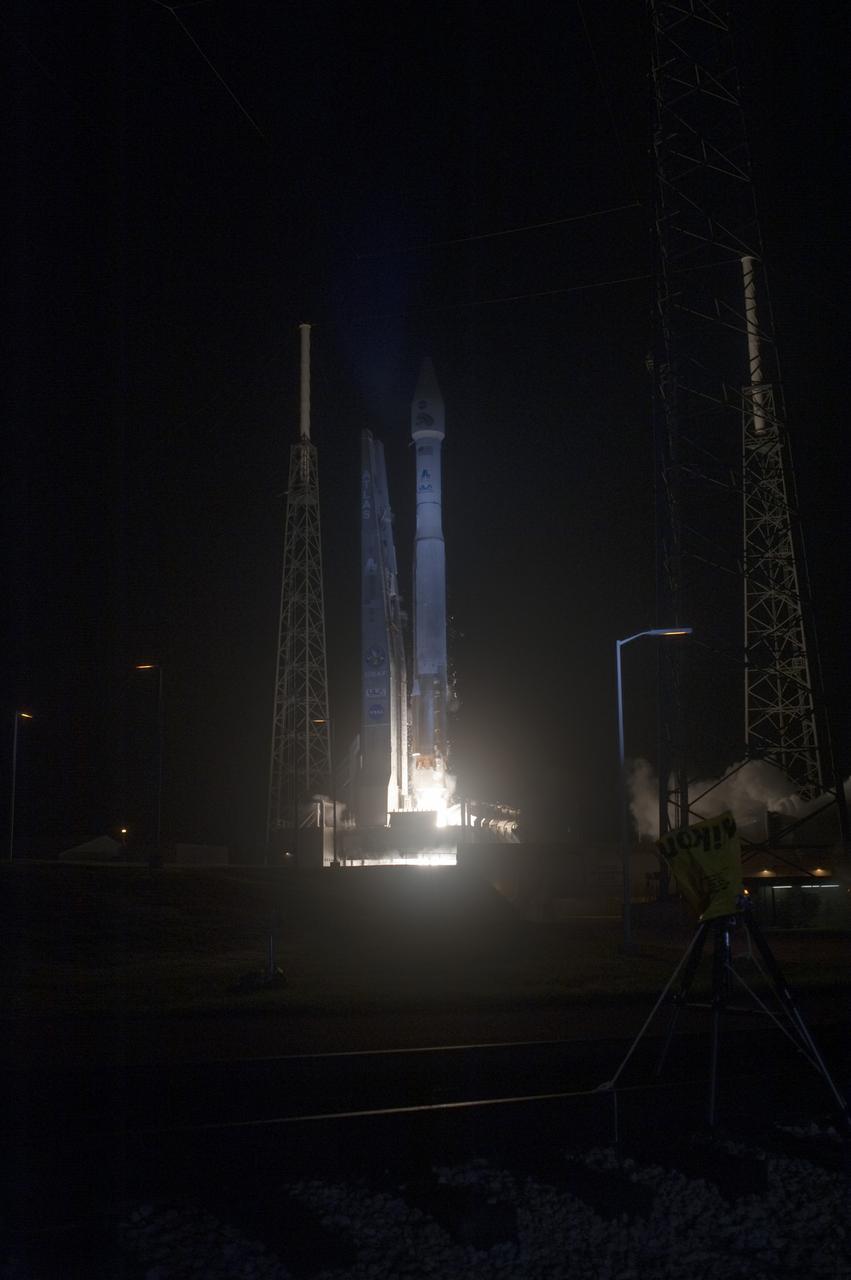
CAPE CANAVERAL, Fla. – Illuminated with a blue hue from bright xenon lights, the United Launch Alliance Atlas V rocket carrying NASA’s Radiation Belt Storm Probes, or RBSP, spacecraft begins to lift off Space Launch Complex 41 on Cape Canaveral Air Force Station in Florida at 4:05 a.m. EDT. RBSP will explore changes in Earth's space environment caused by the sun -- known as "space weather" -- that can disable satellites, create power-grid failures and disrupt GPS service. The mission also will provide data on the fundamental radiation and particle acceleration processes throughout the universe. For more information on RBSP, visit http://www.nasa.gov/rbsp. Photo credit: NASA/Tony Gray and Robert Murray