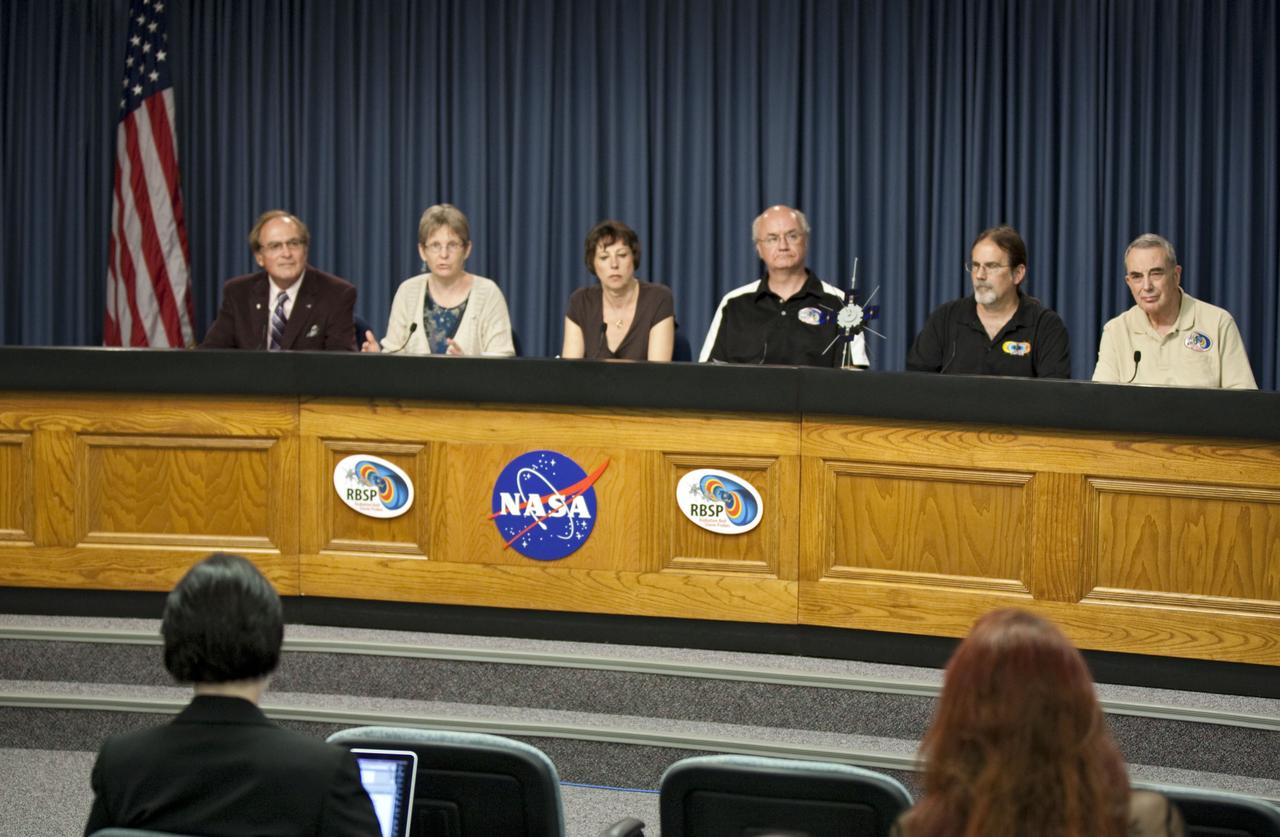
CAPE CANAVERAL, Fla. - A mission science briefing was held at NASA Kennedy Space Center’s Press Site in Florida for the Radiation Belt Storm Probes, or RBSP, mission. From left, are George Diller, public affairs specialist and news conference moderator, Mona Kessel, RBSP program scientist from NASA Headquarters in Washington, Nicola Fox, RBSP deputy project scientist at Johns Hopkins Applied Physics Laboratory in Laurel, Md., Craig Kletzing, principal investigator from the University of Iowa, Harlan Spence, principal investigator from the University of New Hampshire, and Lou Lanzerotti, principal investigator from the New Jersey Institute of Technology. NASA’s RBSP mission will help us understand the sun’s influence on Earth and near-Earth space by studying the Earth’s radiation belts on various scales of space and time. RBSP will begin its mission of exploration of Earth’s Van Allen radiation belts and the extremes of space weather after its launch aboard an Atlas V rocket. Launch is targeted for Aug. 24. For more information, visit http://www.nasa.gov/rbsp. Photo credit: NASA/Glenn Benson
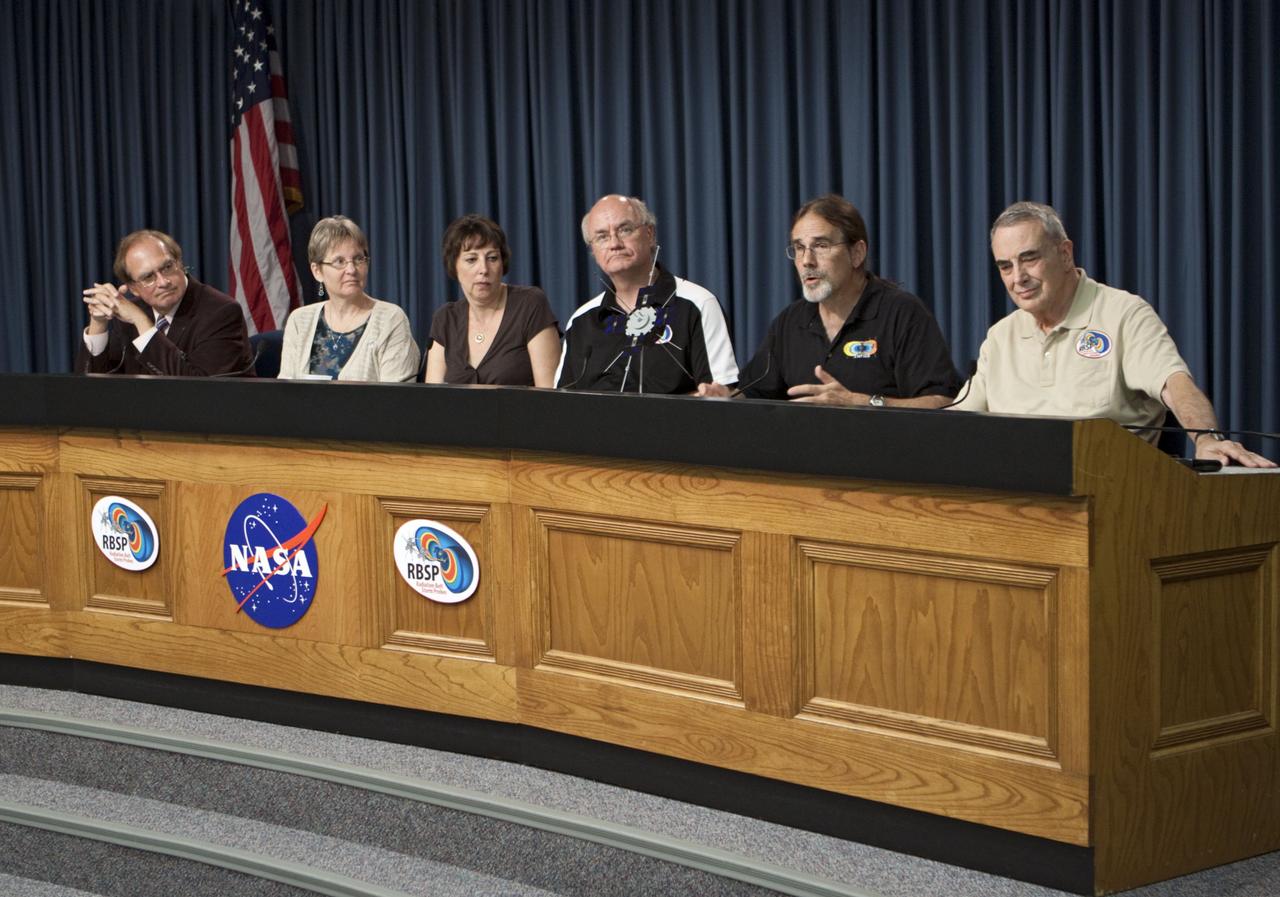
CAPE CANAVERAL, Fla. - A mission science briefing was held at NASA Kennedy Space Center’s Press Site in Florida for the Radiation Belt Storm Probes, or RBSP, mission. From left, are George Diller, public affairs specialist and news conference moderator, Mona Kessel, RBSP program scientist from NASA Headquarters in Washington, Nicola Fox, RBSP deputy project scientist at Johns Hopkins Applied Physics Laboratory in Laurel, Md., Craig Kletzing, principal investigator from the University of Iowa, Harlan Spence, principal investigator from the University of New Hampshire, and Lou Lanzerotti, principal investigator from the New Jersey Institute of Technology. NASA’s RBSP mission will help us understand the sun’s influence on Earth and near-Earth space by studying the Earth’s radiation belts on various scales of space and time. RBSP will begin its mission of exploration of Earth’s Van Allen radiation belts and the extremes of space weather after its launch aboard an Atlas V rocket. Launch is targeted for Aug. 24. For more information, visit http://www.nasa.gov/rbsp. Photo credit: NASA/Glenn Benson
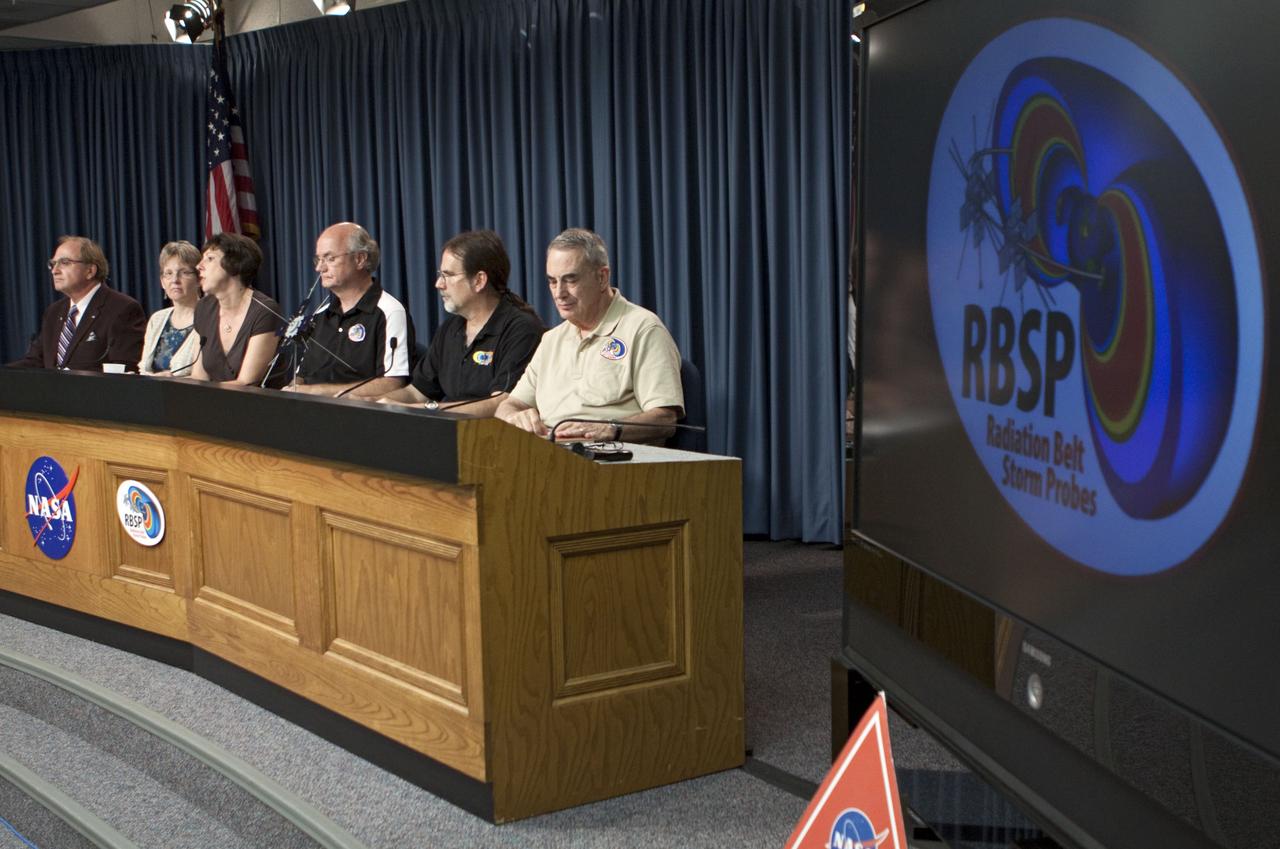
CAPE CANAVERAL, Fla. - A mission science briefing was held at NASA Kennedy Space Center’s Press Site in Florida for the Radiation Belt Storm Probes, or RBSP, mission. From left, are George Diller, public affairs specialist and news conference moderator, Mona Kessel, RBSP program scientist from NASA Headquarters in Washington, Nicola Fox, RBSP deputy project scientist at Johns Hopkins Applied Physics Laboratory in Laurel, Md., Craig Kletzing, principal investigator from the University of Iowa, Harlan Spence, principal investigator from the University of New Hampshire, and Lou Lanzerotti, principal investigator from the New Jersey Institute of Technology. NASA’s RBSP mission will help us understand the sun’s influence on Earth and near-Earth space by studying the Earth’s radiation belts on various scales of space and time. RBSP will begin its mission of exploration of Earth’s Van Allen radiation belts and the extremes of space weather after its launch aboard an Atlas V rocket. Launch is targeted for Aug. 24. For more information, visit http://www.nasa.gov/rbsp. Photo credit: NASA/Glenn Benson
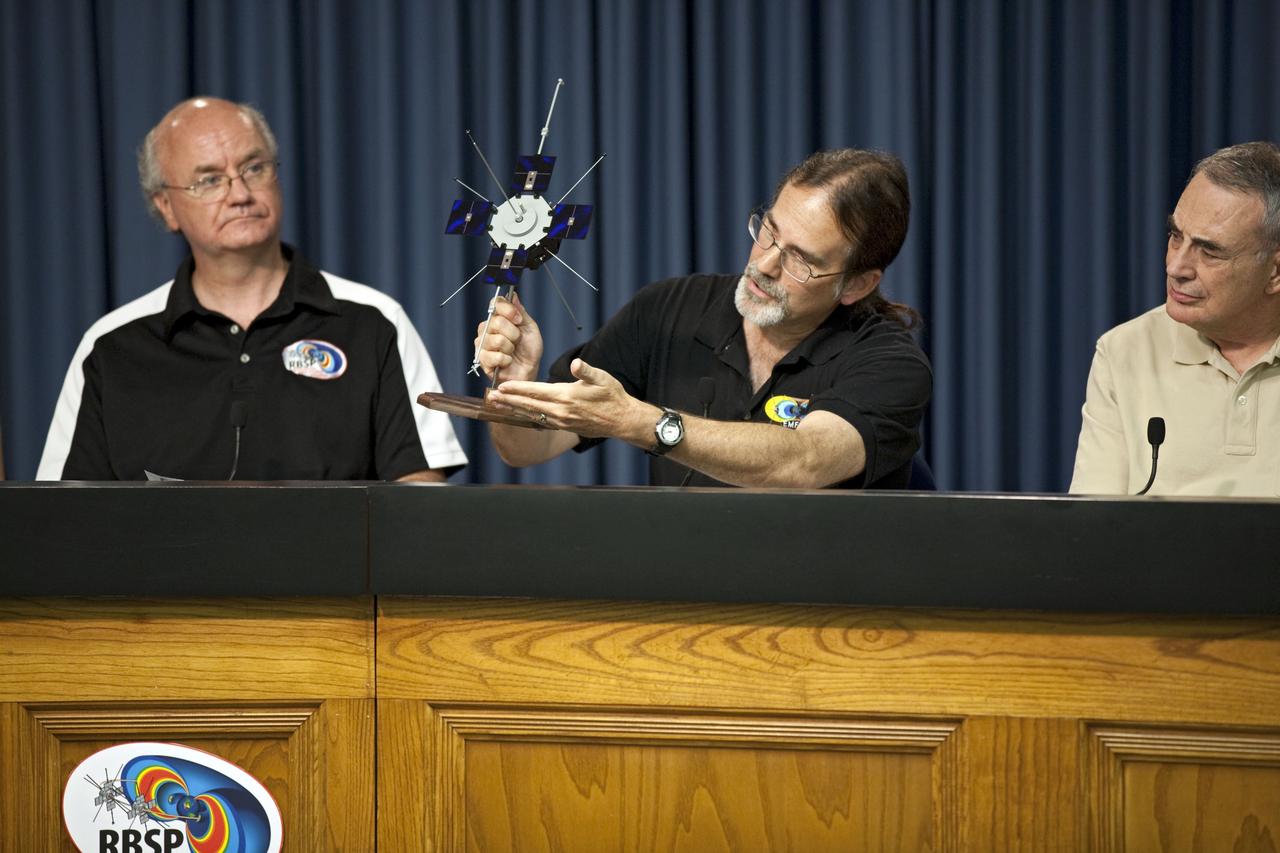
CAPE CANAVERAL, Fla. - During a mission science briefing for the Radiation Belt Storm Probes, or RBSP, mission at NASA Kennedy Space Center’s Press Site in Florida, Craig Kletzing, a principal investigator from the University of Iowa, answers questions and displays a scale model of the twin probes. To the left, is Harlan Spence, principal investigator with the University of New Hampshire. To the right, is Lou Lanzerotti, principal investigator with the New Jersey Institute of Technology. NASA’s RBSP mission will help us understand the sun’s influence on Earth and near-Earth space by studying the Earth’s radiation belts on various scales of space and time. RBSP will begin its mission of exploration of Earth’s Van Allen radiation belts and the extremes of space weather after its launch aboard an Atlas V rocket. Launch is targeted for Aug. 24. For more information, visit http://www.nasa.gov/rbsp. Photo credit: NASA/Glenn Benson
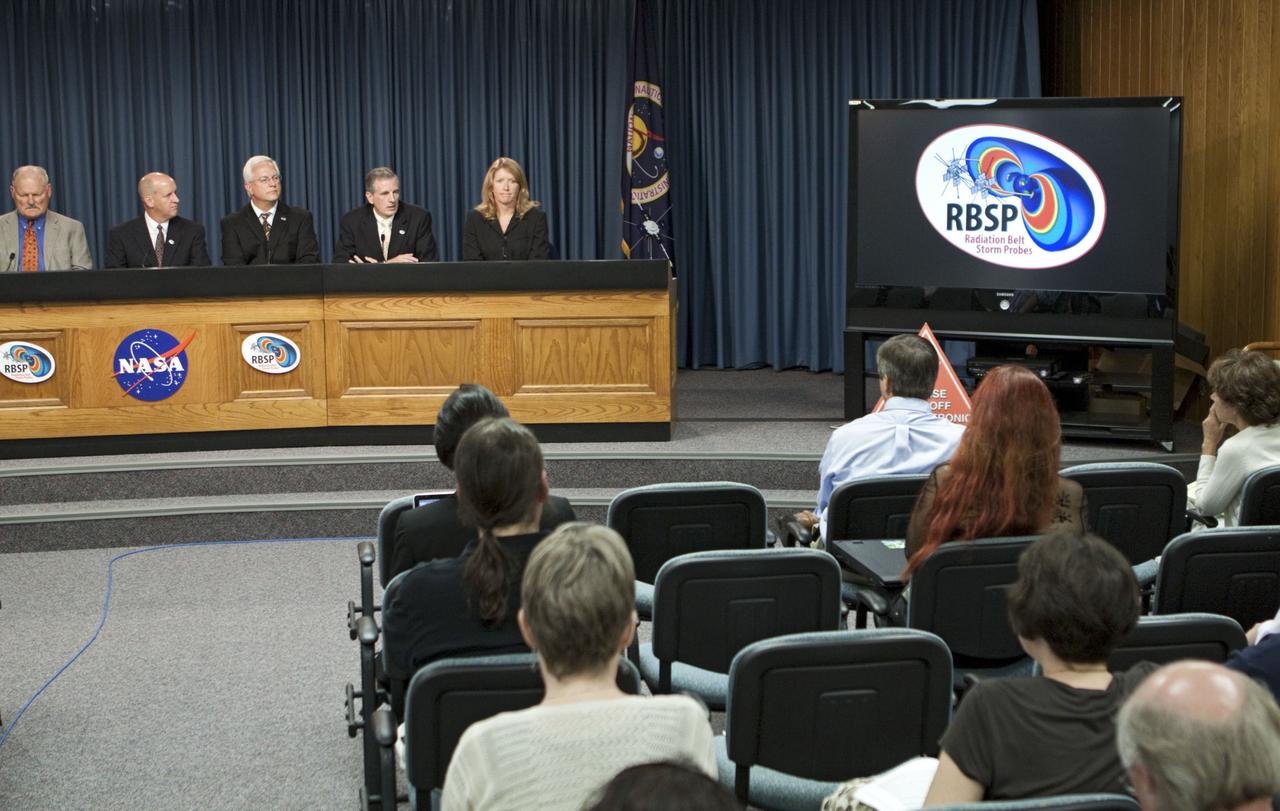
CAPE CANAVERAL, Fla. -- A prelaunch news conference is held at NASA Kennedy Space Center’s Press Site in Florida for the Radiation Belt Storm Probes, or RBSP, mission. From left are Michael Luther, deputy associate administrator for programs in NASA’s Science Mission Directorate, Tim Dunn, NASA launch director at Kennedy, Vernon Thorp, program manager, NASA missions, United Launch Alliance, Richard Fitzgerald, RBSP project manager at Johns Hopkins Applied Physics Laboratory in Laurel, Md., and Kathy Winters, launch weather officer with the 45th Weather Squadron at Cape Canaveral Air Force Station in Florida. NASA’s RBSP mission will help us understand the sun’s influence on Earth and near-Earth space by studying the Earth’s radiation belts on various scales of space and time. RBSP will begin its mission of exploration of Earth’s Van Allen radiation belts and the extremes of space weather after its launch aboard an Atlas V rocket. Launch is targeted for Aug. 24. For more information, visit http://www.nasa.gov/rbsp. Photo credit: NASA/Glenn Benson