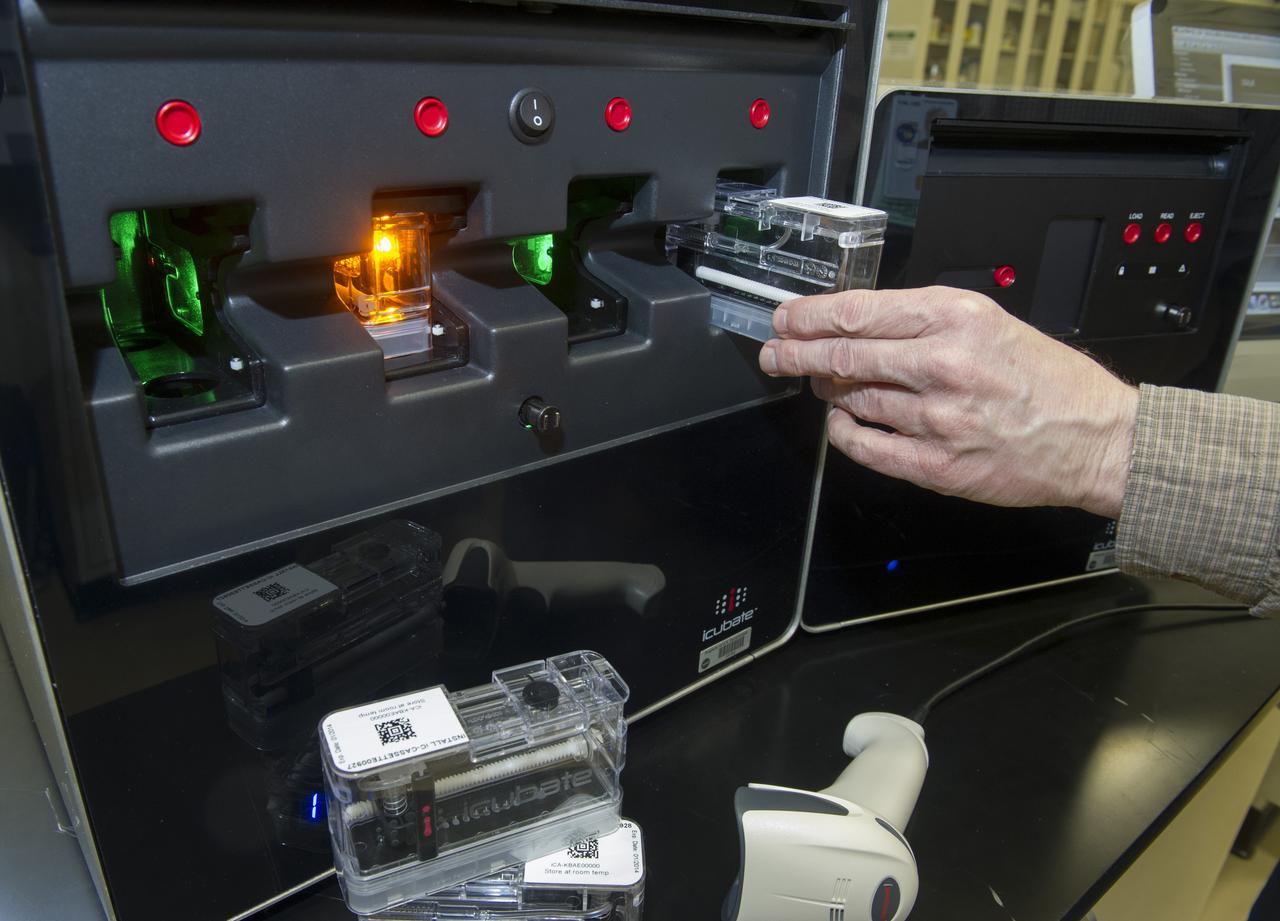
ICUBATE PROCESSOR WITH CASSETTE, SCANNER, AND READER
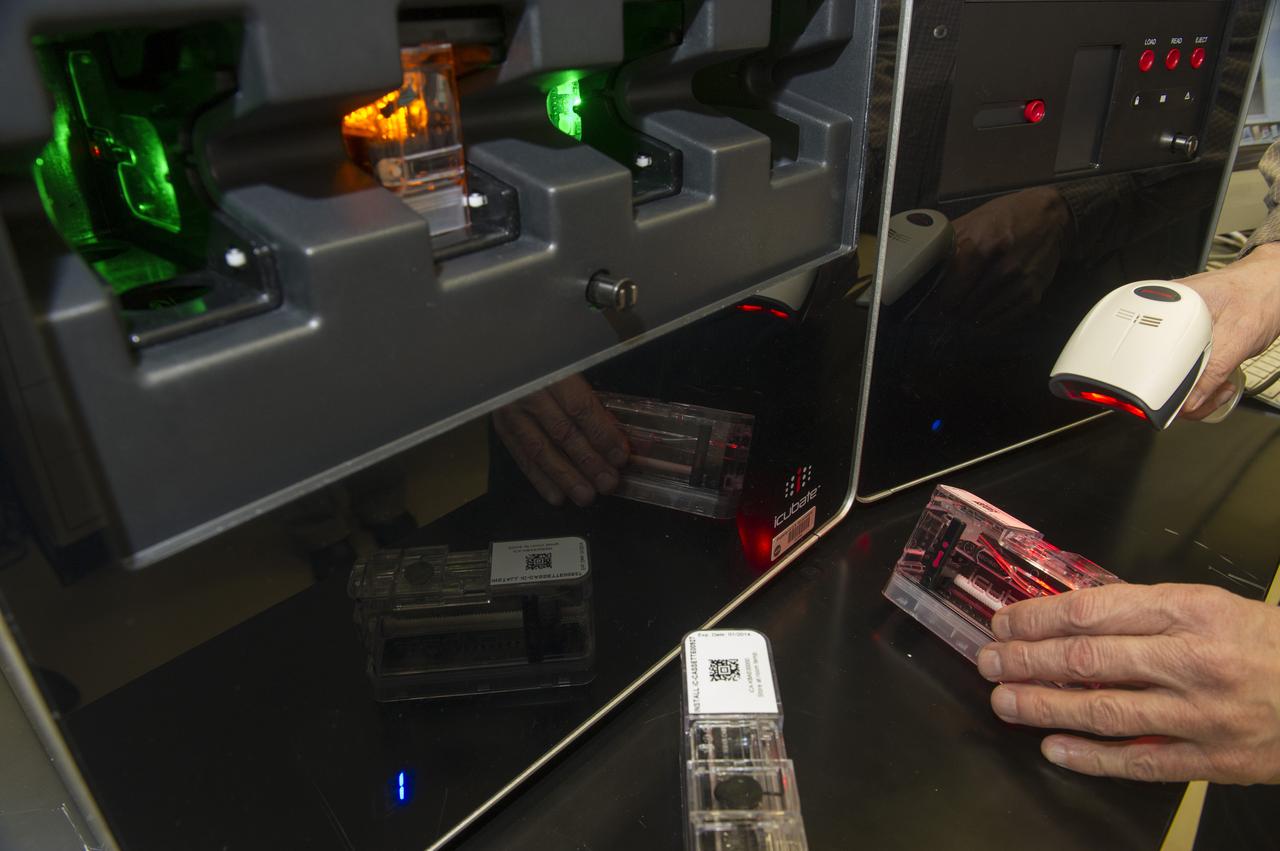
ICUBATE PROCESSOR WITH CASSETTE, SCANNER, AND READER
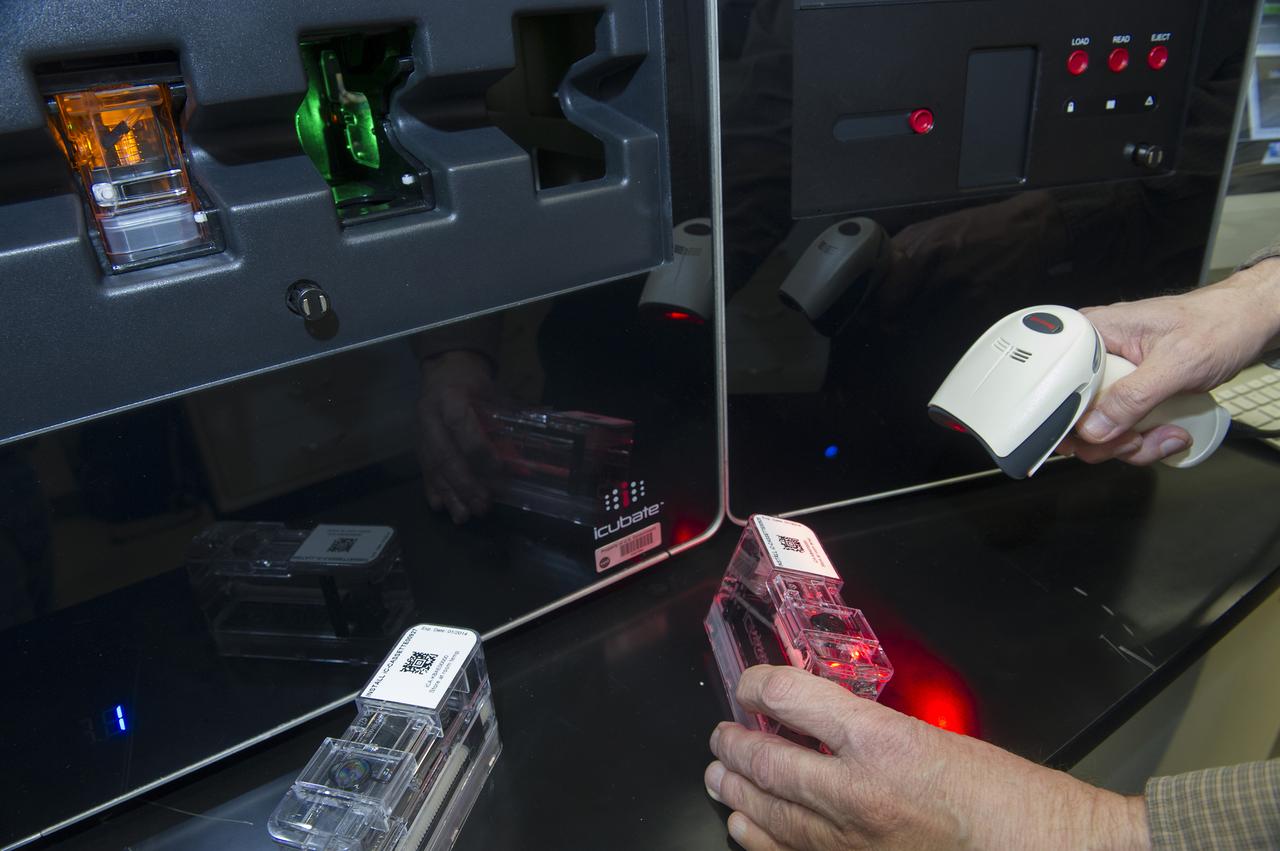
ICUBATE PROCESSOR WITH CASSETTE, SCANNER, AND READER
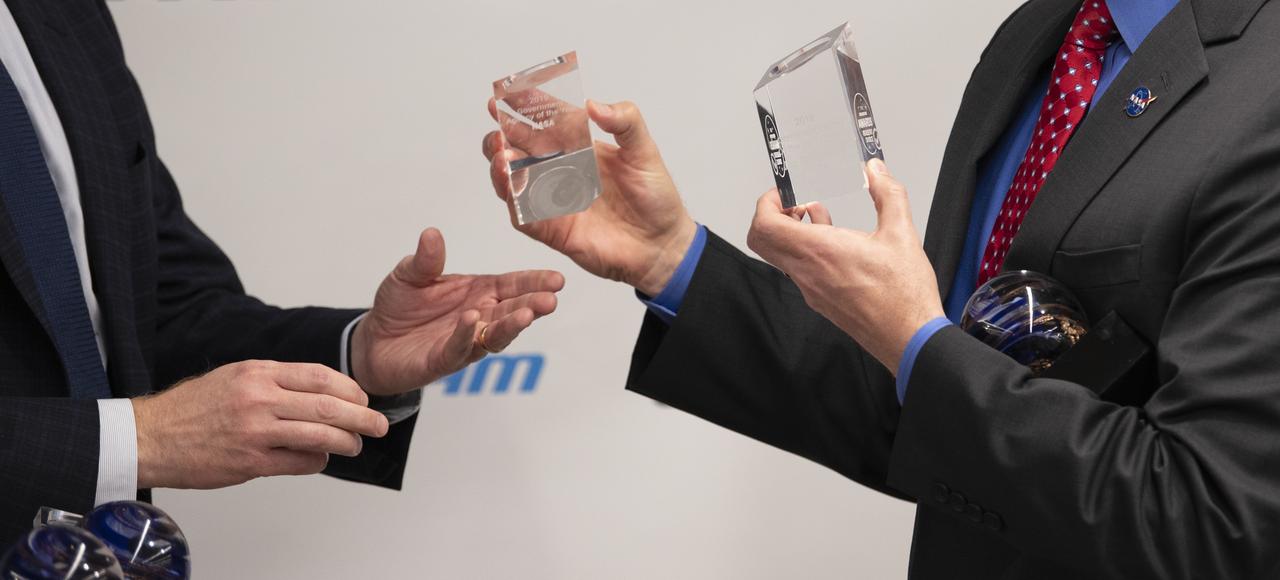
NASA Administrator Jim Bridenstine accepts the Readers’ Choice and SpaceNews awards for Government Agency of the Year on behalf of NASA and Readers’ Choice Award for Civil Government Leader of the Year, Tuesday, Dec. 10, 2019, during the 3rd Annual SpaceNews Awards at Hogan Lovells in Washington. Photo Credit: (NASA/Joel Kowsky)
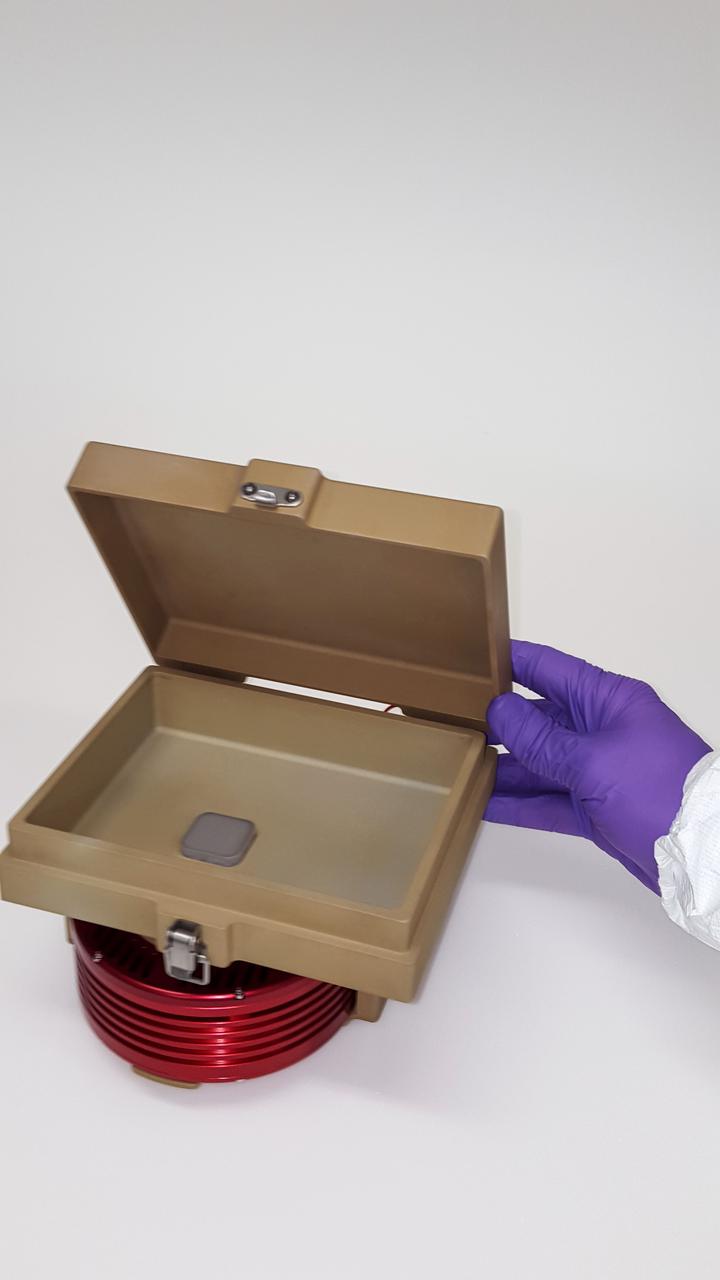
jsc2021e009927 (2/1/2016) --- A preflight view of the In Situ Chemiluminescent Reader. The In Situ Chemiluminescence Reader is a portable device that can be easily employed by a crewmember to perform ultrasensitive imaging detection of bio- and chemiluminescence signals. Image courtesy of the Italian Space Agency (ASI).
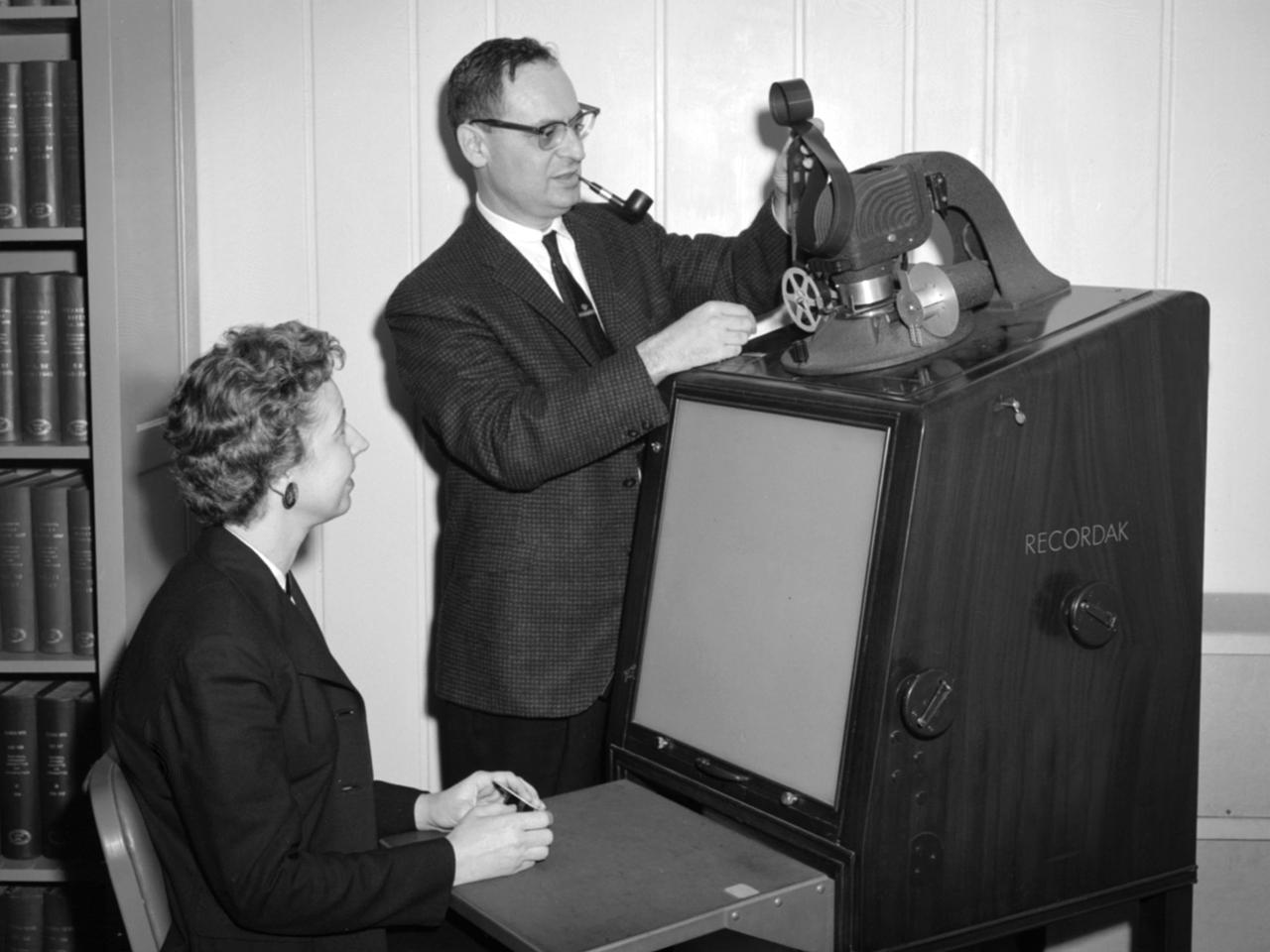
Jean Neidengard and George Mandel operate a Kodak Recordak microfilm reader in the library at the National Aeronautics and Space Administration (NASA) Lewis Research Center. The library was located in the Administration Building until the mid-1960s. It was then moved to the Propulsion Systems Laboratory Office Building. In 2008 the library was moved once again, to the Research Analysis Center. At the time of this photograph, the Lewis library claimed to possess “One of the most complete aero-technical collections in the world.” It was doing a brisk business in the early 1960s. During 1960 alone the library acquired 19,000 new documents and provided 100,000 documents to customers. The library’s eleven-person staff provided reference services, archived technical reports, and supplied periodicals. The staff also included Sam Reiss, a full-time translator who could read 30 languages. He translated technical reports from all over the world for the Lewis research staff. Jean Neidengard oversaw the secret Atomic Energy Commission (AEC) documents in the collection. NASA was partnering with the AEC at the time on Nuclear Engine for Rocket Vehicle Application (NERVA) program. NASA Lewis was the agency’s lead center in the NERVA program. Neidengard’s husband Bill was the head mechanic in the Propulsion Systems Laboratory. George Mandel led the library staff from 1955 to 1968.
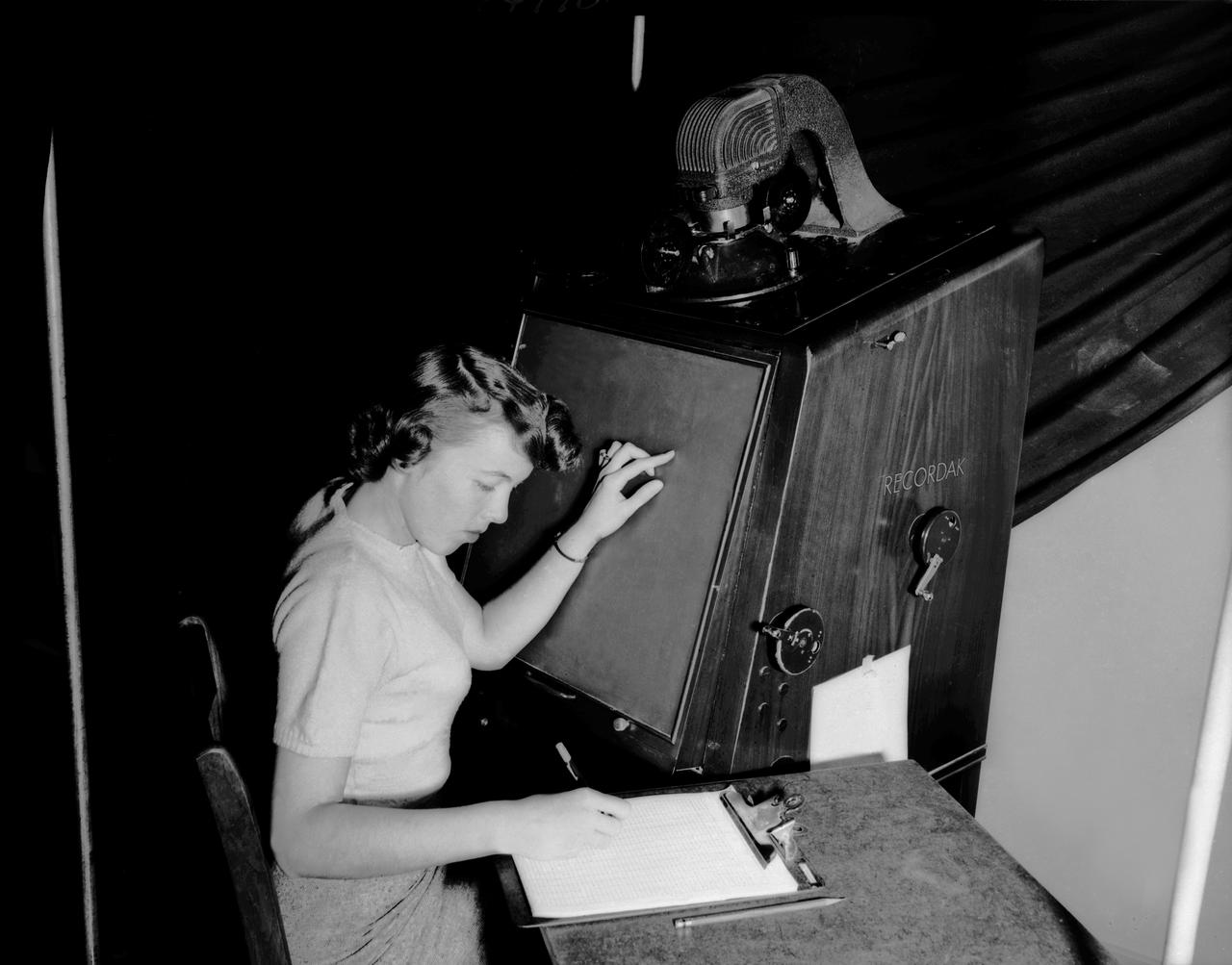
Publicity photo from Muroc California, showing female support personnel with equipment. A women working on a Kodak Recordak microfilm reader.
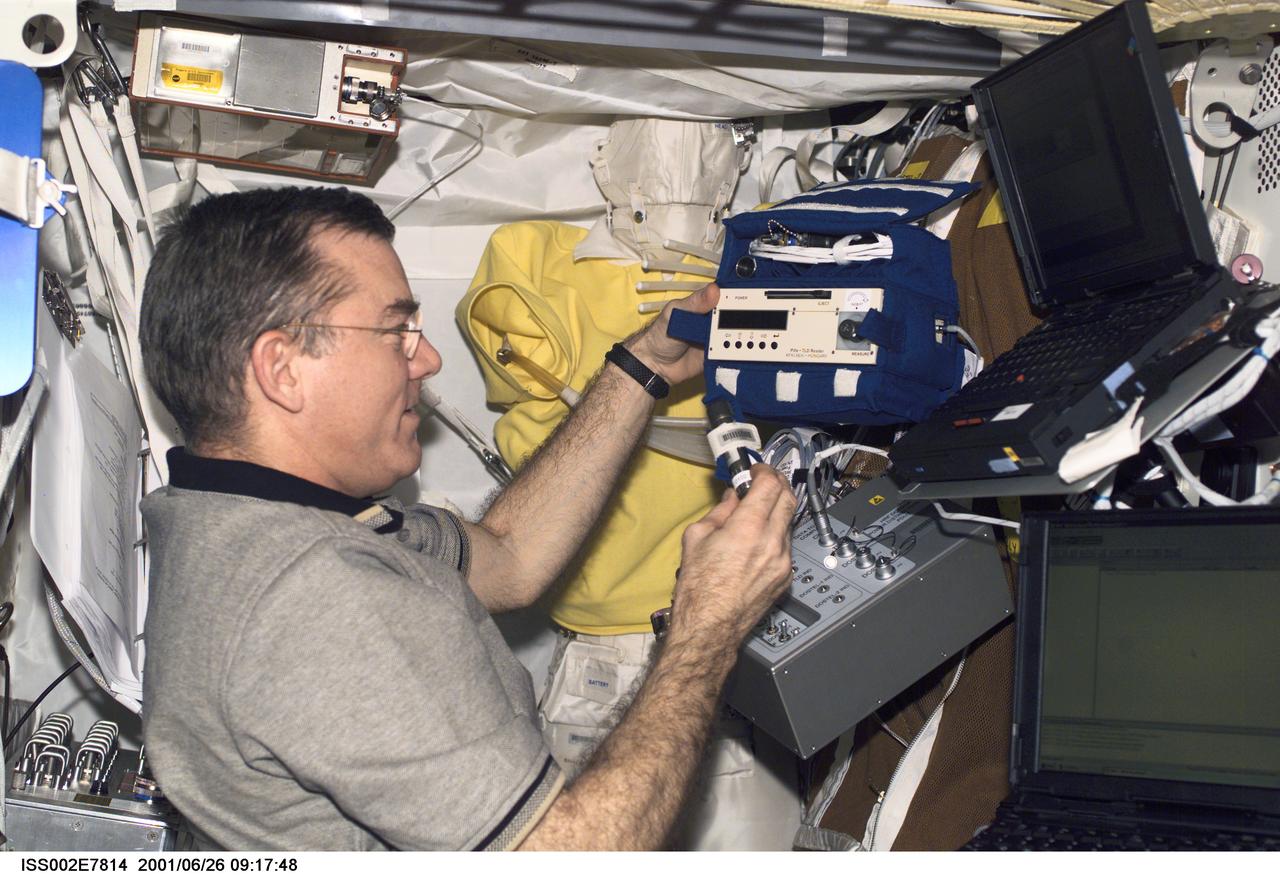
ISS002-E-7814 (26 June 2001) --- James S. Voss, Expedition Two flight engineer, sets up the Human Research Facility's (HRF) Dosimetric Mapping (DOSMAP) Power Distribution Unit (PDU) in Destiny. The image was taken with a digital still camera.
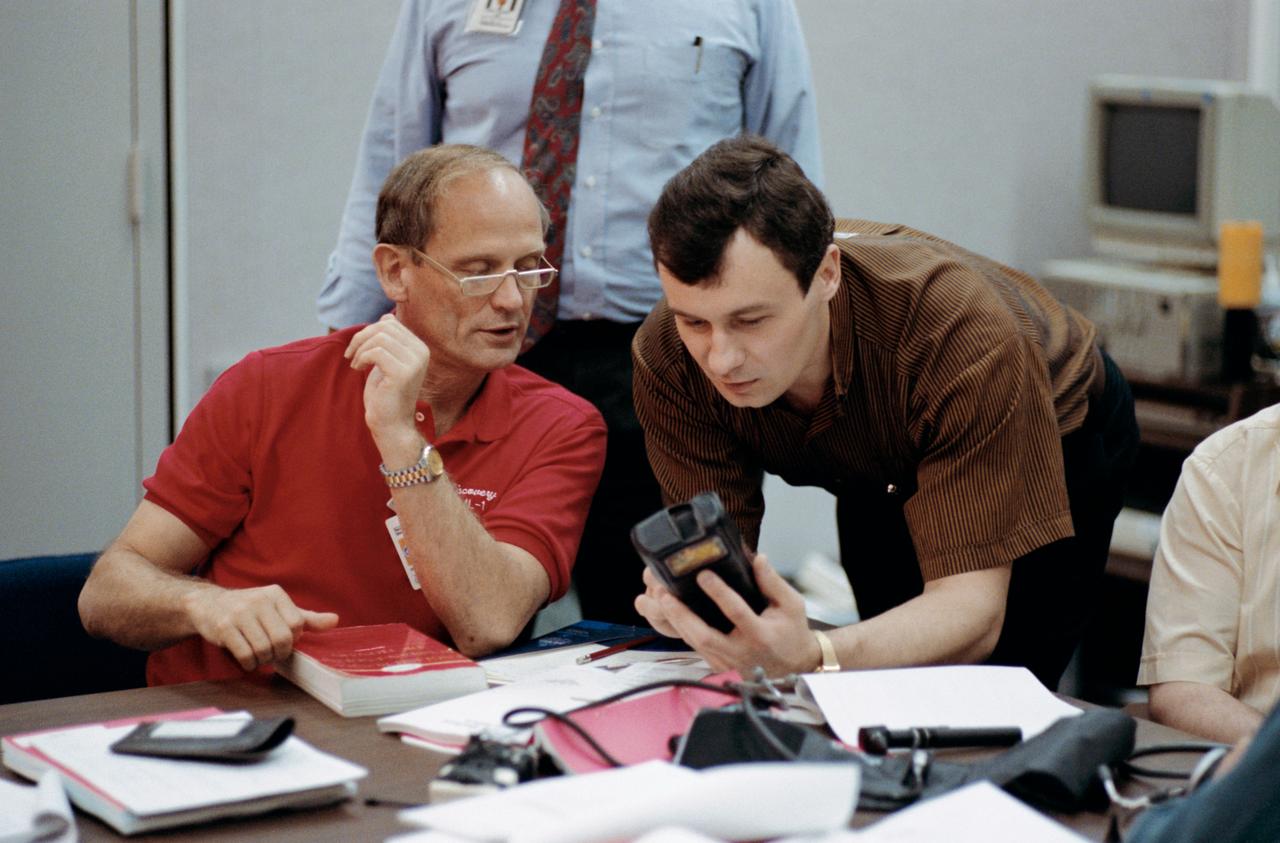
Mir 18 commander Vladimir N. Dezhurov, right, and fellow crew member, astronaut Norman E. Thagard, practice using a bar-code reader during medical operations training at JSC.

NASA Administrator Jim Bridenstine accepts the Readers’ Choice Award for Civil Government Leader of the Year from Brian Berger, editor in chief of SpaceNews, Tuesday, Dec. 10, 2019, during the 3rd Annual SpaceNews Awards at Hogan Lovells in Washington. Photo Credit: (NASA/Joel Kowsky)
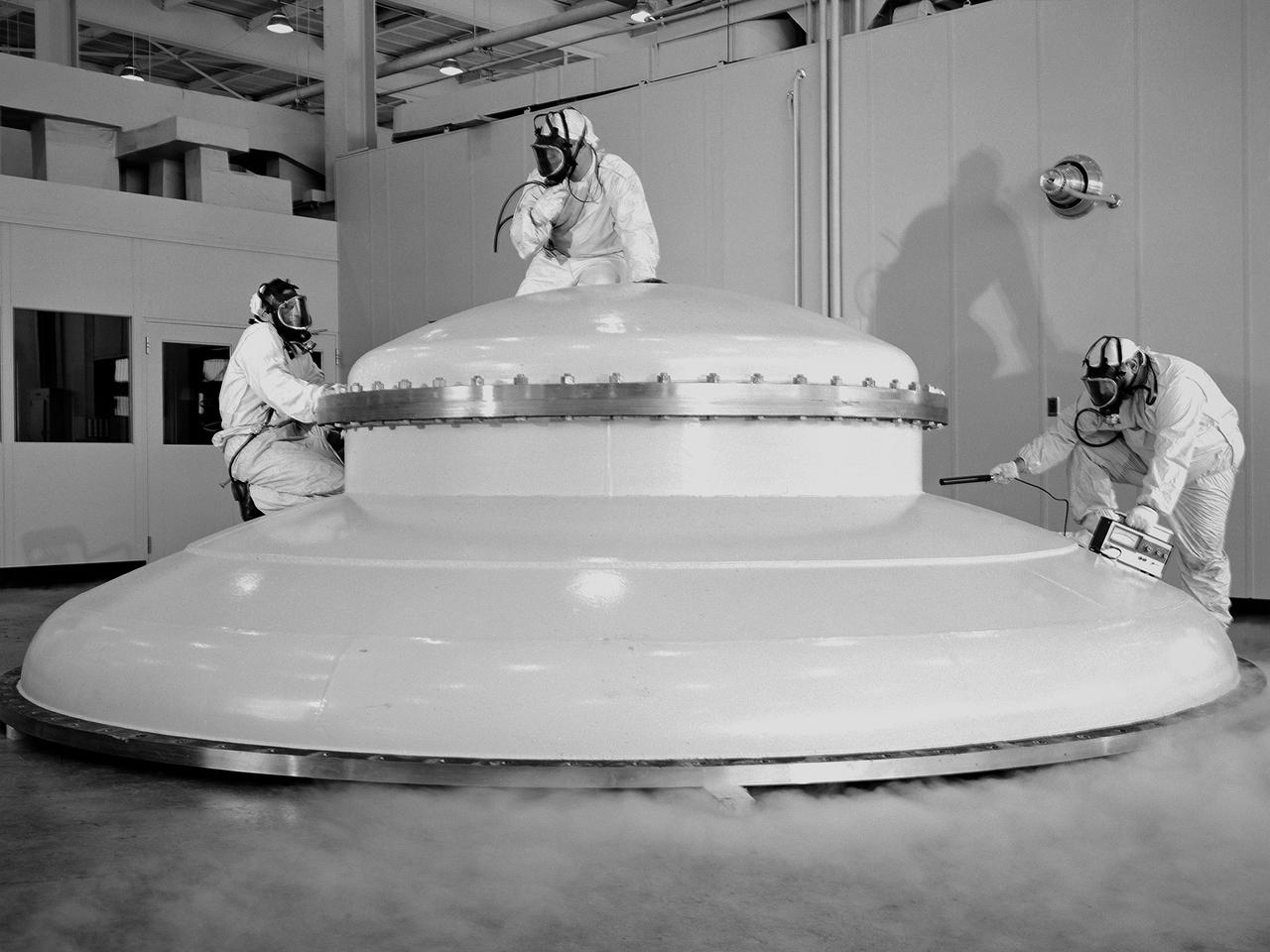
Engineer Paul Reader and his colleagues take environmental measurements during testing of a 20-inch diameter ion engine in a vacuum tank at the Electric Propulsion Laboratory (EPL). Researchers at the Lewis Research Center were investigating the use of a permanent-magnet circuit to create the magnetic field required power electron bombardment ion engines. Typical ion engines use a solenoid coil to create this magnetic field. It was thought that the substitution of a permanent magnet would create a comparable magnetic field with a lower weight. Testing of the magnet system in the EPL vacuum tanks revealed no significant operational problems. Reader found the weight of the two systems was similar, but that the thruster’s efficiency increased with the magnet. The EPL contained a series of large vacuum tanks that could be used to simulate conditions in space. Large vacuum pumps reduced the internal air pressure, and a refrigeration system created the cryogenic temperatures found in space.
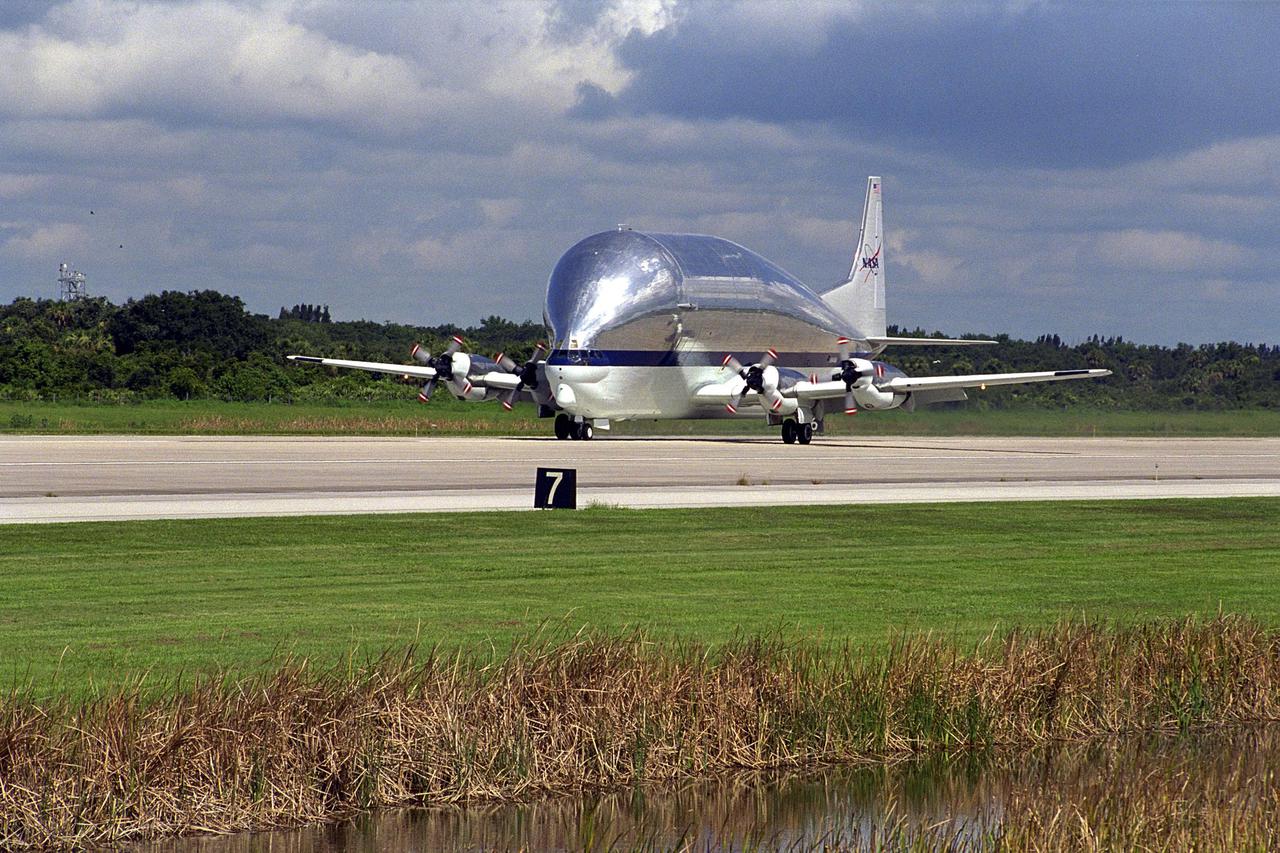
KENNEDY SPACE CENTER, FLA. -- Day in the Life, page 3. Coming in for landing. A “Super Guppy” transport aircraft lands at the Shuttle Landing space Station. This photograph was taken for a special color edition of Spaceport News designed to portray in photographs a single day at KSC, July 26, 2000. The special edition, published Aug. 25, 2000, was created to give readers a look at KSC’s diverse workforce and the critical roles workers play in the nation’s space program. Spaceport News is an official publication of the Kennedy Space Center and is published on alternate Fridays by the Public Affairs Office in the interest of KSC civil service and contractor employees

KENNEDY SPACE CENTER, FLA. -- Day in the Life, page 1. Sunrise at Launch Pad A at Kennedy Space Center. This photograph was taken for a special color edition of Spaceport News designed to portray in photographs a single day at KSC, July 26, 2000. The special edition, published Aug. 25, 2000, was created to give readers a look at KSC’s diverse workforce and the critical roles workers play in the nation’s space program. Spaceport News is an official publication of the Kennedy Space Center and is published on alternate Fridays by the Public Affairs Office in the interest of KSC civil service and contractor employees.
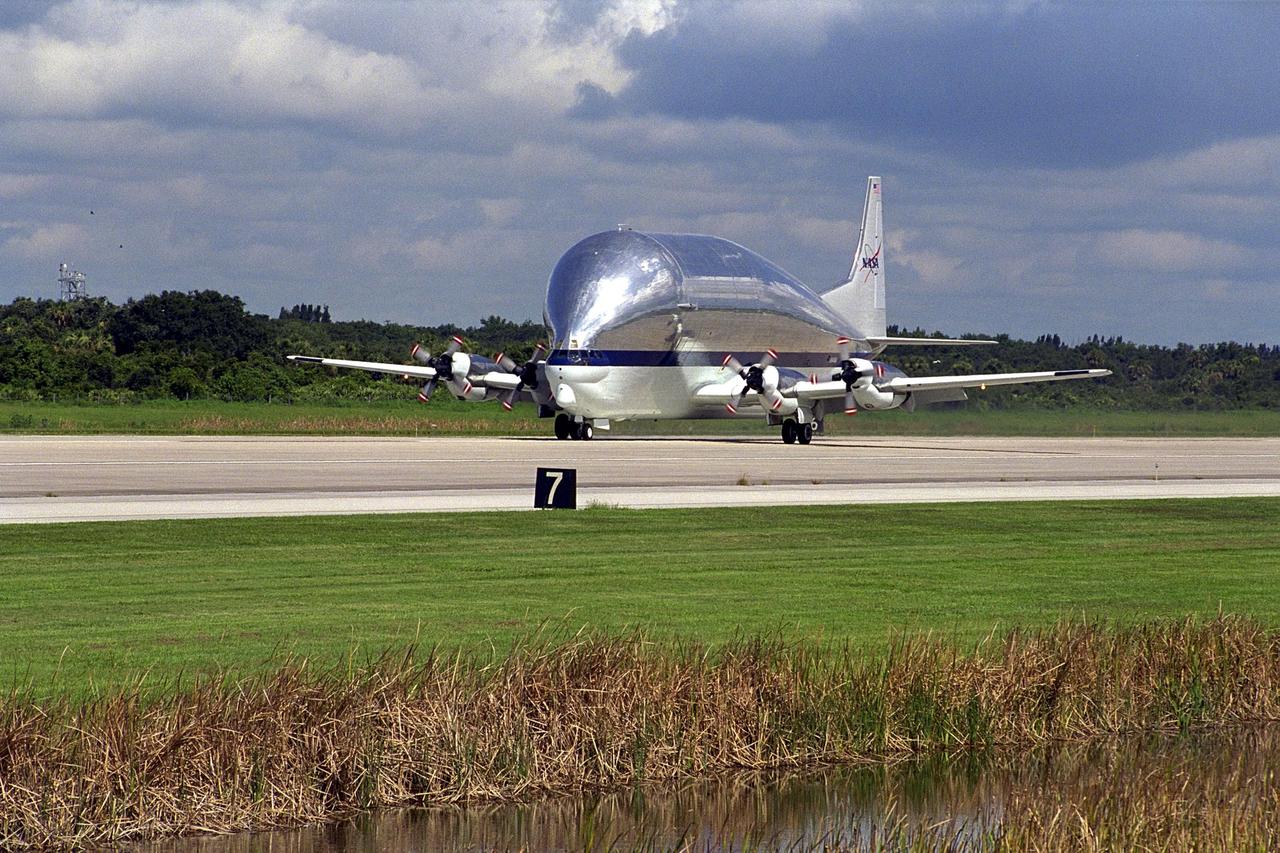
KENNEDY SPACE CENTER, FLA. -- Day in the Life, page 3. Coming in for landing. A “Super Guppy” transport aircraft lands at the Shuttle Landing space Station. This photograph was taken for a special color edition of Spaceport News designed to portray in photographs a single day at KSC, July 26, 2000. The special edition, published Aug. 25, 2000, was created to give readers a look at KSC’s diverse workforce and the critical roles workers play in the nation’s space program. Spaceport News is an official publication of the Kennedy Space Center and is published on alternate Fridays by the Public Affairs Office in the interest of KSC civil service and contractor employees
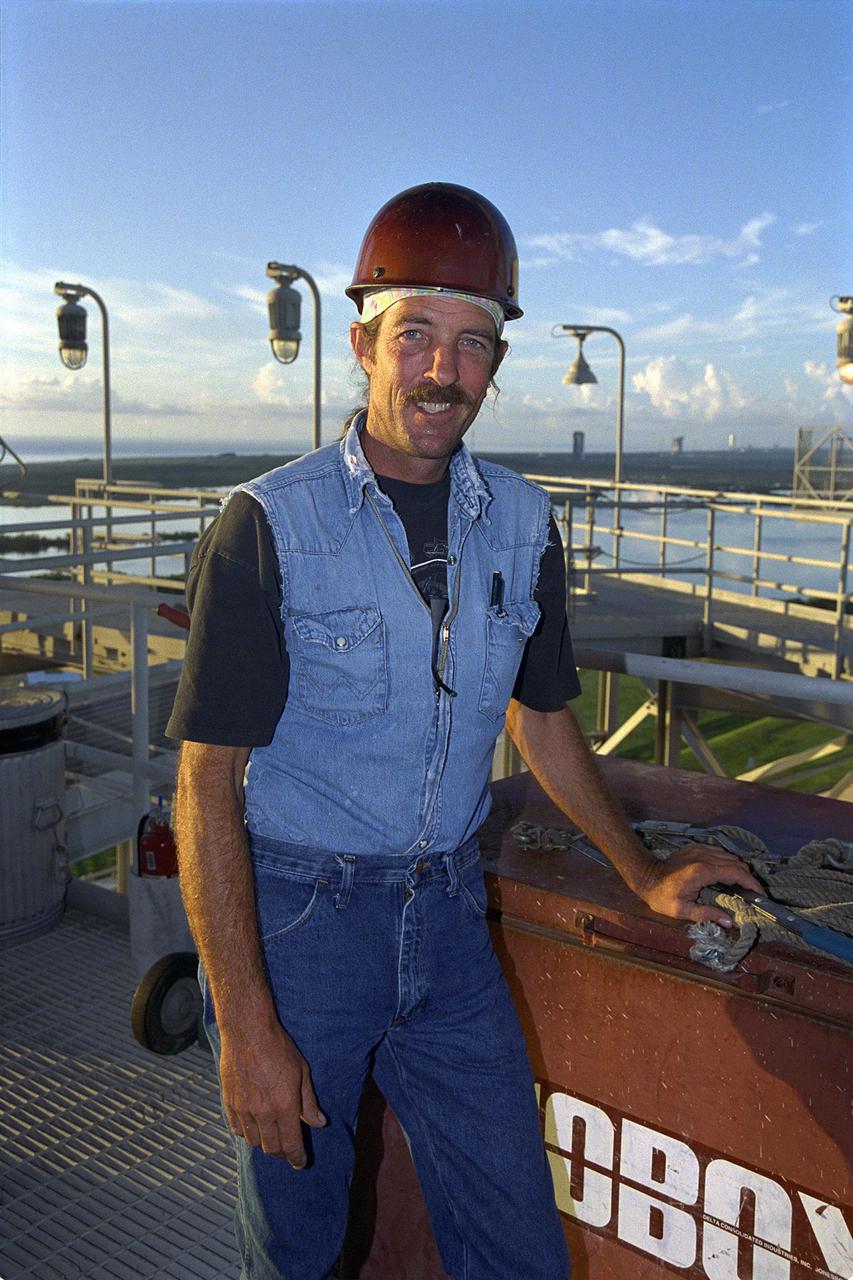
KENNEDY SPACE CENTER, FLA. -- Day in the Life page 2. Preparing the pad. Workers maintain Pad A at Kennedy Space Center’s Launch Complex 39. Robert Lust of IVEY Construction pauses on his way to install a safety handrail. This photograph was taken for a special color edition of Spaceport News designed to portray in photographs a single day at KSC, July 26, 2000. The special edition, published Aug. 25, 2000, was created to give readers a look at KSC’s diverse workforce and the critical roles workers play in the nation’s space program. Spaceport News is an official publication of the Kennedy Space Center and is published on alternate Fridays by the Public Affairs Office in the interest of KSC civil service and contractor employees
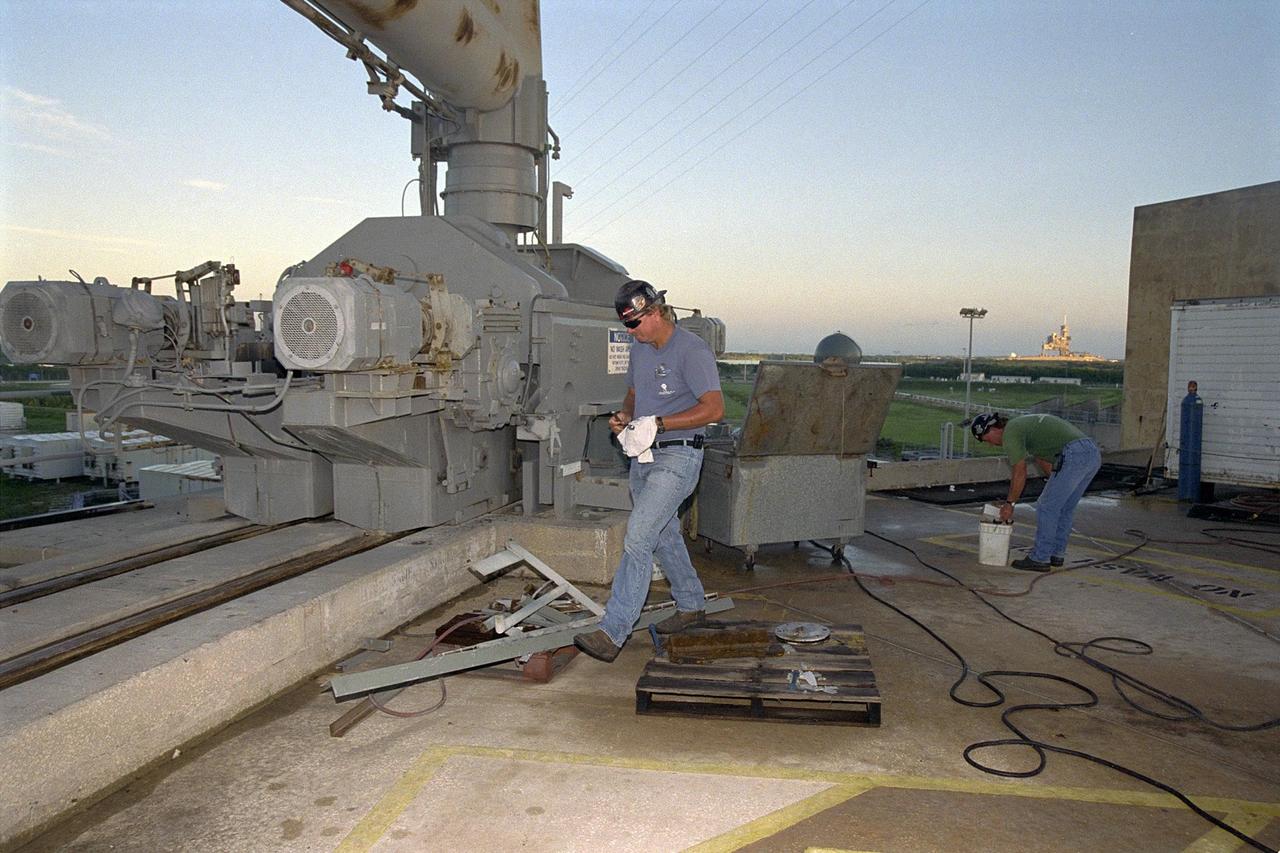
KENNEDY SPACE CENTER, FLA. -- Day in the Life, page 2. Preparing the pad. Workers maintain Pad A at Kennedy Space Center’s Launch Complex 39. Jack Hanover of SDB Engineers and Constructors Inc. prepares to change a bearing in the Rotating Service Structure. This photograph was taken for a special color edition of Spaceport News designed to portray in photographs a single day at KSC, July 26, 2000. The special edition, published Aug. 25, 2000, was created to give readers a look at KSC’s diverse workforce and the critical roles workers play in the nation’s space program. Spaceport News is an official publication of the Kennedy Space Center and is published on alternate Fridays by the Public Affairs Office in the interest of KSC civil service and contractor employees
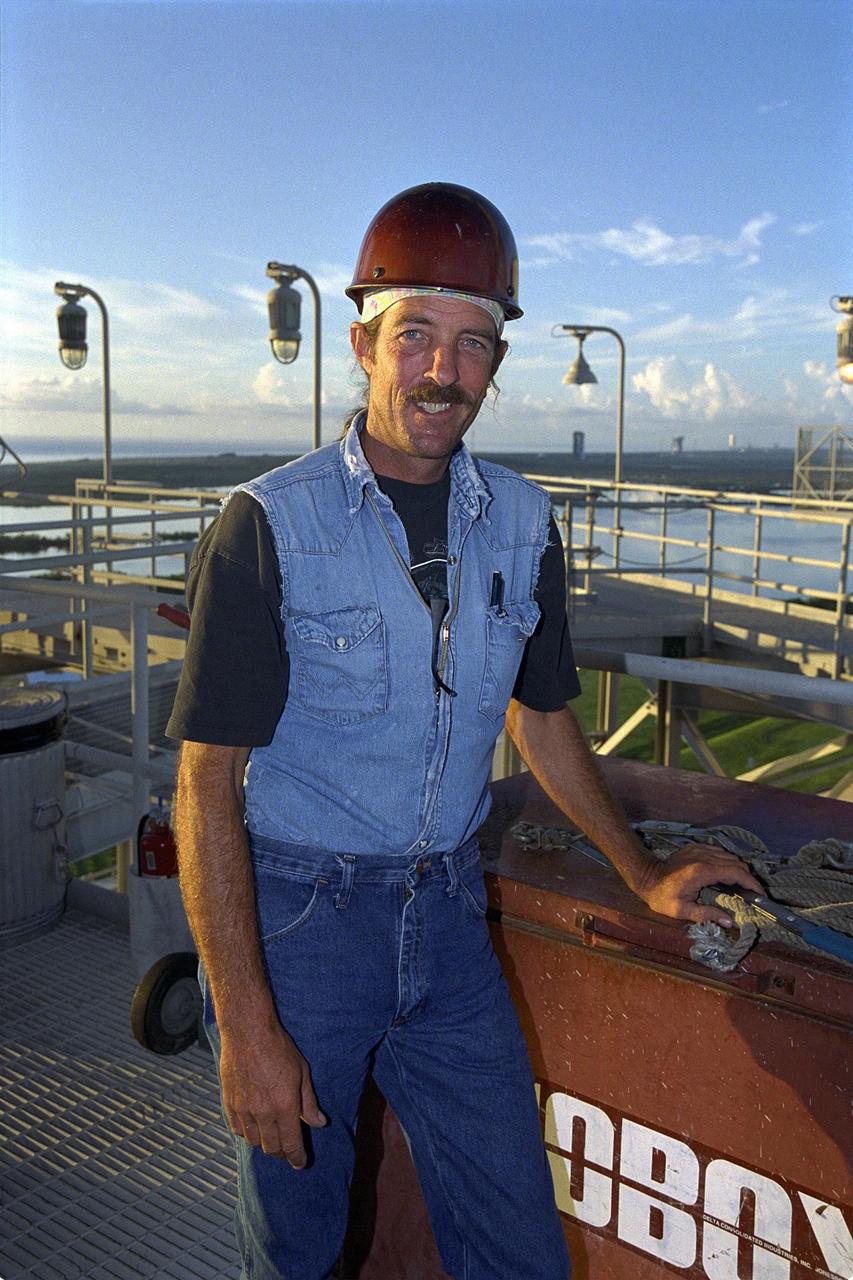
KENNEDY SPACE CENTER, FLA. -- Day in the Life page 2. Preparing the pad. Workers maintain Pad A at Kennedy Space Center’s Launch Complex 39. Robert Lust of IVEY Construction pauses on his way to install a safety handrail. This photograph was taken for a special color edition of Spaceport News designed to portray in photographs a single day at KSC, July 26, 2000. The special edition, published Aug. 25, 2000, was created to give readers a look at KSC’s diverse workforce and the critical roles workers play in the nation’s space program. Spaceport News is an official publication of the Kennedy Space Center and is published on alternate Fridays by the Public Affairs Office in the interest of KSC civil service and contractor employees
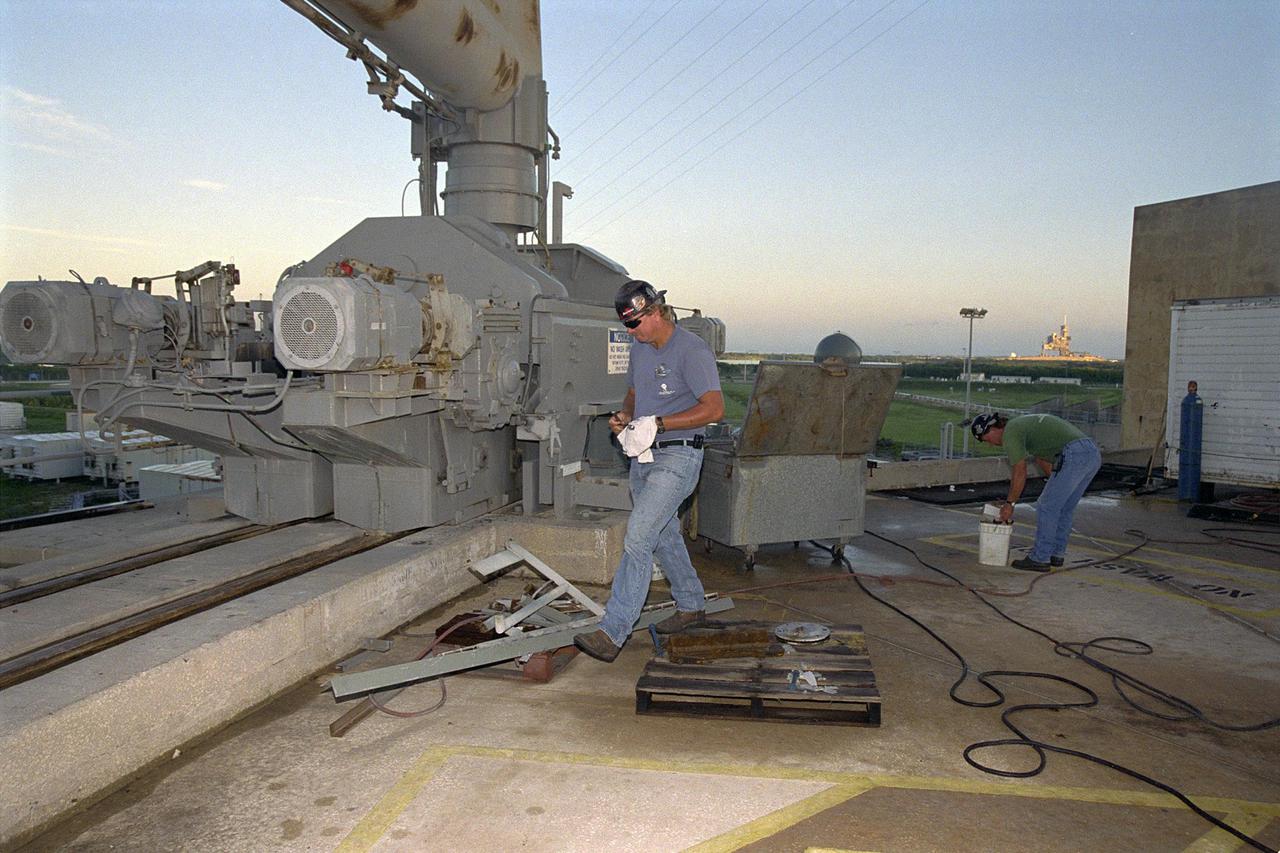
KENNEDY SPACE CENTER, FLA. -- Day in the Life, page 2. Preparing the pad. Workers maintain Pad A at Kennedy Space Center’s Launch Complex 39. Jack Hanover of SDB Engineers and Constructors Inc. prepares to change a bearing in the Rotating Service Structure. This photograph was taken for a special color edition of Spaceport News designed to portray in photographs a single day at KSC, July 26, 2000. The special edition, published Aug. 25, 2000, was created to give readers a look at KSC’s diverse workforce and the critical roles workers play in the nation’s space program. Spaceport News is an official publication of the Kennedy Space Center and is published on alternate Fridays by the Public Affairs Office in the interest of KSC civil service and contractor employees

KENNEDY SPACE CENTER, FLA. -- Day in the Life, page 3. Coming in for landing. Inside the control building at the Shuttle Landing Facility, air traffic controller Donny Linton, left, and SGS air facility manager Bob Bryen survey the SLF runway. This photograph was taken for a special color edition of Spaceport News designed to portray in photographs a single day at KSC, July 26, 2000. The special edition, published Aug. 25, 2000, was created to give readers a look at KSC’s diverse workforce and the critical roles workers play in the nation’s space program. Spaceport News is an official publication of the Kennedy Space Center and is published on alternate Fridays by the Public Affairs Office in the interest of KSC civil service and contractor employees
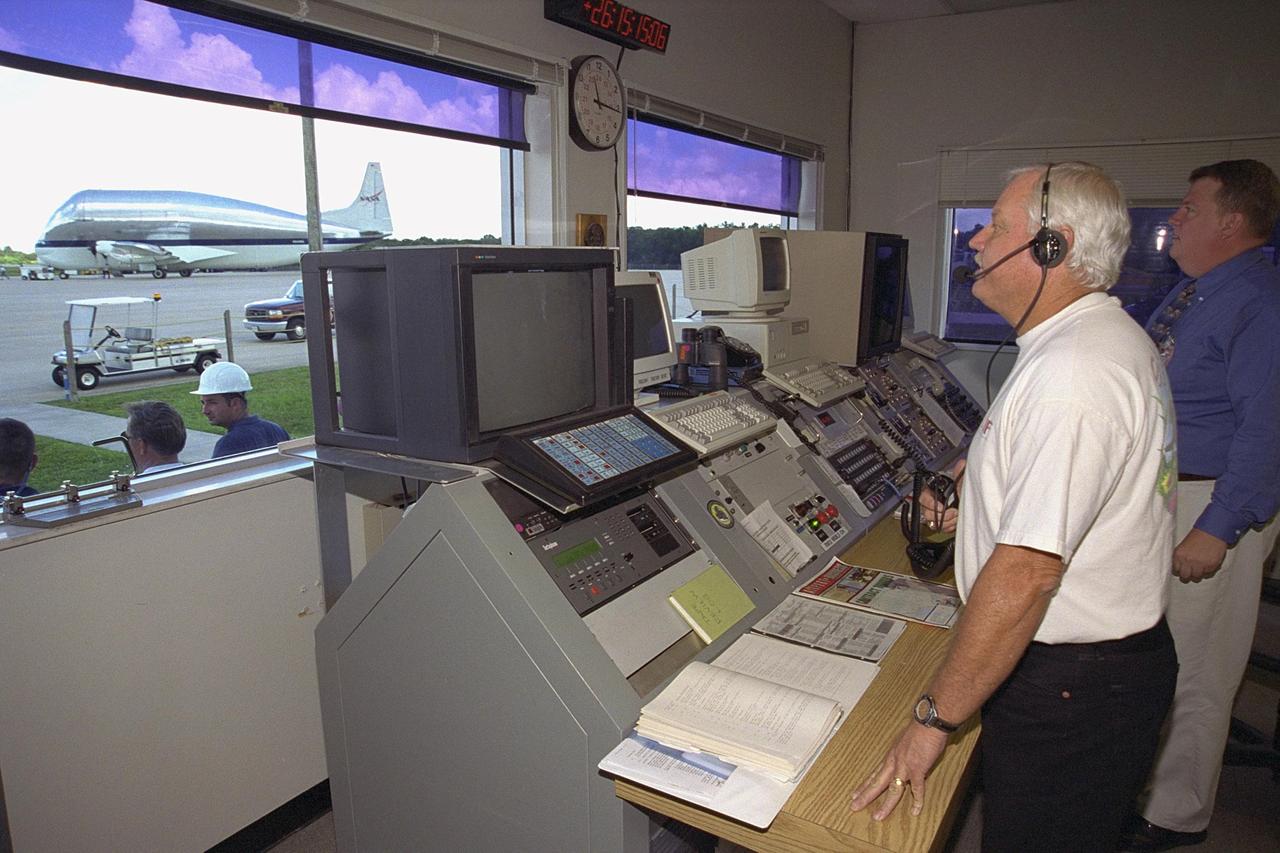
KENNEDY SPACE CENTER, FLA. -- Day in the Life, page 3. Coming in for landing. Inside the control building at the Shuttle Landing Facility, air traffic controller Donny Linton, left, and SGS air facility manager Bob Bryen survey the SLF runway. This photograph was taken for a special color edition of Spaceport News designed to portray in photographs a single day at KSC, July 26, 2000. The special edition, published Aug. 25, 2000, was created to give readers a look at KSC’s diverse workforce and the critical roles workers play in the nation’s space program. Spaceport News is an official publication of the Kennedy Space Center and is published on alternate Fridays by the Public Affairs Office in the interest of KSC civil service and contractor employees
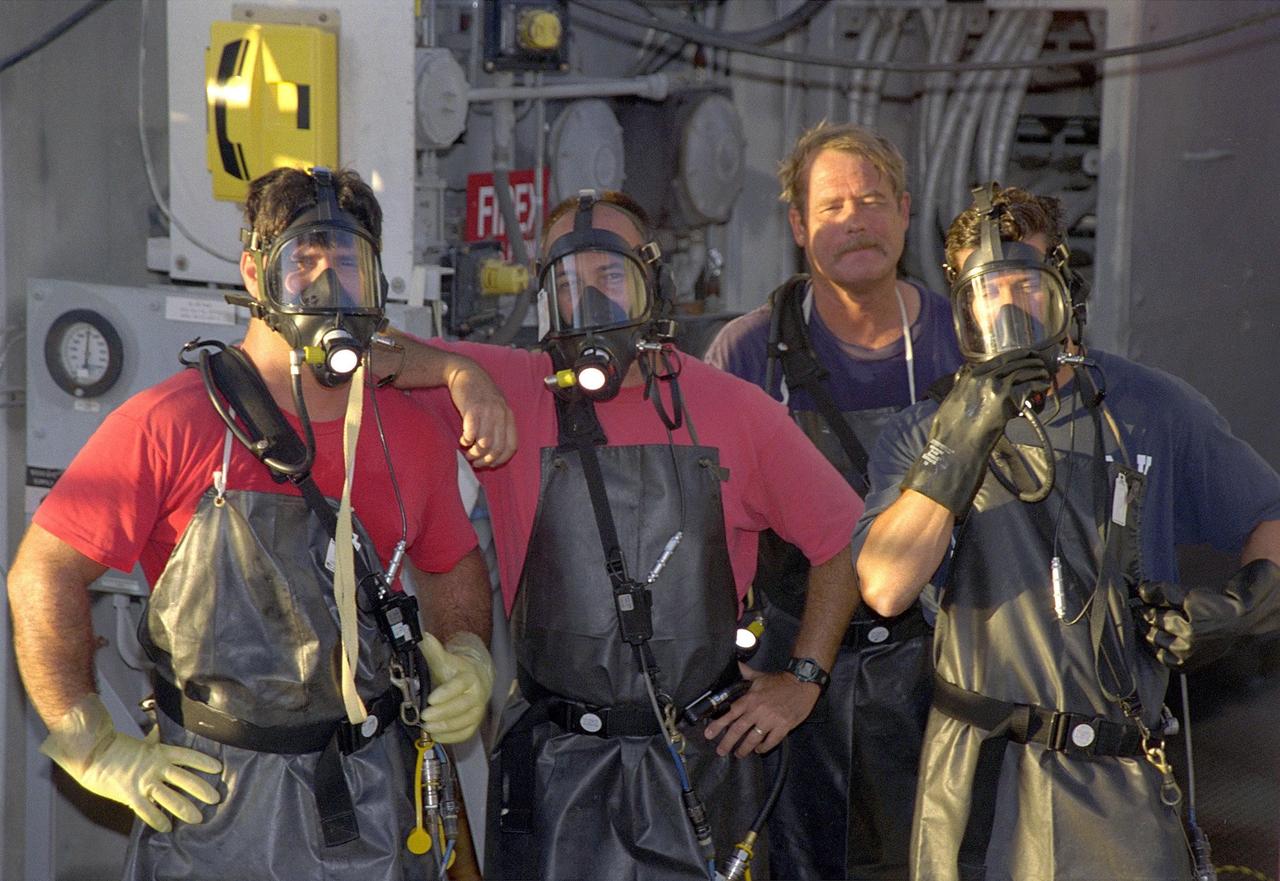
KENNEDY SPACE CENTER, FLA. -- Day in the Life, page 2. Preparing the pad. Workers maintain Pad A at Kennedy Space Center’s Launch Complex 39. A team of United Space Alliance workers don gas masks before calibrating the pad’s hypergolic fuel system. This photograph was taken for a special color edition of Spaceport News designed to portray in photographs a single day at KSC, July 26, 2000. The special edition, published Aug. 25, 2000, was created to give readers a look at KSC’s diverse workforce and the critical roles workers play in the nation’s space program. Spaceport News is an official publication of the Kennedy Space Center and is published on alternate Fridays by the Public Affairs Office in the interest of KSC civil service and contractor employees
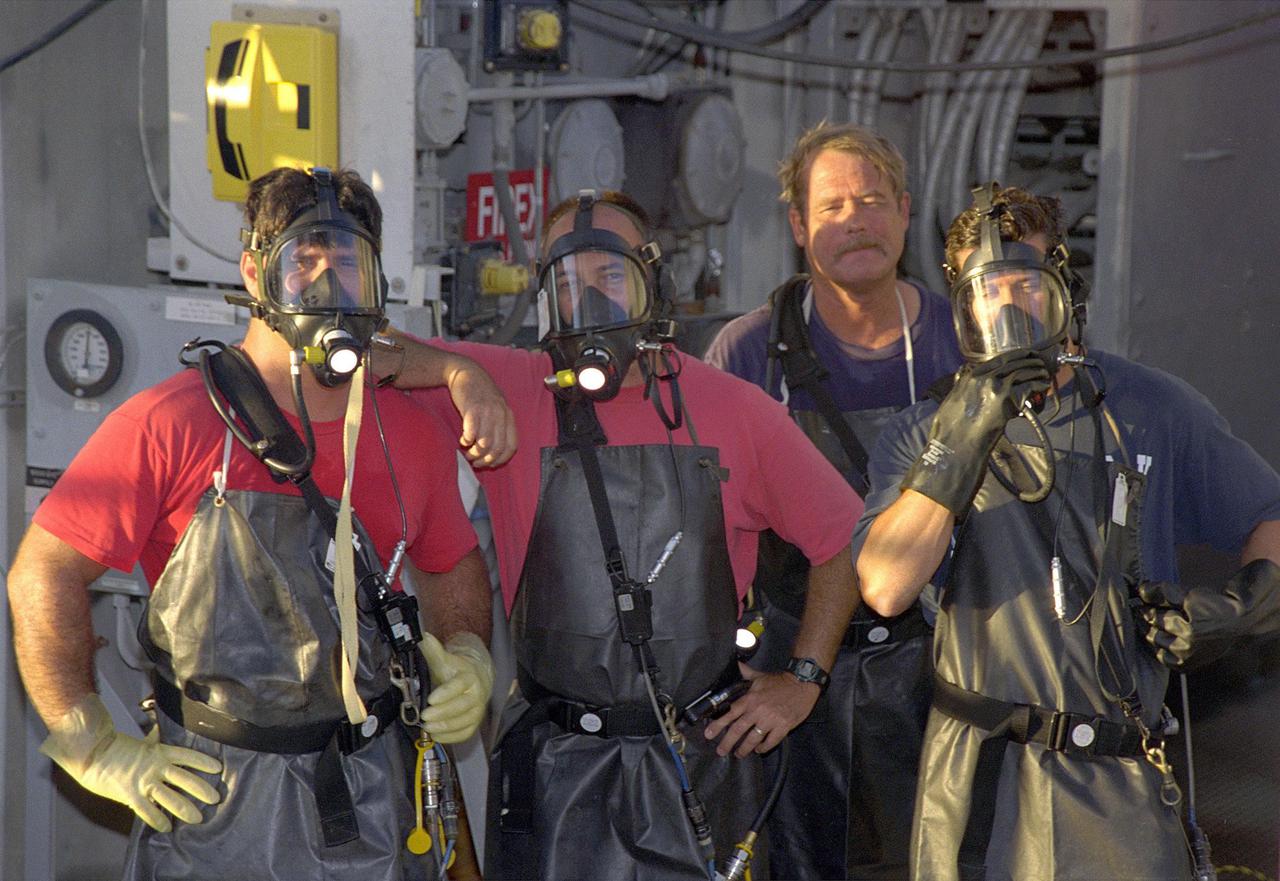
KENNEDY SPACE CENTER, FLA. -- Day in the Life, page 2. Preparing the pad. Workers maintain Pad A at Kennedy Space Center’s Launch Complex 39. A team of United Space Alliance workers don gas masks before calibrating the pad’s hypergolic fuel system. This photograph was taken for a special color edition of Spaceport News designed to portray in photographs a single day at KSC, July 26, 2000. The special edition, published Aug. 25, 2000, was created to give readers a look at KSC’s diverse workforce and the critical roles workers play in the nation’s space program. Spaceport News is an official publication of the Kennedy Space Center and is published on alternate Fridays by the Public Affairs Office in the interest of KSC civil service and contractor employees
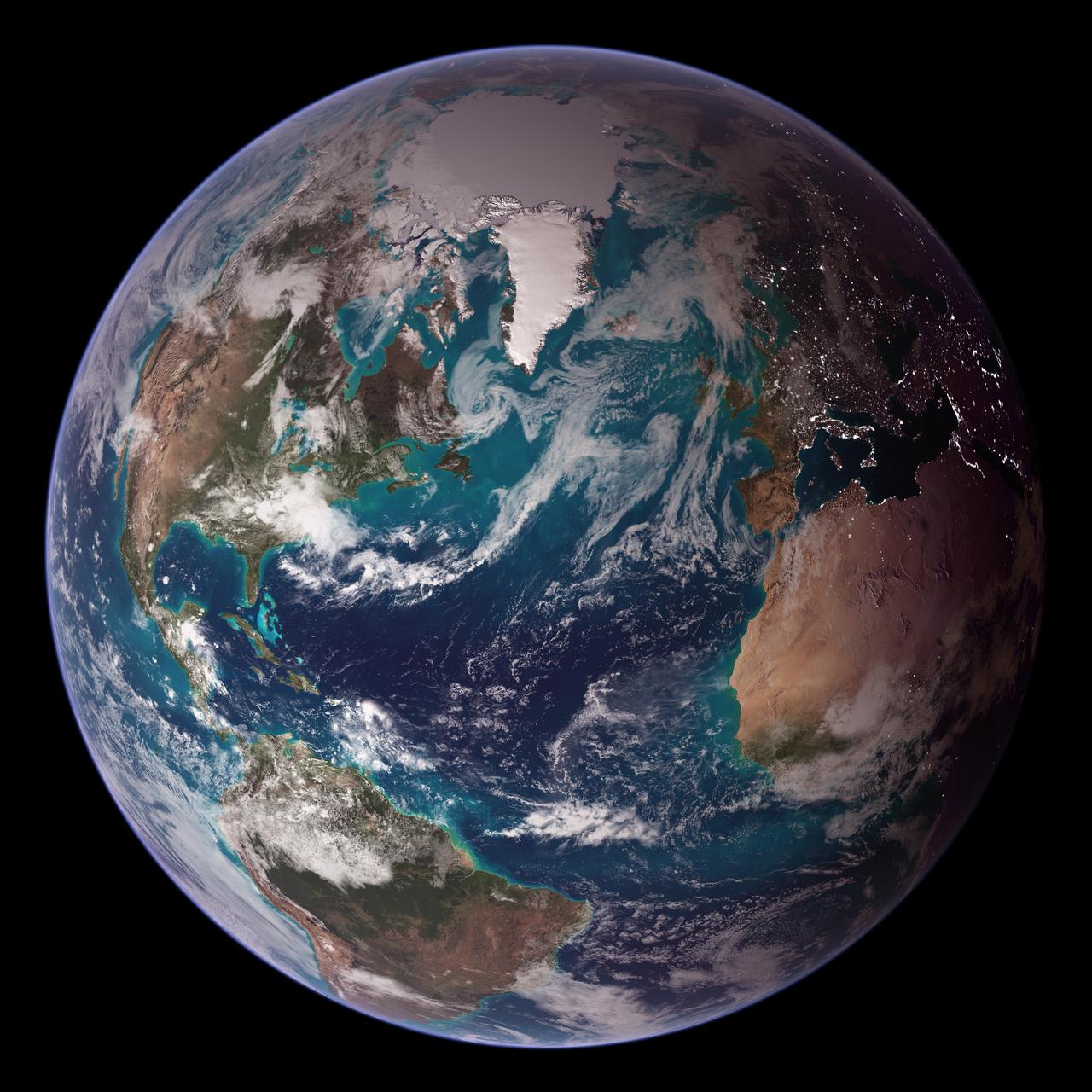
<b>RELEASE DATE: OCTOBER 9, 2007</b> <b>Credit: NASA/Goddard Space Flight Center/Reto Stöckli</b> A day’s clouds. The shape and texture of the land. The living ocean. City lights as a beacon of human presence across the globe. This amazingly beautiful view of Earth from space is a fusion of science and art, a showcase for the remote-sensing technology that makes such views possible, and a testament to the passion and creativity of the scientists who devote their careers to understanding how land, ocean, and atmosphere—even life itself—interact to generate Earth’s unique (as far as we know!) life-sustaining environment. Drawing on data from multiple satellite missions (not all collected at the same time), a team of NASA scientists and graphic artists created layers of global data for everything from the land surface, to polar sea ice, to the light reflected by the chlorophyll in the billions of microscopic plants that grow in the ocean. They wrapped these layers around a globe, set it against a black background, and simulated the hazy edge of the Earth’s atmosphere (the limb) that appears in astronaut photography of the Earth. The land surface layer is based on photo-like surface reflectance observations (reflected sunlight) measured by the Moderate Resolution Imaging Spectroradiometer (MODIS) on NASA’s Terra satellite in July 2004. The sea ice layer near the poles comes from Terra MODIS observations of daytime sea ice observed between August 28 and September 6, 2001. The ocean layer is a composite. In shallow water areas, the layer shows surface reflectances observed by Terra MODIS in July 2004. In the open ocean, the photo-like layer is overlaid with observations of the average ocean chlorophyll content for 2004. NASA’s Aqua MODIS collected the chlorophyll data. The cloud layer shows a single-day snapshot of clouds observed by Terra MODIS across the planet on July 29, 2001. City lights on Earth’s night side are visualized from data collected by the Defense Meteorological Satellite Program mission between 1994–1995. The topography layer is based on radar data collected by the Space Shuttle Endeavour during an 11-day mission in February of 2000. Topography over Antarctica comes from the Radarsat Antarctic Mapping Project, version 2. Most of the data layers in this visualization are available as monthly composites as part of NASA’s Blue Marble Next Generation image collection. The images in the collection appear in cylindrical projection (rectangular maps), and they are available at 500-meter resolution. The large images provided above are the full-size versions of these globes. In their hope that these images will inspire people to appreciate the beauty of our home planet and to learn about the Earth system, the developers of these images encourage readers to re-use and re-publish the images freely. NASA images by Reto Stöckli, based on data from NASA and NOAA. To learn the history of the Blue Marble go here: <a href="http://earthobservatory.nasa.gov/Features/BlueMarble/BlueMarble_history.php" rel="nofollow">earthobservatory.nasa.gov/Features/BlueMarble/BlueMarble_...</a> To learn more about the Blue Marble go here: <a href="http://earthobservatory.nasa.gov/IOTD/view.php?id=8108" rel="nofollow">earthobservatory.nasa.gov/IOTD/view.php?id=8108</a> <b><a href="http://www.nasa.gov/centers/goddard/home/index.html" rel="nofollow">NASA Goddard Space Flight Center</a></b> is home to the nation's largest organization of combined scientists, engineers and technologists that build spacecraft, instruments and new technology to study the Earth, the sun, our solar system, and the universe. <b>Follow us on <a href="http://twitter.com/NASA_GoddardPix" rel="nofollow">Twitter</a></b> <b>Join us on <a href="http://www.facebook.com/pages/Greenbelt-MD/NASA-Goddard/395013845897?ref=tsd" rel="nofollow">Facebook</a><b> </b></b>
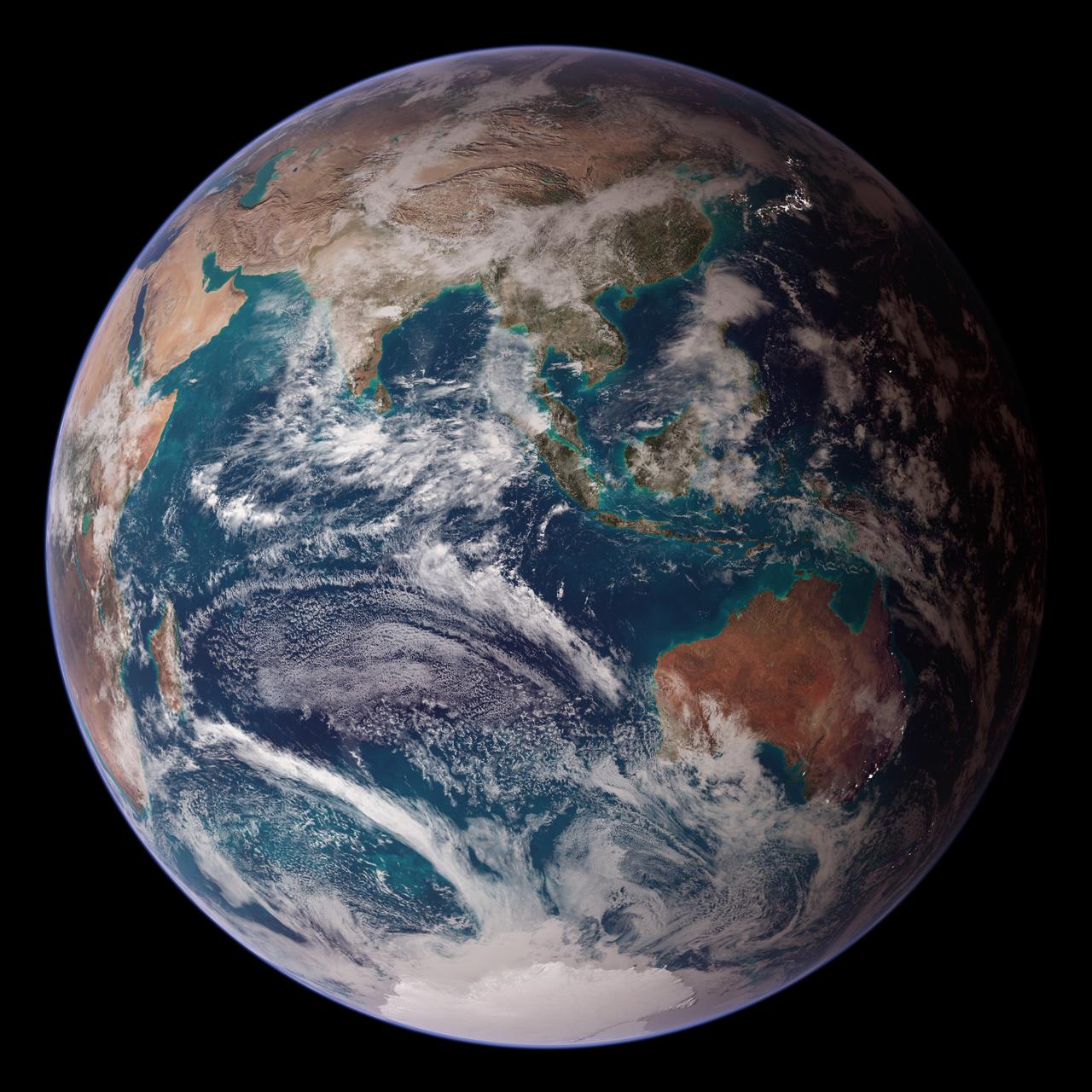
<b>RELEASE DATE: OCTOBER 9, 2007</b> <b>Credit: NASA/Goddard Space Flight Center/Reto Stöckli</b> A day’s clouds. The shape and texture of the land. The living ocean. City lights as a beacon of human presence across the globe. This amazingly beautiful view of Earth from space is a fusion of science and art, a showcase for the remote-sensing technology that makes such views possible, and a testament to the passion and creativity of the scientists who devote their careers to understanding how land, ocean, and atmosphere—even life itself—interact to generate Earth’s unique (as far as we know!) life-sustaining environment. Drawing on data from multiple satellite missions (not all collected at the same time), a team of NASA scientists and graphic artists created layers of global data for everything from the land surface, to polar sea ice, to the light reflected by the chlorophyll in the billions of microscopic plants that grow in the ocean. They wrapped these layers around a globe, set it against a black background, and simulated the hazy edge of the Earth’s atmosphere (the limb) that appears in astronaut photography of the Earth. The land surface layer is based on photo-like surface reflectance observations (reflected sunlight) measured by the Moderate Resolution Imaging Spectroradiometer (MODIS) on NASA’s Terra satellite in July 2004. The sea ice layer near the poles comes from Terra MODIS observations of daytime sea ice observed between August 28 and September 6, 2001. The ocean layer is a composite. In shallow water areas, the layer shows surface reflectances observed by Terra MODIS in July 2004. In the open ocean, the photo-like layer is overlaid with observations of the average ocean chlorophyll content for 2004. NASA’s Aqua MODIS collected the chlorophyll data. The cloud layer shows a single-day snapshot of clouds observed by Terra MODIS across the planet on July 29, 2001. City lights on Earth’s night side are visualized from data collected by the Defense Meteorological Satellite Program mission between 1994–1995. The topography layer is based on radar data collected by the Space Shuttle Endeavour during an 11-day mission in February of 2000. Topography over Antarctica comes from the Radarsat Antarctic Mapping Project, version 2. Most of the data layers in this visualization are available as monthly composites as part of NASA’s Blue Marble Next Generation image collection. The images in the collection appear in cylindrical projection (rectangular maps), and they are available at 500-meter resolution. The large images provided above are the full-size versions of these globes. In their hope that these images will inspire people to appreciate the beauty of our home planet and to learn about the Earth system, the developers of these images encourage readers to re-use and re-publish the images freely. NASA images by Reto Stöckli, based on data from NASA and NOAA. To learn the history of the Blue Marble go here: <a href="http://earthobservatory.nasa.gov/Features/BlueMarble/BlueMarble_history.php" rel="nofollow">earthobservatory.nasa.gov/Features/BlueMarble/BlueMarble_...</a> To learn more about the Blue Marble go here: <a href="http://earthobservatory.nasa.gov/IOTD/view.php?id=8108" rel="nofollow">earthobservatory.nasa.gov/IOTD/view.php?id=8108</a> To learn more about NASA's Goddard Space Flight Center go here: <a href="http://www.nasa.gov/centers/goddard/home/index.html" rel="nofollow">www.nasa.gov/centers/goddard/home/index.html</a> <b><a href="http://www.nasa.gov/centers/goddard/home/index.html" rel="nofollow">NASA Goddard Space Flight Center</a></b> is home to the nation's largest organization of combined scientists, engineers and technologists that build spacecraft, instruments and new technology to study the Earth, the sun, our solar system, and the universe. <b><a href="http://www.nasa.gov/centers/goddard/home/index.html" rel="nofollow">NASA Goddard Space Flight Center</a></b> is home to the nation's largest organization of combined scientists, engineers and technologists that build spacecraft, instruments and new technology to study the Earth, the sun, our solar system, and the universe. <b>Follow us on <a href="http://twitter.com/NASA_GoddardPix" rel="nofollow">Twitter</a></b> <b>Join us on <a href="http://www.facebook.com/pages/Greenbelt-MD/NASA-Goddard/395013845897?ref=tsd" rel="nofollow">Facebook</a><b> </b></b>