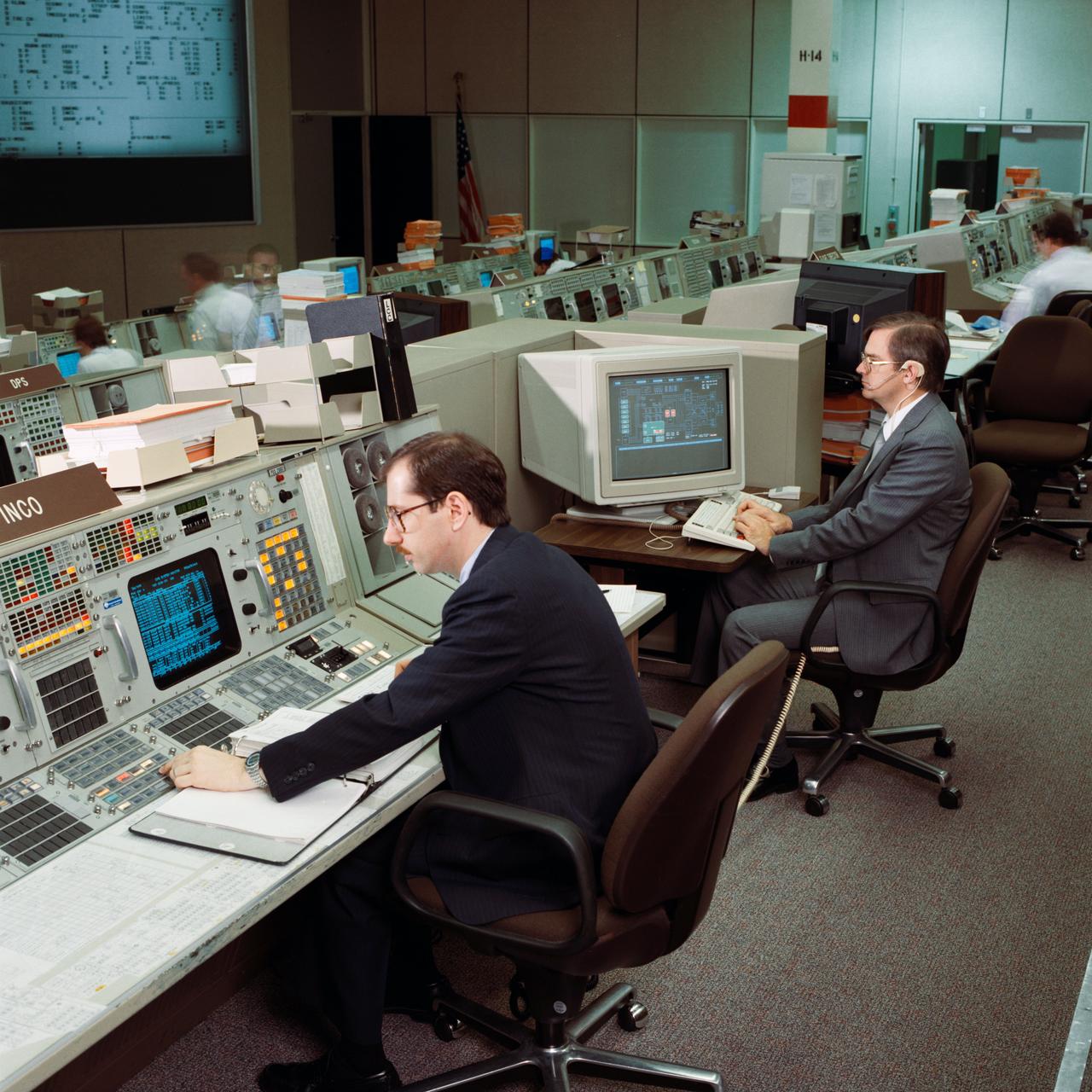
Instrumentation and Communications Officer (INCO) John F. Muratore monitors conventional workstation displays during an STS-26 simulation in JSC Mission Control Center (MCC) Bldg 30 Flight Control Room (FCR). Next to Muratore an operator views the real time data system (RTDS), an expert system. During the STS-29 mission two conventional monochrome console display units will be removed and replaced with RTDS displays. View is for the STS-29 press kit from Office of Aeronautics and Space Technology (OAST) RTDS.
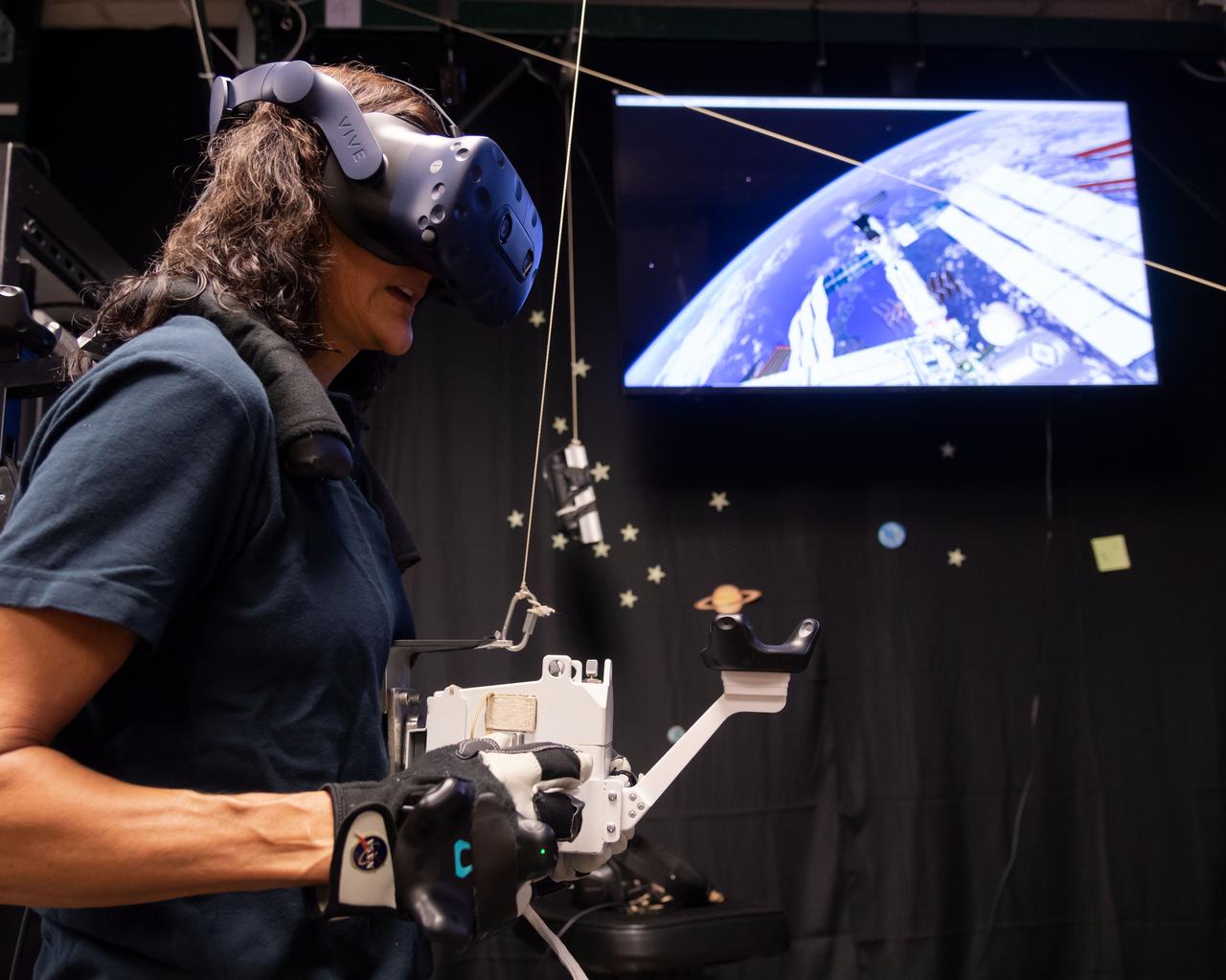
The Virtual Reality Lab at Johnson Space Center in Houston provides real-time graphics and motion simulators to replicate the space environment. Commercial Crew Astronaut Suni Williams practices spacewalking in preparation for a mission to the International Space Station in 2019. Williams is assigned to Boeing’s first operational mission after the company’s test flight with crew.
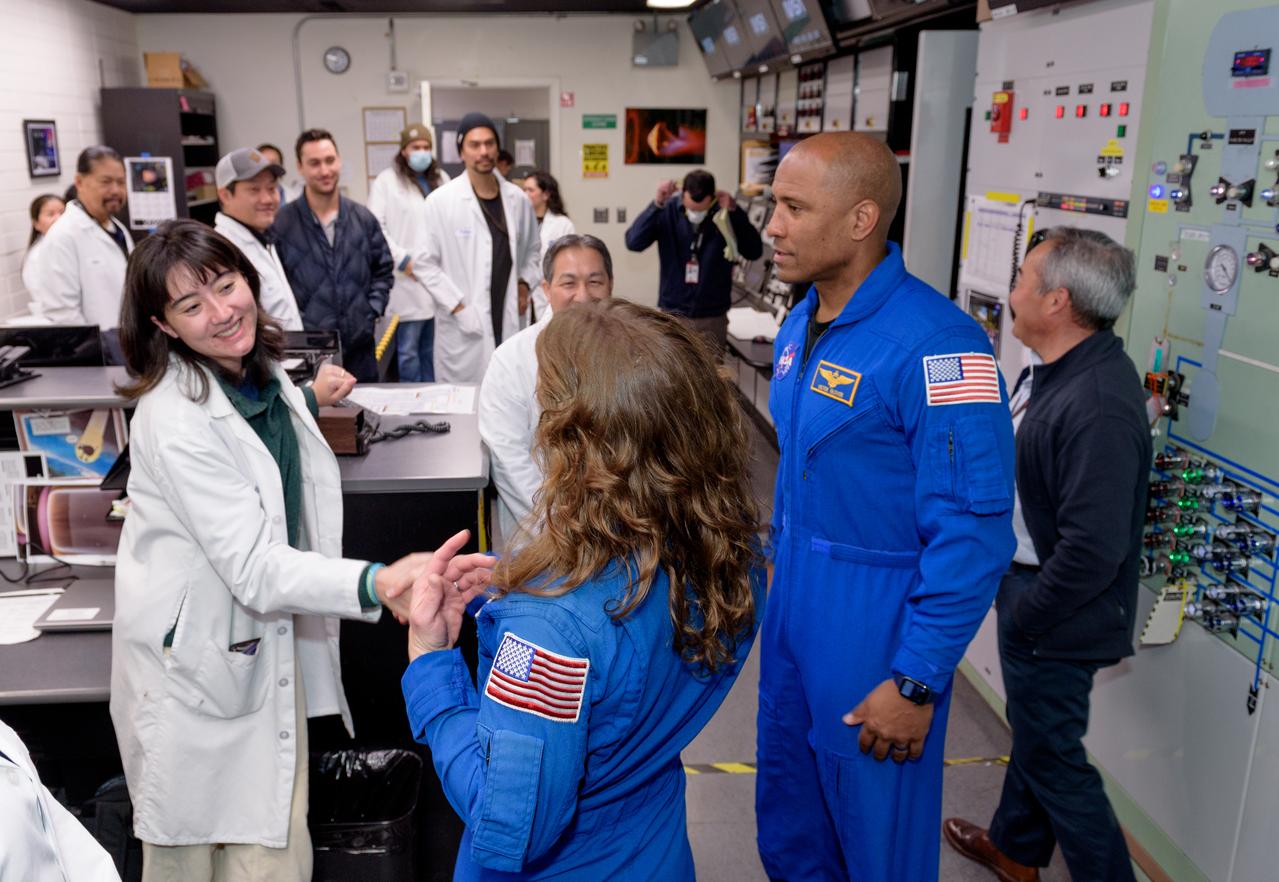
Amelia Kinsella, left, meets NASA astronauts Christina Koch and Victor J. Glover in the Ames Arc Jet control room for the Interaction Heating Facility (IHF), N238, where operators run the Arc Jet and review test data in real time.
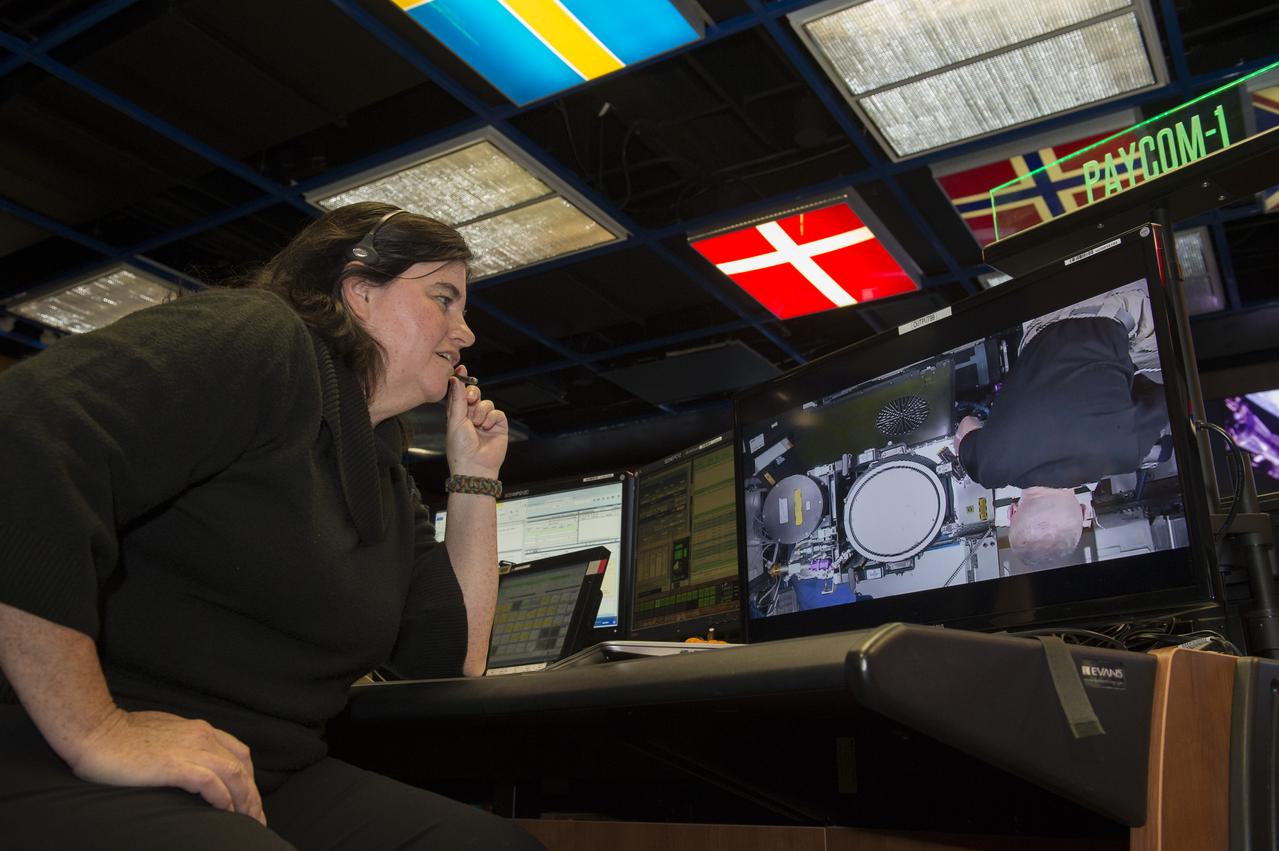
Penny Pettigrew chats in real time with a space station crew member conducting an experiment in microgravity some 250 miles overhead. The Payload Operations Integration Center cadre monitor science communications on station 24 hours a day, seven days a week, 365 days per year.
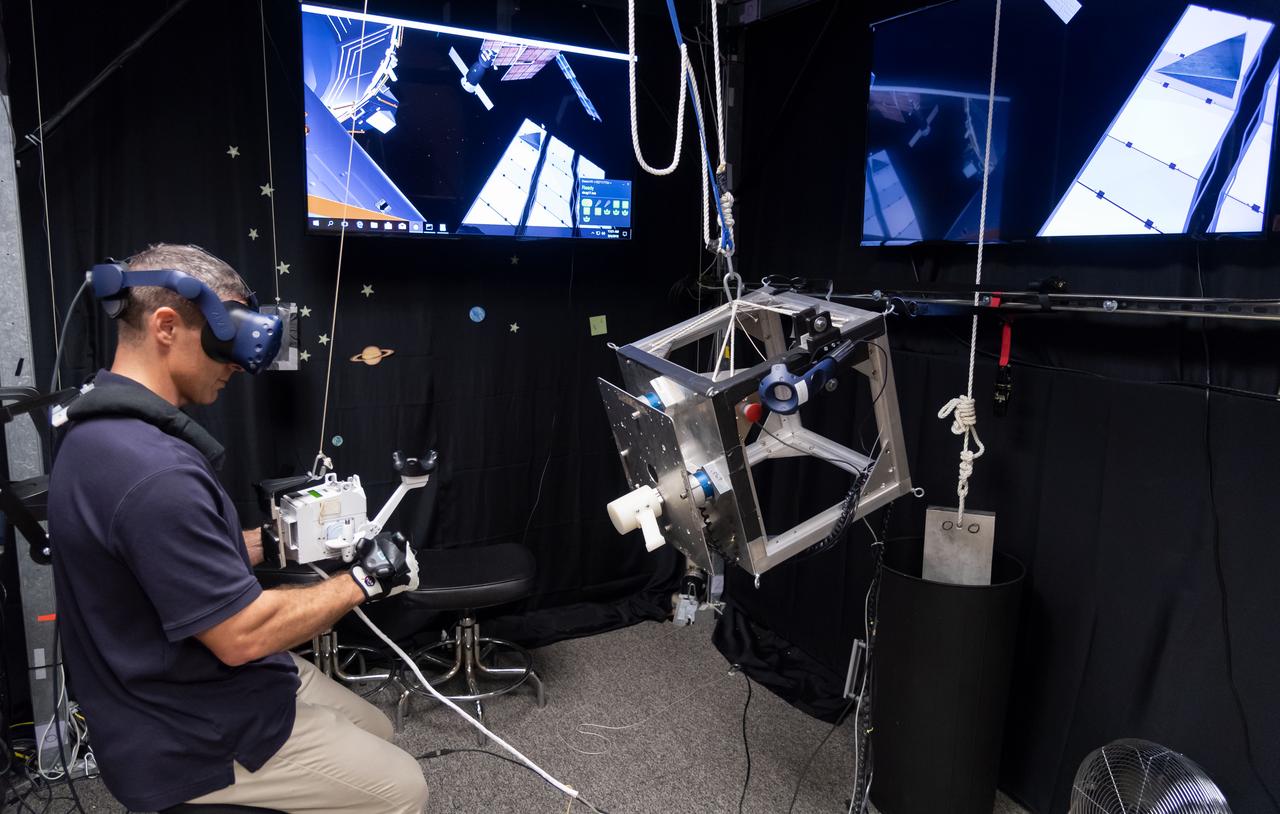
The Virtual Reality Lab at Johnson Space Center in Houston provides real-time graphics and motion simulators to replicate the space environment. Commercial Crew Astronaut Mike Hopkins practices spacewalking in preparation for a mission to the International Space Station. Hopkins is assigned to SpaceX’s first operational mission after the company’s test flight with crew.
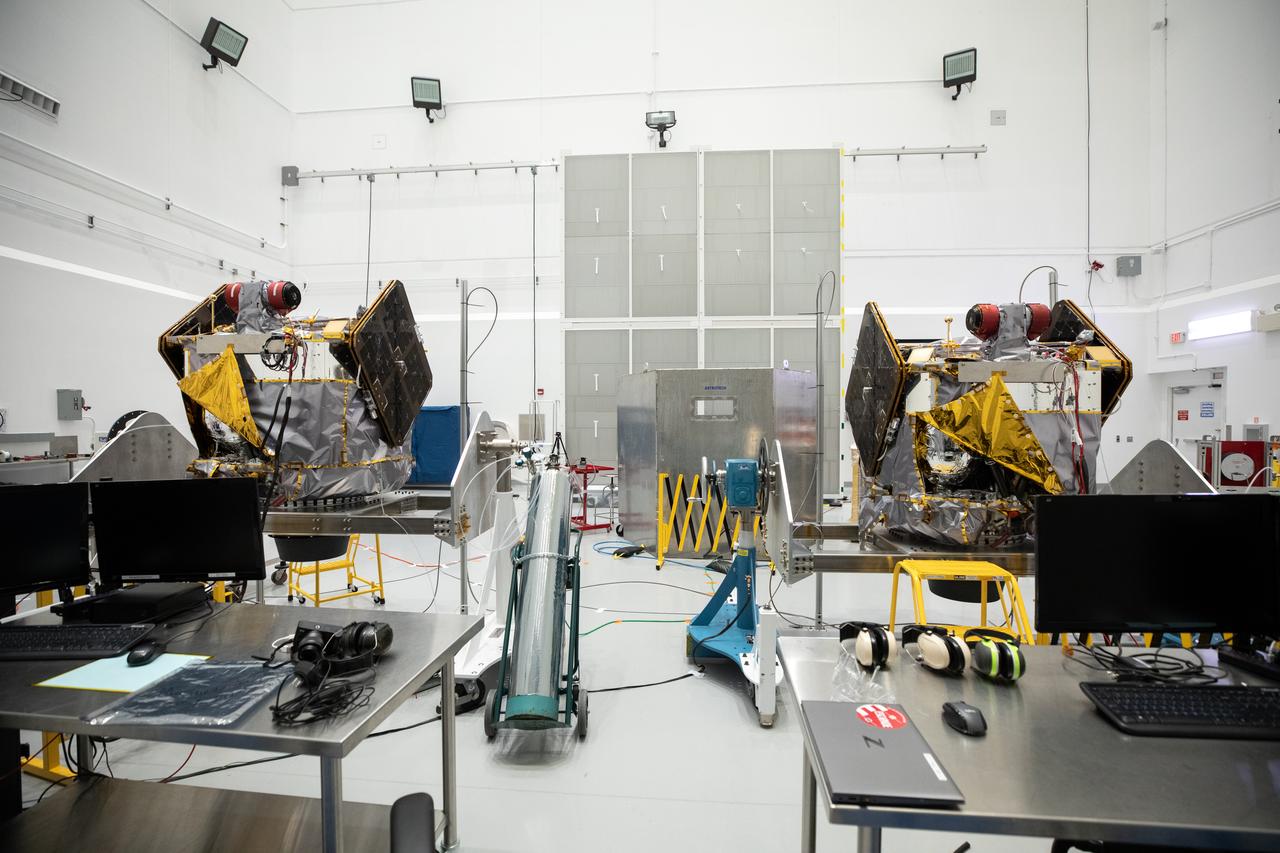
NASA’s ESCAPADE (Escape and Plasma Acceleration and Dynamics Explorers) identical dual spacecraft are inspected and processed on dollies in a high bay of the Astrotech Space Operations Facility near the agency’s Kennedy Space Center in Florida on Thursday, Aug. 22, 2024. As the first multi-spacecraft orbital science mission to Mars, ESCAPADE’s twin orbiters will take simultaneous observations from different locations around the planet and reveal the real-time response to space weather and how the Martian magnetosphere changes over time.
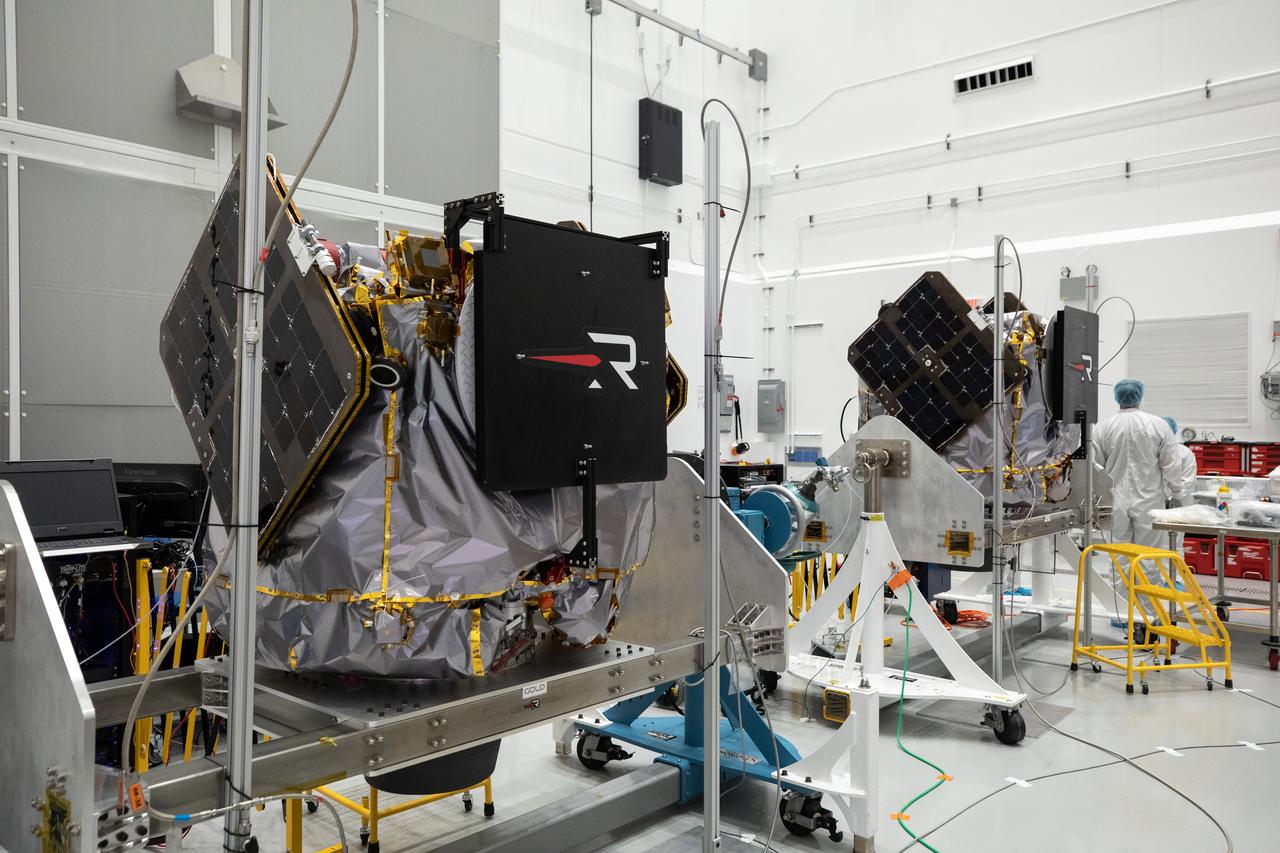
NASA’s ESCAPADE (Escape and Plasma Acceleration and Dynamics Explorers) identical dual spacecraft are inspected and processed on dollies in a high bay of the Astrotech Space Operations Facility near the agency’s Kennedy Space Center in Florida on Thursday, Aug. 22, 2024. As the first multi-spacecraft orbital science mission to Mars, ESCAPADE’s twin orbiters will take simultaneous observations from different locations around the planet and reveal the real-time response to space weather and how the Martian magnetosphere changes over time.
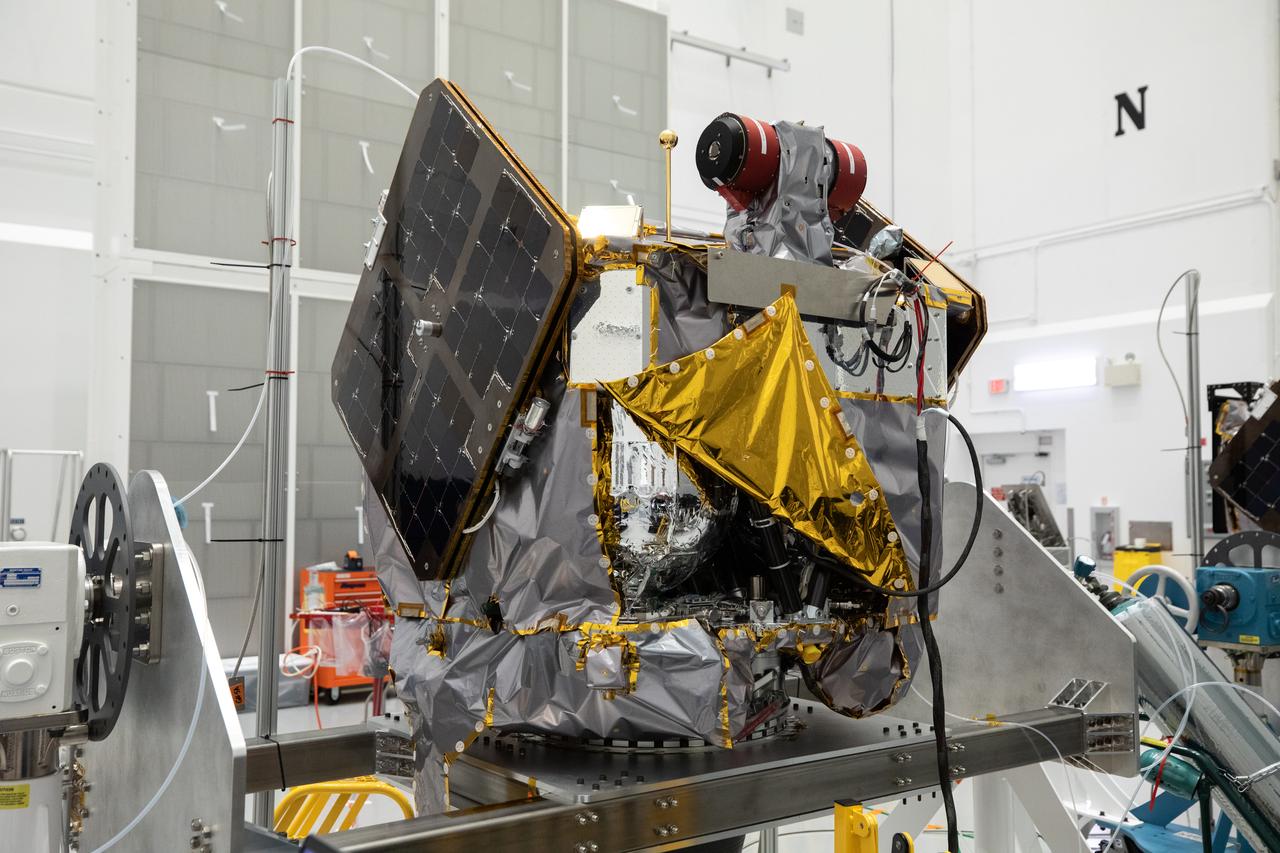
NASA’s ESCAPADE (Escape and Plasma Acceleration and Dynamics Explorers) identical dual spacecraft are inspected and processed on dollies in a high bay of the Astrotech Space Operations Facility near the agency’s Kennedy Space Center in Florida on Thursday, Aug. 22, 2024. As the first multi-spacecraft orbital science mission to Mars, ESCAPADE’s twin orbiters will take simultaneous observations from different locations around the planet and reveal the real-time response to space weather and how the Martian magnetosphere changes over time.
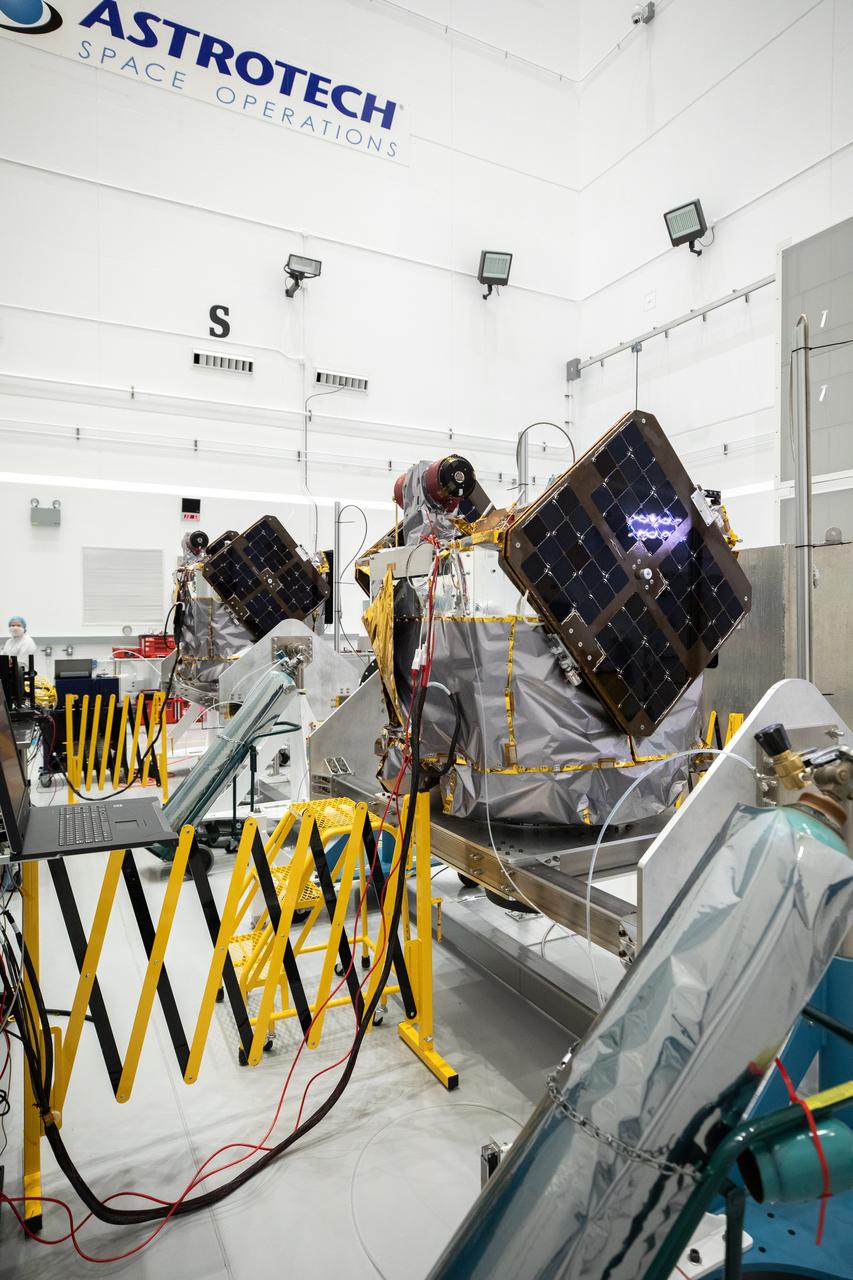
NASA’s ESCAPADE (Escape and Plasma Acceleration and Dynamics Explorers) identical dual spacecraft are inspected and processed on dollies in a high bay of the Astrotech Space Operations Facility near the agency’s Kennedy Space Center in Florida on Thursday, Aug. 22, 2024. As the first multi-spacecraft orbital science mission to Mars, ESCAPADE’s twin orbiters will take simultaneous observations from different locations around the planet and reveal the real-time response to space weather and how the Martian magnetosphere changes over time.
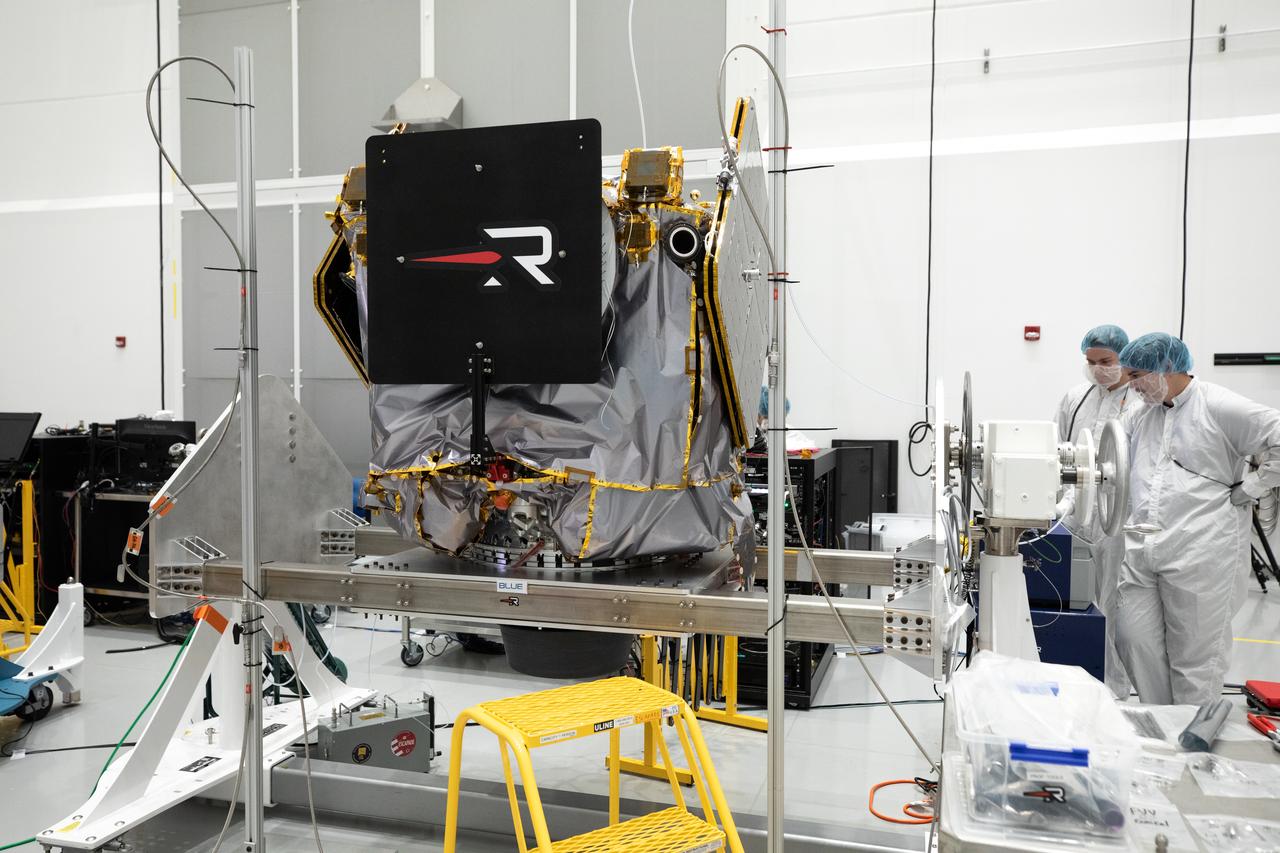
NASA’s ESCAPADE (Escape and Plasma Acceleration and Dynamics Explorers) identical dual spacecraft are inspected and processed on dollies in a high bay of the Astrotech Space Operations Facility near the agency’s Kennedy Space Center in Florida on Thursday, Aug. 22, 2024. As the first multi-spacecraft orbital science mission to Mars, ESCAPADE’s twin orbiters will take simultaneous observations from different locations around the planet and reveal the real-time response to space weather and how the Martian magnetosphere changes over time.
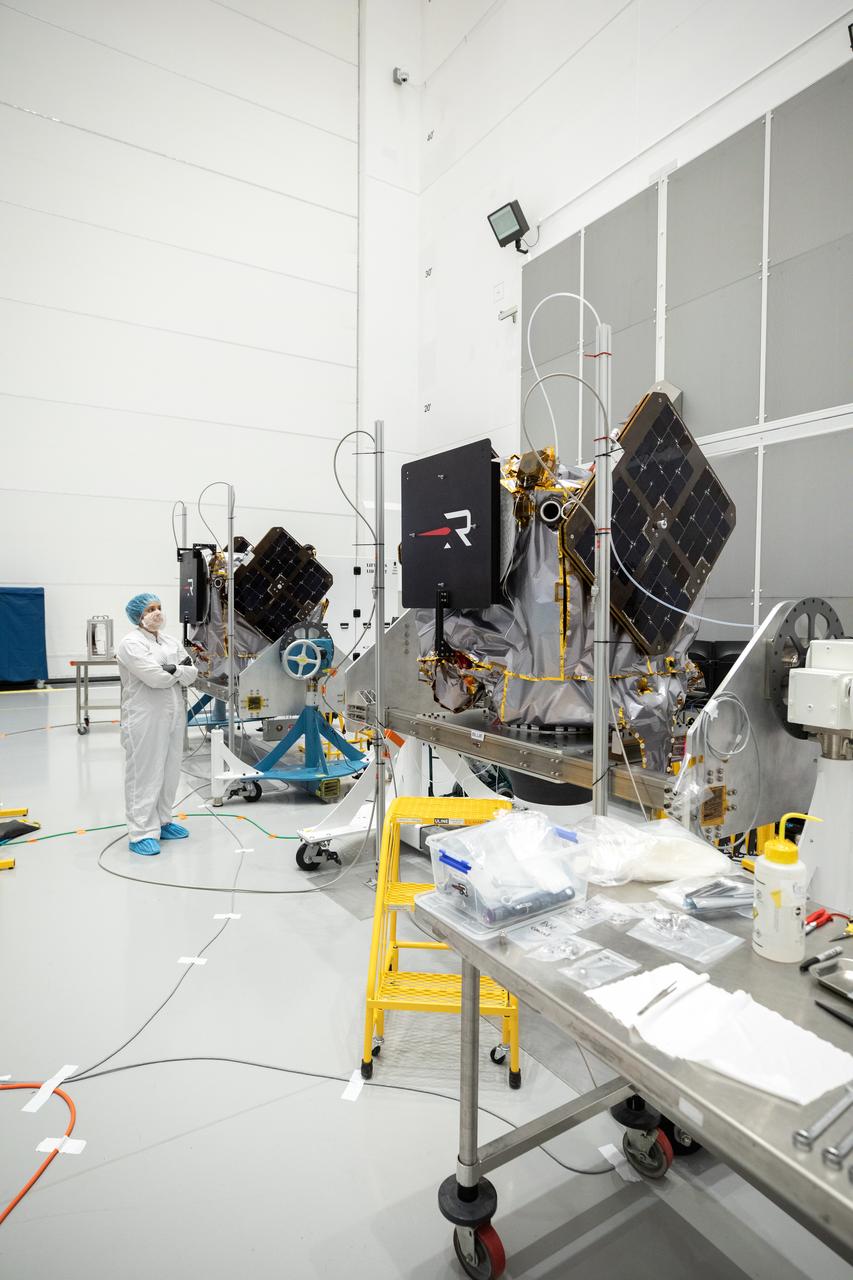
NASA’s ESCAPADE (Escape and Plasma Acceleration and Dynamics Explorers) identical dual spacecraft are inspected and processed on dollies in a high bay of the Astrotech Space Operations Facility near the agency’s Kennedy Space Center in Florida on Thursday, Aug. 22, 2024. As the first multi-spacecraft orbital science mission to Mars, ESCAPADE’s twin orbiters will take simultaneous observations from different locations around the planet and reveal the real-time response to space weather and how the Martian magnetosphere changes over time.
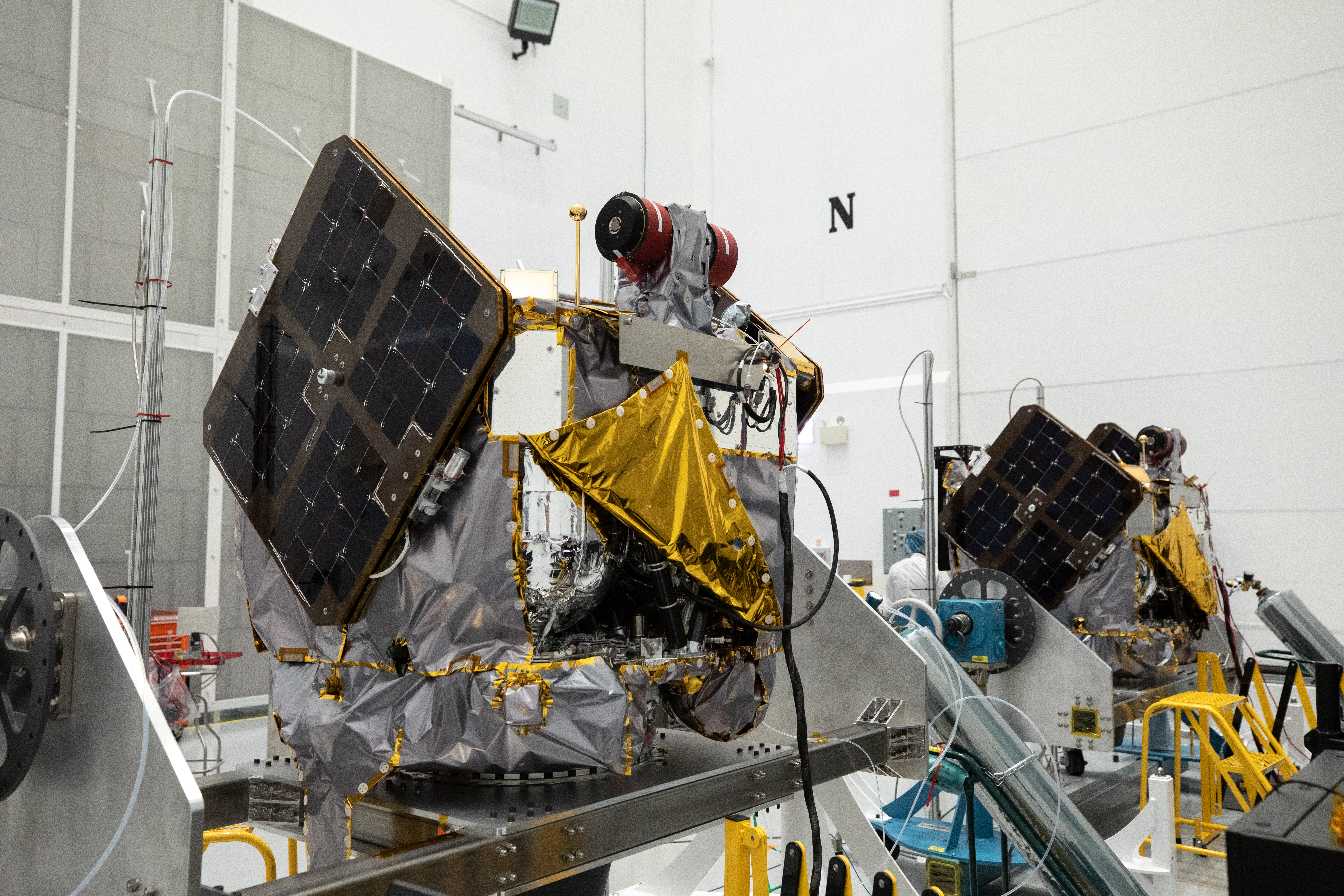
NASA’s ESCAPADE (Escape and Plasma Acceleration and Dynamics Explorers) identical dual spacecraft are inspected and processed on dollies in a high bay of the Astrotech Space Operations Facility near the agency’s Kennedy Space Center in Florida on Thursday, Aug. 22, 2024. As the first multi-spacecraft orbital science mission to Mars, ESCAPADE’s twin orbiters will take simultaneous observations from different locations around the planet and reveal the real-time response to space weather and how the Martian magnetosphere changes over time.
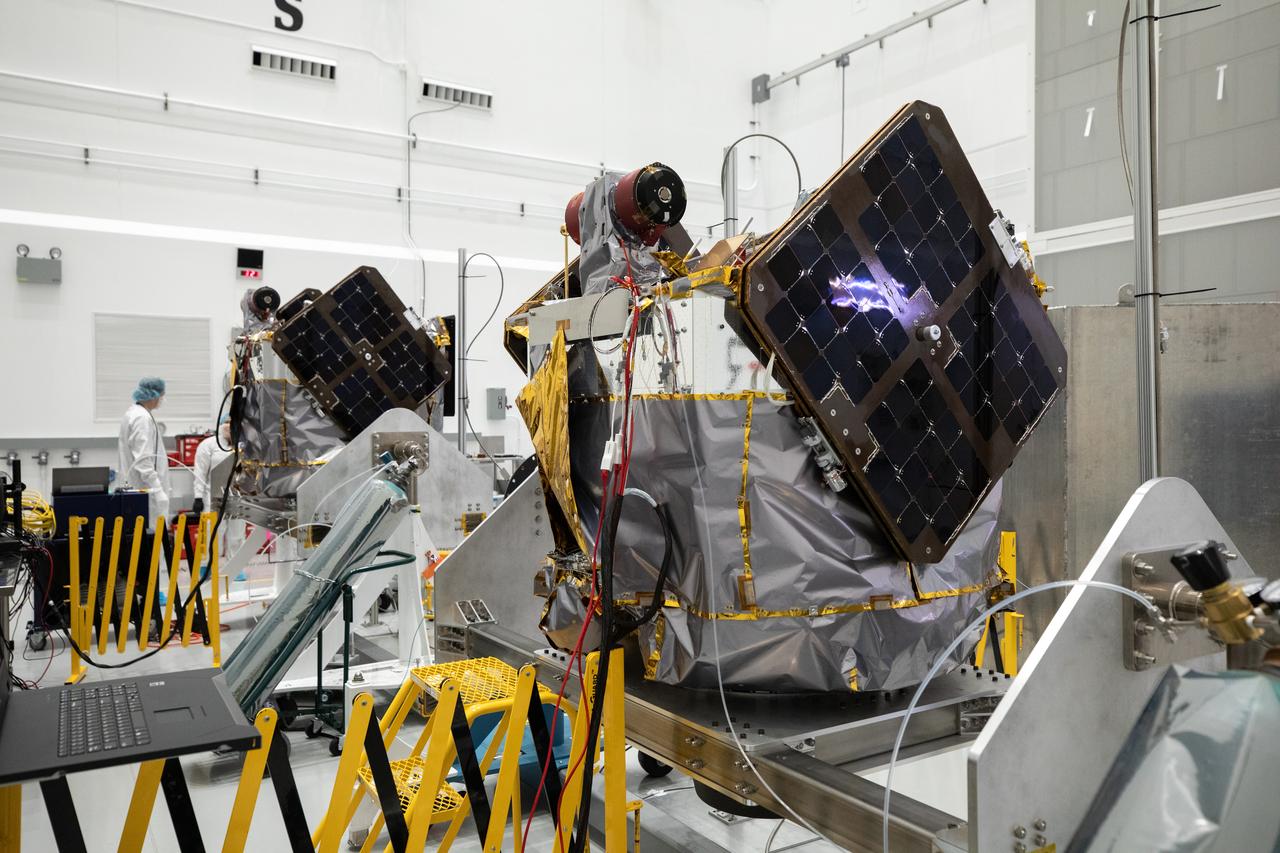
NASA’s ESCAPADE (Escape and Plasma Acceleration and Dynamics Explorers) identical dual spacecraft are inspected and processed on dollies in a high bay of the Astrotech Space Operations Facility near the agency’s Kennedy Space Center in Florida on Thursday, Aug. 22, 2024. As the first multi-spacecraft orbital science mission to Mars, ESCAPADE’s twin orbiters will take simultaneous observations from different locations around the planet and reveal the real-time response to space weather and how the Martian magnetosphere changes over time.
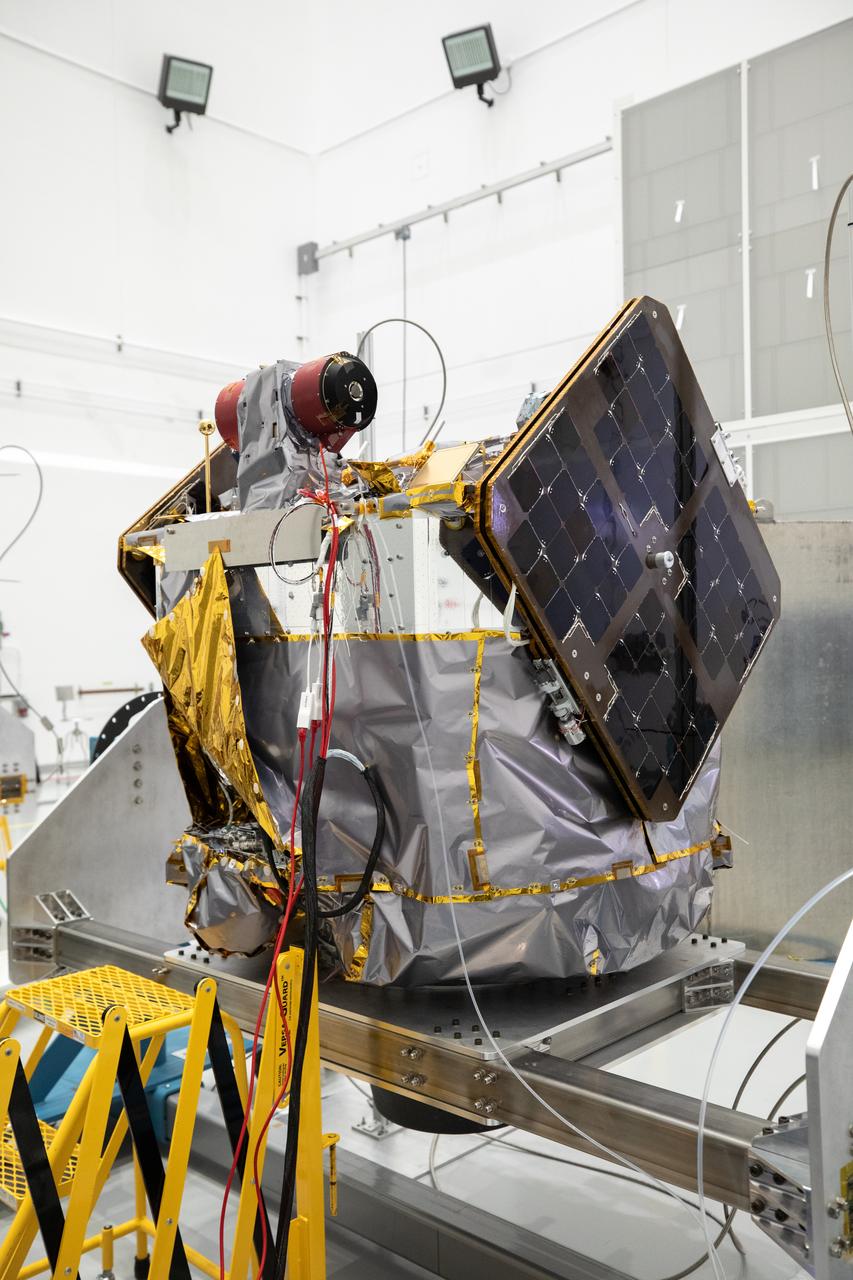
NASA’s ESCAPADE (Escape and Plasma Acceleration and Dynamics Explorers) identical dual spacecraft are inspected and processed on dollies in a high bay of the Astrotech Space Operations Facility near the agency’s Kennedy Space Center in Florida on Thursday, Aug. 22, 2024. As the first multi-spacecraft orbital science mission to Mars, ESCAPADE’s twin orbiters will take simultaneous observations from different locations around the planet and reveal the real-time response to space weather and how the Martian magnetosphere changes over time.

NASA’s ESCAPADE (Escape and Plasma Acceleration and Dynamics Explorers) identical dual spacecraft are inspected and processed on dollies in a high bay of the Astrotech Space Operations Facility near the agency’s Kennedy Space Center in Florida on Thursday, Aug. 22, 2024. As the first multi-spacecraft orbital science mission to Mars, ESCAPADE’s twin orbiters will take simultaneous observations from different locations around the planet and reveal the real-time response to space weather and how the Martian magnetosphere changes over time.
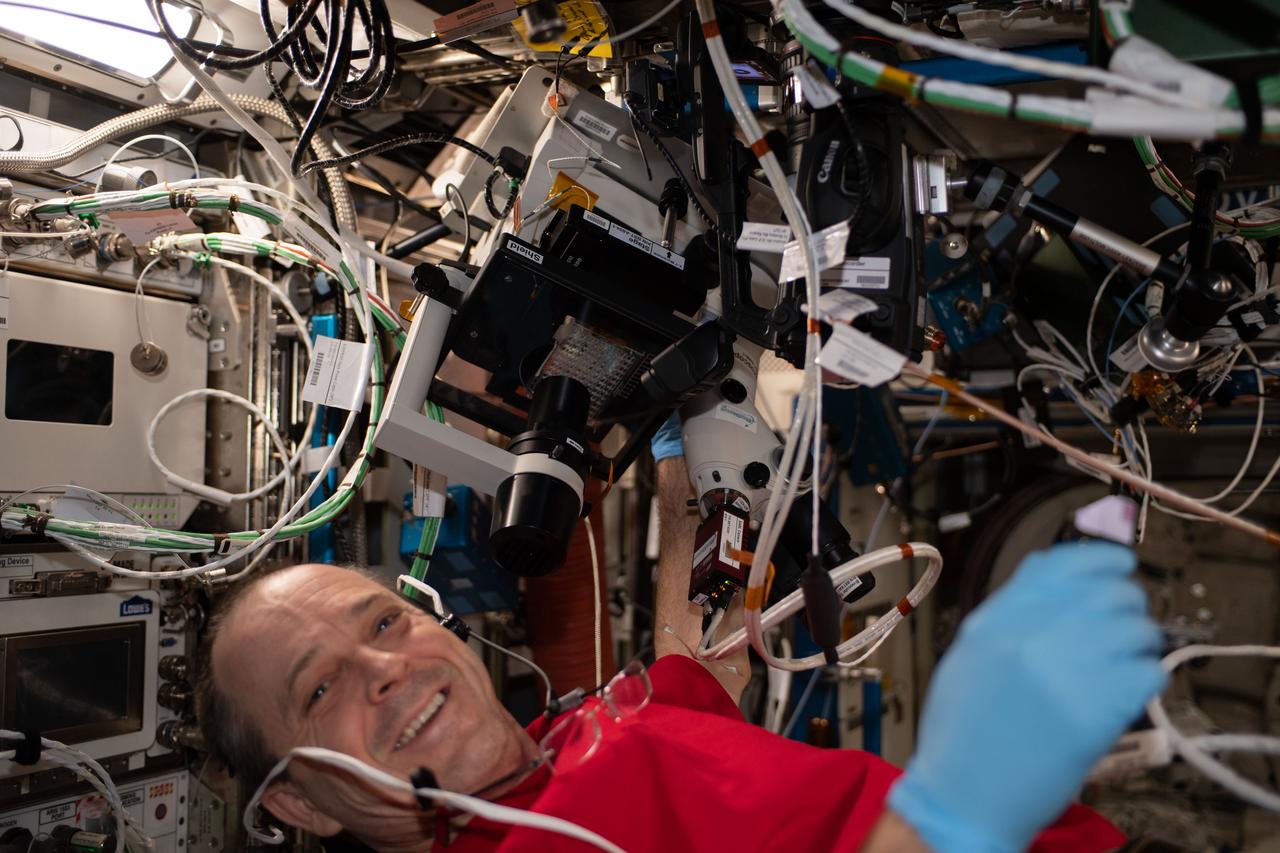
iss056e160897 (Aug. 31, 2018) --- NASA Astronaut Ricky Arnold performs microscope photo document operations for the Protein Crystal Growth-13 (PCG13) experiment. The PCG13 investigation seeks to enhance the way crystals are grown in a microgravity environment by allowing crew members to observe imperfections within a crystal and make real-time adjustments to follow-up experiments, rather than returning a sample to Earth and relaunching to try again. This dramatically reduces the time it takes to conduct an experiment aboard the space station and creates a timely, realistic and more cost-effective solution for prospective researchers.
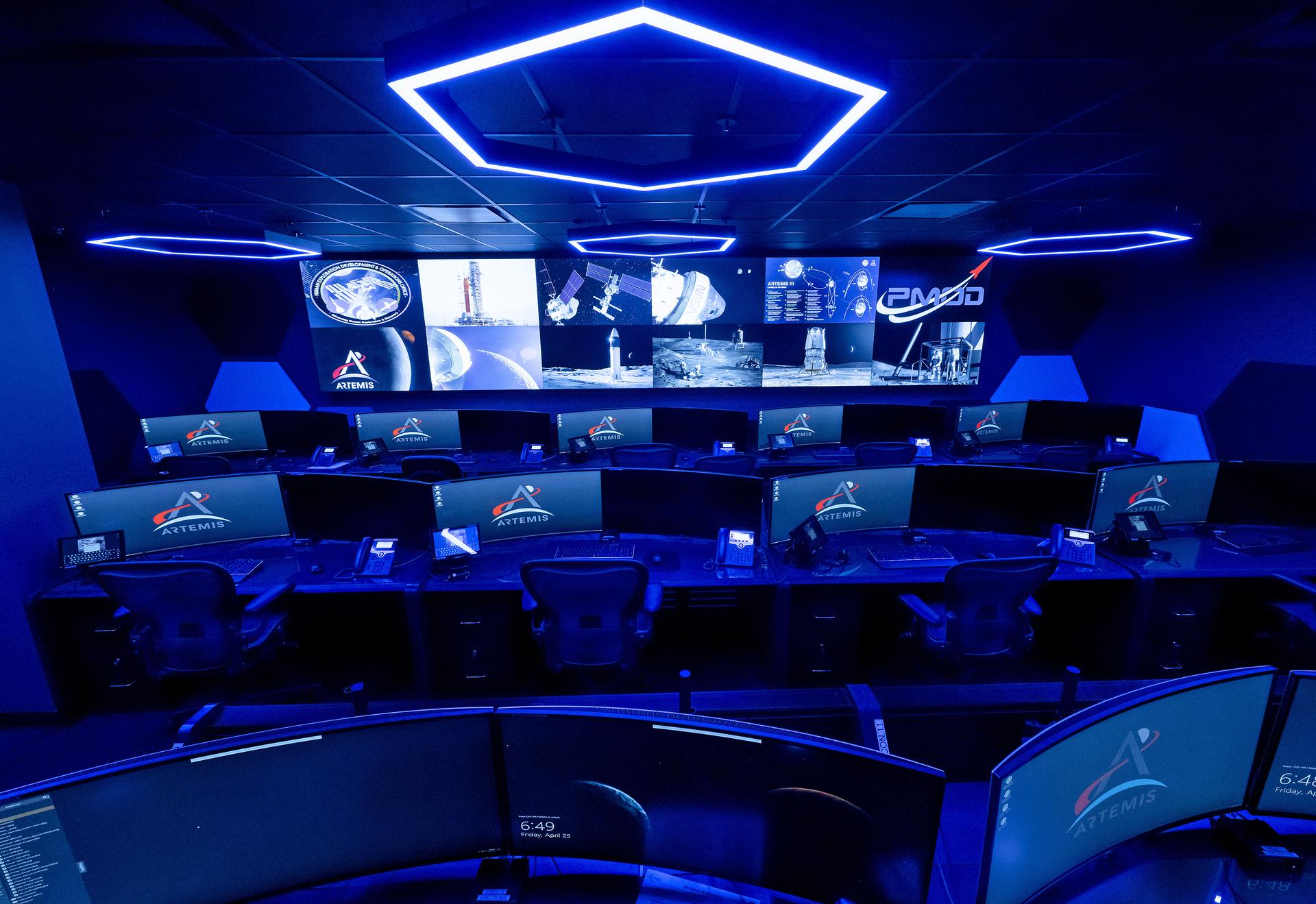
These photos offer a look inside the twin control rooms at NASA’s Marshall Space Flight Center in Huntsville, Alabama, where engineers will monitor Artemis science and future landing operations for Artemis. The LUCA (Lunar Utilization Control Area) and LESA (Lander Engineering Support Area) rooms are part of the Huntsville Operations Support Center at NASA Marshall. The LUCA is specially designed to support a wide variety of science operations on and around the Moon – and beyond. Engineers in the LUCA monitored operations for the Lunar Node-1 experiment, an autonomous navigation payload that was part of the first NASA Commercial Lunar Payload Services (CLPS) launch on Intuitive Machines’ Nova-C lunar lander in 2024. NASA Marshall flight controllers will use the LUCA again for Artemis II to monitor science operations. Beginning with Artemis III, members of the NASA Human Landing System Mission Insight Support Team – a group of engineers, safety leads, flight operations experts, and technical authorities – will work in the LESA. There, they will monitor lander systems in real-time and be involved in key decision-making processes throughout the mission. For more information, contact NASA Marshall’s Office of Communications at 256-544-0034.
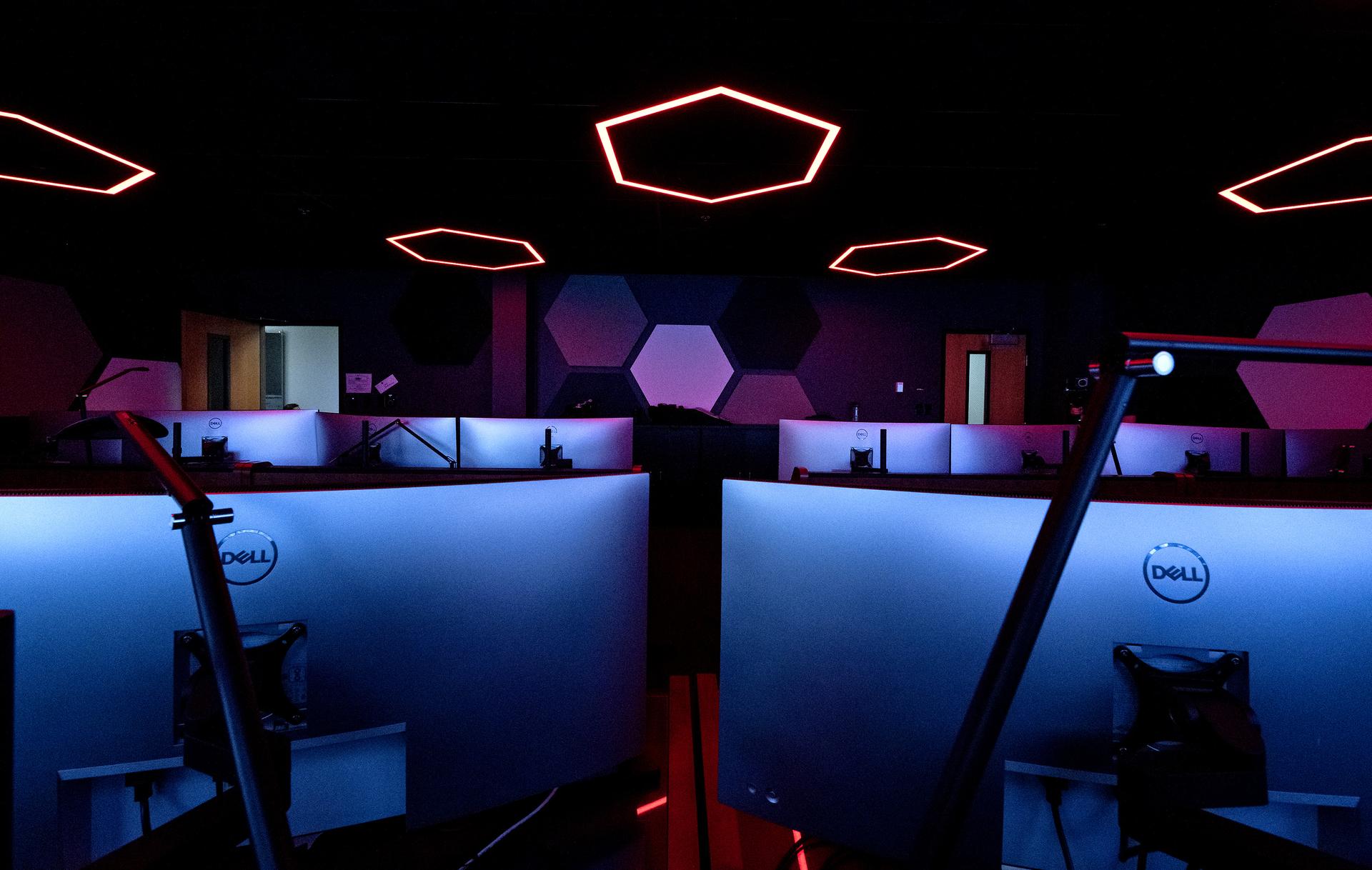
These photos offer a look inside the twin control rooms at NASA’s Marshall Space Flight Center in Huntsville, Alabama, where engineers will monitor Artemis science and future landing operations for Artemis. The LUCA (Lunar Utilization Control Area) and LESA (Lander Engineering Support Area) rooms are part of the Huntsville Operations Support Center at NASA Marshall. The LUCA is specially designed to support a wide variety of science operations on and around the Moon – and beyond. Engineers in the LUCA monitored operations for the Lunar Node-1 experiment, an autonomous navigation payload that was part of the first NASA Commercial Lunar Payload Services (CLPS) launch on Intuitive Machines’ Nova-C lunar lander in 2024. NASA Marshall flight controllers will use the LUCA again for Artemis II to monitor science operations. Beginning with Artemis III, members of the NASA Human Landing System Mission Insight Support Team – a group of engineers, safety leads, flight operations experts, and technical authorities – will work in the LESA. There, they will monitor lander systems in real-time and be involved in key decision-making processes throughout the mission. For more information, contact NASA Marshall’s Office of Communications at 256-544-0034.
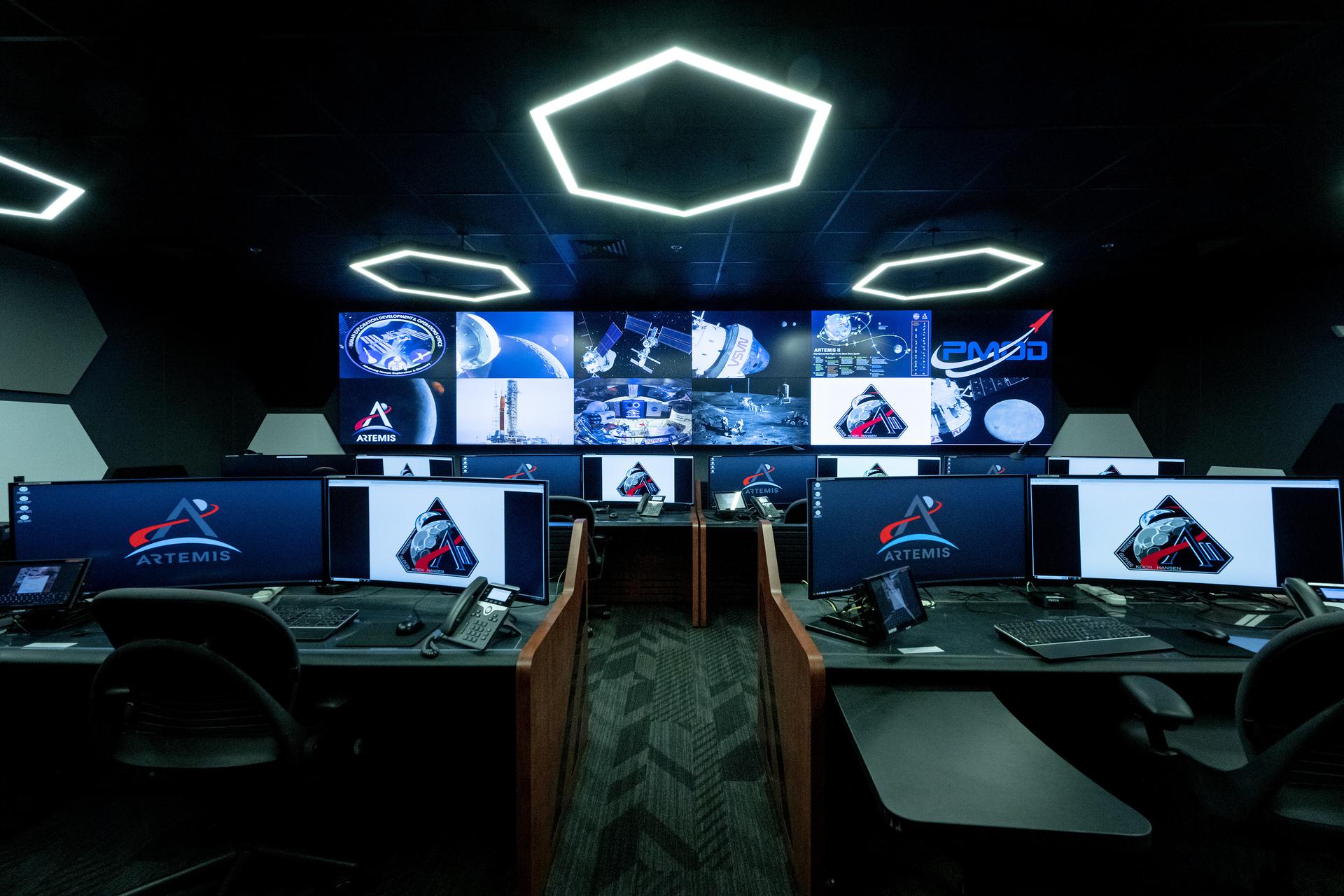
These photos offer a look inside the twin control rooms at NASA’s Marshall Space Flight Center in Huntsville, Alabama, where engineers will monitor Artemis science and future landing operations for Artemis. The LUCA (Lunar Utilization Control Area) and LESA (Lander Engineering Support Area) rooms are part of the Huntsville Operations Support Center at NASA Marshall. The LUCA is specially designed to support a wide variety of science operations on and around the Moon – and beyond. Engineers in the LUCA monitored operations for the Lunar Node-1 experiment, an autonomous navigation payload that was part of the first NASA Commercial Lunar Payload Services (CLPS) launch on Intuitive Machines’ Nova-C lunar lander in 2024. NASA Marshall flight controllers will use the LUCA again for Artemis II to monitor science operations. Beginning with Artemis III, members of the NASA Human Landing System Mission Insight Support Team – a group of engineers, safety leads, flight operations experts, and technical authorities – will work in the LESA. There, they will monitor lander systems in real-time and be involved in key decision-making processes throughout the mission. For more information, contact NASA Marshall’s Office of Communications at 256-544-0034.
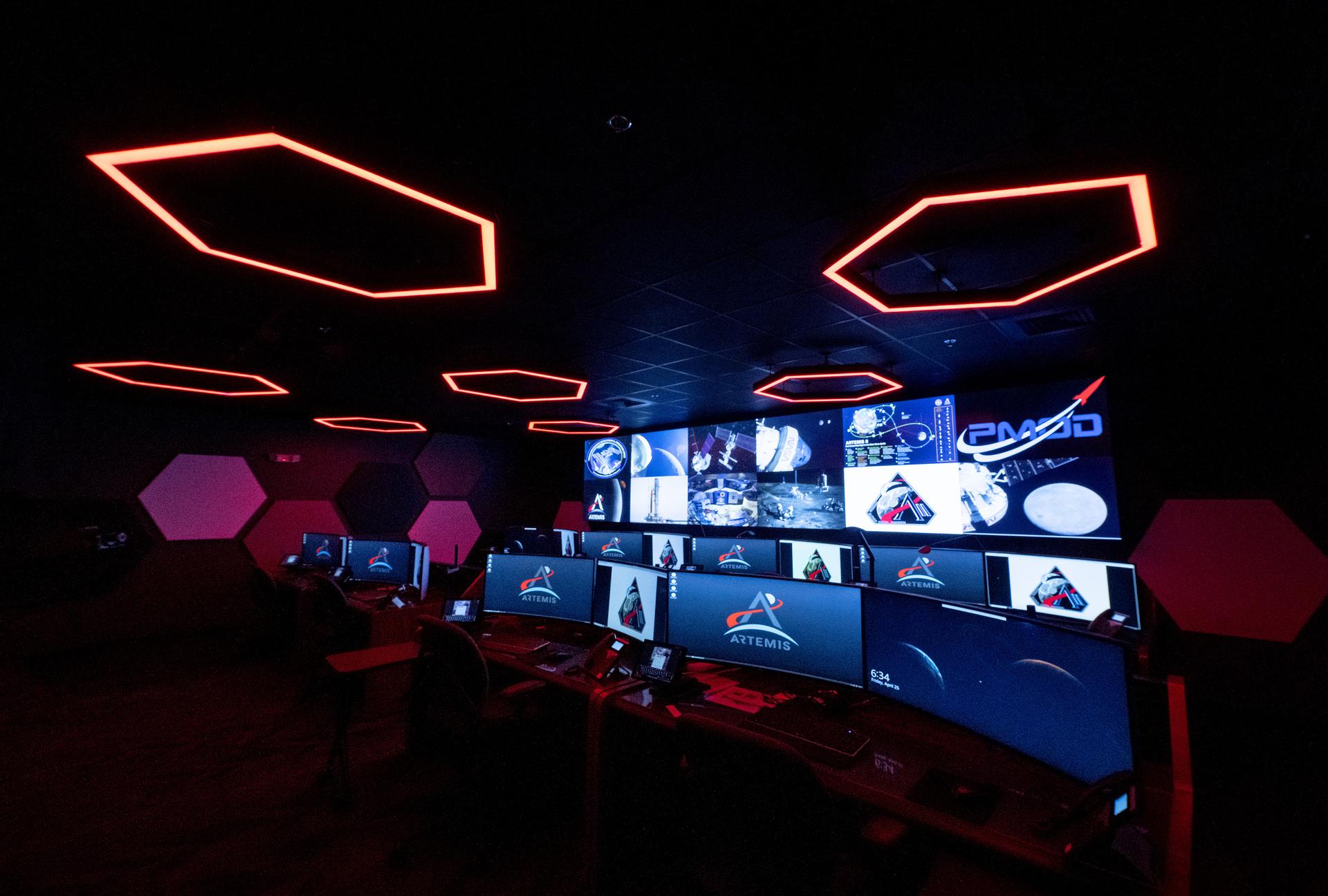
These photos offer a look inside the twin control rooms at NASA’s Marshall Space Flight Center in Huntsville, Alabama, where engineers will monitor Artemis science and future landing operations for Artemis. The LUCA (Lunar Utilization Control Area) and LESA (Lander Engineering Support Area) rooms are part of the Huntsville Operations Support Center at NASA Marshall. The LUCA is specially designed to support a wide variety of science operations on and around the Moon – and beyond. Engineers in the LUCA monitored operations for the Lunar Node-1 experiment, an autonomous navigation payload that was part of the first NASA Commercial Lunar Payload Services (CLPS) launch on Intuitive Machines’ Nova-C lunar lander in 2024. NASA Marshall flight controllers will use the LUCA again for Artemis II to monitor science operations. Beginning with Artemis III, members of the NASA Human Landing System Mission Insight Support Team – a group of engineers, safety leads, flight operations experts, and technical authorities – will work in the LESA. There, they will monitor lander systems in real-time and be involved in key decision-making processes throughout the mission. For more information, contact NASA Marshall’s Office of Communications at 256-544-0034.
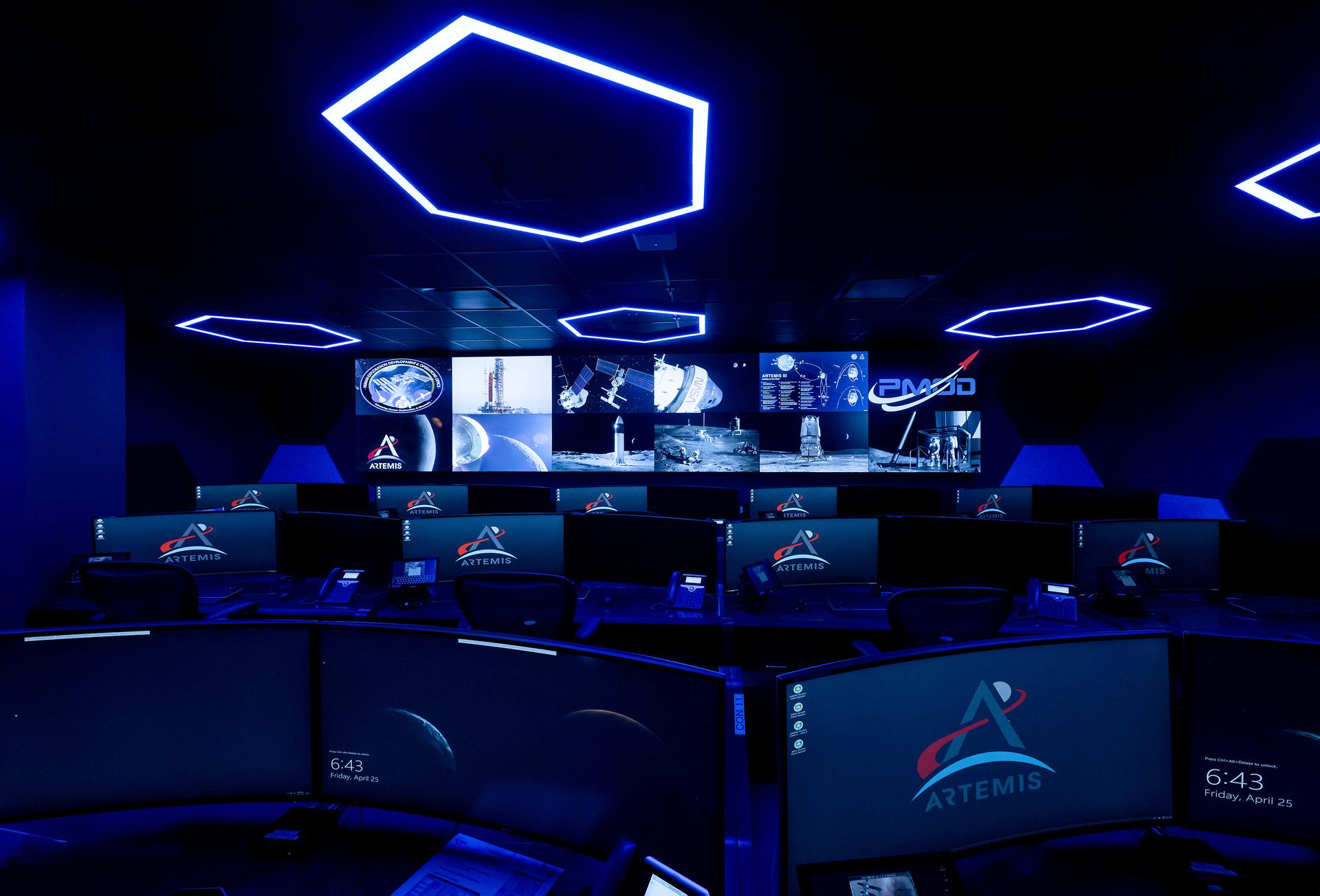
These photos offer a look inside the twin control rooms at NASA’s Marshall Space Flight Center in Huntsville, Alabama, where engineers will monitor Artemis science and future landing operations for Artemis. The LUCA (Lunar Utilization Control Area) and LESA (Lander Engineering Support Area) rooms are part of the Huntsville Operations Support Center at NASA Marshall. The LUCA is specially designed to support a wide variety of science operations on and around the Moon – and beyond. Engineers in the LUCA monitored operations for the Lunar Node-1 experiment, an autonomous navigation payload that was part of the first NASA Commercial Lunar Payload Services (CLPS) launch on Intuitive Machines’ Nova-C lunar lander in 2024. NASA Marshall flight controllers will use the LUCA again for Artemis II to monitor science operations. Beginning with Artemis III, members of the NASA Human Landing System Mission Insight Support Team – a group of engineers, safety leads, flight operations experts, and technical authorities – will work in the LESA. There, they will monitor lander systems in real-time and be involved in key decision-making processes throughout the mission. For more information, contact NASA Marshall’s Office of Communications at 256-544-0034.
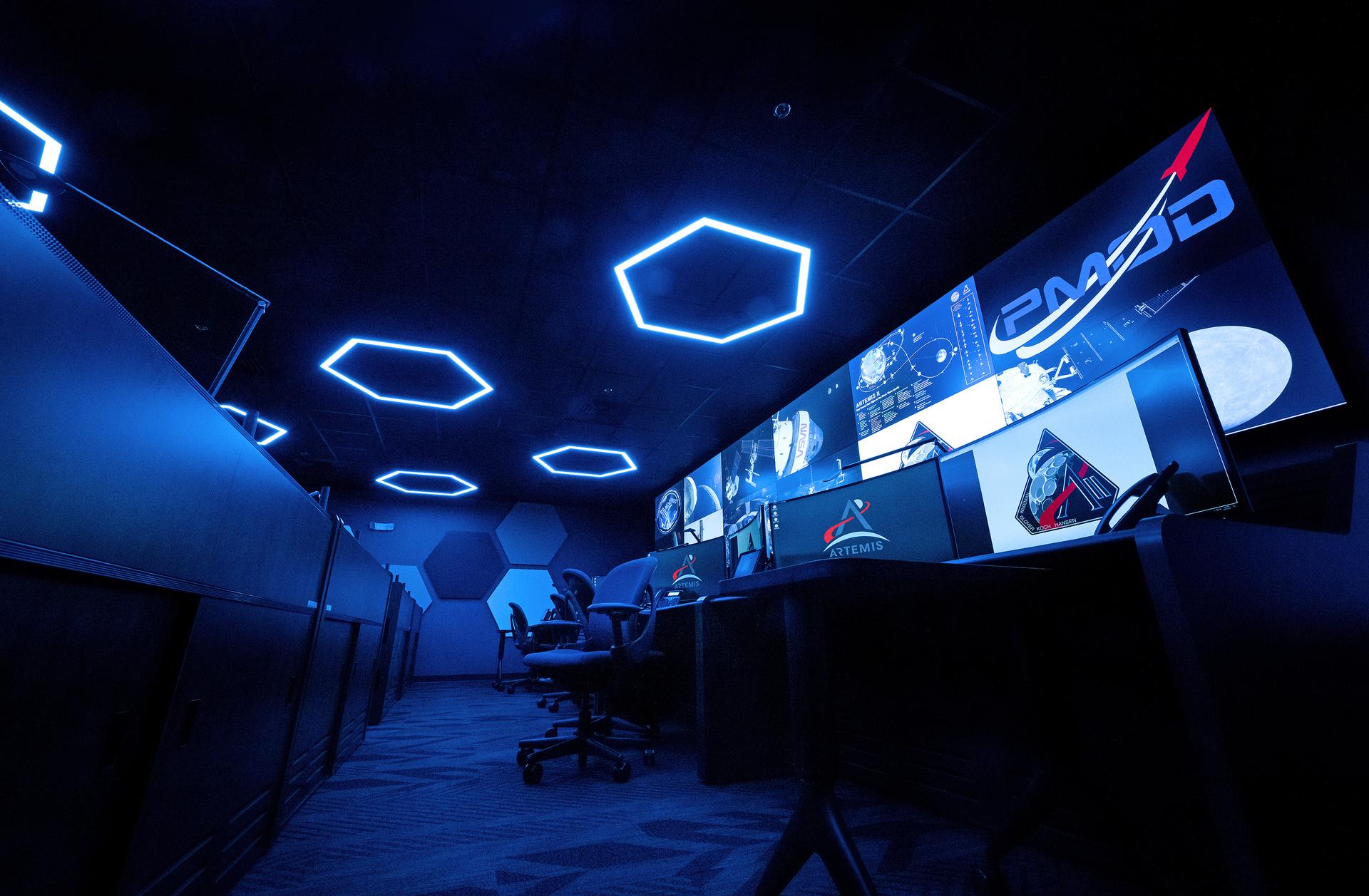
These photos offer a look inside the twin control rooms at NASA’s Marshall Space Flight Center in Huntsville, Alabama, where engineers will monitor Artemis science and future landing operations for Artemis. The LUCA (Lunar Utilization Control Area) and LESA (Lander Engineering Support Area) rooms are part of the Huntsville Operations Support Center at NASA Marshall. The LUCA is specially designed to support a wide variety of science operations on and around the Moon – and beyond. Engineers in the LUCA monitored operations for the Lunar Node-1 experiment, an autonomous navigation payload that was part of the first NASA Commercial Lunar Payload Services (CLPS) launch on Intuitive Machines’ Nova-C lunar lander in 2024. NASA Marshall flight controllers will use the LUCA again for Artemis II to monitor science operations. Beginning with Artemis III, members of the NASA Human Landing System Mission Insight Support Team – a group of engineers, safety leads, flight operations experts, and technical authorities – will work in the LESA. There, they will monitor lander systems in real-time and be involved in key decision-making processes throughout the mission. For more information, contact NASA Marshall’s Office of Communications at 256-544-0034.
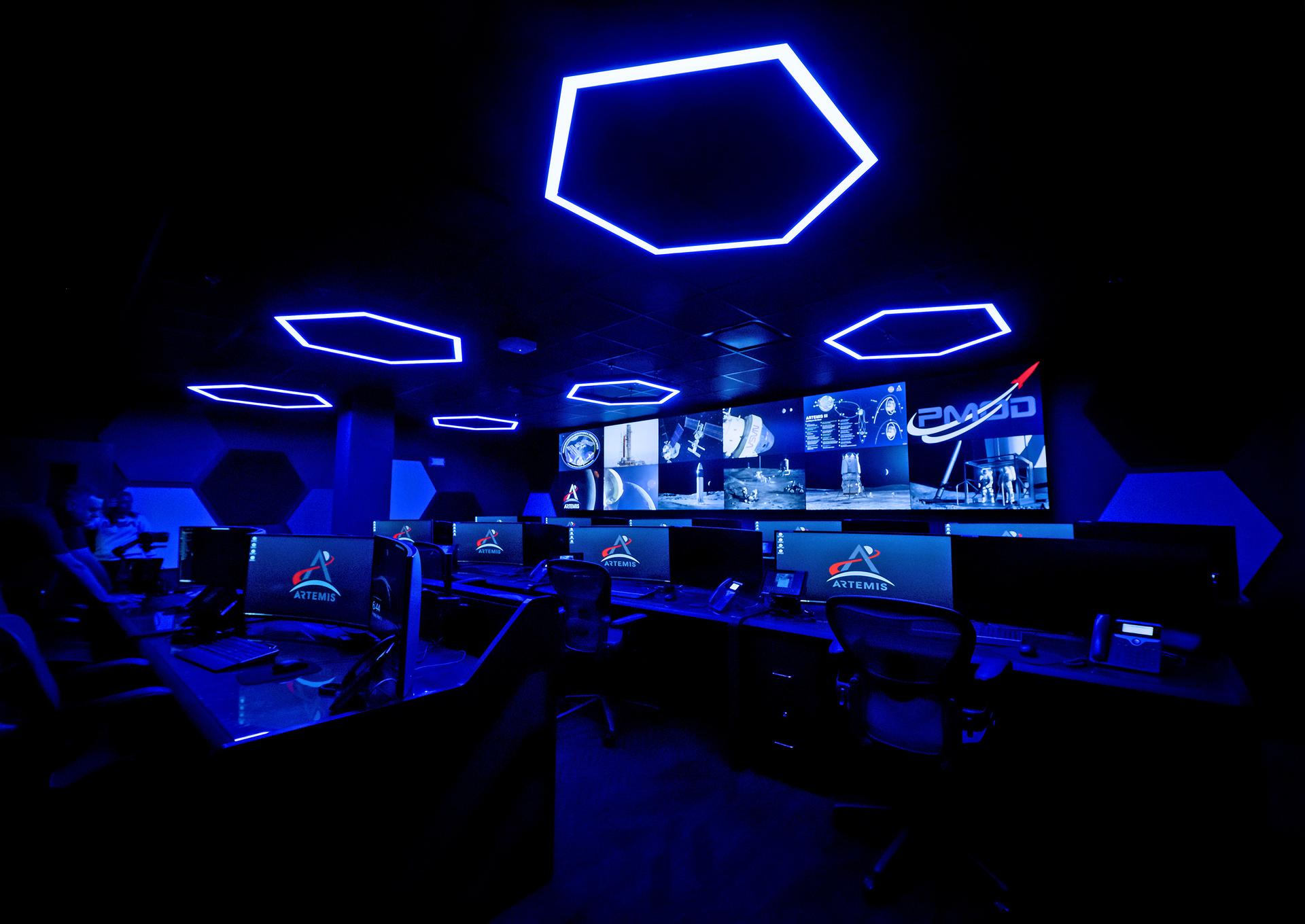
These photos offer a look inside the twin control rooms at NASA’s Marshall Space Flight Center in Huntsville, Alabama, where engineers will monitor Artemis science and future landing operations for Artemis. The LUCA (Lunar Utilization Control Area) and LESA (Lander Engineering Support Area) rooms are part of the Huntsville Operations Support Center at NASA Marshall. The LUCA is specially designed to support a wide variety of science operations on and around the Moon – and beyond. Engineers in the LUCA monitored operations for the Lunar Node-1 experiment, an autonomous navigation payload that was part of the first NASA Commercial Lunar Payload Services (CLPS) launch on Intuitive Machines’ Nova-C lunar lander in 2024. NASA Marshall flight controllers will use the LUCA again for Artemis II to monitor science operations. Beginning with Artemis III, members of the NASA Human Landing System Mission Insight Support Team – a group of engineers, safety leads, flight operations experts, and technical authorities – will work in the LESA. There, they will monitor lander systems in real-time and be involved in key decision-making processes throughout the mission. For more information, contact NASA Marshall’s Office of Communications at 256-544-0034.
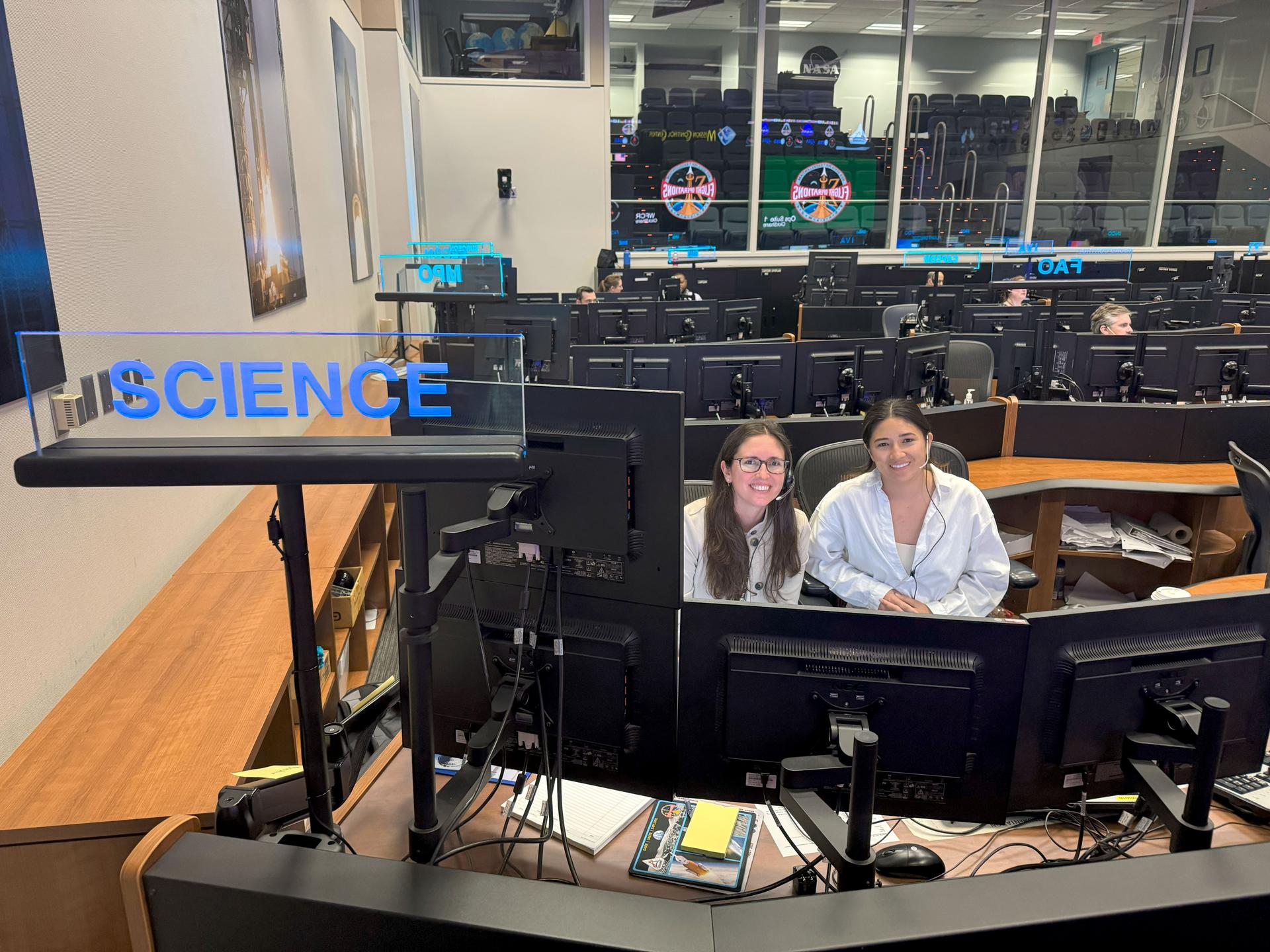
jsc2025e067512 --- Artemis II science officers Kelsey Young, left, and Angela Garcia sit at the SCIENCE console during a training simulation in the White Flight Control Room of the Mission Control Center at NASA's Johnson Space Center in Houston. Artemis II will test mission science operations and integration into flight control. Lessons learned during Artemis II science operations will pave the way for lunar science operations for future Artemis missions. A team of experts will staff the Science Evaluation Room (SER) at Johnson, providing lunar scientific expertise, data analysis, and strategic guidance in real-time to the science officer and the rest of Mission Control.

Artemis II crew lunar observations team member, Alex Stoken, monitors the mission from the Science Evaluation Room (SER). Built specifically for Artemis missions with these science priorities in mind, the SER is equipped to support rapid data interpretation, collaborative analysis, real-time decision making, and seamless coordination between the science and operations teams. Credits: NASA/Luna Posadas Nava
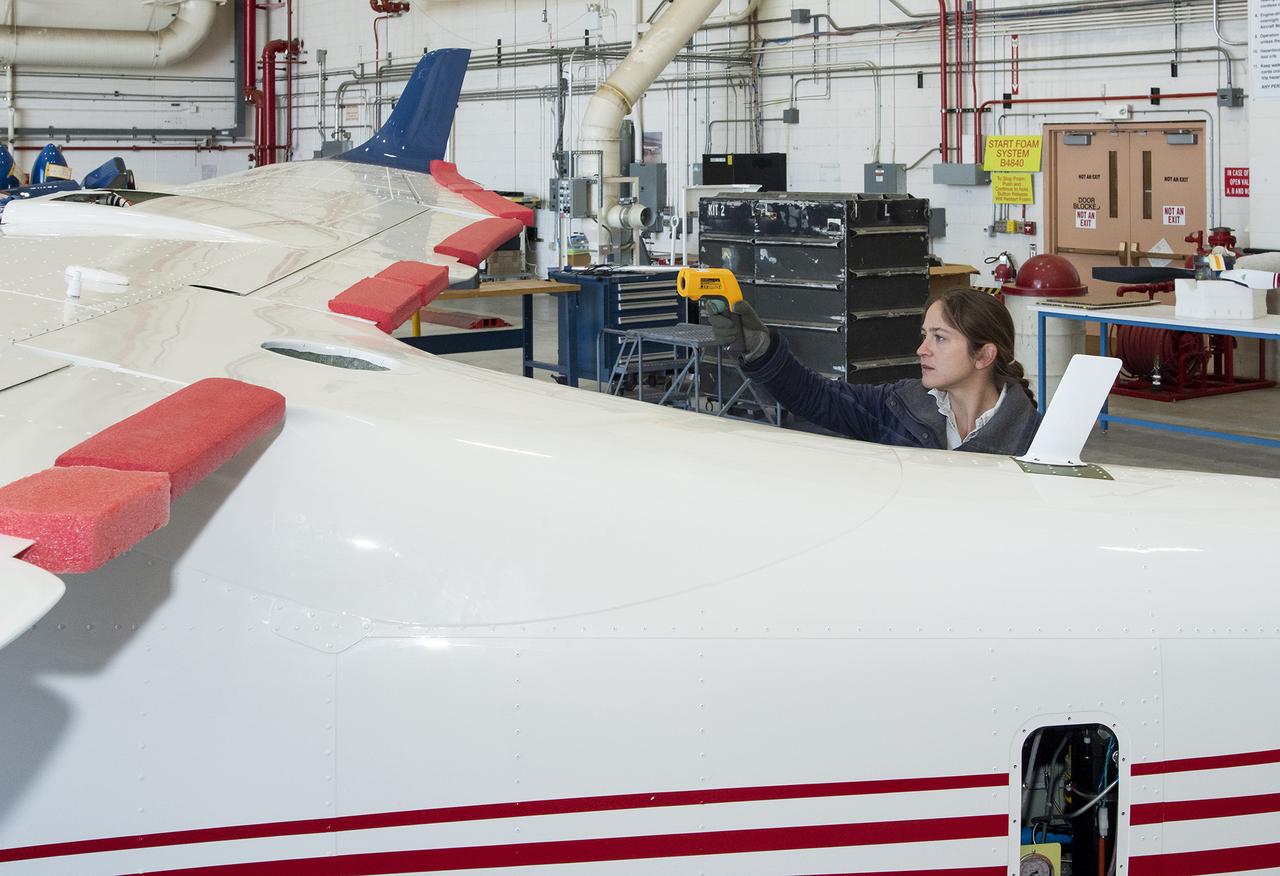
NASA engineers put the X-57 Maxwell, NASA’s first all-electric X-plane, through its initial telemetry tests at NASA’s Armstrong Flight Research Center in California, testing the aircraft’s ability to transmit data to teams on the ground. The data is packaged and transmitted down to ground assets, where it’s decoded into a format that can be presented to a flight control team to look at screens in real time for flight operations. X-57’s goal is to help set certification standards for emerging electric aircraft markets.
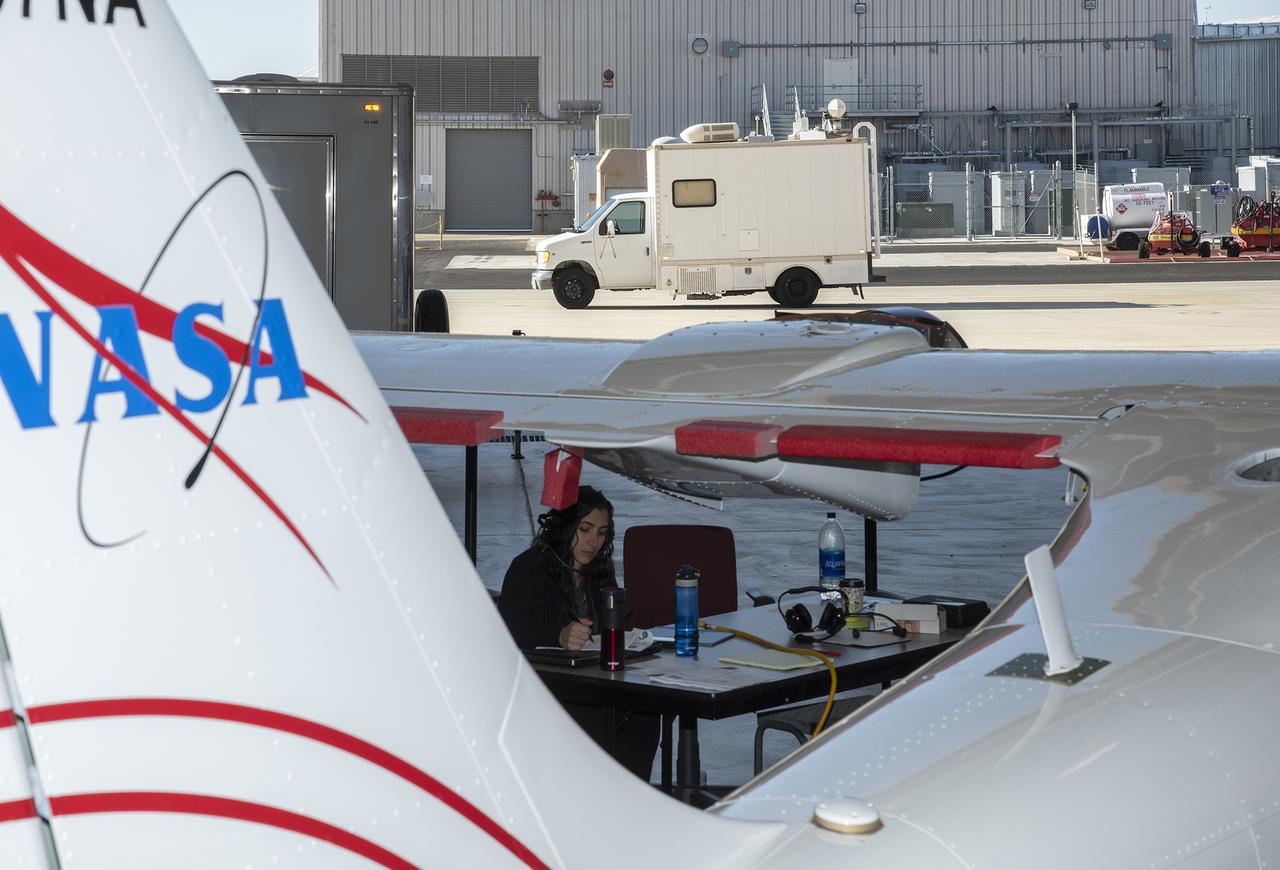
NASA engineers put the X-57 Maxwell, NASA's first all-electric X-plane, through its initial telemetry tests at NASA's Armstrong Flight Research Center in California, testing the aircraft's ability to transmit data to teams on the ground. The data is packaged and transmitted down to ground assets, where it's decoded into a format that can be presented to a flight control team to look at screens in real time for flight operations. X-57's goal is to help set certification standards for emerging electric aircraft markets.
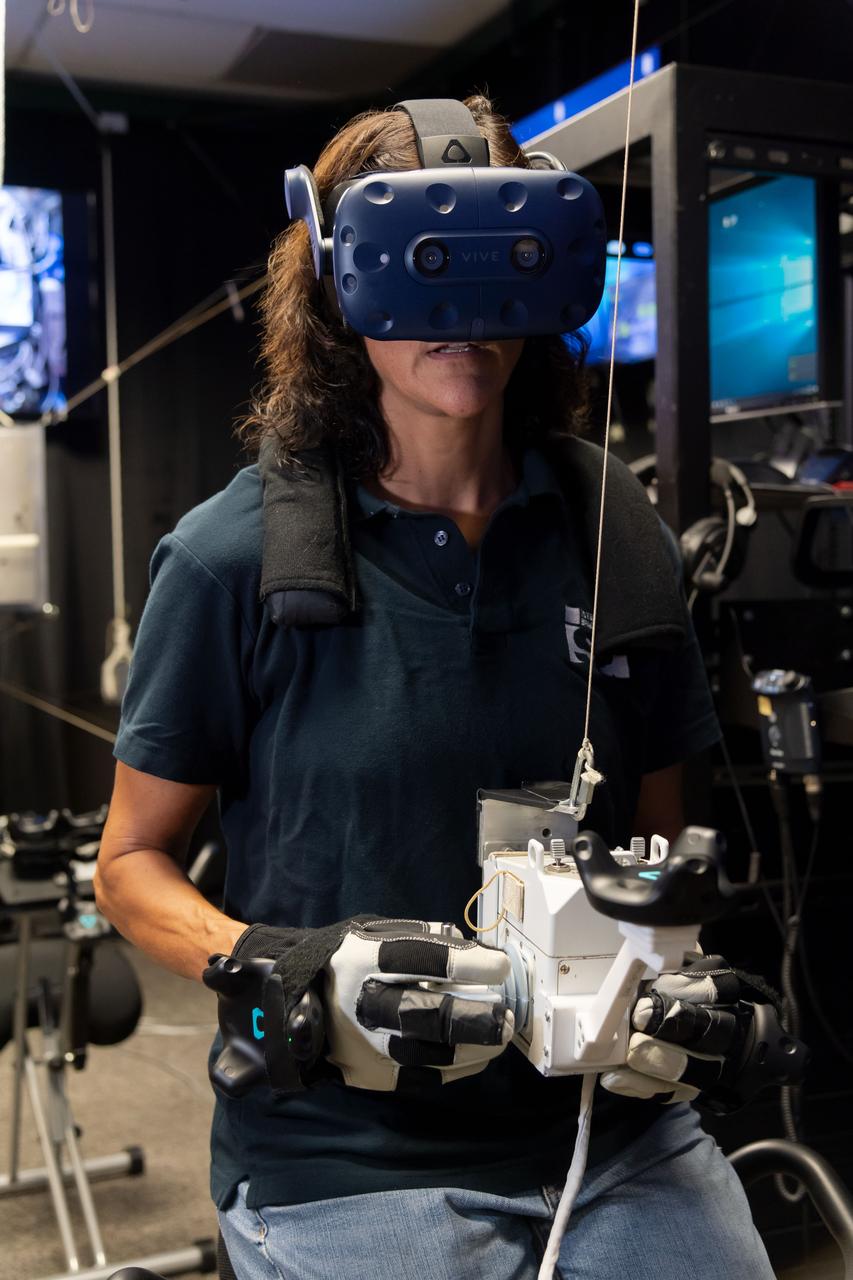
Commercial Crew Astronaut Suni Williams practices spacewalking in the Virtual Reality Lab at Johnson Space Center in Houston. The training provides real-time graphics and motion simulators to replicate the space environment. NASA’s Commercial Crew Program is working with Boeing and SpaceX to return human spaceflight launches to the United States in 2019. Williams is assigned to Boeing’s first operational mission after the company’s test flight with crew.
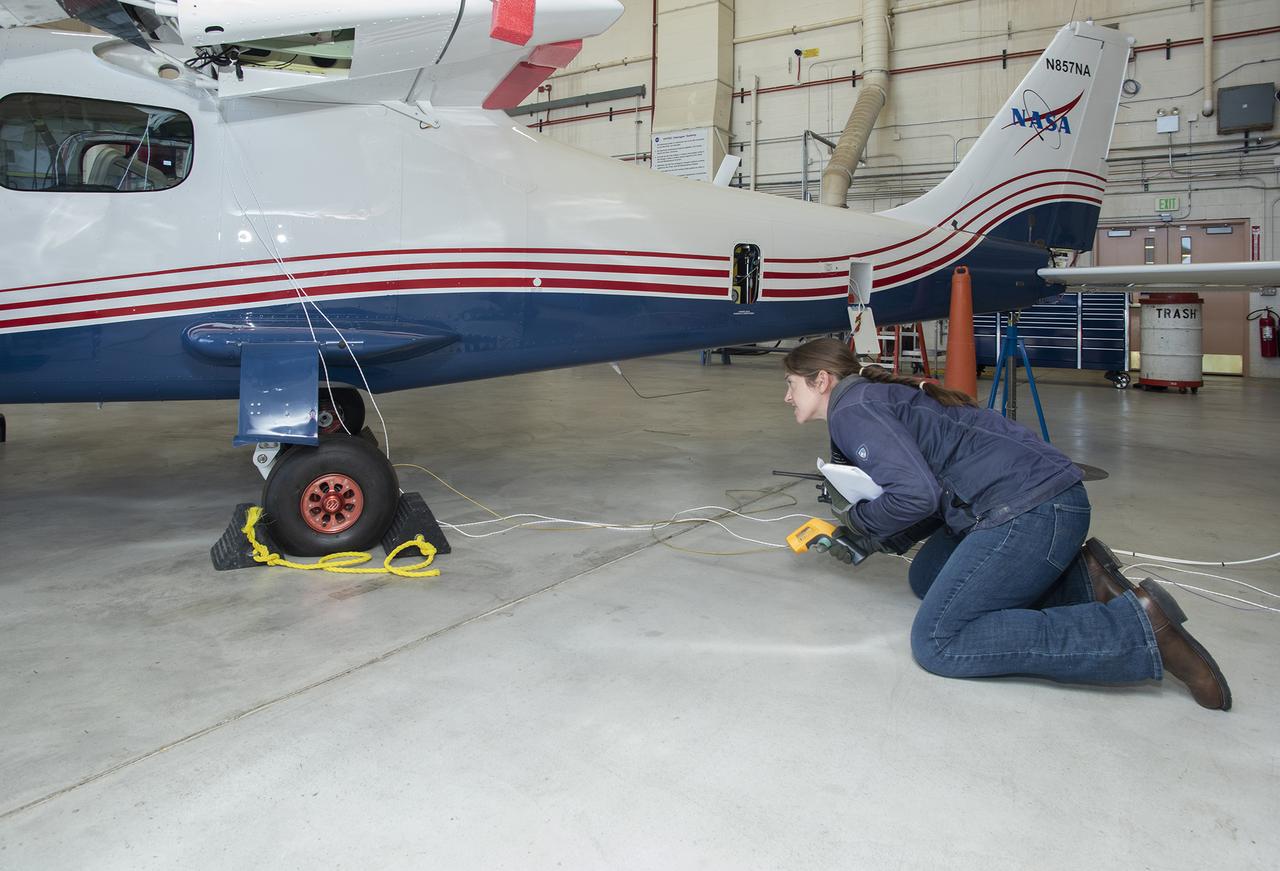
NASA engineers put the X-57 Maxwell, NASA’s first all-electric X-plane, through its initial telemetry tests at NASA’s Armstrong Flight Research Center in California, testing the aircraft’s ability to transmit data to teams on the ground. The data is packaged and transmitted down to ground assets, where it’s decoded into a format that can be presented to a flight control team to look at screens in real time for flight operations. X-57’s goal is to help set certification standards for emerging electric aircraft markets.
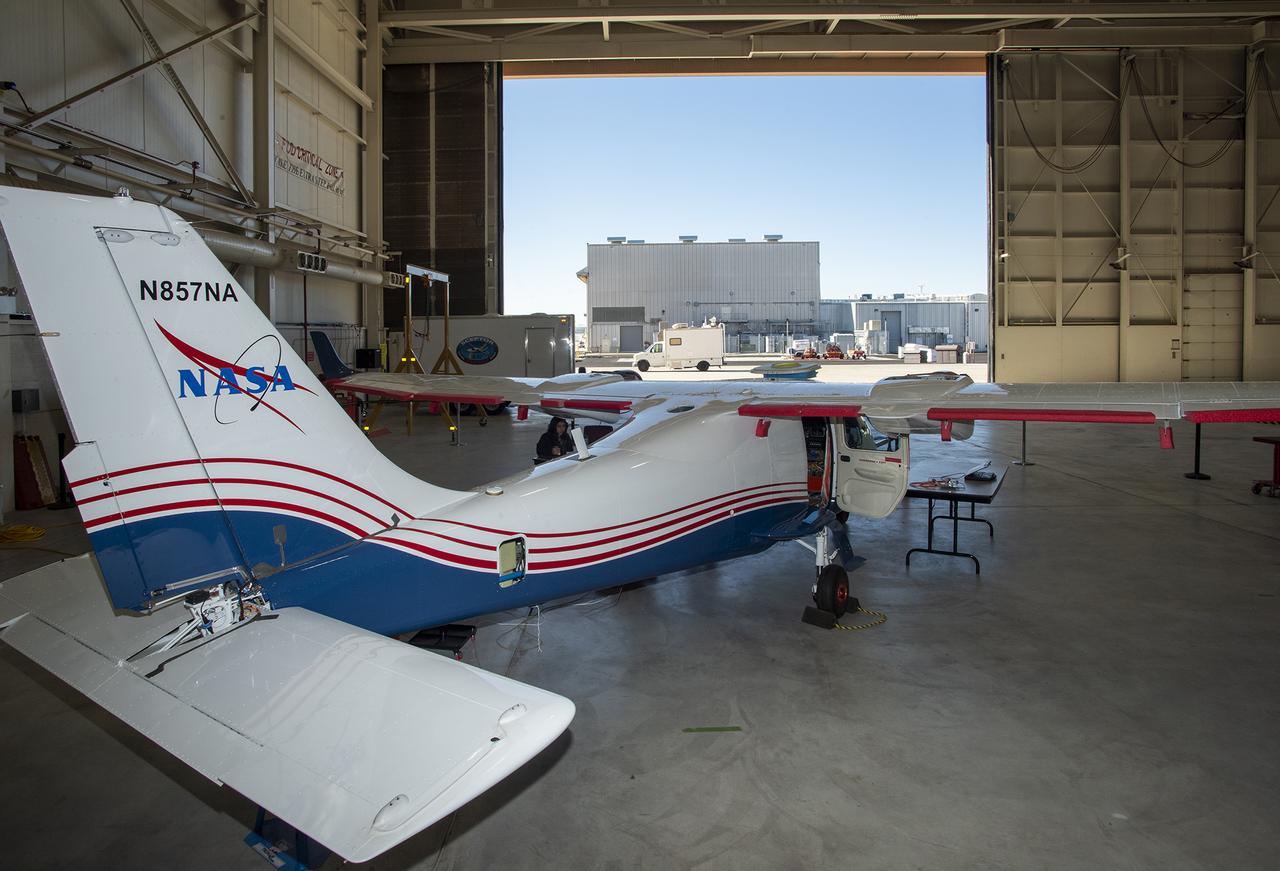
NASA engineers put the X-57 Maxwell, NASA's first all-electric X-plane, through its initial telemetry tests at NASA's Armstrong Flight Research Center in California, testing the aircraft's ability to transmit data to teams on the ground. The data is packaged and transmitted down to ground assets, where it's decoded into a format that can be presented to a flight control team to look at screens in real time for flight operations. X-57's goal is to help set certification standards for emerging electric aircraft markets.
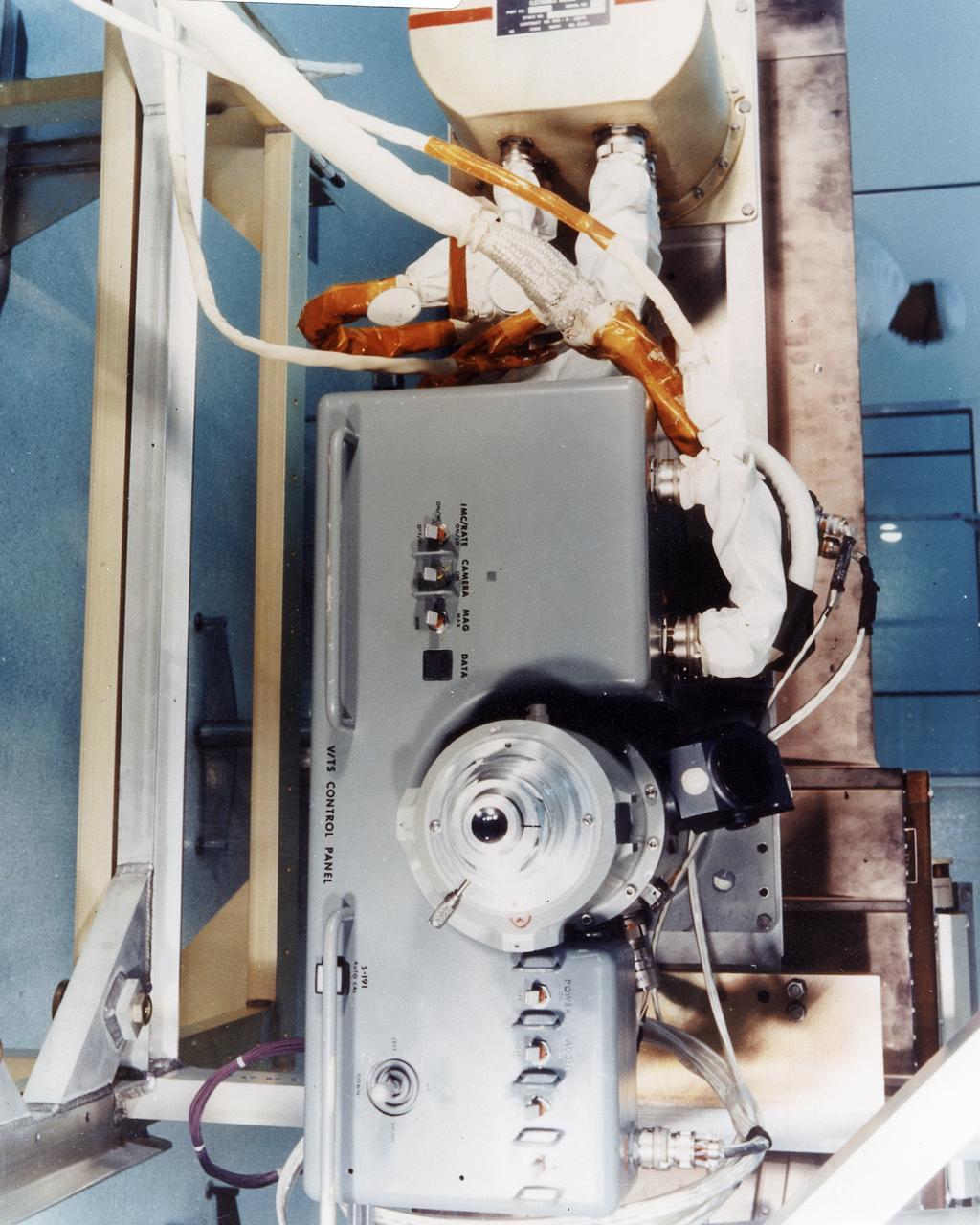
This 1970 photograph shows Skylab's Infrared Spectrometer Viewfinder Tracking System, a major component of an Earth Resources Experiment Package (EREP). It was designed to evaluate Earth resources sensors for specific regions of the the visible and infrared spectra and assess the value of real time identification of ground sites. The overall purpose of the EREP was to test the use of sensors that operated in the visible, infrared, and microwave portions of the electromagnetic spectrum to monitor and study Earth resources. The Marshall Space Flight Center had program management responsibility for the development of Skylab hardware and experiments.
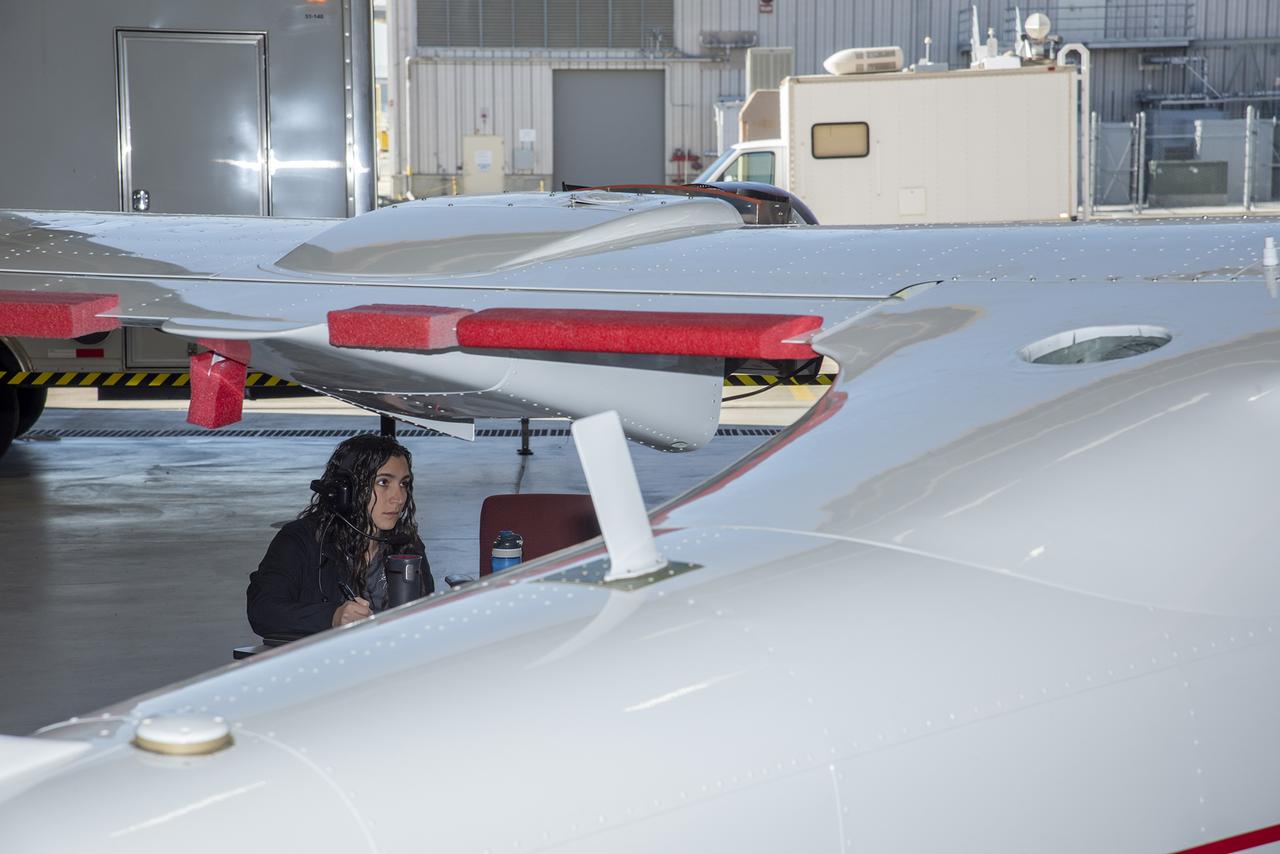
NASA engineers put the X-57 Maxwell, NASA’s first all-electric X-plane, through its initial telemetry tests at NASA’s Armstrong Flight Research Center in California, testing the aircraft’s ability to transmit data to teams on the ground. The data is packaged and transmitted down to ground assets, where it’s decoded into a format that can be presented to a flight control team to look at screens in real time for flight operations. X-57’s goal is to help set certification standards for emerging electric aircraft markets.
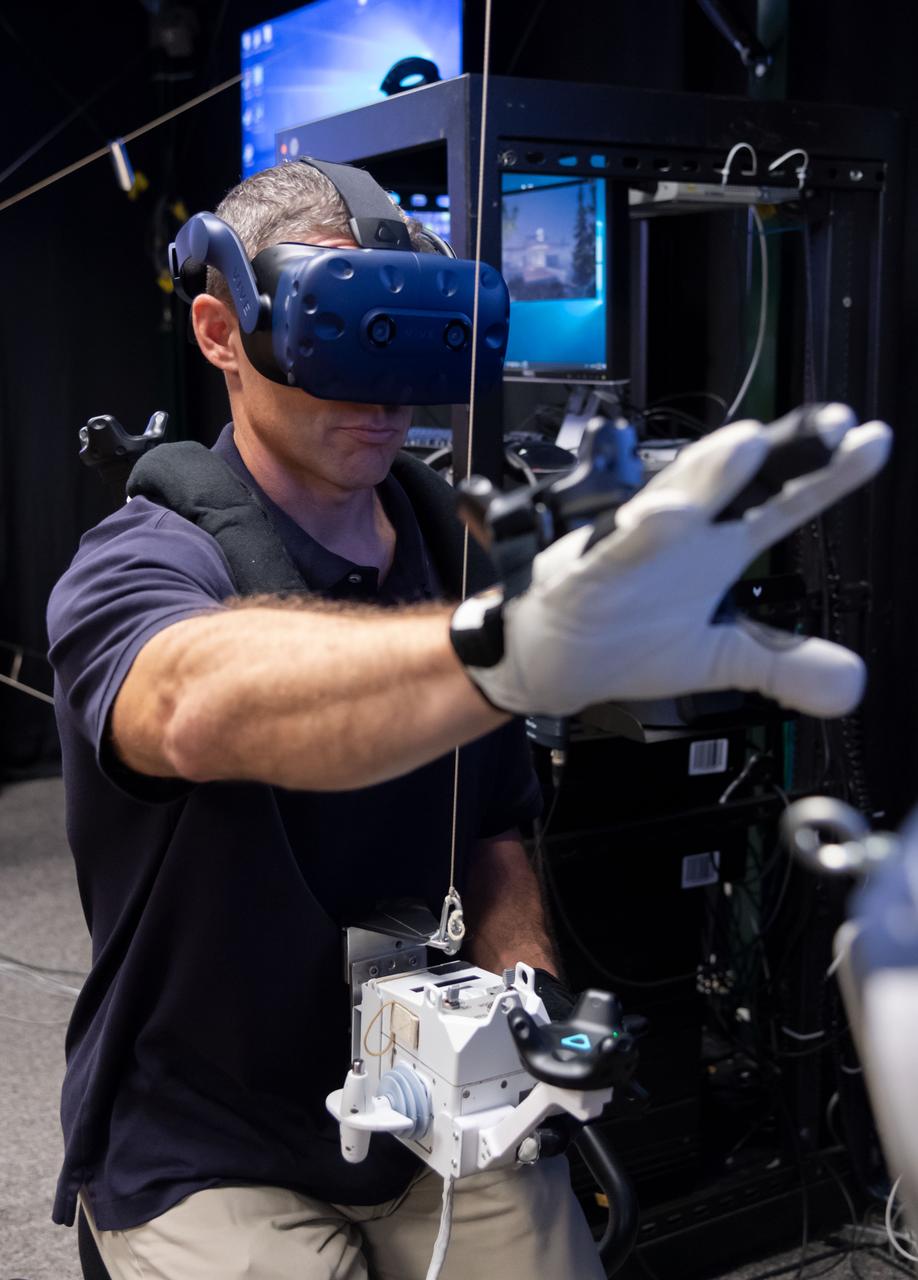
Commercial Crew Astronaut Mike Hopkins practices spacewalking in the Virtual Reality Lab at Johnson Space Center in Houston. The training provides real-time graphics and motion simulators to replicate the space environment. NASA’s Commercial Crew Program is working with Boeing and SpaceX to return human spaceflight launches to the United States in 2019. Hopkins is assigned to SpaceX’s first operational mission after the company’s test flight with crew.
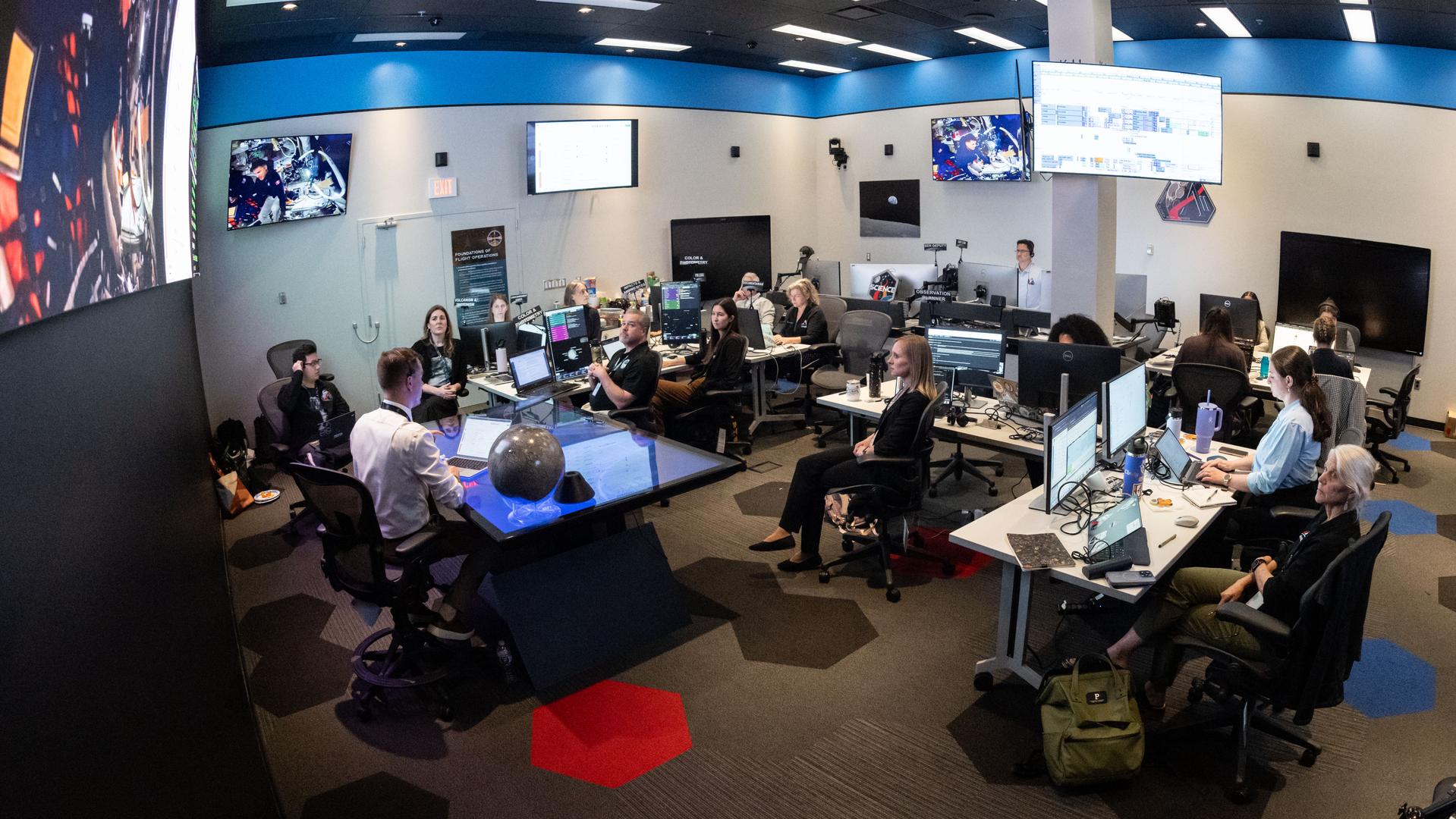
A view inside the Science Evaluation Room (SER) in Mission Control at NASA’s Johnson Space Center in Houston. The SER supports lunar science and planetary observations for the Artemis science officer in the mission’s main flight control room. Built specifically for Artemis missions with these science priorities in mind, the SER is equipped to support rapid data interpretation, collaborative analysis, real-time decision making, and seamless coordination between the science and operations teams. Credits: NASA/Bill Stafford
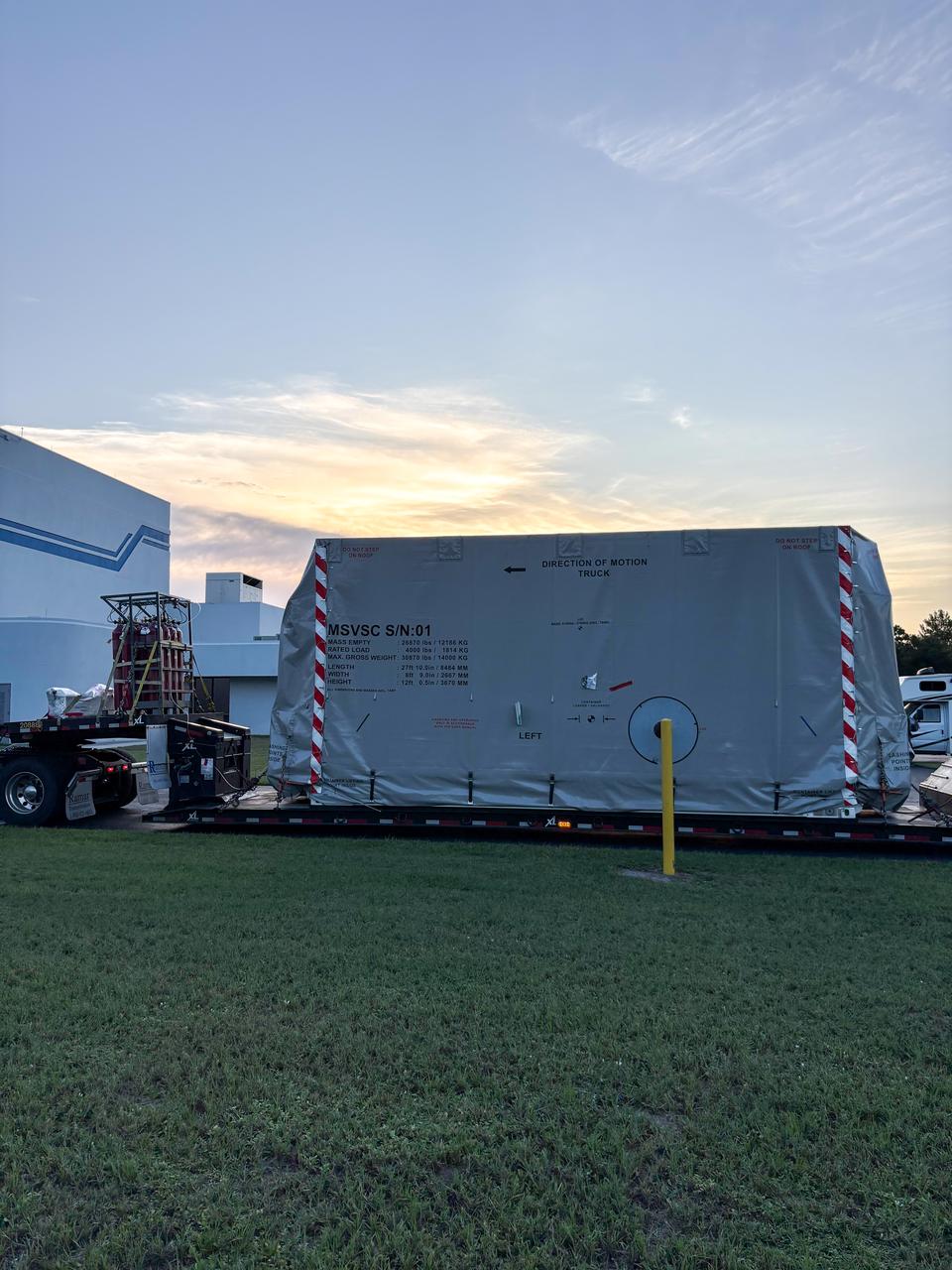
The National Oceanic and Atmospheric Administration’s (NOAA) Space Weather Follow On–Lagrange 1 (SWFO-L1) Observatory, set to provide quicker and more accurate space weather forecasts, arrived Sunday, July 20, 2025, at the Astrotech Space Operations Facility near NASA’s Kennedy Space Center in Florida. The SWFO-L1 mission will monitor the Sun and near-Earth environment using a suite of instruments that provide real-time measurements of solar activity.
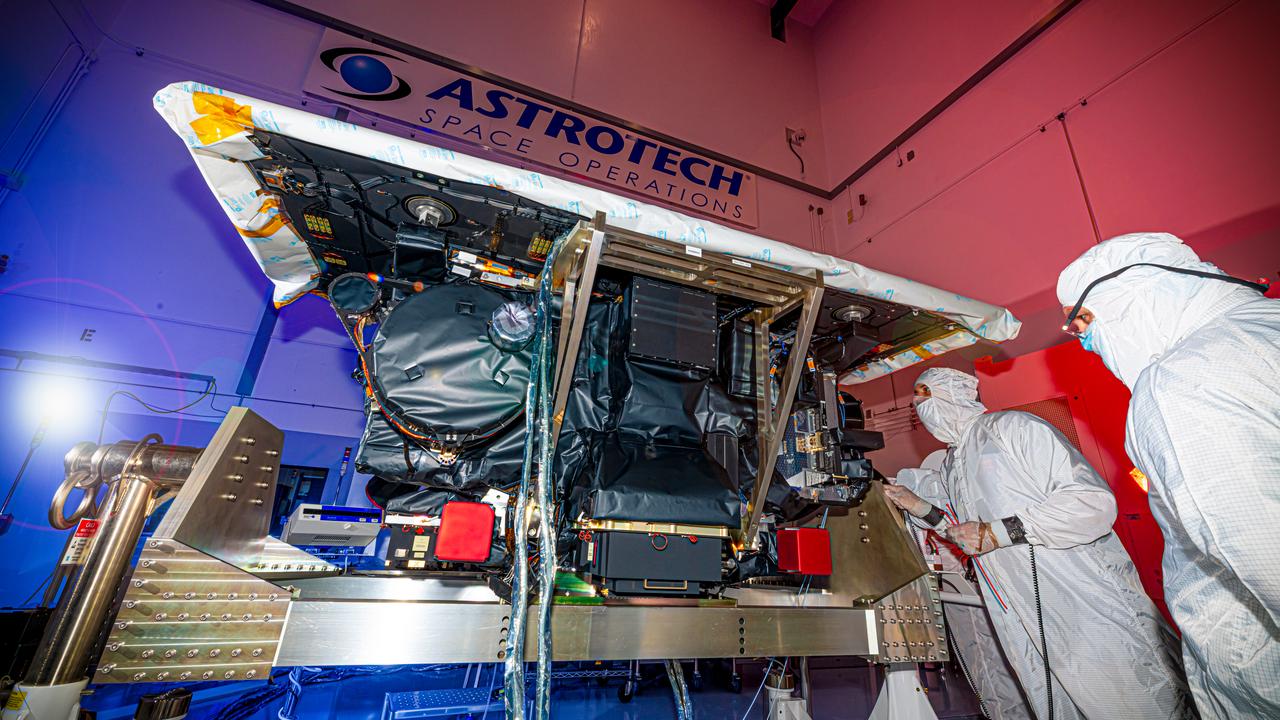
Technicians inspect the National Oceanic and Atmospheric Administration’s (NOAA) Space Weather Follow On–Lagrange 1 (SWFO-L1) Observatory on Thursday, July 24, 2025, following the arrival and unboxing of the observatory at the Astrotech Space Operations Facility near NASA’s Kennedy Space Center in Florida. The SWFO-L1 mission will monitor the Sun and near-Earth environment using a suite of instruments that provide real-time measurements of solar activity. The observatory will launch as a rideshare with NASA’s IMAP (Interstellar Mapping and Acceleration Probe) no earlier than September 2025.

NASA engineers put the X-57 Maxwell, NASA's first all-electric X-plane, through its initial telemetry tests at NASA's Armstrong Flight Research Center in California, testing the aircraft's ability to transmit data to teams on the ground. The data is packaged and transmitted down to ground assets, where it's decoded into a format that can be presented to a flight control team to look at screens in real time for flight operations. X-57's goal is to help set certification standards for emerging electric aircraft markets.
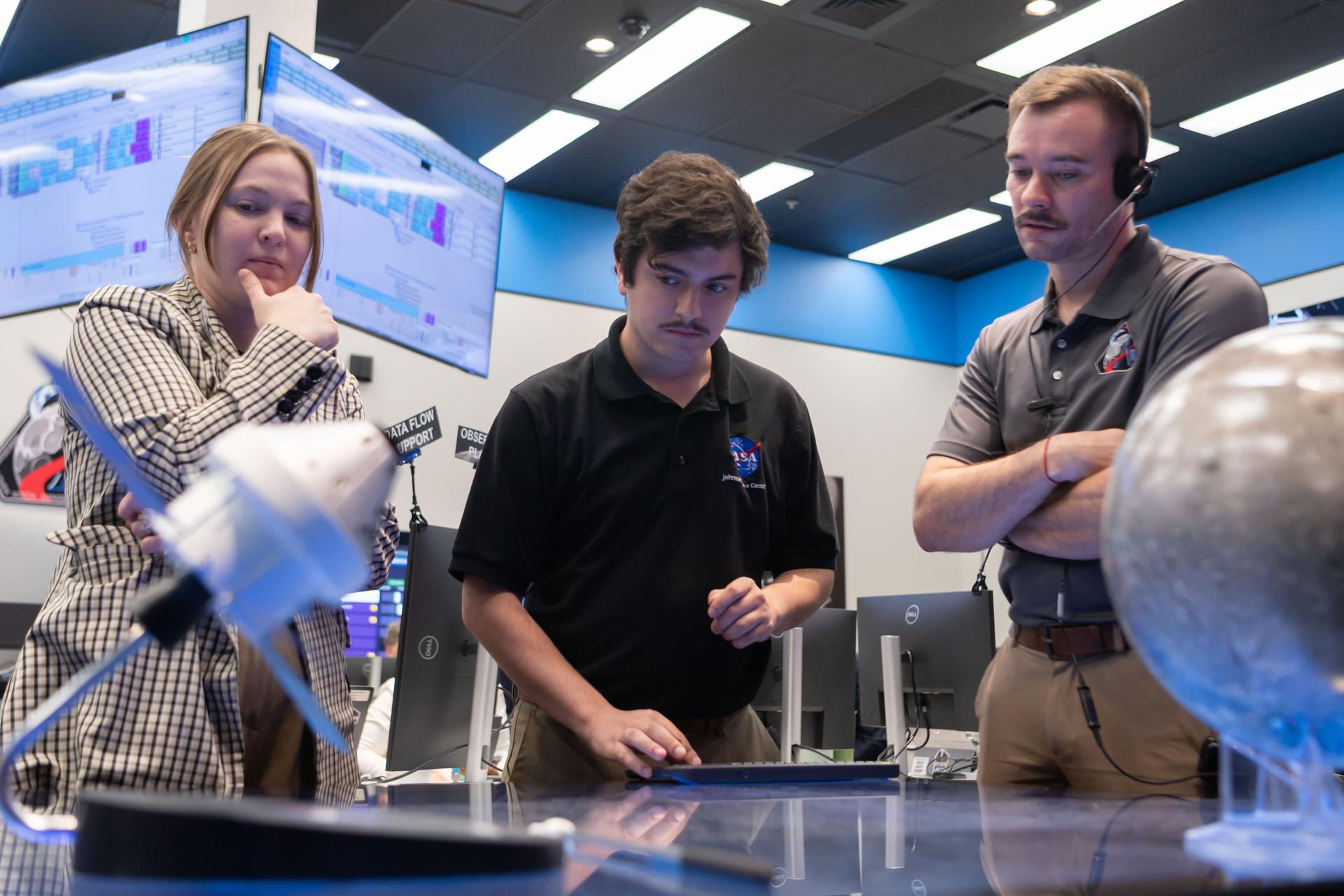
Crew lunar observations team member, Sara Schmidt, left, asset manager, Luke McSherry, and Artemis deputy lunar science lead, Jacob Richardson work in the Science Evaluation Room (SER). Built specifically for Artemis missions with these science priorities in mind, the SER is equipped to support rapid data interpretation, collaborative analysis, real-time decision making, and seamless coordination between the science and operations teams. Credits: NASA/Luna Posadas Nava
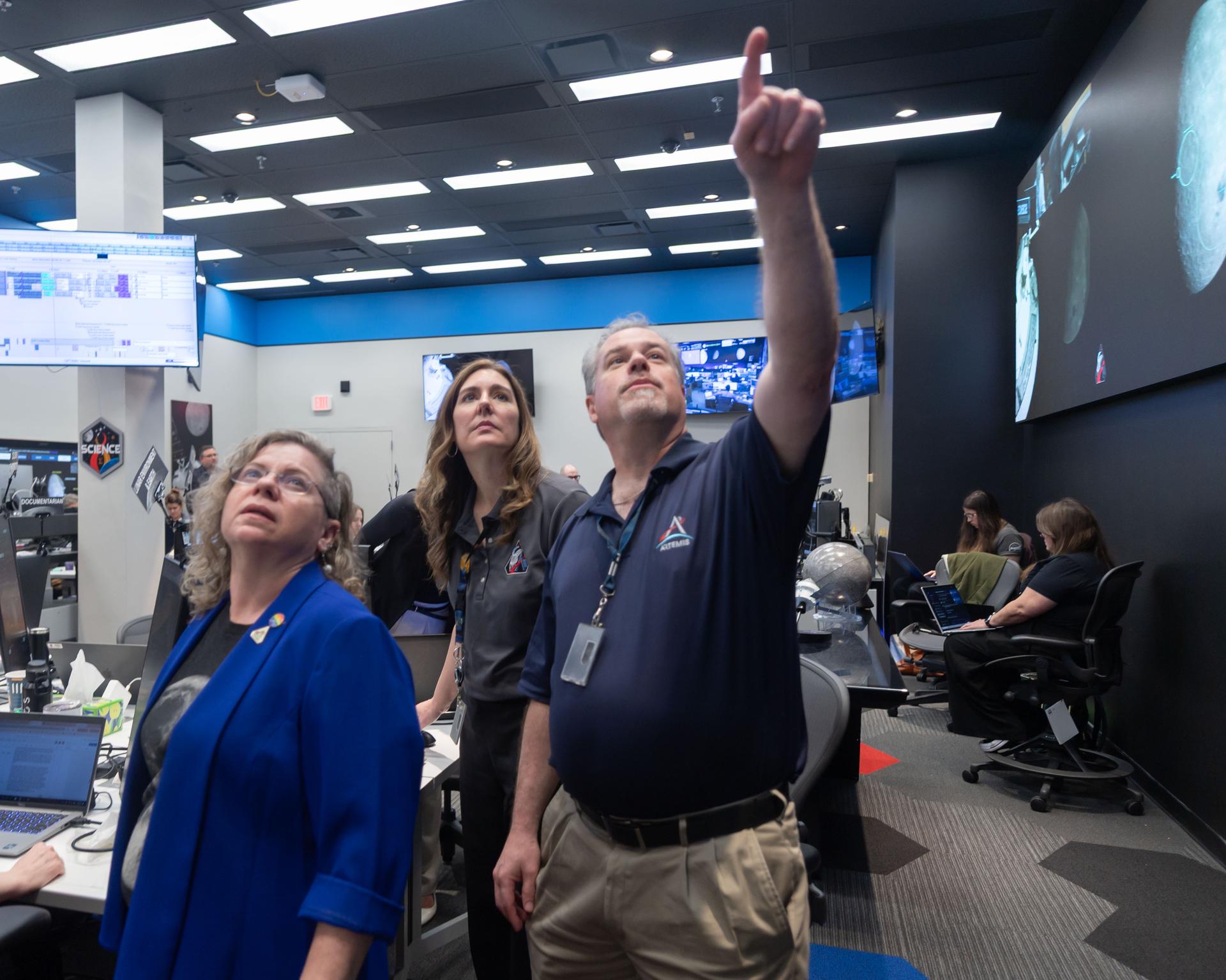
Artemis II lunar science team members, from left, Barbara Cohen, Jennifer Heldmann, and Anthony Colaprete, work in the Science Evaluation Room (SER). Built specifically for Artemis missions with these science priorities in mind, the SER is equipped to support rapid data interpretation, collaborative analysis, real-time decision making, and seamless coordination between the science and operations teams. Credits: NASA/Luna Posadas Nava
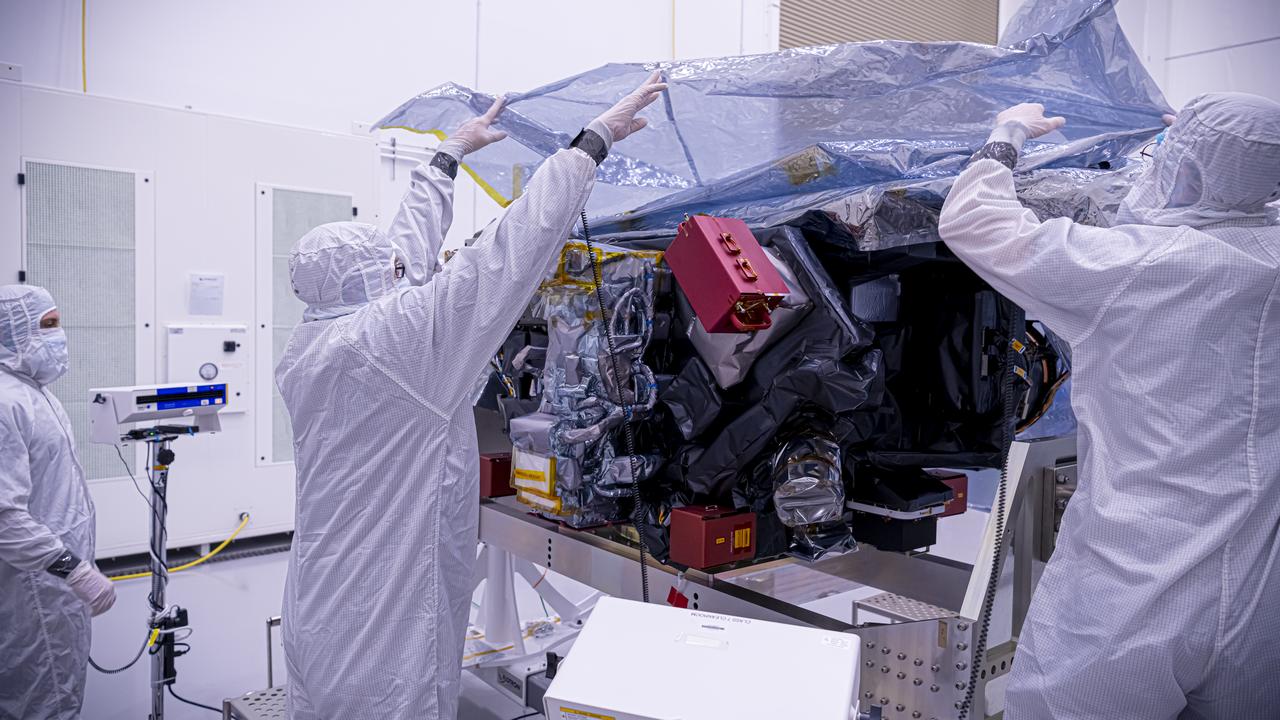
Technicians inspect the National Oceanic and Atmospheric Administration’s (NOAA) Space Weather Follow On–Lagrange 1 (SWFO-L1) Observatory on Thursday, July 24, 2025, following the arrival and unboxing of the observatory at the Astrotech Space Operations Facility near NASA’s Kennedy Space Center in Florida. The SWFO-L1 mission will monitor the Sun and near-Earth environment using a suite of instruments that provide real-time measurements of solar activity. The observatory will launch as a rideshare with NASA’s IMAP (Interstellar Mapping and Acceleration Probe) no earlier than September 2025.
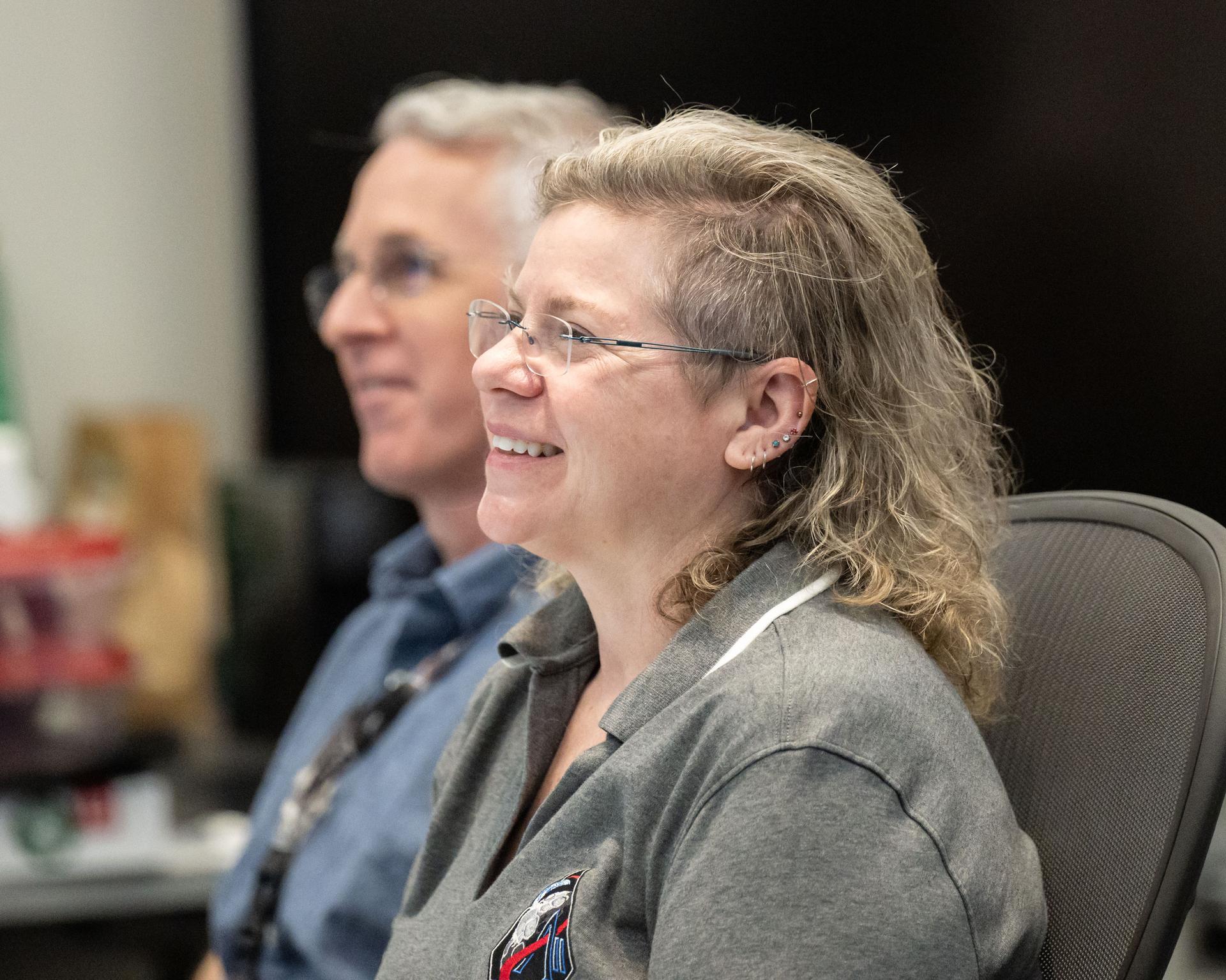
Artemis II lunar science team members, from left, Ryan Ewing, and Barbara Cohen, react to crew observations during the lunar flyby on April 6, 2026. The team worked in the Science Evaluation Room (SER) in Mission Control at NASA’s Johnson Space Center in Houston. Built specifically for Artemis missions with these science priorities in mind, the SER is equipped to support rapid data interpretation, collaborative analysis, real-time decision making, and seamless coordination between the science and operations teams. Credits: NASA/Luna Posadas Nava
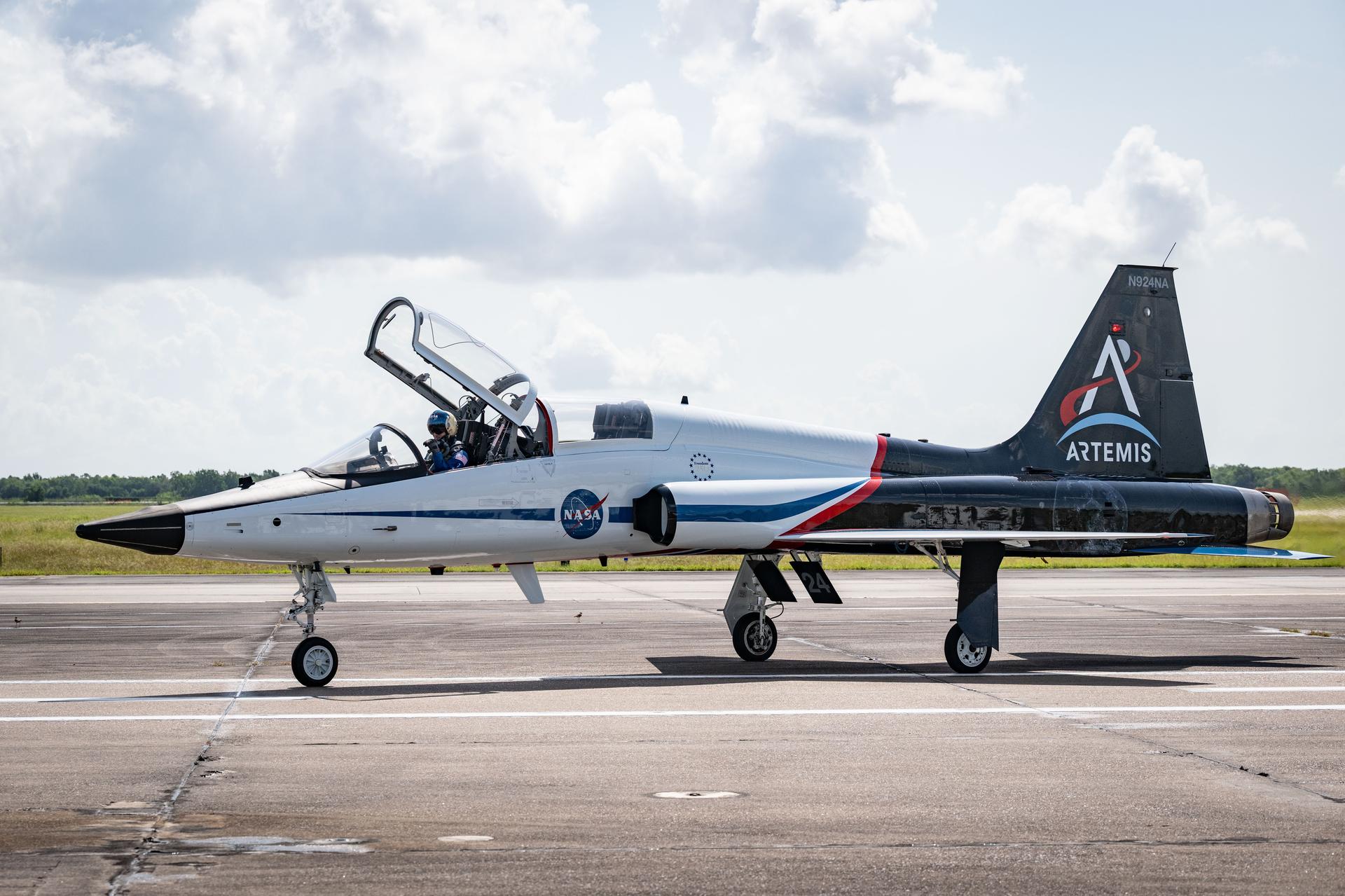
jsc2026e407798 (Aug. 7, 2026) - NASA's T-38 N924NA debuted an updated livery honoring the Artemis Program. Astronauts fly in T-38s to train for making real-time decisions in a high-stakes, operational environment. This helps prepare them for the fast-paced mission moments they’ll experience on future spaceflights to the International Space Station or the Moon and beyond. Credit: NASA/James Blair

Technicians inspect the National Oceanic and Atmospheric Administration’s (NOAA) Space Weather Follow On–Lagrange 1 (SWFO-L1) Observatory on Thursday, July 24, 2025, following the arrival and unboxing of the observatory at the Astrotech Space Operations Facility near NASA’s Kennedy Space Center in Florida. The SWFO-L1 mission will monitor the Sun and near-Earth environment using a suite of instruments that provide real-time measurements of solar activity. The observatory will launch as a rideshare with NASA’s IMAP (Interstellar Mapping and Acceleration Probe) no earlier than September 2025.

Jared Ralleta, Artemis II lunar science team member, reacts to the lunar flyby crew observations in the Science Evaluation Room (SER). Built specifically for Artemis missions with these science priorities in mind, the SER is equipped to support rapid data interpretation, collaborative analysis, real-time decision making, and seamless coordination between the science and operations teams. Credits: NASA/Luna Posadas Nava
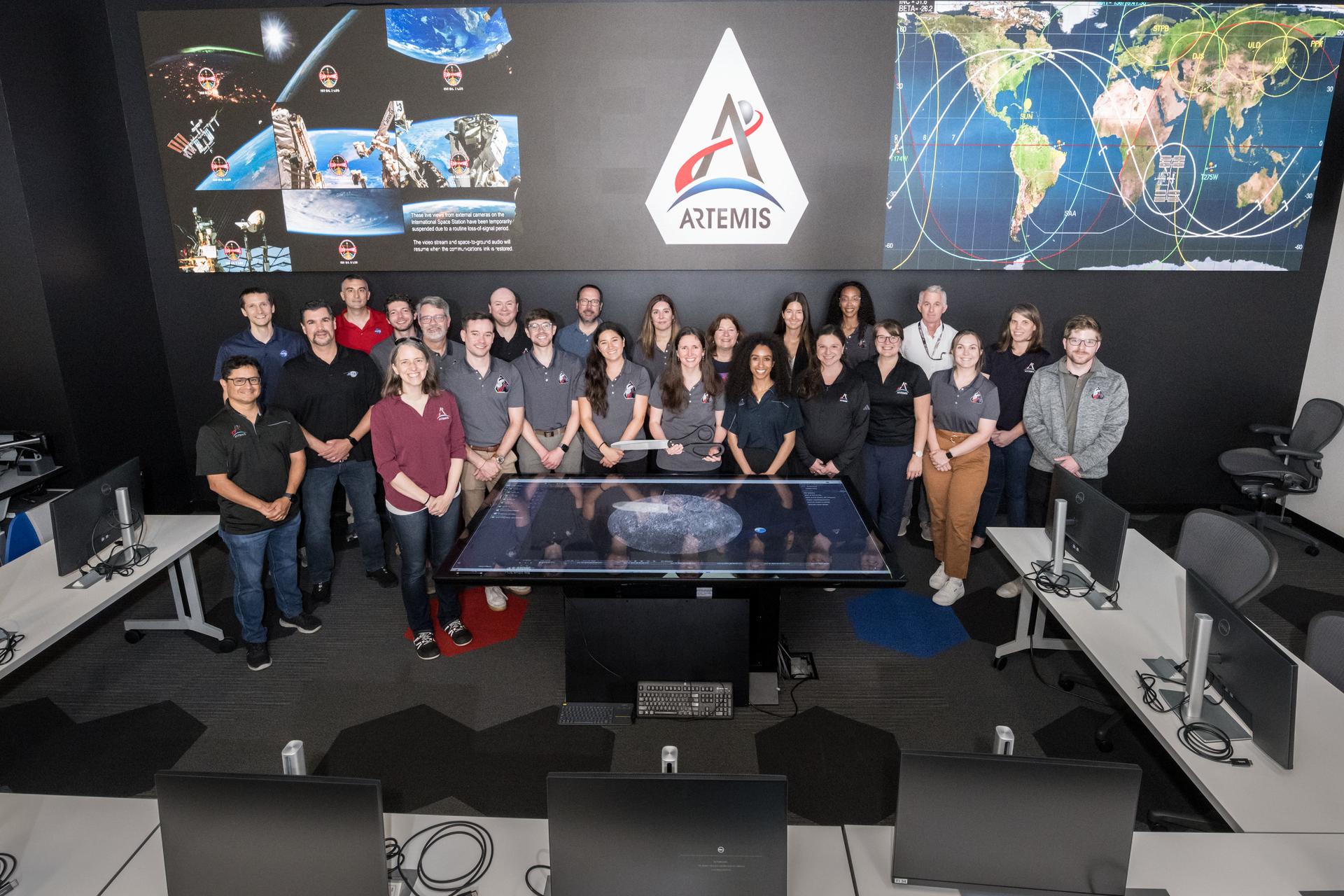
jsc2025e057254 --- NASA’s Artemis II lunar science team is pictured in the Science Evaluation Room (SER) at the agency’s Johnson Space Center in Houston. Located in the Christopher C. Kraft Jr. Mission Control Center, the SER supports the mission’s main flight control room for lunar science and planetary observations. Built specifically for Artemis missions with these science priorities in mind, the SER is equipped to support rapid data interpretation, collaborative analysis, real-time decision making, and seamless coordination between the science and operations teams.
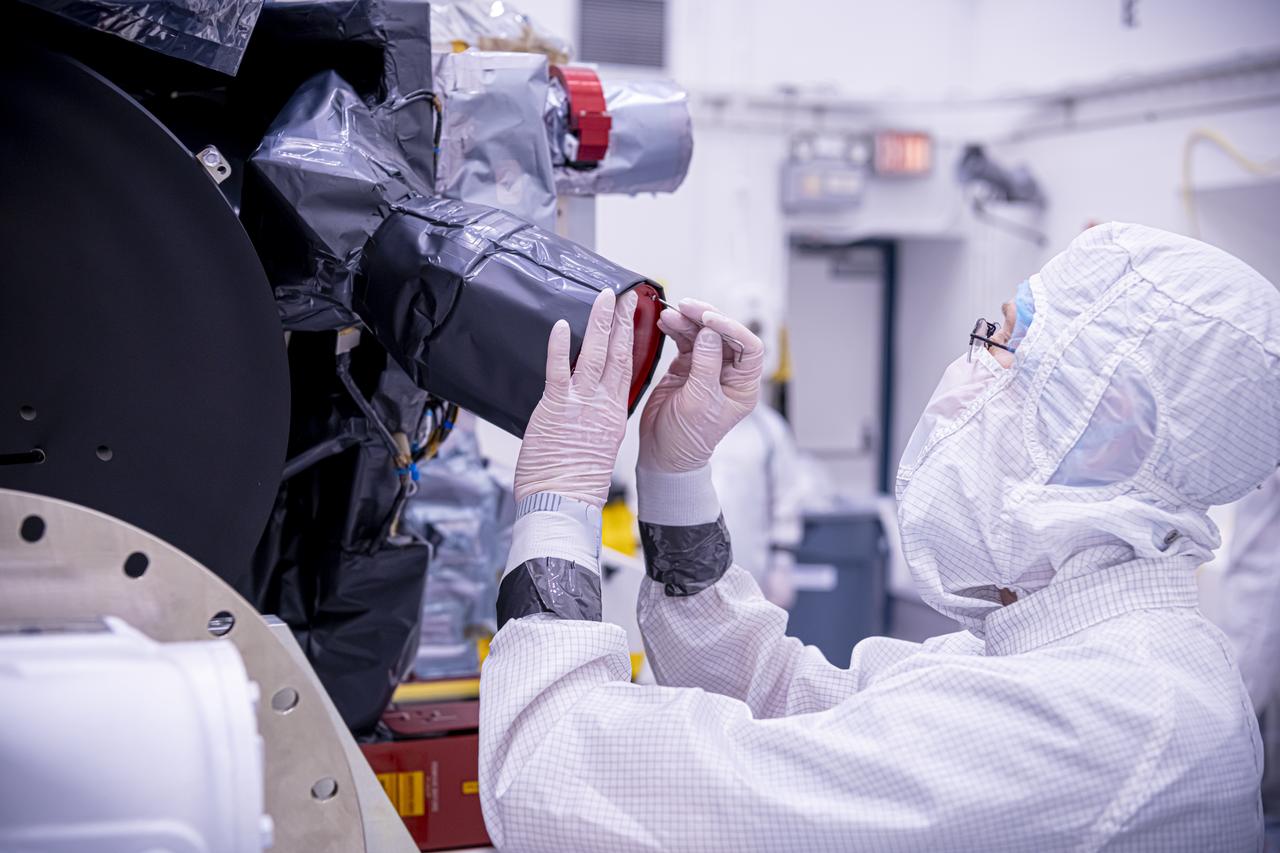
Technicians inspect the National Oceanic and Atmospheric Administration’s (NOAA) Space Weather Follow On–Lagrange 1 (SWFO-L1) Observatory on Thursday, July 24, 2025, following the arrival and unboxing of the observatory at the Astrotech Space Operations Facility near NASA’s Kennedy Space Center in Florida. The SWFO-L1 mission will monitor the Sun and near-Earth environment using a suite of instruments that provide real-time measurements of solar activity. The observatory will launch as a rideshare with NASA’s IMAP (Interstellar Mapping and Acceleration Probe) no earlier than September 2025.
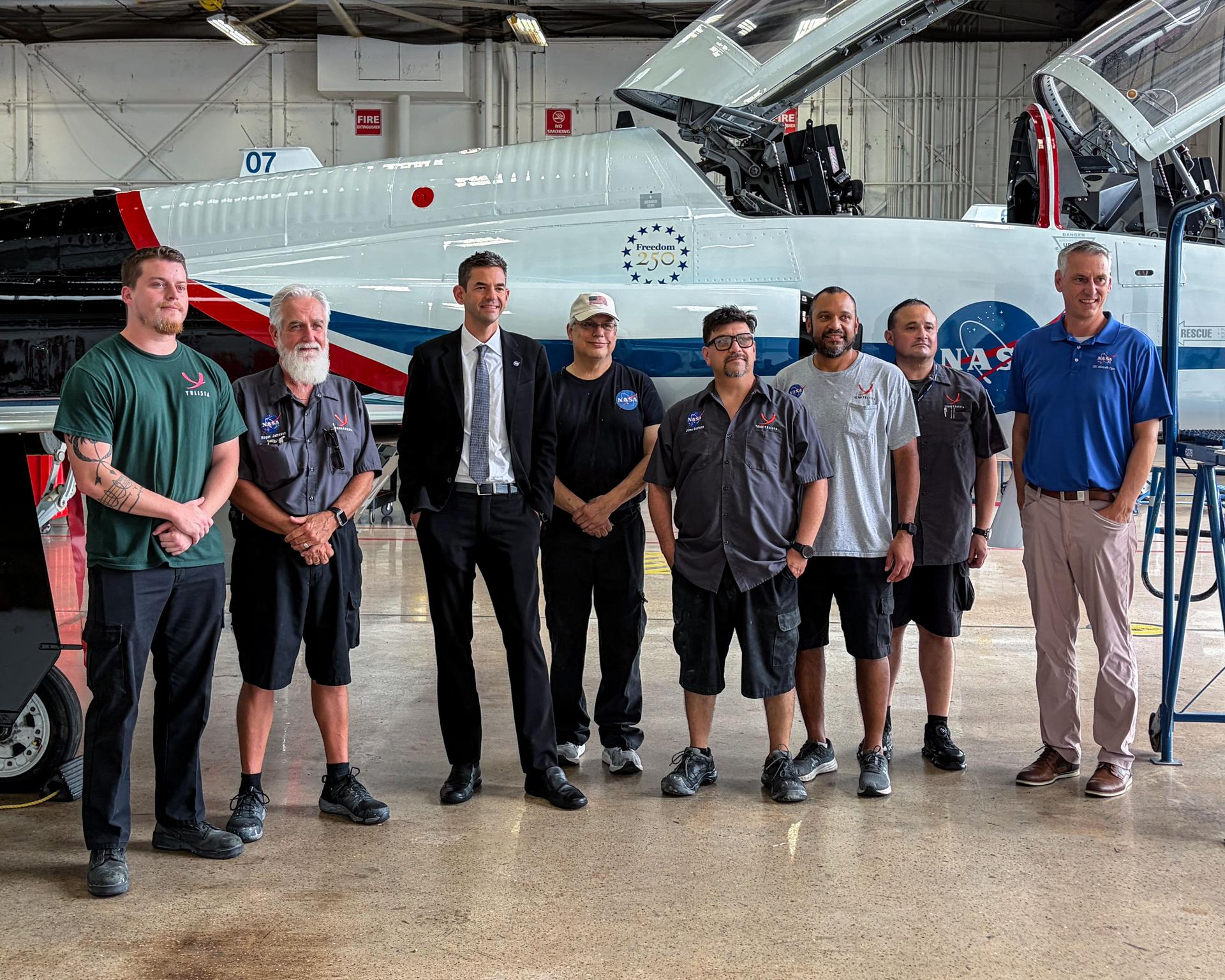
jsc2026e407799 (Aug. 6, 2026) - NASA administrator Jared Isaacman visited Ellington Field to admire the T-38 jet featuring a new paint job reflecting the Artemis Program. He met with the team members who designed and painted the aircraft, which NASA astronauts use to train for making real-time decisions in a high-stakes, operational environment. Credit: NASA/James Blair
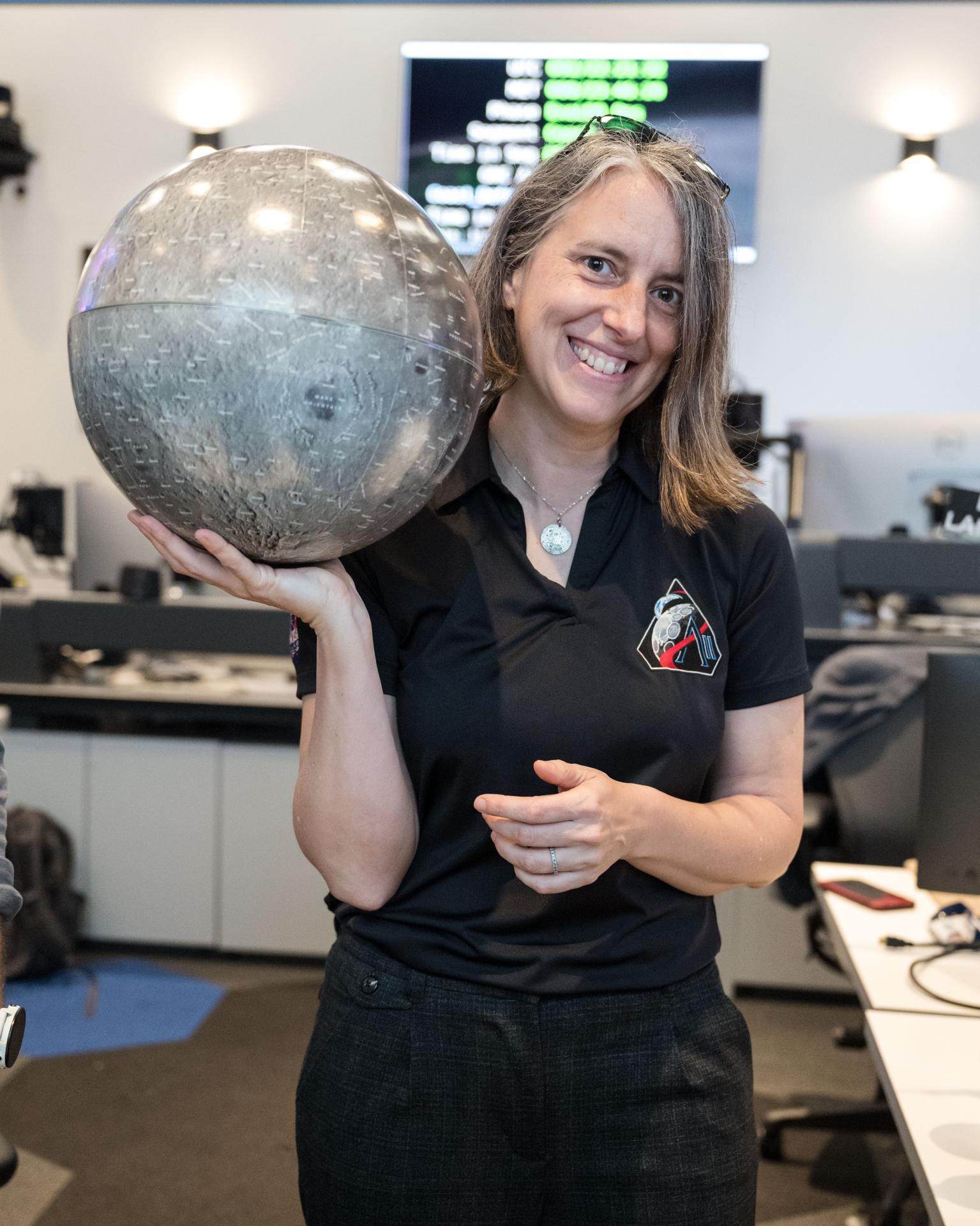
Artemis curation lead, Juliane Gross, holds a lunar globe in the Science Evaluation Room (SER) in Mission Control at Johnson Space Center in Houston. The SER supports lunar science and planetary observations for the Artemis science officer in the mission’s main flight control room. Built specifically for Artemis missions with these science priorities in mind, the SER is equipped to support rapid data interpretation, collaborative analysis, real-time decision making, and seamless coordination between the science and operations teams. Credits: NASA/Luna Posadas Nava
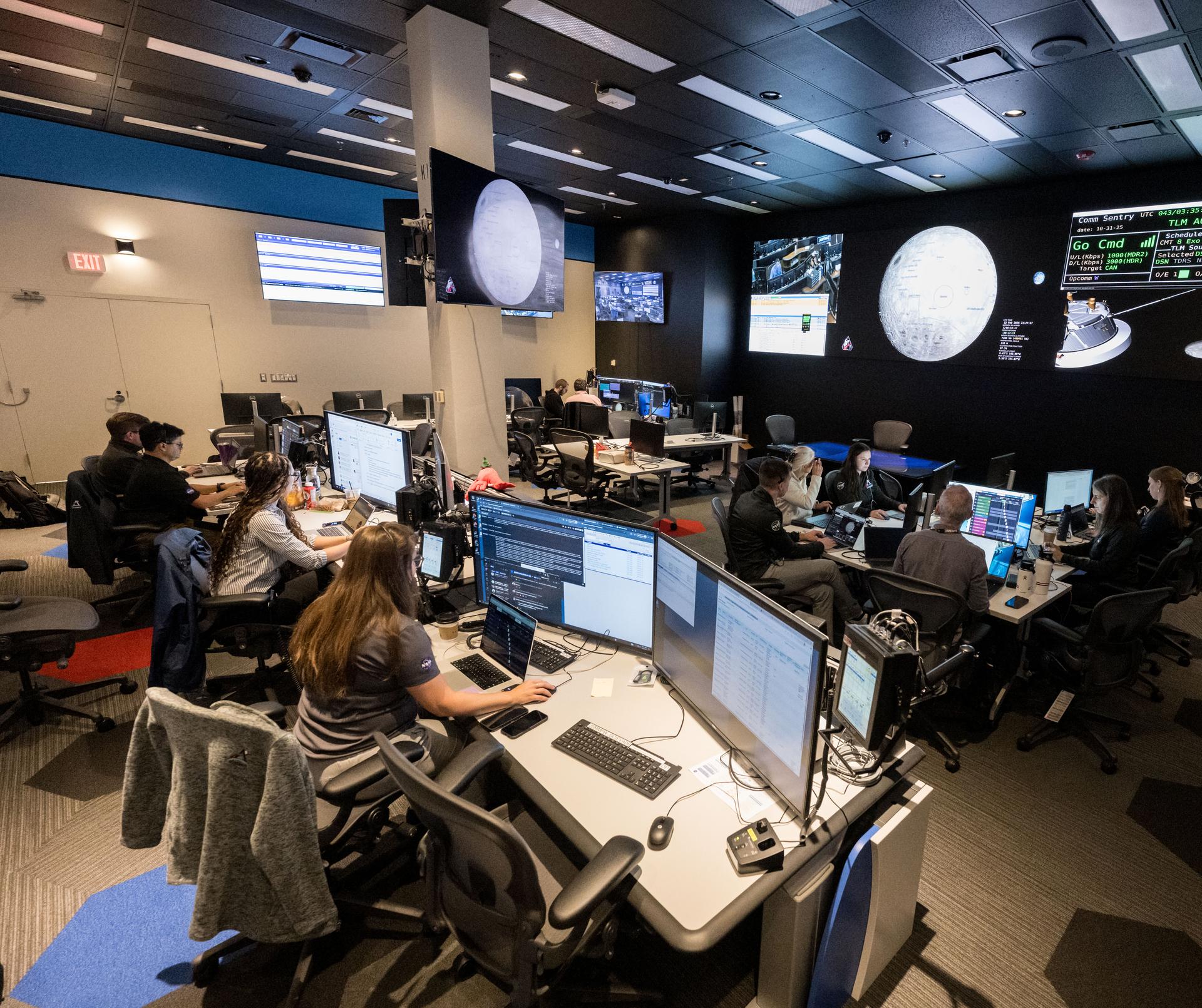
jsc2026e000861 --- The Artemis II Lunar Science Team works in the Science Evaluation Room (SER) during a training simulation in the Mission Control Center at NASA’s Johnson Space Center in Houston. The SER supports the mission’s main flight control room for lunar science and planetary observations. Built specifically for Artemis missions with these science priorities in mind, the SER is equipped to support rapid data interpretation, collaborative analysis, real-time decision making, and seamless coordination between the science and operations teams. Credit: James Blair
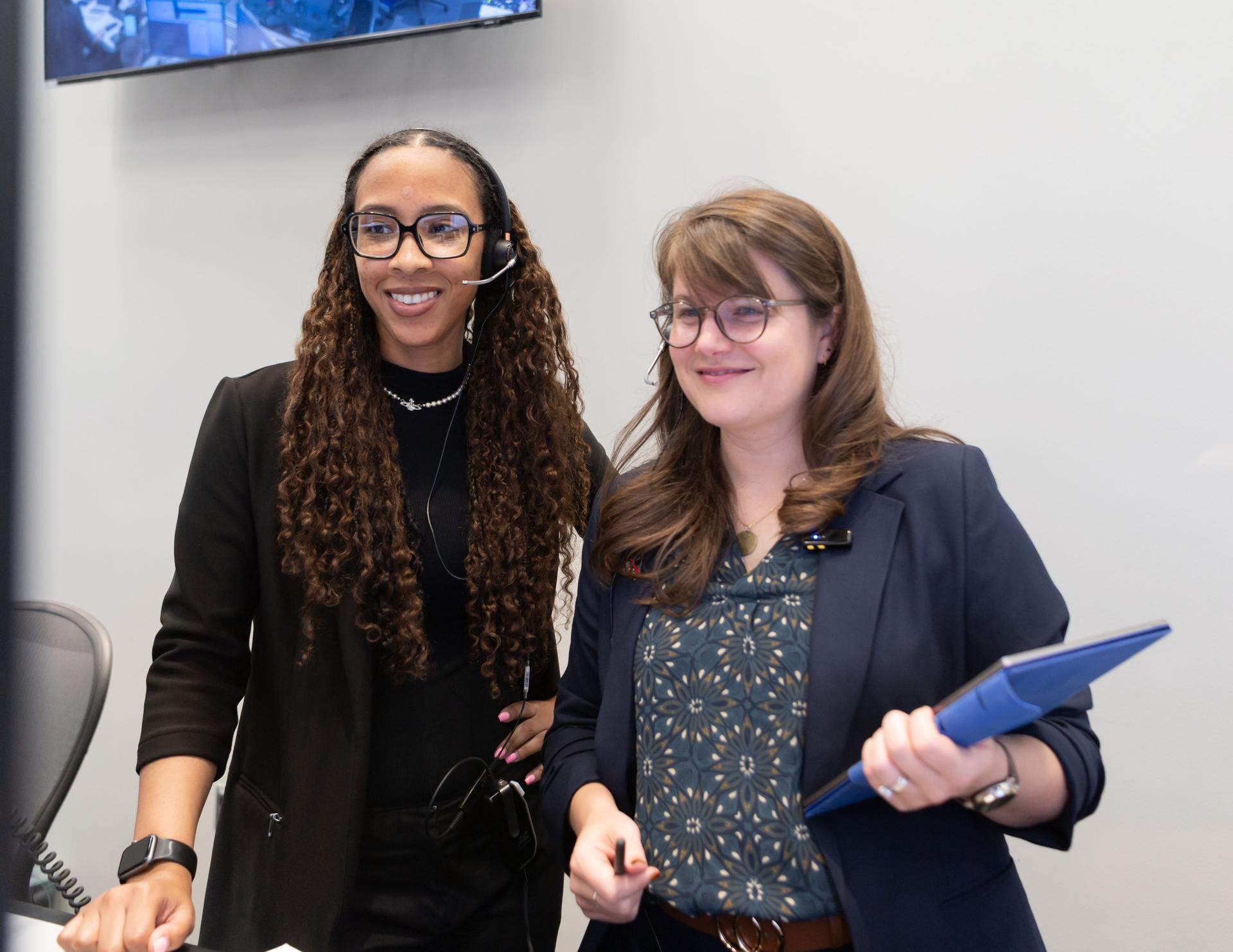
Science evaluation room communicator, Kiarre Dumes, left, and deputy lunar science lead Marie Henderson work in the Science Evaluation Room (SER) during Artemis II. Built specifically for Artemis missions with these science priorities in mind, the SER is equipped to support rapid data interpretation, collaborative analysis, real-time decision making, and seamless coordination between the science and operations teams. Credits: NASA/Luna Posadas Nava
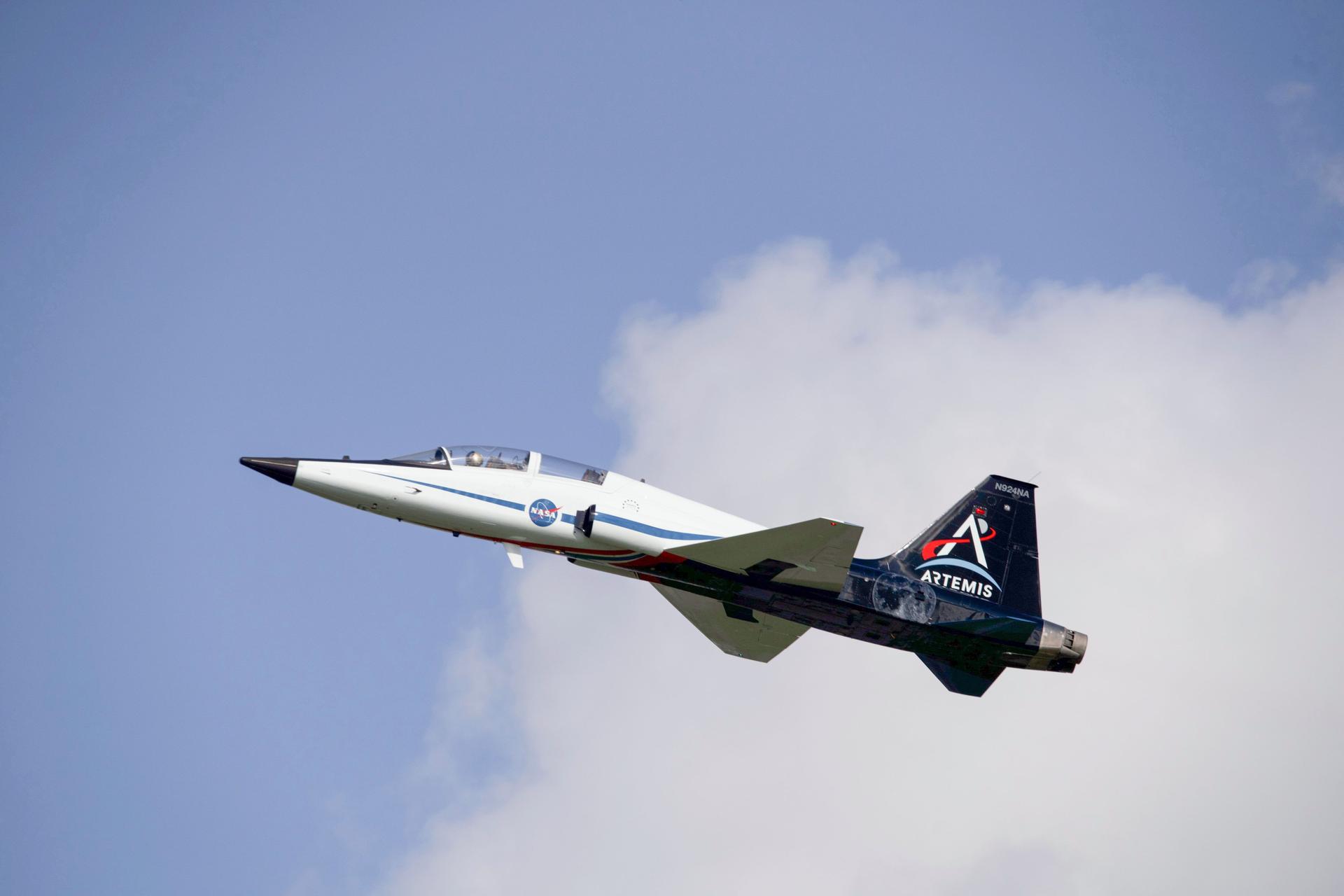
jsc2026e410176 (Aug. 6, 2026) - NASA's T-38 N924NA debuted an updated livery honoring the Artemis Program. Astronauts fly in T-38s to train for making real-time decisions in a high-stakes, operational environment. This helps prepare them for the fast-paced mission moments they’ll experience on future spaceflights to the International Space Station or the Moon and beyond. Credit: NASA/Brendan "Finnie" Finnegan
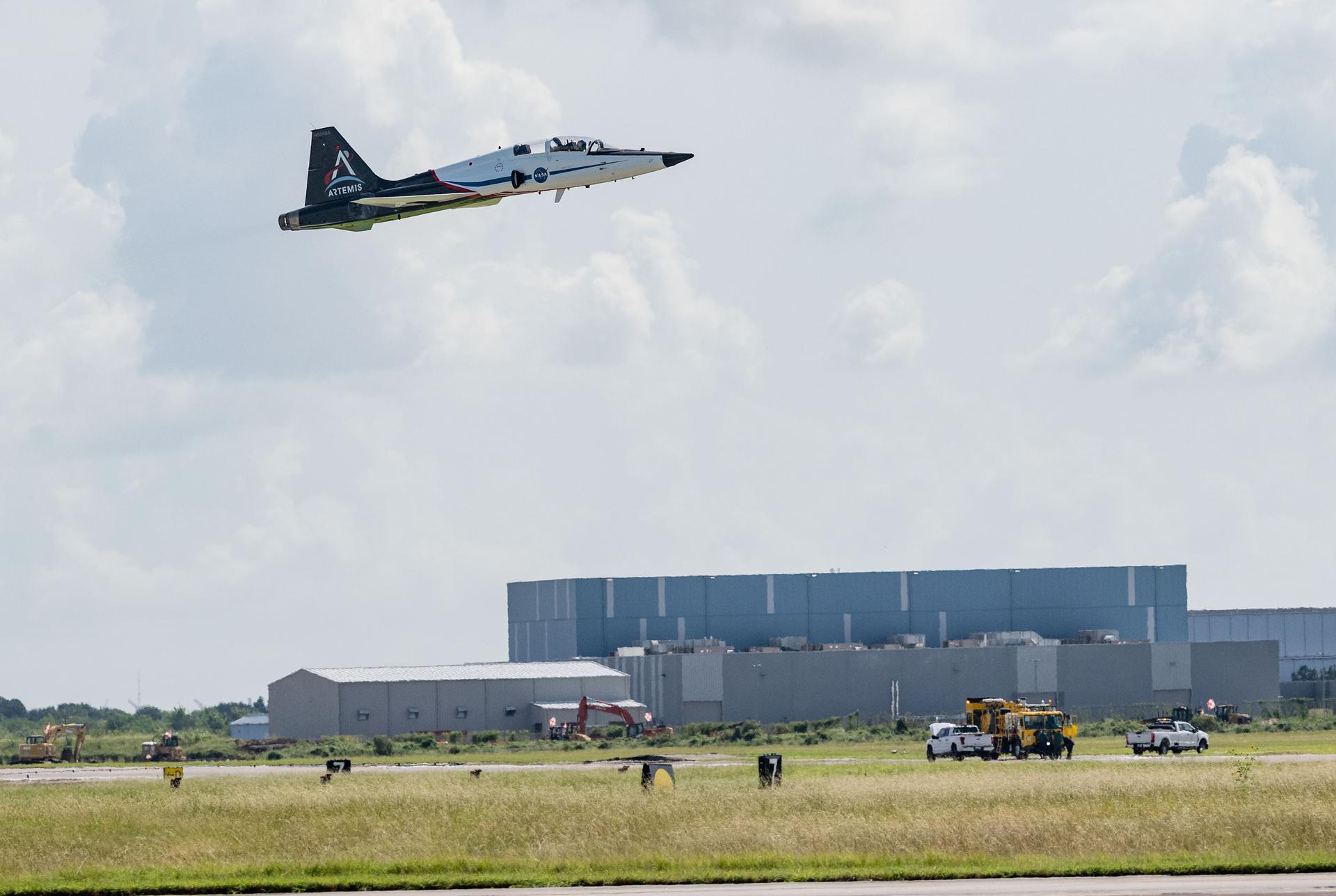
jsc2026e407795 (Aug. 7, 2026) - NASA's T-38 N924NA debuted an updated livery honoring the Artemis Program. Astronauts fly in T-38s to train for making real-time decisions in a high-stakes, operational environment. This helps prepare them for the fast-paced mission moments they’ll experience on future spaceflights to the International Space Station or the Moon and beyond. Credit: NASA/James Blair
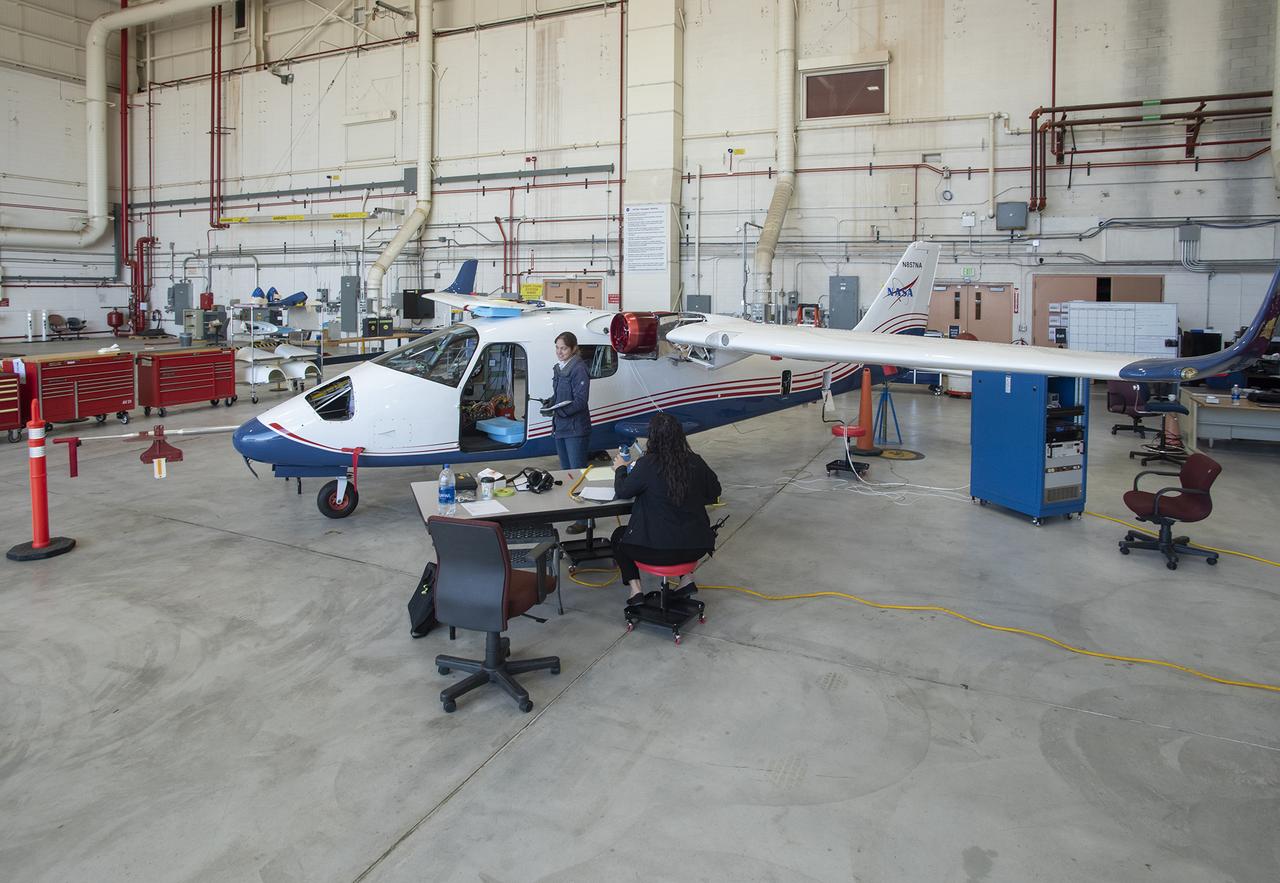
NASA engineers put the X-57 Maxwell, NASA’s first all-electric X-plane, through its initial telemetry tests at NASA’s Armstrong Flight Research Center in California, testing the aircraft’s ability to transmit data to teams on the ground. The data is packaged and transmitted down to ground assets, where it’s decoded into a format that can be presented to a flight control team to look at screens in real time for flight operations. X-57’s goal is to help set certification standards for emerging electric aircraft markets.
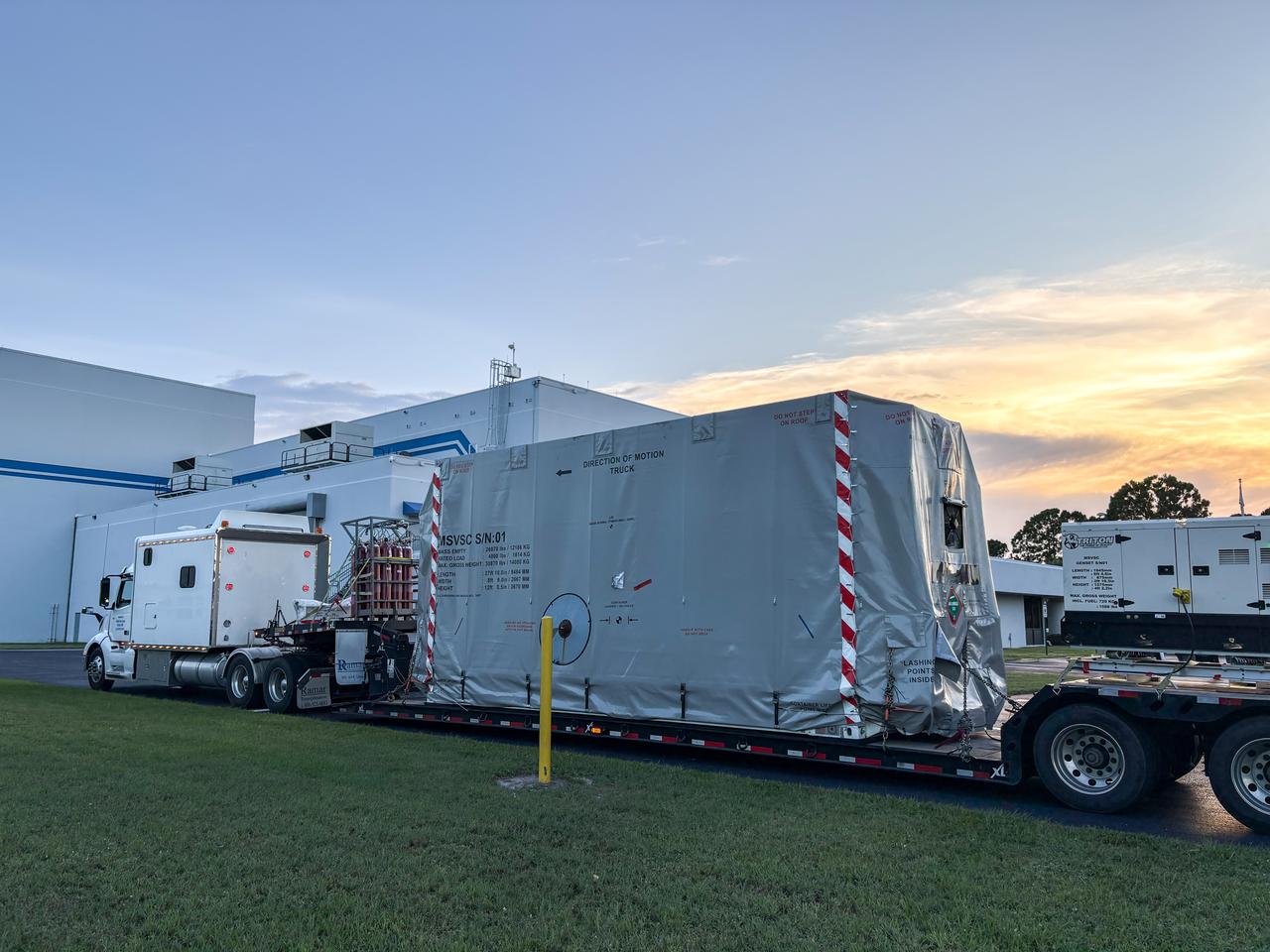
The National Oceanic and Atmospheric Administration’s (NOAA) Space Weather Follow On–Lagrange 1 (SWFO-L1) Observatory, set to provide quicker and more accurate space weather forecasts, arrived Sunday, July 20, 2025, at the Astrotech Space Operations Facility near NASA’s Kennedy Space Center in Florida. The SWFO-L1 mission will monitor the Sun and near-Earth environment using a suite of instruments that provide real-time measurements of solar activity.
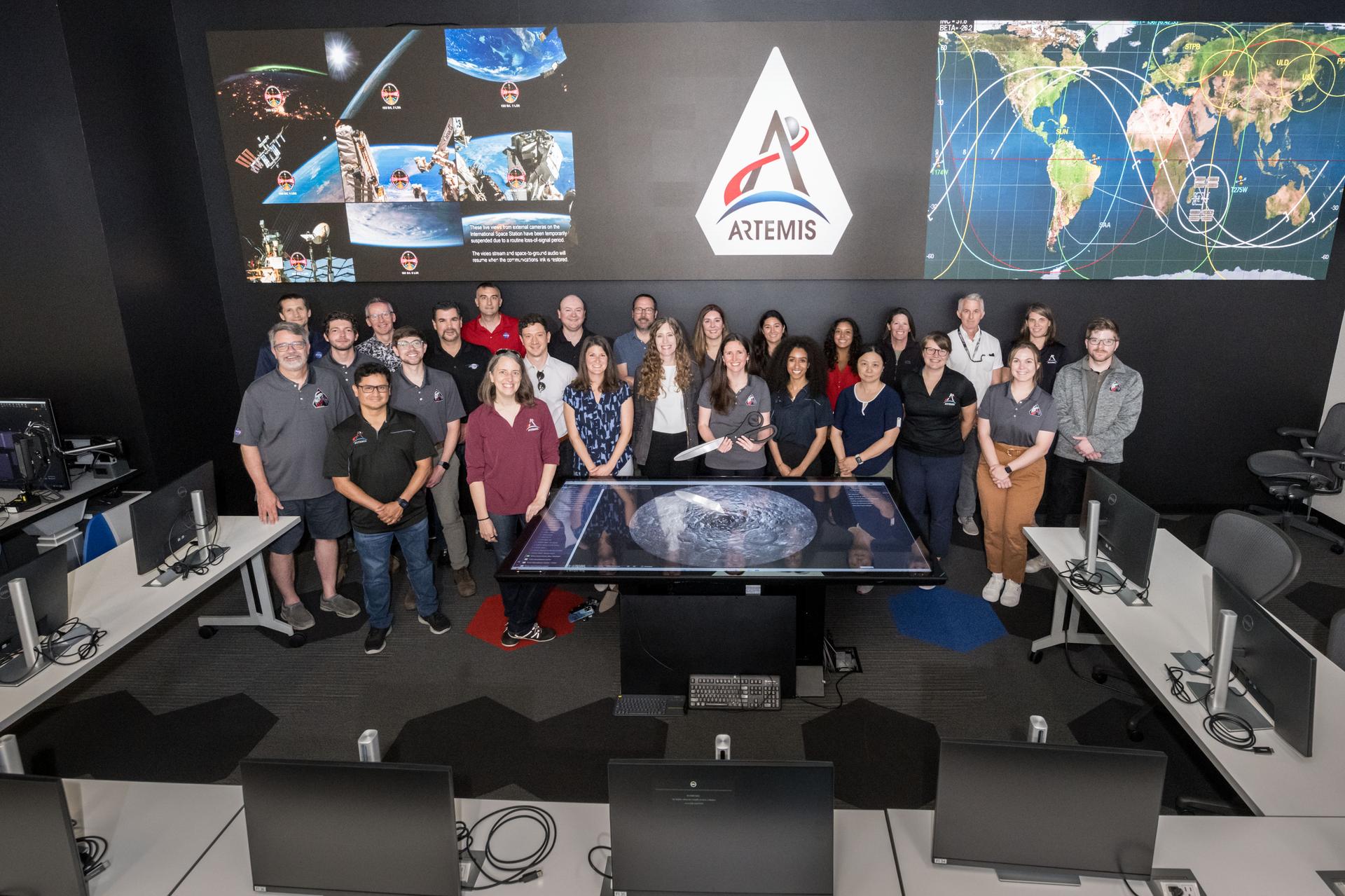
jsc2025e057255 --- NASA’s Artemis III lunar science team is pictured in the Science Evaluation Room (SER) at the agency’s Johnson Space Center in Houston. Located in the Christopher C. Kraft Jr. Mission Control Center, the SER supports the mission’s main flight control room for lunar science and planetary observations. Built specifically for Artemis missions with these science priorities in mind, the SER is equipped to support rapid data interpretation, collaborative analysis, real-time decision making, and seamless coordination between the science and operations teams.
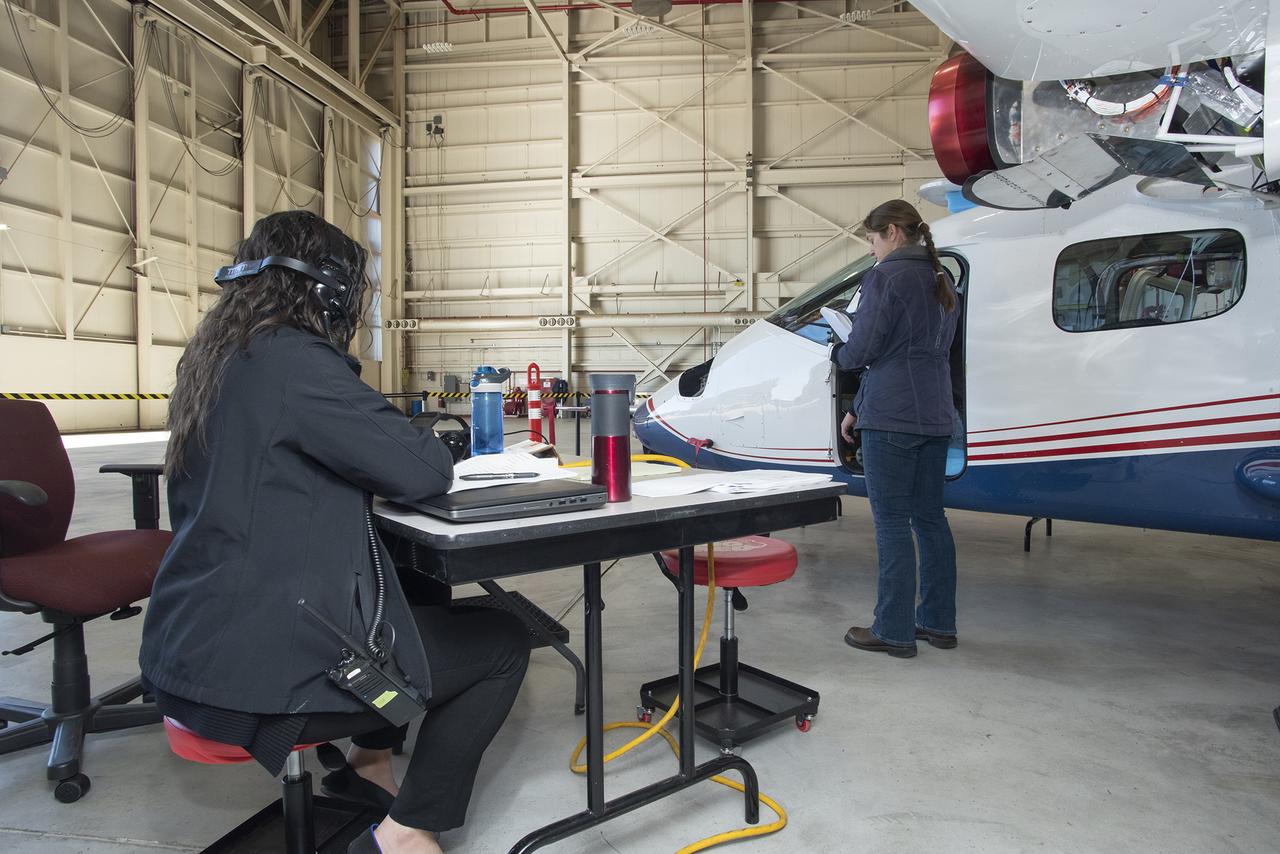
NASA engineers put the X-57 Maxwell, NASA's first all-electric X-plane, through its initial telemetry tests at NASA's Armstrong Flight Research Center in California, testing the aircraft's ability to transmit data to teams on the ground. The data is packaged and transmitted down to ground assets, where it's decoded into a format that can be presented to a flight control team to look at screens in real time for flight operations. X-57's goal is to help set certification standards for emerging electric aircraft markets.
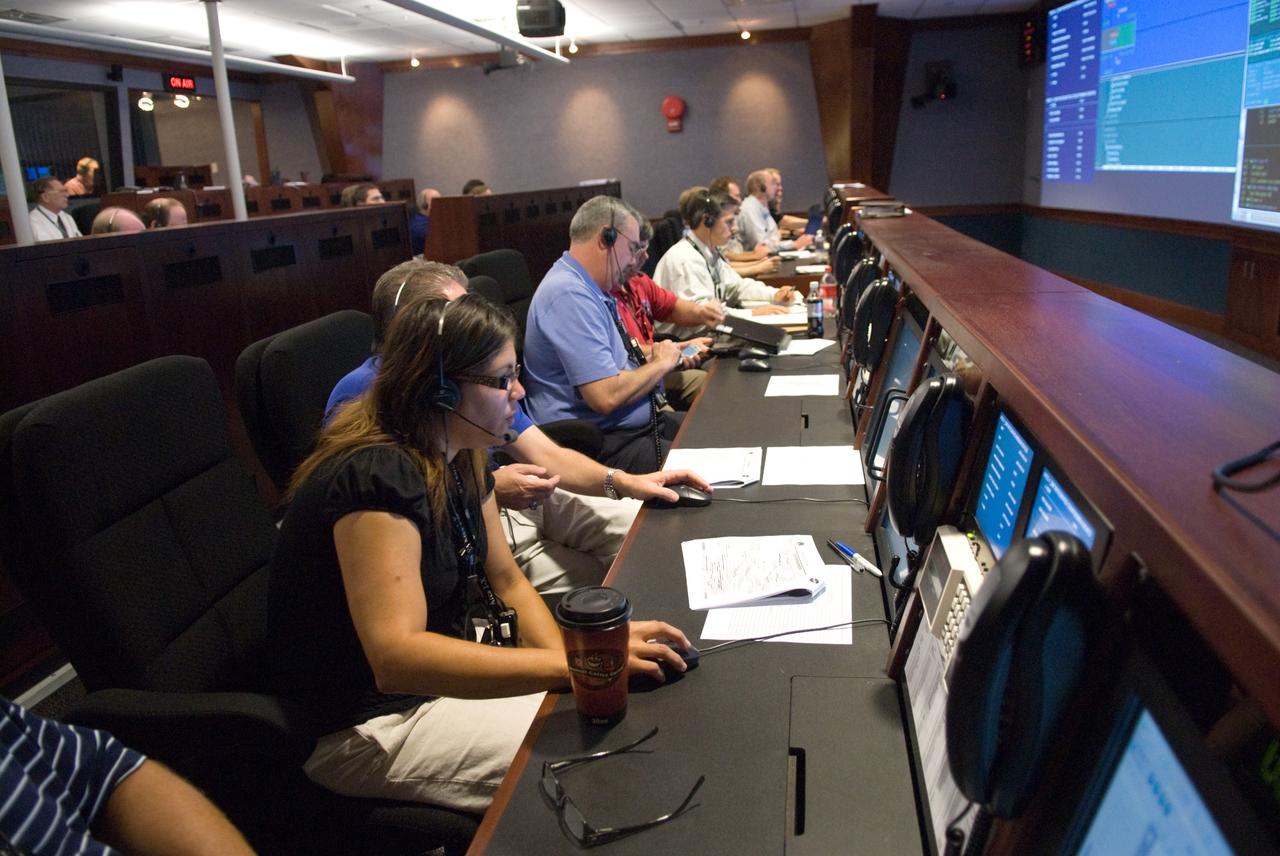
CAPE CANAVERAL, Fla. – In the Mission Director Center in Cape Canaveral Air Force Station's Hangar AE, mission engineers take part in a countdown simulation for the upcoming Ares I-X flight test. Ares I-X is targeted for the test on Oct. 31. The Hangar AE control rooms provide real-time voice, data and video information for ex¬pendable vehicle checkout and launch operations, similar to that provided by the space shuttle control rooms. Photo credit: NASA/Kim Shiflett
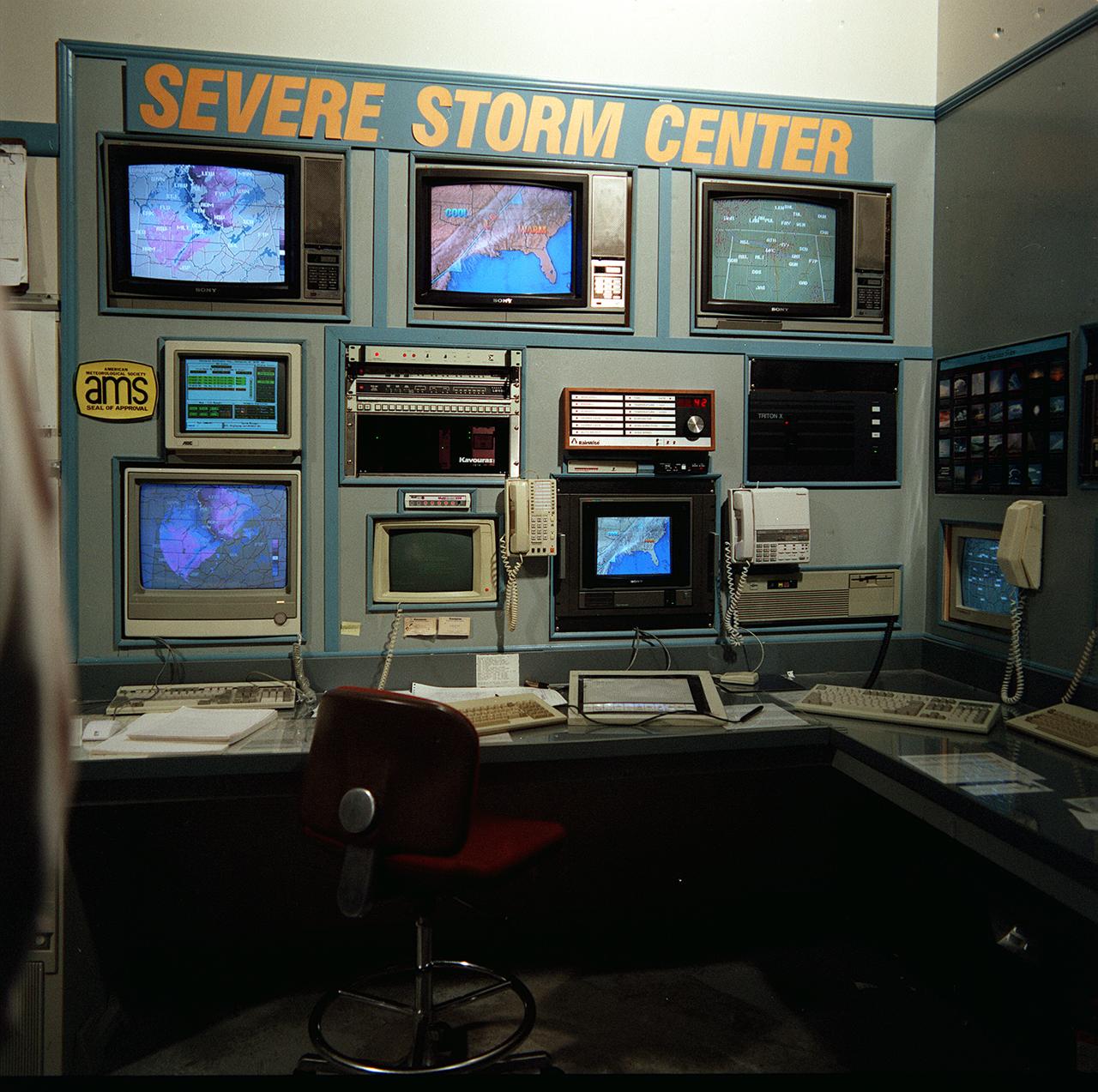
Bob Barin, a Huntsville meterorologist, has formed a commercial weather advisory service. The weather information is based on data from Marshall Space Flight Center (MSFC) collected from anternas in Alabama and Tennessee. Baron proposed and concluded an agreement with MSFC whereby the center would provide him the data and he would refine and enhance real-time software. By using his service, clients can monitor the approach of storms and schedule operations accordingly.
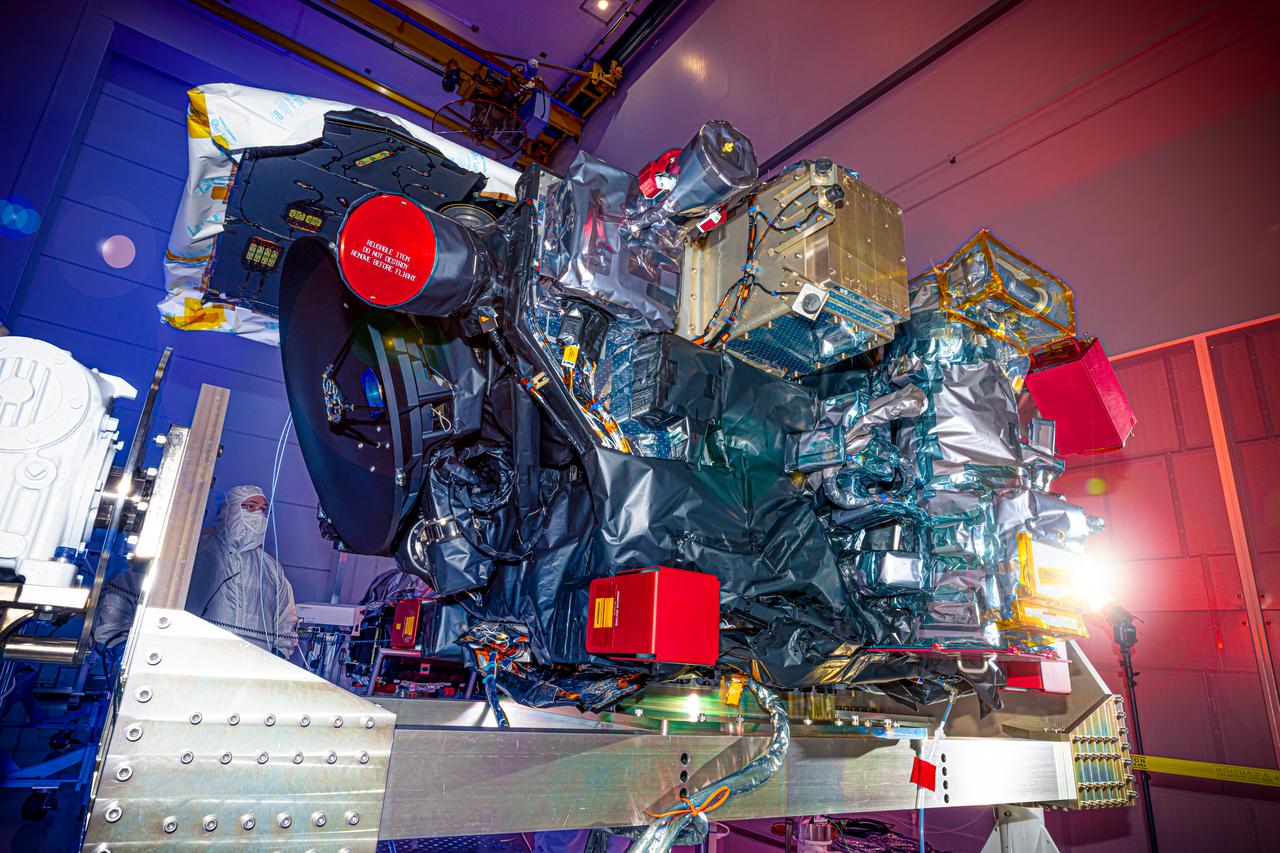
Technicians inspect the National Oceanic and Atmospheric Administration’s (NOAA) Space Weather Follow On–Lagrange 1 (SWFO-L1) Observatory on Thursday, July 24, 2025, following the arrival and unboxing of the observatory at the Astrotech Space Operations Facility near NASA’s Kennedy Space Center in Florida. The SWFO-L1 mission will monitor the Sun and near-Earth environment using a suite of instruments that provide real-time measurements of solar activity. The observatory will launch as a rideshare with NASA’s IMAP (Interstellar Mapping and Acceleration Probe) no earlier than September 2025.
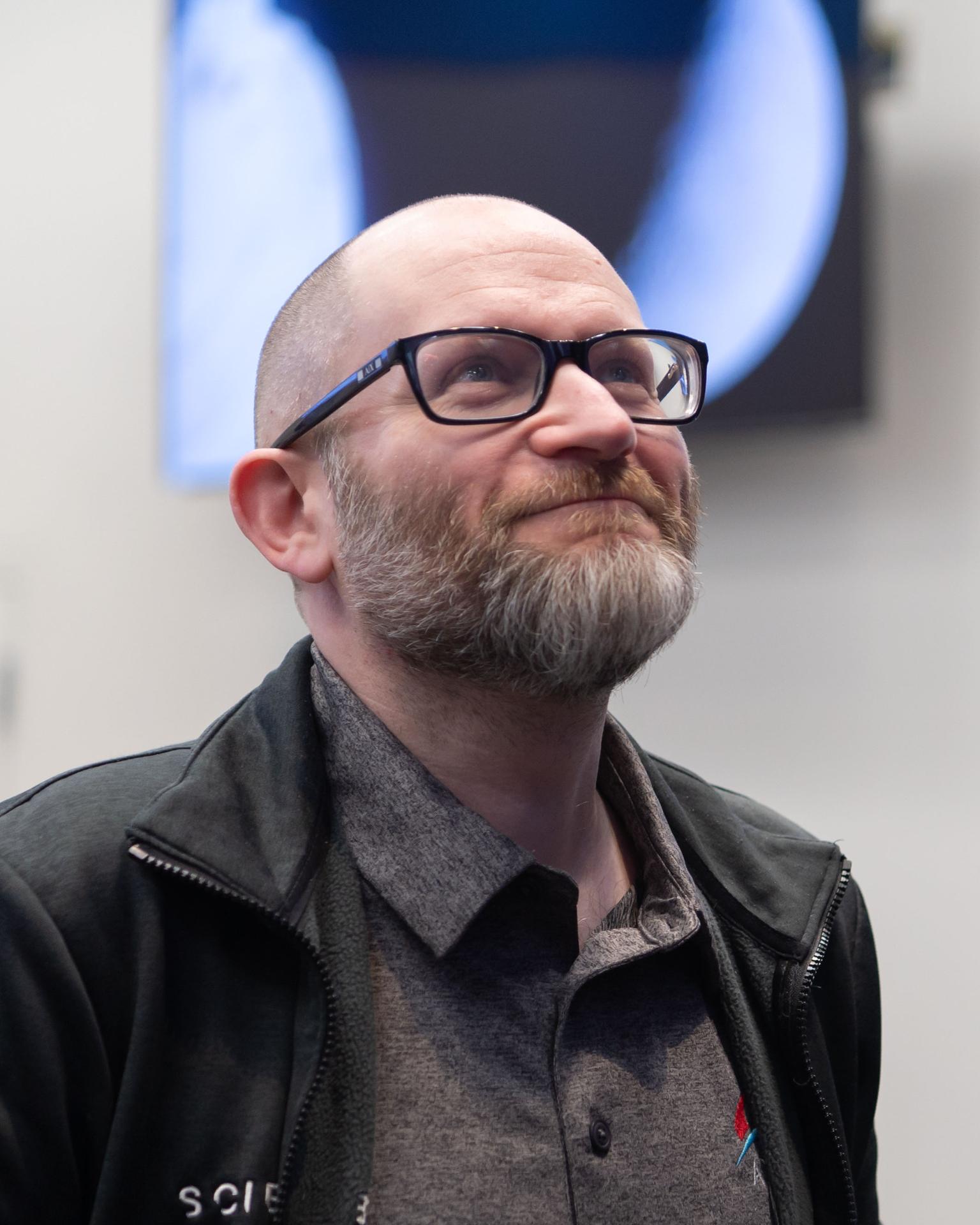
Artemis II crew lunar observations team member, David Charney, monitors the mission from the Science Evaluation Room (SER). Built specifically for Artemis missions with these science priorities in mind, the SER is equipped to support rapid data interpretation, collaborative analysis, real-time decision making, and seamless coordination between the science and operations teams. Credits: NASA/Luna Posadas Nava
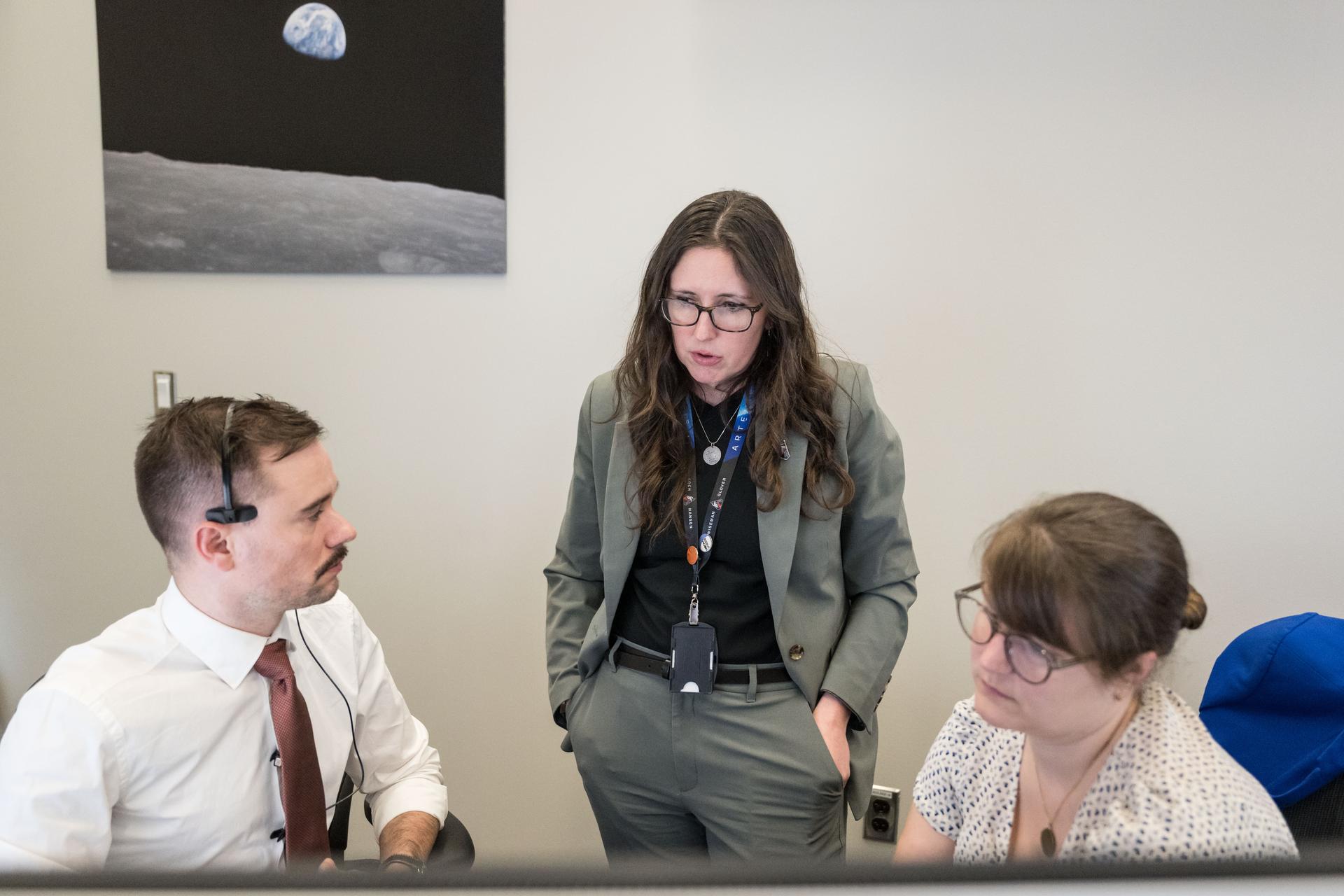
From left, Artemis II deputy lunar science lead, Jacob Richardson, science officer and lunar science lead, Kelsey Young, and deputy lunar science lead, Marie Henderson, discuss the team’s final preparations for the lunar flyby. The team worked in the Science Evaluation Room (SER) in Mission Control at NASA’s Johnson Space Center in Houston. Built specifically for Artemis missions with these science priorities in mind, the SER is equipped to support rapid data interpretation, collaborative analysis, real-time decision making, and seamless coordination between the science and operations teams. Credits: NASA/ Robert Markowitz
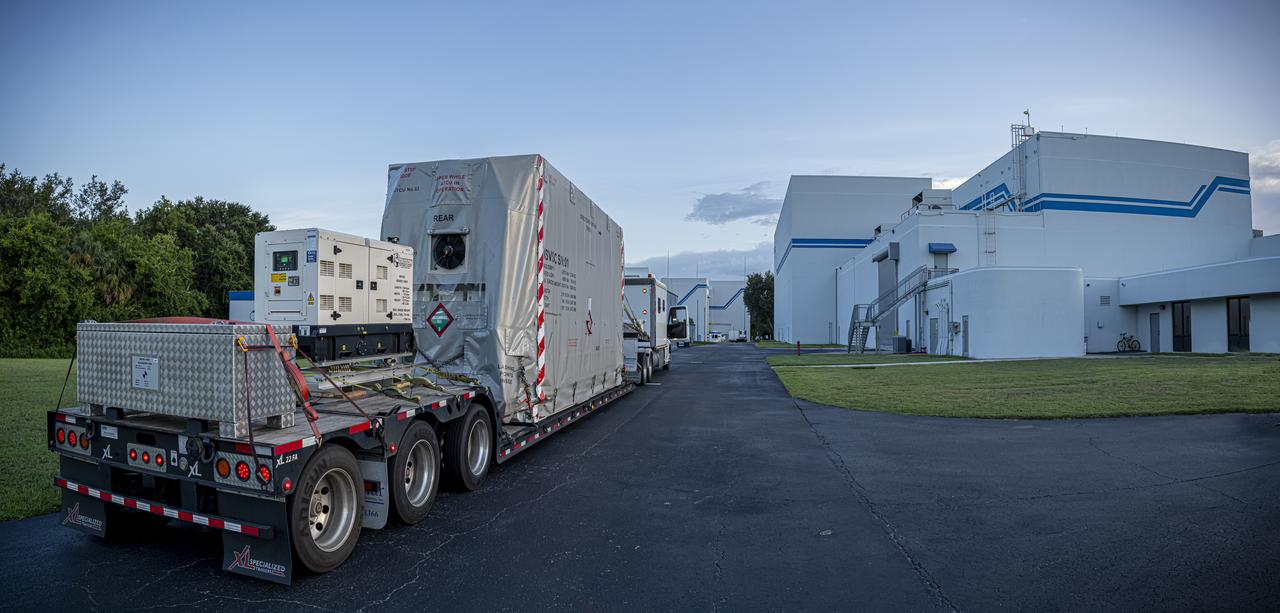
The National Oceanic and Atmospheric Administration’s (NOAA) Space Weather Follow On–Lagrange 1 (SWFO-L1) Observatory, set to provide quicker and more accurate space weather forecasts, arrived Sunday, July 20, 2025, at the Astrotech Space Operations Facility near NASA’s Kennedy Space Center in Florida. The SWFO-L1 mission will monitor the Sun and near-Earth environment using a suite of instruments that provide real-time measurements of solar activity. The observatory will launch as a rideshare with NASA’s IMAP (Interstellar Mapping and Acceleration Probe) no earlier than September 2025.
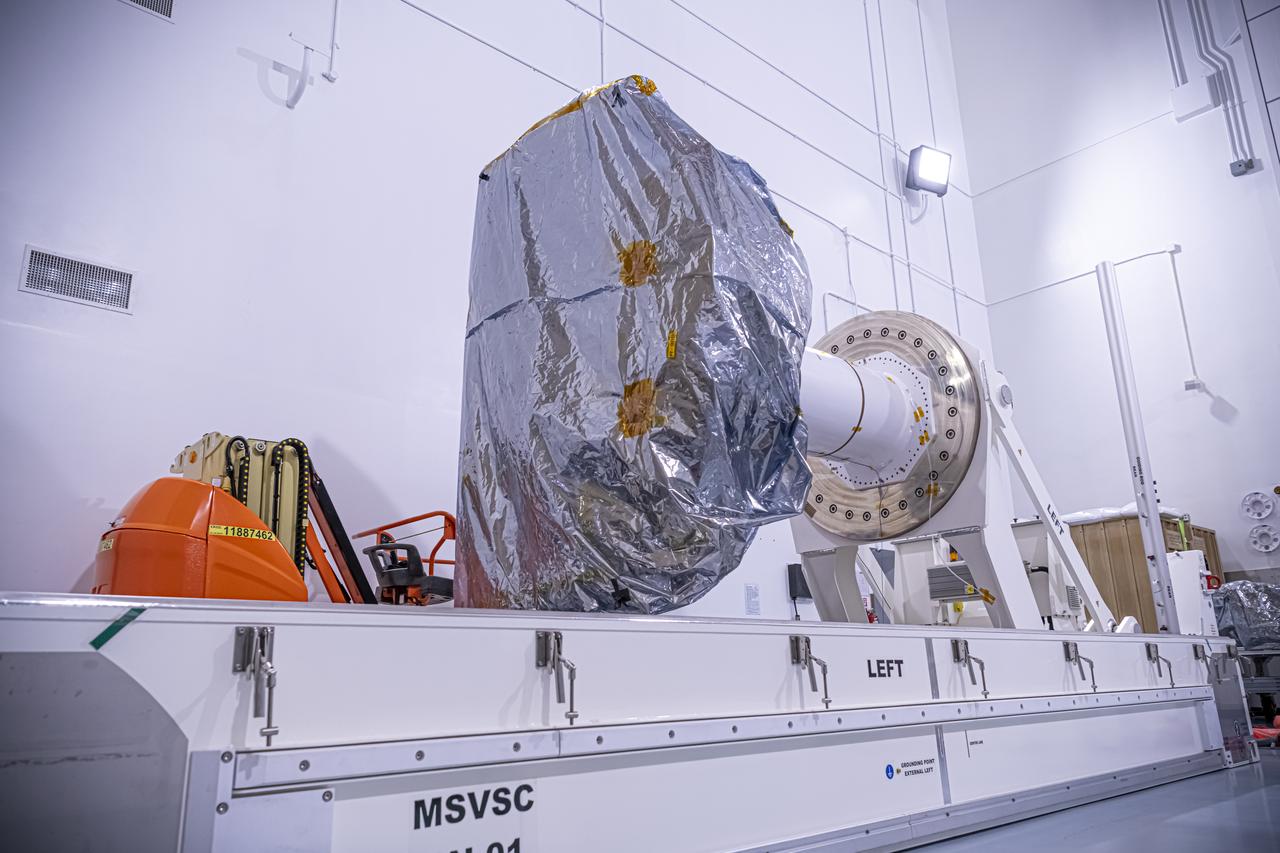
A photographer captures the National Oceanic and Atmospheric Administration’s (NOAA) Space Weather Follow On–Lagrange 1 (SWFO-L1) Observatory laying horizontal on Tuesday, July 22, 2025, following the arrival and unboxing of the observatory at the Astrotech Space Operations Facility near NASA’s Kennedy Space Center in Florida. The SWFO-L1 mission will monitor the Sun and near-Earth environment using a suite of instruments that provide real-time measurements of solar activity. The observatory will launch as a rideshare with NASA’s IMAP (Interstellar Mapping and Acceleration Probe) no earlier than September 2025.
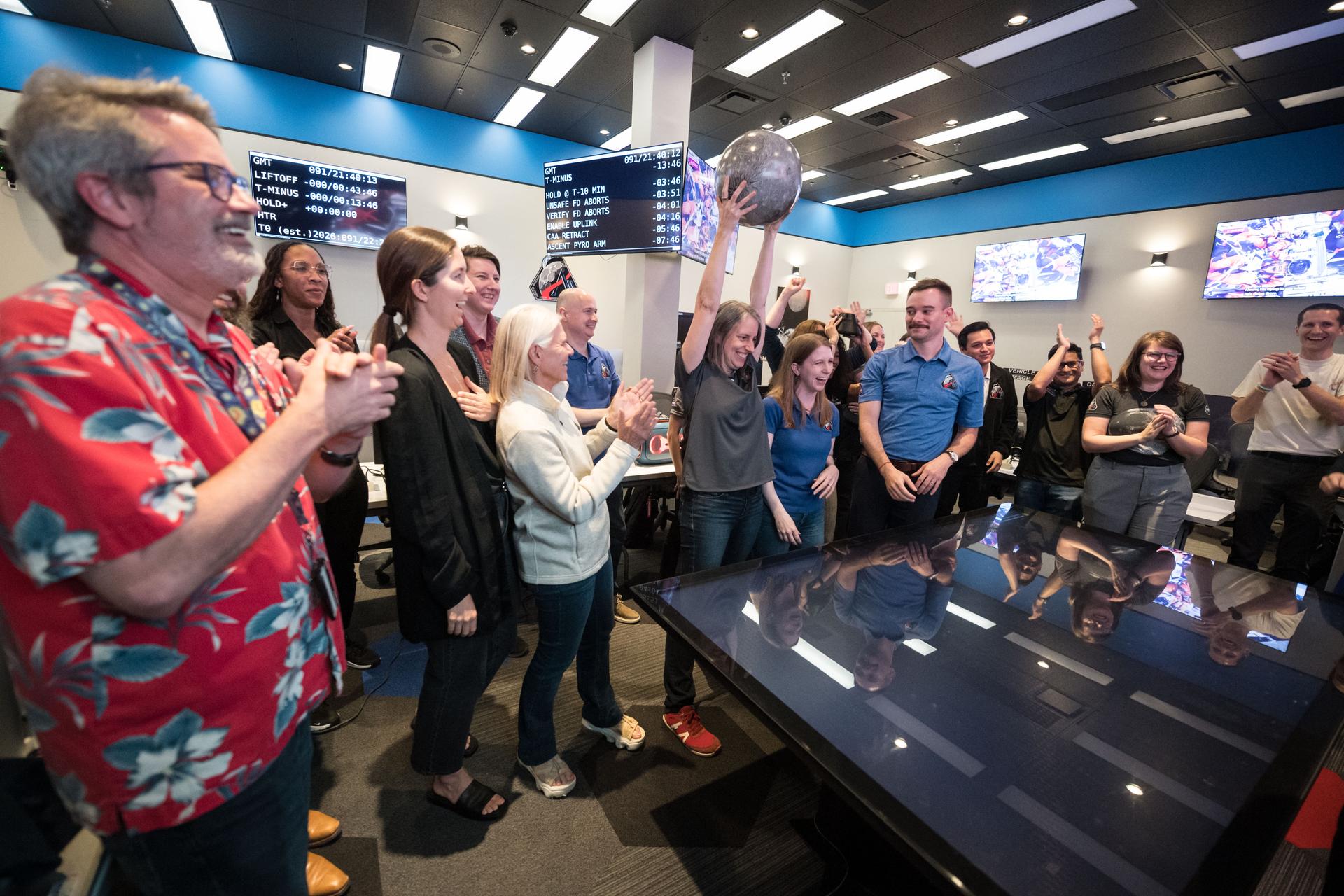
Members of the Artemis lunar science team cheer as they gather to watch the Artemis II launch broadcast from the Science Evaluation Room (SER) in Mission Control at NASA's Johnson Space Center in Houston. The SER supports lunar science and planetary observations for the Artemis science officer in the mission’s main flight control room. Built specifically for Artemis missions with these science priorities in mind, the SER is equipped to support rapid data interpretation, collaborative analysis, real-time decision making, and seamless coordination between the science and operations teams. Credits: NASA/Mark Sowa.
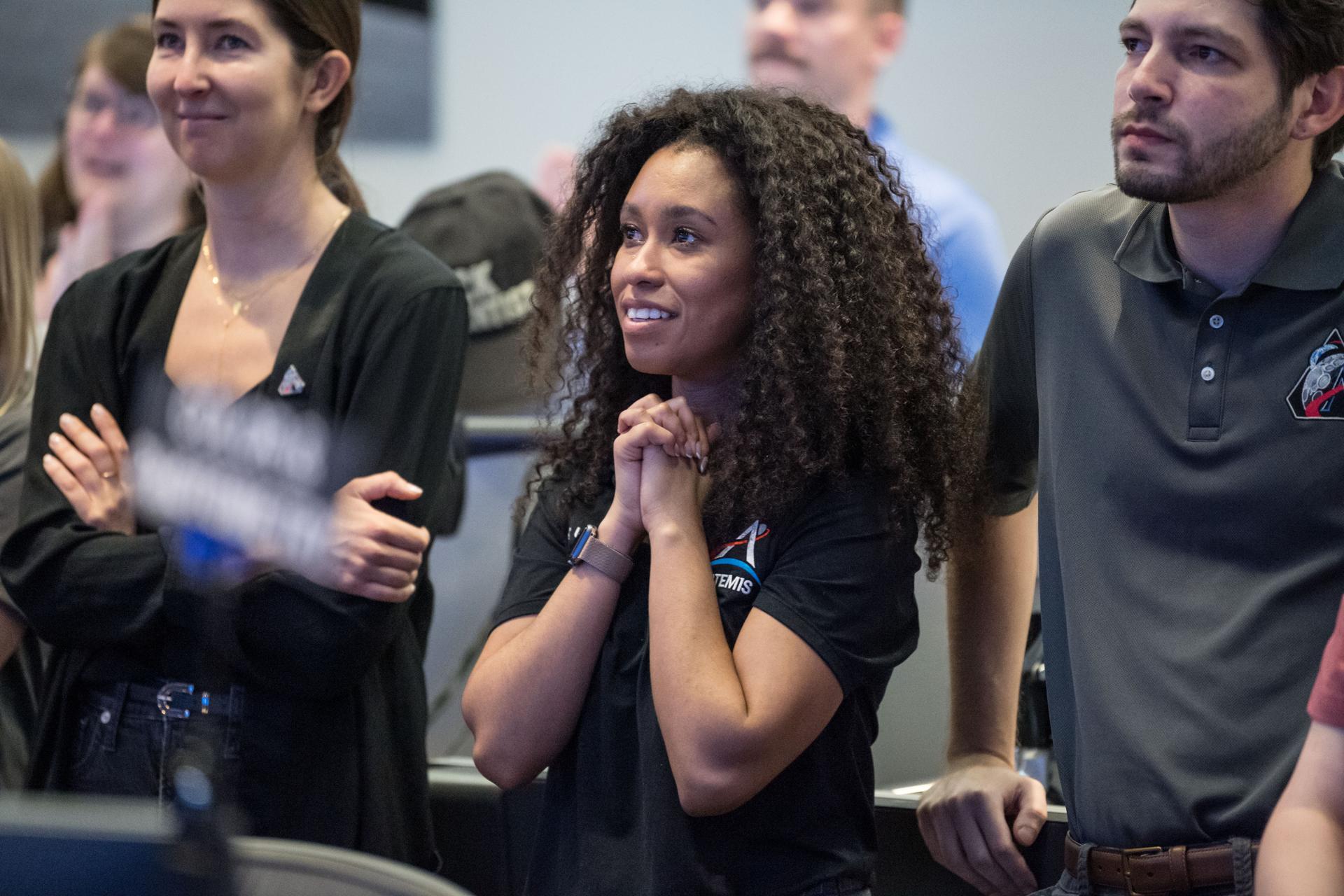
Members of the Artemis lunar science team, from left, Ariel Deutsch, Amber Turner, and Wilfredo Garcia-Lopez, watch the Artemis II launch from the Science Evaluation Room (SER) in Mission Control at Johnson Space Center in Houston. The SER supports lunar science and planetary observations for the Artemis science officer in the mission’s main flight control room. Built specifically for Artemis missions with these science priorities in mind, the SER is equipped to support rapid data interpretation, collaborative analysis, real-time decision making, and seamless coordination between the science and operations teams. Credits: NASA/Mark Sowa.
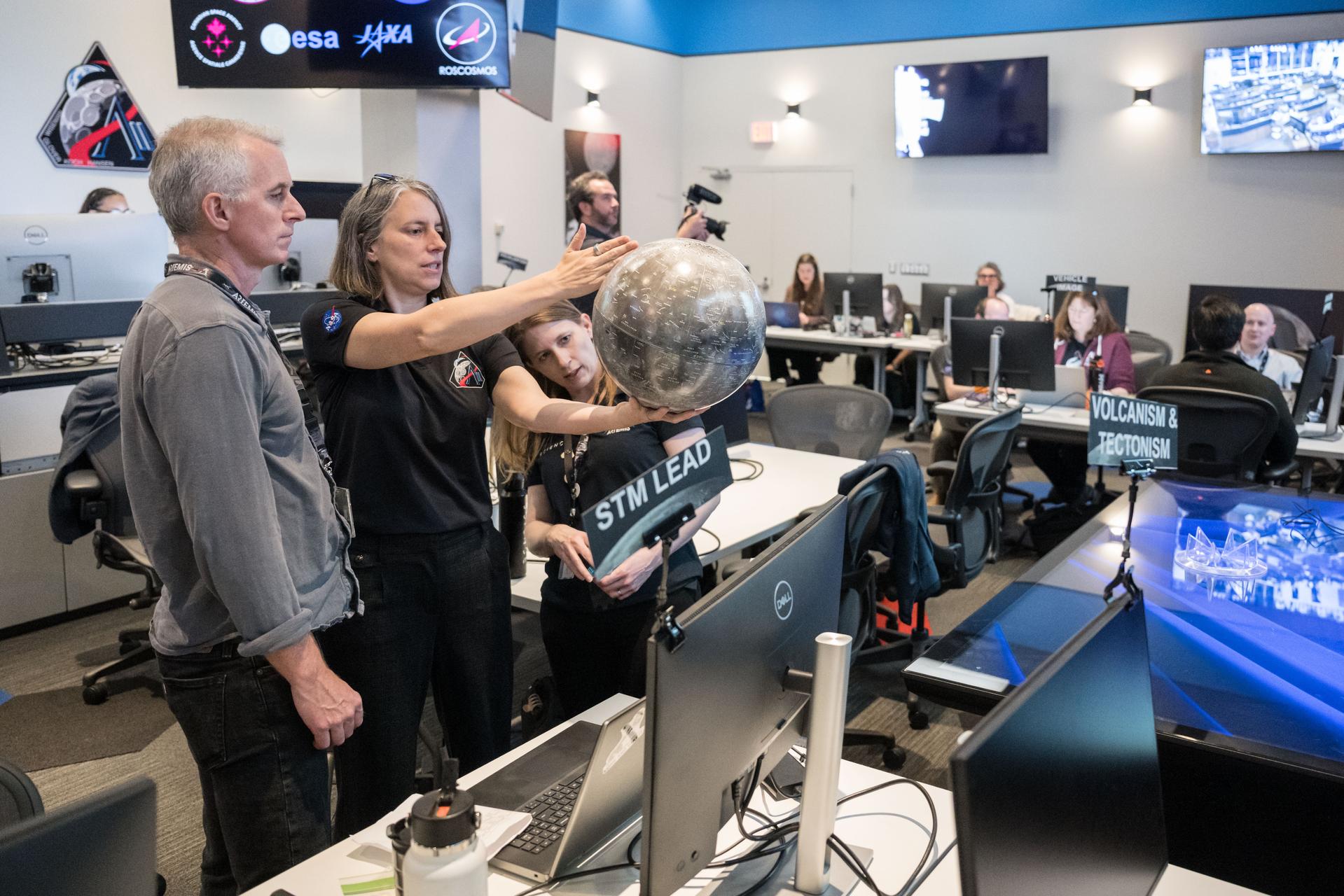
Artemis II lunar science team members, from left, Ryan Ewing, Juliane Gross, and Debra Needham, discuss lunar geography ahead of the translunar injection burn that accelerated the Orion spacecraft to break free of Earth’s orbit and began the outbound trajectory toward the Moon. They are in the Science Evaluation Room (SER) a back room that supports lunar science and planetary observations for the Artemis science officer in the mission’s main flight control room. Built specifically for Artemis missions with these science priorities in mind, the SER is equipped to support rapid data interpretation, collaborative analysis, real-time decision making, and seamless coordination between the science and operations teams.

Artemis II lunar science team member, Juliane Gross, center, and the extended lunar science team behind her, celebrates crew observations made during the lunar flyby on April 6. The team worked in the Science Evaluation Room (SER) in Mission Control at NASA’s Johnson Space Center in Houston. Built specifically for Artemis missions with these science priorities in mind, the SER is equipped to support rapid data interpretation, collaborative analysis, real-time decision making, and seamless coordination between the science and operations teams. Credits: NASA/Luna Posadas Nava
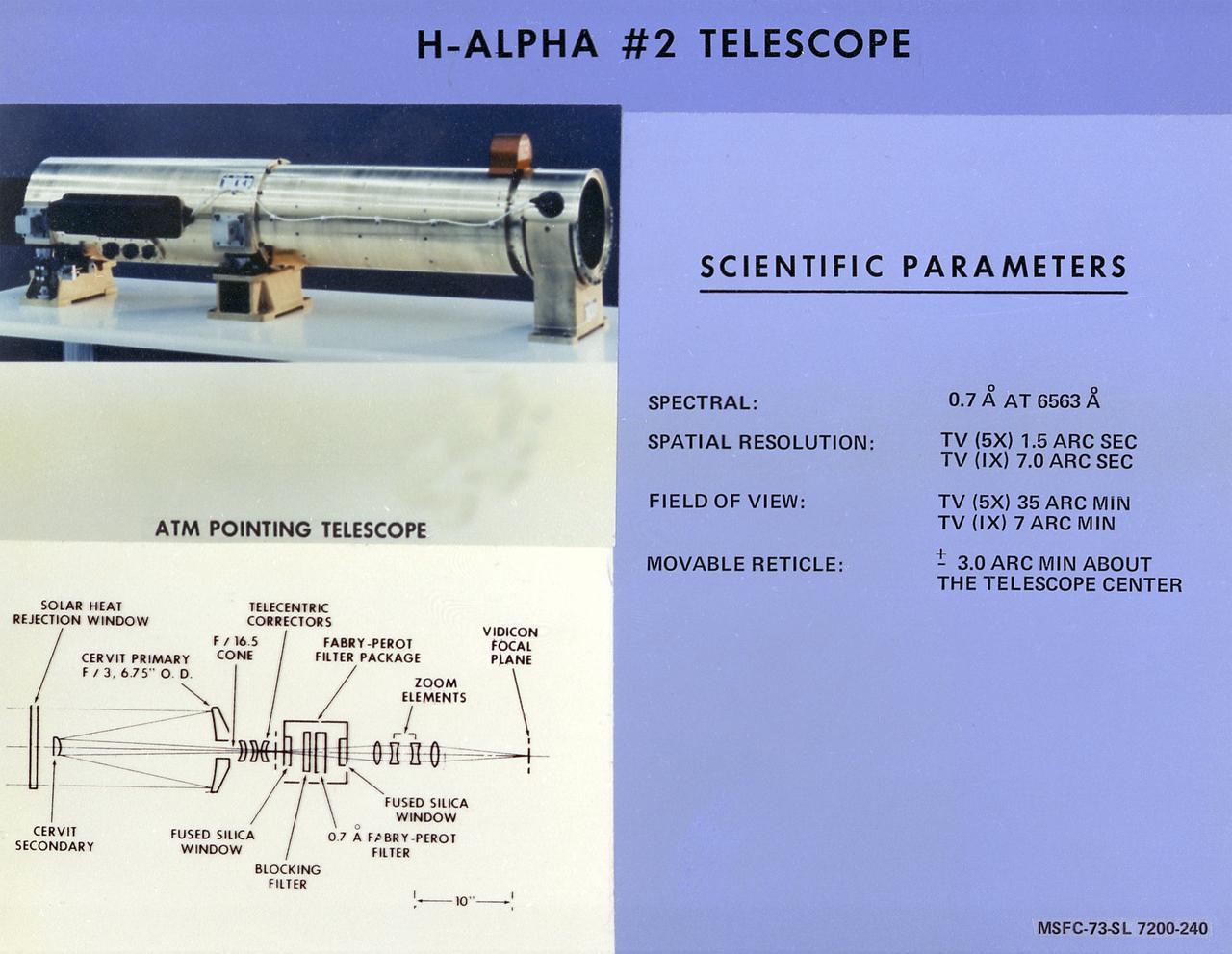
This chart describes the Hydrogen-Alpha (H-Alpha) #2 Telescope, one of eight major solar study facilities on the Skylab Apollo Telescope Mount (ATM). There were two H-Alpha telescopes on the ATM that were used primarily to point the ATM and keep a continuous photographic record during solar observation periods. Both telescopes gave the Skylab astronauts a real-time picture of the Sun in the red light of the H-Alpha spectrum through a closed-circuit television. The H-Alpha #1 telescope provided simultaneous photographic and ultraviolet (UV) pictures, while the #2 telescope operated only in the TV mode. The Marshall Space Flight Center was responsible for development of the H-Alpha Telescopes.

Technicians rotate the National Oceanic and Atmospheric Administration’s (NOAA) Space Weather Follow On–Lagrange 1 (SWFO-L1) Observatory vertically and use a crane to lift it from its transport container on Wednesday, July 23, 2025, following the arrival and unboxing of the observatory at the Astrotech Space Operations Facility near NASA’s Kennedy Space Center in Florida. The SWFO-L1 mission will monitor the Sun and near-Earth environment using a suite of instruments that provide real-time measurements of solar activity. The observatory will launch as a rideshare with NASA’s IMAP (Interstellar Mapping and Acceleration Probe) no earlier than September 2025.
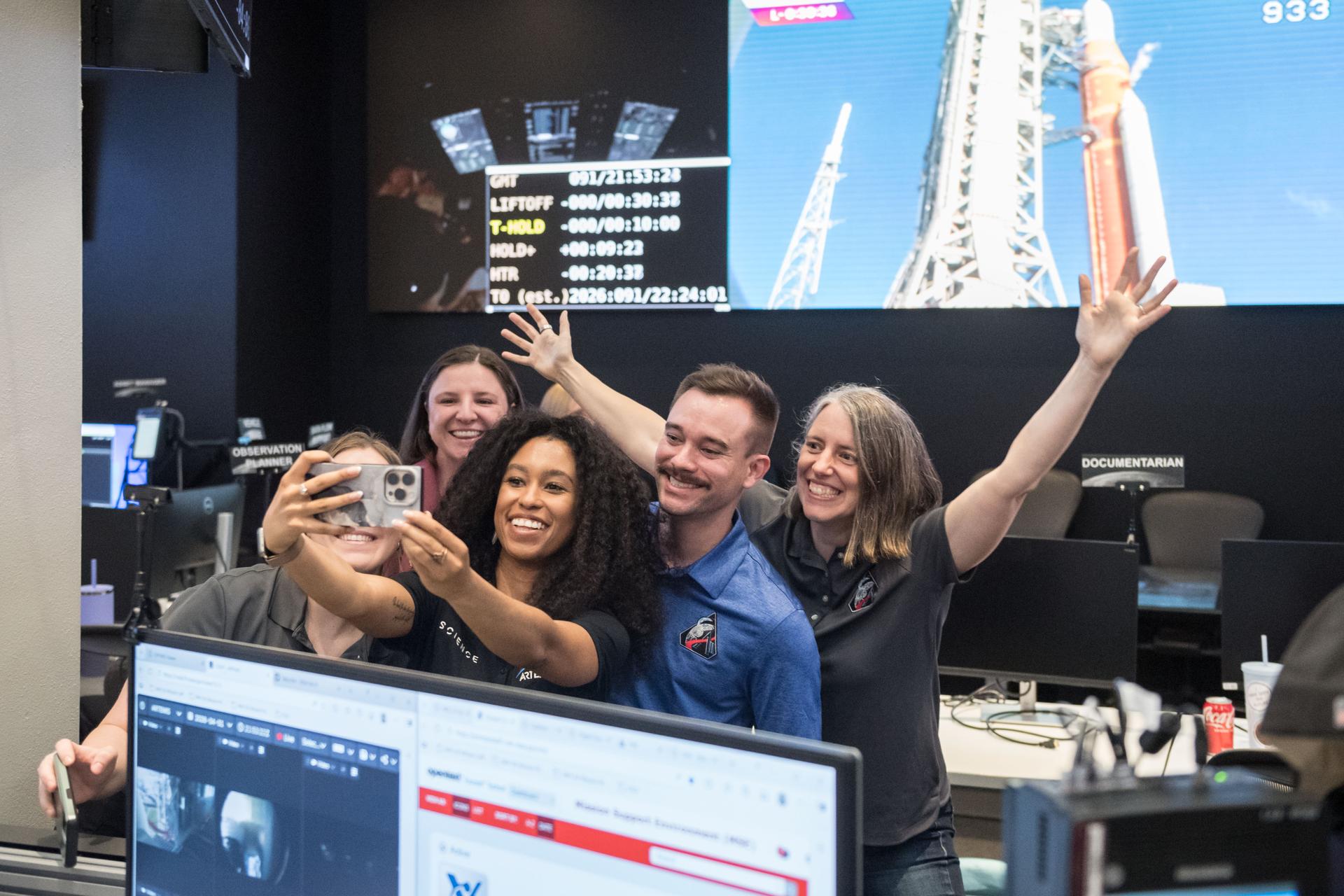
Members of the Artemis lunar science team, from left, Sara Schmidt, Megan Borel, Amber Turner, Jacob Richardson, and Juliane Gross pose for a selfie with the Artemis II launch broadcast on the screen behind them in the Science Evaluation Room (SER) in Mission Control at NASA's Johnson Space Center in Houston. The SER supports lunar science and planetary observations for the Artemis science officer in the mission’s main flight control room. Built specifically for Artemis missions with these science priorities in mind, the SER is equipped to support rapid data interpretation, collaborative analysis, real-time decision making, and seamless coordination between the science and operations teams. Credits: NASA/Mark Sowa.
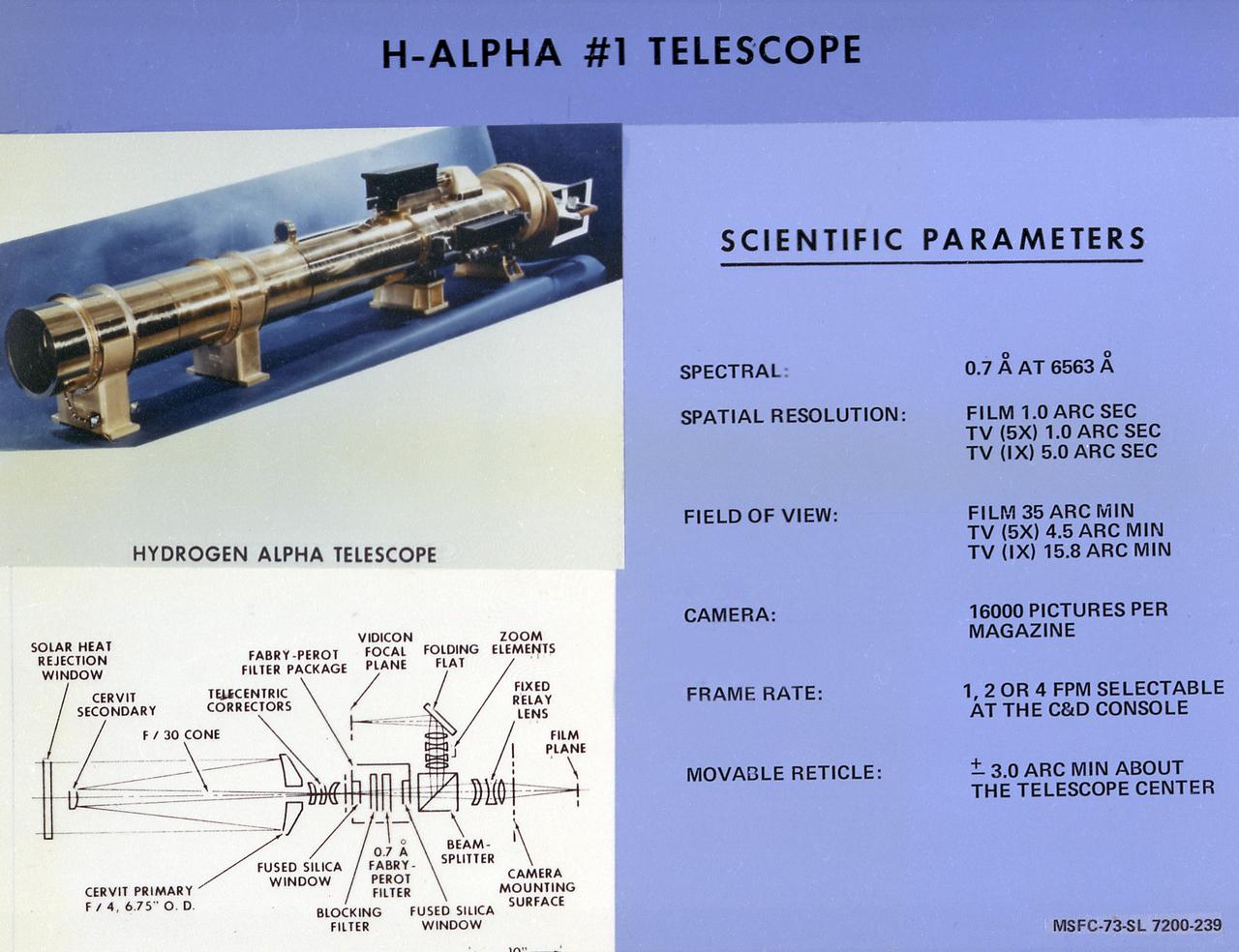
This chart describes the Hydrogen-Alpha (H-Alpha) #1 Telescope, one of eight major solar study facilities on the Skylab Apollo Telescope Mount (ATM). There were two H-Alpha telescopes on the ATM that were used primarily to point the ATM and keep a continuous photographic record during the solar observation periods. Both telescopes gave the Skylab astronauts a real-time picture of the Sun in the red light of the H-Alpha spectrum through a closed-circuit television. The H-Alpha #1 Telescope provided simultaneous photographic and ultraviolet (UV) pictures, while the #2 Telescope operated only in the TV mode. The Marshall Space Flight Center was responsible for development of the H-Alpha Telescopes.
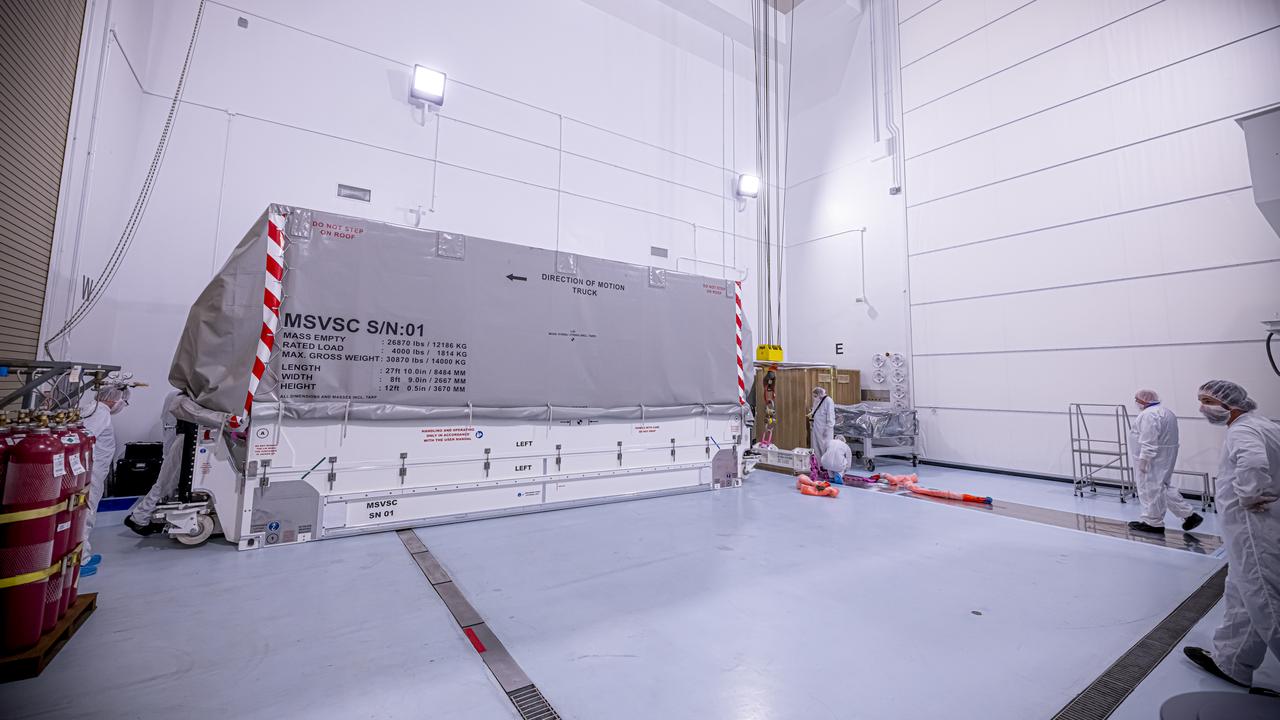
The National Oceanic and Atmospheric Administration’s (NOAA) Space Weather Follow On–Lagrange 1 (SWFO-L1) Observatory, set to provide quicker and more accurate space weather forecasts, arrived Sunday, July 20, 2025, at the Astrotech Space Operations Facility near NASA’s Kennedy Space Center in Florida. The SWFO-L1 mission will monitor the Sun and near-Earth environment using a suite of instruments that provide real-time measurements of solar activity. The observatory will launch as a rideshare with NASA’s IMAP (Interstellar Mapping and Acceleration Probe) no earlier than September 2025.
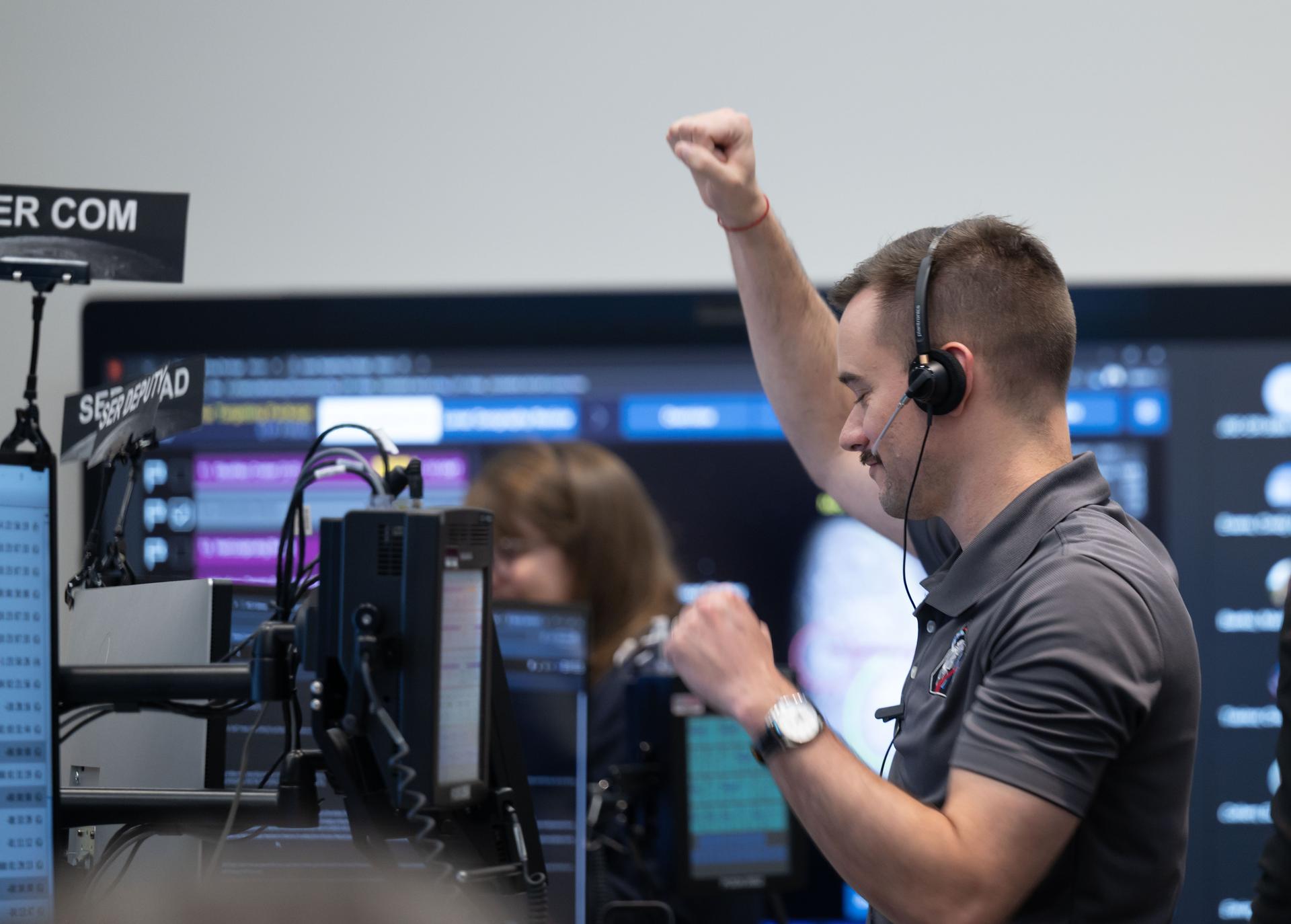
Artemis II deputy lunar science lead, Jacob Richardson, celebrates with a dance after hearing astronauts describe seeing impact flashes on the Moon during their lunar flyby on April 6, 2026. Richardson was monitoring the flyby from the Science Evaluation Room (SER) in Mission Control at NASA’s Johnson Space Center in Houston. Built specifically for Artemis missions with these science priorities in mind, the SER is equipped to support rapid data interpretation, collaborative analysis, real-time decision making, and seamless coordination between the science and operations teams. Credits: NASA/Luna Posadas Nava
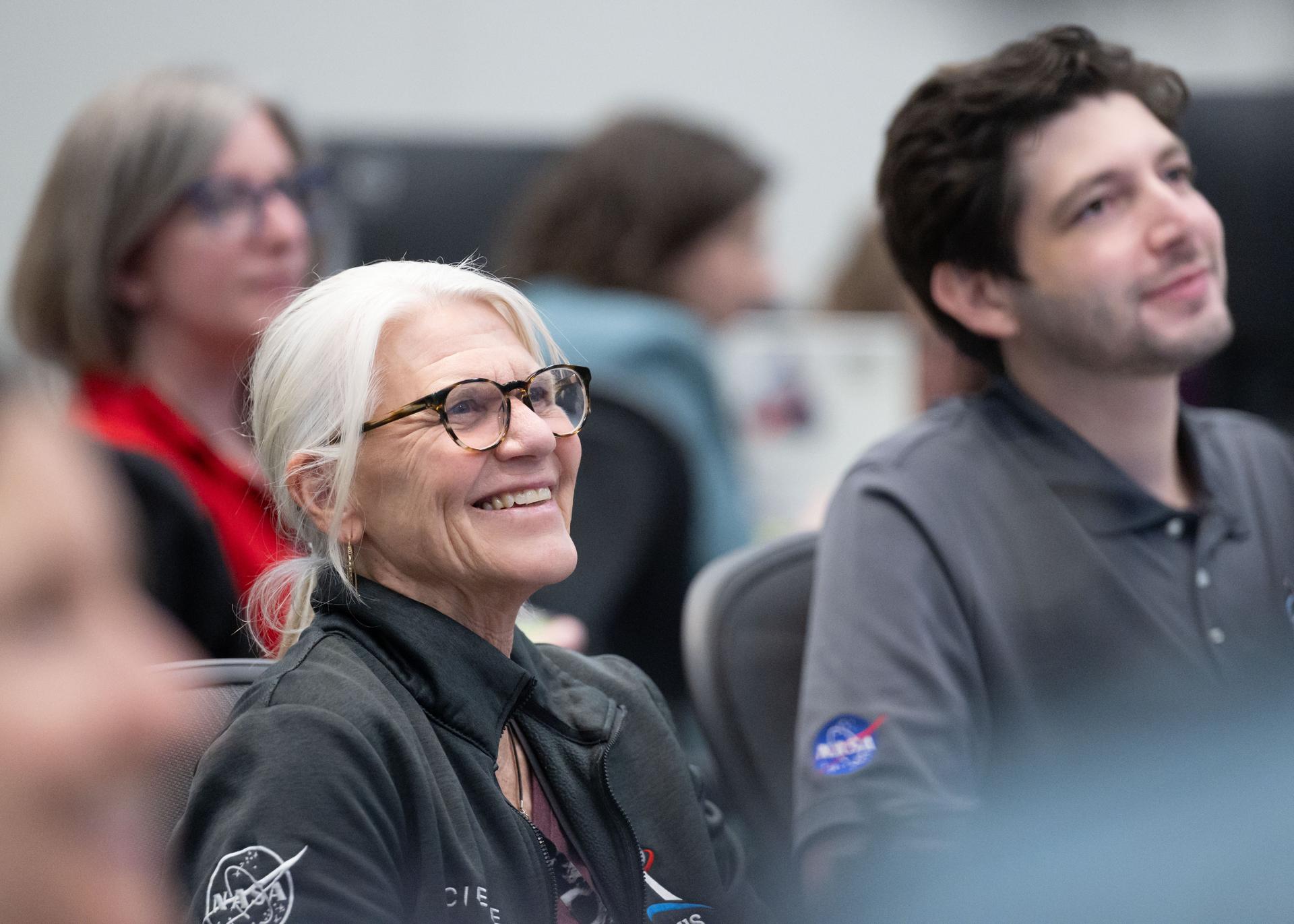
Artemis II lunar science team members, from left, Cindy Evans, and Wilfredo Garcia Lopez, react to crew observations during the lunar flyby on April 6, 2026. The team worked in the Science Evaluation Room (SER) in Mission Control at NASA’s Johnson Space Center in Houston. Built specifically for Artemis missions with these science priorities in mind, the SER is equipped to support rapid data interpretation, collaborative analysis, real-time decision making, and seamless coordination between the science and operations teams. Credits: NASA/Luna Posadas Nava
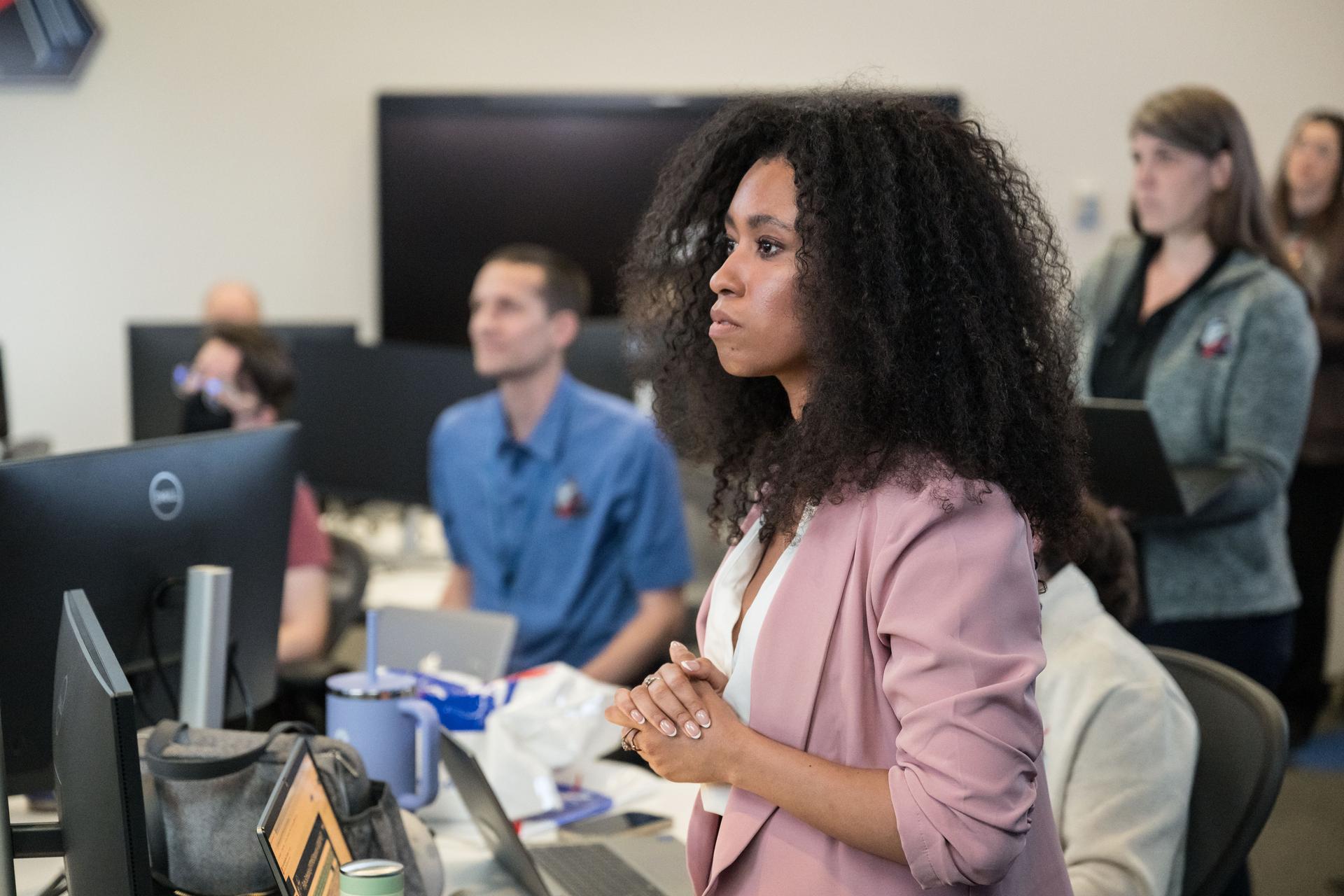
Artemis II lunar science team member, foreground, Amber Turner, and David Hollibaugh-Baker, and Cherie Achilles, background, participate in the team’s analysis of crew observations during the lunar flyby on April 6, 2026. The team worked in the Science Evaluation Room (SER) in Mission Control at NASA’s Johnson Space Center in Houston. Built specifically for Artemis missions with these science priorities in mind, the SER is equipped to support rapid data interpretation, collaborative analysis, real-time decision making, and seamless coordination between the science and operations teams. Credits: NASA/ Robert Markowitz
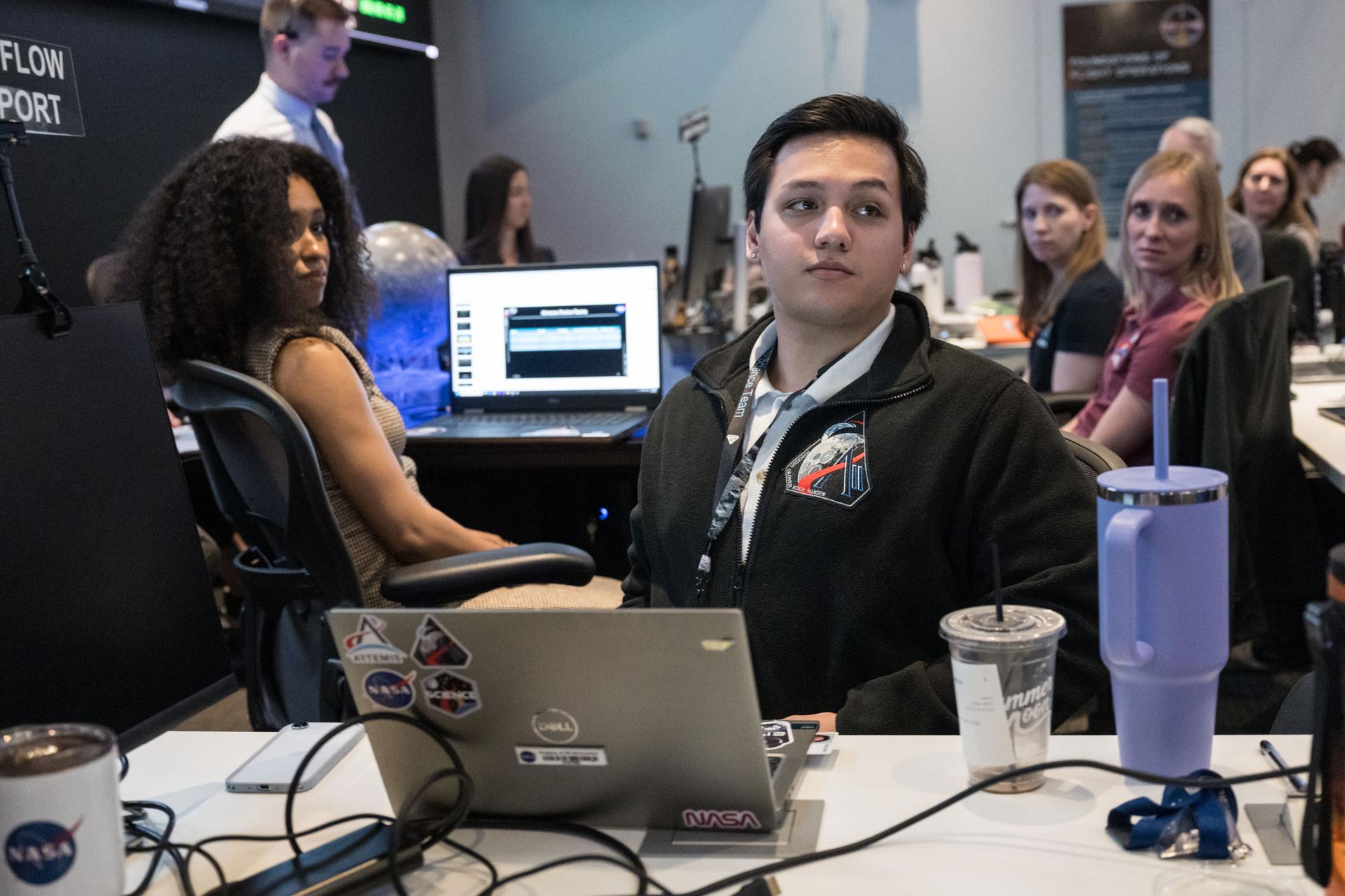
Artemis II lunar science team members, in the foreground from left: Amber Turner and Jared Ralleta in the center. Standing up behind Turner is Jacob Richardson, and sitting behind and to the right, of Ralleta, are Ryan Watkins in the front, and Debra Needham behind her. The SER supports the Artemis science officer in the mission’s main flight control room. Built specifically for Artemis missions with these science priorities in mind, the SER is equipped to support rapid data interpretation, collaborative analysis, real-time decision making, and seamless coordination between the science and operations teams. Credits: NASA/Luna Posadas Nava
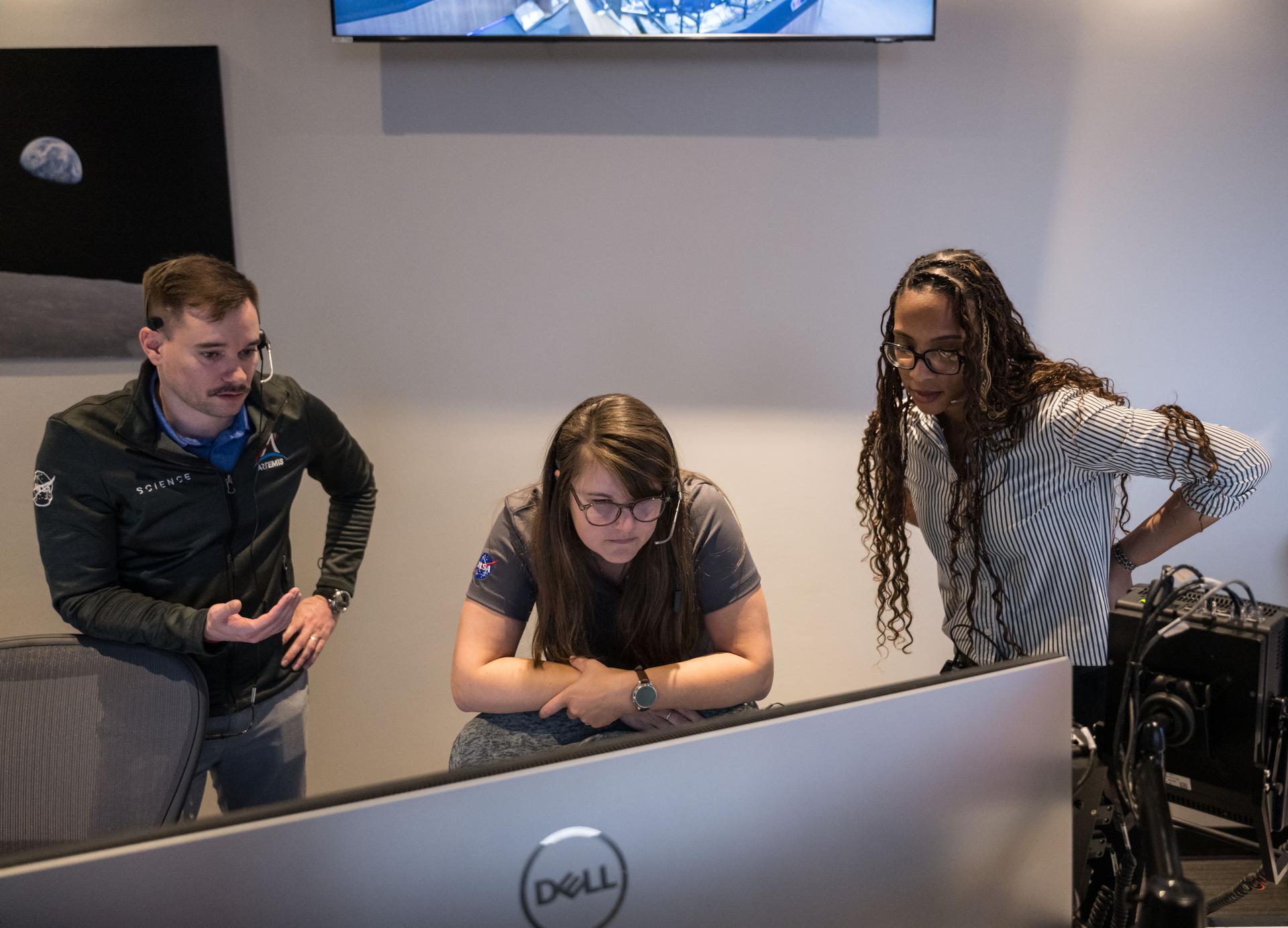
jsc2026e000848 --- Artemis lunar science team members, from left, Jacob Richardson, Marie Henderson, and Kiarre Dumes, monitor a lunar flyby simulation from the Science Evaluation Room (SER) at the NASA’s Johnson Space Center in Houston. Located in the Christopher C. Kraft Jr. Mission Control Center, the SER supports the mission’s main flight control room for lunar science and planetary observations. Built specifically for Artemis missions with these science priorities in mind, the SER is equipped to support rapid data interpretation, collaborative analysis, real-time decision making, and seamless coordination between the science and operations teams. Credit: James Blair
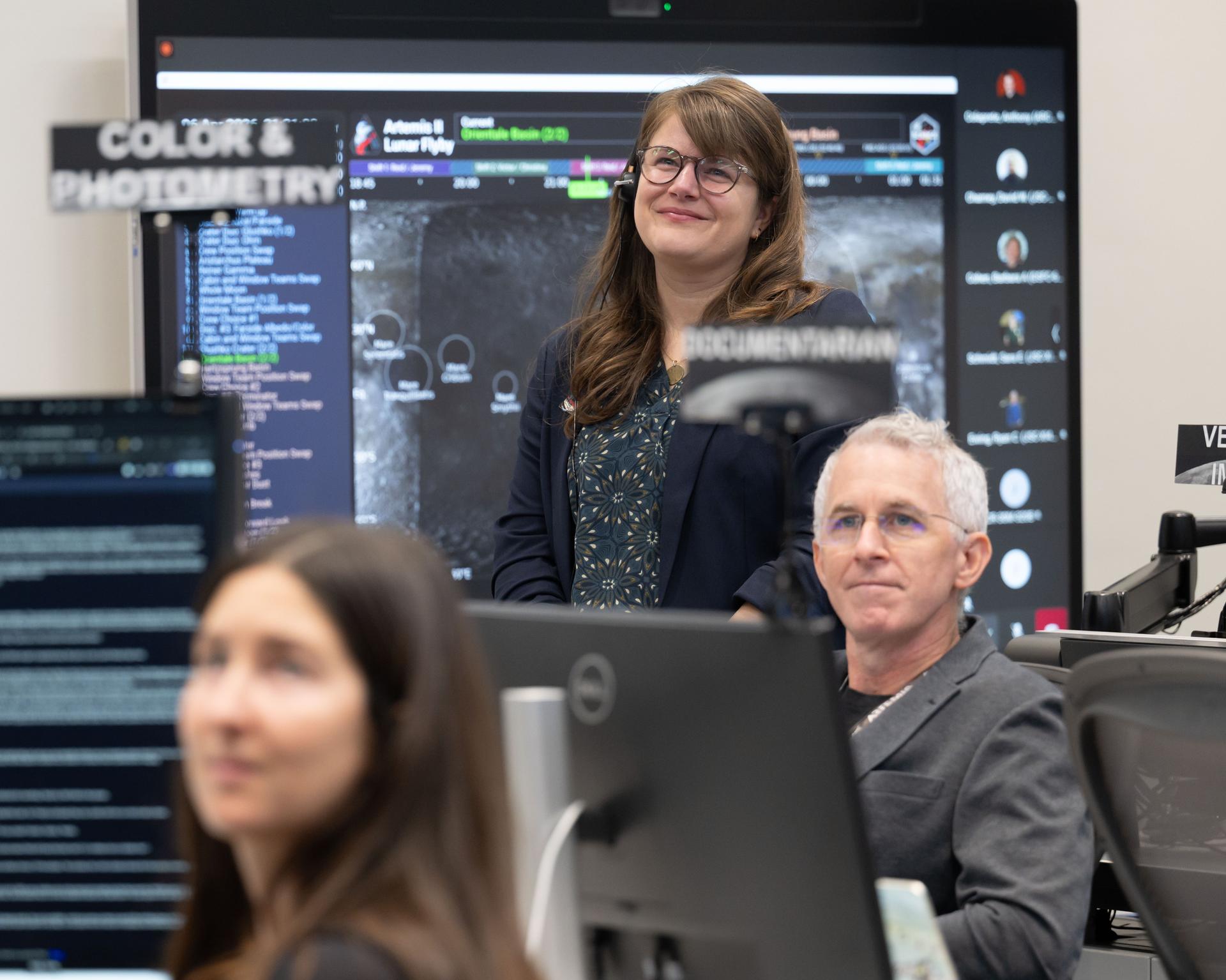
Artemis II deputy lunar science lead Marie Henderson, background, and lunar science team members, Ariel Deutsch, and Ryan Ewing, react to crew observations during the lunar flyby on April 6, 2026. The team worked in the Science Evaluation Room (SER) in Mission Control at NASA’s Johnson Space Center in Houston. Built specifically for Artemis missions with these science priorities in mind, the SER is equipped to support rapid data interpretation, collaborative analysis, real-time decision making, and seamless coordination between the science and operations teams. Credits: NASA/Luna Posadas Nava
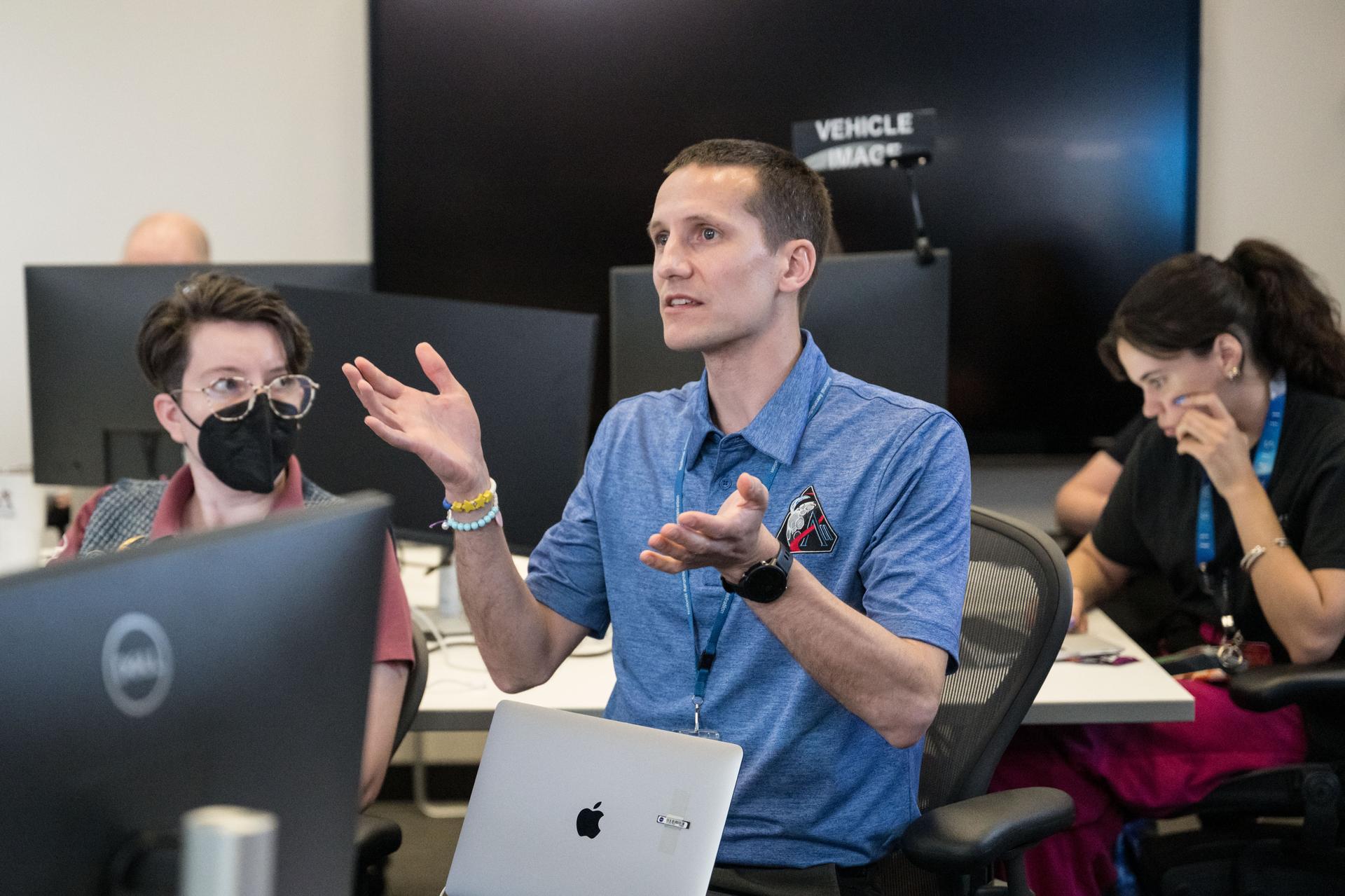
Artemis II lunar science team members, from left, Alexadra Constantinou, David Hollibaugh-Baker, participate in the team’s final preparations for the lunar flyby. NASA Johnson public affairs officer, Victoria Segovia, is seen in the background. The team worked in the Science Evaluation Room (SER) in Mission Control at NASA’s Johnson Space Center in Houston. Built specifically for Artemis missions with these science priorities in mind, the SER is equipped to support rapid data interpretation, collaborative analysis, real-time decision making, and seamless coordination between the science and operations teams. Credits: Credits: NASA/ Robert Markowitz
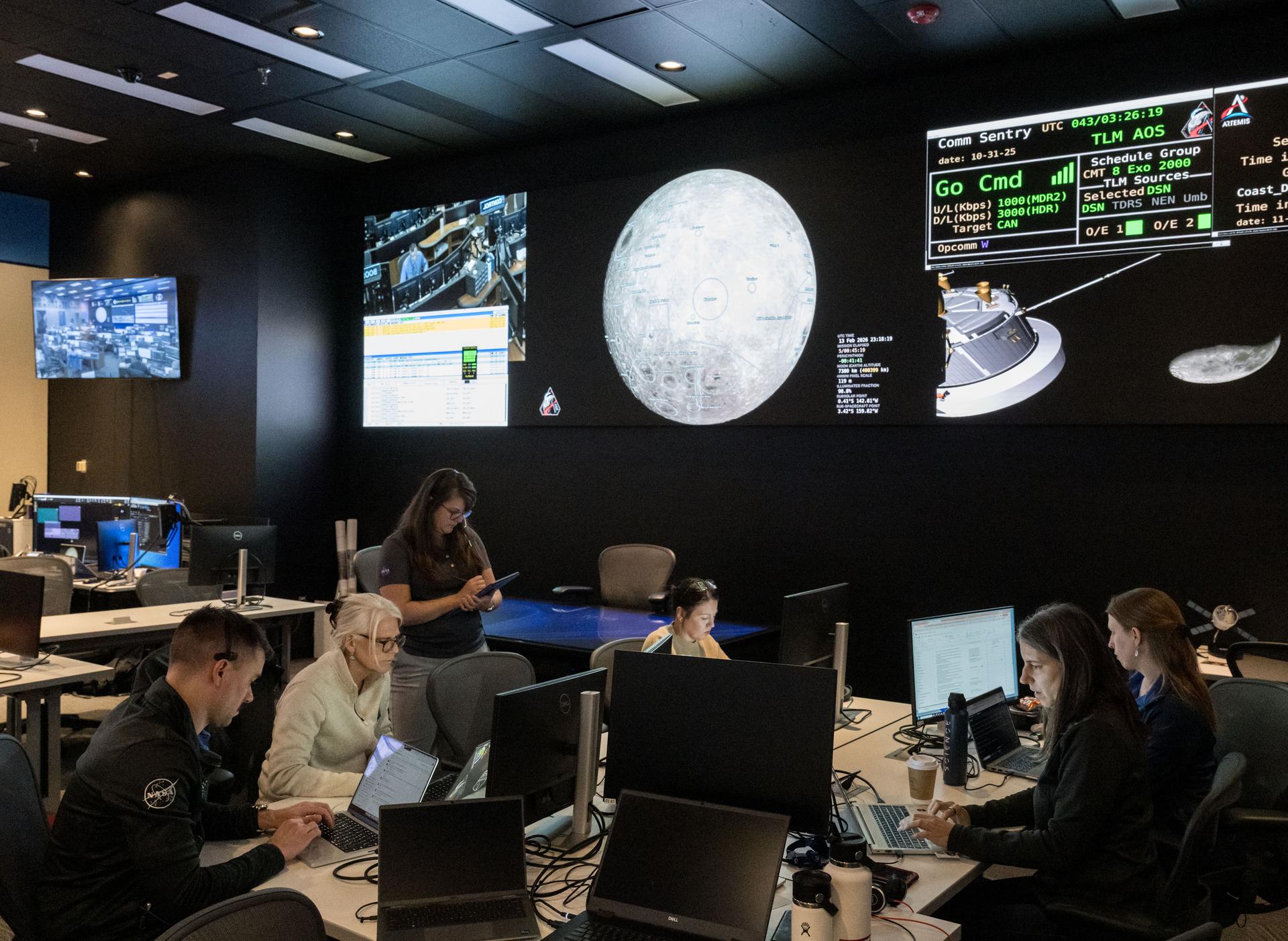
jsc2026e000849 --- The Artemis II Lunar Science Team works in the Science Evaluation Room (SER) during a training simulation at the NASA’s Johnson Space Center in Houston. Located in the Christopher C. Kraft Jr. Mission Control Center, the SER supports the mission’s main flight control room for lunar science and planetary observations. Built specifically for Artemis missions with these science priorities in mind, the SER is equipped to support rapid data interpretation, collaborative analysis, real-time decision making, and seamless coordination between the science and operations teams. Credit: James Blair
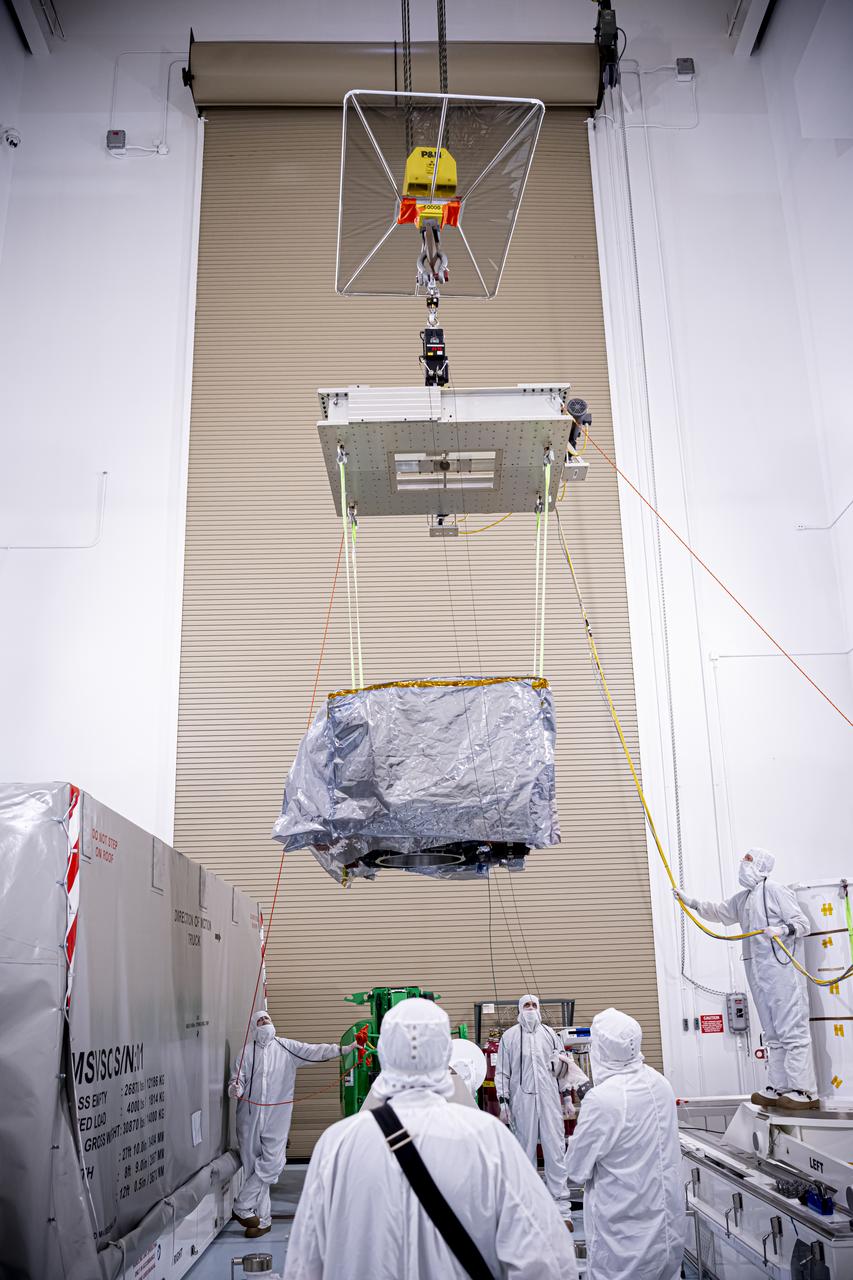
Technicians rotate the National Oceanic and Atmospheric Administration’s (NOAA) Space Weather Follow On–Lagrange 1 (SWFO-L1) Observatory vertically and use a crane to lift it from its transport container on Wednesday, July 23, 2025, following the arrival and unboxing of the observatory at the Astrotech Space Operations Facility near NASA’s Kennedy Space Center in Florida. The SWFO-L1 mission will monitor the Sun and near-Earth environment using a suite of instruments that provide real-time measurements of solar activity. The observatory will launch as a rideshare with NASA’s IMAP (Interstellar Mapping and Acceleration Probe) no earlier than September 2025.
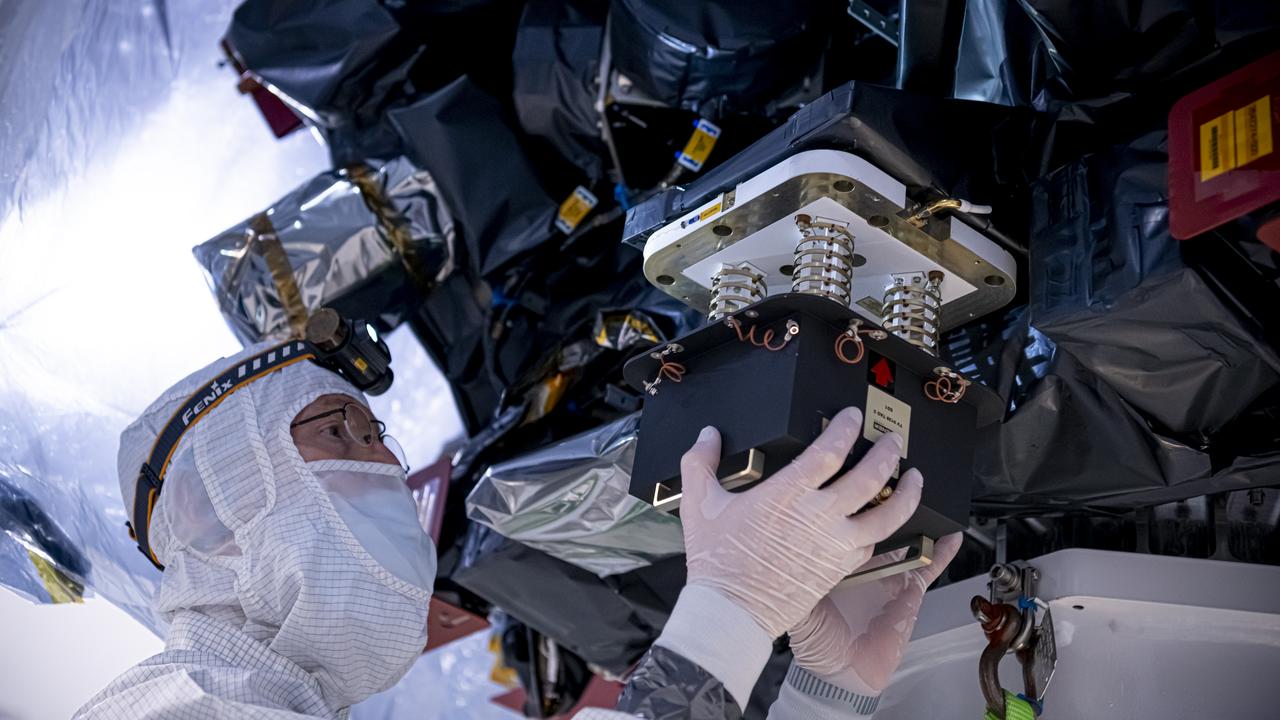
Technicians rotate the National Oceanic and Atmospheric Administration’s (NOAA) Space Weather Follow On–Lagrange 1 (SWFO-L1) Observatory vertically and use a crane to lift it from its transport container on Wednesday, July 23, 2025, following the arrival and unboxing of the observatory at the Astrotech Space Operations Facility near NASA’s Kennedy Space Center in Florida. The SWFO-L1 mission will monitor the Sun and near-Earth environment using a suite of instruments that provide real-time measurements of solar activity. The observatory will launch as a rideshare with NASA’s IMAP (Interstellar Mapping and Acceleration Probe) no earlier than September 2025.
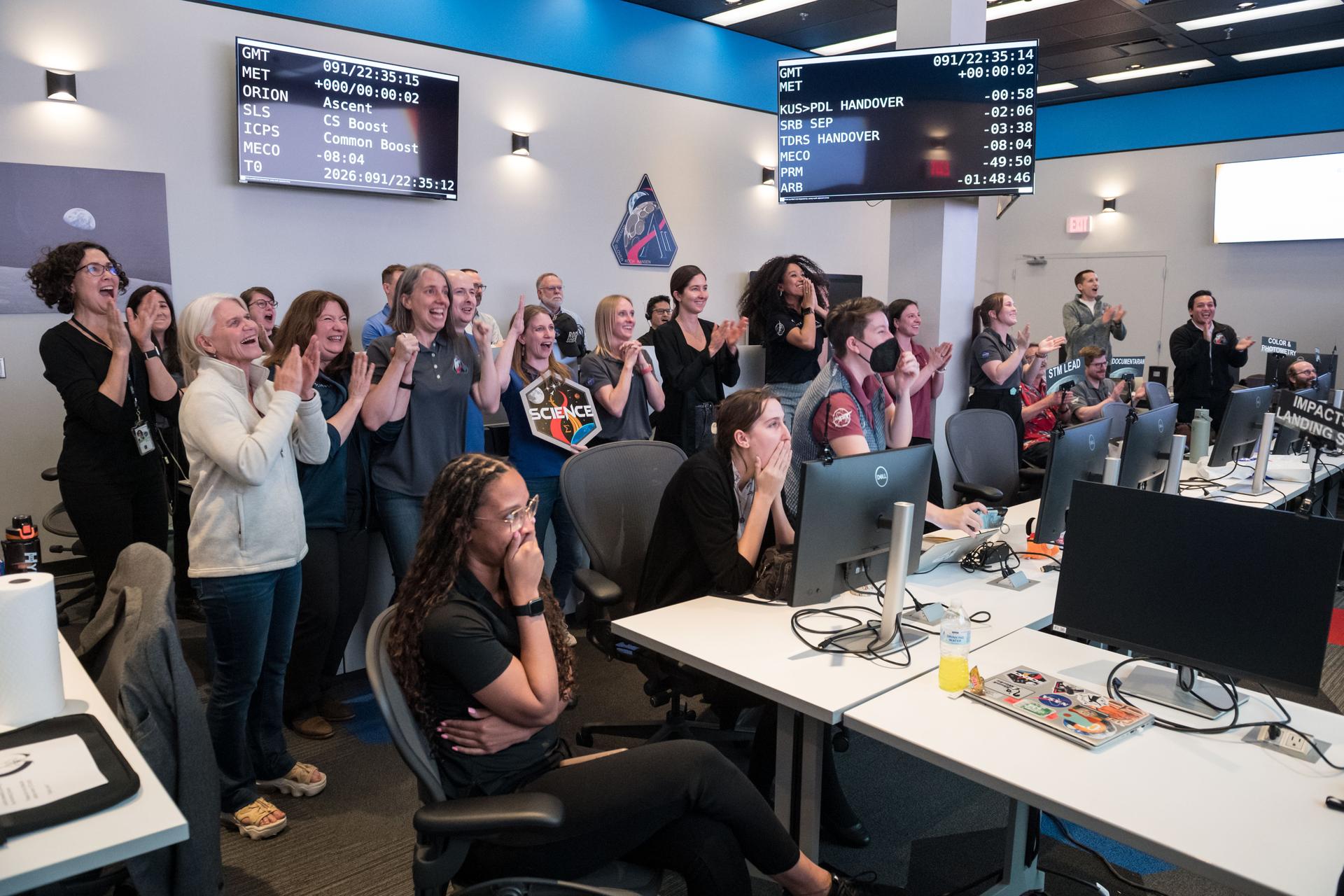
Members of the Artemis lunar science team celebrate the Artemis II launch as they watch from the Science Evaluation Room (SER) in Mission Control at NASA's Johnson Space Center in Houston. The SER supports lunar science and planetary observations for the Artemis science officer in the mission’s main flight control room. Built specifically for Artemis missions with these science priorities in mind, the SER is equipped to support rapid data interpretation, collaborative analysis, real-time decision making, and seamless coordination between the science and operations teams. Credits: NASA/Mark Sowa.
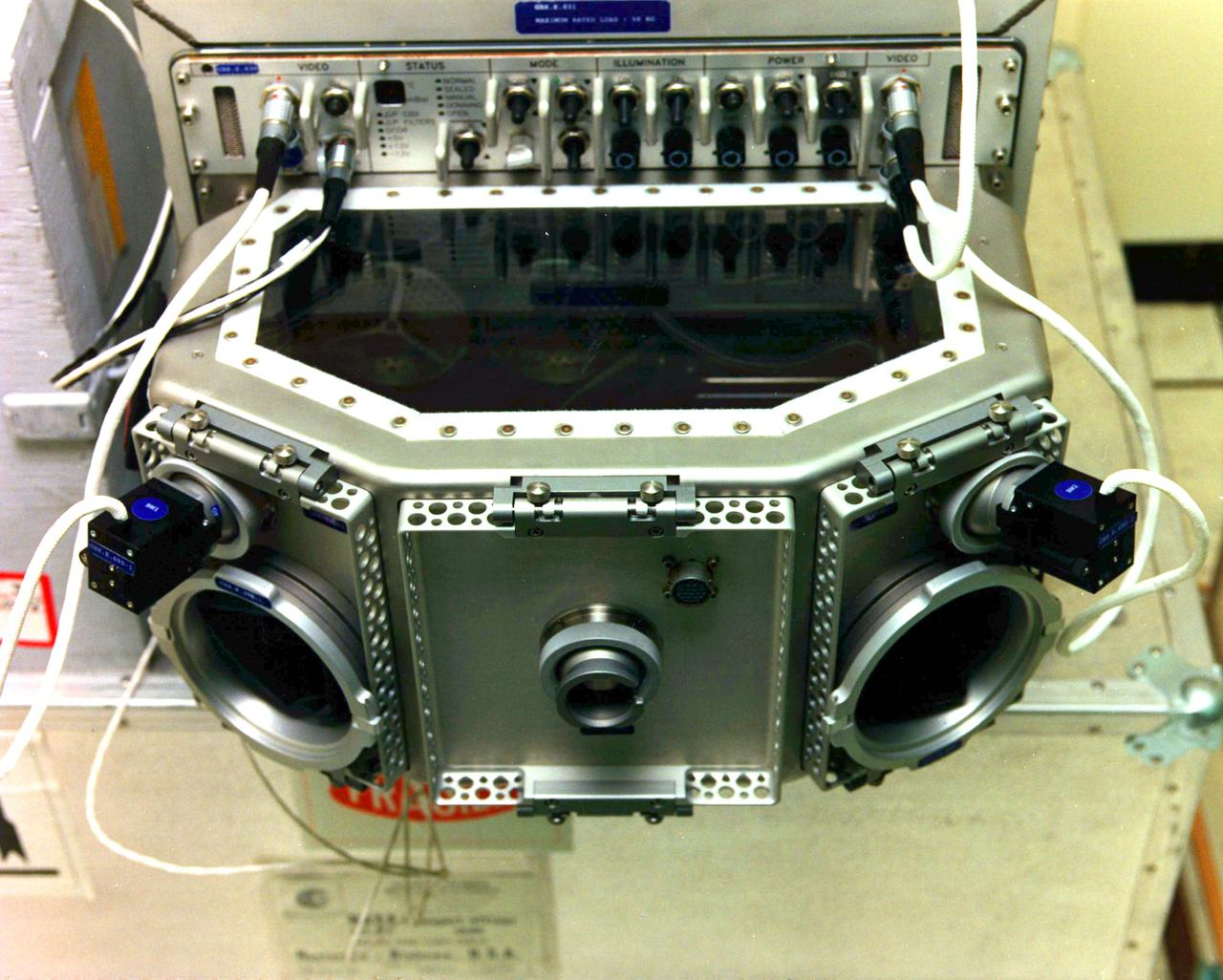
The USML-1 Glovebox (GBX) is a multi-user facility supporting 16 experiments in fluid dynamics, combustion sciences, crystal growth, and technology demonstration. The GBX has an enclosed working space which minimizes the contamination risks to both Spacelab and experiment samples. The GBX supports four charge-coupled device (CCD) cameras (two of which may be operated simultaneously) with three black-and-white and three color camera CCD heads available. The GBX also has a backlight panel, a 35 mm camera, and a stereomicroscope that offers high-magnification viewing of experiment samples. Video data can also be downlinked in real-time. The GBX also provides electrical power for experiment hardware, a time-temperature display, and cleaning supplies.
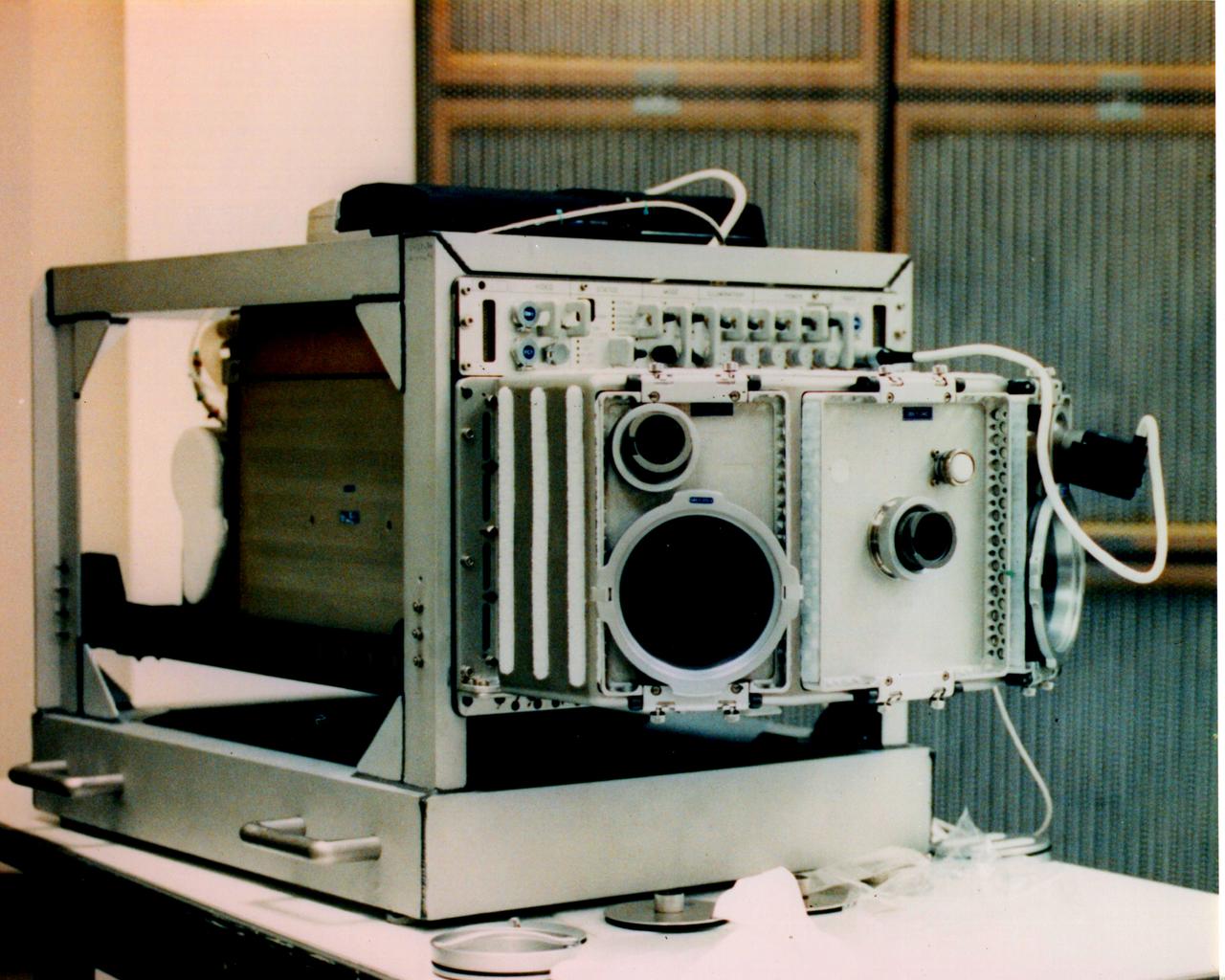
The USML-1 Glovebox (GBX) is a multi-user facility supporting 16 experiments in fluid dynamics, combustion sciences, crystal growth, and technology demonstration. The GBX has an enclosed working space which minimizes the contamination risks to both Spacelab and experiment samples. The GBX supports four charge-coupled device (CCD) cameras (two of which may be operated simultaneously) with three black-and-white and three color camera CCD heads available. The GBX also has a backlight panel, a 35 mm camera, and a stereomicroscope that offers high-magnification viewing of experiment samples. Video data can also be downlinked in real-time. The GBX also provides electrical power for experiment hardware, a time-temperature display, and cleaning supplies.

NASA’s Test, Launch and Recovery Operations Branch Chief Jeremy Graeber, who also serves as the assistant launch director, participates in Artemis I launch countdown training on Feb. 3, 2020, inside the Kennedy Space Center’s Firing Room 1 in the Launch Control Center. Under the leadership of Launch Director Charlie Blackwell-Thompson, a team of nearly 100 engineers from Orion, Space Launch System (SLS) and NASA’s Exploration Ground Systems came together to work through a series of simulated challenges, as well as a final countdown procedure. During these exercises, different issues were introduced to familiarize the team with launch day operations, while providing them with an opportunity to practice how they would handle those issues in real-time. Artemis I will be the first integrated test flight of the Orion spacecraft and SLS rocket – the system that will ultimately land the first woman and the next man on the Moon.
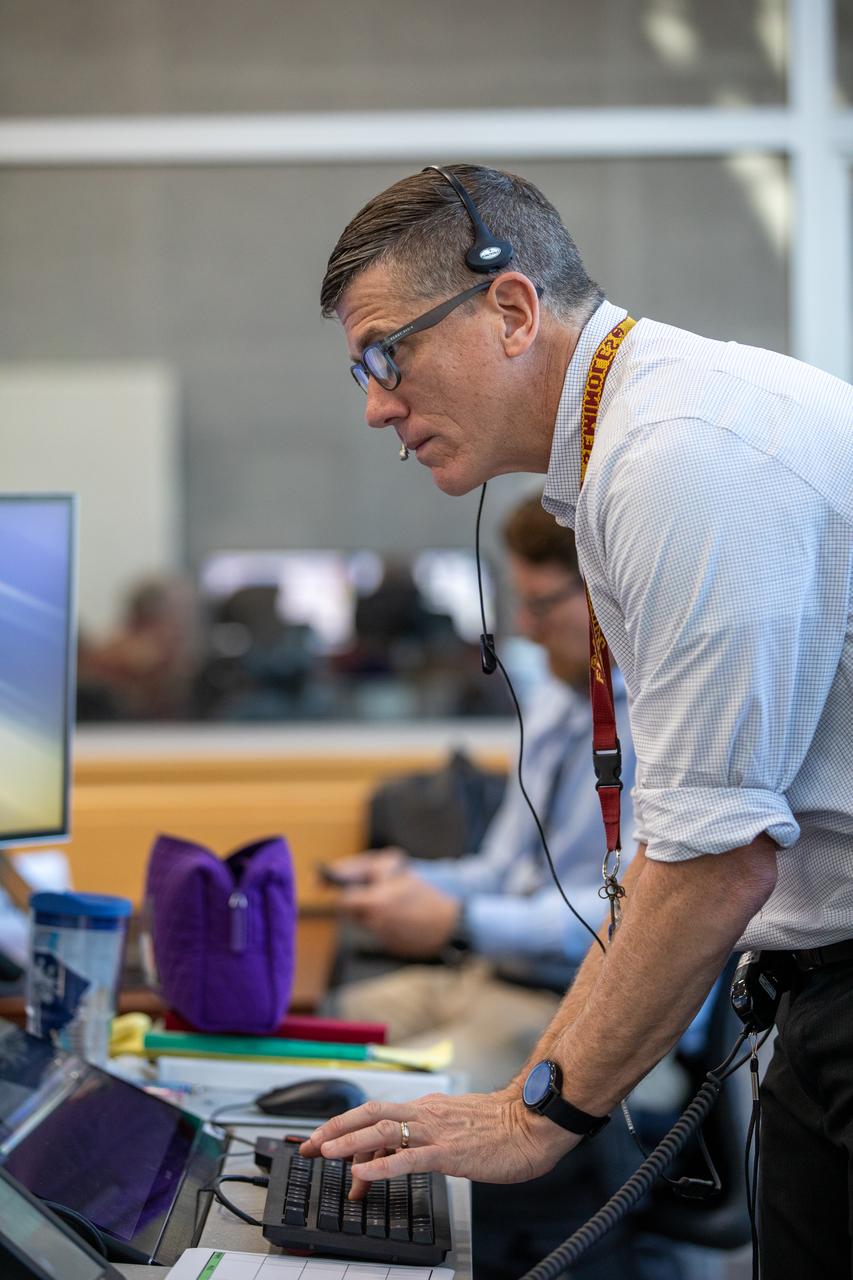
Jeremy Graeber, NASA’s Test, Launch and Recovery Operations branch chief, who also serves as the assistant launch director, participates in an Artemis I launch countdown training simulation inside the Launch Control Center’s Firing Room 1 at NASA’s Kennedy Space Center in Florida. Under the leadership of Launch Director Charlie Blackwell-Thompson, a team of nearly 100 engineers from Orion, Space Launch System (SLS) and NASA’s Exploration Ground Systems came together Feb. 3, 2020, to work through a series of simulated challenges, as well as a final countdown procedure. During these exercises, different issues were introduced to familiarize the team with launch day operations, while providing them with an opportunity to practice how they would handle those issues in real-time. Artemis I will be the first integrated test flight of the Orion spacecraft and SLS rocket – the system that will ultimately land the first woman and the next man on the Moon.
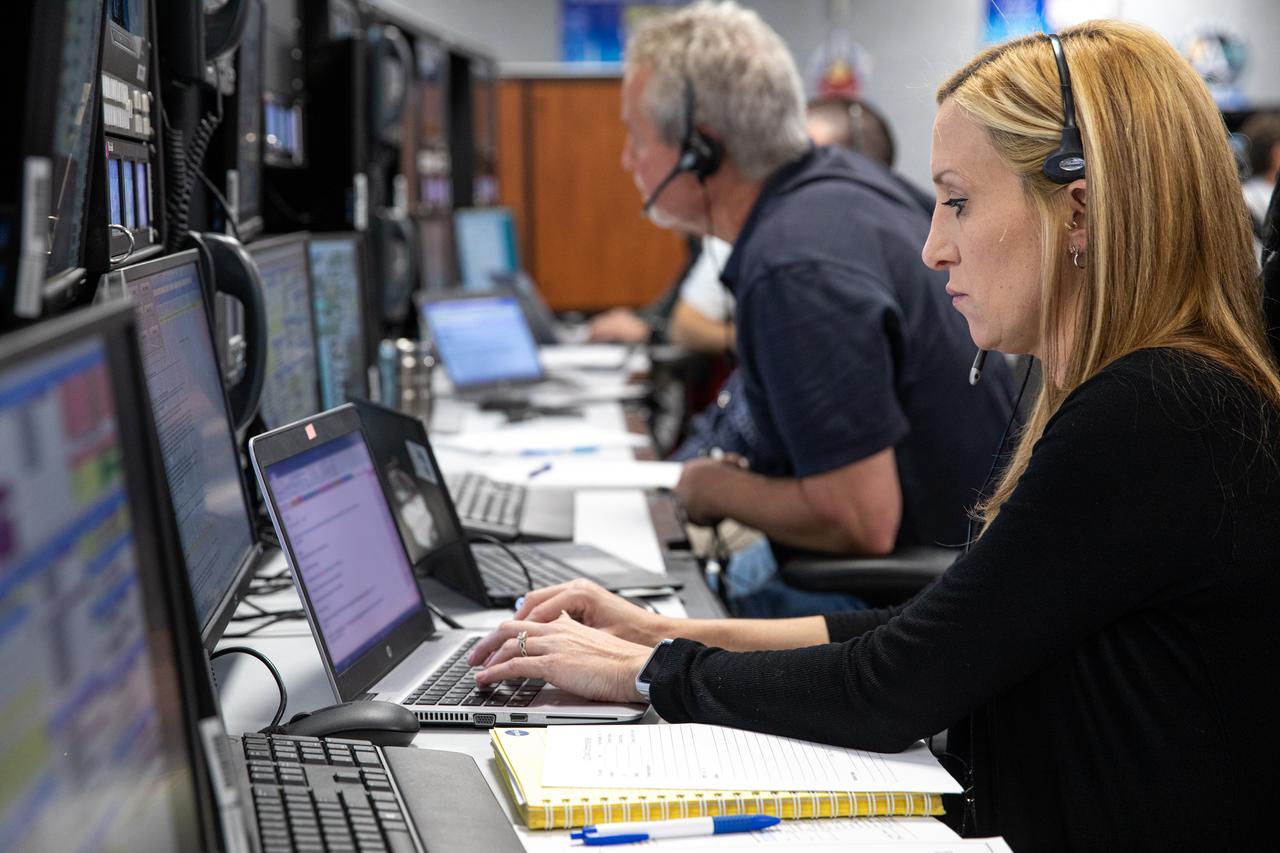
On Feb. 3, 2020, Melissa Batis, an operations project engineer, participates in an Artemis I launch countdown training exercise inside Firing Room 1 in the Launch Control Center at NASA’s Kennedy Space Center in Florida. Under the leadership of Launch Director Charlie Blackwell-Thompson, a team of nearly 100 engineers from Orion, Space Launch System (SLS) and NASA’s Exploration Ground Systems came together to work through a series of simulated challenges, as well as a final countdown procedure. During these exercises, different issues were introduced to familiarize the team with launch day operations, while providing them with an opportunity to practice how they would handle those issues in real-time. Artemis I will be the first integrated test flight of the Orion spacecraft and SLS rocket – the system that will ultimately land the first woman and the next man on the Moon.
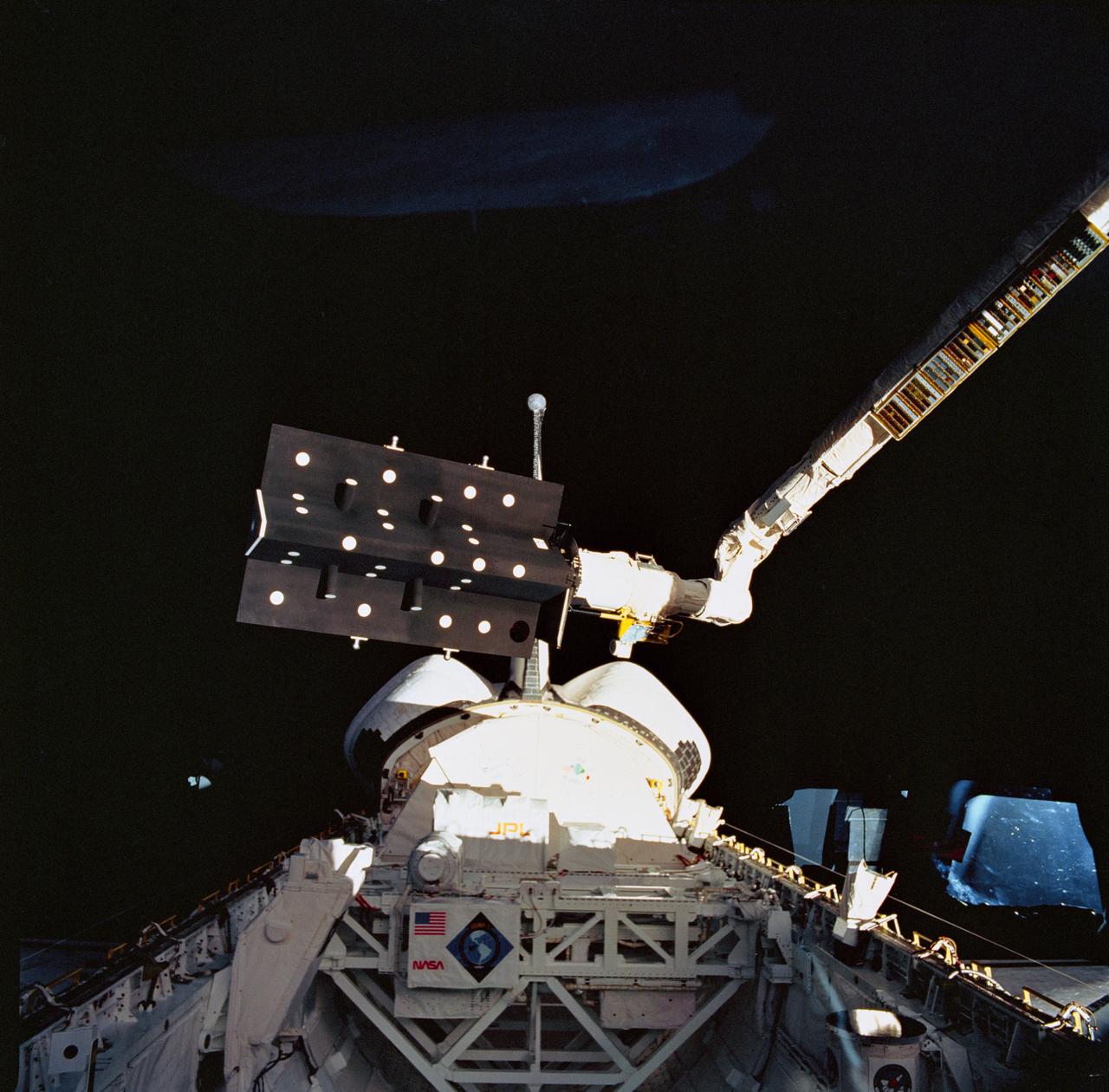
STS052-71-057 (22 Oct-1 Nov 1992) --- This 70mm frame, photographed with a handheld Hasselblad camera aimed through Columbia's aft flight deck windows, captures the operation of the Space Vision System (SVS) experiment above the cargo bay. Target dots have been placed on the Canadian Target Assembly (CTA), a small satellite, in the grasp of the Canadian-built remote manipulator system (RMS) arm. SVS utilized a Shuttle TV camera to monitor the dots strategically arranged on the satellite, to be tracked. As the satellite moved via the arm, the SVS computer measured the changing position of the dots and provided real-time television display of the location and orientation of the CTA. This type of displayed information is expected to help an operator guide the RMS or the Mobile Servicing System (MSS) of the future when berthing or deploying satellites. Also visible in the frame is the U.S. Microgravity Payload (USMP-01).
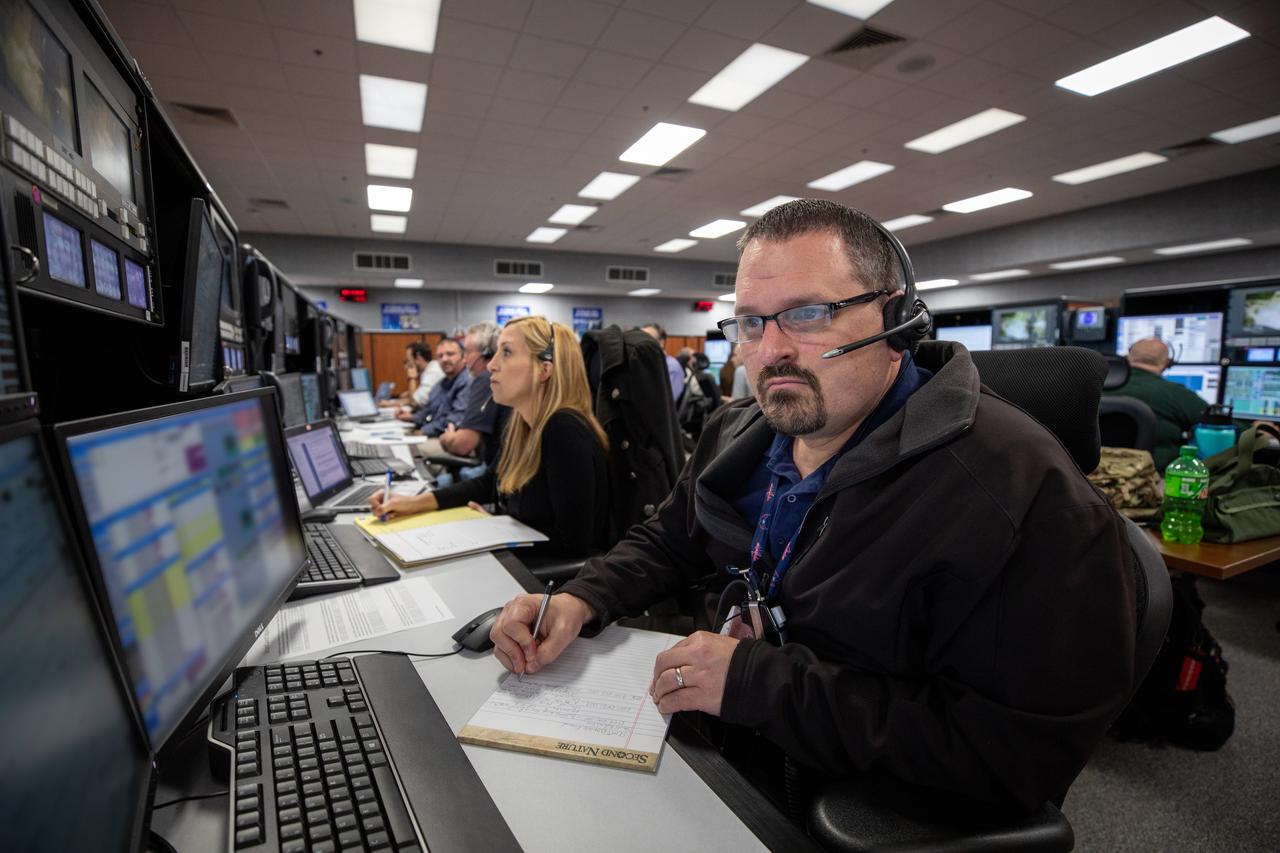
Melissa Batis (left), an operations project engineer, and John Mills, a test project engineer at NASA’s Kennedy Space Center in Florida, participate in a launch countdown simulation inside Firing Room 1 in the Launch Control Center on Feb. 3, 2020. Under the leadership of Artemis I Launch Director Charlie Blackwell-Thompson, a team of nearly 100 engineers from Orion, Space Launch System (SLS) and NASA’s Exploration Ground Systems came together to work through a series of simulated challenges, as well as a final countdown procedure. During these exercises, different issues were introduced to familiarize the team with launch day operations, while providing them with an opportunity to practice how they would handle those issues in real-time. Artemis I will be the first integrated test flight of the Orion spacecraft and SLS rocket – the system that will ultimately land the first woman and the next man on the Moon.
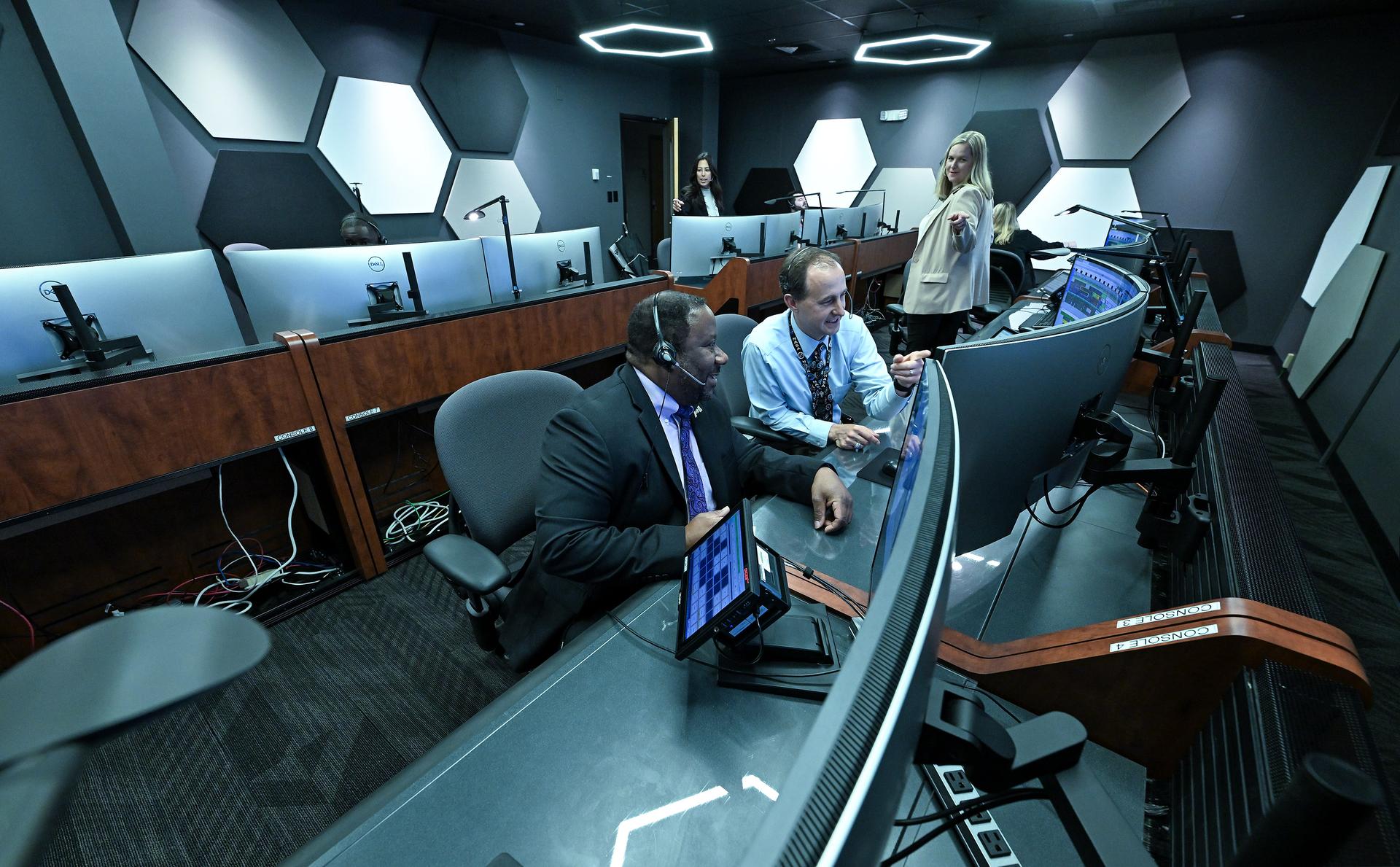
These photos offer a look inside the twin control rooms at NASA’s Marshall Space Flight Center in Huntsville, Alabama, where engineers will monitor Artemis science and future landing operations for Artemis. The LUCA (Lunar Utilization Control Area) and LESA (Lander Engineering Support Area) rooms are part of the Huntsville Operations Support Center at NASA Marshall. The LUCA is specially designed to support a wide variety of science operations on and around the Moon – and beyond. Engineers in the LUCA monitored operations for the Lunar Node-1 experiment, an autonomous navigation payload that was part of the first NASA Commercial Lunar Payload Services (CLPS) launch on Intuitive Machines’ Nova-C lunar lander in 2024. NASA Marshall flight controllers will use the LUCA again for Artemis II to monitor science operations. Beginning with Artemis III, members of the NASA Human Landing System Mission Insight Support Team – a group of engineers, safety leads, flight operations experts, and technical authorities – will work in the LESA. There, they will monitor lander systems in real-time and be involved in key decision-making processes throughout the mission. For more information, contact NASA Marshall’s Office of Communications at 256-544-0034.
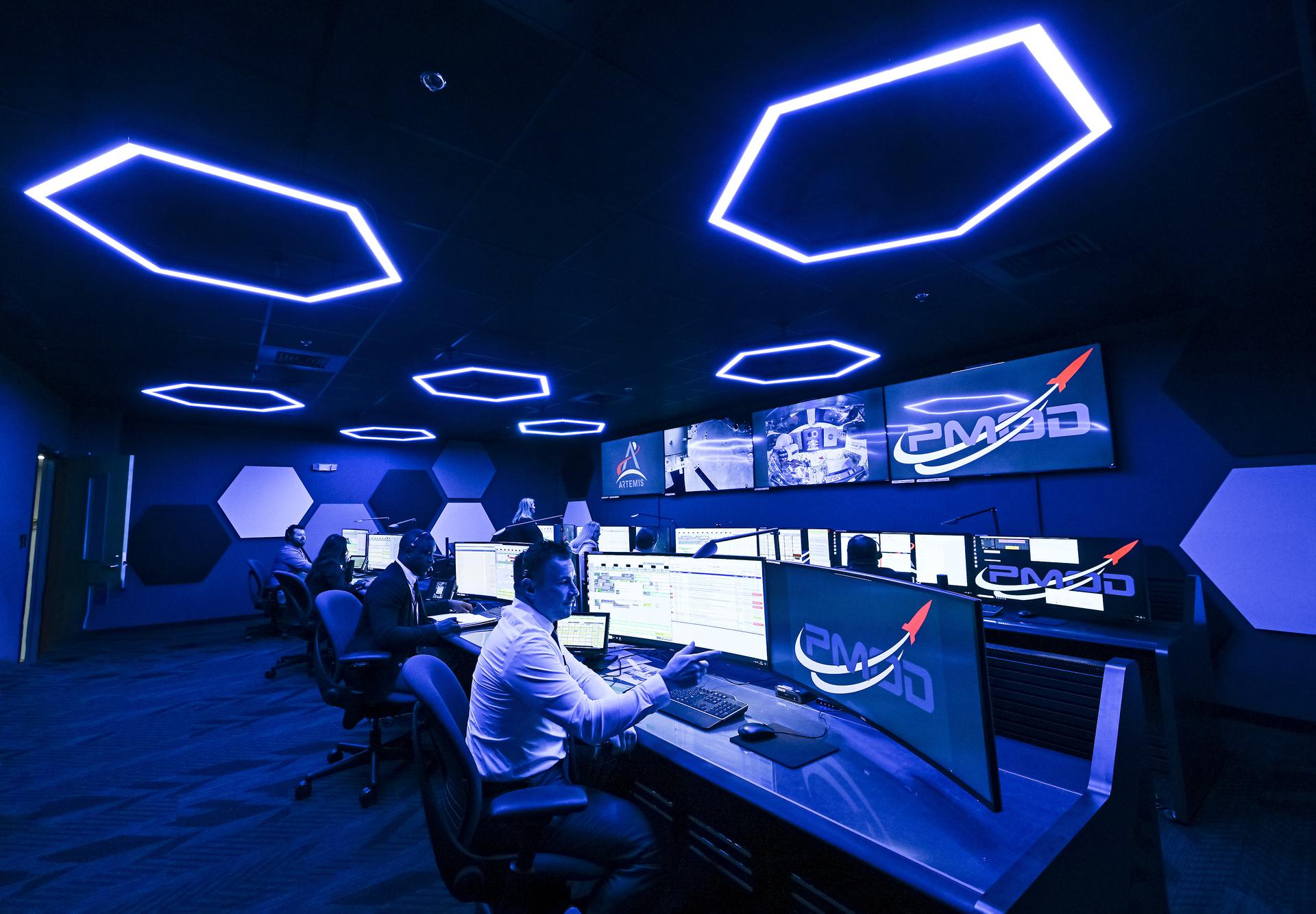
These photos offer a look inside the twin control rooms at NASA’s Marshall Space Flight Center in Huntsville, Alabama, where engineers will monitor Artemis science and future landing operations for Artemis. The LUCA (Lunar Utilization Control Area) and LESA (Lander Engineering Support Area) rooms are part of the Huntsville Operations Support Center at NASA Marshall. The LUCA is specially designed to support a wide variety of science operations on and around the Moon – and beyond. Engineers in the LUCA monitored operations for the Lunar Node-1 experiment, an autonomous navigation payload that was part of the first NASA Commercial Lunar Payload Services (CLPS) launch on Intuitive Machines’ Nova-C lunar lander in 2024. NASA Marshall flight controllers will use the LUCA again for Artemis II to monitor science operations. Beginning with Artemis III, members of the NASA Human Landing System Mission Insight Support Team – a group of engineers, safety leads, flight operations experts, and technical authorities – will work in the LESA. There, they will monitor lander systems in real-time and be involved in key decision-making processes throughout the mission. For more information, contact NASA Marshall’s Office of Communications at 256-544-0034.
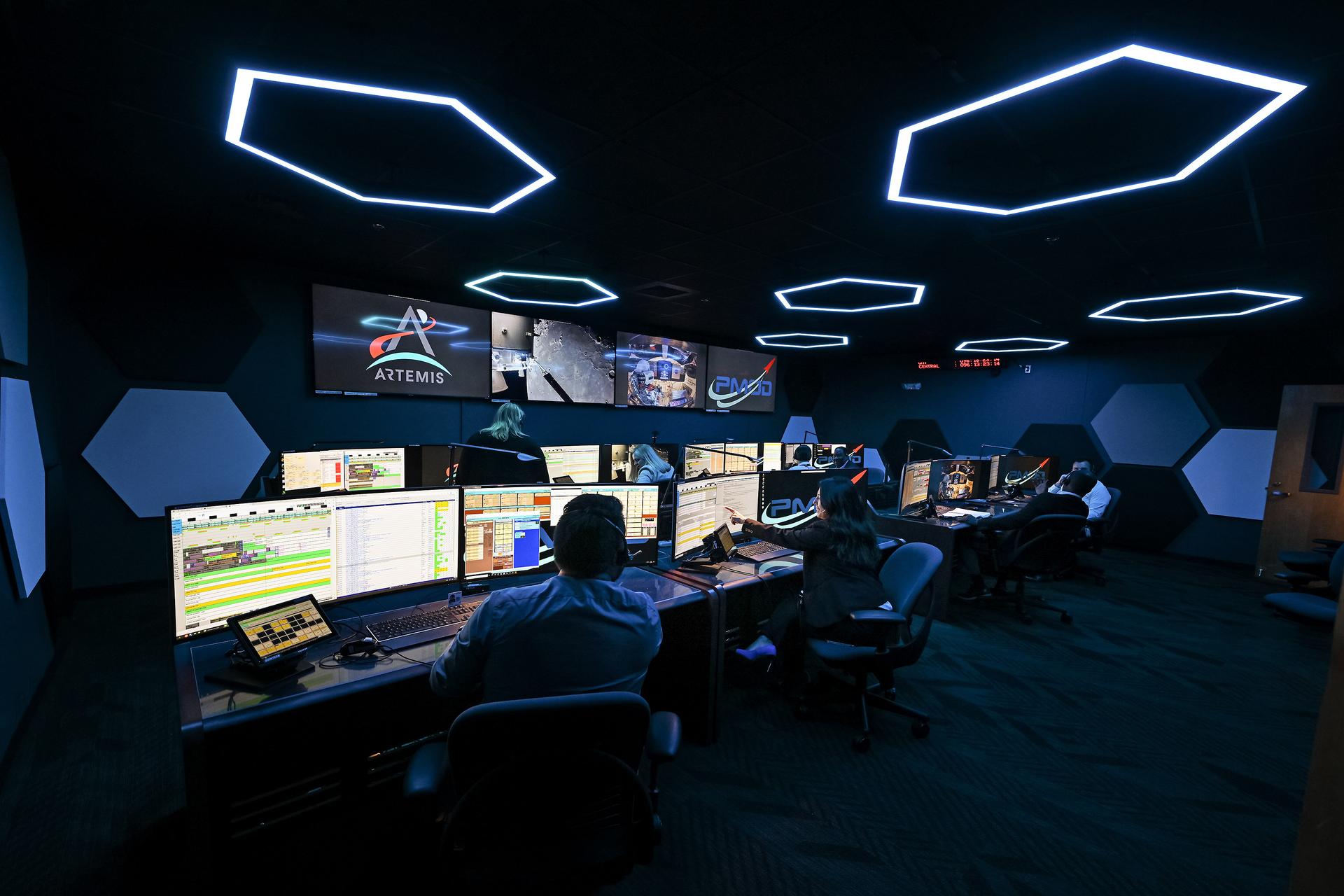
These photos offer a look inside the twin control rooms at NASA’s Marshall Space Flight Center in Huntsville, Alabama, where engineers will monitor Artemis science and future landing operations for Artemis. The LUCA (Lunar Utilization Control Area) and LESA (Lander Engineering Support Area) rooms are part of the Huntsville Operations Support Center at NASA Marshall. The LUCA is specially designed to support a wide variety of science operations on and around the Moon – and beyond. Engineers in the LUCA monitored operations for the Lunar Node-1 experiment, an autonomous navigation payload that was part of the first NASA Commercial Lunar Payload Services (CLPS) launch on Intuitive Machines’ Nova-C lunar lander in 2024. NASA Marshall flight controllers will use the LUCA again for Artemis II to monitor science operations. Beginning with Artemis III, members of the NASA Human Landing System Mission Insight Support Team – a group of engineers, safety leads, flight operations experts, and technical authorities – will work in the LESA. There, they will monitor lander systems in real-time and be involved in key decision-making processes throughout the mission. For more information, contact NASA Marshall’s Office of Communications at 256-544-0034.
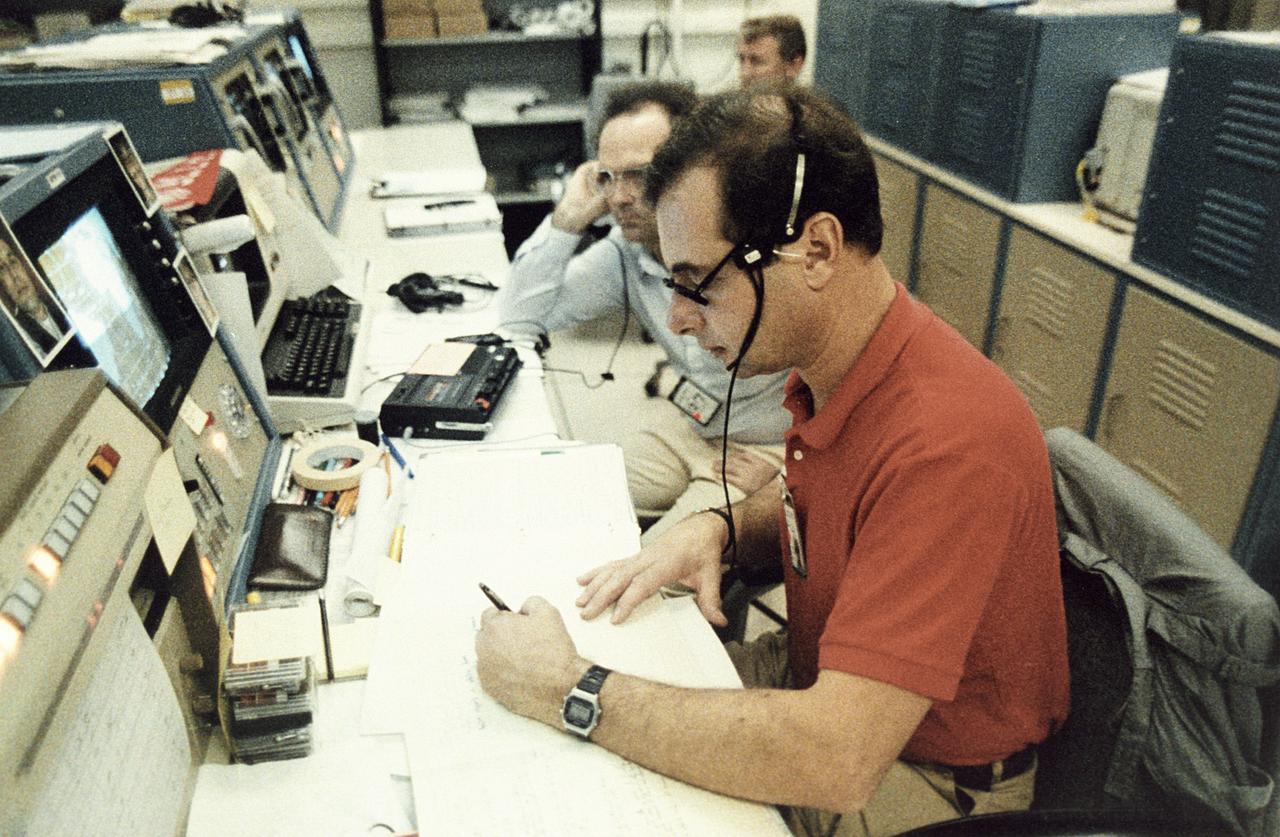
During a Spacelab flight, the hub of activity was the Payload Operations Control Center (POCC) at the Johnson Space Flight Center (JSC) in Houston, Texas. The POCC became home to the management and science teams who worked around the clock to guide and support the mission. All Spacelab principal investigators and their teams of scientists and engineers set up work areas in the POCC. Through the use of computers, they could send commands to their instruments and receive and analyze experiment data. Instantaneous video and audio communications made it possible for scientists on the ground to follow the progress of their research almost as if they were in space with the crew. This real-time interaction between investigators on the ground and the crew in space was probably the most exciting of Spacelab's many capabilities. As principal investigators talked to the payload specialists during the mission, they consulted on experiment operations, made decisions, and shared in the thrill of gaining new knowledge. In December 1990, a newly-established POCC at the Marshall Space Flight Center (MSFC) opened its door for the operations of the Spacelab payloads and experiments, while JSC monitored the Shuttle flight operations. MSFC had managing responsibilities for the Spacelab missions.

KENNEDY SPACE CENTER, FLA. - Ball Aerospace technicians prepare the Deep Impact flyby spacecraft for installation of the flight battery at Astrotech Space Operations in Titusville, Fla. About the size of a Ford Explorer, the flyby spacecraft is three-axis stabilized and uses a fixed solar array and a small NiH2 battery for its power system. A NASA Discovery mission, Deep Impact will probe beneath the surface of Comet Tempel 1 on July 4, 2005, when the comet is 83 million miles from Earth. During the encounter phase when the comet collides with the impactor projectile propelled into its path, the spacecraft’s high-gain antenna will transmit near-real-time images of the impact back to Earth. The spacecraft is scheduled to launch Jan. 8 aboard a Boeing Delta II rocket from Launch Complex 17-B at Cape Canaveral Air Force Station, Fla.
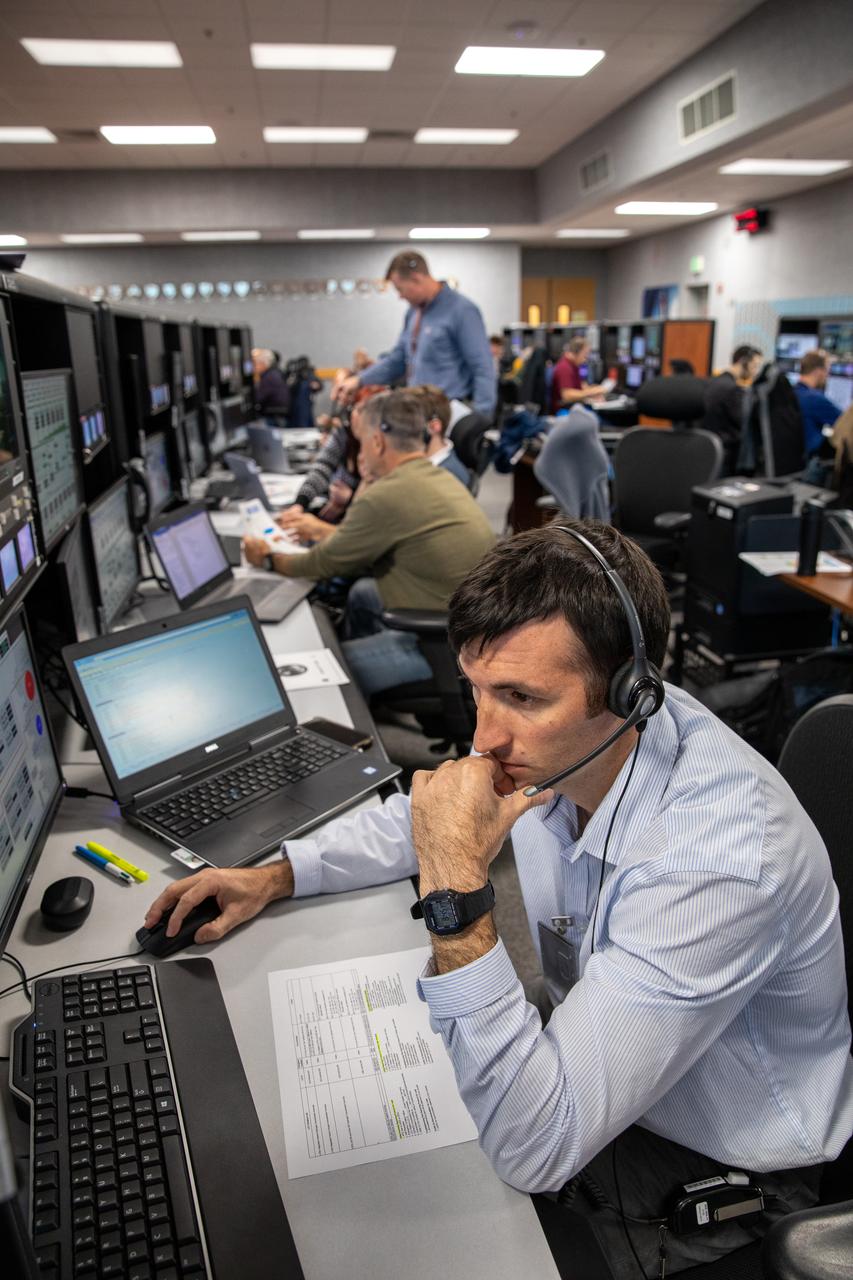
Billy Mitchell, a hazardous gas engineer at NASA’s Kennedy Space Center in Florida, participates in an Artemis I launch countdown training exercise inside Firing Room 1 in the Launch Control Center on Feb. 3, 2020. Under the leadership of Launch Director Charlie Blackwell-Thompson, a team of nearly 100 engineers from Orion, Space Launch System (SLS) and NASA’s Exploration Ground Systems came together to work through a series of simulated challenges, as well as a final countdown procedure. During these exercises, different issues were introduced to familiarize the team with launch day operations, while providing them with an opportunity to practice how they would handle those issues in real-time. Artemis I will be the first integrated test flight of the Orion spacecraft and SLS rocket – the system that will ultimately land the first woman and the next man on the Moon.
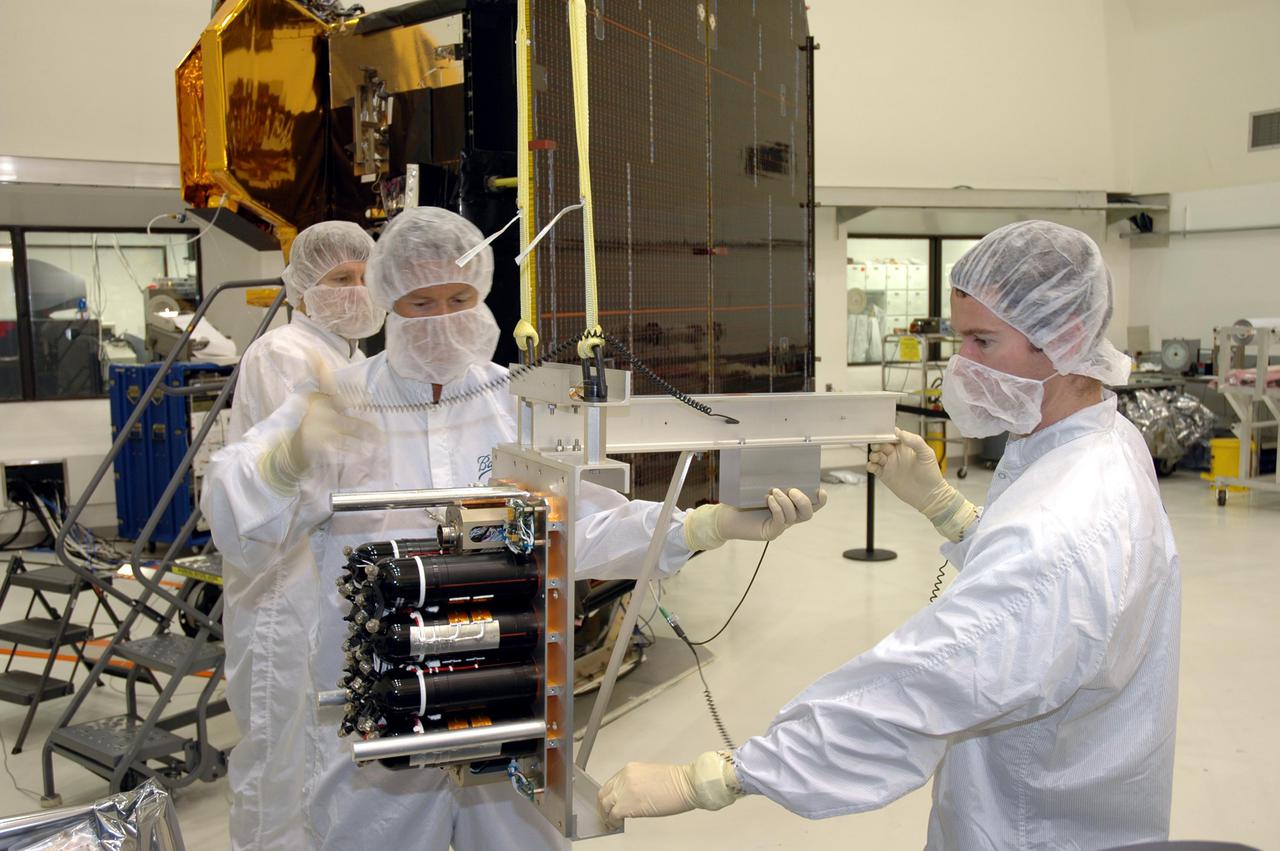
KENNEDY SPACE CENTER, FLA. - Ball Aerospace technicians at Astrotech Space Operations in Titusville, Fla., attach equipment to the flight battery to move it to the Deep Impact flyby spacecraft for installation. About the size of a Ford Explorer, the flyby spacecraft is three-axis stabilized and uses a fixed solar array and a small NiH2 battery for its power system. A NASA Discovery mission, Deep Impact will probe beneath the surface of Comet Tempel 1 on July 4, 2005, when the comet is 83 million miles from Earth. During the encounter phase when the comet collides with the impactor projectile propelled into its path, the spacecraft’s high-gain antenna will transmit near-real-time images of the impact back to Earth. The spacecraft is scheduled to launch Jan. 8 aboard a Boeing Delta II rocket from Launch Complex 17-B at Cape Canaveral Air Force Station, Fla.
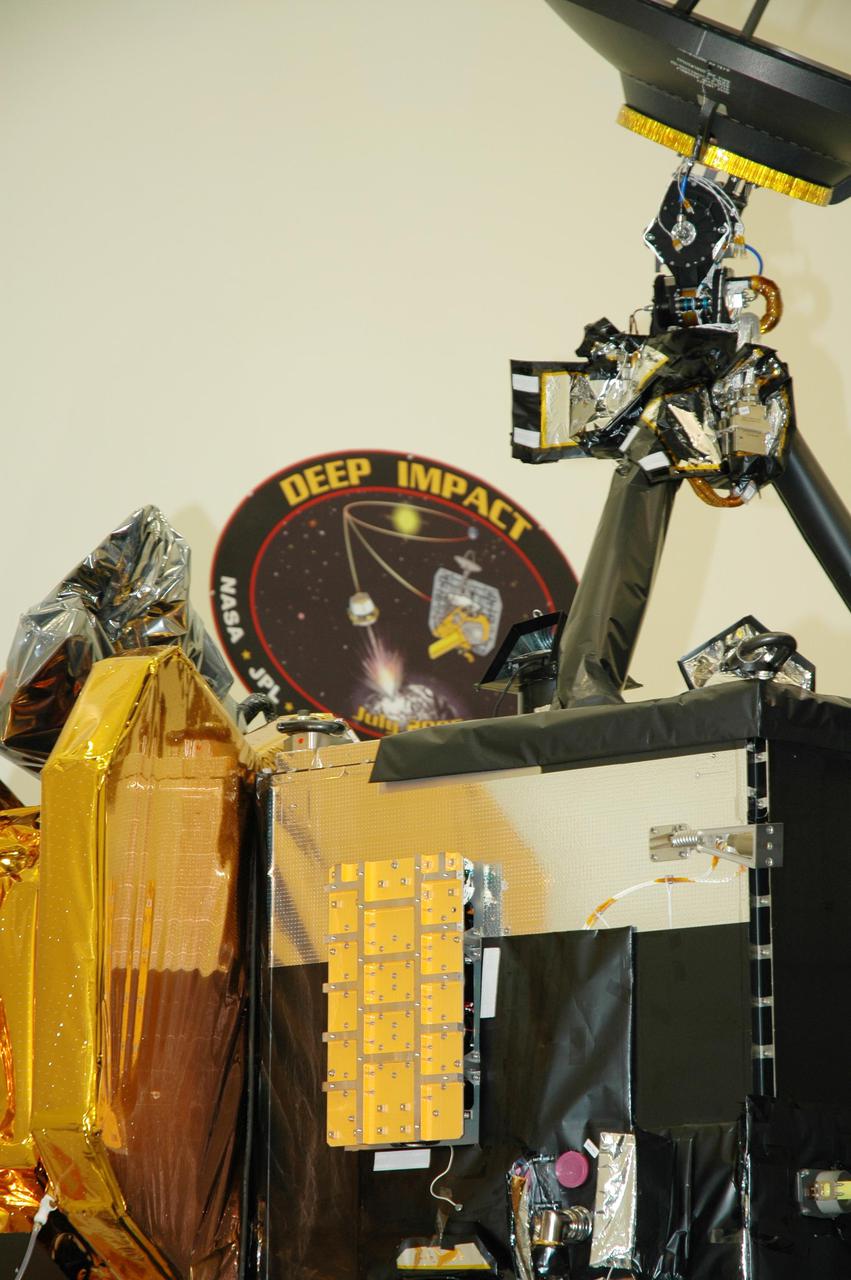
KENNEDY SPACE CENTER, FLA. - At Astrotech Space Operations in Titusville, Fla., the flight battery has been installed on the Deep Impact flyby spacecraft. About the size of a Ford Explorer, the flyby spacecraft is three-axis stabilized and uses a fixed solar array and a small NiH2 battery for its power system. A NASA Discovery mission, Deep Impact will probe beneath the surface of Comet Tempel 1 on July 4, 2005, when the comet is 83 million miles from Earth. During the encounter phase when the comet collides with the impactor projectile propelled into its path, the spacecraft’s high-gain antenna will transmit near-real-time images of the impact back to Earth. The spacecraft is scheduled to launch Jan. 8 aboard a Boeing Delta II rocket from Launch Complex 17-B at Cape Canaveral Air Force Station, Fla.

Artemis I Launch Director Charlie Blackwell-Thompson stands at her console during countdown simulation training inside the Launch Control Center’s Firing Room 1 at NASA’s Kennedy Space Center in Florida. On Feb. 3, 2020, a team of nearly 100 engineers from Orion, Space Launch System (SLS) and the agency’s Exploration Ground Systems came together to work through a series of simulated challenges, as well as a final countdown procedure. During these exercises, different issues were introduced to familiarize the team with launch day operations, while providing them with an opportunity to practice how they would handle those issues in real-time. Artemis I will be the first integrated test flight of the Orion spacecraft and SLS rocket – the system that will ultimately land the first woman and the next man on the Moon.
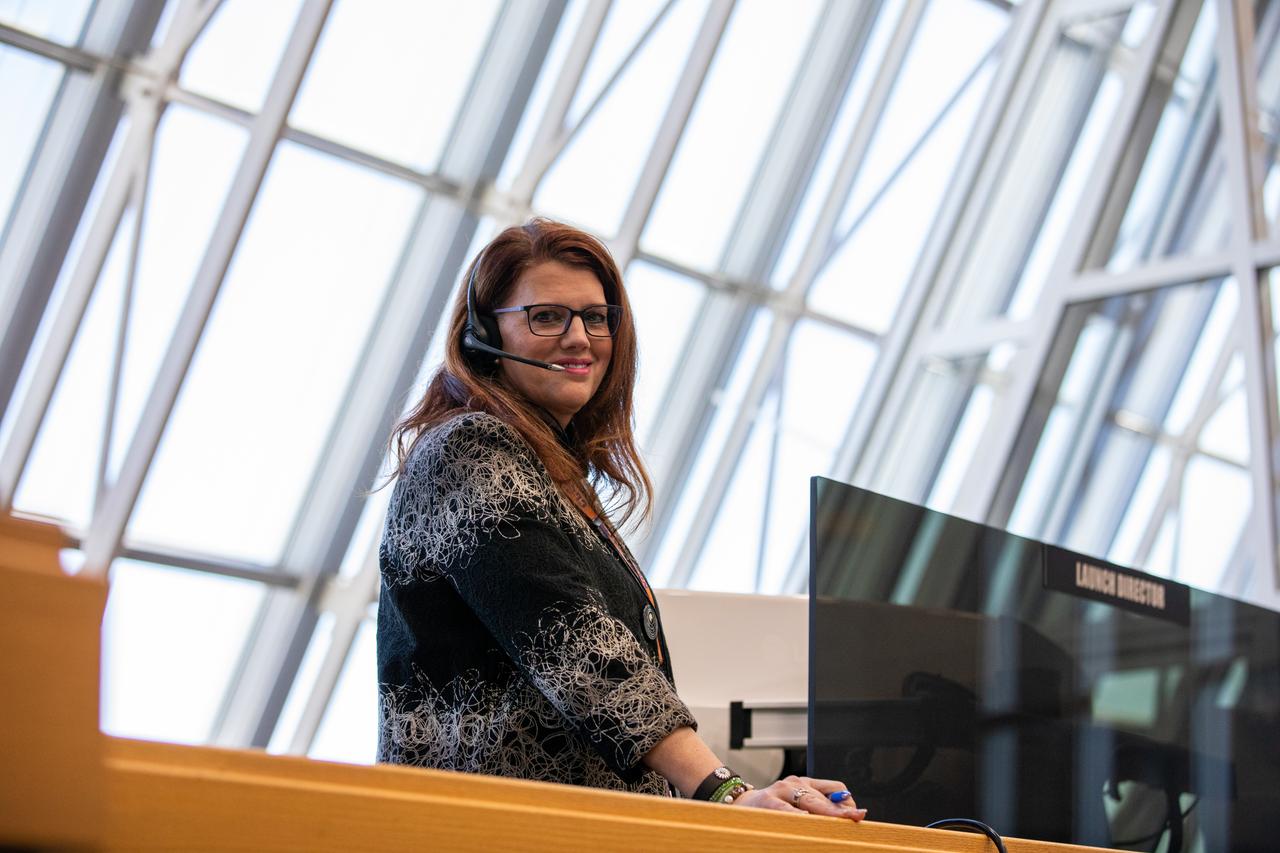
Artemis I Launch Director Charlie Blackwell-Thompson stands at her console inside the Launch Control Center’s Firing Room 1 at NASA’s Kennedy Space Center in Florida during launch countdown training. On Feb. 3, 2020, a team of nearly 100 engineers from Orion, Space Launch System (SLS) and the agency’s Exploration Ground Systems came together to work through a series of simulated challenges, as well as a final countdown procedure. During these exercises, different issues were introduced to familiarize the team with launch day operations, while providing them with an opportunity to practice how they would handle those issues in real-time. Artemis I will be the first integrated test flight of the Orion spacecraft and SLS rocket – the system that will ultimately land the first woman and the next man on the Moon.