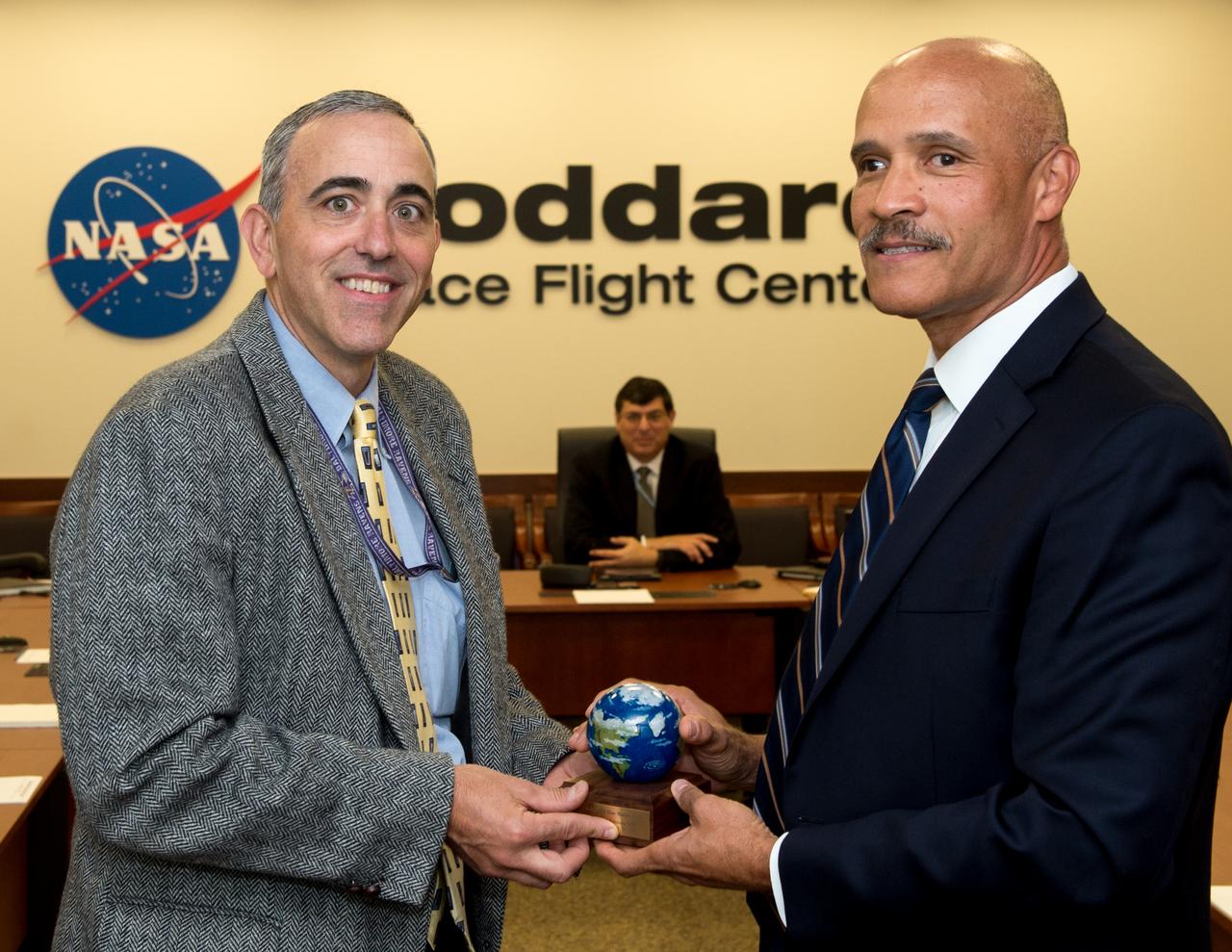
Ray Rubilotta receives the Blue Marble Award
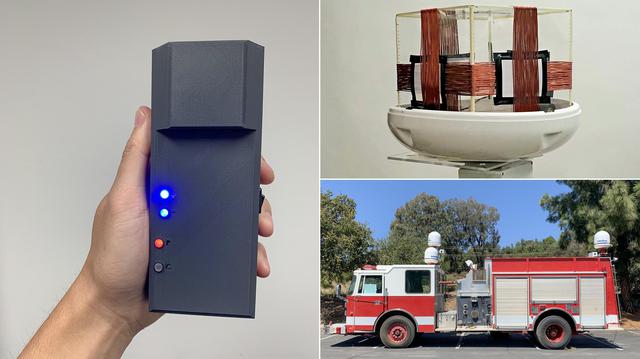
To help locate and track firefighters inside buildings, where other positioning technologies fail, NASA's Jet Propulsion Laboratory and the Department of Homeland Security Science and Technology Directorate (S&T) are developing POINTER. Short for Precision Outdoor and Indoor Navigation and Tracking for Emergency Responders, the system began taking shape in 2014 and is being matured for use by fire departments nationwide. The POINTER system is composed of three parts: a receiver, transmitter, and base station. The receiver (left) has been shrunk from the size of a backpack to the size of a large smartphone, and further development will miniaturize it so it can be easily clipped to a belt buckle. The transmitter (top right) is a system of coils that generate the magnetoquasistatic fields, which — unlike the radio waves used by GPS and radio-frequency identification — are able to pass through construction materials to interact with the receiver, enabling fire crews to track the location and orientation of firefighters. To test the system, transmitters have been attached to an out-of-service firetruck (lower right). Through 2021, POINTER will undergo field tests and a commercial version of POINTER will be made available to fire departments in 2022. https://photojournal.jpl.nasa.gov/catalog/PIA24562
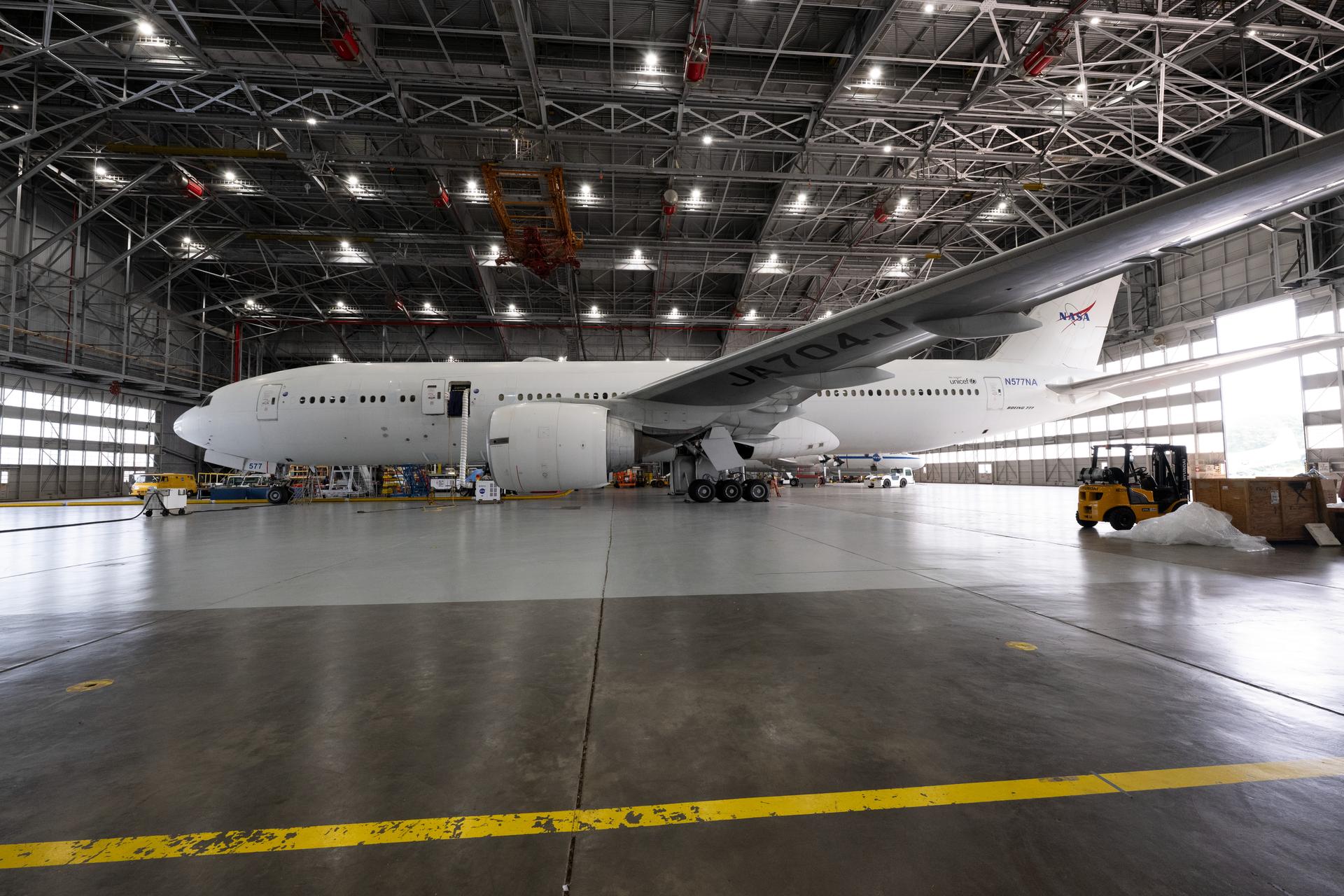
Before Langley's B777 aircraft departed Langley Research Center to received its NASA livery (paint job), it received ground maintenance in the hangar on center. Photo Credit NASA/Ryan Hill

A CREW INSTALLS A NEW EARTH SCIENCE RECEIVING SATELLITE ANTENNA OUTSIDE MARSHALL SPACE FLIGHT CENTER'S ACTIVITIES BUILDING 4316

A CREW INSTALLS A NEW EARTH SCIENCE RECEIVING SATELLITE ANTENNA OUTSIDE MARSHALL SPACE FLIGHT CENTER'S ACTIVITIES BUILDING 4316

A CREW INSTALLS A NEW EARTH SCIENCE RECEIVING SATELLITE ANTENNA OUTSIDE MARSHALL SPACE FLIGHT CENTER'S ACTIVITIES BUILDING 4316

A CREW INSTALLS A NEW EARTH SCIENCE RECEIVING SATELLITE ANTENNA OUTSIDE MARSHALL SPACE FLIGHT CENTER'S ACTIVITIES BUILDING 4316
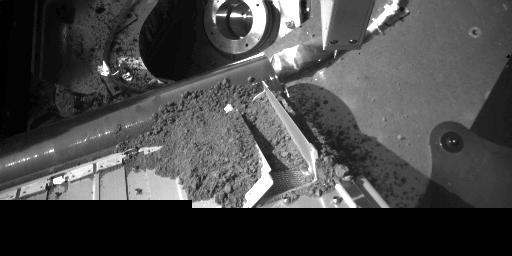
Robotic Arm Camera Image of the South Side of the Thermal and Evolved-Gas Analyzer Door TA4 receiving sample
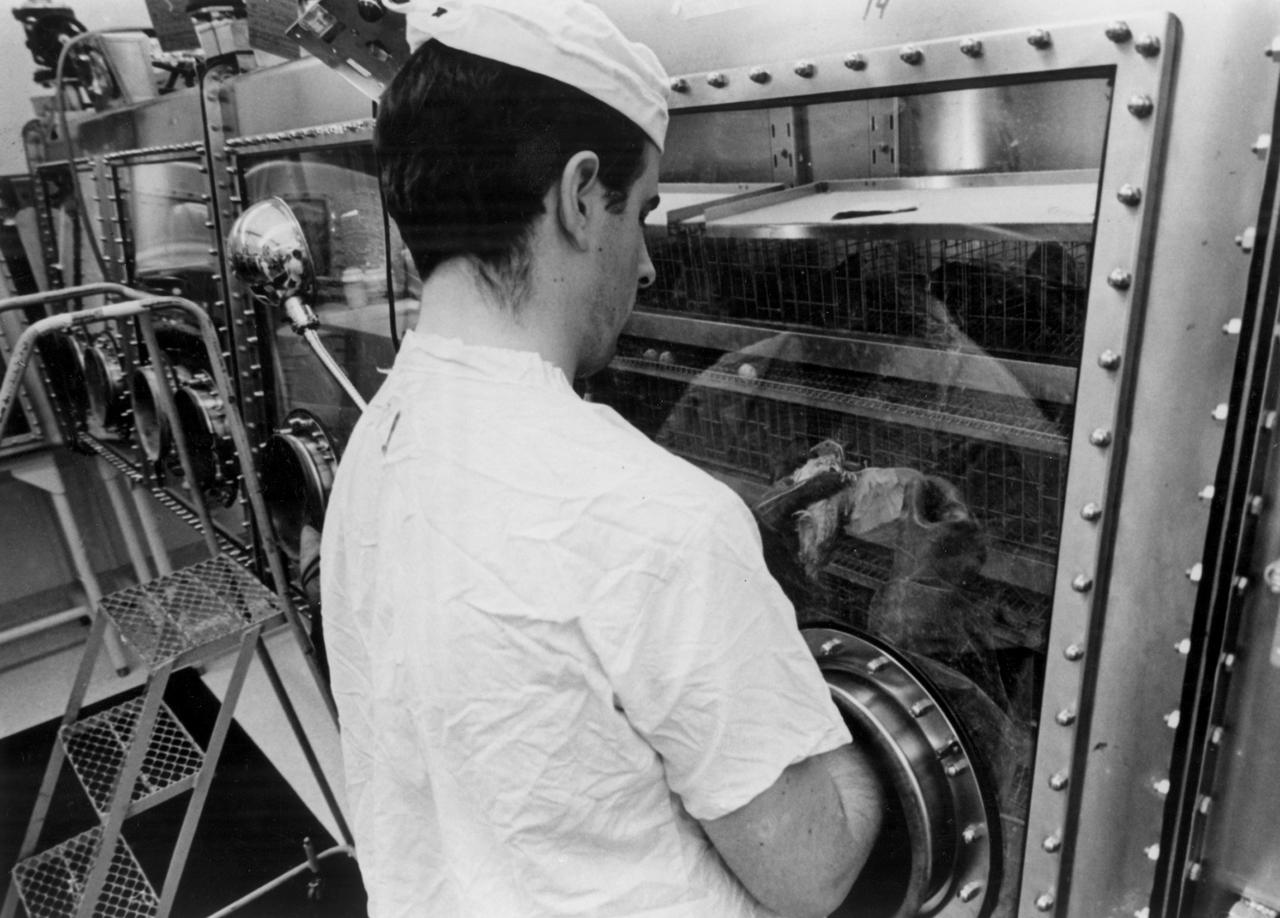
In this photograph, laboratory technician Bart Ruark visually inspects a Japanese Qail confined within a class III cabinet in the Intervertebrae, Aves, and Fish Laboratory of the Lunar Receiving Laboratory, Building 37 of the Manned Spacecraft Center (MSC) in Houston, Texas. This laboratory was part of the overall physical, chemical, and biological test program of the Apollo 11 returned lunar samples. Aboard the Marshall Space Flight Center (MSFC) developed Saturn V launch vehicle, the Apollo 11 mission launched from The Kennedy Space Center, Florida on July 16, 1969 and safely returned to Earth on July 24, 1969. The 3-man crew aboard the flight consisted of astronauts Neil A. Armstrong, commander; Edwin Aldrin, Lunar Module (LM) pilot; and Michael Collins, Command Module (CM) pilot. The CM, piloted by Michael Collins remained in a parking orbit around the Moon while the LM, named “Eagle’’, carrying astronauts Neil Armstrong and Edwin Aldrin, landed on the Moon. In 2 1/2 hours, the crew collected 47 pounds of lunar surface material which was returned to Earth for analysis.
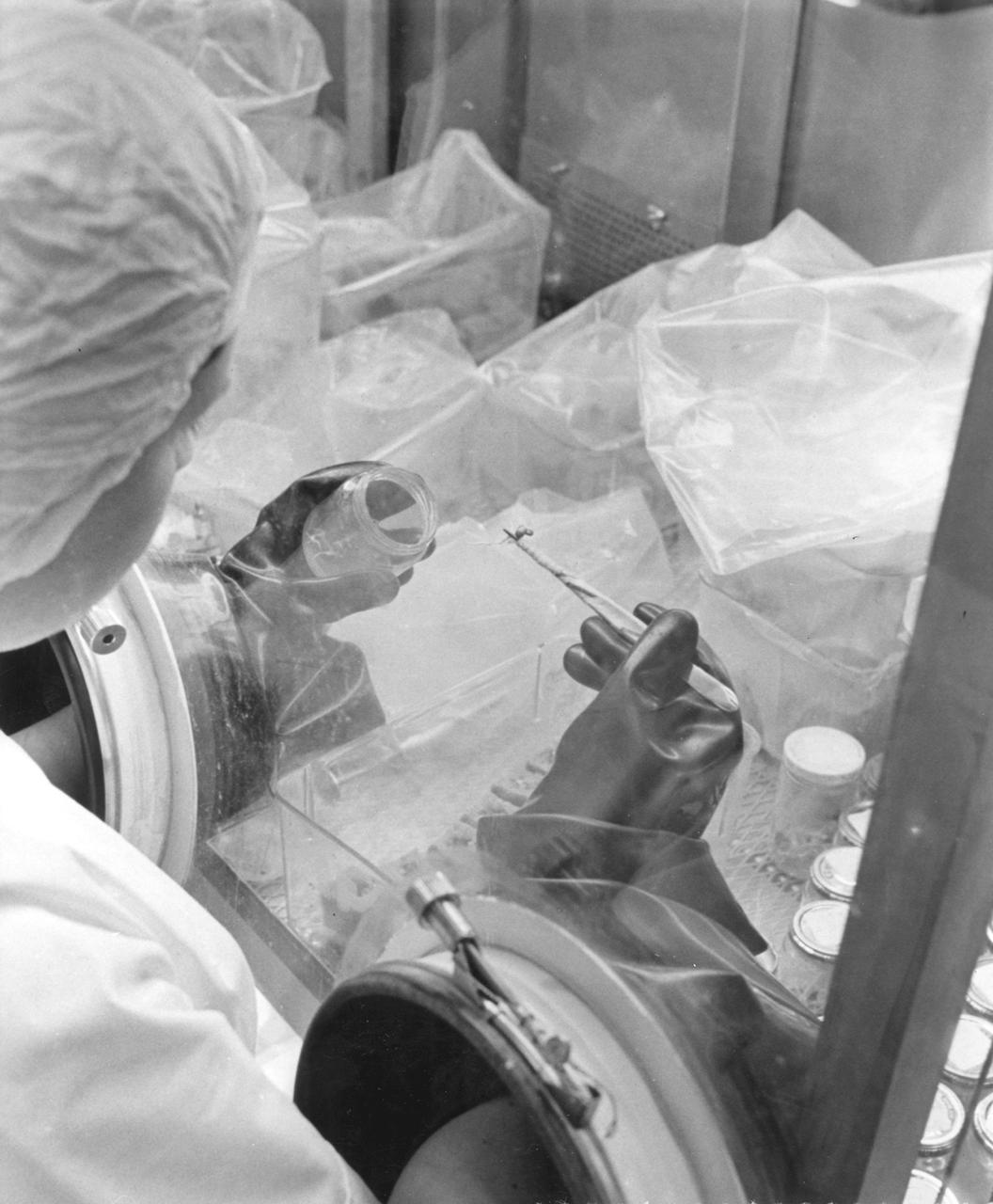
In this photograph, a laboratory technician handles a portion of the more than 20 different plant lines that were used within the Lunar Receiving Laboratory, Building 37 of the Manned Spacecraft Center (MSC) in Houston, Texas. This laboratory was part of the overall physical, chemical, and biological test program of the Apollo 11 returned lunar samples. Aboard the Marshall Space Flight Center (MSFC) developed Saturn V launch vehicle, the Apollo 11 mission launched from The Kennedy Space Center, Florida on July 16, 1969 and safely returned to Earth on July 24, 1969. The 3-man crew aboard the flight consisted of astronauts Neil A. Armstrong, commander; Edwin Aldrin, Lunar Module (LM) pilot; and Michael Collins, Command Module (CM) pilot. The CM, piloted by Michael Collins remained in a parking orbit around the Moon while the LM, named “Eagle’’, carrying astronauts Neil Armstrong and Edwin Aldrin, landed on the Moon. In 2 1/2 hours, the crew collected 47 pounds of lunar surface material which was returned to Earth for analysis.
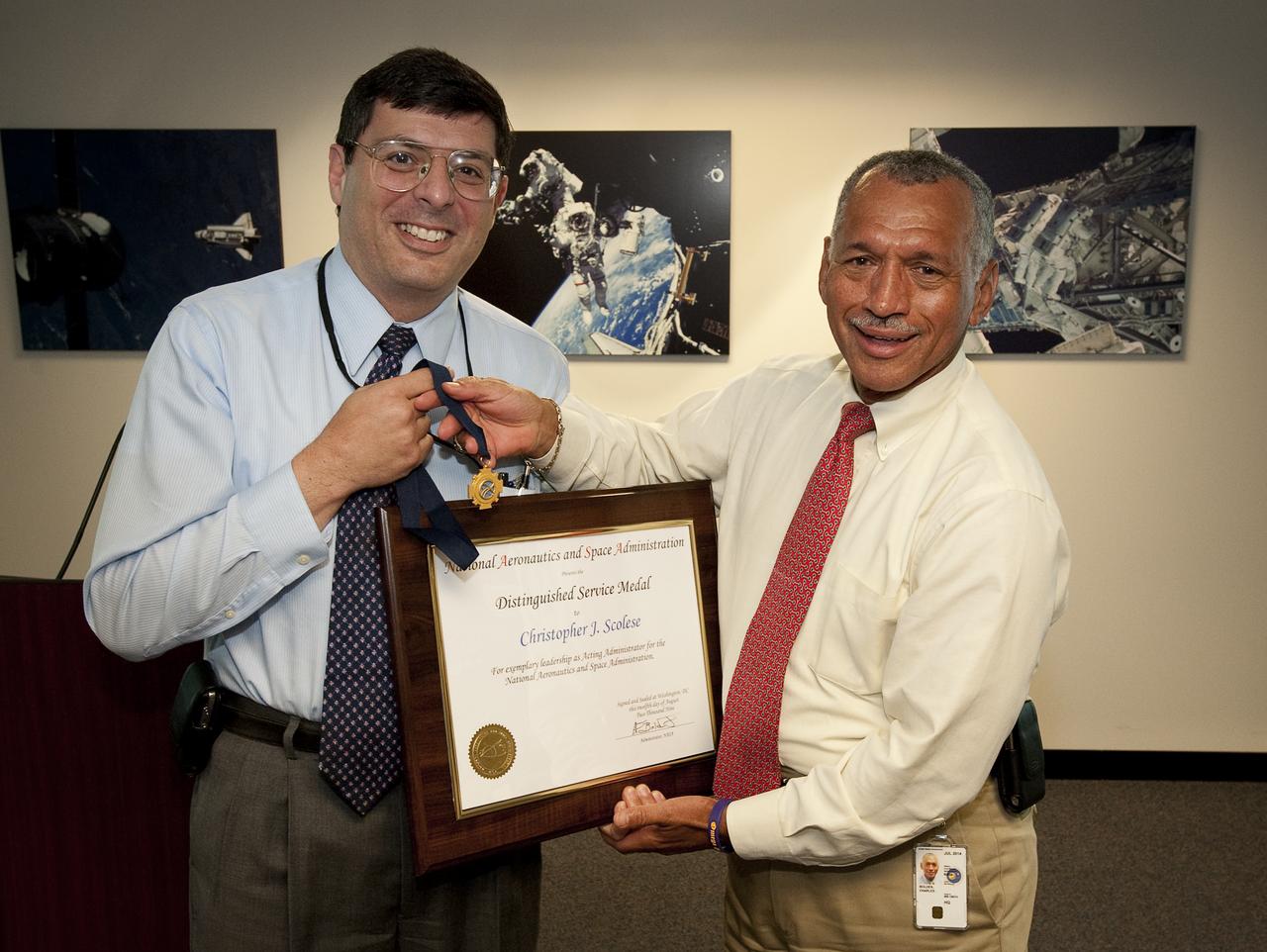
NASA Associate Administrator Christopher Scolese, left, receives the NASA Distinguished Service Medal from NASA Administrator Charles F. Bolden, Thursday, August 12, 2009 at NASA Headquarters in Washington. Photo Credit: (NASA/Bill Ingalls)
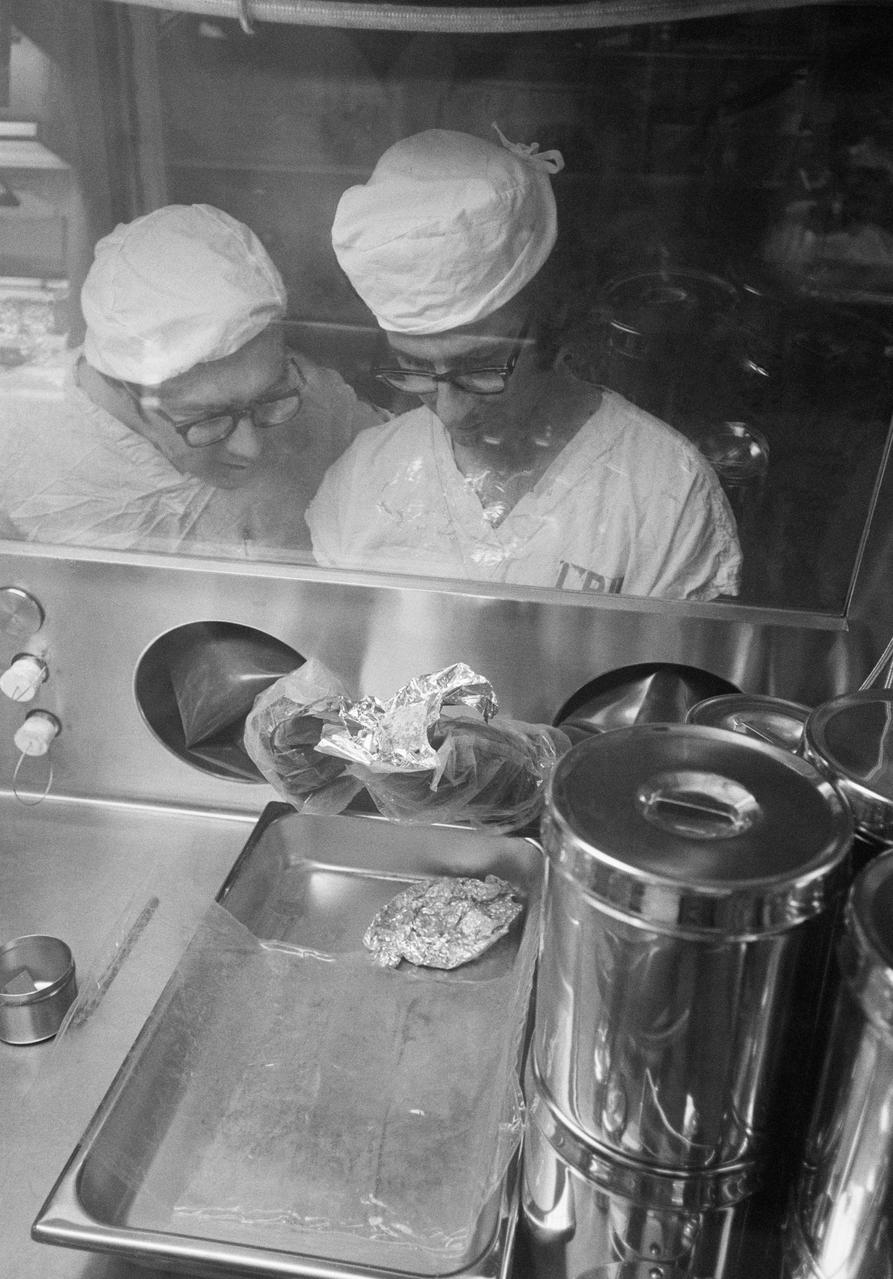
S71-21029 (24 Feb. 1971) --- Everett Gibson (left) and Don Morrison with Apollo 14 rocks in the Lunar Receiving Lab (LRL). Photo credit: NASA
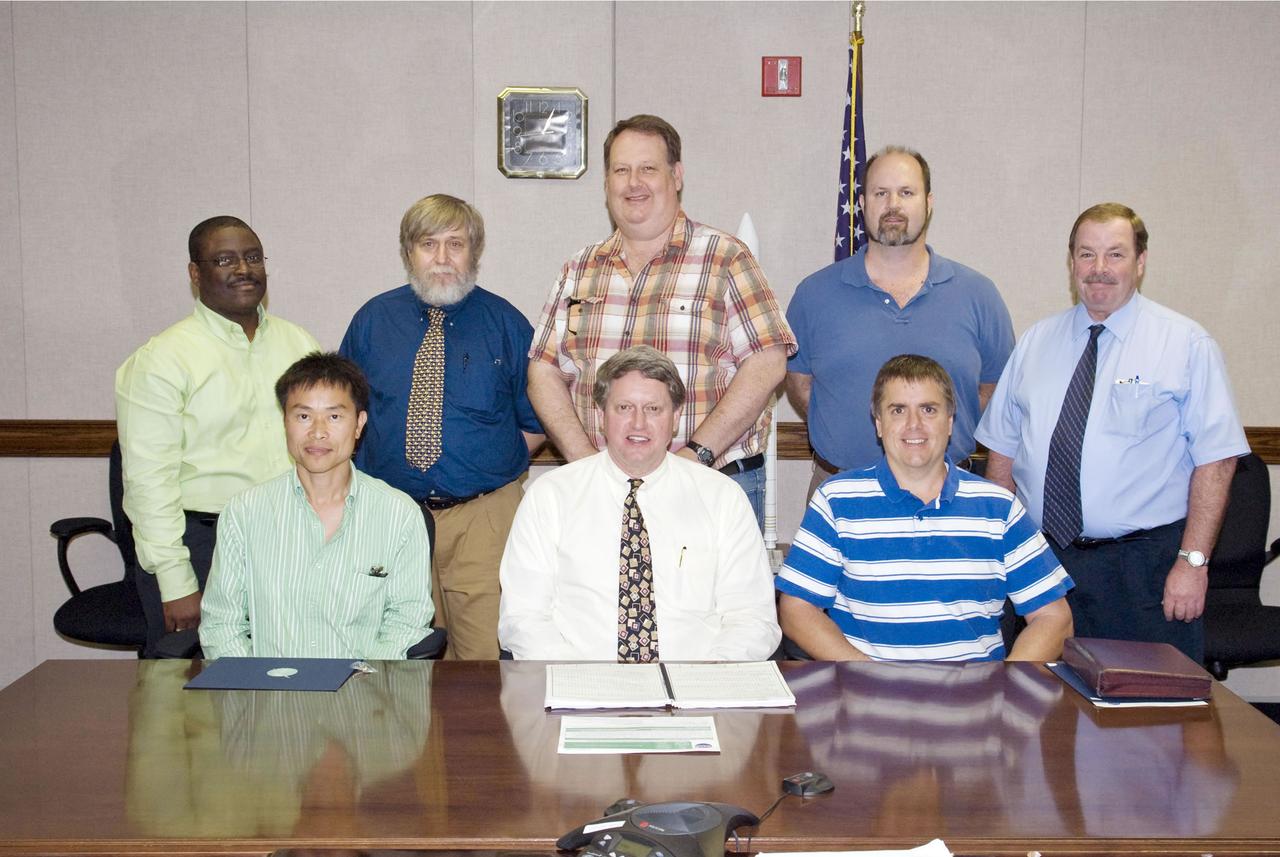
The NASA Engineering & Safety Center recently presented its Group Achievement Award to a Stennis team in recognition of technical excellence in evaluating the operational anomalies and reliability improvements associated with the space shuttle engine cut-off system. Stennis employees receiving the award were: (standing, l to r) Freddie Douglas (NASA), George Drouant (Jacobs Technology Inc.), Fred Abell (Jacobs), Robert Drackett (Jacobs) and Mike Smiles (NASA); (seated, l to r): Binh Nguyen (Jacobs), Stennis Director Gene Goldman and Joseph Lacker (NASA). Phillip Hebert of NASA is not pictured.
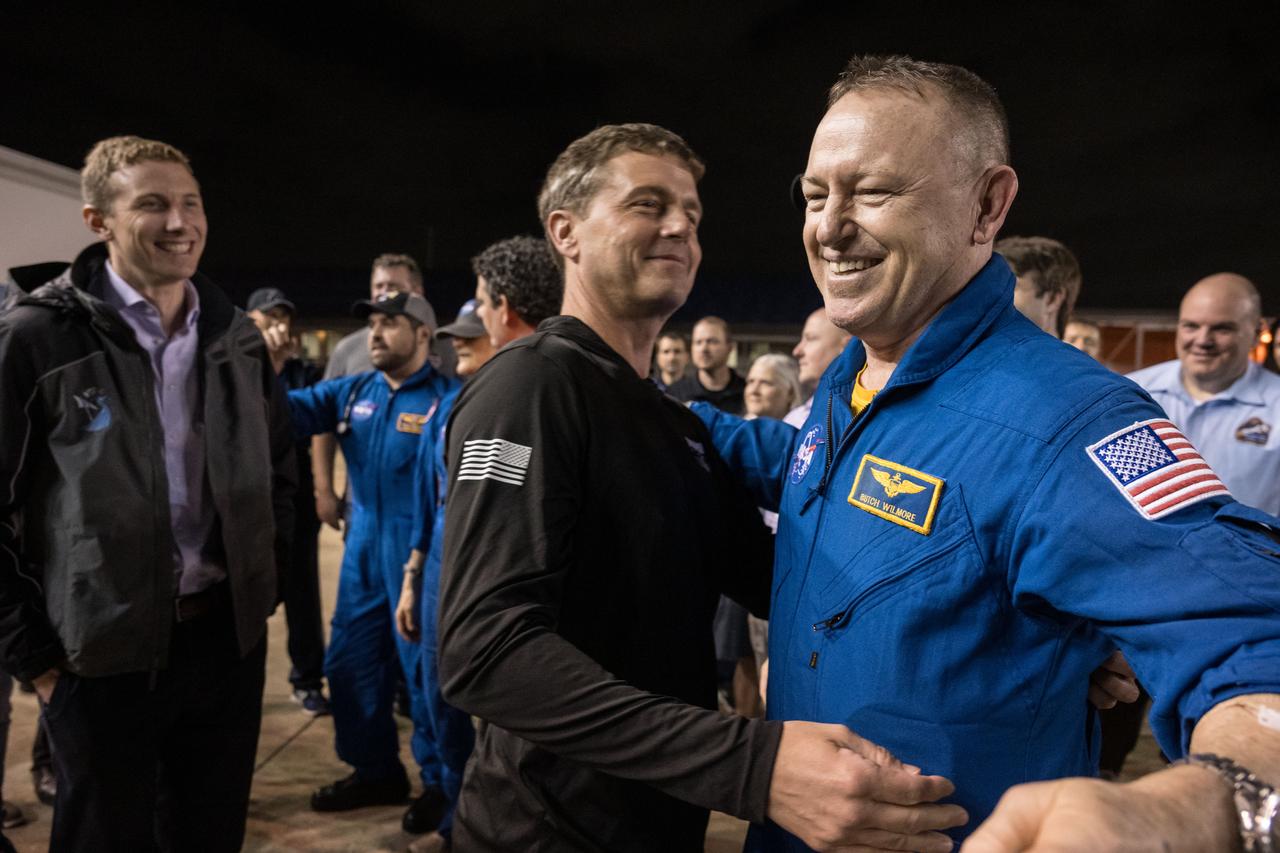
jsc2025e032543 (March 18, 2025) --- NASA astronaut Butch Wilmore receives a warm welcome at Johnson Space Center's Ellington Field in Houston from NASA astronauts Reid Wiseman and Woody Hoburg after completing a long-duration science mission aboard the International Space Station. After undocking from the orbiting laboratory, NASA’s SpaceX Crew-9 splashed down at 5:57 p.m. EDT on Tuesday, March 18, in the Gulf of America near Tallahassee, Florida.
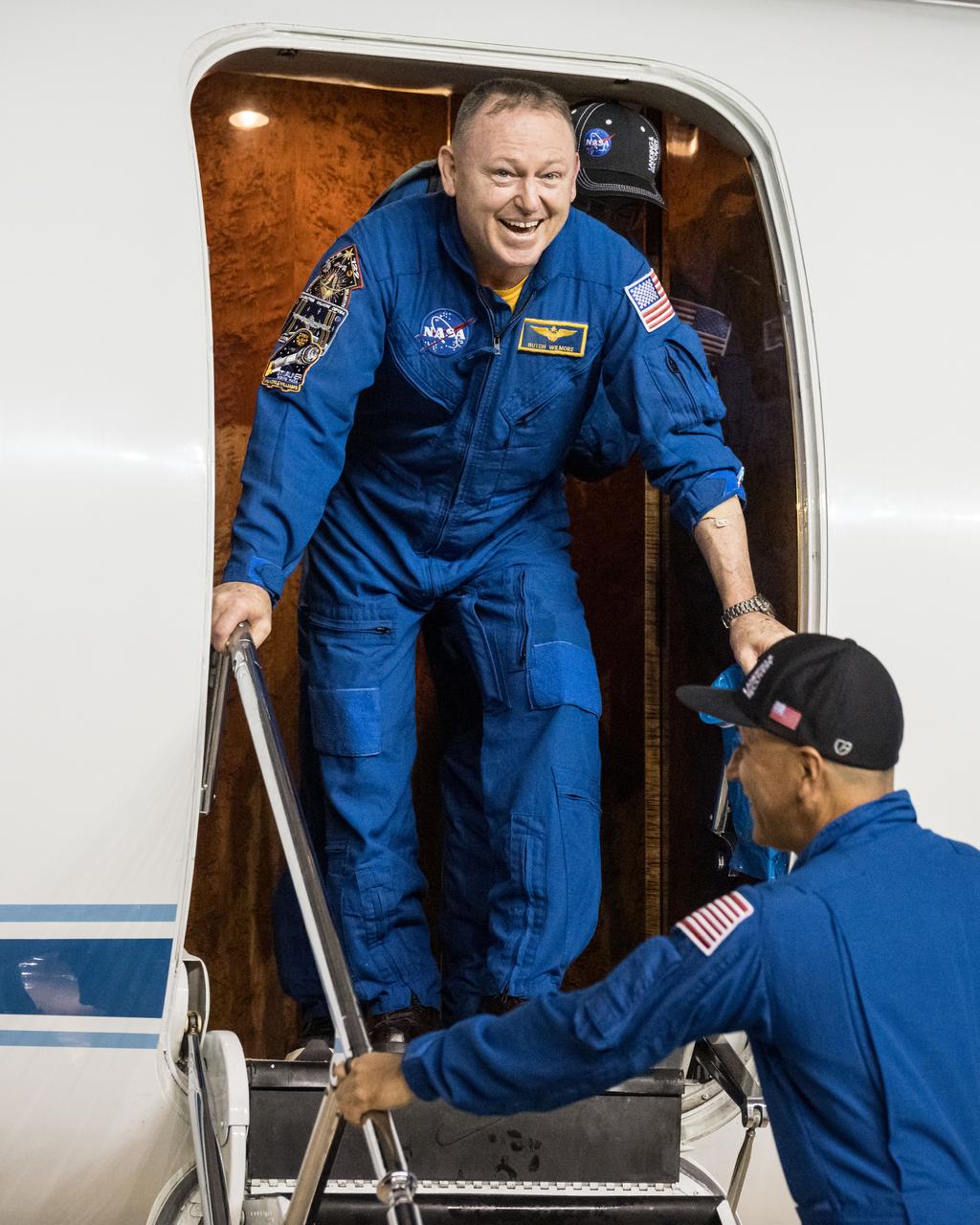
jsc2025e032540 (March 18, 2025) --- NASA astronaut Butch Wilmore receives a warm welcome at Johnson Space Center's Ellington Field in Houston after completing a long-duration science mission aboard the International Space Station. After undocking from the orbiting laboratory, NASA’s SpaceX Crew-9 splashed down at 5:57 p.m. EDT on Tuesday, March 18, in the Gulf of America near Tallahassee, Florida.
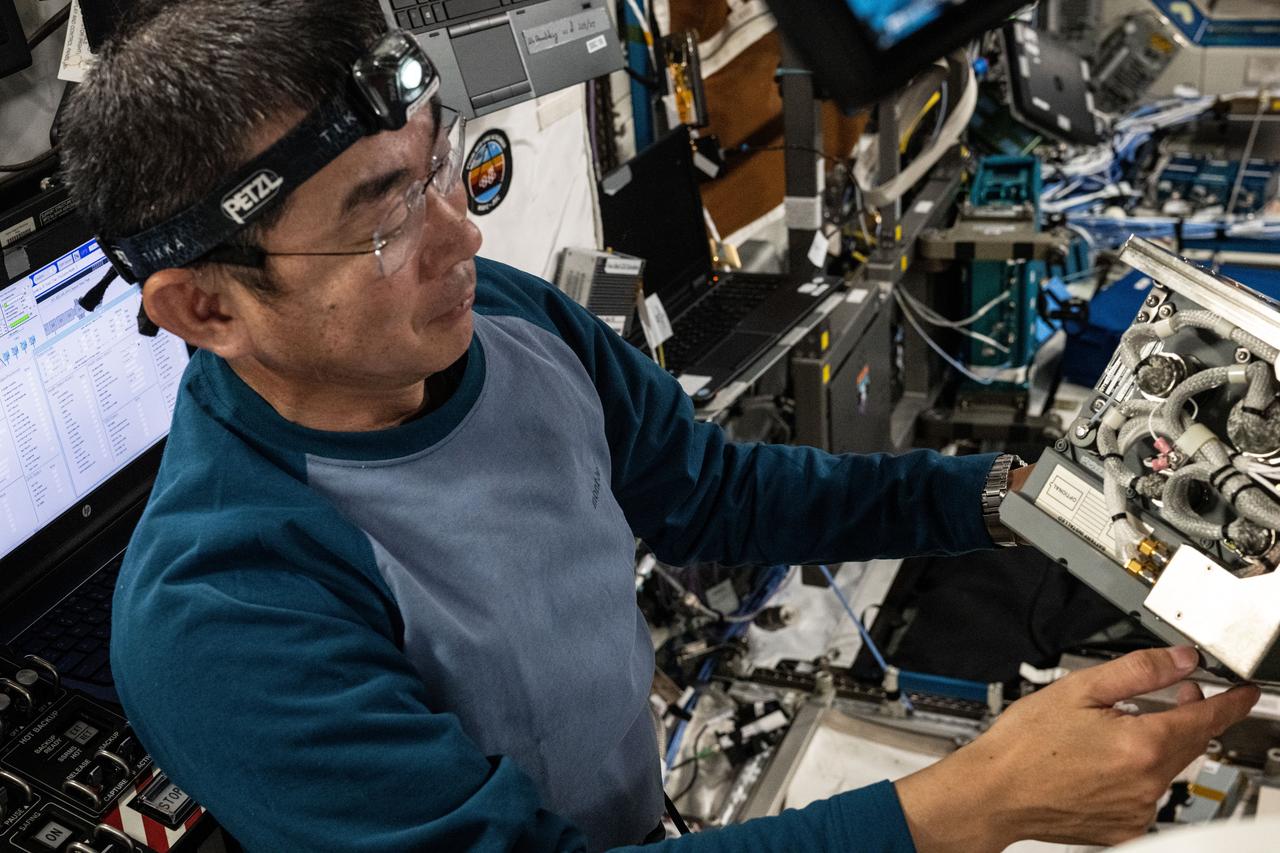
iss073e0511308 (Aug. 19, 2025) --- JAXA (Japan Aerospace Exploration Agency) astronaut and Expedition 73 Flight Engineer Kimiya Yui checks out a Global Positioning Satellite receiver during maintenance aboard the International Space Station's Destiny laboratory module.
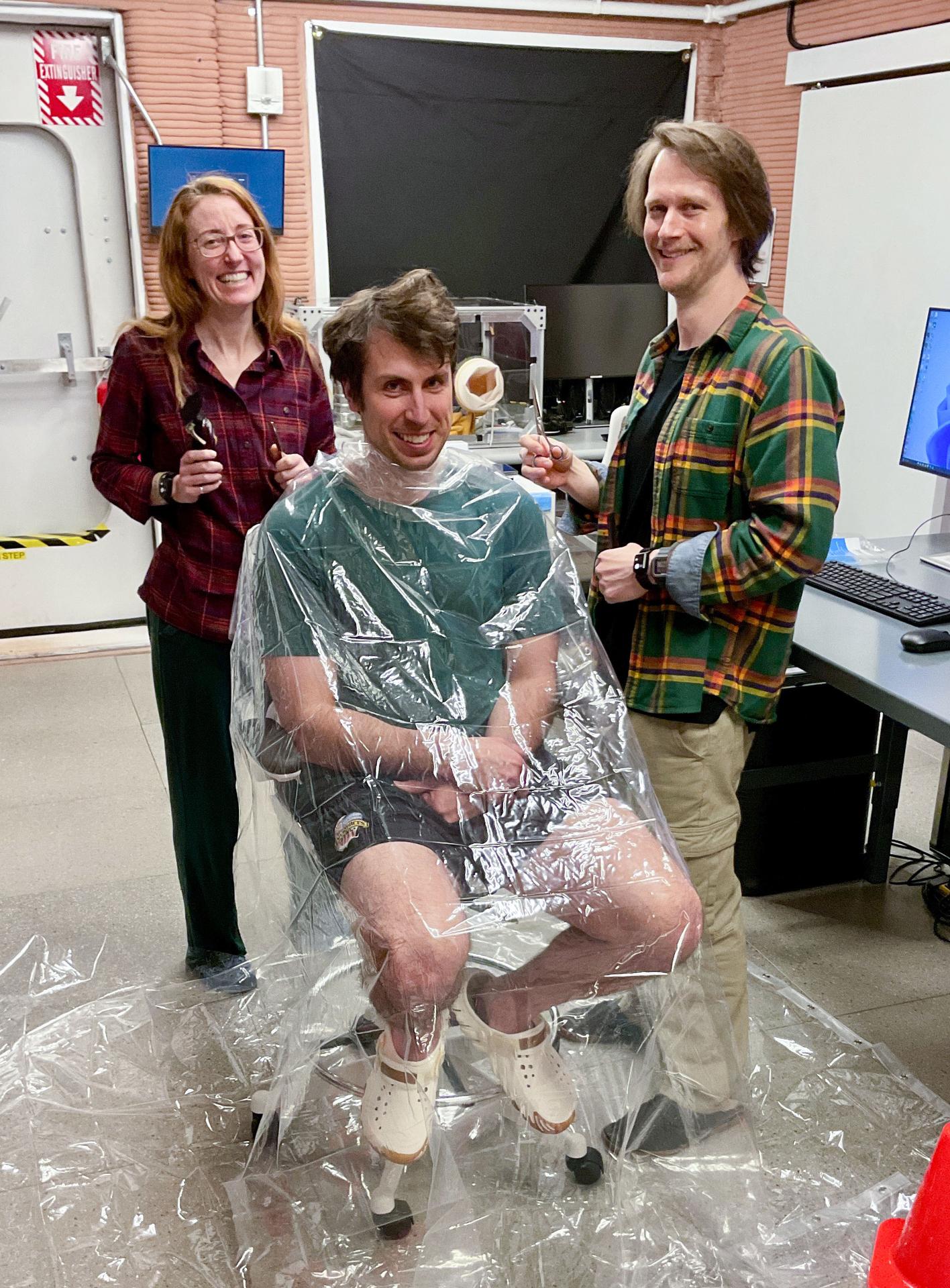
jsc2026e403160 (Jan. 11, 2026) -- Ross Elder, Crew Health and Performance Exploration Analog (CHAPEA) mission 2 commander, receiving a haircut from Ellen Ellis (left), CHAPEA mission 2 medical officer, and Matthew Montgomery (right) CHAPEA mission 2 science officer. Credit: NASA
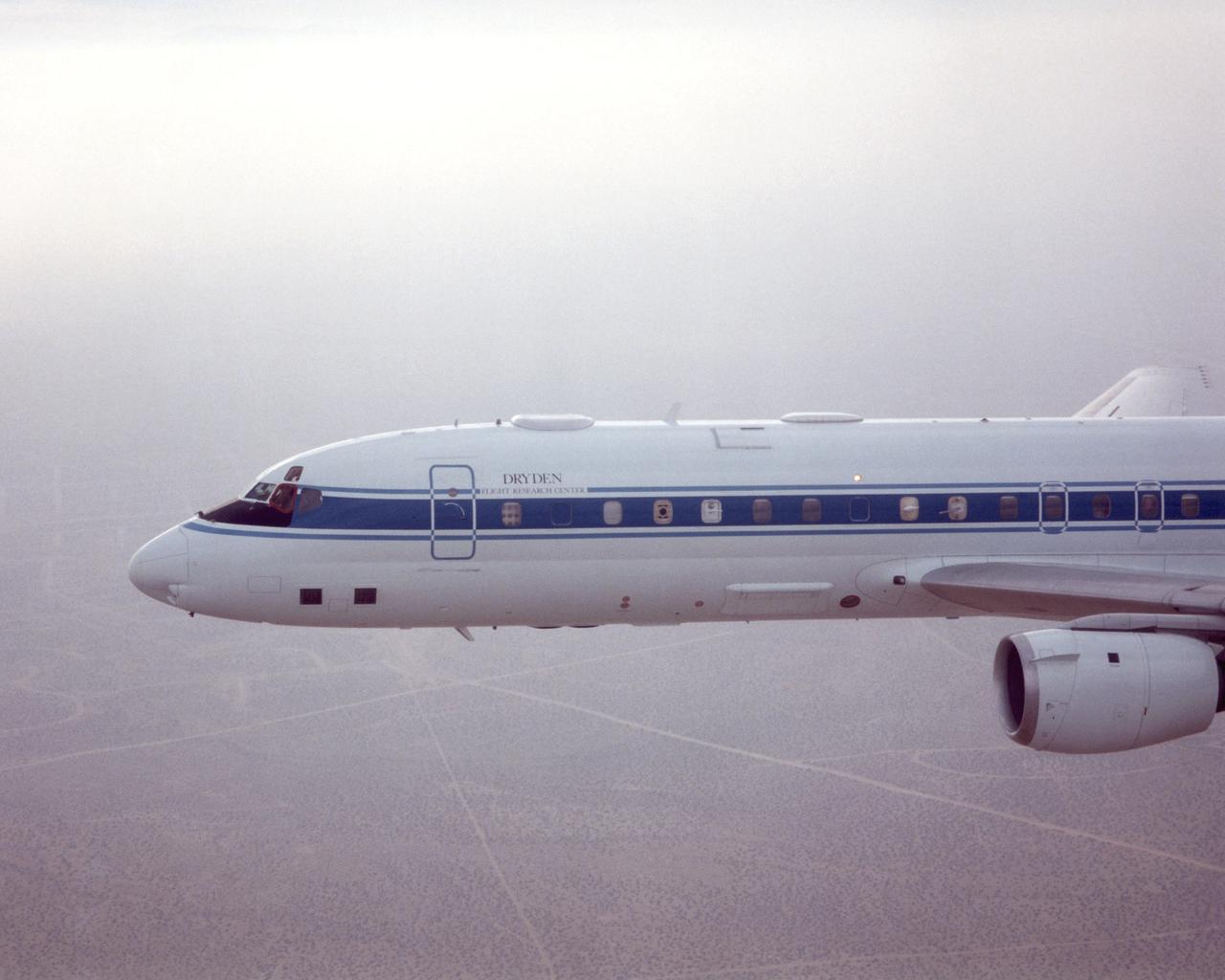
DC-8 returning from AFWEX deployment showing AeroSAPIENT Ku-band receive antenna (fwd zenith port)
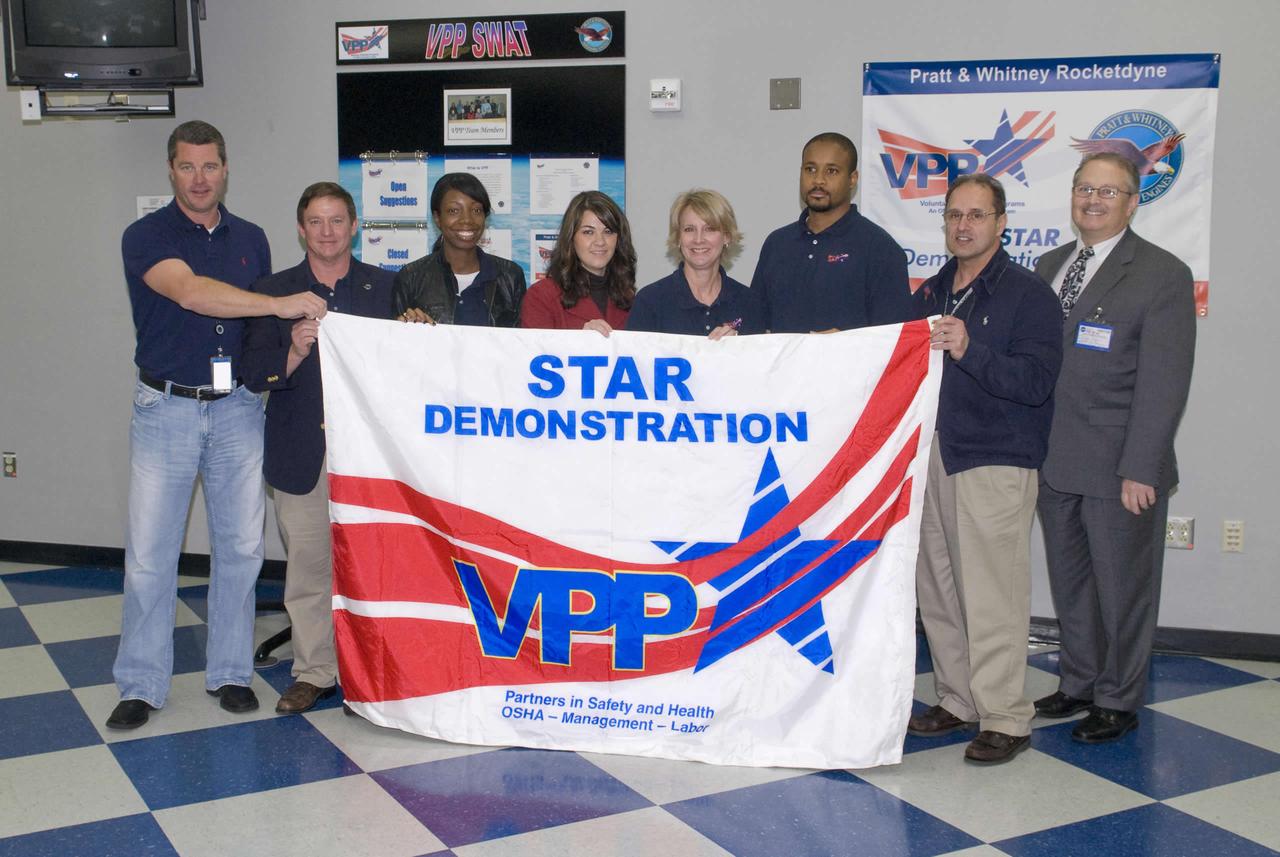
Pratt and Whitney Rocketdyne at NASA's John C. Space Center was presented its Voluntary Protection Programs (VPP) Star Demonstration banner by the Occupational Safety and Health administration (OSHA) during a Dec. 8 ceremony. Pratt Whitney Rocketdyne VPP Safe Working Action Team members Alan Howe (l to r), Mike McDaniel, April Page, Nyla Trumbach, Donna Pullman, Gary Simpson and Frank Pellegrino received the VPP Star Demonstration flag from OSHA Area Director Clyde Payne (right). OSHA established VPP in 1982 as a proactive safety management model so organizations and their employees could be recognized for excellence in safety and health.
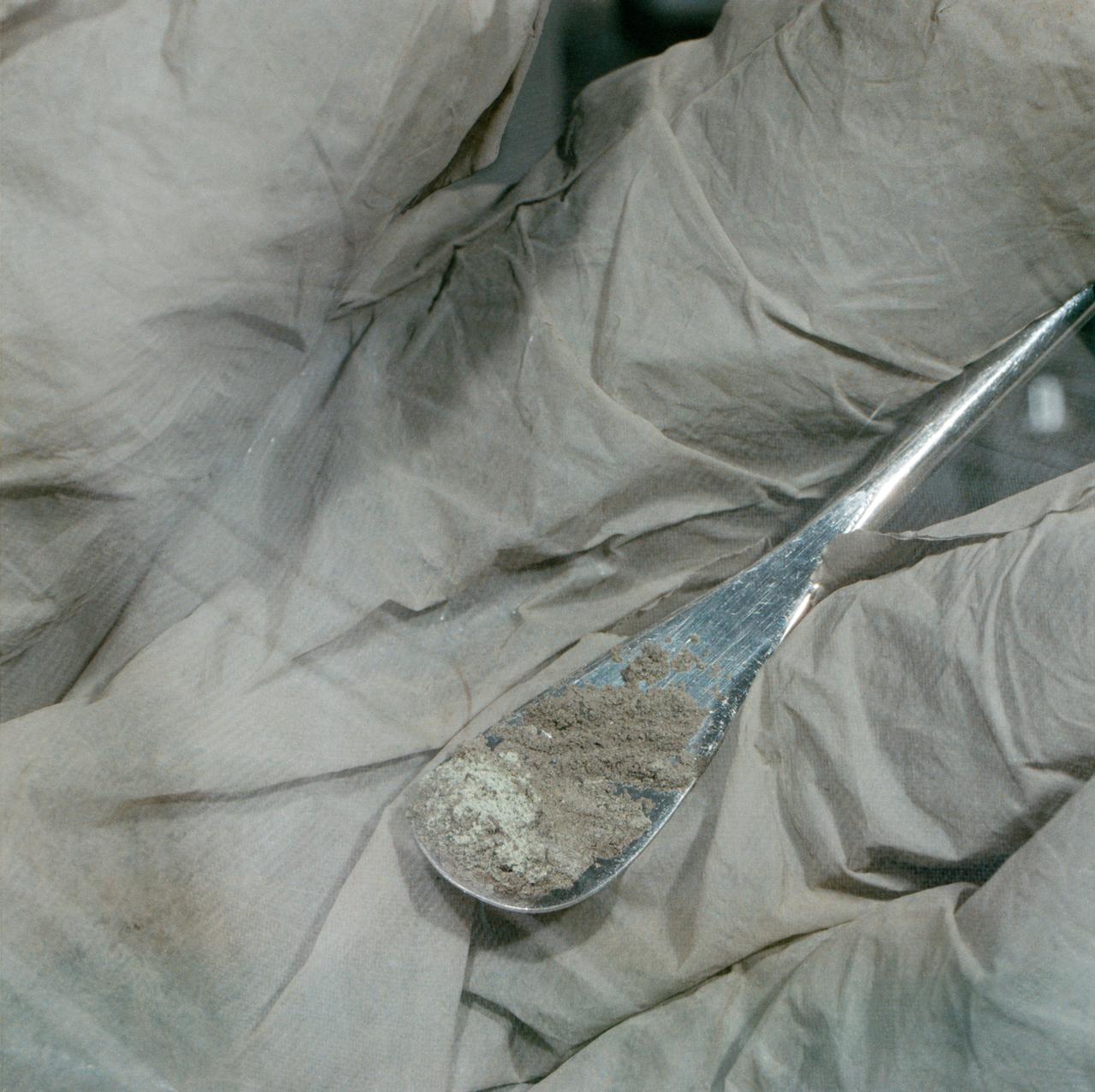
S71-43050 (August 1971) --- A close-up view of Apollo 15 lunar sample No. 15305 in the Non-sterile Nitrogen Processing Line (NNPL) in the Lunar Receiving Laboratory (LRL) at the Manned Spacecraft Center (MSC). This sample, pictured on a small spatula in a lab technician's glove, is green and is one of six recently taken from container No. 173, made up of comprehensive fines from the Apennine Front, Site No. 7. Astronauts David R. Scott, commander; and James B. Irwin, lunar module pilot, took the sample during their second extravehicular activity (EVA), at a ground elapsed time (GET) of 146:05 to 146:06.
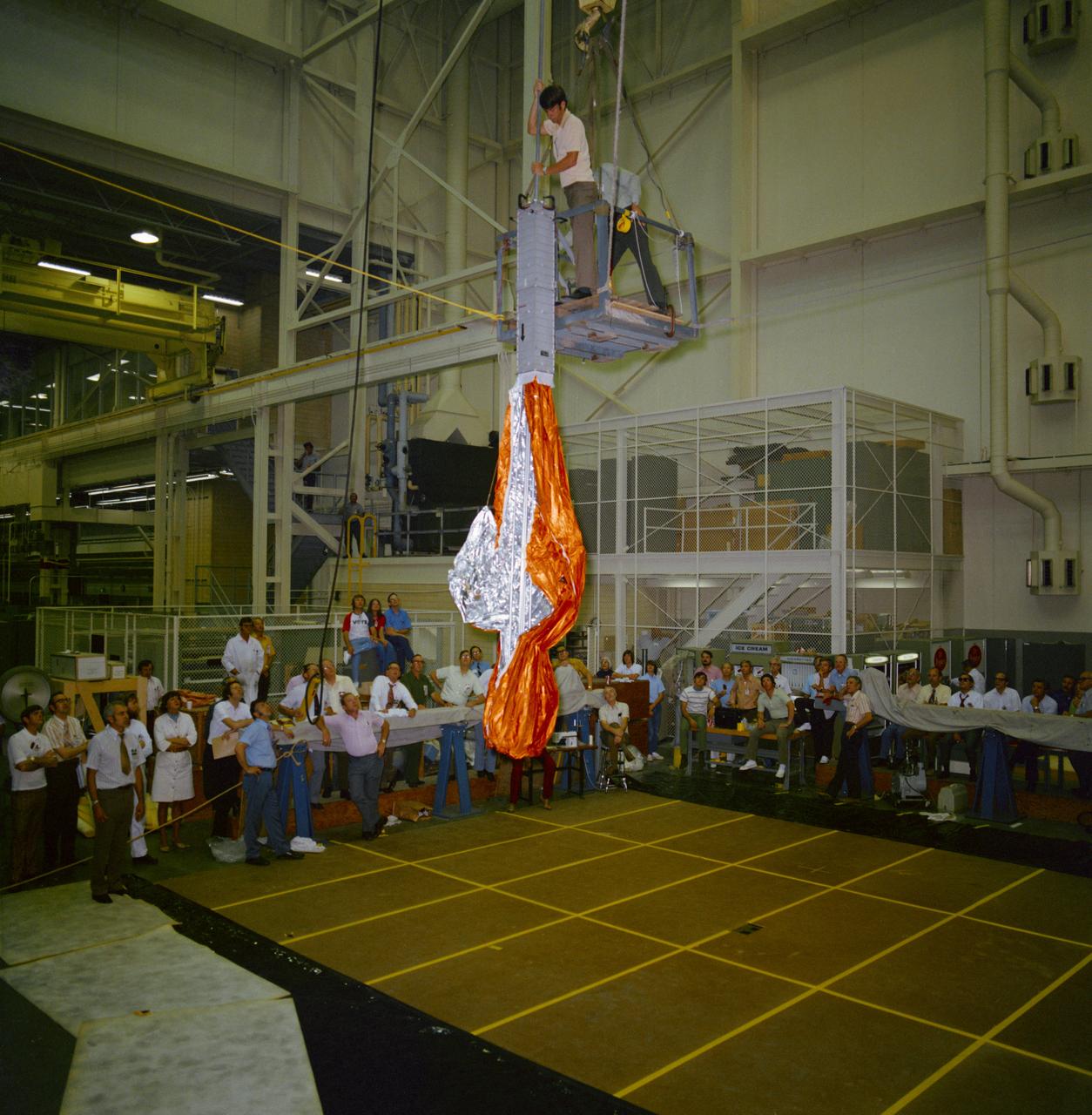
S73-26401 (23 May 1973) --- An umbrella-like mechanical device called the "parasol", one of the several sunscreen possibilities being considered for use in shading the overheated Skylab 1 Orbital Workshop (OWS), receives a checkout in the Technical Services shop in Bldg. 10 at Johnson Space Center. Here, a technician starts to deploy the "parasol" sunshade. The "parasol" is designed to fit into the T027 experiment photometer canister. The canopy portion of the "parasol" measures 24 feet by 22 feet. Photo credit: NASA
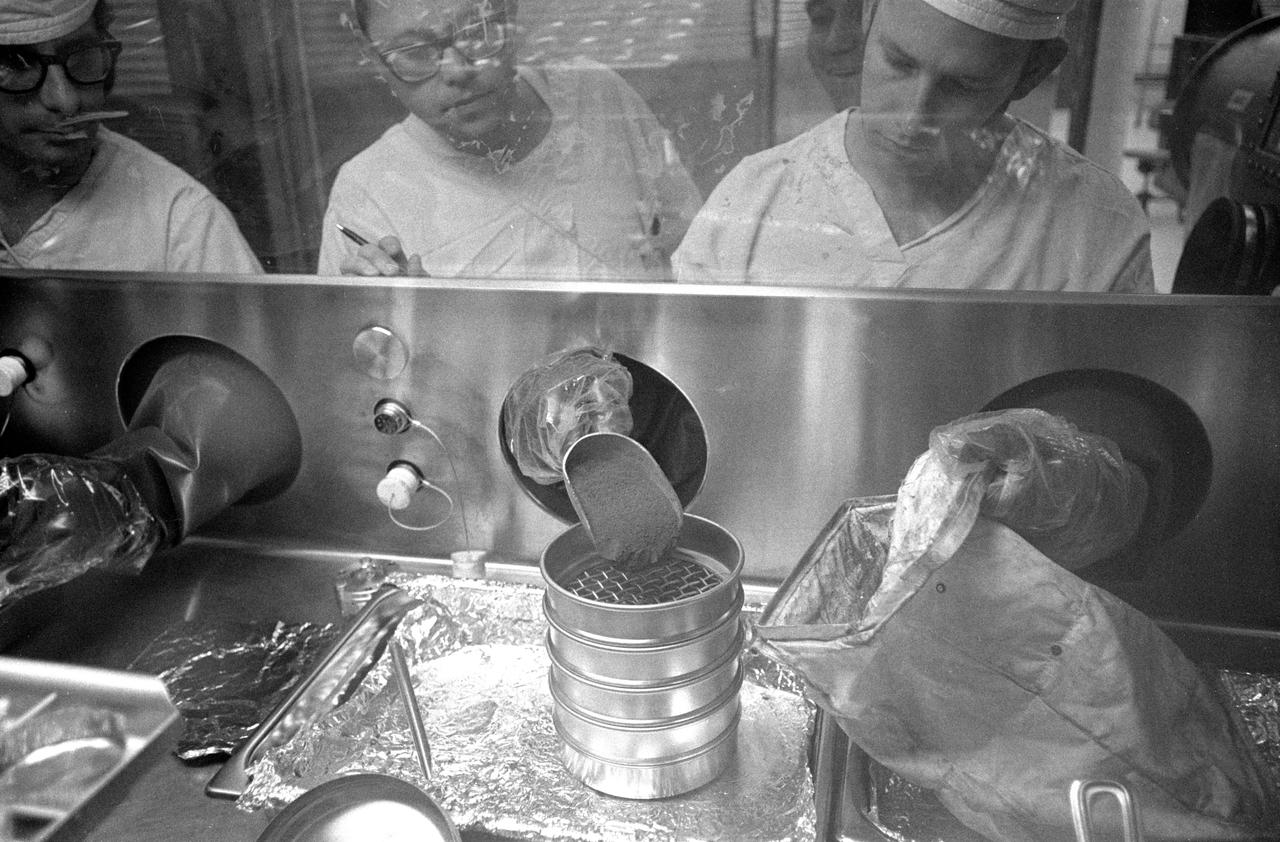
S71-19489 (18 Feb. 1971) --- Glove handlers work with freshly opened Apollo 14 lunar sample material in modularized cabinets in the Lunar Receiving Laboratory at the Manned Spacecraft Center. The glove operator on the right starts to pour fine lunar material which he has just taken from a tote bag. The powdery sample was among the last to be revealed of the 90-odd pounds of material brought back to Earth by the Apollo 14 crew members.
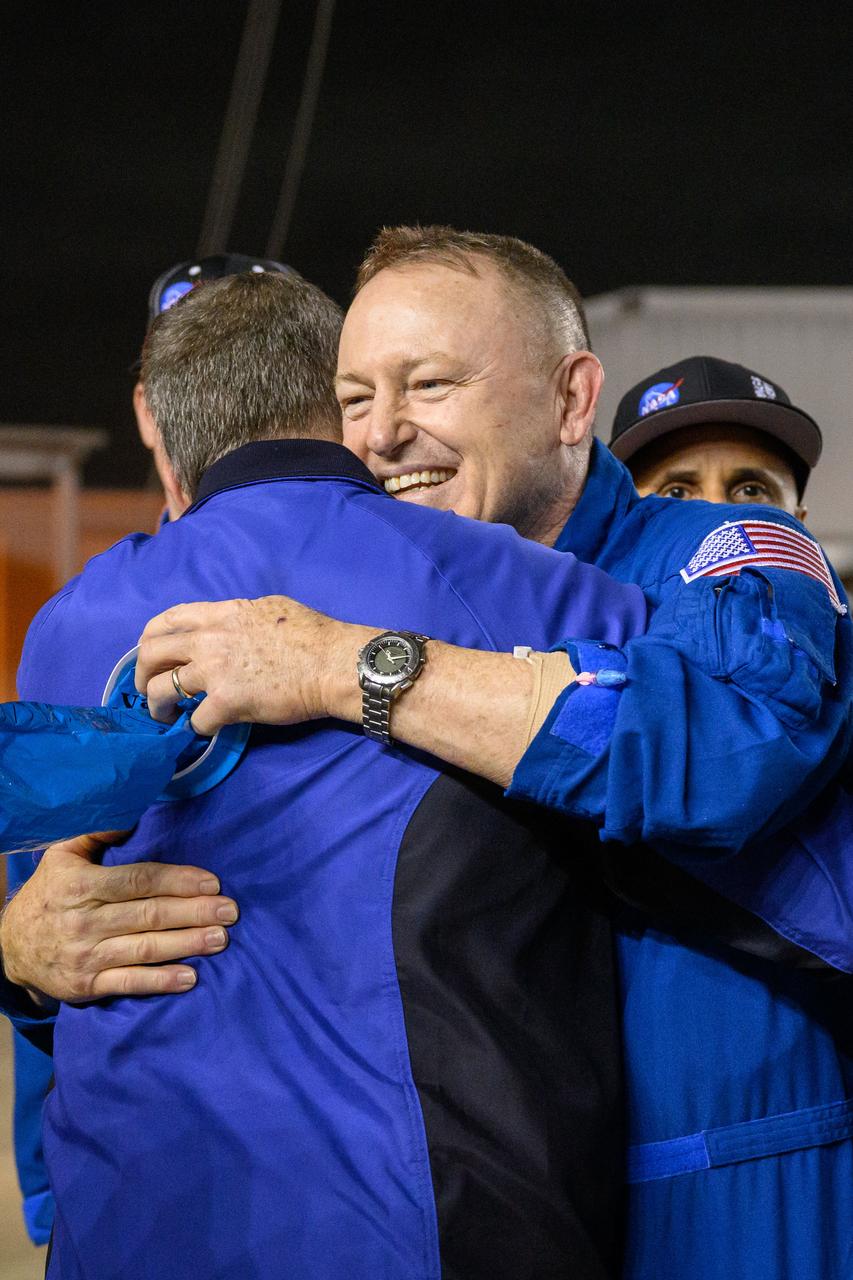
jsc2025e032671 (March 18, 2025) --- NASA astronaut Butch Wilmore receives a warm welcome at Johnson Space Center's Ellington Field in Houston after completing a long-duration science mission aboard the International Space Station. After undocking from the orbiting laboratory, NASA’s SpaceX Crew-9 splashed down at 5:57 p.m. EDT on Tuesday, March 18, in the Gulf of America near Tallahassee, Florida. Credit: NASA/Helen Arase Vargas
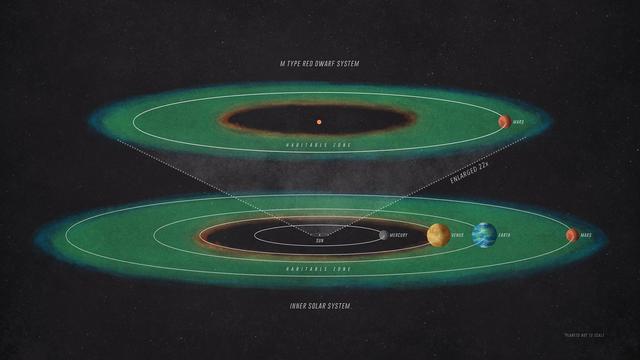
How habitable might an Exo-Mars be? It's a complex question but one that NASA's Mars Atmosphere and Volatile Evolution (MAVEN) mission can help answer. To receive the same amount of starlight as Mars receives from our Sun, a planet orbiting an M-type red dwarf would have to be positioned much closer to its star than Mercury is to the Sun. https://photojournal.jpl.nasa.gov/catalog/PIA22075
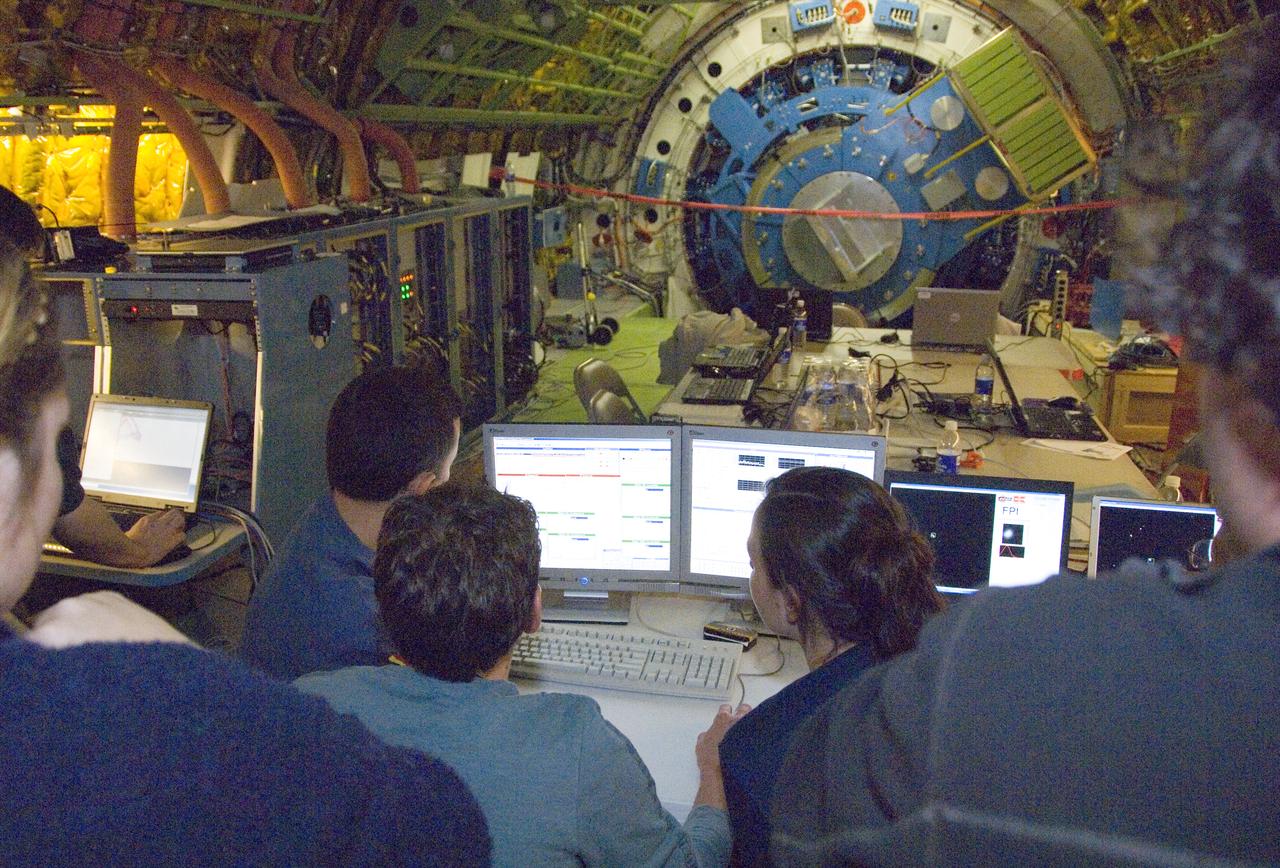
Scientists carefully examine data being received during nighttime line operations testing of the SOFIA airborne observatory's 2.5-meter infrared telescope.
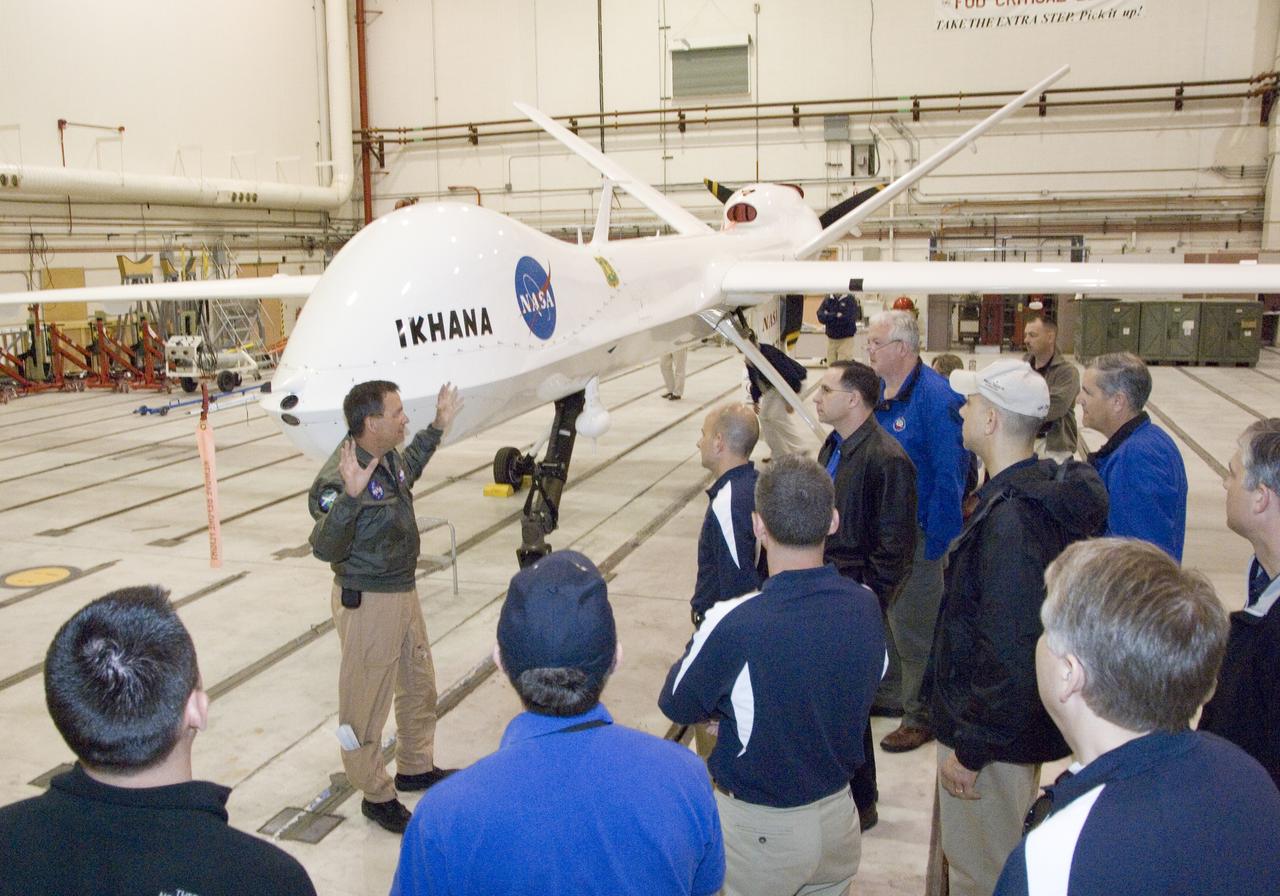
Industrial College of the Armed Forces students on a VIP tour receive a briefing on the Ikhana unmanned air vehicle from NASA Dryden pilot Mark Pestana.
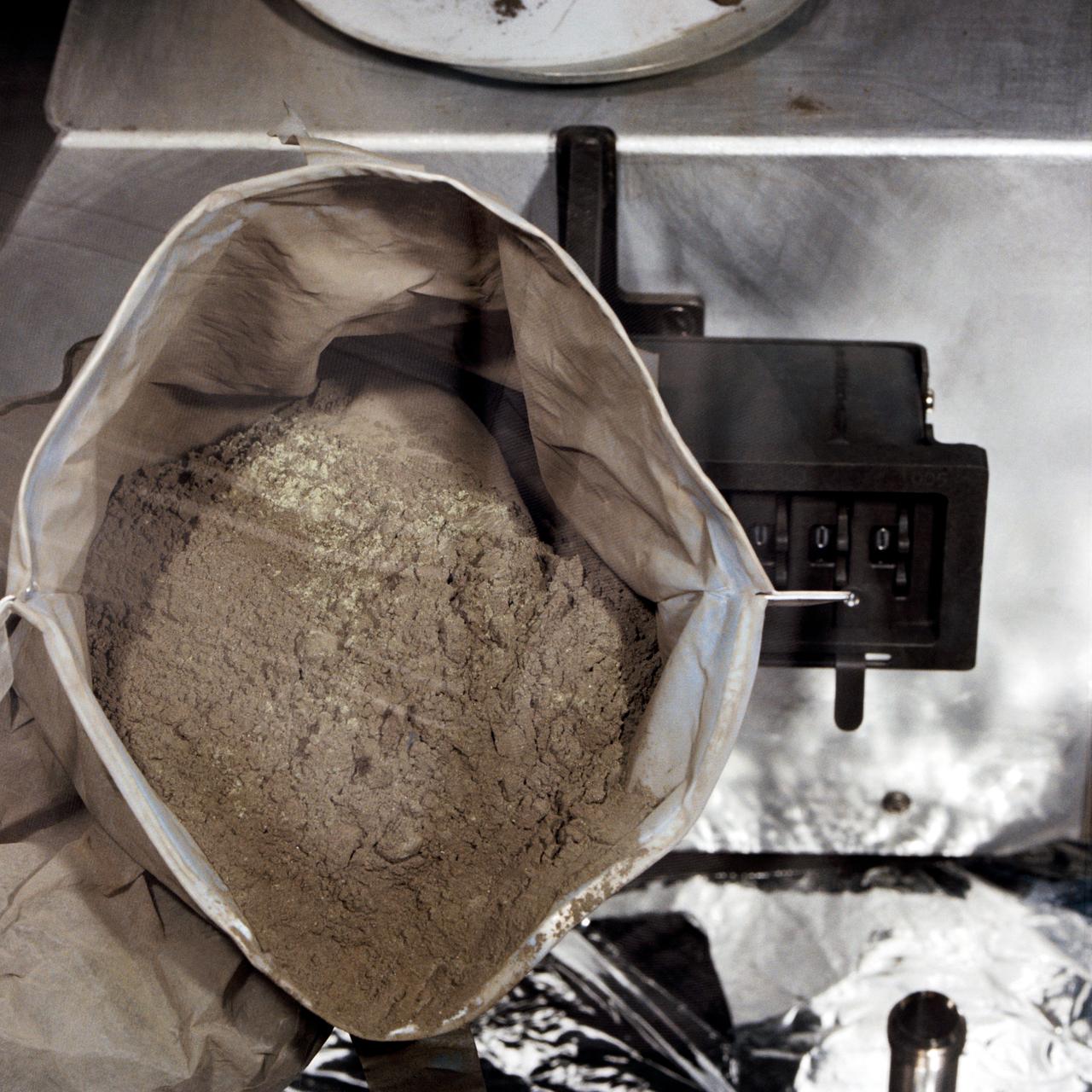
S71-43052 (August 1971) --- A close-up view of a container full of green-colored lunar soil in the Non-Sterile Nitrogen Processing Line (NNPL) in the Lunar Receiving Laboratory (LRL) at the Manned Spacecraft Center (MSC). This sample, broken down into six separate samples after this photo was made, was made up of comprehensive fines from near Spur Crater on the Apennine Front. The numbers assigned to the sample include numbers 15300 through 15305. Astronauts David R. Scott and James B. Irwin took the sample during their second extravehicular activity (EVA) at a ground elapsed time (GET) of 146:05 to 146:06.
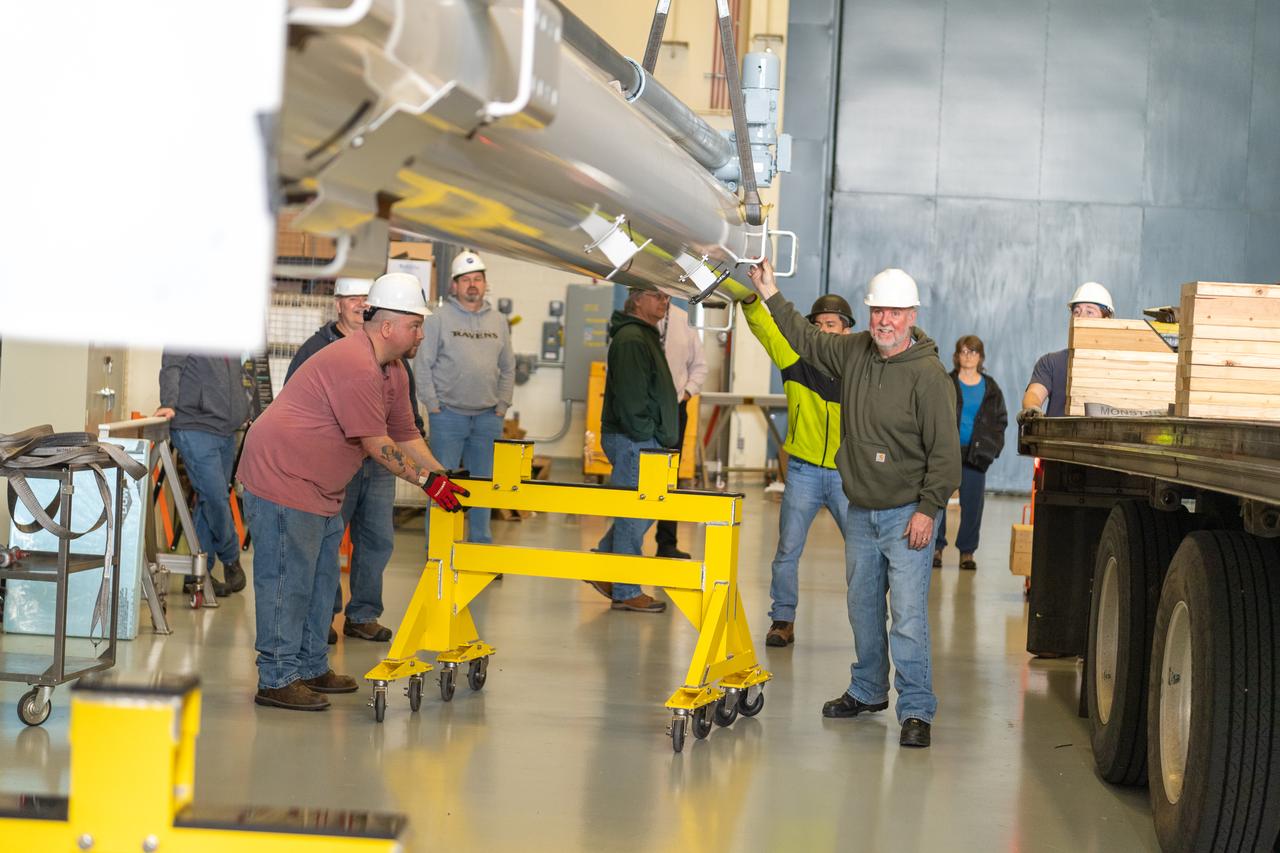
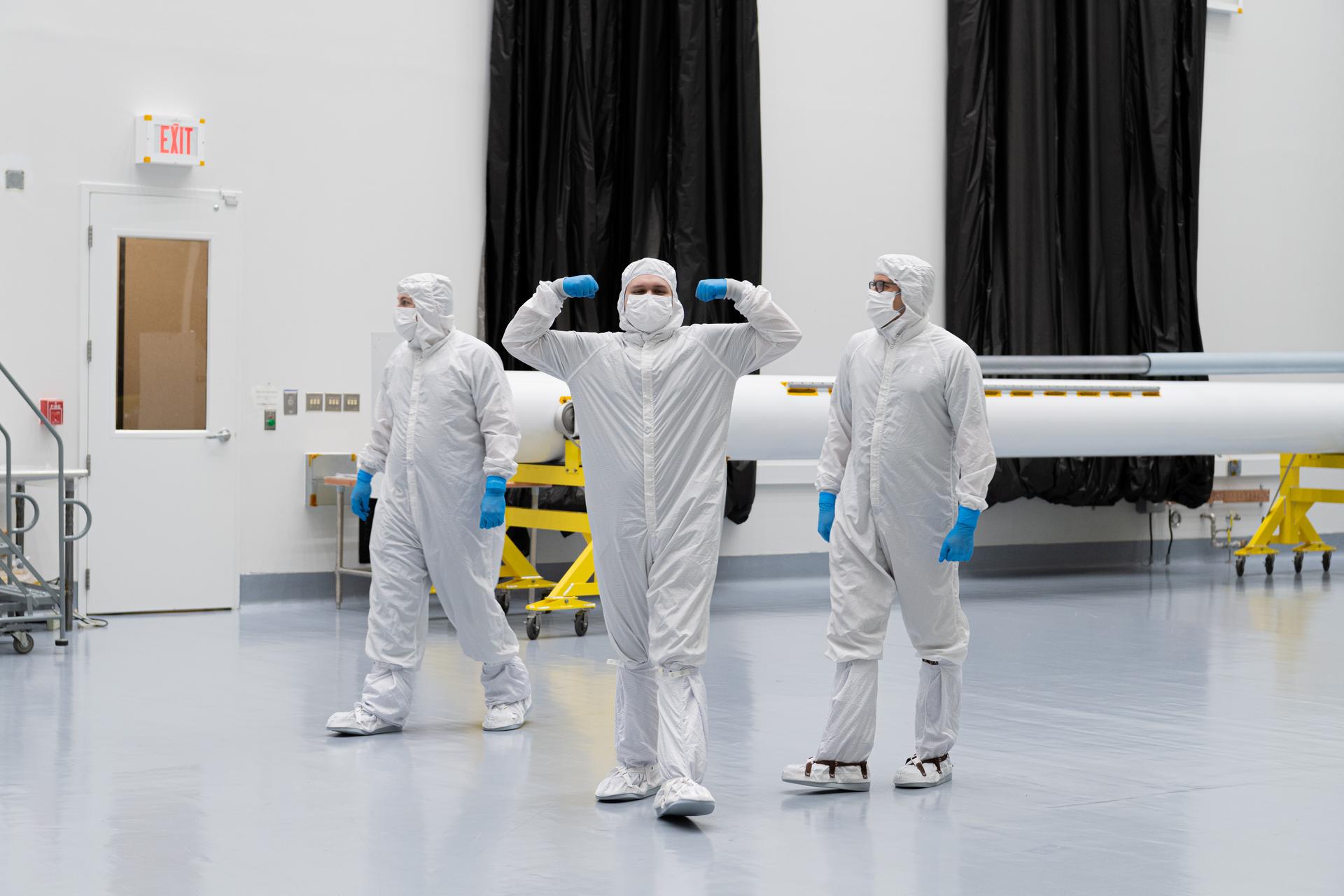
Lucas Keim, a mechanical engineering and integration technician, flexes after helping move ground support equipment into a cleanroom at Goddard Space Flight Center, Greenbelt, Md., Feb 20, 2023.
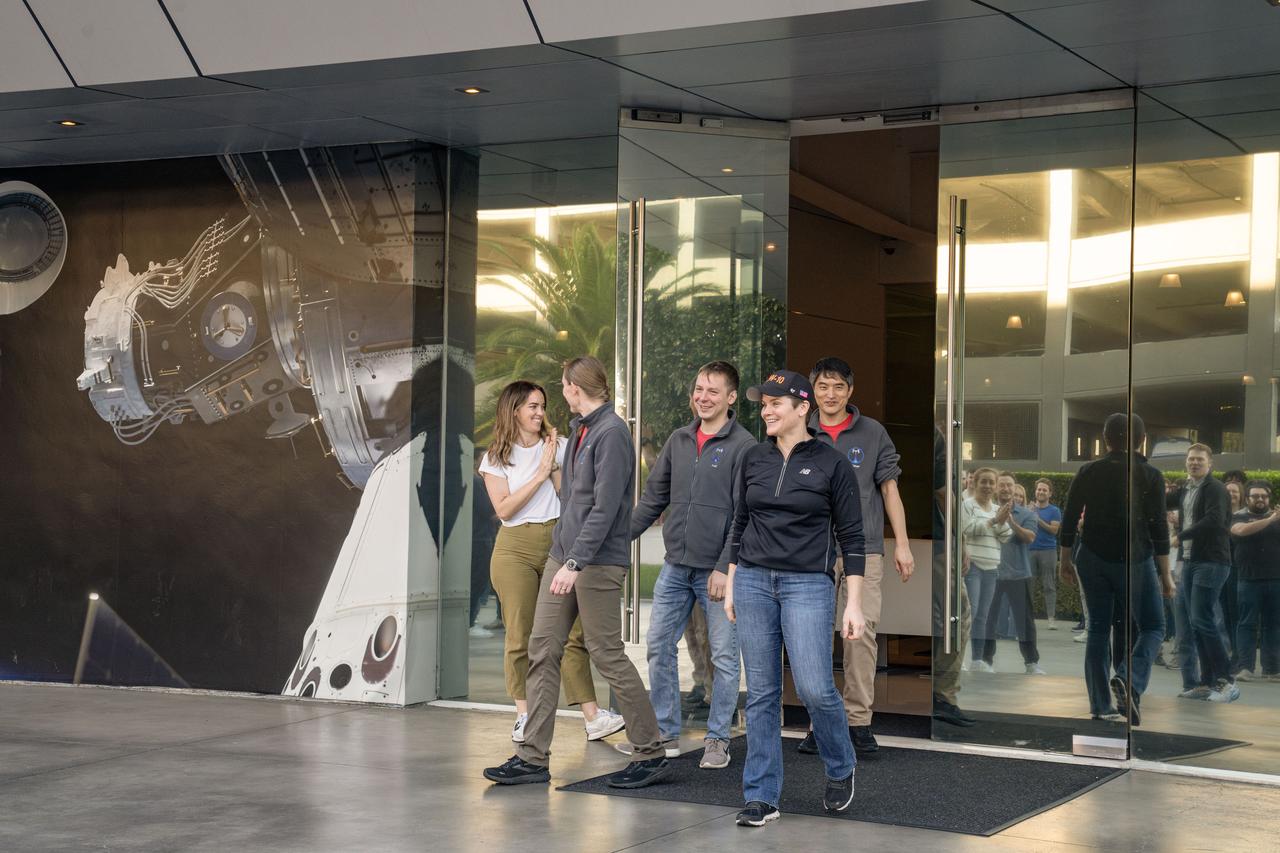
The crew members of NASA's SpaceX Crew-10 mission receive a sendoff at the SpaceX facility in Hawthorne, California ahead of their mission to the International Space Station. Credit: SpaceX
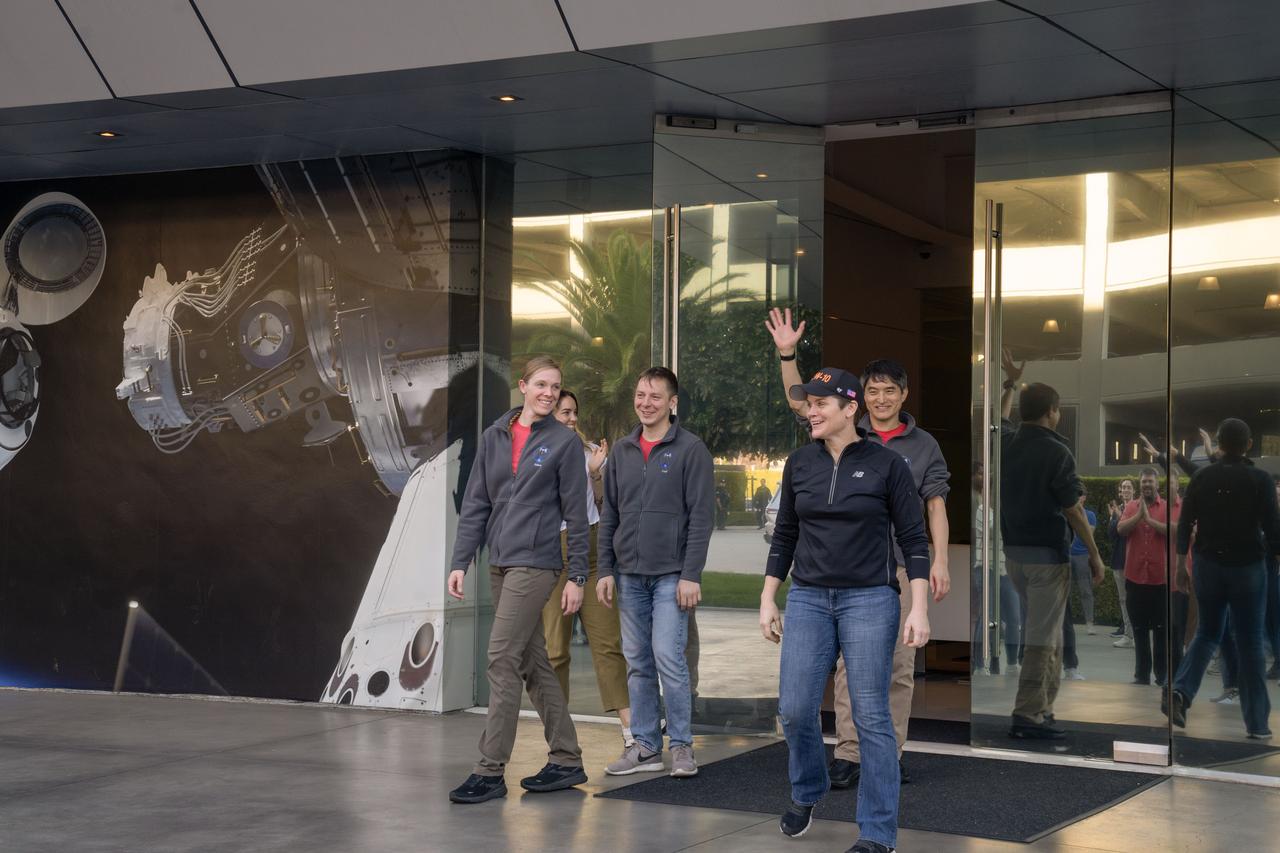
The crew members of NASA's SpaceX Crew-10 mission receive a sendoff at the SpaceX facility in Hawthorne, California ahead of their mission to the International Space Station. Credit: SpaceX
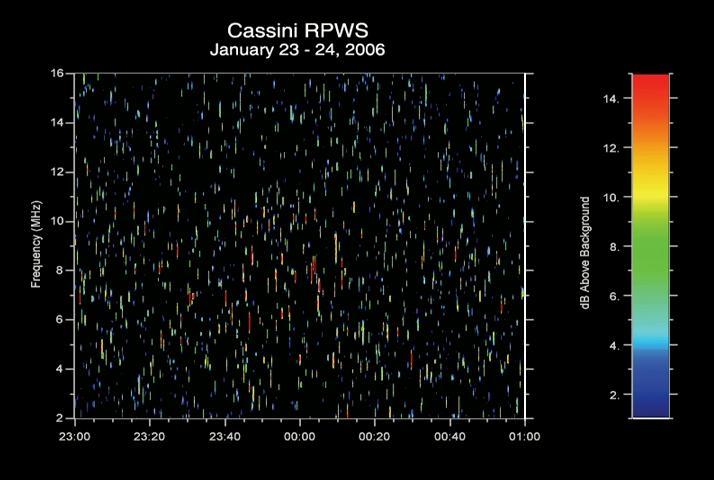
Lightning sounds from Saturn can be heard via radio signals received by the radio and plasma wave science instrument on the Cassini spacecraft

S69-40307 (30 July 1969) --- The crewmen of the historic Apollo 11 lunar landing mission stand in the serving line as they prepare to dine in the Crew Reception Area of the Lunar Receiving Laboratory, Building 37, Manned Spacecraft Center. Left to right, are astronauts Edwin E. Aldrin Jr., Michael Collins, and Neil A. Armstrong. They are continuing their postflight debriefings. The three astronauts will be released from quarantine on Aug. 11, 1969.
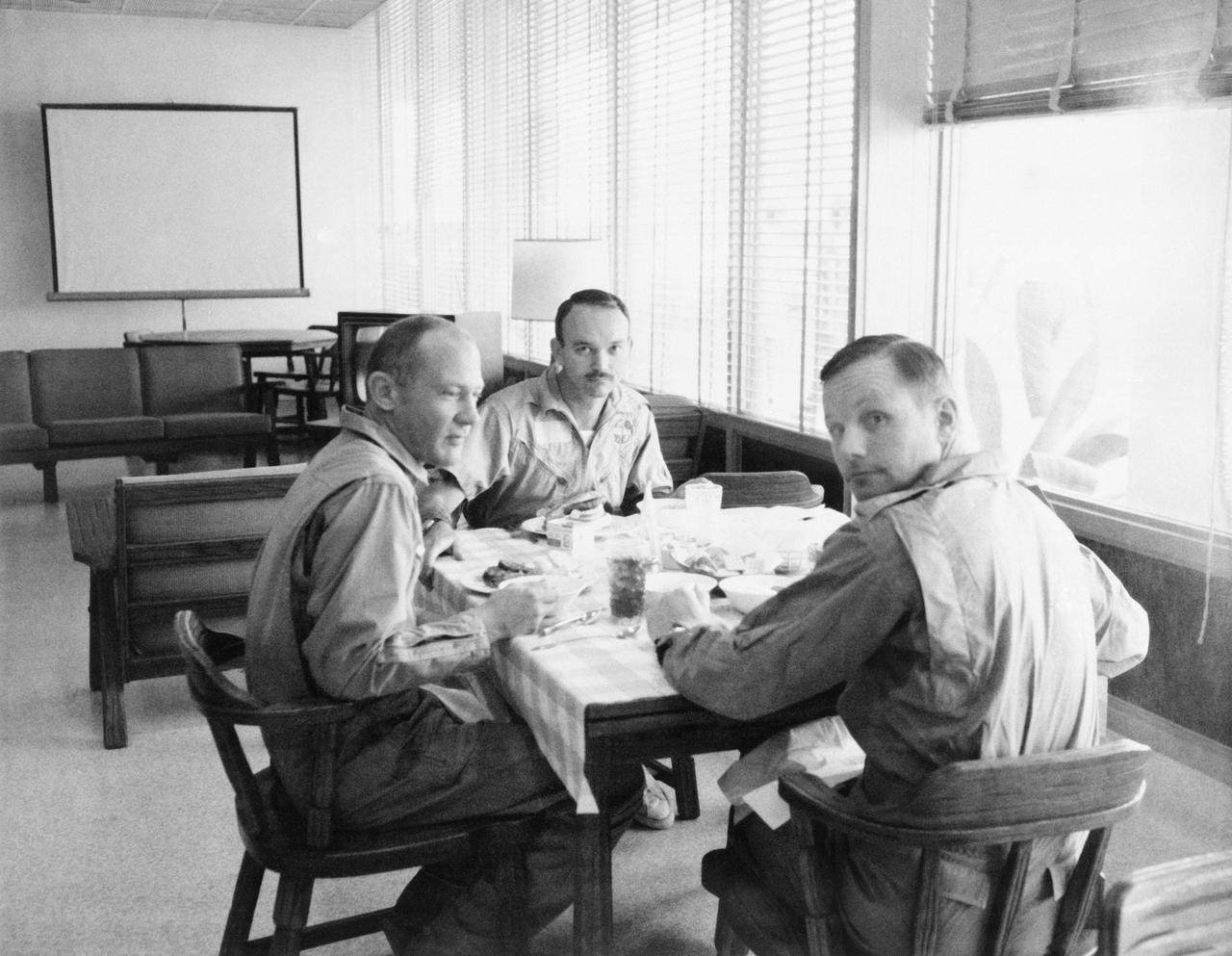
S69-40306 (30 July 1969) --- The crewmen of the historic Apollo 11 lunar landing mission are seen dining in the Crew Reception Area of the Lunar Receiving Laboratory, Building 37, Manned Spacecraft Center. Left to right, are astronauts Edwin E. Aldrin Jr., Michael Collins, and Neil A. Armstrong. They are continuing their postflight debriefings. The astronauts will be released from quarantine on Aug. 11, 1969.

The Space Shuttle Endeavour receives post-flight servicing in the Mate-Demate Device (MDD), following its landing at NASA's Dryden Flight Research Center, Edwards, California, June 19, 2002.
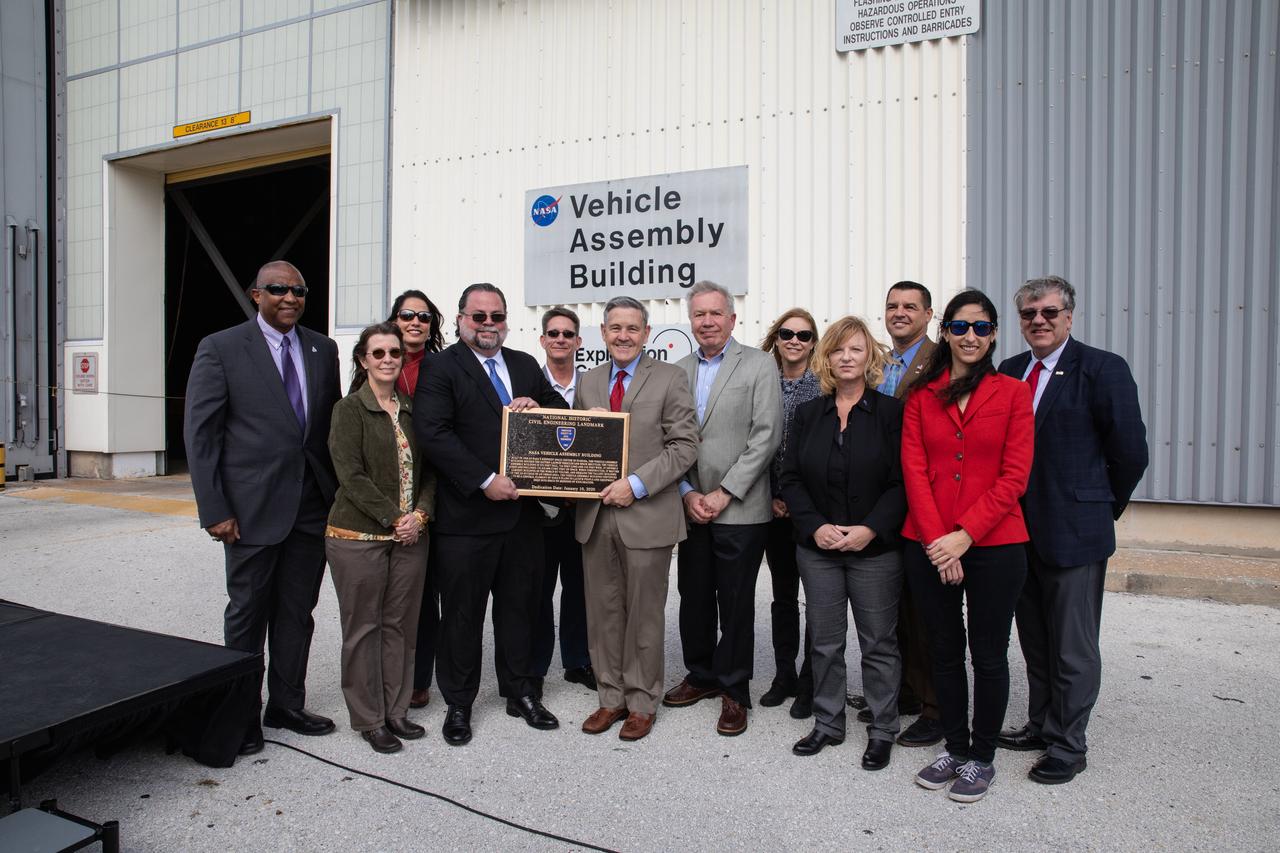
Kennedy Space Center Director Bob Cabana, center, accepts the National Historic Civil Engineering Landmark award from the Florida Section American Society of Civil Engineers (ASCE) for the Vehicle Assembly Building during a ceremony in front of the iconic facility on Jan. 10, 2020. Holding the award with Cabana is Peter Moore, ASCE Region 5 director. At far left is Kelvin Manning, associate director, technical. The ASCE nominated the historic building and bestowed the award. The VAB is the first building at Kennedy Space Center to earn this distinction. At the time of its completion, the 129-million-cubic-foot structure was the largest building in the world. Originally designed and built to accommodate the Saturn V/Apollo used in Project Apollo, the VAB was later modified for its role in the Space Shuttle Program.
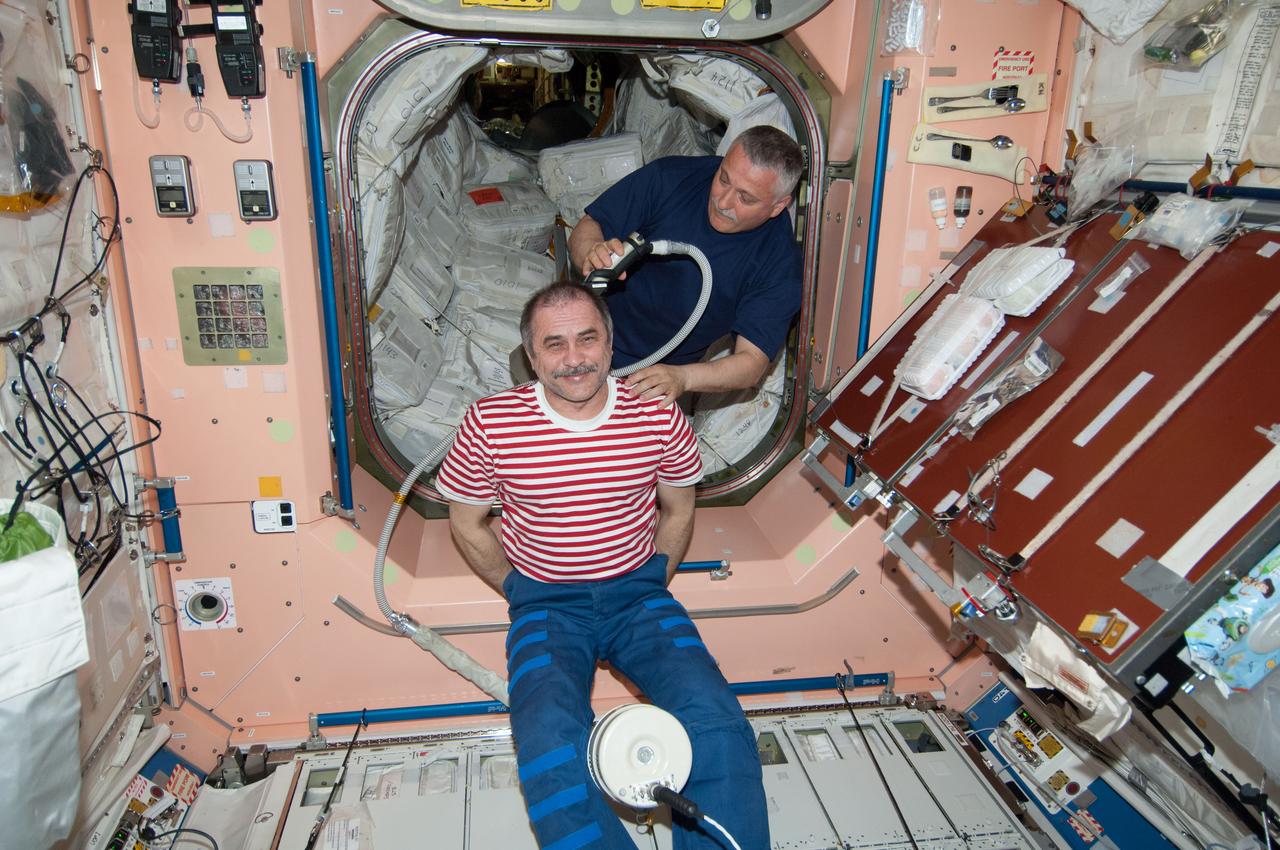
ISS036-E-005387 (1 June 2013) --- It's haircut day for Expedition 36 Commander Pavel Vinogradov, a cosmonaut with Russia's Federal Space Agency (Roscosmos), in the Unity node aboard the International Space Station. Doing the honors as his barber is Roscosmos cosmonaut Fyodor Yurchikhin, flight engineer for Expedition 36, who will take over command of the orbital outpost when Vinogradov returns to Earth in September.
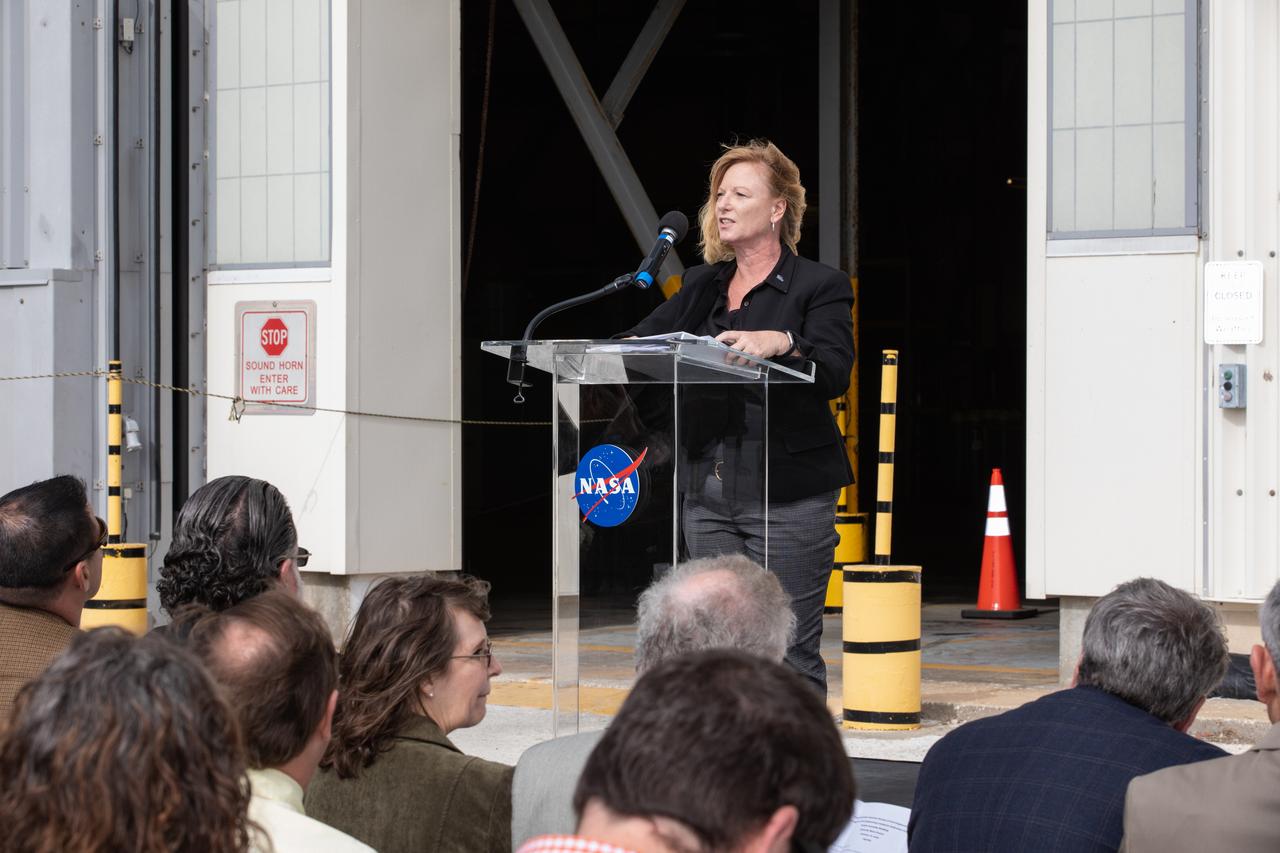
Kathleen Ruvarac, History and Heritage Committee chairperson with the American Society of Civil Engineers (ASCE), speaks to attendees during a ceremony on Jan. 10, 2020, to recognize the Vehicle Assembly Building with the National Historic Civil Engineering Landmark award. The Florida Section ASCE nominated the historic building and bestowed the award. The VAB is the first building at Kennedy Space Center to earn this distinction. At the time of its completion, the 129-million-cubic-foot structure was the largest building in the world. Originally designed and built to accommodate the Saturn V/Apollo used in Project Apollo, the VAB was later modified for its role in the Space Shuttle Program.
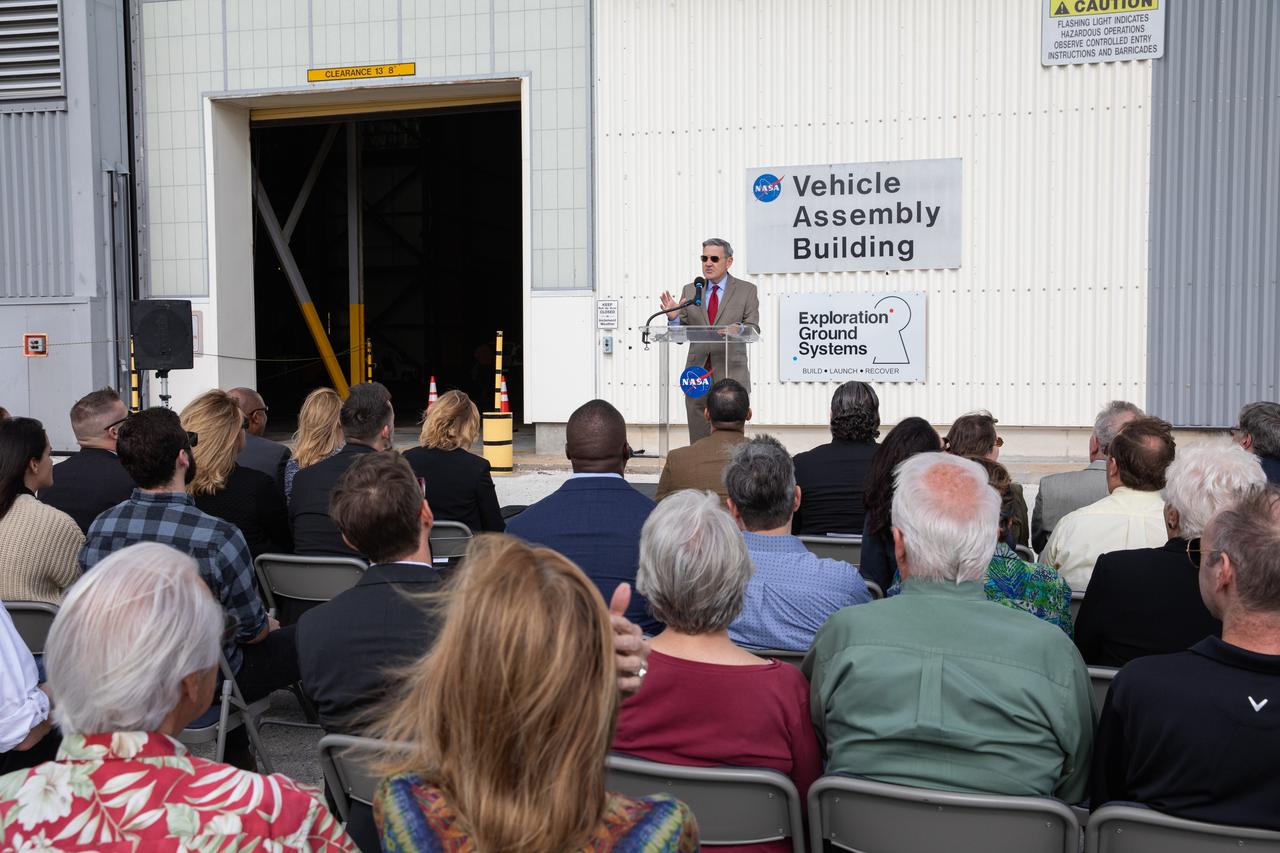
Kennedy Space Center Director Bob Cabana, speaks to attendees during a ceremony on Jan. 10, 2020, to recognize the Vehicle Assembly Building with the National Historic Civil Engineering Landmark award. The Florida Section American Society of Civil Engineers nominated the historic building and bestowed the award. The VAB is the first building at Kennedy Space Center to earn this distinction. At the time of its completion, the 129-million-cubic-foot structure was the largest building in the world. Originally designed and built to accommodate the Saturn V/Apollo used in Project Apollo, the VAB was later modified for its role in the Space Shuttle Program.
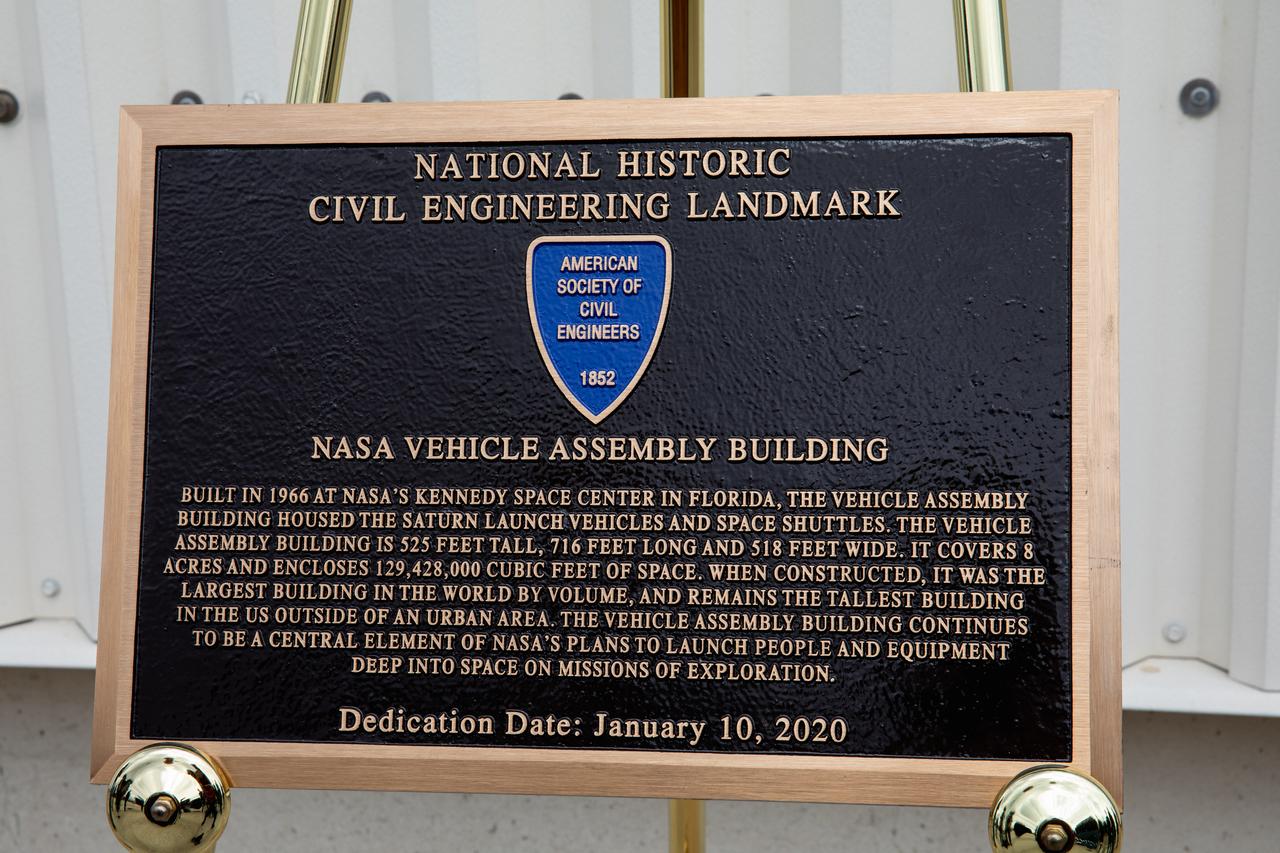
The Florida Section of the American Society of Civil Engineers bestowed the ASCE National Historic Civil Engineering Landmark award to Kennedy Space Center’s iconic Vehicle Assembly Building during a ceremony on Jan. 10, 2020. The VAB is the first building at Kennedy Space Center to earn this distinction. At the time of its completion, the 129-million-cubic-foot structure was the largest building in the world. Originally designed and built to accommodate the Saturn V/Apollo used in Project Apollo, the VAB was later modified for its role in the Space Shuttle Program.
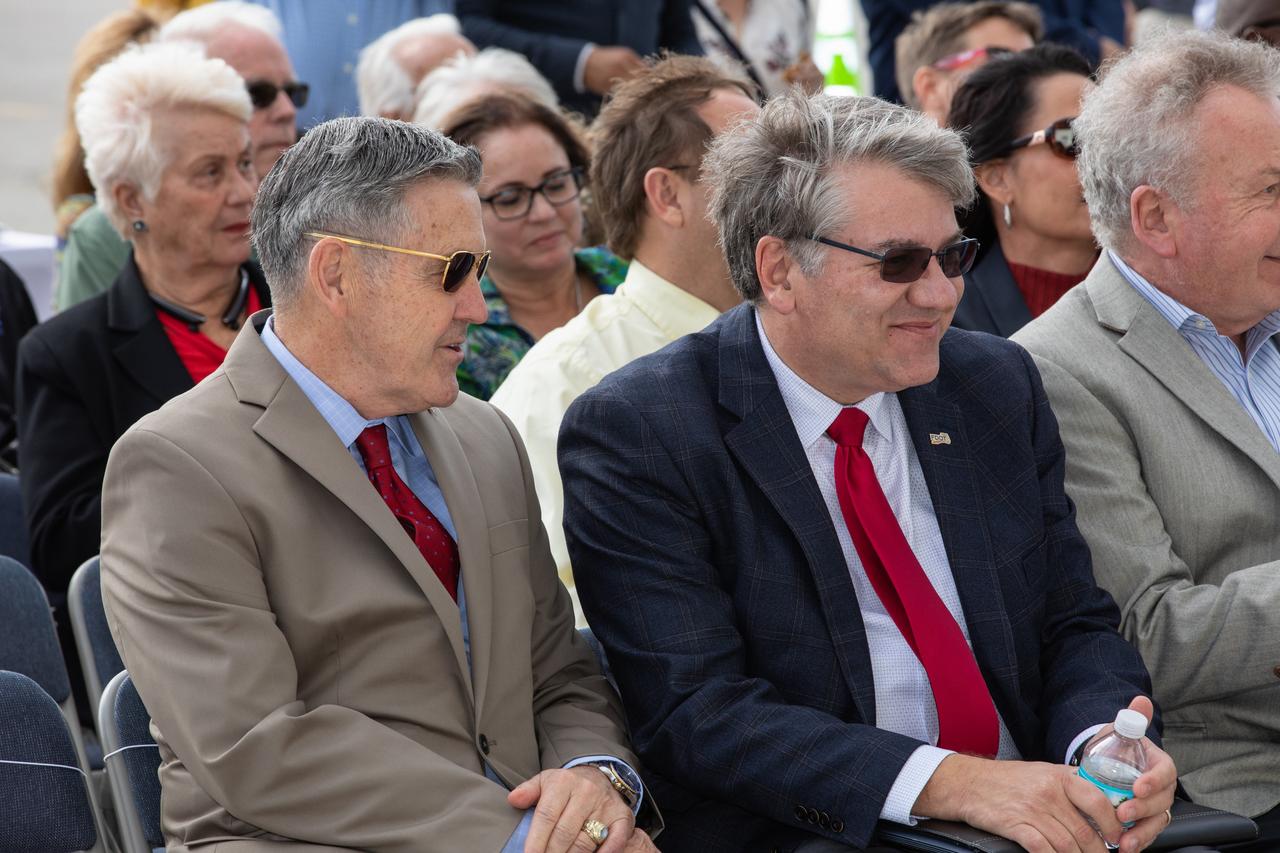
Kennedy Space Center Director Bob Cabana, left, talks with Florida Department of Transportation Secretary Kevin Thibault during a ceremony on Jan. 10, 2020, to recognize the Vehicle Assembly Building with the National Historic Civil Engineering Landmark award. The Florida Section American Society of Civil Engineers nominated the historic building and bestowed the award. The VAB is the first building at Kennedy Space Center to earn this distinction. At the time of its completion, the 129-million-cubic-foot structure was the largest building in the world. Originally designed and built to accommodate the Saturn V/Apollo used in Project Apollo, the VAB was later modified for its role in the Space Shuttle Program.
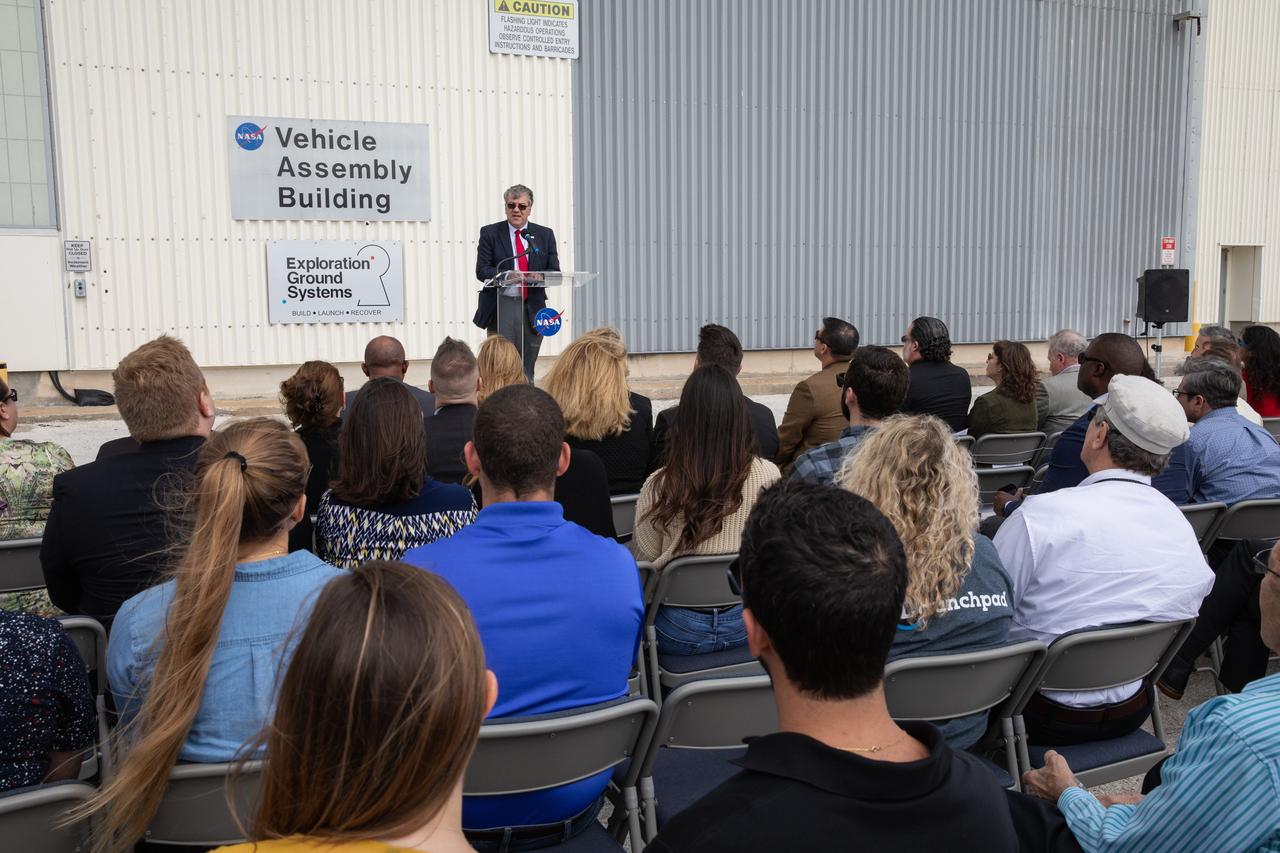
Florida Department of Transportation Secretary Kevin Thibault speaks to attendees during a ceremony on Jan. 10, 2020, to recognize the Vehicle Assembly Building with the National Historic Civil Engineering Landmark award. The Florida Section American Society of Civil Engineers nominated the historic building and bestowed the award. The VAB is the first building at Kennedy Space Center to earn this distinction. At the time of its completion, the 129-million-cubic-foot structure was the largest building in the world. Originally designed and built to accommodate the Saturn V/Apollo used in Project Apollo, the VAB was later modified for its role in the Space Shuttle Program.
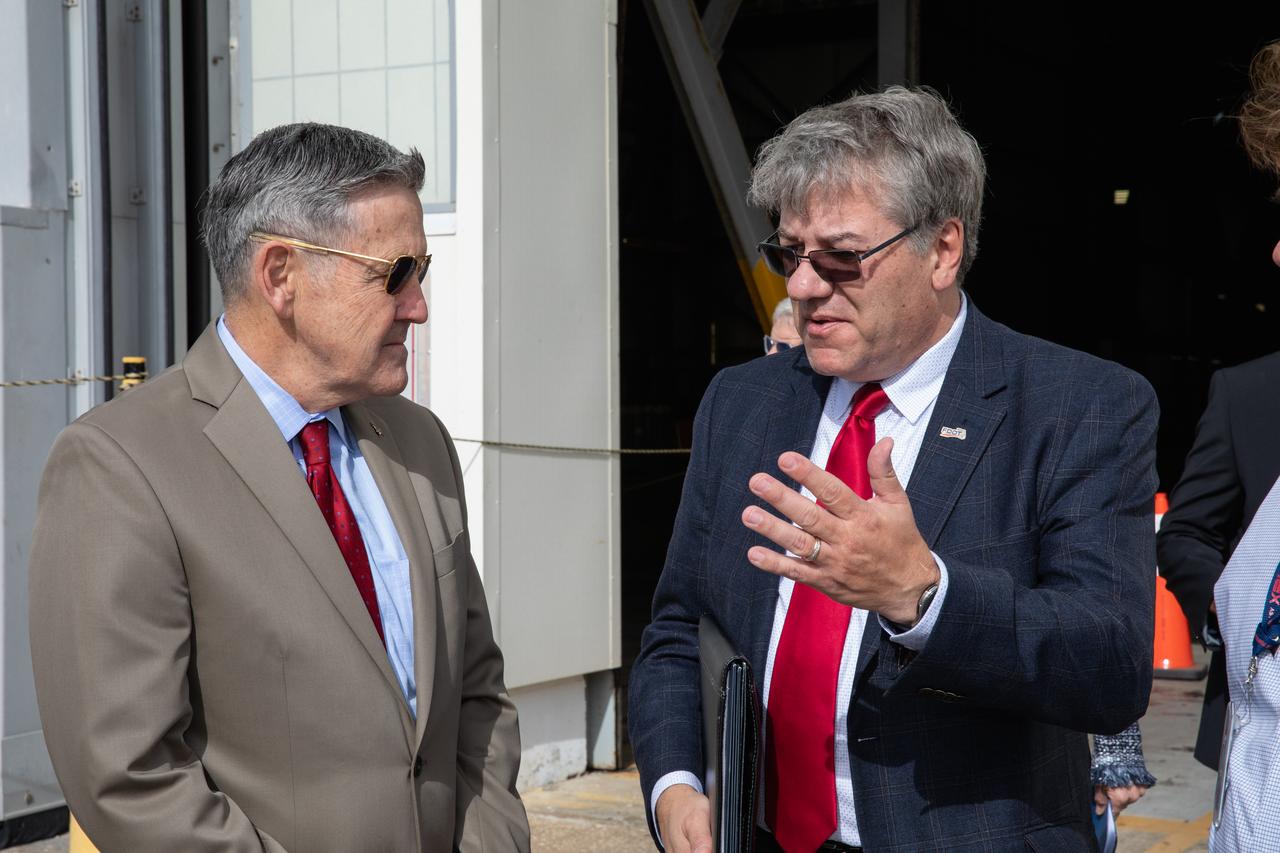
Kennedy Space Center Director Bob Cabana, left, talks with Florida Department of Transportation Secretary Kevin Thibault during a ceremony on Jan. 10, 2020, to recognize the Vehicle Assembly Building with the National Historic Civil Engineering Landmark award. The Florida Section American Society of Civil Engineers nominated the historic building and bestowed the award. The VAB is the first building at Kennedy Space Center to earn this distinction. At the time of its completion, the 129-million-cubic-foot structure was the largest building in the world. Originally designed and built to accommodate the Saturn V/Apollo used in Project Apollo, the VAB was later modified for its role in the Space Shuttle Program.
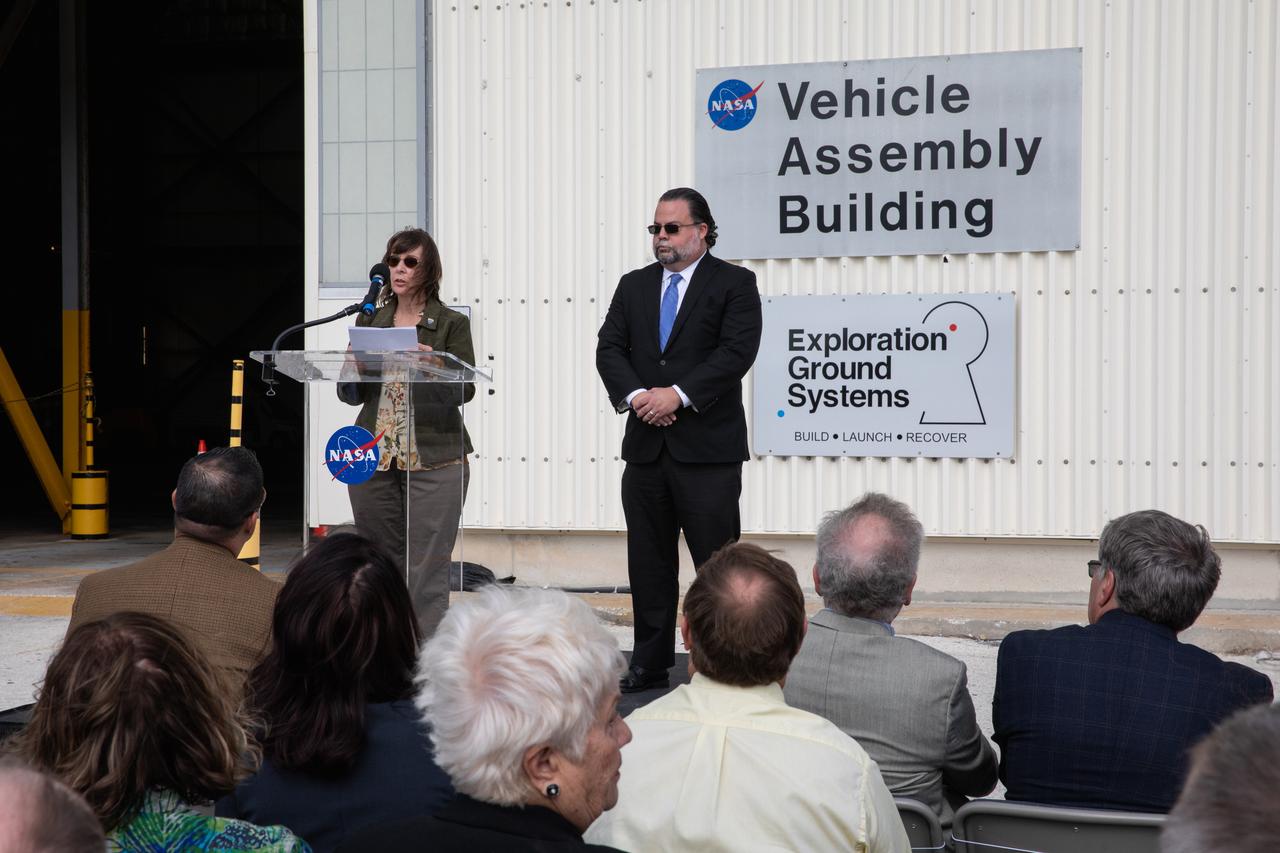
Carol Stevens, History and Heritage Committee member with the American Society of Civil Engineers (ASCE), speaks to attendees during a ceremony on Jan. 10, 2020, to recognize the Vehicle Assembly Building with the National Historic Civil Engineering Landmark award. At right is Peter Moore, ASCE Region 5 director. The Florida Section ASCE nominated the historic building and bestowed the award. The VAB is the first building at Kennedy Space Center to earn this distinction. At the time of its completion, the 129-million-cubic-foot structure was the largest building in the world. Originally designed and built to accommodate the Saturn V/Apollo used in Project Apollo, the VAB was later modified for its role in the Space Shuttle Program.
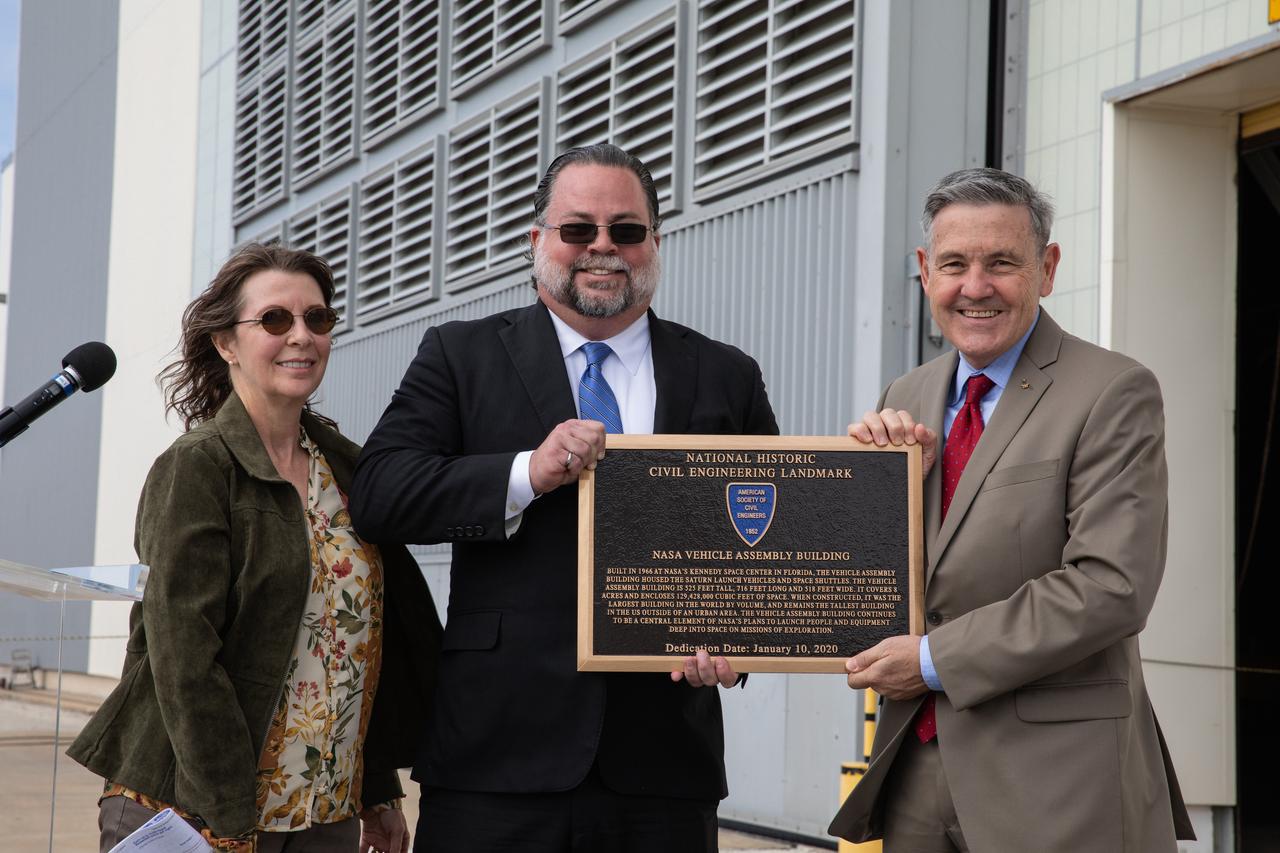
Kennedy Space Center Director Bob Cabana, far right, accepts the National Historic Civil Engineering Landmark award from the Florida Section American Society of Civil Engineers (ASCE) for the Vehicle Assembly Building during a ceremony in front of the iconic facility on Jan. 10, 2020. Next to Cabana, from left are Carol Stevens, ASCE Society of History and Heritage Committee member; and Peter Moore, ASCE Region 5 director. The ASCE nominated the historic building and bestowed the award. The VAB is the first building at Kennedy Space Center to earn this distinction. At the time of its completion, the 129-million-cubic-foot structure was the largest building in the world. Originally designed and built to accommodate the Saturn V/Apollo used in Project Apollo, the VAB was later modified for its role in the Space Shuttle Program.
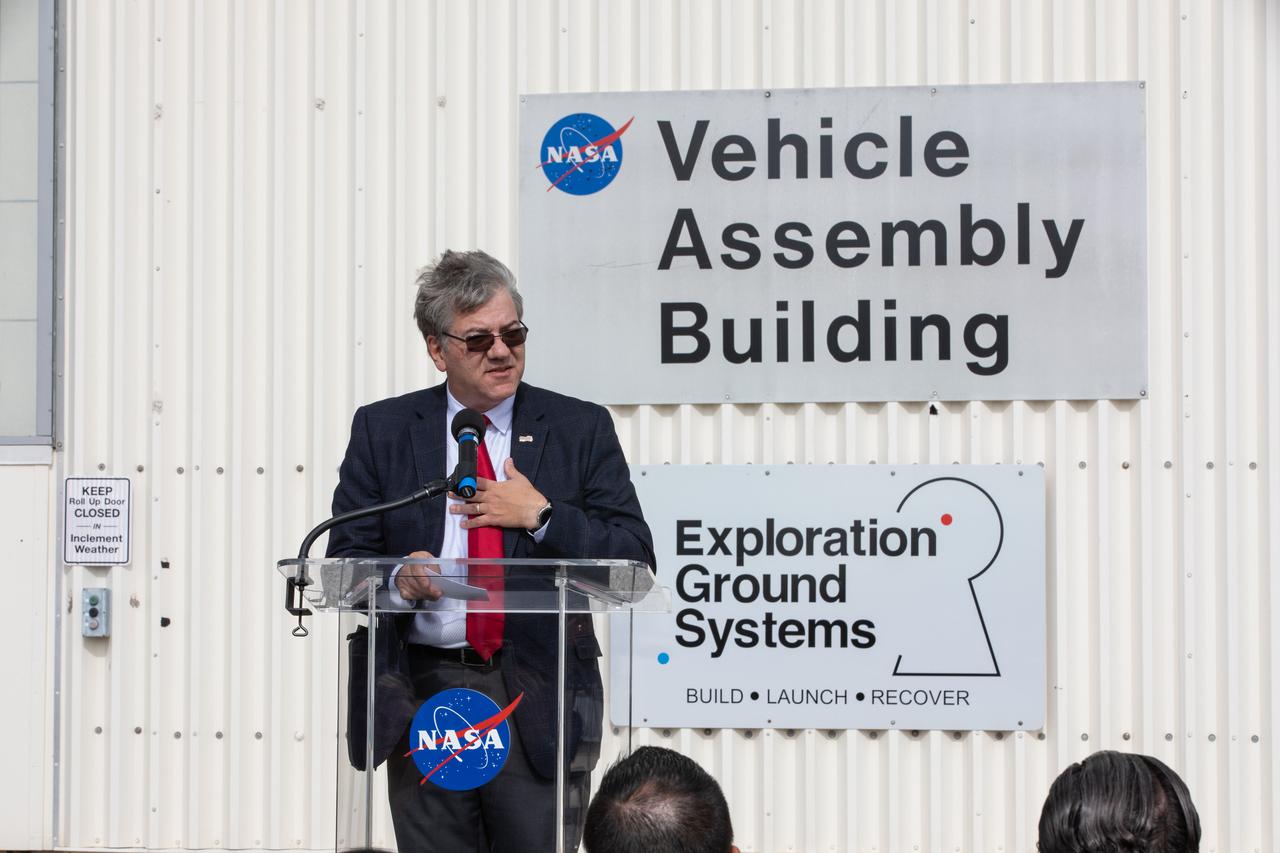
Florida Department of Transportation Secretary Kevin Thibault speaks to attendees during a ceremony on Jan. 10, 2020, to recognize the Vehicle Assembly Building with the National Historic Civil Engineering Landmark award. The Florida Section American Society of Civil Engineers nominated the historic building and bestowed the award. The VAB is the first building at Kennedy Space Center to earn this distinction. At the time of its completion, the 129-million-cubic-foot structure was the largest building in the world. Originally designed and built to accommodate the Saturn V/Apollo used in Project Apollo, the VAB was later modified for its role in the Space Shuttle Program.
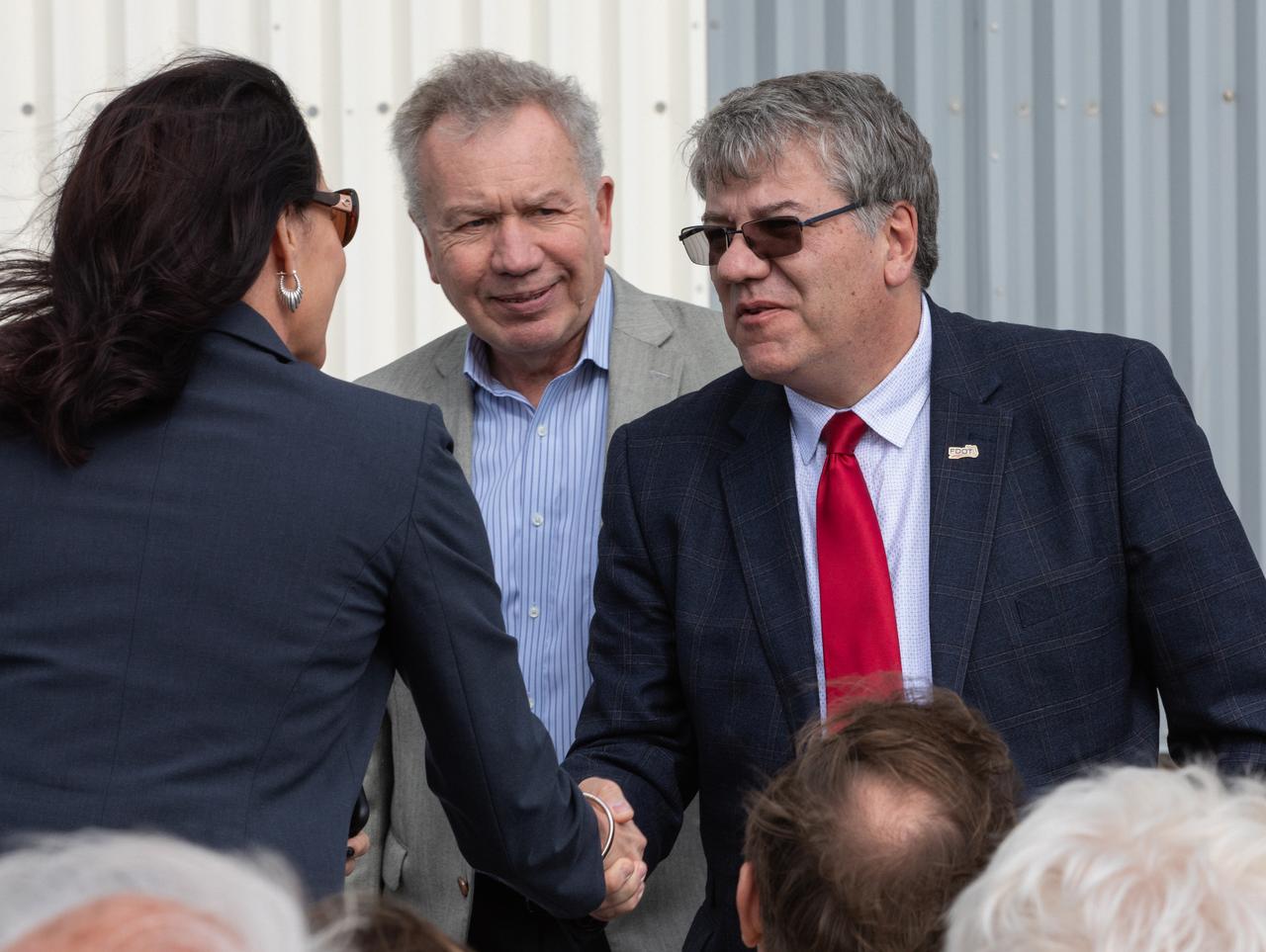
Florida Department of Transportation Secretary Kevin Thibault shakes hands with an attendee during a ceremony on Jan. 10, 2020, to recognize the Vehicle Assembly Building with the National Historic Civil Engineering Landmark award. The Florida Section American Society of Civil Engineers (ASCE) nominated the historic building and bestowed the award. Standing next to Thibault is Glenn Bell, ASCE Society of Structural Engineering Institute president. The VAB is the first building at Kennedy Space Center to earn this distinction. At the time of its completion, the 129-million-cubic-foot structure was the largest building in the world. Originally designed and built to accommodate the Saturn V/Apollo used in Project Apollo, the VAB was later modified for its role in the Space Shuttle Program.
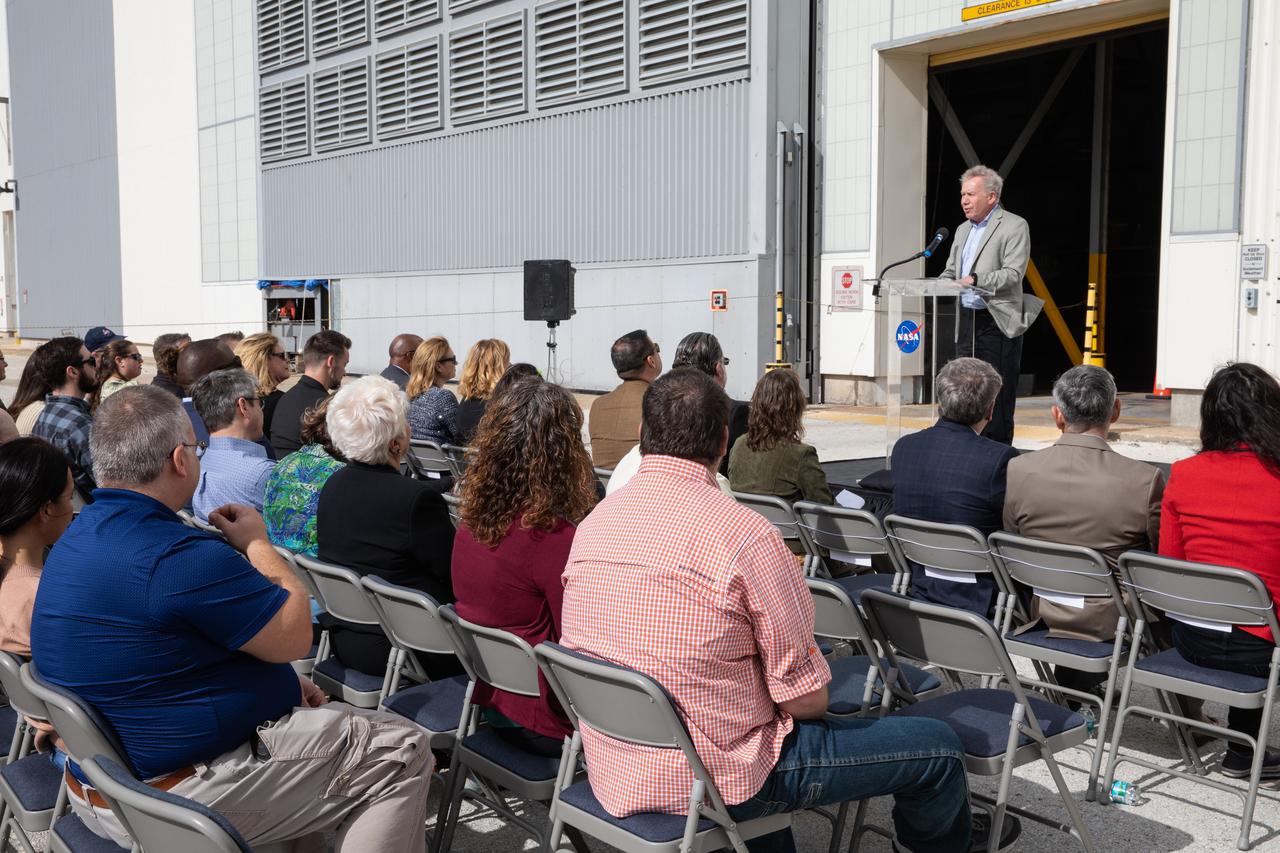
Glenn Bell, American Society of Civil Engineers (ASCE) Society of Structural Engineering Institute president speaks to attendees during a ceremony on Jan. 10, 2020, to recognize the Vehicle Assembly Building with the National Historic Civil Engineering Landmark award. The Florida Section ASCE nominated the historic building and bestowed the award. The VAB is the first building at Kennedy Space Center to earn this distinction. At the time of its completion, the 129-million-cubic-foot structure was the largest building in the world. Originally designed and built to accommodate the Saturn V/Apollo used in Project Apollo, the VAB was later modified for its role in the Space Shuttle Program.
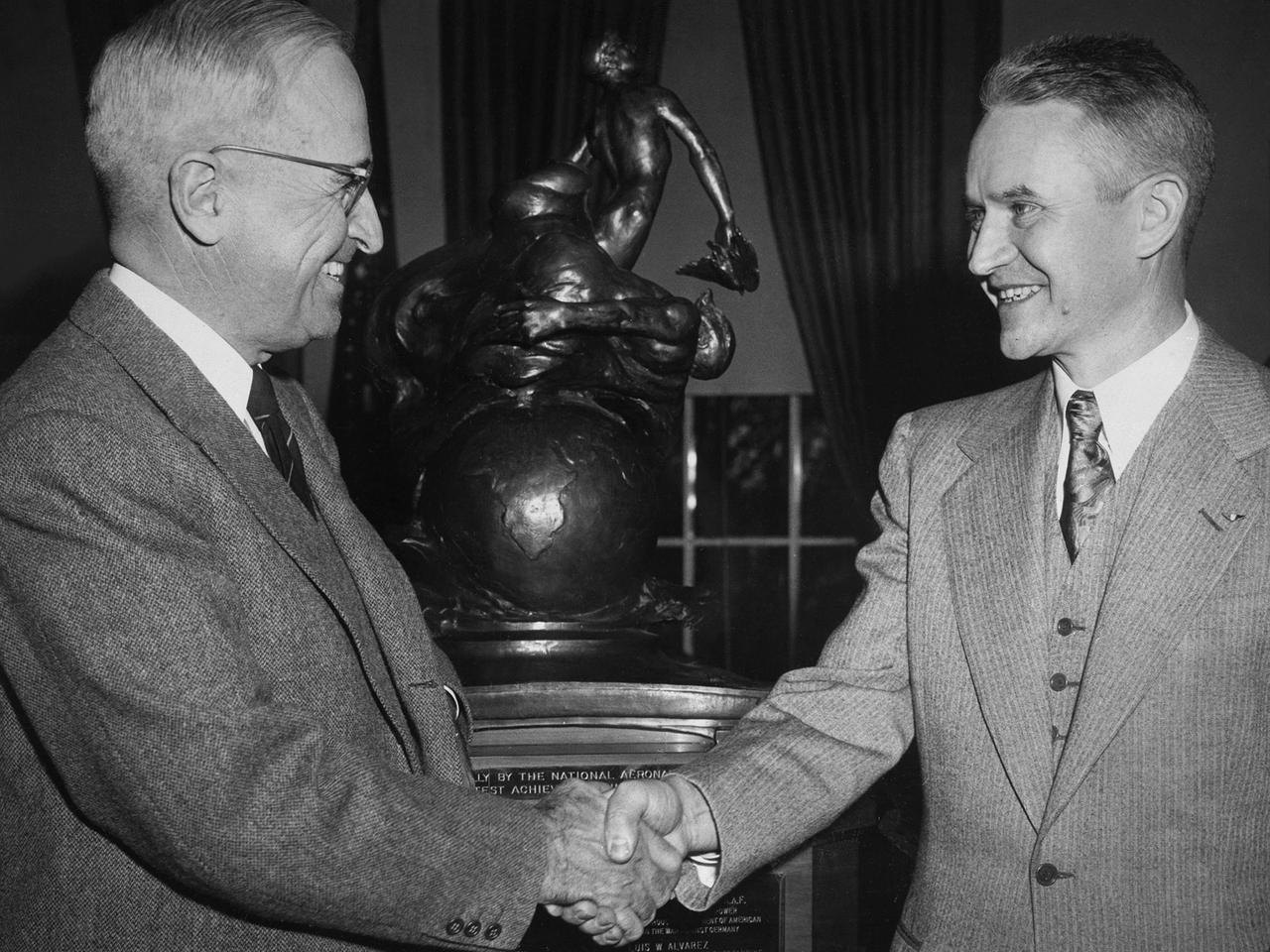
Lewis Rodert, then of the National Advisory Committee for Aeronautics (NACA) Lewis Flight Propulsion Laboratory, receives the Collier Trophy from President Harry Truman for his work in the design and development of an ice prevention system for aircraft. The accumulation of ice on an aircraft had been a critical issue for years. Rodert developed a method of transferring engine heat to the wings and other vulnerable components to prevent ice buildup. Rodert began his icing investigations at Langley Memorial Aeronautical Laboratory in 1936. The NACA ordered a Lockheed 12A aircraft to be built using Rodert’s deicing system. The aircraft successfully flew through icing conditions during the following winter. Soon thereafter the military incorporated the system into a Consolidated B-24D Liberator and several other military aircraft, including a North American XB-25F. Rodert and the NACA icing program transferred to the Lewis lab in Cleveland in 1946. In Cleveland, the focus turned to the study of cloud composition and the causes of icing. Rodert’s role at Lewis diminished over the ensuing years. Rodert was honored in 1947 for his Collier Trophy at ceremonies at Langley, Ames, and then finally Lewis.
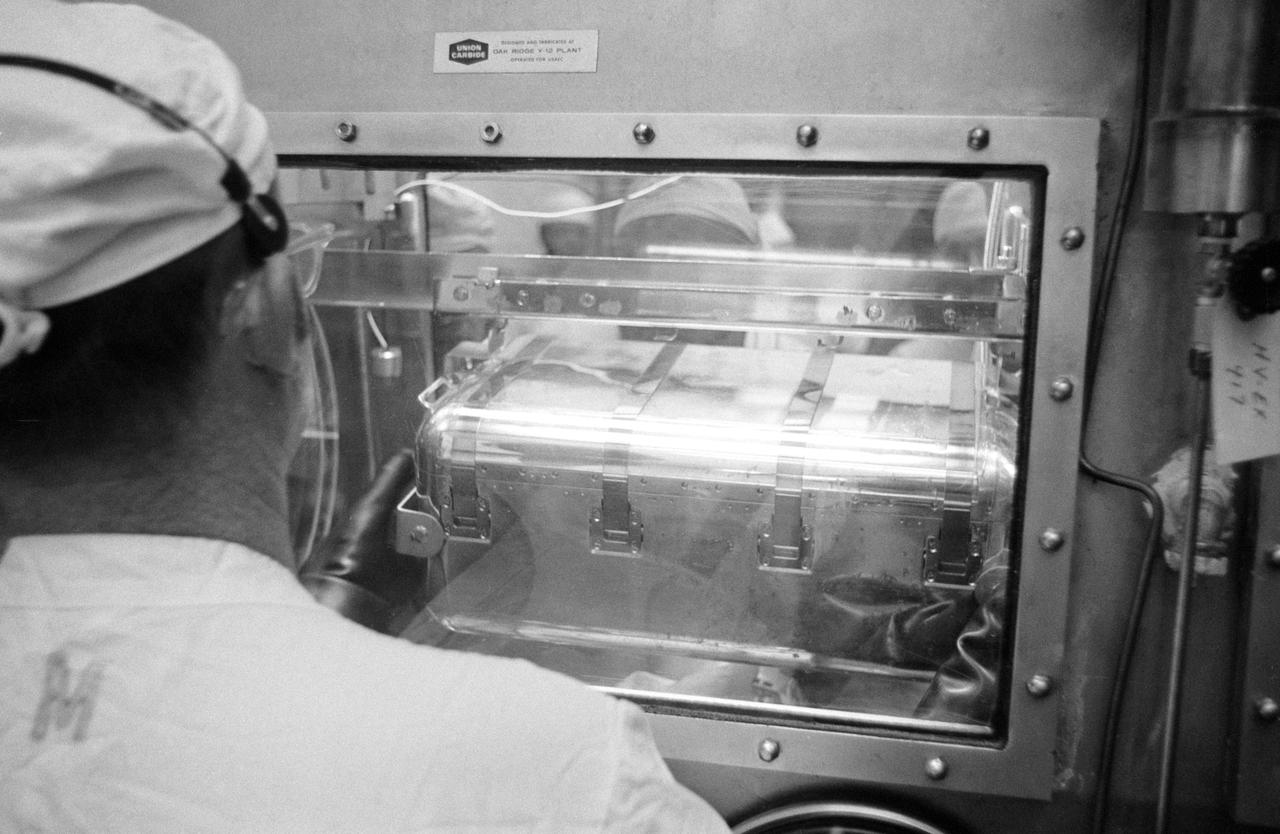
S69-40110 (25 July 1969) --- The first Apollo 11 sample return container, containing lunar surface material, is photographed just after it arrives at the Lunar Receiving Laboratory (LRL), Building 37, Manned Spacecraft Center (MSC). The box arrived by air at Ellington Air Force Base just before noon on Friday, July 25, 1969, from the Pacific recovery area. It was taken immediately to the Manned Spacecraft Center. The lunar samples were collected by astronauts Neil A. Armstrong and Edwin E. Aldrin Jr. during their lunar surface extravehicular activity (EVA).
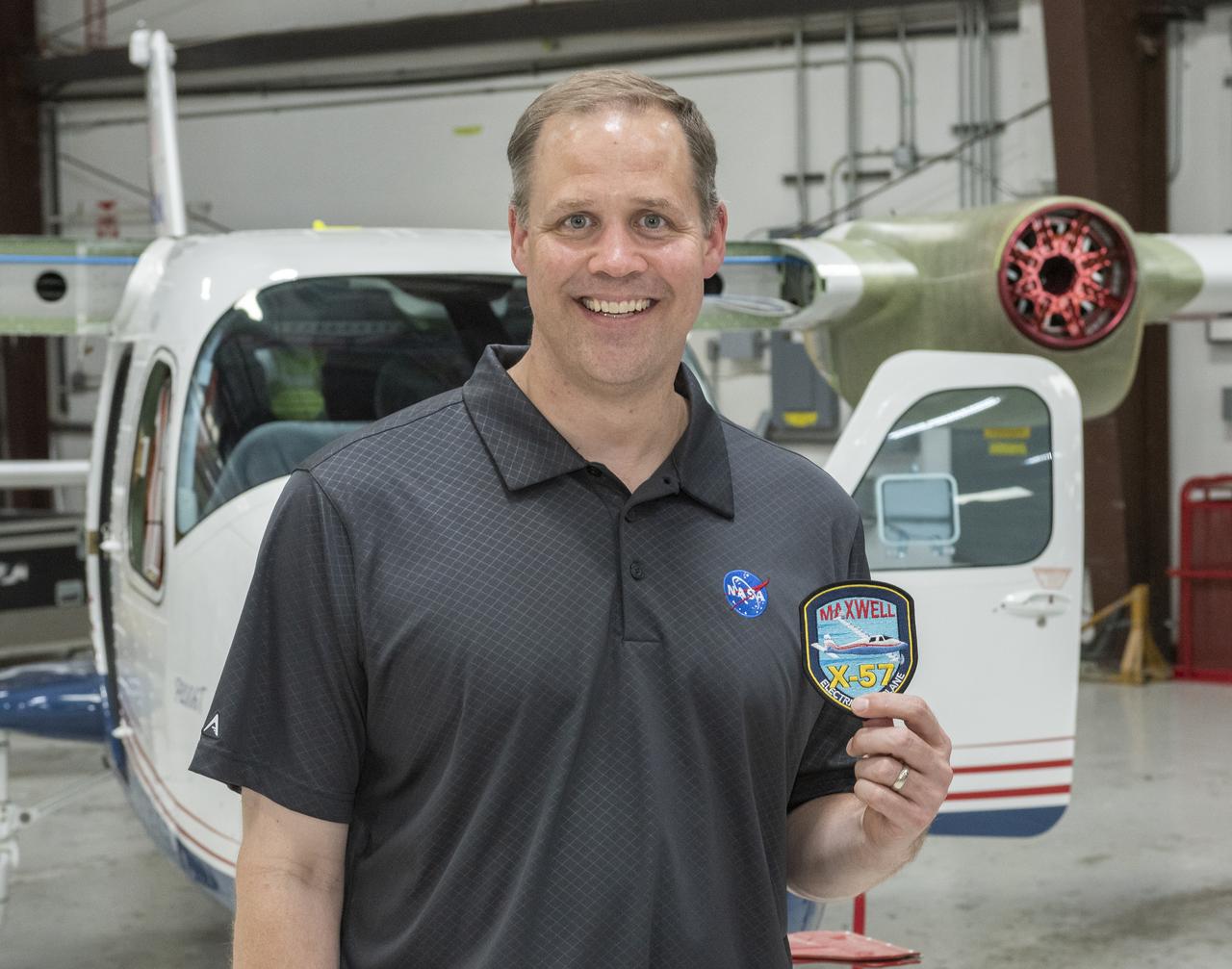
Administrator Bridenstine receives X-57 program patch standing in front of the X-57 being modified from combustion Tecnam P2006T aircraft into all-electric aircraft in Scaled Composites hangar at Mojave Air & Space Port in California.

The Space Shuttle Endeavour receives post-flight servicing in the Mate-Demate Device (MDD), following its landing at NASA's Dryden Flight Research Center, Edwards, California, May 1, 2001. Once servicing was complete, one of NASA's two 747 Shuttle Carrier Aircraft, No. 905, was readied to ferry Endeavour back to the Kennedy Space Center, FL.
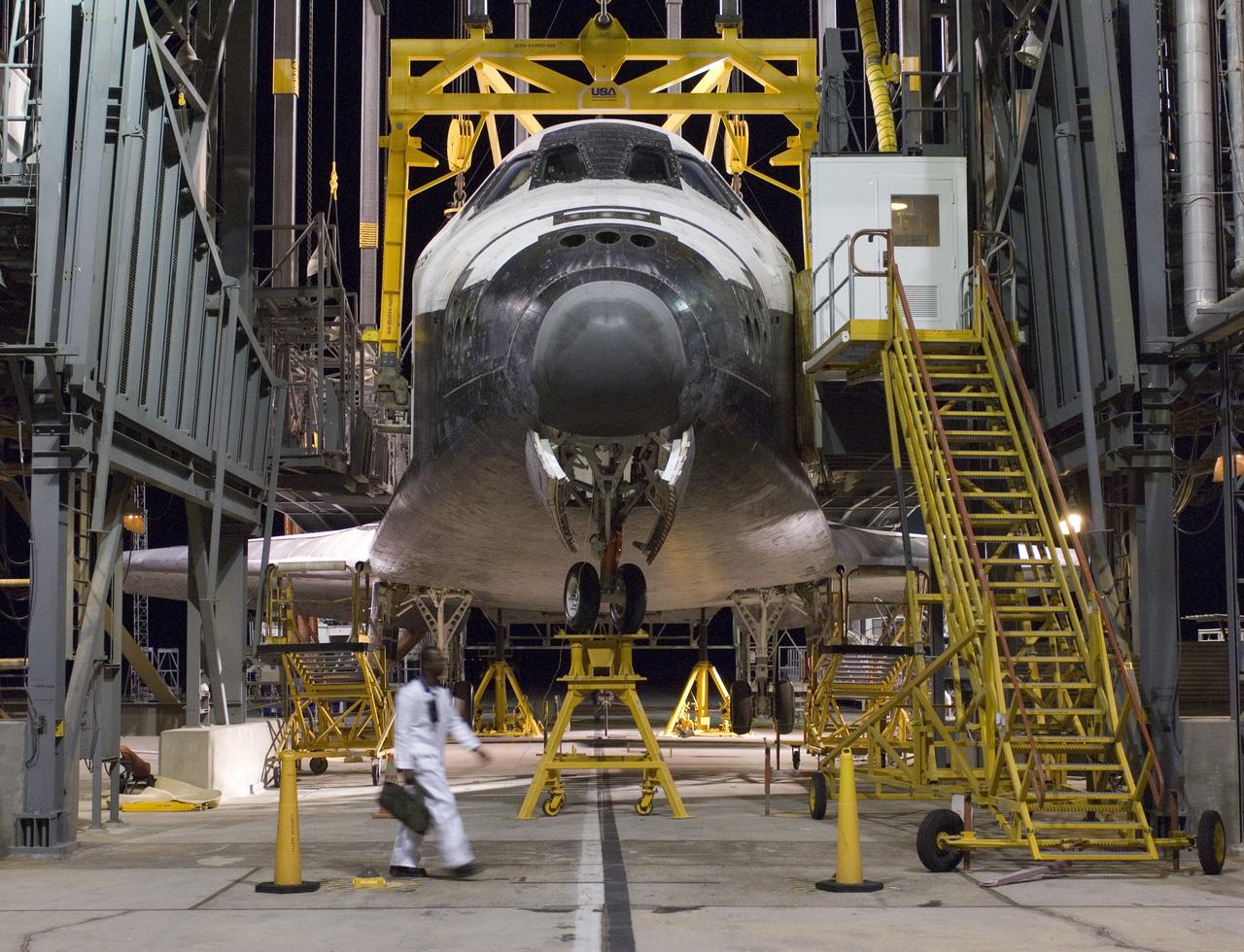
The Space Shuttle Atlantis receives post-flight servicing in the Mate-Demate Device (MDD), following its landing at NASA's Dryden Flight Research Center, Edwards, California, June 22, 2007. The gantry-like MDD structure is used for servicing the shuttle orbiters in preparation for their ferry flight back to the Kennedy Space Center in Florida, including mounting the shuttle atop NASA's modified Boeing 747 Shuttle Carrier Aircraft.

Lit by sunlight filtered through the smoke of a distant forest fire, the Space Shuttle Atlantis receives post-flight servicing in the Mate-Demate Device (MDD), following its landing at NASA's Dryden Flight Research Center, Edwards, California. The gantry-like MDD structure is used for servicing the shuttle orbiters in preparation for their ferry flight back to the Kennedy Space Center in Florida, including mounting the shuttle atop NASA's modified Boeing 747 Shuttle Carrier Aircraft.
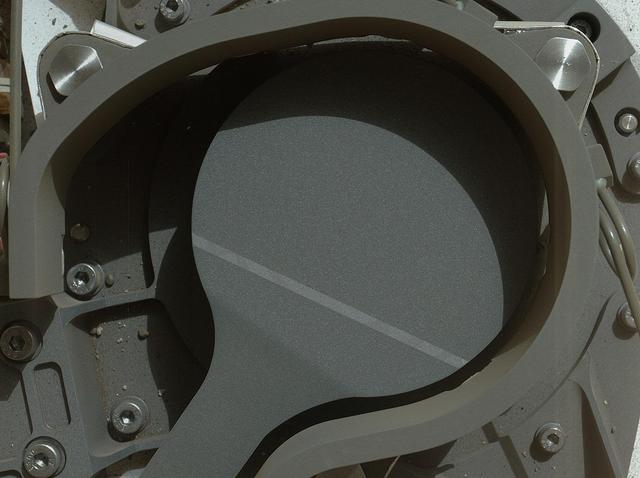
This image from NASA Curiosity rover shows the cover on an inlet that will receive powdered rock and soil samples for analysis. The image also shows sand and angular and rounded pebbles that were deposited on the rover deck when it landed.

Part of the complex geologic history of icy Triton, Neptune largest satellite, is shown in this NASA Voyager 2 photo. The photo was received as part of a Triton-mapping sequence in 1989.
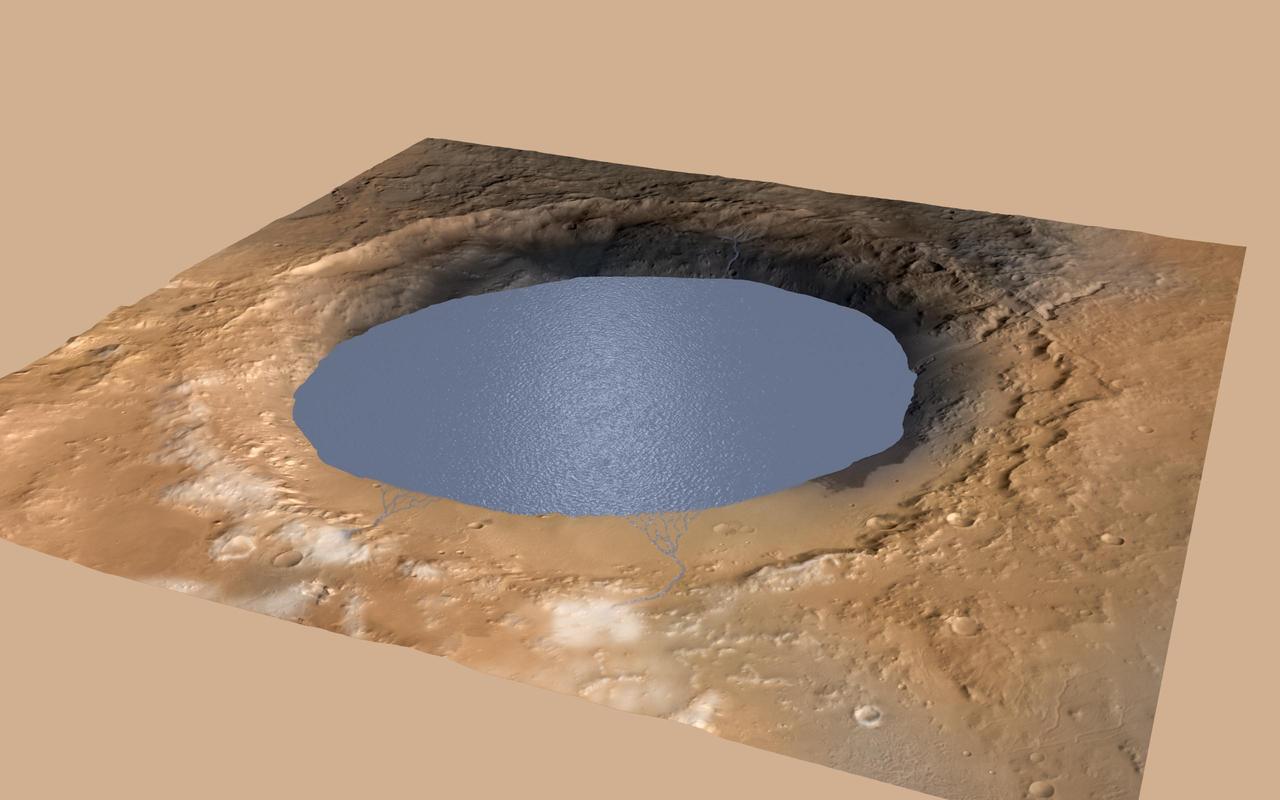
This simulation depicts a lake partially filling Mars Gale Crater, receiving runoff from snow melting on the crater rim, showing evidence that NASA Curiosity rover has found ancient streams, deltas and lakes.

The South Pole is receiving sun every day now as spring progresses. The surface texture visible in this image captured by NASA Mars Odyssey was created by the effect of solar warming on the ice.
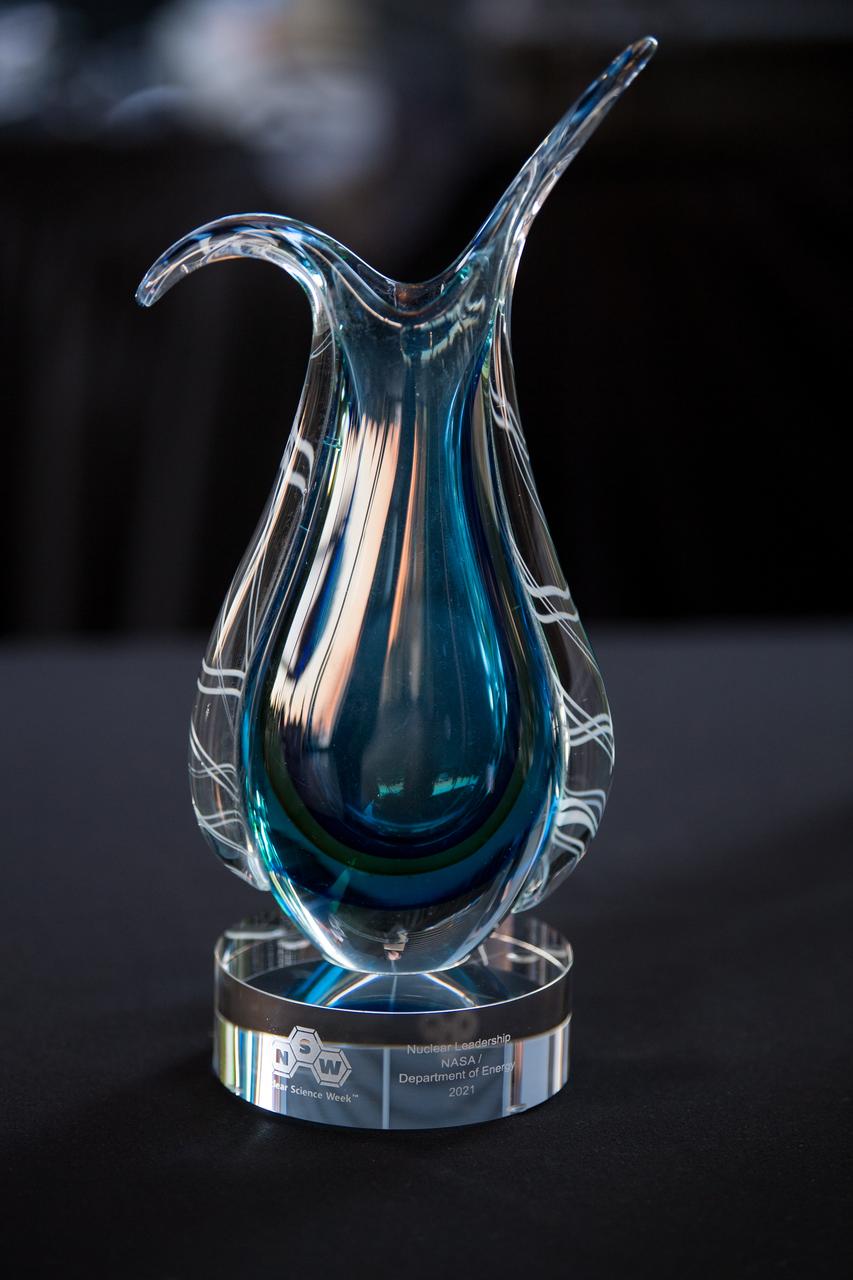
The Lifetime Achievement Award is seen at the National Museum of Nuclear Science and History’s Nuclear Science Week event where Director of the NASA Science Mission Directorate’s Planetary Science Division, Dr. Lori Glaze accepted it on behalf of the agency, Tuesday, Oct. 19, 2021, at The Observatory at America’s Square in Washington. Photo Credit: (NASA/Aubrey Gemignani)
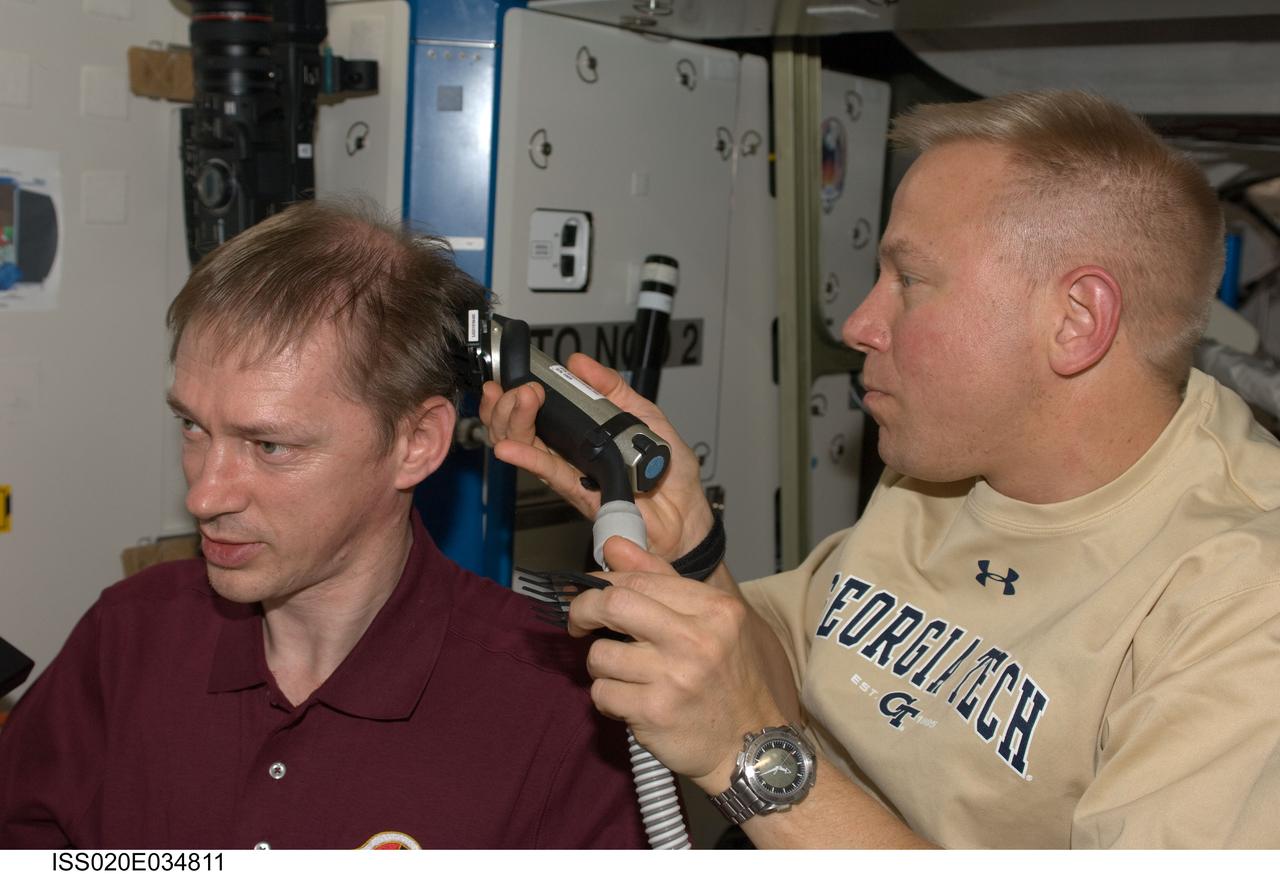
ISS020-E-034811 (9 Aug. 2009) --- NASA astronaut Tim Kopra, Expedition 20 flight engineer, trims European Space Agency astronaut Frank De Winne’s hair in the Destiny laboratory of the International Space Station. Kopra used hair clippers fashioned with a vacuum device to garner freshly cut hair.
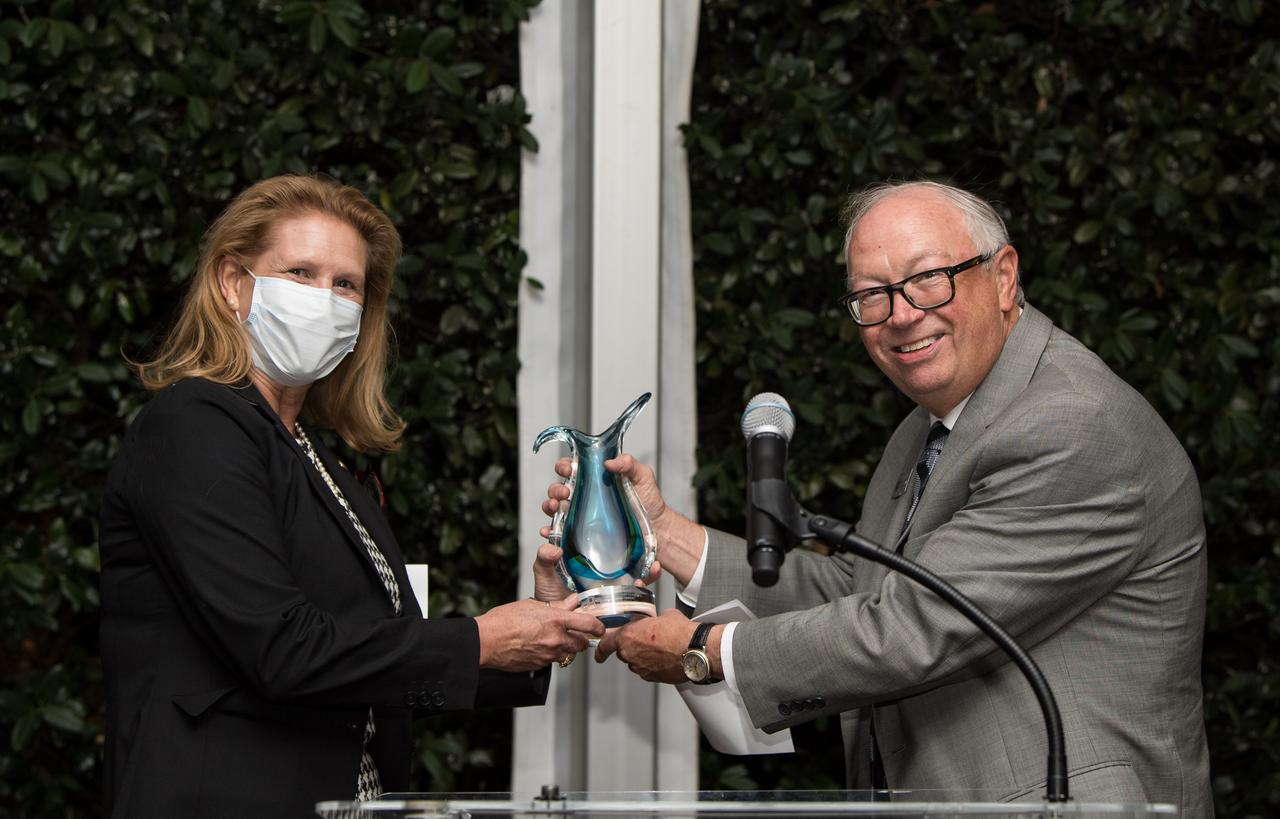
Director of the NASA Science Mission Directorate’s Planetary Science Division, Dr. Lori Glaze, left, accepts the Lifetime Achievement Award on behalf of the agency from director of the National Museum of Nuclear Science and History, Jim Walther, during the Nuclear Science Week event, Tuesday, Oct. 19, 2021, at The Observatory at America’s Square in Washington. Photo Credit: (NASA/Aubrey Gemignani)
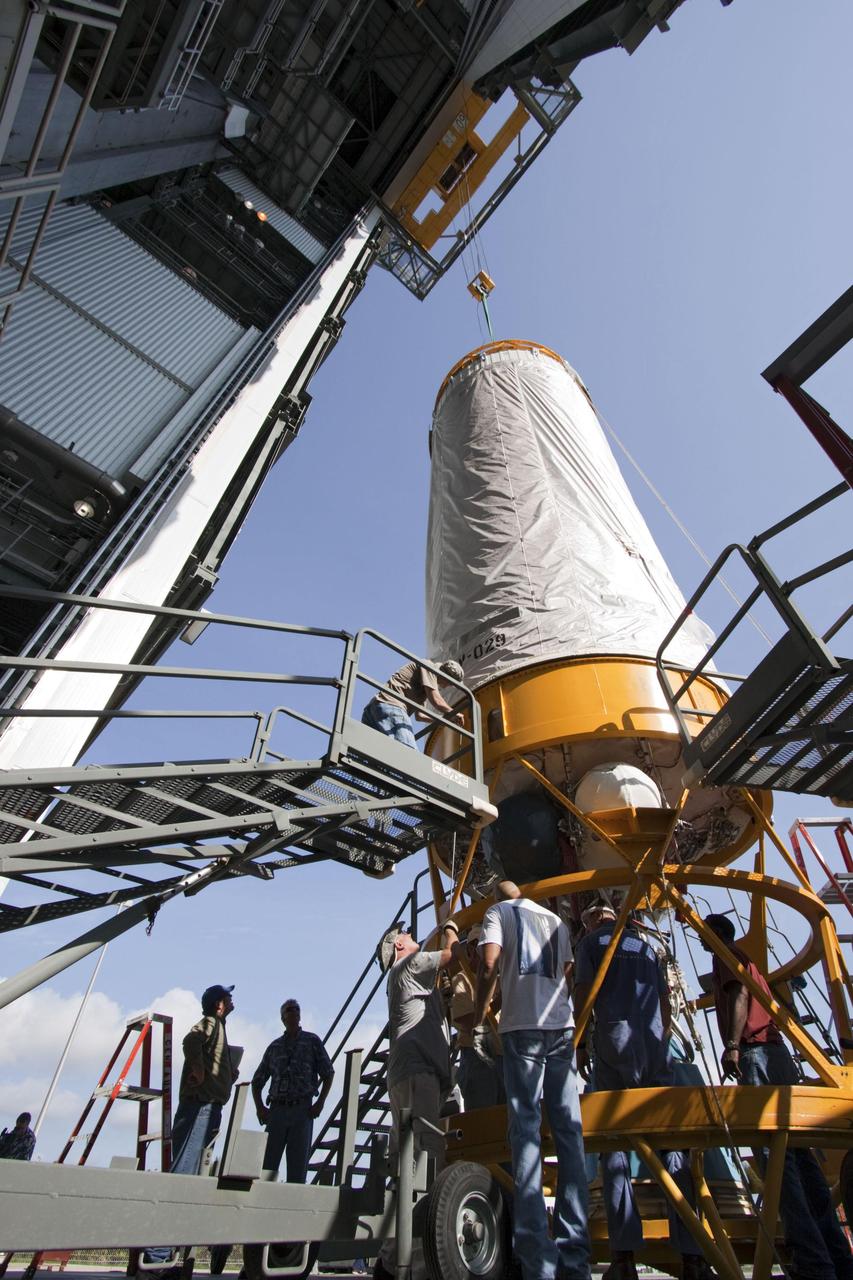
Workers guide an overhead crane as it lifts the Centaur upper stage at the Cape Canaveral Air Force Station, Fla., June 24, 2011. The Centaur is slated to launch NASA Juno spacecraft on August 5.
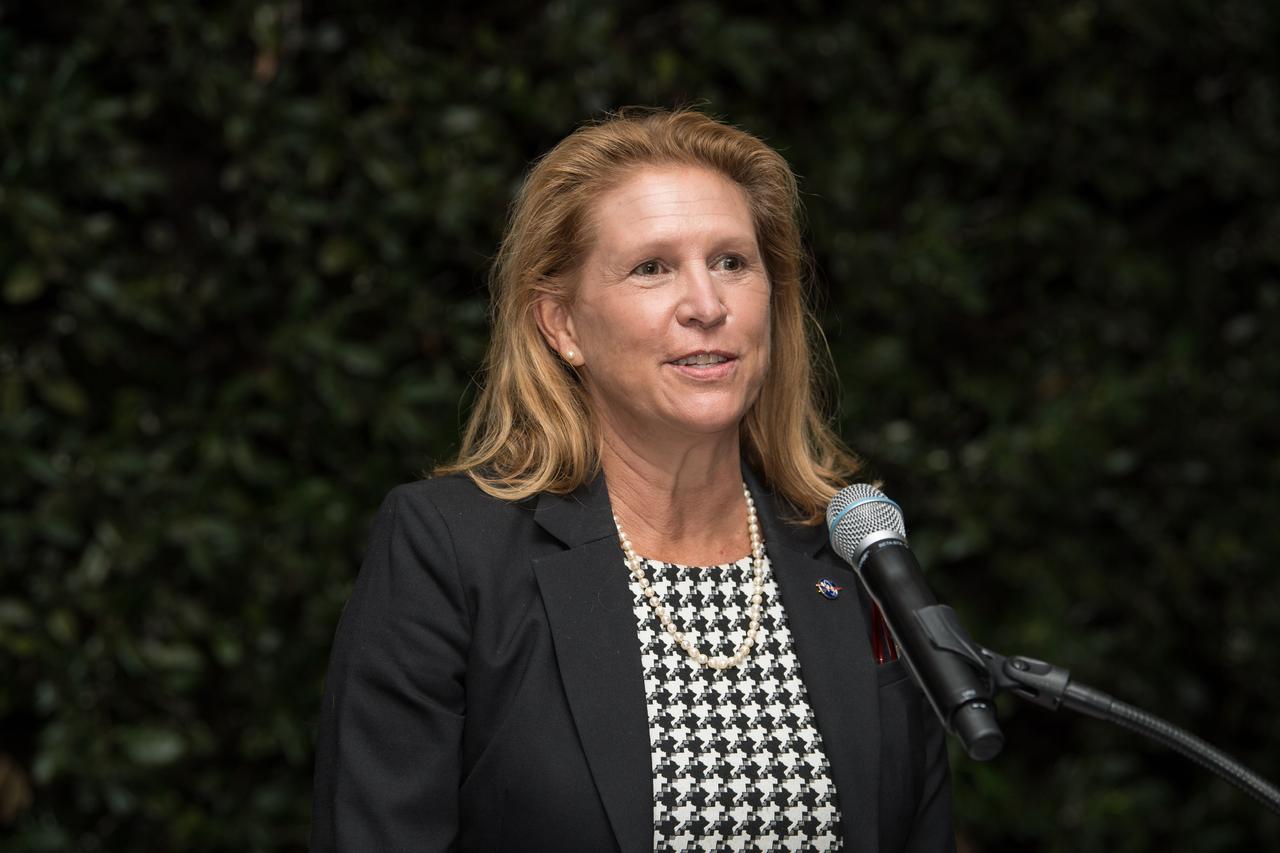
Director of the NASA Science Mission Directorate’s Planetary Science Division, Dr. Lori Glaze, speaks after accepting the Lifetime Achievement Award on behalf of the agency during the National Museum of Nuclear Science and History’s Nuclear Science Week event, Tuesday, Oct. 19, 2021, at The Observatory at America’s Square in Washington. Photo Credit: (NASA/Aubrey Gemignani)
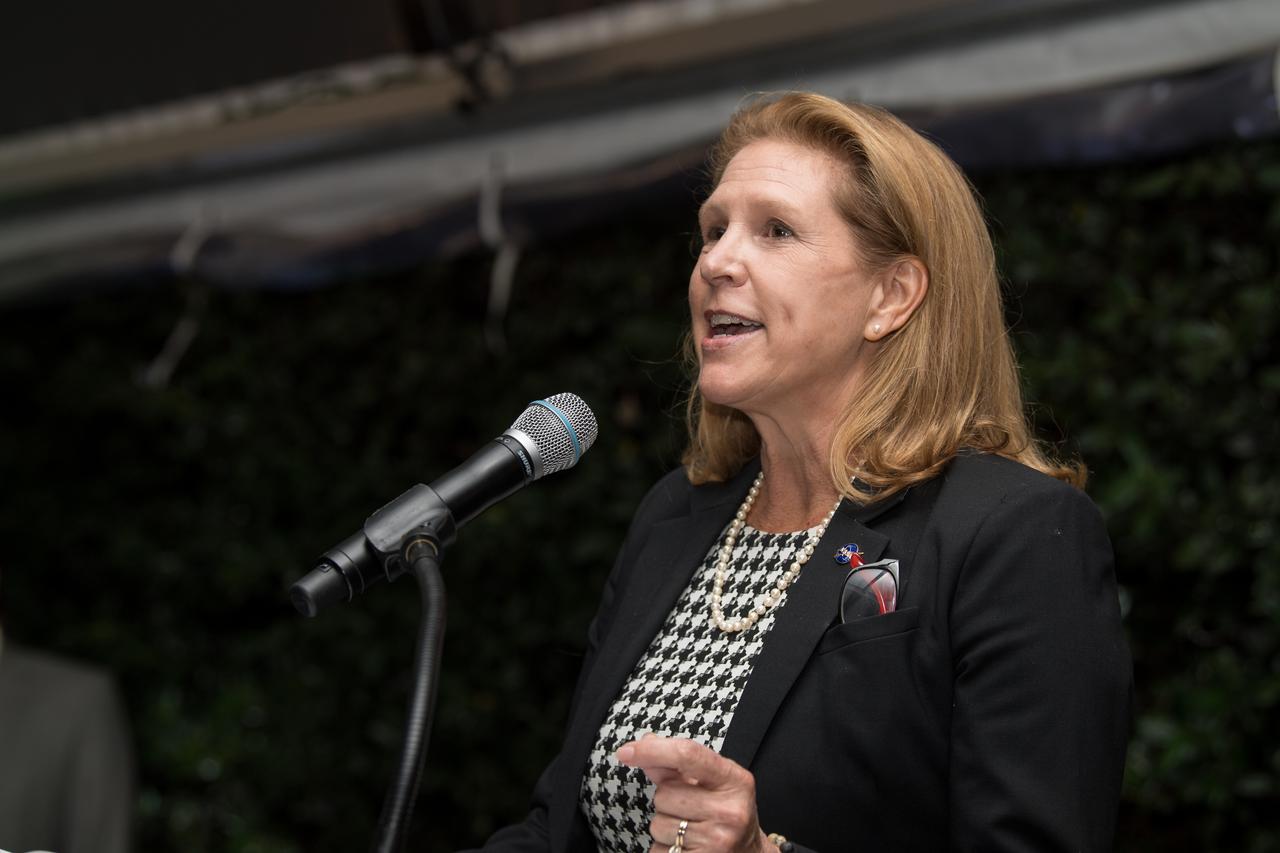
Director of the NASA Science Mission Directorate’s Planetary Science Division, Dr. Lori Glaze, speaks after accepting the Lifetime Achievement Award on behalf of the agency during the National Museum of Nuclear Science and History’s Nuclear Science Week event, Tuesday, Oct. 19, 2021, at The Observatory at America’s Square in Washington. Photo Credit: (NASA/Aubrey Gemignani)
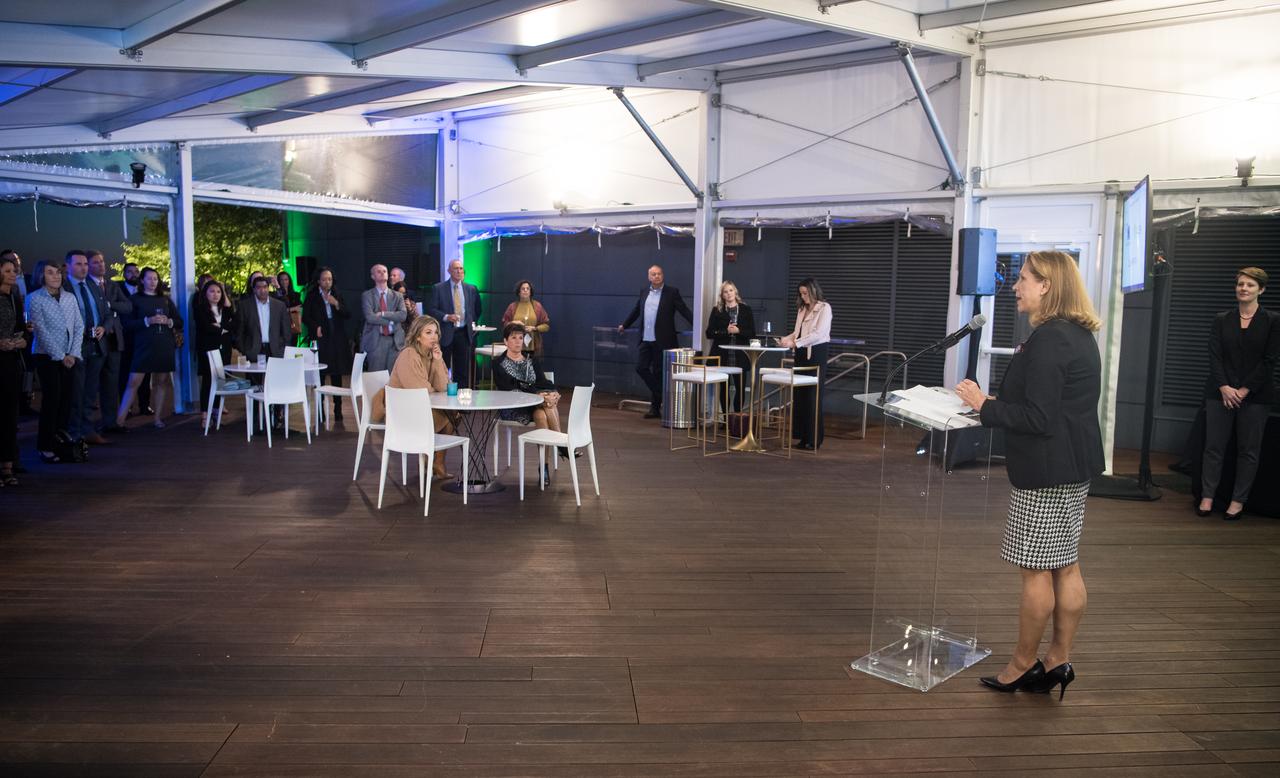
Director of the NASA Science Mission Directorate’s Planetary Science Division, Dr. Lori Glaze, speaks after accepting the Lifetime Achievement Award on behalf of the agency during the National Museum of Nuclear Science and History’s Nuclear Science Week event, Tuesday, Oct. 19, 2021, at The Observatory at America’s Square in Washington. Photo Credit: (NASA/Aubrey Gemignani)
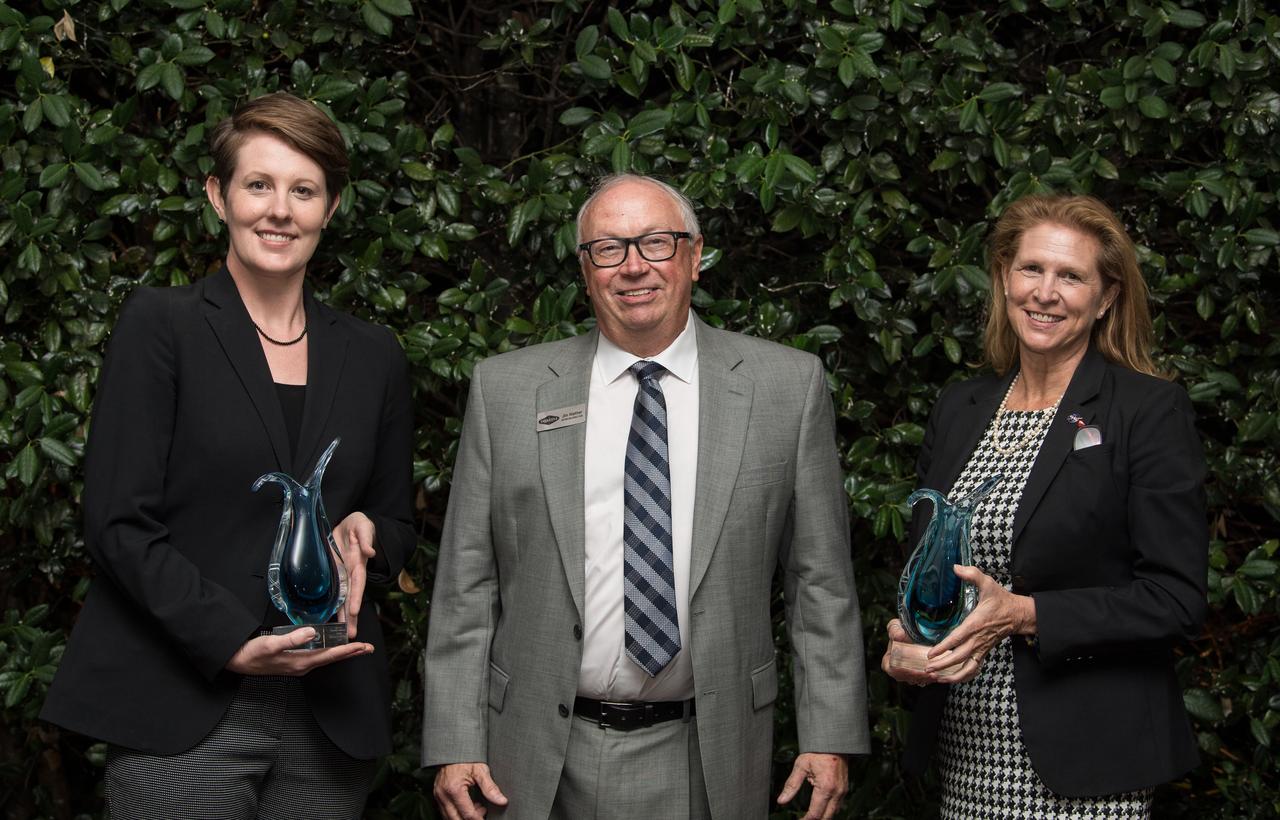
From left to right, Principal Deputy Assistant Secretary for Nuclear Energy at the Department of Energy, Dr. Kathryn Huff, Director of the National Museum of Nuclear Science and History, Jim Walther, and Director of the NASA Science Mission Directorate’s Planetary Science Division, Dr. Lori Glaze, pose for a photo after Dr. Huff and Dr. Glaze accepted the Lifetime Achievement Award on behalf of their agencies during the Nuclear Science Week event, Tuesday, Oct. 19, 2021, at The Observatory at America’s Square in Washington. Photo Credit: (NASA/Aubrey Gemignani)
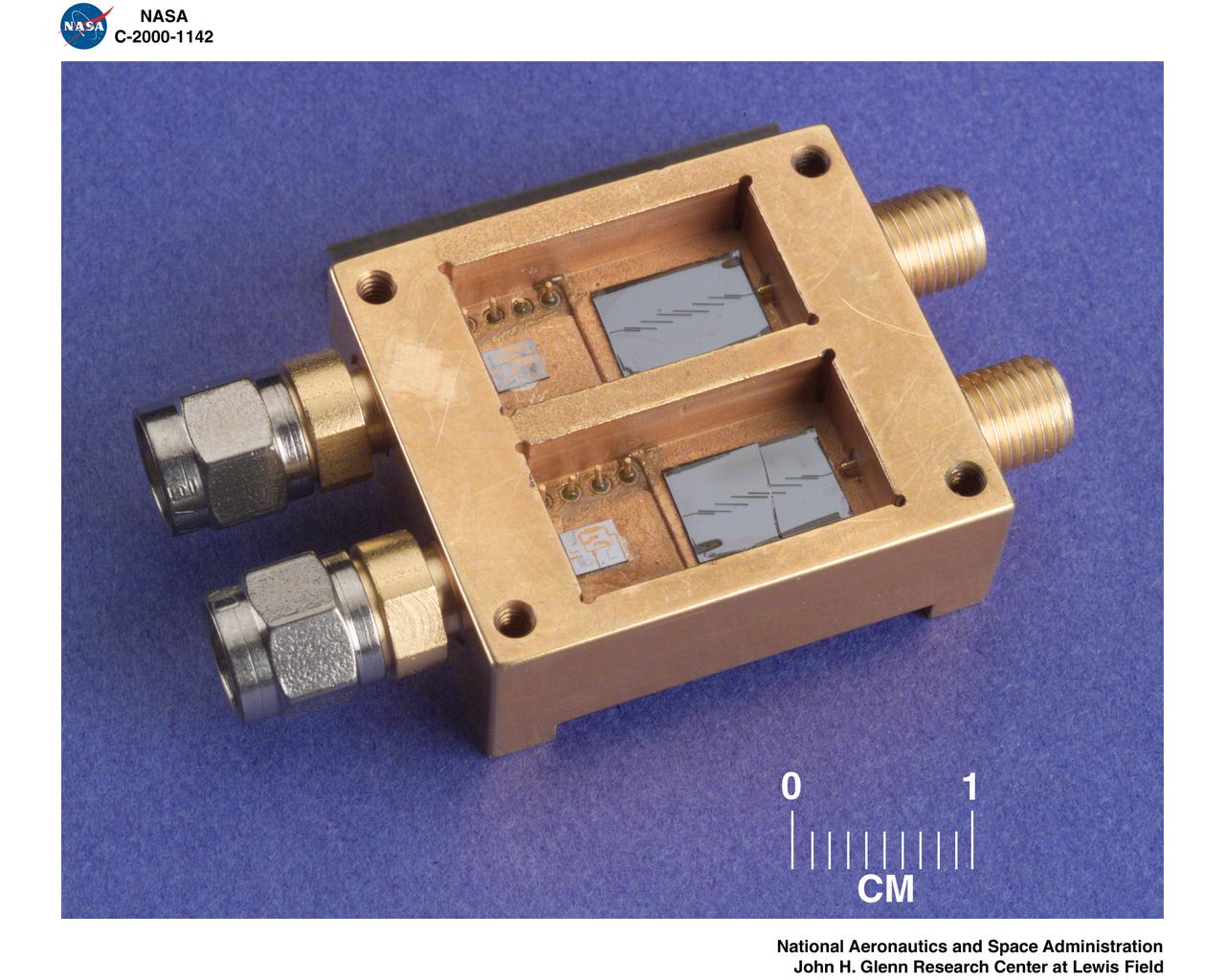
DIRECT DATA DISTRIBUTION CRYOGENIC RECEIVER
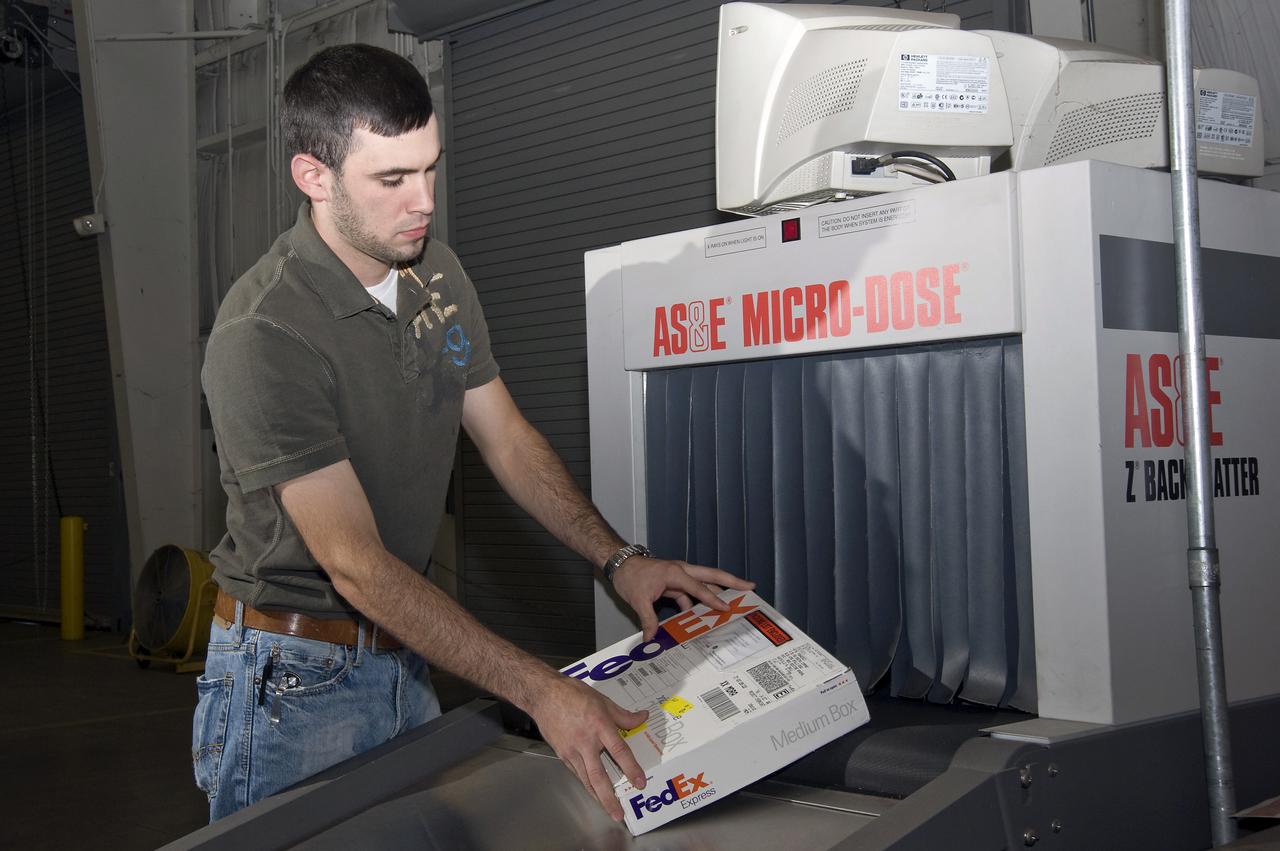
JOE WALTER NORRIS, MSFC RECEIVING
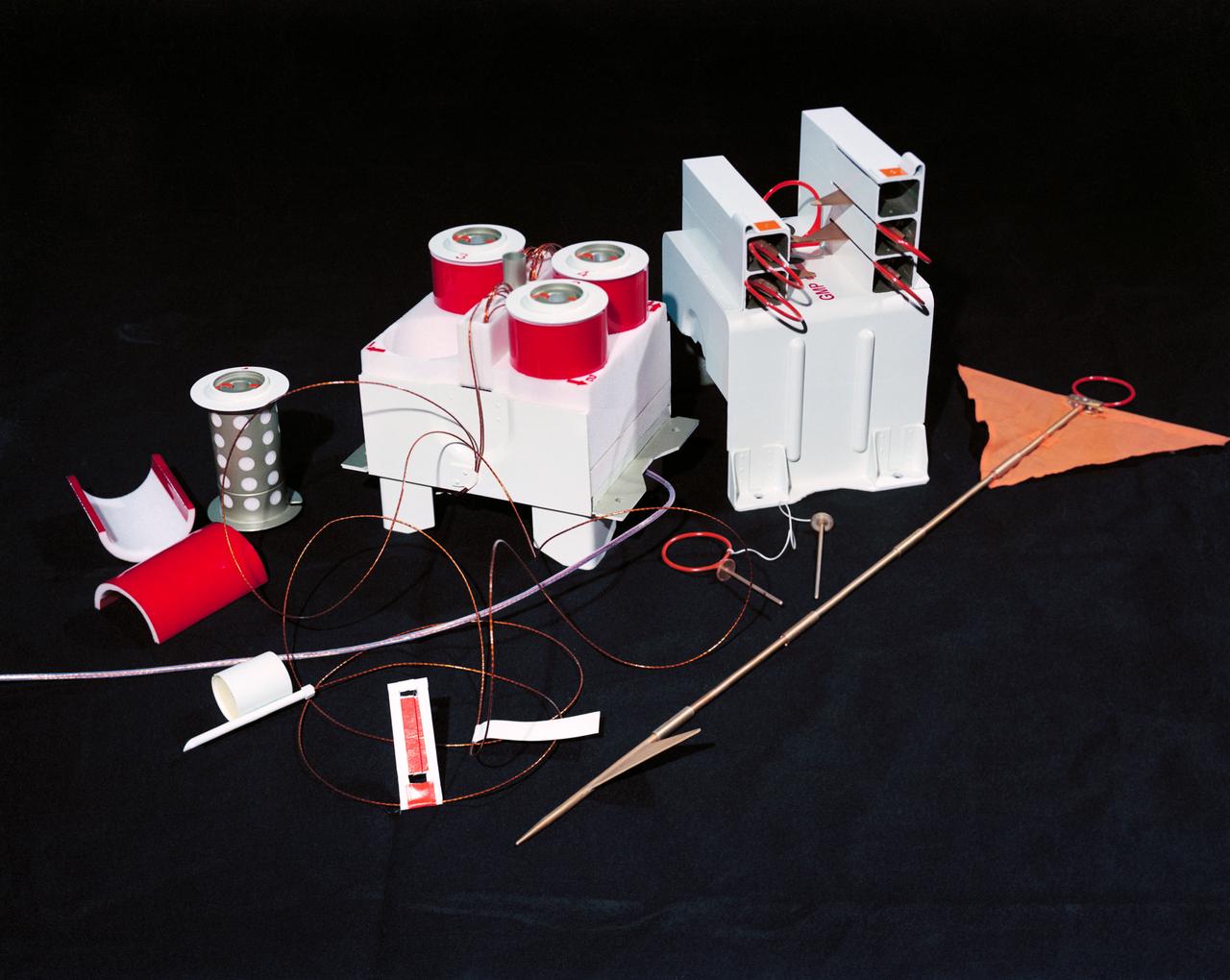
S72-37259 (November 1972) --- The Geophone Module and Cable Reels of the Lunar Seismic Profiling Experiment (S-203), a component of the Apollo Lunar Surface Experiments Package which will be carried on the Apollo 17 lunar landing mission. LSPE components are four geophones similar to those used in an earlier active seismic experiment, an electronics package in the ALSEP central station, and eight explosive packages which will be deployed during the geology traverse. The four geophones will be placed one in the center and one at each corner of a 90-meter equilateral triangle. Explosive charges placed on the surface will generate seismic waves of varying strengths to provide data on the structural profile of the landing site. After the charges have been fired by ground command, the experiment will settle down into a passive listening mode, detecting moonquakes, meteorite impacts and the thump caused by the Lunar Module ascent stage impact.

Twenty students – along with their parents, teachers, and classmates – met virtually with Mars rover team members at JPL, where they received personalized messages beamed from NASA's Perseverance rover as part of the "You've Got Perseverance" campaign. https://photojournal.jpl.nasa.gov/catalog/PIA25271
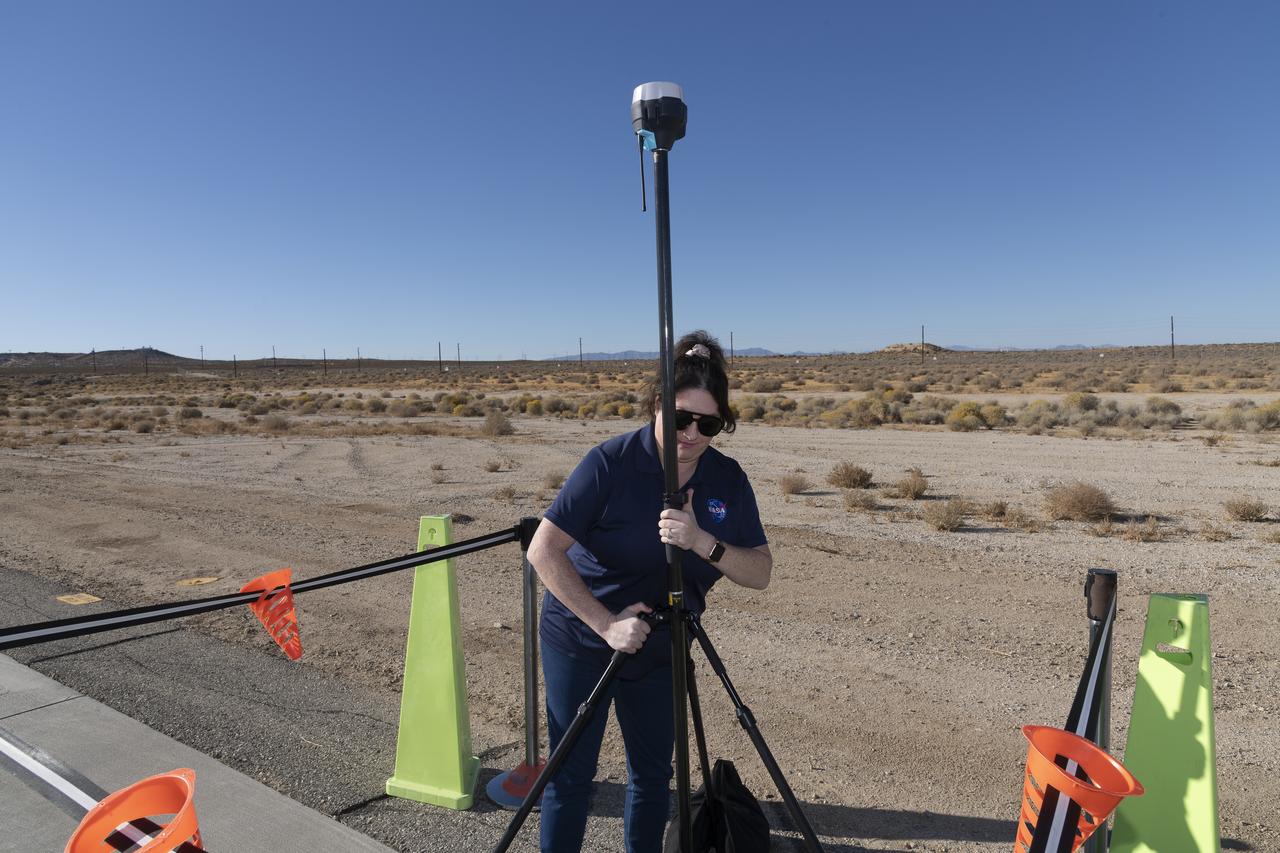
Saré Culbertson, NASA Pathways intern at NASA’s Armstrong Flight Research Center in Edwards, California, adjusts the Emlid Reach RS2+ receiver equipment that connects with GPS and global navigation satellite systems on Nov. 7, 2024, in preparation for future air taxi test flight research.
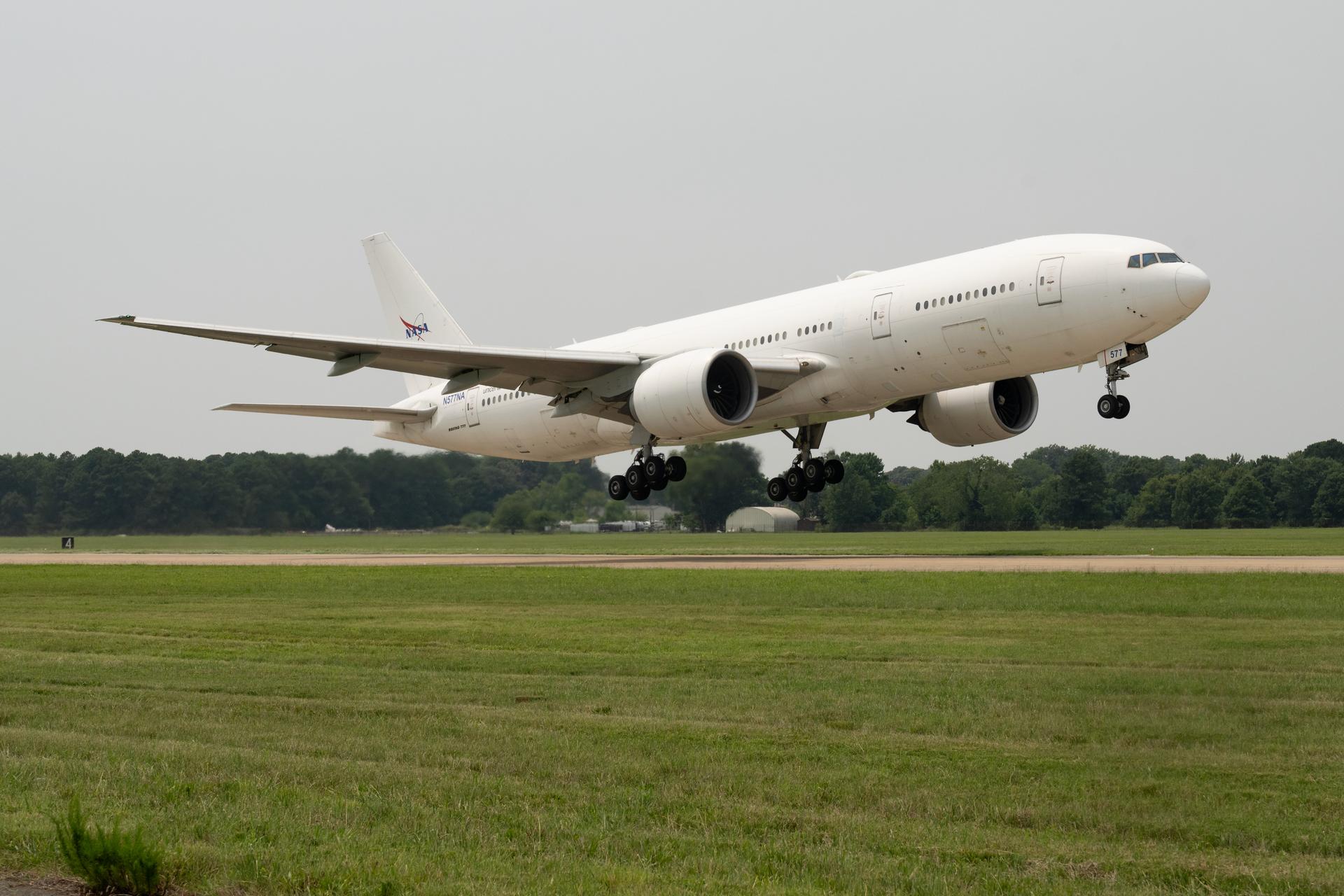
NASA Langley's B777 aircraft before it departs Langley Research Center to receive its new livery (paint job), prior to its departure on July 16th, it received ground maintenance in the center’s hangar. (Photo Credit NASA/ Mark Knopp)
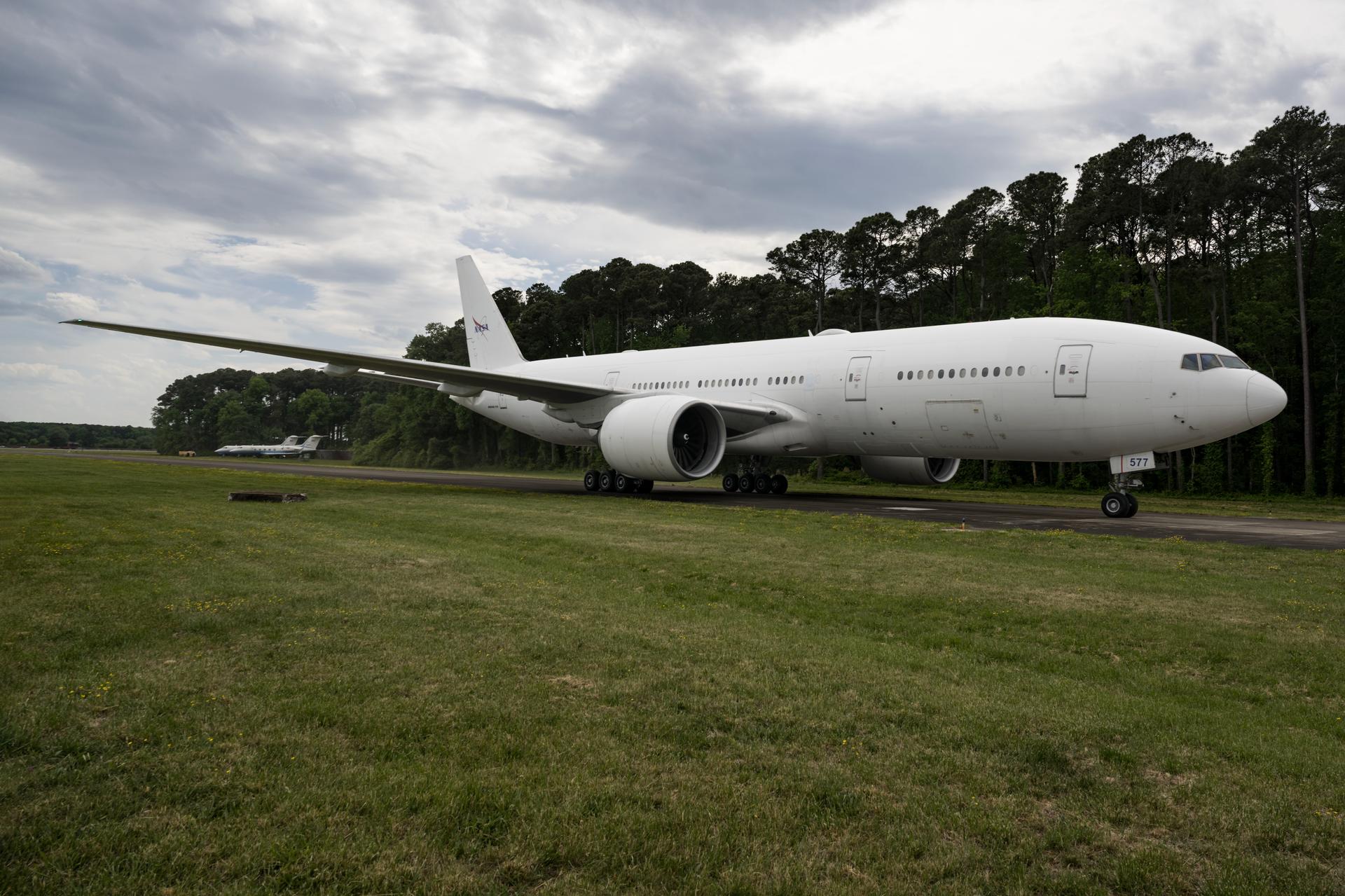
NASA Langley's B777 aircraft before it departs Langley Research Center to receive its new livery (paint job), prior to its departure on July 16th, it received ground maintenance in the center’s hangar. (Photo Credit NASA/ Mark Knopp)
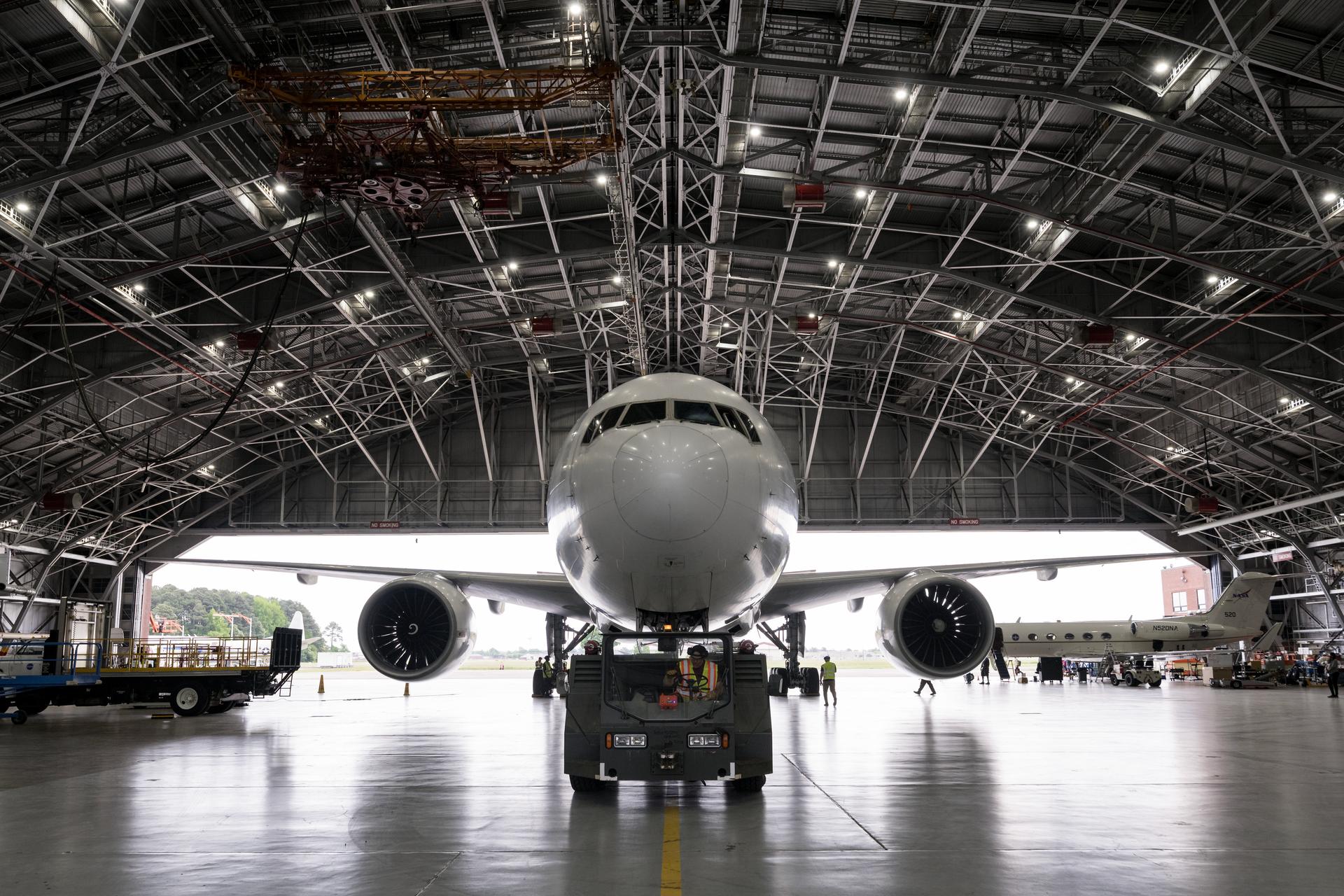
NASA Langley's B777 aircraft before it departs Langley Research Center to receive its new livery (paint job), prior to its departure on July 16th, it received ground maintenance in the center’s hangar. (Photo Credit NASA/ Mark Knopp)
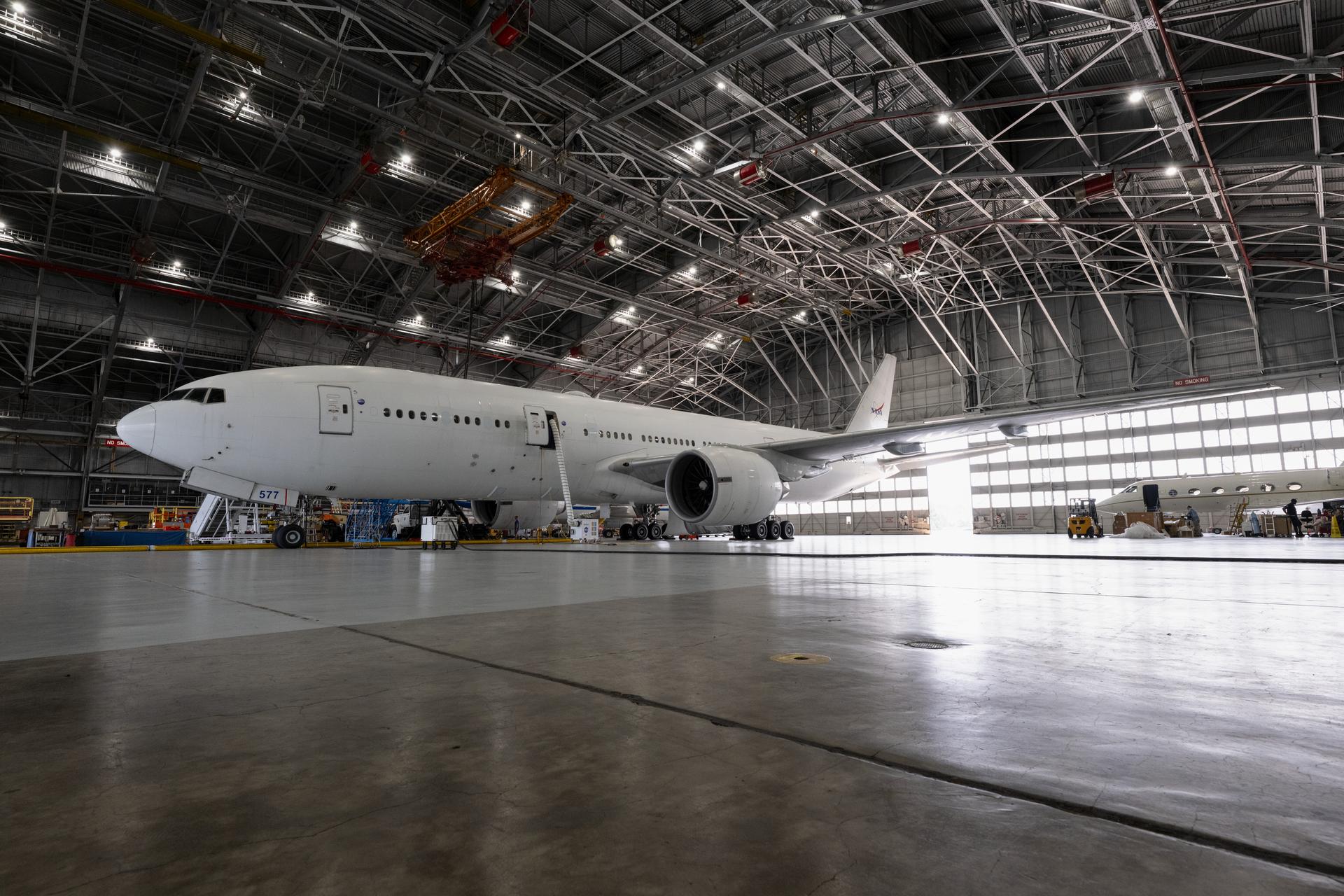
NASA Langley's B777 aircraft before it departs Langley Research Center to receive its new livery (paint job), prior to its departure on July 16th, it received ground maintenance in the center’s hangar. (Photo Credit NASA/ Ryan Hill)
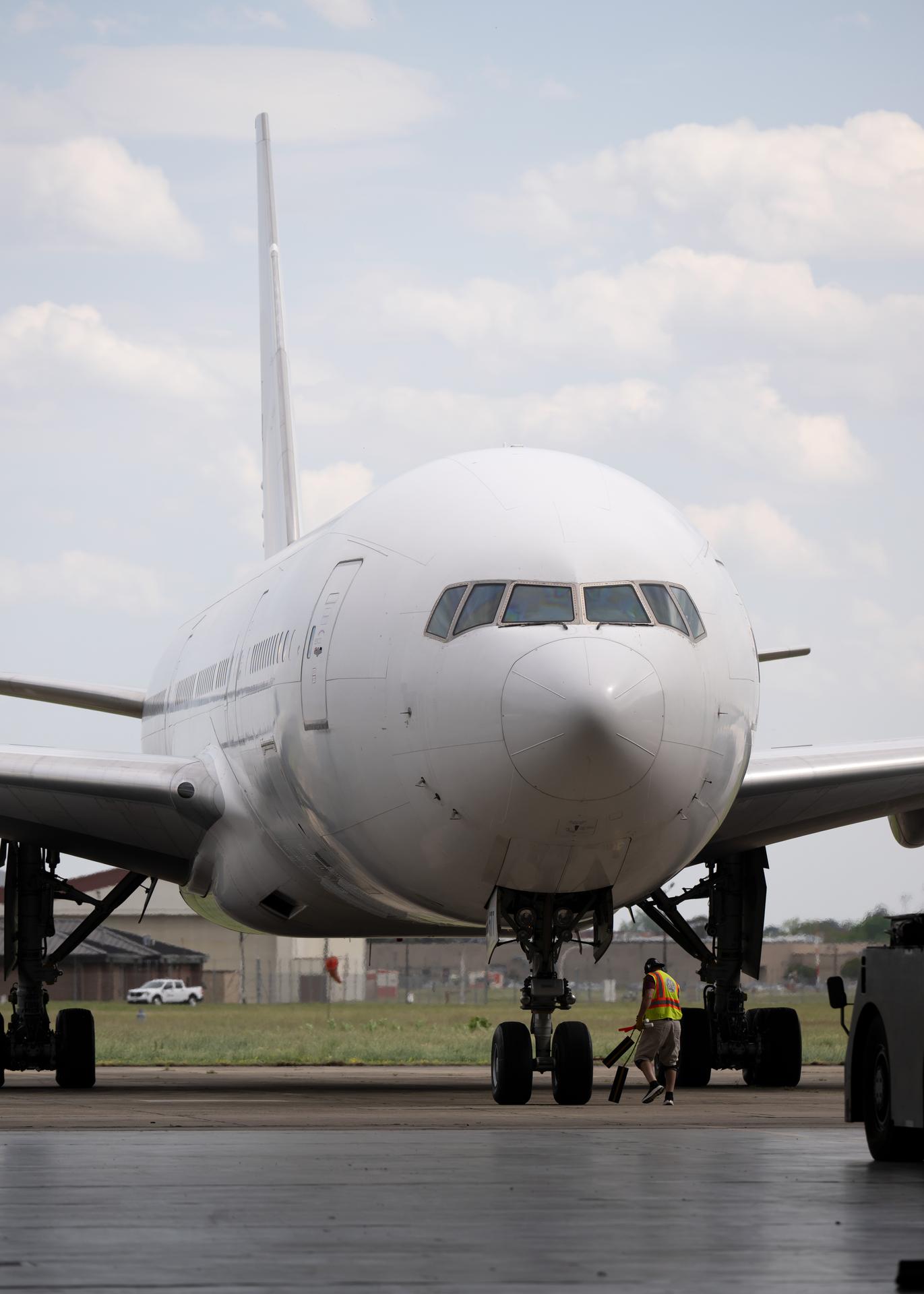
NASA Langley's B777 aircraft before it departs Langley Research Center to receive its new livery (paint job), prior to its departure on July 16th, it received ground maintenance in the center’s hangar. (Photo Credit NASA/ Ryan Hill)
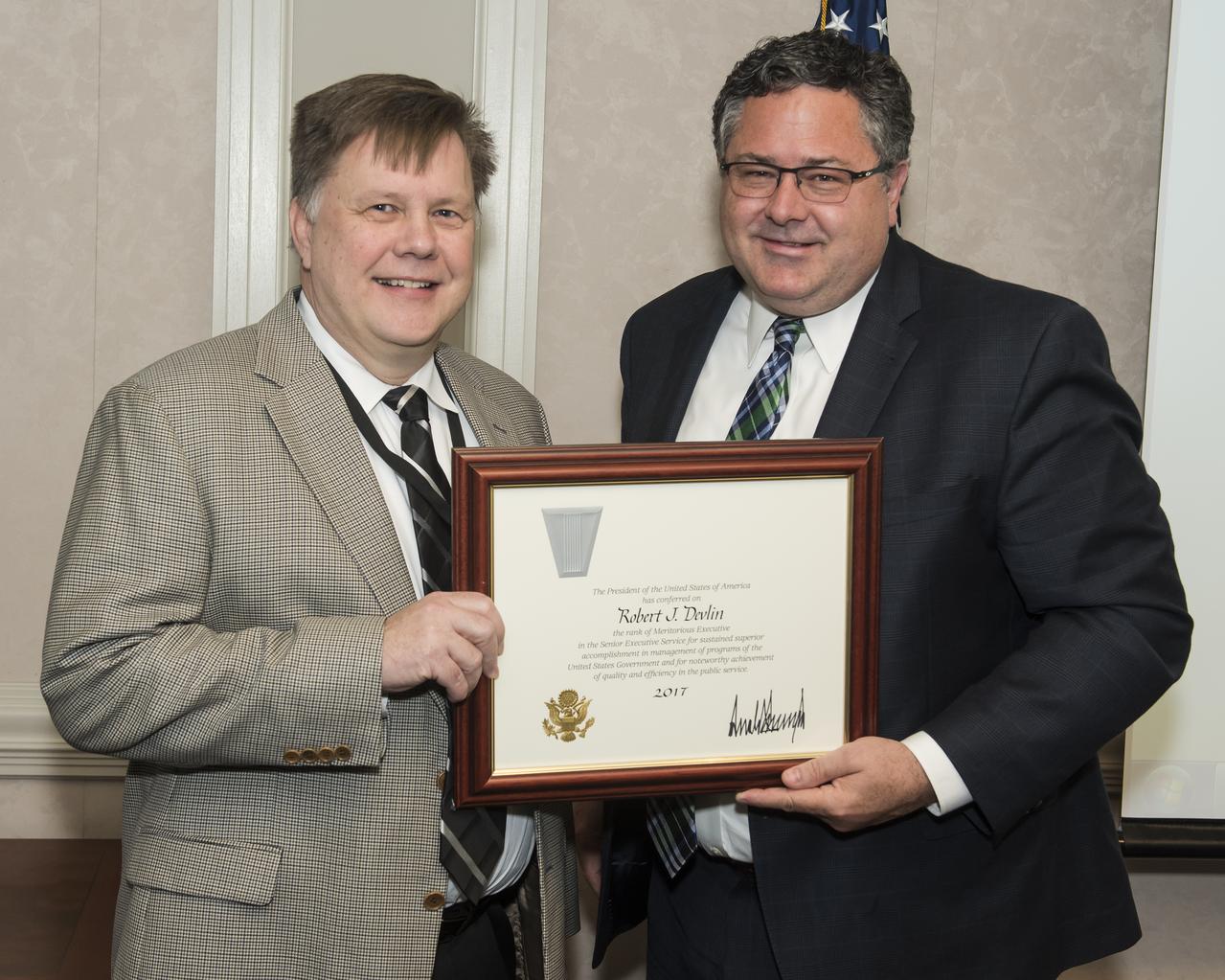
On April 23, 2018, Todd May presented Robert (Bob) Devlin with the 2017 Presidential Rank Award for Meritorious Executive. This is the second-highest award conferred by the President of the United States. Individuals receiving this award are recognized for sustained accomplishments and no more than five percent of career SES or SL/ST members may receive this award.
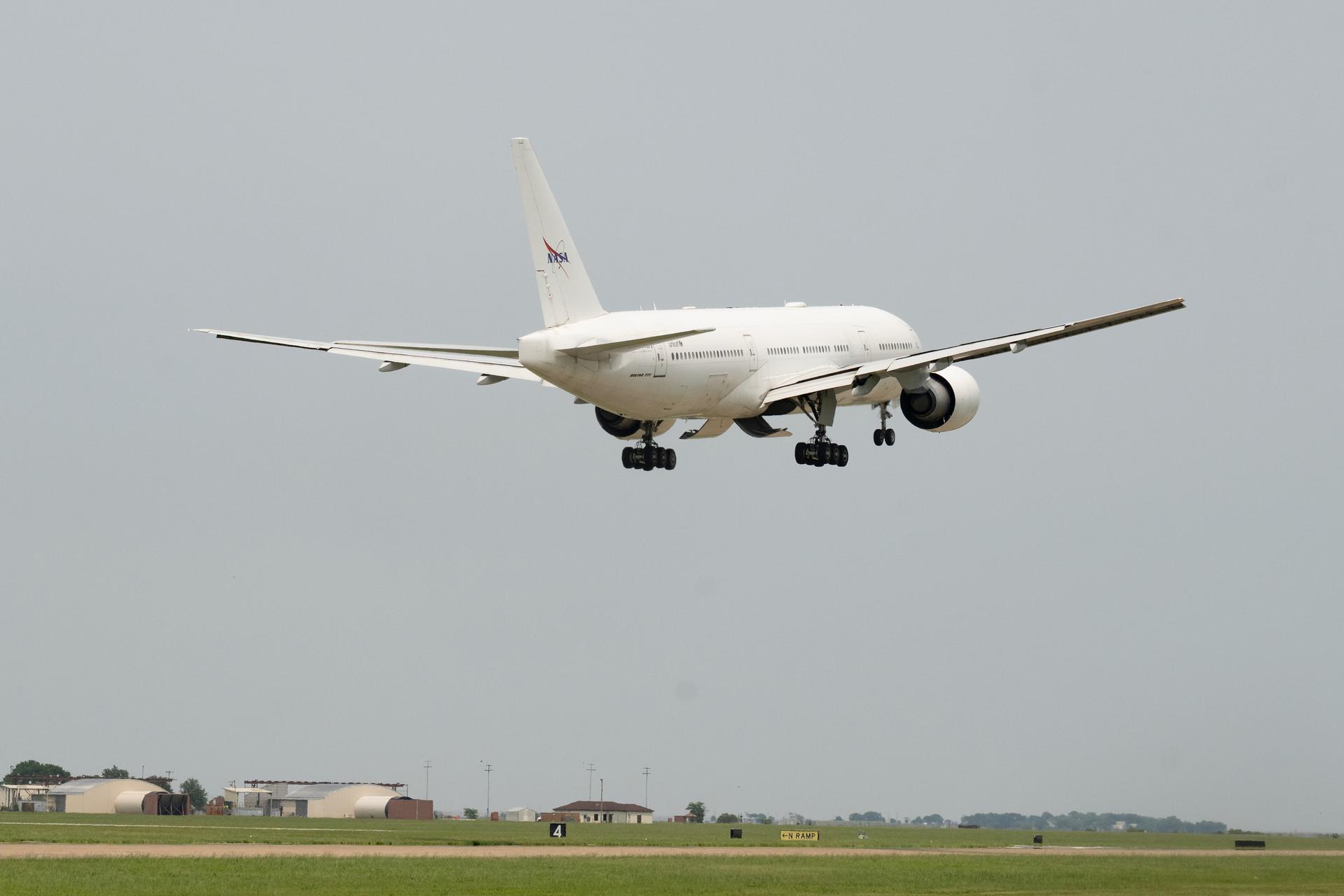
NASA Langley's B777 aircraft before it departs Langley Research Center to receive its new livery (paint job), prior to its departure on July 16th, it received ground maintenance in the center’s hangar. (Photo Credit NASA/ Mark Knopp)
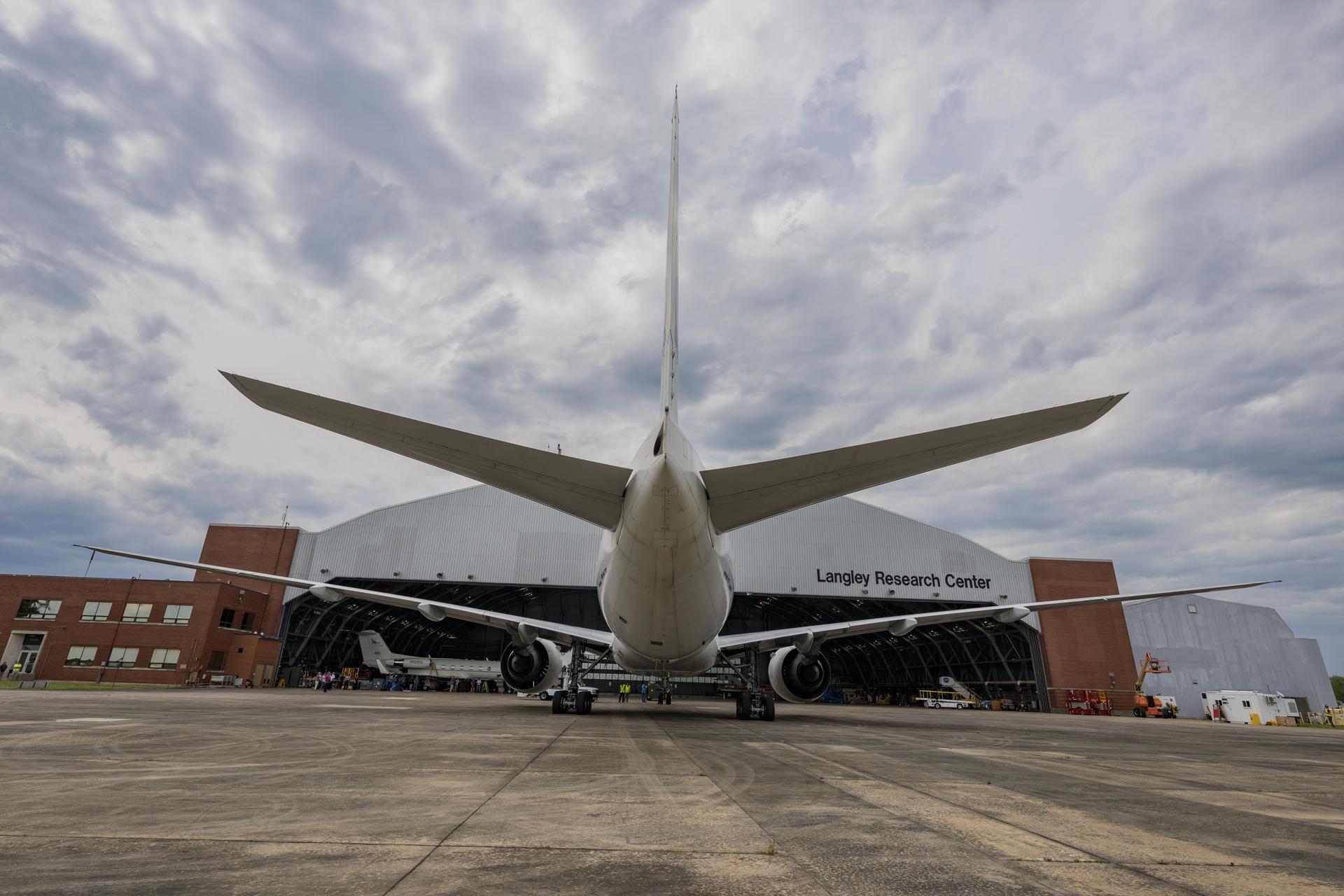
NASA Langley's B777 aircraft before it departs Langley Research Center to receive its new livery (paint job), prior to its departure on July 16th, it received ground maintenance in the center’s hangar. (Photo Credit NASA/ Mark Knopp)
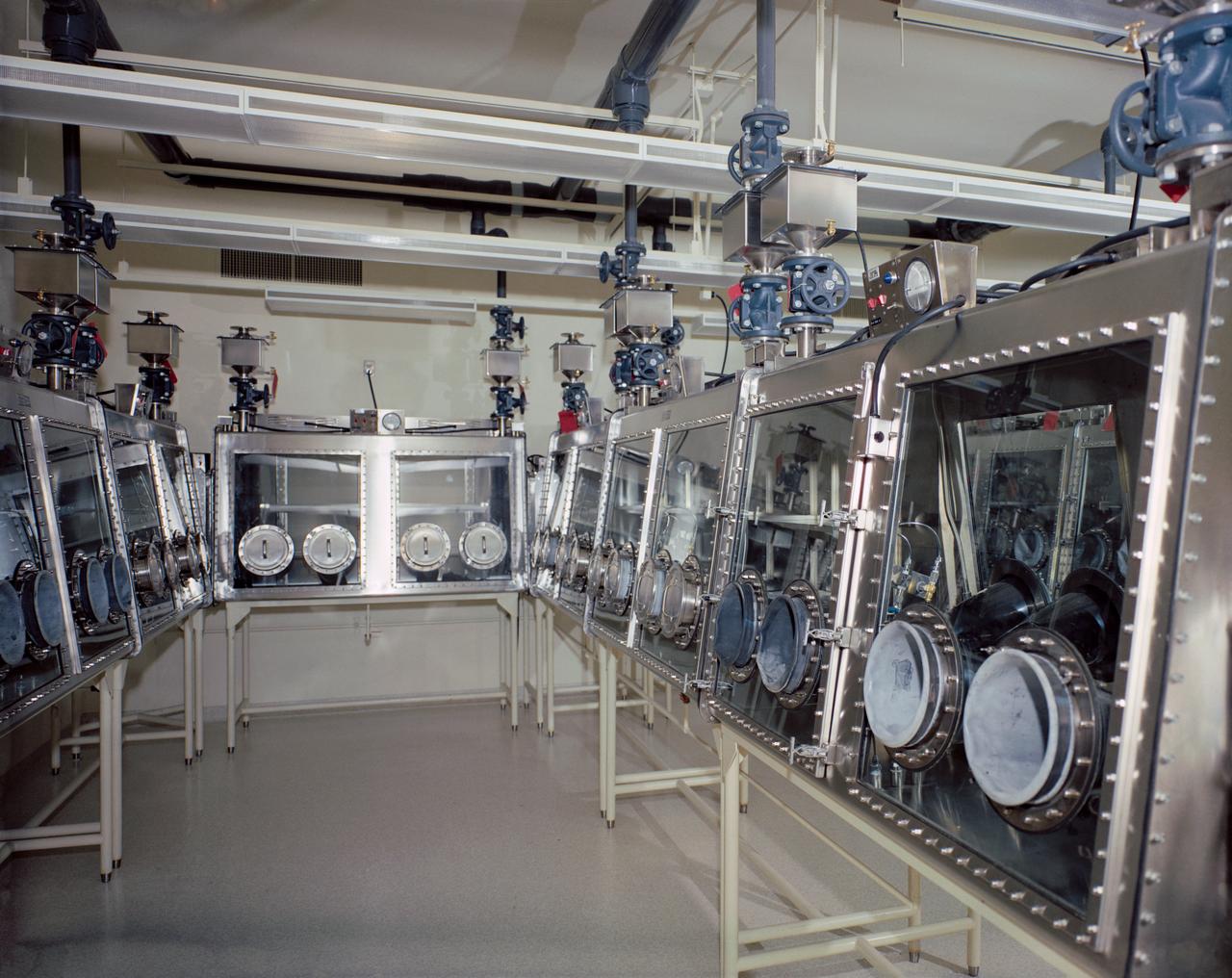
The incubation laboratory of the Sample Operations Area of the Lunar Receiving Laboratory, bldg 37.
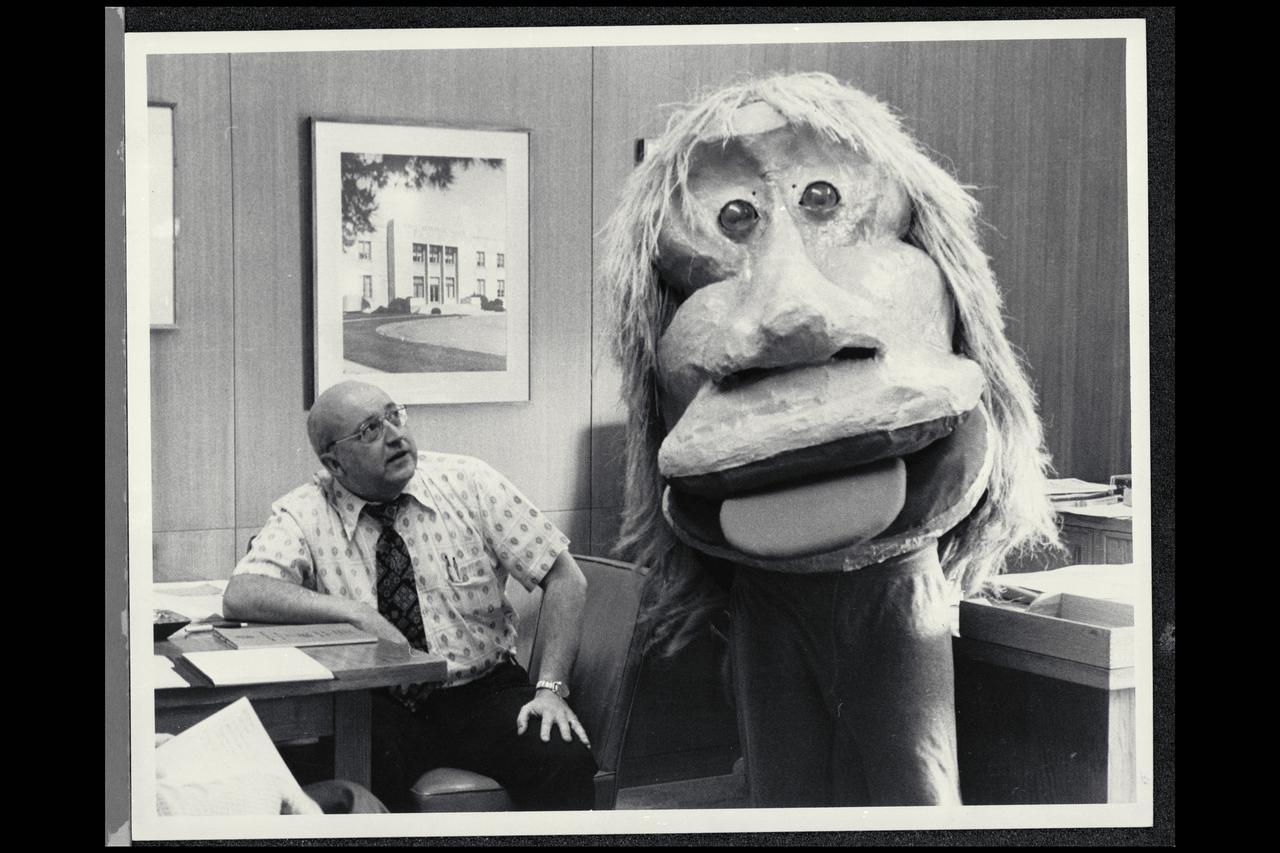
Ames Center Director receives visitors during the Halloween parade
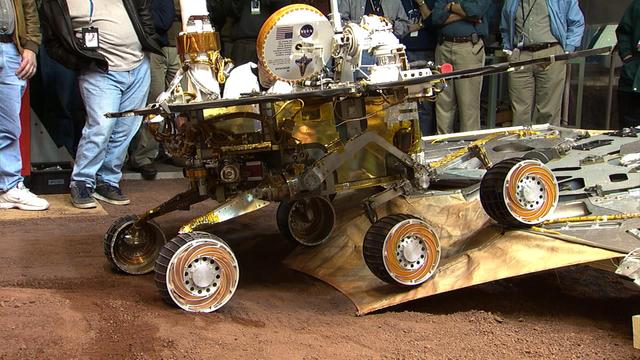
This image taken at JPL shows engineers testing the route by which the Mars Exploration Rover Opportunity will roll off its lander. Opportunity touched down at Meridiani Planum, Mars on Jan. 24, 9:05 p.m. PST, 2004, Earth-received time.
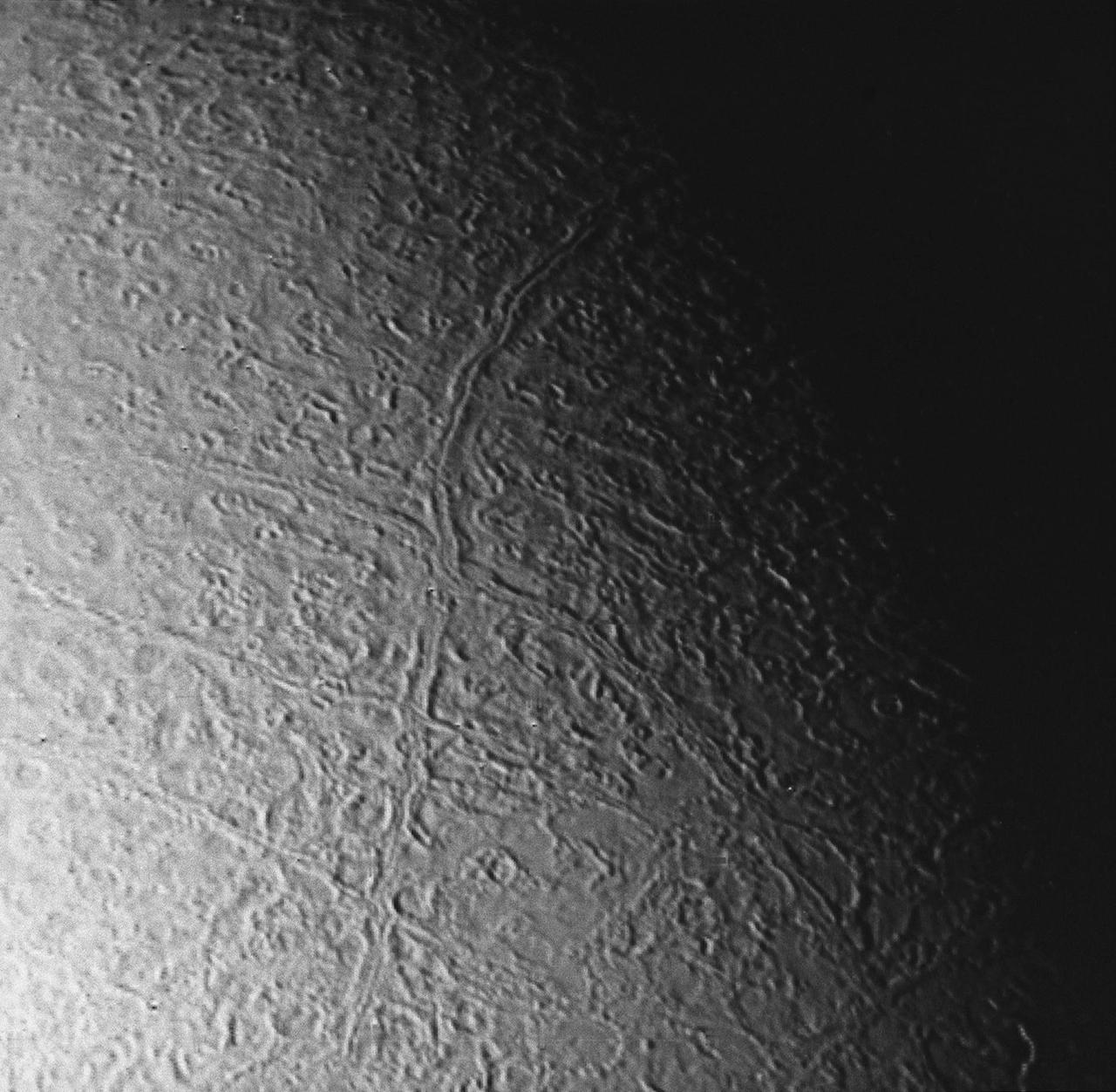
This image of Triton was taken on Aug. 25 1989 by NASA Voyager 2. The image was received at JPL four hours later at about 4:20 a.m. The smallest detail that can be seen is about 2.5 kilometers 1.5 miles across.
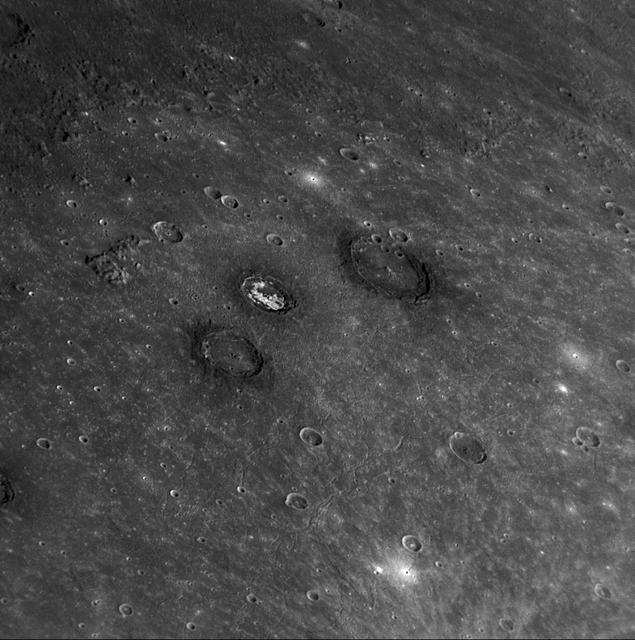
Sander, Munch, and Poe are a trio of impact craters within the Caloris impact basin. Munch and Poe were recently named, while Sander received its name in the first set of feature names after MESSENGER’s first Mercury flyby.
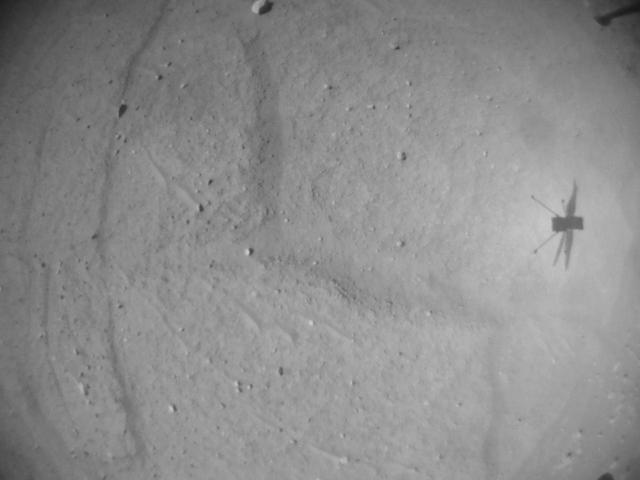
NASA's Ingenuity Mars Helicopter's navigation camera captured the rotorcraft in shadow during its 52nd flight on April 26, 2023. This image was finally received after Perseverance and Ingenuity were out of communication for 63 days. https://photojournal.jpl.nasa.gov/catalog/PIA25918
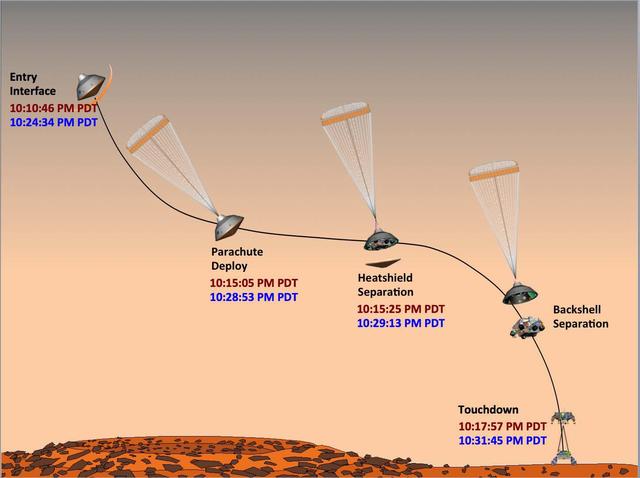
This graphic shows the times at which NASA Curiosity rover hit its milestones during its entry, descent and landing on Mars. Times the events actually occurred are in red; times that Earth received confirmation that events occurred appear in blue.
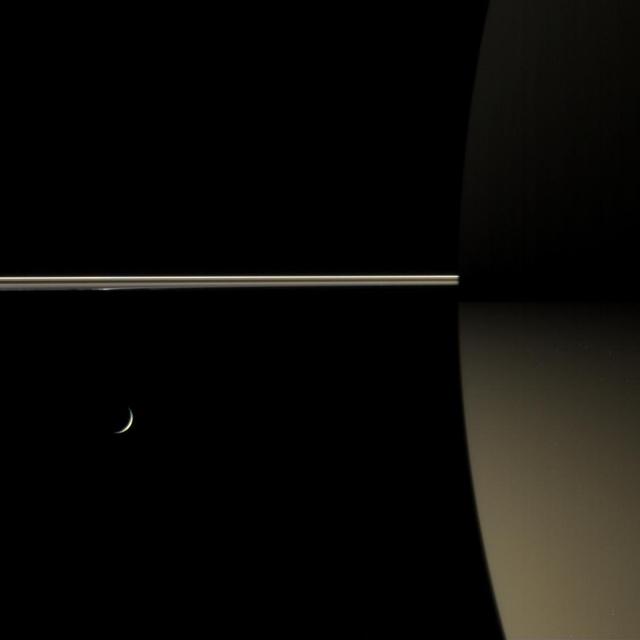
This rare color view of Saturn night side shows how the rings dimly illuminate the southern hemisphere, giving it a dull golden glow. Part of the northern dark side is just visible at top -- the illumination it receives being far less than the south
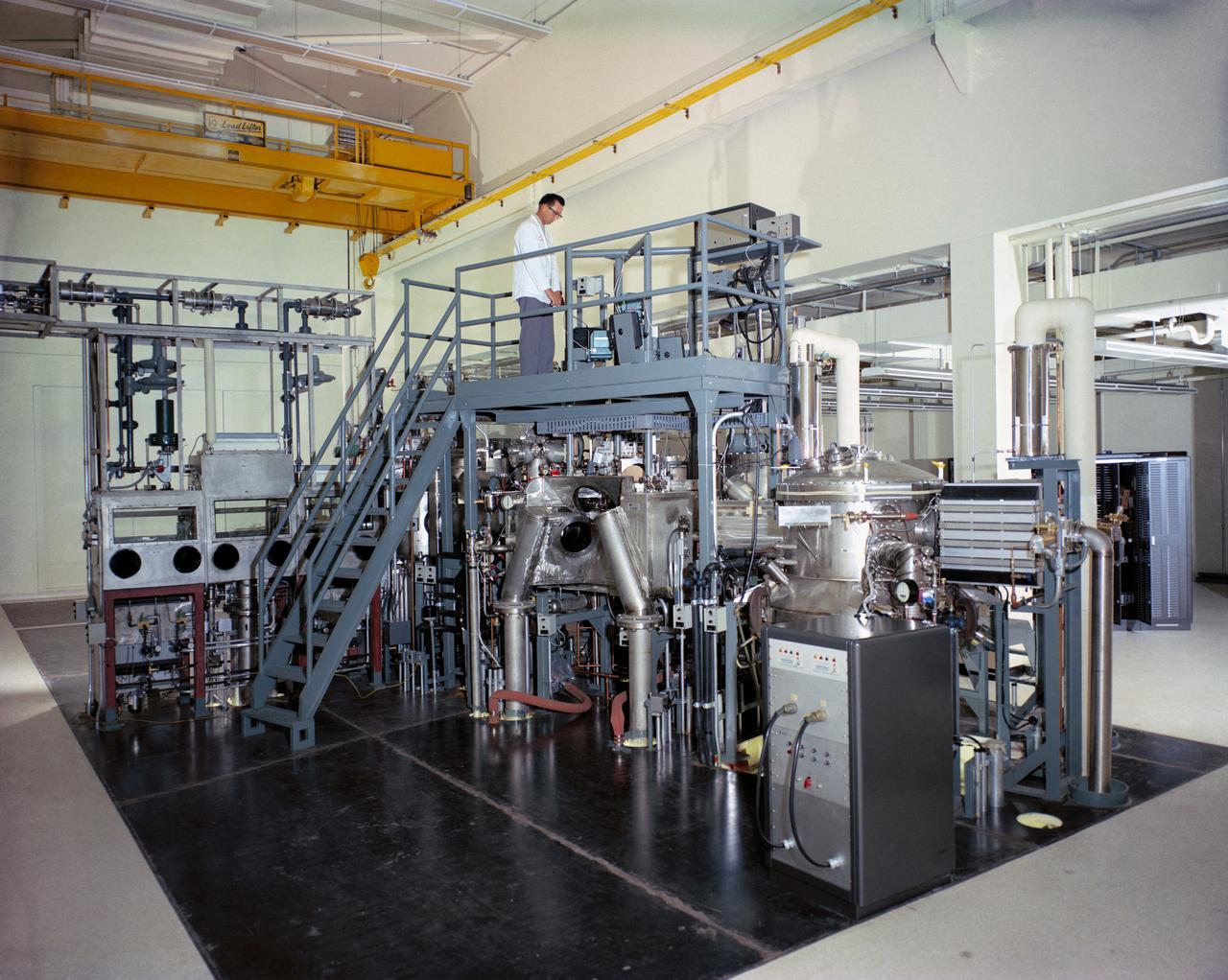
Overall view of the equipment in Room 2-203, Vacuum Laboratory, Sample Operations Area, Lunar Receiving Laboratory, Bldg 37.
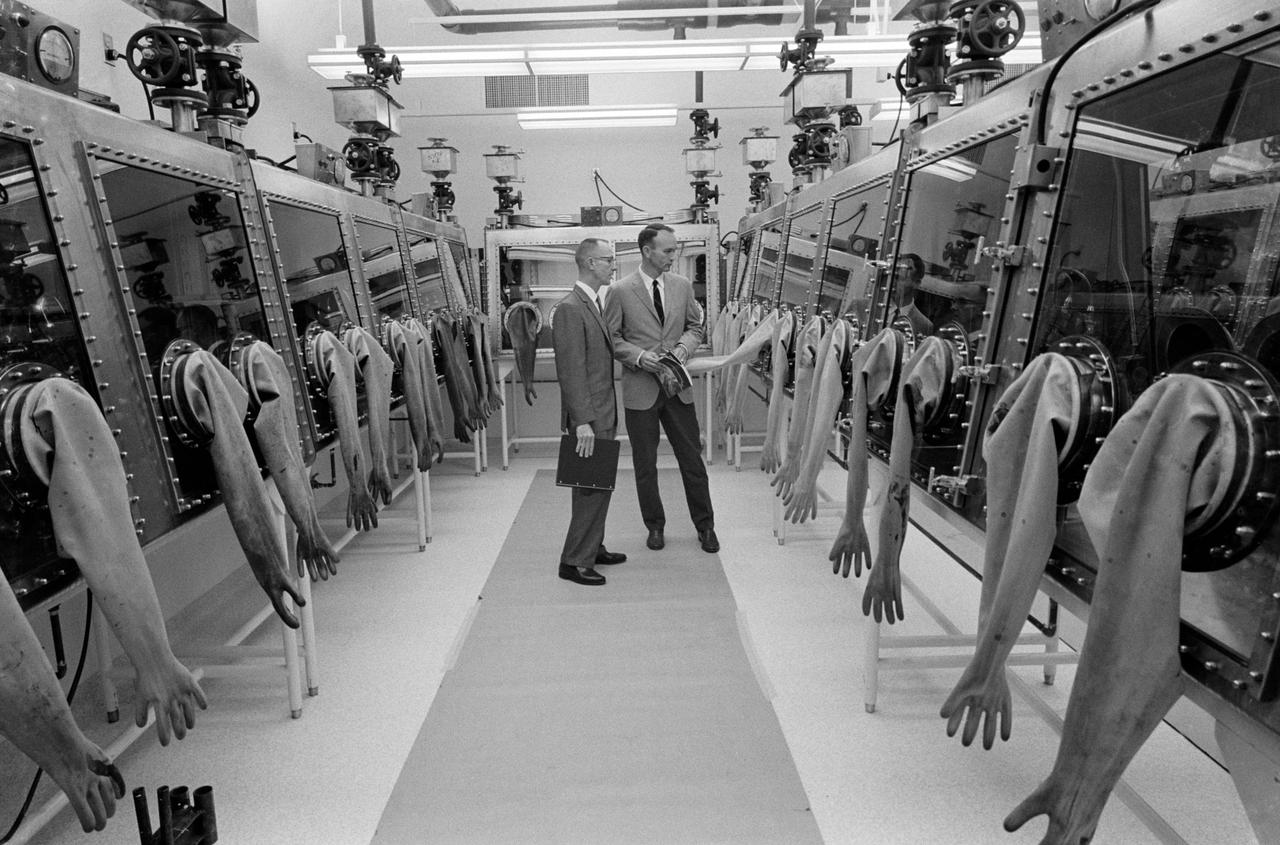
Astronaut Michael Collins on the right and Richard Wright on the left during tour of Lunar Receiving Lab (LRL) at MSC.
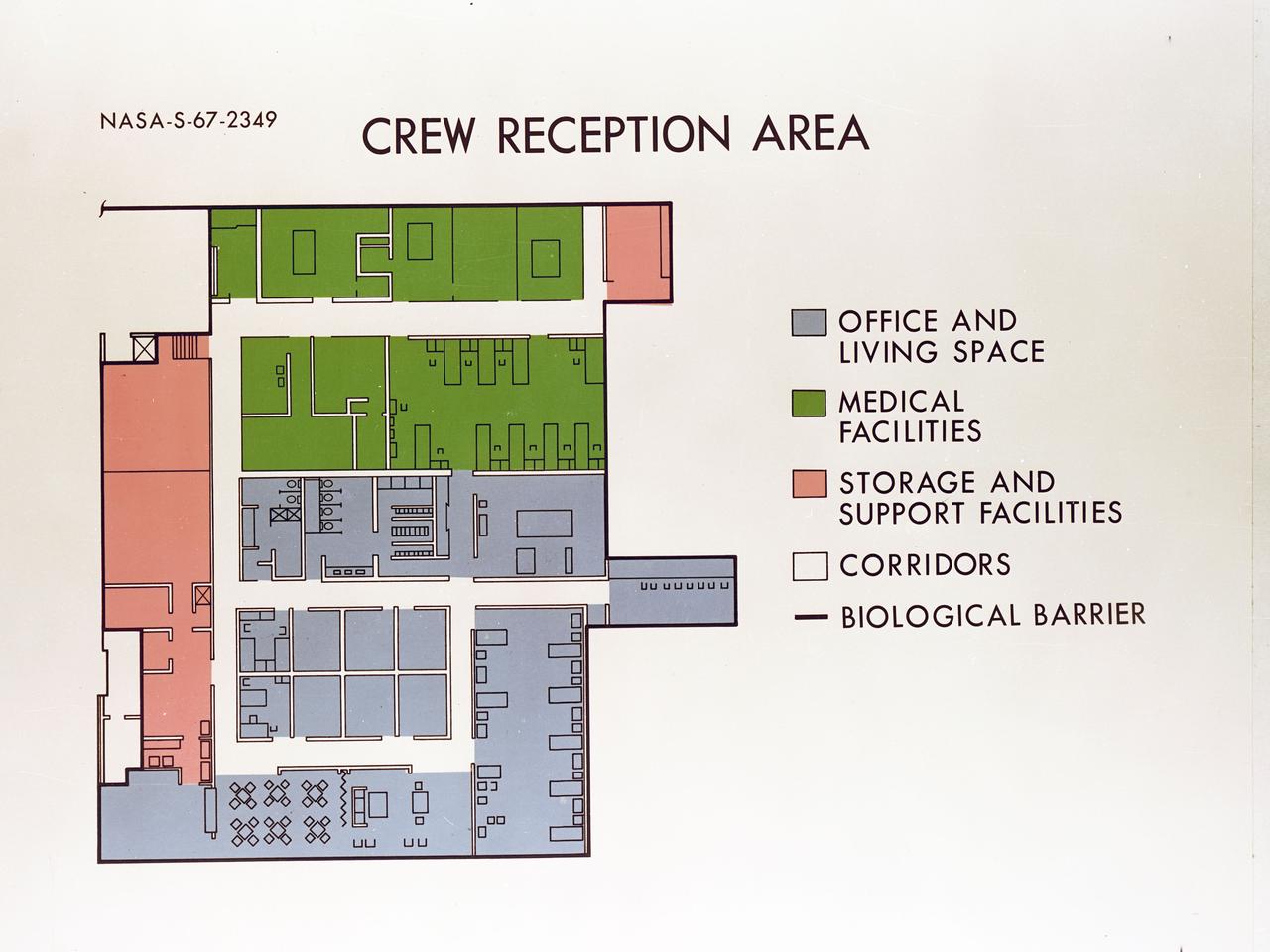
Artist's concept depicting the floor plan of the Crew Reception Area of the Lunar Receiving Laboratory (LRL), bldg 37.

President John F. Kennedy receives a briefing from Rocco Petrone during a tour of Cape Canaveral facilities.
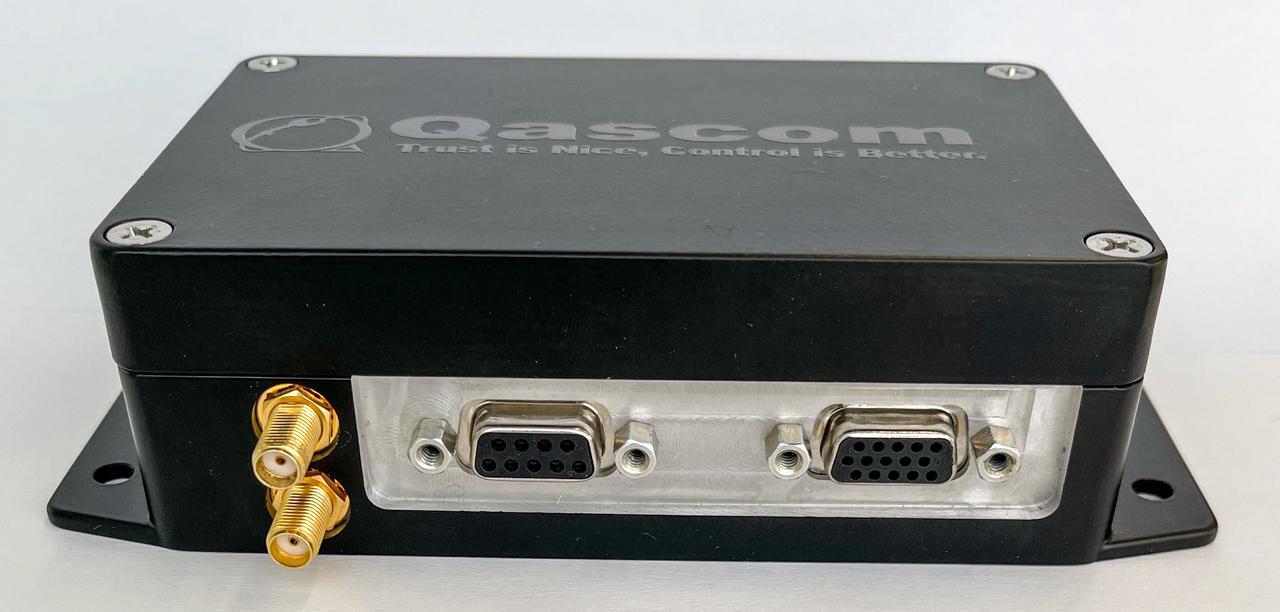
jsc2023e010195 (2/28/2023) --- Preflight image of the NAVCOM Testbed flight segment concept, based on QN400 Professional Receiver
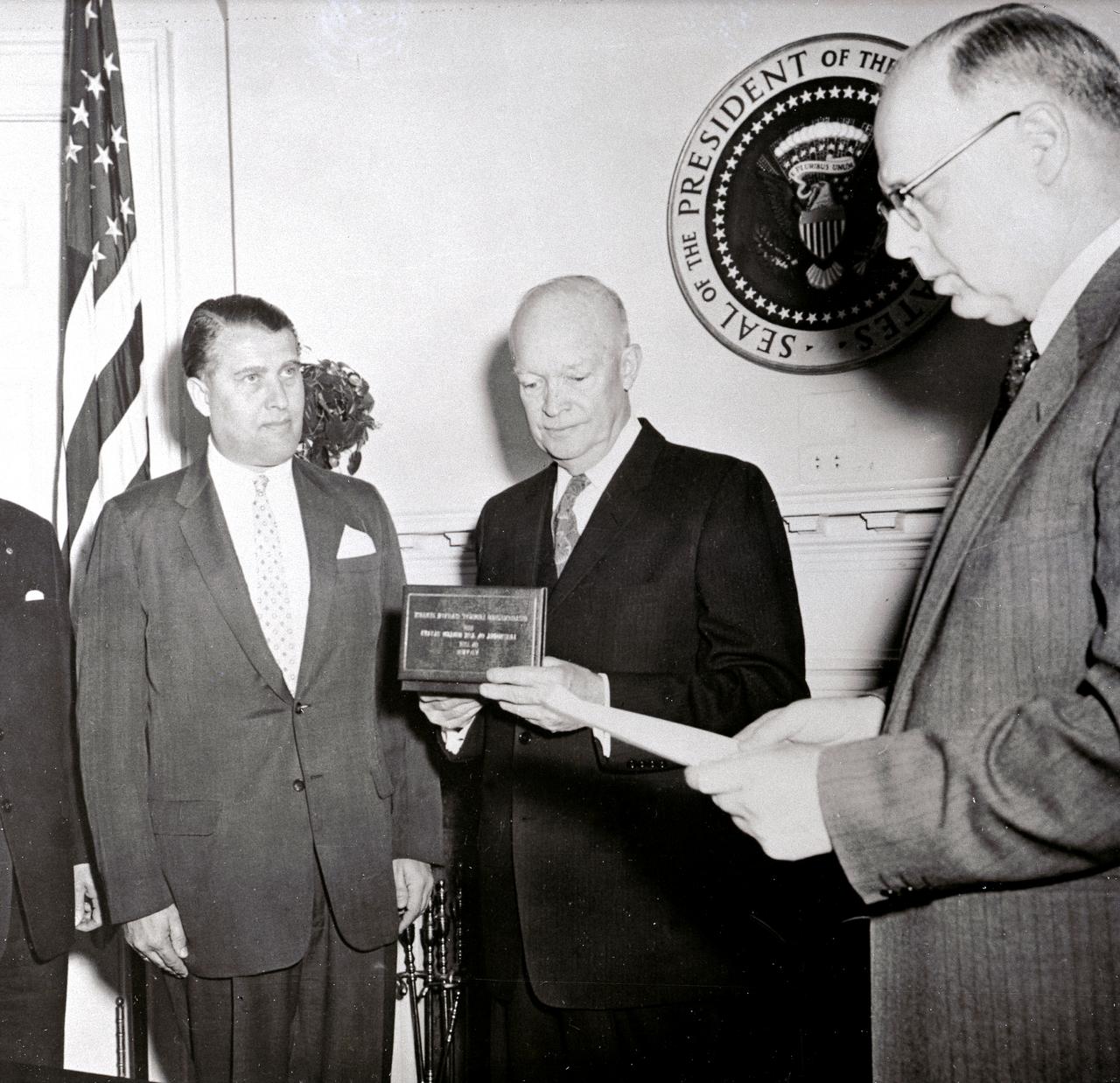
Dr. von Braun received a federal civilian service award from President Dwight Eisenhower on January 21, 1959.
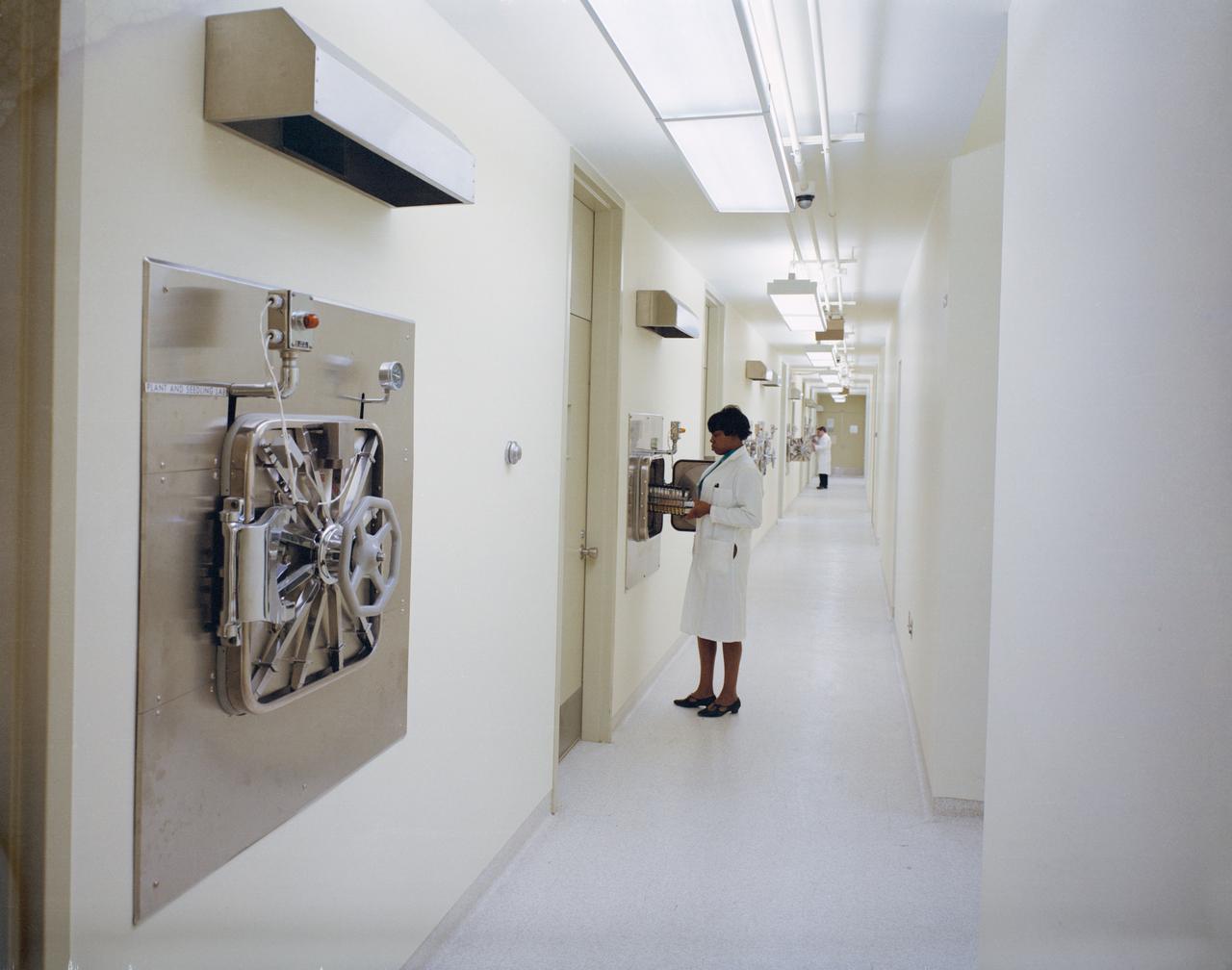
Biological Test Laboratory, Sample Operations Area, Lunar Receiving Laboratory, bldg 37, Manned Spacecraft Center, Houston, Texas.
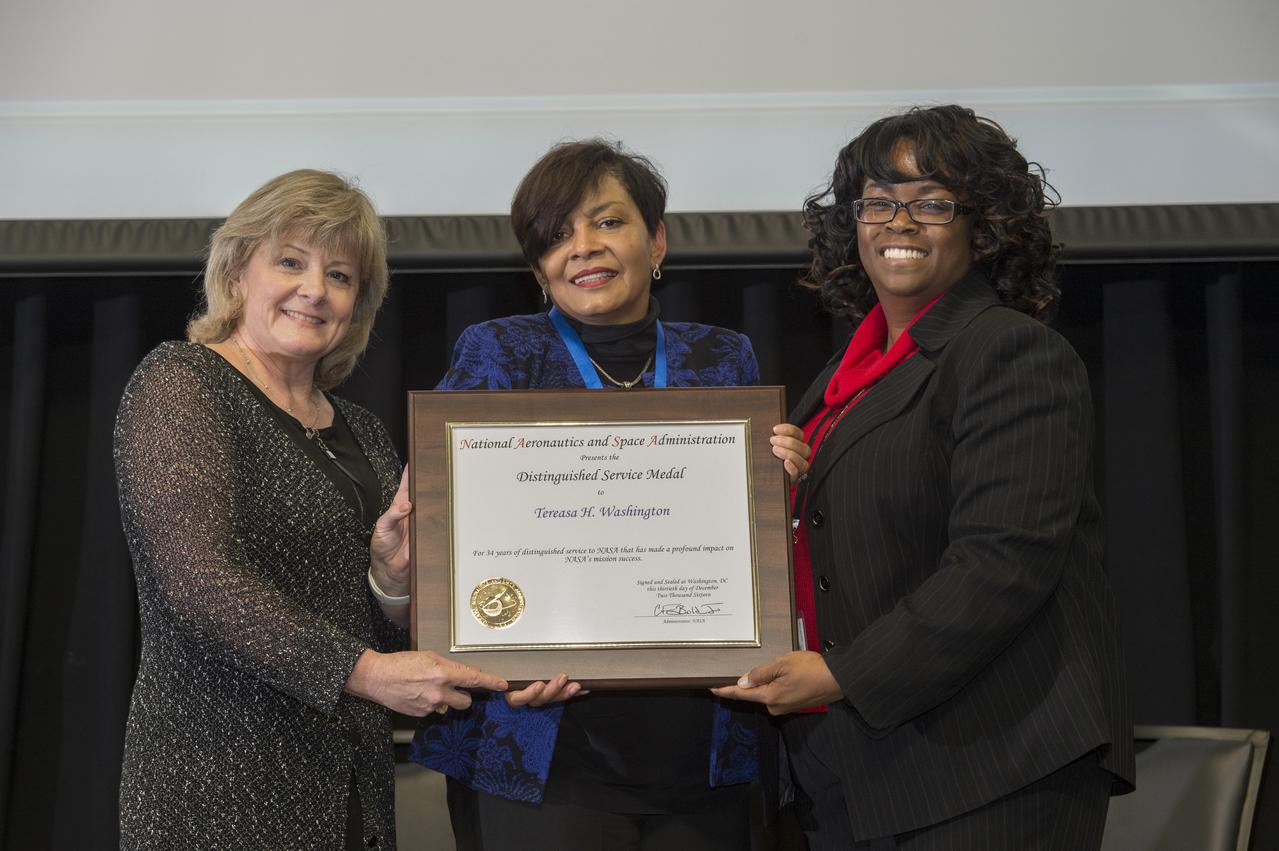
TEREASA WASHINGTON RECEIVES THE NASA DISTINGUISHED SERVICE MEDAL FROM JODY SINGER AND AUDREY ROBINSON ON THE OCCASION OF HER RETIREMENT.
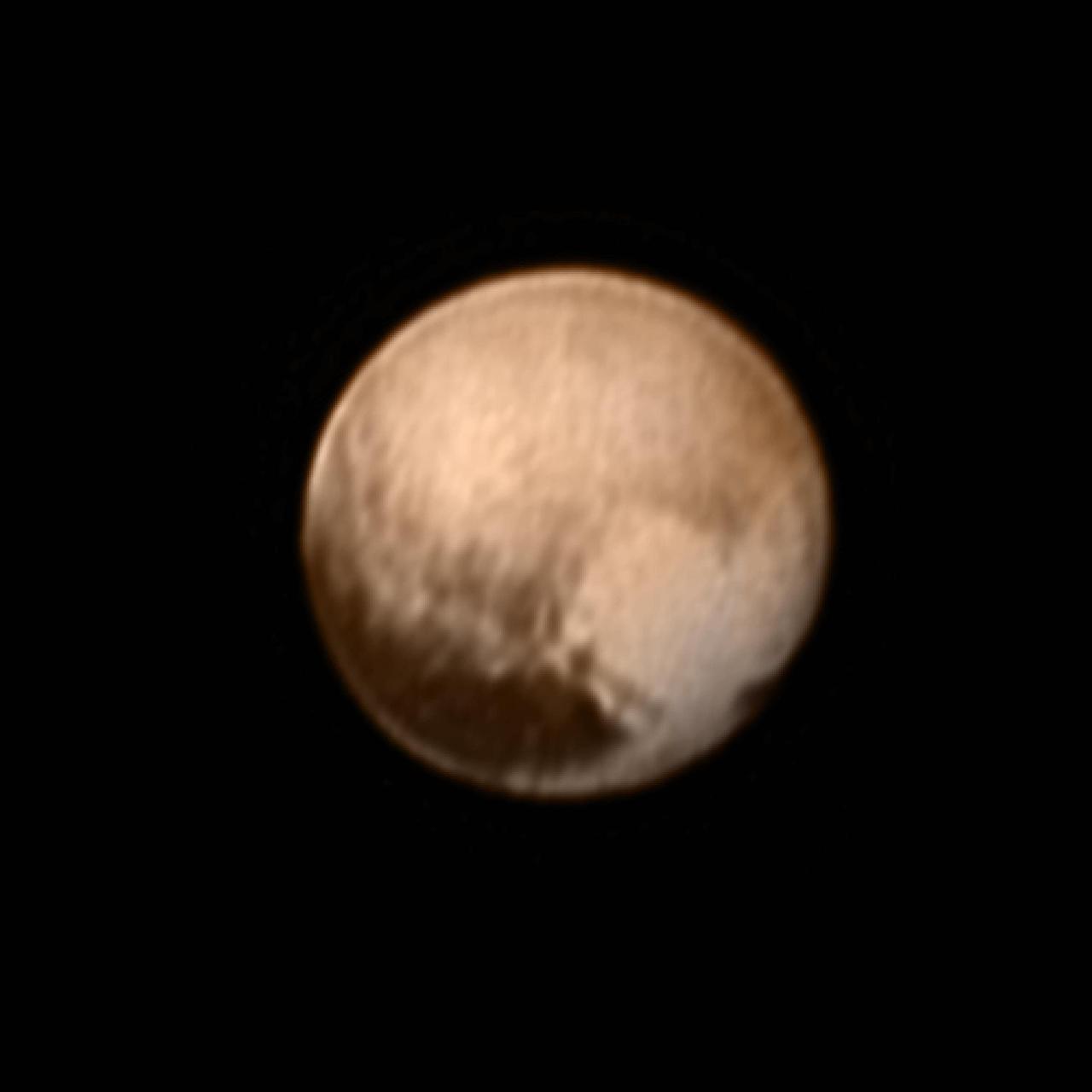
In the early morning hours of July 8, 2015, mission scientists received this new view of Pluto -- the most detailed yet returned by the Long Range Reconnaissance Imager (LORRI) aboard New Horizons. The image was taken on July 7, when the NASA spacecraft was just under 5 million miles (8 million kilometers) from Pluto, and is the first to be received since the July 4 anomaly that sent the spacecraft into safe mode. This view is centered roughly on the area that will be seen close-up during New Horizons' July 14 closest approach. This side of Pluto is dominated by three broad regions of varying brightness. Most prominent are an elongated dark feature at the equator, informally known as "the whale," and a large heart-shaped bright area measuring some 1,200 miles (2,000 kilometers) across on the right. Above those features is a polar region that is intermediate in brightness. http://photojournal.jpl.nasa.gov/catalog/PIA19702
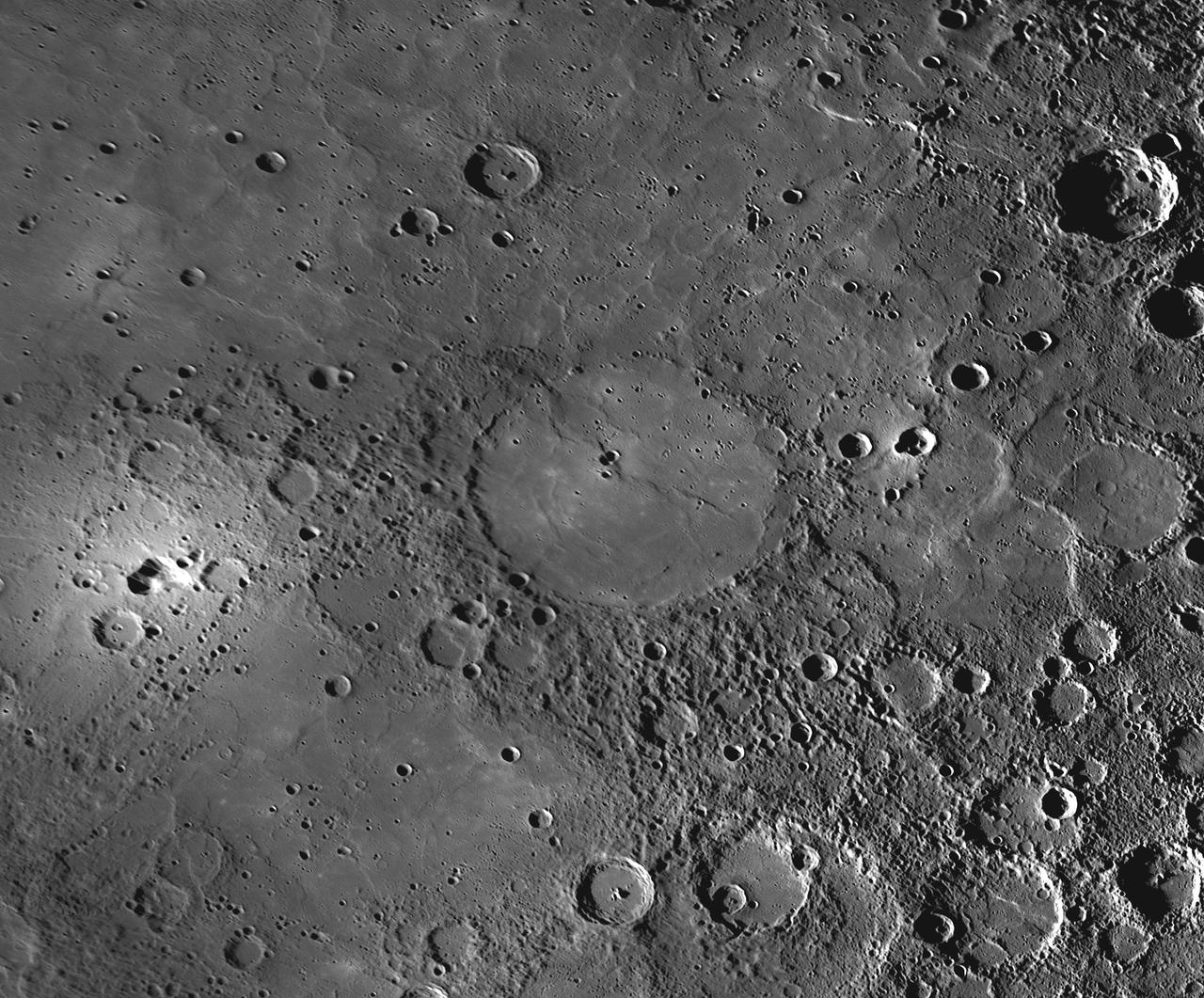
Visible in the center of this image is the crater Copland taken by NASA MESSENGER spacecraft.
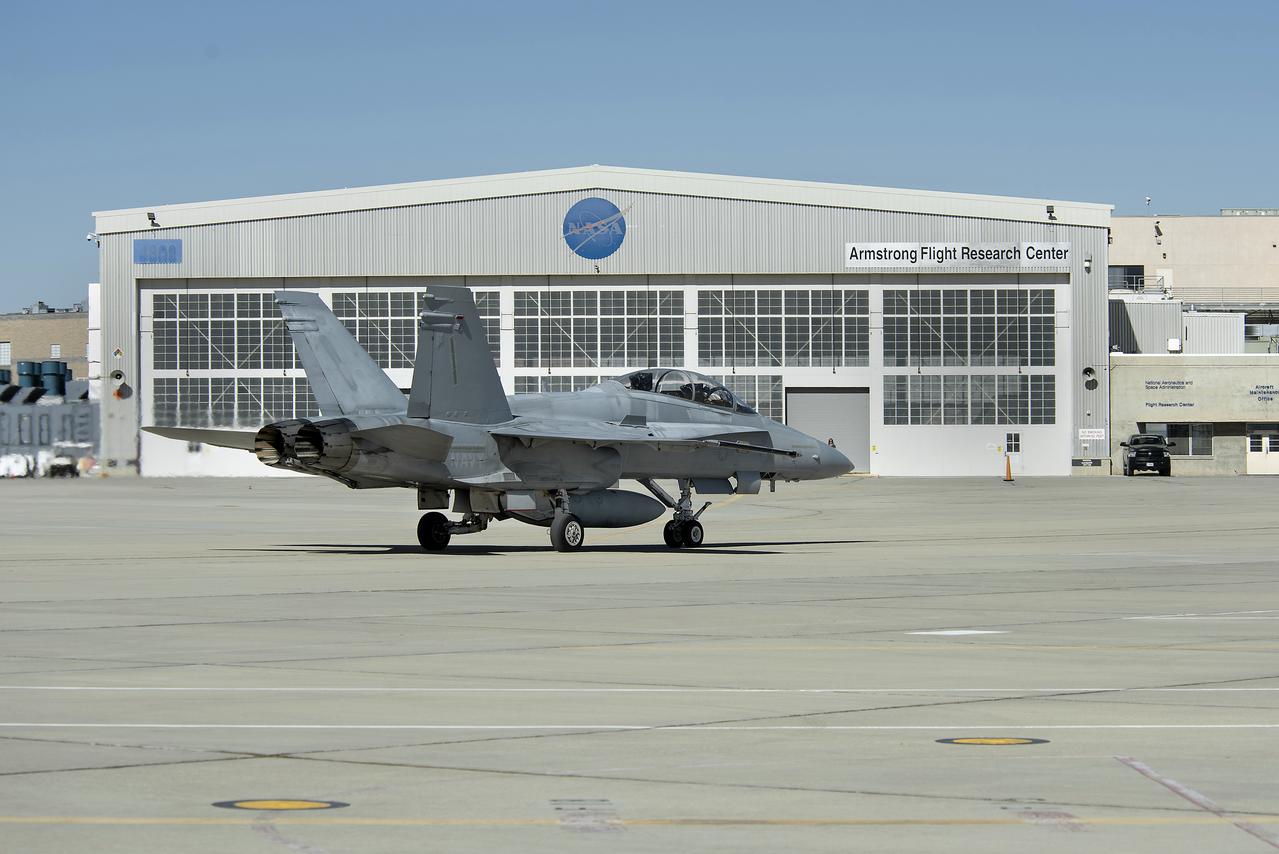
The first of three “new” F/A-18B Hornets arrived at NASA’s Armstrong Flight Research Center in California Nov. 6.
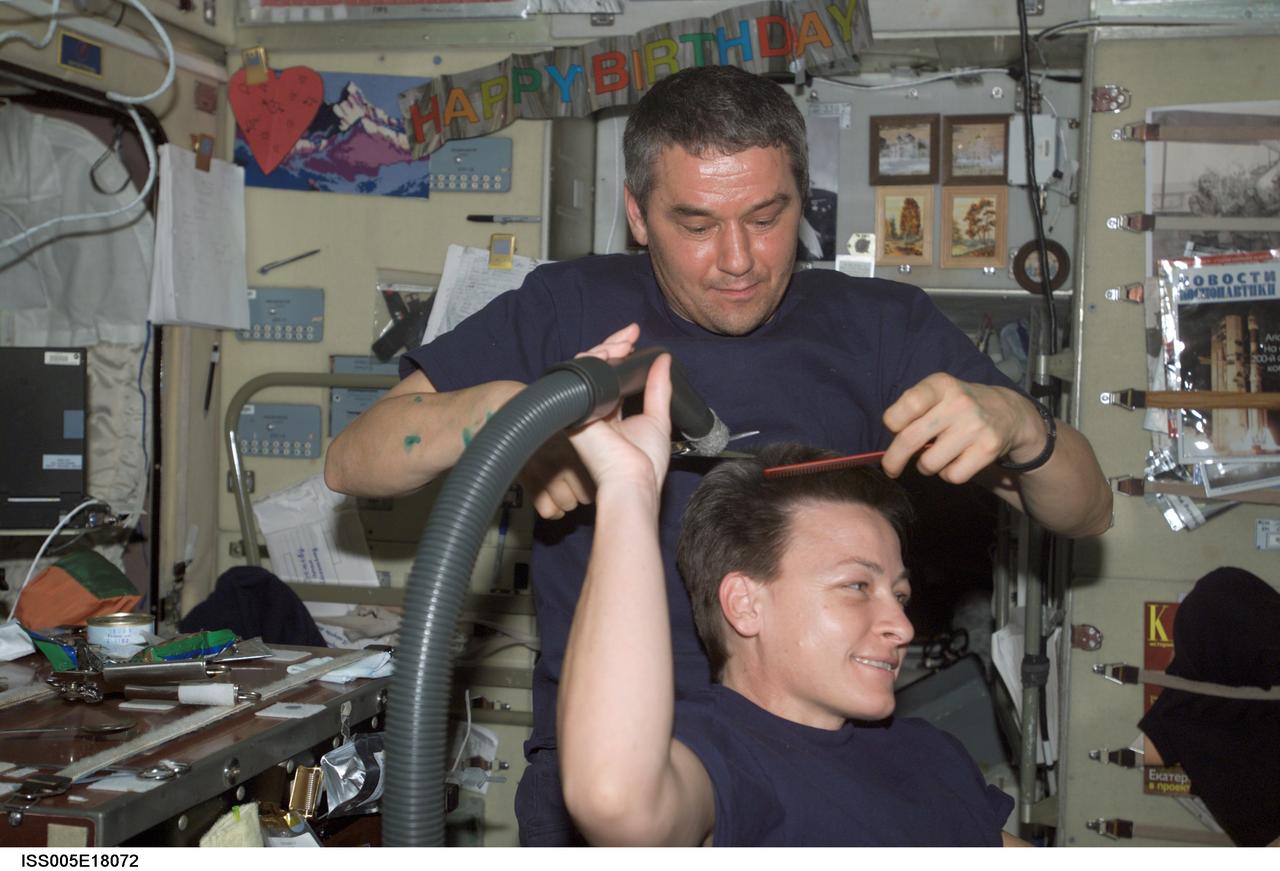
ISS005-E-18072 (October 2002) --- Cosmonaut Valery G. Korzun, Expedition Five mission commander, cuts astronaut Peggy A. Whitson’s hair in the Zvezda Service Module on the International Space Station (ISS). Whitson, flight engineer, holds a vacuum device the crew has fashioned to garner freshly cut hair, which is floating freely.
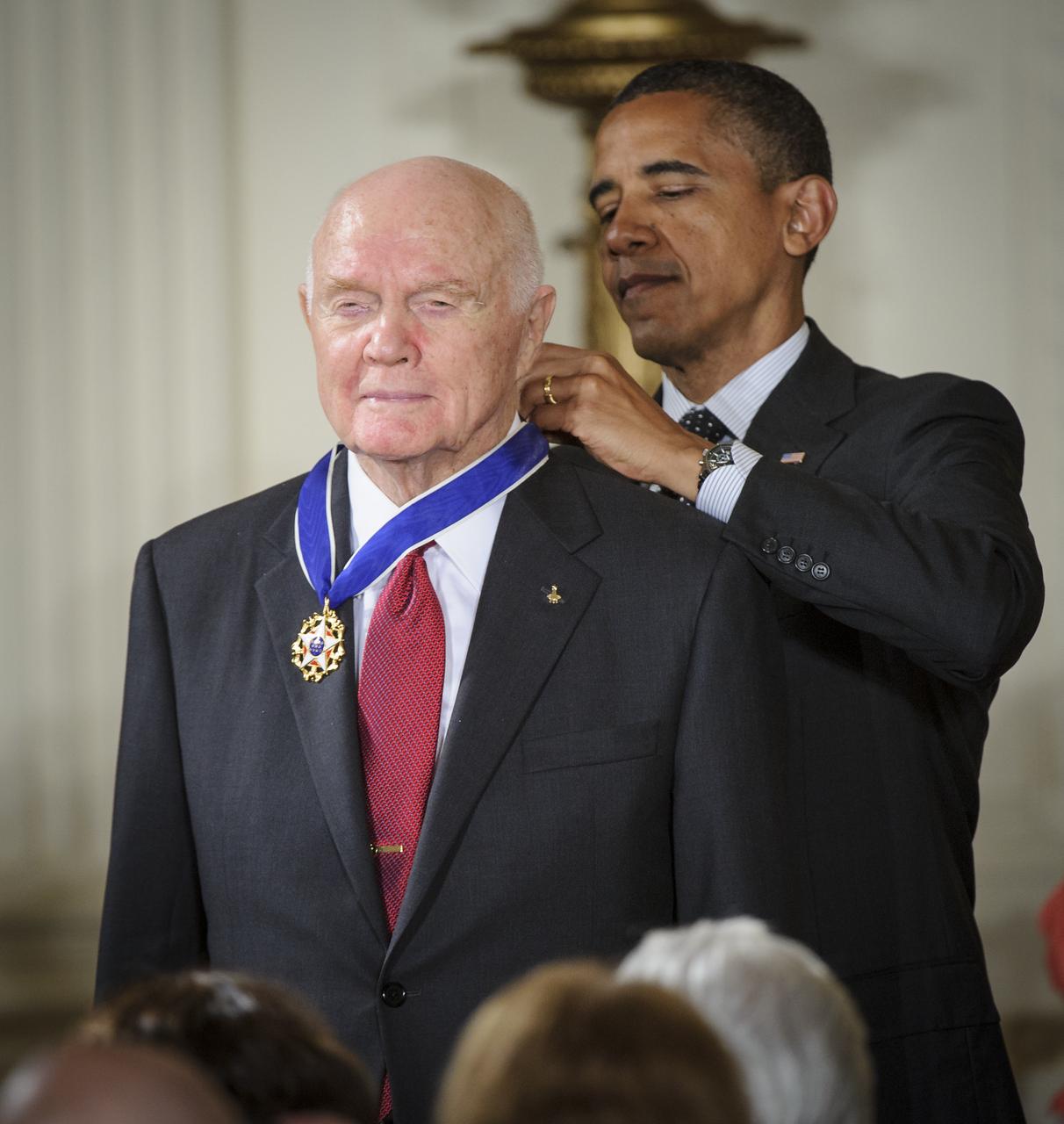
President Barack Obama presents former United States Marine Corps pilot, astronaut, and United States Senator John Glenn with a Medal of Freedom, Tuesday, May 29, 2012, during a ceremony at the White House in Washington. Photo Credit: (NASA/Bill Ingalls)