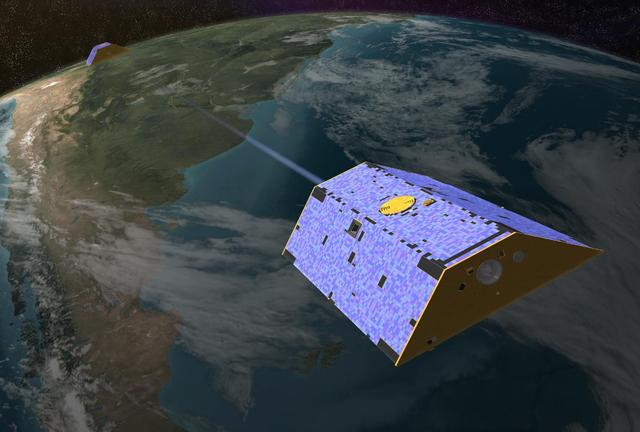
Artist concept of the Gravity Recovery and Climate Experiment GRACE from December 2002. http://photojournal.jpl.nasa.gov/catalog/PIA04236
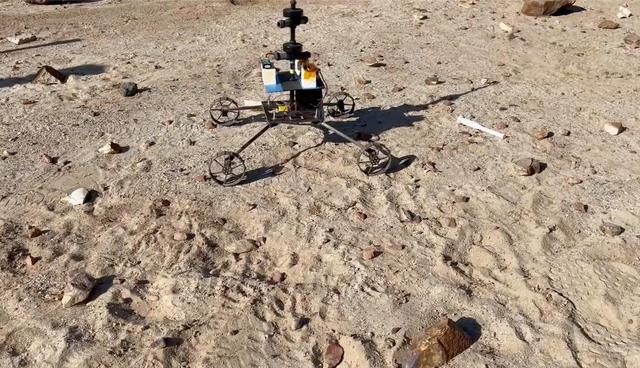
A model Sample Recovery Helicopter drives and positions itself over a sample tube during a test in the Mars Yard at NASA's Jet Propulsion Laboratory in Southern California. Two Sample Recovery Helicopters are slated to fly to Mars as part of the Mars Sample Return campaign. NASA is developing the Sample Recovery Helicopters to serve as backups to the agency's Perseverance rover in transporting sample tubes to the Sample Retrieval Lander. These helicopters are follow-ons to NASA's Ingenuity Mars Helicopter, which arrived at the Red Planet in the belly of Perseverance in February 2021. The Sample Recovery Helicopters have wheels instead of feet, as well as a small manipulator arm with a two-fingered gripper capable of carrying precious sample tubes. Testing of the Sample Recovery Helicopters is ongoing. The testbed was made by AeroVironment Inc. Movie available at https://photojournal.jpl.nasa.gov/catalog/PIA25320
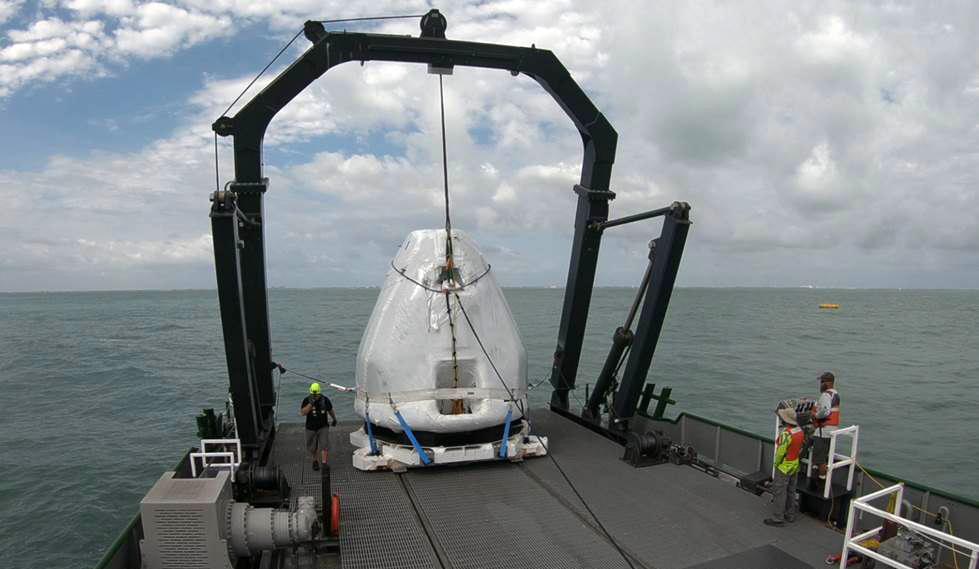
On February 28, SpaceX completed a demonstration of their ability to recover the crew and capsule after a nominal water splashdown. This marks an important recovery milestone and joint test. The timeline requirement from splashdown to crew egress onboard the ship is one hour, and the recovery team demonstrated that they can accomplish this operation under worst-case conditions in under 45 minutes. Further improvements are planned to shorten the recovery time even more as the team works to build a process that is safe, repeatable, and efficient.
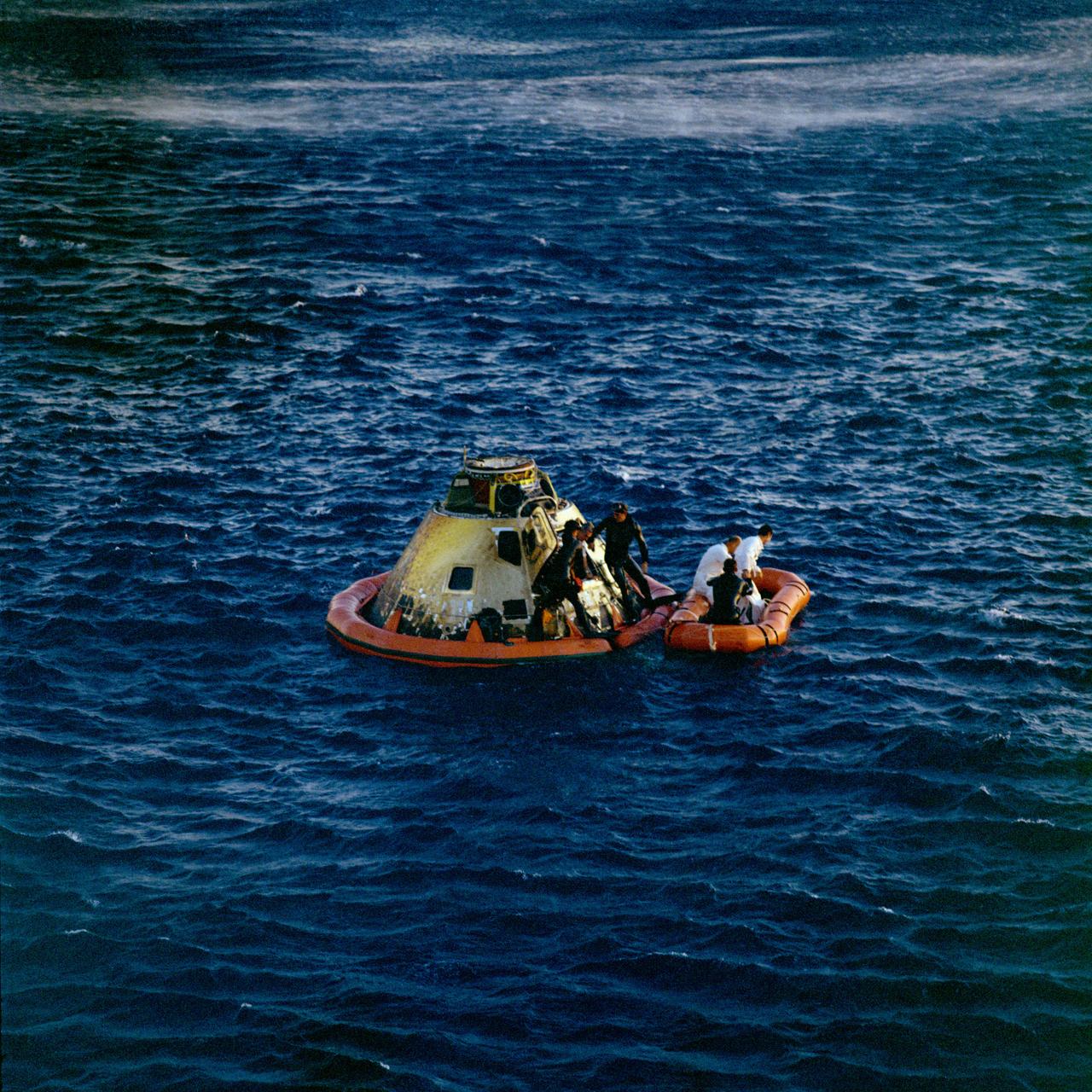
S69-20638 (26 May 1969) --- Astronaut Eugene A. Cernan, lunar module pilot, egresses the Apollo 10 spacecraft during recovery operations in the South Pacific. U.S. Navy underwater demolition team swimmers assist in the recovery operations. Already in life raft are astronauts Thomas P. Stafford (left), commander; and John W. Young, command module pilot. The three crewmen were picked up by helicopter and flown to the prime recovery ship, USS Princeton. Splashdown occurred at 11:53 a.m. (CDT), May 26, 1969, about 400 miles east of American Samoa, and about four miles from the recovery ship, to conclude a successful eight-day lunar orbit mission.
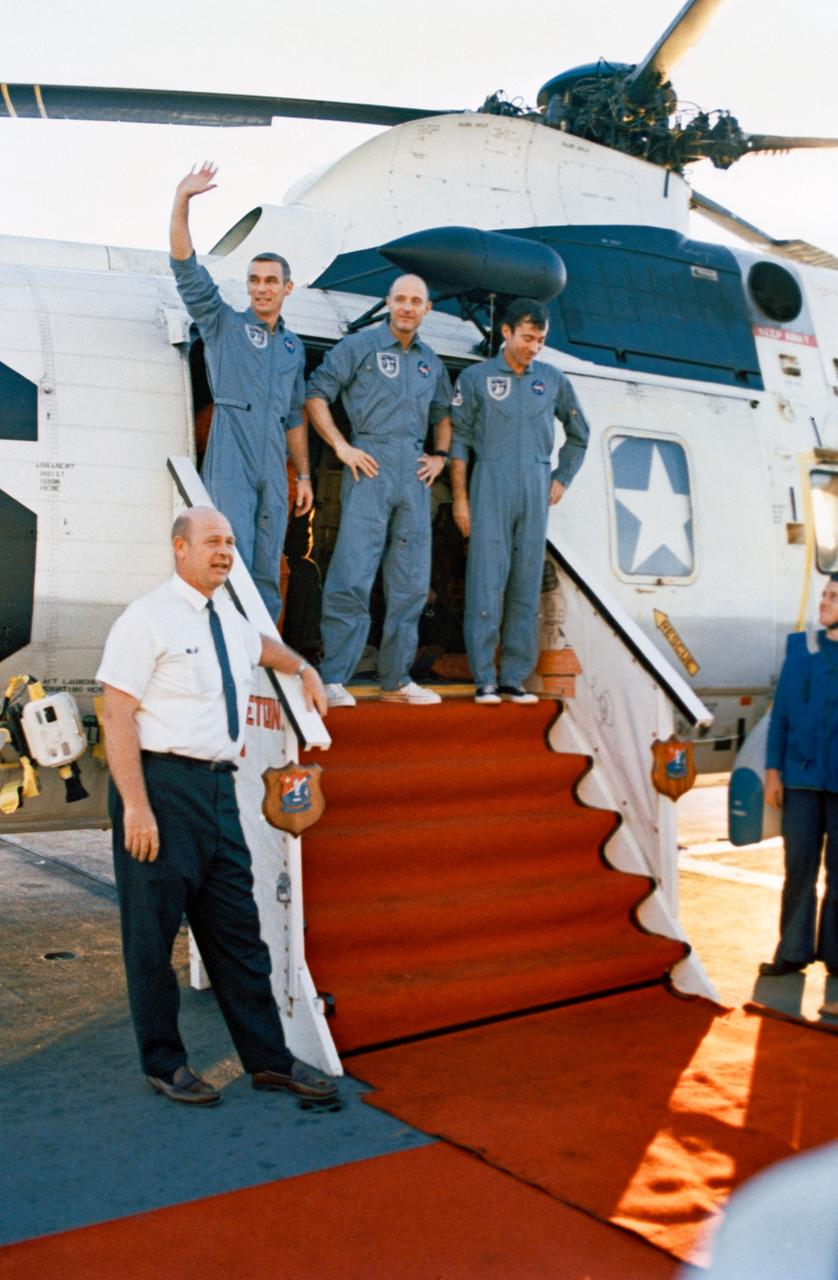
S69-36593 (26 May 1969) --- The Apollo 10 astronauts Thomas P. Stafford (center), John W. Young (left) and Eugene A. Cernan (waving) are greeted by Donald E. Stullken (lower left) of the Manned Space Center's (MSC) recovery operations team. The Apollo 10 crew splashed down in the South Pacific recovery area to conclude a successful eight-day lunar orbit mission. Splashdown occurred at 11:53 a.m. (CDT), May 26, 1969, about 400 miles east of American Samoa and about four miles from the prime recovery ship, USS Princeton.
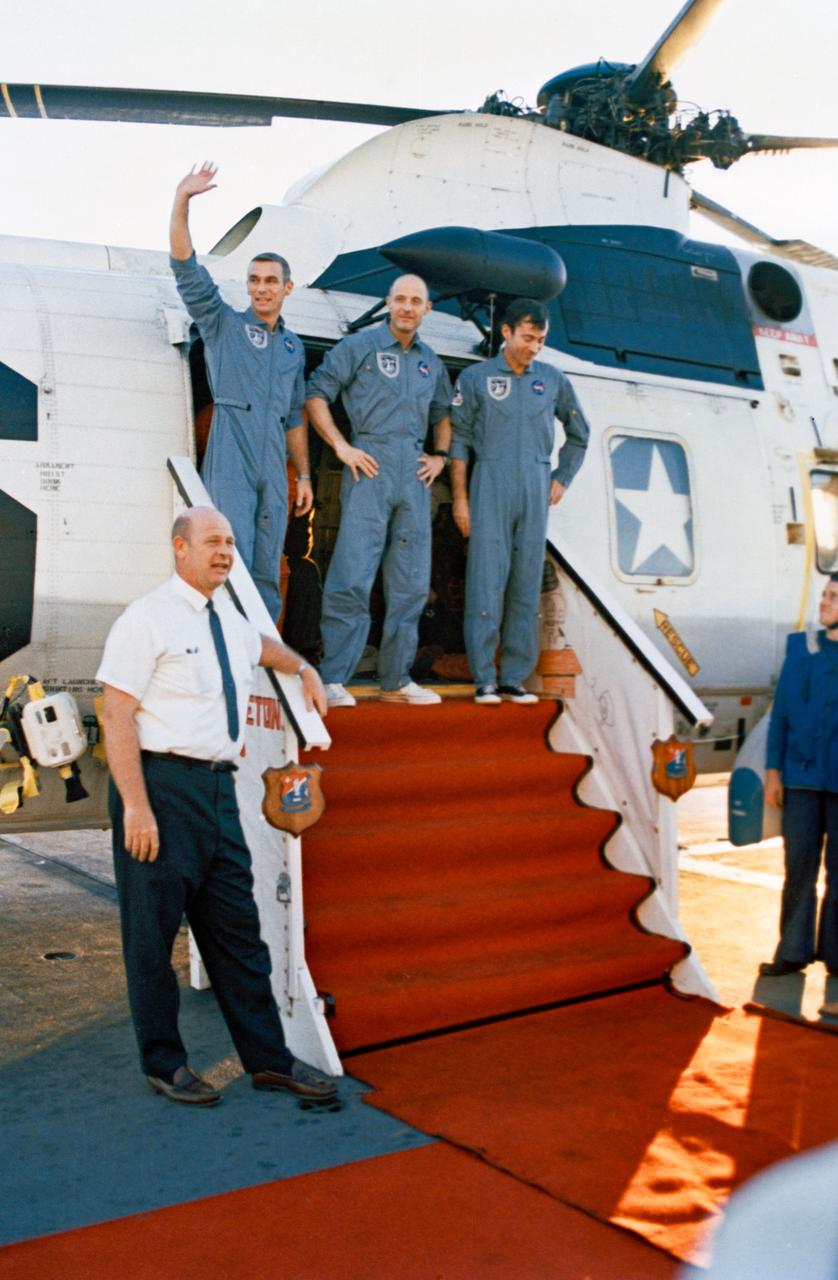
S69-36593 (26 May 1969) --- The Apollo 10 astronauts Thomas P. Stafford (center), John W. Young (left) and Eugene A. Cernan (waving) are greeted by Donald E. Stullken (lower left) of the Manned Space Center's (MSC) recovery operations team. The Apollo 10 crew splashed down in the South Pacific recovery area to conclude a successful eight-day lunar orbit mission. Splashdown occurred at 11:53 a.m. (CDT), May 26, 1969, about 400 miles east of American Samoa and about four miles from the prime recovery ship, USS Princeton.

Apollo 6 (AS-502) Pacific Recovery

Apollo 6 (AS-502) Pacific Recovery

Apollo 6 (AS-502) Pacific Recovery

Apollo 6 (AS-502) Pacific Recovery

Apollo 6 (AS-502) Pacific Recovery

Apollo 6 (AS-502) Pacific Recovery
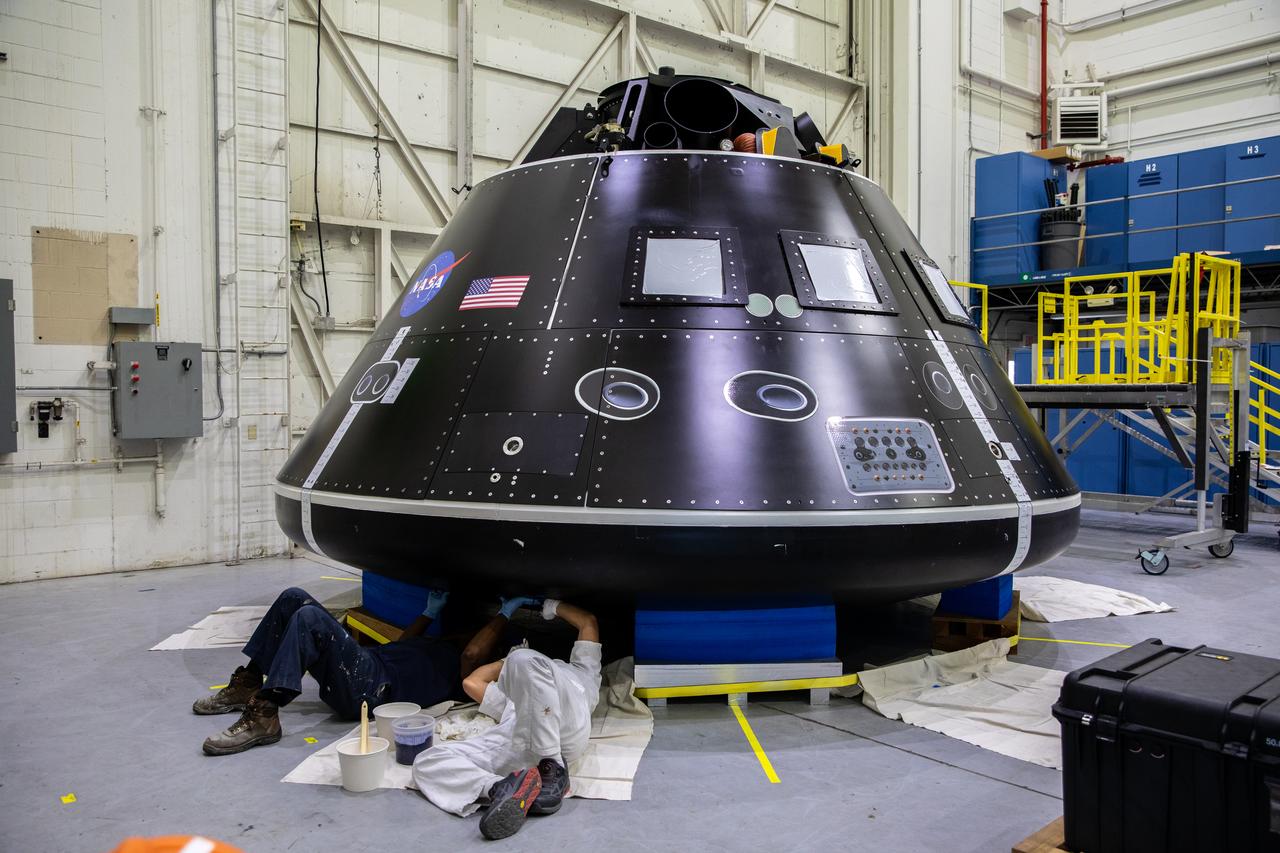
The Artemis Orion crew module test article (CMTA) is in view in the high bay inside the Launch Equipment Test Facility at NASA's Kennedy Space Center in Florida on March 18, 2022. The CMTA is used to practice recovery after splashdown of the Orion spacecraft to prepare for Artemis missions. Exploration Ground Systems leads recovery efforts.
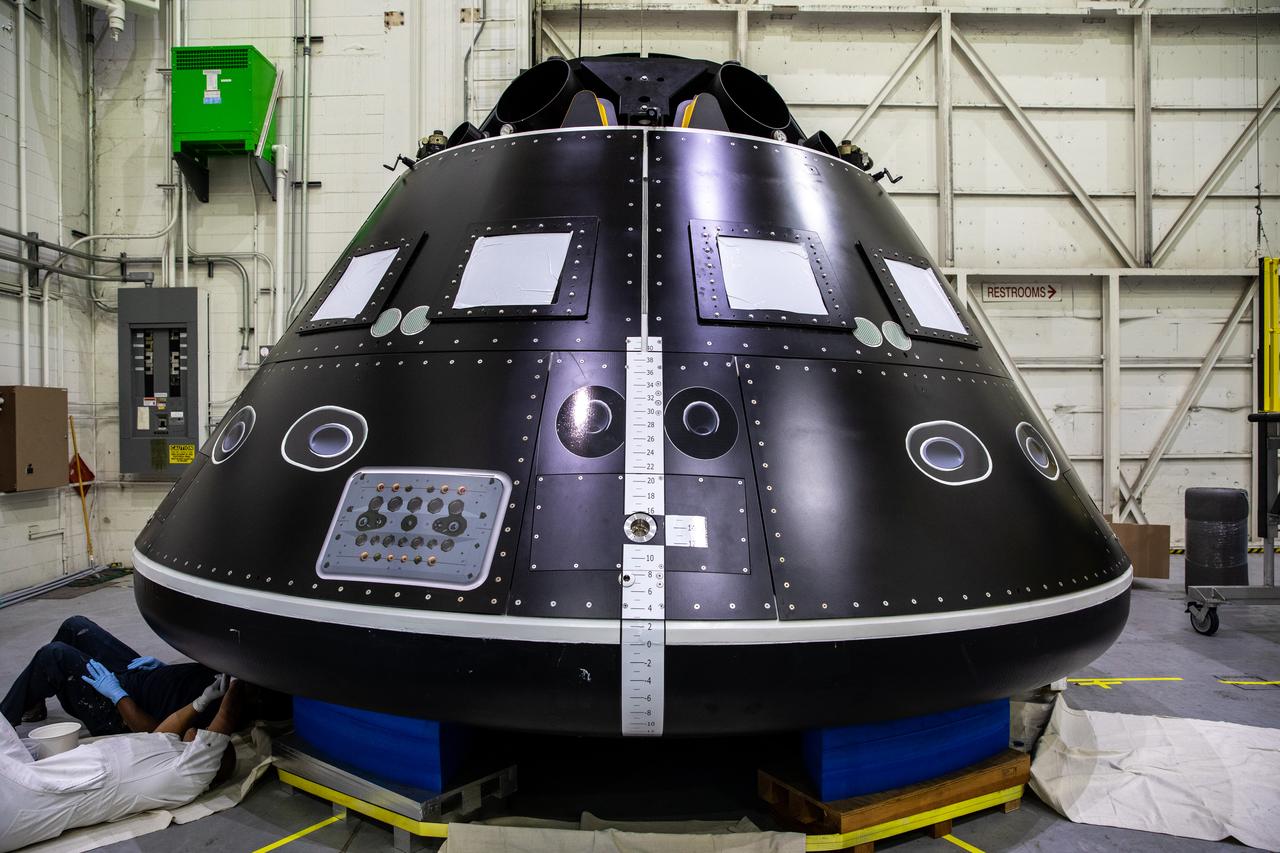
The Artemis Orion crew module test article (CMTA) is in view in the high bay inside the Launch Equipment Test Facility at NASA's Kennedy Space Center in Florida on March 18, 2022. The CMTA is used to practice recovery after splashdown of the Orion spacecraft to prepare for Artemis missions. Exploration Ground Systems leads recovery efforts.
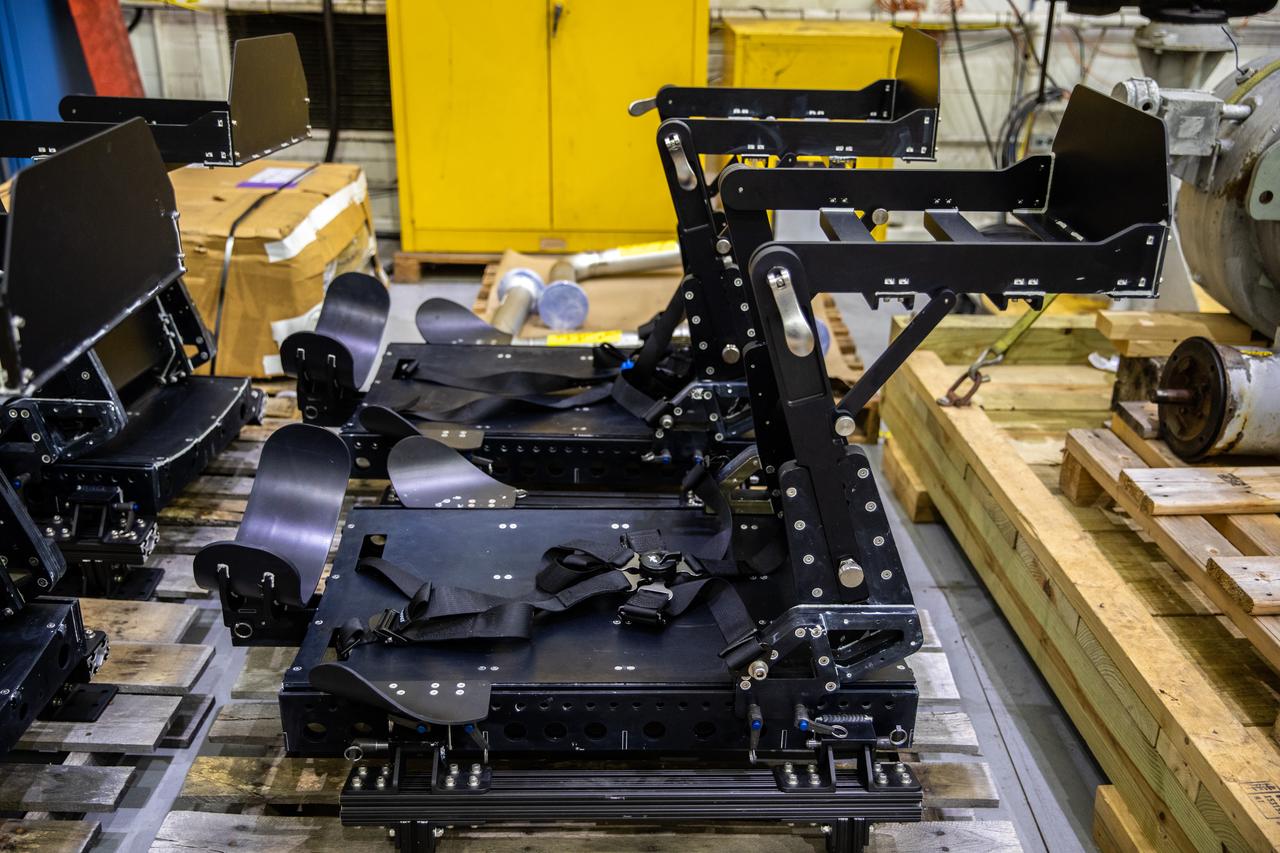
Two seats for the Artemis Orion crew module test article (CMTA) are in view in the high bay inside the Launch Equipment Test Facility at NASA's Kennedy Space Center in Florida on March 18, 2022. The seats were built by the center’s Prototype Laboratory. The CMTA is used to practice recovery after splashdown of the Orion spacecraft to prepare for Artemis missions. Exploration Ground Systems leads recovery efforts.
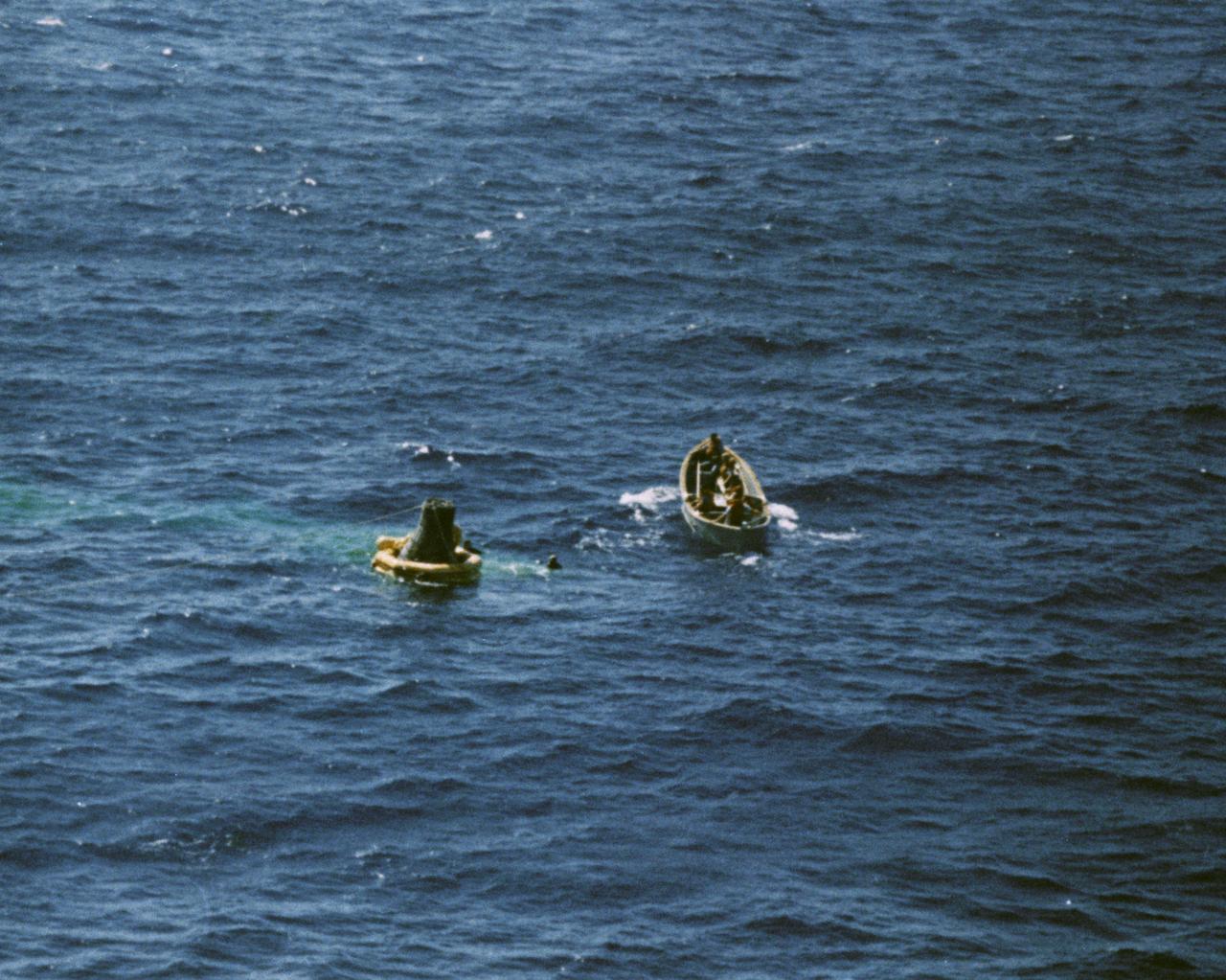
S62-09049 (3 Oct. 1962) --- Aerial view of a life boat from the USS Kearsarge, recovery ship, approaching the floating Sigma 7 capsule for the Mercury-Atlas 8 (MA-8) mission. Photo credit: NASA
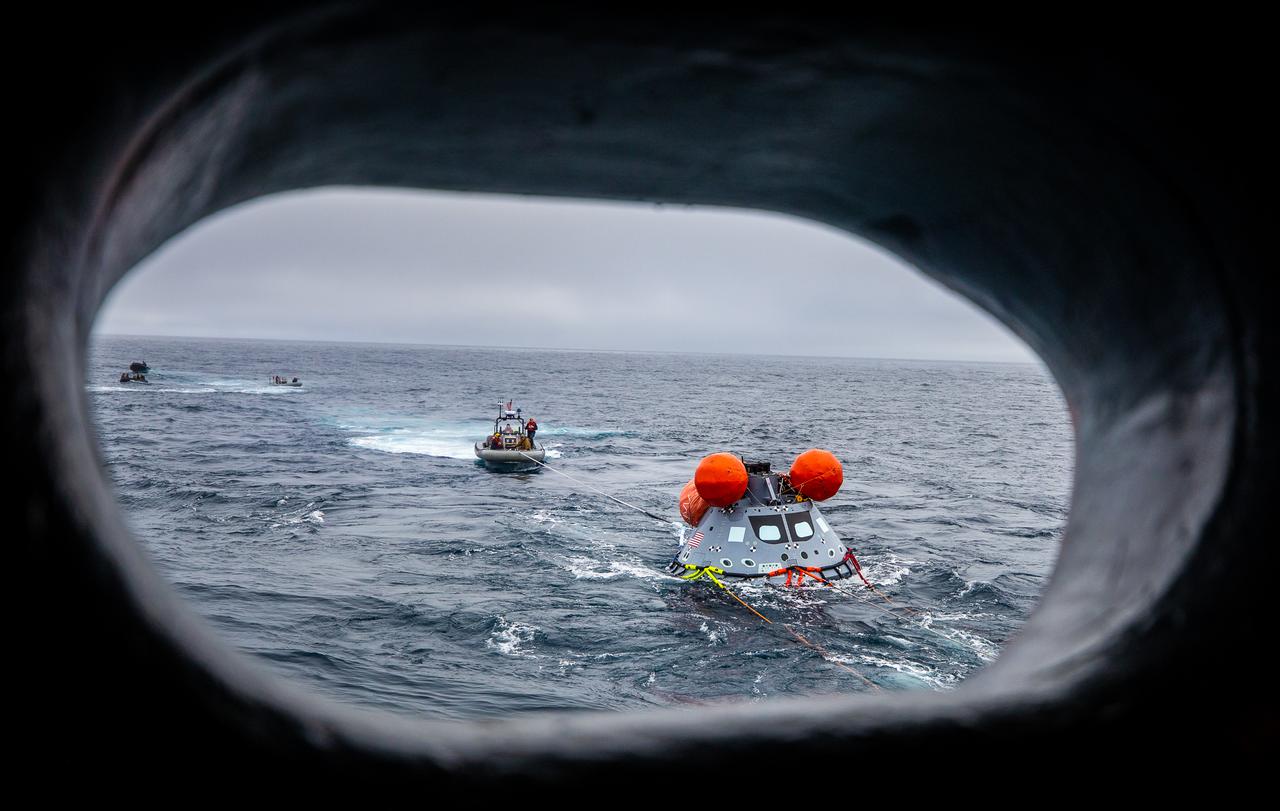
Day 2 of Underway Recovery Test 9 (URT-9) put NASA’s Landing and Recovery Team through its paces as they practiced recovering a mock Orion capsule into the back of the USS John P. Murtha. During the weeklong test, NASA’s Landing and Recovery team is performing their final mission certification ahead of Artemis I.
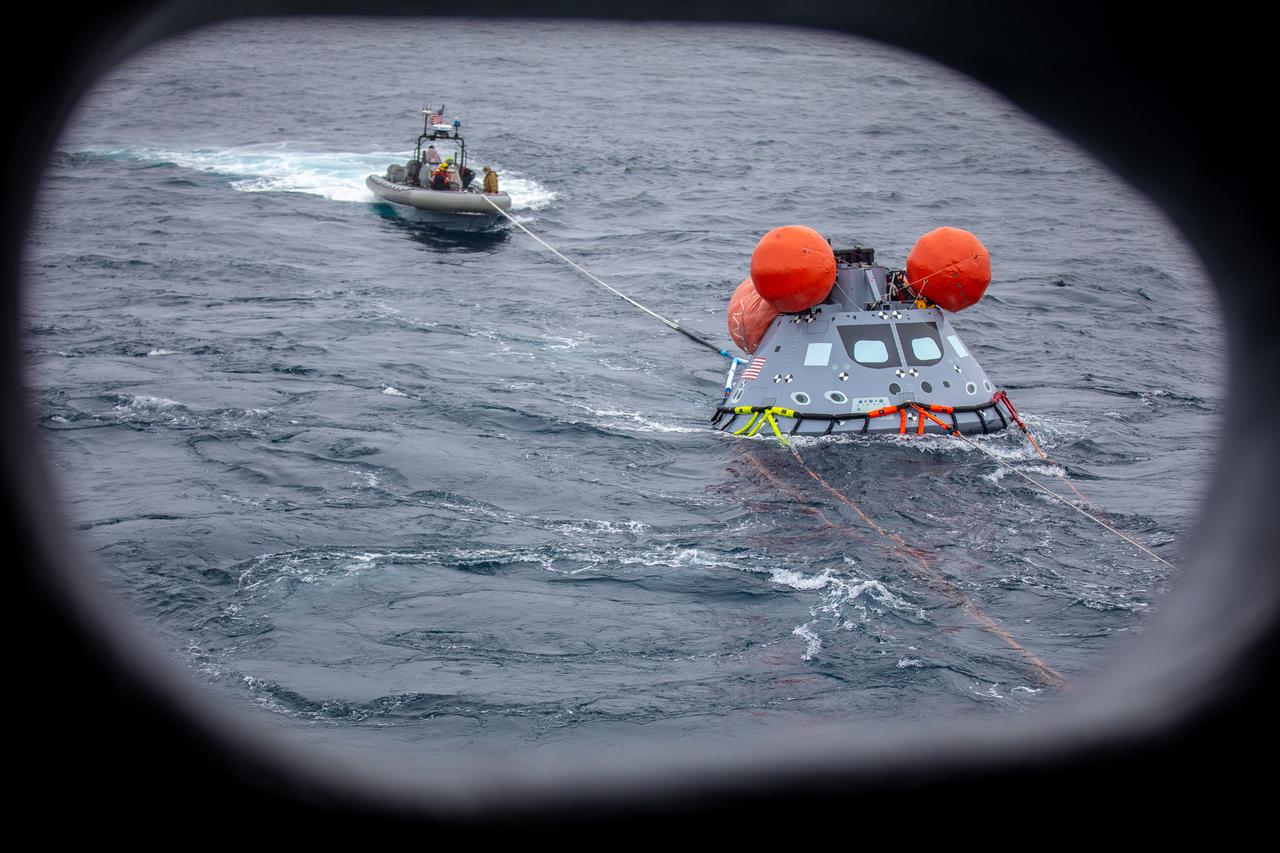
Day 2 of Underway Recovery Test 9 (URT-9) put NASA’s Landing and Recovery Team through its paces as they practiced recovering a mock Orion capsule into the back of the USS John P. Murtha. During the weeklong test, NASA’s Landing and Recovery team is performing their final mission certification ahead of Artemis I.
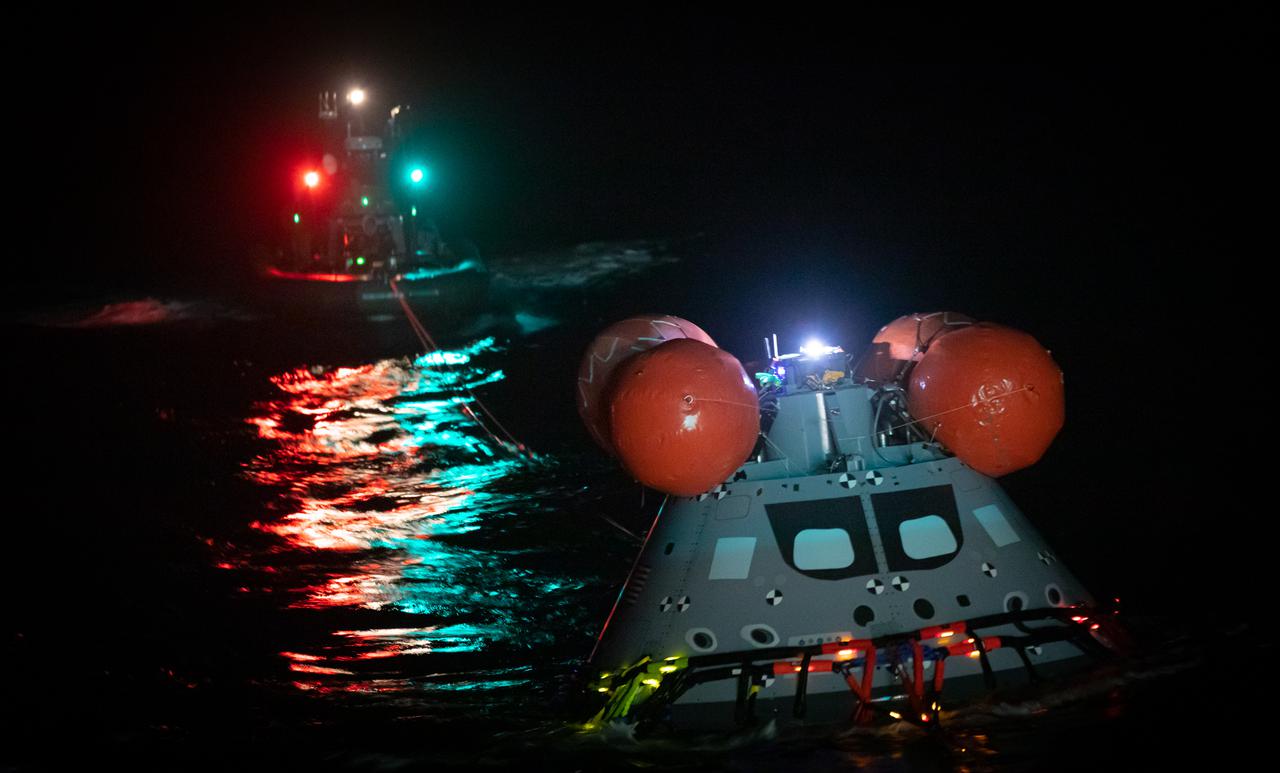
NASA’s Landing and Recovery Team secures a mock Orion capsule during the last exercise of Underway Recovery Test 9 (URT-9) aboard the USS John P. Murtha. During the weeklong test, NASA’s Landing and Recovery team is performing their final mission certification ahead of Artemis I.

Members of NASA’s Landing and Recovery team, along with partners from the Department of Defense, practice Artemis recovery procedures as part of Underway Recovery Test 10 (URT-10) off the coast of San Diego on Aug. 1, 2023. The event involved the use of the Crew Module Test Article (CMTA), a full-scale mockup of NASA’s Orion spacecraft. URT-10 is the 10th in a series of Artemis recovery tests, but marked the first time NASA and its partners from the Department of Defense put their Artemis II recovery procedures to the test.

Members of NASA’s Landing and Recovery team, along with partners from the Department of Defense, practice Artemis recovery procedures as part of Underway Recovery Test 10 (URT-10) off the coast of San Diego on July 31, 2023. The event involved the use of the Crew Module Test Article (CMTA), a full-scale mockup of NASA’s Orion spacecraft. URT-10 is the 10th in a series of Artemis recovery tests, but marked the first time NASA and its partners from the Department of Defense put their Artemis II recovery procedures to the test.

Members of NASA’s Landing and Recovery team, along with partners from the Department of Defense, practice Artemis recovery procedures as part of Underway Recovery Test 10 (URT-10) off the coast of San Diego on July 31, 2023. The event involved the use of the Crew Module Test Article (CMTA), a full-scale mockup of NASA’s Orion spacecraft. URT-10 is the 10th in a series of Artemis recovery tests, but marked the first time NASA and its partners from the Department of Defense put their Artemis II recovery procedures to the test.

Members of NASA’s Landing and Recovery team, along with partners from the Department of Defense, practice Artemis recovery procedures as part of Underway Recovery Test 10 (URT-10) off the coast of San Diego on Aug. 1, 2023. The event involved the use of the Crew Module Test Article (CMTA), a full-scale mockup of NASA’s Orion spacecraft. URT-10 is the 10th in a series of Artemis recovery tests, but marked the first time NASA and its partners from the Department of Defense put their Artemis II recovery procedures to the test.

Members of NASA’s Landing and Recovery team, along with partners from the Department of Defense, practice Artemis recovery procedures as part of Underway Recovery Test 10 (URT-10) off the coast of San Diego on Aug. 1, 2023. The event involved the use of the Crew Module Test Article (CMTA), a full-scale mockup of NASA’s Orion spacecraft. URT-10 is the 10th in a series of Artemis recovery tests, but marked the first time NASA and its partners from the Department of Defense put their Artemis II recovery procedures to the test.

Members of NASA’s Landing and Recovery team, along with partners from the Department of Defense, practice Artemis recovery procedures as part of Underway Recovery Test 10 (URT-10) off the coast of San Diego on July 31, 2023. The event involved the use of the Crew Module Test Article (CMTA), a full-scale mockup of NASA’s Orion spacecraft. URT-10 is the 10th in a series of Artemis recovery tests, but marked the first time NASA and its partners from the Department of Defense put their Artemis II recovery procedures to the test.

Members of NASA’s Landing and Recovery team, along with partners from the Department of Defense, practice Artemis recovery procedures as part of Underway Recovery Test 10 (URT-10) off the coast of San Diego on Aug. 1, 2023. The event involved the use of the Crew Module Test Article (CMTA), a full-scale mockup of NASA’s Orion spacecraft. URT-10 is the 10th in a series of Artemis recovery tests, but marked the first time NASA and its partners from the Department of Defense put their Artemis II recovery procedures to the test.
Members of NASA’s Landing and Recovery team, along with partners from the Department of Defense, practice Artemis recovery procedures as part of Underway Recovery Test 10 (URT-10) off the coast of San Diego on July 31, 2023. The event involved the use of the Crew Module Test Article (CMTA), a full-scale mockup of NASA’s Orion spacecraft. URT-10 is the 10th in a series of Artemis recovery tests, but marked the first time NASA and its partners from the Department of Defense put their Artemis II recovery procedures to the test.

Members of NASA’s Landing and Recovery team, along with partners from the Department of Defense, practice Artemis recovery procedures as part of Underway Recovery Test 10 (URT-10) off the coast of San Diego on Aug. 1, 2023. The event involved the use of the Crew Module Test Article (CMTA), a full-scale mockup of NASA’s Orion spacecraft. URT-10 is the 10th in a series of Artemis recovery tests, but marked the first time NASA and its partners from the Department of Defense put their Artemis II recovery procedures to the test.
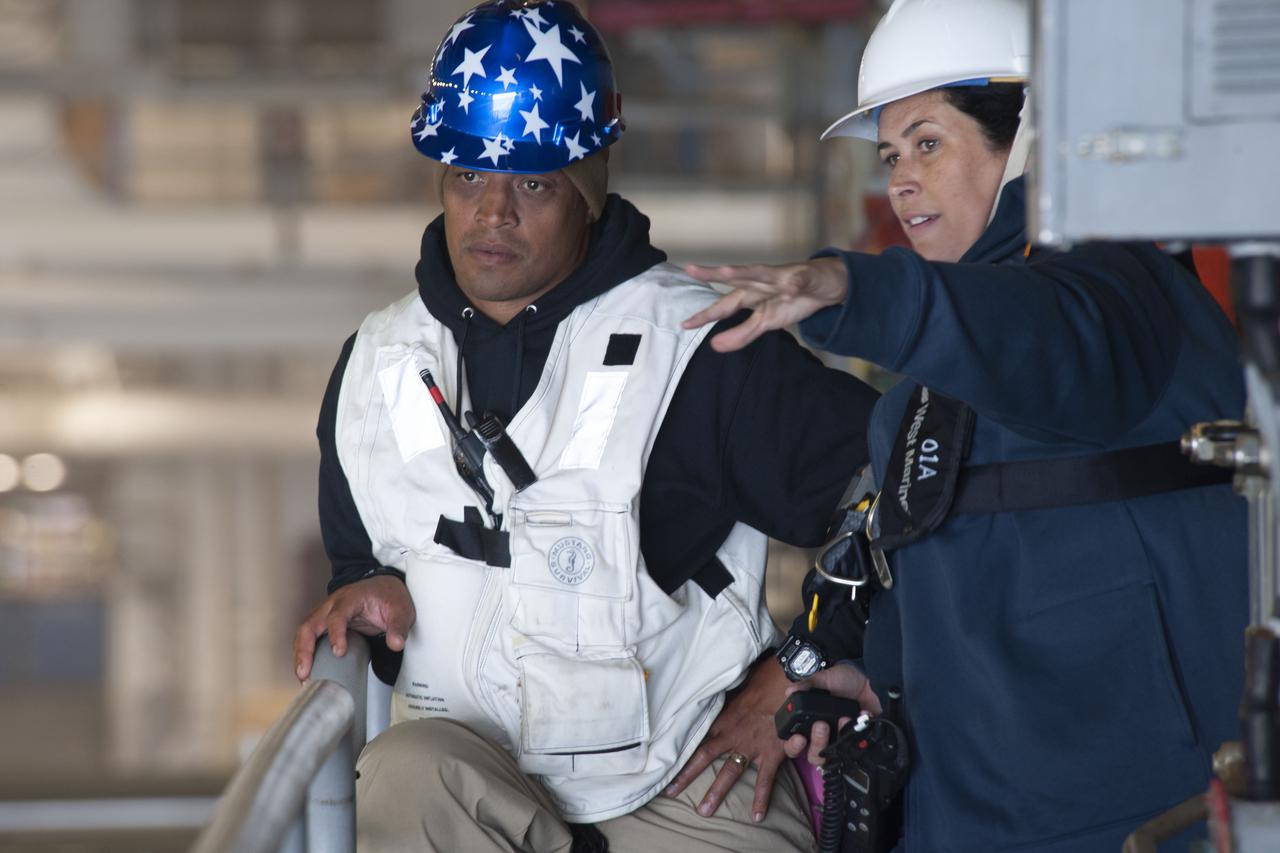
NASA Landing and Recovery Director Melissa Jones points out recovery operations to Capt. Gervy Alota, commanding officer, USS John P. Murtha (LPD 26), during Underway Recovery Test 9 (URT-9). During the weeklong test, NASA’s Landing and Recovery team is performing their final mission certification ahead of Artemis I.
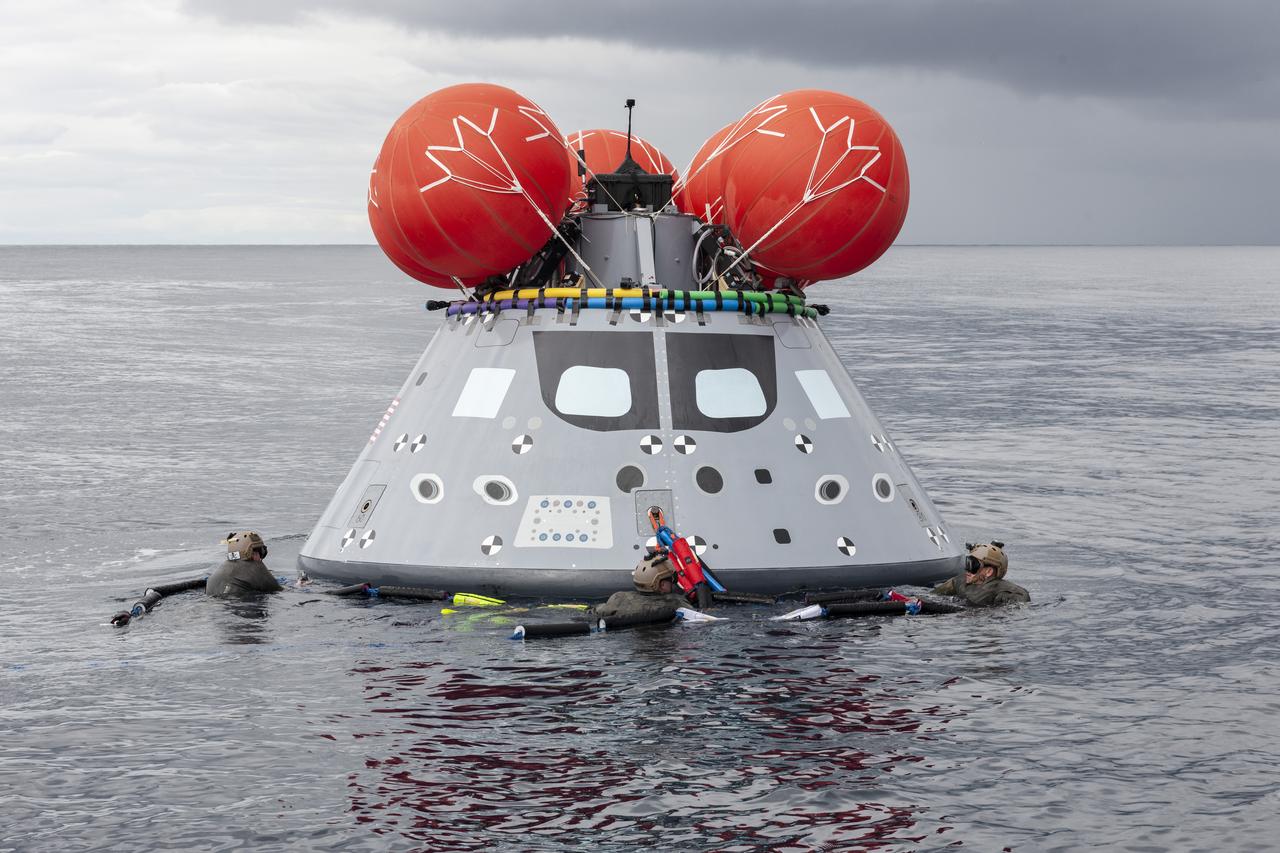
During Underway Recovery Test-8, NASA's Landing and Recovery team from Exploration Ground Systems at Kennedy Space Center performed their first full mission profile test of the recovery procedures for Artemis I aboard the USS John P. Murtha in the Pacific Ocean. Artemis I will be the first integrated flight test of NASA's Deep Space Exploration Systems: the Orion spacecraft, Space Launch System rocket, with the newly upgraded Exploration Ground Systems at Kennedy Space Center.
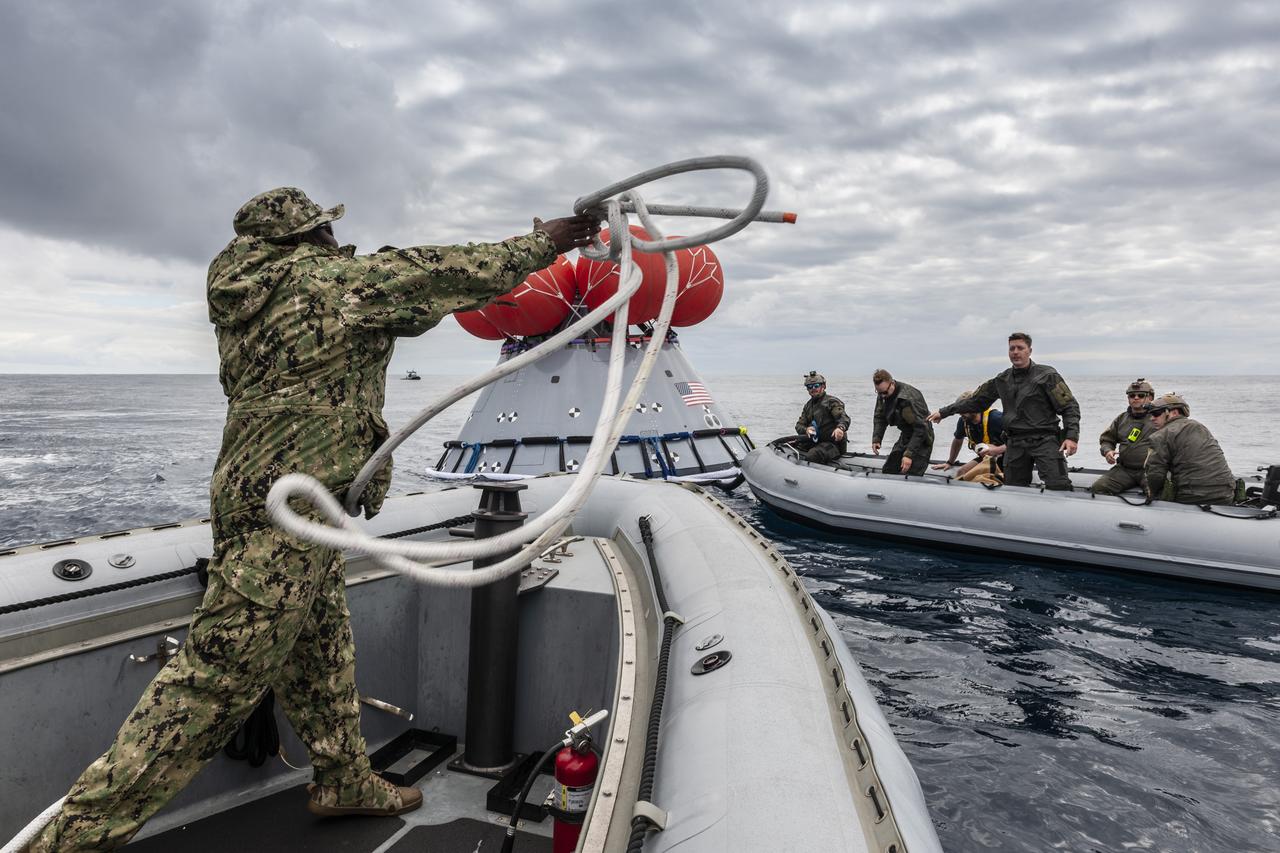
During Underway Recovery Test-8, NASA's Landing and Recovery team from Exploration Ground Systems at Kennedy Space Center performed their first full mission profile test of the recovery procedures for Artemis I aboard the USS John P. Murtha in the Pacific Ocean. Artemis I will be the first integrated flight test of NASA's Deep Space Exploration Systems: the Orion spacecraft, Space Launch System rocket, with the newly upgraded Exploration Ground Systems at Kennedy Space Center.
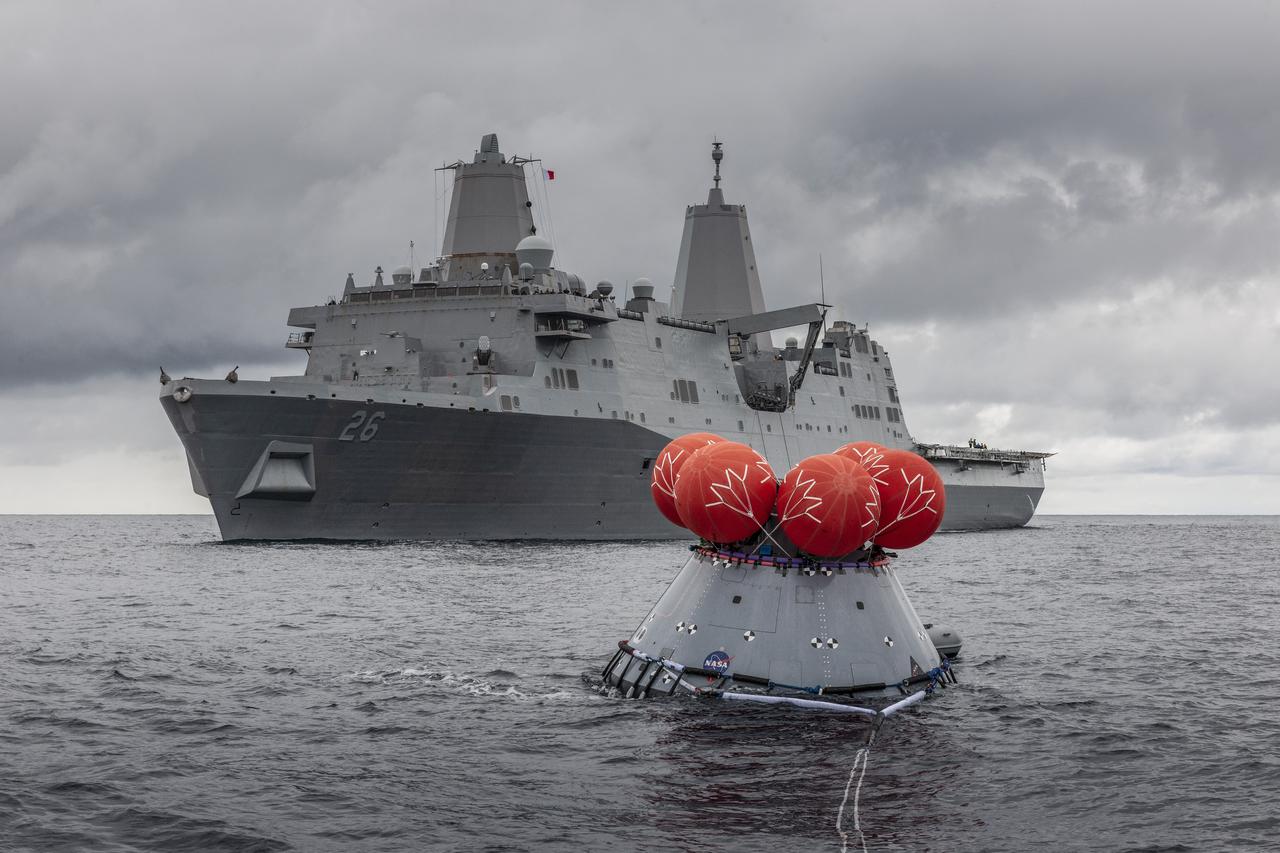
During Underway Recovery Test-8, NASA's Landing and Recovery team from Exploration Ground Systems at Kennedy Space Center performed their first full mission profile test of the recovery procedures for Artemis I aboard the USS John P. Murtha in the Pacific Ocean. Artemis I will be the first integrated flight test of NASA's Deep Space Exploration Systems: the Orion spacecraft, Space Launch System rocket, with the newly upgraded Exploration Ground Systems at Kennedy Space Center.
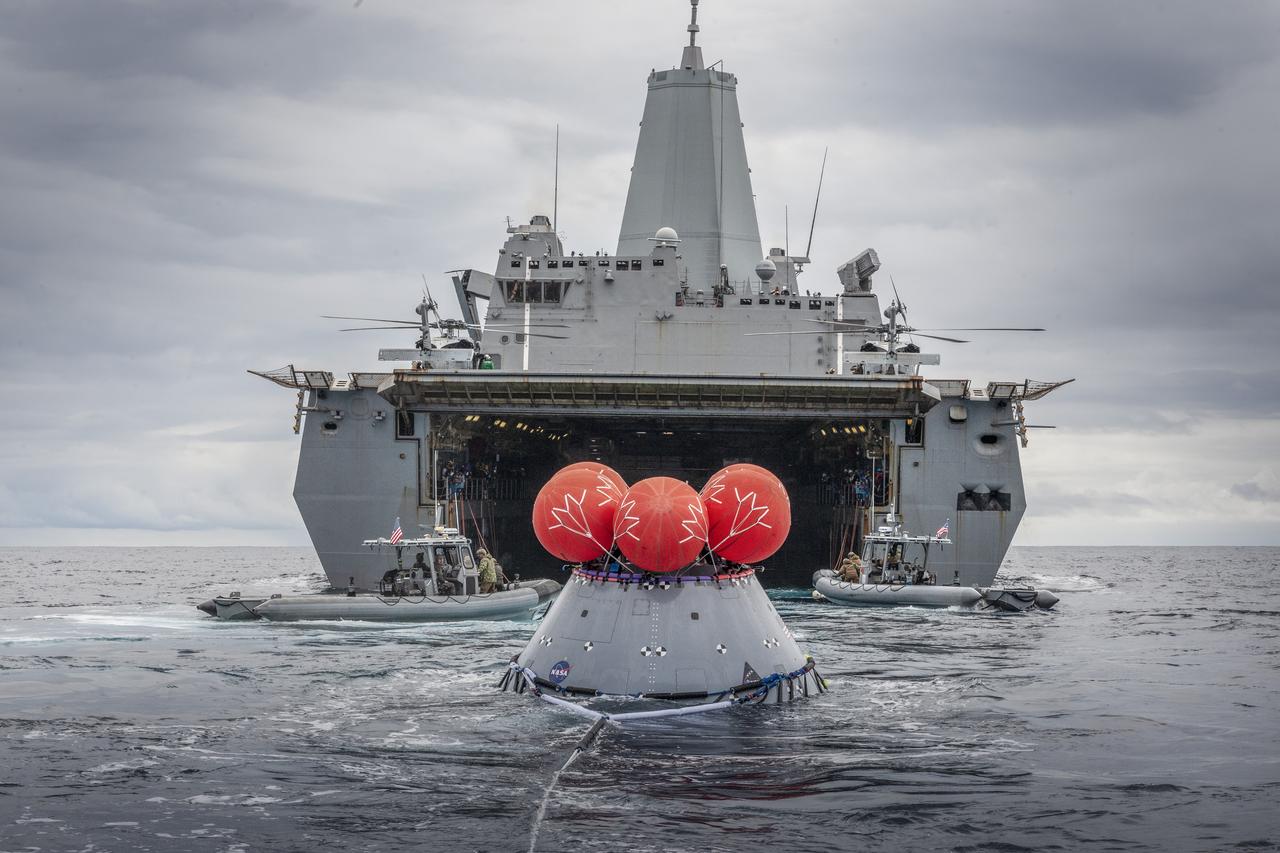
During Underway Recovery Test-8, NASA's Landing and Recovery team from Exploration Ground Systems at Kennedy Space Center performed their first full mission profile test of the recovery procedures for Artemis I aboard the USS John P. Murtha in the Pacific Ocean. Artemis I will be the first integrated flight test of NASA's Deep Space Exploration Systems: the Orion spacecraft, Space Launch System rocket, with the newly upgraded Exploration Ground Systems at Kennedy Space Center.
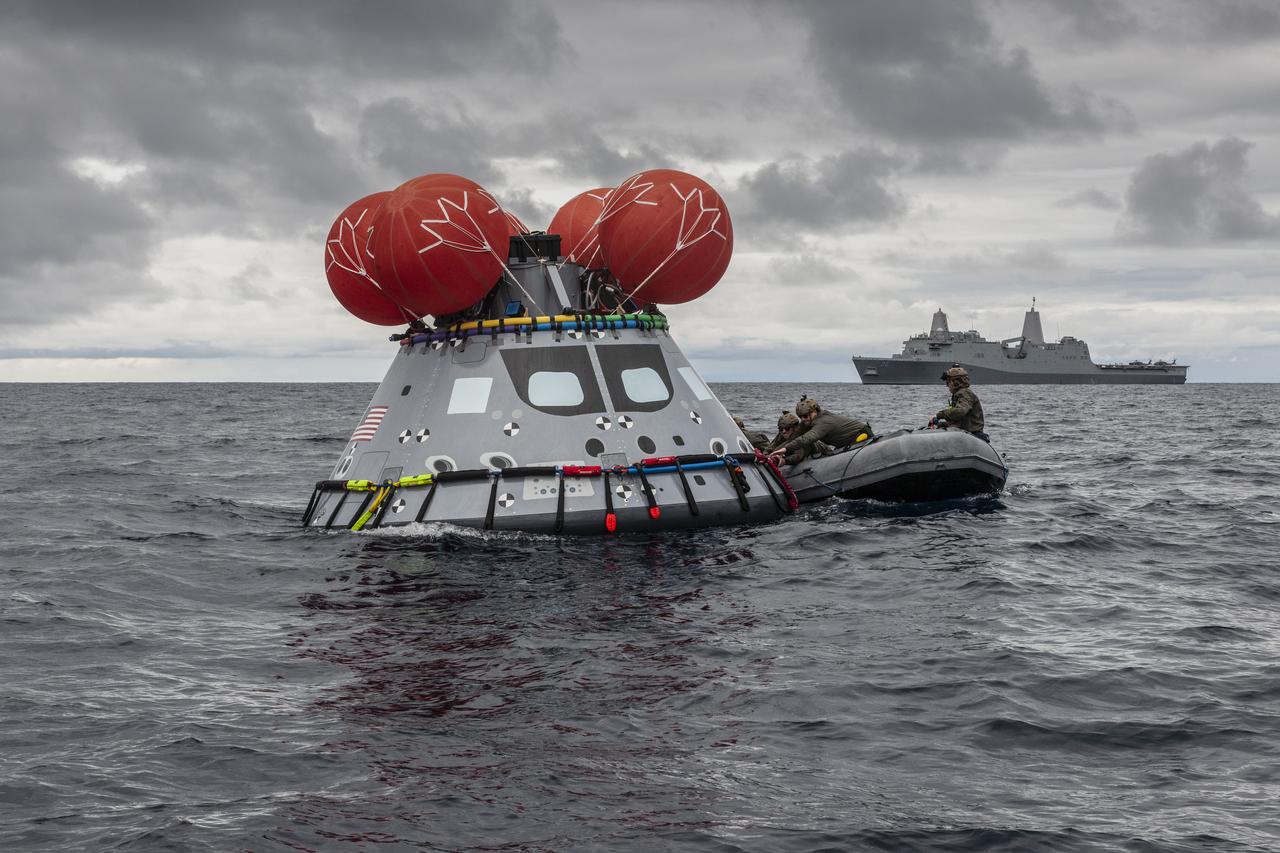
During Underway Recovery Test-8, NASA's Landing and Recovery team from Exploration Ground Systems at Kennedy Space Center performed their first full mission profile test of the recovery procedures for Artemis I aboard the USS John P. Murtha in the Pacific Ocean. Artemis I will be the first integrated flight test of NASA's Deep Space Exploration Systems: the Orion spacecraft, Space Launch System rocket, with the newly upgraded Exploration Ground Systems at Kennedy Space Center.
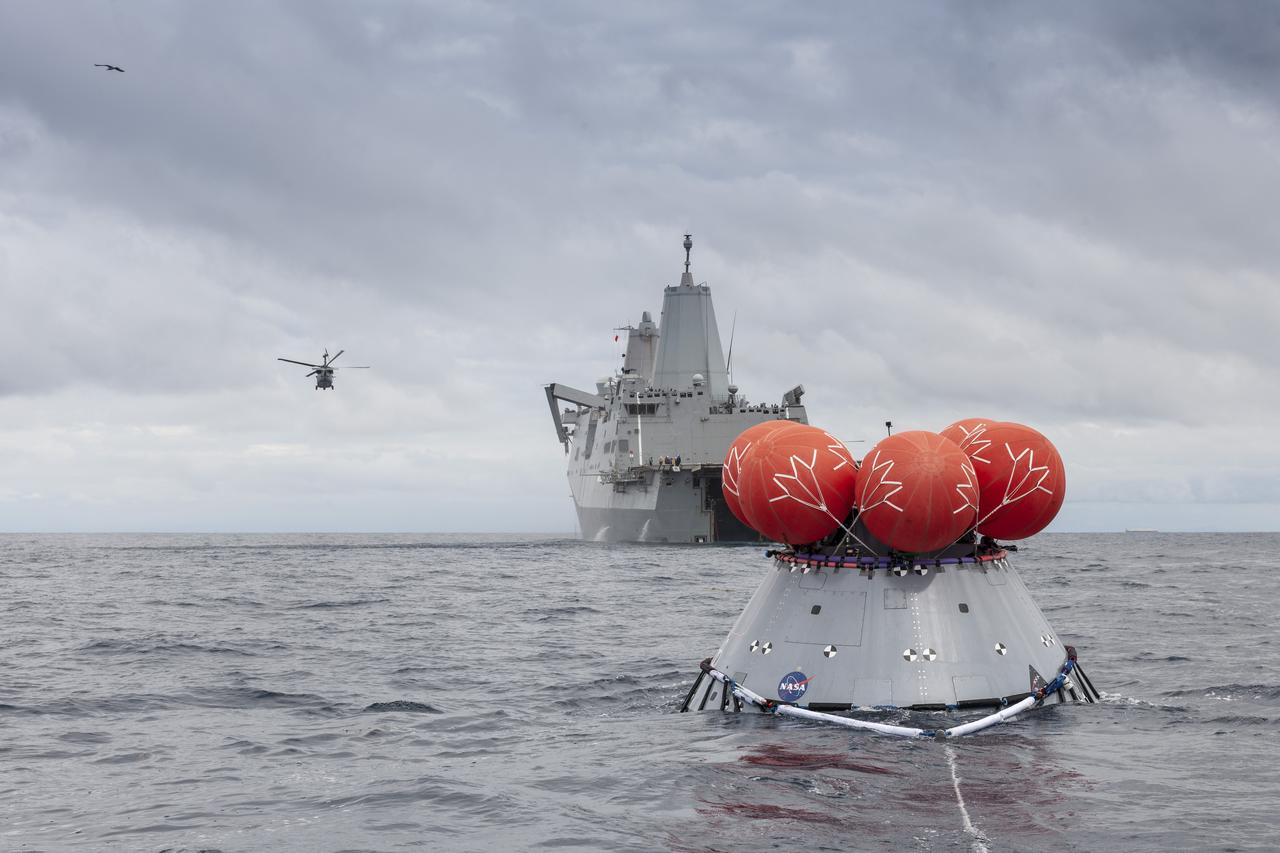
During Underway Recovery Test-8, NASA's Landing and Recovery team from Exploration Ground Systems at Kennedy Space Center performed their first full mission profile test of the recovery procedures for Artemis I aboard the USS John P. Murtha in the Pacific Ocean. Artemis I will be the first integrated flight test of NASA's Deep Space Exploration Systems: the Orion spacecraft, Space Launch System rocket, with the newly upgraded Exploration Ground Systems at Kennedy Space Center.
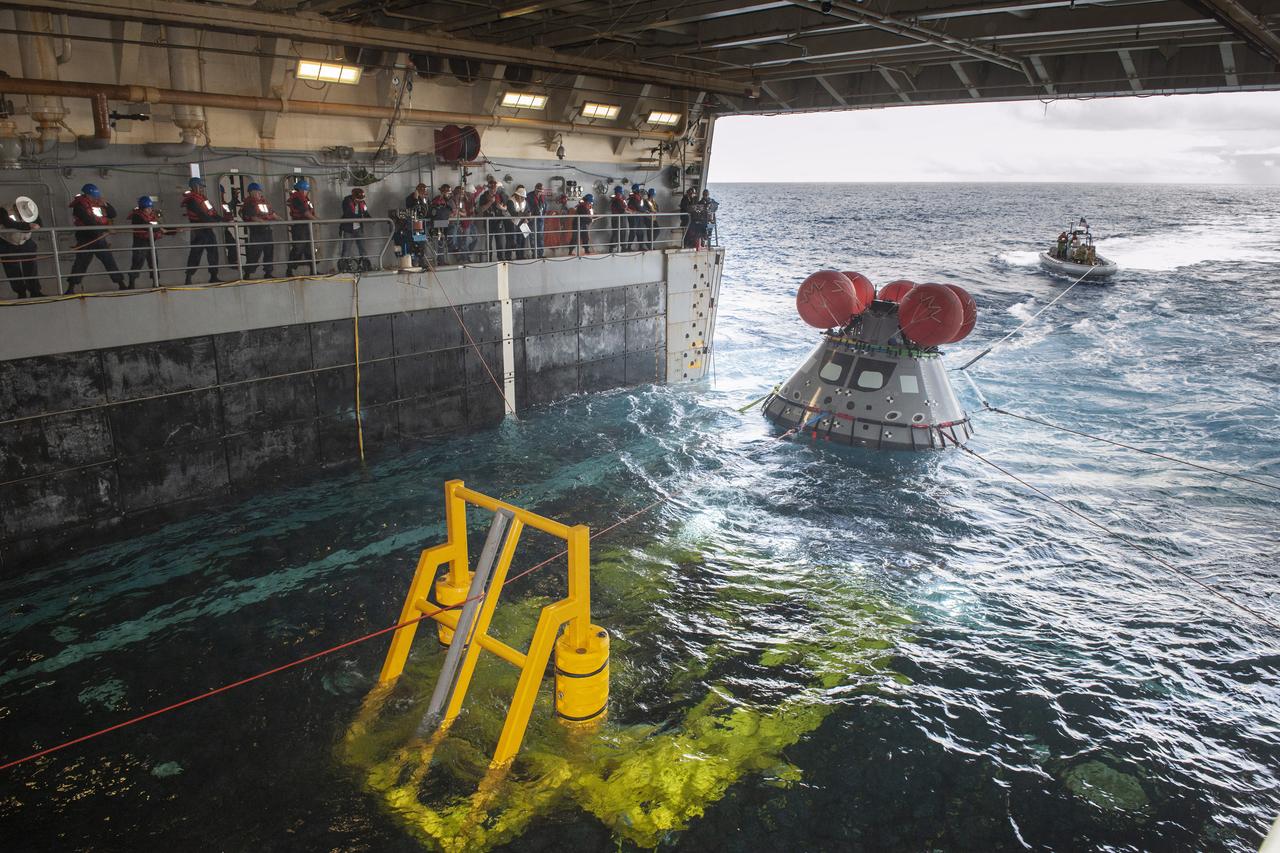
During Underway Recovery Test-8, NASA's Landing and Recovery team from Exploration Ground Systems at Kennedy Space Center performed their first full mission profile test of the recovery procedures for Artemis I aboard the USS John P. Murtha in the Pacific Ocean. Artemis I will be the first integrated flight test of NASA's Deep Space Exploration Systems: the Orion spacecraft, Space Launch System rocket, with the newly upgraded Exploration Ground Systems at Kennedy Space Center.
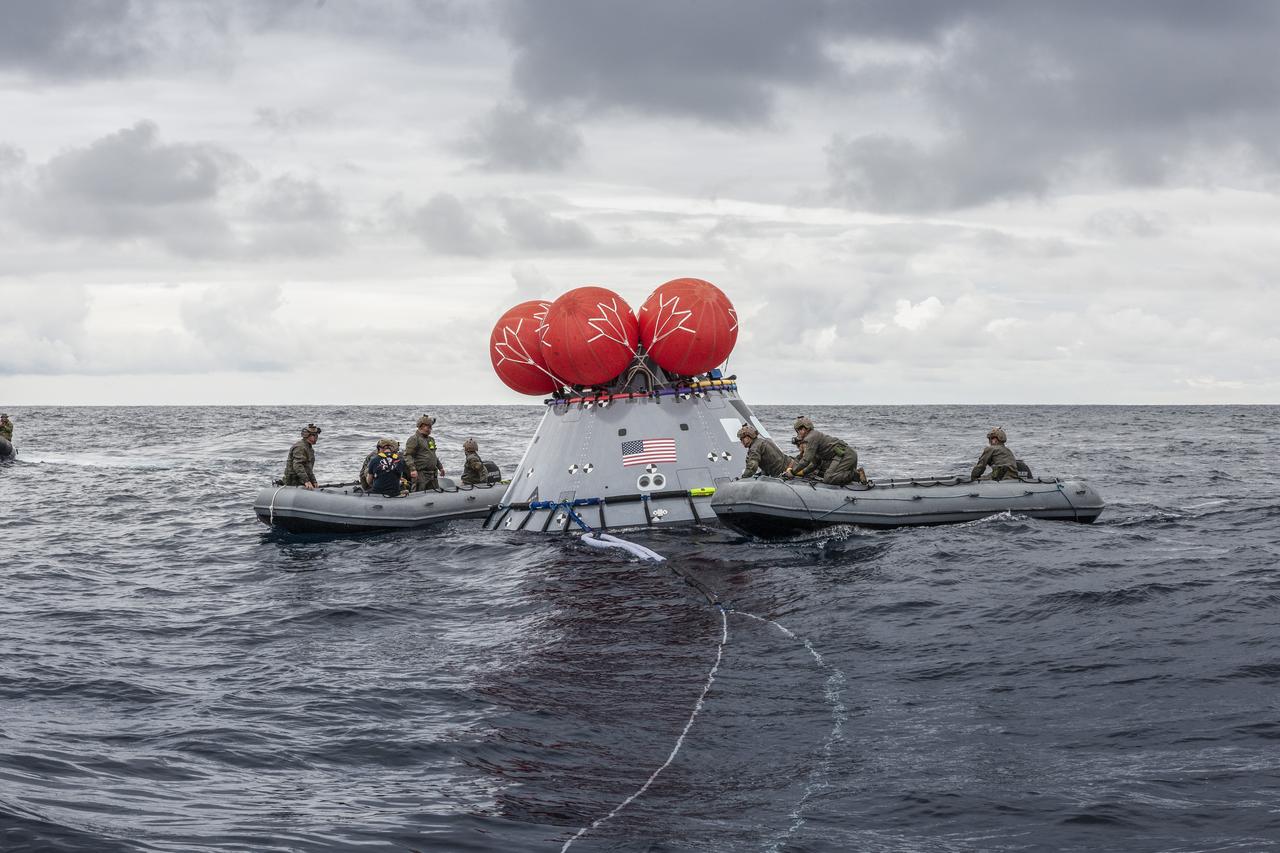
During Underway Recovery Test-8, NASA's Landing and Recovery team from Exploration Ground Systems at Kennedy Space Center performed their first full mission profile test of the recovery procedures for Artemis I aboard the USS John P. Murtha in the Pacific Ocean. Artemis I will be the first integrated flight test of NASA's Deep Space Exploration Systems: the Orion spacecraft, Space Launch System rocket, with the newly upgraded Exploration Ground Systems at Kennedy Space Center.
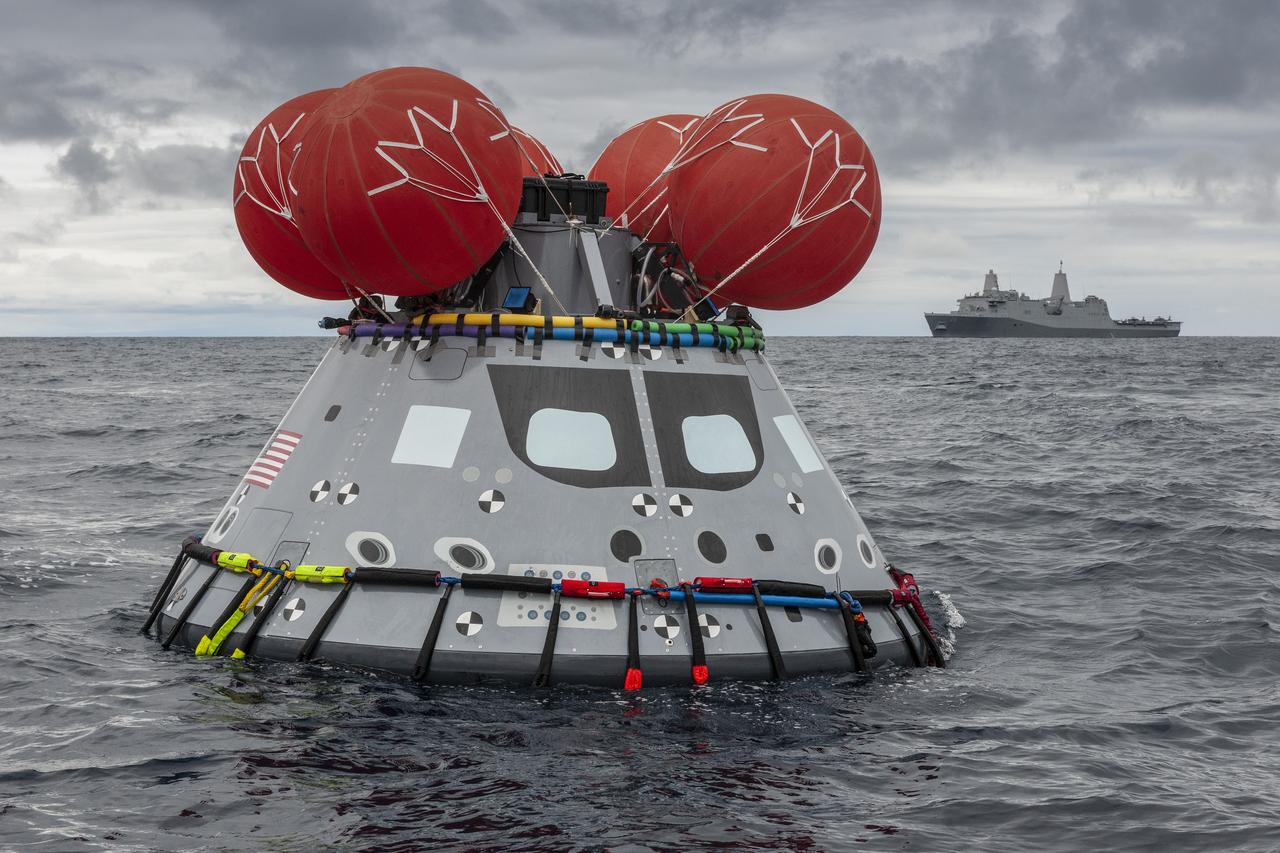
During Underway Recovery Test-8, NASA's Landing and Recovery team from Exploration Ground Systems at Kennedy Space Center performed their first full mission profile test of the recovery procedures for Artemis I aboard the USS John P. Murtha in the Pacific Ocean. Artemis I will be the first integrated flight test of NASA's Deep Space Exploration Systems: the Orion spacecraft, Space Launch System rocket, with the newly upgraded Exploration Ground Systems at Kennedy Space Center.
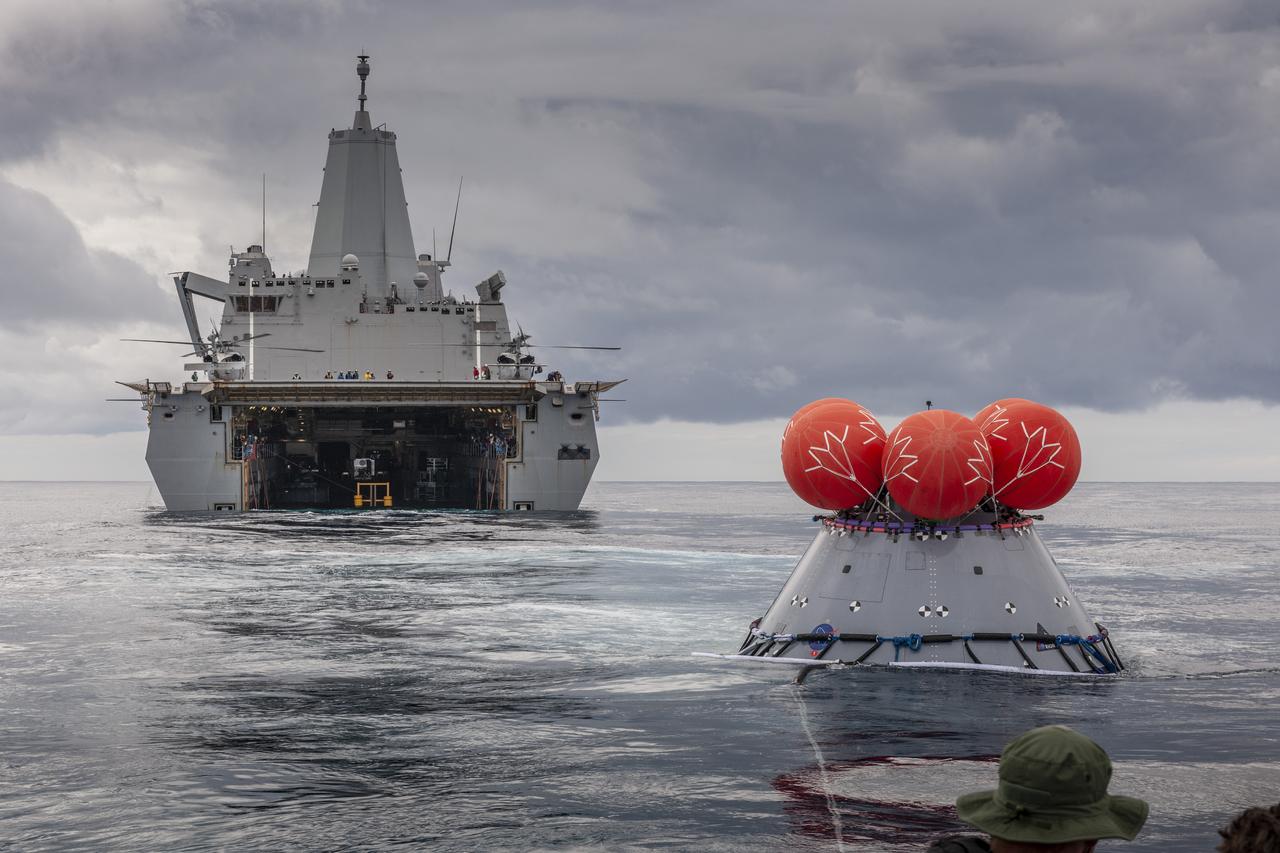
During Underway Recovery Test-8, NASA's Landing and Recovery team from Exploration Ground Systems at Kennedy Space Center performed their first full mission profile test of the recovery procedures for Artemis I aboard the USS John P. Murtha in the Pacific Ocean. Artemis I will be the first integrated flight test of NASA's Deep Space Exploration Systems: the Orion spacecraft, Space Launch System rocket, with the newly upgraded Exploration Ground Systems at Kennedy Space Center.
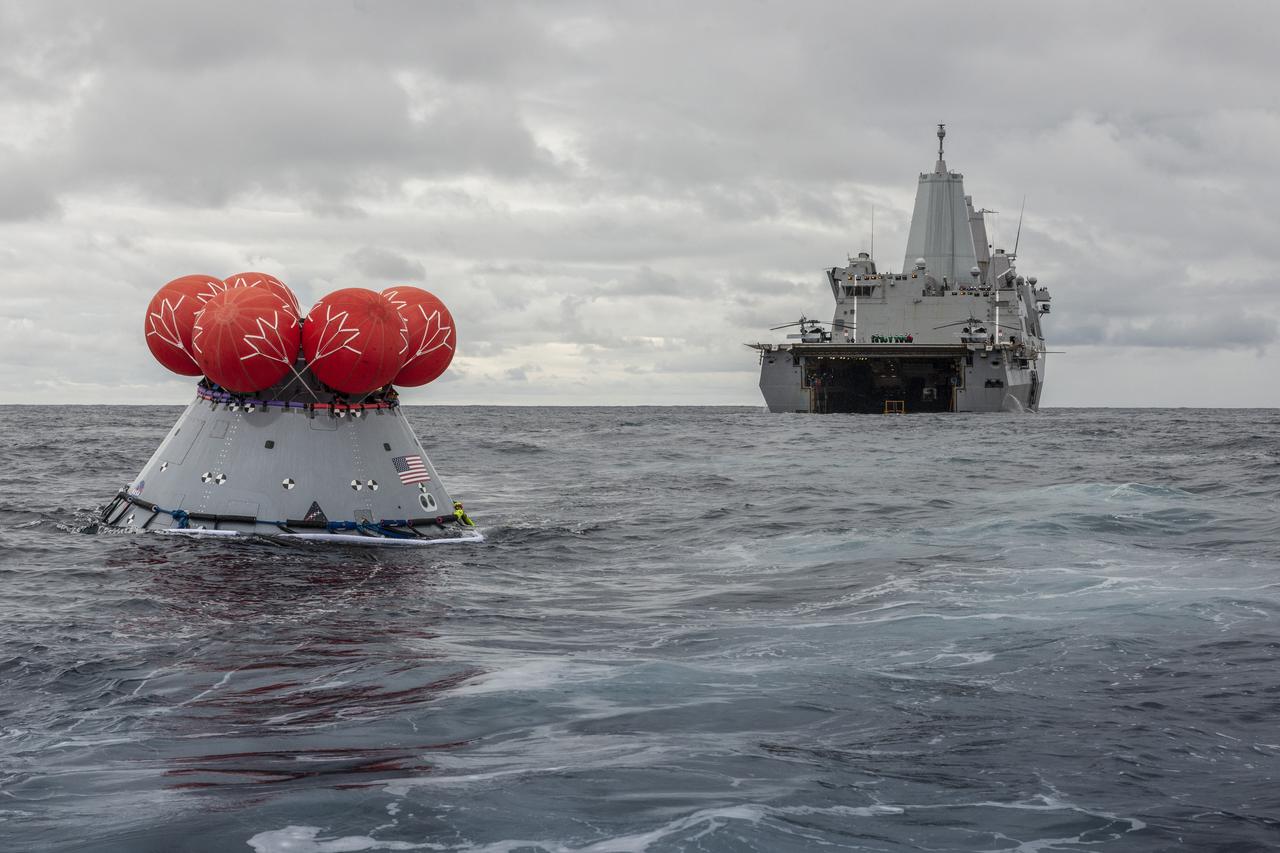
During Underway Recovery Test-8, NASA's Landing and Recovery team from Exploration Ground Systems at Kennedy Space Center performed their first full mission profile test of the recovery procedures for Artemis I aboard the USS John P. Murtha in the Pacific Ocean. Artemis I will be the first integrated flight test of NASA's Deep Space Exploration Systems: the Orion spacecraft, Space Launch System rocket, with the newly upgraded Exploration Ground Systems at Kennedy Space Center.
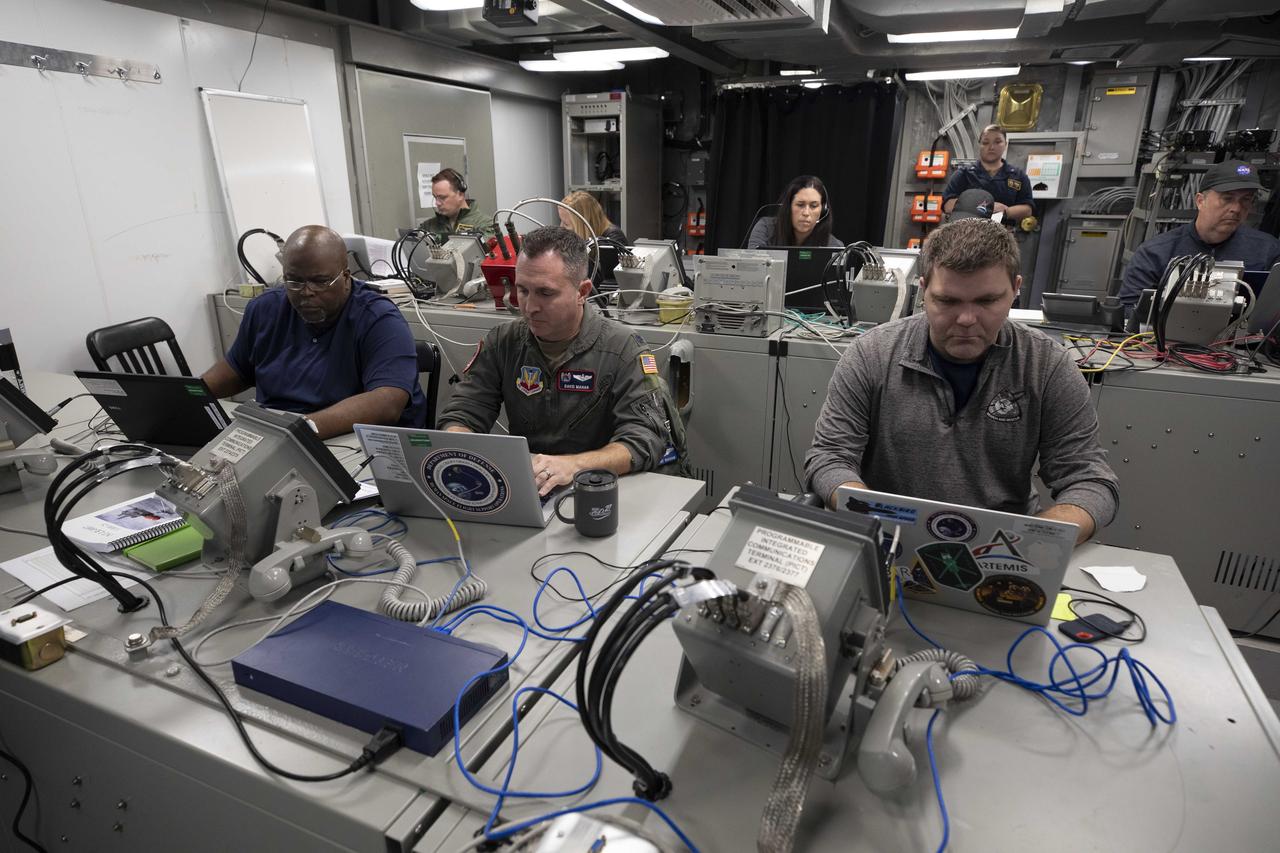
Inside a control room aboard USS Portland, members and leaders of NASA’s Landing and Recovery team run through preparations and procedures ahead of the Orion Spacecraft’s return from the Moon on Dec. 11 as part of the Artemis I mission.
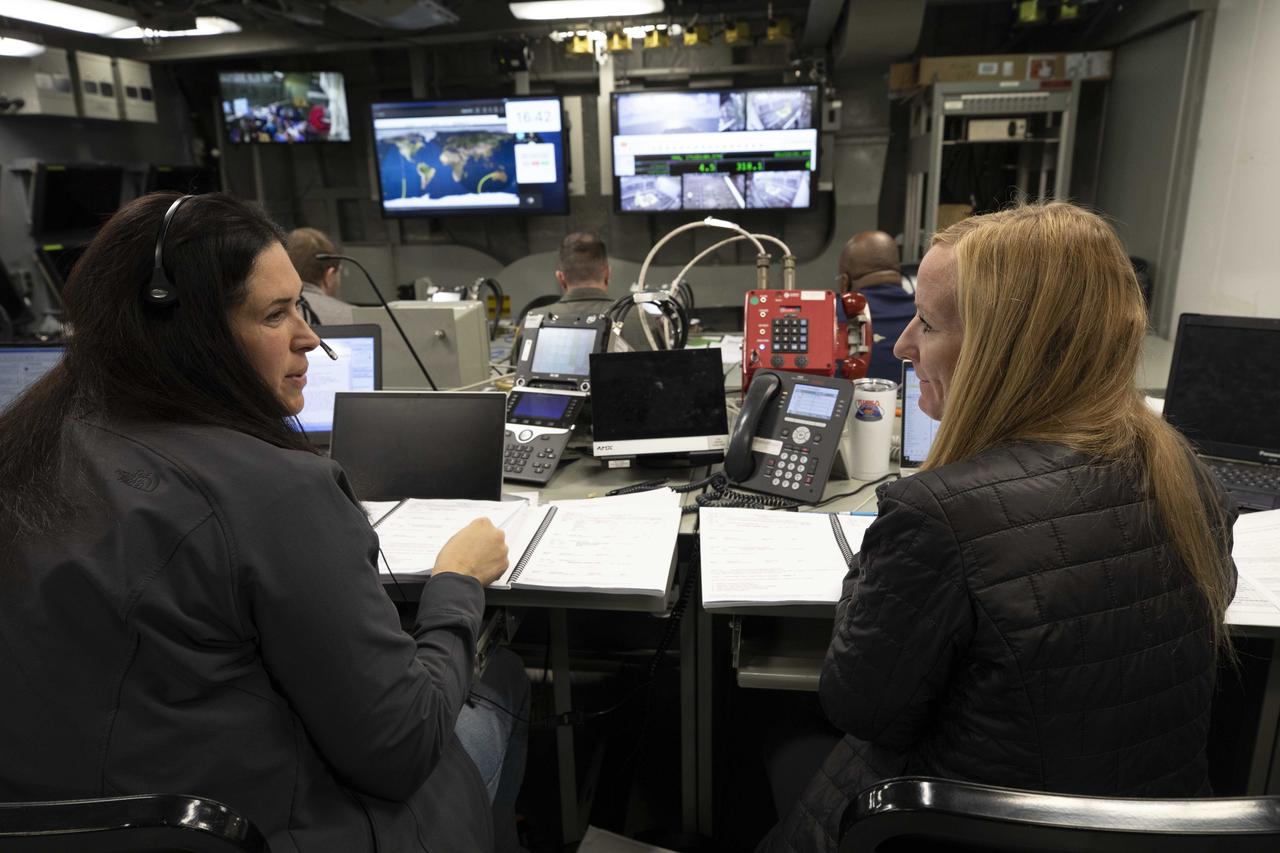
Inside a control room aboard USS Portland, members and leaders of NASA’s Landing and Recovery team run through preparations and procedures ahead of the Orion Spacecraft’s return from the Moon on Dec. 11 as part of the Artemis I mission.
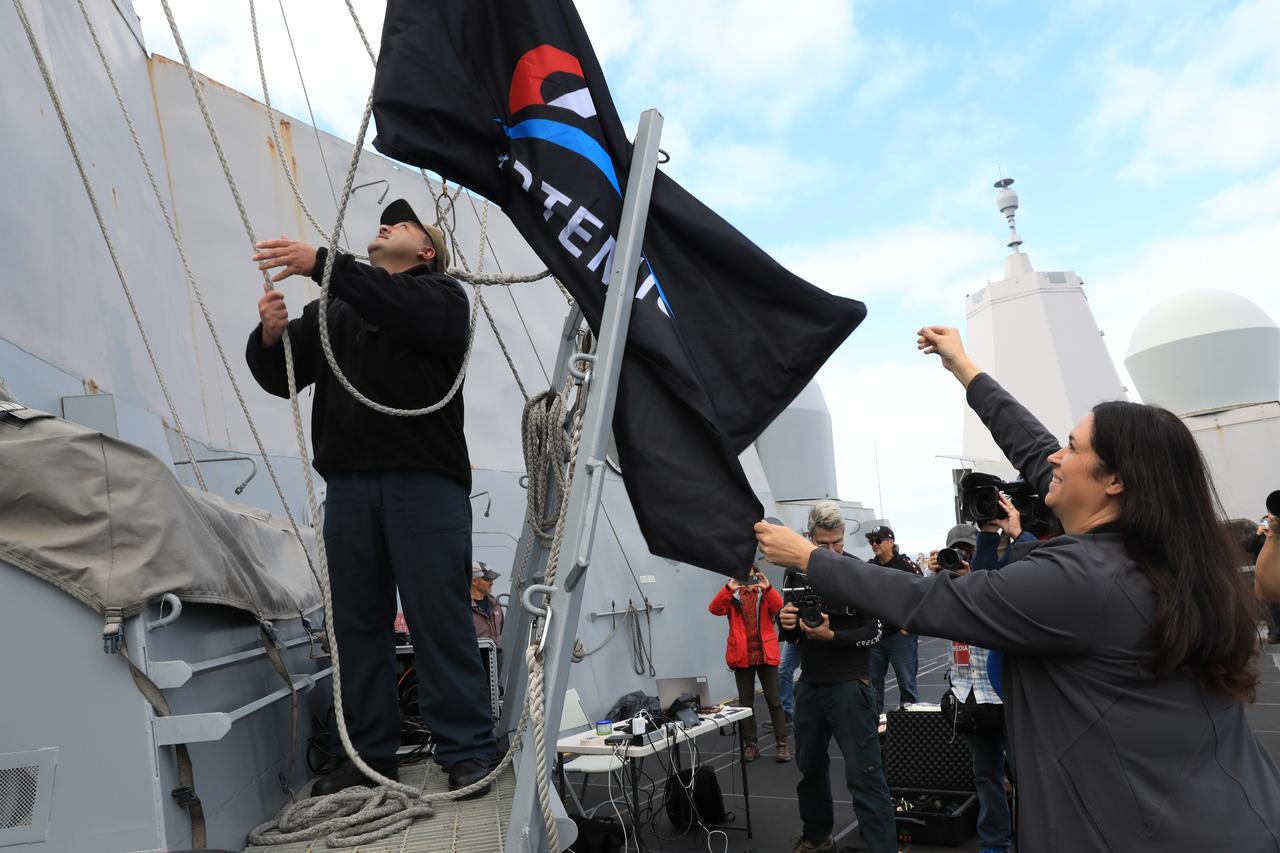
After splashdown of the Orion spacecraft on Dec. 11, 2022, NASA’s Artemis I Landing and Recovery Director Melissa Jones helps to raise the Artemis flag aboard USS Portland.
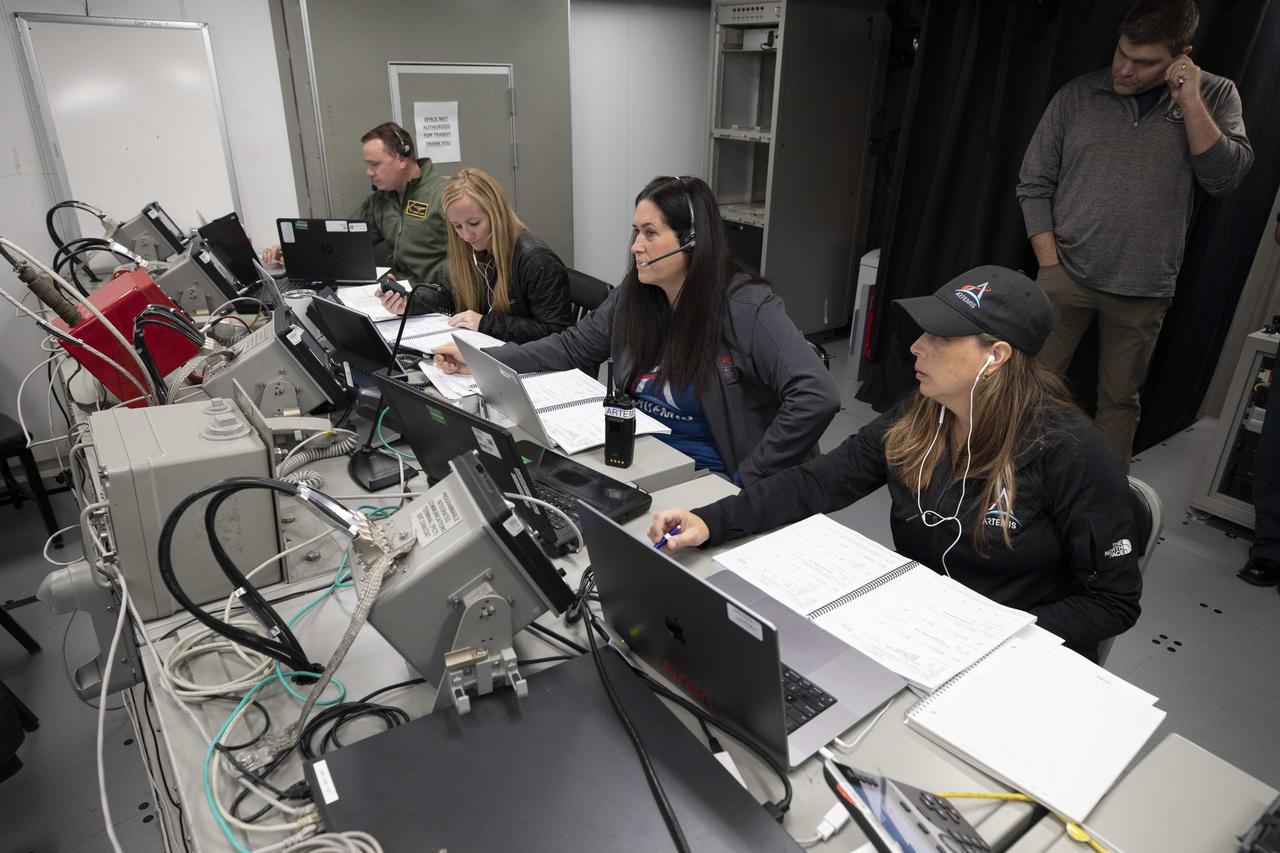
Inside a control room aboard USS Portland, members and leaders of NASA’s Landing and Recovery team run through preparations and procedures ahead of the Orion Spacecraft’s return from the Moon on Dec. 11 as part of the Artemis I mission.
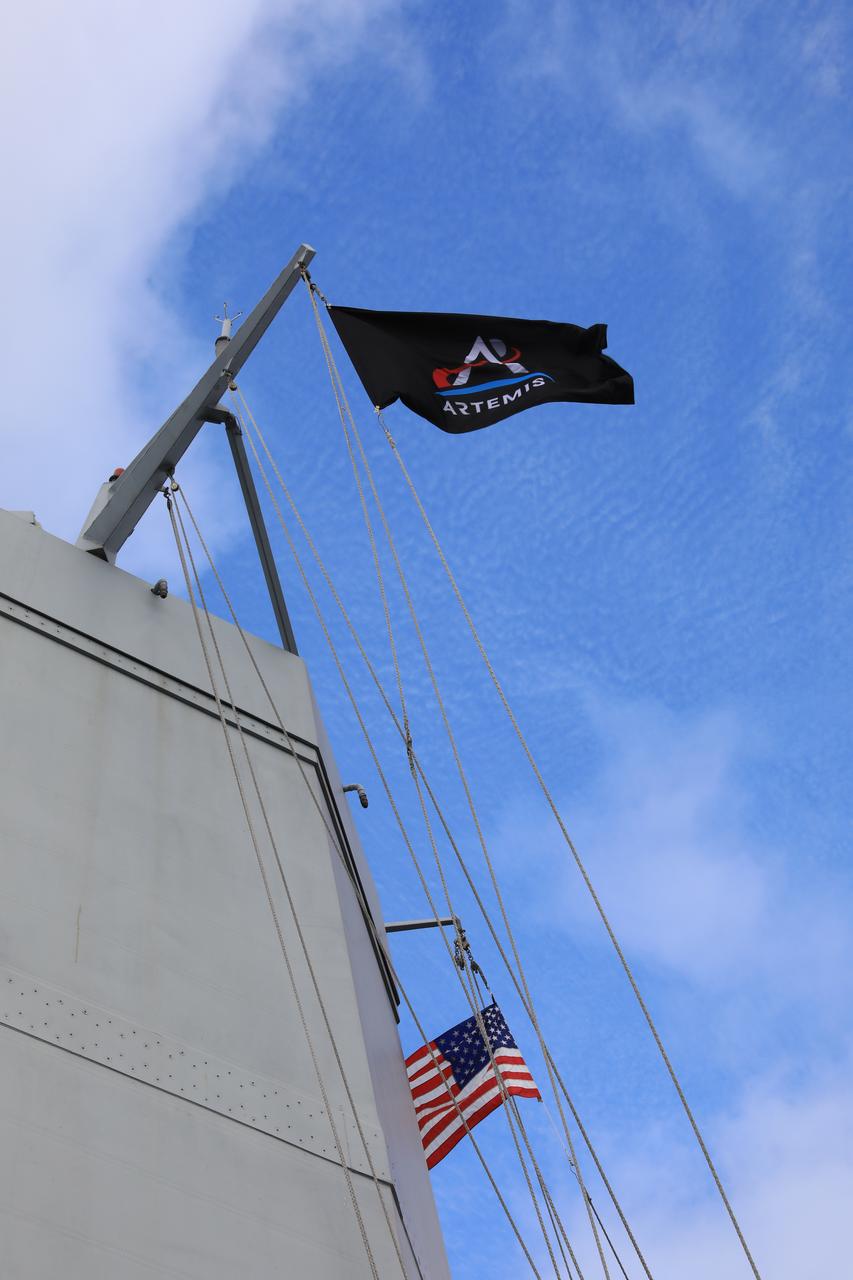
After splashdown of the Orion spacecraft on Dec. 11, 2022, NASA’s Artemis I Landing and Recovery Director Melissa Jones helps to raise the Artemis flag aboard USS Portland.
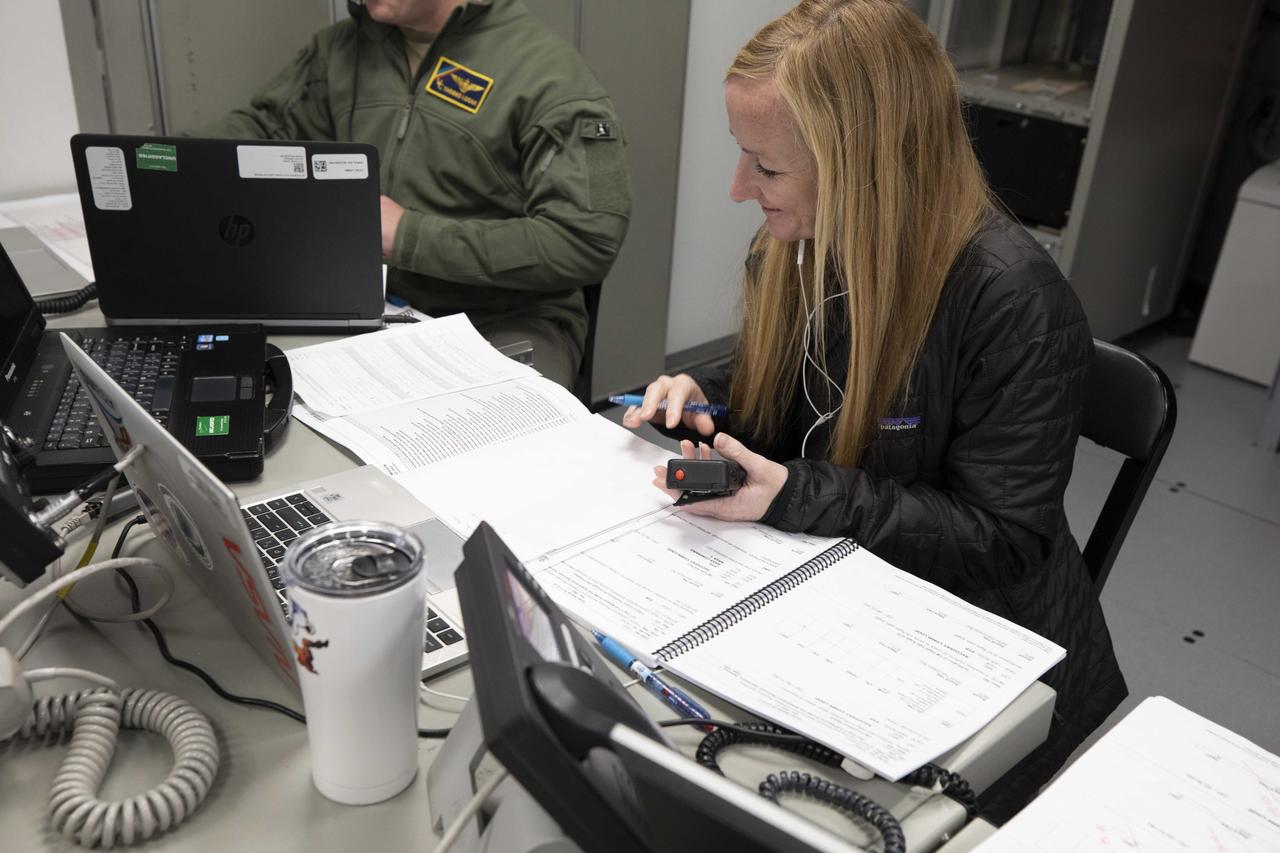
Inside a control room aboard USS Portland, members and leaders of NASA’s Landing and Recovery team run through preparations and procedures ahead of the Orion Spacecraft’s return from the Moon on Dec. 11 as part of the Artemis I mission.
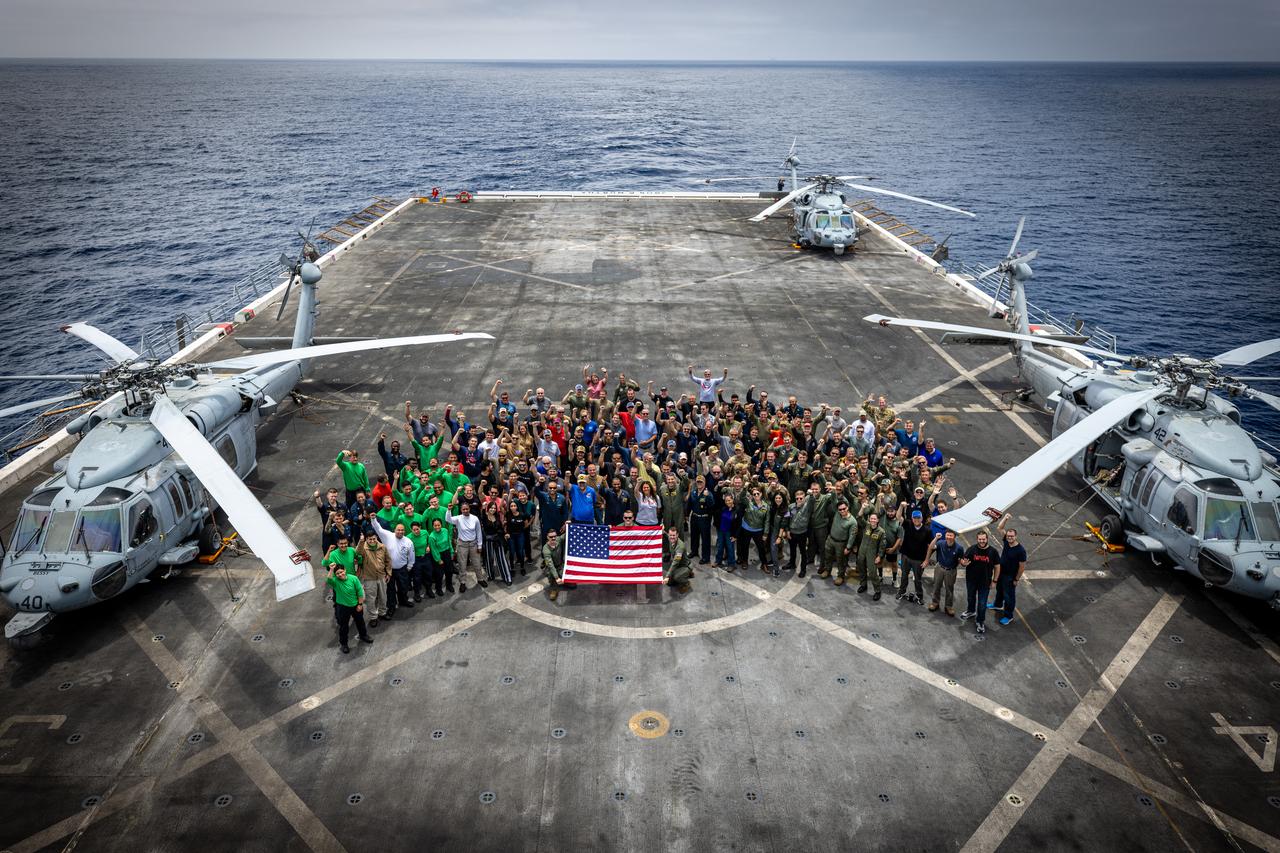
Members of NASA’s Landing and Recovery team and partners from the Department of Defense stand on the flight deck of USS John P. Murtha during Underway Recovery Test 10 (URT-10) off the coast of San Diego. URT-10 is the tenth in a series of Artemis recovery tests, but the first time NASA and its partners from the Department of Defense put their Artemis II recovery procedures to the test.
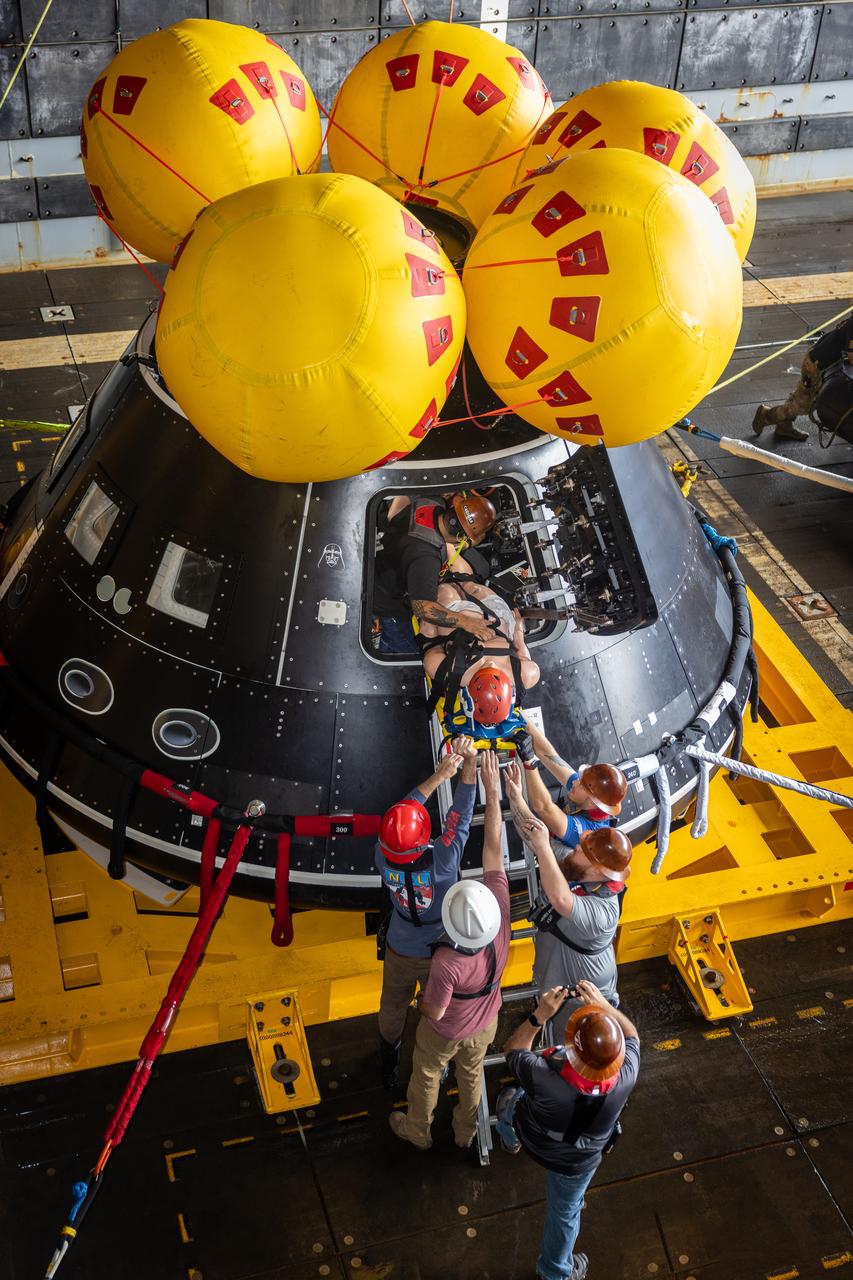
Members of NASA’s Landing and Recovery team load a mannequin into the Crew Module Test Article (CMTA) during Underway Recovery Test 10 in the Pacific Ocean. The CMTA is a is a full-scale mockup of the Orion spacecraft and is used by NASA and its Department of Defense partners to practice recovery procedures for crewed Artemis missions. The team uses the mannequin to practice recovering astronauts out of the capsule and safely getting them to the recovery vessel nearby.
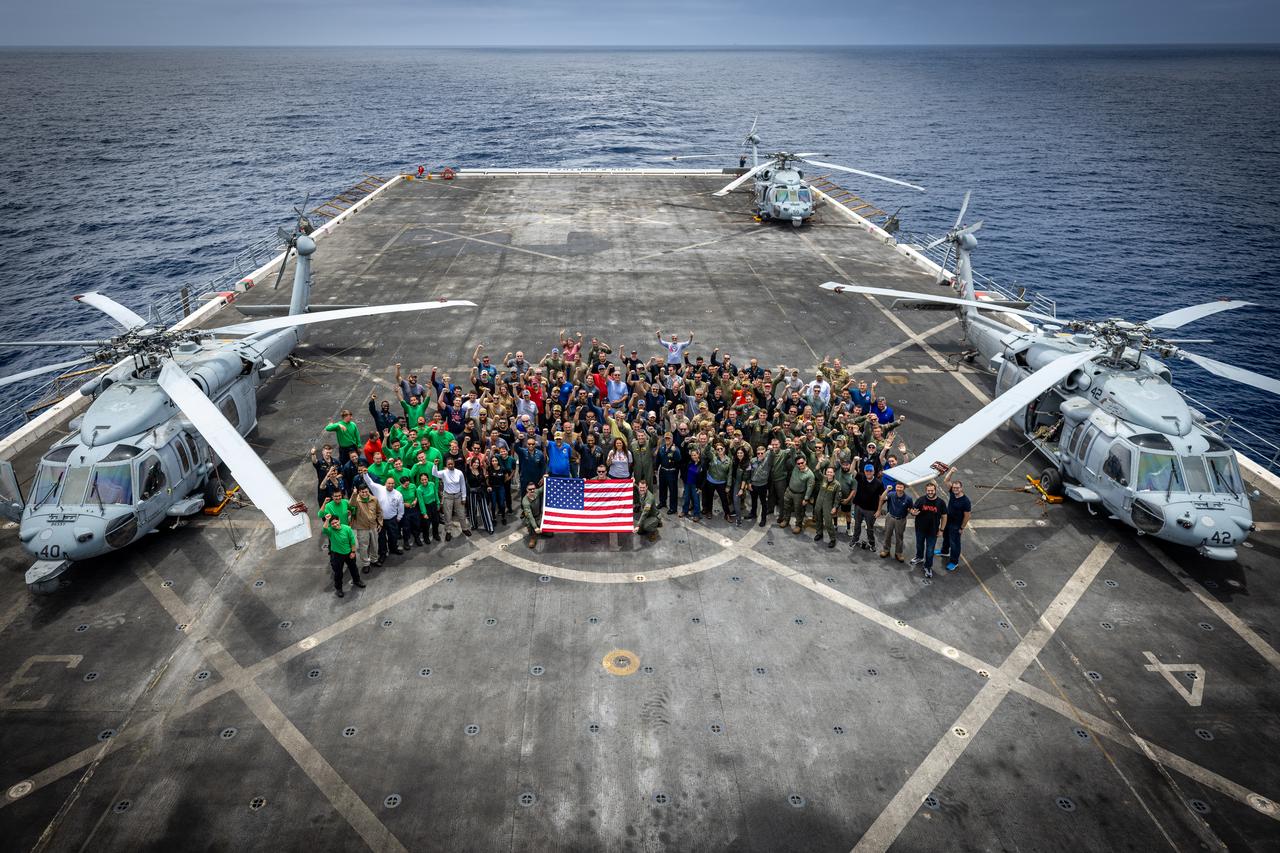
Members of NASA’s Landing and Recovery team and partners from the Department of Defense stand on the flight deck of USS John P. Murtha during Underway Recovery Test 10 (URT-10) off the coast of San Diego. URT-10 is the tenth in a series of Artemis recovery tests, but the first time NASA and its partners from the Department of Defense put their Artemis II recovery procedures to the test.
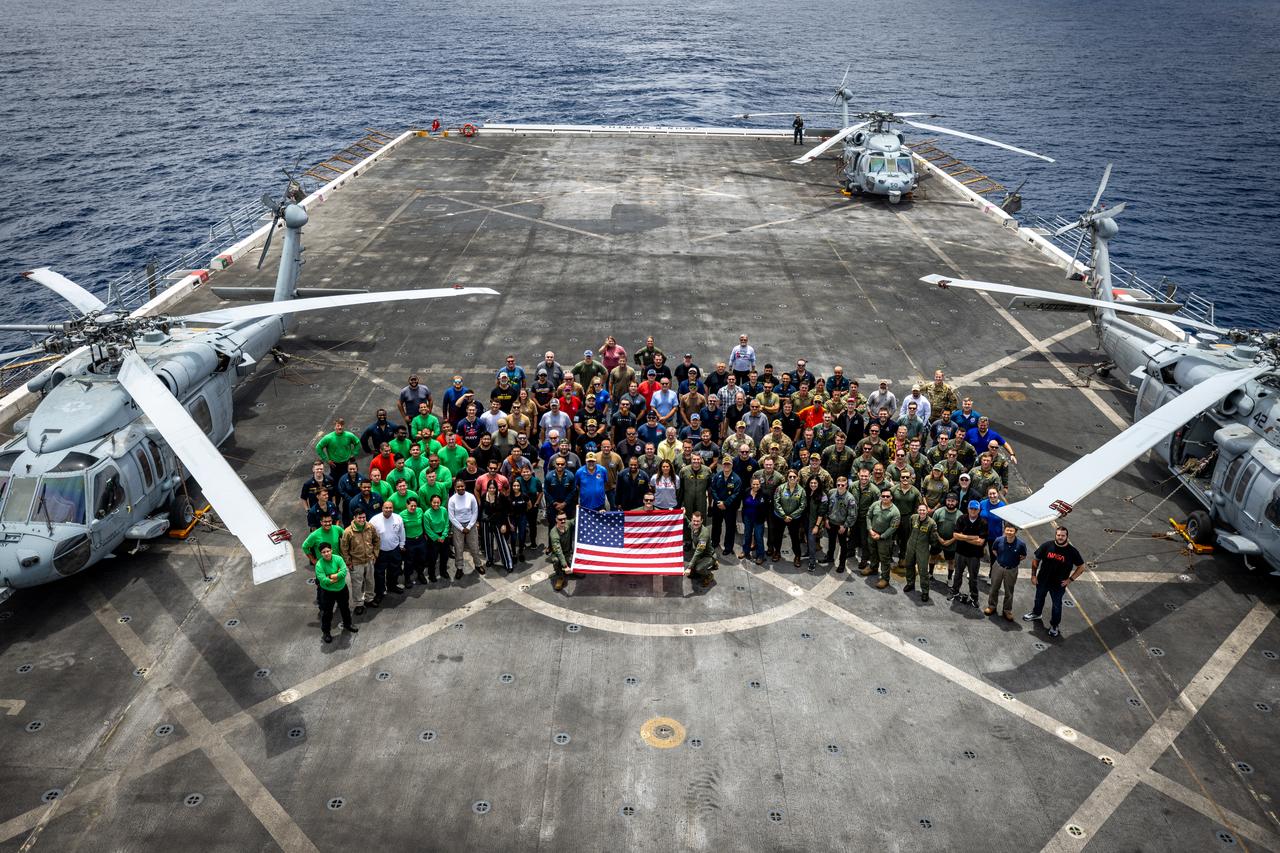
Members of NASA’s Landing and Recovery team and partners from the Department of Defense stand on the flight deck of USS John P. Murtha during Underway Recovery Test 10 (URT-10) off the coast of San Diego. URT-10 is the tenth in a series of Artemis recovery tests, but the first time NASA and its partners from the Department of Defense put their Artemis II recovery procedures to the test.
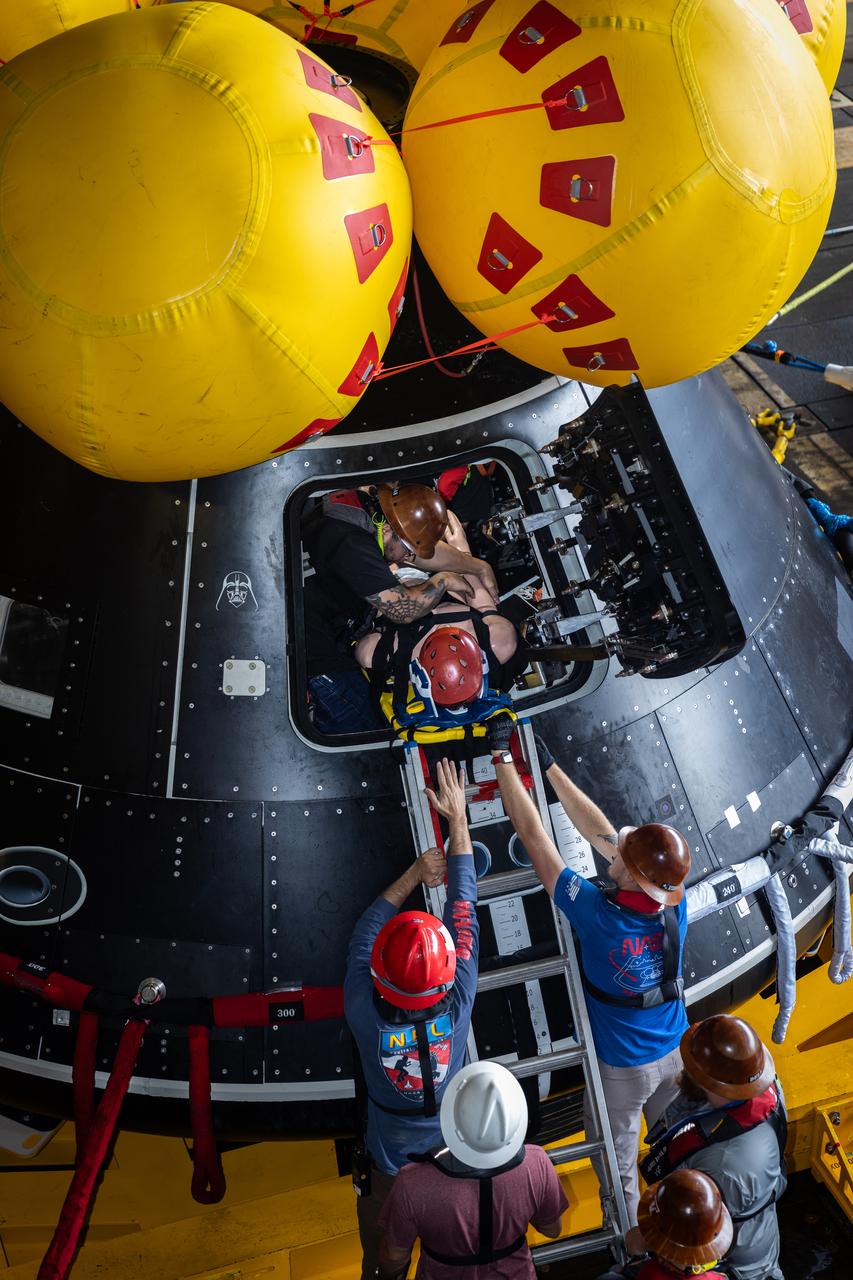
Members of NASA’s Landing and Recovery team load a mannequin into the Crew Module Test Article (CMTA) during Underway Recovery Test 10 in the Pacific Ocean. The CMTA is a is a full-scale mockup of the Orion spacecraft and is used by NASA and its Department of Defense partners to practice recovery procedures for crewed Artemis missions. The team uses the mannequin to practice recovering astronauts out of the capsule and safely getting them to the recovery vessel nearby.
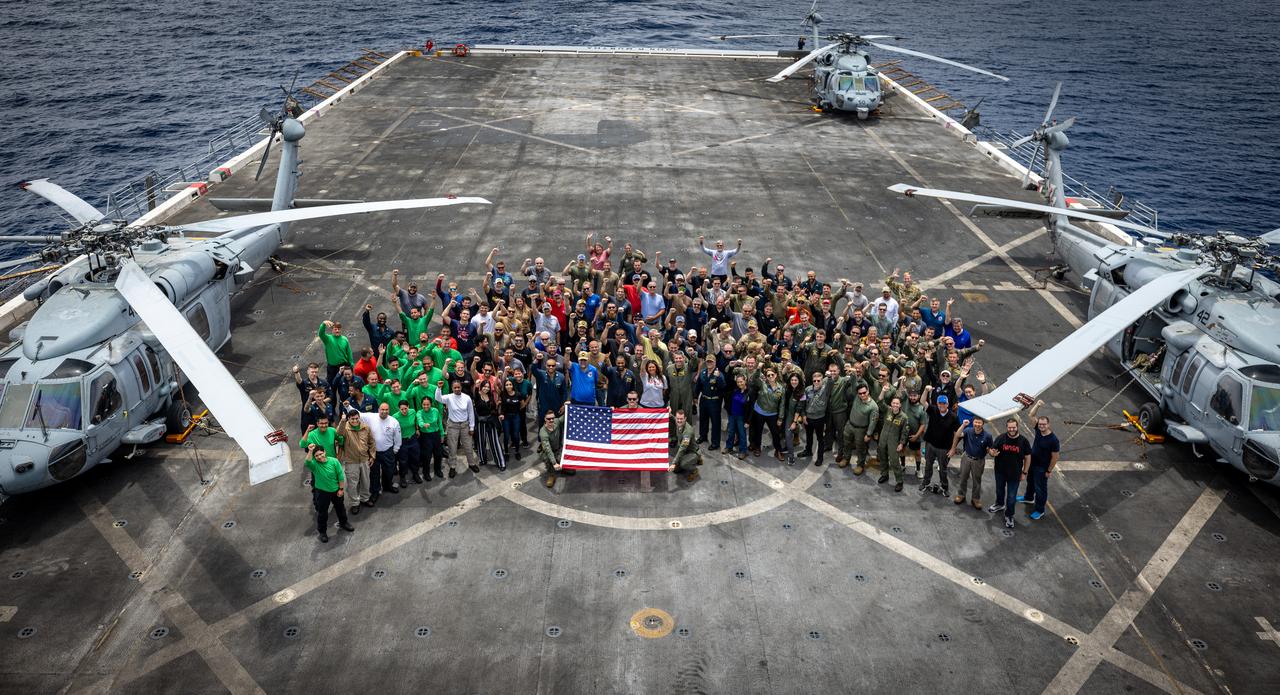
Members of NASA’s Landing and Recovery team and partners from the Department of Defense stand on the flight deck of USS John P. Murtha during Underway Recovery Test 10 (URT-10) off the coast of San Diego. URT-10 is the tenth in a series of Artemis recovery tests, but the first time NASA and its partners from the Department of Defense put their Artemis II recovery procedures to the test.
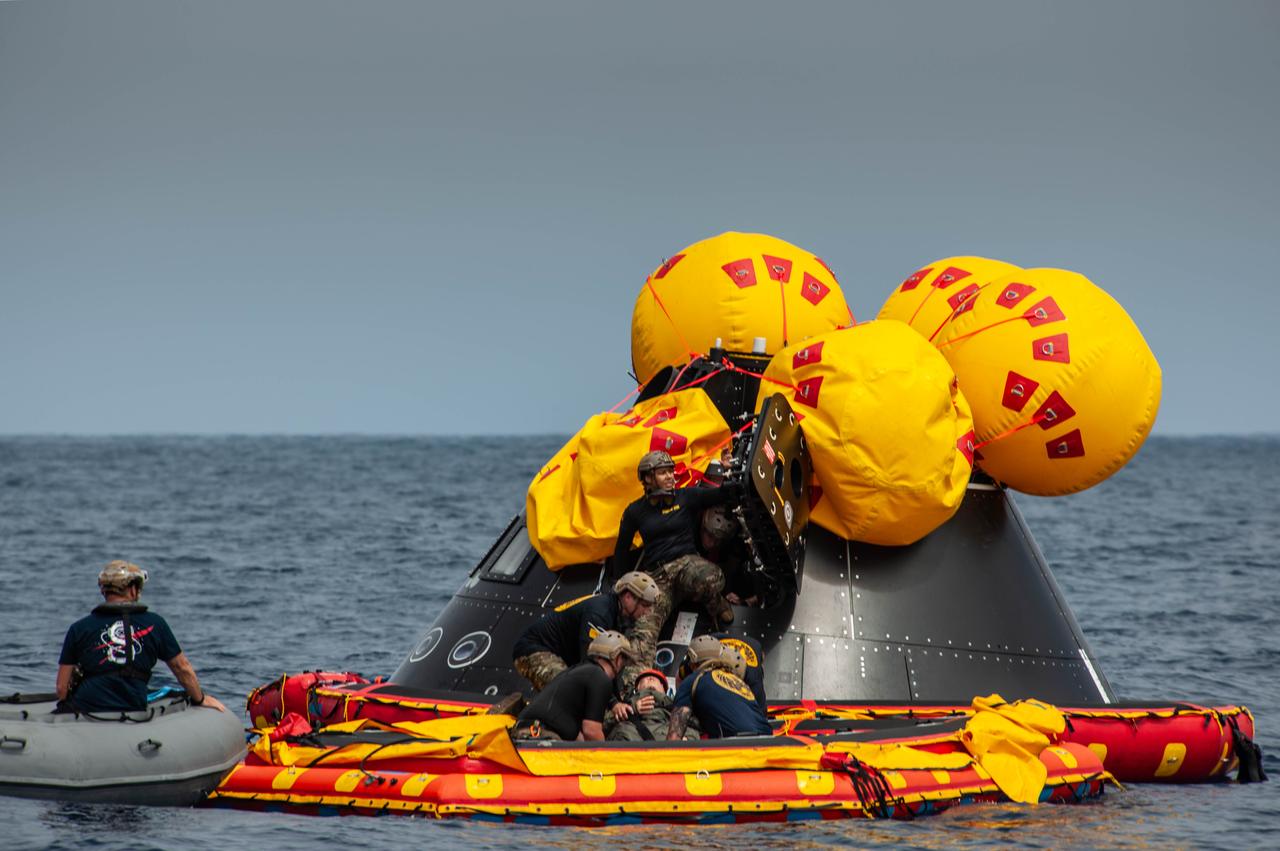
Navy divers from Explosive Ordnance Disposal (EOD) Expeditionary Support Unit 1 practice contingency recovery procedures with a manikin and the Orion Crew Module Test Article (CMTA) in the Pacific Ocean as part of NASA’s Underway Recovery Test 10 (URT-10). The divers are trained in open water and small boat procedures and will be the team to help Artemis astronauts exit the Orion spacecraft and make it safely to the recovery ship after splashdown in addition to preparing the spacecraft to be transported back inside the recovery ship.
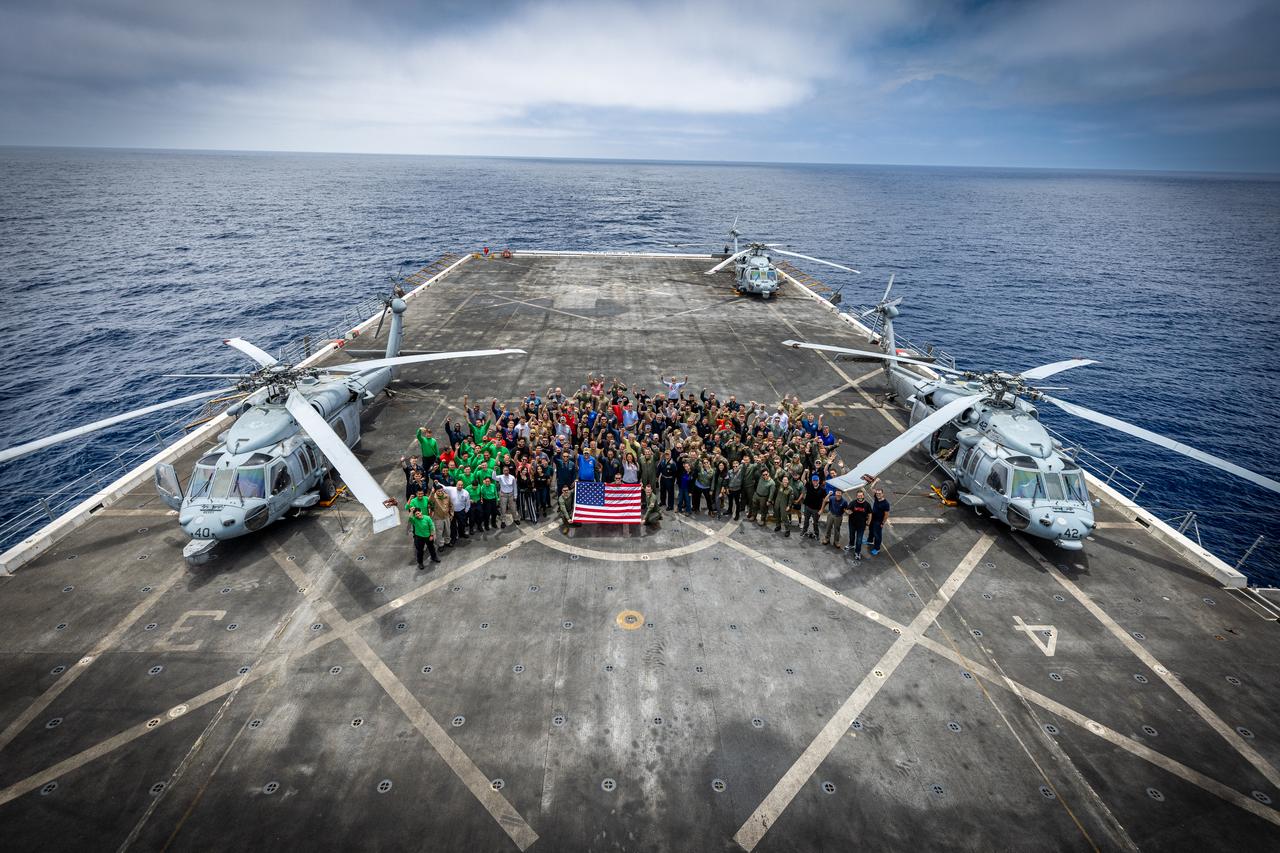
Members of NASA’s Landing and Recovery team and partners from the Department of Defense stand on the flight deck of USS John P. Murtha during Underway Recovery Test 10 (URT-10) off the coast of San Diego. URT-10 is the tenth in a series of Artemis recovery tests, but the first time NASA and its partners from the Department of Defense put their Artemis II recovery procedures to the test.
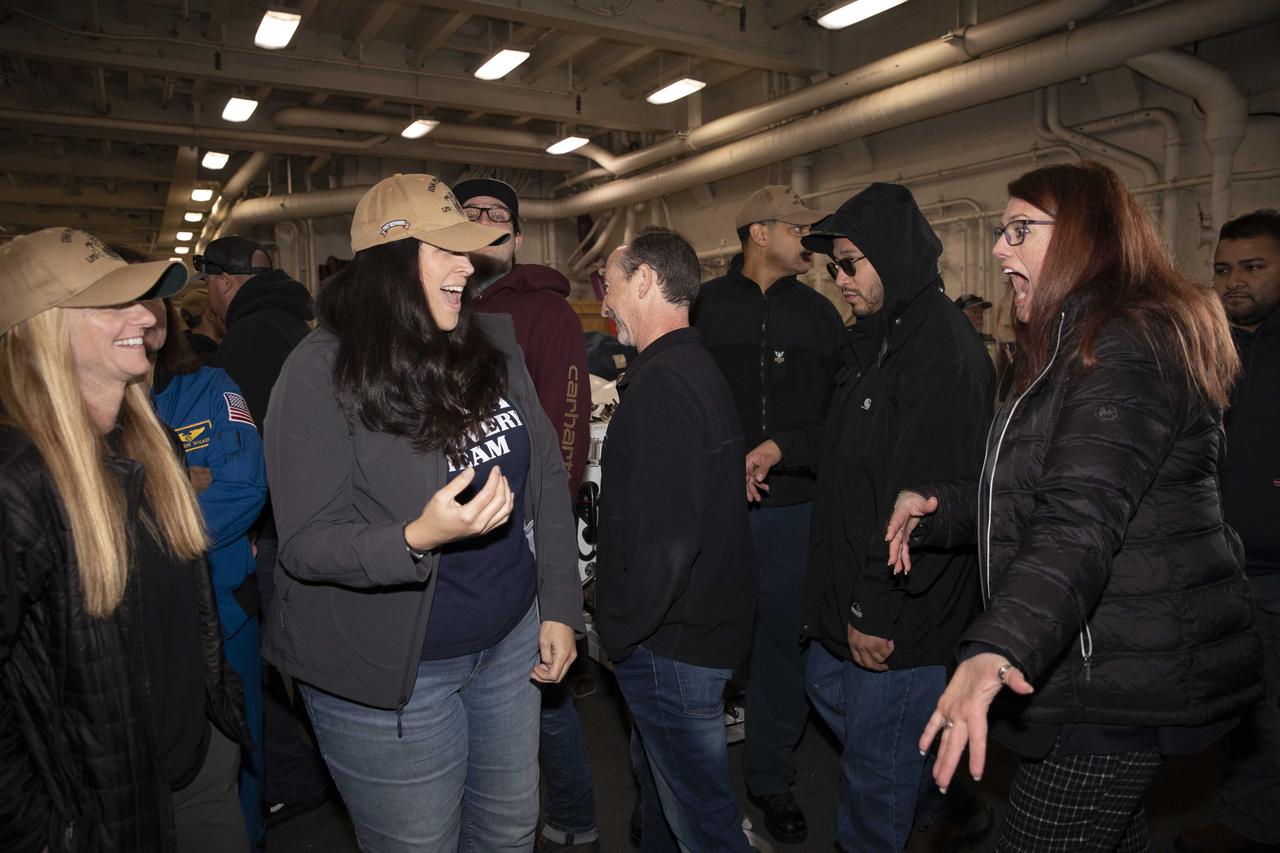
NASA Artemis Launch Director Charlie Blackwell-Thompson, at right, and Melissa Jones, NASA’s Artemis I Recovery director, second from left, both with the Exploration Ground Systems program, along with other recovery team members, exchange congratulations inside the well deck of the USS Portland at U.S. Naval Base San Diego on Dec. 13, 2022. The Orion spacecraft is secured inside the well deck after splashing down at 12:40 p.m. EST on Dec. 11, 2022. U.S. Navy divers helped recover the Orion spacecraft. NASA, the Navy and other Department of Defense partners worked together to secure the spacecraft inside the ship’s well deck approximately five hours after Orion splashed down in the Pacific Ocean off the coast of Baja, California.
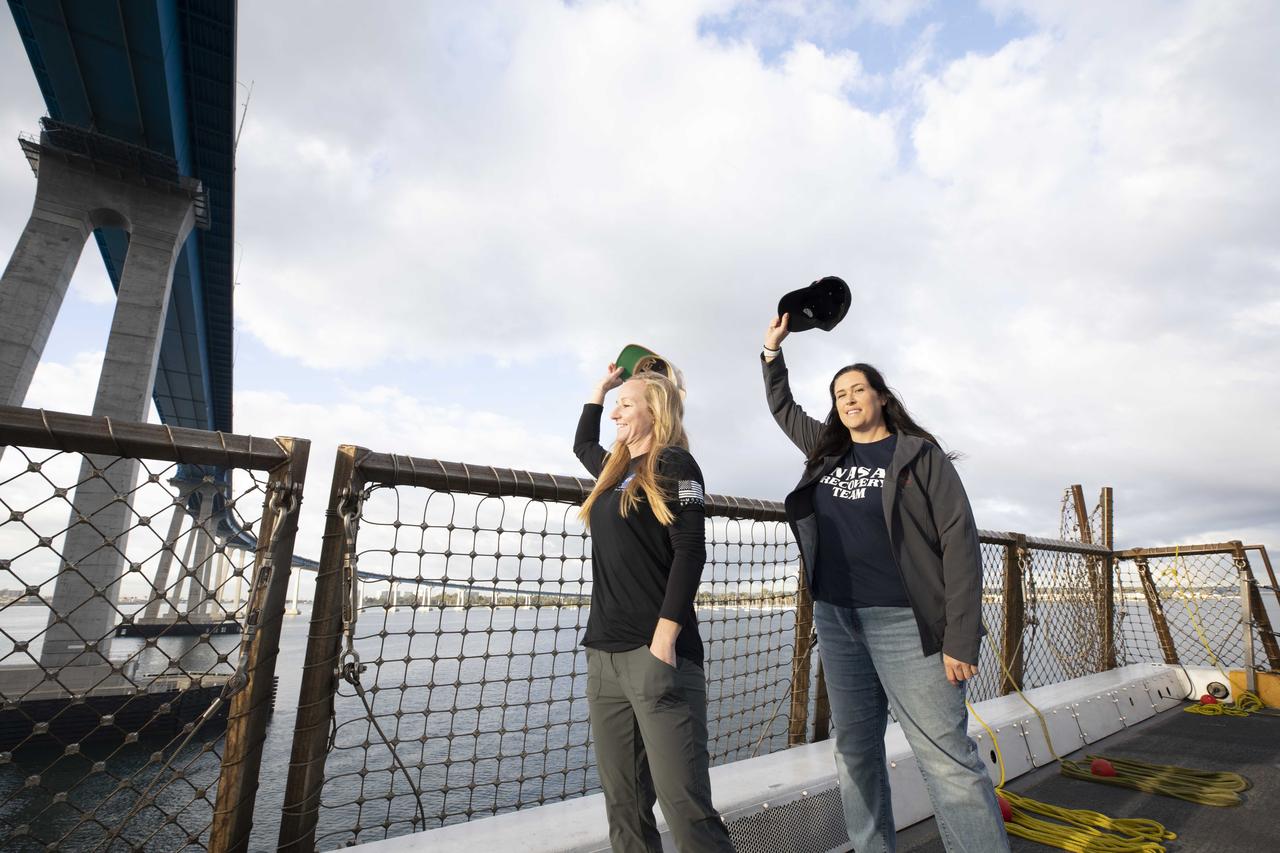
While returning to port after successfully recovering the Orion spacecraft for the Artemis I mission, NASA Artemis Recovery Director Melissa Jones, at right, and Assistant NASA Recovery Director Carla Rekucki, throw their hats in the air aboard the USS Portland as they pass under the San Diego-Coronado bridge on Dec. 13, 2022. The Artemis I Orion spacecraft is secured inside the ship’s well deck after splashing down at 12:40 p.m. EST on Dec. 11, 2022. U.S. Navy divers helped recover the Orion spacecraft. NASA, the Navy and other Department of Defense partners worked together to secure the spacecraft inside the ship’s well deck approximately five hours after Orion splashed down in the Pacific Ocean off the coast of Baja, California.
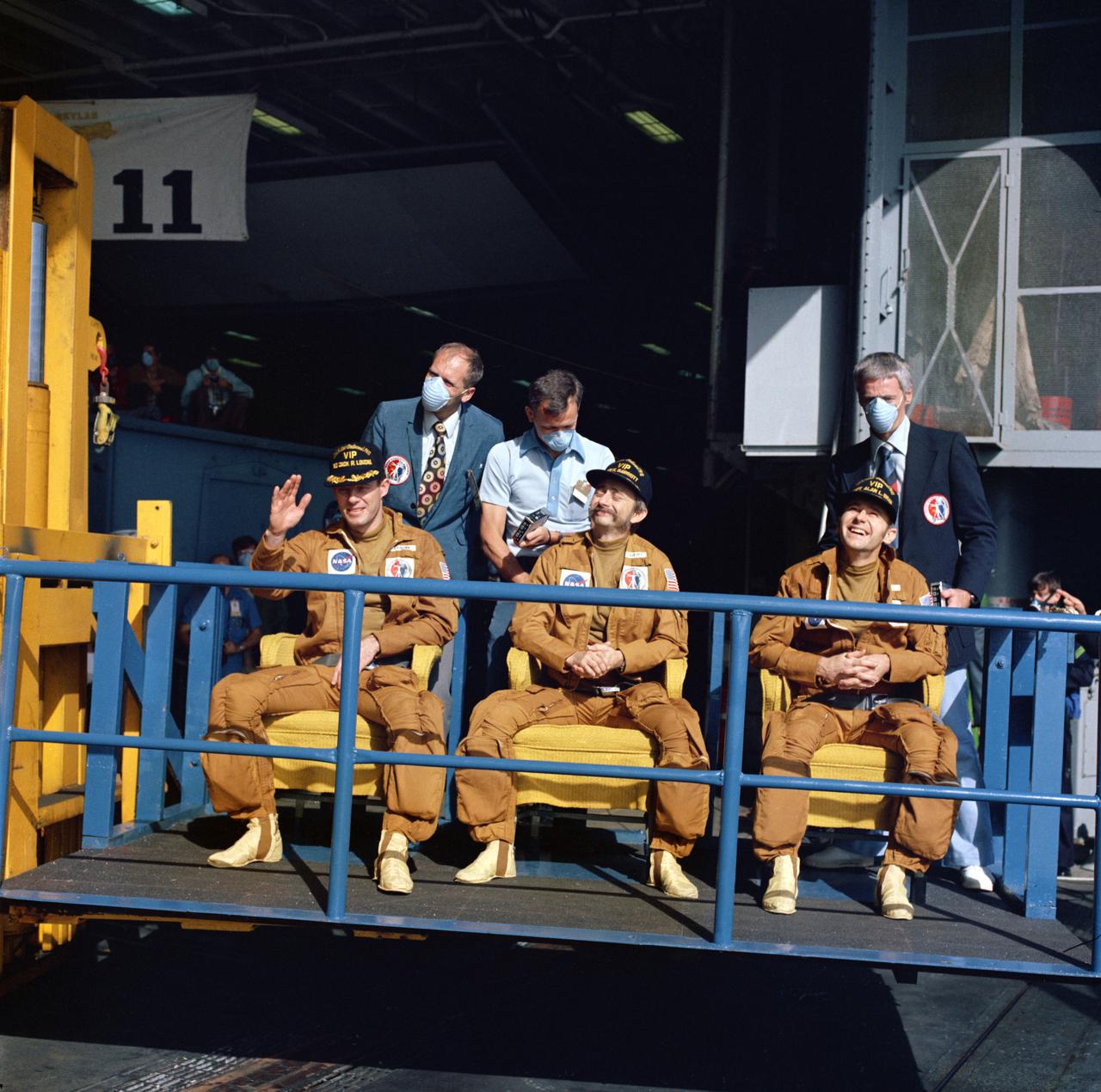
S73-36451 (25 Sept. 1973) --- The three crewmen of the Skylab 3 mission are seen aboard the prime recovery ship, USS New Orleans, following their successful 59-day visit to the Skylab space station in Earth orbit. They are, left to right, astronaut Jack R. Lousma, pilot; scientist-astronaut Owen K. Garriott, science pilot; and astronaut Alan L. Bean, commander. The Skylab 3 Command Module with the three crewmen aboard splashed down in the Pacific about 230 miles southwest of San Diego, California. They are seated atop a platform of a fork-lift dolly. Recovery support personnel are wearing face masks to prevent exposing the crewmen to disease. Photo credit: NASA
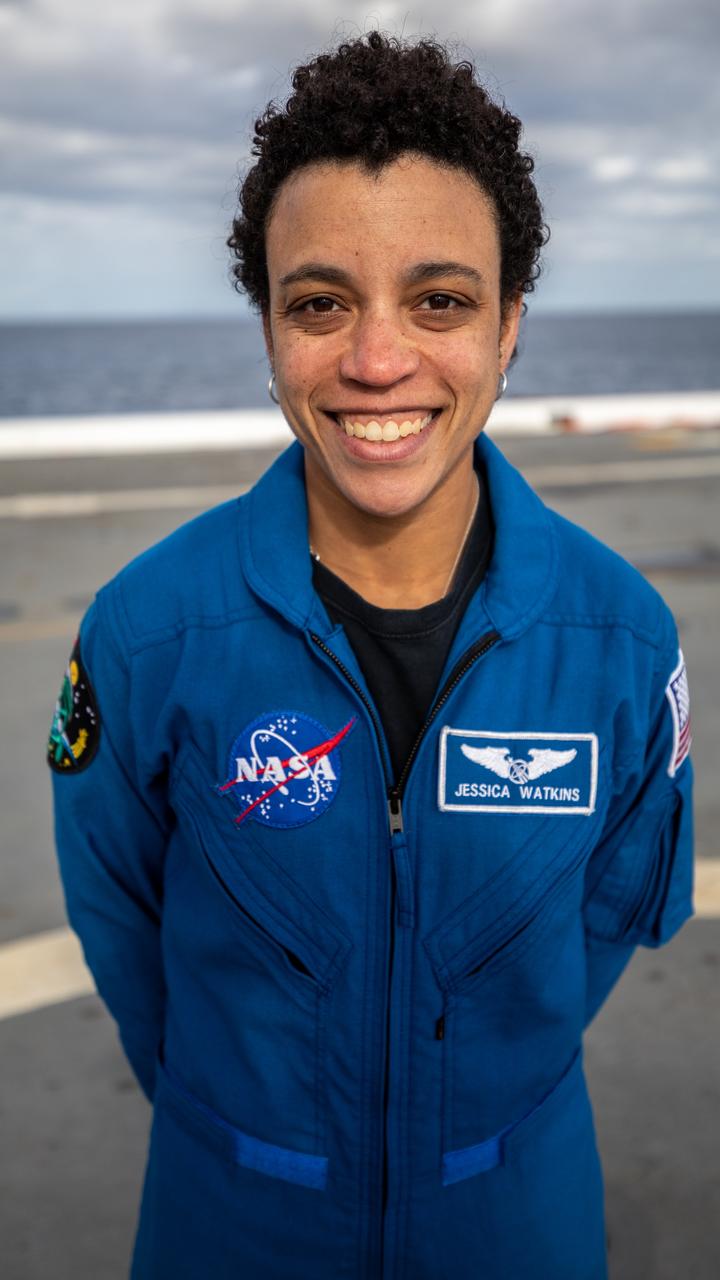
Astronaut Jessica Watkins observes Underway Recovery Test-8 aboard the USS John P. Murtha. During the test, NASA’s Landing and Recovery Team practiced bringing Orion into the well deck of the ship to ensure recovery procedure timelines are validated as NASA plans to send Artemis I around the Moon and splashdown in the Pacific Ocean.
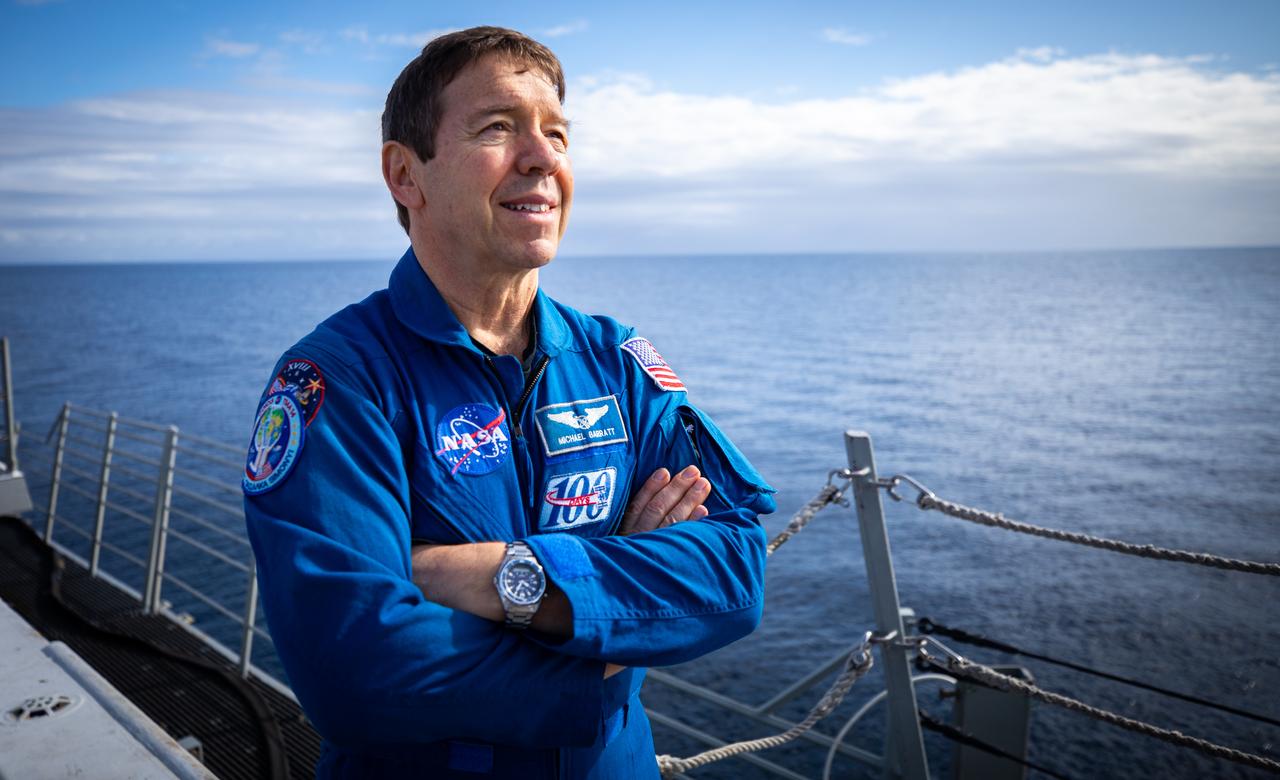
Astronaut Michael Barratt observes Underway Recovery Test-8 aboard the USS John P. Murtha. During the test, NASA’s Landing and Recovery Team practiced bringing Orion into the well deck of the ship to ensure recovery procedure timelines are validated as NASA plans to send Artemis I around the Moon and splashdown in the Pacific Ocean.
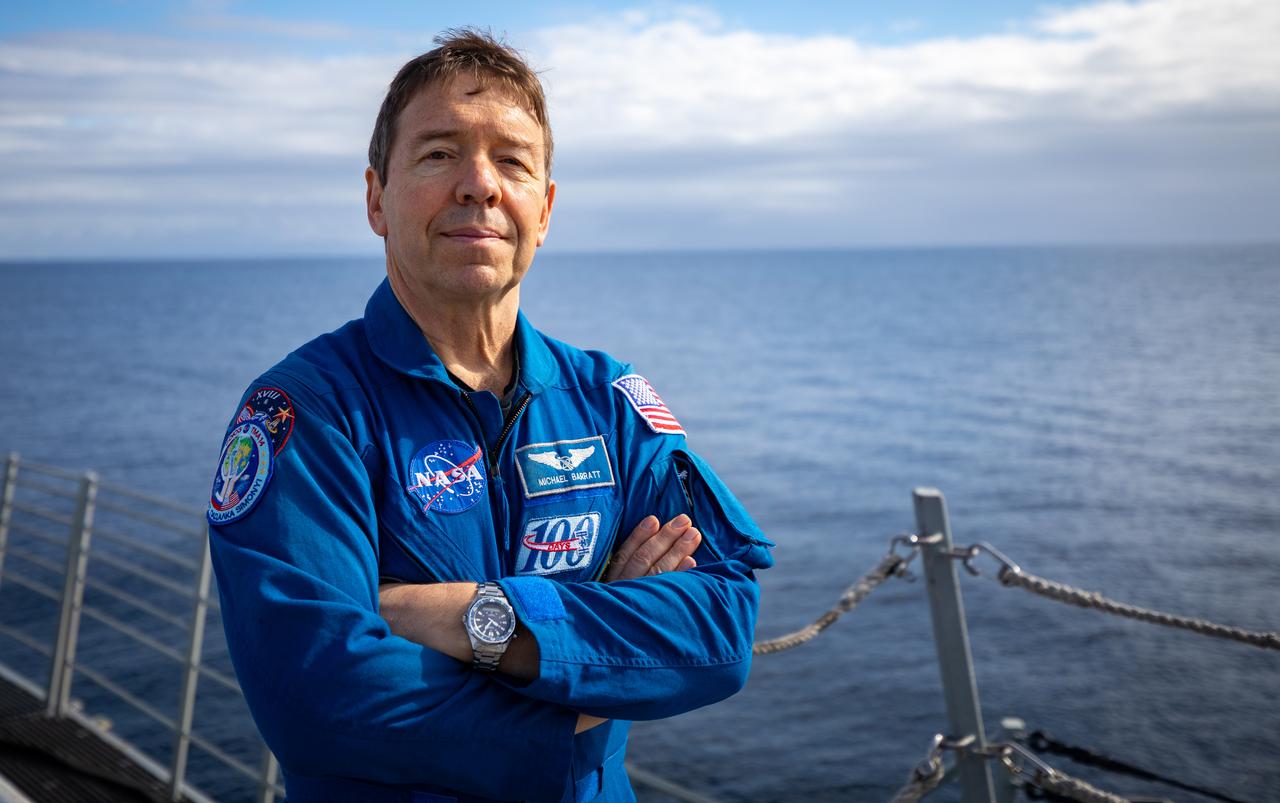
Astronaut Michael Barratt observes Underway Recovery Test-8 aboard the USS John P. Murtha. During the test, NASA’s Landing and Recovery Team practiced bringing Orion into the well deck of the ship to ensure recovery procedure timelines are validated as NASA plans to send Artemis I around the Moon and splashdown in the Pacific Ocean.
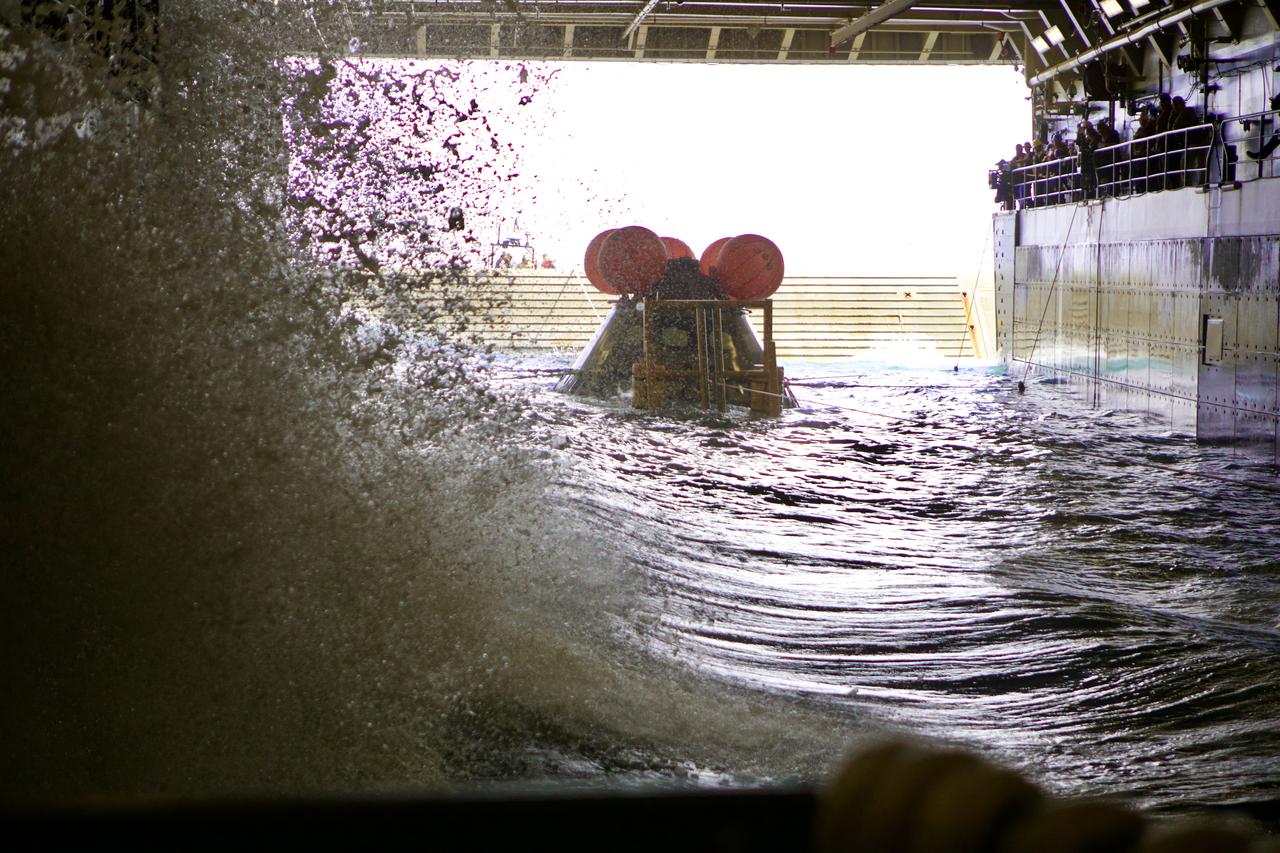
NASA’s Landing and Recovery team practice bringing a test version of the Orion capsule into the well deck of a Navy ship during Underway Recovery Test-8. During the test, the team practiced to ensure recovery procedure timelines are validated as NASA plans to send Artemis I around the Moon and splashdown in the Pacific Ocean.
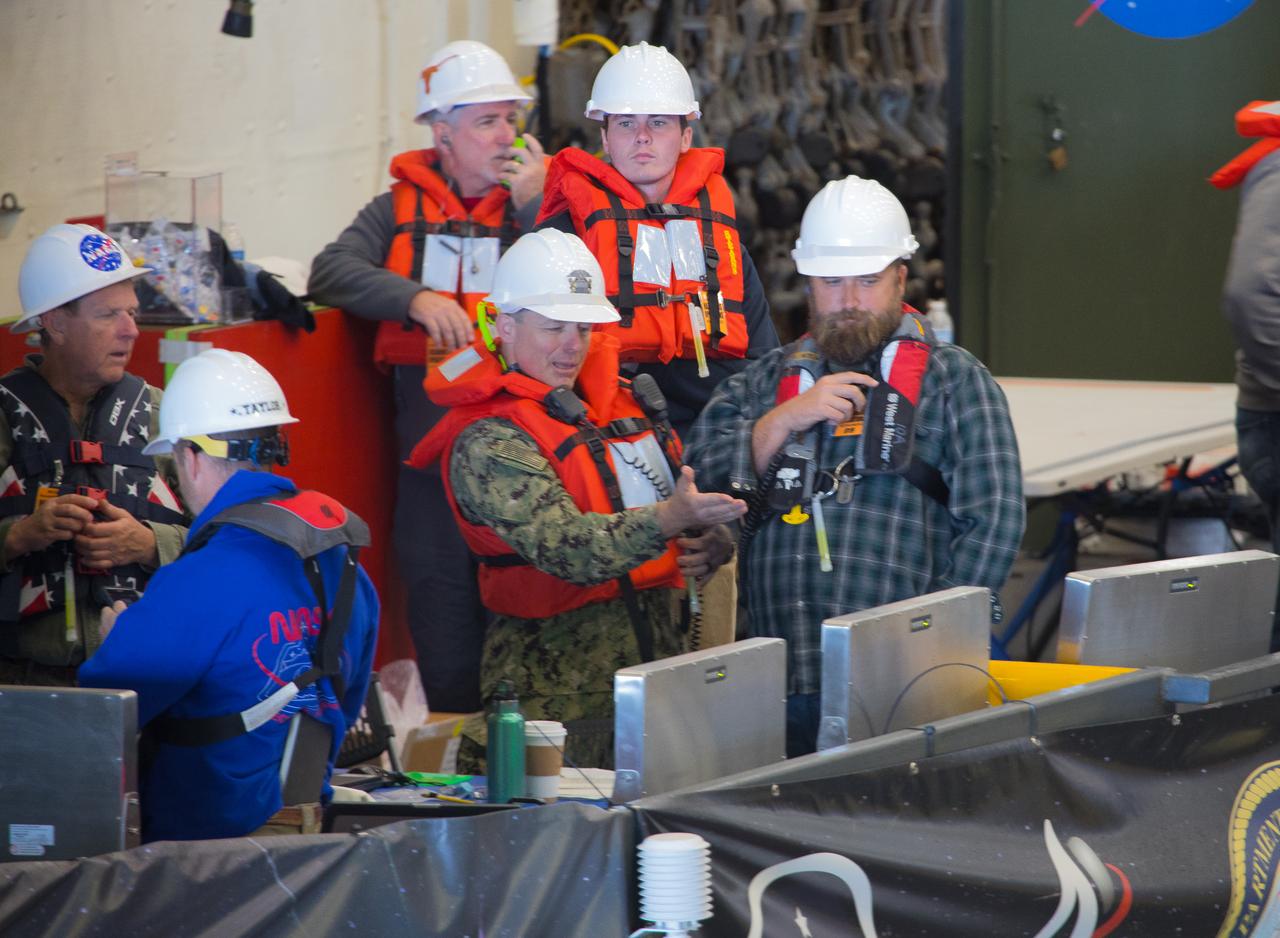
Members of NASA’s Landing and Recovery Team review wave data during Underway Recovery Test-8 off the coast of California. By tracking wave direction and length, the team will ensure a smoother recovery of the Orion spacecraft into the well deck of a Navy ship. During the test, the team practiced to ensure recovery procedure timelines are validated as NASA plans to send Artemis I around the Moon and splashdown in the Pacific Ocean.
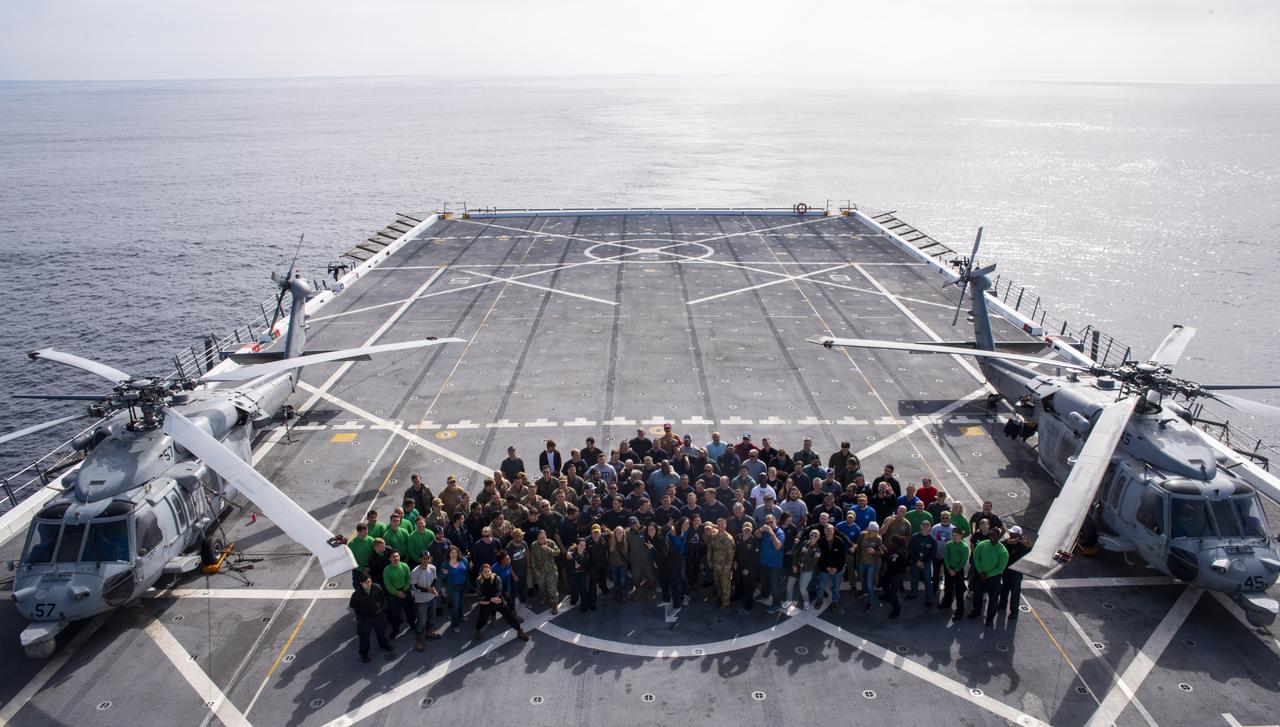
The NASA and DoD Recovery Team aboard the USS John P. Murtha for the Underway Recovery Test 9 (URT-9).

The NASA and DoD Recovery Team aboard the USS John P. Murtha for the Underway Recovery Test 9 (URT-9).

NASA’s Air Operations Co-Lead Don Reed briefs the air ops team during Underway Recovery Test 9 (URT-9) aboard the USS John P. Murtha. During the weeklong test, NASA’s Landing and Recovery team is performing their final mission certification ahead of Artemis I.
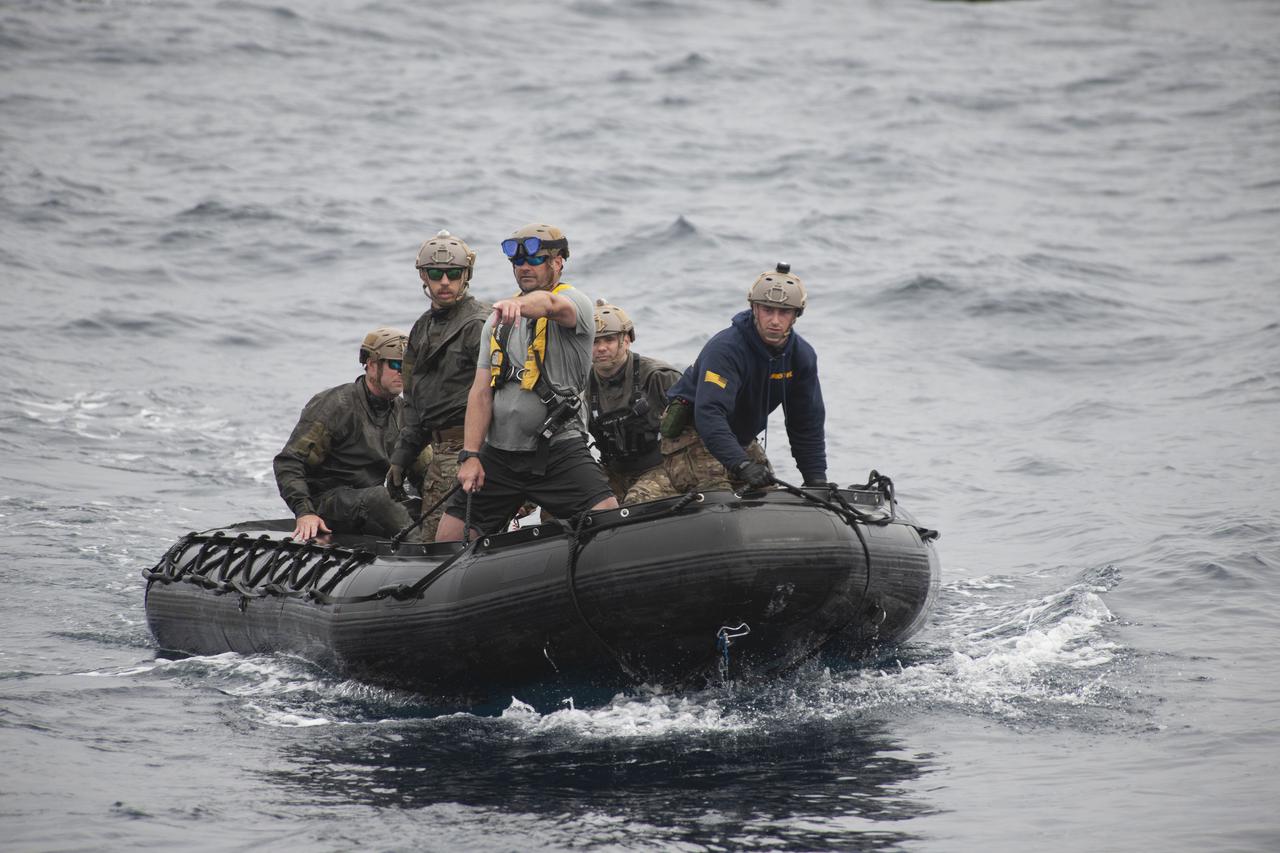
Open Water Lead Tim Goddard points the way to the smoke the helicopter dropped in the water, indicating the location of the mock Orion capsule during Underway Recovery Test 9 (URT-9). During the weeklong test, NASA’s Landing and Recovery team is performing their final mission certification ahead of Artemis I.
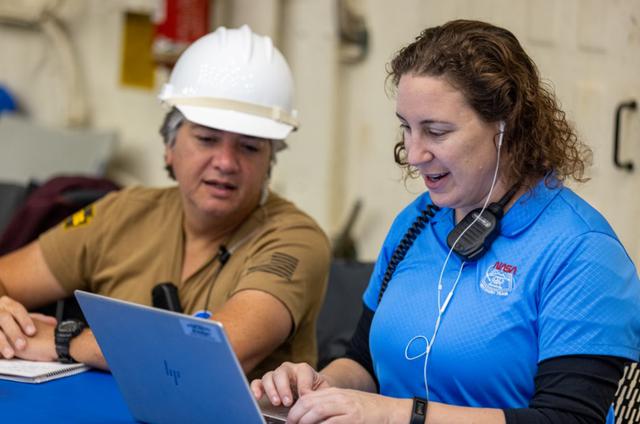
Operation Project Engineers Alex Bengoa and Vanessa Stroh review data during day 2 of Underway Recovery Test 9 (URT-9) aboard the USS John P. Murtha. During the weeklong test, NASA’s Landing and Recovery team is performing their final mission certification ahead of Artemis I.
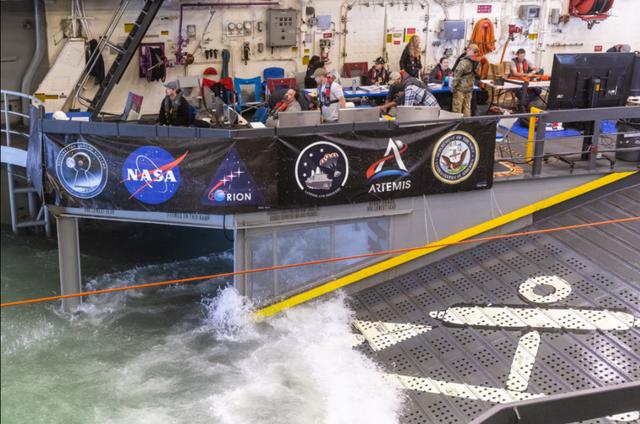
During Underway Recovery Test 9 (URT-9), NASA’s Landing and Recovery Team monitors Day 1 testing aboard the USS John P. Murtha (LPD 26). The team is performing their final mission certification ahead of Artemis I.
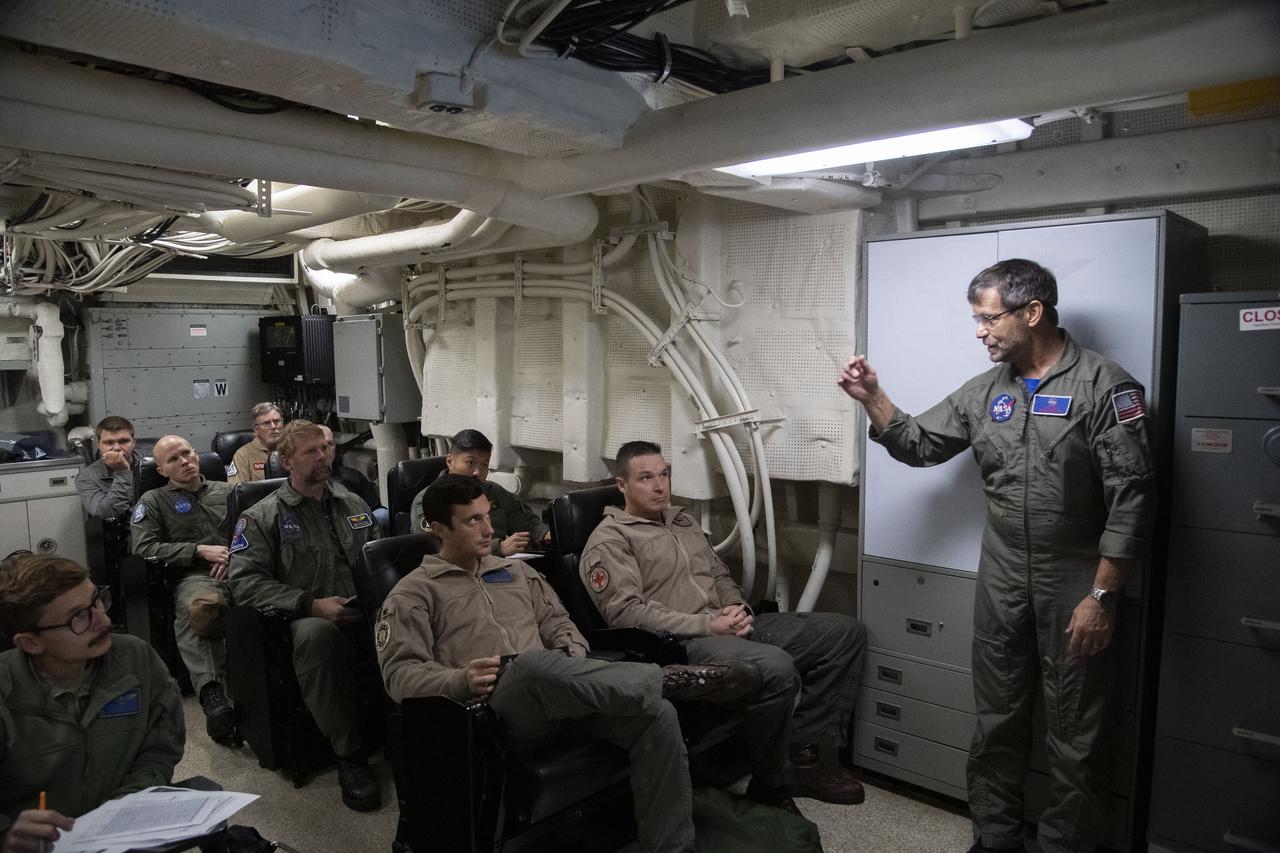
NASA’s Air Operations Co-Lead Don Reed briefs the air ops team during Underway Recovery Test 9 (URT-9) aboard the USS John P. Murtha. During the weeklong test, NASA’s Landing and Recovery team is performing their final mission certification ahead of Artemis I.
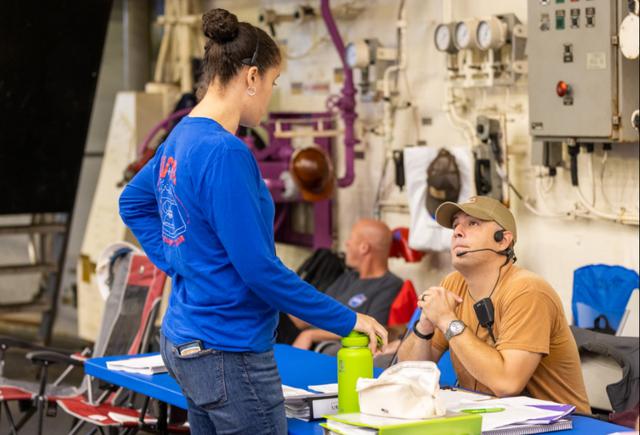
NASA Test Director (NTD) Christine St. Germain consults with fellow NTD Paul Sierpinski on day 2 of Underway Recovery Test 9 (URT-9) aboard the USS John P. Murtha. During the weeklong test, NASA’s Landing and Recovery team is performing their final mission certification ahead of Artemis I.
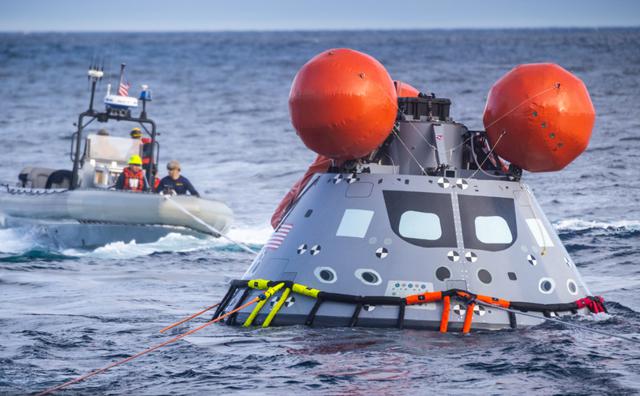
During Underway Recovery Test 9 (URT-9), NASA’s Landing and Recovery Team practices bringing a mock Orion capsule into the well deck of the USS John P. Murtha (LPD 26 The team is performing their final mission certification ahead of Artemis I.
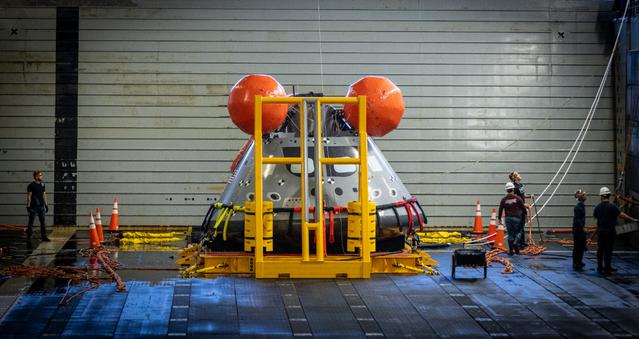
Day 2 of Underway Recovery Test 9 (URT-9) begins with preparing the tending lines to release the mock Orion capsule out of the back of the USS John P. Murtha. During the weeklong test, NASA’s Landing and Recovery team is performing their final mission certification ahead of Artemis I.
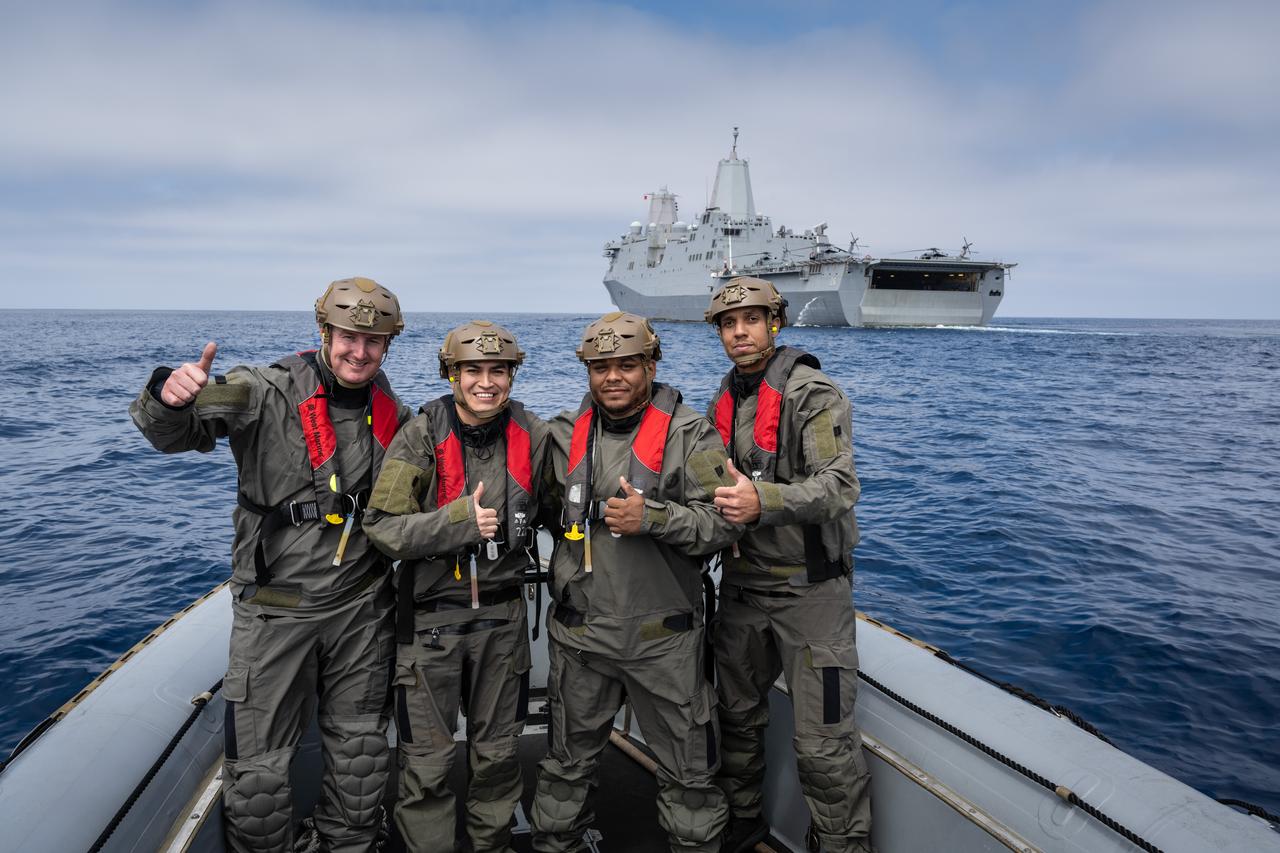
Four Naval helicopter pilots from Helicopter Sea Combat Squadron (HSC) 23 “Wildcards” pose for a photo in the Pacific Ocean as they prepare to participate in an Artemis II recovery test as part of NASA’s Underway Recovery Test 10. During recovery practice, these four pilots acted as Artemis II astronauts and were placed inside the Orion Crew Module Test Article, recovered from the capsule onto an inflatable “front porch” and then lifted via helicopter back to the flight deck of USS John P Murtha.
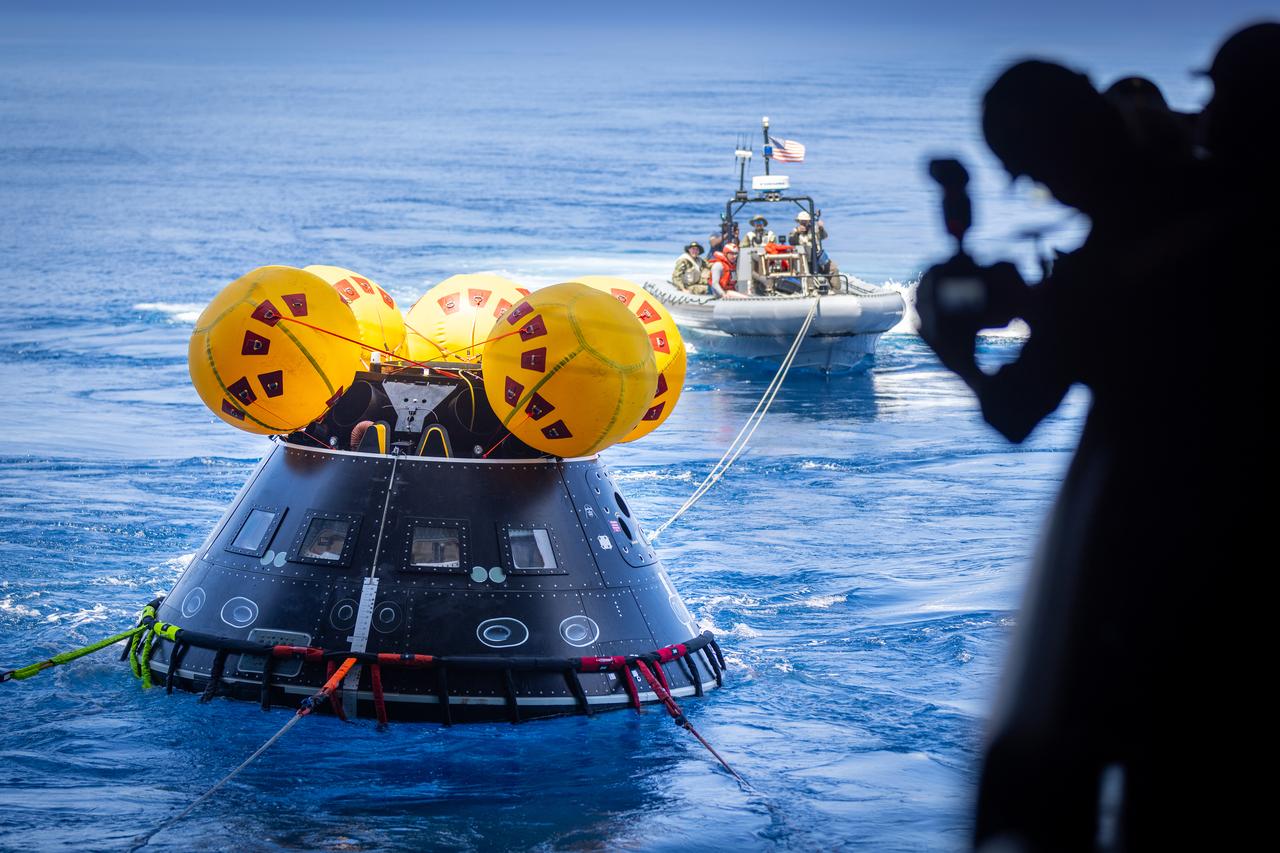
The Crew Module Test Article (CMTA) is seen in the waters of the Pacific Ocean during NASA’s Underway Recovery Test 10 (URT-10). The CMTA is a full-scale mockup of the Orion spacecraft and is used by NASA and its Department of Defense partners to practice recovery procedures for crewed Artemis missions. URT-10 is the first test specifically in support of the Artemis II mission and allowed the team to practice what it will be like to recover astronauts and get them back to the recovery ship safely.
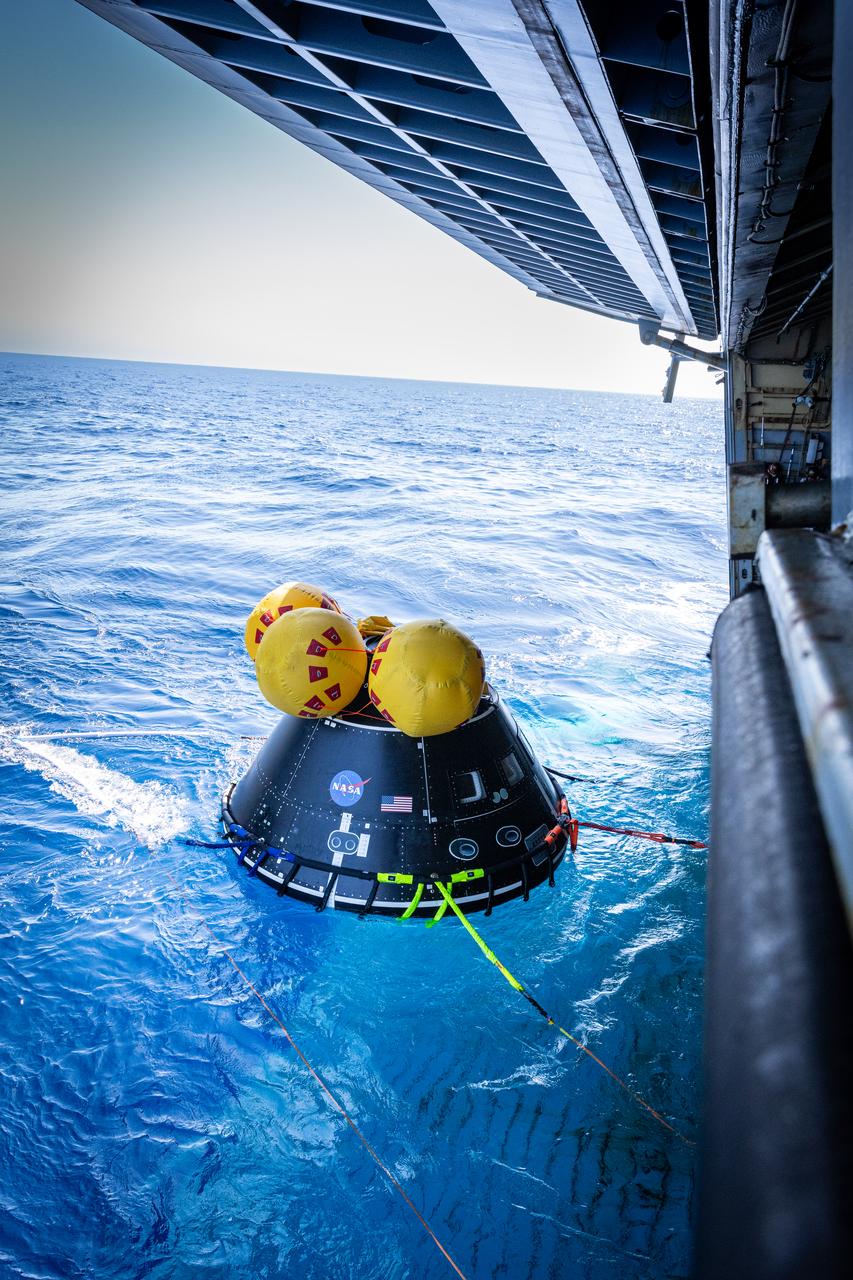
The Crew Module Test Article (CMTA) is seen in the waters of the Pacific Ocean during NASA’s Underway Recovery Test 10 (URT-10). The CMTA is a full-scale mockup of the Orion spacecraft and is used by NASA and its Department of Defense partners to practice recovery procedures for crewed Artemis missions. URT-10 is the first test specifically in support of the Artemis II mission and allowed the team to practice what it will be like to recover astronauts and get them back to the recovery ship safely.
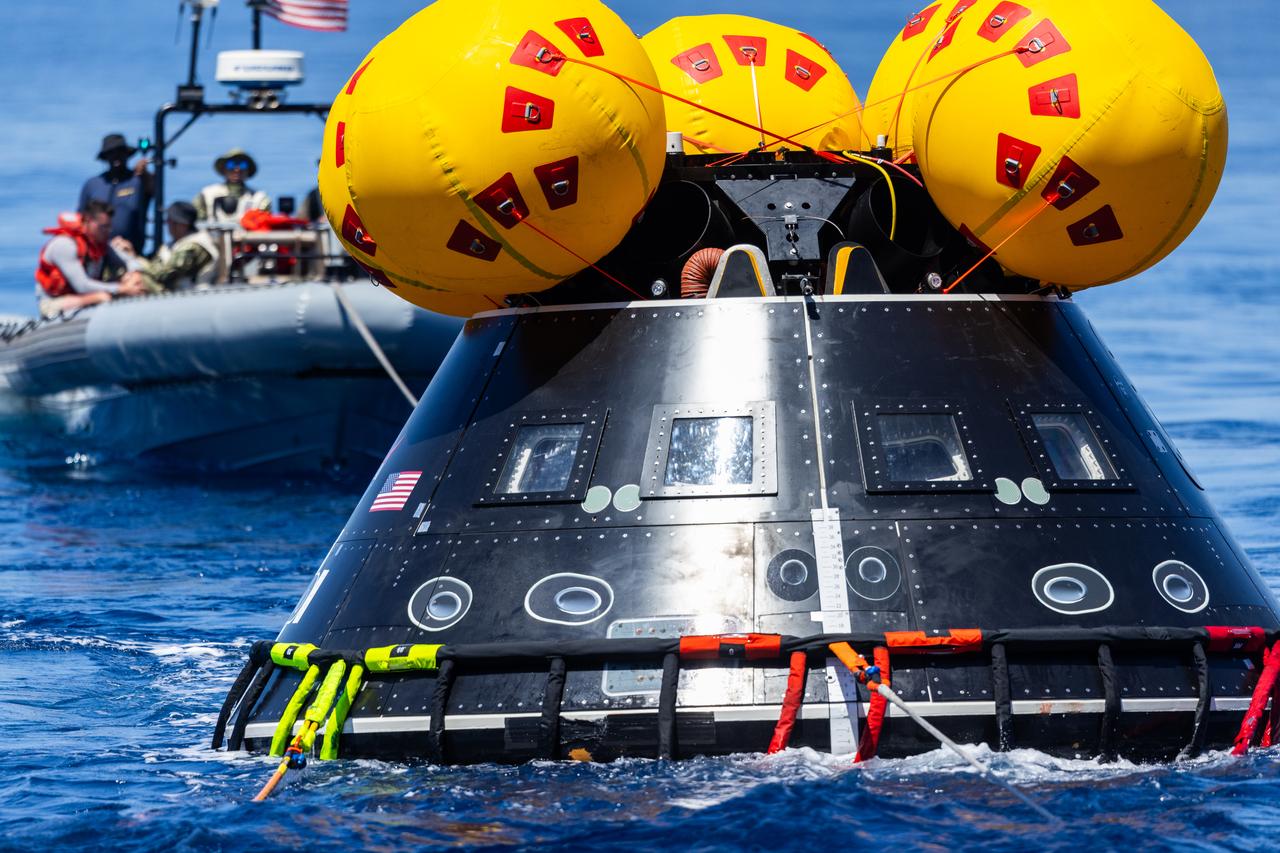
The Crew Module Test Article (CMTA) is seen in the waters of the Pacific Ocean during NASA’s Underway Recovery Test 10 (URT-10). The CMTA is a full-scale mockup of the Orion spacecraft and is used by NASA and its Department of Defense partners to practice recovery procedures for crewed Artemis missions. URT-10 is the first test specifically in support of the Artemis II mission and allowed the team to practice what it will be like to recover astronauts and get them back to the recovery ship safely.
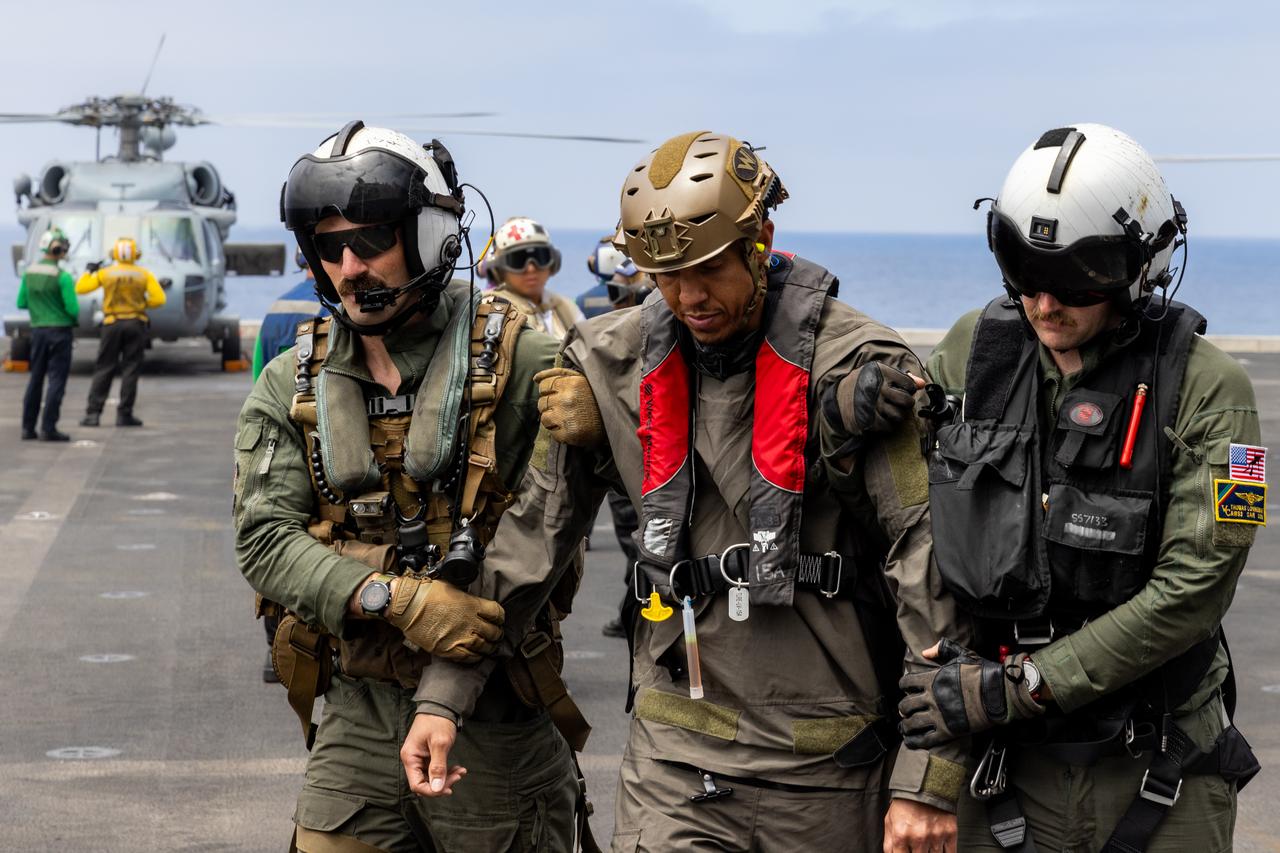
Naval helicopter pilots from Helicopter Sea Combat Squadron (HSC) 23 “Wildcards” escort a pilot acting as an Artemis II astronaut on the ships flight deck during an Artemis II mission recovery simulation as part of NASA’s Underway Recovery Test 10 off the coast of San Diego. HSC-23 will be responsible for flying the Artemis II crew from the Orion spacecraft to the recovery vessel once they splash down after a 10-day mission around the Moon.
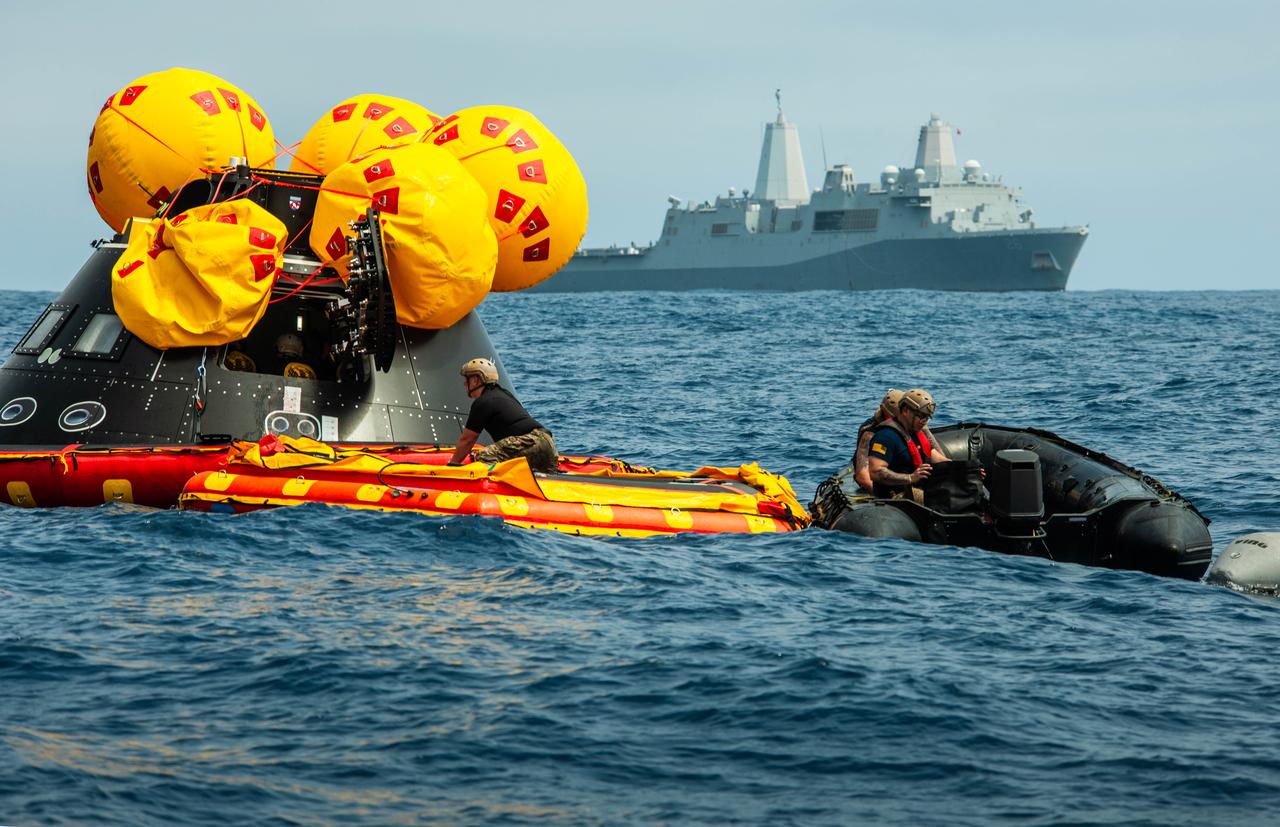
Navy divers from Explosive Ordnance Disposal (EOD) Expeditionary Support Unit 1 work to secure the Orion Crew Module Test Article (CMTA) in the Pacific Ocean as part of NASA’s Underway Recovery Test 10 (URT-10). The divers are trained in open water and small boat procedures and will be the team to help Artemis astronauts exit the Orion spacecraft and make it safely to the recovery ship after splashdown in addition to preparing the spacecraft to be transported back inside the recovery ship.
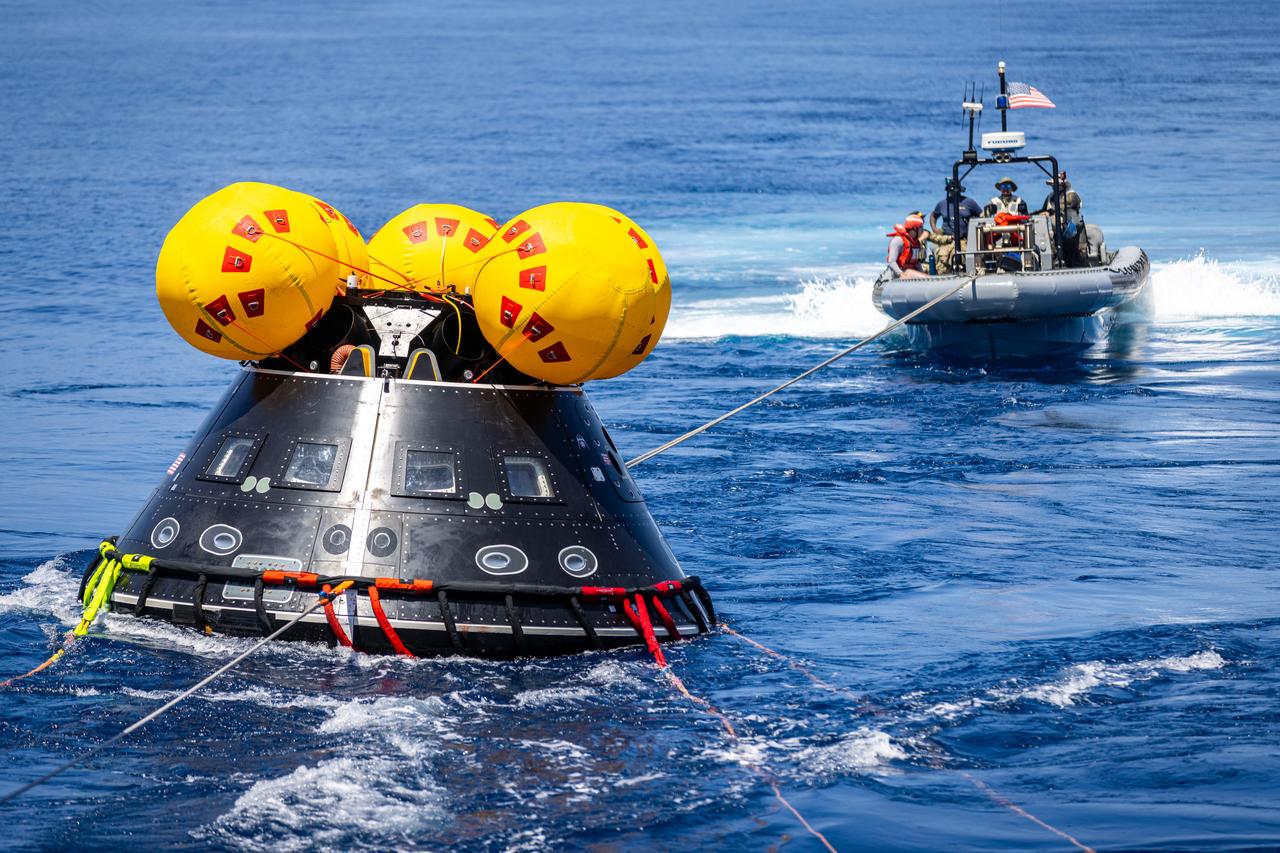
The Crew Module Test Article (CMTA) is seen in the waters of the Pacific Ocean during NASA’s Underway Recovery Test 10 (URT-10). The CMTA is a full-scale mockup of the Orion spacecraft and is used by NASA and its Department of Defense partners to practice recovery procedures for crewed Artemis missions. URT-10 is the first test specifically in support of the Artemis II mission and allowed the team to practice what it will be like to recover astronauts and get them back to the recovery ship safely.
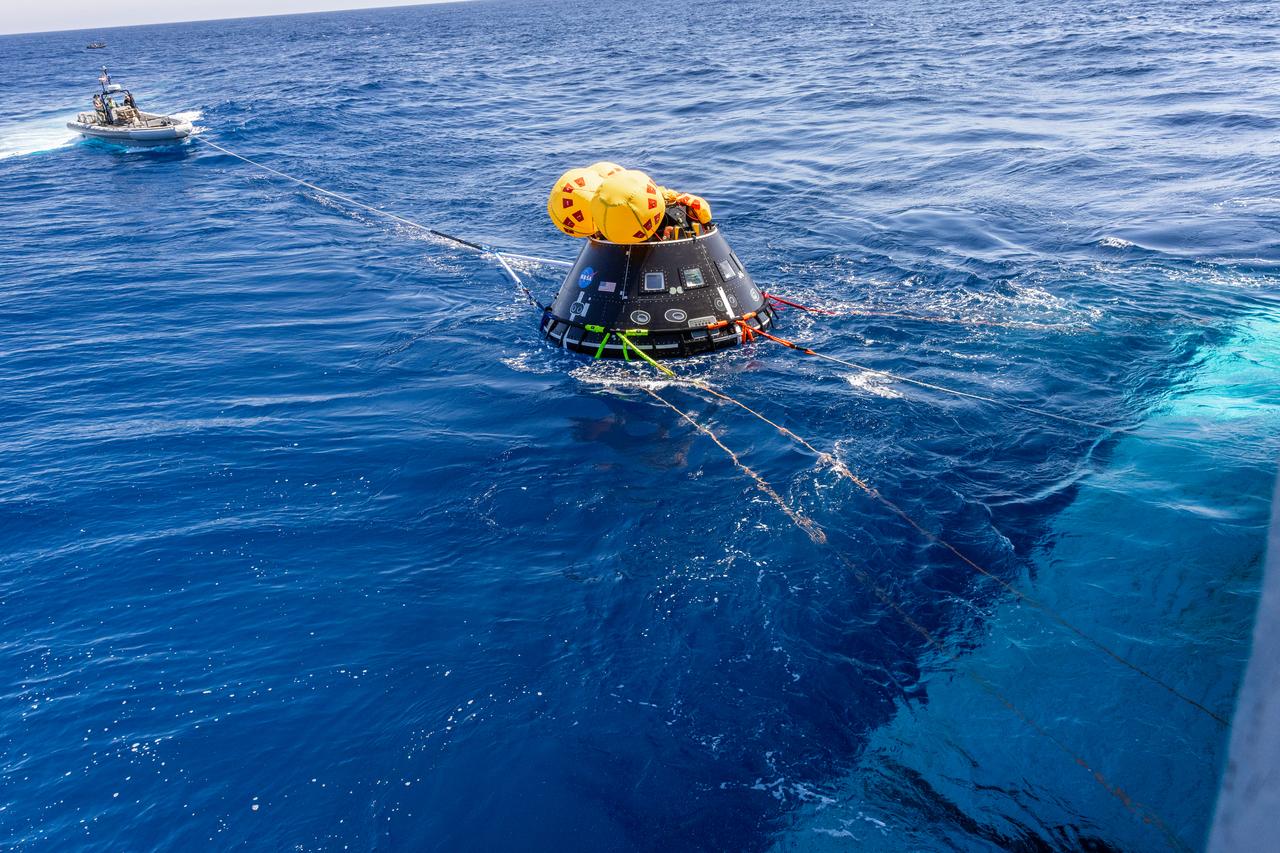
The Crew Module Test Article (CMTA) is seen in the waters of the Pacific Ocean during NASA’s Underway Recovery Test 10 (URT-10). The CMTA is a full-scale mockup of the Orion spacecraft and is used by NASA and its Department of Defense partners to practice recovery procedures for crewed Artemis missions. URT-10 is the first test specifically in support of the Artemis II mission and allowed the team to practice what it will be like to recover astronauts and get them back to the recovery ship safely.
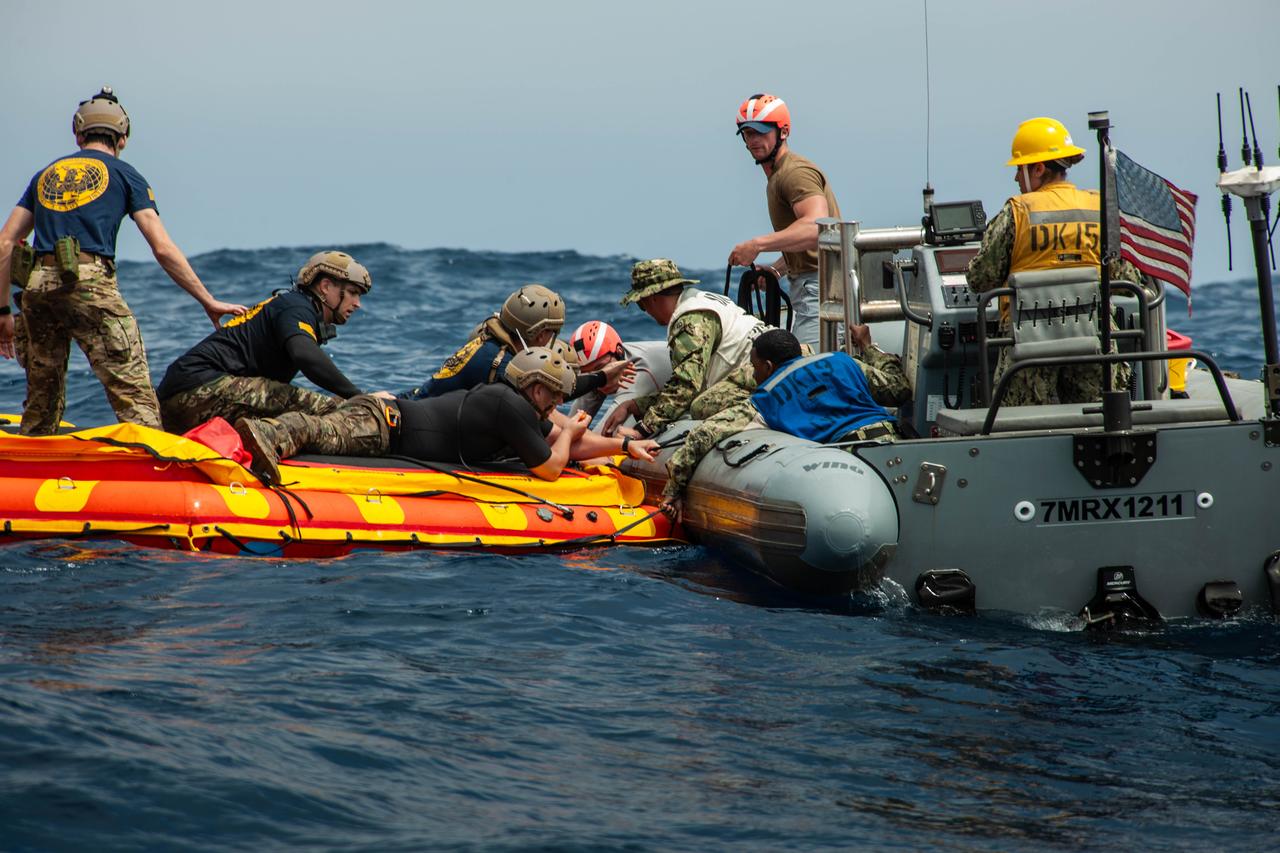
Navy divers from Explosive Ordnance Disposal (EOD) Expeditionary Support Unit 1 work to secure the Orion Crew Module Test Article (CMTA) in the Pacific Ocean as part of NASA’s Underway Recovery Test 10 (URT-10). The divers are trained in open water and small boat procedures and will be the team to help Artemis astronauts exit the Orion spacecraft and make it safely to the recovery ship after splashdown in addition to preparing the spacecraft to be transported back inside the recovery ship.
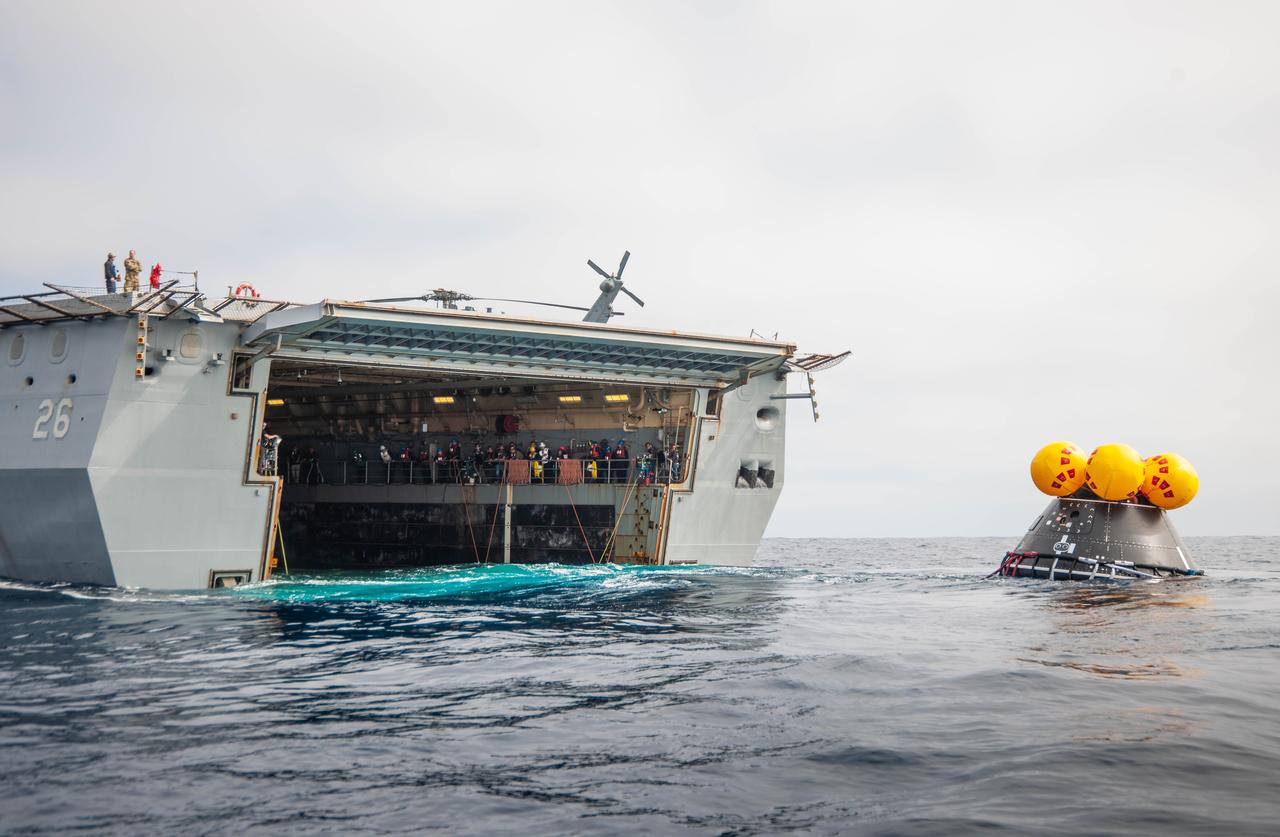
The Crew Module Test Article (CMTA) is seen in the waters of the Pacific Ocean during NASA’s Underway Recovery Test 10 (URT-10). The CMTA is a full-scale mockup of the Orion spacecraft and is used by NASA and its Department of Defense partners to practice recovery procedures for crewed Artemis missions. URT-10 is the first test specifically in support of the Artemis II mission and allowed the team to practice what it will be like to recover astronauts and get them back to the recovery ship safely.
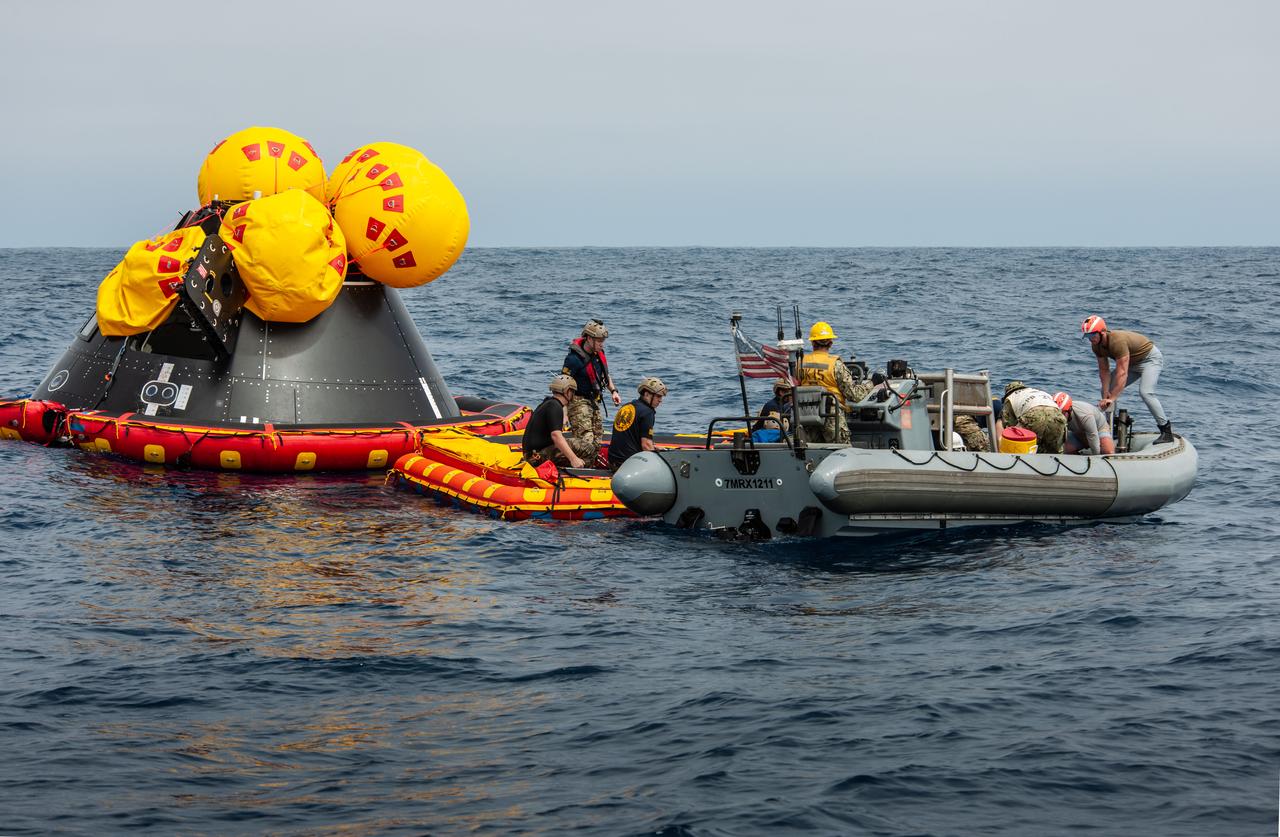
Navy divers from Explosive Ordnance Disposal (EOD) Expeditionary Support Unit 1 work to secure the Orion Crew Module Test Article (CMTA) in the Pacific Ocean as part of NASA’s Underway Recovery Test 10 (URT-10). The divers are trained in open water and small boat procedures and will be the team to help Artemis astronauts exit the Orion spacecraft and make it safely to the recovery ship after splashdown in addition to preparing the spacecraft to be transported back inside the recovery ship.
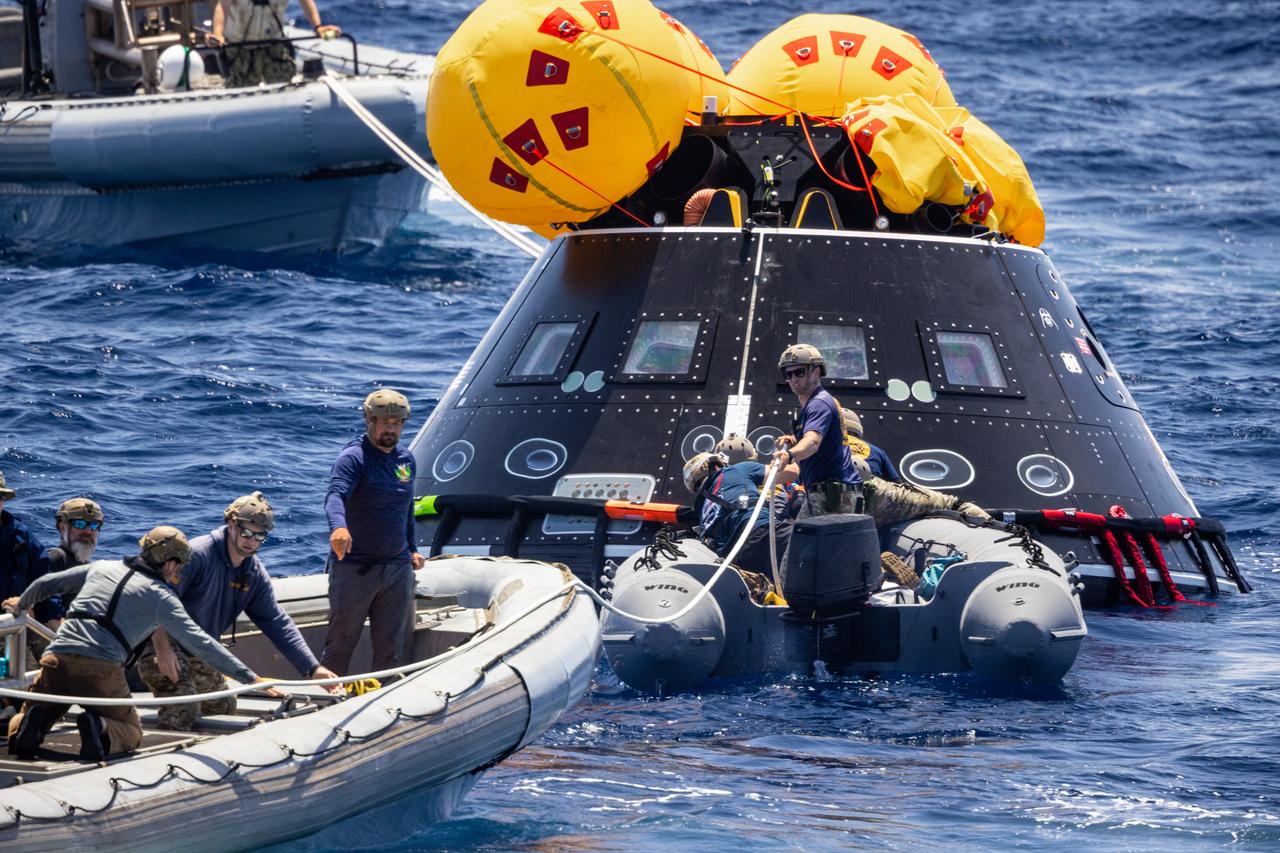
Navy divers from Explosive Ordnance Disposal (EOD) Expeditionary Support Unit 1 work to secure the Orion Crew Module Test Article (CMTA) in the Pacific Ocean as part of NASA’s Underway Recovery Test 10 (URT-10). The divers are trained in open water and small boat procedures and will be the team to help Artemis astronauts exit the Orion spacecraft and make it safely to the recovery ship after splashdown in addition to preparing the spacecraft to be transported back inside the recovery ship.
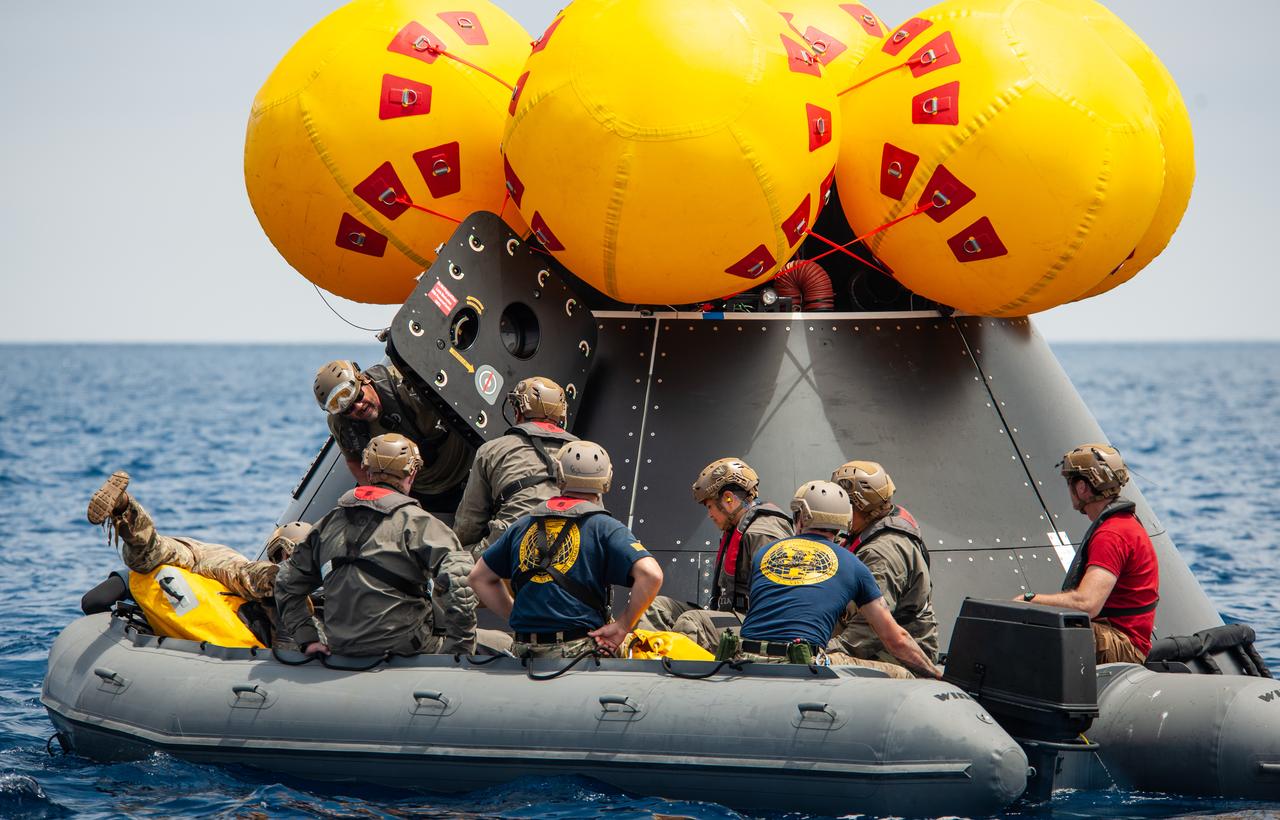
NASA, Navy, and Air Force personnel practice Artemis recovery procedures in the Pacific Ocean as part of Underway Recovery Test-10 off the coast of San Diego. In this photo Navy divers are seen entering the Orion Crew Module Test Article to prepare to practice recovering astronauts out of the spacecraft and onto an inflatable “front porch” where the crew will be picked up with helicopters and lifted up via helicopter back to the recovery vessel.
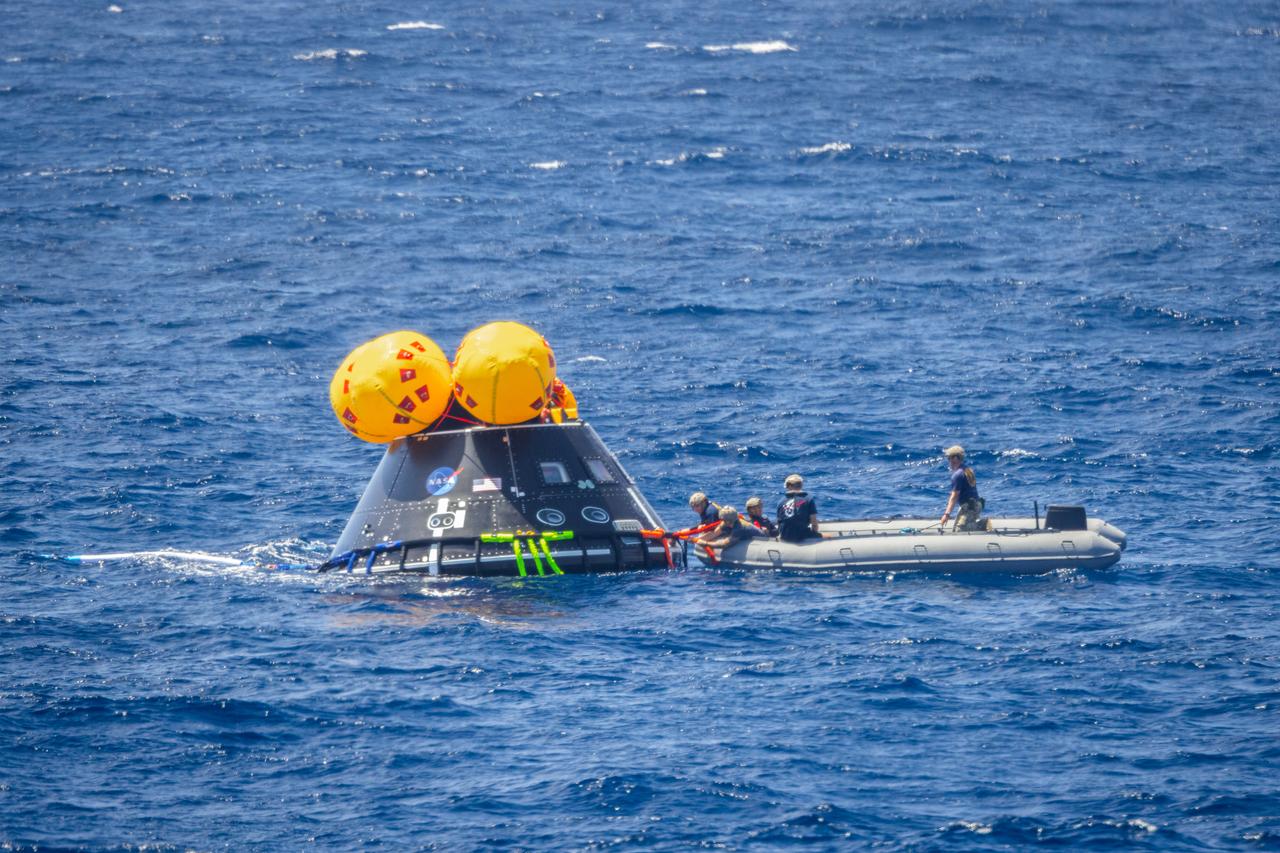
Navy divers from Explosive Ordnance Disposal (EOD) Expeditionary Support Unit 1 work to secure the Orion Crew Module Test Article (CMTA) in the Pacific Ocean as part of NASA’s Underway Recovery Test 10 (URT-10). The divers are trained in open water and small boat procedures and will be the team to help Artemis astronauts exit the Orion spacecraft and make it safely to the recovery ship after splashdown in addition to preparing the spacecraft to be transported back inside the recovery ship.
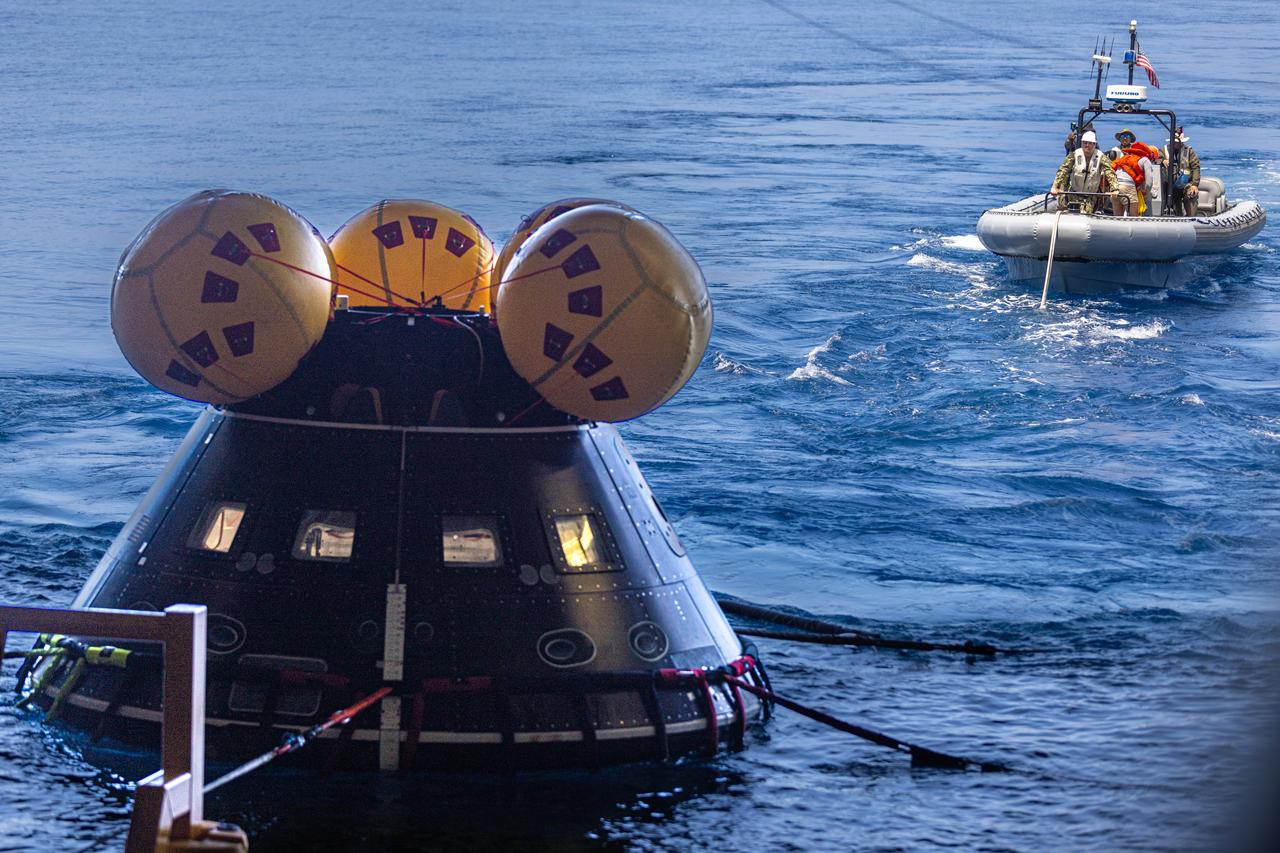
The Crew Module Test Article (CMTA) is seen in the waters of the Pacific Ocean during NASA’s Underway Recovery Test 10 (URT-10). The CMTA is a full-scale mockup of the Orion spacecraft and is used by NASA and its Department of Defense partners to practice recovery procedures for crewed Artemis missions. URT-10 is the first test specifically in support of the Artemis II mission and allowed the team to practice what it will be like to recover astronauts and get them back to the recovery ship safely.
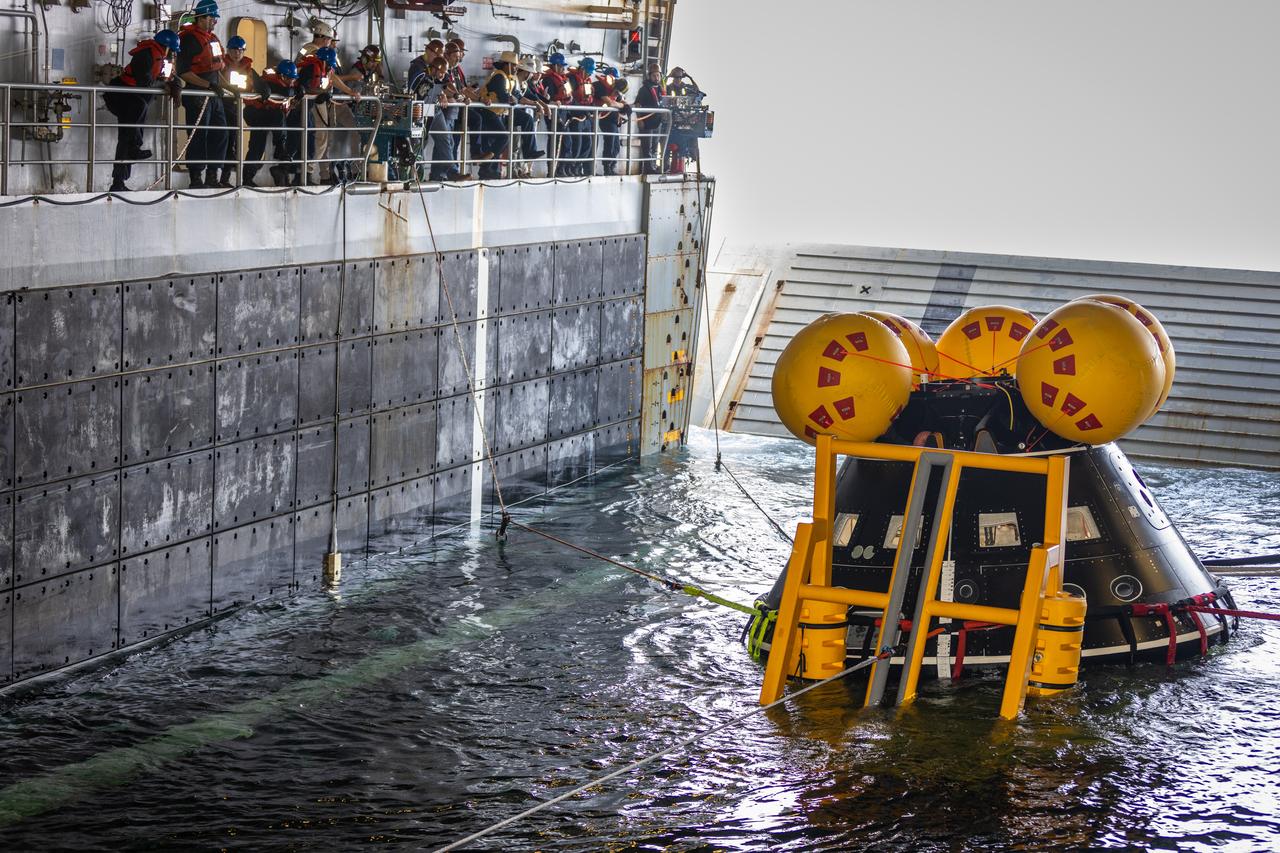
The Crew Module Test Article (CMTA) is seen in the waters of the Pacific Ocean during NASA’s Underway Recovery Test 10 (URT-10). The CMTA is a full-scale mockup of the Orion spacecraft and is used by NASA and its Department of Defense partners to practice recovery procedures for crewed Artemis missions. URT-10 is the first test specifically in support of the Artemis II mission and allowed the team to practice what it will be like to recover astronauts and get them back to the recovery ship safely.
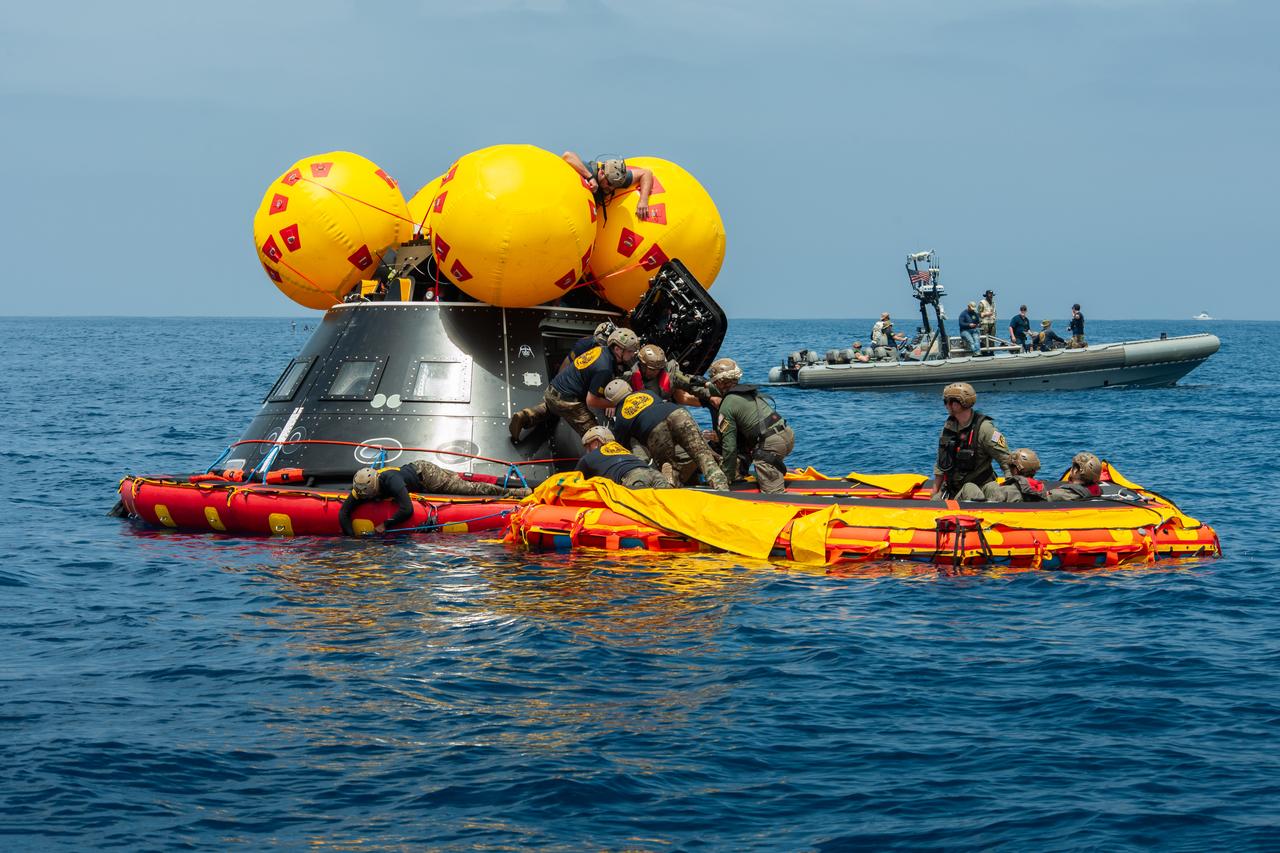
NASA, Navy, and Air Force personnel practice Artemis recovery procedures in the Pacific Ocean as part of Underway Recovery Test 10 (URT-10) off the coast of San Diego. In this photo, Navy divers are seen entering the Orion Crew Module Test Article (CMTA) and assisting a simulated crew member exiting the spacecraft to practice recovering astronauts out of the spacecraft and onto an inflatable “front porch” where the crew will be picked up with helicopters and lifted up via helicopter back to the recovery vessel.
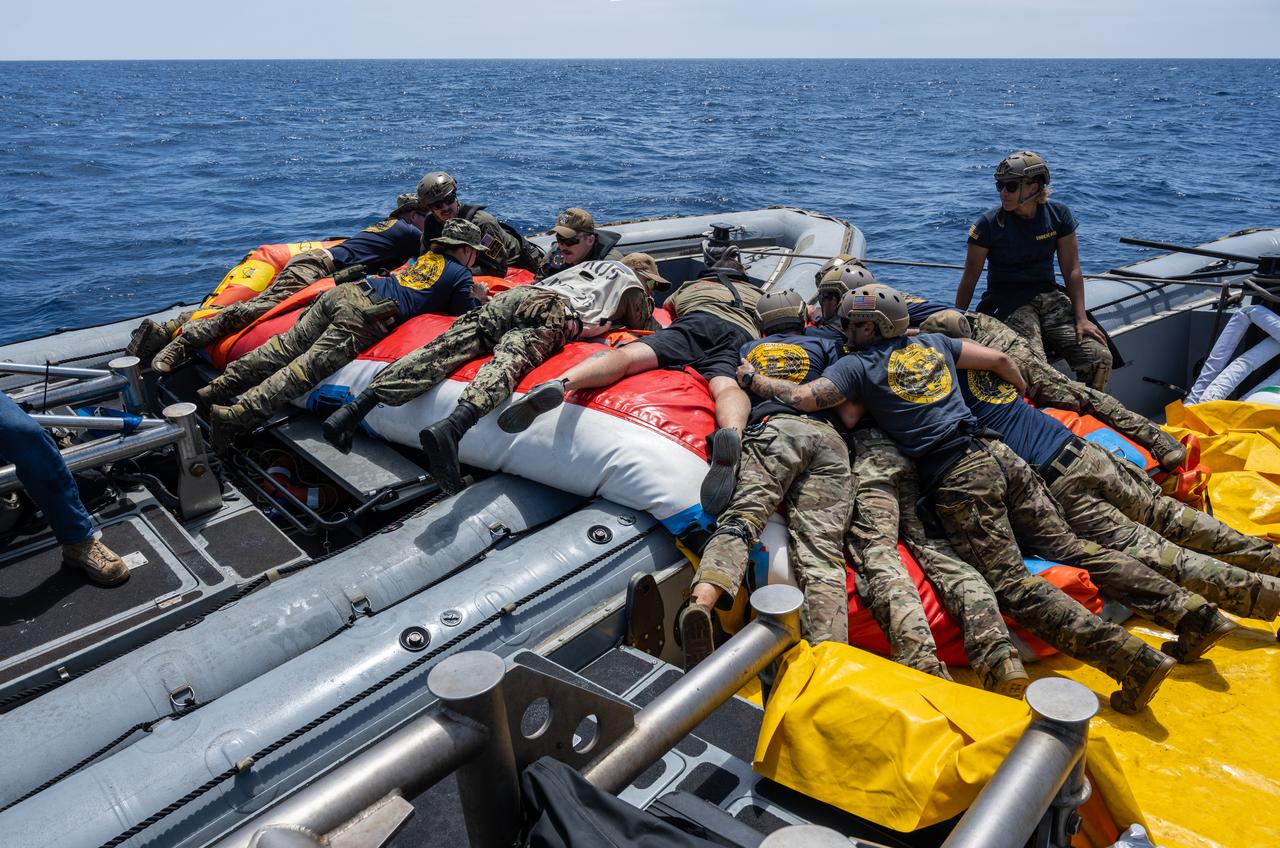
Navy Divers from Explosive Ordnance Disposal (EOD) Expeditionary Support Unit 1, sailors from USS John P Murtha and NASA Open Water Lead, Tim Goddard, work to deflate Artemis recovery equipment after a simulated Artemis recovery operation as part of NASA’s Underway Recovery Test 10. The team will use these inflatables as a platform for astronauts as they exit the Orion spacecraft after splashing down in the Pacific Ocean
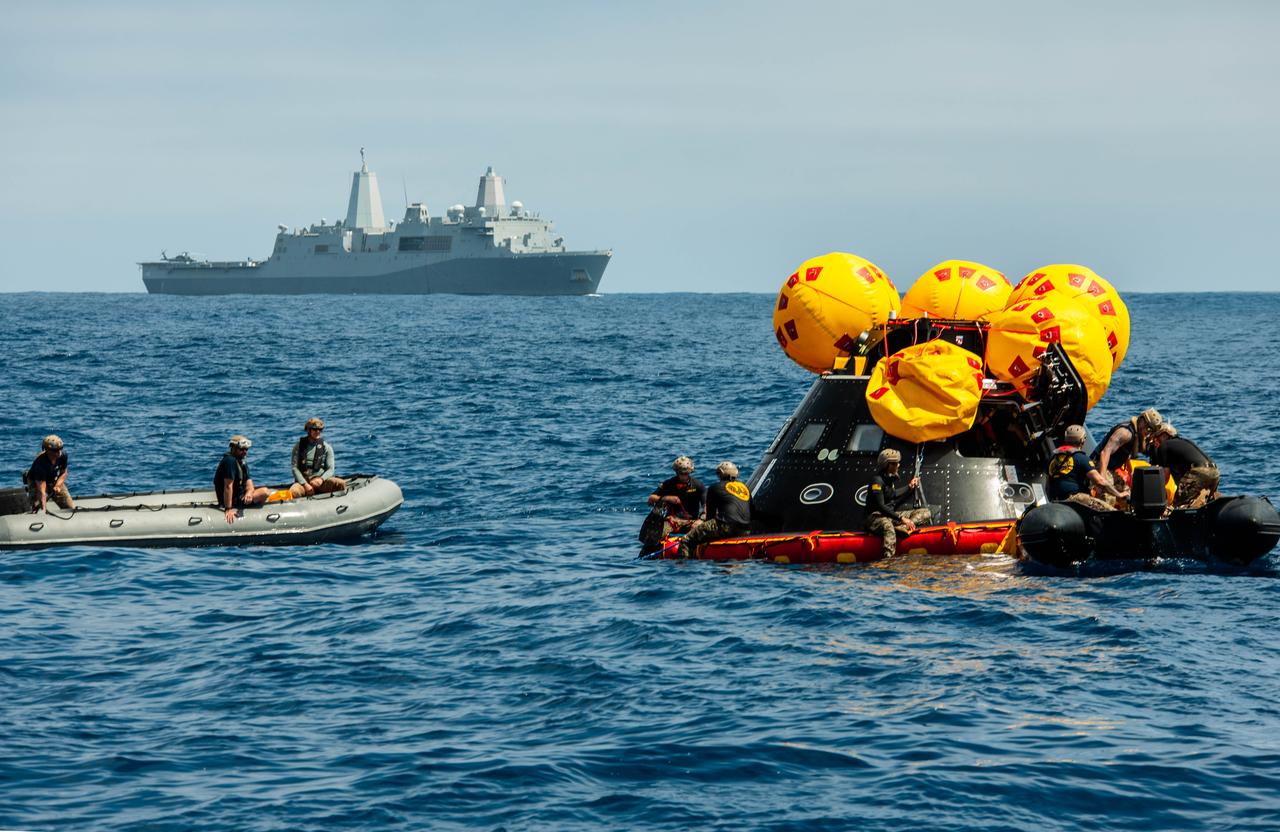
Navy divers from Explosive Ordnance Disposal (EOD) Expeditionary Support Unit 1 work to secure the Orion Crew Module Test Article (CMTA) in the Pacific Ocean as part of NASA’s Underway Recovery Test 10 (URT-10). The divers are trained in open water and small boat procedures and will be the team to help Artemis astronauts exit the Orion spacecraft and make it safely to the recovery ship after splashdown in addition to preparing the spacecraft to be transported back inside the recovery ship.
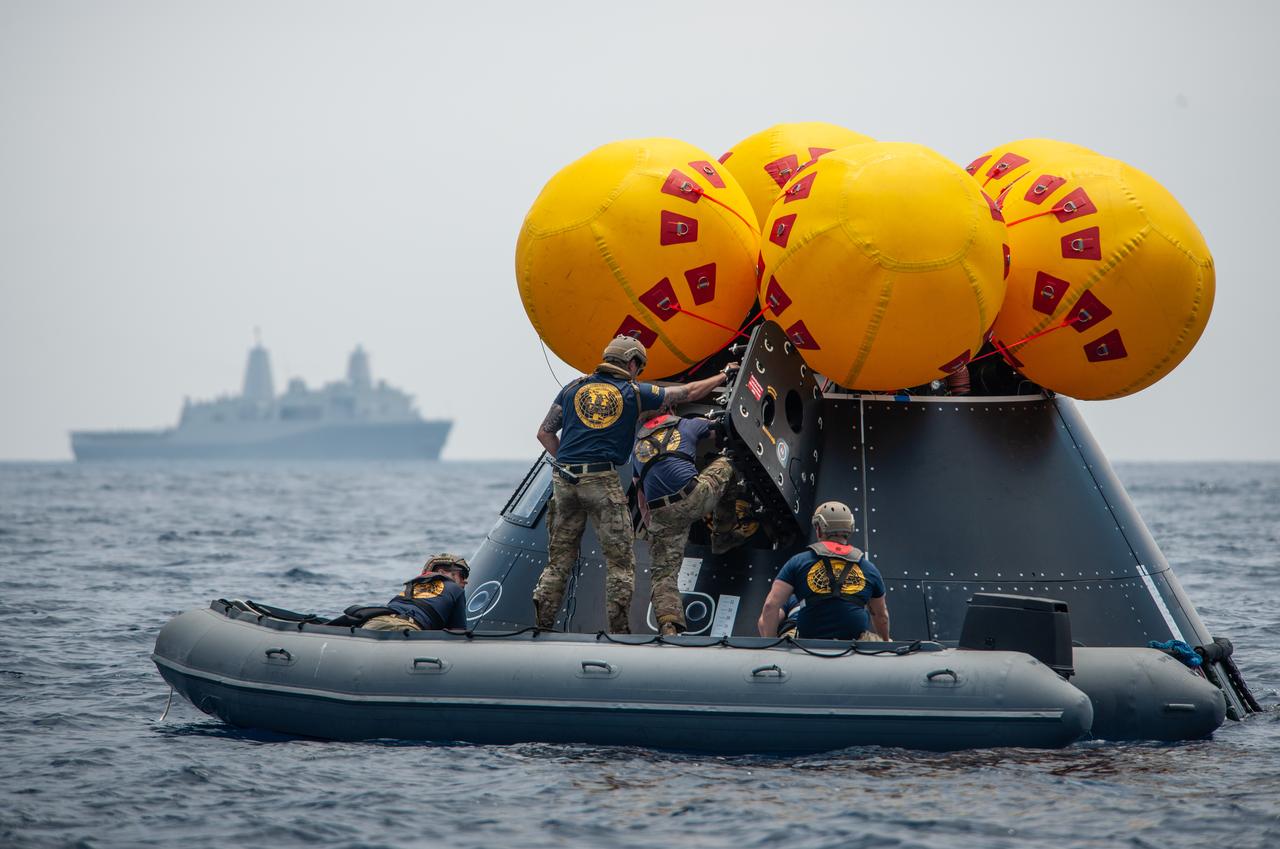
NASA, Navy, and Air Force personnel practice Artemis recovery procedures in the Pacific Ocean as part of Underway Recovery Test-10 off the coast of San Diego. In this photo Navy divers are seen entering the Orion Crew Module Test Article to prepare to practice recovering astronauts out of the spacecraft and onto an inflatable “front porch” where the crew will be picked up with helicopters and lifted up via helicopter back to the recovery vessel.
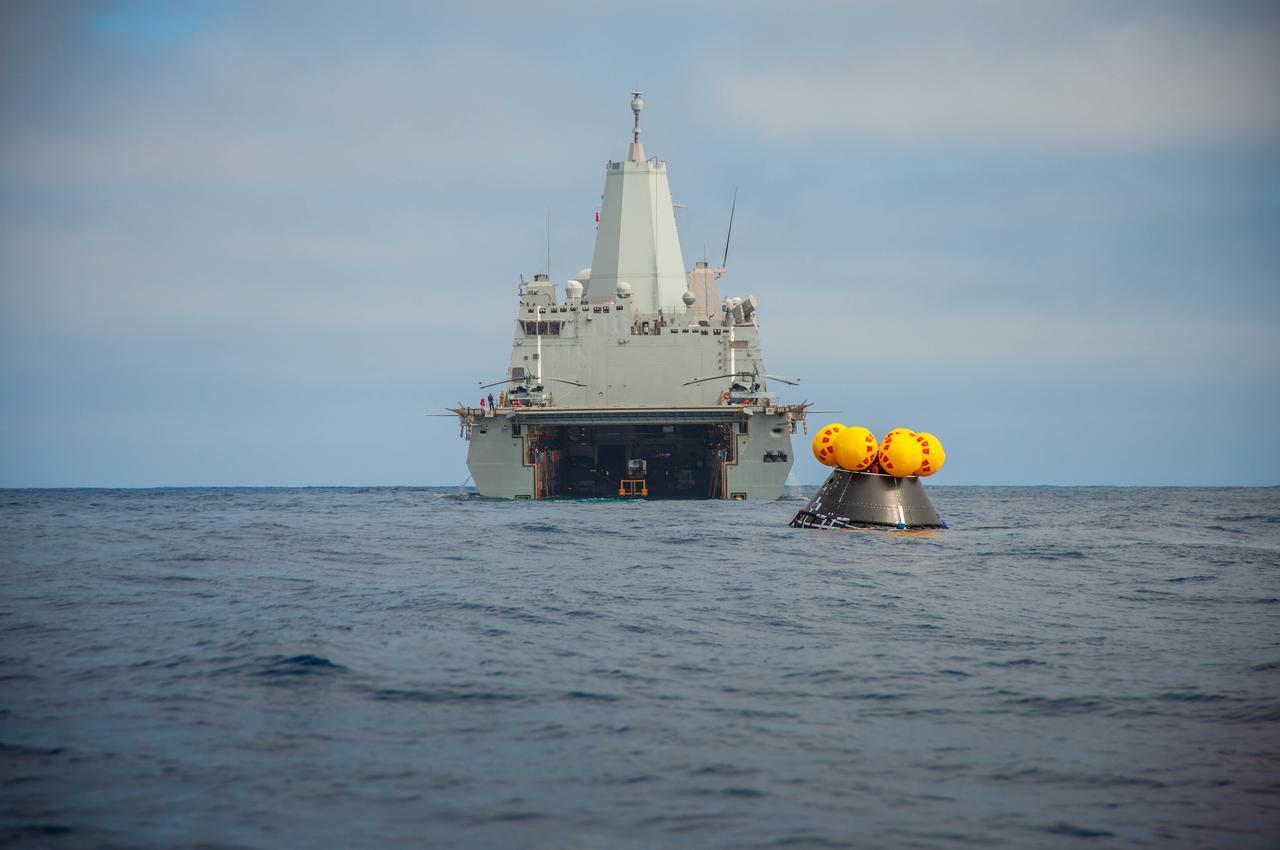
The Crew Module Test Article (CMTA) is seen in the waters of the Pacific Ocean during NASA’s Underway Recovery Test 10 (URT-10). The CMTA is a full-scale mockup of the Orion spacecraft and is used by NASA and its Department of Defense partners to practice recovery procedures for crewed Artemis missions. URT-10 is the first test specifically in support of the Artemis II mission and allowed the team to practice what it will be like to recover astronauts and get them back to the recovery ship safely.
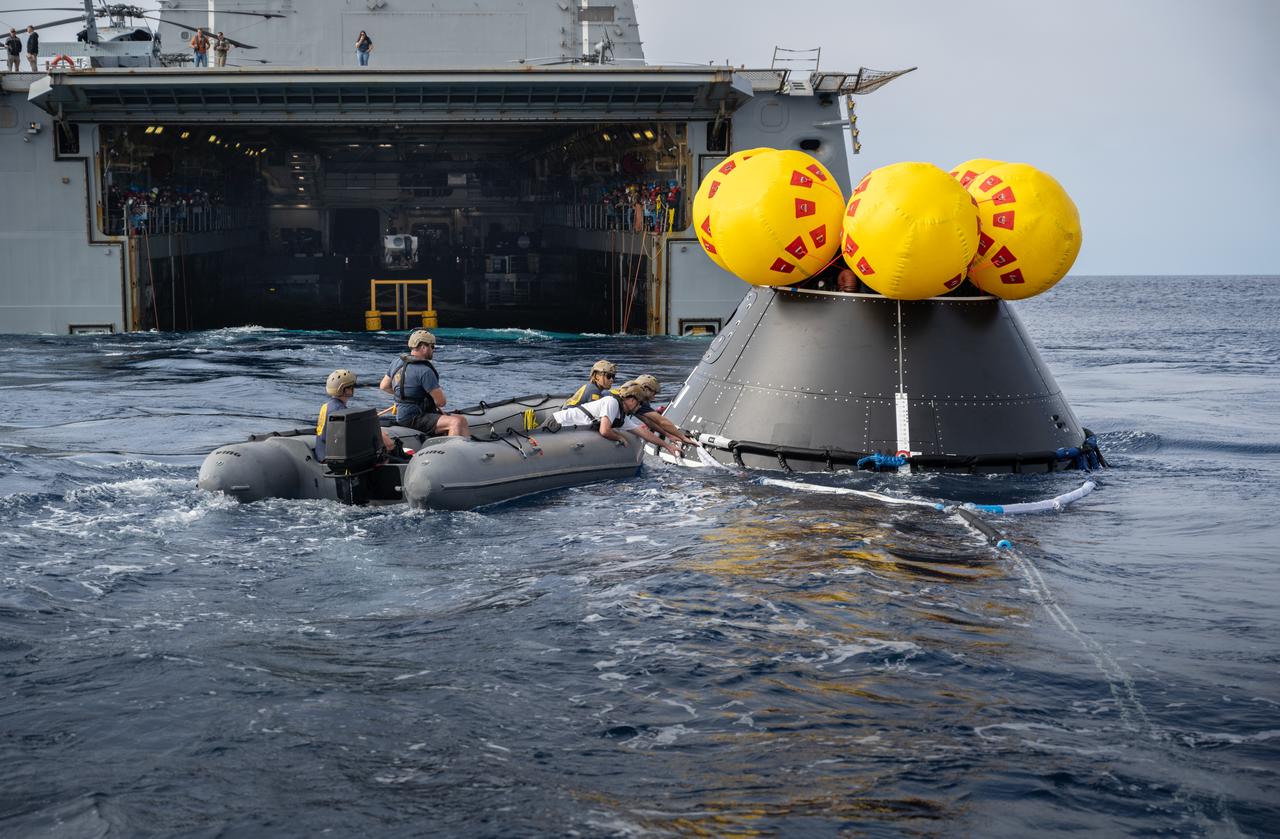
NASA, Navy, and Air Force personnel practice Artemis recovery procedures in the Pacific Ocean as part of Underway Recovery Test 10 (URT-10) off the coast of San Diego. In this photo, Navy divers are seen surrounding the Orion Crew Module Test Article (CMTA) and preparing to recover it inside the recovery ship while simulated astronauts are picked up on an inflatable “front porch” by Naval helicopter pilots from Helicopter Sea Combat Squadron (HSC) 23 “Wildcards” and flown back to the USS John P. Murtha.
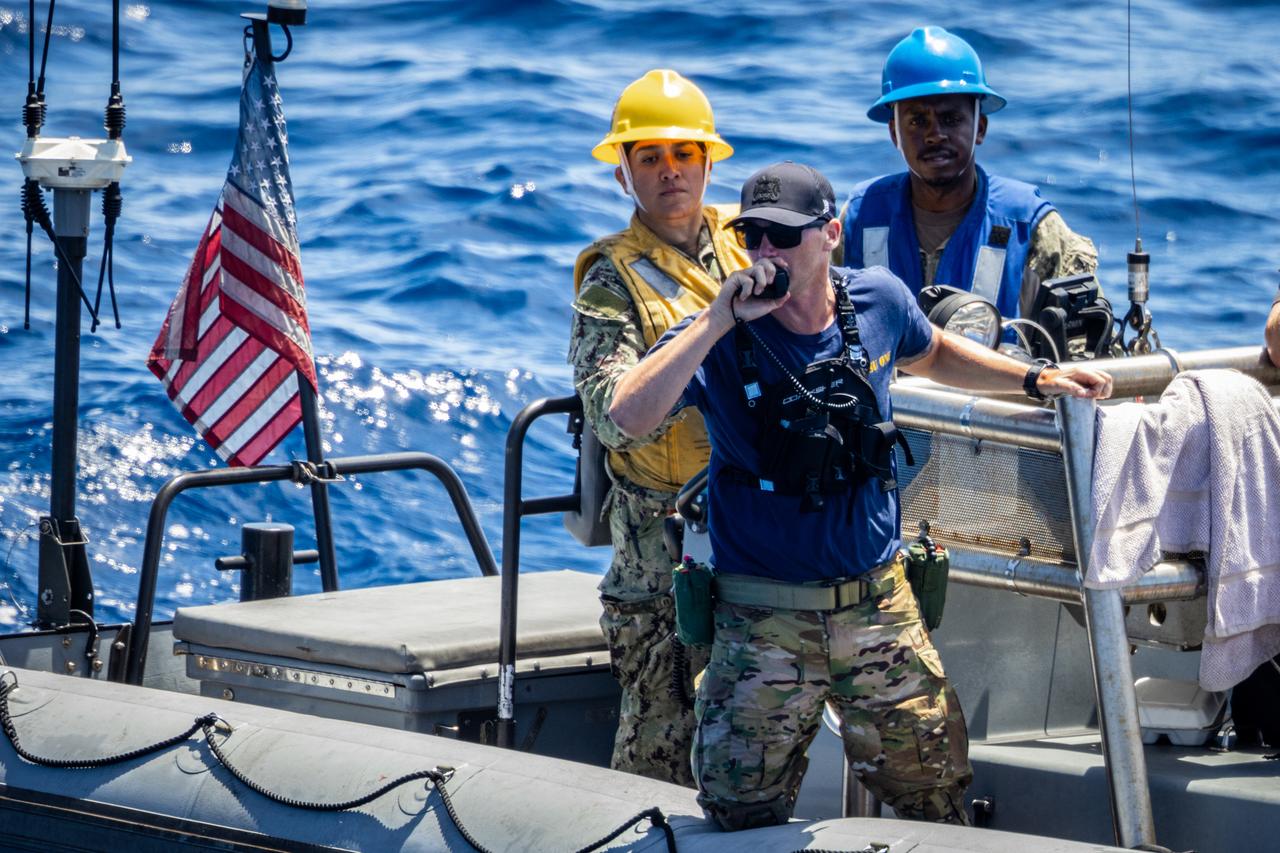
Navy divers from Explosive Ordnance Disposal (EOD) Expeditionary Support Unit 1 work to secure the Orion Crew Module Test Article (CMTA) in the Pacific Ocean as part of NASA’s Underway Recovery Test 10 (URT-10). The divers are trained in open water and small boat procedures and will be the team to help Artemis astronauts exit the Orion spacecraft and make it safely to the recovery ship after splashdown in addition to preparing the spacecraft to be transported back inside the recovery ship.
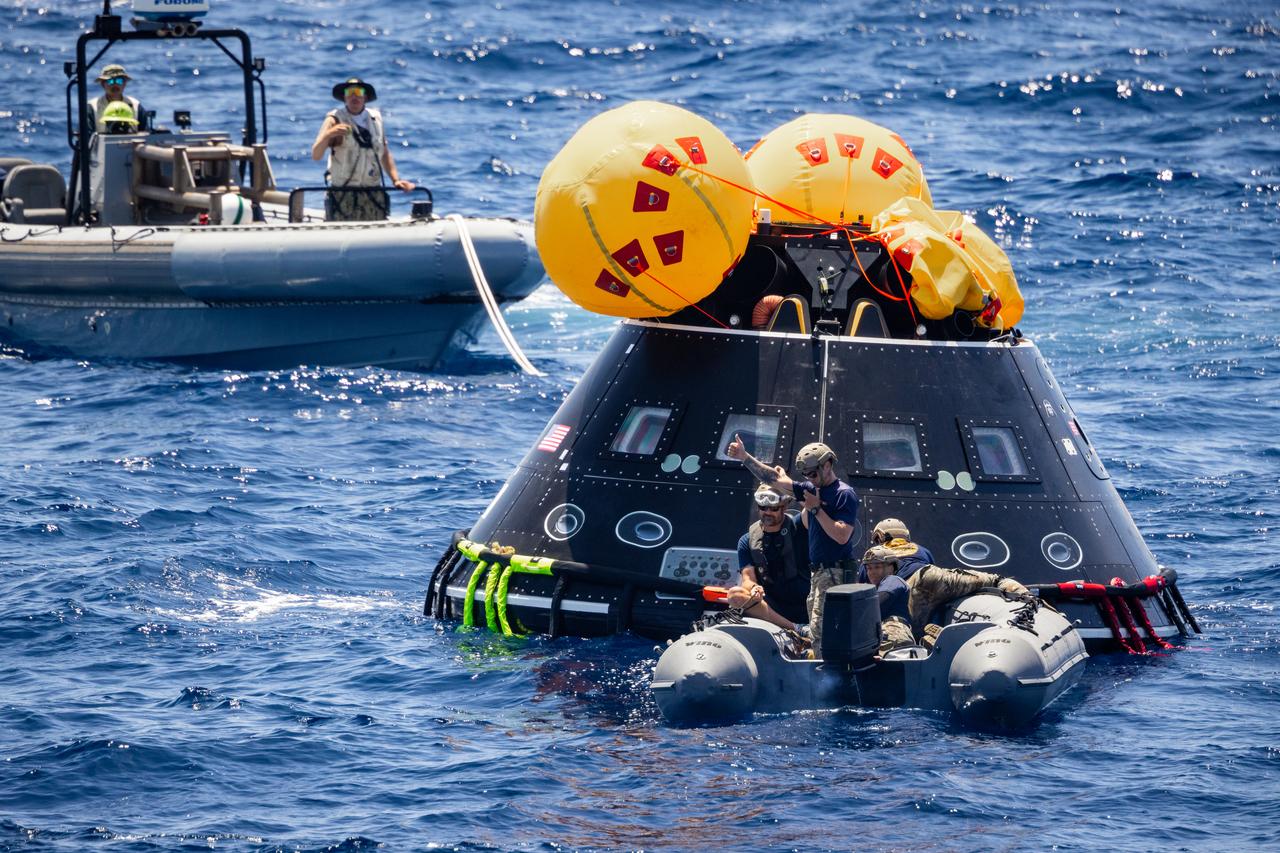
Navy divers from Explosive Ordnance Disposal (EOD) Expeditionary Support Unit 1 work to secure the Orion Crew Module Test Article (CMTA) in the Pacific Ocean as part of NASA’s Underway Recovery Test 10 (URT-10). The divers are trained in open water and small boat procedures and will be the team to help Artemis astronauts exit the Orion spacecraft and make it safely to the recovery ship after splashdown in addition to preparing the spacecraft to be transported back inside the recovery ship.
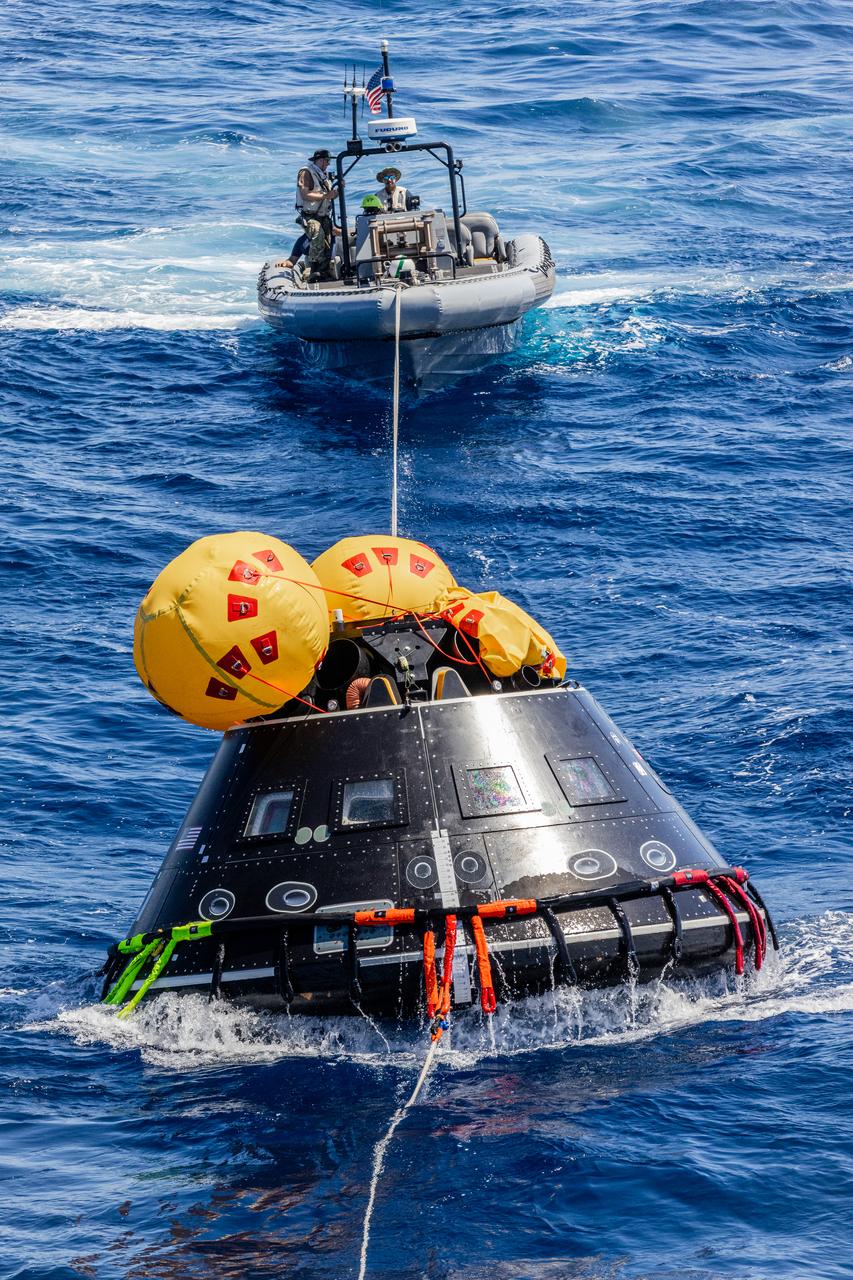
The Crew Module Test Article (CMTA) is seen in the waters of the Pacific Ocean during NASA’s Underway Recovery Test 10 (URT-10). The CMTA is a full-scale mockup of the Orion spacecraft and is used by NASA and its Department of Defense partners to practice recovery procedures for crewed Artemis missions. URT-10 is the first test specifically in support of the Artemis II mission and allowed the team to practice what it will be like to recover astronauts and get them back to the recovery ship safely.
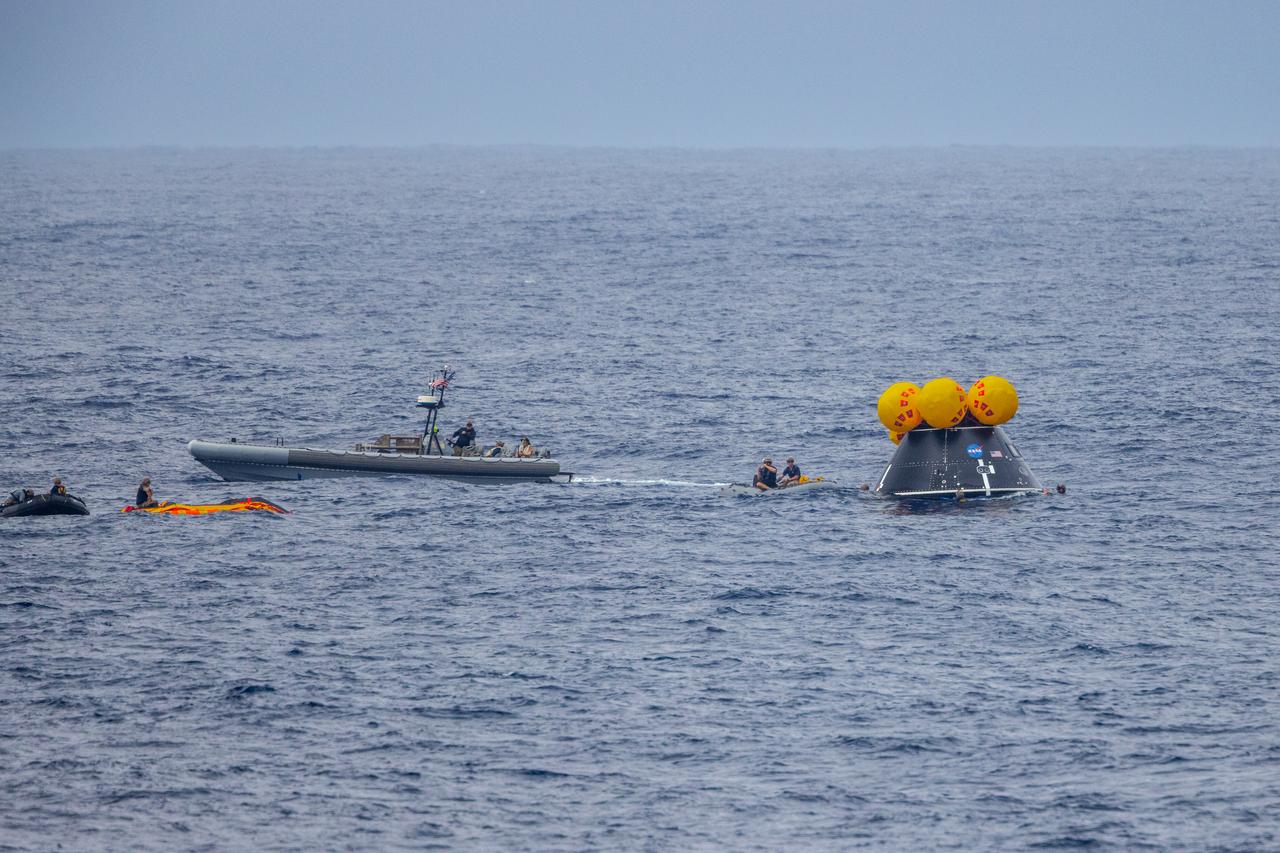
Navy divers from Explosive Ordnance Disposal (EOD) Expeditionary Support Unit 1 work to secure the Orion Crew Module Test Article (CMTA) in the Pacific Ocean as part of NASA’s Underway Recovery Test 10 (URT-10). The divers are trained in open water and small boat procedures and will be the team to help Artemis astronauts exit the Orion spacecraft and make it safely to the recovery ship after splashdown in addition to preparing the spacecraft to be transported back inside the recovery ship.
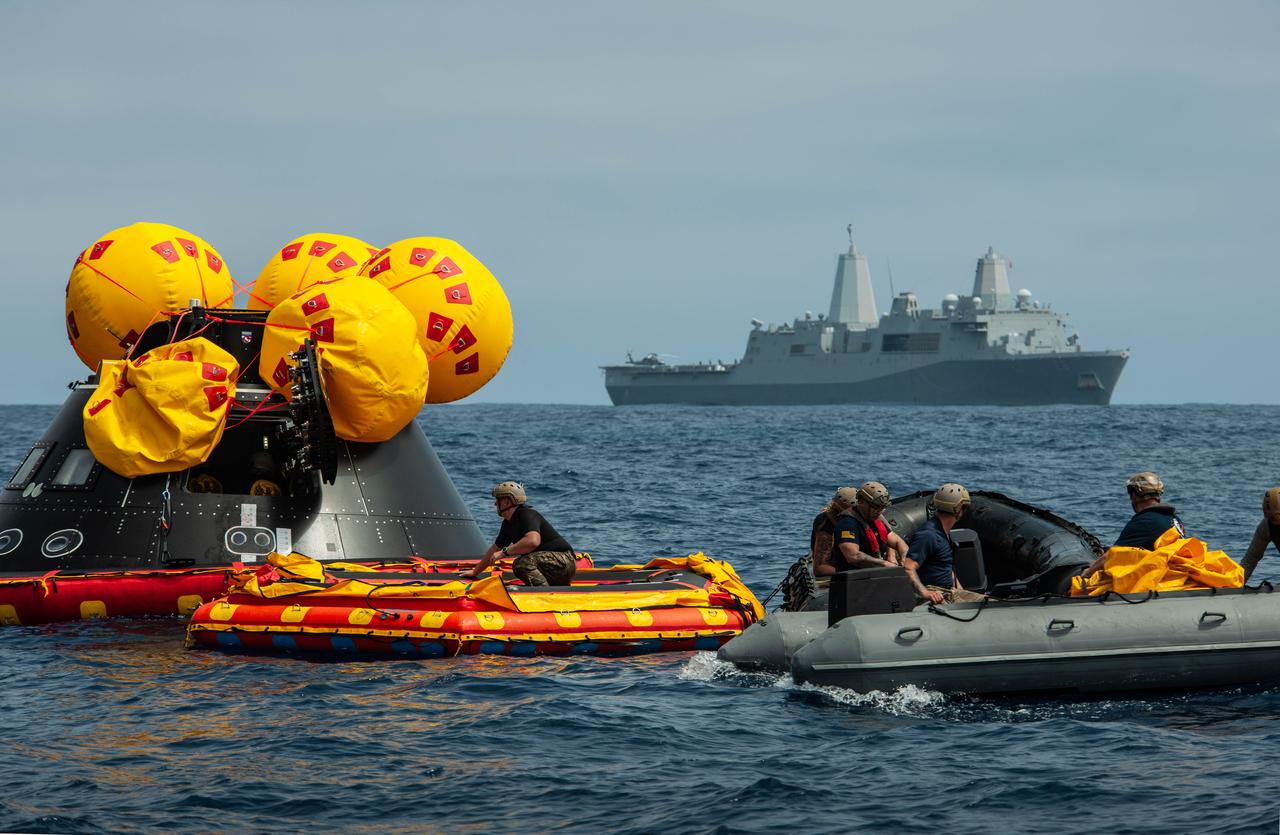
Navy divers from Explosive Ordnance Disposal (EOD) Expeditionary Support Unit 1 work to secure the Orion Crew Module Test Article (CMTA) in the Pacific Ocean as part of NASA’s Underway Recovery Test 10 (URT-10). The divers are trained in open water and small boat procedures and will be the team to help Artemis astronauts exit the Orion spacecraft and make it safely to the recovery ship after splashdown in addition to preparing the spacecraft to be transported back inside the recovery ship.
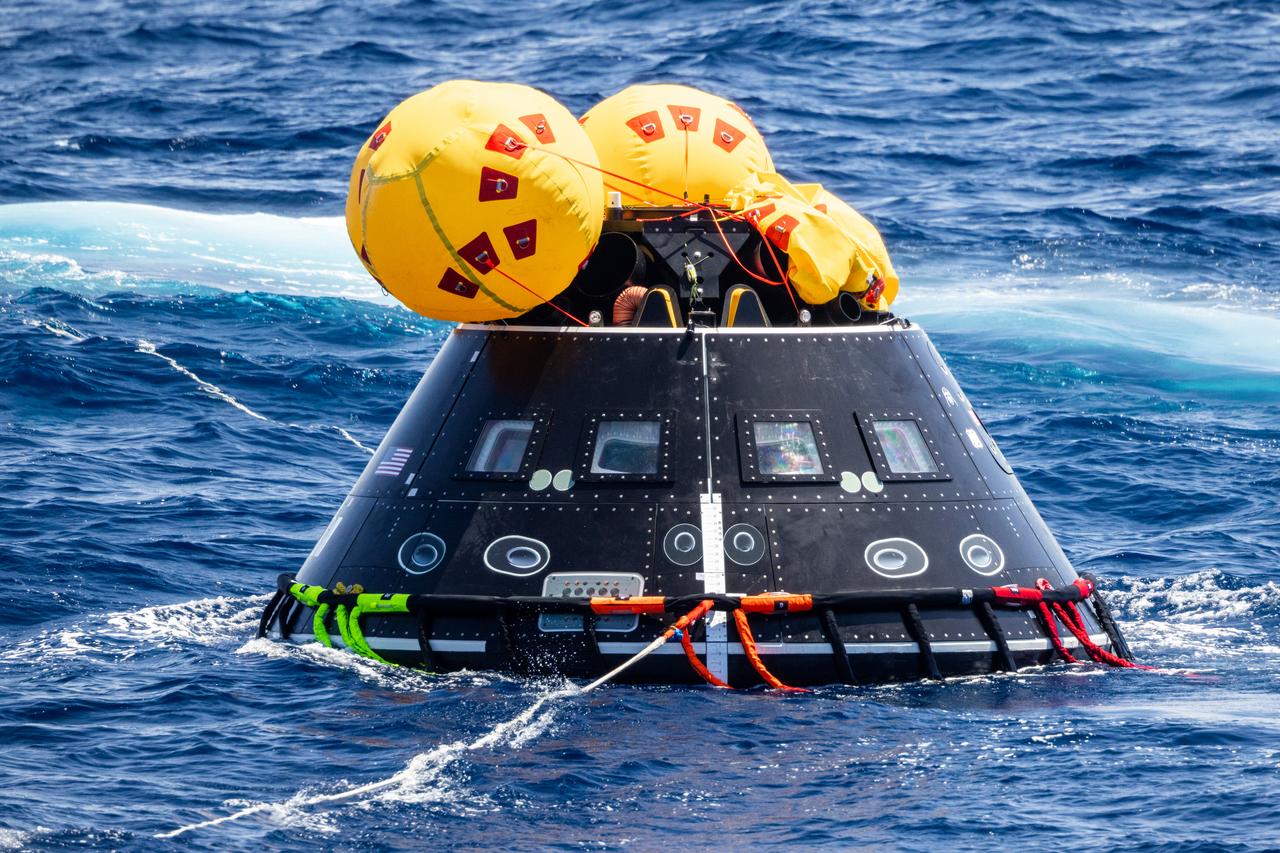
The Crew Module Test Article (CMTA) is seen in the waters of the Pacific Ocean during NASA’s Underway Recovery Test 10 (URT-10). The CMTA is a full-scale mockup of the Orion spacecraft and is used by NASA and its Department of Defense partners to practice recovery procedures for crewed Artemis missions. URT-10 is the first test specifically in support of the Artemis II mission and allowed the team to practice what it will be like to recover astronauts and get them back to the recovery ship safely.