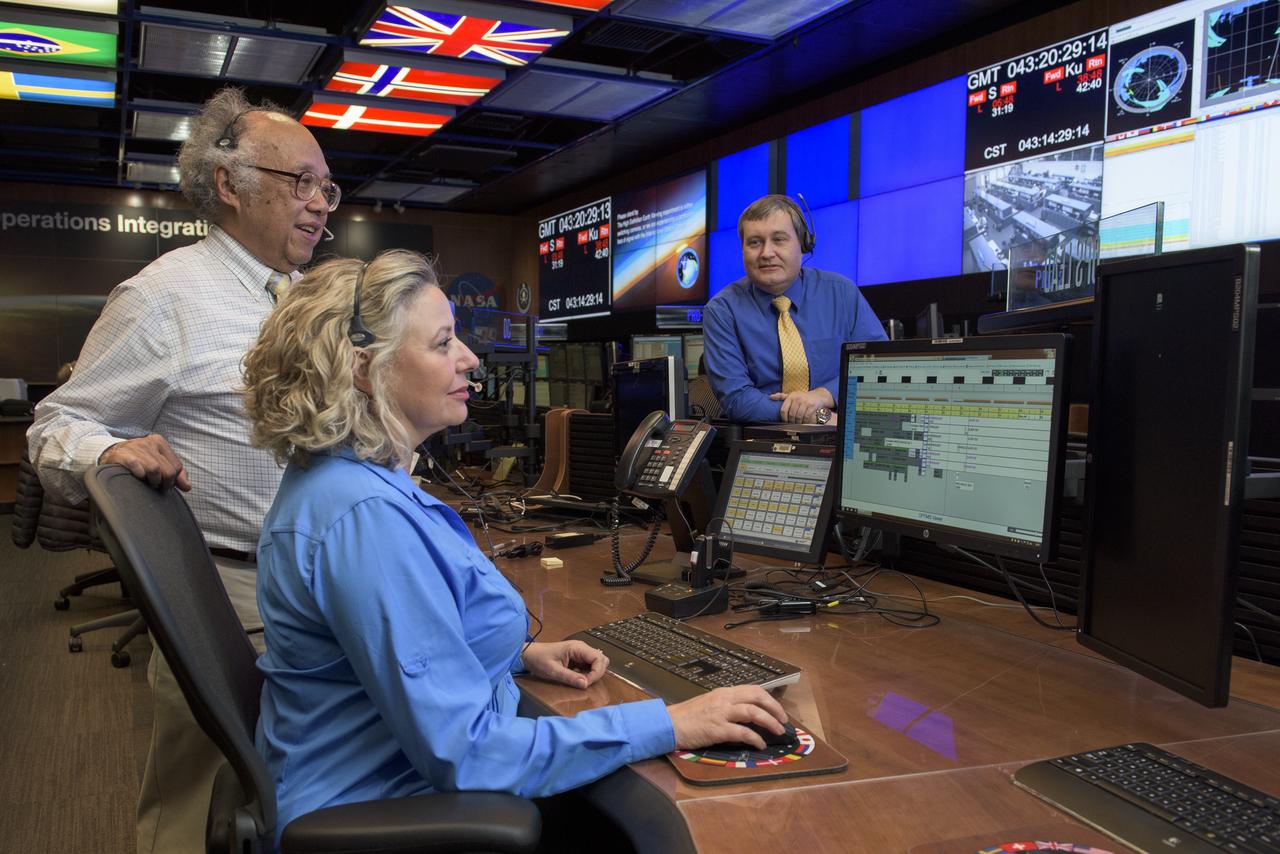
A PHOTOGRAPH FIRST RUN IN THE “MARSHALL STAR” IN 2001 IS RECREATED FOR PUBLICATION 15 YEARS LATER IN THE REMODELED PAYLOAD OPERATIONS INTEGRATION CENTER (POIC). PICTURED (L TO R) ARE: BRIAN LITTLE, OLA MYSZKA, AND ARIS TANONE.

iss074e0002559 (Dec. 13, 2025) --- Glen Canyon National Recreation Area in Utah—featuring Lake Powell, Good Hope Rock, and Mt. Pennell (top), popular spots for sightseeing, fishing, and hiking—is pictured from the International Space Station as it orbited 262 miles above North America.
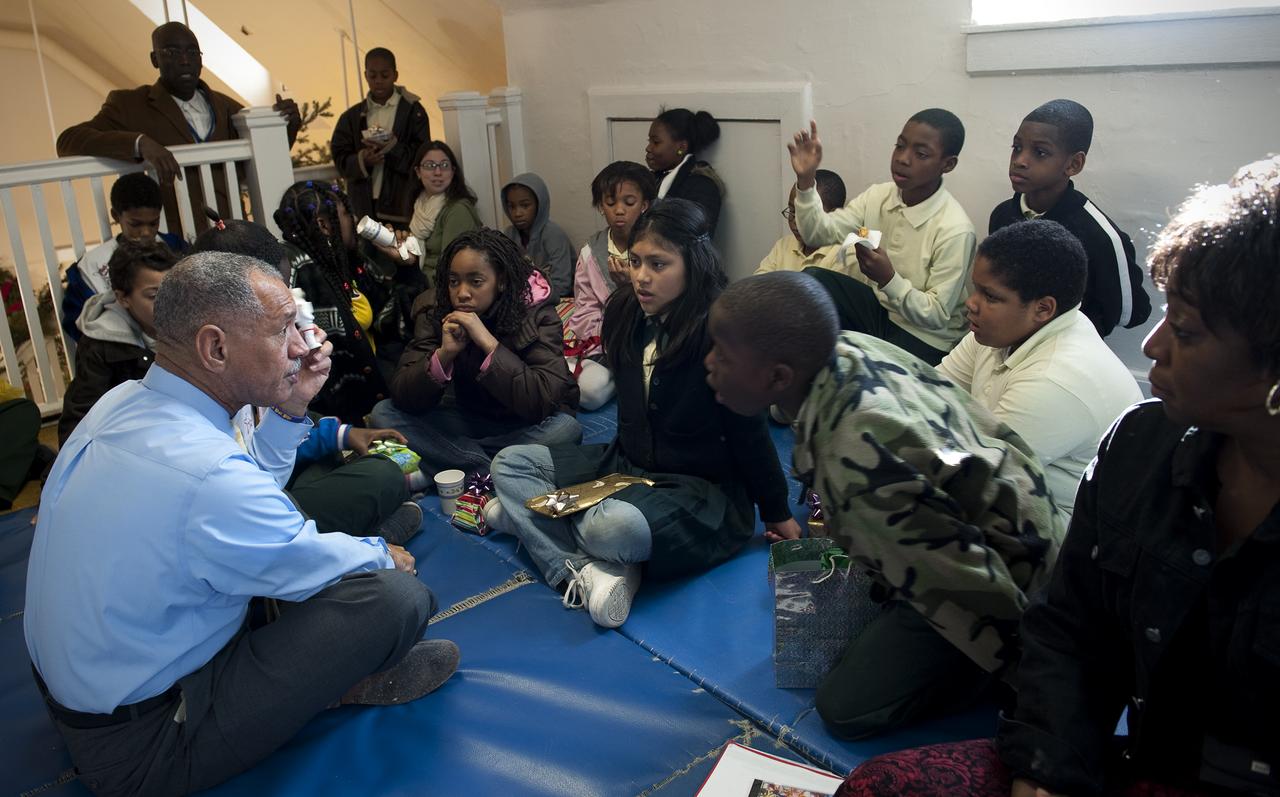
NASA Administrator Charles Bolden spent time volunteering with DC Cares at the Park View Recreation Center in Washington, DC for their Santa's Workshop program, Monday, Dec. 14, 2009. Mr. Bolden spoke with students about his experience as a former NASA astronaut and current NASA Administrator, encouraging them to study math and science and to stay in school. Photo Credit: (NASA/Bill Ingalls)
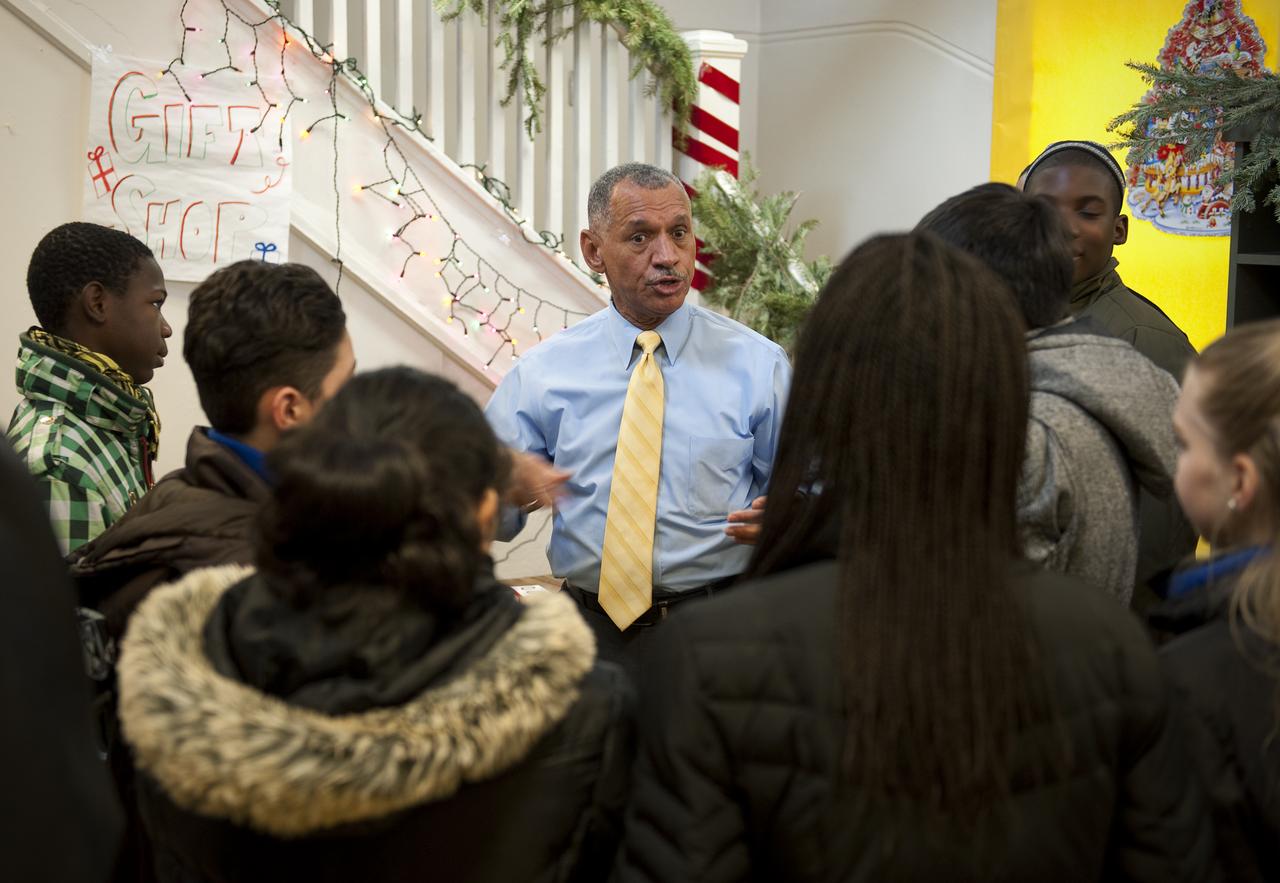
NASA Administrator Charles Bolden spent time volunteering with DC Cares at the Park View Recreation Center in Washington, DC for their Santa's Workshop program, Monday, Dec. 14, 2009. Mr. Bolden spoke with students about his experience as a former NASA astronaut and current NASA Administrator, encouraging them to study math and science and to stay in school. Photo Credit: (NASA/Bill Ingalls)
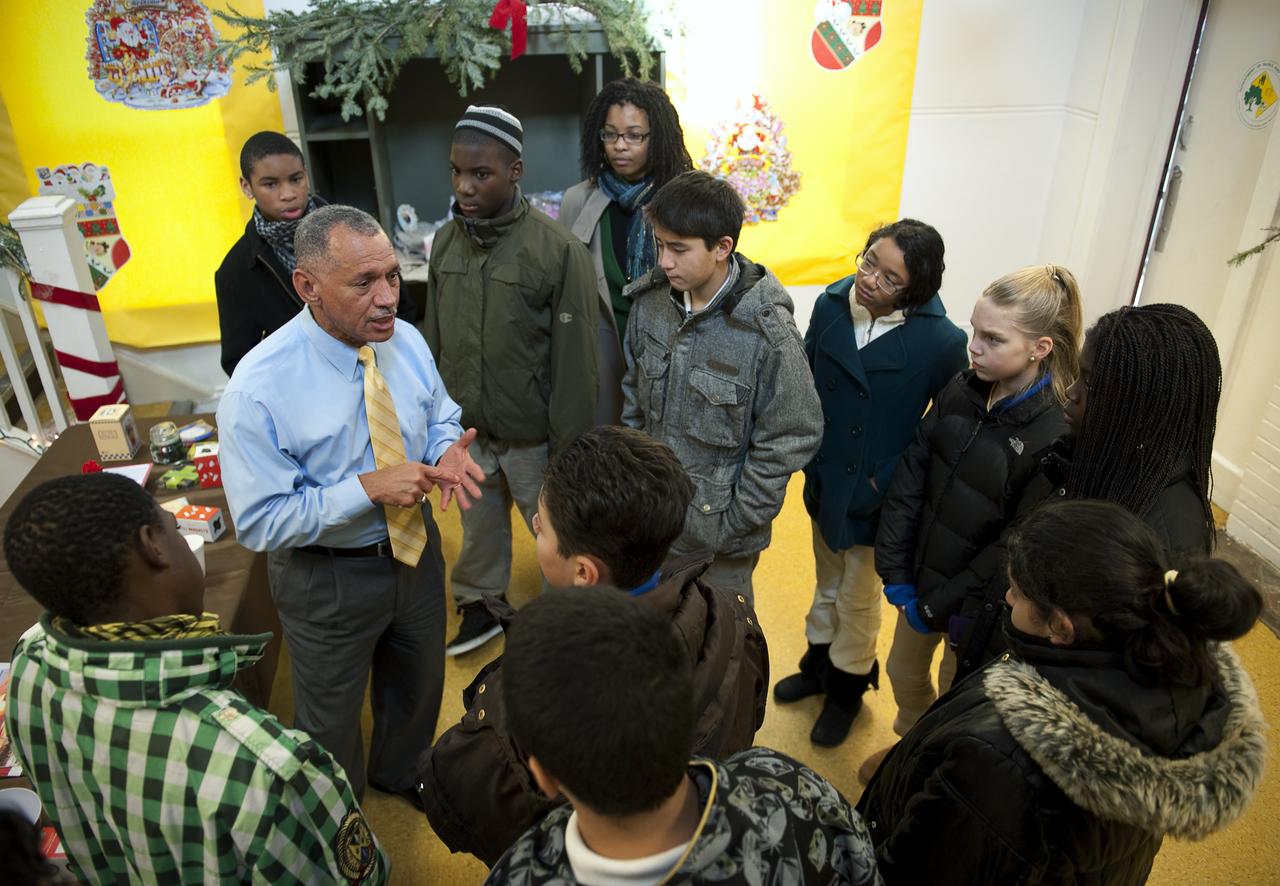
NASA Administrator Charles Bolden spent time volunteering with DC Cares at the Park View Recreation Center in Washington, DC for their Santa's Workshop program, Monday, Dec. 14, 2009. Mr. Bolden spoke with students about his experience as a former NASA astronaut and current NASA Administrator, encouraging them to study math and science and to stay in school. Photo Credit: (NASA/Bill Ingalls)
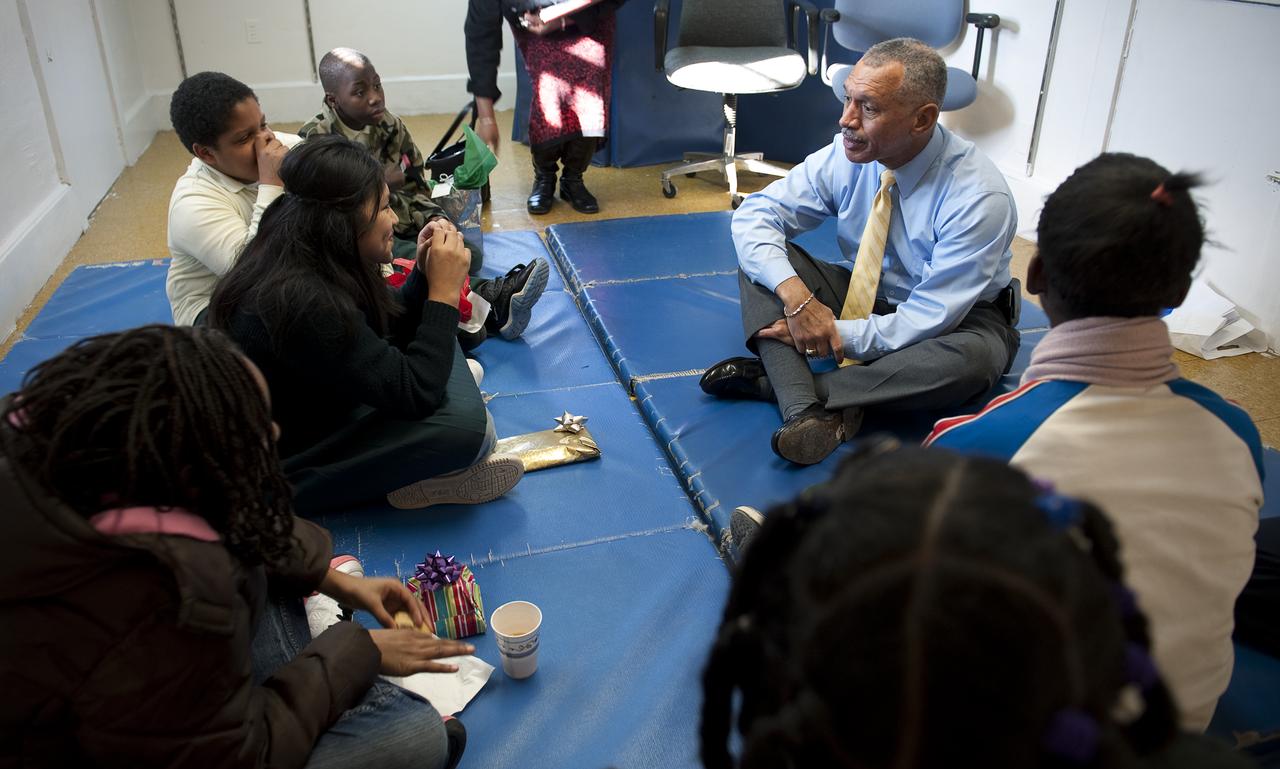
NASA Administrator Charles Bolden spent time volunteering with DC Cares at the Park View Recreation Center in Washington, DC for their Santa's Workshop program, Monday, Dec. 14, 2009. Mr. Bolden spoke with students about his experience as a former NASA astronaut and current NASA Administrator, encouraging them to study math and science and to stay in school. Photo Credit: (NASA/Bill Ingalls)
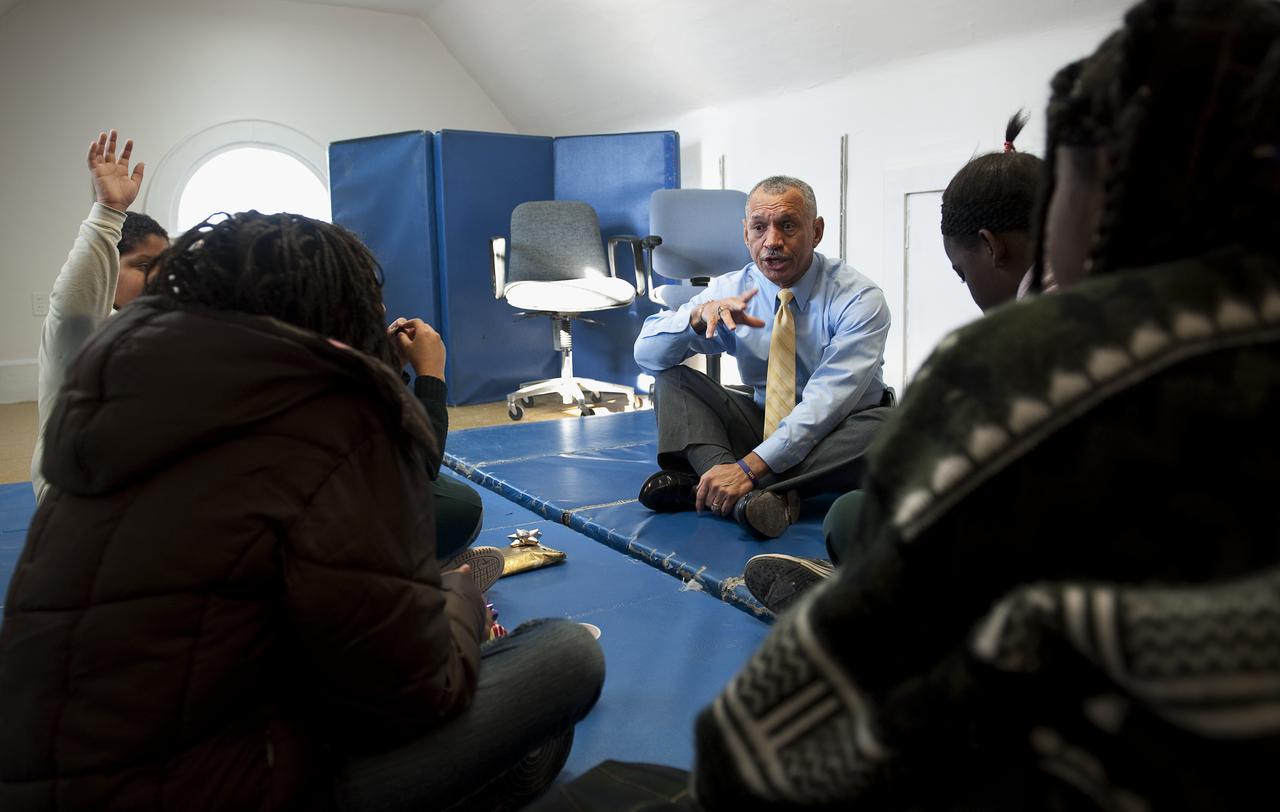
NASA Administrator Charles Bolden spent time volunteering with DC Cares at the Park View Recreation Center in Washington, DC for their Santa's Workshop program, Monday, Dec. 14, 2009. Mr. Bolden spoke with students about his experience as a former NASA astronaut and current NASA Administrator, encouraging them to study math and science and to stay in school. Photo Credit: (NASA/Bill Ingalls)
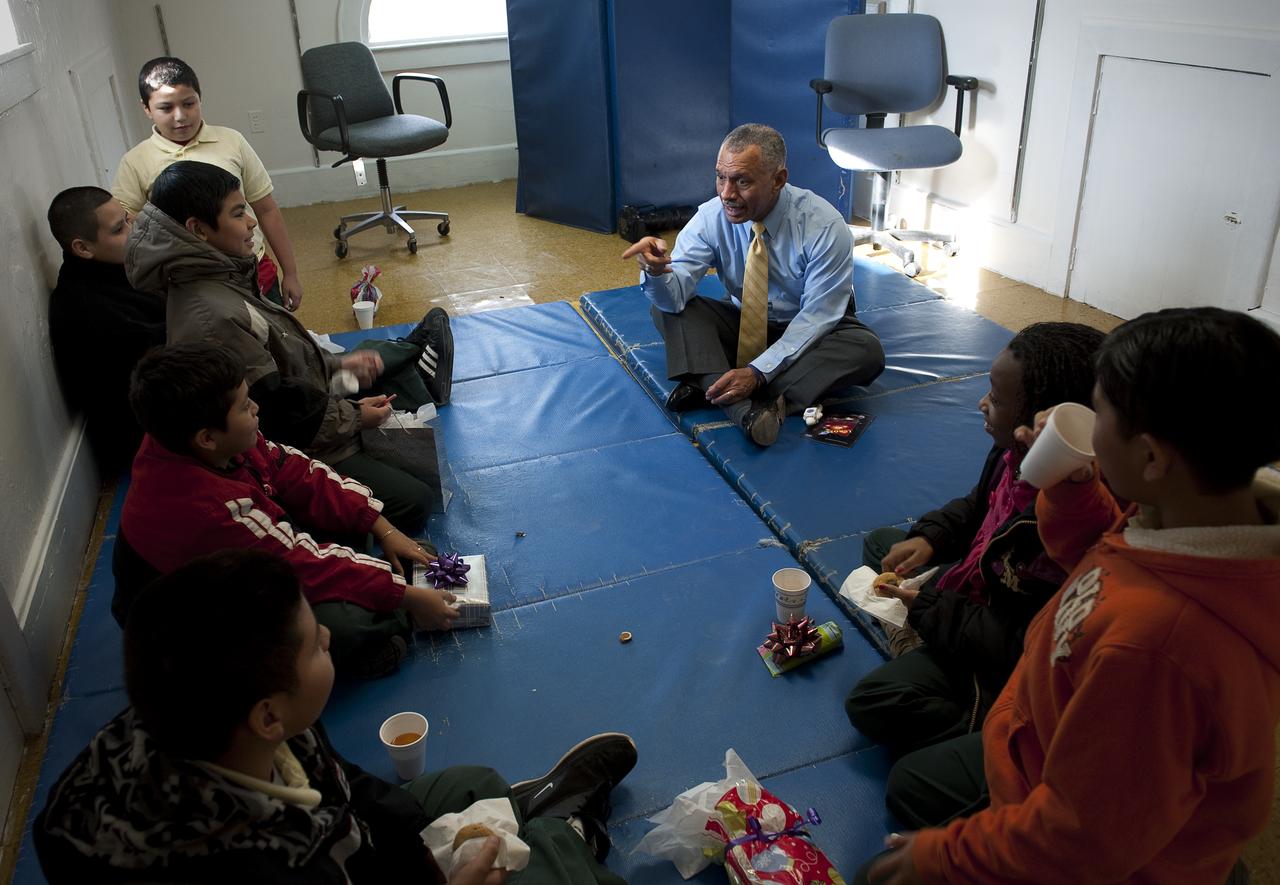
NASA Administrator Charles Bolden spent time volunteering with DC Cares at the Park View Recreation Center in Washington, DC for their Santa's Workshop program, Monday, Dec. 14, 2009. Mr. Bolden spoke with students about his experience as a former NASA astronaut and current NASA Administrator, encouraging them to study math and science and to stay in school. Photo Credit: (NASA/Bill Ingalls)

NASA Voyager 2 spacecraft flew by Triton, a moon of Neptune, on August 25, 1989. This frame from a video using Voyager data recreates that exciting encounter.
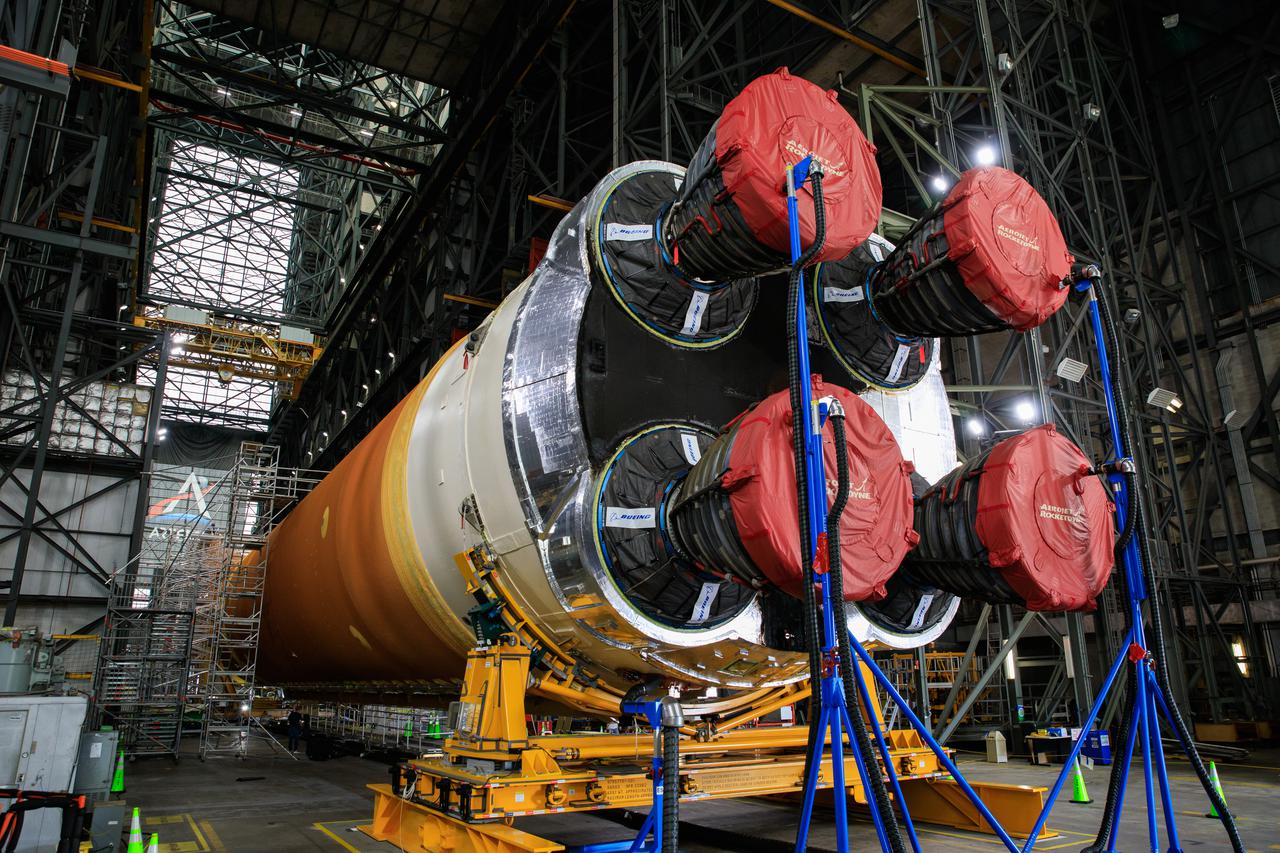
The Space Launch System (SLS) core stage for NASA’s Artemis I mission is in the transfer aisle of the Vehicle Assembly Building at Kennedy Space Center in Florida on May 5, 2021. Teams from the center’s Exploration Ground Systems and contractor Jacobs will perform checkouts ahead of integrating the massive rocket stage with the twin solid rocket boosters, Orion spacecraft, and additional flight hardware ahead of the Artemis I launch. Artemis I will be the first integrated test of SLS and Orion and will pave the way for landing the first woman and first person of color on the lunar surface. It will be a proving ground for deep space exploration, leading the agency’s efforts under the Artemis program for a sustainable presence on the Moon and preparing for human missions to Mars.
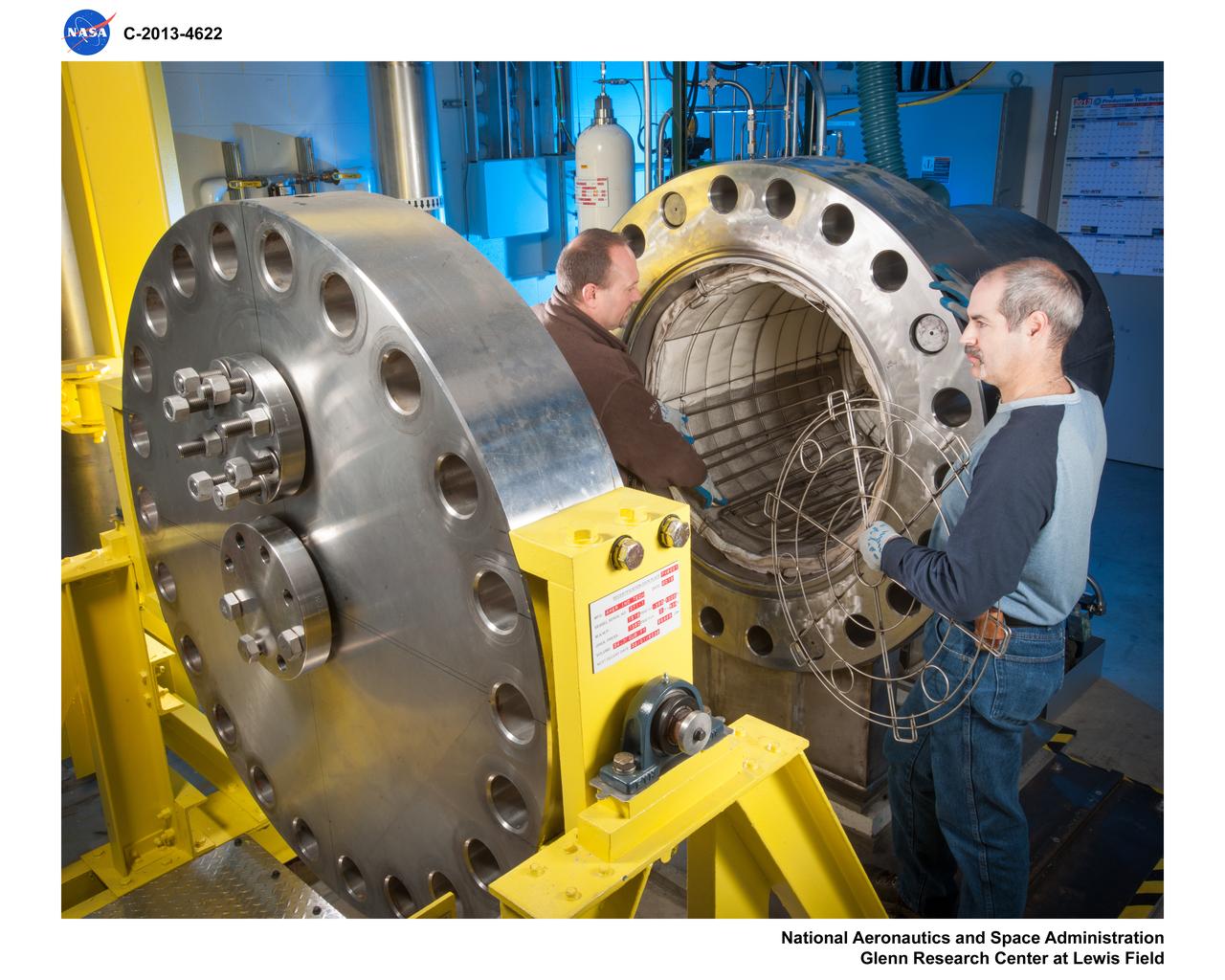
Glenn Extreme Environments Rig, GEER, Test Chamber, recreate Venus conditions on Earth, photos of insulation construction progress
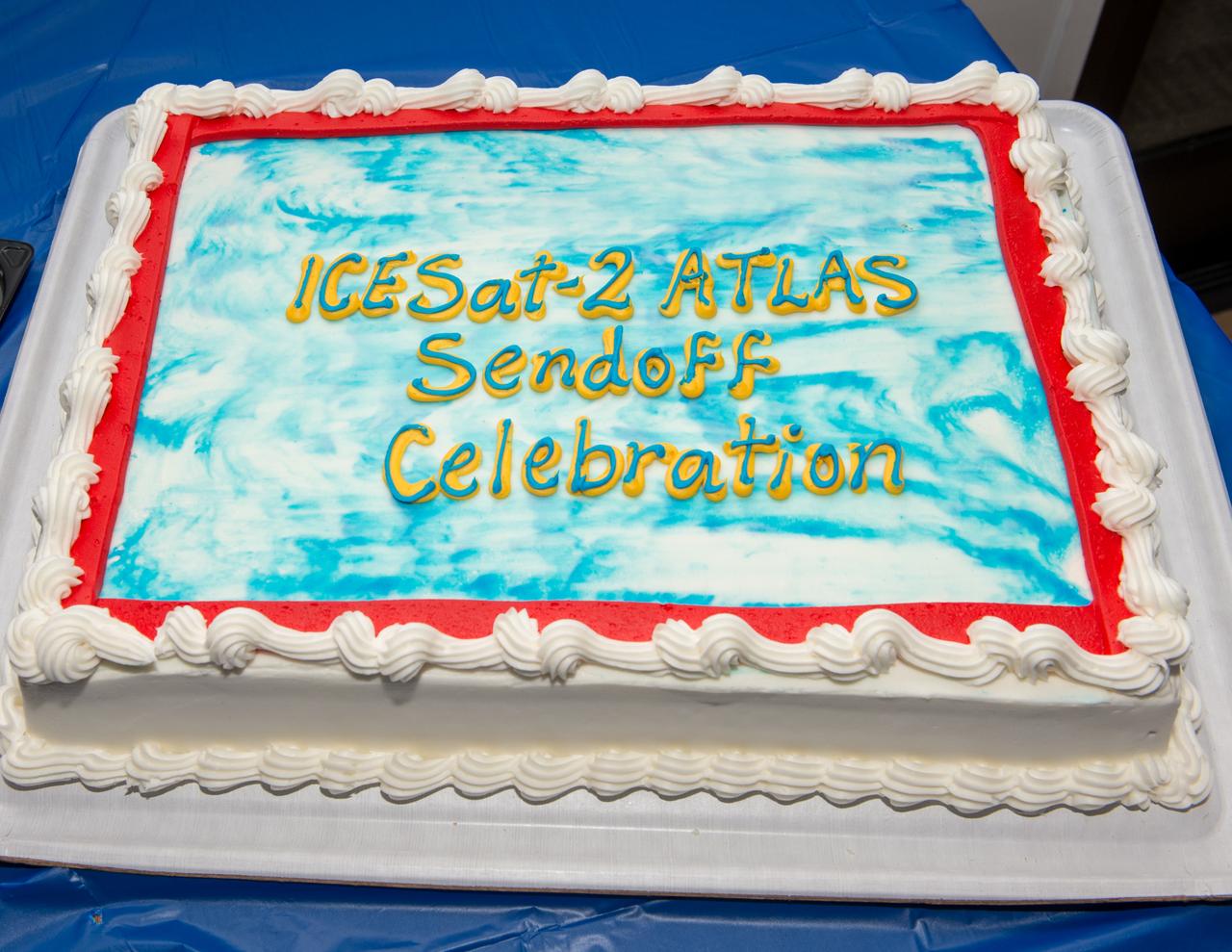
ICESat-2 big send off event for the ATLAS laser instrument at the Goddard Recreation Center
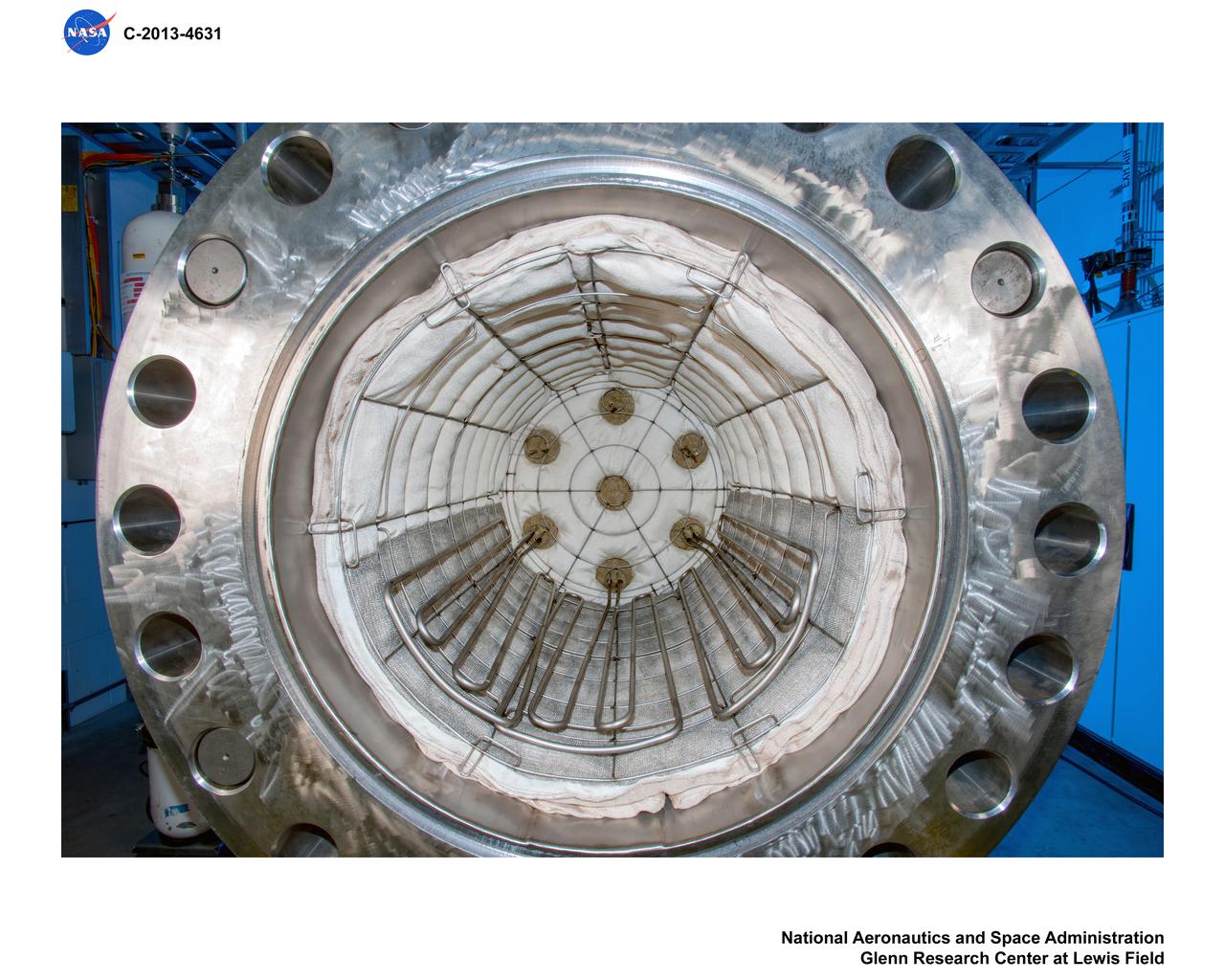
Glenn Extreme Environments Rig, GEER, Test Chamber, recreate Venus conditions on Earth, photos of insulation construction progress
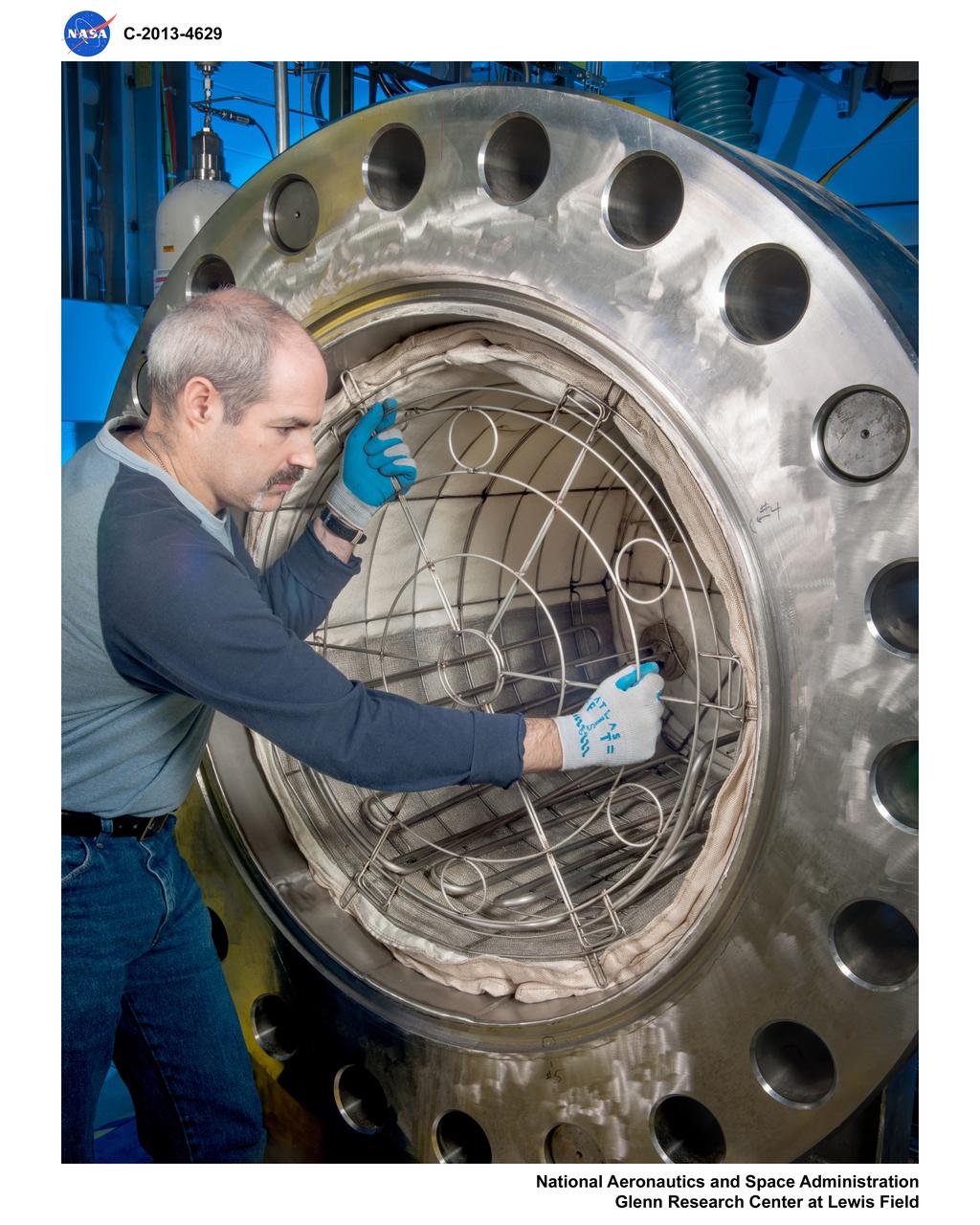
Glenn Extreme Environments Rig, GEER, Test Chamber, recreate Venus conditions on Earth, photos of insulation construction progress
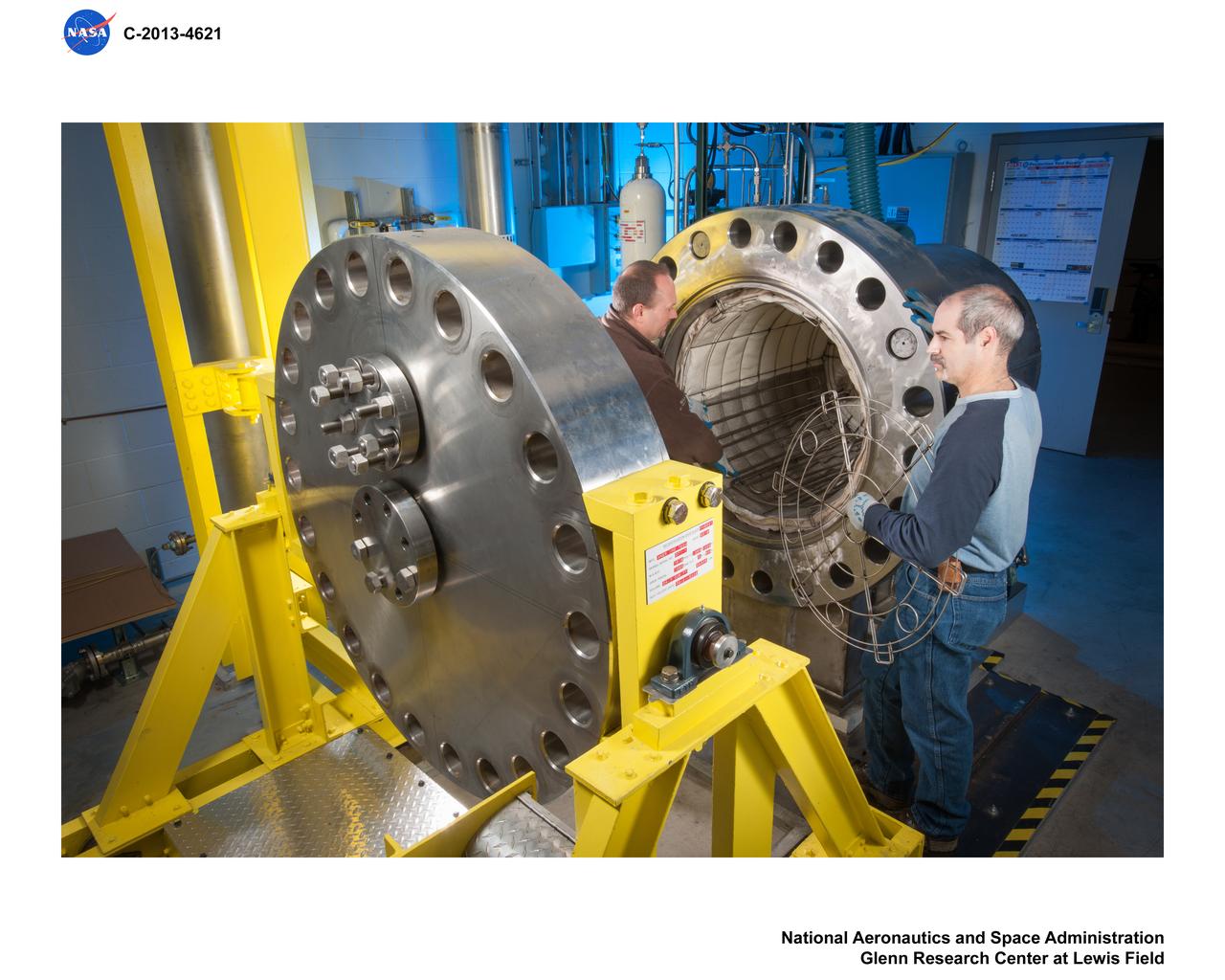
Glenn Extreme Environments Rig, GEER, Test Chamber, recreate Venus conditions on Earth, photos of insulation construction progress
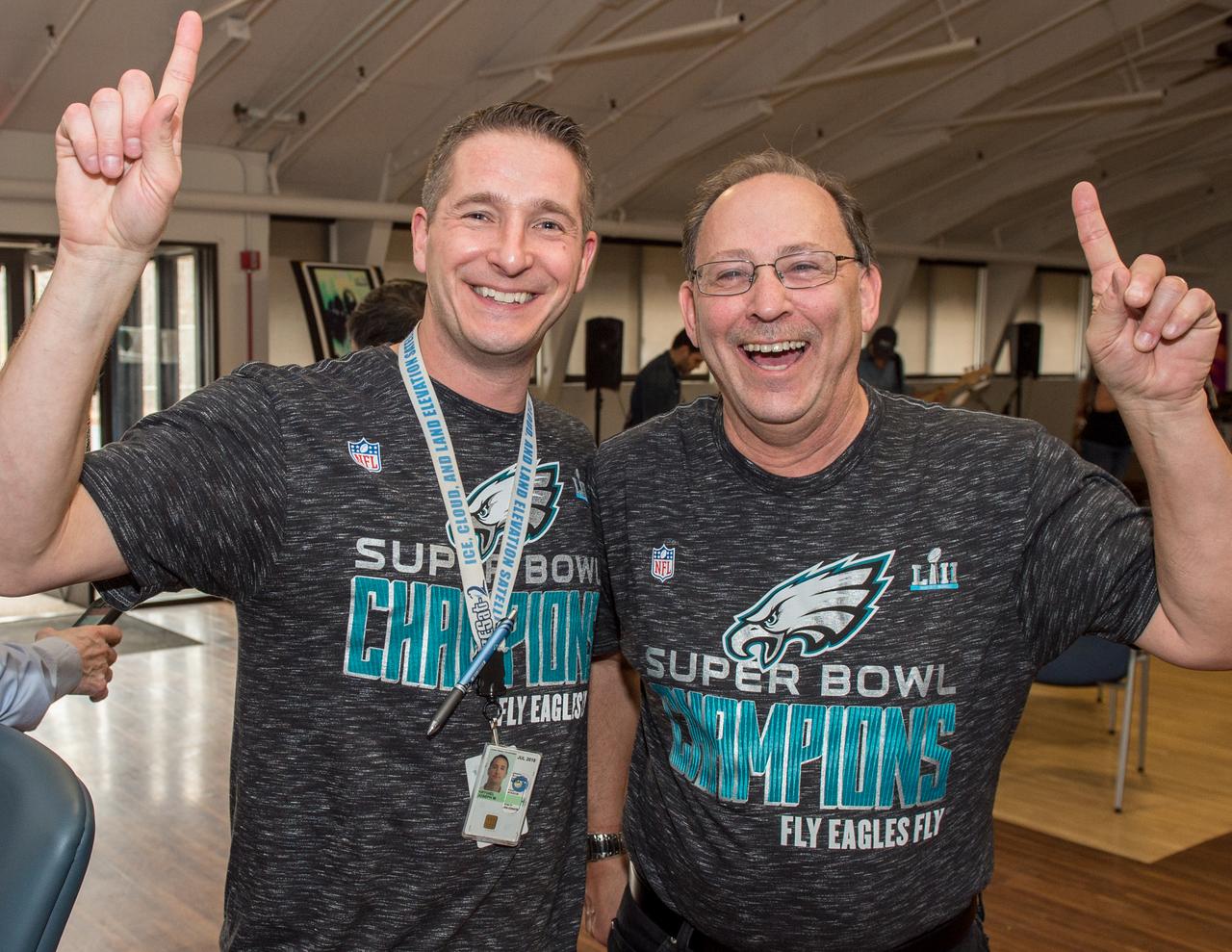
ICESat-2 big send off event for the ATLAS laser instrument at the Goddard Recreation Center
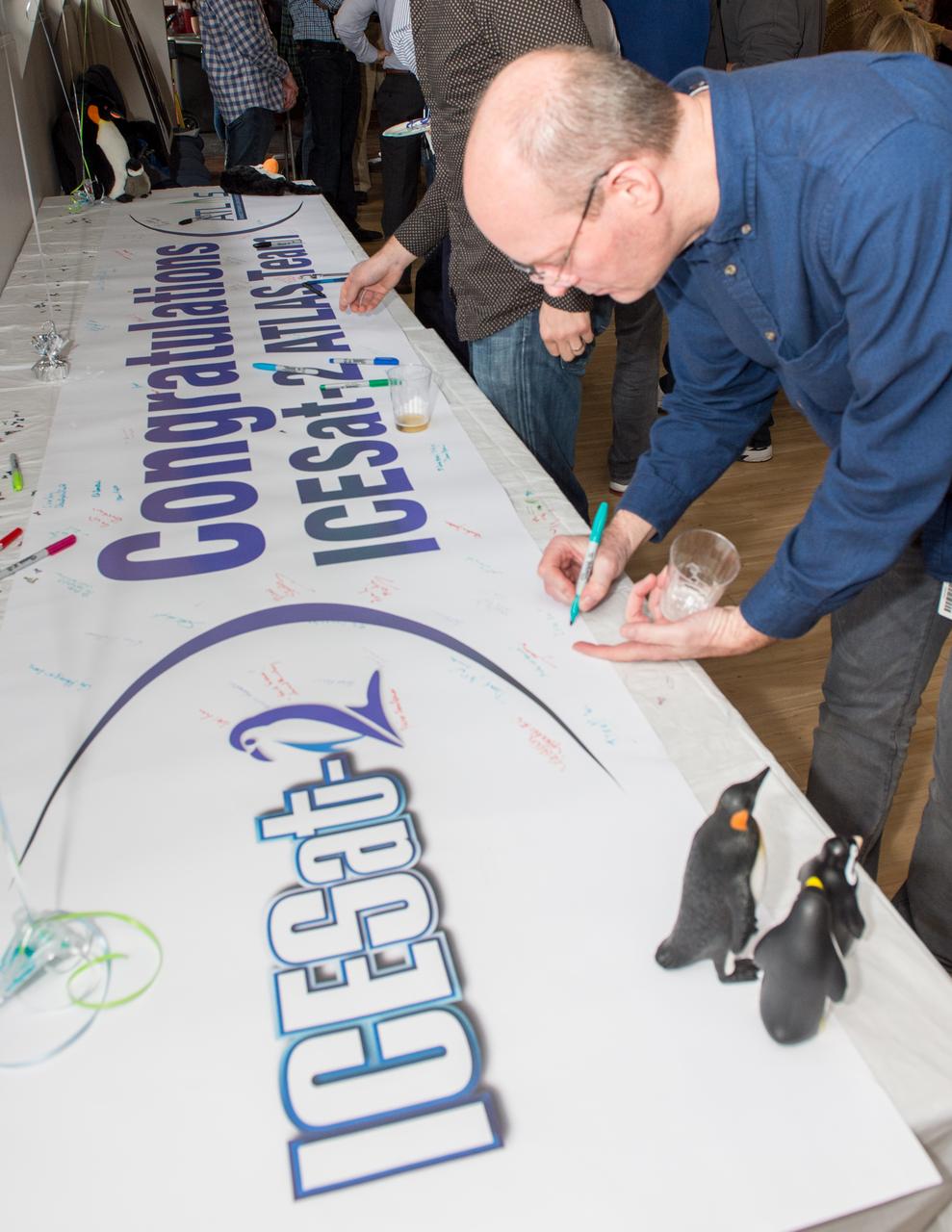
ICESat-2 big send off event for the ATLAS laser instrument at the Goddard Recreation Center

In 1650, a Polish artillery expert, Kazimierz Siemienowicz, published a series of drawings for a staged rocket. These drawing were recreated by artist Larry Toschik
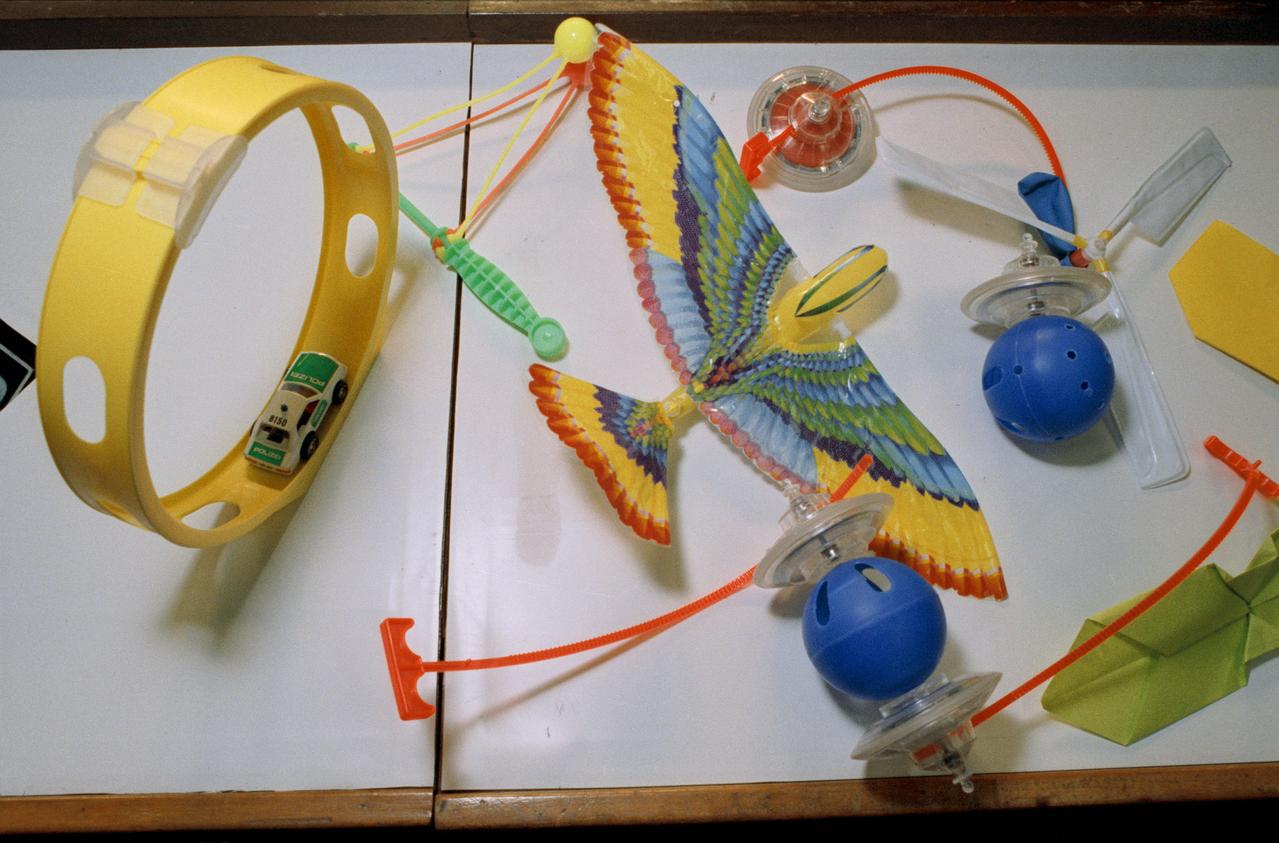
S93-25647 (6 Jan 1993) --- Part of the educational activities onboard the Space Shuttle Endeavour for STS-54 will include several experiments with various toys, some of which are depicted here. The detailed supplementary objective (DSO-802) will allow the Shuttle crewmembers to experiment with the various types of toys in a microgravity environment while talking to pupils who will be able to monitor (via classroom TV sets) the activities at a number of schools. Among toys seen here are a friction car and loop track, paper eagle, and a balloon helicopter.
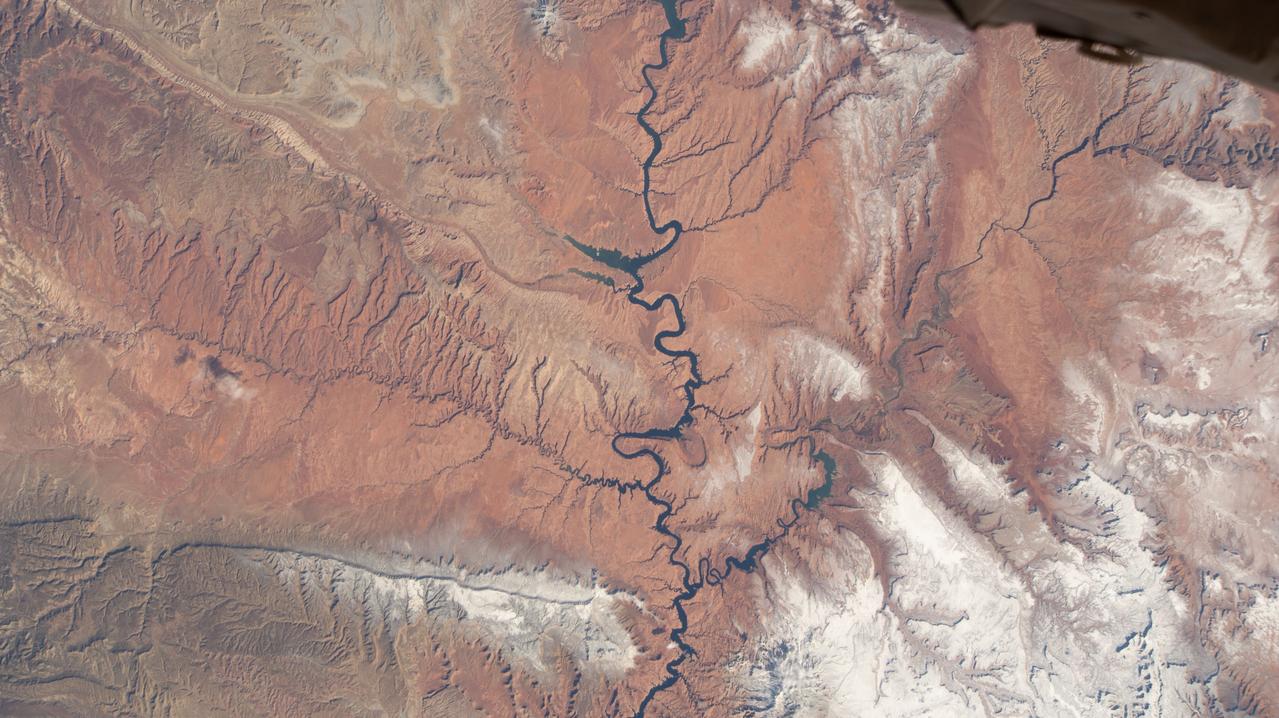
iss064e000624 (Oct. 26, 2020) --- Glen Canyon National Recreation Area and Lake Powell is pictured from the International Space Station as it orbited above Utah in North America.
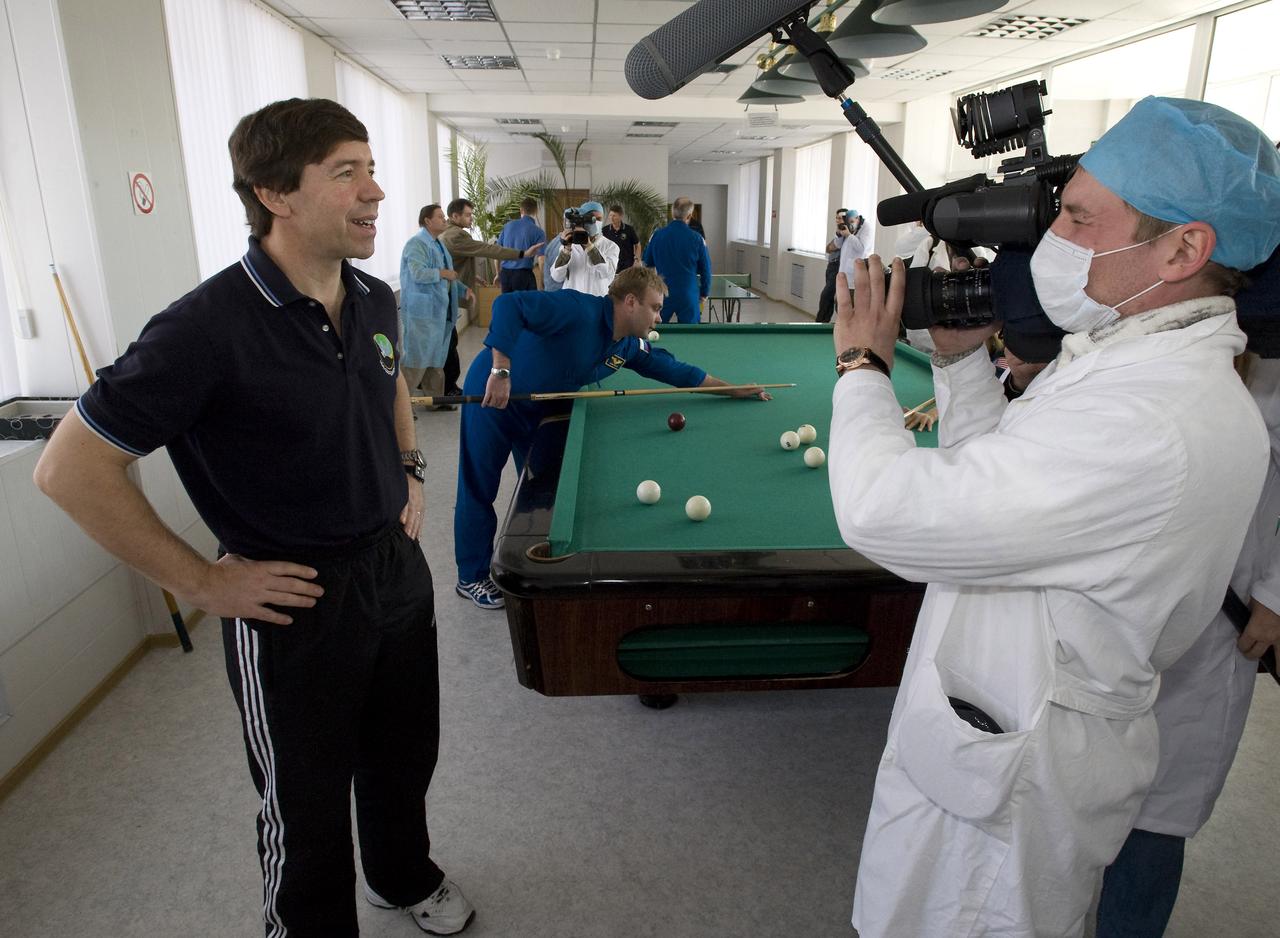
Expedition 19 Flight Engineer Michael R. Barratt is interviewed by members of the press during a recreation break at the Cosmonaut Hotel, Saturday, March 21, 2009 in Baikonur, Kazakhstan. (Photo Credit: NASA/Bill Ingalls)
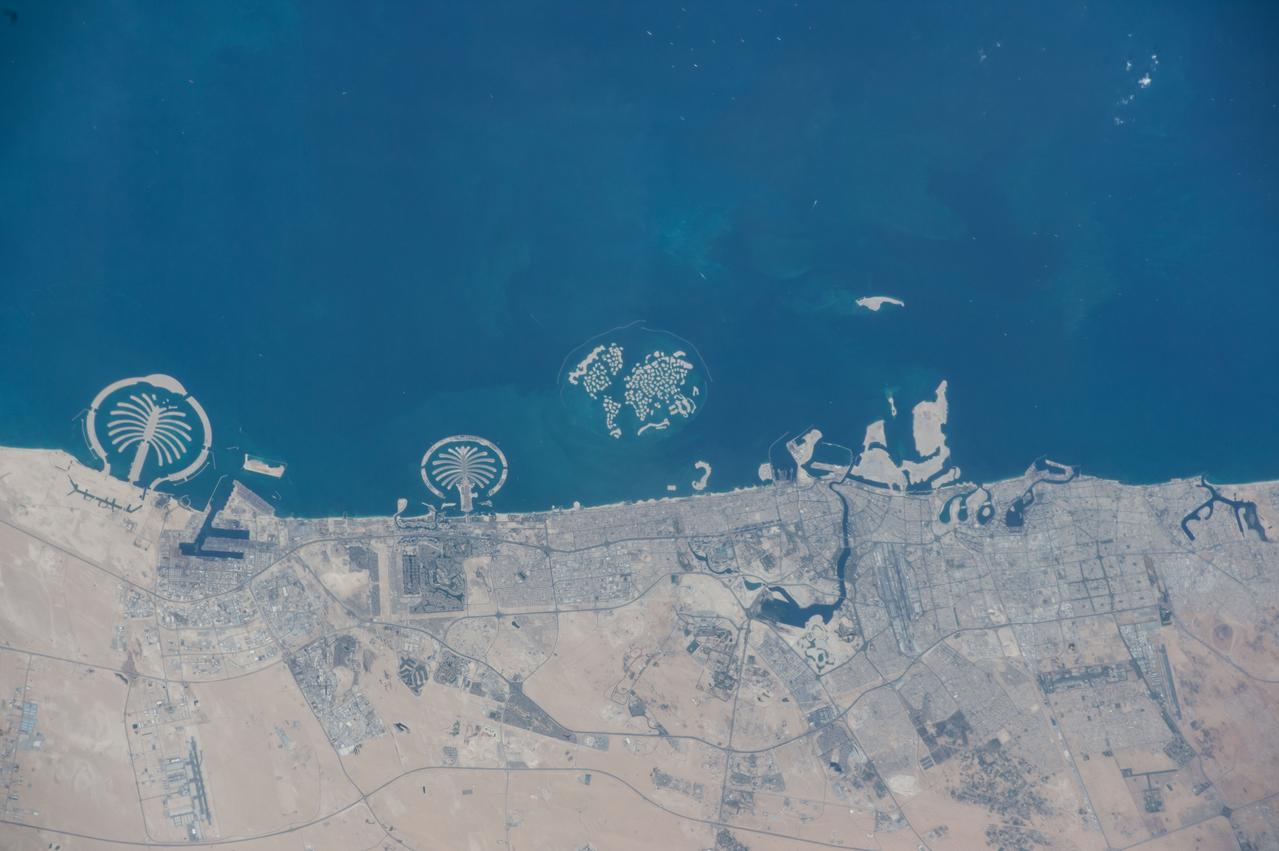
ISS042E006751 (11/08/2014) --- Earth observation taken from the International Space Station of the coastline of the United Arab Emirates. The large wheel along the coast center left is "Jumeirah" Palm Island, with a conference center, hotels, recreation areas and a large marine zoo.
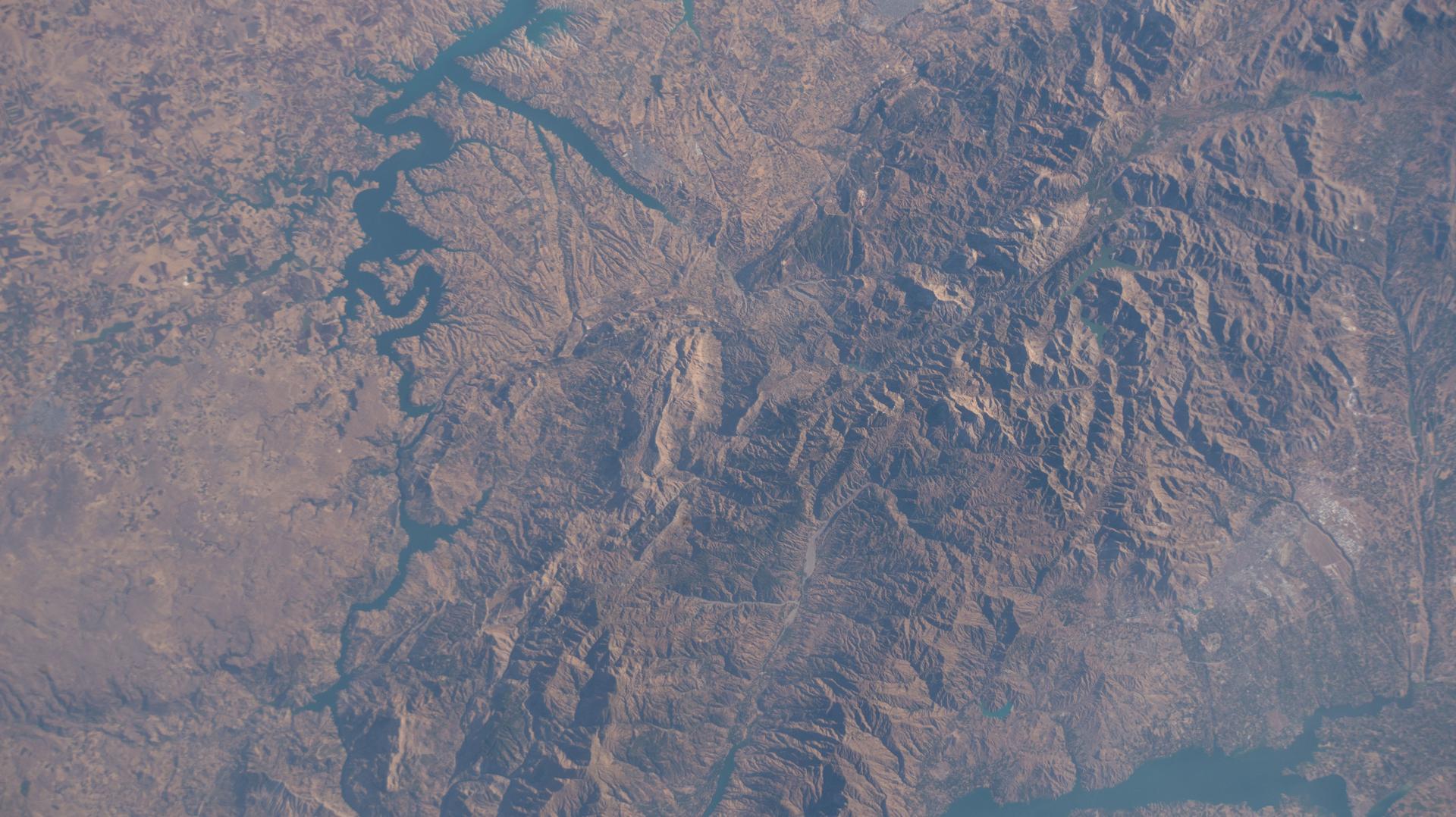
iss075e0002070 (Aug. 1, 2026) --- Atatürk Reservoir in Türkiye, located on the Euphrates River near the Southeastern Taurus Mountains, was created by the Atatürk Dam, the world’s fourth largest. The reservoir provides the region with drinking water, irrigation for cotton farming, and commercial and recreational fishing opportunities. Credit: NASA
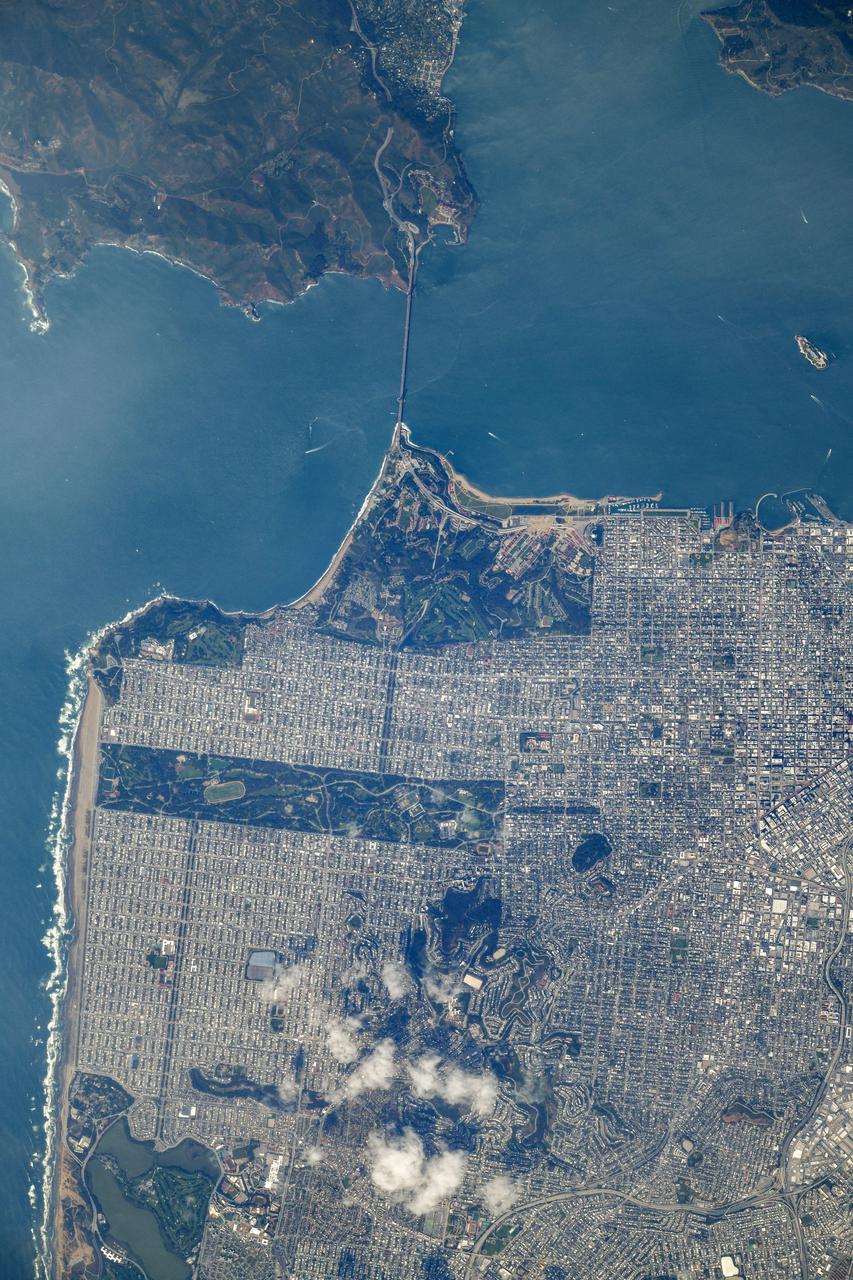
iss064e053178 (April 4, 2021) --- The Golden Gate Bridge links San Francisco with the Golden Gate National Recreation Area in northern California. The International Space Station was orbiting 264 miles above the Pacific Ocean just off the coast when this photograph was taken. Credit: Roscosmos
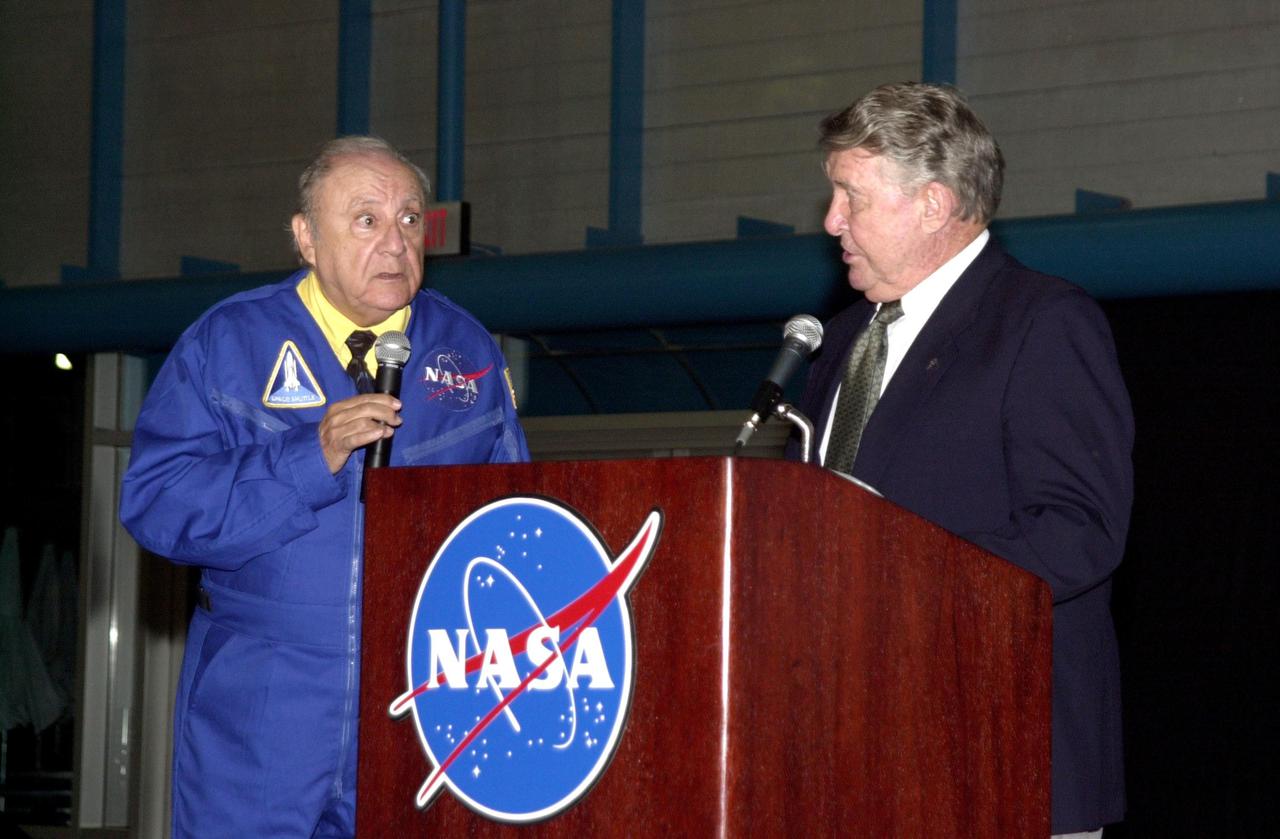
KENNEDY SPACE CENTER, FLA. - A popular comedian during the early days of the space program, Bill Dana (left) recreates his comedic persona of 'astronaut Jose Jimenez' as he talks with space pioneer Wally Schirra. The occasion was the celebration of the 40th anniversary of American spaceflight. The dinner event was held at KSC's Apollo_Saturn V Center.
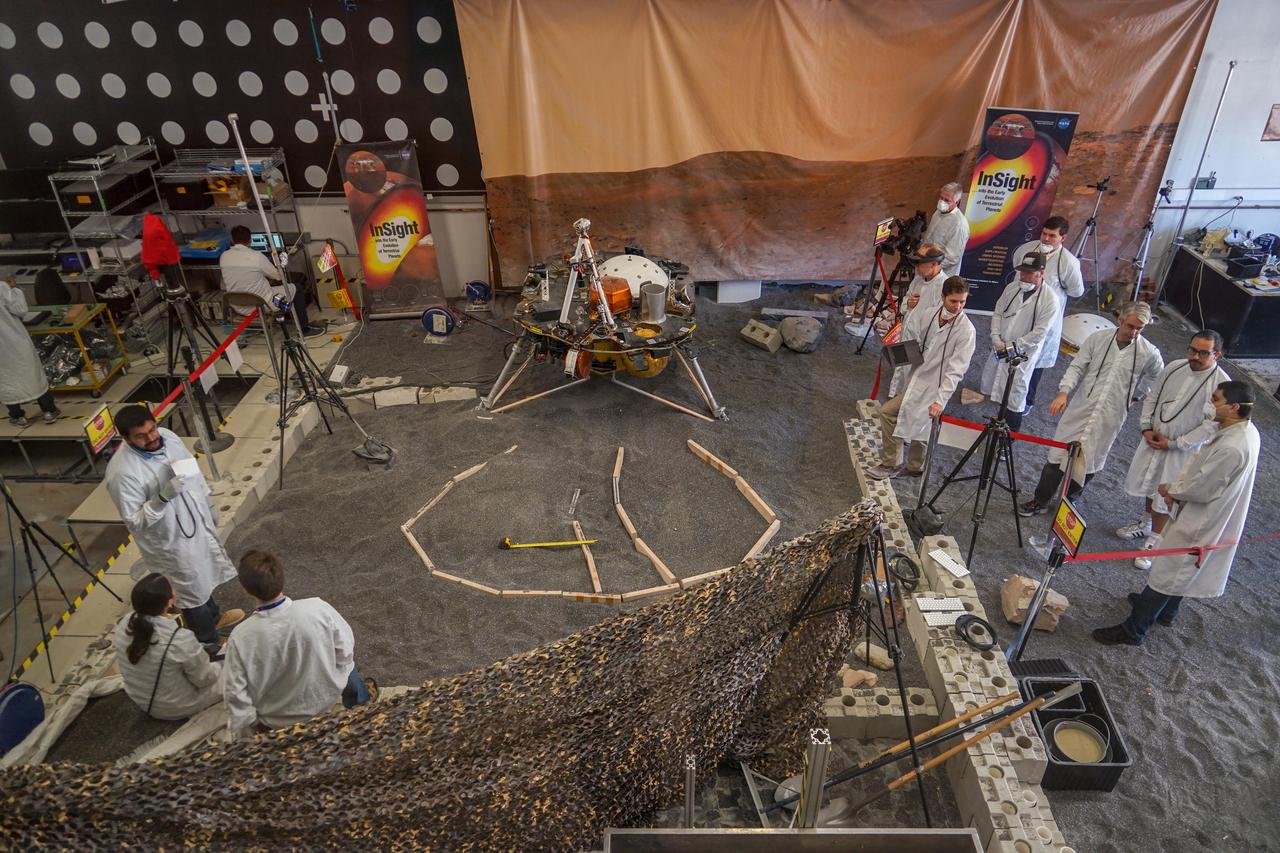
Engineers in Pasadena, California, sculpt a gravel-like material to mimic the terrain in front of NASA's InSight lander on Mars. Recreating the exact conditions will allow them to practice setting down the lander's instruments here on Earth (at NASA's Jet Propulsion Laboratory) before it's done on Mars. https://photojournal.jpl.nasa.gov/catalog/PIA22879
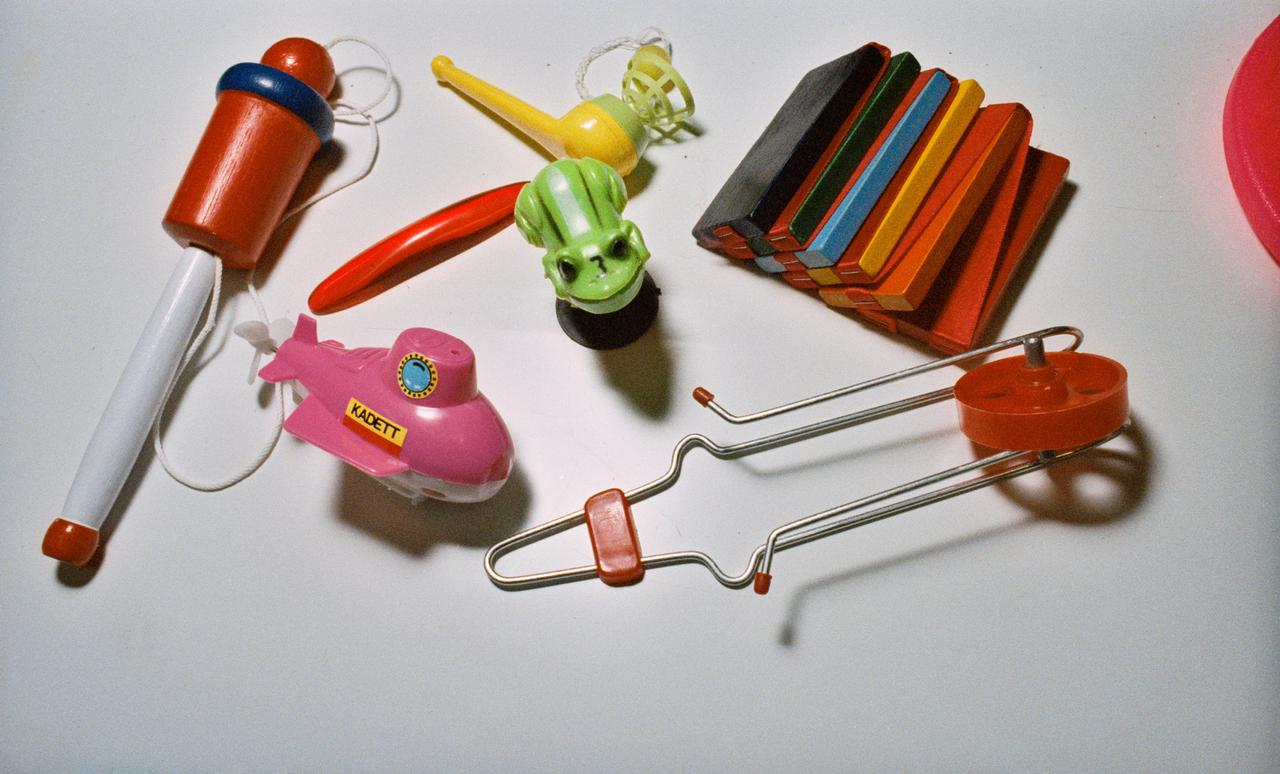
S93-25648 (Jan 1993) --- Part of the educational activities onboard the Space Shuttle Endeavour for STS-54 will include several experiments with various toys, some of which are depicted here. The detailed supplementary objective (DSO-802) will allow the Shuttle crewmembers to experiment with the various types of toys in a microgravity environment while talking to pupils who will be able to monitor (via classroom TV sets) the activities at a number of schools.
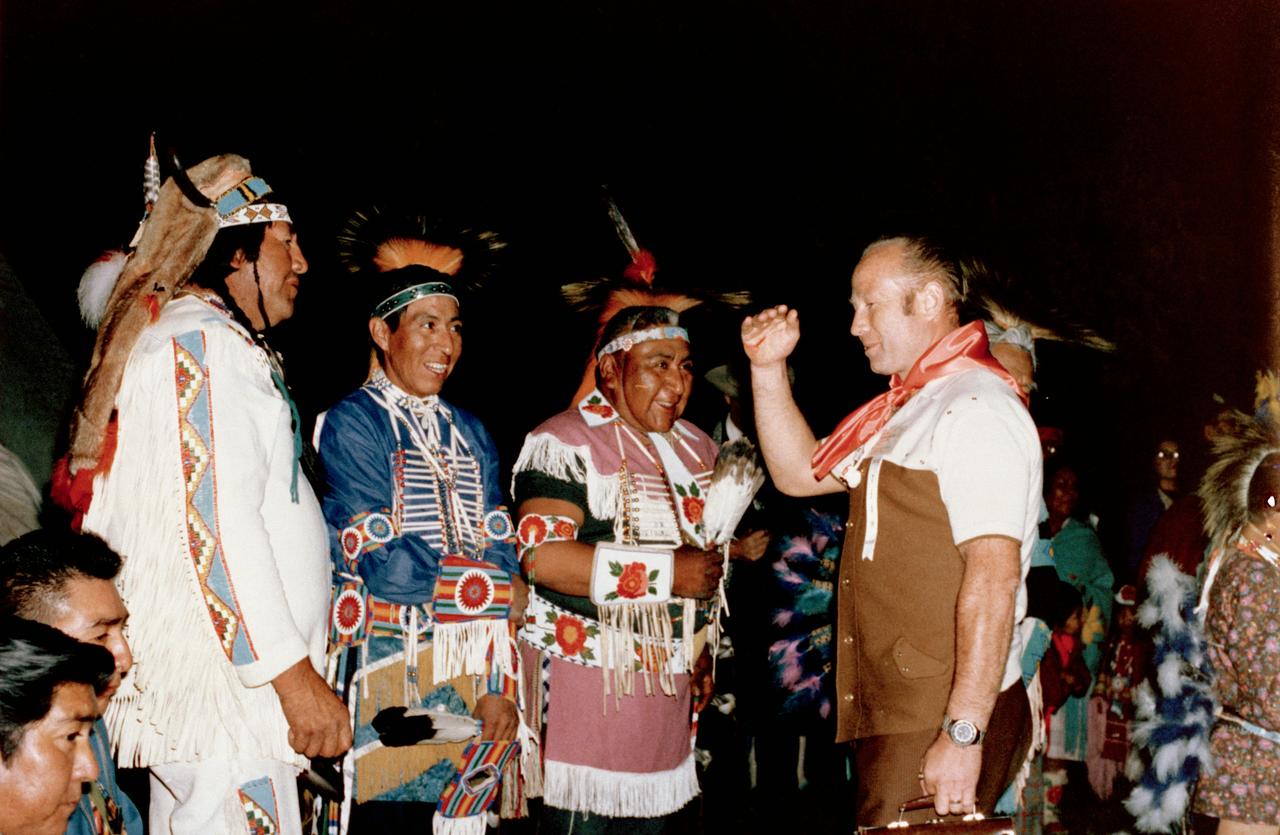
S75-20108 (September 1974) --- Cosmonaut Aleksey A. Leonov (right), commander of the first (prime) crew of Soviet cosmonauts on the planned Apollo-Soyuz Test Project (ASTP), enjoys a tribal welcome from Shoshone Indians during a hunting trip in the Lander, Wyoming area. Leonov was in the United States to take part in joint crew training at the Johnson Space Center.
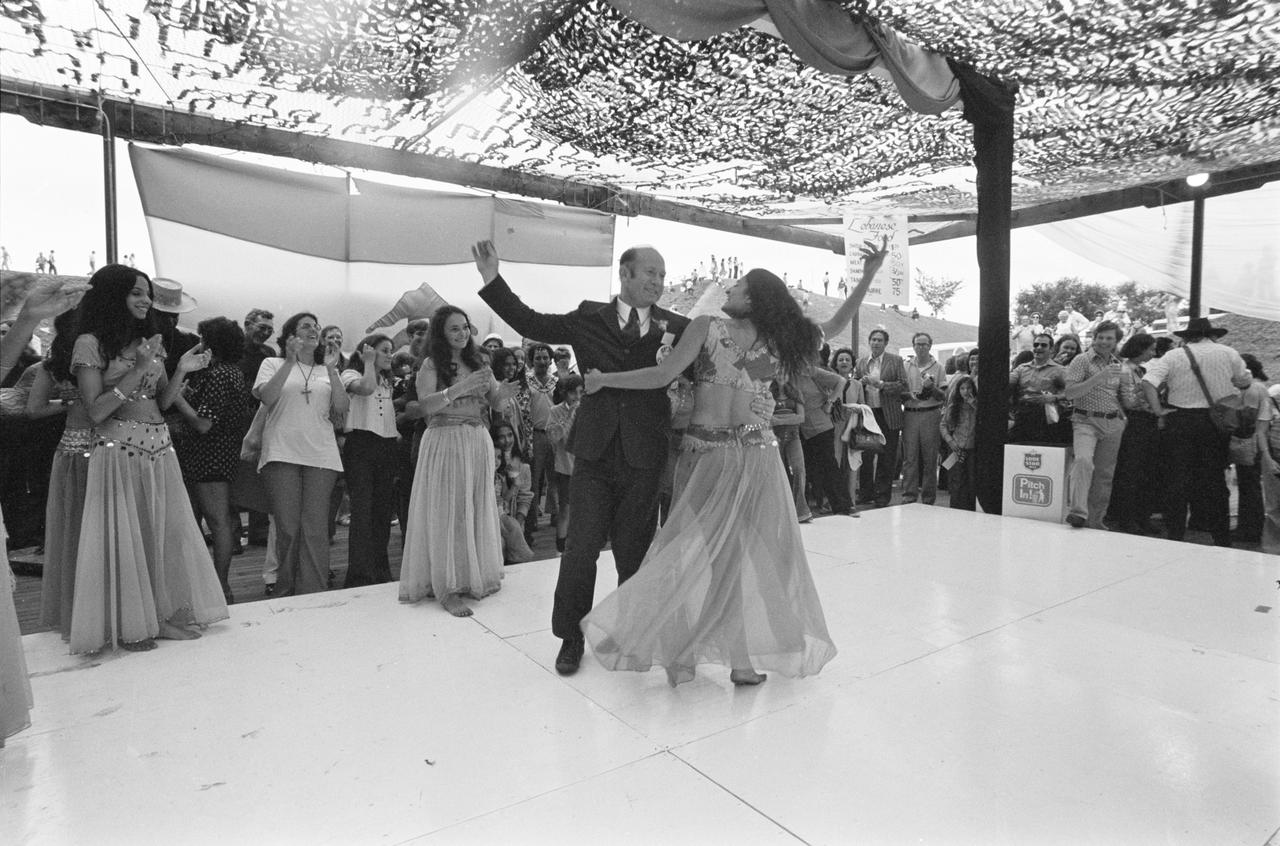
S74-28666 (14 Sept. 1974) --- Cosmonaut Aleksey A. Leonov, in one of the lighter moments of activity involving Soviet cosmonauts and American astronauts, joins a belly dancer on stage as several visitors to weekend activity at the site of San Antonio?s HemisFair look on. Leonov is commander of the Soviet Apollo-Soyuz Test Project (ASTP) crew. A group of cosmonauts is in this country training with American astronauts for the joint U.S.-USSR ASTP rendezvous and docking mission scheduled for the summer of 1975. The Lebanese dancing was just one feature among many during the Texas Folklife Festival, in which members of 26 ethnic groups participated.
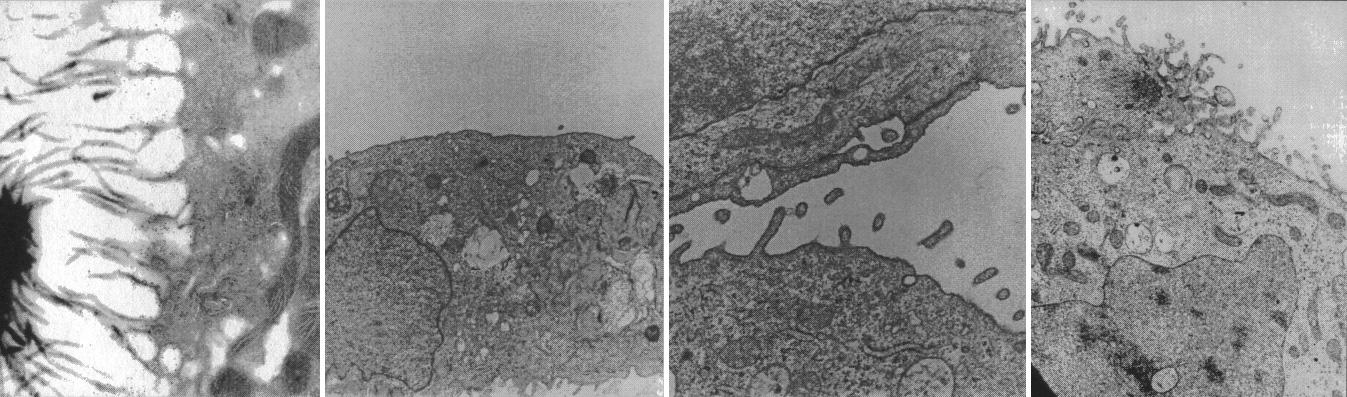
Cells from kidneys lose some of their special features in conventional culture but form spheres replete with specialized cell microvilli (hair) and synthesize hormones that may be clinically useful. Ground-based research studies have demonstrated that both normal and neoplastic cells and tissues recreate many of the characteristics in the NASA bioreactor that they display in vivo. Proximal kidney tubule cells that normally have rich apically oriented microvilli with intercellular clefts in the kidney do not form any of these structures in conventional two-dimensional monolayer culture. However, when normal proximal renal tubule cells are cultured in three-dimensions in the bioreactor, both the microvilli and the intercellular clefts form. This is important because, when the morphology is recreated, the function is more likely also to be rejuvenated. The work is sponsored by NASA's Office of Biological and Physical Research. The bioreactor is managed by the Biotechnology Cell Science Program at NASA's Johnson Space Center (JSC).
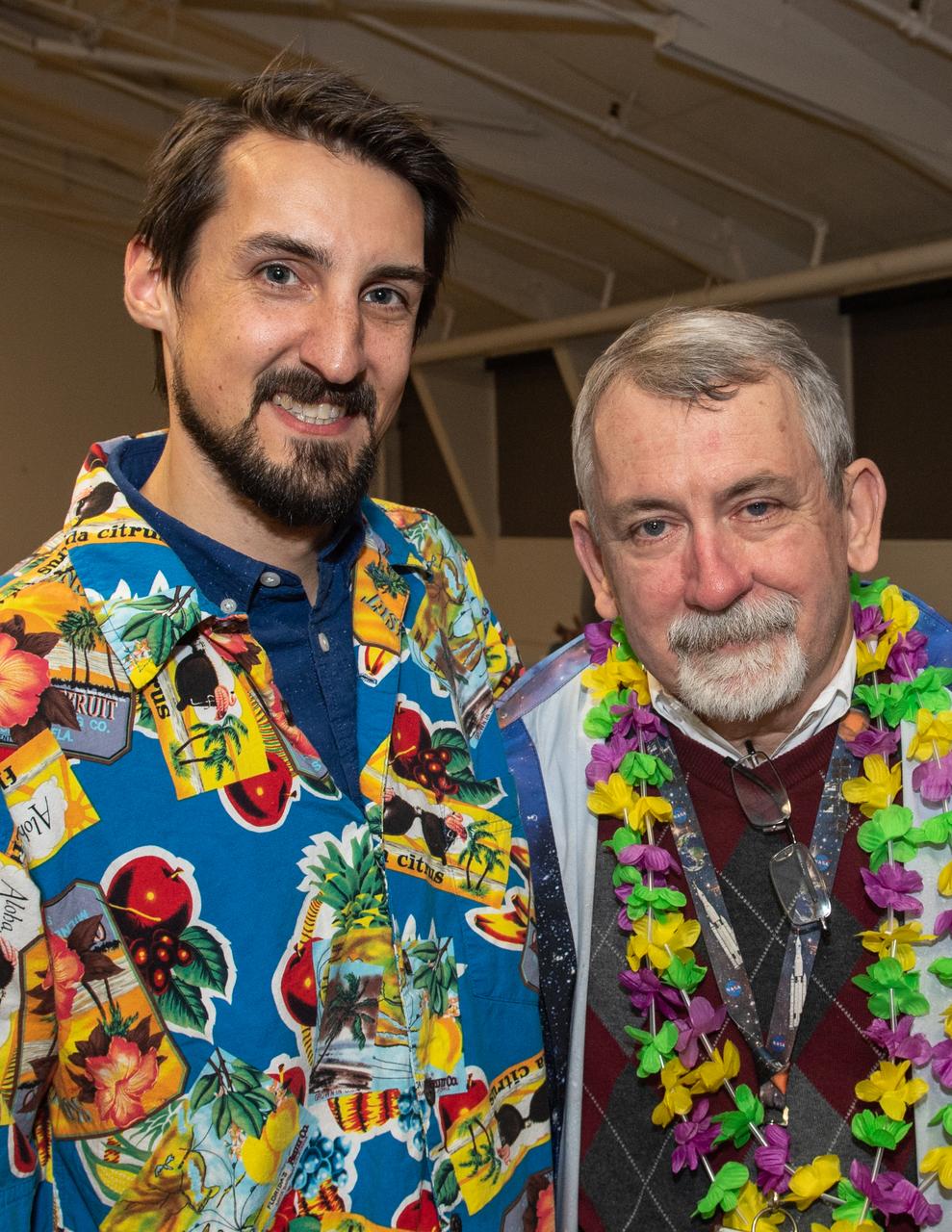
Rob Garner (left) and then-Goddard News Chief Ed Campion celebrating the latter's retirement in 2018. Aloha shirt Fridays were a mainstay of Campion's tenure.
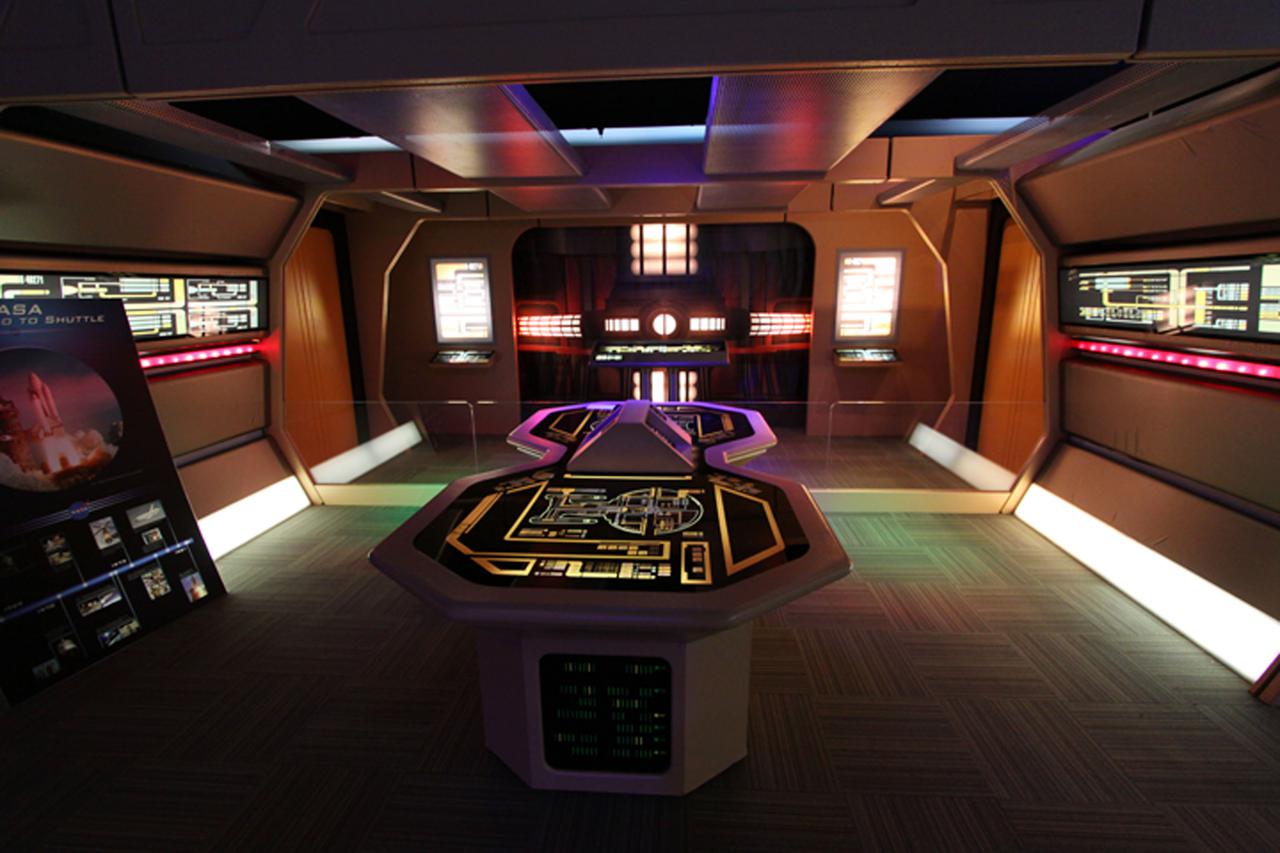
CAPE CANAVERAL, Fla. -- At NASA Kennedy Space Center's Visitor Complex, Star Trek memorabilia is being displayed this summer through Sept. 5. Appearing for the first time in the southeast, 'Star Trek: The Exhibition' is an interactive exhibit of authentic Star Trek artifacts from the past 40 years, featuring one-of-a-kind costumes, props and filming models from every Star Trek television series and feature film, including a recreation of the U.S.S. Enterprise Bridge from the original series. Photo credit: NASA_Jack Pfaller
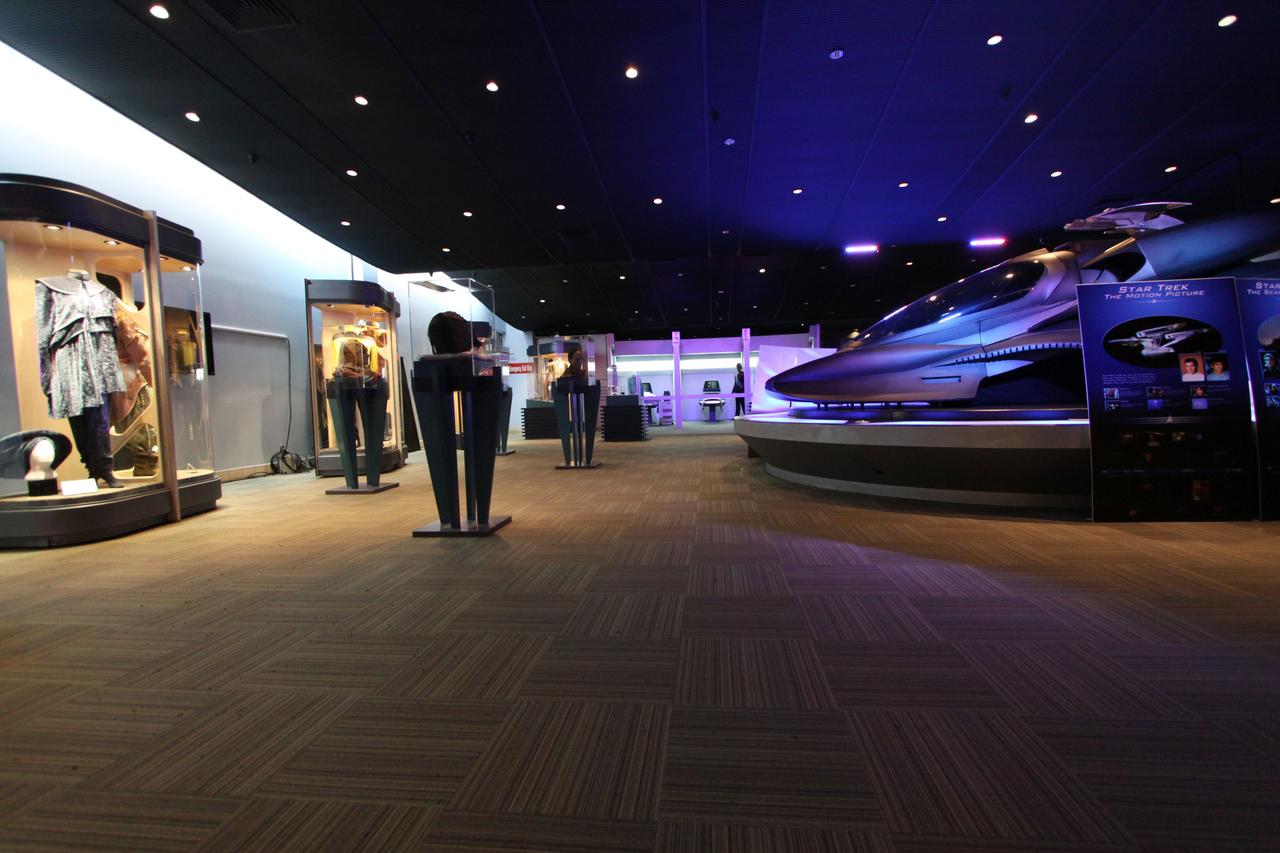
CAPE CANAVERAL, Fla. -- At NASA Kennedy Space Center's Visitor Complex, Star Trek memorabilia is being displayed this summer through Sept. 5. Appearing for the first time in the southeast, "Star Trek: The Exhibition" is an interactive exhibit of authentic Star Trek artifacts from the past 40 years, featuring one-of-a-kind costumes, props and filming models from every Star Trek television series and feature film, including a recreation of the U.S.S. Enterprise Bridge from the original series. Photo credit: NASA/Jack Pfaller
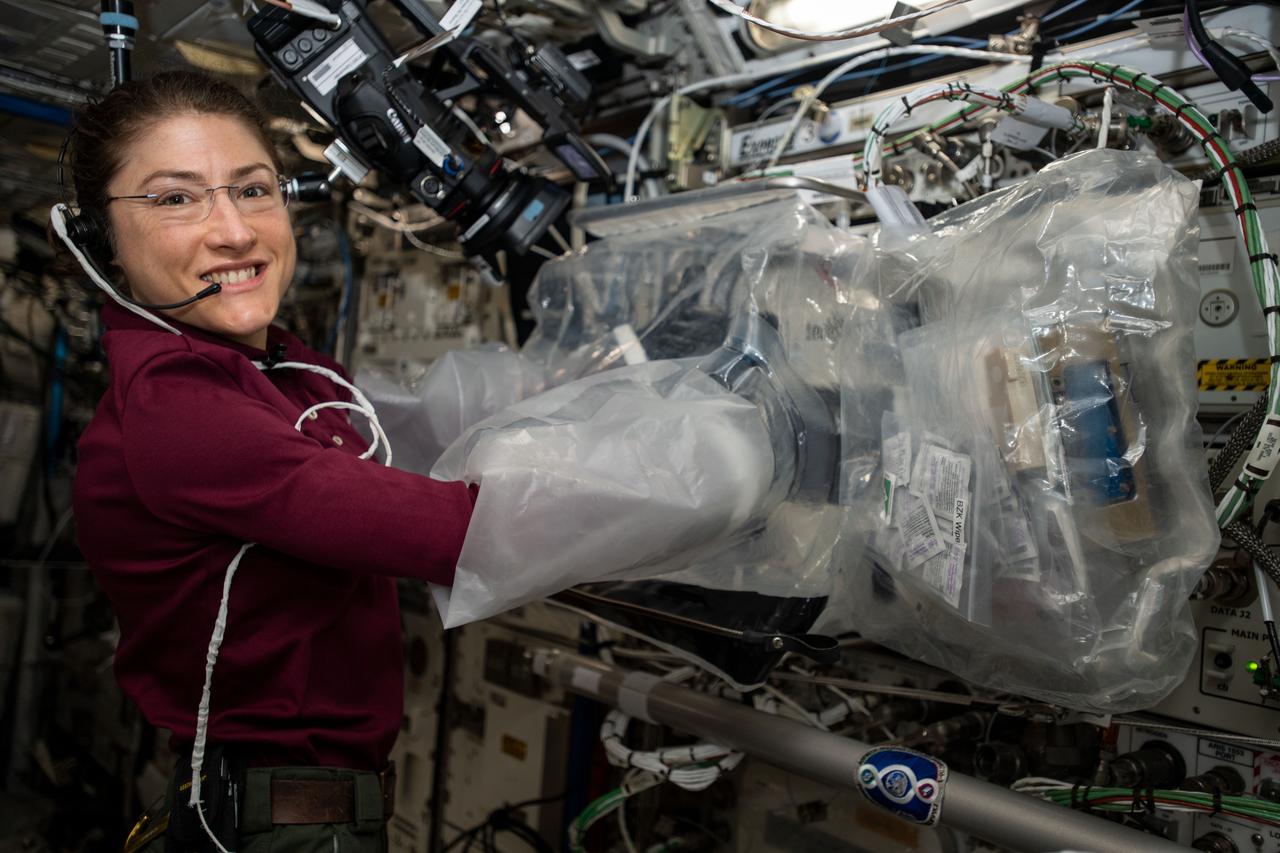
iss060e021175 (Aug. 2, 2019) --- Expedition 60 Flight Engineer Christina Koch of NASA activates the new BioFabrication Facility to test its ability to print cells. Researchers are exploring whether the weightless environment of space may support the fabrication of human organs in space. An incubator houses the tissue samples to promote cohesive cellular growth over several weeks. Earth’s gravity inhibits 3-D bioprinters and incubators from recreating and growing complex organic structures.
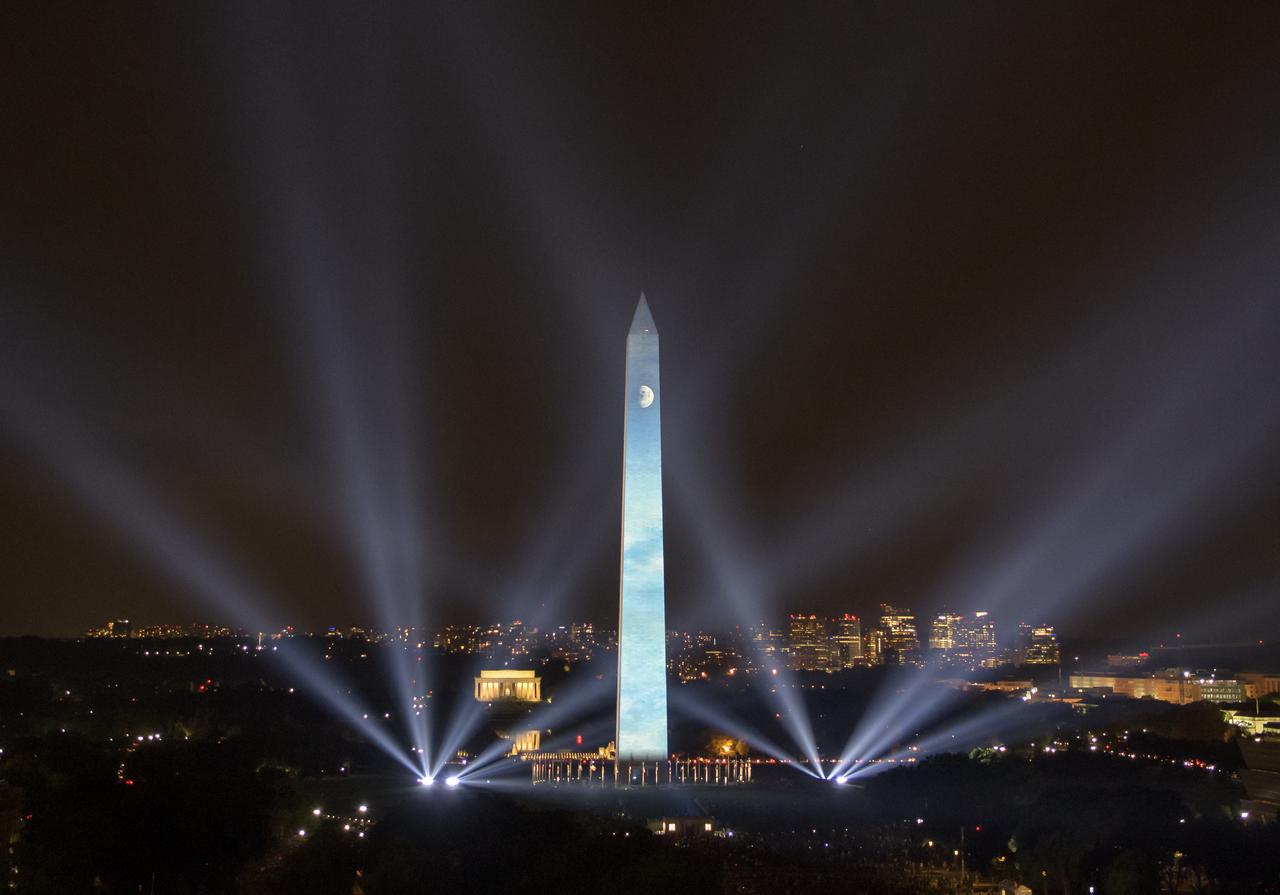
The 50 year anniversary of the Apollo 11 mission with NASA astronauts Neil Armstrong, Michael Collins, and Buzz Aldrin is celebrated in a 17-minute show, “Apollo 50: Go for the Moon”, by the Smithsonian’s National Air and Space Museum, which combined full-motion projection-mapping artwork on the Washington Monument and archival footage to recreate the launch of Apollo 11 and tell the story of the first moon landing, Friday, July 19, 2019 in Washington. Photo Credit: (NASA/Bill Ingalls)
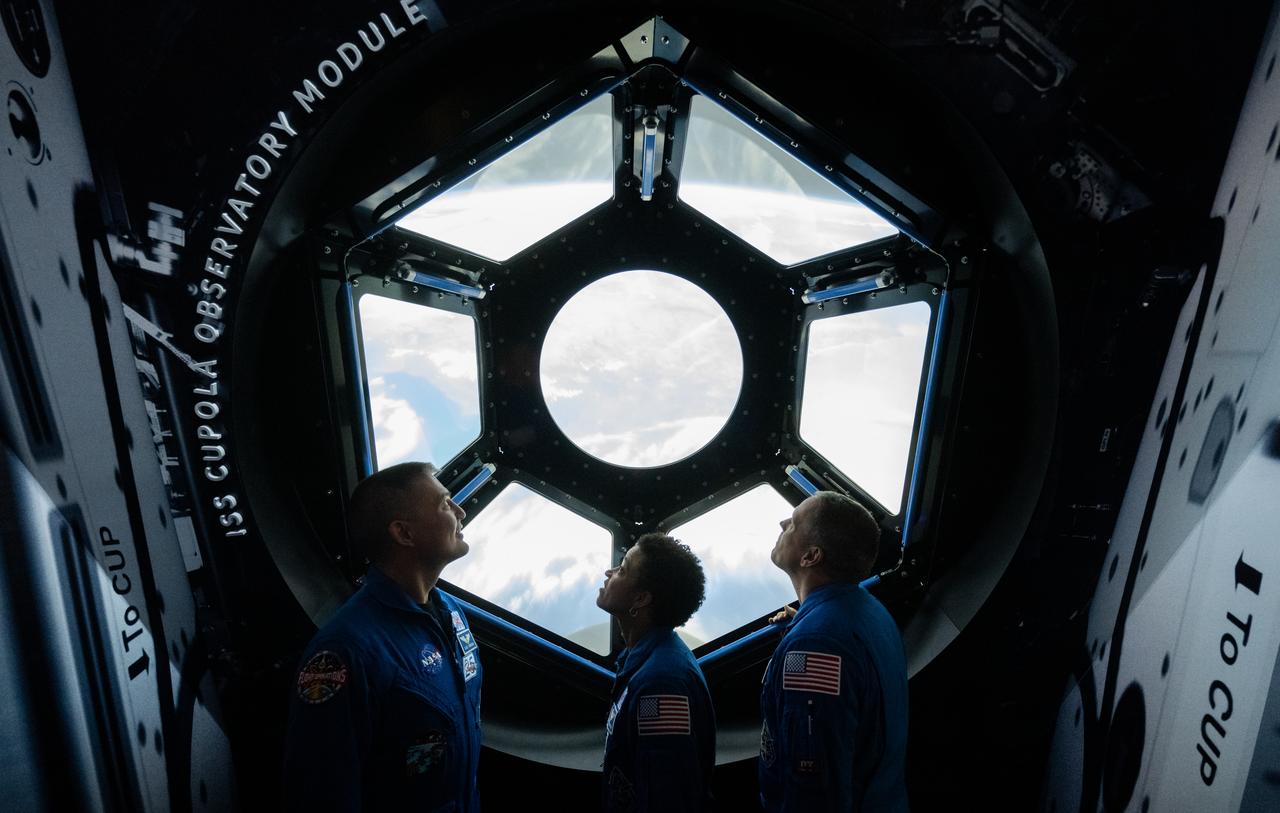
NASA astronauts Kjell Lindgren, left, Jessica Watkins, center, and Robert Hines, right, are seen in the in the One World Connected gallery looking at an interactive recreation of the International Space Station’s Cupola, Tuesday, March 28, 2023 at the Smithsonian’s National Air and Space Museum in Washington. Lindgren, Watkins, and Hines spent 170 days in space as part of Expeditions 67 and 68 aboard the International Space Station. Photo Credit: (NASA/Joel Kowsky)
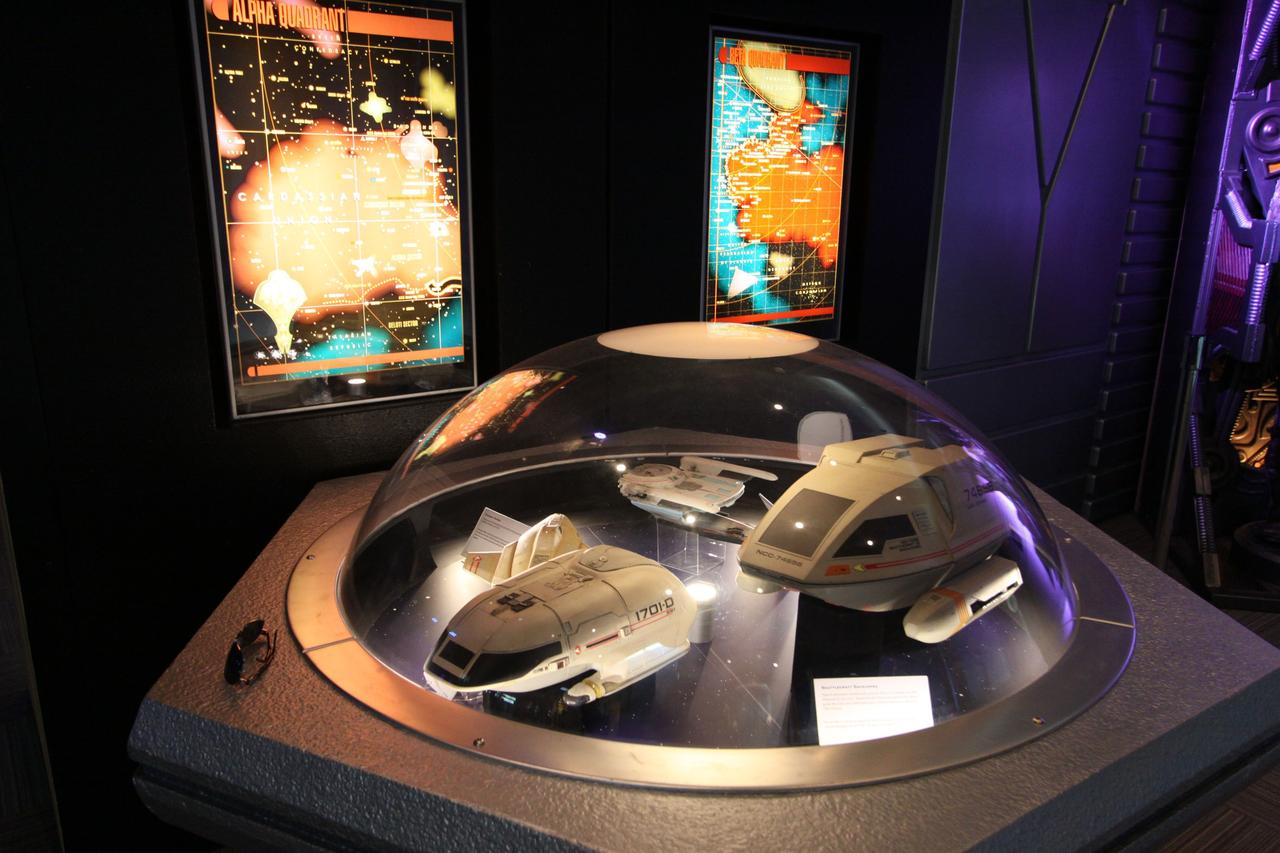
CAPE CANAVERAL, Fla. -- At NASA Kennedy Space Center's Visitor Complex, Star Trek memorabilia is being displayed this summer through Sept. 5. Appearing for the first time in the southeast, "Star Trek: The Exhibition" is an interactive exhibit of authentic Star Trek artifacts from the past 40 years, featuring one-of-a-kind costumes, props and filming models from every Star Trek television series and feature film, including a recreation of the U.S.S. Enterprise Bridge from the original series. Photo credit: NASA/Jack Pfaller
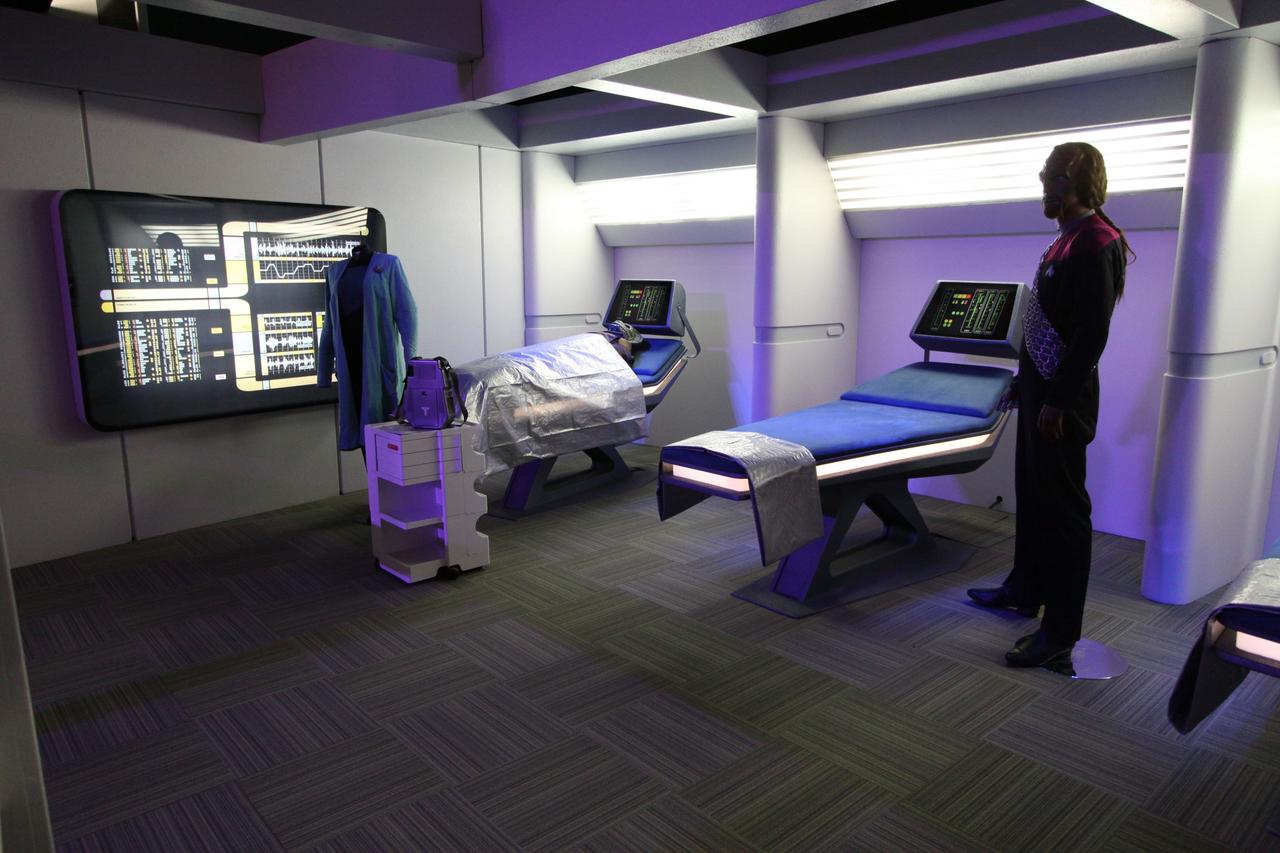
CAPE CANAVERAL, Fla. -- At NASA Kennedy Space Center's Visitor Complex, Star Trek memorabilia is being displayed this summer through Sept. 5. Appearing for the first time in the southeast, "Star Trek: The Exhibition" is an interactive exhibit of authentic Star Trek artifacts from the past 40 years, featuring one-of-a-kind costumes, props and filming models from every Star Trek television series and feature film, including a recreation of the U.S.S. Enterprise Bridge from the original series. Photo credit: NASA/Jack Pfaller
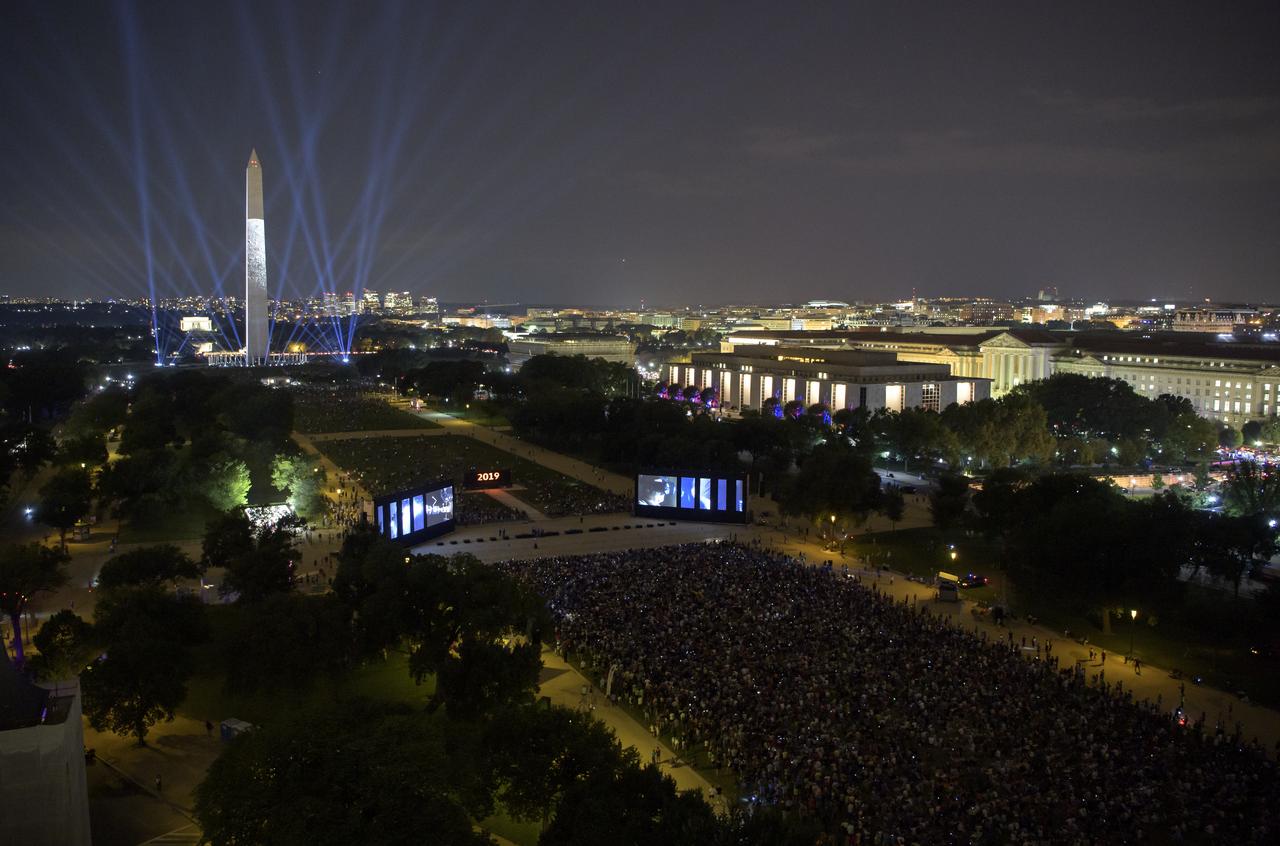
The 50 year anniversary of the Apollo 11 mission with NASA astronauts Neil Armstrong, Michael Collins, and Buzz Aldrin is celebrated in a 17-minute show, “Apollo 50: Go for the Moon”, by the Smithsonian’s National Air and Space Museum, which combined full-motion projection-mapping artwork on the Washington Monument and archival footage to recreate the launch of Apollo 11 and tell the story of the first moon landing, Friday, July 19, 2019 in Washington. Photo Credit: (NASA/Bill Ingalls)
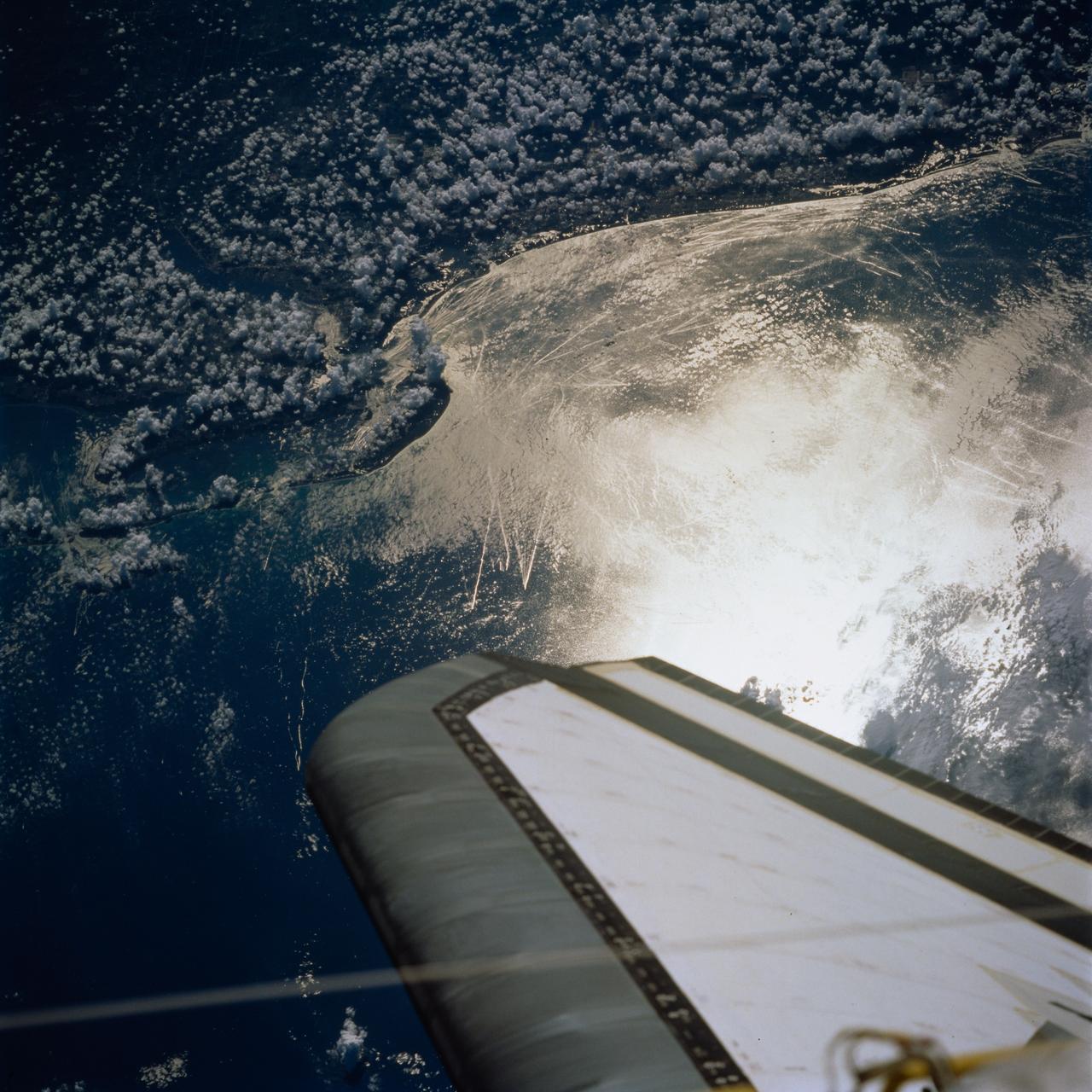
STS077-744-046 (19-29 May 1996) --- This view shows ship wakes off the coast of Fort Myers, Florida. The Sun glint reflecting off the ocean surfaces allowed man-made features to be seen and photographed by the astronaut crew members. When a ship or boat goes through the water it disturbs the surface of the water which causes the Sun?s rays to reflect back differently than the surrounding waters. Photographed on a weekend, this image illustrates how popular recreational boating is around the Fort Myers area.
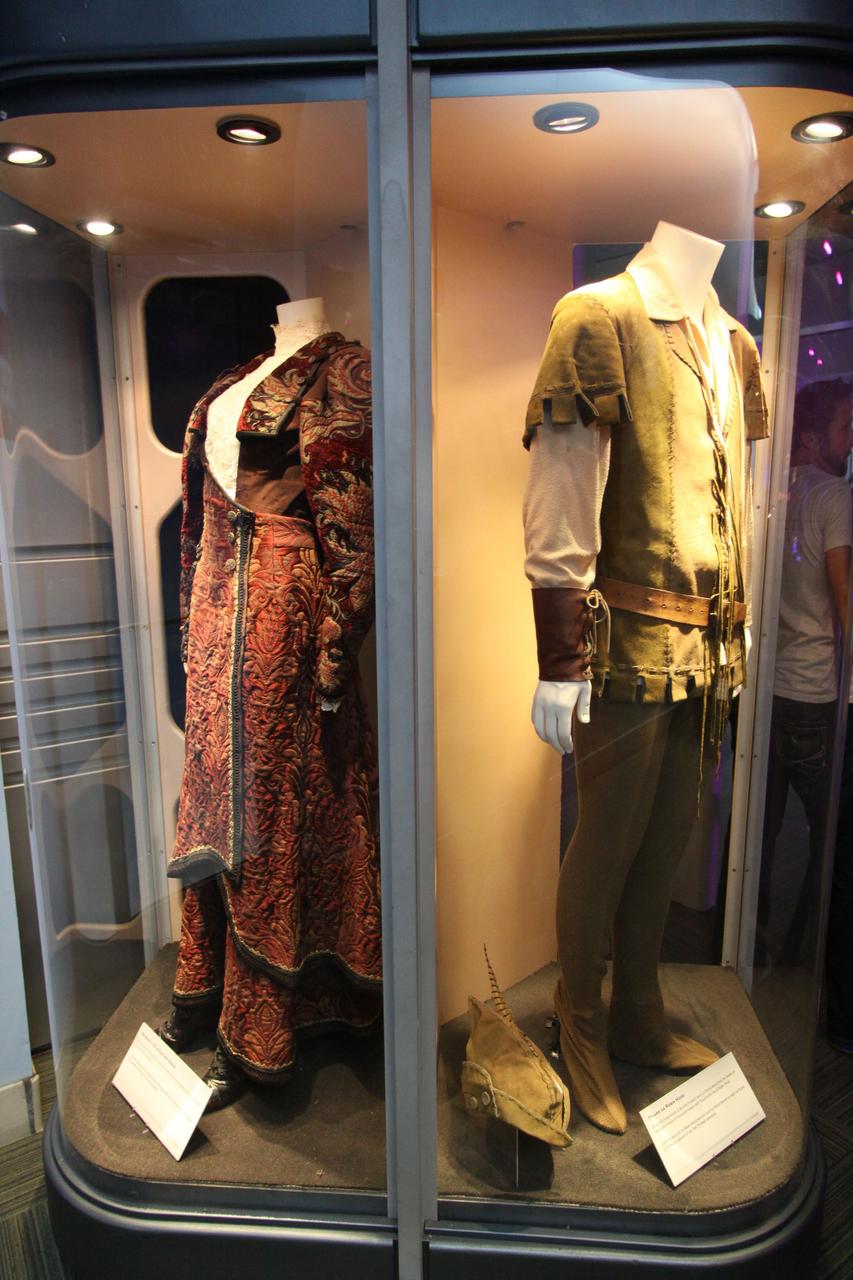
CAPE CANAVERAL, Fla. -- At NASA Kennedy Space Center's Visitor Complex, Star Trek memorabilia is being displayed this summer through Sept. 5. Appearing for the first time in the southeast, "Star Trek: The Exhibition" is an interactive exhibit of authentic Star Trek artifacts from the past 40 years, featuring one-of-a-kind costumes, props and filming models from every Star Trek television series and feature film, including a recreation of the U.S.S. Enterprise Bridge from the original series. Photo credit: NASA/Jack Pfaller
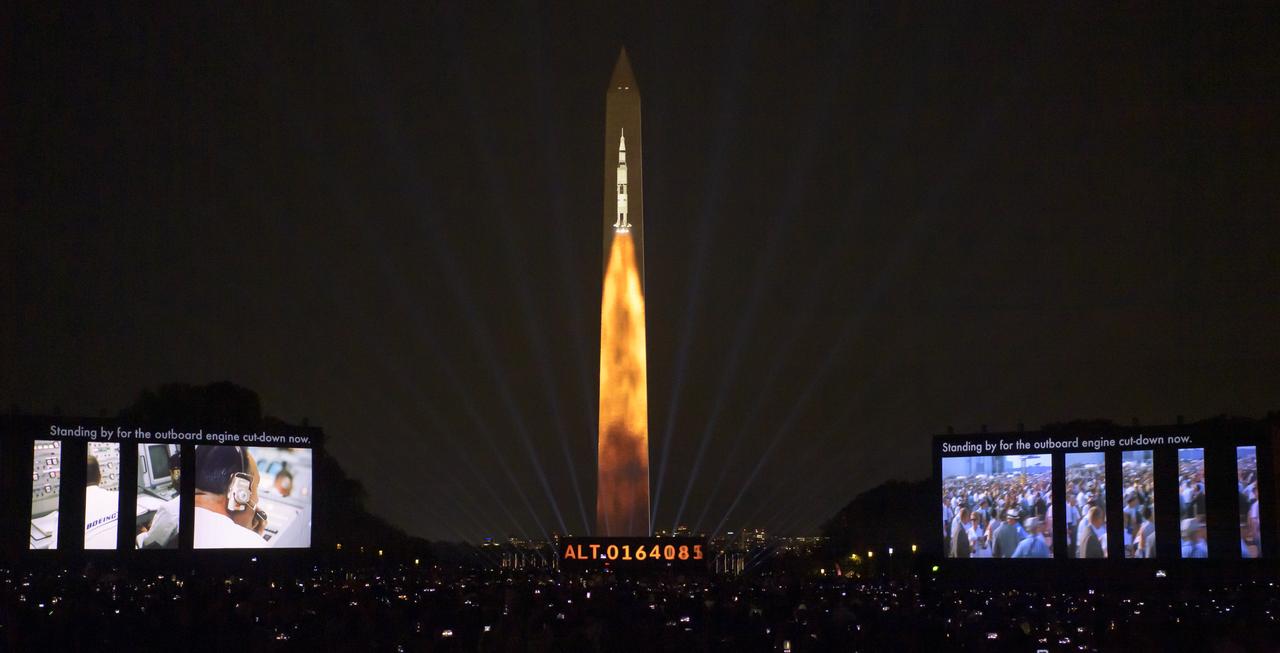
The 50 year anniversary of the Apollo 11 mission with NASA astronauts Neil Armstrong, Michael Collins, and Buzz Aldrin is celebrated in a 17-minute show, “Apollo 50: Go for the Moon”, by the Smithsonian’s National Air and Space Museum, which combined full-motion projection-mapping artwork on the Washington Monument and archival footage to recreate the launch of Apollo 11 and tell the story of the first moon landing, Friday, July 19, 2019 in Washington. Photo Credit: (NASA/Bill Ingalls)
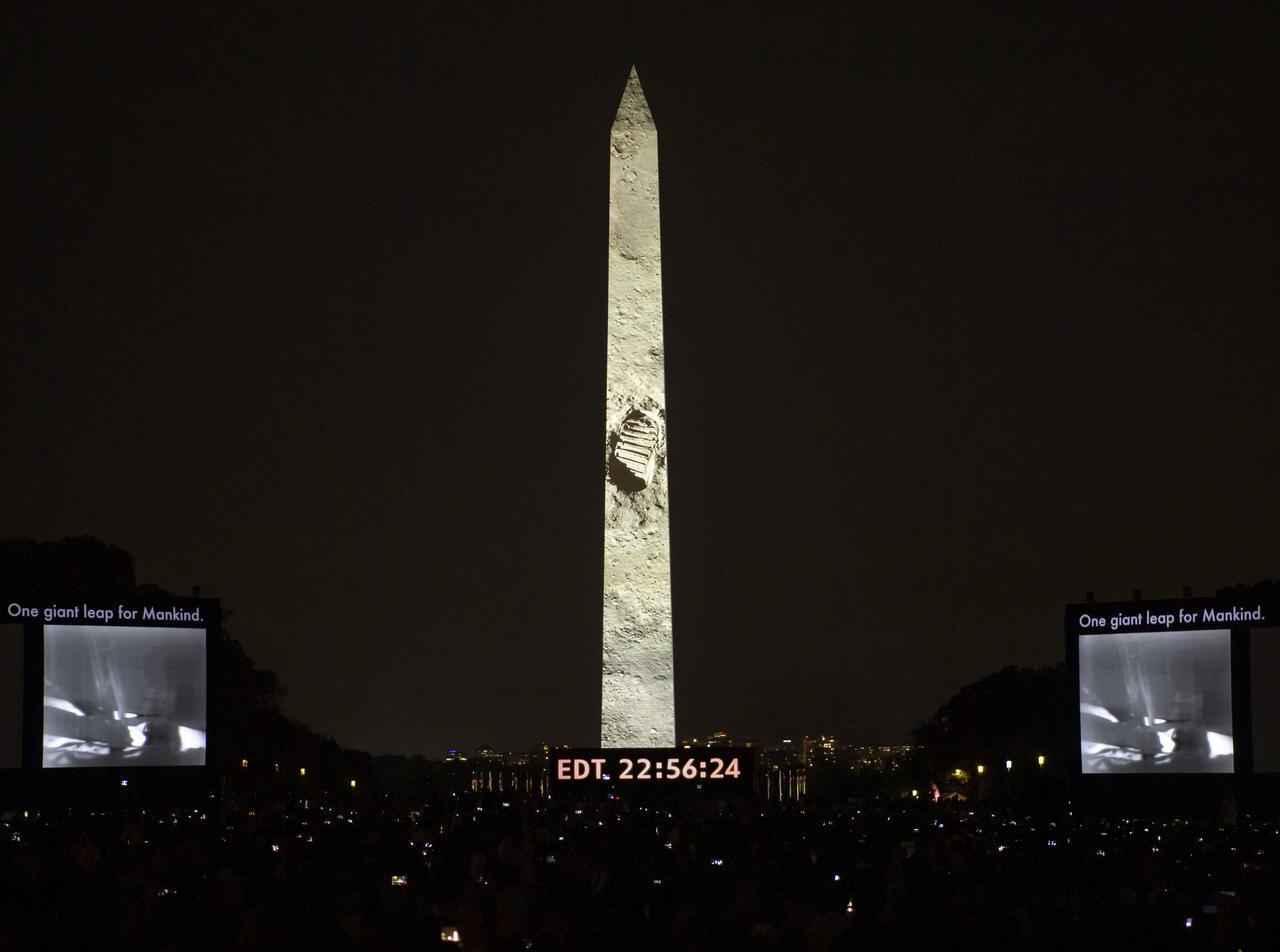
The 50 year anniversary of the Apollo 11 mission with NASA astronauts Neil Armstrong, Michael Collins, and Buzz Aldrin is celebrated in a 17-minute show, “Apollo 50: Go for the Moon”, by the Smithsonian’s National Air and Space Museum, which combined full-motion projection-mapping artwork on the Washington Monument and archival footage to recreate the launch of Apollo 11 and tell the story of the first moon landing, Friday, July 19, 2019 in Washington. Photo Credit: (NASA/Bill Ingalls)

A mangrove seedling grows amidst the rocks on the shoreline of Kennedy Athletic, Recreation, and Social (KARS) Park at Kennedy Space Center in Florida on April 12, 2023. Employees from Kennedy’s Environmental Management Branch removed over 100 mangrove seedlings from the shoreline and repotted them for protection during the final stages of a shoreline restoration project inside KARS Park. The mangrove seedlings will be replanted upon completion of the project to create a living shoreline better able to counter the effects of erosion caused by storm waves and rising sea levels.
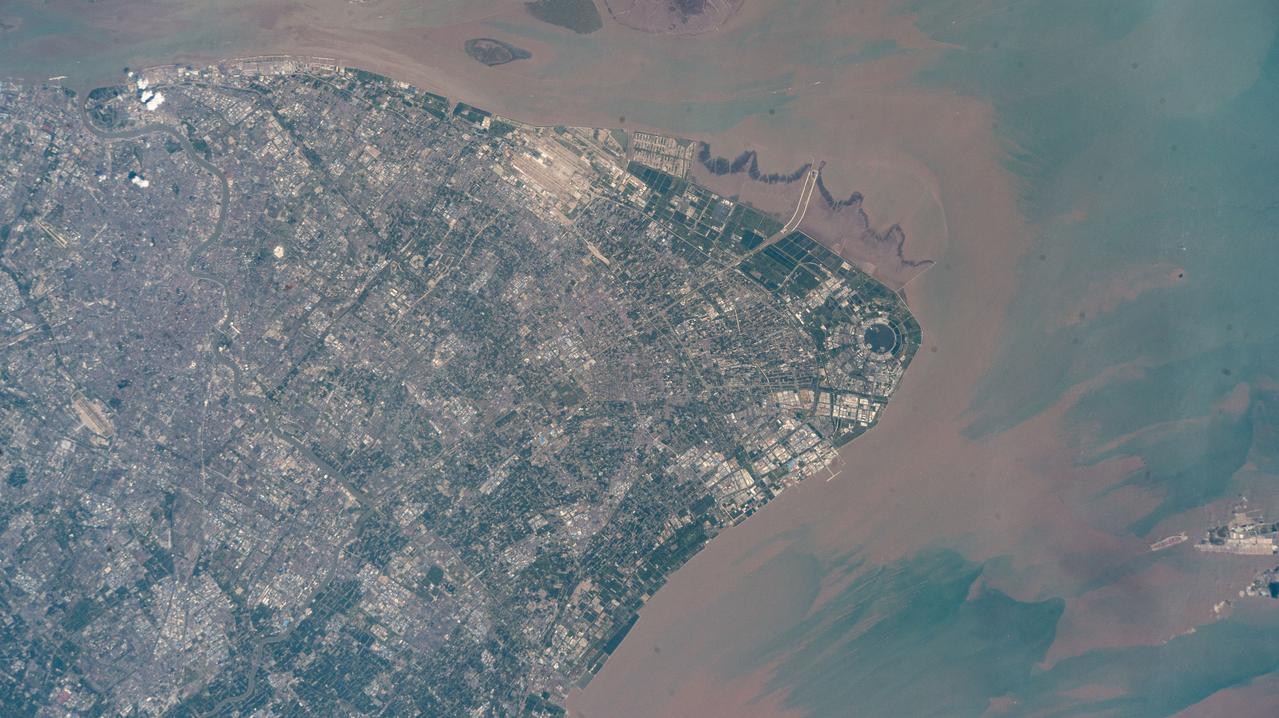
iss073e0513927 (Aug. 22, 2025) --- Shanghai, China's most populous city with over 24 million citizens and sitting on the East China Sea at the mouth of the Yangtze River, is pictured from the International Space Station as it orbited 260 miles above. Highlights include Shanghai Pudong International Airport (at top), the second busiest airport in the world by cargo traffic, and the circular Dishui Lake (center right), the largest artificial freshwater lake in China, hosting business and recreational activities.
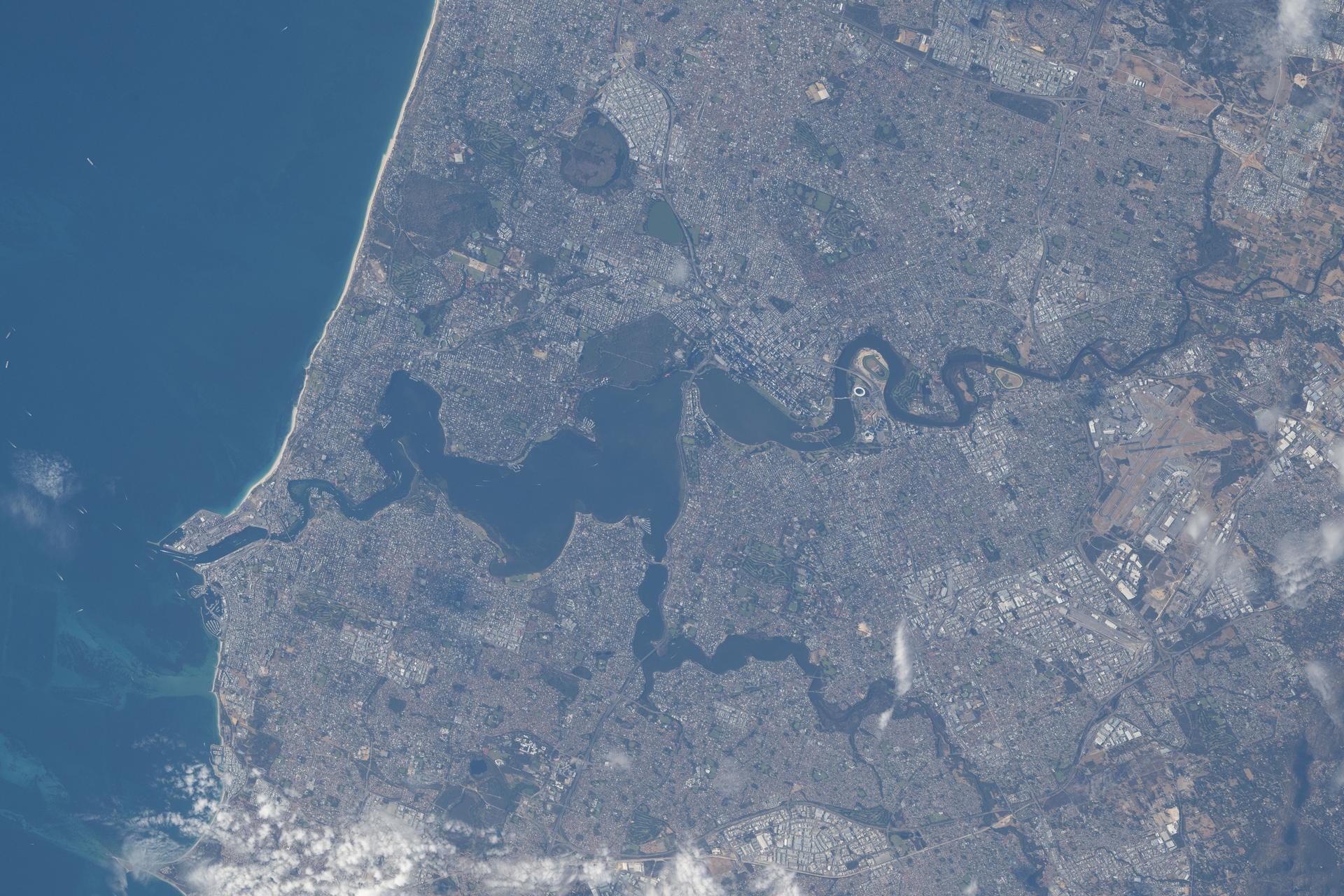
iss074e0376130 (March 26, 2026) --- Perth, Australia, located on the nation’s southwestern coast along the Indian Ocean and home to a metropolitan population of nearly 2.5 million, is pictured from the International Space Station as it orbited 269 miles above the province of Western Australia. The Swan River—popular for recreation and home to a diverse array of fish and migratory birds—splits the city and empties into the Indian Ocean. Credit: NASA/Chris Williams
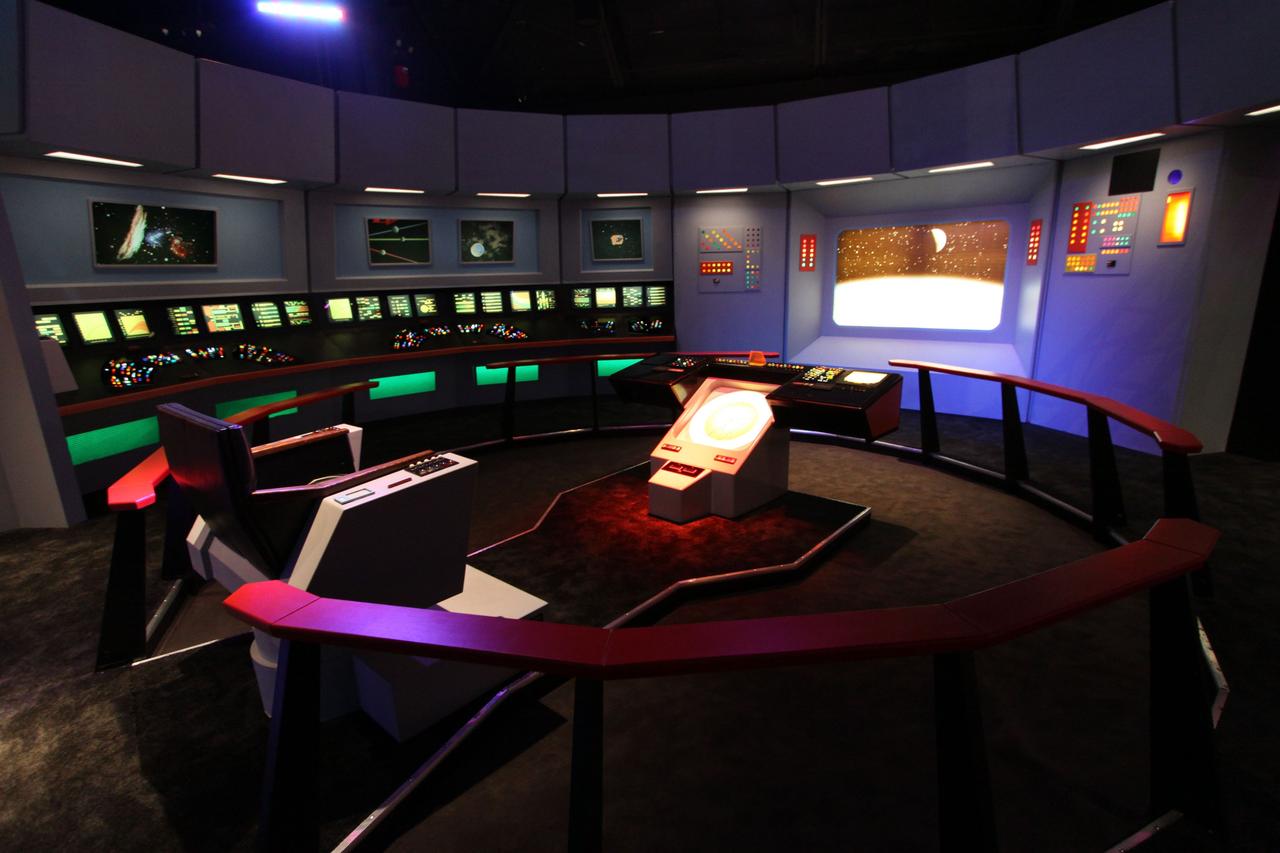
CAPE CANAVERAL, Fla. -- At NASA Kennedy Space Center's Visitor Complex, Star Trek memorabilia is being displayed this summer through Sept. 5. Appearing for the first time in the southeast, "Star Trek: The Exhibition" is an interactive exhibit of authentic Star Trek artifacts from the past 40 years, featuring one-of-a-kind costumes, props and filming models from every Star Trek television series and feature film, including a recreation of the U.S.S. Enterprise Bridge from the original series. Photo credit: NASA/Jack Pfaller
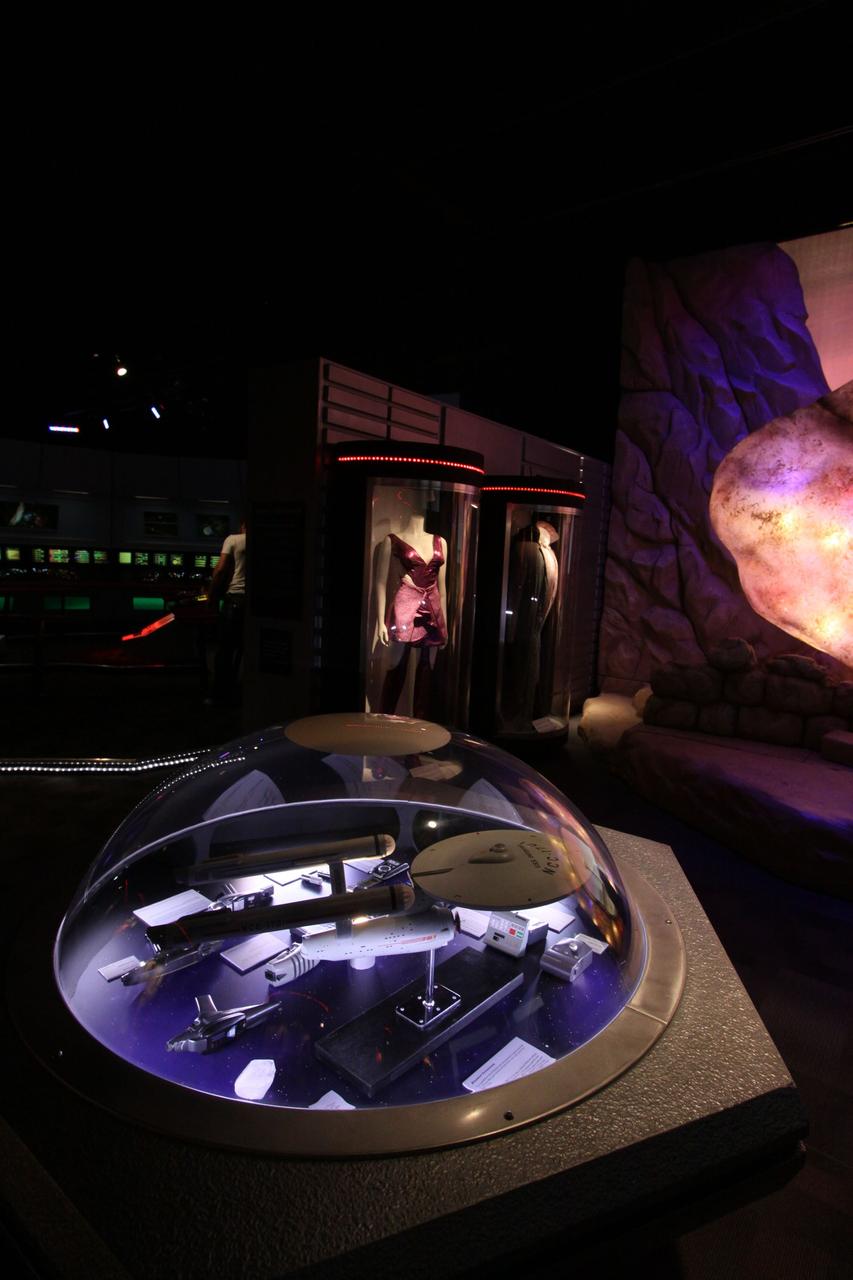
CAPE CANAVERAL, Fla. -- At NASA Kennedy Space Center's Visitor Complex, Star Trek memorabilia is being displayed this summer through Sept. 5. Appearing for the first time in the southeast, "Star Trek: The Exhibition" is an interactive exhibit of authentic Star Trek artifacts from the past 40 years, featuring one-of-a-kind costumes, props and filming models from every Star Trek television series and feature film, including a recreation of the U.S.S. Enterprise Bridge from the original series. Photo credit: NASA/Jack Pfaller
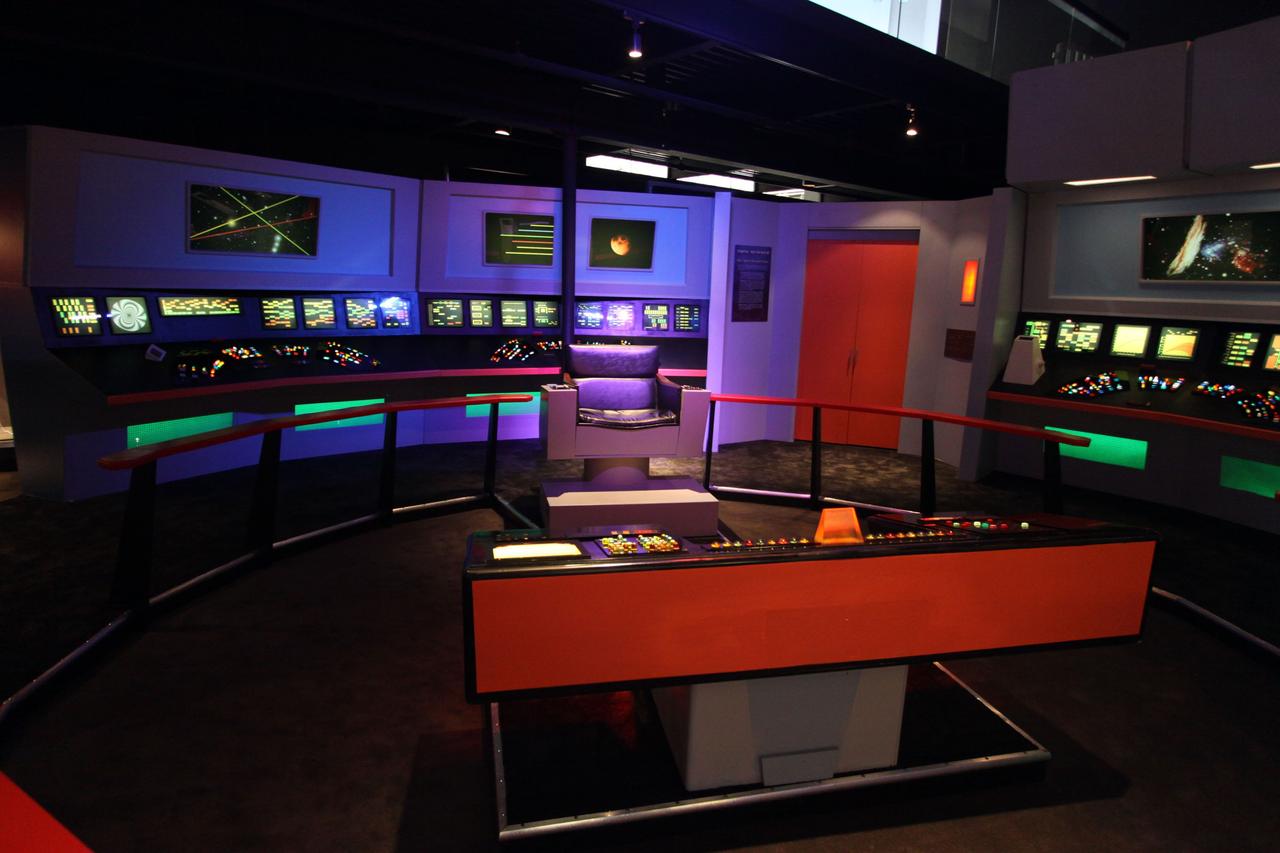
CAPE CANAVERAL, Fla. -- At NASA Kennedy Space Center's Visitor Complex, Star Trek memorabilia is being displayed this summer through Sept. 5. Appearing for the first time in the southeast, "Star Trek: The Exhibition" is an interactive exhibit of authentic Star Trek artifacts from the past 40 years, featuring one-of-a-kind costumes, props and filming models from every Star Trek television series and feature film, including a recreation of the U.S.S. Enterprise Bridge from the original series. Photo credit: NASA/Jack Pfaller
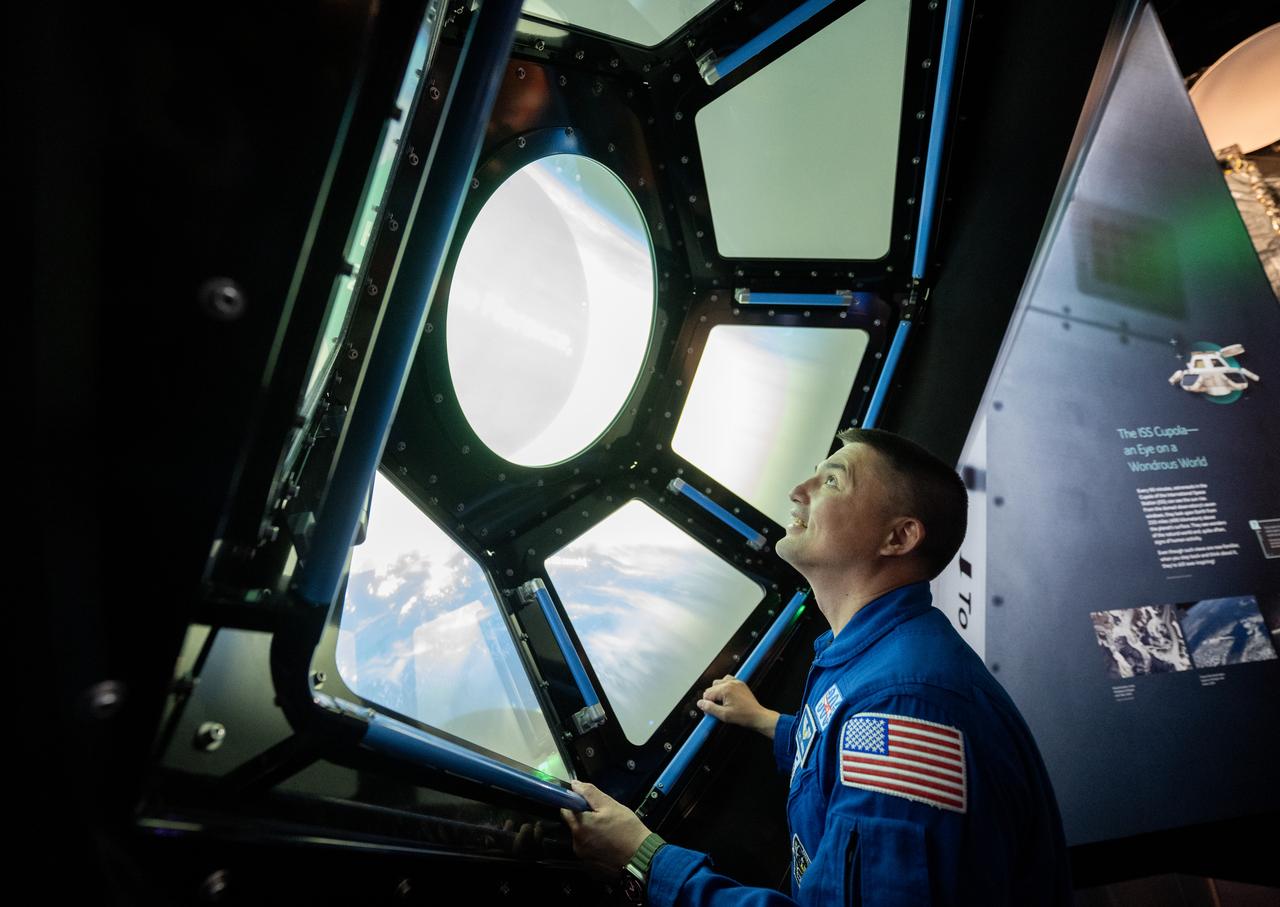
NASA astronaut Kjell Lindgren are seen in the in the One World Connected gallery looking at an interactive recreation of the International Space Station’s Cupola, Tuesday, March 28, 2023 at the Smithsonian’s National Air and Space Museum in Washington. Lindgren, along with fellow NASA astronauts Robert Hines and Jessica Watkins spent 170 days in space as part of Expeditions 67 and 68 aboard the International Space Station. Photo Credit: (NASA/Joel Kowsky)
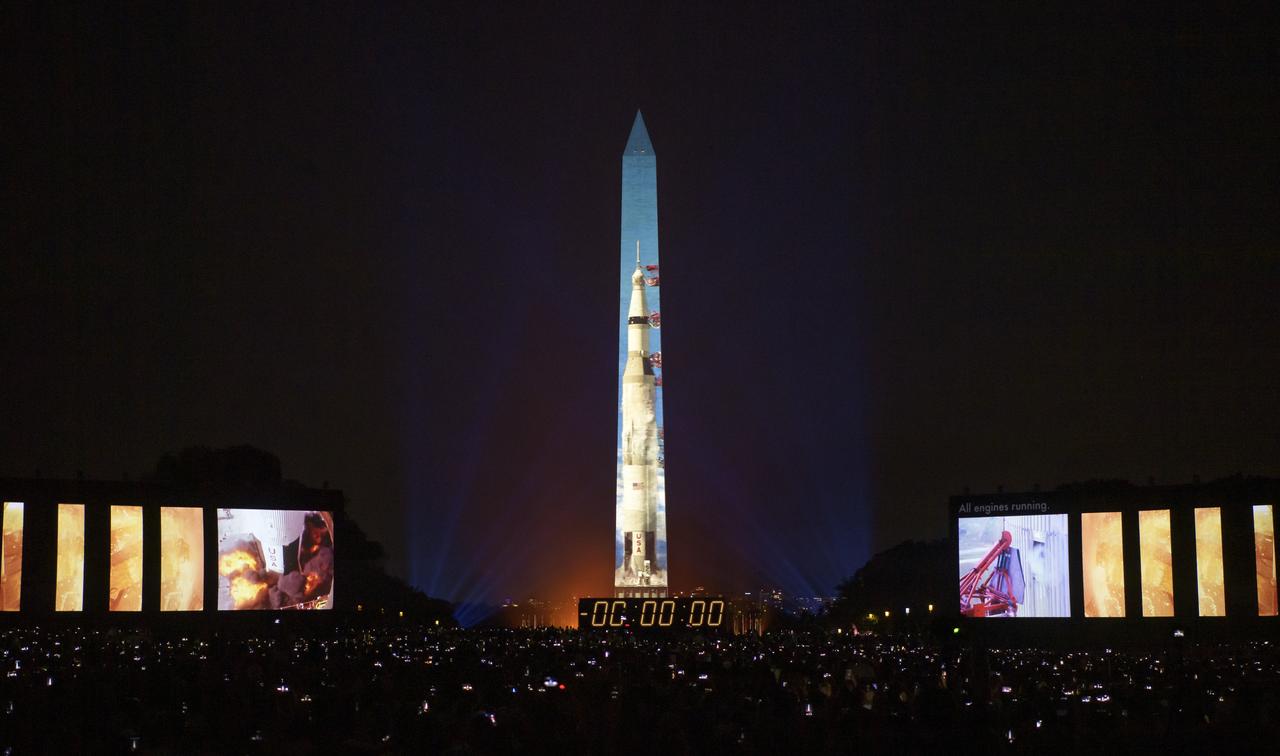
The 50 year anniversary of the Apollo 11 mission with NASA astronauts Neil Armstrong, Michael Collins, and Buzz Aldrin is celebrated in a 17-minute show, “Apollo 50: Go for the Moon”, by the Smithsonian’s National Air and Space Museum, which combined full-motion projection-mapping artwork on the Washington Monument and archival footage to recreate the launch of Apollo 11 and tell the story of the first moon landing, Friday, July 19, 2019 in Washington. Photo Credit: (NASA/Bill Ingalls)

William Moore, COO, KSC VC, DNC Parks & Recreation, speaks at the signing ceremony, for space shuttle Atlantis, background, Friday, Nov. 2, 2012, in Cape Canaveral, Fla. The spacecraft traveled 125,935,769 miles during 33 spaceflights, including 12 missions to the International Space Station. Its final flight, STS-135, closed out the Space Shuttle Program era with a landing on July 21, 2011. Photo Credit: (NASA/Bill Ingalls)
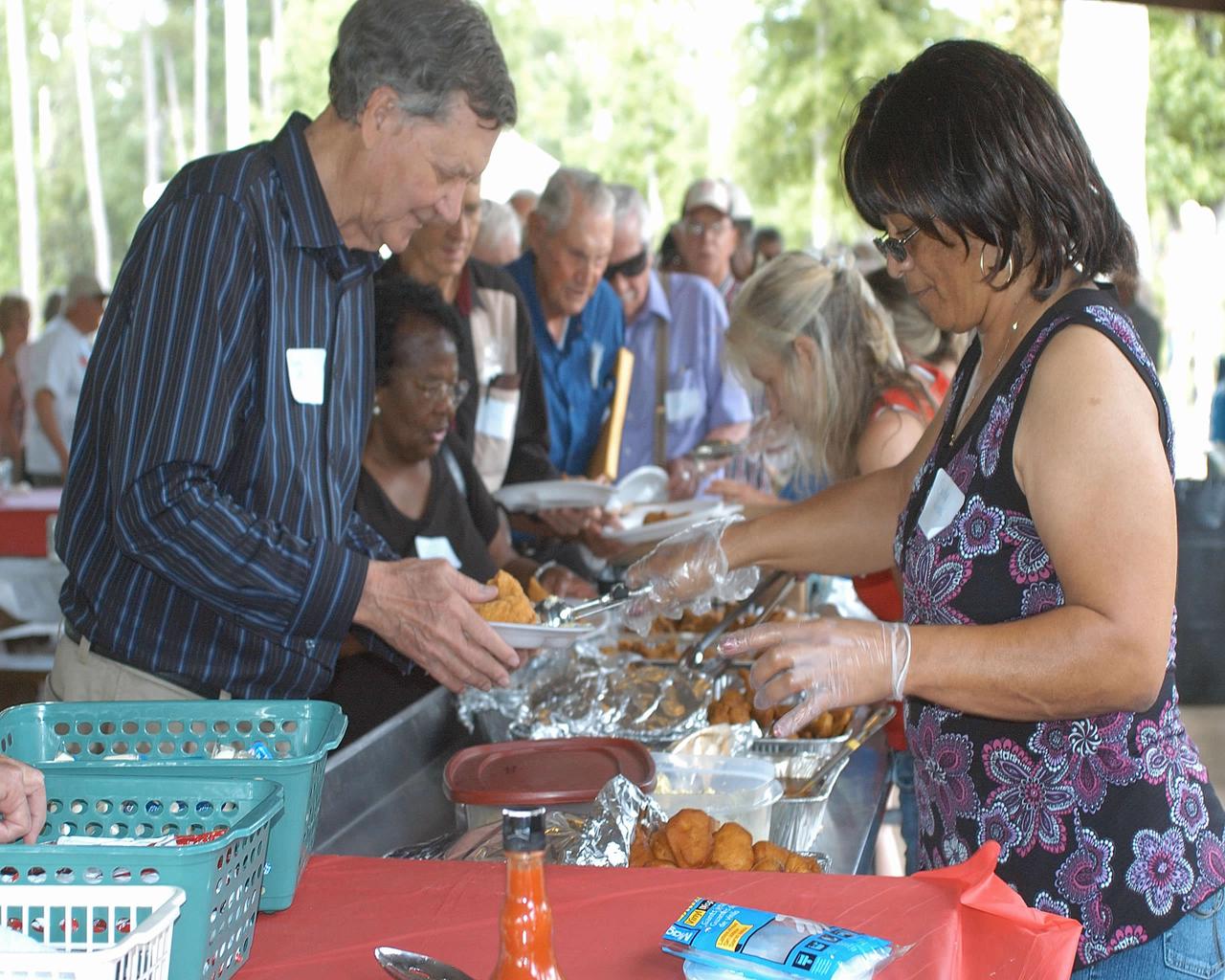
Sandra Piernas (right), an employee at NASA's John C. Stennis Space Center, serves NASA retiree Dewey Little during 2010 Old Timers' Day activities May 14. Each year, the Stennis Recreational Association welcomes back former employees for a meal and time of fellowship at the facility's Cypress House. The event offers current employees the opportunity to hear stories about early work at the center. Stennis was established in the 1960s to test engines and rocket stages for the Apollo Program.
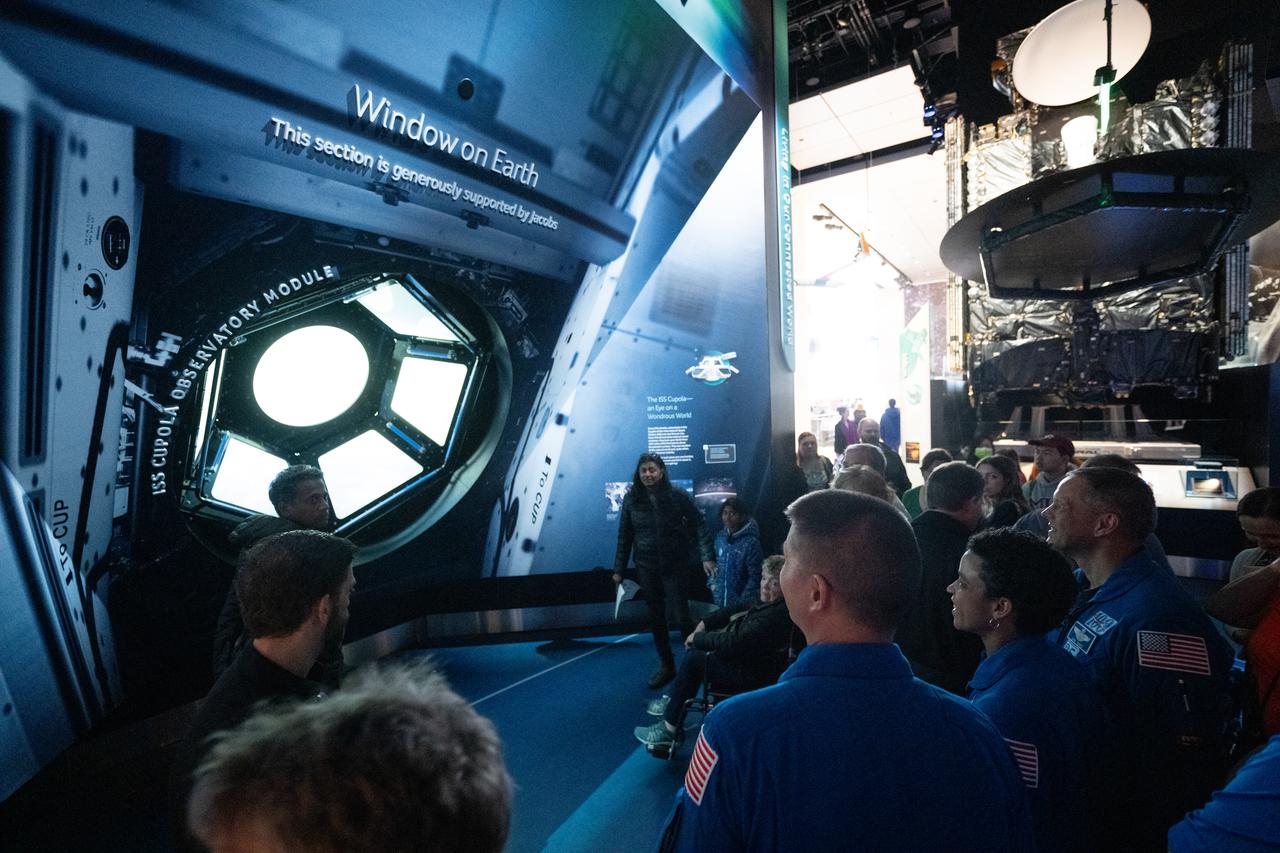
NASA astronauts Kjell Lindgren, Jessica Watkins, and Robert Hines are seen in the in the One World Connected gallery looking at an interactive recreation of the International Space Station’s Cupola, Tuesday, March 28, 2023 at the Smithsonian’s National Air and Space Museum in Washington. Lindgren, Watkins, and Hines spent 170 days in space as part of Expeditions 67 and 68 aboard the International Space Station. Photo Credit: (NASA/Joel Kowsky)
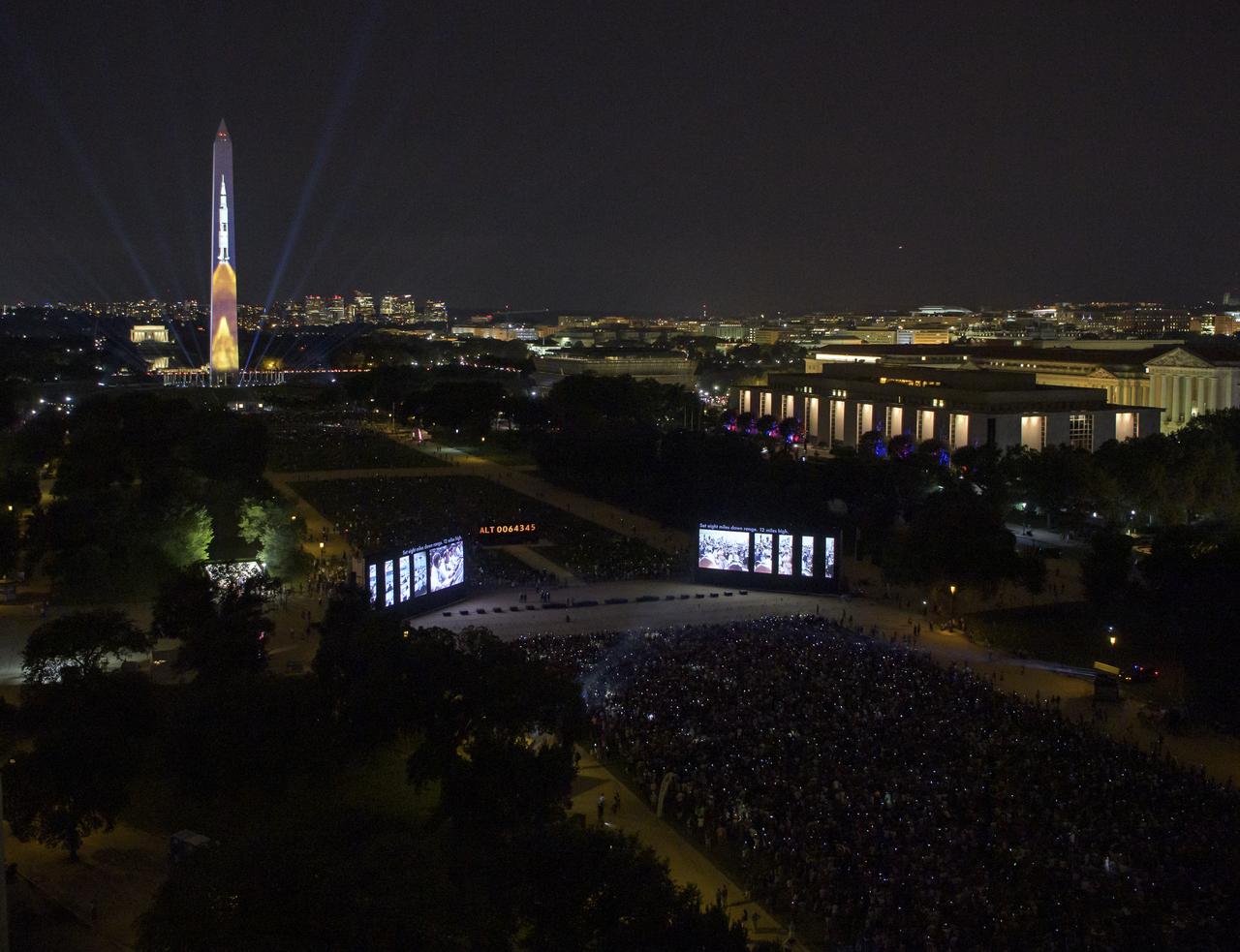
The 50 year anniversary of the Apollo 11 mission with NASA astronauts Neil Armstrong, Michael Collins, and Buzz Aldrin is celebrated in a 17-minute show, “Apollo 50: Go for the Moon”, by the Smithsonian’s National Air and Space Museum, which combined full-motion projection-mapping artwork on the Washington Monument and archival footage to recreate the launch of Apollo 11 and tell the story of the first moon landing, Friday, July 19, 2019 in Washington. Photo Credit: (NASA/Bill Ingalls)
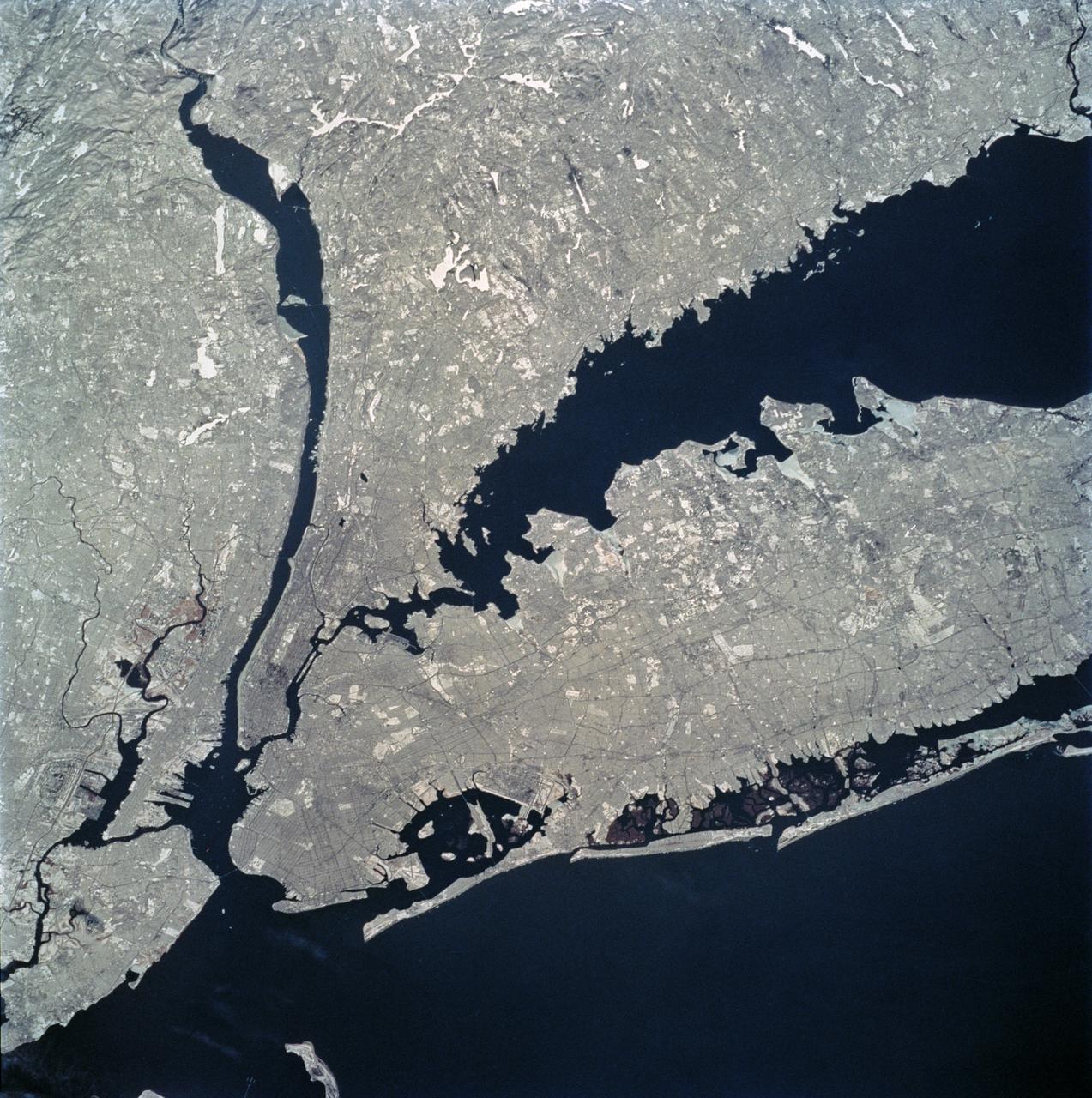
STS062-81-010 (4-18 March 1994) --- The recent heavy snowfalls help to accentuate the major transportation networks, (railroads, highways and airports), throughout the New York City metropolitan area. This particular scene also highlights the land-water boundaries and the lighter open spaces, such as parks, cemeteries and recreational areas. The snows have produced a white blanket effect on these areas. Even some of the snow-covered lakes can be discerned. The boroughs of Staten Island, Brooklyn, Queens, The Bronx and Manhattan are also recognizable on the photograph.
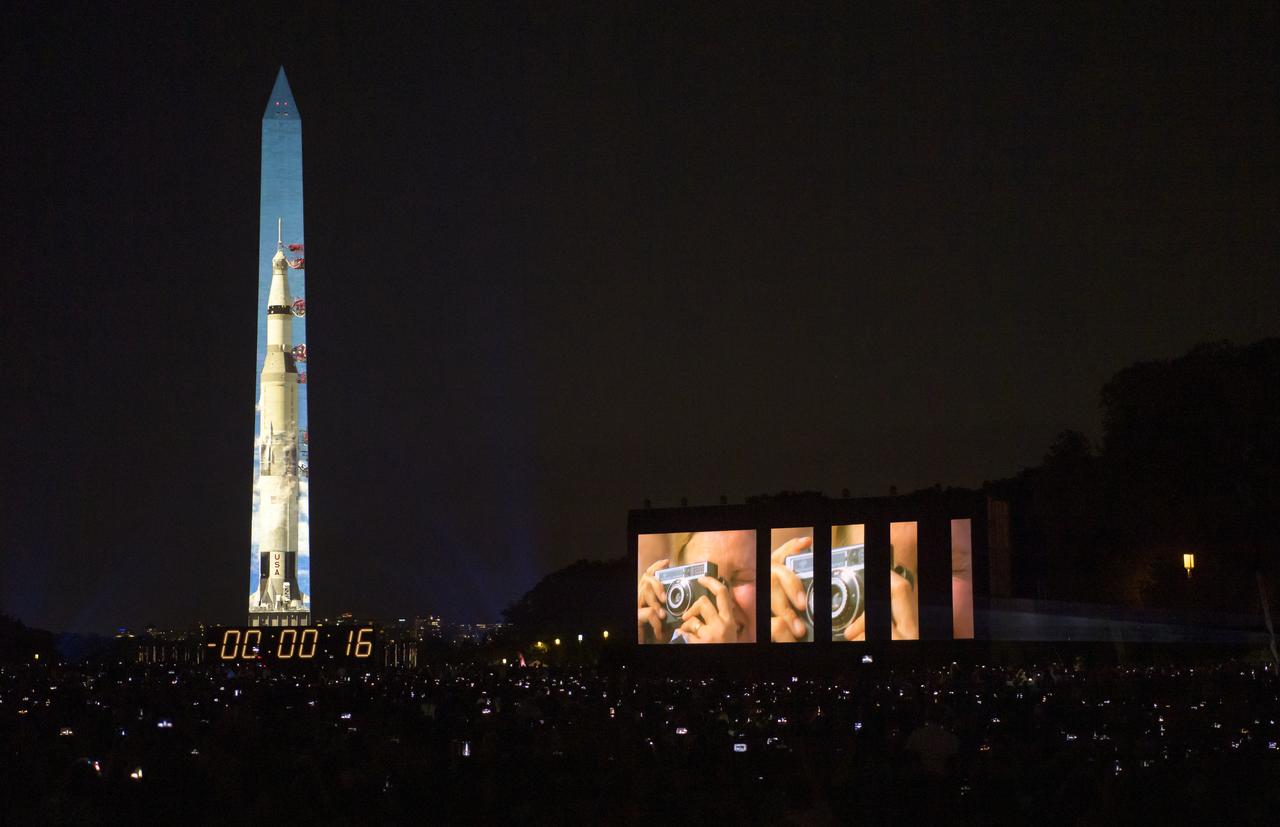
The 50 year anniversary of the Apollo 11 mission with NASA astronauts Neil Armstrong, Michael Collins, and Buzz Aldrin is celebrated in a 17-minute show, “Apollo 50: Go for the Moon”, by the Smithsonian’s National Air and Space Museum, which combined full-motion projection-mapping artwork on the Washington Monument and archival footage to recreate the launch of Apollo 11 and tell the story of the first moon landing, Friday, July 19, 2019 in Washington. Photo Credit: (NASA/Bill Ingalls)

iss074e0538325 (April 25, 2026) ---Michigan’s Muskegon Lake flows into Lake Michigan and is surrounded by mid-sized towns and small coastal communities. The freshwater lake serves as a harbor for the city of Muskegon, offering recreation, culture, and waterfront amenities, including passenger ferry service between Muskegon and Milwaukee, Wisconsin, across Lake Michigan. Credit: NASA/Jessica Meir
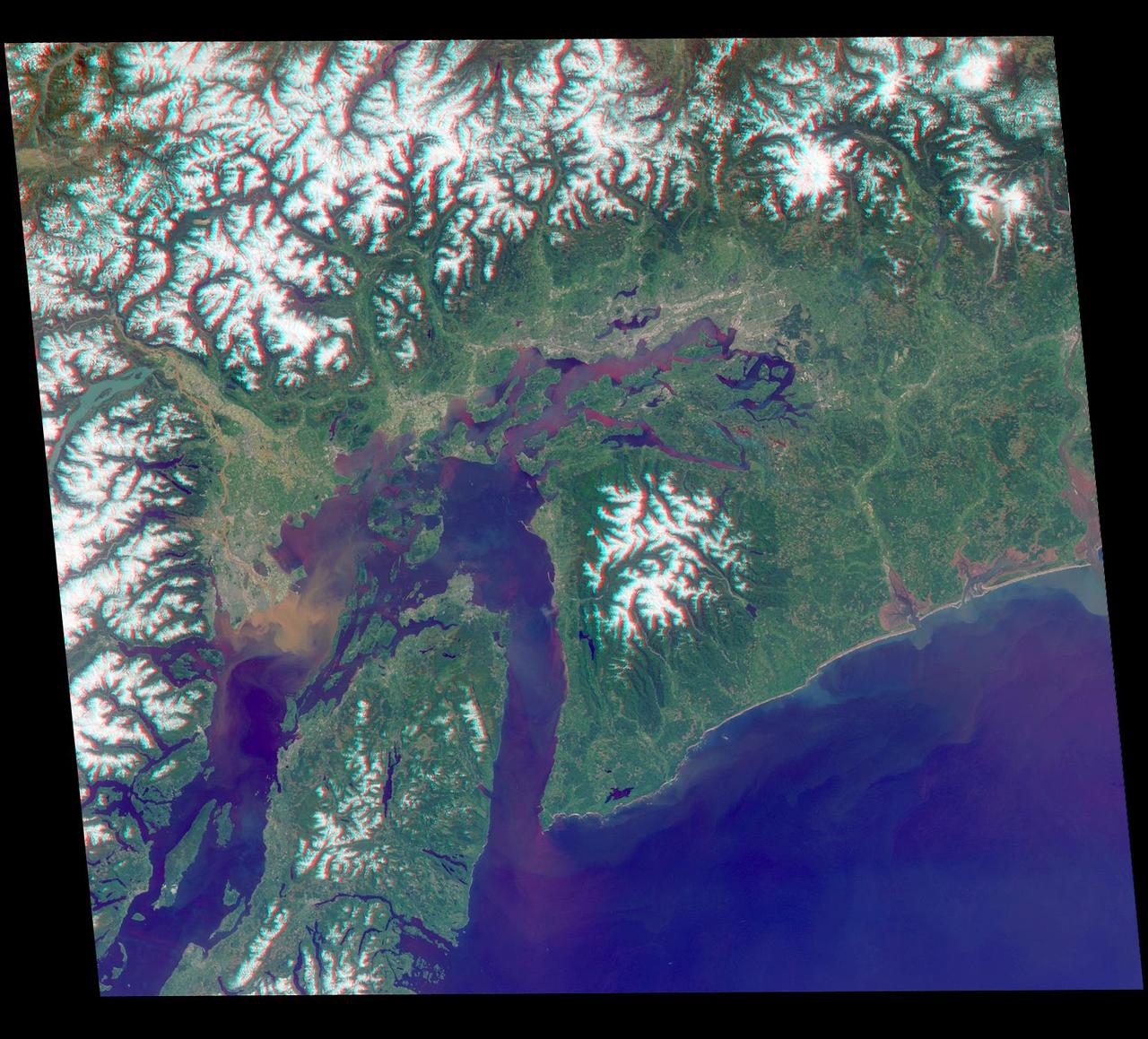
Just in time for the U.S. National Park Service's Centennial celebration on Aug. 25, NASA's Multiangle Imaging SpectroRadiometer (MISR) instrument aboard NASA's Terra satellite is releasing four new anaglyphs that showcase 33 of our nation's national parks, monuments, historical sites and recreation areas in glorious 3D. Shown in the annotated image are Lewis and Clark National Historic Park, Mt. Rainier National Park, Olympic National Park, Ebey's Landing National Historical Reserve, San Juan Island National Historic Park, North Cascades National Park, Lake Chelan National Recreation Area, and Ross Lake National Recreation Area (also Mt. St. Helens National Volcanic Monument, administered by the U.S. Forest Service) MISR views Earth with nine cameras pointed at different angles, giving it the unique capability to produce anaglyphs, stereoscopic images that allow the viewer to experience the landscape in three dimensions. The anaglyphs were made by combining data from MISR's vertical-viewing and 46-degree forward-pointing camera. You will need red-blue glasses in order to experience the 3D effect; ensure you place the red lens over your left eye. The images have been rotated so that north is to the left in order to enable 3D viewing because the Terra satellite flies from north to south. All of the images are 235 miles (378 kilometers) from west to east. These data were acquired May 12, 2012, Orbit 65960. http://photojournal.jpl.nasa.gov/catalog/PIA20891
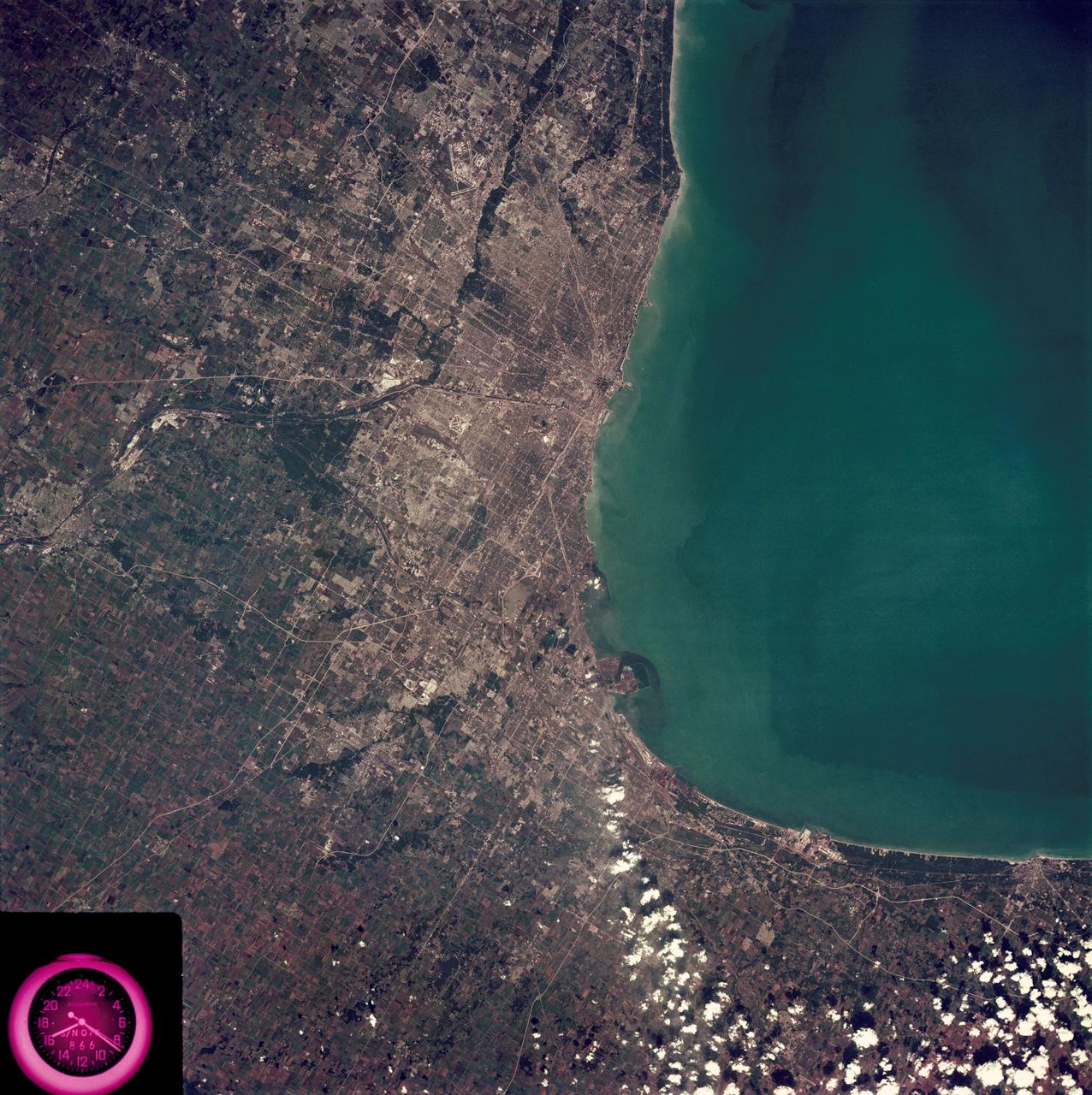
SL3-88-222 (18 Sept. 1973) --- The metropolitan area of Chicago is encompassed in this Skylab 3 Earth Resources Experiments Package (EREP) S190-B photograph taken on Sept. 18, 1973 from the Skylab space station cluster in Earth orbit. The surrounding major cities of Aurora and Joliet, Illinois; Hammond, Gary and East Chicago, Indiana, are easily delineated. The photograph reveals the following: (1) Cultural differentiation of commercial, industrial and residential areas for use in population and social studies in micro-macro community planning and in cultural pattern studies in the improvement of urban areas. (Aurora is one of 27 census cities of interest to Robert Alexander, a principal investigator. Alexander is with the U.S. Geological Survey). (2) The transportation network with major corridors and their interchanges, primary and feeder streets for use in network analysis and in the development of models for population movement and land use projection. (3) The agricultural lands for land use identification on crop inventory analysis; airports for use in delineation of service and infringement of major man-made features that affect ecosystem balance (support to environmental impact studies). (4) Air and water plumes for use in case studies, natural and man-made differentiation of pollution sources, in support of model development and in ecosystem research studies on the effects of pollution. (5) Recreational centers for use in relating recreational centers to population centers, establishing possible demands and in development of possible future recreational centers to support the demand. All EREP photography is available to the public through the Department of Interior?s Earth Resources Observations Systems Data Center, Sioux Falls, South Dakota, 57198. Photo credit: NASA
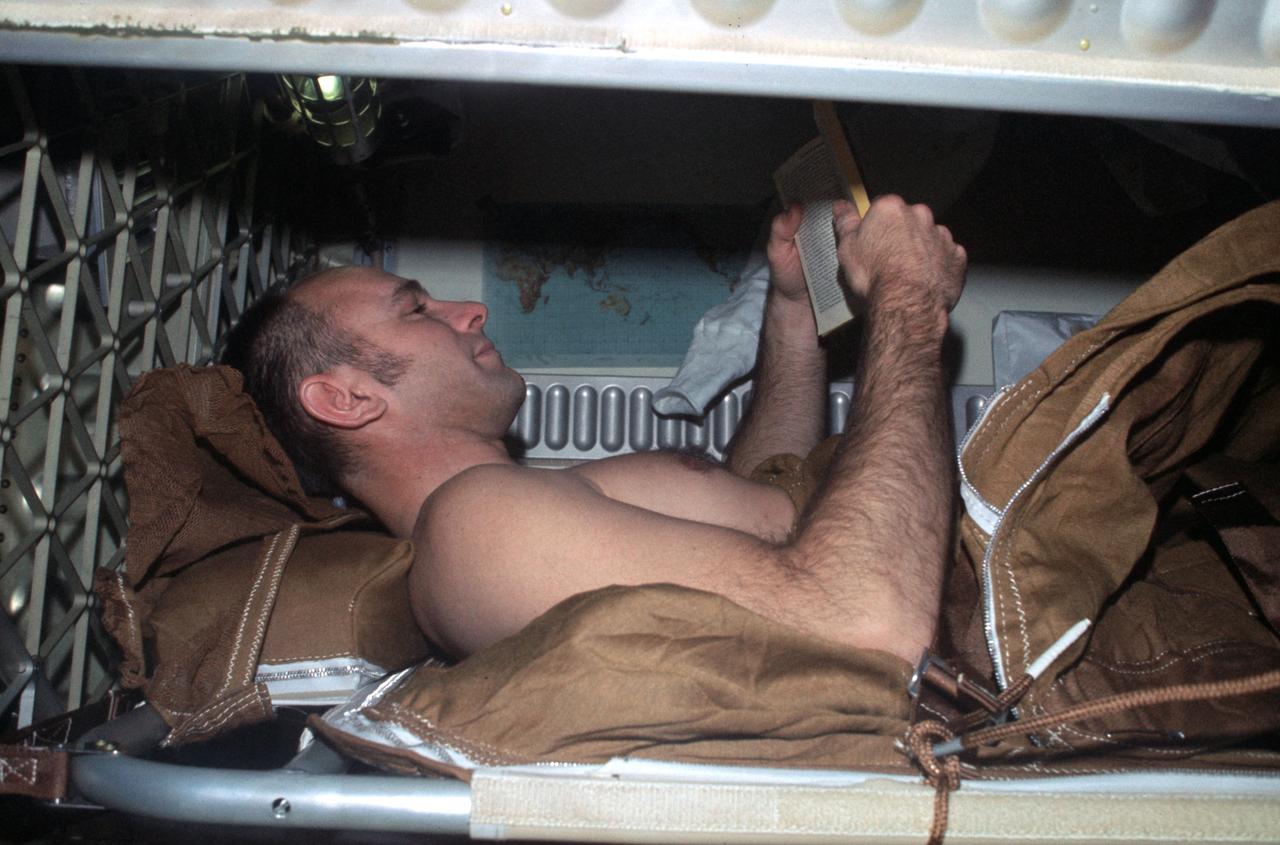
SL3-112-1527 (July-September 1973) --- View of astronaut Alan L. Bean, Skylab 3 commander, in his sleep compartment, reading a book. Photo credit: NASA
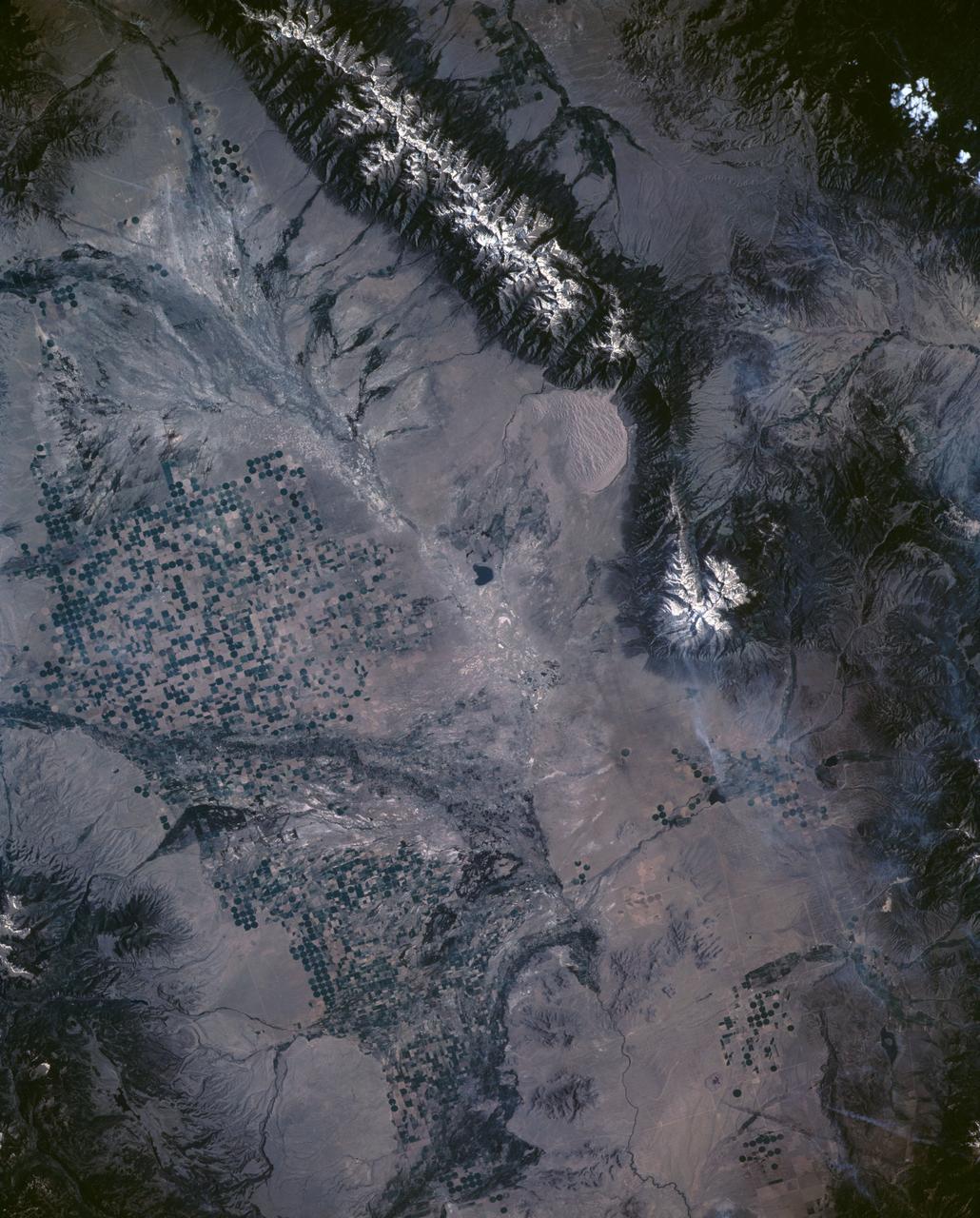
STS040-151-126 (5-14 June 1991) --- Croplands of the San Luis Valley stand out exceptionally clearly from low Earth orbit. The Rio Grande flows through the valley. Circular center pivot irrigation patterns have almost completely replaced the earlier rectangular grid pattern. Pinto beans are the specialty of the area. The Great Sand Dunes National Monument appears in fine detail near the center of the picture. The sands of these dunes have been blown from the valley floor by westerly winds in the course of the last few tens of thousands of years, now banked up against the foot of the Sangre de Christo Mountains (snowcapped peaks reach over 14000 feet). The town of Alamosa lies on the Rio Grande. The San Juan Mountains appear at the bottom left.
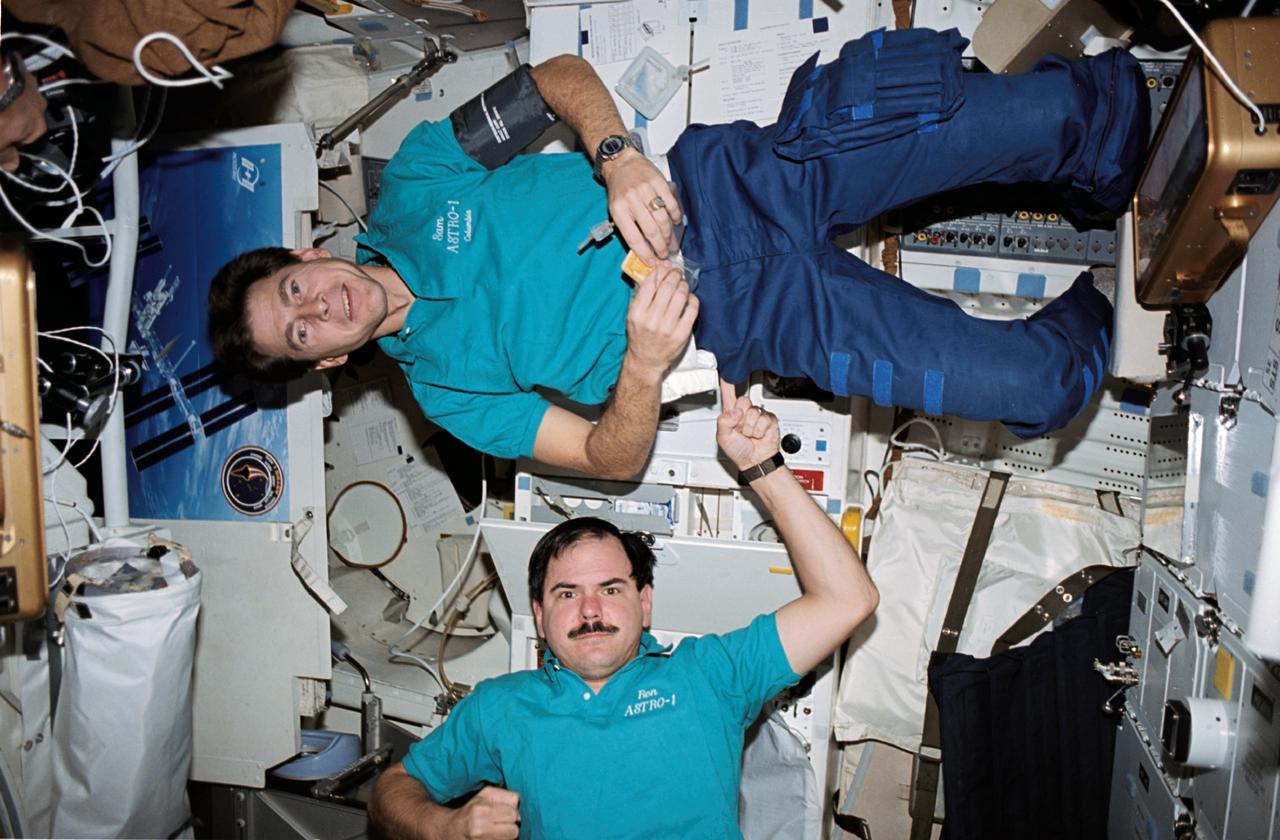
STS035-49-028 (2-10 Dec. 1990) --- This is one of 25 visuals used by the STS-35 crew at its Dec. 20, 1990 post-flight press conference. Columbia's flight of almost nine days duration (launched Dec. 2 from Kennedy Space Center and landed Dec. 10 at Edwards Air Force Base) carried the Astro-1 payload and was dedicated to astrophysics. The mission involved a seven-man crew. Crewmembers were astronauts Vance D. Brand, Guy S. Gardner, Jeffrey A. Hoffman, Robert A.R. Parker and John M. (Mike) Lounge; and Payload Specialists Samuel T. Durrance and Ronald A. Parise.
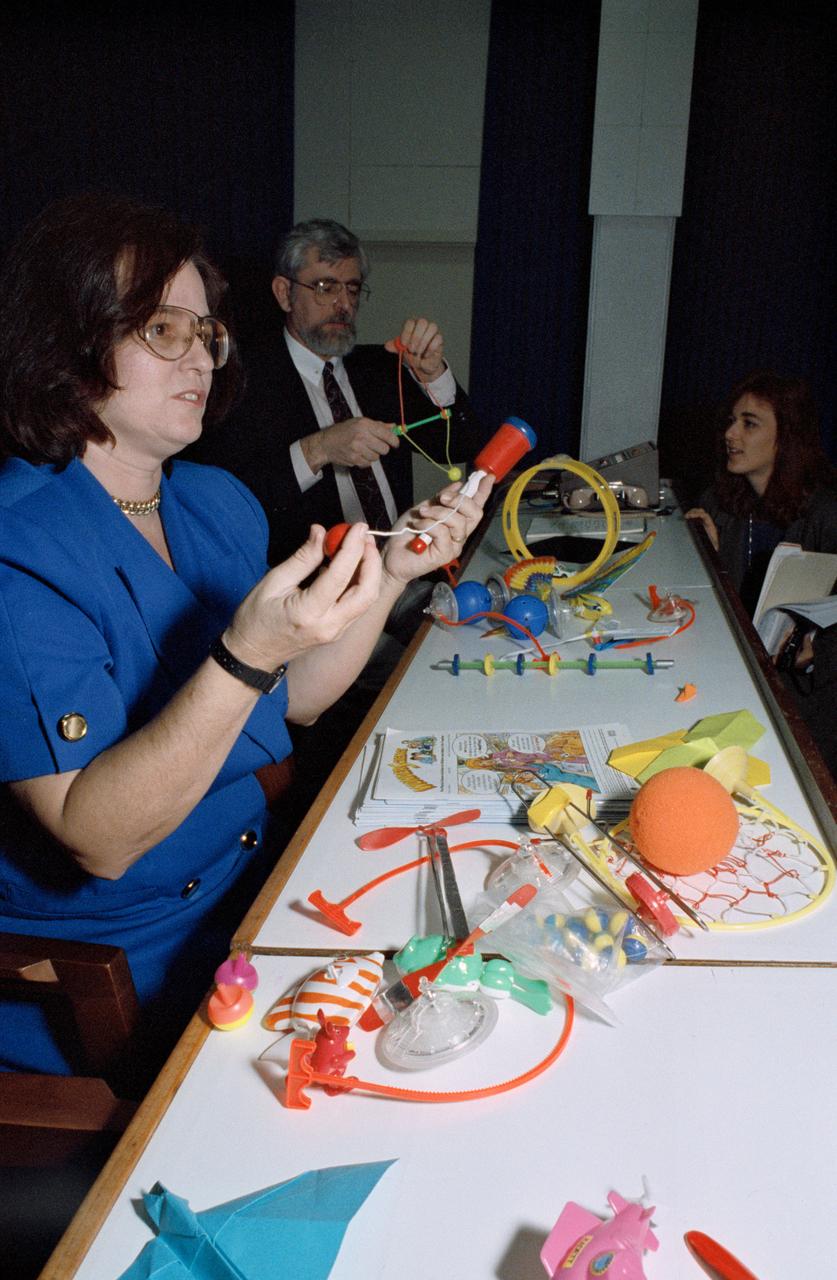
S93-25649 (6 Jan 1993) --- Carolyn Sumners, Ed.D., project director for Toys in Space, demonstrates some of the toys to be carried aboard the Space Shuttle Endeavour for the STS-54 mission later this month. Gregory Vogt, Ed.D., NASA education specialist, is seen showing another of the toys to news media representatives here for the pre-flight press briefing. The detailed supplementary objective (DSO-802) will allow the Shuttle crewmembers to experiment with the various types of toys in a microgravity environment while talking to pupils who will be able to monitor (via classroom TV sets) the activities at a number of schools.
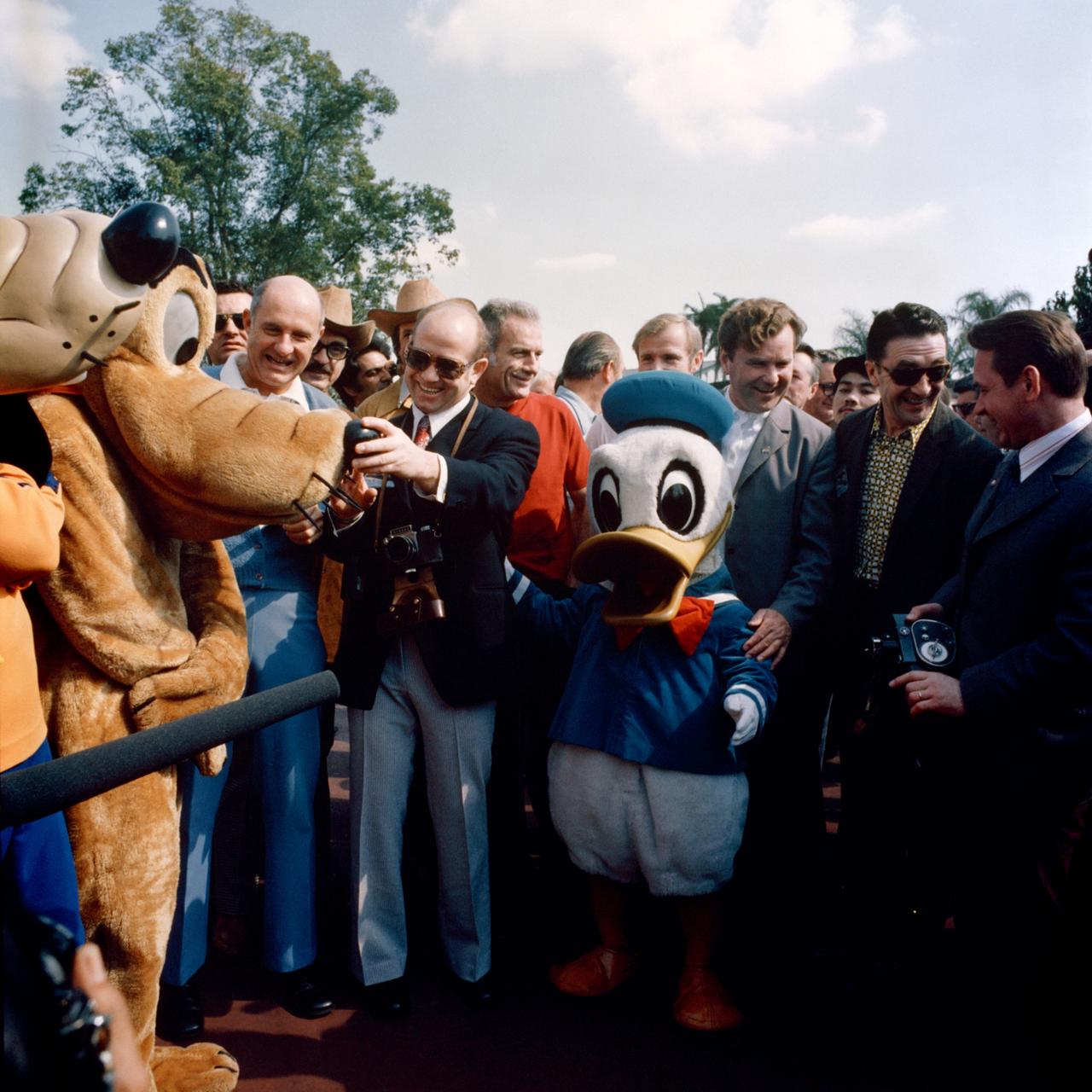
S75-24114 (8-10 Feb. 1975) --- Two Walt Disney comic cartoon characters, Donald Duck and Pluto, were on hand to greet a group of Apollo-Soyuz Test Project (ASTP) crewmen on their arrival at Disney World near Orlando. From left, are interpreter K. S. Samofal, interpreter Nicholas Timacheff, cosmonaut Vladimir A. Shatalov, astronaut Vance D. Brand, astronaut Donald K. Slayton, cosmonaut Aleksey A. Leonov (squeezing Pluto's nose) and astronaut Thomas P. Stafford. The astronauts and cosmonauts were in Florida for a three-day inspection tour of NASA's Kennedy Space Center where they looked over ASTP launch facilities and flight hardware.
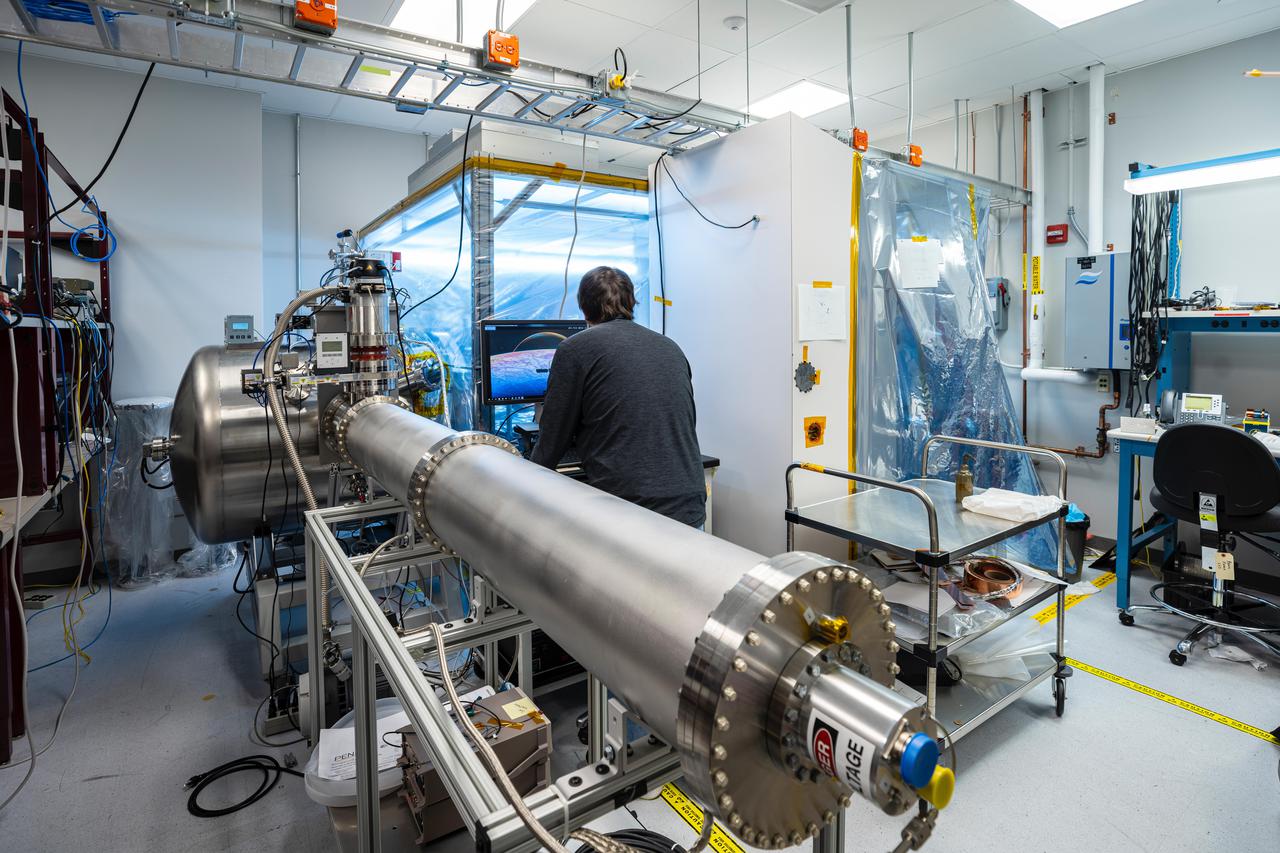
Included in the payload of science instruments for NASA's Europa Clipper is the Plasma Instrument for Magnetic Sounding (PIMS). Scientists will use PIMS to study the characteristics of plasma around Europa to better understand the moon's ice-shell thickness, ocean depth, and ocean salinity. PIMS will have four sensors, called Faraday cups, to measure the electrical current produced by charged particles (or plasma) as they strike a detector plate inside each sensor. In this photo, the Plasma Instrument Calibration Chamber at the Johns Hopkins Applied Physics Laboratory (APL) in Laurel, Maryland, recreates the plasma environments that PIMS and other instruments will encounter in space. The equipment in this lab simulates these environments with ion beams that reproduce plasma energy ranges found at Jupiter and Europa. Once PIMS is fully assembled in the clean room attached to the chamber, the team will direct these ion and electron beams into the Faraday cup sensors for calibration. This will be used specifically to simulate the plasma in Europa's ionosphere and Jupiter's magnetosphere, which PIMS will later measure directly. With an internal global ocean twice the size of Earth's oceans combined, Europa may have the potential to harbor life. NASA's Europa Clipper spacecraft will swoop around Jupiter on an elliptical path, dipping close to the moon on each flyby to collect data. Understanding Europa's habitability will help scientists better understand how life developed on Earth and the potential for finding life beyond our planet. https://photojournal.jpl.nasa.gov/catalog/PIA24330
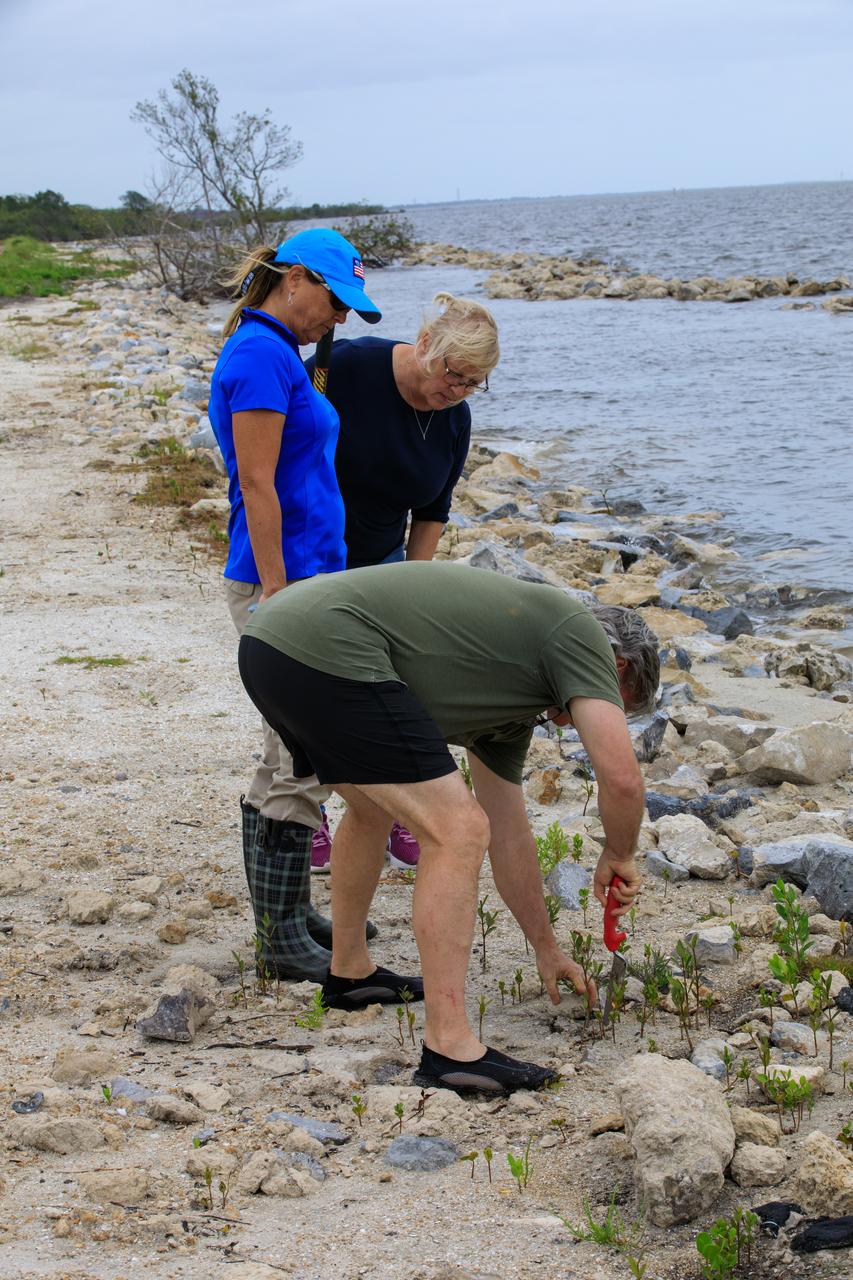
A team from Kennedy’s Environmental Management Branch works to remove a mangrove seedling on the shoreline of Kennedy Athletic, Recreation, and Social (KARS) Park at Kennedy Space Center in Florida on April 12, 2023. Employees from Kennedy’s Environmental Management Branch removed over 100 mangrove seedlings from the shoreline and repotted them for protection during the final stages of a shoreline restoration project inside KARS Park. The mangrove seedlings will be replanted upon completion of the project to create a living shoreline better able to counter the effects of erosion caused by storm waves and rising sea levels.
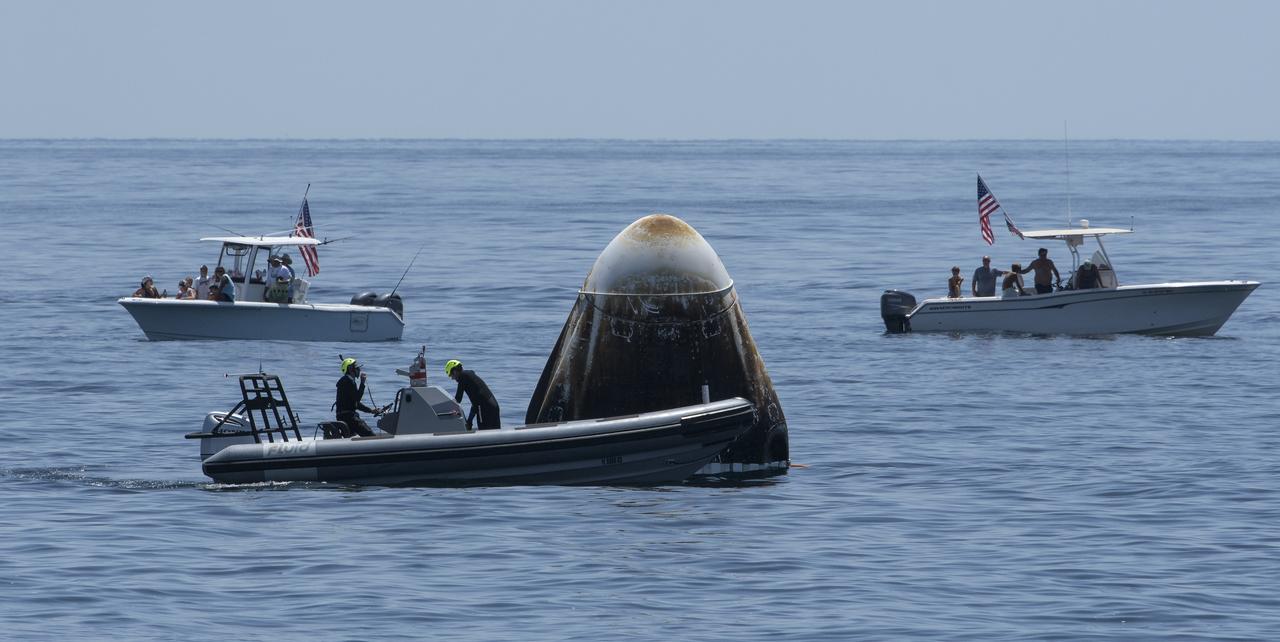
Support teams and curious recreational boaters arrive at the SpaceX Crew Dragon Endeavour spacecraft shortly after it landed with NASA astronauts Robert Behnken and Douglas Hurley onboard in the Gulf of Mexico off the coast of Pensacola, Florida, Sunday, Aug. 2, 2020. The Demo-2 test flight for NASA's Commercial Crew Program was the first to deliver astronauts to the International Space Station and return them safely to Earth onboard a commercially built and operated spacecraft. Behnken and Hurley returned after spending 64 days in space. Photo Credit: (NASA/Bill Ingalls)
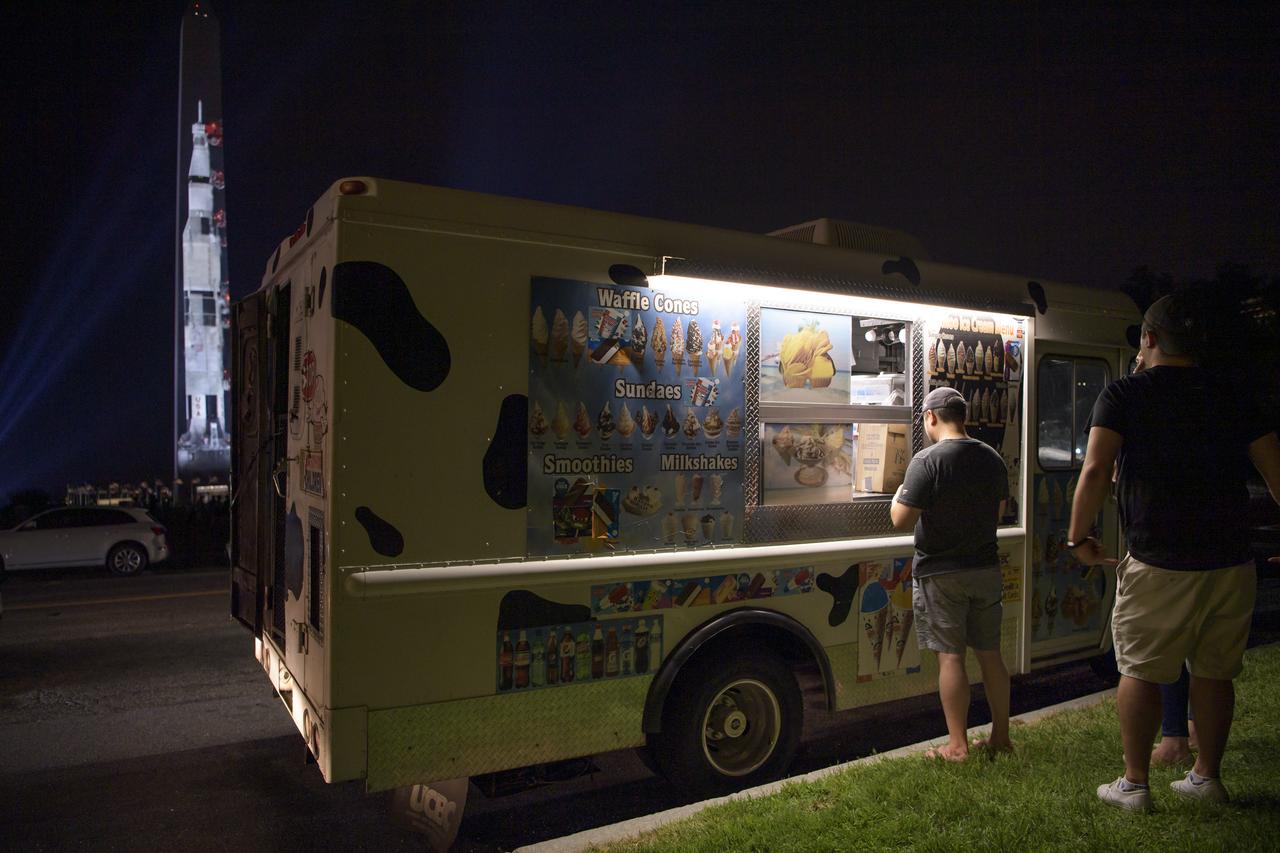
A full-sized, 363-foot Saturn V rocket is projected onto the east face of the Washington Monument 50 years to the day after astronauts Neil Armstrong, Michael Collins, and Buzz Aldrin launched on Apollo 11, the first mission to land astronauts on the Moon, Tuesday, July 16, 2019. On Friday, July 19, and Saturday, July 20, a special 17-minute show, “Apollo 50: Go for the Moon” will combine full-motion projection-mapping artwork on the monument and archival footage to recreate the launch of Apollo 11 and tell the story of the first moon landing. Photo Credit: (NASA/Bill Ingalls)
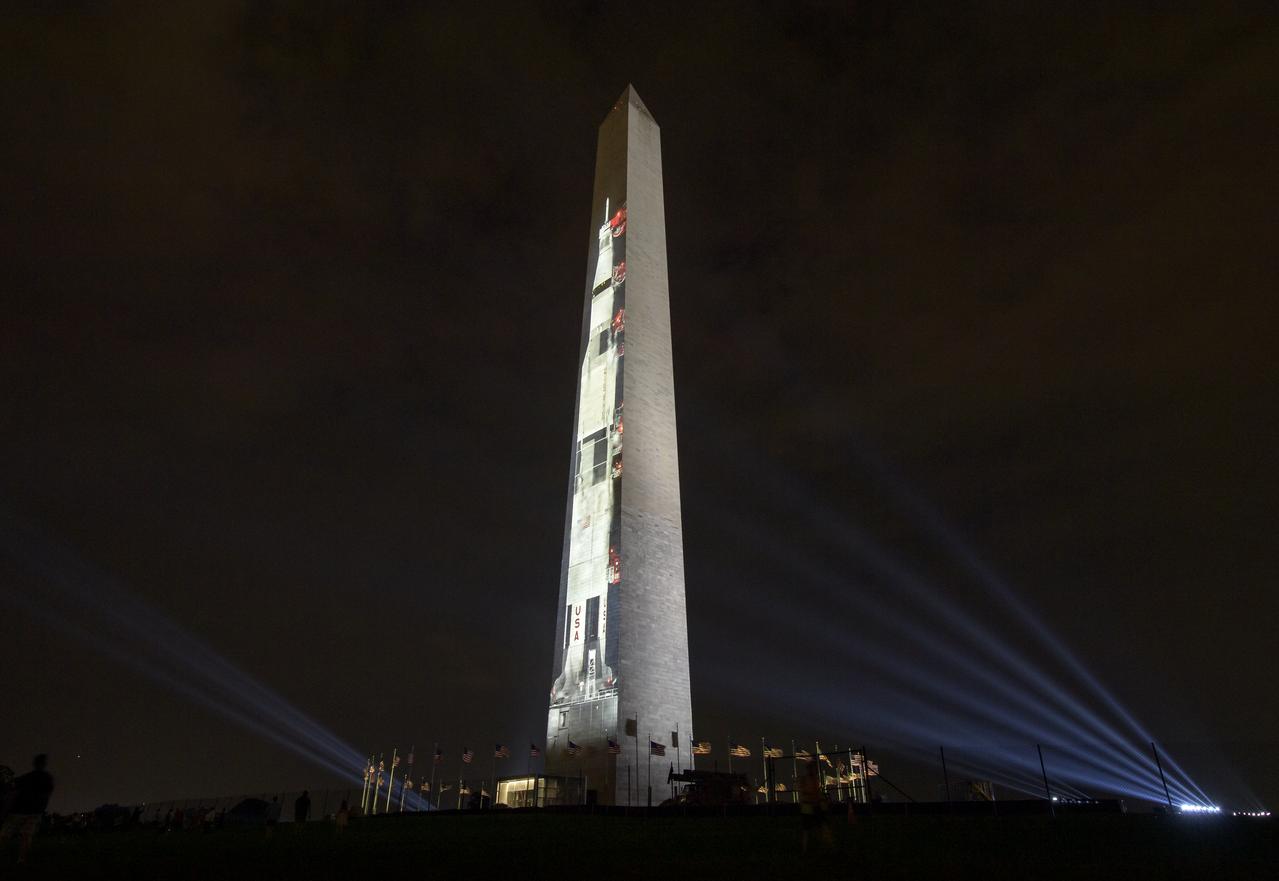
A full-sized, 363-foot Saturn V rocket is projected onto the east face of the Washington Monument 50 years to the day after astronauts Neil Armstrong, Michael Collins, and Buzz Aldrin launched on Apollo 11, the first mission to land astronauts on the Moon, Tuesday, July 16, 2019. On Friday, July 19, and Saturday, July 20, a special 17-minute show, “Apollo 50: Go for the Moon” will combine full-motion projection-mapping artwork on the monument and archival footage to recreate the launch of Apollo 11 and tell the story of the first moon landing. Photo Credit: (NASA/Bill Ingalls)
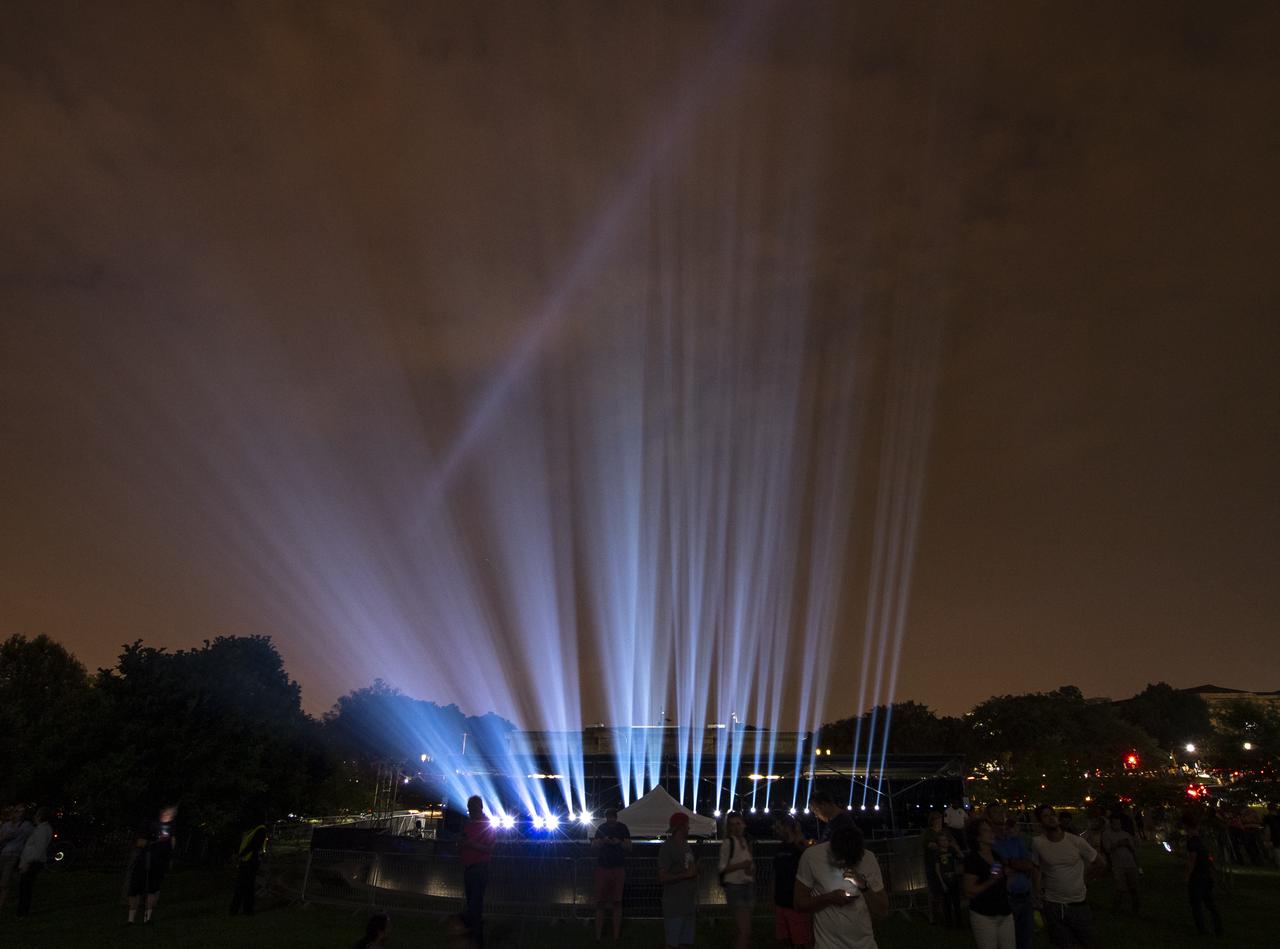
Projectors used to display a full-sized, 363-foot Saturn V rocket at the Washington Monument are seen 50 years to the day after astronauts Neil Armstrong, Michael Collins, and Buzz Aldrin launched on Apollo 11, the first mission to land astronauts on the Moon, Tuesday, July 16, 2019. On Friday, July 19, and Saturday, July 20, a special 17-minute show, “Apollo 50: Go for the Moon” will combine full-motion projection-mapping artwork on the monument and archival footage to recreate the launch of Apollo 11 and tell the story of the first moon landing. Photo Credit: (NASA/Bill Ingalls)
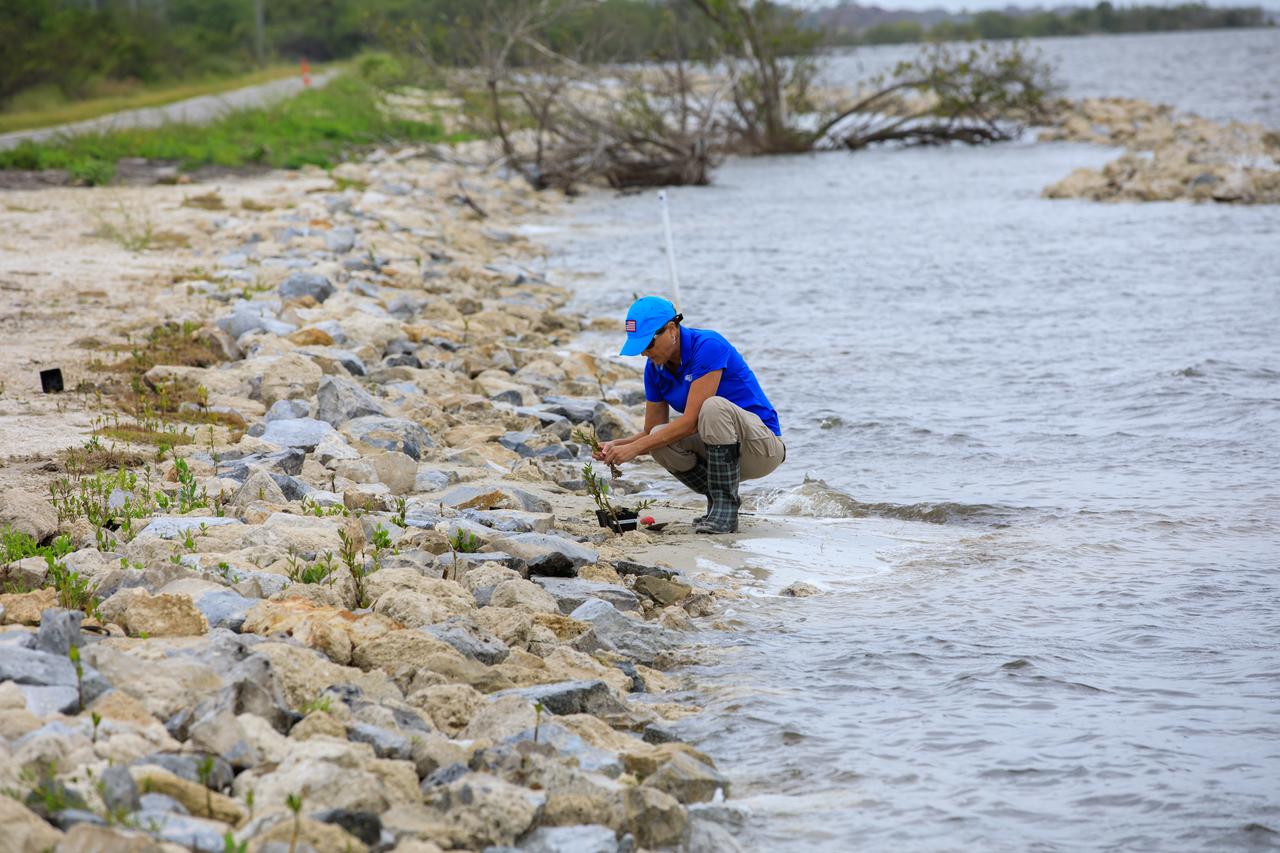
A team member from Kennedy’s Environmental Management Branch works to remove a mangrove seedling on the shoreline of Kennedy Athletic, Recreation, and Social (KARS) Park at Kennedy Space Center in Florida on April 12, 2023. Employees from Kennedy’s Environmental Management Branch removed over 100 mangrove seedlings from the shoreline and repotted them for protection during the final stages of a shoreline restoration project inside KARS Park. The mangrove seedlings will be replanted upon completion of the project to create a living shoreline better able to counter the effects of erosion caused by storm waves and rising sea levels.
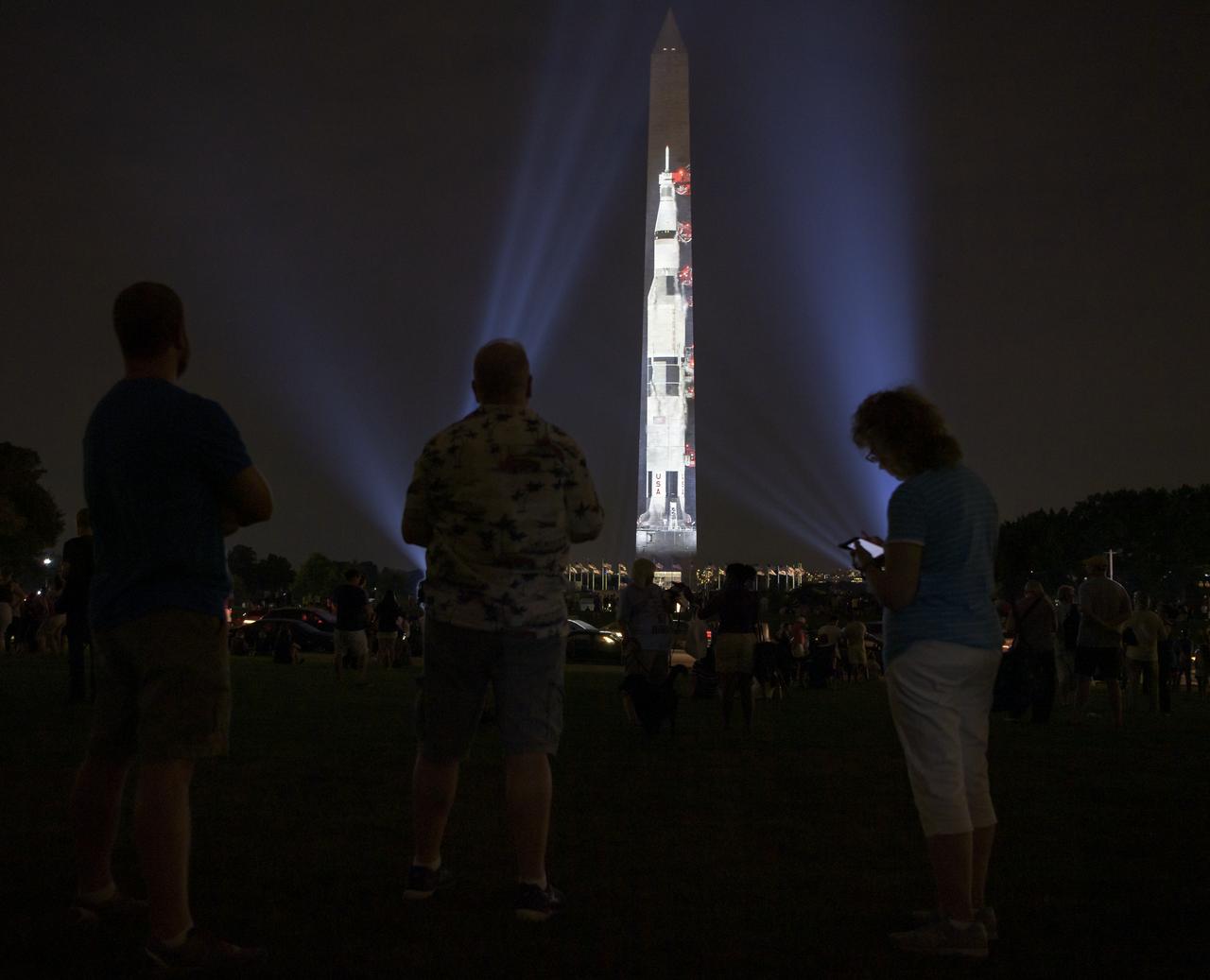
A full-sized, 363-foot Saturn V rocket is projected onto the east face of the Washington Monument 50 years to the day after astronauts Neil Armstrong, Michael Collins, and Buzz Aldrin launched on Apollo 11, the first mission to land astronauts on the Moon, Tuesday, July 16, 2019. On Friday, July 19, and Saturday, July 20, a special 17-minute show, “Apollo 50: Go for the Moon” will combine full-motion projection-mapping artwork on the monument and archival footage to recreate the launch of Apollo 11 and tell the story of the first moon landing. Photo Credit: (NASA/Bill Ingalls)
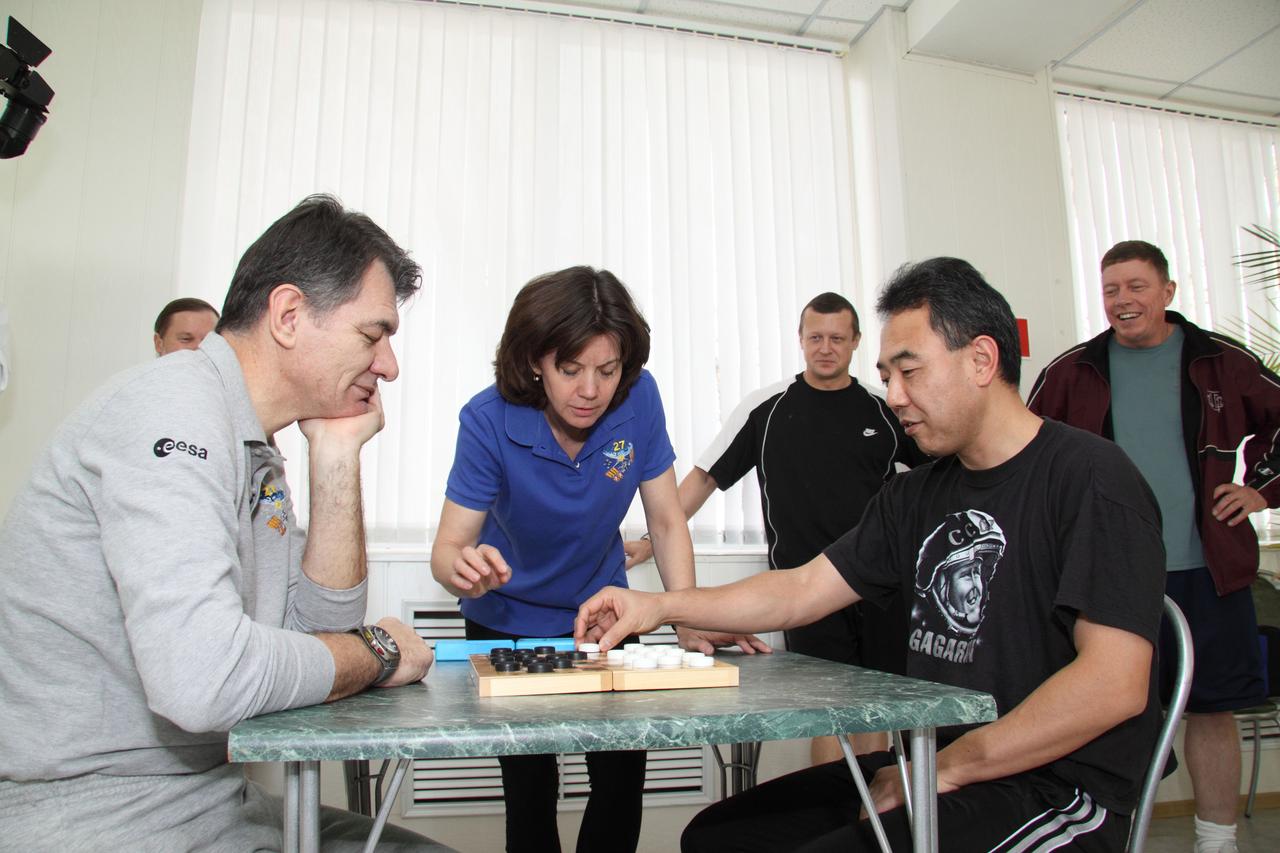
JSC2010-E-195167 (10 Dec. 2010) --- At the Cosmonaut Hotel in Kazakhstan, European Space Agency astronaut Paolo Nespoli, Expedition 26 flight engineer (from left), NASA astronaut Catherine (Cady) Coleman, Expedition 26 flight engineer; and Japan Aerospace Exploration Agency astronaut Satoshi Furukawa take part in recreational activities while Soyuz commander Dmitry Kondratyev of Russia's Federal Space Agency (Roscosmos) looks on. Nespoli, Coleman and Kondratyev will launch Dec. 16 (Kazakhstan time) to the International Space Station. Photo credit: NASA/Victor Zelentsov
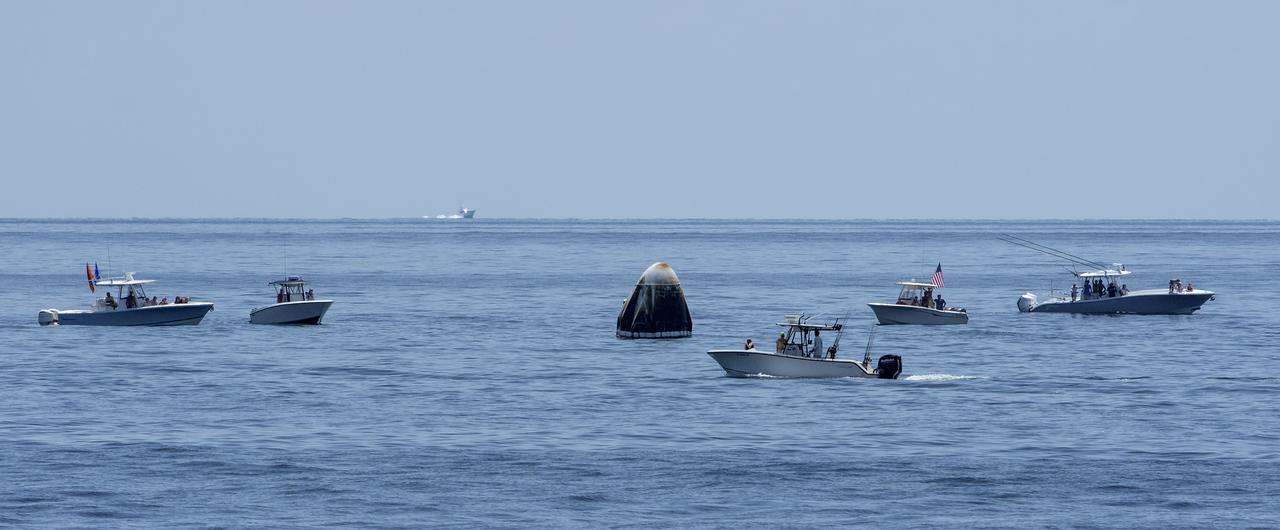
Support teams and curious recreational boaters arrive at the SpaceX Crew Dragon Endeavour spacecraft shortly after it landed with NASA astronauts Robert Behnken and Douglas Hurley onboard in the Gulf of Mexico off the coast of Pensacola, Florida, Sunday, Aug. 2, 2020. The Demo-2 test flight for NASA's Commercial Crew Program was the first to deliver astronauts to the International Space Station and return them safely to Earth onboard a commercially built and operated spacecraft. Behnken and Hurley returned after spending 64 days in space. Photo Credit: (NASA/Bill Ingalls)
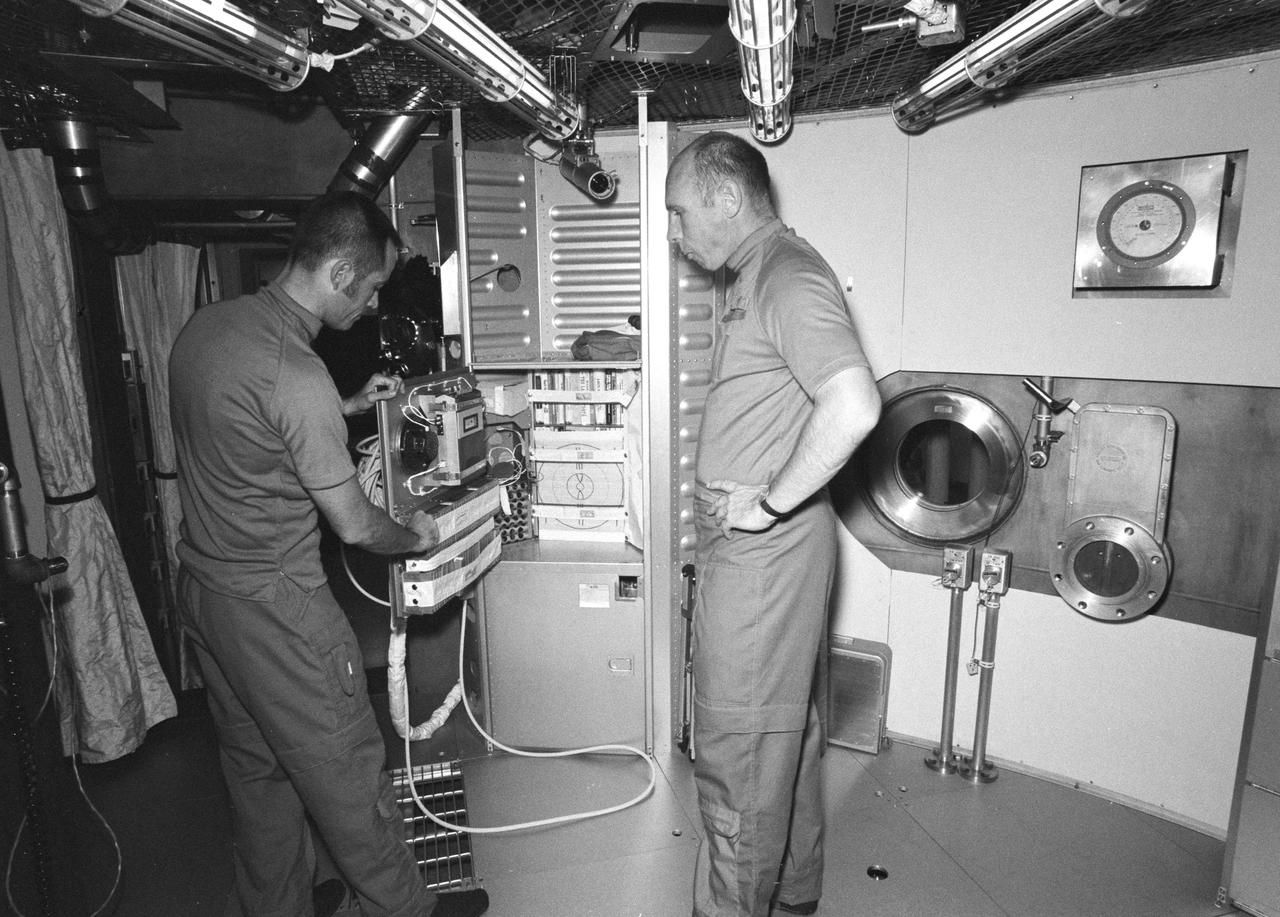
S72-41858 (15 June 1972) --- Astronauts Robert L. Crippen, left, Skylab Medical Experiment Altitude Test (SMEAT) crew commander, and Dr. William E. Thornton, SMEAT science pilot, stand at the cabinet containing off duty recreation equipment. They are two members of a three-man SMEAT crew who will spend up to 56 days in the Crew Systems Division's 20-foot altitude chamber at the NASA Manned Spacecraft Center (MSC) beginning in mid-July to obtain medical data and evaluate medical experiment equipment for Skylab. Astronaut Karol J. Bobko, SMEAT pilot, the third crew member is not shown in this view. Photo credit: NASA
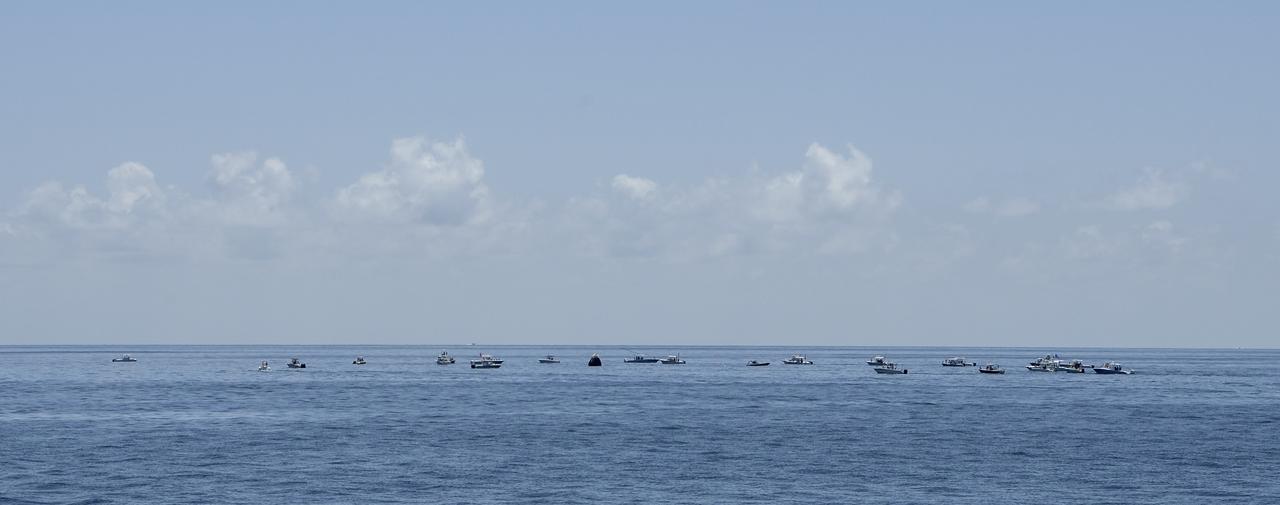
Support teams and curious recreational boaters arrive at the SpaceX Crew Dragon Endeavour spacecraft shortly after it landed with NASA astronauts Robert Behnken and Douglas Hurley onboard in the Gulf of Mexico off the coast of Pensacola, Florida, Sunday, Aug. 2, 2020. The Demo-2 test flight for NASA's Commercial Crew Program was the first to deliver astronauts to the International Space Station and return them safely to Earth onboard a commercially built and operated spacecraft. Behnken and Hurley returned after spending 64 days in space. Photo Credit: (NASA/Bill Ingalls)
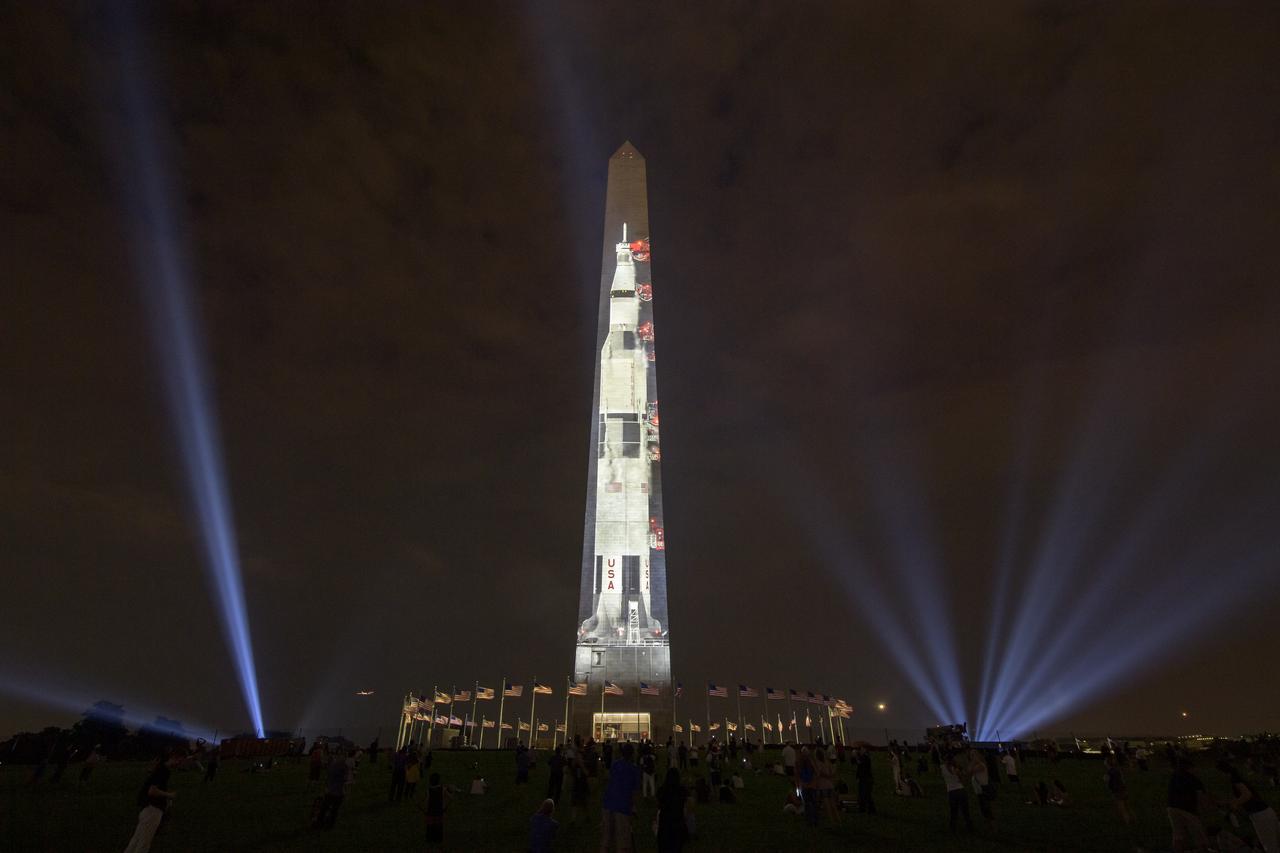
A full-sized, 363-foot Saturn V rocket is projected onto the east face of the Washington Monument 50 years to the day after astronauts Neil Armstrong, Michael Collins, and Buzz Aldrin launched on Apollo 11, the first mission to land astronauts on the Moon, Tuesday, July 16, 2019. On Friday, July 19, and Saturday, July 20, a special 17-minute show, “Apollo 50: Go for the Moon” will combine full-motion projection-mapping artwork on the monument and archival footage to recreate the launch of Apollo 11 and tell the story of the first moon landing. Photo Credit: (NASA/Bill Ingalls)
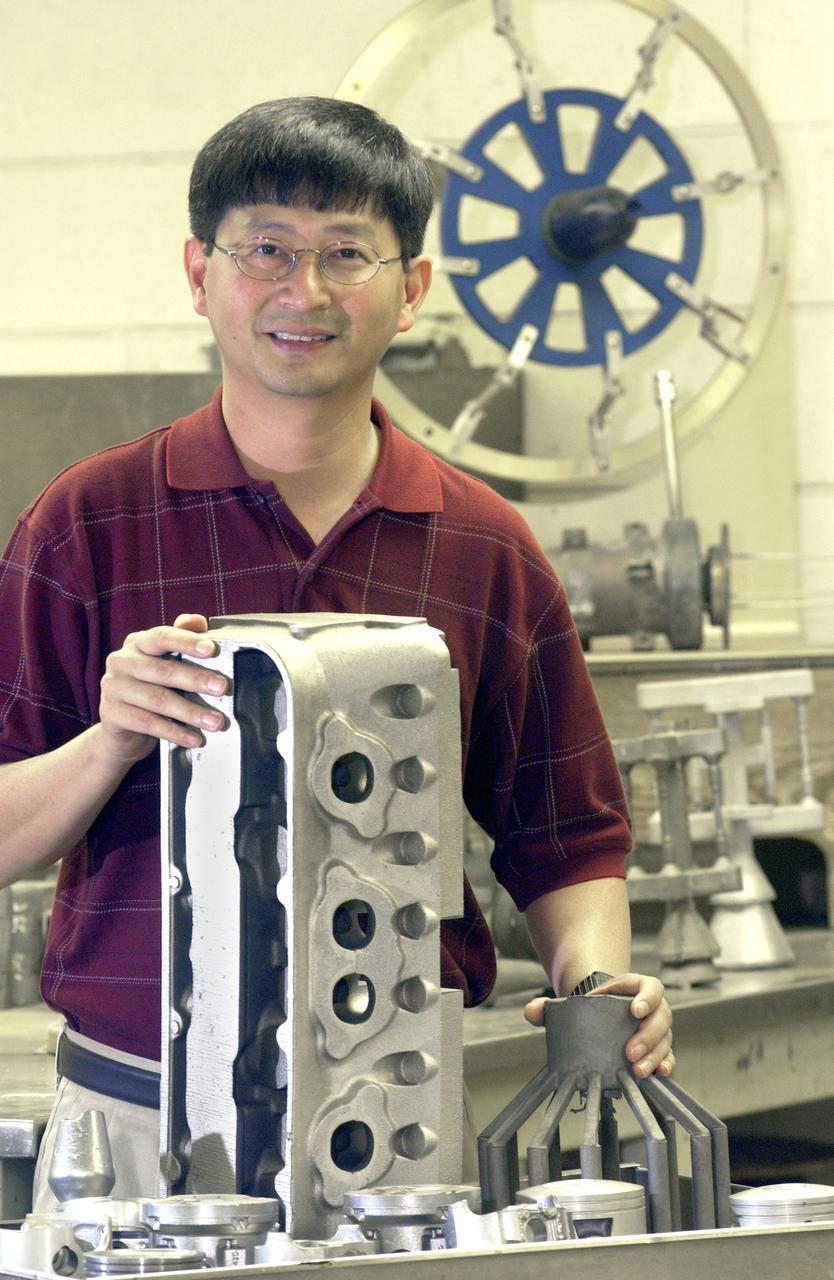
NASA structural materials engineer, Jonathan Lee, displays blocks and pistons as examples of some of the uses for NASA’s patented high-strength aluminum alloy originally developed at Marshall Space Flight Center in Huntsville, Alabama. NASA desired an alloy for aerospace applications with higher strength and wear-resistance at elevated temperatures. The alloy is a solution to reduce costs of aluminum engine pistons and lower engine emissions for the automobile industry. The Boats and Outboard Engines Division at Bombardier Recreational Products of Sturtevant, Wisconsin is using the alloy for pistons in its Evinrude E-Tec outboard engine line.
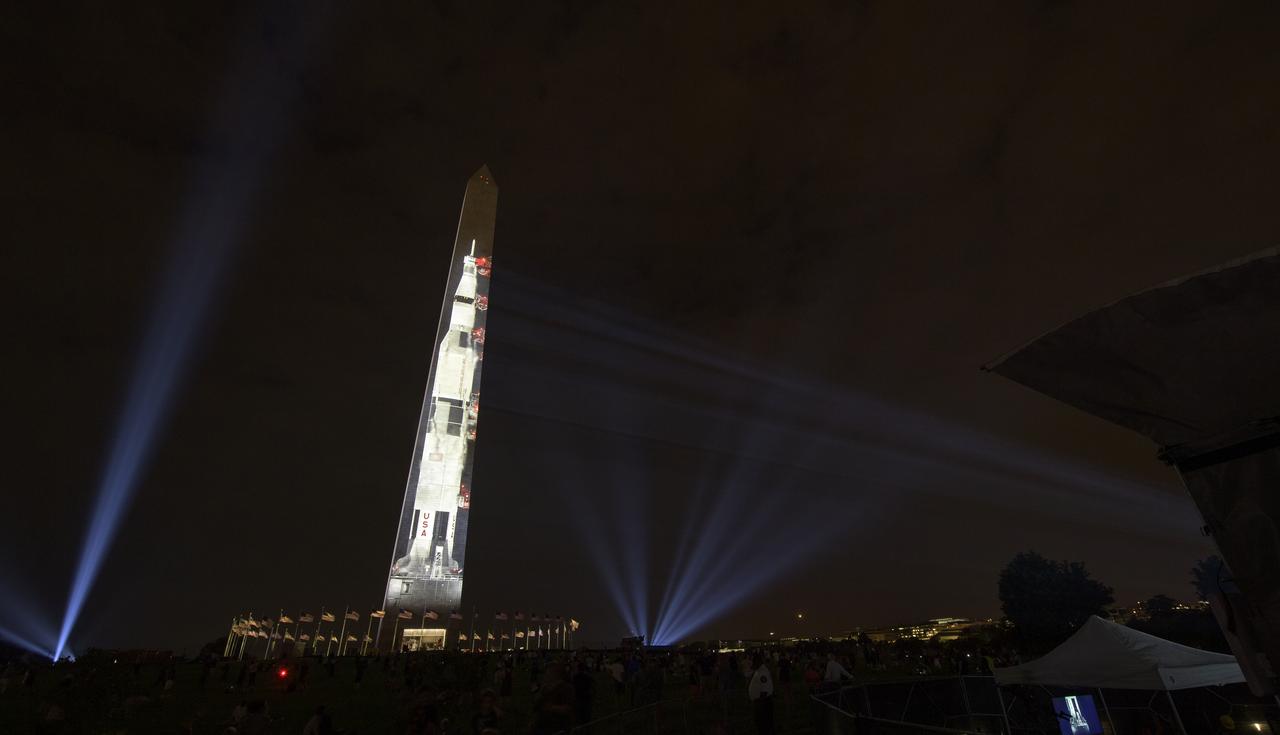
A full-sized, 363-foot Saturn V rocket is projected onto the east face of the Washington Monument 50 years to the day after astronauts Neil Armstrong, Michael Collins, and Buzz Aldrin launched on Apollo 11, the first mission to land astronauts on the Moon, Tuesday, July 16, 2019. On Friday, July 19, and Saturday, July 20, a special 17-minute show, “Apollo 50: Go for the Moon” will combine full-motion projection-mapping artwork on the monument and archival footage to recreate the launch of Apollo 11 and tell the story of the first moon landing. Photo Credit: (NASA/Bill Ingalls)
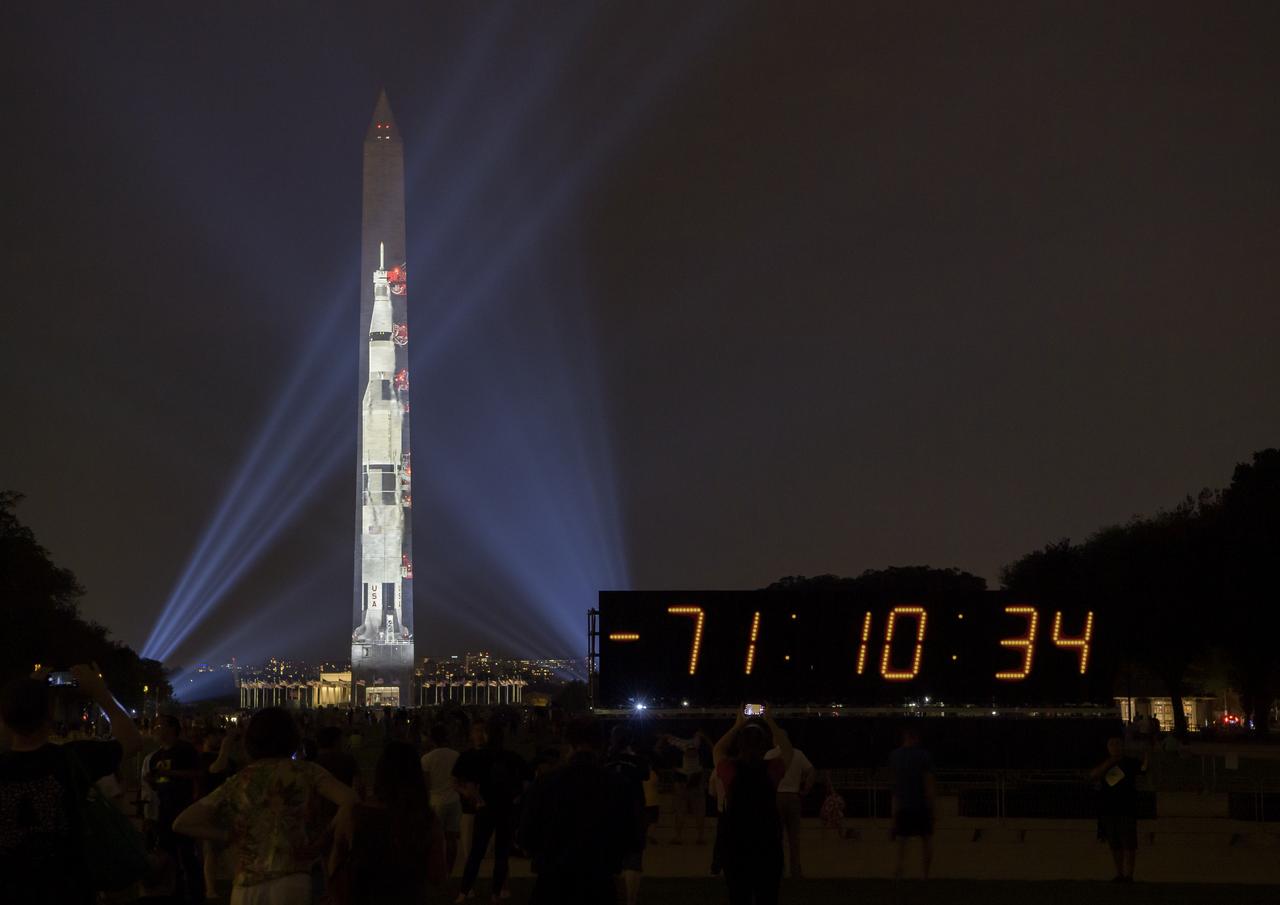
A full-sized, 363-foot Saturn V rocket is projected onto the east face of the Washington Monument 50 years to the day after astronauts Neil Armstrong, Michael Collins, and Buzz Aldrin launched on Apollo 11, the first mission to land astronauts on the Moon, Tuesday, July 16, 2019. On Friday, July 19, and Saturday, July 20, a special 17-minute show, “Apollo 50: Go for the Moon” will combine full-motion projection-mapping artwork on the monument and archival footage to recreate the launch of Apollo 11 and tell the story of the first moon landing. Photo Credit: (NASA/Bill Ingalls)
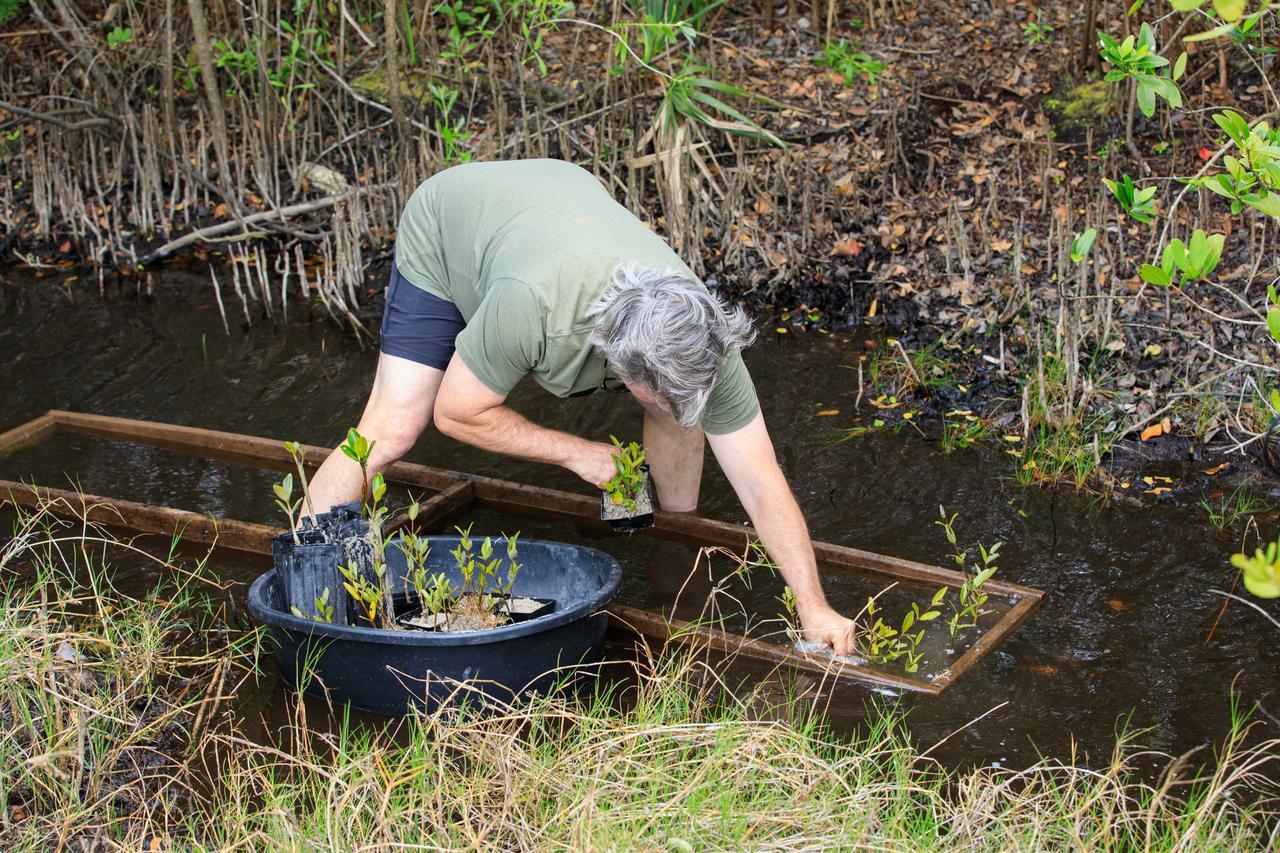
A team member from Kennedy’s Environmental Management Branch deposits repotted mangrove seedlings into a marshy channel near the shoreline of Kennedy Athletic, Recreation, and Social (KARS) Park at Kennedy Space Center in Florida on April 12, 2023. Employees from Kennedy’s Environmental Management Branch removed over 100 mangrove seedlings from the shoreline and repotted them for protection during the final stages of a shoreline restoration project inside KARS Park. The mangrove seedlings will be replanted upon completion of the project to create a living shoreline better able to counter the effects of erosion caused by storm waves and rising sea levels.
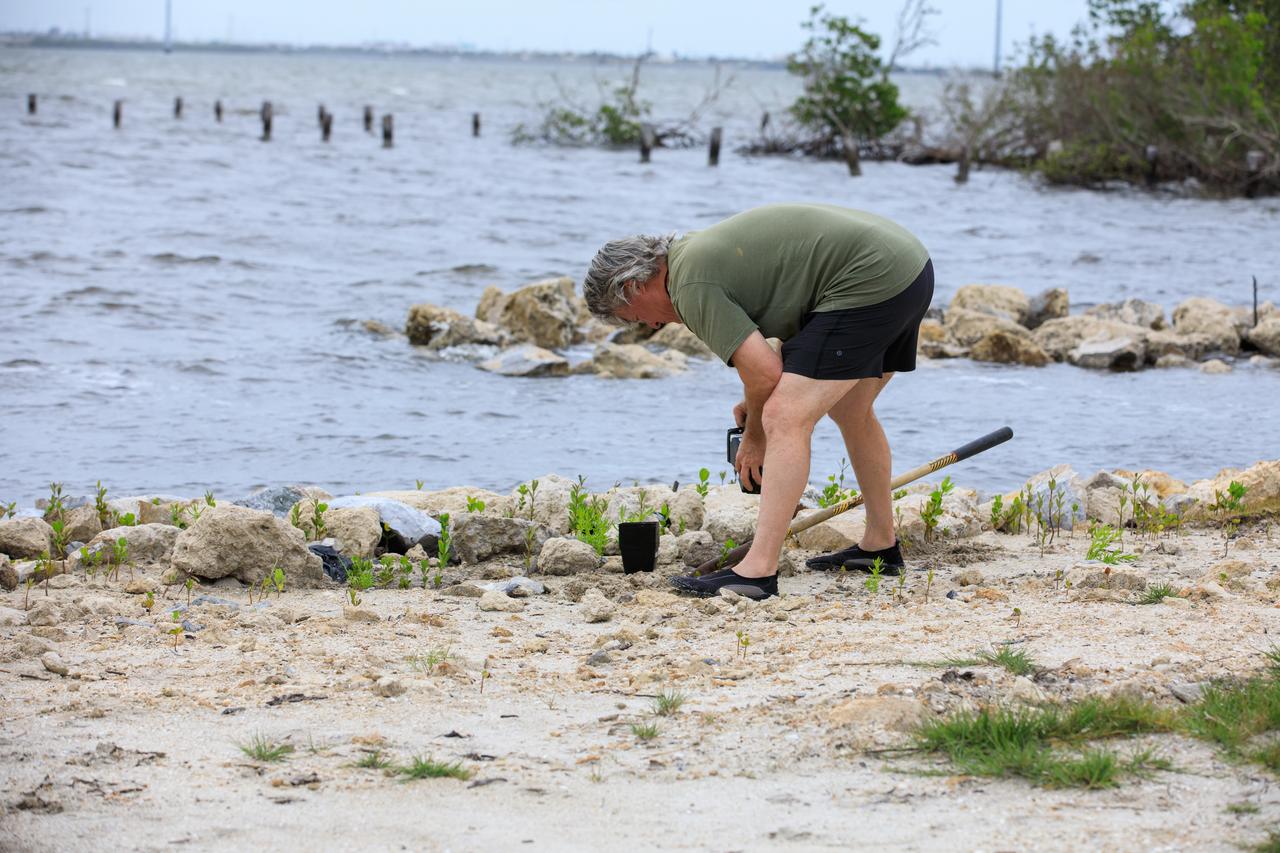
A team member from Kennedy’s Environmental Management Branch works to remove a mangrove seedling on the shoreline of Kennedy Athletic, Recreation, and Social (KARS) Park at Kennedy Space Center in Florida on April 12, 2023. Employees from Kennedy’s Environmental Management Branch removed over 100 mangrove seedlings from the shoreline and repotted them for protection during the final stages of a shoreline restoration project inside KARS Park. The mangrove seedlings will be replanted upon completion of the project to create a living shoreline better able to counter the effects of erosion caused by storm waves and rising sea levels.
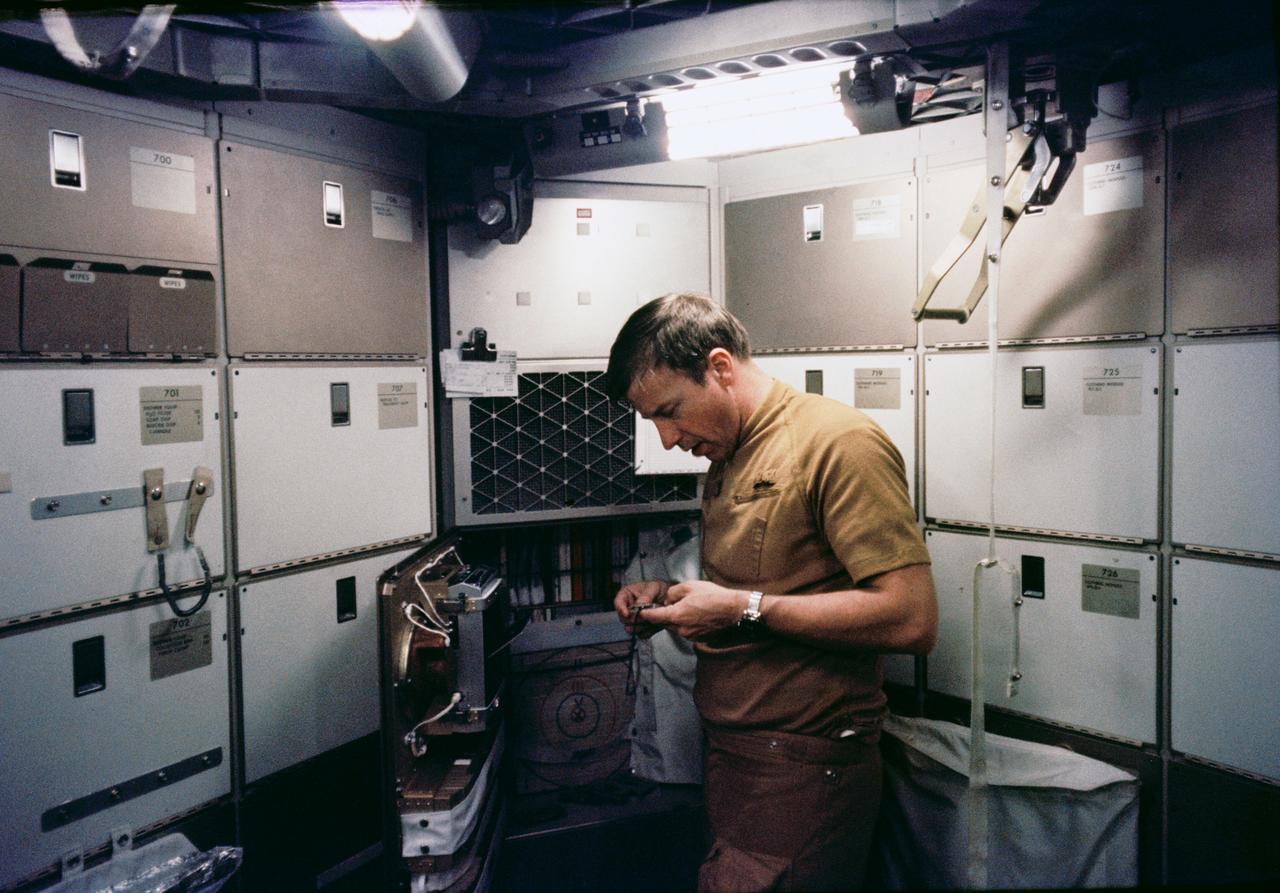
S73-17859 (January 1973) --- Astronaut Paul J. Weitz, pilot for Skylab 2 (first Skylab manned) mission, looks over off-duty recreational equipment in the crew quarters of the Skylab Orbital Workshop (OWS) trainer during Skylab simulation activity at the Manned Spacecraft Center. The equipment includes such items as tape decks and stereo music equipment, playing cards, darts, etc. The OWS is a component of the Skylab space station cluster which will be launched unmanned aboard a Saturn V in summer of 1973, and will be visited three times by three-man crews over an eight month period. Photo credit: NASA

STS-36 Commander John O. Creighton, smiling and wearing a headset, listens to music as the tape recorder freefloats in front of him. During this lighter moment of the mission, Creighton is positioned at the commanders station on the forward flight deck of Atlantis, Orbiter Vehicle (OV) 104. Forward flight deck windows W1 and W2 appear on his left. Creighton and four other astronauts spent four days, 10 hours and 19 minutes aboard the spacecraft for the Department of Defense (DOD) devoted mission.
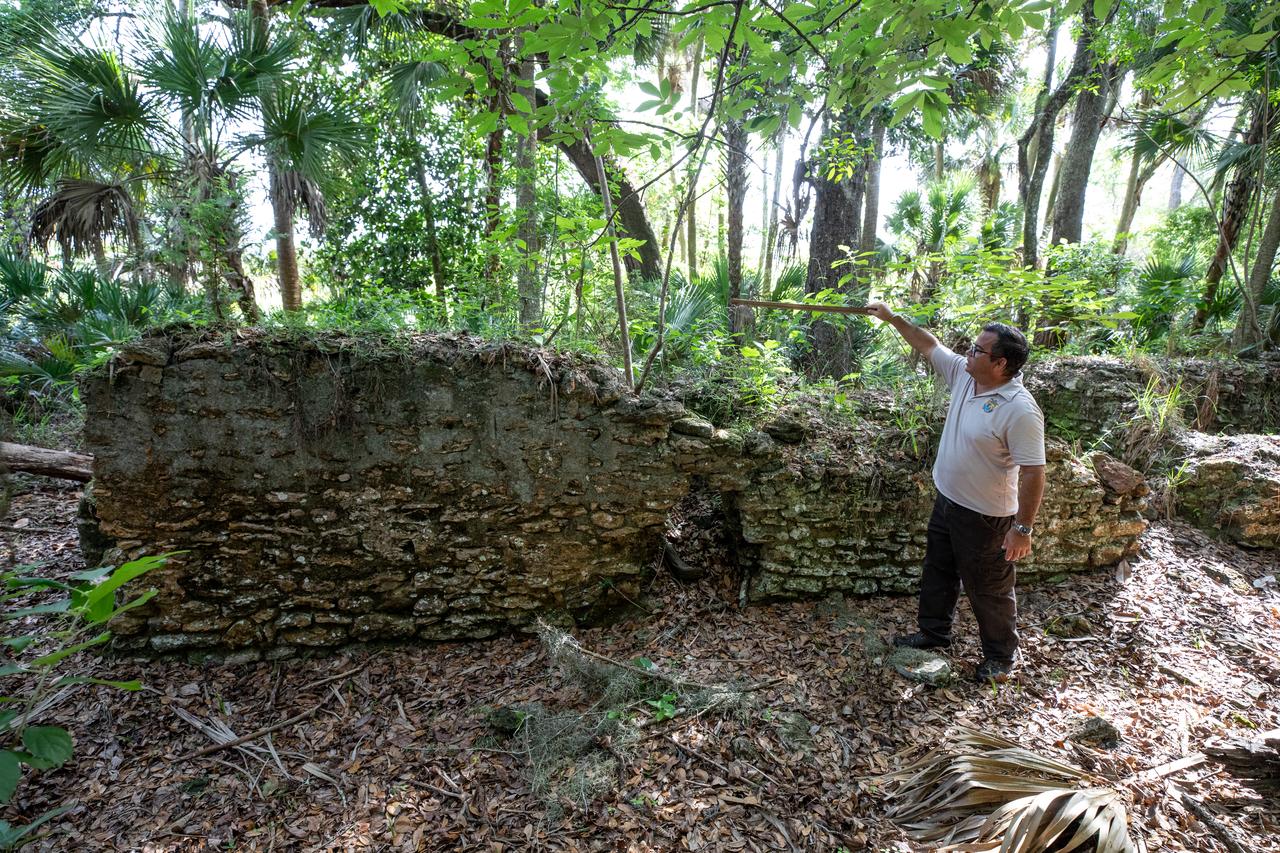
Near the archeological ruins of the Elliot Plantation sugar mill at NASA’s Kennedy Space Center in Florida, Michael Legare, of the U.S. Fish and Wildlife Service, recreates the original wall height of the structure on May 26, 2022. The plantation’s enslaved community built the sugar mill structure, or sugar train, where sugar cane juice would be boiled during processing in graduated copper kettles until the liquid reduced into a thick syrup. The ruins of Elliot Plantation date from the 1760s and represent the largest, earliest, and southernmost British period sugar plantation in the U.S., as well as one of the most intact and best examples of a completely preserved enslaved landscape. The archeological site is managed through interagency cooperation between the National Park Service, the U.S. Fish and Wildlife Service, and NASA.
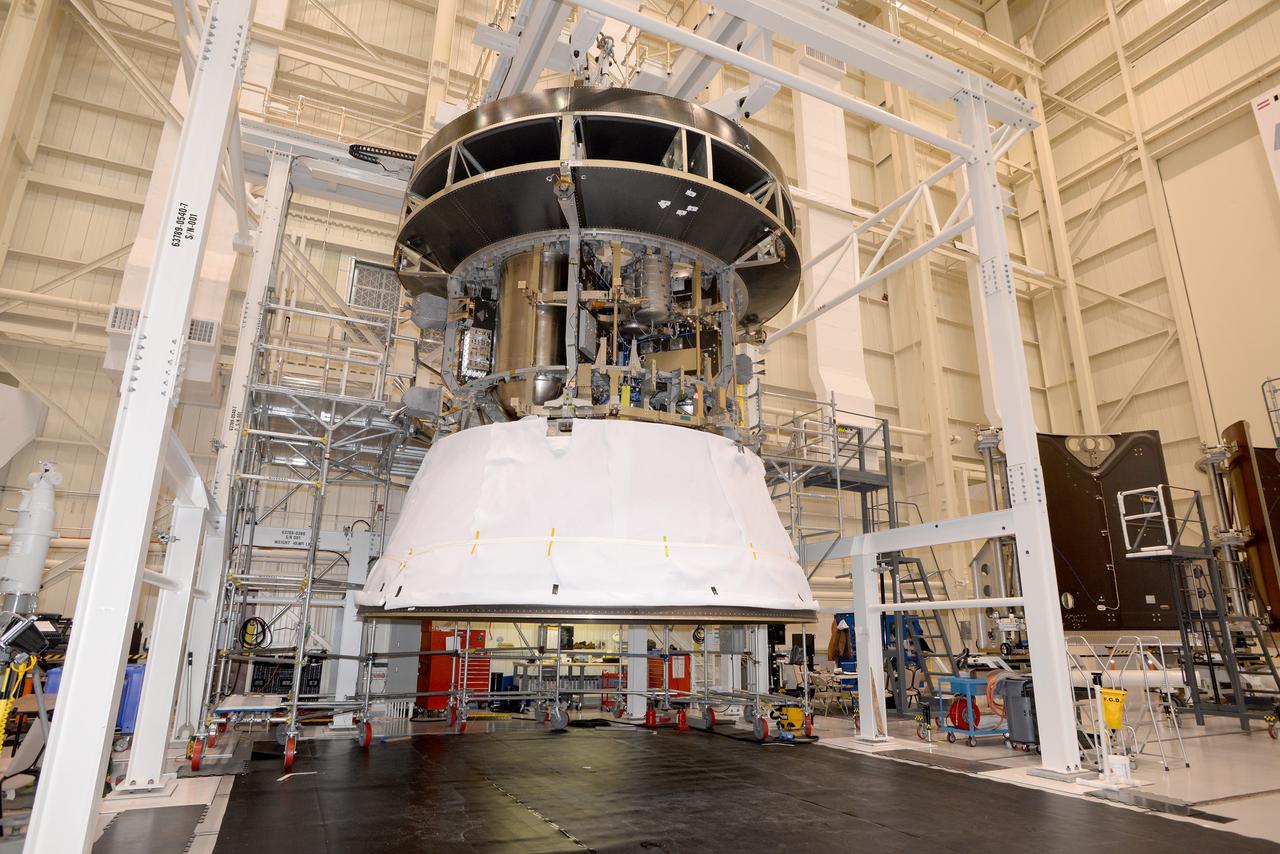
The European Service Module structural test model, shown on Jan. 23, 2016, is used for testing purposes before installing the real thing. It is as close to the flight version as possible while keeping costs and development time manageable. The structure and weight are the same, while mass equivalents stand in for electronics boxes not needed for the series of tests...The model was installed under a test version of the Crew Module Adapter, and sits on the Spacecraft Adapter that will attach Orion to its launch vehicle. This is the first time the European hardware has been physically connected to NASA’s elements...The service module will be shaken at NASA’s Plum Brook station in Sandusky, Ohio, USA, to recreate the vibrations of launch, as well as being subjected to acoustic and shock environments. Part of Batch image transfer from Flickr.
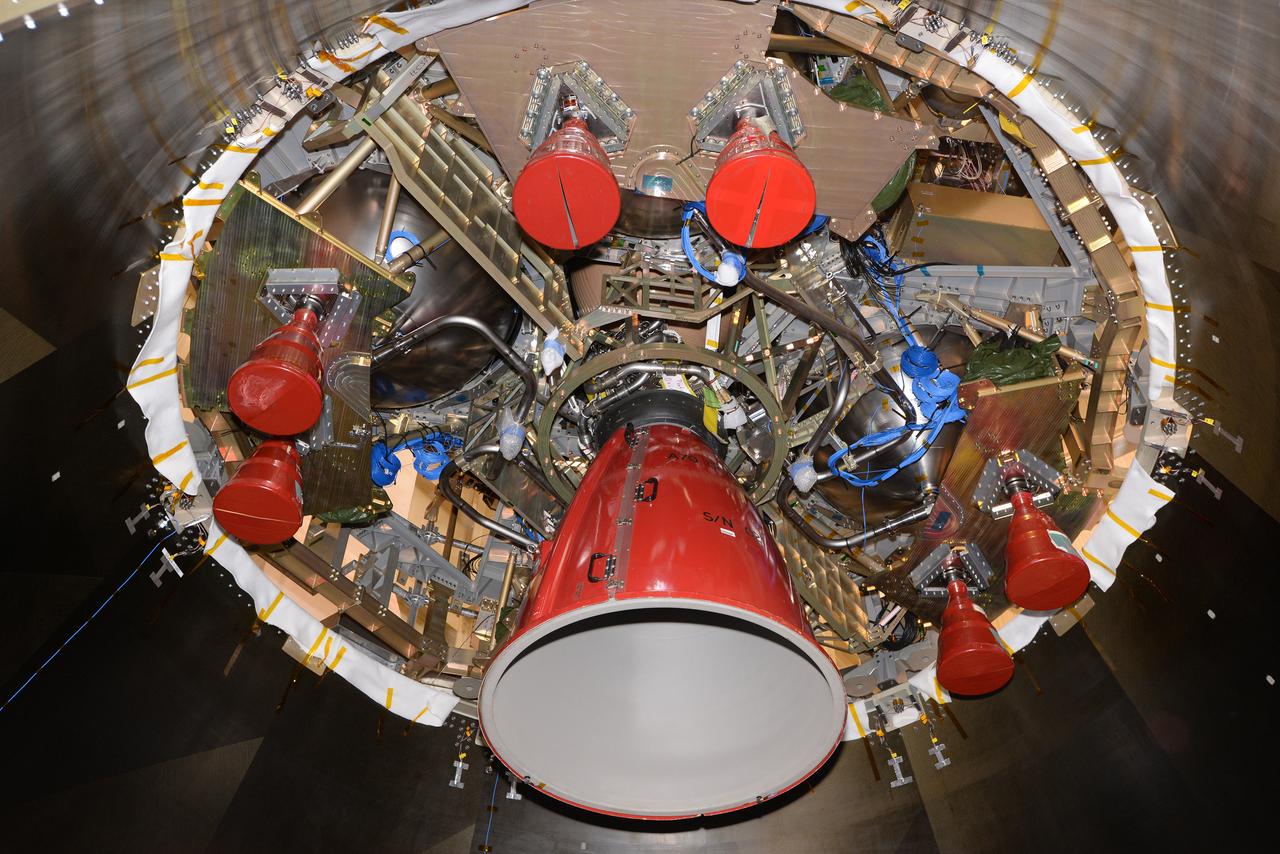
The European Service Module structural test model, shown on Jan. 23, 2016, is used for testing purposes before installing the real thing. It is as close to the flight version as possible while keeping costs and development time manageable. The structure and weight are the same, while mass equivalents stand in for electronics boxes not needed for the series of tests...The model was installed under a test version of the Crew Module Adapter, and sits on the Spacecraft Adapter that will attach Orion to its launch vehicle. This is the first time the European hardware has been physically connected to NASA’s elements...The service module will be shaken at NASA’s Plum Brook station in Sandusky, Ohio, USA, to recreate the vibrations of launch, as well as being subjected to acoustic and shock environments. Part of Batch image transfer from Flickr.
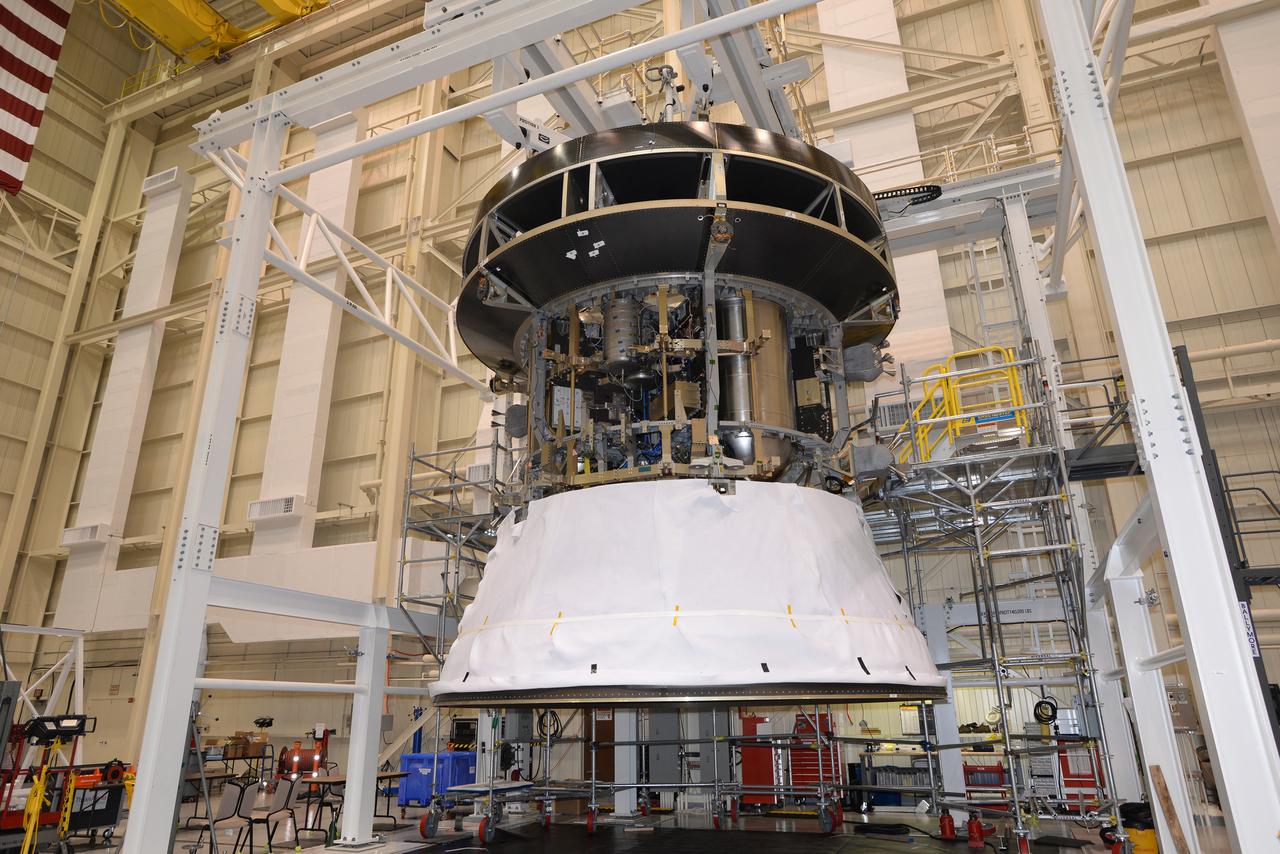
The European Service Module structural test model, shown on Jan. 23, 2016, is used for testing purposes before installing the real thing. It is as close to the flight version as possible while keeping costs and development time manageable. The structure and weight are the same, while mass equivalents stand in for electronics boxes not needed for the series of tests...The model was installed under a test version of the Crew Module Adapter, and sits on the Spacecraft Adapter that will attach Orion to its launch vehicle. This is the first time the European hardware has been physically connected to NASA’s elements...The service module will be shaken at NASA’s Plum Brook station in Sandusky, Ohio, USA, to recreate the vibrations of launch, as well as being subjected to acoustic and shock environments. Part of Batch image transfer from Flickr.
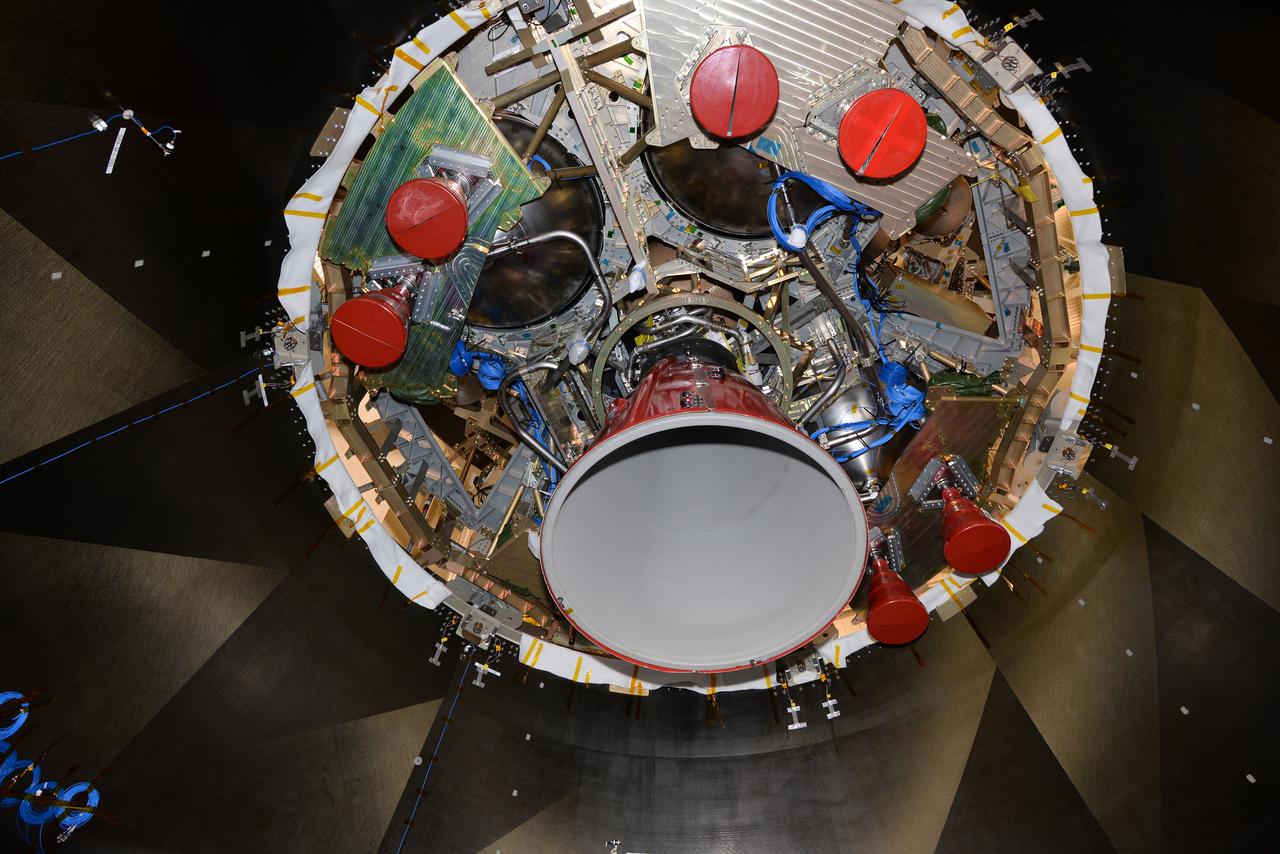
The European Service Module structural test model, shown on Jan. 23, 2016, is used for testing purposes before installing the real thing. It is as close to the flight version as possible while keeping costs and development time manageable. The structure and weight are the same, while mass equivalents stand in for electronics boxes not needed for the series of tests...The model was installed under a test version of the Crew Module Adapter, and sits on the Spacecraft Adapter that will attach Orion to its launch vehicle. This is the first time the European hardware has been physically connected to NASA’s elements...The service module will be shaken at NASA’s Plum Brook station in Sandusky, Ohio, USA, to recreate the vibrations of launch, as well as being subjected to acoustic and shock environments. Part of Batch image transfer from Flickr.
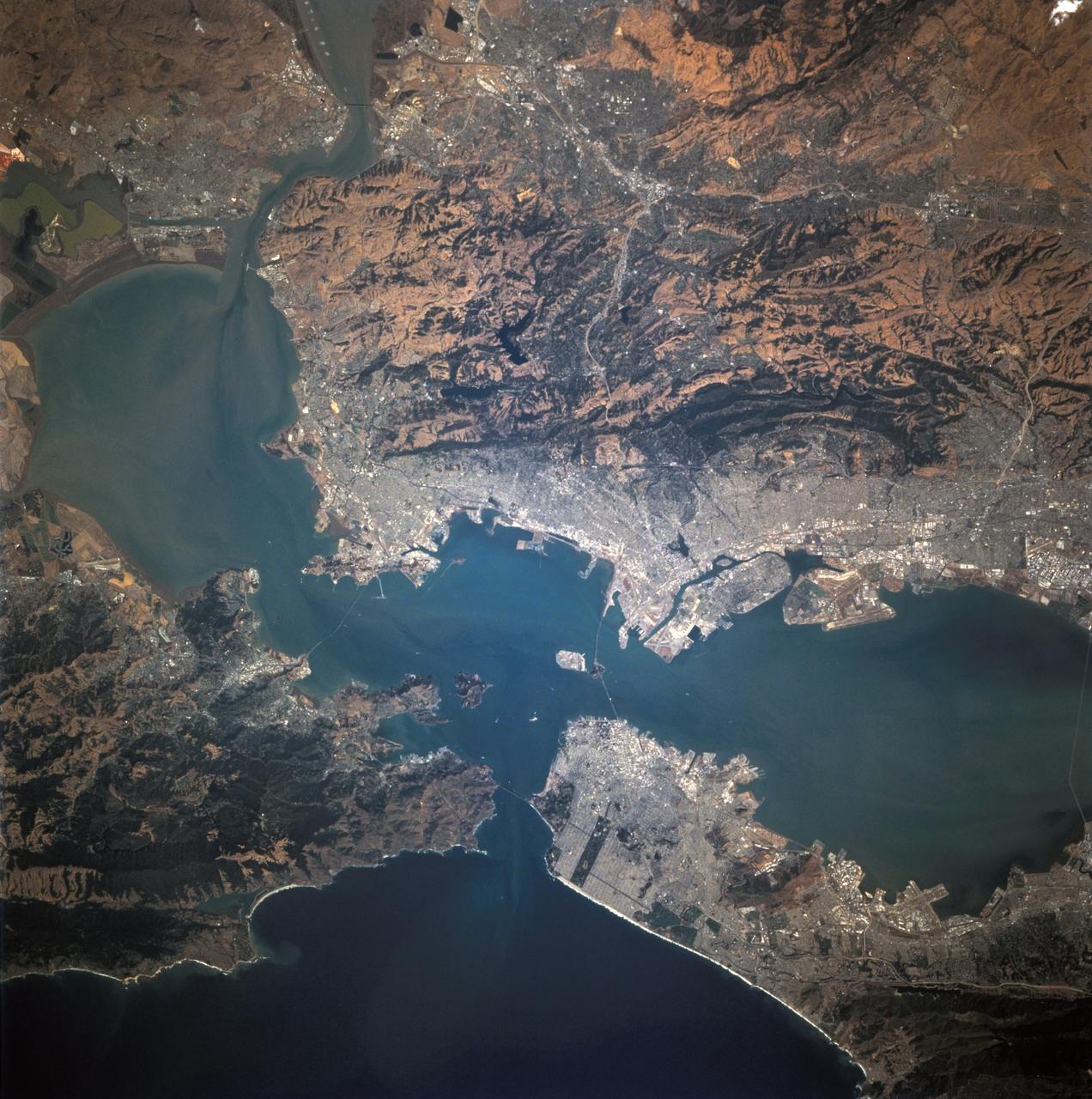
STS068-244-022 (30 September-11 October 1994) --- (San Francisco, San Pablo Bay Area) Photographed through the Space Shuttle Endeavour's flight deck windows, the heavily populated bay area is featured in this 70mm frame. The relatively low altitude of Endeavour's orbit (115 nautical miles) and the use of a 250mm lens on the Hasselblad camera allowed for capturing detail in features such as the Berkeley Marina (frame center). The region's topography is well depicted with the lowland areas heavily populated and the hills much more sparsely covered. The Oakland Hills in the right lower center appear to be re-vegetated after a devastating fire. The Golden Gate Recreation Area in the upper left also shows heavy vegetation. The three bridges across the main part of the bay and their connecting roads are prominent. Cultural features such as Golden Gate Park and the Presidio contrast with the gray of the city.
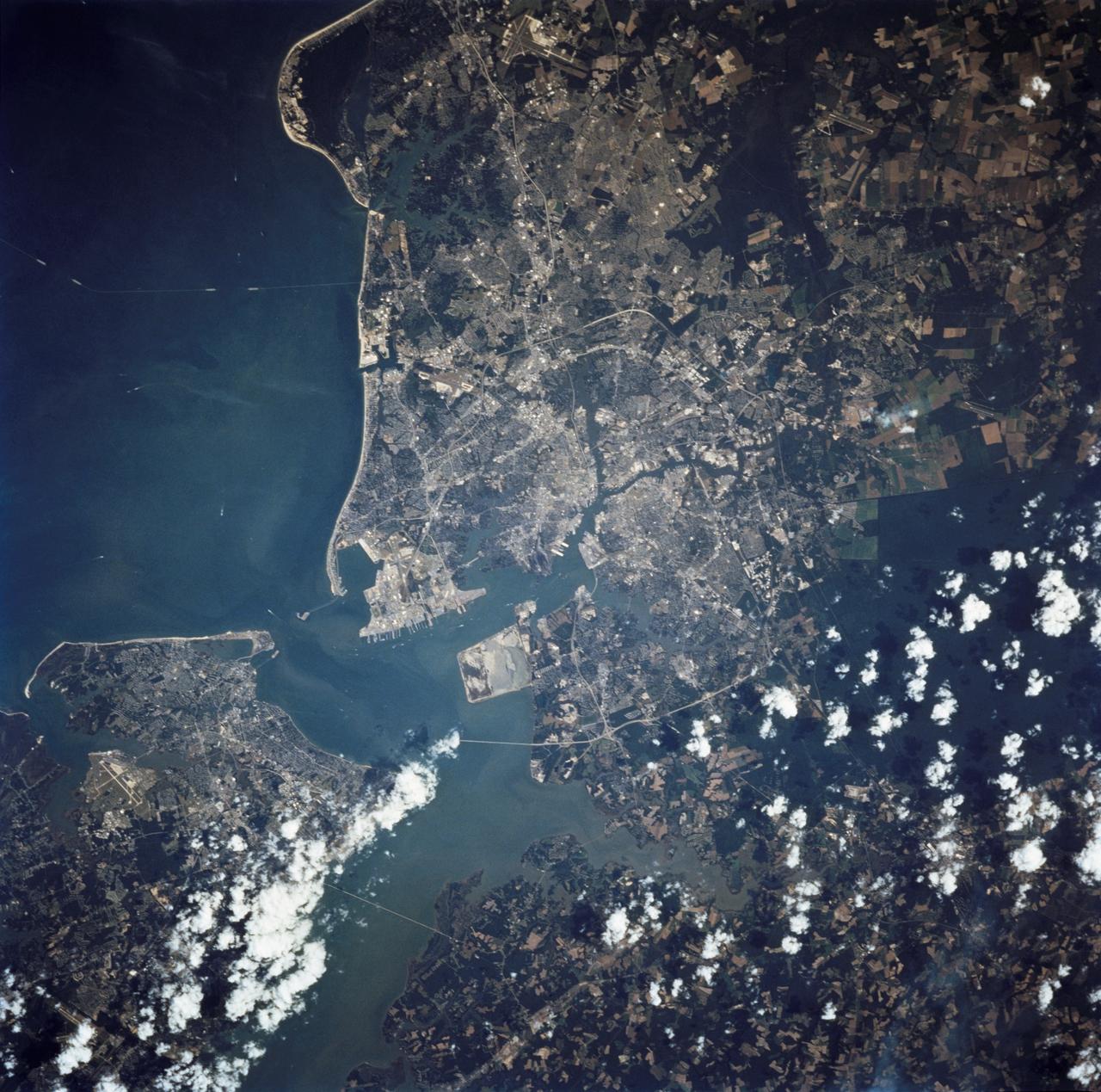
STS068-237-055 (30 September - 11 October 1994) --- This coastal area, considered home by astronaut Peter J. K. (Jeff) Wisoff, was photographed from the Space Shuttle Endeavour during the Space Radar Laboratory (SRL-2) mission. Wisoff, a native of Norfolk, talked about this area during a post-flight crew awards and presentation event at the Johnson Space Center (JSC). He pointed out that the waterways are heavily used for commercial, recreational and military purposes. Piers near the mouth of the Elizabeth River are associated with the U. S. Naval Base and those down river support the activities of the city of Norfolk. Seashore State Park and the Ft. Story Military Reservation are visible at the mouth of the Chesapeake.
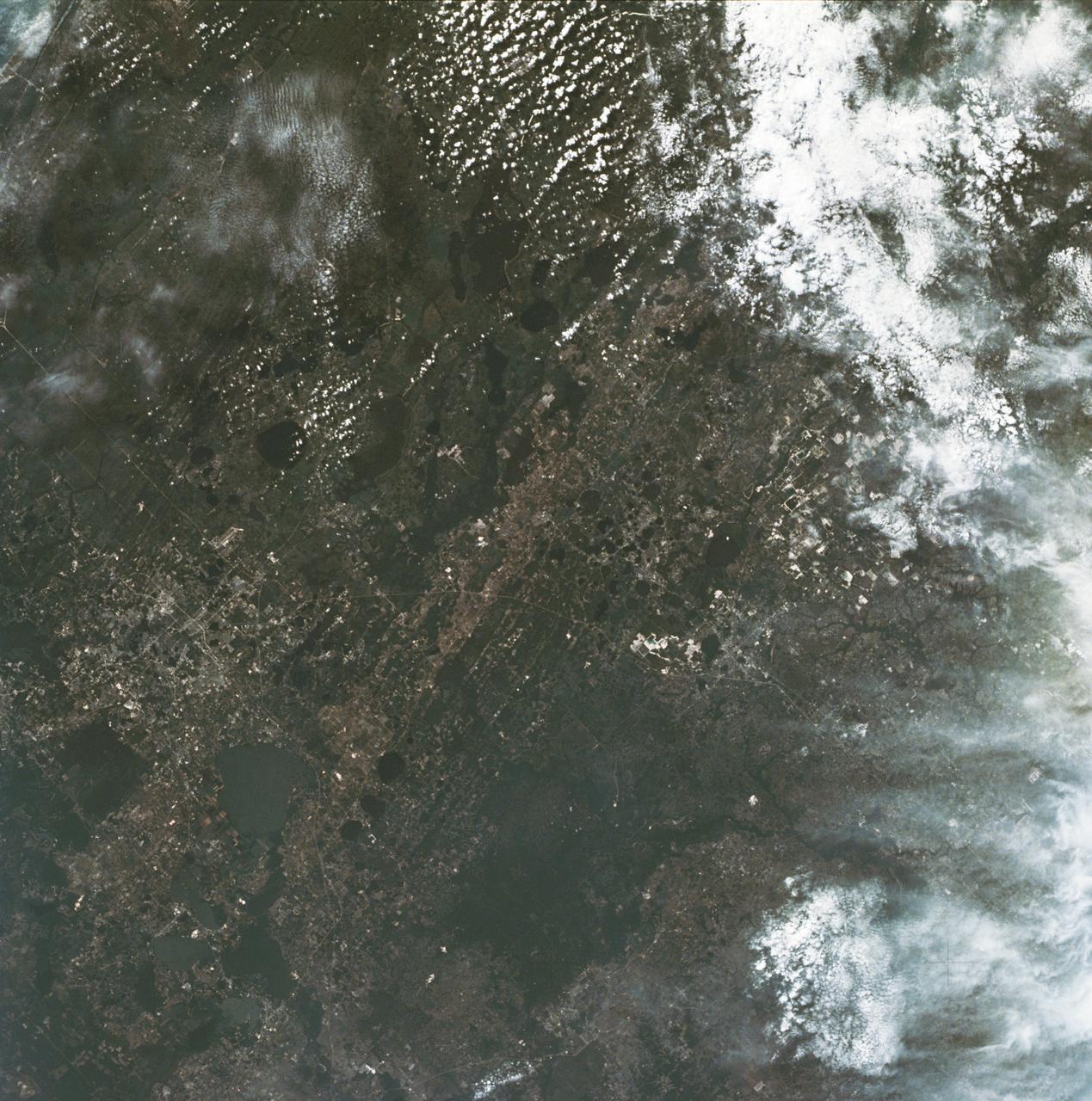
SL2-16-281 (June 1973) --- A vertical view of the Orlando and central Florida area photographed from the Skylab space station in Earth orbit. (The picture should be held with the heaviest cloud cover at the bottom.) The extensive road and highway network in the area is clearly visible. The Lakeland and Winter Haven area is near the center of the picture. Interstate 4 extends southwesterly out of Orlando through the center of the picture. The urban growth caused by the opening of the Disney World amusement complex is clearly evident. The giant recreational facility is just southwest of Orlando. This picture was taken by one of the six lenses of the Itek-furnished S190-A Multispectral Photographic Facility Experiment in the Multiple Docking Adapter of the space station. Type SO-356 film was used. Photo credit: NASA
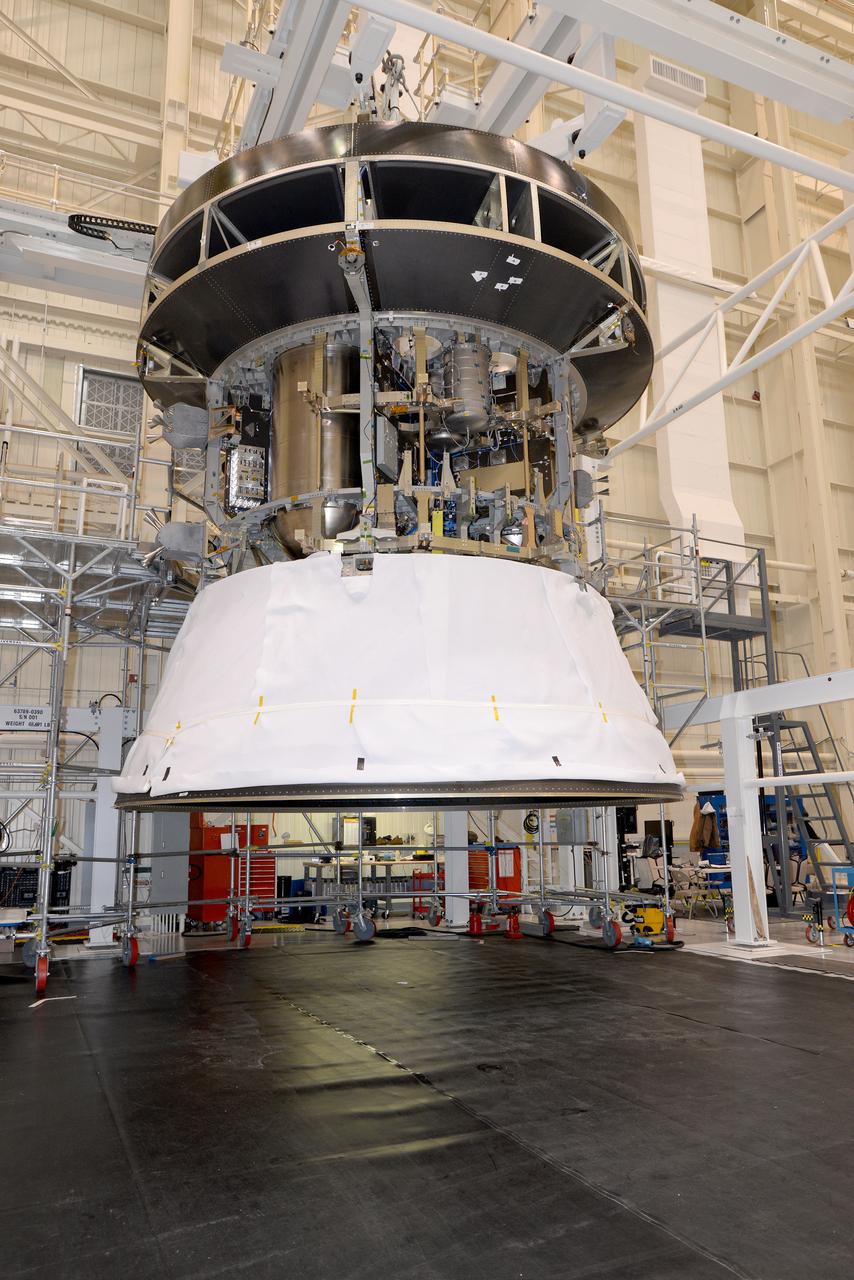
The European Service Module structural test model, shown on Jan. 23, 2016, is used for testing purposes before installing the real thing. It is as close to the flight version as possible while keeping costs and development time manageable. The structure and weight are the same, while mass equivalents stand in for electronics boxes not needed for the series of tests...The model was installed under a test version of the Crew Module Adapter, and sits on the Spacecraft Adapter that will attach Orion to its launch vehicle. This is the first time the European hardware has been physically connected to NASA’s elements...The service module will be shaken at NASA’s Plum Brook station in Sandusky, Ohio, USA, to recreate the vibrations of launch, as well as being subjected to acoustic and shock environments. Part of Batch image transfer from Flickr.
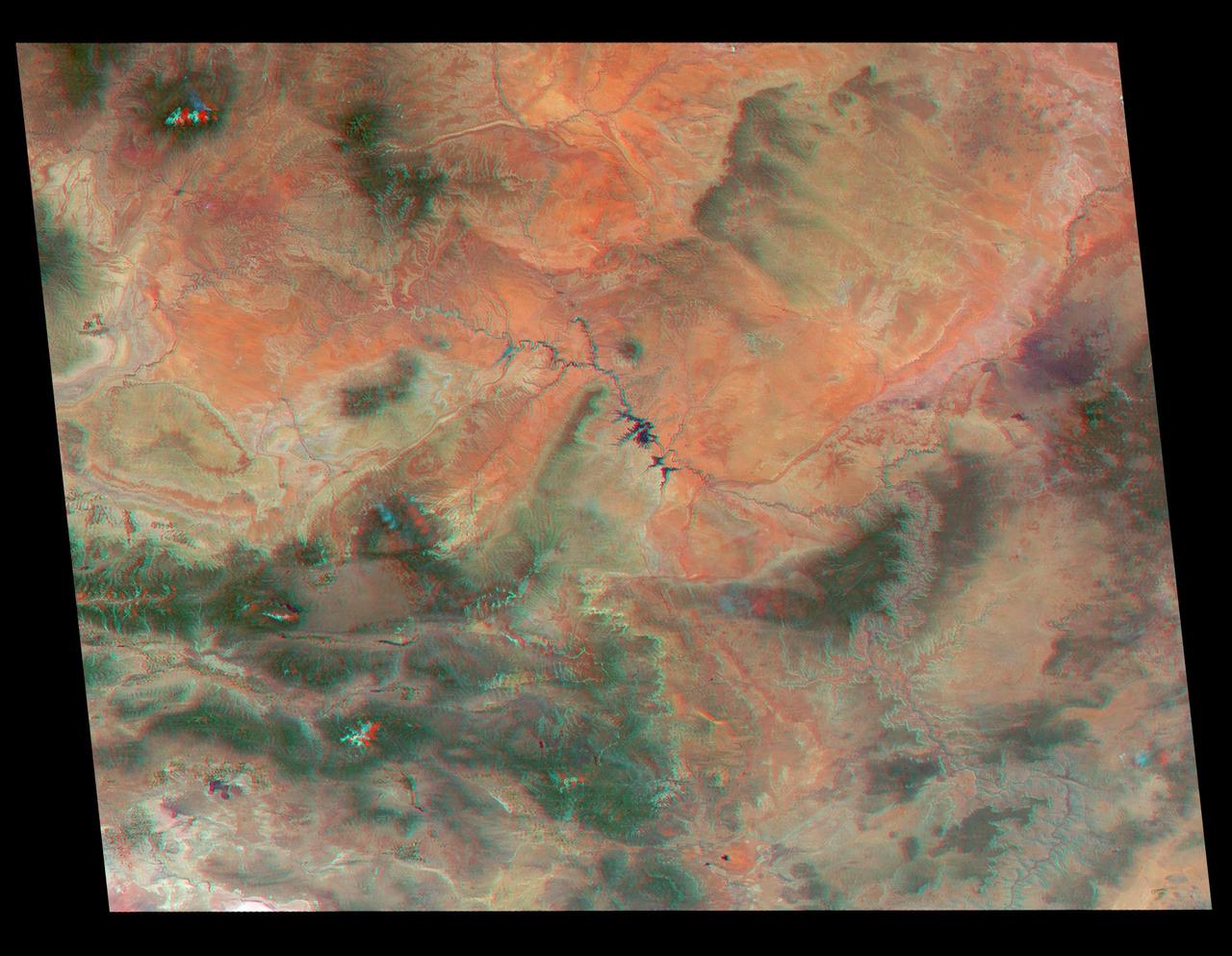
Just in time for the U.S. National Park Service's Centennial celebration on Aug. 25, NASA's Multiangle Imaging SpectroRadiometer (MISR) instrument aboard NASA's Terra satellite is releasing four new anaglyphs that showcase 33 of our nation's national parks, monuments, historical sites and recreation areas in glorious 3D. Shown in the annotated image are Walnut Canyon National Monument, Sunset Crater Volcano National Monument, Wupatki National Monument, Grand Canyon National Park, Pipe Spring National Monument, Zion National Park, Cedar Breaks National Monument, Bryce Canyon National Park, Capitol Reef National Park, Navajo National Monument, Glen Canyon National Recreation Area, Natural Bridges National Monument, Canyonlands National Park, and Arches National Park. MISR views Earth with nine cameras pointed at different angles, giving it the unique capability to produce anaglyphs, stereoscopic images that allow the viewer to experience the landscape in three dimensions. The anaglyphs were made by combining data from MISR's vertical-viewing and 46-degree forward-pointing camera. You will need red-blue glasses in order to experience the 3D effect; ensure you place the red lens over your left eye. The images have been rotated so that north is to the left in order to enable 3D viewing because the Terra satellite flies from north to south. All of the images are 235 miles (378 kilometers) from west to east. These data were acquired June 18, 2016, Orbit 87774. http://photojournal.jpl.nasa.gov/catalog/PIA20889
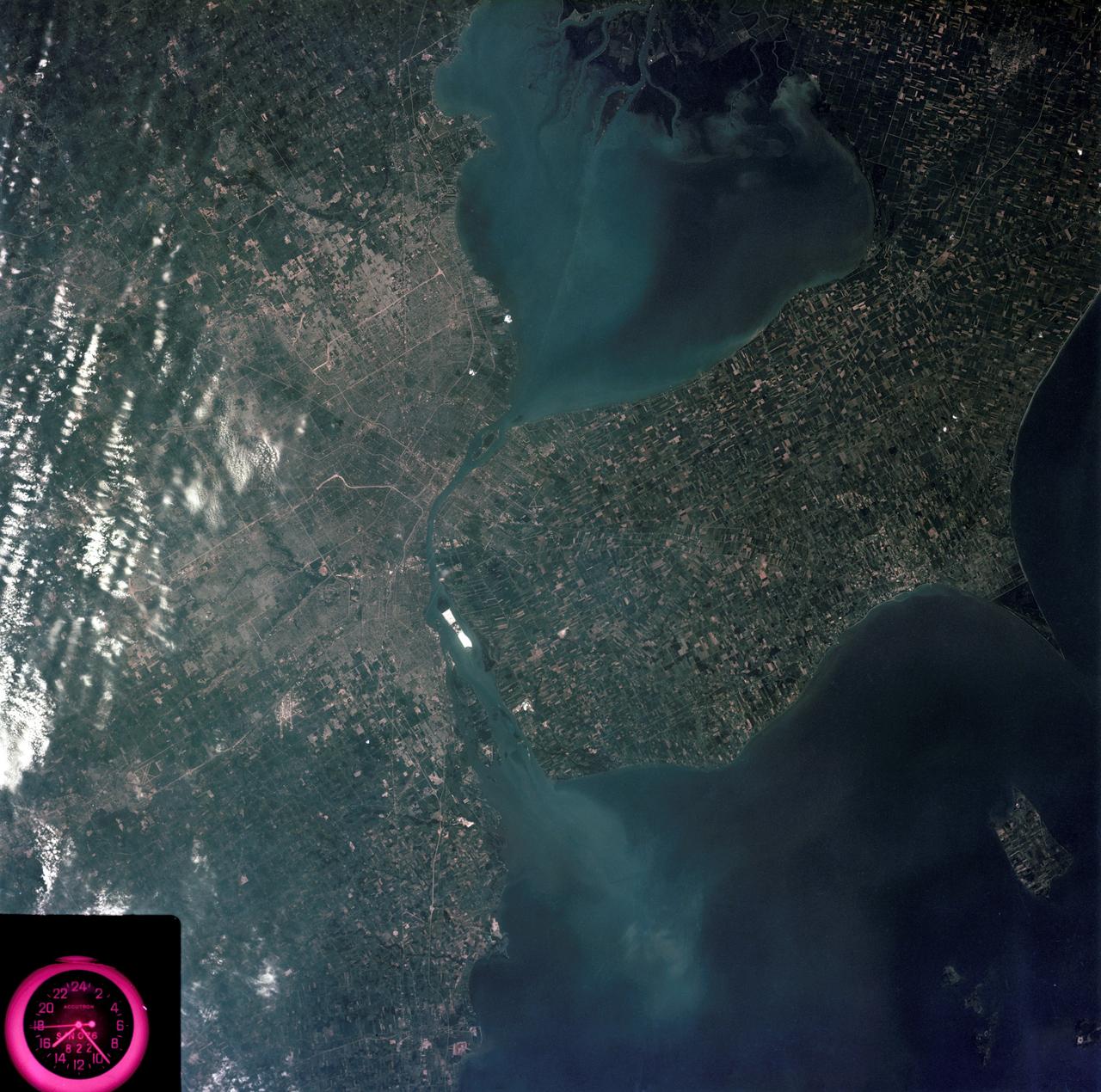
SL3-83-0152 (July-September 1973) --- A near vertical view of the metropolitan Detroit, Michigan area is seen in this Skylab 3 Earth Resources Experiments Package S190-B (five-inch Earth terrain camera) photograph taken from the Skylab space station in Earth orbit. The 25-mile long Detroit River drains the smaller body of water (Lake St. Clair) and flows southwestward separating Detroit from Windsor, Ontario, and empties into Lake Erie. The Detroit River handles a great deal of Great Lakes barge and ship traffic. Major streets and thoroughfares radiating from the city are clearly visible. Fighting Island is the highly reflective, white area located almost in the center of the picture. This high reflectivity is caused by the functional use of the island-disposal ponds for chemical salts. Sedimentation and/or pollution patterns in the area provide interesting visual phenomena for speculation and analysis. Distinct and rather unique cultivated field patterns can be observed south and east of Windsor, Ontario. This is a direct result of an English survey and land tenure system which was utilized when the area was settled. New areas of residential development are fairly easy to differentiate from older, established residential areas. Vegetation and extent of area coverage can be determined. The Oakland County Planning Commission and the Federal Bureau of Outdoor Recreation working closely with Irv Sattinger of the Environmental Research Institute of Michigan (University of Michigan) are presently processing and analyzing photographic and Multispectral scanner data to determine its usefulness for recreation and open space site studies for this area. Photo credit: NASA
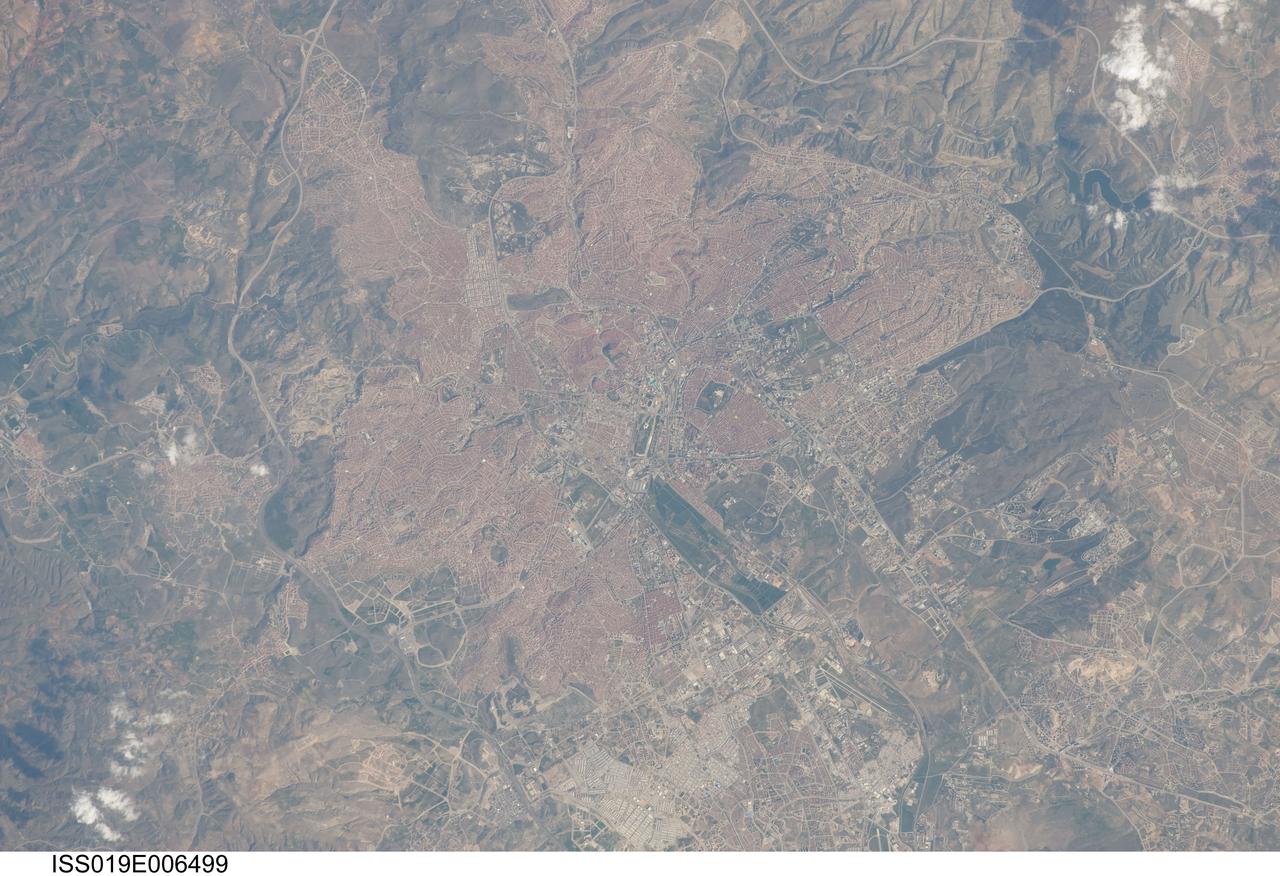
ISS019-E-006499 (11 April 2009) --- Ankara, Turkey is featured in this image photographed by an Expedition 19 crewmember on the International Space Station. The central portion of the capital city of Turkey, Ankara, is featured in this view. Ankara is located in central Turkey ? the climate here is continental and relatively dry, leading to cold winters and hot summers. The region is prone to major earthquakes, as Turkey experiences tectonic forces from both the African plate to the west and the Arabian plate to the east. Despite the earthquake hazard, the city traces its roots back into antiquity, with a Hittite settlement here prior to 1200 BC. A citadel built and occupied in turn by the Galatians, Romans, Byzantines, and Seljuks overlooks the central portion of the city, and today serves as both a historical and recreational site. Perhaps an even more imposing structure - the mausoleum of the founder of the modern-day Republic of Turkey, Mustafa Kemal Ataturk is visible upon an adjacent hill to the southwest. Hillslopes around the city (left and right) are fairly green due to spring seasonal rainfall. One of the most striking aspects of the urban area is the almost uniform use of red brick roofing tiles that contrast with lighter colored road networks ? this is particularly evident in the northern (lower left) and southern (upper right) portions of the city. Numerous park areas are visible as green patches interspersed within the red-tile roofed urban region. A region of cultivated fields in the western portion of the city (center) is a recreational farming area known as the Ataturk Forest Farm and Zoo ? an interesting example of intentional preservation of a former land use within an urban area.
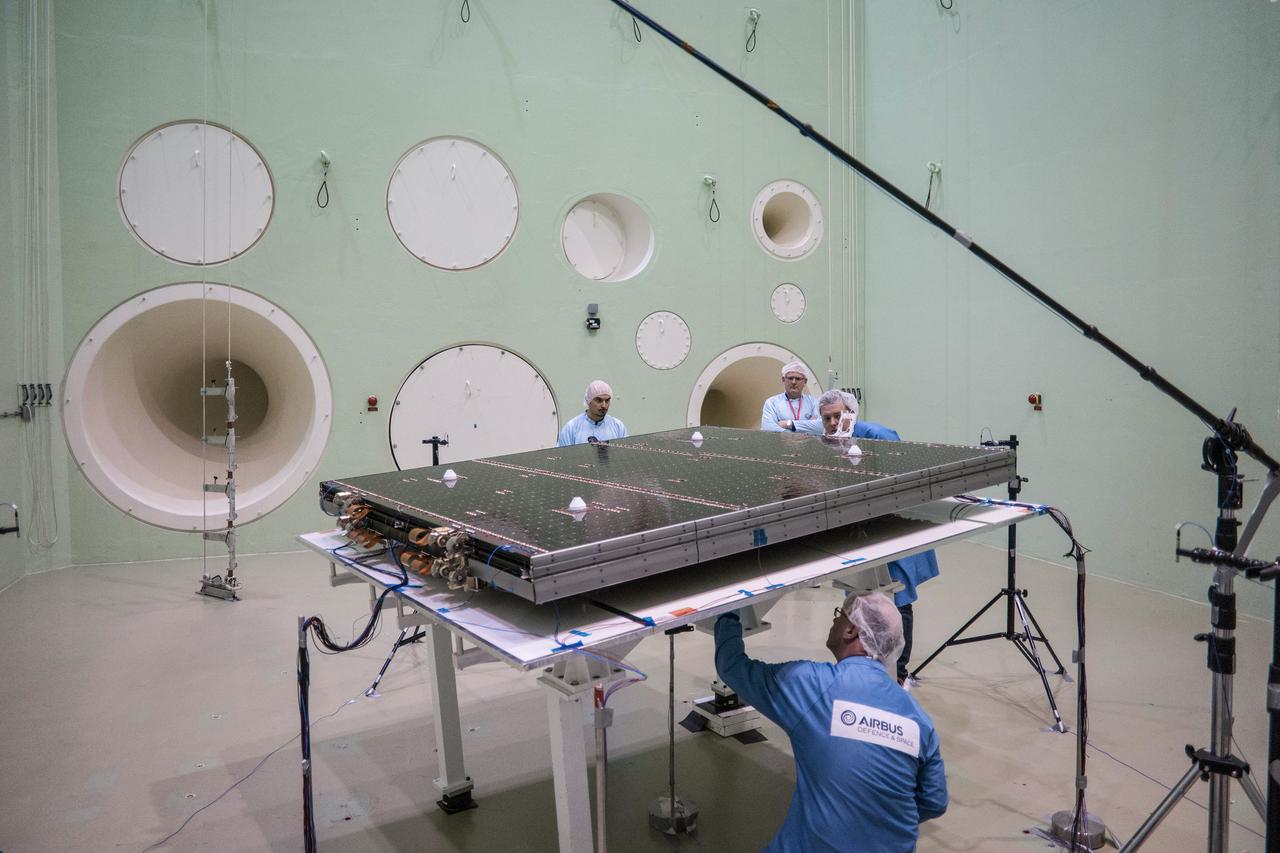
The solar arrays that will provide electricity to the Orion spacecraft were put through launch-day paces at ESA’s Test Centre in the Netherlands to verify that they can handle the rigours of the trip around the Moon... .The wings are seen here on April 11, 2018, on the shaking table that vibrates with the full force of a rumbling rocket. They were also placed in front of enormous speakers that recreate the harsh conditions they can expect on launch day. The solar arrays passed with flying colours... .The wings will be tested on how they deploy before shipping to Bremen, Germany, for integration with the European service module. ESA’s contribution to the Orion mission will provide power, propulsion, water, and air... .The first mission will take Orion around the Moon without astronauts. The solar panels will be folded inside the rocket fairing, once released from NASA’s Space Launch System rocket they will unfold and rotate towards the Sun to start delivering power... .With solar wings tested and fuel tanks installed, Orion is one step closer to its maiden voyage.
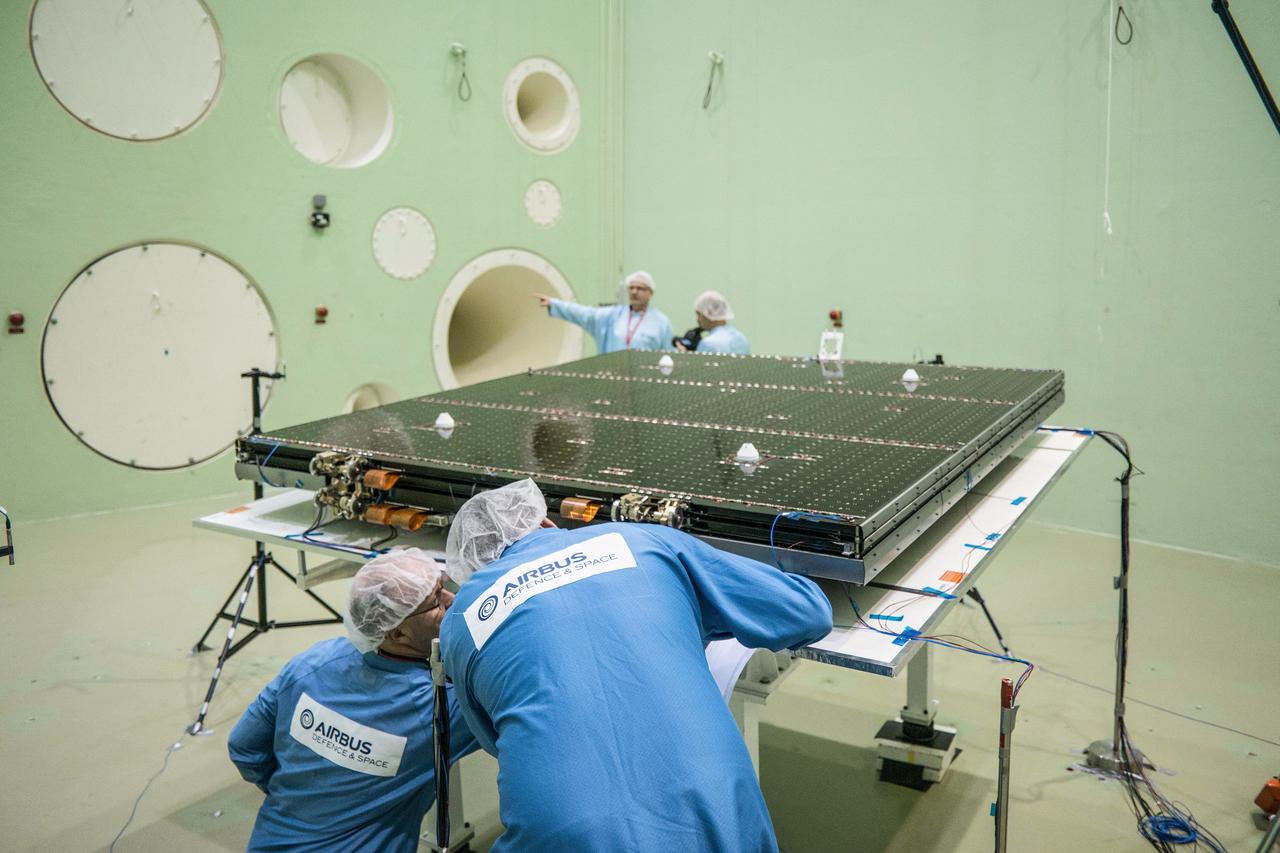
The solar arrays that will provide electricity to the Orion spacecraft were put through launch-day paces at ESA’s Test Centre in the Netherlands to verify that they can handle the rigours of the trip around the Moon... .The wings are seen here on April 11, 2018, on the shaking table that vibrates with the full force of a rumbling rocket. They were also placed in front of enormous speakers that recreate the harsh conditions they can expect on launch day. The solar arrays passed with flying colours... .The wings will be tested on how they deploy before shipping to Bremen, Germany, for integration with the European service module. ESA’s contribution to the Orion mission will provide power, propulsion, water, and air... .The first mission will take Orion around the Moon without astronauts. The solar panels will be folded inside the rocket fairing, once released from NASA’s Space Launch System rocket they will unfold and rotate towards the Sun to start delivering power... .With solar wings tested and fuel tanks installed, Orion is one step closer to its maiden voyage.

CAPE CANAVERAL, Fla. -- Space shuttle Endeavour's six STS-134 astronauts, dressed in their orange launch-and-entry suits, wave to news media and other spectators before hopping aboard the Astrovan parked in front of the Operations and Checkout Building at NASA's Kennedy Space Center in Florida. The modified Airstream recreational vehicle has transported astronauts to their spacecraft since 1984. From left, are Mission Specialists Greg Chamitoff, Andrew Feustel, Roberto Vittori with the European Space Agency and Michael Fincke, Pilot Greg H. Johnson and Commander Mark Kelly. STS-134 will deliver the Express Logistics Carrier-3, Alpha Magnetic Spectrometer-2 (AMS), a high-pressure gas tank and additional spare parts for the Dextre robotic helper to the space station. Endeavour was scheduled to launch at 3:47 p.m. on April 29, but that attempt was scrubbed for at least 72 hours while engineers assess an issue associated with the shuttle's Auxiliary Power Unit 1. STS-134 will be the final spaceflight for Endeavour. For more information visit, www.nasa.gov/mission_pages/shuttle/shuttlemissions/sts134/index.html. Photo credit: NASA/Kim Shiflett