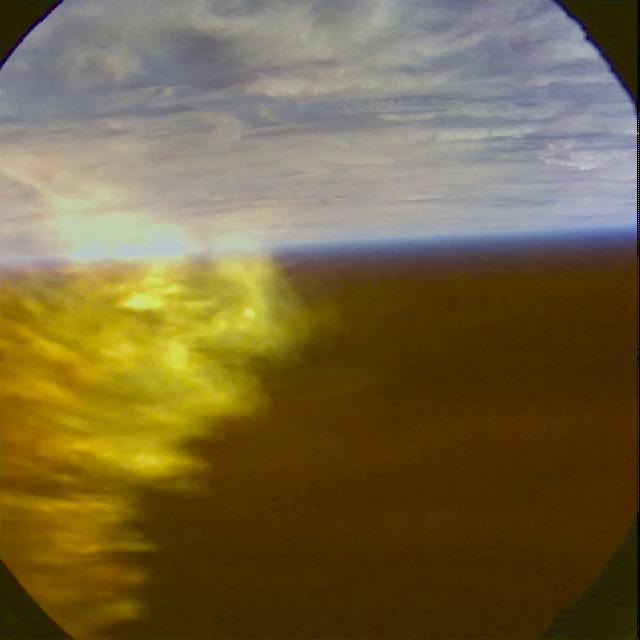
A view from the top hatch window as plasma surrounds the vehicle during reentry on Orion's first flight test, Exploration Flight Test-1 (EFT-1), on December 5, 2014.
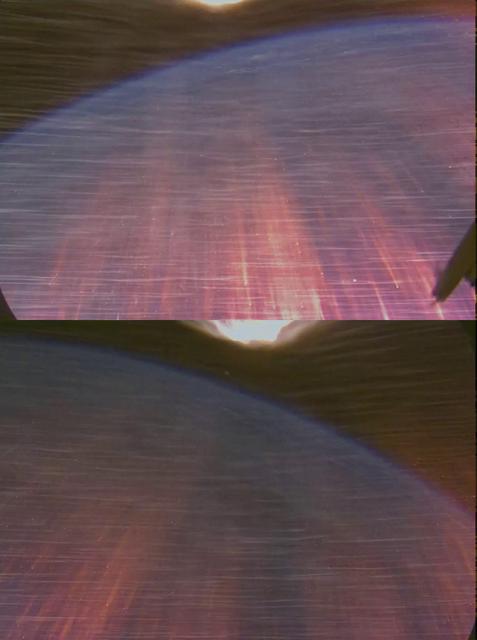
A view from the side windows as plasma surrounds the vehicle during reentry on Orion's first flight test, Exploration Flight Test-1 (EFT-1), on December 5, 2014.
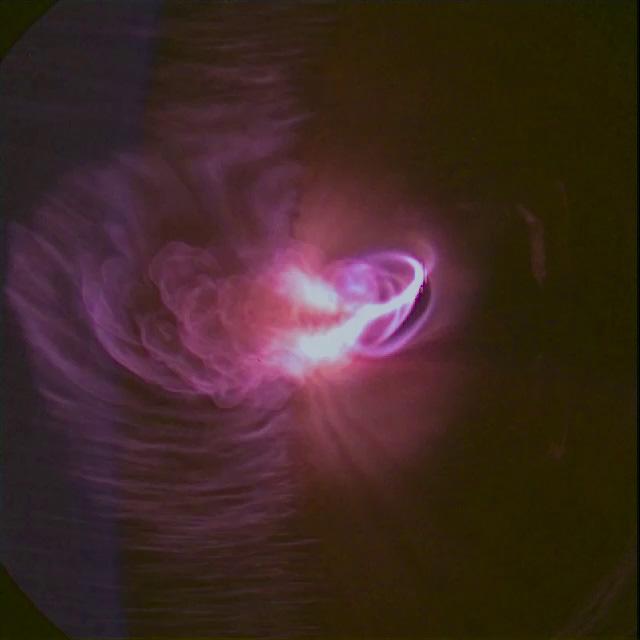
A view from the top hatch window as plasma surrounds the vehicle during reentry on Orion's first flight test, Exploration Flight Test-1 (EFT-1), on December 5, 2014.
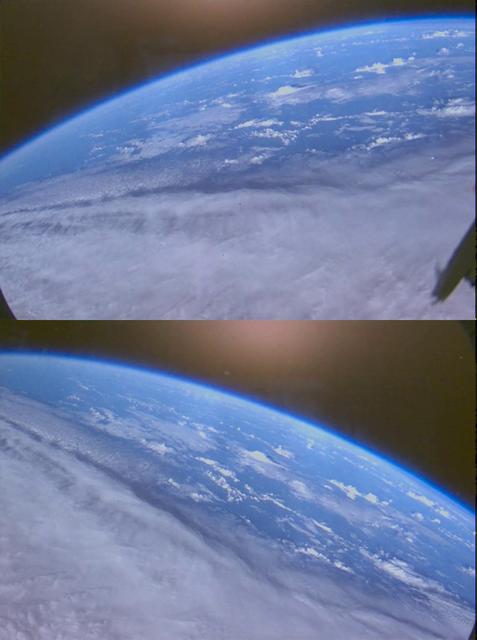
A view from the top hatch window as plasma surrounds the vehicle during reentry on Orion's first flight test, Exploration Flight Test-1 (EFT-1), on December 5, 2014.
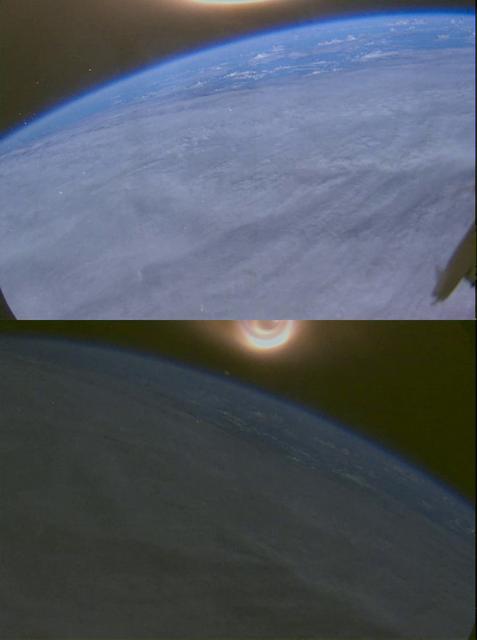
A view from the side windows as plasma surrounds the vehicle during reentry on Orion's first flight test, Exploration Flight Test-1 (EFT-1), on December 5, 2014.
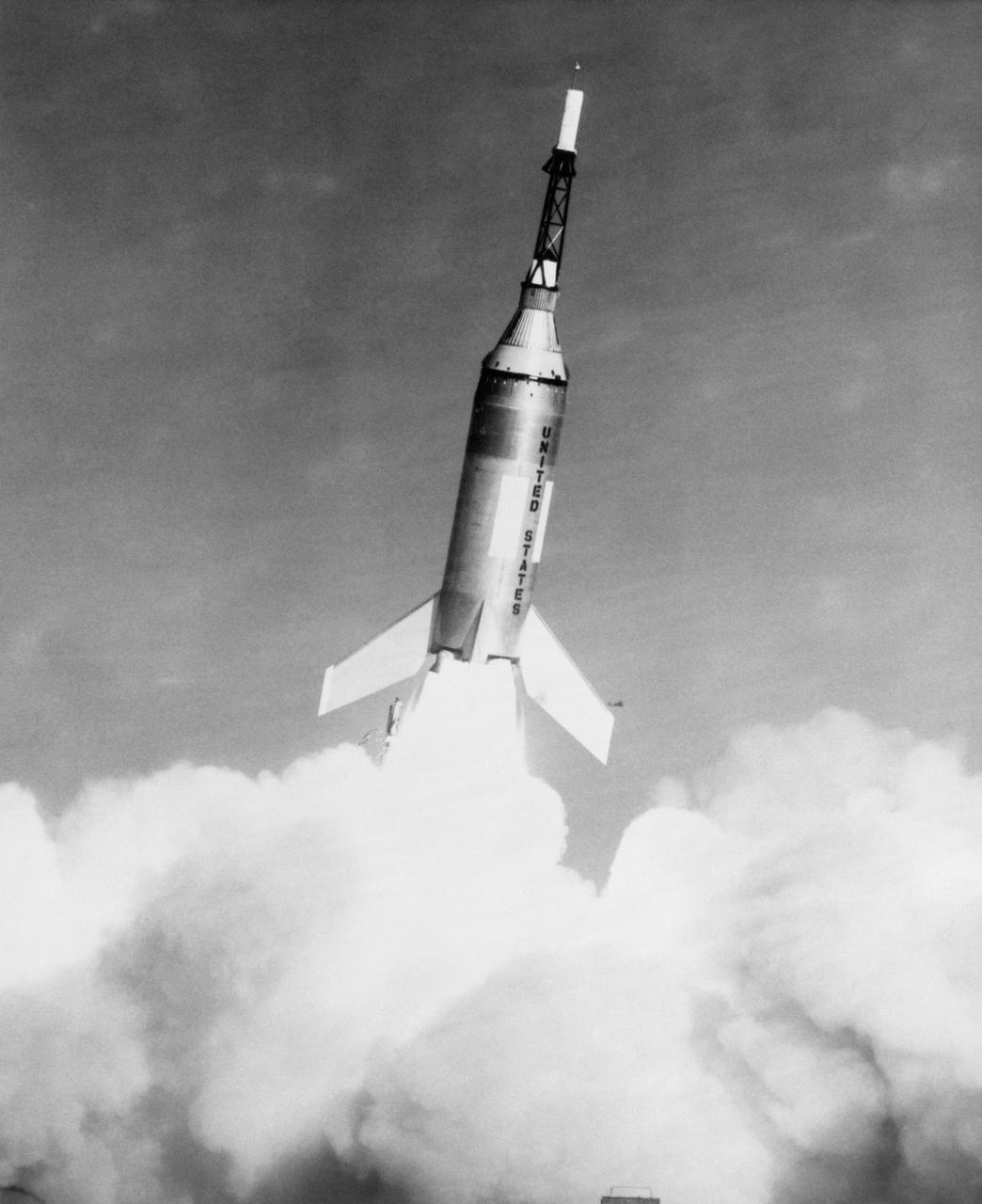
G61-00030 (4 Nov. 1959) --- Launch of Little Joe-2 from Wallops Island carrying Mercury spacecraft test article. The suborbital test flight of the Mercury capsule was to test the escape system. Vehicle functioned perfectly, but escape rocket ignited several seconds too late. Photo credit: NASA
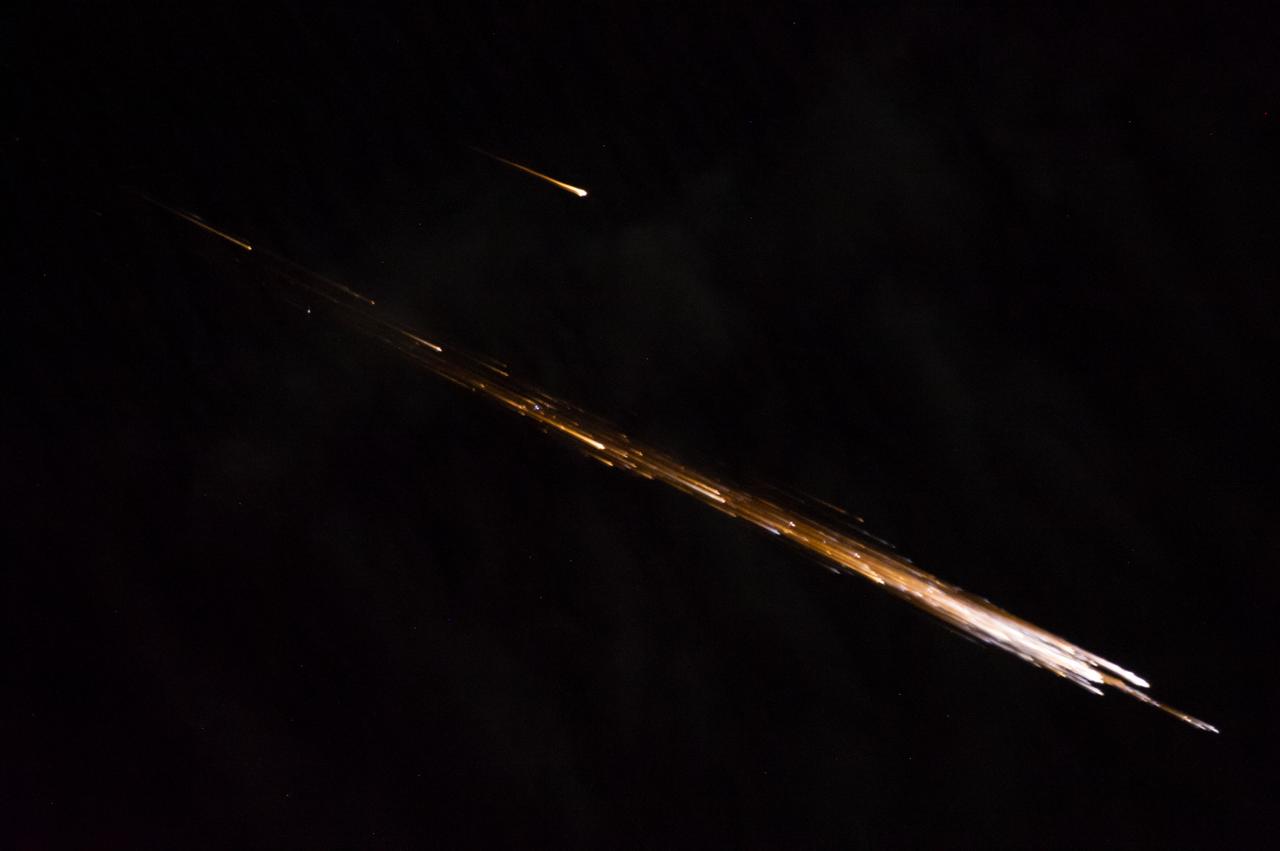
iss040e098572 (8/19/2014) --- A dark view of the Orbital Cygnus 2 reentry taken by the Expedition 40 crew. Light streak from reentry visible in frame. The Thermal Protection Material Flight Test and Reentry Data Collection (RED-Data2) investigation studies a new type of recording device that rides along a vehicle reentering Earth’s atmosphere, providing crucial data about the extreme conditions a spacecraft encounters during atmospheric reentry.
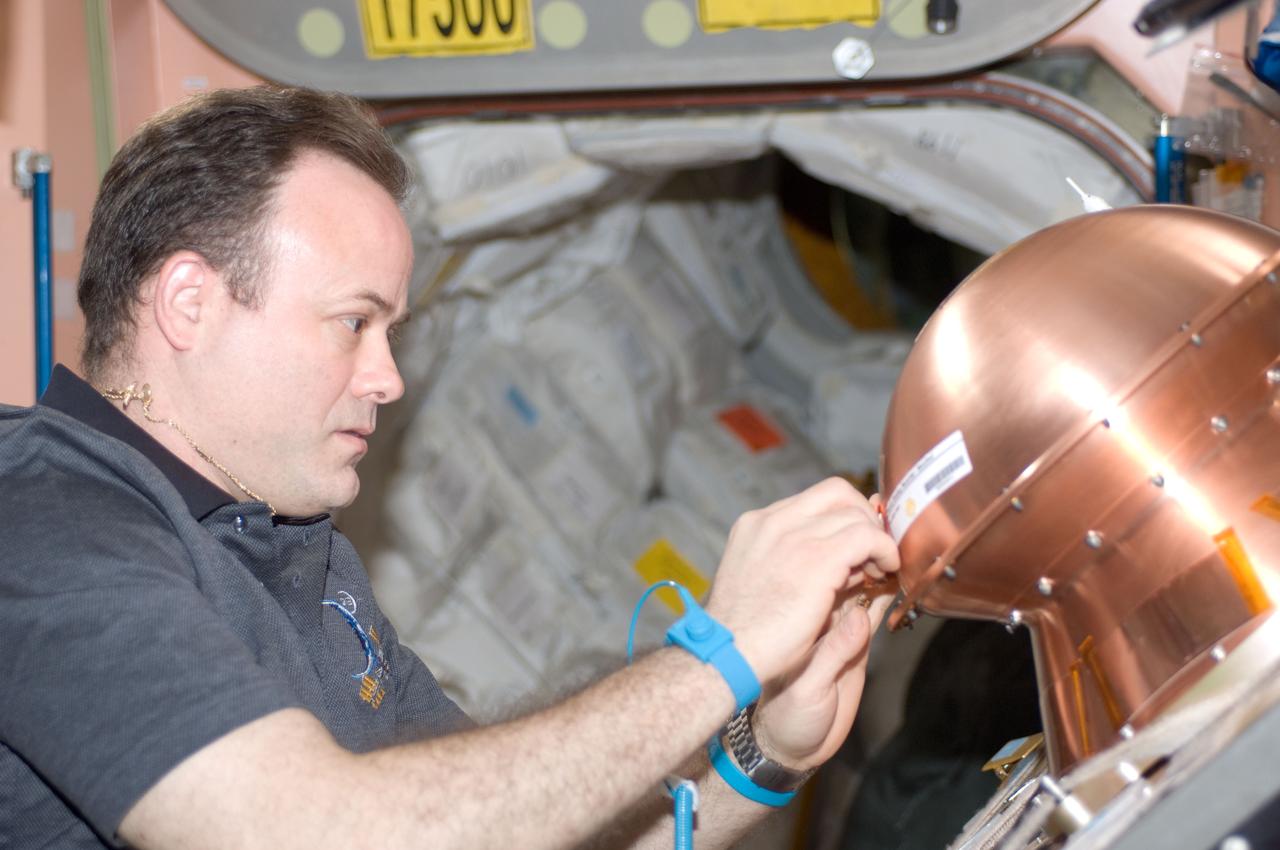
ISS028-E-008470 (19 June 2011) --- In the Unity node of the International Space Station, NASA astronaut Ron Garan, Expedition 28 flight engineer, prepares the Reentry Breakup Recorder (REBR) for installation in the Automated Transfer Vehicle-2 (ATV-2). The ATV-2 is scheduled to undock from the station on June 20, 2011. REBR data improves the understanding of vehicle breakup during reentry, allowing improvements in prediction of the breakup process, increasing the accuracy of estimated casualty expectations, and limiting premature deorbiting of space hardware. In the long term, this research assists in the development of a "black box" for commercial space transportation systems.
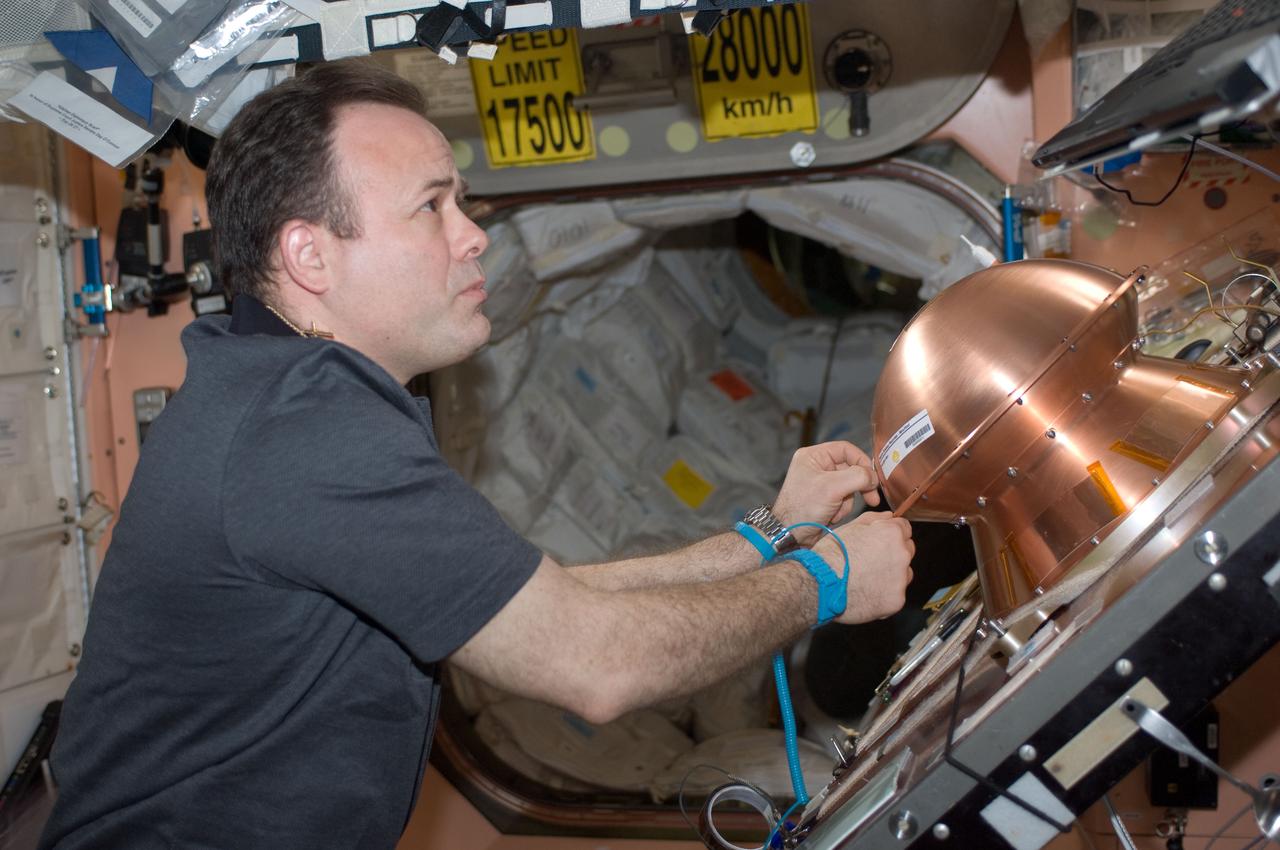
ISS028-E-008464 (19 June 2011) --- In the Unity node of the International Space Station, NASA astronaut Ron Garan, Expedition 28 flight engineer, prepares the Reentry Breakup Recorder (REBR) for installation in the Automated Transfer Vehicle-2 (ATV-2). The ATV-2 is scheduled to undock from the station on June 20, 2011. REBR data improves the understanding of vehicle breakup during reentry, allowing improvements in prediction of the breakup process, increasing the accuracy of estimated casualty expectations, and limiting premature deorbiting of space hardware. In the long term, this research assists in the development of a "black box" for commercial space transportation systems.
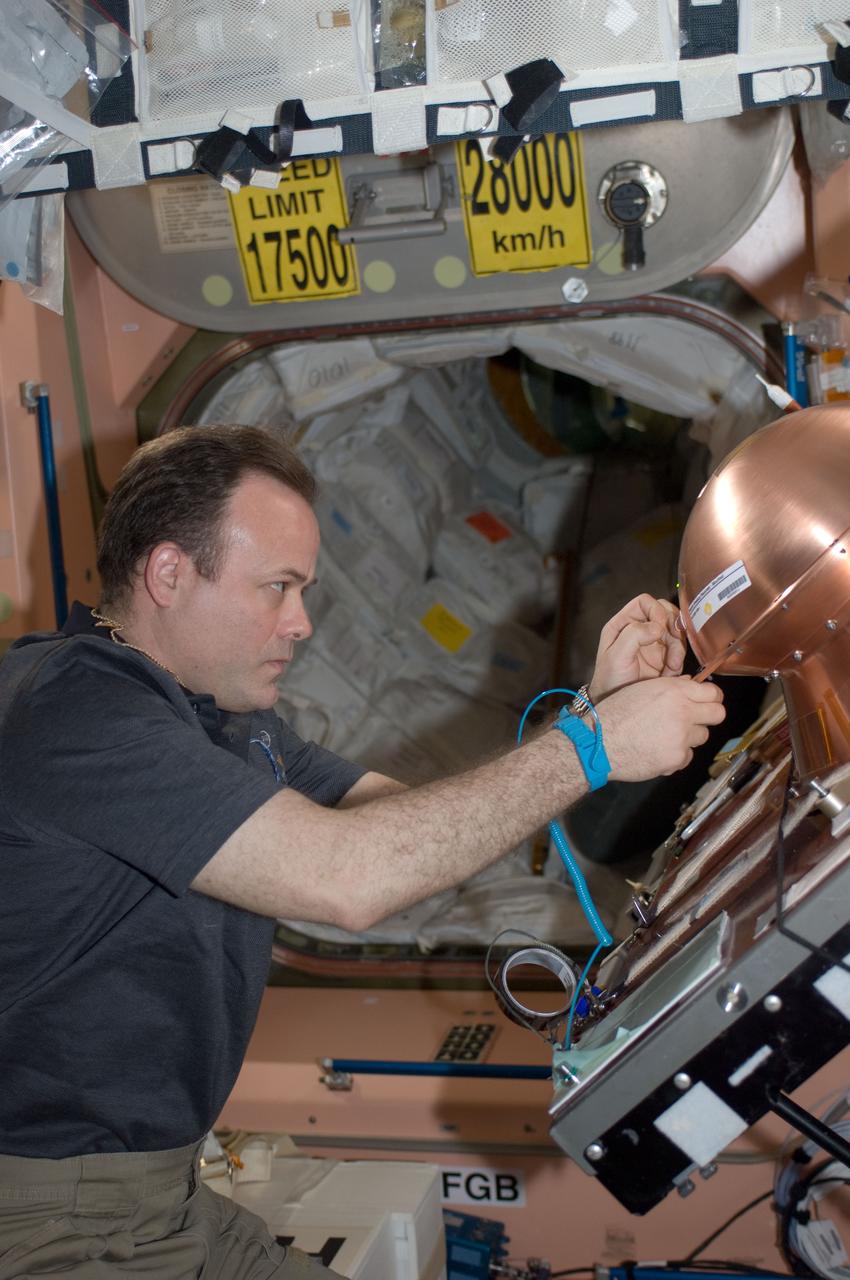
ISS028-E-008463 (19 June 2011) --- In the Unity node of the International Space Station, NASA astronaut Ron Garan, Expedition 28 flight engineer, prepares the Reentry Breakup Recorder (REBR) for installation in the Automated Transfer Vehicle-2 (ATV-2). The ATV-2 is scheduled to undock from the station on June 20, 2011. REBR data improves the understanding of vehicle breakup during reentry, allowing improvements in prediction of the breakup process, increasing the accuracy of estimated casualty expectations, and limiting premature deorbiting of space hardware. In the long term, this research assists in the development of a "black box" for commercial space transportation systems.
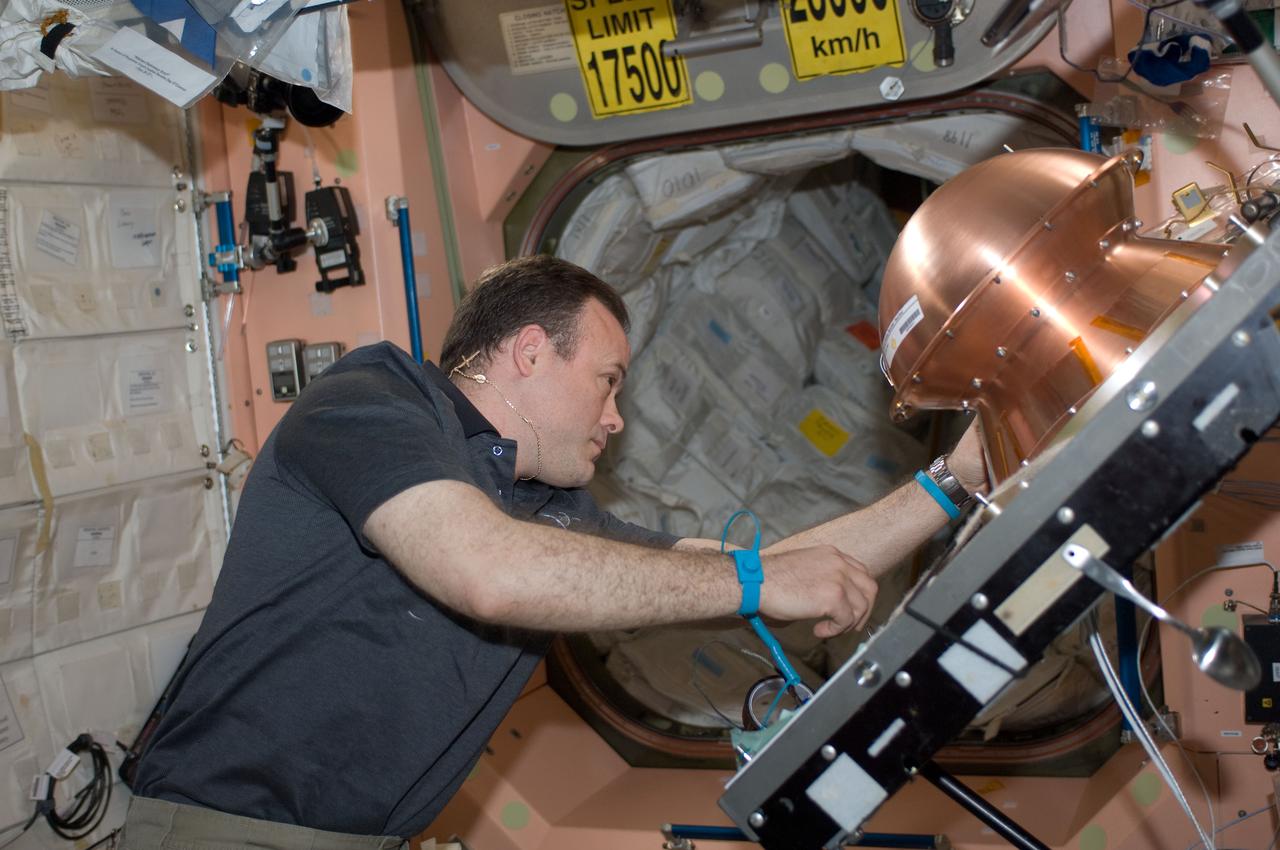
ISS028-E-008467 (19 June 2011) --- In the Unity node of the International Space Station, NASA astronaut Ron Garan, Expedition 28 flight engineer, prepares the Reentry Breakup Recorder (REBR) for installation in the Automated Transfer Vehicle-2 (ATV-2). The ATV-2 is scheduled to undock from the station on June 20, 2011. REBR data improves the understanding of vehicle breakup during reentry, allowing improvements in prediction of the breakup process, increasing the accuracy of estimated casualty expectations, and limiting premature deorbiting of space hardware. In the long term, this research assists in the development of a "black box" for commercial space transportation systems.
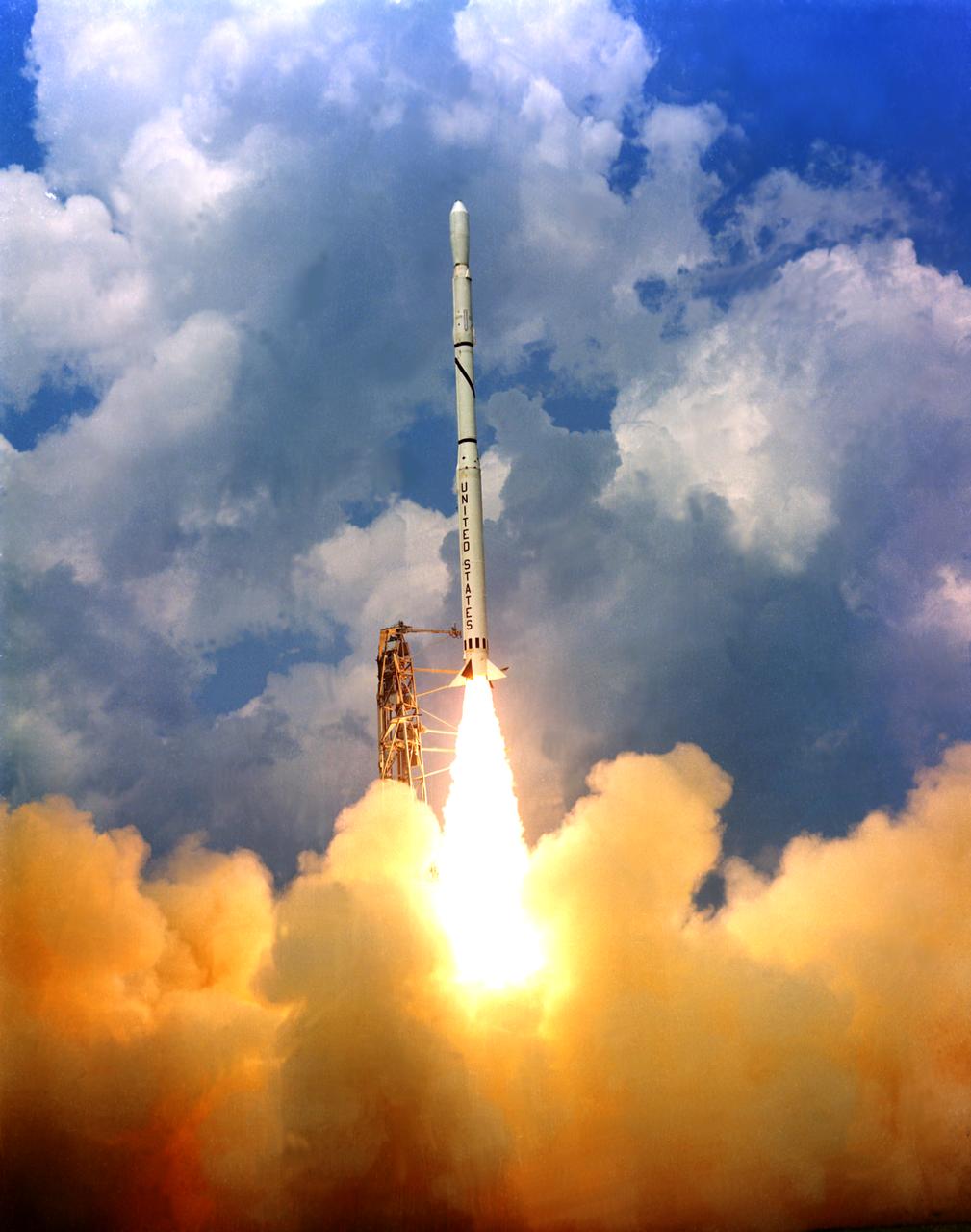
Scout launch vehicle lift off on Wallops Island in 1965. The Scout launch vehicle was used for unmanned small satellite missions, high altitude probes, and reentry experiments. Scout, the smallest of the basic launch vehicles, is the only United States launch vehicle fueled exclusively with solid propellants. Published in the book " A Century at Langley" by Joseph Chambers pg. 92
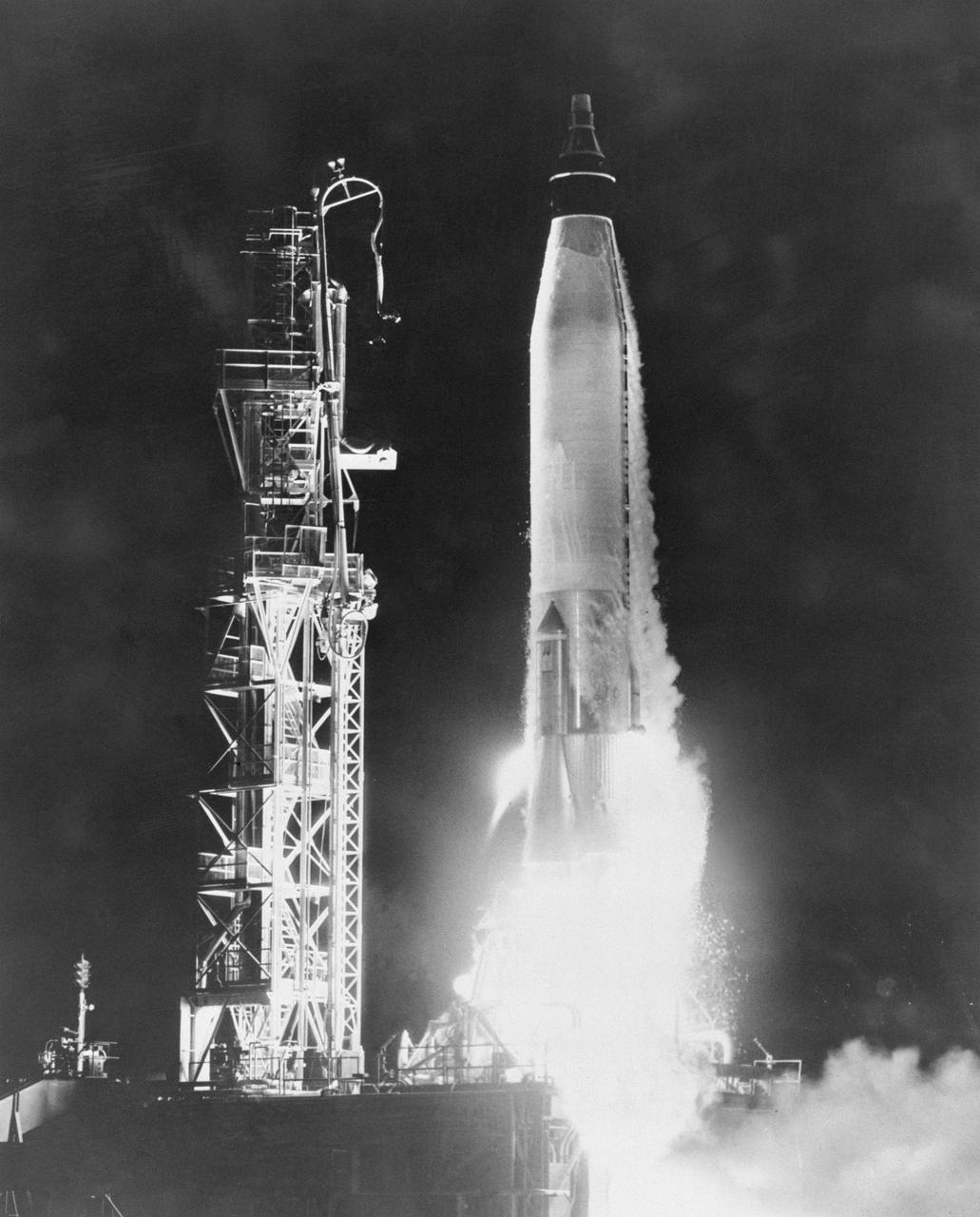
B59-00557 (9 Sept. 1959) --- U.S. Air Force photo of Big Joe launch vehicle after launching at Cape Canaveral, Florida, for a suborbital test of the Mercury capsule. The capsule was recovered successfully after the reentry test. Photo credit: NASA
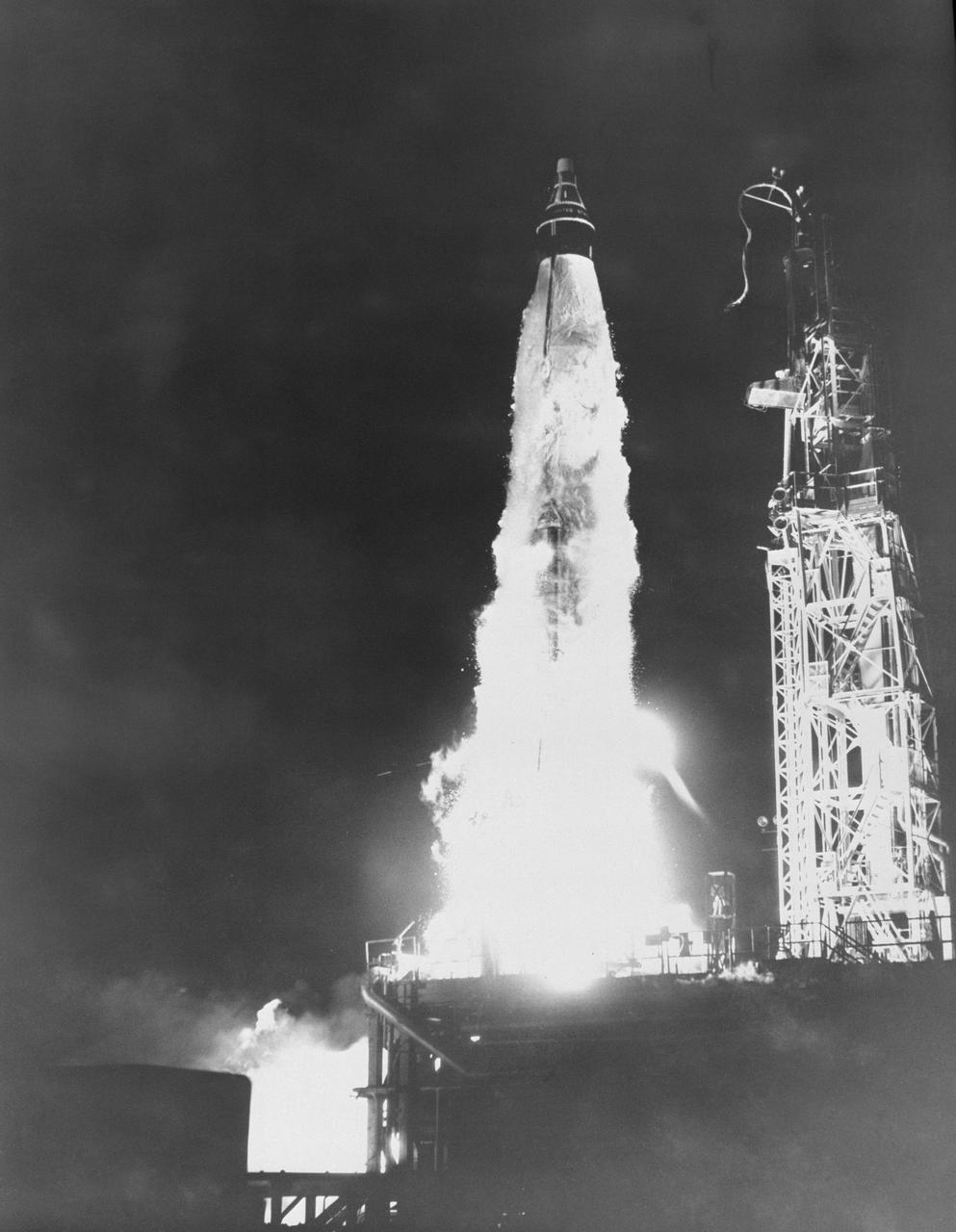
B59-00556 (9 Sept. 1959) --- U.S. Air Force photo of Big Joe launch vehicle after launching at Cape Canaveral, Florida, for a suborbital test of the Mercury capsule. The capsule was recovered successfully after the reentry test. Photo credit: NASA
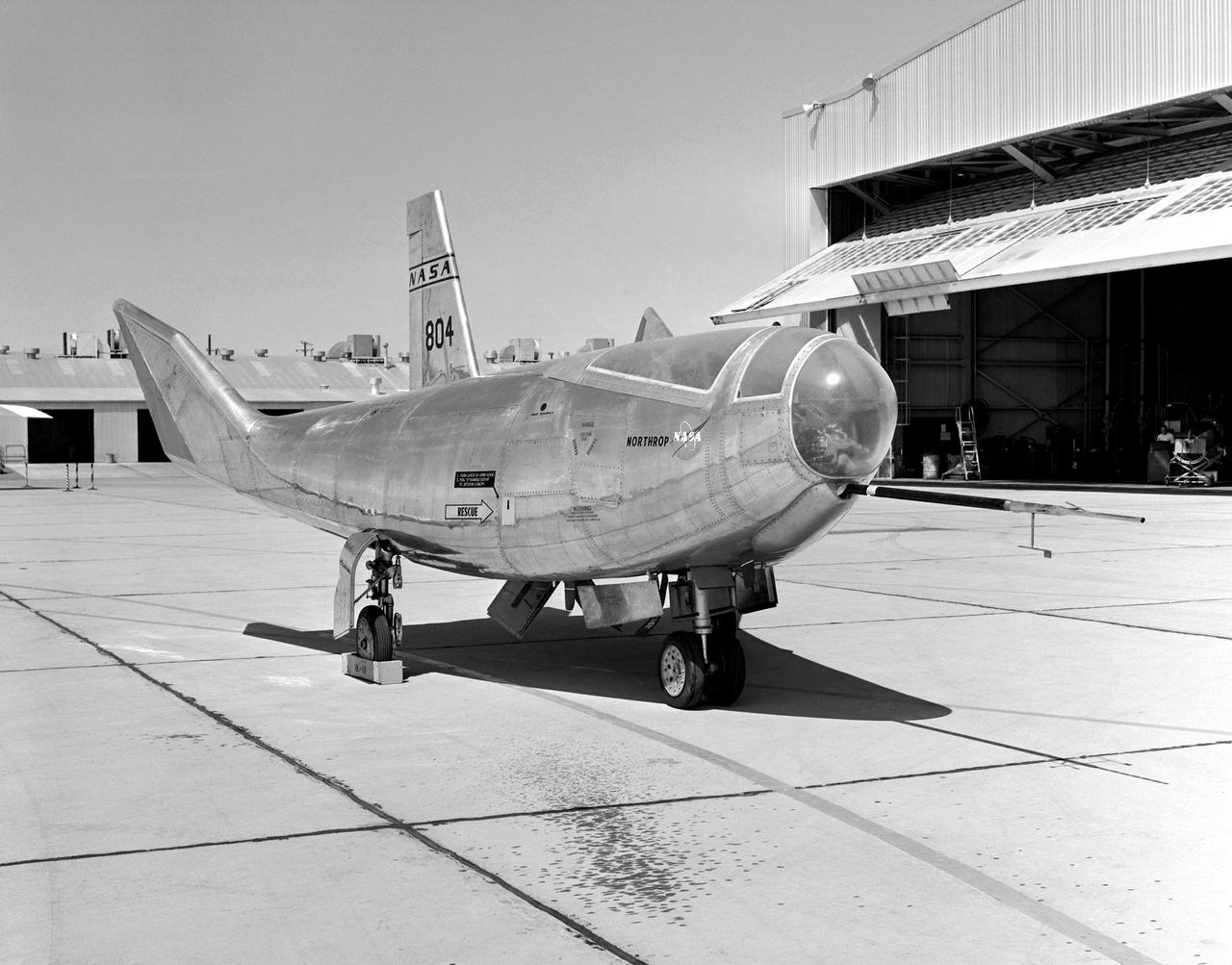
The HL-10, seen here parked on the ramp, was one of five lifting body designs flown at NASA's Dryden Flight Research Center, Edwards, California, from July 1966 to November 1975 to study and validate the concept of safely maneuvering and landing a low lift-over-drag vehicle designed for reentry from space.
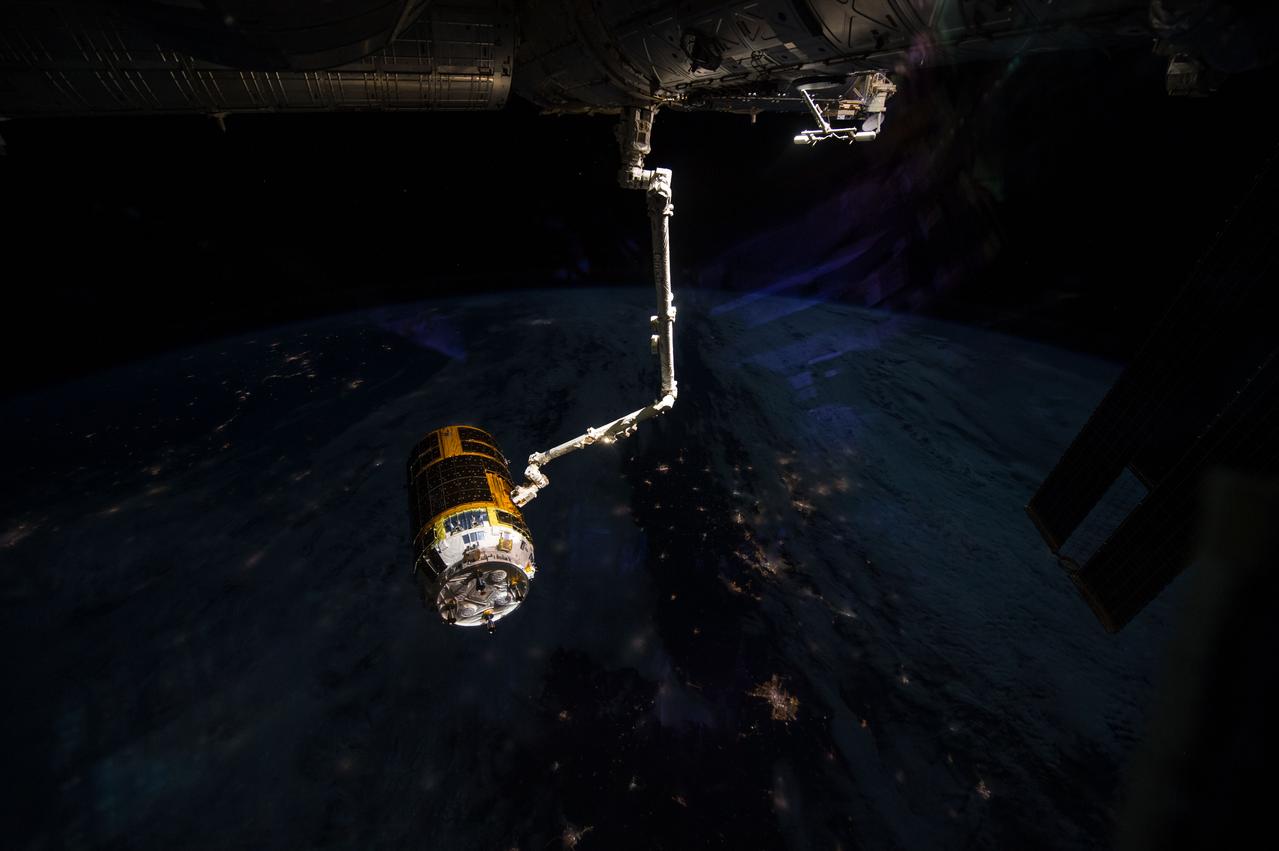
The unberthed Kounotori H-II Transfer Vehicle 5 (HTV-5) is grappled by the Canadarm2 Space Station Remote Manipulator System (SSRMS) prior to its release for reentry. This image is part of a time lapse sequence (iss045e125963 through iss045e126960) taken at a rate of 12 frames per minute. Image was released by astronaut on social media.
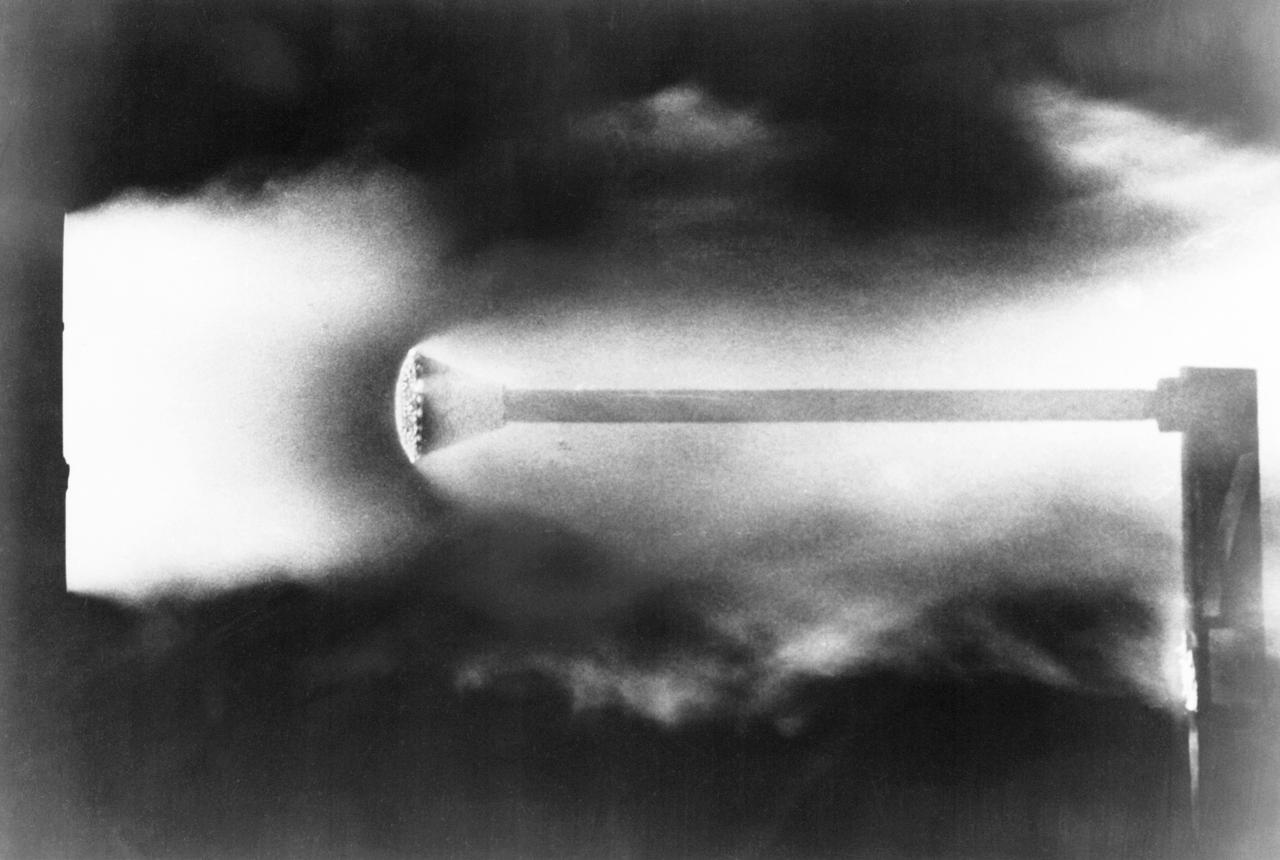
A hot jet research facility, used extensively in the design and development of the reentry heat shield on the Project Mercury spacecraft. The electrically-heated arc jet simulates the friction heating encountered by a space vehicle as it returns to the earth's atmosphere at high velocities. The arc jet was located in Langley's Structures Research Laboratory. It was capable of heating the air stream to about 9,000 degrees F. -- Published in Taken from an October 5, 1961 press release entitled: Hot Jet Research Facility used in Reentry Studies will be demonstrated at NASA Open House, October 7.
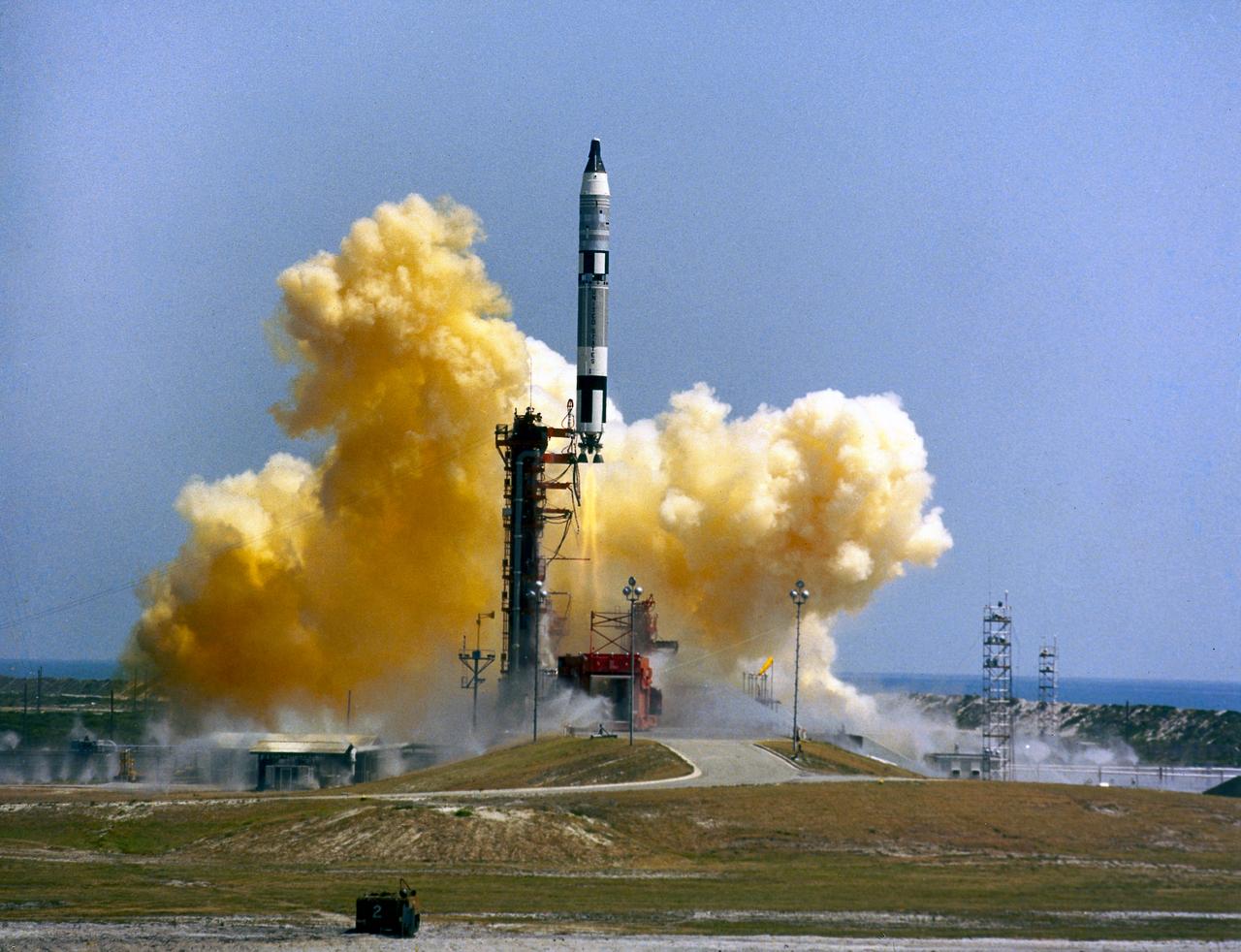
The Titan II liftoff. The Titan II launch vehicle was used for carrying astronauts on the Gemini mission. The Gemini Program was an intermediate step between the Project Mercury and the Apollo Program. The major objectives were to subject are two men and supporting equipment to long duration flights, to effect rendezvous and docking with other orbiting vehicle, and to perfect methods of reentry, and landing the spacecraft.
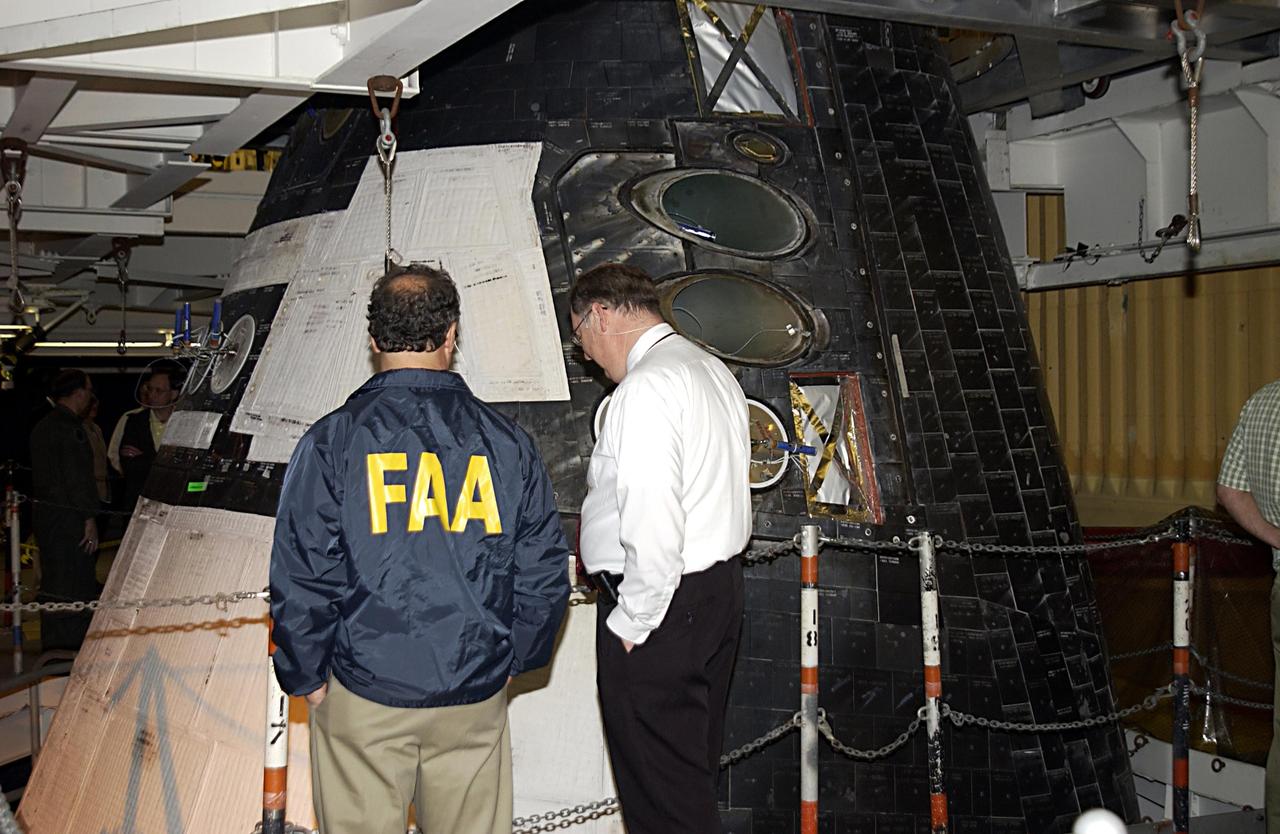
KENNEDY SPACE CENTER, FLA. -- Members of the Columbia Accident Investigation Board look over the nose of Space Shuttle Atlantis in the Vehicle Assembly Building. The board is visiting sites at KSC to become familiar with the Shuttle launch process and elements. They are standing in front of the nose of Space Shuttle Atlantis in the Vehicle Assembly Building. The independent board is charged with determining what caused the destruction of the Space Shuttle Columbia and the loss of its seven-member crew on Feb. 1 during reentry.
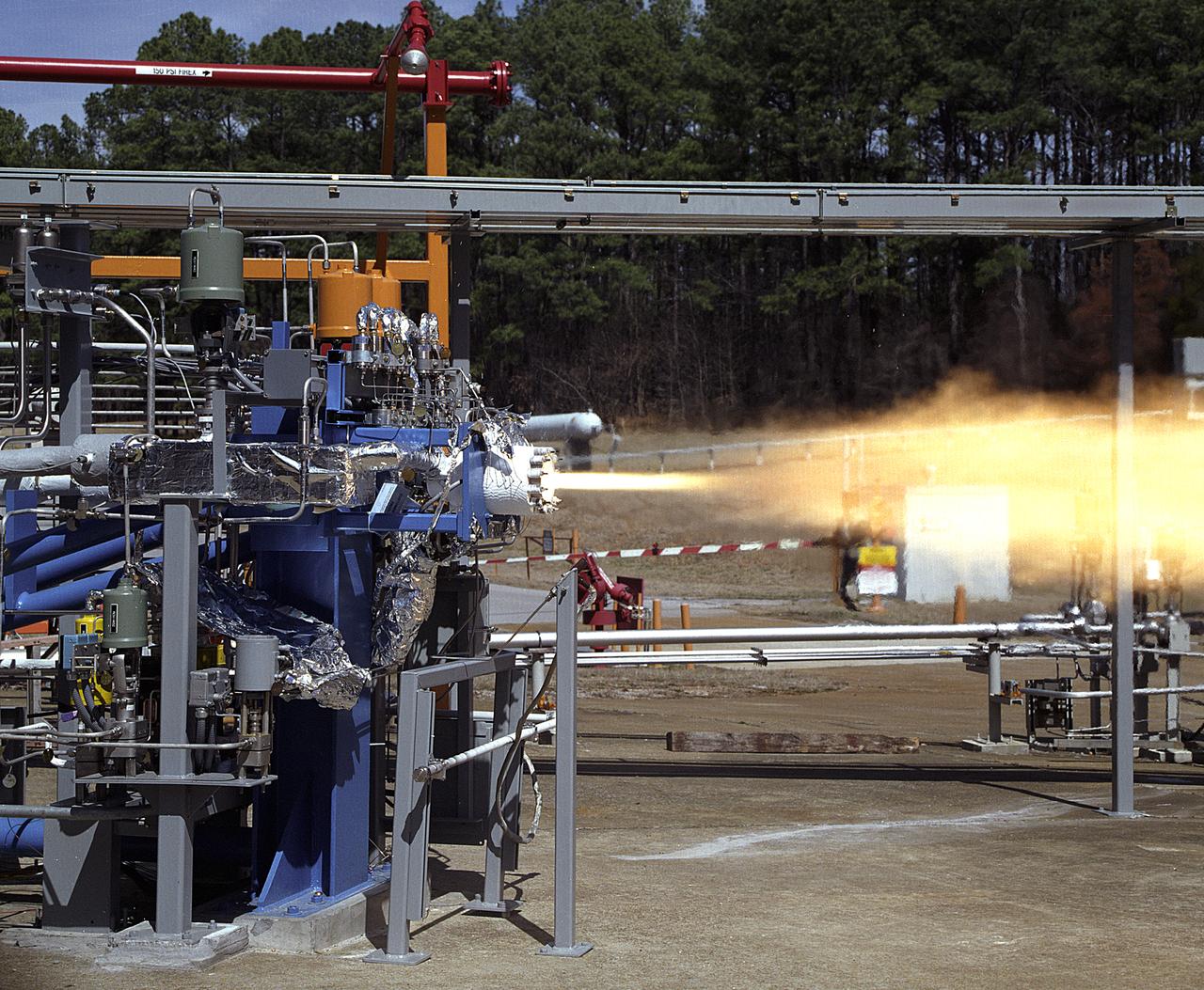
NASA's Marshall Space Flight Center (MSFC) in Huntsville, Alabama, has begun a series of engine tests on the Reaction Control Engine developed by TRW Space and Electronics for NASA's Space Launch Initiative (SLI). SLI is a technology development effort aimed at improving the safety, reliability, and cost effectiveness of space travel for reusable launch vehicles. The engine in this photo, the first engine tested at MSFC that includes SLI technology, was tested for two seconds at a chamber pressure of 185 pounds per square inch absolute (psia). Propellants used were liquid oxygen as an oxidizer and liquid hydrogen as fuel. Designed to maneuver vehicles in orbit, the engine is used as an auxiliary propulsion system for docking, reentry, fine-pointing, and orbit transfer while the vehicle is in orbit. The Reaction Control Engine has two unique features. It uses nontoxic chemicals as propellants, which creates a safer environment with less maintenance and quicker turnaround time between missions, and it operates in dual thrust modes, combining two engine functions into one engine. The engine operates at both 25 and 1,000 pounds of force, reducing overall propulsion weight and allowing vehicles to easily maneuver in space. The force of low level thrust allows the vehicle to fine-point maneuver and dock, while the force of the high level thrust is used for reentry, orbital transfer, and course positioning.
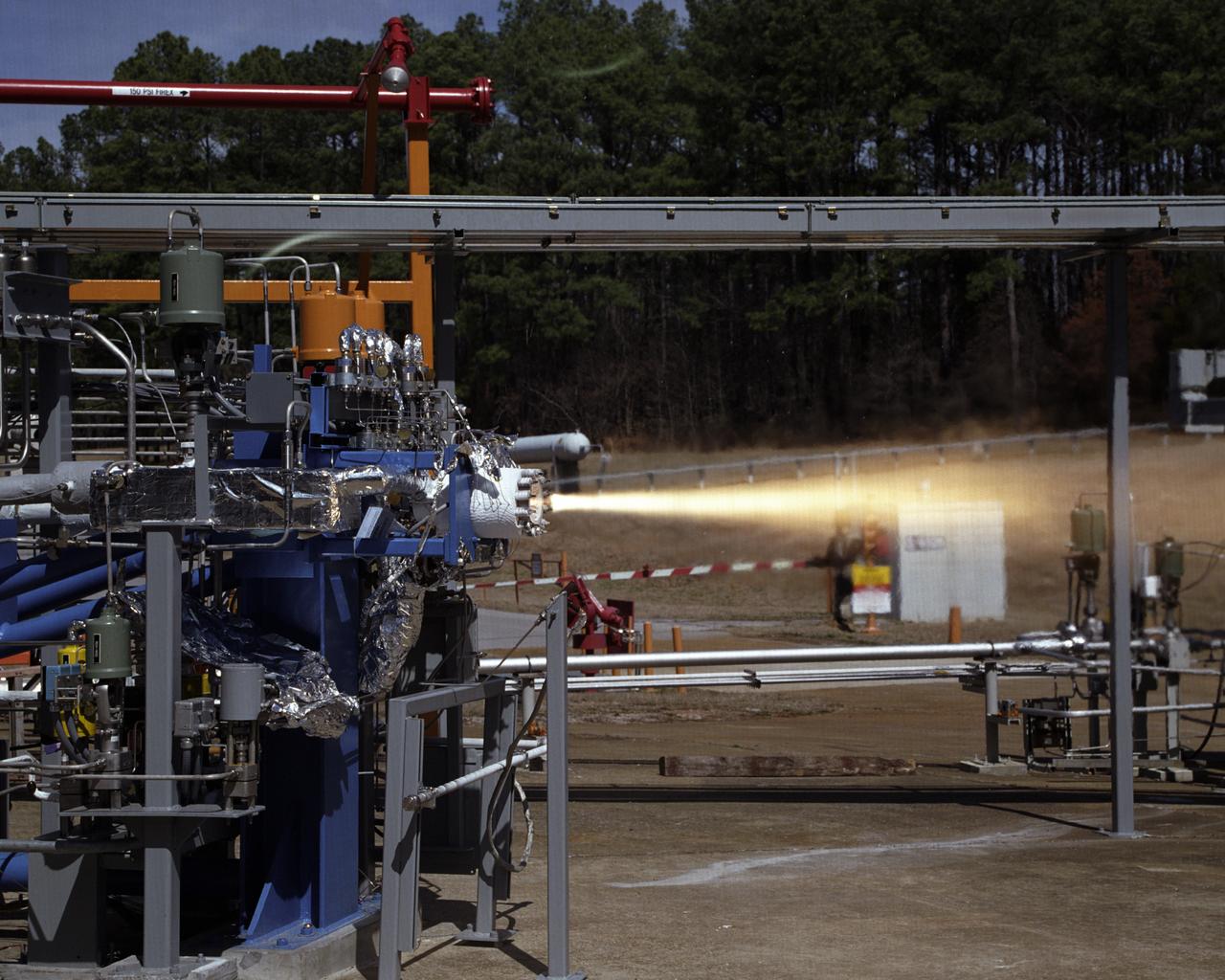
Engineers at the Marshall Space Flight Center (MSFC) have begun a series of engine tests on a new breed of space propulsion: a Reaction Control Engine developed for the Space Launch Initiative (SLI). The engine, developed by TRW Space and Electronics of Redondo Beach, California, is an auxiliary propulsion engine designed to maneuver vehicles in orbit. It is used for docking, reentry, attitude control, and fine-pointing while the vehicle is in orbit. The engine uses nontoxic chemicals as propellants, a feature that creates a safer environment for ground operators, lowers cost, and increases efficiency with less maintenance and quicker turnaround time between missions. Testing includes 30 hot-firings. This photograph shows the first engine test performed at MSFC that includes SLI technology. Another unique feature of the Reaction Control Engine is that it operates at dual thrust modes, combining two engine functions into one engine. The engine operates at both 25 and 1,000 pounds of force, reducing overall propulsion weight and allowing vehicles to easily maneuver in space. The low-level thrust of 25 pounds of force allows the vehicle to fine-point maneuver and dock while the high-level thrust of 1,000 pounds of force is used for reentry, orbit transfer, and coarse positioning. SLI is a NASA-wide research and development program, managed by the MSFC, designed to improve safety, reliability, and cost effectiveness of space travel for second generation reusable launch vehicles.
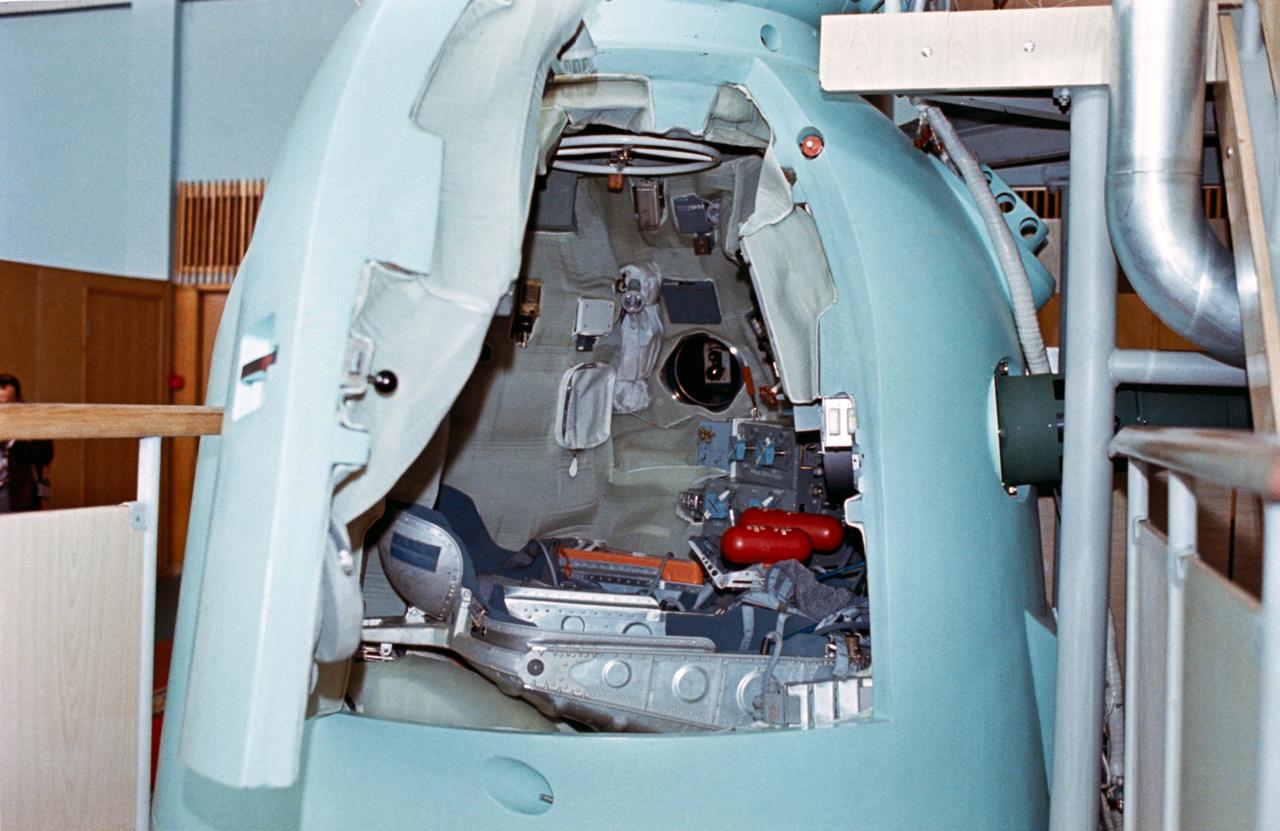
S74-24677 (June 1974) --- A close-up view of the descent vehicle of the Soyuz spacecraft training mock-up on display at the Cosmonuat Training Center (Star City) near Moscow. The open hatch reveals the interior arrangement of the middle section of the Soviet spacecraft. The first (fore) section of the Soyuz is called the orbital module; and the third (aft) section is the instrument-assembly module. The joint U.S.-USSR Apollo-Soyuz docking mission in Earth orbit is scheduled for the summer of 1975.
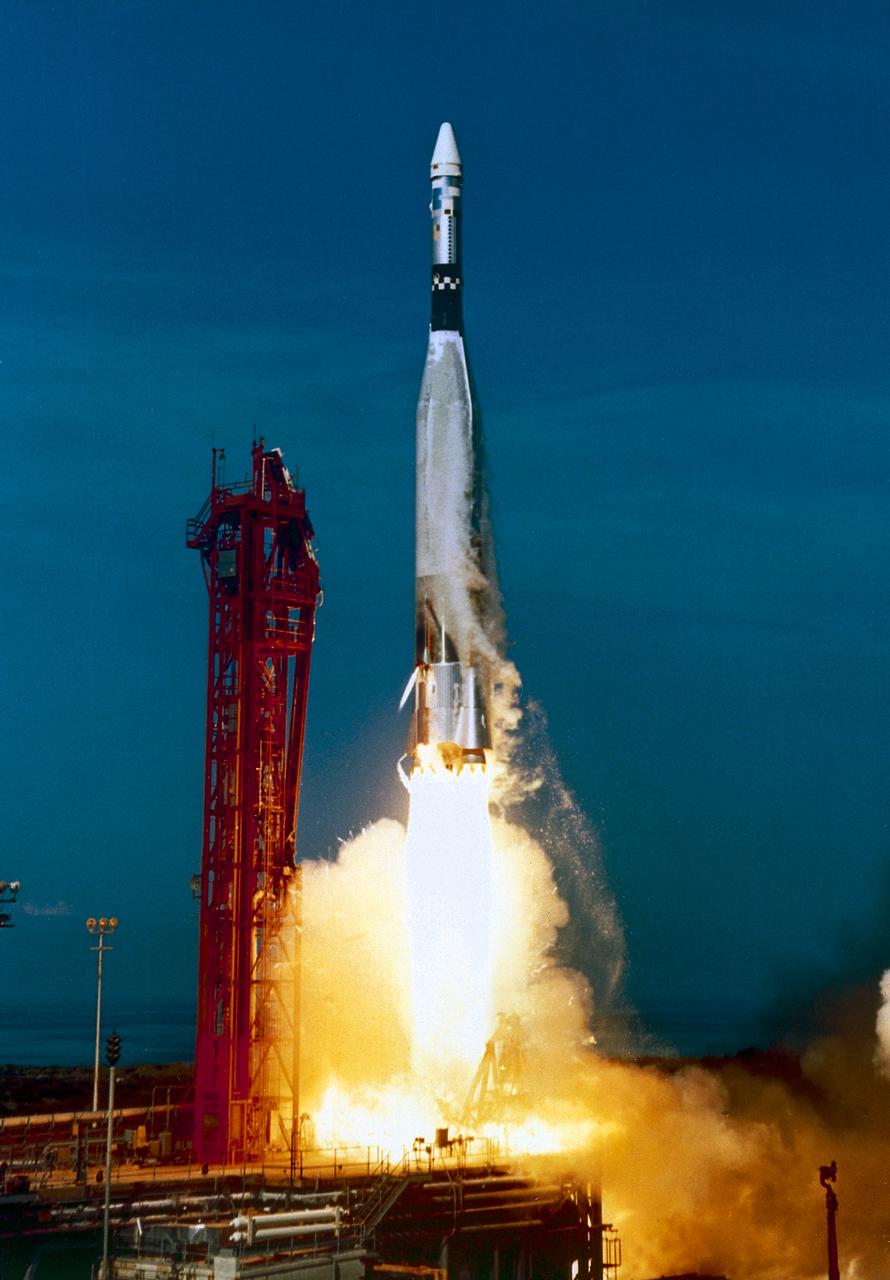
Launched atop an Atlas booster, the Agena target vehicle (ATV) was a spacecraft used by NASA to develop and practice orbital space rendezvous and docking techniques in preparation for the Apollo program lunar missions. This particular launch preceded the Gemini 12, which launched aboard a Titan launch vehicle one and one half hours later. The objective was for Agena and Gemini to rendezvous in space and practice docking procedures. An intermediate step between Project Mercury and the Apollo Program, the Gemini Program's major objectives were to subject two men and supporting equipment to long duration flights, to perfect rendezvous and docking with other orbiting vehicles, methods of reentry, and landing of the spacecraft.

KENNEDY SPACE CENTER, FLA. -- In the Vehicle Assembly Building, the Columbia Accident Investigation Board looks at the nose of Space Shuttle Atlantis. The board is visiting sites at KSC to become familiar with the Shuttle launch process and elements. The independent board is charged with determining what caused the destruction of the Space Shuttle Columbia and the loss of its seven-member crew on Feb. 1 during reentry.
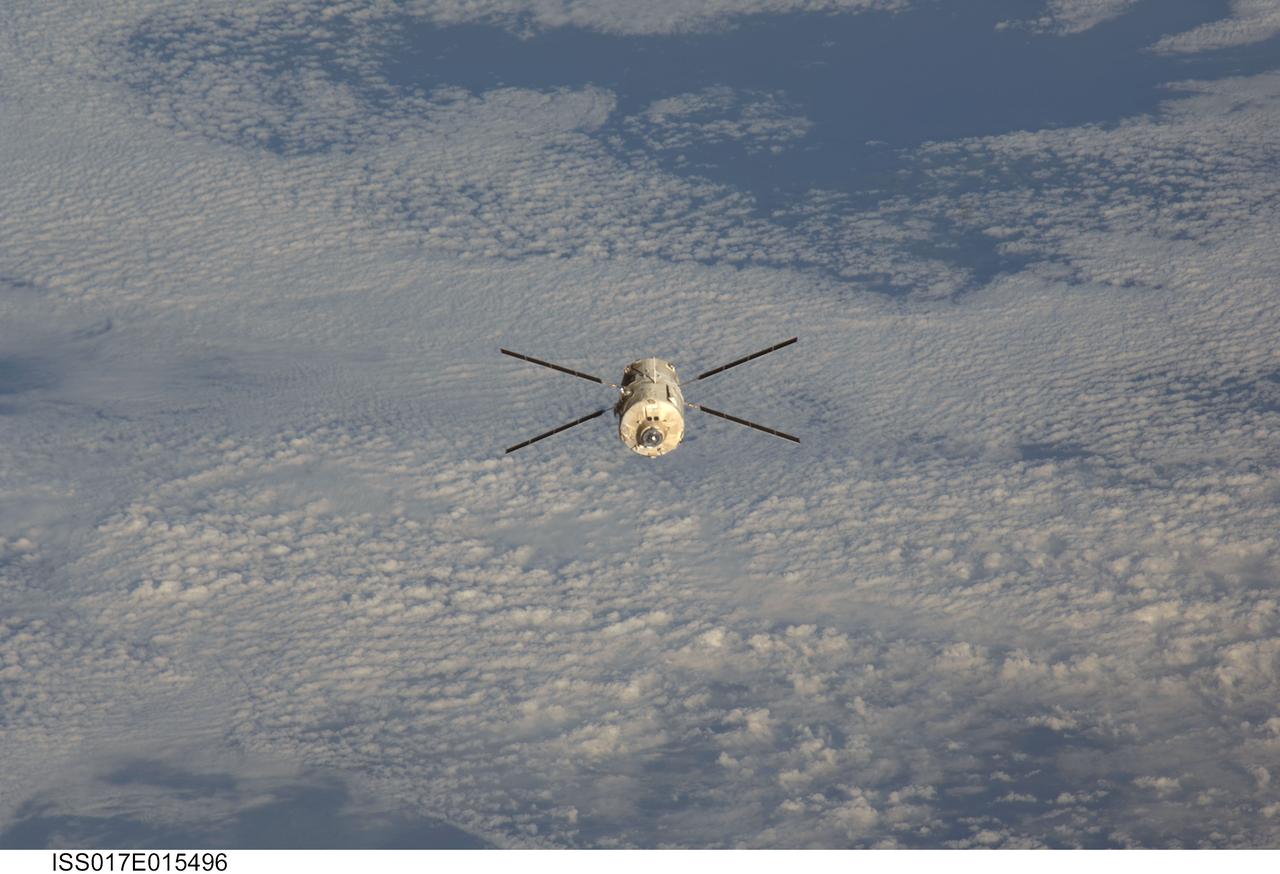
ISS017-E-015496 (5 Sept. 2008) --- Backdropped by a blanket of clouds, European Space Agency's (ESA) "Jules Verne" Automated Transfer Vehicle (ATV) continues its relative separation from the International Space Station. The ATV undocked from the aft port of the Zvezda Service Module at 4:29 p.m. (CDT) on Sept. 5, 2008 and was placed in a parking orbit for three weeks, scheduled to be deorbited on Sept. 29 when lighting conditions are correct for an ESA imagery experiment of reentry.
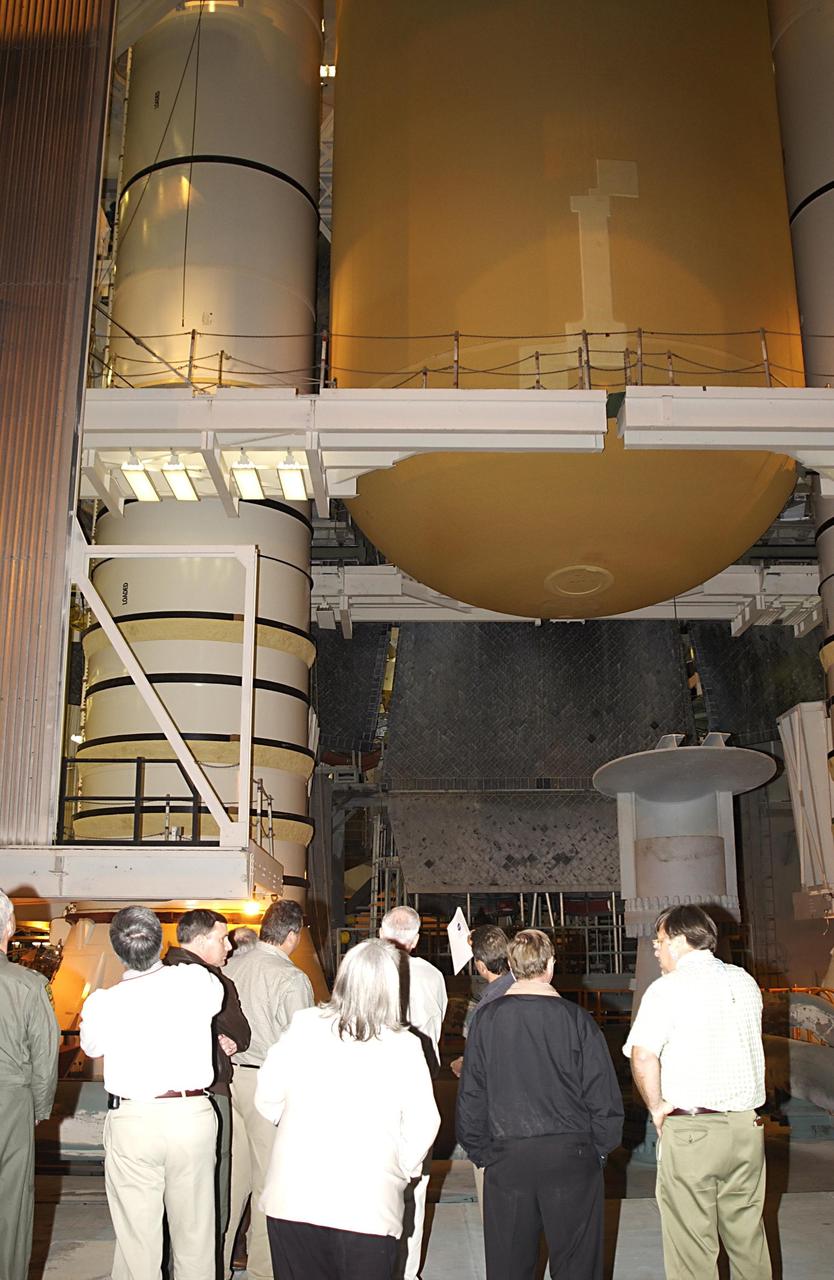
KENNEDY SPACE CENTER, FLA. -- In the Vehicle Assembly Building, the Columbia Accident Investigation Board looks at the solid rocket booster and external tank mated with Space Shuttle Atlantis. The board is visiting sites at KSC to become familiar with the Shuttle launch process and elements. The independent board is charged with determining what caused the destruction of the Space Shuttle Columbia and the loss of its seven-member crew on Feb. 1 during reentry.
KENNEDY SPACE CENTER, FLA. -- Members of the Columbia Accident Investigation Board are in the Vehicle Assembly Building to look over Space Shuttle Atlantis (behind them). The board is visiting sites at KSC to become familiar with the Shuttle launch process and elements. The independent board is charged with determining what caused the destruction of the Space Shuttle Columbia and the loss of its seven-member crew on Feb. 1 during reentry.
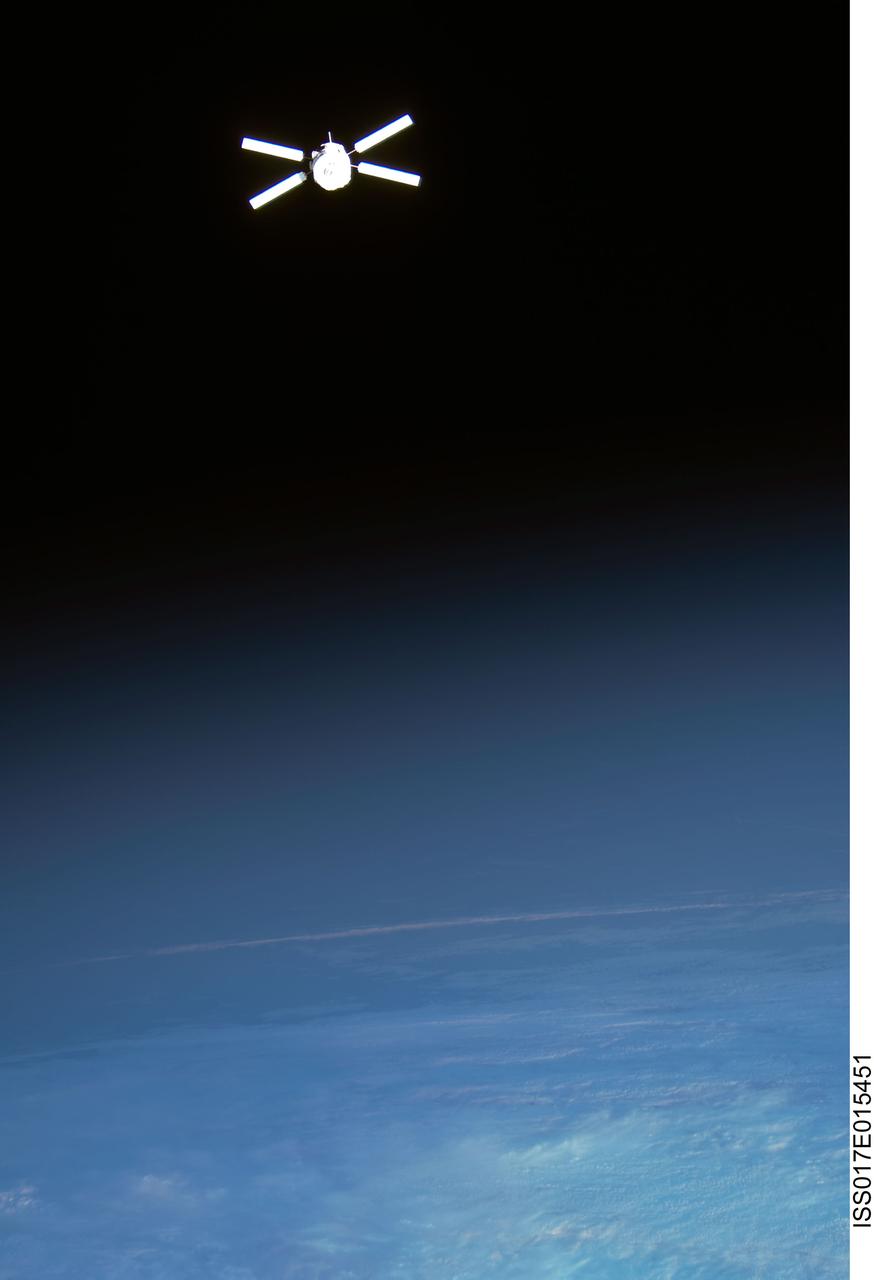
ISS017-E-015451 (5 Sept. 2008) --- Backdropped by Earth's horizon and the blackness of space, European Space Agency's (ESA) "Jules Verne" Automated Transfer Vehicle (ATV) begins its relative separation from the International Space Station. The ATV undocked from the aft port of the Zvezda Service Module at 4:29 p.m. (CDT) on Sept. 5, 2008 and was placed in a parking orbit for three weeks, scheduled to be deorbited on Sept. 29 when lighting conditions are correct for an ESA imagery experiment of reentry.
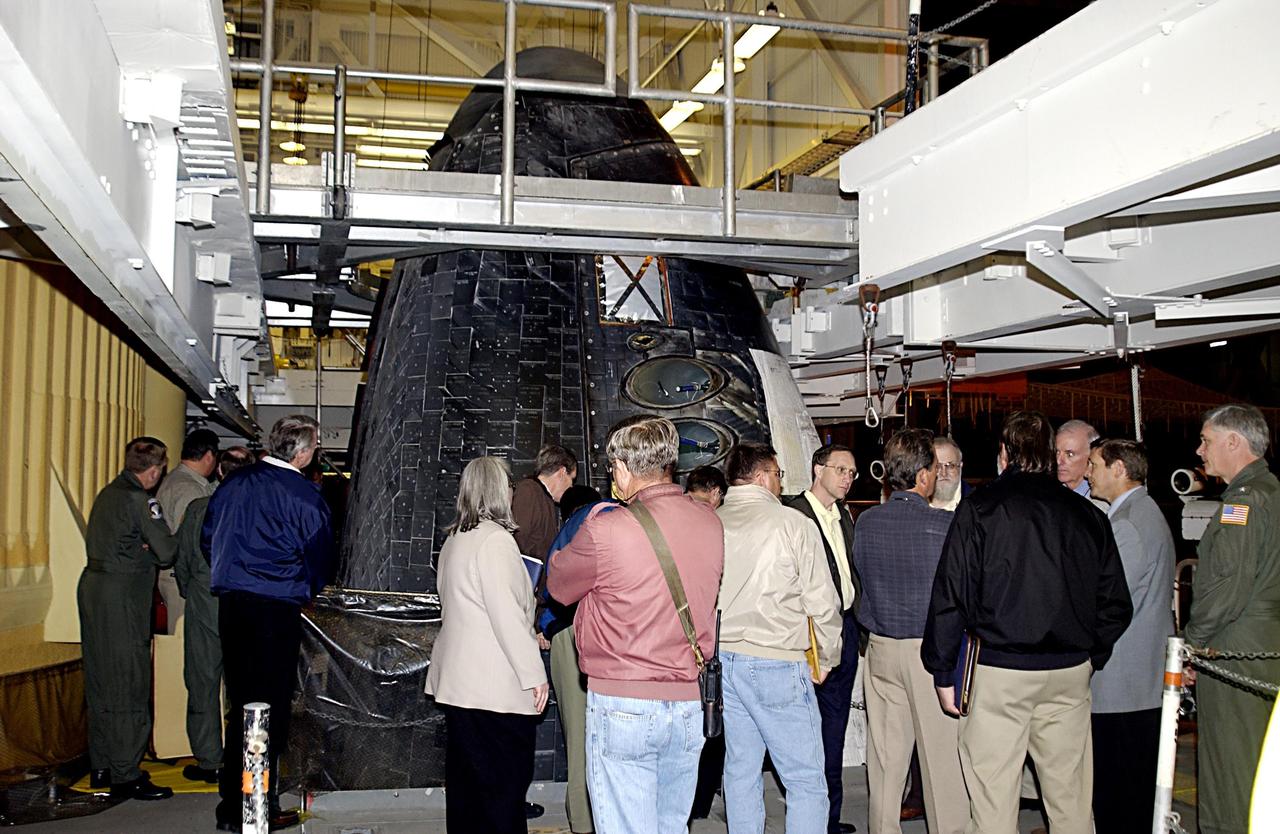
KENNEDY SPACE CENTER, FLA. -- Members of the Columbia Accident Investigation Board look over Space Shuttle Atlantis in the Vehicle Assembly Building. The board is visiting sites at KSC to become familiar with the Shuttle launch process and elements. The independent board is charged with determining what caused the destruction of the Space Shuttle Columbia and the loss of its seven-member crew on Feb. 1 during reentry.
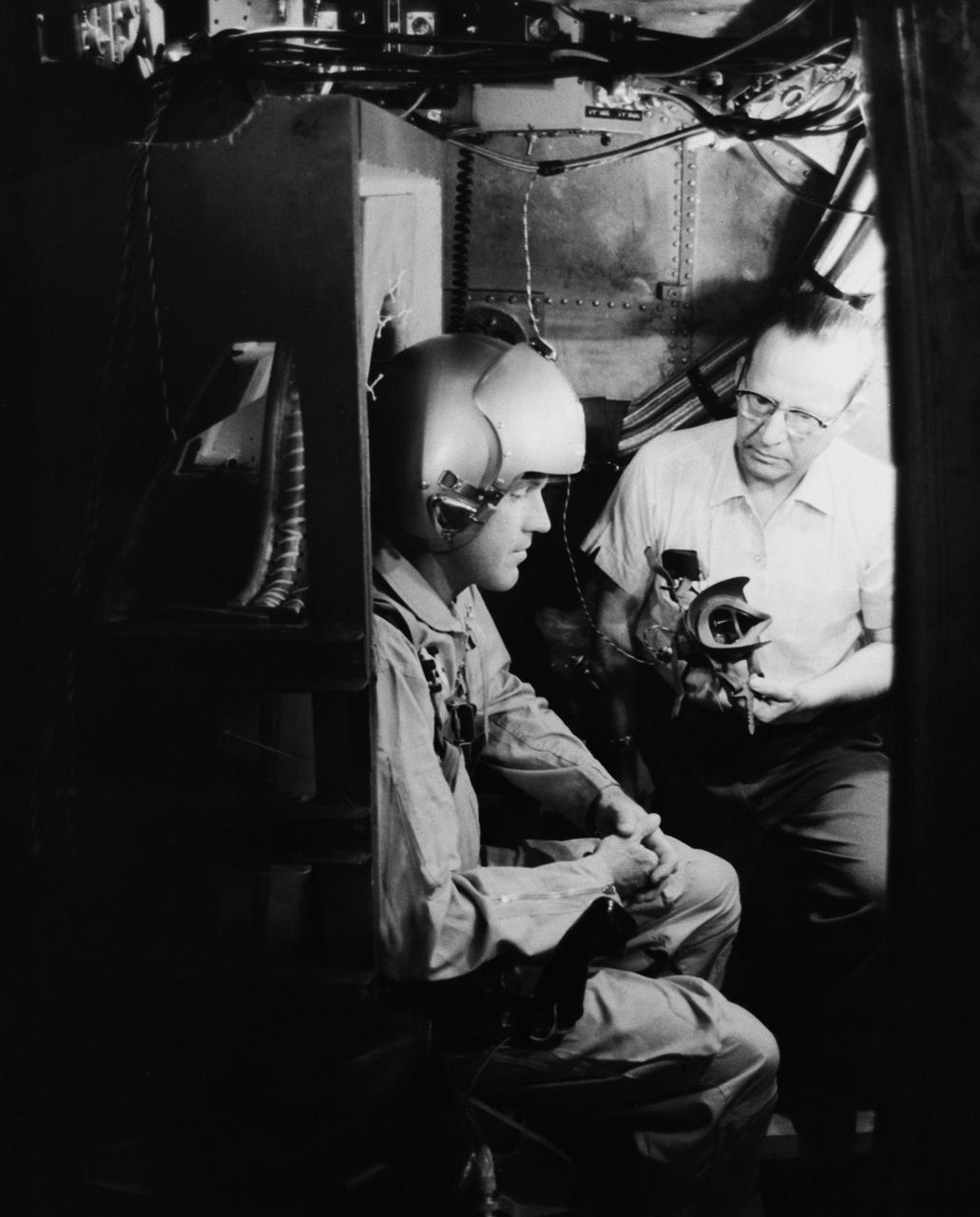
S63-03978 (1963) --- Astronaut L. Gordon Cooper Jr., prime pilot for the Mercury-Atlas 9 (MA-9) mission, is strapped into the gondola while undergoing tests in the centrifuge at the Naval Air Development Center, Johnsville, Pennsylvania. The centrifuge is used to investigate by simulation the pilot's capability to control the vehicle during the actual flight in its booster and reentry profile. Photo credit: NASA
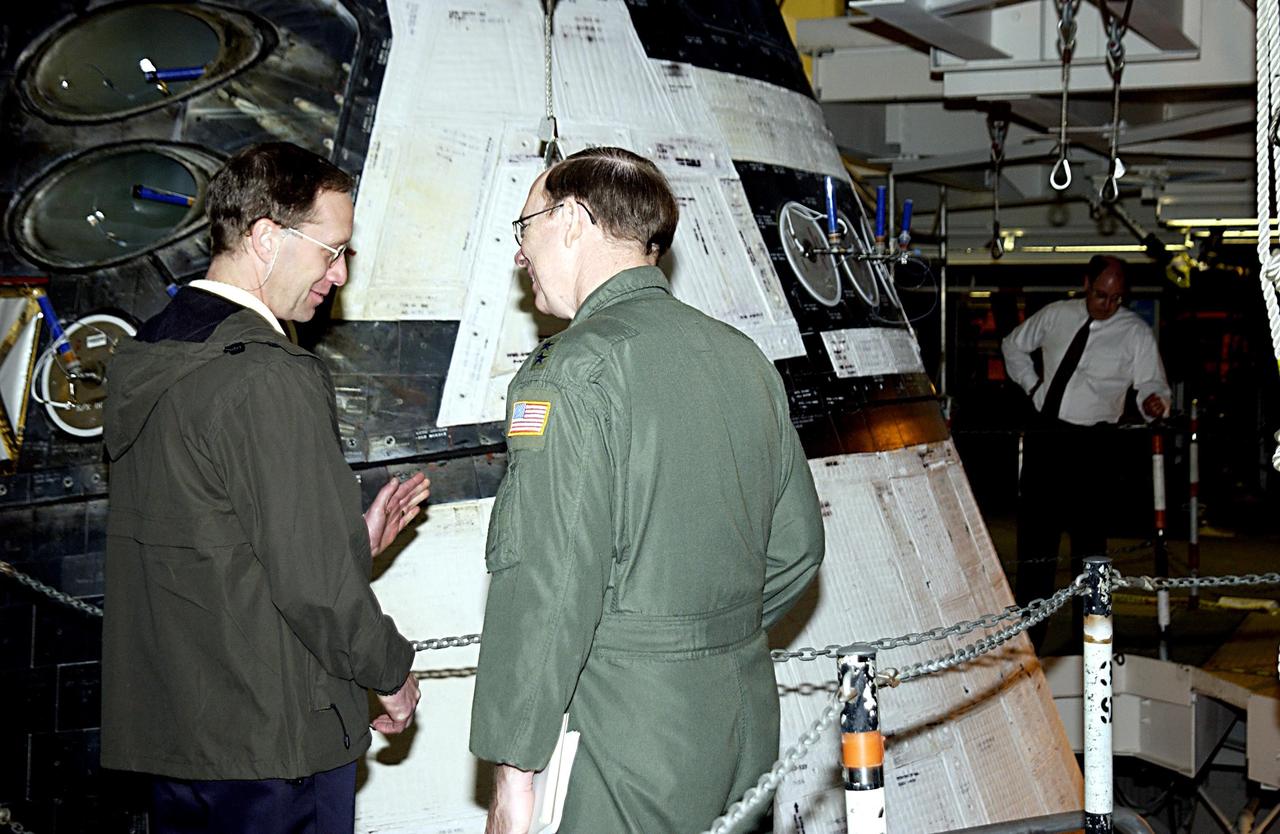
KENNEDY SPACE CENTER, FLA. - Members of the Columbia Accident Investigation Board tour sites at KSC to become familiar with the Shuttle launch process and elements. Here they look at the nose of Space Shuttle Atlantis in the Vehicle Assembly Building. The independent board is charged with determining what caused the destruction of the Space Shuttle Columbia and the loss of its seven-member crew on Feb. 1 during reentry.
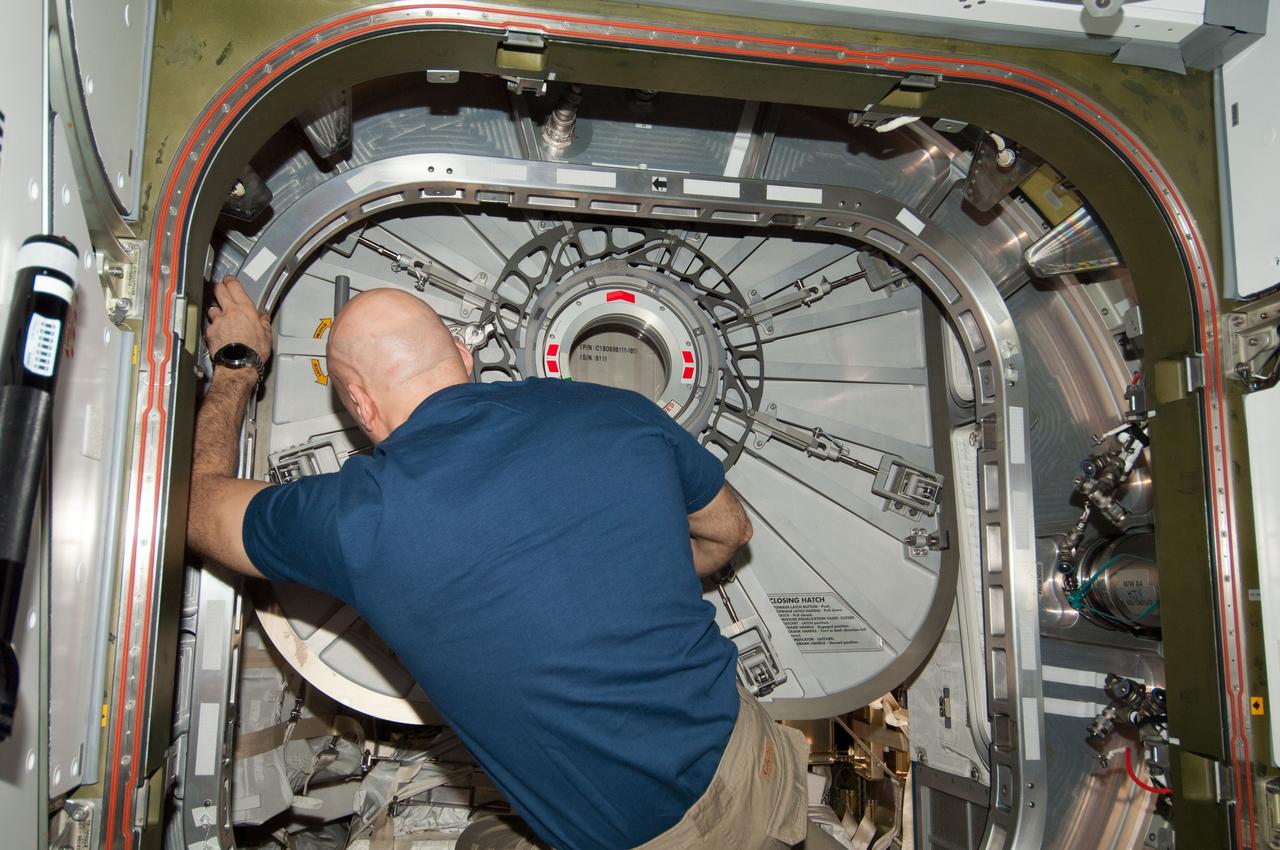
ISS036-E-039129 (3 Sept. 2013) --- European Space Agency astronaut Luca Parmitano, Expedition 36 flight engineer, closes the hatch in the vestibule between the International Space Station’s Harmony node and the Japanese "Kounotori" H2 Transfer Vehicle-4 (HTV-4) in preparation to release the HTV-4 ending its one-month stay at the space station. The automated resupply craft will be grappled by the Canadarm2, removed from the Harmony node and released for a destructive reentry into Earth’s atmosphere.
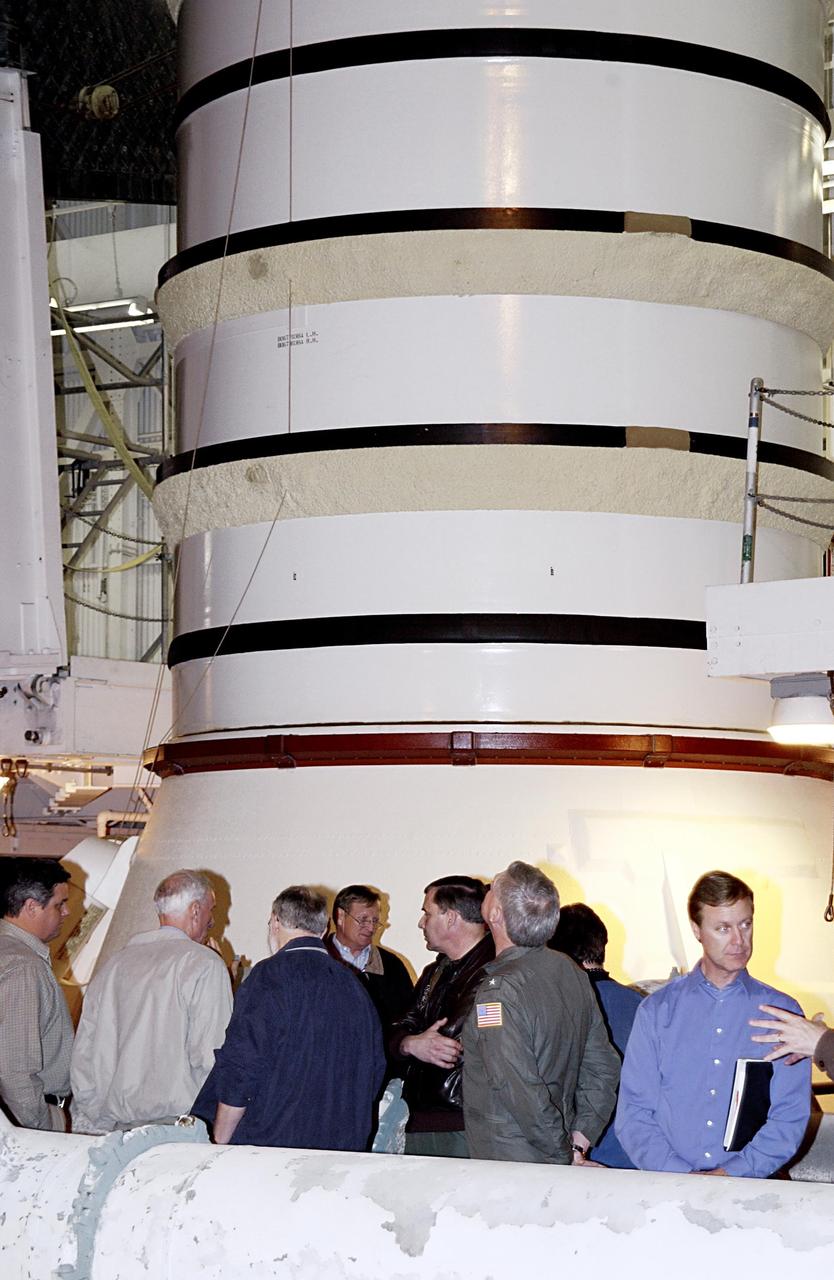
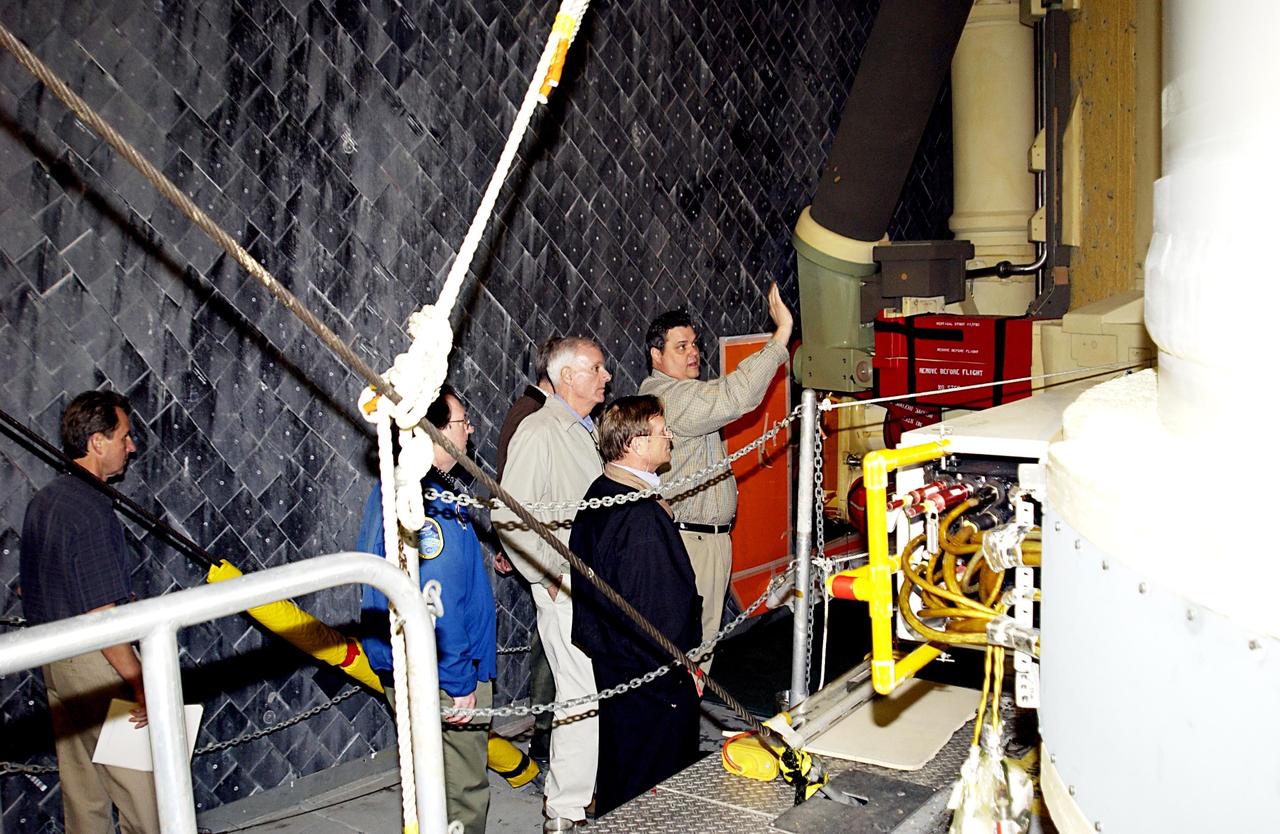
KENNEDY SPACE CENTER, FLA. -- Members of the Columbia Accident Investigation Board look at one of the solid rocket boosters on Space Shuttle Atlantis in the Vehicle Assembly Building. The board is visiting sites at KSC to become familiar with the Shuttle launch process and elements. The independent board is charged with determining what caused the destruction of the Space Shuttle Columbia and the loss of its seven-member crew on Feb. 1 during reentry.
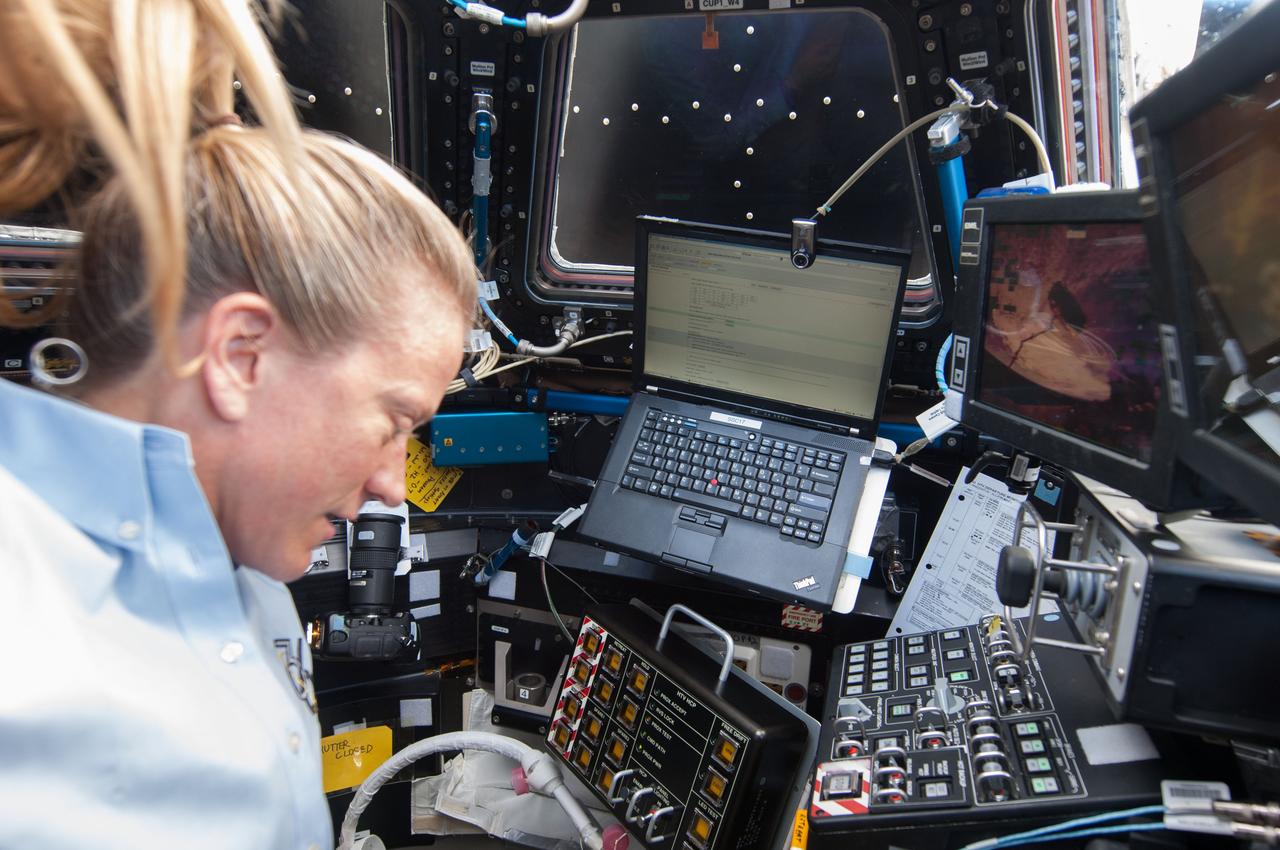
ISS036-E-039458 (3 Sept. 2013) --- NASA astronaut Karen Nyberg, Expedition 36 flight engineer, is pictured in the International Space Station?s Cupola during preparations to release the Japanese "Kounotori" H2 Transfer Vehicle-4 (HTV-4) ending its one-month stay at the space station. The automated resupply craft will be grappled by the Canadarm2, removed from the Harmony node and released for a destructive reentry into Earth?s atmosphere.
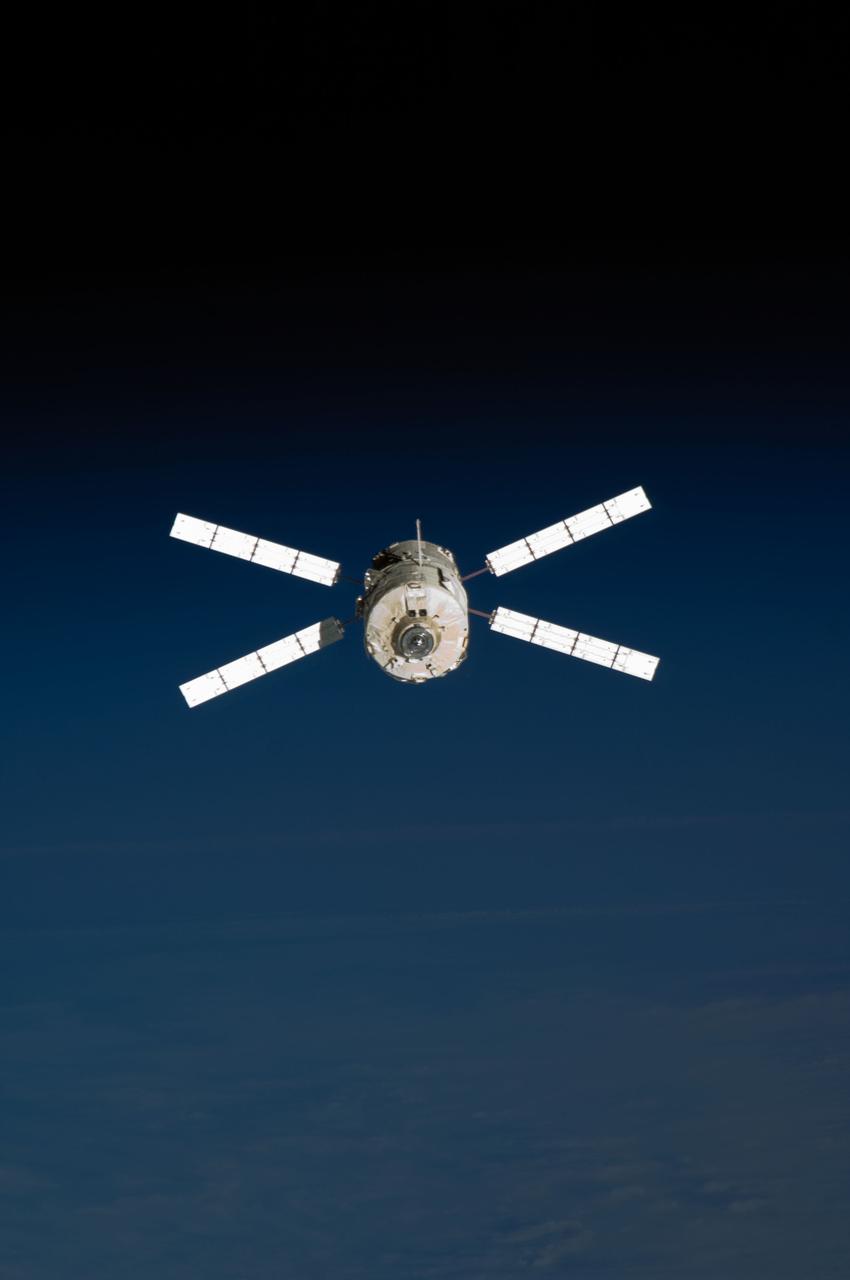
ISS017-E-015468 (5 Sept. 2008) --- Backdropped by the blackness of space, European Space Agency's (ESA) "Jules Verne" Automated Transfer Vehicle (ATV) begins its relative separation from the International Space Station. The ATV undocked from the aft port of the Zvezda Service Module at 4:29 p.m. (CDT) on Sept. 5, 2008 and was placed in a parking orbit for three weeks, scheduled to be deorbited on Sept. 29 when lighting conditions are correct for an ESA imagery experiment of reentry.
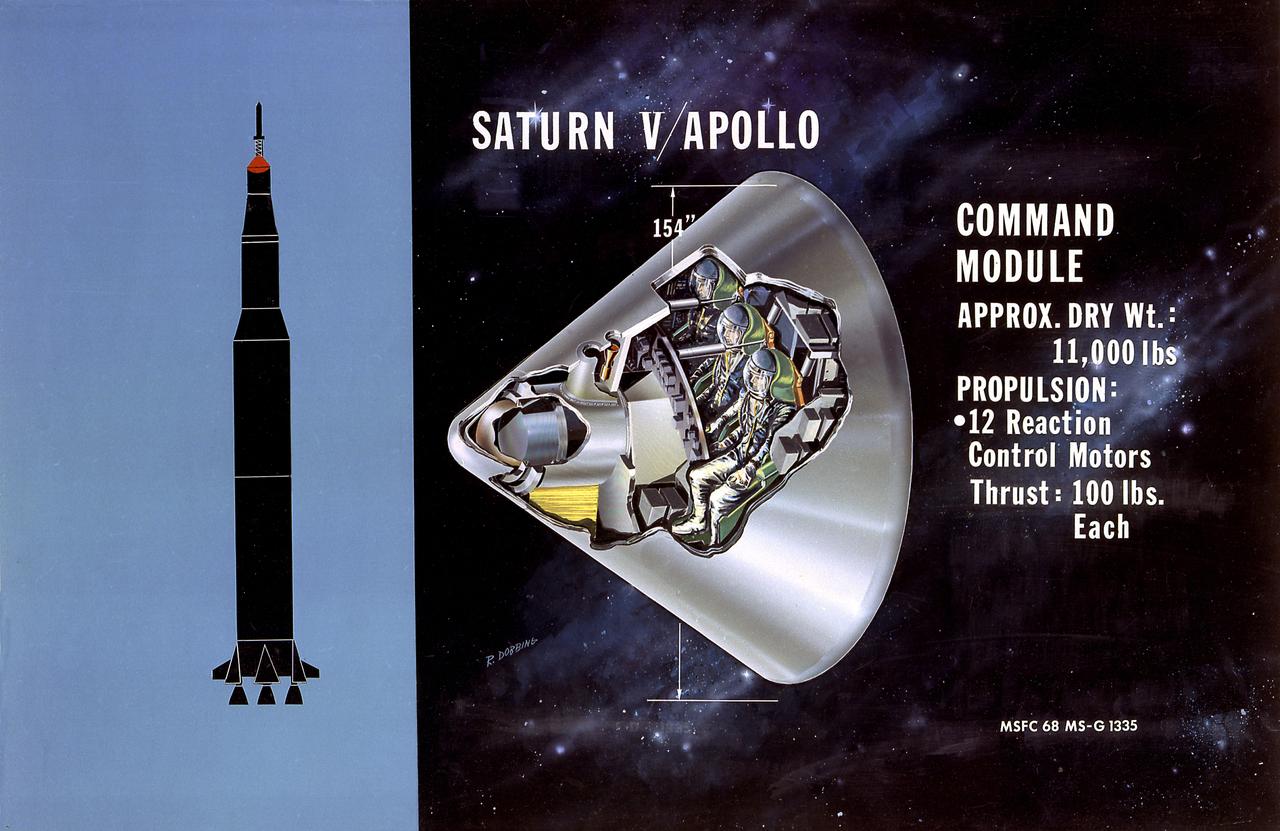
This is a cutaway illustration of the Saturn V command module (CM) configuration. The CM was crammed with some of the most complex equipment ever sent into space at the time. The three astronaut couches were surrounded by instrument panels, navigation gear, radios, life-support systems, and small engines to keep it stable during reentry. The entire cone, 11 feet long and 13 feet in diameter, was protected by a charring heat shield. The 6.5 ton CM was all that was finally left of the 3,000-ton Saturn V vehicle that lifted off on the journey to the Moon.
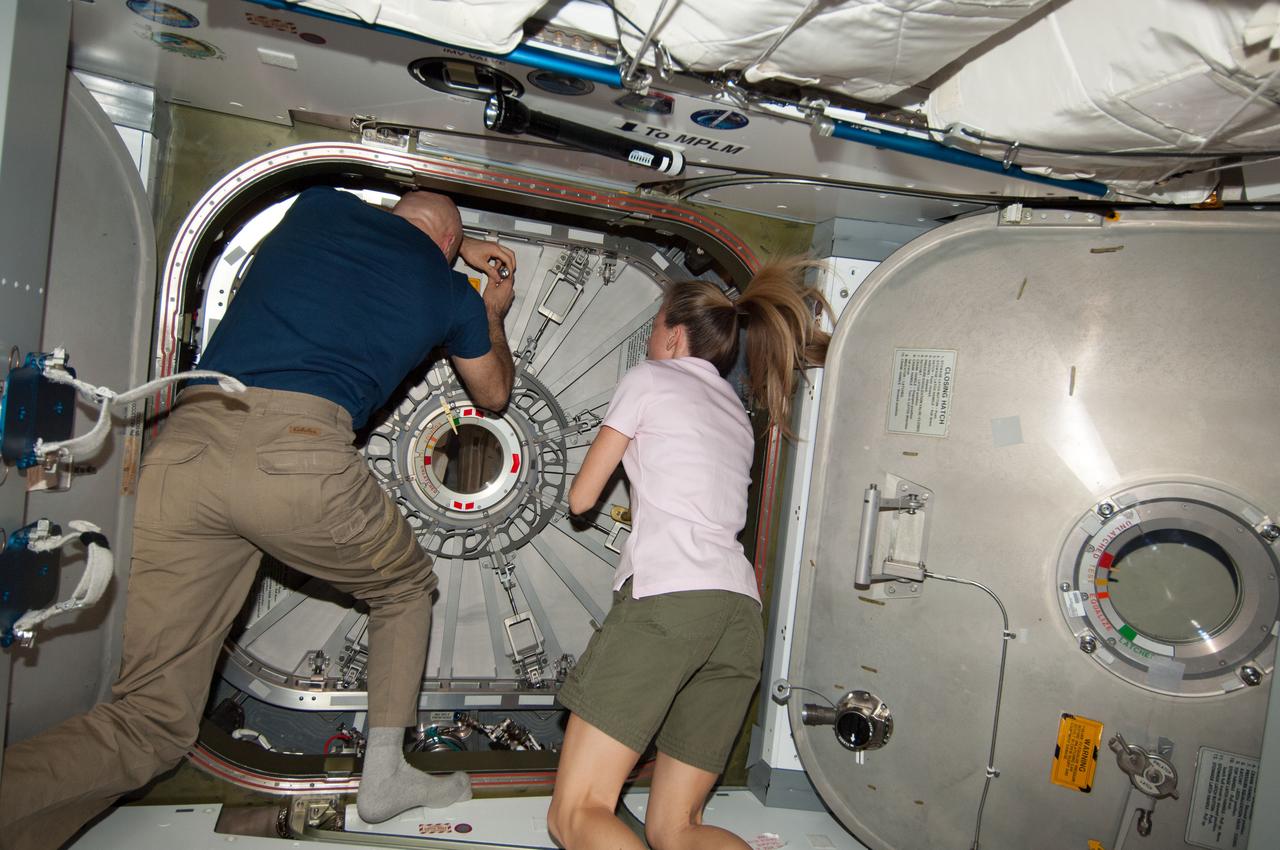
ISS036-E-039132 (3 Sept. 2013) --- European Space Agency astronaut Luca Parmitano and NASA astronaut Karen Nyberg, both Expedition 36 flight engineers, close the hatch in the vestibule between the International Space Station’s Harmony node and the Japanese "Kounotori" H2 Transfer Vehicle-4 (HTV-4) in preparation to release the HTV-4 ending its one-month stay at the space station. The automated resupply craft will be grappled by the Canadarm2, removed from the Harmony node and released for a destructive reentry into Earth’s atmosphere.
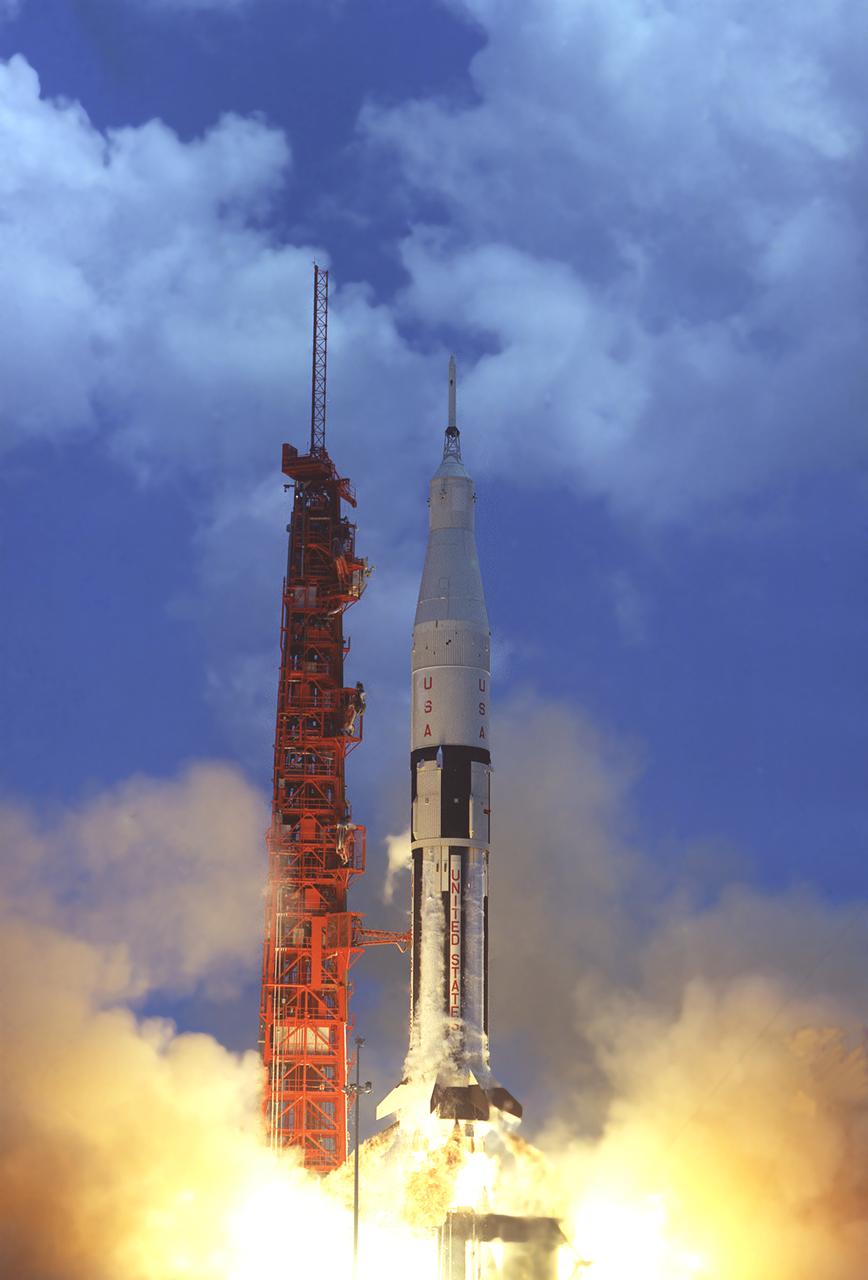
AS-202, the second Saturn IB launch vehicle developed by the Marshall Space Flight Center, lifts off from Cape Canaveral, Florida, August 25, 1966. Primary mission objectives included the confirmation of projected launch loads, demonstration of spacecraft component separation, and verification of heat shield adequacy at high reentry rates. In all, nine Saturn IB flights were made, ending with the Apollo-Soyuz Test Project (ASTP) in July 1975.
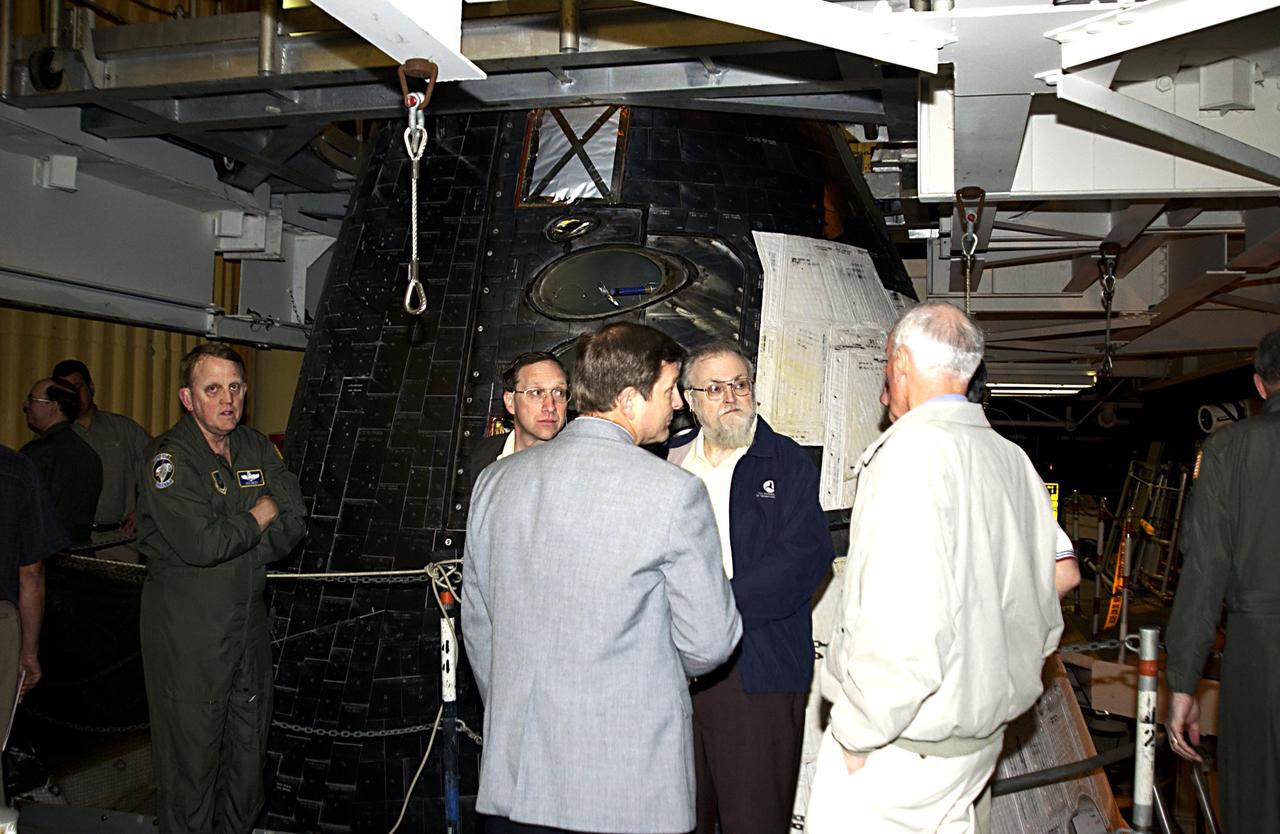
KENNEDY SPACE CENTER, FLA. -- Members of the Columbia Accident Board look over Space Shuttle Atlantis in the Vehicle Assembly Building. At right is Retired Navy Admiral Harold W. Gehman Jr., chairman of the board. The board is visiting sites at KSC to become familiar with the Shuttle launch process and elements. The independent board is charged with determining what caused the destruction of the Space Shuttle Columbia and the loss of its seven-member crew on Feb. 1 during reentry.
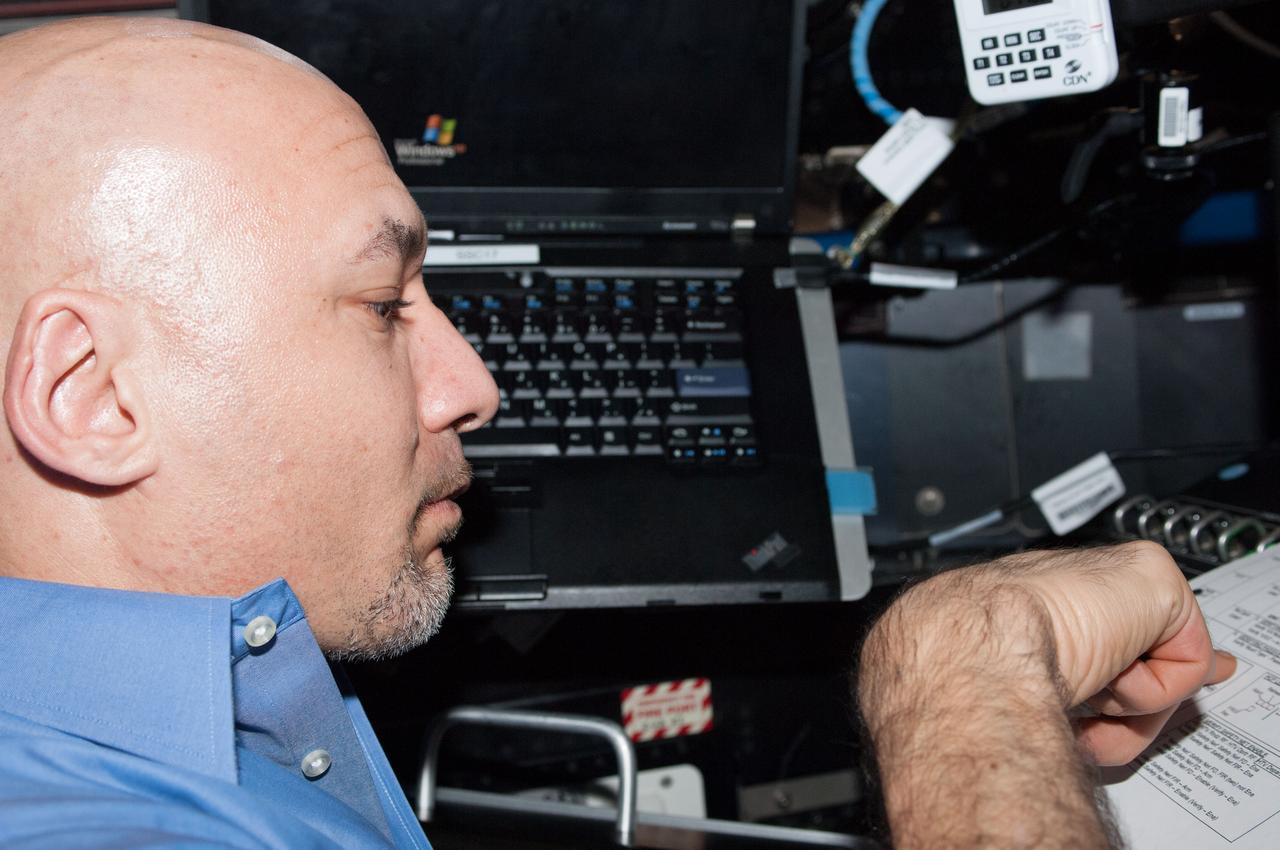
ISS036-E-039425 (3 Sept. 2013) --- European Space Agency astronaut Luca Parmitano, Expedition 36 flight engineer, reads over a procedures checklist in the International Space Station?s Cupola during preparations to release the Japanese "Kounotori" H2 Transfer Vehicle-4 (HTV-4) ending its one-month stay at the space station. The automated resupply craft will be grappled by the Canadarm2, removed from the Harmony node and released for a destructive reentry into Earth?s atmosphere.
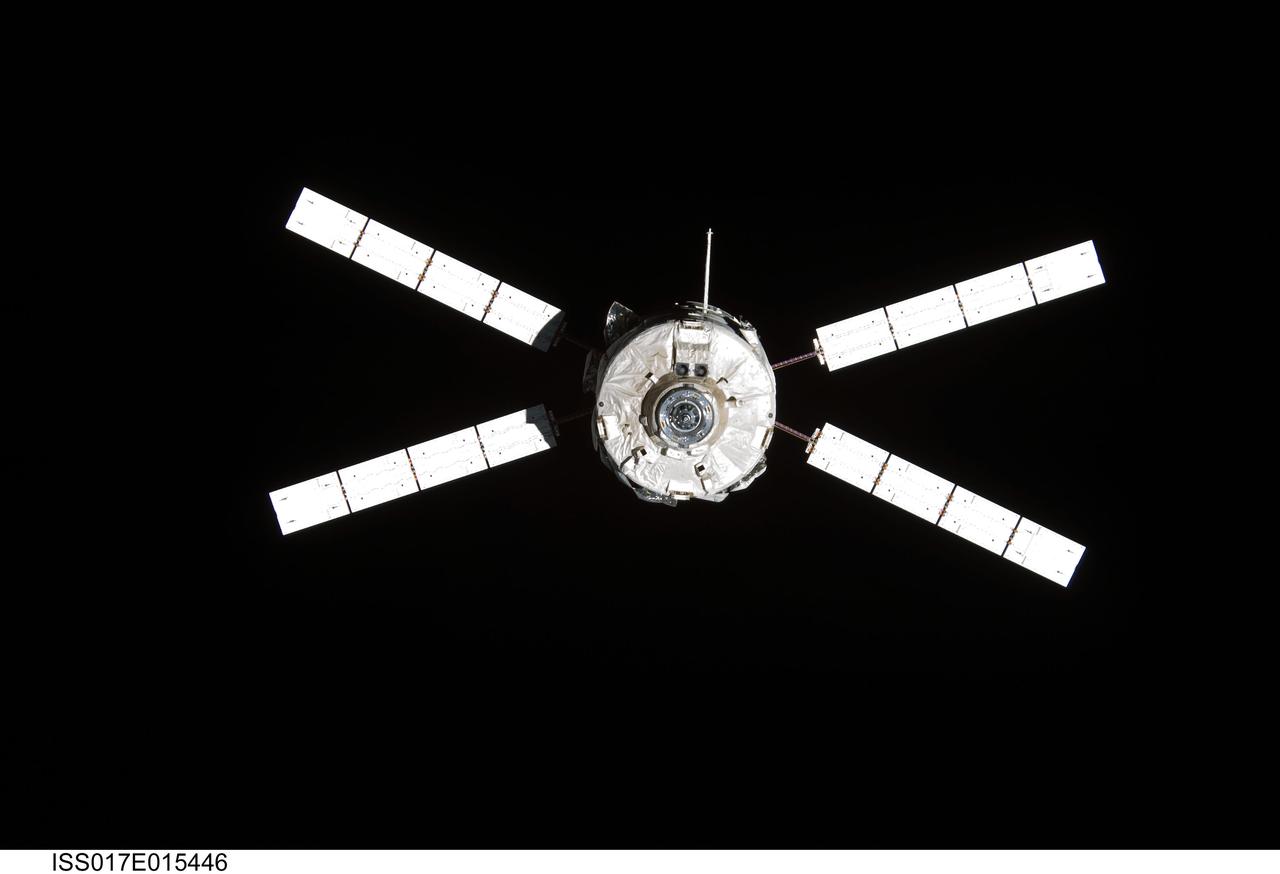
ISS017-E-015446 (5 Sept. 2008) --- Backdropped by the blackness of space, European Space Agency's (ESA) "Jules Verne" Automated Transfer Vehicle (ATV) begins its relative separation from the International Space Station. The ATV undocked from the aft port of the Zvezda Service Module at 4:29 p.m. (CDT) on Sept. 5, 2008 and was placed in a parking orbit for three weeks, scheduled to be deorbited on Sept. 29 when lighting conditions are correct for an ESA imagery experiment of reentry.
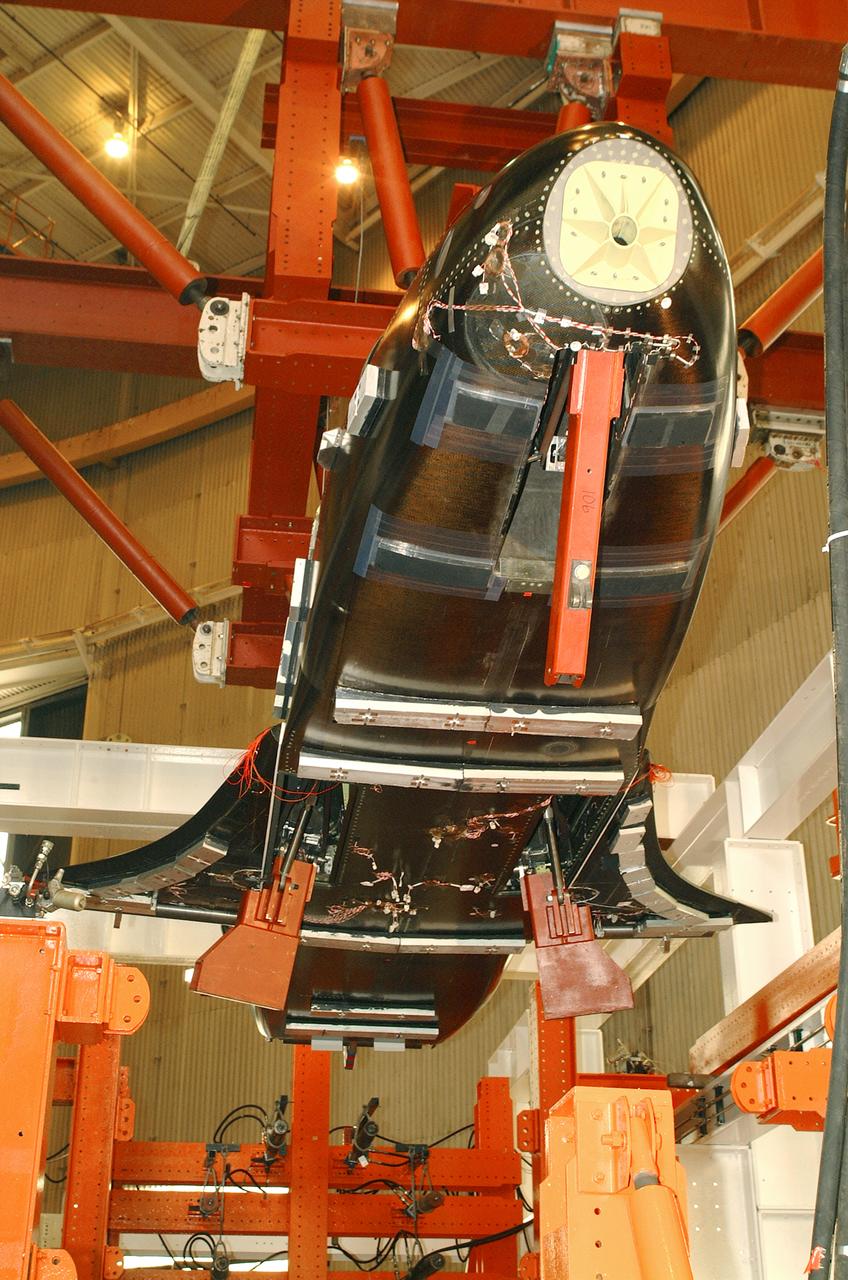
NASA's X-37 Approach and Landing Test Vehicle is installed is a structural facility at Boeing's Huntington Beach, California plant. Tests, completed in July, were conducted to verify the structural integrity of the vehicle in preparation for atmospheric flight tests. Atmospheric flight tests of the Approach and Landing Test Vehicle are scheduled for 2004 and flight tests of the Orbital Vehicle are scheduled for 2006. The X-37 experimental launch vehicle is roughly 27.5 feet (8.3 meters) long and 15 feet (4.5 meters) in wingspan. It's experiment bay is 7 feet (2.1 meters) long and 4 feet (1.2 meters) in diameter. Designed to operate in both the orbital and reentry phases of flight, the X-37 will increase both safety and reliability, while reducing launch costs from $10,000 per pound to $1,000.00 per pound. The X-37 program is managed by the Marshall Space Flight Center and built by the Boeing Company.
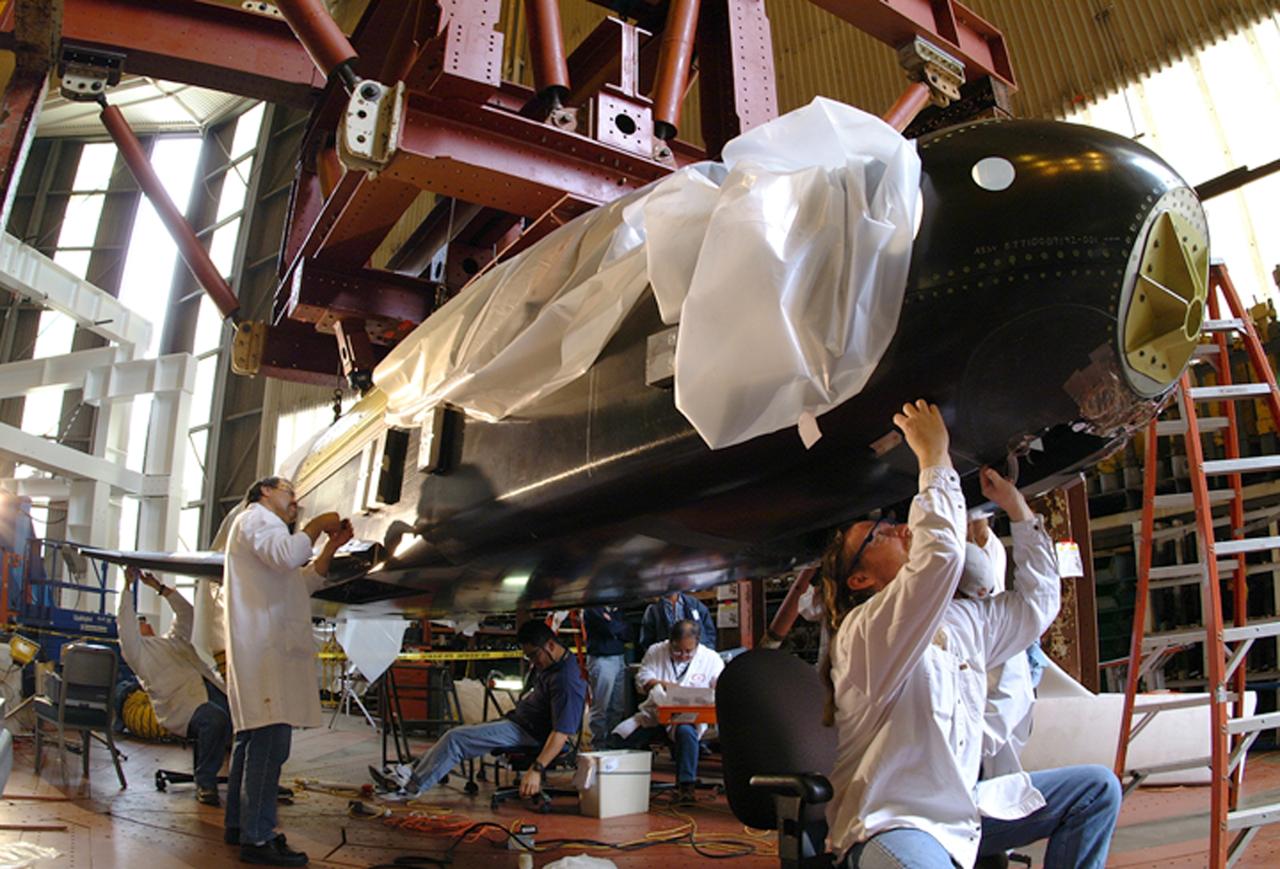
NASA's X-37 Approach and Landing Test Vehicle is installed is a structural facility at Boeing's Huntington Beach, California plant, where technicians make adjustments to composite panels. Tests, completed in July, were conducted to verify the structural integrity of the vehicle in preparation for atmospheric flight tests. Atmospheric flight tests of the Approach and Landing Test Vehicle are scheduled for 2004 and flight tests of the Orbital Vehicle are scheduled for 2006. The X-37 experimental launch vehicle is roughly 27.5 feet (8.3 meters) long and 15 feet (4.5 meters) in wingspan. It's experiment bay is 7 feet (2.1 meters) long and 4 feet (1.2 meters) in diameter. Designed to operate in both the orbital and reentry phases of flight, the X-37 will increase both safety and reliability, while reducing launch costs from $10,000 per pound to $1,000.00 per pound. The X-37 program is managed by the Marshall Space Flight Center and built by the Boeing Company.
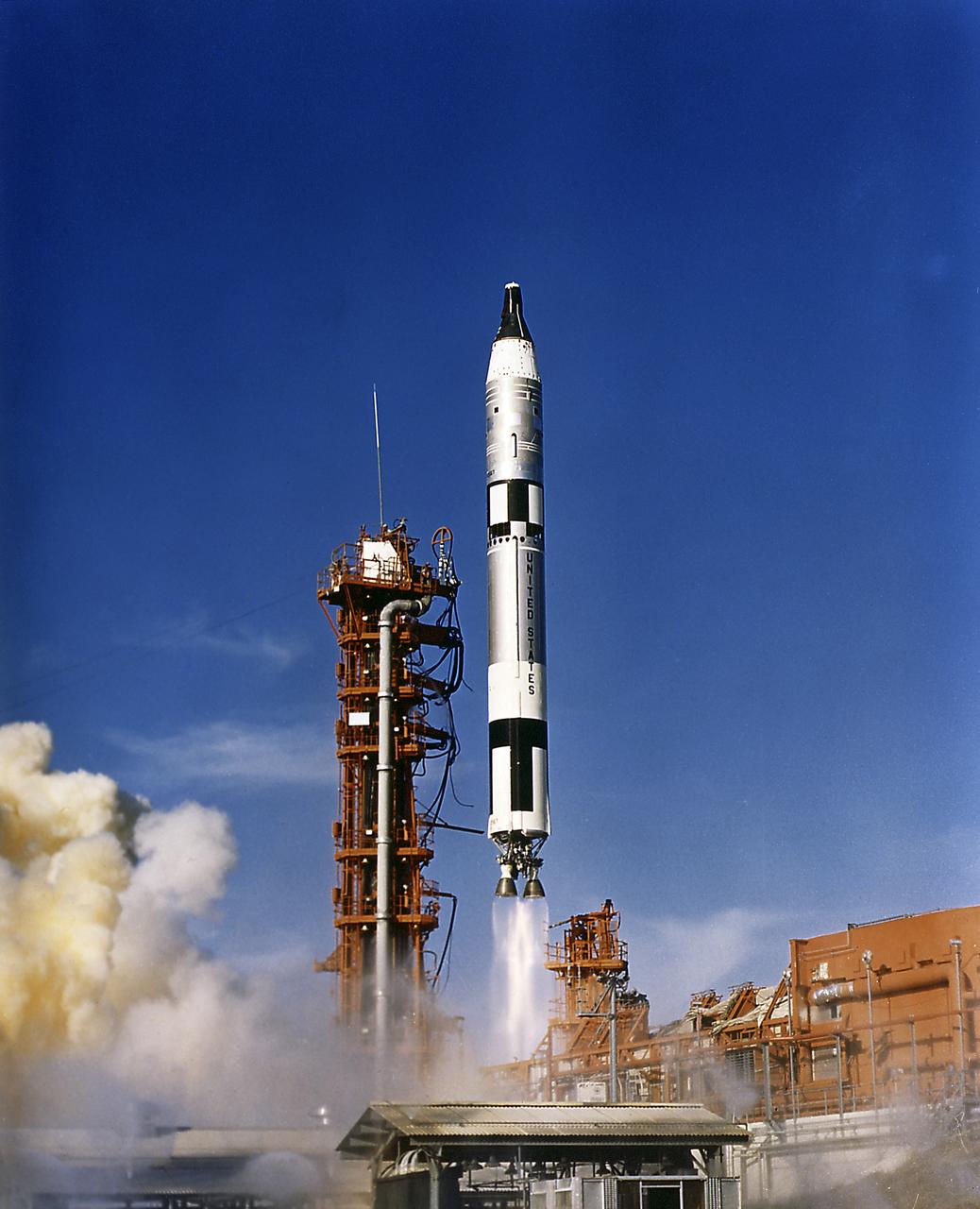
The Gemini 12 astronauts James Lovell and Edwin Aldrin lifted off aboard a Titan launch vehicle from the Kennedy Space Center on November 11, 1966, an hour and a half after their Agena target vehicle was orbited by an Atlas rocket. Launched atop an Atlas booster, the Agena target vehicle (ATV) was a spacecraft used by NASA to develop and practice orbital space rendezvous and docking techniques in preparation for the Apollo program lunar missions. The objective was for Agena and Gemini to rendezvous in space and practice docking procedures. An intermediate step between Project Mercury and the Apollo Program, the Gemini Program's major objectives were to subject two men and supporting equipment to long duration flights, to perfect rendezvous and docking with other orbiting vehicles, methods of reentry, and landing of the spacecraft.
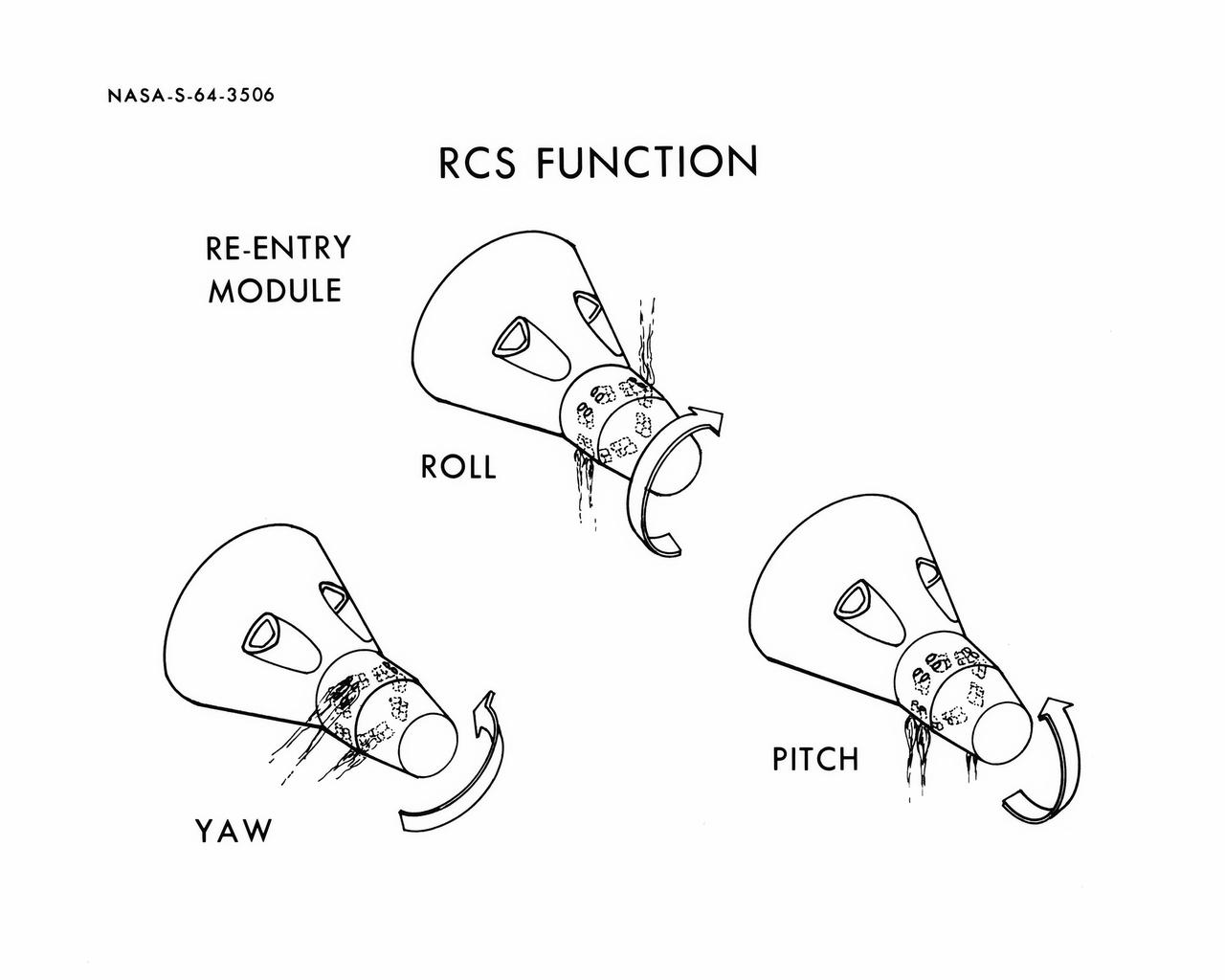
S64-03506 (1964) --- Diagrams shows Gemini spacecraft functions of the thrusters in the Gemini spacecraft's re-entry control system. Thrusters may be fired in various combinations to cause yaw, roll and pitch.
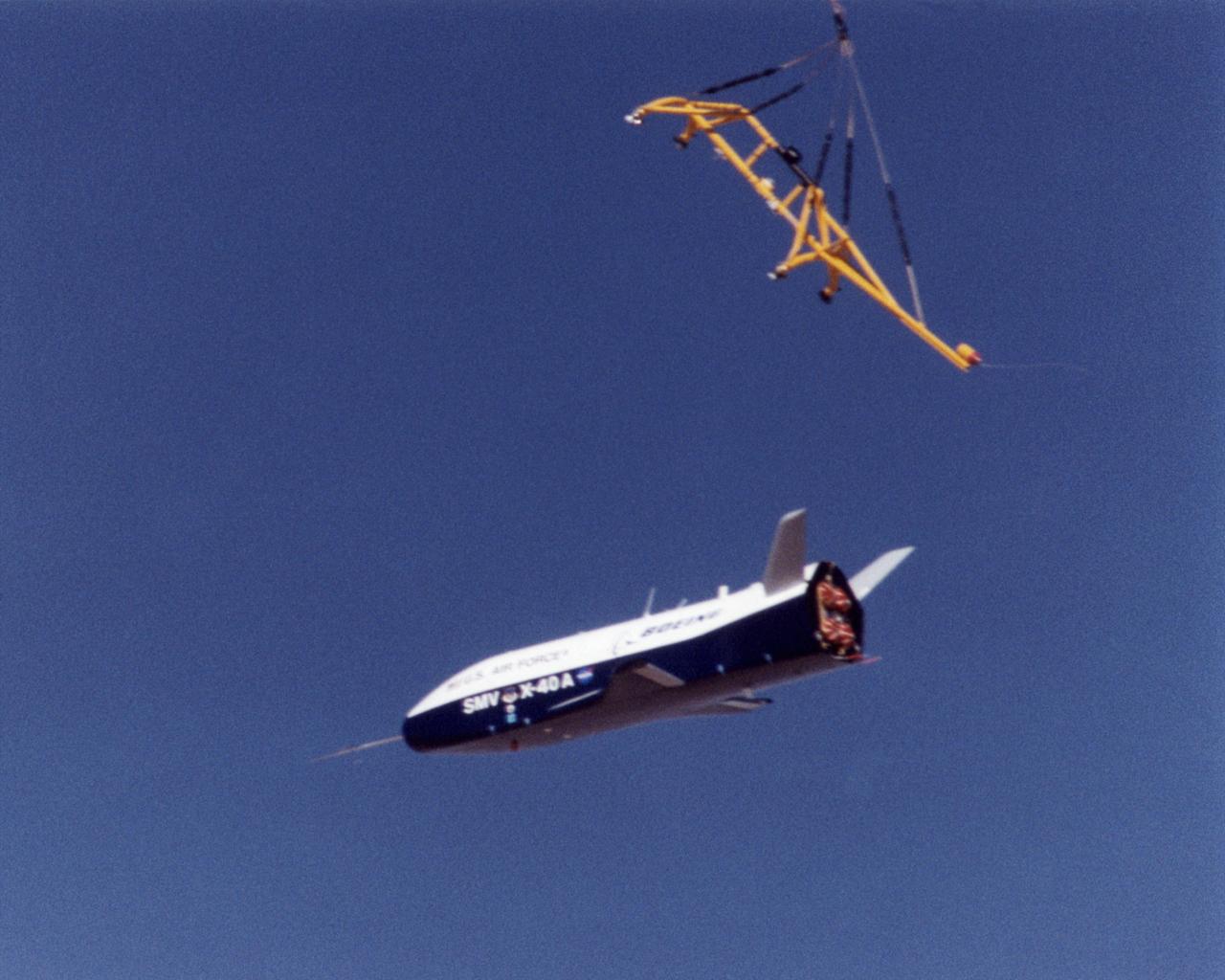
The X-40A immediately after release from its harness suspended from a helicopter 15,000 feet above NASA's Dryden Flight Research Center at Edwards Air Force Base, California, on March 14, 2001. The unpiloted X-40 is a risk-reduction vehicle for the X-37, which is intended to be a reusable space vehicle. NASA's Marshall Space Flight Center in Huntsville, Ala, manages the X-37 project. At Dryden, the X-40A will undergo a series of ground and air tests to reduce possible risks to the larger X-37, including drop tests from a helicopter to check guidance and navigation systems planned for use in the X-37. The X-37 is designed to demonstrate technologies in the orbital and reentry environments for next-generation reusable launch vehicles that will increase both safety and reliability, while reducing launch costs from $10,000 per pound to $1,000 per pound.

Wranglers steadied the X-40A at NASA's Dryden Flight Research Center, Edwards, California, March 14, 2001, as the experimental craft was carried to 15,000 feet for an unpiloted glide flight. The unpiloted X-40 is a risk-reduction vehicle for the X-37, which is intended to be a reusable space vehicle. NASA's Marshall Space Flight Center in Huntsville, Ala, manages the X-37 project. At Dryden, the X-40A will undergo a series of ground and air tests to reduce possible risks to the larger X-37, including drop tests from a helicopter to check guidance and navigation systems planned for use in the X-37. The X-37 is designed to demonstrate technologies in the orbital and reentry environments for next-generation reusable launch vehicles that will increase both safety and reliability, while reducing launch costs from $10,000 per pound to $1,000 per pound.
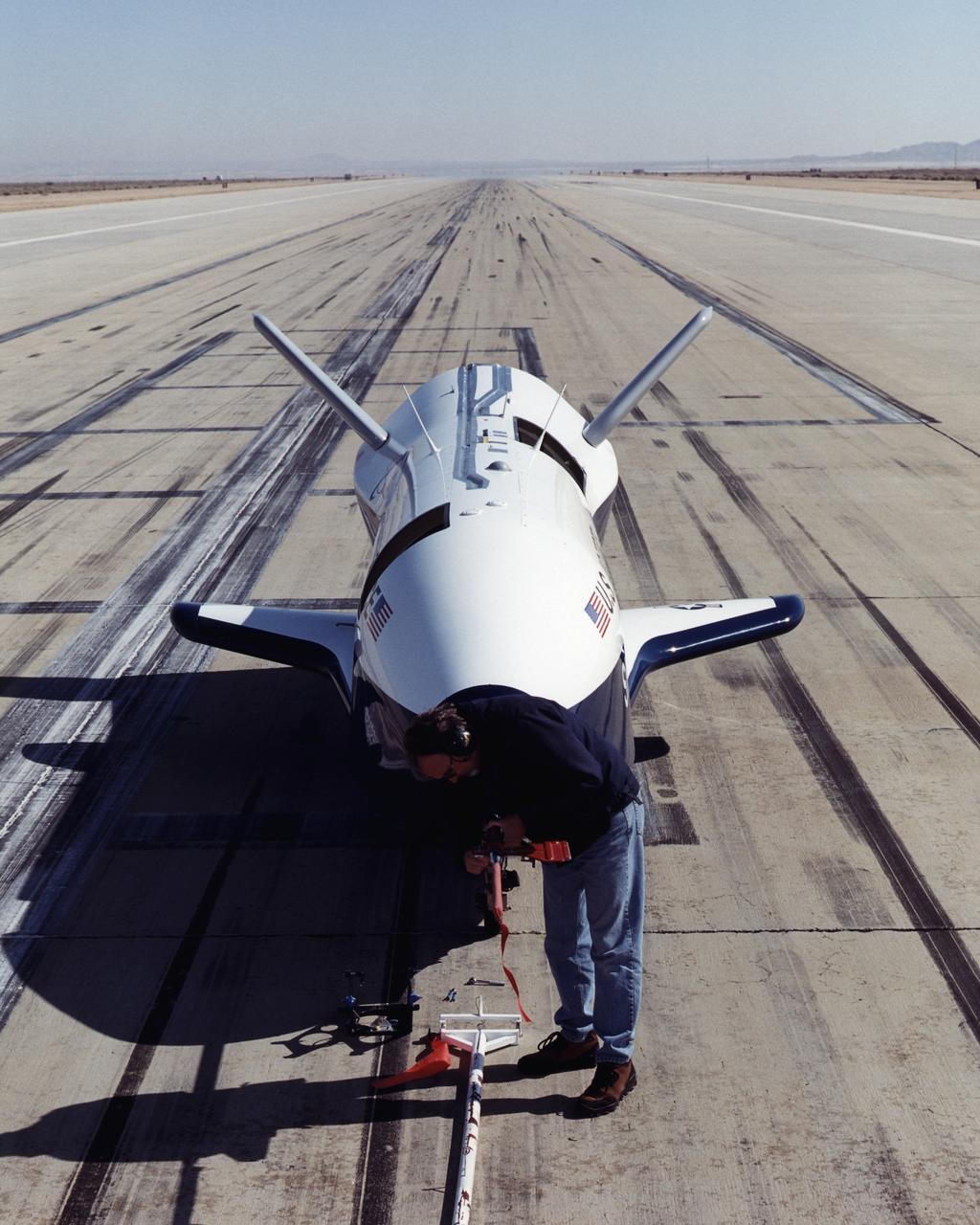
A worker attaches covers for the nose pitot boom before removing the unpiloted X-40 from the runway at Edwards Air Force Base, California, following its successful free-flight on March 14, 2001. The unpiloted X-40 is a risk-reduction vehicle for the X-37, which is intended to be a reusable space vehicle. NASA's Marshall Space Flight Center in Huntsville, Ala, manages the X-37 project. At Dryden, the X-40A will undergo a series of ground and air tests to reduce possible risks to the larger X-37, including drop tests from a helicopter to check guidance and navigation systems planned for use in the X-37. The X-37 is designed to demonstrate technologies in the orbital and reentry environments for next-generation reusable launch vehicles that will increase both safety and reliability, while reducing launch costs from $10,000 per pound to $1,000 per pound.
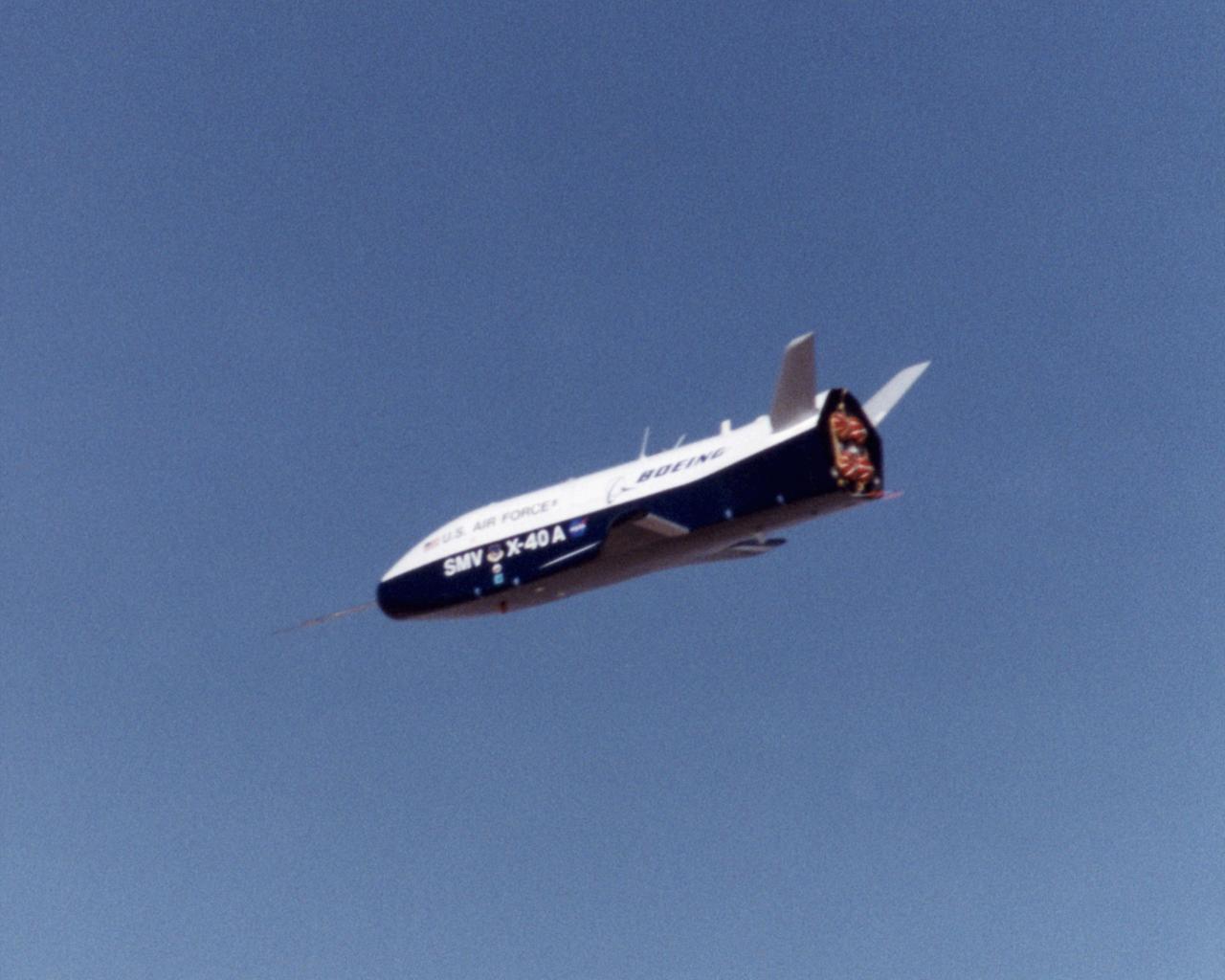
First flight at NASA's Dryden Flight Research Center for the X-40A was a 74 second glide from 15,000 feet on March 14, 2001. The unpiloted X-40 is a risk-reduction vehicle for the X-37, which is intended to be a reusable space vehicle. NASA's Marshall Space Flight Center in Huntsville, Ala, manages the X-37 project. At Dryden, the X-40A will undergo a series of ground and air tests to reduce possible risks to the larger X-37, including drop tests from a helicopter to check guidance and navigation systems planned for use in the X-37. The X-37 is designed to demonstrate technologies in the orbital and reentry environments for next-generation reusable launch vehicles that will increase both safety and reliability, while reducing launch costs from $10,000 per pound to $1,000 per pound.
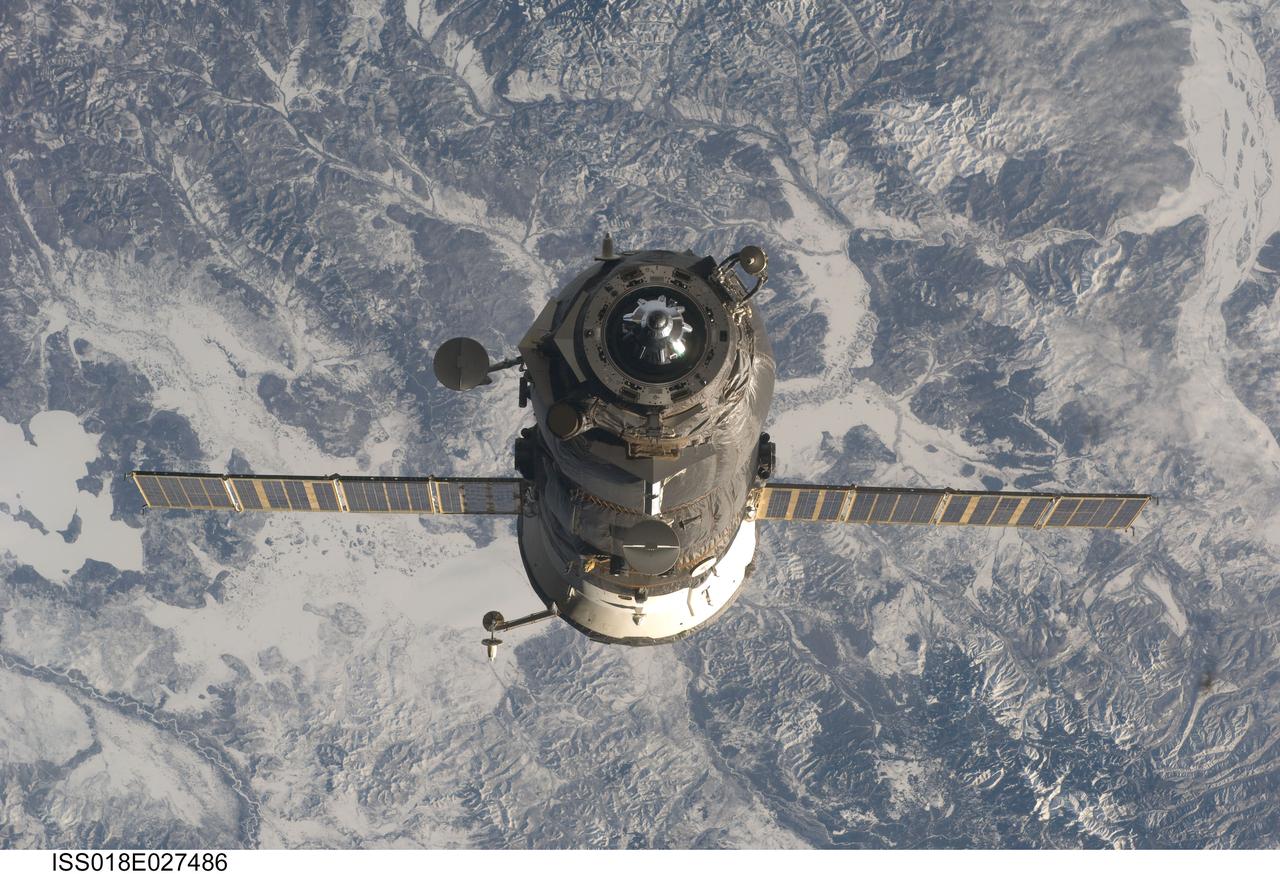
ISS018-E-027486 (5 Feb. 2009) --- An unpiloted ISS Progress 31 cargo craft, filled with trash and unneeded items, departs from the International Space Station’s Pirs Docking Compartment at 10:10:44 p.m. (CST) on Feb. 5, 2009. The Progress fired its thrusters to back away from the station for a little over two days of free flight to support engineering tests by Russian flight controllers. It will be commanded into a destructive reentry in Earth's atmosphere high above the Pacific Ocean at 1:32 a.m. (CST) on Feb 8. The departure clears the way for the arrival of the Progress 32 resupply vehicle, which is scheduled to link up to Pirs on Feb. 13.
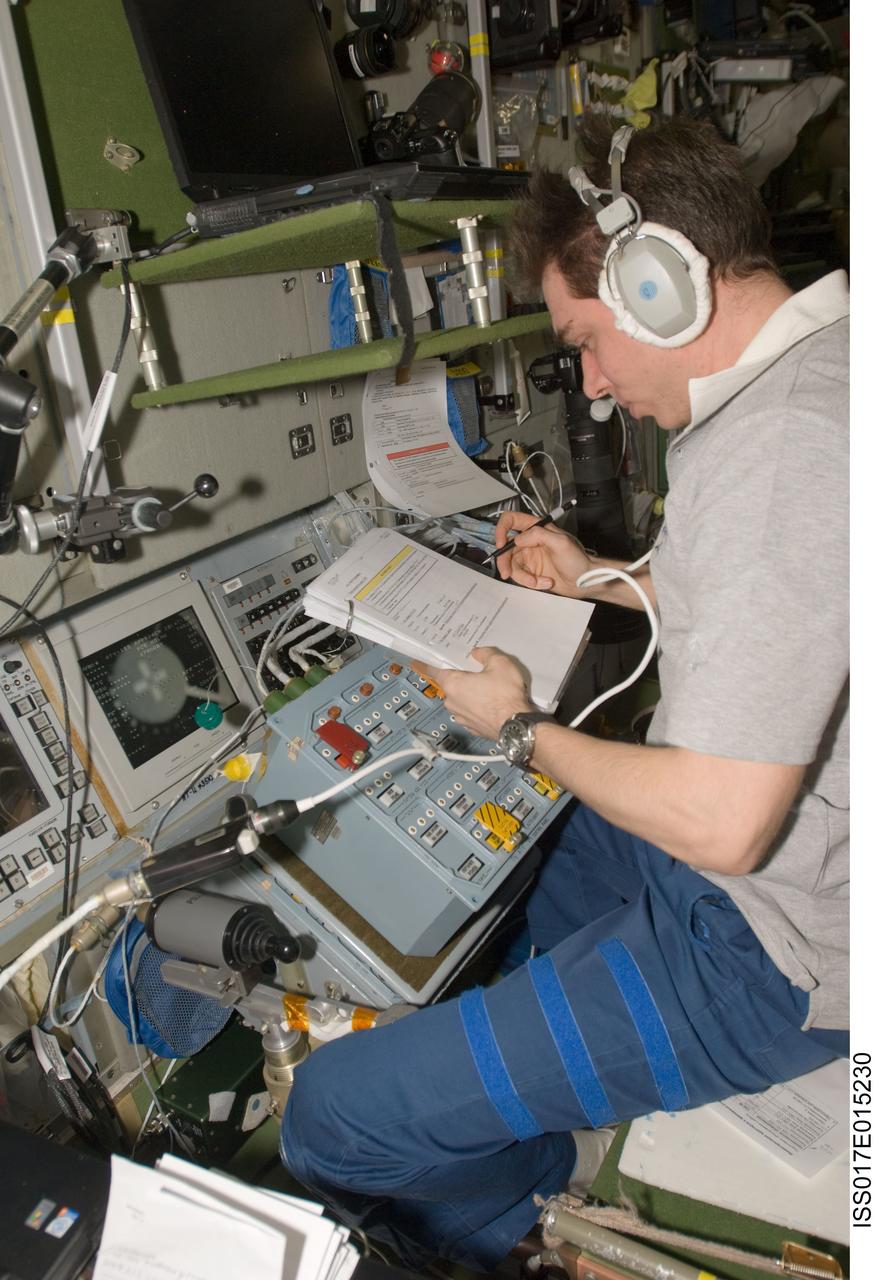
ISS017-E-015230 (5 Sept. 2008) --- Russian Federal Space Agency cosmonaut Sergei Volkov, Expedition 17 commander, makes preparations in the International Space Station's Zvezda Service Module for the undocking of the European Space Agency's (ESA) "Jules Verne" Automated Transfer Vehicle (ATV). The ATV departed from the aft port of Zvezda at 4:29 p.m. (CDT) on Sept. 5, 2008 and was placed in a parking orbit for three weeks, scheduled to be deorbited on Sept. 29 when lighting conditions are correct for an ESA imagery experiment of reentry.
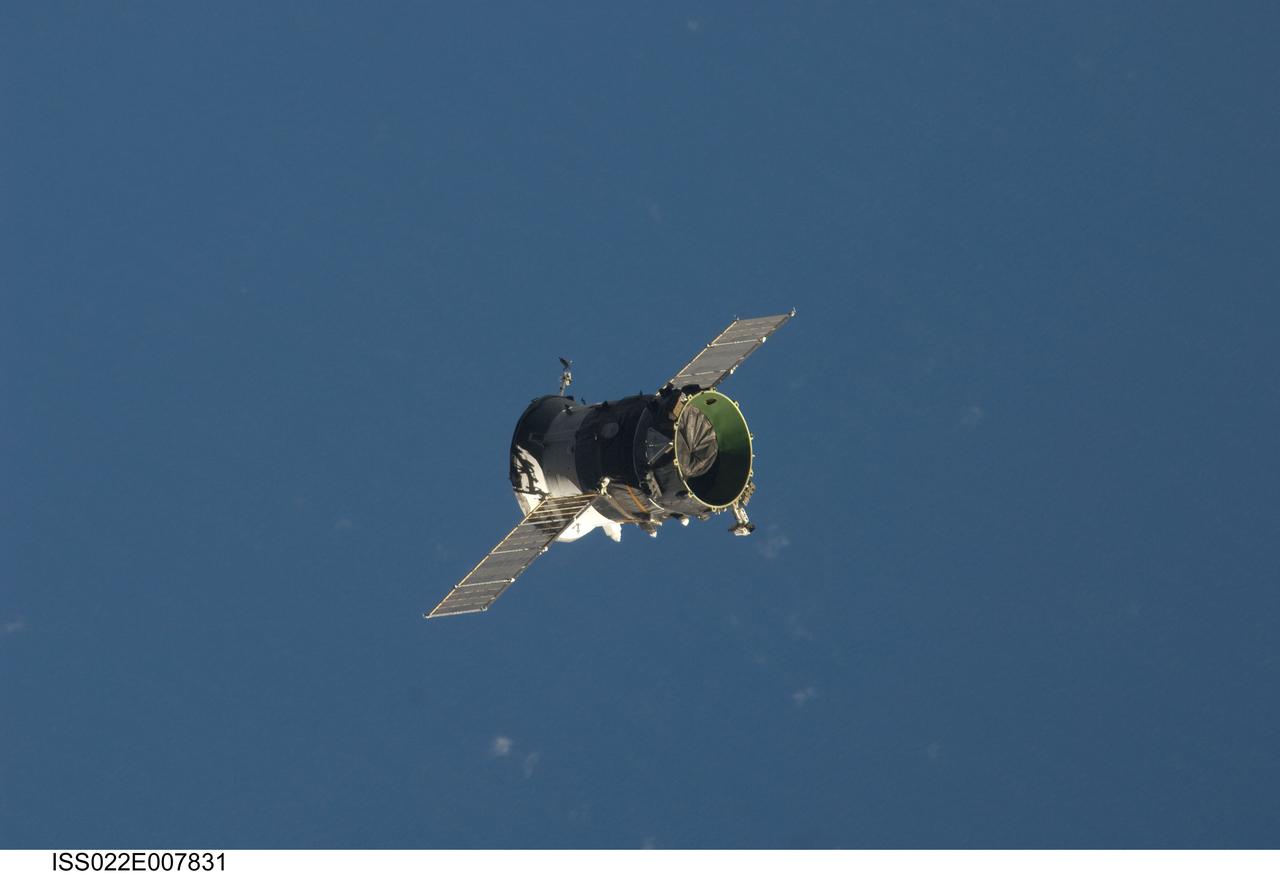
ISS022-E-007831 (7 Dec. 2009) --- The propulsion compartment of the Poisk Mini-Research Module 2 (MRM2) departs from the International Space Station and was deorbited four hours later for a destructive reentry in Earth?s atmosphere. The undocking occurred at 6:16 p.m. (CST) on Dec. 7, 2009. Its departure opens up a docking port for Russian vehicles on Poisk, which will first be used when NASA astronaut Jeffrey Williams, Expedition 22 commander; and Russian cosmonaut Maxim Suraev, flight engineer, relocate their Soyuz spacecraft in January 2010.
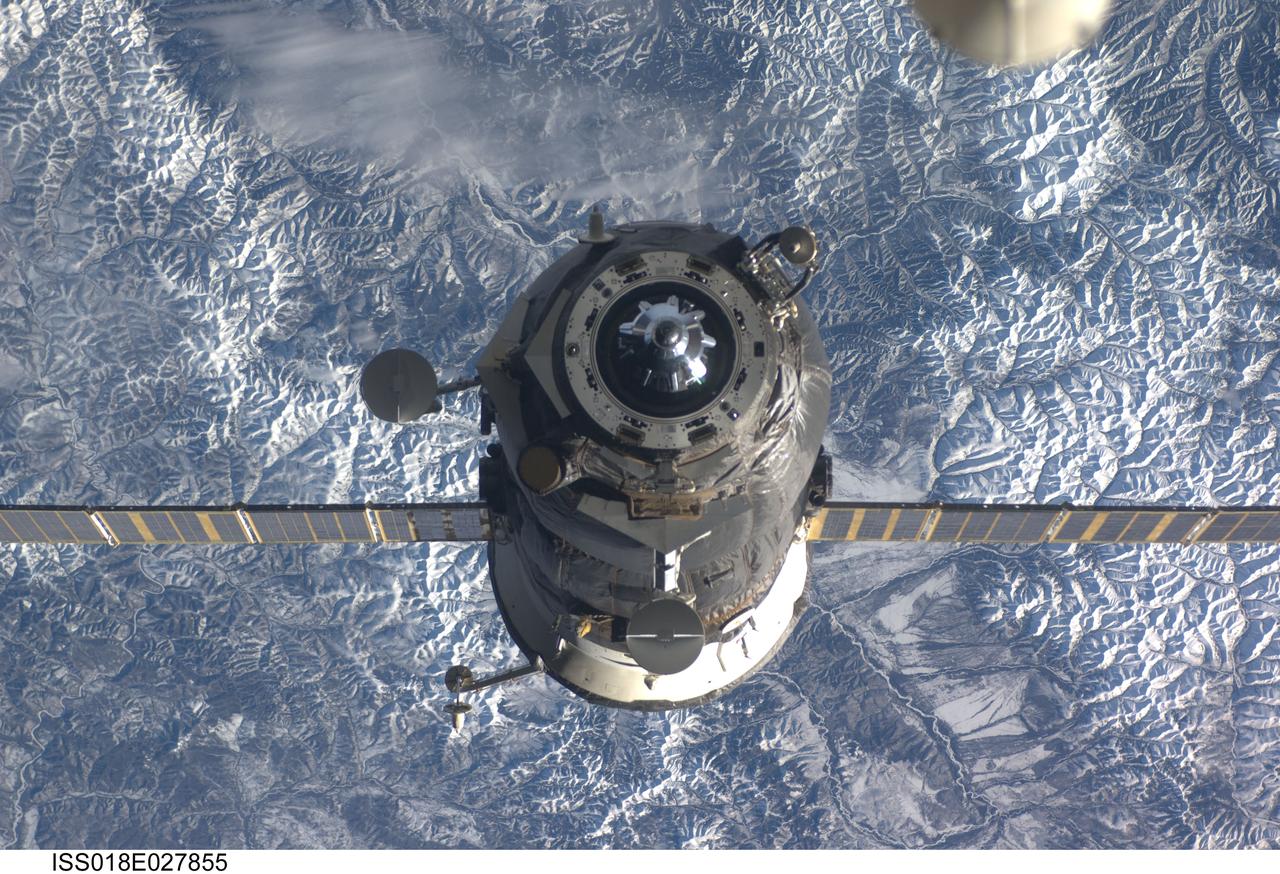
ISS018-E-027855 (5 Feb. 2009) --- An unpiloted ISS Progress 31 cargo craft, filled with trash and unneeded items, departs from the International Space Station’s Pirs Docking Compartment at 10:10:44 p.m. (CST) on Feb. 5, 2009. The Progress fired its thrusters to back away from the station for a little over two days of free flight to support engineering tests by Russian flight controllers. It will be commanded into a destructive reentry in Earth's atmosphere high above the Pacific Ocean at 1:32 a.m. (CST) on Feb 8. The departure clears the way for the arrival of the Progress 32 resupply vehicle, which is scheduled to link up to Pirs on Feb. 13.
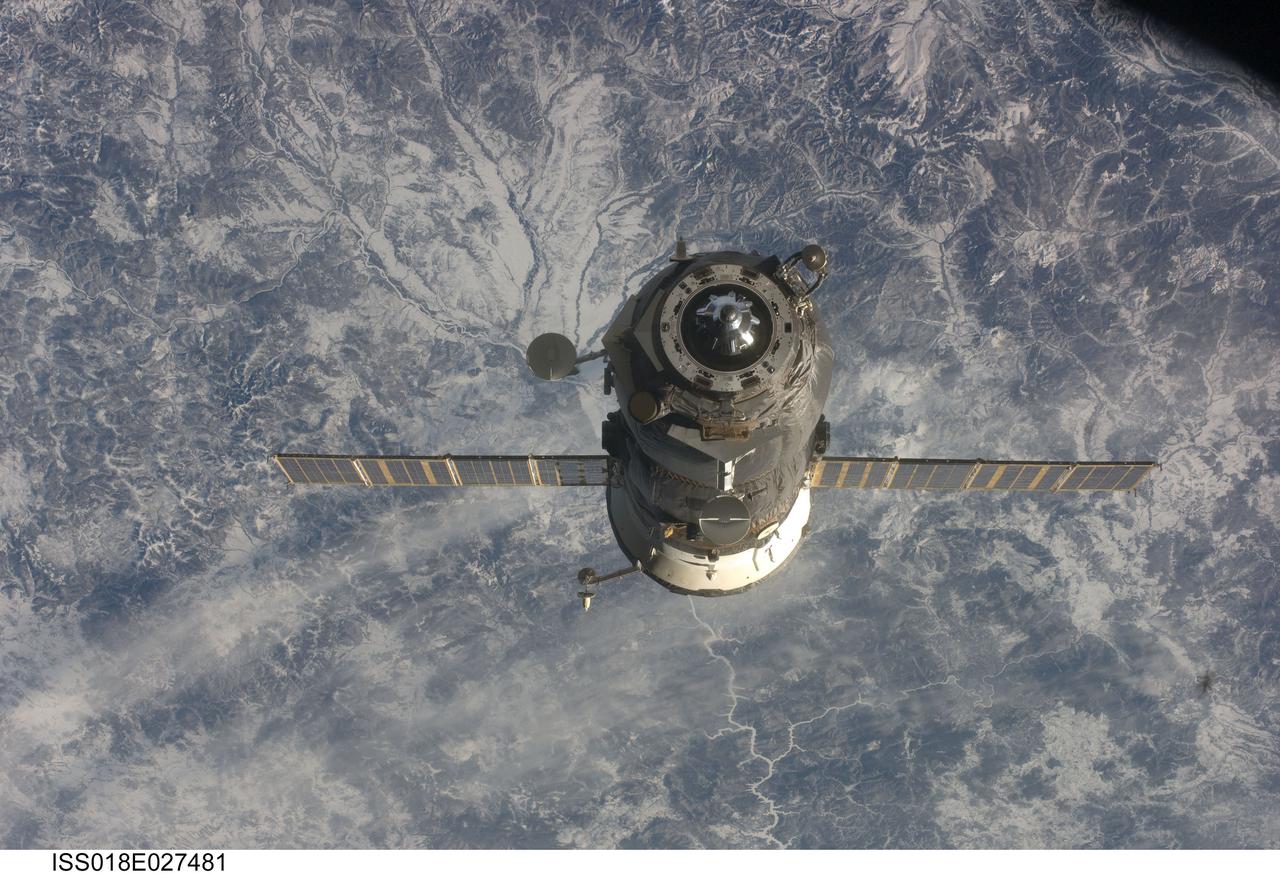
ISS018-E-027481 (5 Feb. 2009) --- An unpiloted ISS Progress 31 cargo craft, filled with trash and unneeded items, departs from the International Space Station’s Pirs Docking Compartment at 10:10:44 p.m. (CST) on Feb. 5, 2009. The Progress fired its thrusters to back away from the station for a little over two days of free flight to support engineering tests by Russian flight controllers. It will be commanded into a destructive reentry in Earth's atmosphere high above the Pacific Ocean at 1:32 a.m. (CST) on Feb 8. The departure clears the way for the arrival of the Progress 32 resupply vehicle, which is scheduled to link up to Pirs on Feb. 13.
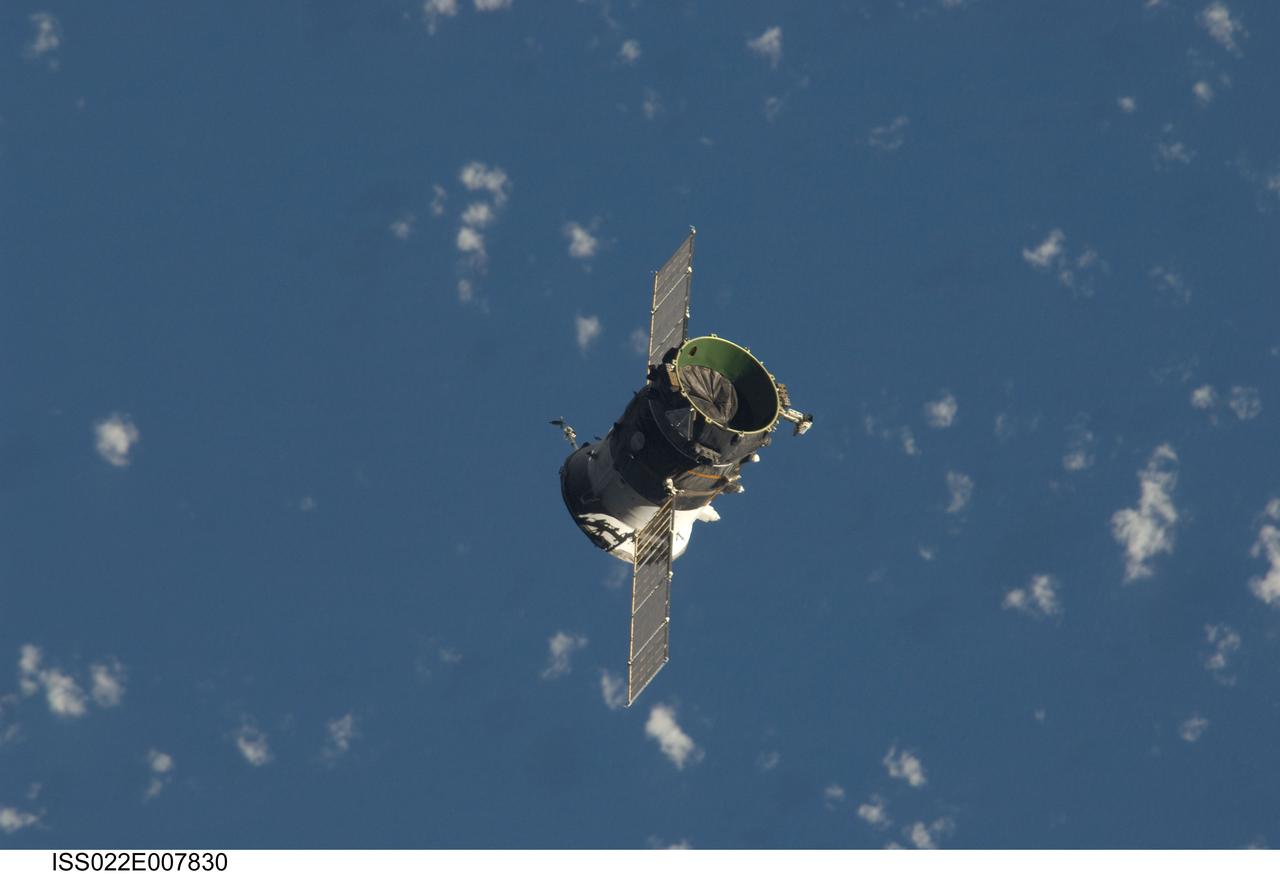
ISS022-E-007830 (7 Dec. 2009) --- The propulsion compartment of the Poisk Mini-Research Module 2 (MRM2) departs from the International Space Station and was deorbited four hours later for a destructive reentry in Earth?s atmosphere. The undocking occurred at 6:16 p.m. (CST) on Dec. 7, 2009. Its departure opens up a docking port for Russian vehicles on Poisk, which will first be used when NASA astronaut Jeffrey Williams, Expedition 22 commander; and Russian cosmonaut Maxim Suraev, flight engineer, relocate their Soyuz spacecraft in January 2010.
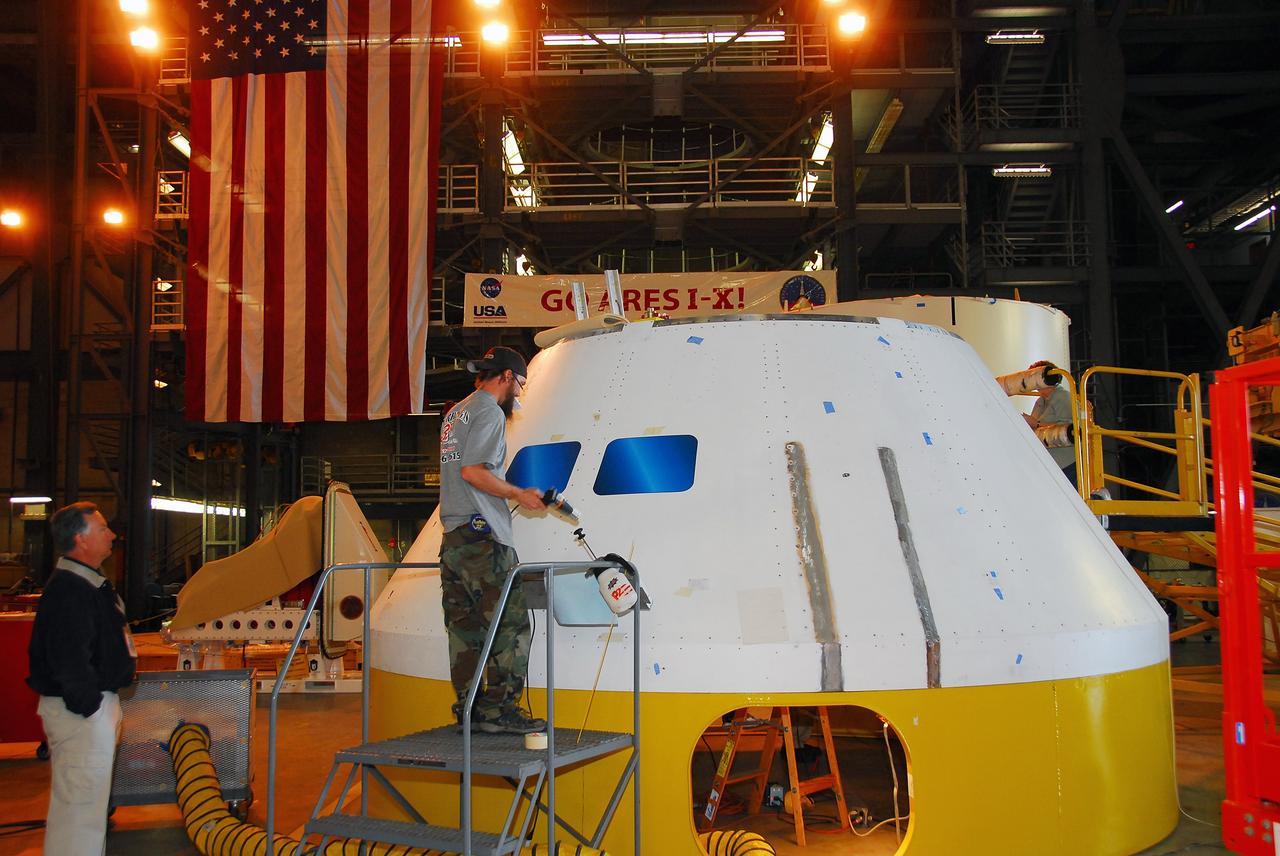
CAPE CANAVERAL, Fla. – In high bay 4 of the Vehicle Assembly Building at NASA's Kennedy Space Center, a worker applies a window decal on the Ares I-X mock-up crew module. Ares I-X is the test flight for the Ares I. The I-X flight will provide NASA an early opportunity to test and prove hardware, facilities and ground operations associated with Ares I. The launch of full-scale Ares I-X, targeted for July 2009, will be the first in a series of unpiloted rocket launches from Kennedy. When fully developed, the 16-foot diameter crew module will furnish living space and reentry protection for the astronauts. Photo credit: NASA/Tim Jacobs
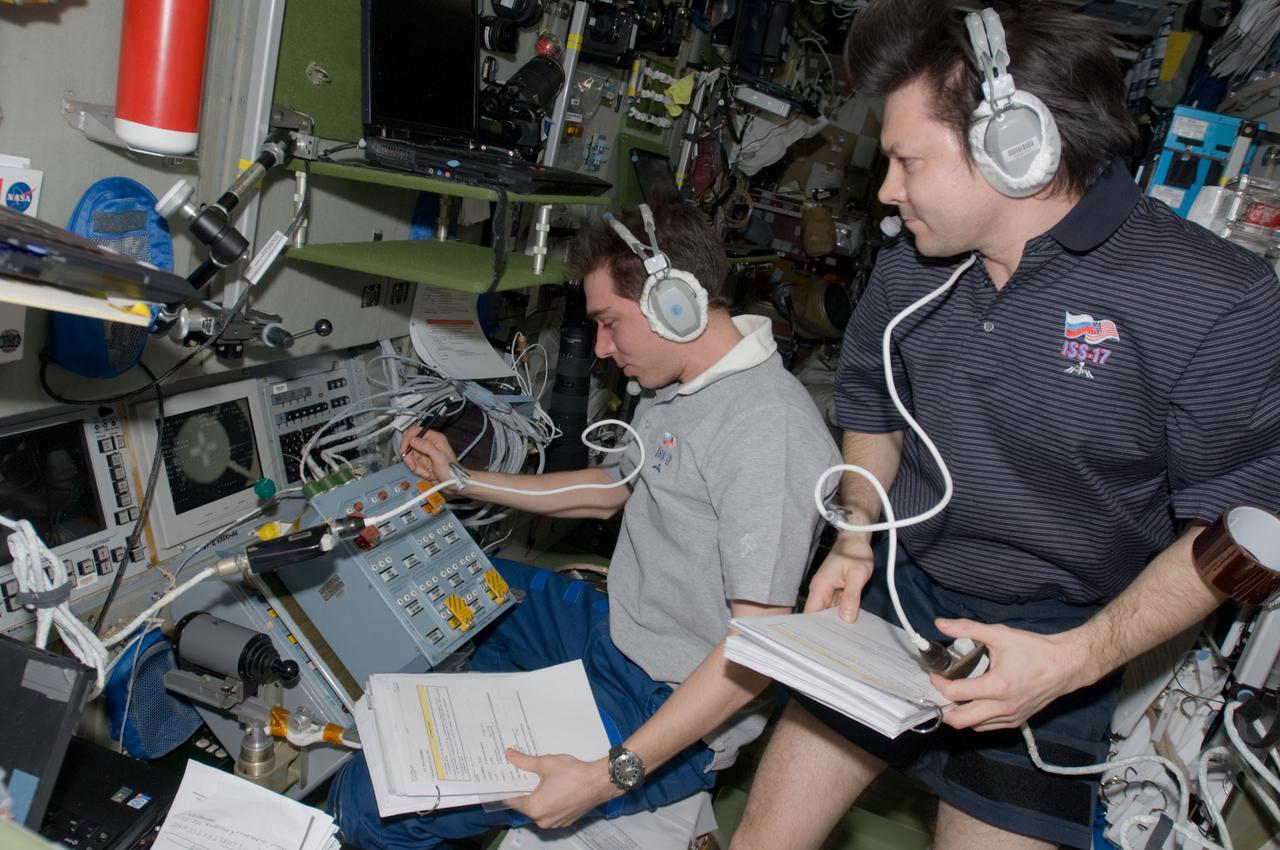
ISS017-E-015234 (5 Sept. 2008) --- Russian Federal Space Agency cosmonauts Sergei Volkov (left) and Oleg Kononenko, Expedition 17 commander and flight engineer, respectively, make preparations in the International Space Station's Zvezda Service Module for the undocking of the European Space Agency's (ESA) "Jules Verne" Automated Transfer Vehicle (ATV). The ATV departed from the aft port of Zvezda at 4:29 p.m. (CDT) on Sept. 5, 2008 and was placed in a parking orbit for three weeks, scheduled to be deorbited on Sept. 29 when lighting conditions are correct for an ESA imagery experiment of reentry.
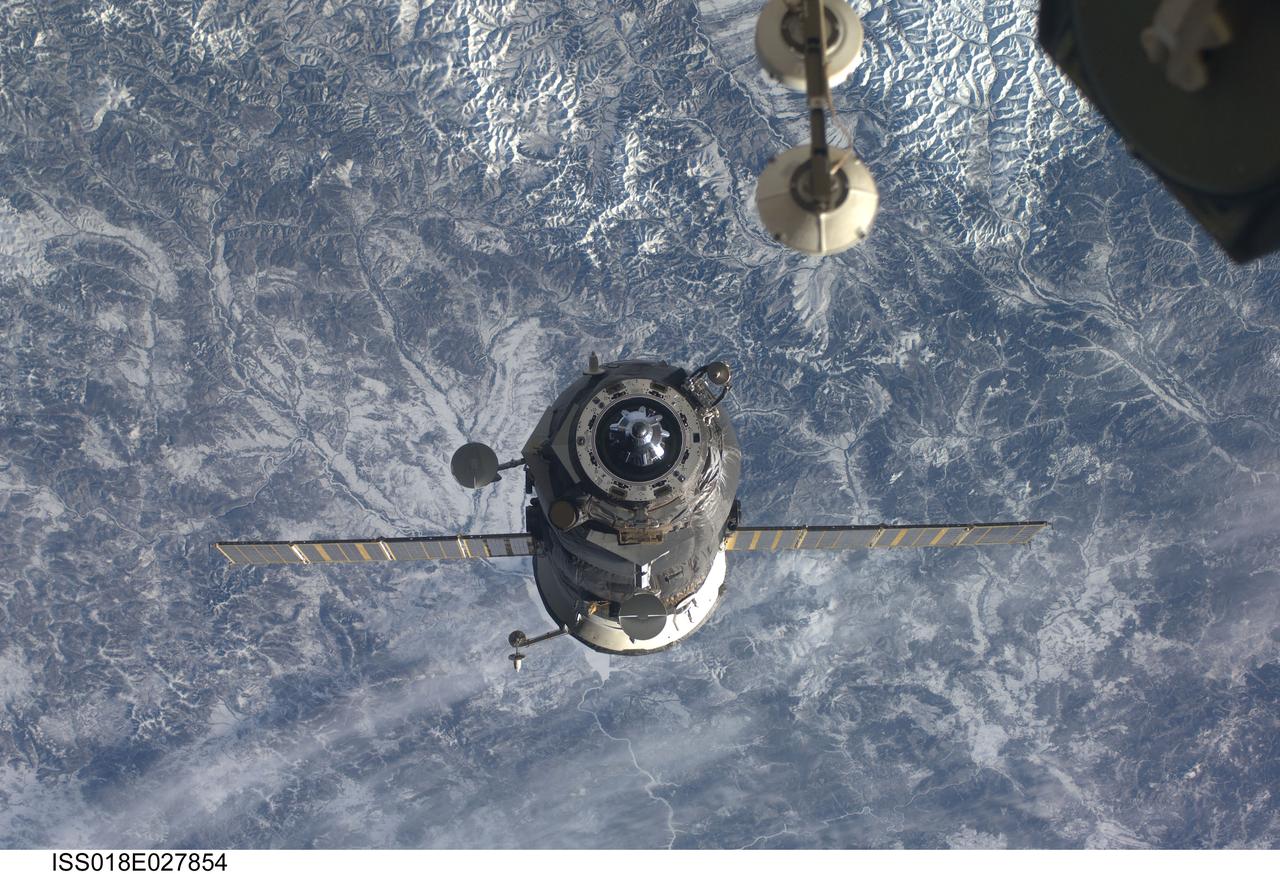
ISS018-E-027854 (5 Feb. 2009) --- An unpiloted ISS Progress 31 cargo craft, filled with trash and unneeded items, departs from the International Space Station’s Pirs Docking Compartment at 10:10:44 p.m. (CST) on Feb. 5, 2009. The Progress fired its thrusters to back away from the station for a little over two days of free flight to support engineering tests by Russian flight controllers. It will be commanded into a destructive reentry in Earth's atmosphere high above the Pacific Ocean at 1:32 a.m. (CST) on Feb 8. The departure clears the way for the arrival of the Progress 32 resupply vehicle, which is scheduled to link up to Pirs on Feb. 13.

ISS018-E-028036 (5 Feb. 2009) --- An unpiloted ISS Progress 31 cargo craft, filled with trash and unneeded items, departs from the International Space Station’s Pirs Docking Compartment at 10:10:44 p.m. (CST) on Feb. 5, 2009. The Progress fired its thrusters to back away from the station for a little over two days of free flight to support engineering tests by Russian flight controllers. It will be commanded into a destructive reentry in Earth's atmosphere high above the Pacific Ocean at 1:32 a.m. (CST) on Feb 8. The departure clears the way for the arrival of the Progress 32 resupply vehicle, which is scheduled to link up to Pirs on Feb. 13.
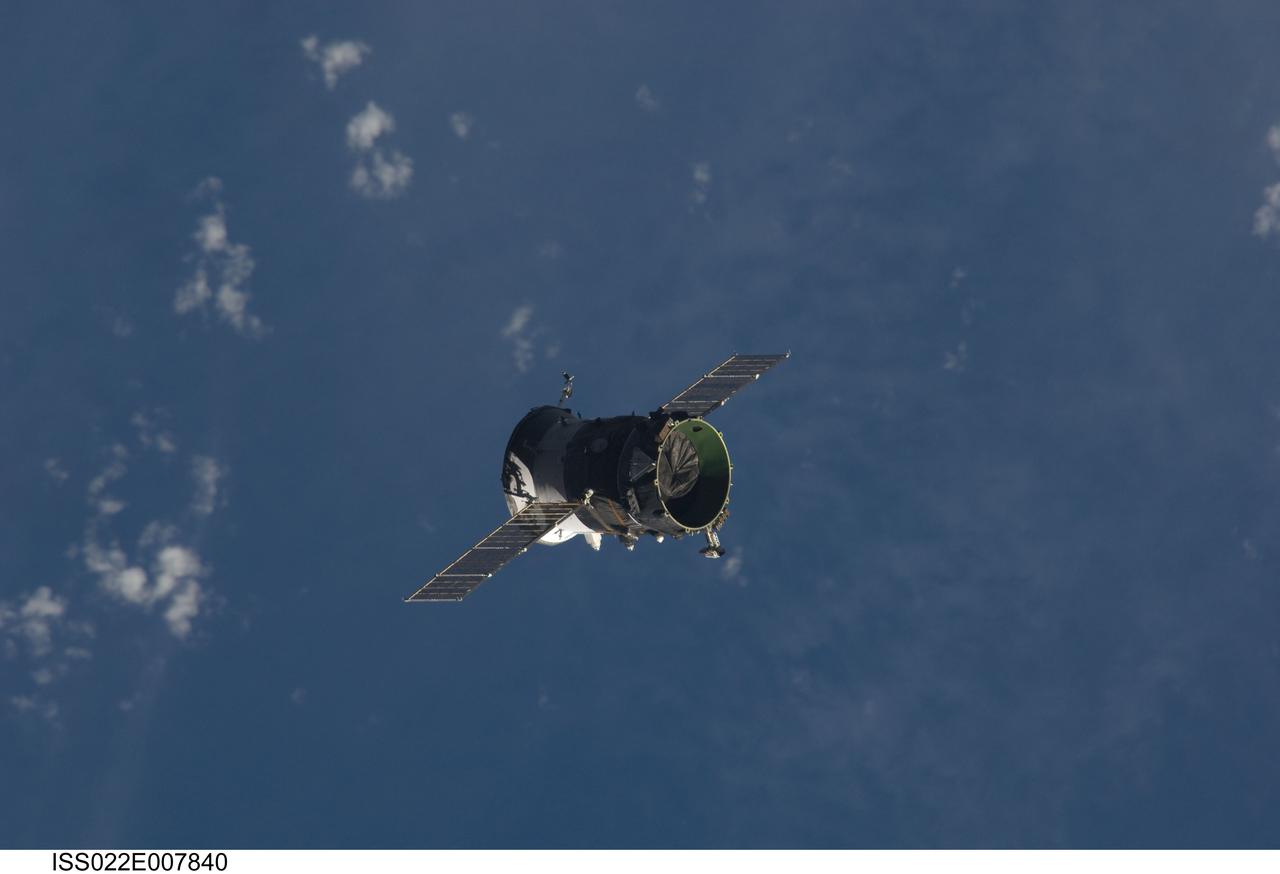
ISS022-E-007840 (7 Dec. 2009) --- The propulsion compartment of the Poisk Mini-Research Module 2 (MRM2) departs from the International Space Station and was deorbited four hours later for a destructive reentry in Earth?s atmosphere. The undocking occurred at 6:16 p.m. (CST) on Dec. 7, 2009. Its departure opens up a docking port for Russian vehicles on Poisk, which will first be used when NASA astronaut Jeffrey Williams, Expedition 22 commander; and Russian cosmonaut Maxim Suraev, flight engineer, relocate their Soyuz spacecraft in January 2010.
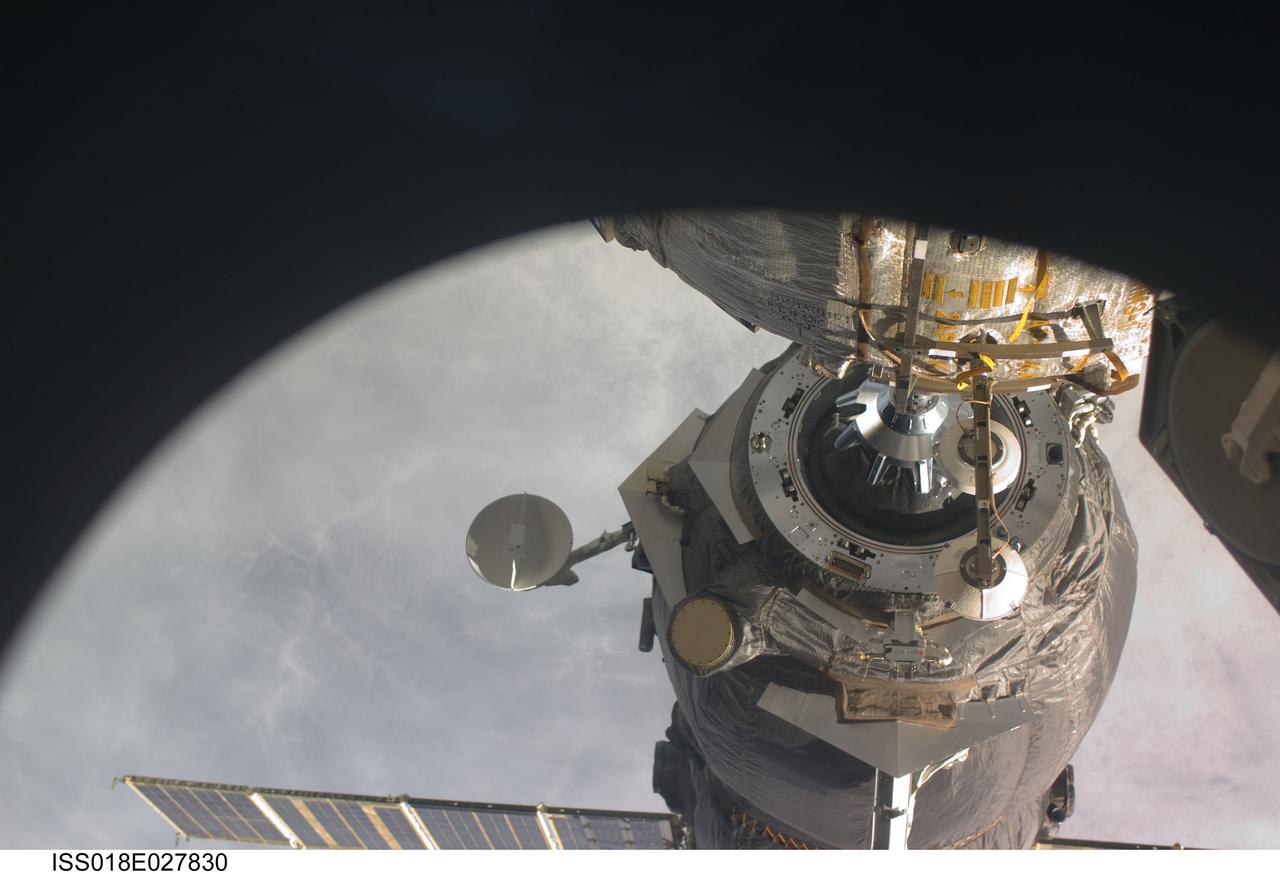
ISS018-E-027830 (5 Feb. 2009) --- An unpiloted ISS Progress 31 cargo craft, filled with trash and unneeded items, departs from the International Space Station’s Pirs Docking Compartment at 10:10:44 p.m. (CST) on Feb. 5, 2009. The Progress fired its thrusters to back away from the station for a little over two days of free flight to support engineering tests by Russian flight controllers. It will be commanded into a destructive reentry in Earth's atmosphere high above the Pacific Ocean at 1:32 a.m. (CST) on Feb 8. The departure clears the way for the arrival of the Progress 32 resupply vehicle, which is scheduled to link up to Pirs on Feb. 13.
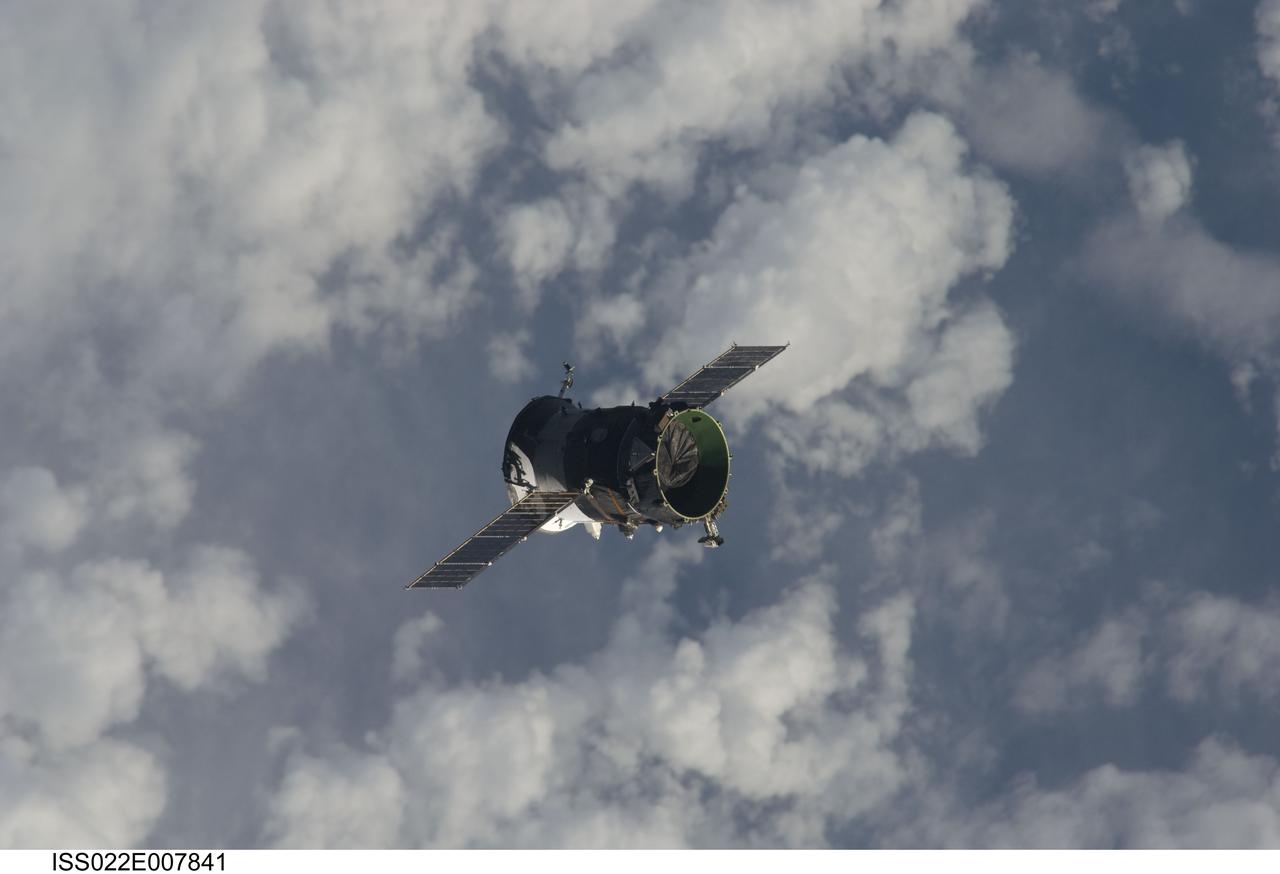
ISS022-E-007841 (7 Dec. 2009) --- The propulsion compartment of the Poisk Mini-Research Module 2 (MRM2) departs from the International Space Station and was deorbited four hours later for a destructive reentry in Earth?s atmosphere. The undocking occurred at 6:16 p.m. (CST) on Dec. 7, 2009. Its departure opens up a docking port for Russian vehicles on Poisk, which will first be used when NASA astronaut Jeffrey Williams, Expedition 22 commander; and Russian cosmonaut Maxim Suraev, flight engineer, relocate their Soyuz spacecraft in January 2010.
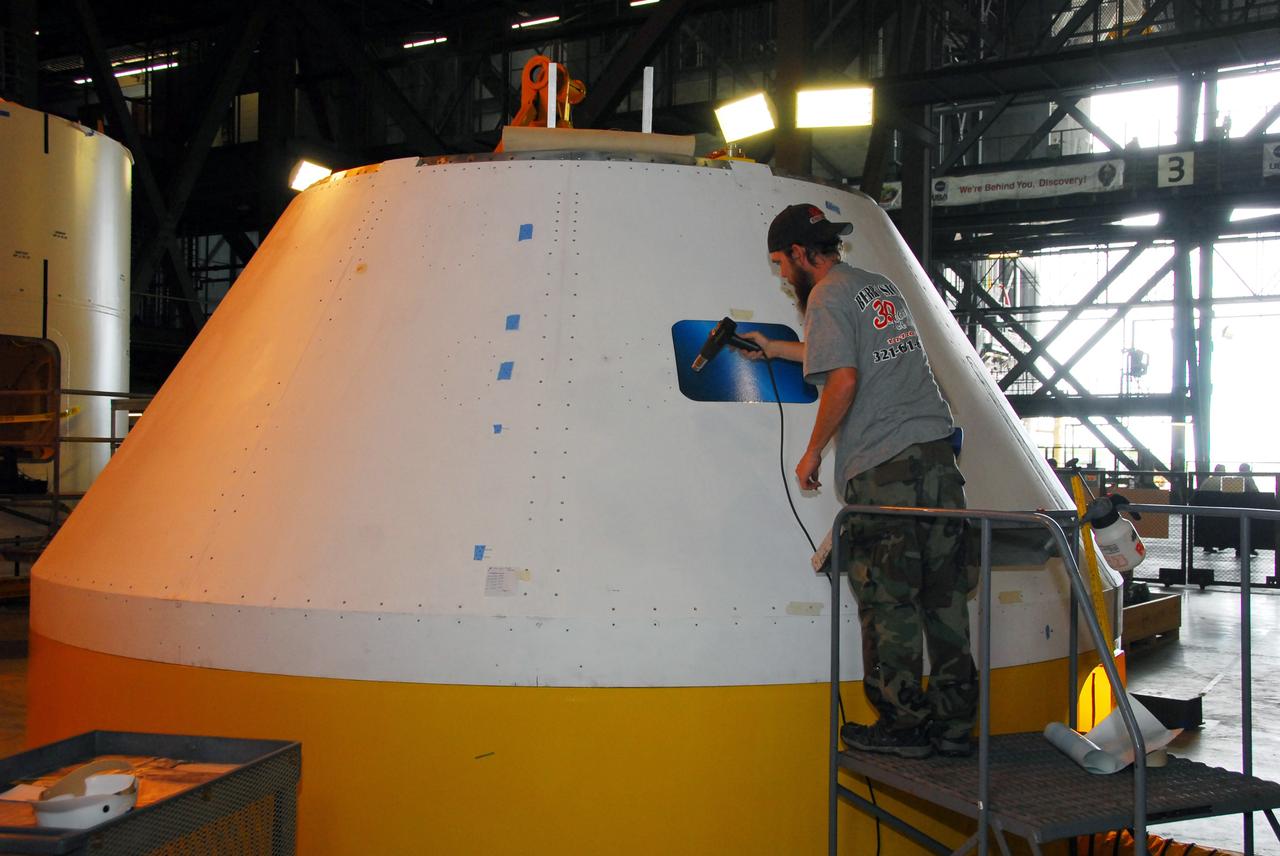
CAPE CANAVERAL, Fla. – In high bay 4 of the Vehicle Assembly Building at NASA's Kennedy Space Center, a worker applies a window decal on the Ares I-X mock-up crew module. Ares I-X is the test flight for the Ares I. The I-X flight will provide NASA an early opportunity to test and prove hardware, facilities and ground operations associated with Ares I. The launch of full-scale Ares I-X, targeted for July 2009, will be the first in a series of unpiloted rocket launches from Kennedy. When fully developed, the 16-foot diameter crew module will furnish living space and reentry protection for the astronauts. Photo credit: NASA/Tim Jacobs

ISS018-E-027490 (5 Feb. 2009) --- An unpiloted ISS Progress 31 cargo craft, filled with trash and unneeded items, departs from the International Space Station’s Pirs Docking Compartment at 10:10:44 p.m. (CST) on Feb. 5, 2009. The Progress fired its thrusters to back away from the station for a little over two days of free flight to support engineering tests by Russian flight controllers. It will be commanded into a destructive reentry in Earth's atmosphere high above the Pacific Ocean at 1:32 a.m. (CST) on Feb 8. The departure clears the way for the arrival of the Progress 32 resupply vehicle, which is scheduled to link up to Pirs on Feb. 13.
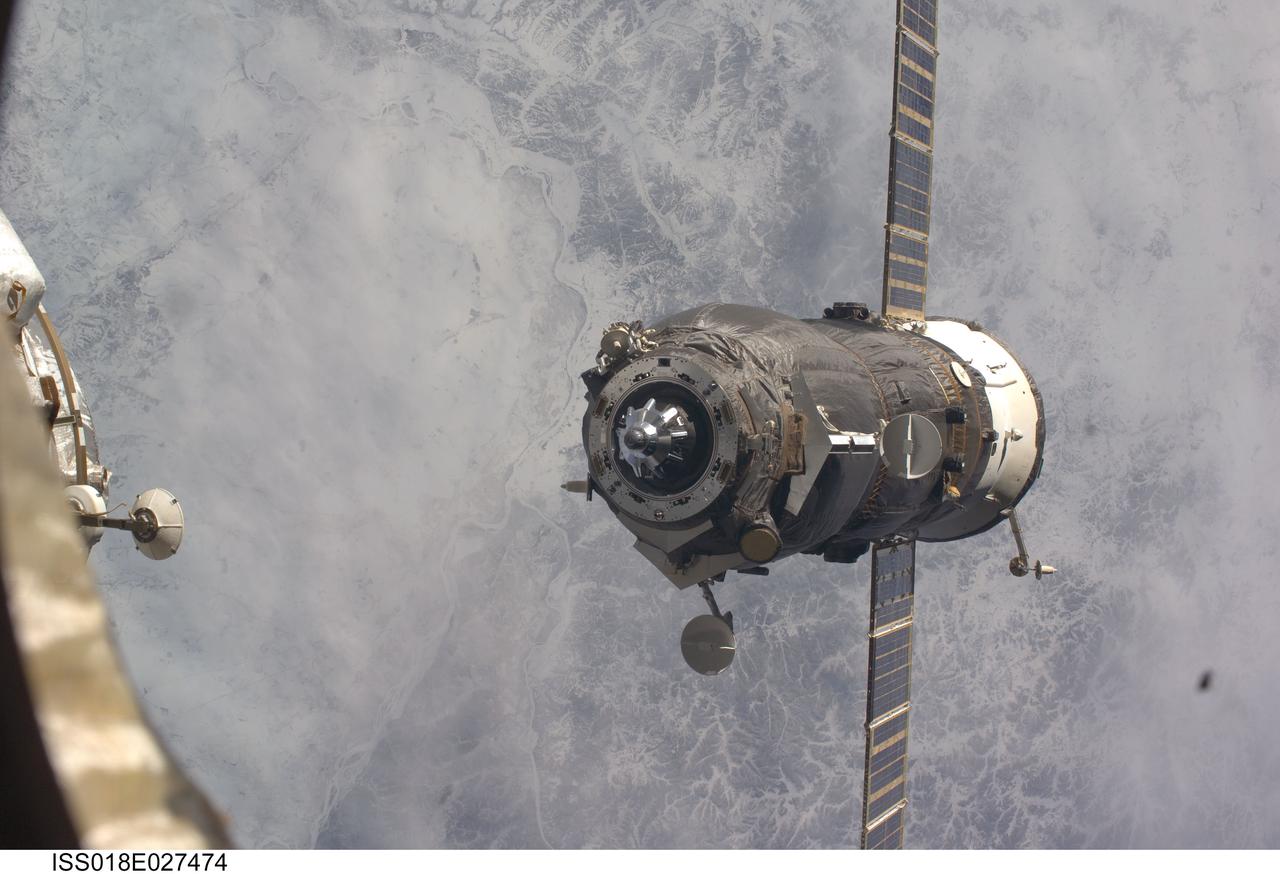
ISS018-E-027474 (5 Feb. 2009) --- An unpiloted ISS Progress 31 cargo craft, filled with trash and unneeded items, departs from the International Space Station’s Pirs Docking Compartment at 10:10:44 p.m. (CST) on Feb. 5, 2009. The Progress fired its thrusters to back away from the station for a little over two days of free flight to support engineering tests by Russian flight controllers. It will be commanded into a destructive reentry in Earth's atmosphere high above the Pacific Ocean at 1:32 a.m. (CST) on Feb 8. The departure clears the way for the arrival of the Progress 32 resupply vehicle, which is scheduled to link up to Pirs on Feb. 13.
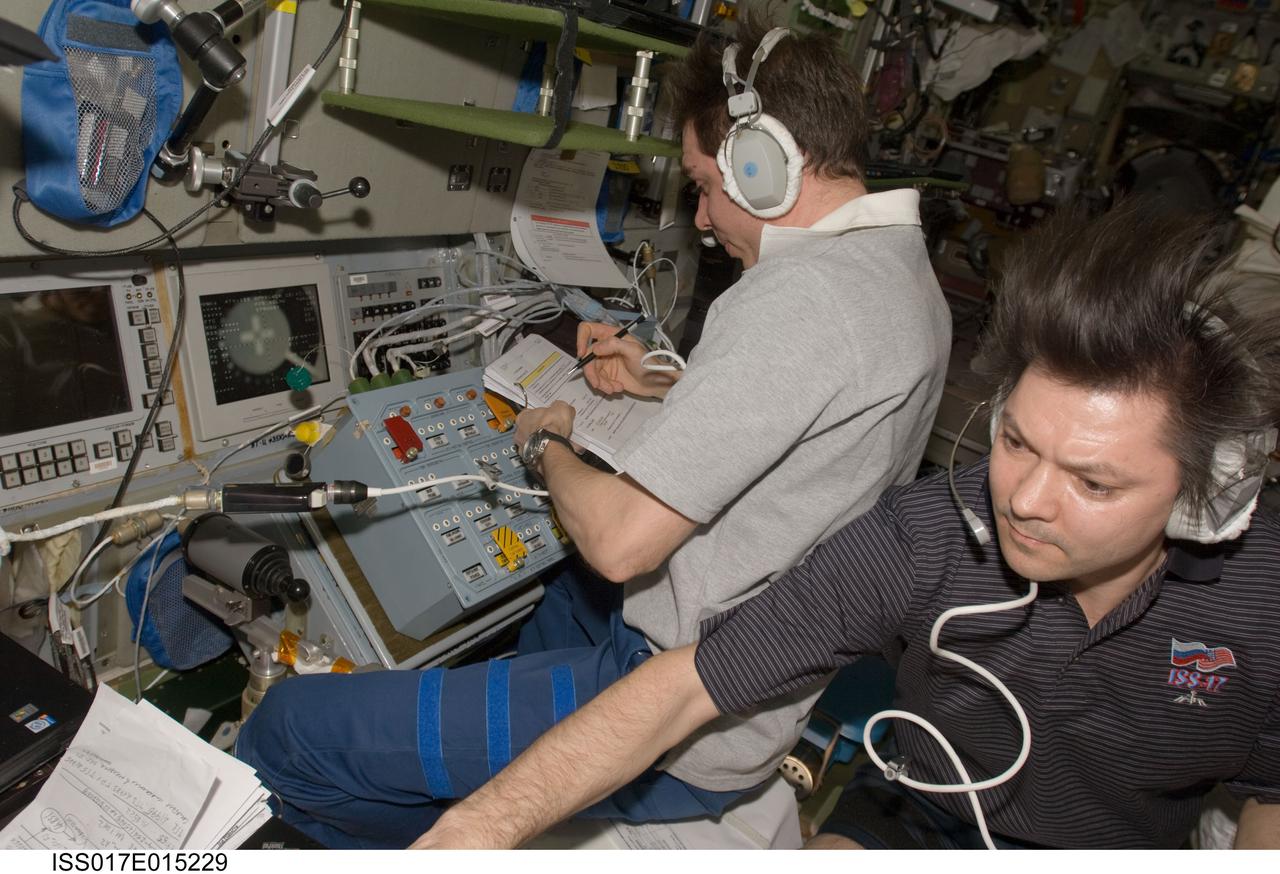
ISS017-E-015229 (5 Sept. 2008) --- Russian Federal Space Agency cosmonauts Sergei Volkov (left) and Oleg Kononenko, Expedition 17 commander and flight engineer, respectively, make preparations in the International Space Station's Zvezda Service Module for the undocking of the European Space Agency's (ESA) "Jules Verne" Automated Transfer Vehicle (ATV). The ATV departed from the aft port of Zvezda at 4:29 p.m. (CDT) on Sept. 5, 2008 and was placed in a parking orbit for three weeks, scheduled to be deorbited on Sept. 29 when lighting conditions are correct for an ESA imagery experiment of reentry.
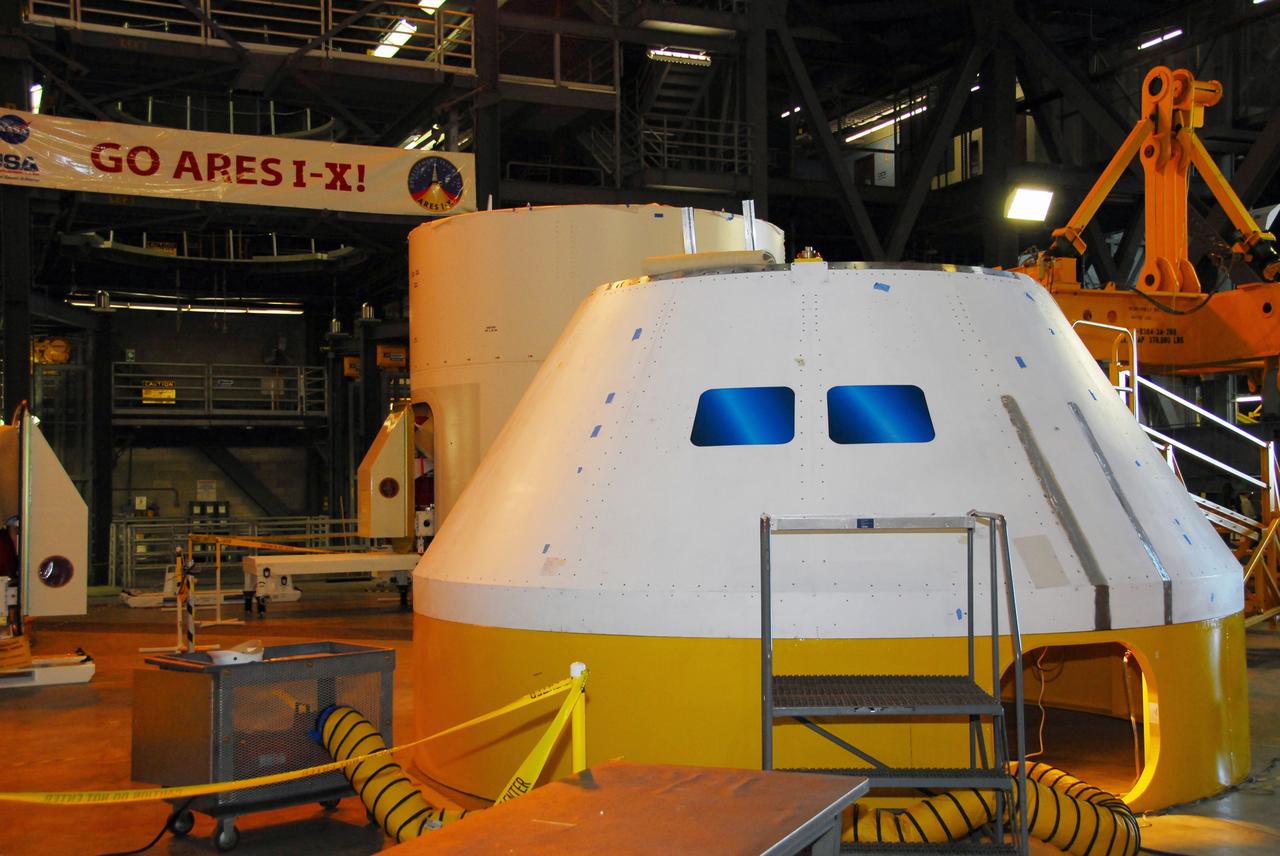
CAPE CANAVERAL, Fla. – In high bay 4 of the Vehicle Assembly Building at NASA's Kennedy Space Center, the Ares I-X mock-up crew module displays the newly applied window decals. Ares I-X is the test flight for the Ares I. The I-X flight will provide NASA an early opportunity to test and prove hardware, facilities and ground operations associated with Ares I. The launch of full-scale Ares I-X, targeted for July 2009, will be the first in a series of unpiloted rocket launches from Kennedy. When fully developed, the 16-foot diameter crew module will furnish living space and reentry protection for the astronauts. Photo credit: NASA/Tim Jacobs
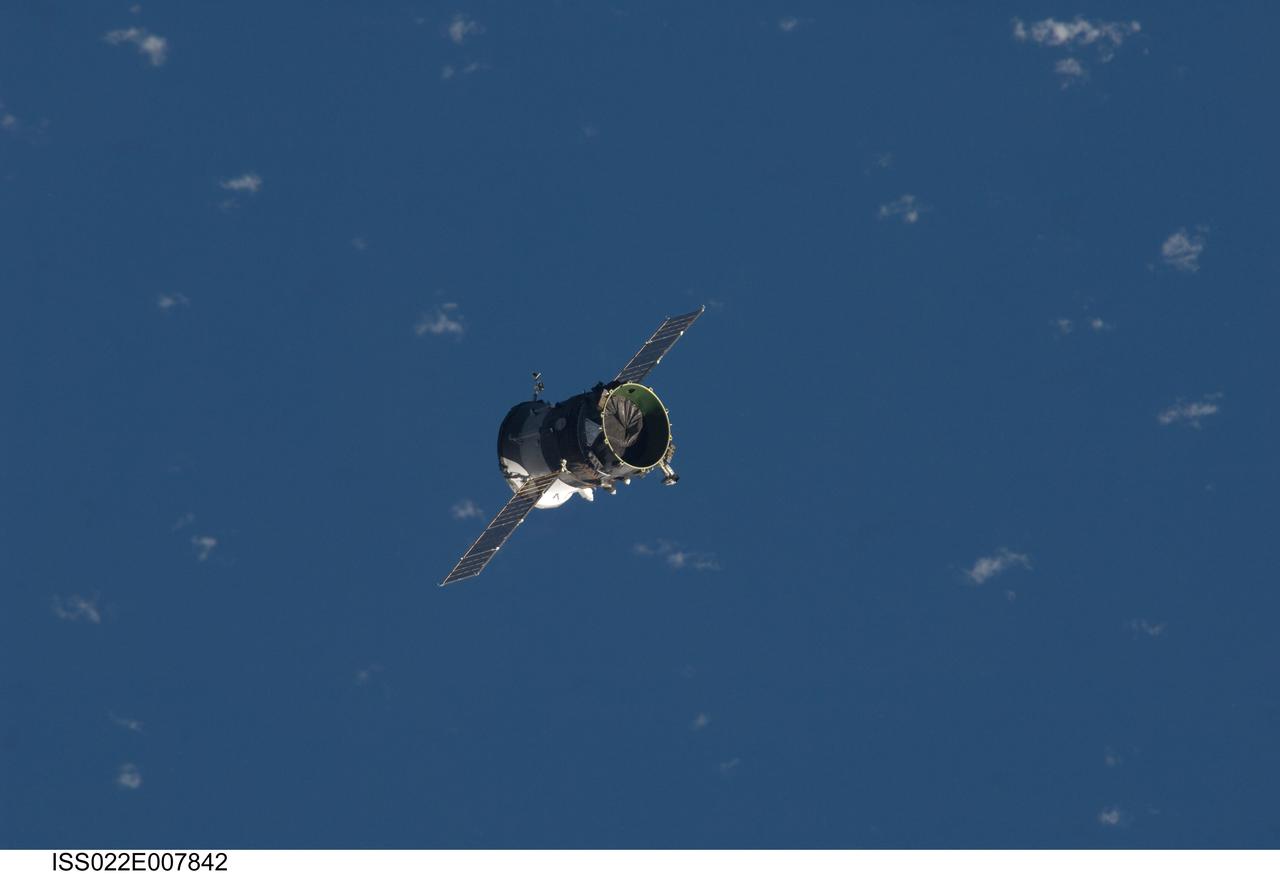
ISS022-E-007842 (7 Dec. 2009) --- The propulsion compartment of the Poisk Mini-Research Module 2 (MRM2) departs from the International Space Station and was deorbited four hours later for a destructive reentry in Earth?s atmosphere. The undocking occurred at 6:16 p.m. (CST) on Dec. 7, 2009. Its departure opens up a docking port for Russian vehicles on Poisk, which will first be used when NASA astronaut Jeffrey Williams, Expedition 22 commander; and Russian cosmonaut Maxim Suraev, flight engineer, relocate their Soyuz spacecraft in January 2010.
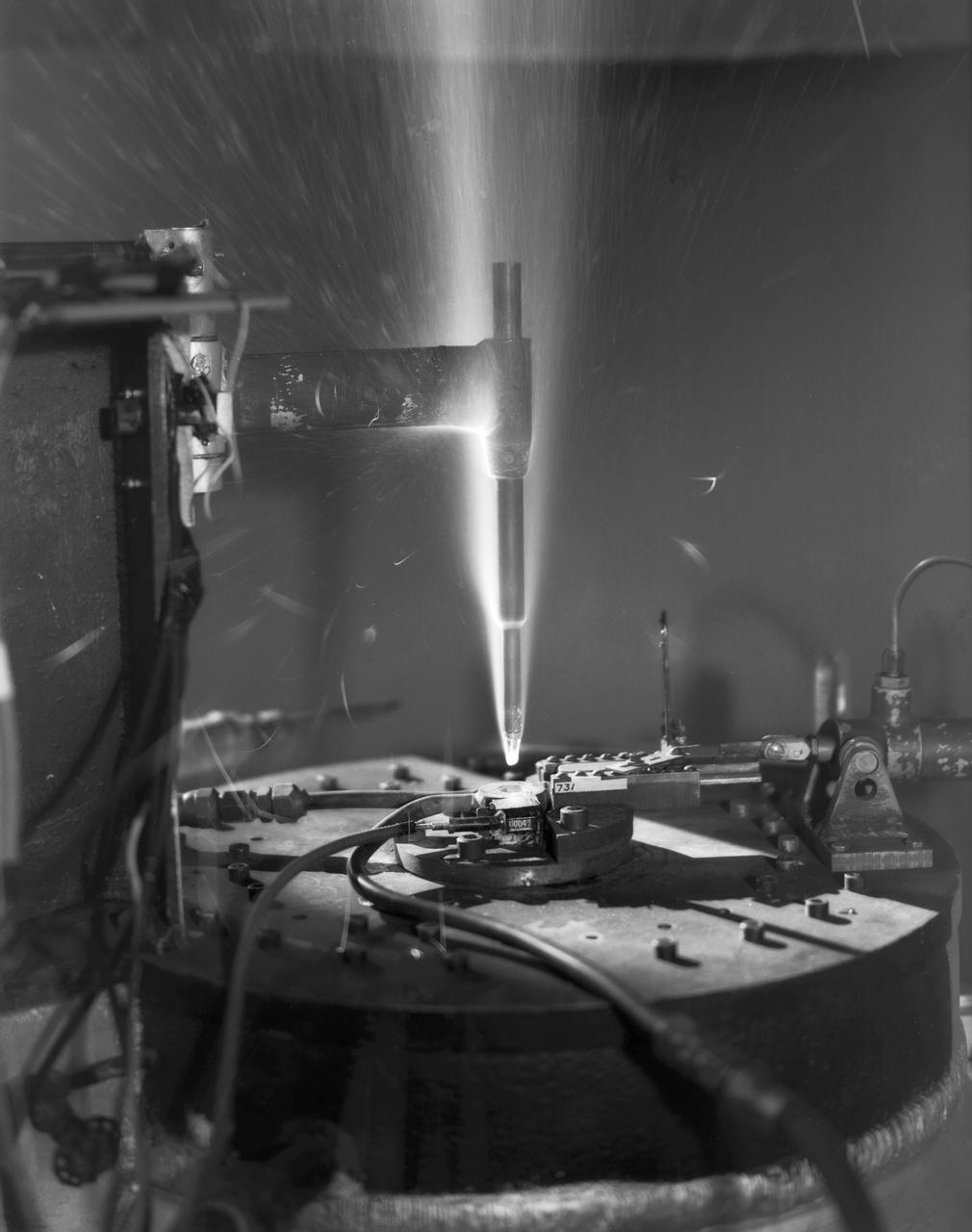
L57-5383 Hot-air jets employing ceramic heat exchangers played an important role at Langley in the study of materials for ballistic missile nose cones and re-entry vehicles. Here a model is being tested in one of theses jets at 4000 degrees Fahrenheit in 1957. Photograph published in Engineer in Charge: A History of the Langley Aeronautical Laboratory, 1917-1958 by James R. Hansen. Page 477.
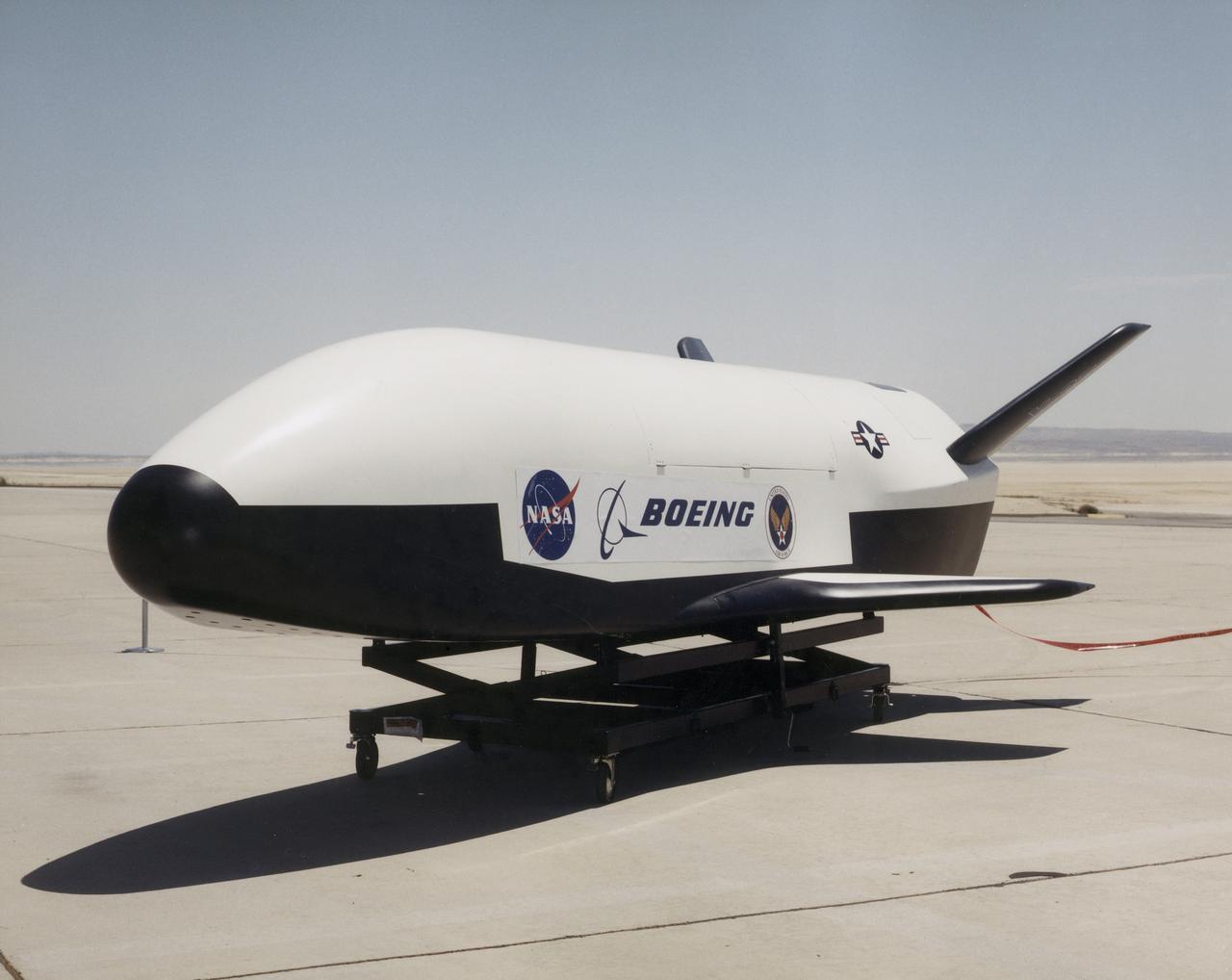
The photograph depicts the X-37 neutral buoyancy simulator mockup at Dryden Flight Research Center. The X-37 experimental launch vehicle is roughly 27.5 feet (8.3 meters) long and 15 feet (4.5 meters) in wingspan. Its experiment bay is 7 feet (2.1 meters) long and 4 feet (1.2 meters) in diameter. Designed to operate in both the orbital and reentry phases of flight, the X-37 will increase both safety and reliabiltiy, while reducing launch costs from $10,000 per pound to $1000 per pound. Managed by Marshall Space Flight Center and built by the boeing Company, the X-37 is scheduled to fly two orbital missions in 2002/2003 to test the reusable launch vehicle technologies.
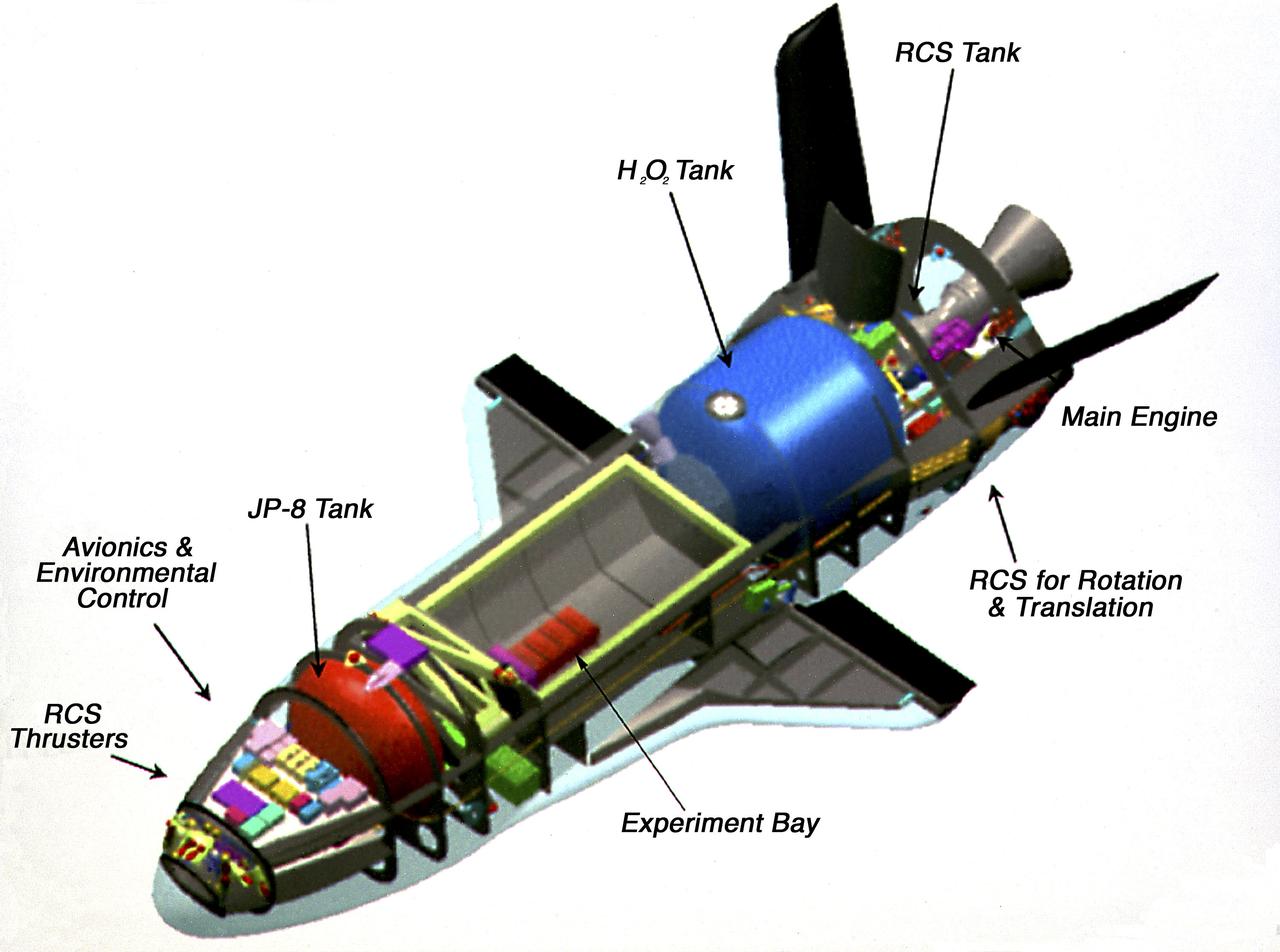
This photograph is an artist's cutaway view of the X-37 flight demonstrator showing its components. The X-37 experimental launch vehicle is roughly 27.5 feet (8.3 meters) long and 15 feet (4.5 meters) in wingspan. Its experiment bay is 7 feet (2.1 meters) long and 4 feet (1.2 meters) in diameter. Designed to operate in both the orbital and reentry phases of flight, the X-37 will increase both safety and reliability, while reducing launch costs from $10,000 per pound to $1000 per pound. The X-37 can be carried into orbit by the Space Shuttle or be launched by an expendable rocket. Managed by Marshall Space Flight Center and built by the Boeing Company, the X-37 is scheduled to fly two orbital missions in 2002/2003 to test the reusable launch vehicle technologies.
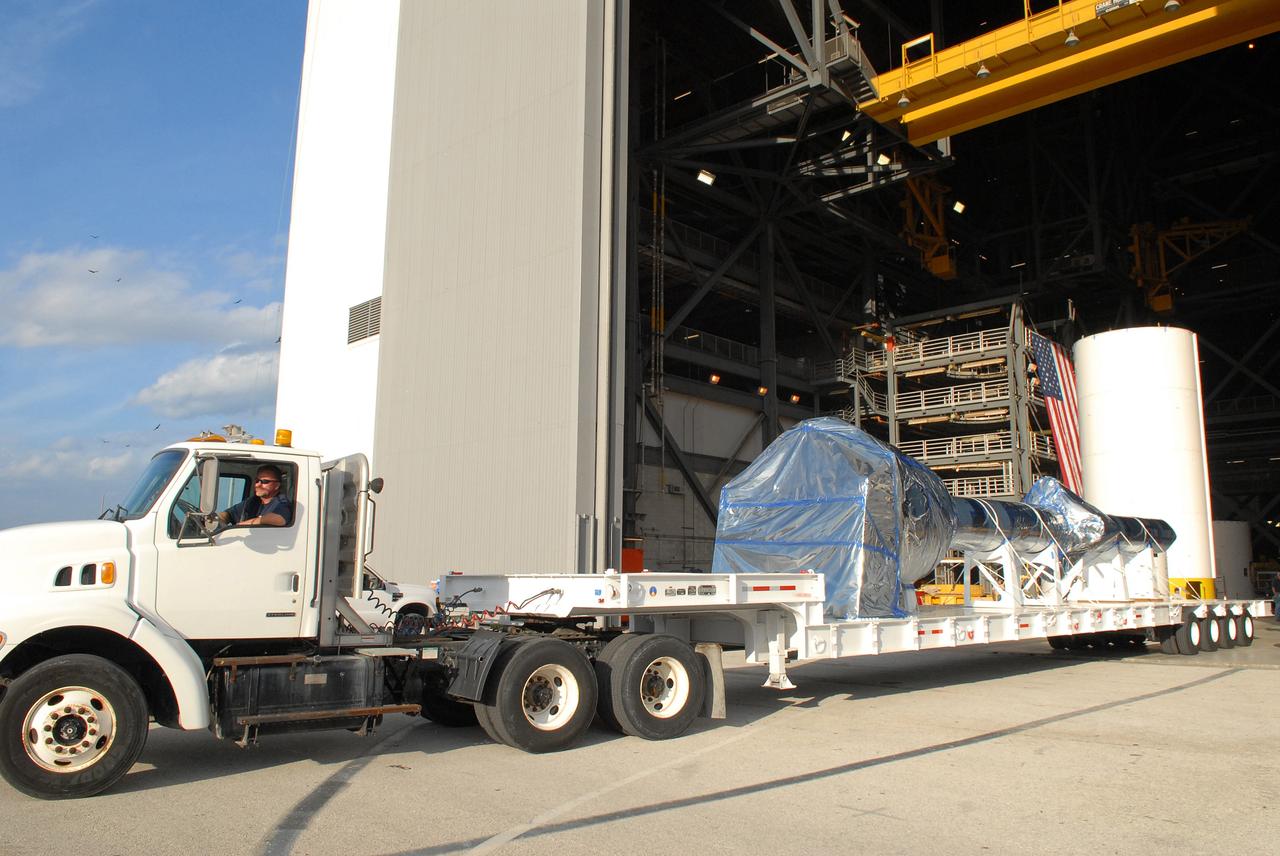
CAPE CANAVERAL, Fla. – The launch abort system for the Ares I-X rocket arrives in the Vehicle Assembly Building's high bay 4 at NASA's Kennedy Space Center in Florida. The launch abort system joins the precisely machined, full-scale simulator crew module, which, together, will form the tip of the Ares I-X. Ares I-X is the test flight for the Ares I. The I-X flight will provide NASA an early opportunity to test and prove hardware, facilities and ground operations associated with Ares I. The launch of the 321-foot-tall, full-scale Ares I-X, targeted for July 2009, will be the first in a series of unpiloted rocket launches from Kennedy. When fully developed, the 16-foot diameter crew module will furnish living space and reentry protection for the astronauts, while their launch abort system will provide safe evacuation if a launch vehicle failure occurs. Photo credit: NASA/Jack Pfaller
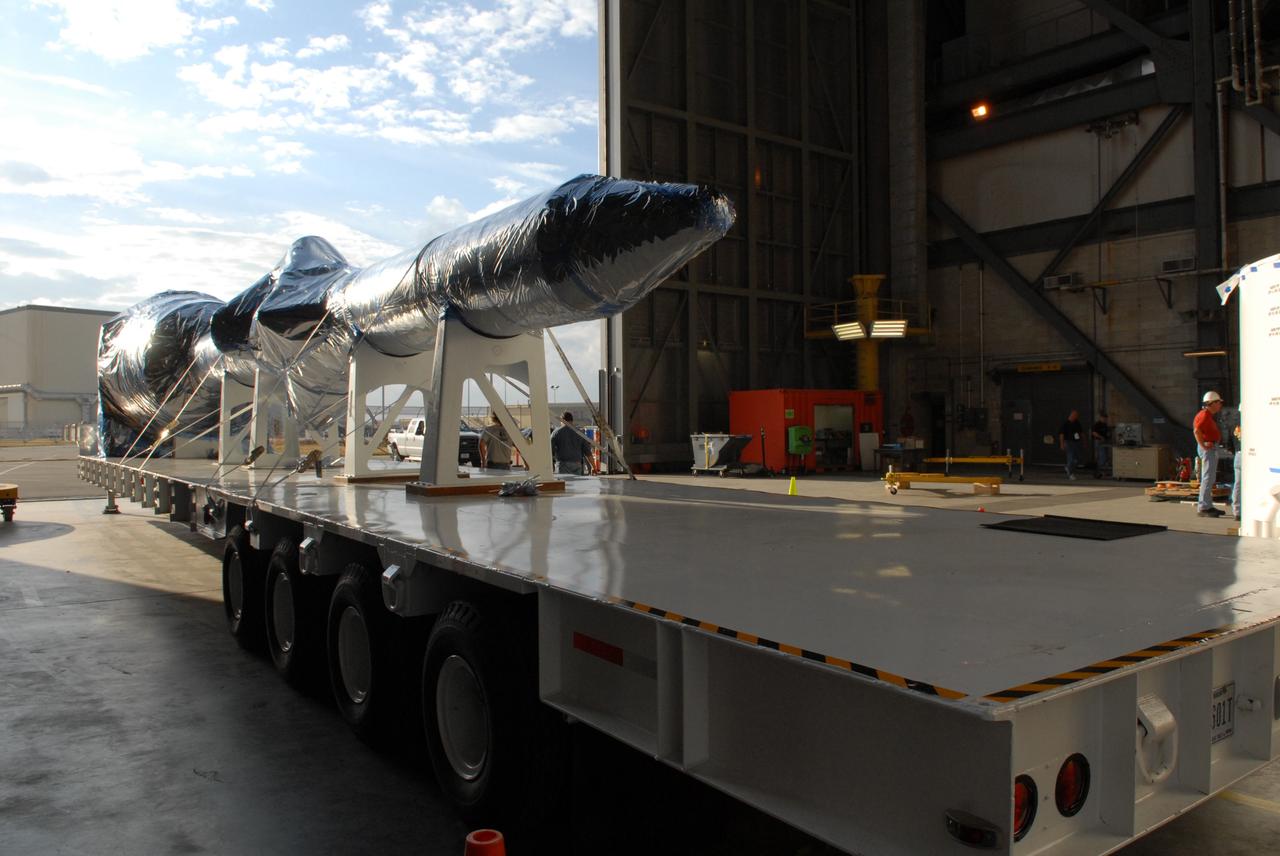
CAPE CANAVERAL, Fla. – The launch abort system for the Ares I-X rocket is moved inside the Vehicle Assembly Building's high bay 4 at NASA's Kennedy Space Center in Florida. The launch abort system joins the precisely machined, full-scale simulator crew module, which, together, will form the tip of the Ares I-X. Ares I-X is the test flight for the Ares I. The I-X flight will provide NASA an early opportunity to test and prove hardware, facilities and ground operations associated with Ares I. The launch of the 321-foot-tall, full-scale Ares I-X, targeted for July 2009, will be the first in a series of unpiloted rocket launches from Kennedy. When fully developed, the 16-foot diameter crew module will furnish living space and reentry protection for the astronauts, while their launch abort system will provide safe evacuation if a launch vehicle failure occurs. Photo credit: NASA/Jack Pfaller
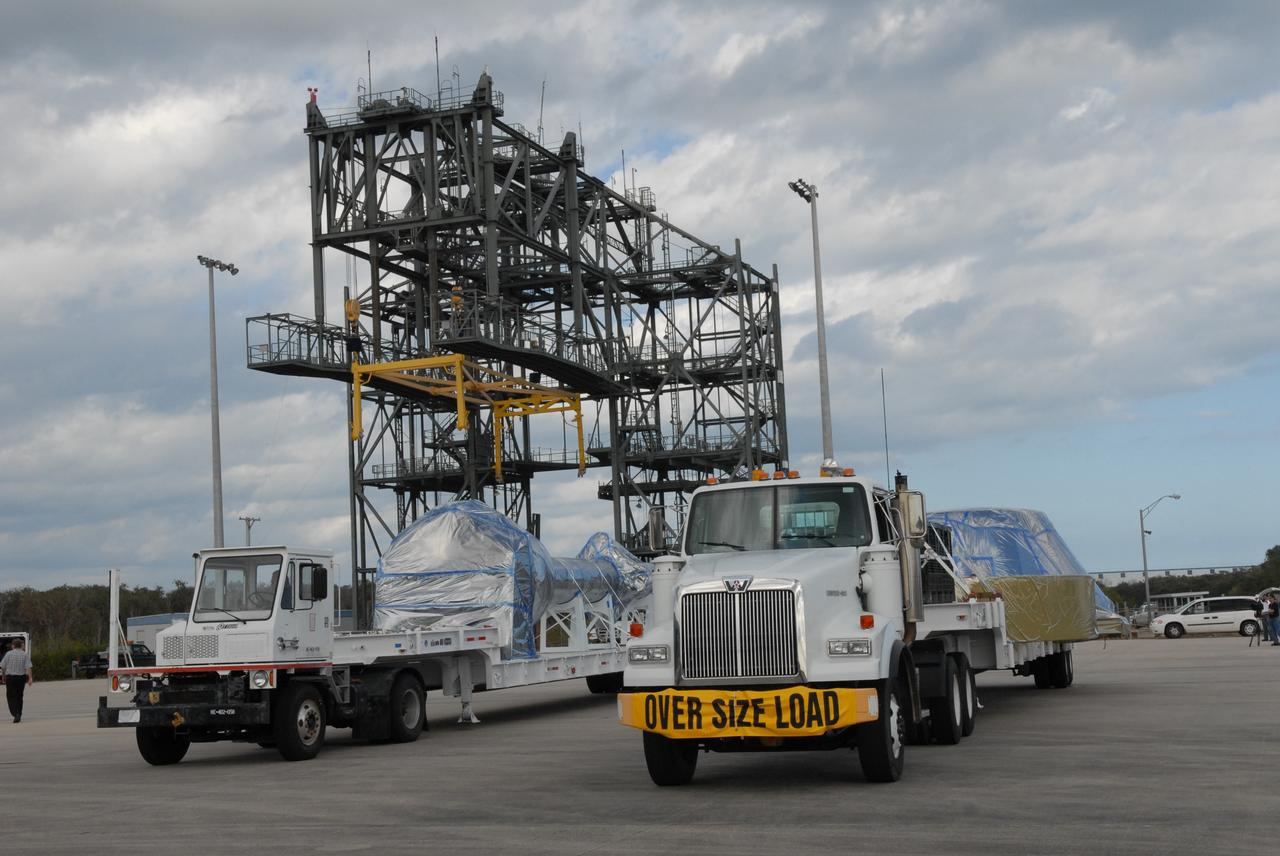
CAPE CANAVERAL, Fla. – At the Shuttle Landing Facility at NASA's Kennedy Space Center in Florida, trucks are ready to transport their cargo to the Vehicle Assembly Building's high bay 4. The cargo consists of a precisely machined, full-scale simulator crew module and launch abort system that will be used in the launch of NASA's Ares I-X rocket. The launch of the 321-foot-tall, full-scale Ares I-X, targeted for July 2009, will be the first in a series of unpiloted rocket launches from Kennedy. When fully developed, the 16-foot diameter crew module will furnish living space and reentry protection for the astronauts, while their launch abort system will provide safe evacuation if a launch vehicle failure occurs. Photo credit: NASA/Jack Pfaller
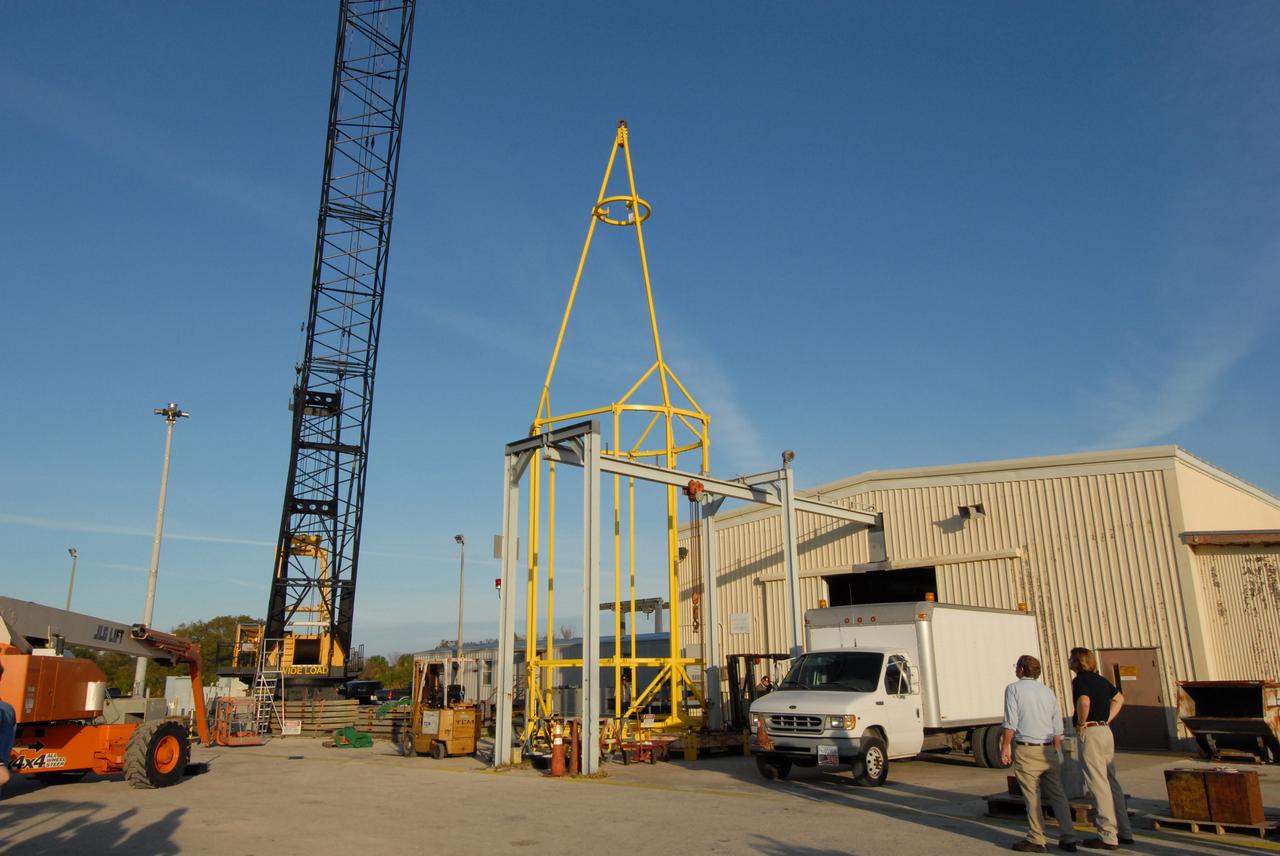
CAPE CANAVERAL, Fla. – The yellow framework at center is the lifting fixture nicknamed the "Birdcage" that will have the ability to lift the Crew Module, or CM, and Launch Abort System, or LAS, assembly for the Ares I-X rocket and to stack and de-stack the assembly from the Service Module/Spacecraft Adapter assembly. It will also have the ability to lift and to stack and de-stack Stack-5 (all of the above components) from the Ares I-X flight test vehicle in the Vehicle Assembly Building at NASA's Kennedy Space Center in Florida. Ares I-X is the test flight for the Ares I. The I-X flight will provide NASA an early opportunity to test and prove hardware, facilities and ground operations associated with Ares I. The launch of the 321-foot-tall, full-scale Ares I-X, targeted for July 2009, will be the first in a series of unpiloted rocket launches from Kennedy. When fully developed, the 16-foot diameter crew module will furnish living space and reentry protection for the astronauts, while their launch abort system will provide safe evacuation if a launch vehicle failure occurs. Photo credit: NASA/Jack Pfaller
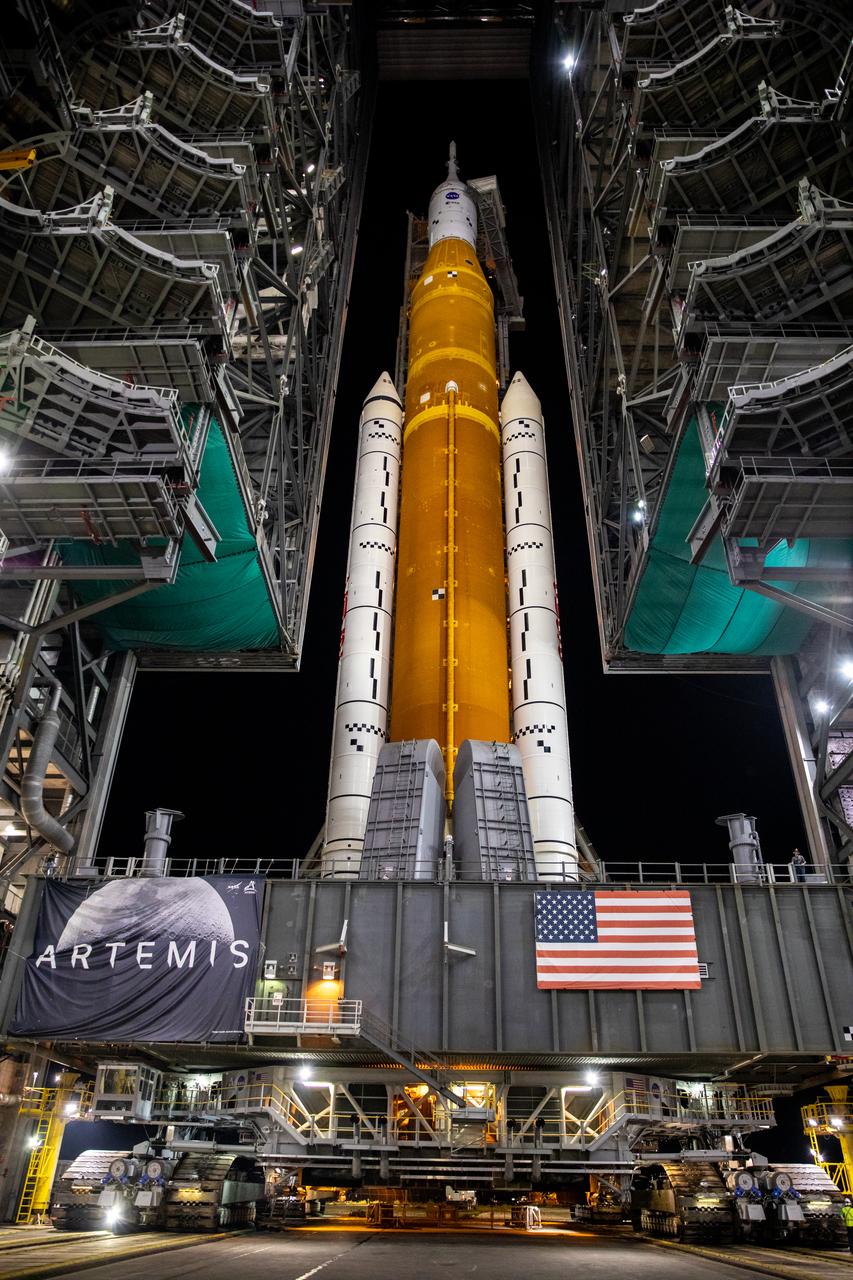
The mobile launcher with NASA’s Space Launch System (SLS) rocket and Orion spacecraft rolls out of the Vehicle Assembly Building’s High Bay 3 to Launch Complex 39B on Tuesday, Aug. 16, 2022, at NASA’s Kennedy Space Center in Florida. As part of the agency’s Artemis I flight test, the fully stacked and integrated SLS rocket and Orion spacecraft is scheduled to liftoff on Monday, Aug. 29. The first in a series of increasingly complex missions, Artemis I will provide a foundation for human deep space exploration and demonstrate our commitment and capability to extend human presence to the Moon and beyond. The primary goal of Artemis I is to thoroughly test the integrated systems before crewed missions by launching Orion atop the SLS rocket, operating the spacecraft in a deep space environment, testing Orion’s heat shield, and recovering the crew module after reentry, descent, and splashdown.

The mobile launcher with NASA’s Space Launch System (SLS) rocket and Orion spacecraft rolls out of the Vehicle Assembly Building’s High Bay 3 to Launch Complex 39B on Tuesday, Aug. 16, 2022, at NASA’s Kennedy Space Center in Florida. As part of the agency’s Artemis I flight test, the fully stacked and integrated SLS rocket and Orion spacecraft is scheduled to liftoff on Monday, Aug. 29. The first in a series of increasingly complex missions, Artemis I will provide a foundation for human deep space exploration and demonstrate our commitment and capability to extend human presence to the Moon and beyond. The primary goal of Artemis I is to thoroughly test the integrated systems before crewed missions by launching Orion atop the SLS rocket, operating the spacecraft in a deep space environment, testing Orion’s heat shield, and recovering the crew module after reentry, descent, and splashdown.
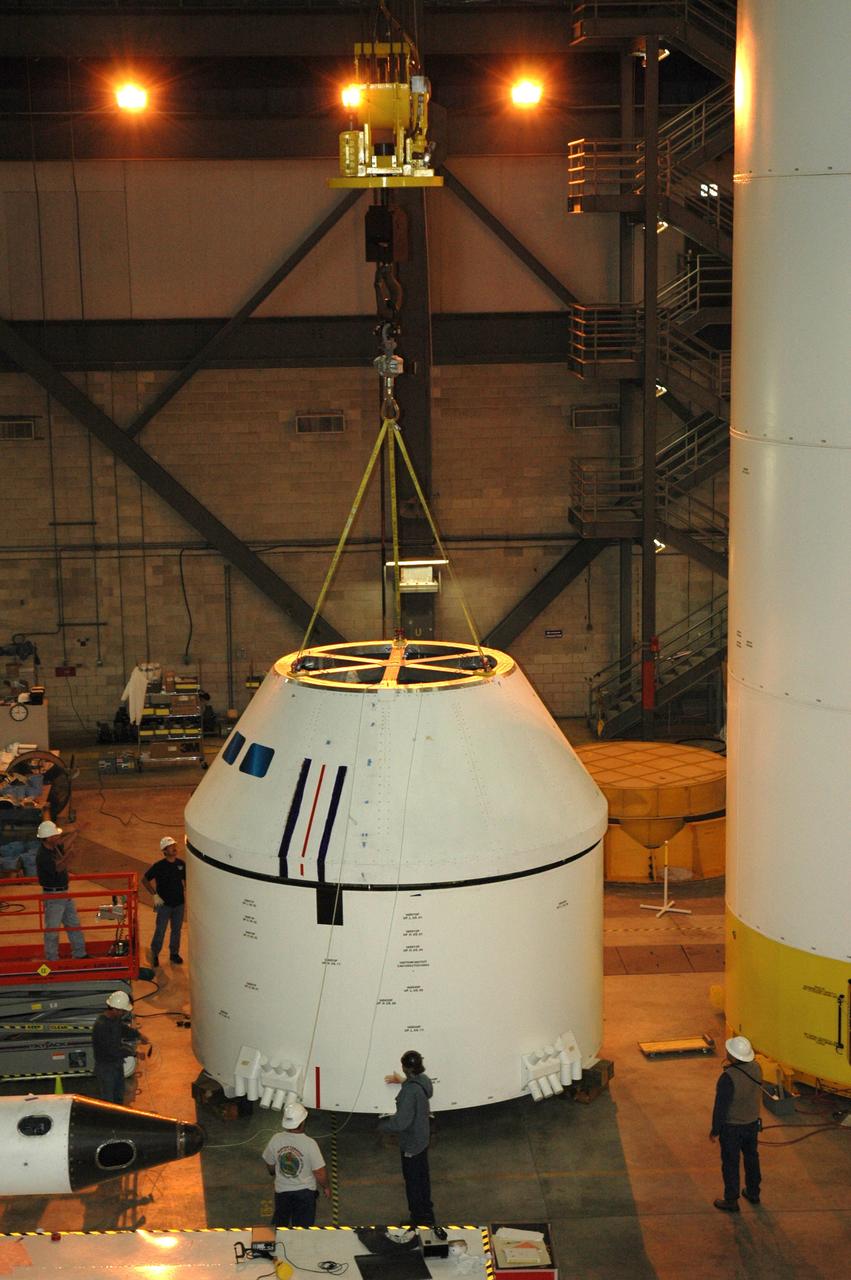
CAPE CANAVERAL, Fla. – In high bay 4 of the Vehicle Assembly Building at NASA's Kennedy Space Center in Florida, a crane removes the Ares I-X crew module simulator from the service module beneath. Ares I-X is the test flight for the Ares I. The I-X flight will provide NASA an early opportunity to test and prove hardware, facilities and ground operations associated with Ares I. The launch of the 327-foot-tall, full-scale Ares I-X, targeted for July 2009, will be the first in a series of unpiloted rocket launches from Kennedy. When fully developed, the 16-foot diameter crew module will furnish living space and reentry protection for the astronauts. Photo credit: NASA/Tim Jacobs
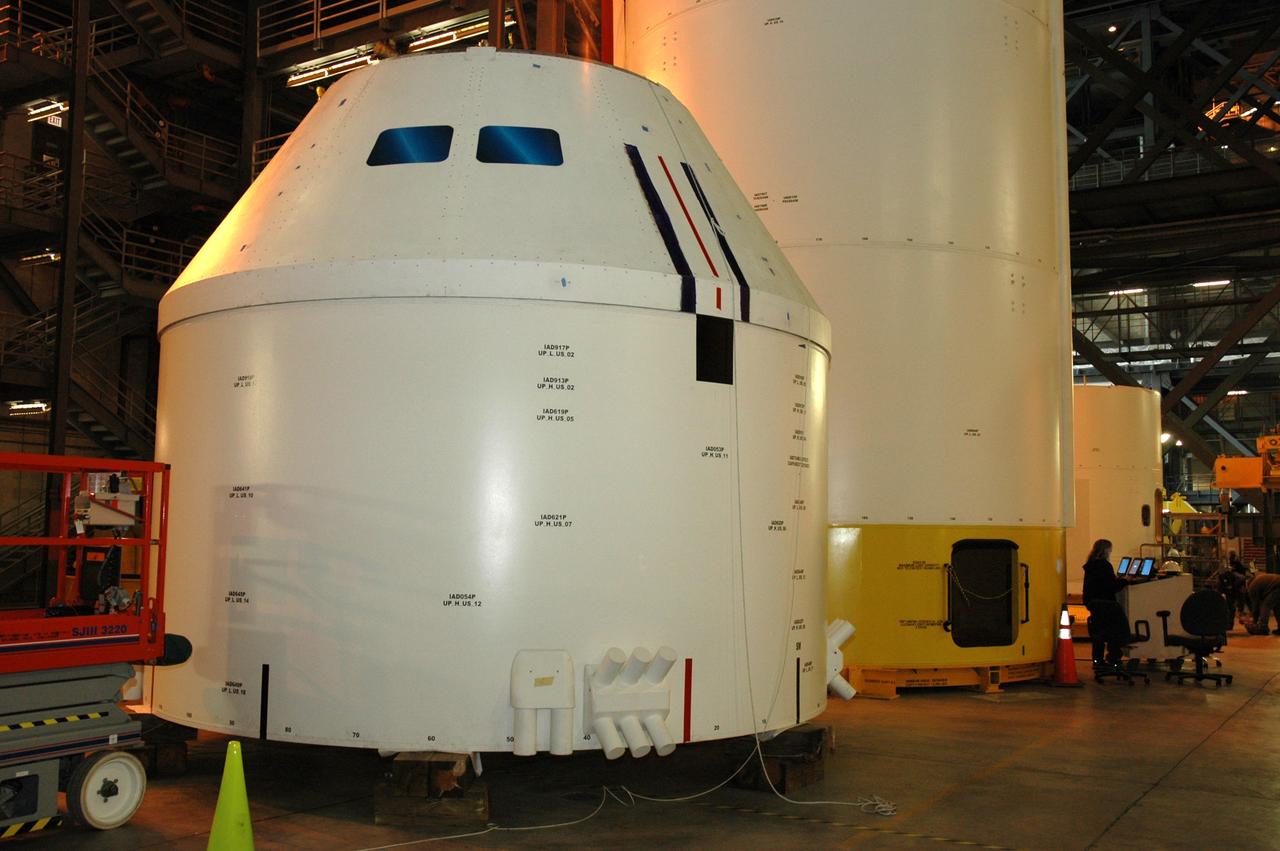
CAPE CANAVERAL, Fla. – In high bay 4 of the Vehicle Assembly Building at NASA's Kennedy Space Center in Florida, the Ares I-X crew/service module simulator (foreground) is being moved following a fit check. Ares I-X is the test flight for the Ares I. The I-X flight will provide NASA an early opportunity to test and prove hardware, facilities and ground operations associated with Ares I. The launch of the 327-foot-tall, full-scale Ares I-X, targeted for July 2009, will be the first in a series of unpiloted rocket launches from Kennedy. When fully developed, the 16-foot diameter crew module will furnish living space and reentry protection for the astronauts. Photo credit: NASA/Tim Jacobs

CAPE CANAVERAL, Fla. – A C-5 aircraft arrives at the Shuttle Landing Facility at NASA's Kennedy Space Center in Florida carrying hardware that will be used in the launch of the Ares I-X rocket. The hardware consists of a precisely machined, full-scale simulator crew module and launch abort system to form the tip of NASA's Ares I-X rocket. The launch of the 321-foot-tall, full-scale Ares I-X, targeted for July 2009, will be the first in a series of unpiloted rocket launches from Kennedy. When fully developed, the 16-foot diameter crew module will furnish living space and reentry protection for the astronauts, while their launch abort system will provide safe evacuation if a launch vehicle failure occurs. Photo credit: NASA/Jack Pfaller
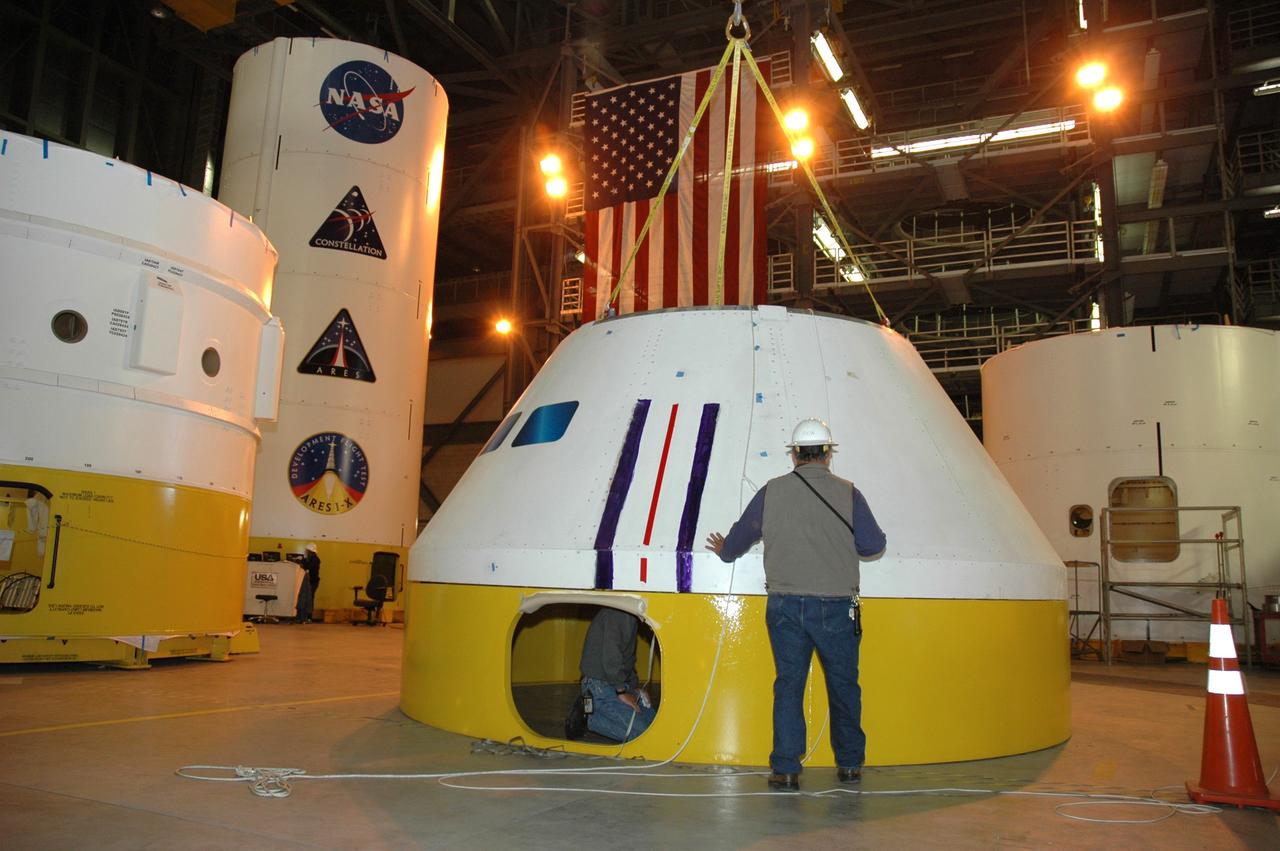
CAPE CANAVERAL, Fla. – In high bay 4 of the Vehicle Assembly Building at NASA's Kennedy Space Center in Florida, workers secure the Ares I-X crew module simulator onto its stand. Ares I-X is the test flight for the Ares I. The I-X flight will provide NASA an early opportunity to test and prove hardware, facilities and ground operations associated with Ares I. The launch of the 327-foot-tall, full-scale Ares I-X, targeted for July 2009, will be the first in a series of unpiloted rocket launches from Kennedy. When fully developed, the 16-foot diameter crew module will furnish living space and reentry protection for the astronauts. Photo credit: NASA/Tim Jacobs
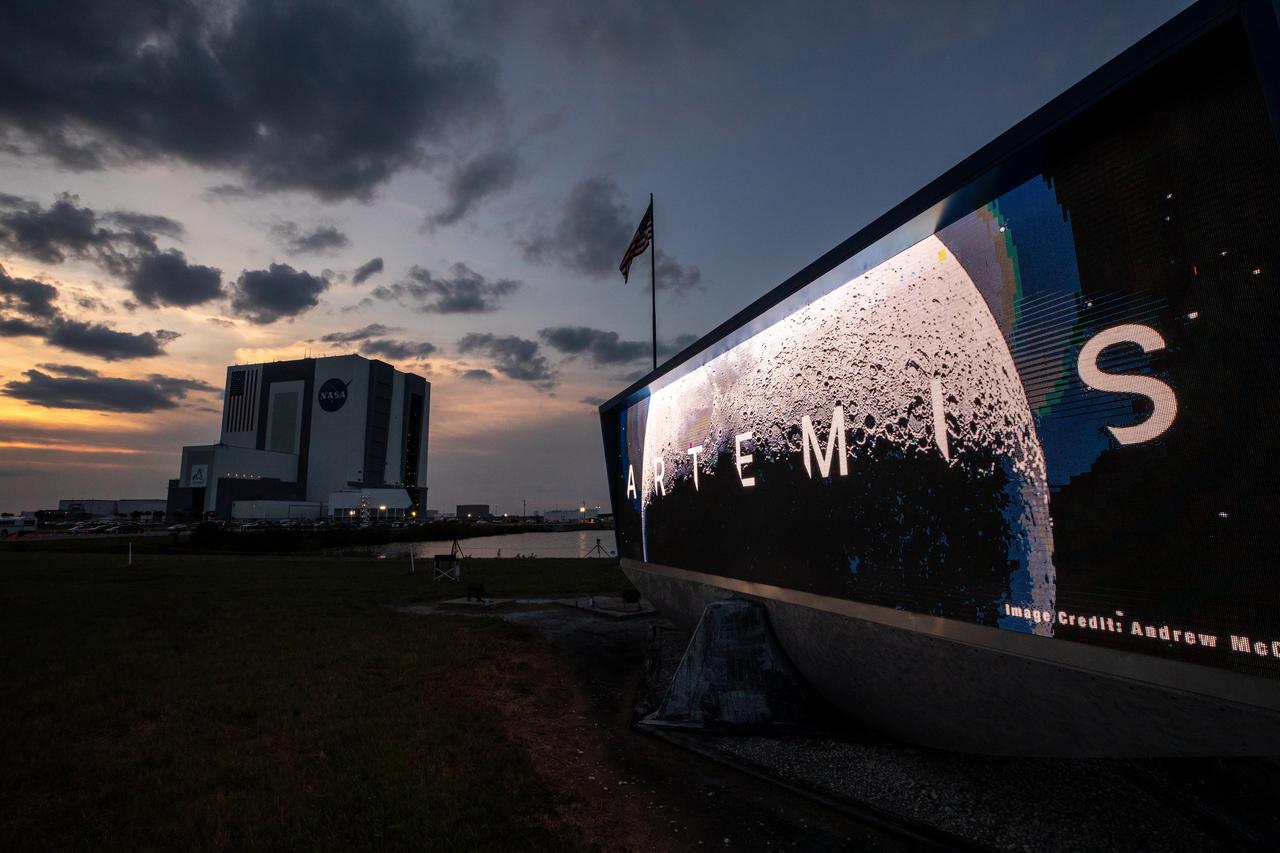
During rollout operations for NASA’s Artemis I Moon rocket, the iconic Vehicle Assembly Building is visible in the background behind the countdown clock at Kennedy Space Center in Florida, Tuesday, Aug. 16, 2022. As part of the agency’s Artemis I flight test, the fully stacked and integrated Space Launch System (SLS) rocket with the Orion spacecraft is scheduled to liftoff on Monday, Aug. 29. The first in a series of increasingly complex missions, Artemis I will provide a foundation for human deep space exploration and demonstrate our commitment and capability to extend human presence to the Moon and beyond. The primary goal of Artemis I is to thoroughly test the integrated systems before crewed missions by launching Orion atop the SLS rocket, operating the spacecraft in a deep space environment, testing Orion’s heat shield, and recovering the crew module after reentry, descent, and splashdown.
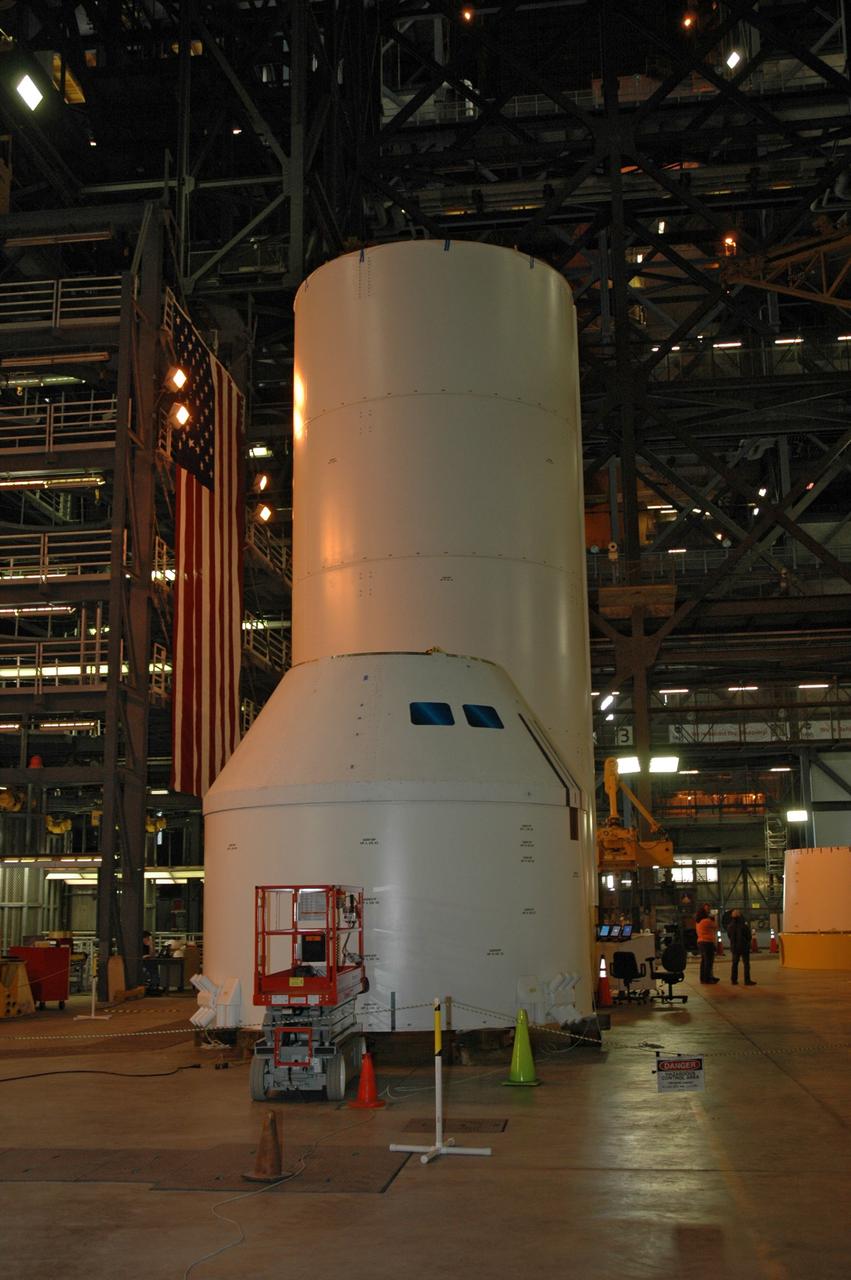
CAPE CANAVERAL, Fla. – In high bay 4 of the Vehicle Assembly Building at NASA's Kennedy Space Center in Florida, the Ares I-X crew/service module simulator (foreground) will be moved following a fit check. Ares I-X is the test flight for the Ares I. The I-X flight will provide NASA an early opportunity to test and prove hardware, facilities and ground operations associated with Ares I. The launch of the 327-foot-tall, full-scale Ares I-X, targeted for July 2009, will be the first in a series of unpiloted rocket launches from Kennedy. When fully developed, the 16-foot diameter crew module will furnish living space and reentry protection for the astronauts. Photo credit: NASA/Tim Jacobs
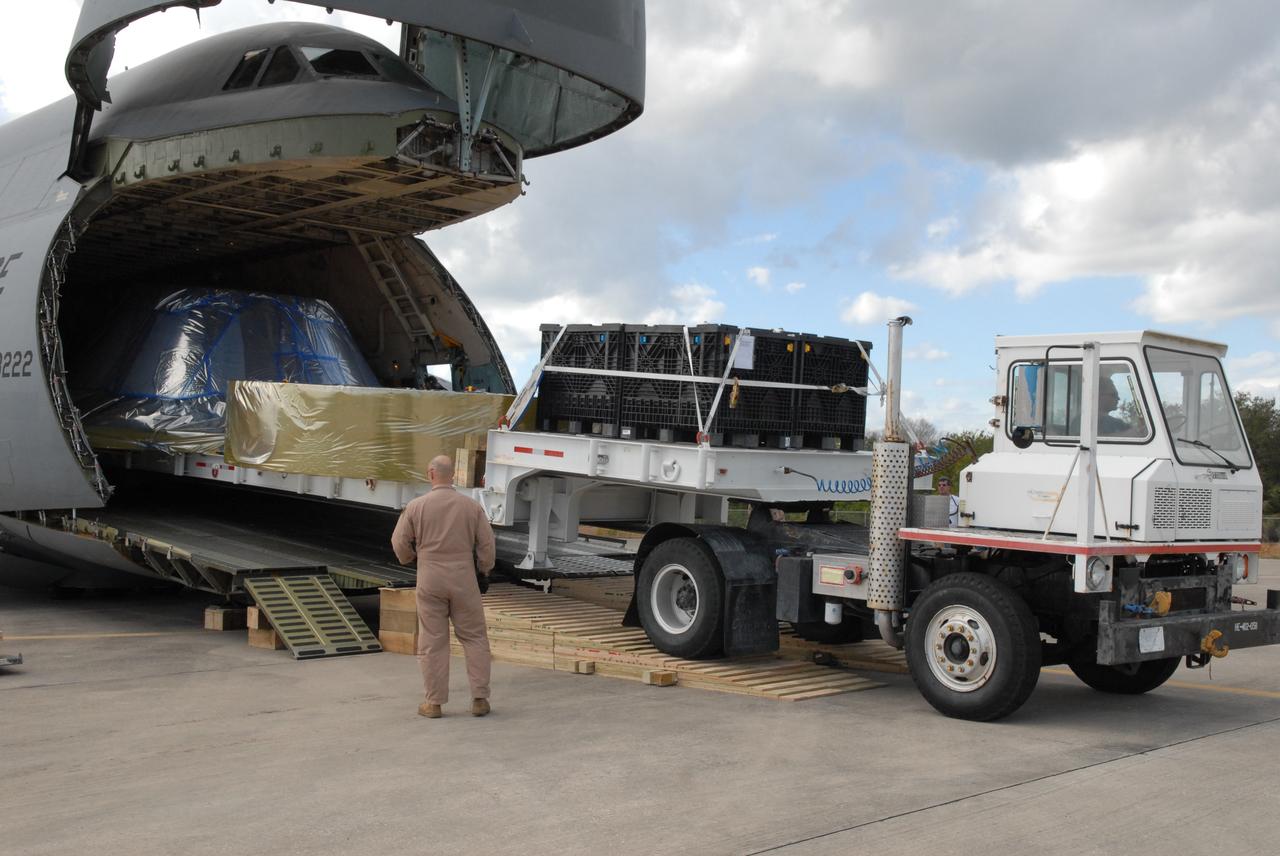
CAPE CANAVERAL, Fla. – At the Shuttle Landing Facility at NASA's Kennedy Space Center in Florida, hardware that will be used in the launch of the Ares I-X rocket is being offloaded from the C-5 aircraft. The hardware consists of a precisely machined, full-scale simulator crew module and launch abort system to form the tip of NASA's Ares I-X rocket. The launch of the 321-foot-tall, full-scale Ares I-X, targeted for July 2009, will be the first in a series of unpiloted rocket launches from Kennedy. When fully developed, the 16-foot diameter crew module will furnish living space and reentry protection for the astronauts, while their launch abort system will provide safe evacuation if a launch vehicle failure occurs. Photo credit: NASA/Jack Pfaller
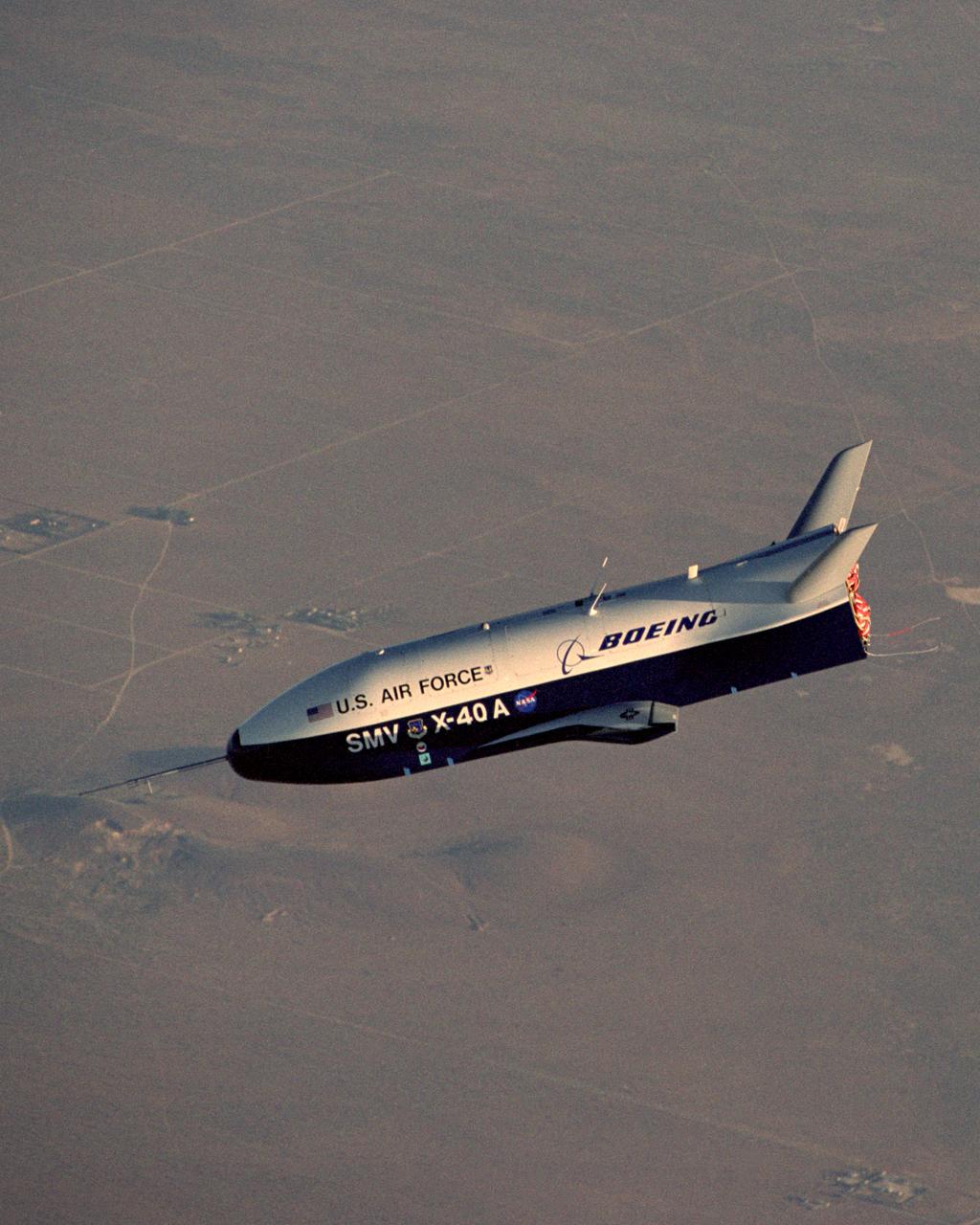
X-40A Free Flight #5. The unpowered X-40A, an 85 percent scale risk reduction version of the proposed X-37, proved the capability of an autonomous flight control and landing system in a series of glide flights at NASA's Dryden Flight Research Center in California. NASA's Marshall Space Flight Center in Huntsville, Alabama, manages the X-37 project. At Dryden, the X-40A underwent a series of ground and air tests to reduce possible risks to the larger X-37, including drop tests from a helicopter to check guidance and navigation systems planned for use in the X-37. The X-37 is designed to demonstrate technologies in the orbital and reentry environments for next-generation reusable launch vehicles that will increase both safety and reliability, while reducing launch costs from $10,000 per pound to $1,000 per pound.
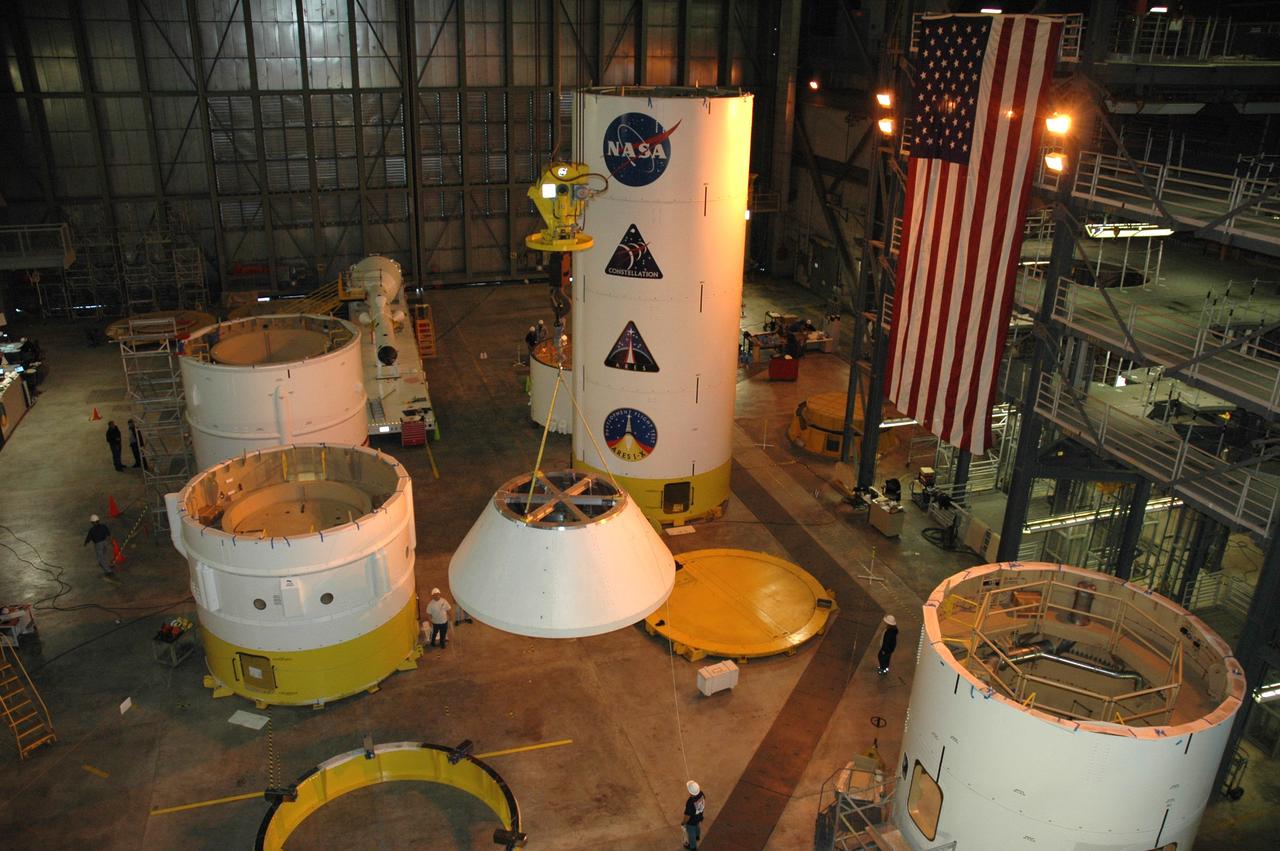
CAPE CANAVERAL, Fla. – In high bay 4 of the Vehicle Assembly Building at NASA's Kennedy Space Center in Florida, a crane moves the Ares I-X crew module simulator toward a stand at right. Other Ares I-X segments are stacked around the floor of the bay. Ares I-X is the test flight for the Ares I. The I-X flight will provide NASA an early opportunity to test and prove hardware, facilities and ground operations associated with Ares I. The launch of the 327-foot-tall, full-scale Ares I-X, targeted for July 2009, will be the first in a series of unpiloted rocket launches from Kennedy. When fully developed, the 16-foot diameter crew module will furnish living space and reentry protection for the astronauts. Photo credit: NASA/Tim Jacobs
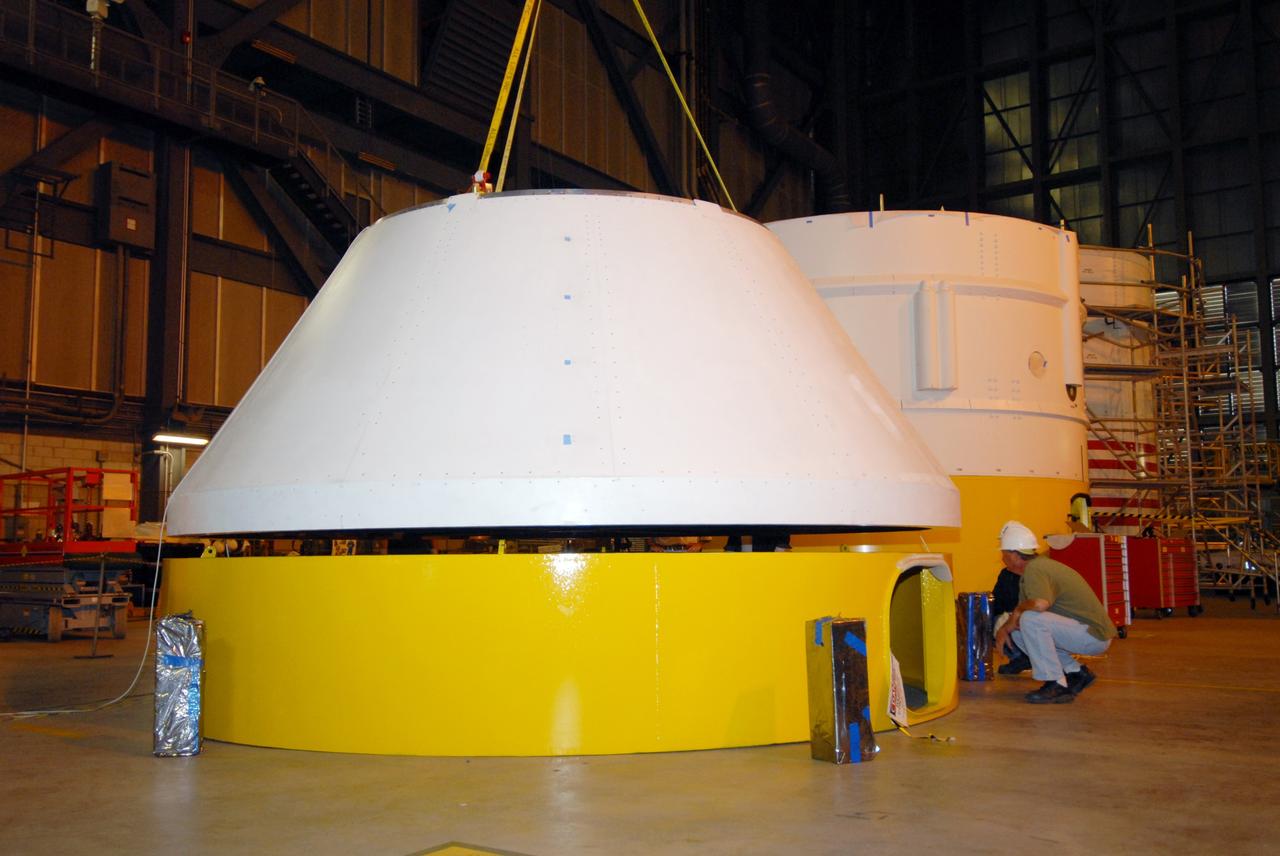
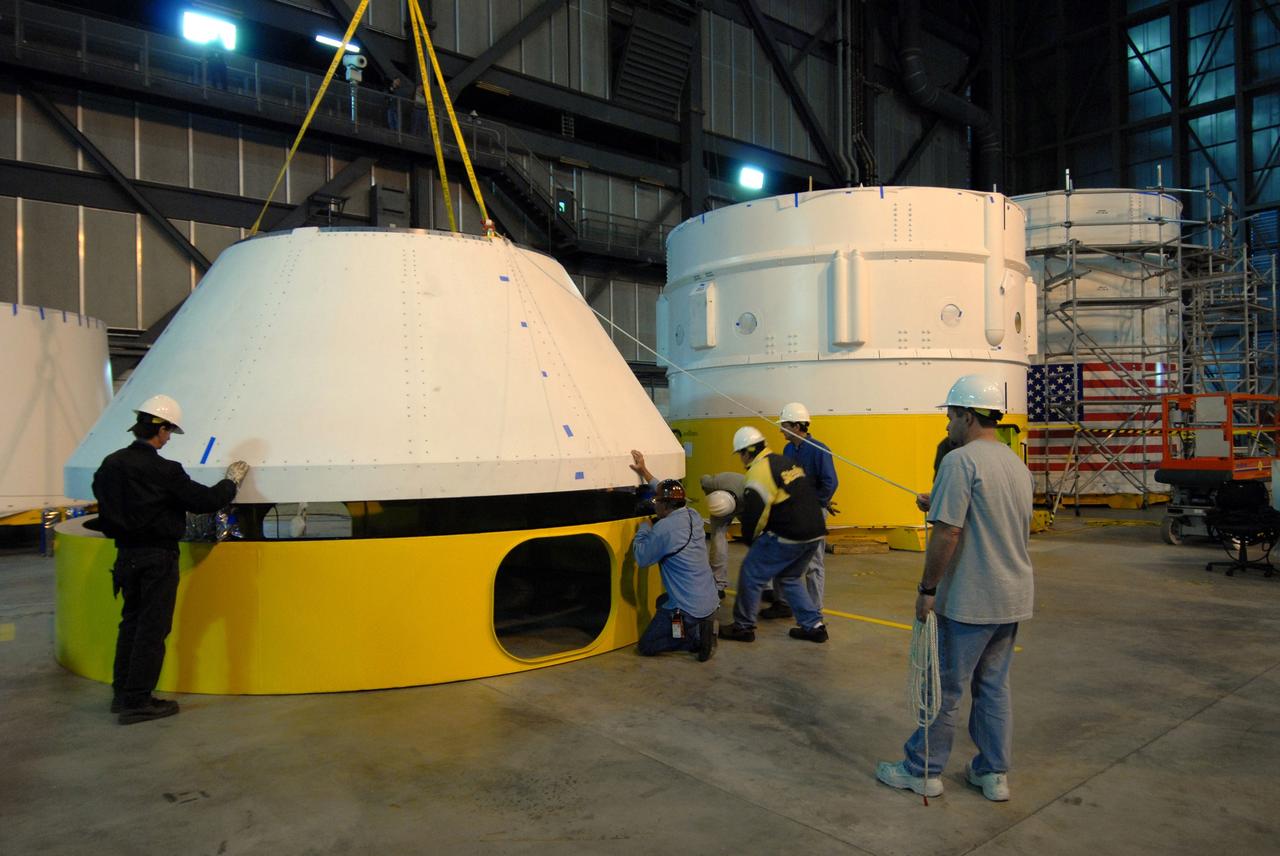
CAPE CANAVERAL, Fla. – In high bay 4 of the Vehicle Assembly Building at NASA's Kennedy Space Center, workers lift the Ares I-X crew module mock-up from a work stand for a fit check with a mock-up of the service module. When fully developed, the 16-foot diameter crew module will furnish living space and reentry protection for future astronauts, and the service module’s main engine will be used to break out of lunar orbit for the return trip to Earth. Ares I-X is the test flight for the Ares I, which is part of the Constellation Program to return men to the moon and beyond. The I-X flight will provide NASA an early opportunity to test and prove hardware, facilities and ground operations associated with Ares I launches. Targeted for the summer of 2009, the launch of the full-scale Ares I-X will be the first in a series of unpiloted rocket launches from Kennedy. Photo credit: NASA/Jack Pfaller
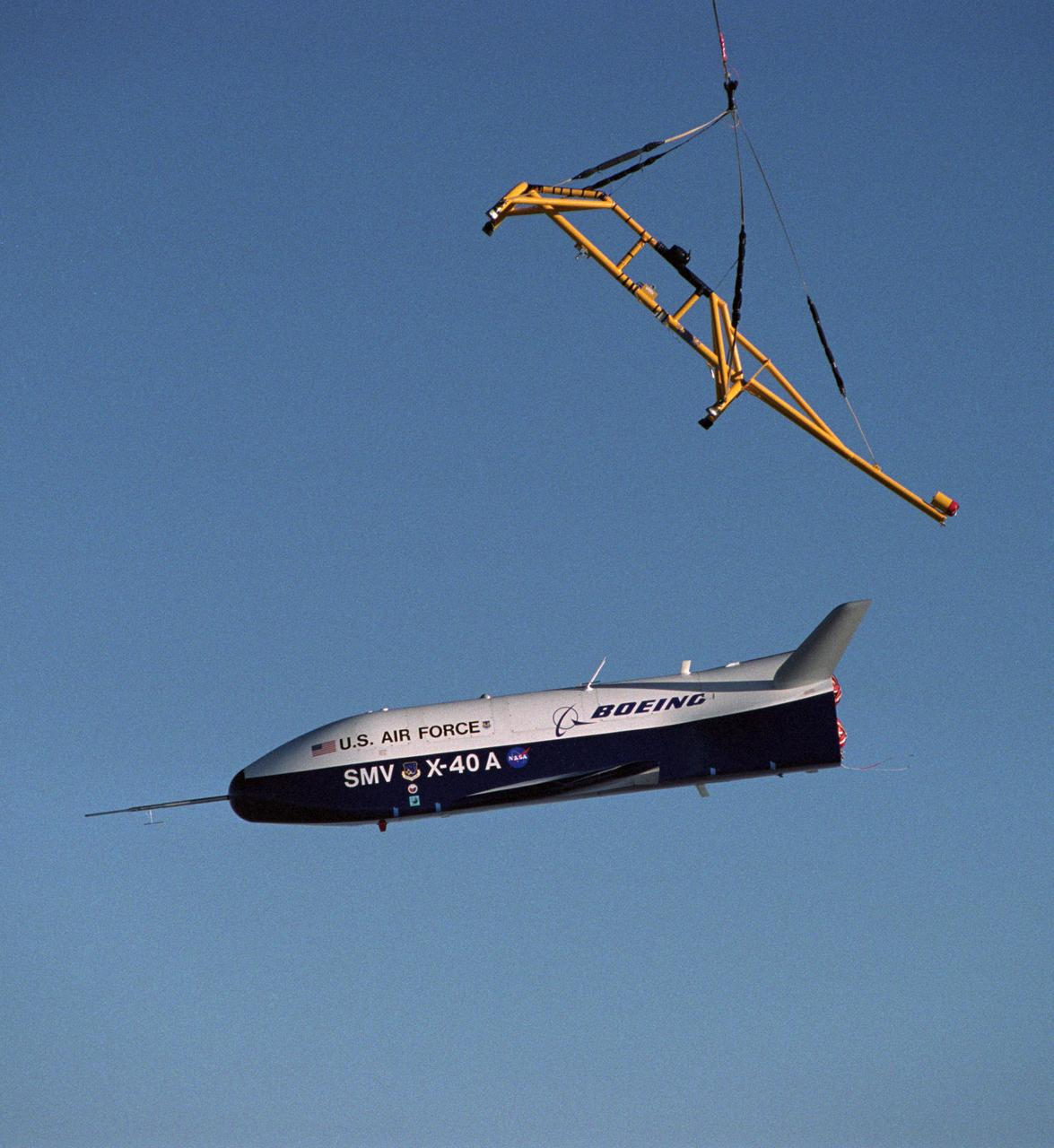
X-40A Free Flight #5. The unpowered X-40A, an 85 percent scale risk reduction version of the proposed X-37, proved the capability of an autonomous flight control and landing system in a series of glide flights at NASA's Dryden Flight Research Center in California. NASA's Marshall Space Flight Center in Huntsville, Alabama, manages the X-37 project. At Dryden, the X-40A underwent a series of ground and air tests to reduce possible risks to the larger X-37, including drop tests from a helicopter to check guidance and navigation systems planned for use in the X-37. The X-37 is designed to demonstrate technologies in the orbital and reentry environments for next-generation reusable launch vehicles that will increase both safety and reliability, while reducing launch costs from $10,000 per pound to $1,000 per pound.
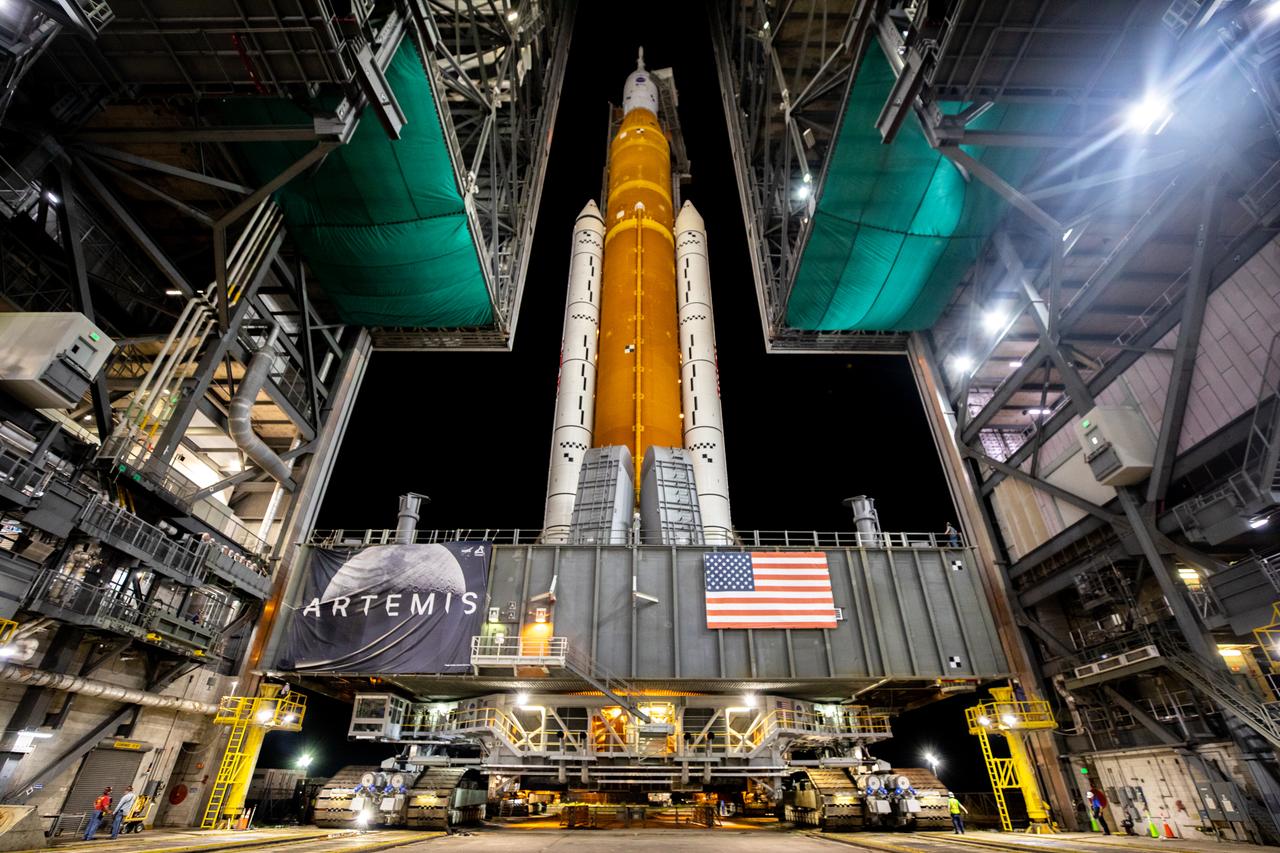
The mobile launcher with NASA’s Space Launch System (SLS) rocket and Orion spacecraft rolls out of the Vehicle Assembly Building’s High Bay 3 to Launch Complex 39B on Tuesday, Aug. 16, 2022, at NASA’s Kennedy Space Center in Florida. As part of the agency’s Artemis I flight test, the fully stacked and integrated SLS rocket and Orion spacecraft is scheduled to liftoff on Monday, Aug. 29. The first in a series of increasingly complex missions, Artemis I will provide a foundation for human deep space exploration and demonstrate our commitment and capability to extend human presence to the Moon and beyond. The primary goal of Artemis I is to thoroughly test the integrated systems before crewed missions by launching Orion atop the SLS rocket, operating the spacecraft in a deep space environment, testing Orion’s heat shield, and recovering the crew module after reentry, descent, and splashdown.
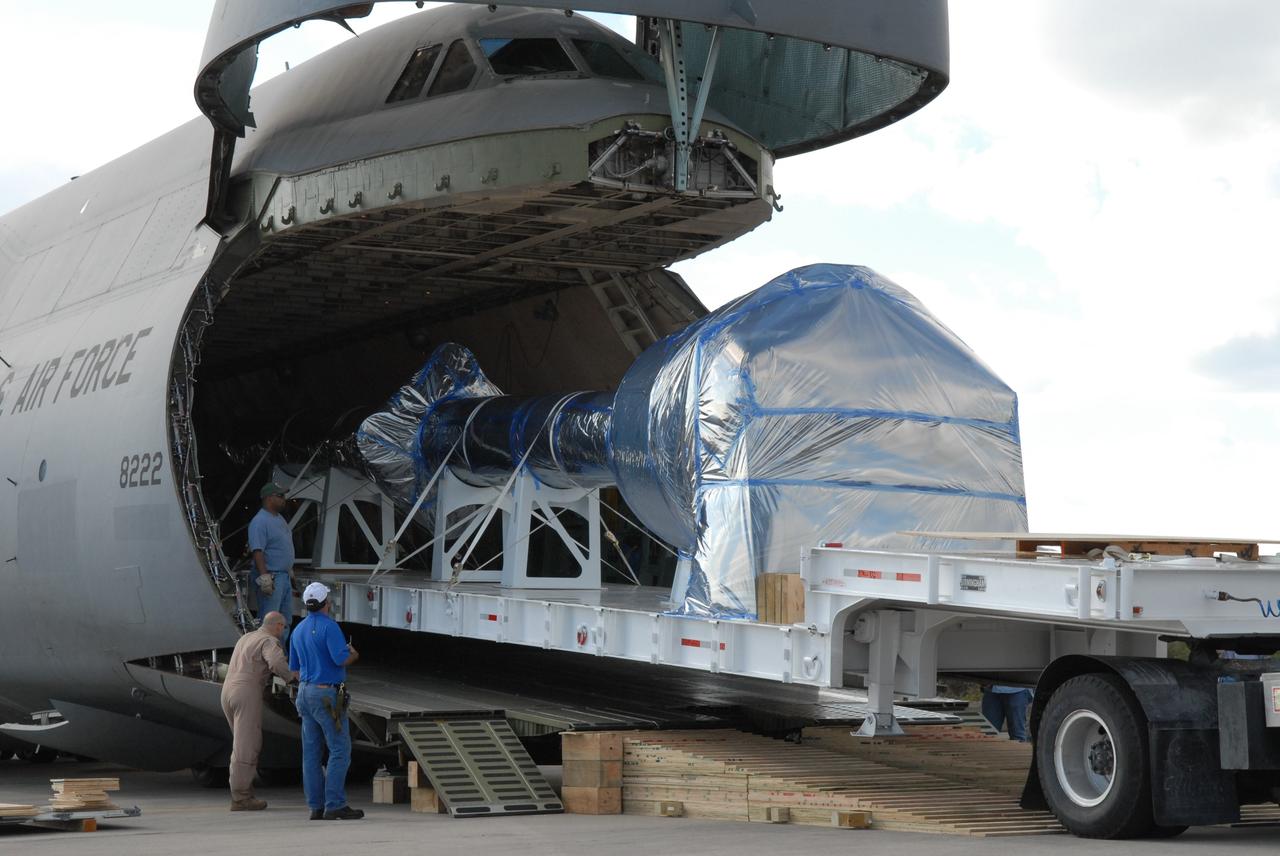
CAPE CANAVERAL, Fla. – At the Shuttle Landing Facility at NASA's Kennedy Space Center in Florida, hardware that will be used in the launch of the Ares I-X rocket is being offloaded from the C-5 aircraft. The hardware consists of a precisely machined, full-scale simulator crew module and launch abort system to form the tip of NASA's Ares I-X rocket. The launch of the 321-foot-tall, full-scale Ares I-X, targeted for July 2009, will be the first in a series of unpiloted rocket launches from Kennedy. When fully developed, the 16-foot diameter crew module will furnish living space and reentry protection for the astronauts, while their launch abort system will provide safe evacuation if a launch vehicle failure occurs. Photo credit: NASA/Jack Pfaller
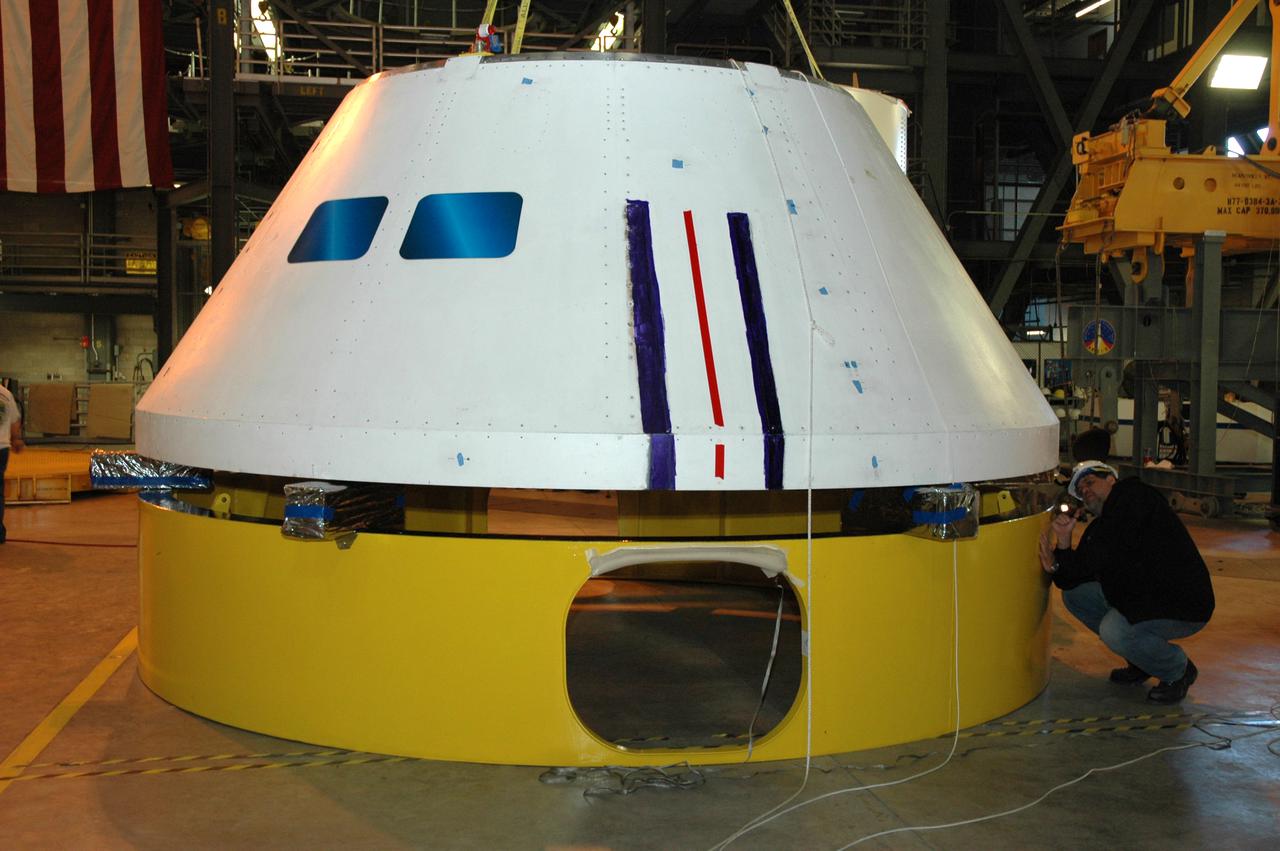
CAPE CANAVERAL, Fla. – In high bay 4 of the Vehicle Assembly Building at NASA's Kennedy Space Center, the Ares I-X crew module mock-up is positioned onto a mock-up of the service module to determine that the pieces of hardware are a perfect fit. When fully developed, the 16-foot diameter crew module will furnish living space and reentry protection for future astronauts, and the service module’s main engine will be used to break out of lunar orbit for the return trip to Earth. Ares I-X is the test flight for the Ares I, which is part of the Constellation Program to return men to the moon and beyond. The I-X flight will provide NASA an early opportunity to test and prove hardware, facilities and ground operations associated with Ares I launches. Targeted for the summer of 2009, the launch of the full-scale Ares I-X will be the first in a series of unpiloted rocket launches from Kennedy. Photo credit: NASA/Jack Pfaller
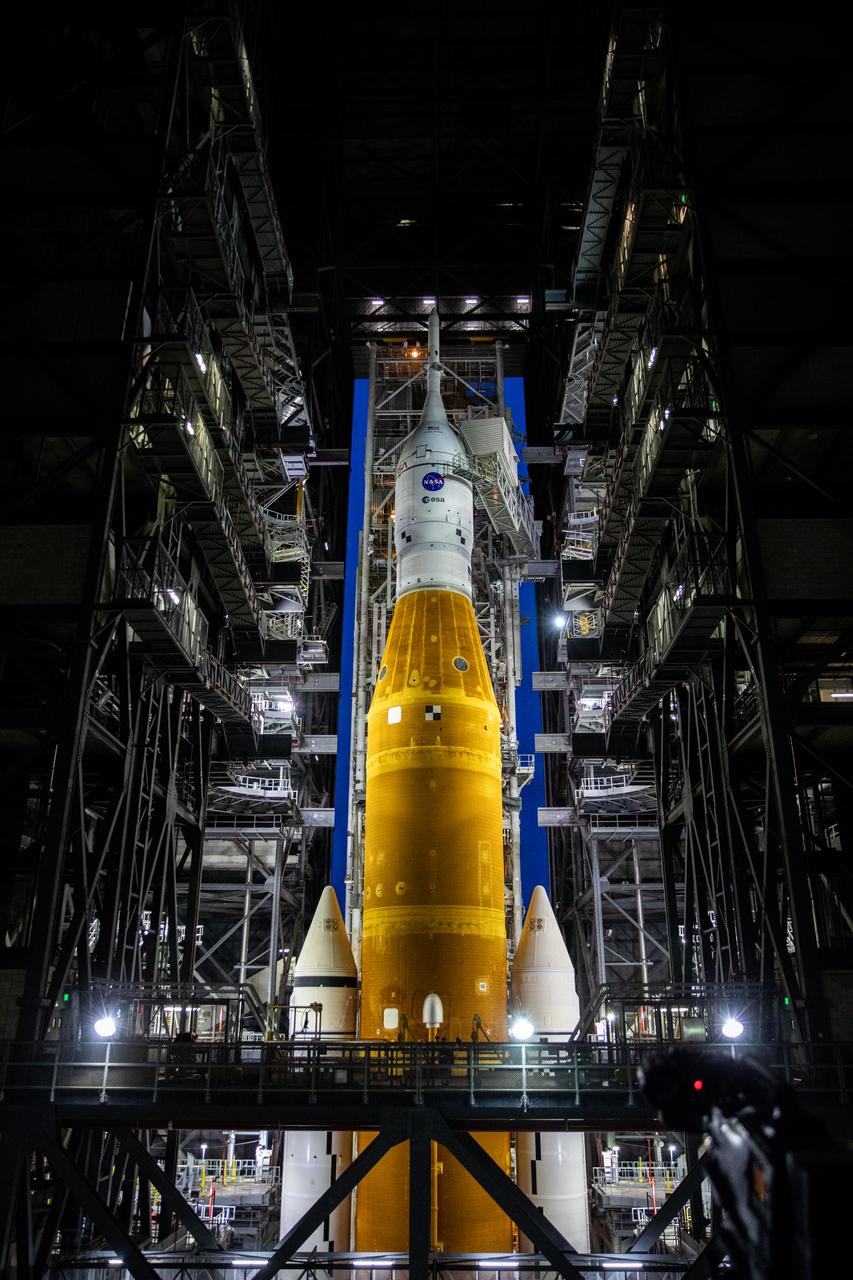
The mobile launcher with NASA’s Space Launch System (SLS) rocket and Orion spacecraft aboard is seen inside the Vehicle Assembly Building during the opening of the doors to High Bay 3 before rolling out to Launch Complex 39B for launch, Tuesday, Aug. 16, 2022, at NASA’s Kennedy Space Center in Florida. As part of the agency’s Artemis I flight test, the fully stacked and integrated SLS rocket and Orion spacecraft is scheduled to liftoff on Monday, Aug. 29. The first in a series of increasingly complex missions, Artemis I will provide a foundation for human deep space exploration and demonstrate our commitment and capability to extend human presence to the Moon and beyond. The primary goal of Artemis I is to thoroughly test the integrated systems before crewed missions by launching Orion atop the SLS rocket, operating the spacecraft in a deep space environment, testing Orion’s heat shield, and recovering the crew module after reentry, descent, and splashdown.
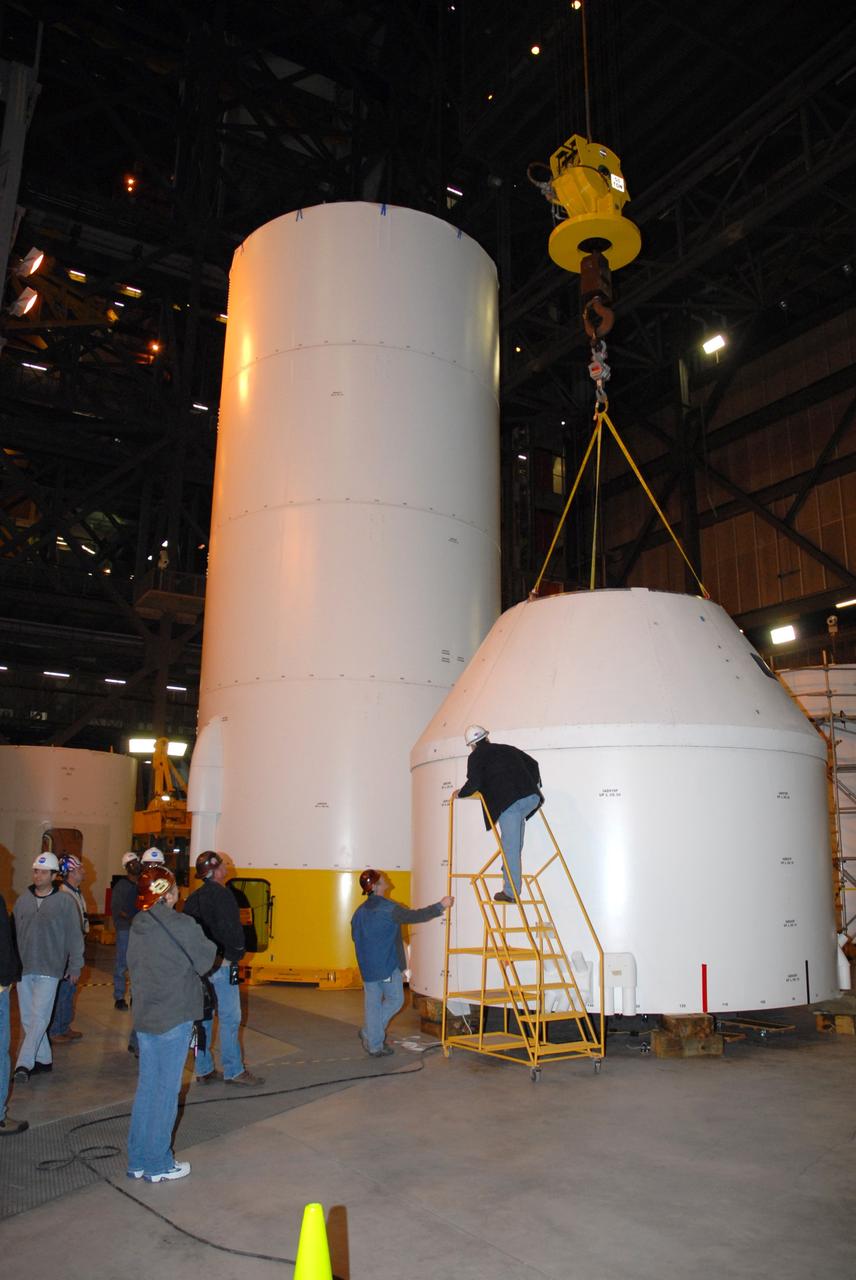
CAPE CANAVERAL, Fla. – – In high bay 4 of the Vehicle Assembly Building at NASA's Kennedy Space Center in Florida, a worker examines the Ares I-X crew module simulator as it is lowered onto a stand. Ares I-X is the test flight for the Ares I. The I-X flight will provide NASA an early opportunity to test and prove hardware, facilities and ground operations associated with Ares I. The launch of the 327-foot-tall, full-scale Ares I-X, targeted for July 2009, will be the first in a series of unpiloted rocket launches from Kennedy. When fully developed, the 16-foot diameter crew module will furnish living space and reentry protection for the astronauts. Photo credit: NASA_Tim Jacobs
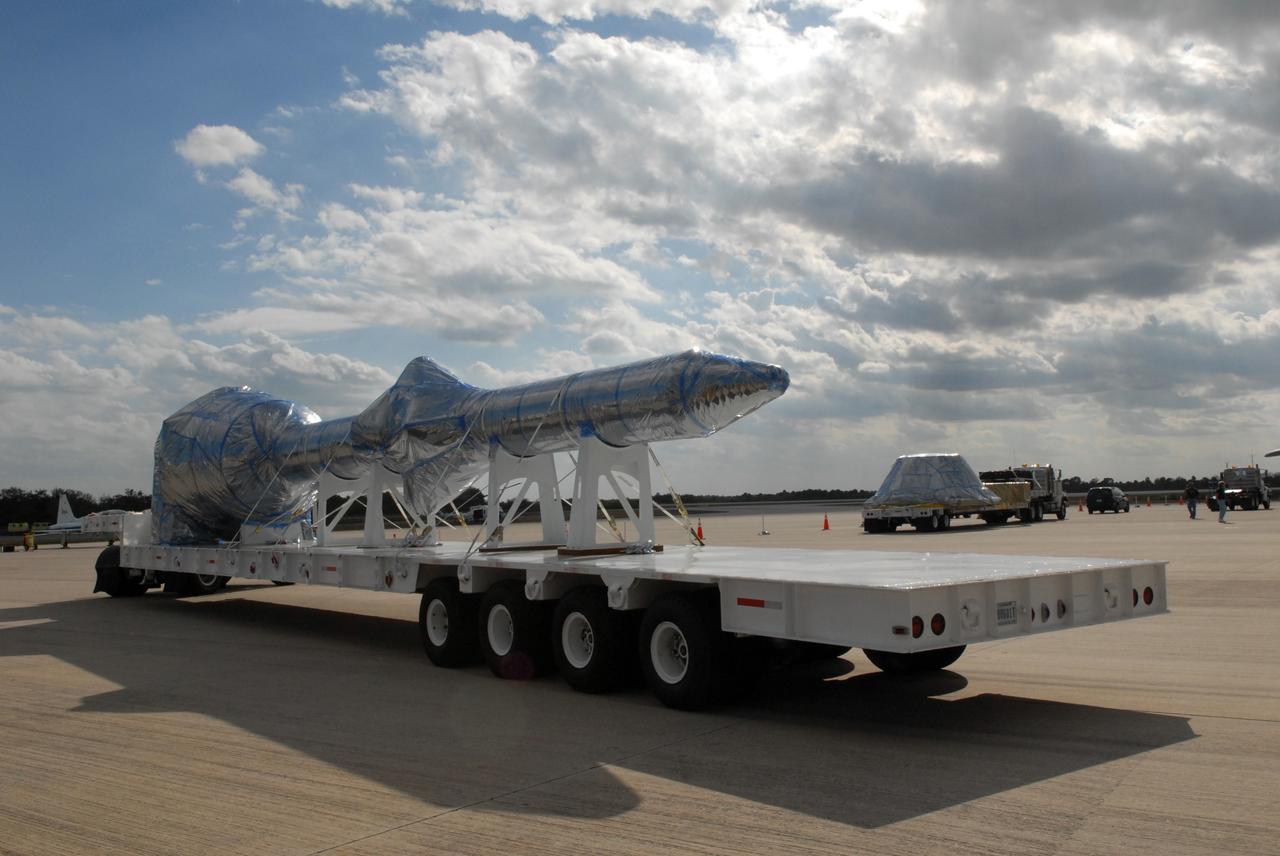
CAPE CANAVERAL, Fla. – At the Shuttle Landing Facility at NASA's Kennedy Space Center in Florida, hardware that will be used in the launch of the Ares I-X rocket is being offloaded from the C-5 aircraft. The hardware consists of a precisely machined, full-scale simulator crew module and launch abort system to form the tip of NASA's Ares I-X rocket. The launch of the 321-foot-tall, full-scale Ares I-X, targeted for July 2009, will be the first in a series of unpiloted rocket launches from Kennedy. When fully developed, the 16-foot diameter crew module will furnish living space and reentry protection for the astronauts, while their launch abort system will provide safe evacuation if a launch vehicle failure occurs. Photo credit: NASA/Jack Pfaller
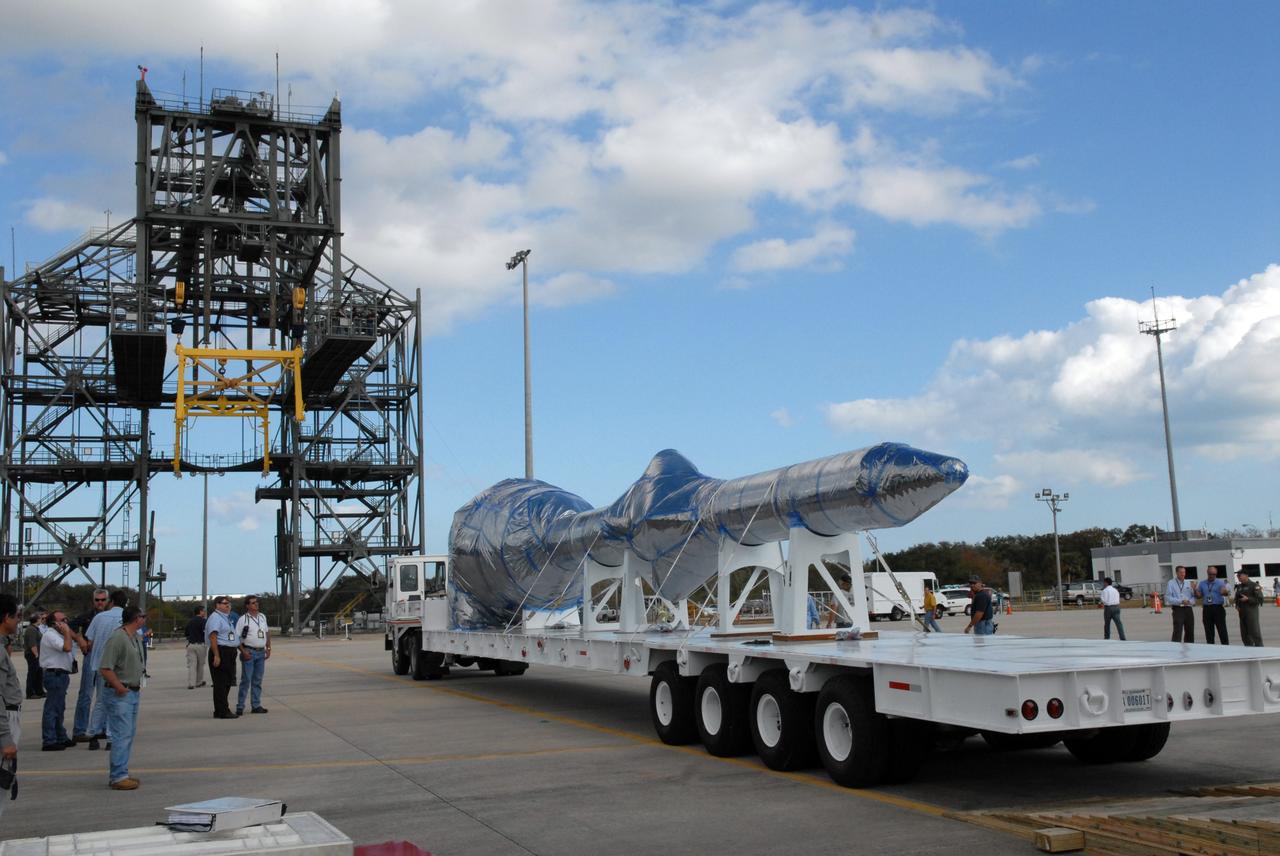
CAPE CANAVERAL, Fla. – At the Shuttle Landing Facility at NASA's Kennedy Space Center in Florida, hardware that will be used in the launch of the Ares I-X rocket is being offloaded from the C-5 aircraft. The hardware consists of a precisely machined, full-scale simulator crew module and launch abort system to form the tip of NASA's Ares I-X rocket. The launch of the 321-foot-tall, full-scale Ares I-X, targeted for July 2009, will be the first in a series of unpiloted rocket launches from Kennedy. When fully developed, the 16-foot diameter crew module will furnish living space and reentry protection for the astronauts, while their launch abort system will provide safe evacuation if a launch vehicle failure occurs. Photo credit: NASA/Jack Pfaller
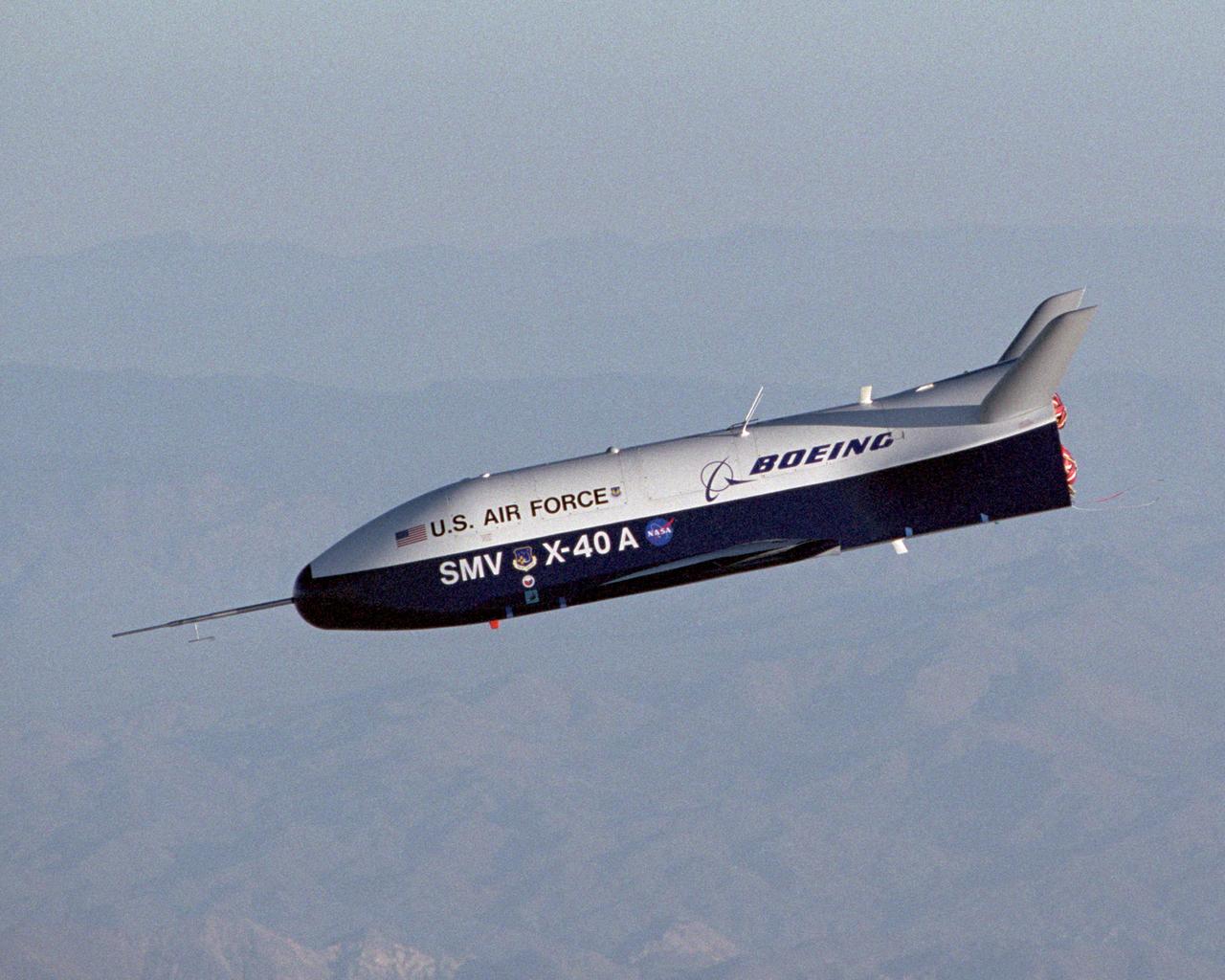
X-40A Free Flight #5. The unpowered X-40A, an 85 percent scale risk reduction version of the proposed X-37, proved the capability of an autonomous flight control and landing system in a series of glide flights at NASA's Dryden Flight Research Center in California. NASA's Marshall Space Flight Center in Huntsville, Alabama, manages the X-37 project. At Dryden, the X-40A underwent a series of ground and air tests to reduce possible risks to the larger X-37, including drop tests from a helicopter to check guidance and navigation systems planned for use in the X-37. The X-37 is designed to demonstrate technologies in the orbital and reentry environments for next-generation reusable launch vehicles that will increase both safety and reliability, while reducing launch costs from $10,000 per pound to $1,000 per pound.

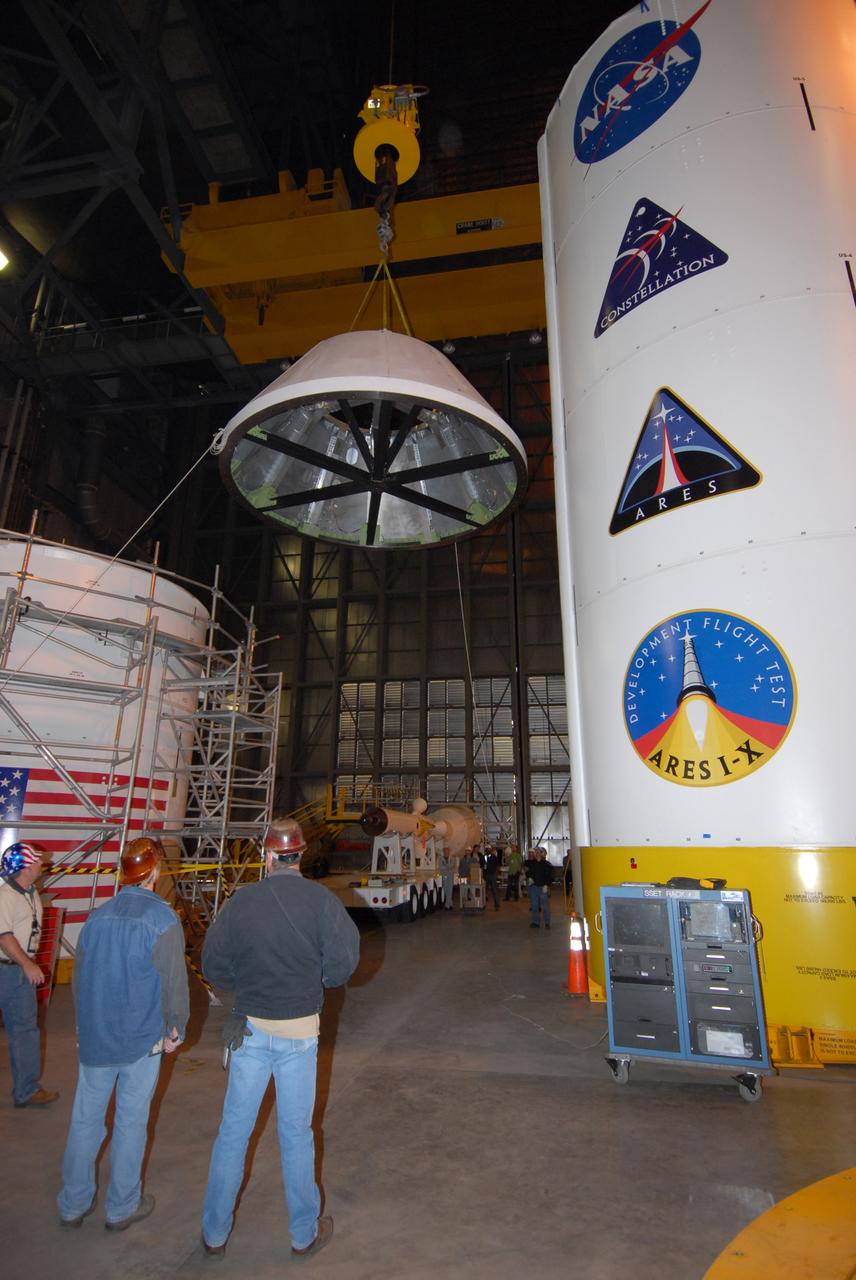
CAPE CANAVERAL, Fla. – In high bay 4 of the Vehicle Assembly Building at NASA's Kennedy Space Center in Florida, the newly arrived simulator crew module for the Ares I-X rocket is moved to a work stand. Ares I-X is the test flight for the Ares I. The I-X flight will provide NASA an early opportunity to test and prove hardware, facilities and ground operations associated with Ares I. The launch of the 321-foot-tall, full-scale Ares I-X, targeted for July 2009, will be the first in a series of unpiloted rocket launches from Kennedy. When fully developed, the 16-foot diameter crew module will furnish living space and reentry protection for the astronauts. Photo credit: NASA/Jack Pfaller
CAPE CANAVERAL, Fla. – In high bay 4 of the Vehicle Assembly Building at NASA's Kennedy Space Center, the Ares I-X crew module mock-up hangs suspended from a crane as it is moved for a fit check with a mock-up of the service module. When fully developed, the 16-foot diameter crew module will furnish living space and reentry protection for future astronauts, and the service module’s main engine will be used to break out of lunar orbit for the return trip to Earth. Ares I-X is the test flight for the Ares I, which is part of the Constellation Program to return men to the moon and beyond. The I-X flight will provide NASA an early opportunity to test and prove hardware, facilities and ground operations associated with Ares I launches. Targeted for the summer of 2009, the launch of the full-scale Ares I-X will be the first in a series of unpiloted rocket launches from Kennedy. Photo credit: NASA/Jack Pfaller
CAPE CANAVERAL, Fla. – In high bay 4 of the Vehicle Assembly Building at NASA's Kennedy Space Center in Florida, the newly arrived simulator crew module for the Ares I-X rocket is lowered onto a work stand. Ares I-X is the test flight for the Ares I. The I-X flight will provide NASA an early opportunity to test and prove hardware, facilities and ground operations associated with Ares I. The launch of the 321-foot-tall, full-scale Ares I-X, targeted for July 2009, will be the first in a series of unpiloted rocket launches from Kennedy. When fully developed, the 16-foot diameter crew module will furnish living space and reentry protection for the astronauts. Photo credit: NASA/Jack Pfaller

CAPE CANAVERAL, Fla. – At the Shuttle Landing Facility at NASA's Kennedy Space Center in Florida, hardware that will be used in the launch of the Ares I-X rocket is being offloaded from the C-5 aircraft. The hardware consists of a precisely machined, full-scale simulator crew module and launch abort system to form the tip of NASA's Ares I-X rocket. The launch of the 321-foot-tall, full-scale Ares I-X, targeted for July 2009, will be the first in a series of unpiloted rocket launches from Kennedy. When fully developed, the 16-foot diameter crew module will furnish living space and reentry protection for the astronauts, while their launch abort system will provide safe evacuation if a launch vehicle failure occurs. Photo credit: NASA/Jack Pfaller