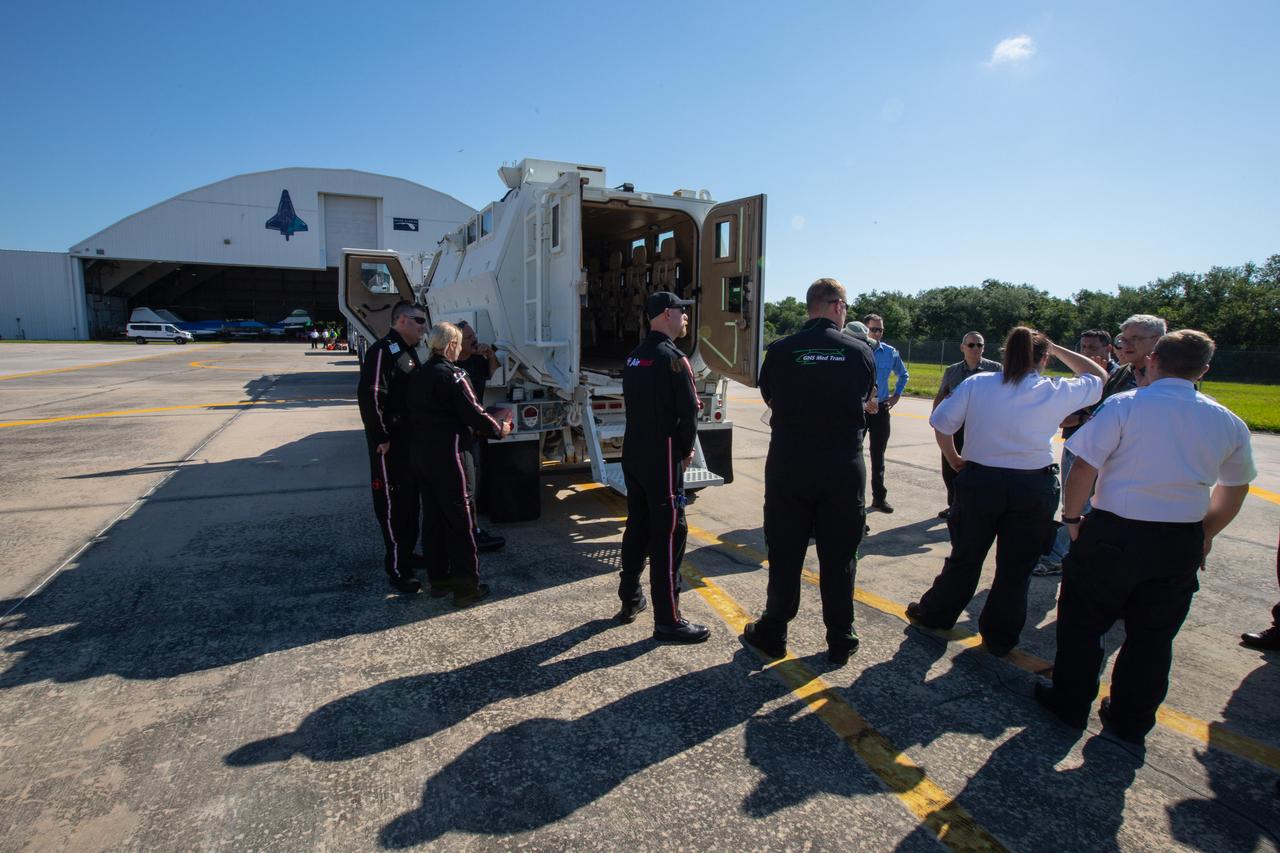
A Kennedy Space Center Mine Resistant Ambush Protected (MRAP) tactical vehicle stands at the ready during a medical support training course at the Florida spaceport’s Shuttle Landing Facility on May 17, 2019. Kennedy personnel and American Medical Response (AMR) contractor paramedics participated in the course, which was designed to familiarize the AMR paramedics with the center’s Triage Forces deployment, including medical team members, fire/rescue personnel, environmental health specialists and flight operations crew members, as well as a helicopter, MRAP, fire pumper truck and triage vehicles. The AMR paramedics will assist the agency in contingency planning for the return of human spaceflight from Kennedy.
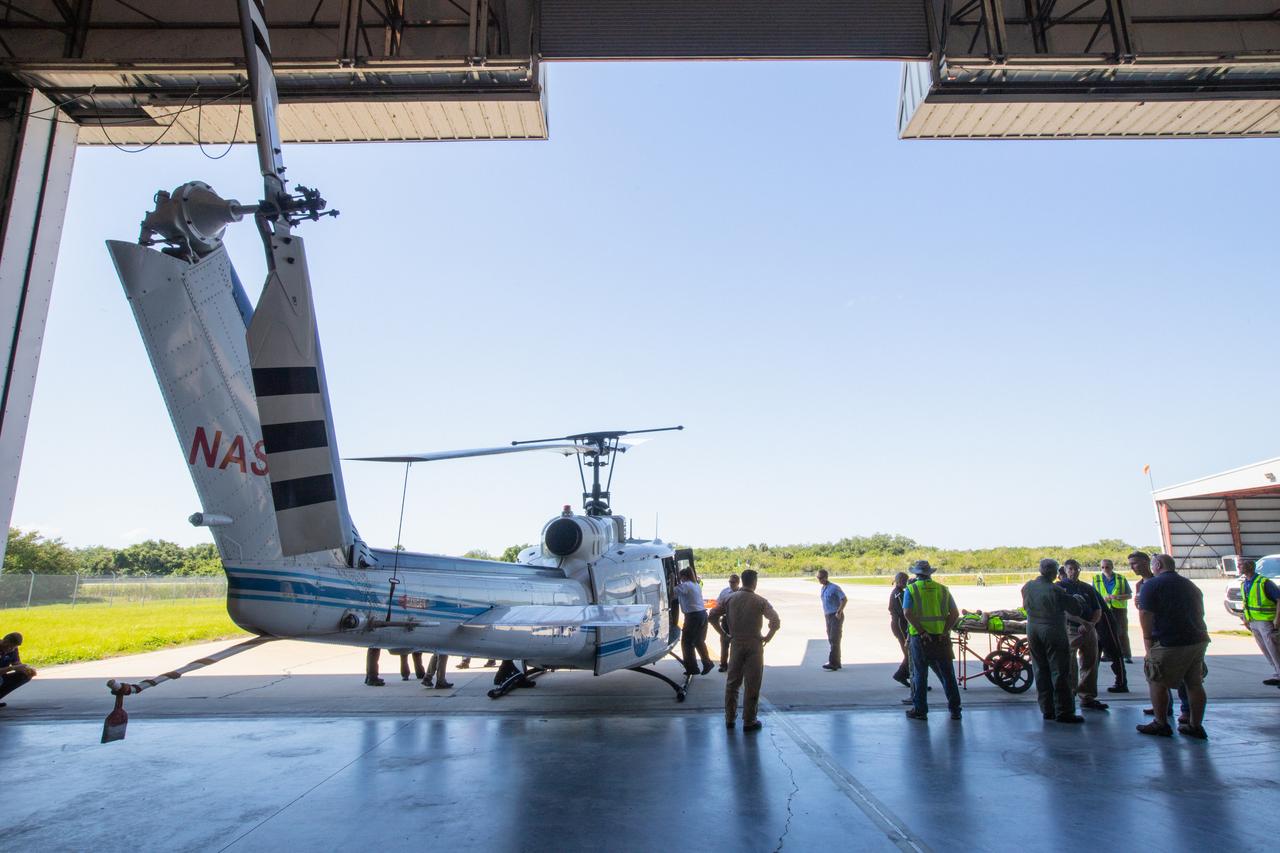
Kennedy Space Center personnel and American Medical Response (AMR) contractor paramedics gather near a NASA helicopter in the Space Florida hangar at the spaceport’s Shuttle Landing Facility on May 17, 2019, for a medical support training course. The course was designed to familiarize the AMR paramedics with the center’s Triage Forces deployment, which included medical team members, fire/rescue personnel, environmental health specialists and flight operations crew members, as well as the helicopter, Mine Resistant Ambush Protected (MRAP) tactical vehicle, fire pumper truck and triage vehicles. The AMR paramedics will assist the agency in contingency planning for the return of human spaceflight from Kennedy.
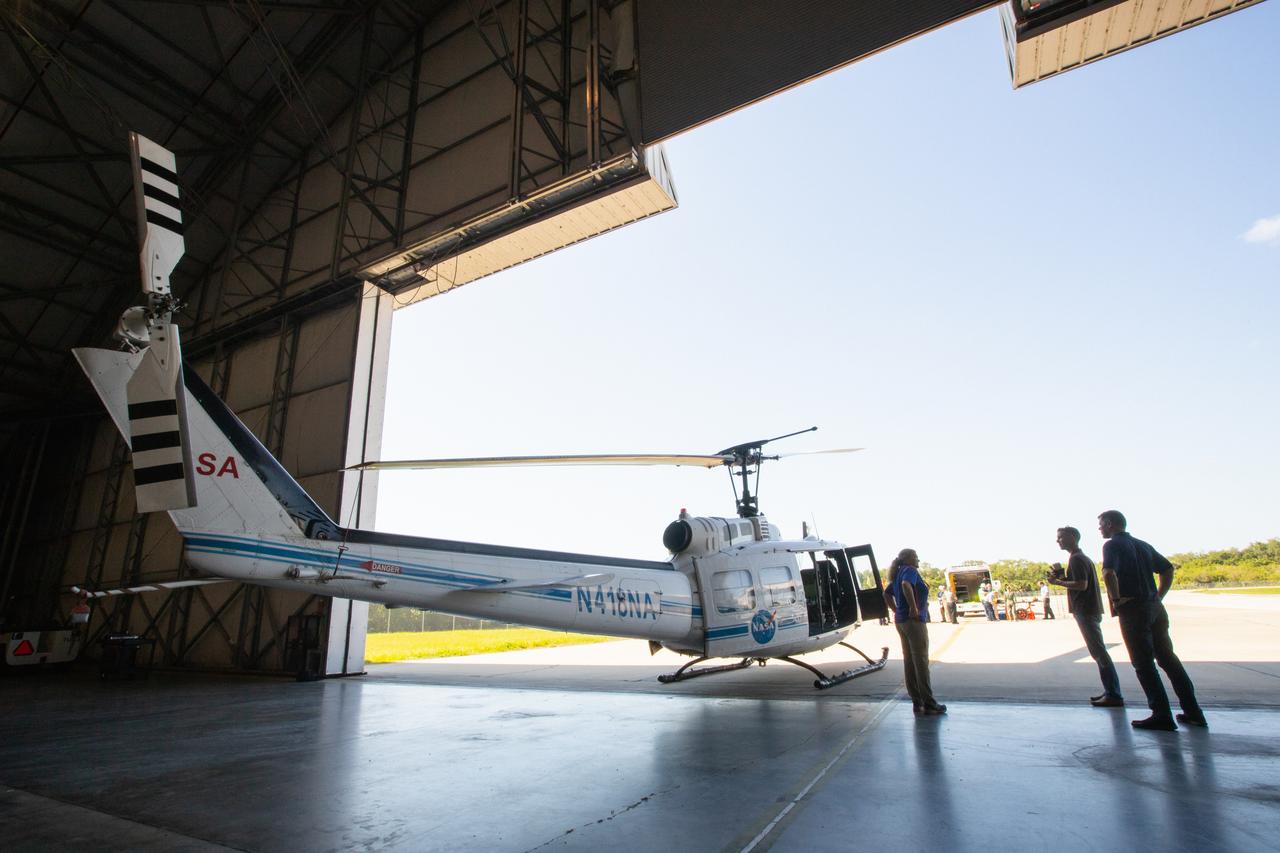
Kennedy Space Center personnel and American Medical Response (AMR) contractor paramedics gather near a NASA helicopter during a medical support training course in the Space Florida hangar at the spaceport’s Shuttle Landing Facility on May 17, 2019. The course was designed to familiarize the AMR paramedics with the center’s Triage Forces deployment, which included medical team members, fire/rescue personnel, environmental health specialists and flight operations crew members, as well as a helicopter, Mine Resistant Ambush Protected (MRAP) tactical vehicle, fire pumper truck and triage vehicles. The AMR paramedics will assist the agency in contingency planning for the return of human spaceflight from Kennedy.
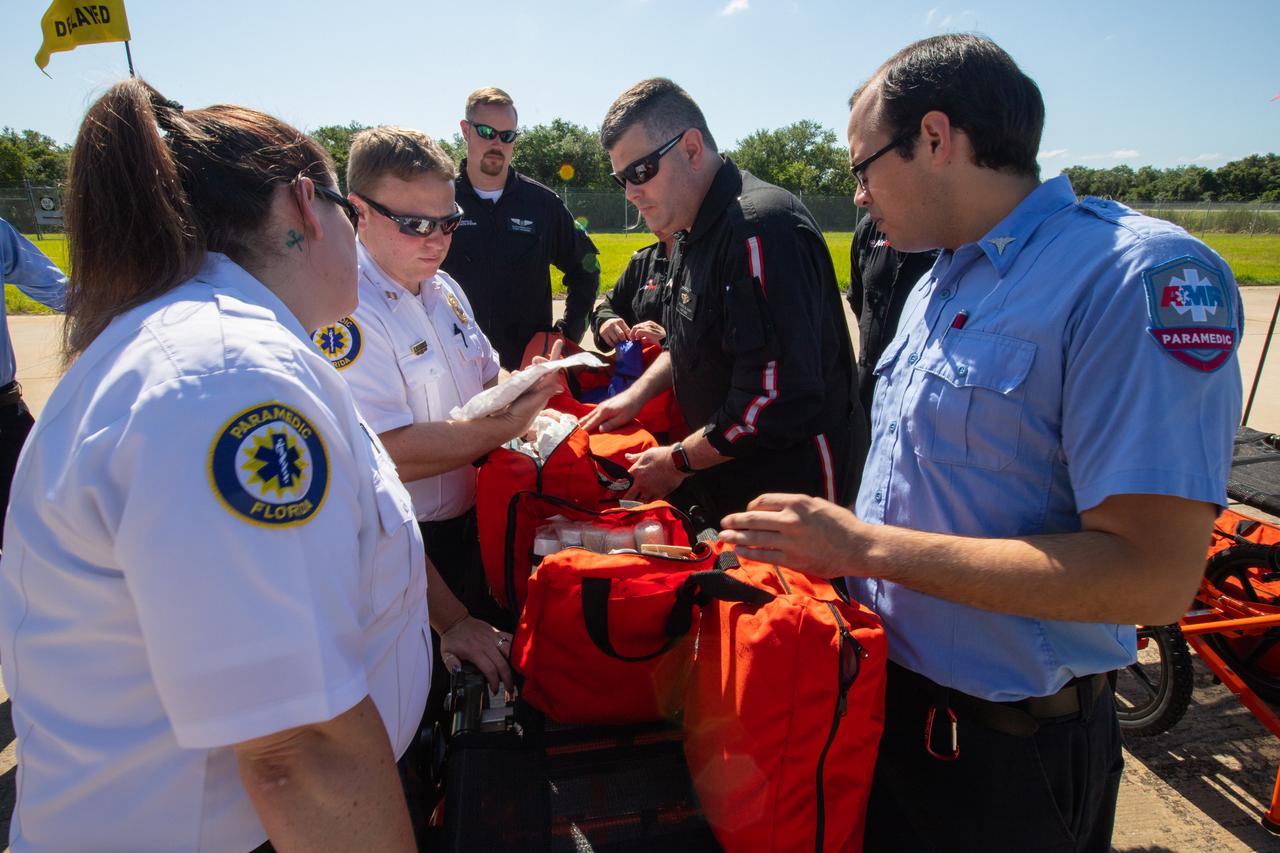
Kennedy Space Center personnel and American Medical Response (AMR) contractor paramedics participate in a medical support training course at the Florida spaceport’s Shuttle Landing Facility on May 17, 2019. The course was designed to familiarize the AMR paramedics with the center’s Triage Forces deployment, which included medical team members, fire/rescue personnel, environmental health specialists and flight operations crew members, as well as a helicopter, Mine Resistant Ambush Protected (MRAP) tactical vehicle, fire pumper truck and triage vehicles. The AMR paramedics will assist the agency in contingency planning for the return of human spaceflight from Kennedy.
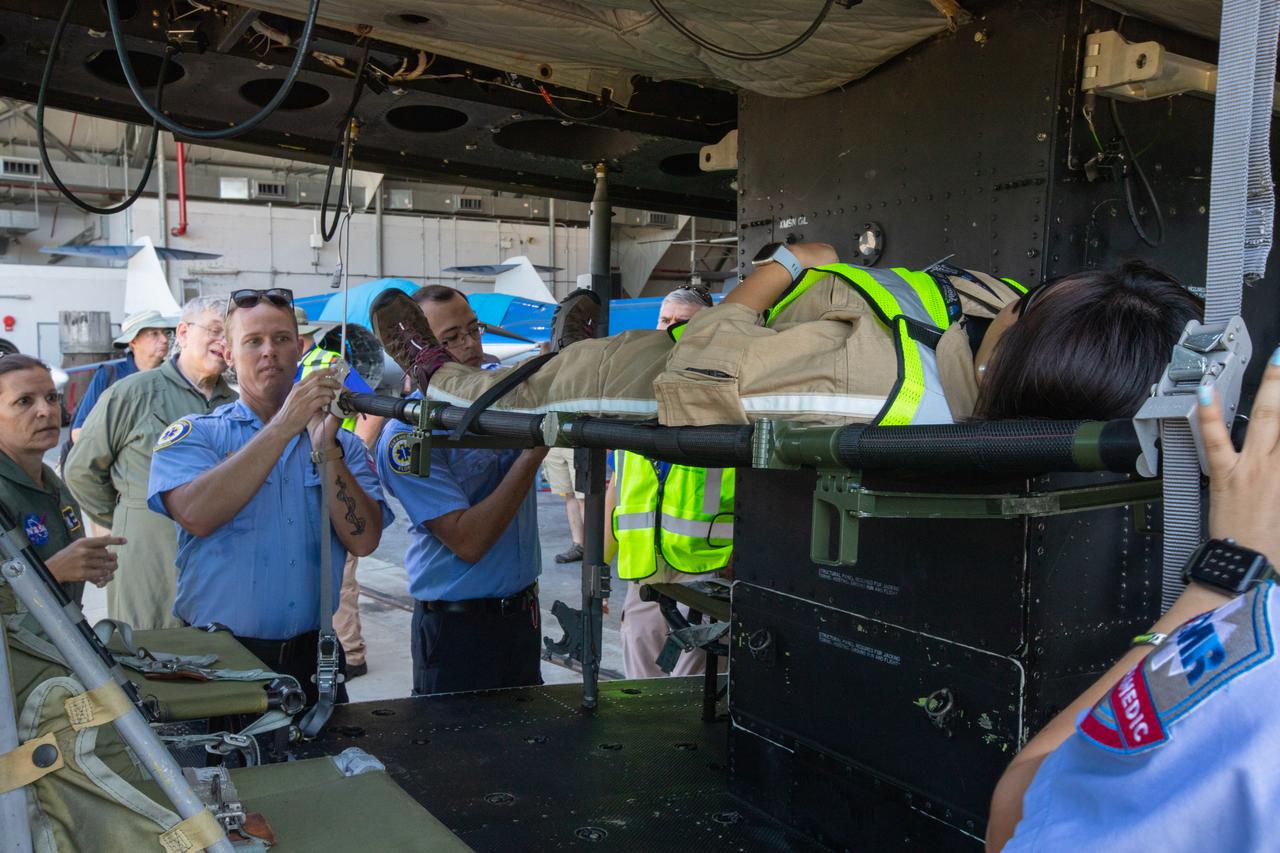
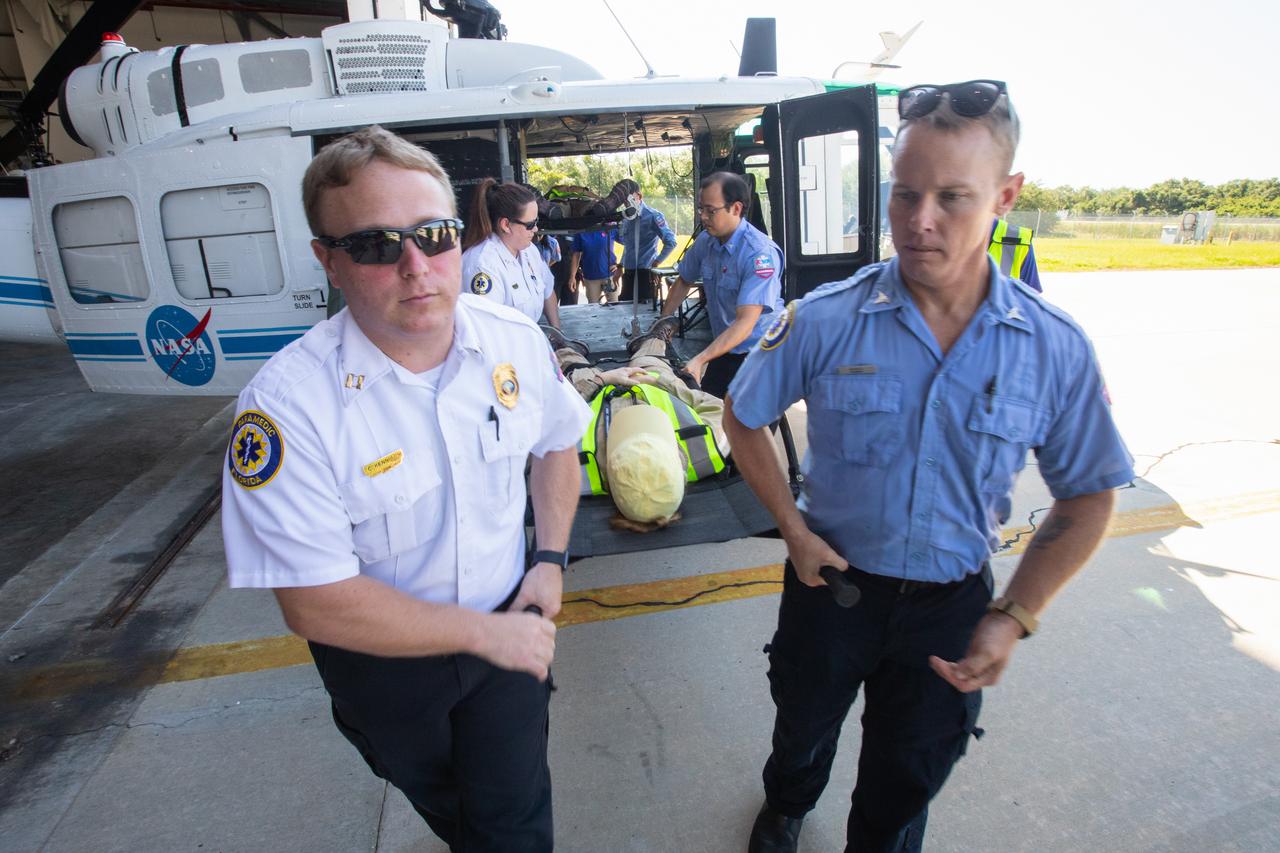
Kennedy Space Center personnel and American Medical Response (AMR) contractor paramedics load a “patient,” a KEMCON Fitness Center staff member, into a NASA helicopter during a medical support training course in the Space Florida hangar at the spaceport’s Shuttle Landing Facility on May 17, 2019. The course was designed to familiarize the AMR paramedics with the center’s Triage Forces deployment, which included medical team members, fire/rescue personnel, environmental health specialists and flight operations crew members, as well as a helicopter, Mine Resistant Ambush Protected (MRAP) tactical vehicle, fire pumper truck and triage vehicles. The AMR paramedics will assist the agency in contingency planning for the return of human spaceflight from Kennedy.
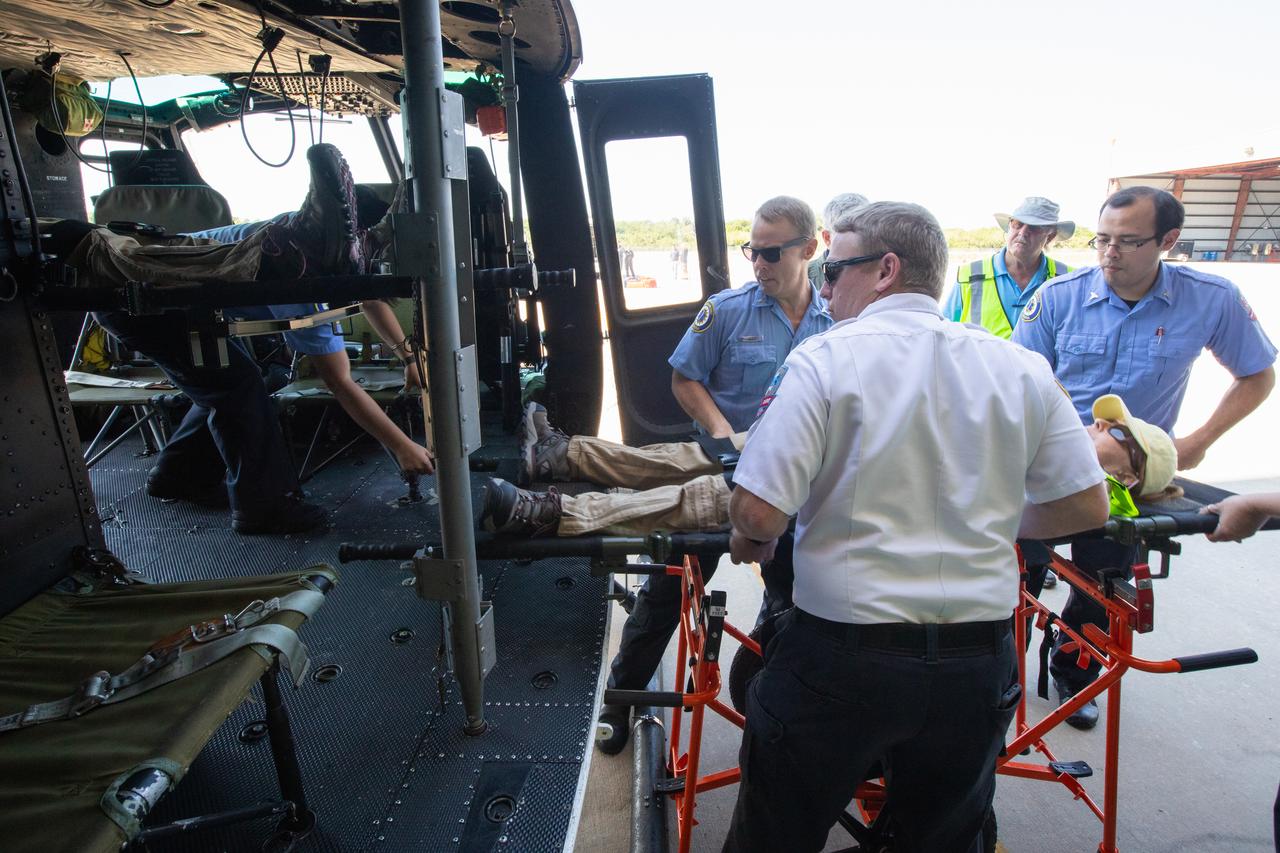
Kennedy Space Center personnel and American Medical Response (AMR) contractor paramedics load a “patient,” a KEMCON Fitness Center staff member, into a NASA helicopter during a medical support training course in the Space Florida hangar at the spaceport’s Shuttle Landing Facility on May 17, 2019. The course was designed to familiarize the AMR paramedics with the center’s Triage Forces deployment, which included medical team members, fire/rescue personnel, environmental health specialists and flight operations crew members, as well as a helicopter, Mine Resistant Ambush Protected (MRAP) tactical vehicle, fire pumper truck and triage vehicles. The AMR paramedics will assist the agency in contingency planning for the return of human spaceflight from Kennedy.
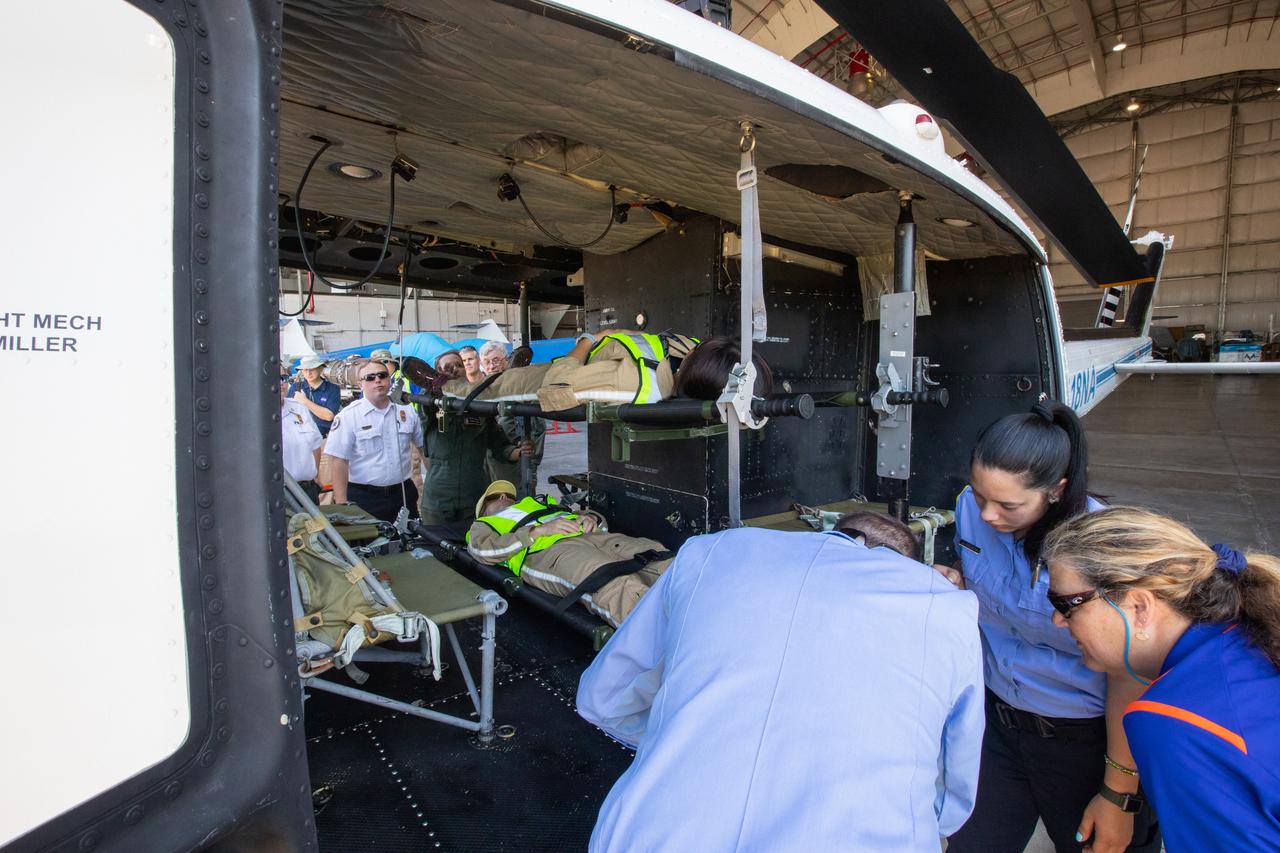
Kennedy Space Center personnel and American Medical Response (AMR) contractor paramedics gather around a “patient,” a KEMCON Fitness Center staff member, during a medical support training course in the Space Florida hangar at the spaceport’s Shuttle Landing Facility on May 17, 2019. The course was designed to familiarize the AMR paramedics with the center’s Triage Forces deployment, which included medical team members, fire/rescue personnel, environmental health specialists and flight operations crew members, as well as a helicopter, Mine Resistant Ambush Protected (MRAP) tactical vehicle, fire pumper truck and triage vehicles. The AMR paramedics will assist the agency in contingency planning for the return of human spaceflight from Kennedy.
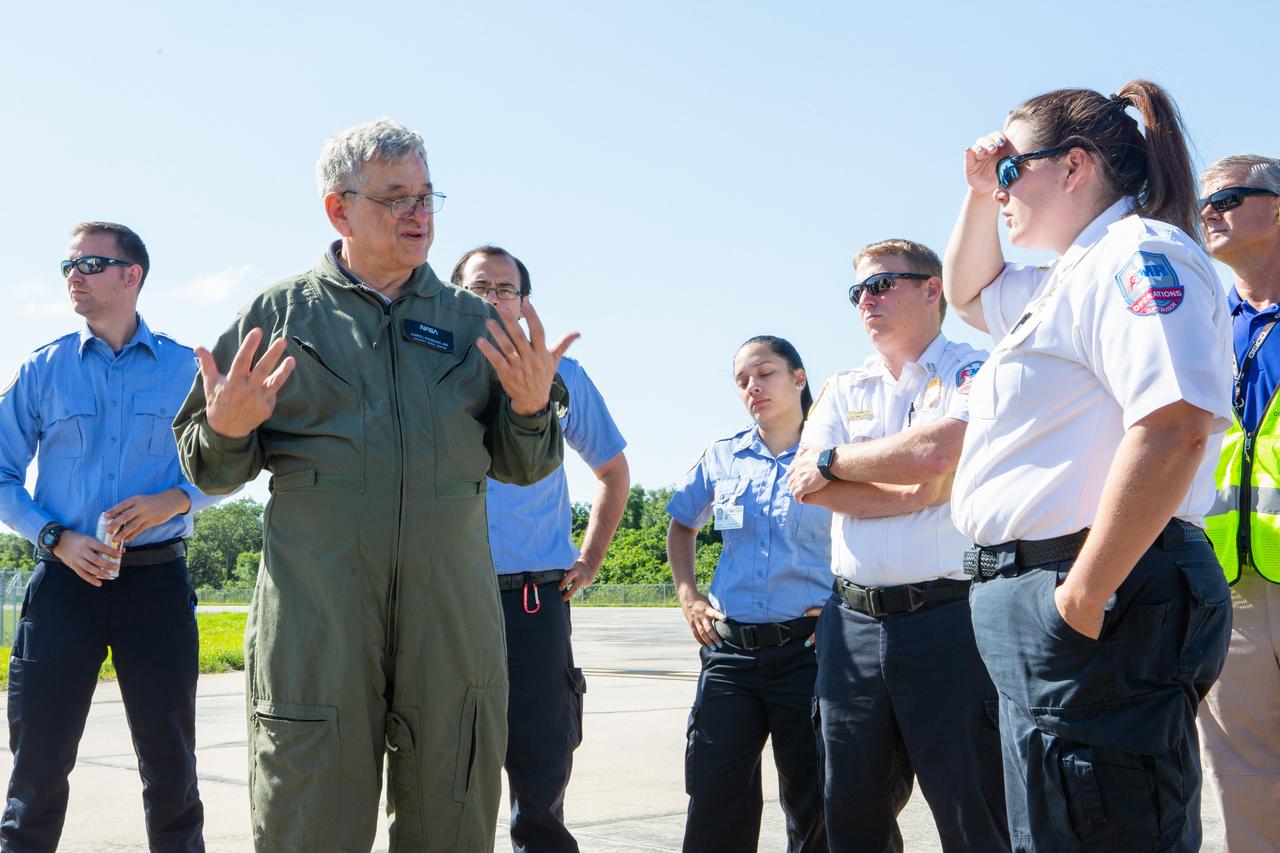
KEMCON physician Dr. Dan Woodard speaks to Kennedy Space Center personnel and American Medical Response (AMR) contractor paramedics gathered at the Florida spaceport’s Shuttle Landing Facility on May 17, 2019, for a medical support training course. The course was designed to familiarize the AMR paramedics with the center’s Triage Forces deployment, which included medical team members, fire/rescue personnel, environmental health specialists and flight operations crew members, as well as a helicopter, Mine Resistant Ambush Protected (MRAP) tactical vehicle, fire pumper truck and triage vehicles. The AMR paramedics will assist the agency in contingency planning for the return of human spaceflight from Kennedy.
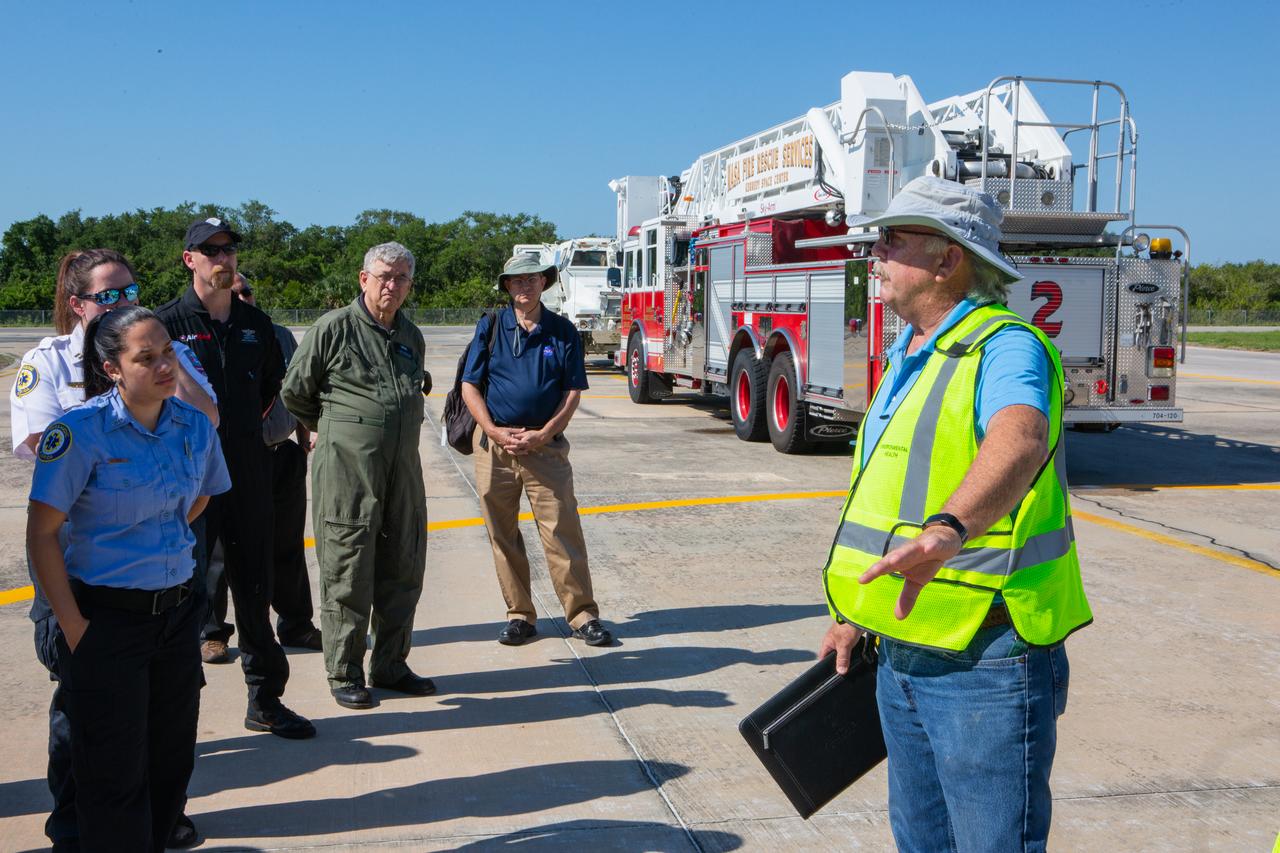
Kennedy Space Center personnel and American Medical Response (AMR) contractor paramedics gather at the Florida spaceport’s Shuttle Landing Facility on May 17, 2019, for a medical support training course. The course was designed to familiarize the AMR paramedics with the center’s Triage Forces deployment, which included medical team members, fire/rescue personnel, environmental health specialists and flight operations crew members, as well as a helicopter, Mine Resistant Ambush Protected (MRAP) tactical vehicle, fire pumper truck and triage vehicles. The AMR paramedics will assist the agency in contingency planning for the return of human spaceflight from Kennedy.
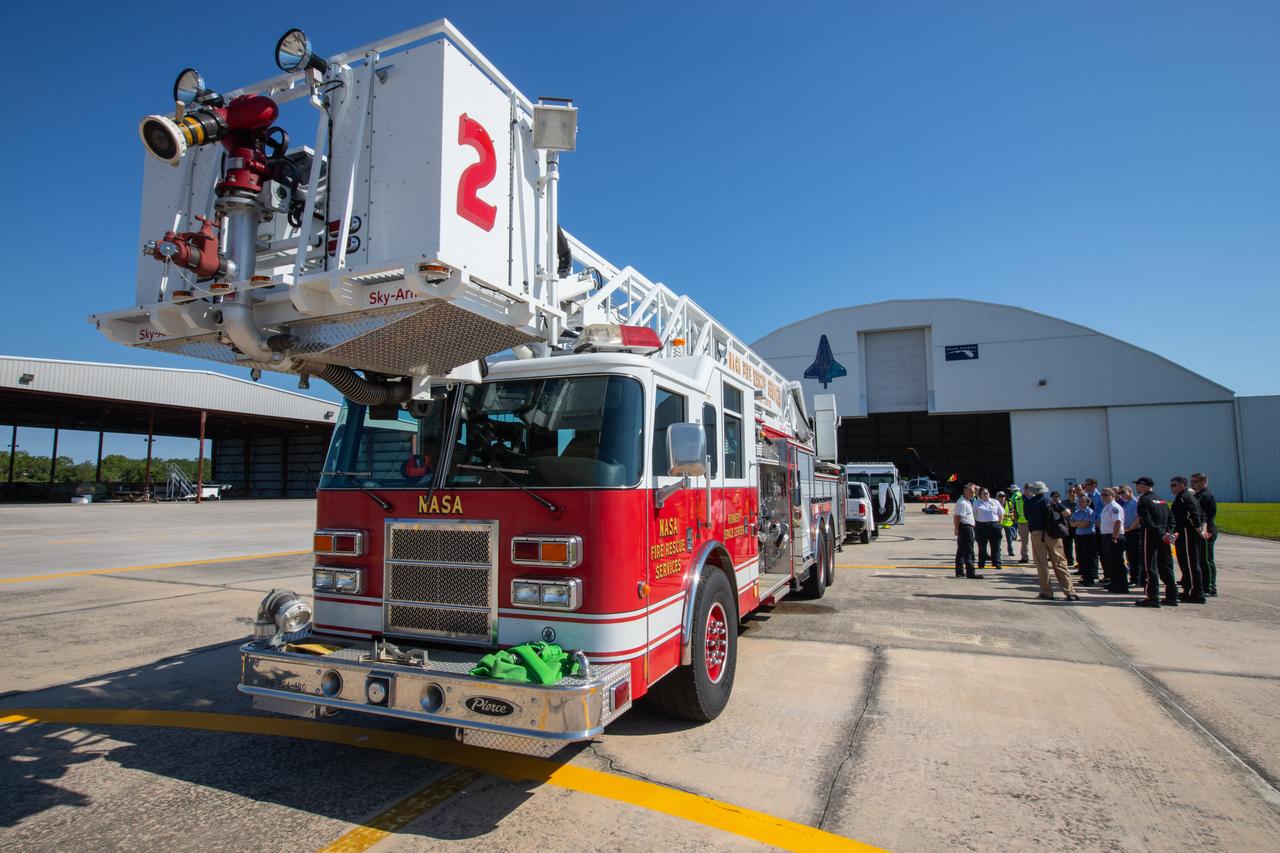
A Kennedy Space Center fire pumper truck stands at the ready during a medical support training course at the Florida spaceport’s Shuttle Landing Facility on May 17, 2019. Kennedy personnel and American Medical Response (AMR) contractor paramedics participated in the course, which was designed to familiarize the AMR paramedics with the center’s Triage Forces deployment, including medical team members, fire/rescue personnel, environmental health specialists and flight operations crew members, as well as a helicopter, Mine Resistant Ambush Protected (MRAP) tactical vehicle, fire pumper truck and triage vehicles. The AMR paramedics will assist the agency in contingency planning for the return of human spaceflight from Kennedy.
Kennedy Space Center personnel and American Medical Response (AMR) contractor paramedics gather around a “patient,” a KEMCON Fitness Center staff member, during a medical support training course in the Space Florida hangar at the spaceport’s Shuttle Landing Facility on May 17, 2019. The course was designed to familiarize the AMR paramedics with the center’s Triage Forces deployment, which included medical team members, fire/rescue personnel, environmental health specialists and flight operations crew members, as well as a helicopter, Mine Resistant Ambush Protected (MRAP) tactical vehicle, fire pumper truck and triage vehicles. The AMR paramedics will assist the agency in contingency planning for the return of human spaceflight from Kennedy.
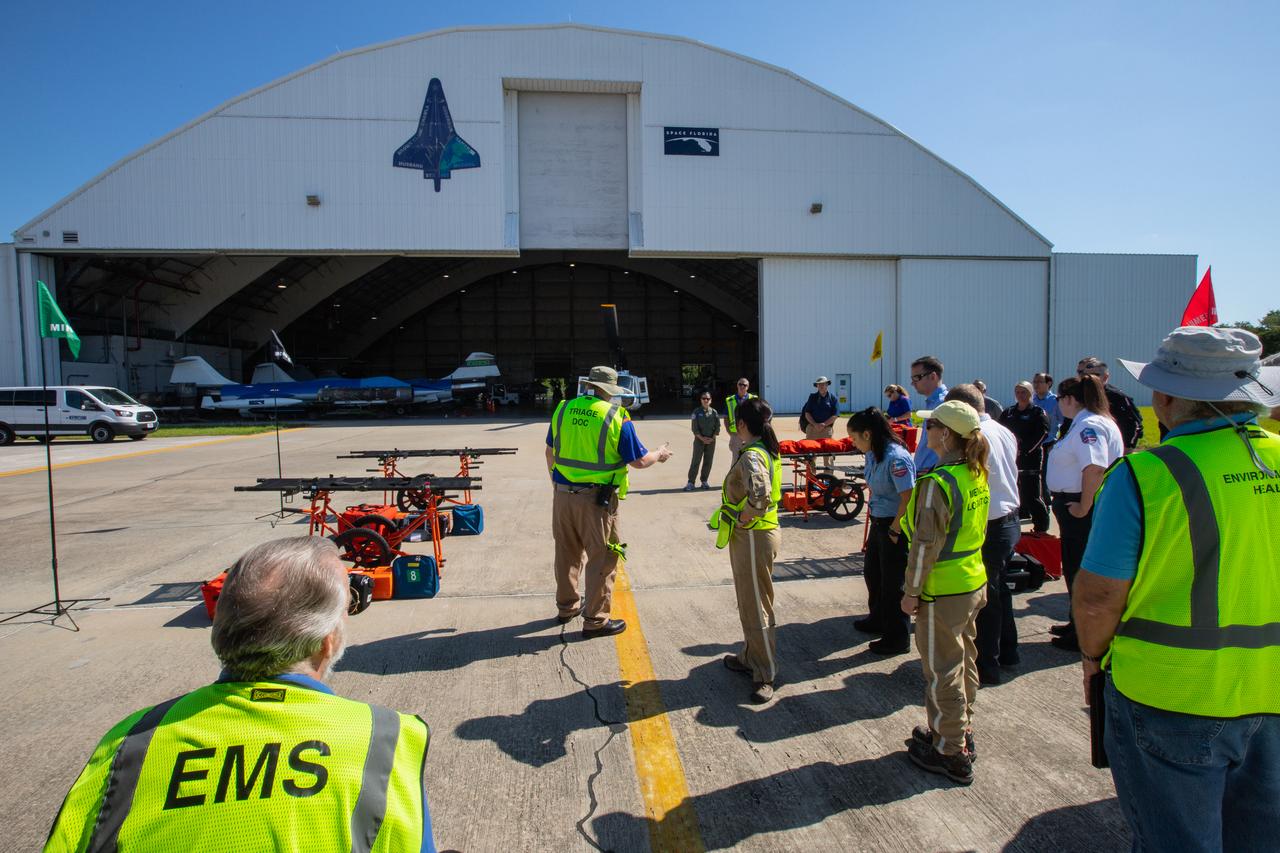
Kennedy Space Center personnel and American Medical Response (AMR) contractor paramedics gather near the Space Florida hangar at the spaceport’s Shuttle Landing Facility on May 17, 2019, for a medical support training course. The course was designed to familiarize the AMR paramedics with the center’s Triage Forces deployment, which included medical team members, fire/rescue personnel, environmental health specialists and flight operations crew members, as well as a helicopter, Mine Resistant Ambush Protected (MRAP) tactical vehicle, fire pumper truck and triage vehicles. The AMR paramedics will assist the agency in contingency planning for the return of human spaceflight from Kennedy.
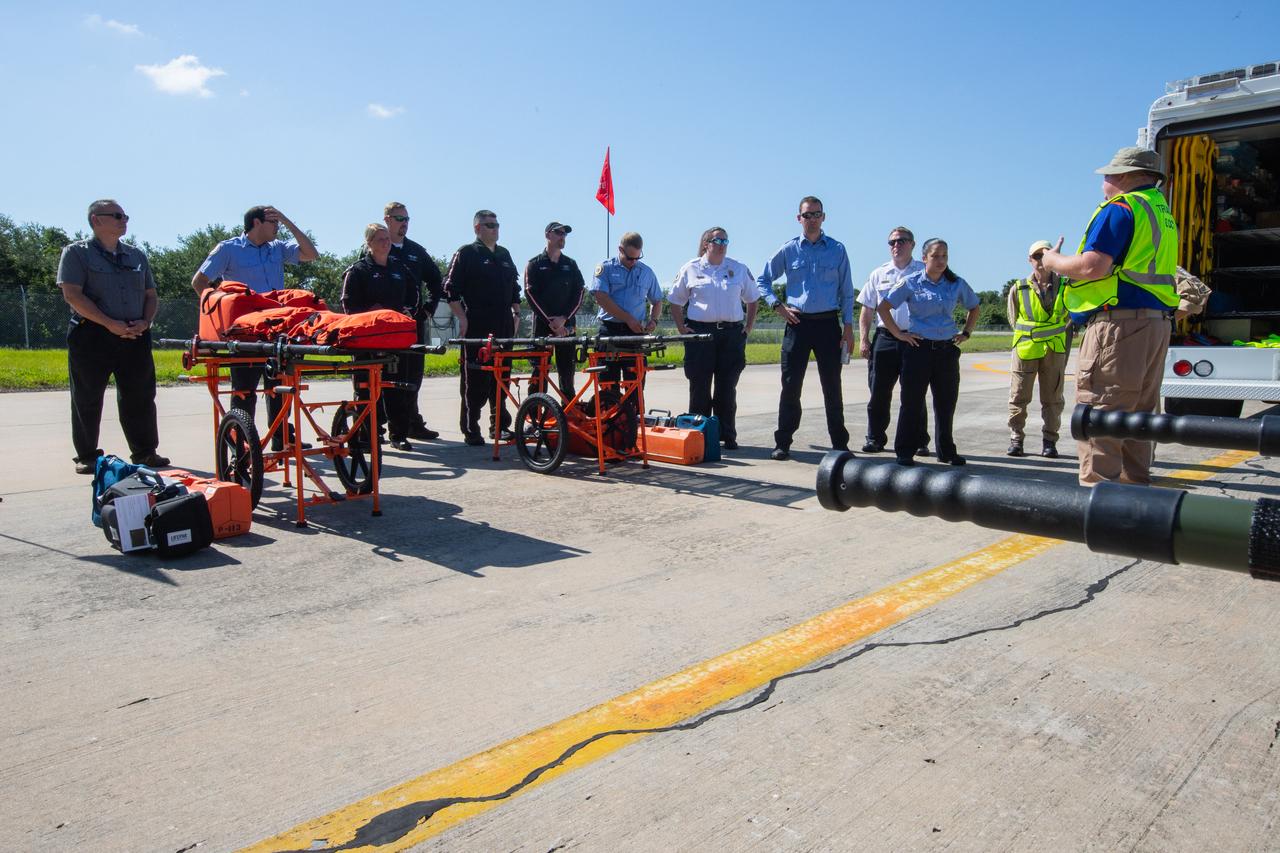
Kennedy Space Center personnel and American Medical Response (AMR) contractor paramedics gather at the Florida spaceport’s Shuttle Landing Facility on May 17, 2019, for a medical support training course. The course was designed to familiarize the AMR paramedics with the center’s Triage Forces deployment, which included medical team members, fire/rescue personnel, environmental health specialists and flight operations crew members, as well as a helicopter, Mine Resistant Ambush Protected (MRAP) tactical vehicle, fire pumper truck and triage vehicles. The AMR paramedics will assist the agency in contingency planning for the return of human spaceflight from Kennedy.
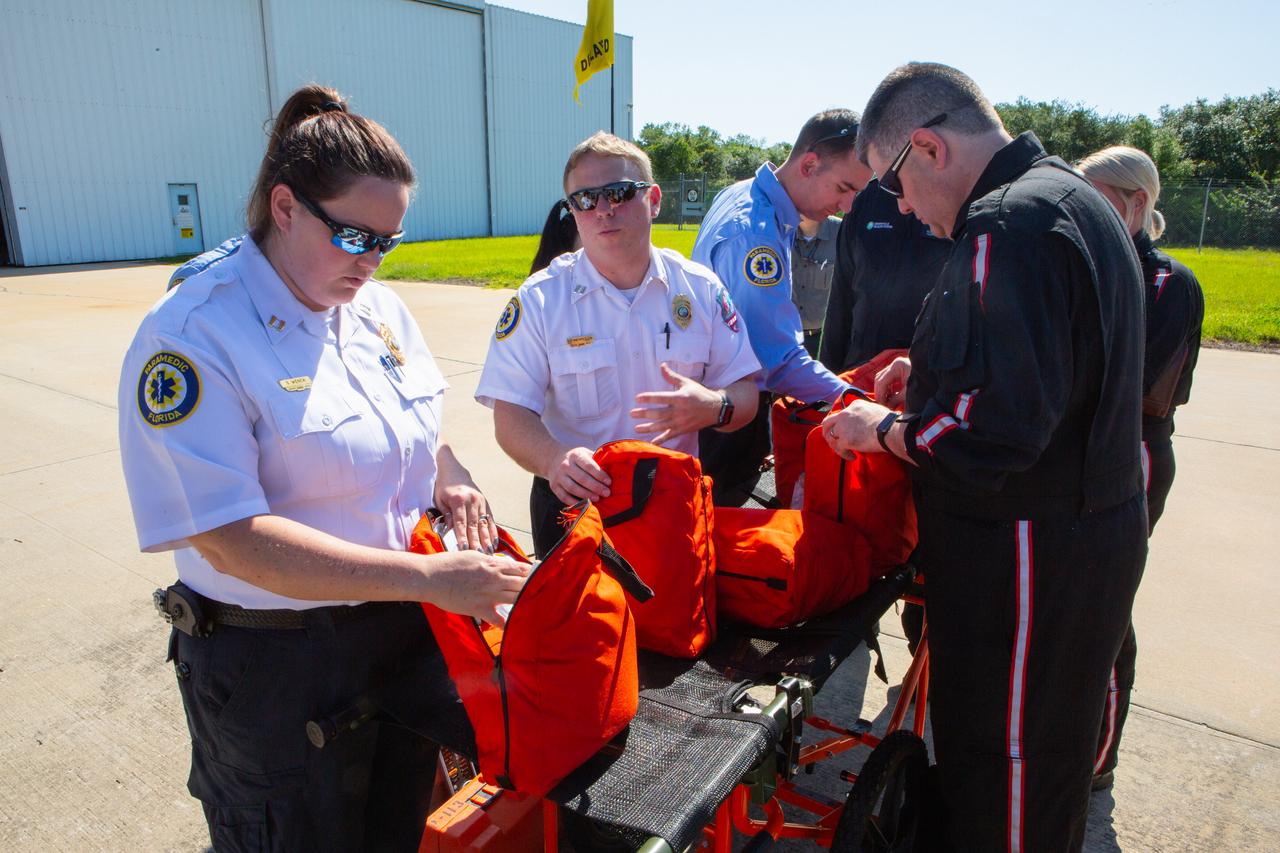
Kennedy Space Center personnel and American Medical Response (AMR) contractor paramedics gather at the Florida spaceport’s Shuttle Landing Facility on May 17, 2019, for a medical support training course. The course was designed to familiarize the AMR paramedics with the center’s Triage Forces deployment, which included medical team members, fire/rescue personnel, environmental health specialists and flight operations crew members, as well as a helicopter, Mine Resistant Ambush Protected (MRAP) tactical vehicle, fire pumper truck and triage vehicles. The AMR paramedics will assist the agency in contingency planning for the return of human spaceflight from Kennedy.
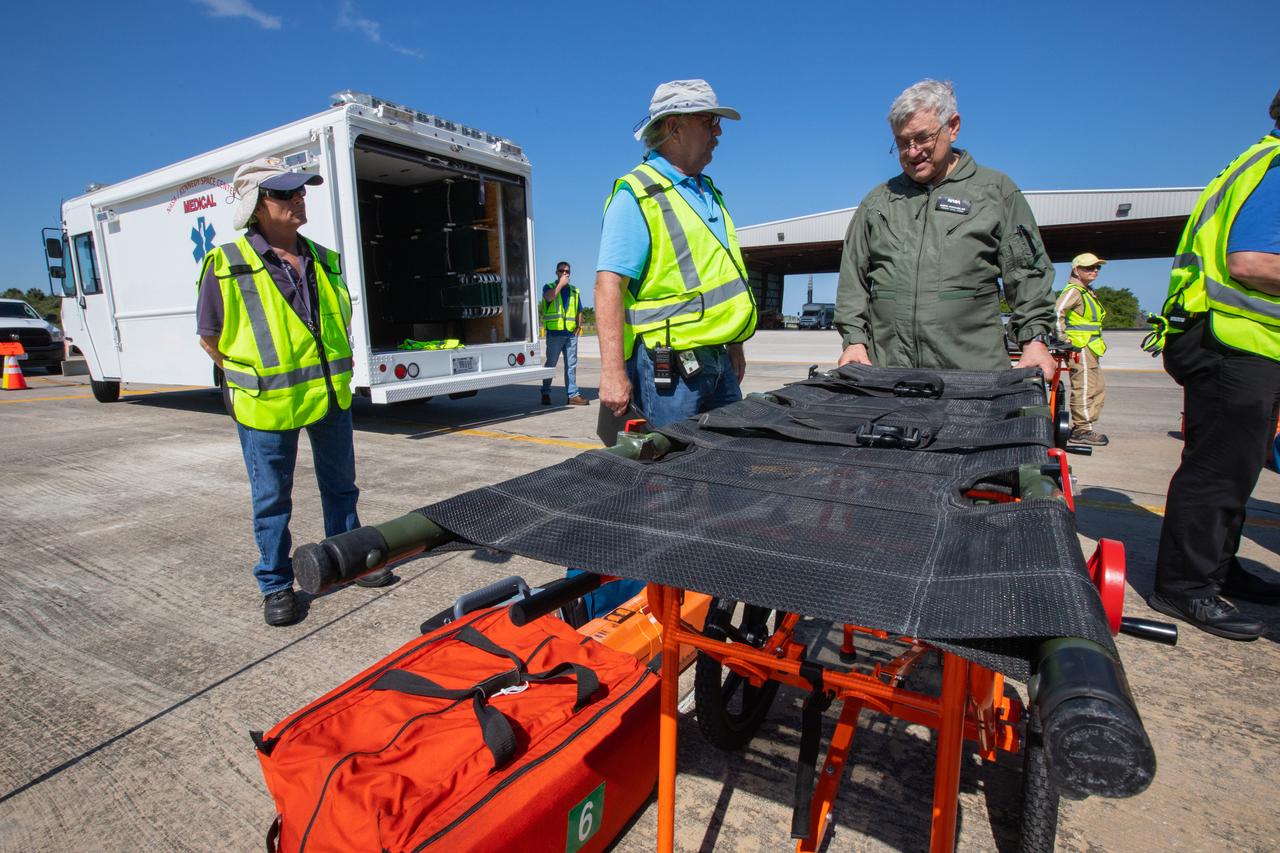
Kennedy Space Center personnel and American Medical Response (AMR) contractor paramedics participate in a medical support training course at the Florida spaceport’s Shuttle Landing Facility on May 17, 2019. The course was designed to familiarize the AMR paramedics with the center’s Triage Forces deployment, which included medical team members, fire/rescue personnel, environmental health specialists and flight operations crew members, as well as a helicopter, Mine Resistant Ambush Protected (MRAP) tactical vehicle, fire pumper truck and triage vehicles. The AMR paramedics will assist the agency in contingency planning for the return of human spaceflight from Kennedy.
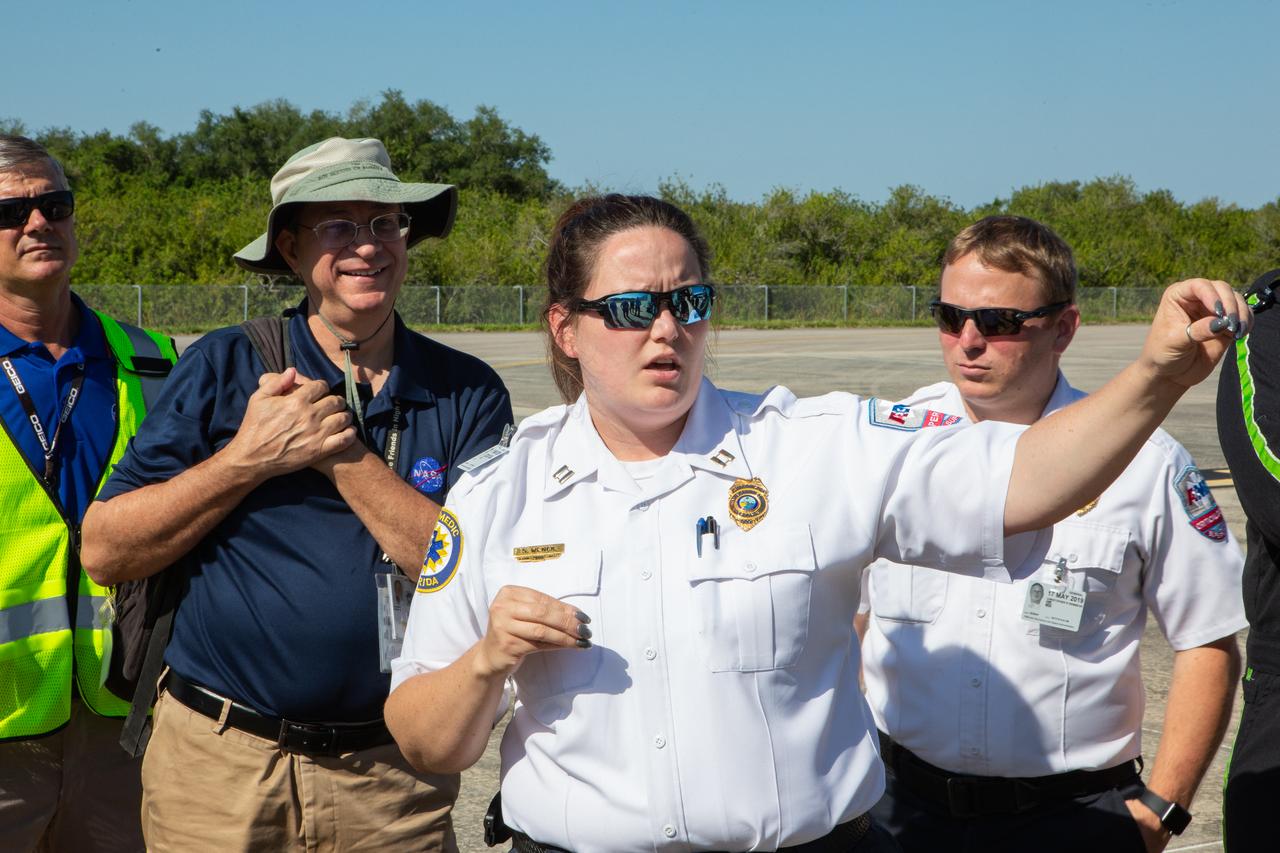
An American Medical Response (AMR) contractor paramedic speaks to Kennedy Space Center and AMR personnel gathered at the Florida spaceport’s Shuttle Landing Facility on May 17, 2019, for a medical support training course. The course was designed to familiarize the AMR paramedics with the center’s Triage Forces deployment, which included medical team members, fire/rescue personnel, environmental health specialists and flight operations crew members, as well as a helicopter, Mine Resistant Ambush Protected (MRAP) tactical vehicle, fire pumper truck and triage vehicles. The AMR paramedics will assist the agency in contingency planning for the return of human spaceflight from Kennedy.
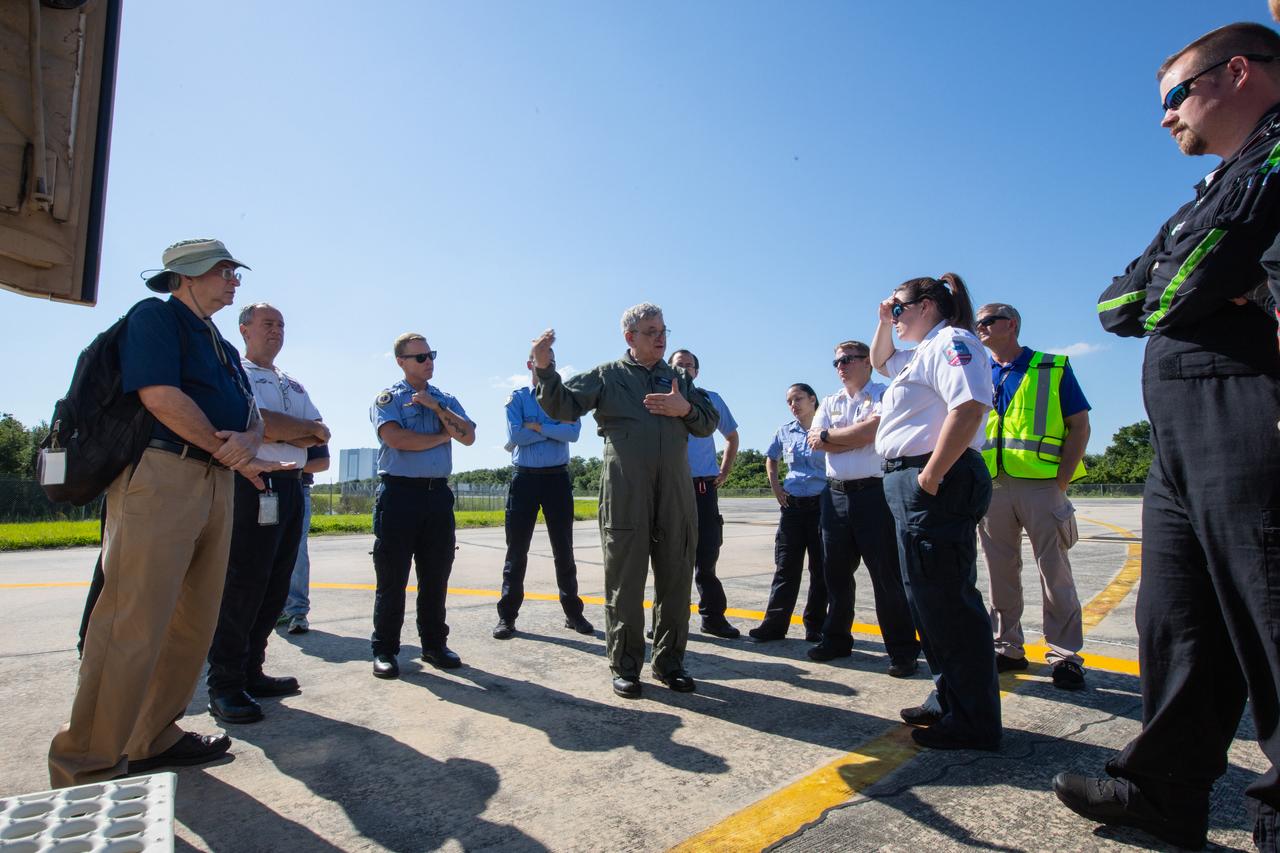
KEMCON physician Dr. Dan Woodard speaks to Kennedy Space Center personnel and American Medical Response (AMR) contractor paramedics gathered at the Florida spaceport’s Shuttle Landing Facility on May 17, 2019, for a medical support training course. The course was designed to familiarize the AMR paramedics with the center’s Triage Forces deployment, which included medical team members, fire/rescue personnel, environmental health specialists and flight operations crew members, as well as a helicopter, Mine Resistant Ambush Protected (MRAP) tactical vehicle, fire pumper truck and triage vehicles. The AMR paramedics will assist the agency in contingency planning for the return of human spaceflight from Kennedy.
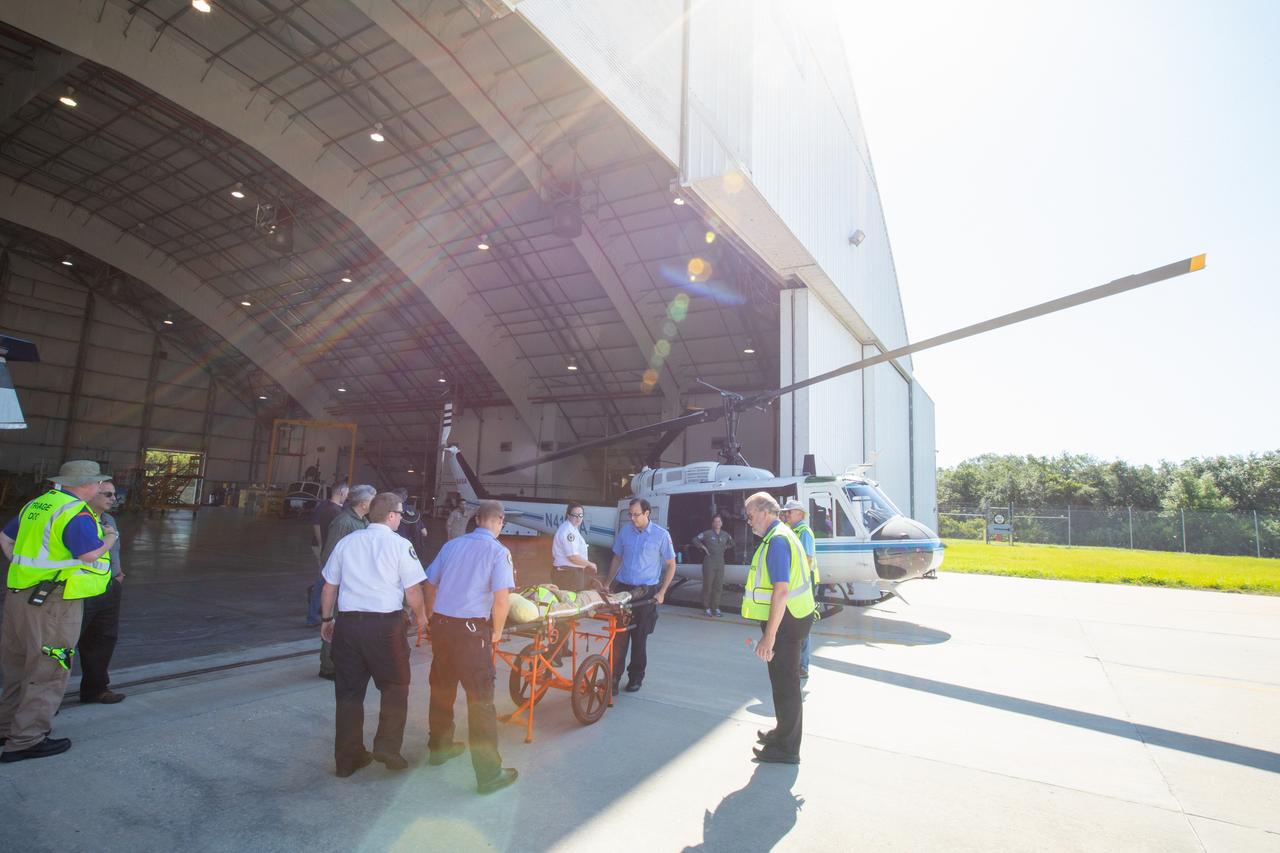
Kennedy Space Center personnel and American Medical Response (AMR) contractor paramedics gather around a “patient,” a KEMCON Fitness Center staff member, during a medical support training course in the Space Florida hangar at the spaceport’s Shuttle Landing Facility on May 17, 2019. The course was designed to familiarize the AMR paramedics with the center’s Triage Forces deployment, which included medical team members, fire/rescue personnel, environmental health specialists and flight operations crew members, as well as a helicopter, Mine Resistant Ambush Protected (MRAP) tactical vehicle, fire pumper truck and triage vehicles. The AMR paramedics will assist the agency in contingency planning for the return of human spaceflight from Kennedy.
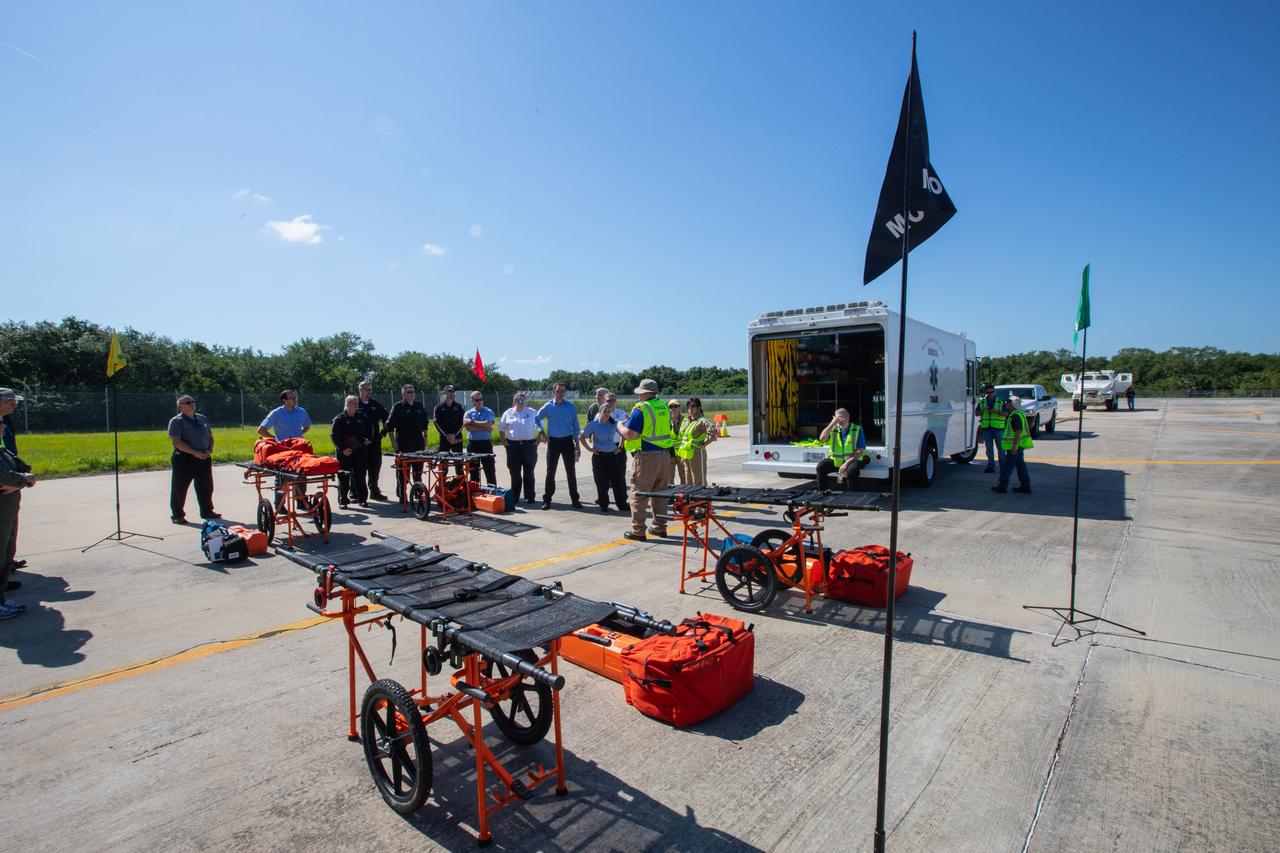
Kennedy Space Center personnel and American Medical Response (AMR) contractor paramedics gather at the Florida spaceport’s Shuttle Landing Facility on May 17, 2019, for a medical support training course. The course was designed to familiarize the AMR paramedics with the center’s Triage Forces deployment, which included medical team members, fire/rescue personnel, environmental health specialists and flight operations crew members, as well as a helicopter, Mine Resistant Ambush Protected (MRAP) tactical vehicle, fire pumper truck and triage vehicles. The AMR paramedics will assist the agency in contingency planning for the return of human spaceflight from Kennedy.
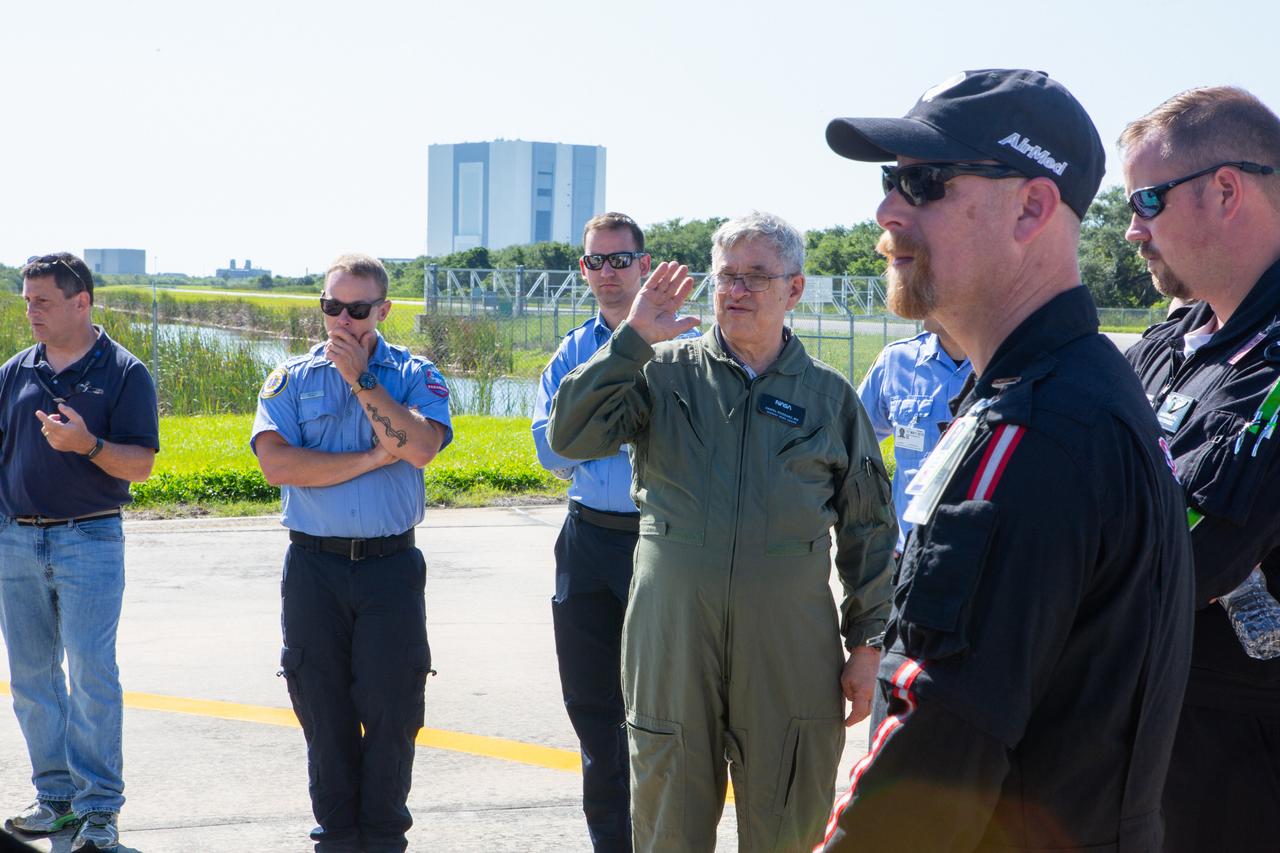
KEMCON physician Dr. Dan Woodard speaks to Kennedy Space Center personnel and American Medical Response (AMR) contractor paramedics gathered at the Florida spaceport’s Shuttle Landing Facility on May 17, 2019, for a medical support training course. The course was designed to familiarize the AMR paramedics with the center’s Triage Forces deployment, which included medical team members, fire/rescue personnel, environmental health specialists and flight operations crew members, as well as a helicopter, Mine Resistant Ambush Protected (MRAP) tactical vehicle, fire pumper truck and triage vehicles. The AMR paramedics will assist the agency in contingency planning for the return of human spaceflight from Kennedy.
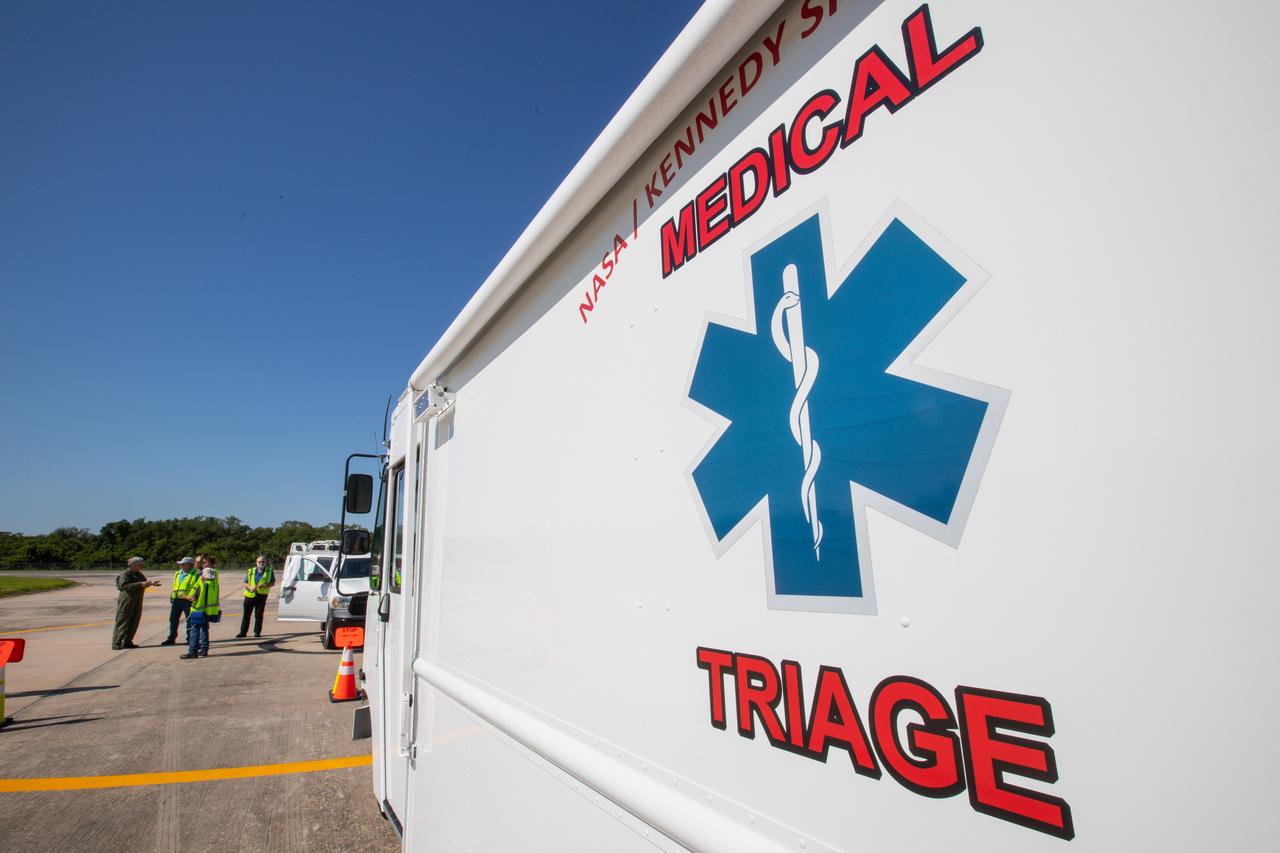
One of Kennedy Space Center’s medical triage vehicles stands at the ready during a medical support training course at the Florida spaceport’s Shuttle Landing Facility on May 17, 2019. Kennedy personnel and American Medical Response (AMR) contractor paramedics participated in the course, which was designed to familiarize the AMR paramedics with the center’s Triage Forces deployment, including medical team members, fire/rescue personnel, environmental health specialists and flight operations crew members, as well as a helicopter, Mine Resistant Ambush Protected (MRAP) tactical vehicle, fire pumper truck and triage vehicles. The AMR paramedics will assist the agency in contingency planning for the return of human spaceflight from Kennedy.
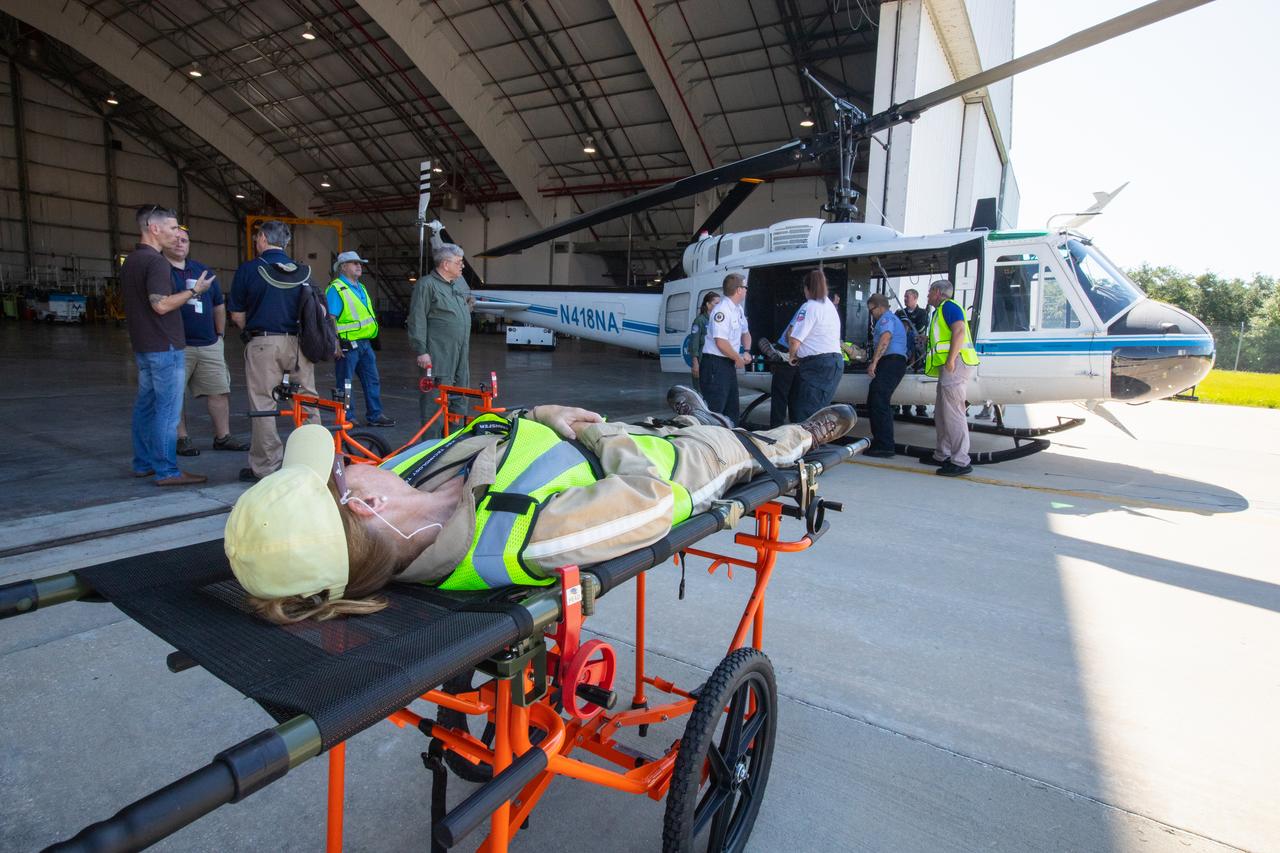
A Kennedy Space Center staff member serves as a “patient” during a medical support training course held May 17, 2019, in the Space Florida hangar at the spaceport’s Shuttle Landing Facility. The course was designed to familiarize the AMR paramedics with the center’s Triage Forces deployment, which included medical team members, fire/rescue personnel, environmental health specialists and flight operations crew members, as well as a helicopter, Mine Resistant Ambush Protected (MRAP) tactical vehicle, fire pumper truck and triage vehicles. The AMR paramedics will assist the agency in contingency planning for the return of human spaceflight from Kennedy.
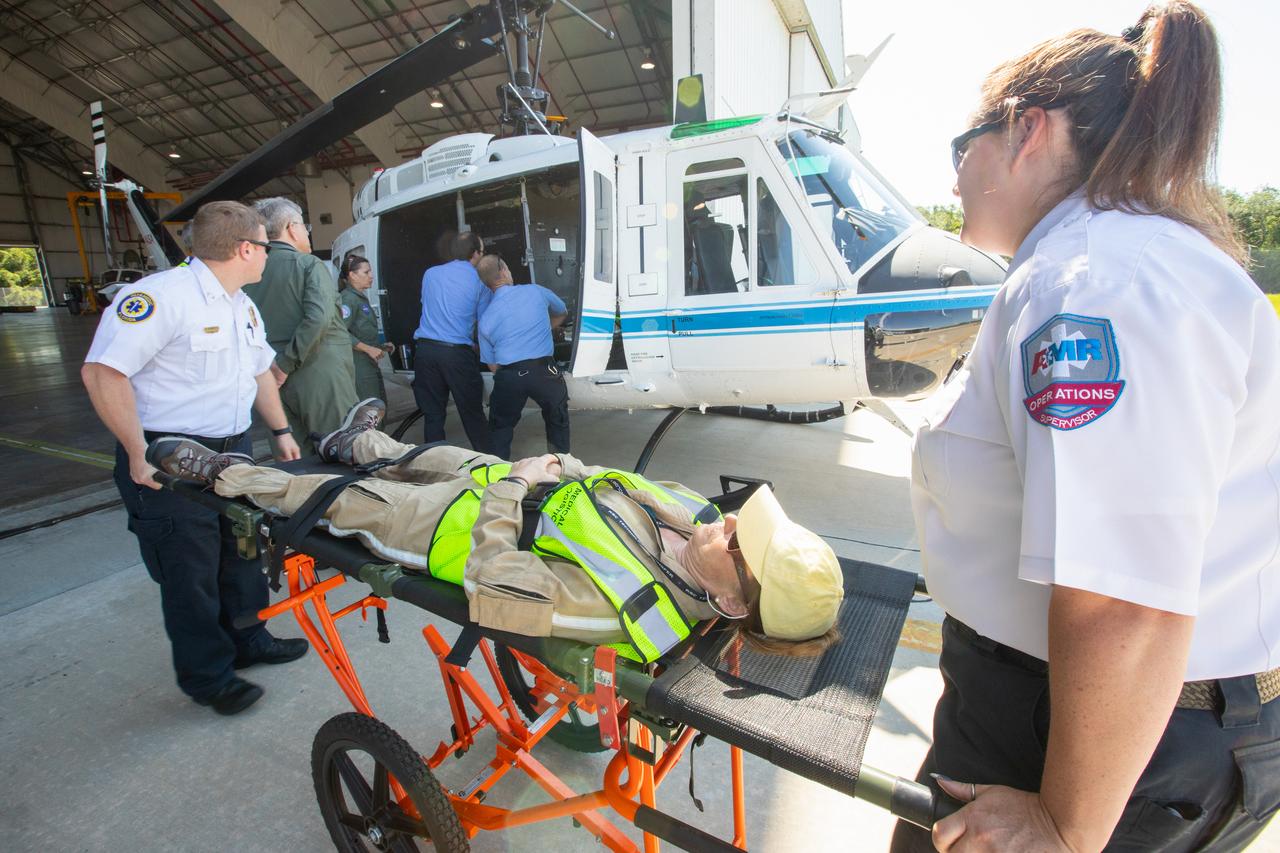
Kennedy Space Center personnel and American Medical Response (AMR) contractor paramedics prepare to load a “patient,” a KEMCON Fitness Center staff member, into a NASA helicopter during a medical support training course in the Space Florida hangar at the spaceport’s Shuttle Landing Facility on May 17, 2019. The course was designed to familiarize the AMR paramedics with the center’s Triage Forces deployment, which included medical team members, fire/rescue personnel, environmental health specialists and flight operations crew members, as well as a helicopter, Mine Resistant Ambush Protected (MRAP) tactical vehicle, fire pumper truck and triage vehicles. The AMR paramedics will assist the agency in contingency planning for the return of human spaceflight from Kennedy.
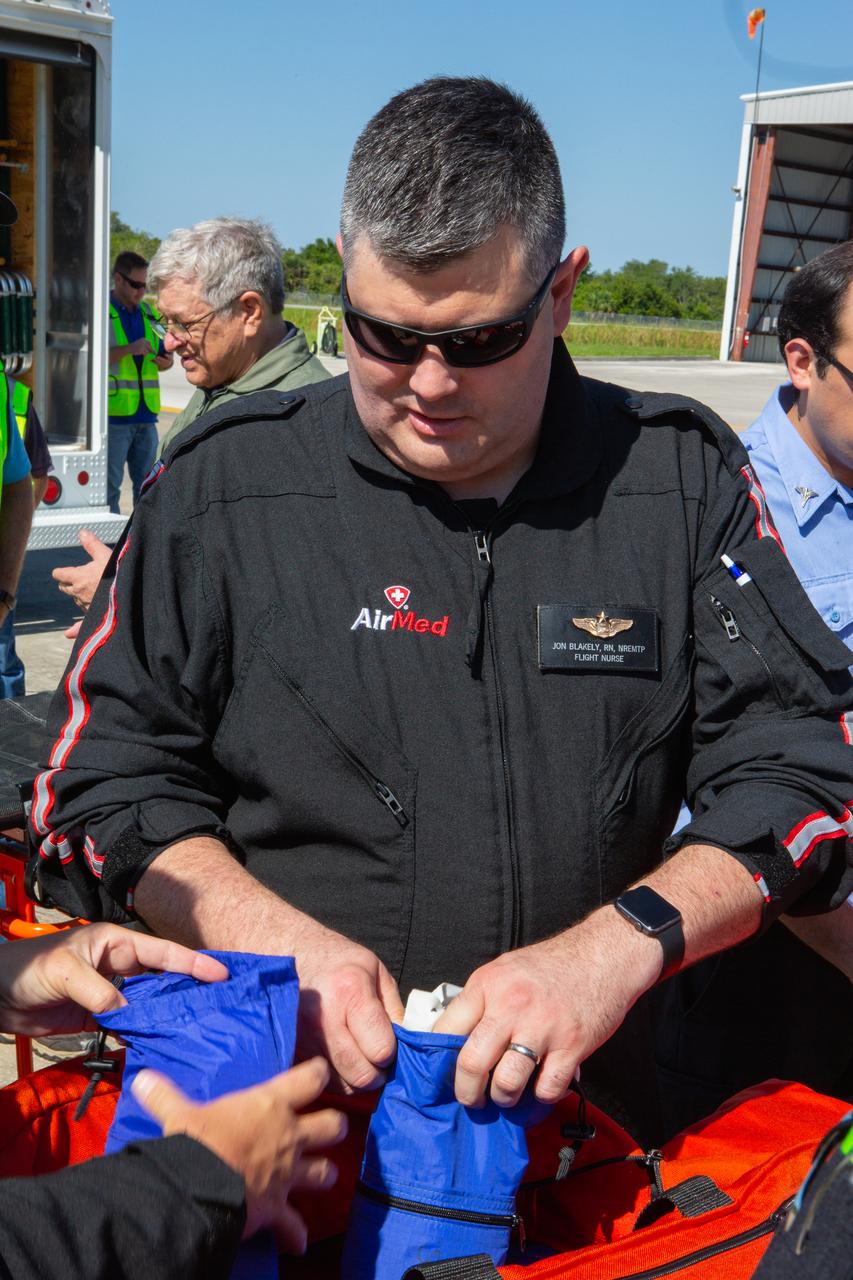
Jon Blakely, an AirMed flight nurse, joins Kennedy Space Center personnel and American Medical Response (AMR) contractor paramedics at the Florida spaceport’s Shuttle Landing Facility on May 17, 2019, for a medical support training course. Signs in the foreground indicate the “dirty side,” where patient off-loading and decontamination would take place, and the “clean side,” used for patient evaluation and medevac. The course was designed to familiarize the AMR paramedics with the center’s Triage Forces deployment, which included medical team members, fire/rescue personnel, environmental health specialists and flight operations crew members, as well as a helicopter, Mine Resistant Ambush Protected (MRAP) tactical vehicle, fire pumper truck and triage vehicles. The AMR paramedics will assist the agency in contingency planning for the return of human spaceflight from Kennedy.
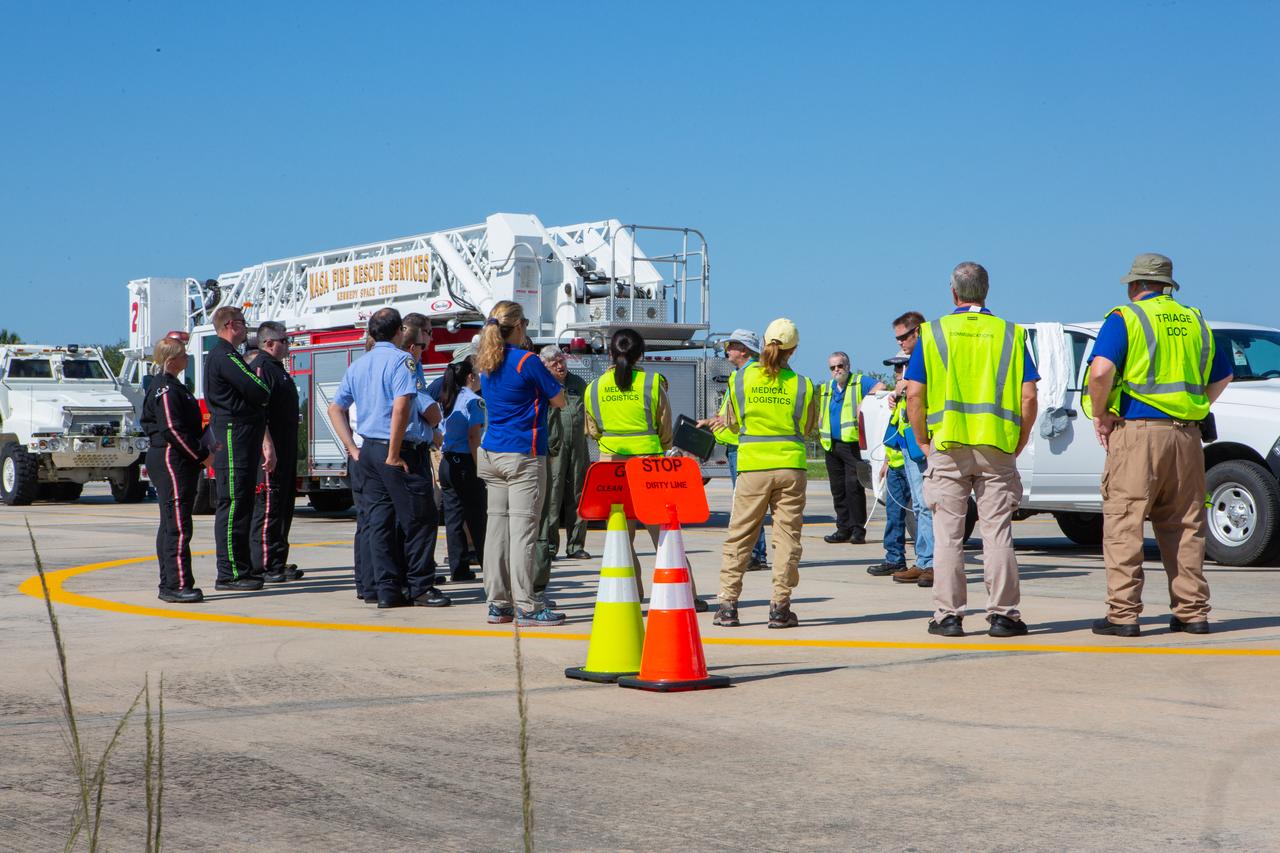
Kennedy Space Center personnel and American Medical Response (AMR) contractor paramedics gather at the Florida spaceport’s Shuttle Landing Facility on May 17, 2019, for a medical support training course. Signs in the foreground indicate the “dirty side,” where patient off-loading and decontamination would take place, and the “clean side,” used for patient evaluation and medevac. The course was designed to familiarize the AMR paramedics with the center’s Triage Forces deployment, which included medical team members, fire/rescue personnel, environmental health specialists and flight operations crew members, as well as a helicopter, Mine Resistant Ambush Protected (MRAP) tactical vehicle, fire pumper truck and triage vehicles. The AMR paramedics will assist the agency in contingency planning for the return of human spaceflight from Kennedy.
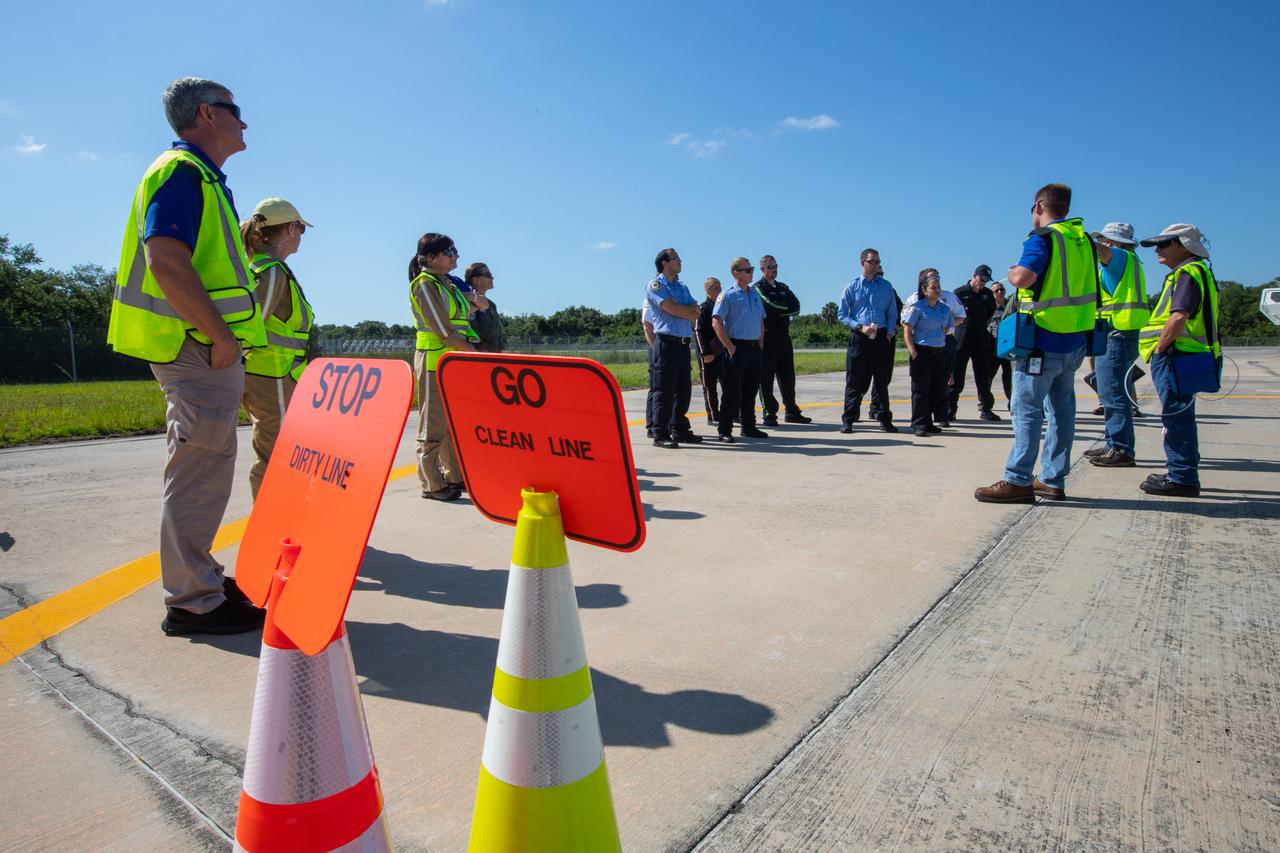
Kennedy Space Center personnel and American Medical Response (AMR) contractor paramedics gather at the Florida spaceport’s Shuttle Landing Facility on May 17, 2019, for a medical support training course. Signs in the foreground indicate the “dirty side,” where patient off-loading and decontamination would take place, and the “clean side,” used for patient evaluation and medevac. The course was designed to familiarize the AMR paramedics with the center’s Triage Forces deployment, which included medical team members, fire/rescue personnel, environmental health specialists and flight operations crew members, as well as a helicopter, Mine Resistant Ambush Protected (MRAP) tactical vehicle, fire pumper truck and triage vehicles. The AMR paramedics will assist the agency in contingency planning for the return of human spaceflight from Kennedy.
KSC SEA TURTLE HATCHERY IN SUPPORT OF NORTHERN GULF RESCUE OPERATIONS
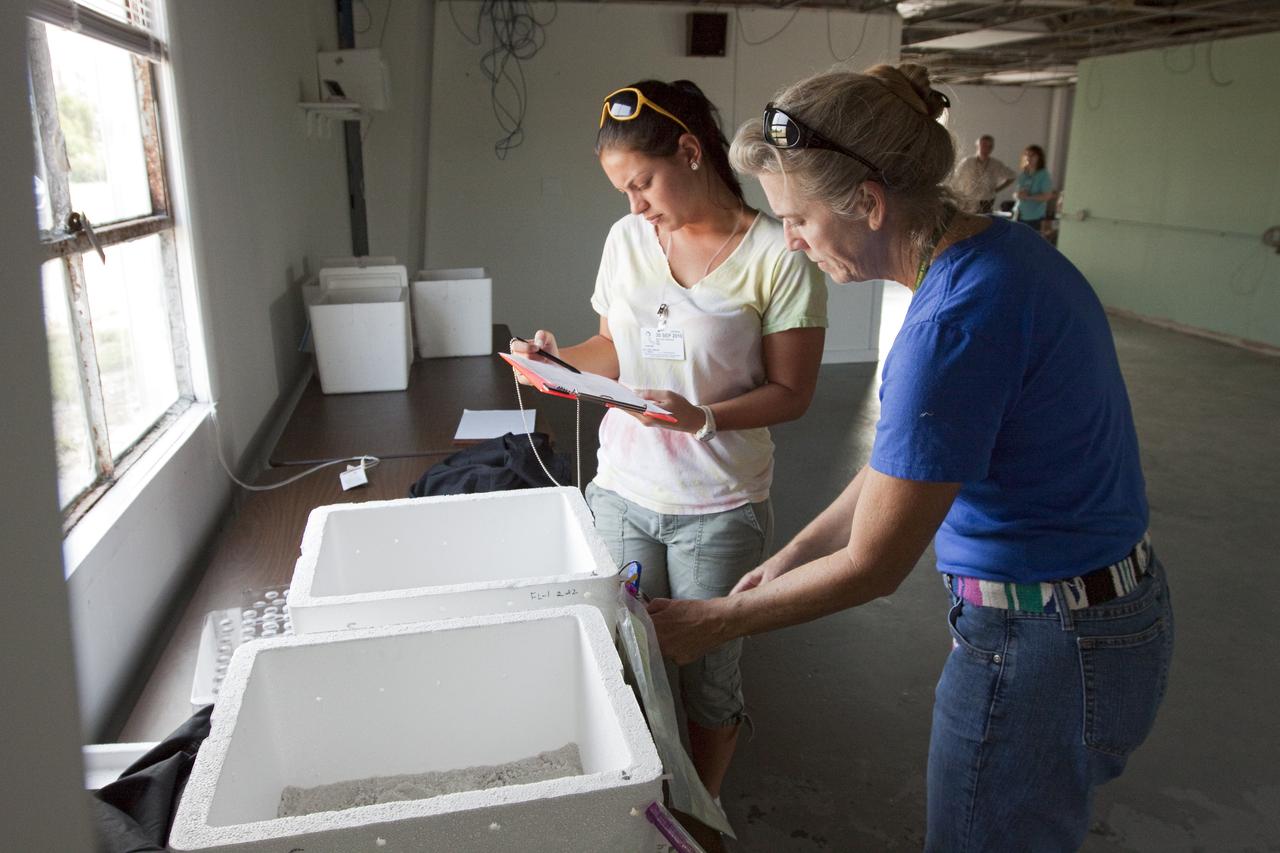
KSC SEA TURTLE HATCHERY IN SUPPORT OF NORTHERN GULF RESCUE OPERATIONS
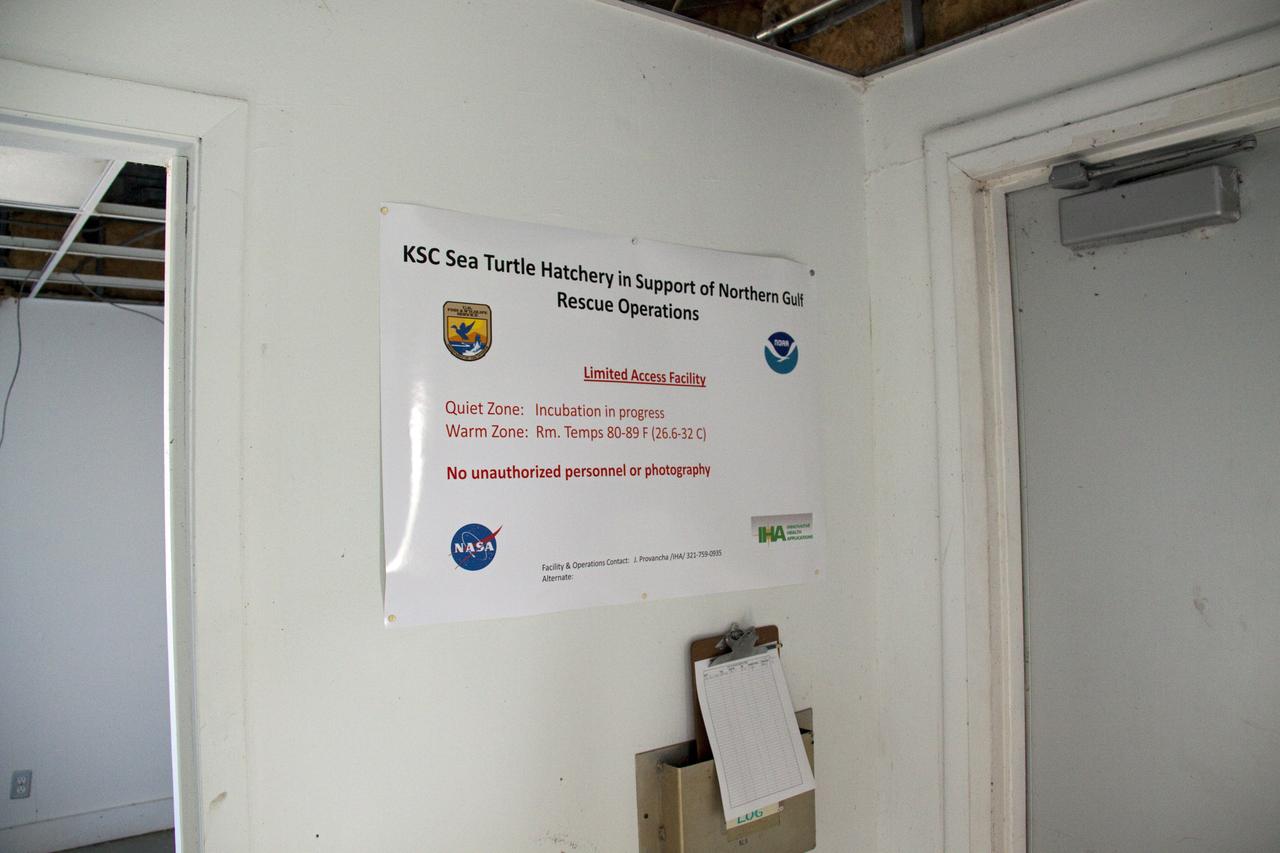
KSC SEA TURTLE HATCHERY IN SUPPORT OF NORTHERN GULF RESCUE OPERATIONS
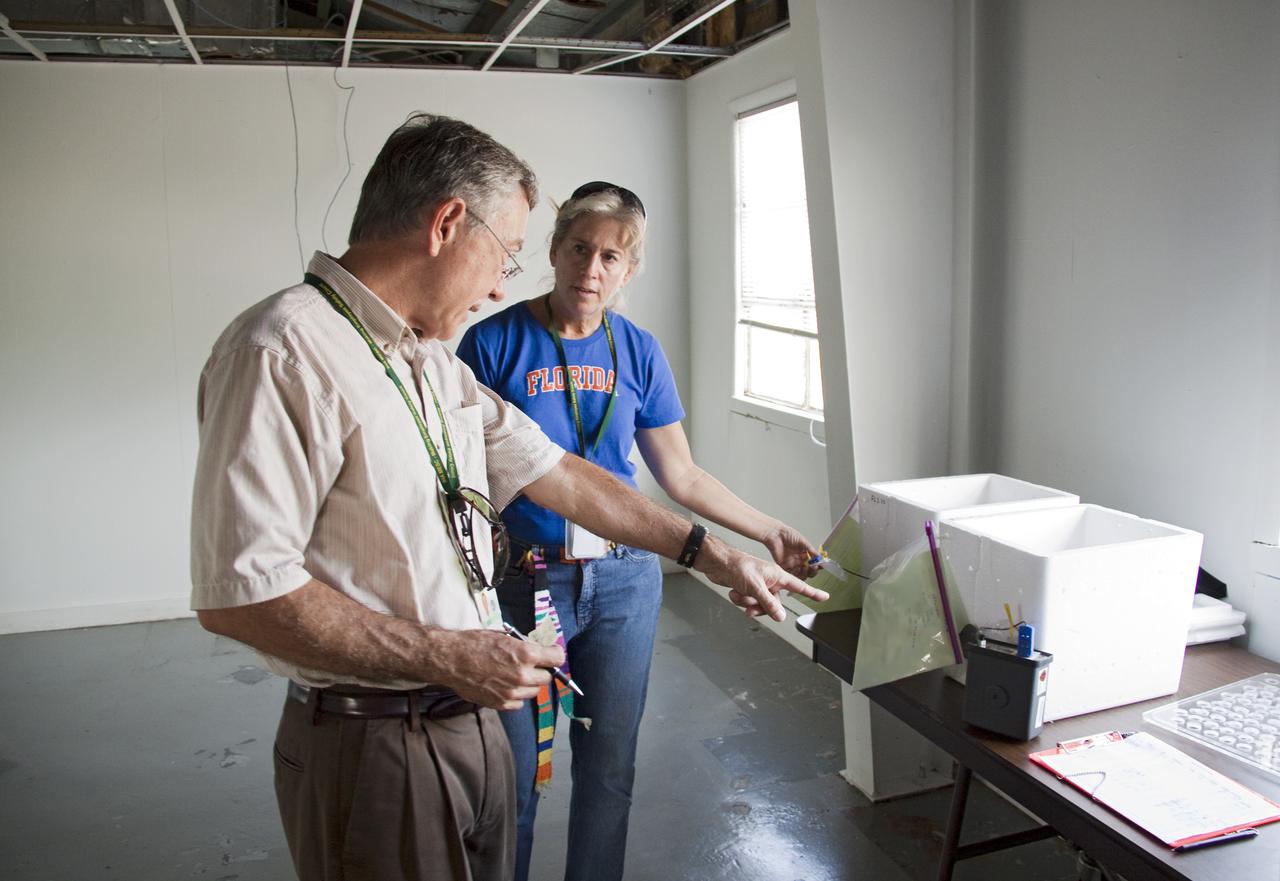
KSC SEA TURTLE HATCHERY IN SUPPORT OF NORTHERN GULF RESCUE OPERATIONS
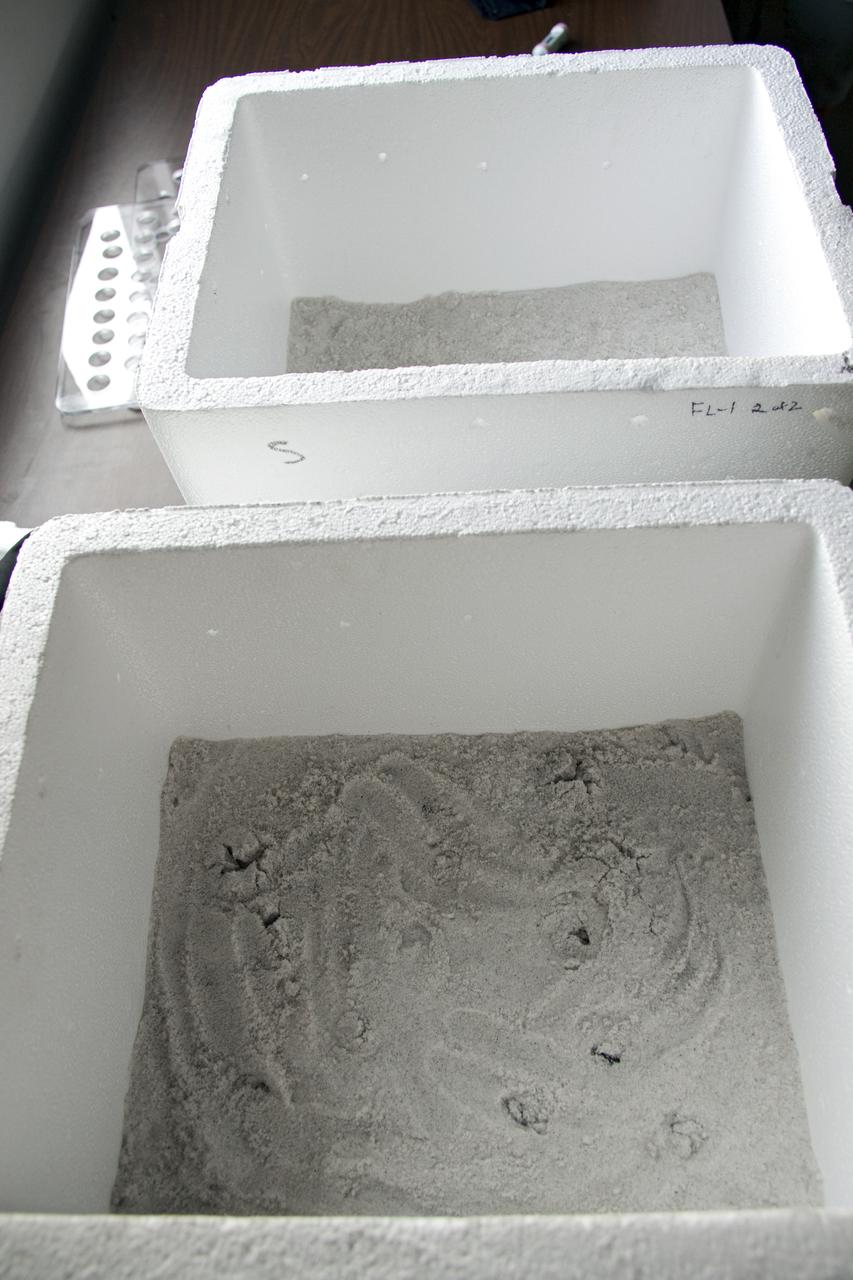
KSC SEA TURTLE HATCHERY IN SUPPORT OF NORTHERN GULF RESCUE OPERATIONS
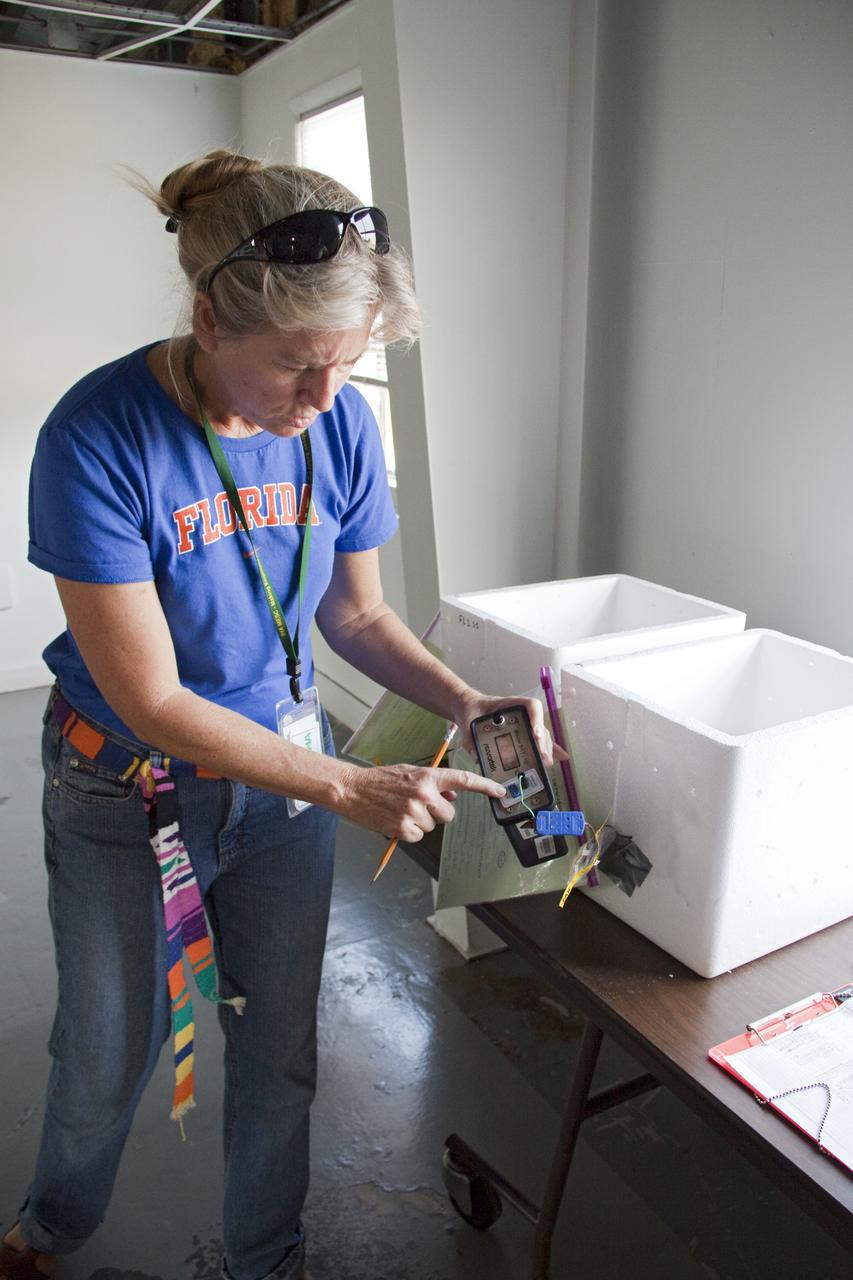
KSC SEA TURTLE HATCHERY IN SUPPORT OF NORTHERN GULF RESCUE OPERATIONS
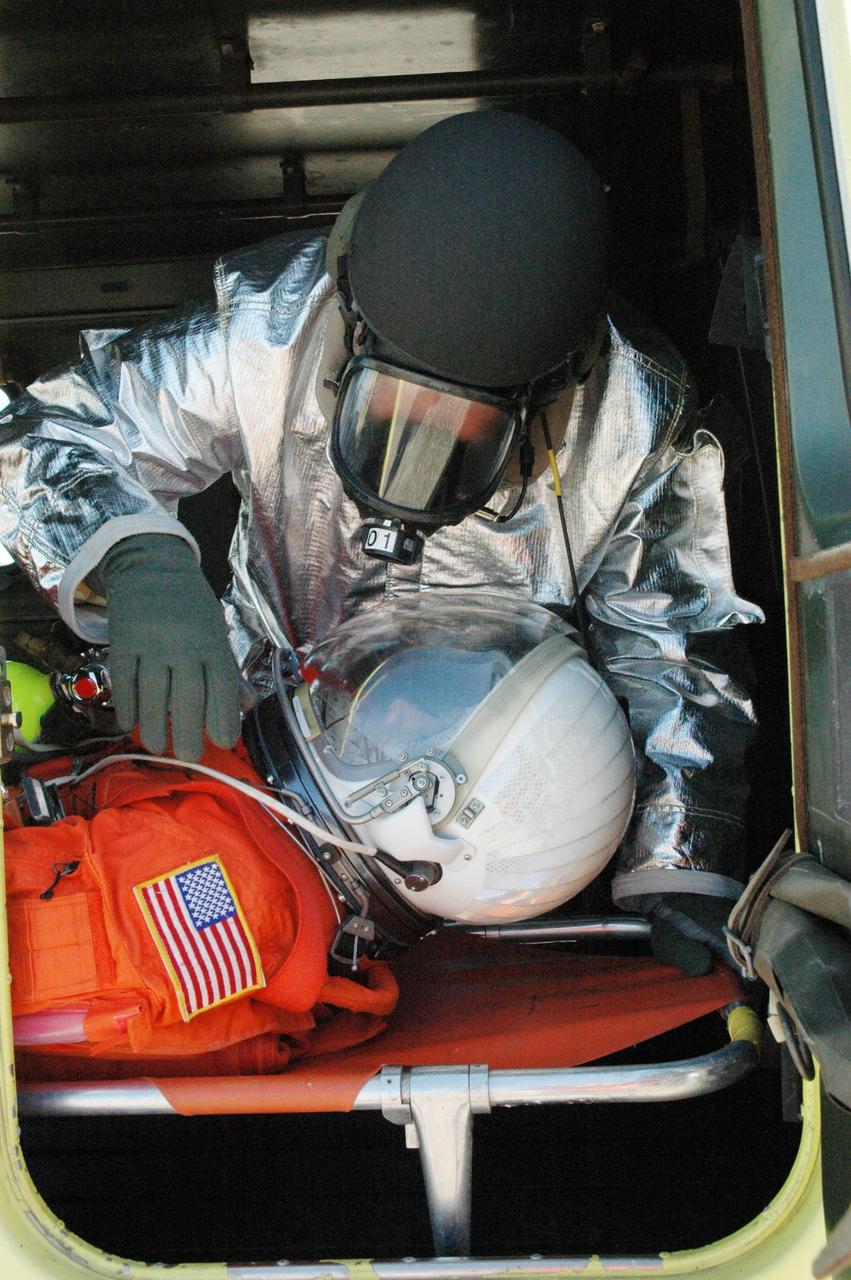
KENNEDY SPACE CENTER, FLA. - At NASA Kennedy Space Center's Shuttle Landing Facility, an emergency rescue worker tends to an "injured astronaut" inside a rescue vehicle. Volunteers and emergency rescue workers are participating in a simulated emergency landing of a shuttle crew. Known as a Mode VI exercise, the operation uses volunteer workers from the Center to pose as astronauts. The purpose of the simulation is to exercise emergency preparedness personnel, equipment and facilities in rescuing astronauts from a downed orbiter and providing immediate medical attention. Photo credit: NASA/Troy Cryder

CAPE CANAVERAL, Fla. -- At NASA's Kennedy Space Center in Florida, paramedics remove George Jacobs, NASA's deputy director of Center Operations, from a vehicle simulating a rescue operation. Jacobs served as a "volunteer patient" during the activity. The activity taking place in Kennedy's Launch Complex 39 turn-basin parking lot was only one of several drills. It was part of a new training program that was developed by Kennedy's Fire Rescue department along with NASA Aircraft Operations to sharpen the skills needed to help rescue personnel learn how to collaborate with helicopter pilots in taking injured patients to hospitals as quickly as possible. Photo credit: NASA/Dan Casper
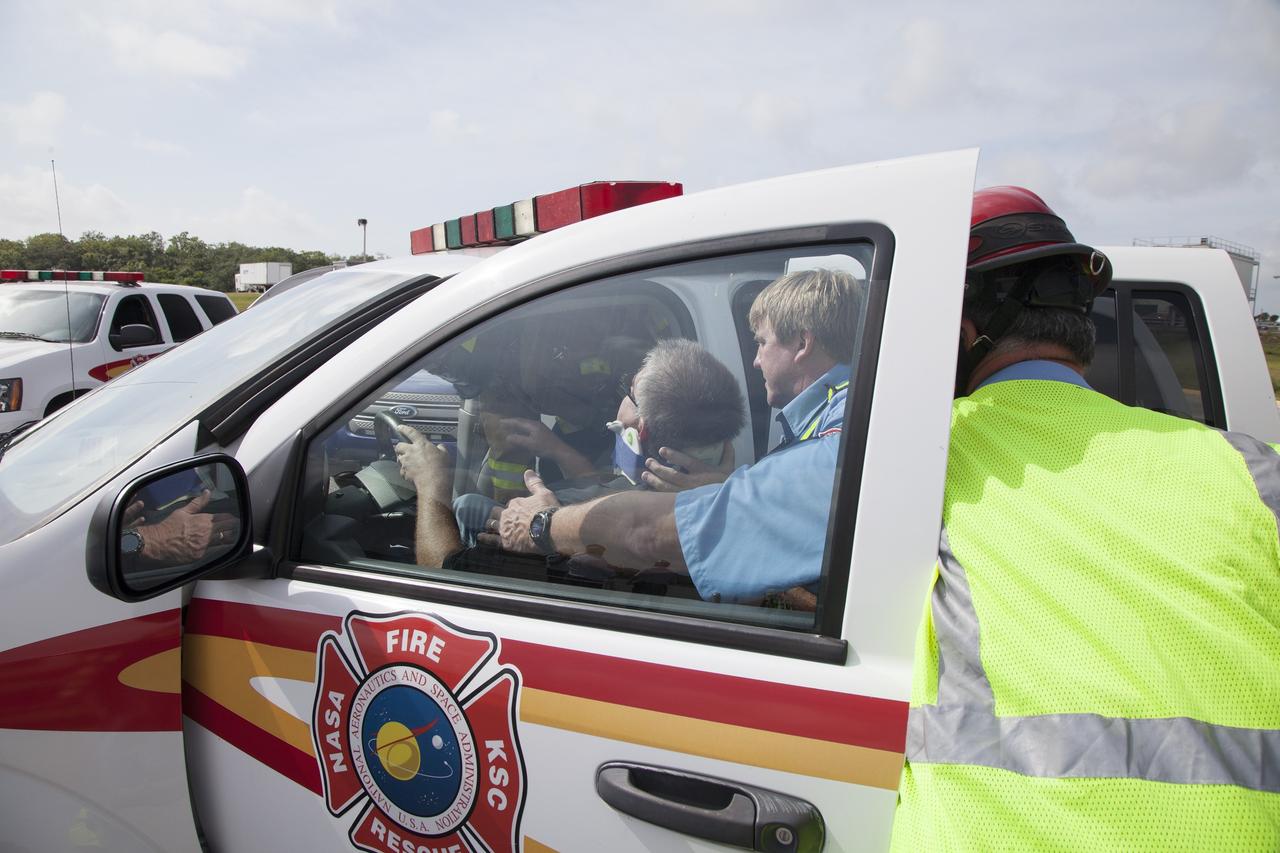
CAPE CANAVERAL, Fla. -- At NASA's Kennedy Space Center in Florida, paramedics remove George Jacobs, NASA's deputy director of Center Operations, from a vehicle simulating a rescue operation. Jacobs served as a "volunteer patient" during the activity. The activity taking place in Kennedy's Launch Complex 39 turn-basin parking lot was only one of several drills. It was part of a new training program that was developed by Kennedy's Fire Rescue department along with NASA Aircraft Operations to sharpen the skills needed to help rescue personnel learn how to collaborate with helicopter pilots in taking injured patients to hospitals as quickly as possible. Photo credit: NASA/Dan Casper
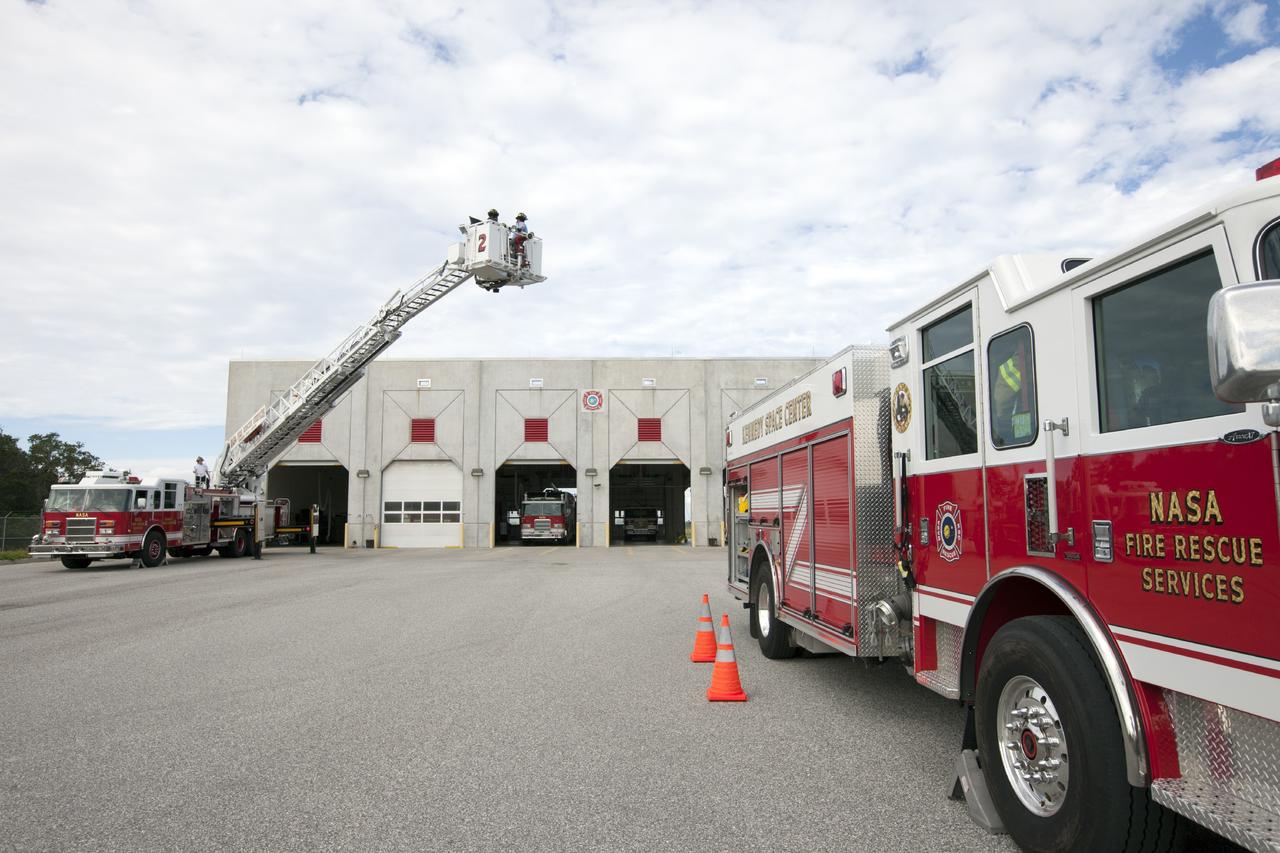
CAPE CANAVERAL, Fla. – At Fire Station No. 2 near the Shuttle Landing Facility at NASA’s Kennedy Space Center in Florida, Fire Rescue Services personnel have deployed and extended the ladder on the aerial fire truck during training in order to be certified in the operation and use of the vehicle. Two fire rescue workers are in the bucket practicing harness procedures. The center’s Fire Rescue Services recently achieved Pro Board Certification in aerial fire truck operations. Pro Board Certification is a globally recognized certification that puts on multiple courses that all fire departments throughout the world recognize and use to train their personnel. The unique aerial truck contains a 100-foot extendable ladder with a bucket at the end of it that can be used for rescues from taller buildings or aircraft rescue firefighting. Photo credit: NASA/Kim Shiflett
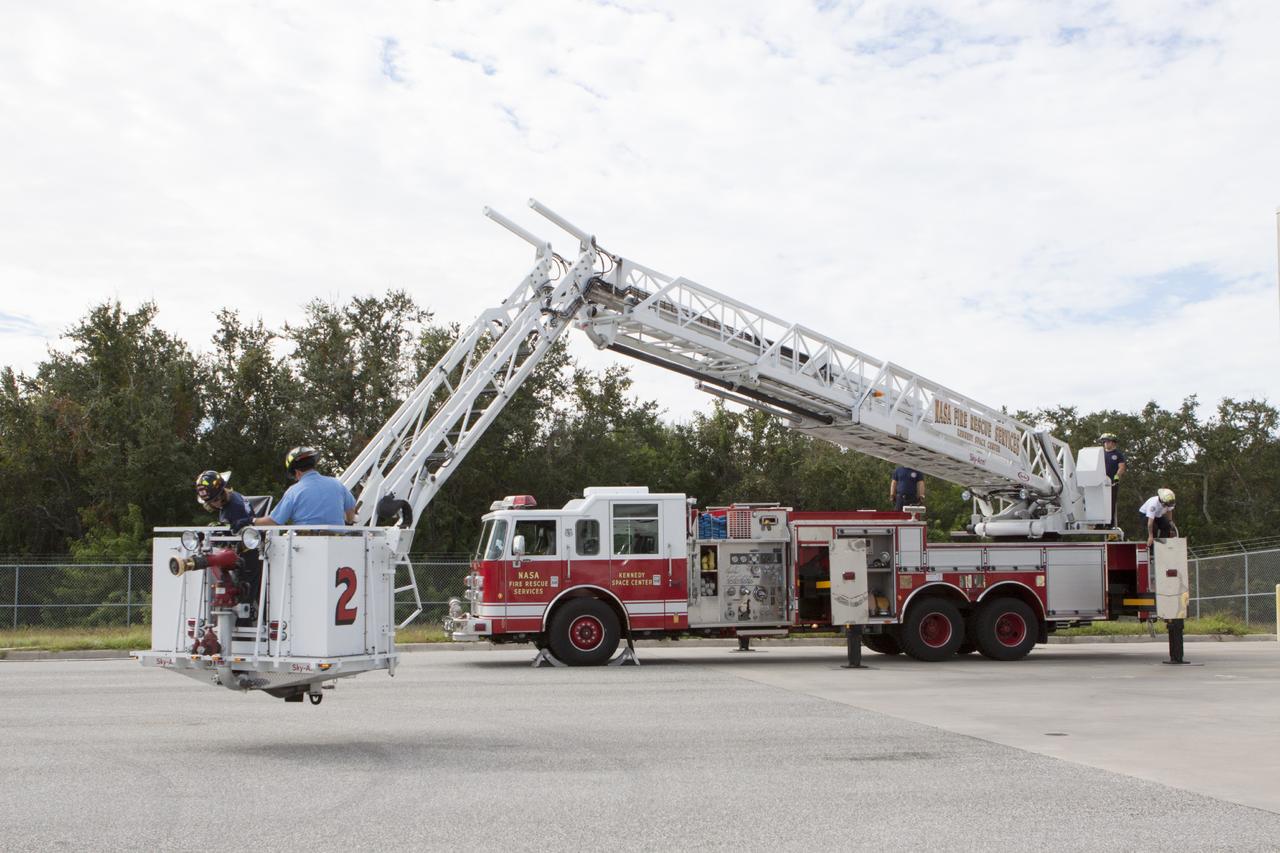
CAPE CANAVERAL, Fla. – At Fire Station No. 2 near the Shuttle Landing Facility at NASA’s Kennedy Space Center in Florida, Fire Rescue Services personnel lower the extendable ladder so that two fire rescue workers can exit the bucket during training to be certified in the operation and use of the vehicle. The center’s Fire Rescue Services recently achieved Pro Board Certification in aerial fire truck operations. Pro Board Certification is a globally recognized certification that puts on multiple courses that all fire departments throughout the world recognize and use to train their personnel. The unique aerial truck contains a 100-foot extendable ladder with a bucket at the end of it that can be used for rescues from taller buildings or aircraft rescue firefighting. Photo credit: NASA/Kim Shiflett
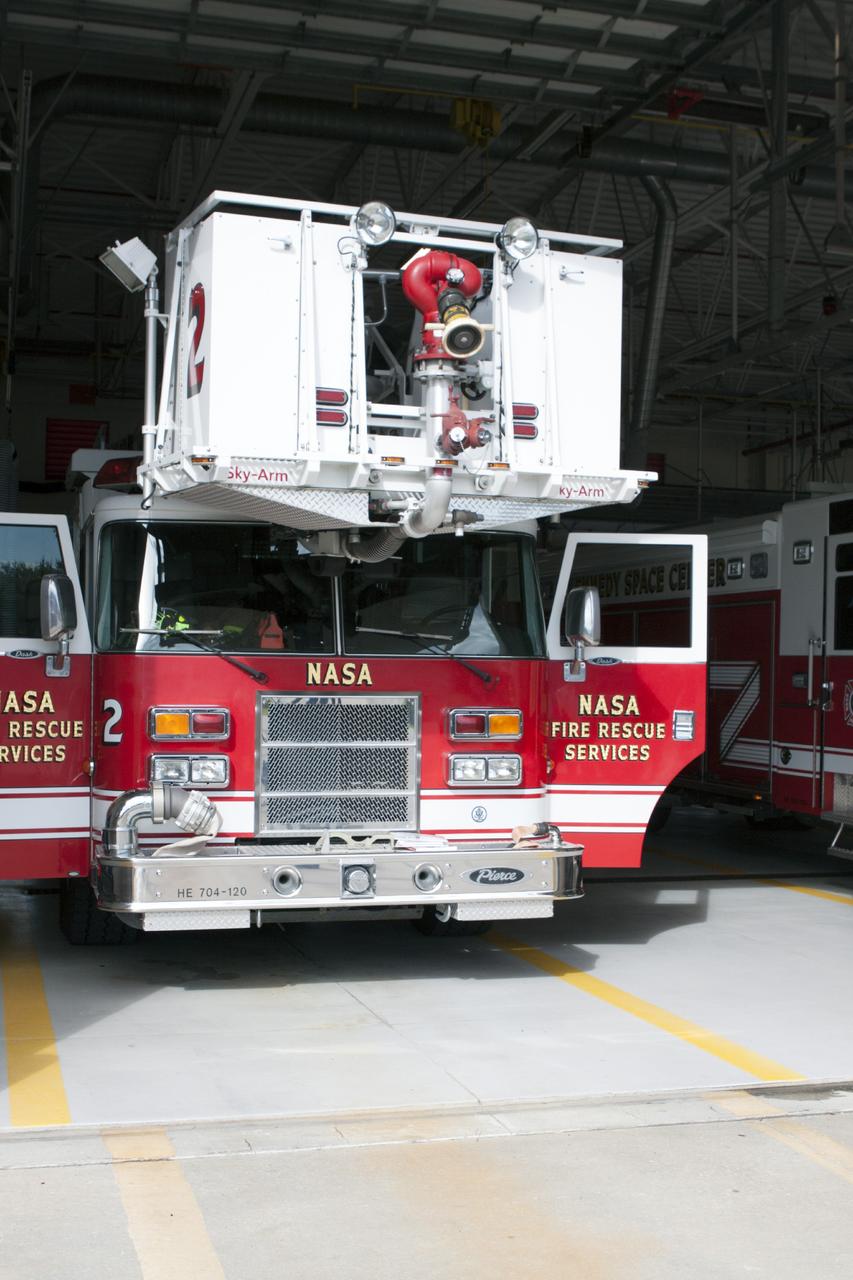
CAPE CANAVERAL, Fla. – At Fire Station No. 2 near the Shuttle Landing Facility at NASA’s Kennedy Space Center in Florida, the aerial fire truck sits in a bay as Fire Rescue Services personnel prepare to drive the fire truck out of the bay and then operate the extendable ladder during training in order to be certified in the operation and use of the vehicle. The center’s Fire Rescue Services recently achieved Pro Board Certification in aerial fire truck operations. Pro Board Certification is a globally recognized certification that puts on multiple courses that all fire departments throughout the world recognize and use to train their personnel. The unique aerial truck contains a 100-foot extendable ladder with a bucket at the end of it that can be used for rescues from taller buildings or aircraft rescue firefighting. Photo credit: NASA/Kim Shiflett
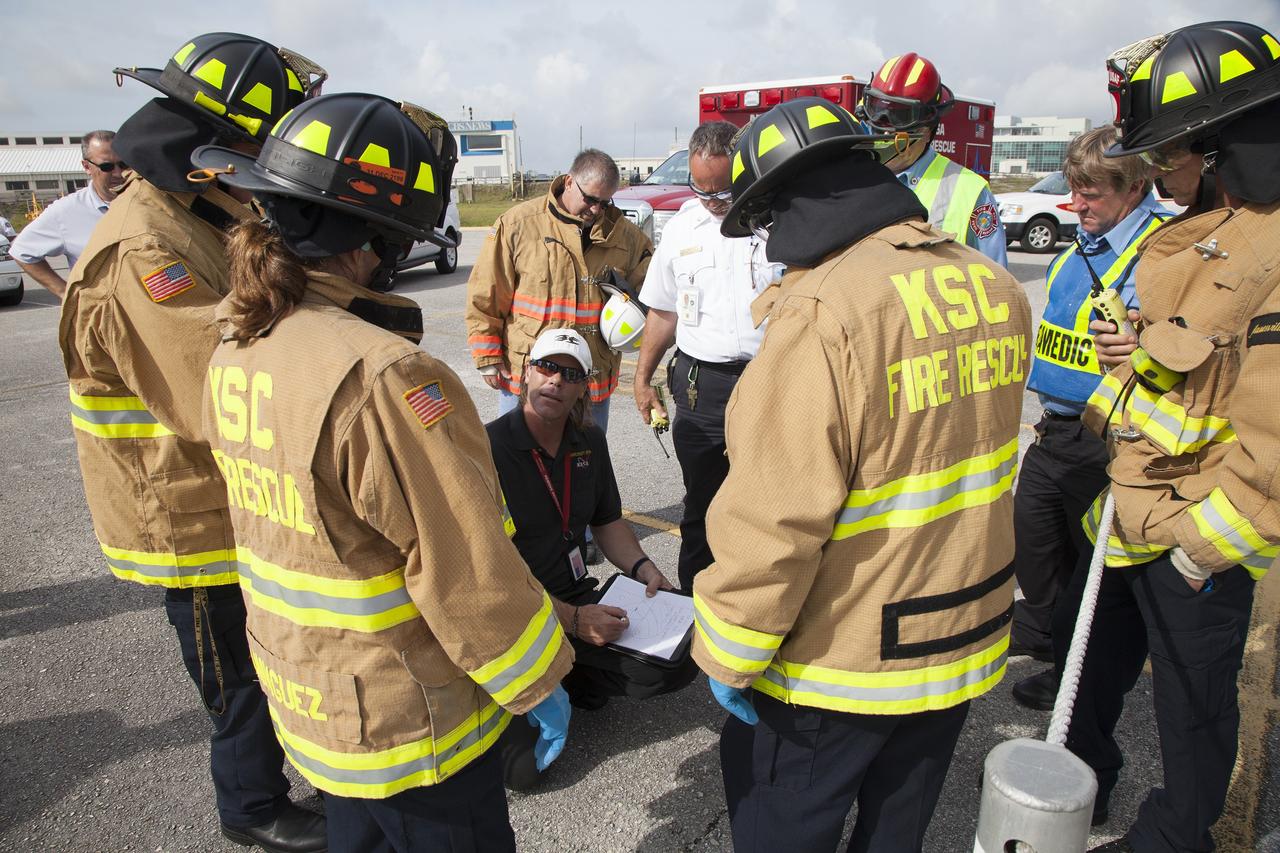
CAPE CANAVERAL, Fla. -- At NASA's Kennedy Space Center in Florida, Bill Martin, a URS Federal Technical Services helicopter pilot in NASA Aircraft Operations, kneeling, briefs NASA Fire Rescue personnel prior to the start of a simulated emergency. The activity taking place in Kennedy's Launch Complex 39 turn-basin parking lot was only one of several drills. It was part of a new training program that was developed by Kennedy's Fire Rescue department along with NASA Aircraft Operations to sharpen the skills needed to help rescue personnel learn how to collaborate with helicopter pilots in taking injured patients to hospitals as quickly as possible. Photo credit: NASA/Dan Casper
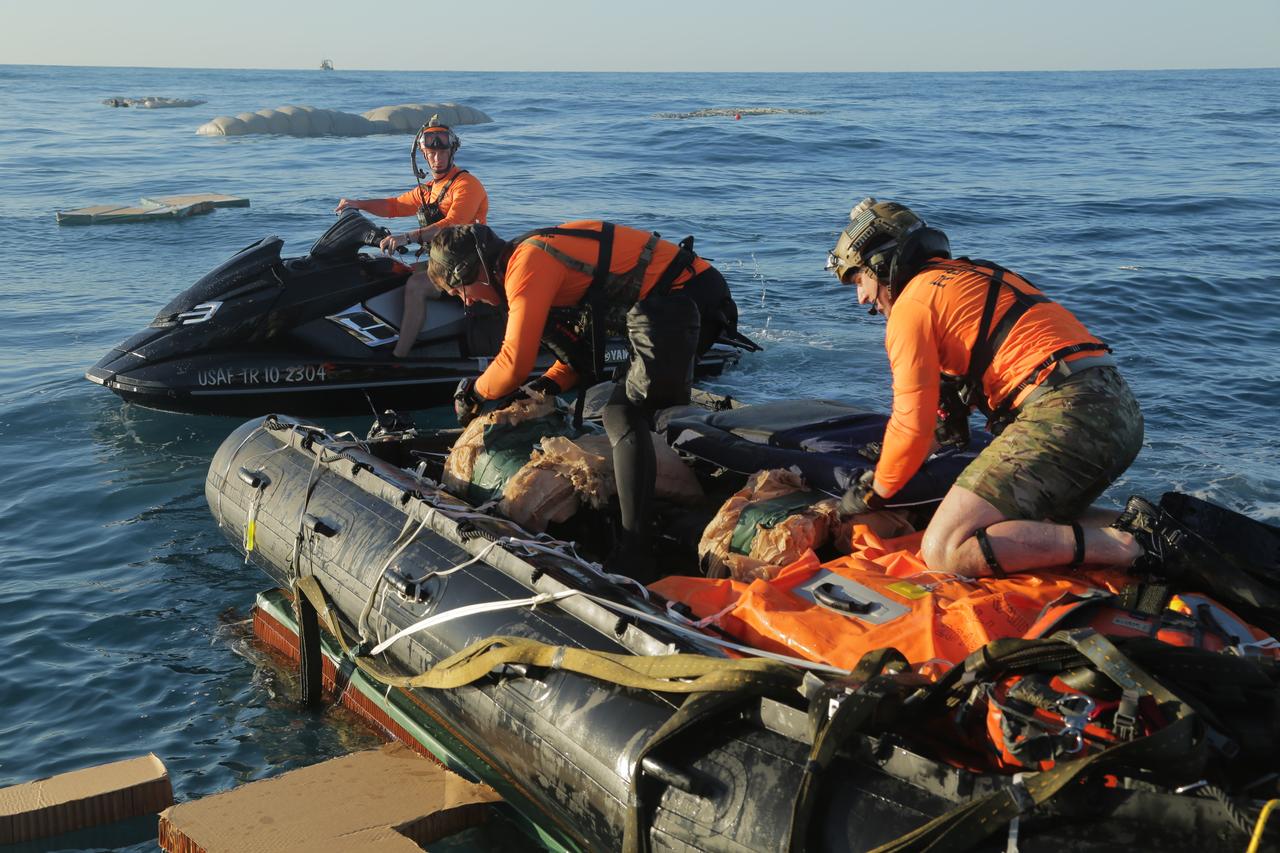
Pararescue specialists from the 304th Rescue Squadron, located in Portland, Oregon and supporting the 45th Operations Group’s Detachment 3, based out of Patrick Air Force Base, prepare equipment during an April astronaut rescue exercise with NASA’s Commercial Crew Program and SpaceX off of Florida’s eastern coast. The pararescue specialists, also known as “Guardian Angels,” jumped from military aircraft and simulated a rescue operation to demonstrate their ability to safely remove crew from the SpaceX Crew Dragon in the unlikely event of an emergency landing. The pararescue specialists are fully qualified paramedics able to perform field surgery, if necessary.
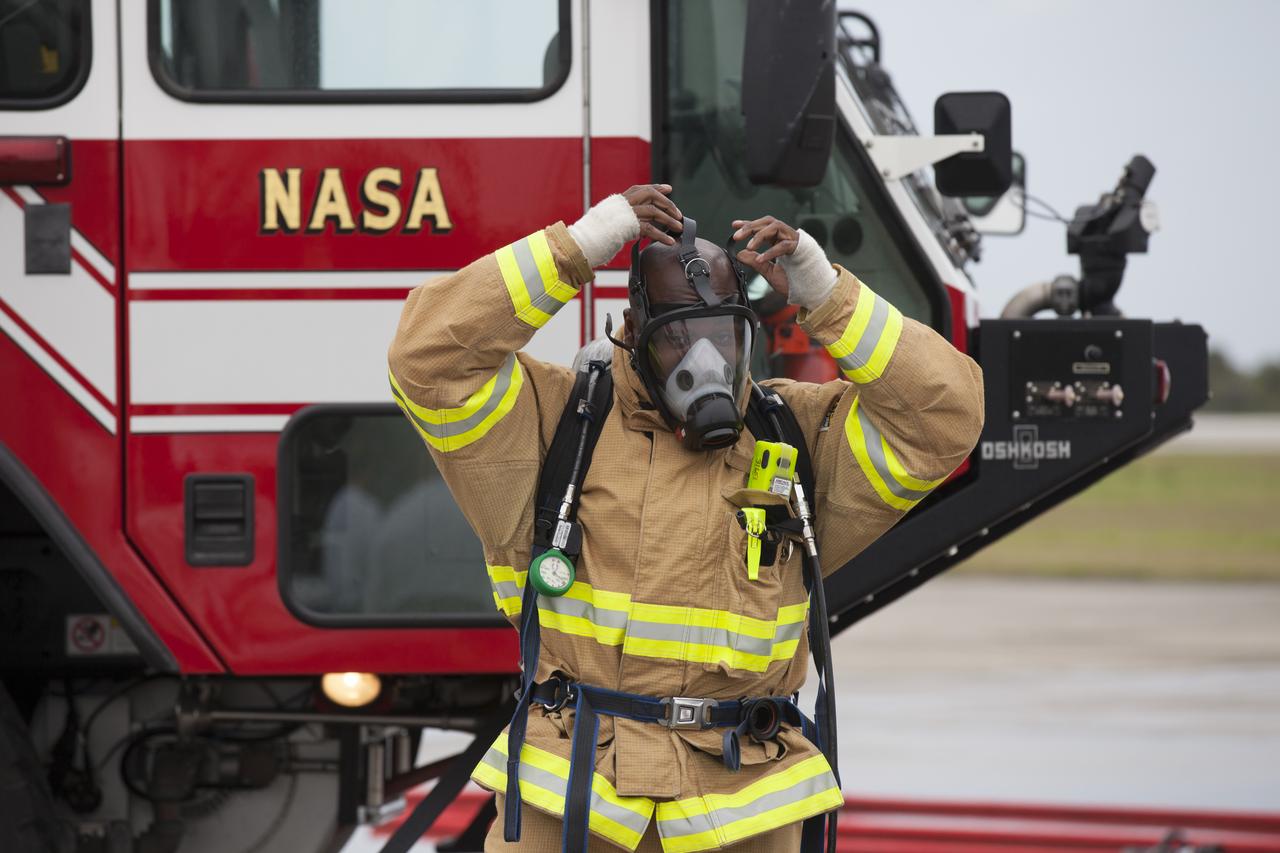
CAPE CANAVERAL, Fla. - Special Rescue Operations firefighters with NASA Fire Rescue Services in the Protective Services Office at NASA’s Kennedy Space Center in Florida practice firefighting skills at the Shuttle Landing Facility. A firefighter dons protective gear to prepare for the training simulation. Kennedy’s firefighters recently achieved Pro Board Certification in aerial fire truck operations and completed vehicle extrication training using the Jaws of Life. The Protective Services Office is one step closer to achieving certification in vehicle machinery extrication and other rescue skills. Kennedy’s firefighters are with G4S Government Solutions Inc., on the Kennedy Protective Services Contract. Photo credit: NASA/Kim Shiflett
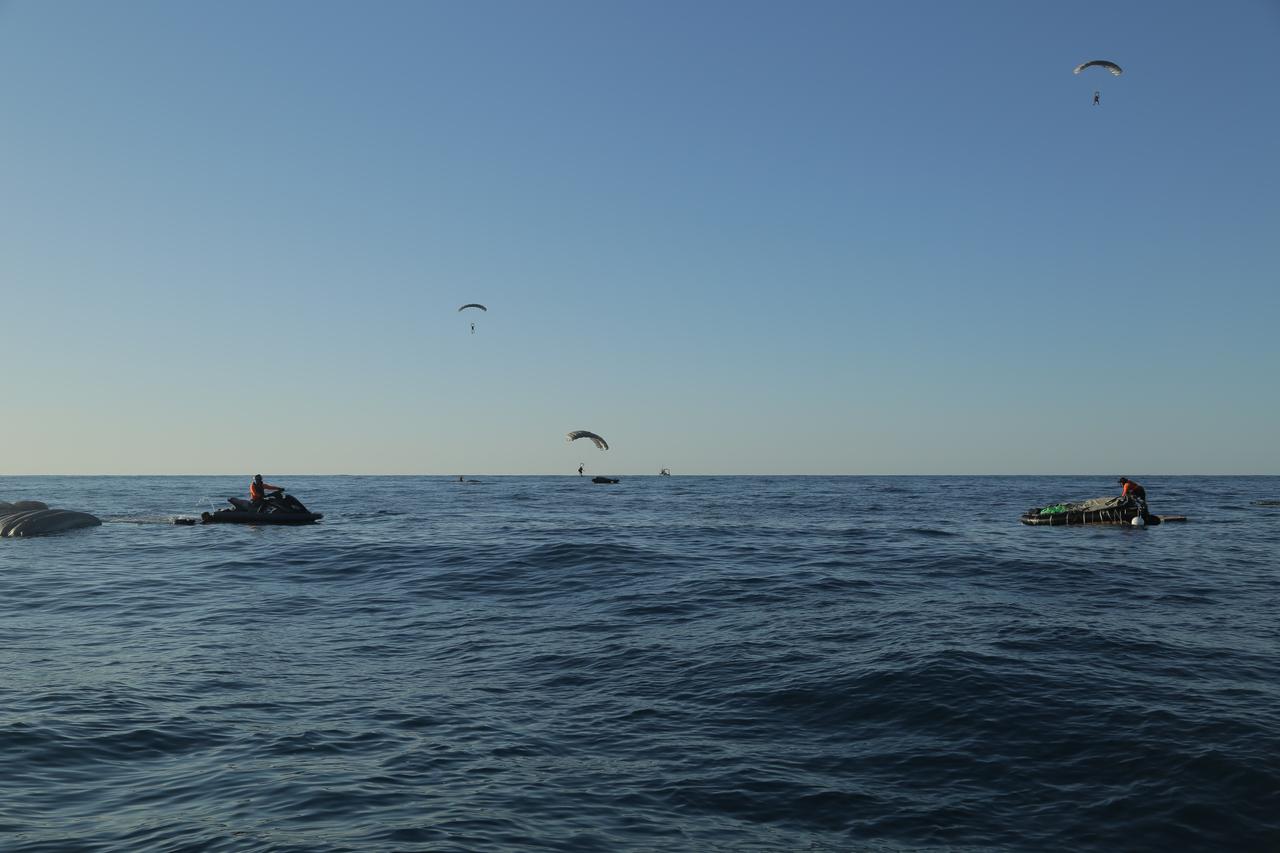
Pararescue specialists from the 304th Rescue Squadron, located in Portland, Oregon and supporting the 45th Operations Group’s Detachment 3, based out of Patrick Air Force Base, deploy their parachutes and prepare to touch down on the Atlantic Ocean surface during an April astronaut rescue exercise with NASA’s Commercial Crew Program and SpaceX off of Florida’s eastern coast. The pararescue specialists, also known as “Guardian Angels,” jumped from military aircraft and simulated a rescue operation to demonstrate their ability to safely remove crew from the SpaceX Crew Dragon in the unlikely event of an emergency landing.

CAPE CANAVERAL, Fla. -- At NASA's Kennedy Space Center in Florida, a Fire Rescue team member serves as a "volunteer patient" for a simulated emergency operation. Paramedics prepare to move his stretcher to an awaiting helicopter. The activity taking place in Kennedy's Launch Complex 39 turn-basin parking lot was only one of several drills. It was part of a new training program that was developed by Kennedy's Fire Rescue department along with NASA Aircraft Operations to sharpen the skills needed to help rescue personnel learn how to collaborate with helicopter pilots in taking injured patients to hospitals as quickly as possible. Photo credit: NASA/Dan Casper
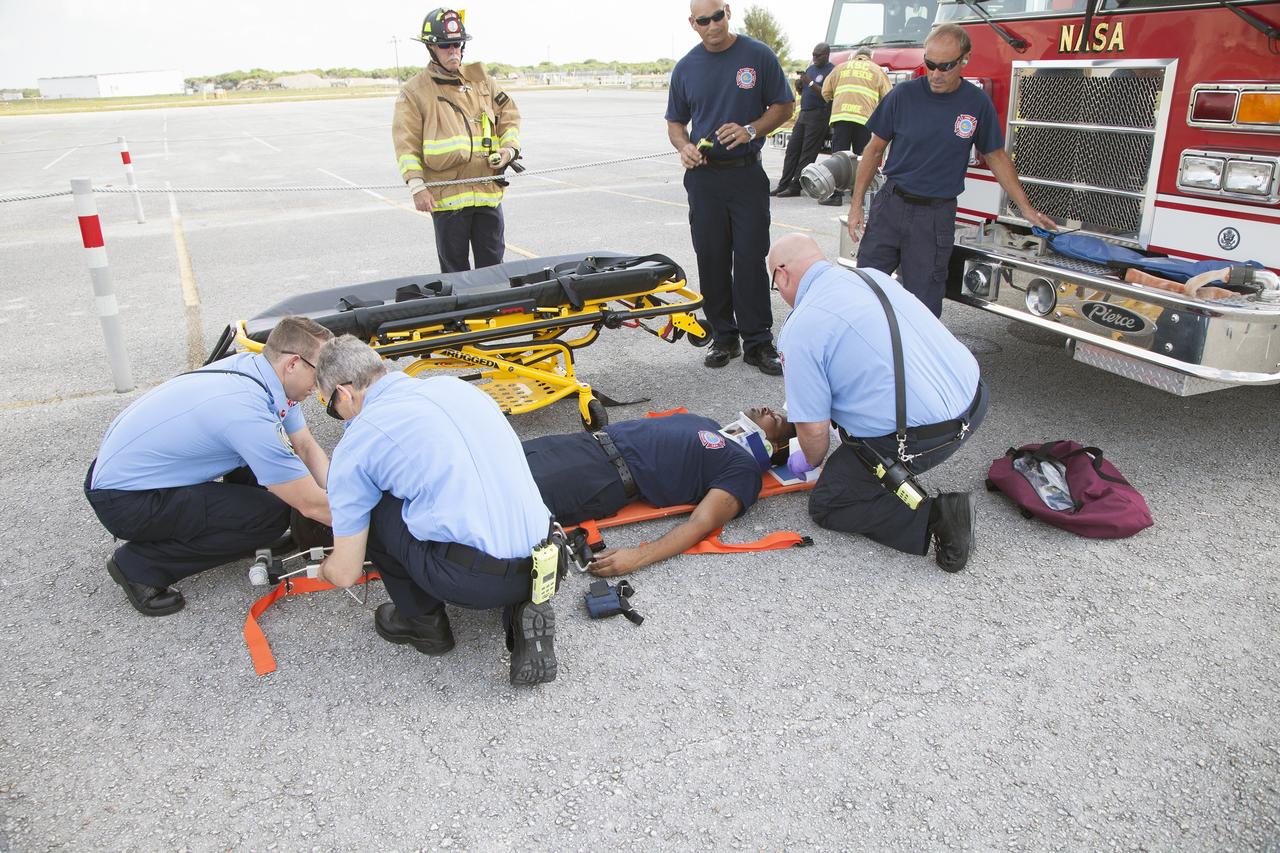
CAPE CANAVERAL, Fla. -- At NASA's Kennedy Space Center in Florida, a Fire Rescue team member serves as a "volunteer patient" for a simulated emergency operation. Paramedics are attaching a neck brace and leg splint. The activity taking place in Kennedy's Launch Complex 39 turn-basin parking lot was only one of several drills. It was part of a new training program that was developed by Kennedy's Fire Rescue department along with NASA Aircraft Operations to sharpen the skills needed to help rescue personnel learn how to collaborate with helicopter pilots in taking injured patients to hospitals as quickly as possible. Photo credit: NASA/Dan Casper
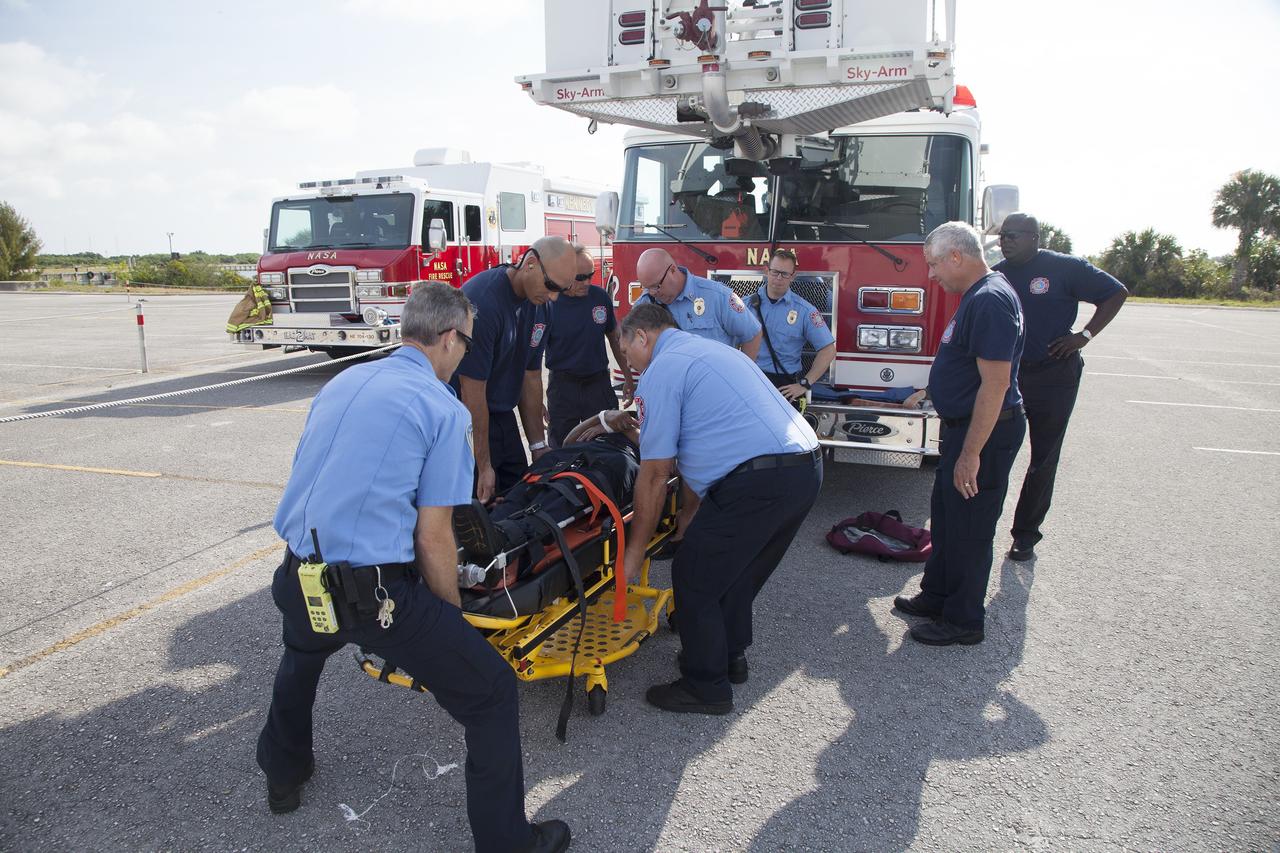
CAPE CANAVERAL, Fla. -- At NASA's Kennedy Space Center in Florida, a Fire Rescue team member serves as a "volunteer patient" for a simulated emergency operation. Paramedics prepare to move his stretcher to an awaiting helicopter. The activity taking place in Kennedy's Launch Complex 39 turn-basin parking lot was only one of several drills. It was part of a new training program that was developed by Kennedy's Fire Rescue department along with NASA Aircraft Operations to sharpen the skills needed to help rescue personnel learn how to collaborate with helicopter pilots in taking injured patients to hospitals as quickly as possible. Photo credit: NASA/Dan Casper
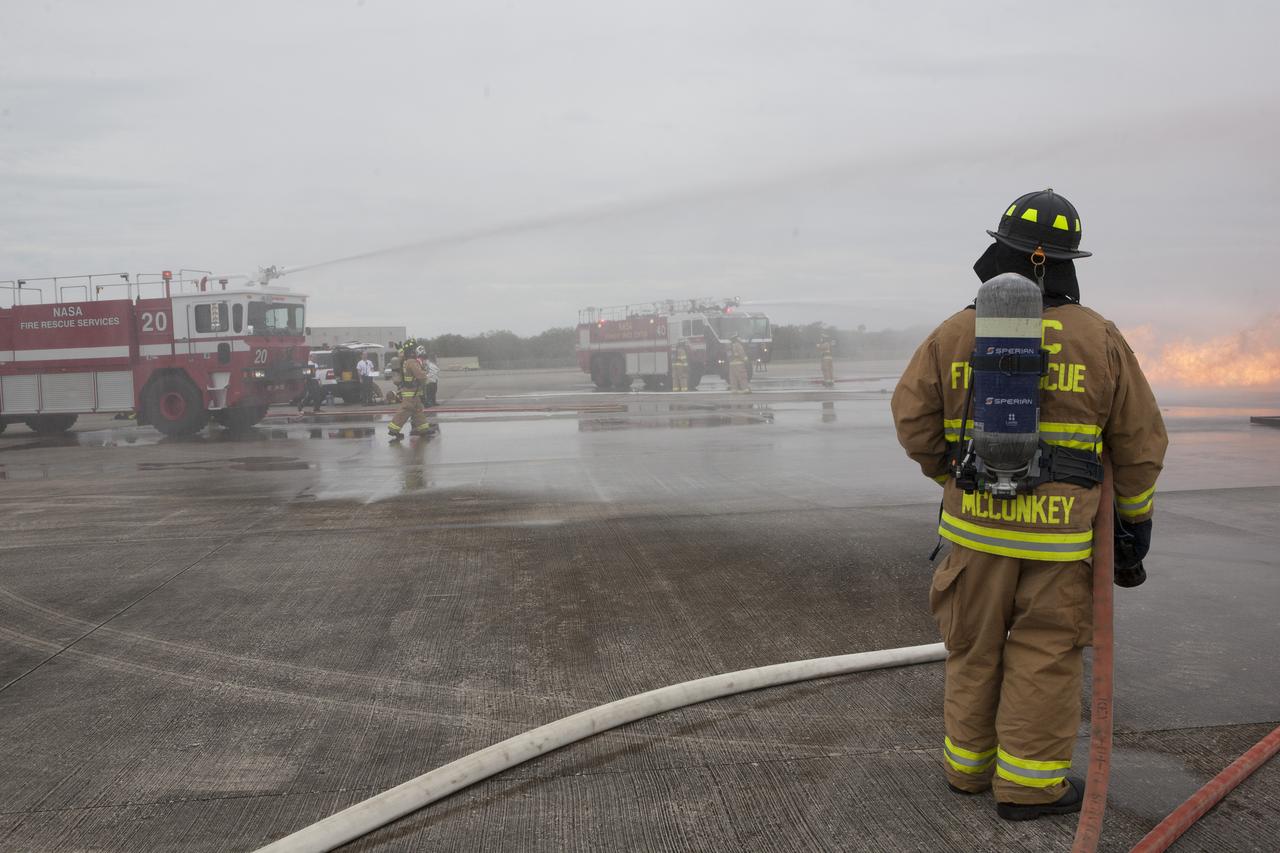
CAPE CANAVERAL, Fla. - Special Rescue Operations firefighters with NASA Fire Rescue Services in the Protective Services Office at NASA’s Kennedy Space Center in Florida prepare to participate in a training exercise at the Shuttle Landing Facility. A small fire is burning near a mock-up of a plane during the training exercise. Kennedy’s firefighters recently achieved Pro Board Certification in aerial fire truck operations and completed vehicle extrication training using the Jaws of Life. The Protective Services Office is one step closer to achieving certification in vehicle machinery extrication and other rescue skills. Kennedy’s firefighters are with G4S Government Solutions Inc., on the Kennedy Protective Services Contract. Photo credit: NASA/Kim Shiflett
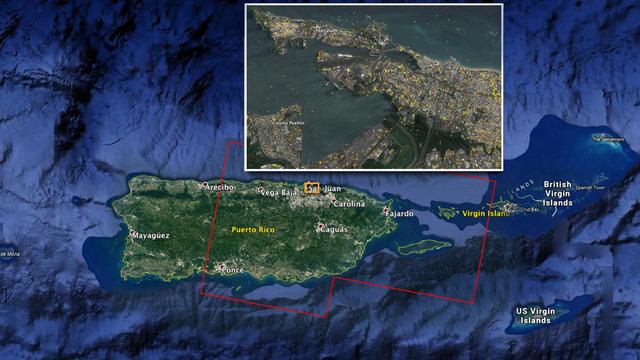
The Advanced Rapid Imaging and Analysis (ARIA) team at NASA's Jet Propulsion Laboratory in Pasadena, California, and Caltech, also in Pasadena, created this Damage Proxy Map (DPM) depicting areas of Eastern Puerto Rico that are likely damaged (shown by red and yellow pixels) as a result of Hurricane Maria (a Category 4 hurricane at landfall in Puerto Rico on Sept. 20, 2017). The map is derived from synthetic aperture radar (SAR) images from the Copernicus Sentinel-1A and Sentinel-1B satellites, operated by the European Space Agency (ESA). The images were taken before (March 25, 2017) and after (Sept. 21, 2017) the storm's landfall. The map was delivered to responding agencies, including the Federal Emergency Management Agency (FEMA), on Sept. 22, 2017. FEMA combined the map with building infrastructure data to estimate a damage density map, which was sent to its Urban Search and Rescue teams in the field in Puerto Rico. The map covers an area of 105 by 60 miles (169 by 96 kilometers), shown by the large red polygon in the figure. The inset, denoted by the orange rectangle, shows the extent of damage in and around the capital city of San Juan. Each pixel measures about 98 feet (30 meters) across. The color variation from yellow to red indicates increasingly more significant ground surface change. Preliminary validation was done by comparing the map with anecdotal reports of damage. This damage proxy map should be used as guidance to identify damaged areas, and may be less reliable over vegetated and flooded areas. Sentinel-1 data were accessed through the Copernicus Open Access Hub. The image contains modified Copernicus Sentinel data (2017), processed by ESA and analyzed by the NASA-JPL/Caltech ARIA team. This research was carried out at JPL under a contract with NASA. https://photojournal.jpl.nasa.gov/catalog/PIA21964
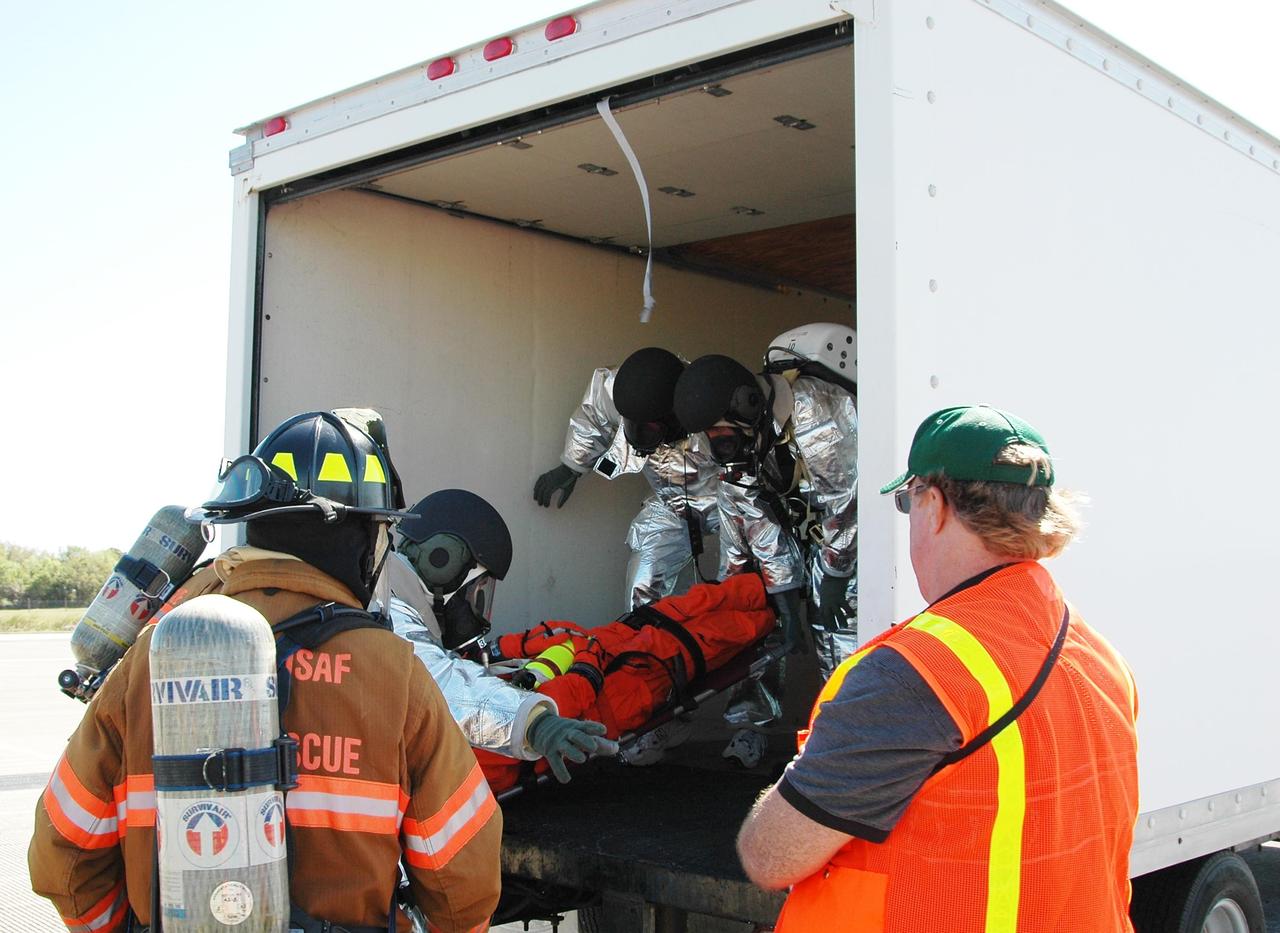
KENNEDY SPACE CENTER, FLA. - In a simulated emergency landing of a shuttle crew at NASA Kennedy Space Center's Shuttle Landing Facility, emergency rescue personnel place an "injured astronaut" into a rescue vehicle. Known as a Mode VI exercise, the operation uses volunteer workers from the Center to pose as astronauts. The purpose of the simulation is to exercise emergency preparedness personnel, equipment and facilities in rescuing astronauts from a downed orbiter and providing immediate medical attention. Photo credit: NASA/Kim Shiflett
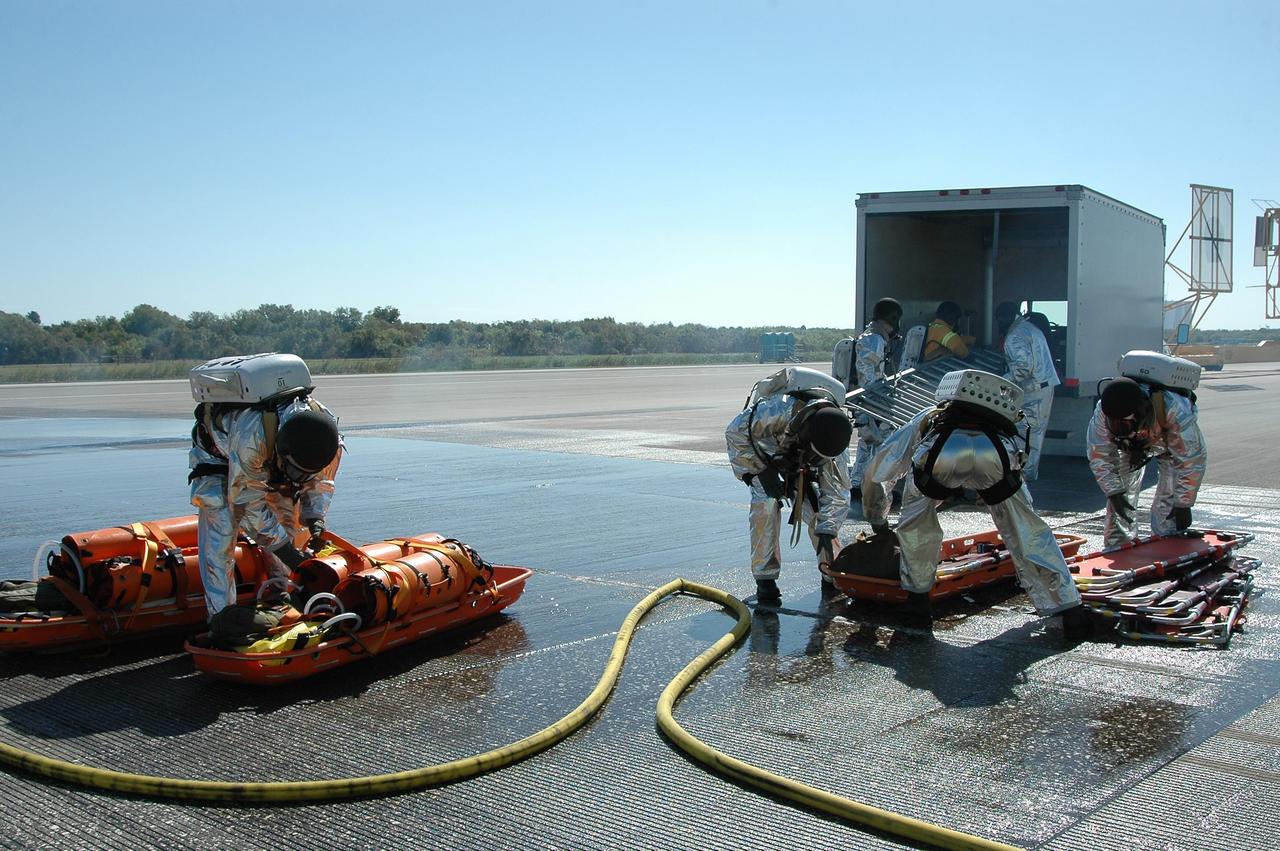
KENNEDY SPACE CENTER, FLA. - At NASA Kennedy Space Center's Shuttle Landing Facility, emergency rescue personnel get equipment ready for a simulated emergency rescue of a shuttle crew after landing. Known as a Mode VI exercise, the operation uses volunteer workers from the Center to pose as astronauts. The purpose of the simulation is to exercise emergency preparedness personnel, equipment and facilities in rescuing astronauts from a downed orbiter and providing immediate medical attention. Photo credit: NASA/Kim Shiflett
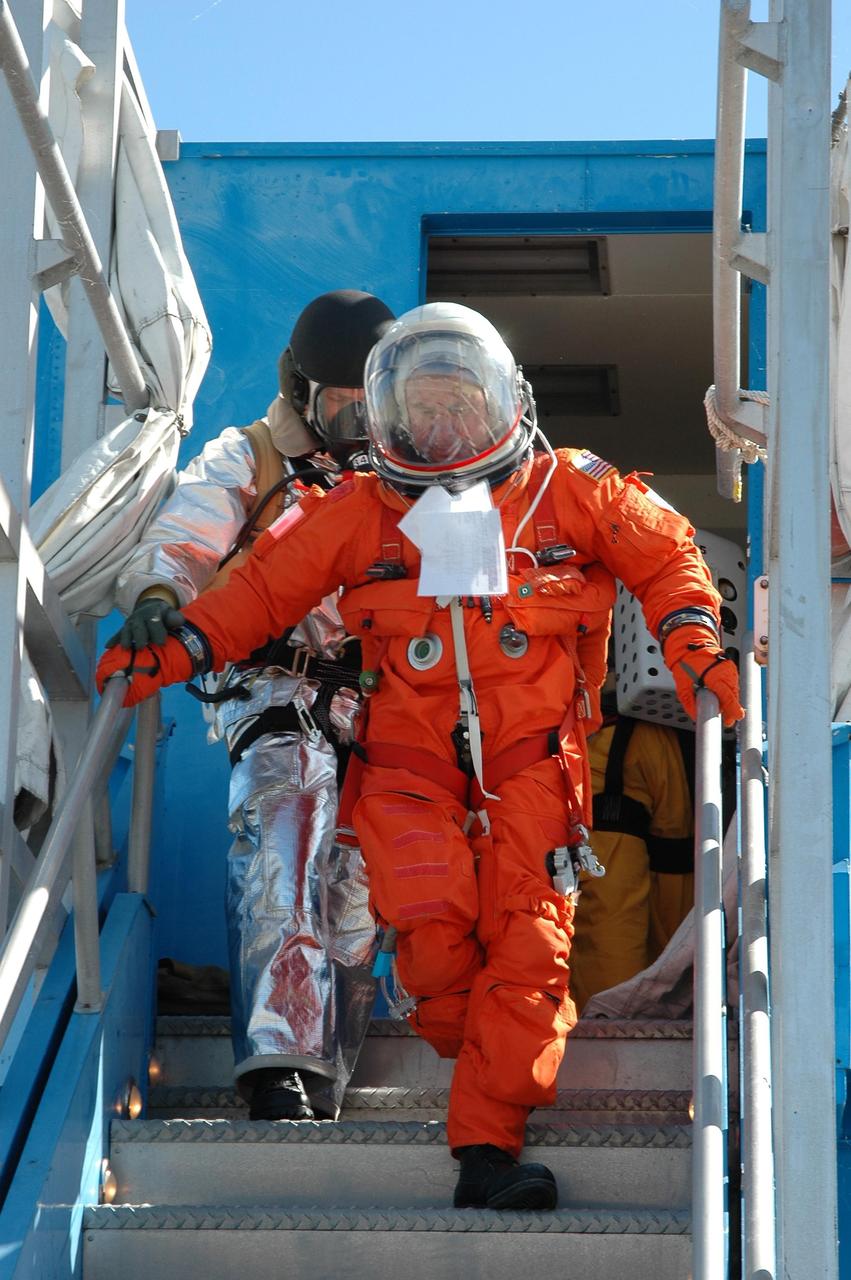
KENNEDY SPACE CENTER, FLA. - At NASA Kennedy Space Center's Shuttle Landing Facility, emergency rescue personnel begin the simulated emergency rescue of a shuttle crew after landing. Known as a Mode VI exercise, the operation uses volunteer workers from the Center to pose as astronauts. The purpose of the simulation is to exercise emergency preparedness personnel, equipment and facilities in rescuing astronauts from a downed orbiter and providing immediate medical attention. Photo credit: NASA/Kim Shiflett
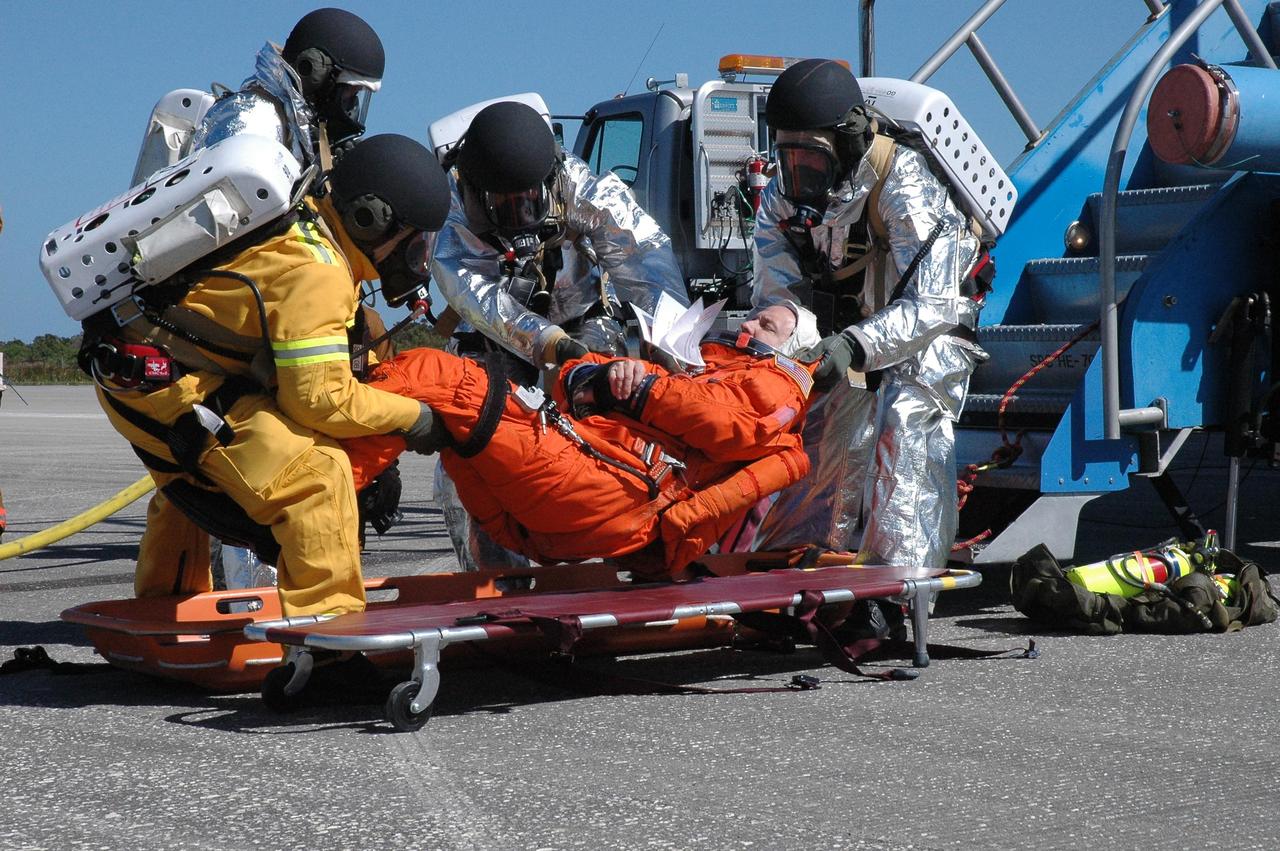
KENNEDY SPACE CENTER, FLA. - At NASA Kennedy Space Center's Shuttle Landing Facility, emergency rescue personnel gently place an "injured astronaut" onto a stretcher. Volunteers and emergency rescue workers are participating in a simulated emergency landing of a shuttle crew. Known as a Mode VI exercise, the operation uses volunteer workers from the Center to pose as astronauts. The purpose of the simulation is to exercise emergency preparedness personnel, equipment and facilities in rescuing astronauts from a downed orbiter and providing immediate medical attention. Photo credit: NASA/Troy Cryder
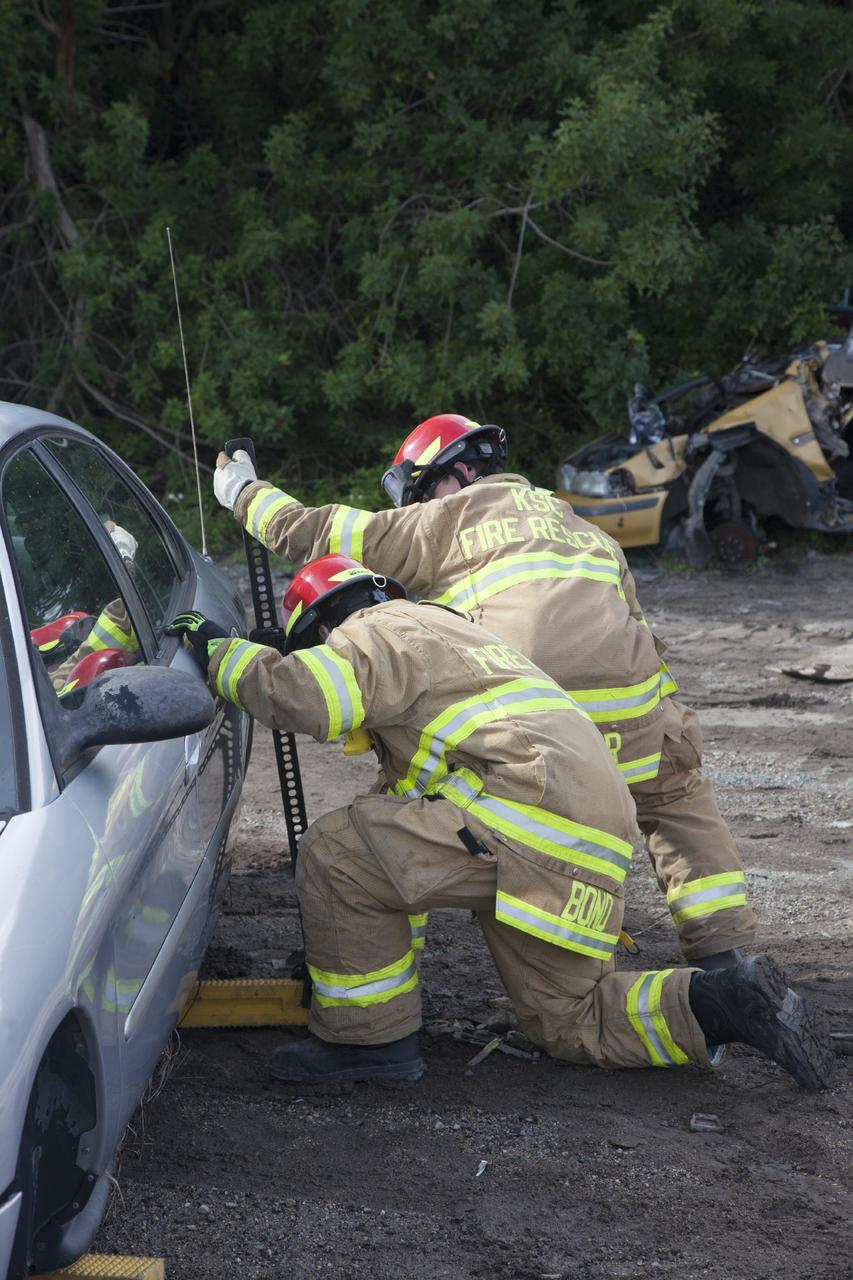
CAPE CANAVERAL, Fla. – Special Rescue Operations firefighters with NASA Fire Rescue Services in the Protective Services Office at NASA’s Kennedy Space Center in Florida practice vehicle extrication training at an auto salvage yard near the center. Two firefighters insert blocks under the vehicle to stabilize it. They will use the Jaws of Life on the vehicle to simulate the rescue of a trapped and injured person. Other rescue equipment includes axes, tools to punch through and clear away the windshield and windows and a hydraulic cutting tool that is used to remove the roof of a car. Kennedy’s firefighters recently achieved Pro Board Certification in aerial fire truck operations. With the completion of vehicle extrication and Jaws of Life training, the Protective Services Office is one step closer to achieving certification in vehicle machinery extrication. Kennedy’s firefighters are with G4S Government Solutions Inc., on the Kennedy Protective Services Contract. Photo credit: NASA/Daniel Casper
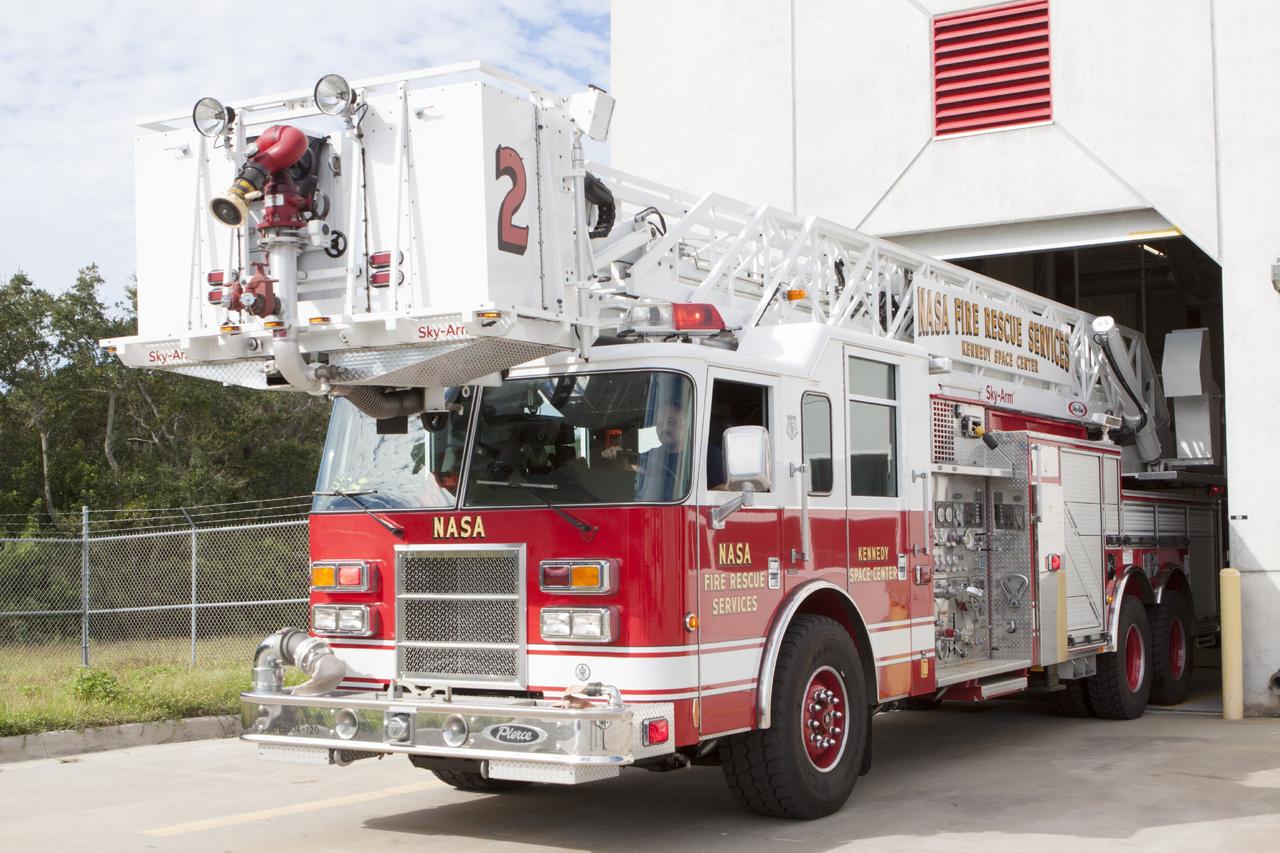
CAPE CANAVERAL, Fla. – At Fire Station No. 2 near the Shuttle Landing Facility at NASA’s Kennedy Space Center in Florida, the aerial fire truck is being driven out of the bay so that Fire Rescue Services personnel can be trained and certified in the operation and use of the vehicle. The center’s Fire Rescue Services recently achieved Pro Board Certification in aerial fire truck operations. Pro Board Certification is a globally recognized certification that puts on multiple courses that all fire departments throughout the world recognize and use to train their personnel. The unique aerial truck contains a 100-foot extendable ladder with a bucket at the end of it that can be used for rescues from taller buildings or aircraft rescue firefighting. Photo credit: NASA/Kim Shiflett
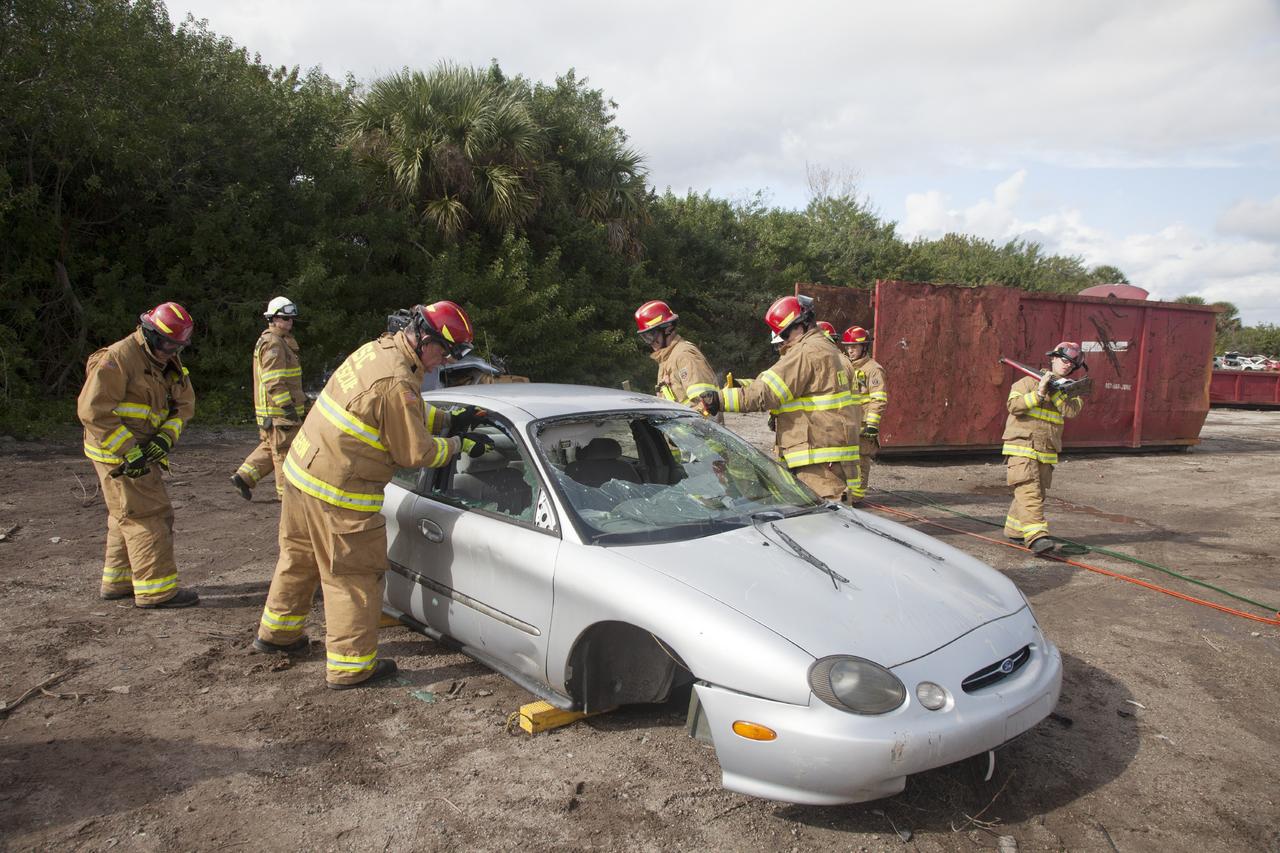
CAPE CANAVERAL, Fla. – Special Rescue Operations firefighters with NASA Fire Rescue Services in the Protective Services Office at NASA’s Kennedy Space Center in Florida practice vehicle extrication training at an auto salvage yard near the center. Stabilizing blocks have been placed underneath the car. Firefighters practiced knocking out the windshield and windows with axes and other tools. They will use the Jaws of Life on the vehicle to simulate the rescue of a trapped and injured person. Other rescue equipment includes a hydraulic cutting tool that is used to remove the roof of a car. Kennedy’s firefighters recently achieved Pro Board Certification in aerial fire truck operations. With the completion of vehicle extrication and Jaws of Life training, the Protective Services Office is one step closer to achieving certification in vehicle machinery extrication. Kennedy’s firefighters are with G4S Government Solutions Inc., on the Kennedy Protective Services Contract. Photo credit: NASA/Daniel Casper
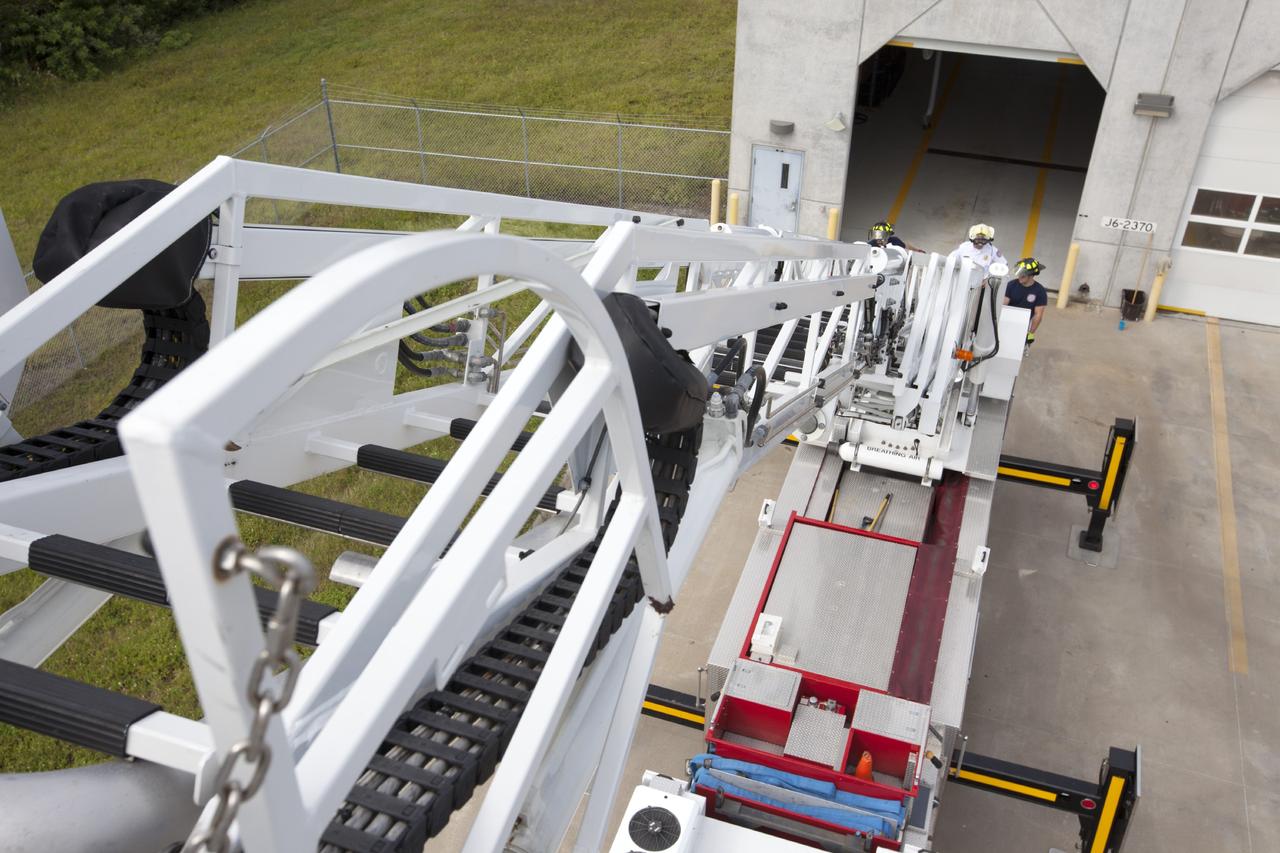
CAPE CANAVERAL, Fla. – At Fire Station No. 2 near the Shuttle Landing Facility at NASA’s Kennedy Space Center in Florida, Fire Rescue Services personnel have deployed and extended the ladder on the aerial fire truck during training in order to be certified in the operation and use of the vehicle. The stabilizers have been deployed on either side of the fire truck. The center’s Fire Rescue Services recently achieved Pro Board Certification in aerial fire truck operations. Pro Board Certification is a globally recognized certification that puts on multiple courses that all fire departments throughout the world recognize and use to train their personnel. The unique aerial truck contains a 100-foot extendable ladder with a bucket at the end of it that can be used for rescues from taller buildings or aircraft rescue firefighting. Photo credit: NASA/Kim Shiflett
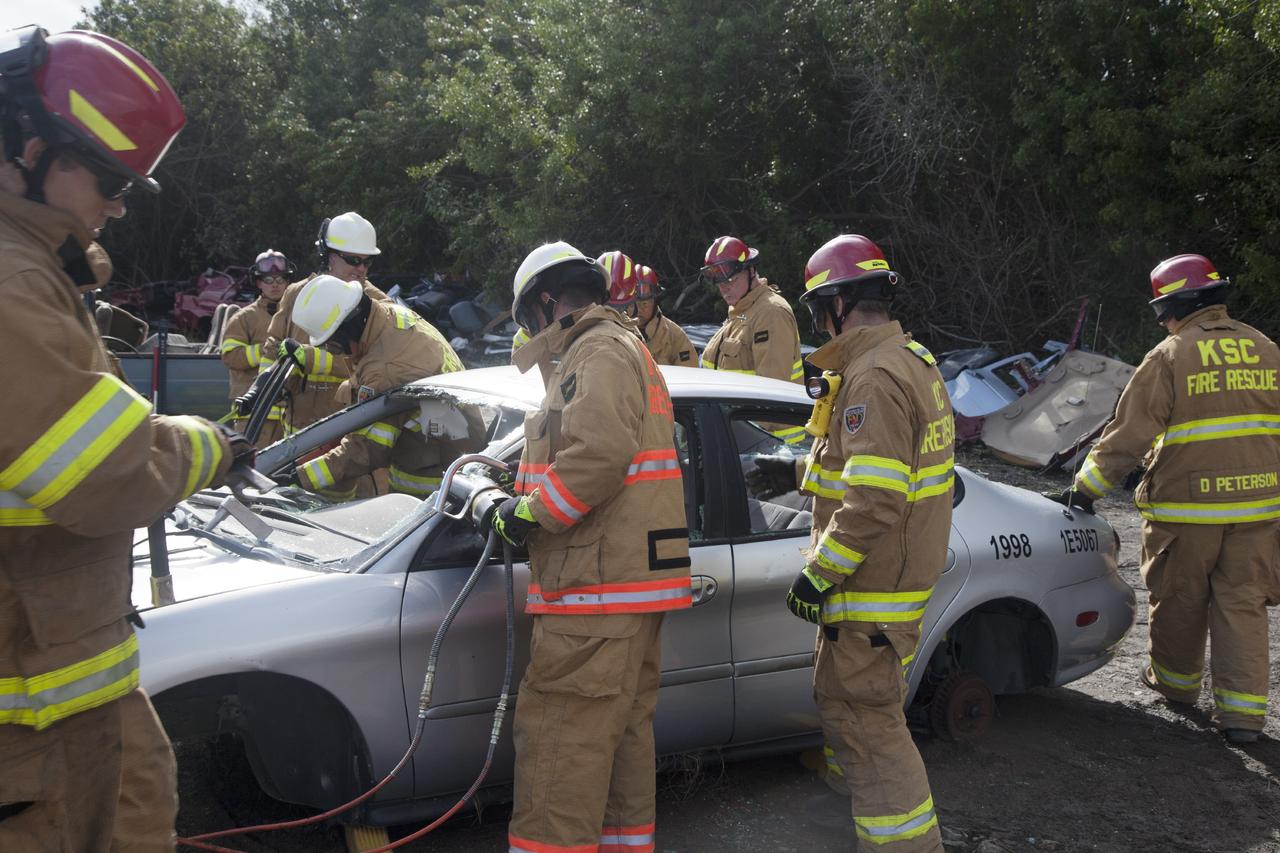
CAPE CANAVERAL, Fla. – Special Rescue Operations firefighters with NASA Fire Rescue Services in the Protective Services Office at NASA’s Kennedy Space Center in Florida practice vehicle extrication training at an auto salvage yard near the center. A firefighter uses a special hydraulic tool to cut through a section of the car to remove the roof, while other firefighters clear the windows and prepare to use the Jaws of Life to simulate the rescue of a trapped and injured person. Other rescue equipment being used includes axes and tools to punch through and clear away windshields and windows. Kennedy’s firefighters recently achieved Pro Board Certification in aerial fire truck operations. With the completion of vehicle extrication and Jaws of Life training, the Protective Services Office is one step closer to achieving certification in vehicle machinery extrication. Kennedy’s firefighters are with G4S Government Solutions Inc., on the Kennedy Protective Services Contract. Photo credit: NASA/Daniel Casper
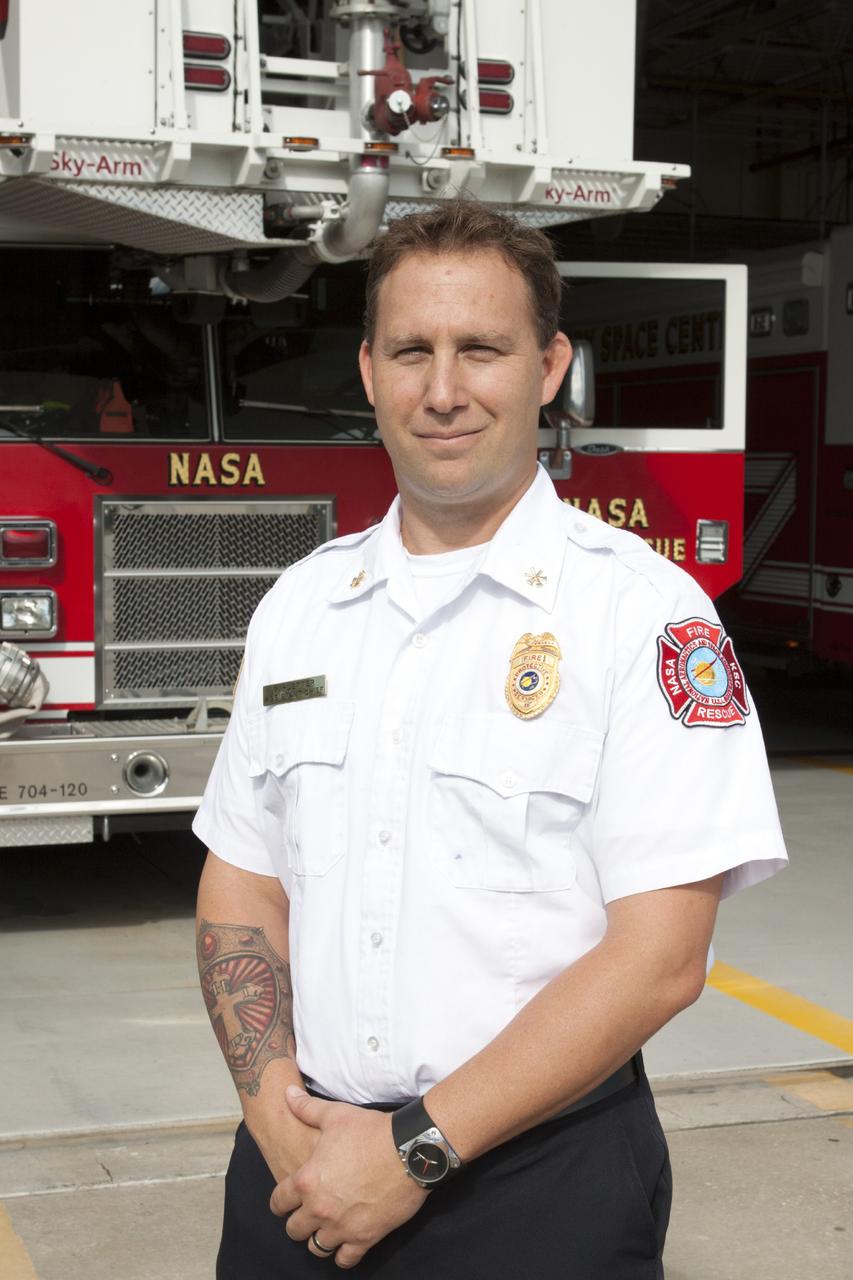
CAPE CANAVERAL, Fla. – At Fire Station No. 2 near the Shuttle Landing Facility at NASA’s Kennedy Space Center in Florida, Mark Huetter, assistant chief of training with the center’s Fire Department, prepares to train Fire Rescue Services personnel in the operation and use of the aerial fire truck. The center’s Fire Rescue Services recently achieved Pro Board Certification in aerial fire truck operations. Pro Board Certification is a globally recognized certification that puts on multiple courses that all fire departments throughout the world recognize and use to train their personnel. The unique aerial truck contains a 100-foot extendable ladder with a bucket at the end of it that can be used for rescues from taller buildings or aircraft rescue firefighting. Photo credit: NASA/Kim Shiflett
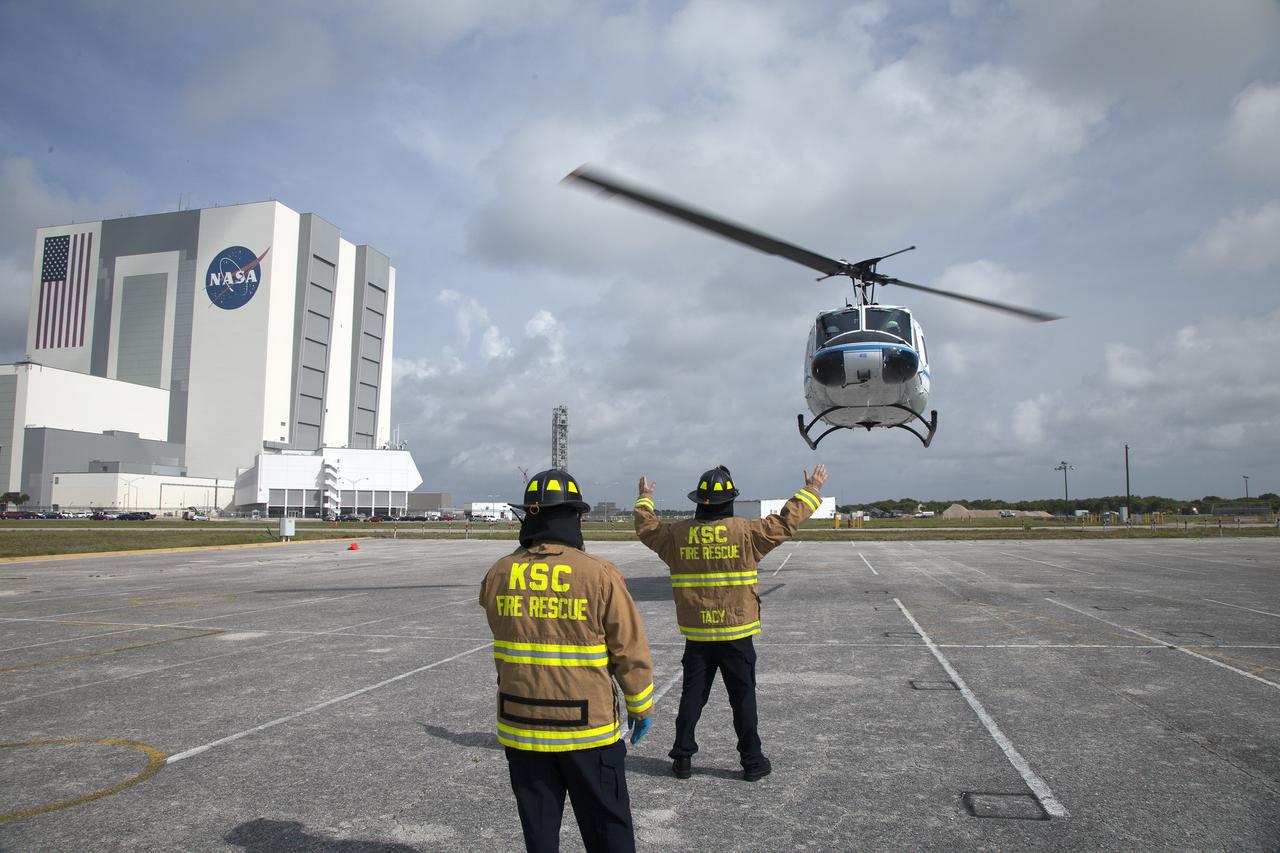
CAPE CANAVERAL, Fla. -- At NASA's Kennedy Space Center in Florida, NASA Fire Rescue Lt. David Tacy, background, and firefighter Alvis Hickey direct an agency helicopter in for a landing for a training exercise. Tacy and Hickey both work for Chenega Security & Support Solutions and serve in Kennedy Fire Rescue Operations. The activity taking place in Kennedy's Launch Complex 39 turn-basin parking lot was only one of several drills. It was part of a new training program that was developed by Kennedy's Fire Rescue department along with NASA Aircraft Operations to sharpen the skills needed to help rescue personnel learn how to collaborate with helicopter pilots in taking injured patients to hospitals as quickly as possible. Photo credit: NASA/Dan Casper
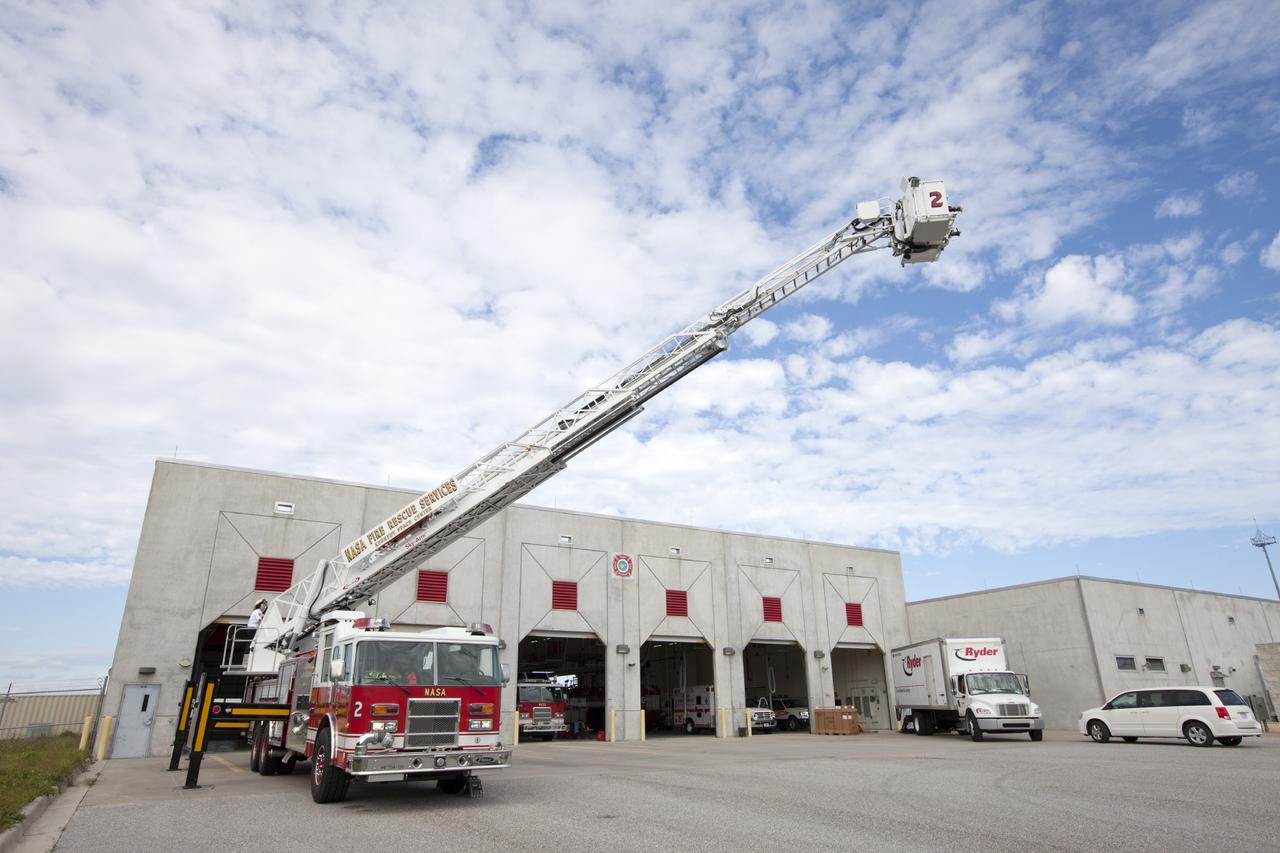
CAPE CANAVERAL, Fla. – At Fire Station No. 2 near the Shuttle Landing Facility at NASA’s Kennedy Space Center in Florida, Fire Rescue Services personnel have deployed and extended the ladder on the aerial fire truck during training in order to be certified in the operation and use of the vehicle. The center’s Fire Rescue Services recently achieved Pro Board Certification in aerial fire truck operations. Pro Board Certification is a globally recognized certification that puts on multiple courses that all fire departments throughout the world recognize and use to train their personnel. The unique aerial truck contains a 100-foot extendable ladder with a bucket at the end of it that can be used for rescues from taller buildings or aircraft rescue firefighting. Photo credit: NASA/Kim Shiflett
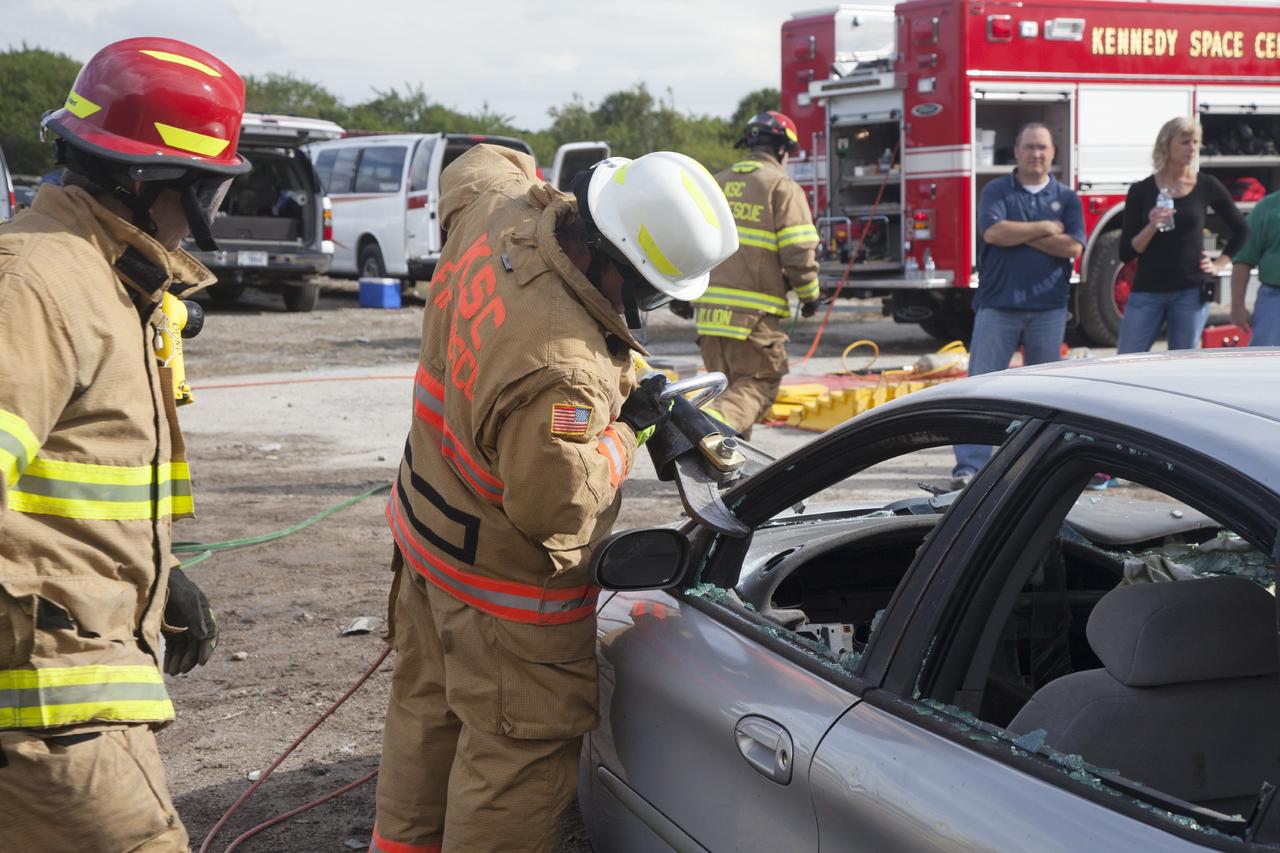
CAPE CANAVERAL, Fla. – Special Rescue Operations firefighters with NASA Fire Rescue Services in the Protective Services Office at NASA’s Kennedy Space Center in Florida practice vehicle extrication training at an auto salvage yard near the center. A firefighter uses a special hydraulic tool to cut through the vehicle in order to remove the roof. They will use the Jaws of Life on the vehicle to simulate the rescue of a trapped and injured person. Other rescue equipment includes axes and tools to punch through and clear away windshields and windows. Kennedy’s firefighters recently achieved Pro Board Certification in aerial fire truck operations. With the completion of vehicle extrication and Jaws of Life training, the Protective Services Office is one step closer to achieving certification in vehicle machinery extrication. Kennedy’s firefighters are with G4S Government Solutions Inc., on the Kennedy Protective Services Contract. Photo credit: NASA/Daniel Casper
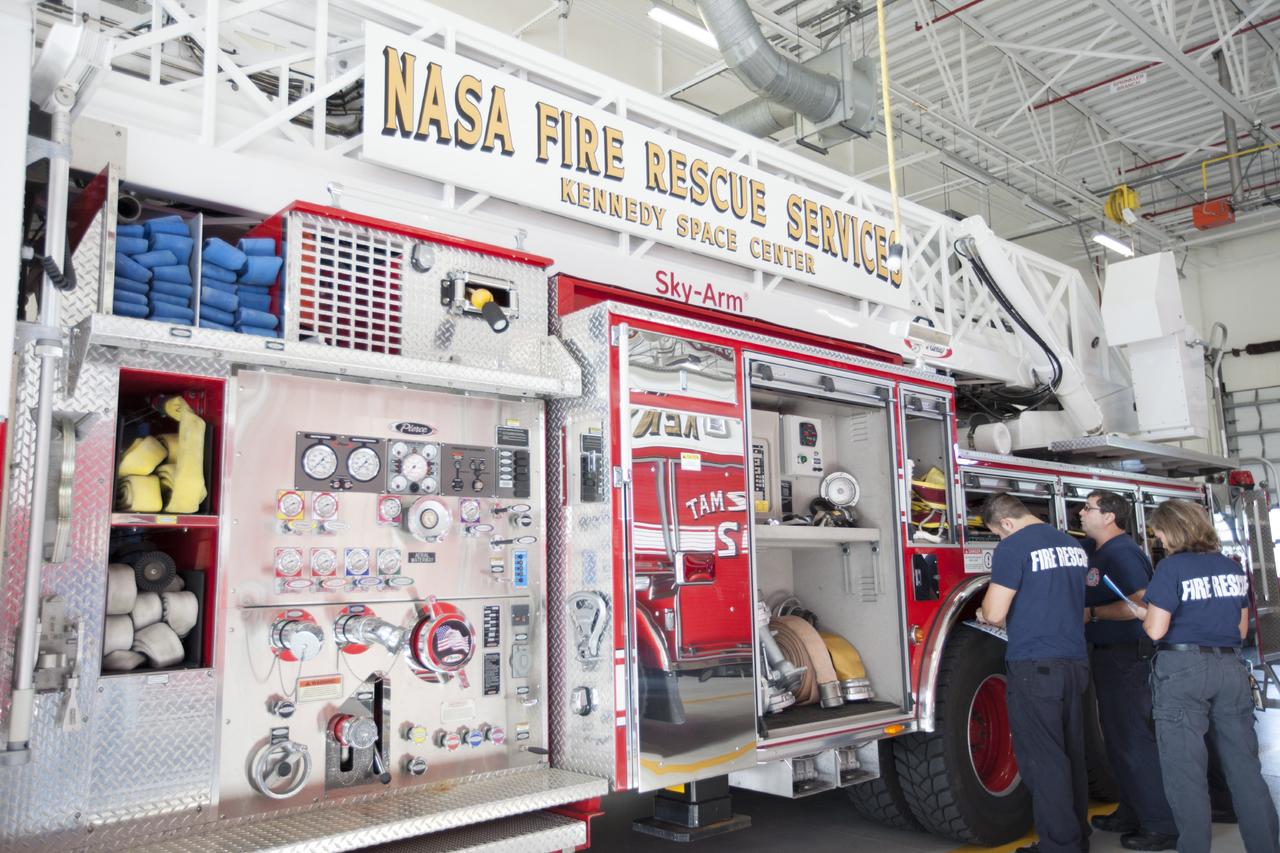
CAPE CANAVERAL, Fla. – At Fire Station No. 2 near the Shuttle Landing Facility at NASA’s Kennedy Space Center in Florida, Fire Rescue Services personnel review procedures and check equipment on the aerial fire truck as part of the training to be certified in the operation and use of the vehicle. The center’s Fire Rescue Services recently achieved Pro Board Certification in aerial fire truck operations. Pro Board Certification is a globally recognized certification that puts on multiple courses that all fire departments throughout the world recognize and use to train their personnel. The unique aerial truck contains a 100-foot extendable ladder with a bucket at the end of it that can be used for rescues from taller buildings or aircraft rescue firefighting. Photo credit: NASA/Kim Shiflett
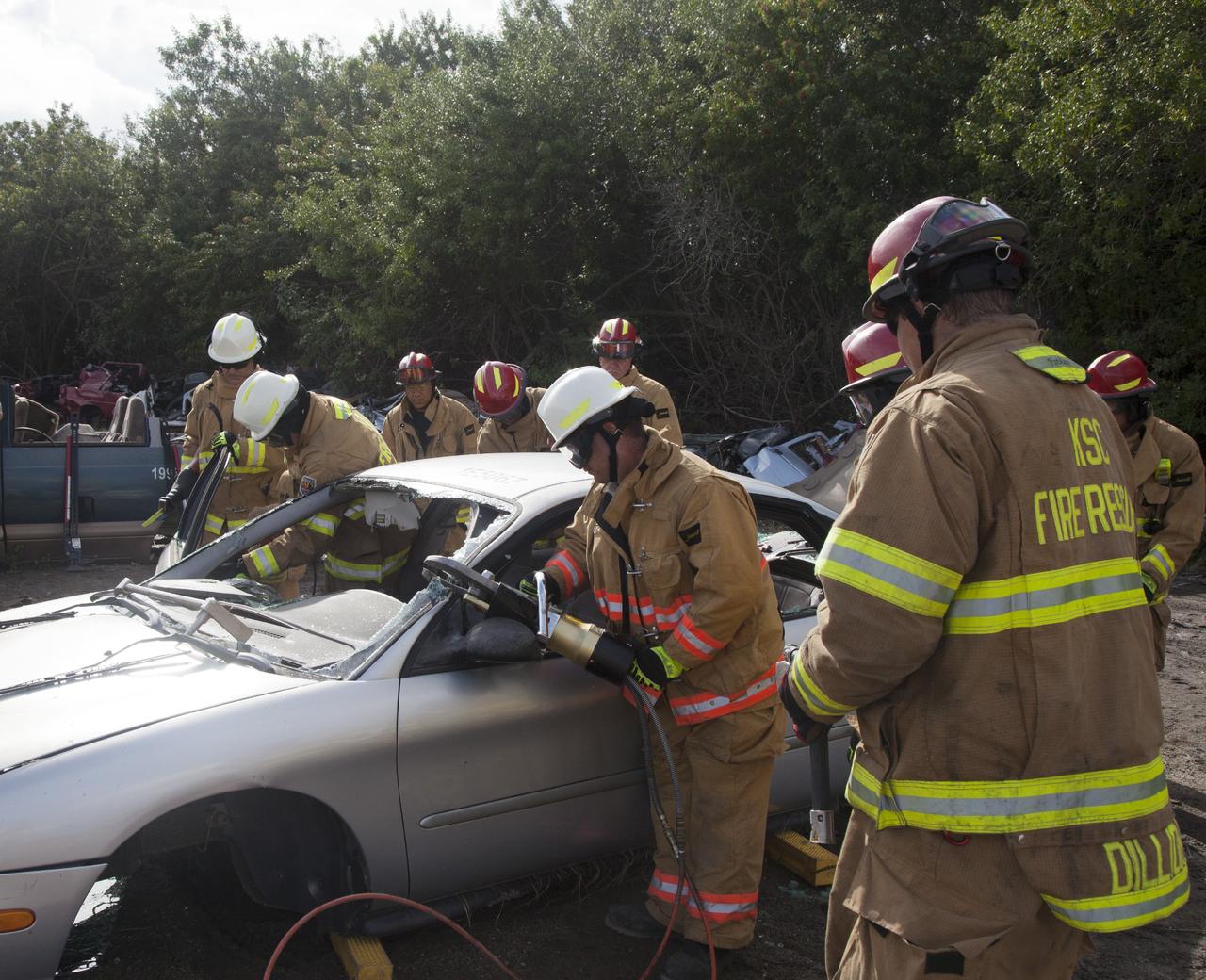
CAPE CANAVERAL, Fla. – Special Rescue Operations firefighters with NASA Fire Rescue Services in the Protective Services Office at NASA’s Kennedy Space Center in Florida practice vehicle extrication training at an auto salvage yard near the center. A firefighter uses a special hydraulic tool to cut through a section of the car to remove the roof, while other firefighters clear the windows and prepare to use the Jaws of Life to simulate the rescue of a trapped and injured person. Other rescue equipment being used includes axes and tools to punch through and clear away windshields and windows. Kennedy’s firefighters recently achieved Pro Board Certification in aerial fire truck operations. With the completion of vehicle extrication and Jaws of Life training, the Protective Services Office is one step closer to achieving certification in vehicle machinery extrication. Kennedy’s firefighters are with G4S Government Solutions Inc., on the Kennedy Protective Services Contract. Photo credit: NASA/Daniel Casper
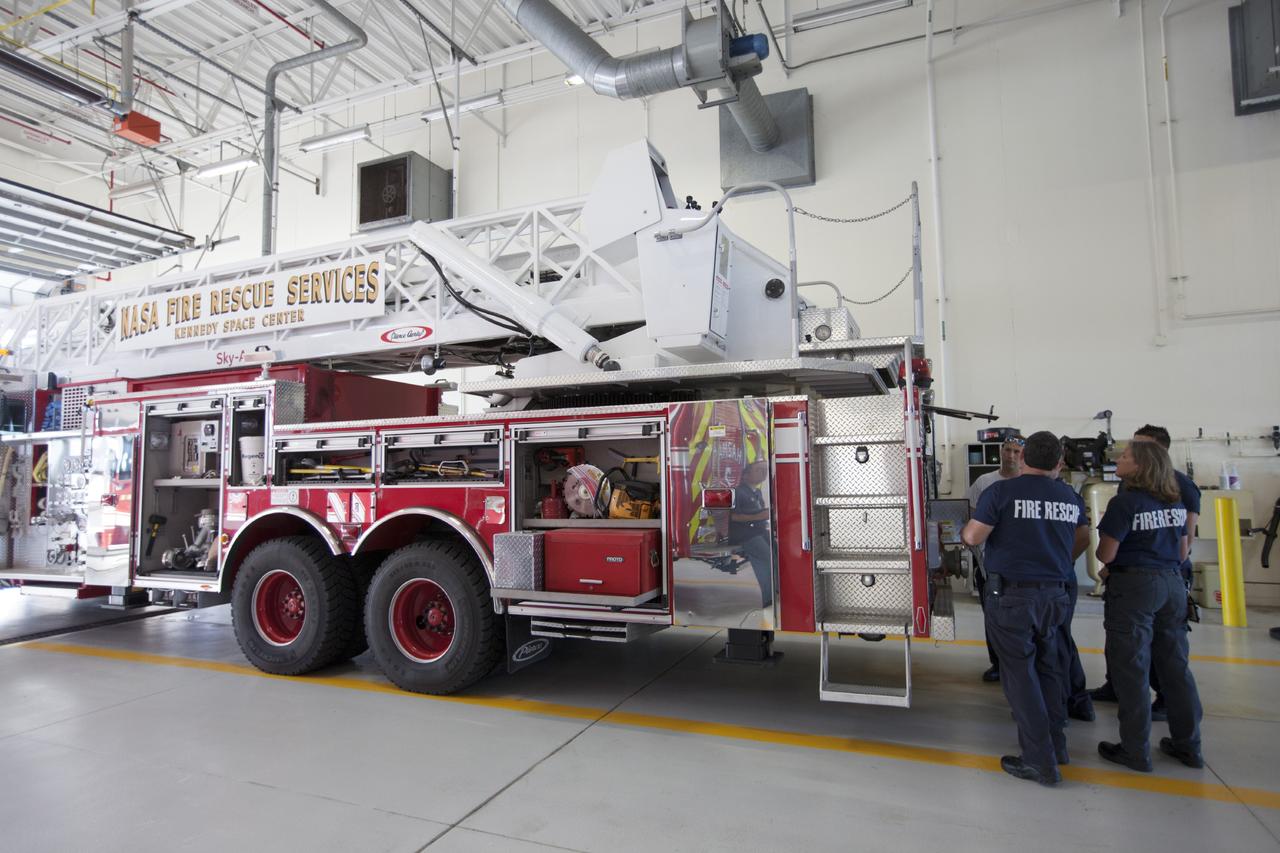
CAPE CANAVERAL, Fla. – At Fire Station No. 2 near the Shuttle Landing Facility at NASA’s Kennedy Space Center in Florida, Fire Rescue Services personnel review procedures and check equipment on the aerial fire truck as part of the training to be certified in the operation and use of the vehicle. The center’s Fire Rescue Services recently achieved Pro Board Certification in aerial fire truck operations. Pro Board Certification is a globally recognized certification that puts on multiple courses that all fire departments throughout the world recognize and use to train their personnel. The unique aerial truck contains a 100-foot extendable ladder with a bucket at the end of it that can be used for rescues from taller buildings or aircraft rescue firefighting. Photo credit: NASA/Kim Shiflett
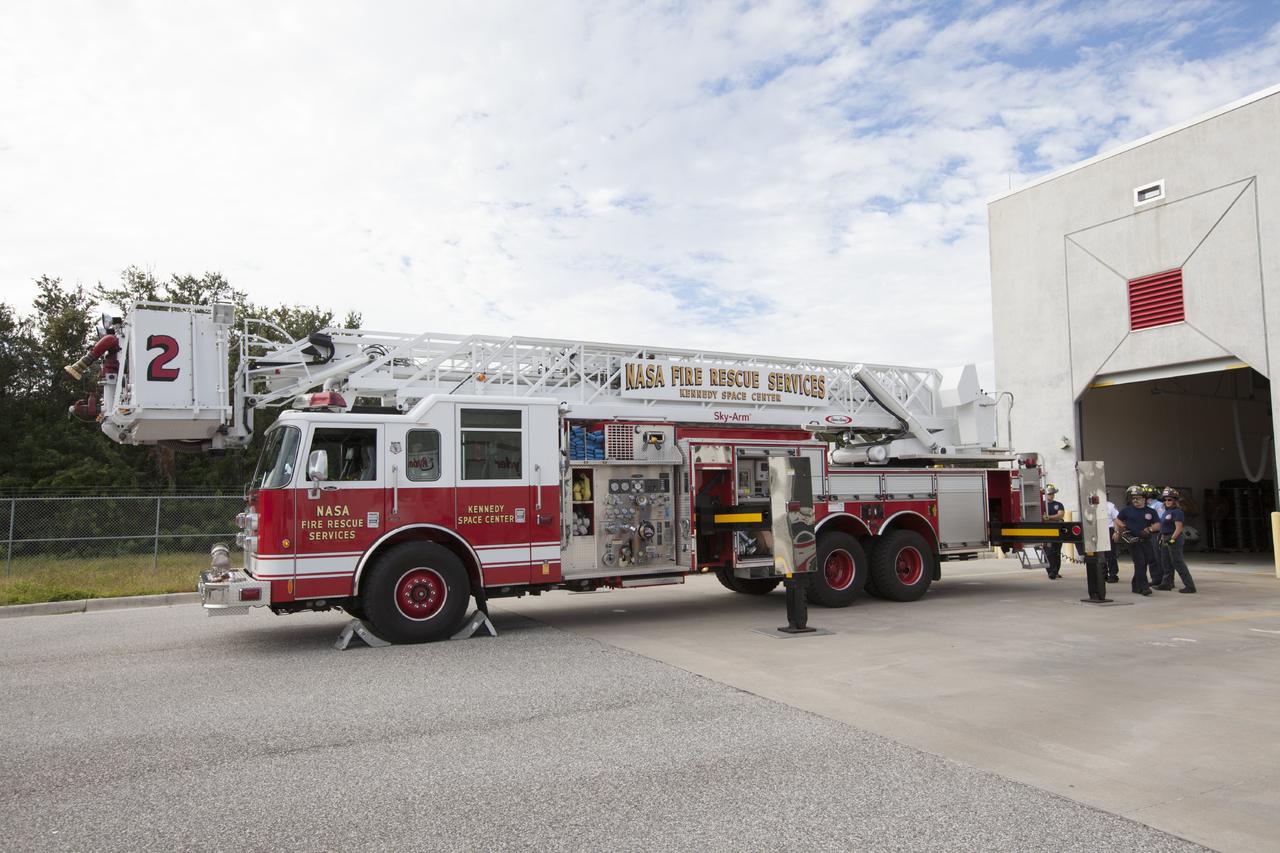
CAPE CANAVERAL, Fla. – At Fire Station No. 2 near the Shuttle Landing Facility at NASA’s Kennedy Space Center in Florida, Fire Rescue Services personnel have deployed and extended the ladder on the aerial fire truck during training in order to be certified in the operation and use of the vehicle. The stabilizers have been deployed on either side of the fire truck. The center’s Fire Rescue Services recently achieved Pro Board Certification in aerial fire truck operations. Pro Board Certification is a globally recognized certification that puts on multiple courses that all fire departments throughout the world recognize and use to train their personnel. The unique aerial truck contains a 100-foot extendable ladder with a bucket at the end of it that can be used for rescues from taller buildings or aircraft rescue firefighting. Photo credit: NASA/Kim Shiflett
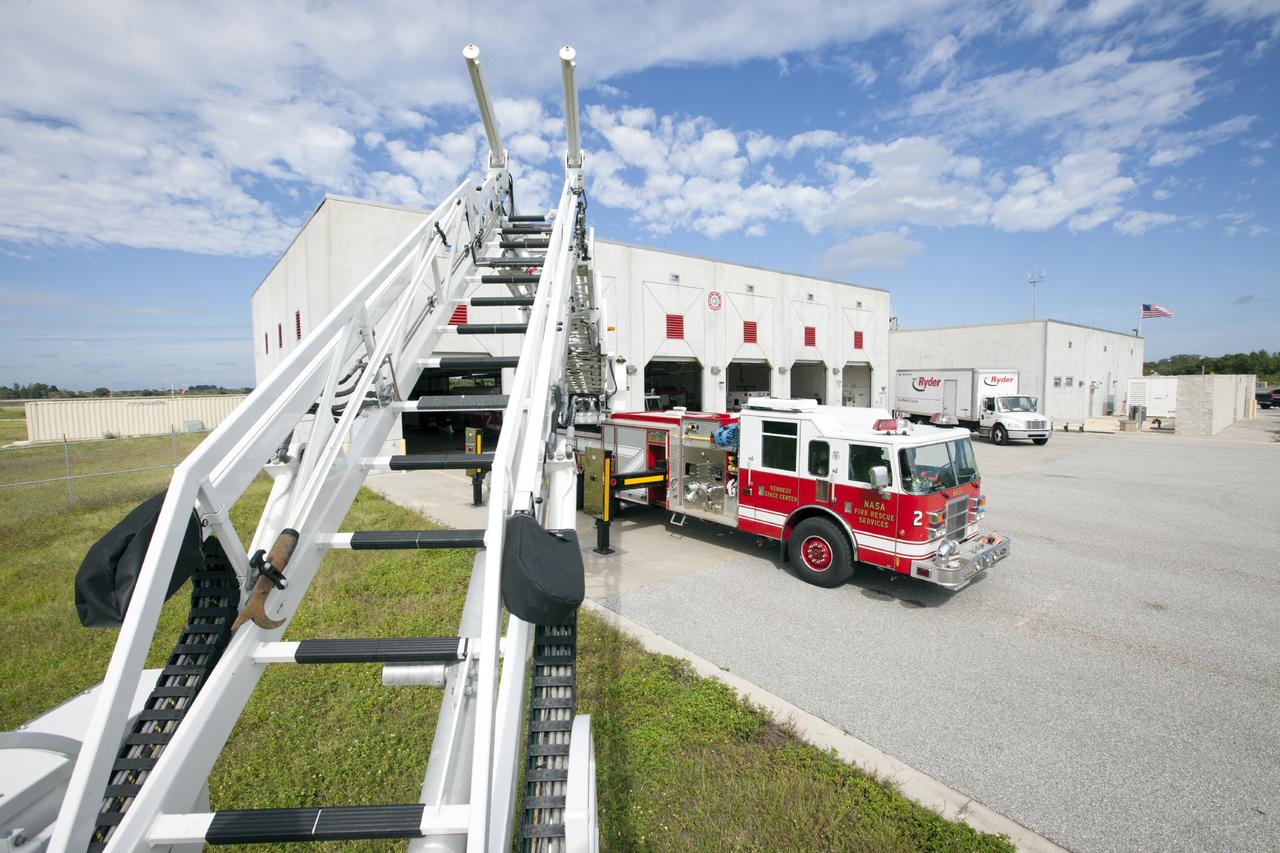
CAPE CANAVERAL, Fla. – At Fire Station No. 2 near the Shuttle Landing Facility at NASA’s Kennedy Space Center in Florida, the aerial fire truck has been moved out of the bay and Fire Rescue Services personnel have deployed the stabilizers on either side of the truck in order to prepare for training to be certified in the operation and use of the vehicle. The center’s Fire Rescue Services recently achieved Pro Board Certification in aerial fire truck operations. Pro Board Certification is a globally recognized certification that puts on multiple courses that all fire departments throughout the world recognize and use to train their personnel. The unique aerial truck contains a 100-foot extendable ladder with a bucket at the end of it that can be used for rescues from taller buildings or aircraft rescue firefighting. Photo credit: NASA/Kim Shiflett
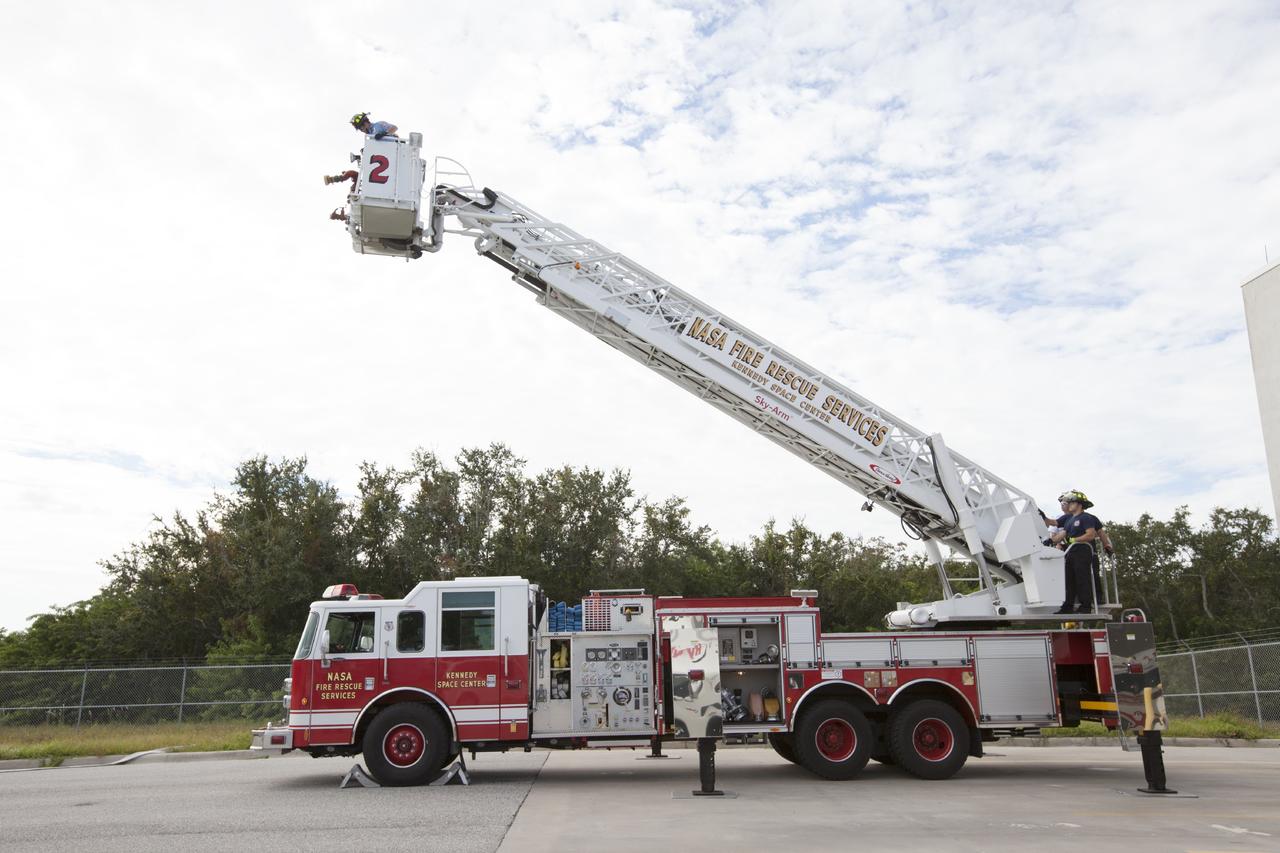
CAPE CANAVERAL, Fla. – At Fire Station No. 2 near the Shuttle Landing Facility at NASA’s Kennedy Space Center in Florida, Fire Rescue Services personnel have deployed the ladder on the aerial fire truck during training in order to be certified in the operation and use of the vehicle. The center’s Fire Rescue Services recently achieved Pro Board Certification in aerial fire truck operations. Pro Board Certification is a globally recognized certification that puts on multiple courses that all fire departments throughout the world recognize and use to train their personnel. The unique aerial truck contains a 100-foot extendable ladder with a bucket at the end of it that can be used for rescues from taller buildings or aircraft rescue firefighting. Photo credit: NASA/Kim Shiflett
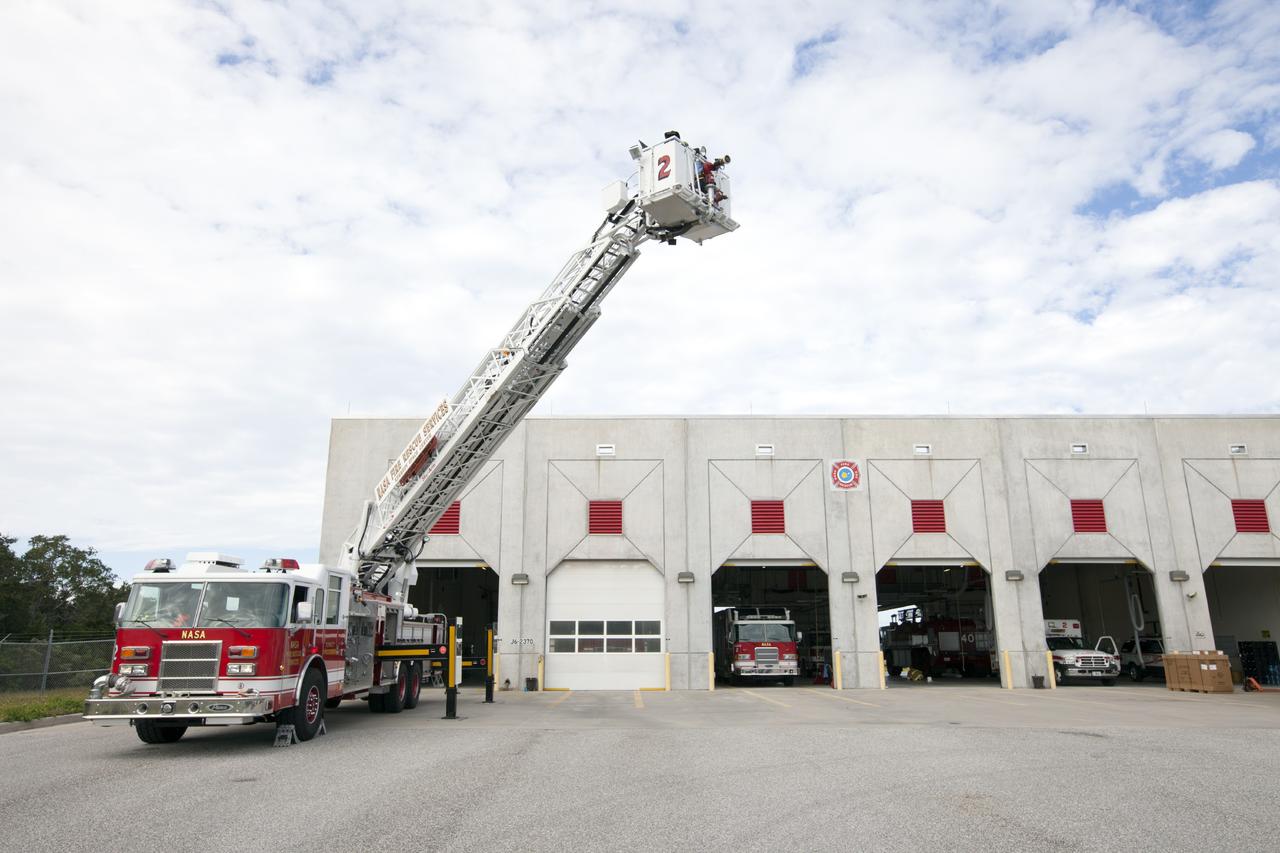
CAPE CANAVERAL, Fla. – At Fire Station No. 2 near the Shuttle Landing Facility at NASA’s Kennedy Space Center in Florida, Fire Rescue Services personnel have deployed the ladder on the aerial fire truck during training in order to be certified in the operation and use of the vehicle. The center’s Fire Rescue Services recently achieved Pro Board Certification in aerial fire truck operations. Pro Board Certification is a globally recognized certification that puts on multiple courses that all fire departments throughout the world recognize and use to train their personnel. The unique aerial truck contains a 100-foot extendable ladder with a bucket at the end of it that can be used for rescues from taller buildings or aircraft rescue firefighting. Photo credit: NASA/Kim Shiflett
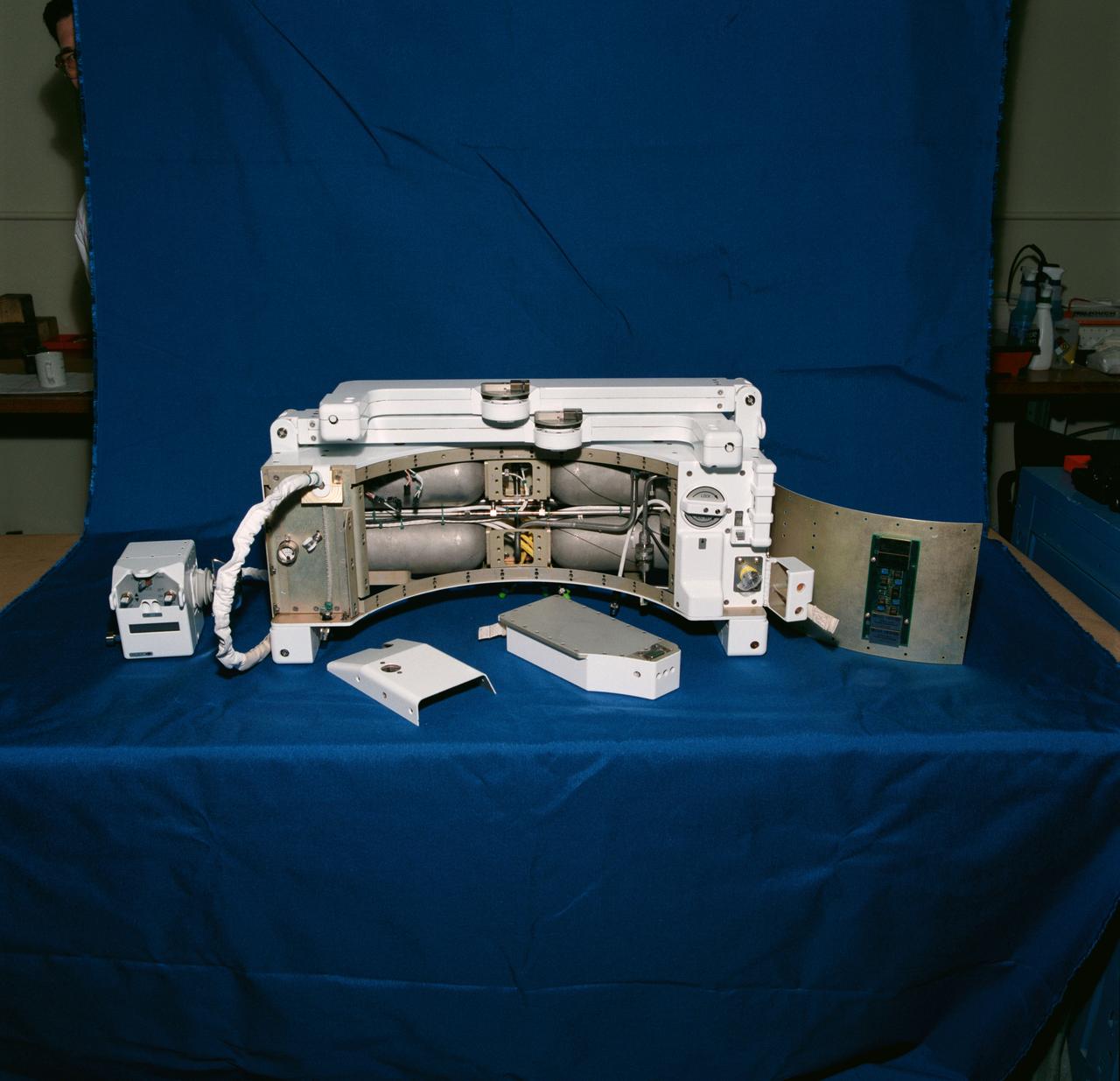
S93-50137 (December 1993) --- This small mobility-aiding back harness, complemented in extravehicular activity (EVA) with a hand controller unit and called the Simplified Aid for EVA Rescue (SAFER) system, will get extensive in-space evaluation and testing during the STS-64 mission. In this view the SAFER is open to reveal the gas supply and thrusters. SAFER is to fly on STS-76 as well.
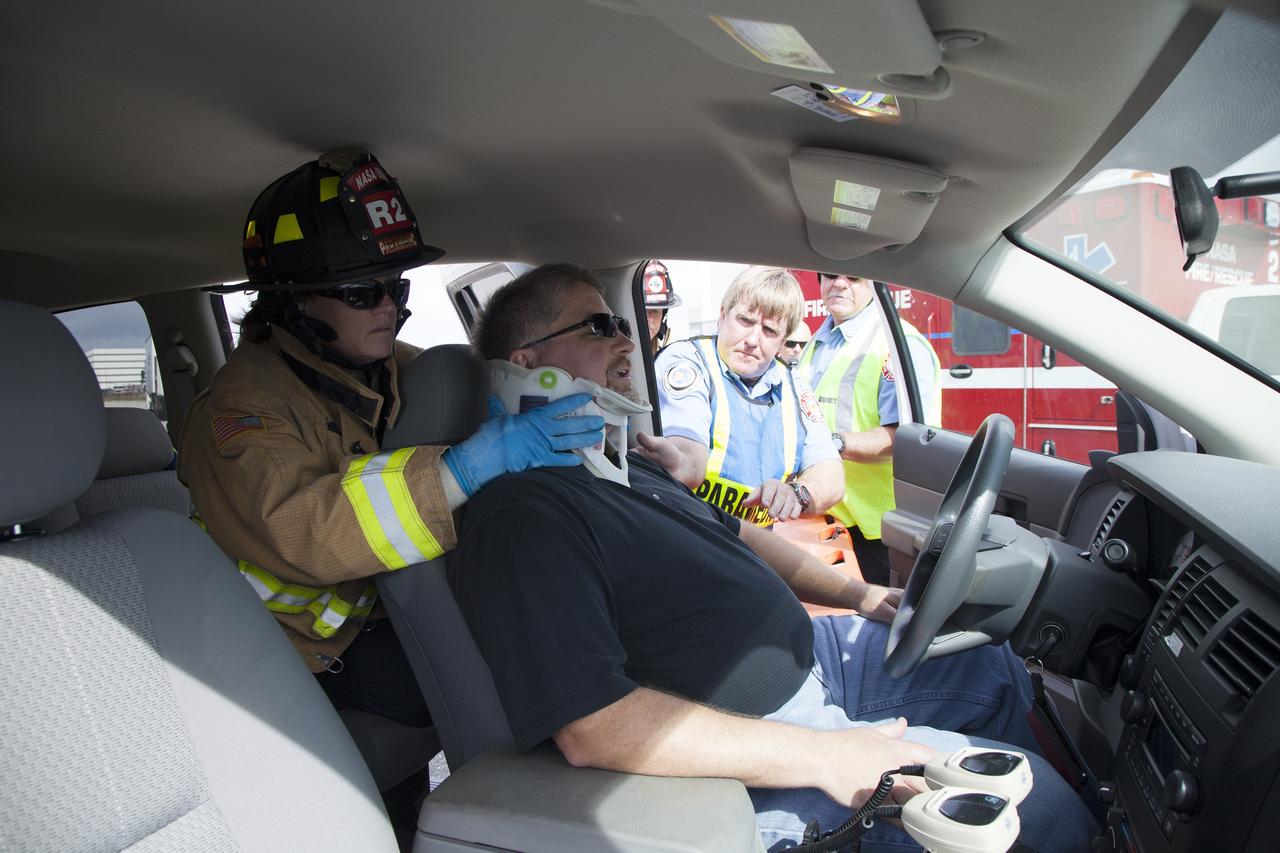
CAPE CANAVERAL, Fla. -- At NASA's Kennedy Space Center in Florida, Lois Dominguez of Chenega Security & Support Solutions, who works in Fire Rescue operations, places a neck brace on George Jacobs, NASA deputy director NASA Center Operations, who is serving as a "volunteer patient." The activity taking place in Kennedy's Launch Complex 39 turn-basin parking lot was only one of several drills. It was part of a new training program that was developed by Kennedy's Fire Rescue department along with NASA Aircraft Operations to sharpen the skills needed to help rescue personnel learn how to collaborate with helicopter pilots in taking injured patients to hospitals as quickly as possible. Photo credit: NASA/Dan Casper
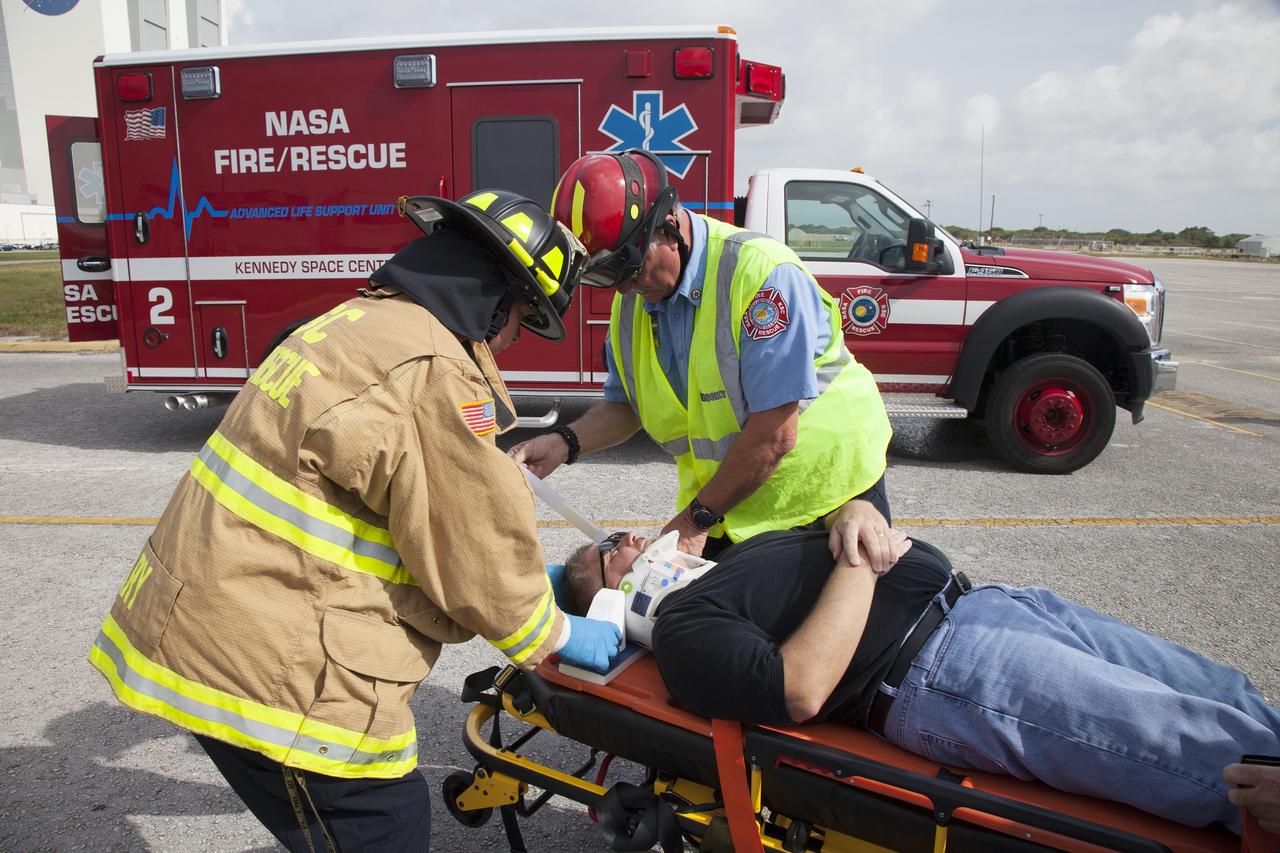
CAPE CANAVERAL, Fla. -- At NASA's Kennedy Space Center in Florida, George Jacobs, NASA's deputy director of Center Operations, serves as a "volunteer patient" and is secured on a stretcher for a simulated emergency operation. The activity taking place in Kennedy's Launch Complex 39 turn-basin parking lot was only one of several drills. It was part of a new training program that was developed by Kennedy's Fire Rescue department along with NASA Aircraft Operations to sharpen the skills needed to help rescue personnel learn how to collaborate with helicopter pilots in taking injured patients to hospitals as quickly as possible. Photo credit: NASA/Dan Casper
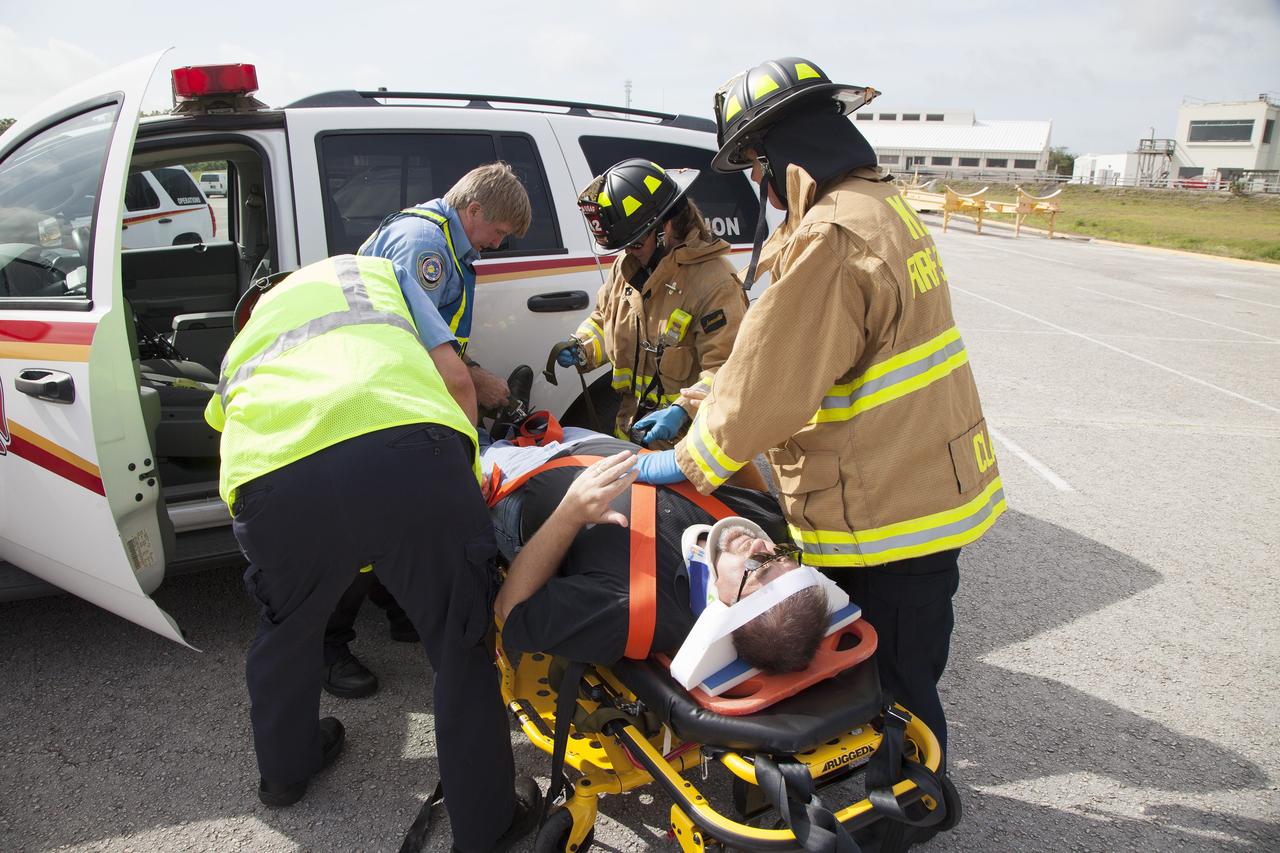
CAPE CANAVERAL, Fla. -- At NASA's Kennedy Space Center in Florida, George Jacobs, NASA's deputy director of Center Operations, serves as a "volunteer patient" and is secured on a stretcher for a simulated emergency operation. The activity taking place in Kennedy's Launch Complex 39 turn-basin parking lot was only one of several drills. It was part of a new training program that was developed by Kennedy's Fire Rescue department along with NASA Aircraft Operations to sharpen the skills needed to help rescue personnel learn how to collaborate with helicopter pilots in taking injured patients to hospitals as quickly as possible. Photo credit: NASA/Dan Casper
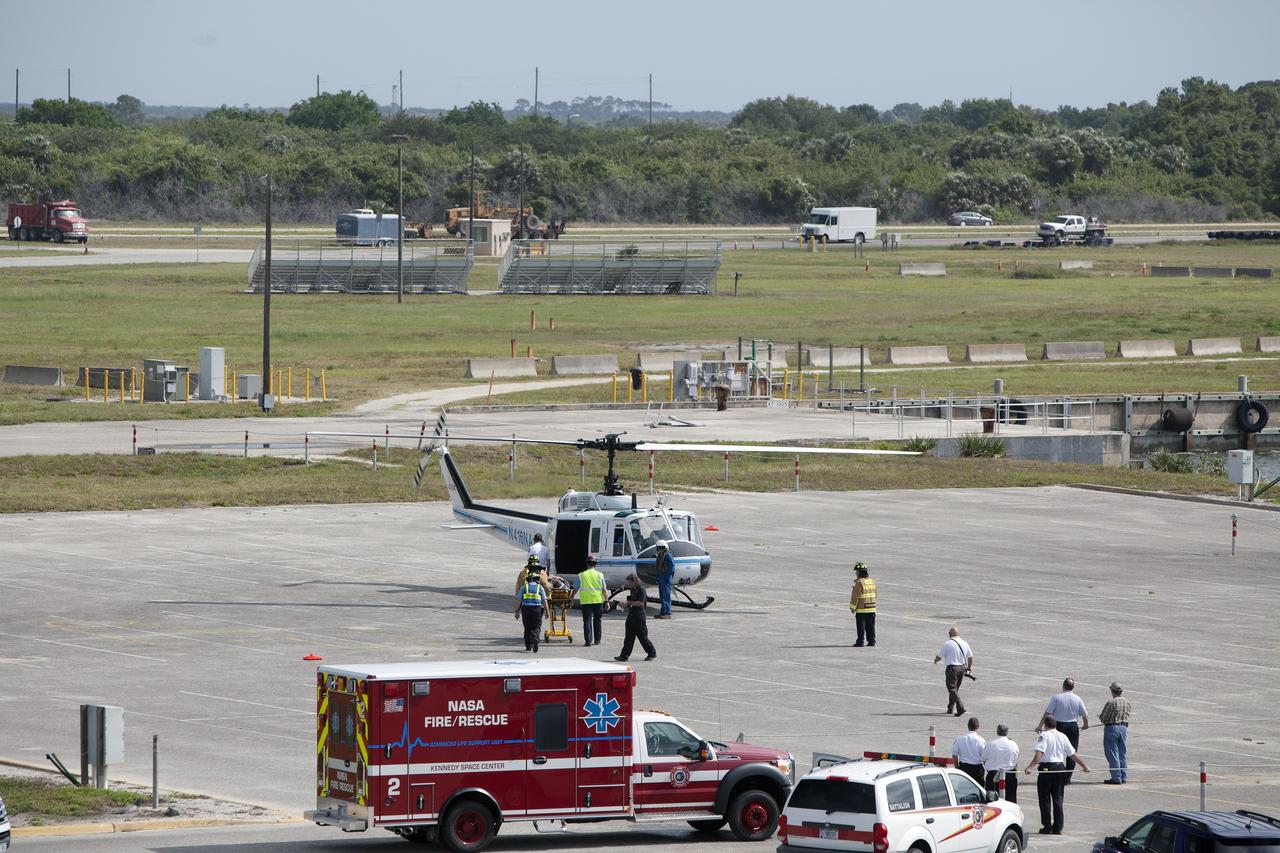
CAPE CANAVERAL, Fla. -- At NASA's Kennedy Space Center in Florida, paramedics and Fire Rescue personnel move a stretcher to the waiting helicopter as they work quickly to have the patient ready to transport five minutes after he was removed from a vehicle. The activity taking place in Kennedy's Launch Complex 39 turn-basin parking lot was only one of several drills. It was part of a new training program that was developed by Kennedy's Fire Rescue department along with NASA Aircraft Operations to sharpen the skills needed to help rescue personnel learn how to collaborate with helicopter pilots in taking injured patients to hospitals as quickly as possible. Photo credit: NASA/Dan Casper
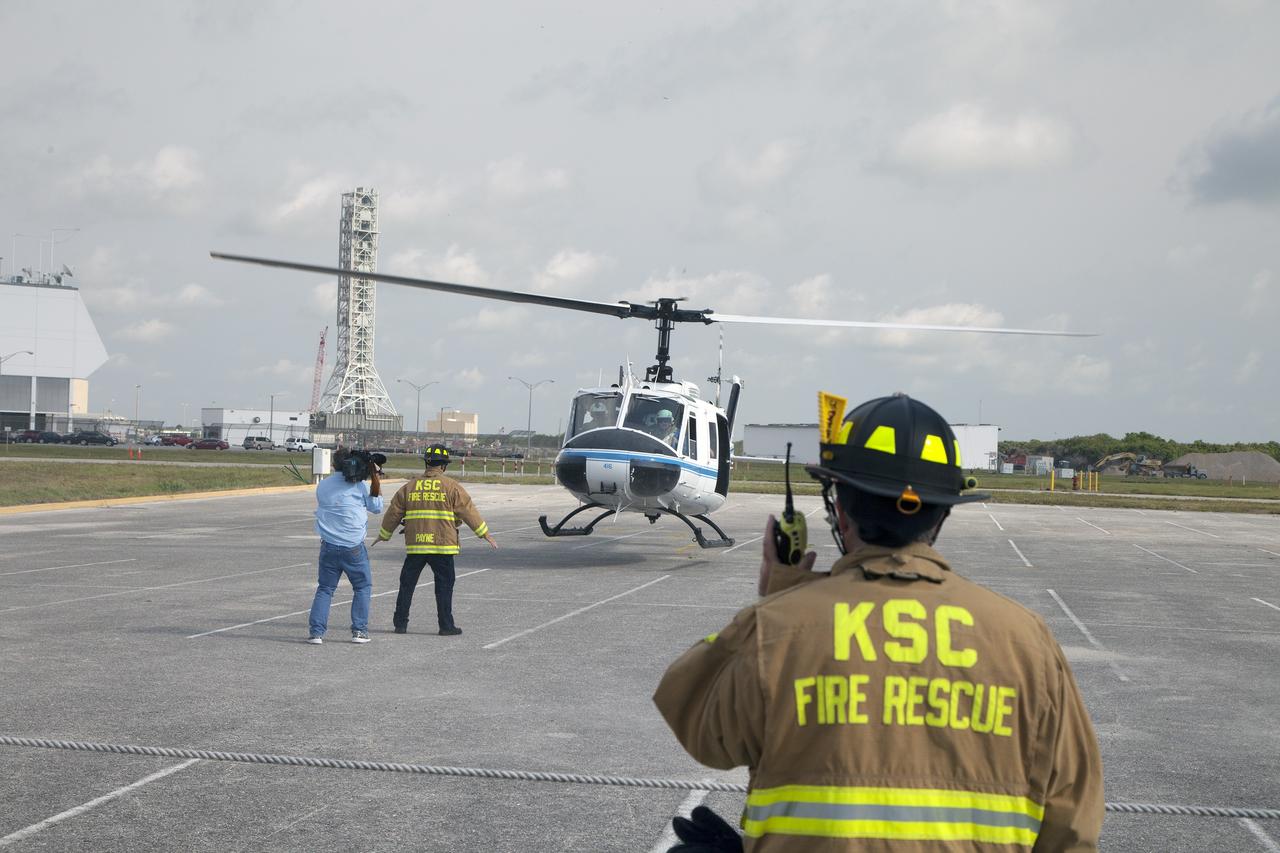
CAPE CANAVERAL, Fla. -- At NASA's Kennedy Space Center in Florida, agency Fire Rescue personnel direct an agency helicopter in for a landing during a training exercise. The activity taking place in Kennedy's Launch Complex 39 turn-basin parking lot was only one of several drills. It was part of a new training program that was developed by Kennedy's Fire Rescue department along with NASA Aircraft Operations to sharpen the skills needed to help rescue personnel learn how to collaborate with helicopter pilots in taking injured patients to hospitals as quickly as possible. Photo credit: NASA/Dan Casper
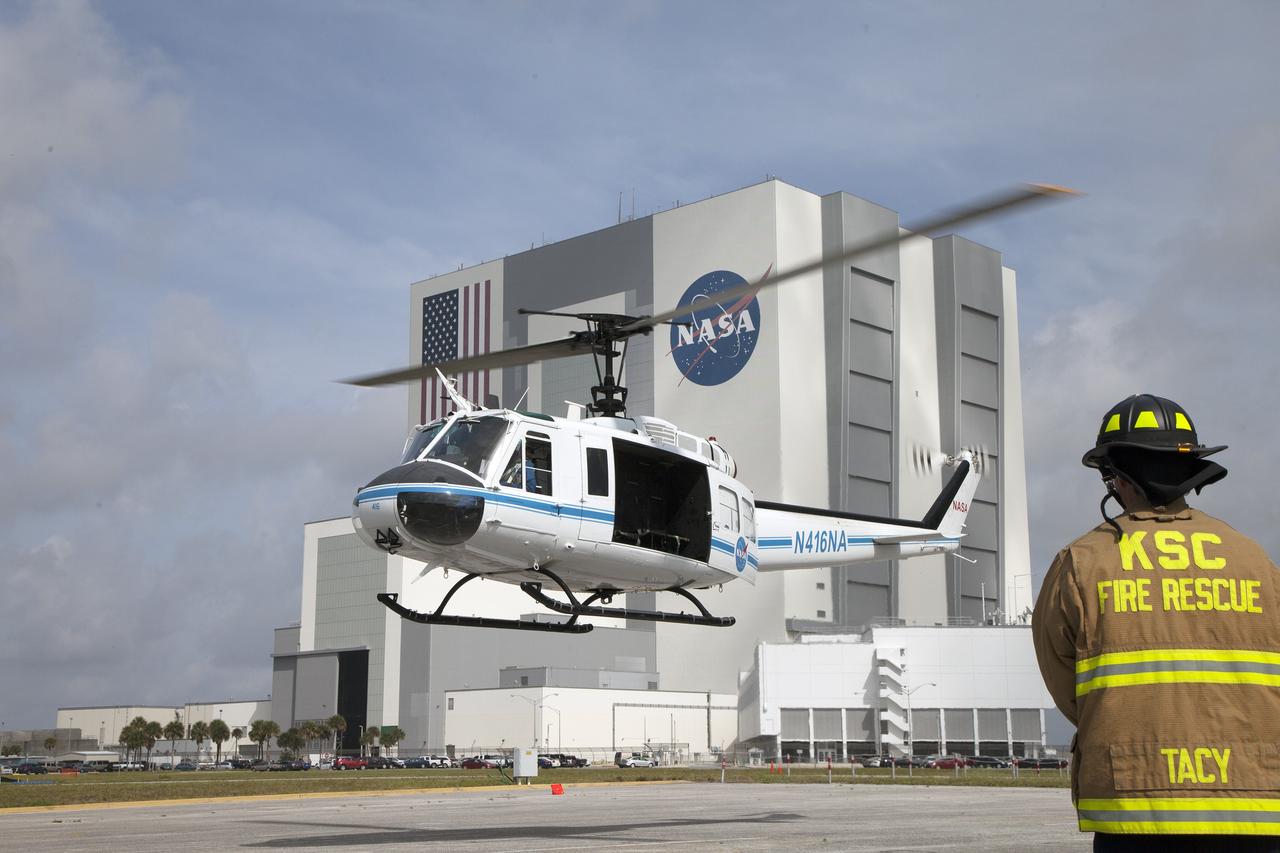
CAPE CANAVERAL, Fla. -- At NASA's Kennedy Space Center in Florida, NASA Fire Rescue Lt. David Tacy of Chenega Security & Support Solutions watches as an agency helicopter takes off as part of a training exercise. The activity taking place in Kennedy's Launch Complex 39 turn-basin parking lot was only one of several drills. It was part of a new training program that was developed by Kennedy's Fire Rescue department along with NASA Aircraft Operations to sharpen the skills needed to help rescue personnel learn how to collaborate with helicopter pilots in taking injured patients to hospitals as quickly as possible. Photo credit: NASA/Dan Casper
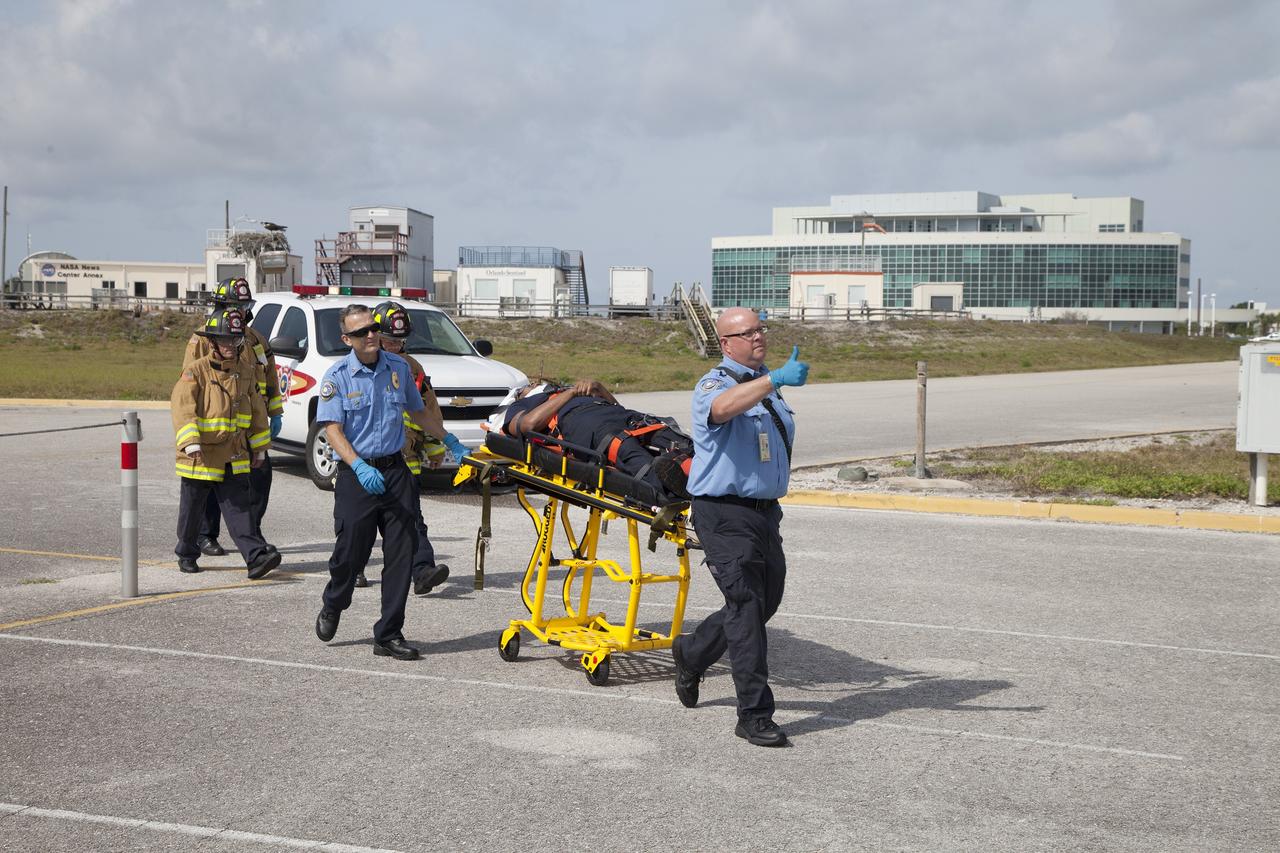
CAPE CANAVERAL, Fla. -- At NASA's Kennedy Space Center in Florida, paramedics and Fire Rescue personnel move a stretcher to the waiting helicopter as they work quickly to have the patient ready to transport after he was removed from a vehicle. The activity taking place in Kennedy's Launch Complex 39 turn-basin parking lot was only one of several drills. It was part of a new training program that was developed by Kennedy's Fire Rescue department along with NASA Aircraft Operations to sharpen the skills needed to help rescue personnel learn how to collaborate with helicopter pilots in taking injured patients to hospitals as quickly as possible. Photo credit: NASA/Dan Casper
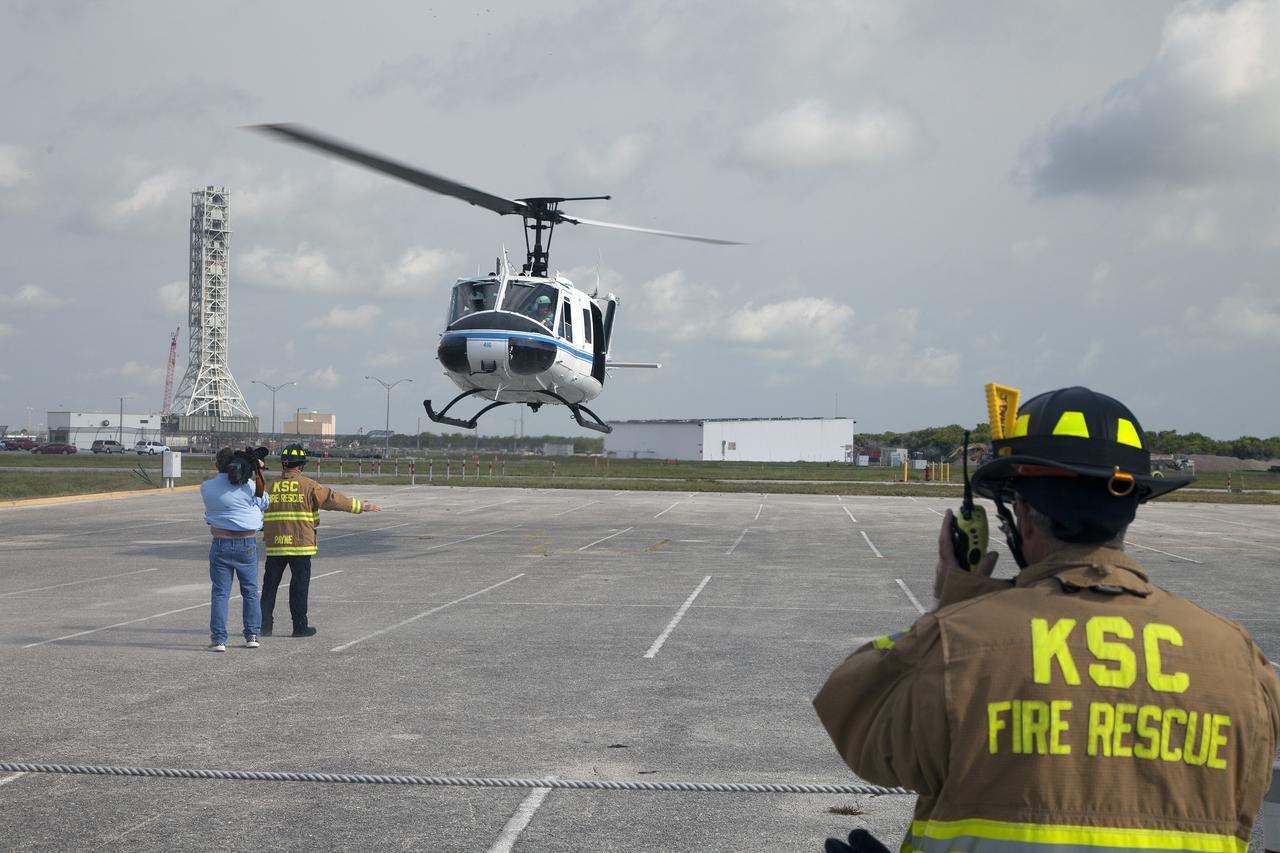
CAPE CANAVERAL, Fla. -- At NASA's Kennedy Space Center in Florida, agency Fire Rescue personnel direct an agency helicopter in for a landing during a training exercise. The activity taking place in Kennedy's Launch Complex 39 turn-basin parking lot was only one of several drills. It was part of a new training program that was developed by Kennedy's Fire Rescue department along with NASA Aircraft Operations to sharpen the skills needed to help rescue personnel learn how to collaborate with helicopter pilots in taking injured patients to hospitals as quickly as possible. Photo credit: NASA/Dan Casper
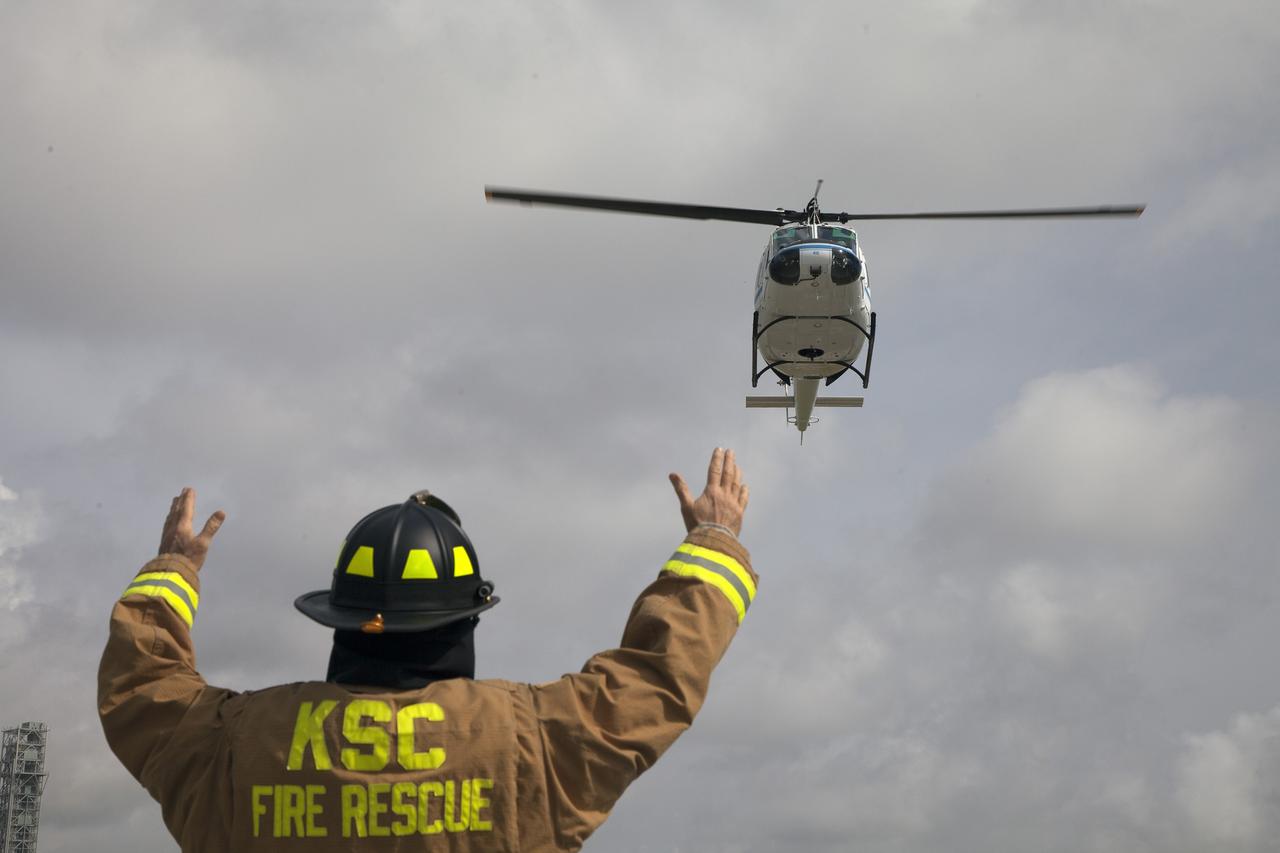
CAPE CANAVERAL, Fla. -- At NASA's Kennedy Space Center in Florida, NASA Fire Rescue Lt. David Tacy, of Chenega Security & Support Solutions, directs an agency helicopter in for a landing during a training exercise. The activity taking place in Kennedy's Launch Complex 39 turn-basin parking lot was only one of several drills. It was part of a new training program that was developed by Kennedy's Fire Rescue department along with NASA Aircraft Operations to sharpen the skills needed to help rescue personnel learn how to collaborate with helicopter pilots in taking injured patients to hospitals as quickly as possible. Photo credit: NASA/Dan Casper
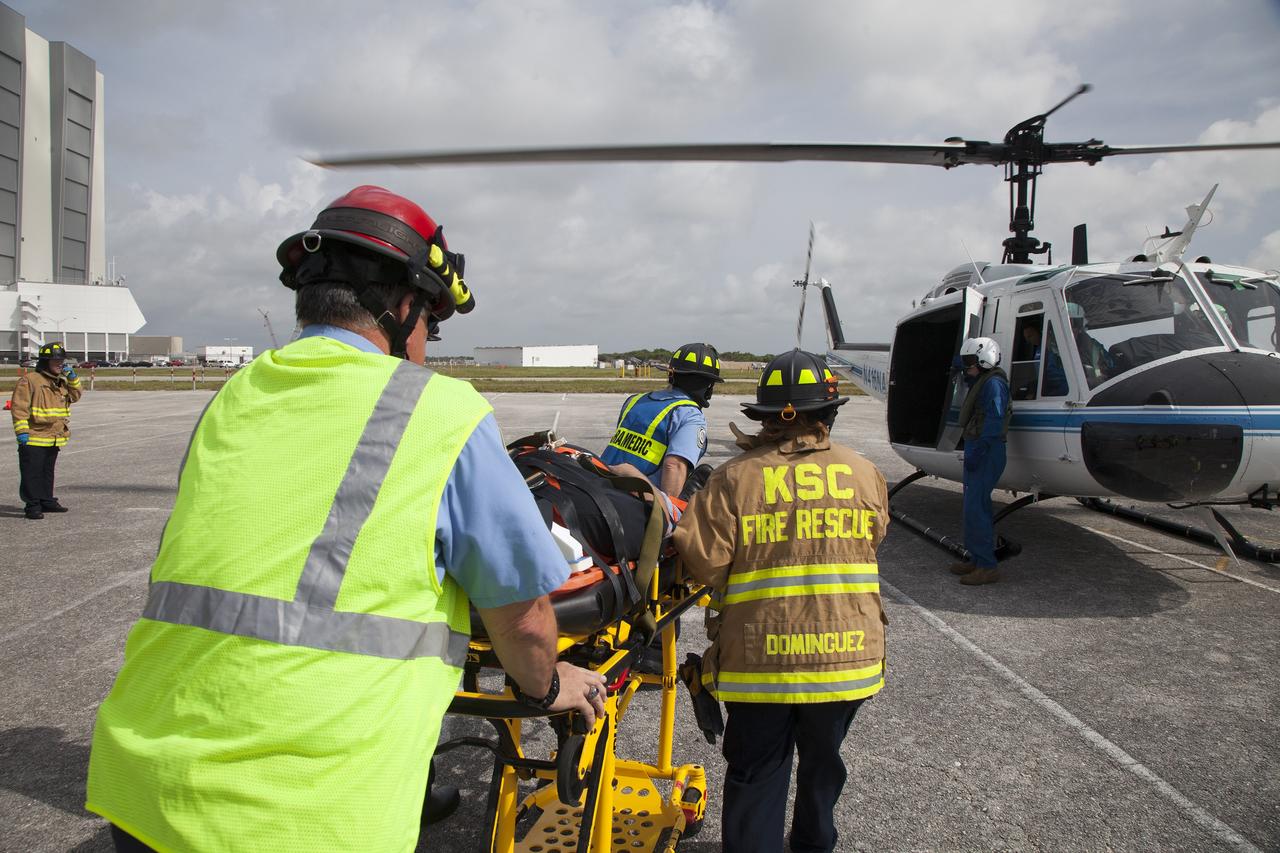
CAPE CANAVERAL, Fla. -- At NASA's Kennedy Space Center in Florida, Paramedics and Fire Rescue personnel move a stretcher to the waiting helicopter as they work quickly to have the patient ready to transport after he was removed from a vehicle. The activity taking place in Kennedy's Launch Complex 39 turn-basin parking lot was only one of several drills. It was part of a new training program that was developed by Kennedy's Fire Rescue department along with NASA Aircraft Operations to sharpen the skills needed to help rescue personnel learn how to collaborate with helicopter pilots in taking injured patients to hospitals as quickly as possible. Photo credit: NASA/Dan Casper
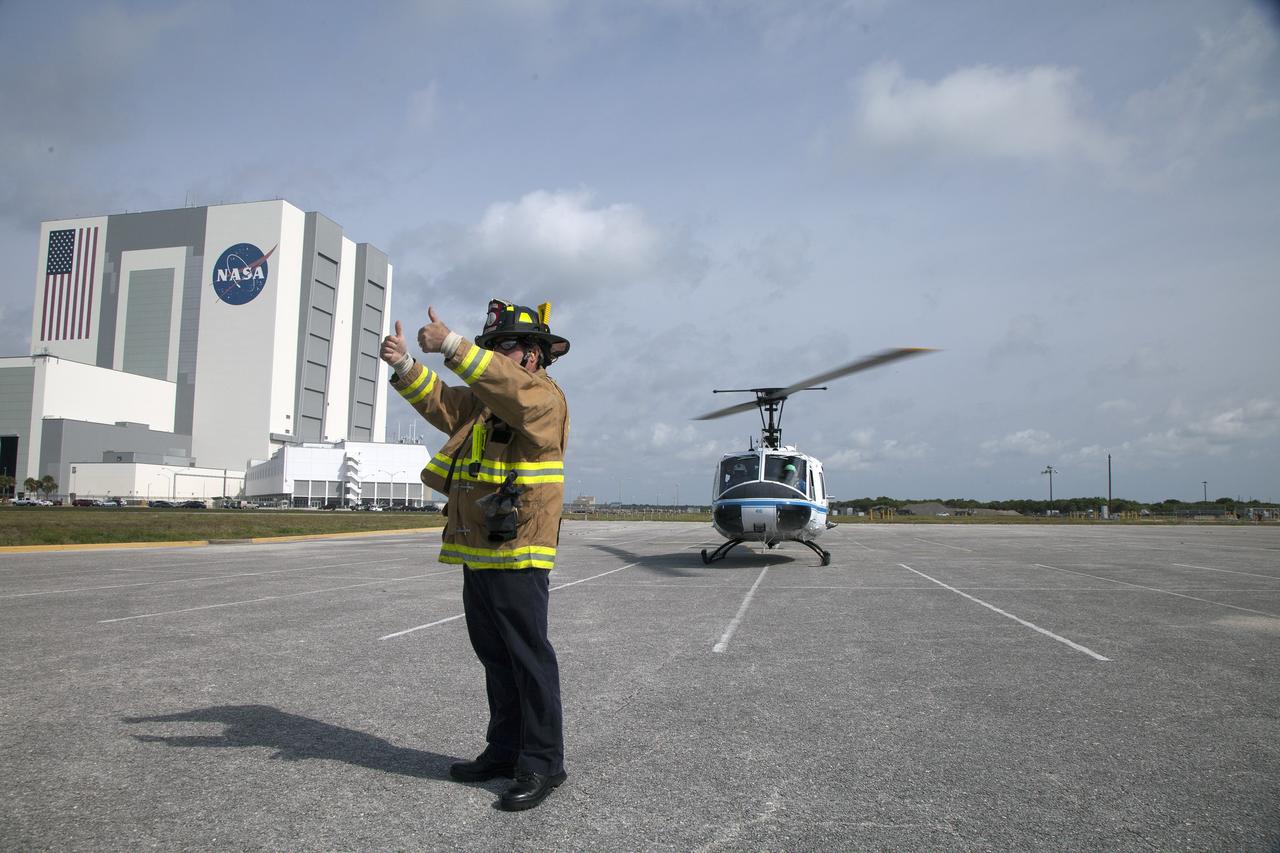
CAPE CANAVERAL, Fla. -- At NASA's Kennedy Space Center in Florida, an agency Fire Rescue team member gives "thumbs up" signaling that it is safe to bring in a stretcher with a "volunteer patient" to be placed aboard the nearby helicopter. The activity taking place in Kennedy's Launch Complex 39 turn-basin parking lot was only one of several drills. It was part of a new training program that was developed by Kennedy's Fire Rescue department along with NASA Aircraft Operations to sharpen the skills needed to help rescue personnel learn how to collaborate with helicopter pilots in taking injured patients to hospitals as quickly as possible. Photo credit: NASA/Dan Casper
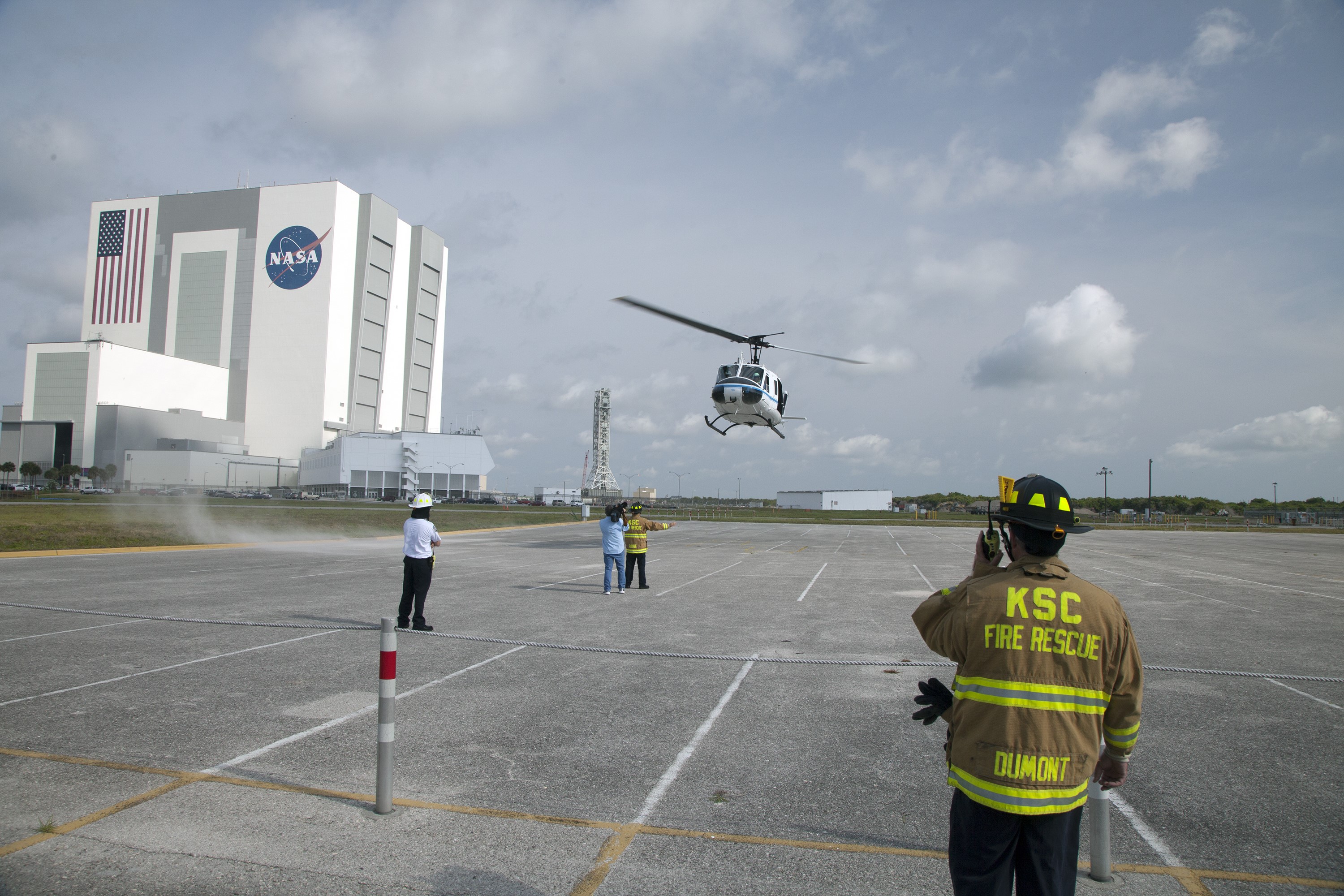
CAPE CANAVERAL, Fla. -- At NASA's Kennedy Space Center in Florida, agency Fire Rescue personnel direct an agency helicopter in for a landing during a training exercise. The activity taking place in Kennedy's Launch Complex 39 turn-basin parking lot was only one of several drills. It was part of a new training program that was developed by Kennedy's Fire Rescue department along with NASA Aircraft Operations to sharpen the skills needed to help rescue personnel learn how to collaborate with helicopter pilots in taking injured patients to hospitals as quickly as possible. Photo credit: NASA/Dan Casper
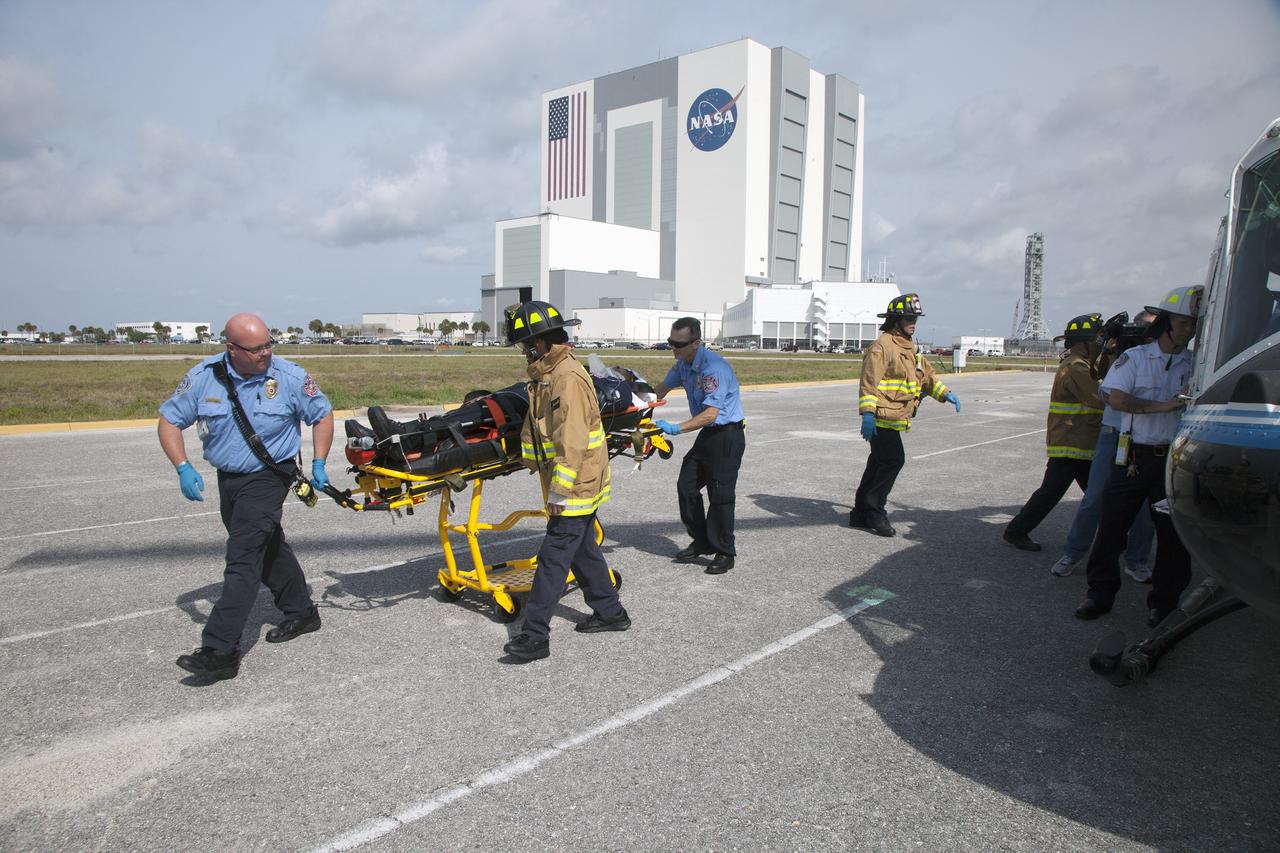
CAPE CANAVERAL, Fla. -- At NASA's Kennedy Space Center in Florida, paramedics and Fire Rescue personnel move a stretcher away from a helicopter after they practiced placing the "volunteer patient" aboard during a training exercise. The activity taking place in Kennedy's Launch Complex 39 turn-basin parking lot was only one of several drills. It was part of a new training program that was developed by Kennedy's Fire Rescue department along with NASA Aircraft Operations to sharpen the skills needed to help rescue personnel learn how to collaborate with helicopter pilots in taking injured patients to hospitals as quickly as possible. Photo credit: NASA/Dan Casper

CAPE CANAVERAL, Fla. -- At NASA's Kennedy Space Center in Florida, agency Fire Rescue personnel direct an agency helicopter in for a landing during a training exercise. The activity taking place in Kennedy's Launch Complex 39 turn-basin parking lot was only one of several drills. It was part of a new training program that was developed by Kennedy's Fire Rescue department along with NASA Aircraft Operations to sharpen the skills needed to help rescue personnel learn how to collaborate with helicopter pilots in taking injured patients to hospitals as quickly as possible. Photo credit: NASA/Dan Casper
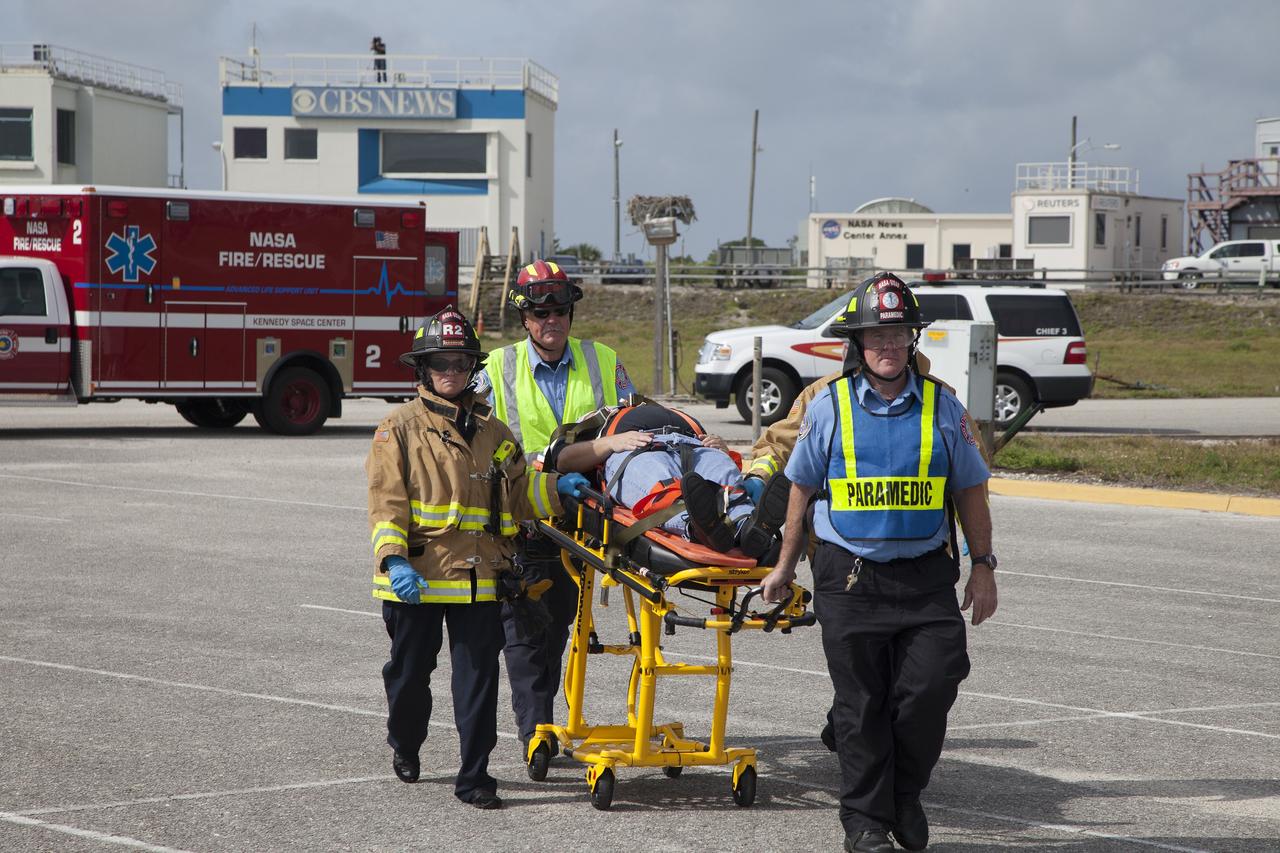
CAPE CANAVERAL, Fla. -- At NASA's Kennedy Space Center in Florida, Paramedics and Fire Rescue personnel move a stretcher to the waiting helicopter as they work quickly to have the patient ready to transport after he was removed from a vehicle. The activity taking place in Kennedy's Launch Complex 39 turn-basin parking lot was only one of several drills. It was part of a new training program that was developed by Kennedy's Fire Rescue department along with NASA Aircraft Operations to sharpen the skills needed to help rescue personnel learn how to collaborate with helicopter pilots in taking injured patients to hospitals as quickly as possible. Photo credit: NASA/Dan Casper
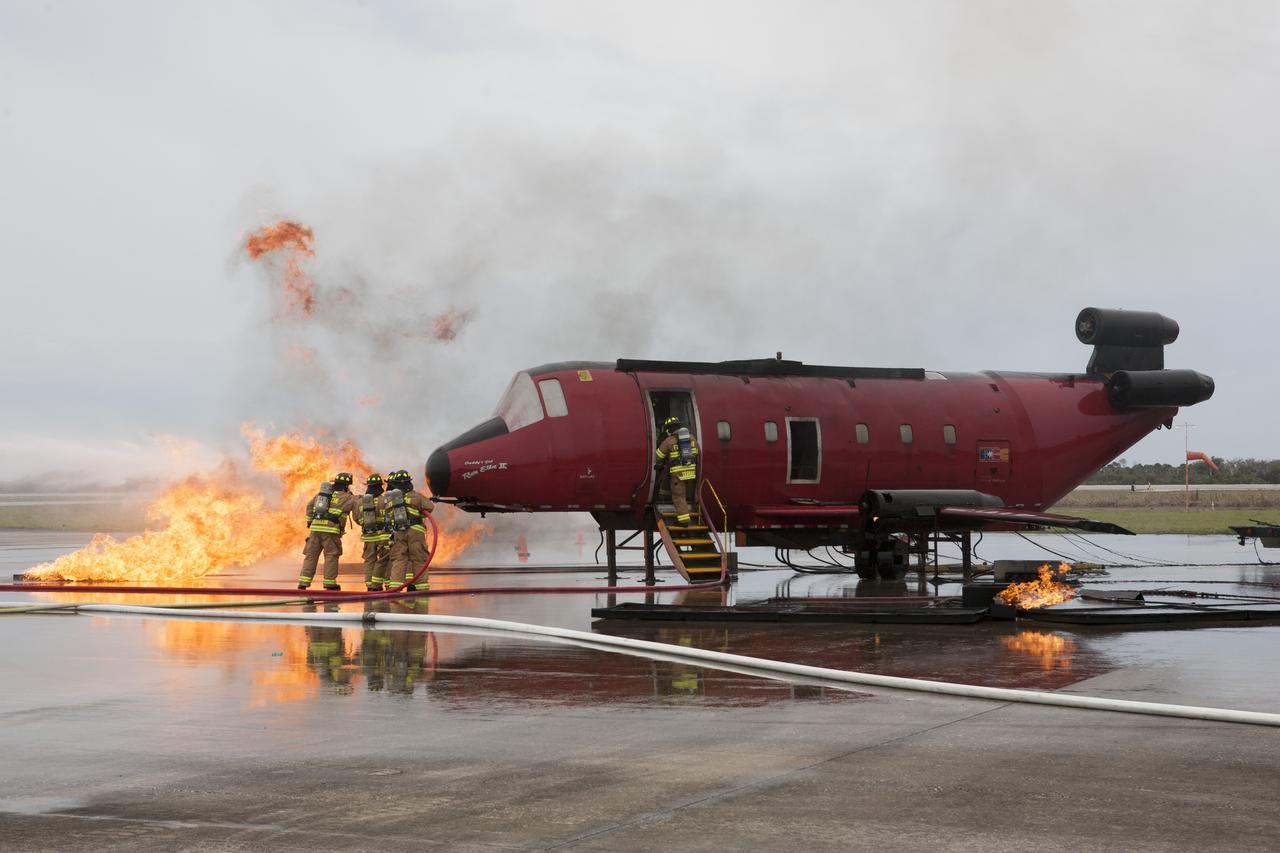
CAPE CANAVERAL, Fla. - Special Rescue Operations firefighters with NASA Fire Rescue Services in the Protective Services Office at NASA’s Kennedy Space Center in Florida participate in a training exercise at the Shuttle Landing Facility. Firefighters, wearing protective gear, use hoses to put out a fire burning near the mock-up of a small plane as another firefighter checks inside the plane. Kennedy’s firefighters recently achieved Pro Board Certification in aerial fire truck operations and completed vehicle extrication training using the Jaws of Life. The Protective Services Office is one step closer to achieving certification in vehicle machinery extrication and other rescue skills. Kennedy’s firefighters are with G4S Government Solutions Inc., on the Kennedy Protective Services Contract. Photo credit: NASA/Kim Shiflett
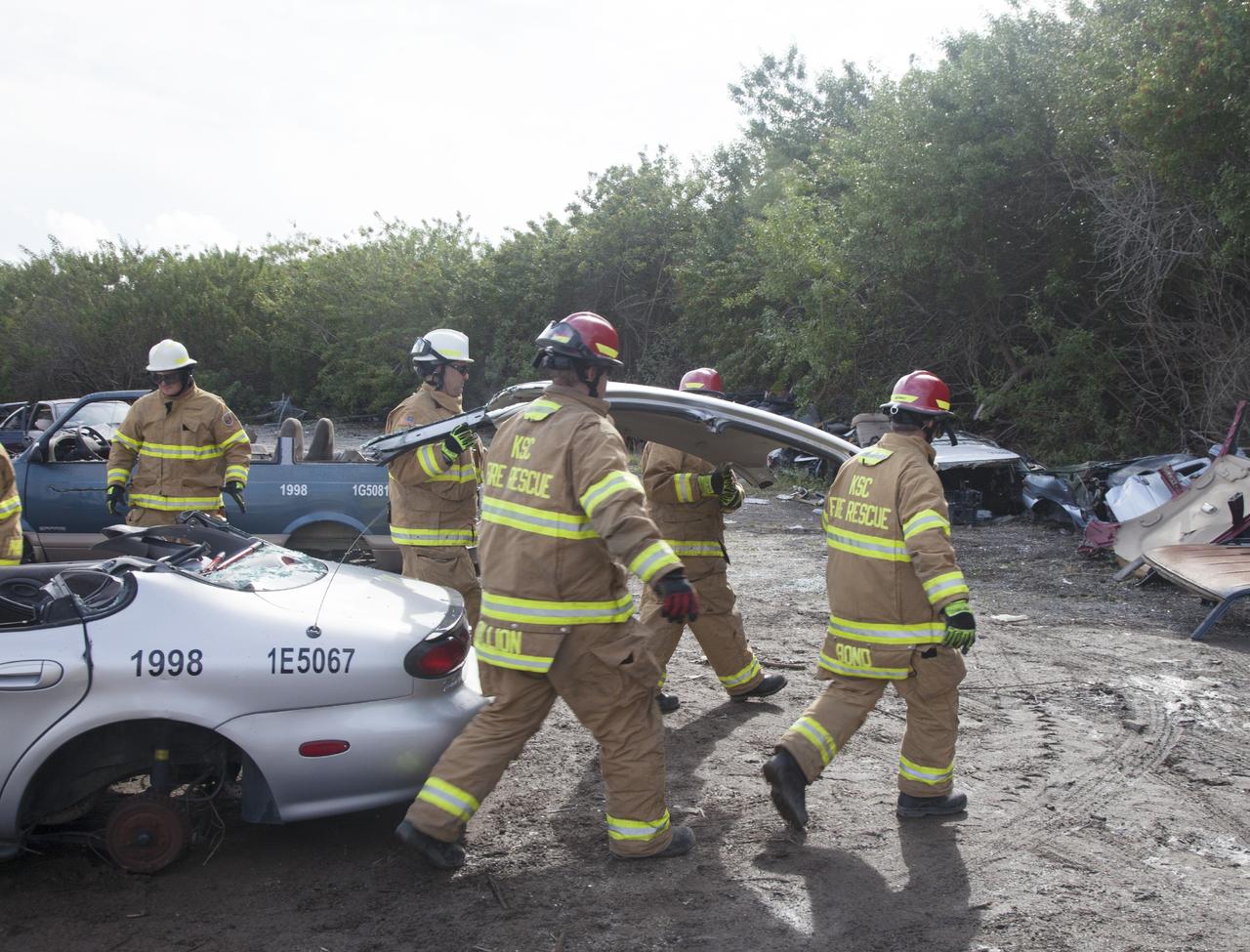
CAPE CANAVERAL, Fla. – Special Rescue Operations firefighters with NASA Fire Rescue Services in the Protective Services Office at NASA’s Kennedy Space Center in Florida practice vehicle extrication training at an auto salvage yard near the center. Firefighters carry away the roof of the car that was removed using a special hydraulic cutting tool and reciprocating saw. Other firefighters used axes and special tools to punch through and clear away the windshield and windows. They will use the Jaws of Life to simulate the rescue of a trapped and injured person. Kennedy’s firefighters recently achieved Pro Board Certification in aerial fire truck operations. With the completion of vehicle extrication and Jaws of Life training, the Protective Services Office is one step closer to achieving certification in vehicle machinery extrication. Kennedy’s firefighters are with G4S Government Solutions Inc., on the Kennedy Protective Services Contract. Photo credit: NASA/Daniel Casper
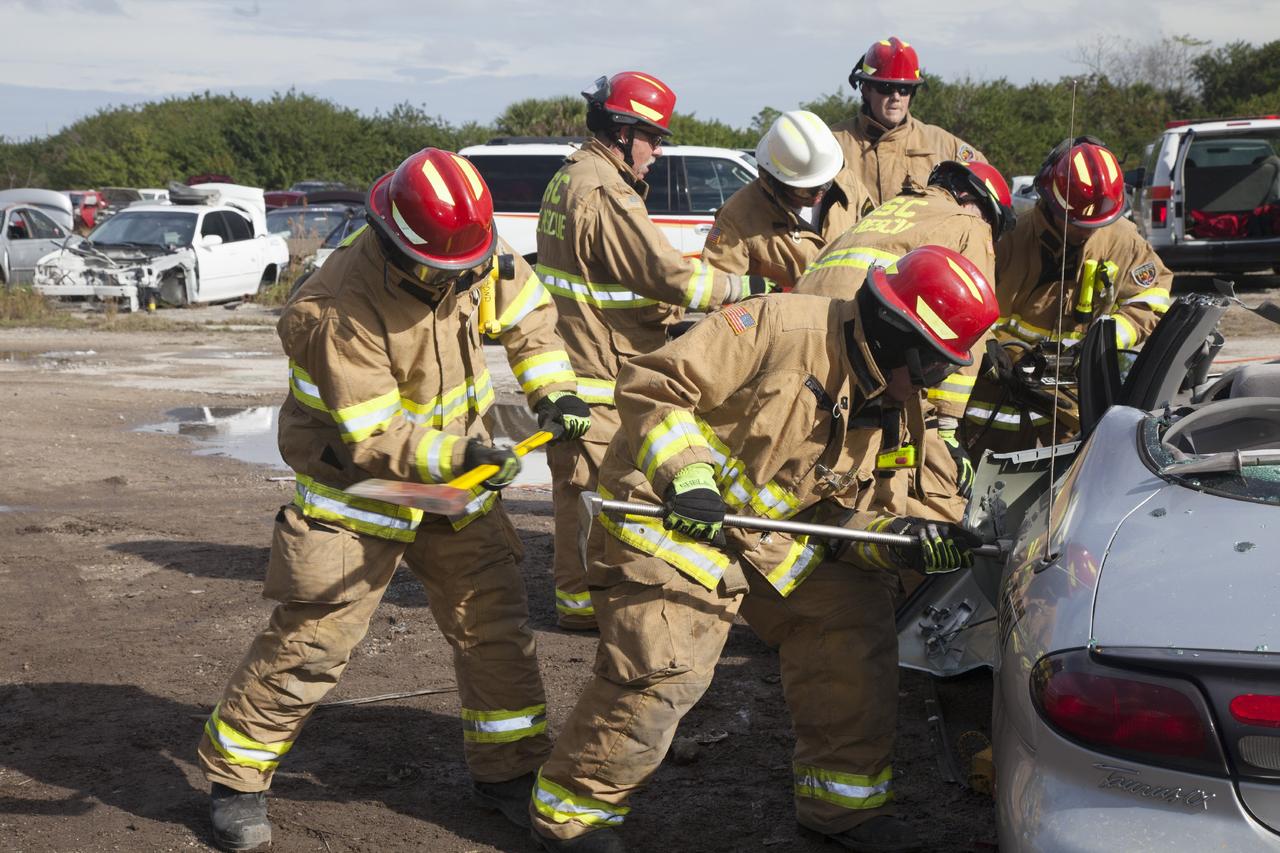
CAPE CANAVERAL, Fla. – Special Rescue Operations firefighters with NASA Fire Rescue Services in the Protective Services Office at NASA’s Kennedy Space Center in Florida practice vehicle extrication training at an auto salvage yard near the center. In the foreground, a firefighter with an axe assists as another firefighter uses a special tool to punch through the door of the vehicle. A special hydraulic cutting tool and reciprocating saw were used to cut through and remove the roof. In the background, other firefighters are practicing with the Jaws of Life to simulate the rescue of a trapped and injured person. Kennedy’s firefighters recently achieved Pro Board Certification in aerial fire truck operations. With the completion of vehicle extrication and Jaws of Life training, the Protective Services Office is one step closer to achieving certification in vehicle machinery extrication. Kennedy’s firefighters are with G4S Government Solutions Inc., on the Kennedy Protective Services Contract. Photo credit: NASA/Daniel Casper
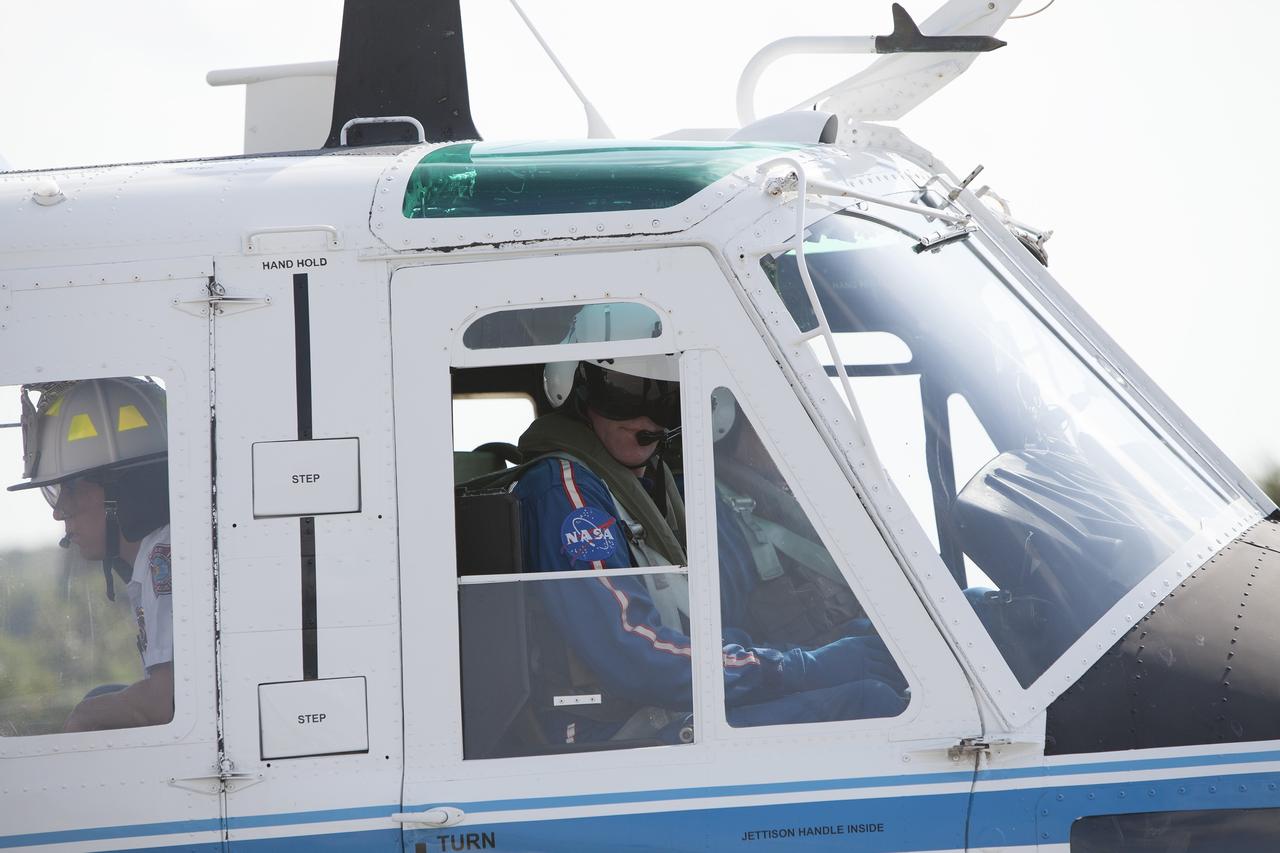
CAPE CANAVERAL, Fla. -- At NASA's Kennedy Space Center in Florida, agency helicopter pilots ensure all is clear before taking off during a training exercise. Helicopter pilot Bill Martin, a URS Federal Technical Services in the agency's Aircraft Operations, is seen in the front seat. Behind Martin on the left, is Mark Huetter, of Chenega Security & Support Solutions. Martin serves as assistant chief of Training for the center's Fire Rescue Department. The activity taking place in Kennedy's Launch Complex 39 turn-basin parking lot was only one of several drills. It was part of a new training program that was developed by Kennedy's Fire Rescue department along with NASA Aircraft Operations to sharpen the skills needed to help rescue personnel learn how to collaborate with helicopter pilots in taking injured patients to hospitals as quickly as possible. Photo credit: NASA/Dan Casper
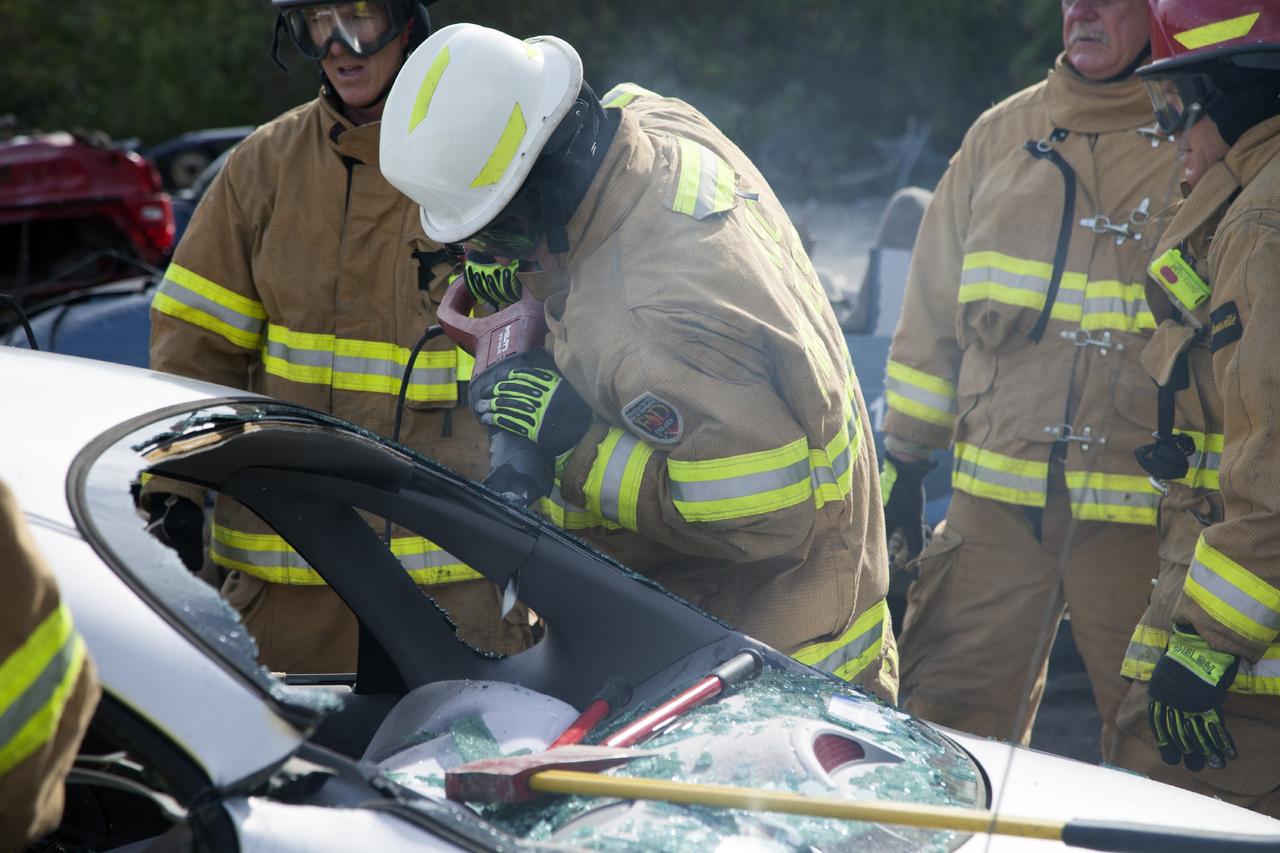
CAPE CANAVERAL, Fla. – Special Rescue Operations firefighters with NASA Fire Rescue Services in the Protective Services Office at NASA’s Kennedy Space Center in Florida practice vehicle extrication training at an auto salvage yard near the center. A firefighter uses a reciprocating saw to cut through a section of the car to remove the roof. Other firefighters used axes and special tools to punch through and clear away the windshield and windows. They will use the Jaws of Life to simulate the rescue of a trapped and injured person. Kennedy’s firefighters recently achieved Pro Board Certification in aerial fire truck operations. With the completion of vehicle extrication and Jaws of Life training, the Protective Services Office is one step closer to achieving certification in vehicle machinery extrication. Kennedy’s firefighters are with G4S Government Solutions Inc., on the Kennedy Protective Services Contract. Photo credit: NASA/Daniel Casper
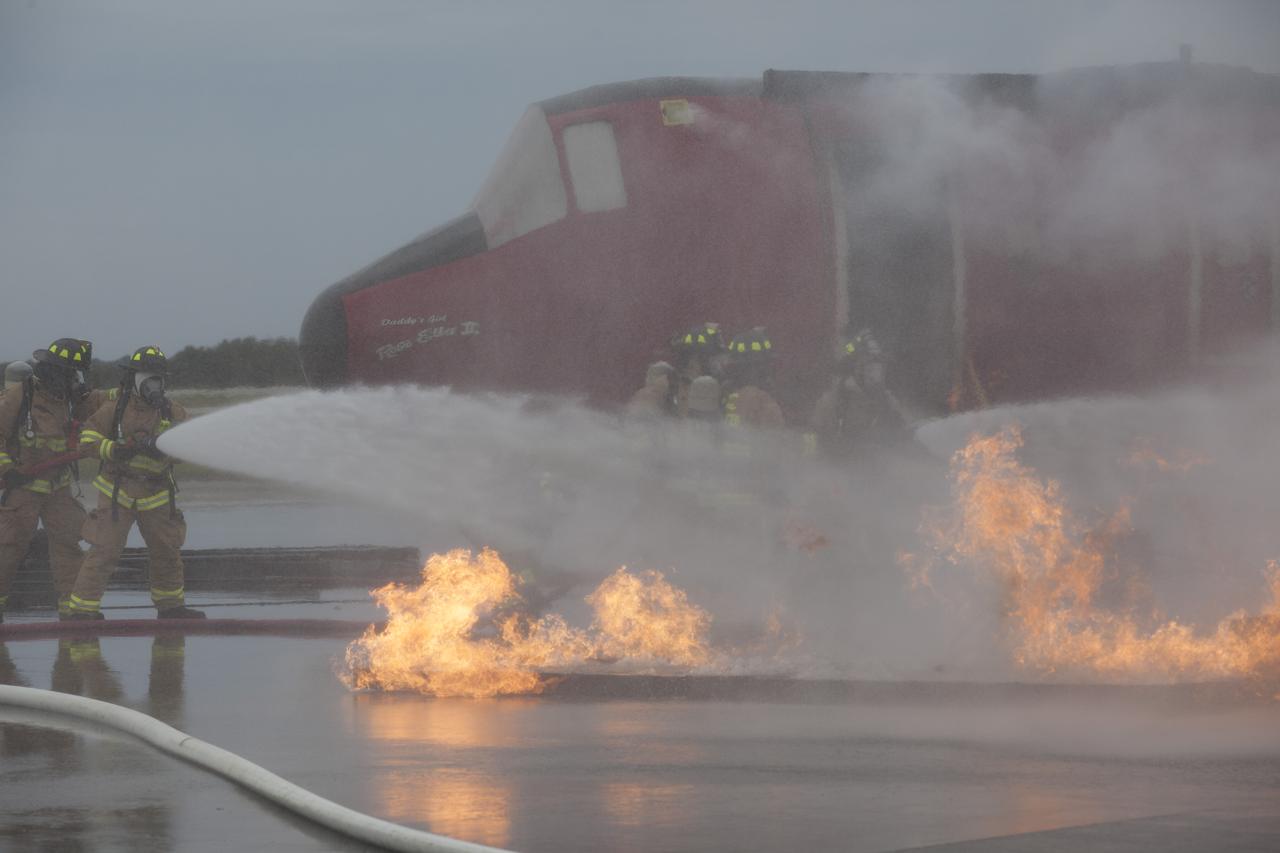
CAPE CANAVERAL, Fla. - Special Rescue Operations firefighters with NASA Fire Rescue Services in the Protective Services Office at NASA’s Kennedy Space Center in Florida participate in a training exercise at the Shuttle Landing Facility. Firefighters, wearing protective gear, use hoses to put out a fire burning close to a mock-up of a small plane. Kennedy’s firefighters recently achieved Pro Board Certification in aerial fire truck operations and completed vehicle extrication training using the Jaws of Life. The Protective Services Office is one step closer to achieving certification in vehicle machinery extrication and other rescue skills. Kennedy’s firefighters are with G4S Government Solutions Inc., on the Kennedy Protective Services Contract. Photo credit: NASA/Kim Shiflett
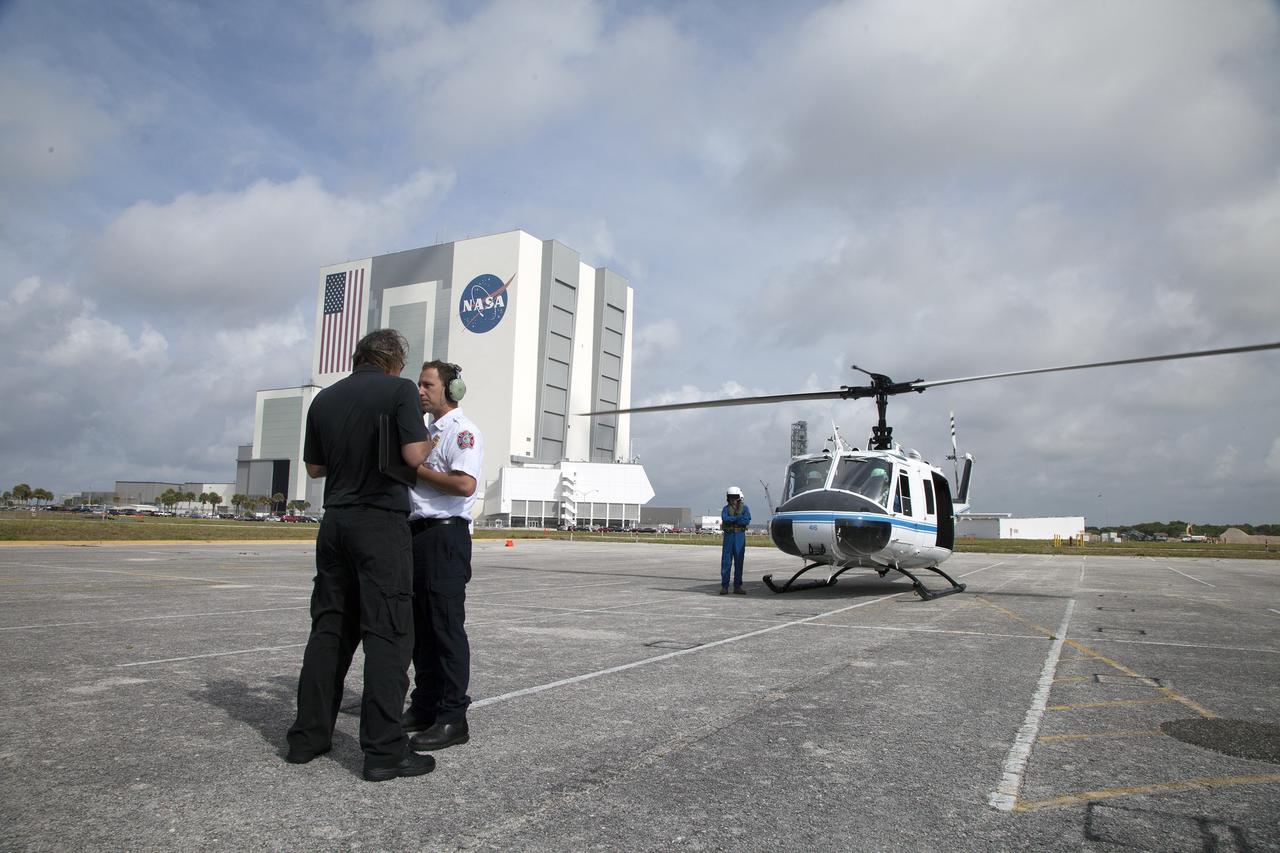
CAPE CANAVERAL, Fla. -- Following a training exercise at NASA's Kennedy Space Center in Florida, helicopter pilot Bill Martin, a URS Federal Technical Services in the agency's Aircraft Operations, left, confers with Mark Huetter of Chenega Security & Support Solutions. Martin serves as assistant chief of Training for the center's Fire Rescue Department. The activity taking place in Kennedy's Launch Complex 39 turn-basin parking lot was only one of several drills. It was part of a new training program that was developed by Kennedy's Fire Rescue department along with NASA Aircraft Operations to sharpen the skills needed to help rescue personnel learn how to collaborate with helicopter pilots in taking injured patients to hospitals as quickly as possible. Photo credit: NASA/Dan Casper
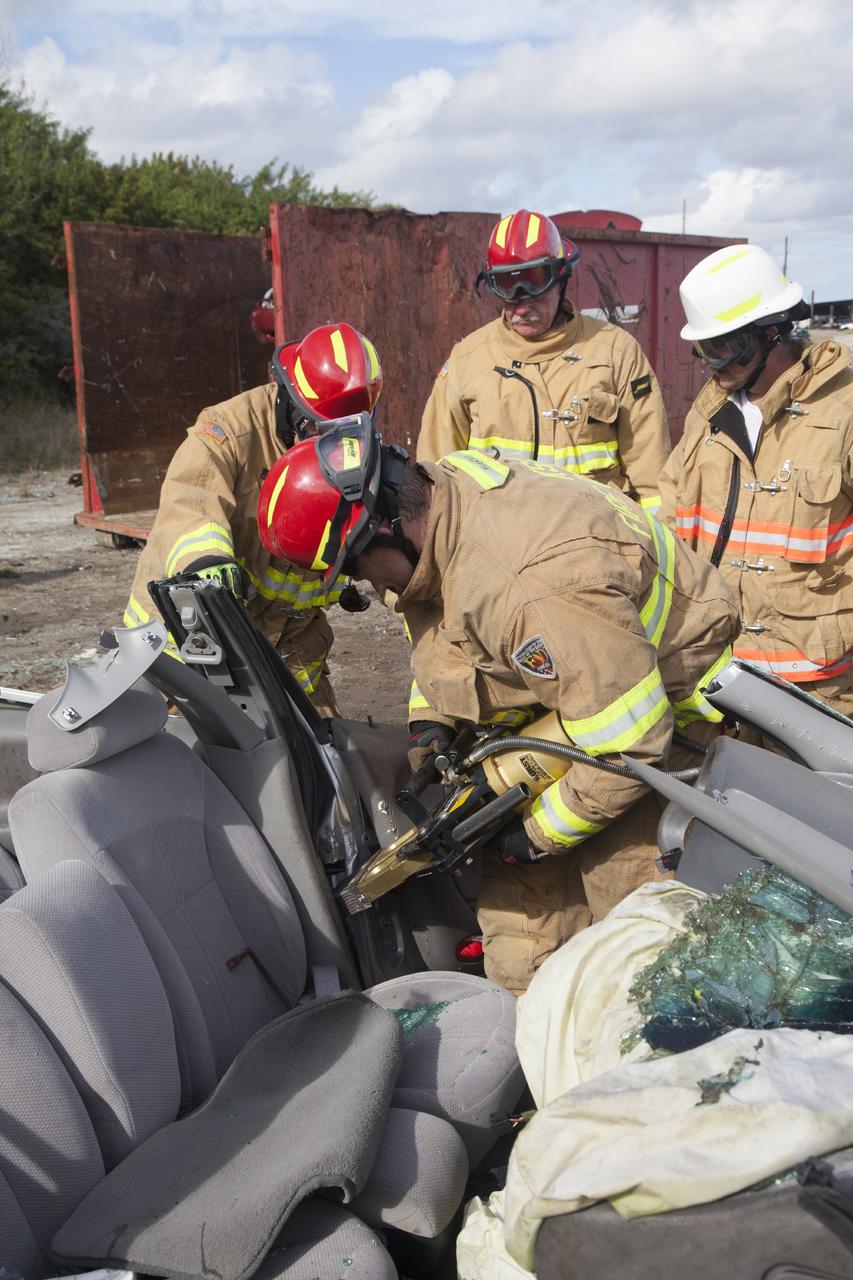
CAPE CANAVERAL, Fla. – Special Rescue Operations firefighters with NASA Fire Rescue Services in the Protective Services Office at NASA’s Kennedy Space Center in Florida practice vehicle extrication training at an auto salvage yard near the center. A firefighter uses the Jaws of Life to finish removing the door from the vehicle and simulate the rescue of a trapped and injured person. A special hydraulic cutting tool and reciprocating saw were used to cut through and remove the roof. An axe and other special tools were used to punch through and clear away the windshield and windows. Kennedy’s firefighters recently achieved Pro Board Certification in aerial fire truck operations. With the completion of vehicle extrication and Jaws of Life training, the Protective Services Office is one step closer to achieving certification in vehicle machinery extrication. Kennedy’s firefighters are with G4S Government Solutions Inc., on the Kennedy Protective Services Contract. Photo credit: NASA/Daniel Casper
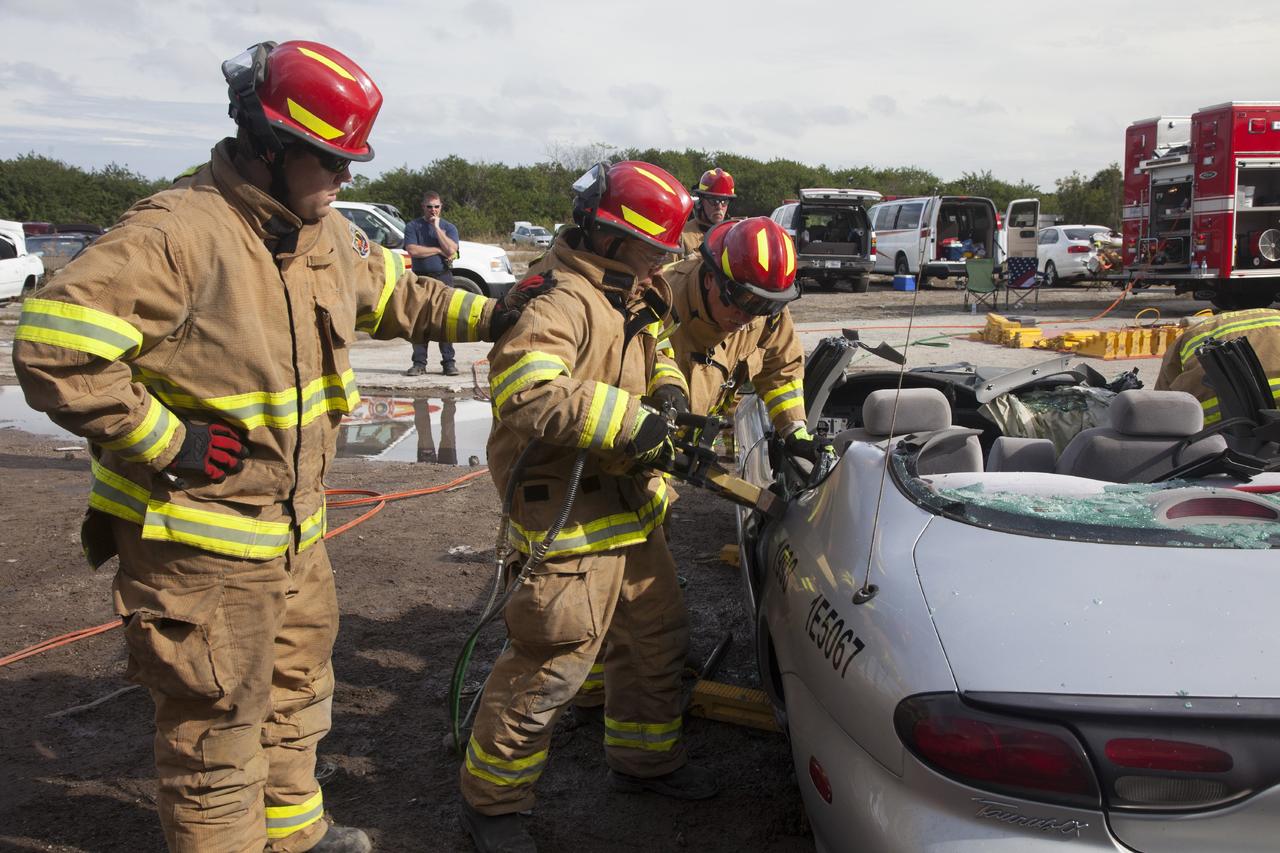
CAPE CANAVERAL, Fla. – Special Rescue Operations firefighters with NASA Fire Rescue Services in the Protective Services Office at NASA’s Kennedy Space Center in Florida practice vehicle extrication training at an auto salvage yard near the center. Two firefighters assist as another firefighter uses the Jaws of Life on the car to simulate the rescue of a trapped and injured person. A special hydraulic cutting tool and reciprocating saw were used to remove the roof of the vehicle. Other firefighters used axes and special tools to punch through and clear away the windshield and the windows. Kennedy’s firefighters recently achieved Pro Board Certification in aerial fire truck operations. With the completion of vehicle extrication and Jaws of Life training, the Protective Services Office is one step closer to achieving certification in vehicle machinery extrication. Kennedy’s firefighters are with G4S Government Solutions Inc., on the Kennedy Protective Services Contract. Photo credit: NASA/Daniel Casper
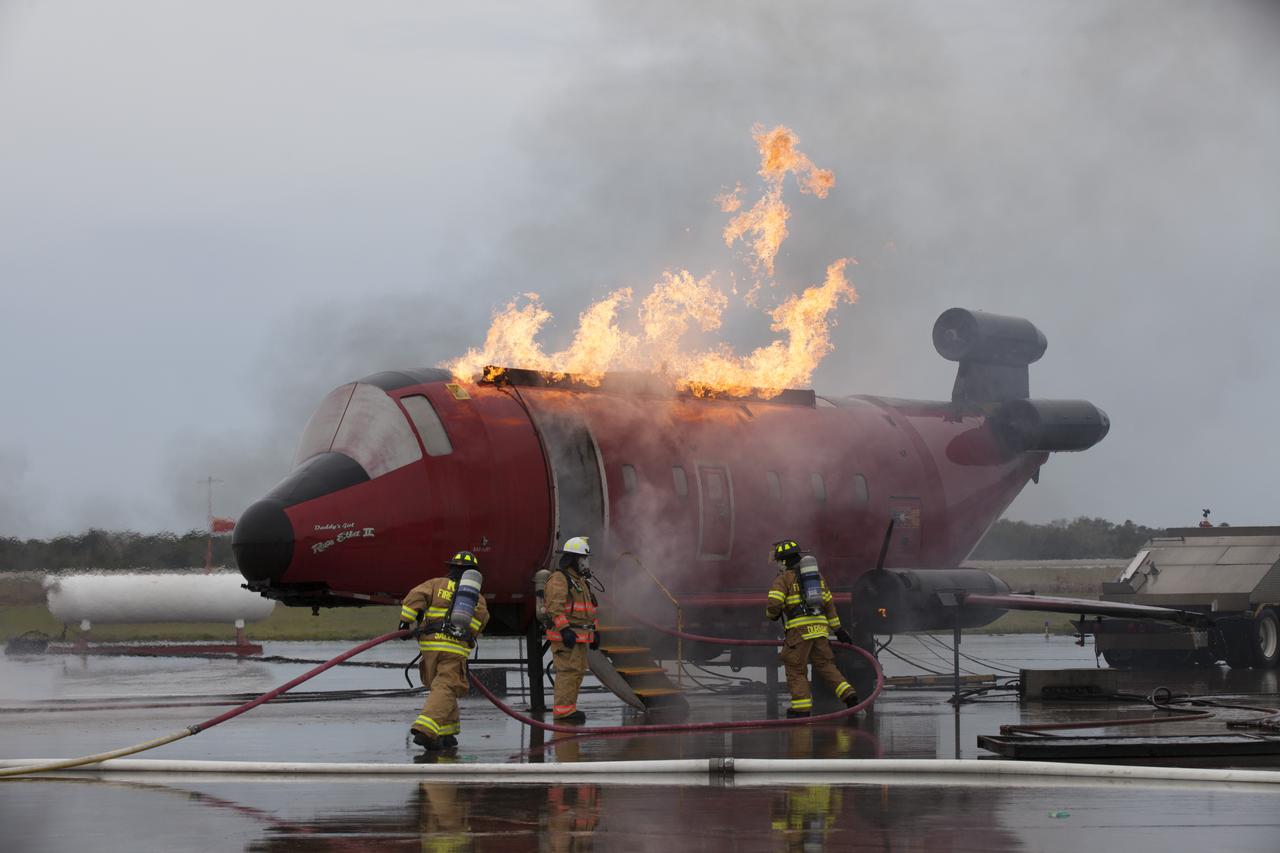
CAPE CANAVERAL, Fla. - Special Rescue Operations firefighters with NASA Fire Rescue Services in the Protective Services Office at NASA’s Kennedy Space Center in Florida participate in a training exercise at the Shuttle Landing Facility. Firefighters, wearing protective gear, use hoses to put out a fire burning on a mock-up of a small plane. Kennedy’s firefighters recently achieved Pro Board Certification in aerial fire truck operations and completed vehicle extrication training using the Jaws of Life. The Protective Services Office is one step closer to achieving certification in vehicle machinery extrication and other rescue skills. Kennedy’s firefighters are with G4S Government Solutions Inc., on the Kennedy Protective Services Contract. Photo credit: NASA/Kim Shiflett
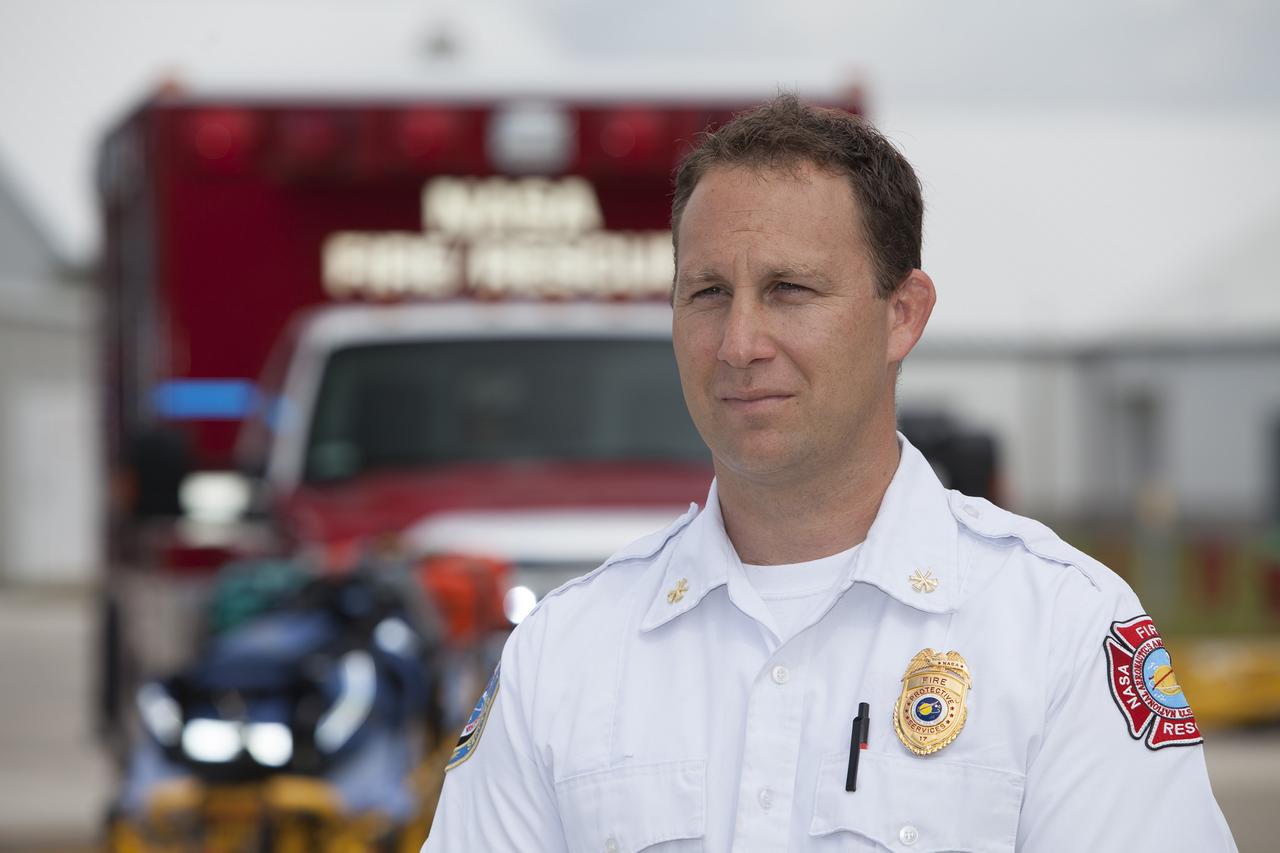
CAPE CANAVERAL, Fla. -- At NASA's Kennedy Space Center in Florida, Mark Huetter, assistant chief of Training for the center's Fire Rescue Department, is interviewed near the Shuttle Landing Facility. He discussed working with pilots in NASA Aircraft Operations to develop procedures for using agency helicopters to transport injured patients to a local hospital. The training activity took place in Kennedy's Launch Complex 39 turn-basin parking lot. It was part of a new training program developed by Kennedy's Fire Rescue department along with NASA Aircraft Operations to sharpen the skills needed to help rescue personnel learn how to collaborate with helicopter pilots in taking injured patients to hospitals as quickly as possible. Photo credit: NASA/Dimitri Gerondidakis
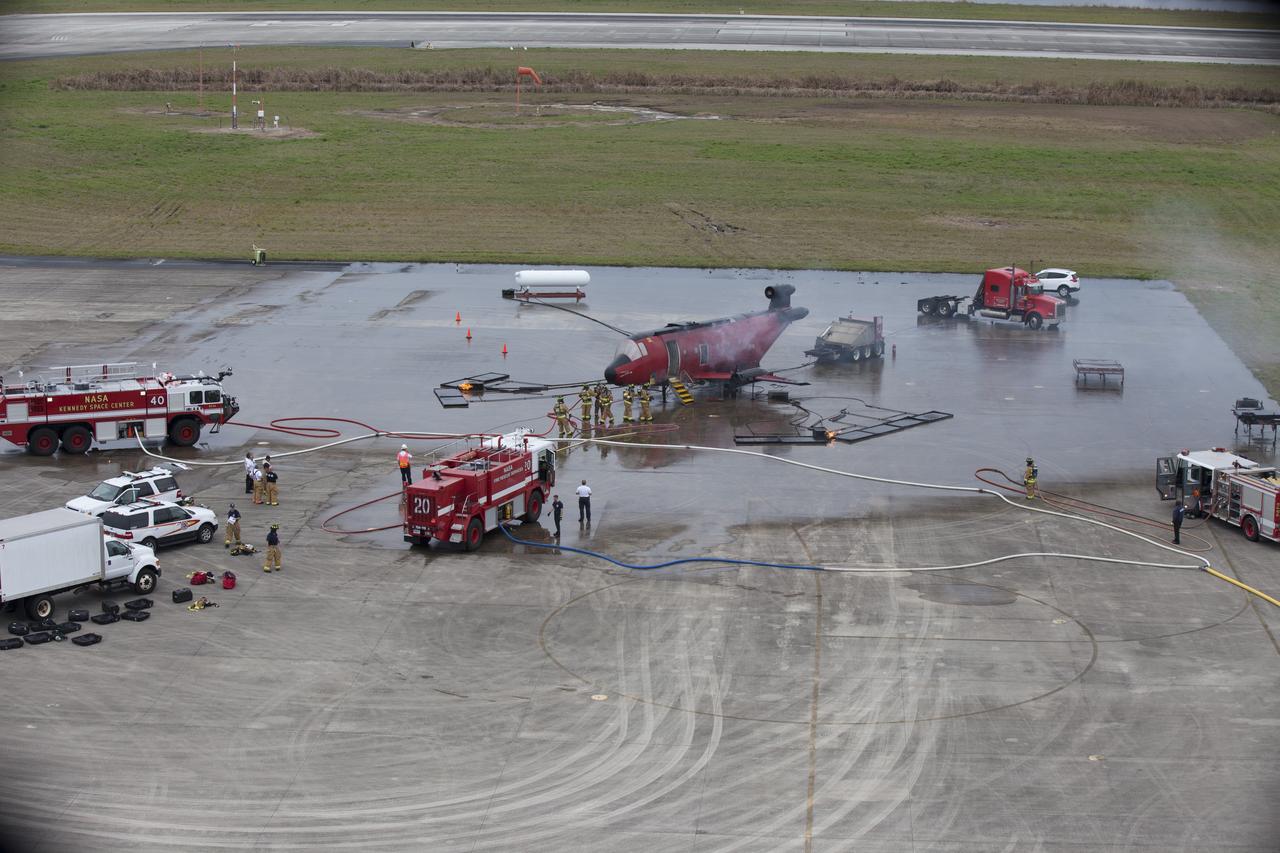
CAPE CANAVERAL, Fla. - Special Rescue Operations firefighters with NASA Fire Rescue Services in the Protective Services Office at NASA’s Kennedy Space Center in Florida participate in a training exercise at the Shuttle Landing Facility. Firefighters use fire trucks and hoses to extinguish flames burning on and around a mock-up of a small plane. Kennedy’s firefighters recently achieved Pro Board Certification in aerial fire truck operations and completed vehicle extrication training using the Jaws of Life. The Protective Services Office is one step closer to achieving certification in vehicle machinery extrication and other rescue skills. Kennedy’s firefighters are with G4S Government Solutions Inc., on the Kennedy Protective Services Contract. Photo credit: NASA/Kim Shiflett
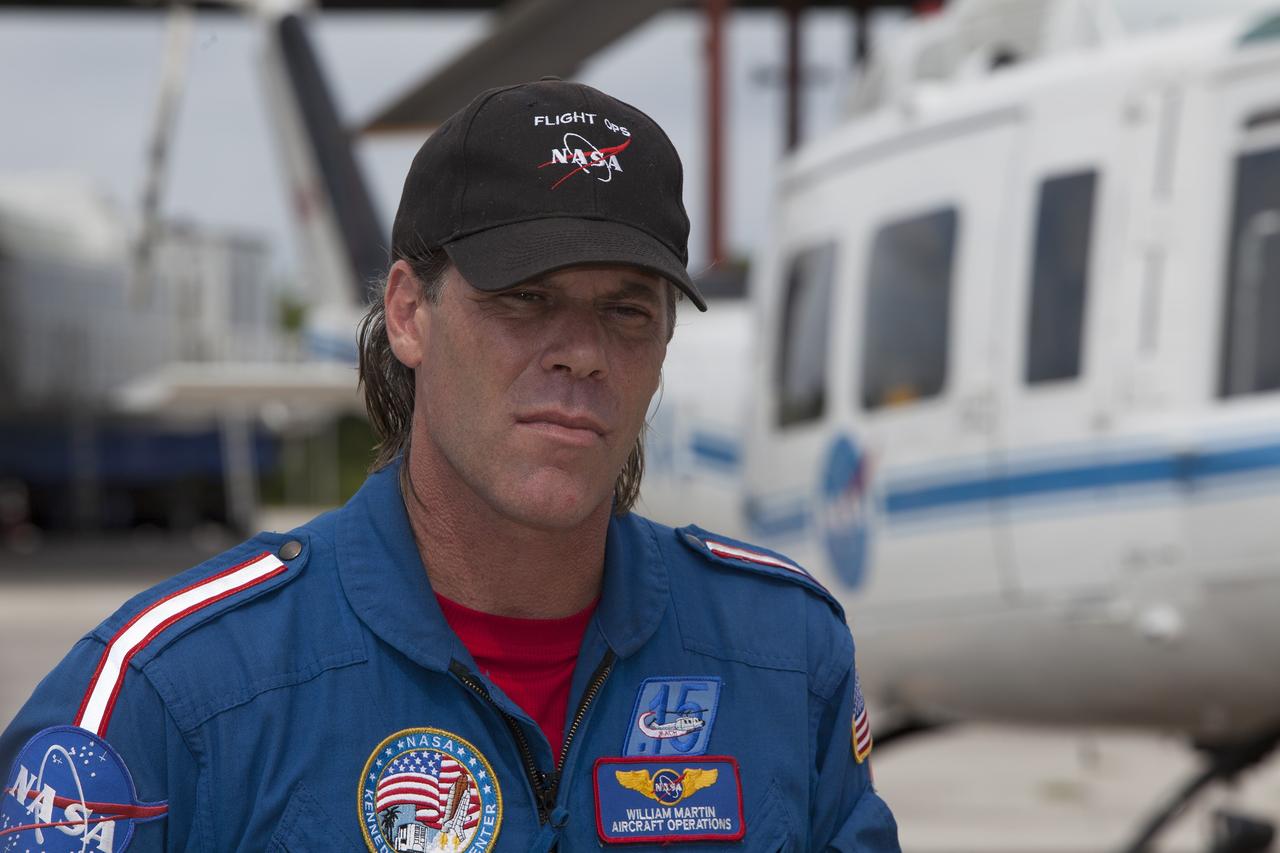
CAPE CANAVERAL, Fla. -- At NASA's Kennedy Space Center in Florida, Bill Martin, a URS Federal Technical Services helicopter pilot in the agency's Aircraft Operations, is interviewed near the Shuttle Landing Facility. He discussed working with spaceport Fire Rescue personnel to develop procedures for using agency helicopters to transport injured patients to a local hospital. The training activity took place in Kennedy's Launch Complex 39 turn-basin parking lot. It was part of a new training program developed by Kennedy's Fire Rescue department along with NASA Aircraft Operations to sharpen the skills needed to help rescue personnel learn how to collaborate with helicopter pilots in taking injured patients to hospitals as quickly as possible. Photo credit: NASA/Dimitri Gerondidakis
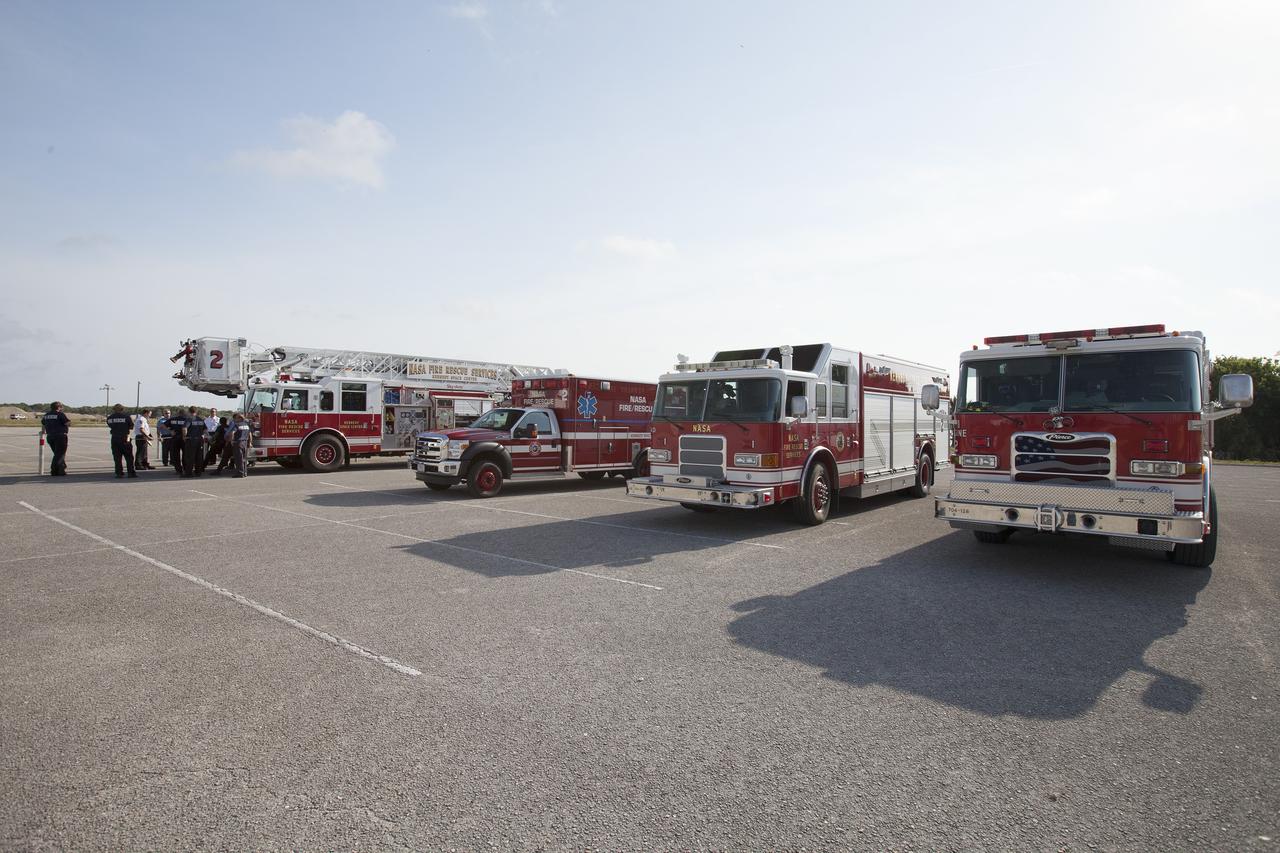
CAPE CANAVERAL, Fla. -- At NASA's Kennedy Space Center in Florida, Fire Rescue vehicles line up in a parking area near the Vehicle Assembly Building for training with pilots in NASA Aircraft Operations. The exercise is designed to develop procedures for using agency helicopters to transport injured patients to a local hospital. The activity taking place in Kennedy's Launch Complex 39 turn-basin parking lot was only one of several drills. It was part of a new training program that was developed by Kennedy's Fire Rescue department along with NASA Aircraft Operations to sharpen the skills needed to help rescue personnel learn how to collaborate with helicopter pilots in taking injured patients to hospitals as quickly as possible. Photo credit: NASA/Dan Casper
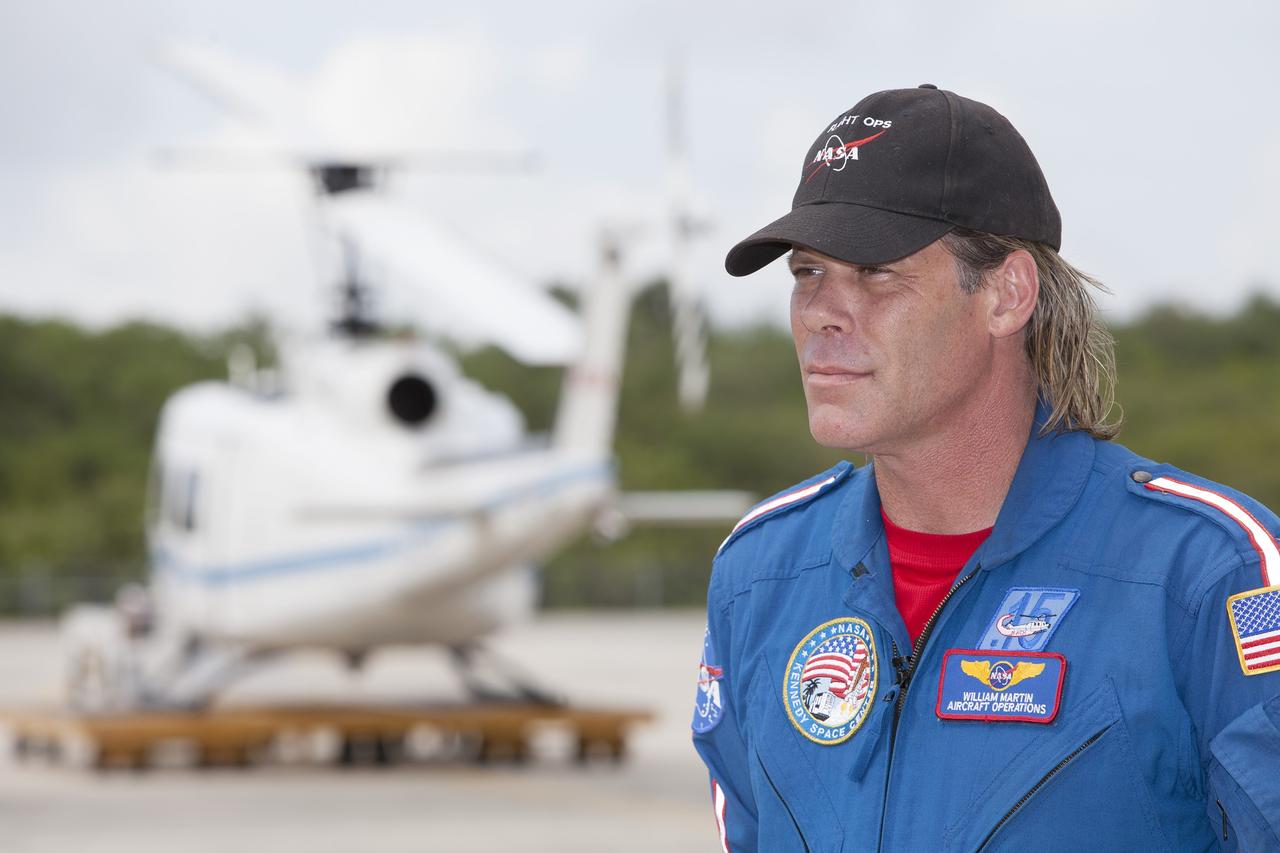
CAPE CANAVERAL, Fla. -- At NASA's Kennedy Space Center in Florida, Bill Martin, a URS Federal Technical Services helicopter pilot in the agency's Aircraft Operations, is interviewed near the Shuttle Landing Facility. He discussed working with spaceport Fire Rescue personnel to develop procedures for using agency helicopters to transport injured patients to a local hospital. The training activity took place in Kennedy's Launch Complex 39 turn-basin parking lot. It was part of a new training program developed by Kennedy's Fire Rescue department along with NASA Aircraft Operations to sharpen the skills needed to help rescue personnel learn how to collaborate with helicopter pilots in taking injured patients to hospitals as quickly as possible. Photo credit: NASA/Dimitri Gerondidakis
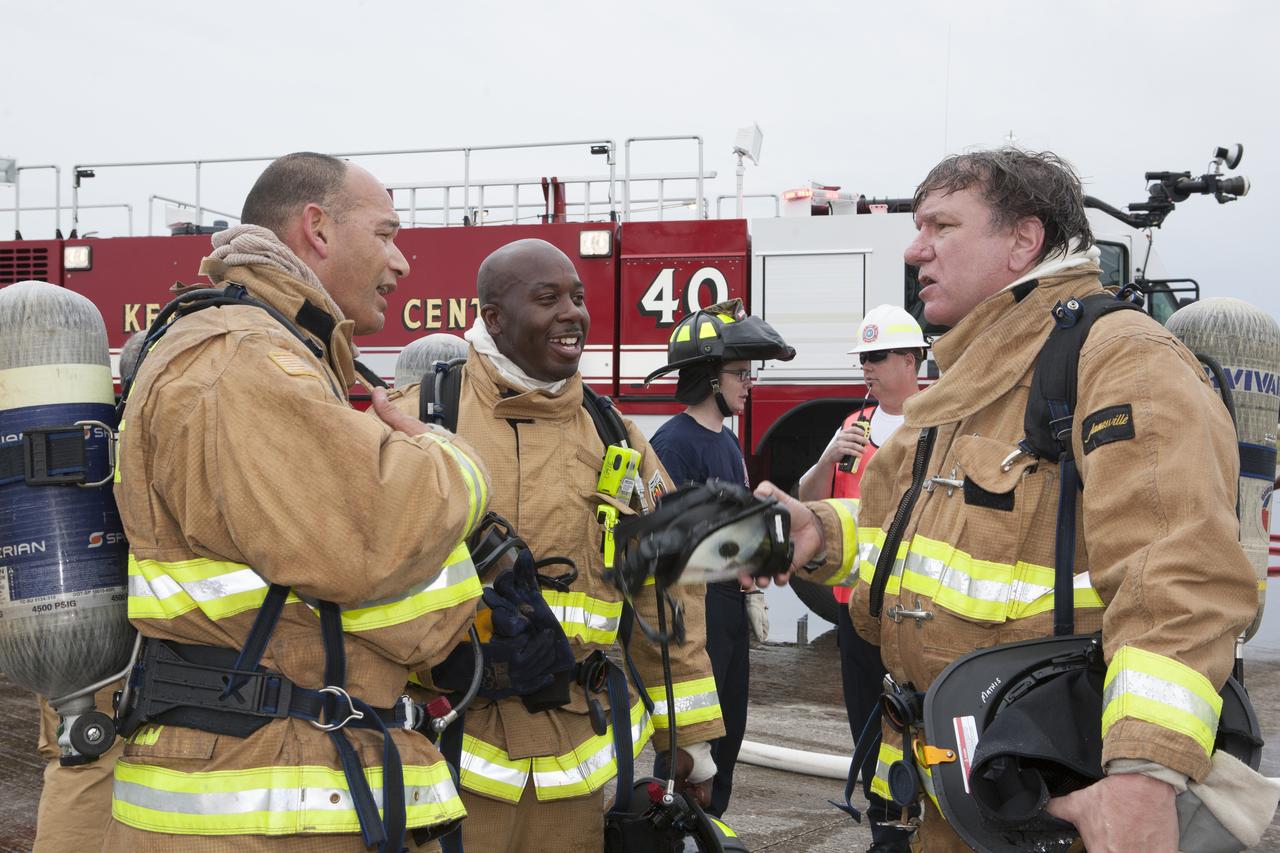
CAPE CANAVERAL, Fla. - Special Rescue Operations firefighters with NASA Fire Rescue Services in the Protective Services Office at NASA’s Kennedy Space Center in Florida review procedures after participating in a training exercise at the Shuttle Landing Facility. During the training simulation, firefighters used fire trucks and hoses to extinguish flames burning on and around a mock-up of a small plane. Kennedy’s firefighters recently achieved Pro Board Certification in aerial fire truck operations and completed vehicle extrication training using the Jaws of Life. The Protective Services Office is one step closer to achieving certification in vehicle machinery extrication and other rescue skills. Kennedy’s firefighters are with G4S Government Solutions Inc., on the Kennedy Protective Services Contract. Photo credit: NASA/Kim Shiflett
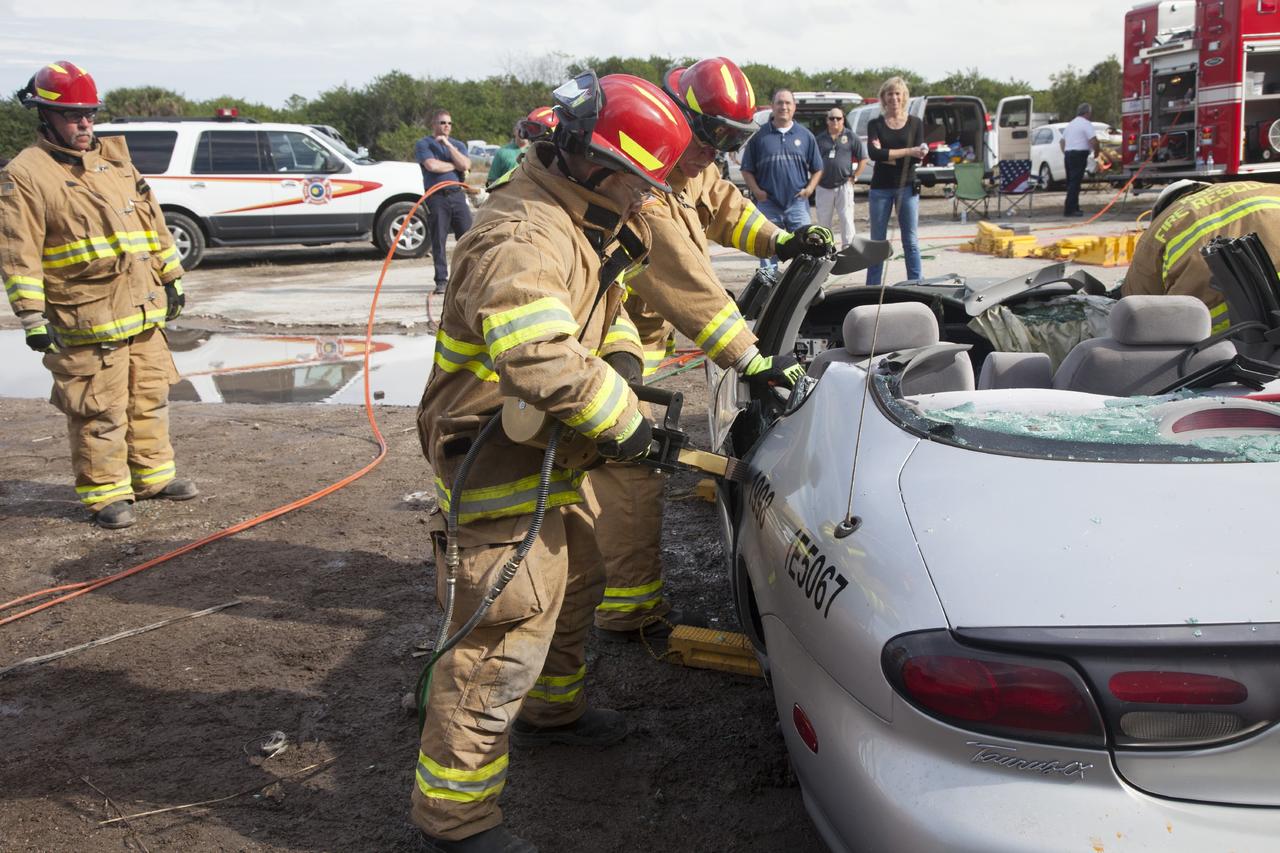
CAPE CANAVERAL, Fla. – Special Rescue Operations firefighters with NASA Fire Rescue Services in the Protective Services Office at NASA’s Kennedy Space Center in Florida practice vehicle extrication training at an auto salvage yard near the center. Firefighters have removed the roof of the car using a special hydraulic cutting tool and reciprocating saw. Other firefighters have used axes and special tools to punch through and clear away the windshield and windows. Another firefighter uses the Jaws of Life on the car to simulate the rescue of a trapped and injured person. Kennedy’s firefighters recently achieved Pro Board Certification in aerial fire truck operations. With the completion of vehicle extrication and Jaws of Life training, the Protective Services Office is one step closer to achieving certification in vehicle machinery extrication. Kennedy’s firefighters are with G4S Government Solutions Inc., on the Kennedy Protective Services Contract. Photo credit: NASA/Daniel Casper