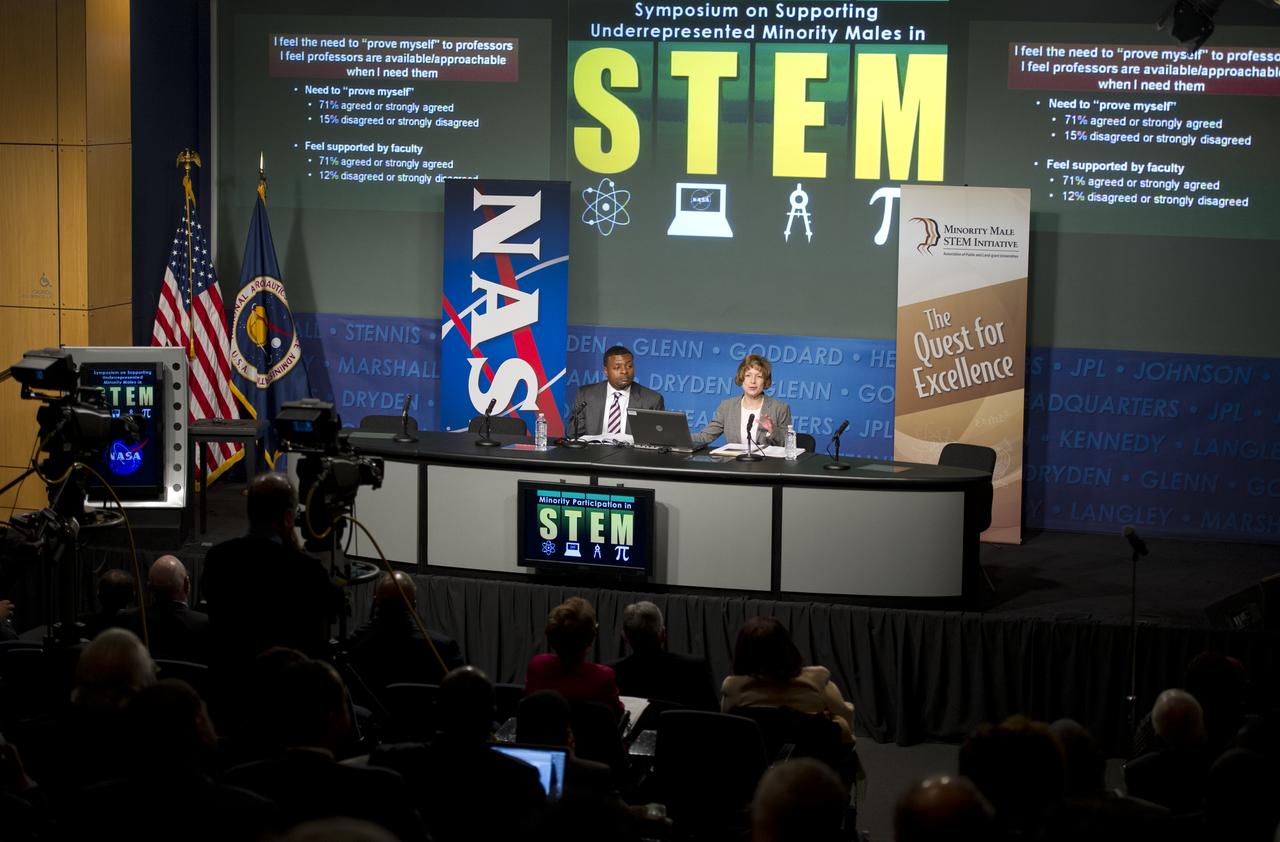
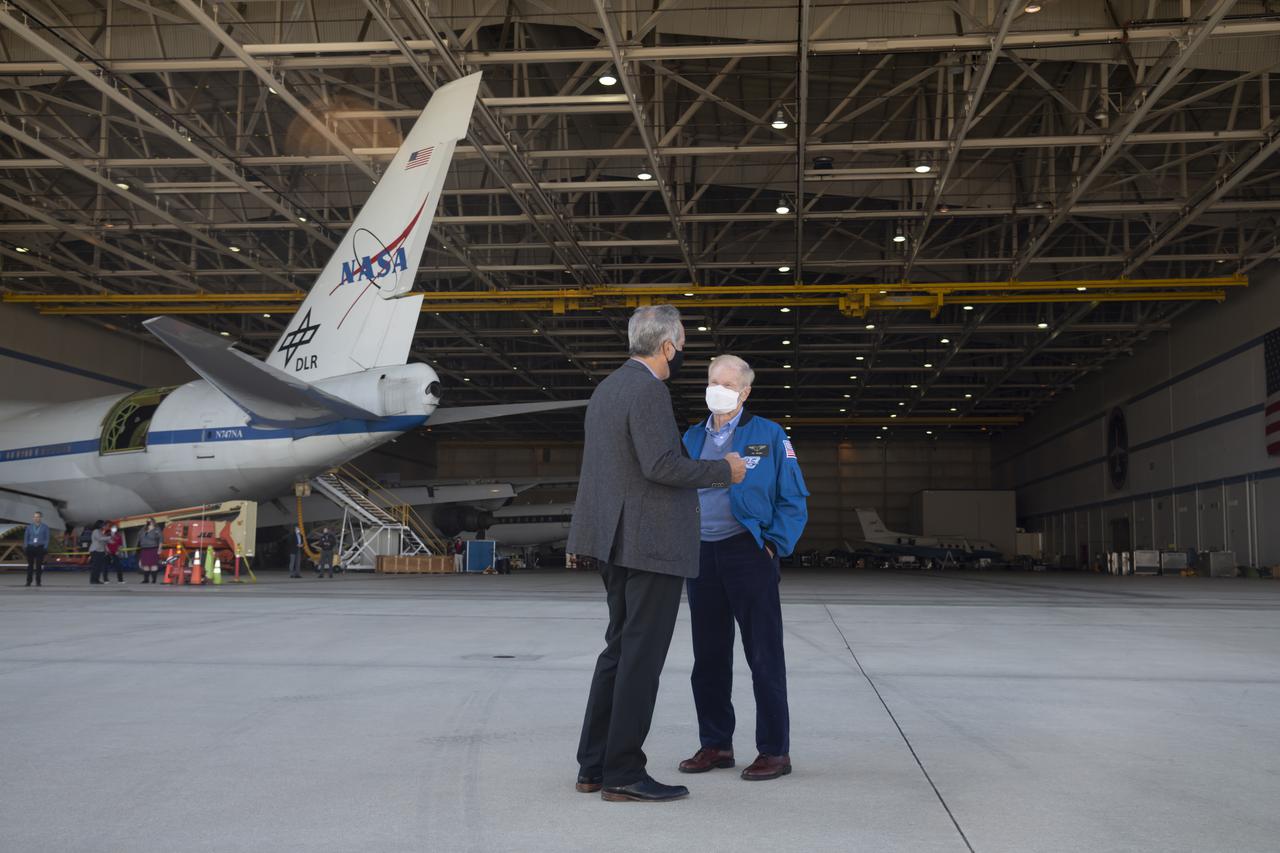
NASA Langley Research Science Directorate (RSD) Aircraft outside the hangar in Hampton Va in black white.
LRC-2025-OCIO_P-00015.TIF
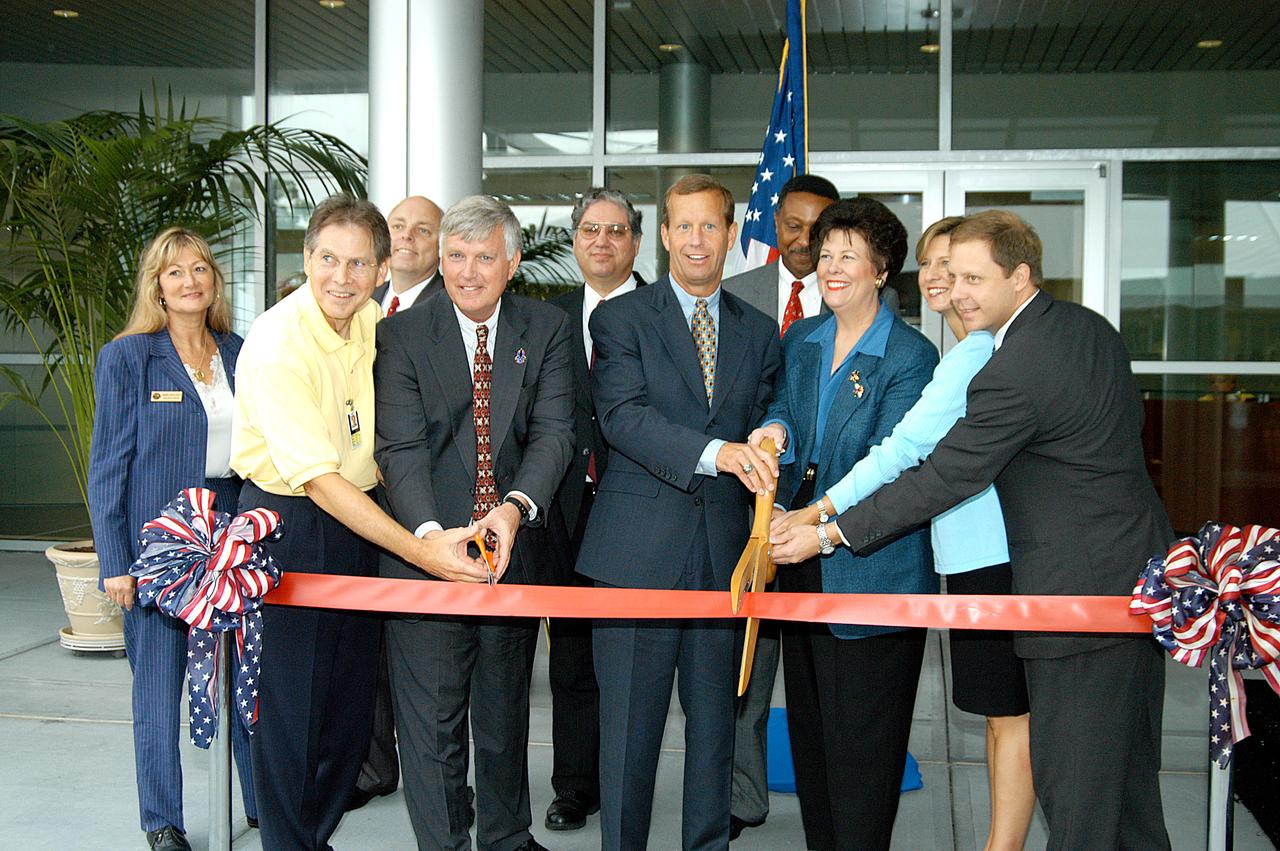
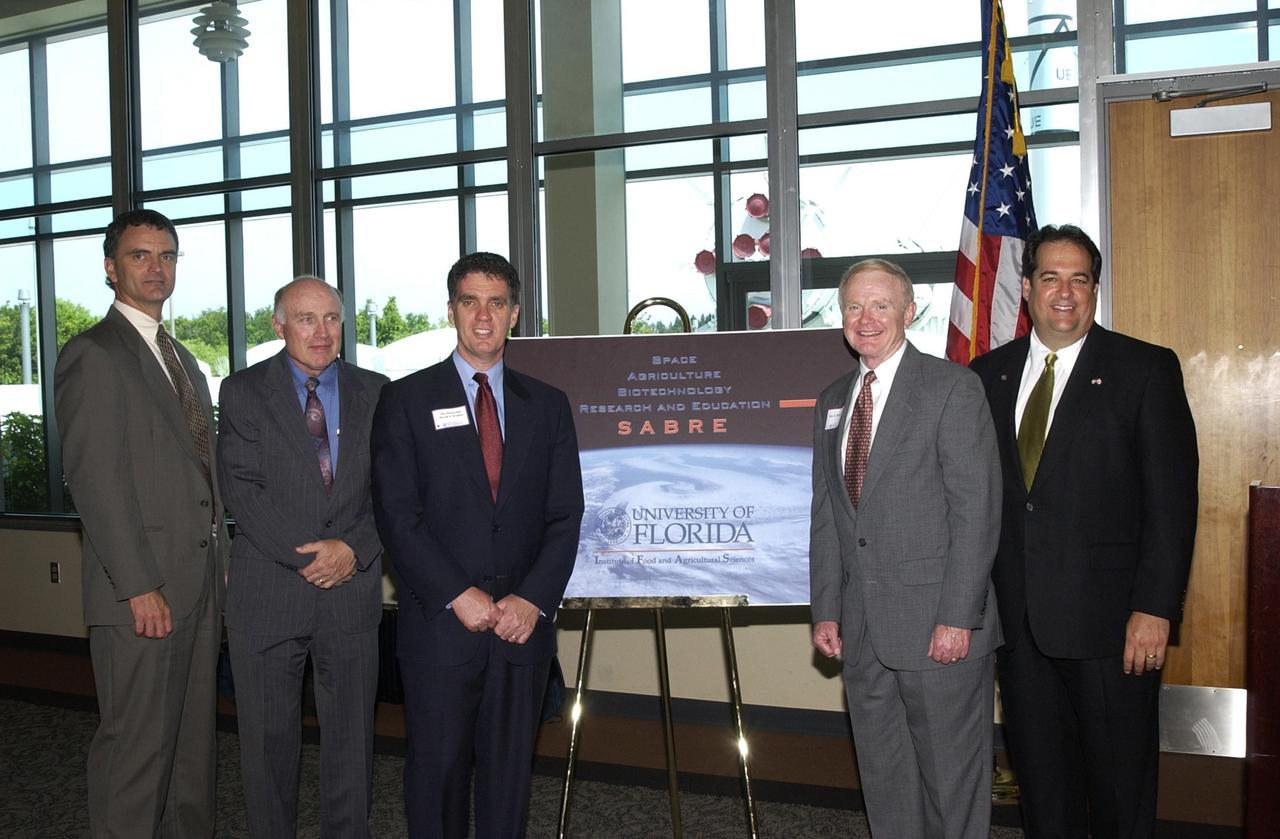
KENNEDY SPACE CENTER, FLA. -  Officials of the NASA-Kennedy Space Center and the state of Florida pose for a group portrait at a dedication and ribbon-cutting ceremony for the Space Life Sciences Lab at the new lab. From left are Capt. Winston Scott, executive director of the Florida Space Authority; Dr. Robert J. Ferl, director of Space Agriculture Biotechnology Research and Education (SABRE), University of Florida; Charlie Quincy, chief of the Biological Sciences Office, Kennedy Space Center; Jose Perez-Morales, NASA Project Manager for the Space Life Sciences Lab; Jim Kennedy, director of the Kennedy Space Center; The Honorable Toni Jennings, lieutenant governor of the state of Florida; Frank T. Brogan, president of the Florida Atlantic University; and Dr. Samuel Durrance, executive director of the Florida Space Research Institute.  Completed in August, the facility encompasses more than 100,000 square feet and was formerly known as the Space Experiment Research and Processing Laboratory or SERPL. The state, through the Florida Space Authority, built the research lab which is host to NASA, NASA’s Life Sciences Services contractor Dynamac Corp., Bionetics Corp., and researchers from the University of Florida.  Dynamac Corp. leases the facility.  The Florida Space Research Institute is responsible for gaining additional tenants from outside the NASA community.
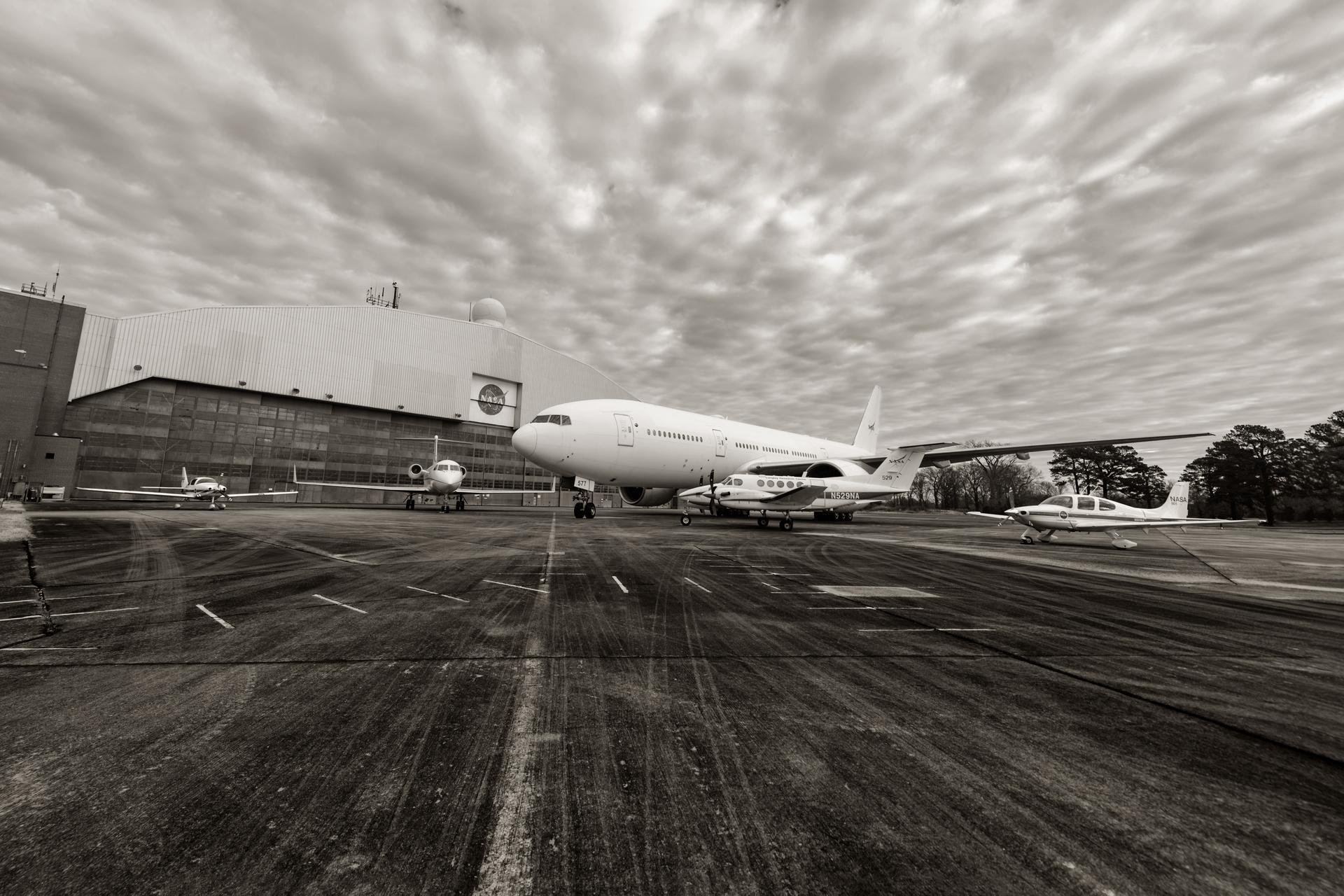
KENNEDY SPACE CENTER, FLA. - Officials of the NASA-Kennedy Space Center and the state of Florida pose for a group portrait at a dedication and ribbon-cutting ceremony for the Space Life Sciences Lab at the new lab. From left are Capt. Winston Scott, executive director of the Florida Space Authority; Dr. Robert J. Ferl, director of Space Agriculture Biotechnology Research and Education (SABRE), University of Florida; Charlie Quincy, chief of the Biological Sciences Office, Kennedy Space Center; Jose Perez-Morales, NASA Project Manager for the Space Life Sciences Lab; Jim Kennedy, director of the Kennedy Space Center; The Honorable Toni Jennings, lieutenant governor of the state of Florida; Frank T. Brogan, president of the Florida Atlantic University; and Dr. Samuel Durrance, executive director of the Florida Space Research Institute. Completed in August, the facility encompasses more than 100,000 square feet and was formerly known as the Space Experiment Research and Processing Laboratory or SERPL. The state, through the Florida Space Authority, built the research lab which is host to NASA, NASA’s Life Sciences Services contractor Dynamac Corp., Bionetics Corp., and researchers from the University of Florida. Dynamac Corp. leases the facility. The Florida Space Research Institute is responsible for gaining additional tenants from outside the NASA community.
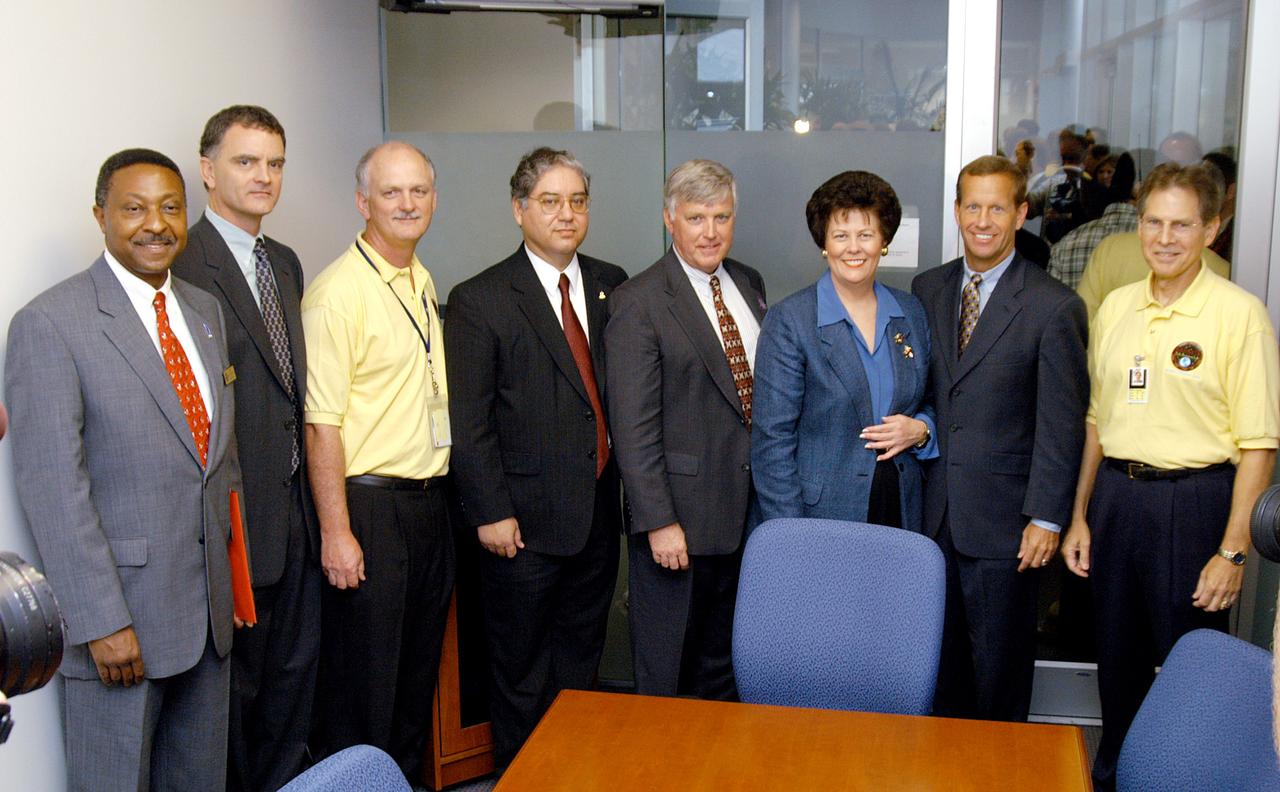
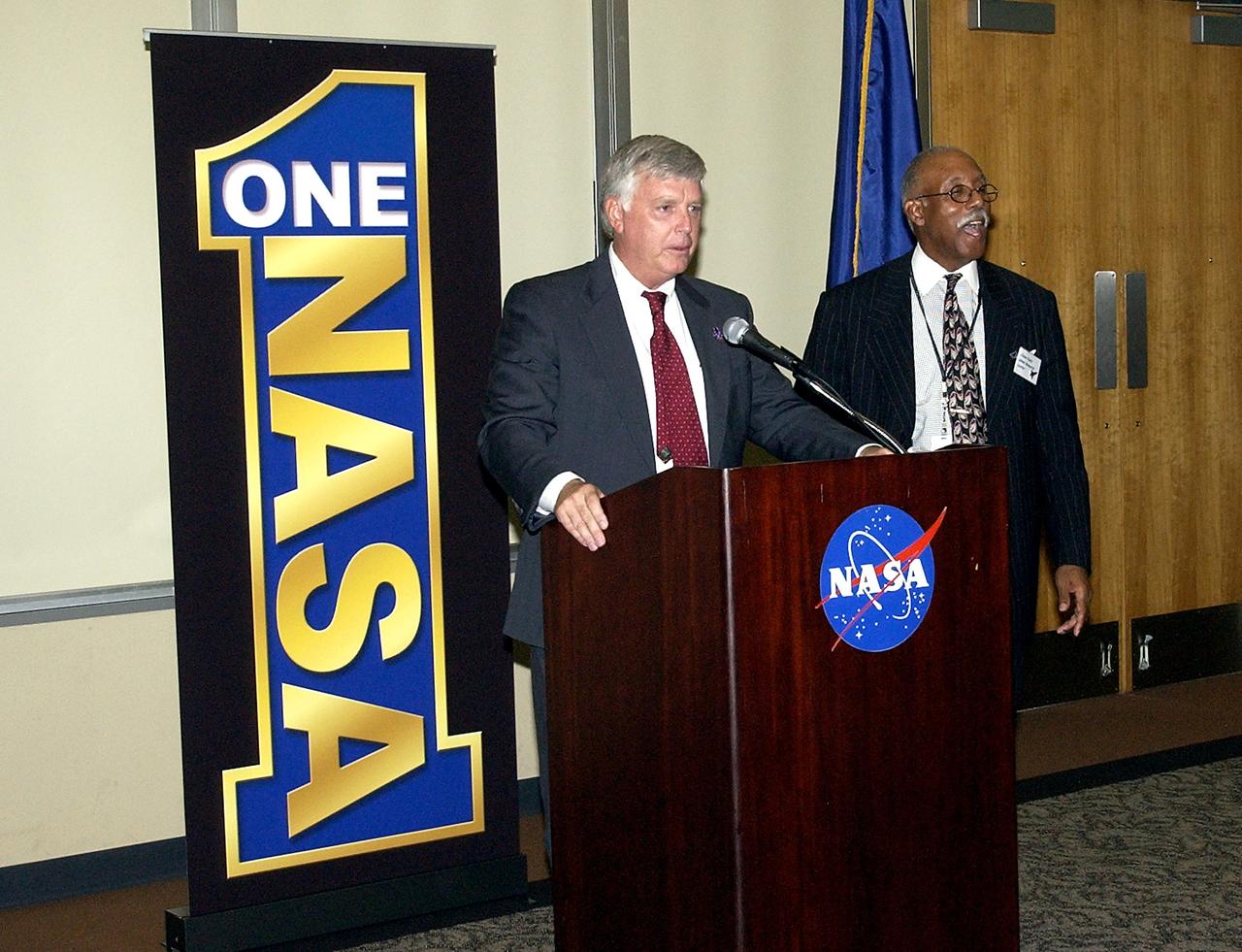
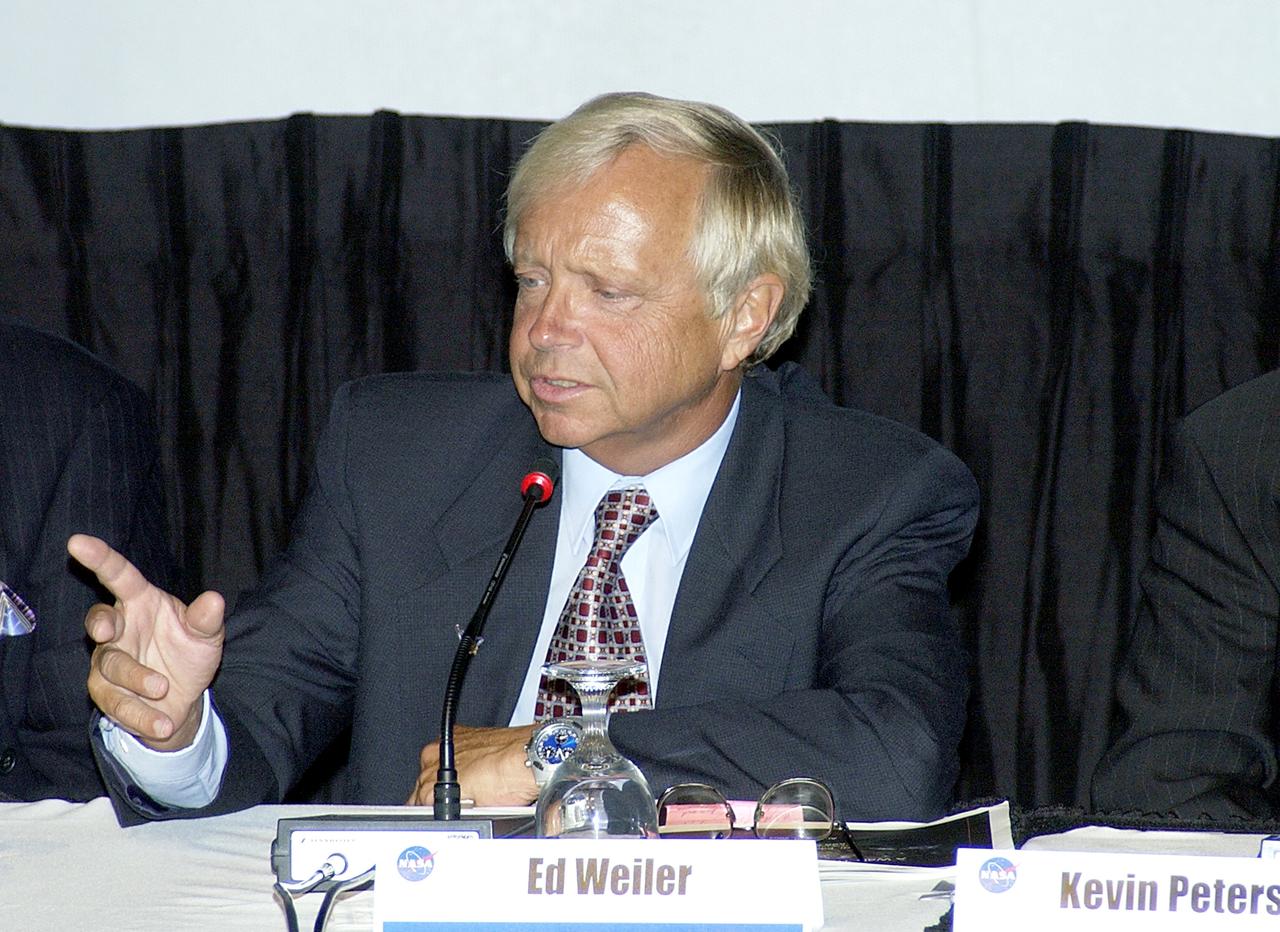
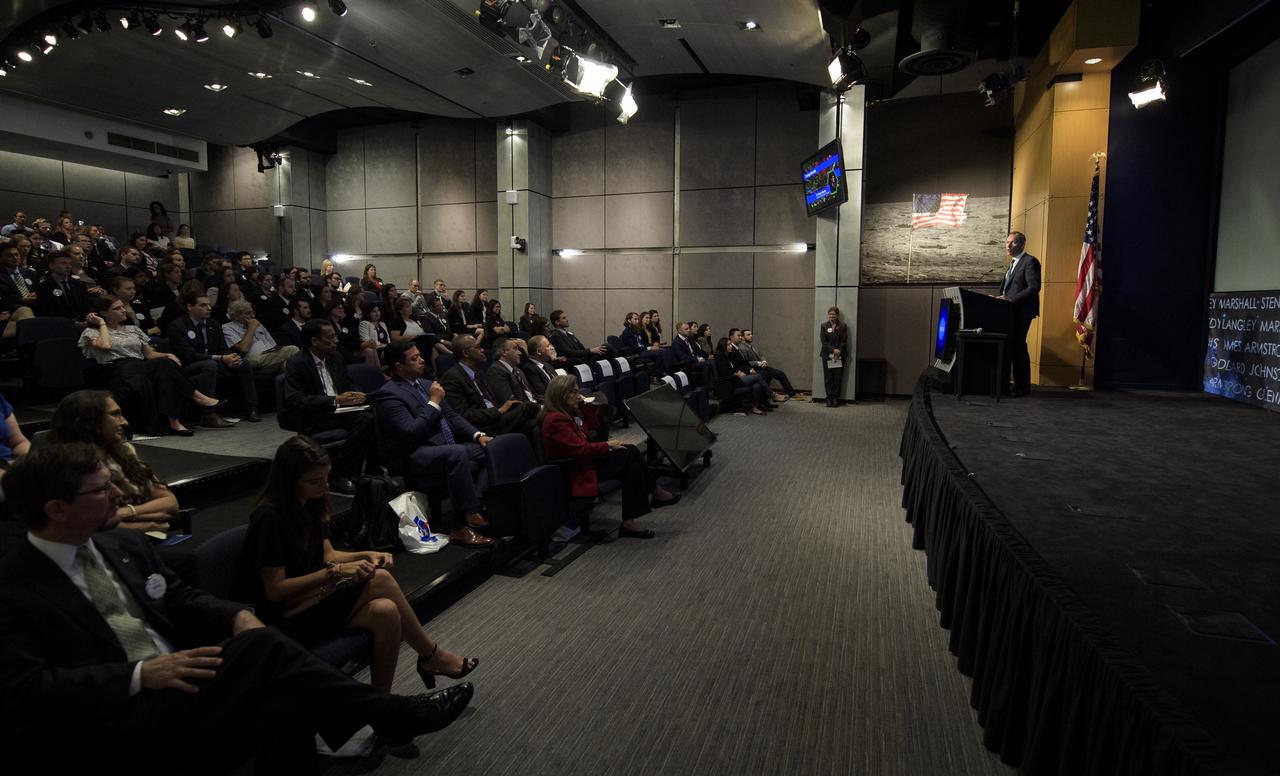
KENNEDY SPACE CENTER, FLA.  -  NASA leaders discuss the Agency’s One NASA initiative with selected employees at the KSC Visitor Complex IMAX Theater®.  From left are   KSC Director Jim Kennedy; James Jennings,  NASA’s associate deputy administrator for institutions and asset management; Ed Weiler, associate administrator for Space Science; Kevin Peterson, Dryden Flight Research Center director; incoming KSC Deputy Director Woodrow Whitlow;  and implementation team lead Johnny Stevenson.   Glenn Research Center Director Dr. Julian Earls gave a motivational speech during the luncheon held at the Visitor Complex Debus Conference Center.
KENNEDY SPACE CENTER, FLA. - NASA leaders discuss the Agency’s One NASA initiative with selected employees at the KSC Visitor Complex IMAX Theater®. From left are KSC Director Jim Kennedy; James Jennings, NASA’s associate deputy administrator for institutions and asset management; Ed Weiler, associate administrator for Space Science; Kevin Peterson, Dryden Flight Research Center director; incoming KSC Deputy Director Woodrow Whitlow; and implementation team lead Johnny Stevenson. Glenn Research Center Director Dr. Julian Earls gave a motivational speech during the luncheon held at the Visitor Complex Debus Conference Center.
KENNEDY SPACE CENTER, FLA.  -  KSC Director Jim Kennedy (left) and incoming KSC Deputy Director Woodrow Whitlow talk about One NASA during the rollout of the Agency initiative at KSC.  They were joined at the IMAX Theater® by other NASA leaders James Jennings,  NASA’s associate deputy administrator for institutions and asset management; Ed Weiler, associate administrator for Space Science; Kevin Peterson, Dryden Flight Research Center director; and implementation team lead Johnny Stevenson to explain how their respective centers contribute to One NASA.  Glenn Research Center Director Dr. Julian Earls gave a motivational speech during the luncheon held at the Visitor Complex Debus Conference Center.
KENNEDY SPACE CENTER, FLA. - KSC Director Jim Kennedy (left) and incoming KSC Deputy Director Woodrow Whitlow talk about One NASA during the rollout of the Agency initiative at KSC. They were joined at the IMAX Theater® by other NASA leaders James Jennings, NASA’s associate deputy administrator for institutions and asset management; Ed Weiler, associate administrator for Space Science; Kevin Peterson, Dryden Flight Research Center director; and implementation team lead Johnny Stevenson to explain how their respective centers contribute to One NASA. Glenn Research Center Director Dr. Julian Earls gave a motivational speech during the luncheon held at the Visitor Complex Debus Conference Center.
KENNEDY SPACE CENTER, FLA.  -  Dryden Flight Research Center Director Kevin Peterson talks about One NASA during the rollout of the Agency initiative at KSC.  The event was held at the IMAX Theater® where NASA leaders discussed One NASA with selected employees.  Explaining how their respective centers contribute to One NASA, along with Peterson, were KSC Director Jim Kennedy, James Jennings,  NASA’s associate deputy administrator for institutions and asset management; Ed Weiler, associate administrator for Space Science; Kevin Peterson, Dryden Flight Research Center director; incoming KSC Deputy Director Woodrow Whitlow; and implementation team lead Johnny Stevenson.   Glenn Research Center Director Dr. Julian Earls gave a motivational speech during the luncheon held at the Visitor Complex Debus Conference Center.
KENNEDY SPACE CENTER, FLA. - Dryden Flight Research Center Director Kevin Peterson talks about One NASA during the rollout of the Agency initiative at KSC. The event was held at the IMAX Theater® where NASA leaders discussed One NASA with selected employees. Explaining how their respective centers contribute to One NASA, along with Peterson, were KSC Director Jim Kennedy, James Jennings, NASA’s associate deputy administrator for institutions and asset management; Ed Weiler, associate administrator for Space Science; Kevin Peterson, Dryden Flight Research Center director; incoming KSC Deputy Director Woodrow Whitlow; and implementation team lead Johnny Stevenson. Glenn Research Center Director Dr. Julian Earls gave a motivational speech during the luncheon held at the Visitor Complex Debus Conference Center.
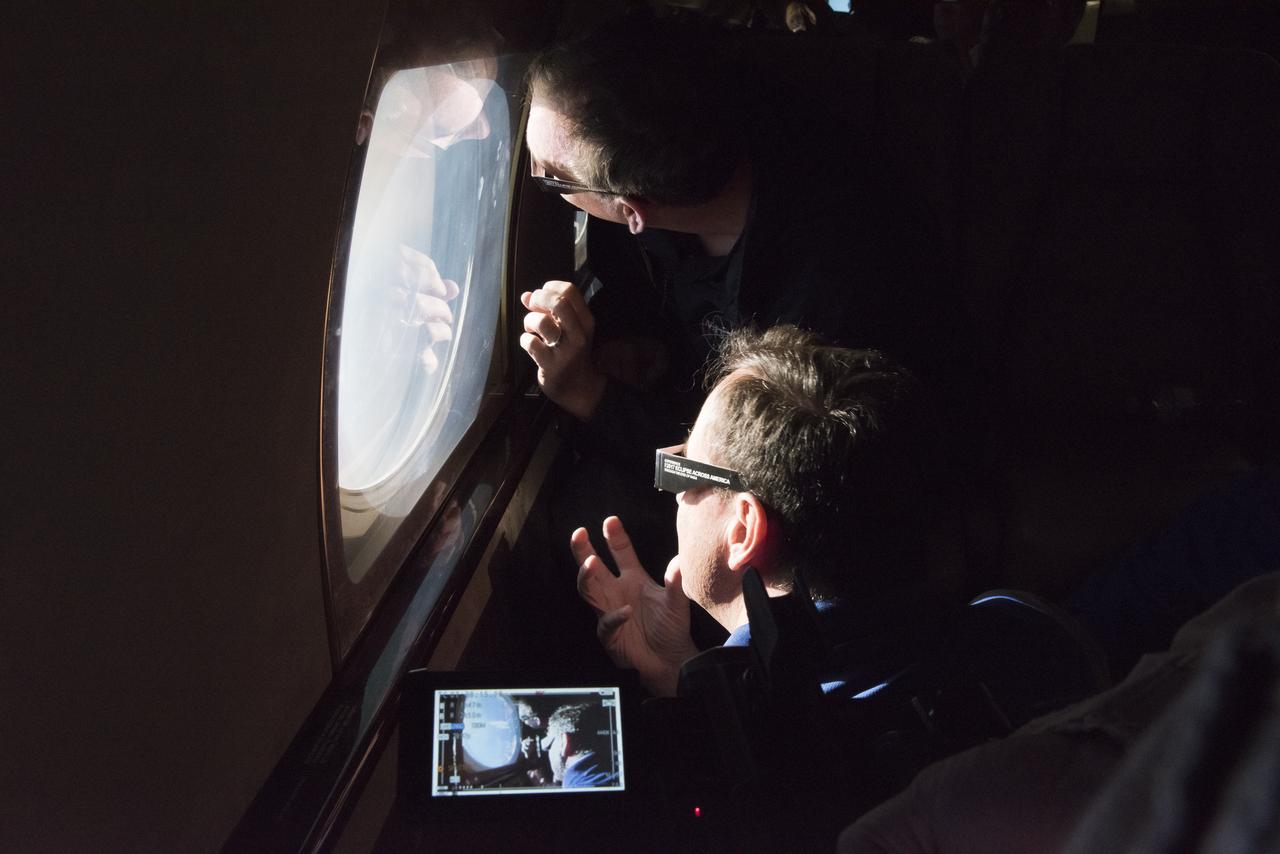
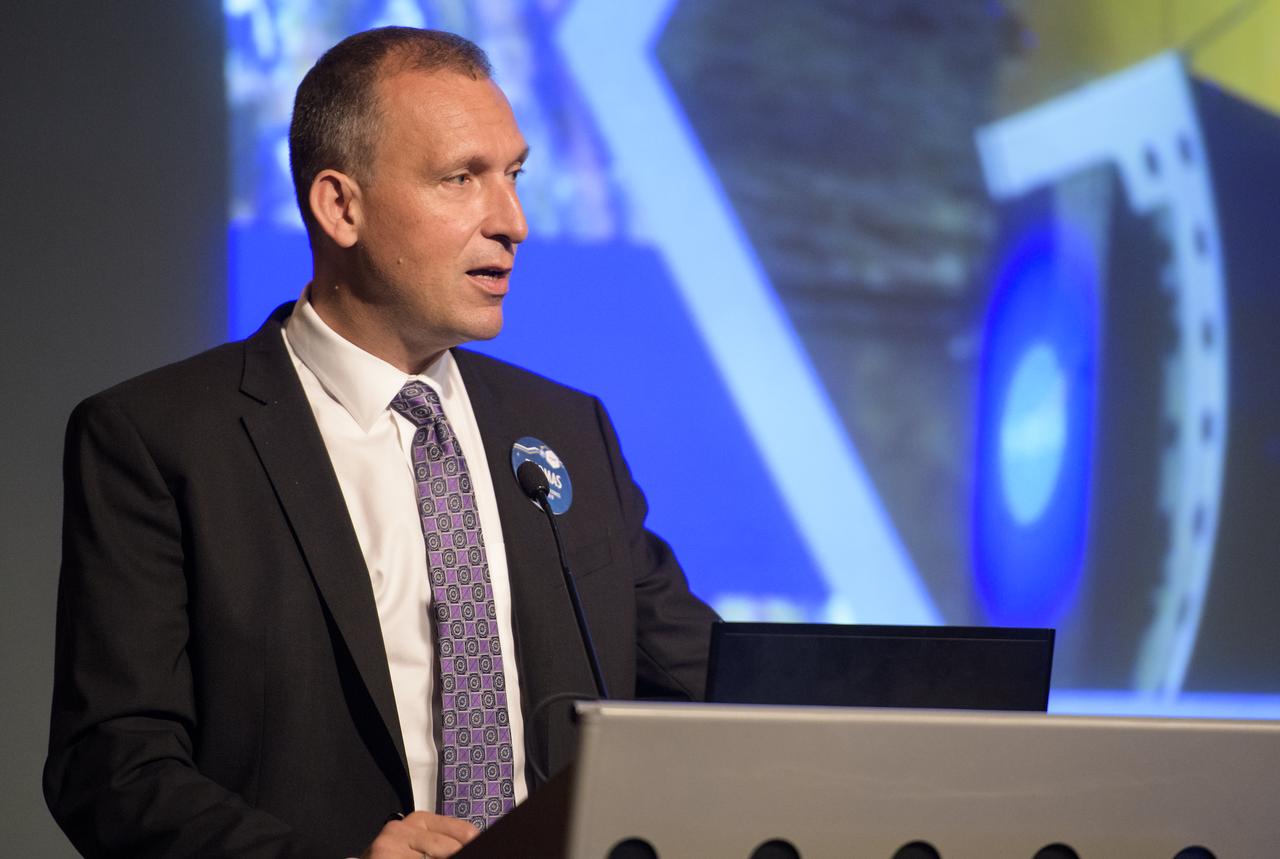
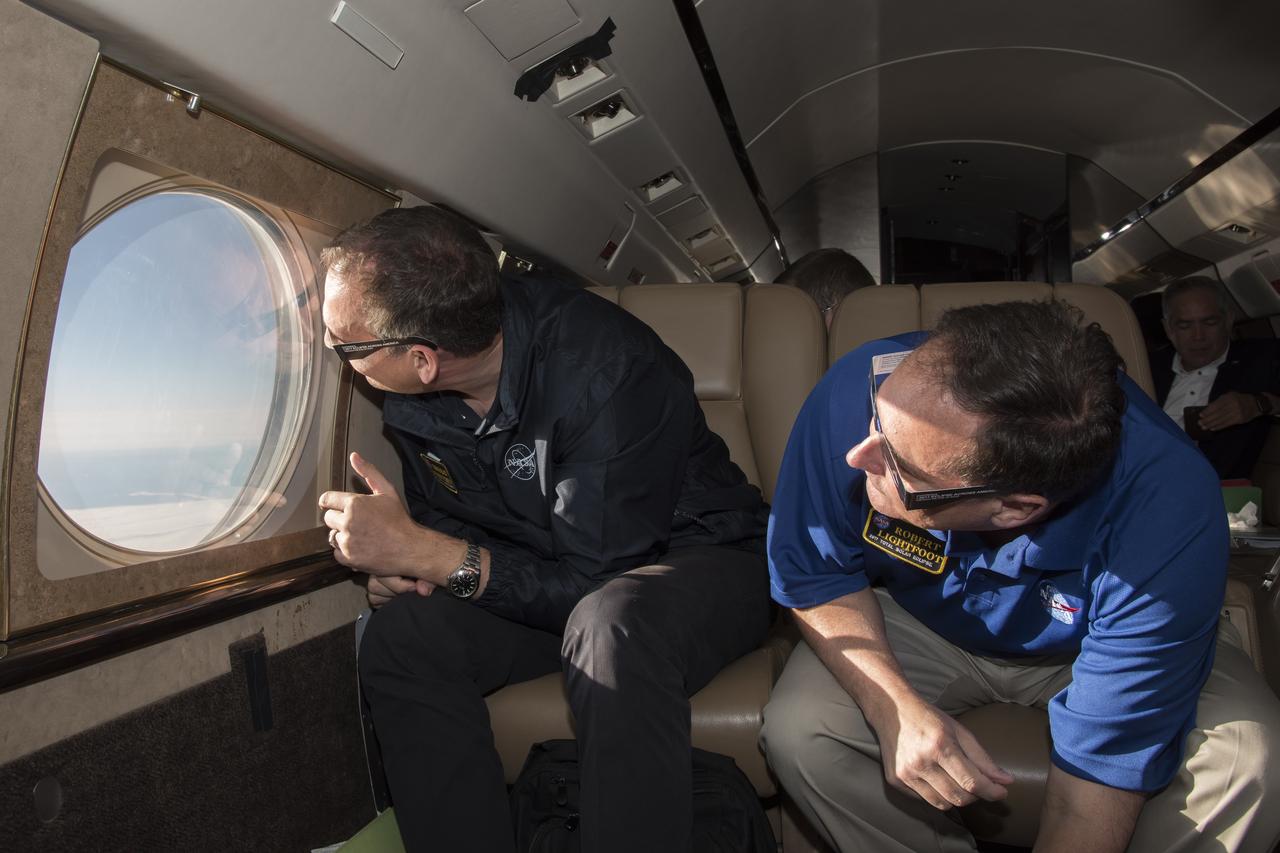
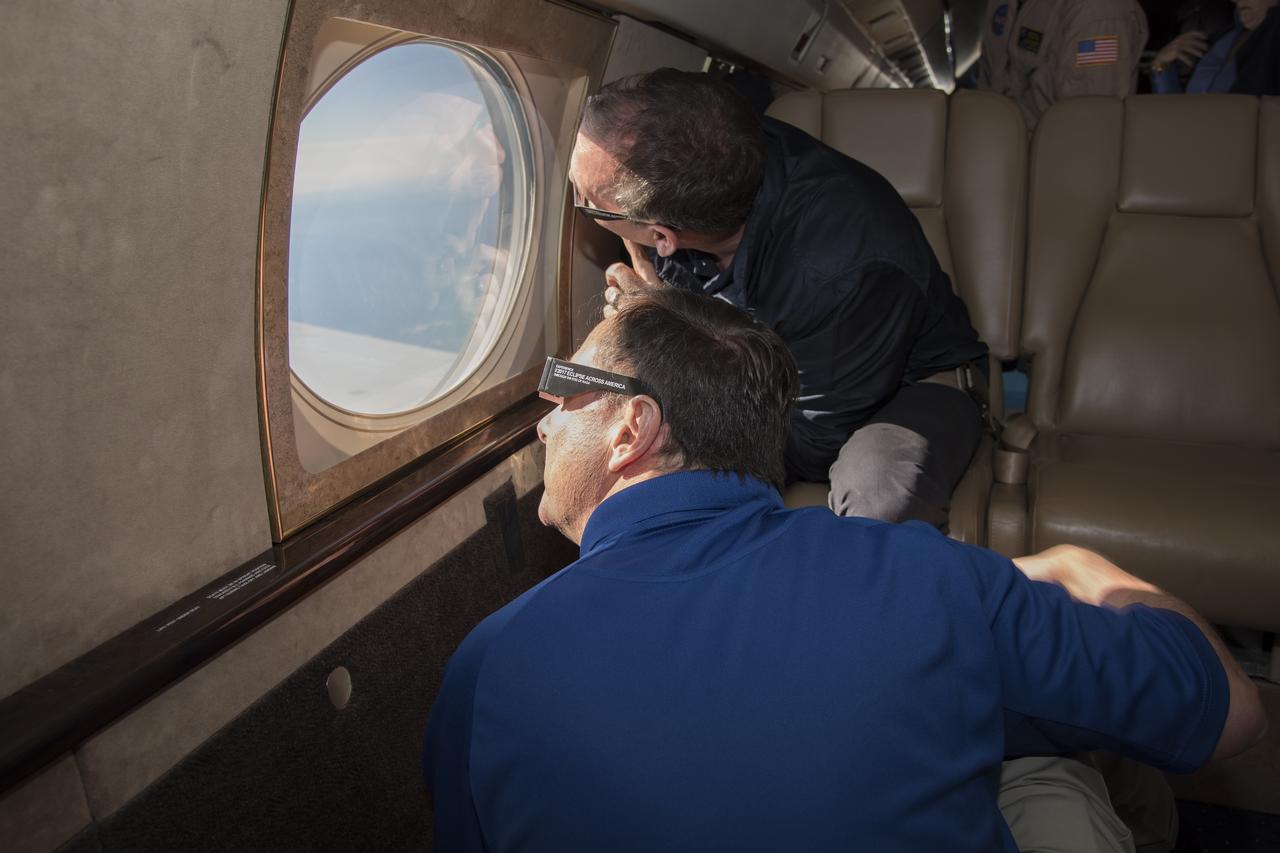
Robert Lightfoot, acting NASA administrator and Thomas Zurbuchen NASA AA for the science mission directorate view a partial eclipse solar eclipse Monday, August 21, 2017, from onboard a NASA Armstrong Flight Research Center’s Gulfstream III 35,000 feet above the Oregon Coast. A total solar eclipse swept across a narrow portion of the contiguous United States from Lincoln Beach, Oregon to Charleston, South Carolina. Photo Credit: (NASA/Carla Thomas)
2017 Total Solar Eclipse
Robert Lightfoot, acting NASA administrator and Thomas Zurbuchen NASA AA for the science mission directorate view a partial eclipse solar eclipse Monday, August 21, 2017, from onboard a NASA Armstrong Flight Research Center’s Gulfstream III 35,000 feet above the Oregon Coast. A total solar eclipse swept across a narrow portion of the contiguous United States from Lincoln Beach, Oregon to Charleston, South Carolina. Photo Credit: (NASA/Carla Thomas)
2017 Total Solar Eclipse
Robert Lightfoot, acting NASA administrator and Thomas Zurbuchen NASA AA for the science mission directorate view a partial eclipse solar eclipse Monday, August 21, 2017, from onboard a NASA Armstrong Flight Research Center’s Gulfstream III 35,000 feet above the Oregon Coast. A total solar eclipse swept across a narrow portion of the contiguous United States from Lincoln Beach, Oregon to Charleston, South Carolina. Photo Credit: (NASA/Carla Thomas)
2017 Total Solar Eclipse
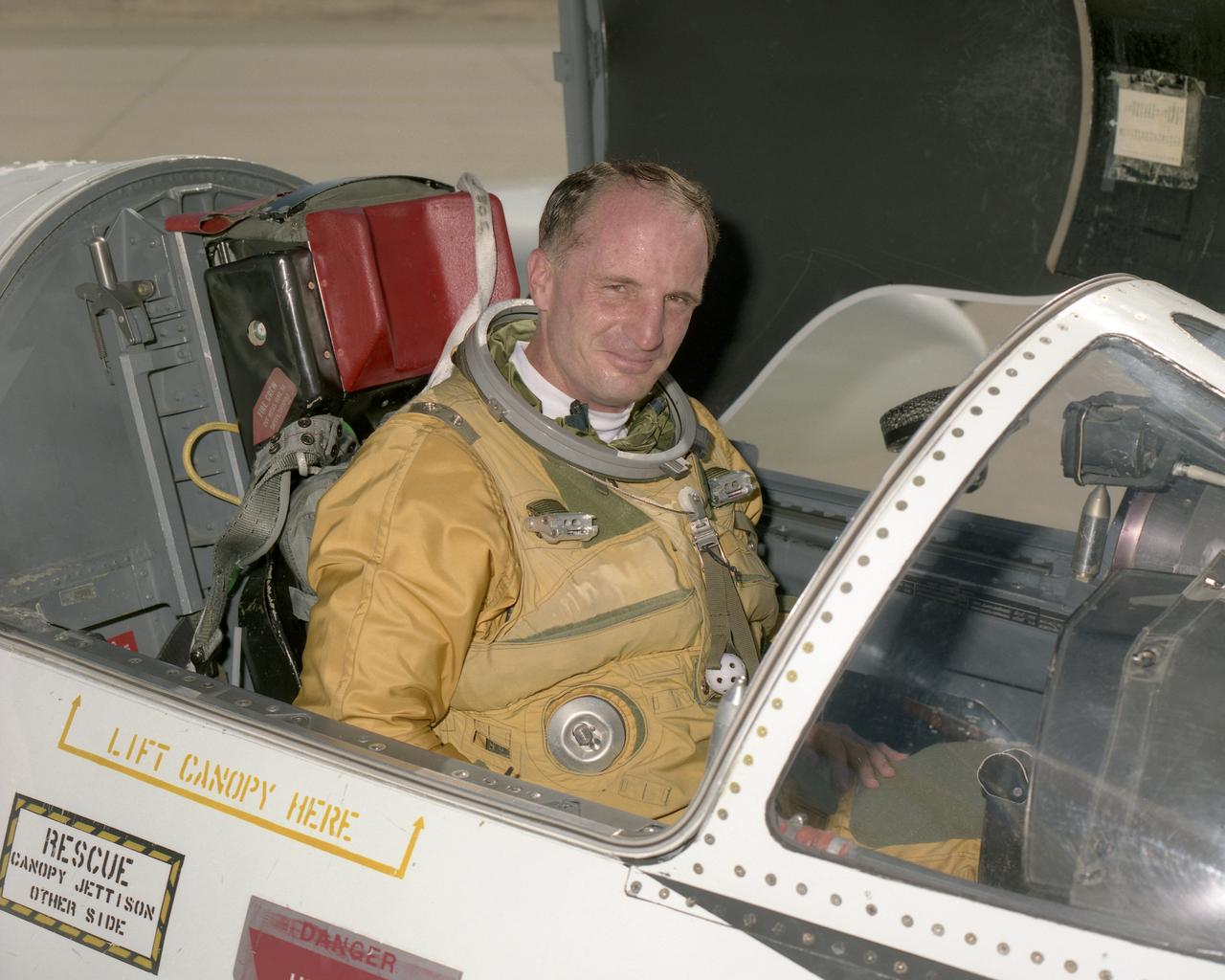
David A. Wright is associate director for Center Operations at the NASA Dryden Flight Research Center, Edwards, Calif. He was formerly director of Flight Operations. He is also a research pilot, flying NASA's ER-2 and T-38. The ER-2s are civilian variants of the military U-2S reconnaissance aircraft and carry scientific instruments to study the Earth during worldwide deployments. Wright has more than 4,500 hours in six different aircraft. He held the position of deputy director of the Airborne Science Program at Dryden from 2002 until 2004.  Wright came to Dryden after retiring from the U.S. Air Force as a lieutenant colonel. His final assignment was to the Joint Staff J3, Directorate of Operations at the Pentagon from November 1996 until August 1999. Prior to the Pentagon assignment, he served as commander of the 1st Reconnaissance Squadron at Beale Air Force Base near Marysville, Calif., the unit responsible for training all U-2 pilots.  He was the operations officer for one the largest U-2 operations in history, flying combat missions against Iraq and managing an unprecedented U-2 flying schedule during the 1991 Desert Storm conflict. He was selected for the Air Force U-2 program in 1987 following duty as an aircraft commander in the E-3A AWACS (Airborne Warning and Control System) aircraft. Wright was a T-38 instructor for three years at Reese Air Force Base, Lubbock, Texas, following completion of pilot training in 1978.  He graduated from the U.S. Air Force Academy in 1977 with a Bachelor of Science in mathematics and computer science. Wright earned a Master of Arts in Adult Education from Troy State University, Montgomery, Ala., in 1987, and a Master of Science in National Security and Strategic Studies from the Naval War College, Newport, R.I., in 1995.
David A. Wright in ER-2
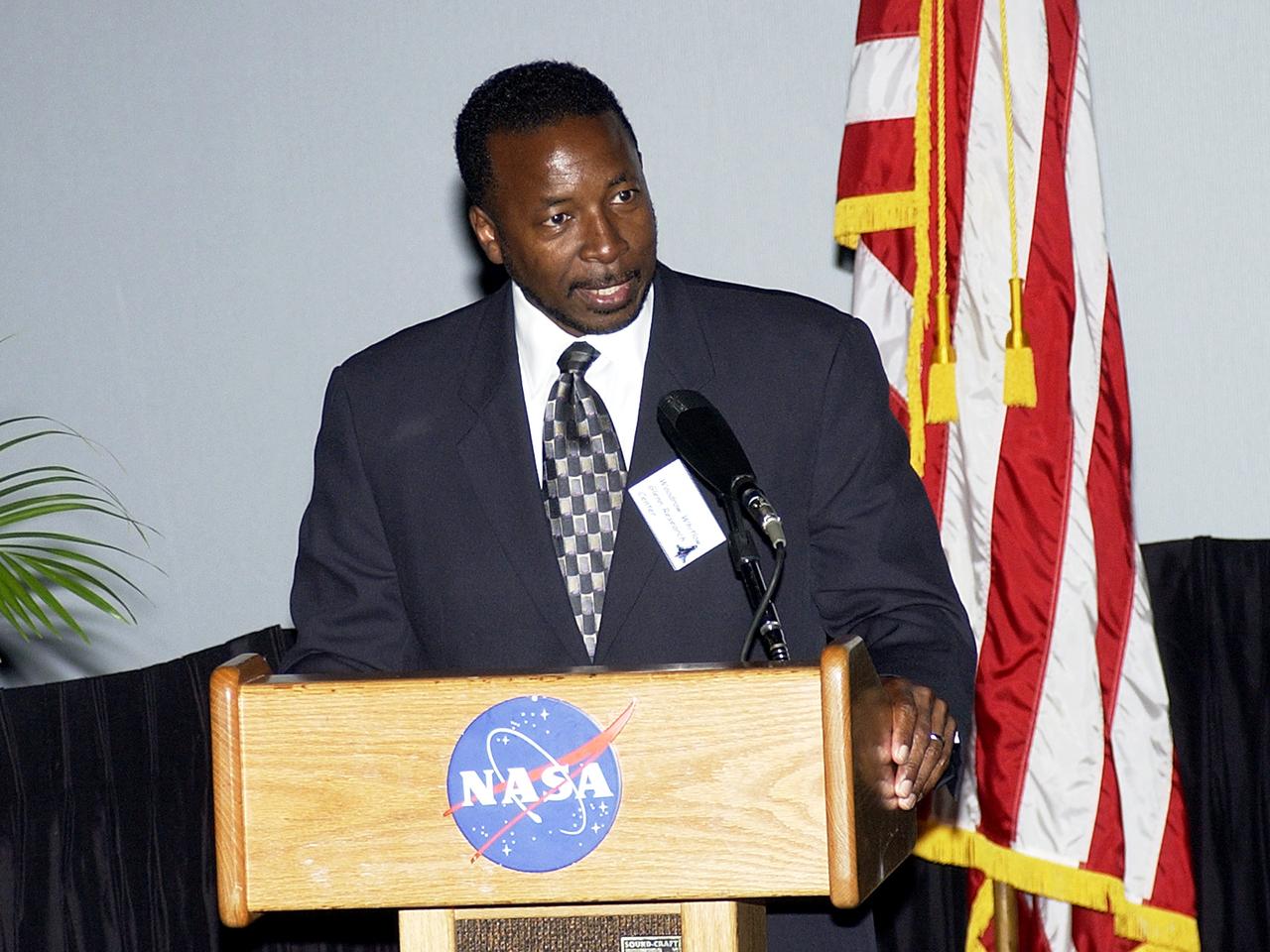
KENNEDY SPACE CENTER, FLA.  -  KSC’s incoming  Deputy Director Woodrow Whitlow speaks to employees and guests during the rollout at KSC of the Agency initiative One NASA .   The event was held at the IMAX Theater® where NASA leaders discussed One NASA with selected employees.  Explaining how their respective centers contribute to One NASA, along with Whitlow, were KSC Director Jim Kennedy; James Jennings,  NASA’s associate deputy administrator for institutions and asset management; Ed Weiler, associate administrator for Space Science; Kevin Peterson, Dryden Flight Research Center director; and implementation team lead Johnny Stevenson.   Glenn Research Center Director Dr. Julian Earls gave a motivational speech during the luncheon held at the Visitor Complex Debus Conference Center.
KENNEDY SPACE CENTER, FLA. - KSC’s incoming Deputy Director Woodrow Whitlow speaks to employees and guests during the rollout at KSC of the Agency initiative One NASA . The event was held at the IMAX Theater® where NASA leaders discussed One NASA with selected employees. Explaining how their respective centers contribute to One NASA, along with Whitlow, were KSC Director Jim Kennedy; James Jennings, NASA’s associate deputy administrator for institutions and asset management; Ed Weiler, associate administrator for Space Science; Kevin Peterson, Dryden Flight Research Center director; and implementation team lead Johnny Stevenson. Glenn Research Center Director Dr. Julian Earls gave a motivational speech during the luncheon held at the Visitor Complex Debus Conference Center.
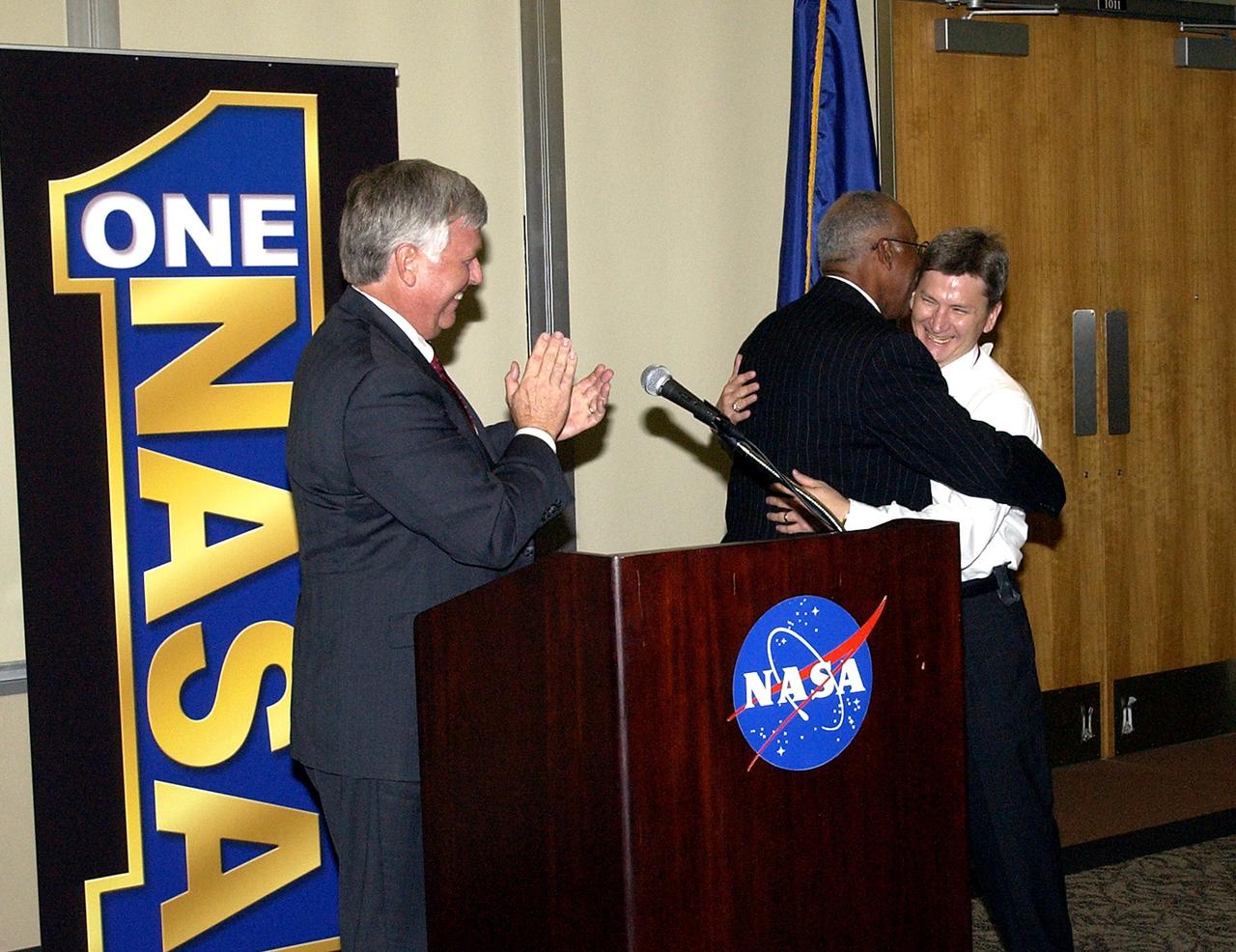
KENNEDY SPACE CENTER, FLA.  -   At the rollout of the One NASA initiative at KSC, Glenn Research Center Director Dr. Julian Earls embraces implementation team lead Johnny Stevenson while KSC Director Jim Kennedy (left) applauds.  Earls gave a motivational speech during the luncheon held at the Visitor Complex Debus Conference Center.  The event was held at the IMAX Theater® where NASA leaders discussed One NASA with selected employees.  Explaining how their respective centers contribute to One NASA, along with Kennedy and Earls, were James Jennings,  NASA’s associate deputy administrator for institutions and asset management; Ed Weiler, associate administrator for Space Science; Kevin Peterson, Dryden Flight Research Center director; incoming KSC Deputy Director Woodrow Whitlow; and implementation team lead Johnny Stevenson.
KENNEDY SPACE CENTER, FLA. - At the rollout of the One NASA initiative at KSC, Glenn Research Center Director Dr. Julian Earls embraces implementation team lead Johnny Stevenson while KSC Director Jim Kennedy (left) applauds. Earls gave a motivational speech during the luncheon held at the Visitor Complex Debus Conference Center. The event was held at the IMAX Theater® where NASA leaders discussed One NASA with selected employees. Explaining how their respective centers contribute to One NASA, along with Kennedy and Earls, were James Jennings, NASA’s associate deputy administrator for institutions and asset management; Ed Weiler, associate administrator for Space Science; Kevin Peterson, Dryden Flight Research Center director; incoming KSC Deputy Director Woodrow Whitlow; and implementation team lead Johnny Stevenson.
KENNEDY SPACE CENTER, FLA.  -   KSC Director Jim Kennedy and Glenn Research Center Director Dr. Julian Earls share the stage during the rollout of the One NASA initiative at KSC.  Earls gave a motivational speech during the luncheon held at the Visitor Complex Debus Conference Center.  The event was held at the IMAX Theater® where NASA leaders discussed One NASA with selected employees.   Explaining how their respective centers contribute to One NASA, along with Kennedy and Earls, were James Jennings,  NASA’s associate deputy administrator for institutions and asset management; Ed Weiler, associate administrator for Space Science; Kevin Peterson, Dryden Flight Research Center director; incoming KSC Deputy Director Woodrow Whitlow; and implementation team lead Johnny Stevenson.
KENNEDY SPACE CENTER, FLA. - KSC Director Jim Kennedy and Glenn Research Center Director Dr. Julian Earls share the stage during the rollout of the One NASA initiative at KSC. Earls gave a motivational speech during the luncheon held at the Visitor Complex Debus Conference Center. The event was held at the IMAX Theater® where NASA leaders discussed One NASA with selected employees. Explaining how their respective centers contribute to One NASA, along with Kennedy and Earls, were James Jennings, NASA’s associate deputy administrator for institutions and asset management; Ed Weiler, associate administrator for Space Science; Kevin Peterson, Dryden Flight Research Center director; incoming KSC Deputy Director Woodrow Whitlow; and implementation team lead Johnny Stevenson.
KENNEDY SPACE CENTER, FLA.  -  NASA’s Ed Weiler, associate administrator for Space Science, speaks to employees and guests during the rollout at KSC of the Agency initiative One NASA .   The event was held at the IMAX Theater®.  Explaining how their respective centers contribute to One NASA, along with Weiler, were KSC Director Jim Kennedy; James Jennings,  NASA’s associate deputy administrator for institutions and asset management; Kevin Peterson, Dryden Flight Research Center director;  incoming KSC Deputy Director Woodrow Whitlow; and implementation team lead Johnny Stevenson.   Glenn Research Center Director Dr. Julian Earls gave a motivational speech during the luncheon held at the Visitor Complex Debus Conference Center.
KENNEDY SPACE CENTER, FLA. - NASA’s Ed Weiler, associate administrator for Space Science, speaks to employees and guests during the rollout at KSC of the Agency initiative One NASA . The event was held at the IMAX Theater®. Explaining how their respective centers contribute to One NASA, along with Weiler, were KSC Director Jim Kennedy; James Jennings, NASA’s associate deputy administrator for institutions and asset management; Kevin Peterson, Dryden Flight Research Center director; incoming KSC Deputy Director Woodrow Whitlow; and implementation team lead Johnny Stevenson. Glenn Research Center Director Dr. Julian Earls gave a motivational speech during the luncheon held at the Visitor Complex Debus Conference Center.
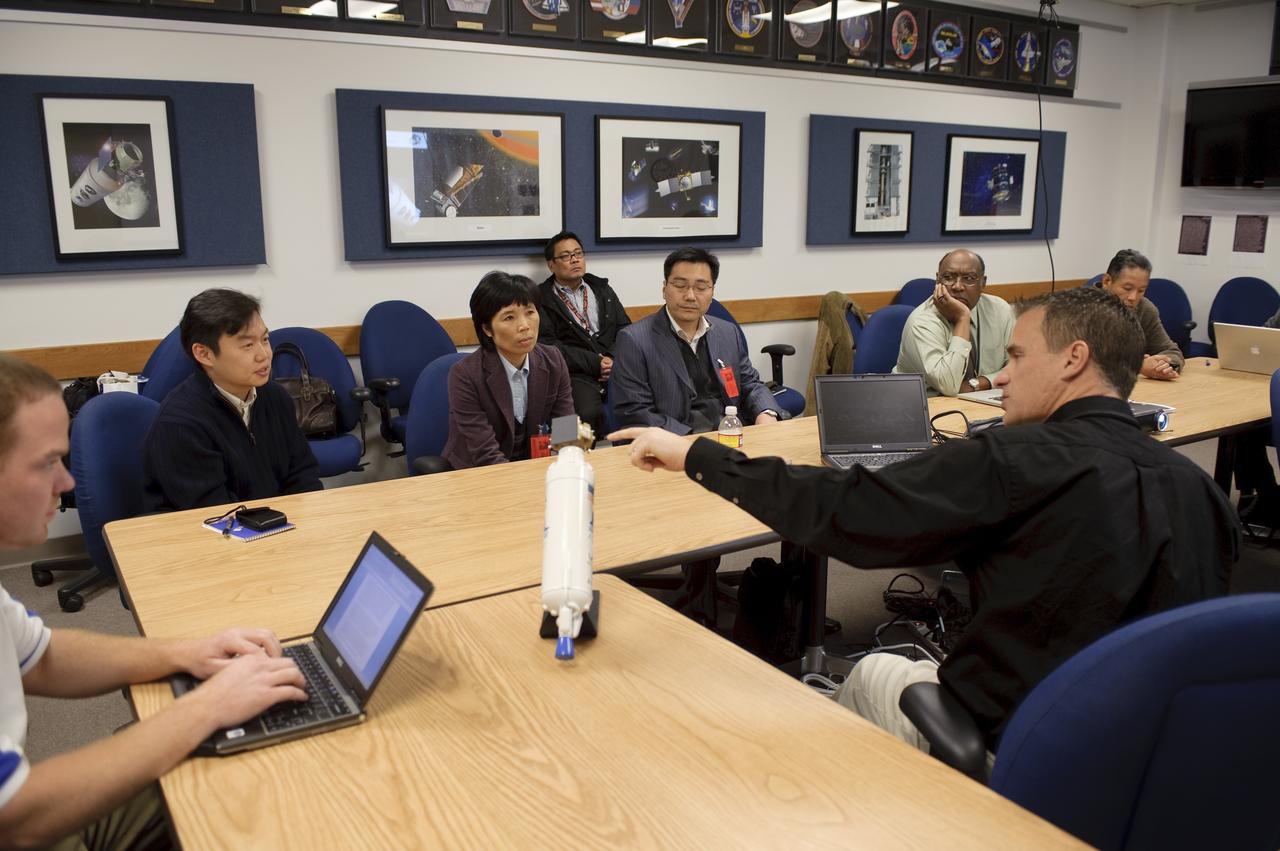
Korean High Level Delegation Visit Ames Certer Director and various Senior staff: Dan Andrews give presentation about LCROSS/LRO to Seorium Lee, Senior Researcher, International Relations Korea Aerospace Research Institute, Soon-Duk Bae, Deputy Director, Big Science Policy Division, Ministry of Educaiton, Science Technology, Young-Mok Hyun, Deputy Director, Space Development Division, Ministry of Educaiton, Science Technology, Seorium Lee, Senior Researcher, International Relations Korea Aerospace Research Institute.
ARC-2009-ACD09-0261-013
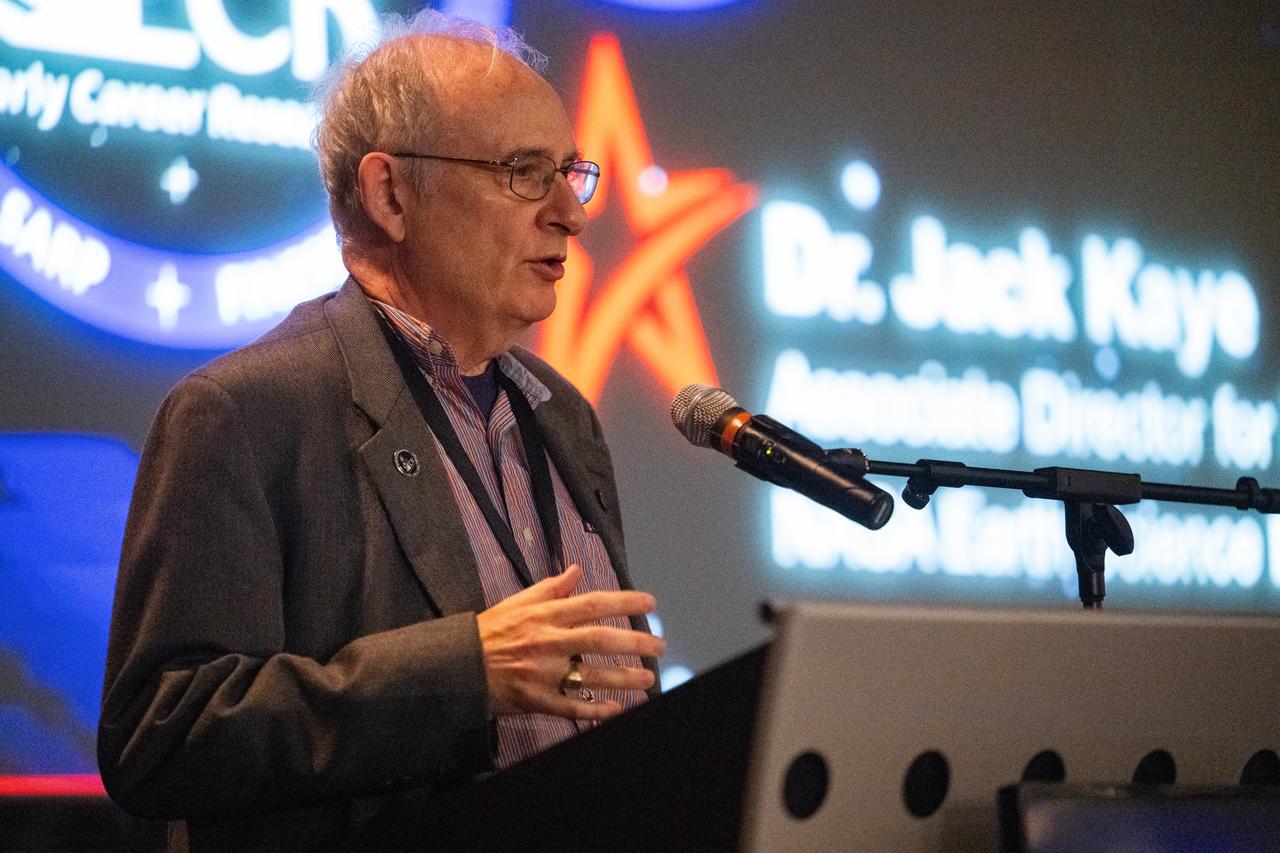
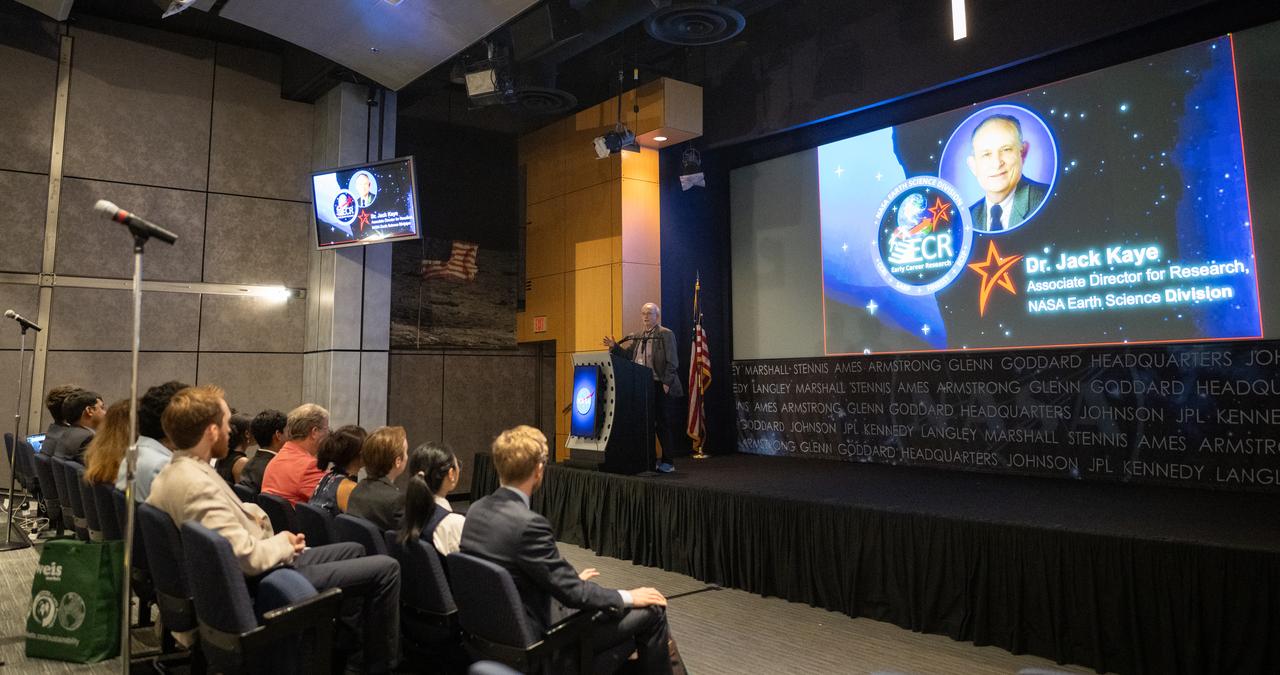
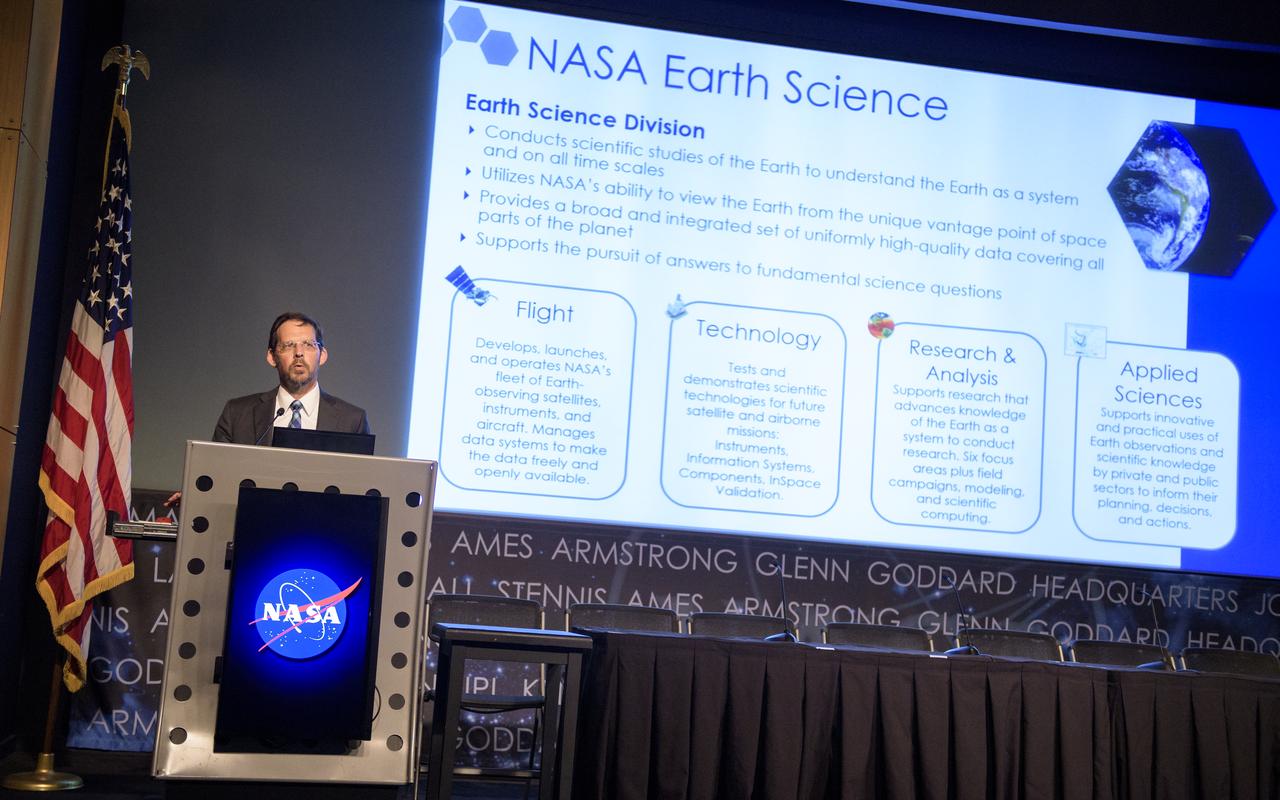
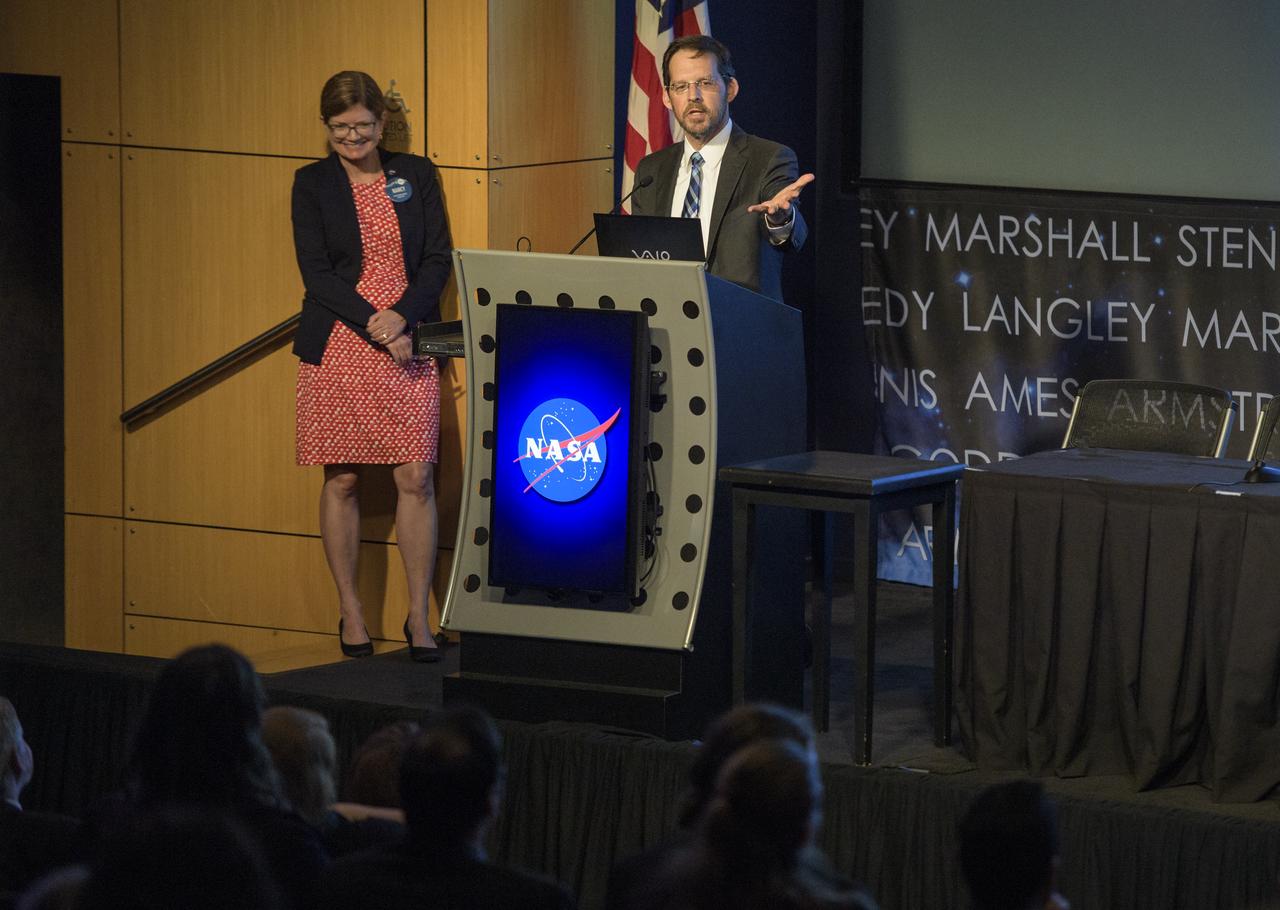
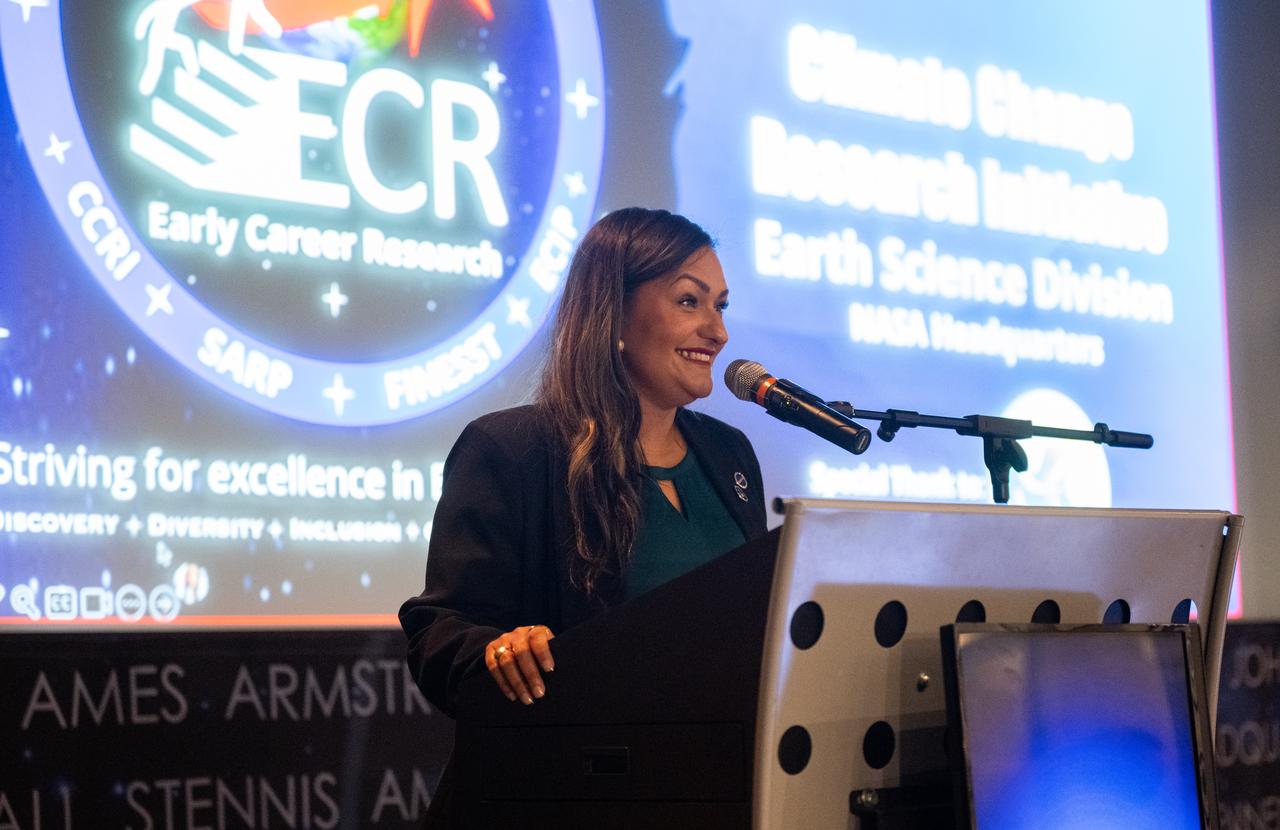
Jack Kaye, associate director for research in the Earth Science Division of NASA’s Science Mission Directorate, speaks with the Climate Change Research Initiative (CCRI) cohort, Wednesday, Aug. 7, 2024, at the Mary W. Jackson NASA Headquarters building in Washington, DC. The Earth Science Division’s Early Career Research Program’s Climate Change Research Initiative (CCRI) is a year-long STEM engagement and experiential learning opportunity for educators and students from high school to graduate level. Photo Credit: (NASA/Joel Kowsky)
NASA Early Career Research Program - Climate Change Research Ini
Jack Kaye, associate director for research in the Earth Science Division of NASA’s Science Mission Directorate, speaks with the Climate Change Research Initiative (CCRI) cohort, Wednesday, Aug. 7, 2024, at the Mary W. Jackson NASA Headquarters building in Washington, DC. The Earth Science Division’s Early Career Research Program’s Climate Change Research Initiative (CCRI) is a year-long STEM engagement and experiential learning opportunity for educators and students from high school to graduate level. Photo Credit: (NASA/Joel Kowsky)
NASA Early Career Research Program - Climate Change Research Ini
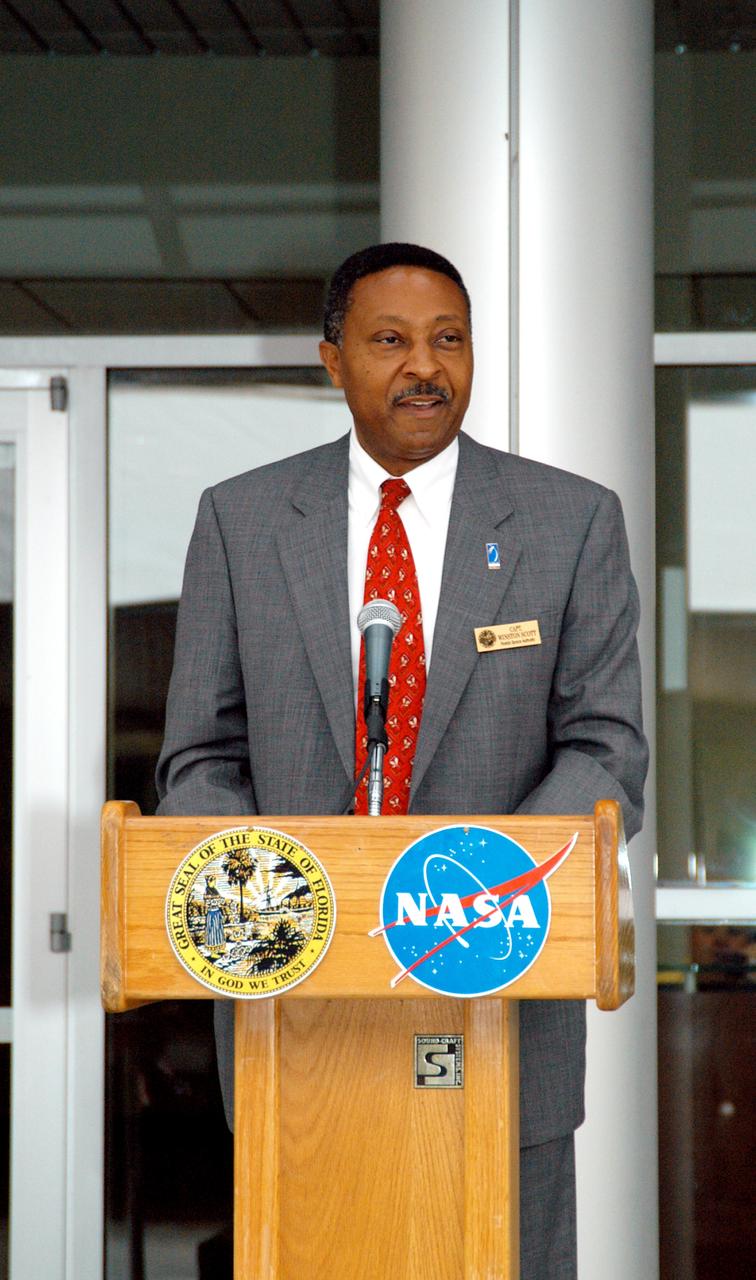
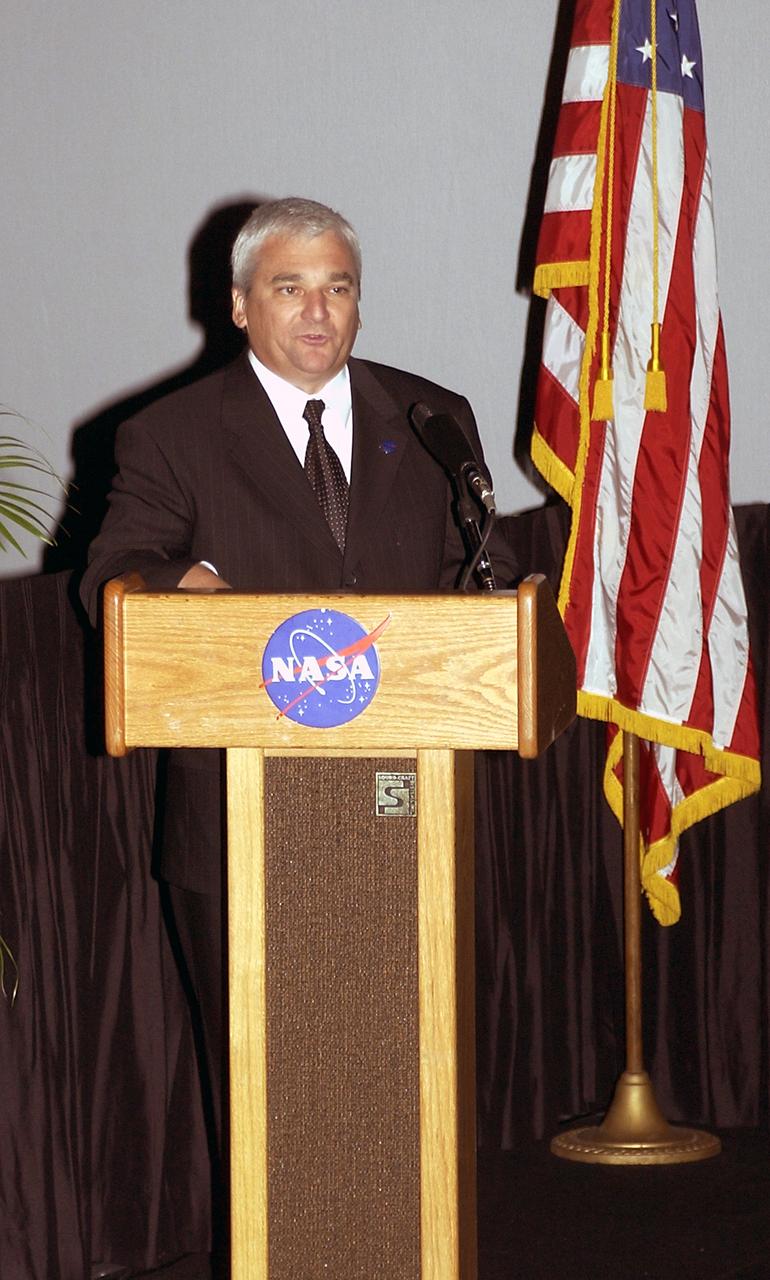
KENNEDY SPACE CENTER, FLA. -  Capt. Winston Scott, executive director of the Florida Space Authority, speaks at a dedication and ribbon-cutting ceremony for the Space Life Sciences Lab hosted by NASA-Kennedy Space Center and the state of Florida at the new lab. Completed in August, the facility encompasses more than 100,000 square feet and was formerly known as the Space Experiment Research and Processing Laboratory or SERPL. The state, through the Florida Space Authority, built the research lab which is host to NASA, NASA’s Life Sciences Services contractor Dynamac Corp., Bionetics Corp., and researchers from the University of Florida.  Dynamac Corp. leases the facility.  The Florida Space Research Institute is responsible for gaining additional tenants from outside the NASA community.
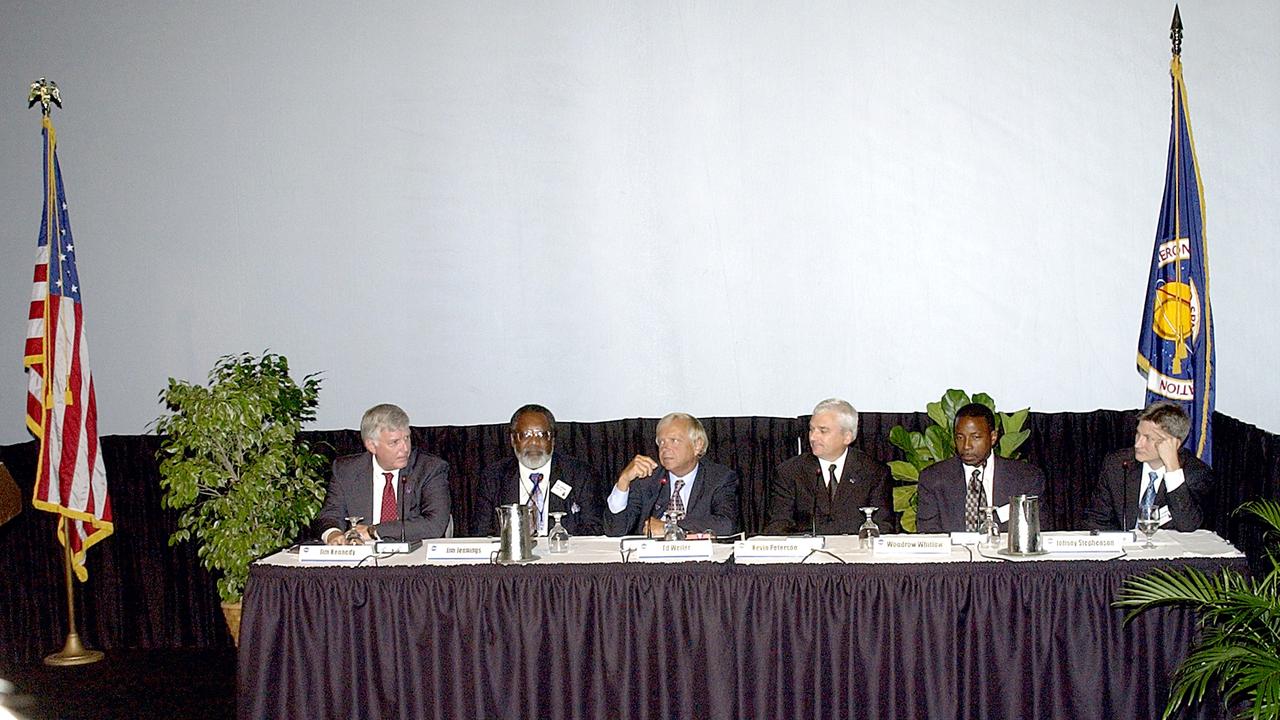
KENNEDY SPACE CENTER, FLA. - Capt. Winston Scott, executive director of the Florida Space Authority, speaks at a dedication and ribbon-cutting ceremony for the Space Life Sciences Lab hosted by NASA-Kennedy Space Center and the state of Florida at the new lab. Completed in August, the facility encompasses more than 100,000 square feet and was formerly known as the Space Experiment Research and Processing Laboratory or SERPL. The state, through the Florida Space Authority, built the research lab which is host to NASA, NASA’s Life Sciences Services contractor Dynamac Corp., Bionetics Corp., and researchers from the University of Florida. Dynamac Corp. leases the facility. The Florida Space Research Institute is responsible for gaining additional tenants from outside the NASA community.
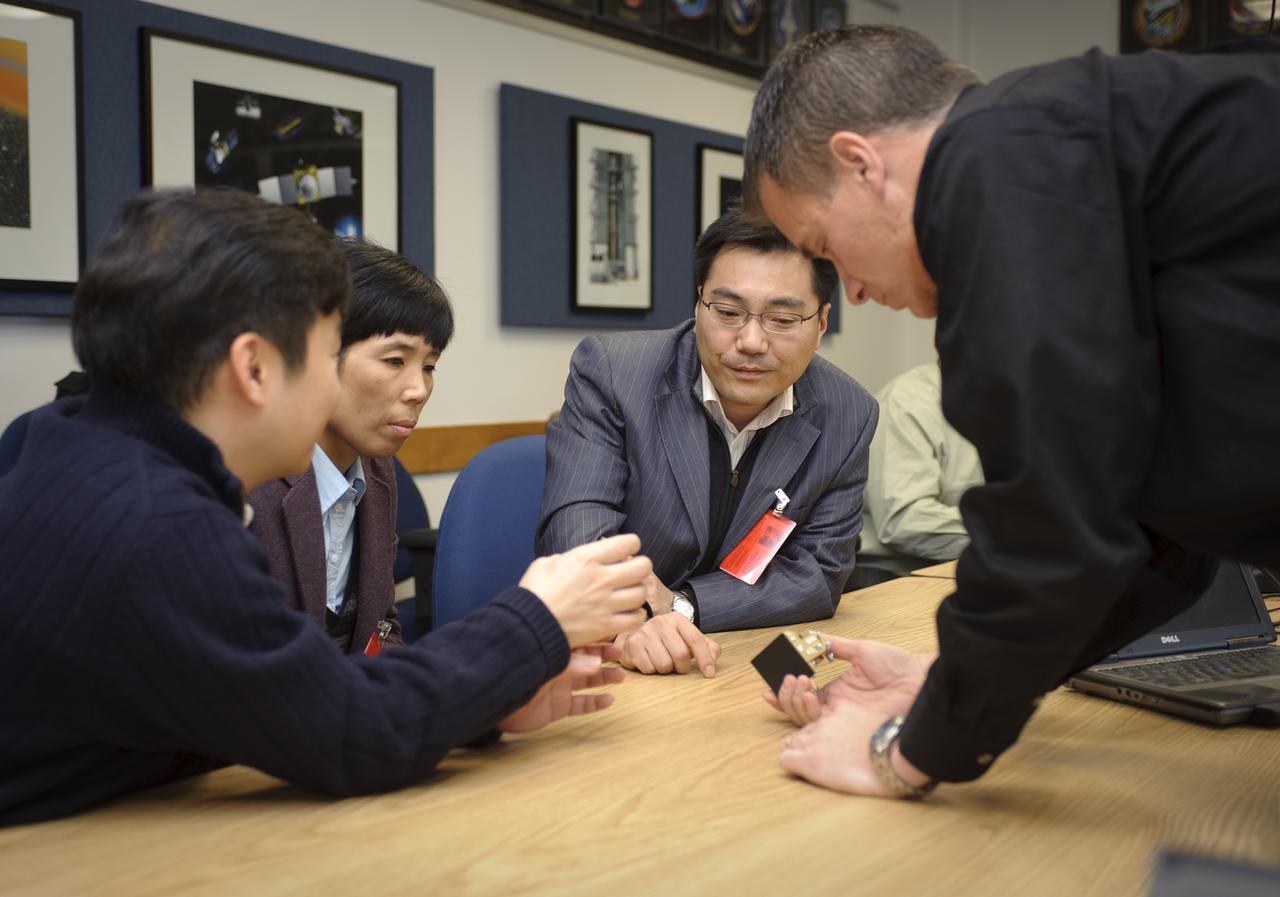
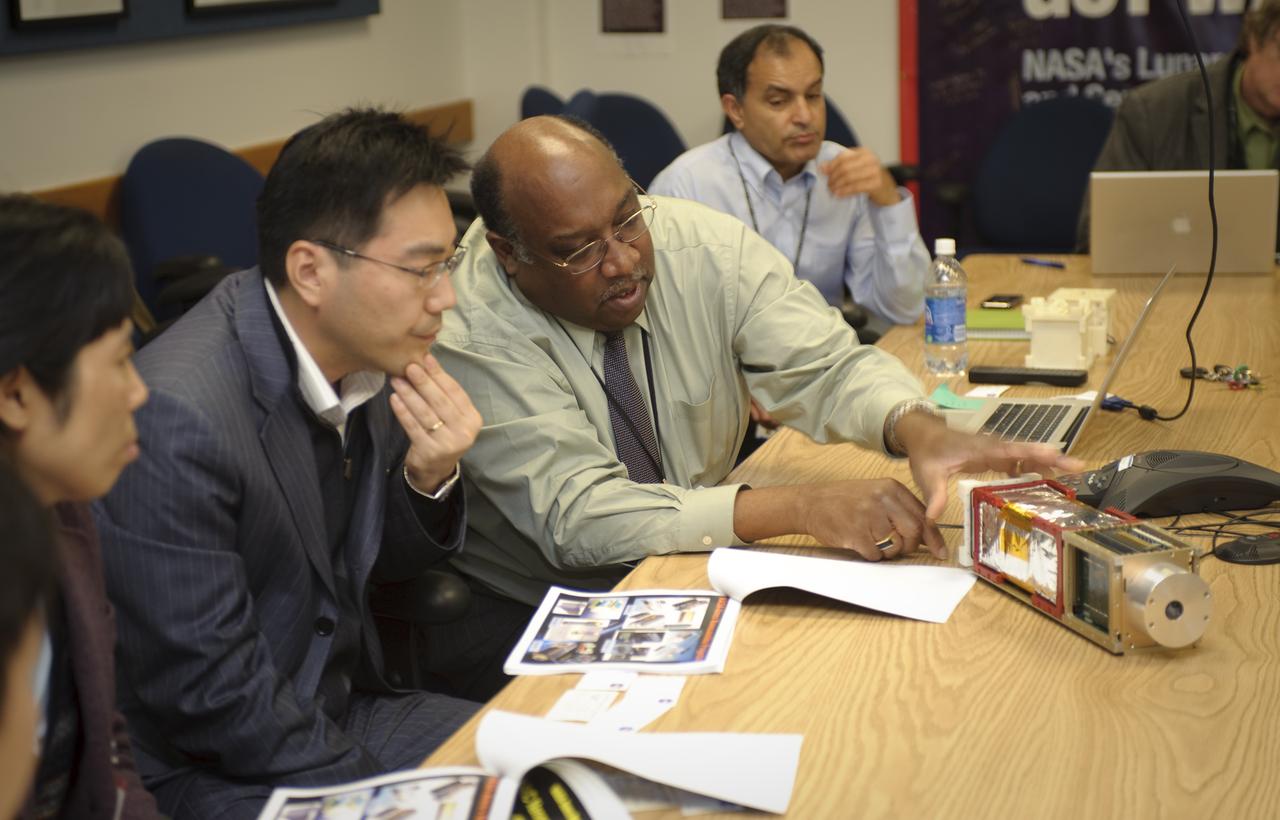
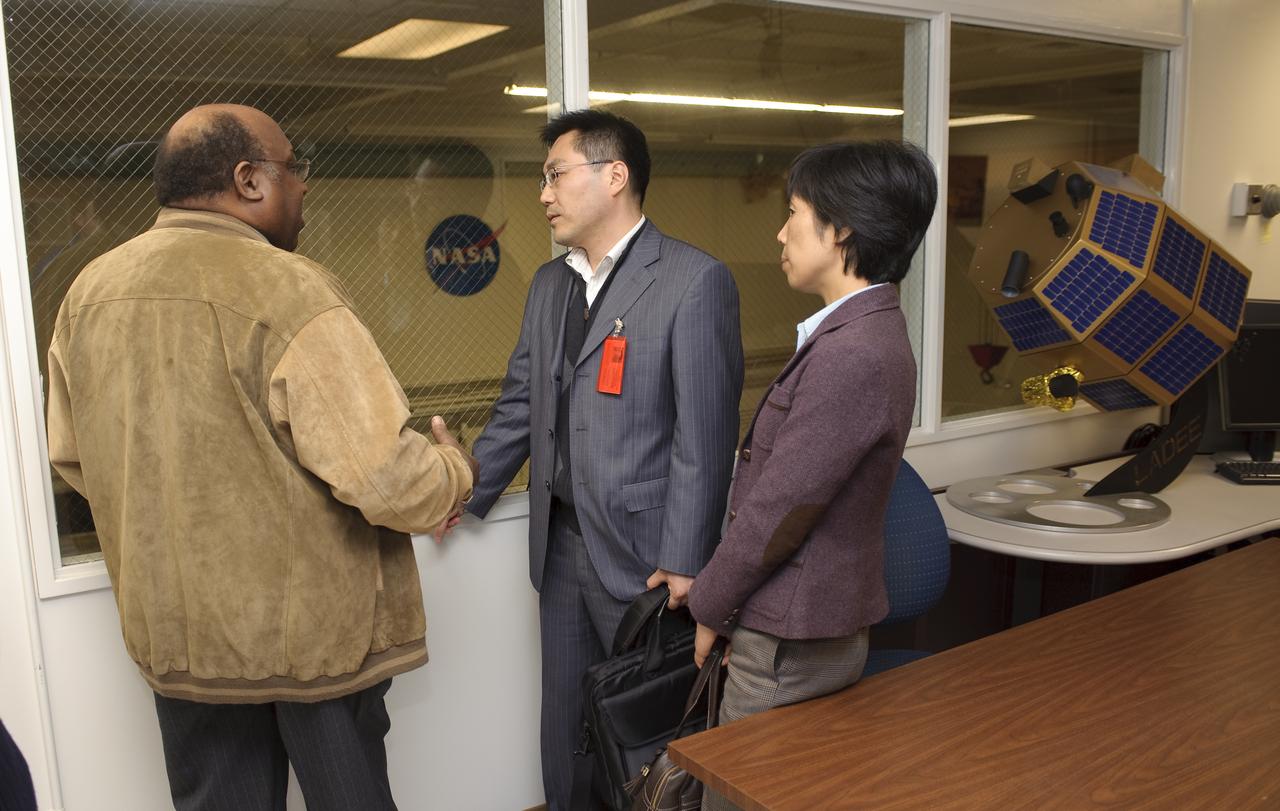
Korean High Level Delegation Visit Ames Certer Director and various Senior staff: John Hines, Ames Center Chief Technologist (middel left) explains PharmaSat (small Satellites) to Soon-Duk Bae, Deputy Director, Big Science Policy Division, Ministry of Educaiton, Science Technology, Young-Mok Hyun, Deputy Director, Space Development Division, Ministry of Educaiton, Science Technology, Seorium Lee, Senior Researcher, International Relations Korea Aerospace Research Institute. Unkonw person at the end of table.
ARC-2009-ACD09-0261-014
Korean High Level Delegation Visit Ames Certer Director and various Senior staff: John Hines, Ames Center Chief Technologist (middel left) explains operations at the LADEE lab to Soon-Duk Bae, Deputy Director, Big Science Policy Division, Ministry of Educaiton, Science Technology, Young-Mok Hyun, Deputy Director, Space Development Division, Ministry of Educaiton, Science Technology, Seorium Lee, Senior Researcher, International Relations Korea Aerospace Research Institute.
ARC-2009-ACD09-0261-015
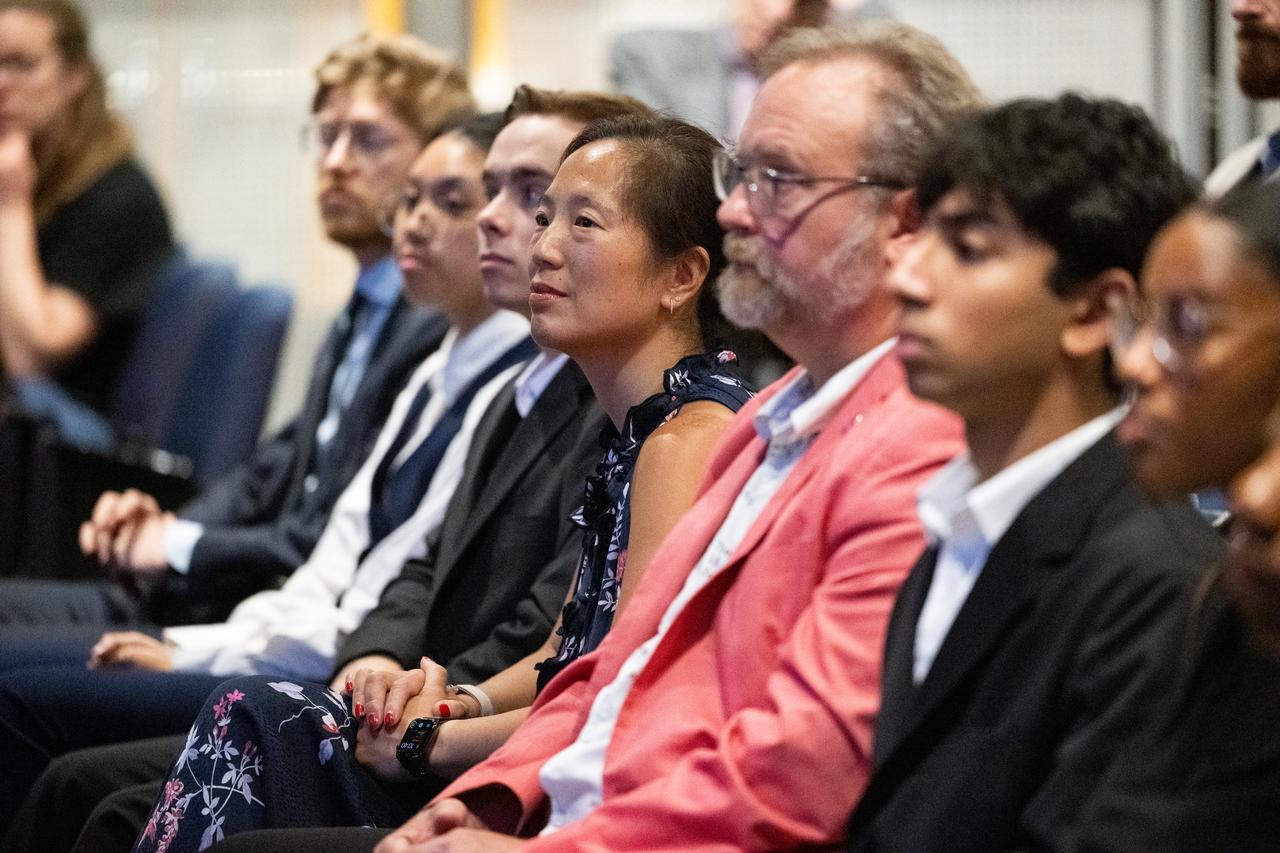
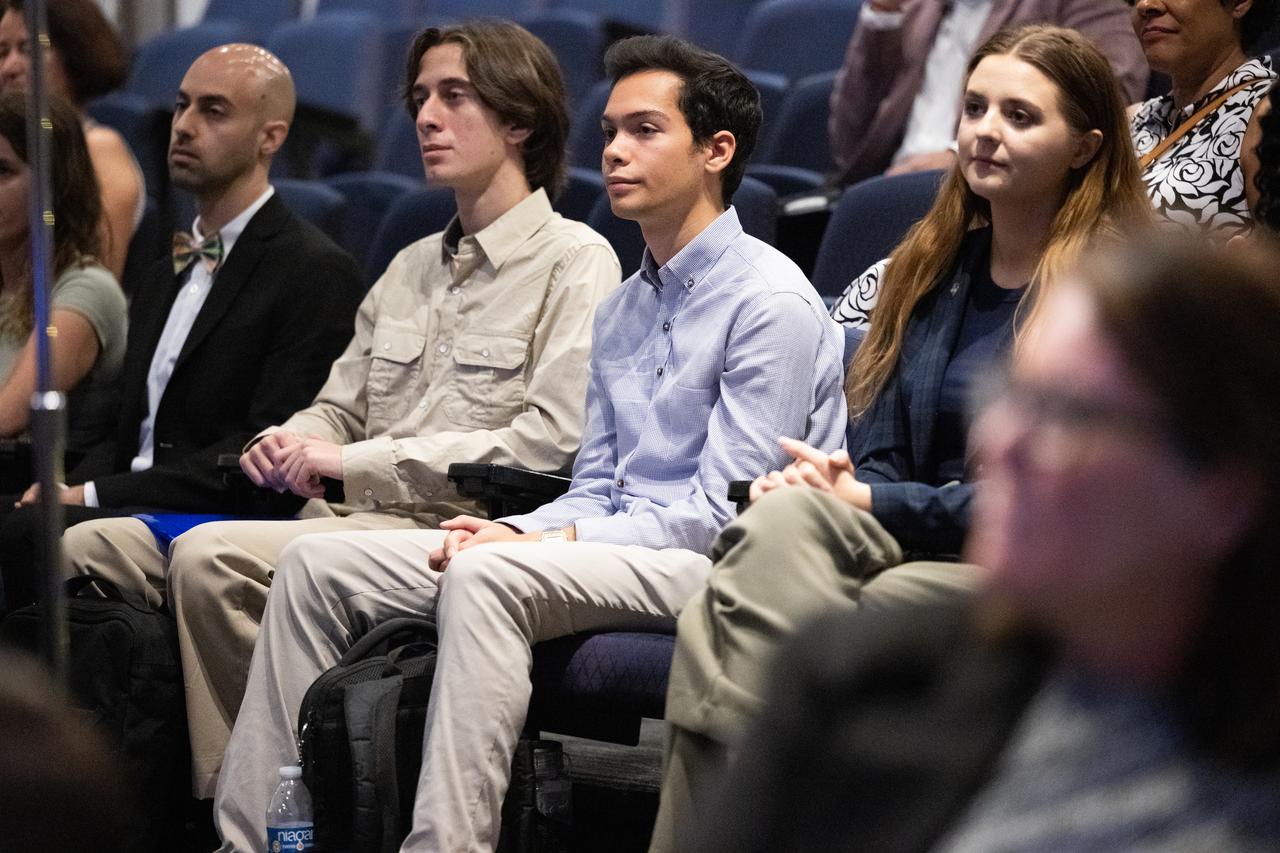
Members of the Climate Change Research Initiative (CCRI) cohort listen as Karen St. Germain, director of the Earth Science Division of NASA’s Science Mission Directorate speaks, Wednesday, Aug. 7, 2024, at the Mary W. Jackson NASA Headquarters building in Washington, DC. The Earth Science Division’s Early Career Research Program’s Climate Change Research Initiative (CCRI) is a year-long STEM engagement and experiential learning opportunity for educators and students from high school to graduate level. Photo Credit: (NASA/Joel Kowsky)
NASA Early Career Research Program - Climate Change Research Ini
Members of the Climate Change Research Initiative (CCRI) cohort listen as Karen St. Germain, director of the Earth Science Division of NASA’s Science Mission Directorate speaks, Wednesday, Aug. 7, 2024, at the Mary W. Jackson NASA Headquarters building in Washington, DC. The Earth Science Division’s Early Career Research Program’s Climate Change Research Initiative (CCRI) is a year-long STEM engagement and experiential learning opportunity for educators and students from high school to graduate level. Photo Credit: (NASA/Joel Kowsky)
NASA Early Career Research Program - Climate Change Research Ini
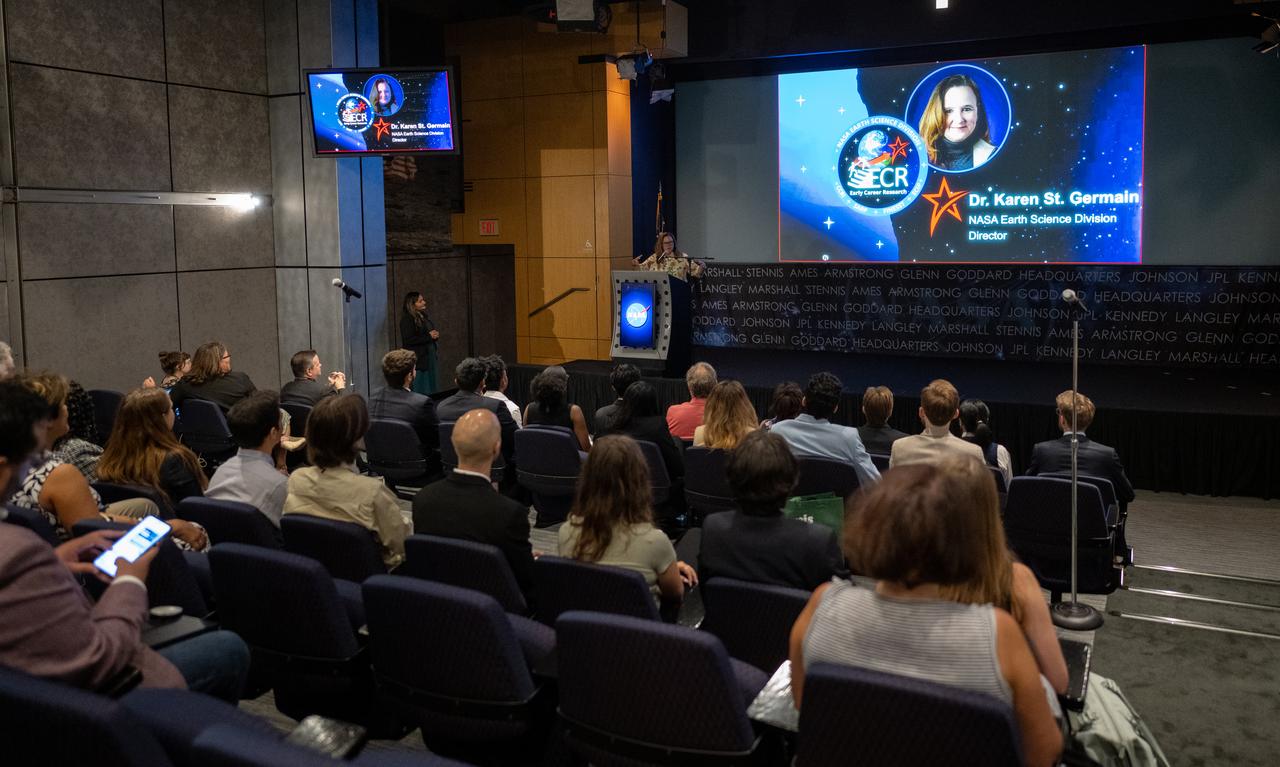
Karen St. Germain, director of the Earth Science Division of NASA’s Science Mission Directorate, speaks with the Climate Change Research Initiative (CCRI) cohort, Wednesday, Aug. 7, 2024, at the Mary W. Jackson NASA Headquarters building in Washington, DC. The Earth Science Division’s Early Career Research Program’s Climate Change Research Initiative (CCRI) is a year-long STEM engagement and experiential learning opportunity for educators and students from high school to graduate level.  Photo Credit: (NASA/Joel Kowsky)
NASA Early Career Research Program - Climate Change Research Ini
Karen St. Germain, director of the Earth Science Division of NASA’s Science Mission Directorate, speaks with the Climate Change Research Initiative (CCRI) cohort, Wednesday, Aug. 7, 2024, at the Mary W. Jackson NASA Headquarters building in Washington, DC. The Earth Science Division’s Early Career Research Program’s Climate Change Research Initiative (CCRI) is a year-long STEM engagement and experiential learning opportunity for educators and students from high school to graduate level.  Photo Credit: (NASA/Joel Kowsky)
NASA Early Career Research Program - Climate Change Research Ini
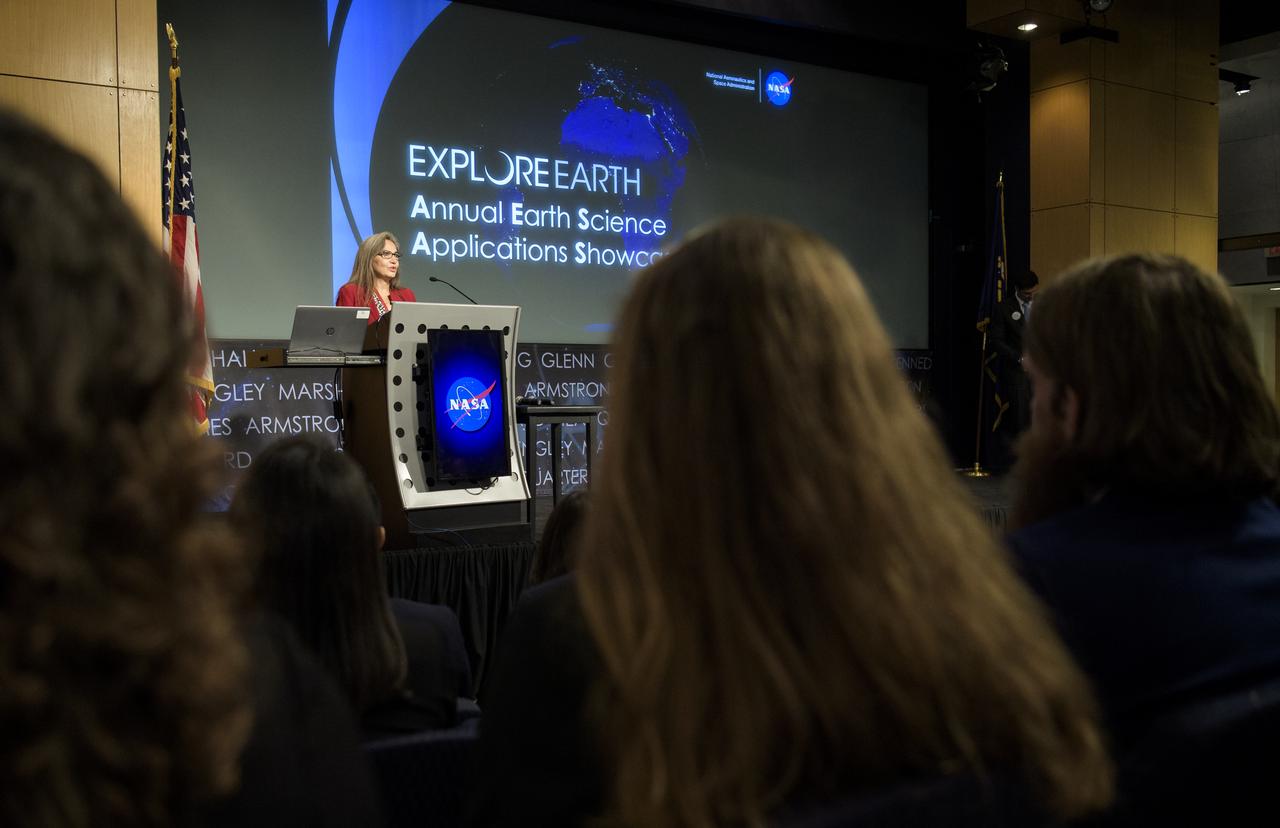
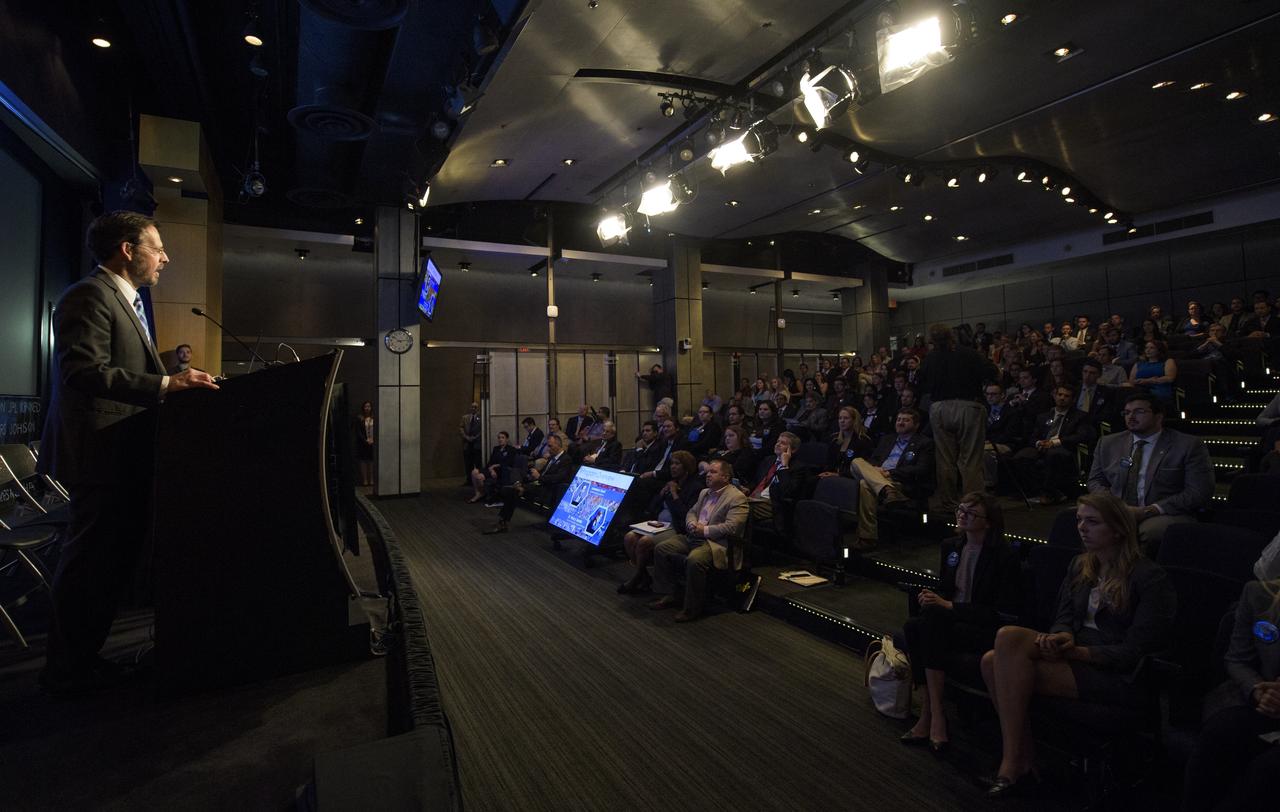
Sandra Cauffman, acting Director of the Earth Sciences Division of the Science Mission Directorate at NASA Headquarters, speaks during the 2019 Annual Earth Science Applications Showcase, Thursday, Aug. 1, 2019 at NASA Headquarters in Washington, DC. Every summer students and young professionals from NASA’s Applied Sciences’ DEVELOP National Program come to NASA Headquarters and present their research projects. DEVELOP is a training and development program where students work on Earth science research projects, mentored by science advisers from NASA and partner agencies, and extend research results to local communities. Photo Credit: (NASA/Joel Kowsky)
2019 Earth Science Applications Showcase
Sandra Cauffman, acting Director of the Earth Sciences Division of the Science Mission Directorate at NASA Headquarters, speaks during the 2019 Annual Earth Science Applications Showcase, Thursday, Aug. 1, 2019 at NASA Headquarters in Washington, DC. Every summer students and young professionals from NASA’s Applied Sciences’ DEVELOP National Program come to NASA Headquarters and present their research projects. DEVELOP is a training and development program where students work on Earth science research projects, mentored by science advisers from NASA and partner agencies, and extend research results to local communities. Photo Credit: (NASA/Joel Kowsky)
2019 Earth Science Applications Showcase
Sandra Cauffman, acting Director of the Earth Sciences Division of the Science Mission Directorate at NASA Headquarters, speaks during the 2019 Annual Earth Science Applications Showcase, Thursday, Aug. 1, 2019 at NASA Headquarters in Washington, DC. Every summer students and young professionals from NASA’s Applied Sciences’ DEVELOP National Program come to NASA Headquarters and present their research projects. DEVELOP is a training and development program where students work on Earth science research projects, mentored by science advisers from NASA and partner agencies, and extend research results to local communities. Photo Credit: (NASA/Joel Kowsky)
2019 Earth Science Applications Showcase
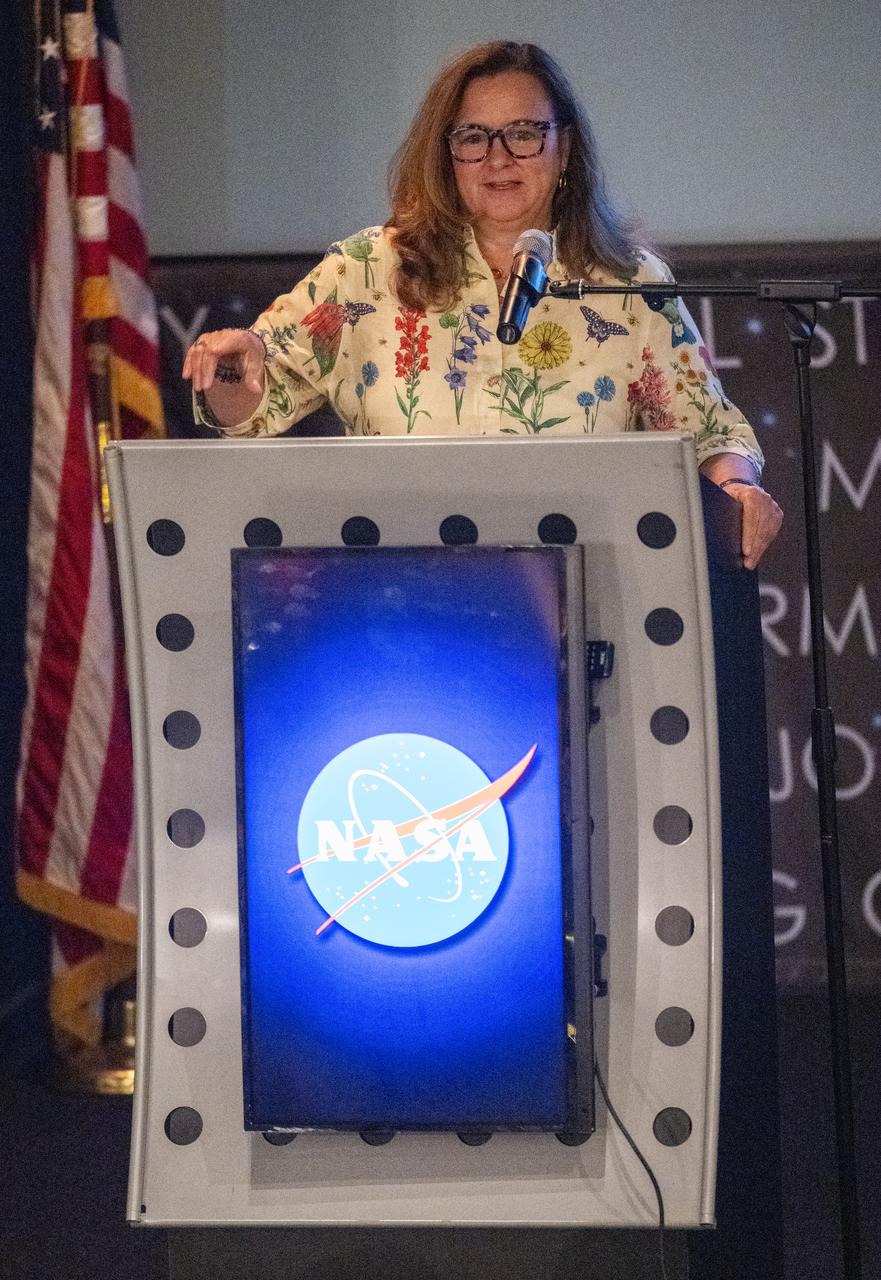
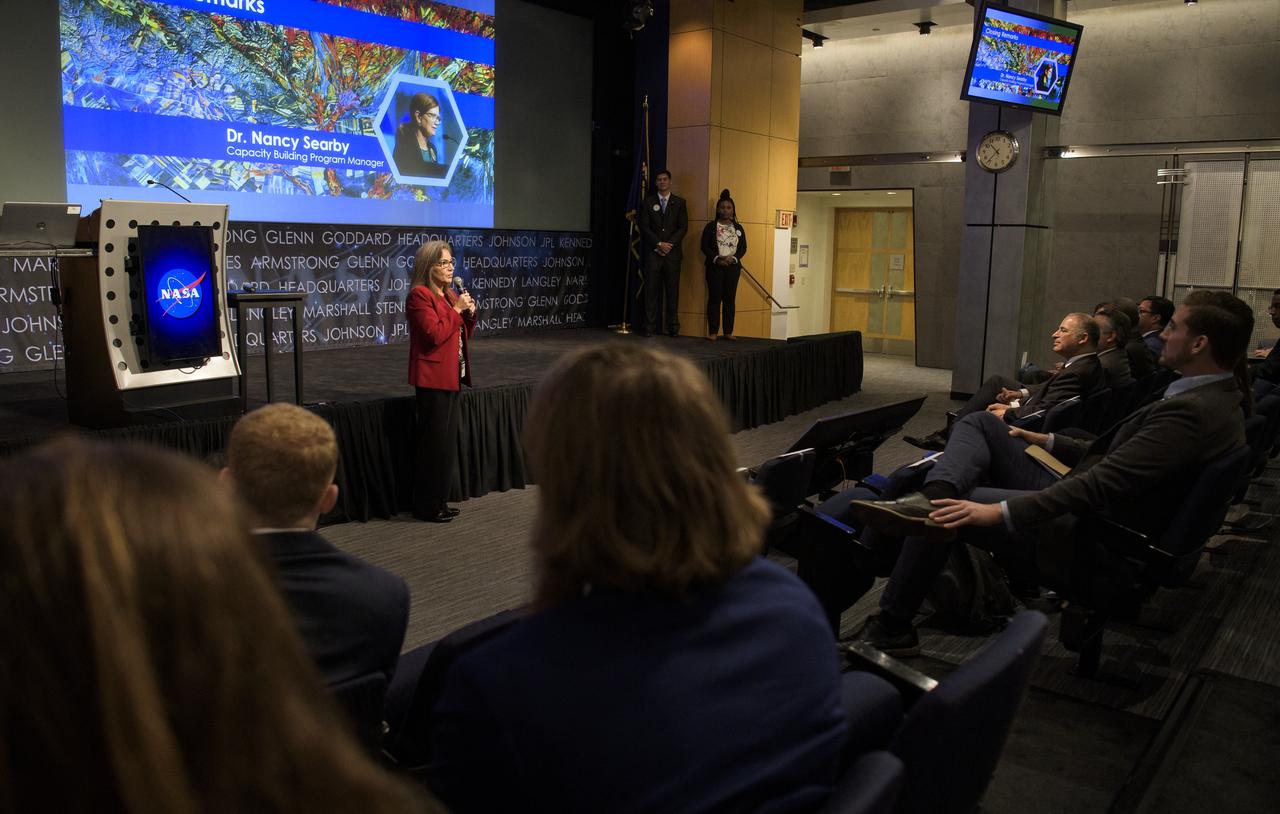
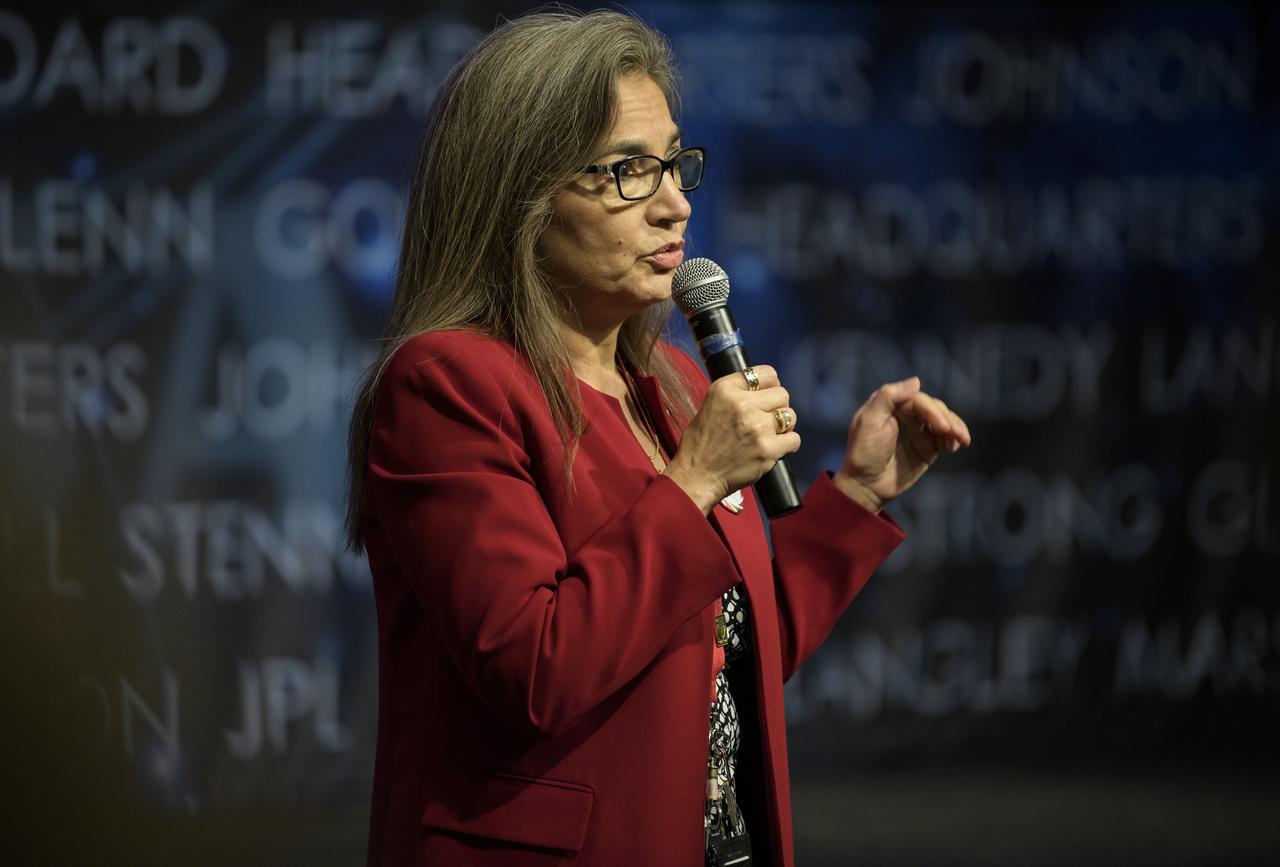
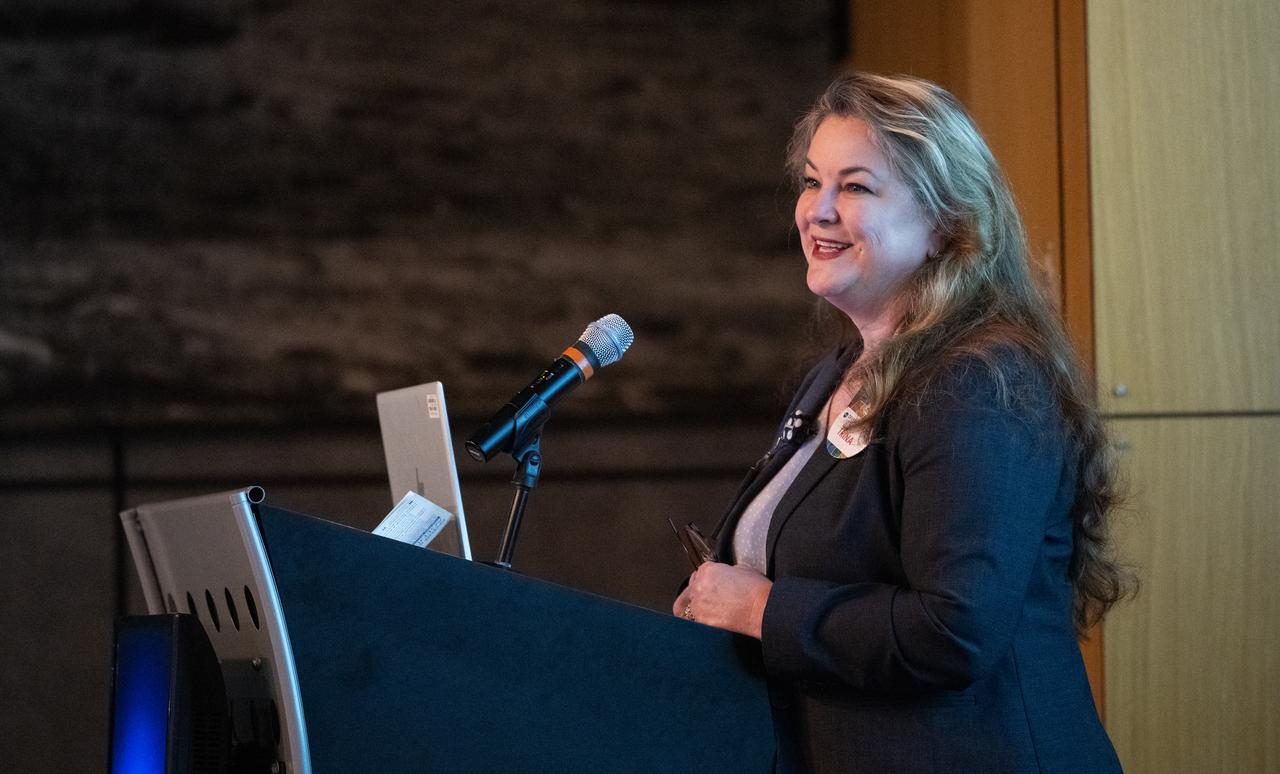
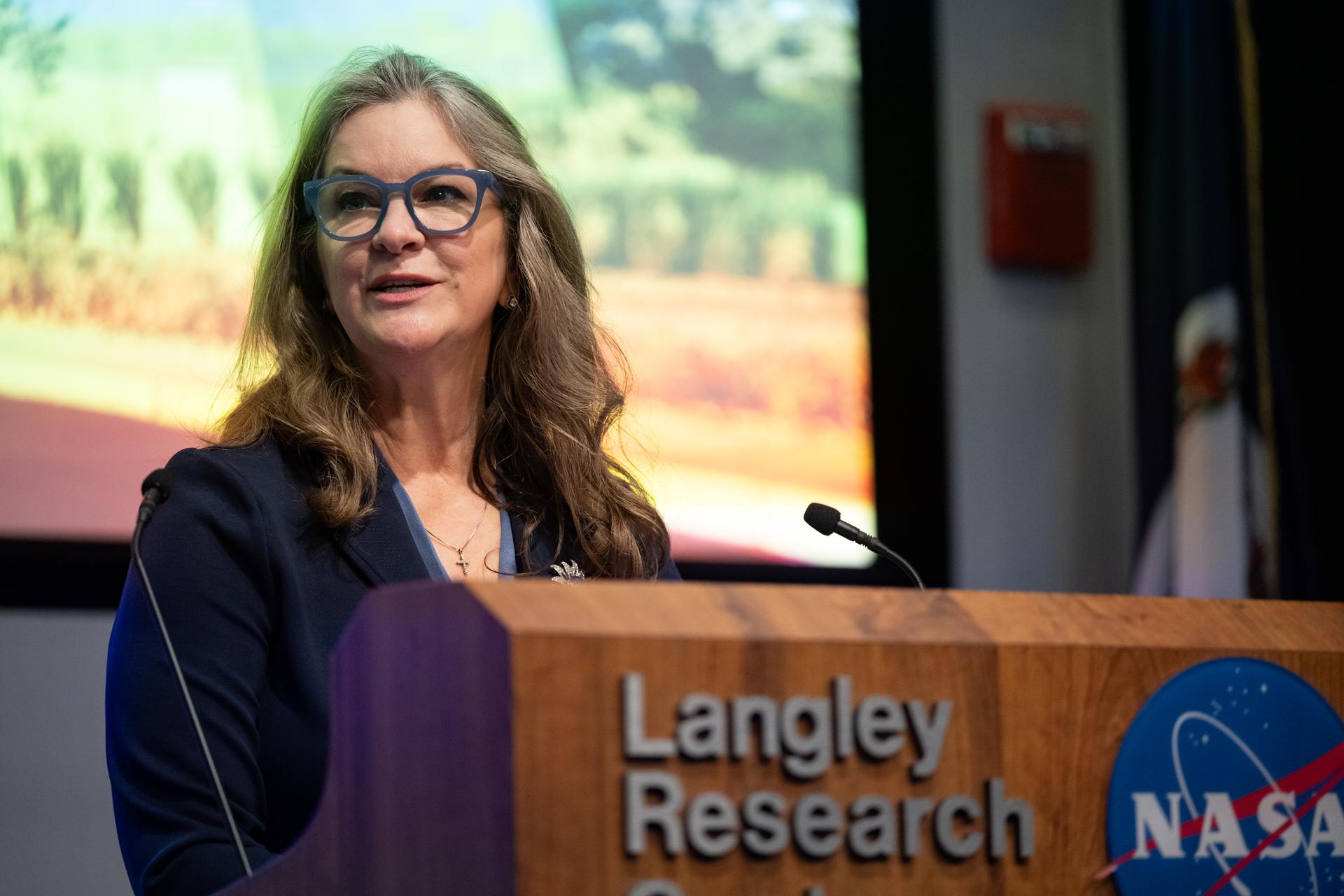
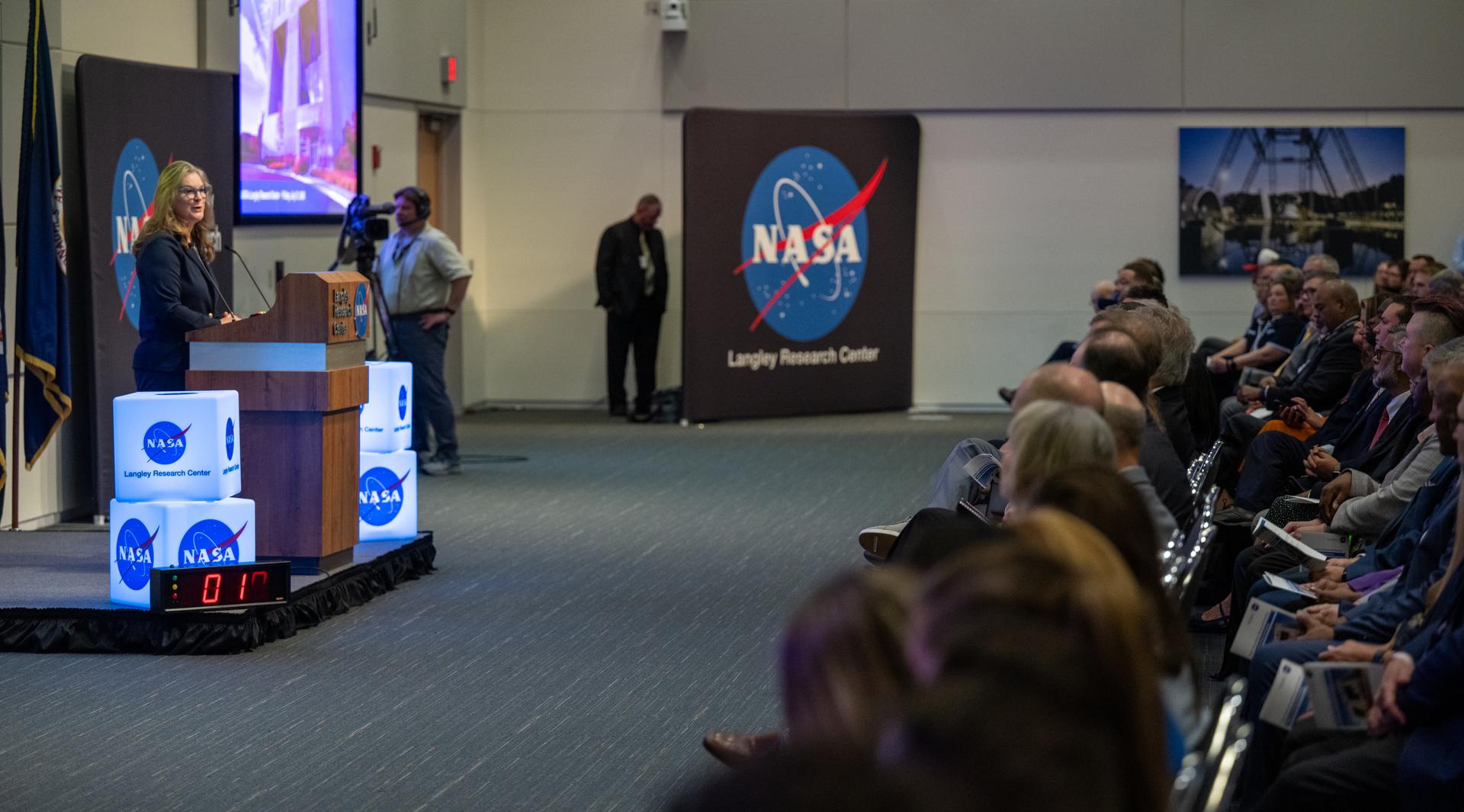
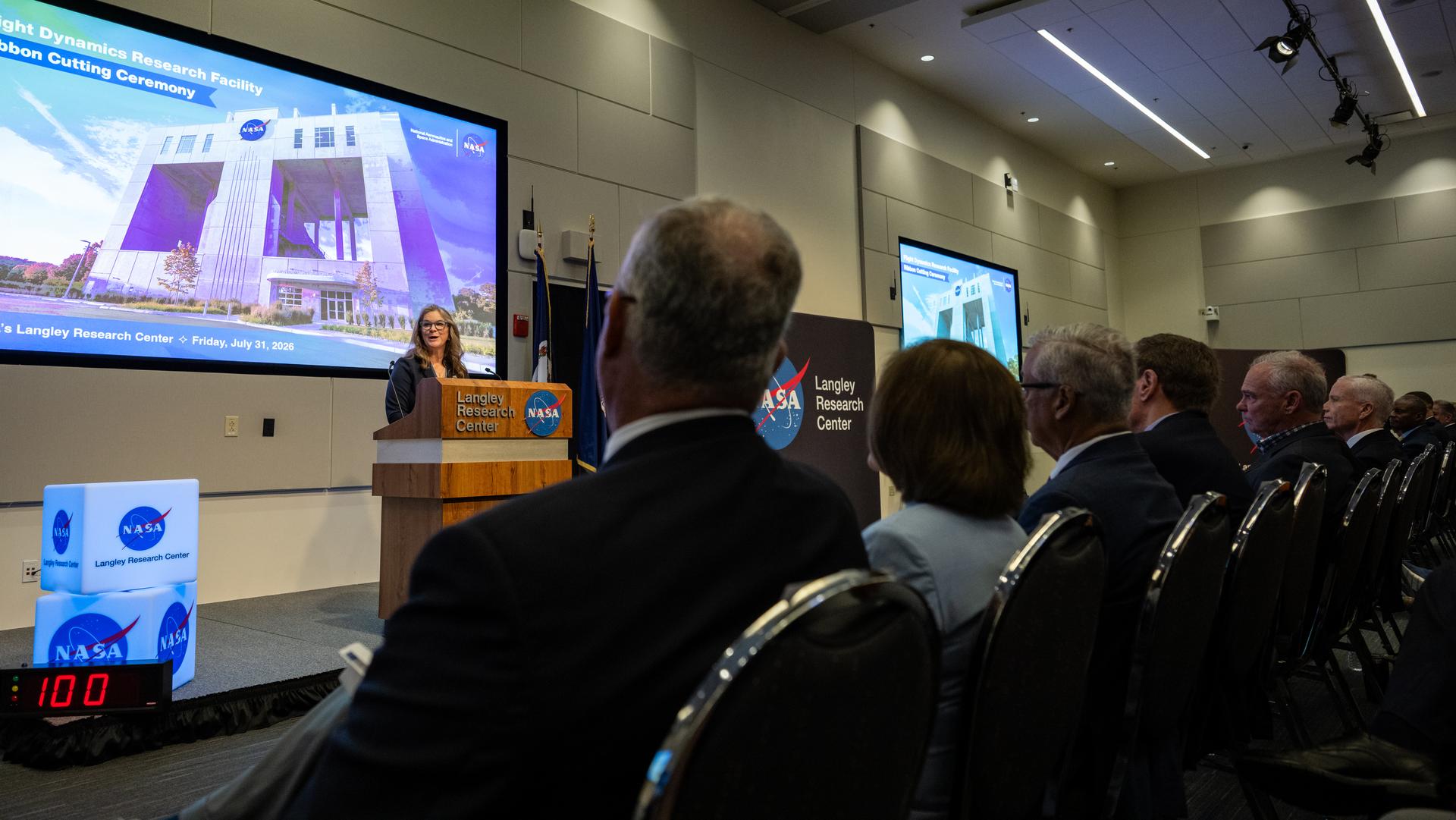
Trina Dyal, Director of the Science Directorate at NASA’s Langley Research Center, delivers closing remarks during the 2023 DEVELOP Day, Wednesday, Aug. 9, 2023, at the Mary W. Jackson NASA Headquarters building in Washington. Every summer students and young professionals from NASA’s Applied Sciences’ DEVELOP National Program come to NASA Headquarters to present their research. This year marks the 25th year of DEVELOP, a training and development program where students work on Earth science research projects, mentored by science advisors from NASA and partner agencies, and extend research results to local communities. Photo Credit: (NASA/Joel Kowsky)
2023 DEVELOP Day
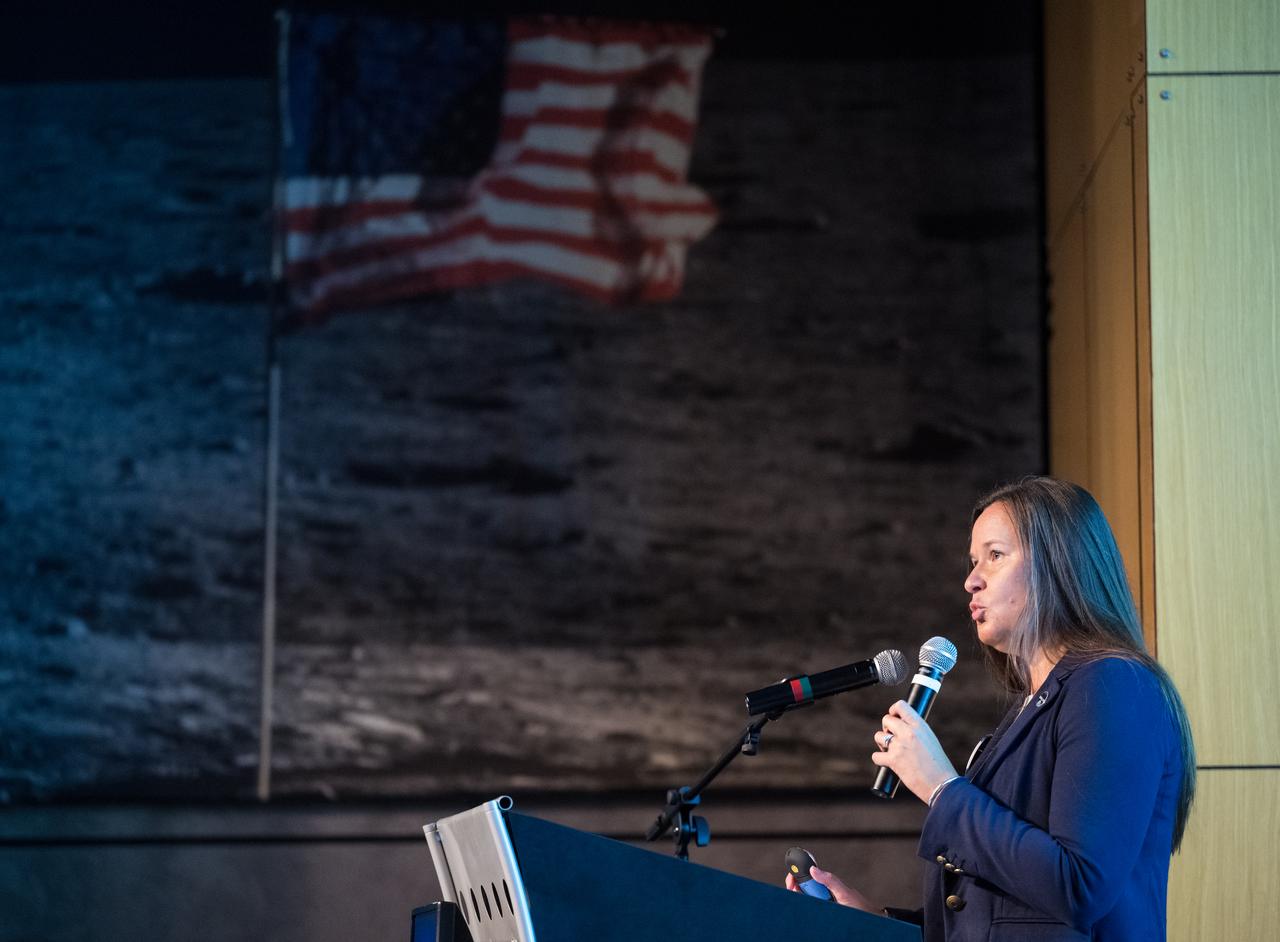
Amanda Cutright, acting associate director for Earth Action and Strategic Engagement for the Science Mission Directorate at NASA's Langley Research Center (LaRC), provides remarks before the presentation of DEVELOP Projects, Tuesday, August 5, 2025, at the Mary W. Jackson NASA Headquarters building in Washington. Every summer early career researchers from NASA’s DEVELOP National Program come to NASA Headquarters and present their research projects. DEVELOP is a training and development program where early career researchers work on Earth science projects, mentored by science advisors from NASA and partner agencies, and provide research results to local communities. Photo Credit: (NASA/Aubrey Gemignani)
Develop Program Event and Poster Session
Korean High Level Delegation Visit Ames Certer Director and various Senior staff:  Dan Andrews give presentation about LCROSS/LRO to  Seorium Lee, Senior Researcher, International Relations Korea Aerospace Research Institute, Soon-Duk Bae, Deputy Director, Big Science Policy Division, Ministry of Educaiton, Science Technology, Young-Mok Hyun, Deputy Director, Space Development Division, Ministry of Educaiton, Science Technology. Also at table are Chris Giulietti, NASA HQ, John Hines, Ames Center Chief Technologist, Unknow person and Terry Pagaduan, Government Relations/Legislative Affairs office.
ARC-2009-ACD09-0261-012
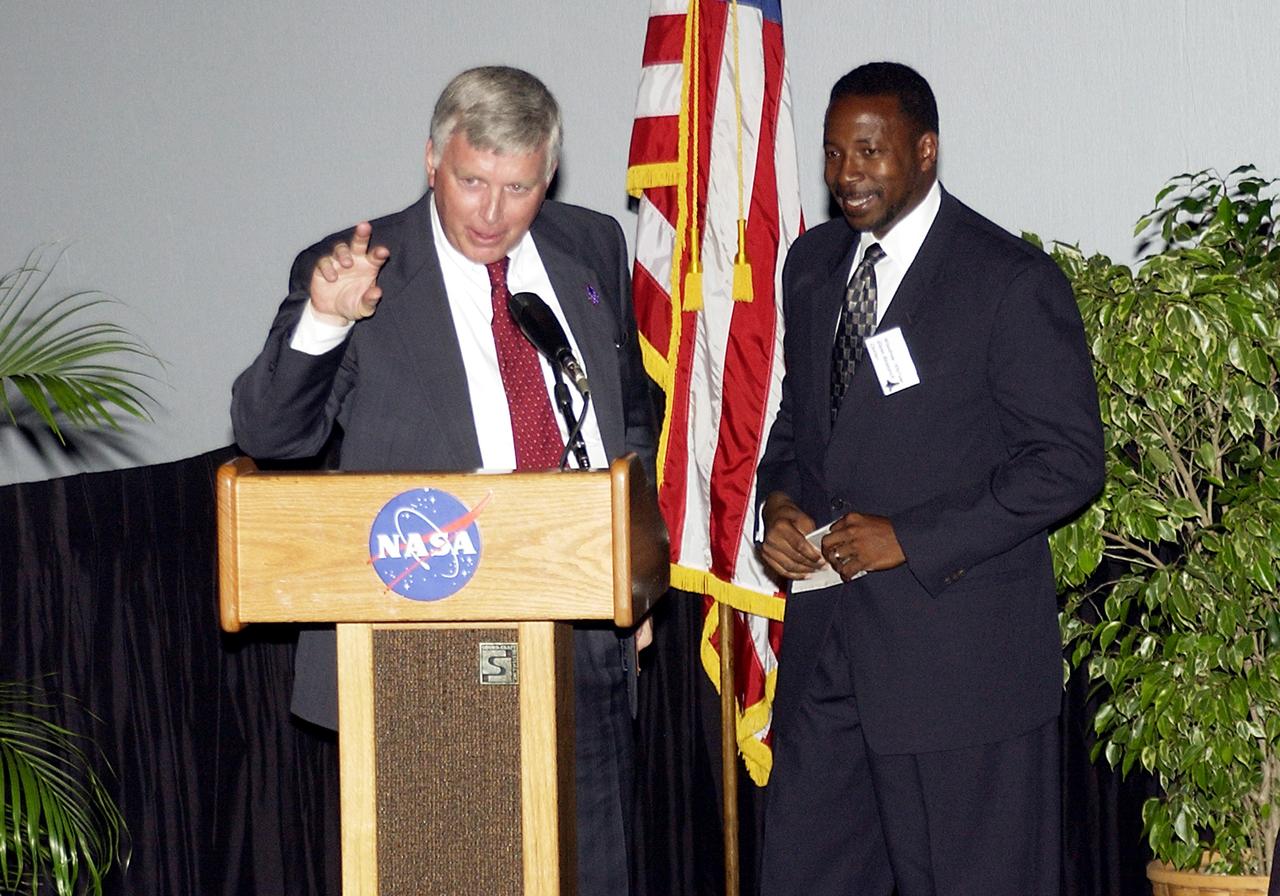
KENNEDY SPACE CENTER, FLA. -  The Honorable Toni Jennings (left), lieutenant governor of the state of Florida, and Frank T. Brogan, president of Florida Atlantic University, receive a briefing on the research that will be conducted in the Space Life Sciences Lab from Dr. Robert J. Ferl (right), director of Space Agriculture Biotechnology Research and Education (SABRE), University of Florida.  Jennings and Brogan are speaking at a dedication and ribbon-cutting ceremony for the lab hosted by NASA-Kennedy Space Center and the state of Florida at the new lab. Completed in August, the facility encompasses more than 100,000 square feet and was formerly known as the Space Experiment Research and Processing Laboratory or SERPL. The state, through the Florida Space Authority, built the research lab which is host to NASA, NASA’s Life Sciences Services contractor Dynamac Corp., Bionetics Corp., and researchers from the University of Florida.  Dynamac Corp. leases the facility.  The Florida Space Research Institute is responsible for gaining additional tenants from outside the NASA community.
KENNEDY SPACE CENTER, FLA. - The Honorable Toni Jennings (left), lieutenant governor of the state of Florida, and Frank T. Brogan, president of Florida Atlantic University, receive a briefing on the research that will be conducted in the Space Life Sciences Lab from Dr. Robert J. Ferl (right), director of Space Agriculture Biotechnology Research and Education (SABRE), University of Florida. Jennings and Brogan are speaking at a dedication and ribbon-cutting ceremony for the lab hosted by NASA-Kennedy Space Center and the state of Florida at the new lab. Completed in August, the facility encompasses more than 100,000 square feet and was formerly known as the Space Experiment Research and Processing Laboratory or SERPL. The state, through the Florida Space Authority, built the research lab which is host to NASA, NASA’s Life Sciences Services contractor Dynamac Corp., Bionetics Corp., and researchers from the University of Florida. Dynamac Corp. leases the facility. The Florida Space Research Institute is responsible for gaining additional tenants from outside the NASA community.
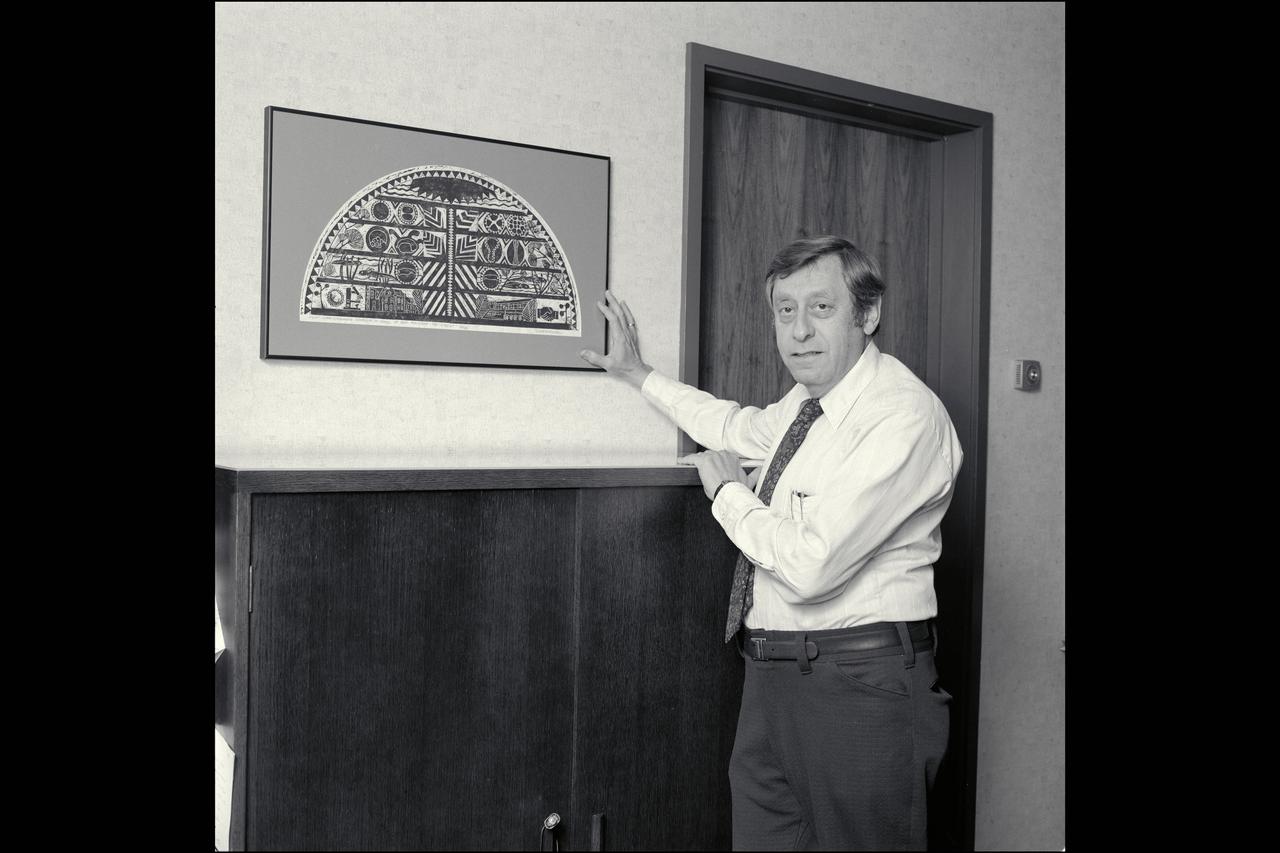
Dr Harold Klein, Director of Life Science in his office at Ames Research Center showing his painting of Indian folklore on the origin of life.
ARC-1981-A81-0820-2
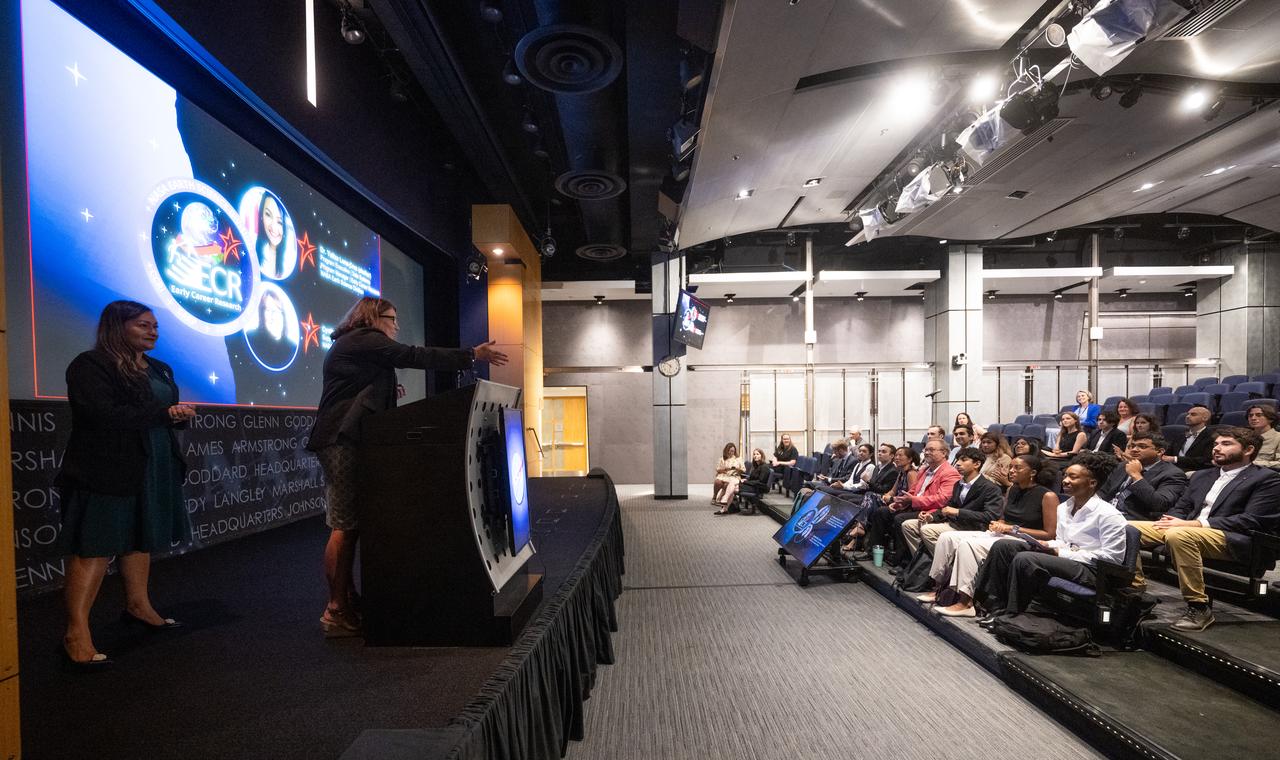
Cynthia Hall, support scientist for the Early Career Research Program in NASA’s Earth Science Division, right, and Yaítza Luna-Cruz, a program executive in the Earth Science Division of NASA’s Science Mission Directorate and program manager for the Early Career Research Program speak to the Climate Change Research Initiative (CCRI) cohort, Wednesday, Aug. 7, 2024, at the Mary W. Jackson NASA Headquarters building in Washington, DC. The Earth Science Division’s Early Career Research Program’s Climate Change Research Initiative (CCRI) is a year-long STEM engagement and experiential learning opportunity for educators and students from high school to graduate level. Photo Credit: (NASA/Joel Kowsky)
NASA Early Career Research Program - Climate Change Research Ini
CAPE CANAVERAL, Fla.  - In the Atlas_Redstone Room of the Debus Center at NASA's Kennedy Space Center Visitor Complex in Florida, Dr. Edward F. Crawley, Ford professor of engineering at MIT, speaks to the attendees at the 'Expanding our Reach into the Solar System' break-out session, part of the Conference on the American Space Program for the 21st Century. The panel included Scott Hubbard, former director of NASA's Ames Research Center, John Holdren, assistant to the President for science and technology and director of the White House Office of Science and Technology Policy and NASA, panel moderator; NASA Astronaut John Grunsfeld and Scott Hubbard, former director of NASA's Ames Research Center. Photo credit: NASA_Jim Grossmann.
KSC-2010-2755
NASA Director of Applied Sciences Program (Earth Science Division) Lawrence Friedl speaks during the 2018 Annual Earth Science Applications Showcase, Wednesday, Aug. 1, 2018 at NASA Headquarters in Washington. Every summer students and young professionals from NASA’s Applied Sciences’ DEVELOP National Program come to NASA Headquarters and present their research projects. DEVELOP is a training and development program where students work on Earth science research projects, mentored by science advisers from NASA and partner agencies, and extend research results to local communities.  Photo Credit: (NASA/Joel Kowsky)
2018 Earth Science Applications Showcase
NASA Director of Applied Sciences Program (Earth Science Division) Lawrence Friedl speaks during the 2018 Annual Earth Science Applications Showcase, Wednesday, Aug. 1, 2018 at NASA Headquarters in Washington. Every summer students and young professionals from NASA’s Applied Sciences’ DEVELOP National Program come to NASA Headquarters and present their research projects. DEVELOP is a training and development program where students work on Earth science research projects, mentored by science advisers from NASA and partner agencies, and extend research results to local communities.  Photo Credit: (NASA/Joel Kowsky)
2018 Earth Science Applications Showcase
NASA Director of Applied Sciences Program (Earth Science Division) Lawrence Friedl speaks during the 2016 Annual Earth Science Applications Showcase, Wednesday, Aug. 1, 2018 at NASA Headquarters in Washington. Every summer students and young professionals from NASA’s Applied Sciences’ DEVELOP National Program come to NASA Headquarters and present their research projects. DEVELOP is a training and development program where students work on Earth science research projects, mentored by science advisers from NASA and partner agencies, and extend research results to local communities.  Photo Credit: (NASA/Joel Kowsky)
2018 Earth Science Applications Showcase
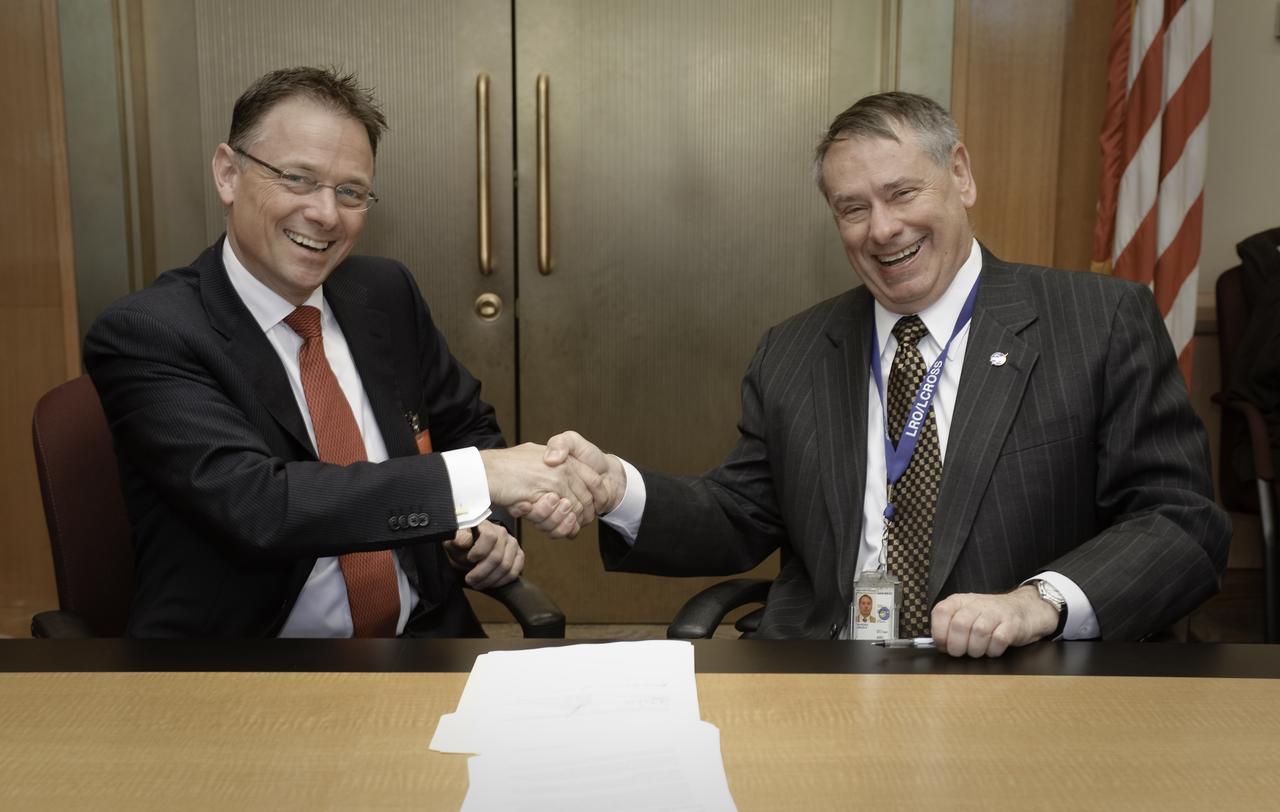
Netherlands Memorandum of Record (MOR) agreement signing the NASA Ames Research Center, Mofffett Field, California. Signing the MOR are on left  Dr. Louis B.J.Vertegaal, Director of Physical Sciences, Chemistry, and Advanced Chemical Technologies for Sustainability, of the Netherlands Organisation for Scientific Research (NWO) and on right Dr. S. Pete Worden, Director NASA Ames Research Center
ARC-2010-ACD10-0066-004
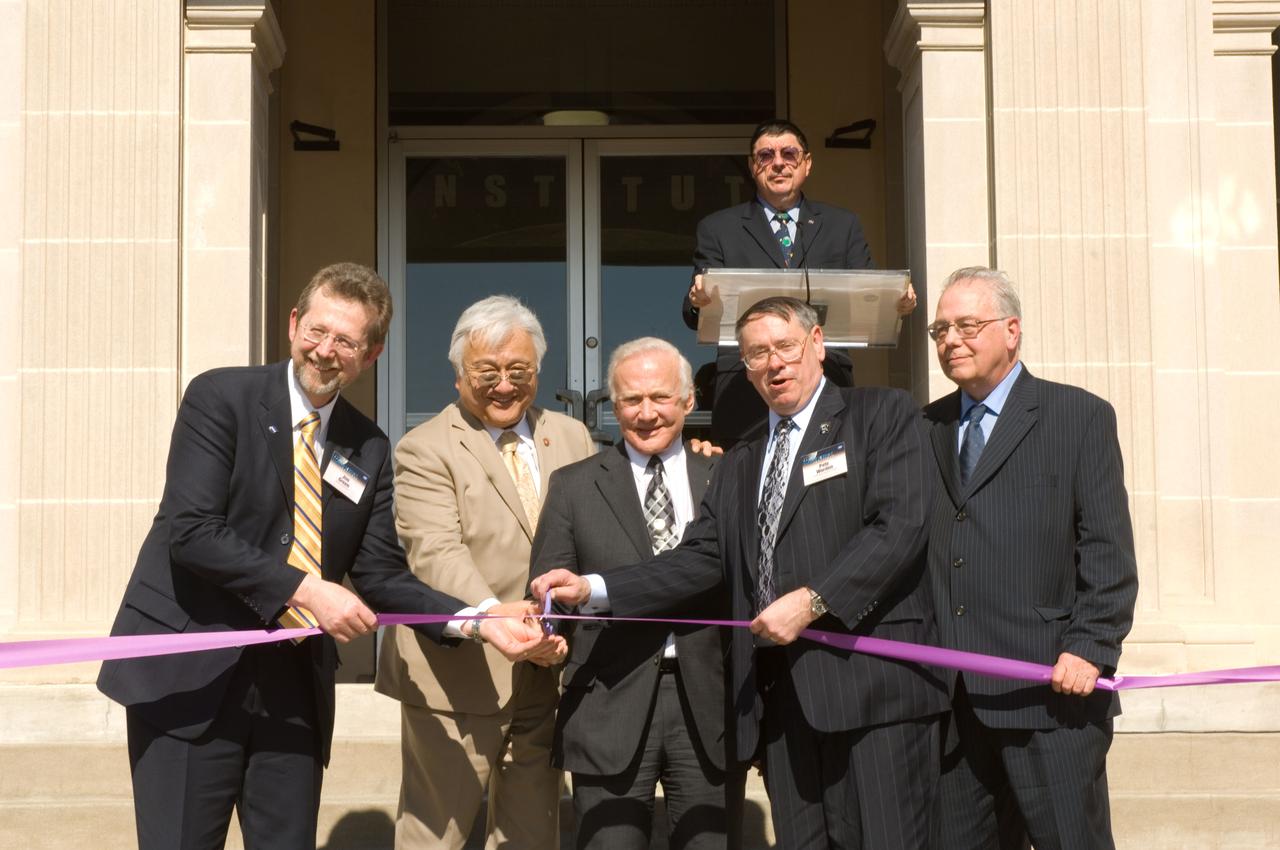
Lunar Science Institute (LSI) Grand Opening. Ribbon Cutting, L-R: James Green, Director, Planetary  Programs, NASA Headquarters, Mike Honda, U.S. Congressman,15th District, Apollo Astronaut Buzz Aldrin, S. Pete Worden, Director, NASA Ames Research Center, David Morrison, Interiu Director, NASA Lunar Science Institute. David Morse at podium.
ARC-2008-ACD08-0065-051
Representatives of the NASA-Kennedy Space Center and the state of Florida prepare to cut the ribbon officially opening the Space Life Sciences Lab at a ceremony at the new lab. In the front row, from left, are Dr. Samuel Durrance, executive director of the Florida Space Research Institute; Jim Kennedy, director of the Kennedy Space Center; Frank T. Brogan, president of the Florida Atlantic University; The Honorable Toni Jennings, lieutenant governor of the state of Florida; and Catherine and Grier Kirkpatrick, children of the late Sen. George Kirkpatrick. In the back row, from left, are Debra Holliday, director for Facilities and Construction, Florida Space Authority; Dan LeBlanc, president and chief operating officer of Delaware North Companies Parks and Resorts at KSC, Inc.; Jose Perez-Morales, NASA Project Manager for the Space Life Sciences Lab; and Capt. Winston E. Scott, executive director of the Florida Space Authority. Completed in August, the facility encompasses more than 100,000 square feet and was formerly known as the Space Experiment Research and Processing Laboratory or SERPL. The state, through the Florida Space Authority, built the research lab which is host to NASA, NASA’s Life Sciences Services contractor Dynamac Corp., Bionetics Corp., and researchers from the University of Florida. Dynamac Corp. leases the facility. The Florida Space Research Institute is responsible for gaining additional tenants from outside the NASA community.
SLSL Ribbon-cutting Ceremony
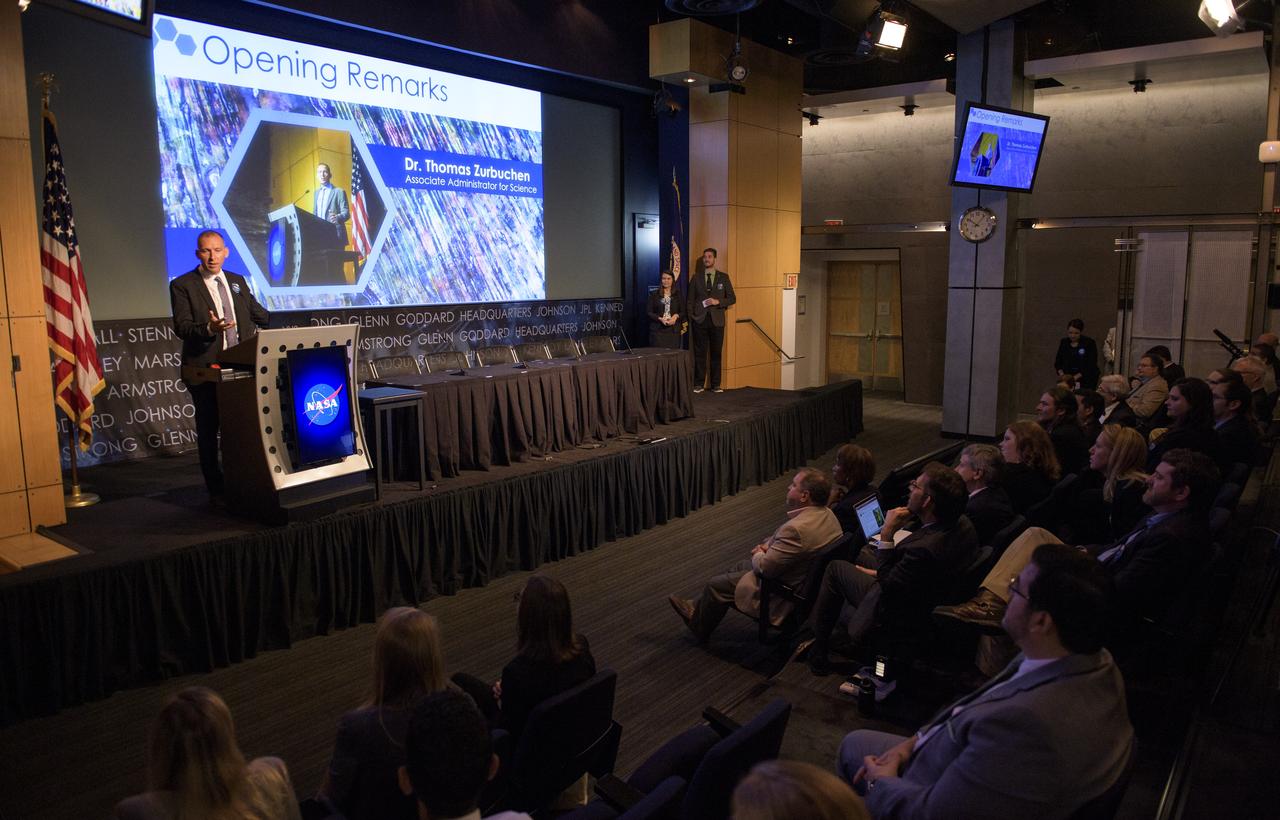
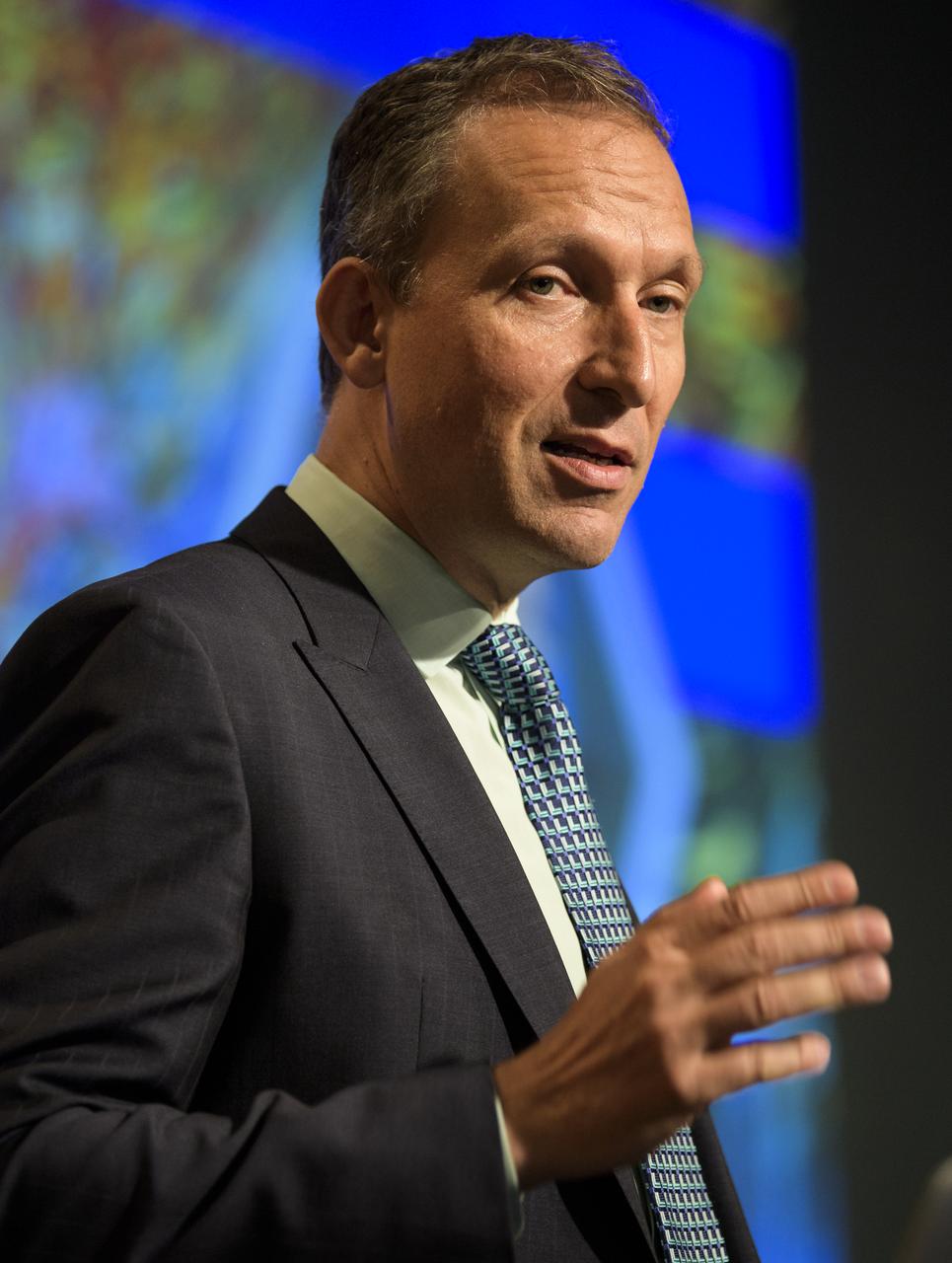
Thomas Zurbuchen, Associate Administrator for NASA's Science Mission Directorate, speaks during the 2019 Annual Earth Science Applications Showcase, Thursday, Aug. 1, 2019 at NASA Headquarters in Washington, DC. Every summer students and young professionals from NASA’s Applied Sciences’ DEVELOP National Program come to NASA Headquarters and present their research projects. DEVELOP is a training and development program where students work on Earth science research projects, mentored by science advisers from NASA and partner agencies, and extend research results to local communities. Photo Credit: (NASA/Joel Kowsky)
2019 Earth Science Applications Showcase
Thomas Zurbuchen, Associate Administrator for NASA's Science Mission Directorate, speaks during the 2018 Annual Earth Science Applications Showcase, Wednesday, Aug. 1, 2018 at NASA Headquarters in Washington. Every summer students and young professionals from NASA’s Applied Sciences’ DEVELOP National Program come to NASA Headquarters and present their research projects. DEVELOP is a training and development program where students work on Earth science research projects, mentored by science advisers from NASA and partner agencies, and extend research results to local communities.  Photo Credit: (NASA/Joel Kowsky)
2018 Earth Science Applications Showcase
Thomas Zurbuchen, Associate Administrator for NASA's Science Mission Directorate, speaks during the 2016 Annual Earth Science Applications Showcase, Wednesday, Aug. 1, 2018 at NASA Headquarters in Washington. Every summer students and young professionals from NASA’s Applied Sciences’ DEVELOP National Program come to NASA Headquarters and present their research projects. DEVELOP is a training and development program where students work on Earth science research projects, mentored by science advisers from NASA and partner agencies, and extend research results to local communities.  Photo Credit: (NASA/Joel Kowsky)
2018 Earth Science Applications Showcase
Thomas Zurbuchen, Associate Administrator for NASA's Science Mission Directorate, speaks during the 2019 Annual Earth Science Applications Showcase, Thursday, Aug. 1, 2019 at NASA Headquarters in Washington, DC. Every summer students and young professionals from NASA’s Applied Sciences’ DEVELOP National Program come to NASA Headquarters and present their research projects. DEVELOP is a training and development program where students work on Earth science research projects, mentored by science advisers from NASA and partner agencies, and extend research results to local communities. Photo Credit: (NASA/Joel Kowsky)
2019 Earth Science Applications Showcase
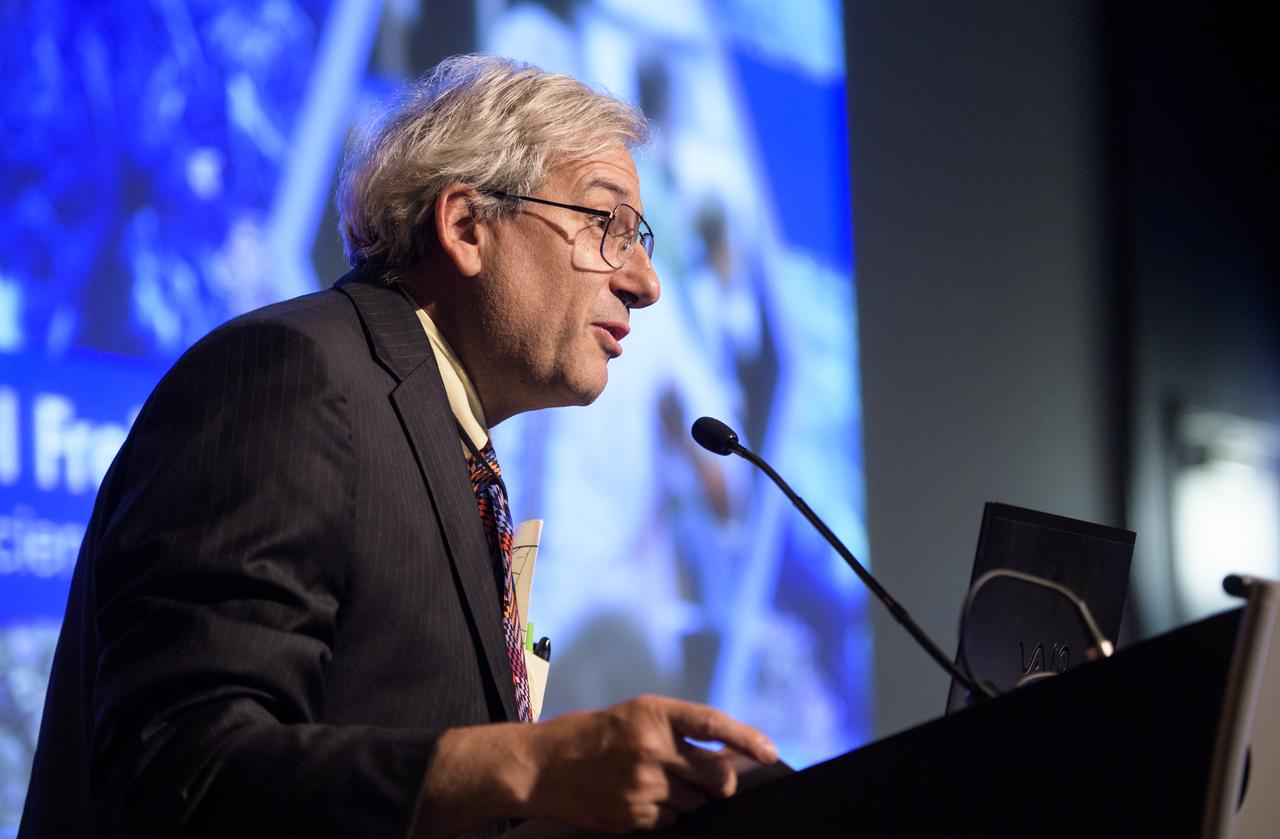
Michael Freilich, Director of the Earth Science Division at NASA Headquarters, speaks during the 2018 Annual Earth Science Applications Showcase, Wednesday, Aug. 1, 2018 at NASA Headquarters in Washington. Every summer students and young professionals from NASA’s Applied Sciences’ DEVELOP National Program come to NASA Headquarters and present their research projects. DEVELOP is a training and development program where students work on Earth science research projects, mentored by science advisers from NASA and partner agencies, and extend research results to local communities.  Photo Credit: (NASA/Joel Kowsky)
2018 Earth Science Applications Showcase
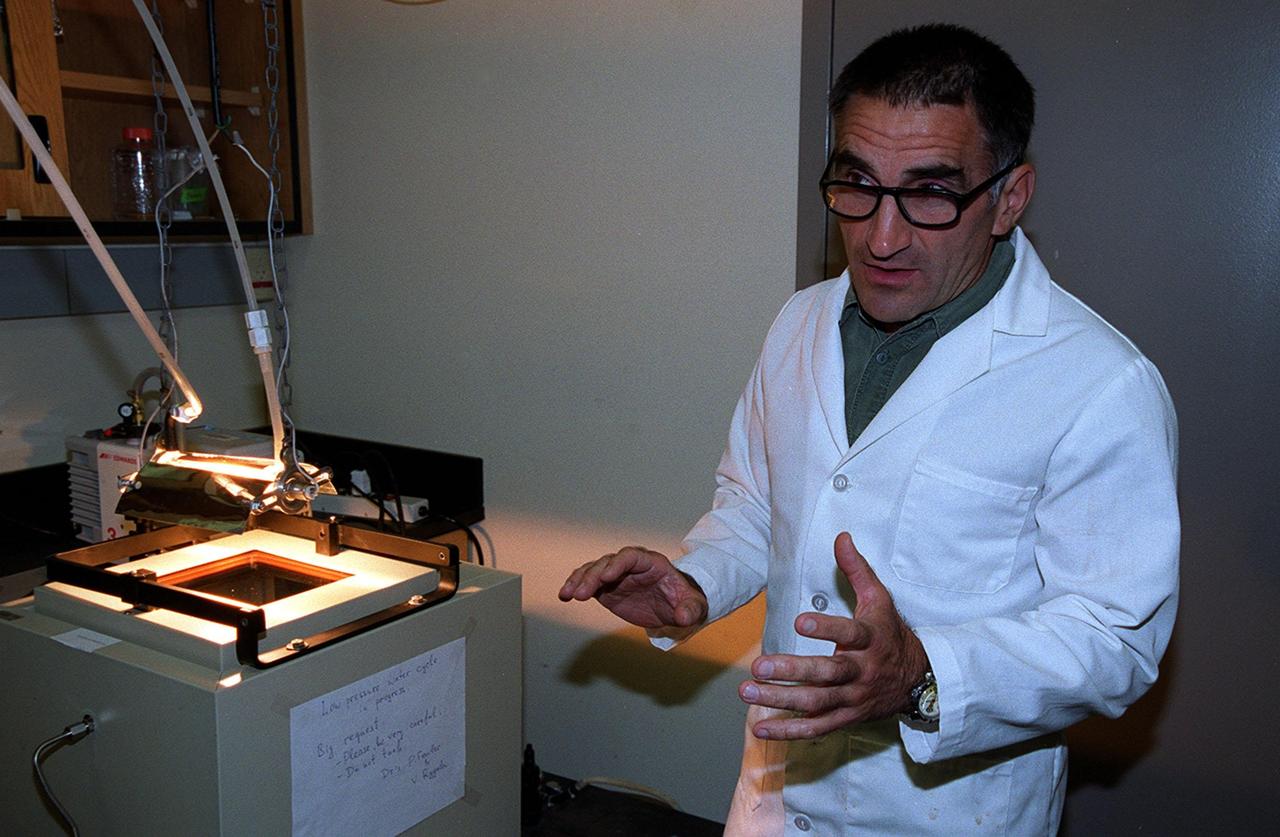
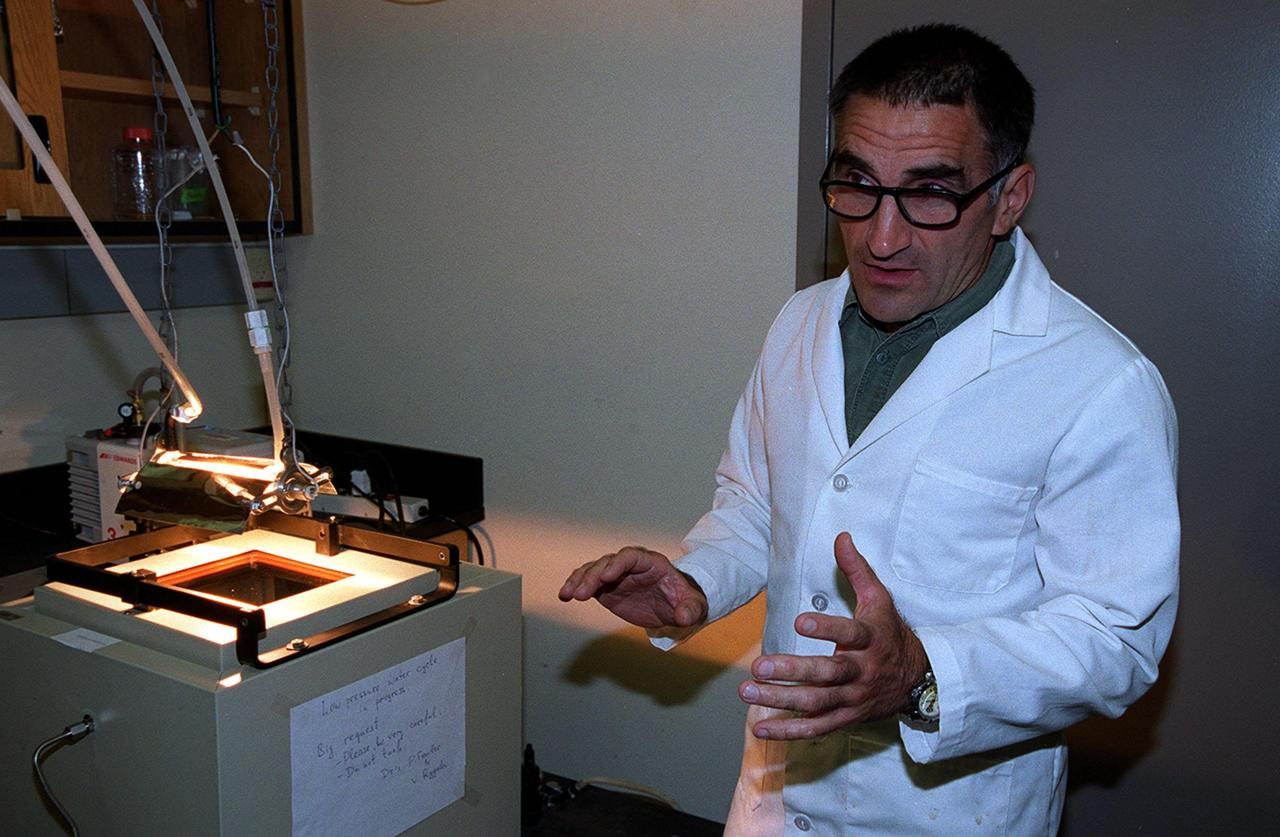
 Research scientist Vadim Rygalov describes a new low-pressure water-recycling experiment being designed to help simulate plant growth conditions on Mars. The research he is performing is one of many studies at the Biological Sciences Branch in the Spaceport Engineering and Technology Directorate at Kennedy Space Center. The branch's operations and research areas include life sciences Space Shuttle payloads, bioregenerative life-support for long-duration spaceflight and environmental/ecological stewardship
KSC00pp0692
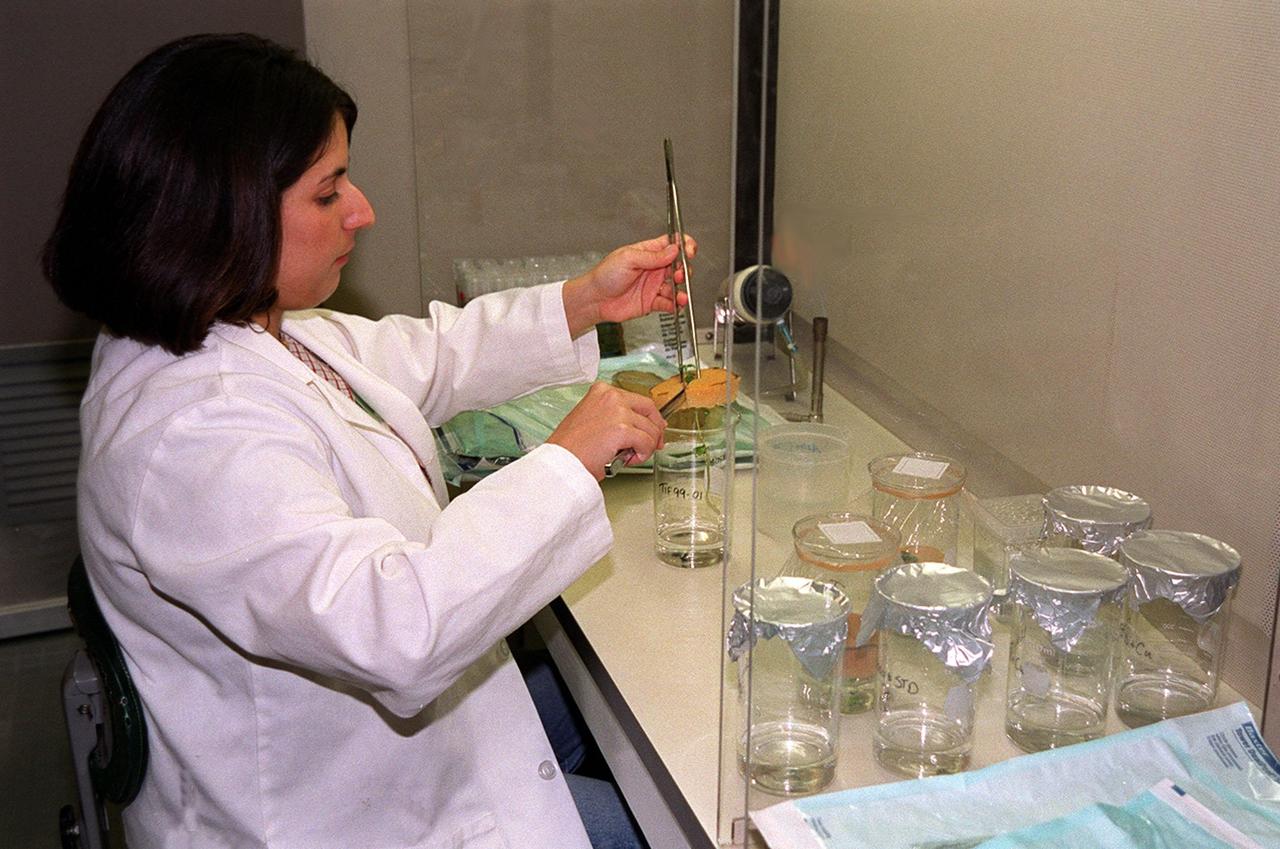
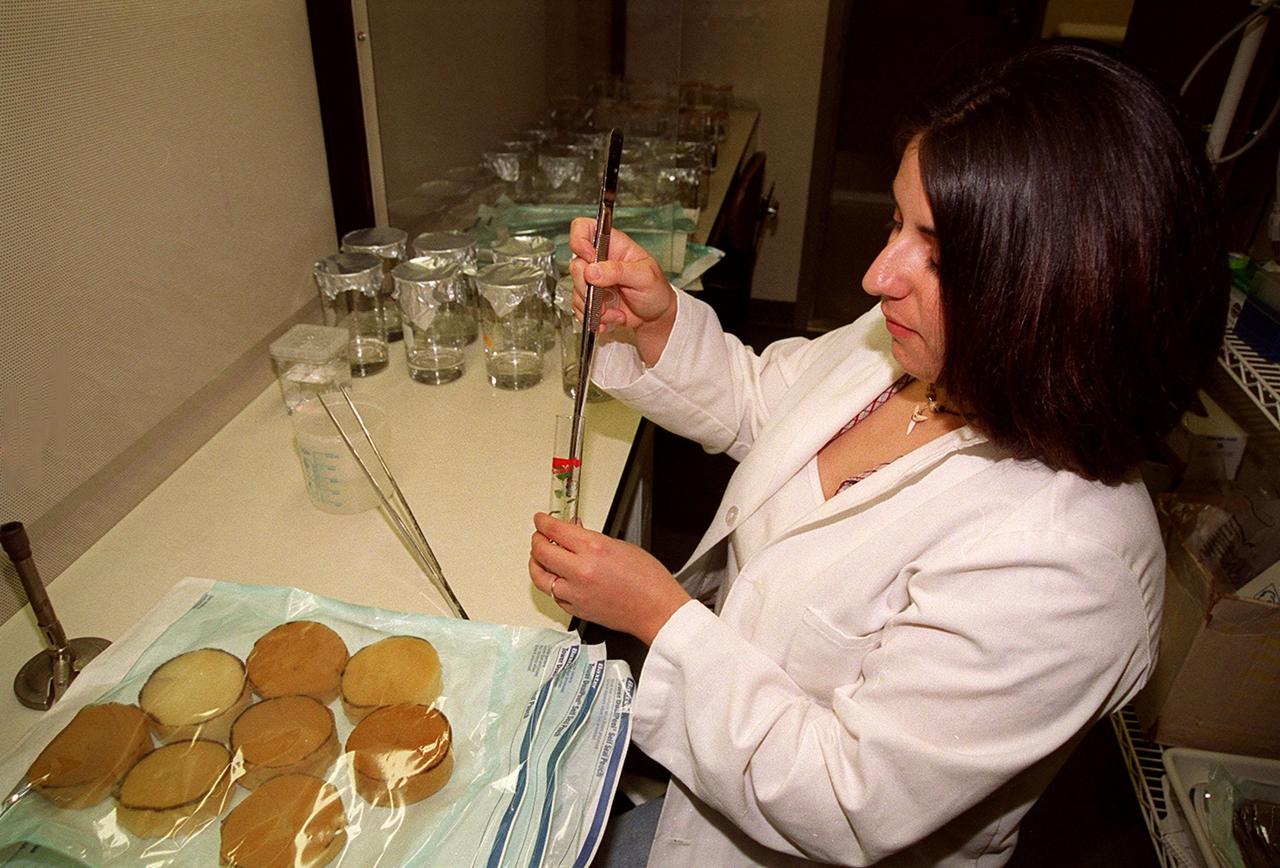
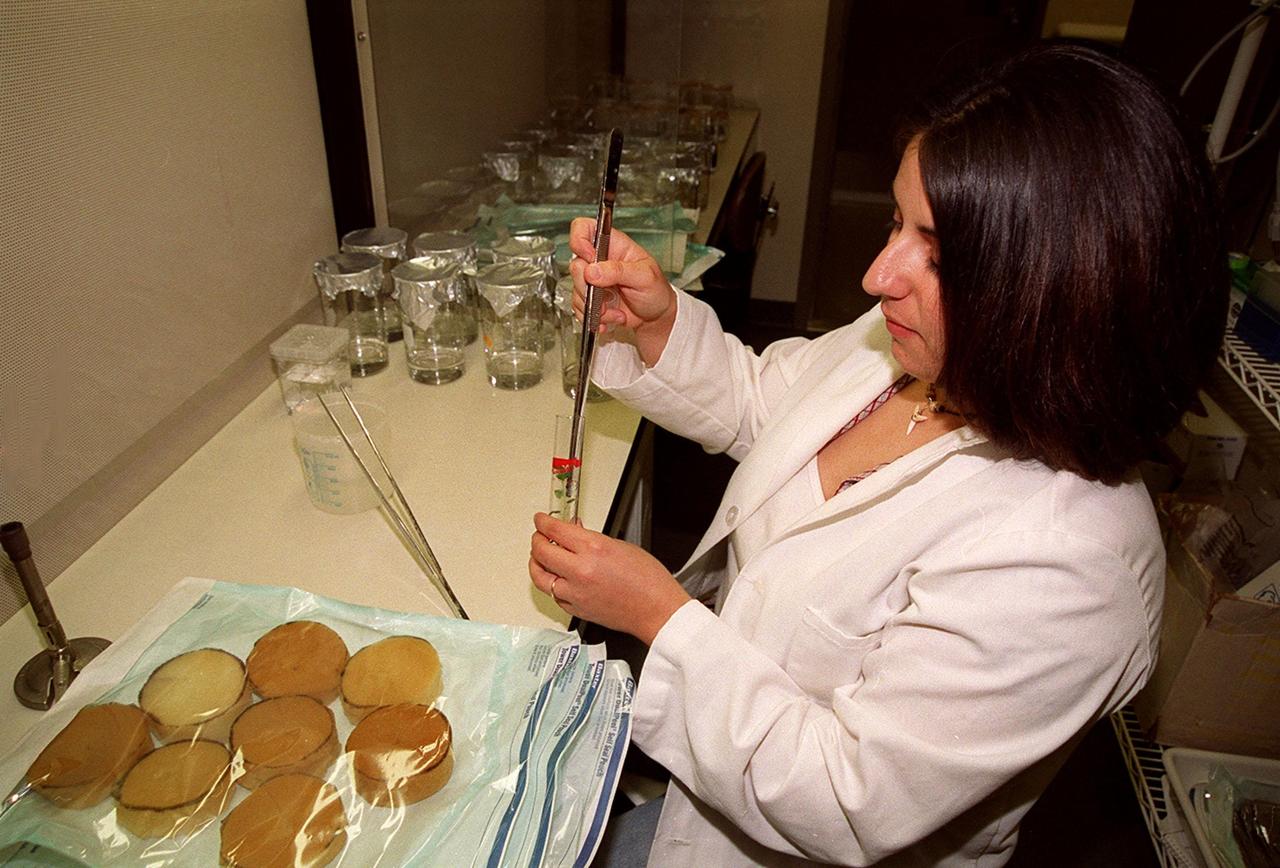
Research assistant Trisha Bruno performs an analysis on potato samples at Hangar L at the Cape Canaveral Air Force Station. The research she is performing is one of many studies at the Biological Sciences Branch in the Spaceport Engineering and Technology Directorate at Kennedy Space Center. The branch's operations and research areas include life sciences Space Shuttle payloads, bioregenerative life-support for long-duration spaceflight and environmental/ecological stewardship
KSC-00pp0694
 Research scientist Vadim Rygalov describes a new low-pressure water-recycling experiment being designed to help simulate plant growth conditions on Mars. The research he is performing is one of many studies at the Biological Sciences Branch in the Spaceport Engineering and Technology Directorate at Kennedy Space Center. The branch's operations and research areas include life sciences Space Shuttle payloads, bioregenerative life-support for long-duration spaceflight and environmental/ecological stewardship
KSC-00pp0692
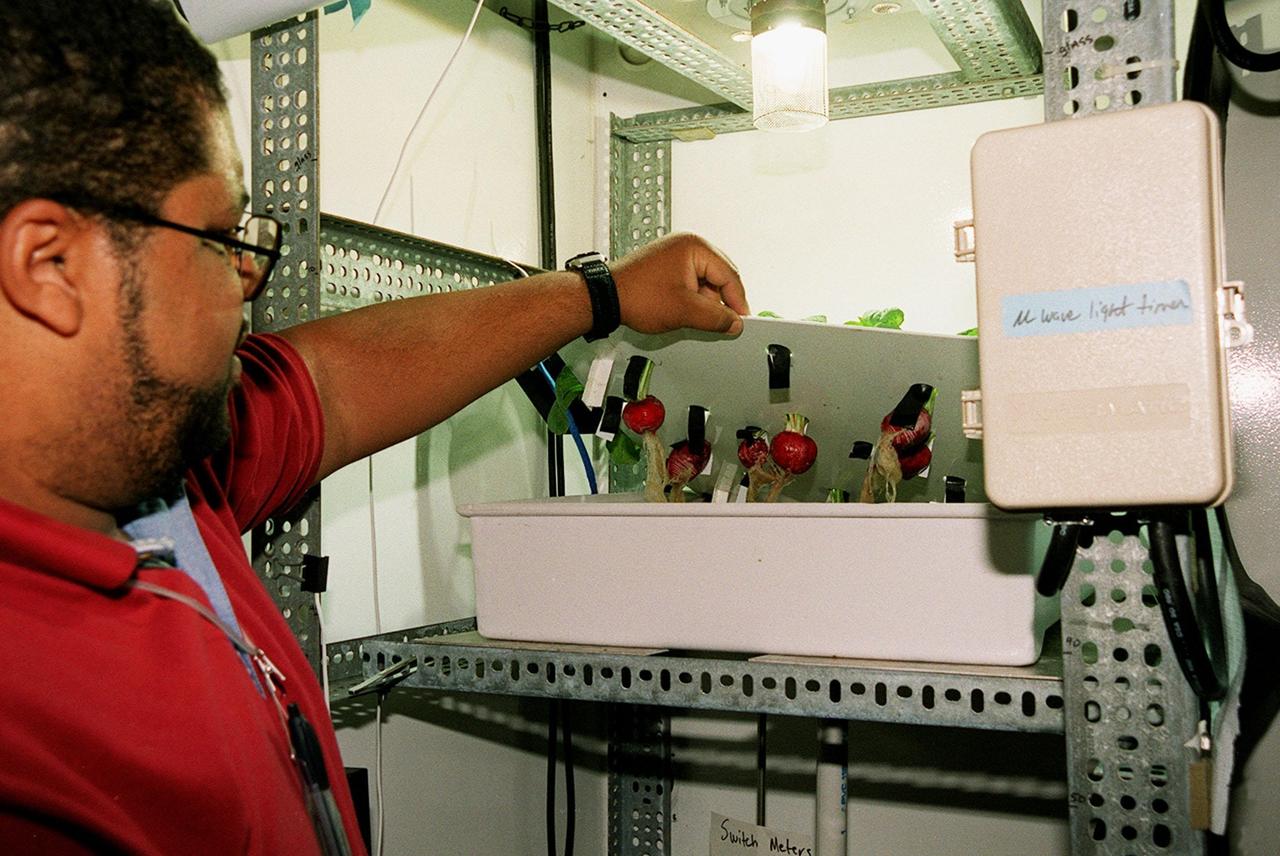
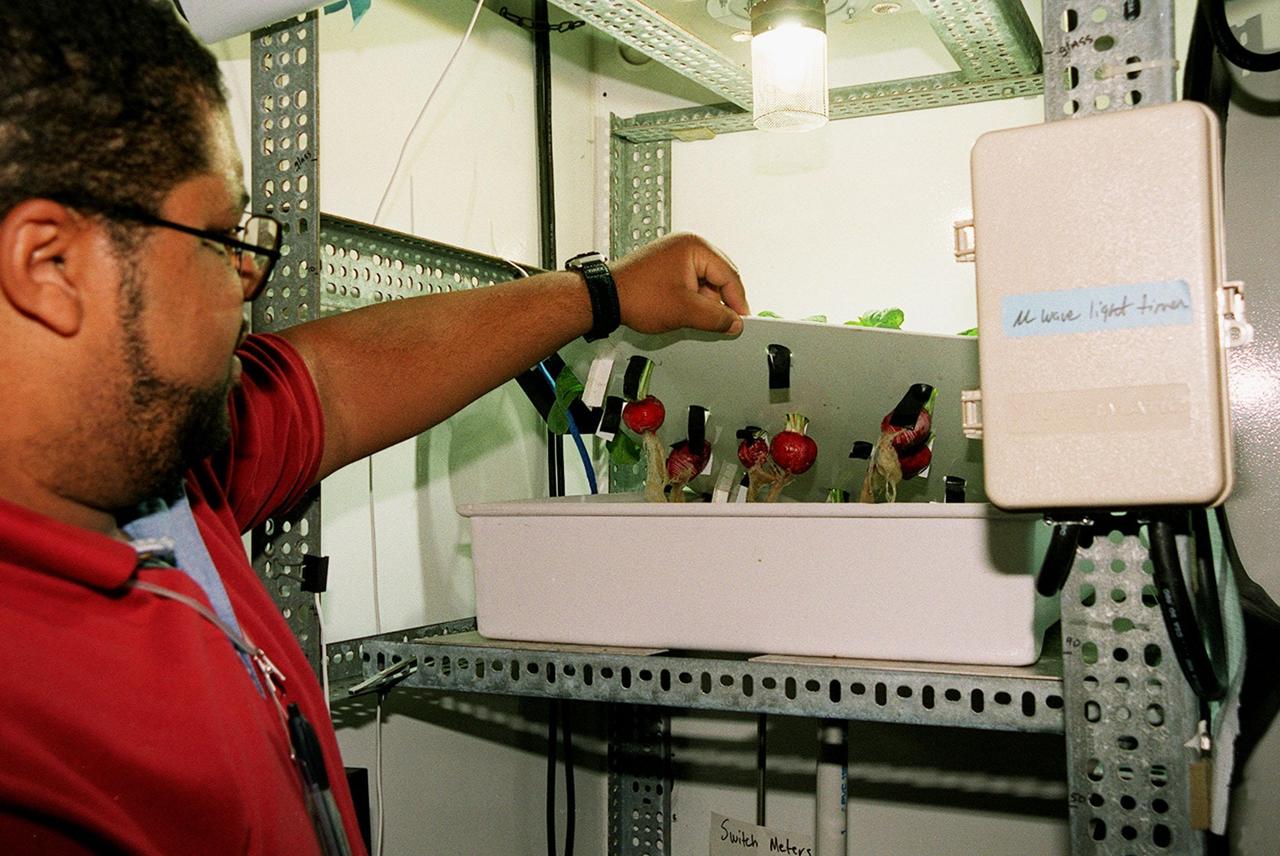
Research scientist Greg Goins monitors radish growth under a sulfur-microwave light at Hangar L at the Cape Canaveral Air Force Station. The research he is performing is one of many studies at the Biological Sciences Branch in the Spaceport Engineering and Technology Directorate at Kennedy Space Center. The branch's operations and research areas include life sciences Space Shuttle payloads, bioregenerative life-support for long-duration spaceflight and environmental/ecological stewardshi
KSC00pp0696
Research assistant Trisha Bruno performs an analysis on potato samples at Hangar L at the Cape Canaveral Air Force Station. The research she is performing is one of many studies at the Biological Sciences Branch in the Spaceport Engineering and Technology Directorate at Kennedy Space Center. The branch's operations and research areas include life sciences Space Shuttle payloads, bioregenerative life-support for long-duration spaceflight and environmental/ecological stewardship
KSC00pp0694
 Research assistant Trisha Bruno performs an analysis on potato samples at Hangar L at the Cape Canaveral Air Force Station. The research she is performing is one of many studies at the Biological Sciences Branch in the Spaceport Engineering and Technology Directorate at Kennedy Space Center. The branch's operations and research areas include life sciences Space Shuttle payloads, bioregenerative life-support for long-duration spaceflight and environmental/ecological stewardship
KSC-00pp0693
 Research assistant Trisha Bruno performs an analysis on potato samples at Hangar L at the Cape Canaveral Air Force Station. The research she is performing is one of many studies at the Biological Sciences Branch in the Spaceport Engineering and Technology Directorate at Kennedy Space Center. The branch's operations and research areas include life sciences Space Shuttle payloads, bioregenerative life-support for long-duration spaceflight and environmental/ecological stewardship
KSC00pp0693
Research scientist Greg Goins monitors radish growth under a sulfur-microwave light at Hangar L at the Cape Canaveral Air Force Station. The research he is performing is one of many studies at the Biological Sciences Branch in the Spaceport Engineering and Technology Directorate at Kennedy Space Center. The branch's operations and research areas include life sciences Space Shuttle payloads, bioregenerative life-support for long-duration spaceflight and environmental/ecological stewardshi
KSC-00pp0696
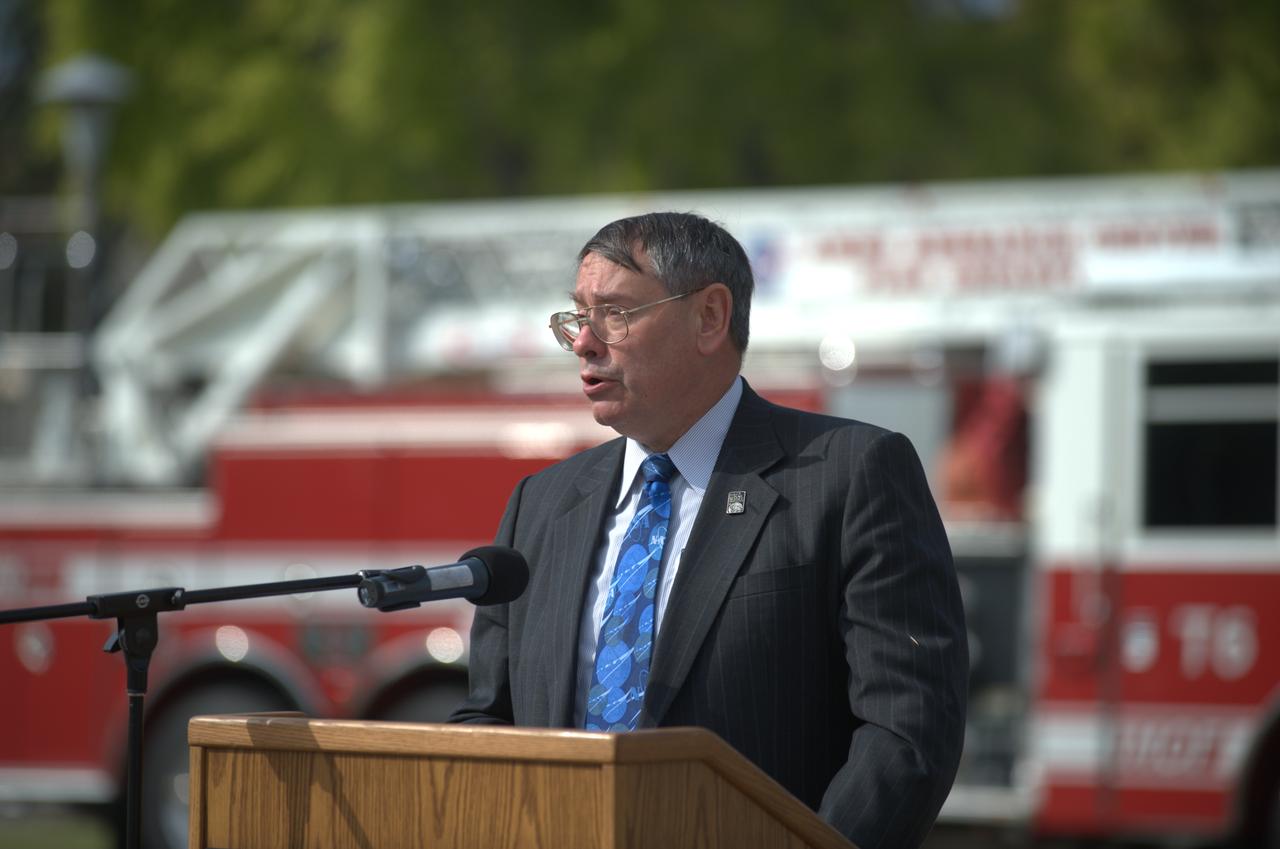
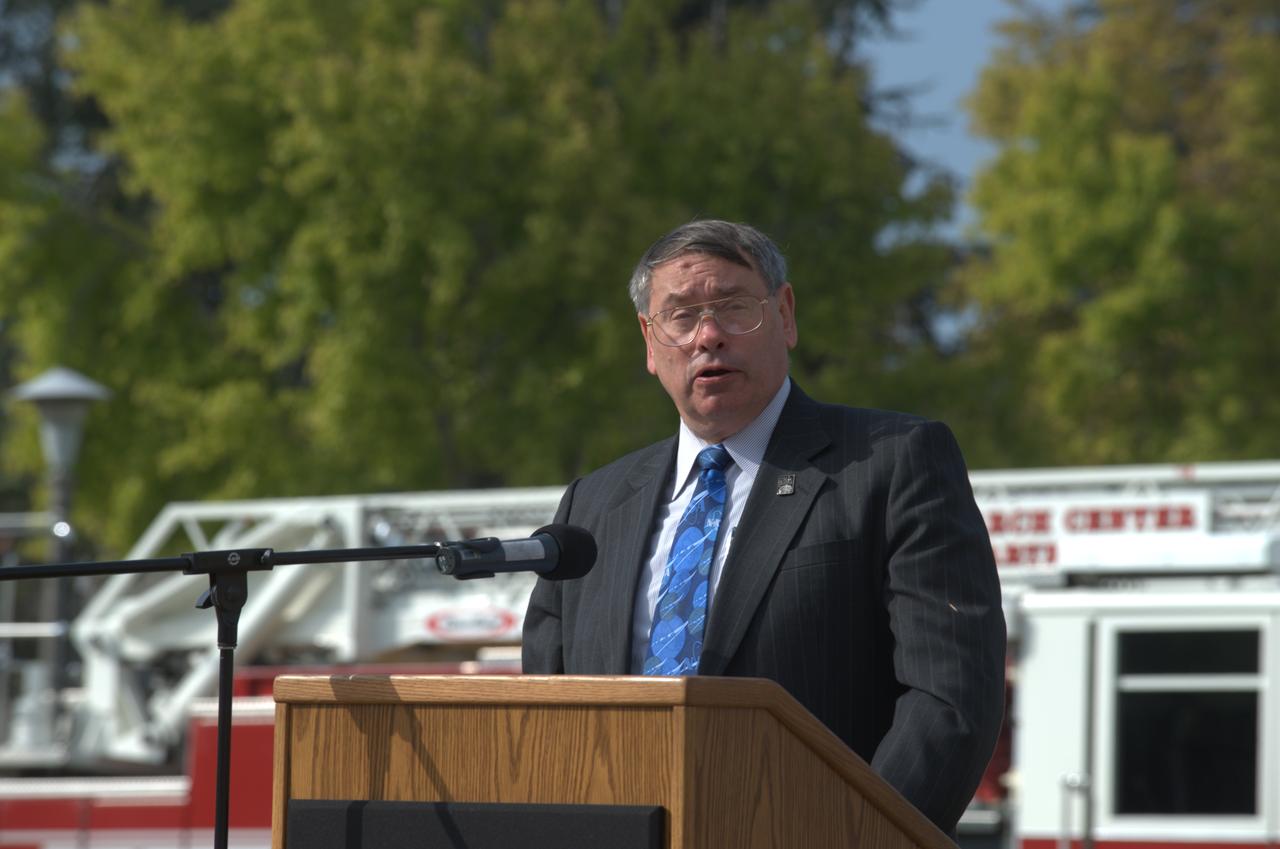
September 11th remembrance ceremony held in front of NASA Research Park Bldg-17 (Lunar Science Institute) hosted by the American Legion, Post 881, Moffett Field.  Remarks by NASA Ames Center Director Pete Worden
ARC-2008-ACD08-0200-021
September 11th remembrance ceremony held in front of NASA Research Park Bldg-17 (Lunar Science Institute) hosted by the American Legion, Post 881, Moffett Field.  Remarks by NASA Ames Center Director Pete Worden
ARC-2008-ACD08-0200-020
Yaítza Luna-Cruz, a program executive in the Earth Science Division of NASA’s Science Mission Directorate and program manager for the Early Career Research Program, speaks to the Climate Change Research Initiative (CCRI) cohort, Wednesday, Aug. 7, 2024, at the Mary W. Jackson NASA Headquarters building in Washington, DC. The Earth Science Division’s Early Career Research Program’s Climate Change Research Initiative (CCRI) is a year-long STEM engagement and experiential learning opportunity for educators and students from high school to graduate level. Photo Credit: (NASA/Joel Kowsky)
NASA Early Career Research Program - Climate Change Research Ini
Center Director Chris Scolese visits displays at Explore@NASAGoddard celebrates the 25th anniversary of the launch of the Hubble Space Telescope. All areas of Goddard’s research – Earth science, heliophysics, planetary science, astrophysics, and engineering and technology – will be presented, as each discipline plays a critical part in NASA's ongoing journey to reach new heights.
Center Director Chris Scolese visits displays at Explore@NASAGod
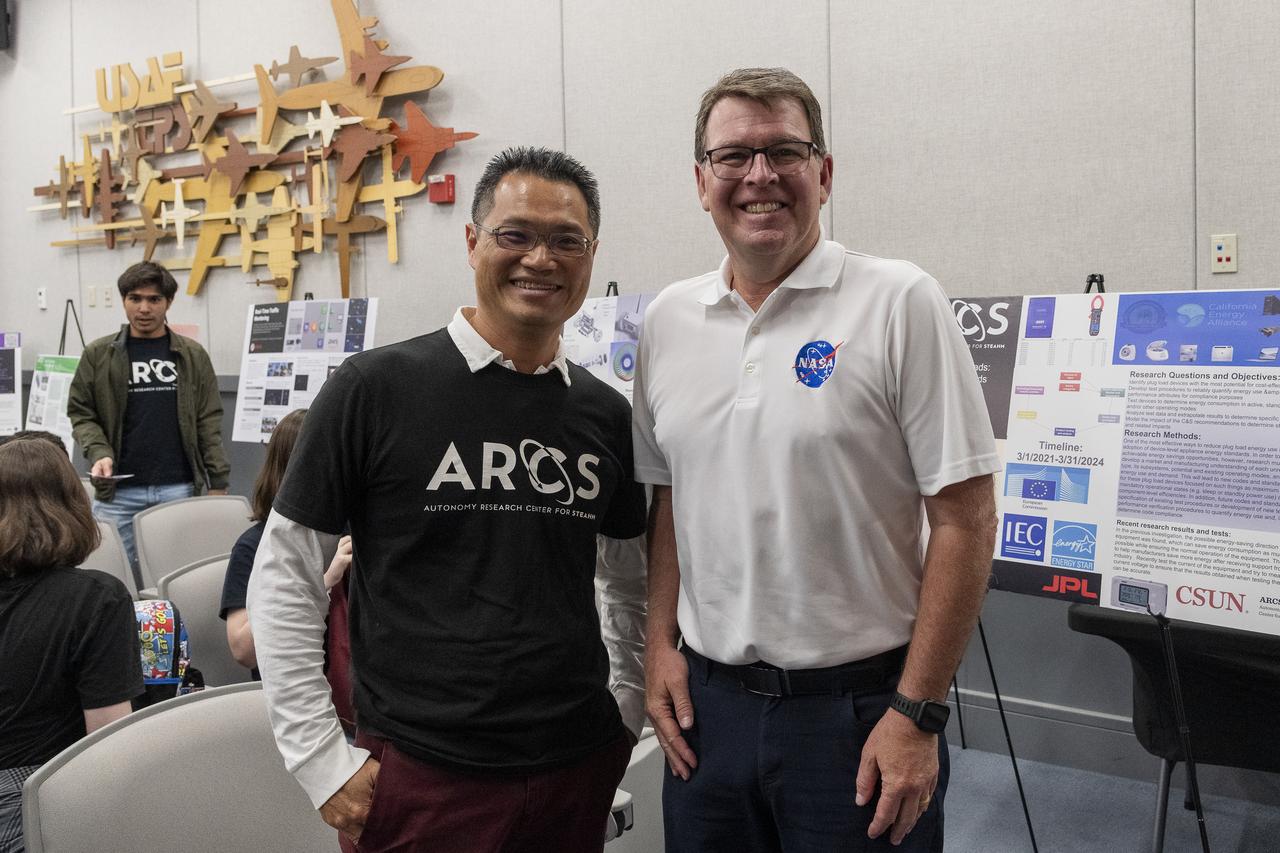
Nhut Ho, director of the NASA-sponsored Autonomy Research Center for science, technology, engineering, entrepreneurship, arts, humanities, and mathematics at California State University, Northridge, left, spoke to Brad Flick, center director at NASA’s Armstrong Flight Research Center in Edwards, California. The men were attending a student poster event, where students showcased their technologies and answered questions May 23 at the Air Force Test Pilot School auditorium on Edwards Air Force Base, California.
California Students Aim for NASA Support to Develop Technology
National Weather Service Director Louis Uccellini and deputy director Mary Erickson hear from Short-term Prediction Research and Transition (SPoRT) team members during a visit Sept. 11 to the National Space Science and Technology Center. Managed by NASA’s Marshall Space Flight Center, SPoRT is  a project to transition unique Earth observations and research capabilities to the operational weather community to improve short-term forecasts on a regional scale.
NWS Director Louis Uccellini Visit to NSSTC
National Weather Service Director Louis Uccellini and deputy director Mary Erickson hear from Short-term Prediction Research and Transition (SPoRT) team members during a visit Sept. 11 to the National Space Science and Technology Center. Managed by NASA’s Marshall Space Flight Center, SPoRT is  a project to transition unique Earth observations and research capabilities to the operational weather community to improve short-term forecasts on a regional scale.
NWS Director Louis Uccellini Visit to NSSTC
National Weather Service Director Louis Uccellini and deputy director Mary Erickson hear from Short-term Prediction Research and Transition (SPoRT) team members during a visit Sept. 11 to the National Space Science and Technology Center. Managed by NASA’s Marshall Space Flight Center, SPoRT is  a project to transition unique Earth observations and research capabilities to the operational weather community to improve short-term forecasts on a regional scale.
NWS Director Louis Uccellini Visit to NSSTC
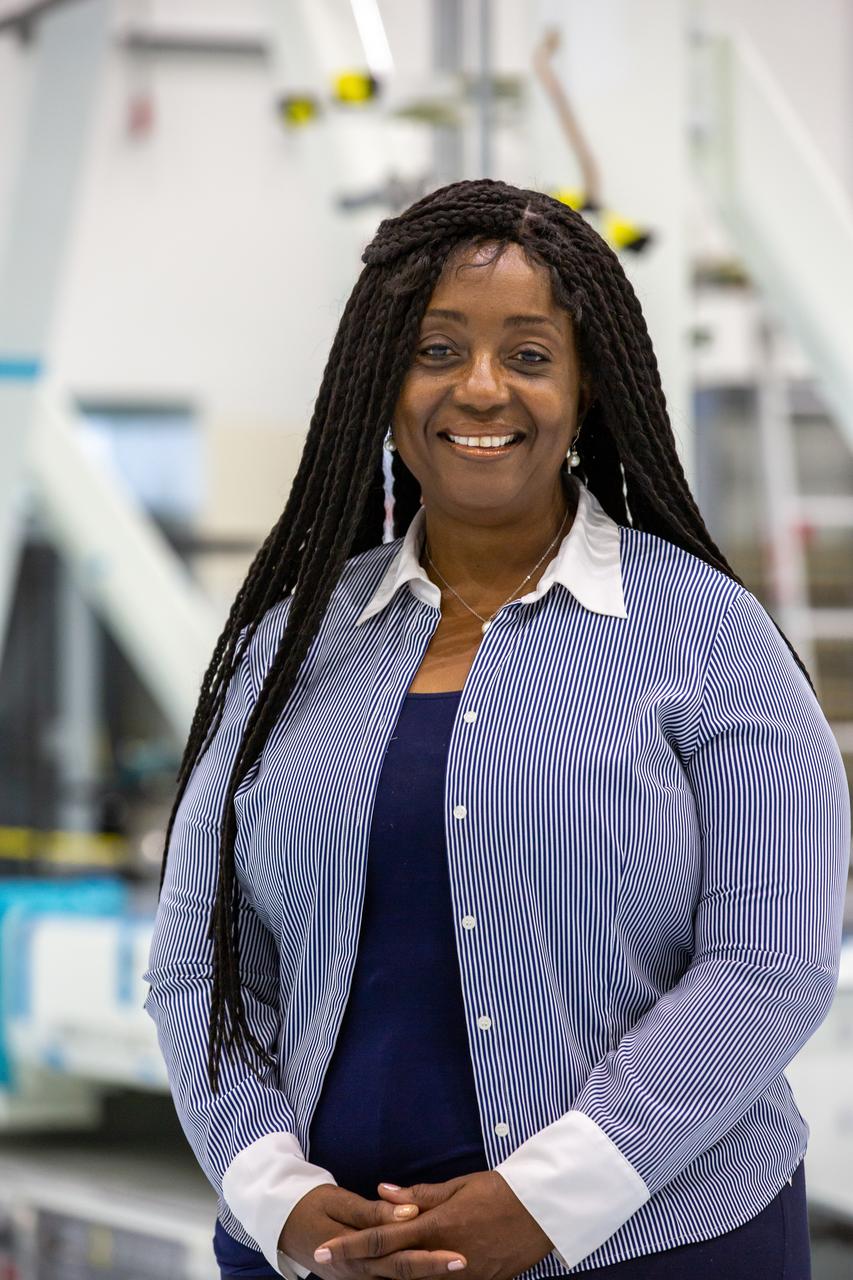
Barbara L. Brown, director of Exploration Research and Technology Programs at NASA's Kennedy Space Center in Florida, poses for a portrait inside the spaceport’s Space Station Processing Facility High Bay on Aug. 5, 2022. Brown leads processing, assembly, integration, and test of payloads and flight science experiments bound for the International Space Station. Additionally, Brown serves as Kennedy’s lead for the formulation of concepts to support uncrewed operations on the Moon and Mars, directing research, development, testing, and demonstration of flight systems and technologies to advance exploration and space systems. The programs and projects under her purview span NASA’s Exploration Systems, Science, Space Operations, and Space Technology mission directorates.
Portraits of Barbara Brown
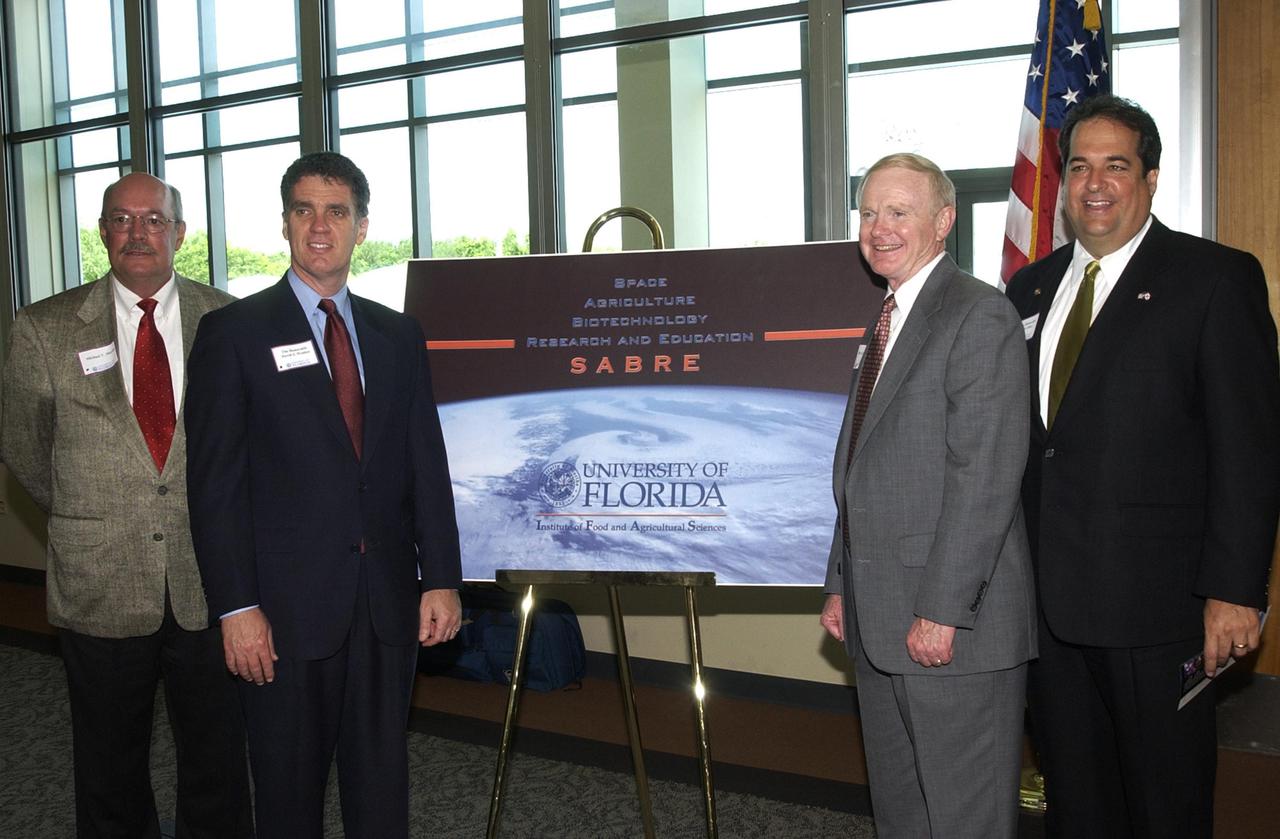
KENNEDY SPACE CENTER, FLA. -- At the opening ceremony for the new program known as SABRE, Space Agricultural Biotechnology Research and Education, key participants gather around the SABRE poster.  From left are Robert Ferl, professor in the horticultural sciences department and assistant director of the University of Florida Biotechnology Program, who will direct and be responsible for coordinating the research and education; William Knott, senior scientist in the NASA biological sciences office; U.S. Representative Dave Weldon; Center Director Roy D. Bridges Jr.; and Florida Representative Bob Allen. Involving UF and NASA,  SABRE will focus on the discovery, development and application of the biological aspects of advanced life support strategies. The program will include faculty from UF's Institute of Food and Agricultural Sciences, who will be located at both KSC - in the state-owned Space Experiment Research and Processing Laboratory (SERPL) being built there - and UF in Gainesville
KSC-02pd0621
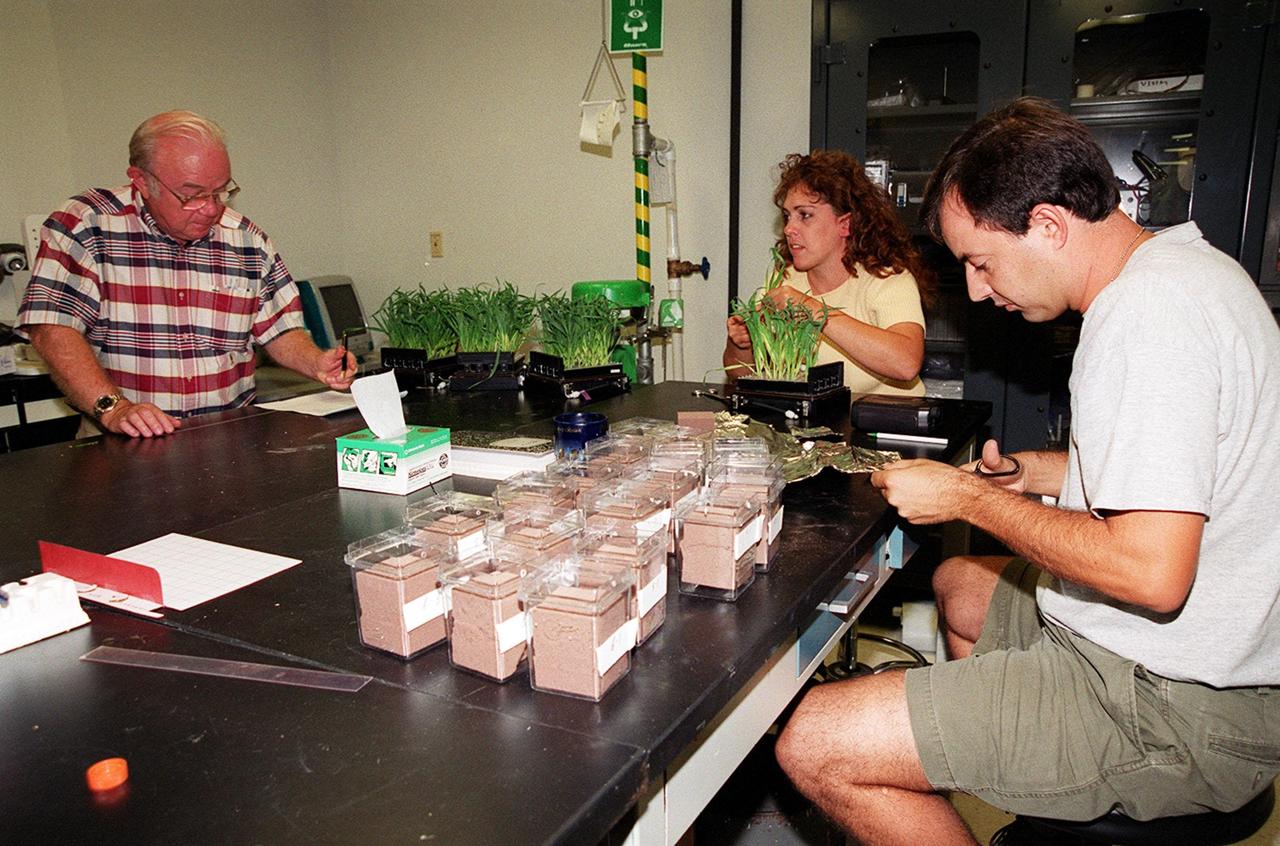
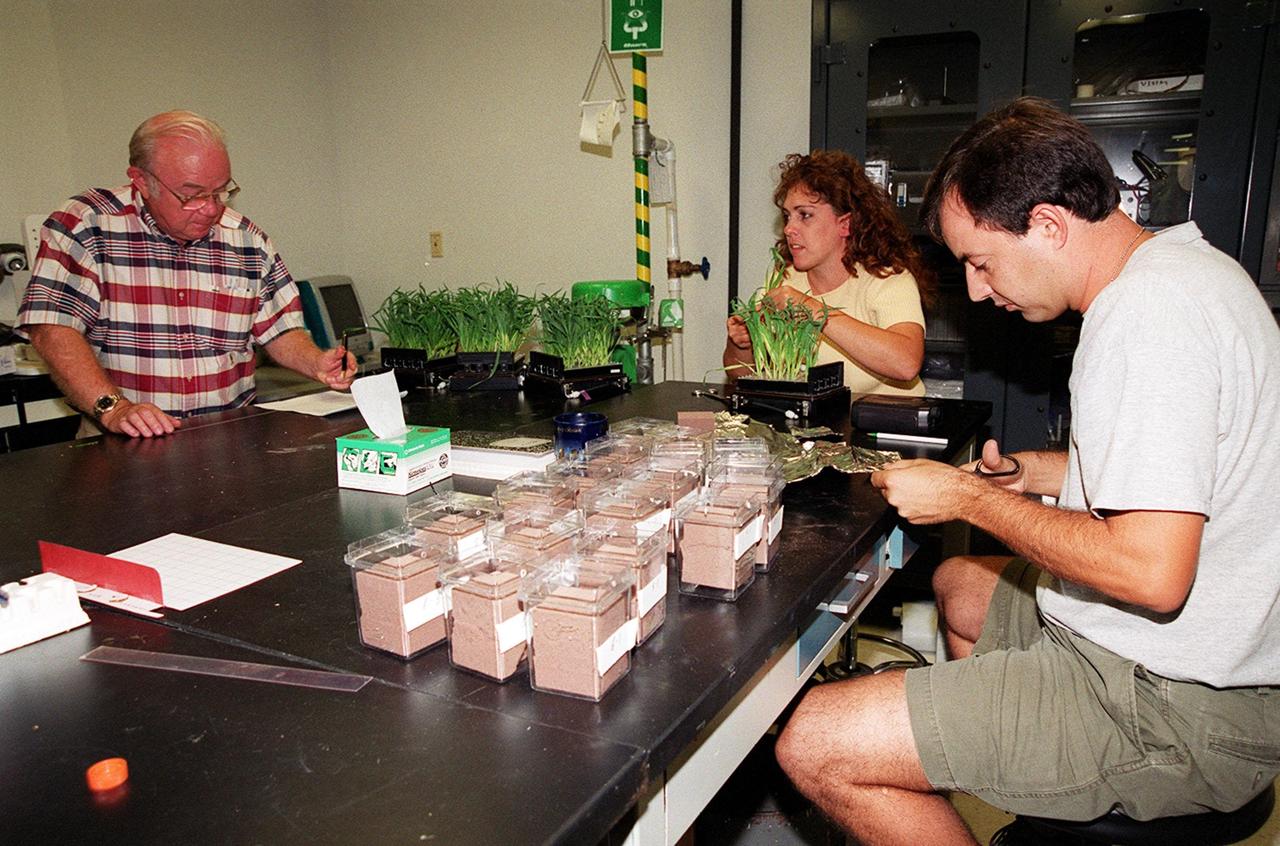
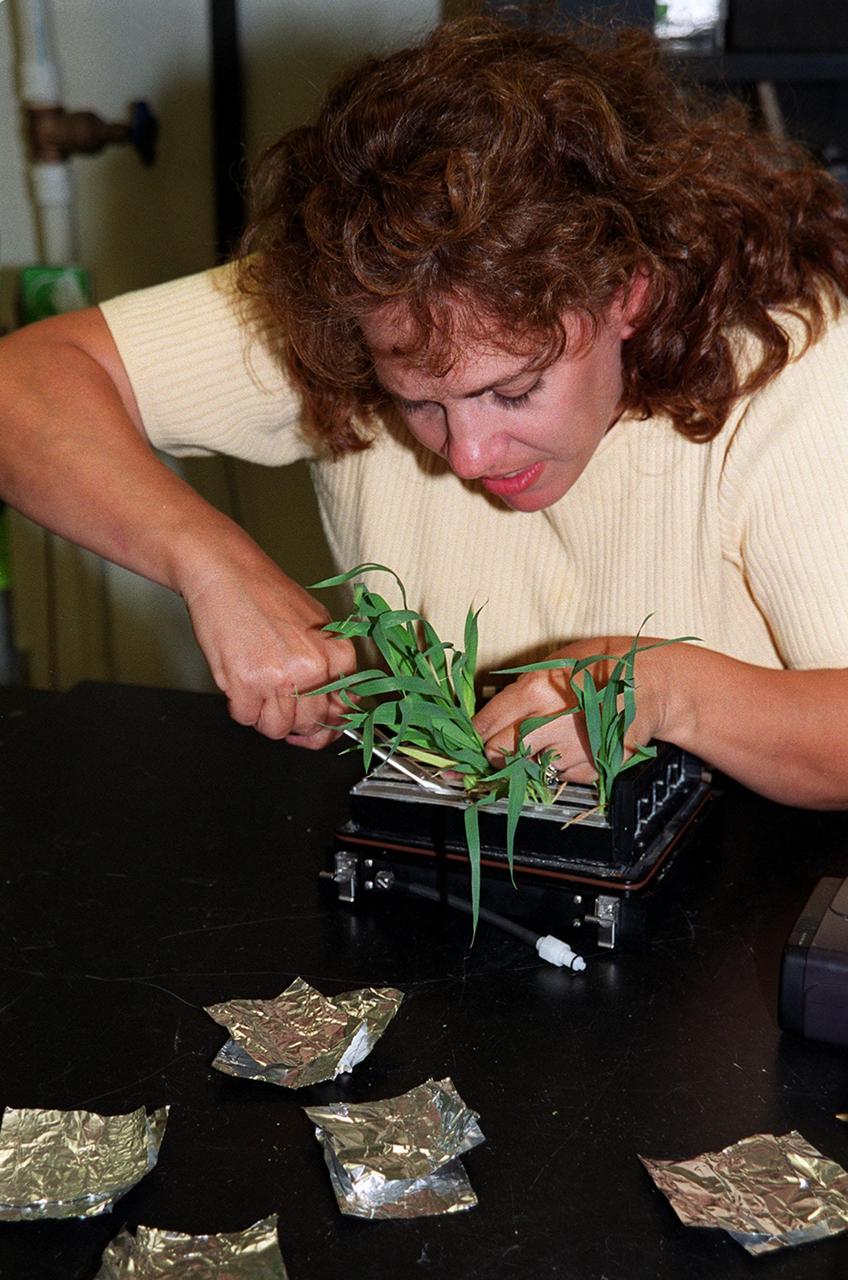
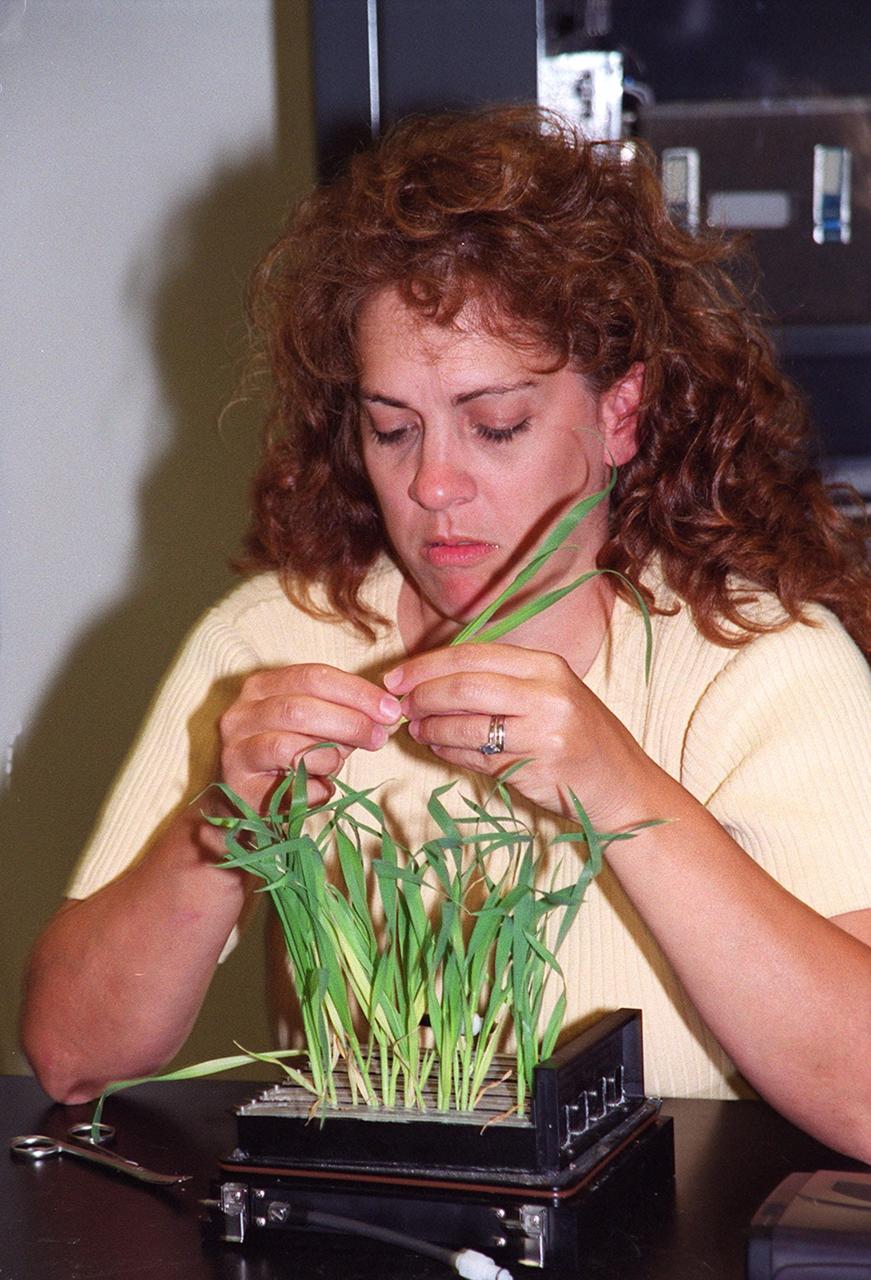
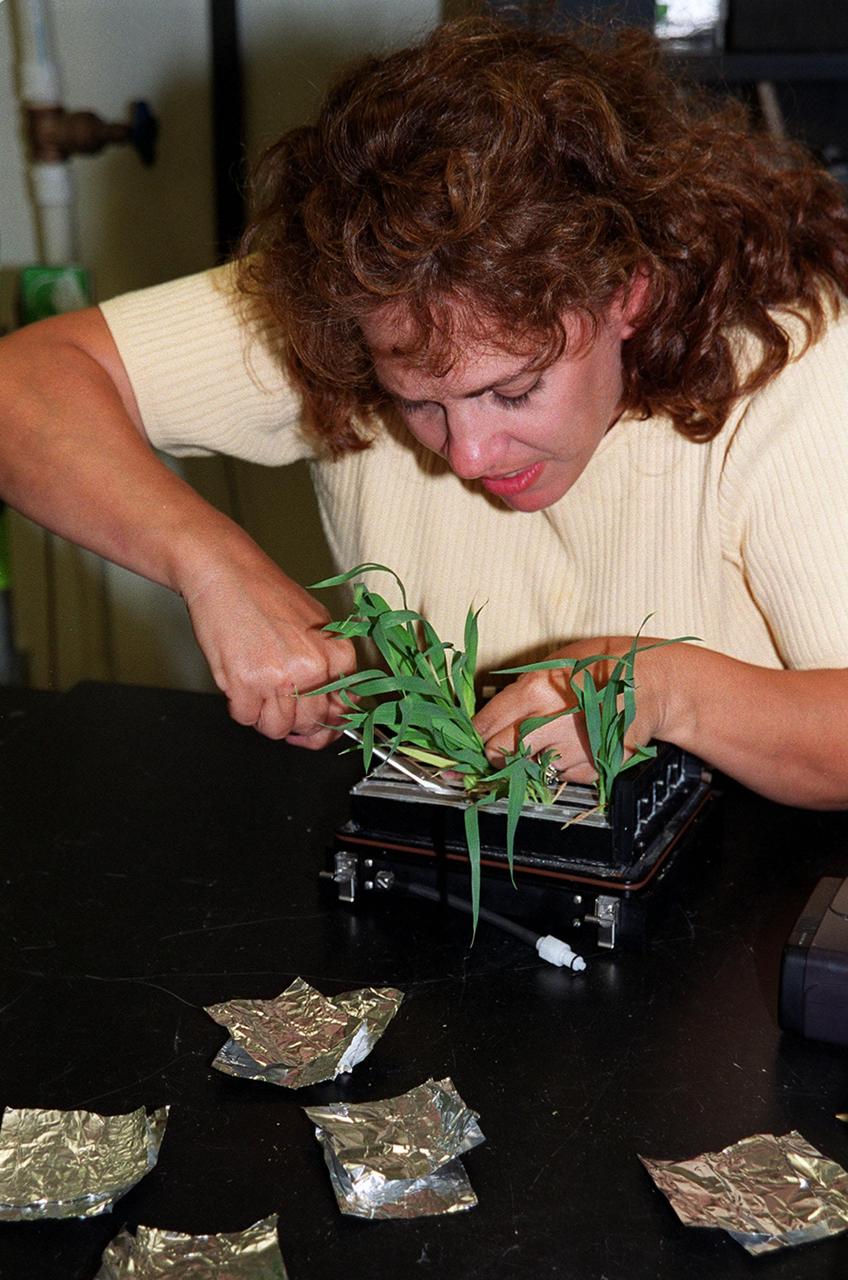
Researchers work with wheat samples that are part of ground testing for the first International Space Station plant experiment, scheduled to fly in October 2001. From left are research scientist Oscar Monje and research technicians Lisa Ruffa and Ignacio Eraso. The payload process testing they are performing is one of many studies at the Biological Sciences Branch in the Spaceport Engineering and Technology Directorate at Kennedy Space Center. The branch's operations and research areas include life sciences Space Shuttle payloads, bioregenerative life-support for long-duration spaceflight and environmental/ecological stewardship
KSC00pp0697
Director of the Space Weather Program, Jamie Favors, speaks about the Space Weather Pilot Project, Tuesday, August 6, 2024, at the Mary W. Jackson NASA Headquarters building in Washington. Every summer early career researchers from NASA’s DEVELOP National Program come to NASA Headquarters and present their research projects. DEVELOP is a training and development program where early career researchers work on Earth science projects, mentored by science advisors from NASA and partner agencies, and provide research results to local communities. Photo Credit: (NASA/Aubrey Gemignani)
Develop Program Event and Poster Session
Researchers work with wheat samples that are part of ground testing for the first International Space Station plant experiment, scheduled to fly in October 2001. From left are research scientist Oscar Monje and research technicians Lisa Ruffa and Ignacio Eraso. The payload process testing they are performing is one of many studies at the Biological Sciences Branch in the Spaceport Engineering and Technology Directorate at Kennedy Space Center. The branch's operations and research areas include life sciences Space Shuttle payloads, bioregenerative life-support for long-duration spaceflight and environmental/ecological stewardship
KSC-00pp0697
Director of the Space Weather Program, Jamie Favors, speaks about the Space Weather Pilot Project, Tuesday, August 6, 2024, at the Mary W. Jackson NASA Headquarters building in Washington. Every summer early career researchers from NASA’s DEVELOP National Program come to NASA Headquarters and present their research projects. DEVELOP is a training and development program where early career researchers work on Earth science projects, mentored by science advisors from NASA and partner agencies, and provide research results to local communities. Photo Credit: (NASA/Aubrey Gemignani)
Develop Program Event and Poster Session
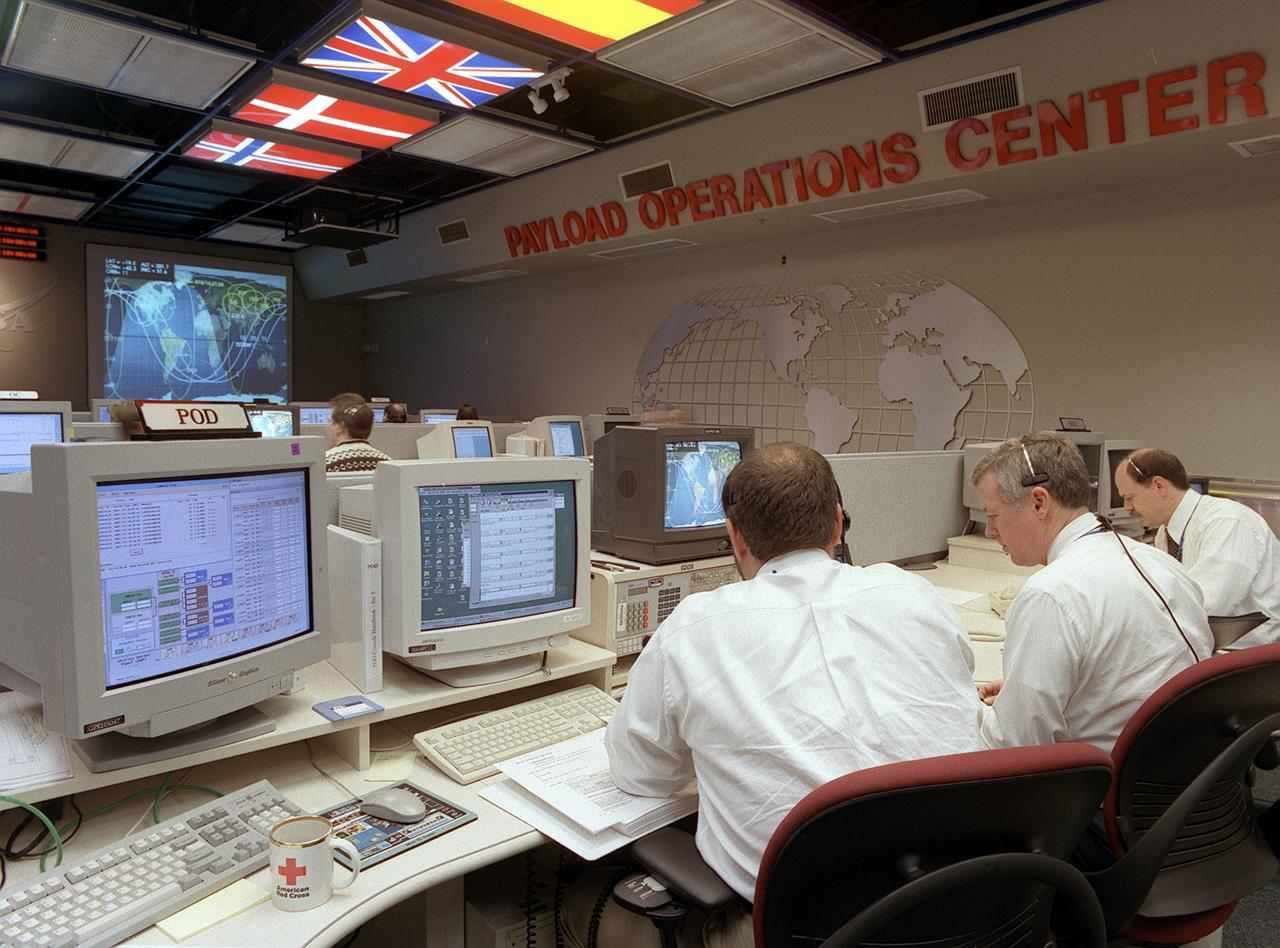
The Payload Operations Center (POC) is the science command post for the International Space Station (ISS). Located at NASA's Marshall Space Flight Center in Huntsville, Alabama, it is the focal point for American and international science activities aboard the ISS. The POC's unique capabilities allow science experts and researchers around the world to perform cutting-edge science in the unique microgravity environment of space. The POC is staffed around the clock by shifts of payload flight controllers. At any given time, 8 to 10 flight controllers are on consoles, operating, plarning for, and controlling various systems and payloads. This photograph shows the Payload Operations Director (POD) at work. The POD is the leader of the POC flight control team. The Director guides all payload activities in coordination with Mission Control at Johnson Space Center at Houston, Texas, the Station crew, the international partners, and other research facilities.
International Space Station (ISS)
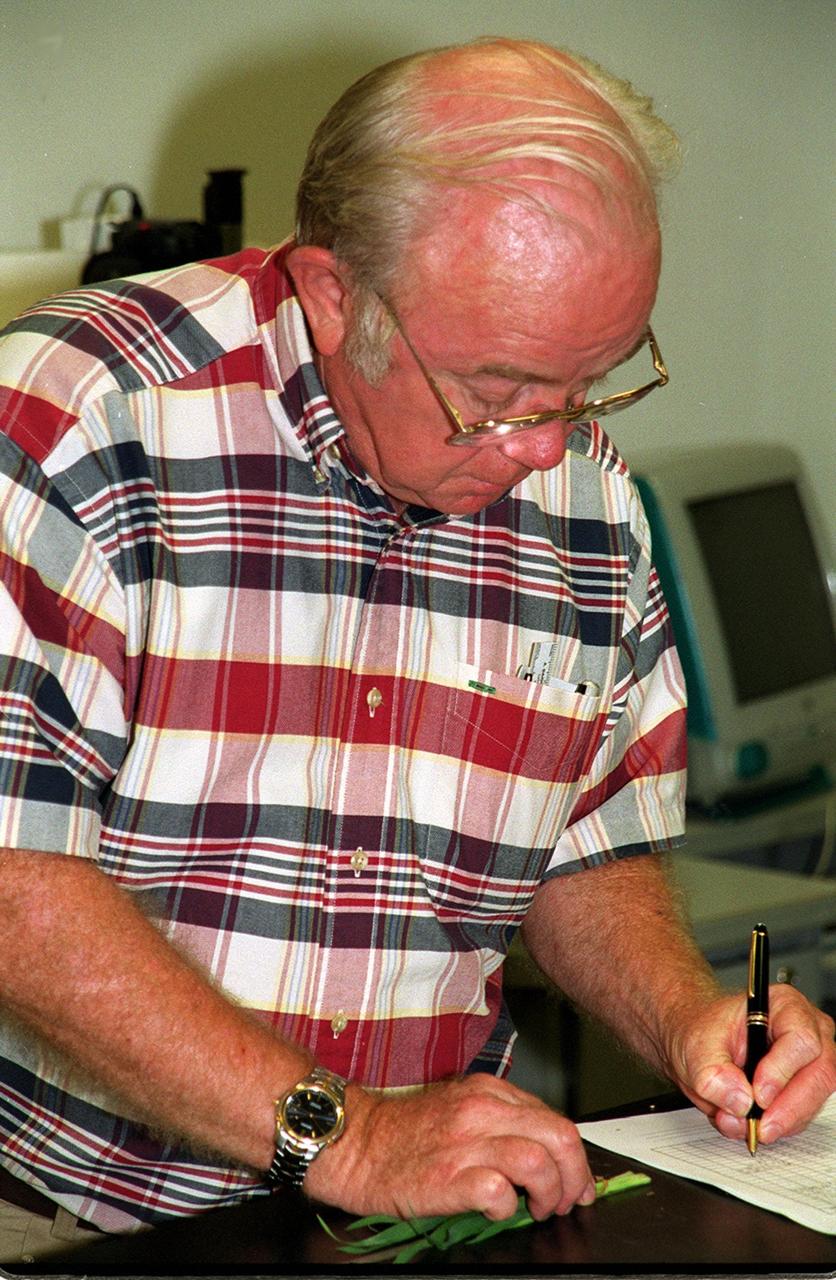
 Research scientist Oscar Monje records data associated with ground testing for the first International Space Station plant experiment, scheduled to fly in October 2001. The payload process testing is one of many studies being performed at the Biological Sciences Branch in the Spaceport Engineering and Technology Directorate at Kennedy Space Center. The branch's operations and research areas include life sciences Space Shuttle payloads, bioregenerative life-support for long-duration spaceflight and environmental/ecological stewardship
KSC00pp0690
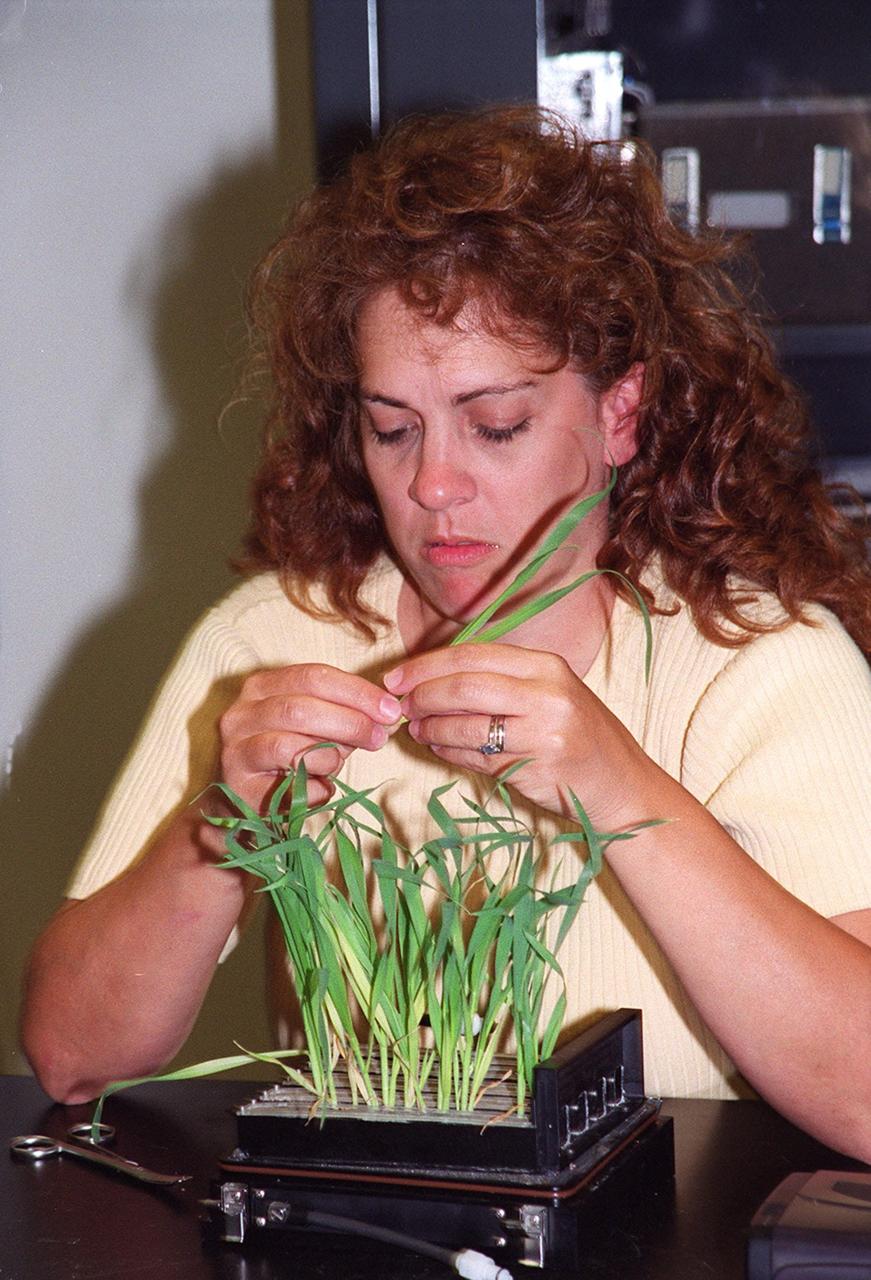
Research technician Lisa Ruffa works with a wheat sample that is part of ground testing for the first International Space Station plant experiment, scheduled to fly in October 2001. The payload process testing is one of many studies being performed at the Biological Sciences Branch in the Spaceport Engineering and Technology Directorate at Kennedy Space Center. The branch's operations and research areas include life sciences Space Shuttle payloads, bioregenerative life-support for long-duration spaceflight and environmental/ecological stewardship
KSC00pp0698
 Research technician Lisa Ruffa works with a wheat sample that is part of ground testing for the first International Space Station plant experiment, scheduled to fly in October 2001. The payload process testing is one of many studies being performed at the Biological Sciences Branch in the Spaceport Engineering and Technology Directorate at Kennedy Space Center. The branch's operations and research areas include life sciences Space Shuttle payloads, bioregenerative life-support for long-duration spaceflight and environmental/ecological stewardship
KSC00pp0689
Research technician Lisa Ruffa works with a wheat sample that is part of ground testing for the first International Space Station plant experiment, scheduled to fly in October 2001. The payload process testing is one of many studies being performed at the Biological Sciences Branch in the Spaceport Engineering and Technology Directorate at Kennedy Space Center. The branch's operations and research areas include life sciences Space Shuttle payloads, bioregenerative life-support for long-duration spaceflight and environmental/ecological stewardship
KSC-00pp0698
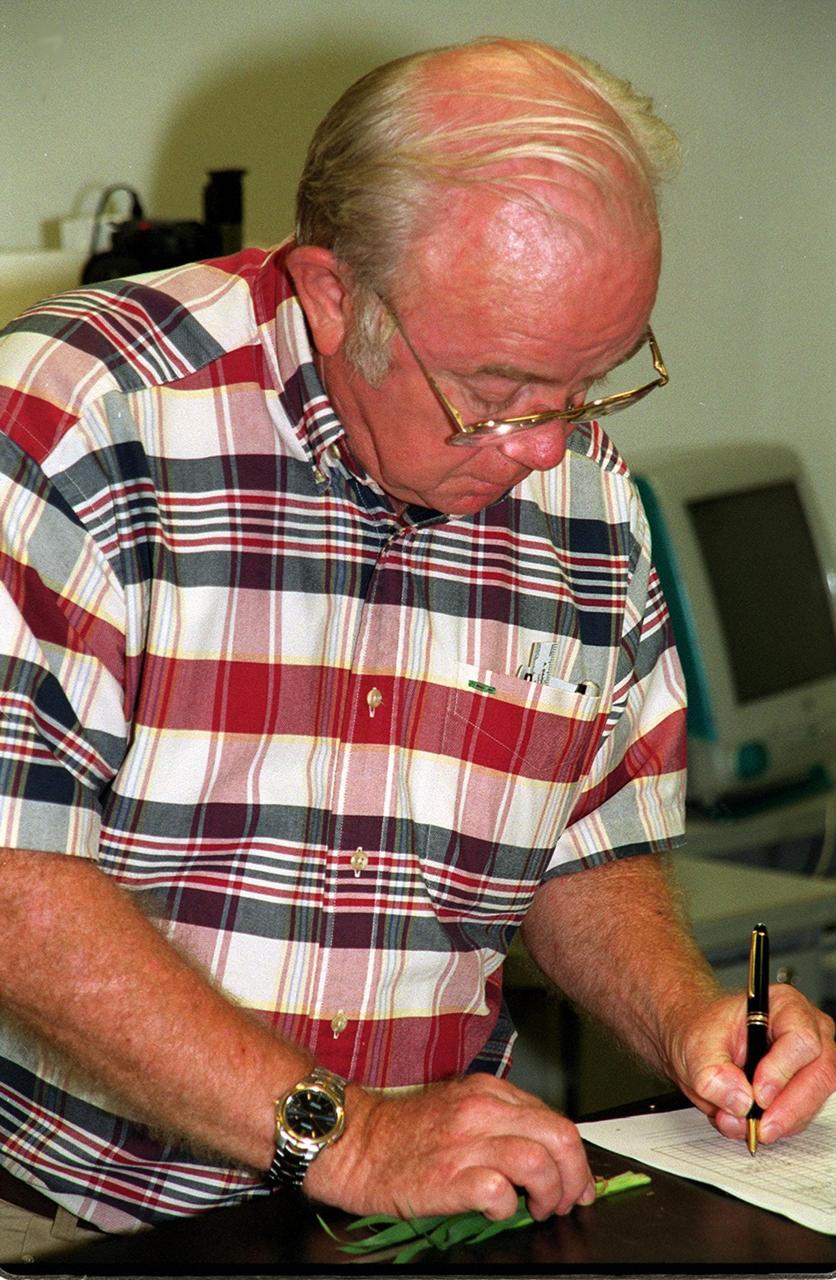
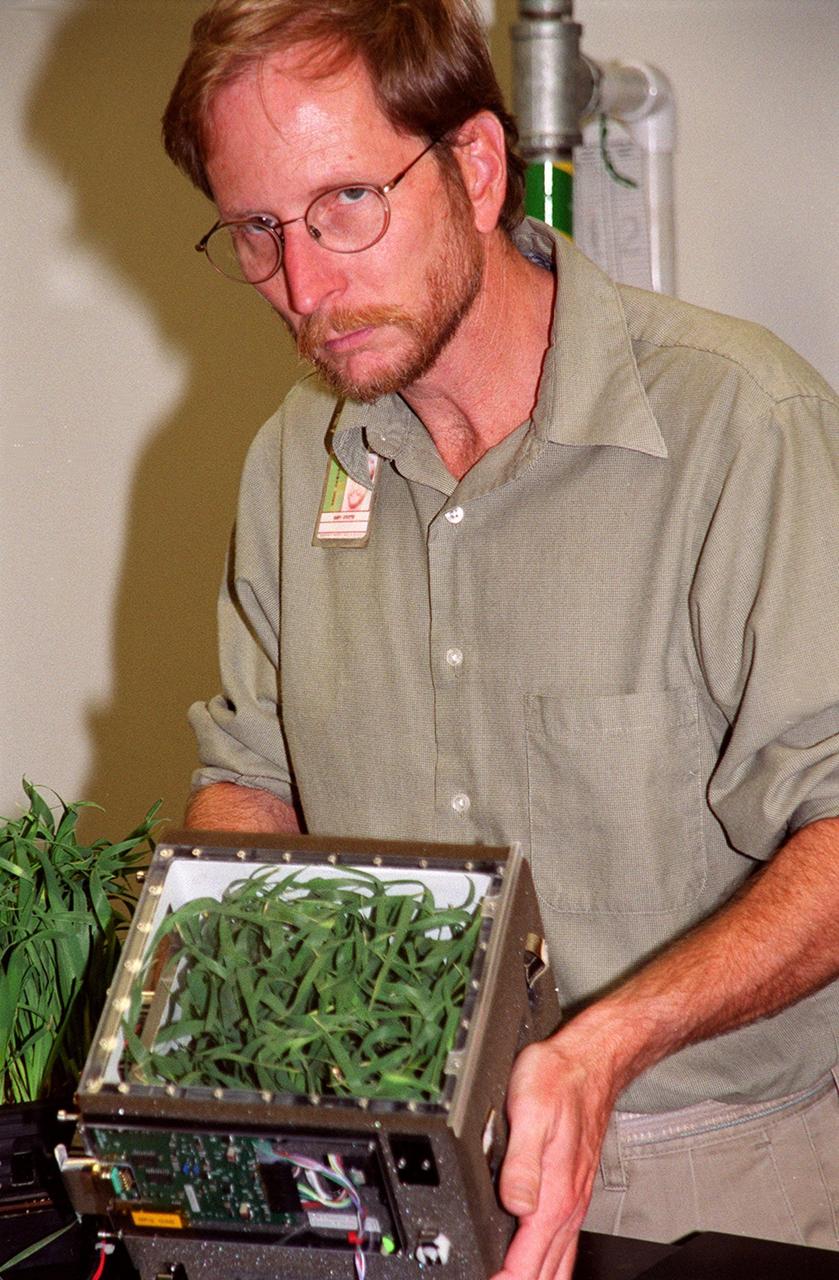
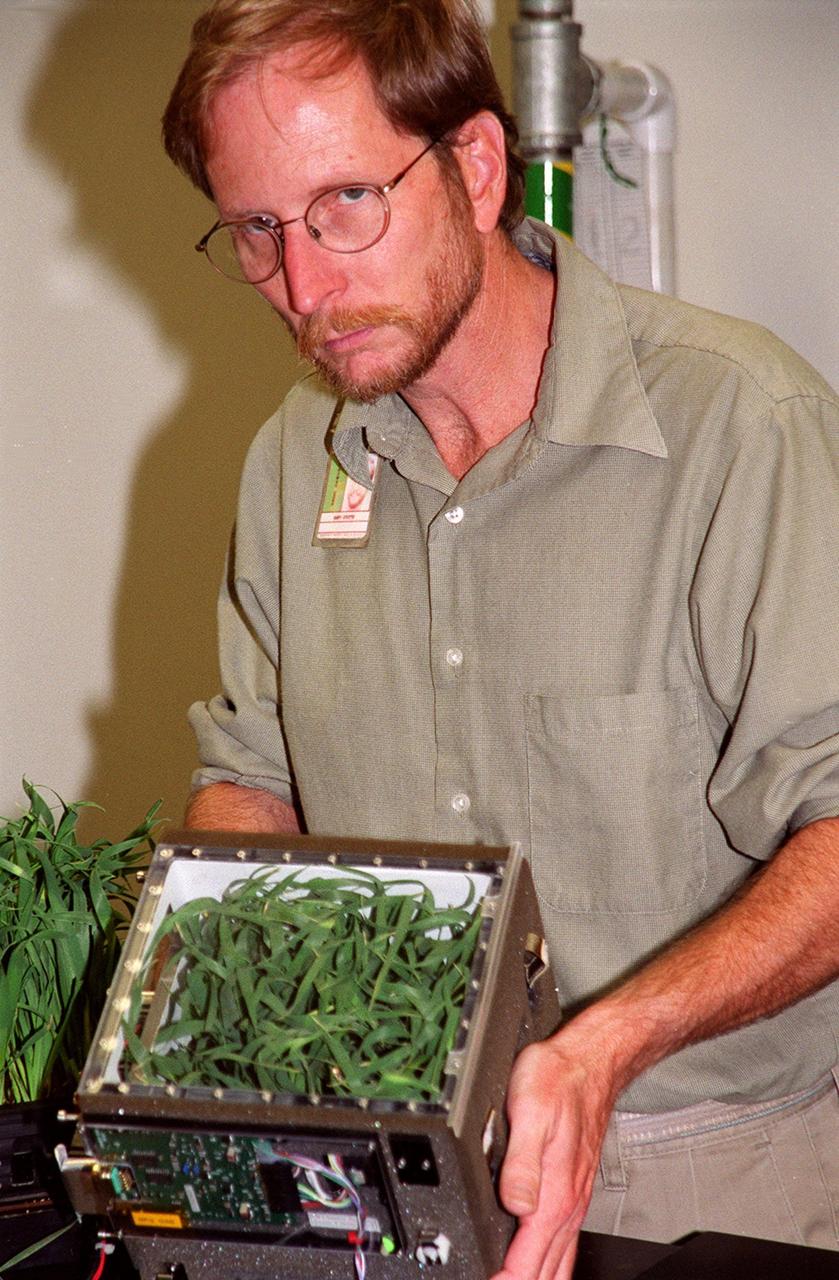
 Research scientist Gary Stutte displays a wheat sample that is part of ground testing for the first International Space Station plant experiment, scheduled to fly in October 2001. The payload process testing is one of many studies being performed at the Biological Sciences Branch in the Spaceport Engineering and Technology Directorate at Kennedy Space Center. The branch's operations and research areas include life sciences Space Shuttle payloads, bioregenerative life-support for long-duration spaceflight and environmental/ecological stewardship
KSC00pp0691
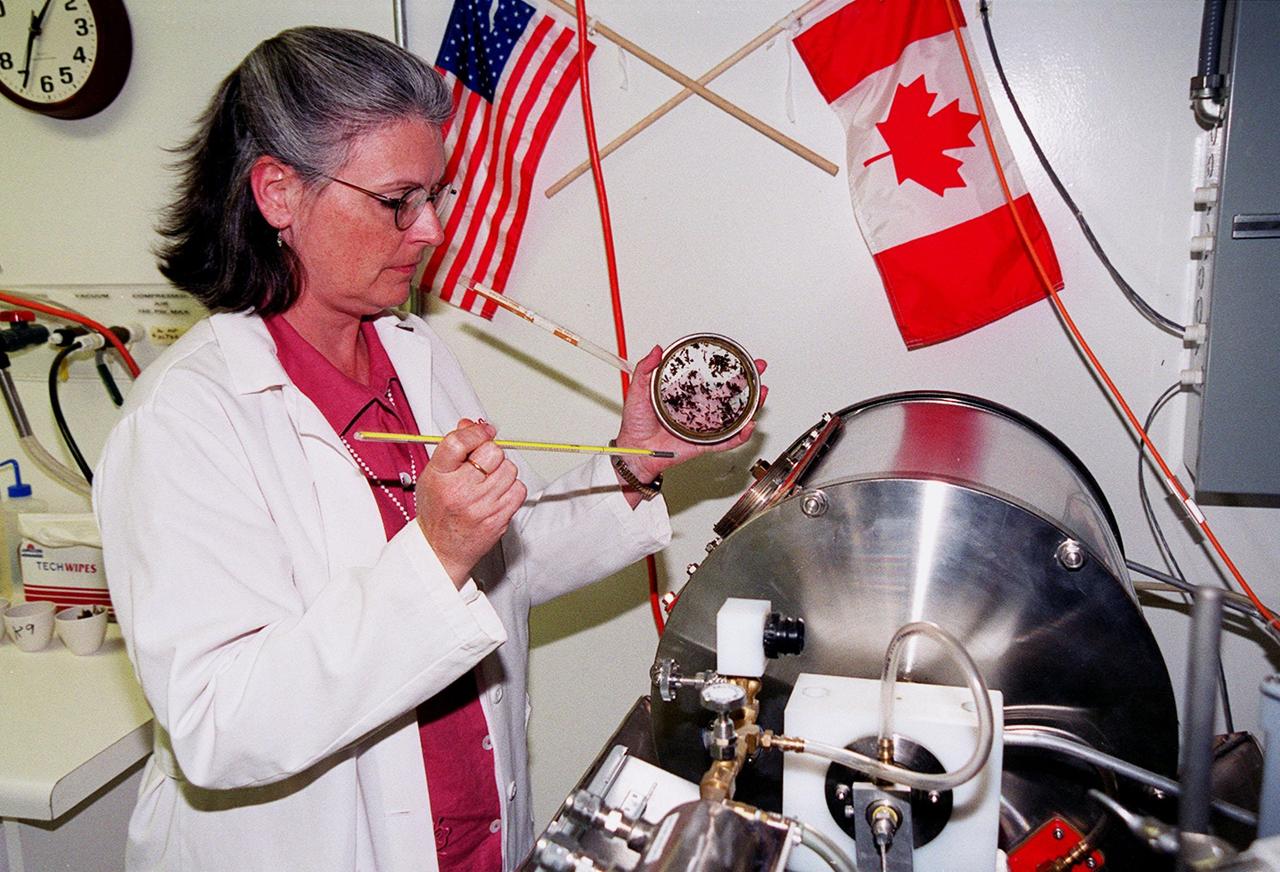
Visiting scientist Cheryl Frazier monitors a prototype composting machine in Hangar L at the Cape Canaveral Air Force Station. The research she is performing is one of many studies at the Biological Sciences Branch in the Spaceport Engineering and Technology Directorate at Kennedy Space Center. The branch's operations and research areas include life sciences Space Shuttle payloads, bioregenerative life-support for long-duration spaceflight and environmental/ecological stewardship
KSC00pp0695
 Research technician Lisa Ruffa works with a wheat sample that is part of ground testing for the first International Space Station plant experiment, scheduled to fly in October 2001. The payload process testing is one of many studies being performed at the Biological Sciences Branch in the Spaceport Engineering and Technology Directorate at Kennedy Space Center. The branch's operations and research areas include life sciences Space Shuttle payloads, bioregenerative life-support for long-duration spaceflight and environmental/ecological stewardship
KSC-00pp0689
 Research scientist Gary Stutte displays a wheat sample that is part of ground testing for the first International Space Station plant experiment, scheduled to fly in October 2001. The payload process testing is one of many studies being performed at the Biological Sciences Branch in the Spaceport Engineering and Technology Directorate at Kennedy Space Center. The branch's operations and research areas include life sciences Space Shuttle payloads, bioregenerative life-support for long-duration spaceflight and environmental/ecological stewardship
KSC-00pp0691
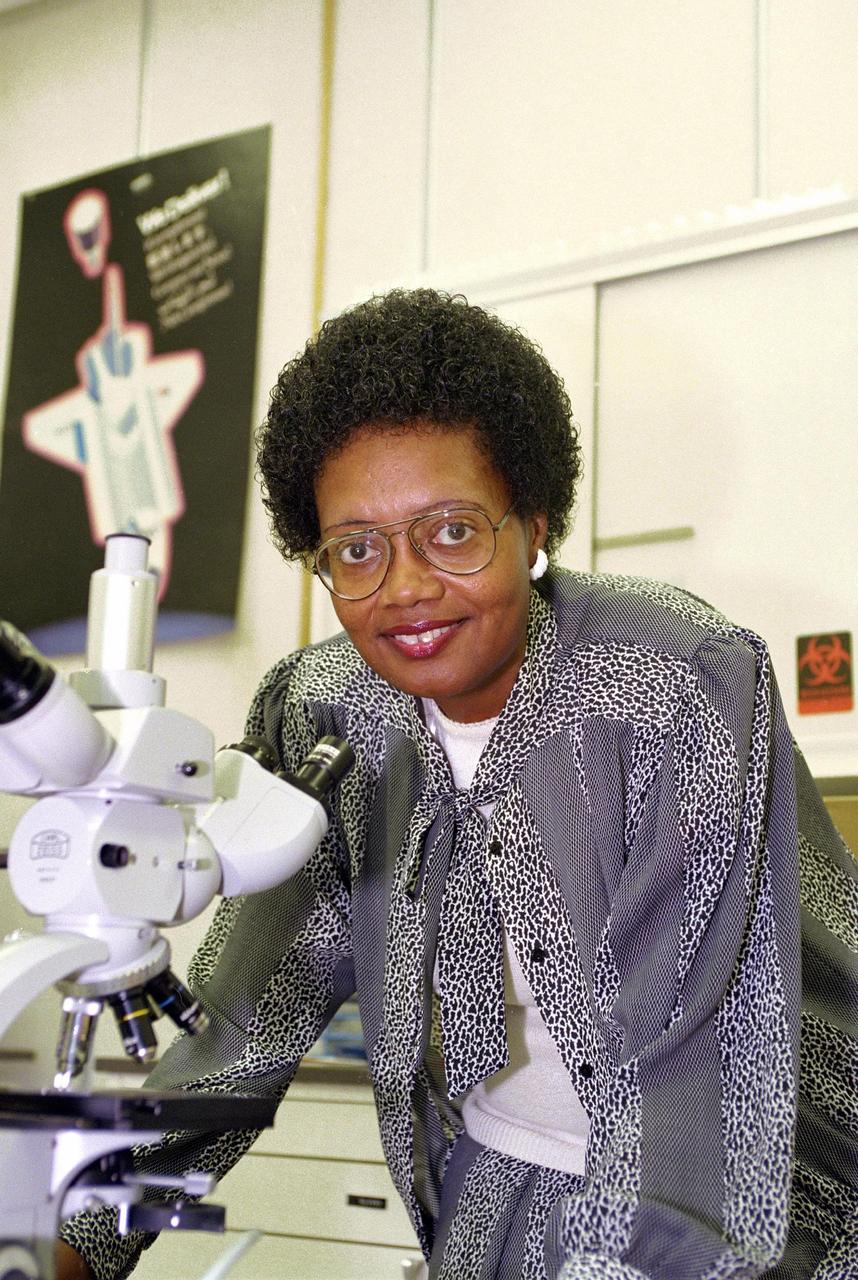
KENNEDY SPACE CENTER, FLA. -- Dr. Irene Duhart Long is the director, Biomedical Operations and Research Office, at the Kennedy Space Center effective July 24, 1994.  She is responsible for the program management of the center's aerospace and occupational medicine, life sciences research, environmental health programs and the operations management of the life sciences support facilities.  Dr. Long also is responsible for providing the coordinating medical, environmental monitoring and environmental health support to launch and landing activities and day-to-day institutional functions.
KSC-94PC-0901
 Research scientist Oscar Monje records data associated with ground testing for the first International Space Station plant experiment, scheduled to fly in October 2001. The payload process testing is one of many studies being performed at the Biological Sciences Branch in the Spaceport Engineering and Technology Directorate at Kennedy Space Center. The branch's operations and research areas include life sciences Space Shuttle payloads, bioregenerative life-support for long-duration spaceflight and environmental/ecological stewardship
KSC-00pp0690
Visiting scientist Cheryl Frazier monitors a prototype composting machine in Hangar L at the Cape Canaveral Air Force Station. The research she is performing is one of many studies at the Biological Sciences Branch in the Spaceport Engineering and Technology Directorate at Kennedy Space Center. The branch's operations and research areas include life sciences Space Shuttle payloads, bioregenerative life-support for long-duration spaceflight and environmental/ecological stewardship
KSC-00pp0695
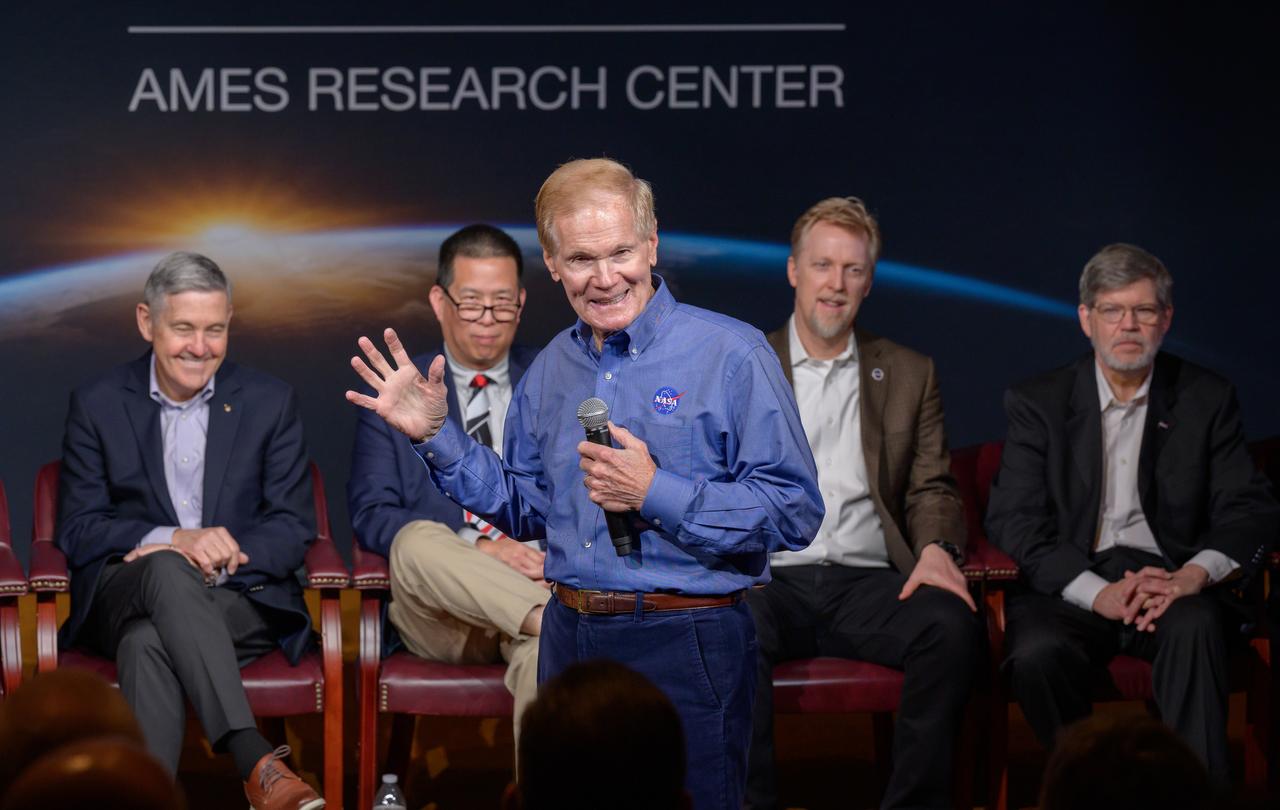
NASA Administrator Bill Nelson, front, talks to the workforce at NASA’s Ames Research Center in California’s Silicon Valley during the “Moon to Mars” town hall in the N201 Syvertson Auditorium.  Behind, left to right, are Deputy Administrator Pam Melroy, Associate Administrator Bob Cabana, Ames Center Director Eugene Tu, Director of Space Architectures Kurt “Spuds” Vogel, Deputy Associate Administrator for Exploration in the Science Mission Directorate Joel Kearns.
NASA Administrator Bill Nelson, Deputy Administrator Pam Melroy,
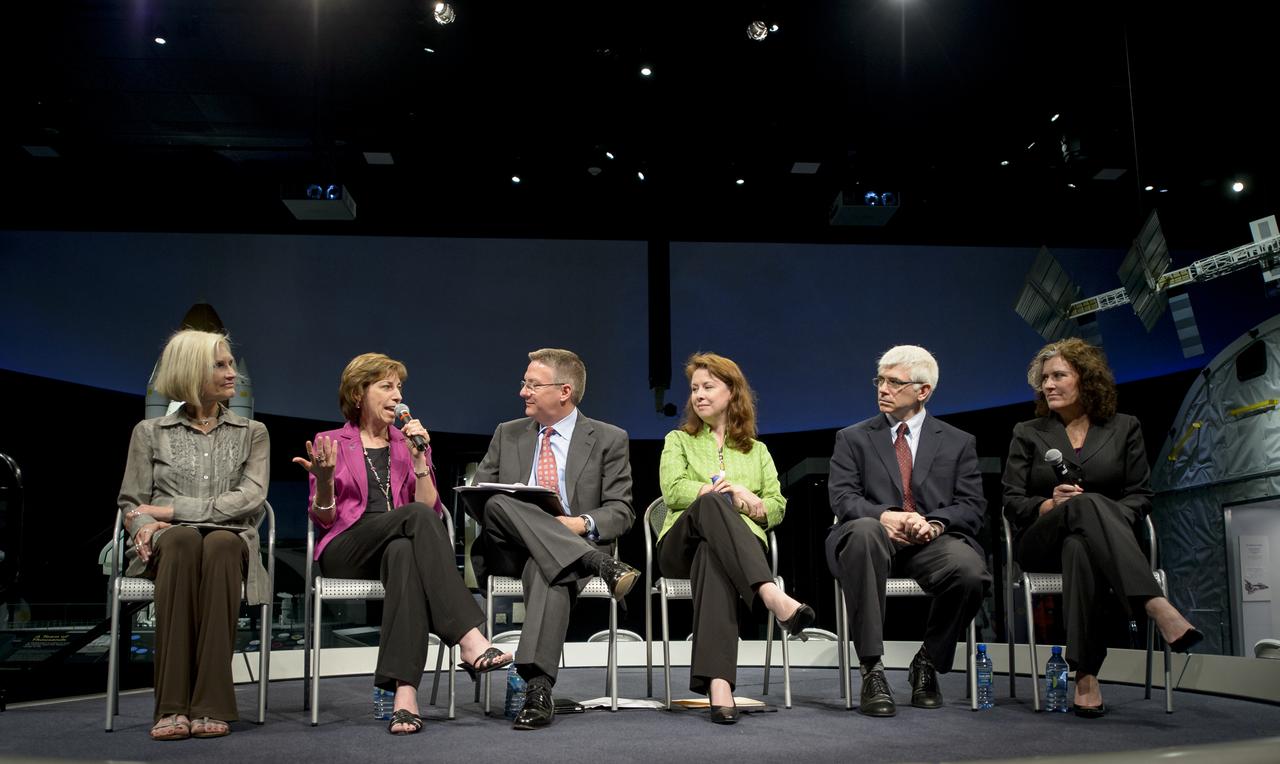
Panel discussion participants, from left, Linda Billings, research professor, Media and Public Affairs, The George Washington University, Ellen Ochoa, director, NASA Johnson Space Center, Tom Costello, NBC News and moderator for the event, Margaret Weitekamp, space history curator, National Air and Space Museum, Dan Vergano, science writer for USA Today, and Rene McCormick, director of standards and quality, National Math and Science Initiative, are seen during a program titled "Sally Ride: How Her Historic Space Mission Opened Doors for Women in Science" held on Friday, May 17, 2013 at the National Air and Space Museum in Washington.  Photo Credit: (NASA/Bill Ingalls)
Sally Ride Women in Science Panel
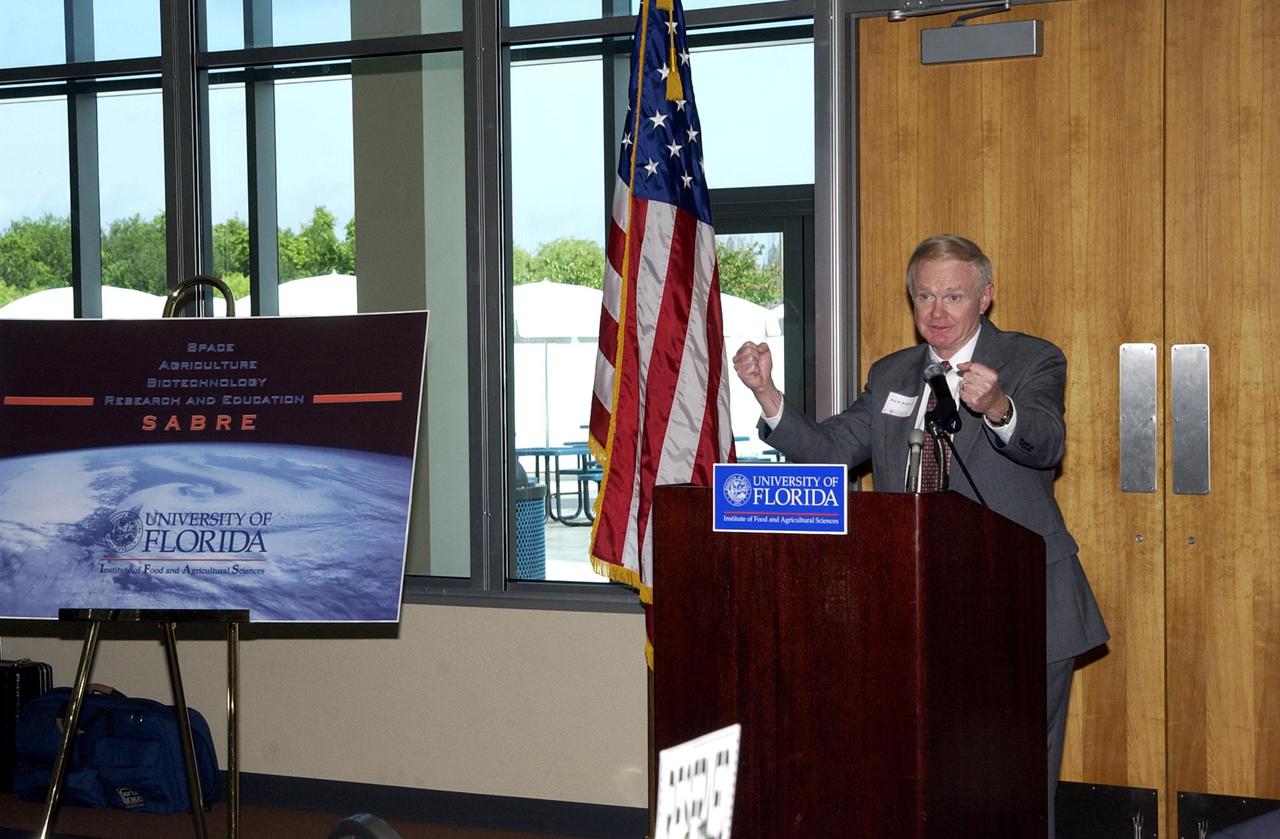
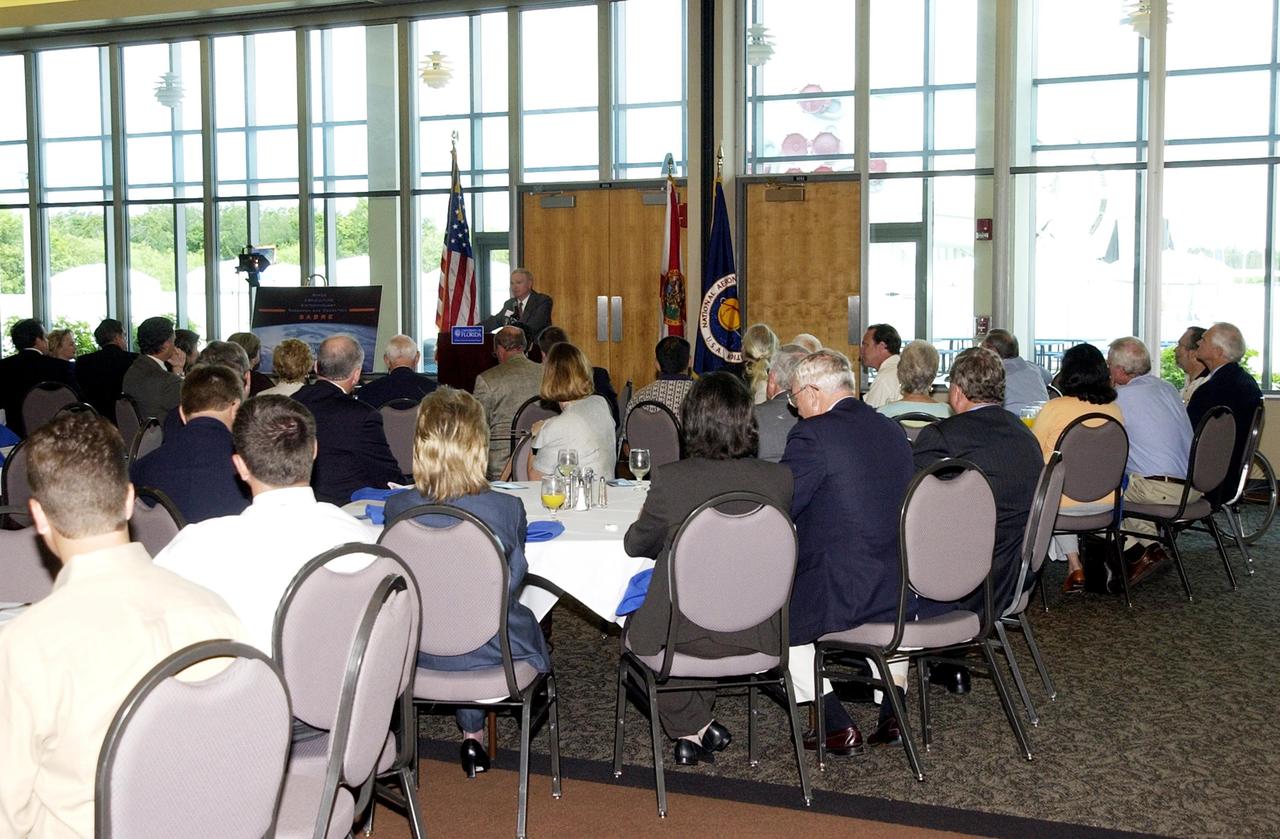
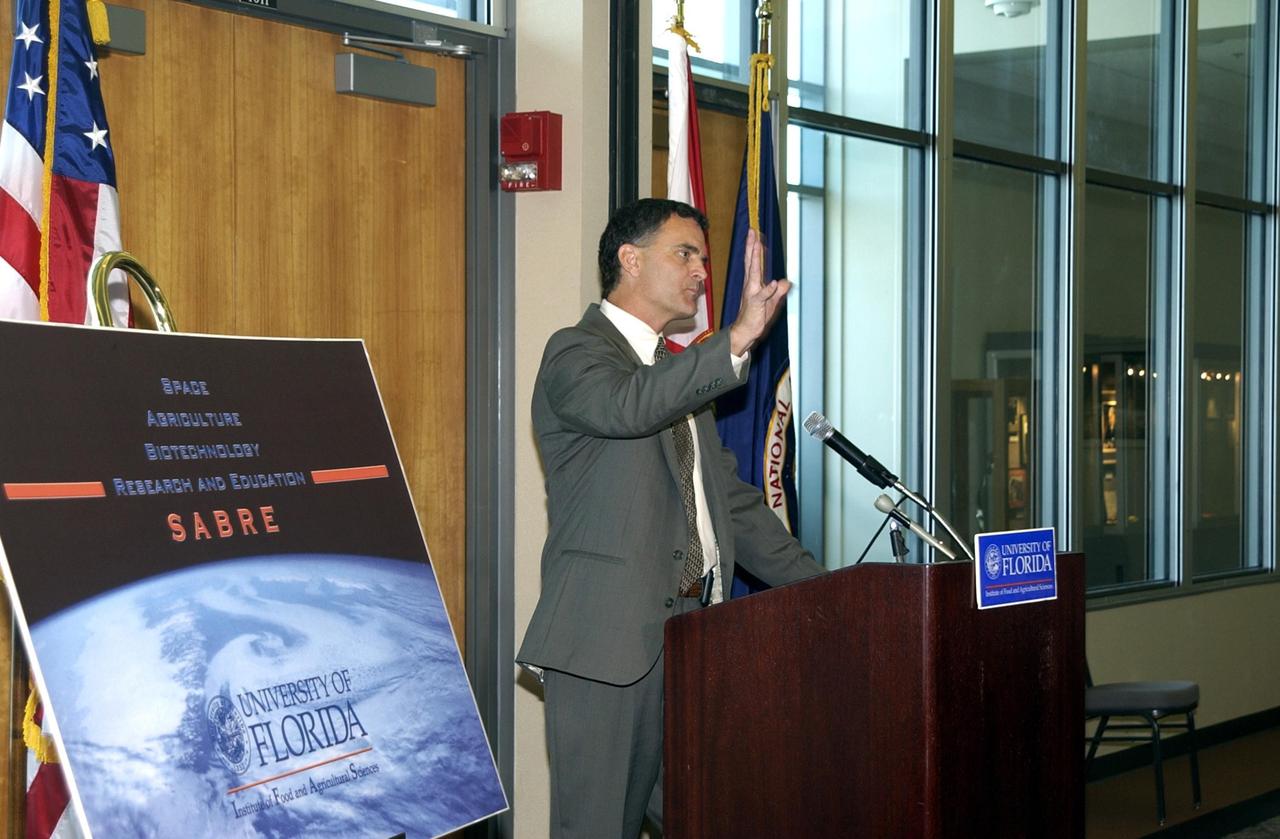
KENNEDY SPACE CENTER, FLA. --  Center Director Roy D. Bridges Jr. speaks at the opening ceremony to launch a new program called SABRE, Space Agricultural Biotechnology Research and Education, involving the University of Florida and NASA.  Officials from UF and NASA attended the event.  SABRE will focus on the discovery, development and application of the biological aspects of advanced life support strategies. The program will include faculty from UF's Institute of Food and Agricultural Sciences, who will be located at both KSC - in the state-owned Space Experiment Research and Processing Laboratory (SERPL) being built there - and UF in Gainesville. SABRE will be directed by Robert Ferl, professor in the horticultural sciences department and assistant director of UF's Biotechnology Program.  He will be responsible for coordinating the research and education efforts of UF and NASA
KSC-02pd0611
KENNEDY SPACE CENTER, FLA. - Center Director Roy D. Bridges Jr. shows his enthusiasm for the new program SABRE being launched at KSC. SABRE, Space Agricultural Biotechnology Research and Education, involves the University of Florida and NASA.   Bridges was speaking at the opening ceremony that included officials from both organizations. SABRE will focus on the discovery, development and application of the biological aspects of advanced life support strategies. The program will include faculty from UF's Institute of Food and Agricultural Sciences, who will be located at both KSC - in the state-owned Space Experiment Research and Processing Laboratory (SERPL) being built there - and UF in Gainesville. SABRE will be directed by Robert Ferl, professor in the horticultural sciences department and assistant director of UF's Biotechnology Program.  He will be responsible for coordinating the research and education efforts of UF and NASA
KSC-02PD-0612
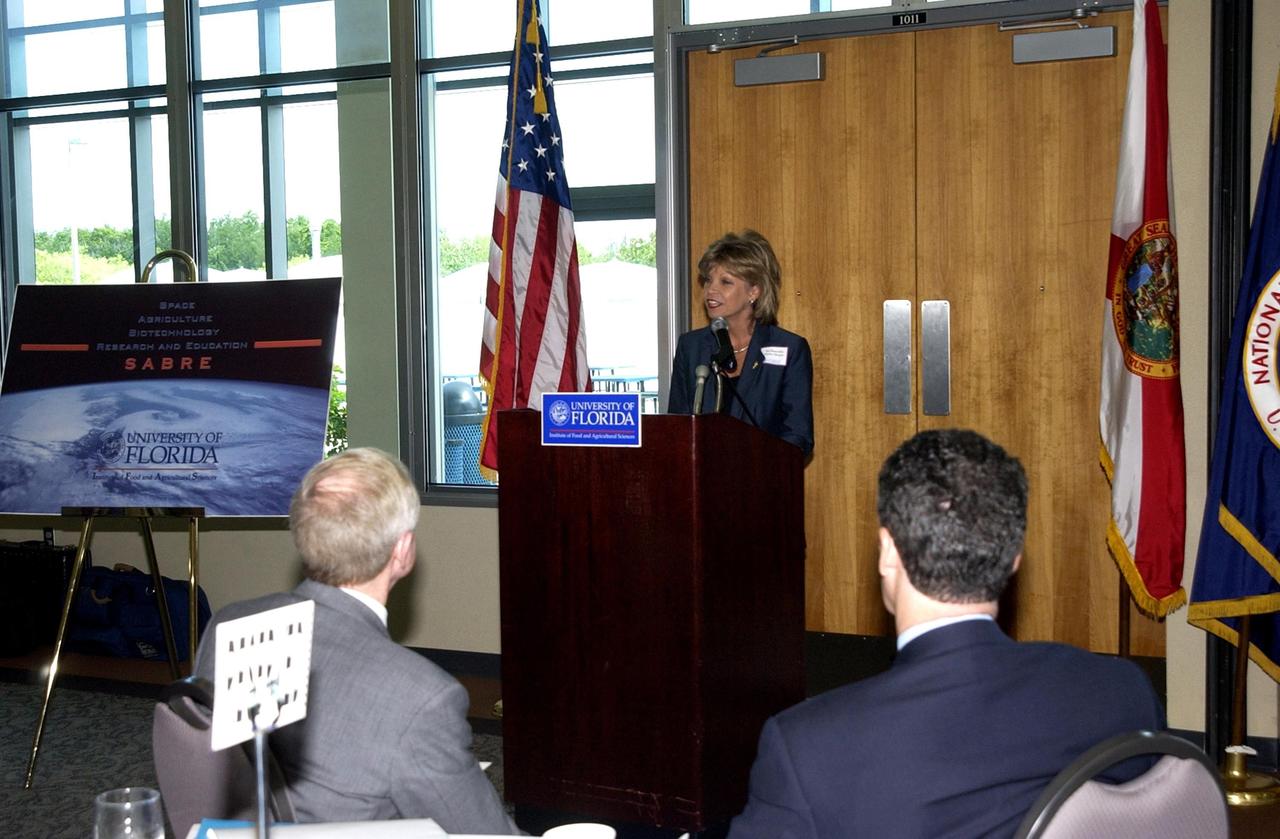
KENNEDY SPACE CENTER, FLA. -- The Honorable Diana Morgan speaks to attendees at the opening ceremony kicking off a new program known as SABRE, Space Agricultural Biotechnology Research and Education.   In the foreground are Center Director Roy D. Bridges Jr. (left) and U.S. Representative Dave Weldon (right).  The SABRE program is a combined effort of the University of Florida and NASA.  Morgan is vice chair on the UF Board of Trustees.   SABRE will focus on the discovery, development and application of the biological aspects of advanced life support strategies. The program will include faculty from UF's Institute of Food and Agricultural Sciences, who will be located at both KSC - in the state-owned Space Experiment Research and Processing Laboratory (SERPL) being built there - and UF in Gainesville. SABRE will be directed by Robert Ferl, professor in the horticultural sciences department and assistant director of UF's Biotechnology Program.  He will be responsible for coordinating the research and education efforts of UF and NASA
KSC-02pd0616
KENNEDY SPACE CENTER, FLA. -- Center Director Roy D. Bridges Jr. speaks to a large group attending the opening of a new program known as SABRE, Space Agricultural Biotechnology Research and Education, that involves the University of Florida and NASA. SABRE will focus on the discovery, development and application of the biological aspects of advanced life support strategies. The program will include faculty from UF's Institute of Food and Agricultural Sciences, who will be located at both KSC - in the state-owned Space Experiment Research and Processing Laboratory (SERPL) being built there - and UF in Gainesville. SABRE will be directed by Robert Ferl, professor in the horticultural sciences department and assistant director of UF's Biotechnology Program.  He will be responsible for coordinating the research and education efforts of UF and NASA
KSC-02pd0613
KENNEDY SPACE CENTER, FLA. --  At the opening ceremony for the new program known as SABRE, Space Agricultural Biotechnology Research and Education, four of the speakers gather around the SABRE poster.  From left are University of Florida Vice President for Agriculture and Natural Resources Mike Martin, U.S. Representative Dave Weldon, Center Director Roy D. Bridges Jr., and Florida Representative Bob Allen. Involving UF and NASA,  SABRE will focus on the discovery, development and application of the biological aspects of advanced life support strategies. The program will include faculty from UF's Institute of Food and Agricultural Sciences, who will be located at both KSC - in the state-owned Space Experiment Research and Processing Laboratory (SERPL) being built there - and UF in Gainesville. Robert Ferl, professor in the horticultural sciences department and assistant director of the University of Florida Biotechnology Program, will direct and be responsible for coordinating the research and education efforts of UF and NASA.
KSC-02PD-0620
KENNEDY SPACE CENTER, FLA. -- Mike Martin, University of Florida vice president for agriculture and natural resources, speaks during the opening ceremony to launch a new program called SABRE, Space Agricultural Biotechnology Research and Education, that involves UF and NASA.  Officials from UF and NASA attended the event.  In the foreground are Center Director Roy D. Bridges Jr. (left) and U.S. Rep. Dave Weldon (right).  SABRE will focus on the discovery, development and application of the biological aspects of advanced life support strategies. The program will include faculty from UF's Institute of Food and Agricultural Sciences, who will be located at both KSC - in the state-owned Space Experiment Research and Processing Laboratory (SERPL) being built there - and UF in Gainesville.  SABRE will be directed by Robert Ferl, professor in the horticultural sciences department and assistant director of UF's Biotechnology Program.  He will be responsible for coordinating the research and education efforts of UF and NASA
KSC-02pd0609
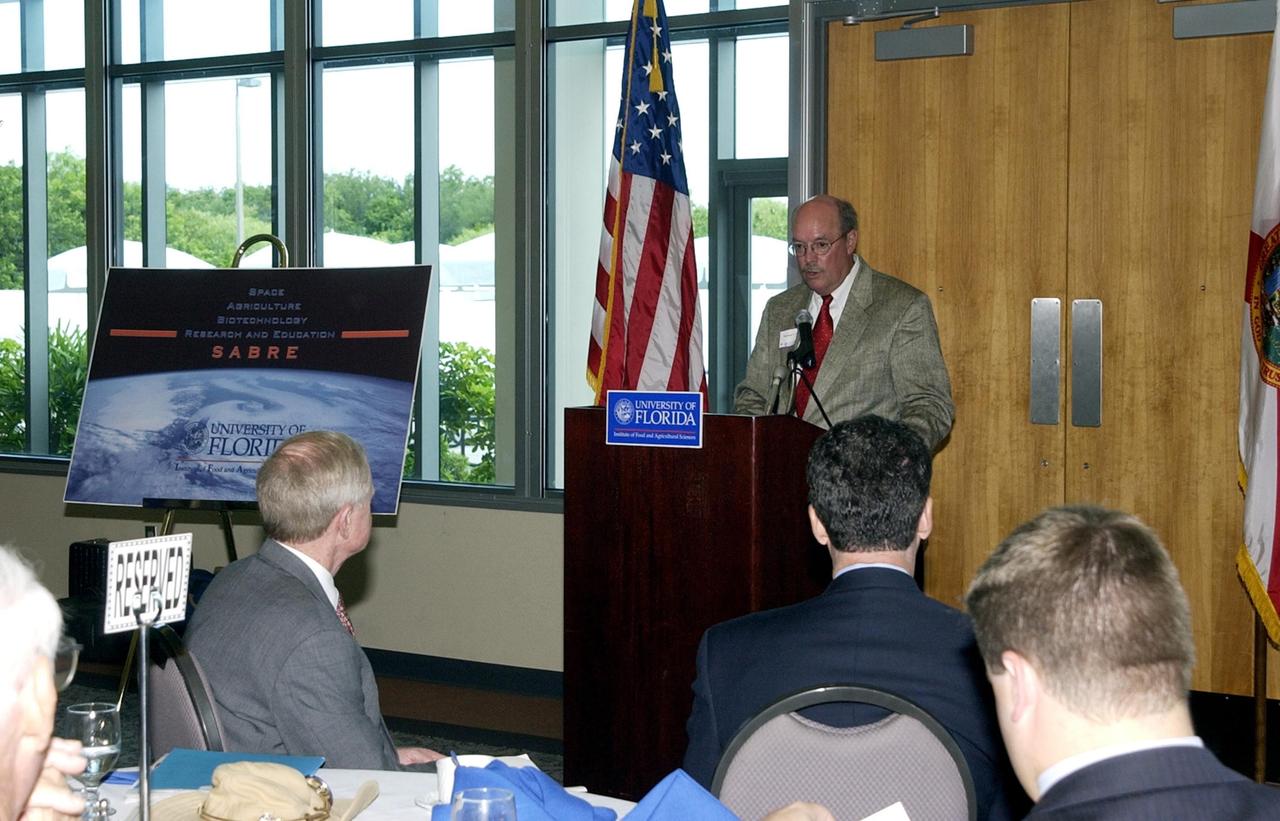
KENNEDY SPACE CENTER, FLA. -- Robert Ferl, professor in the horticultural sciences department and assistant director of the University of Florida Biotechnology Program, speaks during the opening ceremony to launch a new program called SABRE, Space Agricultural Biotechnology Research and Education, that involves UF and NASA. SABRE will focus on the discovery, development and application of the biological aspects of advanced life support strategies. The program will include faculty from UF's Institute of Food and Agricultural Sciences, who will be located at both KSC - in the state-owned Space Experiment Research and Processing Laboratory (SERPL) being built there - and UF in Gainesville. Ferl will direct and be responsible for coordinating the research and education efforts of UF and NASA.
KSC-02pd0618
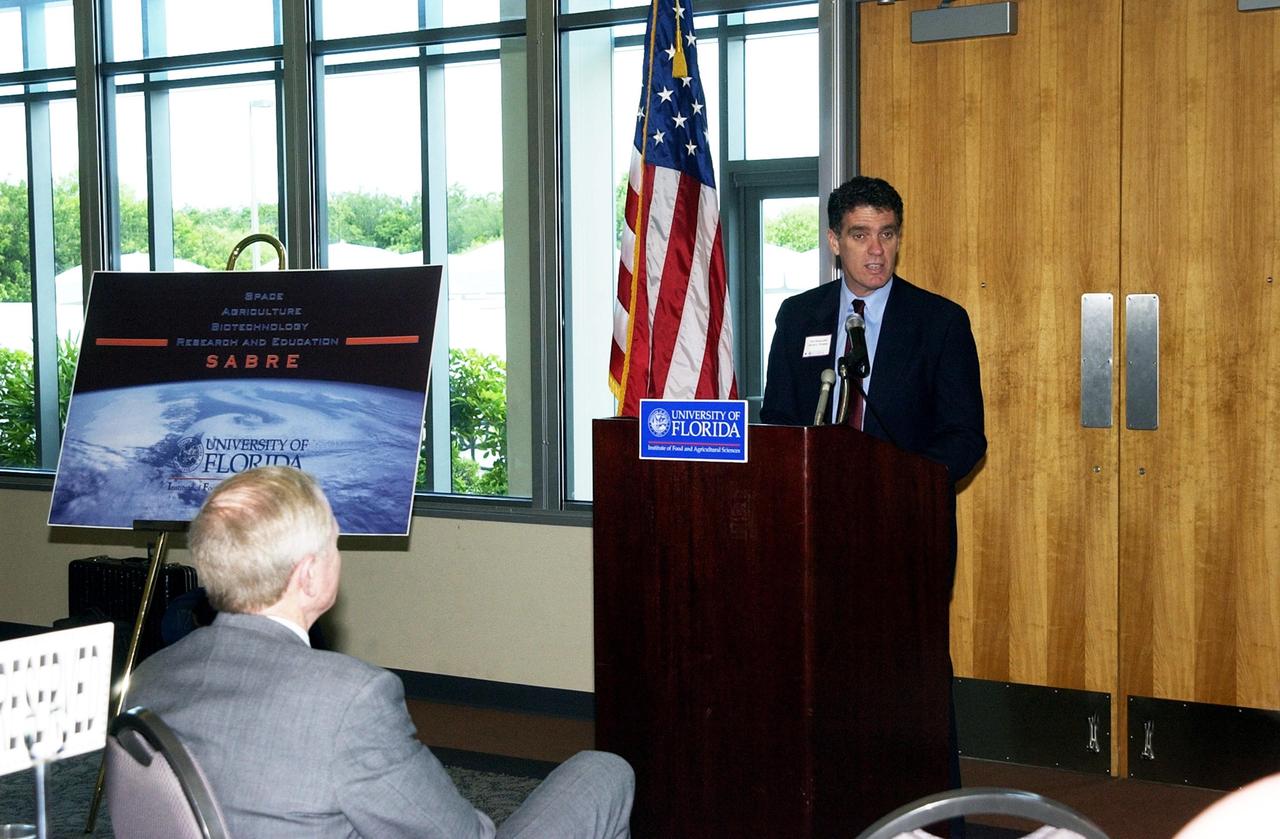
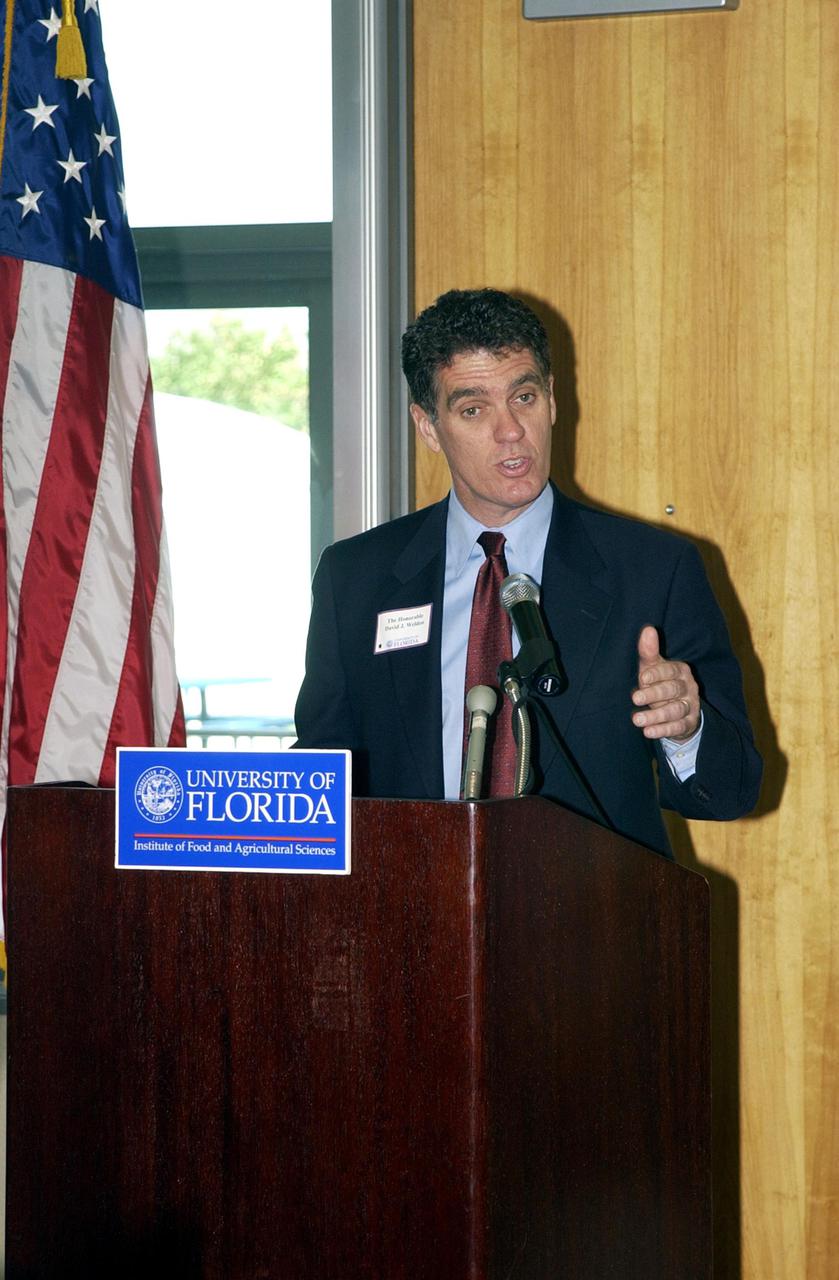
KENNEDY SPACE CENTER, FLA. --  U.S. Representative Dave Weldon addresses a large group attending the opening of a new program known as SABRE, Space Agricultural Biotechnology Research and Education, that involves the University of Florida and NASA. SABRE will focus on the discovery, development and application of the biological aspects of advanced life support strategies. The program will include faculty from UF's Institute of Food and Agricultural Sciences, who will be located at both KSC - in the state-owned Space Experiment Research and Processing Laboratory (SERPL) being built there - and UF in Gainesville. SABRE will be directed by Robert Ferl, professor in the horticultural sciences department and assistant director of UF's Biotechnology Program.  He will be responsible for coordinating the research and education efforts of UF and NASA
KSC-02pd0614
KENNEDY SPACE CENTER, FLA. -- U.S. Representative Dave Weldon addresses a large group attending the opening of a new program known as SABRE, Space Agricultural Biotechnology Research and Education, that involves the University of Florida and NASA. SABRE will focus on the discovery, development and application of the biological aspects of advanced life support strategies. The program will include faculty from UF's Institute of Food and Agricultural Sciences, who will be located at both KSC - in the state-owned Space Experiment Research and Processing Laboratory (SERPL) being built there - and UF in Gainesville. SABRE will be directed by Robert Ferl, professor in the horticultural sciences department and assistant director of UF's Biotechnology Program.  He will be responsible for coordinating the research and education efforts of UF and NASA
KSC-02PD-0615
KENNEDY SPACE CENTER, FLA. - Jim Kennedy, director of NASA's Kennedy Space Center, addresses the audience attending a ceremony in the Space Station Processing Facility to welcome the European Space Agency's Columbus module. Columbus is the European Space Agency's research laboratory for the International Space Station. The module will be prepared in the SSPF for delivery to the space station on a future space shuttle mission. Columbus will expand the research facilities of the station and provide researchers with the ability to conduct numerous experiments in the life, physical and materials sciences. Photo credit: NASA/Amanda Diller
KSC-06pd0974
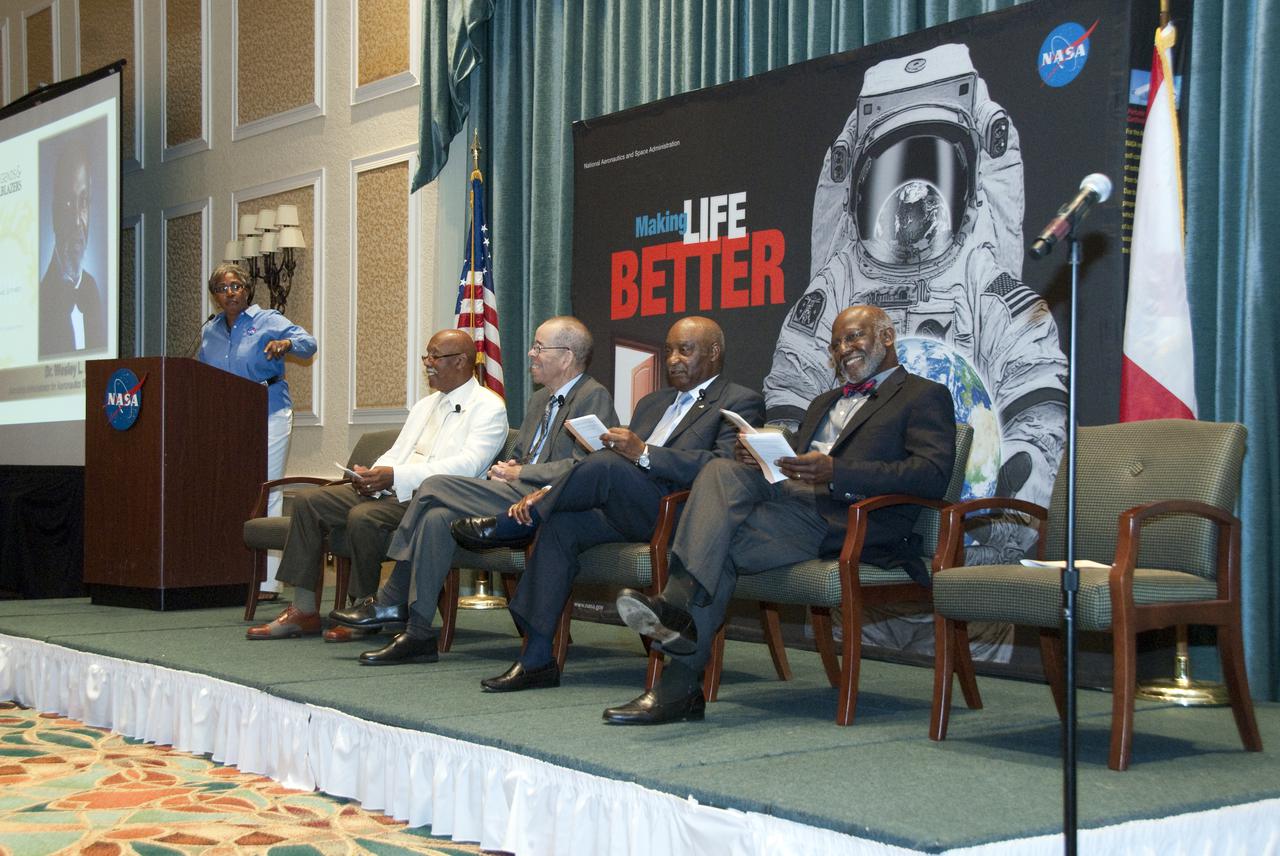
CAPE CANAVERAL, Fla. -- During a Minority Student Education Forum, Linda Dukes-Campbell, the chief of Community and Media Relations at Glenn Research Center, left, talks to hundreds of fifth- through 12th-grade students. Other NASA legends, sitting from left to right, are Glenn Research Center's former Director Dr. Julian Earls, Dryden Flight Research Center's former Director Isaac Gillam, Glenn's Director Donald Campbell, and former NASA Associate Administrator for Aeronautics Dr. Wesley Harris. The forum focused on encouraging students to pursue careers in science, technology, engineering and mathematics, or STEM, by featuring some of NASA's greatest legends and trailblazers.        NASA's Education Office sponsored the forum as part of the agency's 'Summer of Innovation' initiative and the federal 'Education to Innovate' campaign. Photo credit: NASA_Cory Huston
KSC-2010-4198
NASA Administrator Bill Nelson and NASA Deputy Administrator Pam Melroy listen to NASA Armstrong Flight Research Center Director David McBride, at left, tell them about Building 703 in Palmdale, California. The building houses many of NASA's science aircraft. NASA Armstrong's main campus is in nearby Edwards, California.
NASA Administrator Visits NASA Armstrong
Christine Keller, Director of Research, APLU (Association of Public and Land-grant Universities) presents STEM initiative report findings at the Symposium on Supporting Underrepresented Minority Males in Science, Technology, Engineering and Mathematics (STEM), Tuesday, February 28, 2012 at NASA Headquarters in Washington.  Photo Credit:  (NASA/Carla Cioffi)
STEM Symposium
Christine Keller, right, Director of Research, APLU (Association of Public and Land-grant Universities) presents STEM initiative report findings at the Symposium on Supporting Underrepresented Minority Males in Science, Technology, Engineering and Mathematics (STEM), Tuesday, February 28, 2012 at NASA Headquarters in Washington.  Photo Credit:  (NASA/Carla Cioffi)
STEM Symposium
Nicola Fox, associate administrator for NASA’s Science Mission Directorate, is seen during a meeting with German Minister for Research, Technology, and Space Dorothee Bär, Tuesday, Dec. 9, 2025, at the Mary W. Jackson NASA Headquarters building in Washington.  Photo Credit: (NASA/Joel Kowsky)
NASA Associate Administrator Meets with German Minister for Rese
NASA Administrator Bill Nelson, right, and David McBride, center director at NASA’s Armstrong Flight Research Center in Edwards, California, talk by the Stratospheric Observatory for Infrared Science during the administrator’s visit to NASA Armstrong’s Building 703 in Palmdale, California, on Oct. 12.
NASA Administrator Visits NASA Armstrong
CAPE CANAVERAL, Fla. -- In the Kennedy Space Center’s Press Site auditorium, agency and industry leaders spoke to members of the news media on International Space Station research and technology developments. Participants included Kenneth Shields, director of operations and education for the Center for the Advancement of Science in Space. Photo credit: NASA/ Kim Shiflett
KSC-2015-1008
Thomas Zurbuchen, Associate Administrator of NASA's Science Mission Directorate, left, speaks with Hansjörg Dittus, Executive Board Member for Space Research and Technology at the German Aerospace Center (DLR) during a meeting at the 70th International Astronautical Congress, Wednesday, Oct. 23, 2019 in Washington. Photo Credit: (NASA/Joel Kowsky)
70th International Astronautical Congress
LEWIS WOOTEN, NEW DIRECTOR OF THE MISSION OPERATIONS LABORATORY AT NASA'S MARSHALL SPACE FLIGHT CENTER IN HUNTSVILLE, ALABAMA, MANAGES OPERATIONS IN THE PAYLOAD OPERATIONS INTEGRATION CENTER-THE COMMAND POST FOR ALL SCIENCE AND RESEARCH ACTIVITIES ON THE INTERNATIONAL SPACE STATION
Lewis Wooten in the MSFC Payload Operations Integration facility.
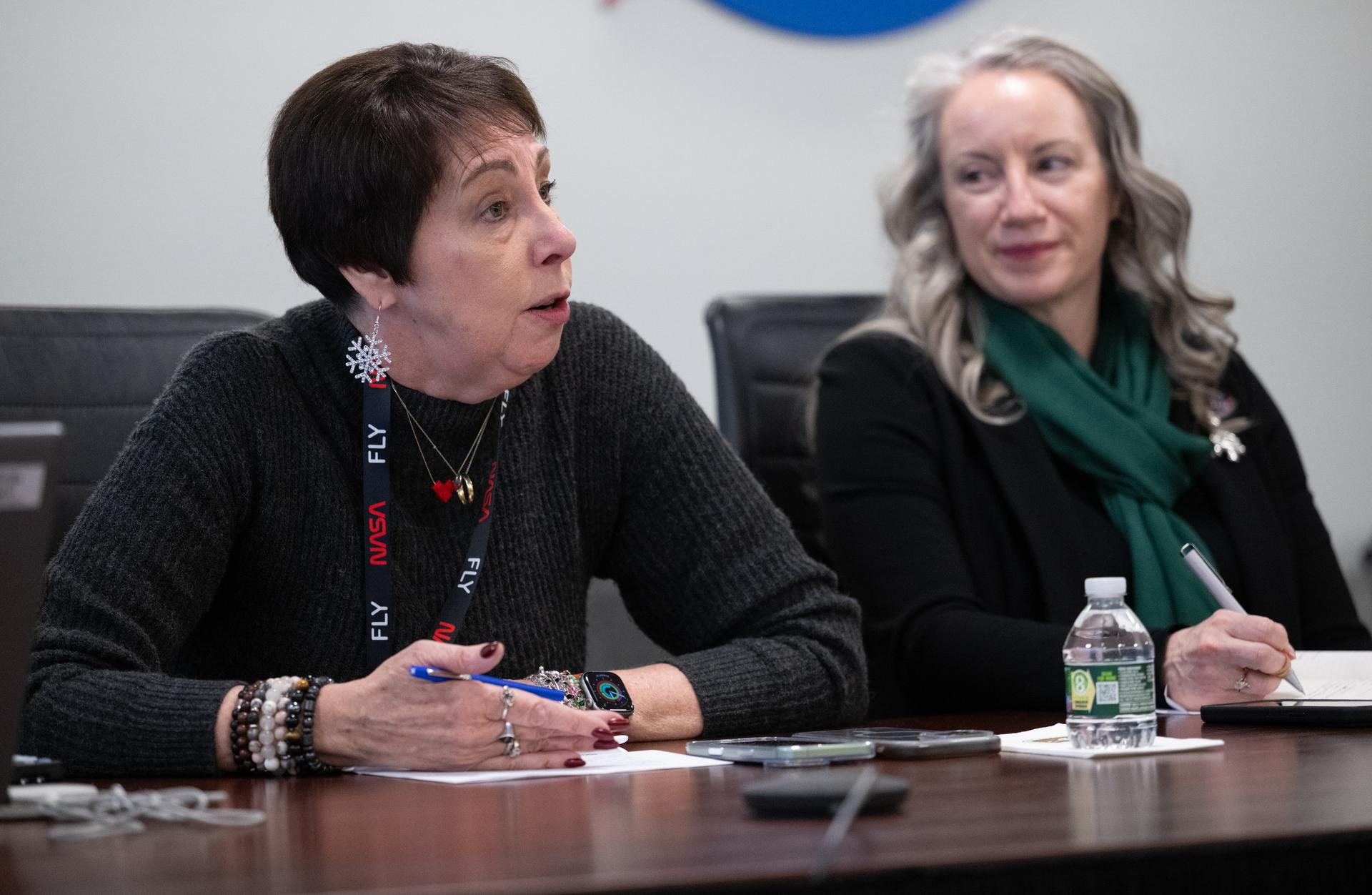
Kate M. McMurtry, deputy director of Integrated Aviation Systems Program shares with students how NASA is working to quiet the sonic boom with the development of the X-59 aircraft at NASA’s California Office of STEM Engagement event with Center of Science and Industry at NASA Armstrong Flight Research Center in Edwards, California.
Armstrong OSTEM Learning Lunchbox