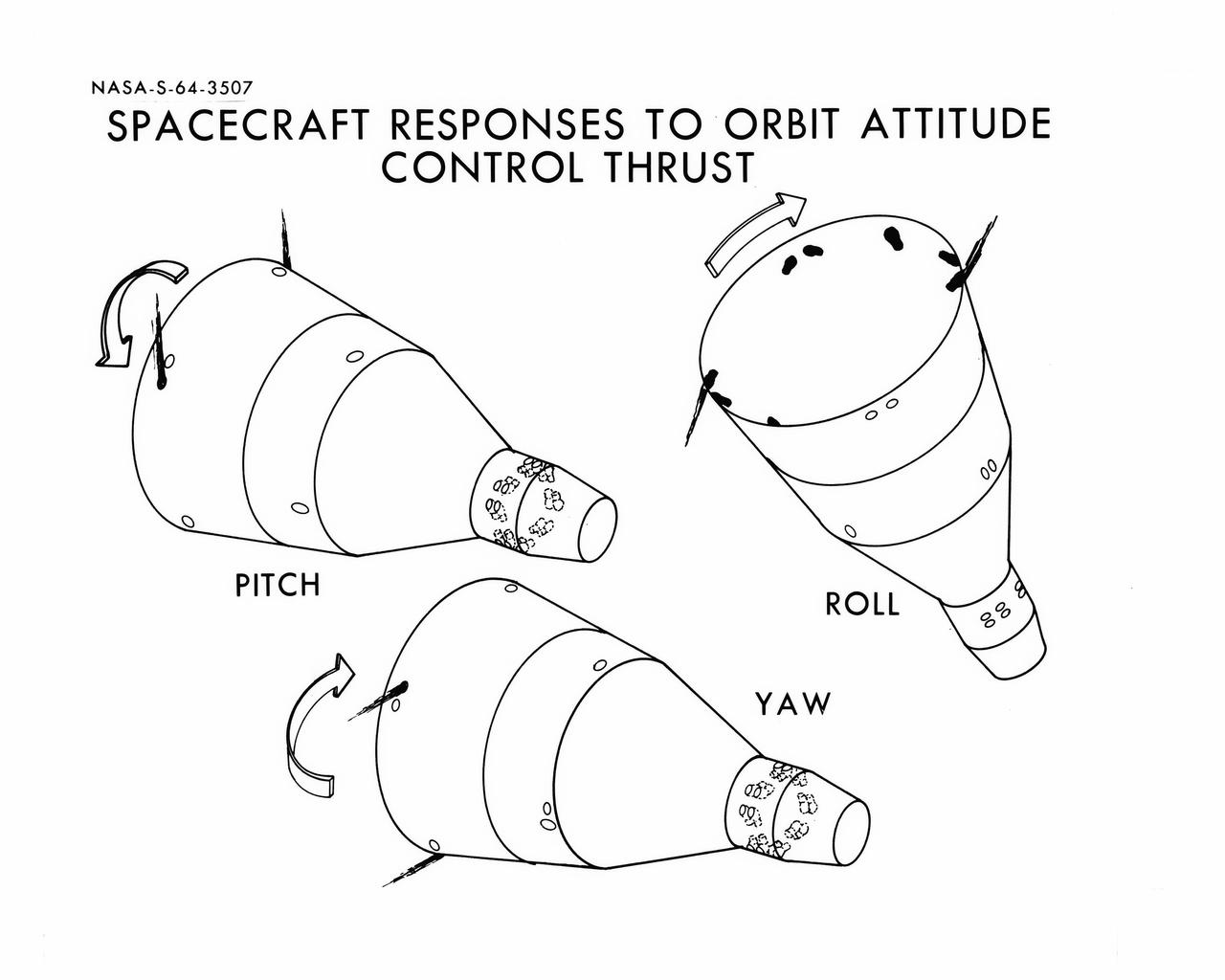
S64-03507 (1964) --- Diagrams shows Gemini spacecraft responses to orbital attitude systems's thrusters. Firing of appropriate combination of the thrusters cause pitch, roll and yaw.
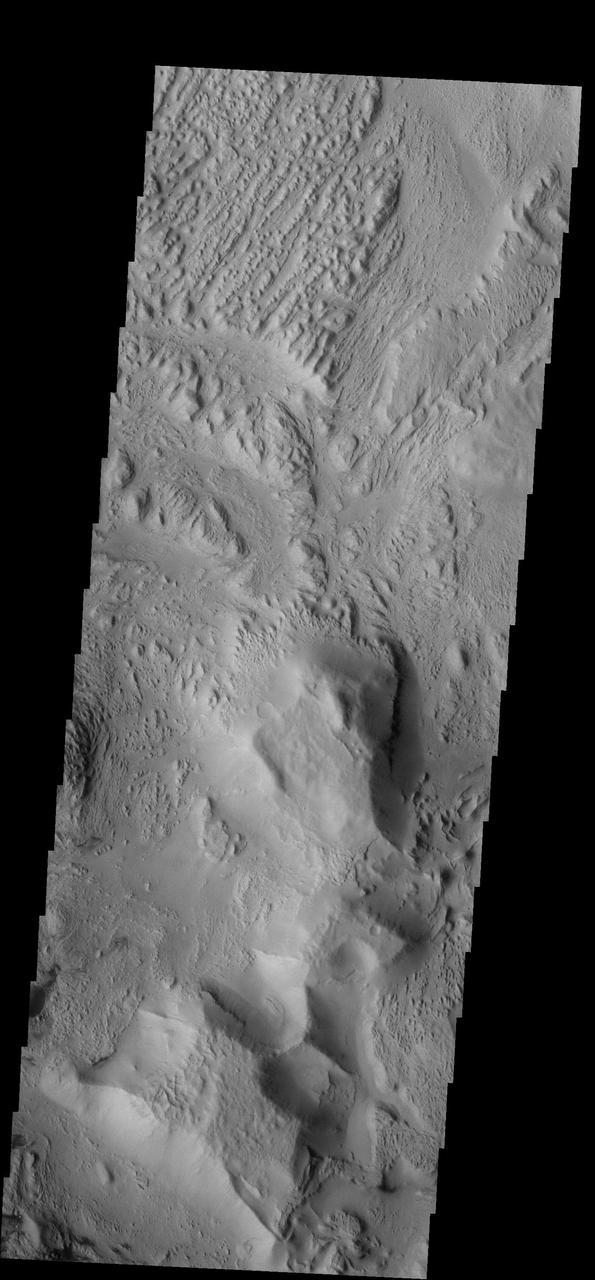
The wind is responsible for the erosion seen in this image captured by NASA 2001 Mars Odyssey spacecraft near Aeolis Planum.
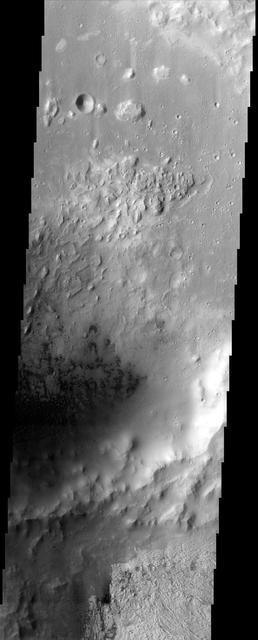
Dark dunes on the floor of an interior crater in Becquerel, imaged here by NASA Mars Odyssey spacecraft, supply the sand responsible for the erosion of the remarkable, layered deposit to the south. http://photojournal.jpl.nasa.gov/catalog/PIA04002
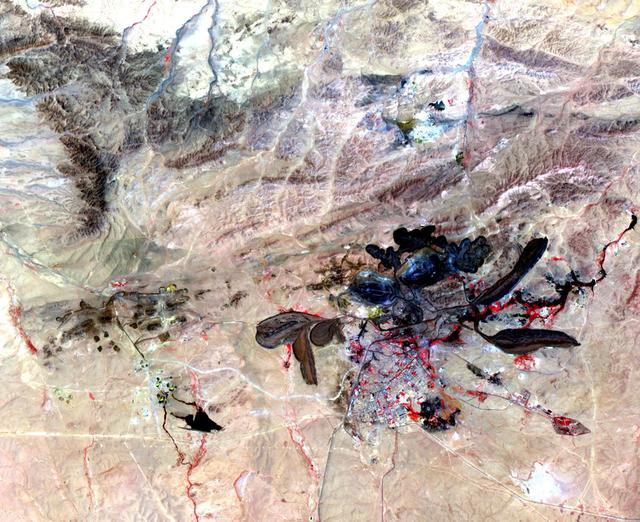
Acquired by NASA Terra spacecraft, this image shows a mine in Baiyun Ebo, Inner Mongolia, China, the site of almost half the world rare earth production. China is responsible for over 95% of global production of rare earth elements.
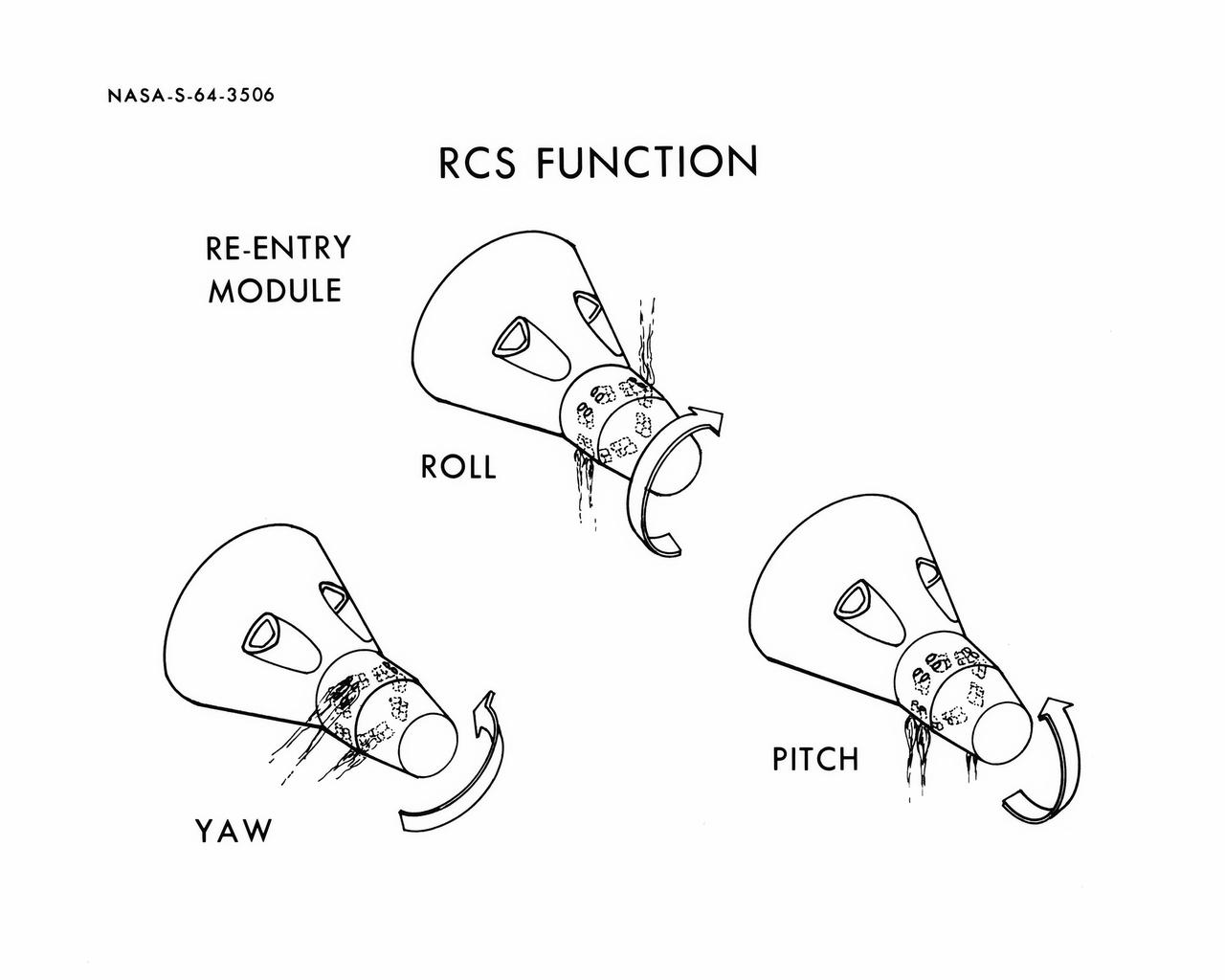
S64-03506 (1964) --- Diagrams shows Gemini spacecraft functions of the thrusters in the Gemini spacecraft's re-entry control system. Thrusters may be fired in various combinations to cause yaw, roll and pitch.
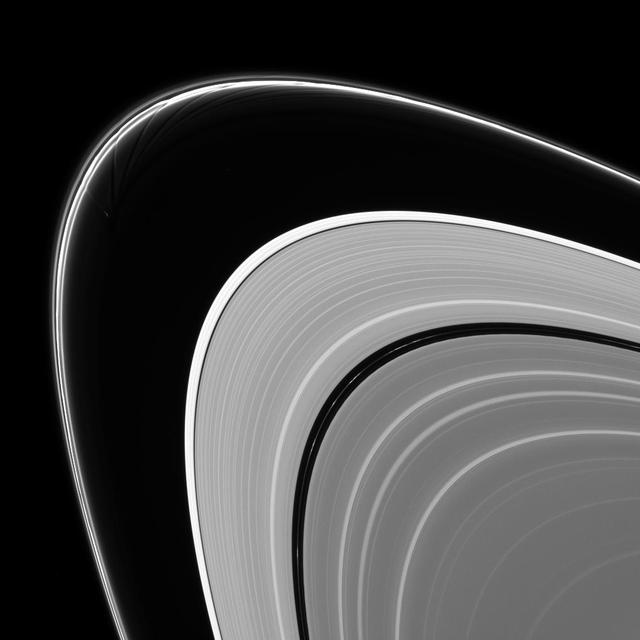
Prometheus is caught in the act of creating gores and streamers in the F ring. Scientists believe that Prometheus and its partner-moon Pandora are responsible for much of the structure in the F ring as shown by NASA Cassini spacecraft. The orbit of Prometheus (53 miles, or 86 kilometers across) regularly brings it into the F ring. When this happens, it creates gores, or channels, in the ring where it entered. Prometheus then draws ring material with it as it exits the ring, leaving streamers in its wake. This process creates the pattern of structures seen in this image. This process is described in detail, along with a movie of Prometheus creating one of the streamer/channel features, in PIA08397. This view looks toward the sunlit side of the rings from about 8.6 degrees above the ringplane. The image was taken in visible light with the Cassini spacecraft narrow-angle camera on Feb. 11, 2014. The view was acquired at a distance of approximately 1.3 million miles (2.1 million kilometers) from Saturn and at a Sun-Saturn-spacecraft, or phase, angle of 147 degrees. Image scale is 8 miles (13 kilometers) per pixel. http://photojournal.jpl.nasa.gov/catalog/PIA18270
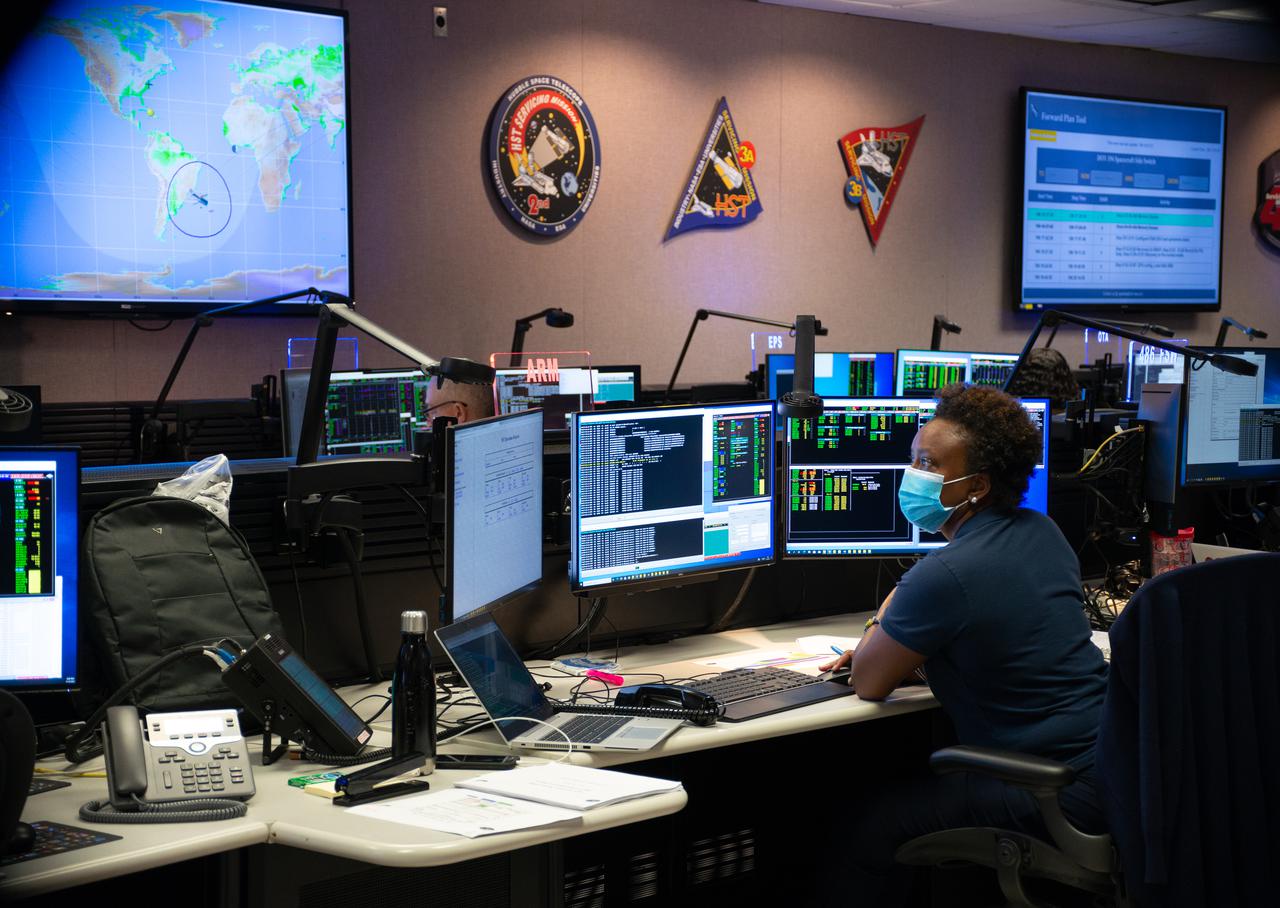
Nzinga Tull, Hubble systems anomaly response manager at NASA’s Goddard Space Flight Center in Greenbelt, Maryland, works in the control room on July 15, 2021, to restore Hubble to full science operations. --- More info: Hubble’s payload computer, which controls and coordinates the observatory’s onboard science instruments, halted suddenly on June 13. When the main computer failed to receive a signal from the payload computer, it automatically placed Hubble’s science instruments into safe mode. That meant the telescope would no longer be doing science while mission specialists analyzed the situation. In response to the anomaly, NASA began a switch to backup spacecraft hardware on Hubble in response to an ongoing problem with its payload computer. This was a multi-day event. Science observations restarted the afternoon of Saturday, July 17.
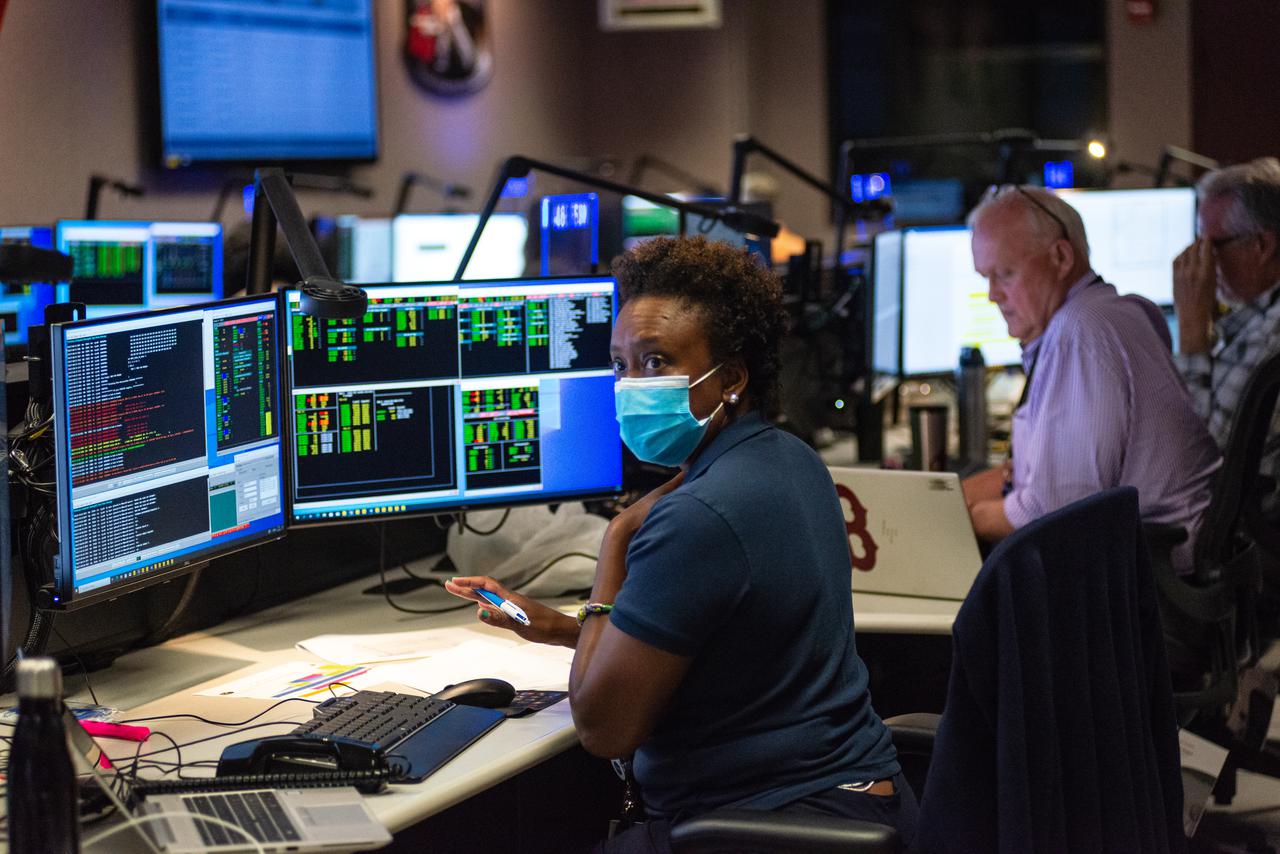
Nzinga Tull, Hubble systems anomaly response manager at NASA’s Goddard Space Flight Center in Greenbelt, Maryland, works in the control room on July 15, 2021, to restore Hubble to full science operations. --- More info: Hubble’s payload computer, which controls and coordinates the observatory’s onboard science instruments, halted suddenly on June 13. When the main computer failed to receive a signal from the payload computer, it automatically placed Hubble’s science instruments into safe mode. That meant the telescope would no longer be doing science while mission specialists analyzed the situation. In response to the anomaly, NASA began a switch to backup spacecraft hardware on Hubble in response to an ongoing problem with its payload computer. This was a multi-day event. Science observations restarted the afternoon of Saturday, July 17.
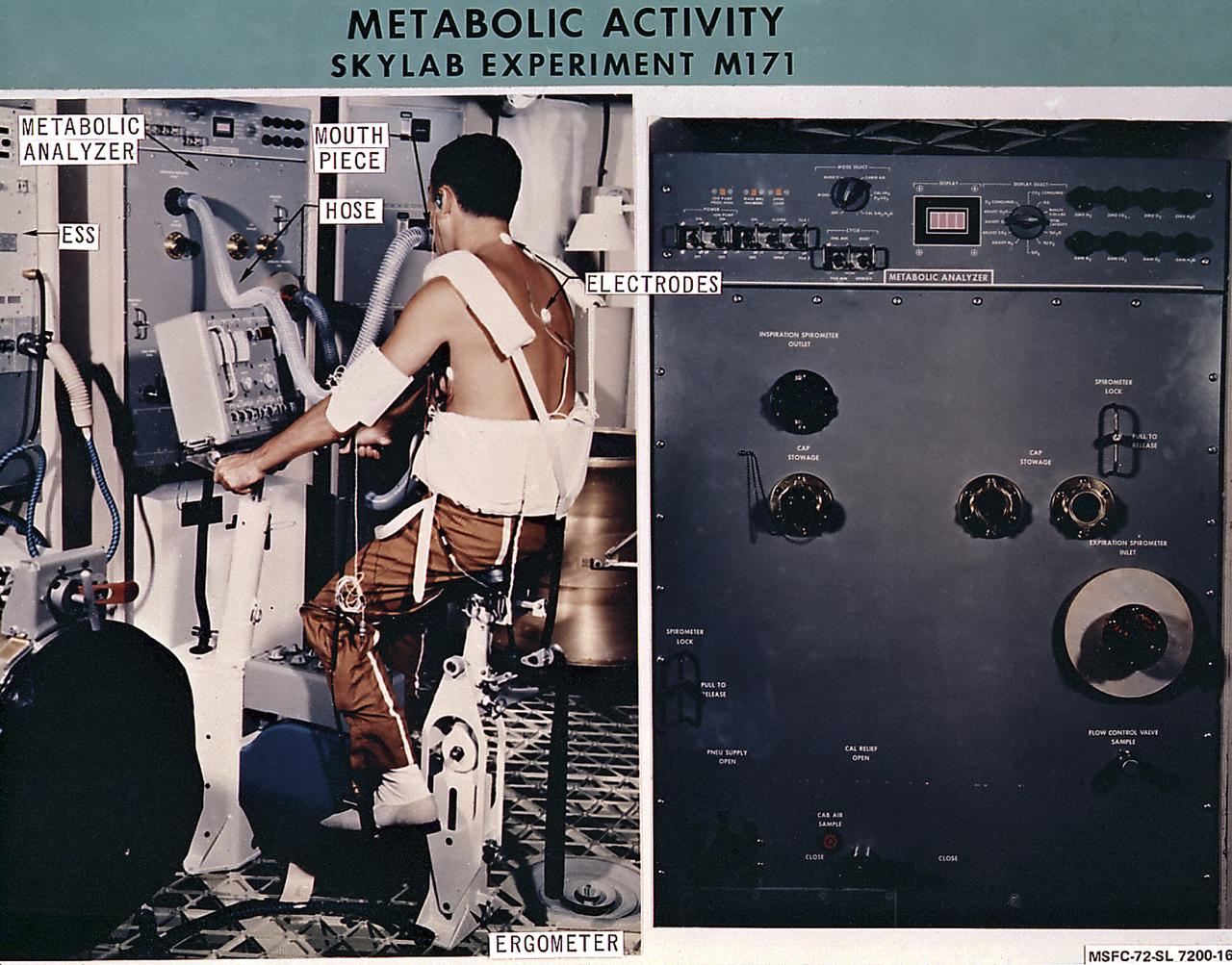
This chart details Skylab's Metabolic Activity experiment (M171), a medical evaluation facility designed to measure astronauts' metabolic changes while on long-term space missions. The experiment obtained information on astronauts' physiological capabilities and limitations and provided data useful in the design of future spacecraft and work programs. Physiological responses to physical activity was deduced by analyzing inhaled and exhaled air, pulse rate, blood pressure, and other selected variables of the crew while they performed controlled amounts of physical work with a bicycle ergometer. The Marshall Space Flight Center had program responsibility for the development of Skylab hardware and experiments.
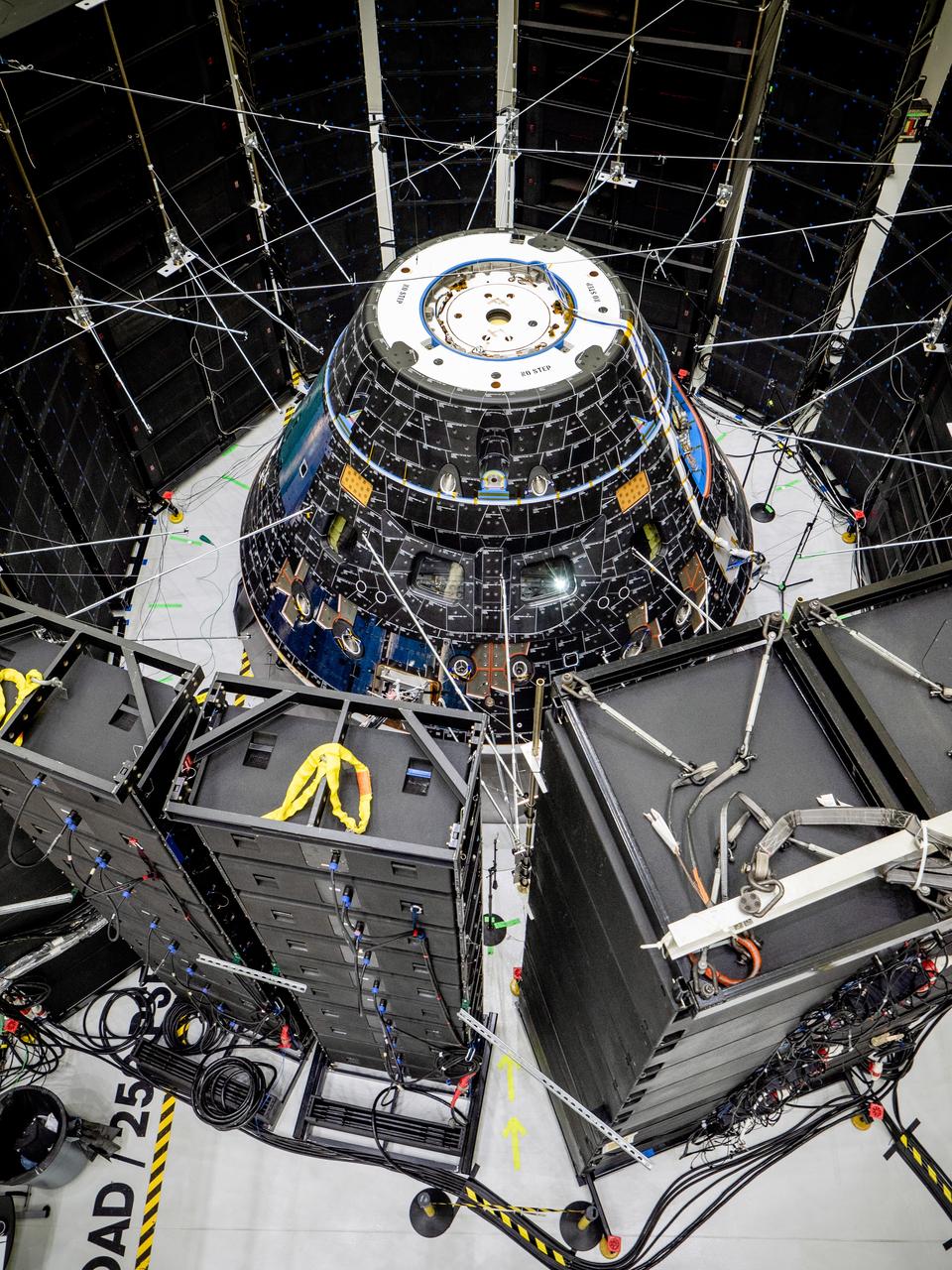
The Orion crew module for Artemis I, shown here on May 2, 2019, recently underwent Direct Field Acoustics Test (DFAT) where it was exposed to maximum acoustics levels that the vehicle will experience in space. Spacecraft response and sound pressure data were collected with microphones, strain gauges and accelerometers. The max decibel level was -12dB.
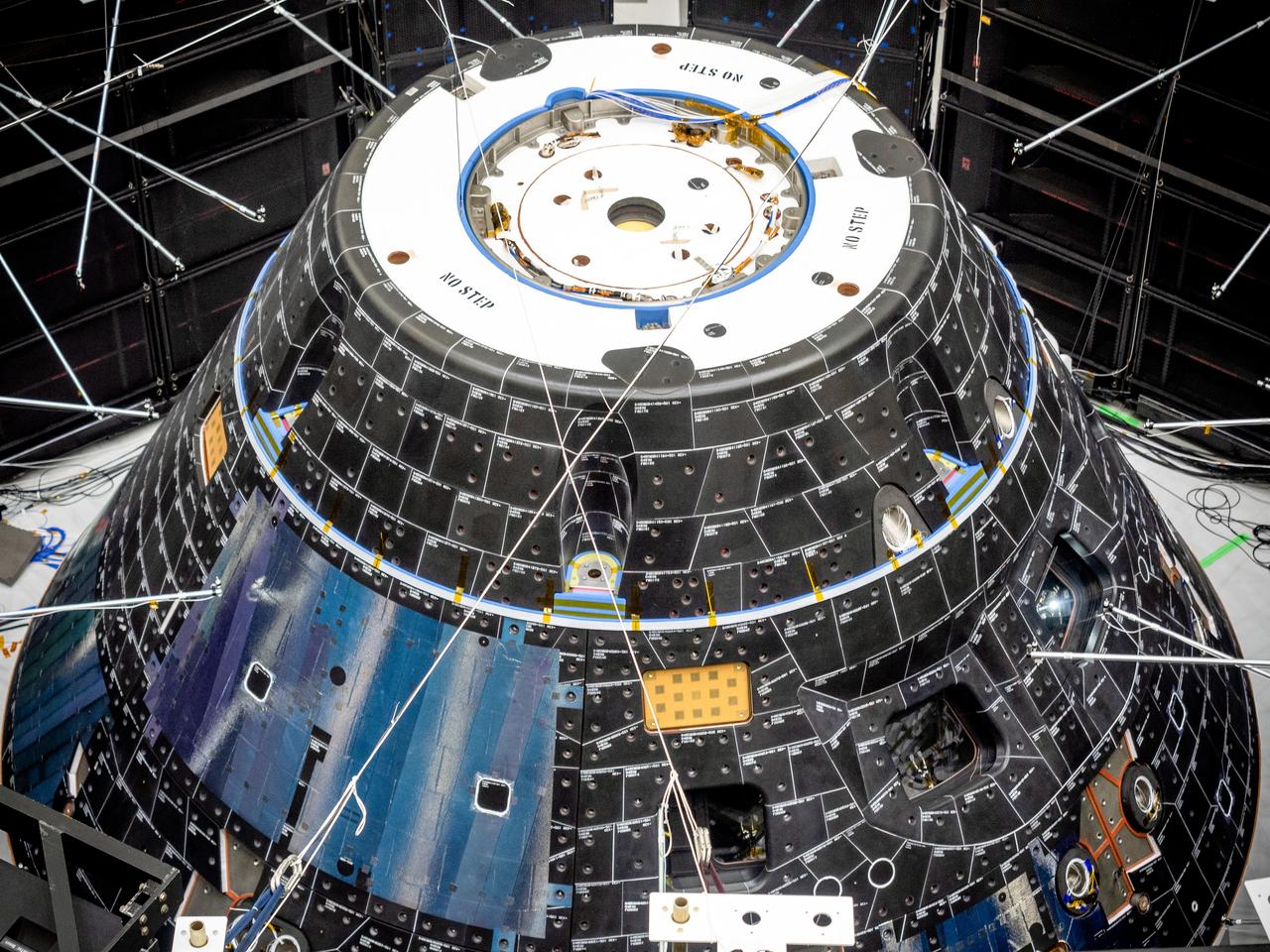
The Orion crew module for Artemis I, shown here on May 2, 2019, recently underwent Direct Field Acoustics Test (DFAT) where it was exposed to maximum acoustics levels that the vehicle will experience in space. Spacecraft response and sound pressure data were collected with microphones, strain gauges and accelerometers. The max decibel level was -12dB.
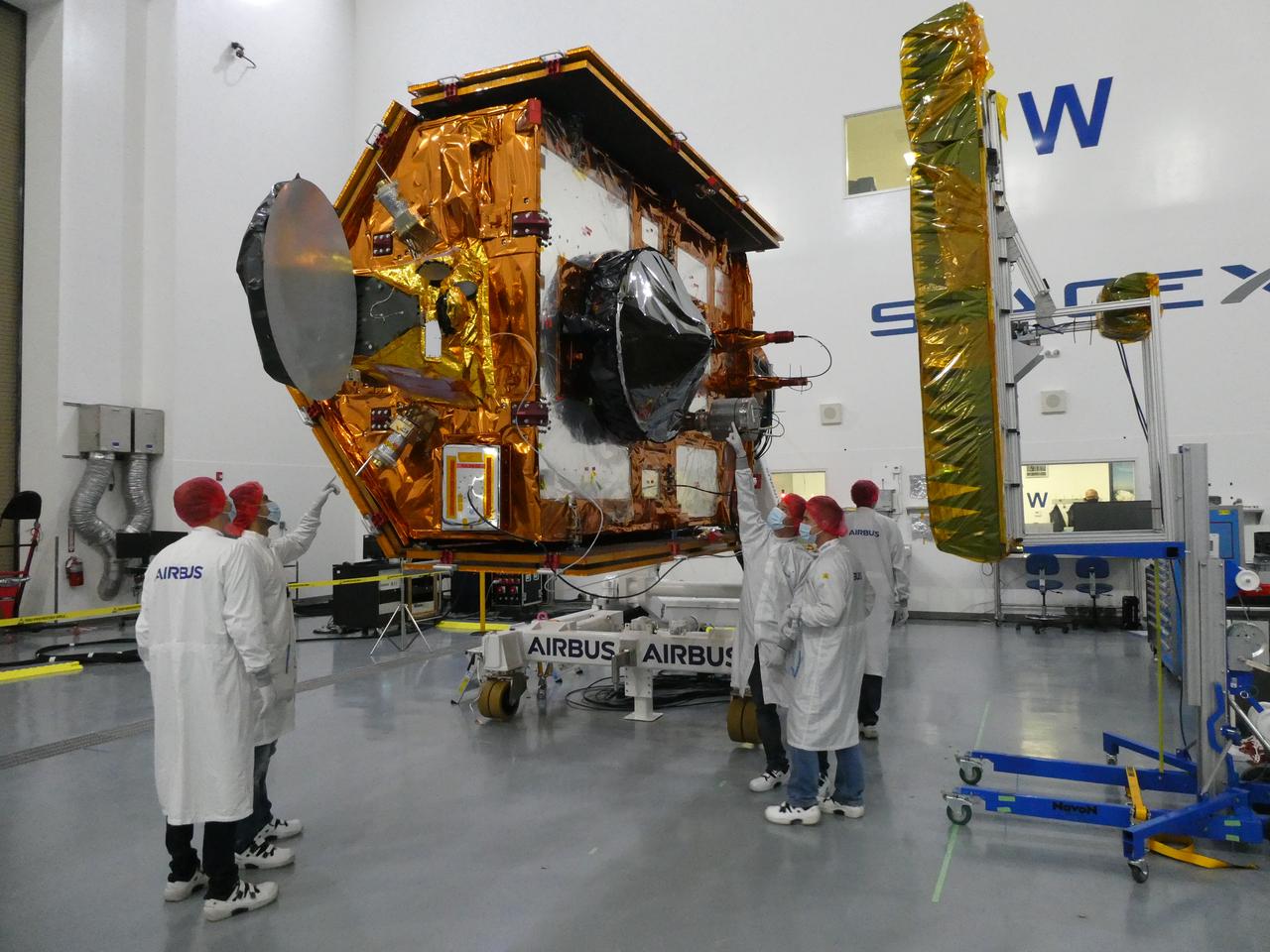
Sentinel-6 Michael Freilich team members from European Space Agency pose with the spacecraft during processing. Launch is scheduled for Nov. 10, 2020 from Vandenberg Air Force Base in California. NASA’s Launch Services Program based at Kennedy Space Center is responsible for launch management.
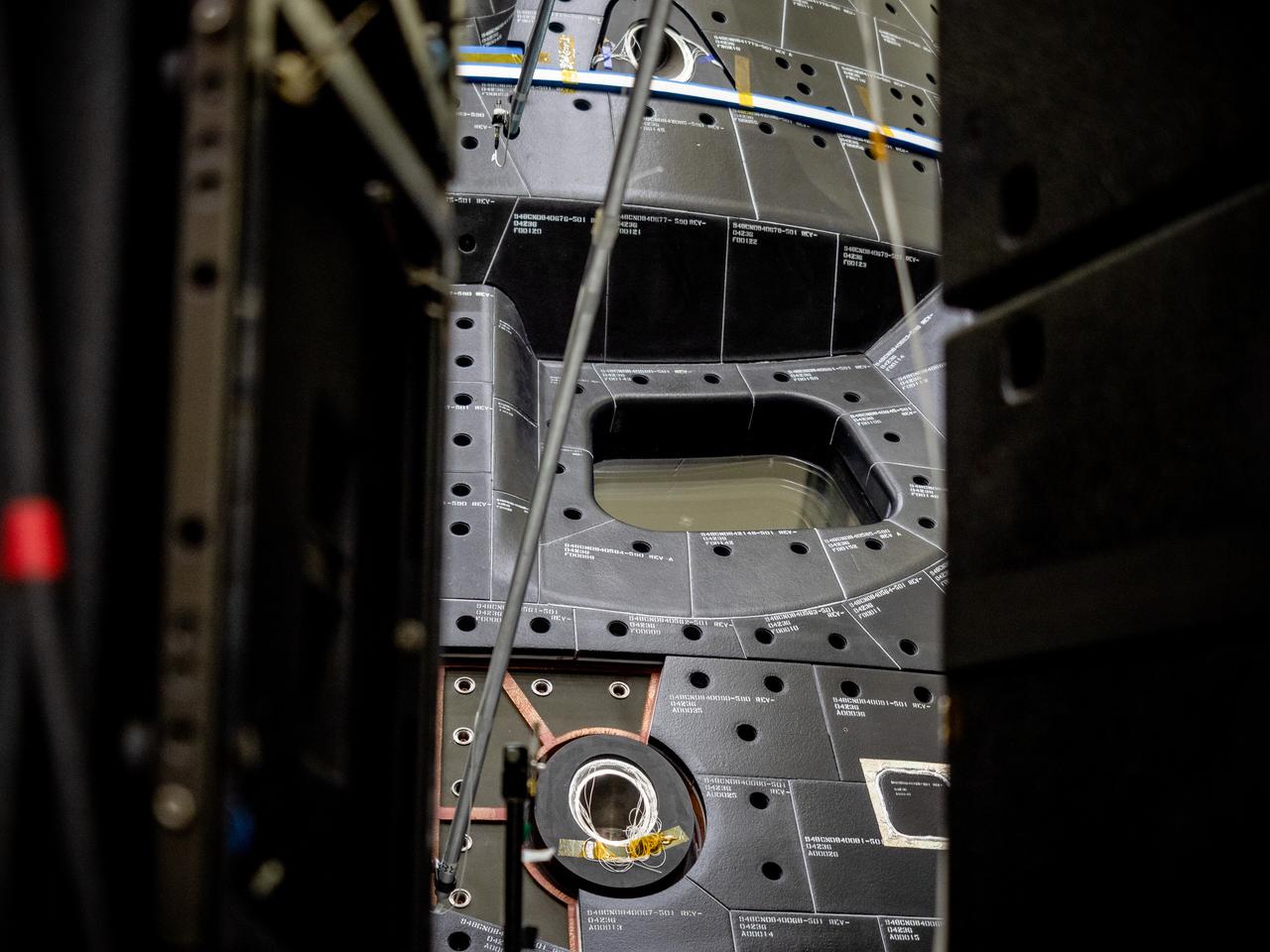
The Orion crew module for Artemis I, shown here on May 2, 2019, recently underwent Direct Field Acoustics Test (DFAT) where it was exposed to maximum acoustics levels that the vehicle will experience in space. Spacecraft response and sound pressure data were collected with microphones, strain gauges and accelerometers. The max decibel level was -12dB.

The Orion crew module for Artemis I, shown here on May 2, 2019, recently underwent Direct Field Acoustics Test (DFAT) where it was exposed to maximum acoustics levels that the vehicle will experience in space. Spacecraft response and sound pressure data were collected with microphones, strain gauges and accelerometers. The max decibel level was -12dB.
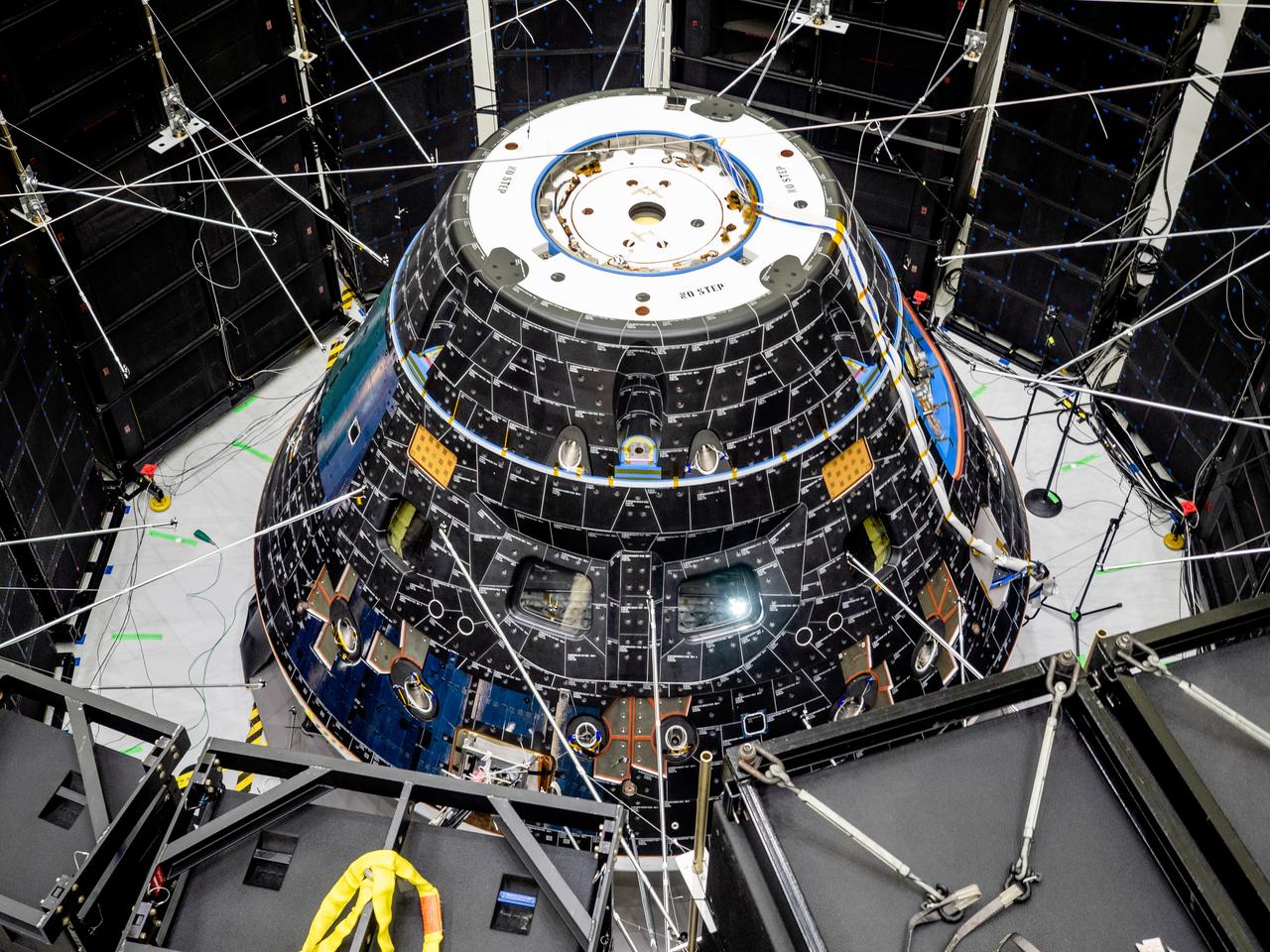
The Orion crew module for Artemis I, shown here on May 2, 2019, recently underwent Direct Field Acoustics Test (DFAT) where it was exposed to maximum acoustics levels that the vehicle will experience in space. Spacecraft response and sound pressure data were collected with microphones, strain gauges and accelerometers. The max decibel level was -12dB.
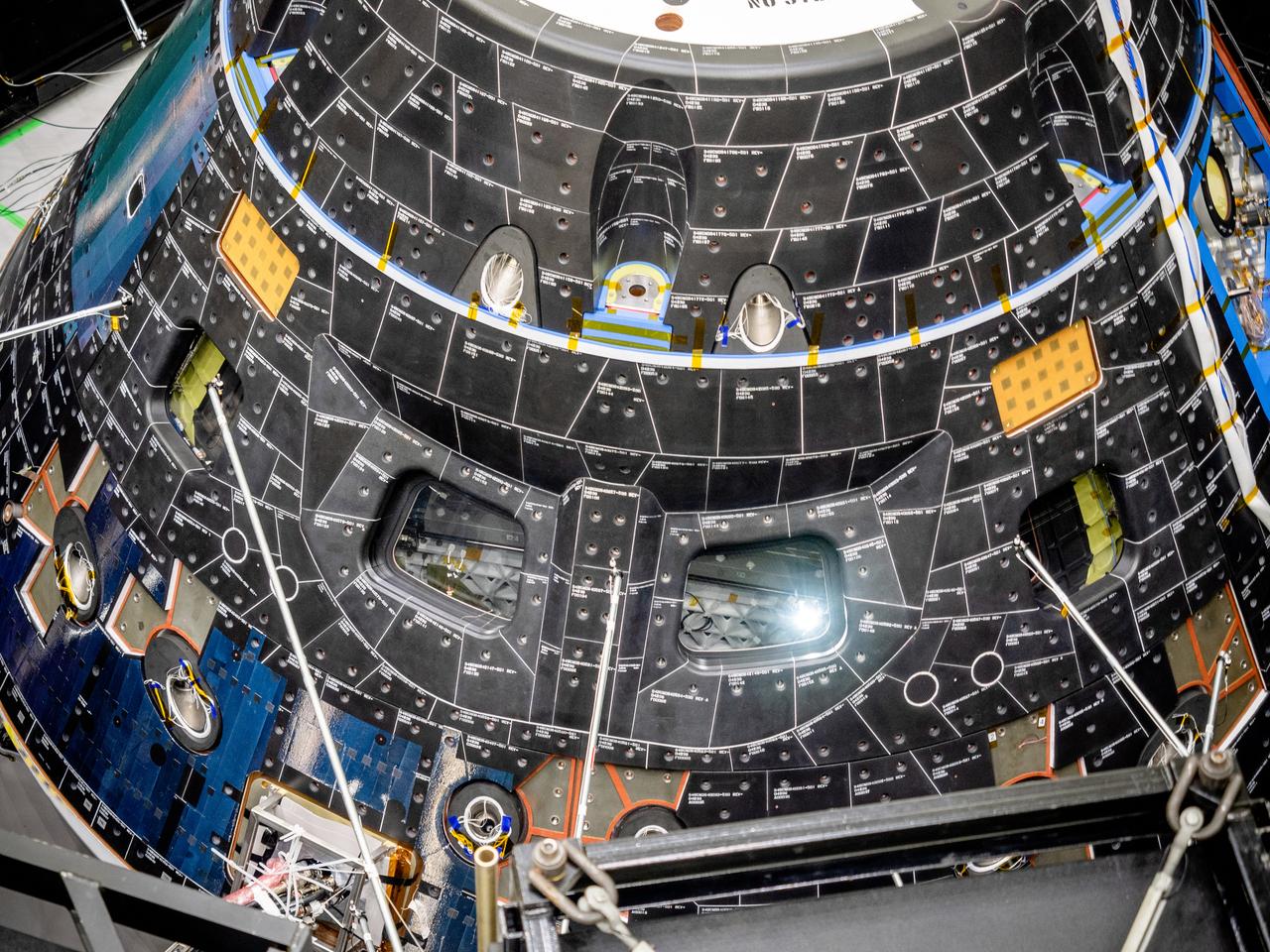
The Orion crew module for Artemis I, shown here on May 2, 2019, recently underwent Direct Field Acoustics Test (DFAT) where it was exposed to maximum acoustics levels that the vehicle will experience in space. Spacecraft response and sound pressure data were collected with microphones, strain gauges and accelerometers. The max decibel level was -12dB.
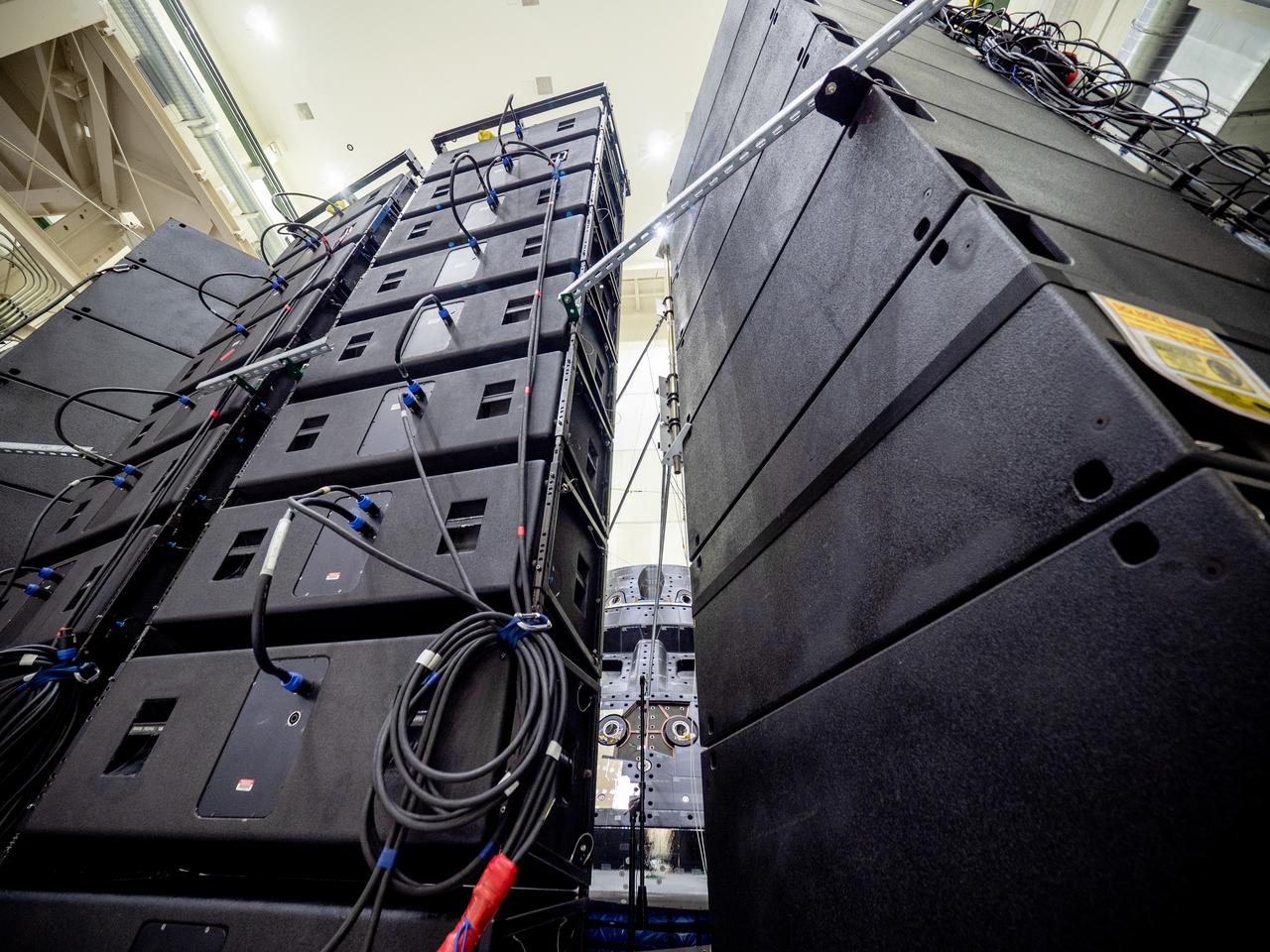
The Orion crew module for Artemis I, shown here on May 2, 2019, recently underwent Direct Field Acoustics Test (DFAT) where it was exposed to maximum acoustics levels that the vehicle will experience in space. Spacecraft response and sound pressure data were collected with microphones, strain gauges and accelerometers. The max decibel level was -12dB.
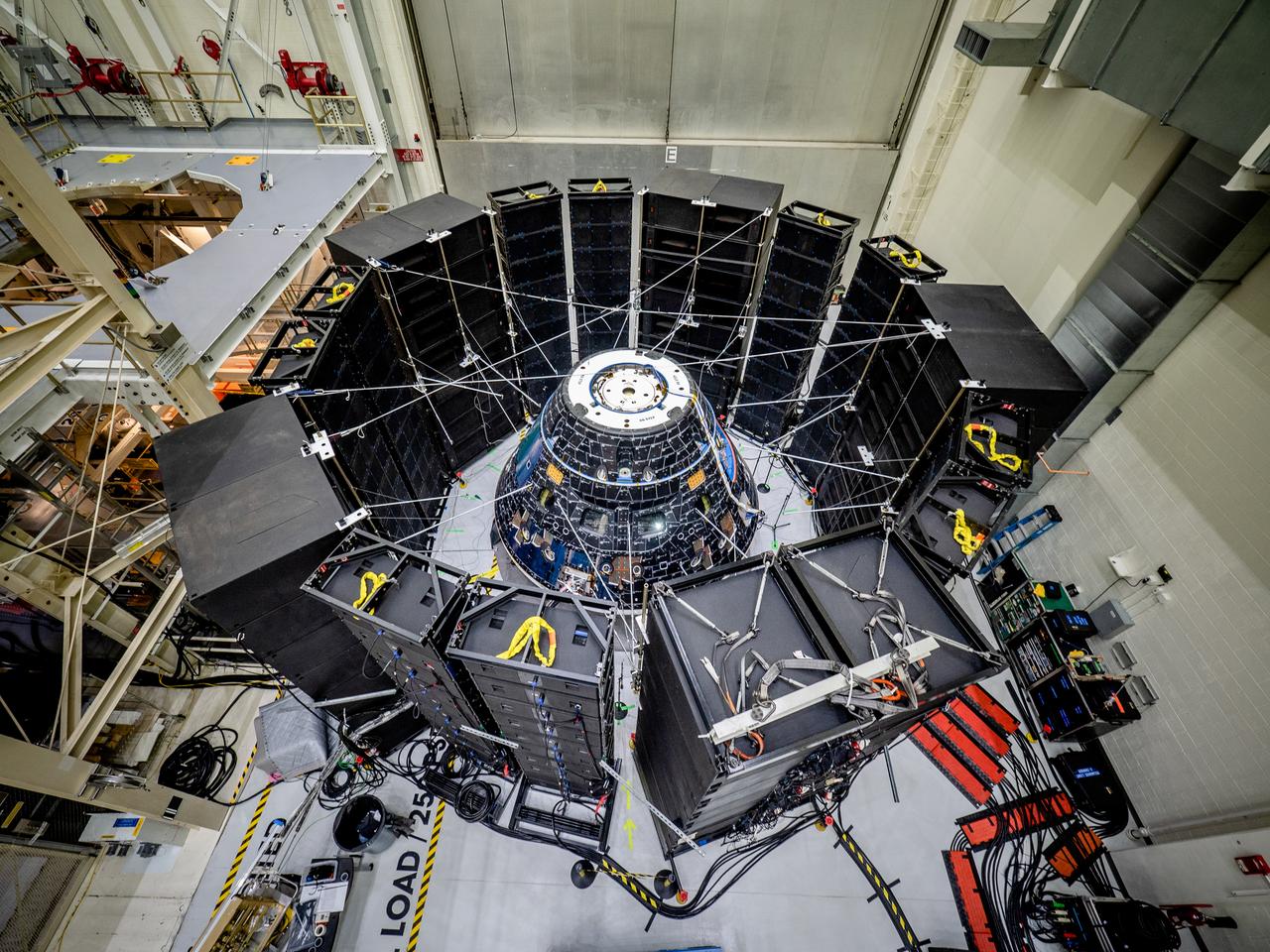
The Orion crew module for Artemis I, shown here on May 2, 2019, recently underwent Direct Field Acoustics Test (DFAT) where it was exposed to maximum acoustics levels that the vehicle will experience in space. Spacecraft response and sound pressure data were collected with microphones, strain gauges and accelerometers. The max decibel level was -12dB.
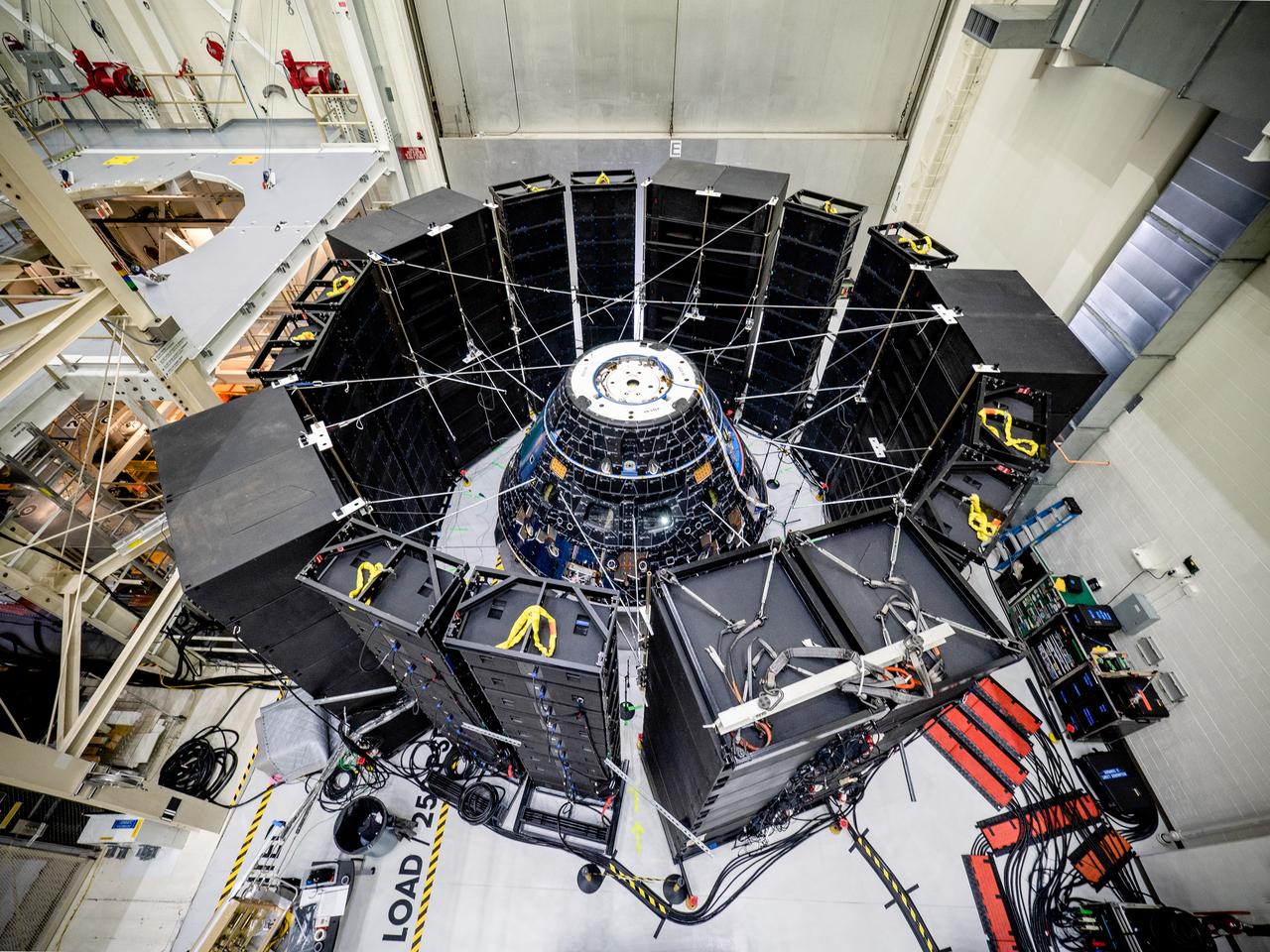
The Orion crew module for Artemis I, shown here on May 2, 2019, recently underwent Direct Field Acoustics Test (DFAT) where it was exposed to maximum acoustics levels that the vehicle will experience in space. Spacecraft response and sound pressure data were collected with microphones, strain gauges and accelerometers. The max decibel level was -12dB.
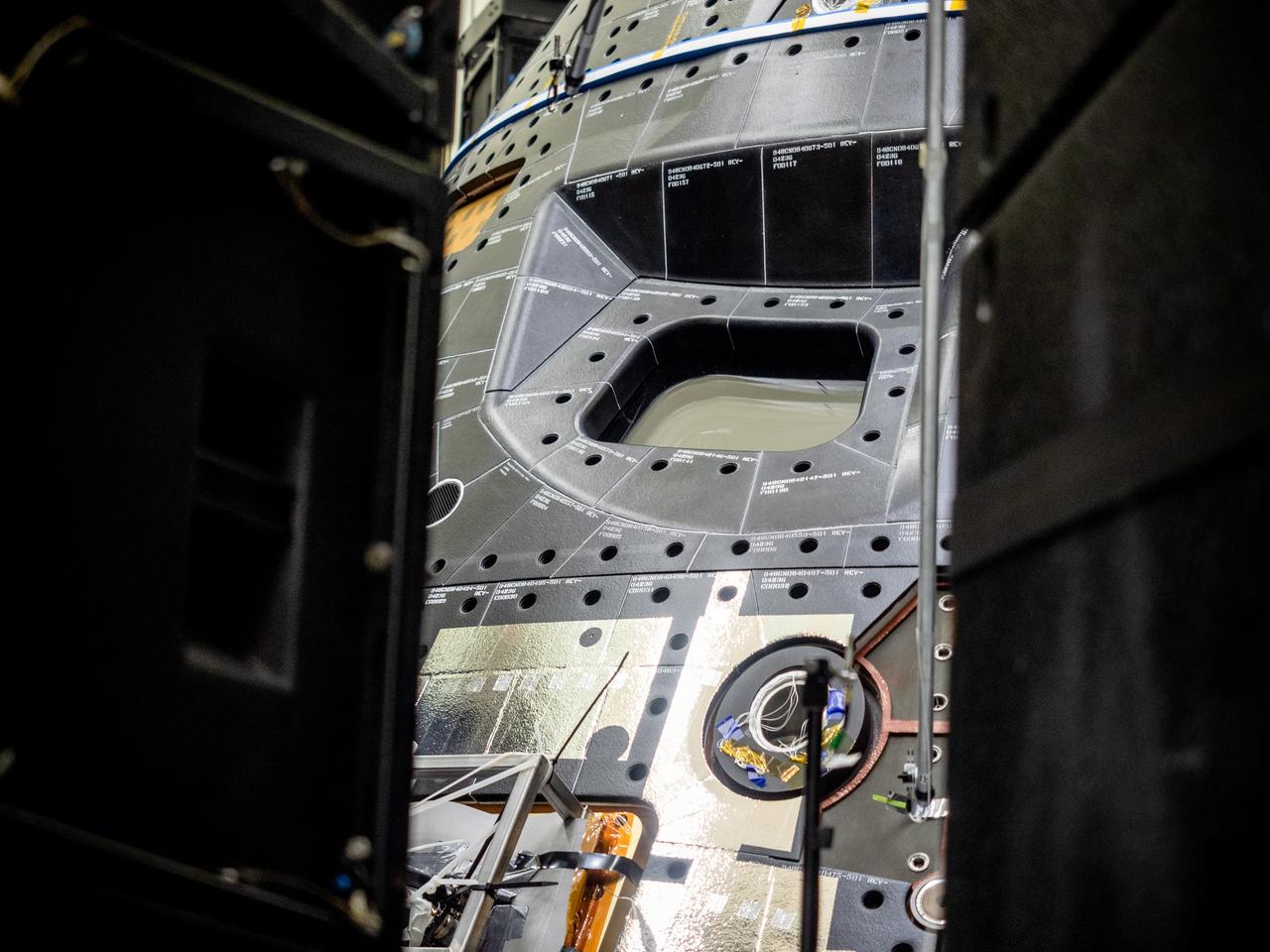
The Orion crew module for Artemis I, shown here on May 2, 2019, recently underwent Direct Field Acoustics Test (DFAT) where it was exposed to maximum acoustics levels that the vehicle will experience in space. Spacecraft response and sound pressure data were collected with microphones, strain gauges and accelerometers. The max decibel level was -12dB.
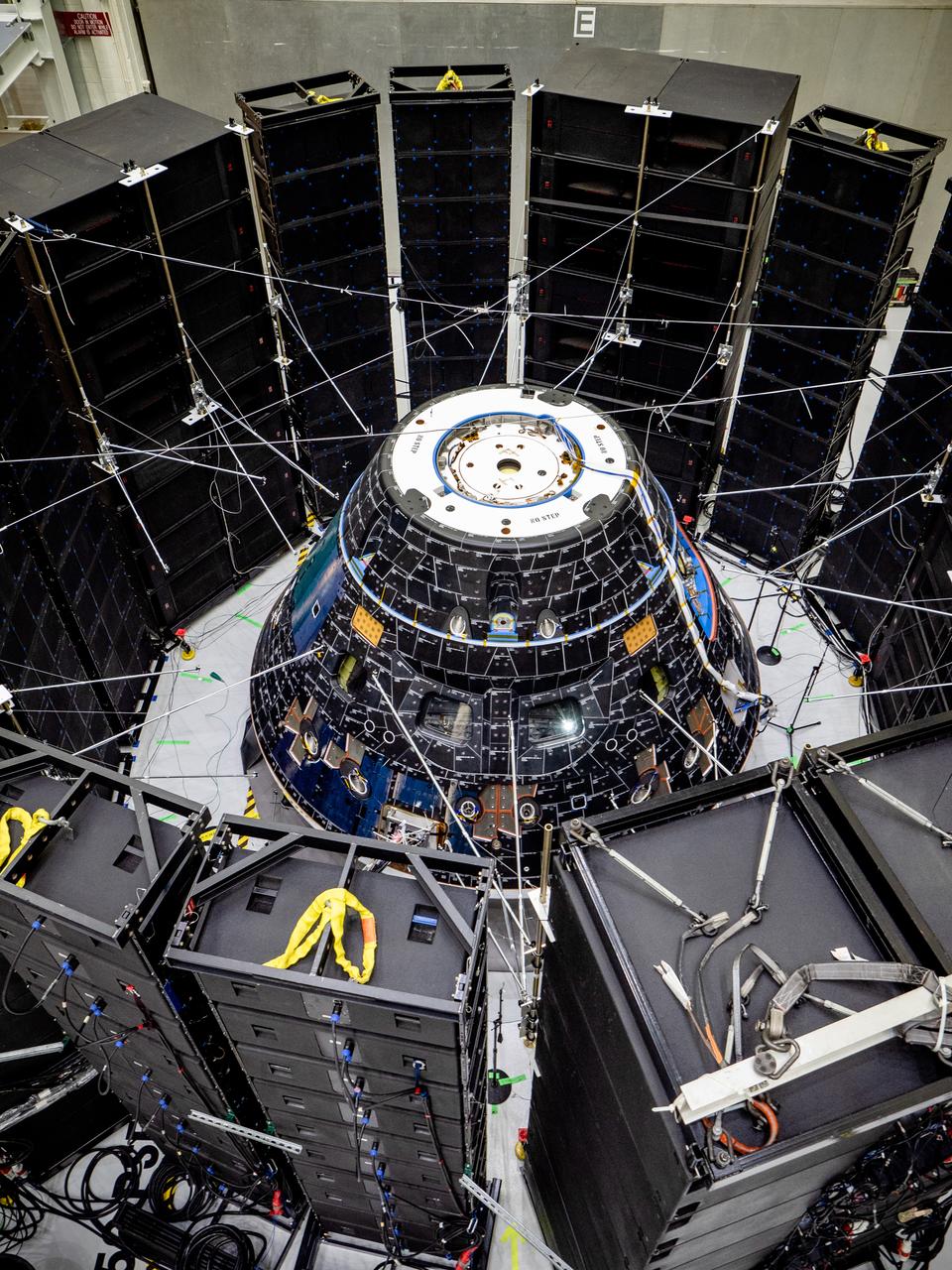
The Orion crew module for Artemis I, shown here on May 2, 2019, recently underwent Direct Field Acoustics Test (DFAT) where it was exposed to maximum acoustics levels that the vehicle will experience in space. Spacecraft response and sound pressure data were collected with microphones, strain gauges and accelerometers. The max decibel level was -12dB.
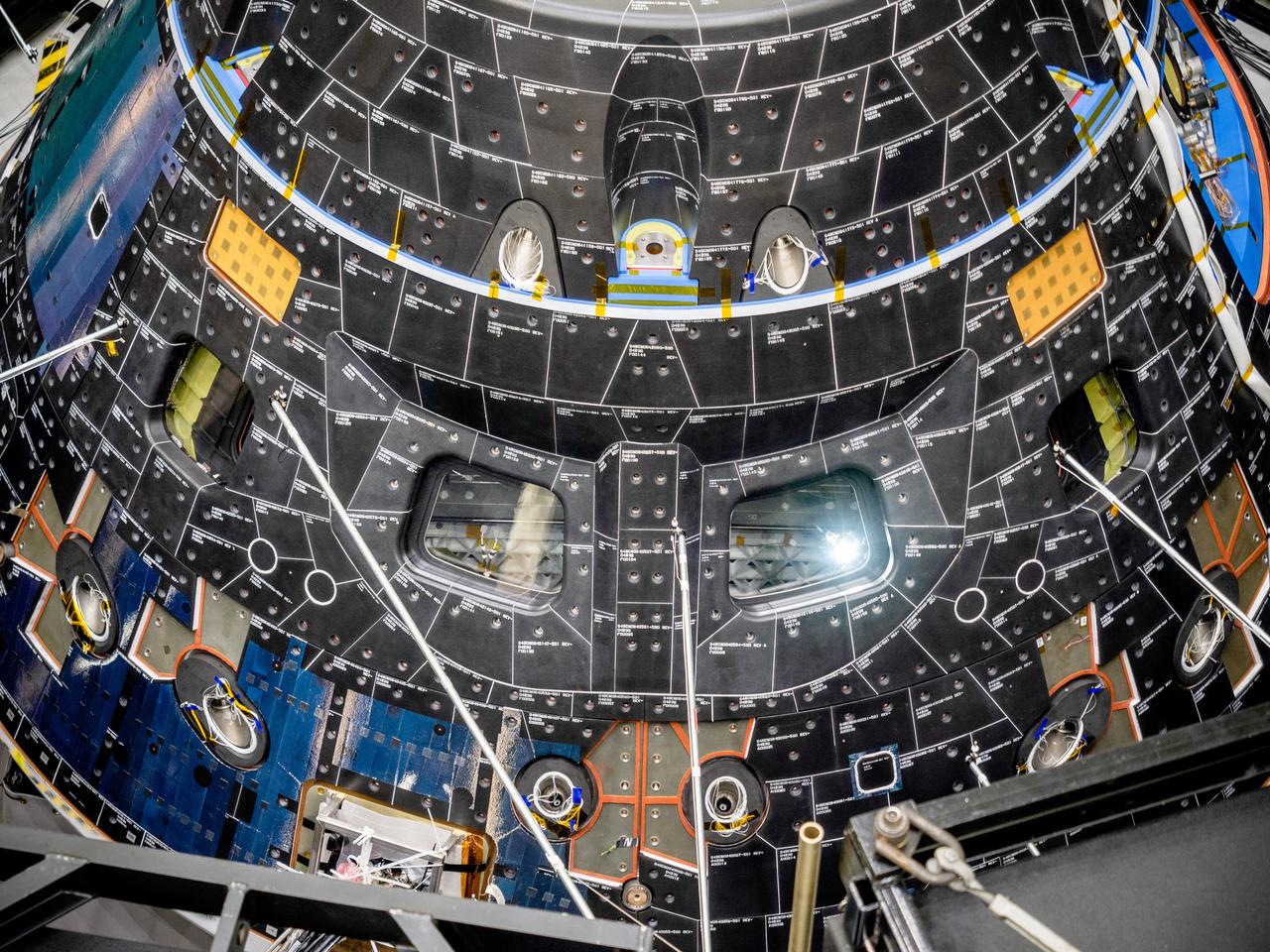
The Orion crew module for Artemis I, shown here on May 2, 2019, recently underwent Direct Field Acoustics Test (DFAT) where it was exposed to maximum acoustics levels that the vehicle will experience in space. Spacecraft response and sound pressure data were collected with microphones, strain gauges and accelerometers. The max decibel level was -12dB.
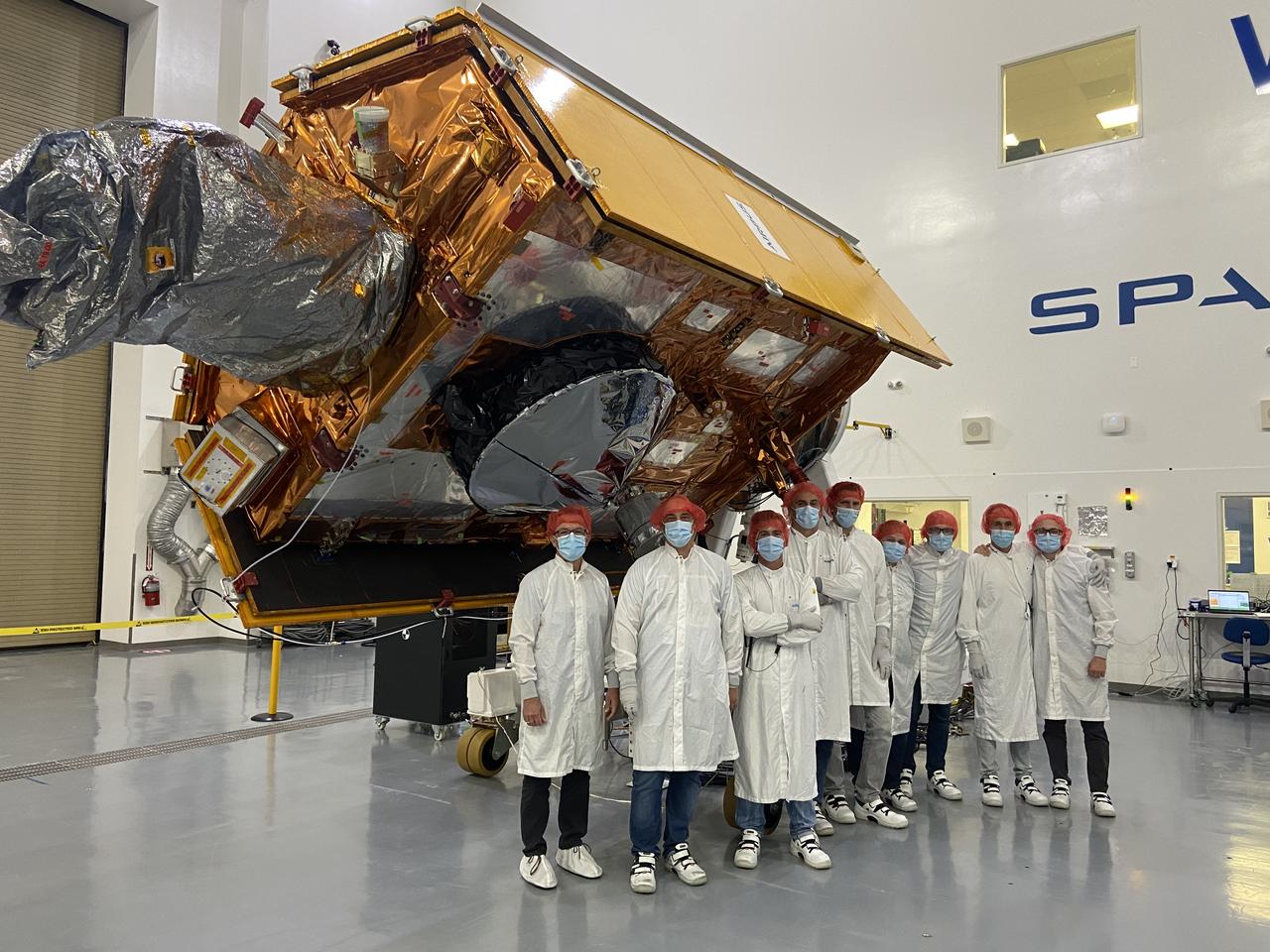
Sentinel-6 Michael Freilich team members from European Space Agency pose with the spacecraft during processing. Launch is scheduled for Nov. 10, 2020 from Vandenberg Air Force Base in California. NASA’s Launch Services Program based at Kennedy Space Center is responsible for launch management.

The Orion crew module for Artemis I, shown here on May 2, 2019, recently underwent Direct Field Acoustics Test (DFAT) where it was exposed to maximum acoustics levels that the vehicle will experience in space. Spacecraft response and sound pressure data were collected with microphones, strain gauges and accelerometers. The max decibel level was -12dB.
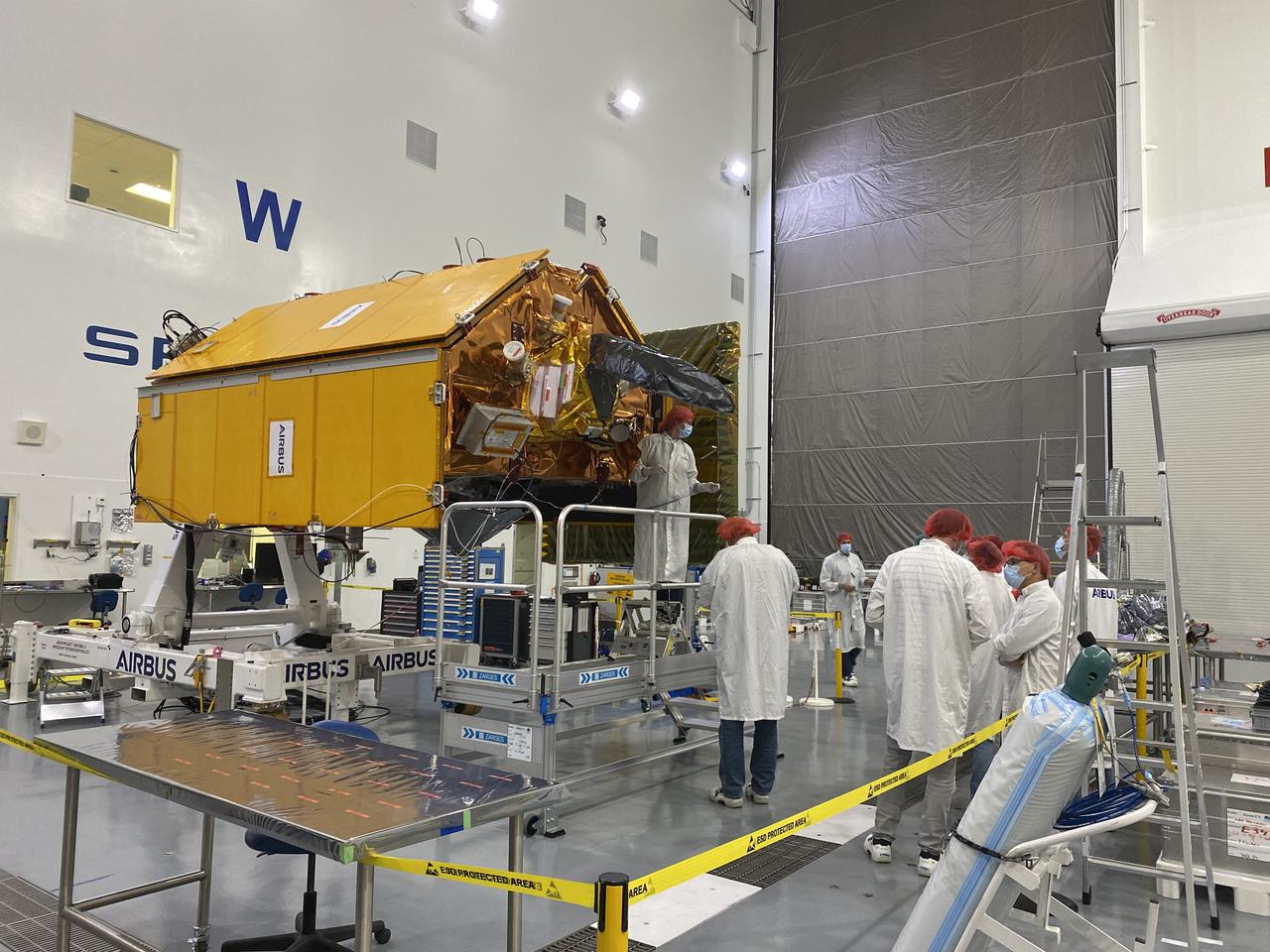
Sentinel-6 Michael Freilich team members from European Space Agency pose with the spacecraft during processing. Launch is scheduled for Nov. 10, 2020 from Vandenberg Air Force Base in California. NASA’s Launch Services Program based at Kennedy Space Center is responsible for launch management.
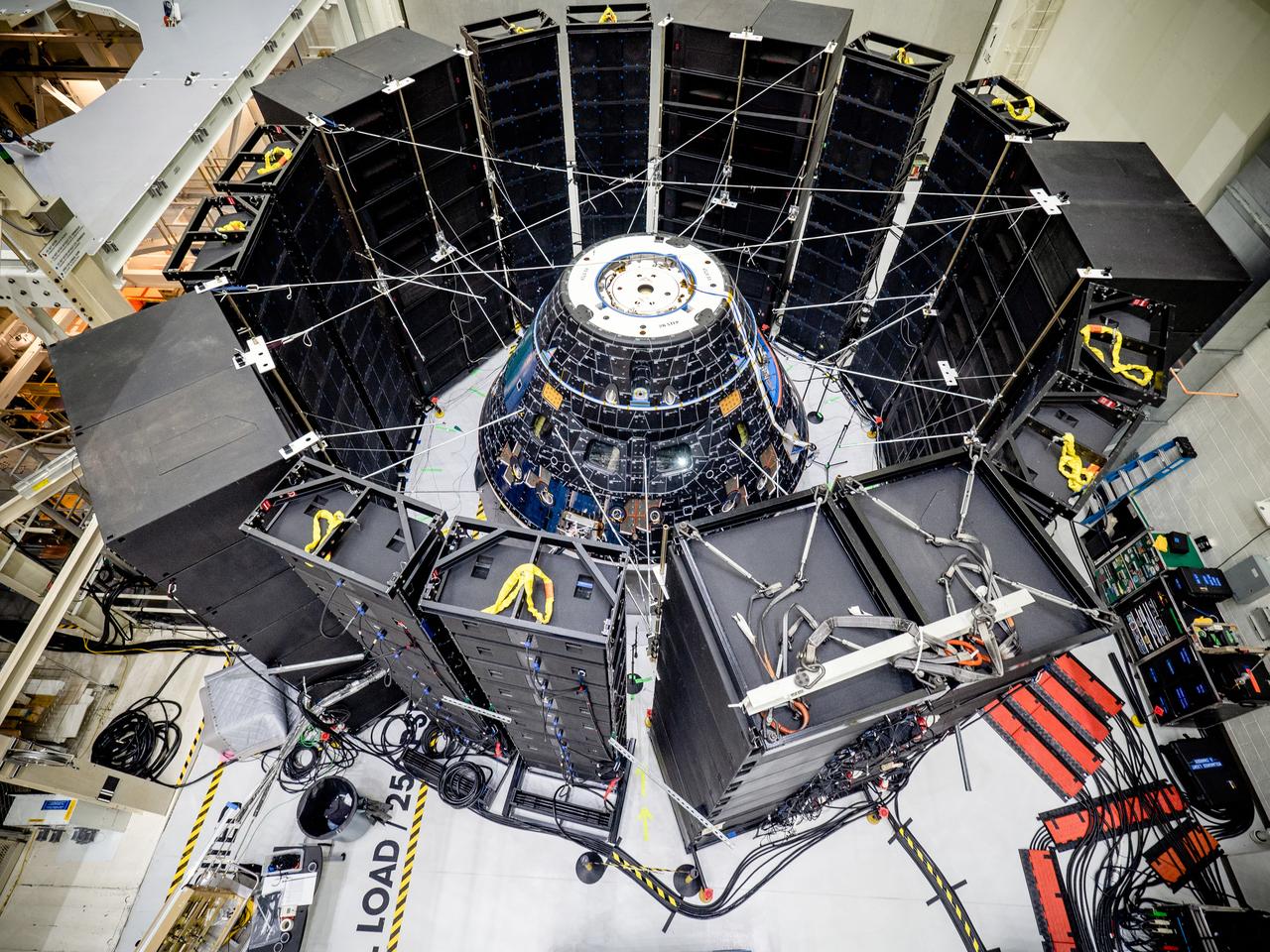
The Orion crew module for Artemis I, shown here on May 2, 2019, recently underwent Direct Field Acoustics Test (DFAT) where it was exposed to maximum acoustics levels that the vehicle will experience in space. Spacecraft response and sound pressure data were collected with microphones, strain gauges and accelerometers. The max decibel level was -12dB.
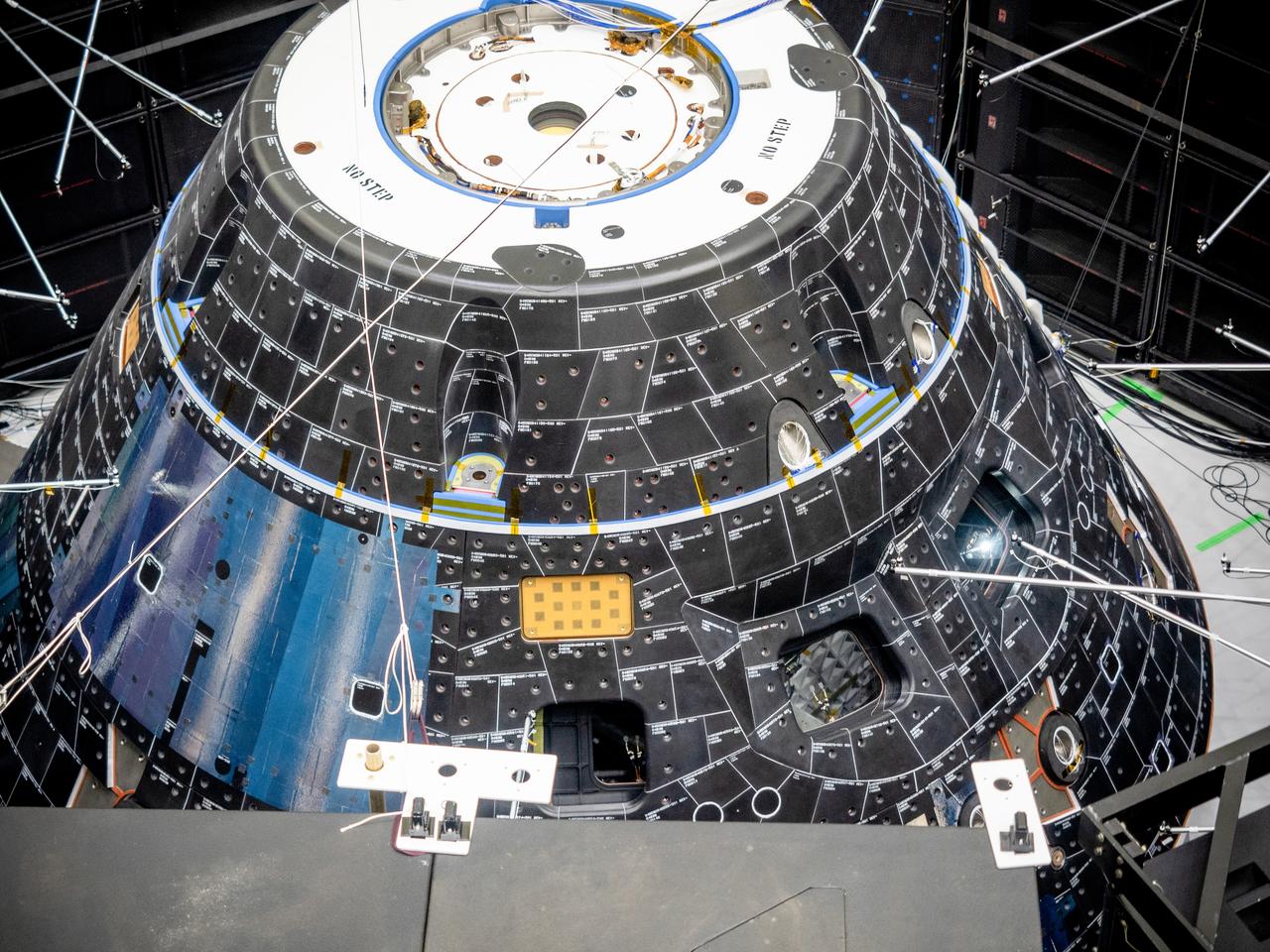
The Orion crew module for Artemis I, shown here on May 2, 2019, recently underwent Direct Field Acoustics Test (DFAT) where it was exposed to maximum acoustics levels that the vehicle will experience in space. Spacecraft response and sound pressure data were collected with microphones, strain gauges and accelerometers. The max decibel level was -12dB.
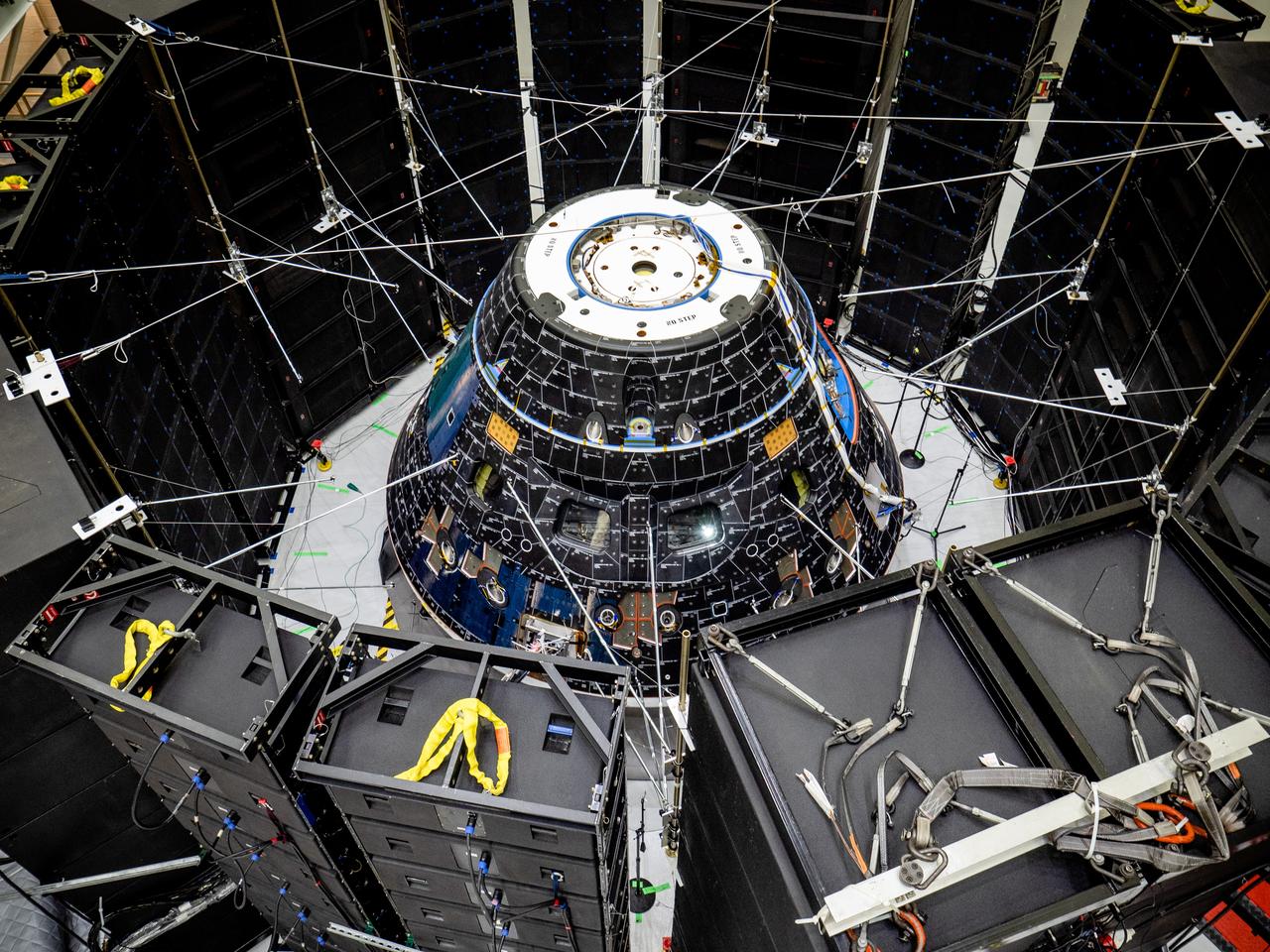
The Orion crew module for Artemis I, shown here on May 2, 2019, recently underwent Direct Field Acoustics Test (DFAT) where it was exposed to maximum acoustics levels that the vehicle will experience in space. Spacecraft response and sound pressure data were collected with microphones, strain gauges and accelerometers. The max decibel level was -12dB.

The Orion crew module for Artemis I, shown here on May 2, 2019, recently underwent Direct Field Acoustics Test (DFAT) where it was exposed to maximum acoustics levels that the vehicle will experience in space. Spacecraft response and sound pressure data were collected with microphones, strain gauges and accelerometers. The max decibel level was -12dB.
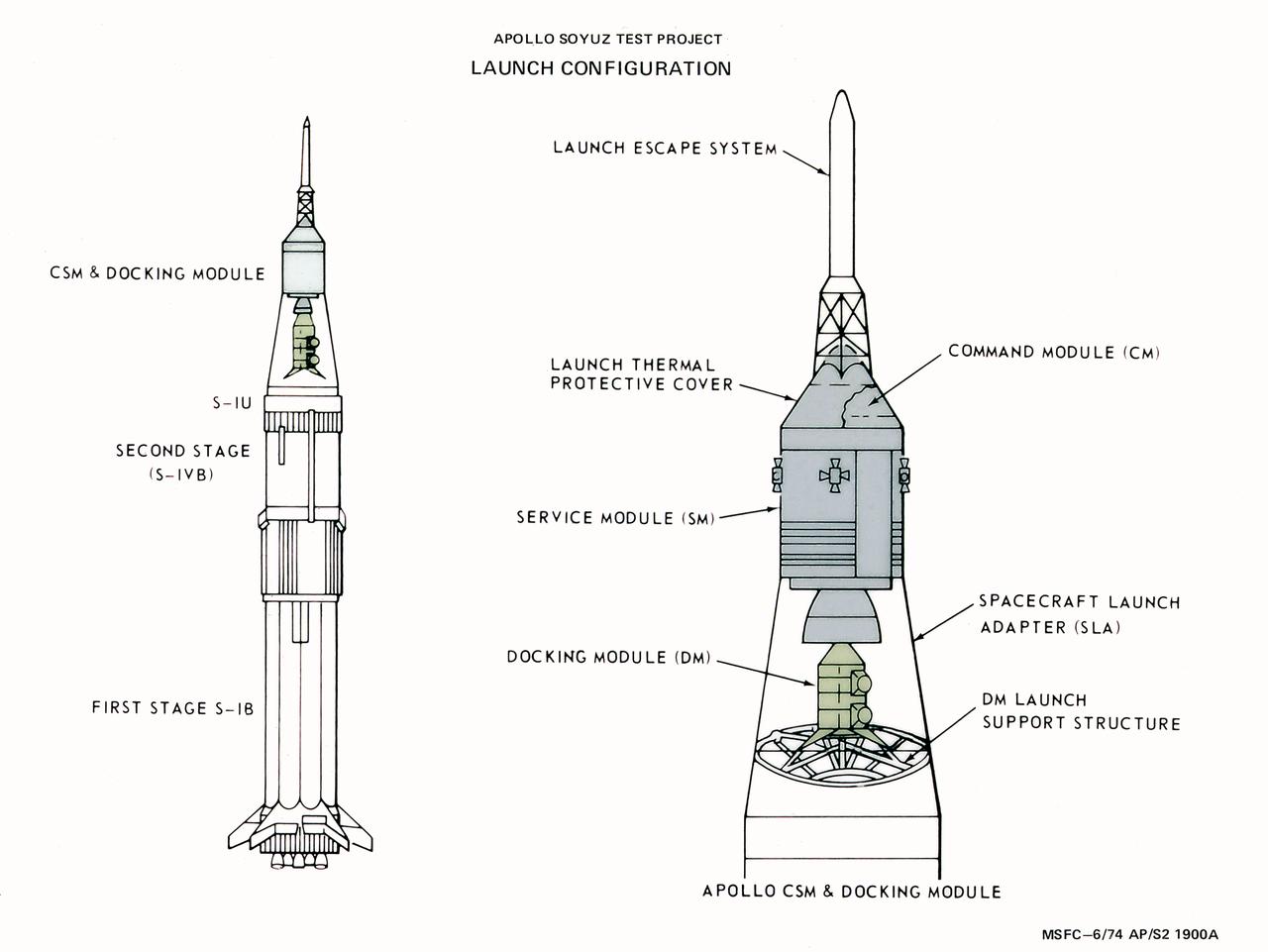
This illustration depicts the launch configuration of the Apollo spacecraft for the Apollo-Soyuz Test Project (ASTP). The ASTP was the first international docking of the U.S.'s Apollo spacecraft and the U.S.S.R.'s Soyuz spacecraft in space. A joint engineering team from the two countries met to develop a docking system that permitted the two spacecraft to link in space and allowed the two crews to travel from one spacecraft to the other. This system entailed developing a large habitable Docking Module (DM) to be carried on the Apollo spacecraft to facilitate the joining of two dissimilar spacecraft. The Marshall Space Flight Center was responsible for development and sustaining engineering of the Saturn IB launch vehicle during the mission.
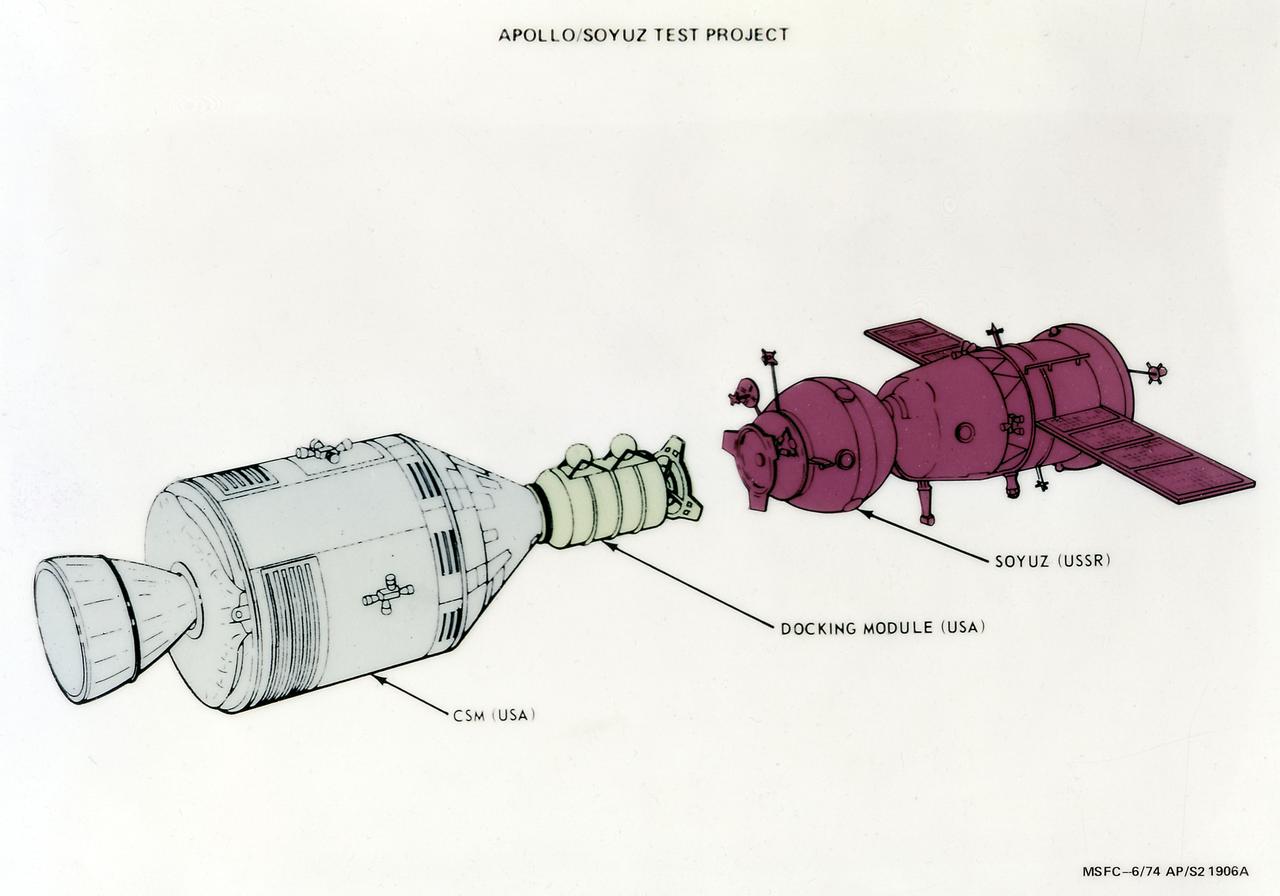
This illustration shows the docking configuration of the Apollo-Soyuz Test Project (ASTP). The ASTP was the first international docking of the U.S.'s Apollo spacecraft and the U.S.S.R.'s Soyuz spacecraft in space. A joint engineering team from the two countries met to develop a docking system that permitted the two spacecraft to link in space and allowed the two crews to travel from one spacecraft to the other. This system entailed developing a large habitable Docking Module (DM) to be carried on the Apollo spacecraft to facilitate the joining of two dissimilar spacecraft. The Marshall Space Flight Center was responsible for development and sustaining engineering of the Saturn IB launch vehicle during the mission. The ASTP marked the last use of the Saturn Launch Vehicle.
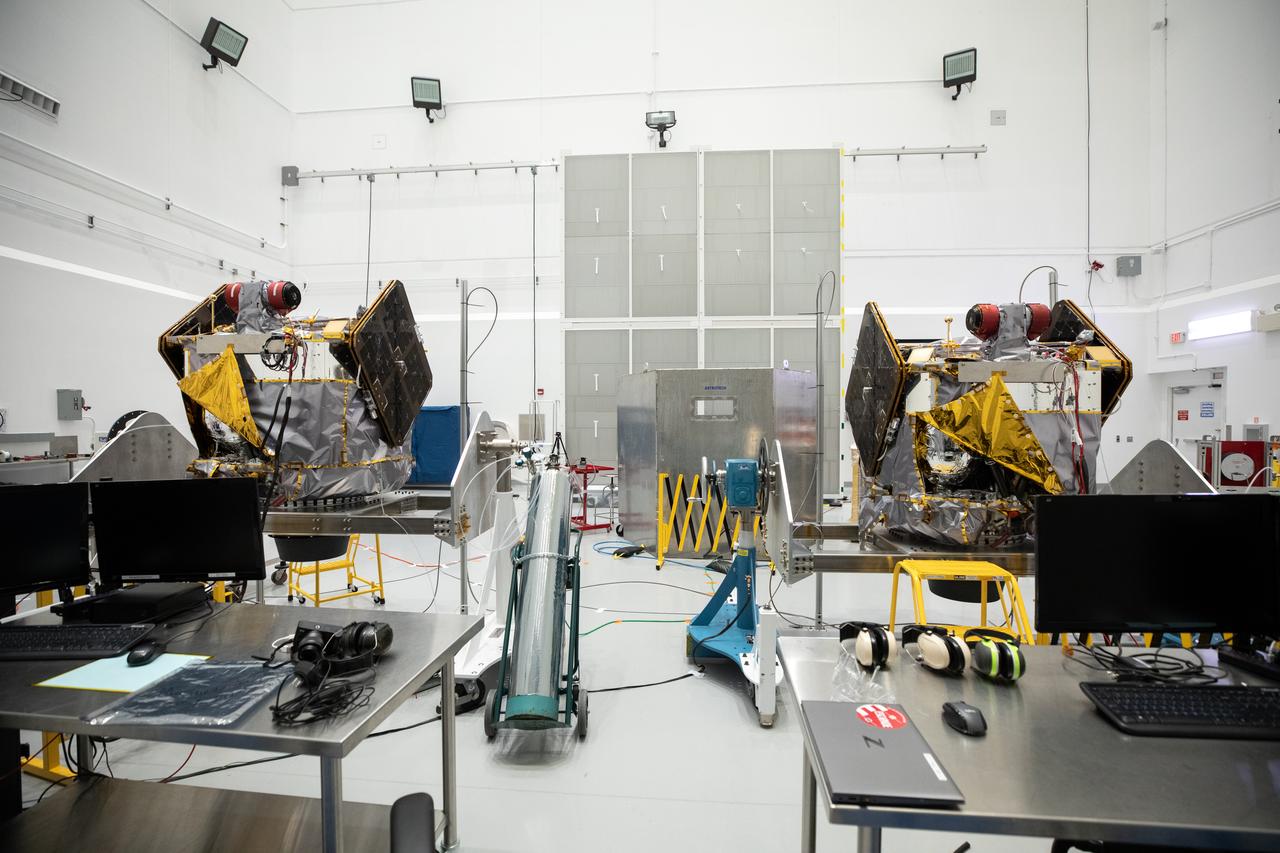
NASA’s ESCAPADE (Escape and Plasma Acceleration and Dynamics Explorers) identical dual spacecraft are inspected and processed on dollies in a high bay of the Astrotech Space Operations Facility near the agency’s Kennedy Space Center in Florida on Thursday, Aug. 22, 2024. As the first multi-spacecraft orbital science mission to Mars, ESCAPADE’s twin orbiters will take simultaneous observations from different locations around the planet and reveal the real-time response to space weather and how the Martian magnetosphere changes over time.
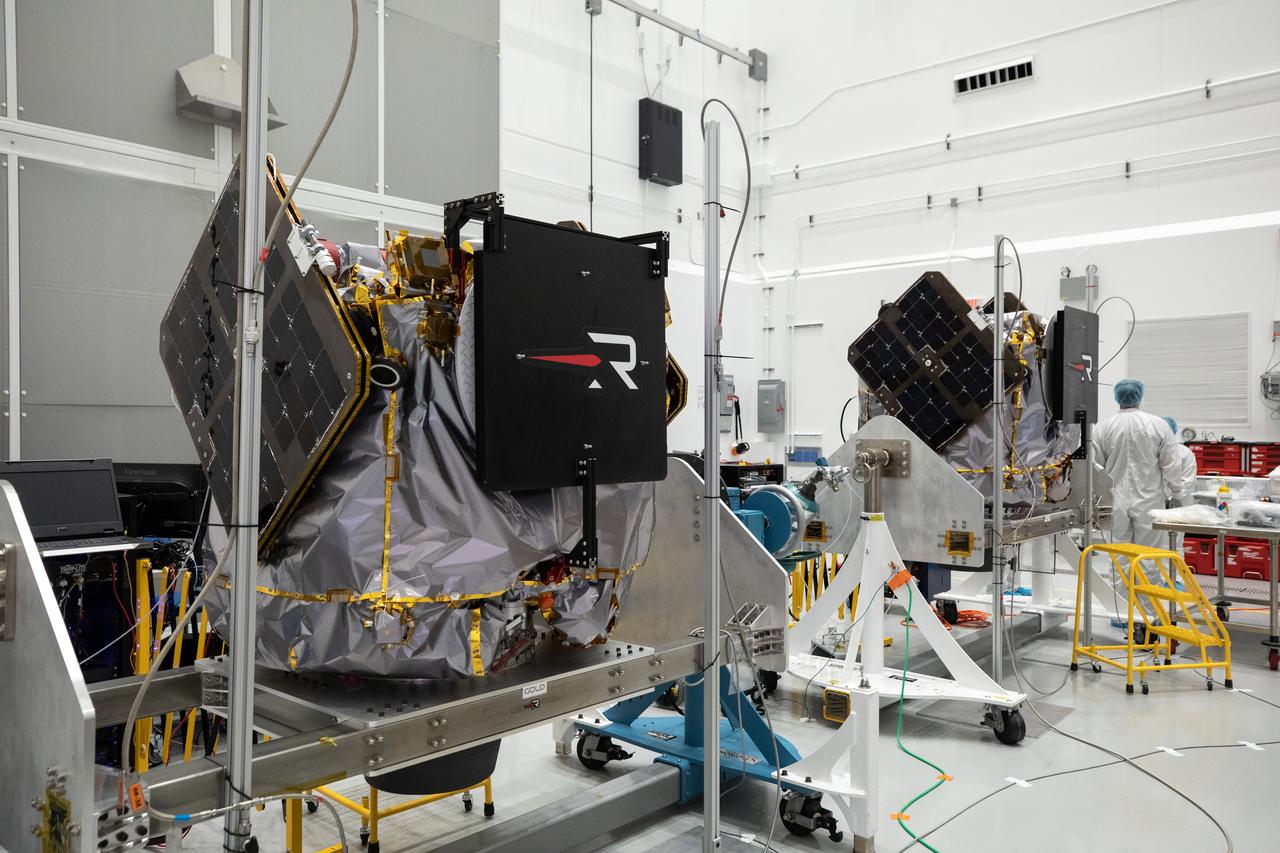
NASA’s ESCAPADE (Escape and Plasma Acceleration and Dynamics Explorers) identical dual spacecraft are inspected and processed on dollies in a high bay of the Astrotech Space Operations Facility near the agency’s Kennedy Space Center in Florida on Thursday, Aug. 22, 2024. As the first multi-spacecraft orbital science mission to Mars, ESCAPADE’s twin orbiters will take simultaneous observations from different locations around the planet and reveal the real-time response to space weather and how the Martian magnetosphere changes over time.
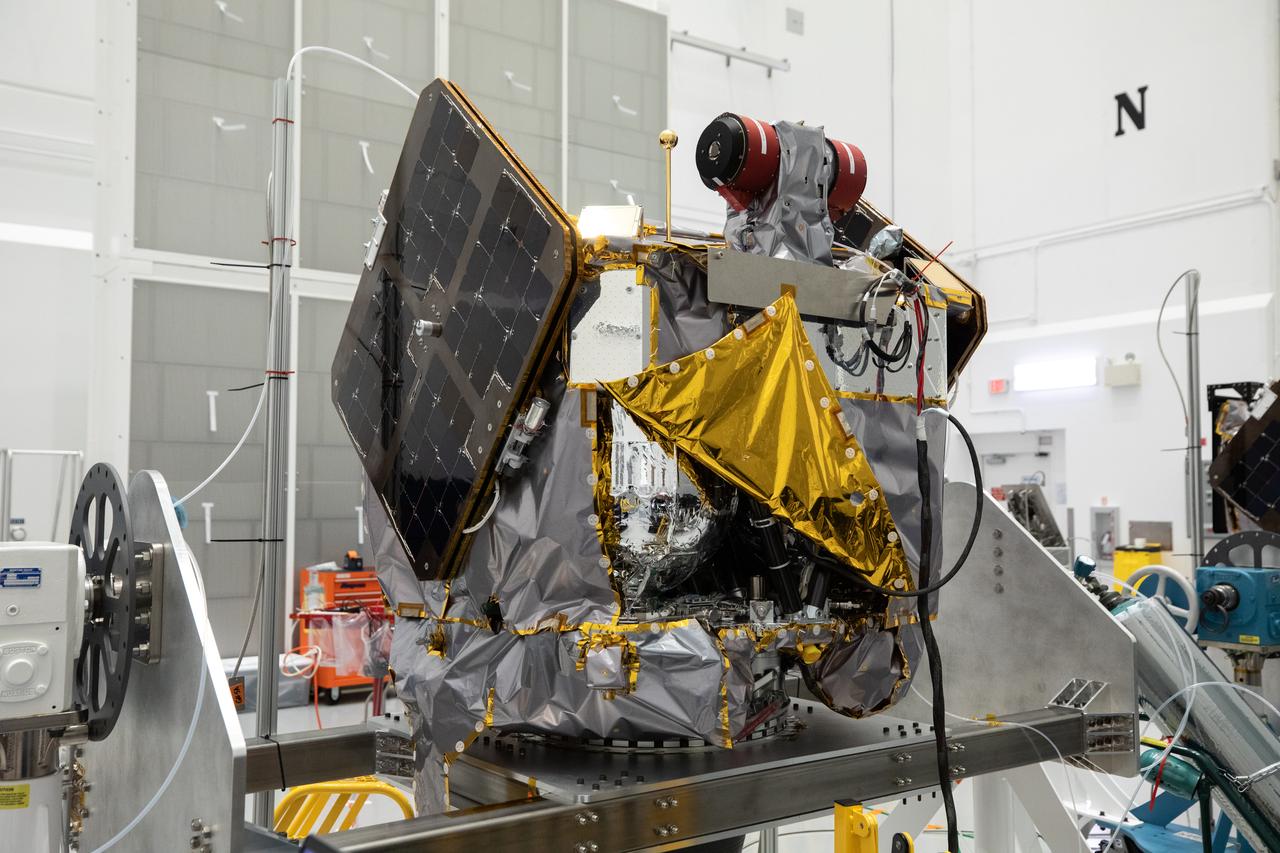
NASA’s ESCAPADE (Escape and Plasma Acceleration and Dynamics Explorers) identical dual spacecraft are inspected and processed on dollies in a high bay of the Astrotech Space Operations Facility near the agency’s Kennedy Space Center in Florida on Thursday, Aug. 22, 2024. As the first multi-spacecraft orbital science mission to Mars, ESCAPADE’s twin orbiters will take simultaneous observations from different locations around the planet and reveal the real-time response to space weather and how the Martian magnetosphere changes over time.
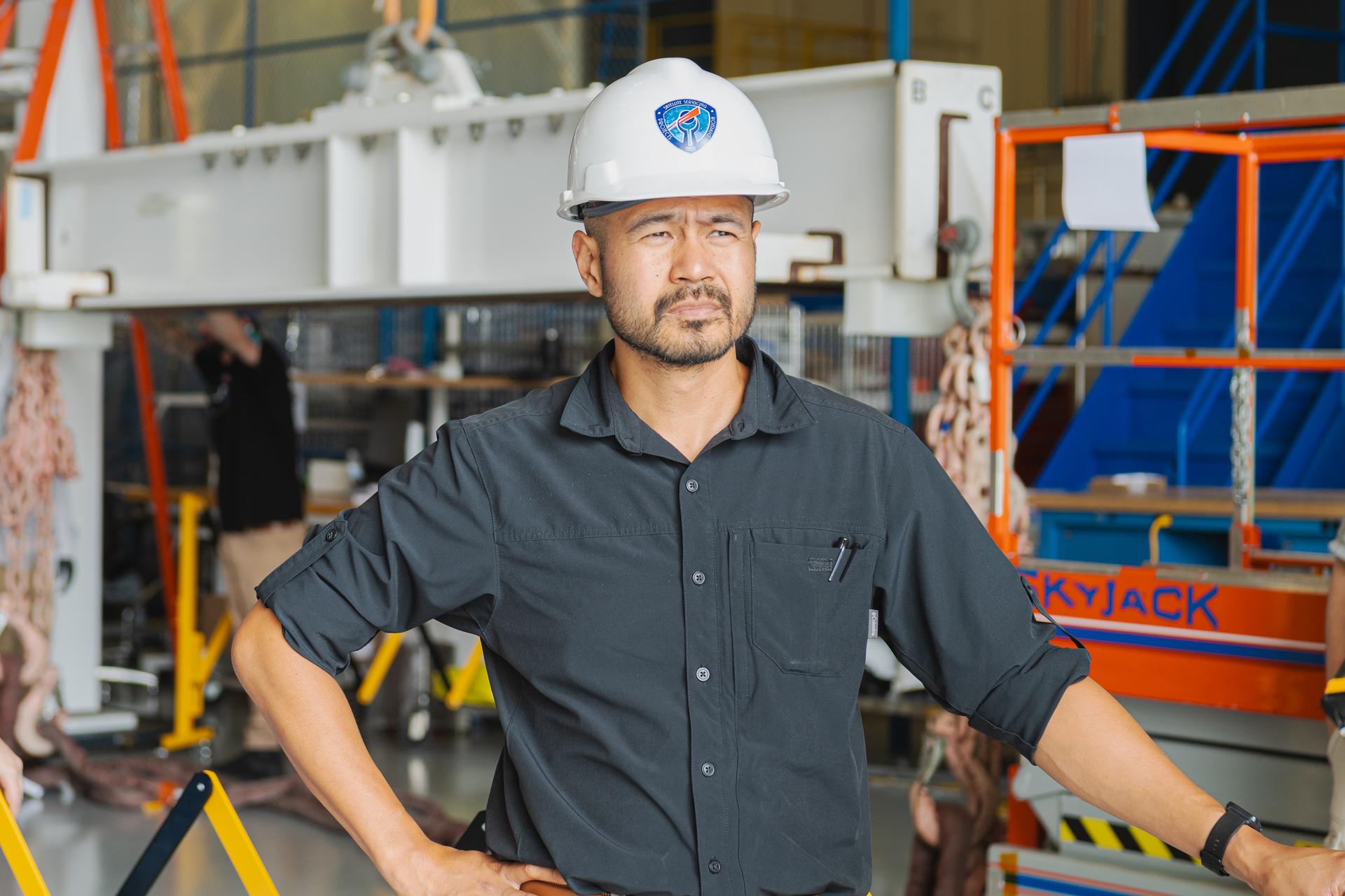
Mechanical Integration and Testing Engineer, Jeff Geroso, watches as the OSAM-1 spacecraft arrives at Goddard Space Flight Center, Greenbelt, Md., Sept 20, 2023. Geroso is responsible for the receiving operations involving the OSAM-1 spacecraft bus. This photo has been reviewed by OSAM1 project management and the Export Control Office and is released for public view. NASA/ Mike Guinto
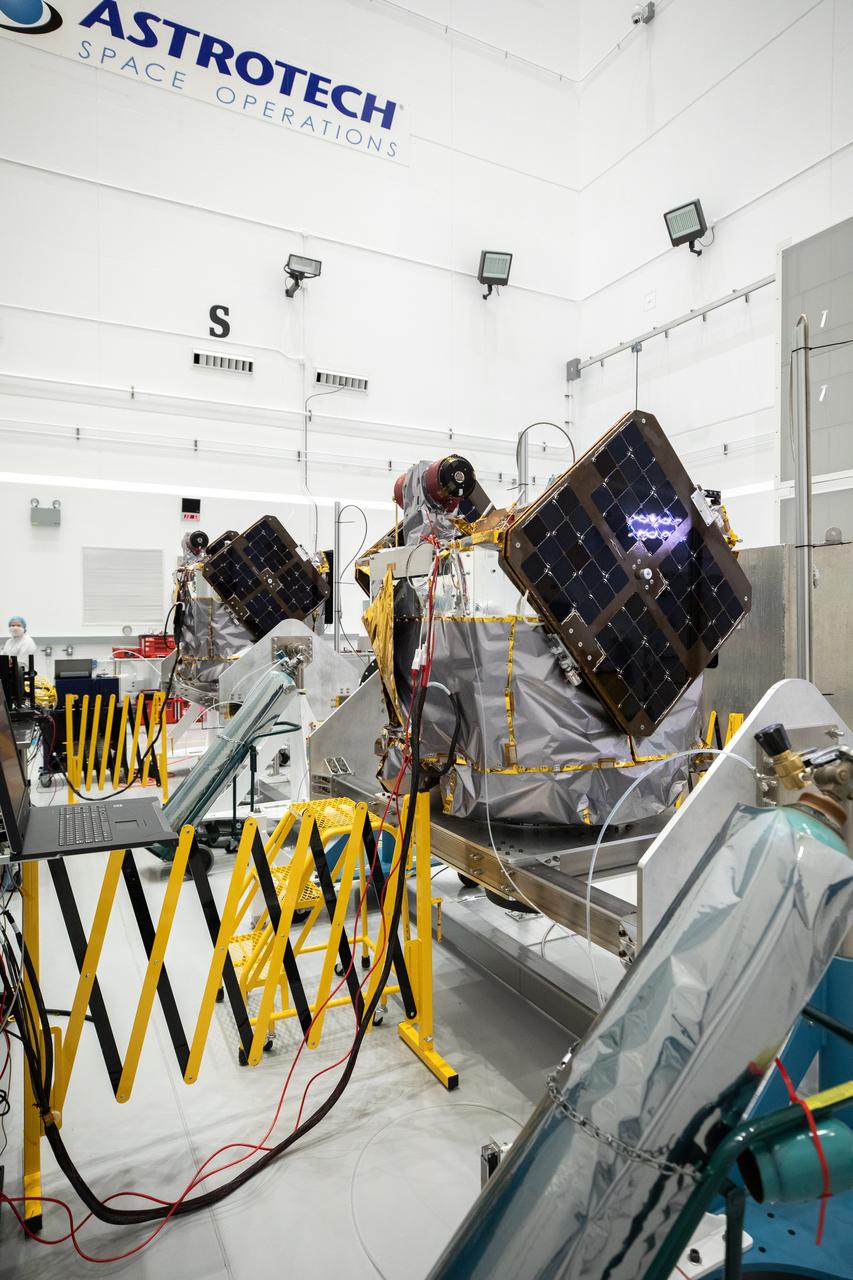
NASA’s ESCAPADE (Escape and Plasma Acceleration and Dynamics Explorers) identical dual spacecraft are inspected and processed on dollies in a high bay of the Astrotech Space Operations Facility near the agency’s Kennedy Space Center in Florida on Thursday, Aug. 22, 2024. As the first multi-spacecraft orbital science mission to Mars, ESCAPADE’s twin orbiters will take simultaneous observations from different locations around the planet and reveal the real-time response to space weather and how the Martian magnetosphere changes over time.
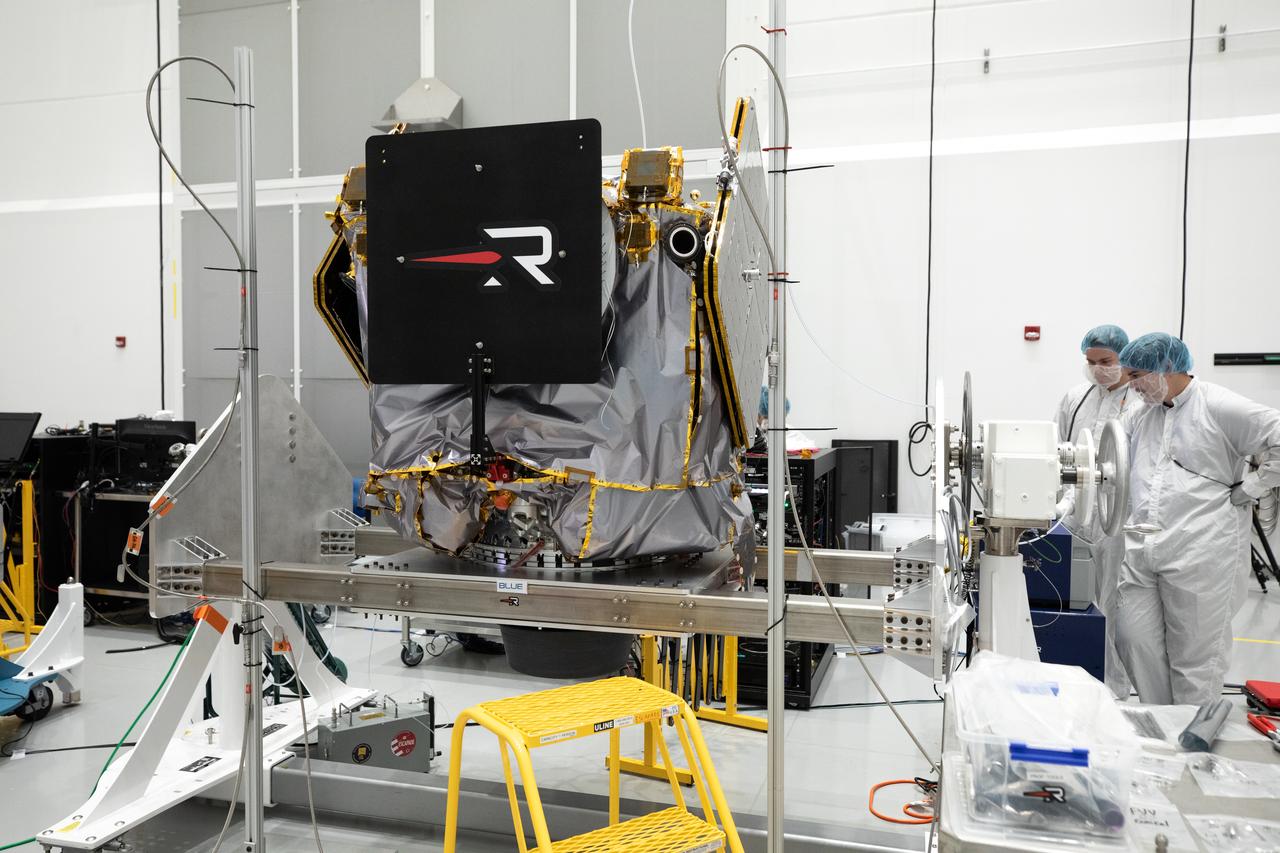
NASA’s ESCAPADE (Escape and Plasma Acceleration and Dynamics Explorers) identical dual spacecraft are inspected and processed on dollies in a high bay of the Astrotech Space Operations Facility near the agency’s Kennedy Space Center in Florida on Thursday, Aug. 22, 2024. As the first multi-spacecraft orbital science mission to Mars, ESCAPADE’s twin orbiters will take simultaneous observations from different locations around the planet and reveal the real-time response to space weather and how the Martian magnetosphere changes over time.
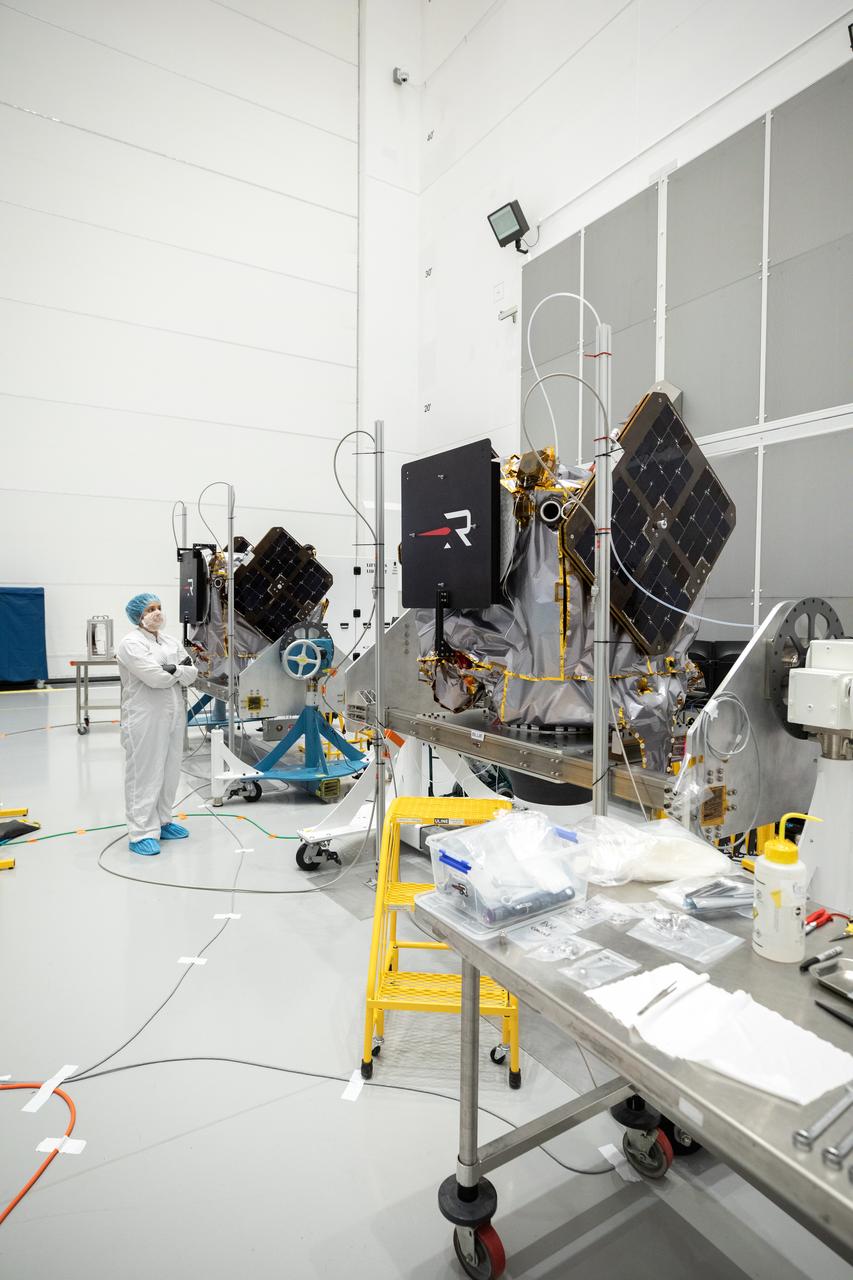
NASA’s ESCAPADE (Escape and Plasma Acceleration and Dynamics Explorers) identical dual spacecraft are inspected and processed on dollies in a high bay of the Astrotech Space Operations Facility near the agency’s Kennedy Space Center in Florida on Thursday, Aug. 22, 2024. As the first multi-spacecraft orbital science mission to Mars, ESCAPADE’s twin orbiters will take simultaneous observations from different locations around the planet and reveal the real-time response to space weather and how the Martian magnetosphere changes over time.
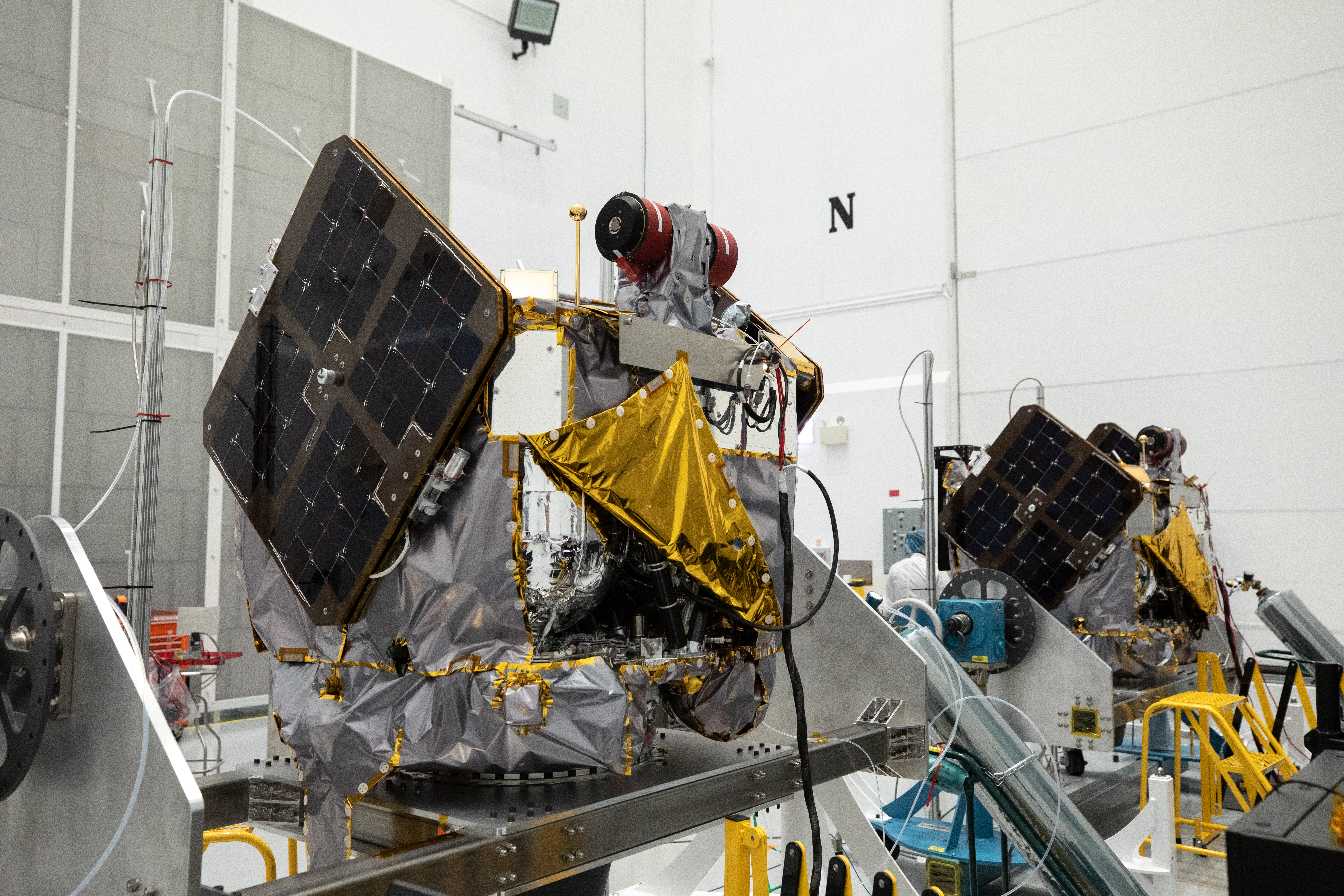
NASA’s ESCAPADE (Escape and Plasma Acceleration and Dynamics Explorers) identical dual spacecraft are inspected and processed on dollies in a high bay of the Astrotech Space Operations Facility near the agency’s Kennedy Space Center in Florida on Thursday, Aug. 22, 2024. As the first multi-spacecraft orbital science mission to Mars, ESCAPADE’s twin orbiters will take simultaneous observations from different locations around the planet and reveal the real-time response to space weather and how the Martian magnetosphere changes over time.
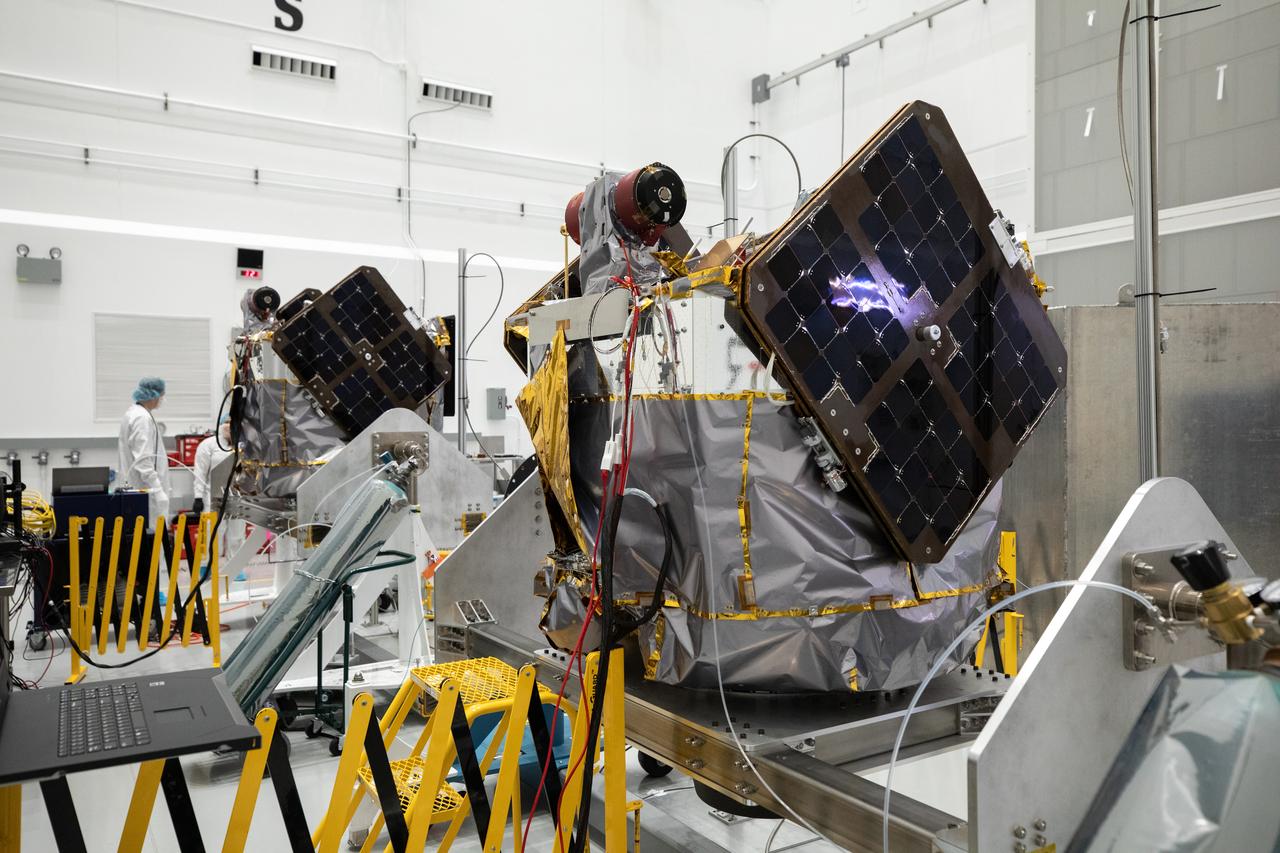
NASA’s ESCAPADE (Escape and Plasma Acceleration and Dynamics Explorers) identical dual spacecraft are inspected and processed on dollies in a high bay of the Astrotech Space Operations Facility near the agency’s Kennedy Space Center in Florida on Thursday, Aug. 22, 2024. As the first multi-spacecraft orbital science mission to Mars, ESCAPADE’s twin orbiters will take simultaneous observations from different locations around the planet and reveal the real-time response to space weather and how the Martian magnetosphere changes over time.
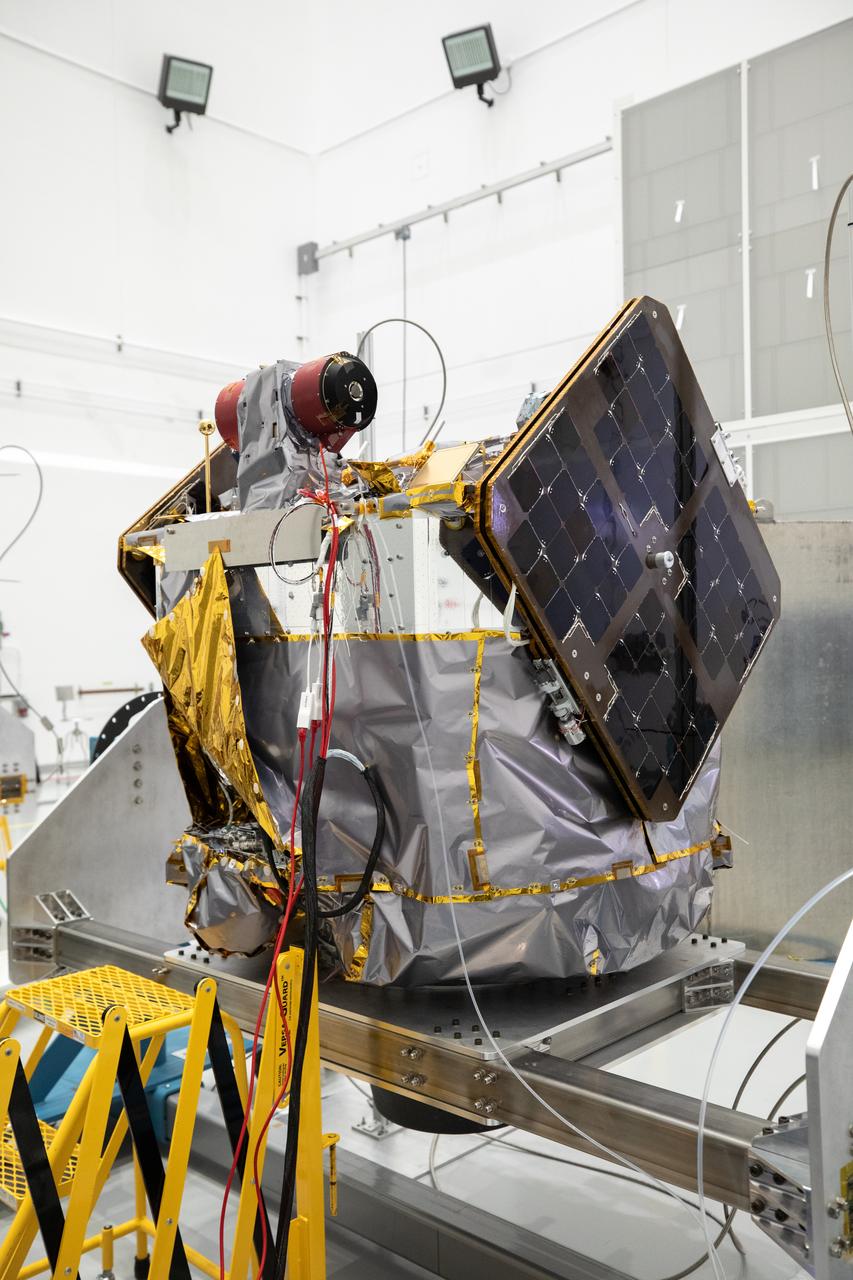
NASA’s ESCAPADE (Escape and Plasma Acceleration and Dynamics Explorers) identical dual spacecraft are inspected and processed on dollies in a high bay of the Astrotech Space Operations Facility near the agency’s Kennedy Space Center in Florida on Thursday, Aug. 22, 2024. As the first multi-spacecraft orbital science mission to Mars, ESCAPADE’s twin orbiters will take simultaneous observations from different locations around the planet and reveal the real-time response to space weather and how the Martian magnetosphere changes over time.

NASA’s ESCAPADE (Escape and Plasma Acceleration and Dynamics Explorers) identical dual spacecraft are inspected and processed on dollies in a high bay of the Astrotech Space Operations Facility near the agency’s Kennedy Space Center in Florida on Thursday, Aug. 22, 2024. As the first multi-spacecraft orbital science mission to Mars, ESCAPADE’s twin orbiters will take simultaneous observations from different locations around the planet and reveal the real-time response to space weather and how the Martian magnetosphere changes over time.
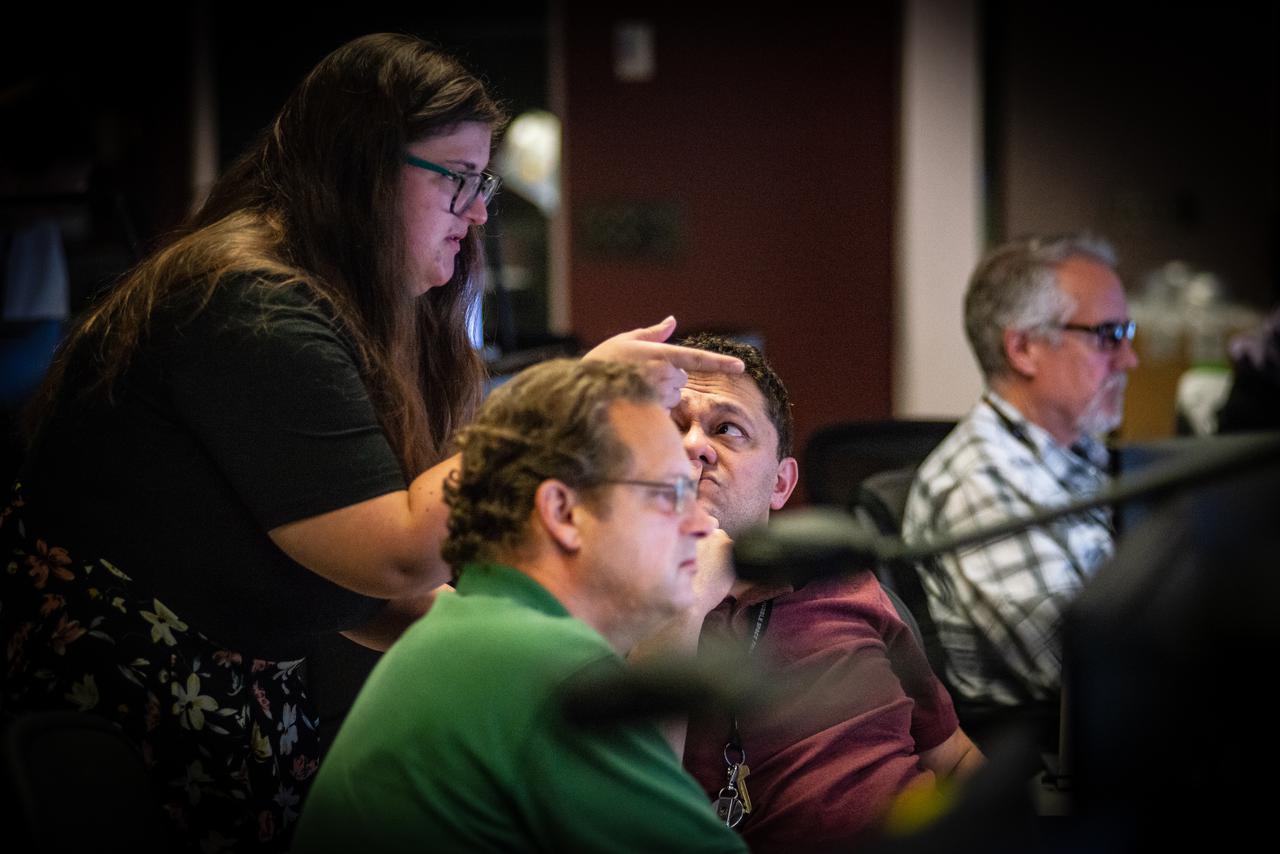
Members of the Hubble operations team work in the control room on July 15, 2021 to restore Hubble to science operations. Credits: NASA/Goddard/Rebecca Roth --- More info: Hubble’s payload computer, which controls and coordinates the observatory’s onboard science instruments, halted suddenly on June 13. When the main computer failed to receive a signal from the payload computer, it automatically placed Hubble’s science instruments into safe mode. That meant the telescope would no longer be doing science while mission specialists analyzed the situation. In response to the anomaly, NASA began a switch to backup spacecraft hardware on Hubble in response to an ongoing problem with its payload computer. This was a multi-day event. Science observations restarted the afternoon of Saturday, July 17.
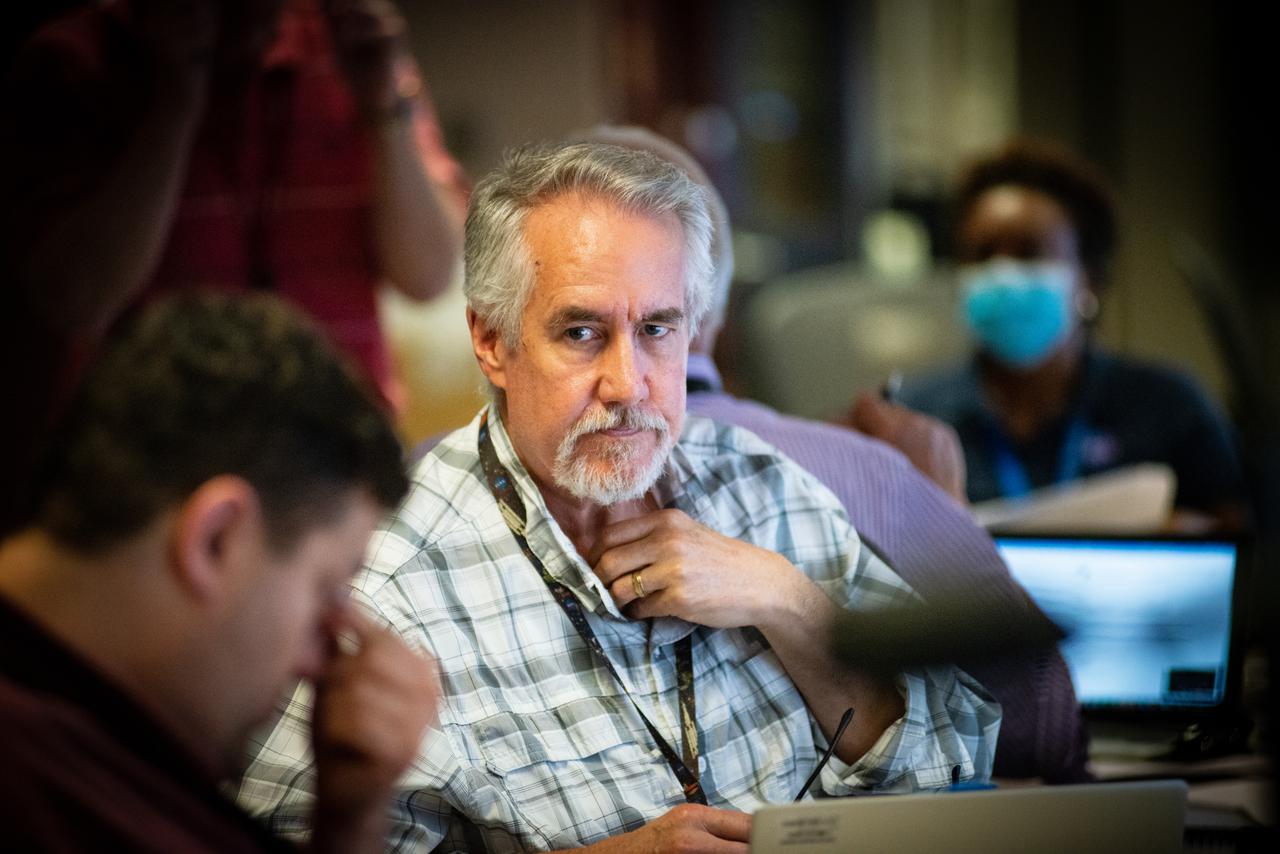
Members of the Hubble operations team work in the control room on July 15, 2021 to restore Hubble to science operations. Credits: NASA/Goddard/Rebecca Roth --- More info: Hubble’s payload computer, which controls and coordinates the observatory’s onboard science instruments, halted suddenly on June 13. When the main computer failed to receive a signal from the payload computer, it automatically placed Hubble’s science instruments into safe mode. That meant the telescope would no longer be doing science while mission specialists analyzed the situation. In response to the anomaly, NASA began a switch to backup spacecraft hardware on Hubble in response to an ongoing problem with its payload computer. This was a multi-day event. Science observations restarted the afternoon of Saturday, July 17.
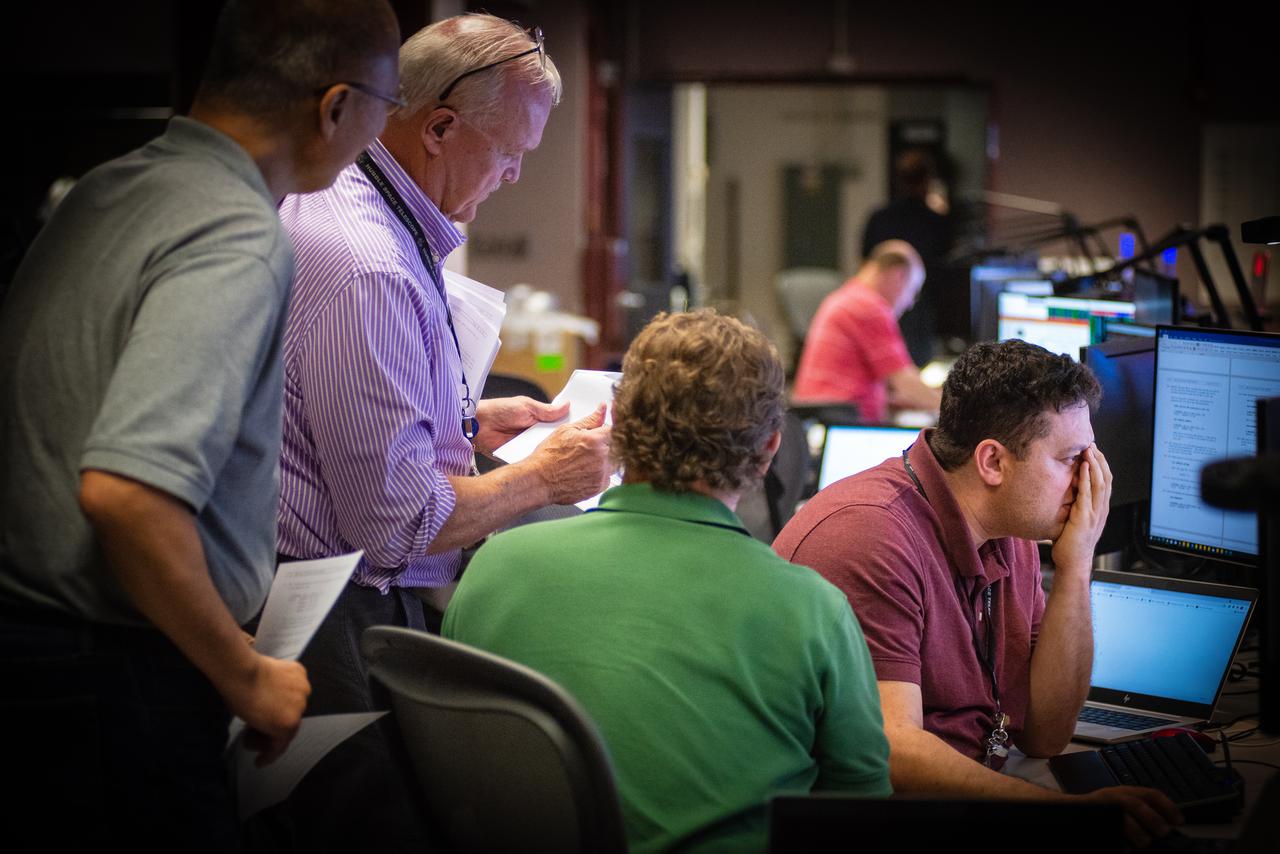
Members of the Hubble operations team work in the control room on July 15, 2021 to restore Hubble to science operations. Credits: NASA/Goddard/Rebecca Roth --- More info: Hubble’s payload computer, which controls and coordinates the observatory’s onboard science instruments, halted suddenly on June 13. When the main computer failed to receive a signal from the payload computer, it automatically placed Hubble’s science instruments into safe mode. That meant the telescope would no longer be doing science while mission specialists analyzed the situation. In response to the anomaly, NASA began a switch to backup spacecraft hardware on Hubble in response to an ongoing problem with its payload computer. This was a multi-day event. Science observations restarted the afternoon of Saturday, July 17.
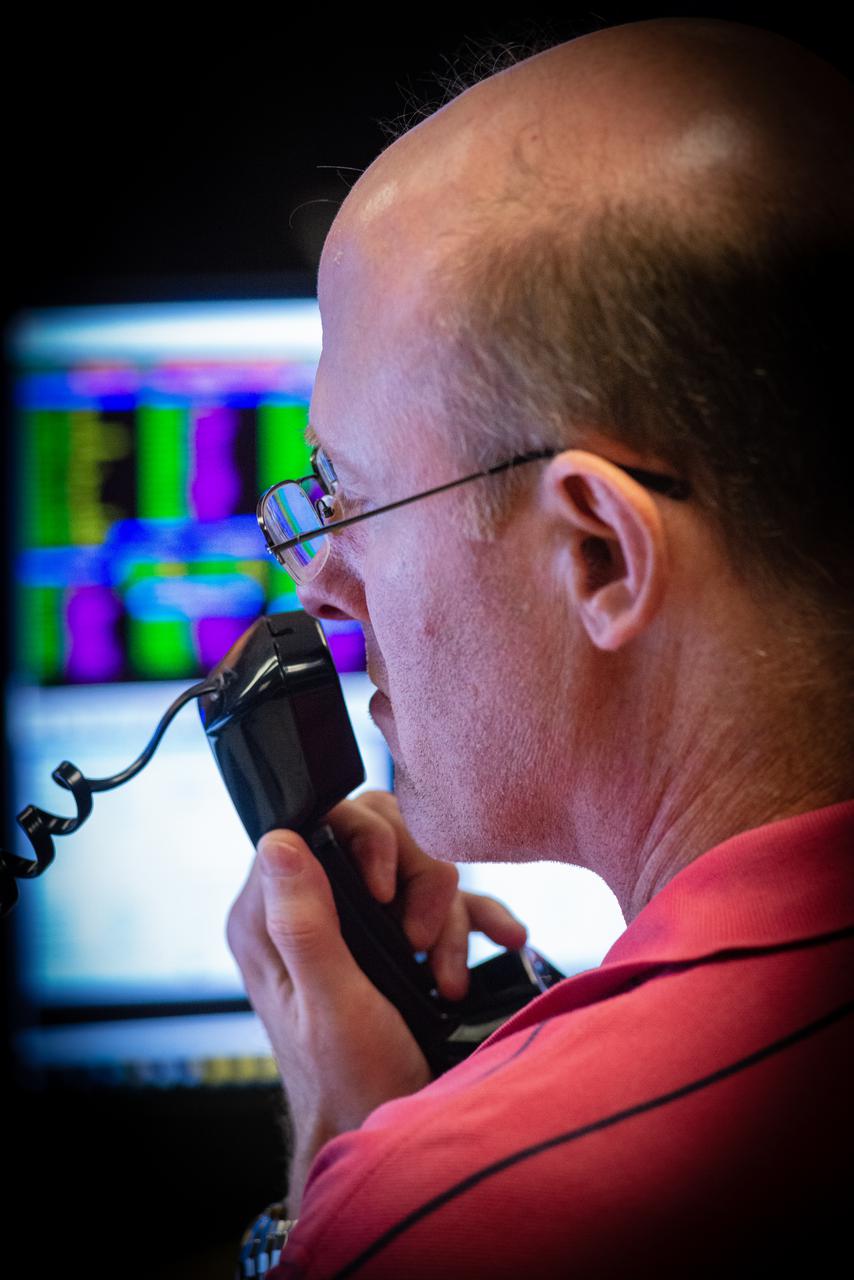
Members of the Hubble operations team work in the control room on July 15, 2021 to restore Hubble to science operations. Credits: NASA/Goddard/Rebecca Roth --- More info: Hubble’s payload computer, which controls and coordinates the observatory’s onboard science instruments, halted suddenly on June 13. When the main computer failed to receive a signal from the payload computer, it automatically placed Hubble’s science instruments into safe mode. That meant the telescope would no longer be doing science while mission specialists analyzed the situation. In response to the anomaly, NASA began a switch to backup spacecraft hardware on Hubble in response to an ongoing problem with its payload computer. This was a multi-day event. Science observations restarted the afternoon of Saturday, July 17.
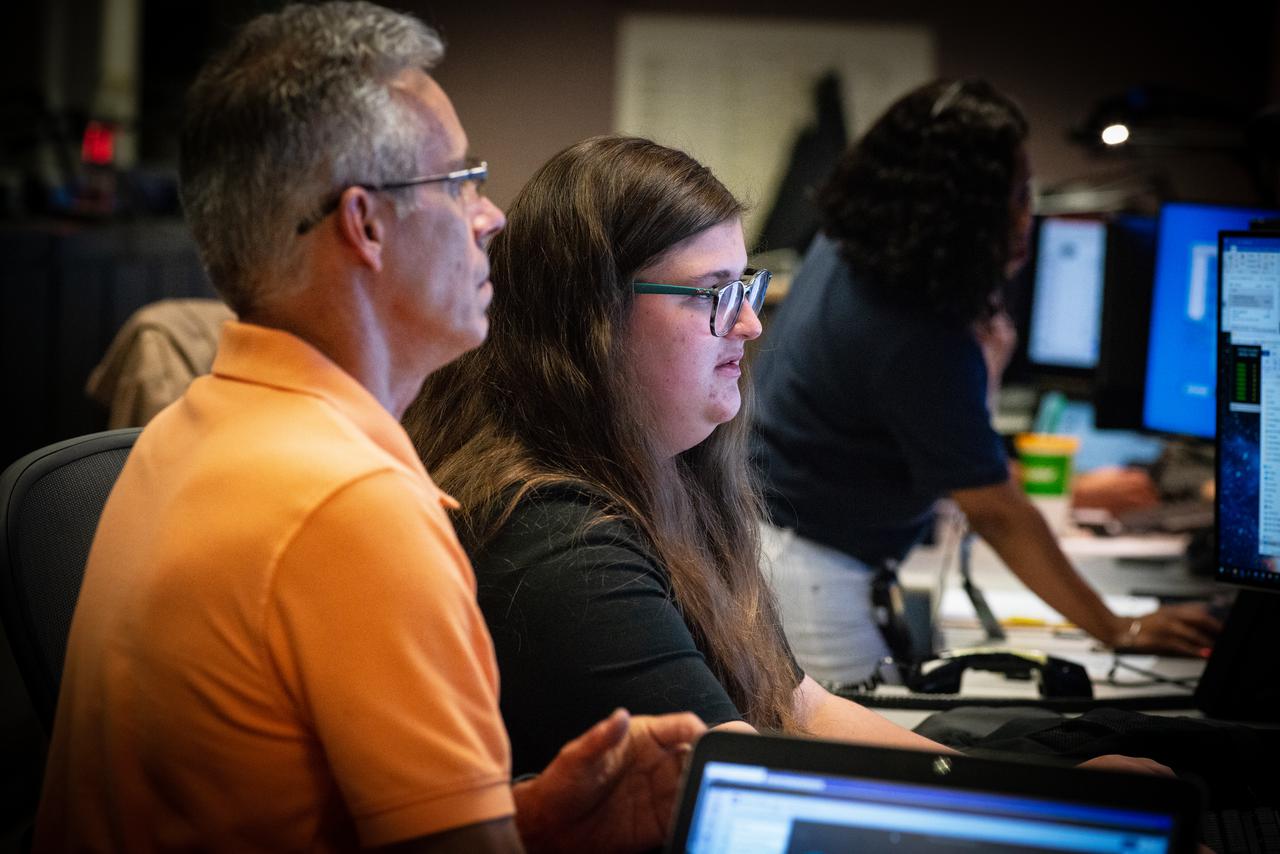
Members of the Hubble operations team work in the control room on July 15, 2021 to restore Hubble to science operations. Credits: NASA/Goddard/Rebecca Roth --- More info: Hubble’s payload computer, which controls and coordinates the observatory’s onboard science instruments, halted suddenly on June 13. When the main computer failed to receive a signal from the payload computer, it automatically placed Hubble’s science instruments into safe mode. That meant the telescope would no longer be doing science while mission specialists analyzed the situation. In response to the anomaly, NASA began a switch to backup spacecraft hardware on Hubble in response to an ongoing problem with its payload computer. This was a multi-day event. Science observations restarted the afternoon of Saturday, July 17.
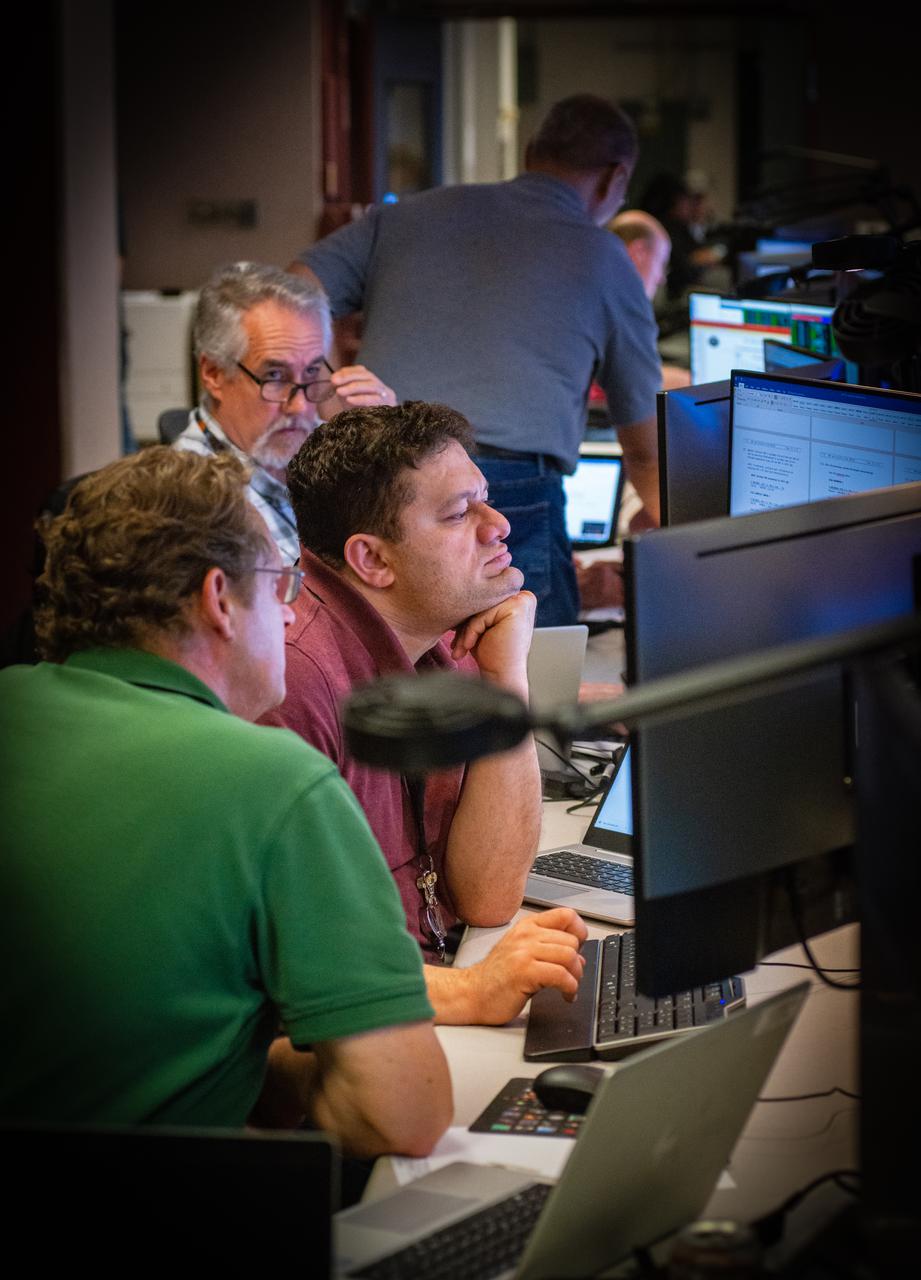
Members of the Hubble operations team work in the control room on July 15, 2021 to restore Hubble to science operations. Credits: NASA/Goddard/Rebecca Roth --- More info: Hubble’s payload computer, which controls and coordinates the observatory’s onboard science instruments, halted suddenly on June 13. When the main computer failed to receive a signal from the payload computer, it automatically placed Hubble’s science instruments into safe mode. That meant the telescope would no longer be doing science while mission specialists analyzed the situation. In response to the anomaly, NASA began a switch to backup spacecraft hardware on Hubble in response to an ongoing problem with its payload computer. This was a multi-day event. Science observations restarted the afternoon of Saturday, July 17.
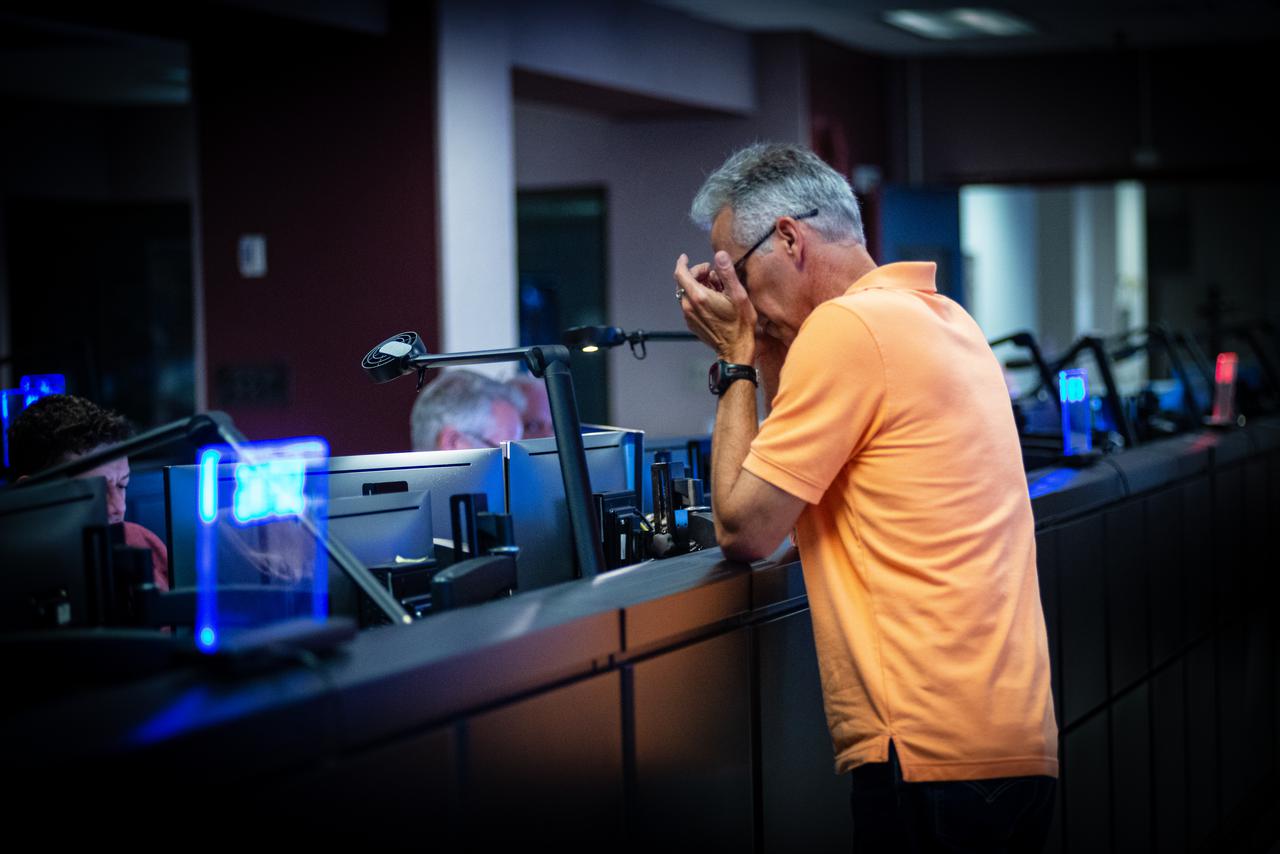
Members of the Hubble operations team work in the control room on July 15, 2021 to restore Hubble to science operations. Credits: NASA/Goddard/Rebecca Roth --- More info: Hubble’s payload computer, which controls and coordinates the observatory’s onboard science instruments, halted suddenly on June 13. When the main computer failed to receive a signal from the payload computer, it automatically placed Hubble’s science instruments into safe mode. That meant the telescope would no longer be doing science while mission specialists analyzed the situation. In response to the anomaly, NASA began a switch to backup spacecraft hardware on Hubble in response to an ongoing problem with its payload computer. This was a multi-day event. Science observations restarted the afternoon of Saturday, July 17.
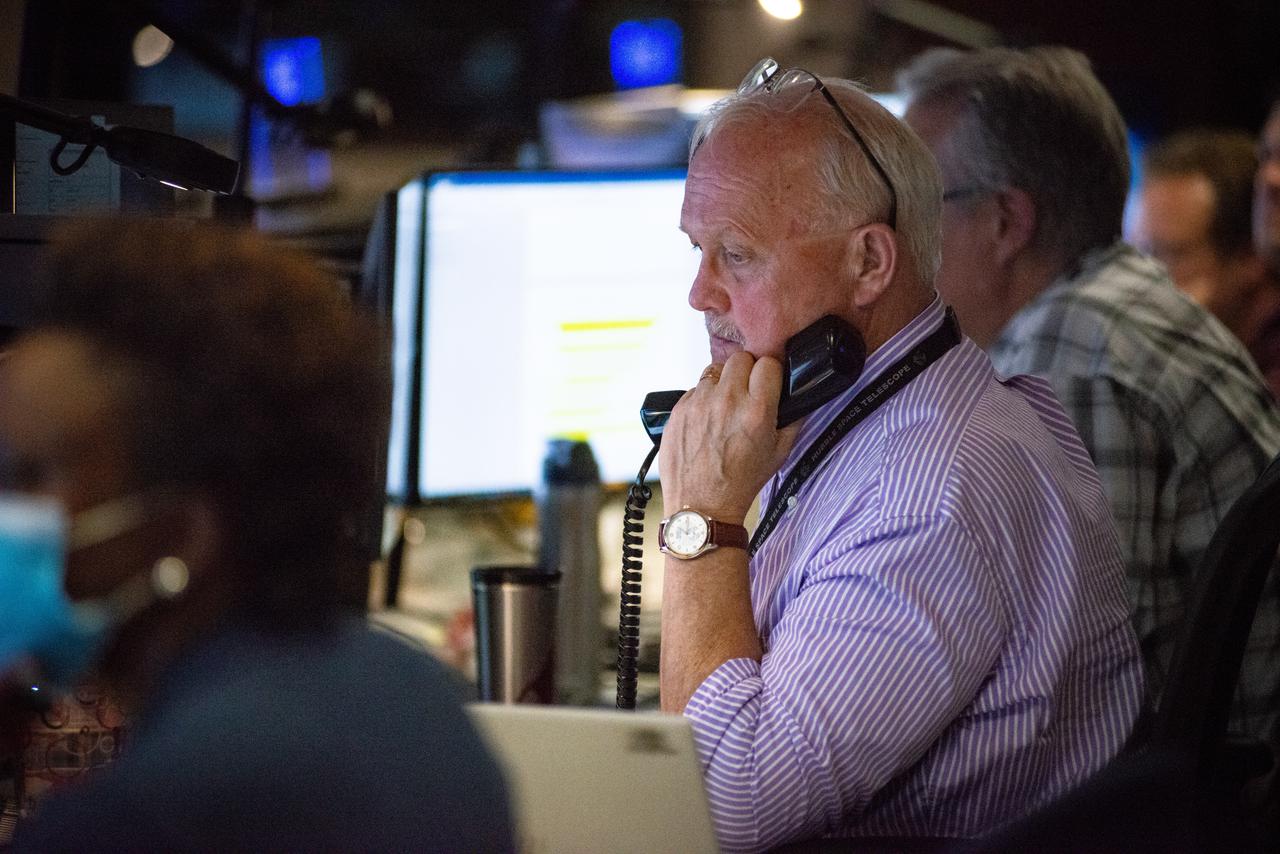
Members of the Hubble operations team work in the control room on July 15, 2021 to restore Hubble to science operations. Credits: NASA/Goddard/Rebecca Roth --- More info: Hubble’s payload computer, which controls and coordinates the observatory’s onboard science instruments, halted suddenly on June 13. When the main computer failed to receive a signal from the payload computer, it automatically placed Hubble’s science instruments into safe mode. That meant the telescope would no longer be doing science while mission specialists analyzed the situation. In response to the anomaly, NASA began a switch to backup spacecraft hardware on Hubble in response to an ongoing problem with its payload computer. This was a multi-day event. Science observations restarted the afternoon of Saturday, July 17.
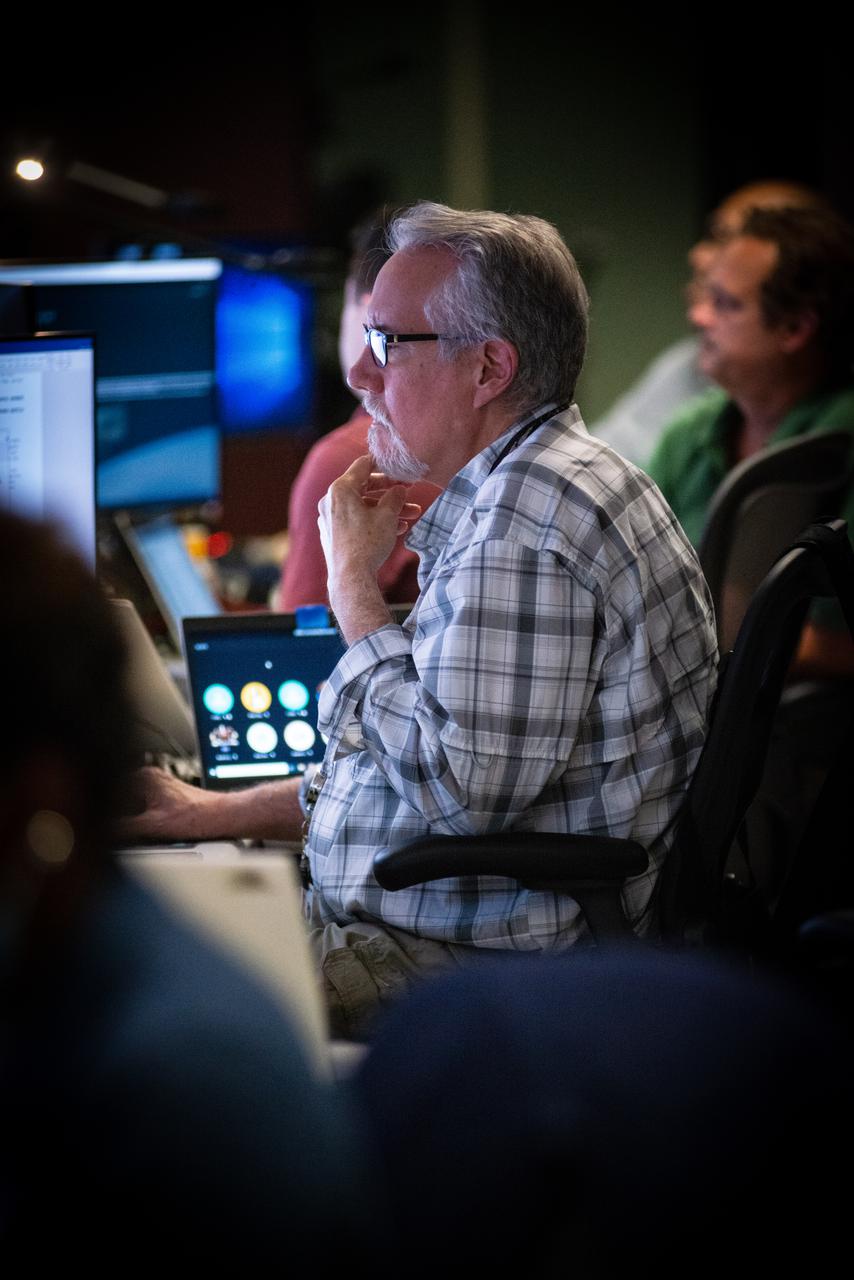
Members of the Hubble operations team work in the control room on July 15, 2021 to restore Hubble to science operations. Credits: NASA/Goddard/Rebecca Roth --- More info: Hubble’s payload computer, which controls and coordinates the observatory’s onboard science instruments, halted suddenly on June 13. When the main computer failed to receive a signal from the payload computer, it automatically placed Hubble’s science instruments into safe mode. That meant the telescope would no longer be doing science while mission specialists analyzed the situation. In response to the anomaly, NASA began a switch to backup spacecraft hardware on Hubble in response to an ongoing problem with its payload computer. This was a multi-day event. Science observations restarted the afternoon of Saturday, July 17.
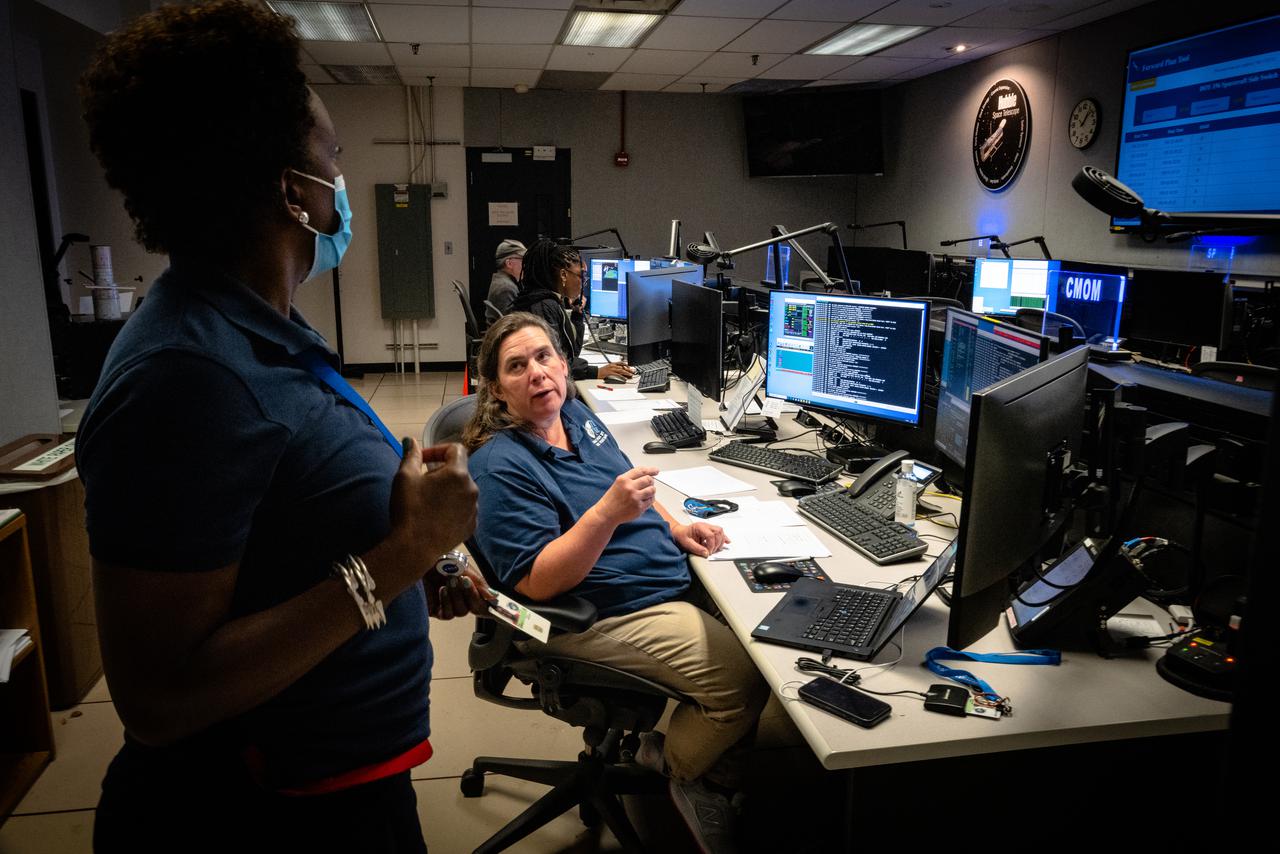
Members of the Hubble operations team work in the control room on July 15, 2021 to restore Hubble to science operations. Credits: NASA/Goddard/Rebecca Roth --- More info: Hubble’s payload computer, which controls and coordinates the observatory’s onboard science instruments, halted suddenly on June 13. When the main computer failed to receive a signal from the payload computer, it automatically placed Hubble’s science instruments into safe mode. That meant the telescope would no longer be doing science while mission specialists analyzed the situation. In response to the anomaly, NASA began a switch to backup spacecraft hardware on Hubble in response to an ongoing problem with its payload computer. This was a multi-day event. Science observations restarted the afternoon of Saturday, July 17.
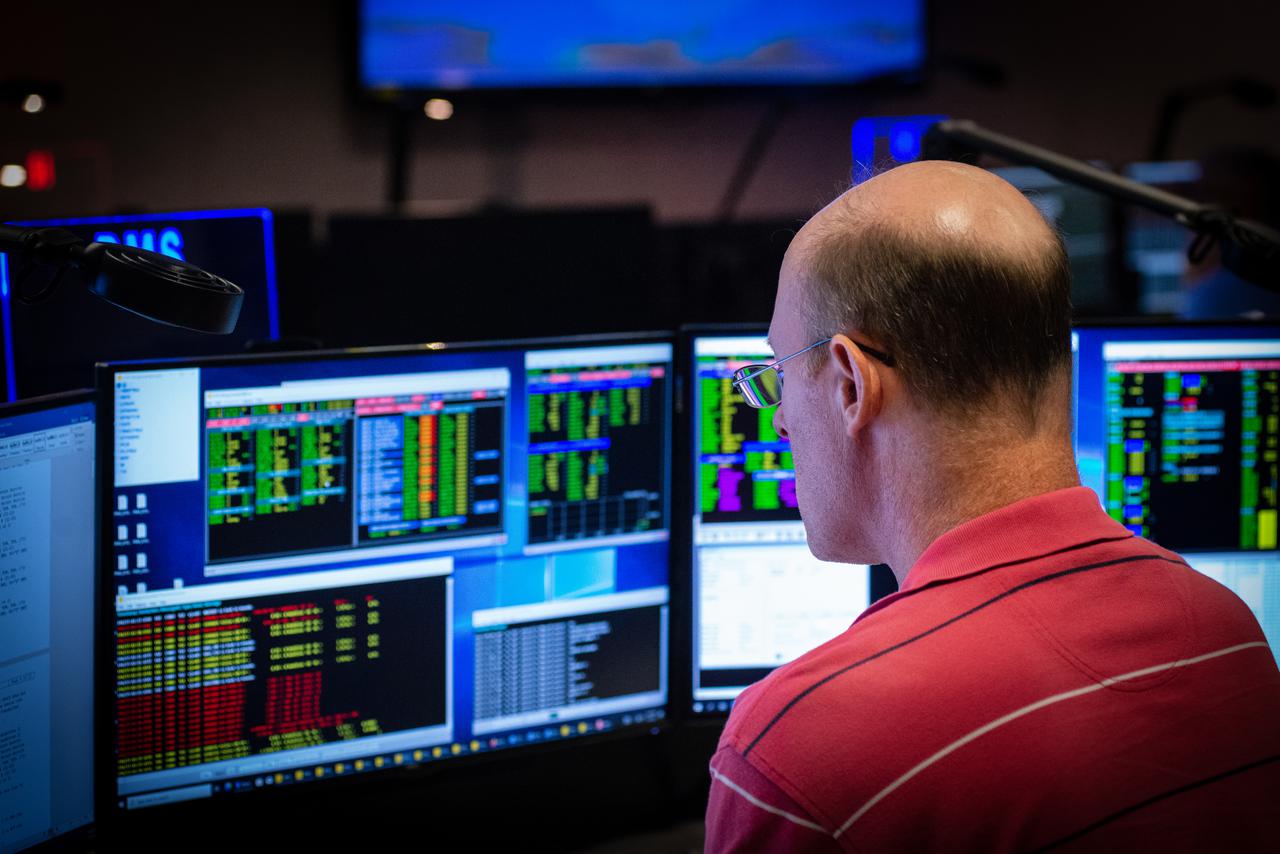
Members of the Hubble operations team work in the control room on July 15, 2021 to restore Hubble to science operations. Credits: NASA/Goddard/Rebecca Roth --- More info: Hubble’s payload computer, which controls and coordinates the observatory’s onboard science instruments, halted suddenly on June 13. When the main computer failed to receive a signal from the payload computer, it automatically placed Hubble’s science instruments into safe mode. That meant the telescope would no longer be doing science while mission specialists analyzed the situation. In response to the anomaly, NASA began a switch to backup spacecraft hardware on Hubble in response to an ongoing problem with its payload computer. This was a multi-day event. Science observations restarted the afternoon of Saturday, July 17.
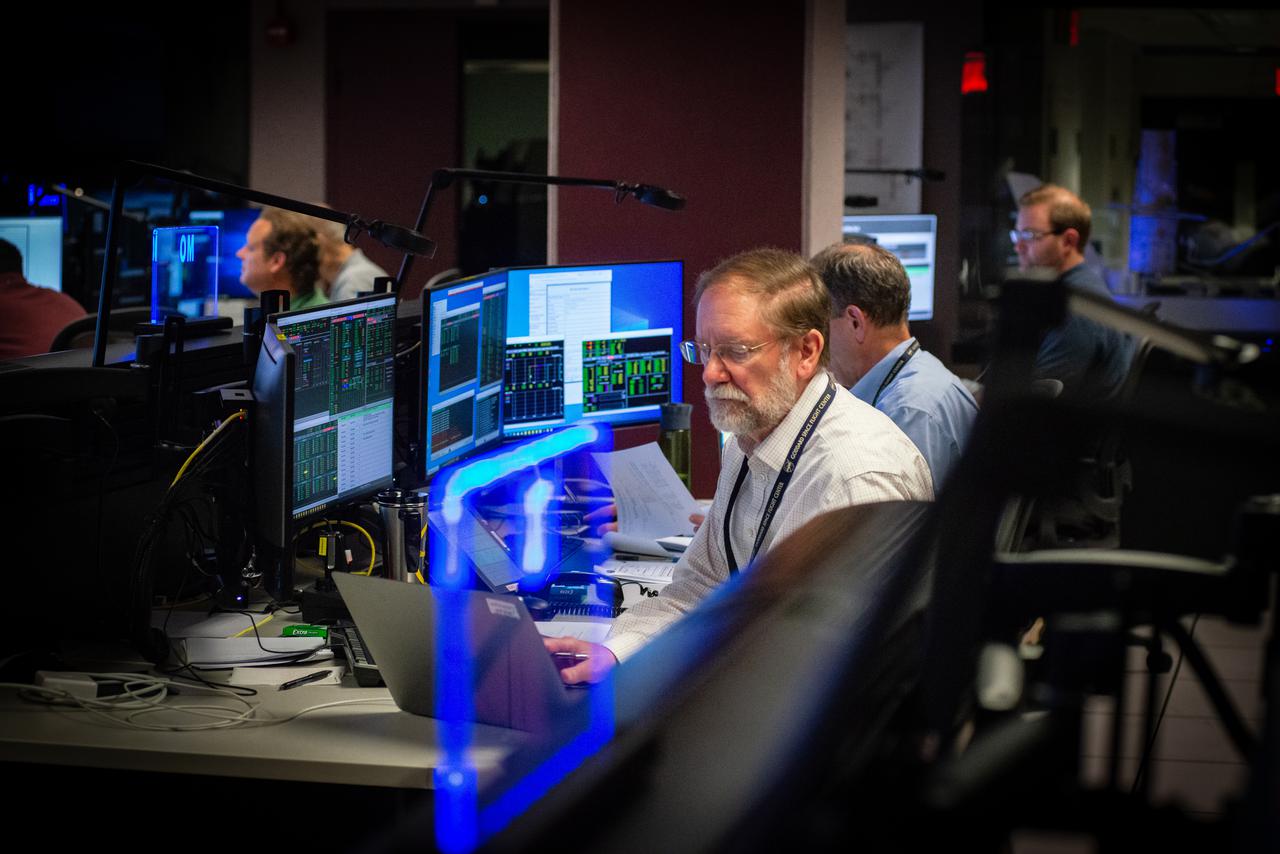
Members of the Hubble operations team work in the control room on July 15, 2021 to restore Hubble to science operations. Credits: NASA/Goddard/Rebecca Roth --- More info: Hubble’s payload computer, which controls and coordinates the observatory’s onboard science instruments, halted suddenly on June 13. When the main computer failed to receive a signal from the payload computer, it automatically placed Hubble’s science instruments into safe mode. That meant the telescope would no longer be doing science while mission specialists analyzed the situation. In response to the anomaly, NASA began a switch to backup spacecraft hardware on Hubble in response to an ongoing problem with its payload computer. This was a multi-day event. Science observations restarted the afternoon of Saturday, July 17.
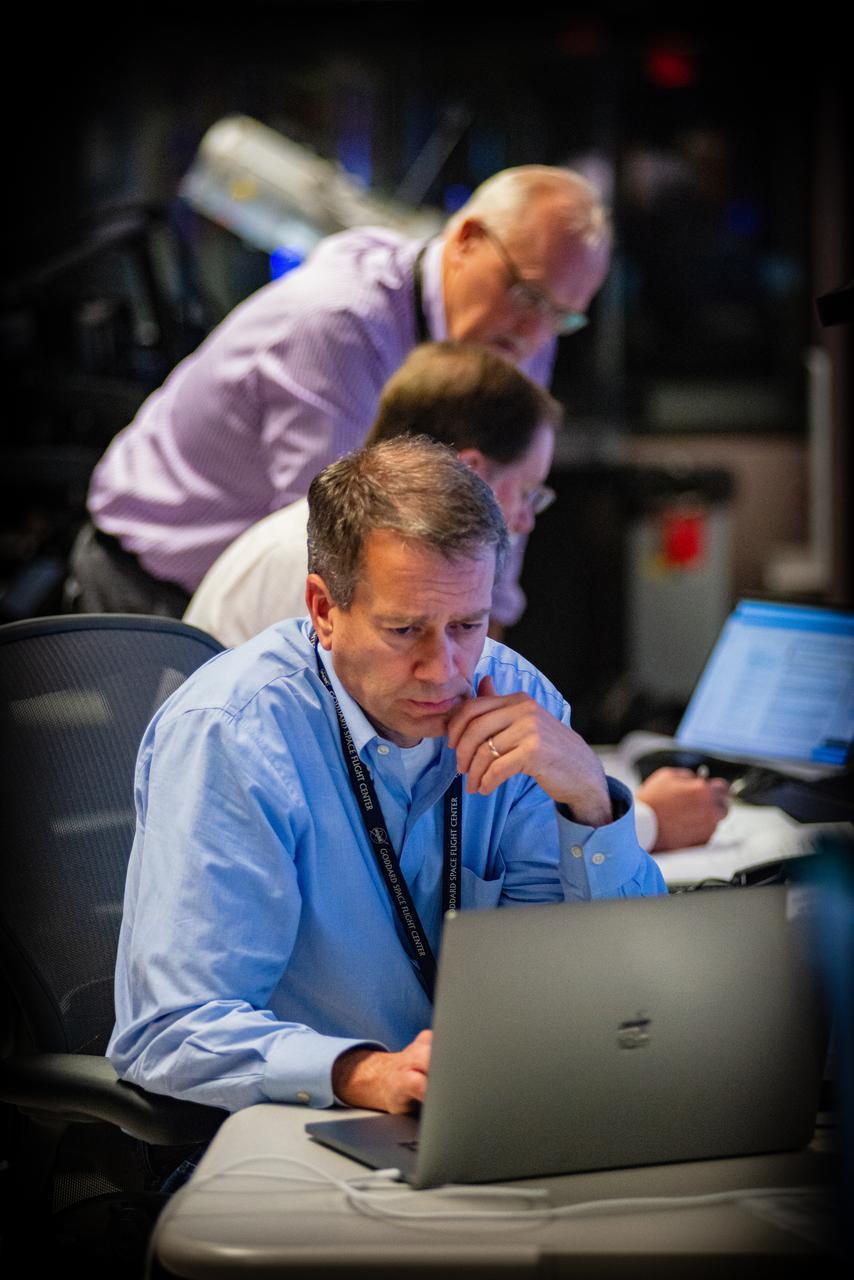
Members of the Hubble operations team work in the control room on July 15, 2021 to restore Hubble to science operations. Credits: NASA/Goddard/Rebecca Roth --- More info: Hubble’s payload computer, which controls and coordinates the observatory’s onboard science instruments, halted suddenly on June 13. When the main computer failed to receive a signal from the payload computer, it automatically placed Hubble’s science instruments into safe mode. That meant the telescope would no longer be doing science while mission specialists analyzed the situation. In response to the anomaly, NASA began a switch to backup spacecraft hardware on Hubble in response to an ongoing problem with its payload computer. This was a multi-day event. Science observations restarted the afternoon of Saturday, July 17.
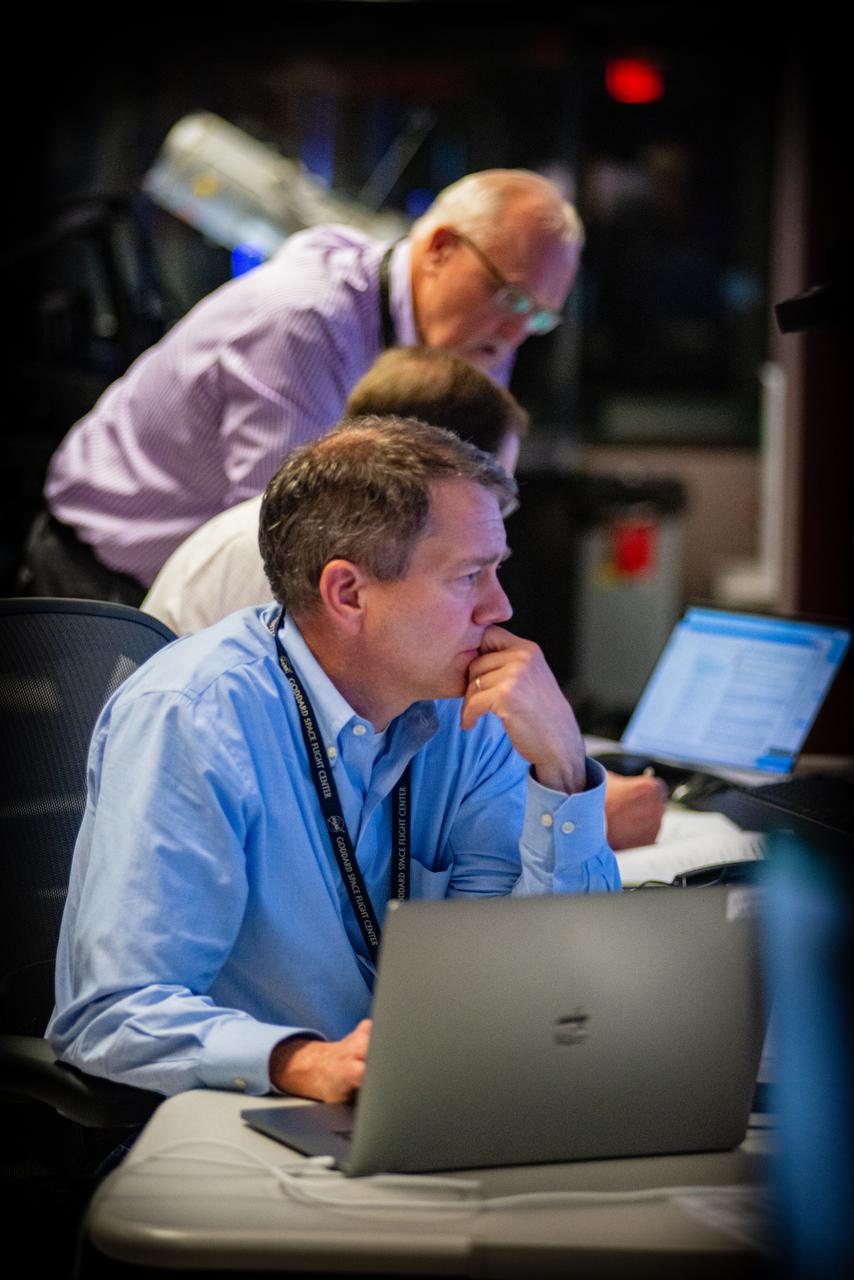
Members of the Hubble operations team work in the control room on July 15, 2021 to restore Hubble to science operations. Credits: NASA/Goddard/Rebecca Roth --- More info: Hubble’s payload computer, which controls and coordinates the observatory’s onboard science instruments, halted suddenly on June 13. When the main computer failed to receive a signal from the payload computer, it automatically placed Hubble’s science instruments into safe mode. That meant the telescope would no longer be doing science while mission specialists analyzed the situation. In response to the anomaly, NASA began a switch to backup spacecraft hardware on Hubble in response to an ongoing problem with its payload computer. This was a multi-day event. Science observations restarted the afternoon of Saturday, July 17.
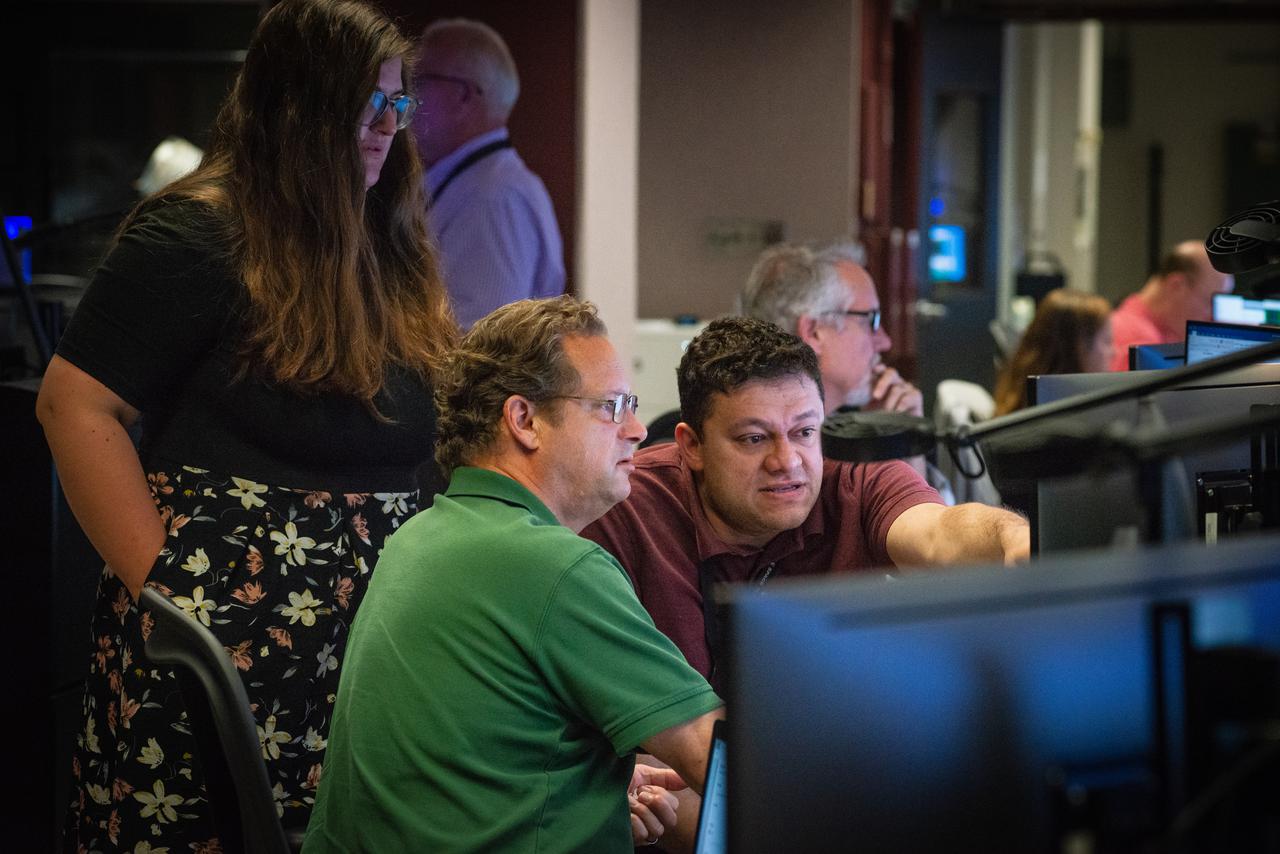
Members of the Hubble operations team work in the control room on July 15, 2021 to restore Hubble to science operations. Credits: NASA/Goddard/Rebecca Roth --- More info: Hubble’s payload computer, which controls and coordinates the observatory’s onboard science instruments, halted suddenly on June 13. When the main computer failed to receive a signal from the payload computer, it automatically placed Hubble’s science instruments into safe mode. That meant the telescope would no longer be doing science while mission specialists analyzed the situation. In response to the anomaly, NASA began a switch to backup spacecraft hardware on Hubble in response to an ongoing problem with its payload computer. This was a multi-day event. Science observations restarted the afternoon of Saturday, July 17.
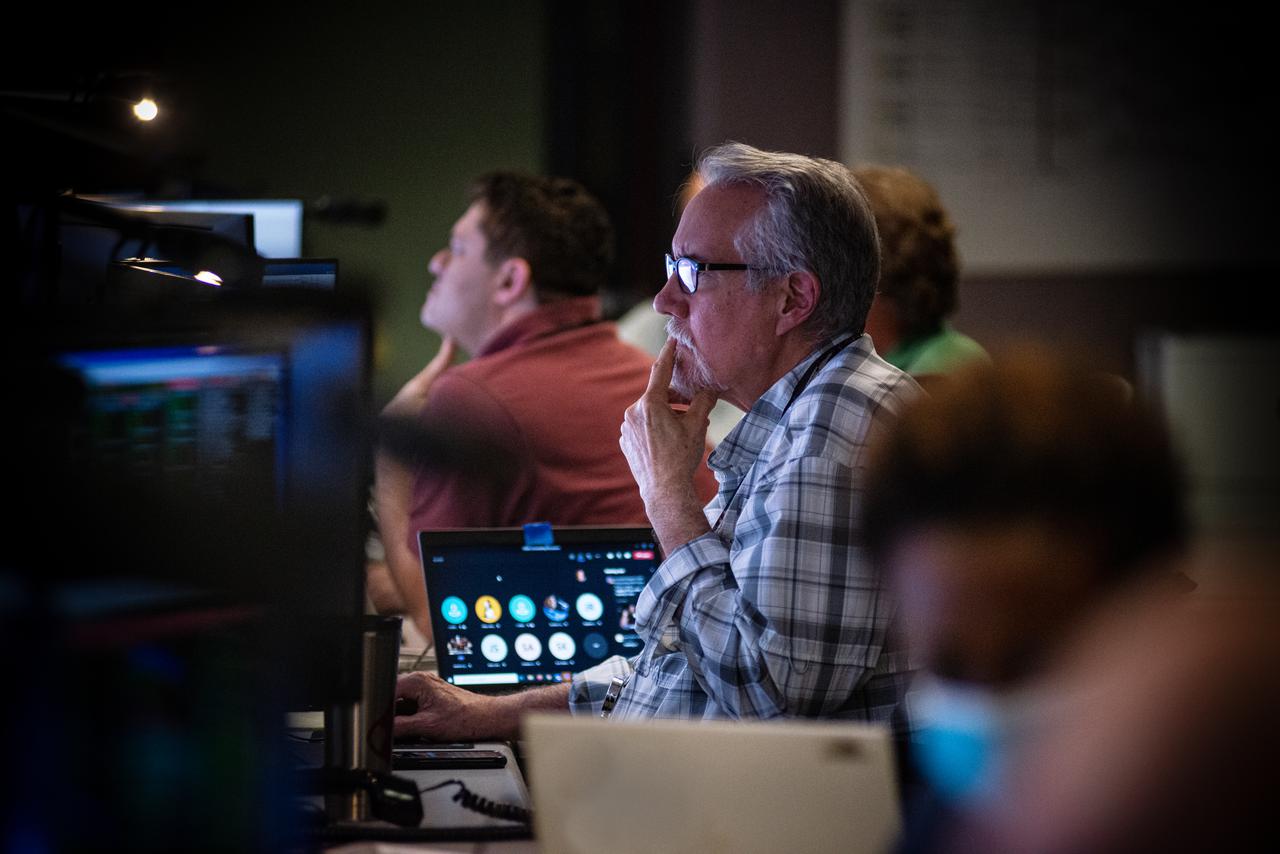
Members of the Hubble operations team work in the control room on July 15, 2021 to restore Hubble to science operations. Credits: NASA/Goddard/Rebecca Roth --- More info: Hubble’s payload computer, which controls and coordinates the observatory’s onboard science instruments, halted suddenly on June 13. When the main computer failed to receive a signal from the payload computer, it automatically placed Hubble’s science instruments into safe mode. That meant the telescope would no longer be doing science while mission specialists analyzed the situation. In response to the anomaly, NASA began a switch to backup spacecraft hardware on Hubble in response to an ongoing problem with its payload computer. This was a multi-day event. Science observations restarted the afternoon of Saturday, July 17.
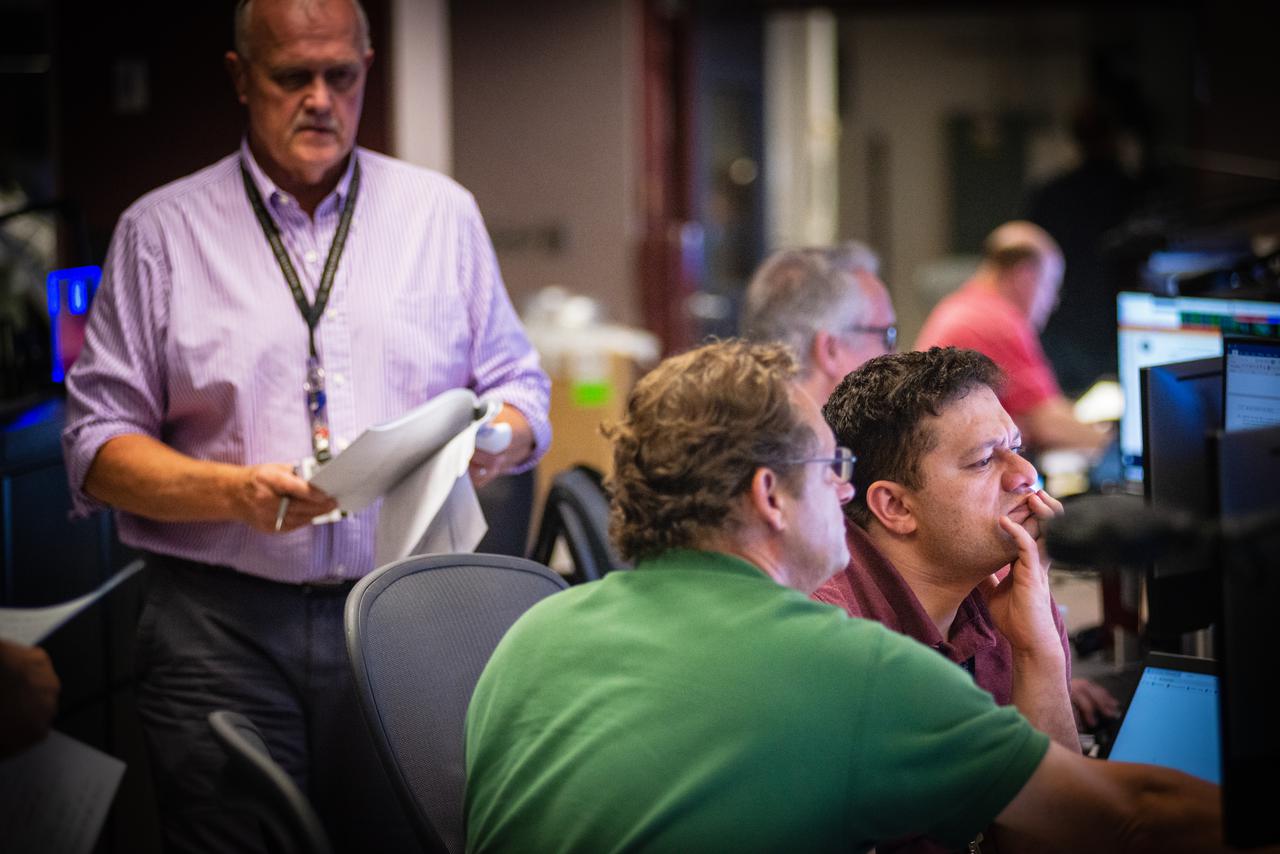
Members of the Hubble operations team work in the control room on July 15, 2021 to restore Hubble to science operations. Credits: NASA/Goddard/Rebecca Roth --- More info: Hubble’s payload computer, which controls and coordinates the observatory’s onboard science instruments, halted suddenly on June 13. When the main computer failed to receive a signal from the payload computer, it automatically placed Hubble’s science instruments into safe mode. That meant the telescope would no longer be doing science while mission specialists analyzed the situation. In response to the anomaly, NASA began a switch to backup spacecraft hardware on Hubble in response to an ongoing problem with its payload computer. This was a multi-day event. Science observations restarted the afternoon of Saturday, July 17.
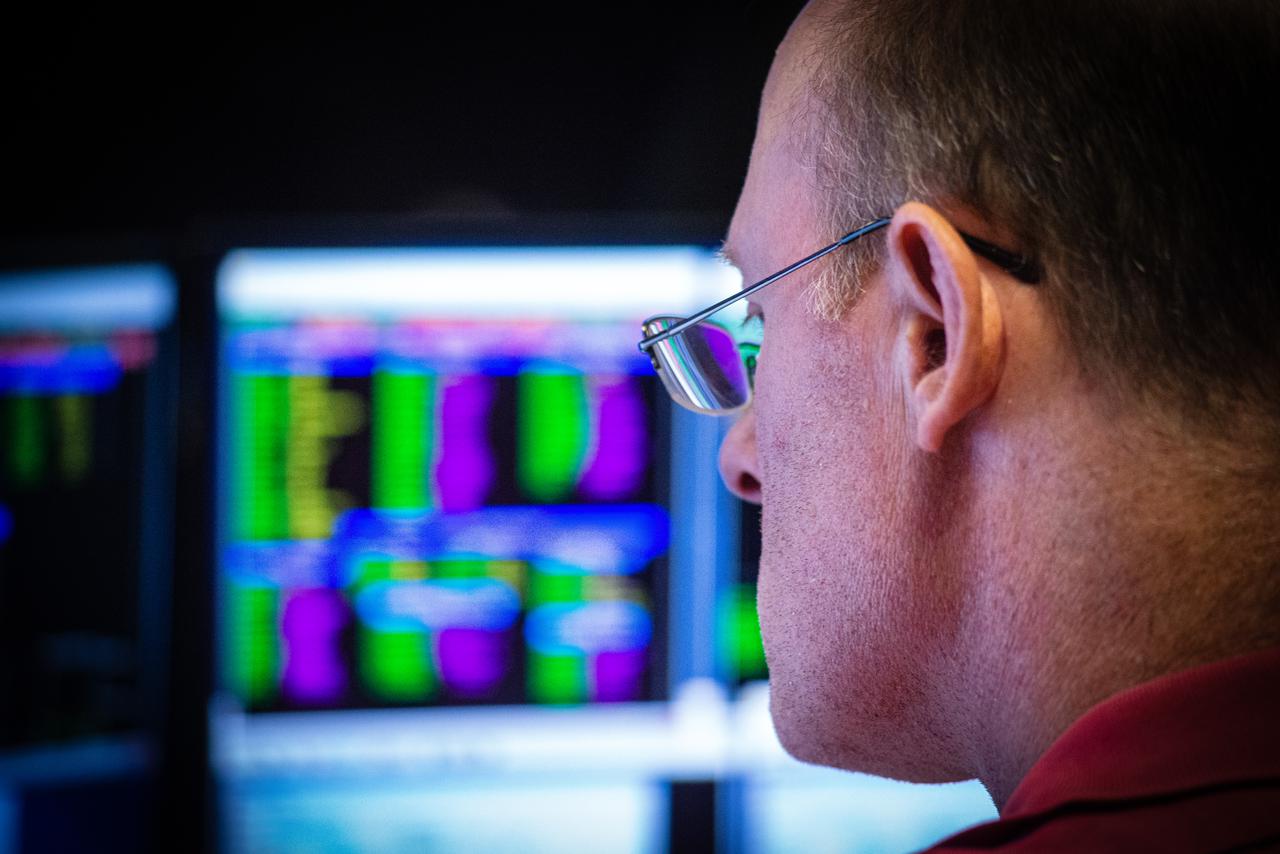
Members of the Hubble operations team work in the control room on July 15, 2021 to restore Hubble to science operations. Credits: NASA/Goddard/Rebecca Roth --- More info: Hubble’s payload computer, which controls and coordinates the observatory’s onboard science instruments, halted suddenly on June 13. When the main computer failed to receive a signal from the payload computer, it automatically placed Hubble’s science instruments into safe mode. That meant the telescope would no longer be doing science while mission specialists analyzed the situation. In response to the anomaly, NASA began a switch to backup spacecraft hardware on Hubble in response to an ongoing problem with its payload computer. This was a multi-day event. Science observations restarted the afternoon of Saturday, July 17.
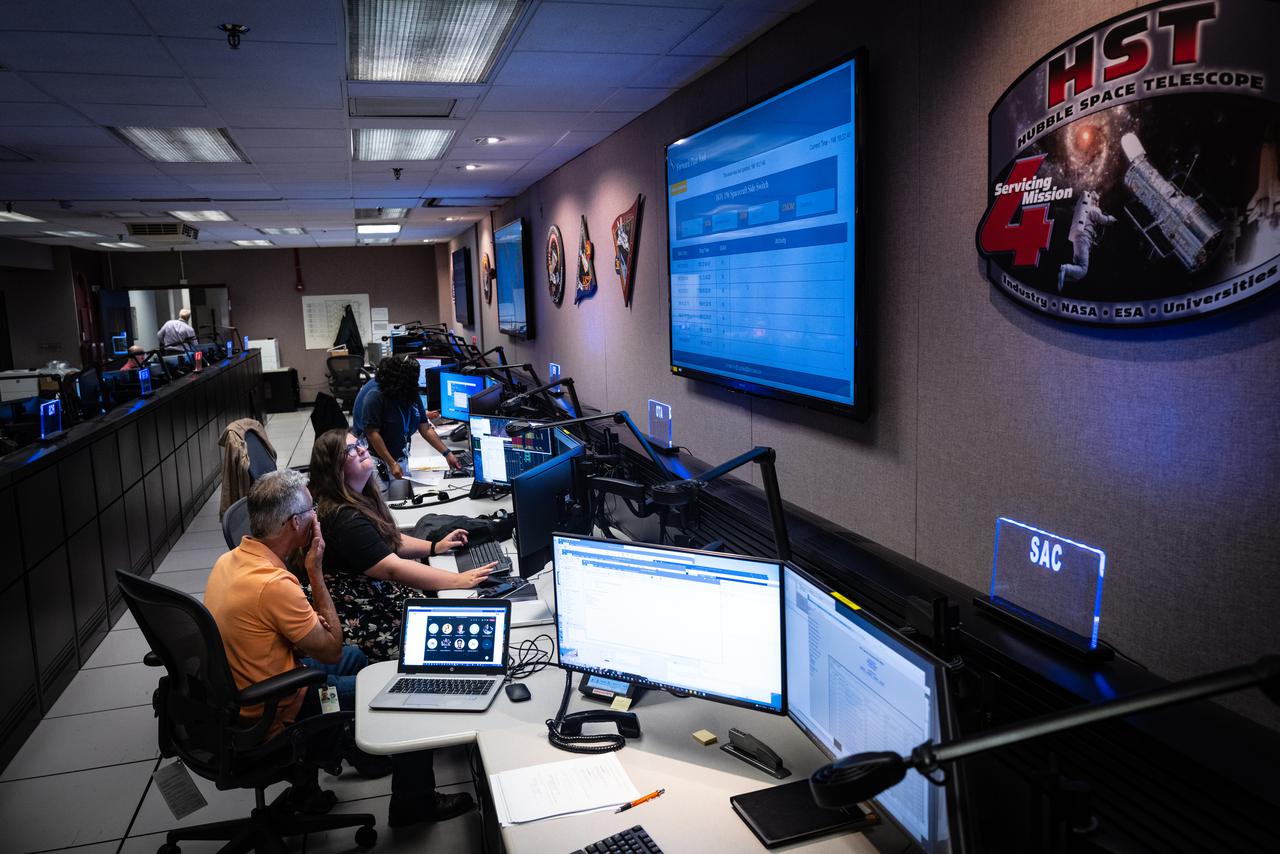
Members of the Hubble operations team work in the control room on July 15, 2021 to restore Hubble to science operations. Credits: NASA/Goddard/Rebecca Roth --- More info: Hubble’s payload computer, which controls and coordinates the observatory’s onboard science instruments, halted suddenly on June 13. When the main computer failed to receive a signal from the payload computer, it automatically placed Hubble’s science instruments into safe mode. That meant the telescope would no longer be doing science while mission specialists analyzed the situation. In response to the anomaly, NASA began a switch to backup spacecraft hardware on Hubble in response to an ongoing problem with its payload computer. This was a multi-day event. Science observations restarted the afternoon of Saturday, July 17.
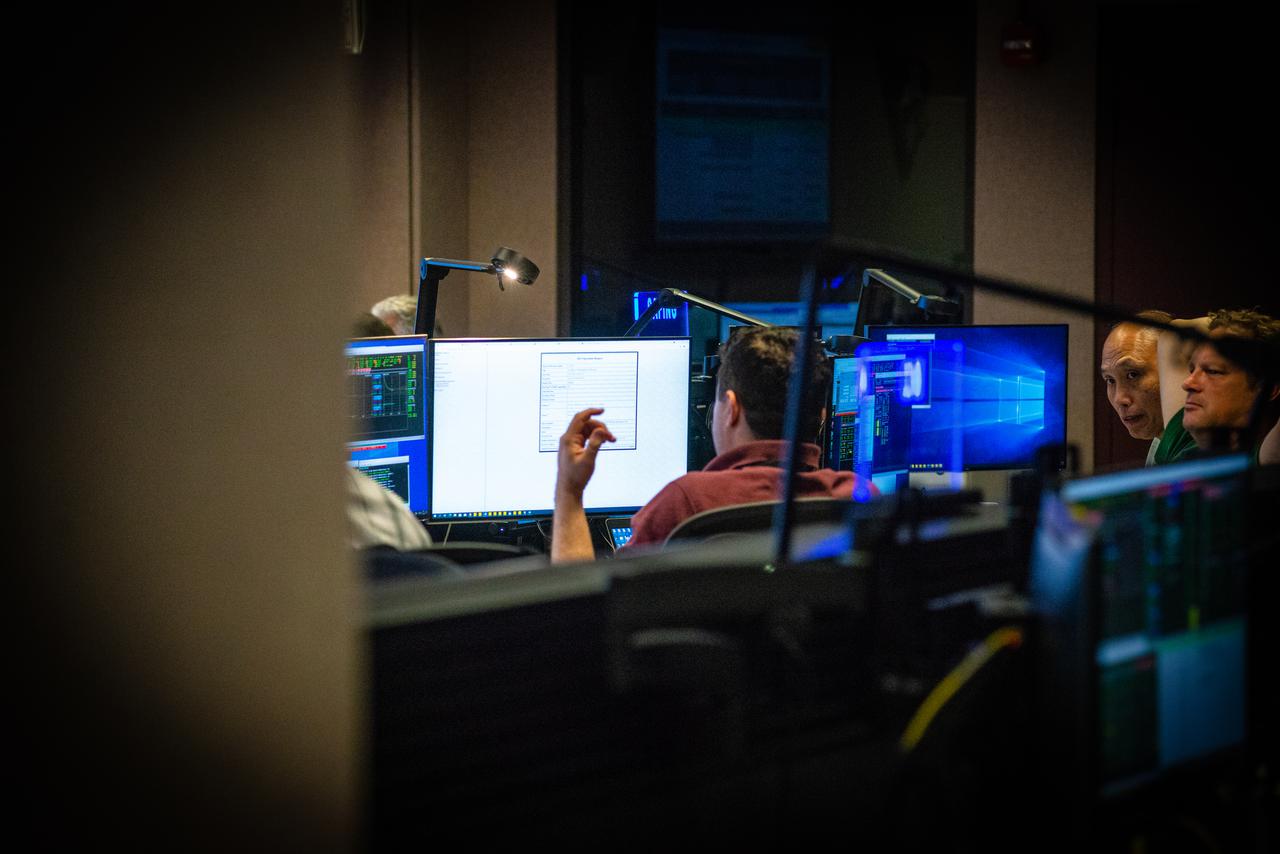
Members of the Hubble operations team work in the control room on July 15, 2021 to restore Hubble to science operations. Credits: NASA/Goddard/Rebecca Roth --- More info: Hubble’s payload computer, which controls and coordinates the observatory’s onboard science instruments, halted suddenly on June 13. When the main computer failed to receive a signal from the payload computer, it automatically placed Hubble’s science instruments into safe mode. That meant the telescope would no longer be doing science while mission specialists analyzed the situation. In response to the anomaly, NASA began a switch to backup spacecraft hardware on Hubble in response to an ongoing problem with its payload computer. This was a multi-day event. Science observations restarted the afternoon of Saturday, July 17.
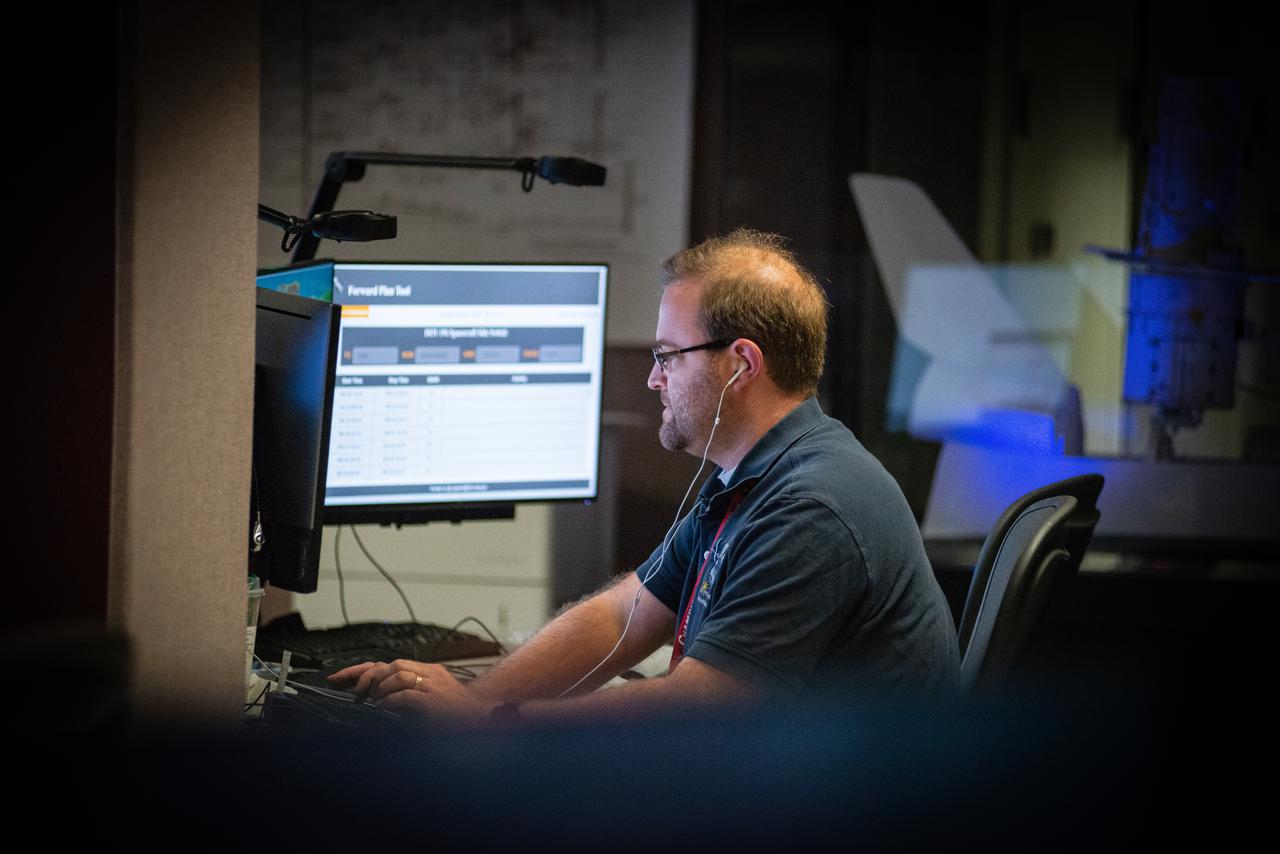
Members of the Hubble operations team work in the control room on July 15, 2021 to restore Hubble to science operations. Credits: NASA/Goddard/Rebecca Roth --- More info: Hubble’s payload computer, which controls and coordinates the observatory’s onboard science instruments, halted suddenly on June 13. When the main computer failed to receive a signal from the payload computer, it automatically placed Hubble’s science instruments into safe mode. That meant the telescope would no longer be doing science while mission specialists analyzed the situation. In response to the anomaly, NASA began a switch to backup spacecraft hardware on Hubble in response to an ongoing problem with its payload computer. This was a multi-day event. Science observations restarted the afternoon of Saturday, July 17.
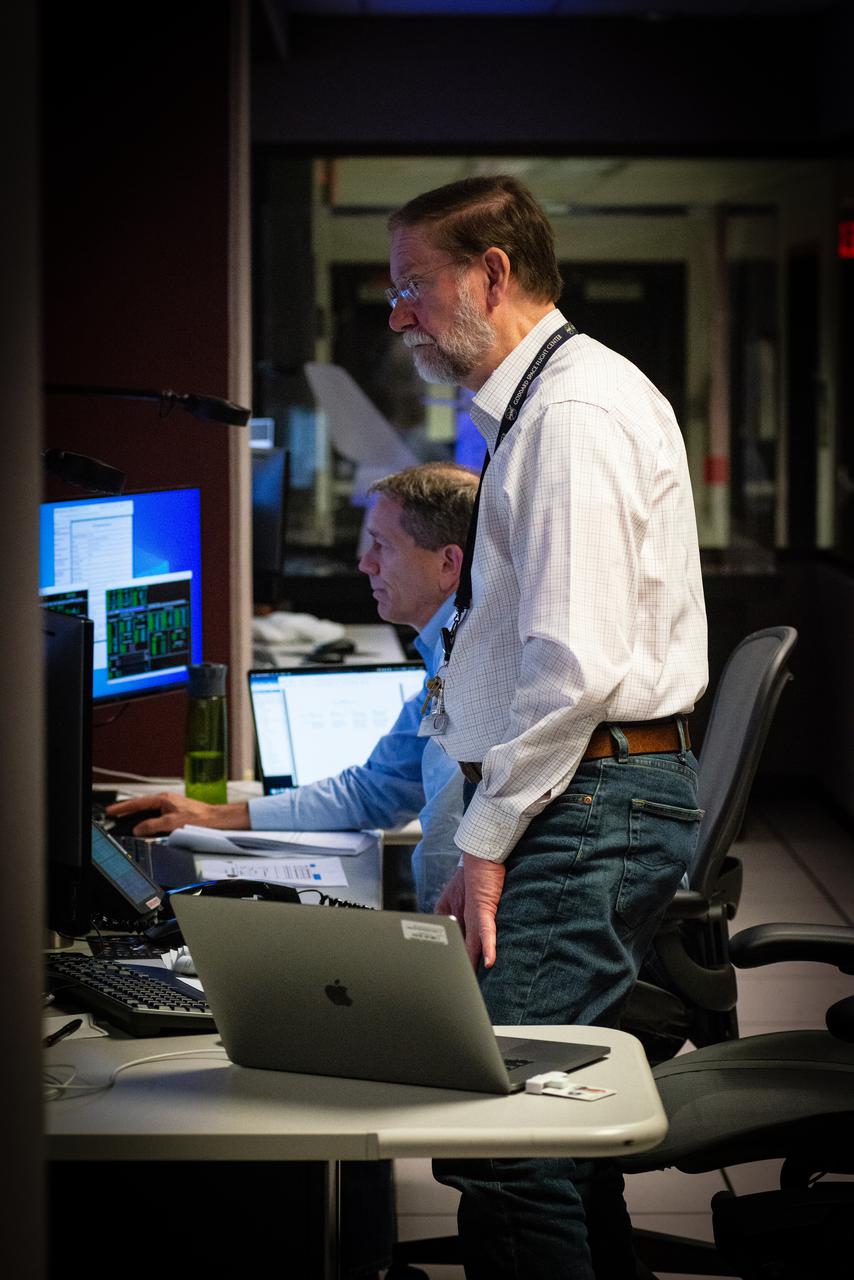
Members of the Hubble operations team work in the control room on July 15, 2021 to restore Hubble to science operations. Credits: NASA/Goddard/Rebecca Roth --- More info: Hubble’s payload computer, which controls and coordinates the observatory’s onboard science instruments, halted suddenly on June 13. When the main computer failed to receive a signal from the payload computer, it automatically placed Hubble’s science instruments into safe mode. That meant the telescope would no longer be doing science while mission specialists analyzed the situation. In response to the anomaly, NASA began a switch to backup spacecraft hardware on Hubble in response to an ongoing problem with its payload computer. This was a multi-day event. Science observations restarted the afternoon of Saturday, July 17.
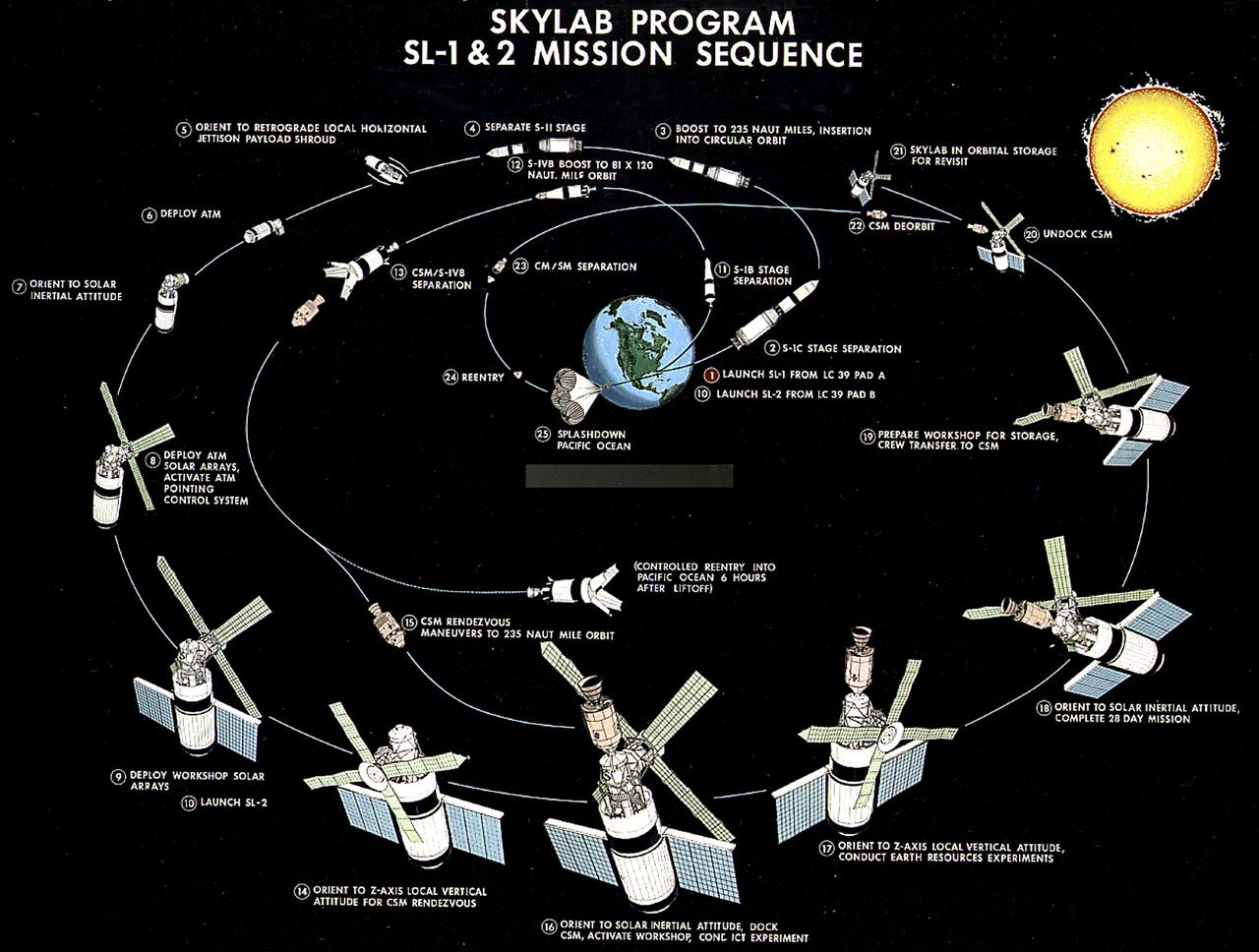
This illustration depicts the Skylab-1 and Skylab-2 mission sequence. The goals of the Skylab were to enrich our scientific knowledge of the Earth, the Sun, the stars, and cosmic space; to study the effects of weightlessness on living organisms, including man; to study the effects of the processing and manufacturing of materials utilizing the absence of gravity; and to conduct Earth resource observations. The Skylab also conducted 19 selected experiments submitted by high school students. Skylab's 3 different 3-man crews spent up to 84 days in Earth orbit. The Marshall Space Flight Center (MSFC) had responsibility for developing and integrating most of the major components of the Skylab: the Orbital Workshop (OWS), Airlock Module (AM), Multiple Docking Adapter (MDA), Apollo Telescope Mount (ATM), Payload Shroud (PS), and most of the experiments. MSFC was also responsible for providing the Saturn IB launch vehicles for three Apollo spacecraft and crews and a Saturn V launch vehicle for the Skylab.
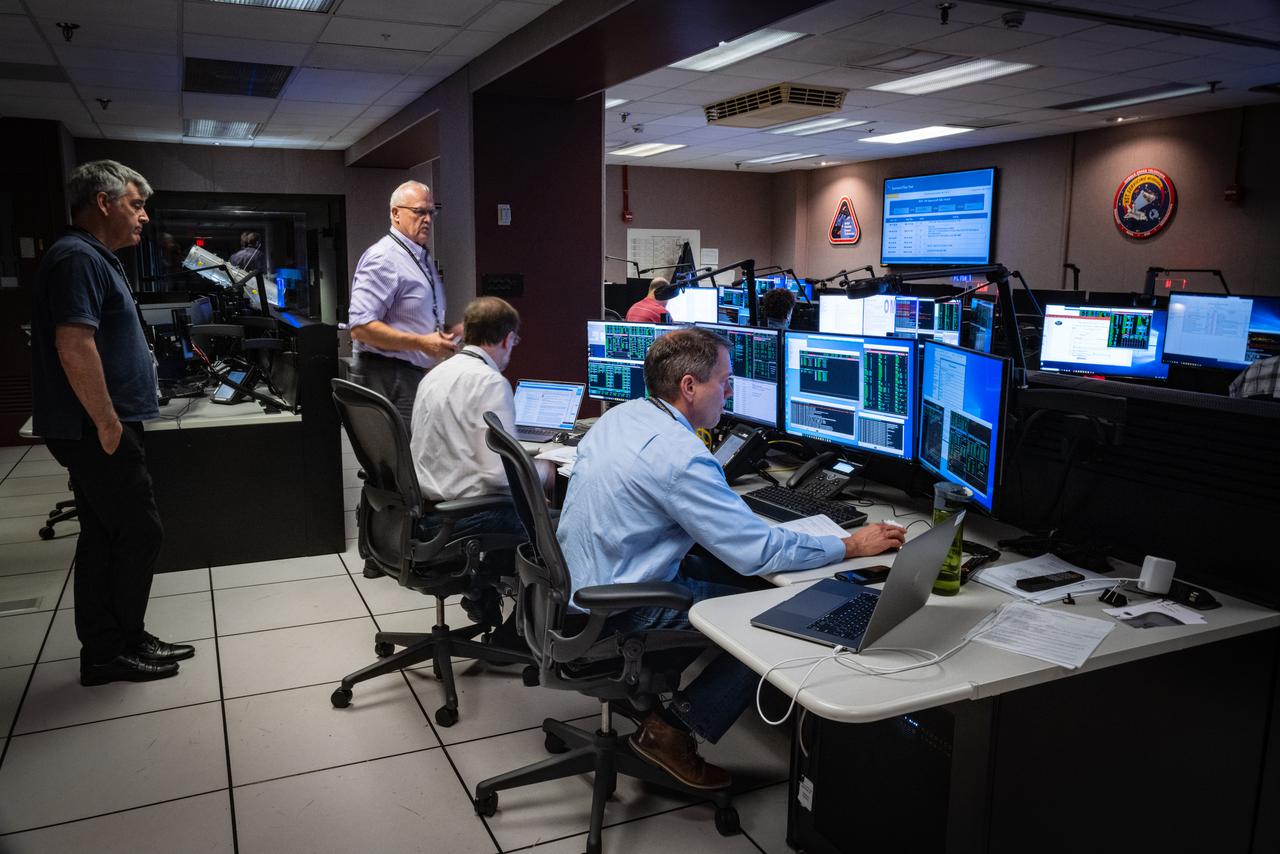
Members of the Hubble operations team work in the control room on July 15, 2021 to restore Hubble to science operations. Credits: NASA/Goddard/Rebecca Roth --- More info: Hubble’s payload computer, which controls and coordinates the observatory’s onboard science instruments, halted suddenly on June 13. When the main computer failed to receive a signal from the payload computer, it automatically placed Hubble’s science instruments into safe mode. That meant the telescope would no longer be doing science while mission specialists analyzed the situation. In response to the anomaly, NASA began a switch to backup spacecraft hardware on Hubble in response to an ongoing problem with its payload computer. This was a multi-day event. Science observations restarted the afternoon of Saturday, July 17.
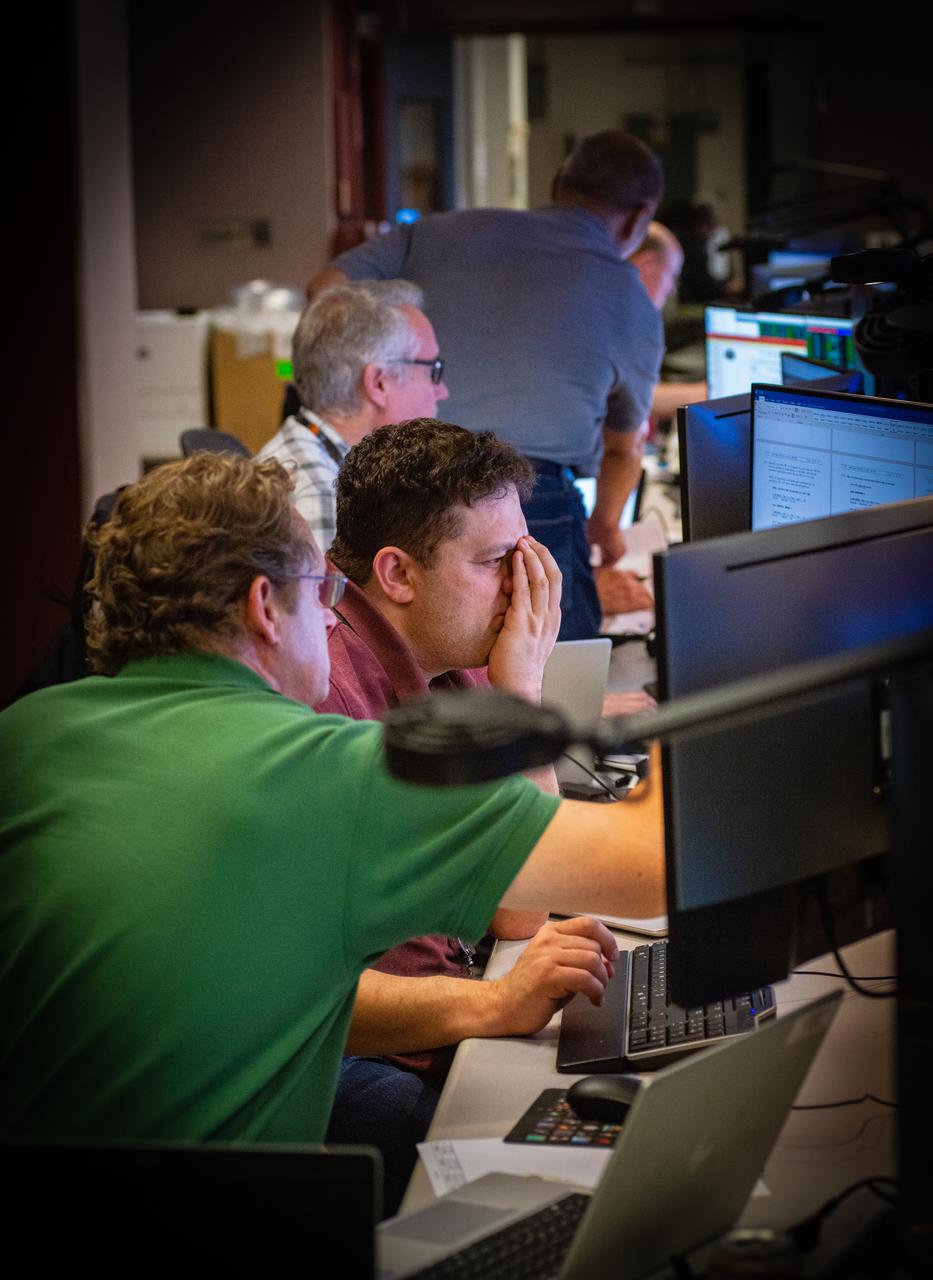
Members of the Hubble operations team work in the control room on July 15, 2021 to restore Hubble to science operations. Credits: NASA/Goddard/Rebecca Roth --- More info: Hubble’s payload computer, which controls and coordinates the observatory’s onboard science instruments, halted suddenly on June 13. When the main computer failed to receive a signal from the payload computer, it automatically placed Hubble’s science instruments into safe mode. That meant the telescope would no longer be doing science while mission specialists analyzed the situation. In response to the anomaly, NASA began a switch to backup spacecraft hardware on Hubble in response to an ongoing problem with its payload computer. This was a multi-day event. Science observations restarted the afternoon of Saturday, July 17.
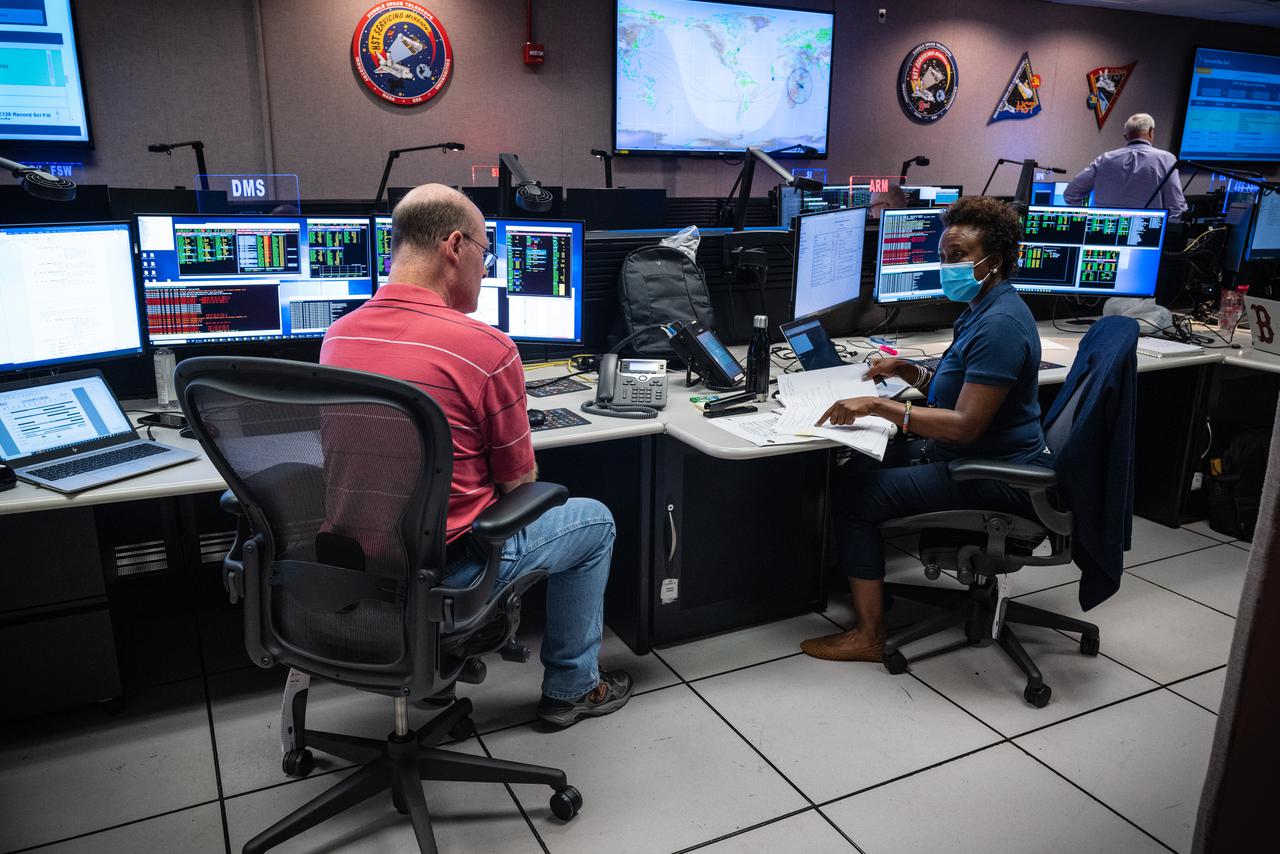
Members of the Hubble operations team work in the control room on July 15, 2021 to restore Hubble to science operations. Credits: NASA/Goddard/Rebecca Roth --- More info: Hubble’s payload computer, which controls and coordinates the observatory’s onboard science instruments, halted suddenly on June 13. When the main computer failed to receive a signal from the payload computer, it automatically placed Hubble’s science instruments into safe mode. That meant the telescope would no longer be doing science while mission specialists analyzed the situation. In response to the anomaly, NASA began a switch to backup spacecraft hardware on Hubble in response to an ongoing problem with its payload computer. This was a multi-day event. Science observations restarted the afternoon of Saturday, July 17.
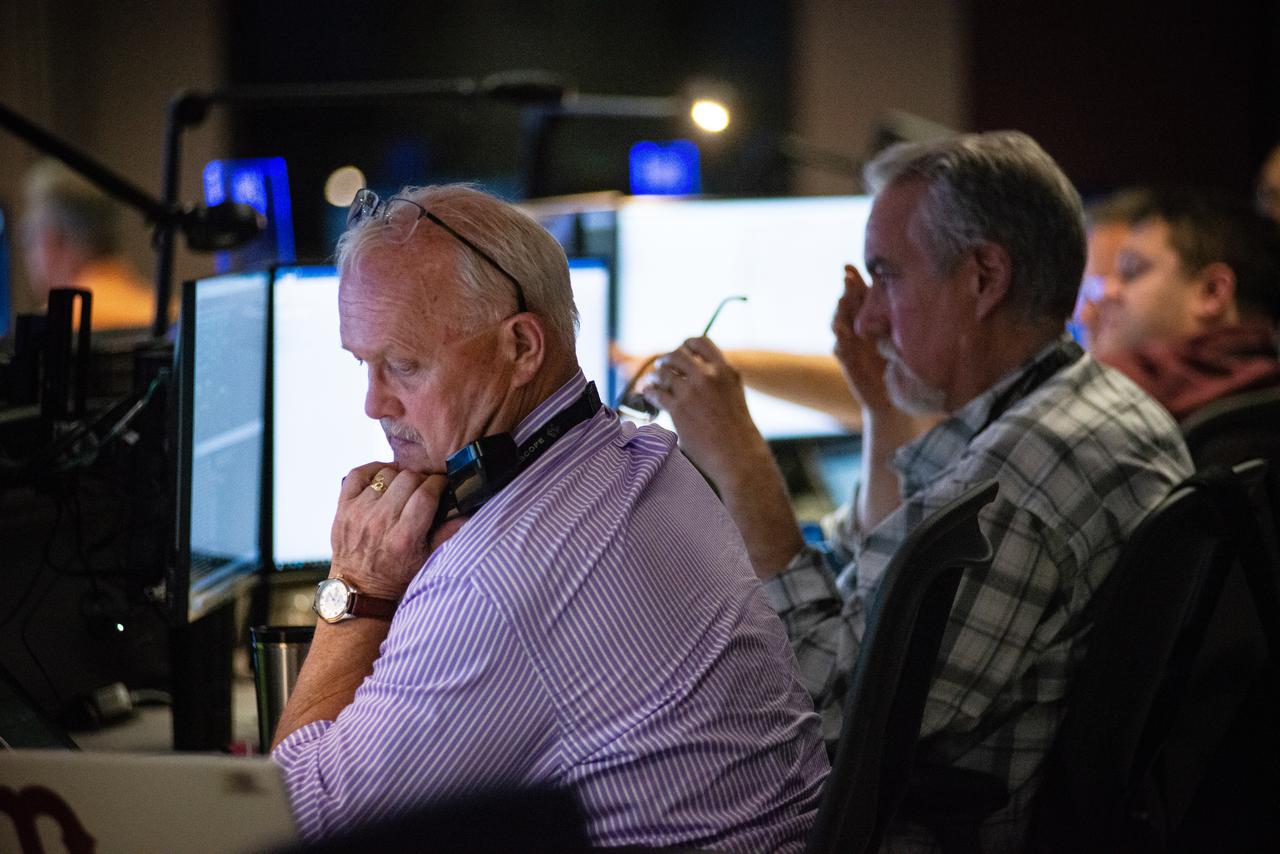
Members of the Hubble operations team work in the control room on July 15, 2021 to restore Hubble to science operations. Credits: NASA/Goddard/Rebecca Roth --- More info: Hubble’s payload computer, which controls and coordinates the observatory’s onboard science instruments, halted suddenly on June 13. When the main computer failed to receive a signal from the payload computer, it automatically placed Hubble’s science instruments into safe mode. That meant the telescope would no longer be doing science while mission specialists analyzed the situation. In response to the anomaly, NASA began a switch to backup spacecraft hardware on Hubble in response to an ongoing problem with its payload computer. This was a multi-day event. Science observations restarted the afternoon of Saturday, July 17.
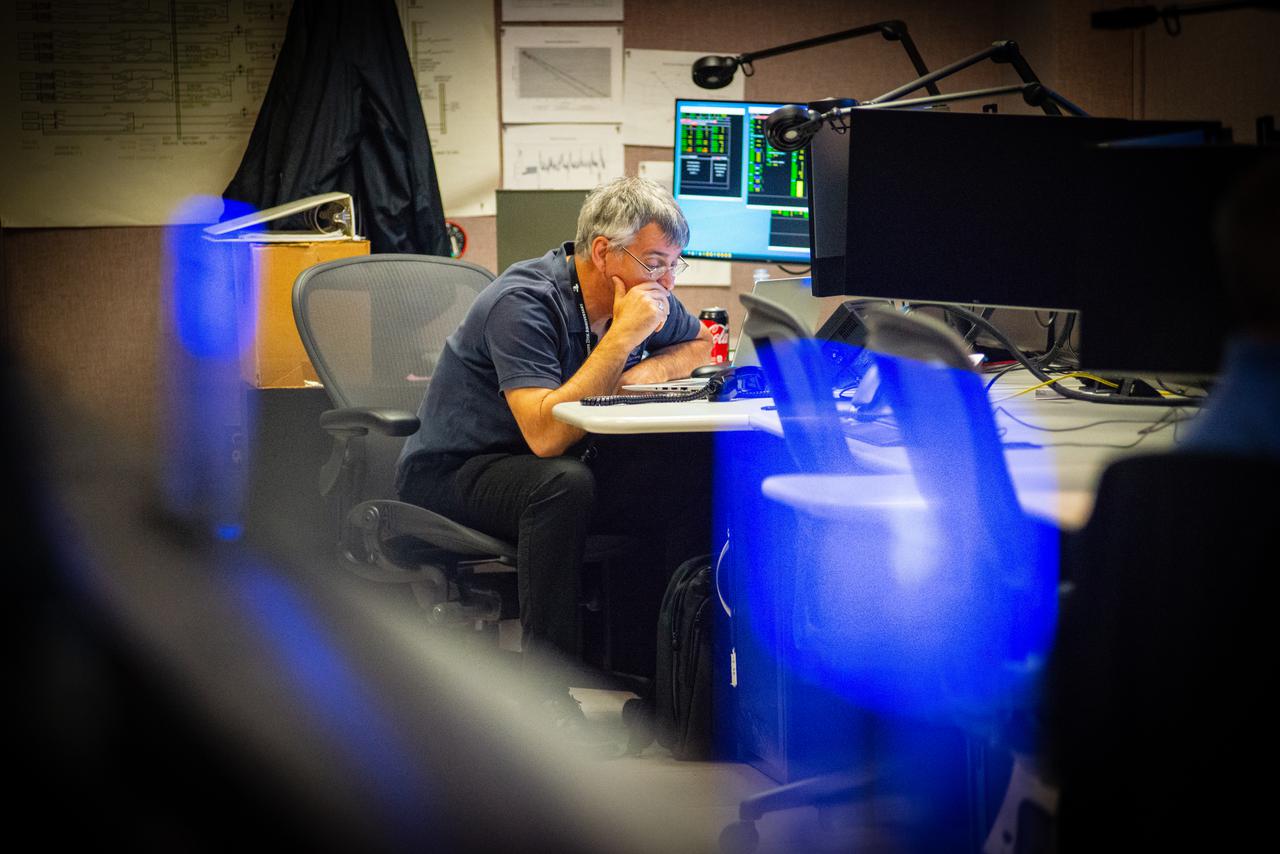
Members of the Hubble operations team work in the control room on July 15, 2021 to restore Hubble to science operations. Credits: NASA/Goddard/Rebecca Roth --- More info: Hubble’s payload computer, which controls and coordinates the observatory’s onboard science instruments, halted suddenly on June 13. When the main computer failed to receive a signal from the payload computer, it automatically placed Hubble’s science instruments into safe mode. That meant the telescope would no longer be doing science while mission specialists analyzed the situation. In response to the anomaly, NASA began a switch to backup spacecraft hardware on Hubble in response to an ongoing problem with its payload computer. This was a multi-day event. Science observations restarted the afternoon of Saturday, July 17.

Members of the Hubble operations team work in the control room on July 15, 2021 to restore Hubble to science operations. Credits: NASA/Goddard/Rebecca Roth --- More info: Hubble’s payload computer, which controls and coordinates the observatory’s onboard science instruments, halted suddenly on June 13. When the main computer failed to receive a signal from the payload computer, it automatically placed Hubble’s science instruments into safe mode. That meant the telescope would no longer be doing science while mission specialists analyzed the situation. In response to the anomaly, NASA began a switch to backup spacecraft hardware on Hubble in response to an ongoing problem with its payload computer. This was a multi-day event. Science observations restarted the afternoon of Saturday, July 17.
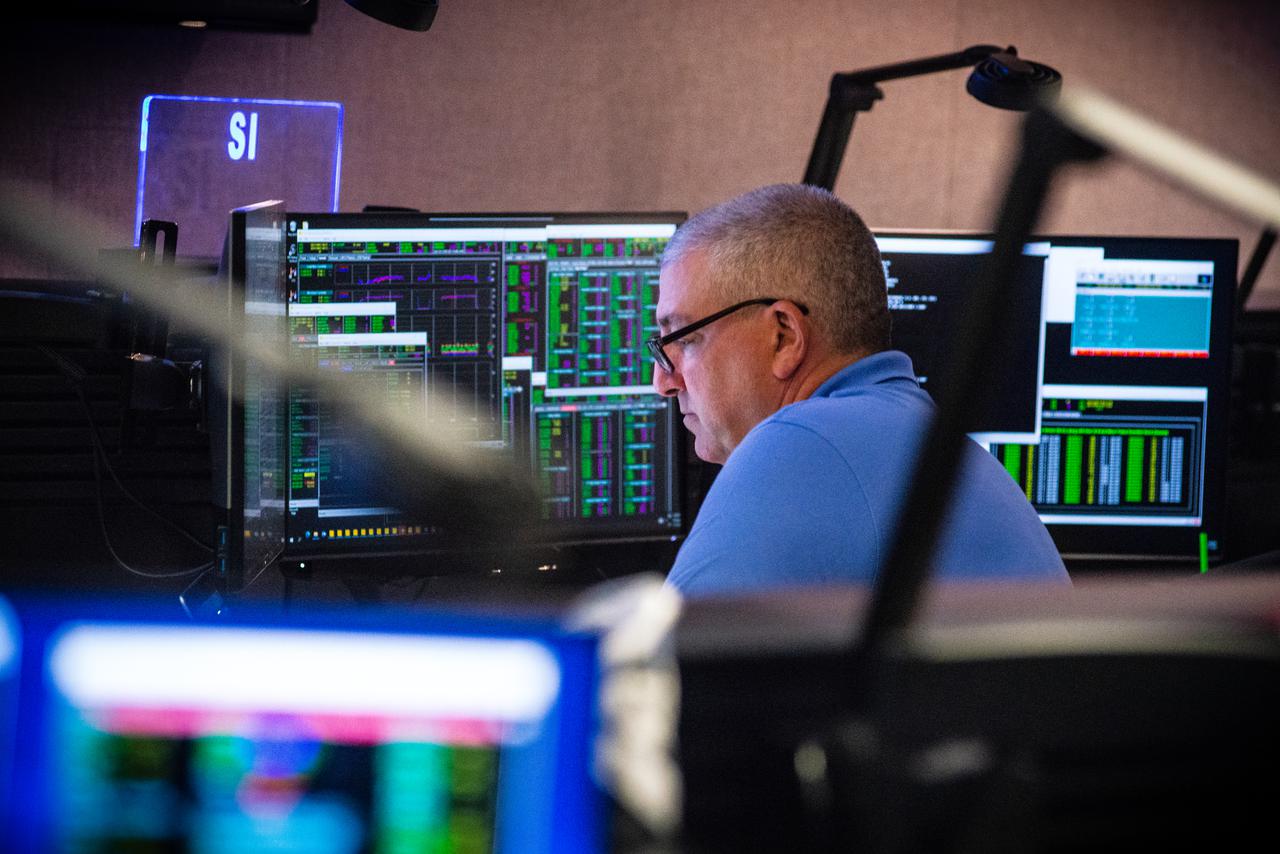
Members of the Hubble operations team work in the control room on July 15, 2021 to restore Hubble to science operations. Credits: NASA/Goddard/Rebecca Roth --- More info: Hubble’s payload computer, which controls and coordinates the observatory’s onboard science instruments, halted suddenly on June 13. When the main computer failed to receive a signal from the payload computer, it automatically placed Hubble’s science instruments into safe mode. That meant the telescope would no longer be doing science while mission specialists analyzed the situation. In response to the anomaly, NASA began a switch to backup spacecraft hardware on Hubble in response to an ongoing problem with its payload computer. This was a multi-day event. Science observations restarted the afternoon of Saturday, July 17.
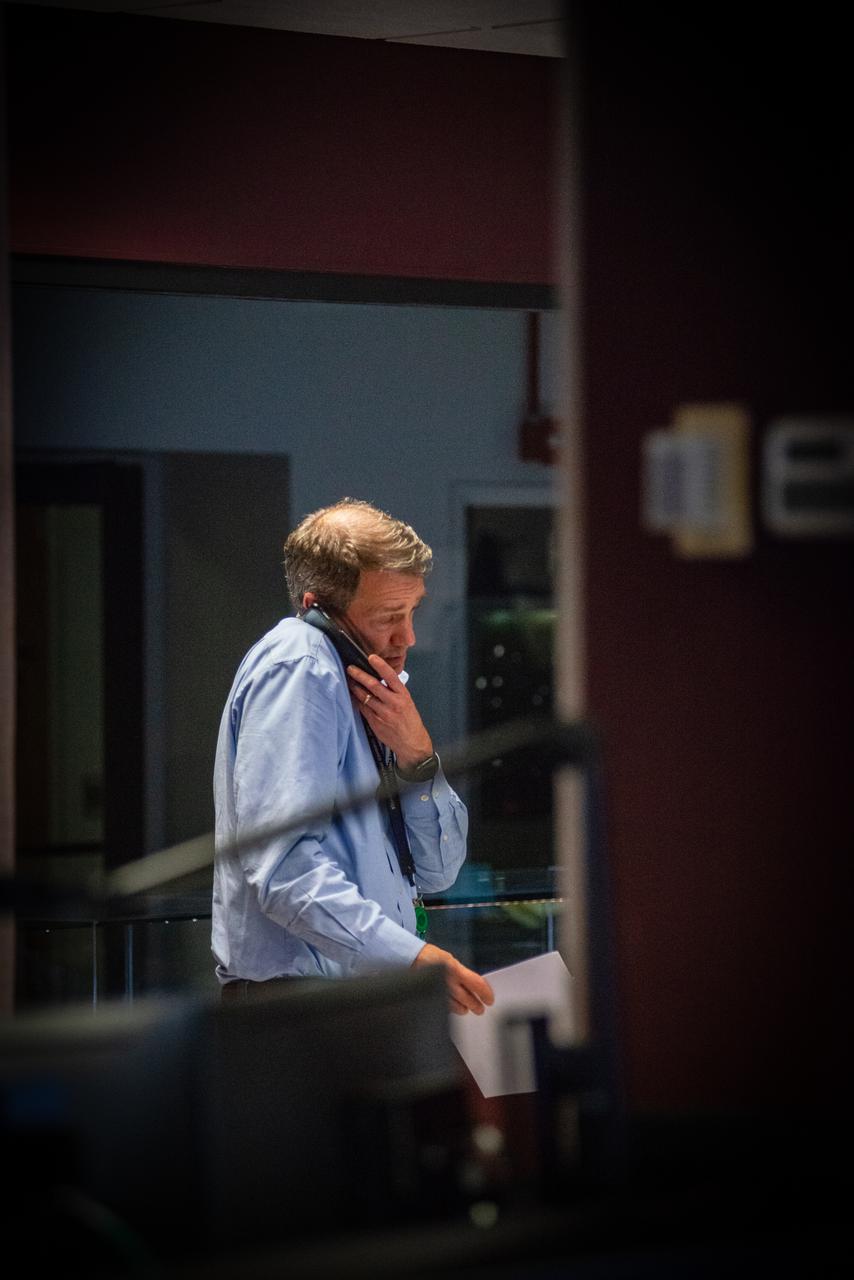
Members of the Hubble operations team work in the control room on July 15, 2021 to restore Hubble to science operations. Credits: NASA/Goddard/Rebecca Roth --- More info: Hubble’s payload computer, which controls and coordinates the observatory’s onboard science instruments, halted suddenly on June 13. When the main computer failed to receive a signal from the payload computer, it automatically placed Hubble’s science instruments into safe mode. That meant the telescope would no longer be doing science while mission specialists analyzed the situation. In response to the anomaly, NASA began a switch to backup spacecraft hardware on Hubble in response to an ongoing problem with its payload computer. This was a multi-day event. Science observations restarted the afternoon of Saturday, July 17.
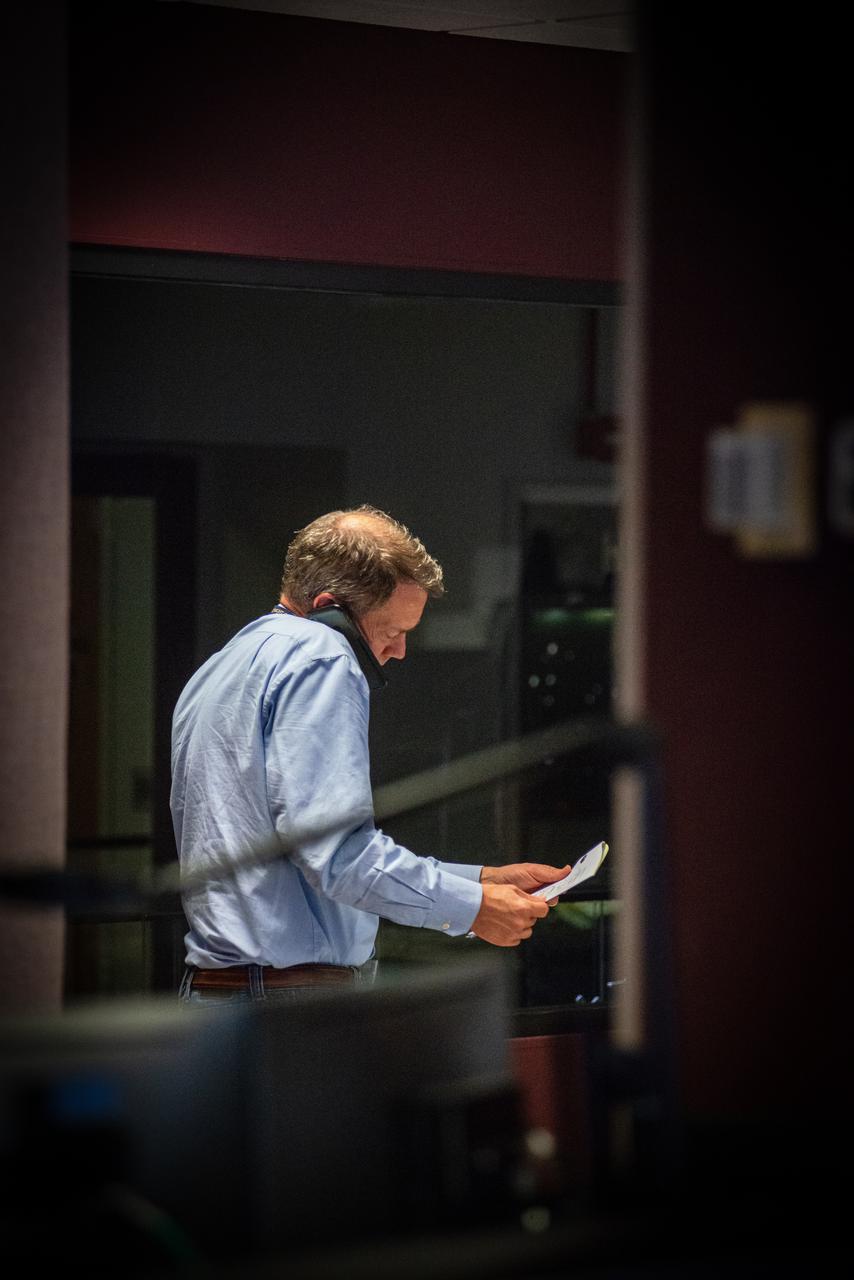
Members of the Hubble operations team work in the control room on July 15, 2021 to restore Hubble to science operations. Credits: NASA/Goddard/Rebecca Roth --- More info: Hubble’s payload computer, which controls and coordinates the observatory’s onboard science instruments, halted suddenly on June 13. When the main computer failed to receive a signal from the payload computer, it automatically placed Hubble’s science instruments into safe mode. That meant the telescope would no longer be doing science while mission specialists analyzed the situation. In response to the anomaly, NASA began a switch to backup spacecraft hardware on Hubble in response to an ongoing problem with its payload computer. This was a multi-day event. Science observations restarted the afternoon of Saturday, July 17.
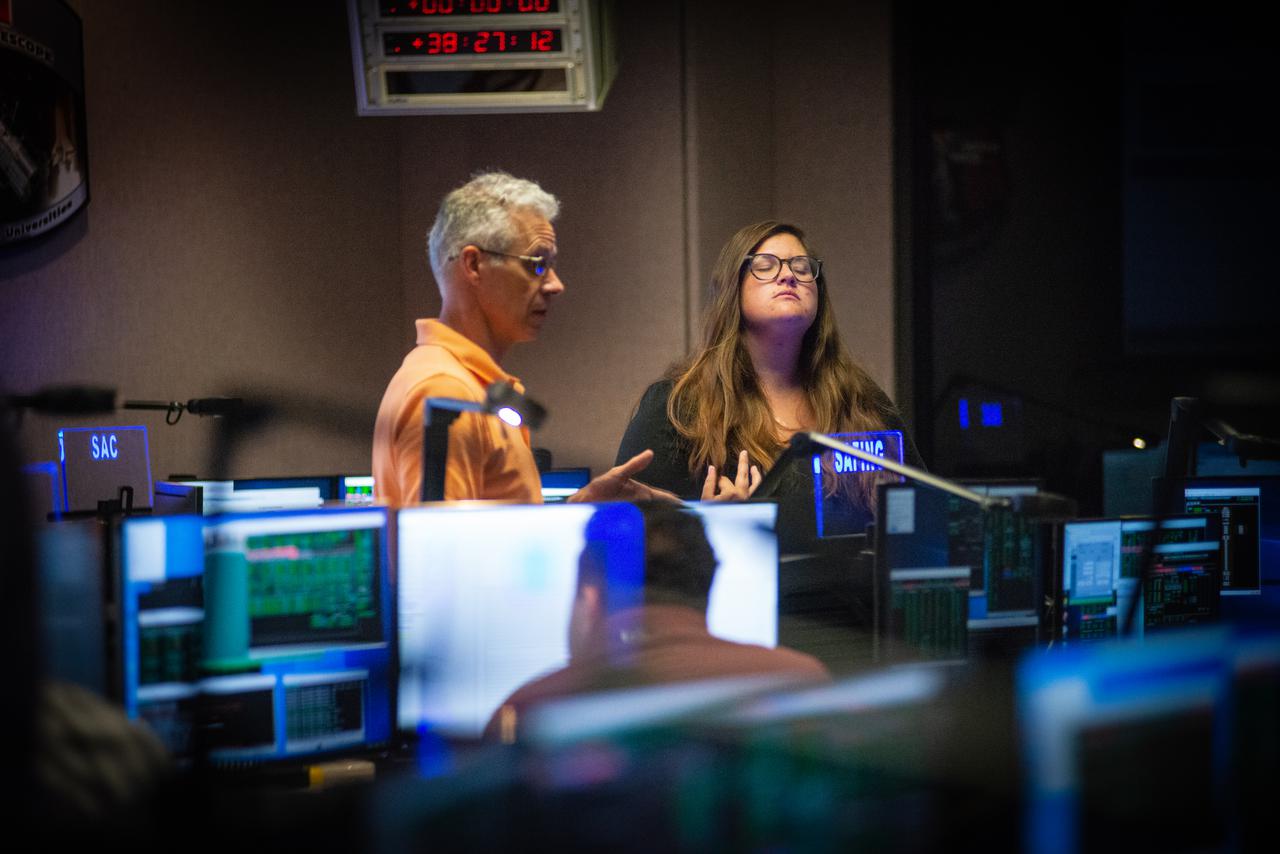
Members of the Hubble operations team work in the control room on July 15, 2021 to restore Hubble to science operations. Credits: NASA/Goddard/Rebecca Roth --- More info: Hubble’s payload computer, which controls and coordinates the observatory’s onboard science instruments, halted suddenly on June 13. When the main computer failed to receive a signal from the payload computer, it automatically placed Hubble’s science instruments into safe mode. That meant the telescope would no longer be doing science while mission specialists analyzed the situation. In response to the anomaly, NASA began a switch to backup spacecraft hardware on Hubble in response to an ongoing problem with its payload computer. This was a multi-day event. Science observations restarted the afternoon of Saturday, July 17.
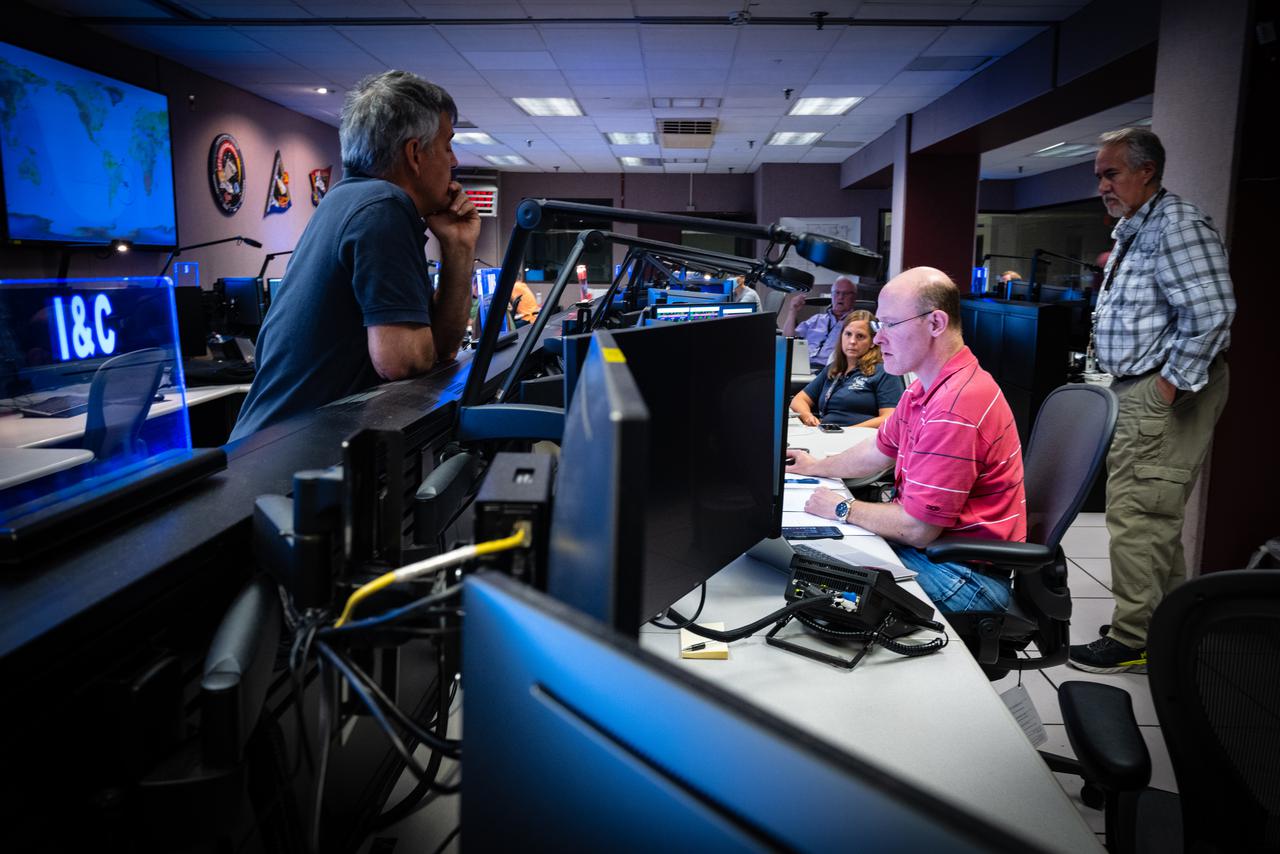
Members of the Hubble operations team work in the control room on July 15, 2021 to restore Hubble to science operations. Credits: NASA/Goddard/Rebecca Roth --- More info: Hubble’s payload computer, which controls and coordinates the observatory’s onboard science instruments, halted suddenly on June 13. When the main computer failed to receive a signal from the payload computer, it automatically placed Hubble’s science instruments into safe mode. That meant the telescope would no longer be doing science while mission specialists analyzed the situation. In response to the anomaly, NASA began a switch to backup spacecraft hardware on Hubble in response to an ongoing problem with its payload computer. This was a multi-day event. Science observations restarted the afternoon of Saturday, July 17.
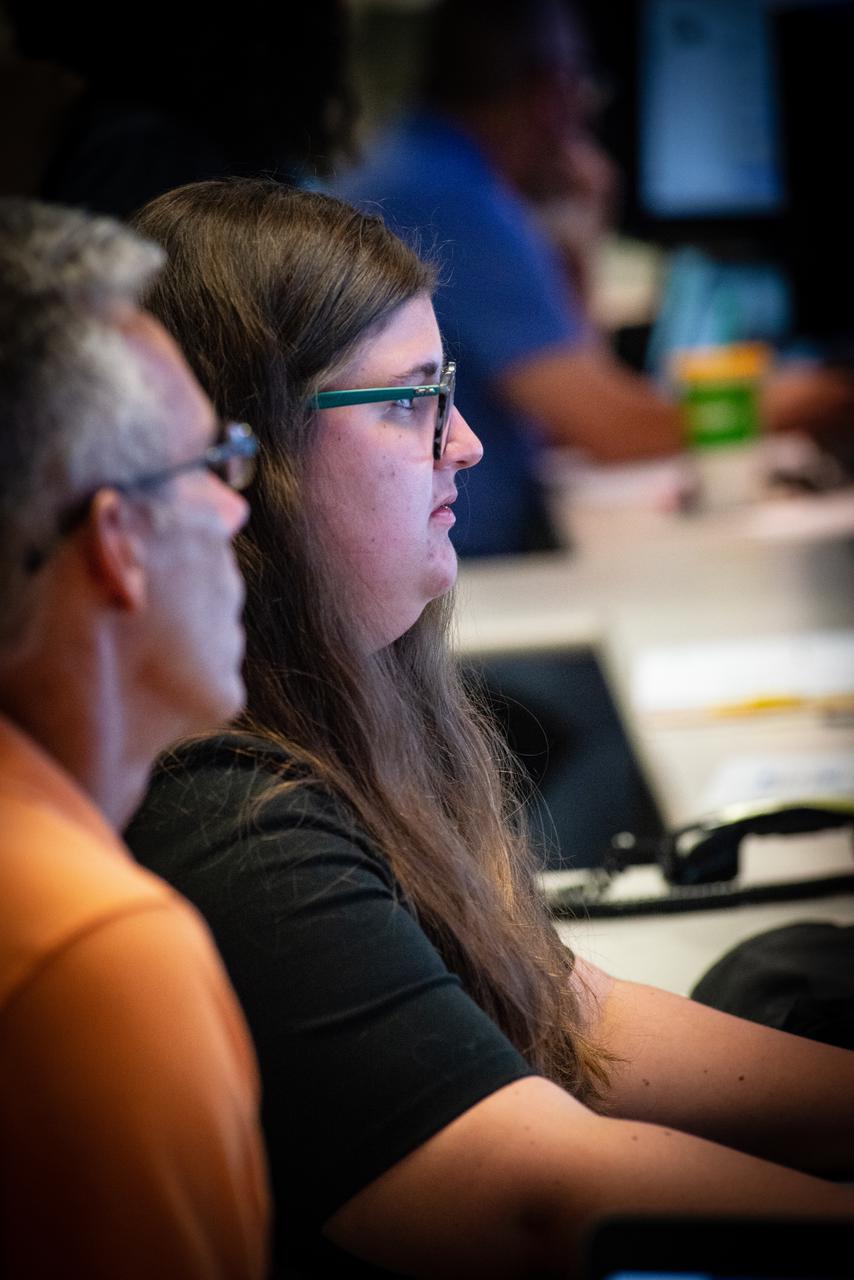
Members of the Hubble operations team work in the control room on July 15, 2021 to restore Hubble to science operations. Credits: NASA/Goddard/Rebecca Roth --- More info: Hubble’s payload computer, which controls and coordinates the observatory’s onboard science instruments, halted suddenly on June 13. When the main computer failed to receive a signal from the payload computer, it automatically placed Hubble’s science instruments into safe mode. That meant the telescope would no longer be doing science while mission specialists analyzed the situation. In response to the anomaly, NASA began a switch to backup spacecraft hardware on Hubble in response to an ongoing problem with its payload computer. This was a multi-day event. Science observations restarted the afternoon of Saturday, July 17.
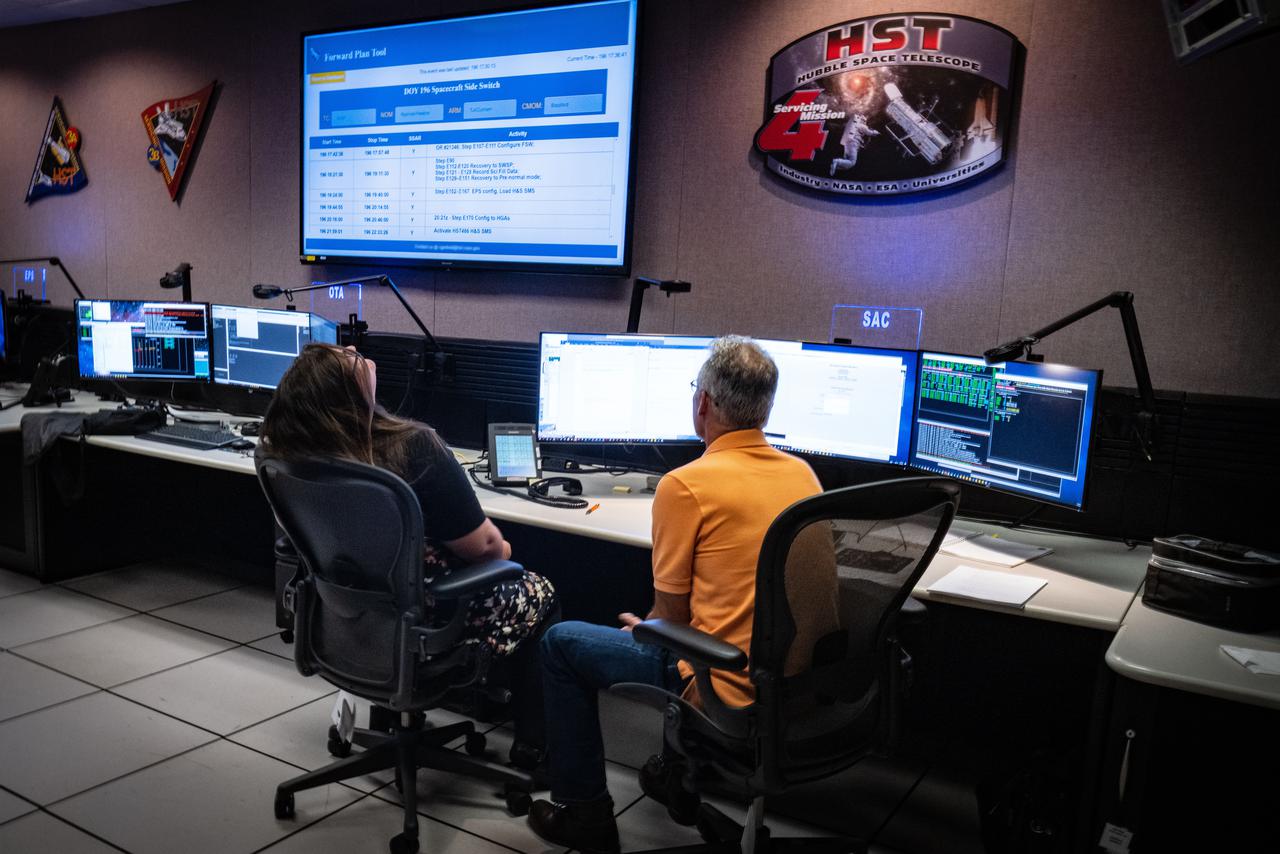
Members of the Hubble operations team work in the control room on July 15, 2021 to restore Hubble to science operations. Credits: NASA/Goddard/Rebecca Roth --- More info: Hubble’s payload computer, which controls and coordinates the observatory’s onboard science instruments, halted suddenly on June 13. When the main computer failed to receive a signal from the payload computer, it automatically placed Hubble’s science instruments into safe mode. That meant the telescope would no longer be doing science while mission specialists analyzed the situation. In response to the anomaly, NASA began a switch to backup spacecraft hardware on Hubble in response to an ongoing problem with its payload computer. This was a multi-day event. Science observations restarted the afternoon of Saturday, July 17.
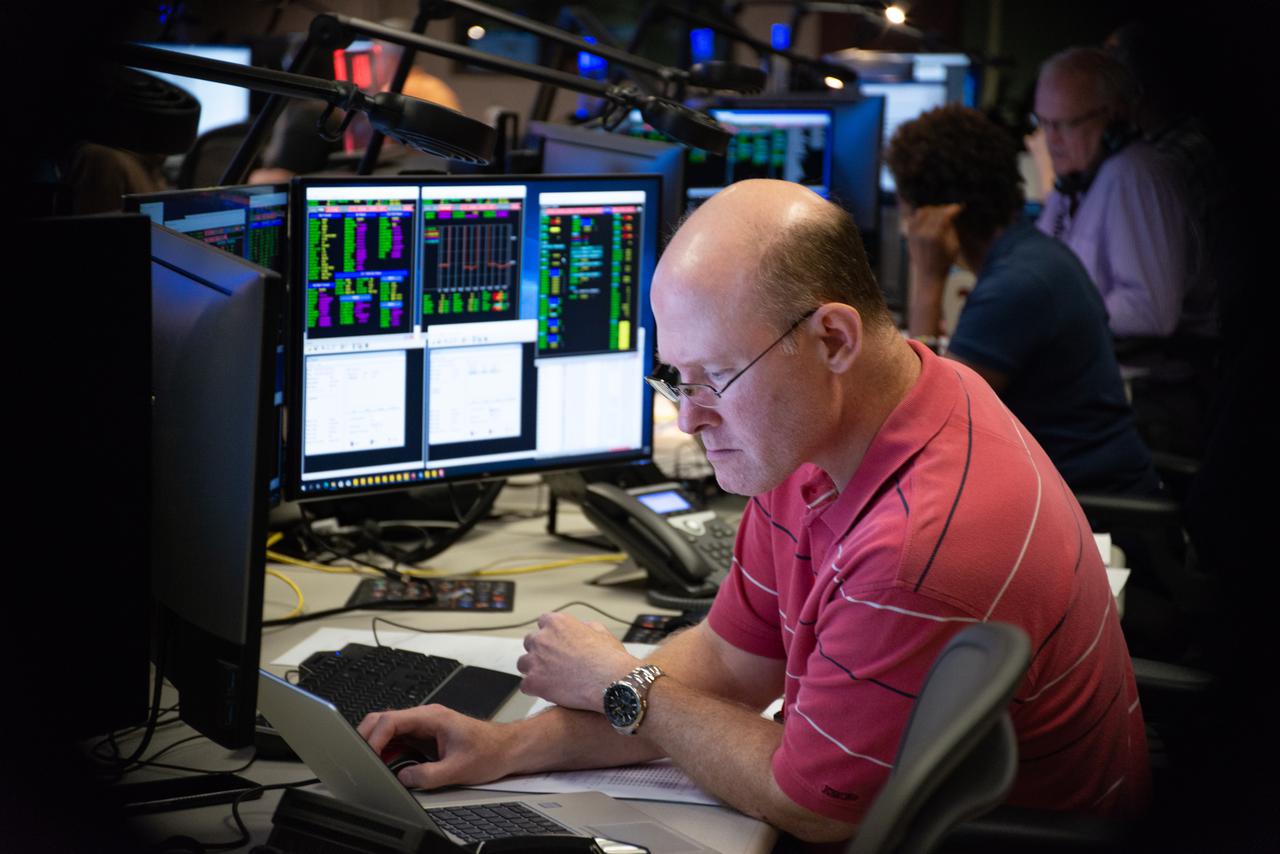
Members of the Hubble operations team work in the control room on July 15, 2021 to restore Hubble to science operations. Credits: NASA/Goddard/Rebecca Roth --- More info: Hubble’s payload computer, which controls and coordinates the observatory’s onboard science instruments, halted suddenly on June 13. When the main computer failed to receive a signal from the payload computer, it automatically placed Hubble’s science instruments into safe mode. That meant the telescope would no longer be doing science while mission specialists analyzed the situation. In response to the anomaly, NASA began a switch to backup spacecraft hardware on Hubble in response to an ongoing problem with its payload computer. This was a multi-day event. Science observations restarted the afternoon of Saturday, July 17.
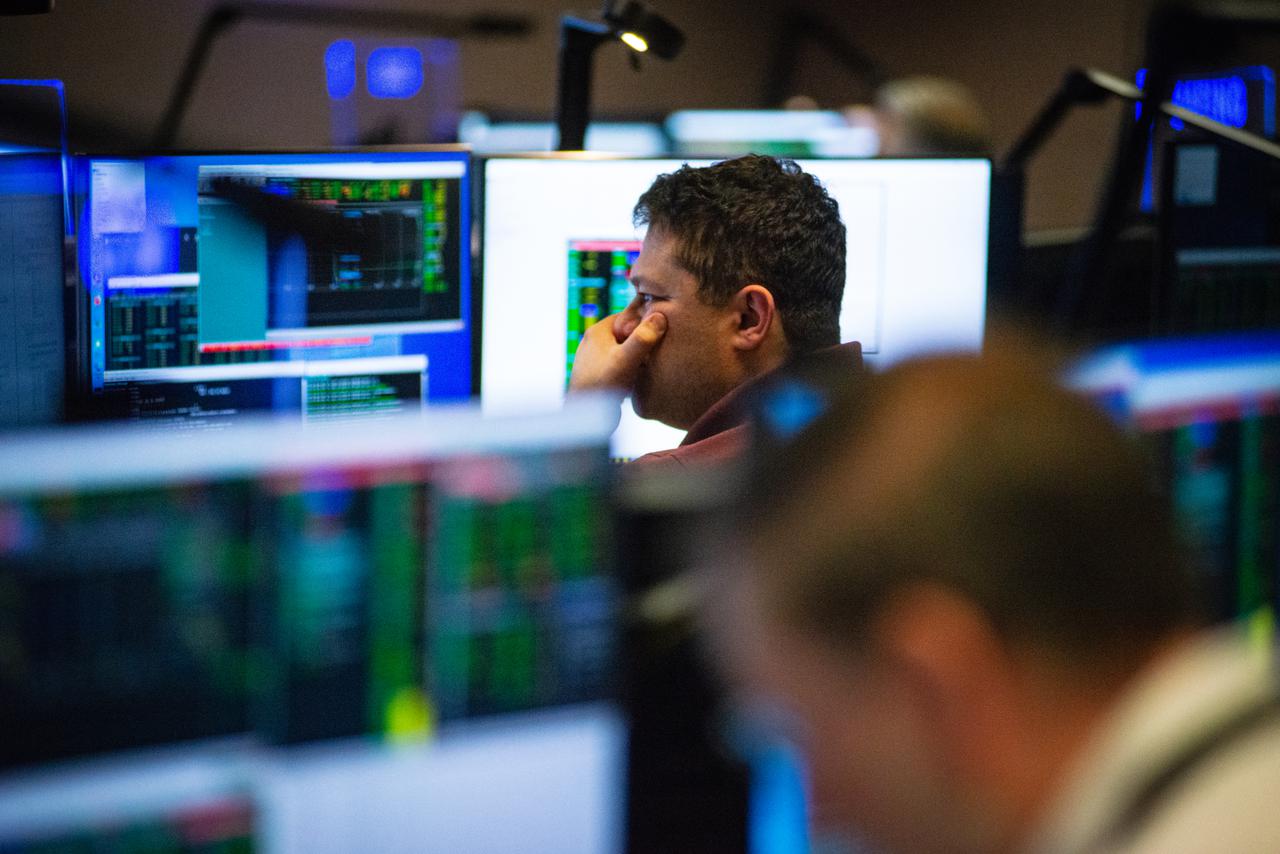
Members of the Hubble operations team work in the control room on July 15, 2021 to restore Hubble to science operations. Credits: NASA/Goddard/Rebecca Roth --- More info: Hubble’s payload computer, which controls and coordinates the observatory’s onboard science instruments, halted suddenly on June 13. When the main computer failed to receive a signal from the payload computer, it automatically placed Hubble’s science instruments into safe mode. That meant the telescope would no longer be doing science while mission specialists analyzed the situation. In response to the anomaly, NASA began a switch to backup spacecraft hardware on Hubble in response to an ongoing problem with its payload computer. This was a multi-day event. Science observations restarted the afternoon of Saturday, July 17.
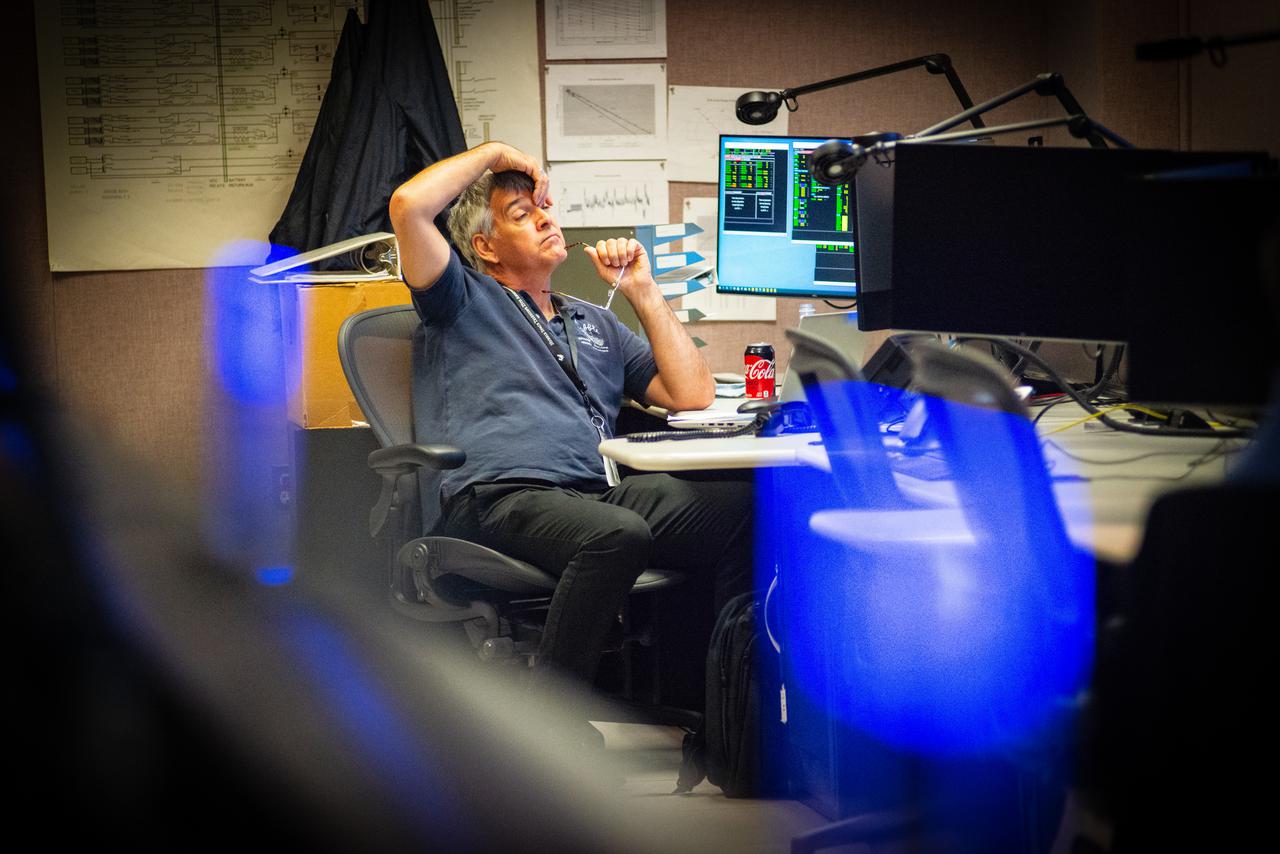
Members of the Hubble operations team work in the control room on July 15, 2021 to restore Hubble to science operations. Credits: NASA/Goddard/Rebecca Roth --- More info: Hubble’s payload computer, which controls and coordinates the observatory’s onboard science instruments, halted suddenly on June 13. When the main computer failed to receive a signal from the payload computer, it automatically placed Hubble’s science instruments into safe mode. That meant the telescope would no longer be doing science while mission specialists analyzed the situation. In response to the anomaly, NASA began a switch to backup spacecraft hardware on Hubble in response to an ongoing problem with its payload computer. This was a multi-day event. Science observations restarted the afternoon of Saturday, July 17.
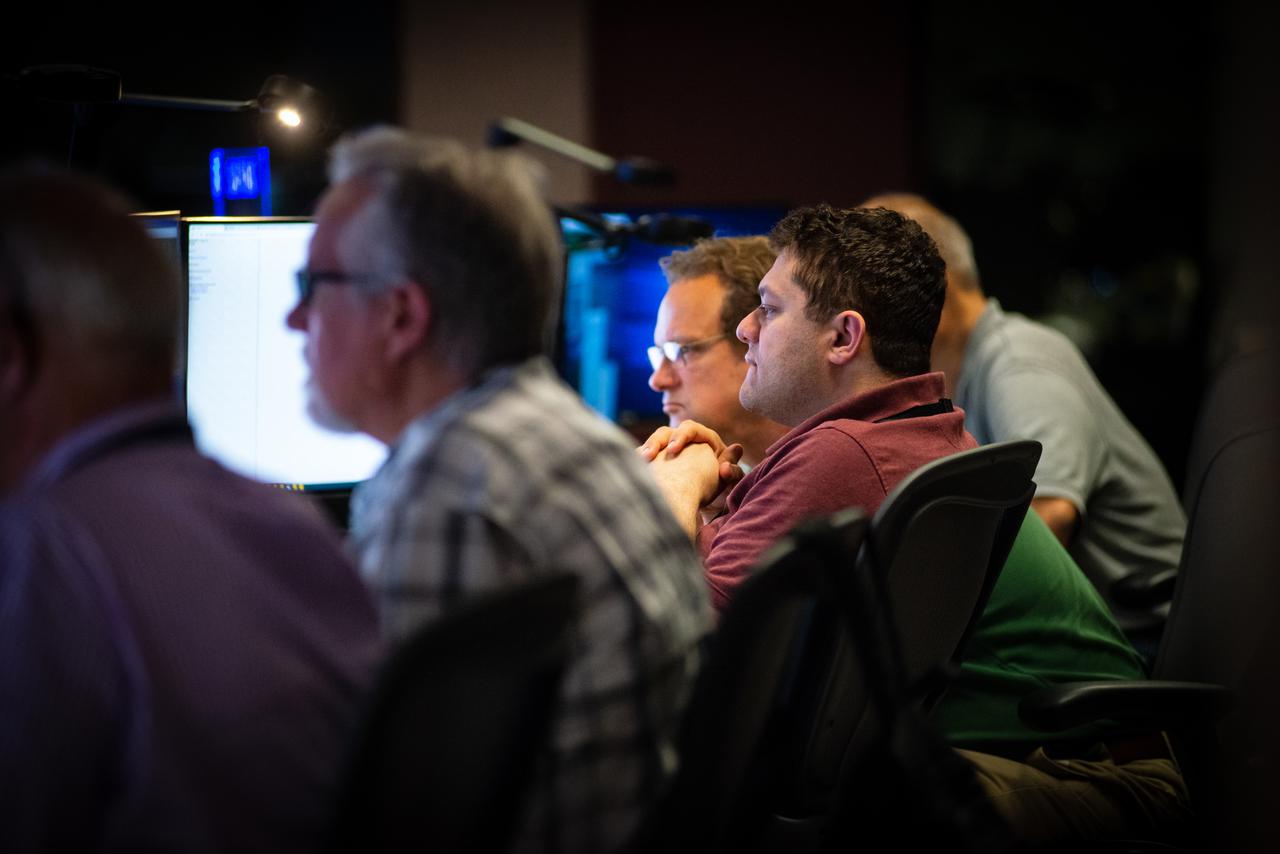
Members of the Hubble operations team work in the control room on July 15, 2021 to restore Hubble to science operations. Credits: NASA/Goddard/Rebecca Roth --- More info: Hubble’s payload computer, which controls and coordinates the observatory’s onboard science instruments, halted suddenly on June 13. When the main computer failed to receive a signal from the payload computer, it automatically placed Hubble’s science instruments into safe mode. That meant the telescope would no longer be doing science while mission specialists analyzed the situation. In response to the anomaly, NASA began a switch to backup spacecraft hardware on Hubble in response to an ongoing problem with its payload computer. This was a multi-day event. Science observations restarted the afternoon of Saturday, July 17.
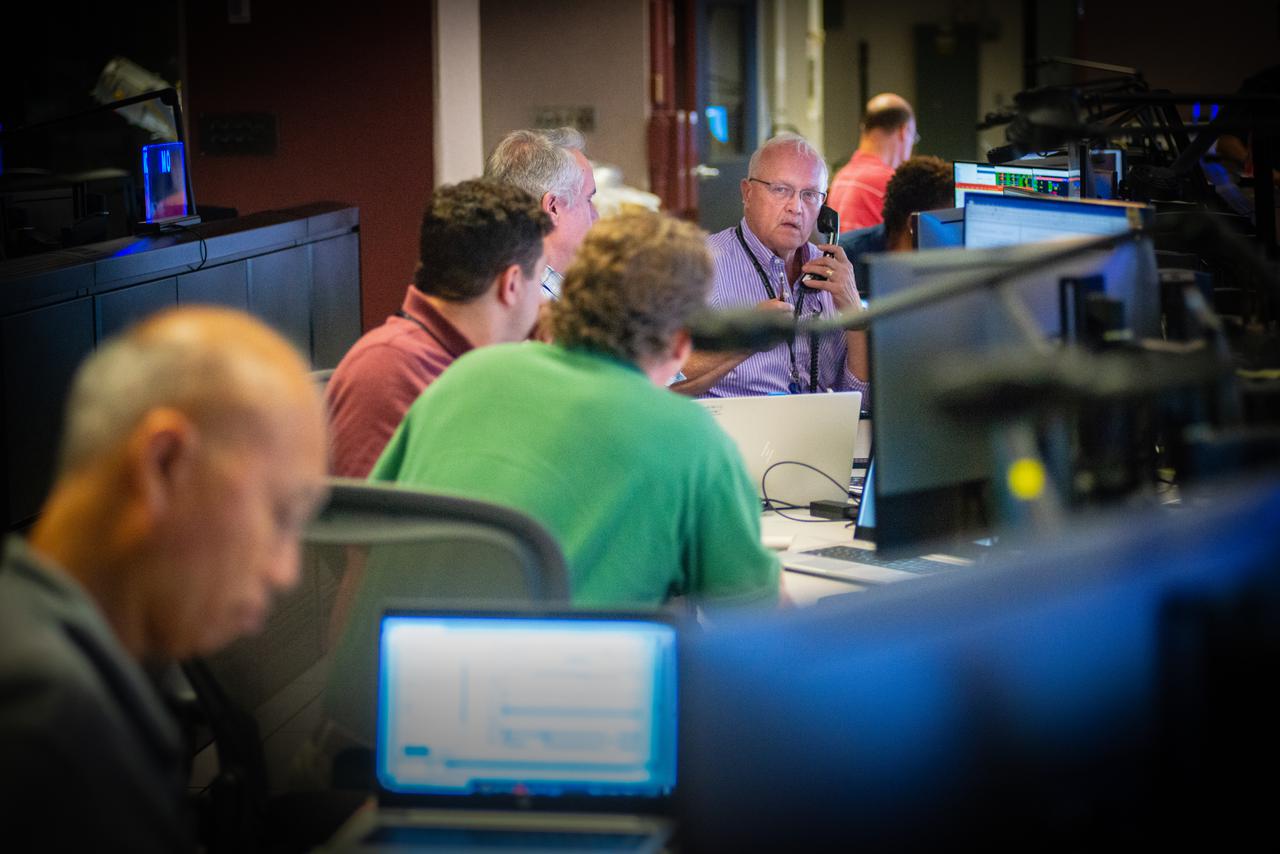
Members of the Hubble operations team work in the control room on July 15, 2021 to restore Hubble to science operations. Credits: NASA/Goddard/Rebecca Roth --- More info: Hubble’s payload computer, which controls and coordinates the observatory’s onboard science instruments, halted suddenly on June 13. When the main computer failed to receive a signal from the payload computer, it automatically placed Hubble’s science instruments into safe mode. That meant the telescope would no longer be doing science while mission specialists analyzed the situation. In response to the anomaly, NASA began a switch to backup spacecraft hardware on Hubble in response to an ongoing problem with its payload computer. This was a multi-day event. Science observations restarted the afternoon of Saturday, July 17.
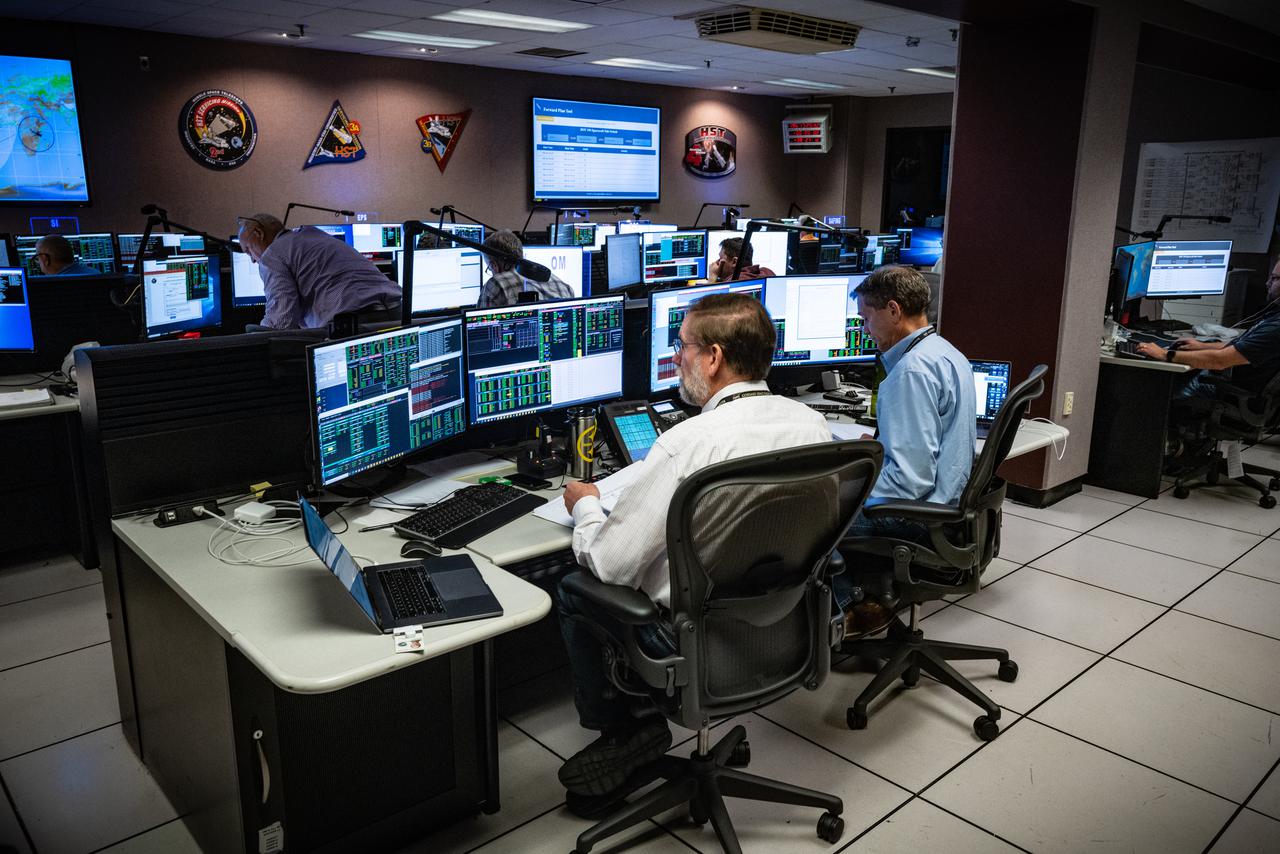
Members of the Hubble operations team work in the control room on July 15, 2021 to restore Hubble to science operations. Credits: NASA/Goddard/Rebecca Roth --- More info: Hubble’s payload computer, which controls and coordinates the observatory’s onboard science instruments, halted suddenly on June 13. When the main computer failed to receive a signal from the payload computer, it automatically placed Hubble’s science instruments into safe mode. That meant the telescope would no longer be doing science while mission specialists analyzed the situation. In response to the anomaly, NASA began a switch to backup spacecraft hardware on Hubble in response to an ongoing problem with its payload computer. This was a multi-day event. Science observations restarted the afternoon of Saturday, July 17.
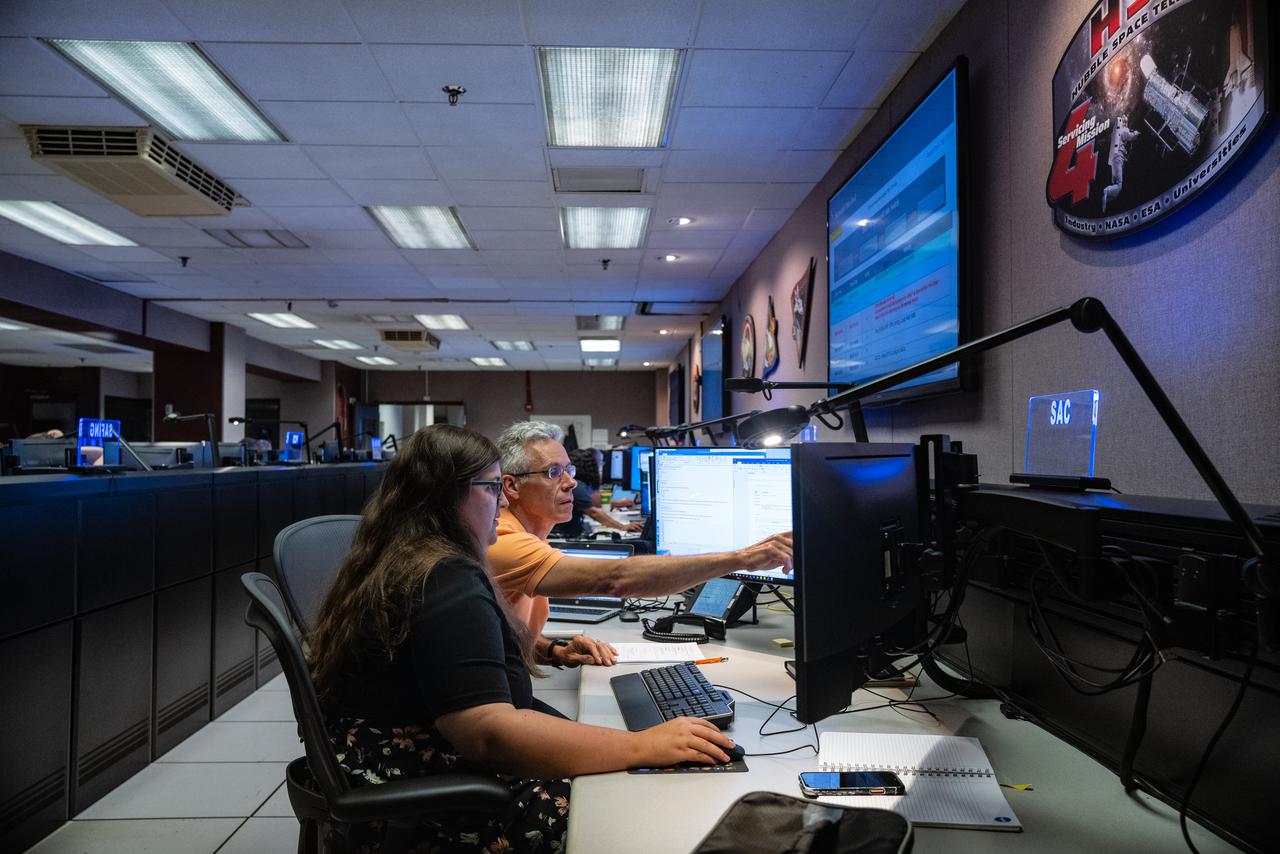
Members of the Hubble operations team work in the control room on July 15, 2021 to restore Hubble to science operations. Credits: NASA/Goddard/Rebecca Roth --- More info: Hubble’s payload computer, which controls and coordinates the observatory’s onboard science instruments, halted suddenly on June 13. When the main computer failed to receive a signal from the payload computer, it automatically placed Hubble’s science instruments into safe mode. That meant the telescope would no longer be doing science while mission specialists analyzed the situation. In response to the anomaly, NASA began a switch to backup spacecraft hardware on Hubble in response to an ongoing problem with its payload computer. This was a multi-day event. Science observations restarted the afternoon of Saturday, July 17.
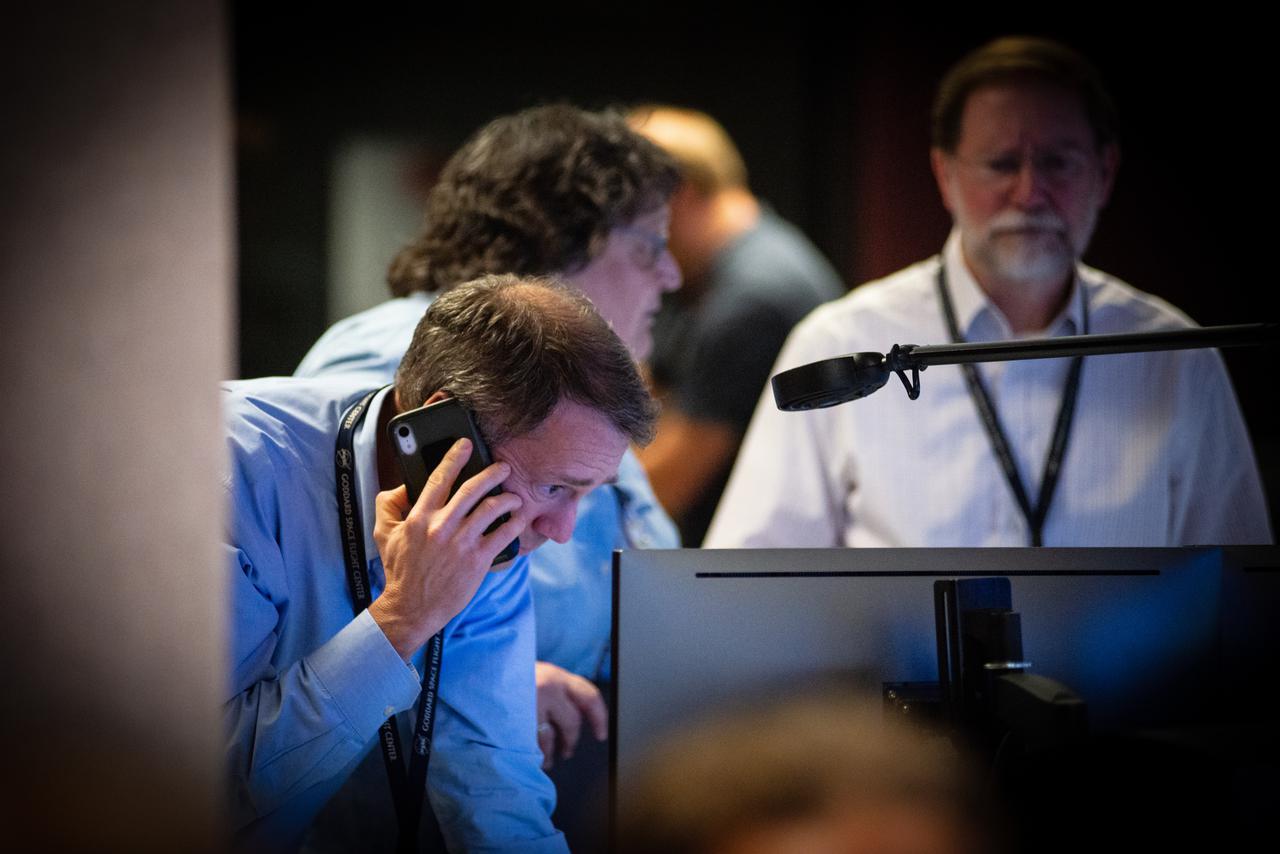
Members of the Hubble operations team work in the control room on July 15, 2021 to restore Hubble to science operations. Credits: NASA/Goddard/Rebecca Roth --- More info: Hubble’s payload computer, which controls and coordinates the observatory’s onboard science instruments, halted suddenly on June 13. When the main computer failed to receive a signal from the payload computer, it automatically placed Hubble’s science instruments into safe mode. That meant the telescope would no longer be doing science while mission specialists analyzed the situation. In response to the anomaly, NASA began a switch to backup spacecraft hardware on Hubble in response to an ongoing problem with its payload computer. This was a multi-day event. Science observations restarted the afternoon of Saturday, July 17.

NASA image acquired May 8, 2010 at 13 :35 UTC Ash plume from Eyjafjallajokull Volcano, Iceland Satellite: Aqua NASA/GSFC/Jeff Schmaltz/MODIS Land Rapid Response Team <b><a href="http://www.nasa.gov/centers/goddard/home/index.html" rel="nofollow">NASA Goddard Space Flight Center</a></b> is home to the nation's largest organization of combined scientists, engineers and technologists that build spacecraft, instruments and new technology to study the Earth, the sun, our solar system, and the universe.
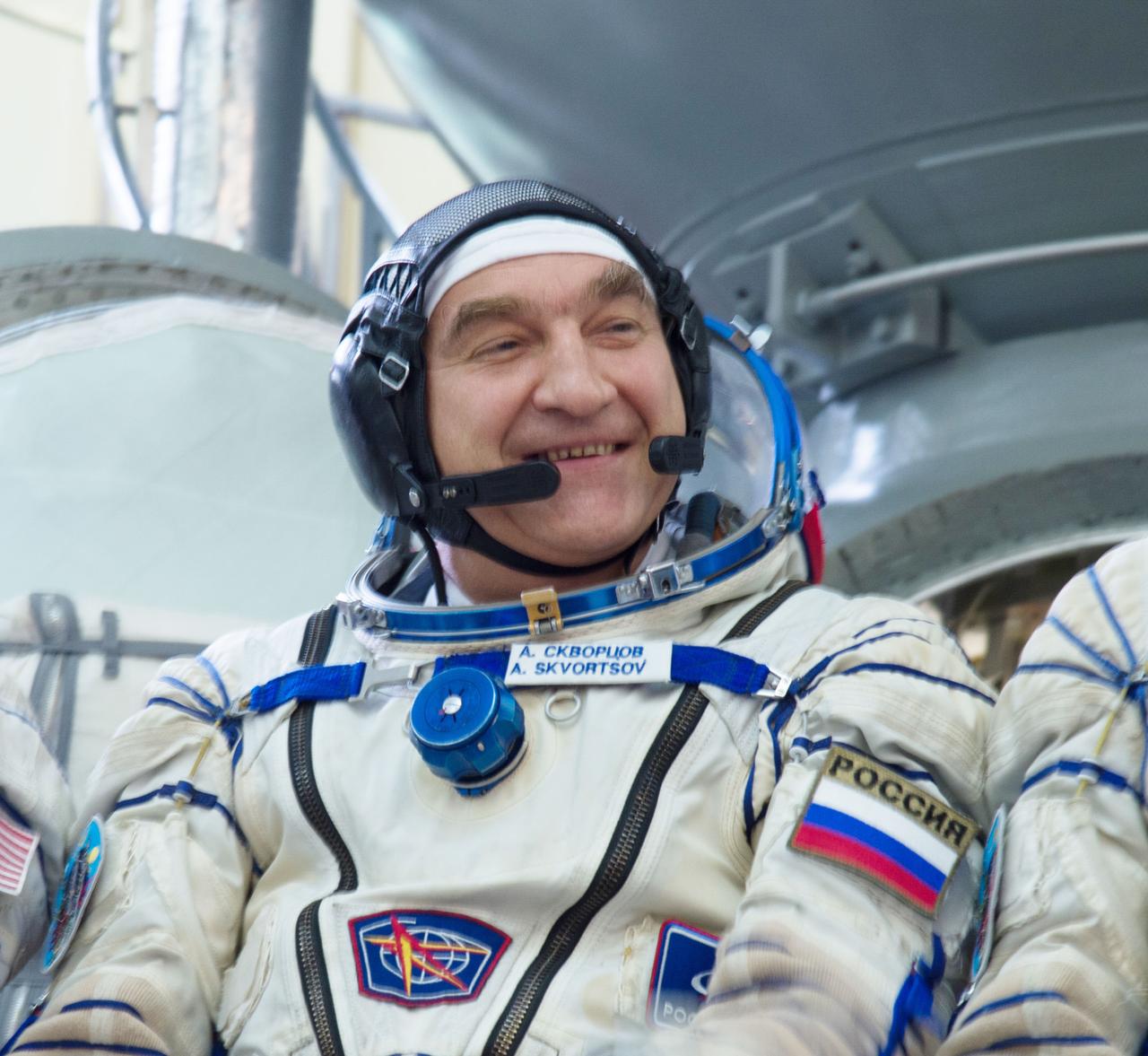
jsc2019e035394 - At the Gagarin Cosmonaut Training Center in Star City, Russia, Expedition 60 crewmember Alexander Skvortsov smiles in response to a reporter’s question June 27 during the final day of crew qualification exams. Skvortsov, Drew Morgan of NASA and Luca Parmitano of the European Space Agency will launch on July 20 from the Baikonur Cosmodrome in Kazakhstan on the Soyuz MS-13 spacecraft for a mission to the International Space Station...NASA/Beth Weissinger.
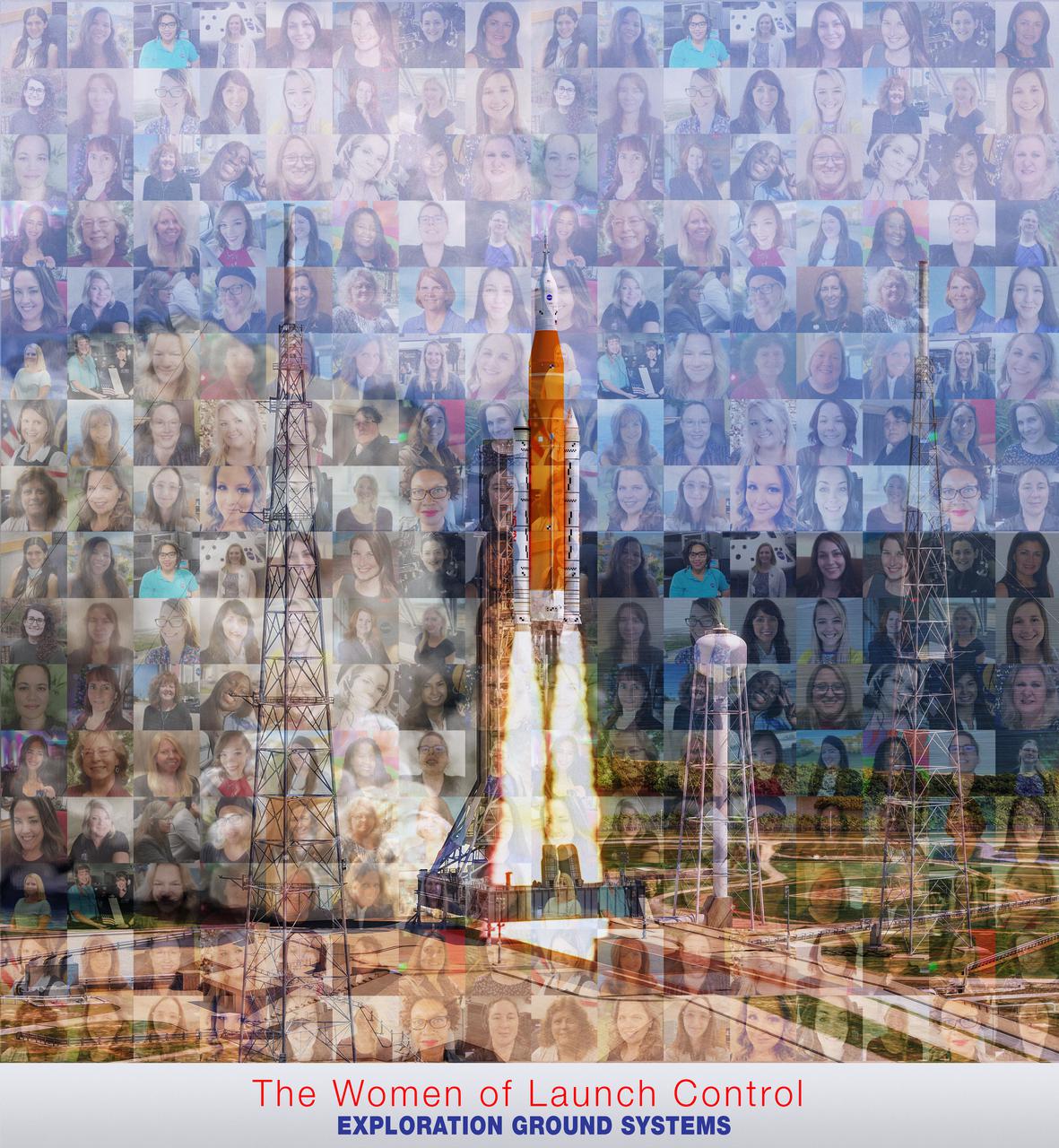
NASA has come a long way since the Apollo program when there was only one woman — JoAnn Morgan — working in Firing Room 1 of Kennedy Space Center’s Launch Control Center. Now, about 30% of the staff responsible for launching and monitoring the Space Launch System (SLS) rocket and Orion spacecraft for the Artemis program are women. Under the Artemis program, NASA will launch the first woman and next man to the lunar surface, using the Moon as a testing ground before venturing on to Mars.
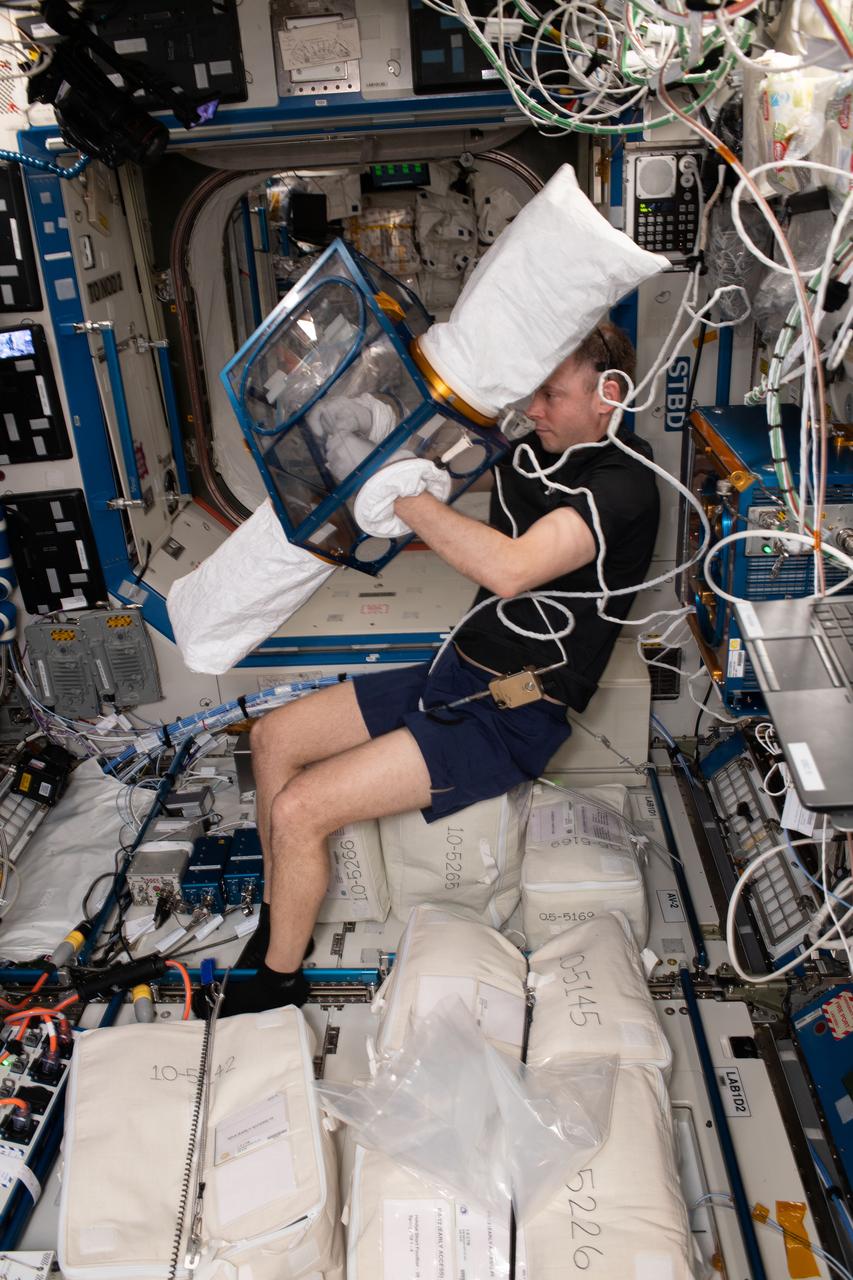
iss059e027387 (4/22/2019) --- NASA astronaut Nick Hague is photographed with the Rodent Research Facility during transfer of mice from the Cygnus spacecraft into the ( International Space Station ISS) Rodent Habitats. RR-12, Tetanus Antibody Response by B cells in Space (TARBIS), examines the effects of spaceflight on the function of antibody production and immune memory.
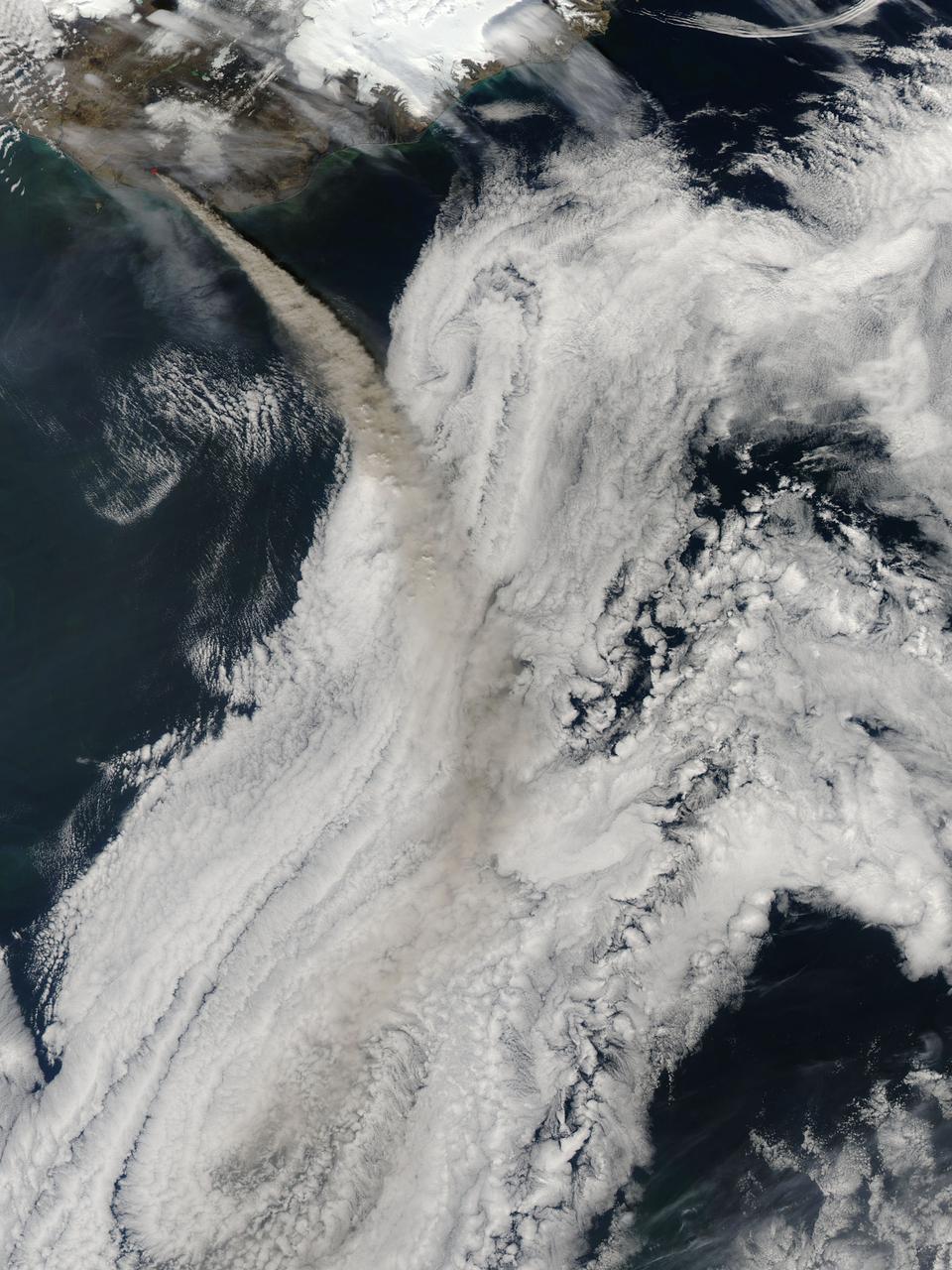
NASA image acquired May 8, 2010 at 13 :35 UTC Ash plume from Eyjafjallajokull Volcano, Iceland Satellite: Aqua NASA/GSFC/Jeff Schmaltz/MODIS Land Rapid Response Team <b><a href="http://www.nasa.gov/centers/goddard/home/index.html" rel="nofollow">NASA Goddard Space Flight Center</a></b> is home to the nation's largest organization of combined scientists, engineers and technologists that build spacecraft, instruments and new technology to study the Earth, the sun, our solar system, and the universe.
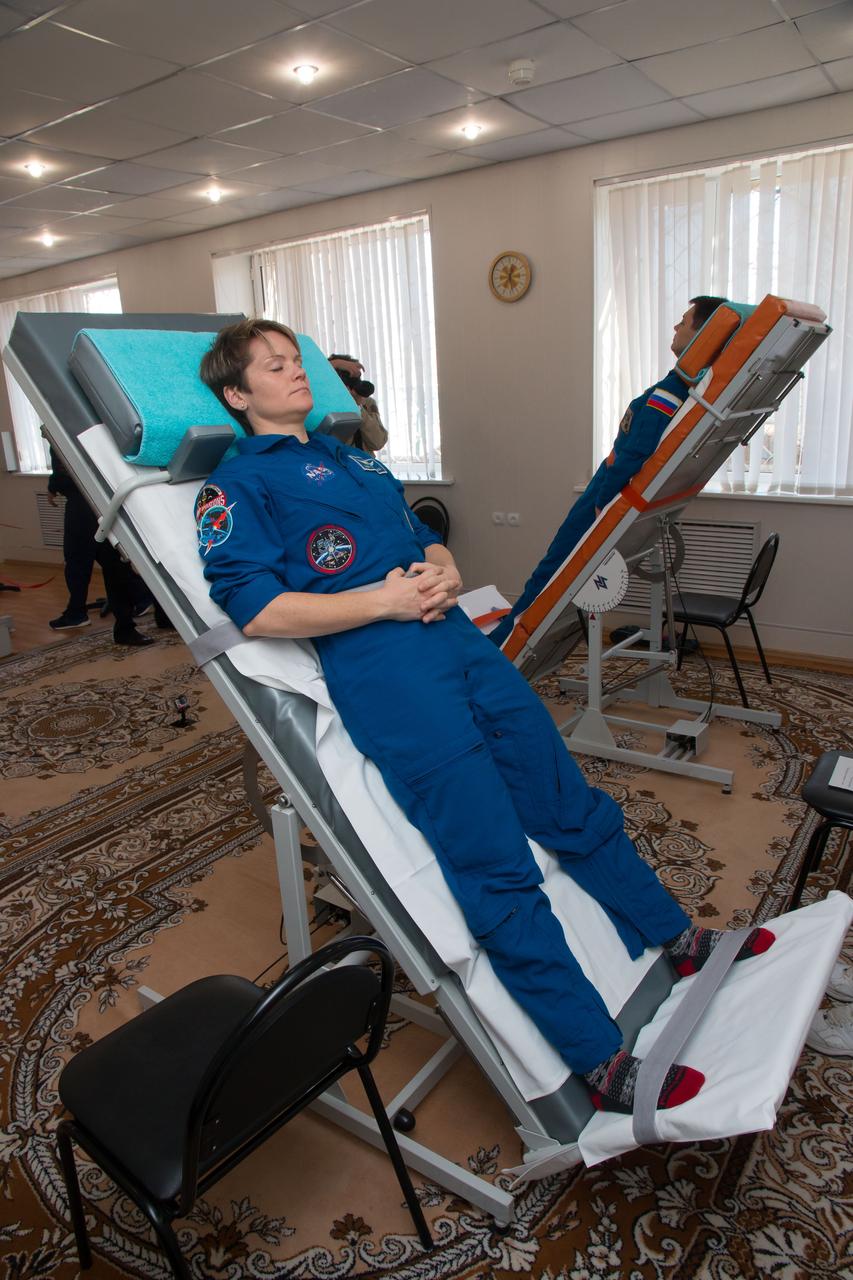
jsc2018e097773 - At the Cosmonaut Hotel crew quarters in Baikonur, Kazakhstan, Expedition 58 crewmember Anne McClain of NASA conducts vestibular system response training on a tilt table Nov. 27 as part of pre-launch training. McClain, David Saint-Jacques of the Canadian Space Agency and Oleg Kononenko of Roscosmos will launch Dec. 3 on the Soyuz MS-11 spacecraft from the Baikonur Cosmodrome in Kazakhstan for a six-and-a-half month mission on the International Space Station...NASA/Victor Zelentsov.
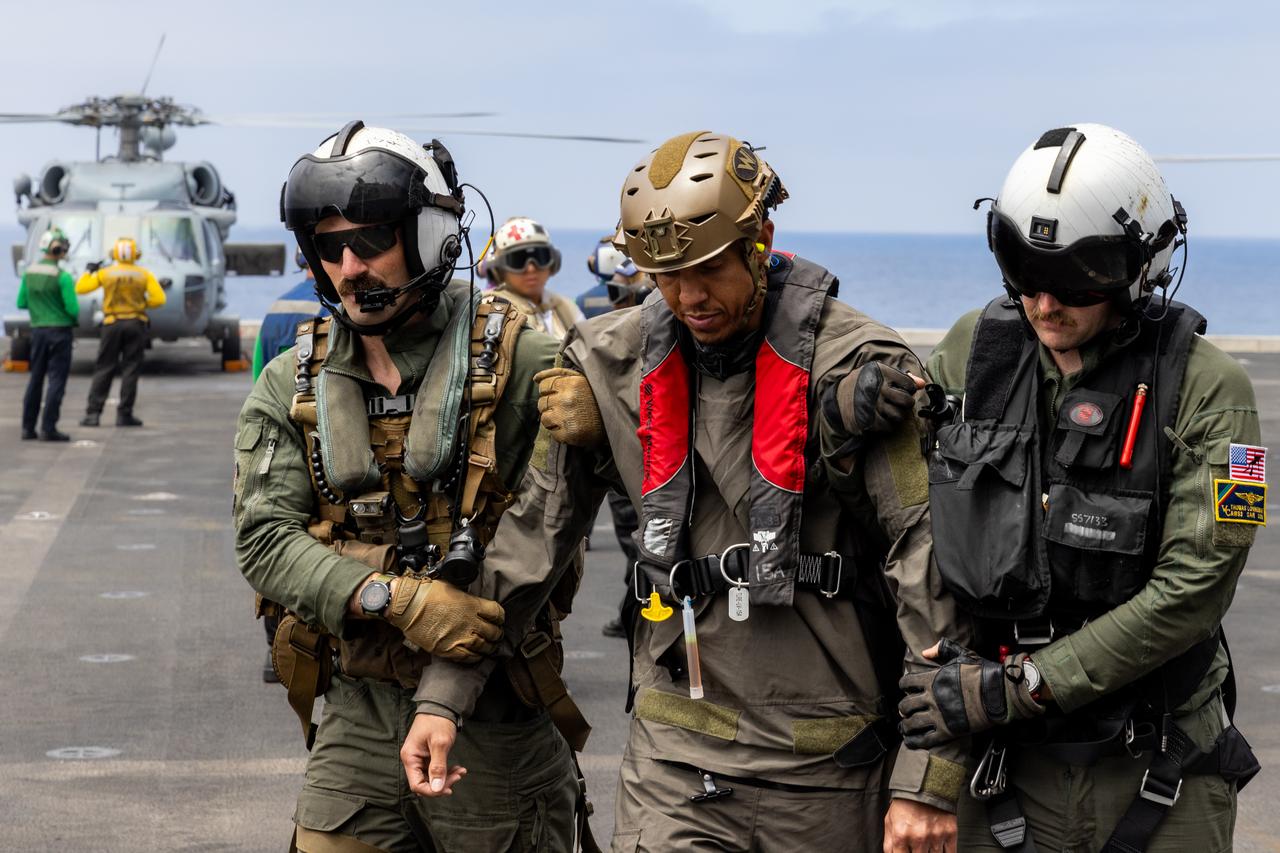
Naval helicopter pilots from Helicopter Sea Combat Squadron (HSC) 23 “Wildcards” escort a pilot acting as an Artemis II astronaut on the ships flight deck during an Artemis II mission recovery simulation as part of NASA’s Underway Recovery Test 10 off the coast of San Diego. HSC-23 will be responsible for flying the Artemis II crew from the Orion spacecraft to the recovery vessel once they splash down after a 10-day mission around the Moon.
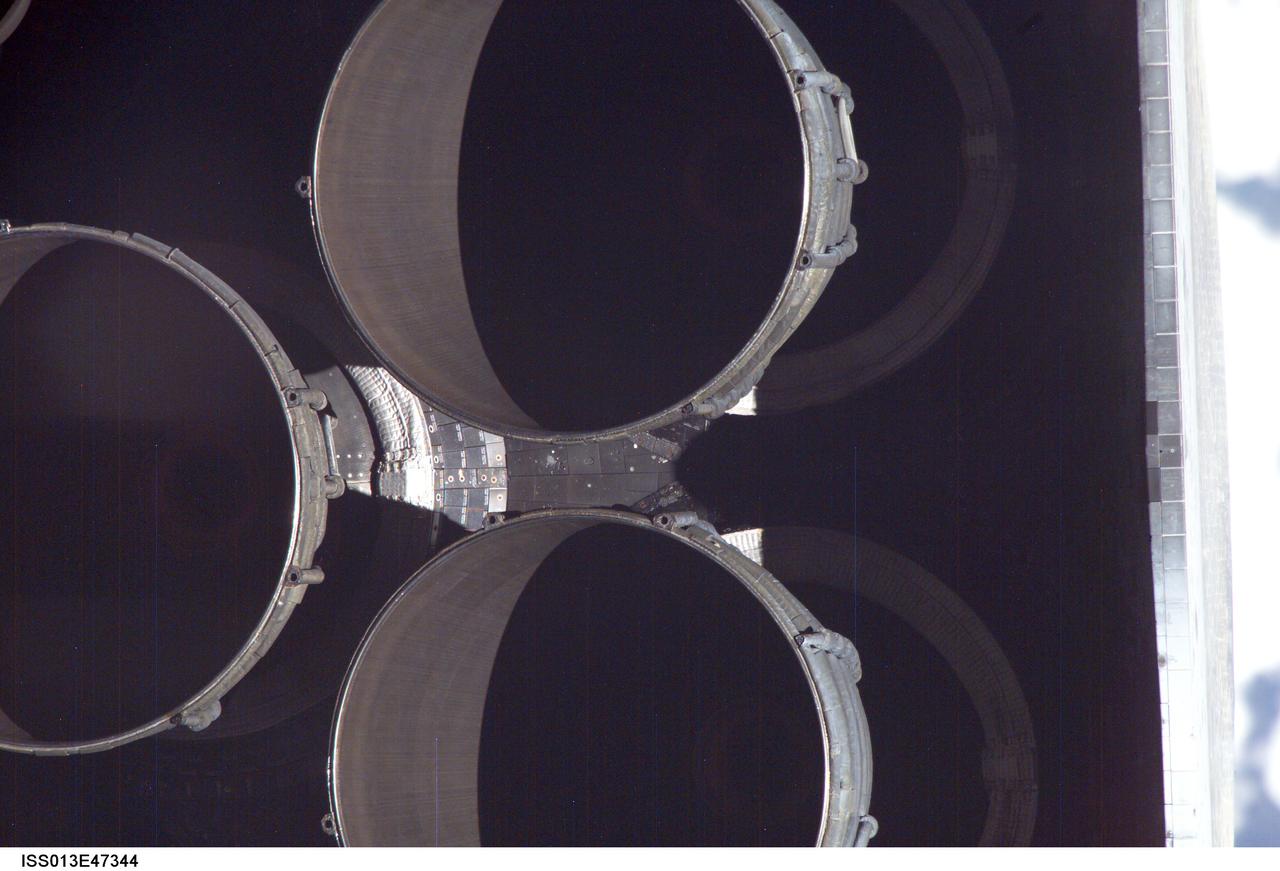
The nozzles for Discovery's three main engines are visible in this close-up image photographed by one of the Expedition 13 crew members onboard the International Space Station (ISS) during the STS-121 Rotating Pitch Maneuver (RPM) survey prior to docking of the two spacecraft. The Marshall Space Flight Center (MSFC) has management responsibility for development of the space shuttle main engines (SSME).
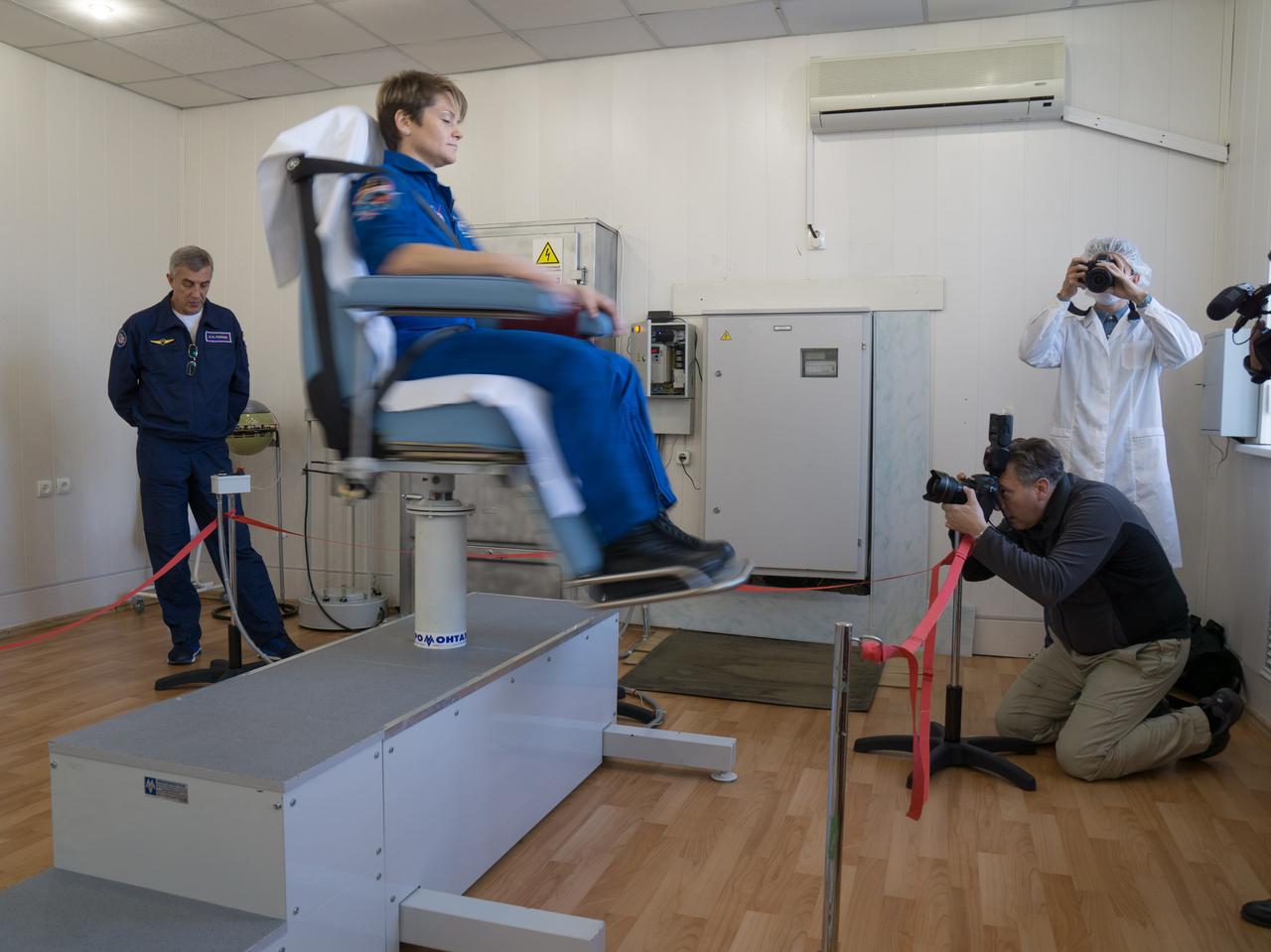
jsc2018e097775 - At the Cosmonaut Hotel crew quarters in Baikonur, Kazakhstan, Expedition 58 crewmember Anne McClain of NASA conducts vestibular system response training in a spinning chair Nov. 27 as part of pre-launch training. McClain, David Saint-Jacques of the Canadian Space Agency and Oleg Kononenko of Roscosmos will launch Dec. 3 on the Soyuz MS-11 spacecraft from the Baikonur Cosmodrome in Kazakhstan for a six-and-a-half month mission on the International Space Station...NASA/Victor Zelentsov.
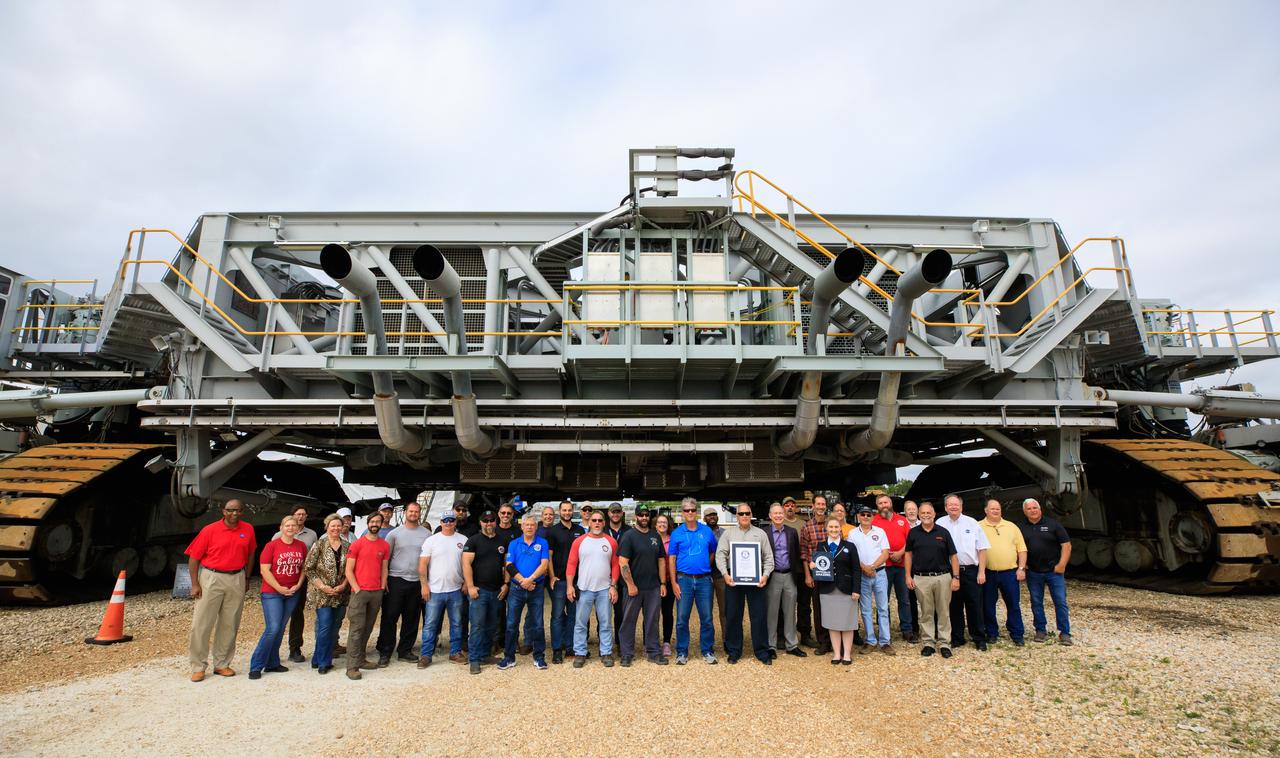
Guinness World Records officially designated NASA’s Crawler Transporter 2 as the heaviest self-powered vehicle, weighing approximately 6.65 million pounds. During a March 29, 2023, ceremony at the agency's Kennedy Space Center in Florida, Guinness World Records presented a certificate to teams with the Exploration Ground Systems Program and Kennedy leadership. The crawler is responsible for carrying the Space Launch System rocket and Orion spacecraft for the Artemis missions to and from the launch pad.
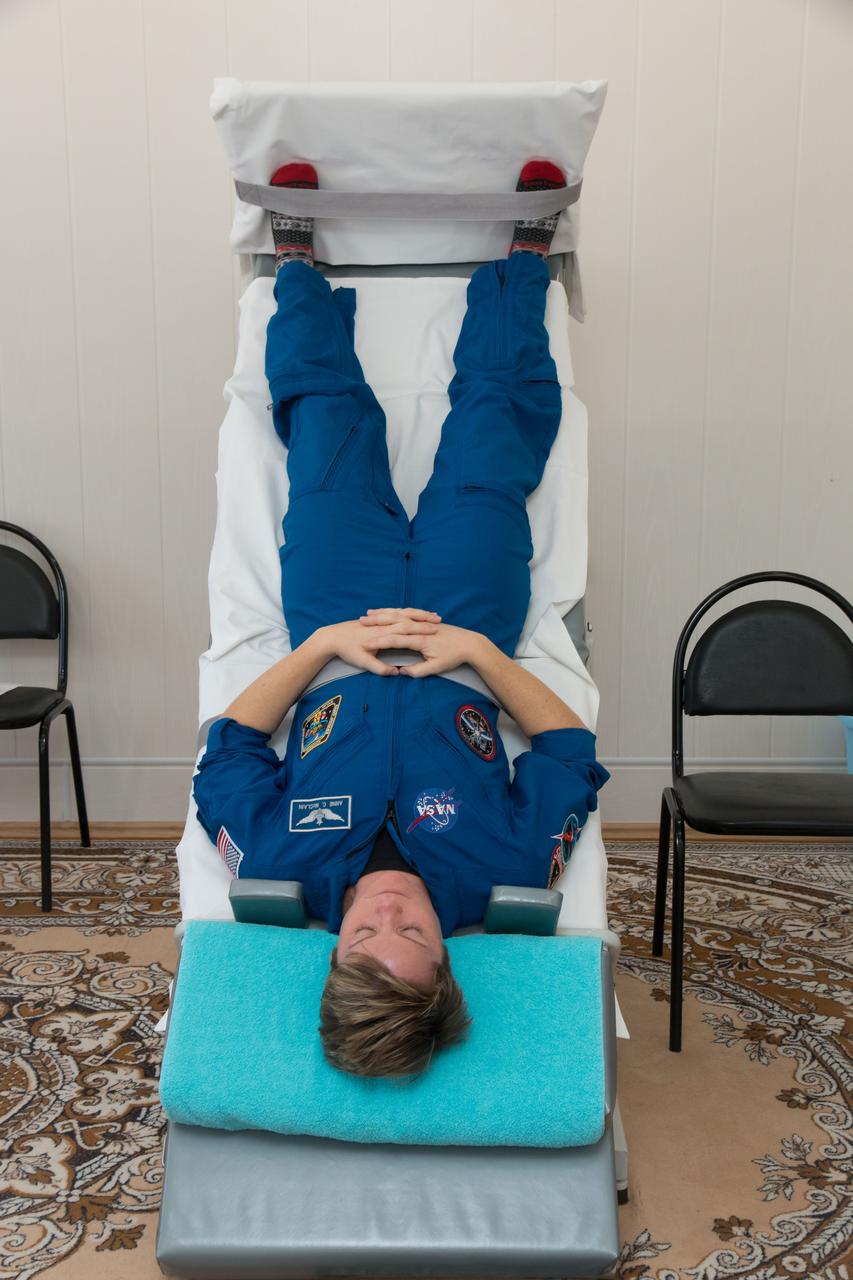
jsc2018e097774 - At the Cosmonaut Hotel crew quarters in Baikonur, Kazakhstan, Expedition 58 crewmember Anne McClain of NASA conducts vestibular system response training on a tilt table Nov. 27 as part of pre-launch training. McClain, David Saint-Jacques of the Canadian Space Agency and Oleg Kononenko of Roscosmos will launch Dec. 3 on the Soyuz MS-11 spacecraft from the Baikonur Cosmodrome in Kazakhstan for a six-and-a-half month mission on the International Space Station...NASA/Victor Zelentsov.
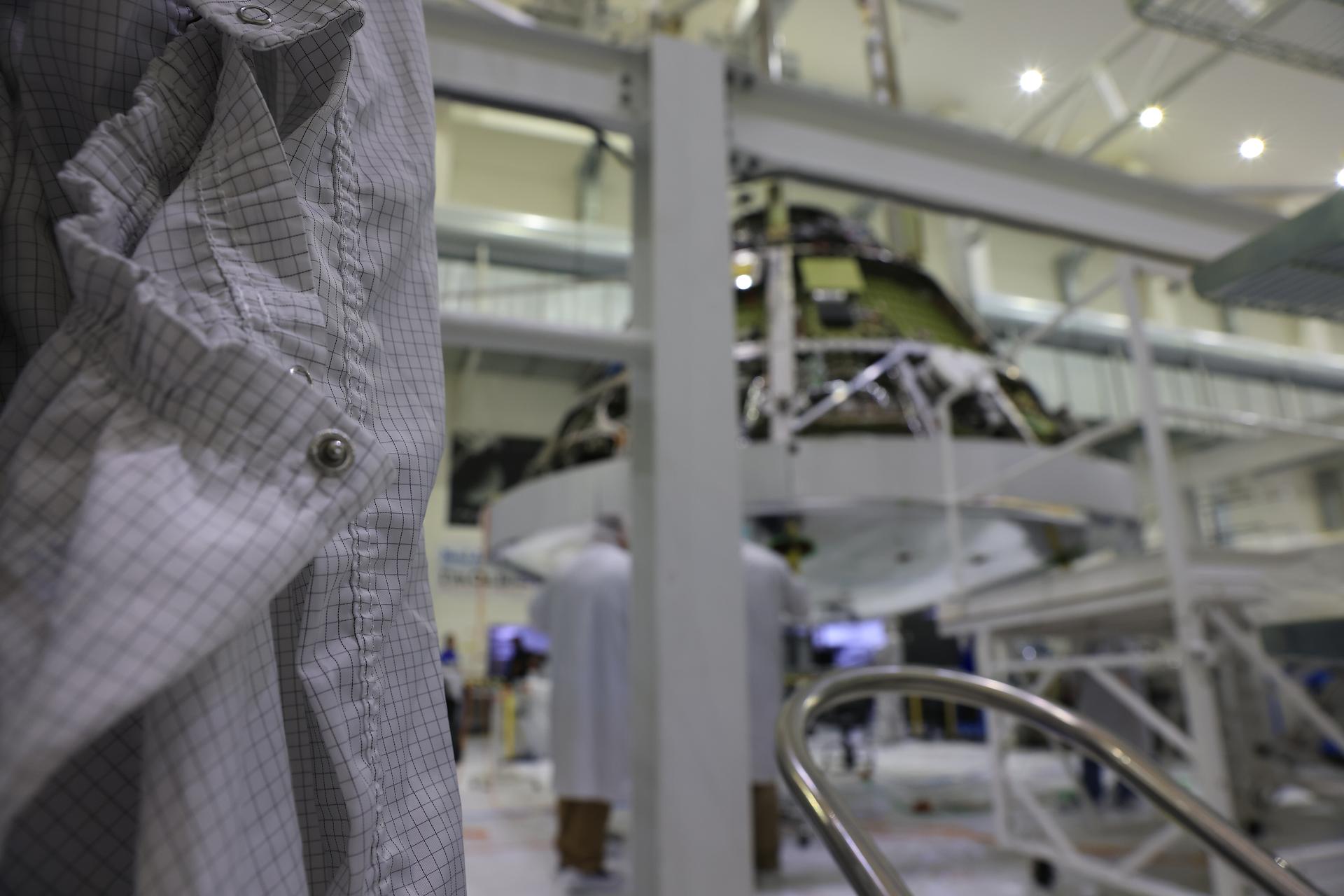
Teams work to complete the installation of the heat shield on the Artemis III Orion spacecraft inside the high bay of the Neil A. Armstrong Operations and Checkout Building at NASA’s Kennedy Space Center in Florida on Monday, July 6, 2026. Orion’s heat shield consists of 186 blocks of an ablative material called Avcoat, with each block meticulously and individually inspected. The heat shield is responsible for protecting the astronauts from the extreme temperatures as they reenter Earth’s atmosphere at the end of the mission.
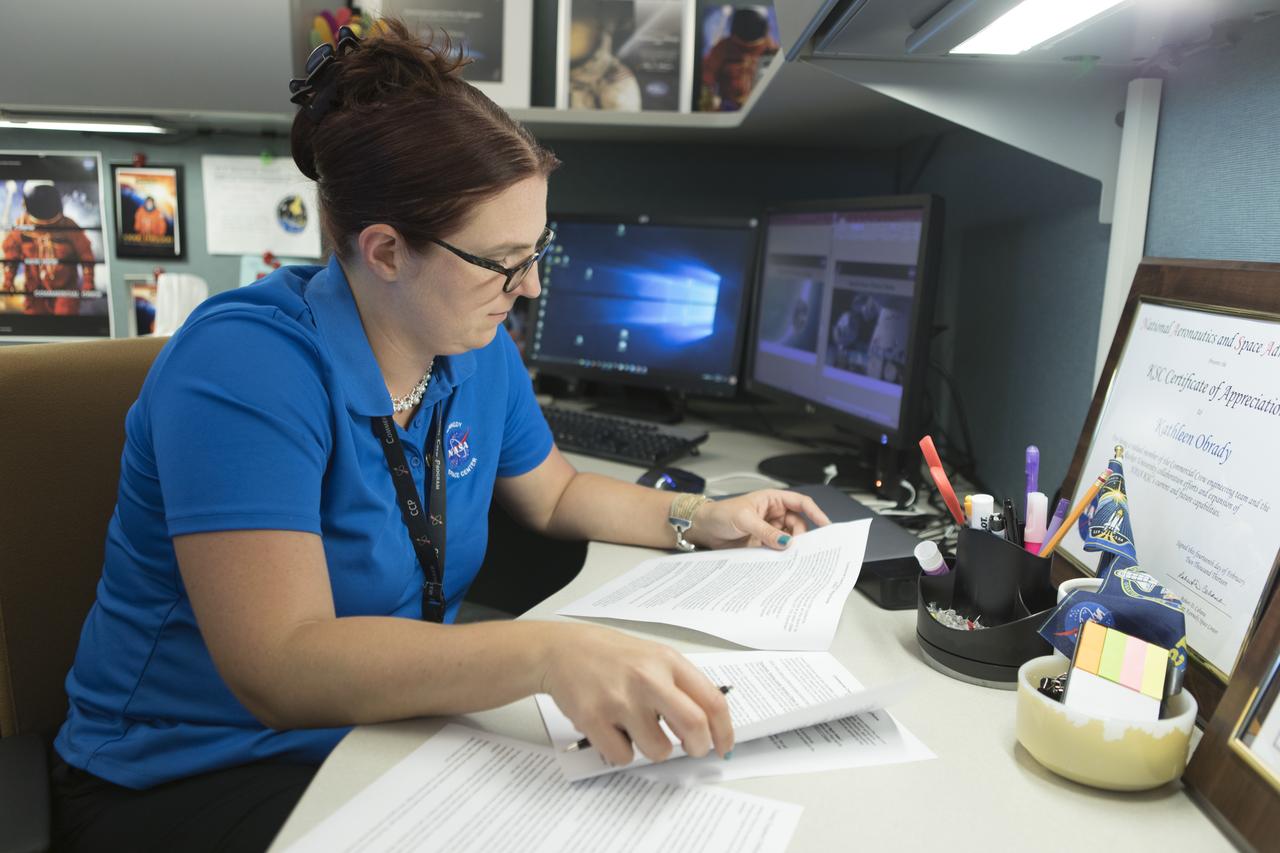
Kathleen O'Brady reviews documents in her office at NASA’s Kennedy Space Center in Florida. As a certification systems engineer in the Commercial Crew Program’s (CCP's) Systems Engineering and Integration Office, she is responsible for defining an integrated plan for certification which is being executed by the agency's CCP partners Boeing and SpaceX. The two companies are developing spacecraft to fly NASA astronauts to the International Space Station and return them safely home.
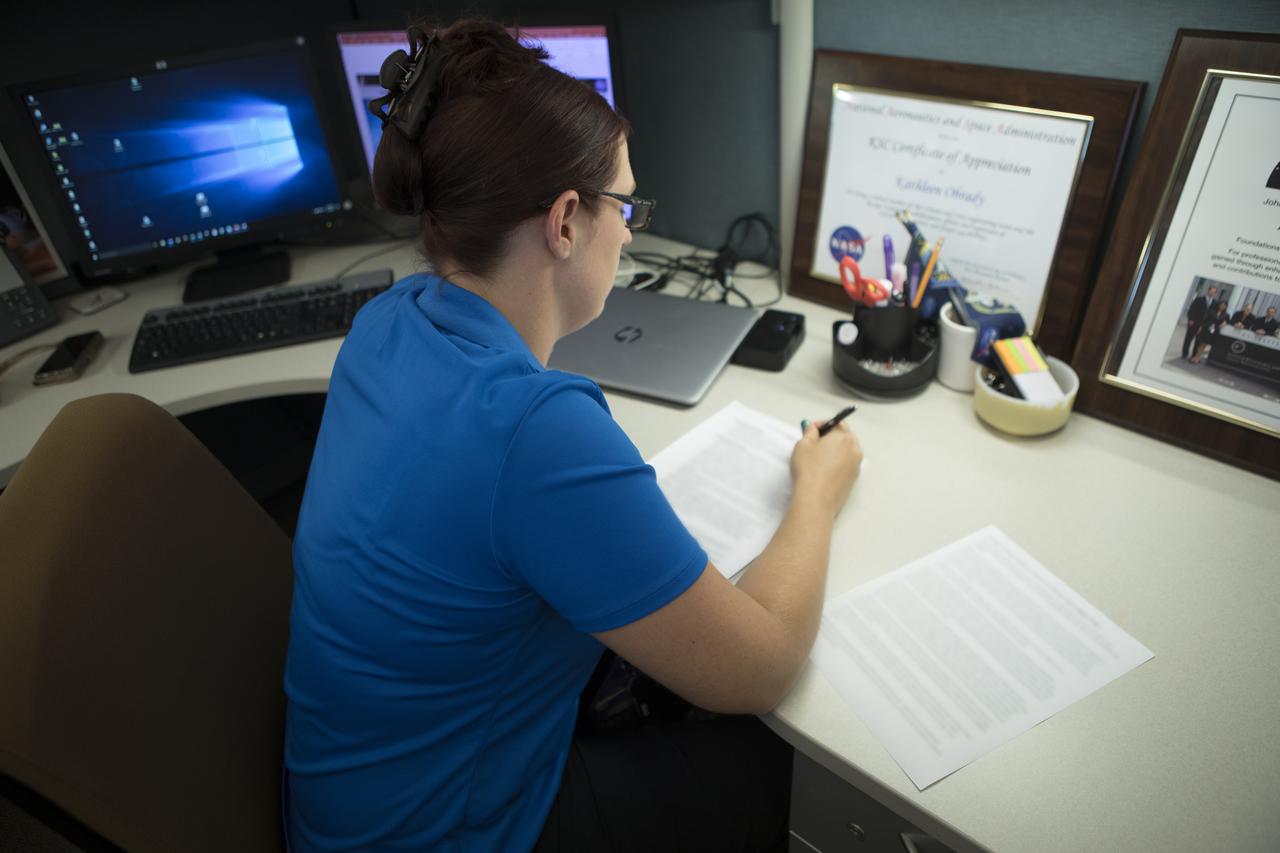
Kathleen O'Brady reviews documents in her office at NASA’s Kennedy Space Center in Florida. As a certification systems engineer in the Commercial Crew Program’s (CCP's) Systems Engineering and Integration Office, she is responsible for defining an integrated plan for certification which is being executed by the agency's CCP partners Boeing and SpaceX. The two companies are developing spacecraft to fly NASA astronauts to the International Space Station and return them safely home.