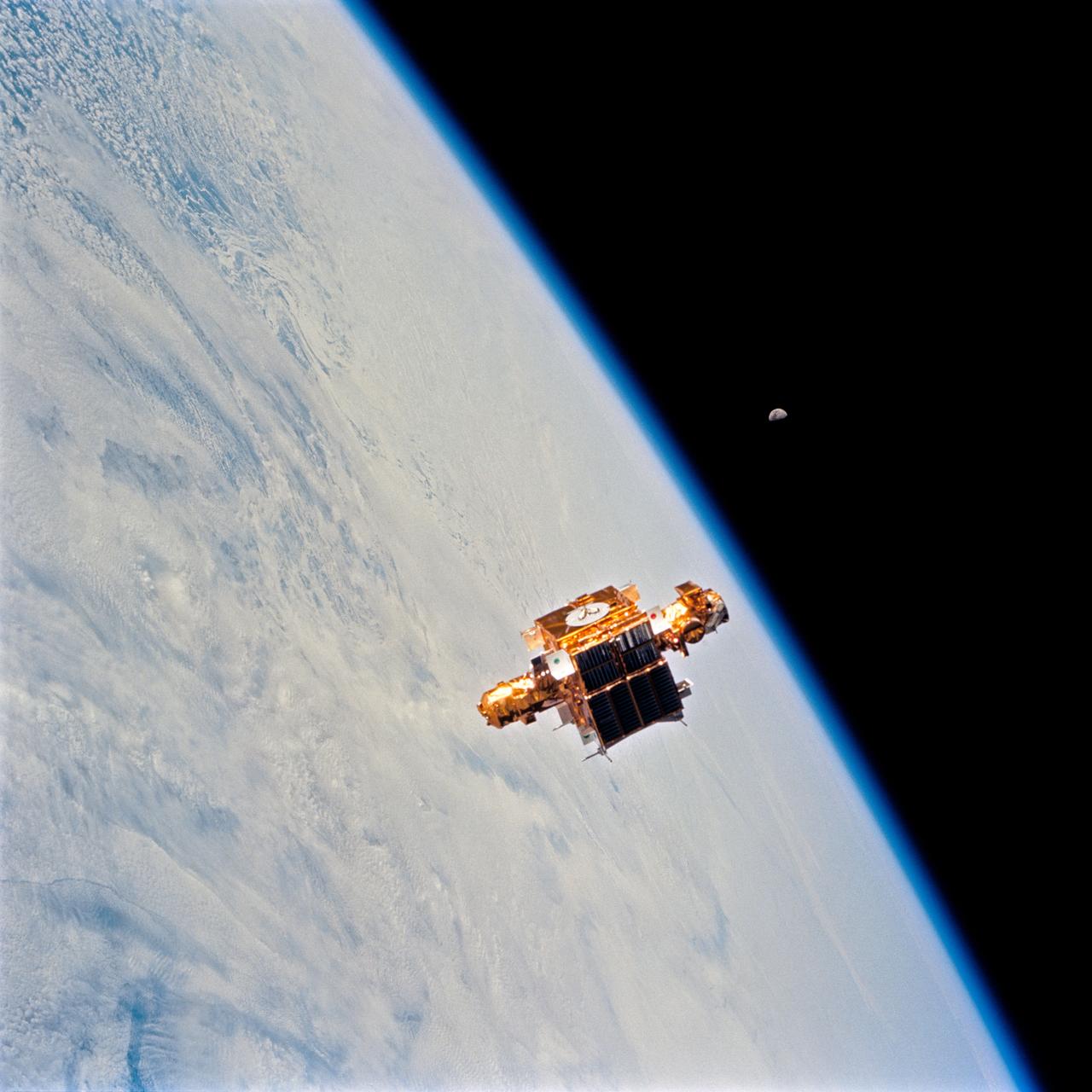
STS064-74-052 (9-20 Sept. 1994) --- Astronauts onboard the space shuttle Discovery used a 70mm camera to capture this photograph of the retrieval operations with the Shuttle Pointed Autonomous Research Tool for Astronomy 201 (SPARTAN 201). A gibbous moon can be seen in the background. Photo credit: NASA or National Aeronautics and Space Administration
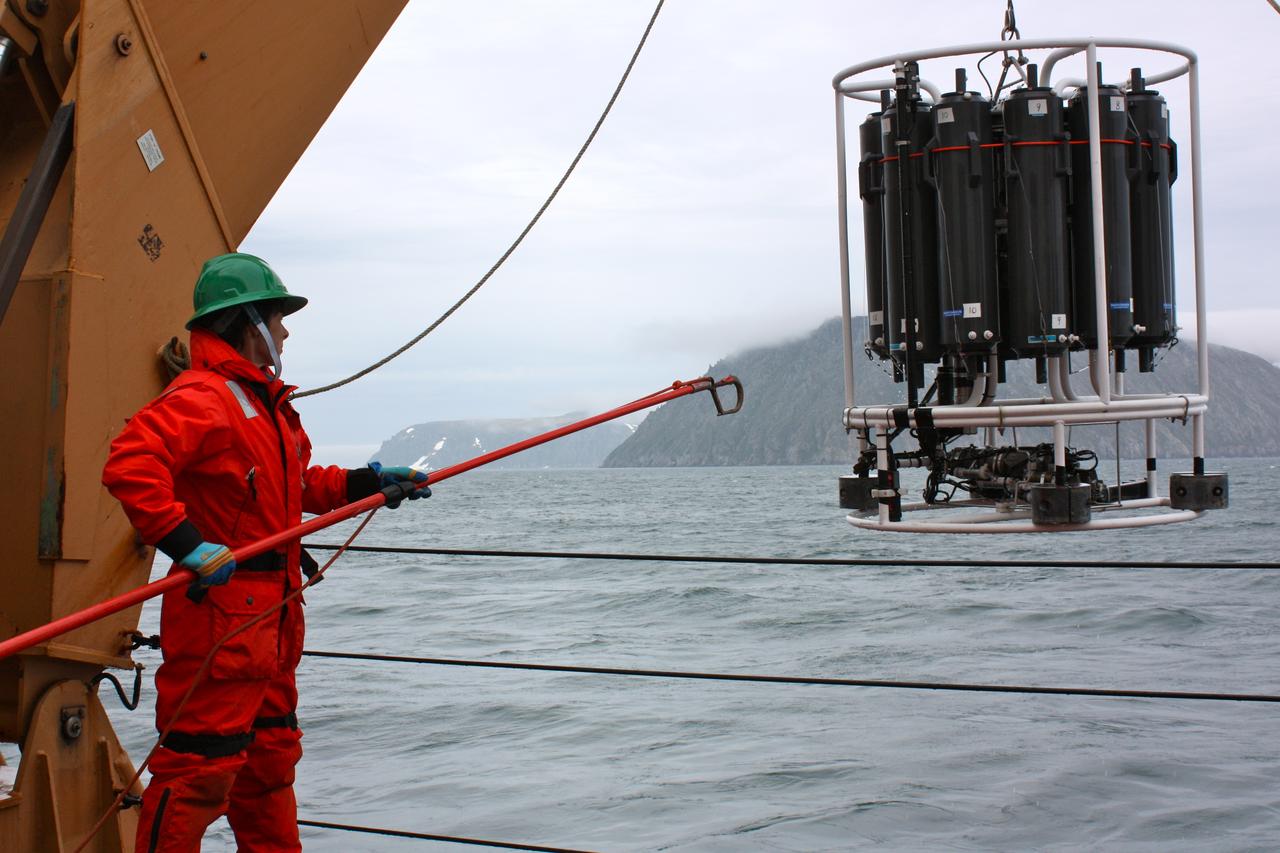
On June 28, 2011, Holley Kelly, a teacher from Farragut High School, helped retrieve the CTD/Rosette ensemble from the Bering Strait, east of the Diomede Islands. The ICESCAPE mission, or "Impacts of Climate on Ecosystems and Chemistry of the Arctic Pacific Environment," is a NASA shipborne investigation to study how changing conditions in the Arctic affect the ocean's chemistry and ecosystems. The bulk of the research took place in the Beaufort and Chukchi seas in summer 2010 and 2011. Credit: NASA/Kathryn Hansen <b><a href="http://www.nasa.gov/audience/formedia/features/MP_Photo_Guidelines.html" rel="nofollow">NASA image use policy.</a></b> <b><a href="http://www.nasa.gov/centers/goddard/home/index.html" rel="nofollow">NASA Goddard Space Flight Center</a></b> enables NASA’s mission through four scientific endeavors: Earth Science, Heliophysics, Solar System Exploration, and Astrophysics. Goddard plays a leading role in NASA’s accomplishments by contributing compelling scientific knowledge to advance the Agency’s mission. <b>Follow us on <a href="http://twitter.com/NASA_GoddardPix" rel="nofollow">Twitter</a></b> <b>Like us on <a href="http://www.facebook.com/pages/Greenbelt-MD/NASA-Goddard/395013845897?ref=tsd" rel="nofollow">Facebook</a></b> <b>Find us on <a href="http://instagrid.me/nasagoddard/?vm=grid" rel="nofollow">Instagram</a></b>

Global tropospheric methane for August 2005 retrieved from the Atmospheric Infrared Sounder AIRS on NASA Aqua satellite.

On July 12, 2011, crew from the U.S. Coast Guard Cutter Healy retrieved a canister dropped by parachute from a C-130, which brought supplies for some mid-mission fixes. The ICESCAPE mission, or "Impacts of Climate on Ecosystems and Chemistry of the Arctic Pacific Environment," is a NASA shipborne investigation to study how changing conditions in the Arctic affect the ocean's chemistry and ecosystems. The bulk of the research took place in the Beaufort and Chukchi seas in summer 2010 and 2011. Credit: NASA/Kathryn Hansen <b><a href="http://www.nasa.gov/audience/formedia/features/MP_Photo_Guidelines.html" rel="nofollow">NASA image use policy.</a></b> <b><a href="http://www.nasa.gov/centers/goddard/home/index.html" rel="nofollow">NASA Goddard Space Flight Center</a></b> enables NASA’s mission through four scientific endeavors: Earth Science, Heliophysics, Solar System Exploration, and Astrophysics. Goddard plays a leading role in NASA’s accomplishments by contributing compelling scientific knowledge to advance the Agency’s mission. <b>Follow us on <a href="http://twitter.com/NASA_GoddardPix" rel="nofollow">Twitter</a></b> <b>Like us on <a href="http://www.facebook.com/pages/Greenbelt-MD/NASA-Goddard/395013845897?ref=tsd" rel="nofollow">Facebook</a></b> <b>Find us on <a href="http://instagrid.me/nasagoddard/?vm=grid" rel="nofollow">Instagram</a></b>
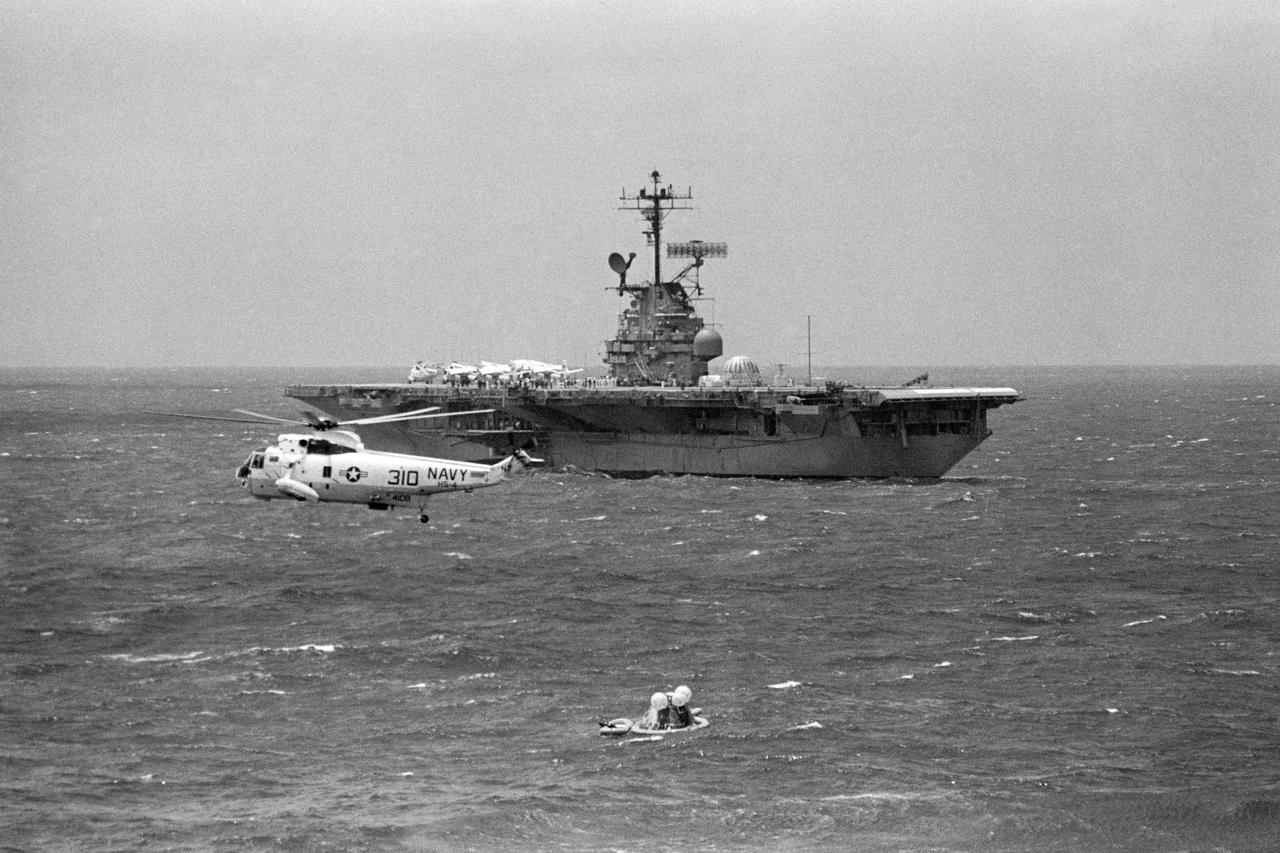
U.S.S. Hornet, prime recovery vessel for the Apollo 12 lunar landing mission, moves toward the Apollo 12 Command Module to retrieve the spacecraft. A helicopter from the recovery ship, which took part in the recovery operations, hovers over the scene of the splashdown.
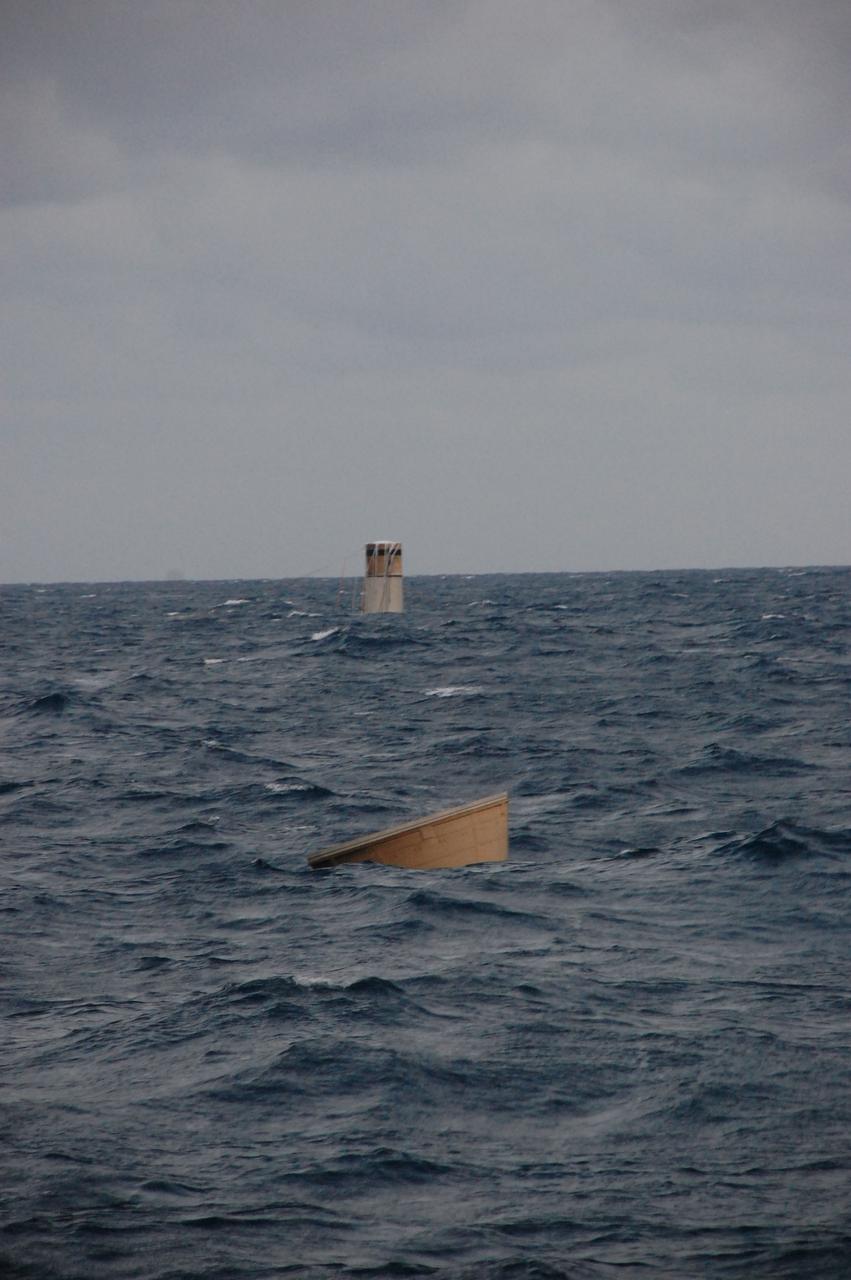
CAPE CANAVERAL, Fla. -- The nose cap and the top of a spent booster can be seen bobbing in the Atlantic Ocean, waiting to be recovered by the crew members of Freedom Star, one of NASA's solid rocket booster retrieval ships. The shuttle’s two solid rocket booster casings and associated flight hardware are recovered in the Atlantic Ocean after every launch by Liberty Star and Freedom Star. The boosters impact the Atlantic about seven minutes after liftoff and the retrieval ships are stationed about 10 miles from the impact area at the time of splashdown. After the spent segments are processed, they will be transported to Utah, where they will be refurbished and stored, if needed. Photo credit: NASA/Ben Smegelsky
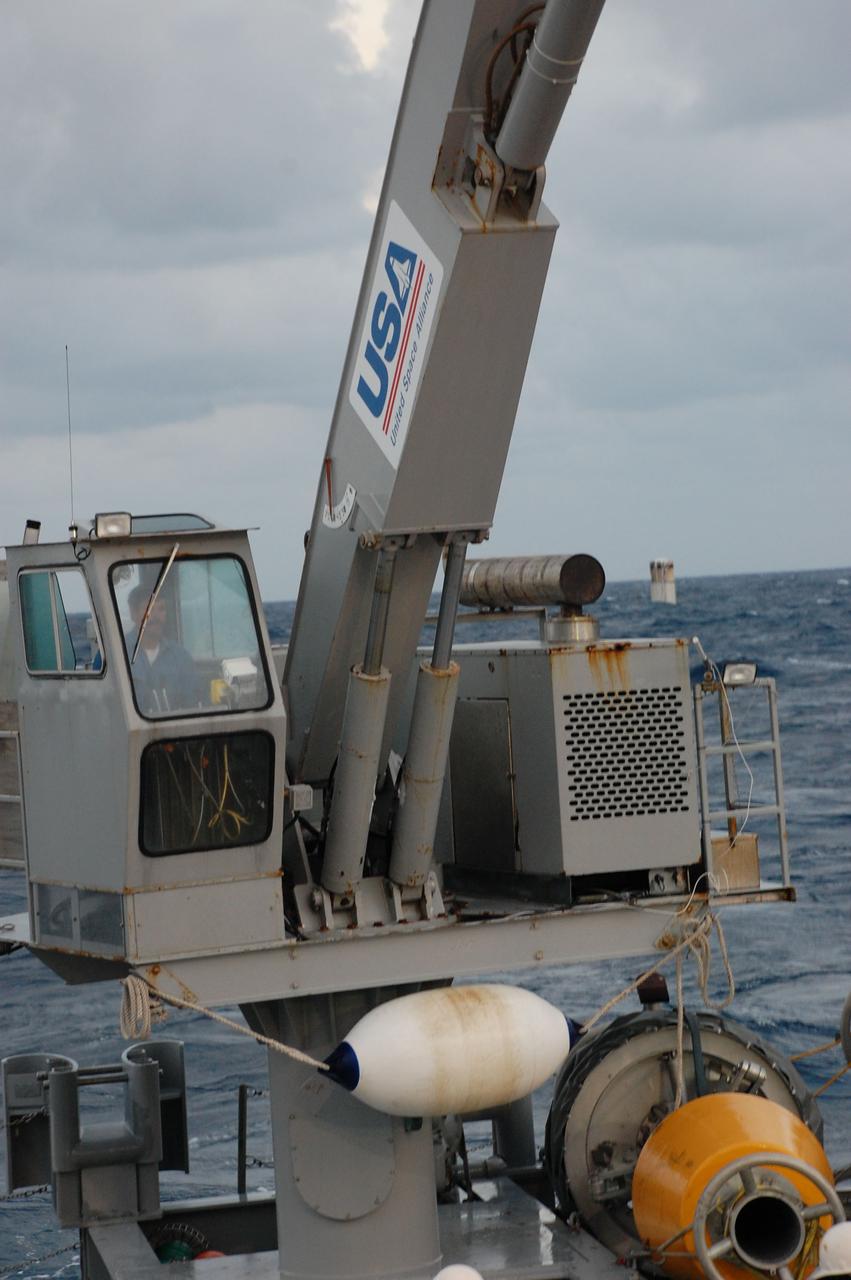
CAPE CANAVERAL, Fla. -- A worker on Freedom Star, one of NASA's solid rocket booster retrieval ships, manipulates a crane to recover the left solid rocket booster from the Atlantic Ocean after space shuttle Discovery's STS-133 launch. The shuttle’s two solid rocket booster casings and associated flight hardware are recovered in the Atlantic Ocean after every launch by Liberty Star and Freedom Star. The boosters impact the Atlantic about seven minutes after liftoff and the retrieval ships are stationed about 10 miles from the impact area at the time of splashdown. After the spent segments are processed, they will be transported to Utah, where they will be refurbished and stored, if needed. Photo credit: NASA/Ben Smegelsky
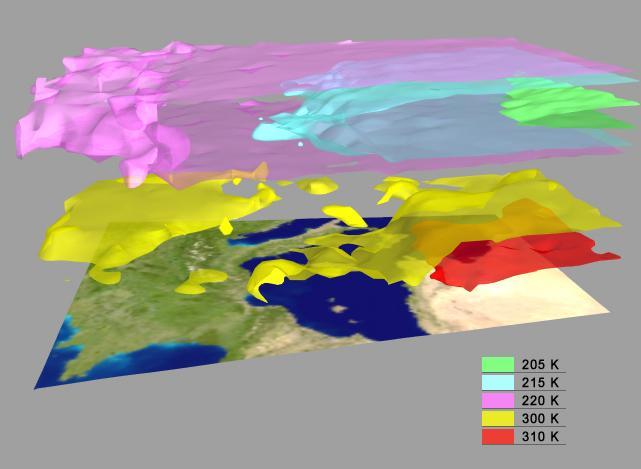
AIRS Retrieved Temperature Isotherms over Southern Europe viewed from the west, September 8, 2002. The isotherms in this map made from AIRS onboard NASA Aqua satellite data show regions of the same temperature in the atmosphere. http://photojournal.jpl.nasa.gov/catalog/PIA00513
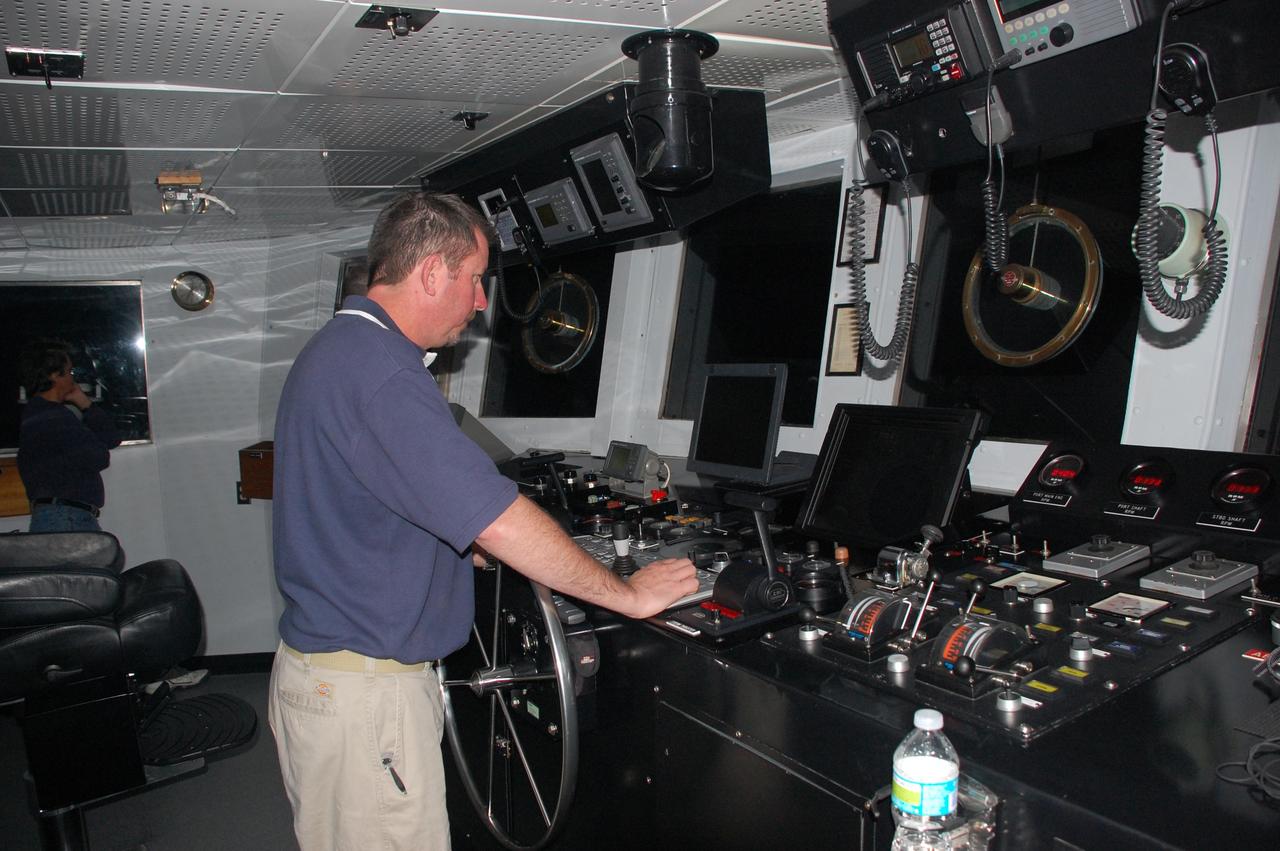
CAPE CANAVERAL, Fla. -- Chief Mate Jamie Harris is steering Freedom Star, one of NASA's solid rocket booster retrieval ships in the direction of the left spent booster that splashed down into the Atlantic Ocean after space shuttle Discovery's STS-133 launch. The shuttle’s two solid rocket booster casings and associated flight hardware are recovered in the Atlantic Ocean after every launch by Liberty Star and Freedom Star. The boosters impact the Atlantic about seven minutes after liftoff and the retrieval ships are stationed about 10 miles from the impact area at the time of splashdown. After the spent segments are processed, they will be transported to Utah, where they will be refurbished and stored, if needed. Photo credit: NASA/Ben Smegelsky
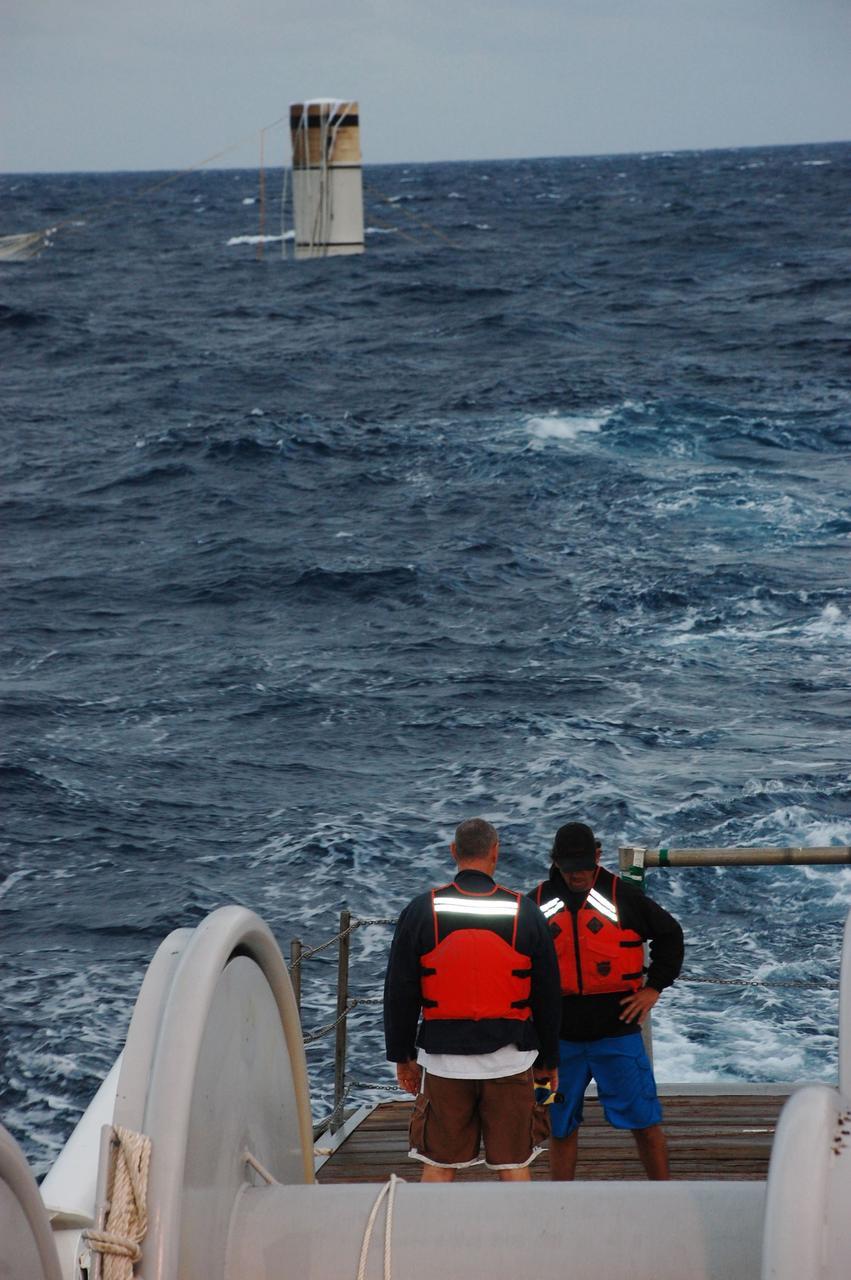
CAPE CANAVERAL, Fla. -- Part of a spent booster is seen in the background bobbing in the Atlantic Ocean as deck hands on Freedom Star, one of NASA's solid rocket booster retrieval vessel prepare to recover it after space shuttle Discovery's STS-133 launch. The shuttle’s two solid rocket booster casings and associated flight hardware are recovered in the Atlantic Ocean after every launch by Liberty Star and Freedom Star. The boosters impact the Atlantic about seven minutes after liftoff and the retrieval ships are stationed about 10 miles from the impact area at the time of splashdown. After the spent segments are processed, they will be transported to Utah, where they will be refurbished and stored, if needed. Photo credit: NASA/Ben Smegelsky
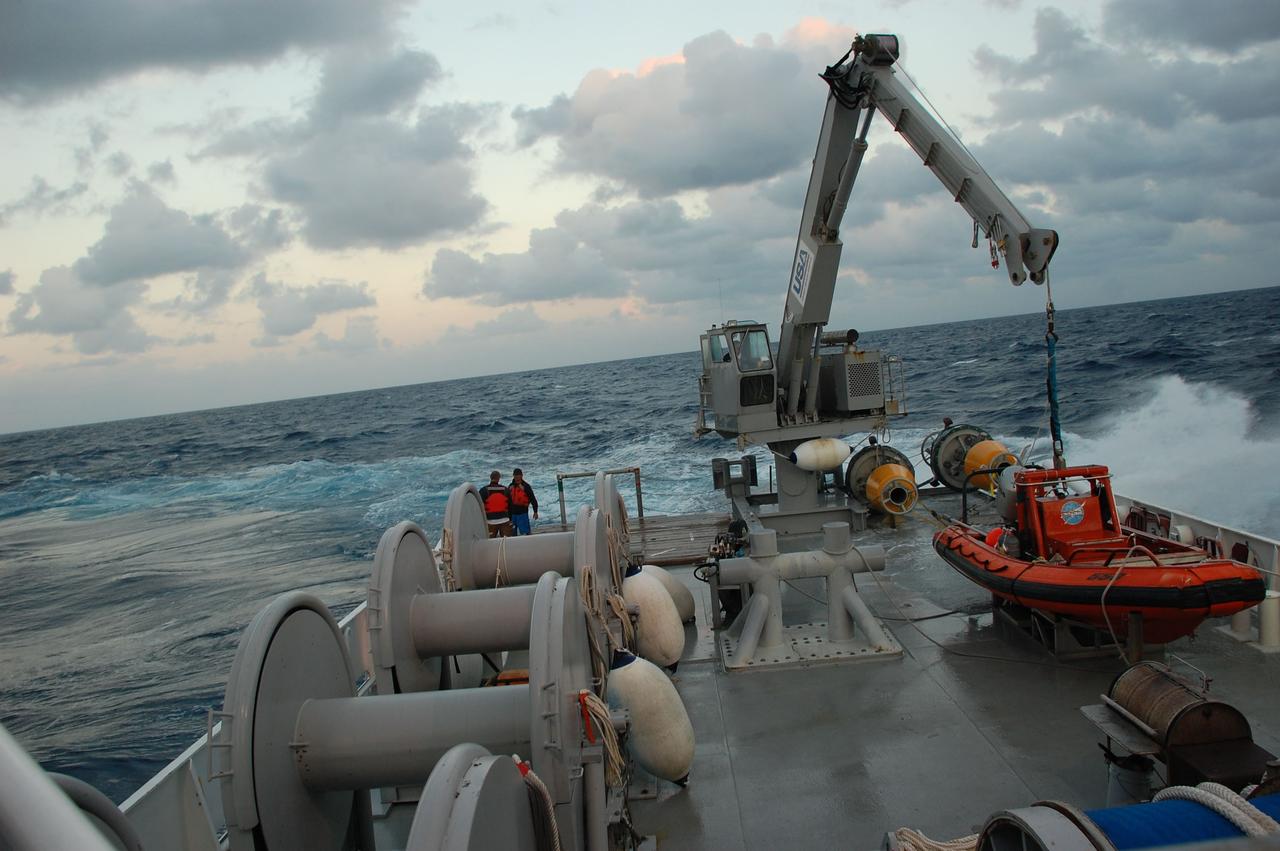
CAPE CANAVERAL, Fla. -- An expanse of ocean is seen on the horizon as Freedom Star, one of NASA's solid rocket booster retrieval ships, set sail to be in position in the Atlantic ocean to recover the spent boosters after space shuttle Discovery's STS-133 launch. The shuttle’s two solid rocket booster casings and associated flight hardware are recovered in the Atlantic Ocean after every launch by Liberty Star and Freedom Star. The boosters impact the Atlantic about seven minutes after liftoff and the retrieval ships are stationed about 10 miles from the impact area at the time of splashdown. After the spent segments are processed, they will be transported to Utah, where they will be refurbished and stored, if needed. Photo credit: NASA/Ben Smegelsky
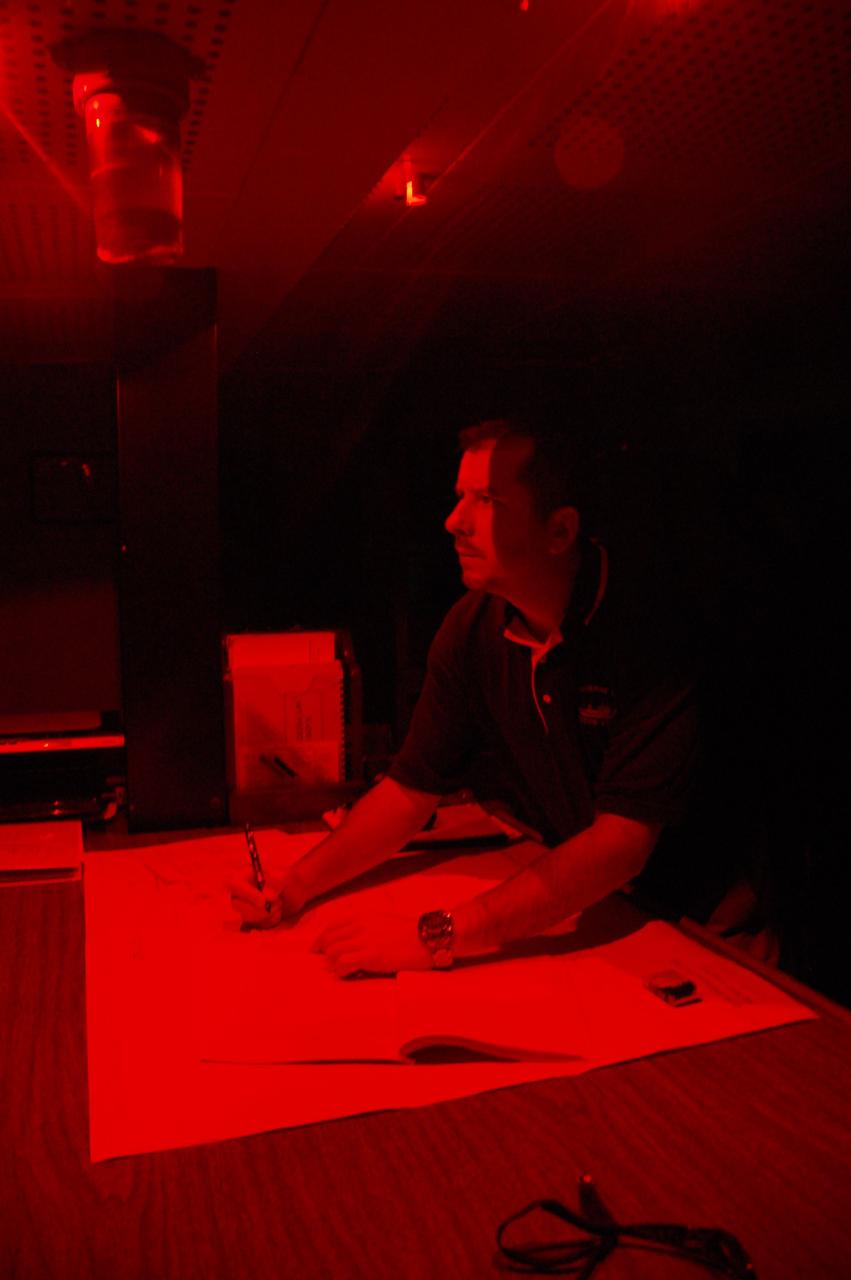
CAPE CANAVERAL, Fla. -- Chief Mate Jamie Harris works at the chart table on the bridge at night under a red light so as not to compromise night vision on Freedom Star, one of NASA's solid rocket booster retrieval ships plotting a course in the direction of the left spent booster that splashed down into the Atlantic Ocean after space shuttle Discovery's STS-133 launch. The shuttle’s two solid rocket booster casings and associated flight hardware are recovered in the Atlantic Ocean after every launch by Liberty Star and Freedom Star. The boosters impact the Atlantic about seven minutes after liftoff and the retrieval ships are stationed about 10 miles from the impact area at the time of splashdown. After the spent segments are processed, they will be transported to Utah, where they will be refurbished and stored, if needed. Photo credit: NASA/Ben Smegelsky
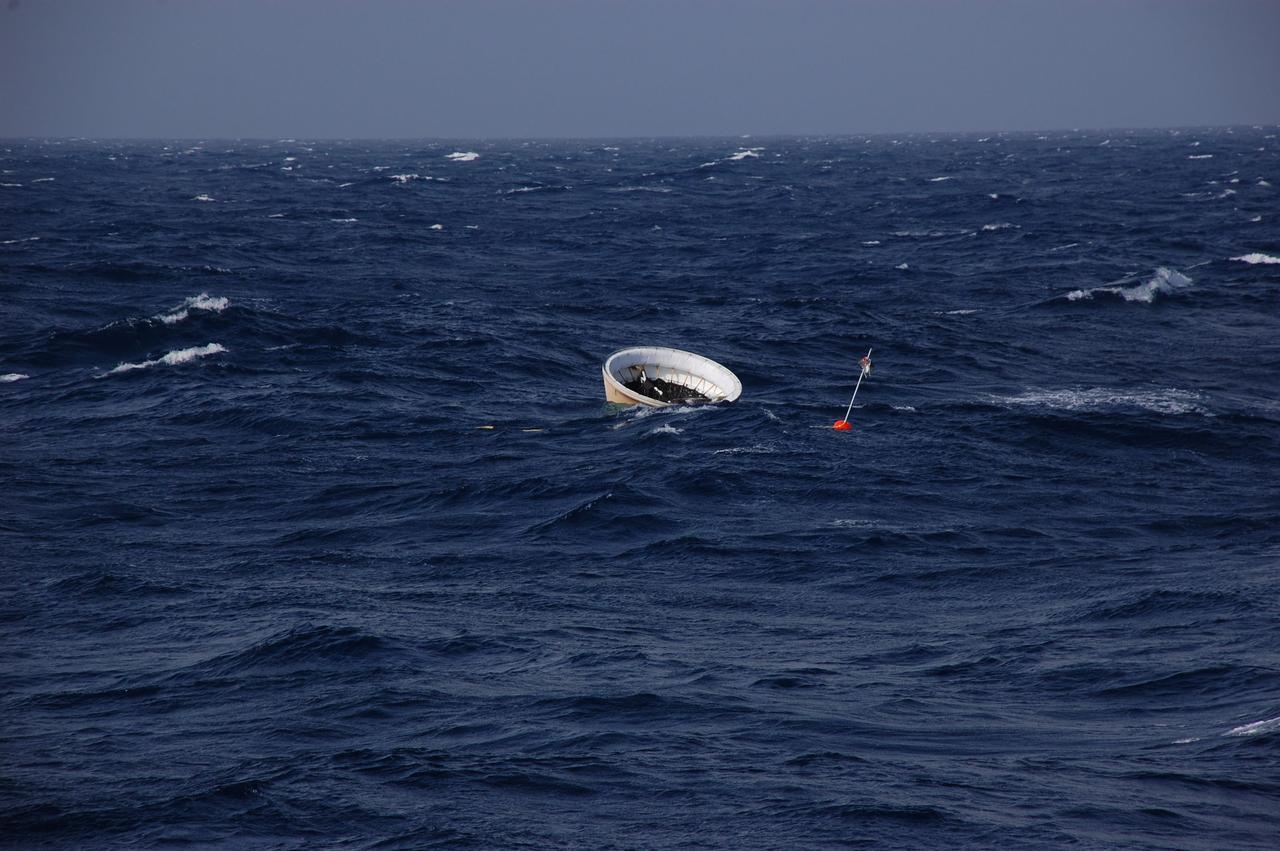
CAPE CANAVERAL, Fla. -- After splashing down, the nose cap of the left spent booster bobs in the Atlantic Ocean as Freedom Star, one of NASA's solid rocket booster retrieval ships makes its way closer for recovery following space shuttle Discovery's STS-133 launch. The shuttle’s two solid rocket booster casings and associated flight hardware are recovered in the Atlantic Ocean after every launch by Liberty Star and Freedom Star. The boosters impact the Atlantic about seven minutes after liftoff and the retrieval ships are stationed about 10 miles from the impact area at the time of splashdown. After the spent segments are processed, they will be transported to Utah, where they will be refurbished and stored, if needed. Photo credit: NASA/Ben Smegelsky
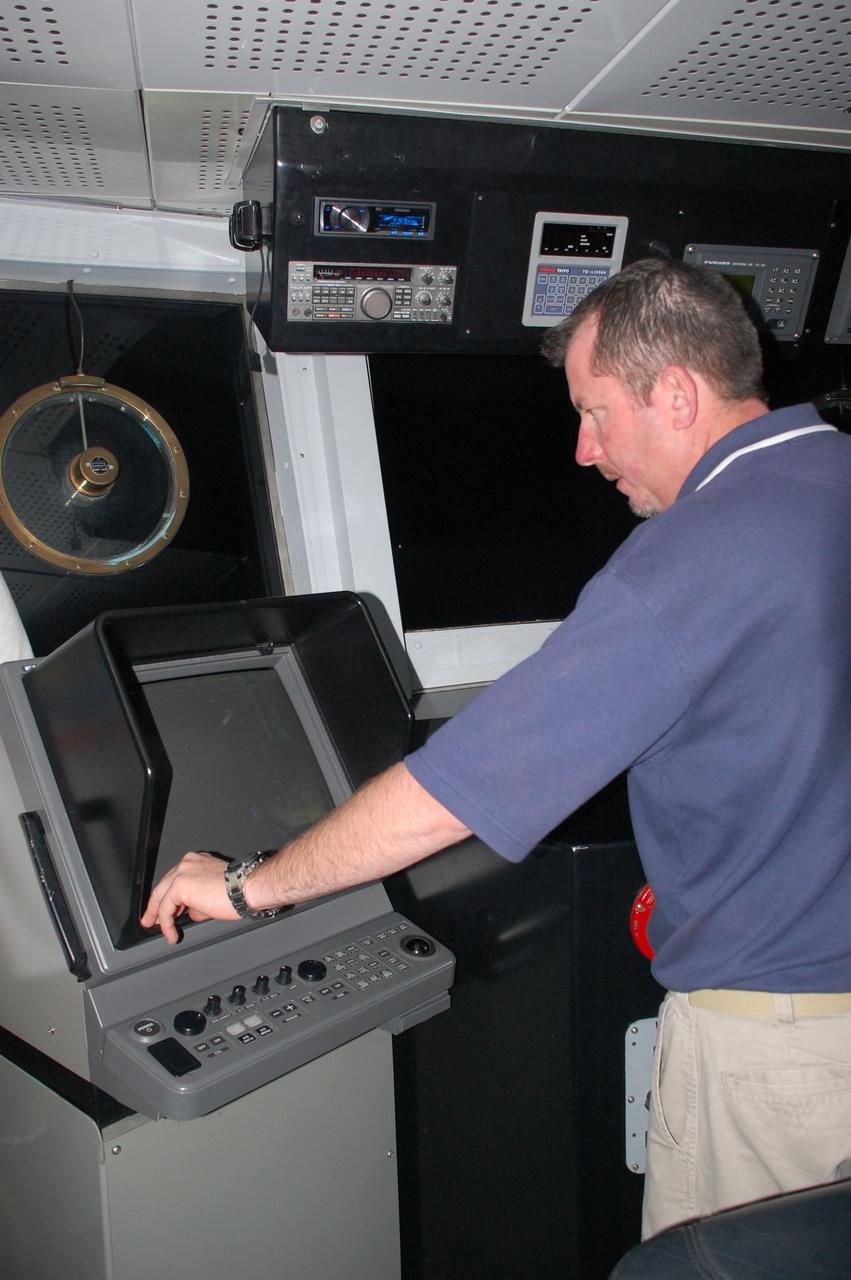
CAPE CANAVERAL, Fla. -- Chief Mate Jamie Harris is steering Freedom Star, one of NASA's solid rocket booster retrieval ships in the direction of the left spent booster that splashed down into the Atlantic Ocean after space shuttle Discovery's STS-133 launch. The shuttle’s two solid rocket booster casings and associated flight hardware are recovered in the Atlantic Ocean after every launch by Liberty Star and Freedom Star. The boosters impact the Atlantic about seven minutes after liftoff and the retrieval ships are stationed about 10 miles from the impact area at the time of splashdown. After the spent segments are processed, they will be transported to Utah, where they will be refurbished and stored, if needed. Photo credit: NASA/Ben Smegelsky
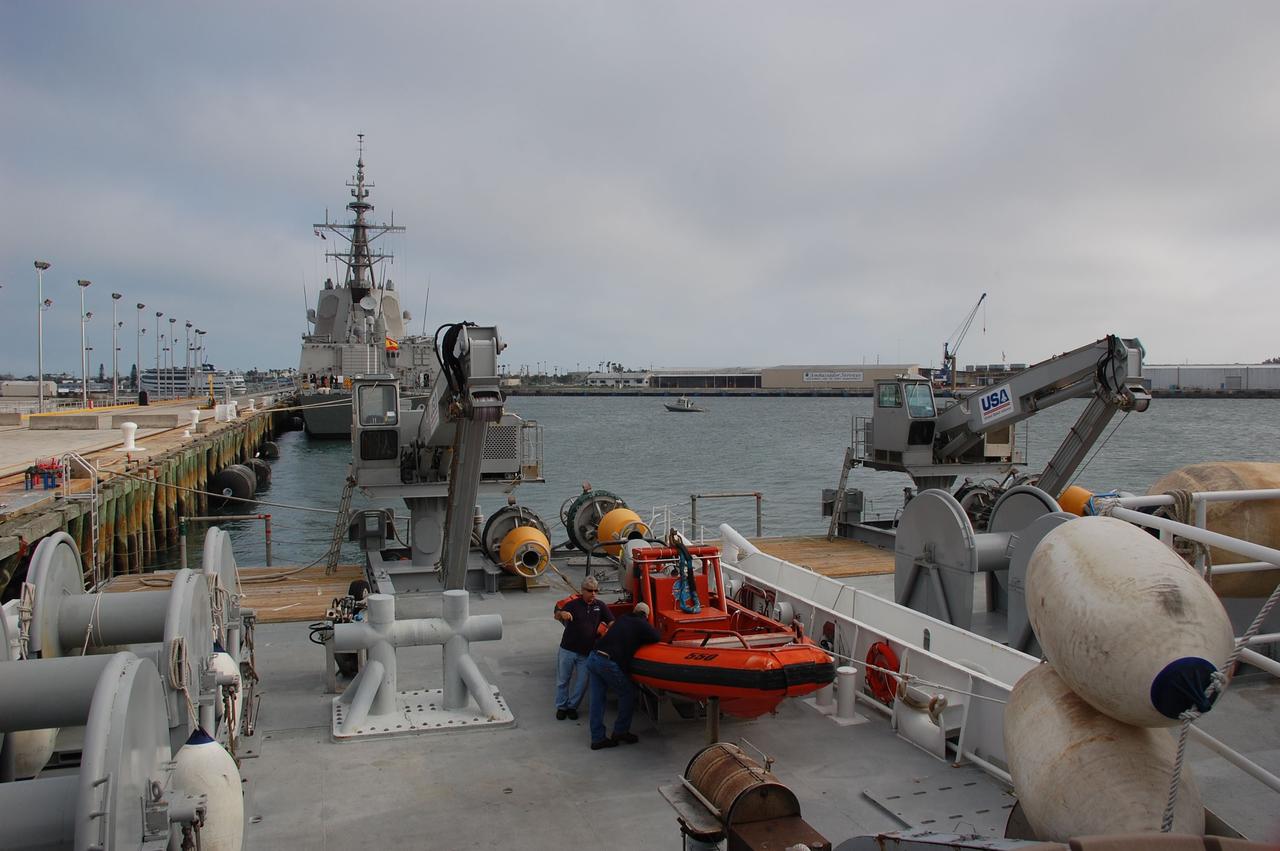
CAPE CANAVERAL, Fla. -- Workers on the deck of Freedom Star, one of NASA's solid rocket booster retrieval ships docked at Port Canaveral, Florida, prepare the vessel prior to sailing. Freedom Star will be in position to recover the spent boosters after space shuttle Discovery's STS-133 launch. The shuttle’s two solid rocket booster casings and associated flight hardware are recovered in the Atlantic Ocean after every launch by Liberty Star and Freedom Star. The boosters impact the Atlantic about seven minutes after liftoff and the retrieval ships are stationed about 10 miles from the impact area at the time of splashdown. After the spent segments are processed, they will be transported to Utah, where they will be refurbished and stored, if needed. Photo credit: NASA/Ben Smegelsky
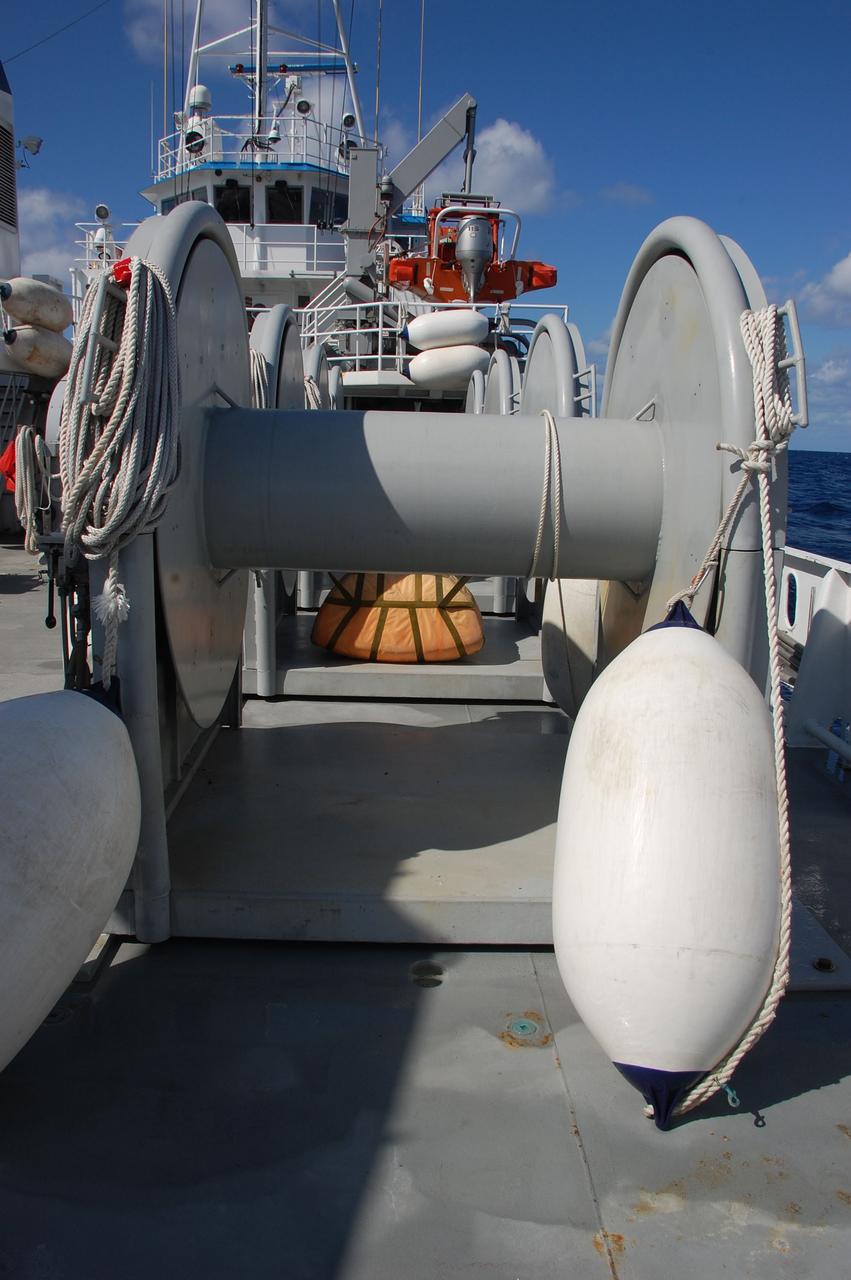
CAPE CANAVERAL, Fla. -- Rubber bumpers are stowed on the deck of Freedom Star, one of NASA's solid rocket booster retrieval ships. The ship has set sail to be in position in the Atlantic Ocean to recover the spent boosters after space shuttle Discovery's STS-133 launch. The shuttle’s two solid rocket booster casings and associated flight hardware are recovered in the Atlantic Ocean after every launch by Liberty Star and Freedom Star. The boosters impact the Atlantic about seven minutes after liftoff and the retrieval ships are stationed about 10 miles from the impact area at the time of splashdown. After the spent segments are processed, they will be transported to Utah, where they will be refurbished and stored, if needed. Photo credit: NASA/Ben Smegelsky
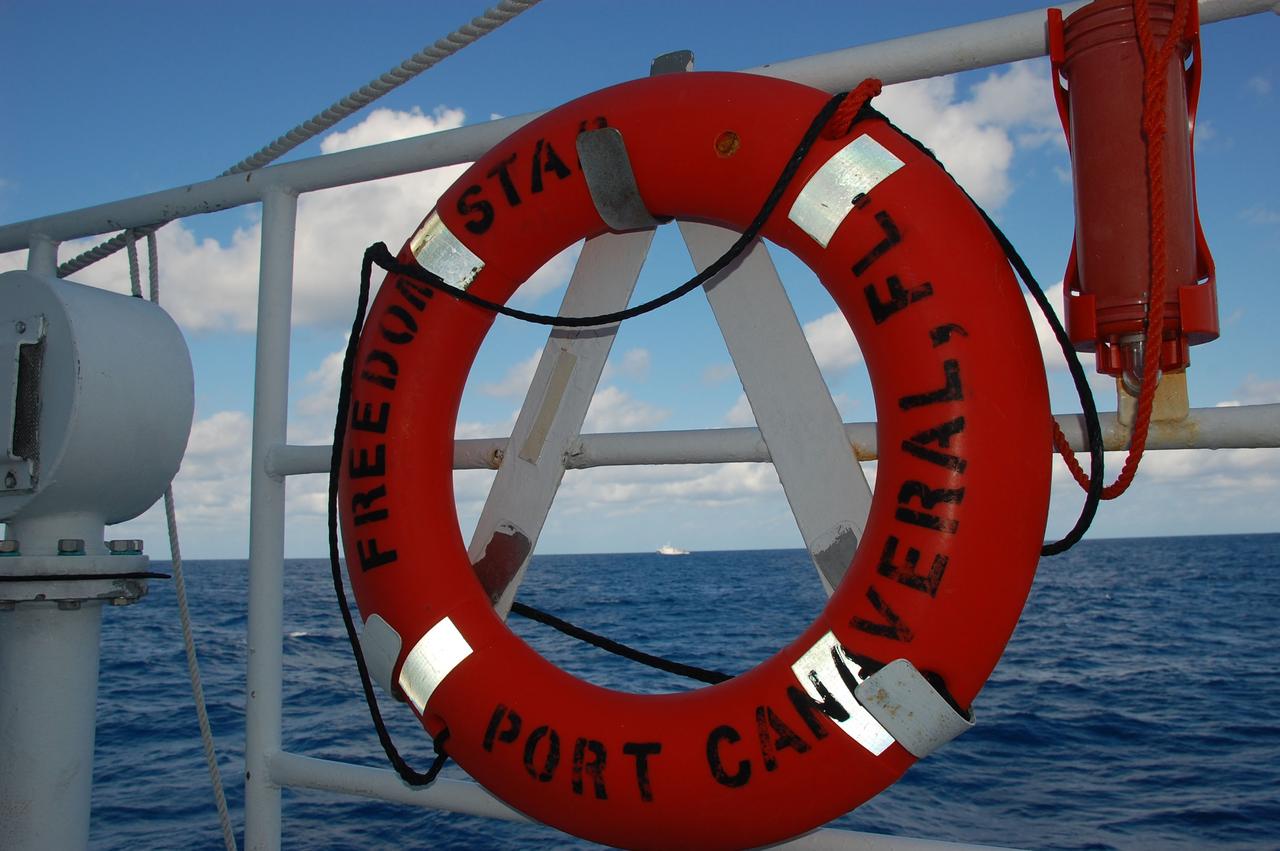
CAPE CANAVERAL, Fla. -- A flotation device is secured to the railing of Freedom Star, one of NASA's solid rocket booster retrieval ships. The ship has set sail to be in position in the Atlantic Ocean to recover the spent boosters after space shuttle Discovery's STS-133 launch. The shuttle’s two solid rocket booster casings and associated flight hardware are recovered in the Atlantic Ocean after every launch by Liberty Star and Freedom Star. The boosters impact the Atlantic about seven minutes after liftoff and the retrieval ships are stationed about 10 miles from the impact area at the time of splashdown. After the spent segments are processed, they will be transported to Utah, where they will be refurbished and stored, if needed. Photo credit: NASA/Ben Smegelsky
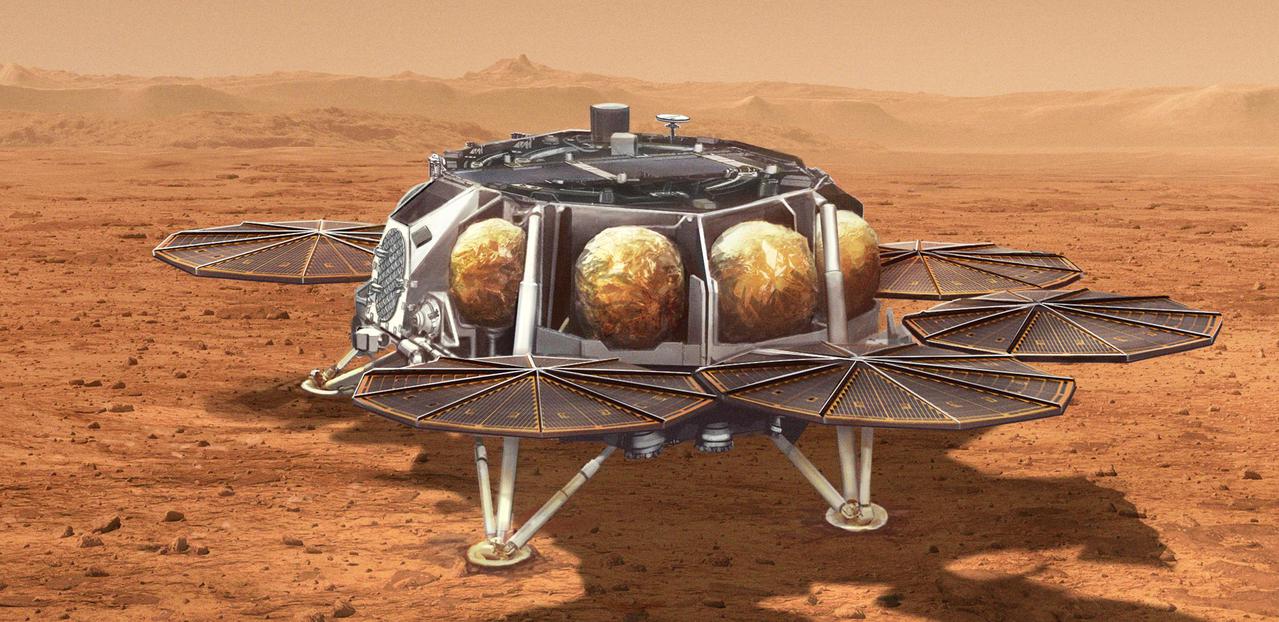
This illustration shows a concept for a proposed NASA Sample Retrieval Lander that would carry a small rocket (about 10 feet, or 3 meters, tall) called the Mars Ascent Vehicle to the Martian surface. After being loaded with sealed tubes containing samples of Martian rocks and soil collected by NASA's Perseverance rover, the rocket would launch into Mars orbit. The samples would then be ferried to Earth for detailed analysis. The lander is part of the multi-mission Mars Sample Return program being planned by NASA and ESA (European Space Agency). https://photojournal.jpl.nasa.gov/catalog/PIA25277
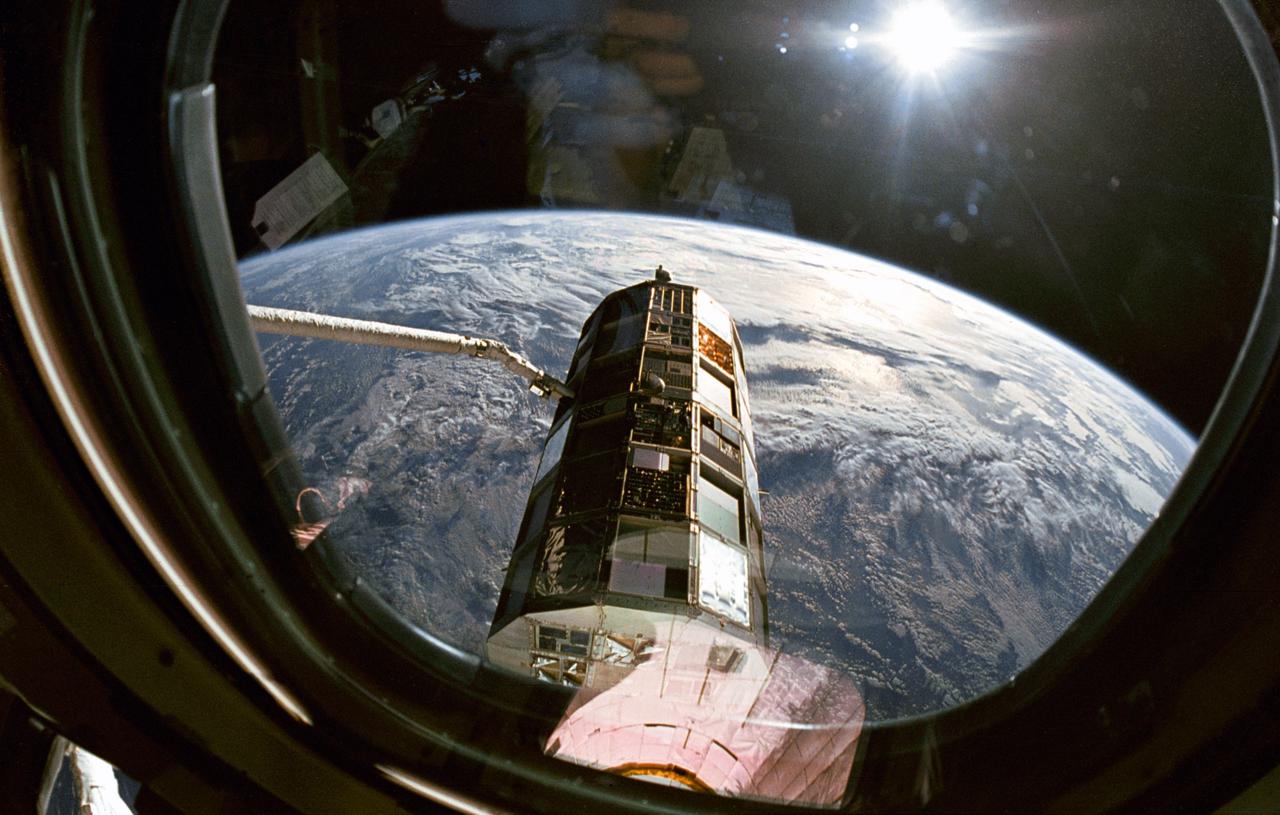
This view taken through overhead window W7 on Columbia's, Orbiter Vehicle (OV) 102's, aft flight deck shows the Long Duration Exposure Facility (LDEF) in the grasp of the remote manipulator system (RMS) during STS-32 retrieval activities. Other cameras at eye level were documenting the bus-sized spacecraft at various angles as the RMS manipulated LDEF for a lengthy photo survey. The glaring celestial body in the upper left is the sun with the Earth's surface visible below.
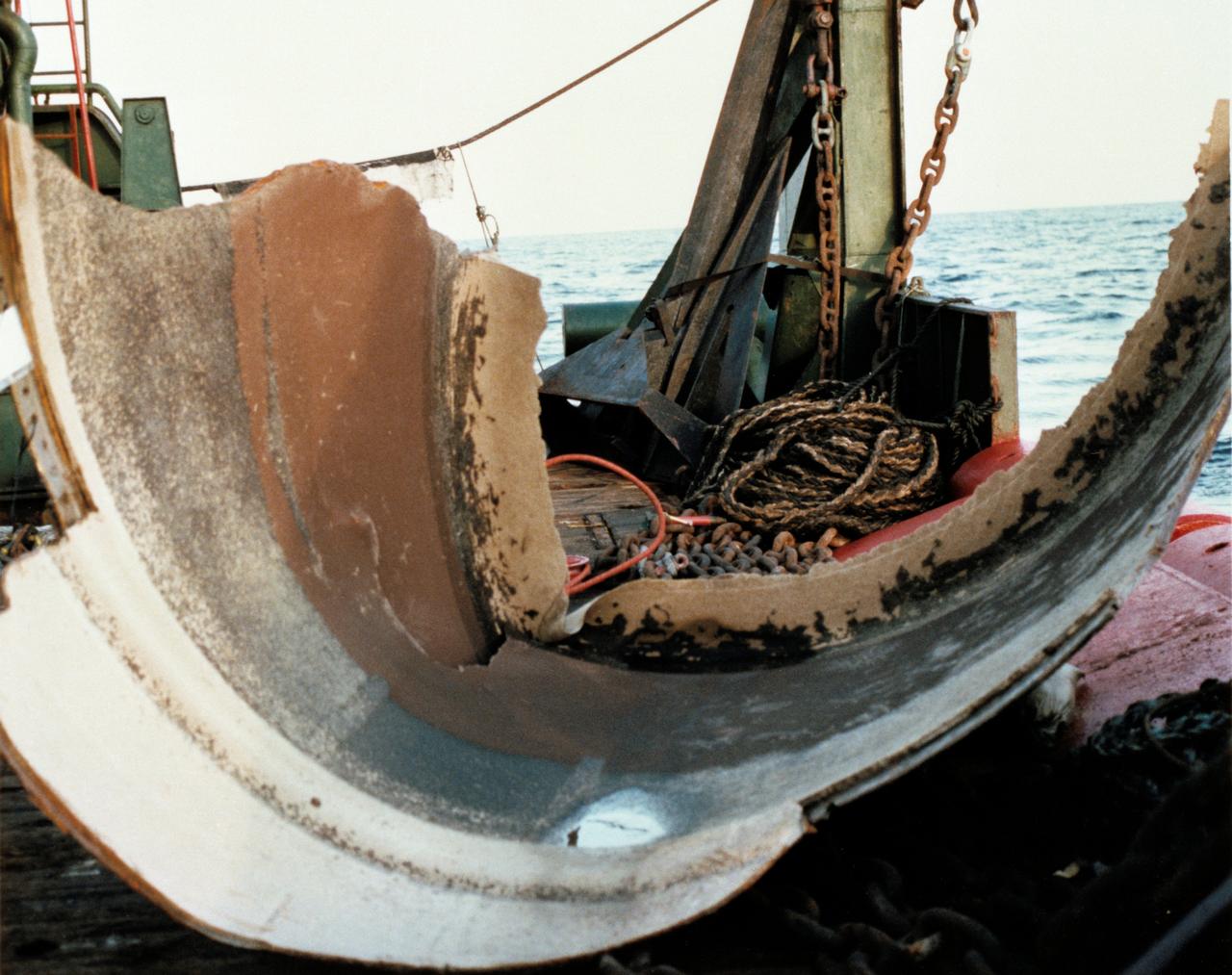
51L-10162 (8-9 March 1986) --- View of the left solid rocket booster first piece retrieval #11 (STS-51L space shuttle Challenger). Photo credit: NASA
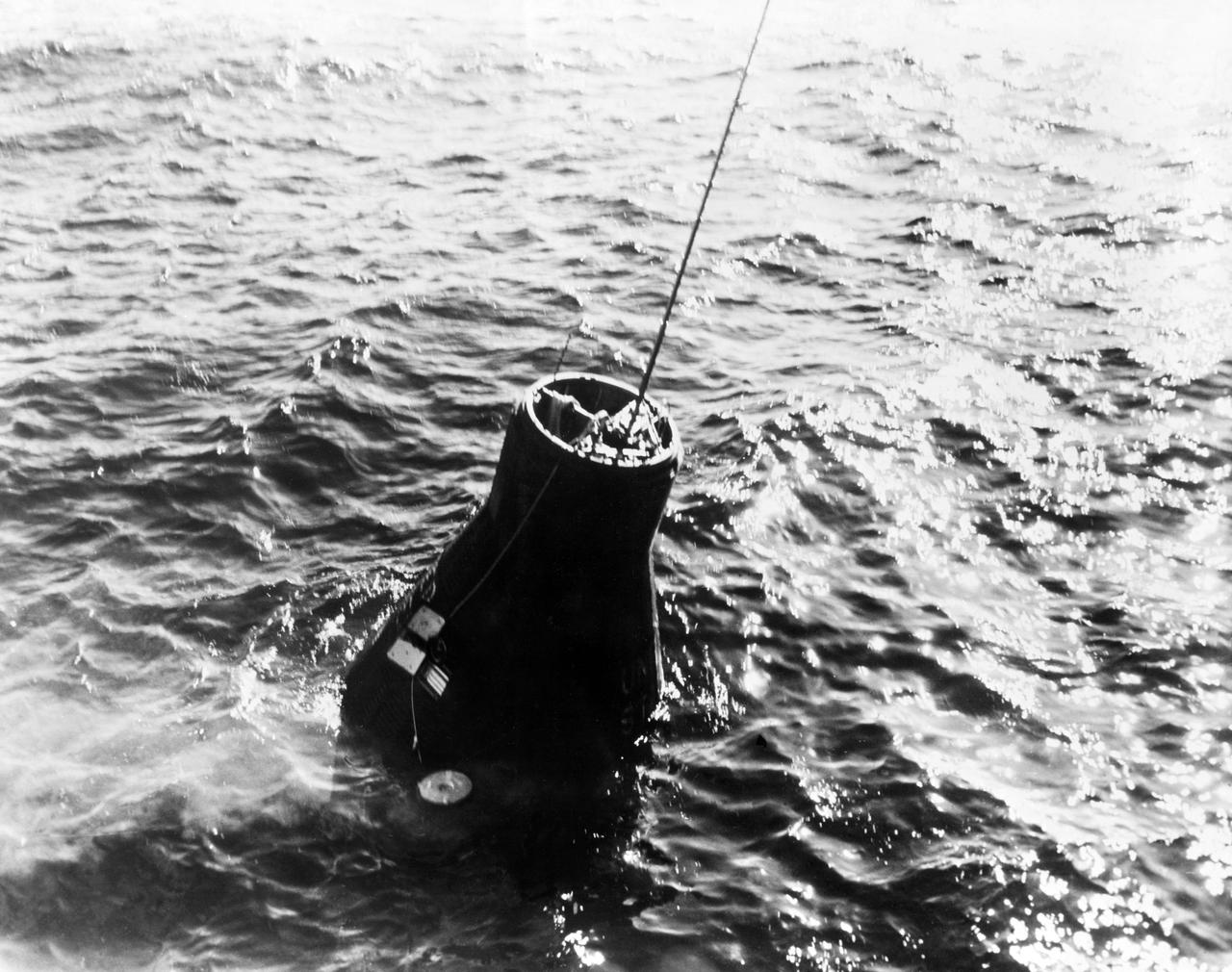
S62-00941 (20 Feb. 1962) --- The Mercury-Atlas 6 (MA-6) "Friendship 7" spacecraft is retrieved from the Atlantic Ocean following astronaut John H. Glenn Jr.'s three-orbit space mission. In this view, the capsule is still in the water, with retrieval cable connected to it. Photo credit: NASA
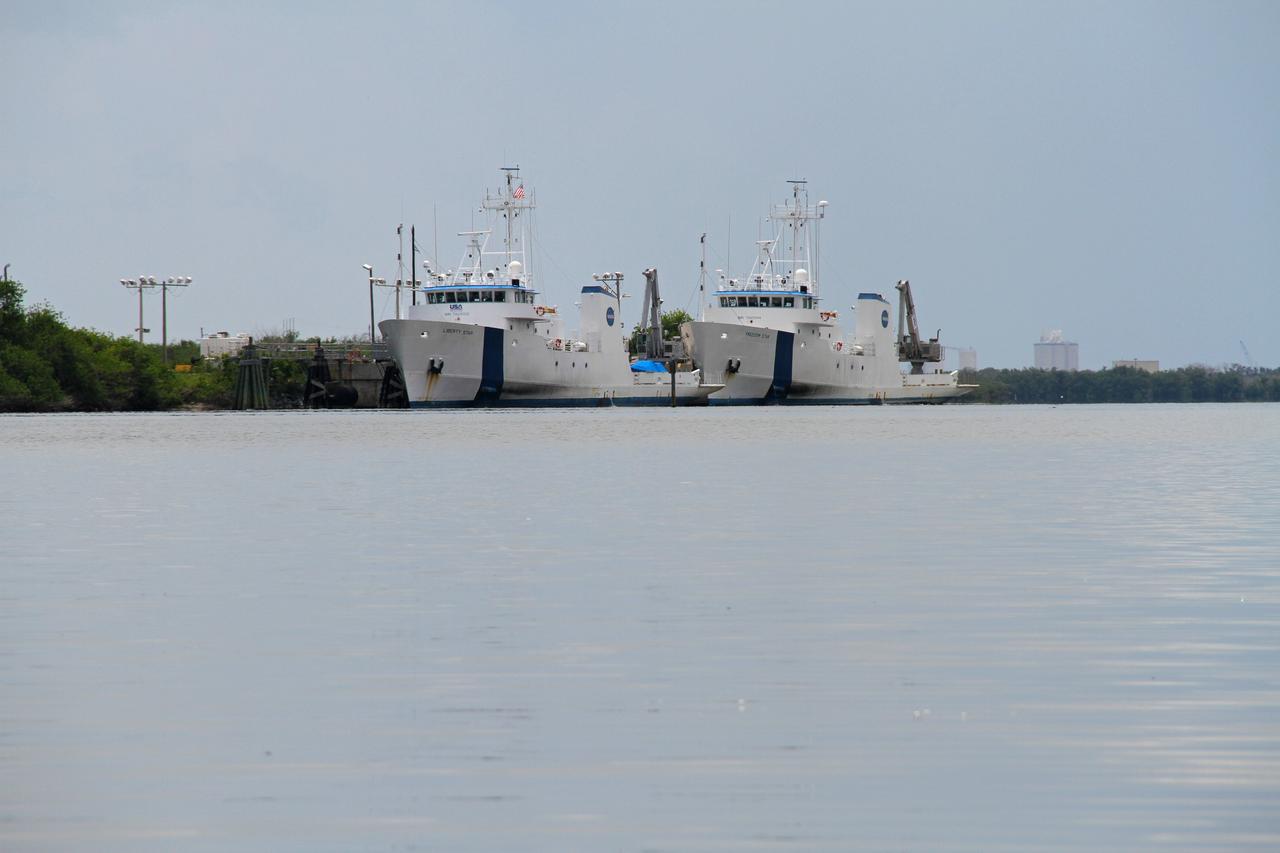
CAPE CANAVERAL, Fla. – The solid rocket booster SRB retrieval ships, Liberty Star and Freedom Star, are docked in the Banana River at Cape Canaveral Air Force Station's Hangar A F. The NASA vessels were used during the space shuttle era to retrieve the SRBs following shuttle launches. Kennedy is located on Merritt Island, a barrier island, about 34 miles long and varying in width from five to 10 miles. Only 6,000 acres are actually used for operational activities. The Kennedy Space Center is also a National Wildlife Refuge. Consisting of 140,000 acres, the refuge provides a wide variety of habitats: coastal dunes, saltwater estuaries and marshes, freshwater impoundments, scrub, pine flatwoods and hardwood hammocks providing habitat for more than 1,500 species of plants and animals. For more information, visit: http://ipv6.nasa.gov/centers/kennedy/shuttleoperations/alligators/kscovrv.html Photo credit: NASA/Ben Smegelsky

S65-18733 (23 March 1965) --- Astronauts Virgil I. Grissom (left) and John W. Young are shown aboard a helicopter after being retrieved from their spacecraft following the Gemini-Titan 3 flight.
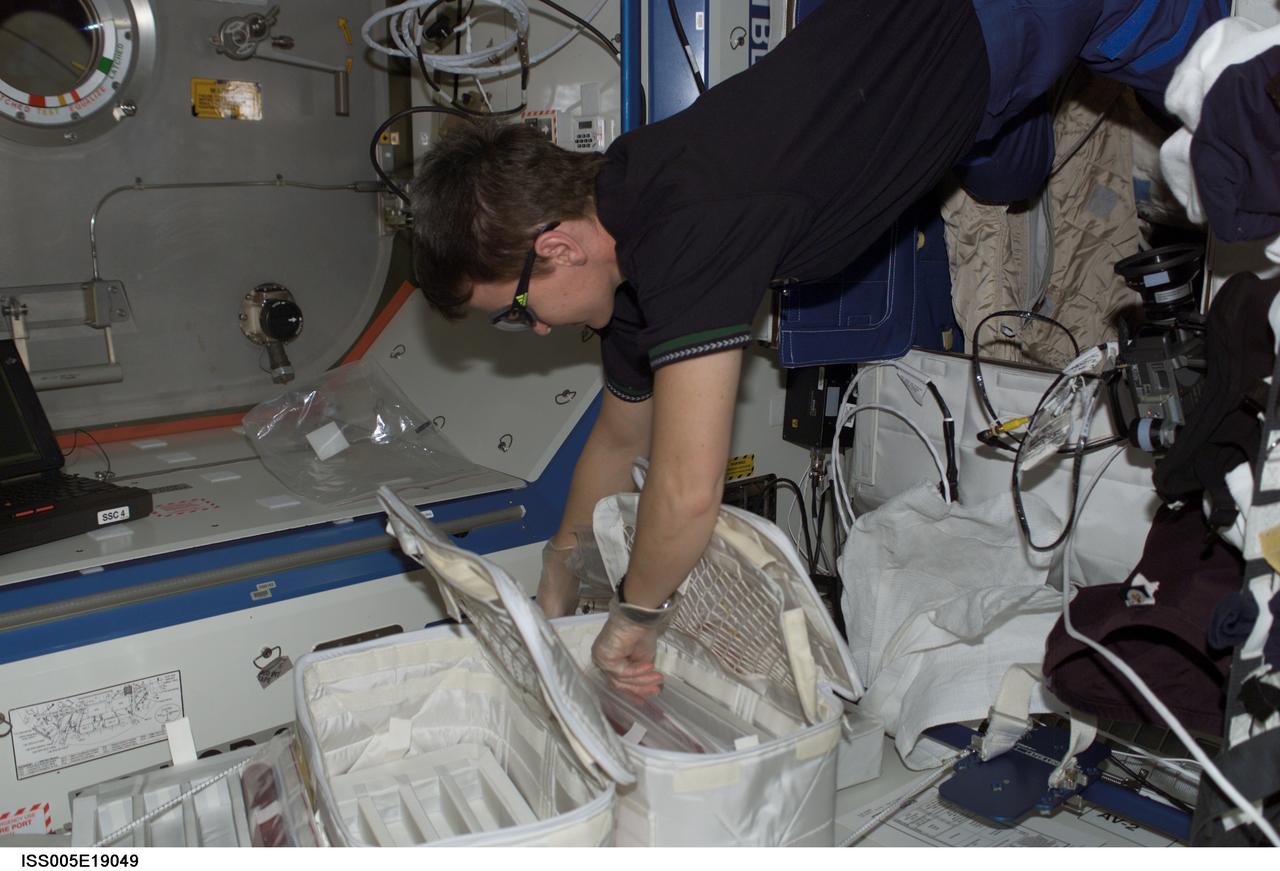
ISS005-E-19049 (29 October 2002) --- Astronaut Peggy A. Whitson, Expedition Five flight engineer, retrieves an experiment cartridge for the Zeolite Crystal Growth (ZCG) experiment in Destiny laboratory on the International Space Station (ISS).
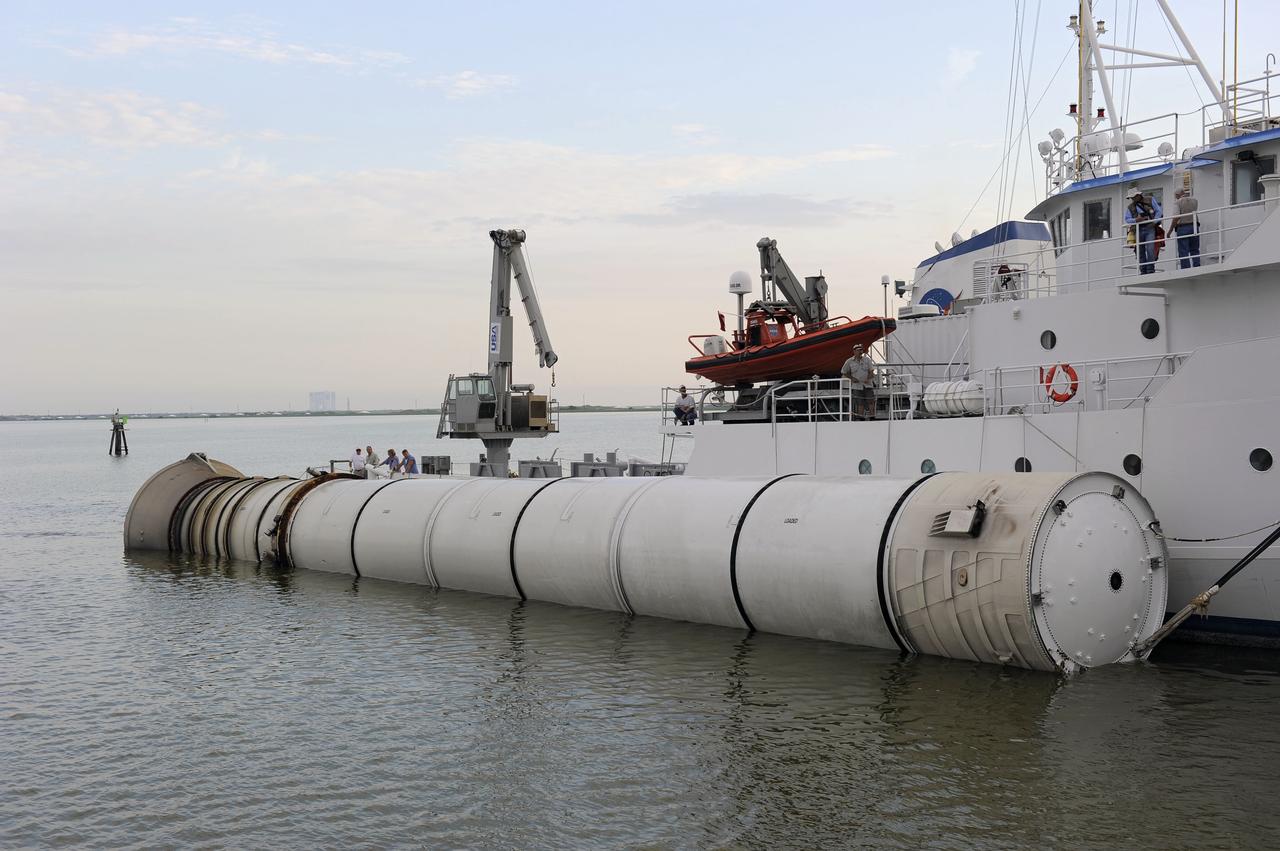
CAPE CANAVERAL, Fla. – Liberty Star, one of NASA’s solid rocket booster retrieval ships, tows a spent booster from space shuttle Atlantis’ final launch, to Port Canaveral in Florida. The shuttle’s two solid rocket booster casings and associated flight hardware are recovered in the Atlantic Ocean after every launch by Freedom Star and Liberty Star. The boosters impact the Atlantic about seven minutes after liftoff and the retrieval ships are stationed about 10 miles from the impact area at the time of splashdown. After the spent segments are processed, they will be transported to Utah, where they will be deserviced and stored, if needed. Atlantis began its final flight, STS-135, at 11:29 a.m. EDT on July 8 to deliver the Raffaello multi-purpose logistics module packed with supplies and spare parts to the International Space Station. Photo credit: NASA/Kim Shiflett
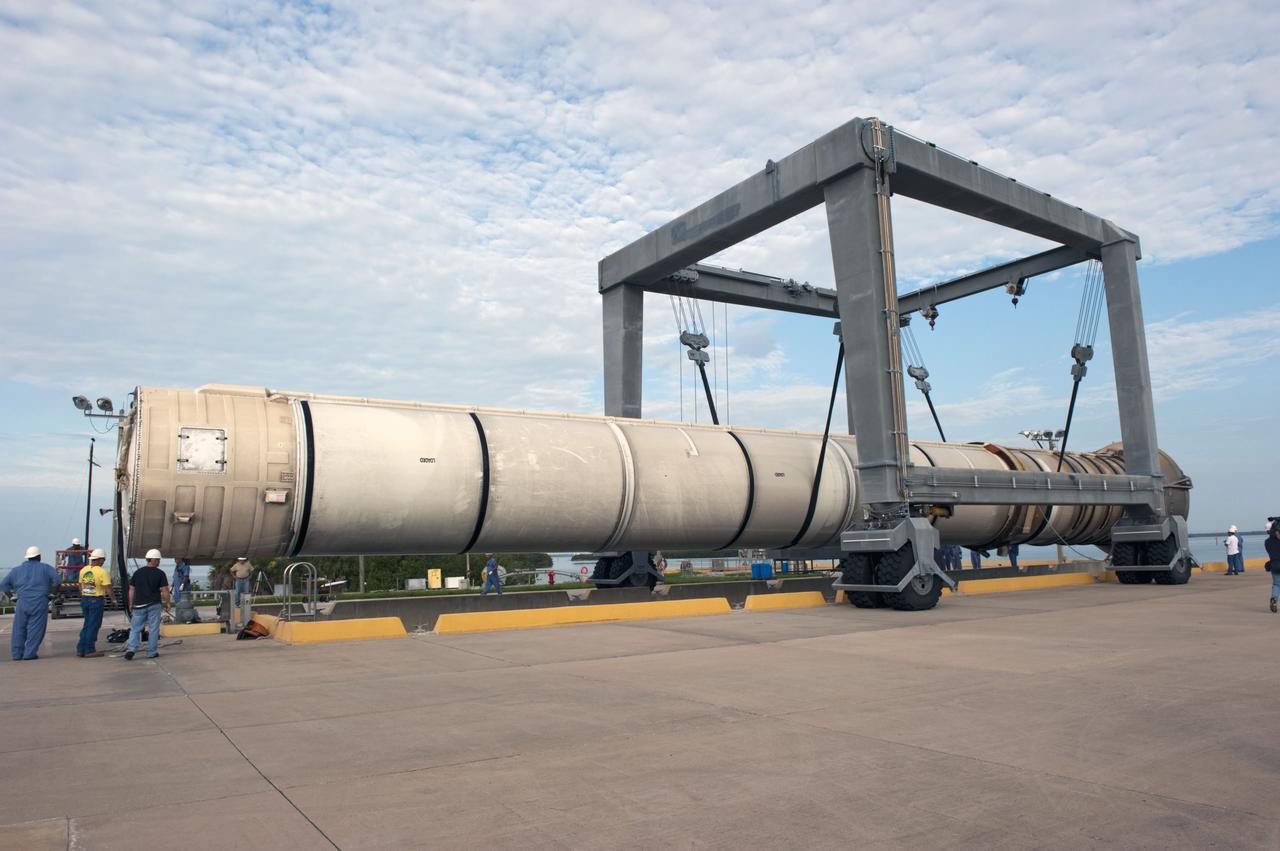
CAPE CANAVERAL, Fla. – One of two solid rocket boosters is lifted above a mooring at Port Canaveral in Florida. Liberty Star, one of NASA’s two booster retrieval ships, towed the spent booster from space shuttle Atlantis’ final launch to the port. The shuttle’s two solid rocket booster casings and associated flight hardware are recovered in the Atlantic Ocean after every launch by Freedom Star and Liberty Star. The boosters impact the Atlantic about seven minutes after liftoff, and the retrieval ships are stationed about 10 miles from the impact area at the time of splashdown. After the spent segments are processed, they will be transported to Utah, where they will be deserviced and stored, if needed. Atlantis began its final flight, STS-135, at 11:29 a.m. EDT on July 8 to deliver the Raffaello multi-purpose logistics module packed with supplies and spare parts to the International Space Station. Photo credit: NASA/Kim Shiflett
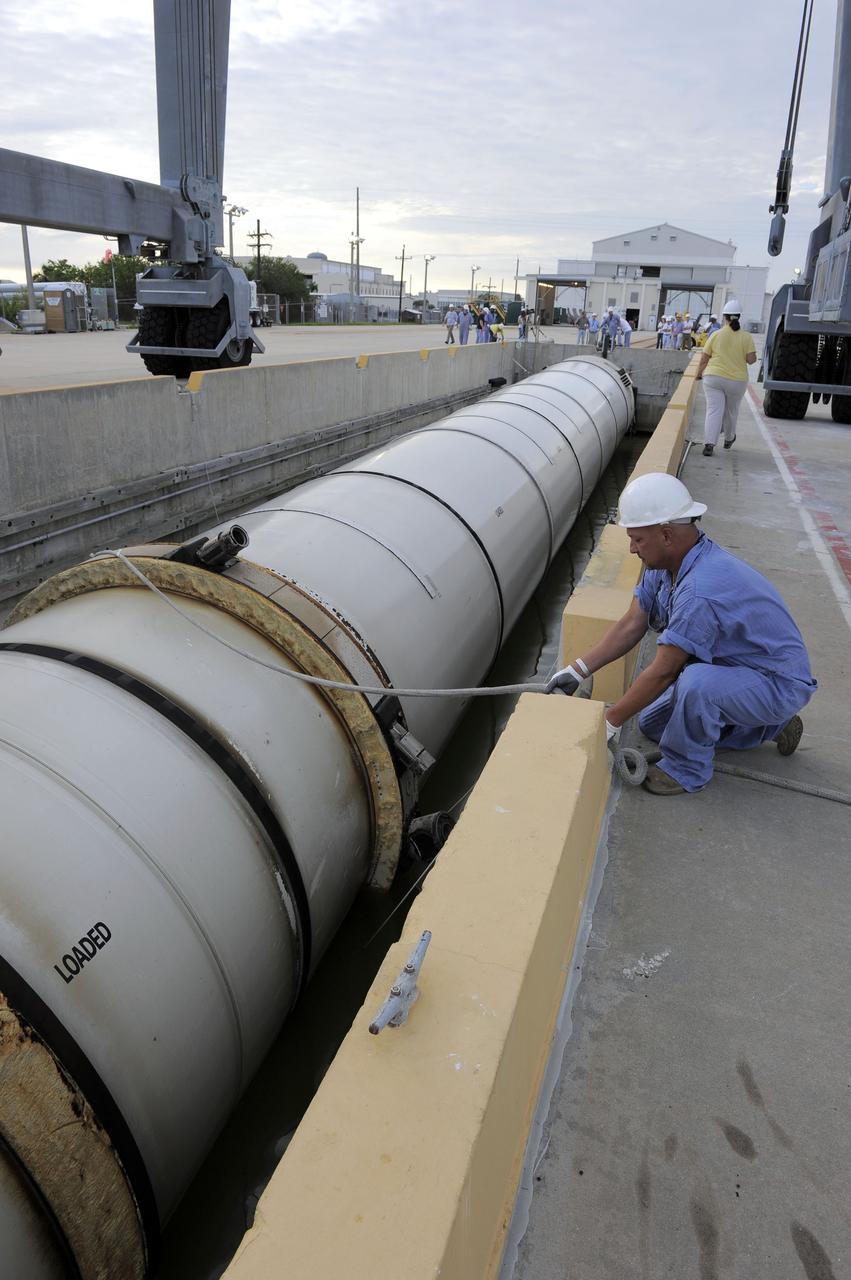
CAPE CANAVERAL, Fla. – A worker secures one of two solid rocket boosters to a mooring at Port Canaveral in Florida. Liberty Star, one of NASA’s two booster retrieval ships, towed the spent booster from space shuttle Atlantis’ final launch to the port. The shuttle’s two solid rocket booster casings and associated flight hardware are recovered in the Atlantic Ocean after every launch by Freedom Star and Liberty Star. The boosters impact the Atlantic about seven minutes after liftoff, and the retrieval ships are stationed about 10 miles from the impact area at the time of splashdown. After the spent segments are processed, they will be transported to Utah, where they will be deserviced and stored, if needed. Atlantis began its final flight, STS-135, at 11:29 a.m. EDT on July 8 to deliver the Raffaello multi-purpose logistics module packed with supplies and spare parts to the International Space Station. Photo credit: NASA/Kim Shiflett
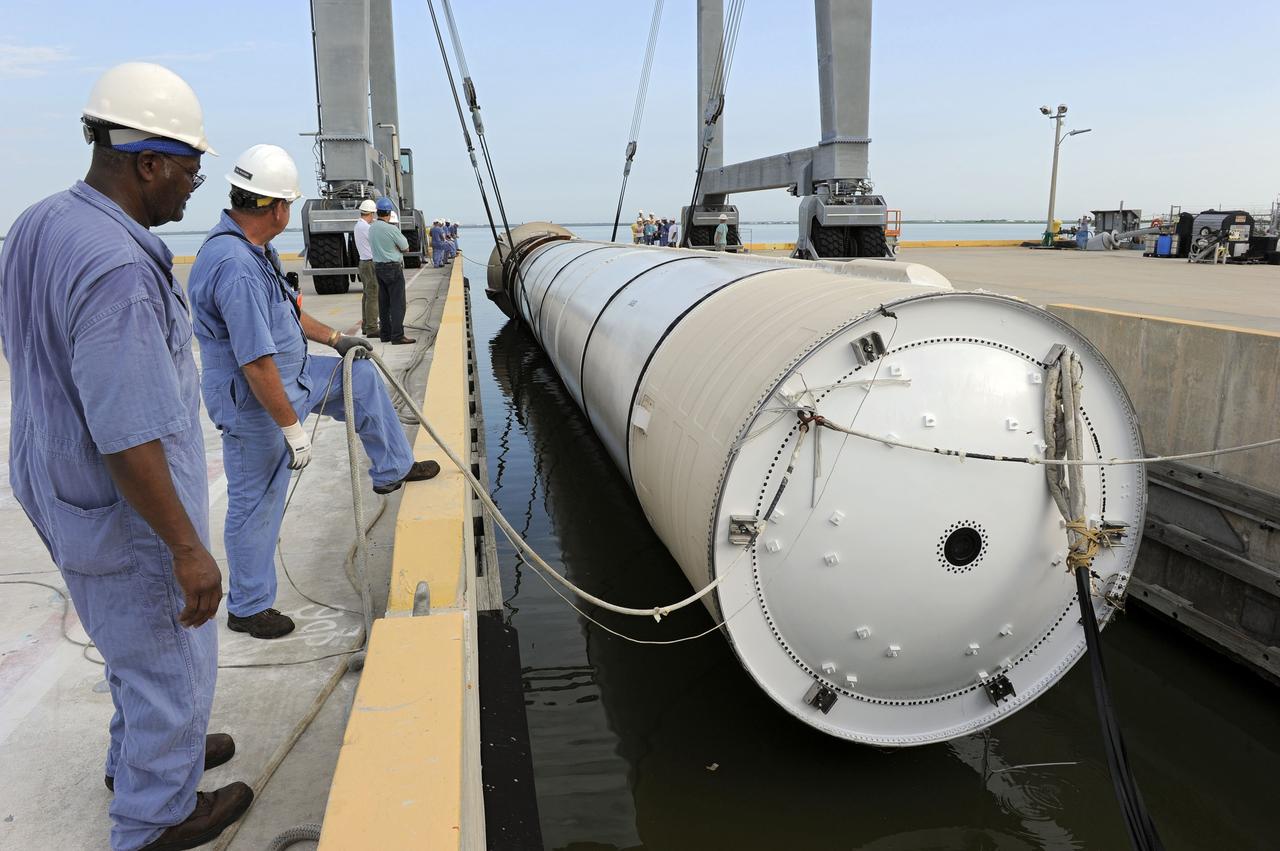
CAPE CANAVERAL, Fla. – Workers help secure one of two solid rocket boosters to a mooring at Port Canaveral in Florida. Liberty Star, one of NASA’s two booster retrieval ships, towed the spent booster from space shuttle Atlantis’ final launch to the port. The shuttle’s two solid rocket booster casings and associated flight hardware are recovered in the Atlantic Ocean after every launch by Freedom Star and Liberty Star. The boosters impact the Atlantic about seven minutes after liftoff, and the retrieval ships are stationed about 10 miles from the impact area at the time of splashdown. After the spent segments are processed, they will be transported to Utah, where they will be deserviced and stored, if needed. Atlantis began its final flight, STS-135, at 11:29 a.m. EDT on July 8 to deliver the Raffaello multi-purpose logistics module packed with supplies and spare parts to the International Space Station. Photo credit: NASA/Kim Shiflett
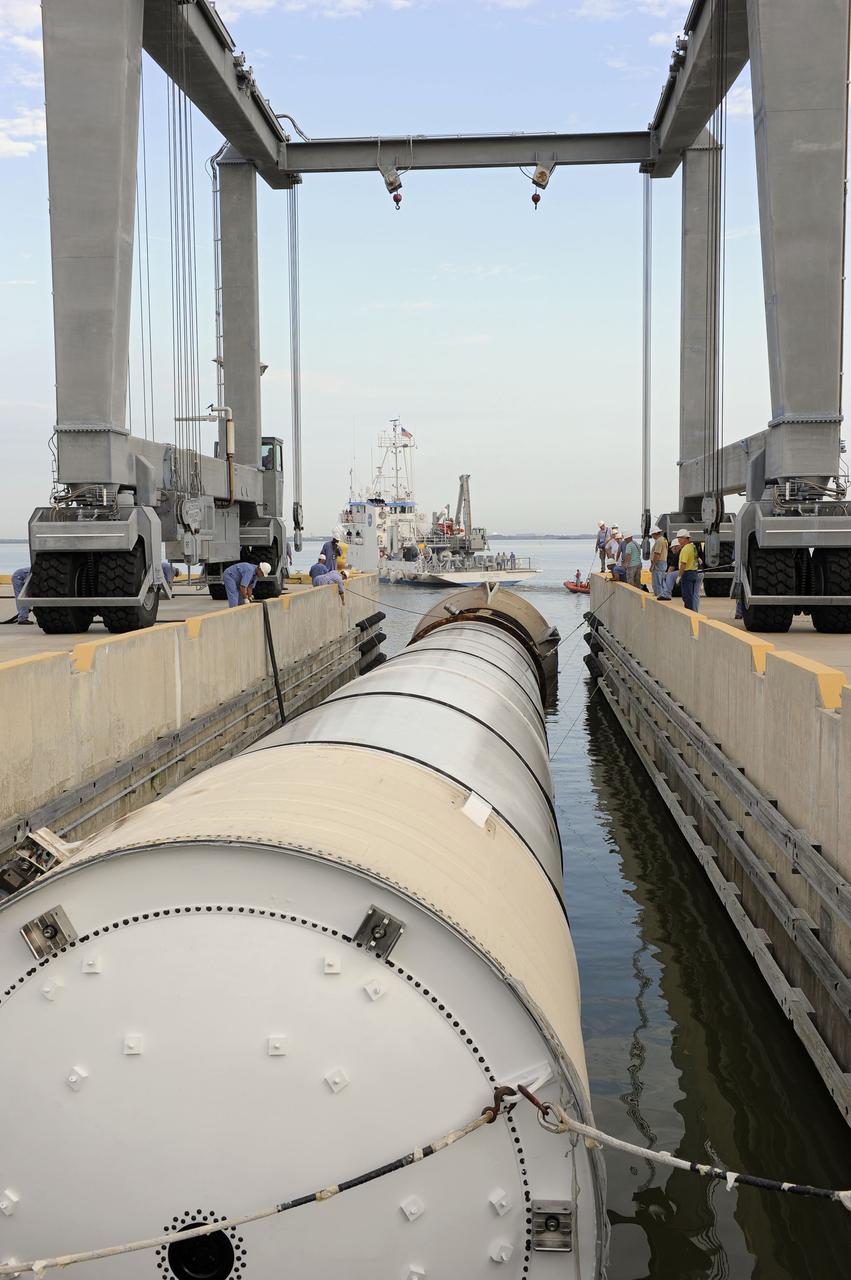
CAPE CANAVERAL, Fla. – One of two solid rocket boosters is secured to a mooring at Port Canaveral in Florida. Liberty Star, one of NASA’s two booster retrieval ships, towed the spent booster from space shuttle Atlantis’ final launch to the port. The shuttle’s two solid rocket booster casings and associated flight hardware are recovered in the Atlantic Ocean after every launch by Freedom Star and Liberty Star. The boosters impact the Atlantic about seven minutes after liftoff, and the retrieval ships are stationed about 10 miles from the impact area at the time of splashdown. After the spent segments are processed, they will be transported to Utah, where they will be deserviced and stored, if needed. Atlantis began its final flight, STS-135, at 11:29 a.m. EDT on July 8 to deliver the Raffaello multi-purpose logistics module packed with supplies and spare parts to the International Space Station. Photo credit: NASA/Kim Shiflett
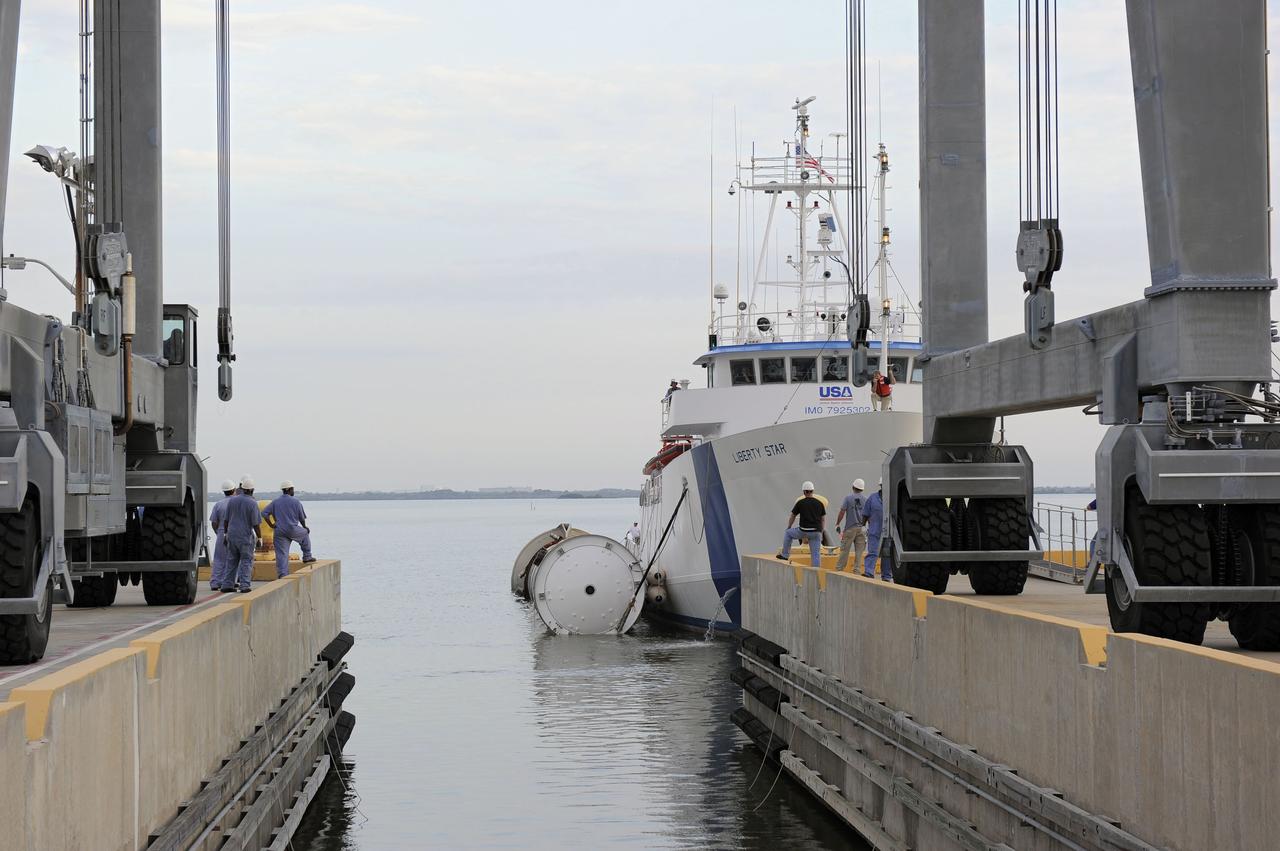
CAPE CANAVERAL, Fla. – Liberty Star, one of NASA’s solid rocket booster retrieval ships, tows a spent booster from space shuttle Atlantis’ final launch, to Port Canaveral in Florida. The shuttle’s two solid rocket booster casings and associated flight hardware are recovered in the Atlantic Ocean after every launch by Freedom Star and Liberty Star. The boosters impact the Atlantic about seven minutes after liftoff, and the retrieval ships are stationed about 10 miles from the impact area at the time of splashdown. After the spent segments are processed, they will be transported to Utah, where they will be deserviced and stored, if needed. Atlantis began its final flight, STS-135, at 11:29 a.m. EDT on July 8 to deliver the Raffaello multi-purpose logistics module packed with supplies and spare parts to the International Space Station. Photo credit: NASA/Kim Shiflett
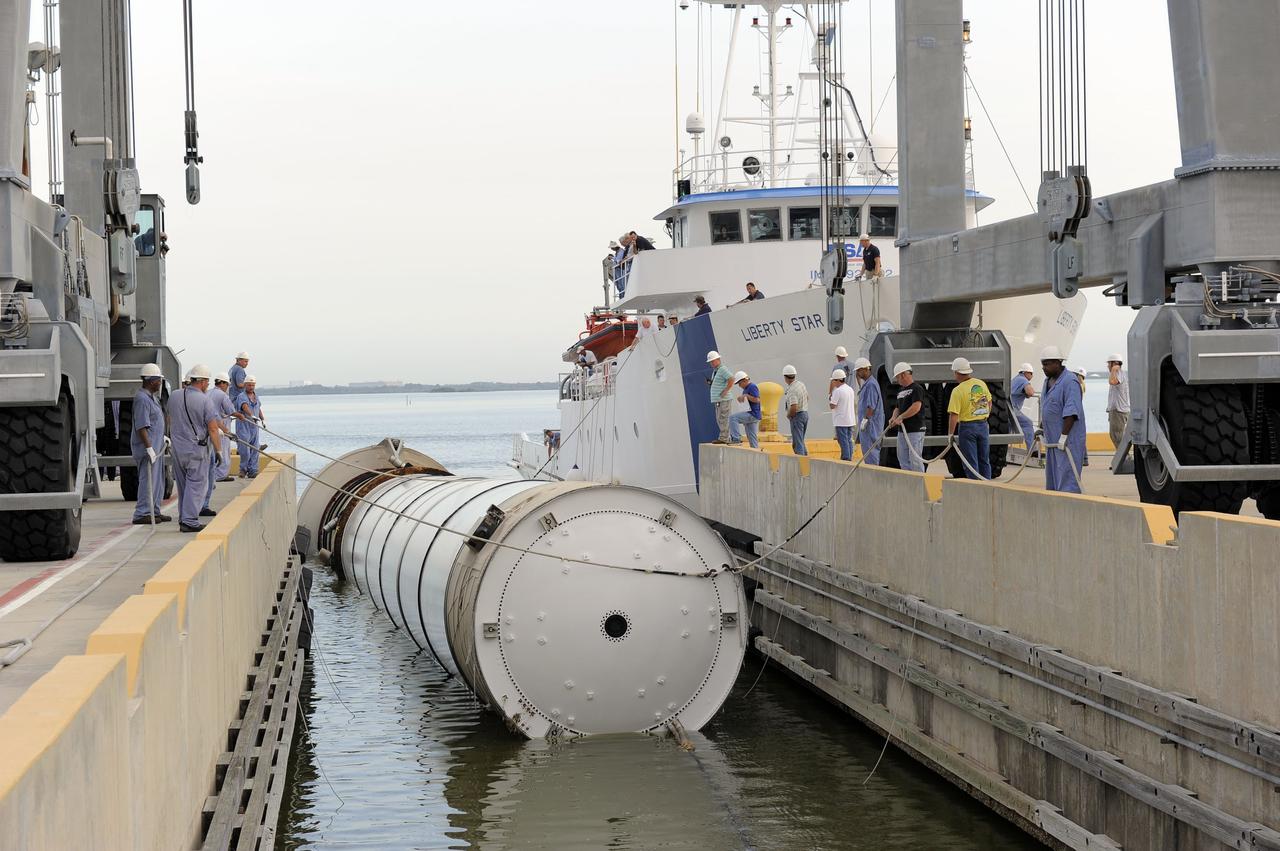
CAPE CANAVERAL, Fla. – Workers assist as Liberty Star, one of NASA’s solid rocket booster retrieval ships, tows a spent booster from space shuttle Atlantis’ final launch to Port Canaveral in Florida. The shuttle’s two solid rocket booster casings and associated flight hardware are recovered in the Atlantic Ocean after every launch by Freedom Star and Liberty Star. The boosters impact the Atlantic about seven minutes after liftoff, and the retrieval ships are stationed about 10 miles from the impact area at the time of splashdown. After the spent segments are processed, they will be transported to Utah, where they will be deserviced and stored, if needed. Atlantis began its final flight, STS-135, at 11:29 a.m. EDT on July 8 to deliver the Raffaello multi-purpose logistics module packed with supplies and spare parts to the International Space Station. Photo credit: NASA/Kim Shiflett
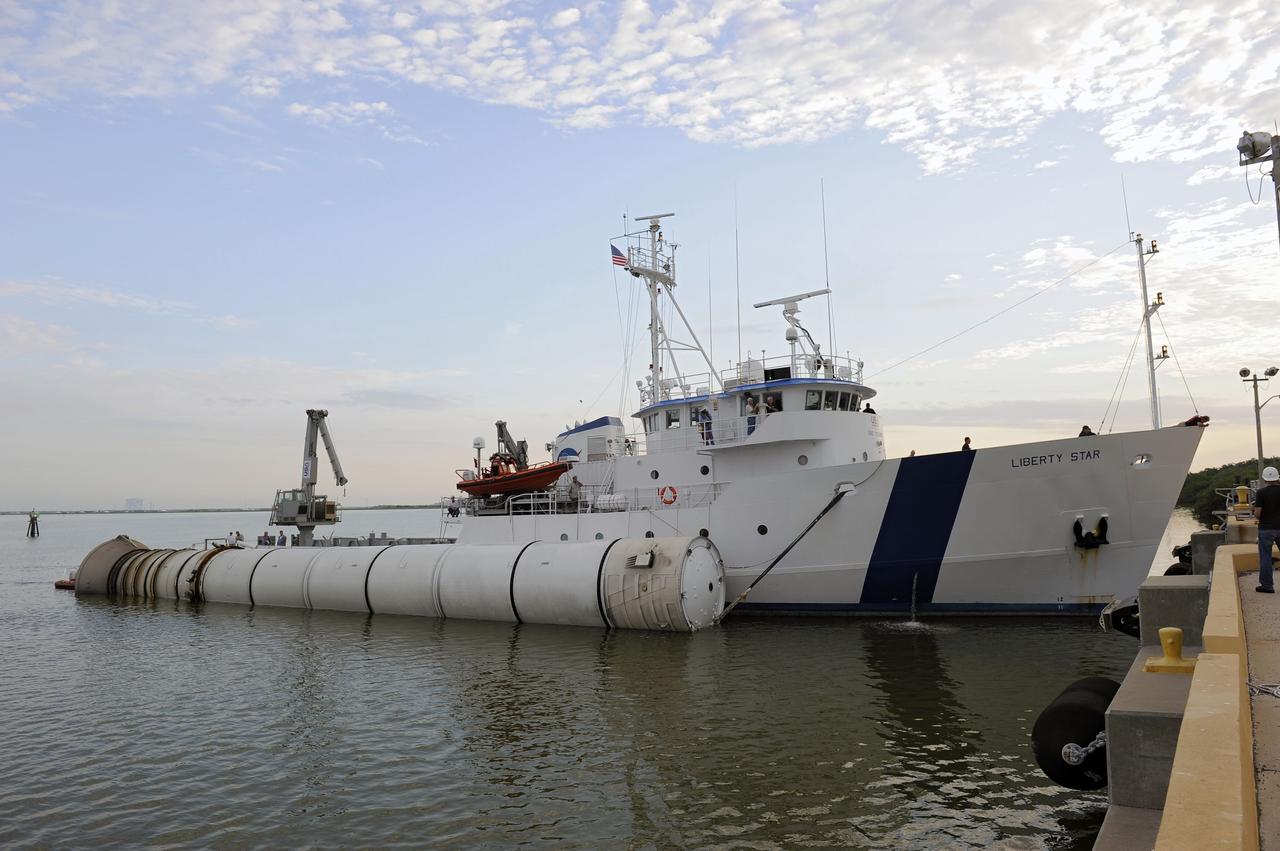
CAPE CANAVERAL, Fla. – Liberty Star, one of NASA’s solid rocket booster retrieval ships, tows a spent booster from space shuttle Atlantis’ final launch, to Port Canaveral in Florida. The shuttle’s two solid rocket booster casings and associated flight hardware are recovered in the Atlantic Ocean after every launch by Freedom Star and Liberty Star. The boosters impact the Atlantic about seven minutes after liftoff and the retrieval ships are stationed about 10 miles from the impact area at the time of splashdown. After the spent segments are processed, they will be transported to Utah, where they will be deserviced and stored, if needed. Atlantis began its final flight, STS-135, at 11:29 a.m. EDT on July 8 to deliver the Raffaello multi-purpose logistics module packed with supplies and spare parts to the International Space Station. Photo credit: NASA/Kim Shiflett
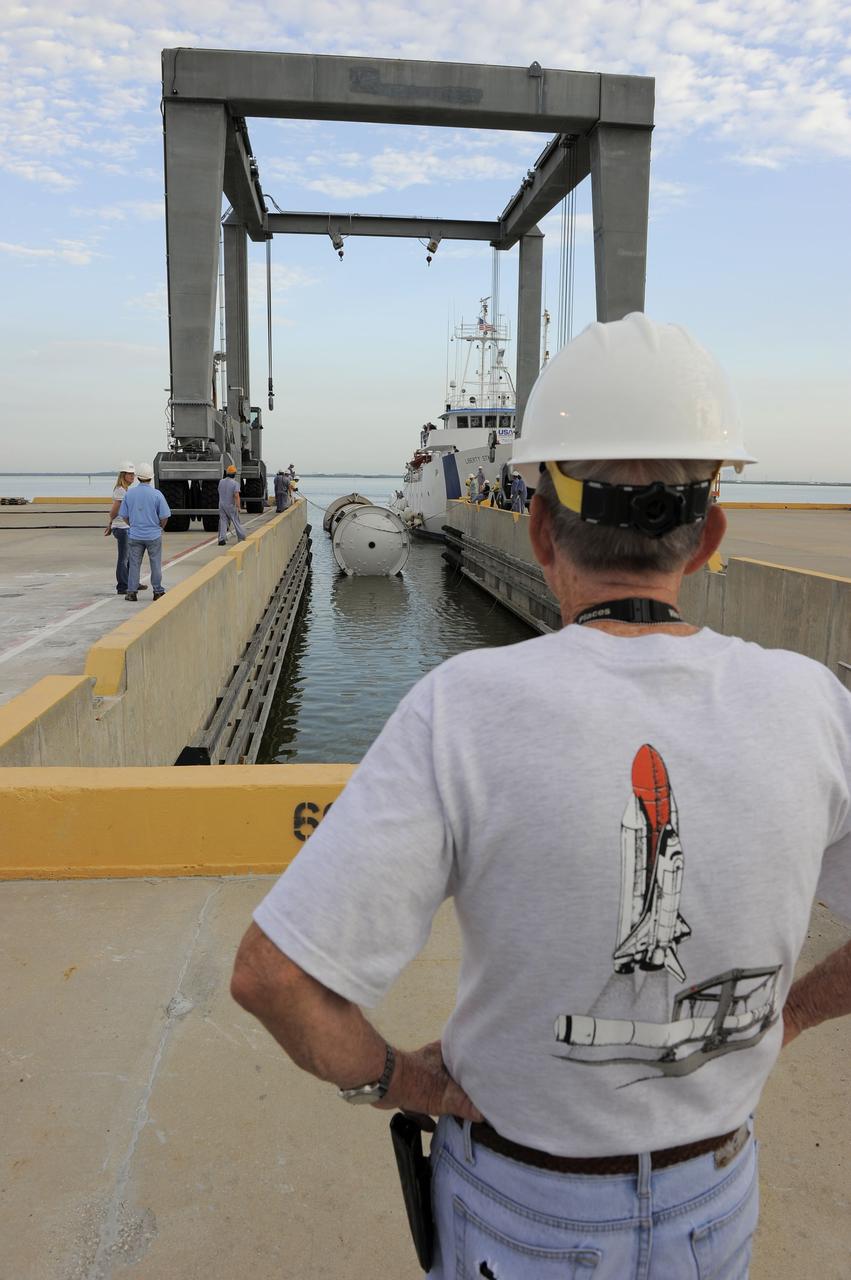
CAPE CANAVERAL, Fla. – Workers watch as Liberty Star, one of NASA’s solid rocket booster retrieval ships, tows a spent booster from space shuttle Atlantis’ final launch, to Port Canaveral in Florida. The shuttle’s two solid rocket booster casings and associated flight hardware are recovered in the Atlantic Ocean after every launch by Freedom Star and Liberty Star. The boosters impact the Atlantic about seven minutes after liftoff, and the retrieval ships are stationed about 10 miles from the impact area at the time of splashdown. After the spent segments are processed, they will be transported to Utah, where they will be deserviced and stored, if needed. Atlantis began its final flight, STS-135, at 11:29 a.m. EDT on July 8 to deliver the Raffaello multi-purpose logistics module packed with supplies and spare parts to the International Space Station. Photo credit: NASA/Kim Shiflett
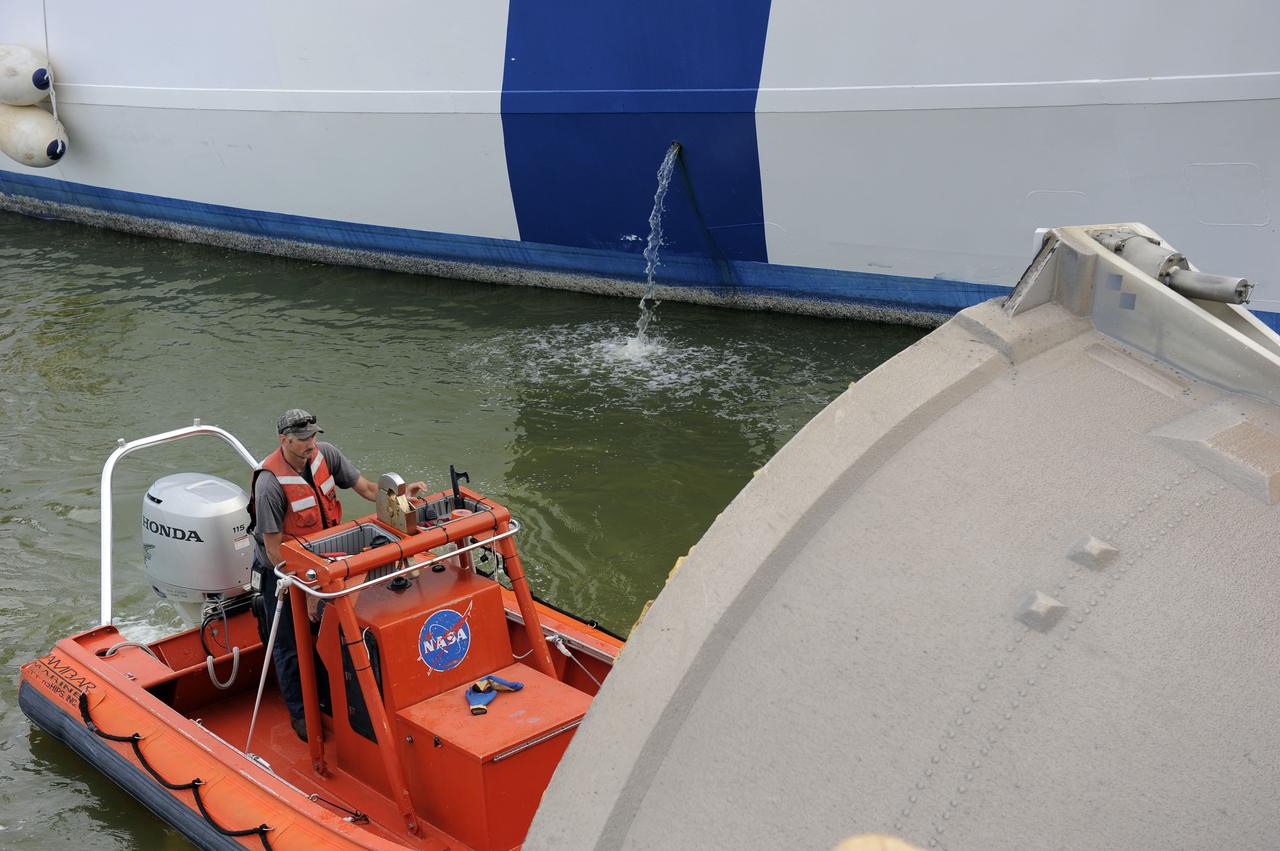
CAPE CANAVERAL, Fla. – A United Space Alliance tugboat driver monitors the progress as Liberty Star, one of NASA’s solid rocket booster retrieval ships, tows a spent booster from space shuttle Atlantis’ final launch to Port Canaveral in Florida. The shuttle’s two solid rocket booster casings and associated flight hardware are recovered in the Atlantic Ocean after every launch by Freedom Star and Liberty Star. The boosters impact the Atlantic about seven minutes after liftoff, and the retrieval ships are stationed about 10 miles from the impact area at the time of splashdown. After the spent segments are processed, they will be transported to Utah, where they will be deserviced and stored, if needed. Atlantis began its final flight, STS-135, at 11:29 a.m. EDT on July 8 to deliver the Raffaello multi-purpose logistics module packed with supplies and spare parts to the International Space Station. Photo credit: NASA/Kim Shiflett
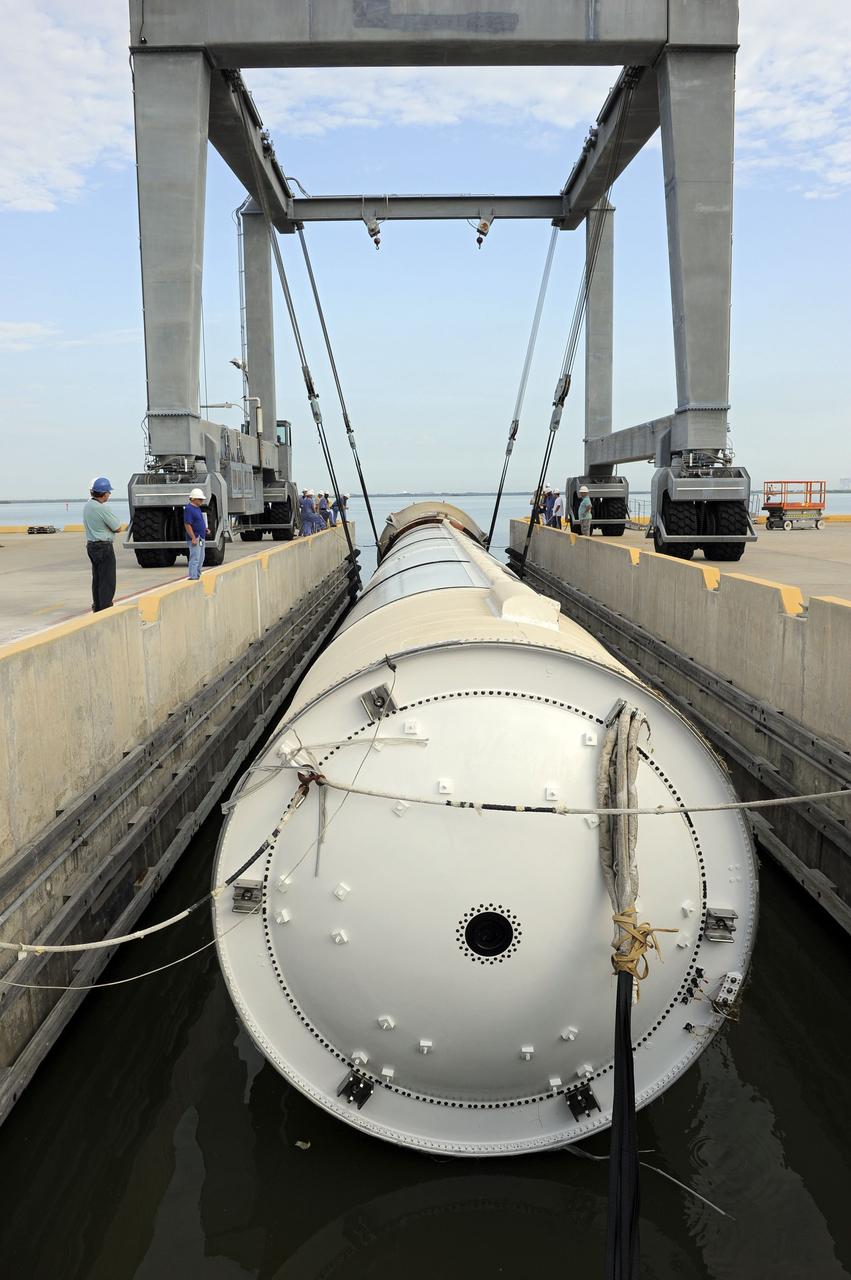
CAPE CANAVERAL, Fla. – One of two solid rocket boosters is secured to a mooring at Port Canaveral in Florida. Liberty Star, one of NASA’s two booster retrieval ships, towed the spent booster from space shuttle Atlantis’ final launch to the port. The shuttle’s two solid rocket booster casings and associated flight hardware are recovered in the Atlantic Ocean after every launch by Freedom Star and Liberty Star. The boosters impact the Atlantic about seven minutes after liftoff, and the retrieval ships are stationed about 10 miles from the impact area at the time of splashdown. After the spent segments are processed, they will be transported to Utah, where they will be deserviced and stored, if needed. Atlantis began its final flight, STS-135, at 11:29 a.m. EDT on July 8 to deliver the Raffaello multi-purpose logistics module packed with supplies and spare parts to the International Space Station. Photo credit: NASA/Kim Shiflett
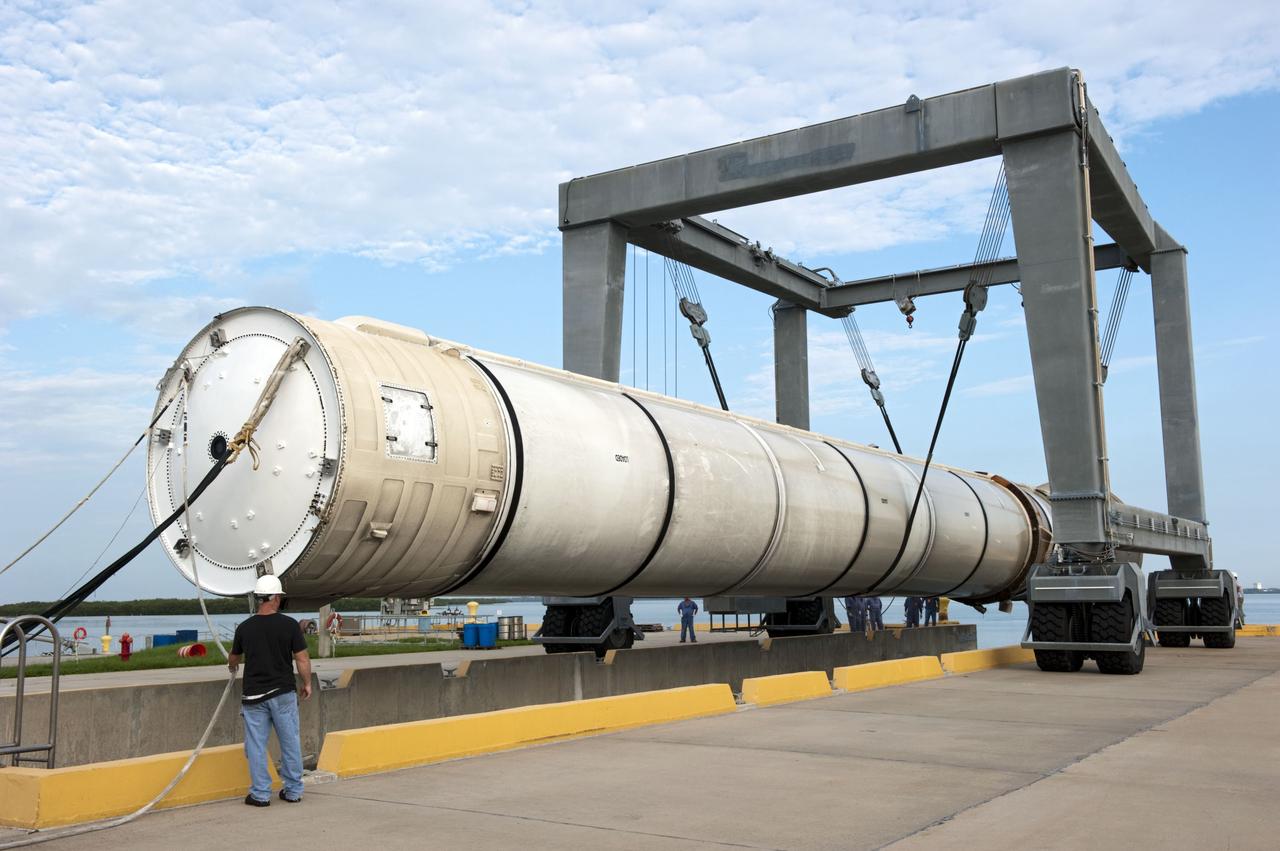
CAPE CANAVERAL, Fla. – One of two solid rocket boosters is lifted above a mooring at Port Canaveral in Florida. Liberty Star, one of NASA’s two booster retrieval ships, towed the spent booster from space shuttle Atlantis’ final launch to the port. The shuttle’s two solid rocket booster casings and associated flight hardware are recovered in the Atlantic Ocean after every launch by Freedom Star and Liberty Star. The boosters impact the Atlantic about seven minutes after liftoff, and the retrieval ships are stationed about 10 miles from the impact area at the time of splashdown. After the spent segments are processed, they will be transported to Utah, where they will be deserviced and stored, if needed. Atlantis began its final flight, STS-135, at 11:29 a.m. EDT on July 8 to deliver the Raffaello multi-purpose logistics module packed with supplies and spare parts to the International Space Station. Photo credit: NASA/Kim Shiflett
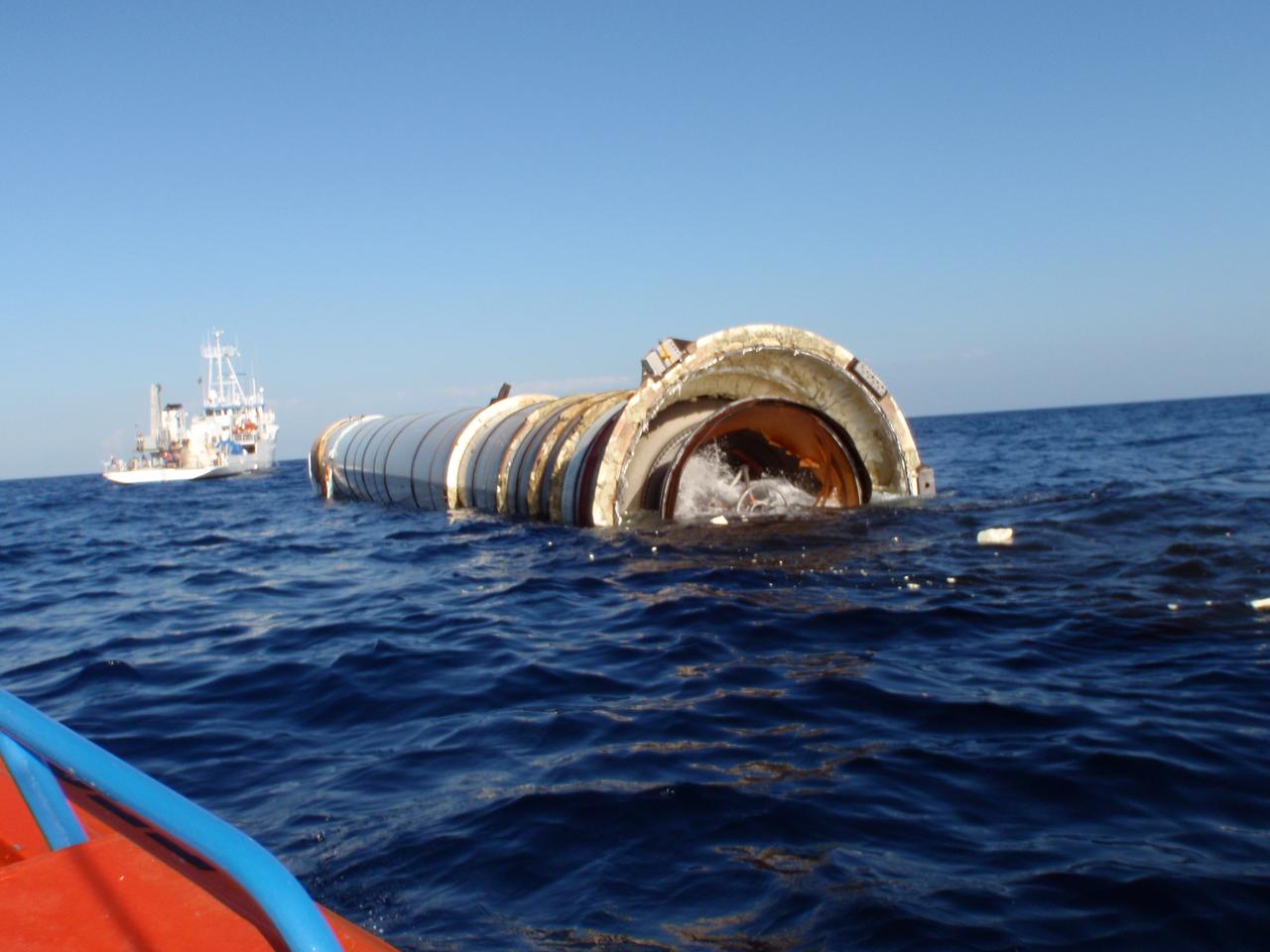
CAPE CANAVERAL, Fla. -- A spent solid rocket booster from Discovery's STS-133 launch bobbed in the Atlantis Ocean off the coast of Florida, before toppling over in a retrievable position. The booster is pumped with air to help maintain its flotation and horizontal position. Next, one of NASA's solid rocket booster retrieval ships, Liberty Star or Freedom Star, will tie up to the booster and transport it to Hangar AF at Cape Canaveral Air Force Station. The shuttle’s two solid rocket booster casings and associated flight hardware are recovered after every launch by the two ships. The boosters impact the Atlantic about seven minutes after liftoff and the retrieval ships are stationed about 10 miles from the impact area at the time of splashdown. After the spent segments are processed, they will be transported to Utah, where they will be refurbished and stored, if needed. Photo credit: NASA/Frank Michaux
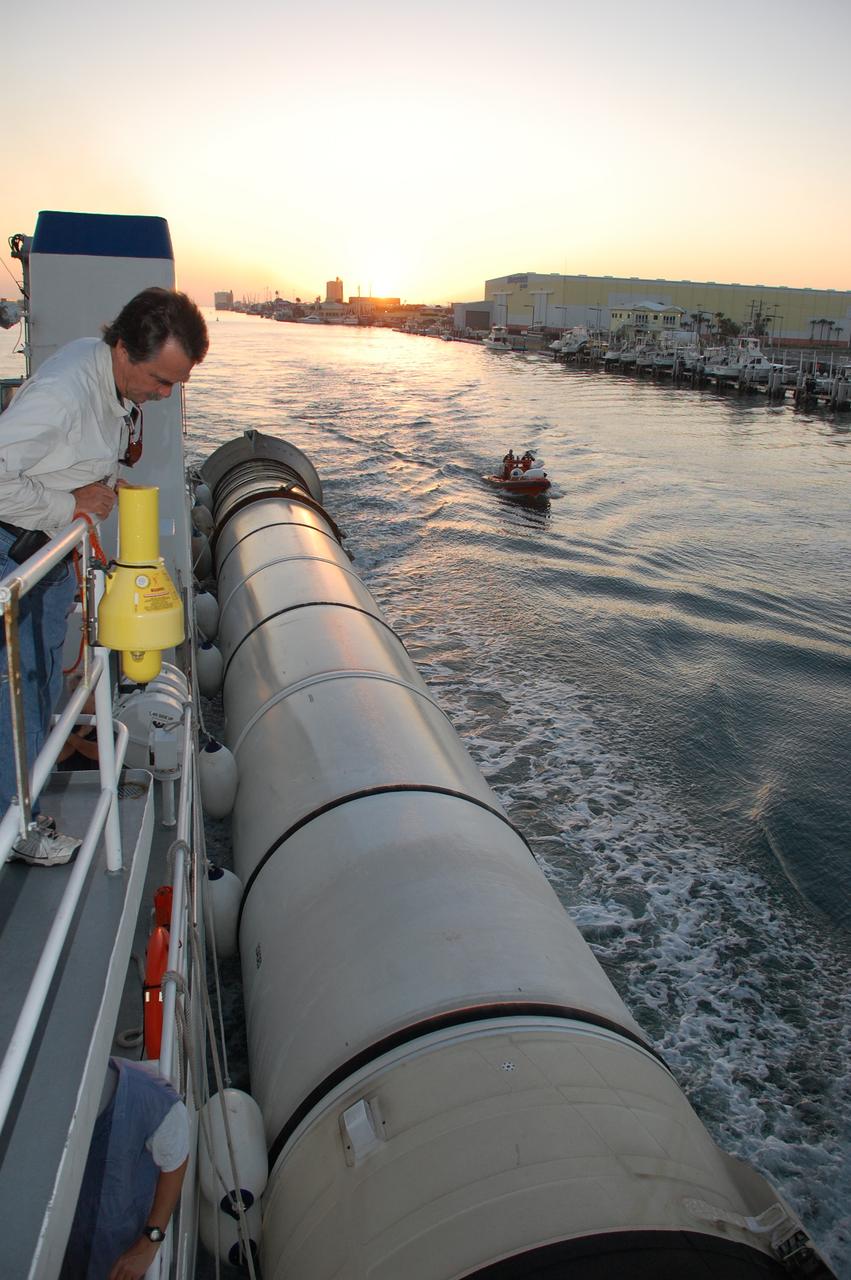
CAPE CANAVERAL, Fla. -- As daylight breaks, Walt Adams, a space shuttle solid rocket booster retrieval and dive supervisor, monitors a spent booster as it's towed by the Freedom Star retrieval ship through Port Canaveral in Florida on a journey to Hangar AF at Cape Canaveral Air Force Station. The booster was used during space shuttle Discovery's STS-133 launch from NASA Kennedy Space Center's Launch Pad 39A on Feb. 24. The shuttle’s two solid rocket booster casings and associated flight hardware are recovered in the Atlantic Ocean after every launch by Freedom Star and Liberty Star. The boosters impact the Atlantic about seven minutes after liftoff and the retrieval ships are stationed about 10 miles from the impact area at the time of splashdown. After the spent segments are processed, they will be transported to Utah, where they will be refurbished and stored, if needed. Photo credit: NASA/Ben Smegelsky
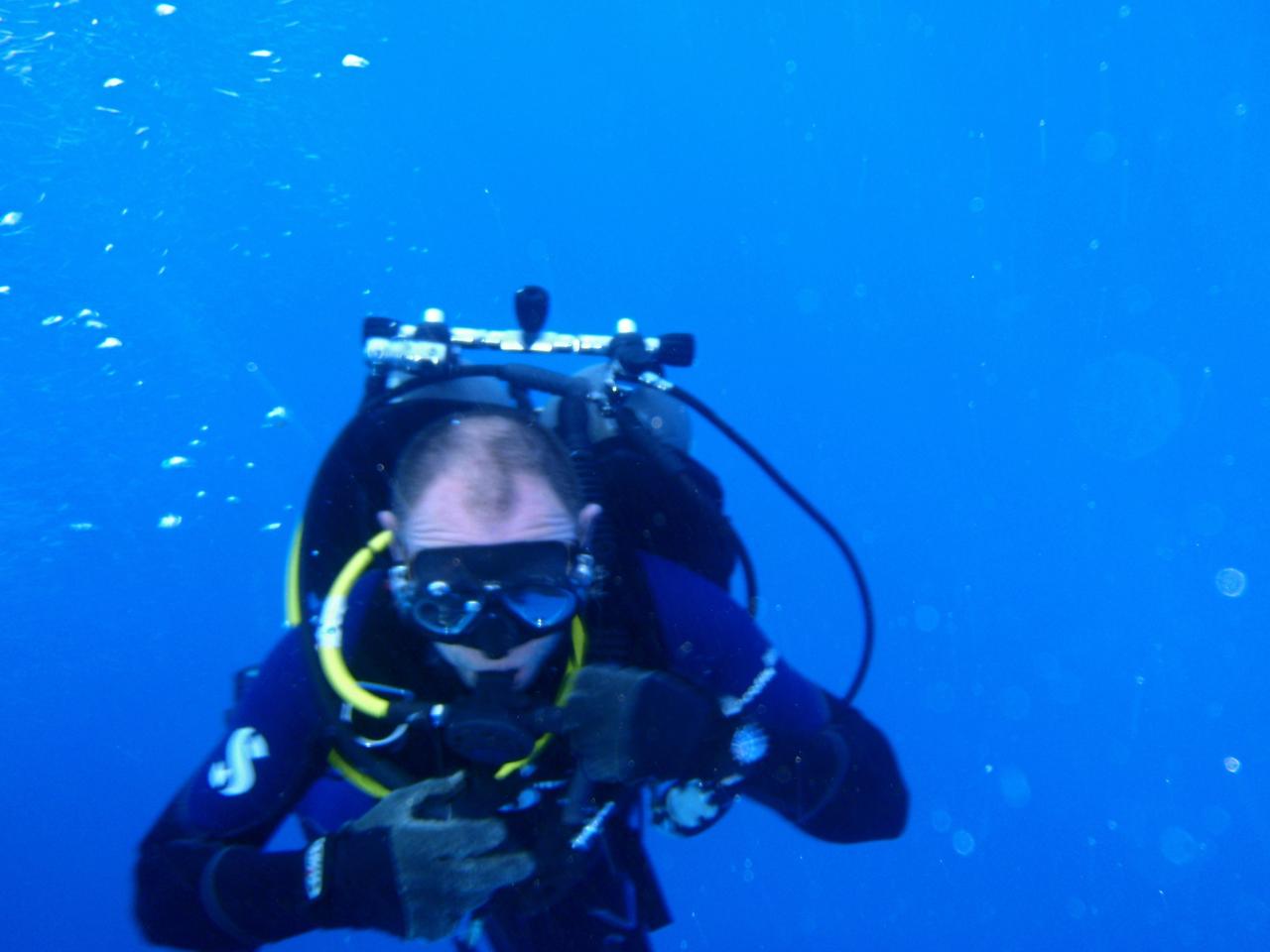
CAPE CANAVERAL, Fla. -- A diver from Liberty Star, one of NASA's solid rocket booster retrieval ships, helps retrieve a spent shuttle booster in the Atlantic Ocean off the coast of Florida. The booster, which was used during space shuttle Discovery's STS-133 launch from NASA Kennedy Space Center's Launch Pad 39A on Feb. 24, will be transported to Hangar AF at Cape Canaveral Air Force Station. The shuttle’s two solid rocket booster casings and associated flight hardware are recovered after every launch by Liberty Star and Freedom Star. The boosters impact the Atlantic about seven minutes after liftoff and the retrieval ships are stationed about 10 miles from the impact area at the time of splashdown. After the spent segments are processed, they will be transported to Utah, where they will be refurbished and stored, if needed. Photo credit: NASA/Frank Michaux
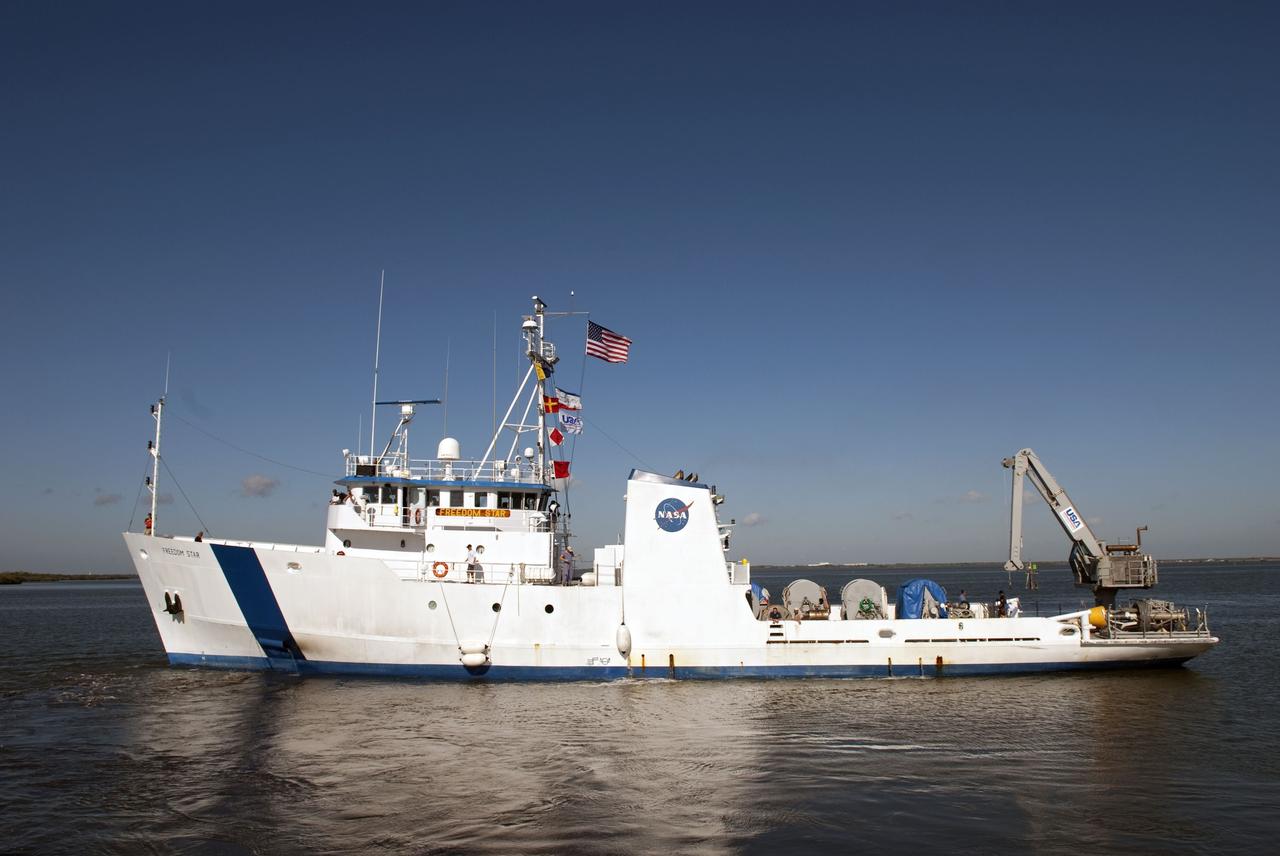
CAPE CANAVERAL, Fla. -- The Solid Rocket Booster Retrieval Ship Freedom Star leaves the dock at Hangar AF at Cape Canaveral Air Force Station and heads back to its home base at the Turn Basin at NASA's Kennedy Space Center in Florida. The ship recently retrieved a booster that was used during space shuttle Discovery's STS-133 launch from Kennedy's Launch Pad 39A on Feb. 24. The shuttle’s two solid rocket booster casings and associated flight hardware are recovered in the Atlantic Ocean after every launch by Liberty Star and Freedom Star. The boosters impact the Atlantic about seven minutes after liftoff and the retrieval ships are stationed about 10 miles from the impact area at the time of splashdown. After the spent segments are processed, they will be transported to Utah, where they will be refurbished and stored, if needed. Photo credit: NASA/Jim Grossmann
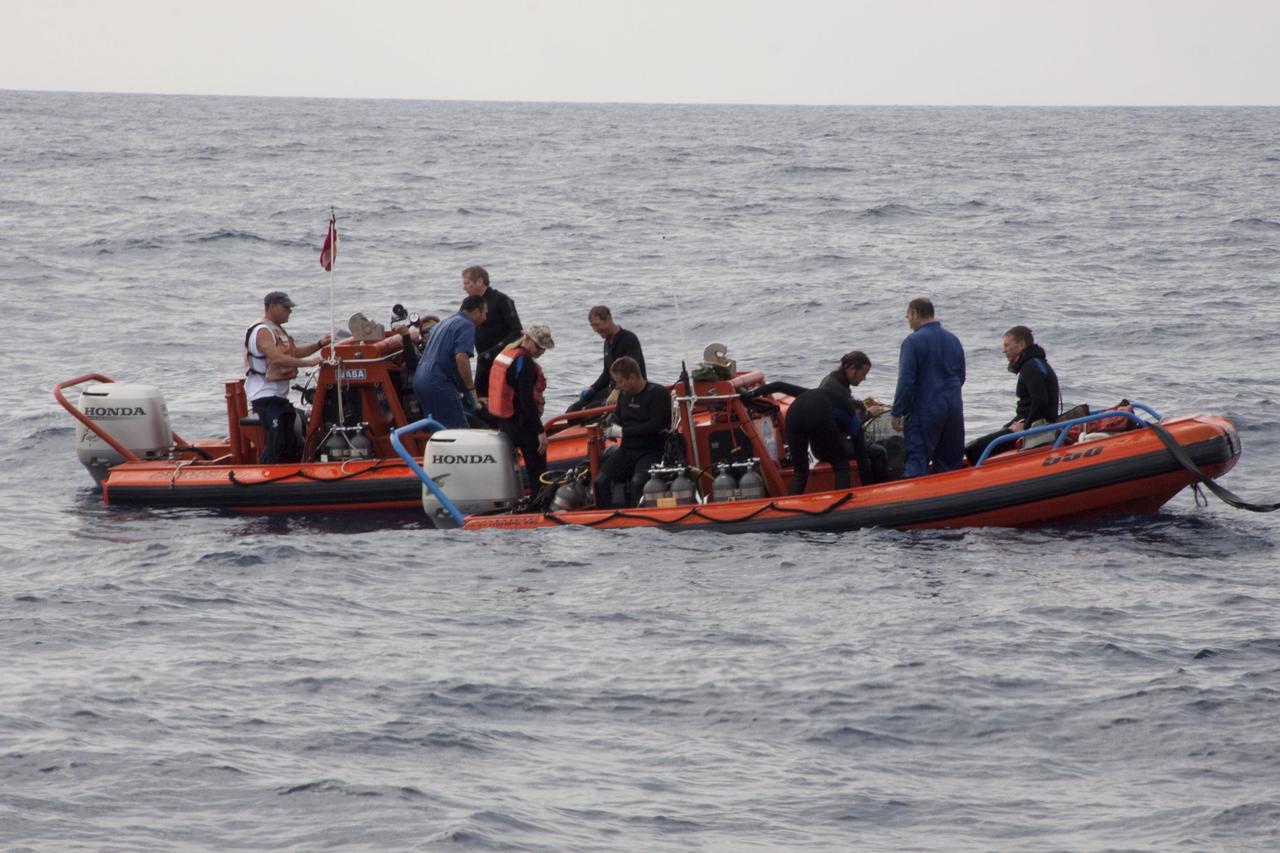
CAPE CANAVERAL, Fla. -- Crew members and divers in skiffs from Liberty Star, one of NASA's solid rocket booster retrieval ships, are prepared to retrieve the parachute lines from the right spent booster bobbing in the Atlantic Ocean from space shuttle Discovery's final launch. The shuttle's two solid rocket booster casings and associated flight hardware are recovered in the Atlantic Ocean after every launch by Freedom Star and Liberty Star. The boosters impact the Atlantic about seven minutes after liftoff and the retrieval ships are stationed about 10 miles from the impact area at the time of splashdown. After the spent segments are processed, they will be transported to Utah, where they will be refurbished and stored, if needed. Photo credit: NASA/Frank Michaux
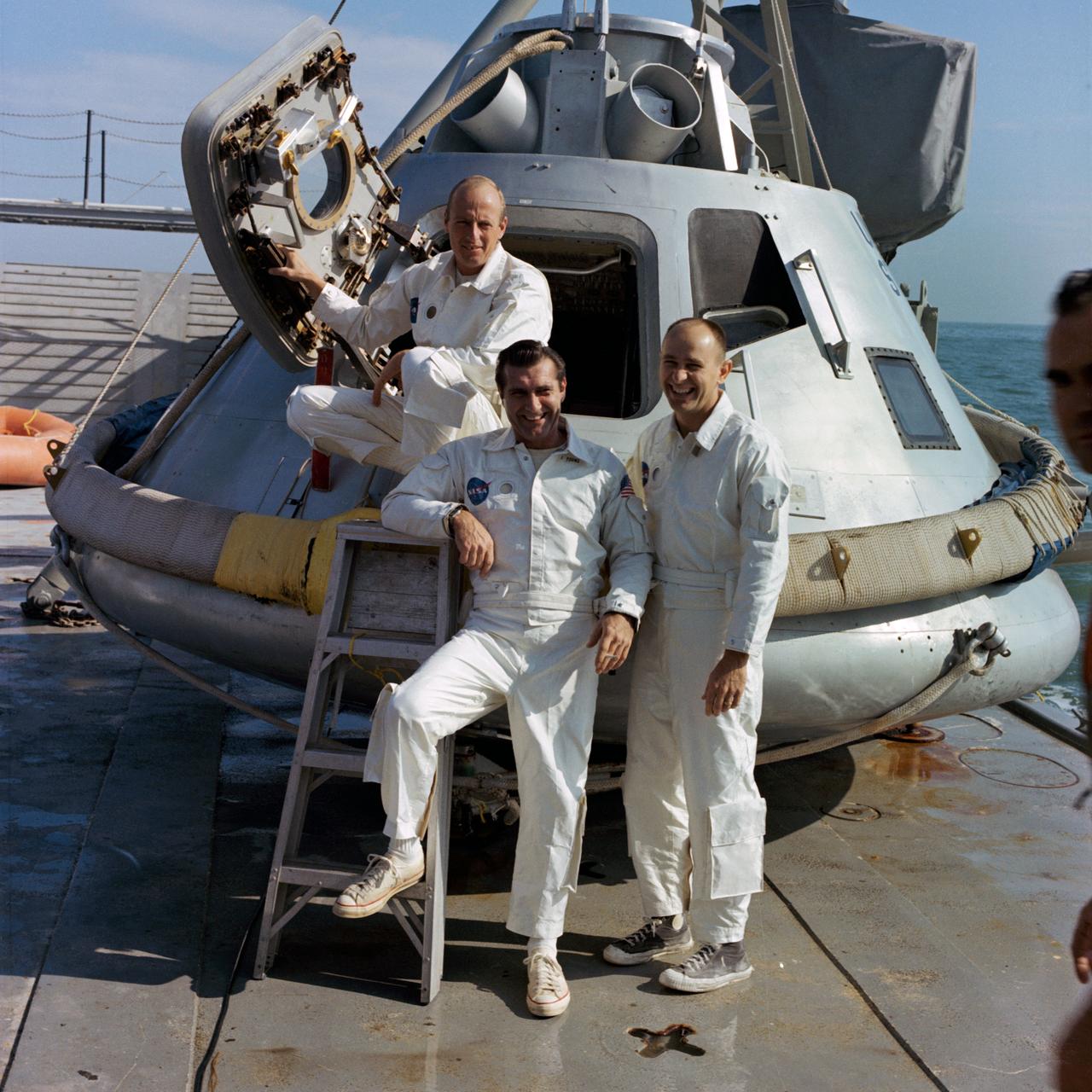
S68-51700 (November 1968) --- The backup crew of the Apollo 9 (Spacecraft 104/ Lunar Module 3/ Saturn 504) space mission stands on the deck of the NASA Motor Vessel Retriever (MVR) prior to participating in water egress training in the Gulf of Mexico. Left to right, are astronauts Charles Conrad Jr. (holding hatch), Richard F. Gordon Jr., and Alan L. Bean. They are standing by the Apollo command module trainer which was used in the exercise. Since this photograph was made, these three astronauts have been named as the prime crew of the Apollo 12 lunar landing mission.
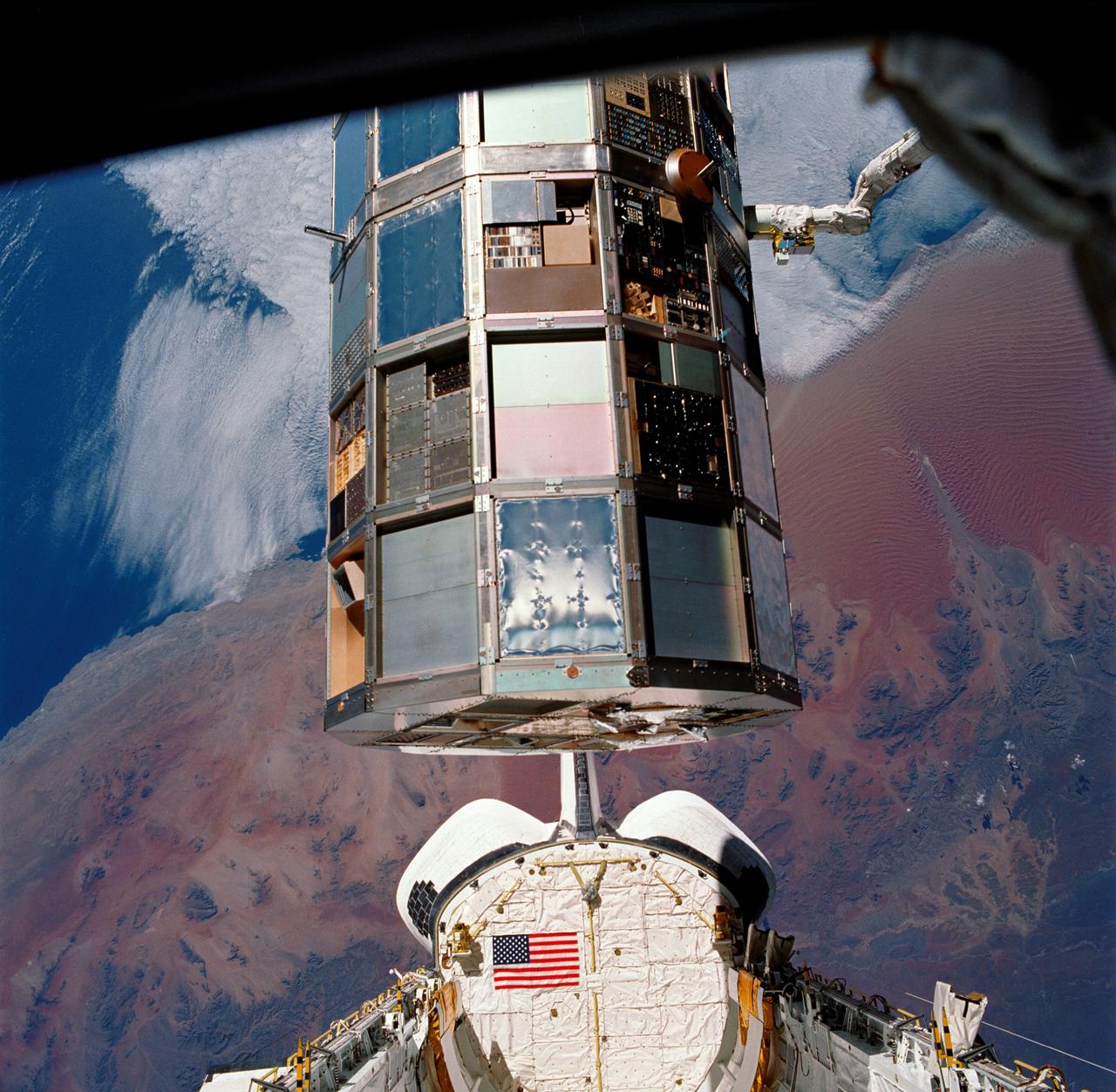
STS032-85-029 (12 Jan. 1990) --- (ORIENT PHOTO WITH COLUMBIA'S CARGO BAY IN LOWER CENTER). This 70mm frame was taken during a battery of documentary photographs of the recently-recaptured Long Duration Exposure Facility (LEDF). The Atlantic Coast of Namibia serves as a backdrop for the colorful scene. After five-and-one half years orbiting Earth, LDEF was retrieved by STS-32 crewmembers and brought back home at the end of the eleven-day mission for scientific observation. The bus-sized spacecraft was held in the grasp of Columbia's remote manipulator system (RMS) end effector during the survey.
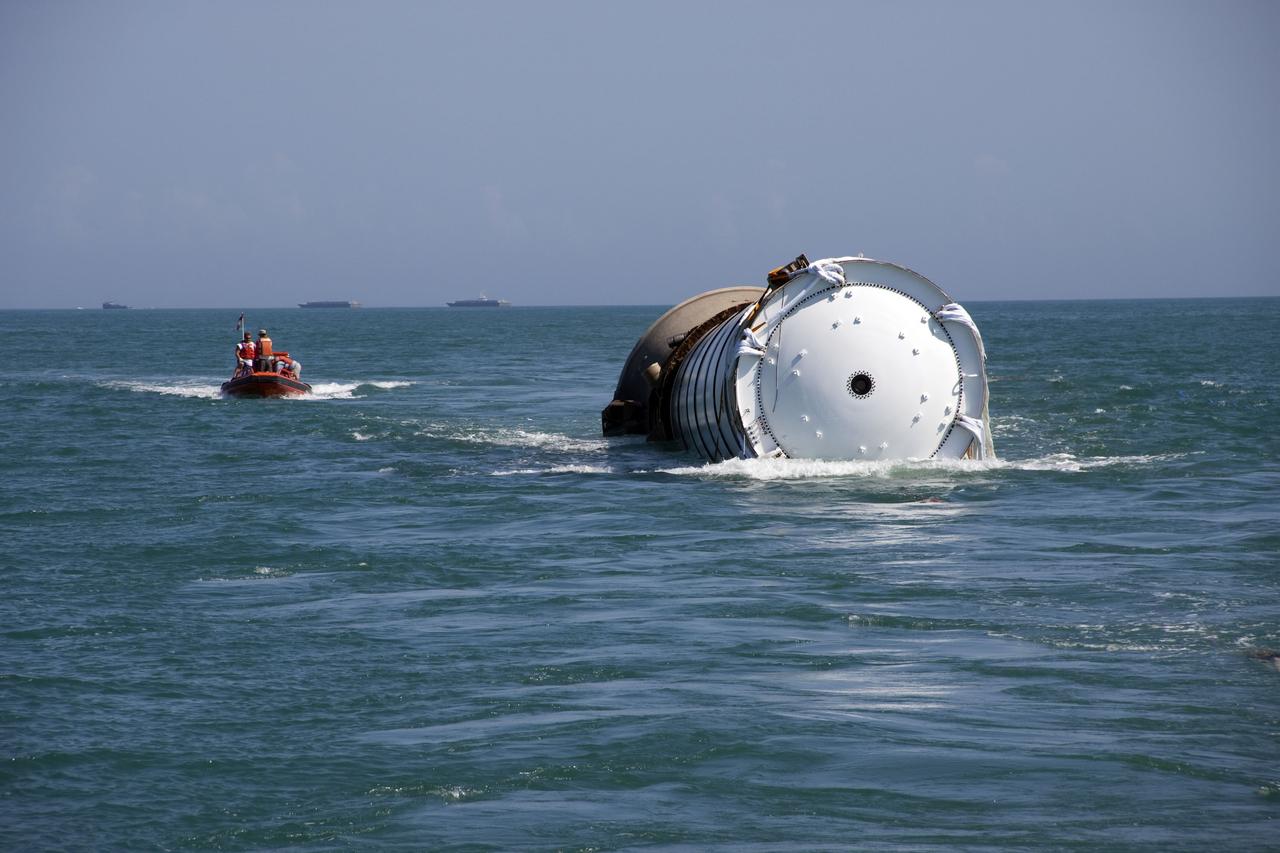
CAPE CANAVERAL, Fla. -- Liberty Star, one of NASA's solid rocket booster retrieval ships, tows the right spent booster from space shuttle Discovery's final launch, to Port Canaveral in Florida. The shuttle's two solid rocket booster casings and associated flight hardware are recovered in the Atlantic Ocean after every launch by Freedom Star and Liberty Star. The boosters impact the Atlantic about seven minutes after liftoff and the retrieval ships are stationed about 10 miles from the impact area at the time of splashdown. After the spent segments are processed, they will be transported to Utah, where they will be refurbished and stored, if needed. Photo credit: NASA/Frank Michaux
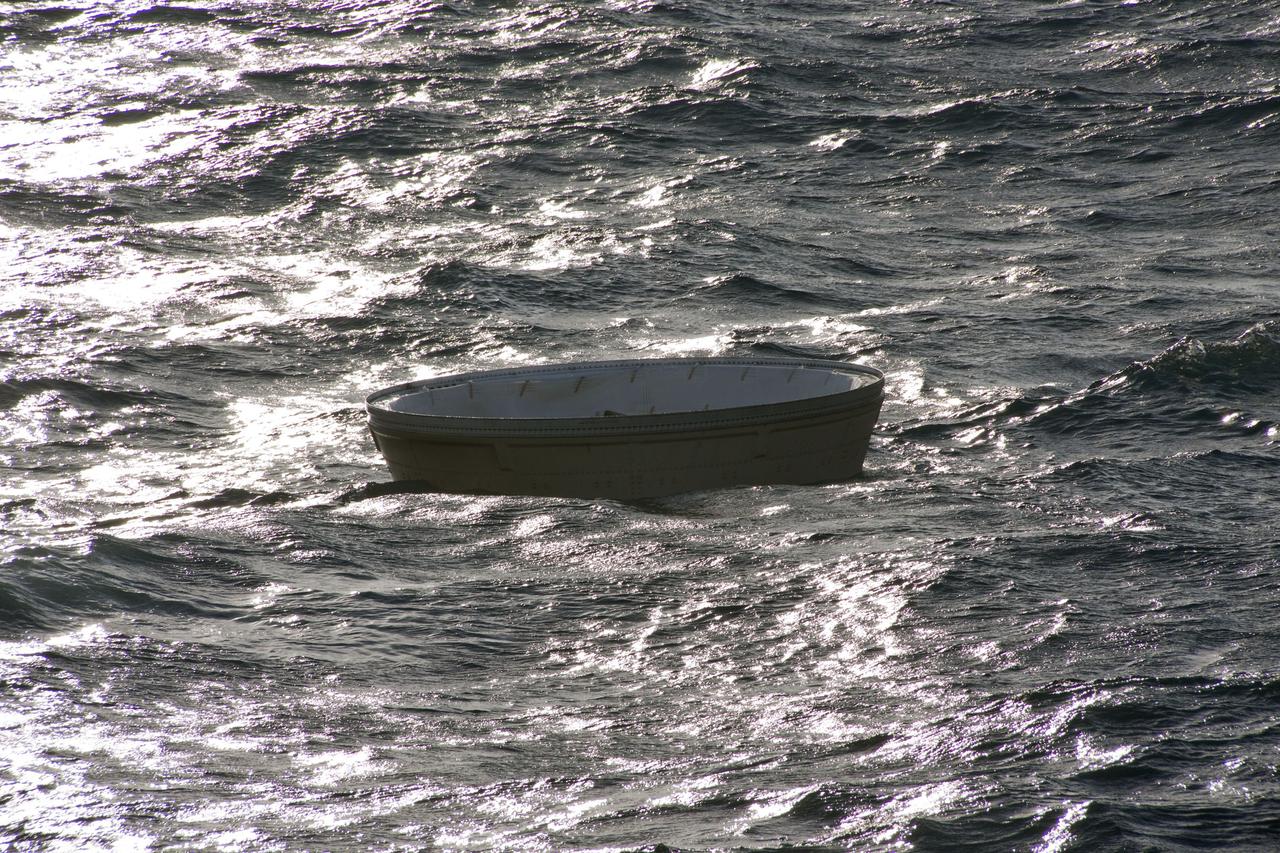
CAPE CANAVERAL, Fla. -- A nose cap from the right spent booster can be seen bobbing in the Atlantic Ocean, waiting to be recovered by the crew members of Liberty Star, one of NASA's solid rocket booster retrieval ships. The shuttle’s two solid rocket booster casings and associated flight hardware are recovered in the Atlantic Ocean after every launch by Freedom Star and Liberty Star. The boosters impact the Atlantic about seven minutes after liftoff and the retrieval ships are stationed about 10 miles from the impact area at the time of splashdown. After the spent segments are processed, they will be transported to Utah, where they will be refurbished and stored, if needed. Photo credit: NASA/Frank Michaux
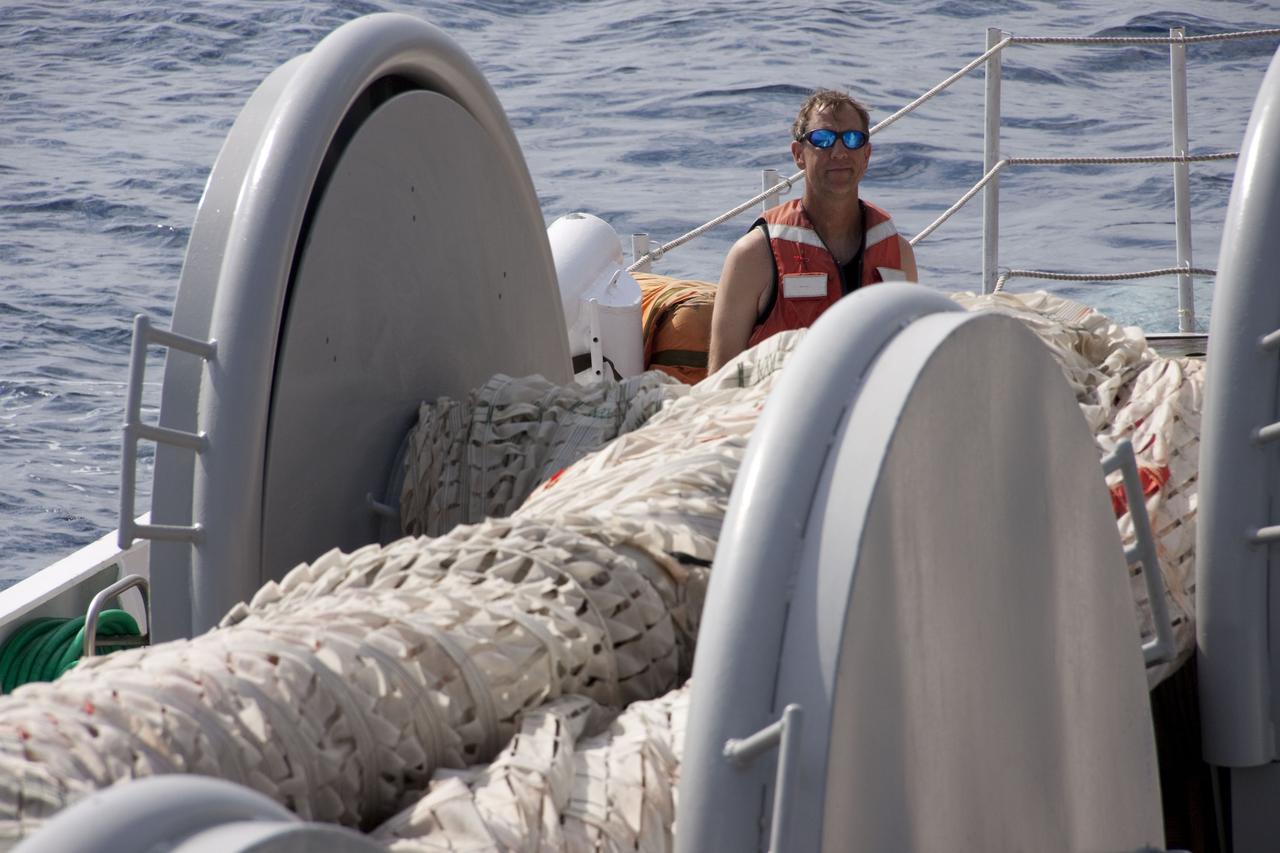
CAPE CANAVERAL, Fla. -- A crew member on Liberty Star, one of NASA's solid rocket booster retrieval ships, monitors the progress as the massive parachute from the right spent booster from space shuttle Discovery's final launch is hauled on board. The shuttle's two solid rocket booster casings and associated flight hardware are recovered in the Atlantic Ocean after every launch by Freedom Star and Liberty Star. The boosters impact the Atlantic about seven minutes after liftoff and the retrieval ships are stationed about 10 miles from the impact area at the time of splashdown. After the spent segments are processed, they will be transported to Utah, where they will be refurbished and stored, if needed. Photo credit: NASA/Frank Michaux
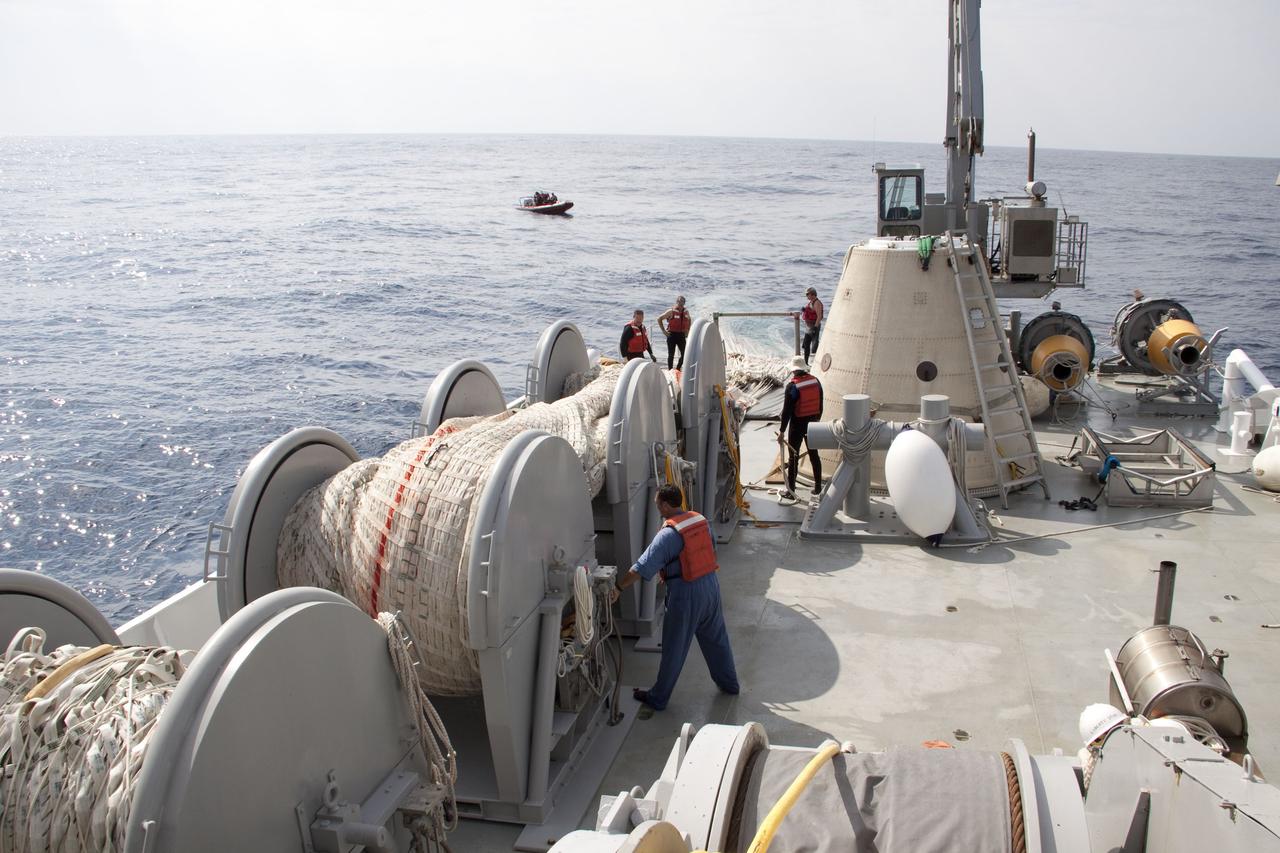
CAPE CANAVERAL, Fla. -- Crew members on board Liberty Star, one of NASA's solid rocket booster retrieval ships, haul in the massive parachute from the right spent booster from space shuttle Discovery's final launch. The shuttle's two solid rocket booster casings and associated flight hardware are recovered in the Atlantic Ocean after every launch by Freedom Star and Liberty Star. The boosters impact the Atlantic about seven minutes after liftoff and the retrieval ships are stationed about 10 miles from the impact area at the time of splashdown. After the spent segments are processed, they will be transported to Utah, where they will be refurbished and stored, if needed. Photo credit: NASA/Frank Michaux
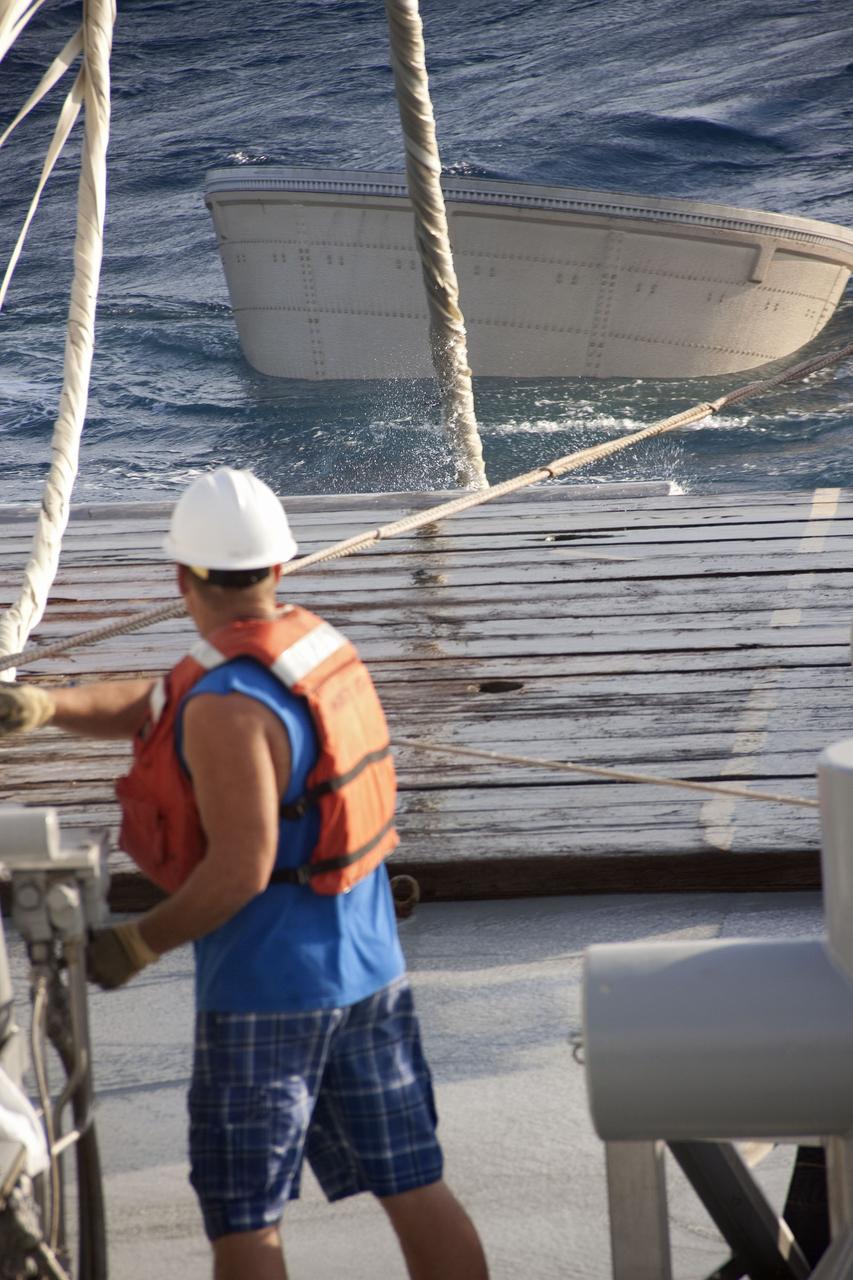
CAPE CANAVERAL, Fla. -- A crew member on Liberty Star, one of NASA's solid rocket booster retrieval ships, uses a crane to haul the right booster nose cap out of the Atlantic Ocean that splashed down after Discovery's final launch. The shuttle’s two solid rocket booster casings and associated flight hardware are recovered in the Atlantic Ocean after every launch by Freedom Star and Liberty Star. The boosters impact the Atlantic about seven minutes after liftoff and the retrieval ships are stationed about 10 miles from the impact area at the time of splashdown. After the spent segments are processed, they will be transported to Utah, where they will be refurbished and stored, if needed. Photo credit: NASA/Frank Michaux
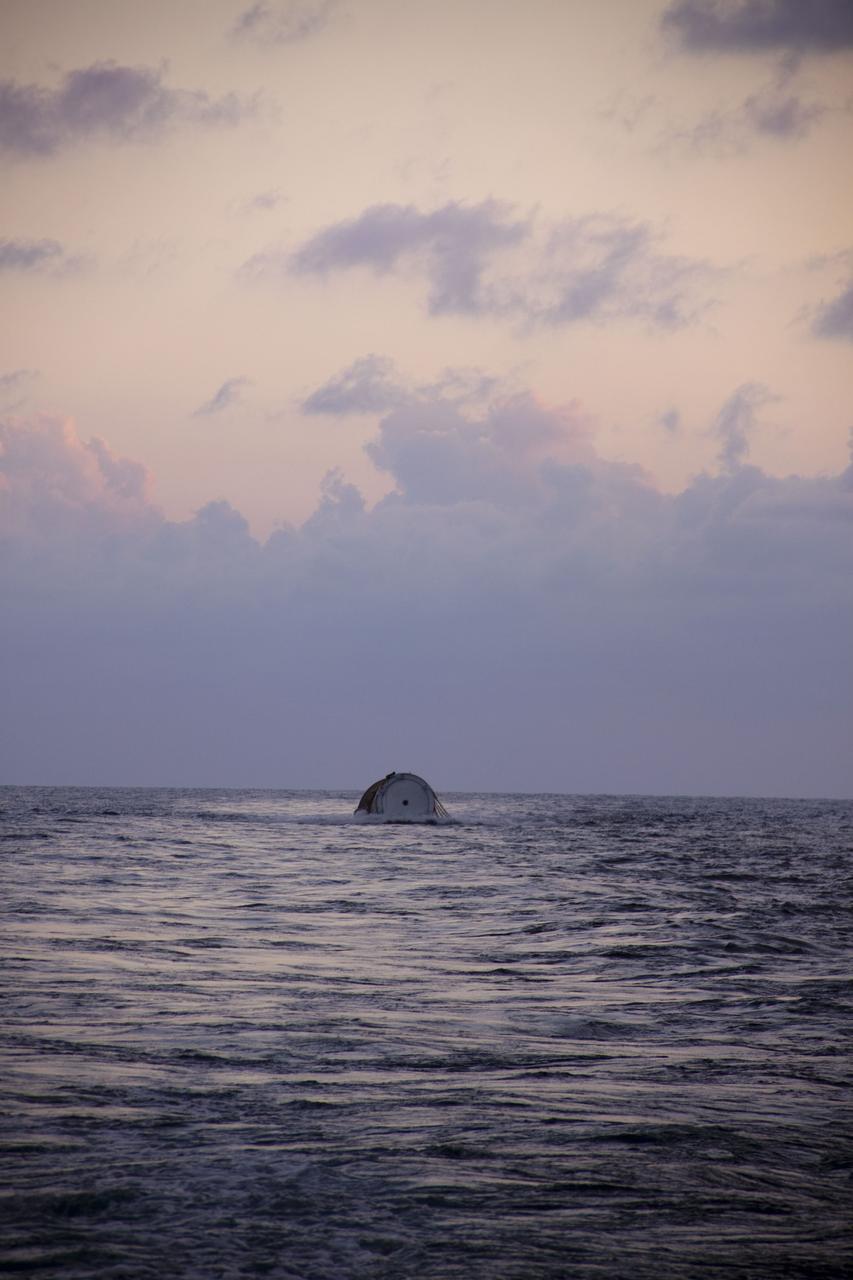
CAPE CANAVERAL, Fla. -- Liberty Star, one of NASA's solid rocket booster retrieval ships, tows the right spent booster from space shuttle Discovery's final launch, to Port Canaveral in Florida. The shuttle's two solid rocket booster casings and associated flight hardware are recovered in the Atlantic Ocean after every launch by Freedom Star and Liberty Star. The boosters impact the Atlantic about seven minutes after liftoff and the retrieval ships are stationed about 10 miles from the impact area at the time of splashdown. After the spent segments are processed, they will be transported to Utah, where they will be refurbished and stored, if needed. Photo credit: NASA/Frank Michaux
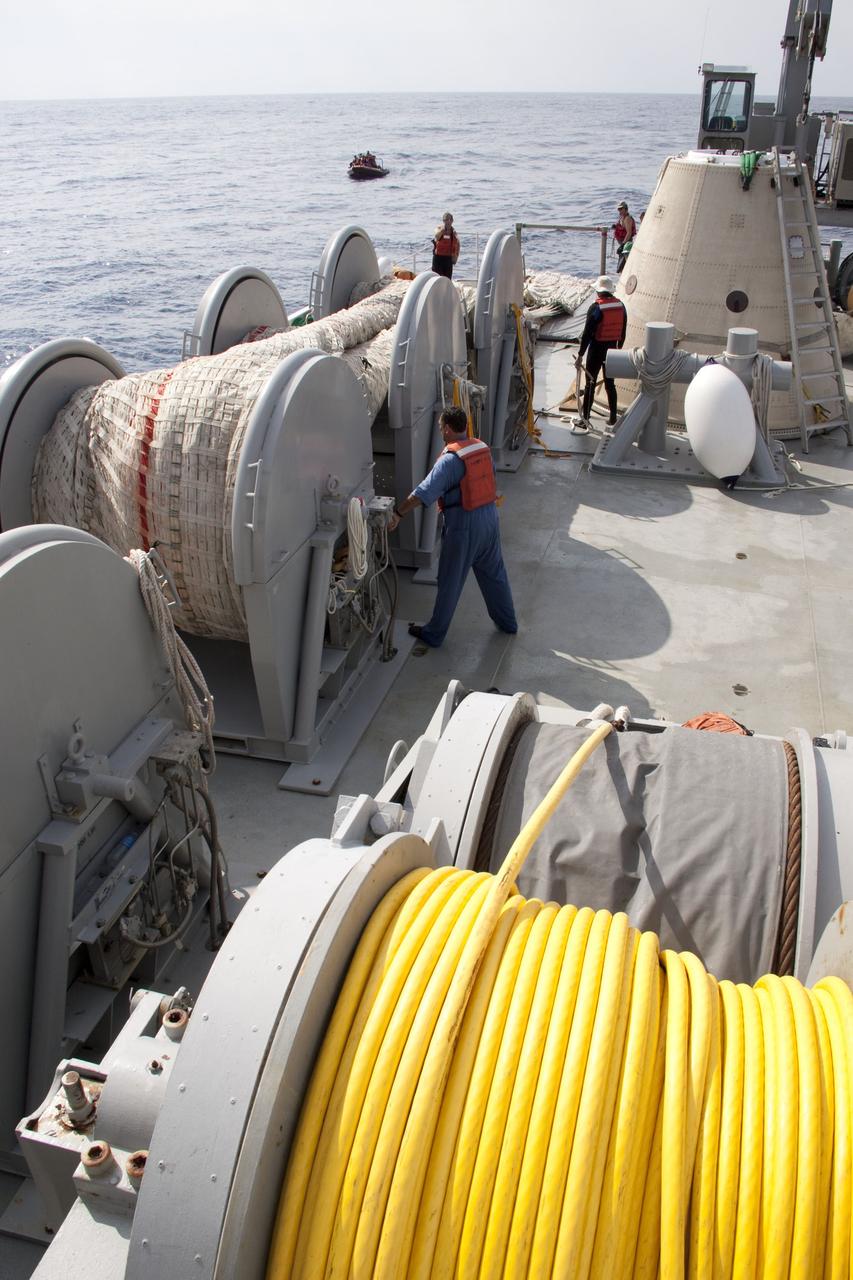
CAPE CANAVERAL, Fla. -- Crew members on board Liberty Star, one of NASA's solid rocket booster retrieval ships, haul in the massive parachute from the right spent booster from space shuttle Discovery's final launch. The shuttle's two solid rocket booster casings and associated flight hardware are recovered in the Atlantic Ocean after every launch by Freedom Star and Liberty Star. The boosters impact the Atlantic about seven minutes after liftoff and the retrieval ships are stationed about 10 miles from the impact area at the time of splashdown. After the spent segments are processed, they will be transported to Utah, where they will be refurbished and stored, if needed. Photo credit: NASA/Frank Michaux
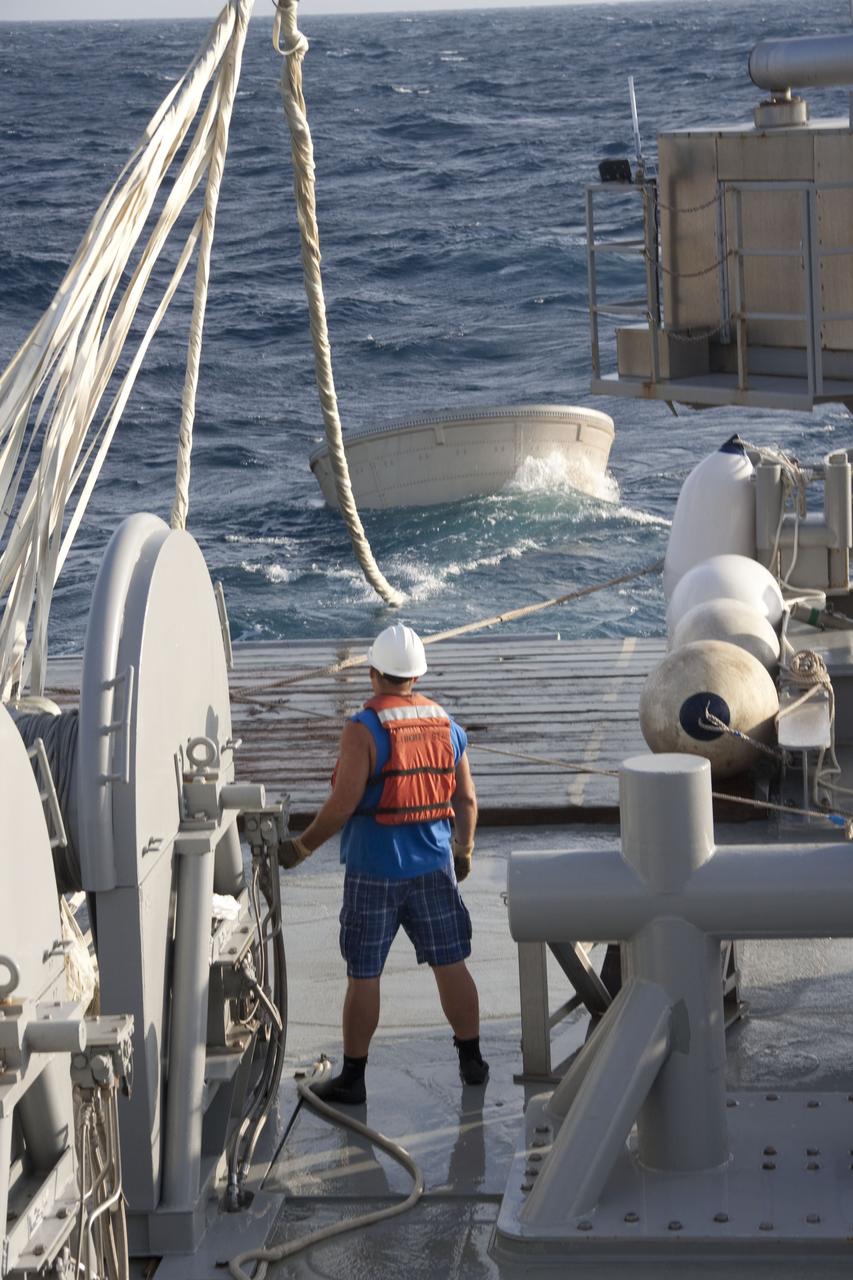
CAPE CANAVERAL, Fla. -- A crew member on Liberty Star, one of NASA's solid rocket booster retrieval ships, uses a crane to haul the right booster nose cap out of the Atlantic Ocean that splashed down after Discovery's final launch. The shuttle’s two solid rocket booster casings and associated flight hardware are recovered in the Atlantic Ocean after every launch by Freedom Star and Liberty Star. The boosters impact the Atlantic about seven minutes after liftoff and the retrieval ships are stationed about 10 miles from the impact area at the time of splashdown. After the spent segments are processed, they will be transported to Utah, where they will be refurbished and stored, if needed. Photo credit: NASA/Frank Michaux
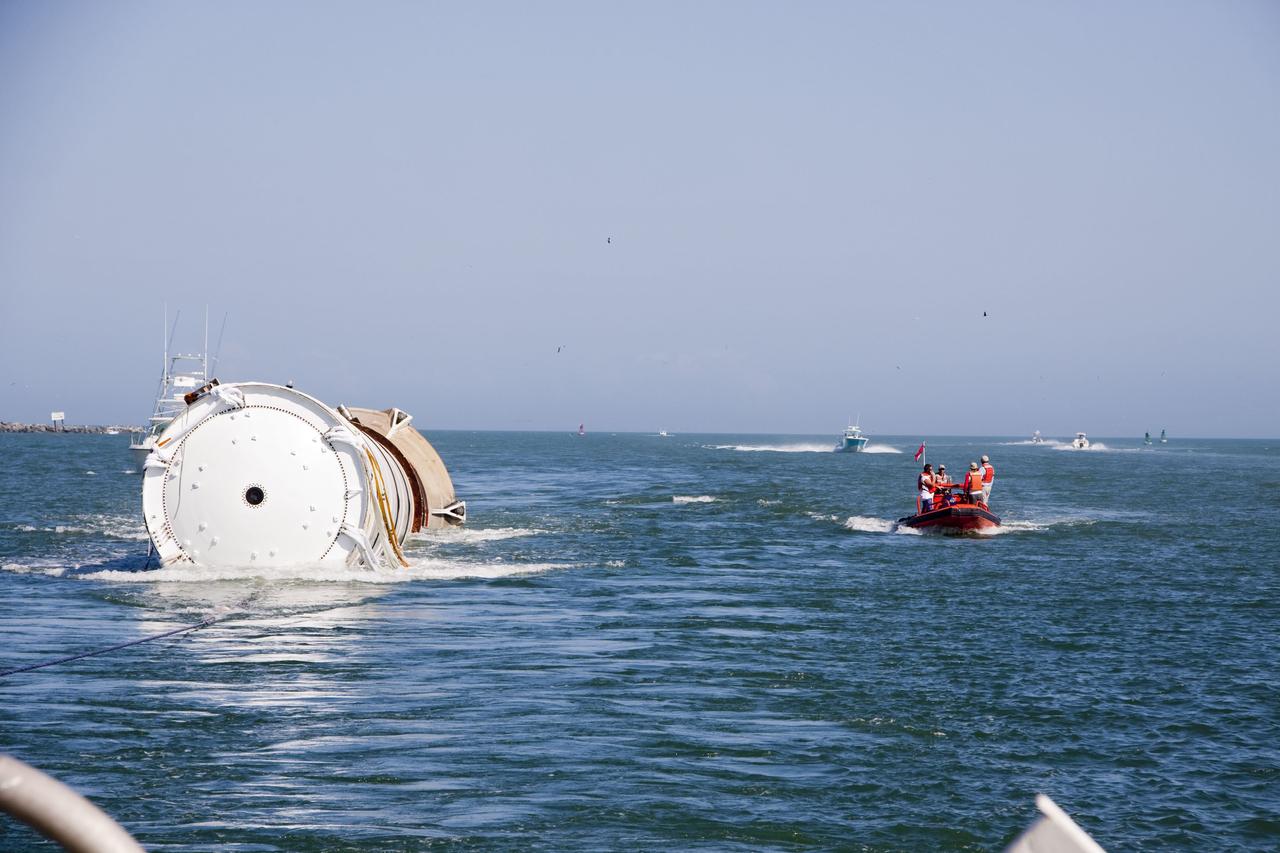
CAPE CANAVERAL, Fla. -- Liberty Star, one of NASA's solid rocket booster retrieval ships, tows the right spent booster from space shuttle Discovery's final launch, to Port Canaveral in Florida. The shuttle's two solid rocket booster casings and associated flight hardware are recovered in the Atlantic Ocean after every launch by Freedom Star and Liberty Star. The boosters impact the Atlantic about seven minutes after liftoff and the retrieval ships are stationed about 10 miles from the impact area at the time of splashdown. After the spent segments are processed, they will be transported to Utah, where they will be refurbished and stored, if needed. Photo credit: NASA/Frank Michaux
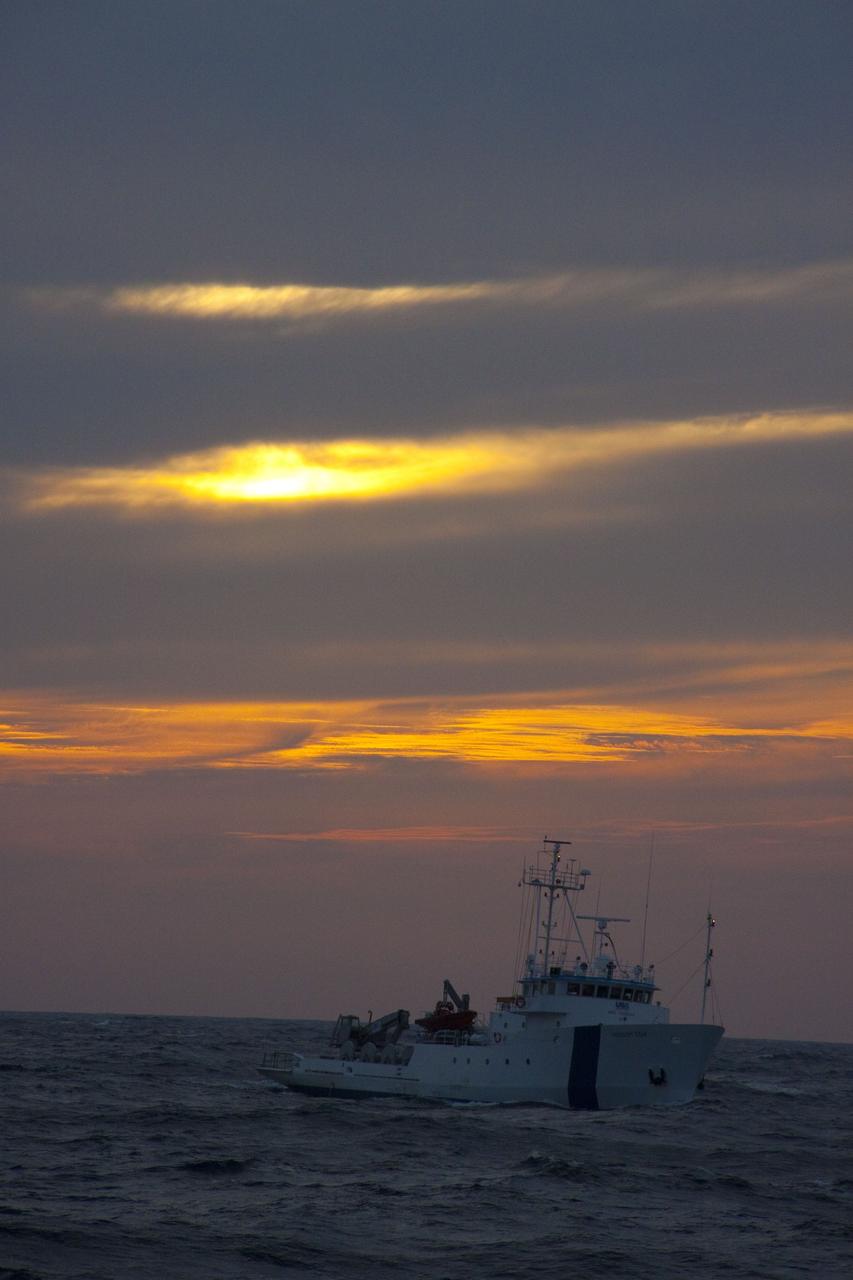
CAPE CANAVERAL, Fla. -- Dusk descends on the Freedom Star, one of NASA's solid rocket booster retrieval ships stationed in the Atlantic Ocean, to recover the right spent booster after it splashed down following space shuttle Discovery's final launch. The shuttle’s two solid rocket booster casings and associated flight hardware are recovered in the Atlantic Ocean after every launch by Freedom Star and Liberty Star. The boosters impact the Atlantic about seven minutes after liftoff and the retrieval ships are stationed about 10 miles from the impact area at the time of splashdown. After the spent segments are processed, they will be transported to Utah, where they will be refurbished and stored, if needed. Photo credit: NASA/Frank Michaux
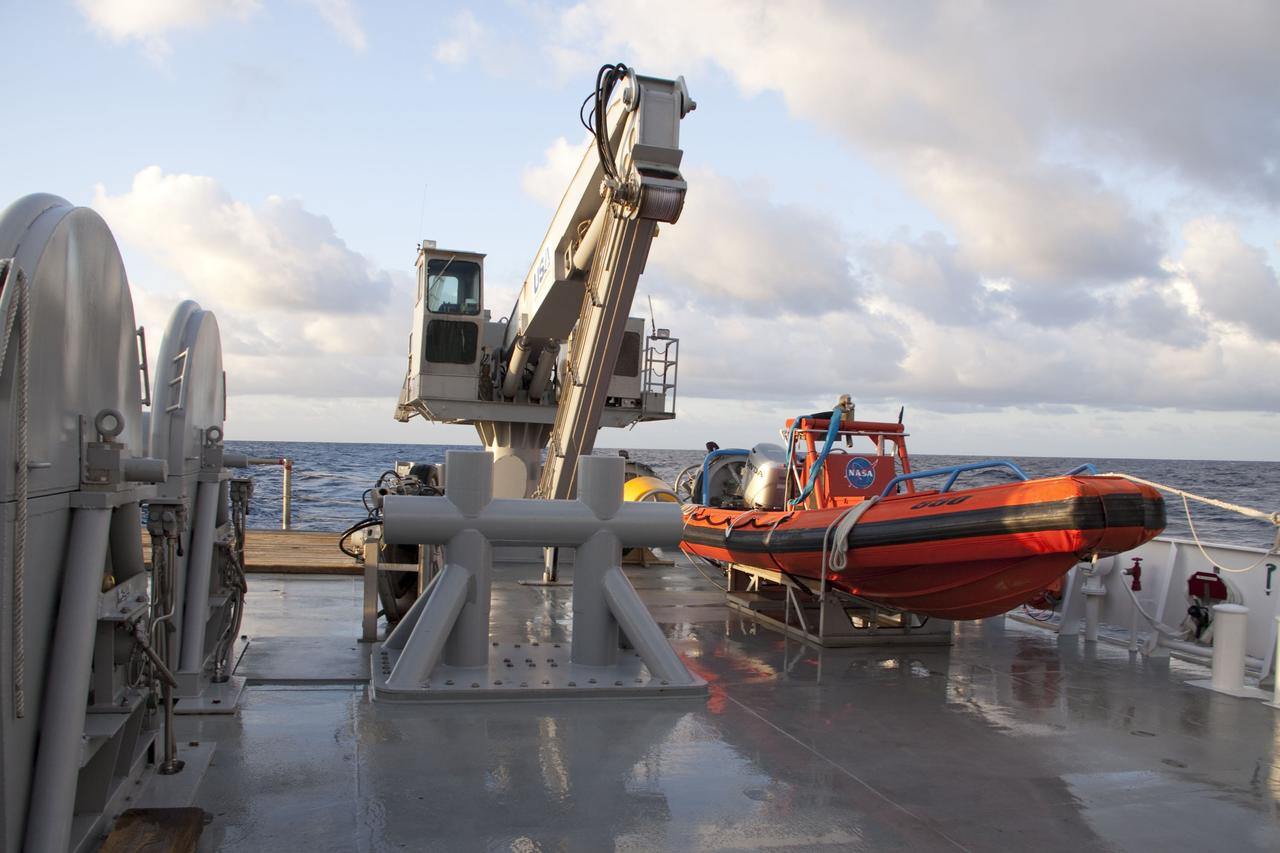
CAPE CANAVERAL, Fla. -- A crane and a skiff await Liberty Star, one of NASA's solid rocket booster retrieval ships, to reach the splash-down area where the right spent booster from Discovery's final launch has landed. The shuttle’s two solid rocket booster casings and associated flight hardware are recovered in the Atlantic Ocean after every launch by Liberty Star and Liberty Star. The boosters impact the Atlantic about seven minutes after liftoff and the retrieval ships are stationed about 10 miles from the impact area at the time of splashdown. After the spent segments are processed, they will be transported to Utah, where they will be refurbished and stored, if needed. Photo credit: NASA/Frank Michaux
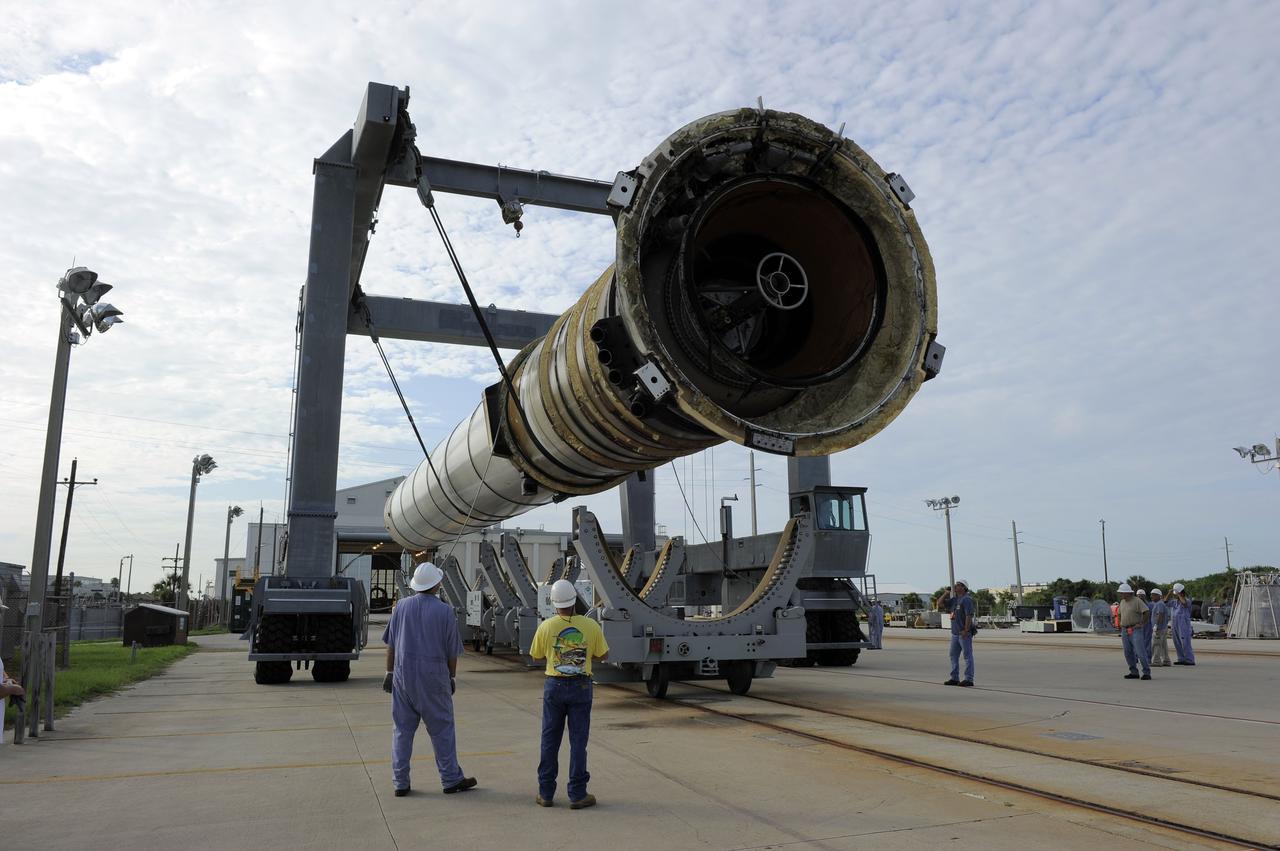
CAPE CANAVERAL, Fla. – One of two solid rocket boosters is transported to Hangar AF at Cape Canaveral Air Force Station in Florida. Liberty Star, one of NASA’s two booster retrieval ships, towed the spent booster from space shuttle Atlantis’ final launch, to a mooring at Port Canaveral. The shuttle’s two solid rocket booster casings and associated flight hardware are recovered in the Atlantic Ocean after every launch by Freedom Star and Liberty Star. The boosters impact the Atlantic about seven minutes after liftoff, and the retrieval ships are stationed about 10 miles from the impact area at the time of splashdown. After the spent segments are processed, they will be transported to Utah, where they will be deserviced and stored, if needed. Atlantis began its final flight, STS-135, at 11:29 a.m. EDT on July 8 to deliver the Raffaello multi-purpose logistics module packed with supplies and spare parts to the International Space Station. Photo credit: NASA/Kim Shiflett
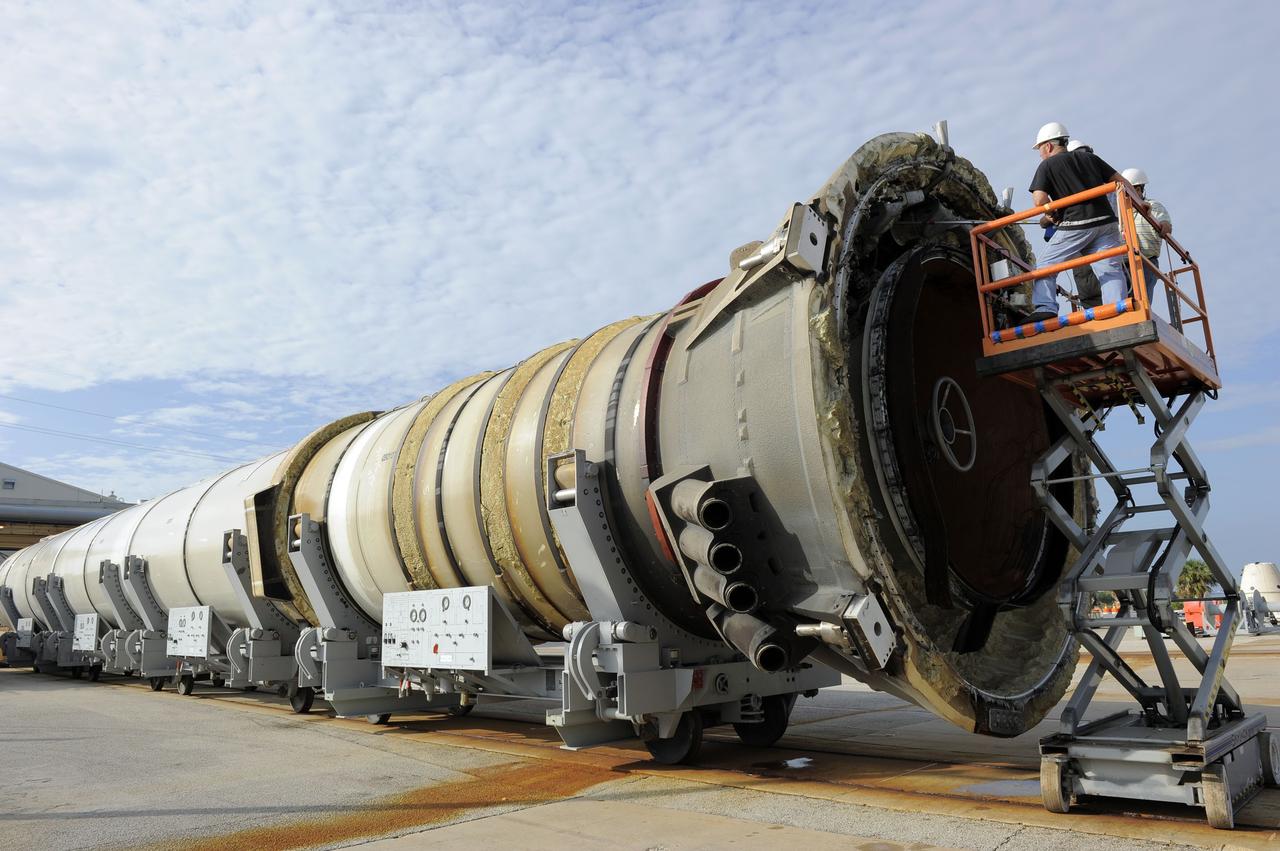
CAPE CANAVERAL, Fla. – Workers prepare one of two solid rocket boosters for deservicing at Hangar AF at Cape Canaveral Air Force Station in Florida. Liberty Star, one of NASA’s two booster retrieval ships, towed the spent booster from space shuttle Atlantis’ final launch to a mooring at Port Canaveral. The shuttle’s two solid rocket booster casings and associated flight hardware are recovered in the Atlantic Ocean after every launch by Freedom Star and Liberty Star. The boosters impact the Atlantic about seven minutes after liftoff, and the retrieval ships are stationed about 10 miles from the impact area at the time of splashdown. After the spent segments are processed, they will be transported to Utah, where they will be deserviced and stored, if needed. Atlantis began its final flight, STS-135, at 11:29 a.m. EDT on July 8 to deliver the Raffaello multi-purpose logistics module packed with supplies and spare parts to the International Space Station. Photo credit: NASA/Kim Shiflett
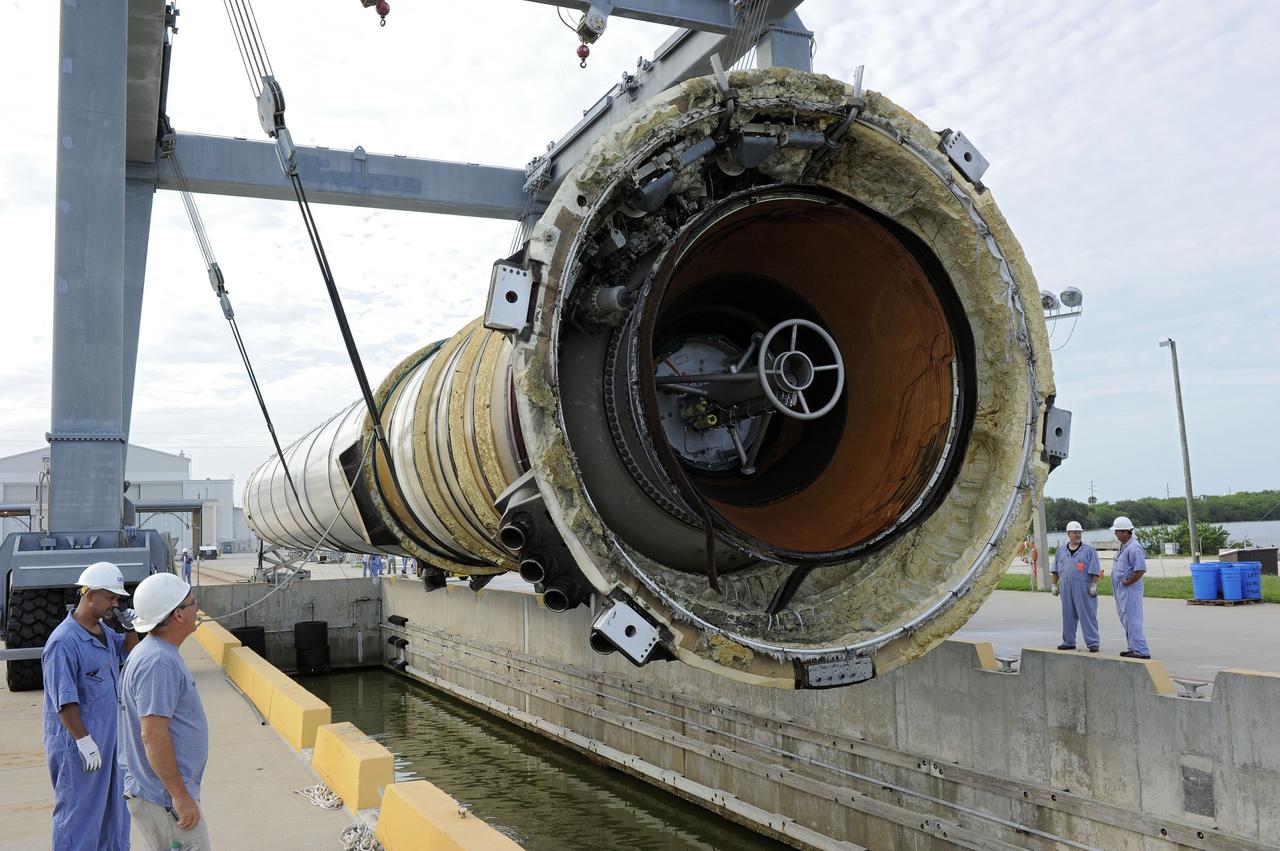
CAPE CANAVERAL, Fla. – Workers monitor the progress as one of two solid rocket boosters is lifted above a mooring at Port Canaveral in Florida. Liberty Star, one of NASA’s two booster retrieval ships, towed the spent booster from space shuttle Atlantis’ final launch to the port. The shuttle’s two solid rocket booster casings and associated flight hardware are recovered in the Atlantic Ocean after every launch by Freedom Star and Liberty Star. The boosters impact the Atlantic about seven minutes after liftoff, and the retrieval ships are stationed about 10 miles from the impact area at the time of splashdown. After the spent segments are processed, they will be transported to Utah, where they will be deserviced and stored, if needed. Atlantis began its final flight, STS-135, at 11:29 a.m. EDT on July 8 to deliver the Raffaello multi-purpose logistics module packed with supplies and spare parts to the International Space Station. Photo credit: NASA/Kim Shiflett
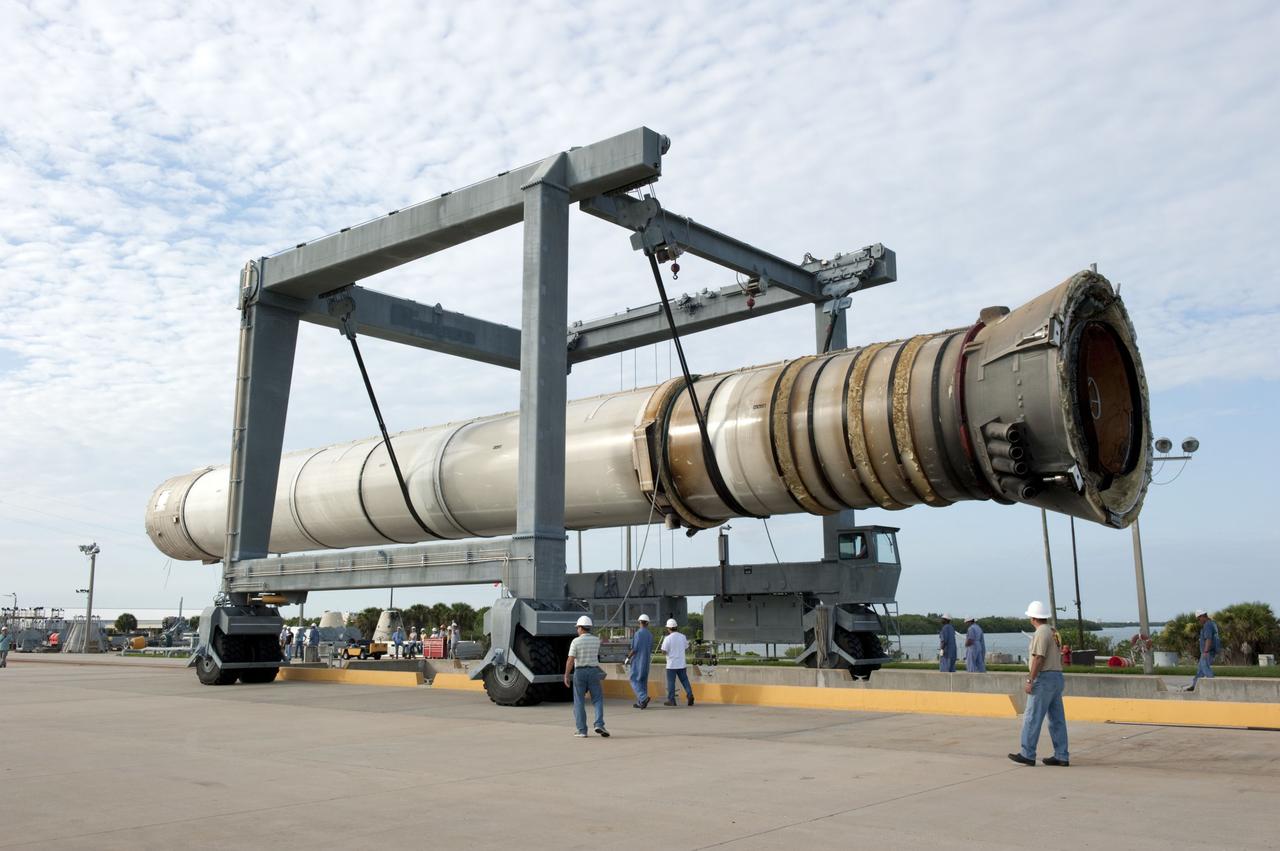
CAPE CANAVERAL, Fla. -- One of two solid rocket boosters is transported from a mooring at Port Canaveral in Florida to Hangar AF at Cape Canaveral Air Force Station. Liberty Star, one of NASA’s two booster retrieval ships, towed the spent booster from space shuttle Atlantis’ final launch to the port. The shuttle’s two solid rocket booster casings and associated flight hardware are recovered in the Atlantic Ocean after every launch by Freedom Star and Liberty Star. The boosters impact the Atlantic about seven minutes after liftoff, and the retrieval ships are stationed about 10 miles from the impact area at the time of splashdown. After the spent segments are processed, they will be transported to Utah, where they will be deserviced and stored, if needed. Atlantis began its final flight, STS-135, at 11:29 a.m. EDT on July 8 to deliver the Raffaello multi-purpose logistics module packed with supplies and spare parts to the International Space Station. Photo credit: NASA/Kim Shiflett
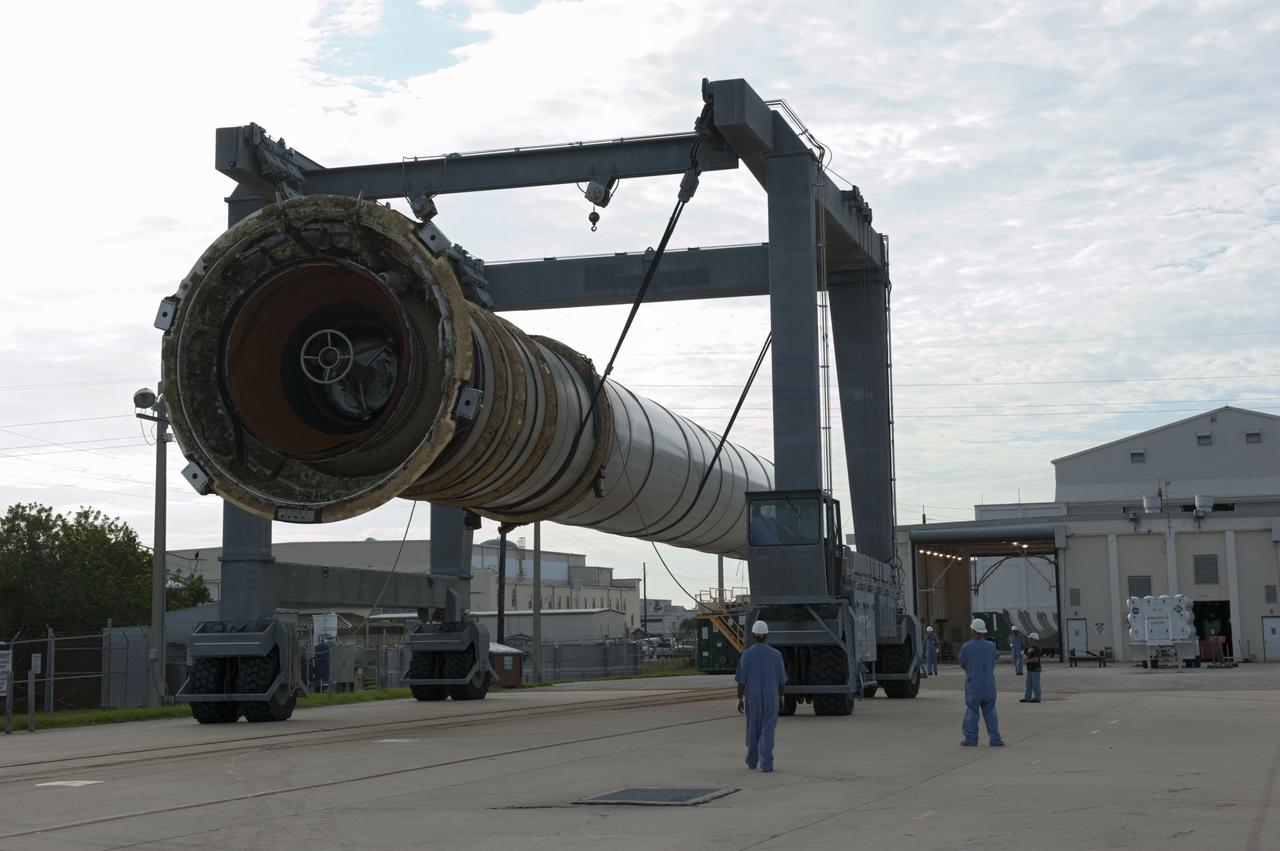
CAPE CANAVERAL, Fla. – One of two solid rocket boosters is transported to Hangar AF at Cape Canaveral Air Force Station in Florida. Liberty Star, one of NASA’s two booster retrieval ships, towed the spent booster from space shuttle Atlantis’ final launch to a mooring at Port Canaveral. The shuttle’s two solid rocket booster casings and associated flight hardware are recovered in the Atlantic Ocean after every launch by Freedom Star and Liberty Star. The boosters impact the Atlantic about seven minutes after liftoff, and the retrieval ships are stationed about 10 miles from the impact area at the time of splashdown. After the spent segments are processed, they will be transported to Utah, where they will be deserviced and stored, if needed. Atlantis began its final flight, STS-135, at 11:29 a.m. EDT on July 8 to deliver the Raffaello multi-purpose logistics module packed with supplies and spare parts to the International Space Station. Photo credit: NASA/Kim Shiflett
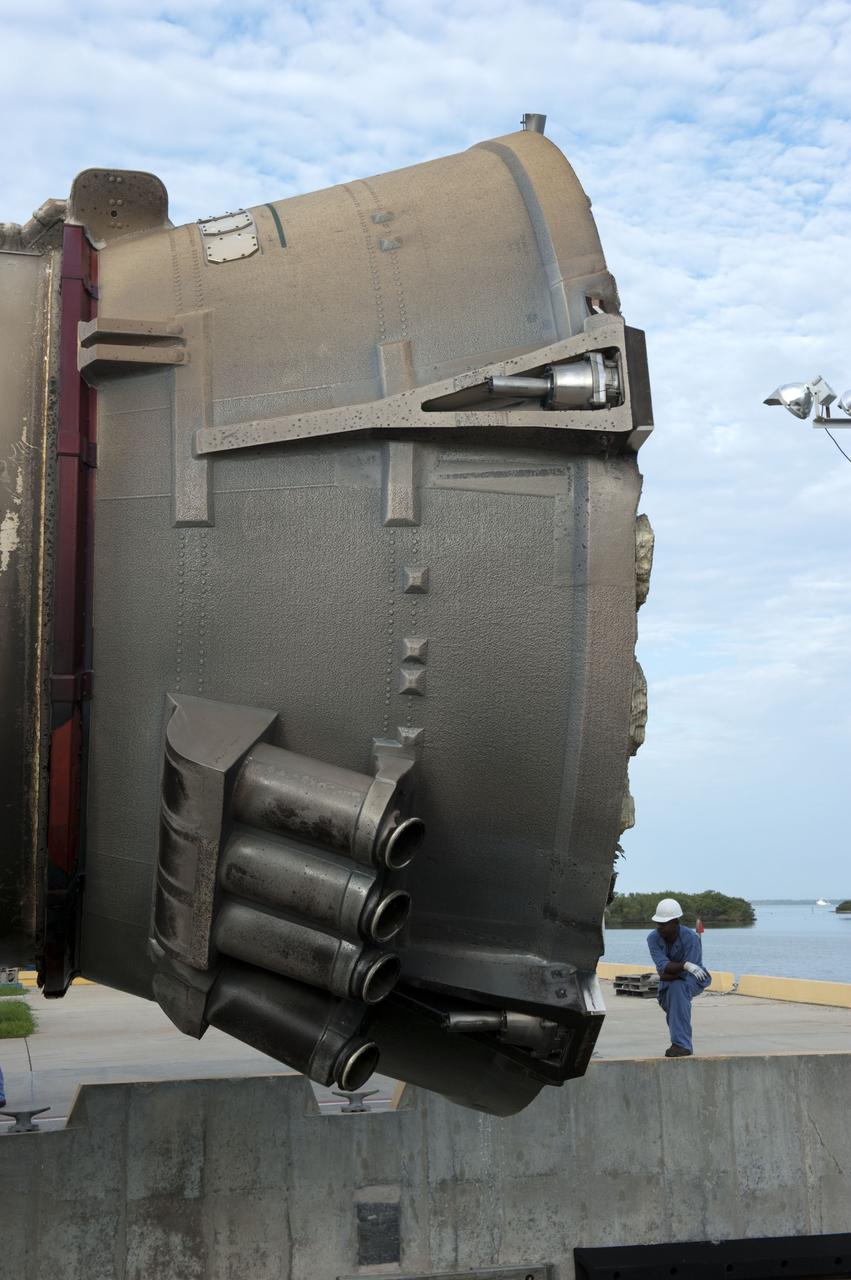
CAPE CANAVERAL, Fla. – A segment of a solid rocket booster, the aft skirt, can be seen as the booster is lifted above a mooring at Port Canaveral in Florida. Liberty Star, one of NASA’s two booster retrieval ships, towed the spent booster from space shuttle Atlantis’ final launch to the port. The shuttle’s two solid rocket booster casings and associated flight hardware are recovered in the Atlantic Ocean after every launch by Freedom Star and Liberty Star. The boosters impact the Atlantic about seven minutes after liftoff, and the retrieval ships are stationed about 10 miles from the impact area at the time of splashdown. After the spent segments are processed, they will be transported to Utah, where they will be deserviced and stored, if needed. Atlantis began its final flight, STS-135, at 11:29 a.m. EDT on July 8 to deliver the Raffaello multi-purpose logistics module packed with supplies and spare parts to the International Space Station. Photo credit: NASA/Kim Shiflett
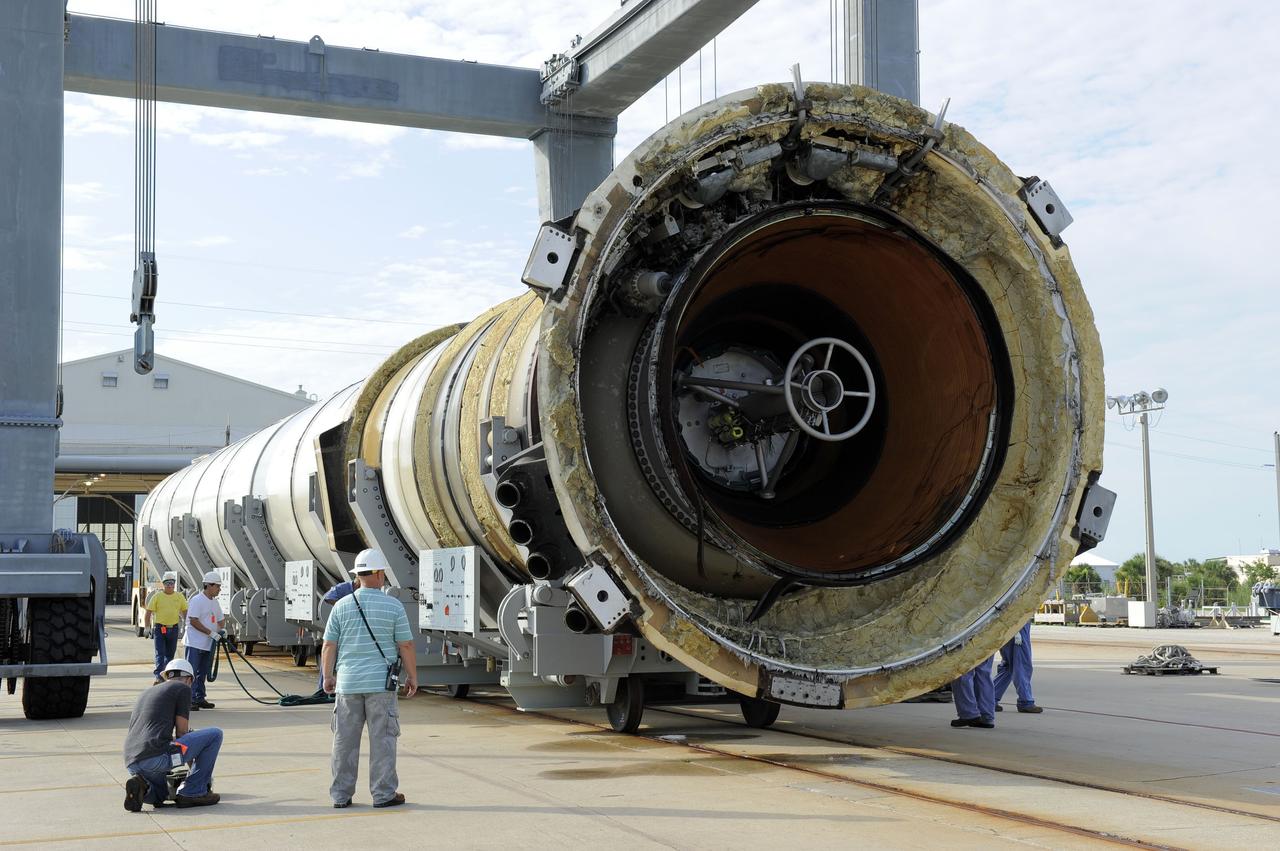
CAPE CANAVERAL, Fla. – One of two solid rocket boosters is transported to Hangar AF at Cape Canaveral Air Force Station in Florida. Liberty Star, one of NASA’s two booster retrieval ships, towed the spent booster from space shuttle Atlantis’ final launch to a mooring at Port Canaveral. The shuttle’s two solid rocket booster casings and associated flight hardware are recovered in the Atlantic Ocean after every launch by Freedom Star and Liberty Star. The boosters impact the Atlantic about seven minutes after liftoff, and the retrieval ships are stationed about 10 miles from the impact area at the time of splashdown. After the spent segments are processed, they will be transported to Utah, where they will be deserviced and stored, if needed. Atlantis began its final flight, STS-135, at 11:29 a.m. EDT on July 8 to deliver the Raffaello multi-purpose logistics module packed with supplies and spare parts to the International Space Station. Photo credit: NASA/Kim Shiflett
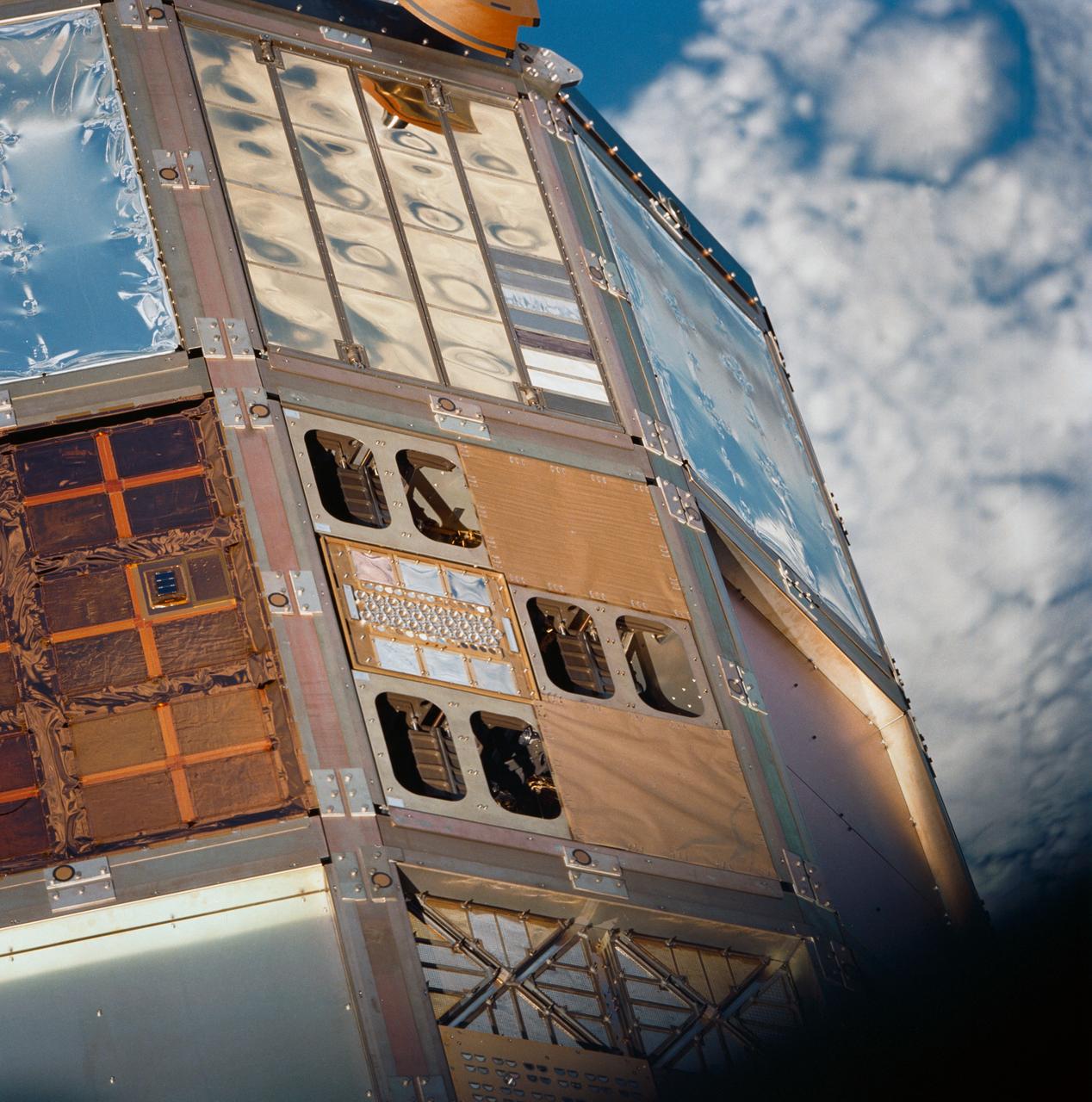
Closeup of Long Duration Exposure Facility (LDEF) experiment trays is documented during STS-32 retrieval activity and photo survey conducted by crewmembers onboard Columbia, Orbiter Vehicle (OV) 102. Partially visible is the Polymer Matrix Composite Materials Experiment. In the background is the surface of the Earth.
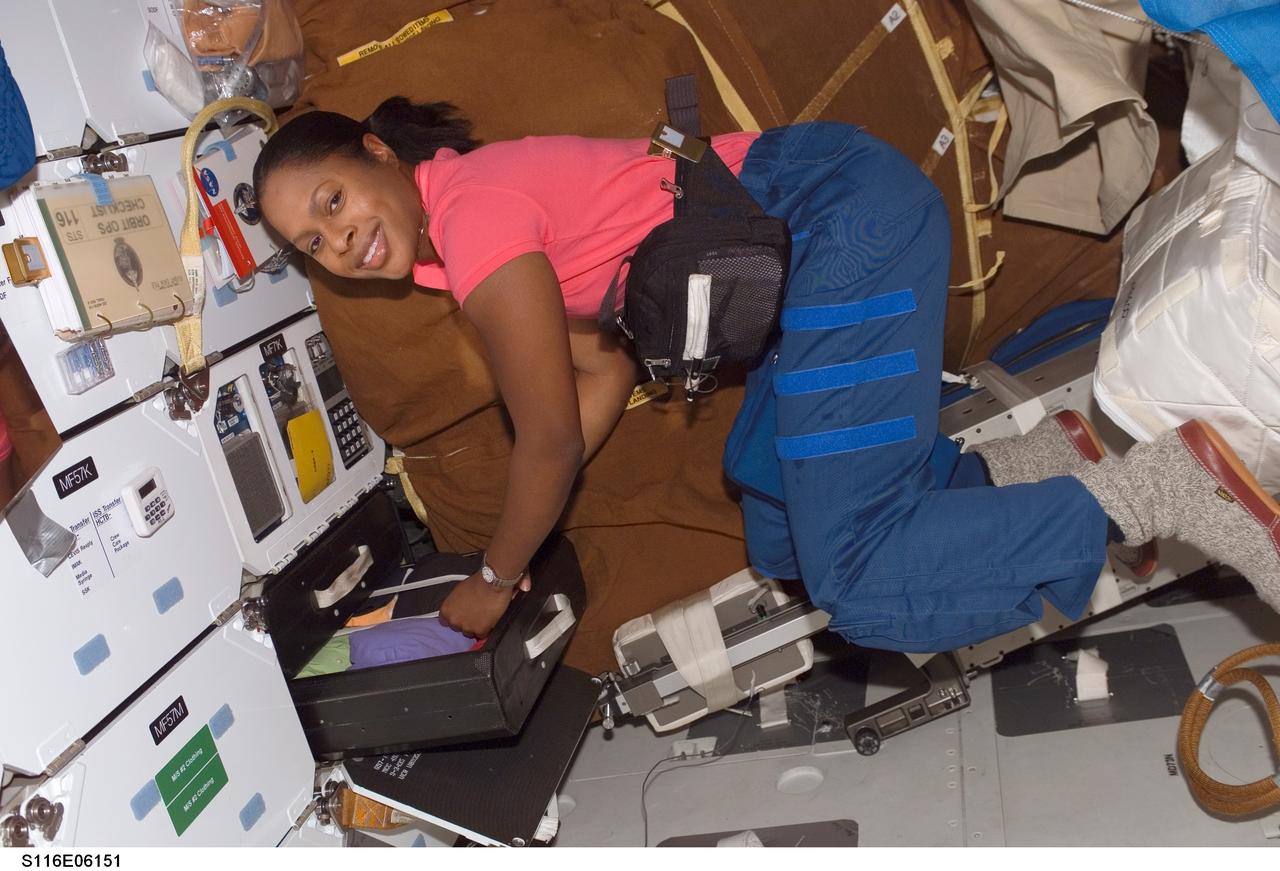
S116-E-06151 (14 Dec. 2006) --- Astronaut Joan E. Higginbotham, STS-116 mission specialist, retrieves items from a drawer on the middeck of the Space Shuttle Discovery during flight day six activities.
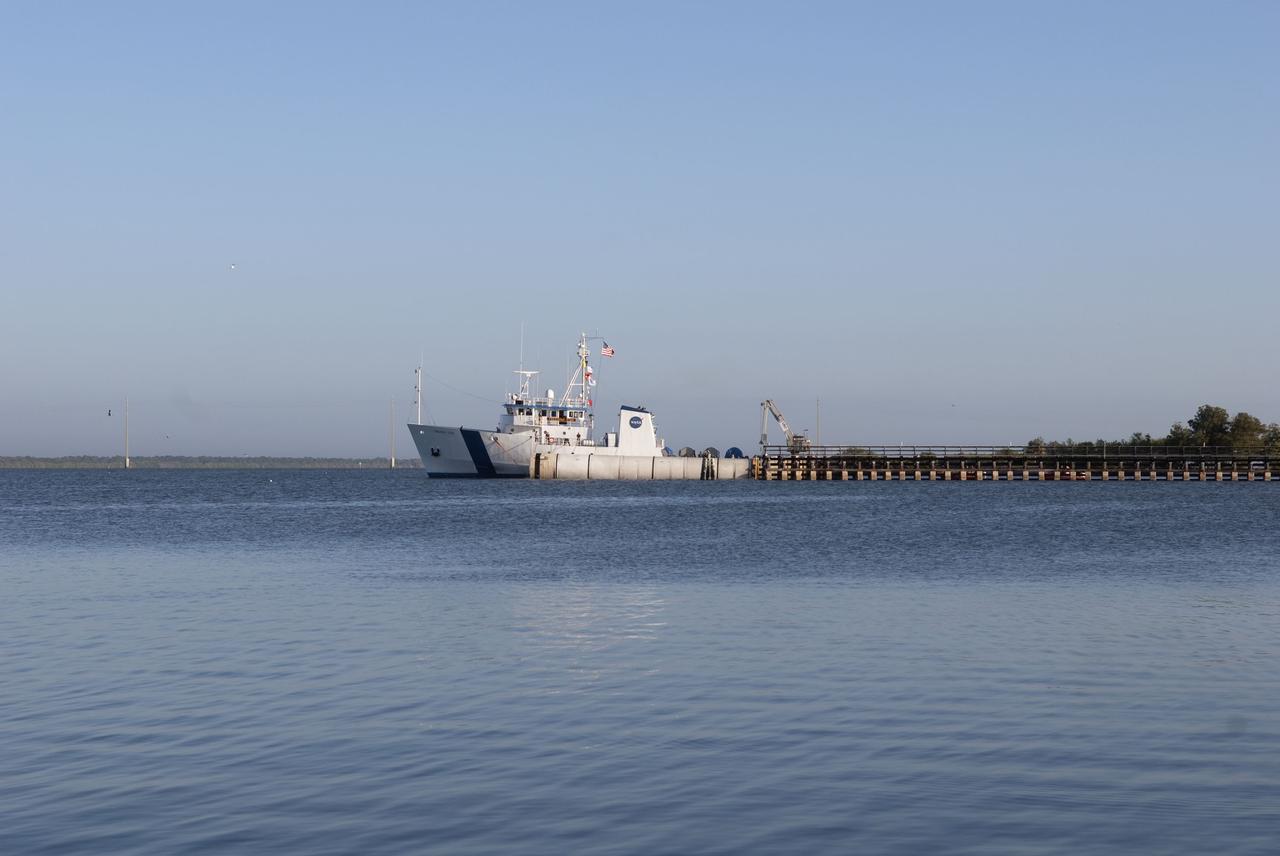
CAPE CANAVERAL, Fla. -- The Solid Rocket Booster Retrieval Ship Freedom Star, with a booster in tow, passes through Port Canaveral on its journey to Hangar AF at Cape Canaveral Air Force Station in Florida. The booster was used during space shuttle Discovery's STS-133 launch from NASA Kennedy Space Center's Launch Pad 39A on Feb. 24. The shuttle’s two solid rocket booster casings and associated flight hardware are recovered in the Atlantic Ocean after every launch by Liberty Star and Freedom Star. The boosters impact the Atlantic about seven minutes after liftoff and the retrieval ships are stationed about 10 miles from the impact area at the time of splashdown. After the spent segments are processed, they will be transported to Utah, where they will be refurbished and stored, if needed. Photo credit: NASA/Jim Grossmann
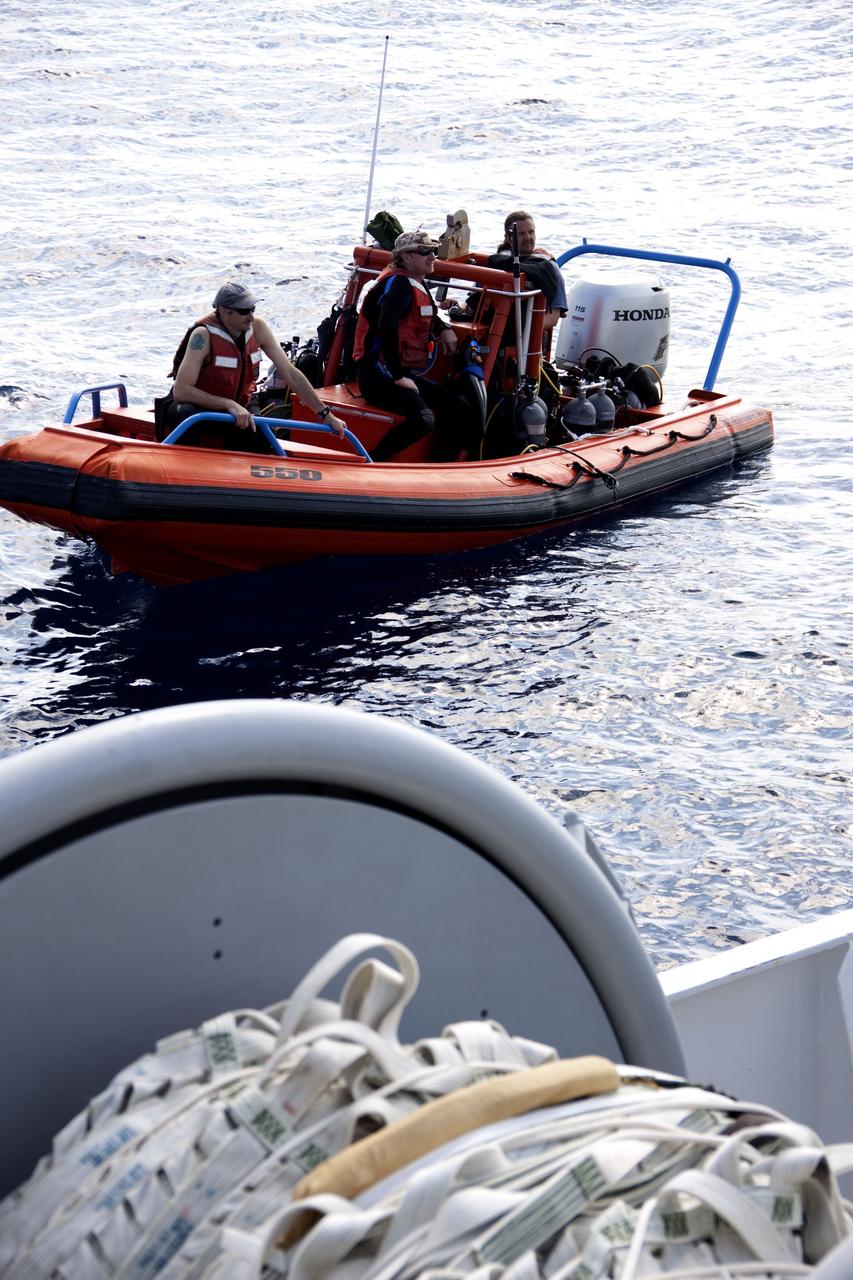
CAPE CANAVERAL, Fla. -- Crew members return to Liberty Star, one of NASA's solid rocket booster retrieval ships, in a skiff after the massive parachute from the right spent booster has been hauled on board from space shuttle Discovery's final launch. The shuttle's two solid rocket booster casings and associated flight hardware are recovered in the Atlantic Ocean after every launch by Freedom Star and Liberty Star. The boosters impact the Atlantic about seven minutes after liftoff and the retrieval ships are stationed about 10 miles from the impact area at the time of splashdown. After the spent segments are processed, they will be transported to Utah, where they will be refurbished and stored, if needed. Photo credit: NASA/Frank Michaux
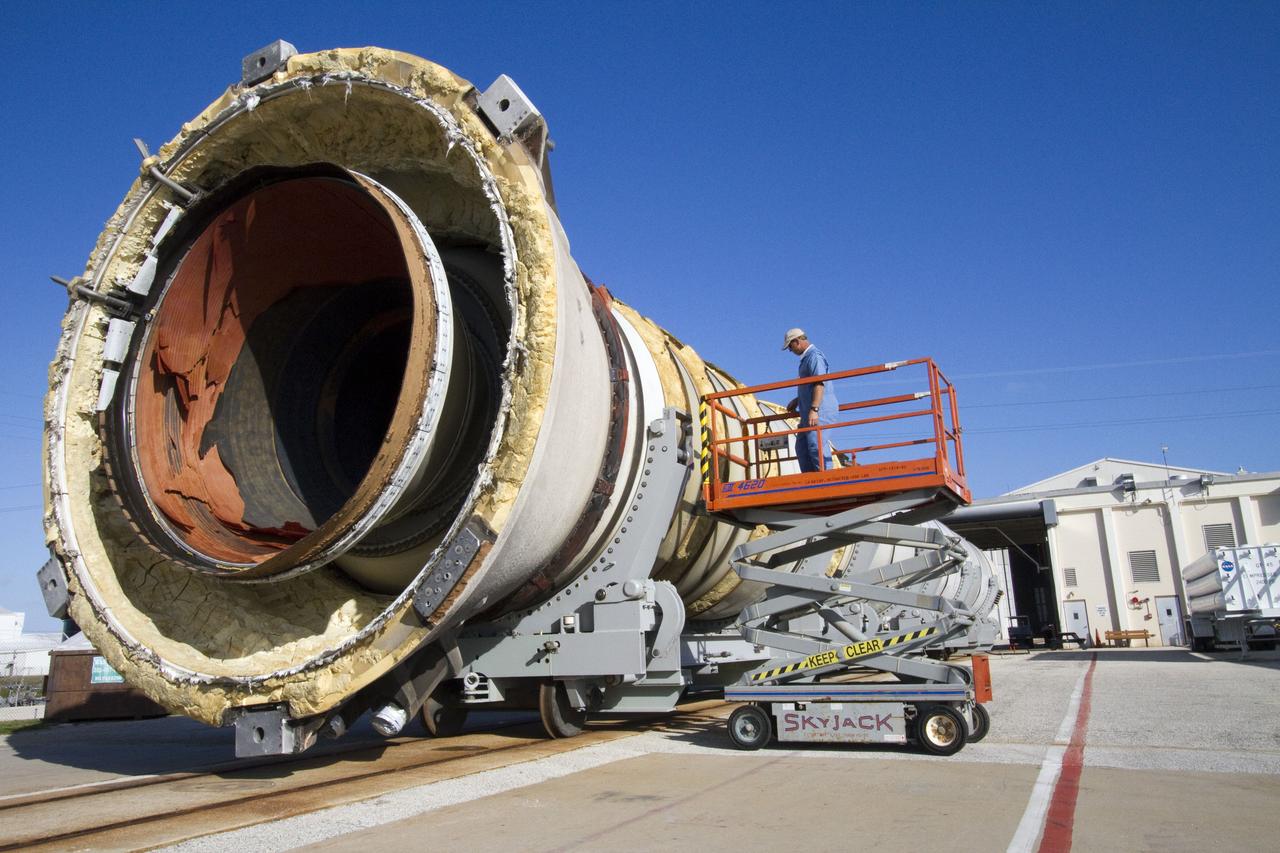
CAPE CANAVERAL, Fla. -- A technician inspects a spent shuttle solid rocket booster outside Hangar AF at Cape Canaveral Air Force Station in Florida. The booster was used during space shuttle Discovery's STS-133 launch from NASA Kennedy Space Center's Launch Pad 39A on Feb. 24. The shuttle’s two solid rocket booster casings and associated flight hardware were recovered in the Atlantic Ocean by retrieval ships Liberty Star and Freedom Star. The boosters impact the Atlantic about seven minutes after liftoff and the retrieval ships are stationed about 10 miles from the impact area at the time of splashdown. After the spent segments are processed, they will be transported to Utah, where they will be refurbished and stored, if needed. Photo credit: NASA/Jack Pfaller
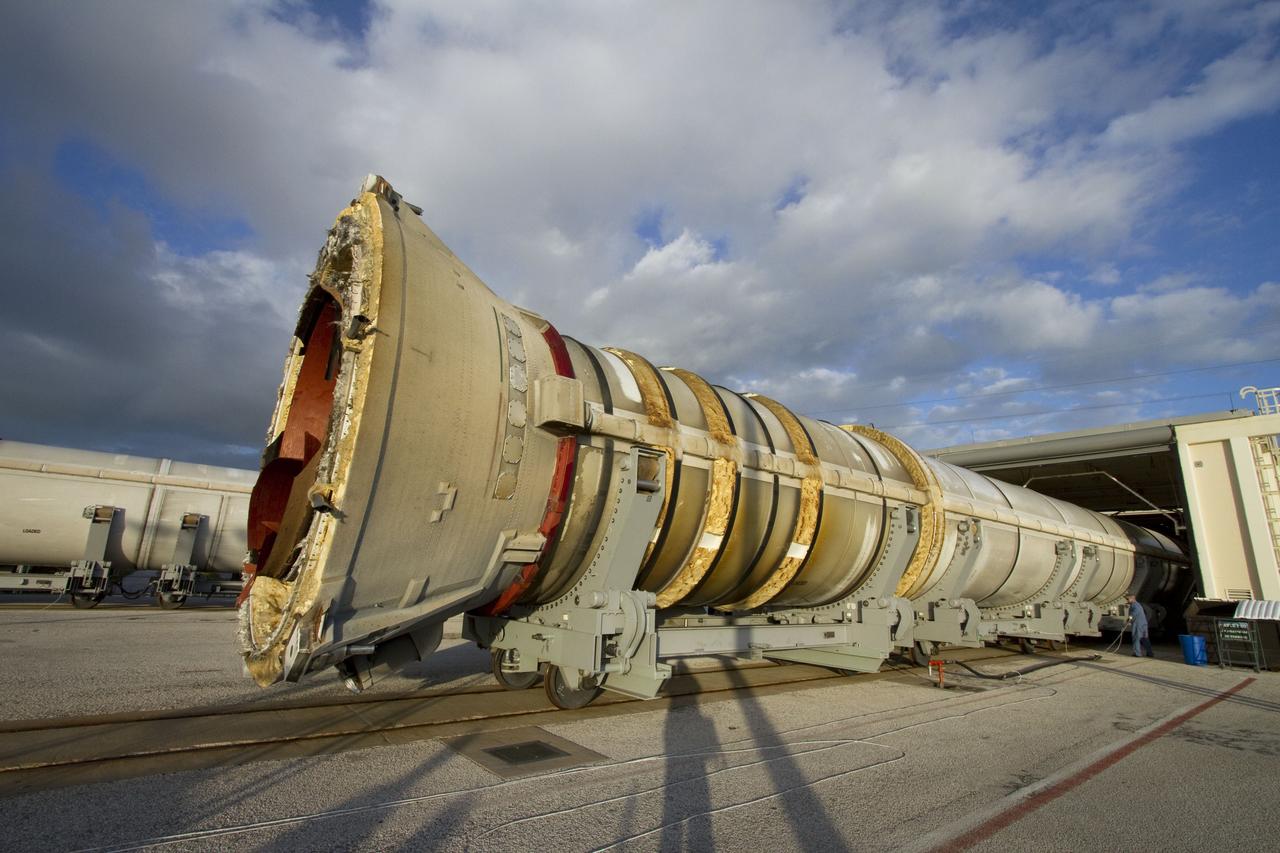
CAPE CANAVERAL, Fla. -- A spent shuttle solid rocket booster is moved into Hangar AF at Cape Canaveral Air Force Station in Florida, where it will be cleaned. The booster was used during space shuttle Discovery's STS-133 launch from NASA Kennedy Space Center's Launch Pad 39A on Feb. 24. The shuttle’s two solid rocket booster casings and associated flight hardware were recovered in the Atlantic Ocean by retrieval ships Liberty Star and Freedom Star. The boosters impact the Atlantic about seven minutes after liftoff and the retrieval ships are stationed about 10 miles from the impact area at the time of splashdown. After the spent segments are processed, they will be transported to Utah, where they will be refurbished and stored, if needed. Photo credit: NASA/Jack Pfaller
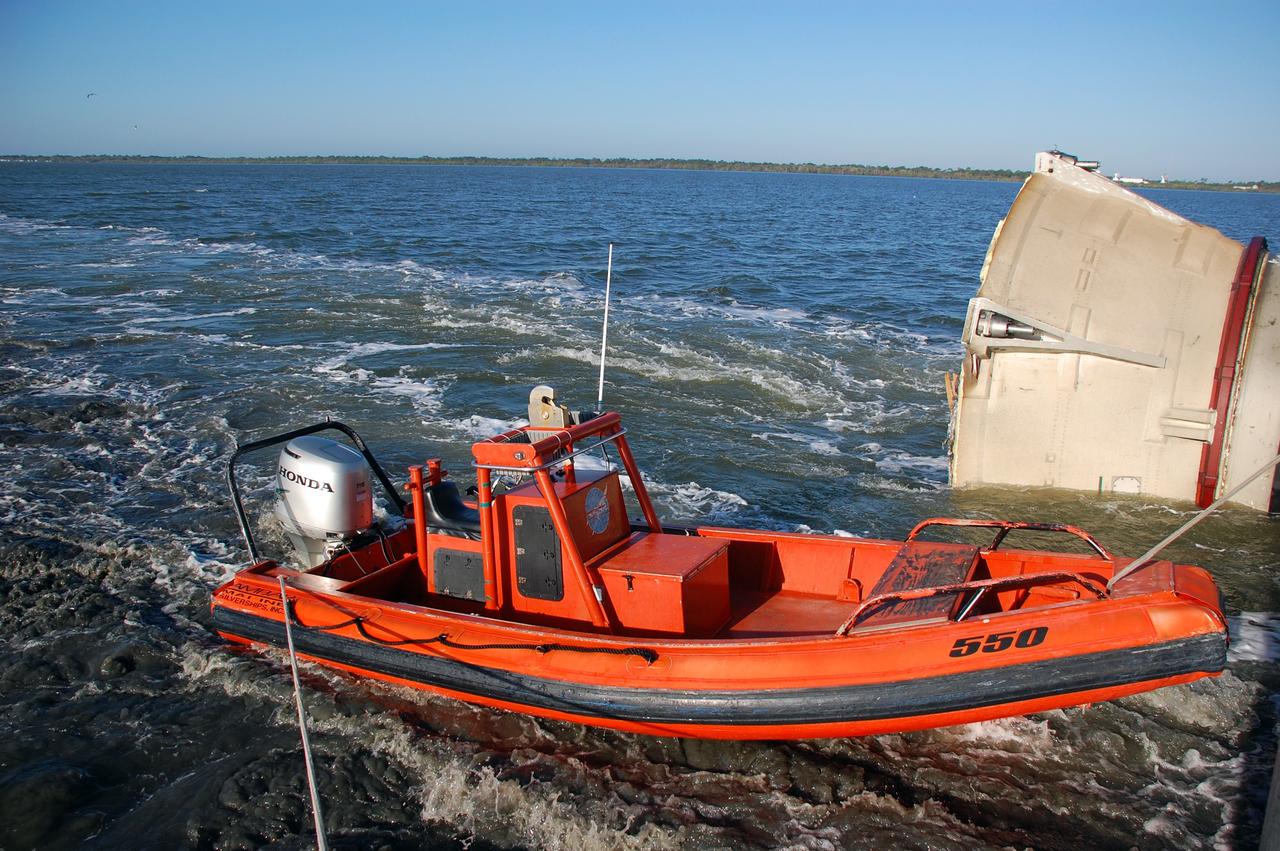
CAPE CANAVERAL, Fla. -- A skiff from Freedom Star, one of NASA's solid rocket booster retrieval ships, helped usher a spent shuttle booster through the shallow waters of the locks at Port Canaveral, Fla. The booster will be re-tied to the ship for the rest of the journey to Hangar AF at Cape Canaveral Air Force Station. The booster was used during space shuttle Discovery's STS-133 launch from NASA Kennedy Space Center's Launch Pad 39A on Feb. 24. The shuttle’s two solid rocket booster casings and associated flight hardware are recovered in the Atlantic Ocean after every launch by Freedom Star and Liberty Star. The boosters impact the Atlantic about seven minutes after liftoff and the retrieval ships are stationed about 10 miles from the impact area at the time of splashdown. After the spent segments are processed, they will be transported to Utah, where they will be refurbished and stored, if needed. Photo credit: NASA/Ben Smegelsky

CAPE CANAVERAL, Fla. -- Workers monitor the progress of the solid rocket booster retrieval ship Freedom Star as it tows a left spent booster to the dock at Hangar AF on Cape Canaveral Air Force Station in Florida. The booster was used during space shuttle Discovery's final launch. The shuttle's two solid rocket booster casings and associated flight hardware are recovered in the Atlantic Ocean after every launch by Freedom Star and Liberty Star. The boosters impact the Atlantic about seven minutes after liftoff and the retrieval ships are stationed about 10 miles from the impact area at the time of splashdown. After the spent segments are processed, they will be transported to Utah, where they will be refurbished and stored, if needed. Photo credit: NASA/Jim Grossmann
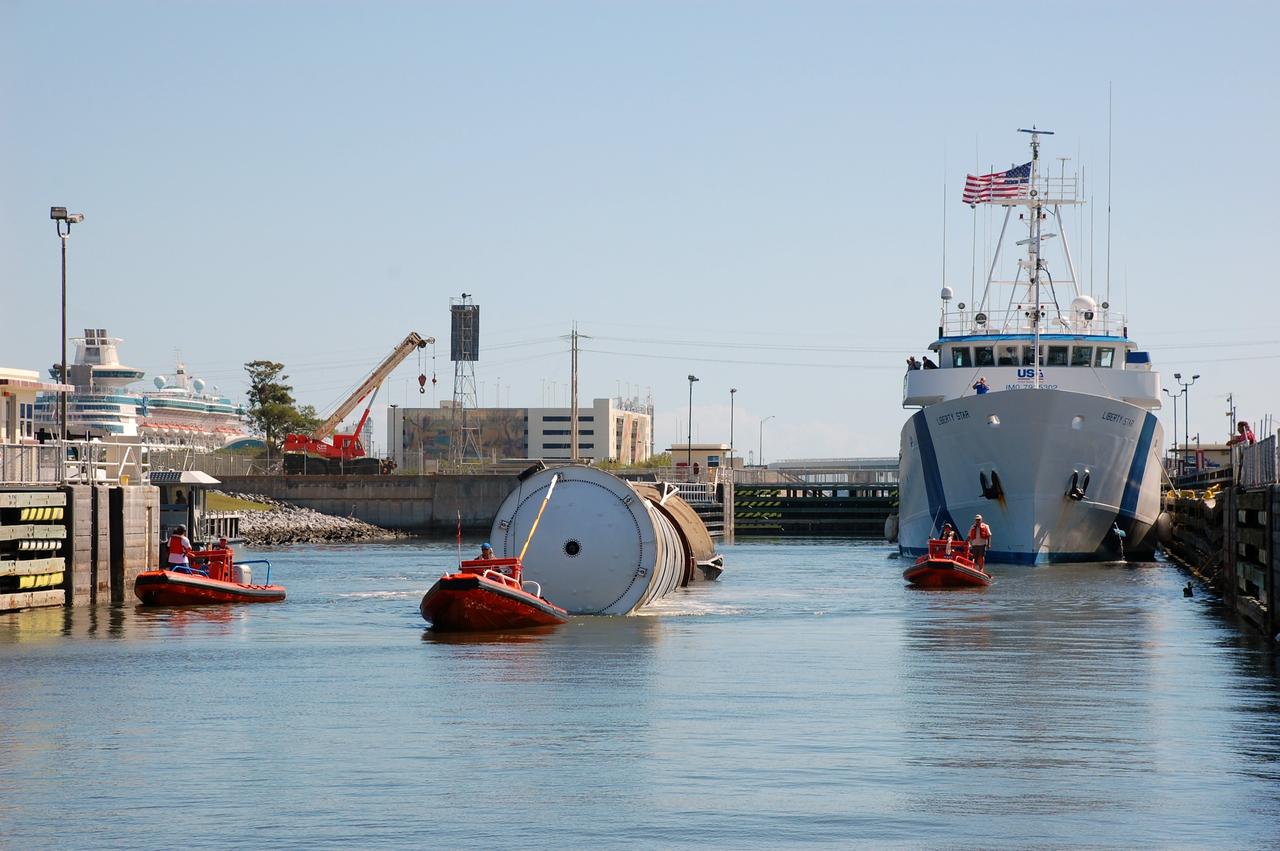
CAPE CANAVERAL, Fla. -- Crew members in a skiff and aboard Liberty Star, one of NASA's solid rocket booster retrieval ships, usher a spent shuttle booster to Hangar AF at Cape Canaveral Air Force Station in Florida. The booster was used during space shuttle Discovery's STS-133 launch from NASA Kennedy Space Center's Launch Pad 39A on Feb. 24. The shuttle’s two solid rocket booster casings and associated flight hardware are recovered in the Atlantic Ocean after every launch by Freedom Star and Liberty Star. The boosters impact the Atlantic about seven minutes after liftoff and the retrieval ships are stationed about 10 miles from the impact area at the time of splashdown. After the spent segments are processed, they will be transported to Utah, where they will be refurbished and stored, if needed. Photo credit: NASA/Ben Smegelsky

CAPE CANAVERAL, Fla. -- The Solid Rocket Booster Retrieval Ship Freedom Star is tied back up to a spent shuttle booster and ready to continue the journey to the dock at Hangar AF at Cape Canaveral Air Force Station in Florida. The booster was used during space shuttle Discovery's STS-133 launch from NASA Kennedy Space Center's Launch Pad 39A on Feb. 24. The shuttle’s two solid rocket booster casings and associated flight hardware are recovered in the Atlantic Ocean after every launch by Freedom Star and Liberty Star. The boosters impact the Atlantic about seven minutes after liftoff and the retrieval ships are stationed about 10 miles from the impact area at the time of splashdown. After the spent segments are processed, they will be transported to Utah, where they will be refurbished and stored, if needed. Photo credit: NASA/Ben Smegelsky
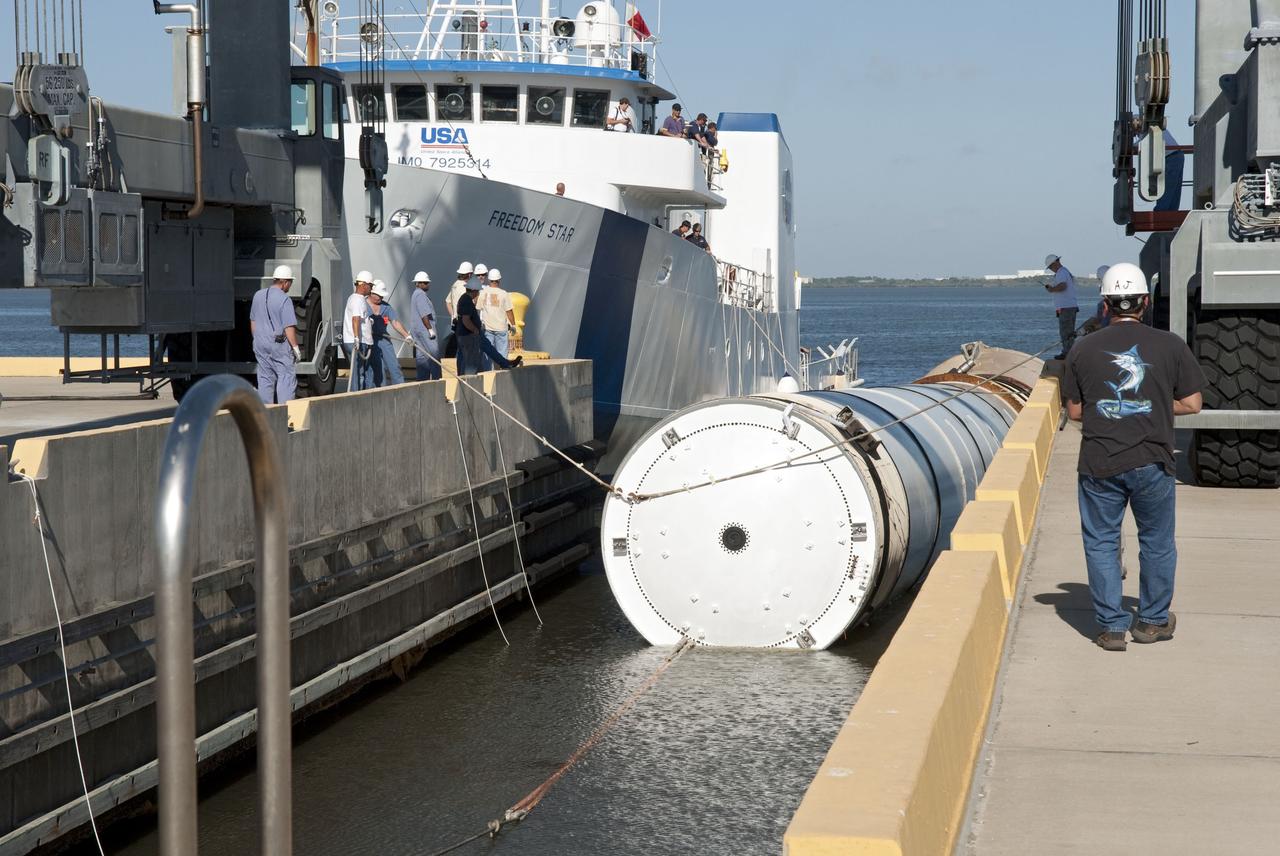
CAPE CANAVERAL, Fla. -- The Solid Rocket Booster Retrieval Ship Freedom Star towing a booster arrives to the dock at Hangar AF on Cape Canaveral Air Force Station in Florida. The booster was used during space shuttle Discovery's STS-133 launch from NASA Kennedy Space Center's Launch Pad 39A on Feb. 24. The shuttle’s two solid rocket booster casings and associated flight hardware are recovered in the Atlantic Ocean after every launch by Liberty Star and Freedom Star. The boosters impact the Atlantic about seven minutes after liftoff and the retrieval ships are stationed about 10 miles from the impact area at the time of splashdown. After the spent segments are processed, they will be transported to Utah, where they will be refurbished and stored, if needed. Photo credit: NASA/Jim Grossmann
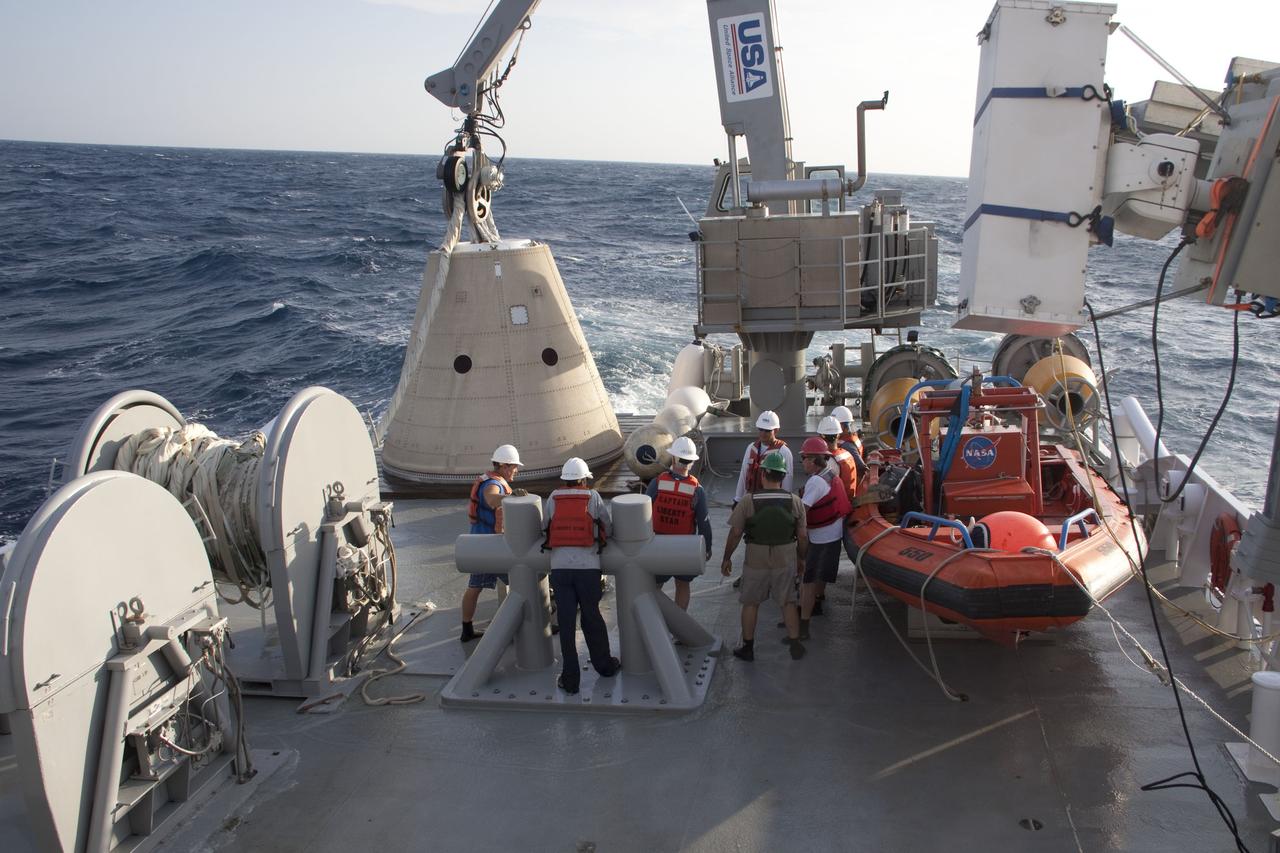
CAPE CANAVERAL, Fla. -- Crew members from Liberty Star, one of NASA's solid rocket booster retrieval ships, have recovered and secured the right spent booster nose cap to a pallet on the ship's deck that was recovered from the Atlantic Ocean after Discovery's final launch. The shuttle’s two solid rocket booster casings and associated flight hardware are recovered in the Atlantic Ocean after every launch by Freedom Star and Liberty Star. The boosters impact the Atlantic about seven minutes after liftoff and the retrieval ships are stationed about 10 miles from the impact area at the time of splashdown. After the spent segments are processed, they will be transported to Utah, where they will be refurbished and stored, if needed. Photo credit: NASA/Frank Michaux
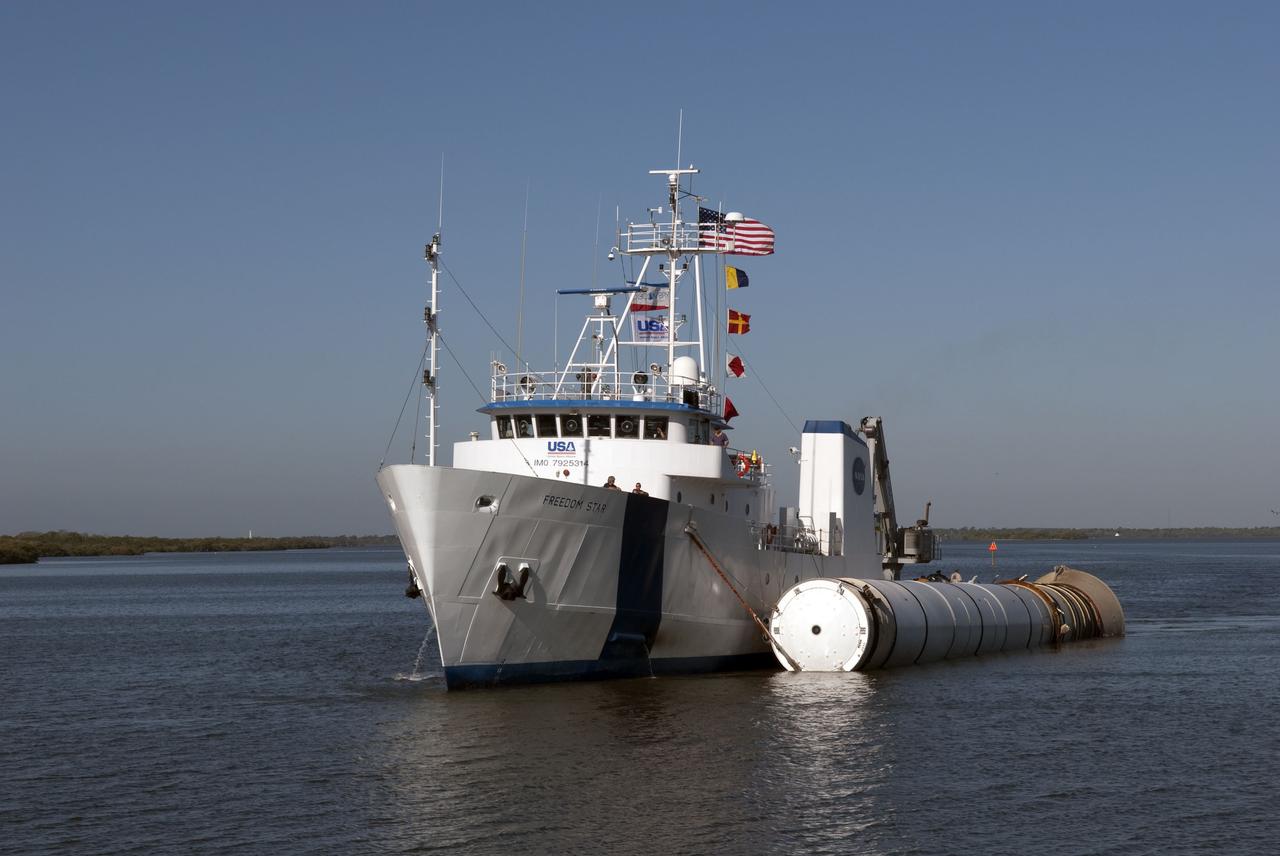
CAPE CANAVERAL, Fla. -- The Solid Rocket Booster Retrieval Ship Freedom Star tows a booster to the dock at Hangar AF on Cape Canaveral Air Force Station in Florida. The booster was used during space shuttle Discovery's STS-133 launch from NASA Kennedy Space Center's Launch Pad 39A on Feb. 24. The shuttle’s two solid rocket booster casings and associated flight hardware are recovered in the Atlantic Ocean after every launch by Liberty Star and Freedom Star. The boosters impact the Atlantic about seven minutes after liftoff and the retrieval ships are stationed about 10 miles from the impact area at the time of splashdown. After the spent segments are processed, they will be transported to Utah, where they will be refurbished and stored, if needed. Photo credit: NASA/Jim Grossmann
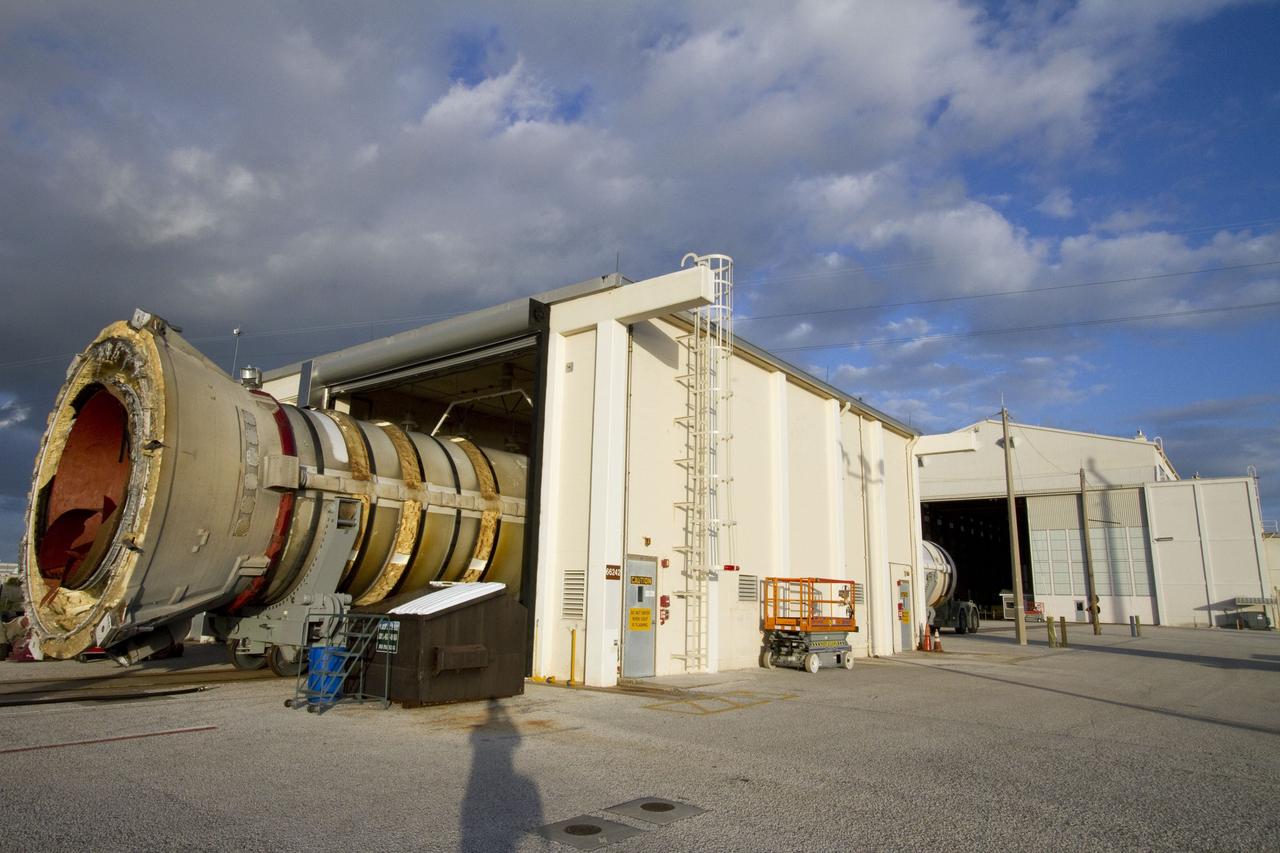
CAPE CANAVERAL, Fla. -- A spent shuttle solid rocket booster is moved into Hangar AF at Cape Canaveral Air Force Station in Florida, where it will be cleaned. The booster was used during space shuttle Discovery's STS-133 launch from NASA Kennedy Space Center's Launch Pad 39A on Feb. 24. The shuttle’s two solid rocket booster casings and associated flight hardware were recovered in the Atlantic Ocean by retrieval ships Liberty Star and Freedom Star. The boosters impact the Atlantic about seven minutes after liftoff and the retrieval ships are stationed about 10 miles from the impact area at the time of splashdown. After the spent segments are processed, they will be transported to Utah, where they will be refurbished and stored, if needed. Photo credit: NASA/Jack Pfaller
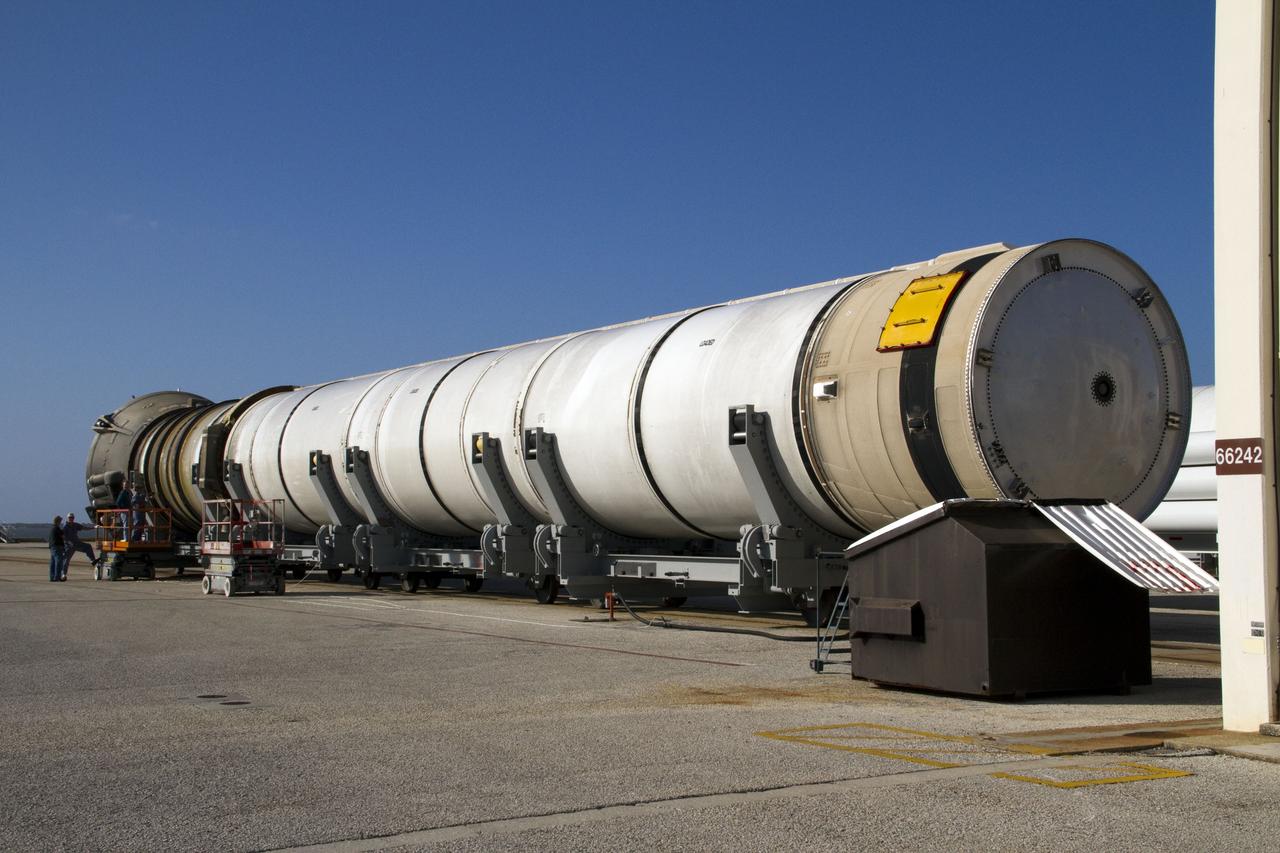
CAPE CANAVERAL, Fla. -- A spent shuttle solid rocket booster awaits inspection and cleaning near Hangar AF at Cape Canaveral Air Force Station in Florida. The booster was used during space shuttle Discovery's STS-133 launch from NASA Kennedy Space Center's Launch Pad 39A on Feb. 24. The shuttle’s two solid rocket booster casings and associated flight hardware were recovered in the Atlantic Ocean by retrieval ships Liberty Star and Freedom Star. The boosters impact the Atlantic about seven minutes after liftoff and the retrieval ships are stationed about 10 miles from the impact area at the time of splashdown. After the spent segments are processed, they will be transported to Utah, where they will be refurbished and stored, if needed. Photo credit: NASA/Jack Pfaller
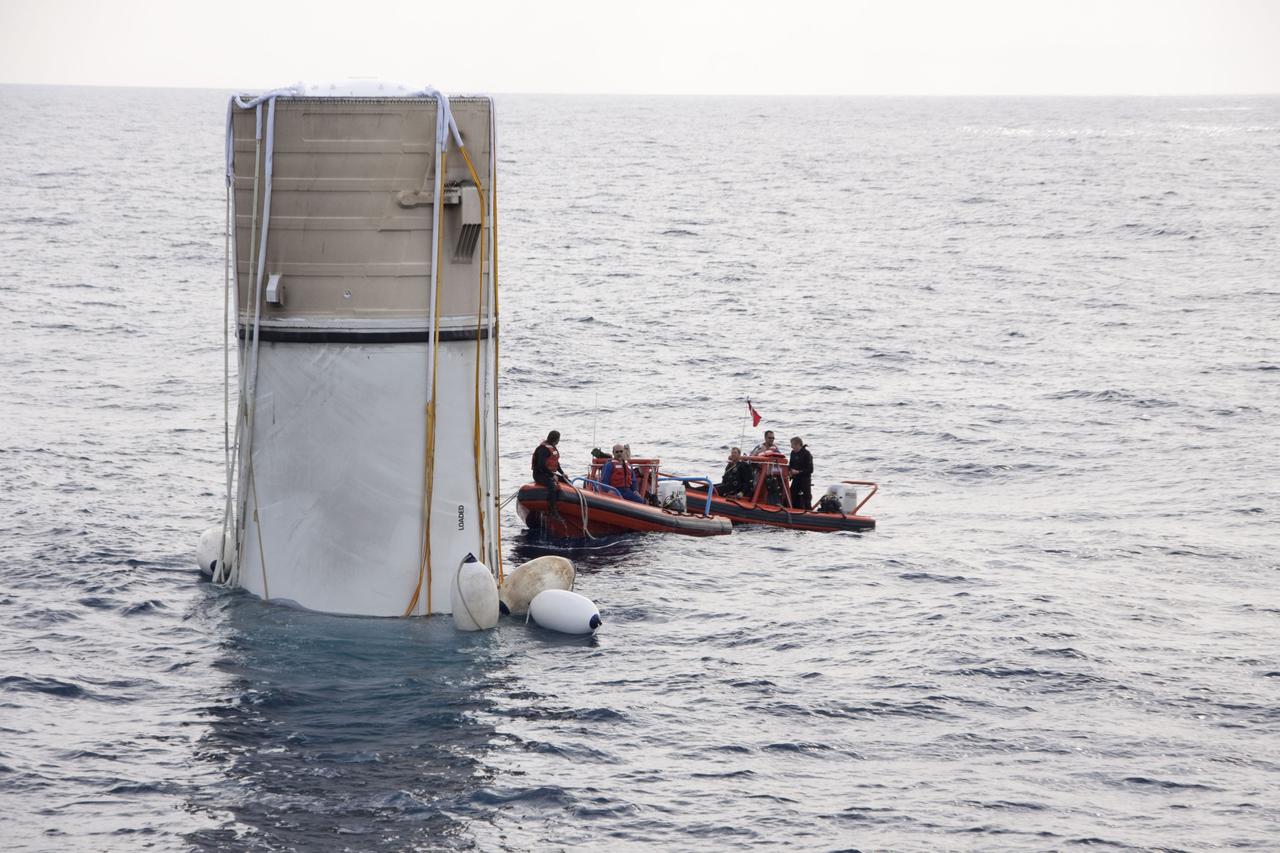
CAPE CANAVERAL, Fla. -- Crew members in a skiff from Liberty Star, one of NASA's solid rocket booster retrieval ships, attach flotation devices, or buoys, to the parachute lines from the right spent booster from space shuttle Discovery's final launch. The shuttle's two solid rocket booster casings and associated flight hardware are recovered in the Atlantic Ocean after every launch by Freedom Star and Liberty Star. The boosters impact the Atlantic about seven minutes after liftoff and the retrieval ships are stationed about 10 miles from the impact area at the time of splashdown. After the spent segments are processed, they will be transported to Utah, where they will be refurbished and stored, if needed. Photo credit: NASA/Frank Michaux
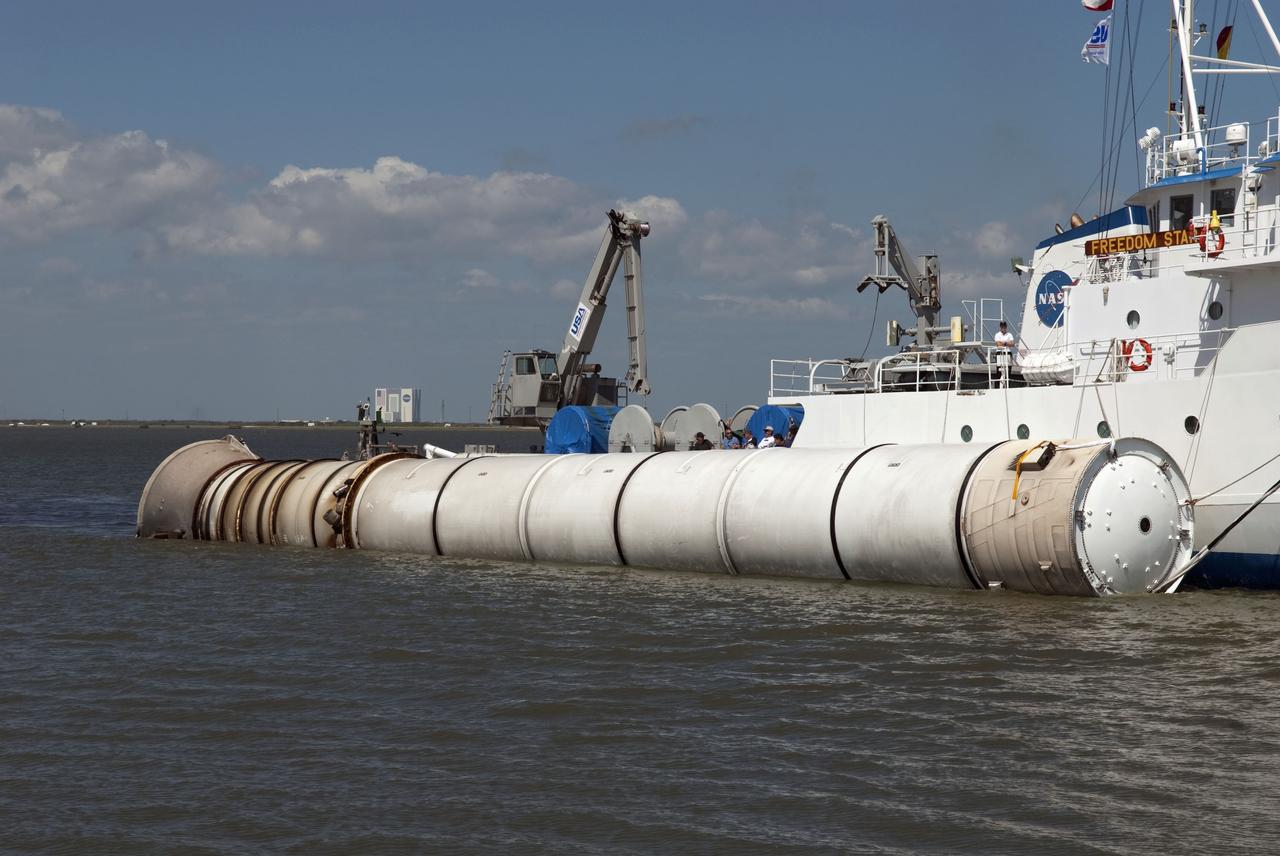
CAPE CANAVERAL, Fla. -- The solid rocket booster retrieval ship Freedom Star tows a left spent booster to the dock at Hangar AF on Cape Canaveral Air Force Station in Florida. The booster was used during space shuttle Discovery's final launch. The shuttle's two solid rocket booster casings and associated flight hardware are recovered in the Atlantic Ocean after every launch by Freedom Star and Liberty Star. The boosters impact the Atlantic about seven minutes after liftoff and the retrieval ships are stationed about 10 miles from the impact area at the time of splashdown. After the spent segments are processed, they will be transported to Utah, where they will be refurbished and stored, if needed. Photo credit: NASA/Jim Grossmann
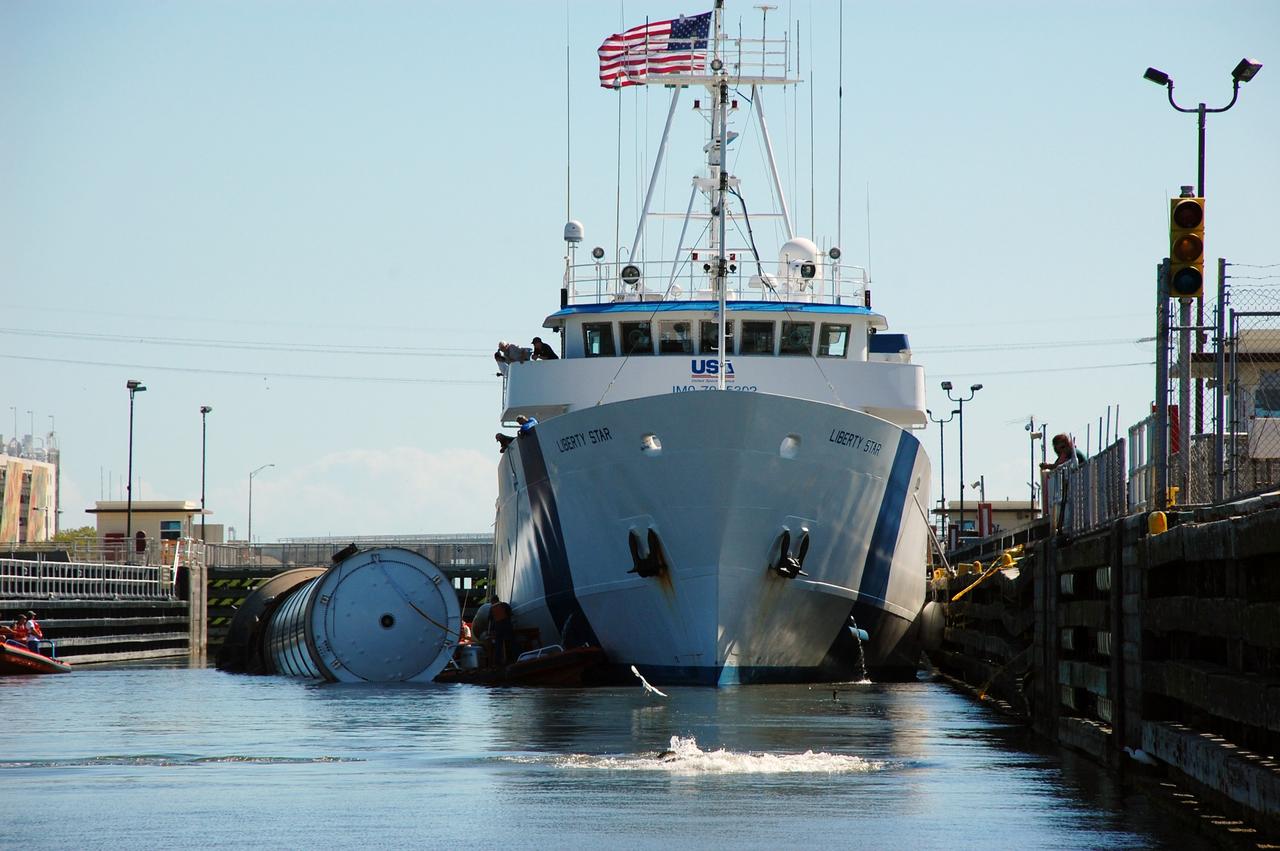
CAPE CANAVERAL, Fla. -- Liberty Star, one of NASA's solid rocket booster retrieval ships, ushers a spent shuttle booster to Hangar AF at Cape Canaveral Air Force Station in Florida. The booster was used during space shuttle Discovery's STS-133 launch from NASA Kennedy Space Center's Launch Pad 39A on Feb. 24. The shuttle’s two solid rocket booster casings and associated flight hardware are recovered in the Atlantic Ocean after every launch by Freedom Star and Liberty Star. The boosters impact the Atlantic about seven minutes after liftoff and the retrieval ships are stationed about 10 miles from the impact area at the time of splashdown. After the spent segments are processed, they will be transported to Utah, where they will be refurbished and stored, if needed. Photo credit: NASA/Ben Smegelsky
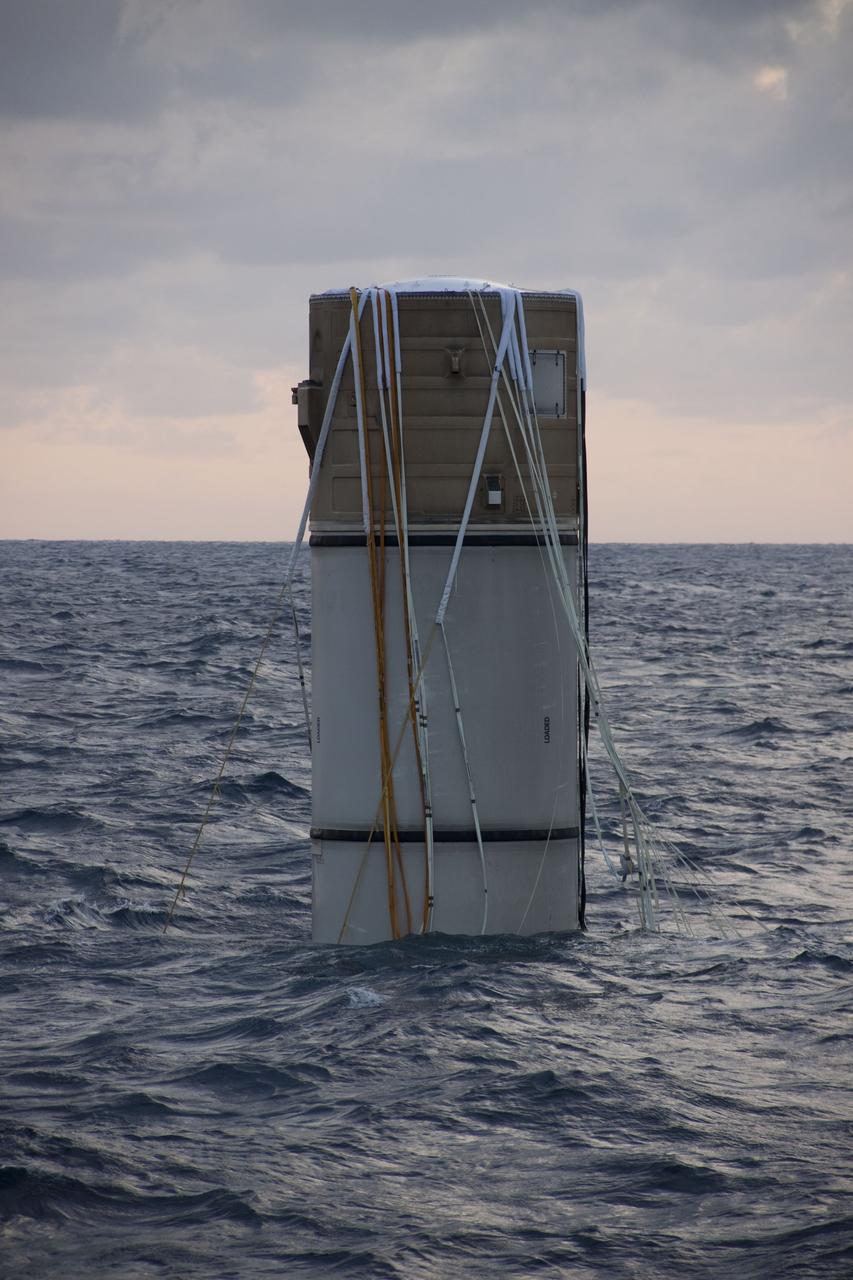
CAPE CANAVERAL, Fla. -- The right spent booster from shuttle Discovery's final launch is seen bobbing in the Atlantic Ocean. Crew members from Liberty Star, one of NASA's solid rocket booster retrieval ships, will recover the parachute and tow the booster back to Port Canaveral in Florida. The shuttle’s two solid rocket booster casings and associated flight hardware are recovered in the Atlantic Ocean after every launch by Freedom Star and Liberty Star. The boosters impact the Atlantic about seven minutes after liftoff and the retrieval ships are stationed about 10 miles from the impact area at the time of splashdown. After the spent segments are processed, they will be transported to Utah, where they will be refurbished and stored, if needed. Photo credit: NASA/Frank Michaux
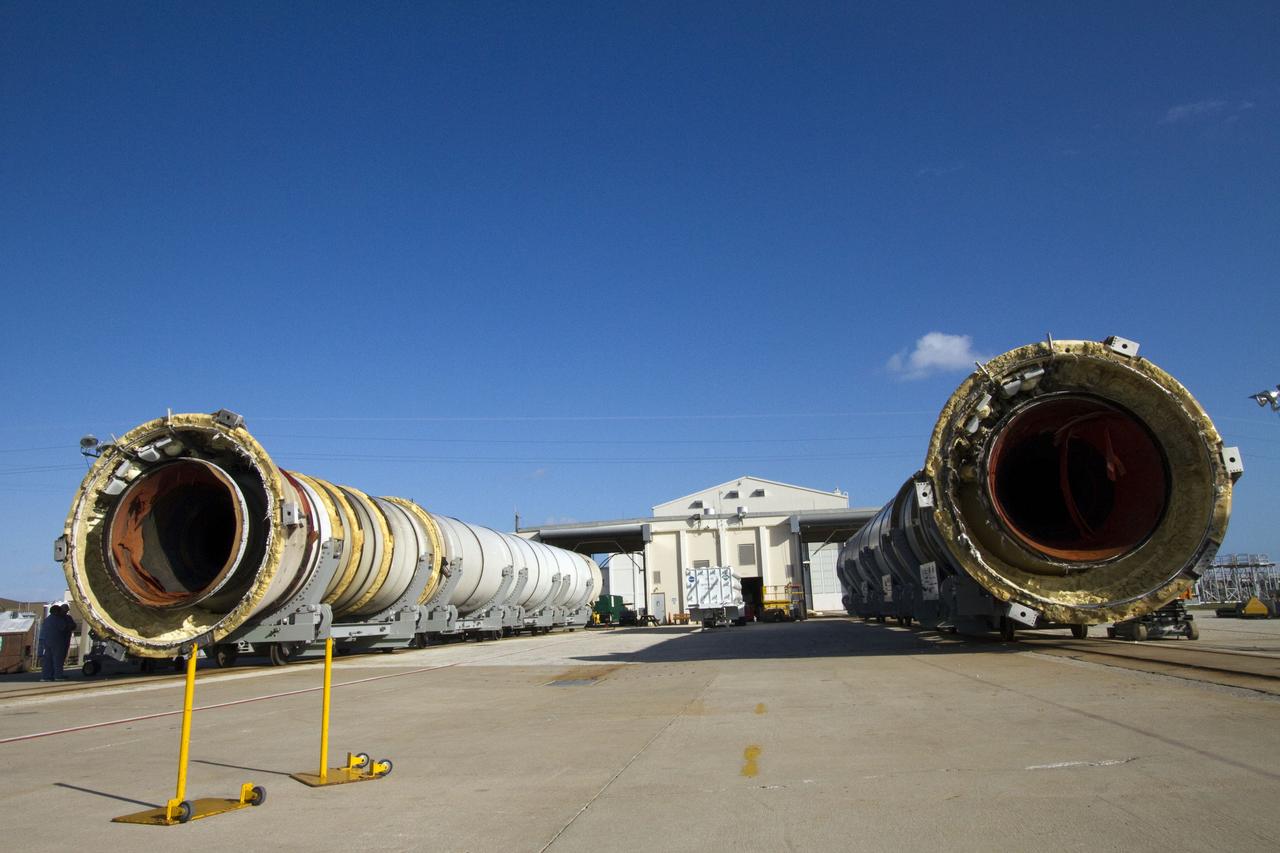
CAPE CANAVERAL, Fla. -- Two spent shuttle solid rocket boosters await inspection and cleaning near Hangar AF at Cape Canaveral Air Force Station in Florida. The boosters were used during space shuttle Discovery's STS-133 launch from NASA Kennedy Space Center's Launch Pad 39A on Feb. 24. The booster casings and associated flight hardware were recovered in the Atlantic Ocean by retrieval ships Liberty Star and Freedom Star. The boosters impact the Atlantic about seven minutes after liftoff and the retrieval ships are stationed about 10 miles from the impact area at the time of splashdown. After the spent segments are processed, they will be transported to Utah, where they will be refurbished and stored, if needed. Photo credit: NASA/Jack Pfaller
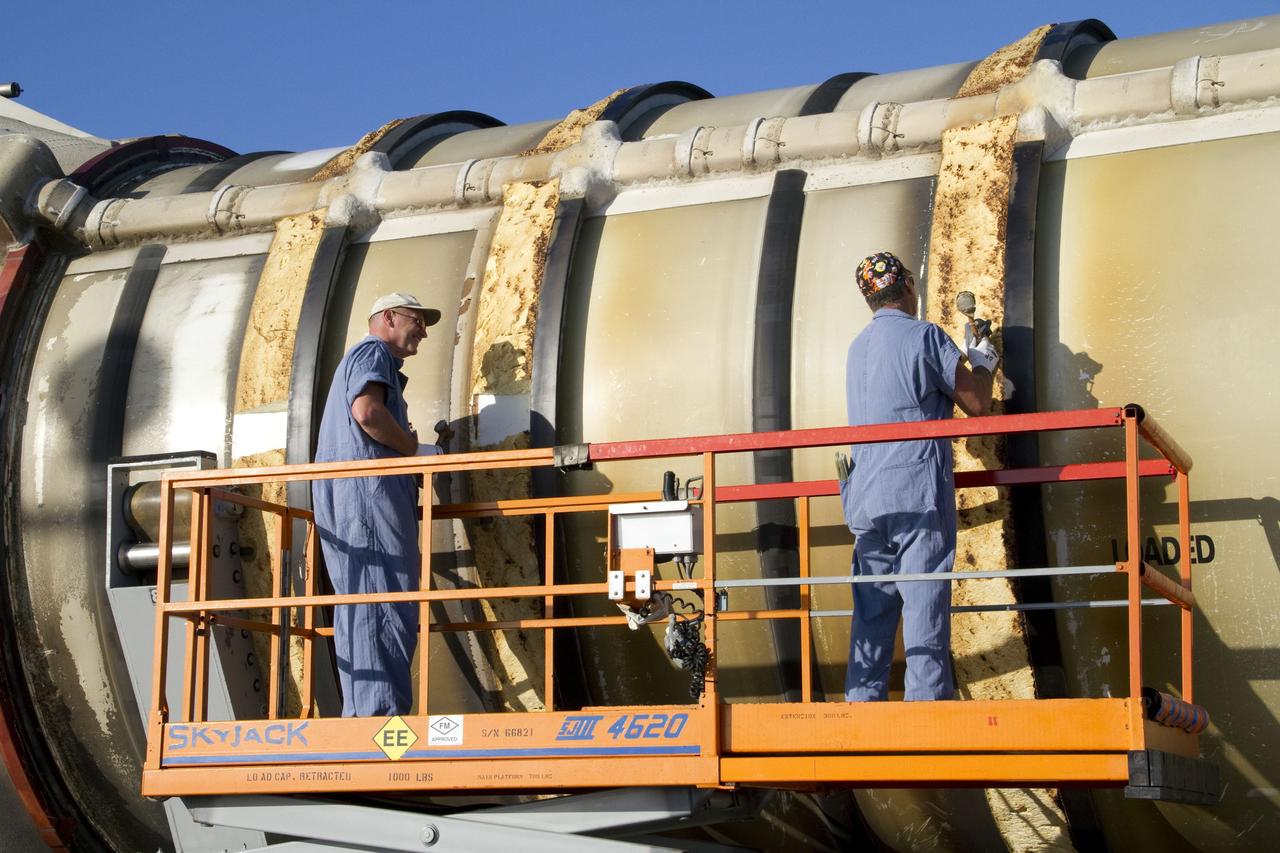
CAPE CANAVERAL, Fla. -- Technicians inspect a spent shuttle solid rocket booster outside Hangar AF at Cape Canaveral Air Force Station in Florida. The booster was used during space shuttle Discovery's STS-133 launch from NASA Kennedy Space Center's Launch Pad 39A on Feb. 24. The shuttle’s two solid rocket booster casings and associated flight hardware were recovered in the Atlantic Ocean by retrieval ships Liberty Star and Freedom Star. The boosters impact the Atlantic about seven minutes after liftoff and the retrieval ships are stationed about 10 miles from the impact area at the time of splashdown. After the spent segments are processed, they will be transported to Utah, where they will be refurbished and stored, if needed. Photo credit: NASA/Jack Pfaller
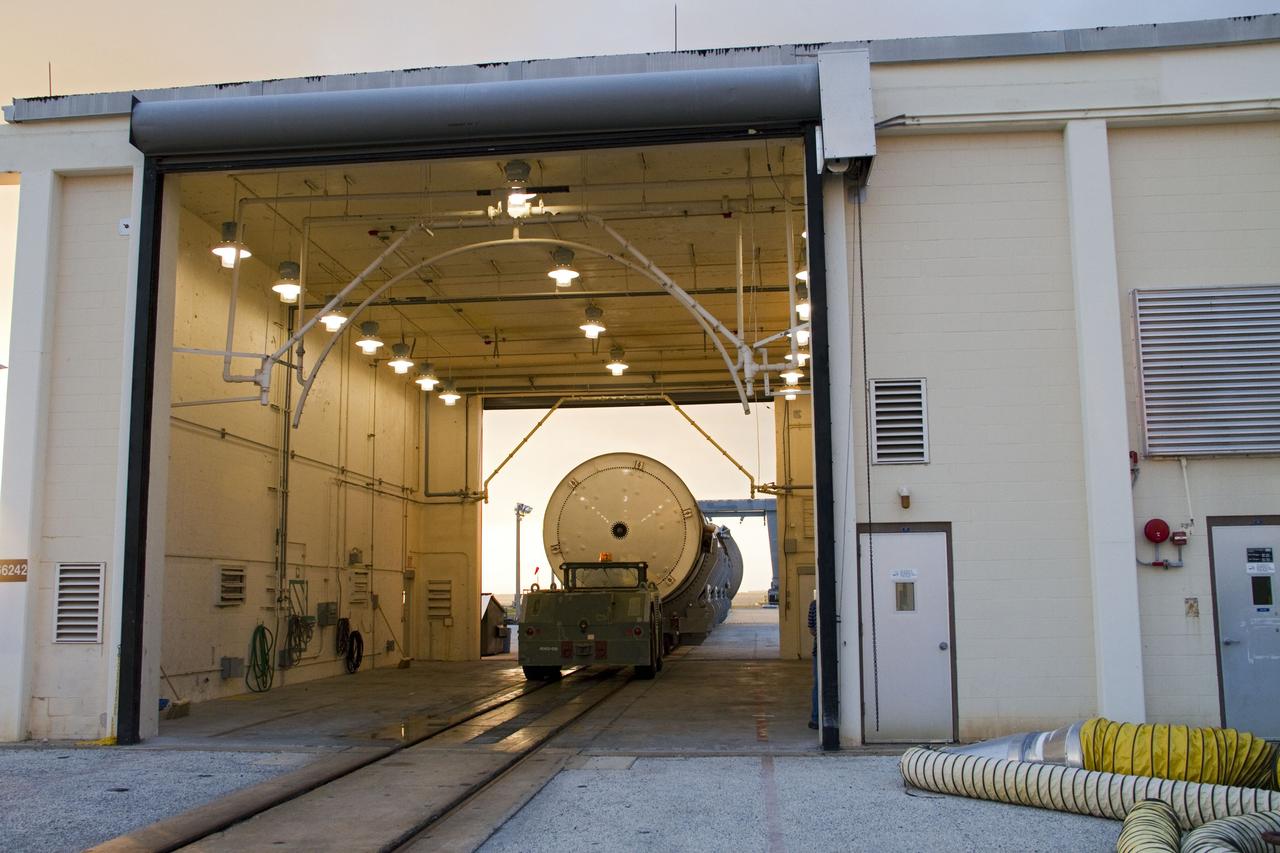
CAPE CANAVERAL, Fla. -- A spent shuttle solid rocket booster undergoes its first cleaning in Hangar AF at Cape Canaveral Air Force Station in Florida. The booster was used during space shuttle Discovery's STS-133 launch from NASA Kennedy Space Center's Launch Pad 39A on Feb. 24. The shuttle’s two solid rocket booster casings and associated flight hardware were recovered in the Atlantic Ocean by retrieval ships Liberty Star and Freedom Star. The boosters impact the Atlantic about seven minutes after liftoff and the retrieval ships are stationed about 10 miles from the impact area at the time of splashdown. After the spent segments are processed, they will be transported to Utah, where they will be refurbished and stored, if needed. Photo credit: NASA/Jack Pfaller
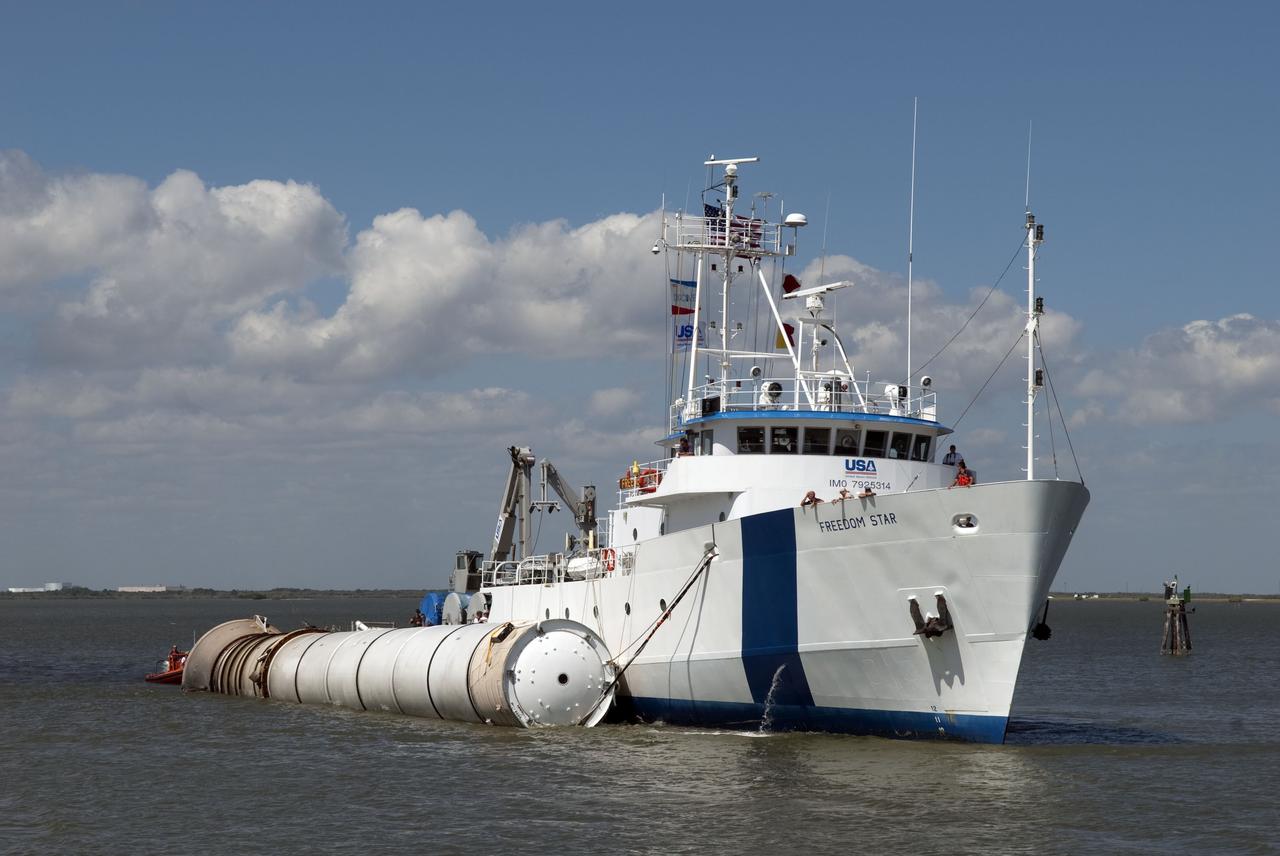
CAPE CANAVERAL, Fla. -- The solid rocket booster retrieval ship Freedom Star tows a left spent booster to the dock at Hangar AF on Cape Canaveral Air Force Station in Florida. The booster was used during space shuttle Discovery's final launch. The shuttle's two solid rocket booster casings and associated flight hardware are recovered in the Atlantic Ocean after every launch by Freedom Star and Liberty Star. The boosters impact the Atlantic about seven minutes after liftoff and the retrieval ships are stationed about 10 miles from the impact area at the time of splashdown. After the spent segments are processed, they will be transported to Utah, where they will be refurbished and stored, if needed. Photo credit: NASA/Jim Grossmann
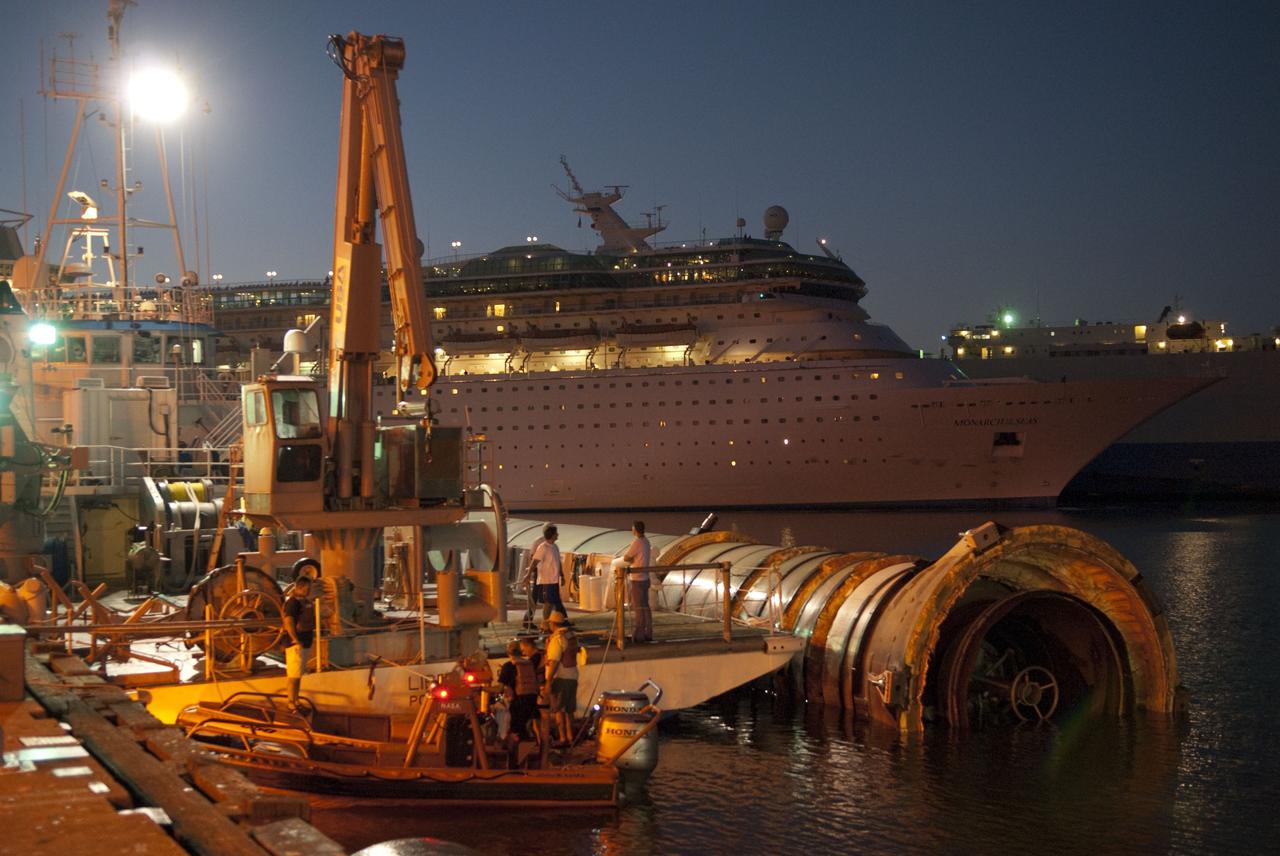
CAPE CANAVERAL, Fla. -- The Solid Rocket Booster Retrieval Ship Freedom Star, with a booster in tow, is docked in Port Canaveral in Florida before continuing on to Hangar AF at Cape Canaveral Air Force Station. A cruise ship is seen in the background. The booster was used during space shuttle Discovery's STS-133 launch from NASA Kennedy Space Center's Launch Pad 39A on Feb. 24. The shuttle’s two solid rocket booster casings and associated flight hardware are recovered in the Atlantic Ocean after every launch by Liberty Star and Freedom Star. The boosters impact the Atlantic about seven minutes after liftoff and the retrieval ships are stationed about 10 miles from the impact area at the time of splashdown. After the spent segments are processed, they will be transported to Utah, where they will be refurbished and stored, if needed. Photo credit: NASA/Jim Grossmann
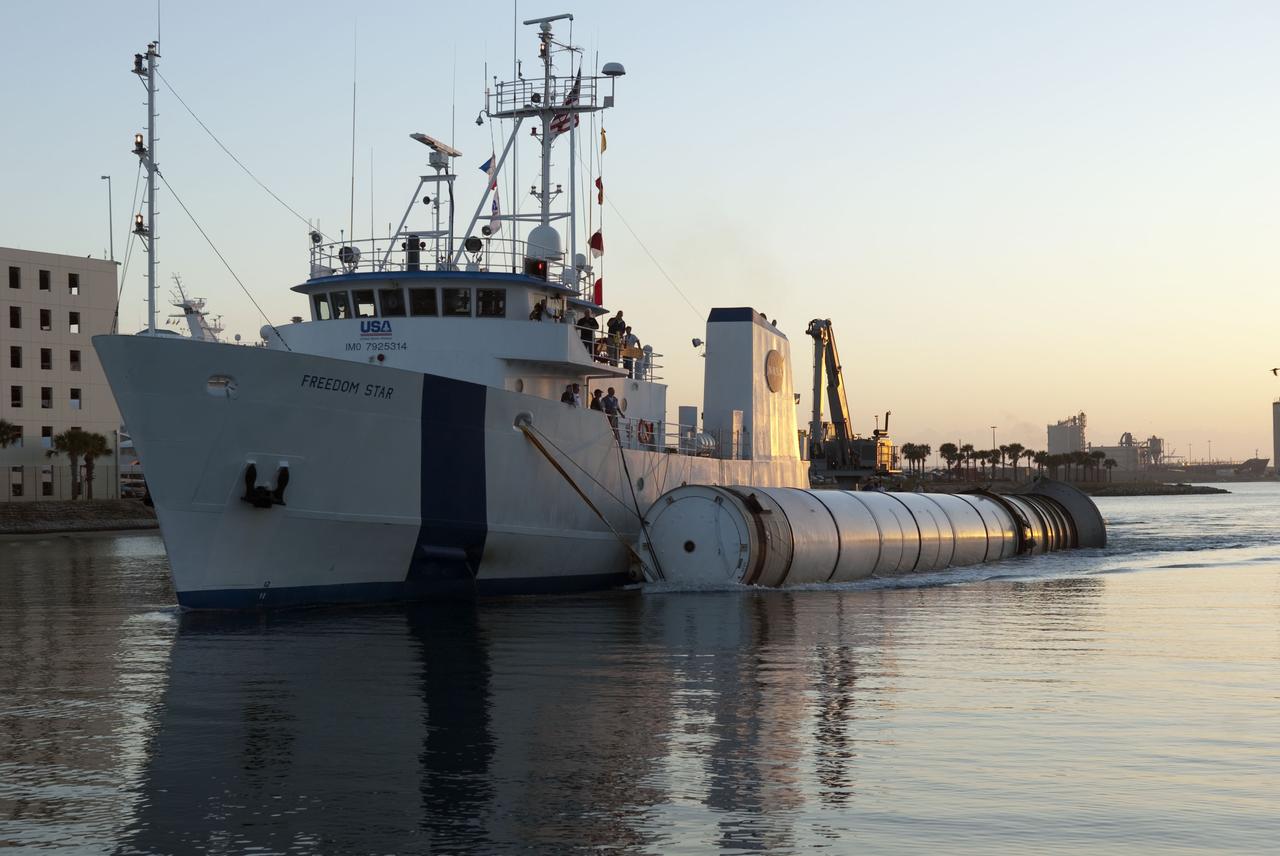
CAPE CANAVERAL, Fla. -- The Solid Rocket Booster Retrieval Ship Freedom Star, with a booster in tow, passes through Port Canaveral on its journey to Hangar AF at Cape Canaveral Air Force Station in Florida. The booster was used during space shuttle Discovery's STS-133 launch from NASA Kennedy Space Center's Launch Pad 39A on Feb. 24. The shuttle’s two solid rocket booster casings and associated flight hardware are recovered in the Atlantic Ocean after every launch by Liberty Star and Freedom Star. The boosters impact the Atlantic about seven minutes after liftoff and the retrieval ships are stationed about 10 miles from the impact area at the time of splashdown. After the spent segments are processed, they will be transported to Utah, where they will be refurbished and stored, if needed. Photo credit: NASA/Jim Grossmann
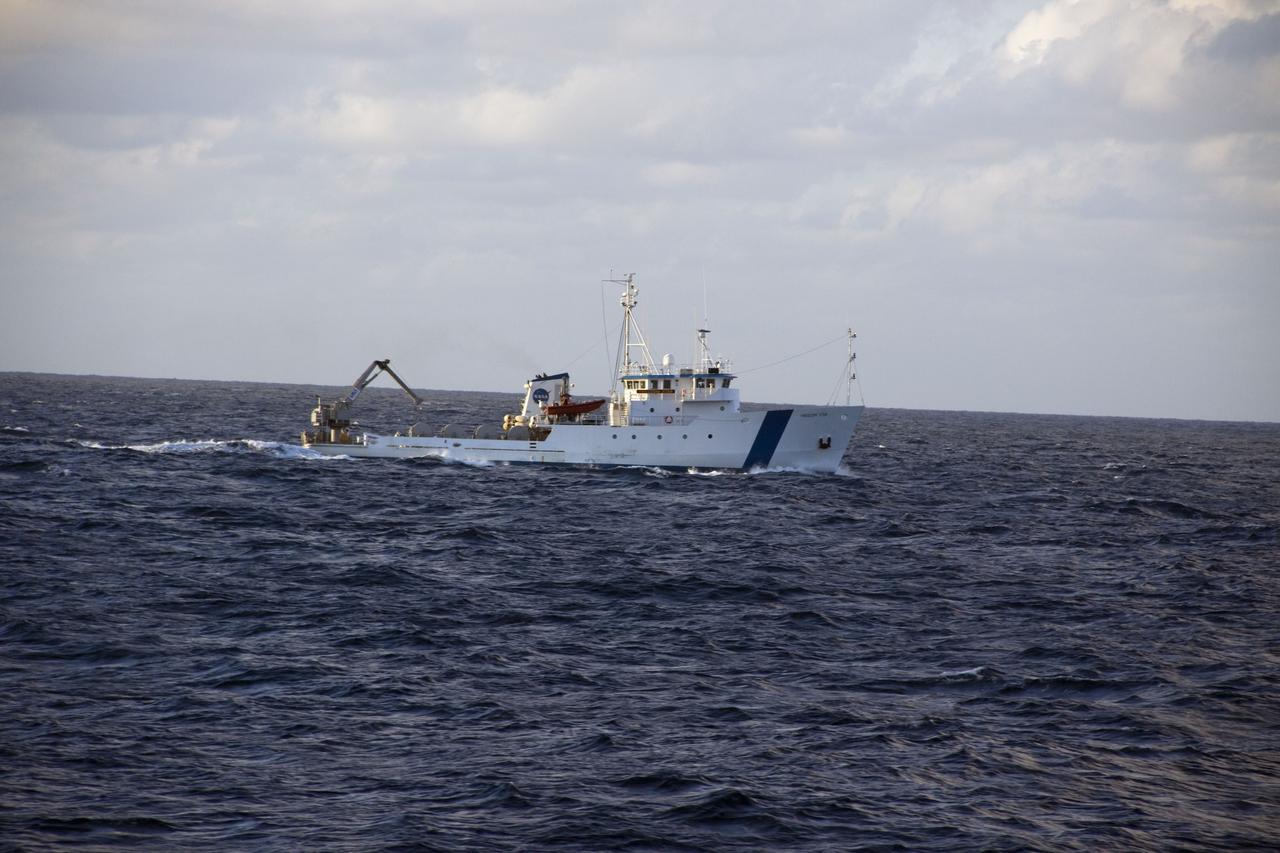
CAPE CANAVERAL, Fla. -- An expanse of ocean is seen on the horizon as Freedom Star, one of NASA's solid rocket booster retrieval ships, set sail to be in position in the Atlantic Ocean to recover the right spent booster that splashed down after space shuttle Discovery's final launch. The shuttle’s two solid rocket booster casings and associated flight hardware are recovered in the Atlantic Ocean after every launch by Freedom Star and Liberty Star. The boosters impact the Atlantic about seven minutes after liftoff and the retrieval ships are stationed about 10 miles from the impact area at the time of splashdown. After the spent segments are processed, they will be transported to Utah, where they will be refurbished and stored, if needed. Photo credit: NASA/Frank Michaux
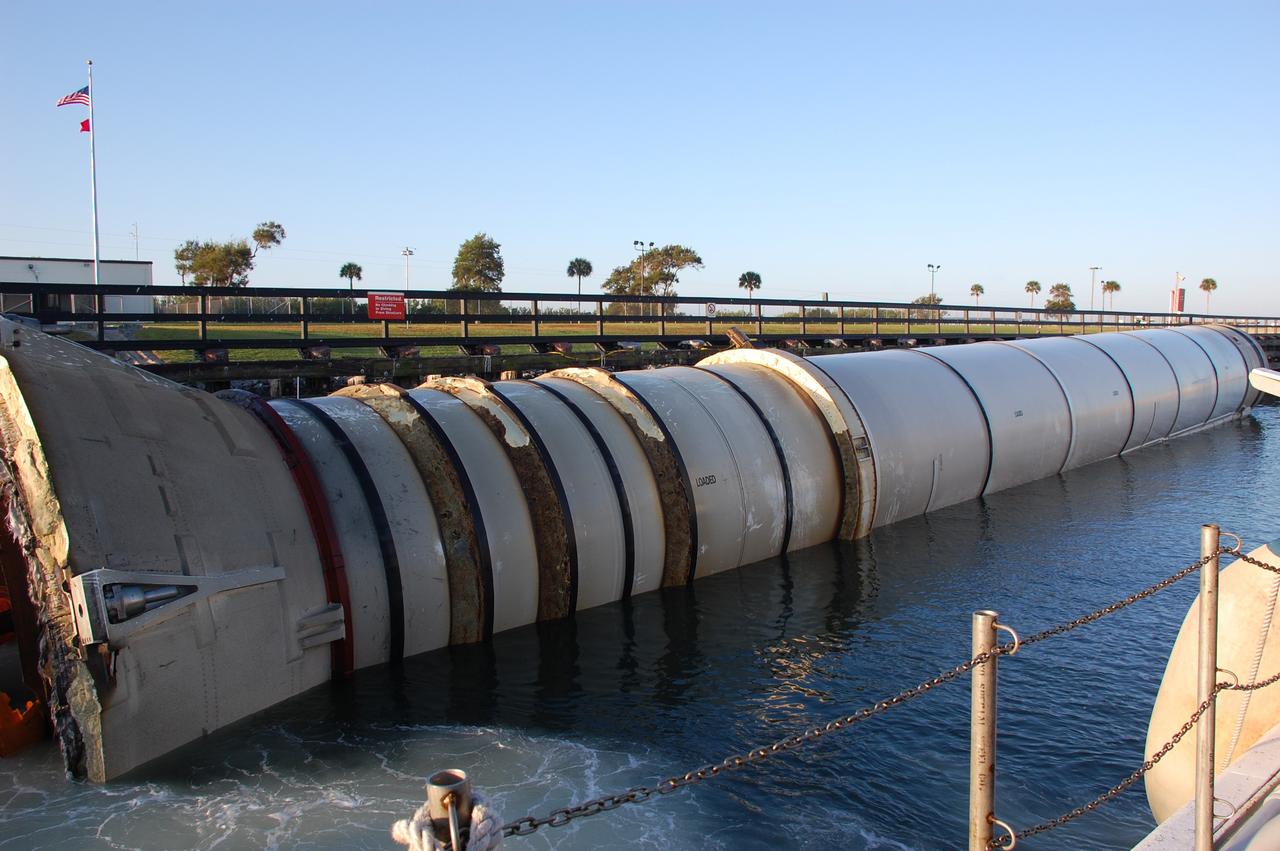
CAPE CANAVERAL, Fla. -- A spent shuttle booster will be ushered through the shallow waters of the locks at Port Canaveral, Fla., by a skiff from Freedom Star, one of NASA's solid rocket booster retrieval ships. The booster, which was used during space shuttle Discovery's STS-133 launch from NASA Kennedy Space Center's Launch Pad 39A on Feb. 24, is on its way to Hangar AF at Cape Canaveral Air Force Station. The shuttle’s two solid rocket booster casings and associated flight hardware are recovered in the Atlantic Ocean after every launch by Freedom Star and Liberty Star. The boosters impact the Atlantic about seven minutes after liftoff and the retrieval ships are stationed about 10 miles from the impact area at the time of splashdown. After the spent segments are processed, they will be transported to Utah, where they will be refurbished and stored, if needed. Photo credit: NASA/Ben Smegelsky
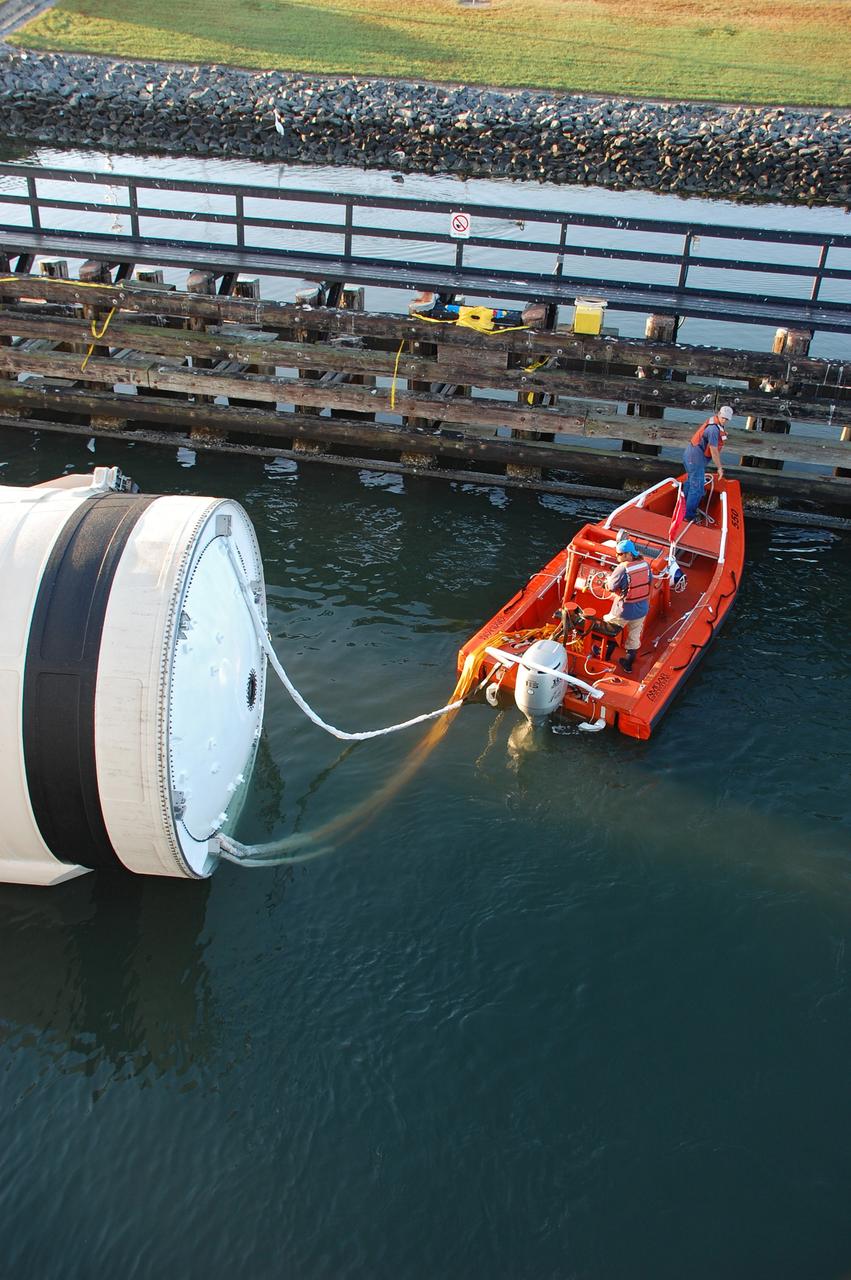
CAPE CANAVERAL, Fla. -- Crew members in a skiff from Freedom Star, one of NASA's solid rocket booster retrieval ships, will usher a spent shuttle booster through the shallow waters of the locks at Port Canaveral, Fla. The booster, which was used during space shuttle Discovery's STS-133 launch from NASA Kennedy Space Center's Launch Pad 39A on Feb. 24, is on its way to Hangar AF at Cape Canaveral Air Force Station. The shuttle’s two solid rocket booster casings and associated flight hardware are recovered in the Atlantic Ocean after every launch by Freedom Star and Liberty Star. The boosters impact the Atlantic about seven minutes after liftoff and the retrieval ships are stationed about 10 miles from the impact area at the time of splashdown. After the spent segments are processed, they will be transported to Utah, where they will be refurbished and stored, if needed. Photo credit: NASA/Ben Smegelsky
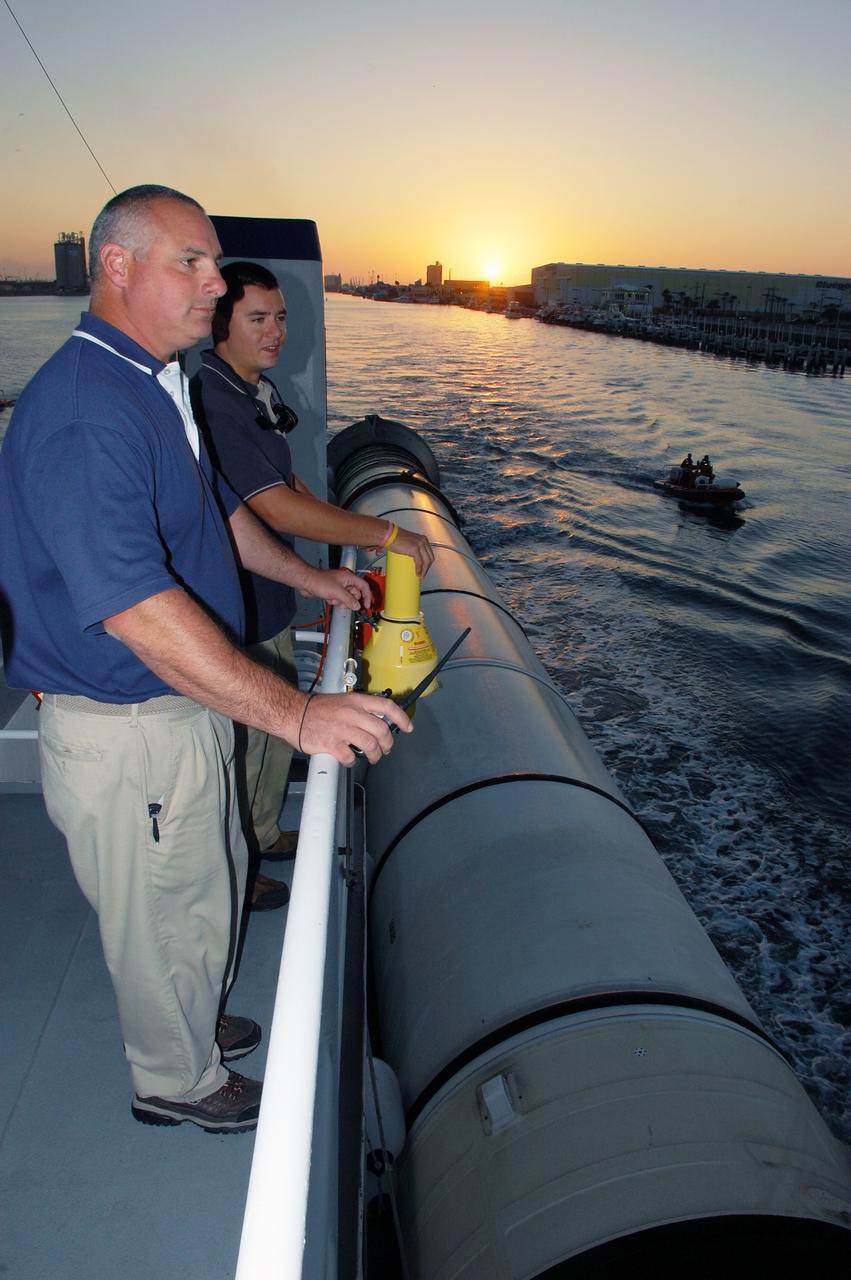
CAPE CANAVERAL, Fla. -- As daylight breaks, Allan Gravina and Cody Gordon with United Space Alliance monitor a spent booster as it's towed by the Freedom Star retrieval ship through Port Canaveral in Florida on a journey to Hangar AF at Cape Canaveral Air Force Station. The booster was used during space shuttle Discovery's STS-133 launch from NASA Kennedy Space Center's Launch Pad 39A on Feb. 24. The shuttle’s two solid rocket booster casings and associated flight hardware are recovered in the Atlantic Ocean after every launch by Freedom Star and Liberty Star. The boosters impact the Atlantic about seven minutes after liftoff and the retrieval ships are stationed about 10 miles from the impact area at the time of splashdown. After the spent segments are processed, they will be transported to Utah, where they will be refurbished and stored, if needed. Photo credit: NASA/Ben Smegelsky
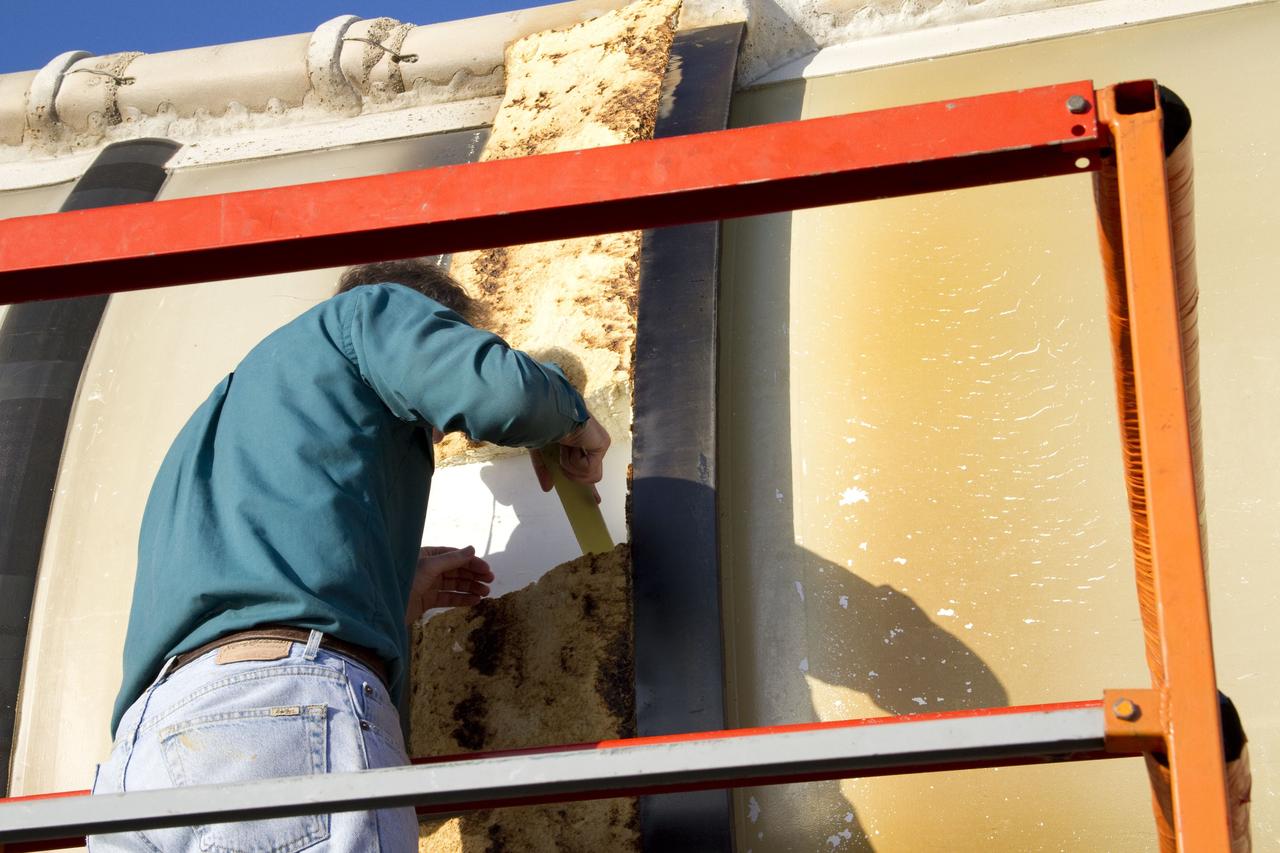
CAPE CANAVERAL, Fla. -- A technician inspects a spent shuttle solid rocket booster outside Hangar AF at Cape Canaveral Air Force Station in Florida. The booster was used during space shuttle Discovery's STS-133 launch from NASA Kennedy Space Center's Launch Pad 39A on Feb. 24. The shuttle’s two solid rocket booster casings and associated flight hardware were recovered in the Atlantic Ocean by retrieval ships Liberty Star and Freedom Star. The boosters impact the Atlantic about seven minutes after liftoff and the retrieval ships are stationed about 10 miles from the impact area at the time of splashdown. After the spent segments are processed, they will be transported to Utah, where they will be refurbished and stored, if needed. Photo credit: NASA/Jack Pfaller
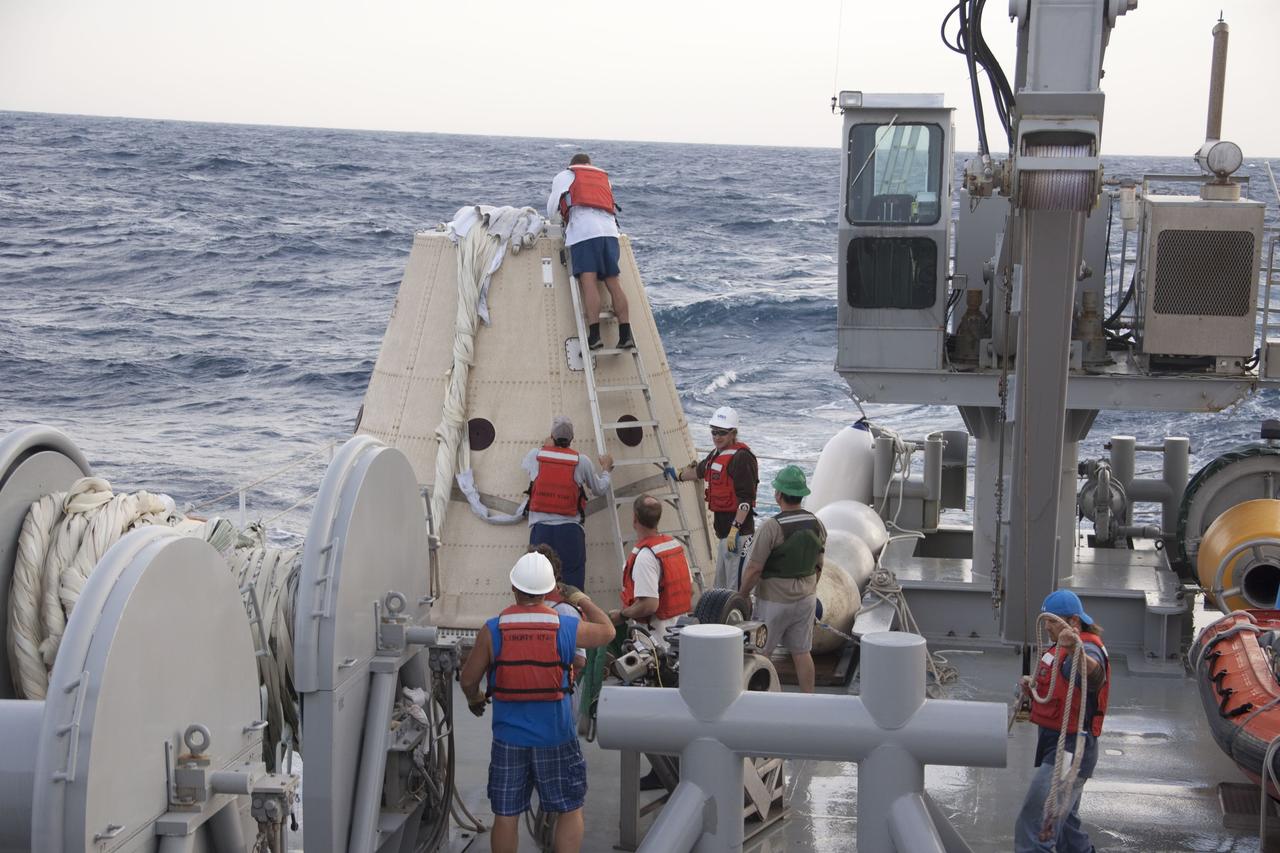
CAPE CANAVERAL, Fla. -- Crew members from Liberty Star, one of NASA's solid rocket booster retrieval ships, work on the parachute from the right spent booster nose cap that splashed down in the Atlantic Ocean after Discovery's final launch. The shuttle’s two solid rocket booster casings and associated flight hardware are recovered in the Atlantic Ocean after every launch by Freedom Star and Liberty Star. The boosters impact the Atlantic about seven minutes after liftoff and the retrieval ships are stationed about 10 miles from the impact area at the time of splashdown. After the spent segments are processed, they will be transported to Utah, where they will be refurbished and stored, if needed. Photo credit: NASA/Frank Michaux

CAPE CANAVERAL, Fla. -- The Solid Rocket Booster Retrieval Ship Freedom Star, with a spent shuttle booster in tow, just passed through a drawbridge on its way to the dock at Hangar AF at Cape Canaveral Air Force Station in Florida. The booster was used during space shuttle Discovery's STS-133 launch from NASA Kennedy Space Center's Launch Pad 39A on Feb. 24. The shuttle’s two solid rocket booster casings and associated flight hardware are recovered in the Atlantic Ocean after every launch by Freedom Star and Liberty Star. The boosters impact the Atlantic about seven minutes after liftoff and the retrieval ships are stationed about 10 miles from the impact area at the time of splashdown. After the spent segments are processed, they will be transported to Utah, where they will be refurbished and stored, if needed. Photo credit: NASA/Ben Smegelsky
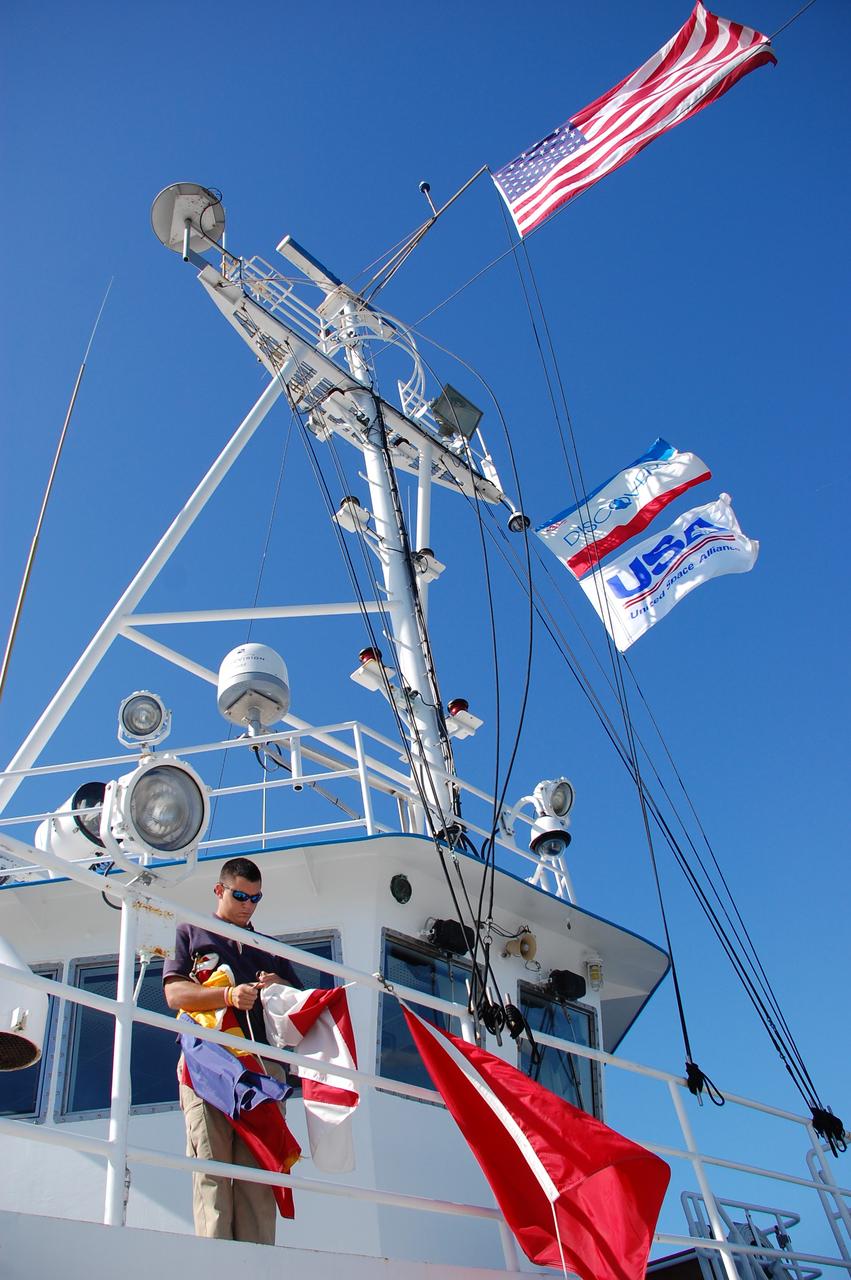
CAPE CANAVERAL, Fla. -- The Solid Rocket Booster Retrieval Ship Freedom Star delivers a spent shuttle booster to workers at Hangar AF at Cape Canaveral Air Force Station in Florida. The booster was used during space shuttle Discovery's STS-133 launch from NASA Kennedy Space Center's Launch Pad 39A on Feb. 24. The shuttle’s two solid rocket booster casings and associated flight hardware are recovered in the Atlantic Ocean after every launch by Freedom Star and Liberty Star. The boosters impact the Atlantic about seven minutes after liftoff and the retrieval ships are stationed about 10 miles from the impact area at the time of splashdown. After the spent segments are processed, they will be transported to Utah, where they will be refurbished and stored, if needed. Photo credit: NASA/Ben Smegelsky
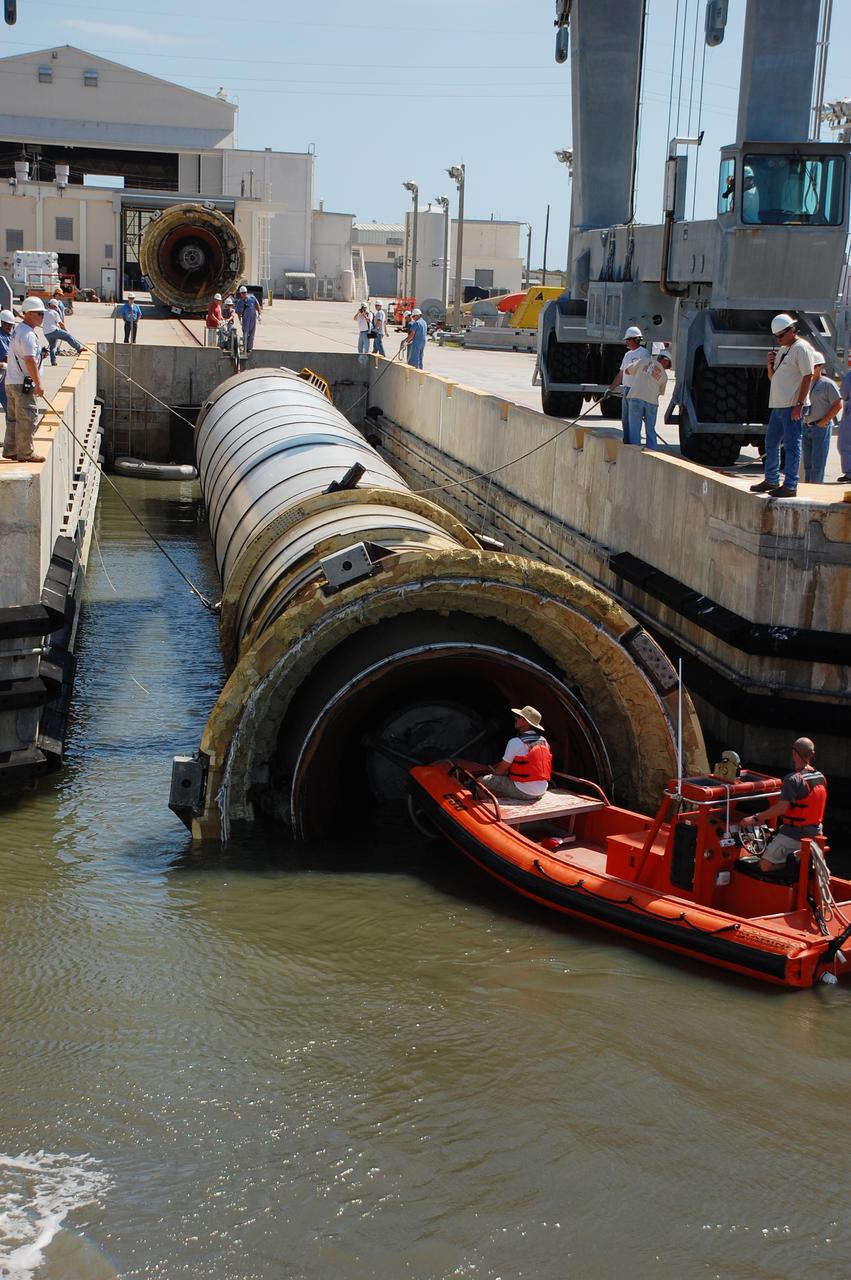
CAPE CANAVERAL, Fla. -- Crew members in a skiff from Liberty Star, one of NASA's solid rocket booster retrieval ships, usher a spent shuttle booster to Hangar AF at Cape Canaveral Air Force Station in Florida. The booster was used during space shuttle Discovery's STS-133 launch from NASA Kennedy Space Center's Launch Pad 39A on Feb. 24. The shuttle’s two solid rocket booster casings and associated flight hardware are recovered in the Atlantic Ocean after every launch by Freedom Star and Liberty Star. The boosters impact the Atlantic about seven minutes after liftoff and the retrieval ships are stationed about 10 miles from the impact area at the time of splashdown. After the spent segments are processed, they will be transported to Utah, where they will be refurbished and stored, if needed. Photo credit: NASA/Ben Smegelsky
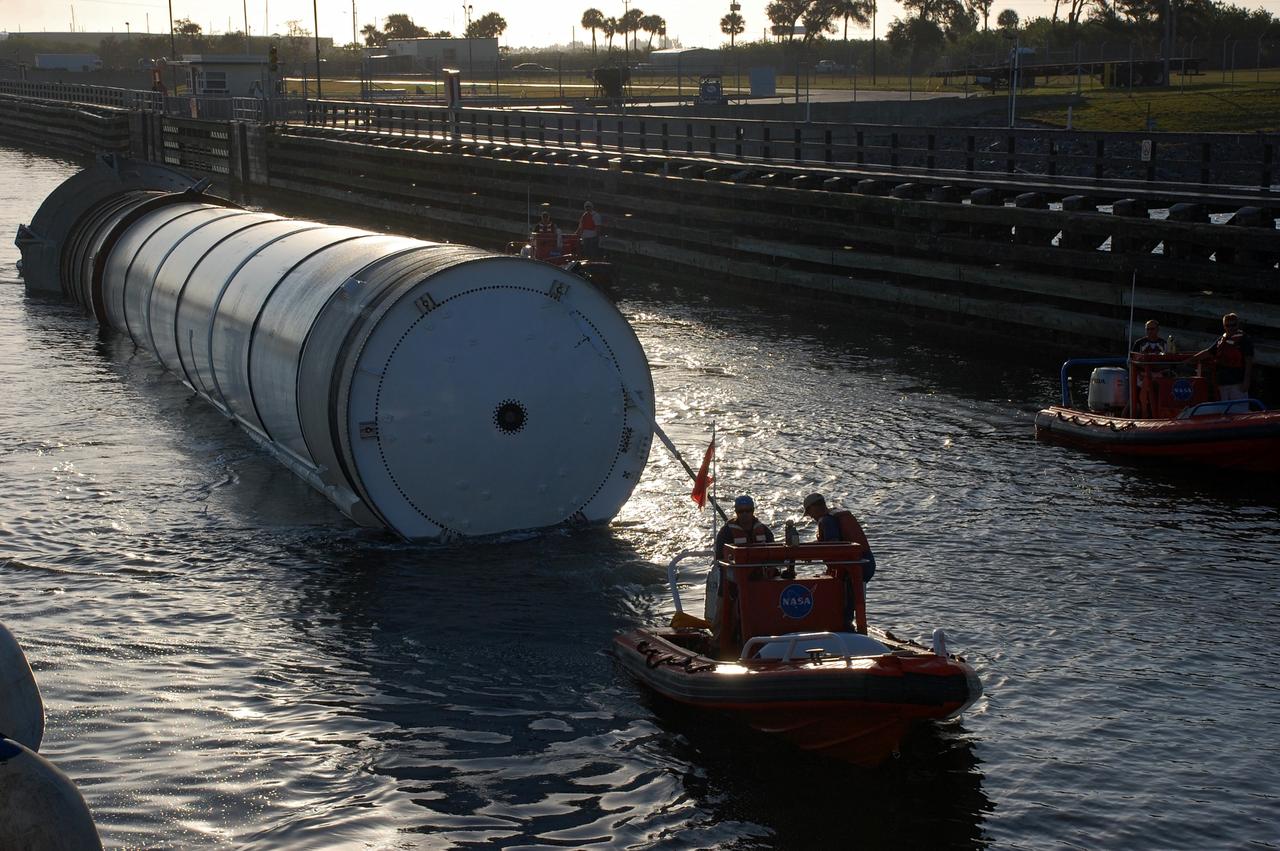
CAPE CANAVERAL, Fla. -- Crew members in a skiff from Freedom Star, one of NASA's solid rocket booster retrieval ships, usher a spent shuttle booster through the shallow waters of the locks at Port Canaveral, Fla. The booster, which was used during space shuttle Discovery's STS-133 launch from NASA Kennedy Space Center's Launch Pad 39A on Feb. 24, is on its way to Hangar AF at Cape Canaveral Air Force Station. The shuttle’s two solid rocket booster casings and associated flight hardware are recovered in the Atlantic Ocean after every launch by Freedom Star and Liberty Star. The boosters impact the Atlantic about seven minutes after liftoff and the retrieval ships are stationed about 10 miles from the impact area at the time of splashdown. After the spent segments are processed, they will be transported to Utah, where they will be refurbished and stored, if needed. Photo credit: NASA/Ben Smegelsky
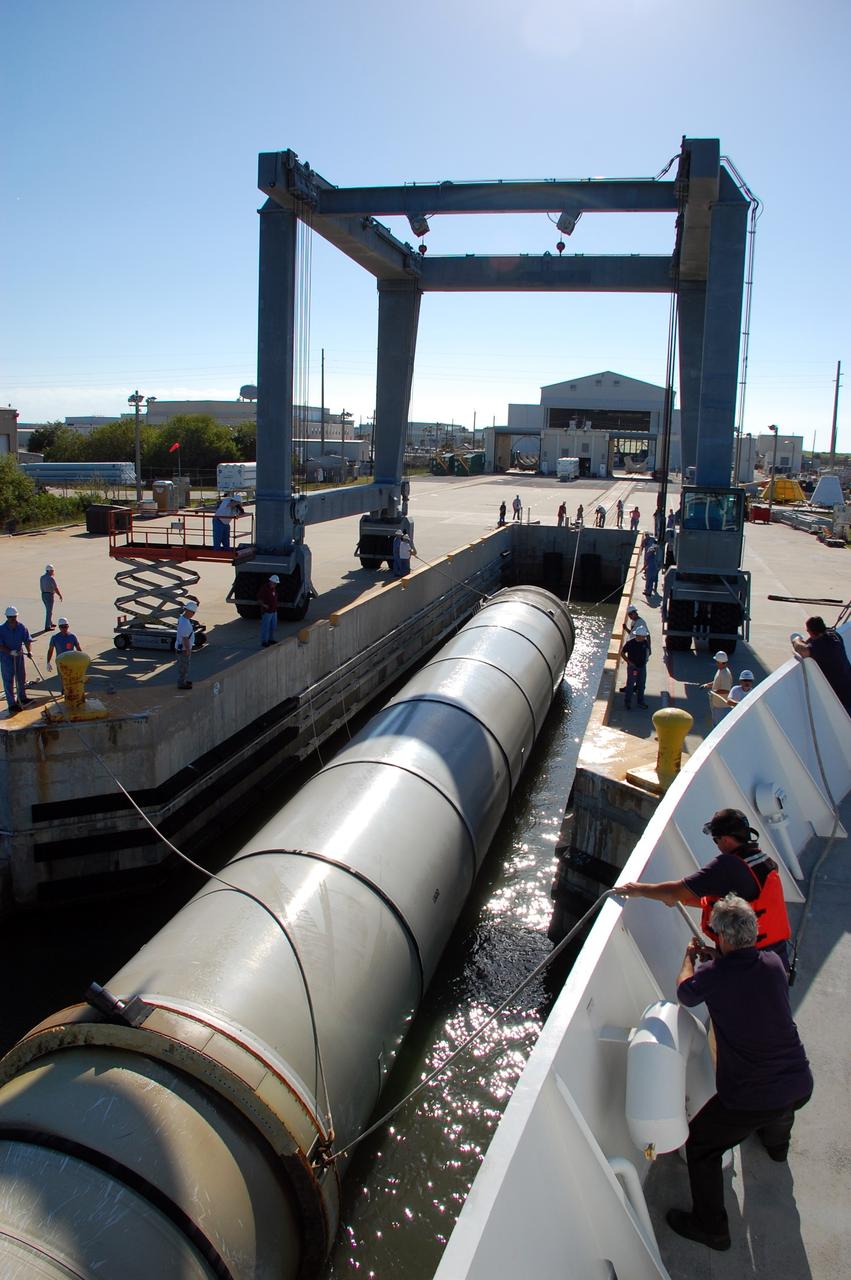
CAPE CANAVERAL, Fla. -- The Solid Rocket Booster Retrieval Ship Freedom Star delivers a spent shuttle booster to workers at Hangar AF at Cape Canaveral Air Force Station in Florida. The booster was used during space shuttle Discovery's STS-133 launch from NASA Kennedy Space Center's Launch Pad 39A on Feb. 24. The shuttle’s two solid rocket booster casings and associated flight hardware are recovered in the Atlantic Ocean after every launch by Freedom Star and Liberty Star. The boosters impact the Atlantic about seven minutes after liftoff and the retrieval ships are stationed about 10 miles from the impact area at the time of splashdown. After the spent segments are processed, they will be transported to Utah, where they will be refurbished and stored, if needed. Photo credit: NASA/Ben Smegelsky

CAPE CANAVERAL, Fla. -- Crew members in a skiff from Liberty Star, one of NASA's solid rocket booster retrieval ships, attach a tow rope to the parachute lines from the right spent booster bobbing in the Atlantic Ocean from space shuttle Discovery's final launch. The shuttle's two solid rocket booster casings and associated flight hardware are recovered in the Atlantic Ocean after every launch by Freedom Star and Liberty Star. The boosters impact the Atlantic about seven minutes after liftoff and the retrieval ships are stationed about 10 miles from the impact area at the time of splashdown. After the spent segments are processed, they will be transported to Utah, where they will be refurbished and stored, if needed. Photo credit: NASA/Frank Michaux
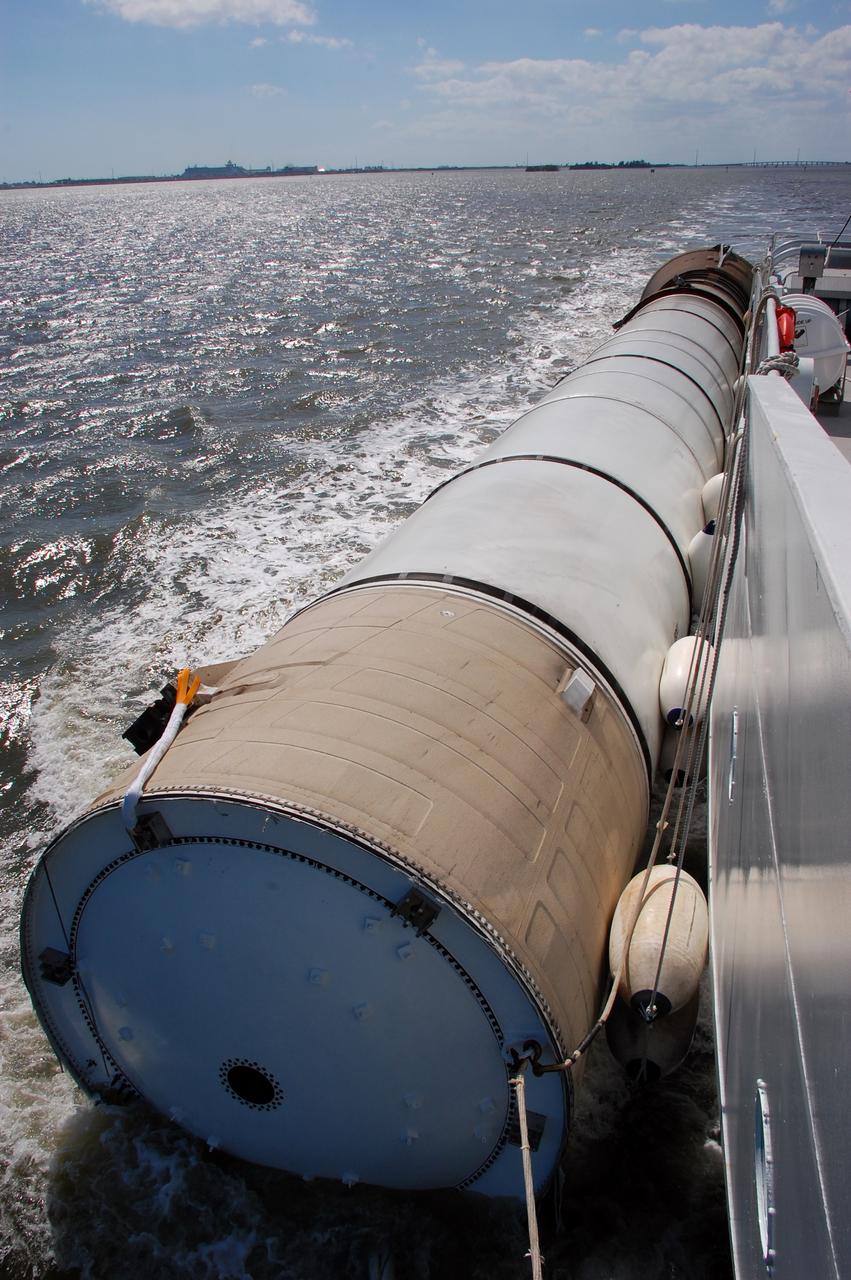
CAPE CANAVERAL, Fla. -- Liberty Star, one of NASA's solid rocket booster retrieval ships, ushers a spent shuttle booster to Hangar AF at Cape Canaveral Air Force Station in Florida. The booster was used during space shuttle Discovery's STS-133 launch from NASA Kennedy Space Center's Launch Pad 39A on Feb. 24. The shuttle’s two solid rocket booster casings and associated flight hardware are recovered in the Atlantic Ocean after every launch by Freedom Star and Liberty Star. The boosters impact the Atlantic about seven minutes after liftoff and the retrieval ships are stationed about 10 miles from the impact area at the time of splashdown. After the spent segments are processed, they will be transported to Utah, where they will be refurbished and stored, if needed. Photo credit: NASA/Ben Smegelsky
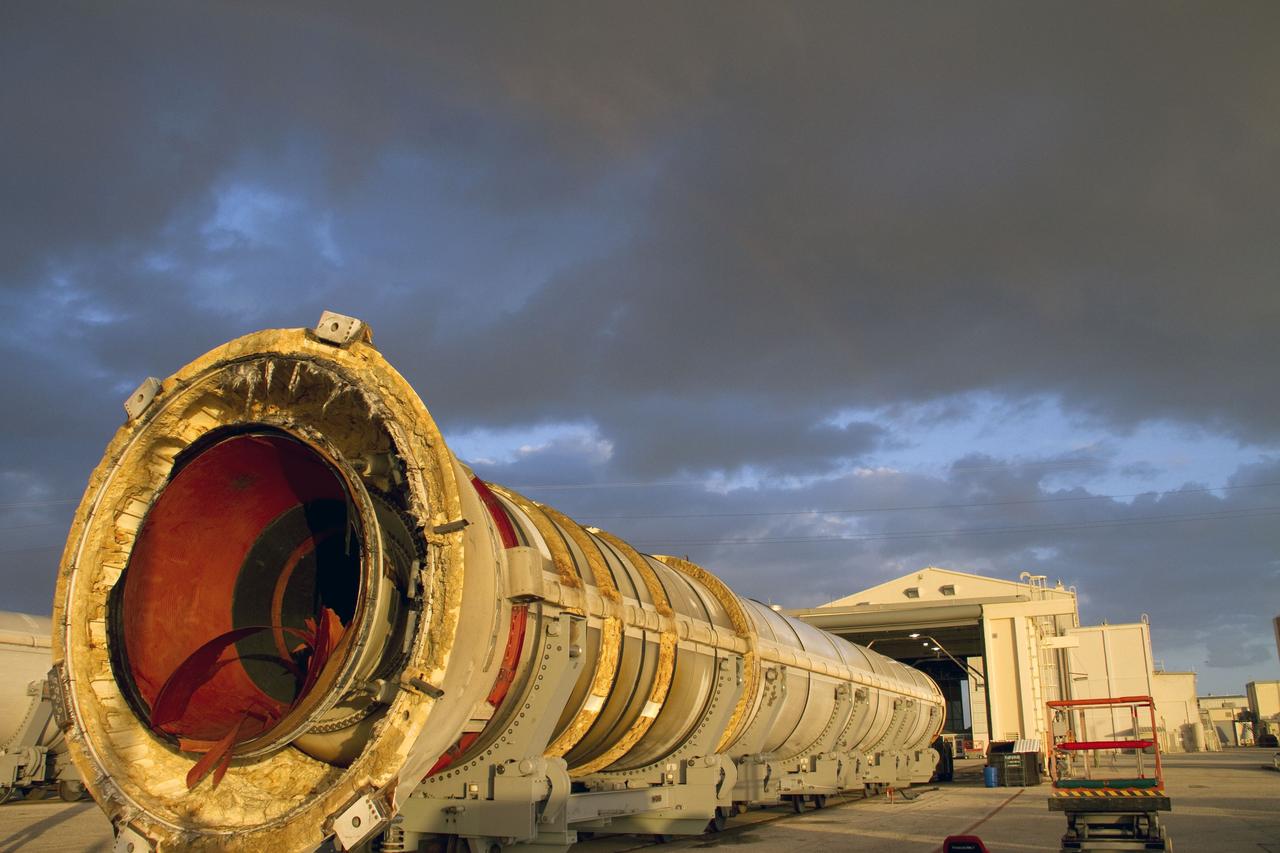
CAPE CANAVERAL, Fla. -- A spent shuttle solid rocket booster is moved into Hangar AF at Cape Canaveral Air Force Station in Florida, where it will be cleaned. The booster was used during space shuttle Discovery's STS-133 launch from NASA Kennedy Space Center's Launch Pad 39A on Feb. 24. The shuttle’s two solid rocket booster casings and associated flight hardware were recovered in the Atlantic Ocean by retrieval ships Liberty Star and Freedom Star. The boosters impact the Atlantic about seven minutes after liftoff and the retrieval ships are stationed about 10 miles from the impact area at the time of splashdown. After the spent segments are processed, they will be transported to Utah, where they will be refurbished and stored, if needed. Photo credit: NASA/Jack Pfaller