
The new Aerospace Communications Facility allows researchers to develop various types of communication, including RF, cellular, optical, and quantum to support the agency’s Artemis and Advanced Air Mobility Missions.
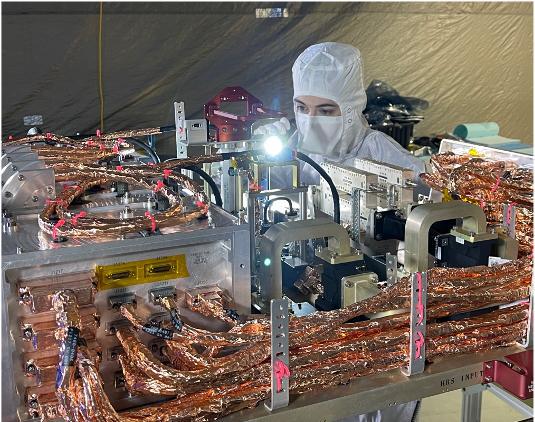
An engineer inspects the radio frequency (RF) panel of NASA's Europa Clipper in a cleanroom at the Johns Hopkins Applied Physics Laboratory in Laurel, Maryland. The RF panel hosts all the RF subsystem electronics and an intricate routing network of switches, filters, and waveguides, which carry the RF signal to and from eight antennas distributed around the spacecraft. With an internal global ocean under a thick layer of ice, Jupiter's moon Europa may have the potential to harbor existing life. Europa Clipper will swoop around Jupiter in an elliptical orbit, dipping close to the moon on each flyby to collect data. Understanding Europa's habitability will help scientists better understand how life developed on Earth and the potential for finding life beyond our planet. Europa Clipper is set to launch in 2024. https://photojournal.jpl.nasa.gov/catalog/PIA24898

NASA’s Glenn Research Center opened the doors to a brand-new mission-focused facility that will support the agency’s Artemis and Advanced Air Mobility missions. On Aug. 30, NASA management and local officials cut the ribbon to the Aerospace Communications Facility (ACF), a new building designed for advanced radio frequency (RF) and optical communication technology research and development. Photo Credit: (NASA/Sara Lowthian-Hanna)
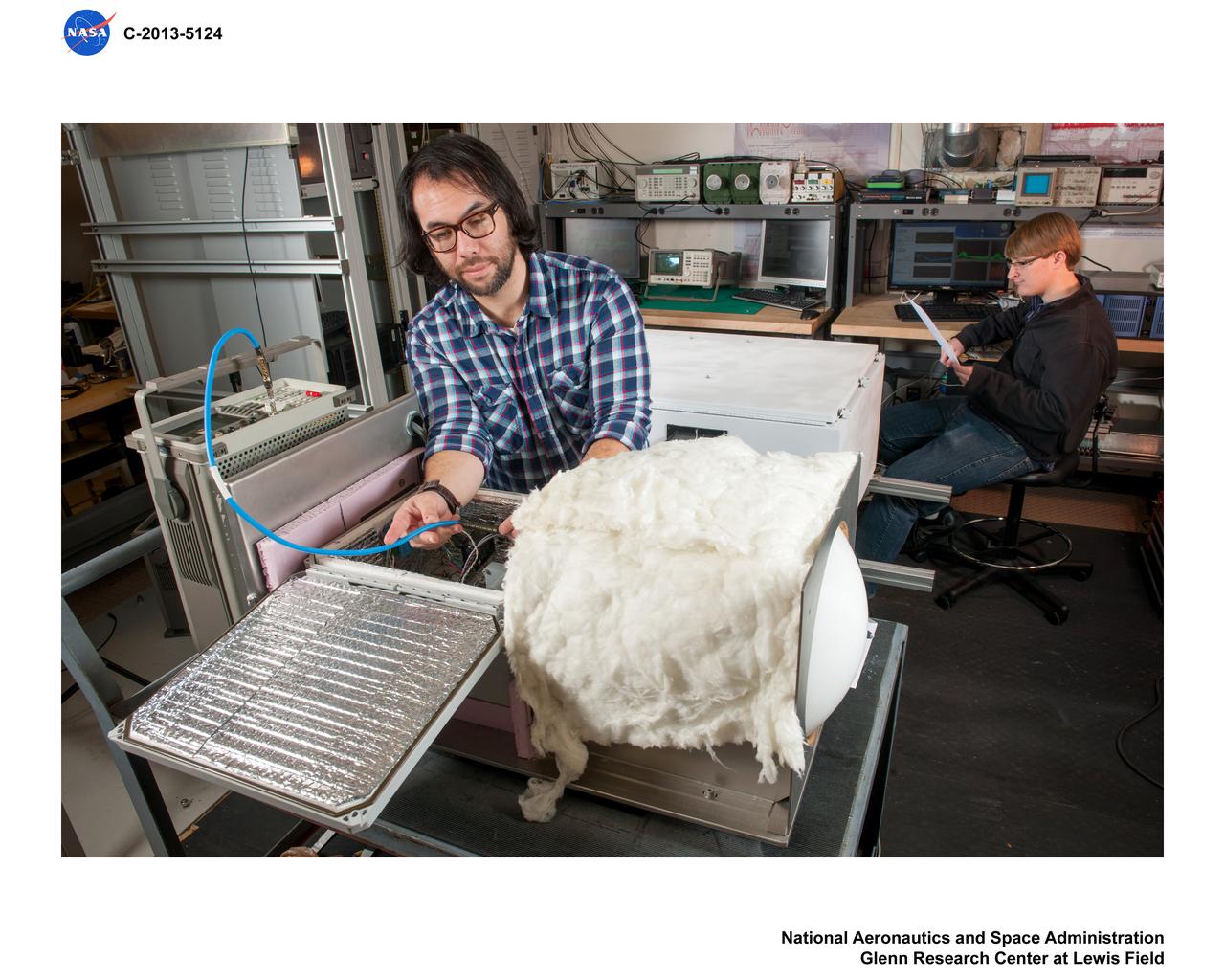
RF, Radio Frequency, Propagation Studies

NASA GRC Integrated RF and Optical Communications, iROC
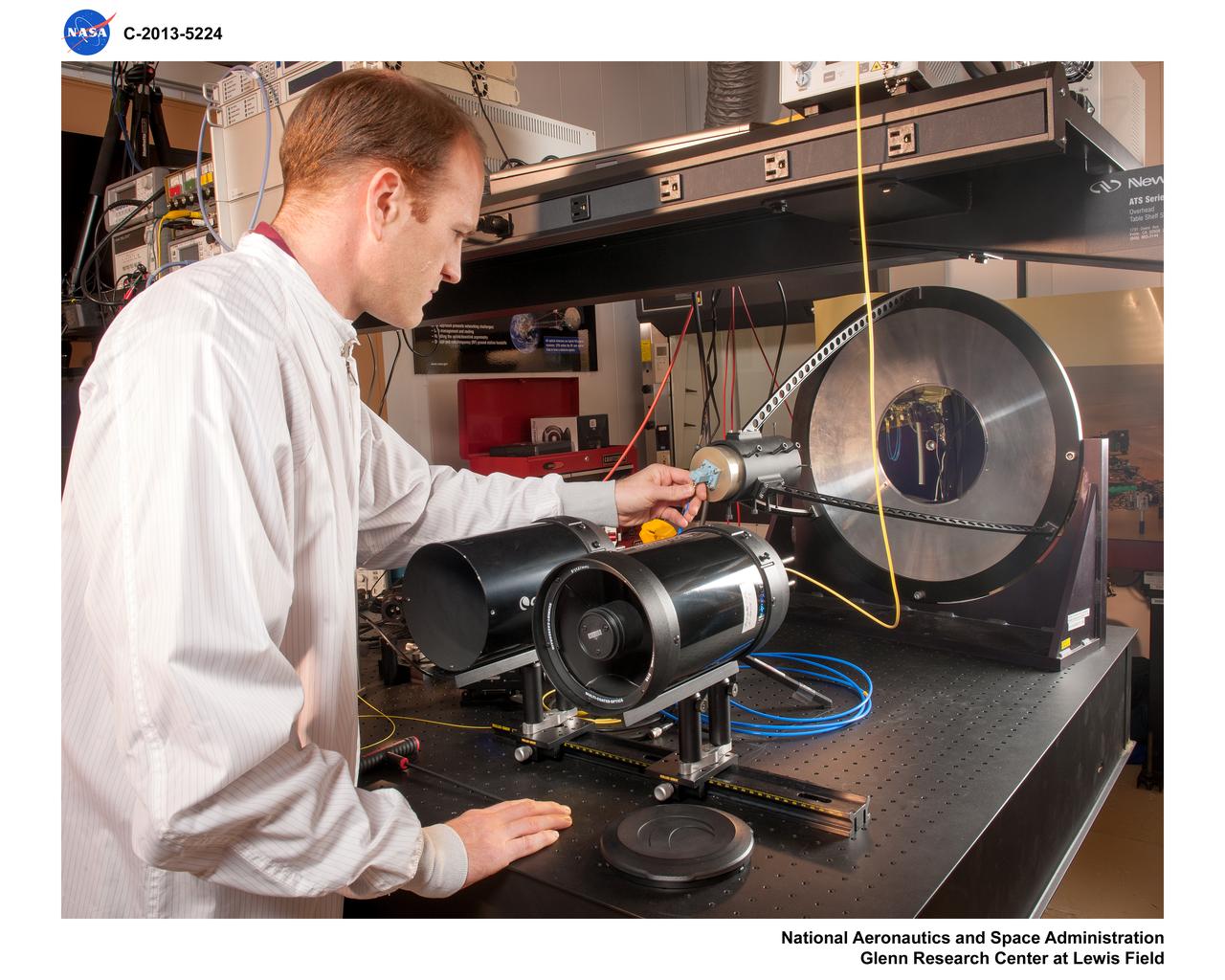
NASA GRC Integrated RF and Optical Communications, iROC
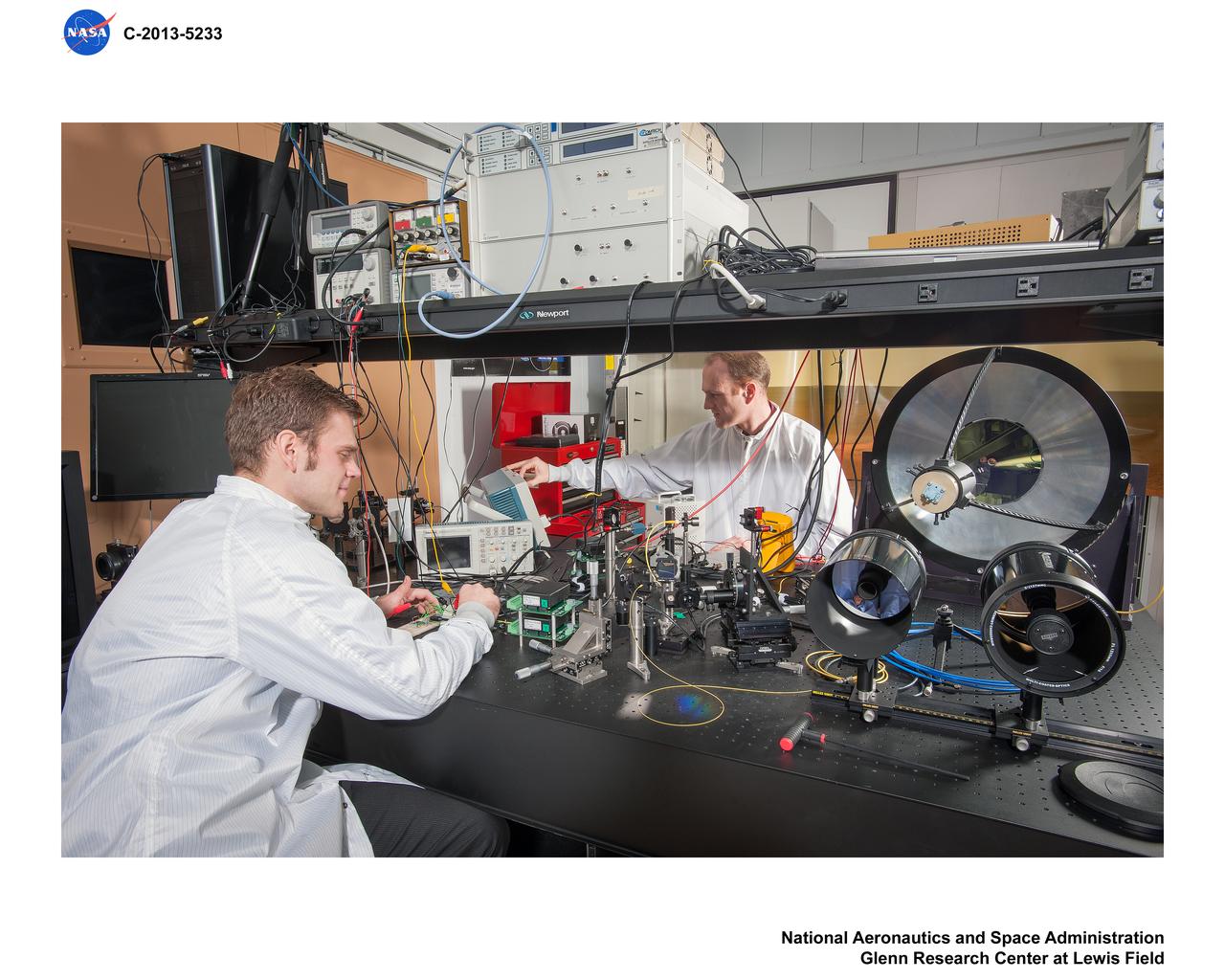
NASA GRC Integrated RF and Optical Communications, iROC

Body Mounted on RF-61-C Airplane in flight Note: publiched in NASA SP Flight research at Ames; 57 Years of Development & Validation of Aeronautical Technology ' Transonic Model Testing' - fig. 12

DC-8 NAMMA MISSION TO CAPE VERDE, AFRICA: Principlal investigator Eastwood Im (l), co-principal investigator Simone Tanelli (c )and RF Engineer William Chun (r) of JPL look at data coming off their APR-2 (Airborne 2nd Generation Precipitation Radar) instrument onboard NASA's DC-8 during a NAMMA science flight
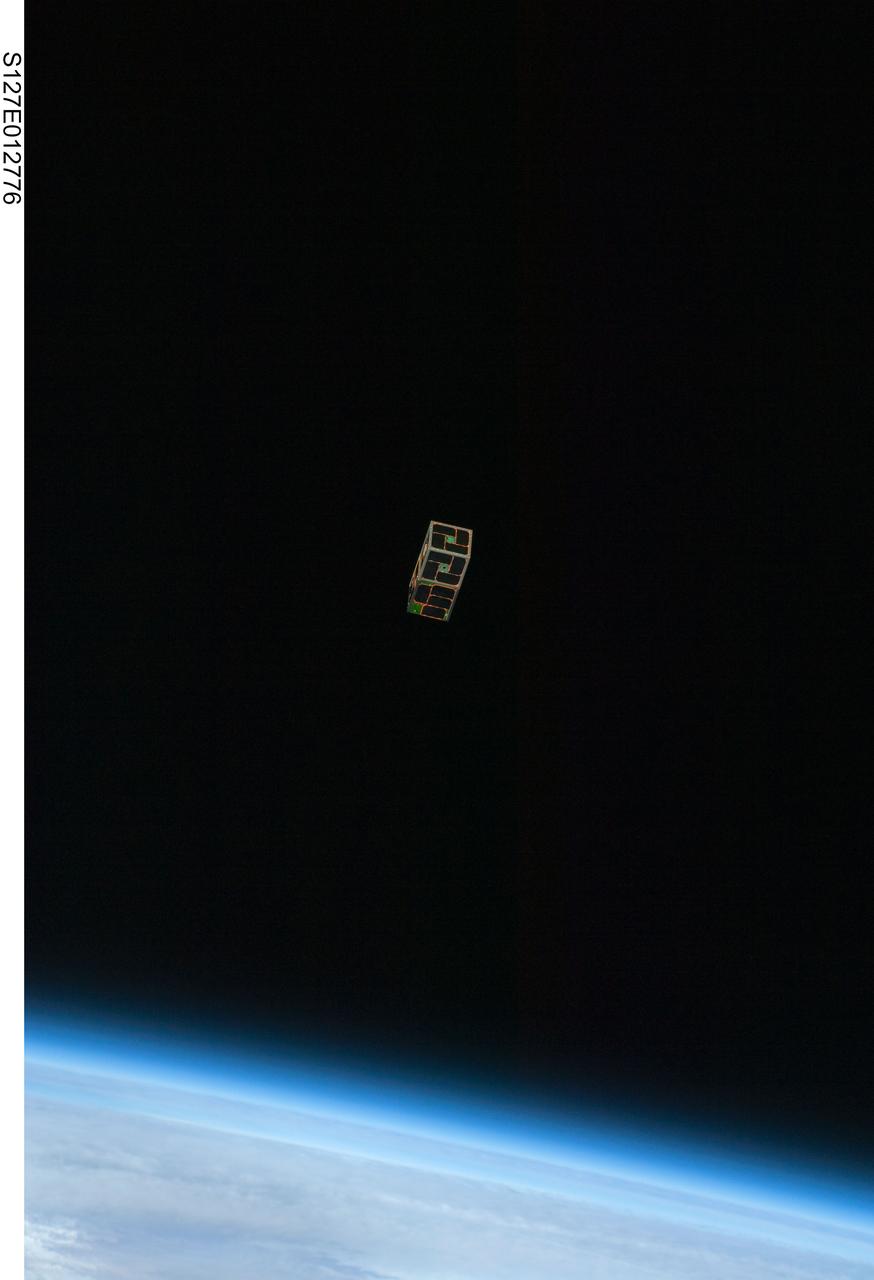
S127-E-012776 (30 July 2009) --- Backdropped by Earth?s horizon and the blackness of space, a Dual RF Astrodynamic GPS Orbital Navigator Satellite (DRAGONSat) is photographed after its release from Space Shuttle Endeavour?s payload bay by STS-127 crew members. DRAGONSat will look at independent rendezvous of spacecraft in orbit using Global Positioning Satellite data. The two satellites were designed and built by students at the University of Texas, Austin, and Texas A&M University, College Station.
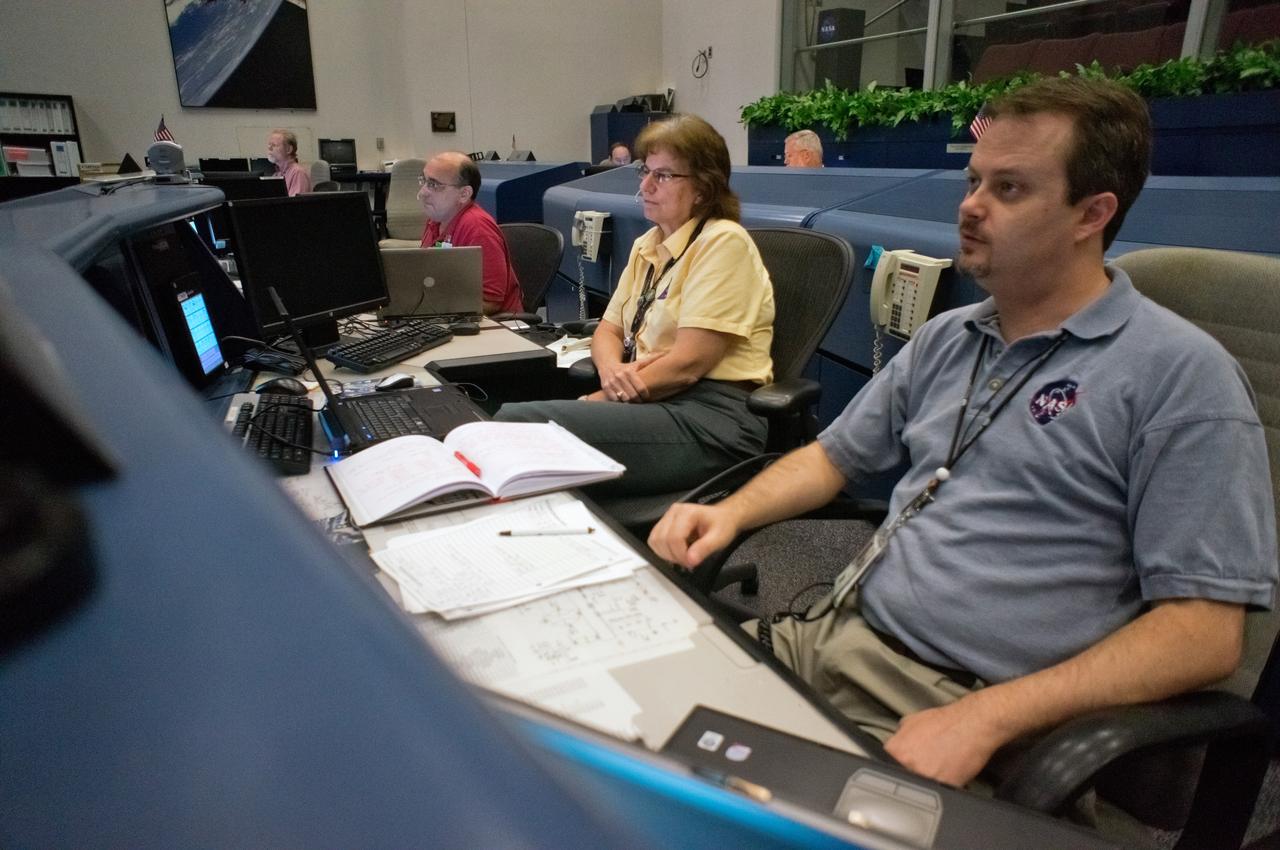
The Orion avionics team participates in a successful End to End 02 test between Mission Control Center (MCC) Houston and the Communications and Tracking Integrated Lab in Denver on Oct. 16, 2011. The team successfully flowed telemetry over RF link to the MCC, sent the first encrypted command from MCC to Orion, demonstrated full end to end video link capability, and downlinked test video file in a file transfer. Part of Batch image transfer from Flickr.

The Orion avionics team participates in a successful End to End 02 test between Mission Control Center (MCC) Houston and the Communications and Tracking Integrated Lab in Denver on Oct. 16, 2011. The team successfully flowed telemetry over RF link to the MCC, sent the first encrypted command from MCC to Orion, demonstrated full end to end video link capability, and downlinked test video file in a file transfer. Part of Batch image transfer from Flickr.
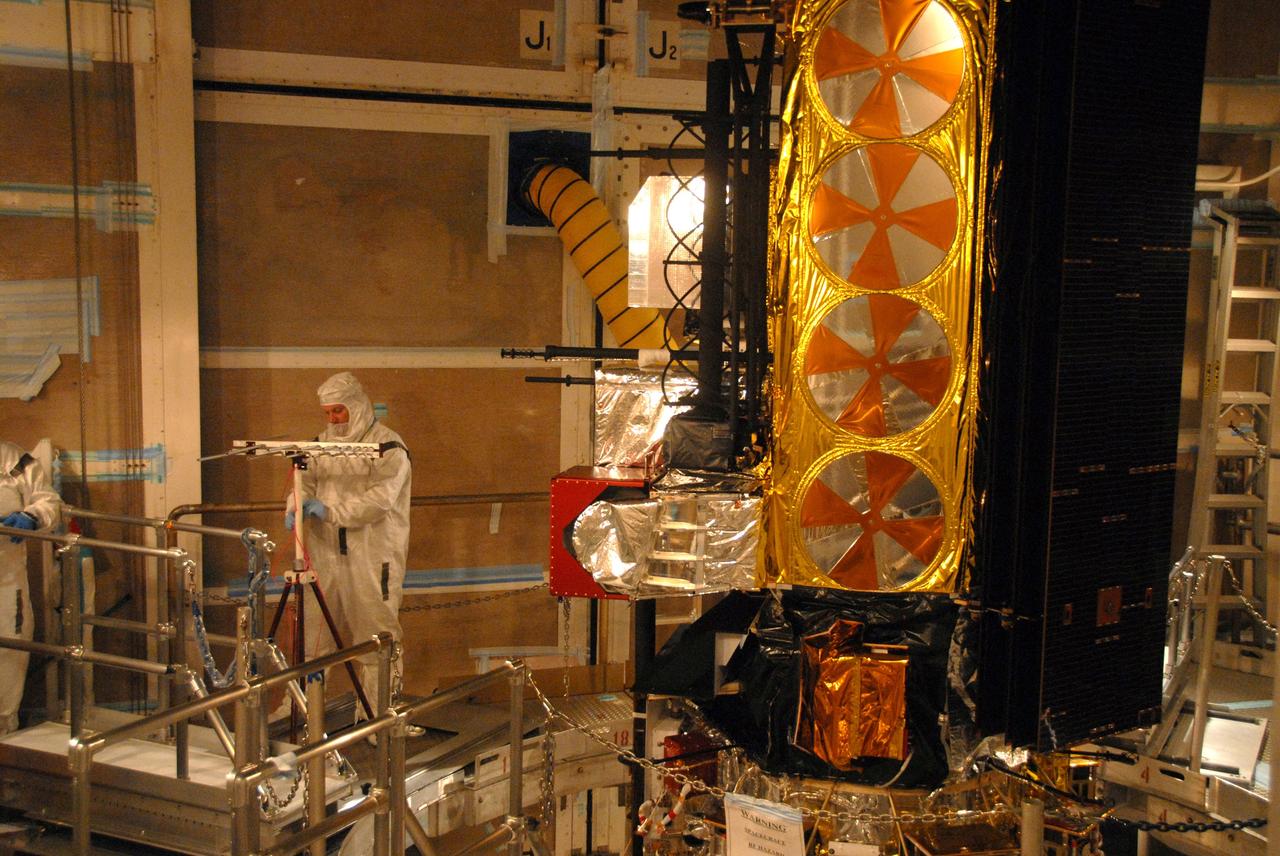
VANDENBERG AIR FORCE BASE, Calif. -- At Space Launch Complex 2 at Vandenberg Air Force Base in California, the NOAA-N Prime spacecraft is set up for an RF and other tests. NOAA-N Prime is the latest polar-orbiting operational environmental weather satellite developed by NASA for the National Oceanic and Atmospheric Administration. The satellite is scheduled to launch Feb. 4 aboard a Delta II rocket from Vandenberg Air Force Base. Photo credit: NASA/ Daniel Liberotti, VAFB
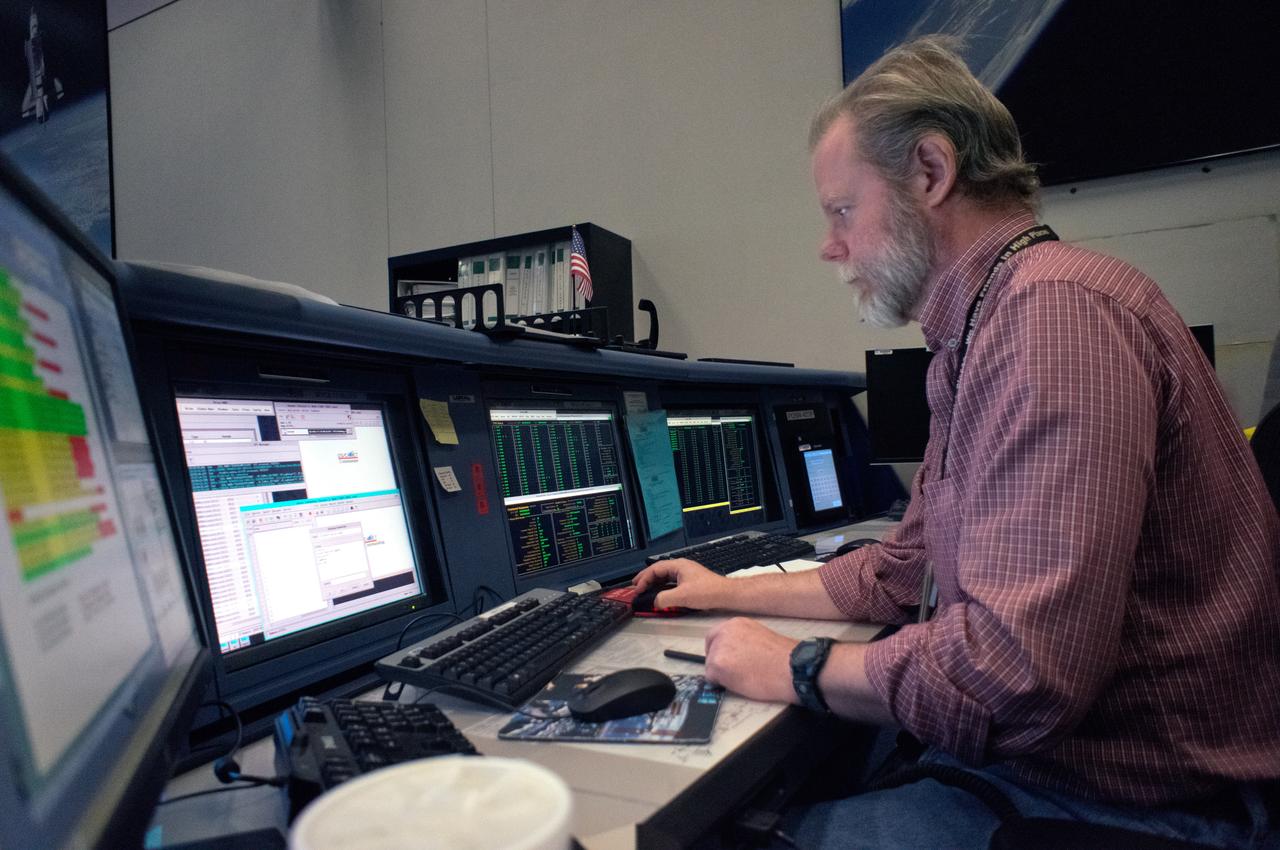
The Orion avionics team participates in a successful End to End 02 test between Mission Control Center (MCC) Houston and the Communications and Tracking Integrated Lab in Denver on Oct. 16, 2011. The team successfully flowed telemetry over RF link to the MCC, sent the first encrypted command from MCC to Orion, demonstrated full end to end video link capability, and downlinked test video file in a file transfer. Part of Batch image transfer from Flickr.
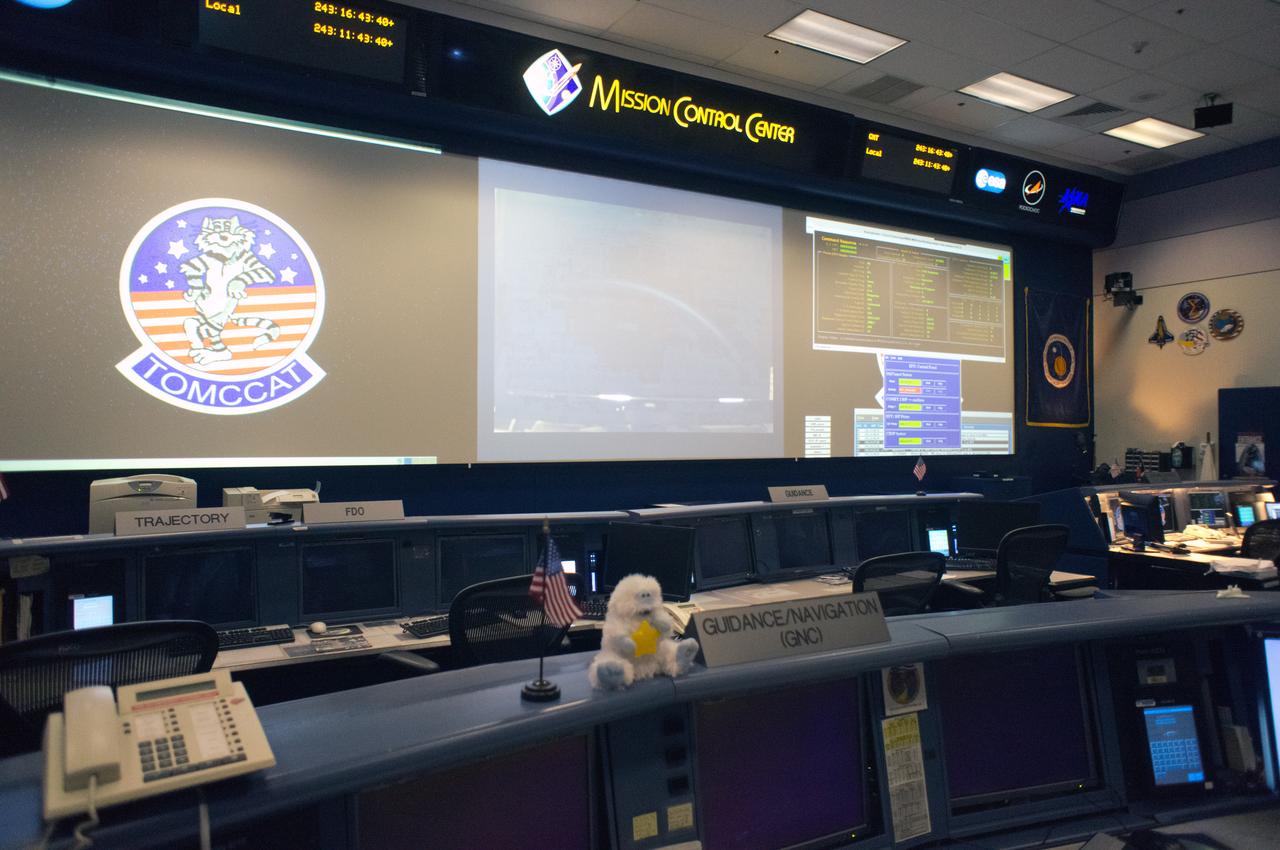
The Orion avionics team participates in a successful End to End 02 test between Mission Control Center (MCC) Houston and the Communications and Tracking Integrated Lab in Denver on Oct. 16, 2011. The team successfully flowed telemetry over RF link to the MCC, sent the first encrypted command from MCC to Orion, demonstrated full end to end video link capability, and downlinked test video file in a file transfer. Part of Batch image transfer from Flickr.
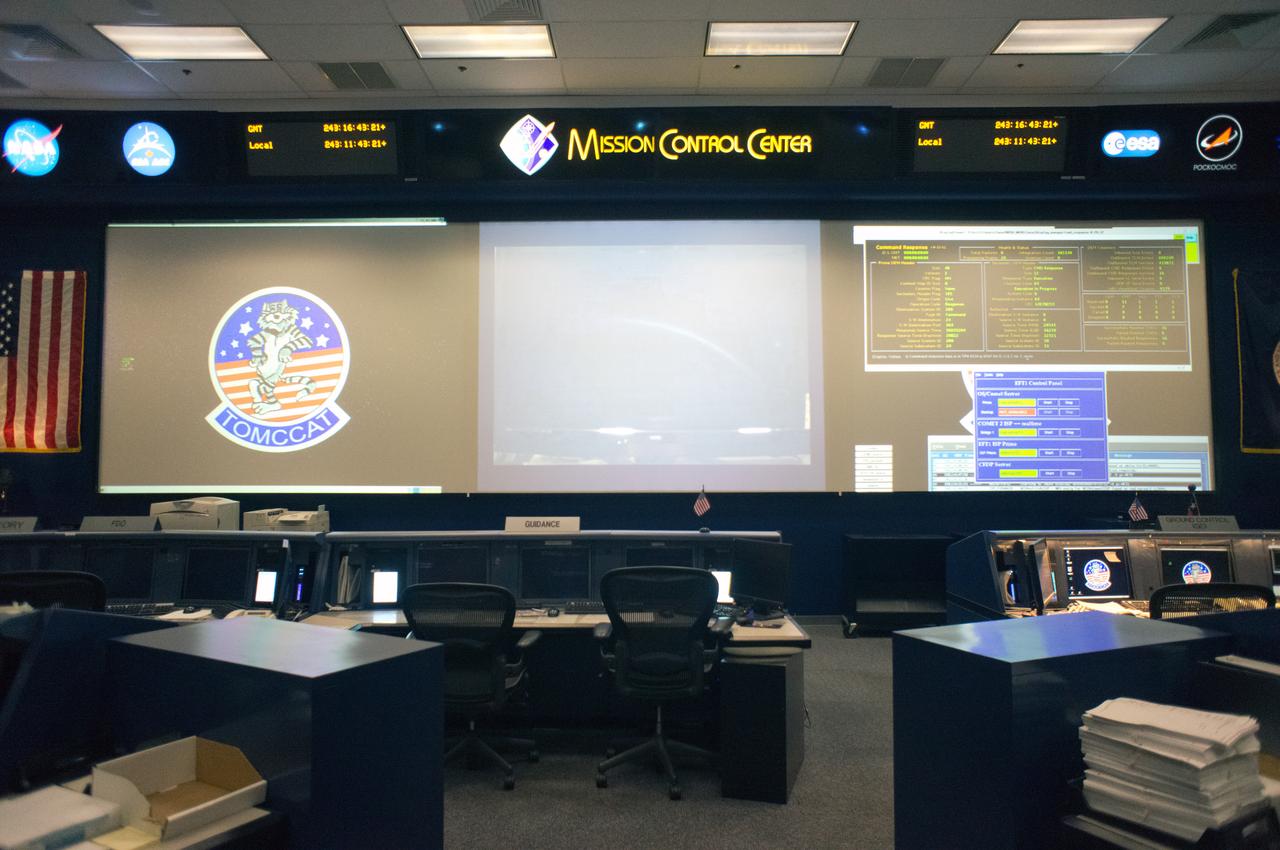
The Orion avionics team participates in a successful End to End 02 test between Mission Control Center (MCC) Houston and the Communications and Tracking Integrated Lab in Denver on Oct. 16, 2011. The team successfully flowed telemetry over RF link to the MCC, sent the first encrypted command from MCC to Orion, demonstrated full end to end video link capability, and downlinked test video file in a file transfer. Part of Batch image transfer from Flickr.
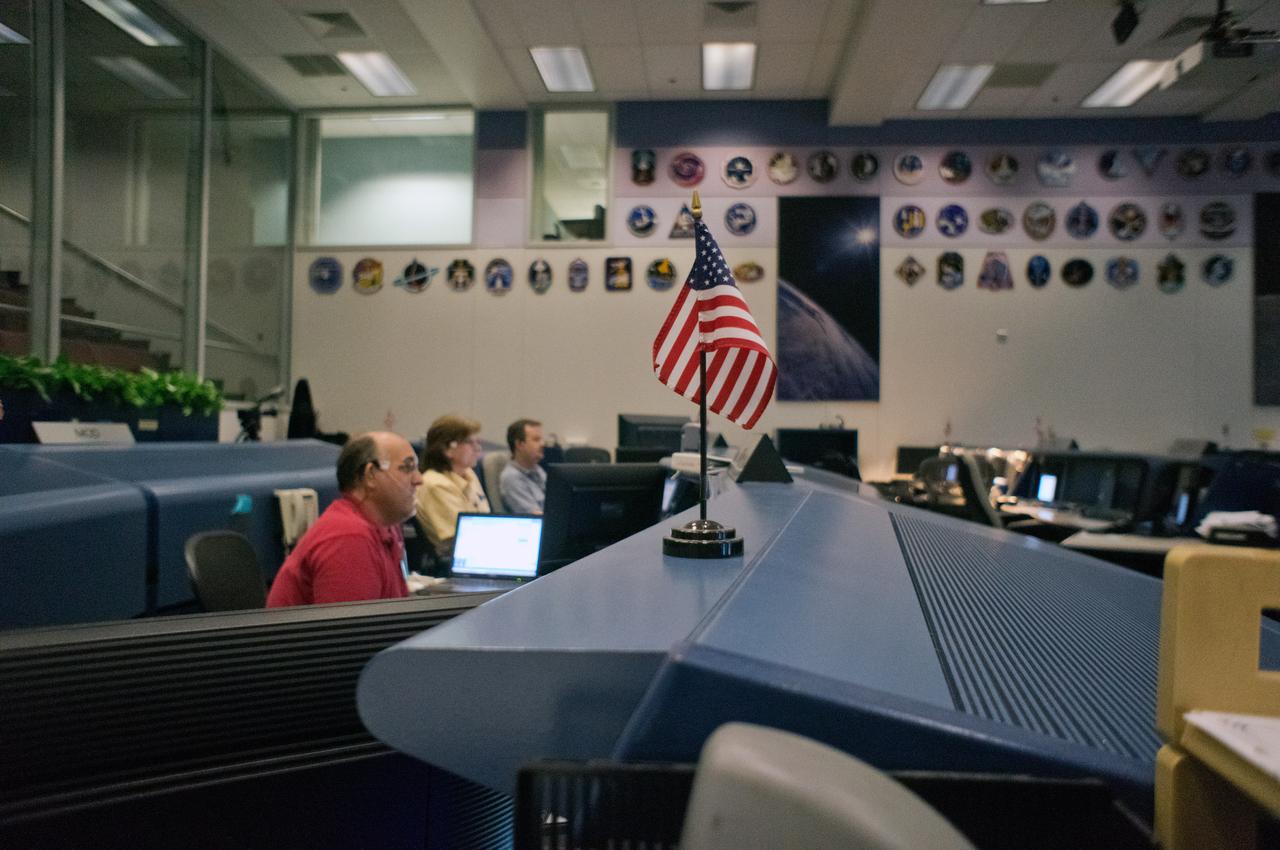
The Orion avionics team participates in a successful End to End 02 test between Mission Control Center (MCC) Houston and the Communications and Tracking Integrated Lab in Denver on Oct. 16, 2011. The team successfully flowed telemetry over RF link to the MCC, sent the first encrypted command from MCC to Orion, demonstrated full end to end video link capability, and downlinked test video file in a file transfer. Part of Batch image transfer from Flickr.
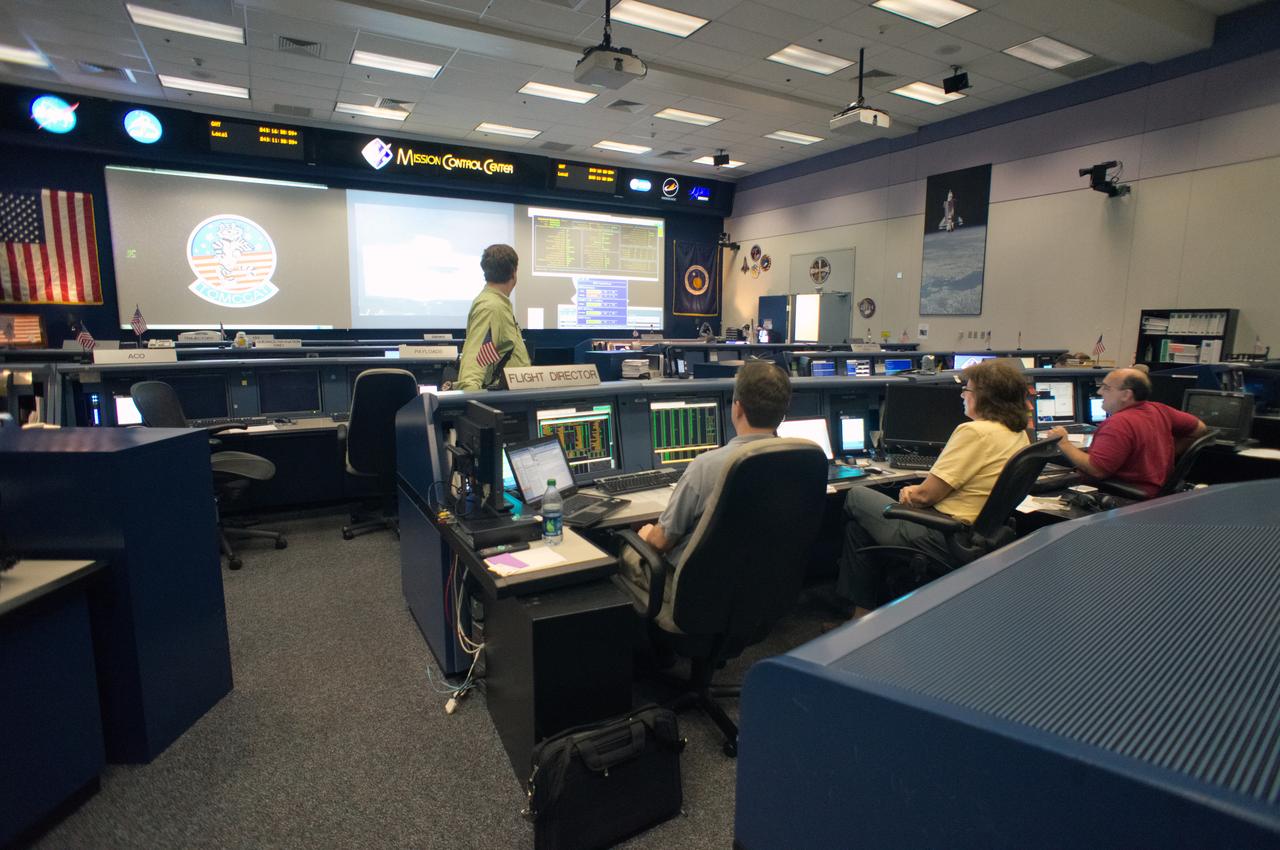
The Orion avionics team participates in a successful End to End 02 test between Mission Control Center (MCC) Houston and the Communications and Tracking Integrated Lab in Denver on Oct. 16, 2011. The team successfully flowed telemetry over RF link to the MCC, sent the first encrypted command from MCC to Orion, demonstrated full end to end video link capability, and downlinked test video file in a file transfer. Part of Batch image transfer from Flickr.
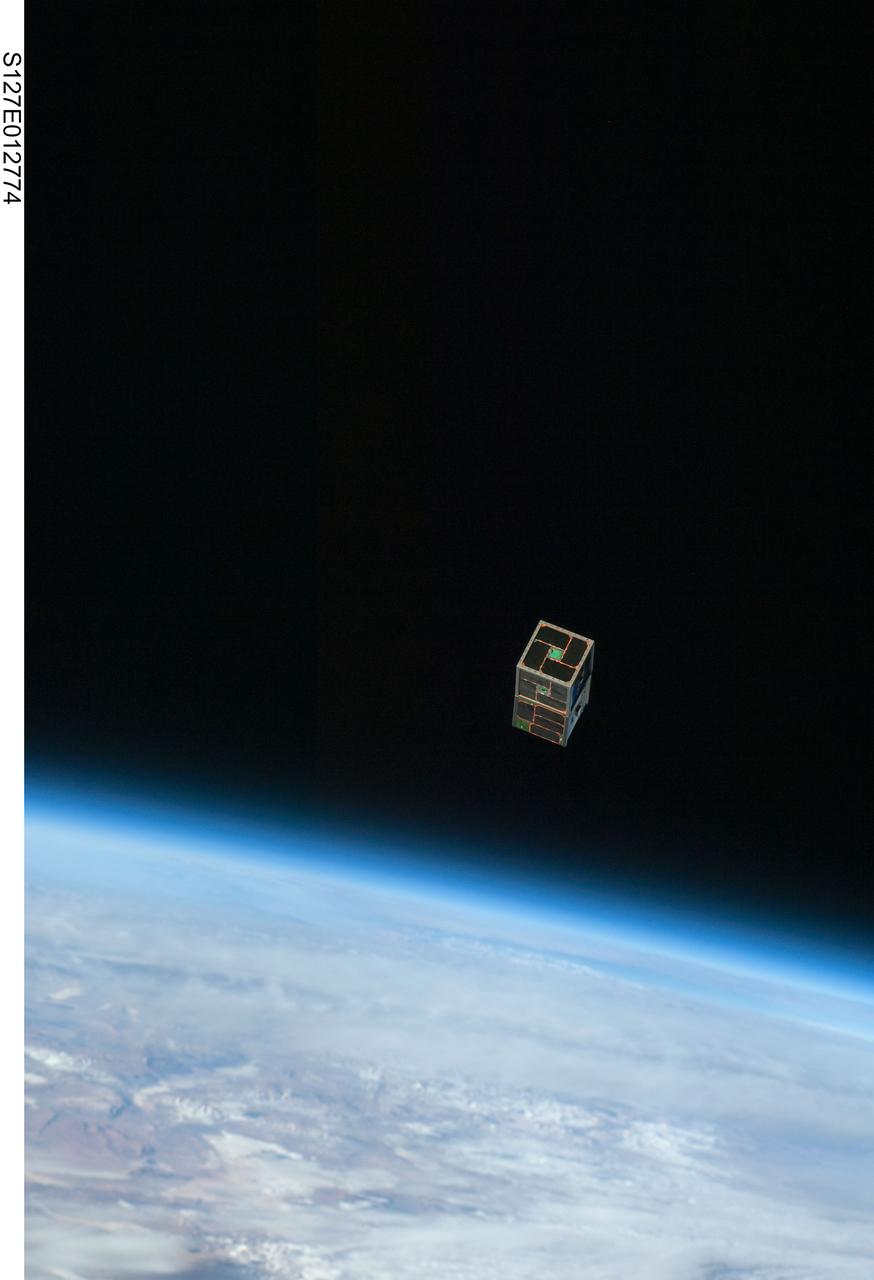
S127-E-012774 (30 July 2009) --- Backdropped by Earth?s horizon and the blackness of space, a Dual RF Astrodynamic GPS Orbital Navigator Satellite (DRAGONSat) is photographed after its release from Space Shuttle Endeavour?s payload bay by STS-127 crew members. DRAGONSat will look at independent rendezvous of spacecraft in orbit using Global Positioning Satellite data. The two satellites were designed and built by students at the University of Texas, Austin, and Texas A&M University, College Station.
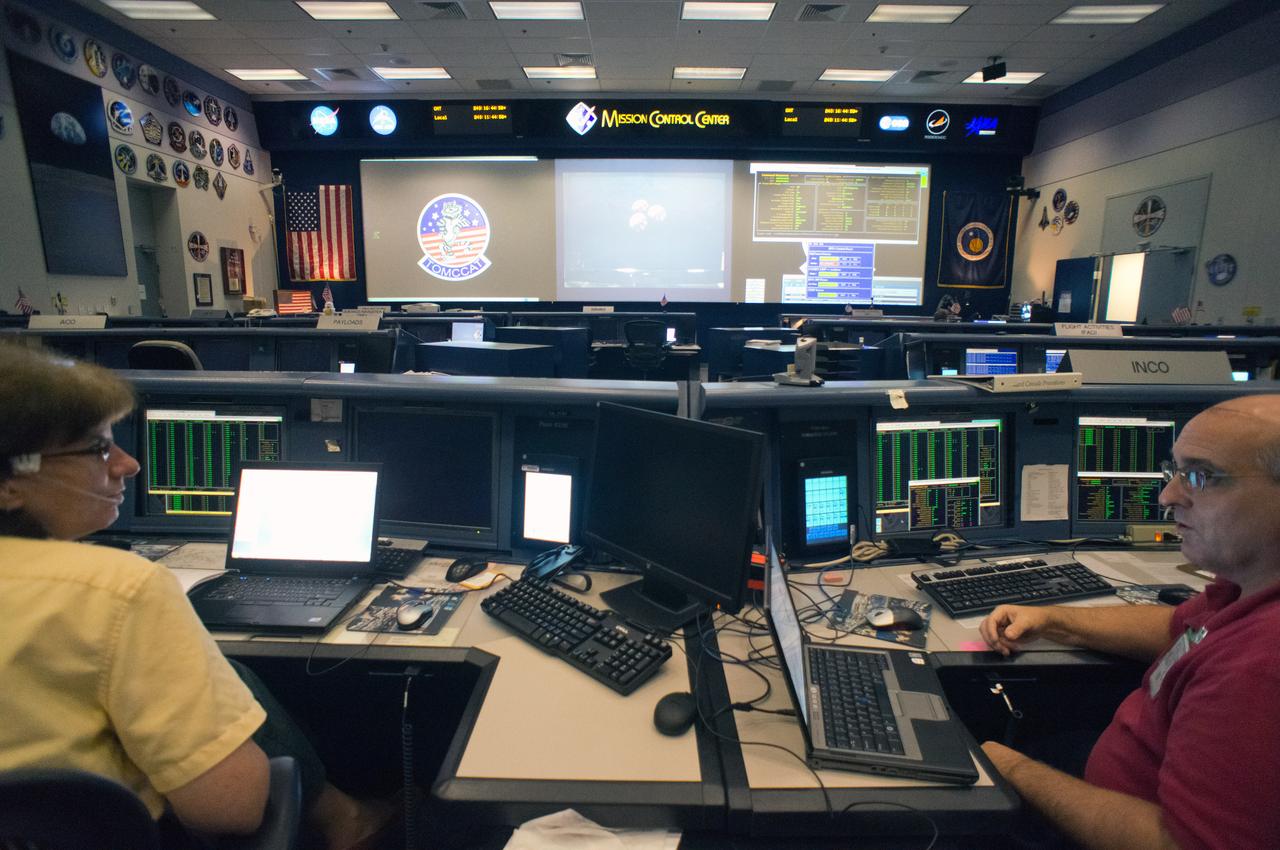
The Orion avionics team participates in a successful End to End 02 test between Mission Control Center (MCC) Houston and the Communications and Tracking Integrated Lab in Denver on Oct. 16, 2011. The team successfully flowed telemetry over RF link to the MCC, sent the first encrypted command from MCC to Orion, demonstrated full end to end video link capability, and downlinked test video file in a file transfer. Part of Batch image transfer from Flickr.

The Orion avionics team participates in a successful End to End 02 test between Mission Control Center (MCC) Houston and the Communications and Tracking Integrated Lab in Denver on Oct. 16, 2011. The team successfully flowed telemetry over RF link to the MCC, sent the first encrypted command from MCC to Orion, demonstrated full end to end video link capability, and downlinked test video file in a file transfer. Part of Batch image transfer from Flickr.
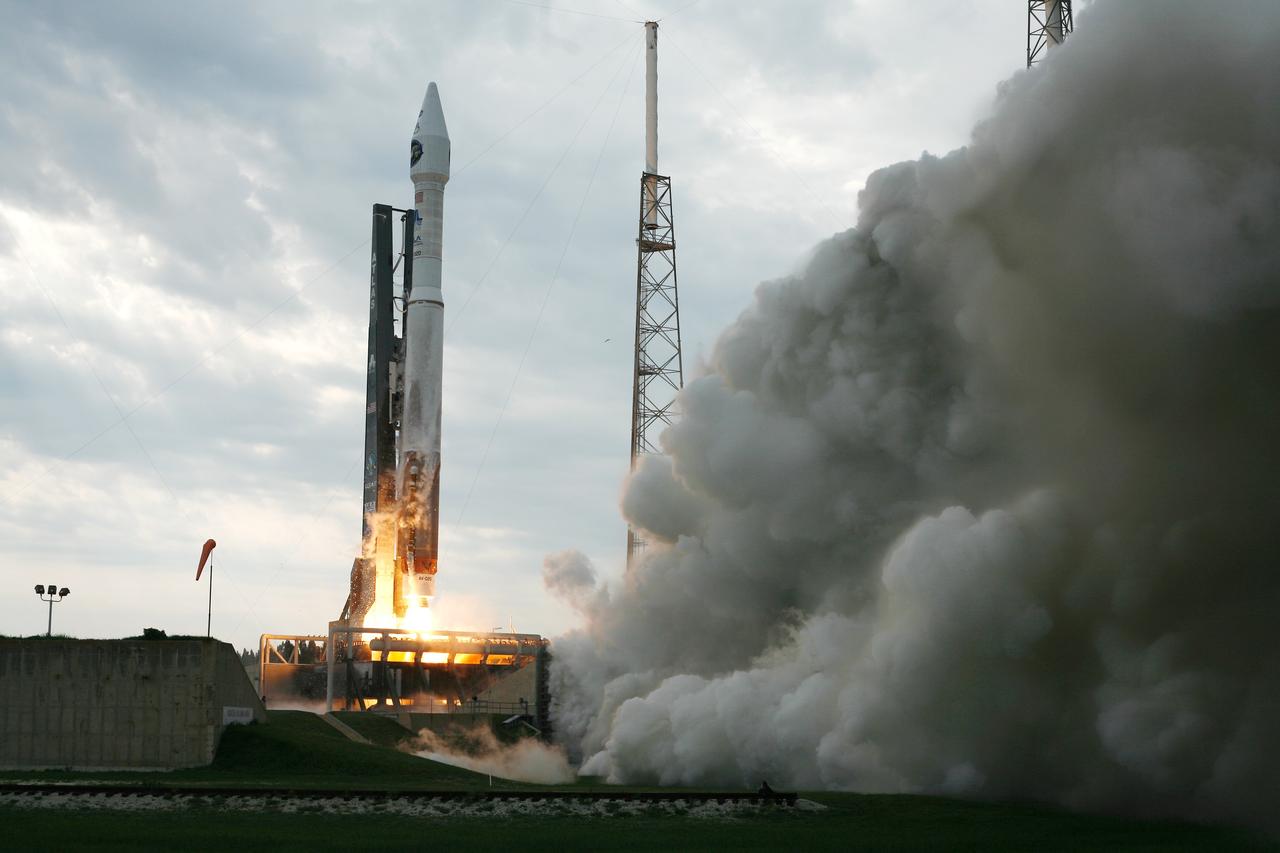
CAPE CANAVERAL, Fla. – Smoke rolls across Launch Pad 41 at Cape Canaveral Air force Station in Florida as the Atlas V/Centaur rocket topped with NASA's Lunar Reconnaissance Orbiter, or LRO, and NASA's Lunar Crater Observation and Sensing Satellite, known as LCROSS, lifts off. Launch was on-time at 5:32 p.m. EDT June 18. LRO and LCROSS are the first missions in NASA's plan to return humans to the moon and begin establishing a lunar outpost by 2020. The LRO also includes seven instruments that will help NASA characterize the moon's surface: DIVINER, LAMP, LEND, LOLA , CRATER, Mini-RF and LROC. Photo courtesy of Scott Andrews
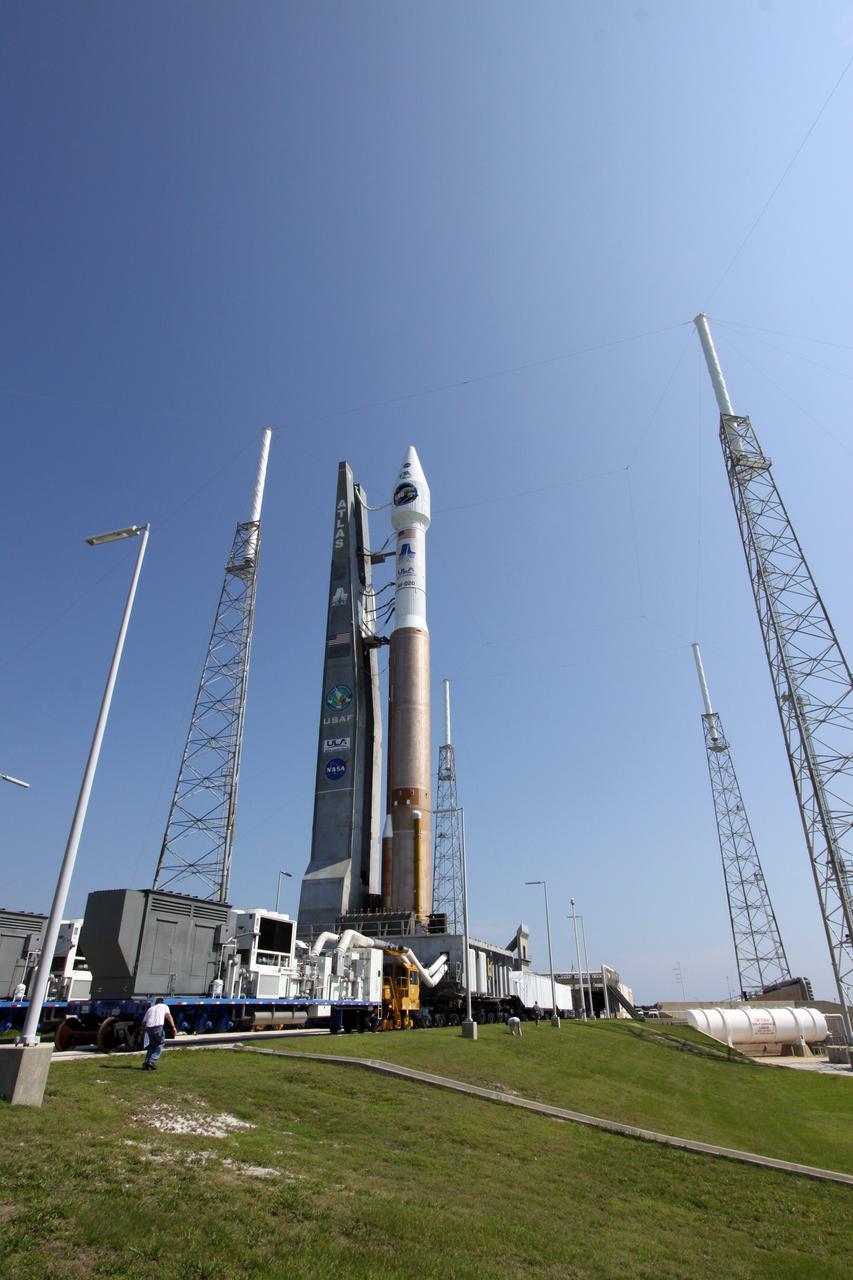
CAPE CANAVERAL, Fla. – On Launch Complex-41 on Cape Canaveral Air Force Station in Florida, the Atlas V/Centaur rocket with NASA's Lunar Reconnaissance Orbiter, or LRO, and NASA's Lunar Crater Observation and Sensing Satellite, known as LCROSS, on top reach the launch pad. Circling the pad are the protective lightning towers. LRO and LCROSS are the first missions in NASA's plan to return humans to the moon and begin establishing a lunar outpost by 2020. The LRO also includes seven instruments that will help NASA characterize the moon's surface: DIVINER, LAMP, LEND, LOLA, CRATER, Mini-RF and LROC. Launch is scheduled for 5:22 p.m. EDT June 18 . Photo credit: NASA/Jack Pfaller
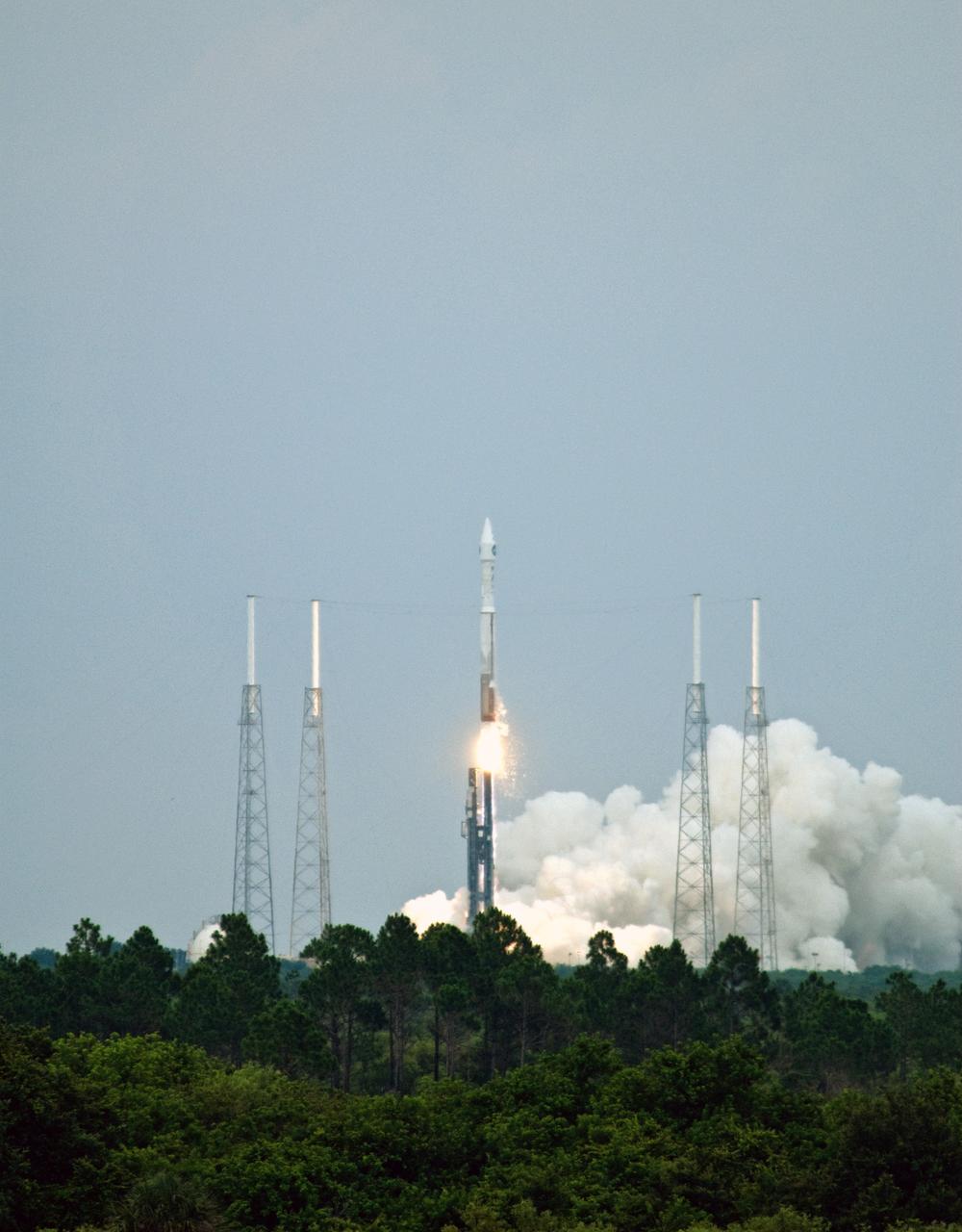
CAPE CANAVERAL, Fla. – NASA's Lunar Reconnaissance Orbiter, or LRO, and NASA's Lunar Crater Observation and Sensing Satellite, known as LCROSS, lifts off from Launch Pad 41 at Cape Canaveral Air Force Station in Florida. LRO and LCROSS are the first missions in NASA's plan to return humans to the moon and begin establishing a lunar outpost by 2020. The LRO also includes seven instruments that will help NASA characterize the moon's surface: DIVINER, LAMP, LEND, LOLA , CRATER, Mini-RF and LROC. Launch was on-time at 5:32 p.m. EDT June 18. Photo credit: NASA/Sandra Joseph
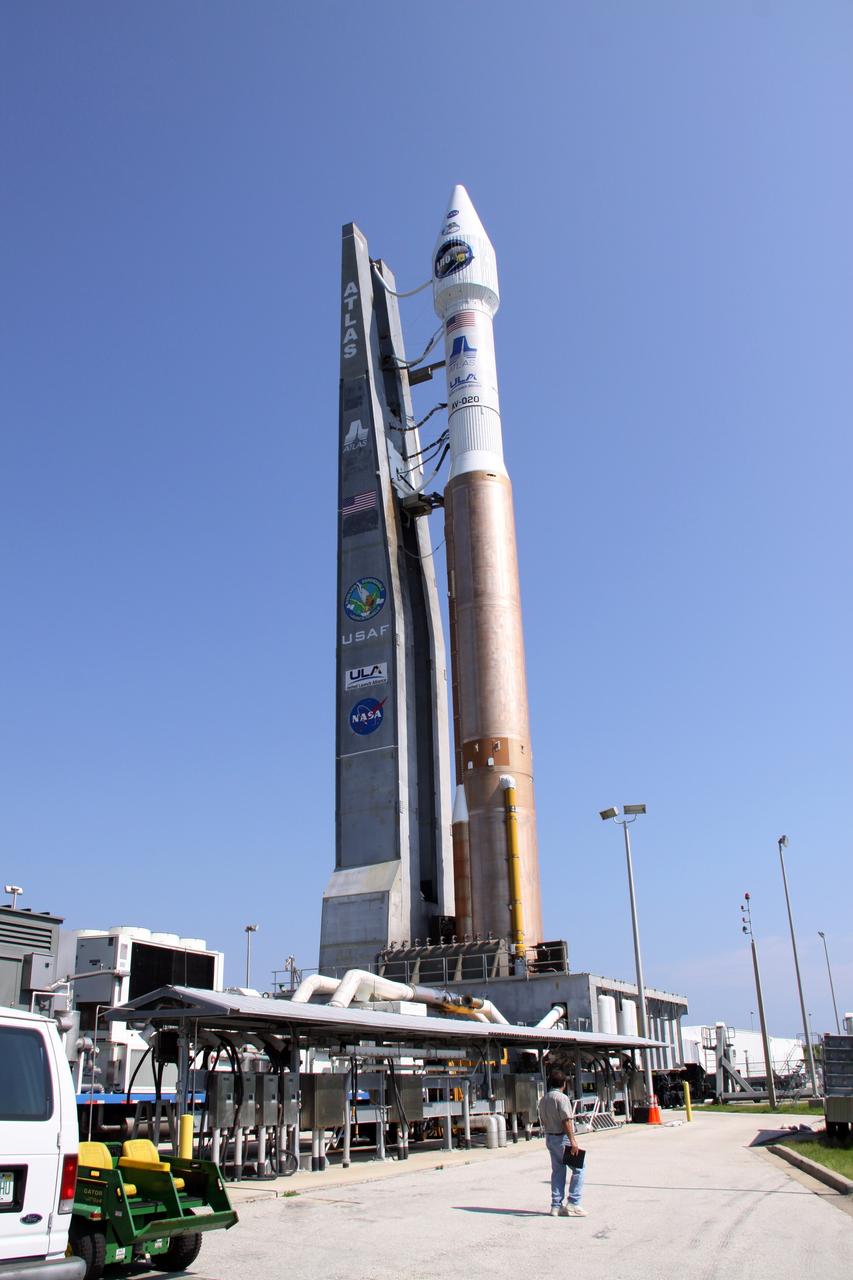
CAPE CANAVERAL, Fla. – On Launch Complex-41 on Cape Canaveral Air Force Station in Florida, NASA's Lunar Reconnaissance Orbiter, or LRO, and NASA's Lunar Crater Observation and Sensing Satellite, known as LCROSS, and launch gantry roll out to the launch pad. They are atop their launch vehicle, the Atlas V/Centaur rocket. LRO and LCROSS are the first missions in NASA's plan to return humans to the moon and begin establishing a lunar outpost by 2020. The LRO also includes seven instruments that will help NASA characterize the moon's surface: DIVINER, LAMP, LEND, LOLA, CRATER, Mini-RF and LROC. Launch is scheduled for 5:22 p.m. EDT June 18 . Photo credit: NASA/Jack Pfaller
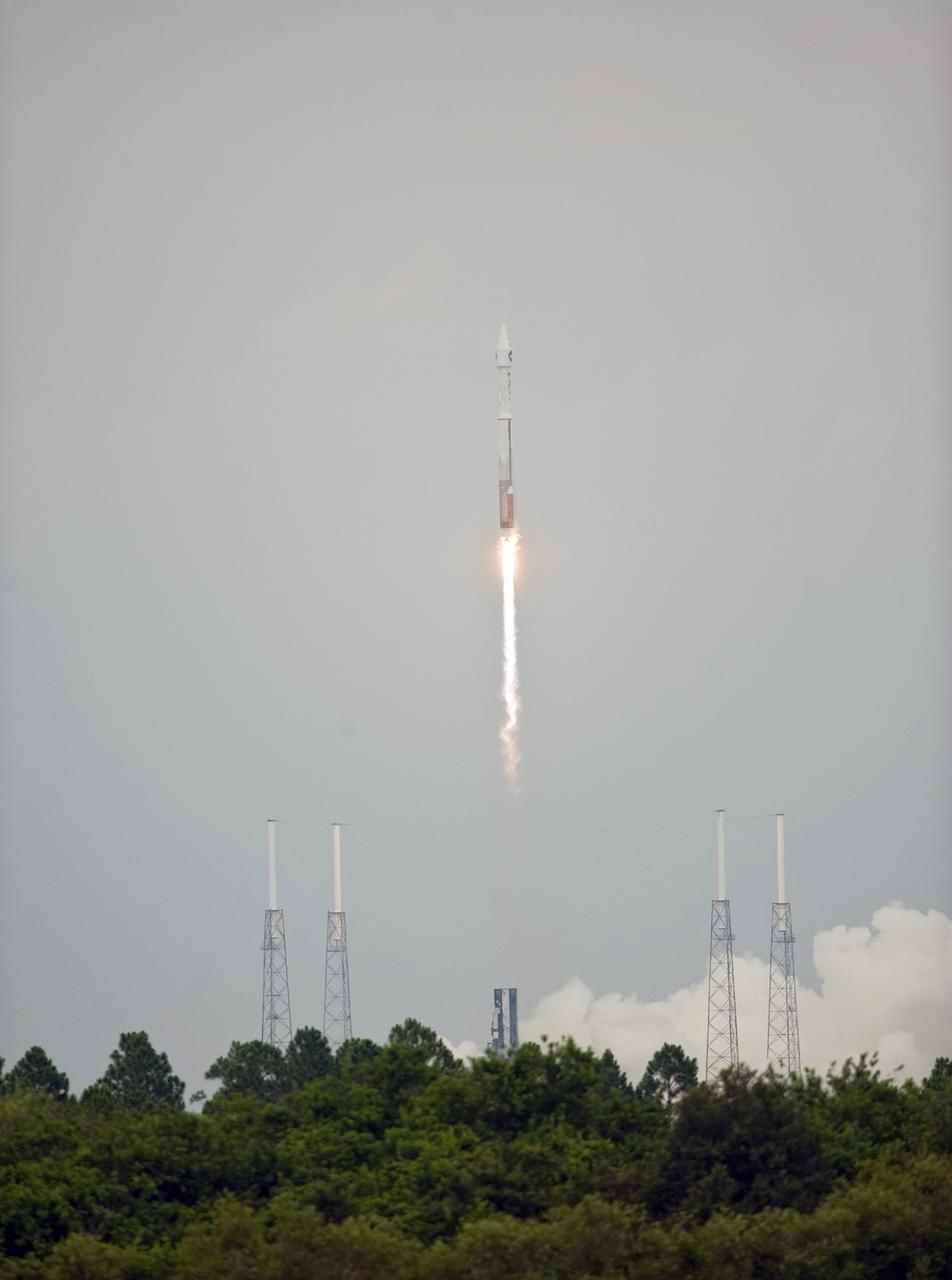
CAPE CANAVERAL, Fla. – Trailing a column of smoke, NASA's Lunar Reconnaissance Orbiter, or LRO, and NASA's Lunar Crater Observation and Sensing Satellite, known as LCROSS, lifts off from Launch Pad 41 at Cape Canaveral Air Force Station in Florida. LRO and LCROSS are the first missions in NASA's plan to return humans to the moon and begin establishing a lunar outpost by 2020. The LRO also includes seven instruments that will help NASA characterize the moon's surface: DIVINER, LAMP, LEND, LOLA , CRATER, Mini-RF and LROC. Launch was on-time at 5:32 p.m. EDT June 18. Photo credit: NASA/Tom Farrar
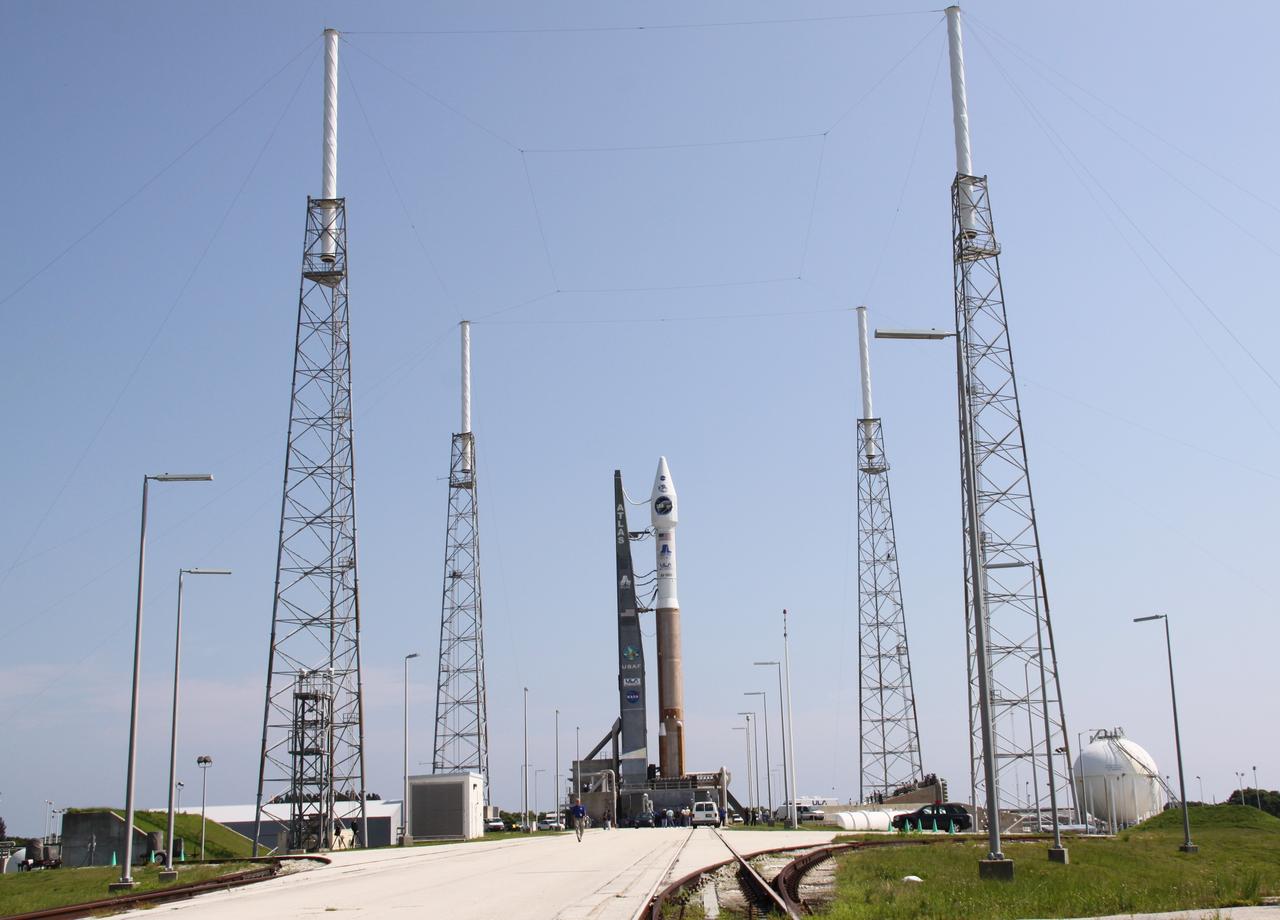
CAPE CANAVERAL, Fla. – On Launch Complex-41 on Cape Canaveral Air Force Station in Florida, the Atlas V/Centaur rocket with NASA's Lunar Reconnaissance Orbiter, or LRO, and NASA's Lunar Crater Observation and Sensing Satellite, known as LCROSS, on top reach the launch pad. Circling the pad are the protective lightning towers. LRO and LCROSS are the first missions in NASA's plan to return humans to the moon and begin establishing a lunar outpost by 2020. The LRO also includes seven instruments that will help NASA characterize the moon's surface: DIVINER, LAMP, LEND, LOLA, CRATER, Mini-RF and LROC. Launch is scheduled for 5:22 p.m. EDT June 18 . Photo credit: NASA/Jack Pfaller
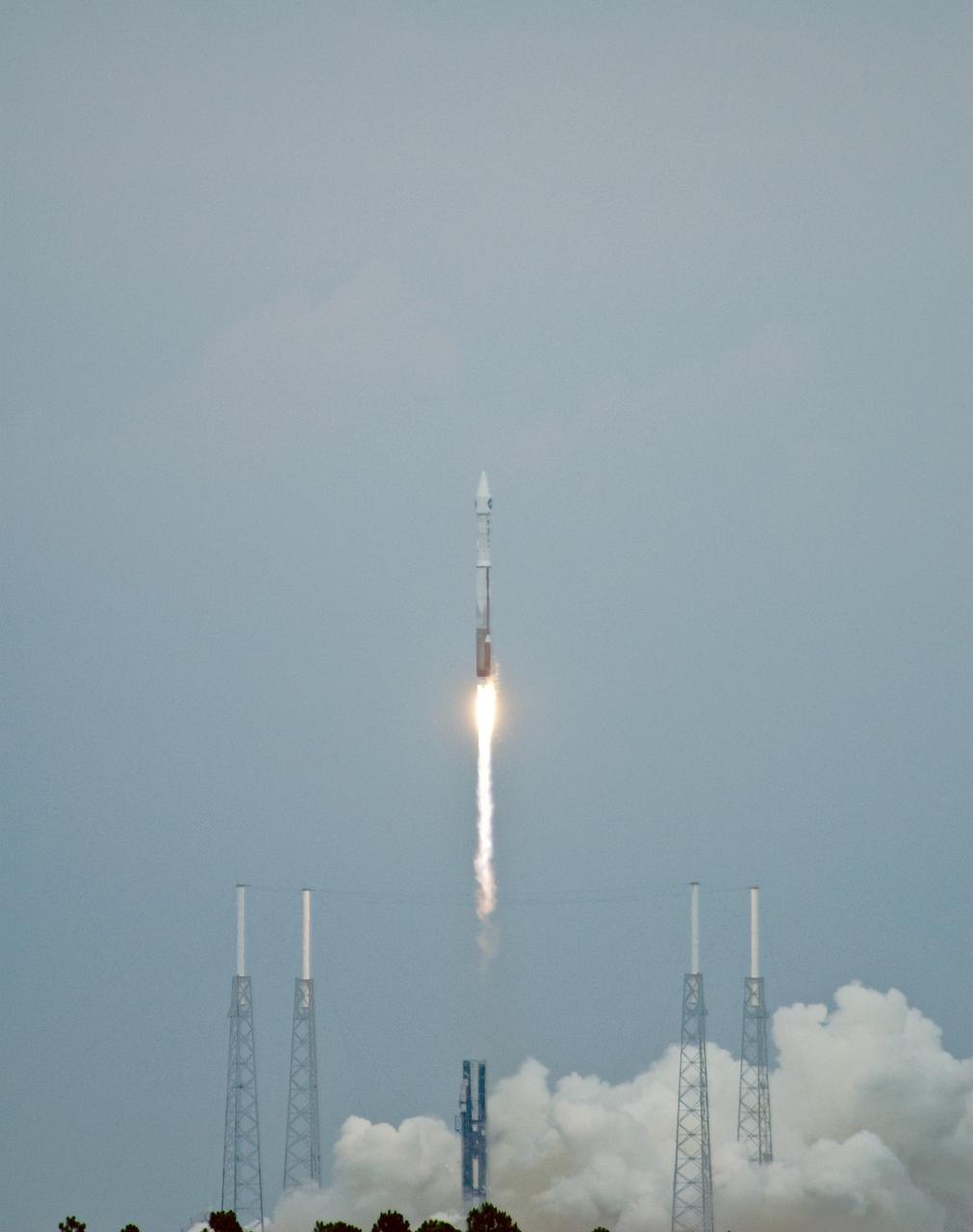
CAPE CANAVERAL, Fla. – Rising above the lightning towers around the pad, NASA's Lunar Reconnaissance Orbiter, or LRO, and NASA's Lunar Crater Observation and Sensing Satellite, known as LCROSS, lifts off from Launch Pad 41 at Cape Canaveral Air Force Station in Florida. LRO and LCROSS are the first missions in NASA's plan to return humans to the moon and begin establishing a lunar outpost by 2020. The LRO also includes seven instruments that will help NASA characterize the moon's surface: DIVINER, LAMP, LEND, LOLA , CRATER, Mini-RF and LROC. Launch was on-time at 5:32 p.m. EDT June 18. Photo credit: NASA/Sandra Joseph
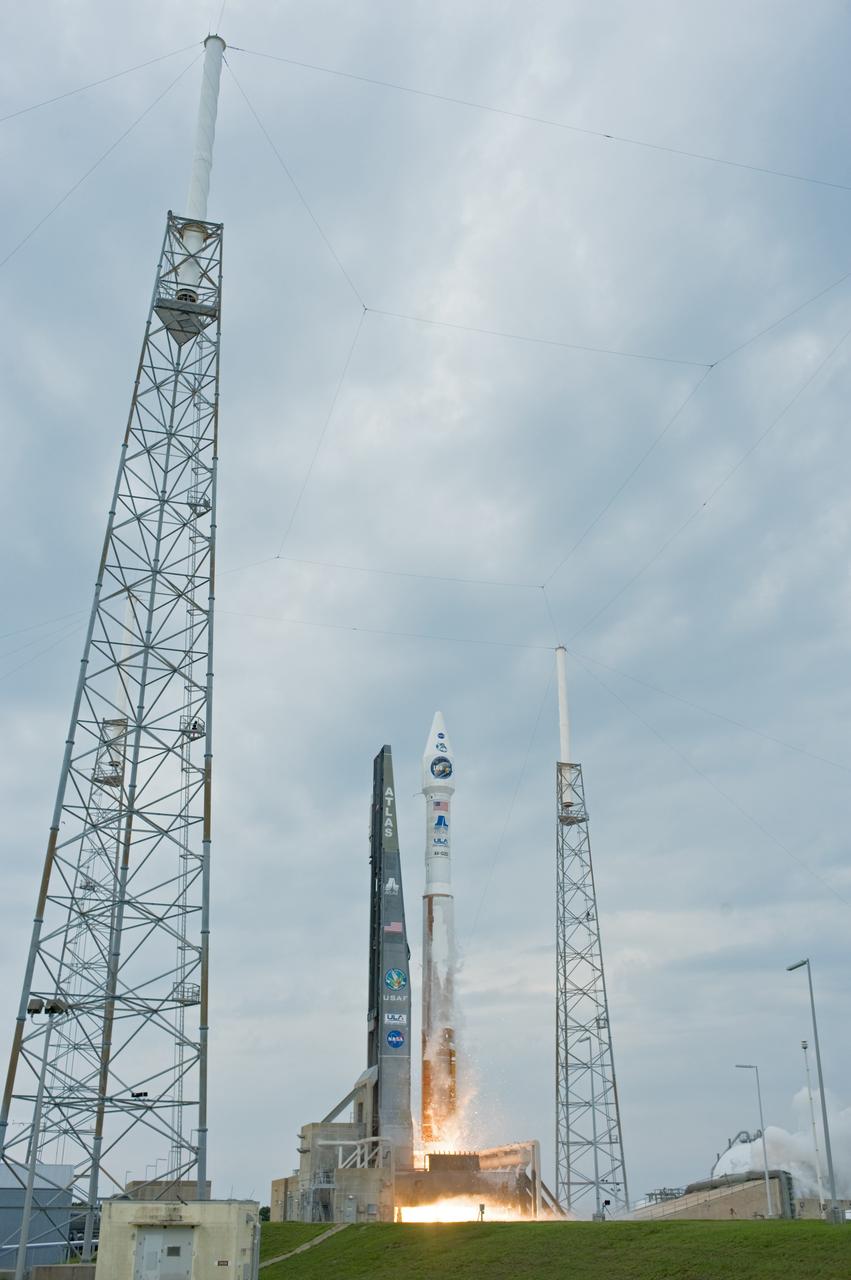
CAPE CANAVERAL, Fla. – NASA's Lunar Reconnaissance Orbiter, or LRO, and NASA's Lunar Crater Observation and Sensing Satellite, known as LCROSS, lifts off from Launch Pad 41 at Cape Canaveral Air Force Station in Florida atop an Atlas V/Centaur rocket. LRO and LCROSS are the first missions in NASA's plan to return humans to the moon and begin establishing a lunar outpost by 2020. The LRO also includes seven instruments that will help NASA characterize the moon's surface: DIVINER, LAMP, LEND, LOLA , CRATER, Mini-RF and LROC. Launch was on-time at 5:32 p.m. EDT. Photo credit: NASA/Tom Farrar, Kevin O'Connell
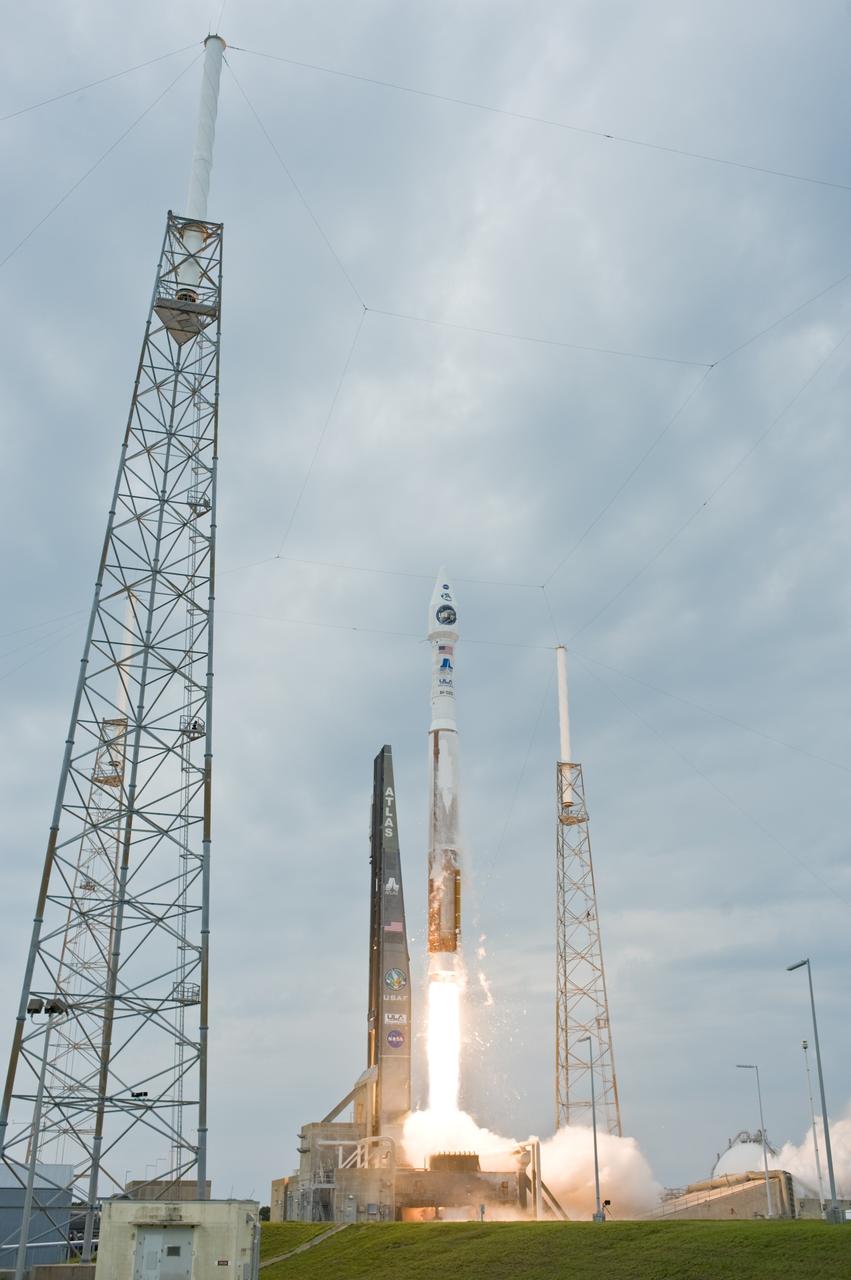
CAPE CANAVERAL, Fla. – Trailing a column of fire, the Atlas V/Centaur carrying NASA's Lunar Reconnaissance Orbiter, or LRO, and NASA's Lunar Crater Observation and Sensing Satellite, known as LCROSS, hurtles off Launch Complex 41 at Cape Canaveral Air Force Station in Florida. LRO and LCROSS are the first missions in NASA's plan to return humans to the moon and begin establishing a lunar outpost by 2020. The LRO also includes seven instruments that will help NASA characterize the moon's surface: DIVINER, LAMP, LEND, LOLA , CRATER, Mini-RF and LROC. Launch was on-time at 5:32 p.m. EDT. Photo credit: NASA/Tom Farrar, Kevin O'Connell
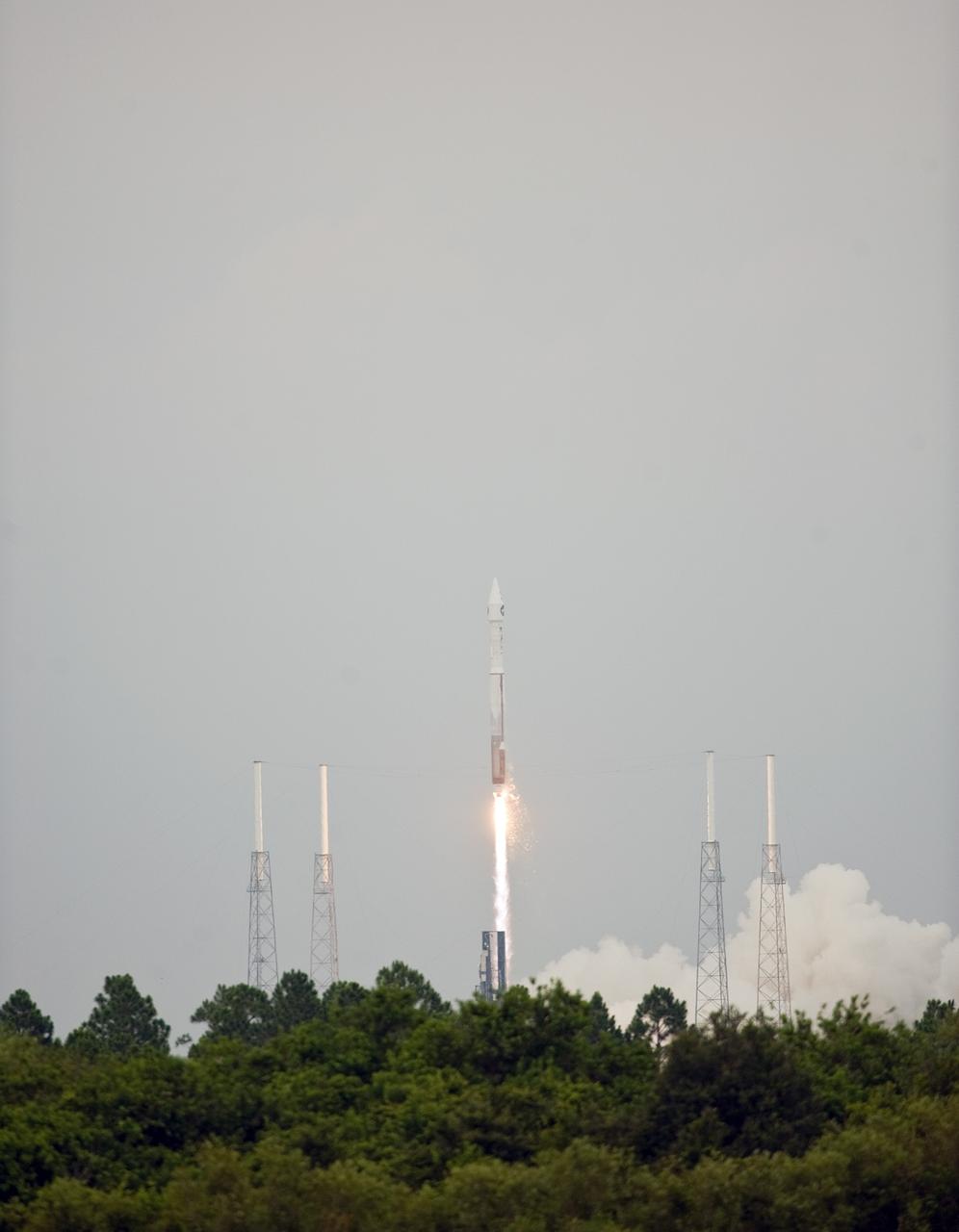
CAPE CANAVERAL, Fla. – Trailing a column of smoke, NASA's Lunar Reconnaissance Orbiter, or LRO, and NASA's Lunar Crater Observation and Sensing Satellite, known as LCROSS, lifts off from Launch Pad 41 at Cape Canaveral Air Force Station in Florida. LRO and LCROSS are the first missions in NASA's plan to return humans to the moon and begin establishing a lunar outpost by 2020. The LRO also includes seven instruments that will help NASA characterize the moon's surface: DIVINER, LAMP, LEND, LOLA , CRATER, Mini-RF and LROC. Launch was on-time at 5:32 p.m. EDT June 18. Photo credit: NASA/Tom Farrar
CAPE CANAVERAL, Fla. – The Atlas V/Centaur rocket with NASA's Lunar Reconnaissance Orbiter, or LRO, and NASA's Lunar Crater Observation and Sensing Satellite, known as LCROSS, on top leaps from Launch Pad 41 at Cape Canaveral Air force Station in Florida. Surrounding the pad are the towers that provide lightning protection. Launch was on-time at 5:32 p.m. EDT June 18. LRO and LCROSS are the first missions in NASA's plan to return humans to the moon and begin establishing a lunar outpost by 2020. The LRO also includes seven instruments that will help NASA characterize the moon's surface: DIVINER, LAMP, LEND, LOLA , CRATER, Mini-RF and LROC. Photo courtesy of Scott Andrews
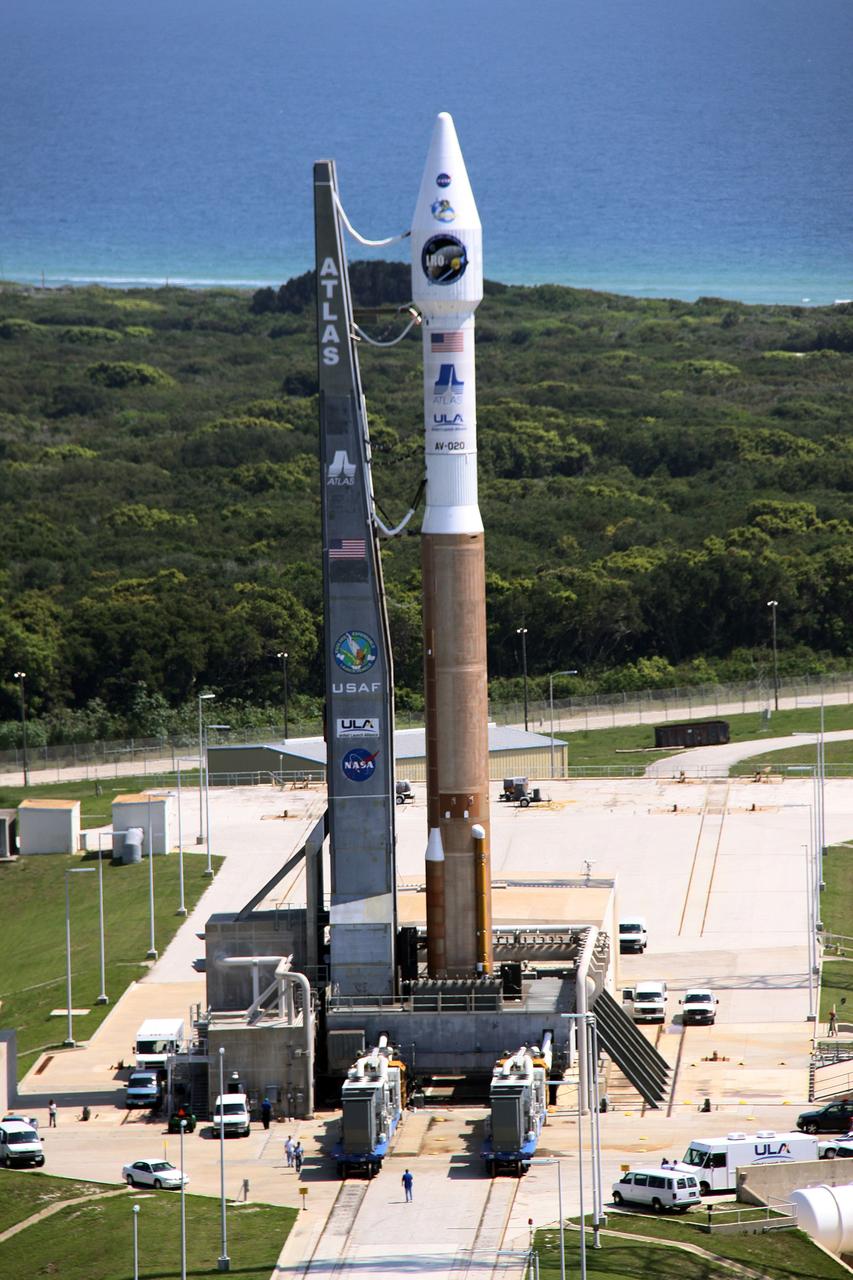
CAPE CANAVERAL, Fla. – The Atlas V/Centaur rocket with NASA's Lunar Reconnaissance Orbiter, or LRO, and NASA's Lunar Crater Observation and Sensing Satellite, known as LCROSS, on top are on the pad at Launch Complex-41 on Cape Canaveral Air Force Station in Florida. LRO and LCROSS are the first missions in NASA's plan to return humans to the moon and begin establishing a lunar outpost by 2020. The LRO also includes seven instruments that will help NASA characterize the moon's surface: DIVINER, LAMP, LEND, LOLA, CRATER, Mini-RF and LROC. Launch is scheduled for 5:22 p.m. EDT June 18 . Photo credit: NASA/Jack Pfaller
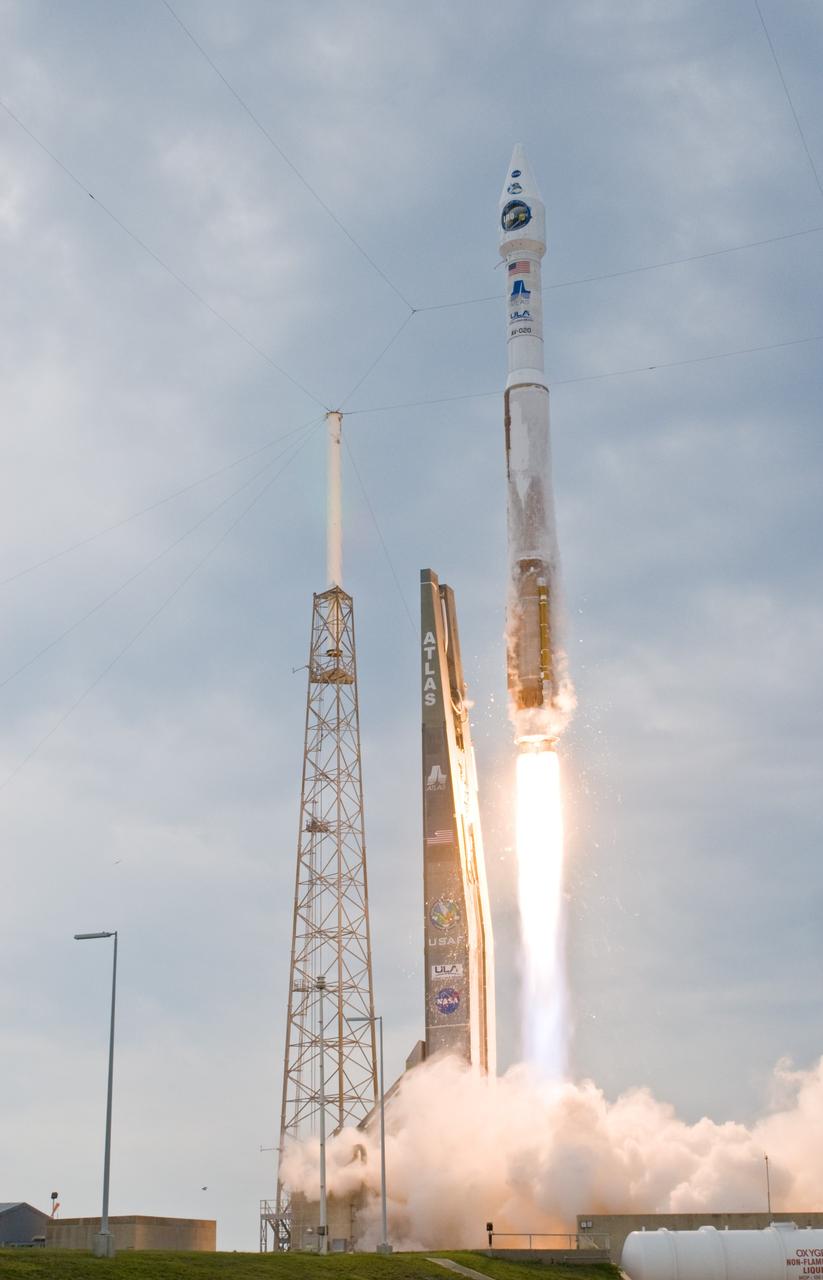
CAPE CANAVERAL, Fla. – Trailing a column of fire, the Atlas V/Centaur carrying NASA's Lunar Reconnaissance Orbiter, or LRO, and NASA's Lunar Crater Observation and Sensing Satellite, known as LCROSS, hurtles off Launch Complex 41 at Cape Canaveral Air Force Station in Florida. LRO and LCROSS are the first missions in NASA's plan to return humans to the moon and begin establishing a lunar outpost by 2020. The LRO also includes seven instruments that will help NASA characterize the moon's surface: DIVINER, LAMP, LEND, LOLA , CRATER, Mini-RF and LROC. Launch was on-time at 5:32 p.m. EDT. Photo credit: NASA/Sandra Joseph, Tony Gray
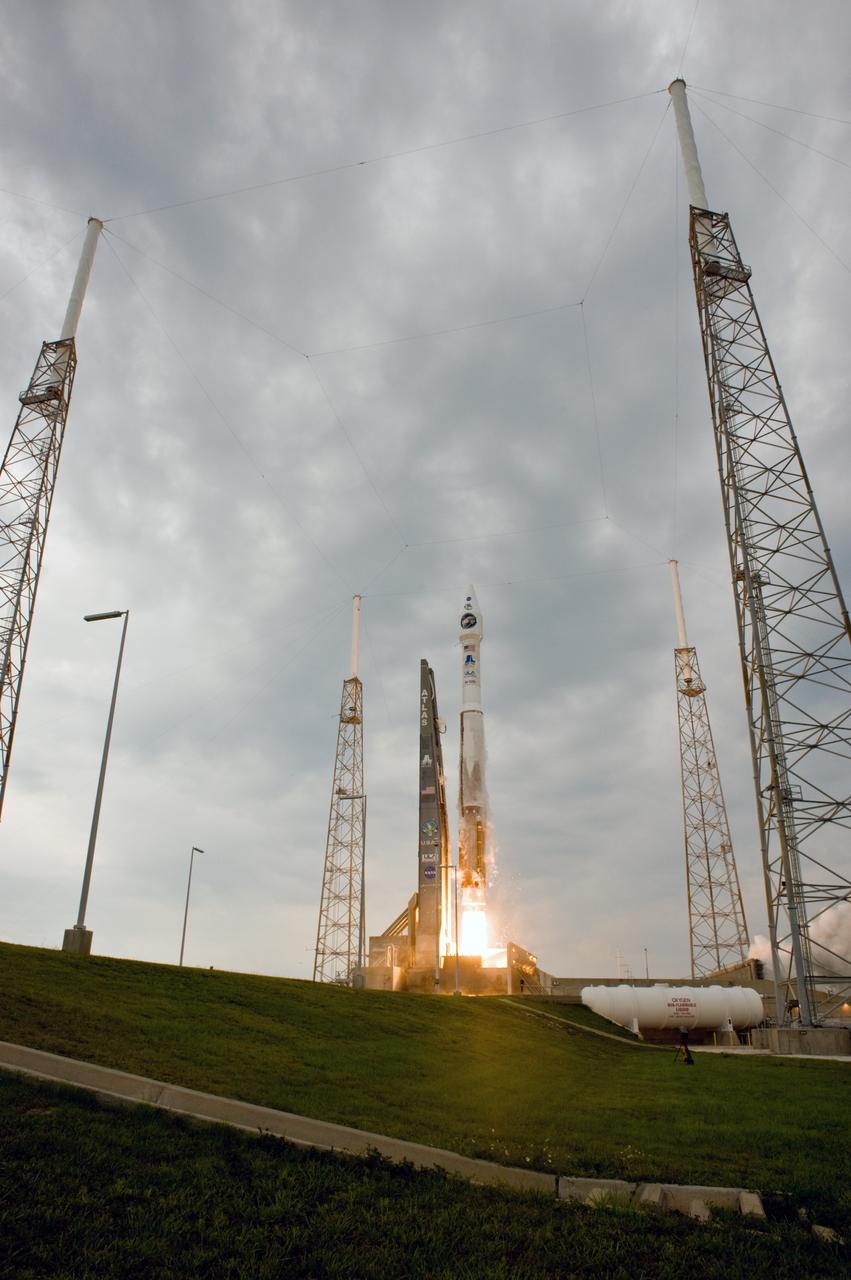
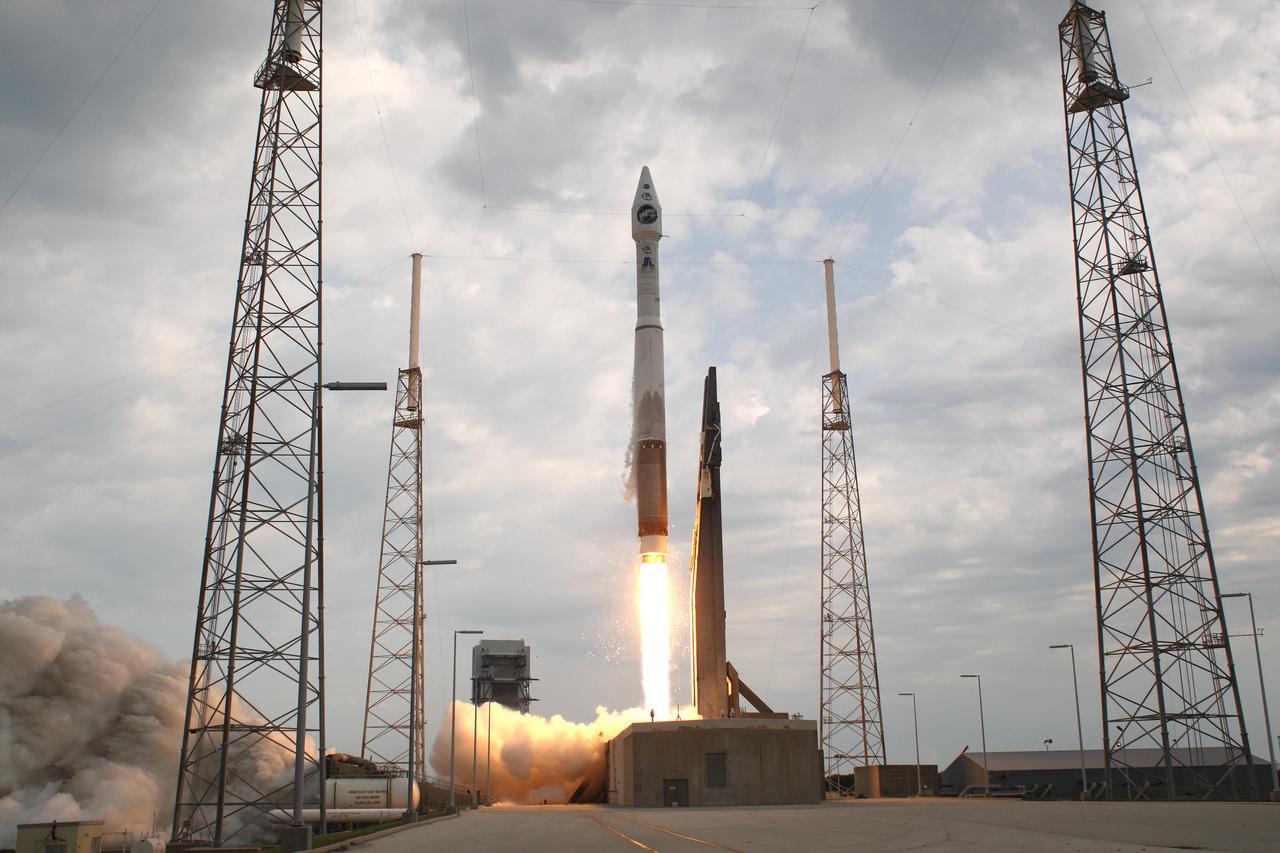
CAPE CANAVERAL, Fla. – Lightning towers stand like guards around Launch Complex 41 at Cape Canaveral Air Force Station in Florida as the Atlas V/Centaur carrying NASA's Lunar Reconnaissance Orbiter, or LRO, and NASA's Lunar Crater Observation and Sensing Satellite, known as LCROSS, lifts off. LRO and LCROSS are the first missions in NASA's plan to return humans to the moon and begin establishing a lunar outpost by 2020. The LRO also includes seven instruments that will help NASA characterize the moon's surface: DIVINER, LAMP, LEND, LOLA , CRATER, Mini-RF and LROC. Launch was on-time at 5:32 p.m. EDT. Photo credit: NASA/Sandra Joseph, Tony Gray
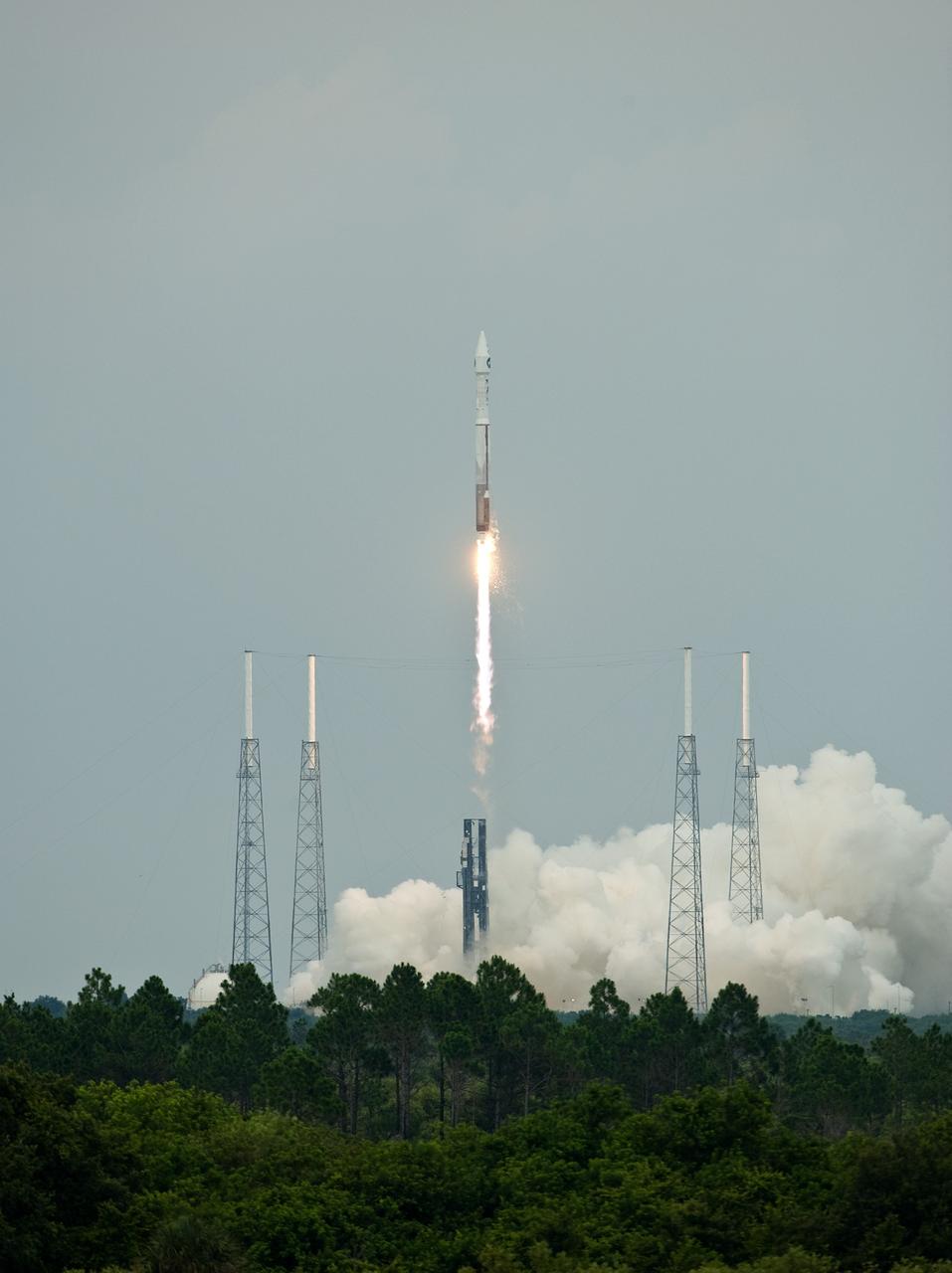
CAPE CANAVERAL, Fla. – Smoke fills the pad and trails behind the Atlas V/Centaur rocket as it roars into space carrying NASA's Lunar Reconnaissance Orbiter, or LRO, and NASA's Lunar Crater Observation and Sensing Satellite, known as LCROSS. Surrounding the pad are lightning towers. LRO and LCROSS are the first missions in NASA's plan to return humans to the moon and begin establishing a lunar outpost by 2020. The LRO also includes seven instruments that will help NASA characterize the moon's surface: DIVINER, LAMP, LEND, LOLA , CRATER, Mini-RF and LROC. Launch was on-time at 5:32 p.m. EDT June 18. Photo credit: NASA/Tom Farrar
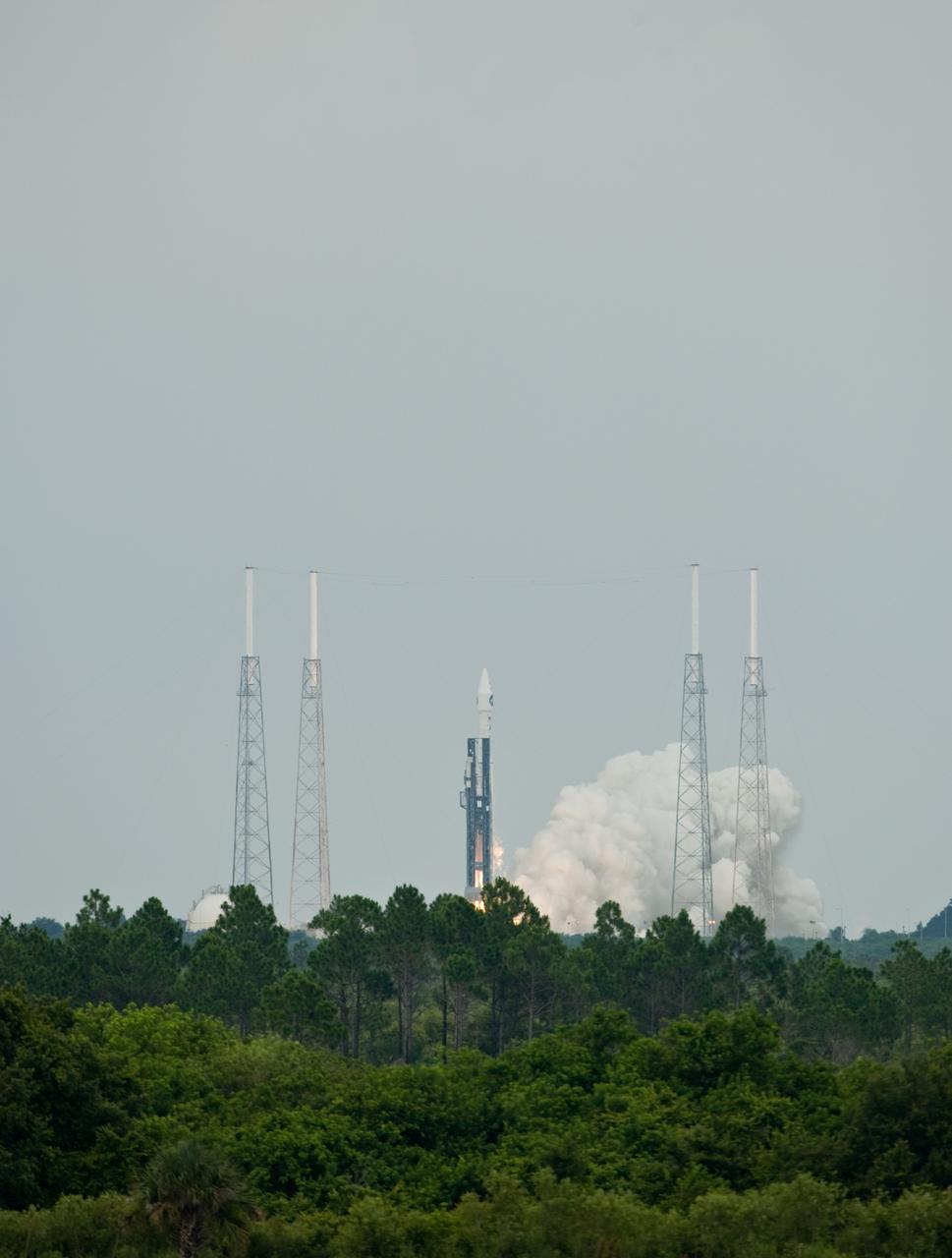
CAPE CANAVERAL, Fla. – With smoke and steam rolling from the launch pad, NASA's Lunar Reconnaissance Orbiter, or LRO, and NASA's Lunar Crater Observation and Sensing Satellite, known as LCROSS, lifts off from Launch Complex 41 at Cape Canaveral Air Force Station in Florida. Surrounding the pad are lightning towers. LRO and LCROSS are the first missions in NASA's plan to return humans to the moon and begin establishing a lunar outpost by 2020. The LRO also includes seven instruments that will help NASA characterize the moon's surface: DIVINER, LAMP, LEND, LOLA , CRATER, Mini-RF and LROC. Launch was on-time at 5:32 p.m. EDT June 18. Photo credit: NASA/Tom Farrar
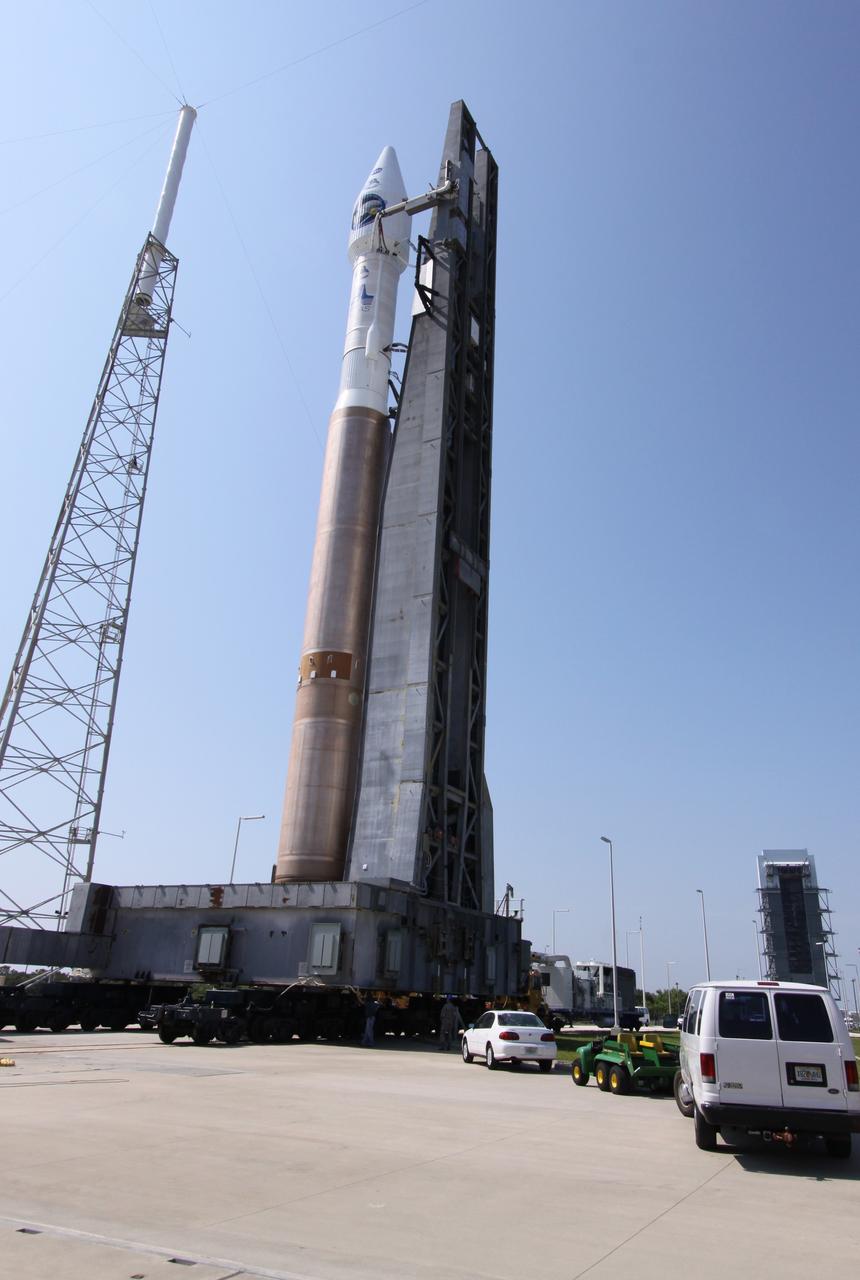
CAPE CANAVERAL, Fla. – On Launch Complex-41 on Cape Canaveral Air Force Station in Florida, the Atlas V/Centaur rocket with NASA's Lunar Reconnaissance Orbiter, or LRO, and NASA's Lunar Crater Observation and Sensing Satellite, known as LCROSS, on top reach the launch pad. Circling the pad are the protective lightning towers. LRO and LCROSS are the first missions in NASA's plan to return humans to the moon and begin establishing a lunar outpost by 2020. The LRO also includes seven instruments that will help NASA characterize the moon's surface: DIVINER, LAMP, LEND, LOLA, CRATER, Mini-RF and LROC. Launch is scheduled for 5:22 p.m. EDT June 18 . Photo credit: NASA/Jack Pfaller
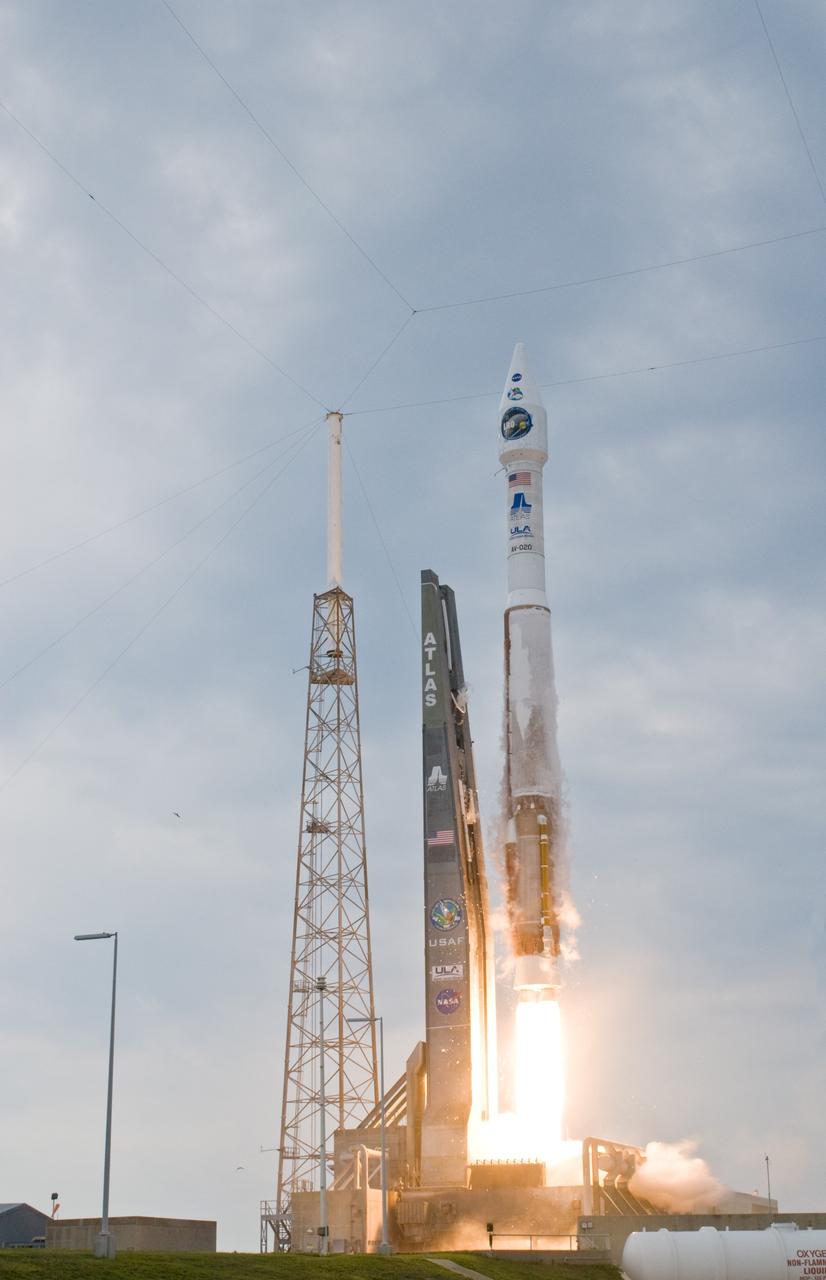
CAPE CANAVERAL, Fla. – Trailing a column of fire, the Atlas V/Centaur carrying NASA's Lunar Reconnaissance Orbiter, or LRO, and NASA's Lunar Crater Observation and Sensing Satellite, known as LCROSS, hurtles off Launch Complex 41 at Cape Canaveral Air Force Station in Florida. LRO and LCROSS are the first missions in NASA's plan to return humans to the moon and begin establishing a lunar outpost by 2020. The LRO also includes seven instruments that will help NASA characterize the moon's surface: DIVINER, LAMP, LEND, LOLA , CRATER, Mini-RF and LROC. Launch was on-time at 5:32 p.m. EDT. Photo credit: NASA/Sandra Joseph, Tony Gray
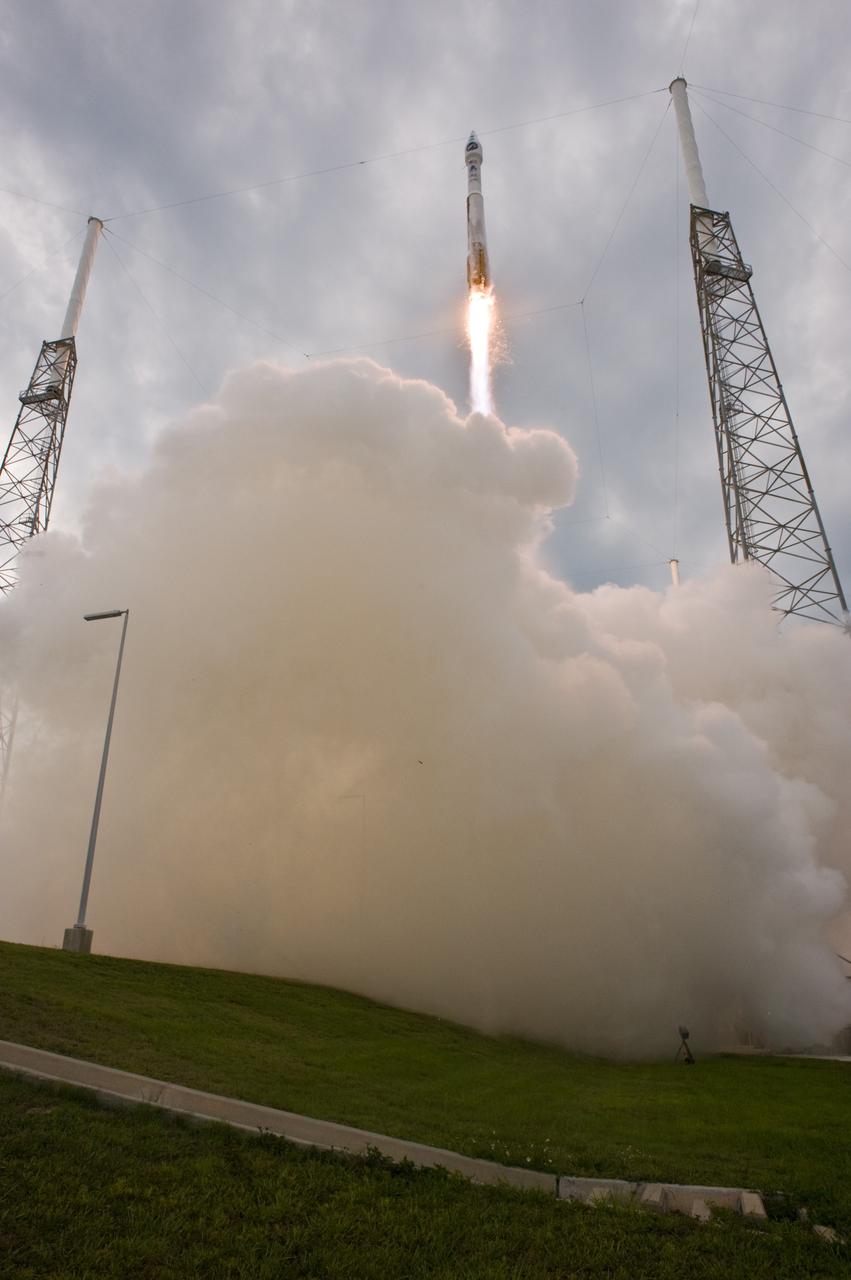
CAPE CANAVERAL, Fla. – On Launch Complex 41 at Cape Canaveral Air Force Station in Florida, smoke fills the pad as the Atlas V/Centaur carrying NASA's Lunar Reconnaissance Orbiter, or LRO, and NASA's Lunar Crater Observation and Sensing Satellite, known as LCROSS, lifts off. LRO and LCROSS are the first missions in NASA's plan to return humans to the moon and begin establishing a lunar outpost by 2020. The LRO also includes seven instruments that will help NASA characterize the moon's surface: DIVINER, LAMP, LEND, LOLA , CRATER, Mini-RF and LROC. Launch was on-time at 5:32 p.m. EDT. Photo credit: NASA/Sandra Joseph, Tony Gray
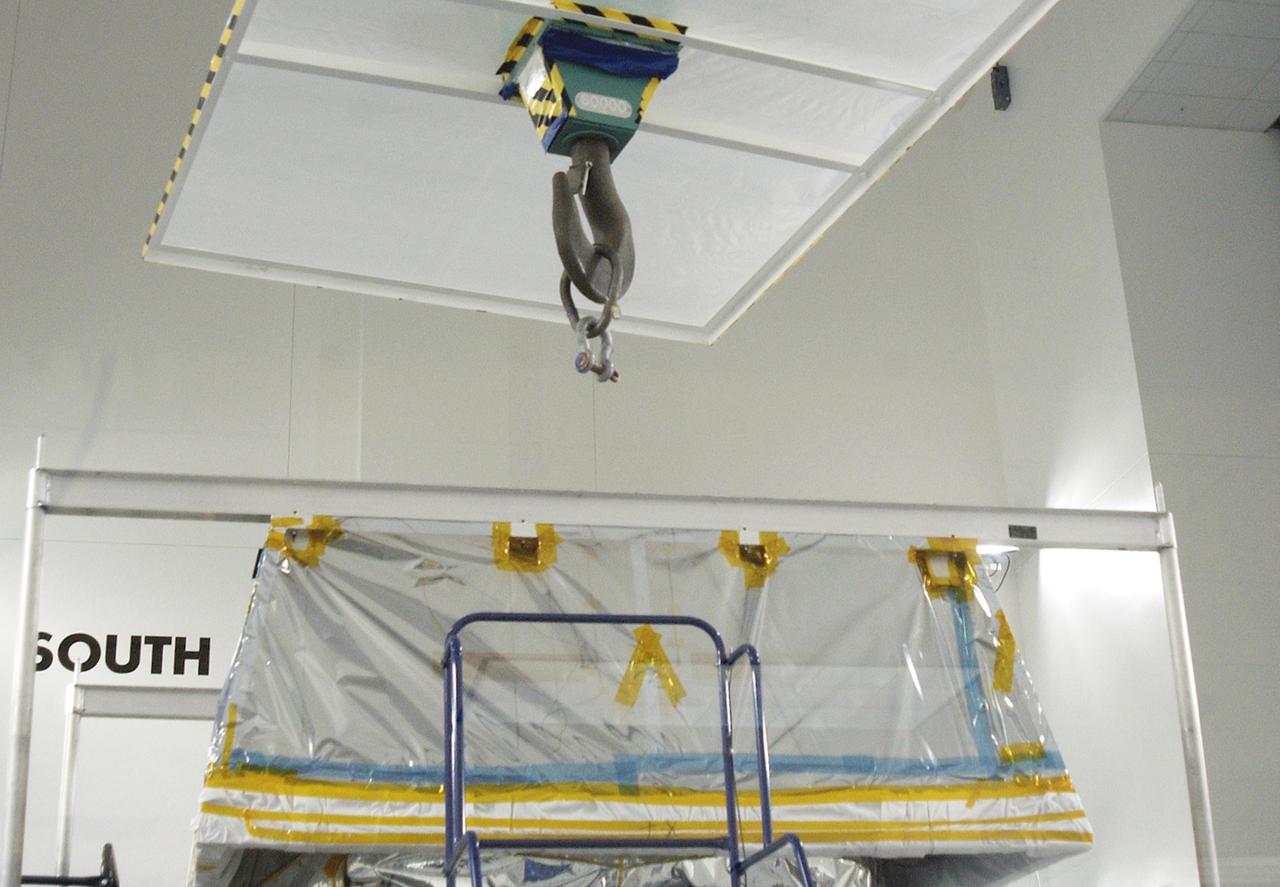
KENNEDY SPACE CENTER, FLA. - In the Astrotech Payload Processing Facility at Vandenberg Air Force Base, the CloudSat spacecraft sports a “hat” seen here that will be used during Cloud Profiling Radar (CPR) functional tests. The hat is used to absorb the RF radiation that is emitted by the instrument during the test. CloudSat will fly in combination with the Cloud-Aerosol Lidar and Infrared Pathfinder Satellite Observation (CALIPSO) to provide never-before-seen 3-D perspectives of how clouds and aerosols form, evolve, and affect weather and climate. CALIPSO and CloudSat will join three other satellites to enhance understanding of climate systems. The launch date for CALIPSO_ CloudSat is no earlier than Aug. 22.
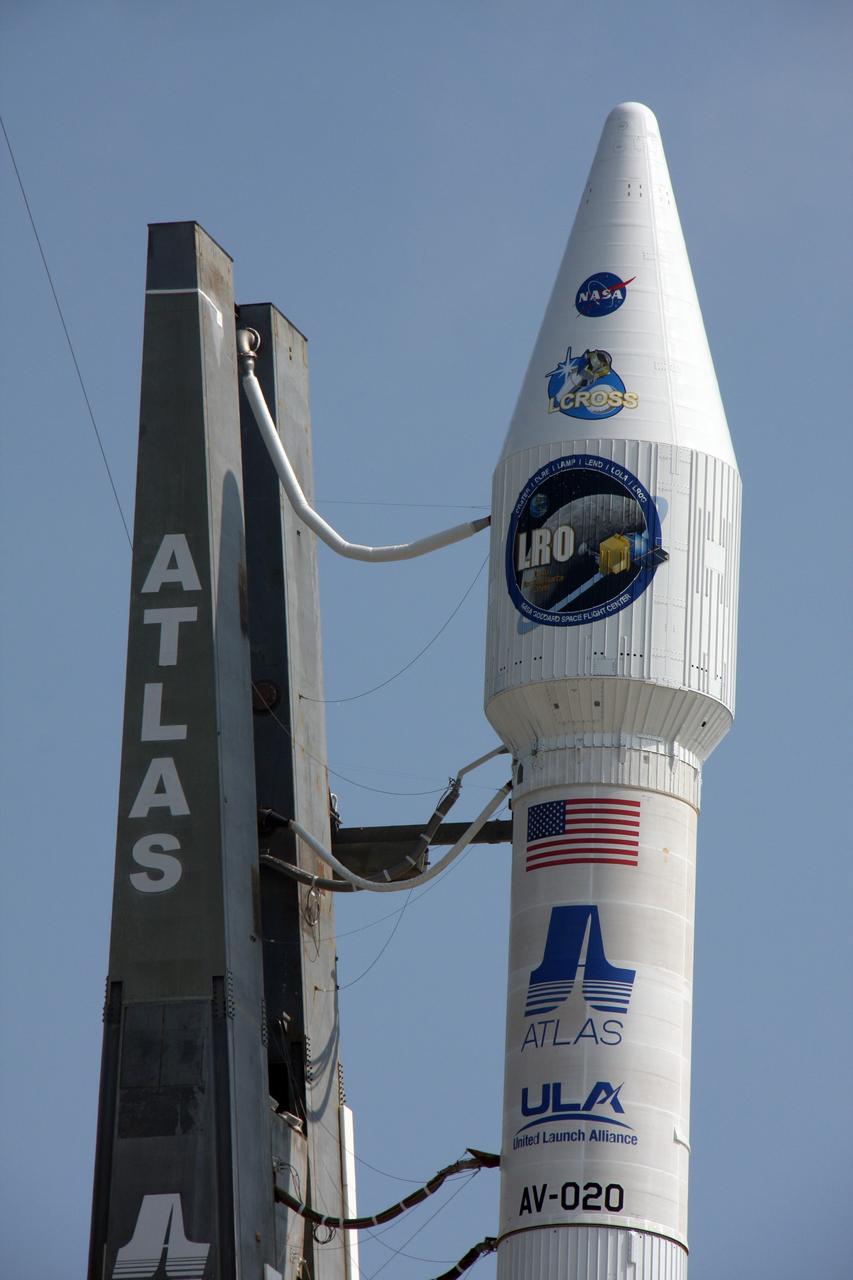
CAPE CANAVERAL, Fla. – NASA's Lunar Reconnaissance Orbiter, or LRO, and NASA's Lunar Crater Observation and Sensing Satellite, known as LCROSS, stand ready for liftoff on an Atlas V/Centaur rocket from Launch Pad 41 at Cape Canaveral Air Force Station in Florida. LRO and LCROSS are the first missions in NASA's plan to return humans to the moon and begin establishing a lunar outpost by 2020. The LRO also includes seven instruments that will help NASA characterize the moon's surface: DIVINER, LAMP, LEND, LOLA , CRATER, Mini-RF and LROC. Launch is scheduled for 5:12 p.m. EDT June 18. Photo credit: NASA/Ken Thornsley
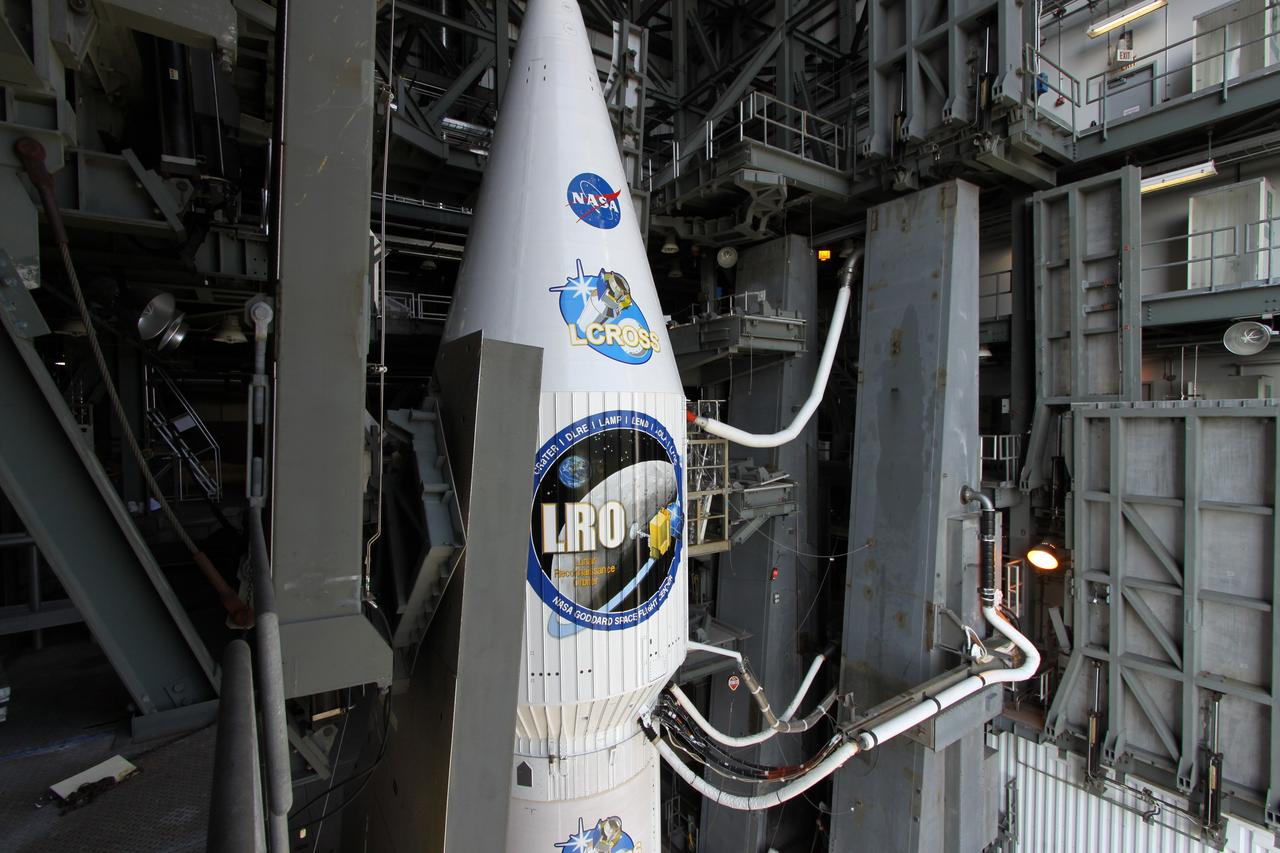
CAPE CANAVERAL, Fla. – On Launch Complex-41 on Cape Canaveral Air Force Station in Florida, NASA's Lunar Reconnaissance Orbiter, or LRO, and NASA's Lunar Crater Observation and Sensing Satellite, known as LCROSS, are ready to roll out to the launch pad atop the Atlas V/Centaur rocket. LRO and LCROSS are the first missions in NASA's plan to return humans to the moon and begin establishing a lunar outpost by 2020. The LRO also includes seven instruments that will help NASA characterize the moon's surface: DIVINER, LAMP, LEND, LOLA, CRATER, Mini-RF and LROC. Launch is scheduled for 5:22 p.m. EDT June 18 . Photo credit: NASA/Jack Pfaller
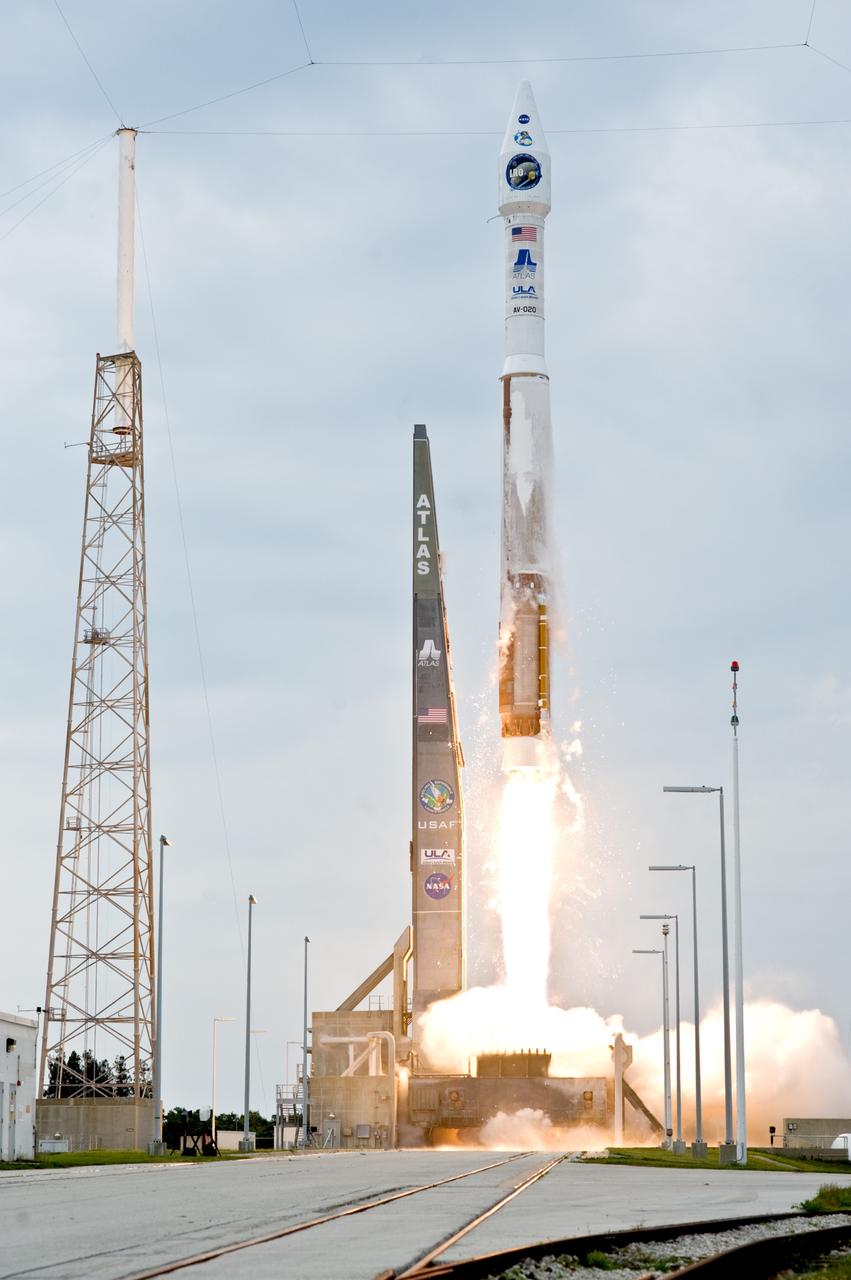
CAPE CANAVERAL, Fla. – Trailing a column of fire, the Atlas V/Centaur carrying NASA's Lunar Reconnaissance Orbiter, or LRO, and NASA's Lunar Crater Observation and Sensing Satellite, known as LCROSS, races above the lightning tower at left on Launch Complex 41 at Cape Canaveral Air Force Station in Florida. LRO and LCROSS are the first missions in NASA's plan to return humans to the moon and begin establishing a lunar outpost by 2020. The LRO also includes seven instruments that will help NASA characterize the moon's surface: DIVINER, LAMP, LEND, LOLA , CRATER, Mini-RF and LROC. Launch was on-time at 5:32 p.m. EDT. Photo credit: NASA/Sandra Joseph, Tony Gray
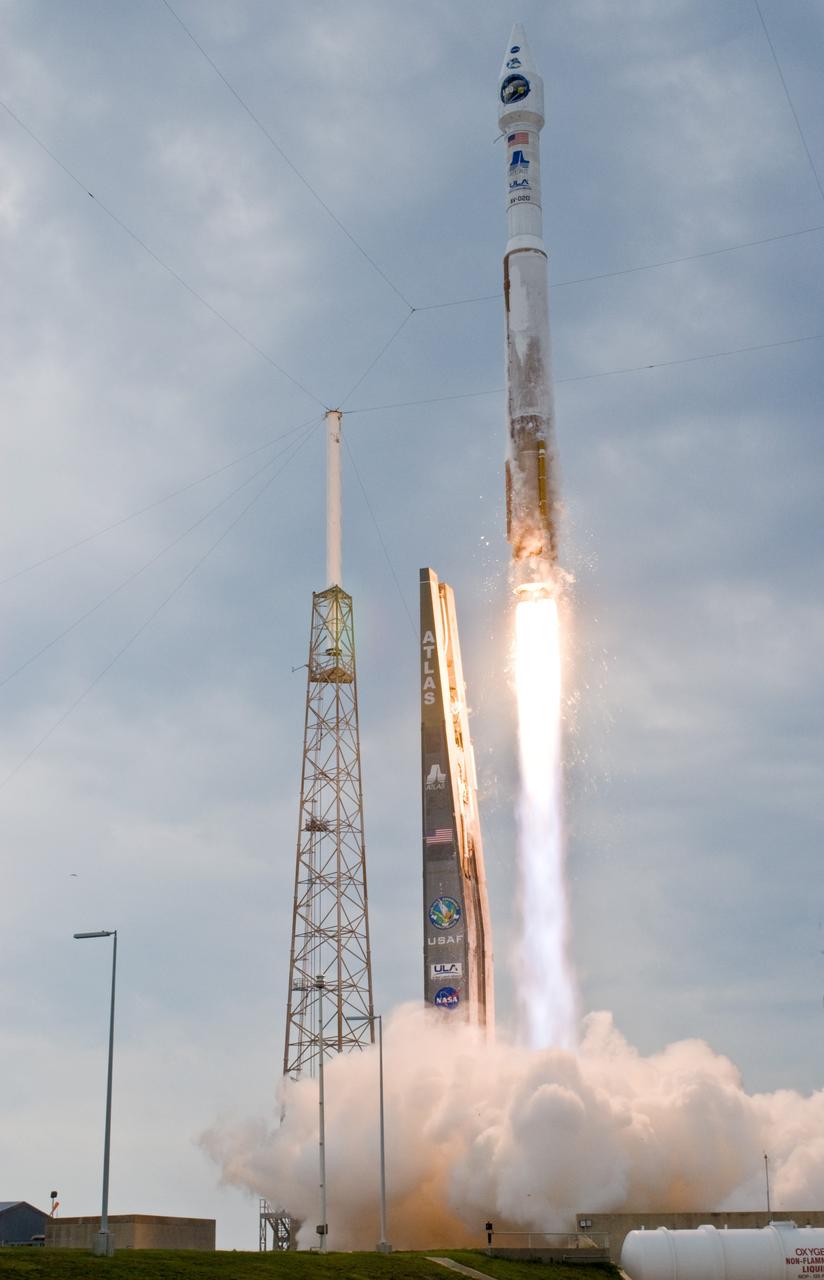
CAPE CANAVERAL, Fla. – Trailing a column of fire, the Atlas V/Centaur carrying NASA's Lunar Reconnaissance Orbiter, or LRO, and NASA's Lunar Crater Observation and Sensing Satellite, known as LCROSS, hurtles off Launch Complex 41 at Cape Canaveral Air Force Station in Florida. LRO and LCROSS are the first missions in NASA's plan to return humans to the moon and begin establishing a lunar outpost by 2020. The LRO also includes seven instruments that will help NASA characterize the moon's surface: DIVINER, LAMP, LEND, LOLA , CRATER, Mini-RF and LROC. Launch was on-time at 5:32 p.m. EDT. Photo credit: NASA/Tom Farrar, Kevin O'Connell
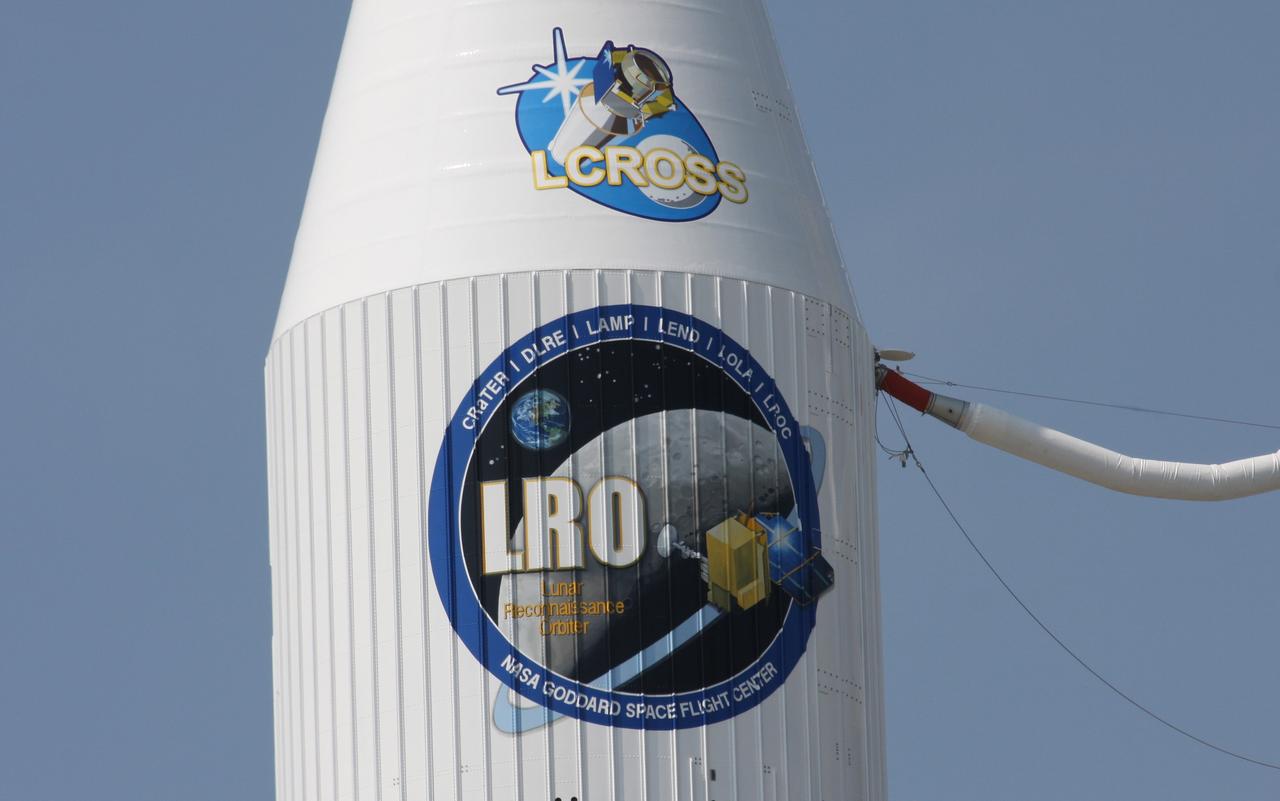
CAPE CANAVERAL, Fla. – A closeup of NASA's Lunar Reconnaissance Orbiter, or LRO, and NASA's Lunar Crater Observation and Sensing Satellite, known as LCROSS, ready for liftoff on an Atlas V/Centaur rocket from Launch Pad 41 at Cape Canaveral Air Force Station in Florida. LRO and LCROSS are the first missions in NASA's plan to return humans to the moon and begin establishing a lunar outpost by 2020. The LRO also includes seven instruments that will help NASA characterize the moon's surface: DIVINER, LAMP, LEND, LOLA , CRATER, Mini-RF and LROC. Launch is scheduled for 5:12 p.m. EDT June 18. Photo credit: NASA/Ken Thornsley
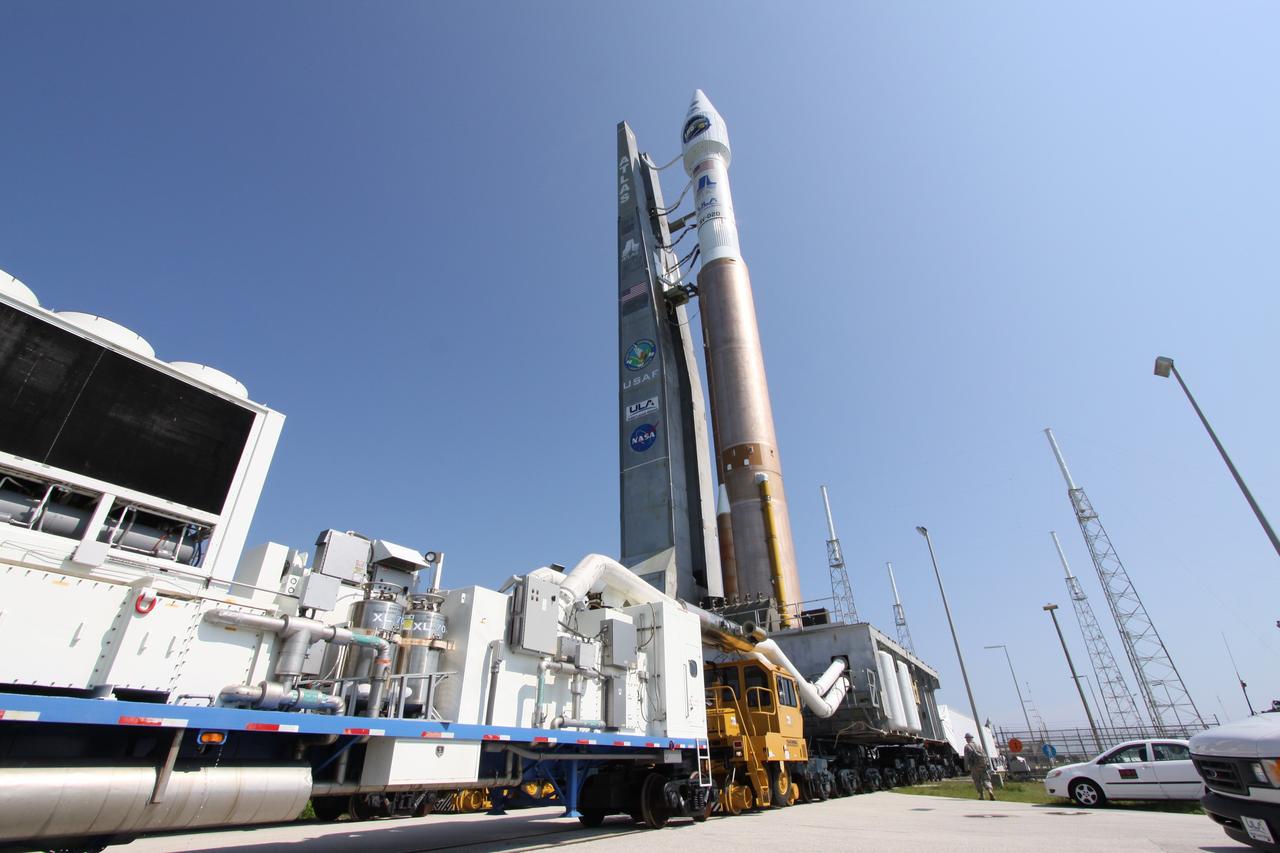
CAPE CANAVERAL, Fla. – On Launch Complex-41 on Cape Canaveral Air Force Station in Florida, the Atlas V/Centaur rocket with NASA's Lunar Reconnaissance Orbiter, or LRO, and NASA's Lunar Crater Observation and Sensing Satellite, known as LCROSS, on top roll out to the launch pad. At right are the protective lightning towers that surround the pad. LRO and LCROSS are the first missions in NASA's plan to return humans to the moon and begin establishing a lunar outpost by 2020. The LRO also includes seven instruments that will help NASA characterize the moon's surface: DIVINER, LAMP, LEND, LOLA, CRATER, Mini-RF and LROC. Launch is scheduled for 5:22 p.m. EDT June 18 . Photo credit: NASA/Jack Pfaller
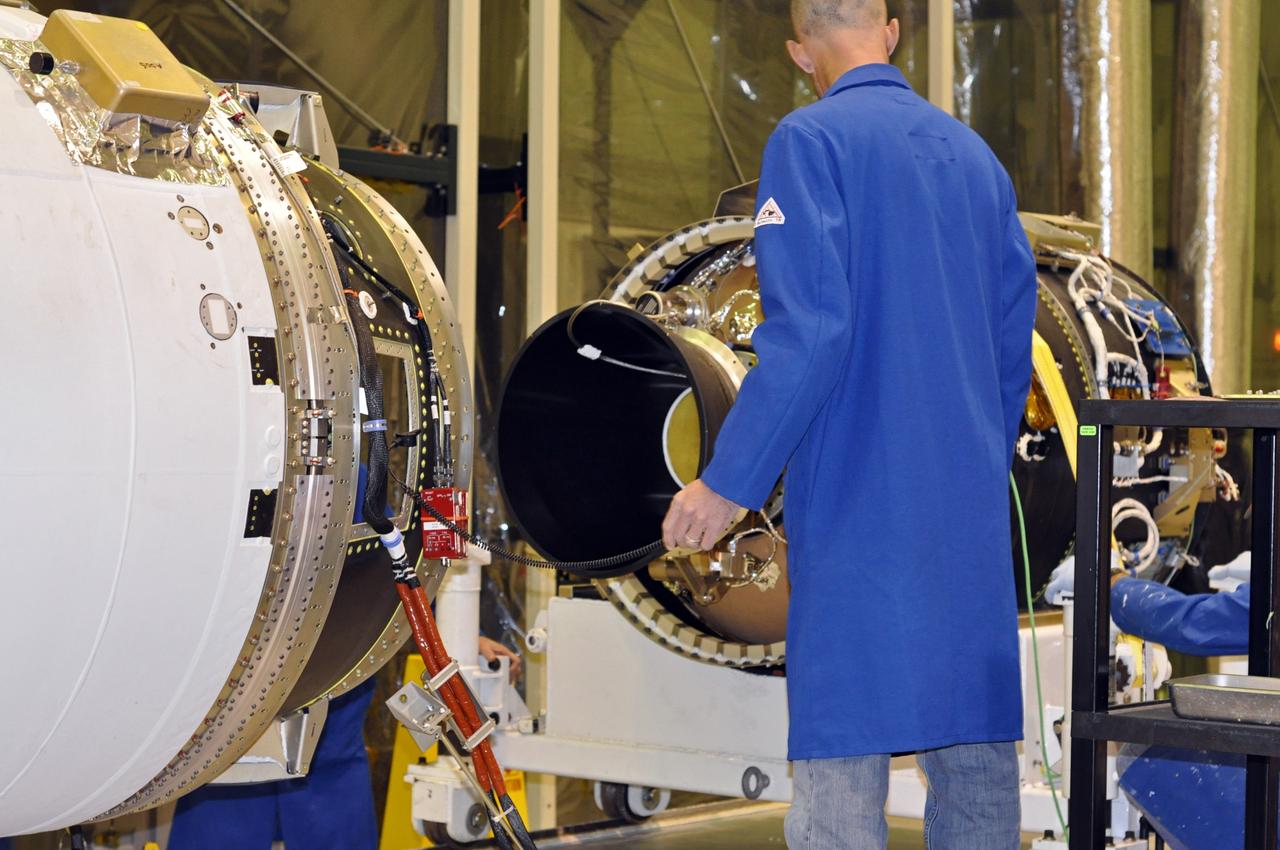
VANDENBERG AIR FORCE BASE, Calif. -- Stage 2 is separated from stage 3 of an Orbital Sciences Corp. Pegasus rocket in processing facility 1555 at Vandenberg Air Force Base (VAFB) in California to reinstall some RF cabling. The stages were remated after the installation was complete. The rocket is being prepared to launch NASA's Nuclear Spectroscopic Telescope Array (NuSTAR) into space. After the rocket and spacecraft are processed at Vandenberg, they will be flown on the Orbital Sciences' L-1011 carrier aircraft to the Ronald Reagan Ballistic Missile Defense Test Site at the Pacific Ocean's Kwajalein Atoll for launch, targeted for no earlier than March 14. The high-energy x-ray telescope will conduct a census for black holes, map radioactive material in young supernovae remnants, and study the origins of cosmic rays and the extreme physics around collapsed stars. For more information, visit http://www.nasa.gov/nustar. Photo credit: NASA/Randy Beaudoin, VAFB
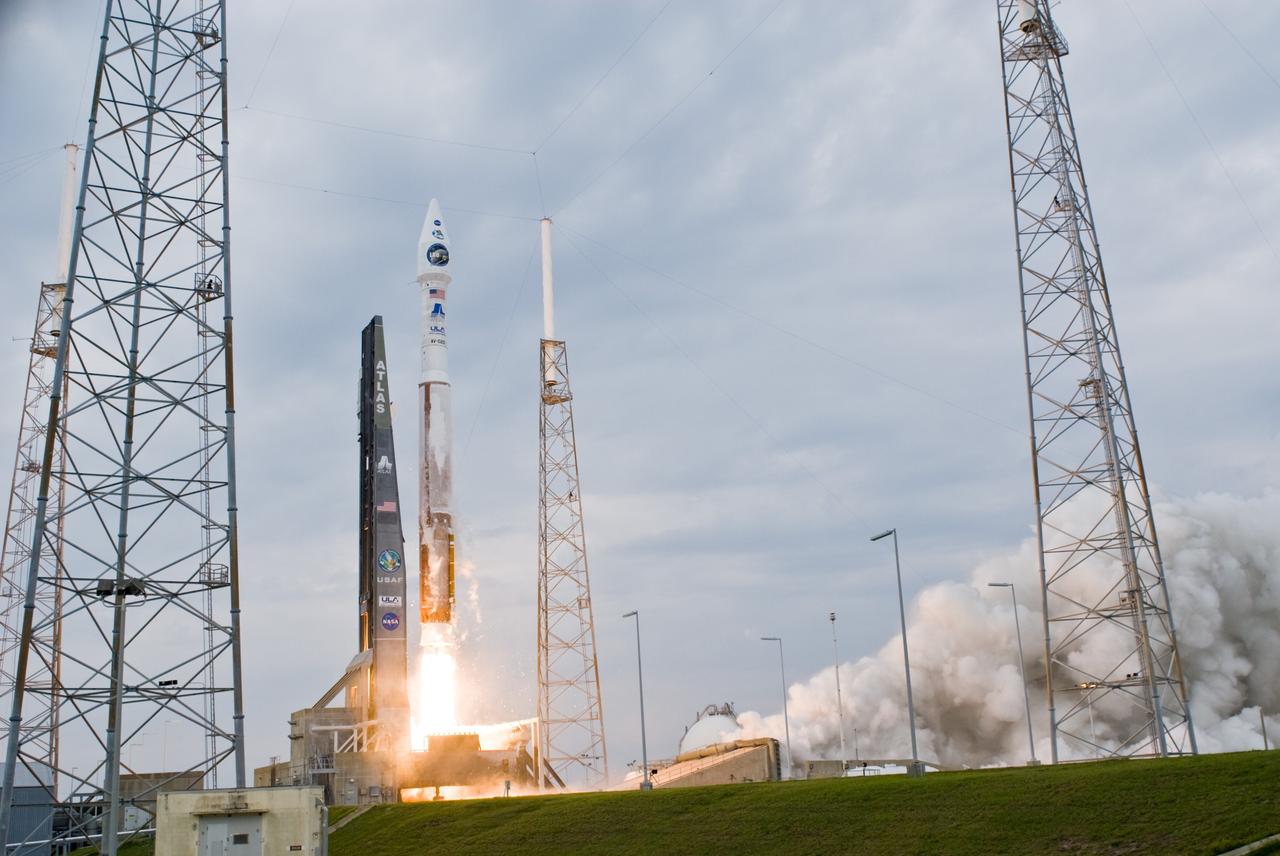
CAPE CANAVERAL, Fla. – Fire and smoke signal the liftoff of the Atlas V/Centaur carrying NASA's Lunar Reconnaissance Orbiter, or LRO, and NASA's Lunar Crater Observation and Sensing Satellite, known as LCROSS, toward orbit around the moon. Launch from Launch Complex 41 at Cape Canaveral Air Force Station in Florida was on-time at 5:32 p.m. EDT. The towers around the pad are part of the lightning protection system. LRO and LCROSS are the first missions in NASA's plan to return humans to the moon and begin establishing a lunar outpost by 2020. The LRO also includes seven instruments that will help NASA characterize the moon's surface: DIVINER, LAMP, LEND, LOLA , CRATER, Mini-RF and LROC. Photo credit: NASA/Tom Farrar, Kevin O'Connell
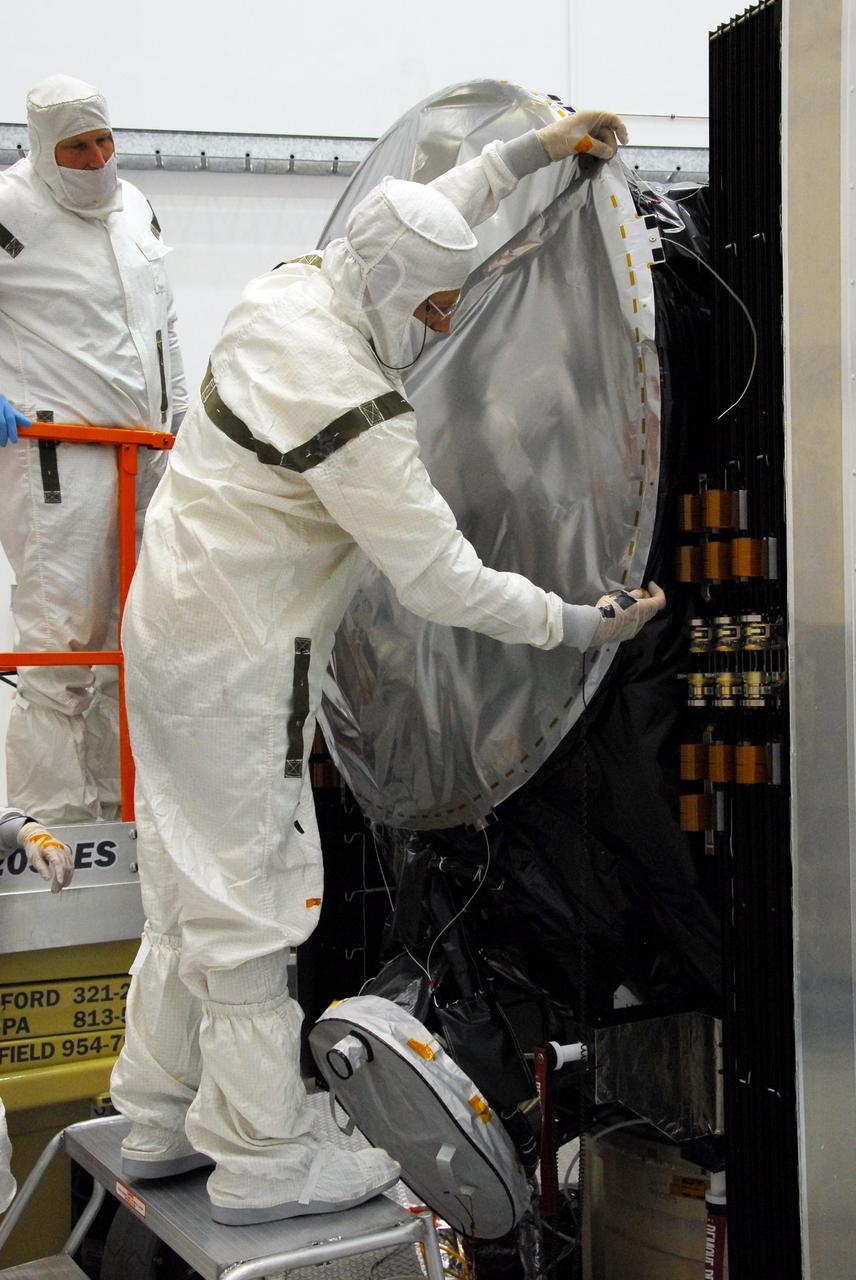
KENNEDY SPACE CENTER, FLA. -- At Astrotech, a technician secures one side of the sun shade over the high gain antenna on the Dawn spacecraft. Made of germanium kapton, the shade, which is RF transparent, is placed over the sensitive antenna to reflect and emit harmful solar radiation to prevent the antenna from being excessively heated. Dawn is scheduled to launch July 7 from Pad 17-B on Cape Canaveral Air Force Station. Dawn's goal is to characterize the conditions and processes of the solar system's earliest epoch by investigating in detail the largest protoplanets that have remained intact since their formations: asteroid Vesta and the dwarf planet Ceres. They reside in the extensive zone between Mars and Jupiter together with many other smaller bodies, called the asteroid belt. Photo credit: NASA/George Shelton

CAPE CANAVERAL, Fla. – Smoke and steam roll across the launch pad as NASA's Lunar Reconnaissance Orbiter, or LRO, and NASA's Lunar Crater Observation and Sensing Satellite, known as LCROSS, lifts off atop the Atlas V/Centaur rocket from Launch Complex 41 at Cape Canaveral Air Force Station in Florida. Surrounding the pad are lightning towers. LRO and LCROSS are the first missions in NASA's plan to return humans to the moon and begin establishing a lunar outpost by 2020. The LRO also includes seven instruments that will help NASA characterize the moon's surface: DIVINER, LAMP, LEND, LOLA , CRATER, Mini-RF and LROC. Launch was on-time at 5:32 p.m. EDT June 18. Photo credit: NASA/Kim Shiflett
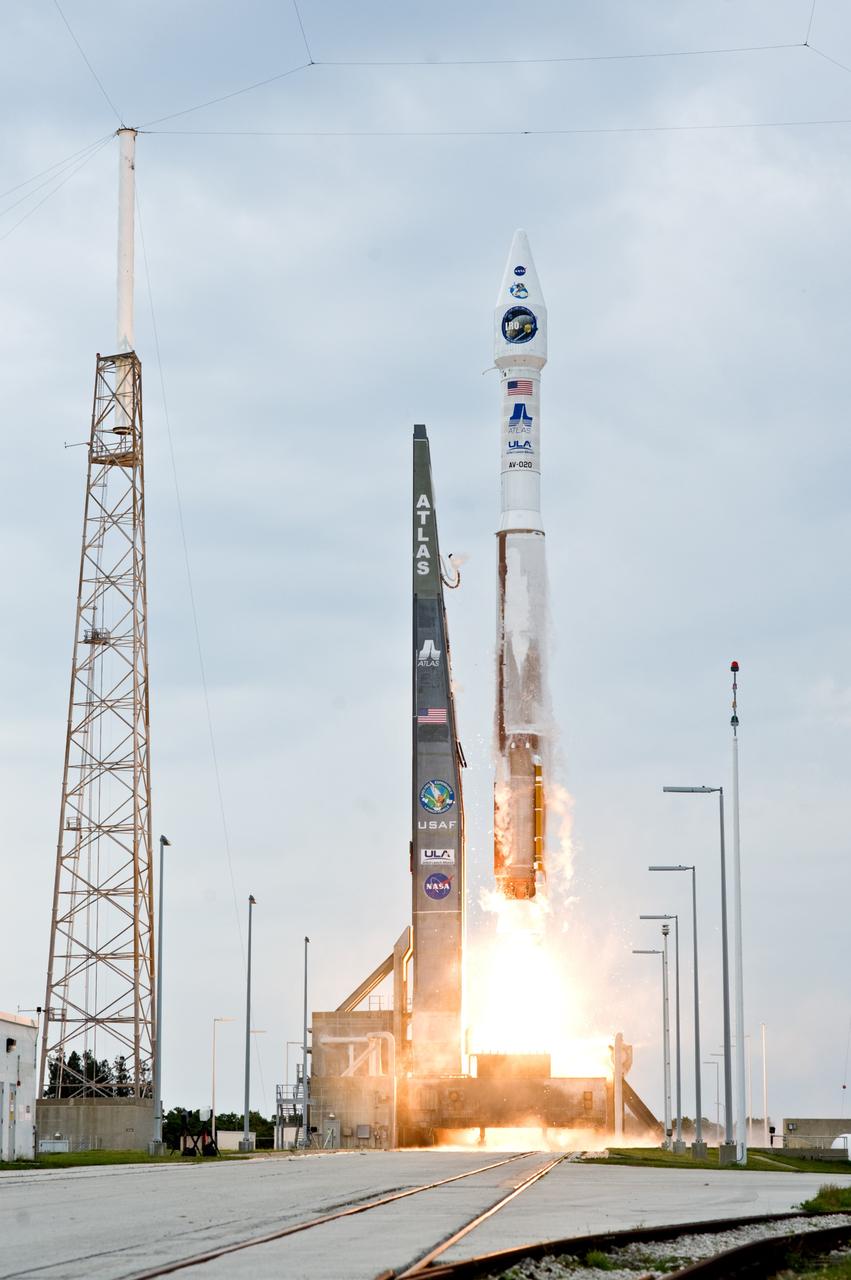
CAPE CANAVERAL, Fla. – The Atlas V/centaur rocket fires as it lifts NASA's Lunar Reconnaissance Orbiter, or LRO, and NASA's Lunar Crater Observation and Sensing Satellite, known as LCROSS, from Launch Complex 41 at Cape Canaveral Air Force Station in Florida. The tower at left is part of the lightning protection system on the pad. LRO and LCROSS are the first missions in NASA's plan to return humans to the moon and begin establishing a lunar outpost by 2020. The LRO also includes seven instruments that will help NASA characterize the moon's surface: DIVINER, LAMP, LEND, LOLA , CRATER, Mini-RF and LROC. Launch was on-time at 5:32 p.m. EDT. Photo credit: NASA/Tom Farrar, Kevin O'Connell
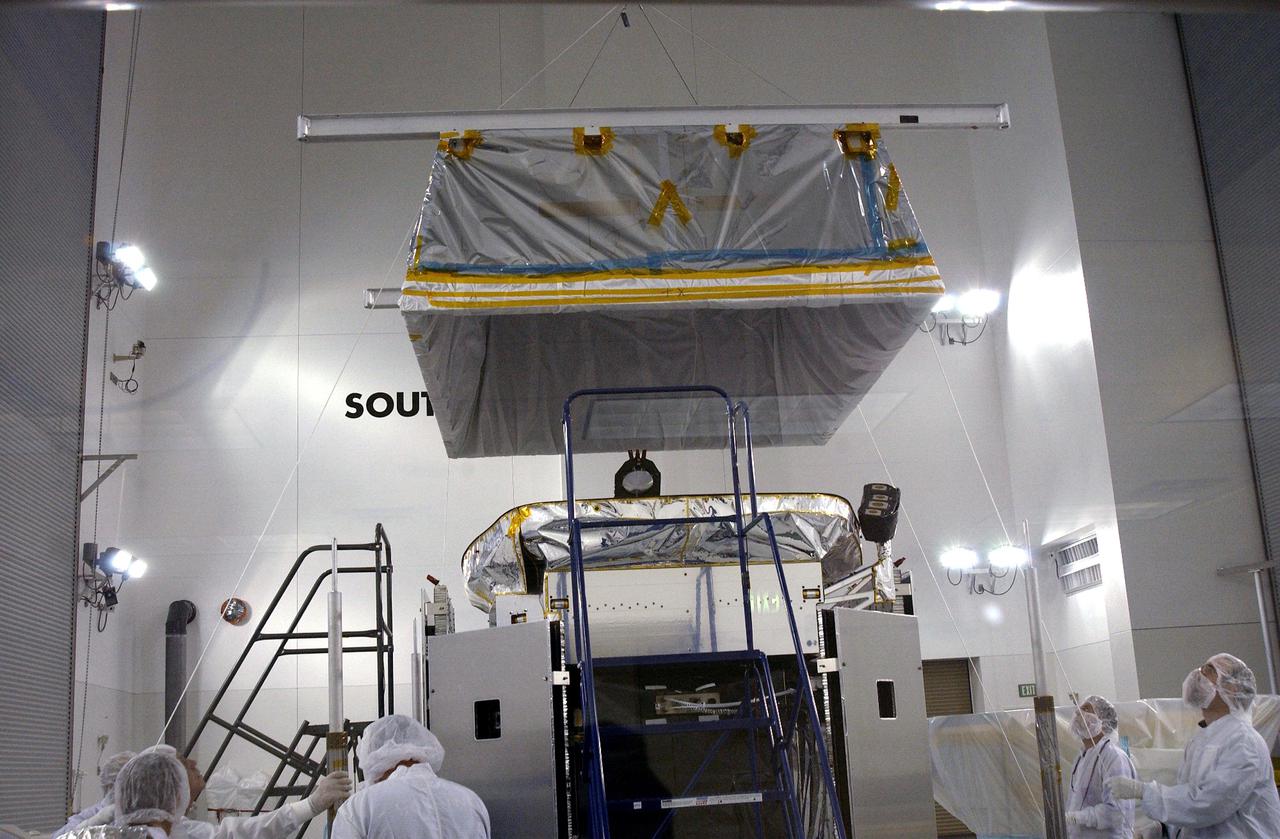
KENNEDY SPACE CENTER, FLA. - In the Astrotech Payload Processing Facility at Vandenberg Air Force Base, workers from NASA’s Jet Propulsion Laboratory in California and Ball Aerospace from Boulder, Colo., lower a 'hat' toward the CloudSat spacecraft before conducting the Cloud Profiling Radar (CPR) functional tests. The hat is used to absorb the RF radiation that is emitted by the instrument during the test. CloudSat will fly in combination with the Cloud-Aerosol Lidar and Infrared Pathfinder Satellite Observation (CALIPSO) to provide never-before-seen 3-D perspectives of how clouds and aerosols form, evolve, and affect weather and climate. CALIPSO and CloudSat will join three other satellites to enhance understanding of climate systems. The launch date for CALIPSO_ CloudSat is no earlier than Aug. 22.
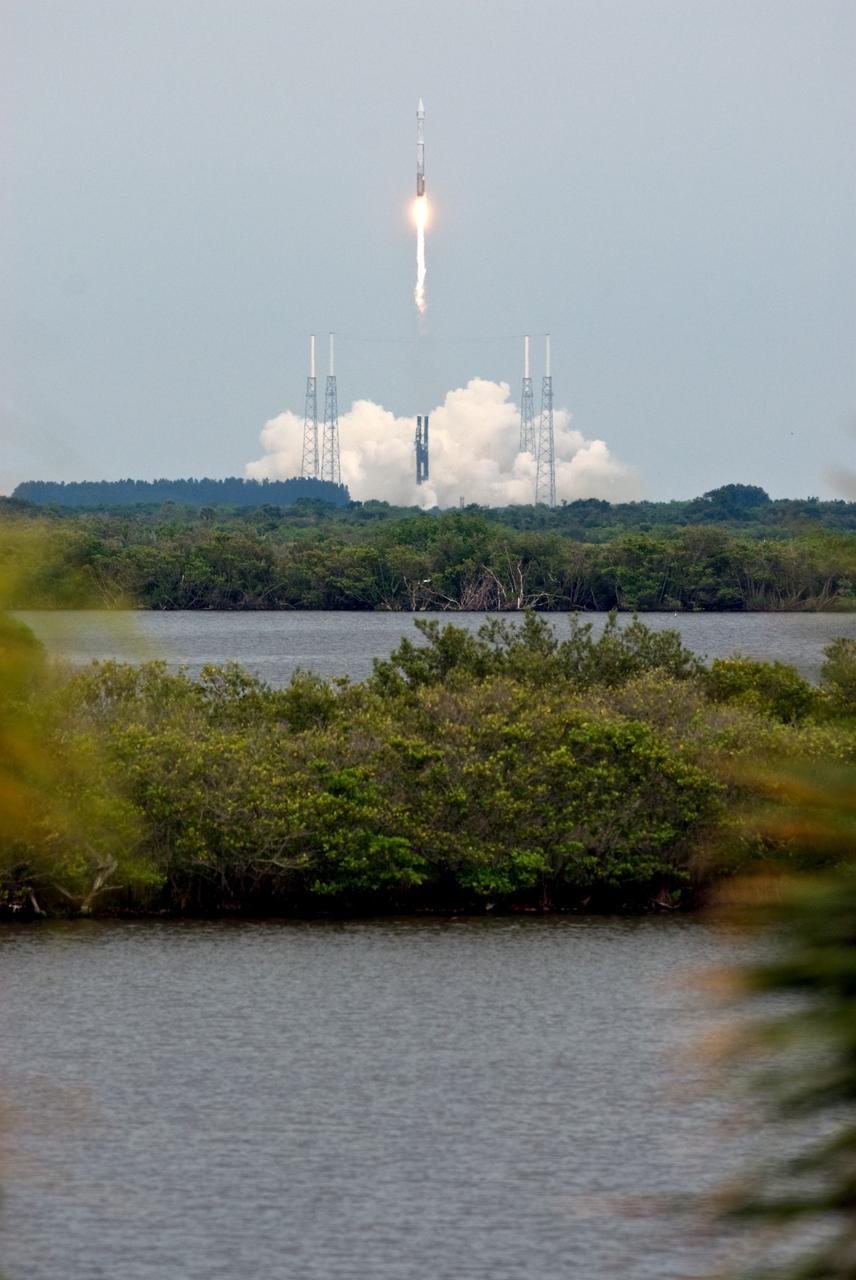
CAPE CANAVERAL, Fla. – Viewed across the Indian River Lagoon, the Atlas V/Centaur rocket carrying NASA's Lunar Reconnaissance Orbiter, or LRO, and NASA's Lunar Crater Observation and Sensing Satellite, known as LCROSS, trails a tail of smoke as it roars into the sky after launch from Launch Complex 41 at Cape Canaveral Air Force Station in Florida. Surrounding the pad are lightning towers. LRO and LCROSS are the first missions in NASA's plan to return humans to the moon and begin establishing a lunar outpost by 2020. The LRO also includes seven instruments that will help NASA characterize the moon's surface: DIVINER, LAMP, LEND, LOLA , CRATER, Mini-RF and LROC. Launch was on-time at 5:32 p.m. EDT June 18. Photo credit: NASA/Tony Gray
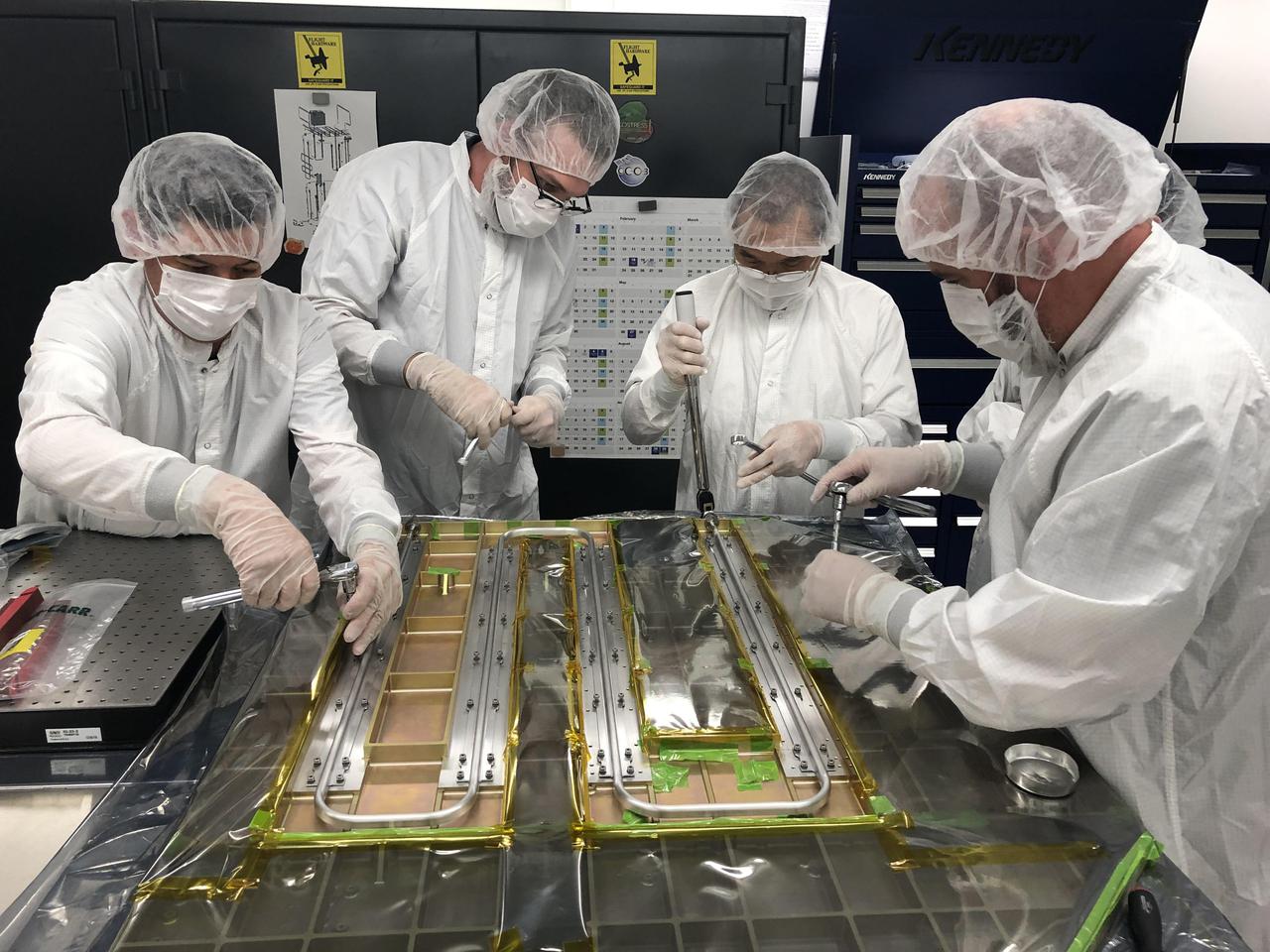
Europa Clipper technicians and engineers at NASA's Jet Propulsion Laboratory in Southern California work together in a cleanroom on Sept. 12, 2019. They bond thermal tubing to the spacecraft's Radio Frequency (RF) panel, which was built by Johns Hopkins University Applied Physics Laboratory (APL) in Laurel, Maryland. The tubing is part of a Heat Redistribution System (HRS) that pumps coolant all around the spacecraft and helps control its temperature as it travels through space. With an internal global ocean twice the size of Earth's oceans combined, Europa may have the potential to harbor life. NASA's Europa Clipper spacecraft will swoop around Jupiter on an elliptical path, dipping close to the moon on each flyby to collect data. Understanding Europa's habitability will help scientists better understand how life developed on Earth and the potential for finding life beyond our planet. Europa Clipper is aiming for a launch readiness date of 2024. https://photojournal.jpl.nasa.gov/catalog/PIA24324
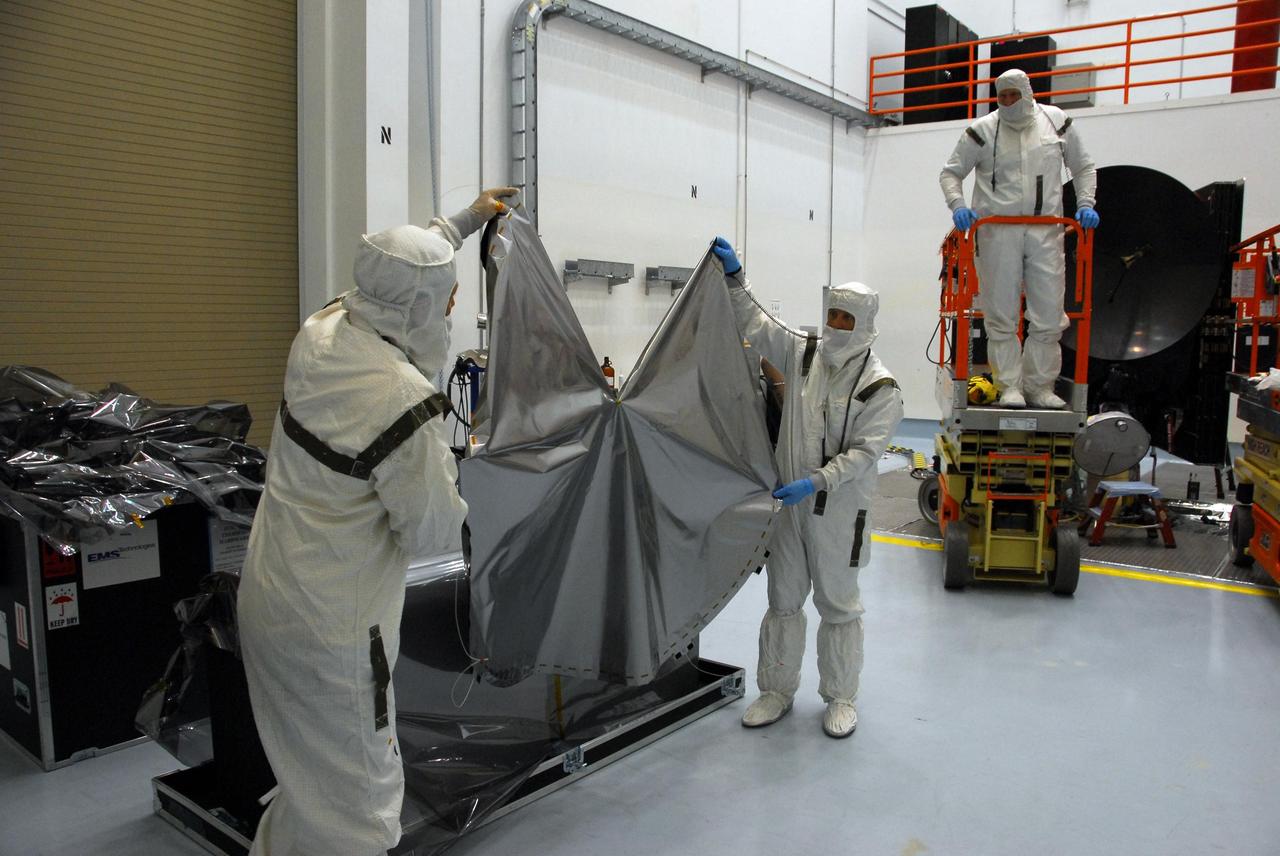
KENNEDY SPACE CENTER, FLA. -- At Astrotech, technicians lift the sun shade to be installed over the high gain antenna on the Dawn spacecraft. Made of germanium kapton, the shade, which is RF transparent, is placed over the sensitive antenna to reflect and emit harmful solar radiation to prevent the antenna from being excessively heated. Dawn is scheduled to launch July 7 from Pad 17-B on Cape Canaveral Air Force Station. Dawn's goal is to characterize the conditions and processes of the solar system's earliest epoch by investigating in detail the largest protoplanets that have remained intact since their formations: asteroid Vesta and the dwarf planet Ceres. They reside in the extensive zone between Mars and Jupiter together with many other smaller bodies, called the asteroid belt. Photo credit: NASA/George Shelton
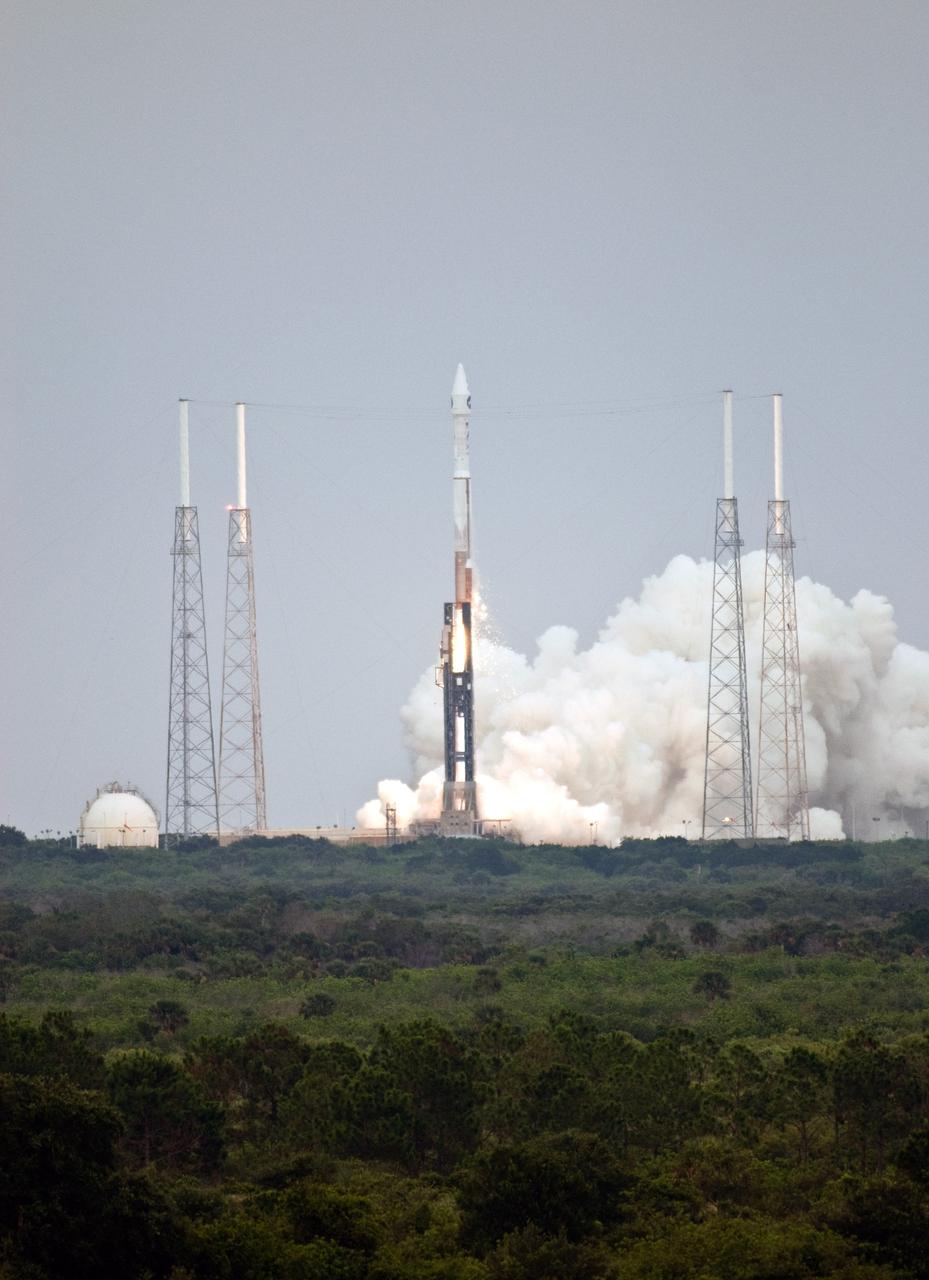
CAPE CANAVERAL, Fla. – Smoke and steam roll across the launch pad as NASA's Lunar Reconnaissance Orbiter, or LRO, and NASA's Lunar Crater Observation and Sensing Satellite, known as LCROSS, lifts off atop the Atlas V/Centaur rocket from Launch Complex 41 at Cape Canaveral Air Force Station in Florida. Surrounding the pad are lightning towers. LRO and LCROSS are the first missions in NASA's plan to return humans to the moon and begin establishing a lunar outpost by 2020. The LRO also includes seven instruments that will help NASA characterize the moon's surface: DIVINER, LAMP, LEND, LOLA , CRATER, Mini-RF and LROC. Launch was on-time at 5:32 p.m. EDT June 18. Photo credit: NASA/Kim Shiflett
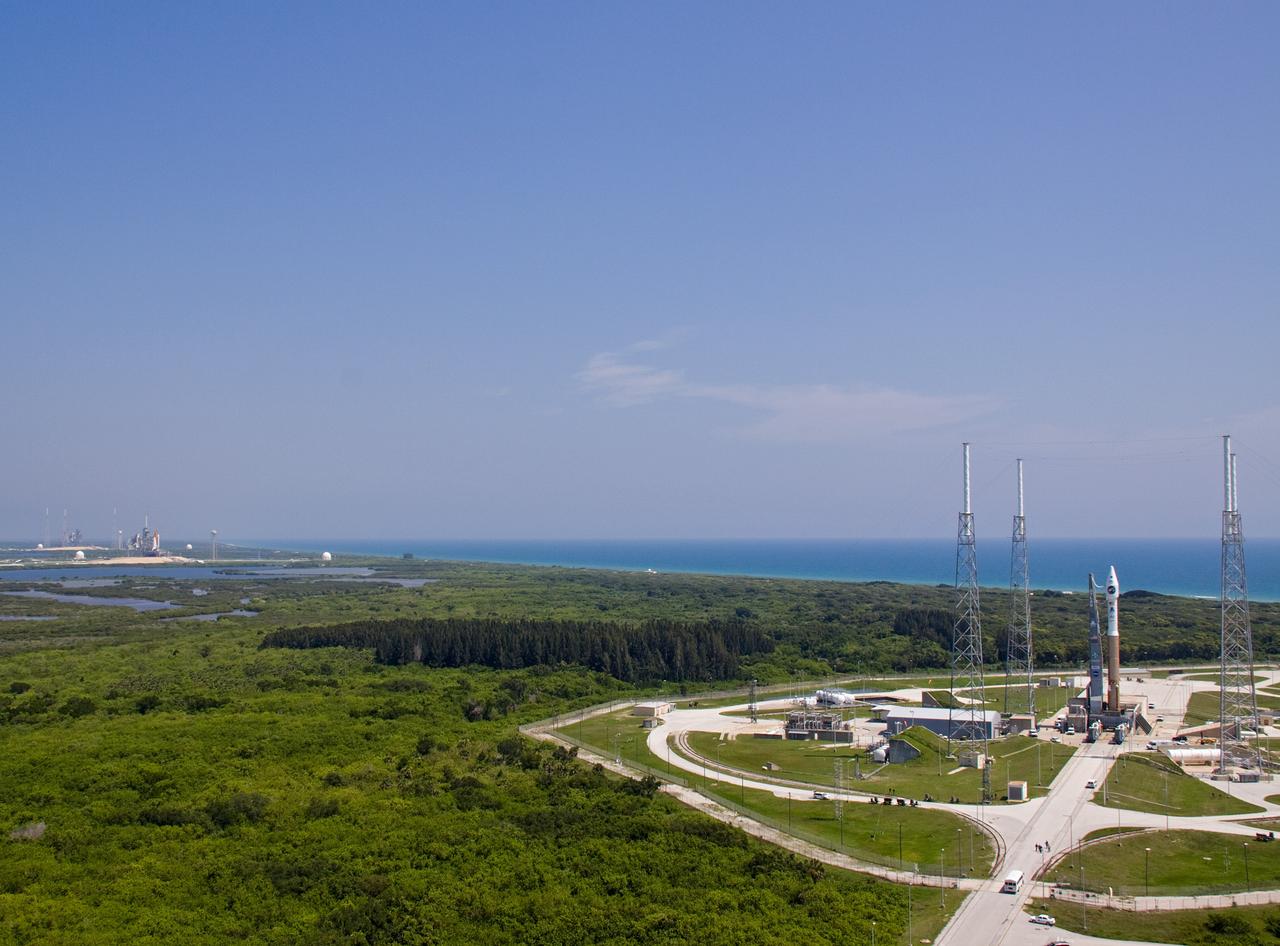
CAPE CANAVERAL, Fla. – A wide view captures both Launch Complex-41 on Cape Canaveral Air Force Station at right and Launch Pad 39A at NASA's Kennedy Space Center in Florida at left. Space shuttle Endeavour is still on the pad after launch was officially scrubbed at 1:55 a.m. this morning when a gaseous hydrogen leak occurred at the Ground Umbilical Carrier Plate. NASA's Lunar Reconnaissance Orbiter, or LRO, and NASA's Lunar Crater Observation and Sensing Satellite, known as LCROSS, are on Complex 41 waiting for launch on the Atlas V/Centaur rocket. LRO and LCROSS are the first missions in NASA's plan to return humans to the moon and begin establishing a lunar outpost by 2020. The LRO also includes seven instruments that will help NASA characterize the moon's surface: DIVINER, LAMP, LEND, LOLA, CRATER, Mini-RF and LROC. Launch is scheduled for 5:22 p.m. EDT June 18 . Photo credit: NASA/Jack Pfaller
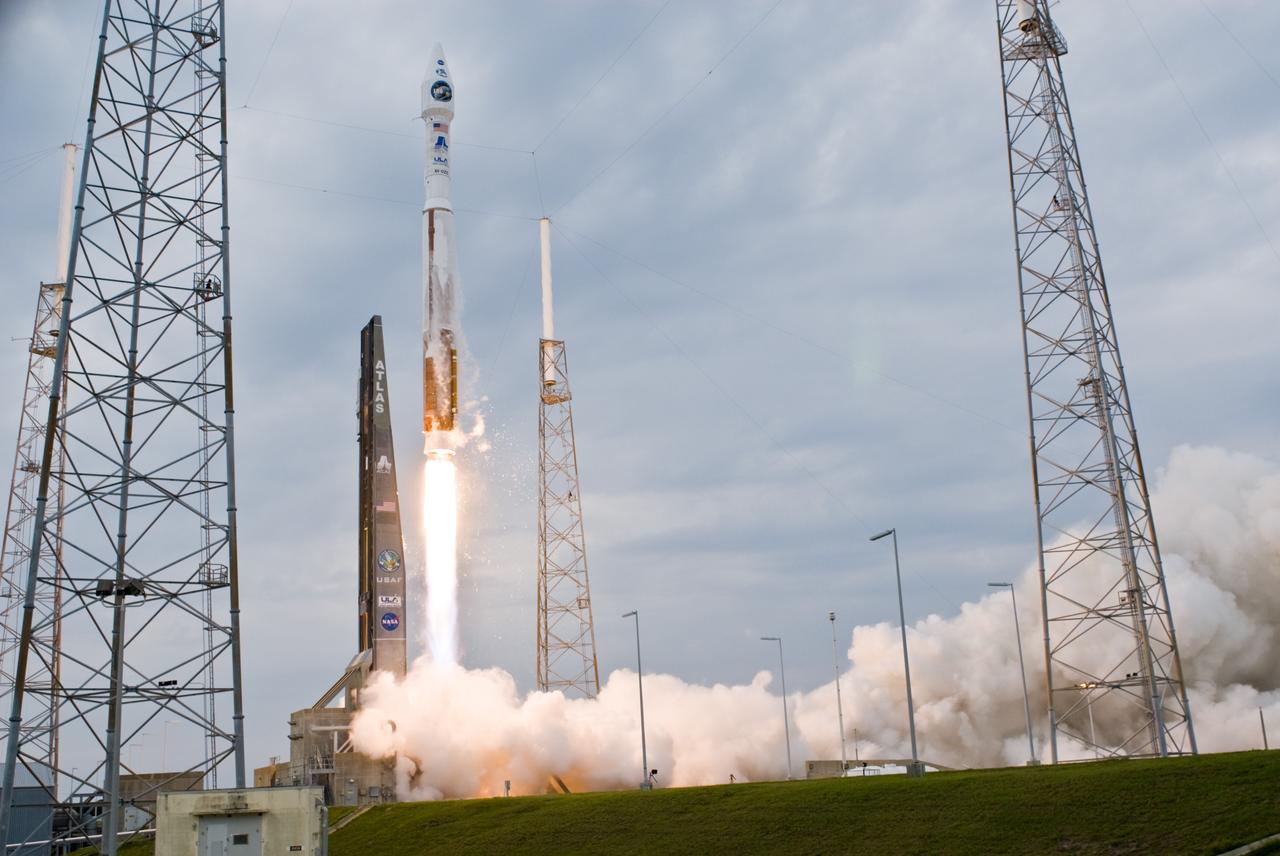
CAPE CANAVERAL, Fla. – Smoke pours across Launch Complex 41 at Cape Canaveral Air Force Station in Florida as the Atlas V/Centaur carrying NASA's Lunar Reconnaissance Orbiter, or LRO, and NASA's Lunar Crater Observation and Sensing Satellite, known as LCROSS, roars into the sky. The towers around the pad are part of the lightning protection system. LRO and LCROSS are the first missions in NASA's plan to return humans to the moon and begin establishing a lunar outpost by 2020. The LRO also includes seven instruments that will help NASA characterize the moon's surface: DIVINER, LAMP, LEND, LOLA , CRATER, Mini-RF and LROC. Launch was on-time at 5:32 p.m. EDT. Photo credit: NASA/Tom Farrar, Kevin O'Connell
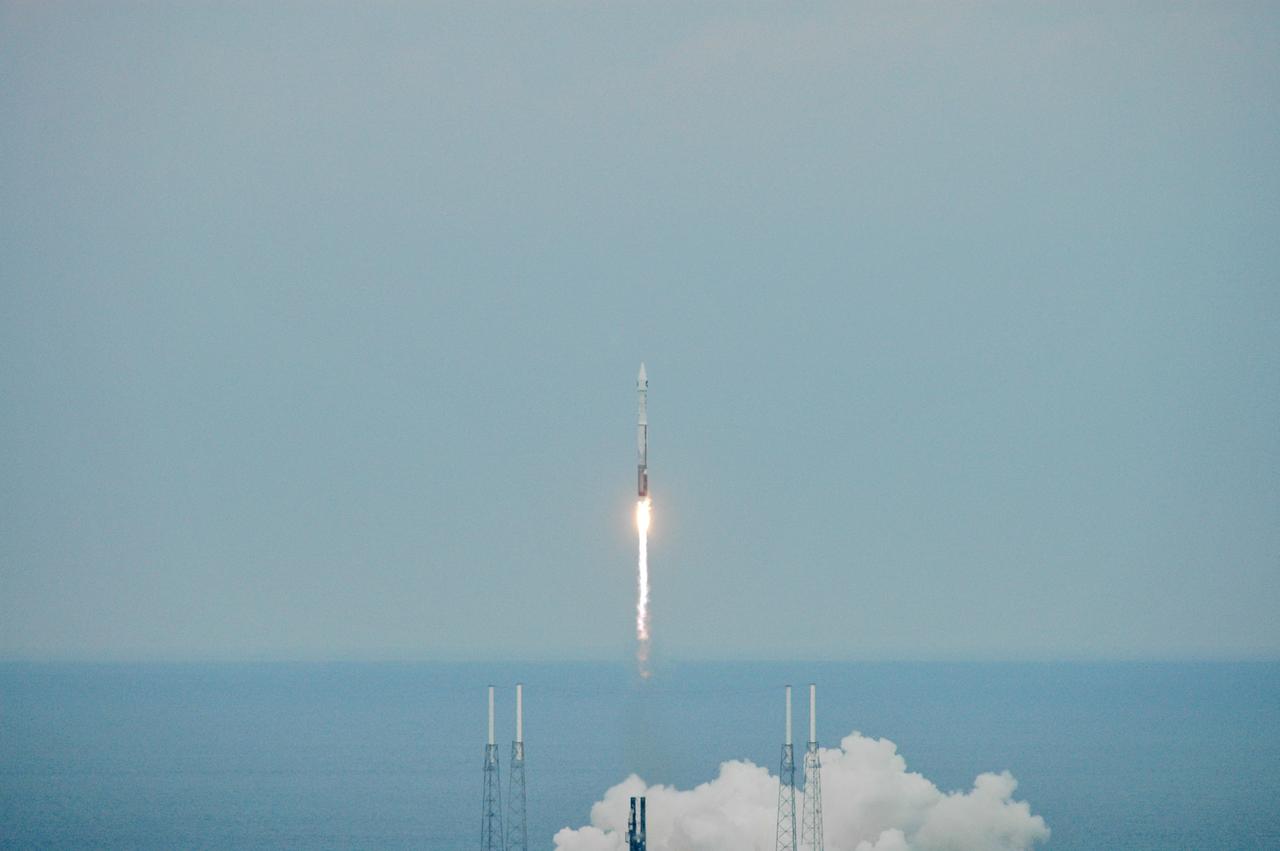
CAPE CANAVERAL, Fla. – The Atlas V/Centaur rocket carrying NASA's Lunar Reconnaissance Orbiter, or LRO, and NASA's Lunar Crater Observation and Sensing Satellite, known as LCROSS, leaps into the sky with a tail of smoke behind as it lifts off from Launch Complex 41 at Cape Canaveral Air Force Station in Florida. Surrounding the pad below are lightning towers. LRO and LCROSS are the first missions in NASA's plan to return humans to the moon and begin establishing a lunar outpost by 2020. The LRO also includes seven instruments that will help NASA characterize the moon's surface: DIVINER, LAMP, LEND, LOLA , CRATER, Mini-RF and LROC. Launch was on-time at 5:32 p.m. EDT June 18. Photo credit: NASA/Jeffery Marino

CAPE CANAVERAL, Fla. – Photographer Joel Powell, with Spaceflight Magazine, captures a closeup of NASA's Lunar Reconnaissance Orbiter, or LRO, and NASA's Lunar Crater Observation and Sensing Satellite, known as LCROSS, atop the Atlas V/Centaur rocket on Launch Pad 41 at Cape Canaveral Air Force Station in Florida. Around the pad are the lightning towers. LRO and LCROSS are the first missions in NASA's plan to return humans to the moon and begin establishing a lunar outpost by 2020. The LRO also includes seven instruments that will help NASA characterize the moon's surface: DIVINER, LAMP, LEND, LOLA , CRATER, Mini-RF and LROC. Launch is scheduled for 5:12 p.m. EDT June 18. Photo credit: NASA/Ken Thornsley
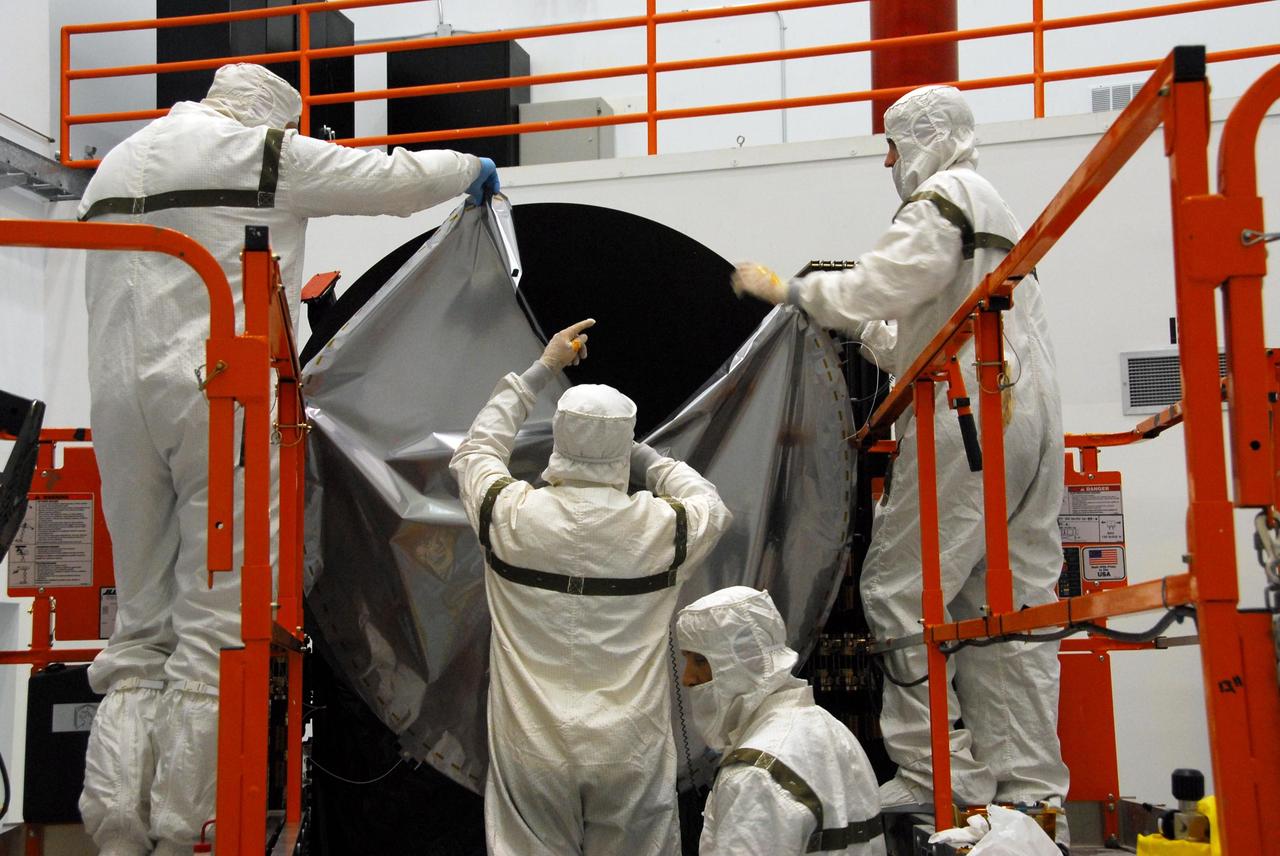
KENNEDY SPACE CENTER, FLA. -- At Astrotech, technicians begin placing the sun shade over the high gain antenna on the Dawn spacecraft. Made of germanium kapton, the shade, which is RF transparent, is placed over the sensitive antenna to reflect and emit harmful solar radiation to prevent the antenna from being excessively heated. Dawn is scheduled to launch July 7 from Pad 17-B on Cape Canaveral Air Force Station. Dawn's goal is to characterize the conditions and processes of the solar system's earliest epoch by investigating in detail the largest protoplanets that have remained intact since their formations: asteroid Vesta and the dwarf planet Ceres. They reside in the extensive zone between Mars and Jupiter together with many other smaller bodies, called the asteroid belt. Photo credit: NASA/George Shelton
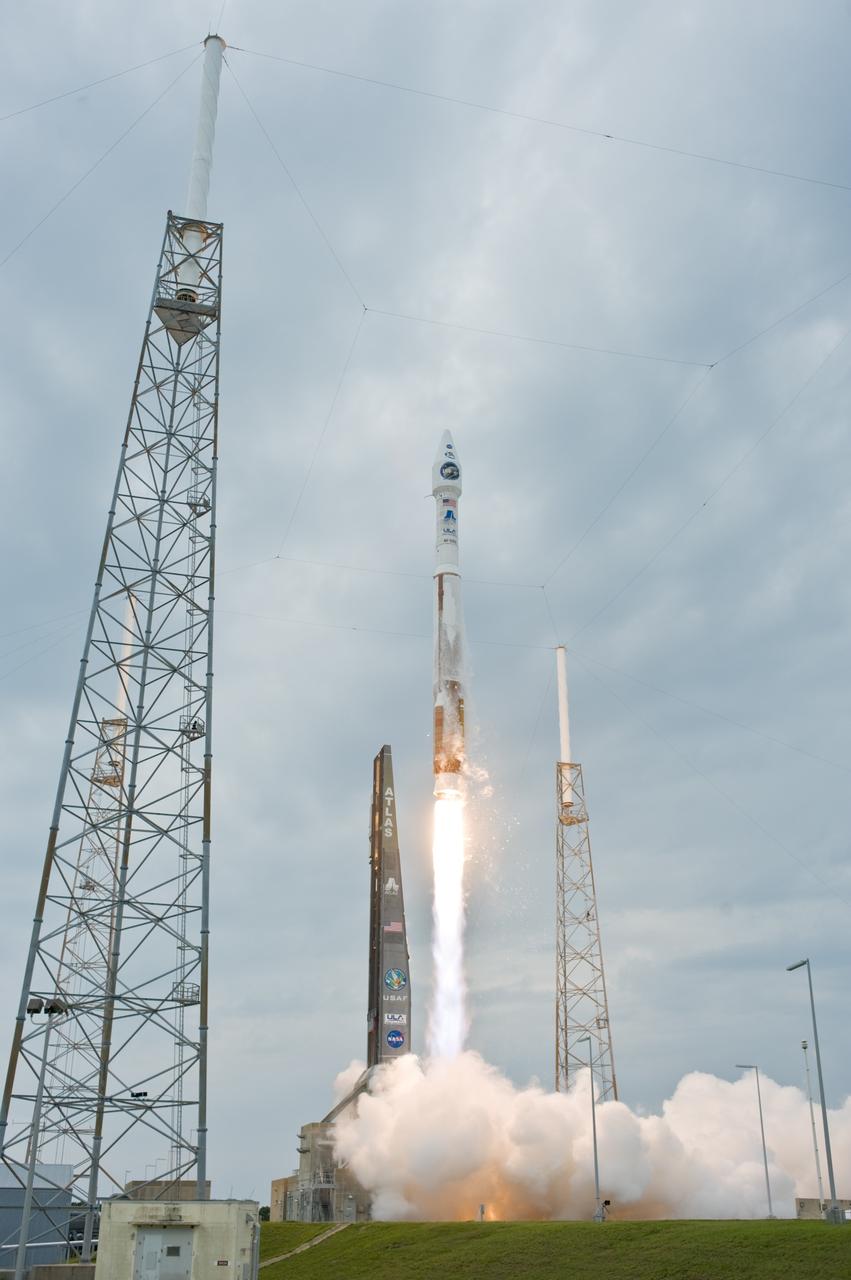
CAPE CANAVERAL, Fla. – Smoke pours across Launch Complex 41 at Cape Canaveral Air Force Station in Florida as the Atlas V/Centaur carrying NASA's Lunar Reconnaissance Orbiter, or LRO, and NASA's Lunar Crater Observation and Sensing Satellite, known as LCROSS, roars into the sky. The towers around the pad are part of the lightning protection system. LRO and LCROSS are the first missions in NASA's plan to return humans to the moon and begin establishing a lunar outpost by 2020. The LRO also includes seven instruments that will help NASA characterize the moon's surface: DIVINER, LAMP, LEND, LOLA , CRATER, Mini-RF and LROC. Launch was on-time at 5:32 p.m. EDT. Photo credit: NASA/Tom Farrar, Kevin O'Connell
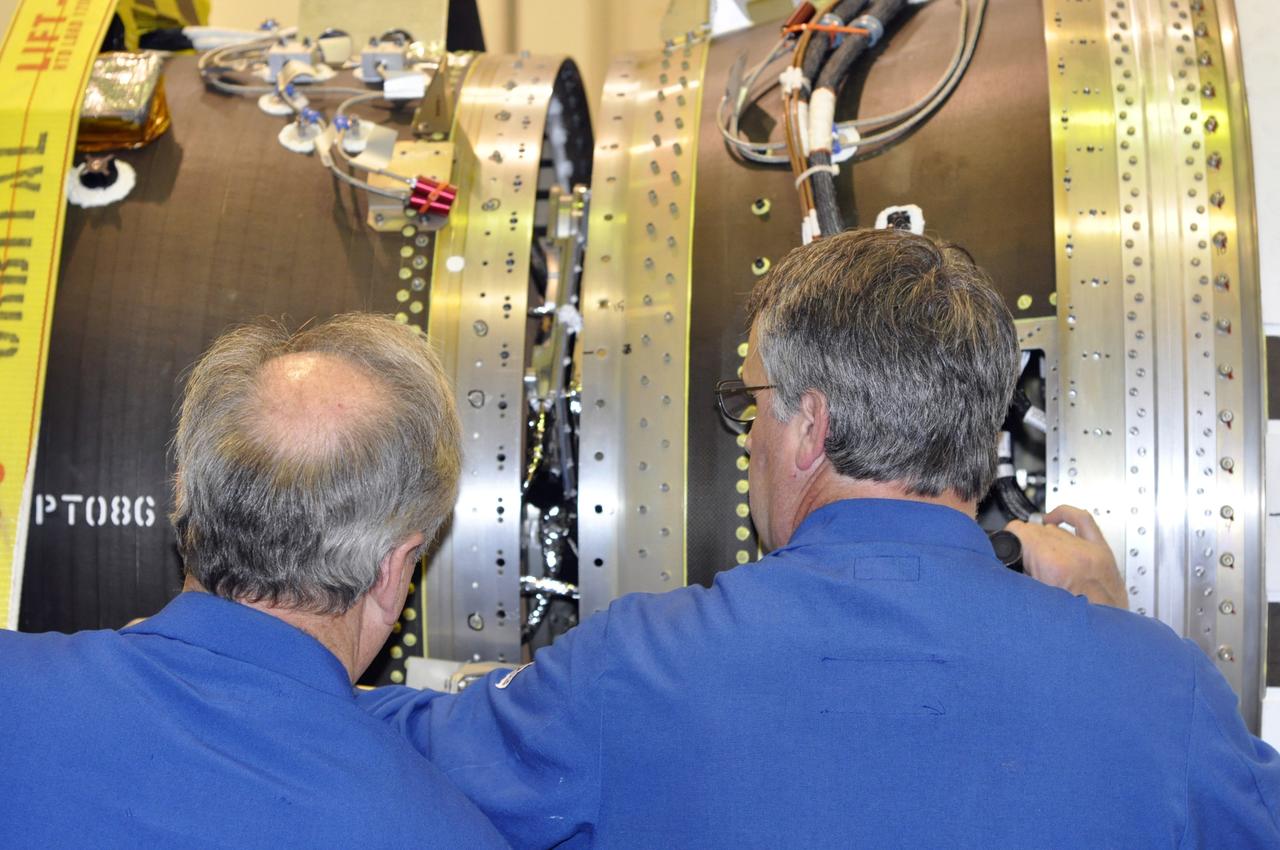
VANDENBERG AIR FORCE BASE, Calif. -- Orbital Sciences Corp. engineers oversee the remating of stages 2 and 3 of the Pegasus rocket in processing facility 1555 at Vandenberg Air Force Base (VAFB) in California. The stages were remated after some RF electrical cabling was reinstalled. The rocket is being prepared to launch NASA's Nuclear Spectroscopic Telescope Array (NuSTAR) into space. After the rocket and spacecraft are processed at Vandenberg, they will be flown on the Orbital Sciences' L-1011 carrier aircraft to the Ronald Reagan Ballistic Missile Defense Test Site at the Pacific Ocean's Kwajalein Atoll for launch, targeted for no earlier than March 14. The high-energy x-ray telescope will conduct a census for black holes, map radioactive material in young supernovae remnants, and study the origins of cosmic rays and the extreme physics around collapsed stars. For more information, visit http://www.nasa.gov/nustar. Photo credit: NASA/Randy Beaudoin, VAFB
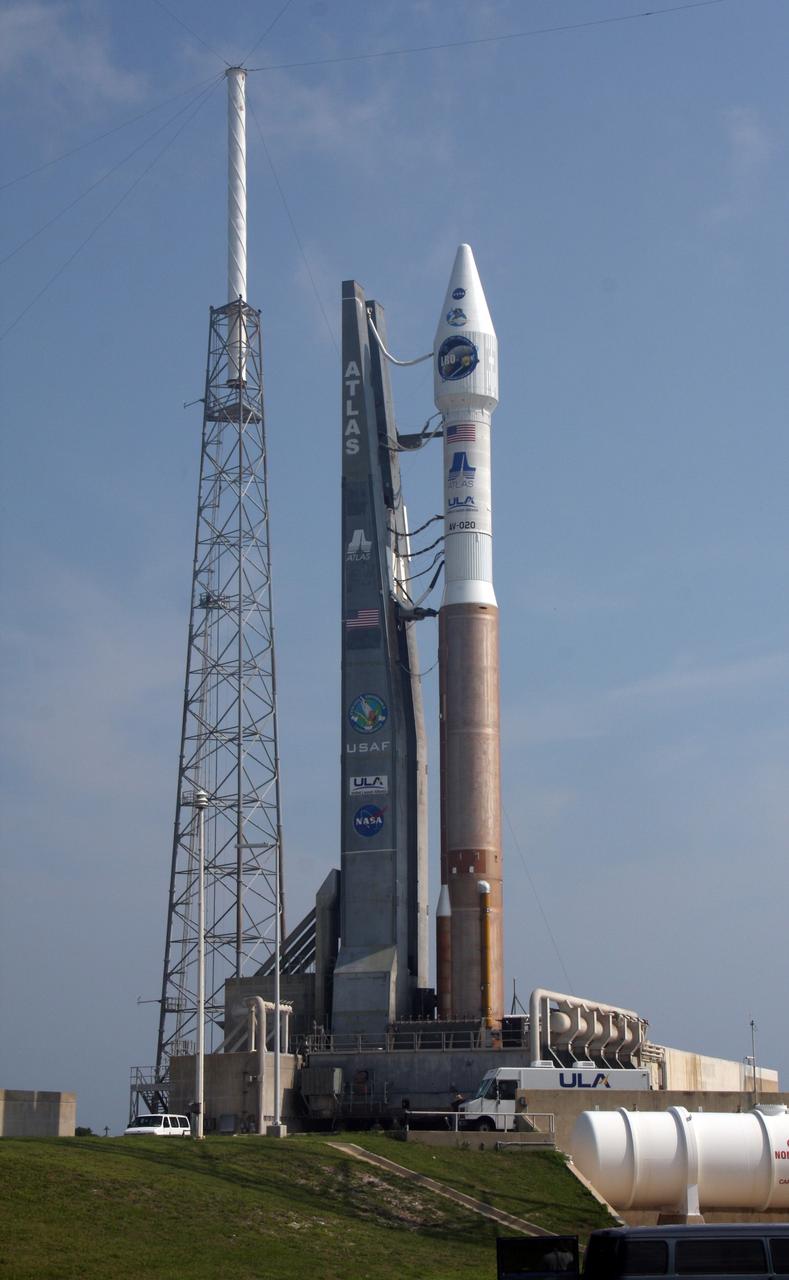
CAPE CANAVERAL, Fla. – NASA's Lunar Reconnaissance Orbiter, or LRO, and NASA's Lunar Crater Observation and Sensing Satellite, known as LCROSS, stand ready for liftoff on an Atlas V/Centaur rocket from Launch Pad 41 at Cape Canaveral Air Force Station in Florida. At left is one of the lightning towers that surround the pad. LRO and LCROSS are the first missions in NASA's plan to return humans to the moon and begin establishing a lunar outpost by 2020. The LRO also includes seven instruments that will help NASA characterize the moon's surface: DIVINER, LAMP, LEND, LOLA , CRATER, Mini-RF and LROC. Launch is scheduled for 5:12 p.m. EDT June 18. Photo credit: NASA/Ken Thornsley
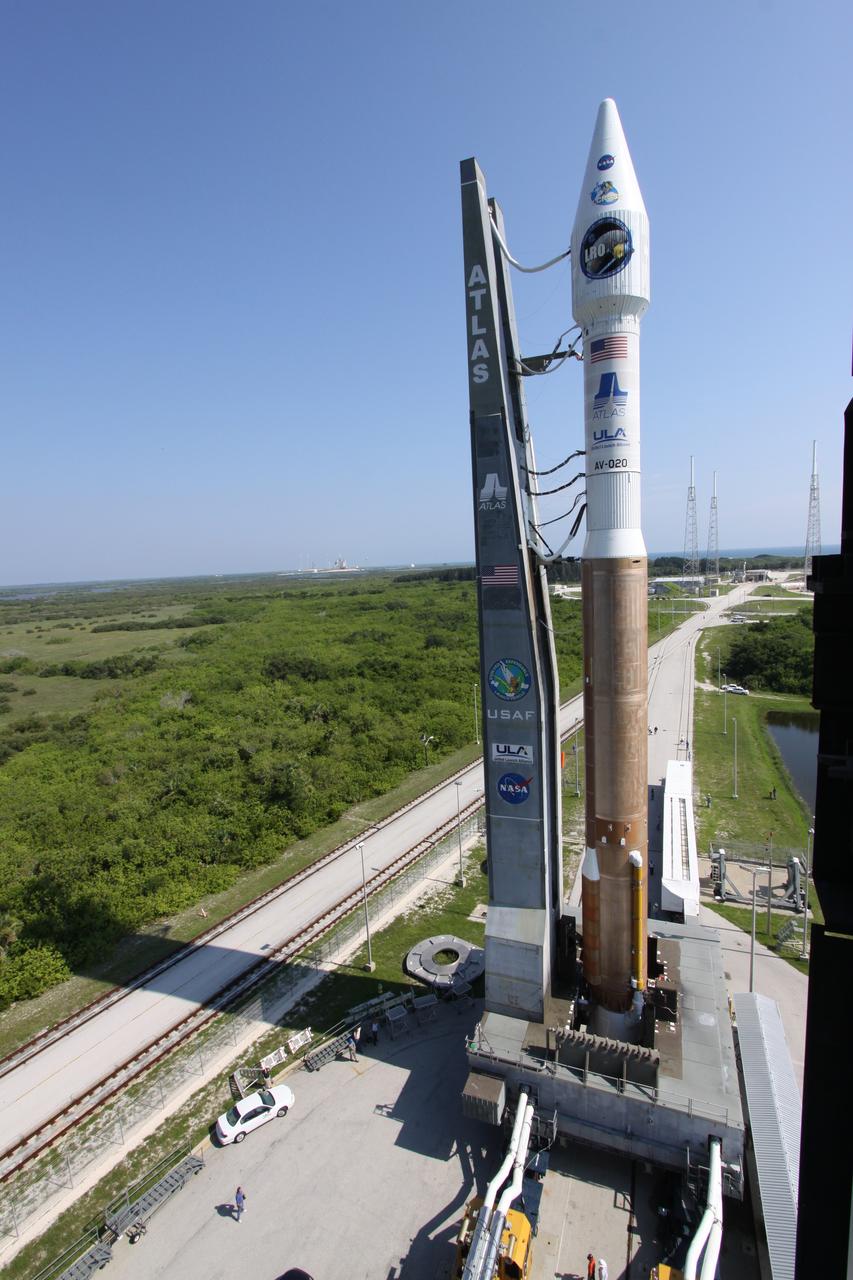
CAPE CANAVERAL, Fla. – On Launch Complex-41 on Cape Canaveral Air Force Station in Florida, NASA's Lunar Reconnaissance Orbiter, or LRO, and NASA's Lunar Crater Observation and Sensing Satellite, known as LCROSS, are attached to the gantry at left as they roll out to the launch pad. They are atop their launch vehicle, the Atlas V/Centaur rocket. LRO and LCROSS are the first missions in NASA's plan to return humans to the moon and begin establishing a lunar outpost by 2020. The LRO also includes seven instruments that will help NASA characterize the moon's surface: DIVINER, LAMP, LEND, LOLA, CRATER, Mini-RF and LROC. Launch is scheduled for 5:22 p.m. EDT June 18 . Photo credit: NASA/Jack Pfaller
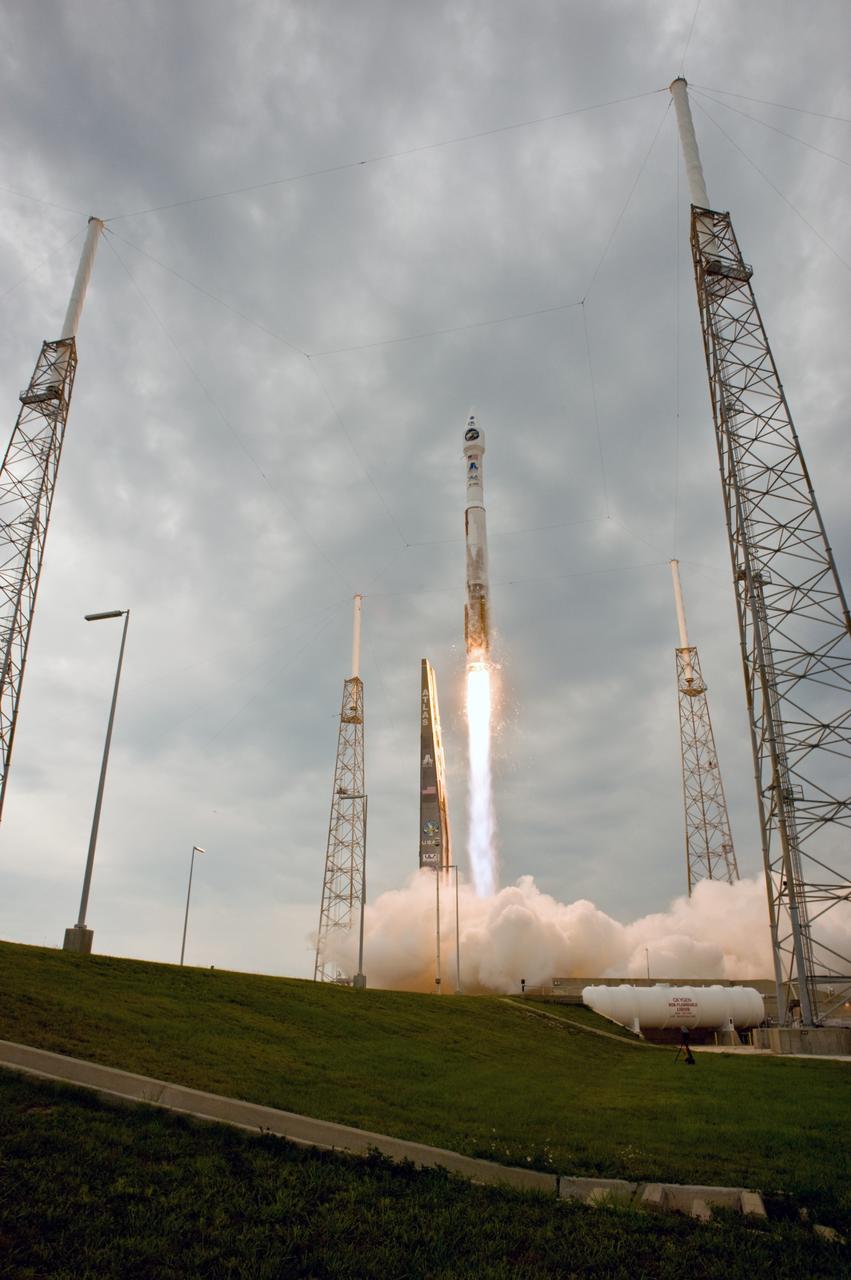
CAPE CANAVERAL, Fla. – Trailing a column of fire, the Atlas V/Centaur carrying NASA's Lunar Reconnaissance Orbiter, or LRO, and NASA's Lunar Crater Observation and Sensing Satellite, known as LCROSS, races above the lightning tower at left on Launch Complex 41 at Cape Canaveral Air Force Station in Florida. The surrounding towers are part of the lightning protection system. LRO and LCROSS are the first missions in NASA's plan to return humans to the moon and begin establishing a lunar outpost by 2020. The LRO also includes seven instruments that will help NASA characterize the moon's surface: DIVINER, LAMP, LEND, LOLA , CRATER, Mini-RF and LROC. Launch was on-time at 5:32 p.m. EDT. Photo credit: NASA/Sandra Joseph, Tony Gray
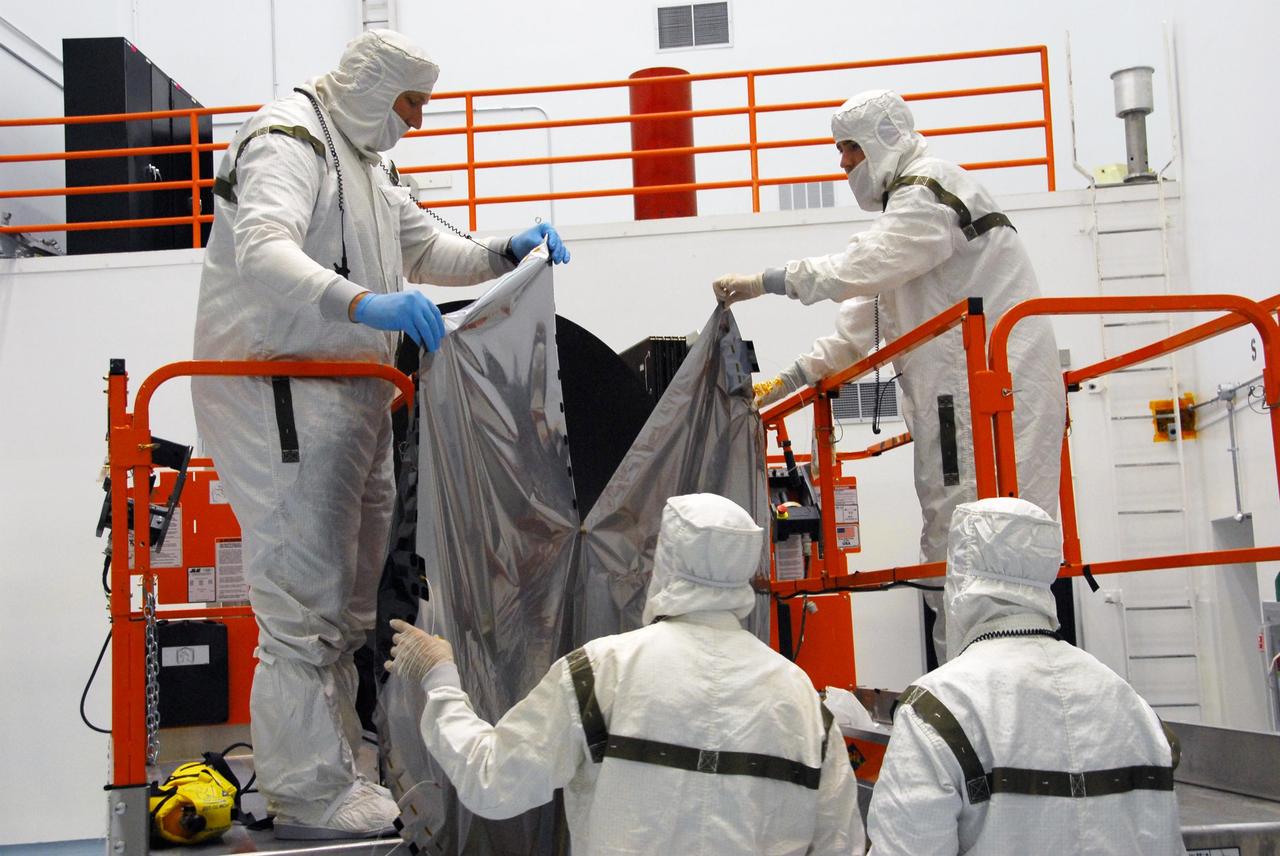
KENNEDY SPACE CENTER, FLA. -- At Astrotech, technicians lift the sun shade toward the Dawn spacecraft to install it on the high gain antenna. Made of germanium kapton, the shade, which is RF transparent, is placed over the sensitive antenna to reflect and emit harmful solar radiation to prevent the antenna from being excessively heated. Dawn is scheduled to launch July 7 from Pad 17-B on Cape Canaveral Air Force Station. Dawn's goal is to characterize the conditions and processes of the solar system's earliest epoch by investigating in detail the largest protoplanets that have remained intact since their formations: asteroid Vesta and the dwarf planet Ceres. They reside in the extensive zone between Mars and Jupiter together with many other smaller bodies, called the asteroid belt. Photo credit: NASA/George Shelton
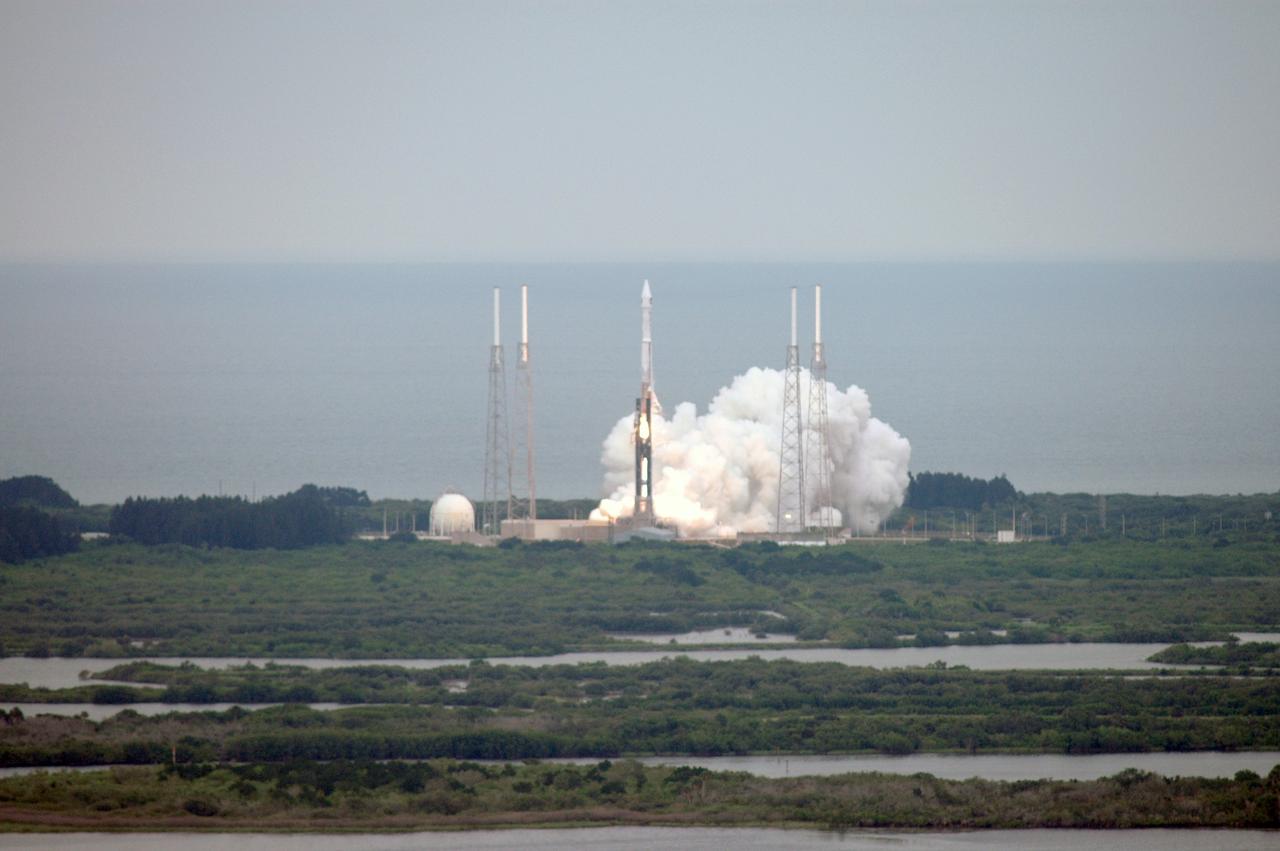
CAPE CANAVERAL, Fla. – On Launch Complex 41 at Cape Canaveral Air Force Station in Florida, bursts of smoke and steam signal liftoff for the Atlas V/Centaur rocket carrying NASA's Lunar Reconnaissance Orbiter, or LRO, and NASA's Lunar Crater Observation and Sensing Satellite, known as LCROSS, toward space. Surrounding the pad are lightning towers. LRO and LCROSS are the first missions in NASA's plan to return humans to the moon and begin establishing a lunar outpost by 2020. The LRO also includes seven instruments that will help NASA characterize the moon's surface: DIVINER, LAMP, LEND, LOLA , CRATER, Mini-RF and LROC. Launch was on-time at 5:32 p.m. EDT June 18. Photo credit: NASA/Jeffery Marino
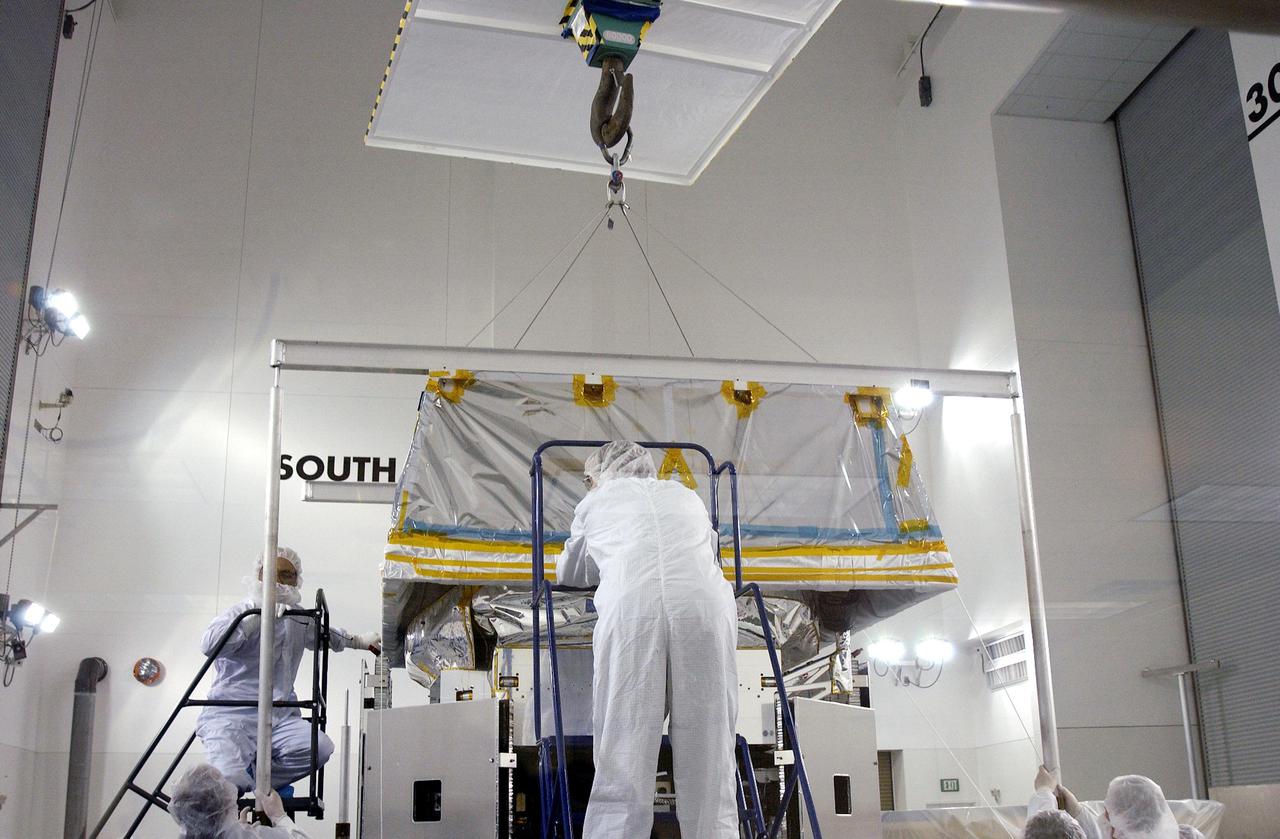
KENNEDY SPACE CENTER, FLA. - In the Astrotech Payload Processing Facility at Vandenberg Air Force Base, workers from NASA’s Jet Propulsion Laboratory in California and Ball Aerospace from Boulder, Colo., help guide a “hat” into place on the CloudSat spacecraft before conducting the Cloud Profiling Radar (CPR) functional tests. The hat is used to absorb the RF radiation that is emitted by the instrument during the test. CloudSat will fly in combination with the Cloud-Aerosol Lidar and Infrared Pathfinder Satellite Observation (CALIPSO) to provide never-before-seen 3-D perspectives of how clouds and aerosols form, evolve, and affect weather and climate. CALIPSO and CloudSat will join three other satellites to enhance understanding of climate systems. The launch date for CALIPSO_ CloudSat is no earlier than Aug. 22.
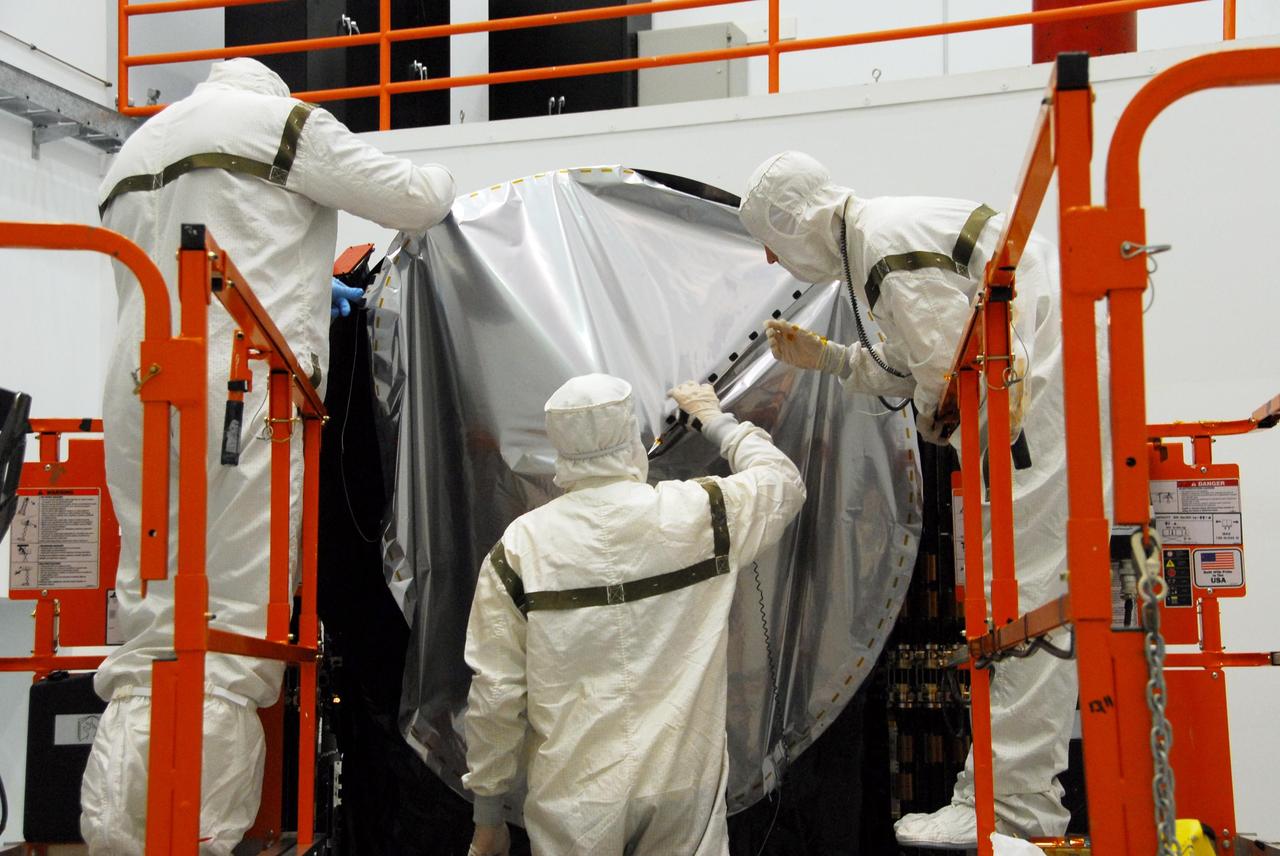
KENNEDY SPACE CENTER, FLA. -- At Astrotech, technicians begin securing the sun shade over the high gain antenna on the Dawn spacecraft. Made of germanium kapton, the shade, which is RF transparent, is placed over the sensitive antenna to reflect and emit harmful solar radiation to prevent the antenna from being excessively heated. Dawn is scheduled to launch July 7 from Pad 17-B on Cape Canaveral Air Force Station. Dawn's goal is to characterize the conditions and processes of the solar system's earliest epoch by investigating in detail the largest protoplanets that have remained intact since their formations: asteroid Vesta and the dwarf planet Ceres. They reside in the extensive zone between Mars and Jupiter together with many other smaller bodies, called the asteroid belt. Photo credit: NASA/George Shelton
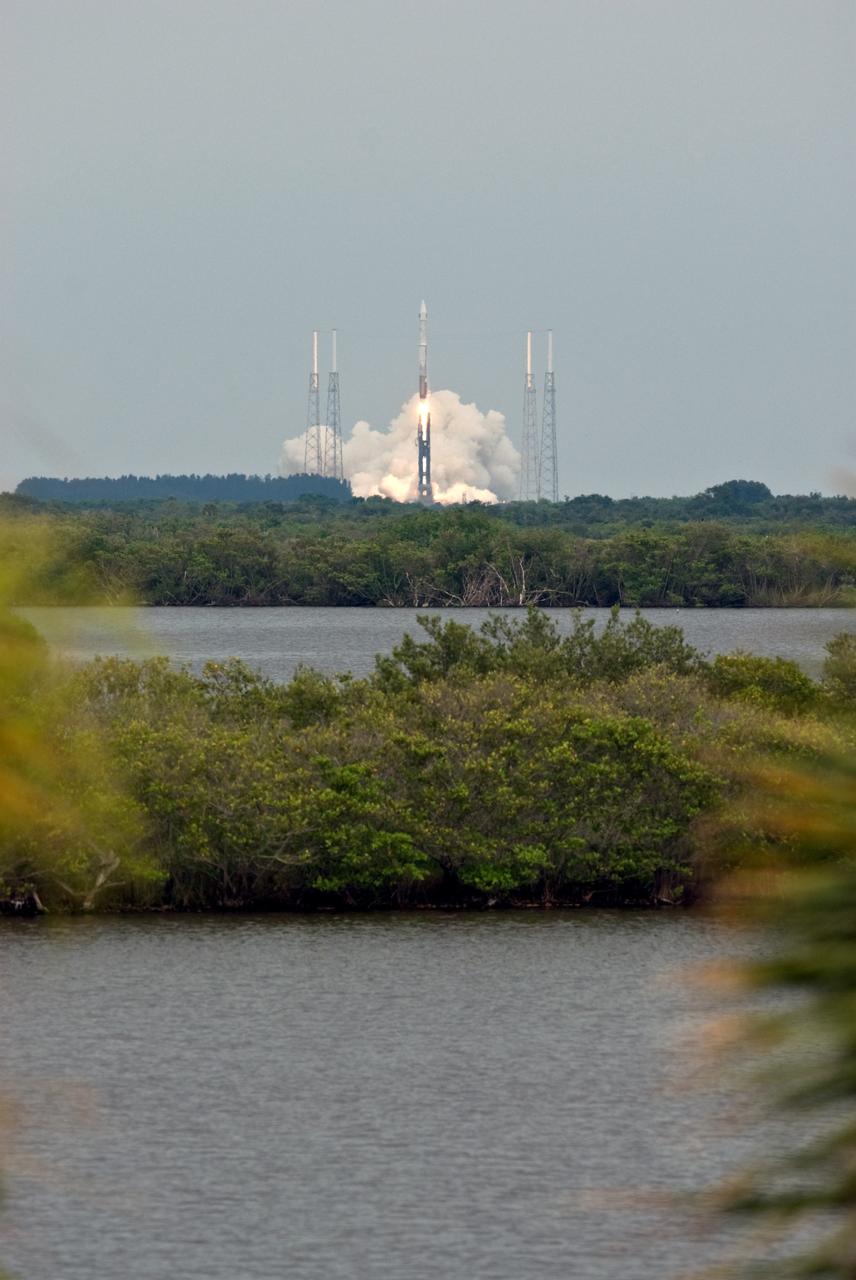
CAPE CANAVERAL, Fla. – Viewed across the Indian River Lagoon, the Atlas V/Centaur rocket carrying NASA's Lunar Reconnaissance Orbiter, or LRO, and NASA's Lunar Crater Observation and Sensing Satellite, known as LCROSS, lifts off from Launch Complex 41 at Cape Canaveral Air Force Station in Florida. Surrounding the pad are lightning towers. LRO and LCROSS are the first missions in NASA's plan to return humans to the moon and begin establishing a lunar outpost by 2020. The LRO also includes seven instruments that will help NASA characterize the moon's surface: DIVINER, LAMP, LEND, LOLA , CRATER, Mini-RF and LROC. Launch was on-time at 5:32 p.m. EDT June 18. Photo credit: NASA/Tony Gray
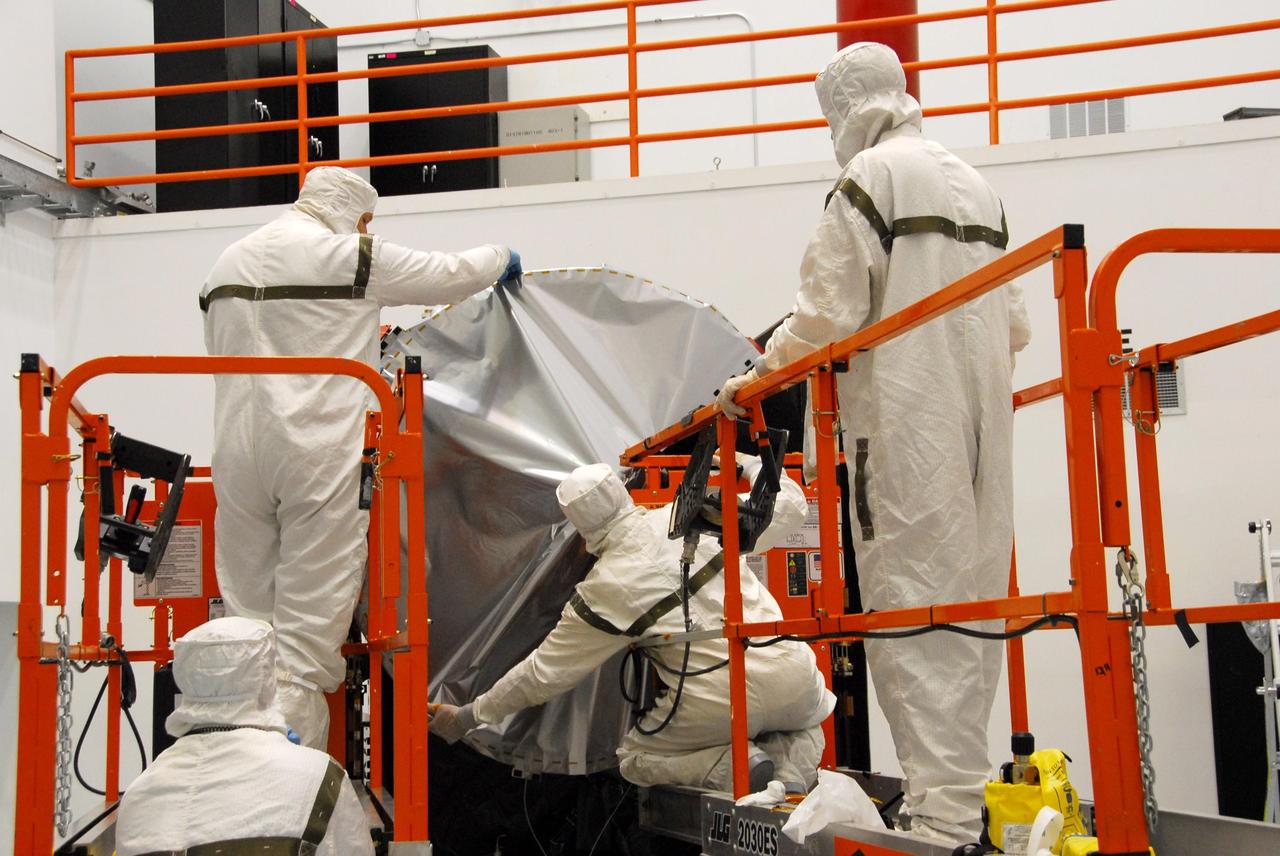
KENNEDY SPACE CENTER, FLA. -- At Astrotech, technicians are securing the sun shade over the high gain antenna on the Dawn spacecraft. Made of germanium kapton, the shade, which is RF transparent, is placed over the sensitive antenna to reflect and emit harmful solar radiation to prevent the antenna from being excessively heated. Dawn is scheduled to launch July 7 from Pad 17-B on Cape Canaveral Air Force Station. Dawn's goal is to characterize the conditions and processes of the solar system's earliest epoch by investigating in detail the largest protoplanets that have remained intact since their formations: asteroid Vesta and the dwarf planet Ceres. They reside in the extensive zone between Mars and Jupiter together with many other smaller bodies, called the asteroid belt. Photo credit: NASA/George Shelton
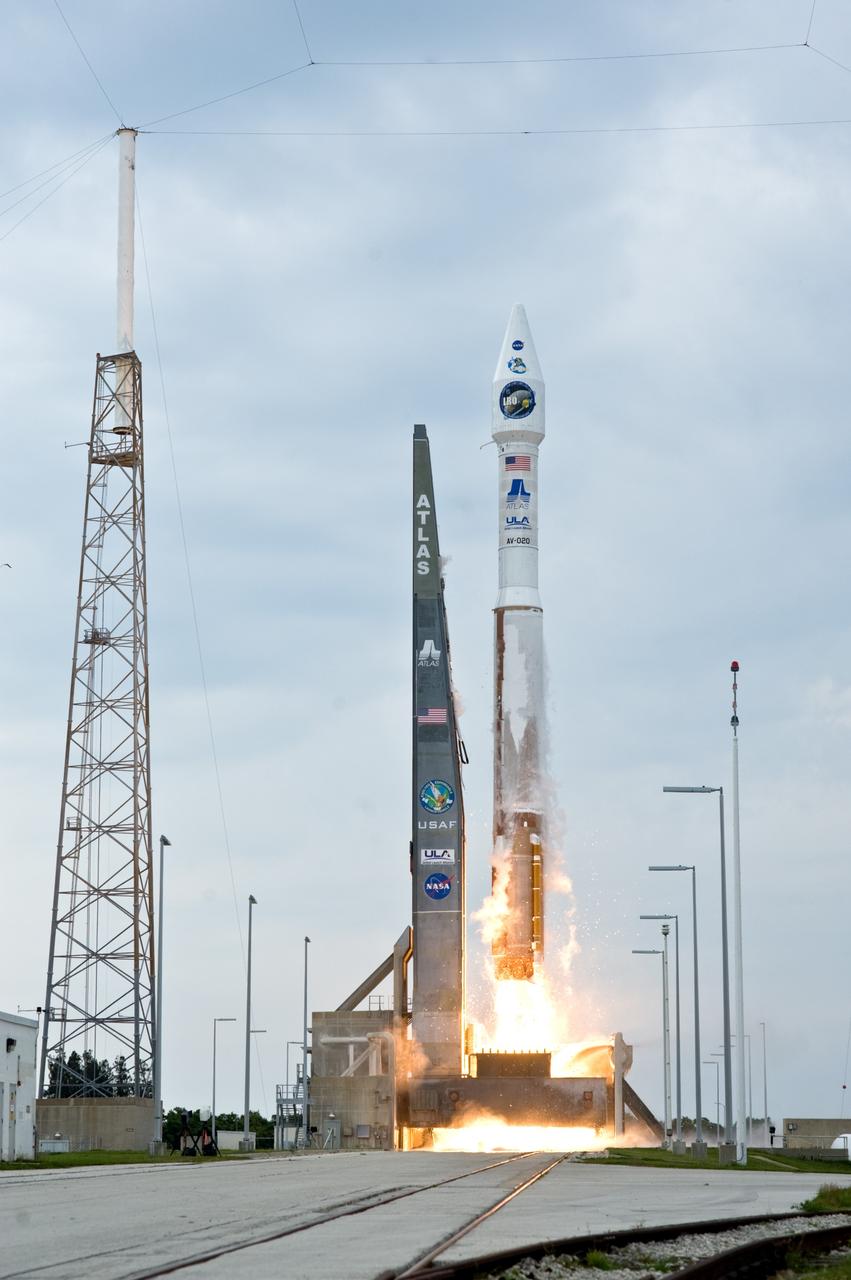
CAPE CANAVERAL, Fla. – Fire signals liftoff of the Atlas V/Centaur carrying NASA's Lunar Reconnaissance Orbiter, or LRO, and NASA's Lunar Crater Observation and Sensing Satellite, known as LCROSS, from Launch Complex 41 at Cape Canaveral Air Force Station in Florida. The tower at left is part of the lightning protection system on the pad. LRO and LCROSS are the first missions in NASA's plan to return humans to the moon and begin establishing a lunar outpost by 2020. The LRO also includes seven instruments that will help NASA characterize the moon's surface: DIVINER, LAMP, LEND, LOLA , CRATER, Mini-RF and LROC. Launch was on-time at 5:32 p.m. EDT. Photo credit: NASA/Tom Farrar, Kevin O'Connell

KENNEDY SPACE CENTER, FLA. -- At Astrotech, a technician secures one side of the sun shade over the high gain antenna on the Dawn spacecraft. Made of germanium kapton, the shade, which is RF transparent, is placed over the sensitive antenna to reflect and emit harmful solar radiation to prevent the antenna from being excessively heated. Dawn is scheduled to launch July 7 from Pad 17-B on Cape Canaveral Air Force Station. Dawn's goal is to characterize the conditions and processes of the solar system's earliest epoch by investigating in detail the largest protoplanets that have remained intact since their formations: asteroid Vesta and the dwarf planet Ceres. They reside in the extensive zone between Mars and Jupiter together with many other smaller bodies, called the asteroid belt. Photo credit: NASA/George Shelton
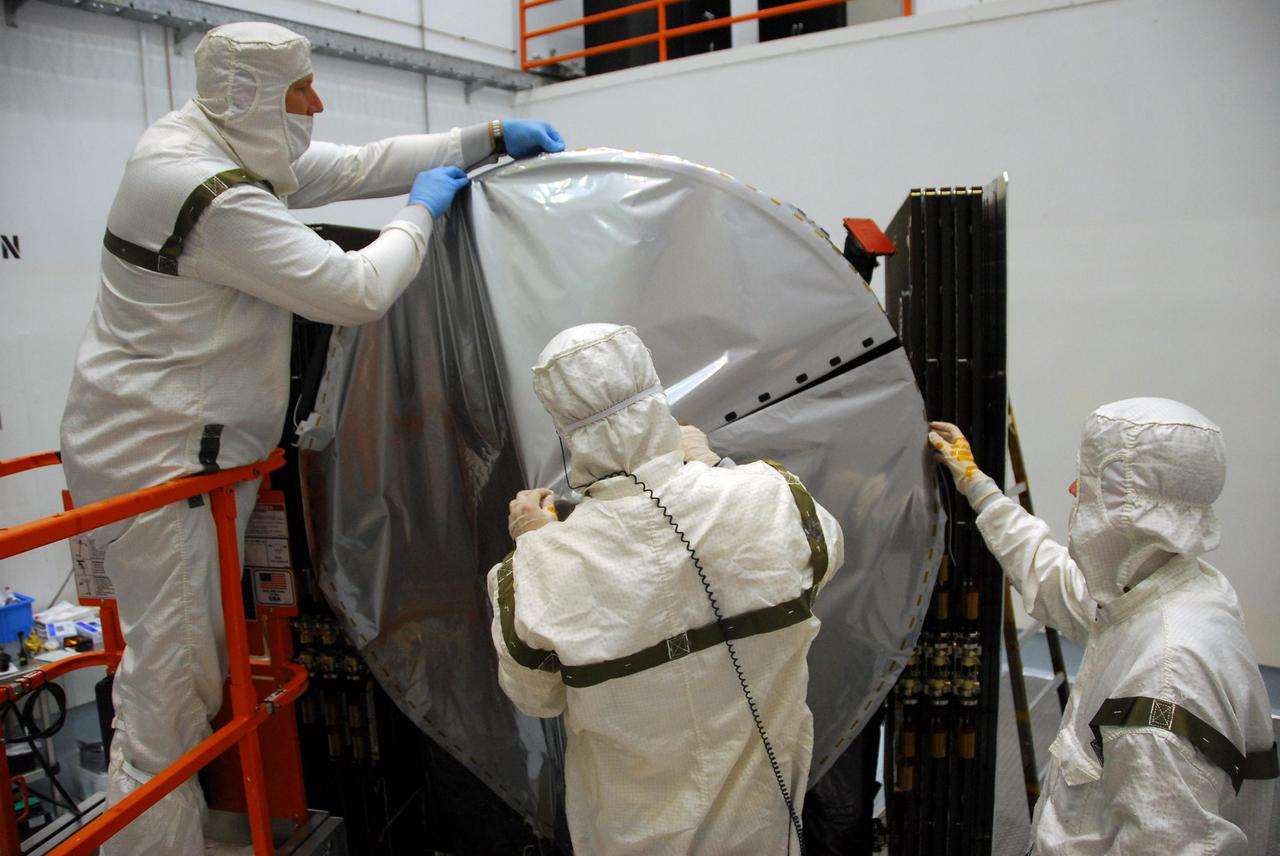
KENNEDY SPACE CENTER, FLA. -- At Astrotech, technicians secure all sides of the sun shade over the high gain antenna on the Dawn spacecraft. Made of germanium kapton, the shade, which is RF transparent, is placed over the sensitive antenna to reflect and emit harmful solar radiation to prevent the antenna from being excessively heated. Dawn is scheduled to launch July 7 from Pad 17-B on Cape Canaveral Air Force Station. Dawn's goal is to characterize the conditions and processes of the solar system's earliest epoch by investigating in detail the largest protoplanets that have remained intact since their formations: asteroid Vesta and the dwarf planet Ceres. They reside in the extensive zone between Mars and Jupiter together with many other smaller bodies, called the asteroid belt. Photo credit: NASA/George Shelton

CAPE CANAVERAL, Fla. – Like a Roman candle, the Atlas V/Centaur rocket with NASA's Lunar Reconnaissance Orbiter, or LRO, and NASA's Lunar Crater Observation and Sensing Satellite, known as LCROSS, on top shoot into the sky from Launch Pad 41 at Cape Canaveral Air Force Station in Florida. Around the pad are the towers that provide lightning protection. Launch was on-time at 5:32 p.m. EDT June 18. LRO and LCROSS are the first missions in NASA's plan to return humans to the moon and begin establishing a lunar outpost by 2020. The LRO also includes seven instruments that will help NASA characterize the moon's surface: DIVINER, LAMP, LEND, LOLA , CRATER, Mini-RF and LROC. Photo courtesy of Scott Andrews
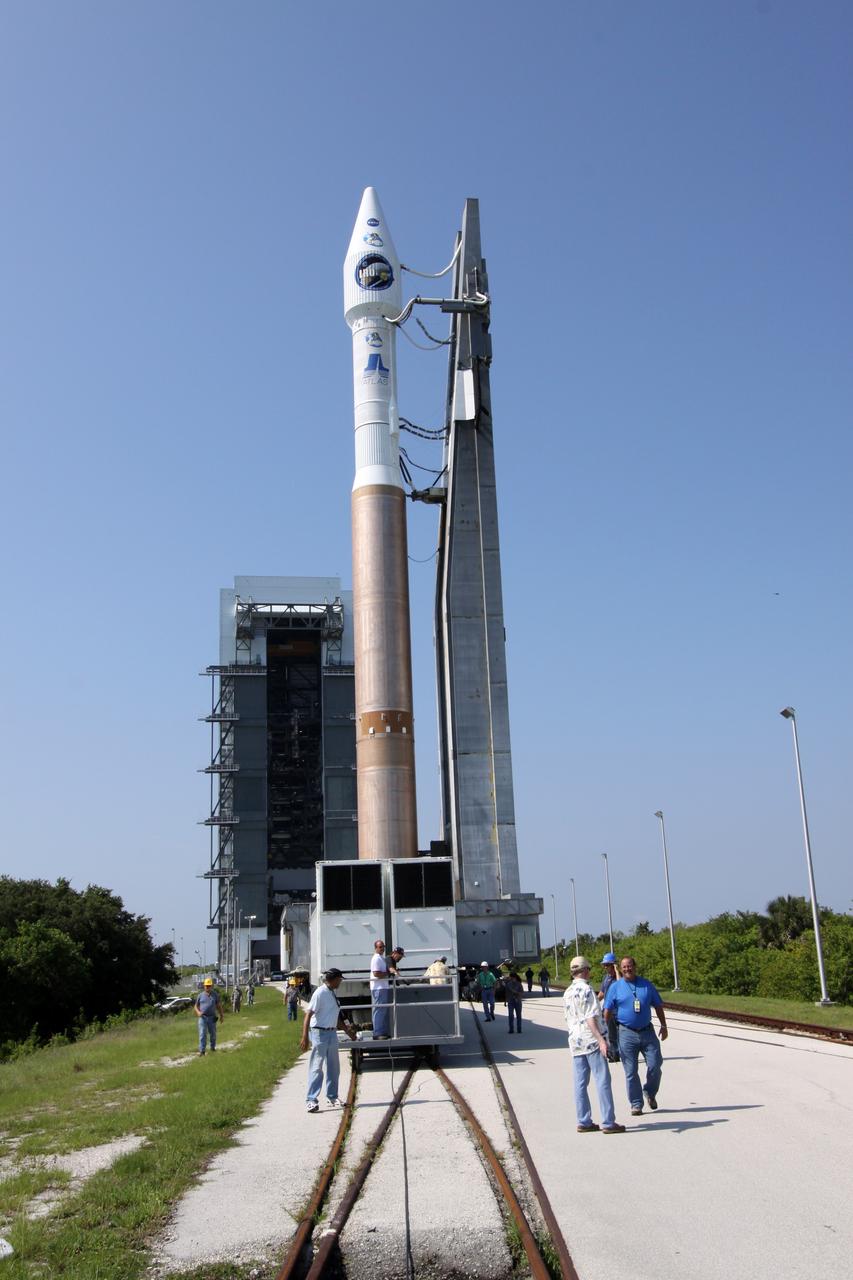
CAPE CANAVERAL, Fla. – On Launch Complex-41 on Cape Canaveral Air Force Station in Florida, workers accompany NASA's Lunar Reconnaissance Orbiter, or LRO, and NASA's Lunar Crater Observation and Sensing Satellite, known as LCROSS, plus launch gantry as they roll out to the launch pad. The satellites are atop their launch vehicle, the Atlas V/Centaur rocket. LRO and LCROSS are the first missions in NASA's plan to return humans to the moon and begin establishing a lunar outpost by 2020. The LRO also includes seven instruments that will help NASA characterize the moon's surface: DIVINER, LAMP, LEND, LOLA, CRATER, Mini-RF and LROC. Launch is scheduled for 5:22 p.m. EDT June 18 . Photo credit: NASA/Jack Pfaller

KENNEDY SPACE CENTER, FLA. -- At At Astrotech, the Dawn spacecraft is on display with the recently installed sun shade over the high gain antenna. Made of germanium kapton, the shade, which is RF transparent, is placed over the sensitive antenna to reflect and emit harmful solar radiation to prevent the antenna from being excessively heated. Dawn is scheduled to launch July 7 from Pad 17-B on Cape Canaveral Air Force Station. Dawn's goal is to characterize the conditions and processes of the solar system's earliest epoch by investigating in detail the largest protoplanets that have remained intact since their formations: asteroid Vesta and the dwarf planet Ceres. They reside in the extensive zone between Mars and Jupiter together with many other smaller bodies, called the asteroid belt. Photo credit: NASA/George Shelton
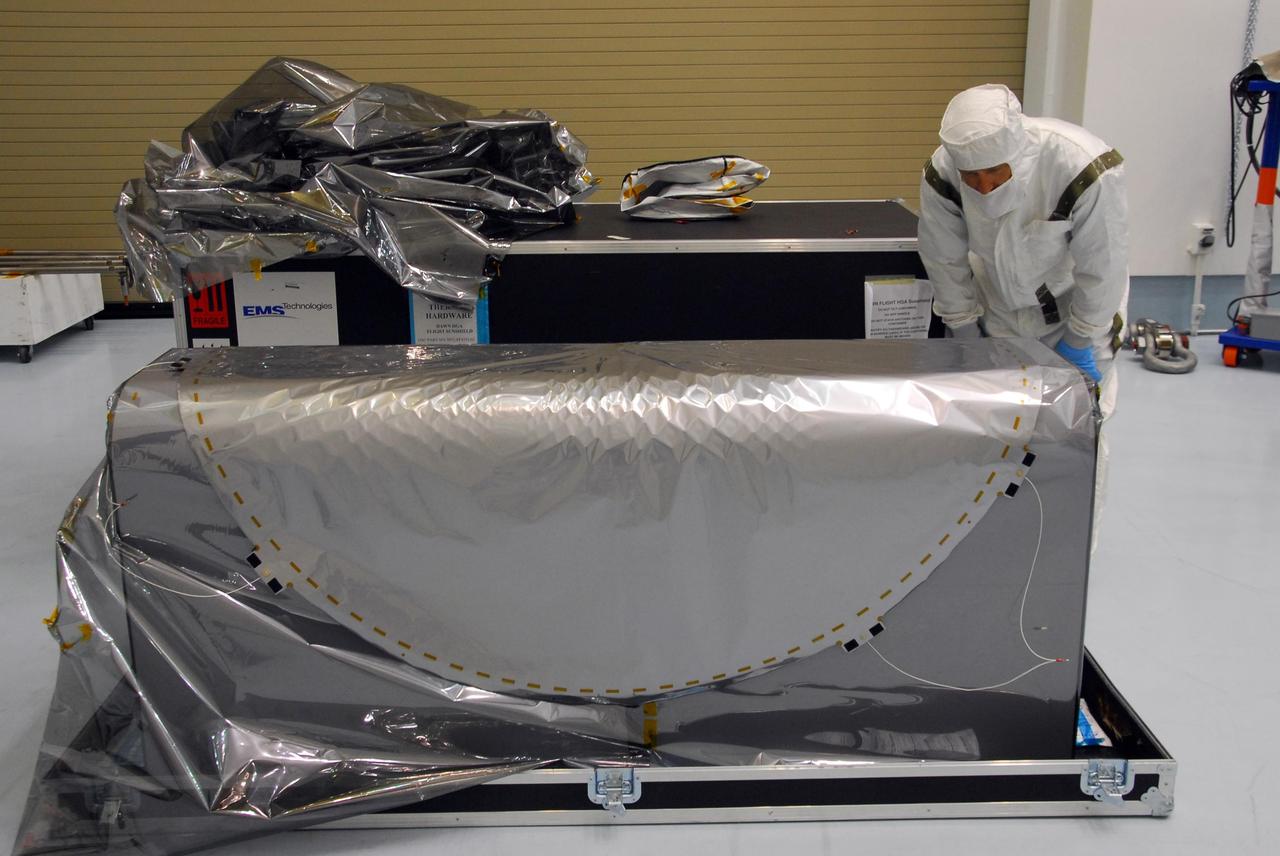
KENNEDY SPACE CENTER, FLA. -- At Astrotech, a technician looks at the sun shade (foreground) to be installed over the high gain antenna on the Dawn spacecraft. Made of germanium kapton, the shade, which is RF transparent, is placed over the sensitive antenna to reflect and emit harmful solar radiation to prevent the antenna from being excessively heated. Dawn is scheduled to launch July 7 from Pad 17-B on Cape Canaveral Air Force Station. Dawn's goal is to characterize the conditions and processes of the solar system's earliest epoch by investigating in detail the largest protoplanets that have remained intact since their formations: asteroid Vesta and the dwarf planet Ceres. They reside in the extensive zone between Mars and Jupiter together with many other smaller bodies, called the asteroid belt. Photo credit: NASA/George Shelton
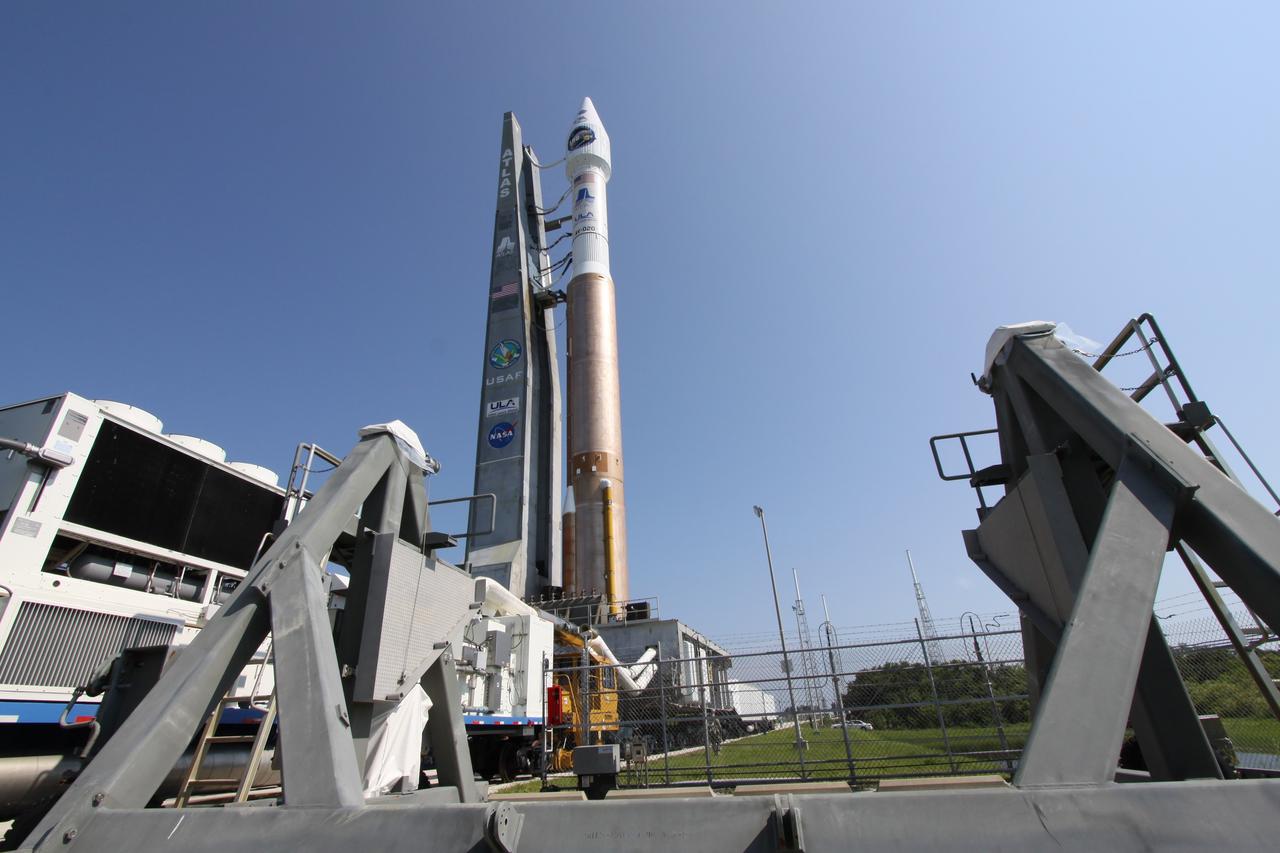
CAPE CANAVERAL, Fla. – On Launch Complex-41 on Cape Canaveral Air Force Station in Florida, NASA's Lunar Reconnaissance Orbiter, or LRO, and NASA's Lunar Crater Observation and Sensing Satellite, known as LCROSS, and launch gantry roll out to the launch pad. The satellites are atop their launch vehicle, the Atlas V/Centaur rocket. LRO and LCROSS are the first missions in NASA's plan to return humans to the moon and begin establishing a lunar outpost by 2020. The LRO also includes seven instruments that will help NASA characterize the moon's surface: DIVINER, LAMP, LEND, LOLA, CRATER, Mini-RF and LROC. Launch is scheduled for 5:22 p.m. EDT June 18 . Photo credit: NASA/Jack Pfaller
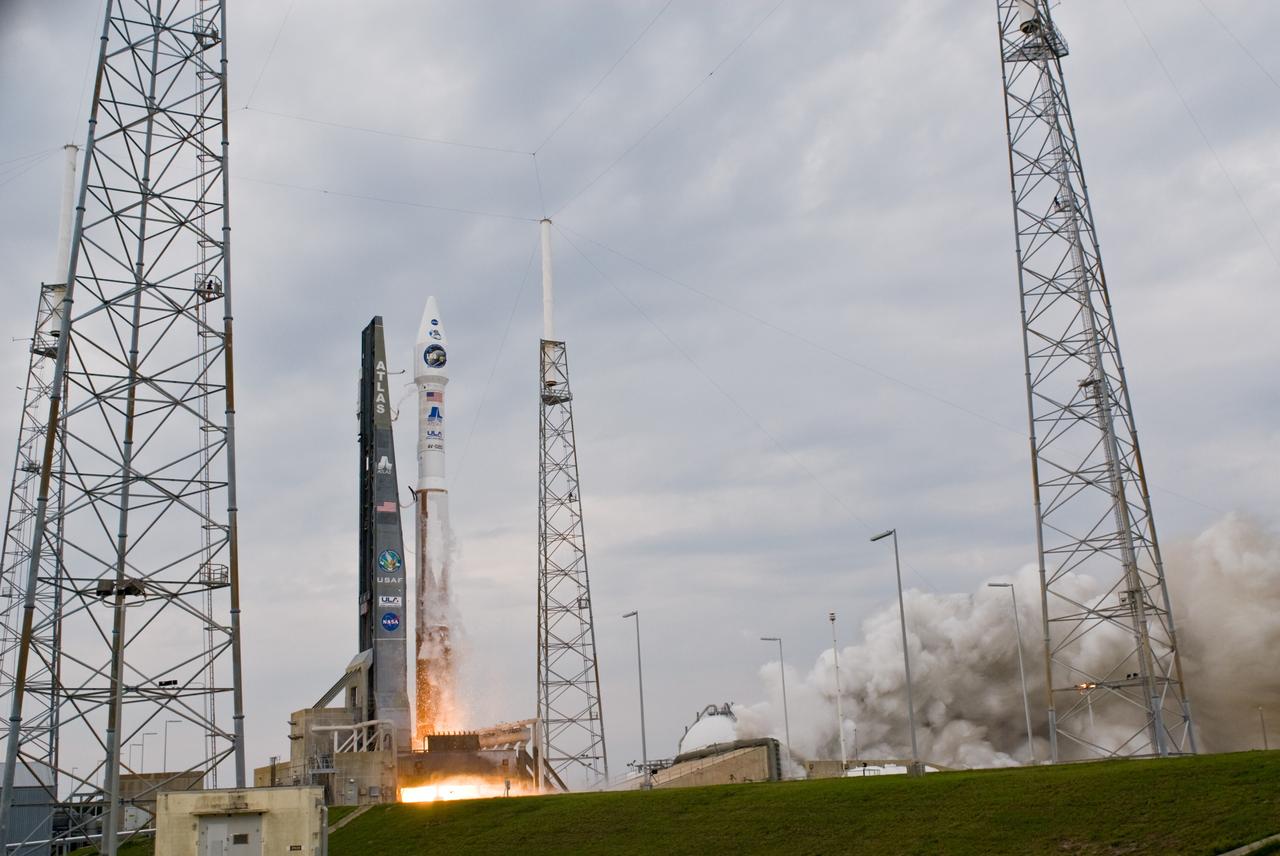
CAPE CANAVERAL, Fla. – Fire and smoke signal the liftoff of the Atlas V/Centaur carrying NASA's Lunar Reconnaissance Orbiter, or LRO, and NASA's Lunar Crater Observation and Sensing Satellite, known as LCROSS, toward orbit around the moon. Launch from Launch Complex 41 at Cape Canaveral Air Force Station in Florida was on-time at 5:32 p.m. EDT. The towers around the pad are part of the lightning protection system. LRO and LCROSS are the first missions in NASA's plan to return humans to the moon and begin establishing a lunar outpost by 2020. The LRO also includes seven instruments that will help NASA characterize the moon's surface: DIVINER, LAMP, LEND, LOLA , CRATER, Mini-RF and LROC. Photo credit: NASA/Tom Farrar, Kevin O'Connell
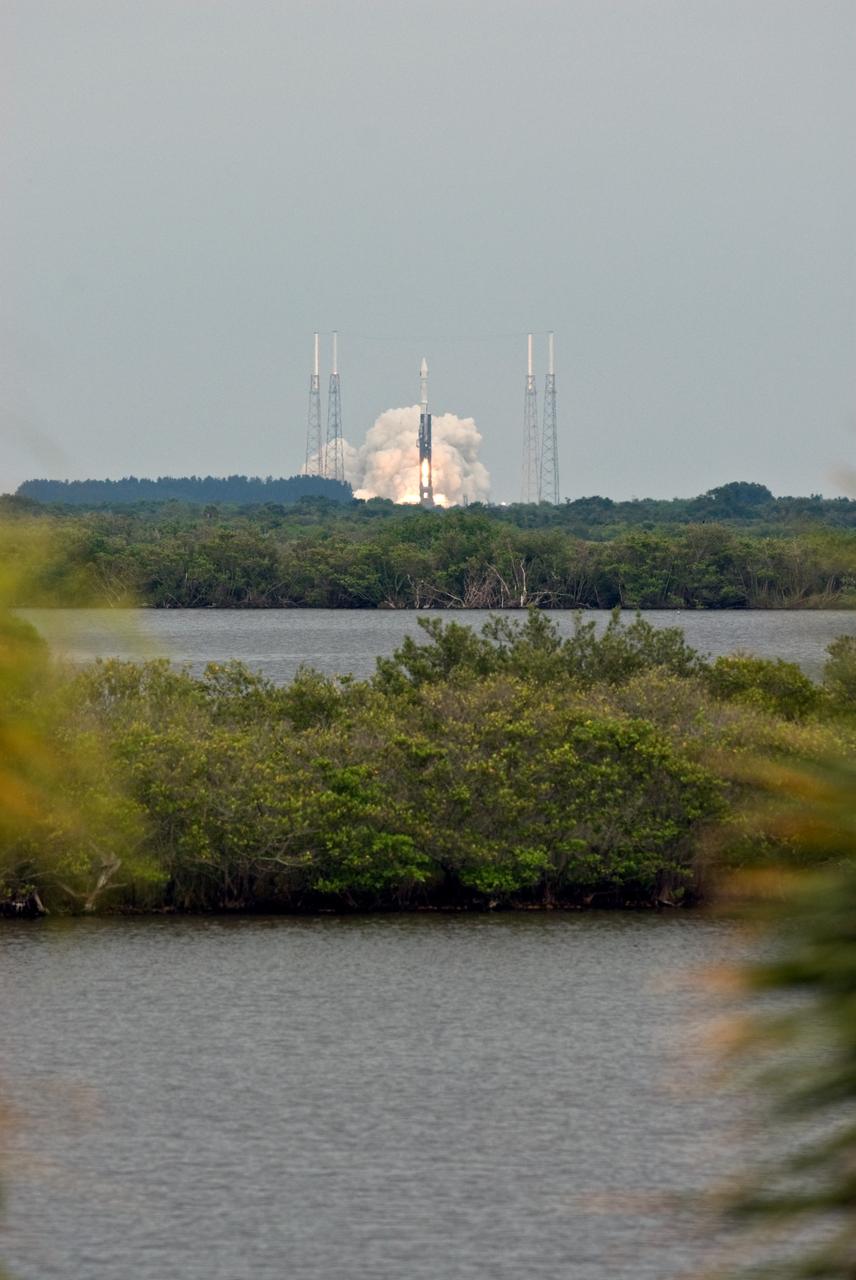
CAPE CANAVERAL, Fla. – Viewed across the Indian River Lagoon, the Atlas V/Centaur rocket carrying NASA's Lunar Reconnaissance Orbiter, or LRO, and NASA's Lunar Crater Observation and Sensing Satellite, known as LCROSS, lifts off from Launch Complex 41 at Cape Canaveral Air Force Station in Florida. Surrounding the pad are lightning towers. LRO and LCROSS are the first missions in NASA's plan to return humans to the moon and begin establishing a lunar outpost by 2020. The LRO also includes seven instruments that will help NASA characterize the moon's surface: DIVINER, LAMP, LEND, LOLA , CRATER, Mini-RF and LROC. Launch was on-time at 5:32 p.m. EDT June 18. Photo credit: NASA/Tony Gray
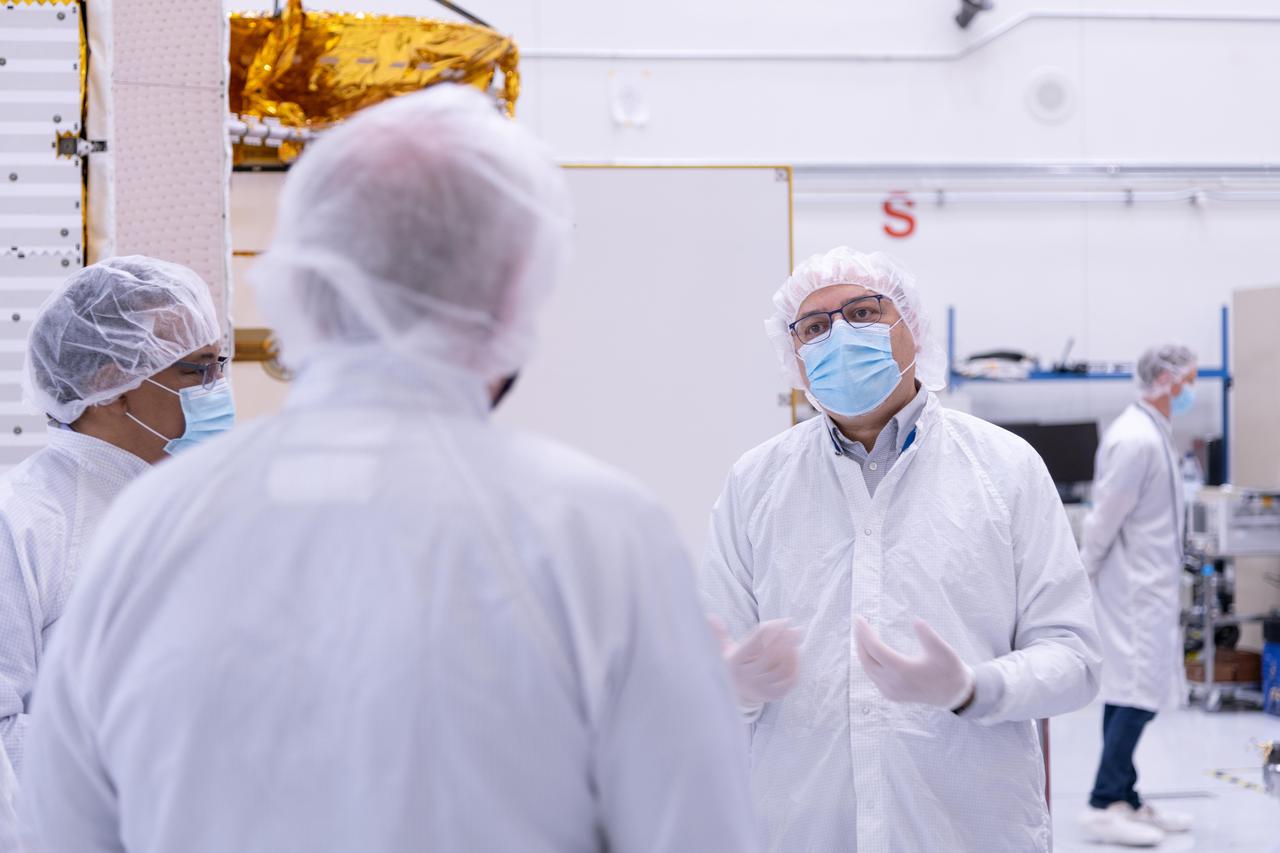
The new international satellite mission called Surface Water and Ocean Topography (SWOT) — slated for launch in late 2022 — will measure the height of Earth's surface water. The data the spacecraft will collect will help researchers understand and track the volume and location of water around the world. The satellite will assist with monitoring changes in floodplains and wetlands, measuring how much fresh water flows into and out of lakes and rivers and back to the ocean, and tracking regional shifts in sea level at scales never seen before. The satellite will also provide information on small-scale ocean currents that will support real-time marine operations affected by tides, currents, storm surge, sediment transport, and water quality issues. The payload is taking shape in a clean room at NASA's Jet Propulsion Laboratory in Southern California before being shipped to France. There, technicians and engineers from the French space agency Centre National d'Etudes Spatial (CNES), their prime contractor Thales Alenia Space, and JPL will complete the build and prepare the satellite for shipment to its California launch site at Vandenberg Air Force Base. JPL project manager Parag Vaze (pronounced vah-zay) is central to ensuring the handoff to his CNES counterpart Thierry Lafon goes smoothly. SWOT is being jointly developed by NASA and CNES, with contributions from the Canadian Space Agency (CSA) and United Kingdom Space Agency (UKSA). JPL, which is managed for NASA by Caltech in Pasadena, California, leads the U.S. component of the project. For the flight system, NASA is providing the Ka-band Radar Interferometer (KaRIn) instrument, a GPS science receiver, a laser retroreflector, and a two-beam microwave radiometer. CNES is providing the Doppler Orbitography and Radioposition Integrated by Satellite (DORIS) system, nadir altimeter, and the KaRIn RF subsystem (with support from the UKSA). CSA is providing the KaRIn high-power transmitter assembly. NASA is providing associated launch services. https://photojournal.jpl.nasa.gov/catalog/PIA24531
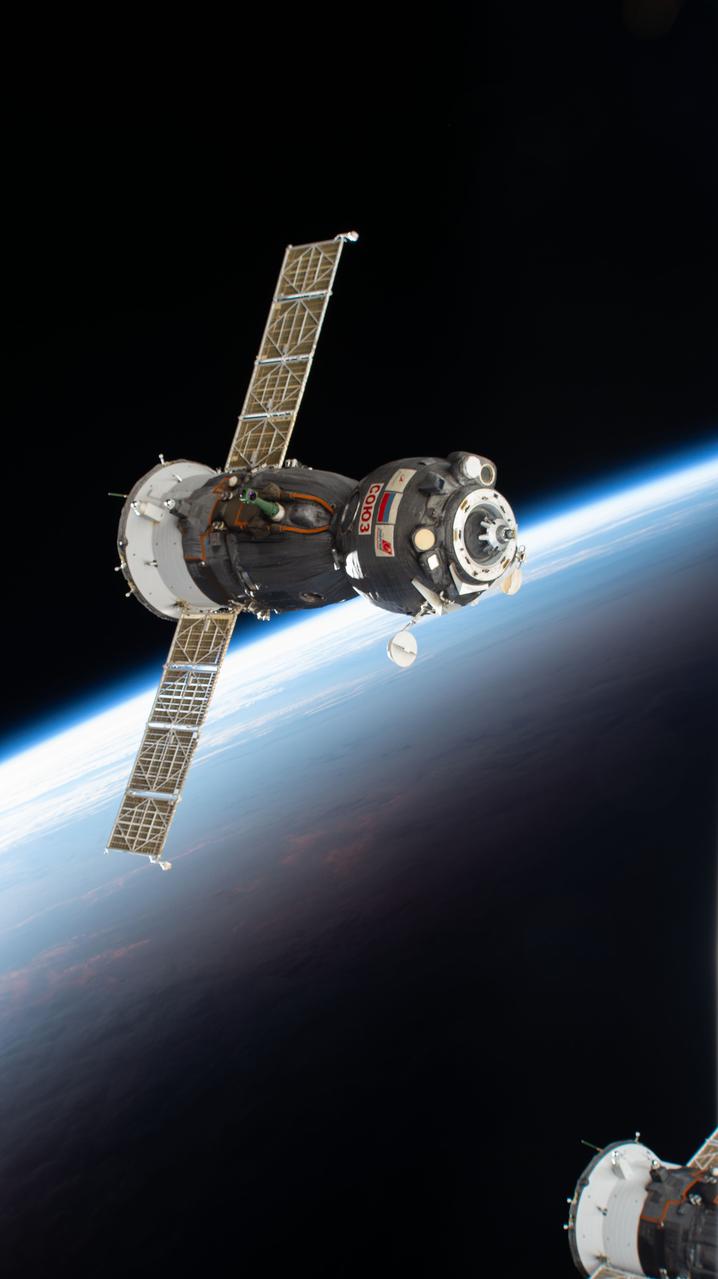
iss067e000259 (March 30, 2022) --- The Soyuz MS-19 crew ship, carrying three Expedition 66 crew members, departs the International Space Station after undocking from the Rassvet module. The Soyuz crew ship would parachute to a landing in Kazakhstan just over four hours later with NASA astronaut Mark Vande Hei and Roscosmos cosmonauts Anton Shkaplerov and Pyotr Dubrov.
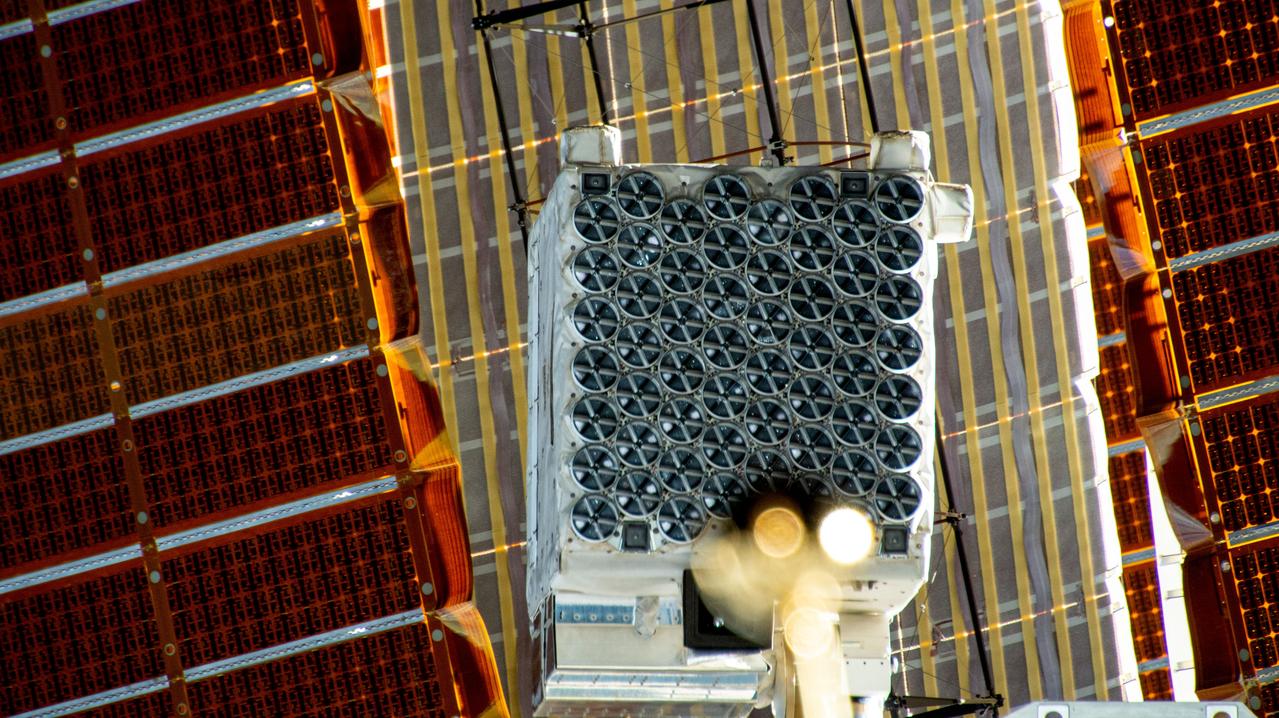
iss069e020459 (June 13, 2023) --- The Neutron star Interior Composition Explorer, or NICER, science investigation payload is pictured attached to the outside of the International Space Station. NICER studies the extraordinary physics of neutron stars providing new insights into their nature and behavior potentially revolutionizing the understanding of ultra-dense matter. Filling the background are the station's solar arrays that power the orbiting lab.

iss069e005463 (April 26, 2023) --- The Sun's glint breams across the Pacific Ocean and the Sea of Okhotsk, with the southern portion of the Kamchatka Peninsula in between, in this photograph from the International Space Station as it orbited 264 miles above.
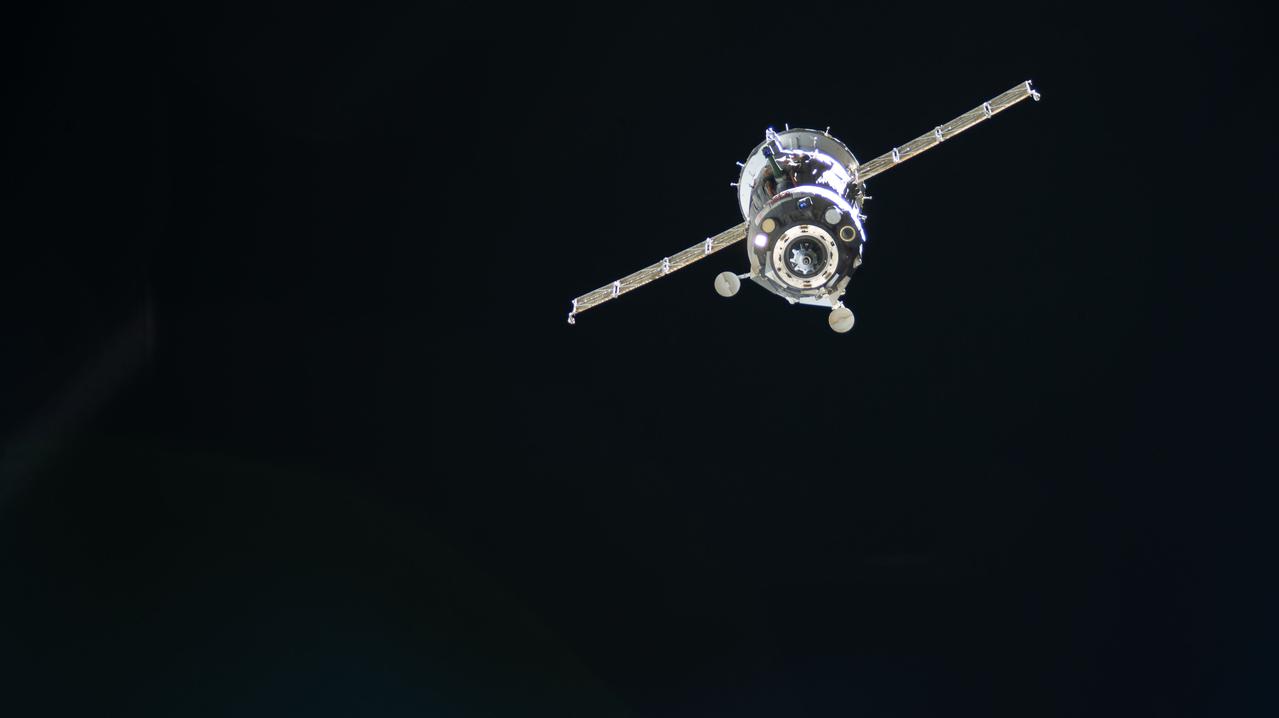
iss067e000260 (March 30, 2022) --- The Soyuz MS-19 crew ship, carrying three Expedition 66 crew members, departs the International Space Station after undocking from the Rassvet module. The Soyuz crew ship would parachute to a landing in Kazakhstan about four hours later with NASA astronaut Mark Vande Hei and Roscosmos cosmonauts Anton Shkaplerov and Pyotr Dubrov.

iss067e003783 (April 6, 2022) --- The Namib Desert is pictured from the International Space Station as it orbited 262 miles above the Atlantic Ocean just off the coast of the African nation of Namibia.
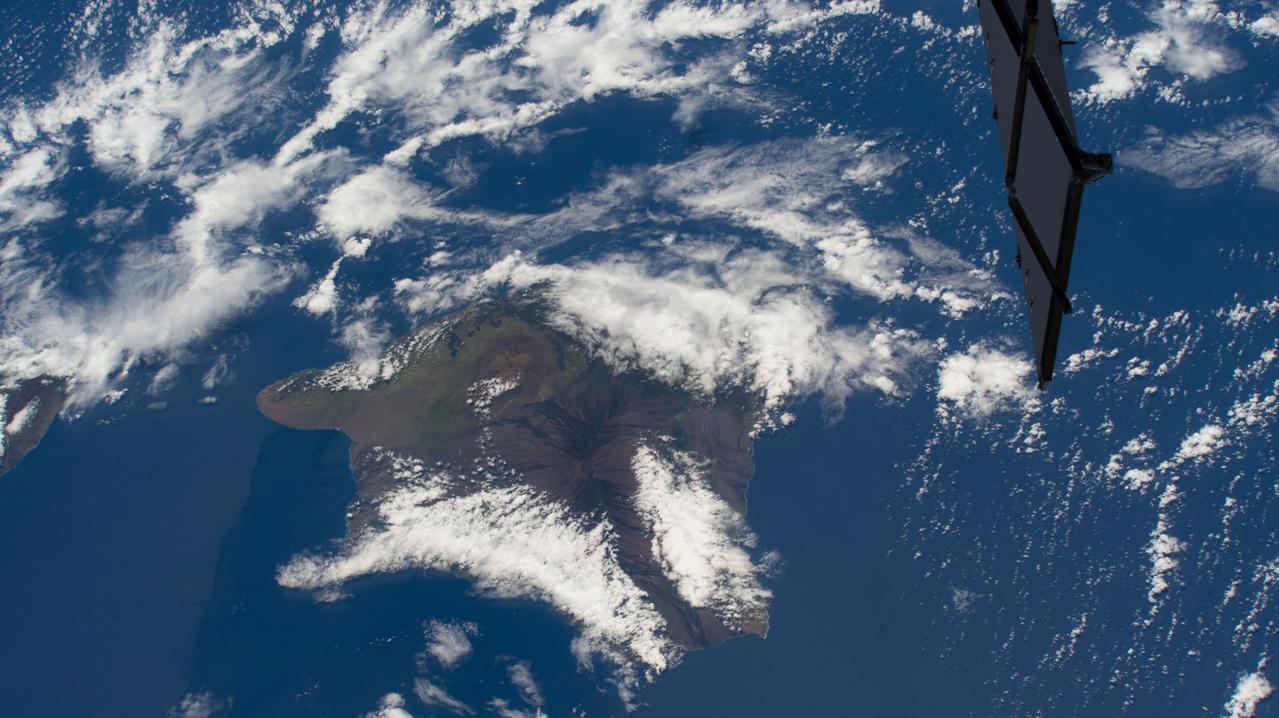
iss069e025331 (June 24, 2023) -- Clouds cover the Island of Hawaii, the youngest and largest of eight islands in the chain, as the International Space Station orbited 258 miles above the Pacific Ocean.

iss069e030924 (July 11, 2023) -- Clouds are painted pink and white at orbital sunrise as the International Space Station orbited 259 miles above the coast of Guatemala. The Soyuz MS-23 spacecraft docked to the station's Prichal module can be seen to the right of the image.

iss069e022551 (June 16, 2023) --- A portion of The Bahamas, in the Atlantic Ocean southeast of Florida, is pictured from the International Space Station as it orbited 257 miles above.
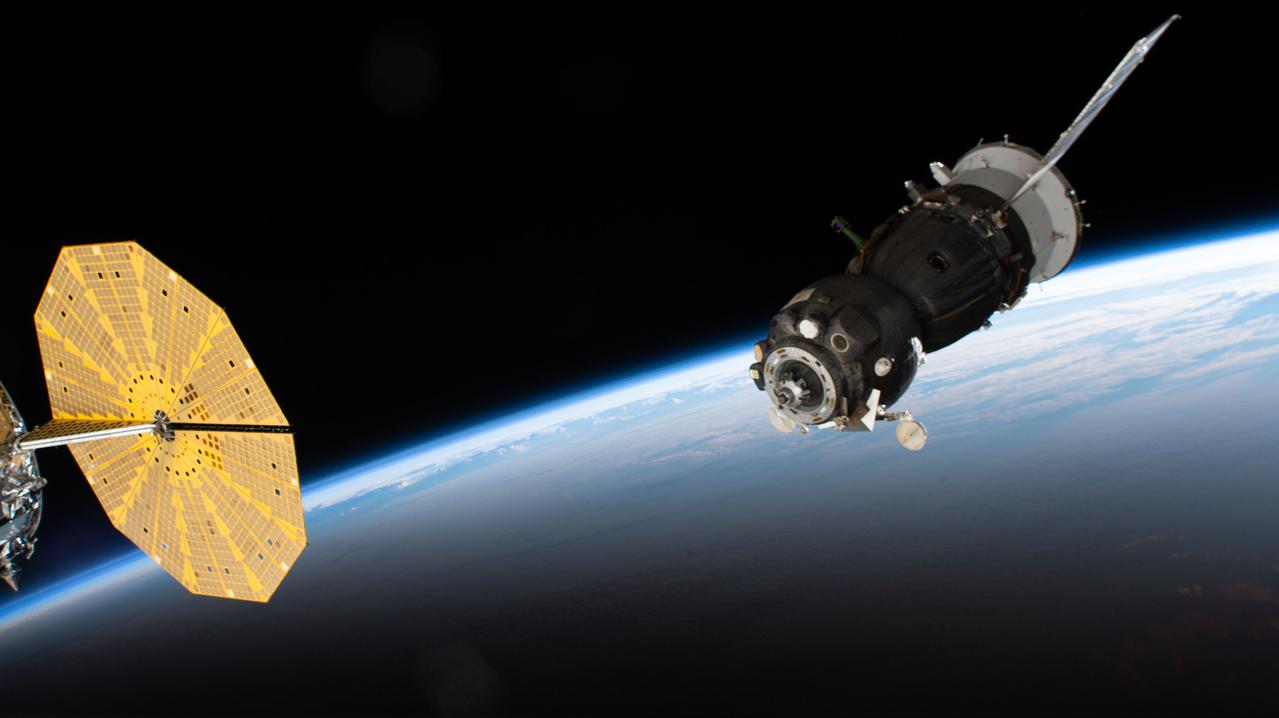
iss067e000261 (March 30, 2022) --- The Soyuz MS-19 crew ship, carrying three Expedition 66 crew members, backs away from the International Space Station after undocking from the Rassvet module. The Soyuz crew ship would parachute to a landing in Kazakhstan just over four hours later with NASA astronaut Mark Vande Hei and Roscosmos cosmonauts Anton Shkaplerov and Pyotr Dubrov. At left, is one of two cymbal-shaped UltraFlex solar arrays attached to Northrop Grumman's Cygnus space freighter.

iss069e028451 (July 3, 2023) -- Sicily, the largest Mediterranean island and one of 20 regions of Italy, is photographed from the International Space Station as it orbited 258 miles above.