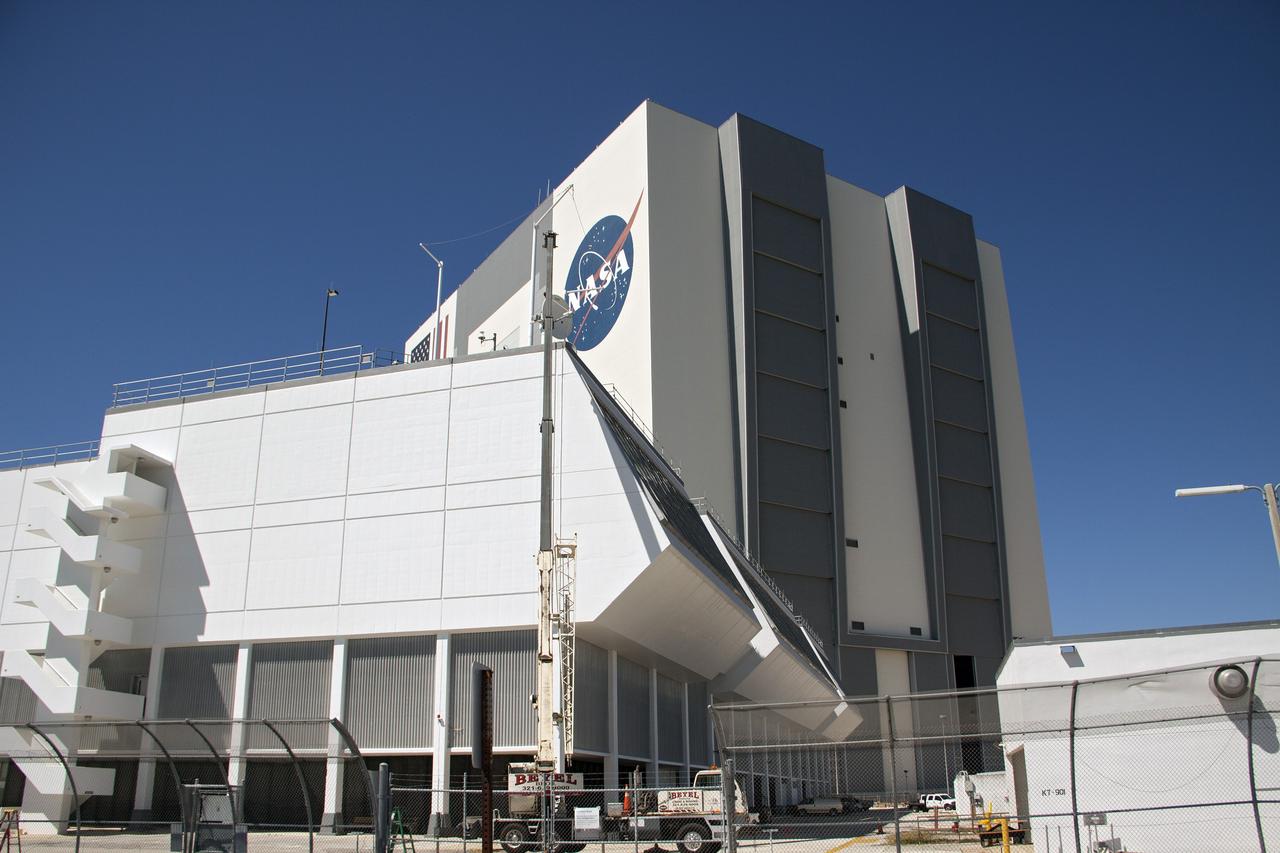
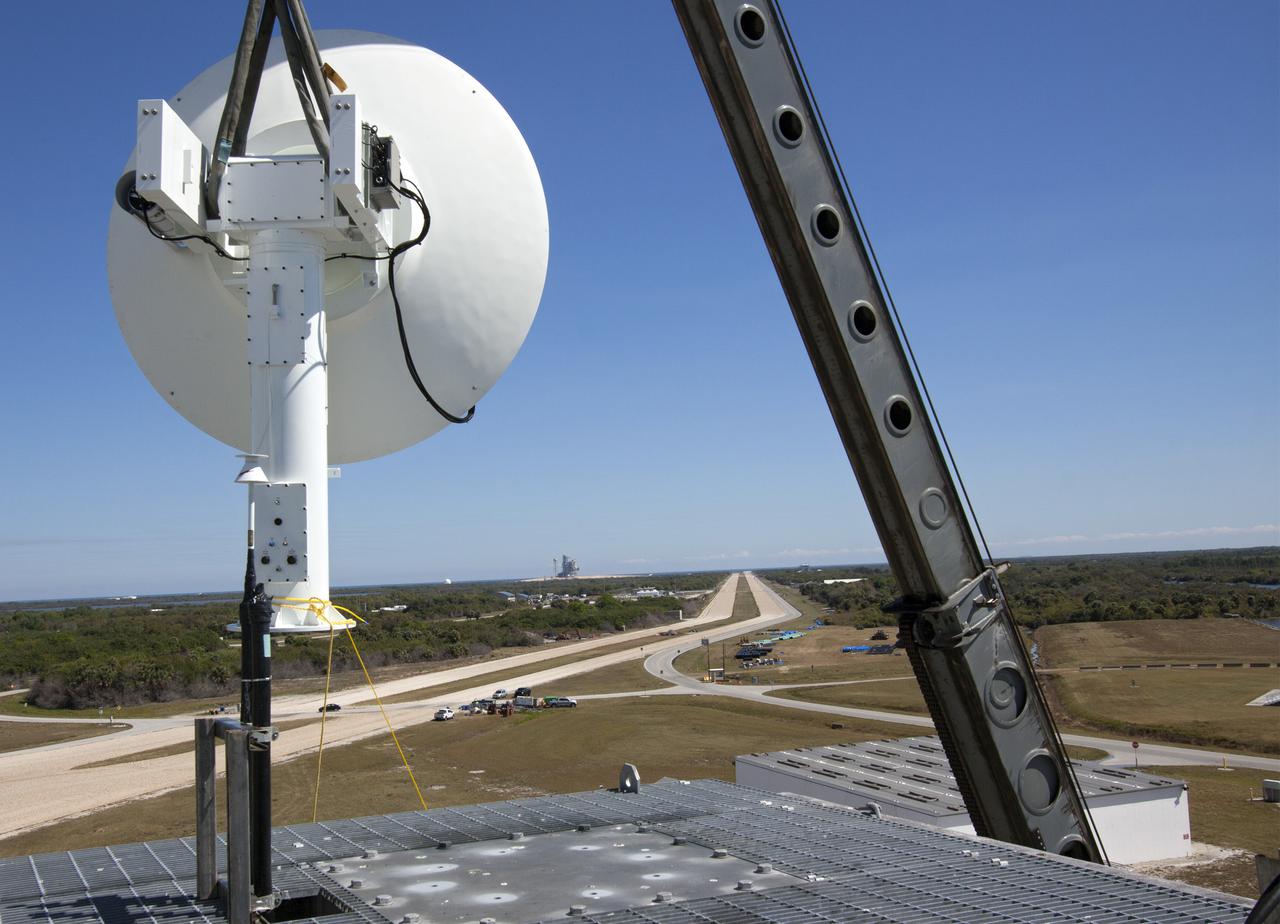
CAPE CANAVERAL, Fla. – A telemetry antenna and tracker camera is attached to the roof of the Launch Control Center, or LCC, in Launch Complex 39 at NASA's Kennedy Space Center in Florida. This antenna and camera system is the first of three to be installed on the LCC roof for the Radio Frequency and Telemetry Station RFTS, which will be used to monitor radio frequency communications from a launch vehicle at Launch Pad 39A or B as well as provide radio frequency relay for a launch vehicle in the Vehicle Assembly Building. The RFTS replaces the shuttle-era communications and tracking labs at Kennedy. The modern RFTS checkout station is designed to primarily support NASA's Space Launch System, or SLS, and Orion spacecraft, but can support multi-user radio frequency tests as the space center transitions to support a variety of rockets and spacecraft. For more information on the modernization efforts at Kennedy, visit the Ground Systems Development and Operations, or GSDO, website at http://go.nasa.gov/groundsystems. Photo credit: NASA/Jim Grossmann
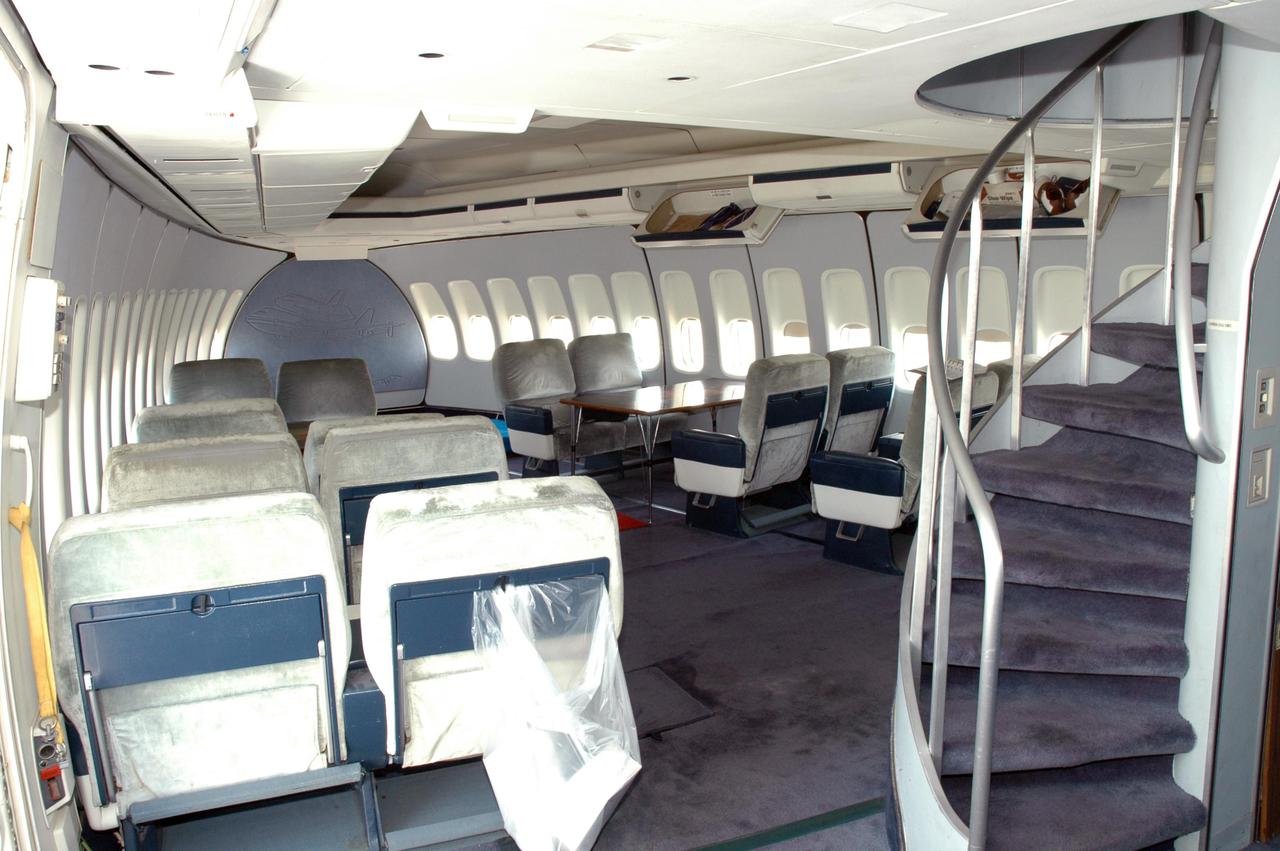
KENNEDY SPACE CENTER, FLA. - A view inside the Shuttle Carrier Aircraft, a modified Boeing 747. The plane carried the orbiter Discovery on a ferry flight to NASA Kennedy Space Center from Edwards Air Force Base in California, arriving Aug. 21. Returning to Earth from Return to Flight mission STS-114, Discovery landed at Edwards Aug. 9 after waive-off from KSC due to weather concerns.
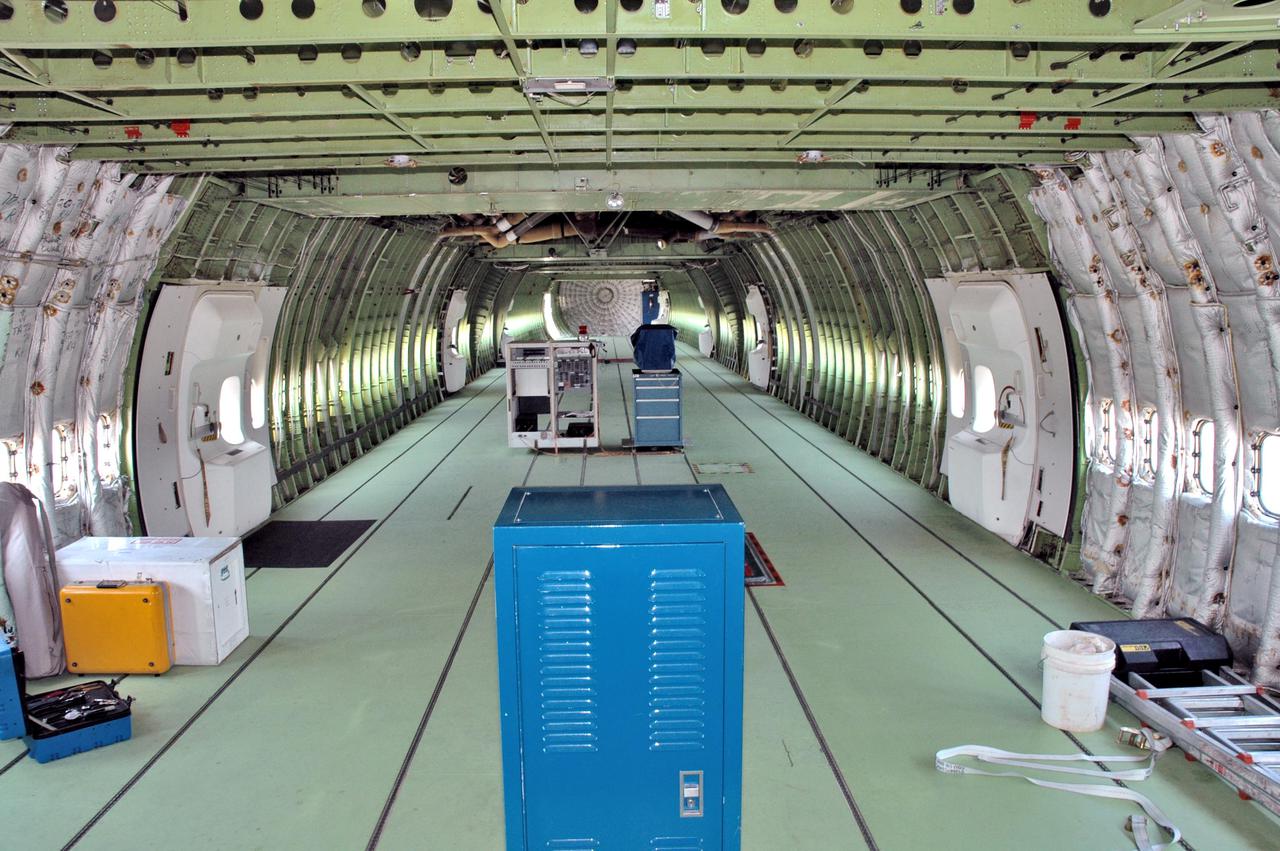
KENNEDY SPACE CENTER, FLA. - A view inside the Shuttle Carrier Aircraft, a modified Boeing 747. The plane carried the orbiter Discovery on a ferry flight to NASA Kennedy Space Center from Edwards Air Force Base in California, arriving Aug. 21. Returning to Earth from Return to Flight mission STS-114, Discovery landed at Edwards Aug. 9 after waive-off from KSC due to weather concerns.
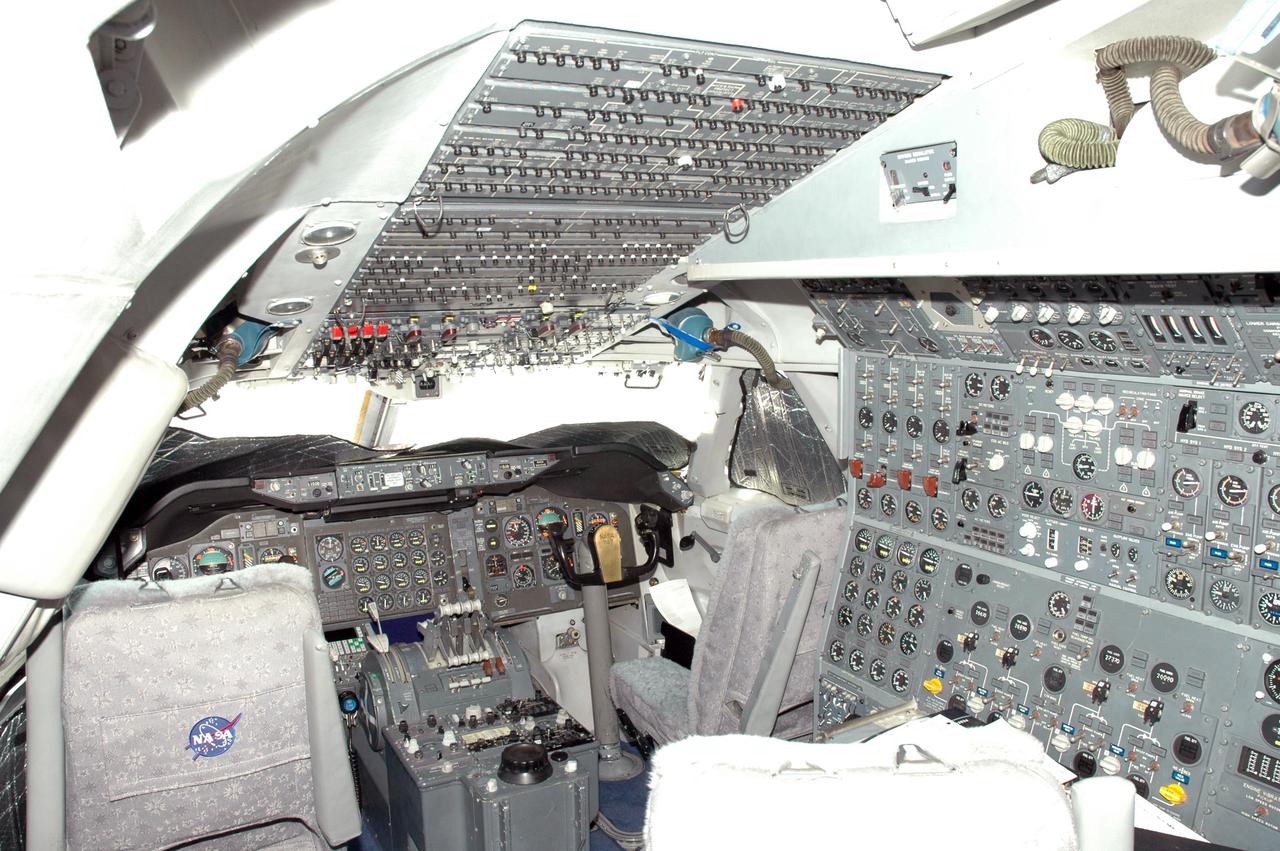
KENNEDY SPACE CENTER, FLA. - A view inside the Shuttle Carrier Aircraft, a modified Boeing 747. The plane carried the orbiter Discovery on a ferry flight to NASA Kennedy Space Center from Edwards Air Force Base in California, arriving Aug. 21. Returning to Earth from Return to Flight mission STS-114, Discovery landed at Edwards Aug. 9 after waive-off from KSC due to weather concerns.
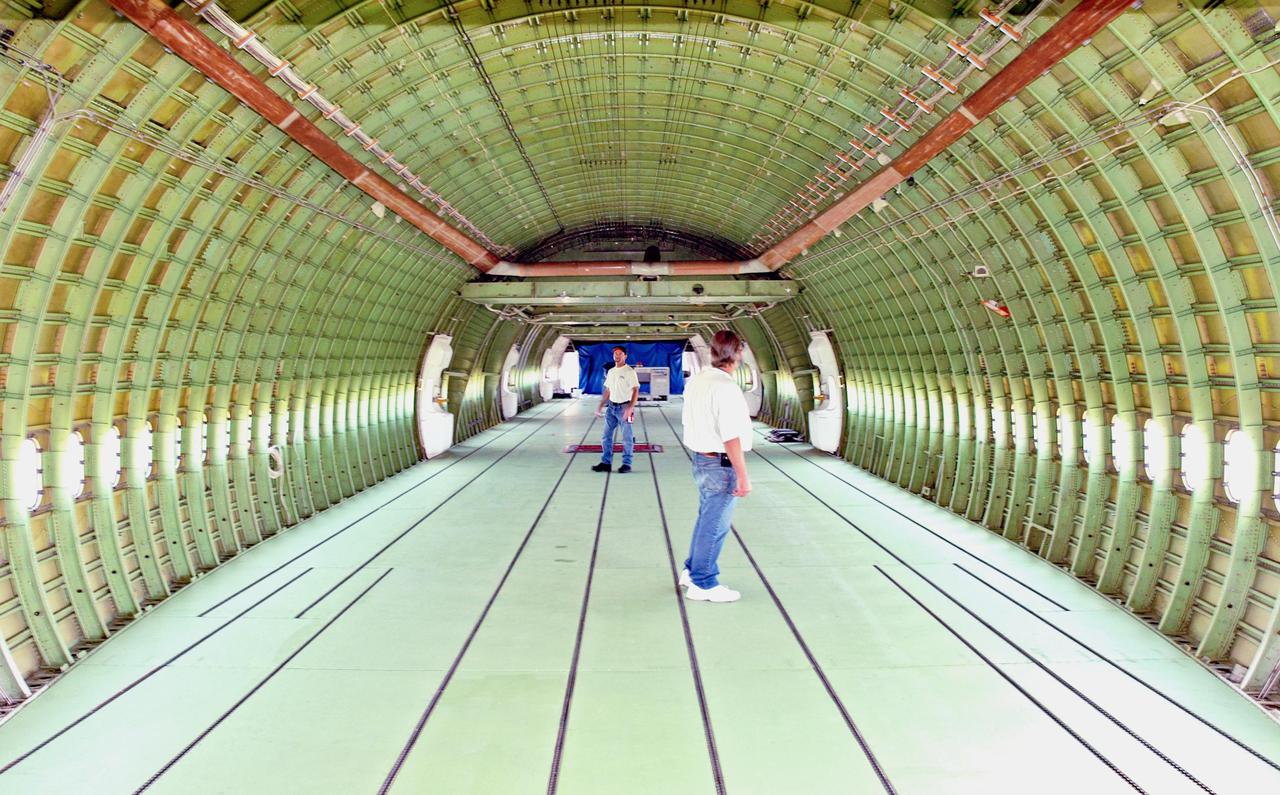
KENNEDY SPACE CENTER, FLA. - A view inside the Shuttle Carrier Aircraft, a modified Boeing 747. The plane carried the orbiter Discovery on a ferry flight to NASA Kennedy Space Center from Edwards Air Force Base in California, arriving Aug. 21. Returning to Earth from Return to Flight mission STS-114, Discovery landed at Edwards Aug. 9 after waive-off from KSC due to weather concerns.
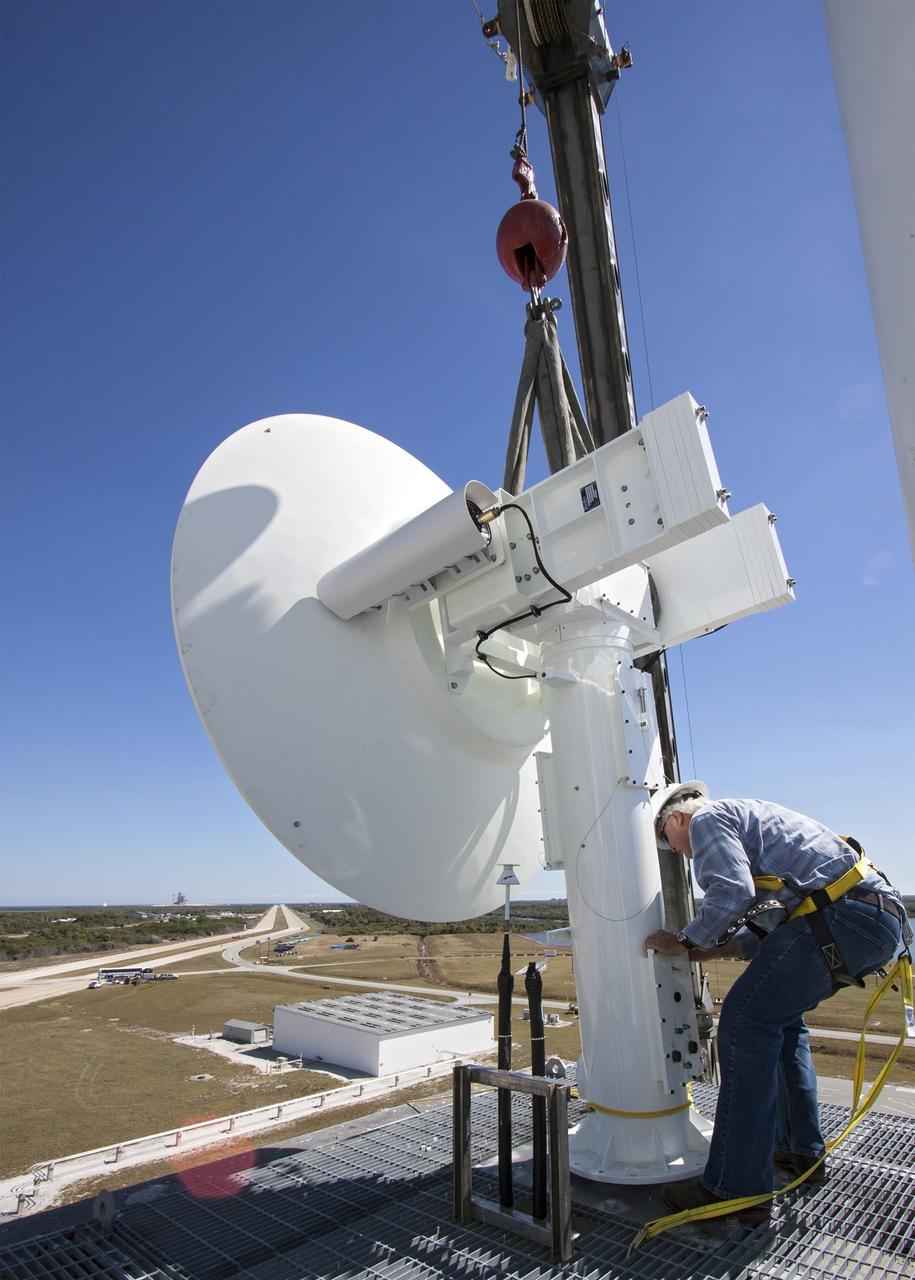
CAPE CANAVERAL, Fla. – With the help of a crane, a worker helps guide a parabolic telemetry antenna and tracker camera to the roof of the Launch Control Center, or LCC, in Launch Complex 39 at NASA's Kennedy Space Center in Florida. This antenna and camera system is the first of three that will be installed on the LCC roof for the Radio Frequency and Telemetry Station RFTS, which will be used to monitor radio frequency communications from a launch vehicle at Launch Pad 39A or B as well as provide radio frequency relay for a launch vehicle in the Vehicle Assembly Building. The RFTS replaces the shuttle-era communications and tracking labs at Kennedy. The modern RFTS checkout station is designed to primarily support NASA's Space Launch System, or SLS, and Orion spacecraft, but can support multi-user radio frequency tests as the space center transitions to support a variety of rockets and spacecraft. For more information on the modernization efforts at Kennedy, visit the Ground Systems Development and Operations, or GSDO, website at http://go.nasa.gov/groundsystems. Photo credit: NASA/Jim Grossmann
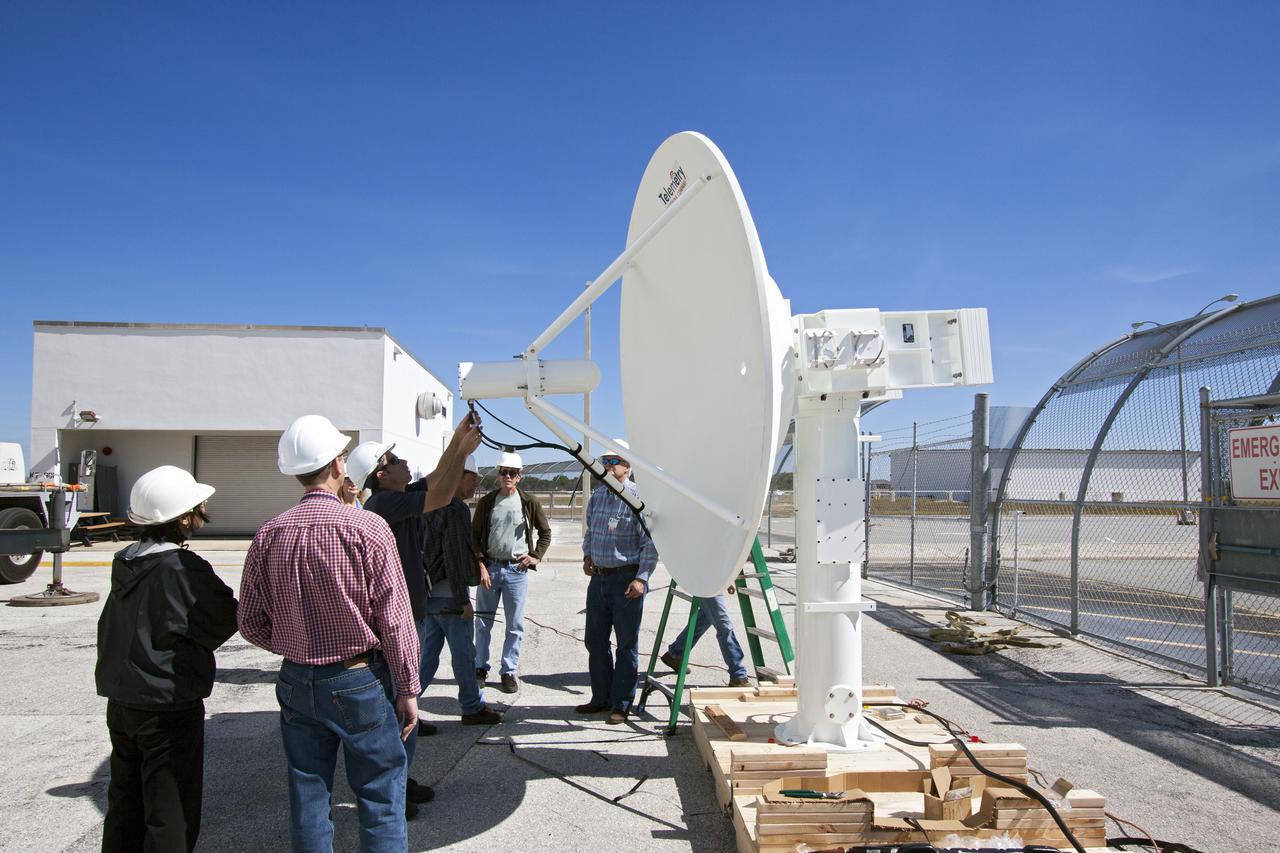
CAPE CANAVERAL, Fla. – Workers prepare to install a new parabolic telemetry antenna and tracker camera to the roof of the Launch Control Center, or LCC, in Launch Complex 39 at NASA's Kennedy Space Center in Florida. This antenna and camera system is the first of three that will be installed on the LCC roof for the Radio Frequency and Telemetry Station RFTS, which will be used to monitor radio frequency communications from a launch vehicle at Launch Pad 39A or B as well as provide radio frequency relay for a launch vehicle in the Vehicle Assembly Building. The RFTS replaces the shuttle-era communications and tracking labs at Kennedy. The modern RFTS checkout station is designed to primarily support NASA's Space Launch System, or SLS, and Orion spacecraft, but can support multi-user radio frequency tests as the space center transitions to support a variety of rockets and spacecraft. For more information on the modernization efforts at Kennedy, visit the Ground Systems Development and Operations, or GSDO, website at http:__go.nasa.gov_groundsystems. Photo credit: NASA_Jim Grossmann
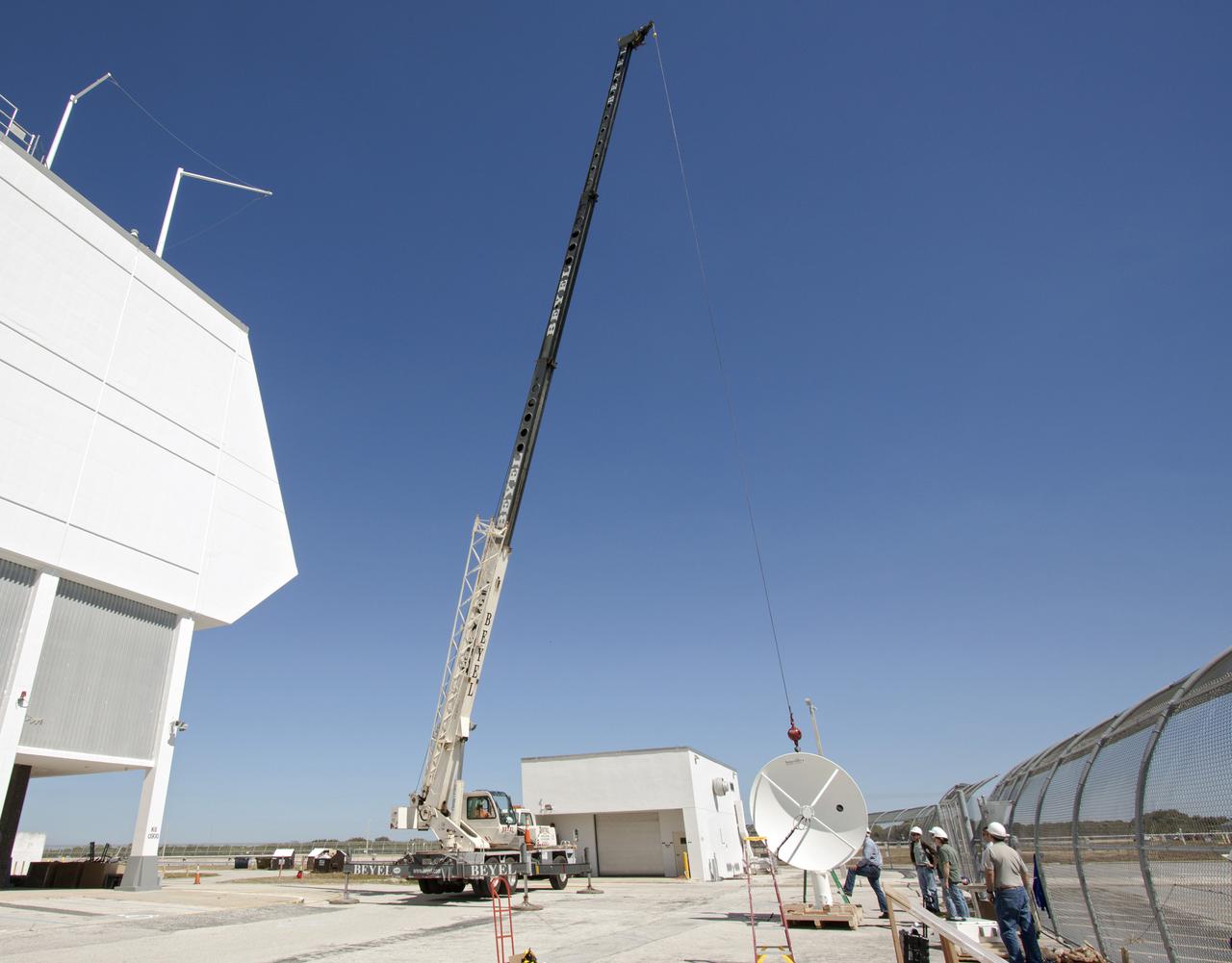
CAPE CANAVERAL, Fla. – Workers use a crane to install a new parabolic telemetry antenna and tracker camera to the roof of the Launch Control Center, or LCC, in Launch Complex 39 at NASA's Kennedy Space Center in Florida. This antenna and camera system is the first of three that will be installed on the LCC roof for the Radio Frequency and Telemetry Station RFTS, which will be used to monitor radio frequency communications from a launch vehicle at Launch Pad 39A or B as well as provide radio frequency relay for a launch vehicle in the Vehicle Assembly Building. The RFTS replaces the shuttle-era communications and tracking labs at Kennedy. The modern RFTS checkout station is designed to primarily support NASA's Space Launch System, or SLS, and Orion spacecraft, but can support multi-user radio frequency tests as the space center transitions to support a variety of rockets and spacecraft. For more information on the modernization efforts at Kennedy, visit the Ground Systems Development and Operations, or GSDO, website at http:__go.nasa.gov_groundsystems. Photo credit: NASA_Jim Grossmann
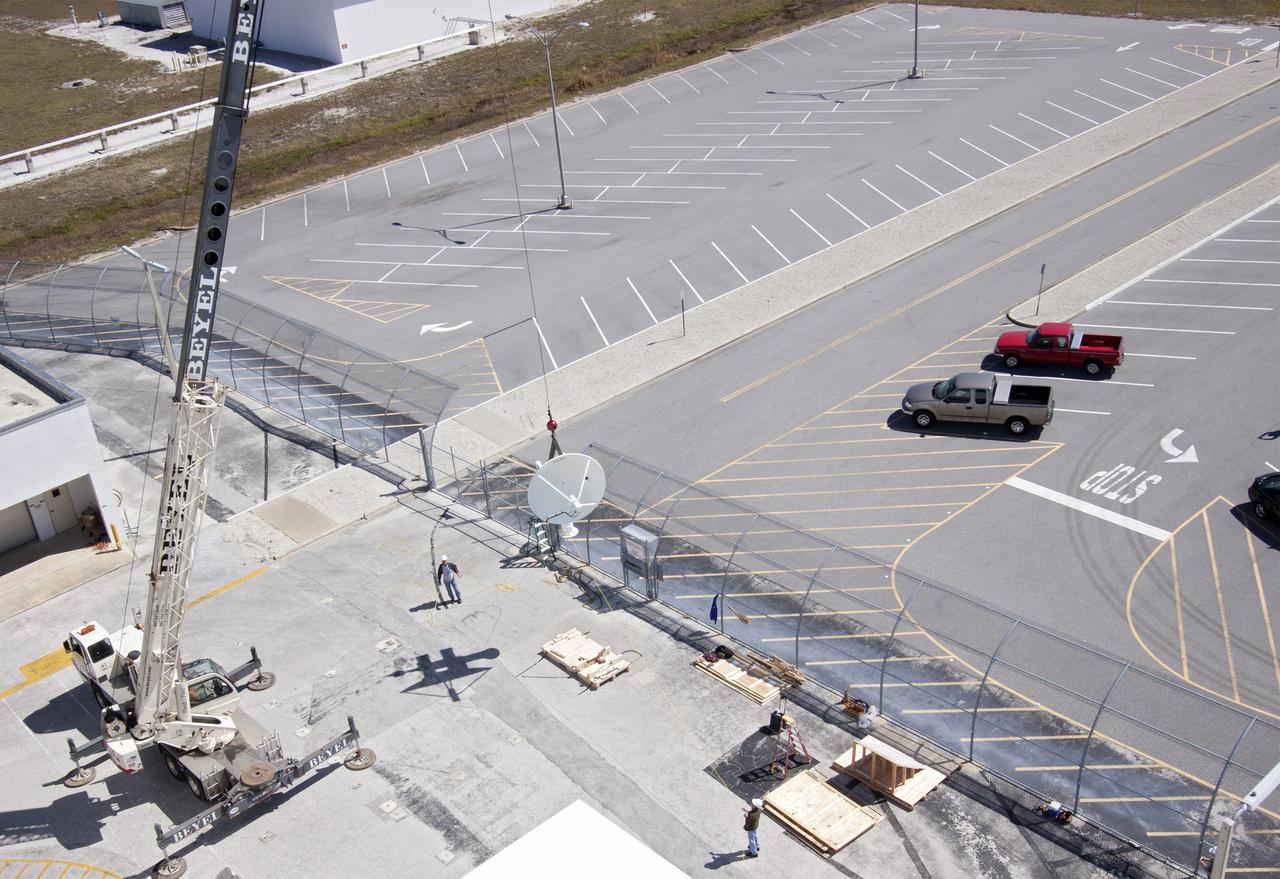
CAPE CANAVERAL, Fla. – A crane lifts a new parabolic telemetry antenna and tracker camera to the roof of the Launch Control Center, or LCC, in Launch Complex 39 at NASA's Kennedy Space Center in Florida. This antenna and camera system is the first of three that will be installed on the LCC roof for the Radio Frequency and Telemetry Station RFTS, which will be used to monitor radio frequency communications from a launch vehicle at Launch Pad 39A or B as well as provide radio frequency relay for a launch vehicle in the Vehicle Assembly Building. The RFTS replaces the shuttle-era communications and tracking labs at Kennedy. The modern RFTS checkout station is designed to primarily support NASA's Space Launch System, or SLS, and Orion spacecraft, but can support multi-user radio frequency tests as the space center transitions to support a variety of rockets and spacecraft. For more information on the modernization efforts at Kennedy, visit the Ground Systems Development and Operations, or GSDO, website at http:__go.nasa.gov_groundsystems. Photo credit: NASA_Jim Grossmann

CAPE CANAVERAL, Fla. – A crane lifts a new parabolic telemetry antenna and tracker camera to the roof of the Launch Control Center, or LCC, in Launch Complex 39 at NASA's Kennedy Space Center in Florida. This antenna and camera system is the first of three that will be installed on the LCC roof for the Radio Frequency and Telemetry Station RFTS, which will be used to monitor radio frequency communications from a launch vehicle at Launch Pad 39A or B as well as provide radio frequency relay for a launch vehicle in the Vehicle Assembly Building. The RFTS replaces the shuttle-era communications and tracking labs at Kennedy. The modern RFTS checkout station is designed to primarily support NASA's Space Launch System, or SLS, and Orion spacecraft, but can support multi-user radio frequency tests as the space center transitions to support a variety of rockets and spacecraft. For more information on the modernization efforts at Kennedy, visit the Ground Systems Development and Operations, or GSDO, website at http:__go.nasa.gov_groundsystems. Photo credit: NASA_Jim Grossmann
CAPE CANAVERAL, Fla. – Workers use a crane to install a new parabolic telemetry antenna and tracker camera to the roof of the Launch Control Center, or LCC, in Launch Complex 39 at NASA's Kennedy Space Center in Florida. This antenna and camera system is the first of three that will be installed on the LCC roof for the Radio Frequency and Telemetry Station RFTS, which will be used to monitor radio frequency communications from a launch vehicle at Launch Pad 39A or B as well as provide radio frequency relay for a launch vehicle in the Vehicle Assembly Building. The RFTS replaces the shuttle-era communications and tracking labs at Kennedy. The modern RFTS checkout station is designed to primarily support NASA's Space Launch System, or SLS, and Orion spacecraft, but can support multi-user radio frequency tests as the space center transitions to support a variety of rockets and spacecraft. For more information on the modernization efforts at Kennedy, visit the Ground Systems Development and Operations, or GSDO, website at http:__go.nasa.gov_groundsystems. Photo credit: NASA_Jim Grossmann
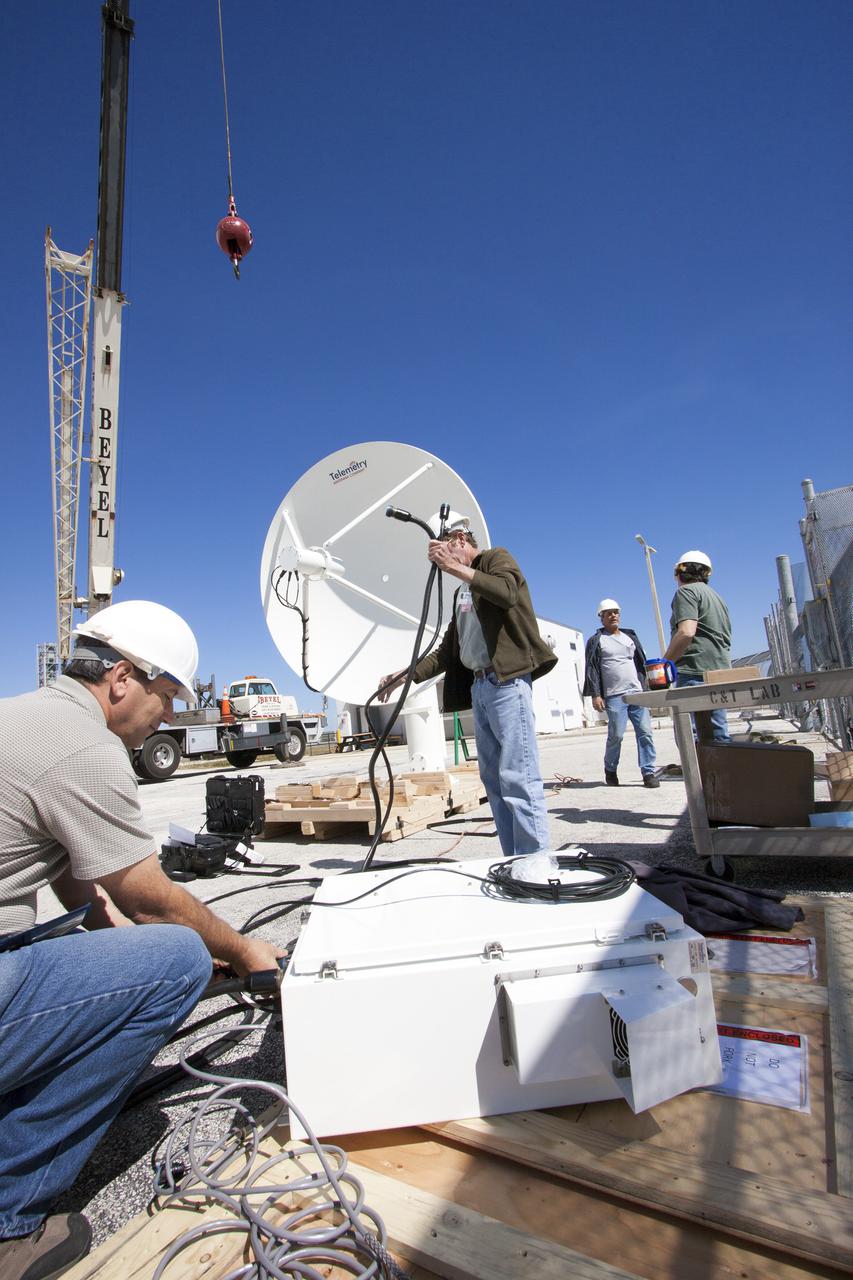
CAPE CANAVERAL, Fla. – Workers prepare to install a new parabolic telemetry antenna and tracker camera via crane to the roof of the Launch Control Center, or LCC, in Launch Complex 39 at NASA's Kennedy Space Center in Florida. This antenna and camera system is the first of three that will be installed on the LCC roof for the Radio Frequency and Telemetry Station RFTS, which will be used to monitor radio frequency communications from a launch vehicle at Launch Pad 39A or B as well as provide radio frequency relay for a launch vehicle in the Vehicle Assembly Building. The RFTS replaces the shuttle-era communications and tracking labs at Kennedy. The modern RFTS checkout station is designed to primarily support NASA's Space Launch System, or SLS, and Orion spacecraft, but can support multi-user radio frequency tests as the space center transitions to support a variety of rockets and spacecraft. For more information on the modernization efforts at Kennedy, visit the Ground Systems Development and Operations, or GSDO, website at http:__go.nasa.gov_groundsystems. Photo credit: NASA_Jim Grossmann