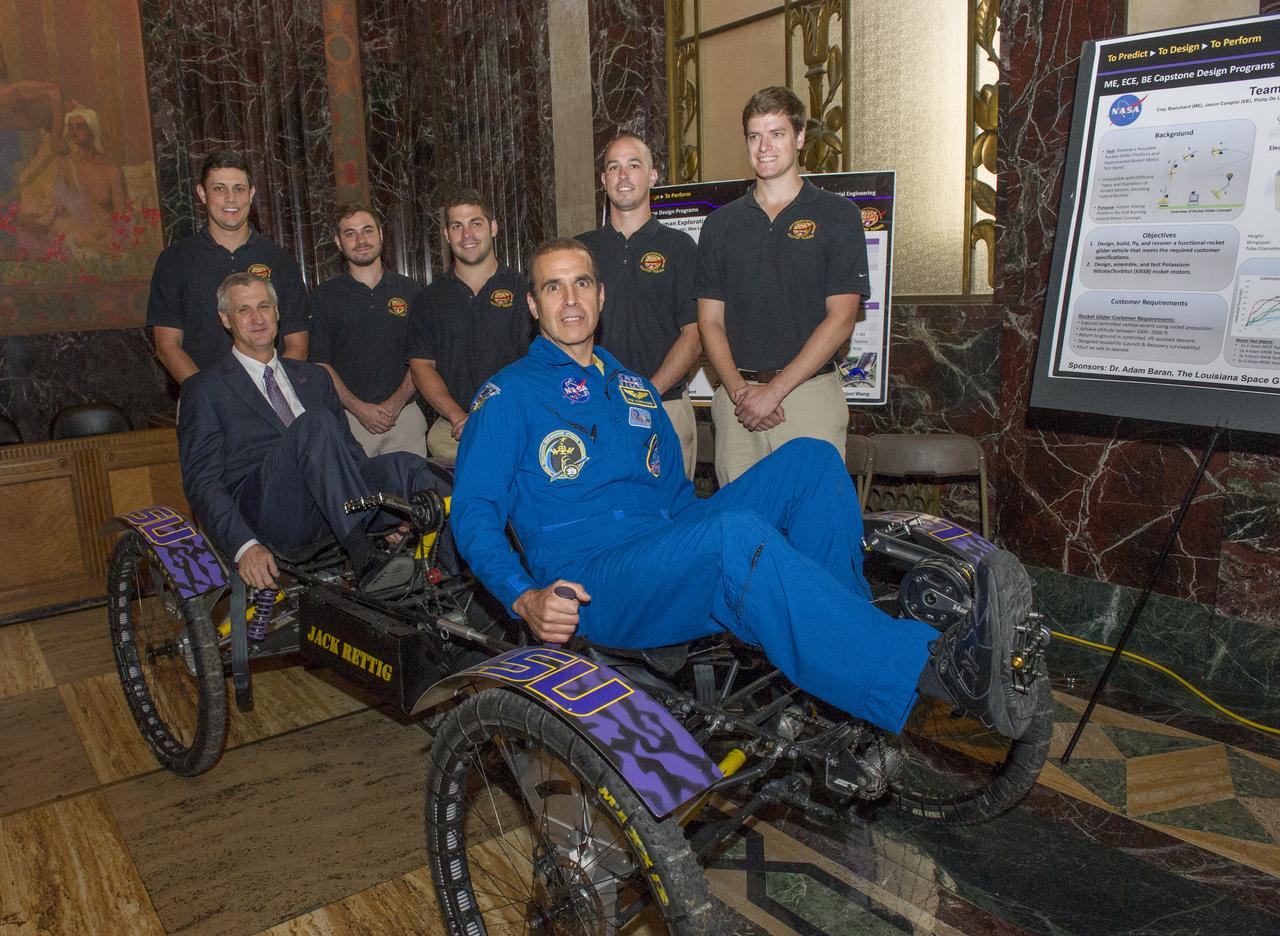
ASTRONAUT RICK MASTRACCHIO WITH LSU HUMAN EXPLORATION ROVER CHALLENGE TEAM (WINNER ROOKIE AWARD) IN ROTUNDA OF LOUISIANA STATE CAPITOL BUILDING
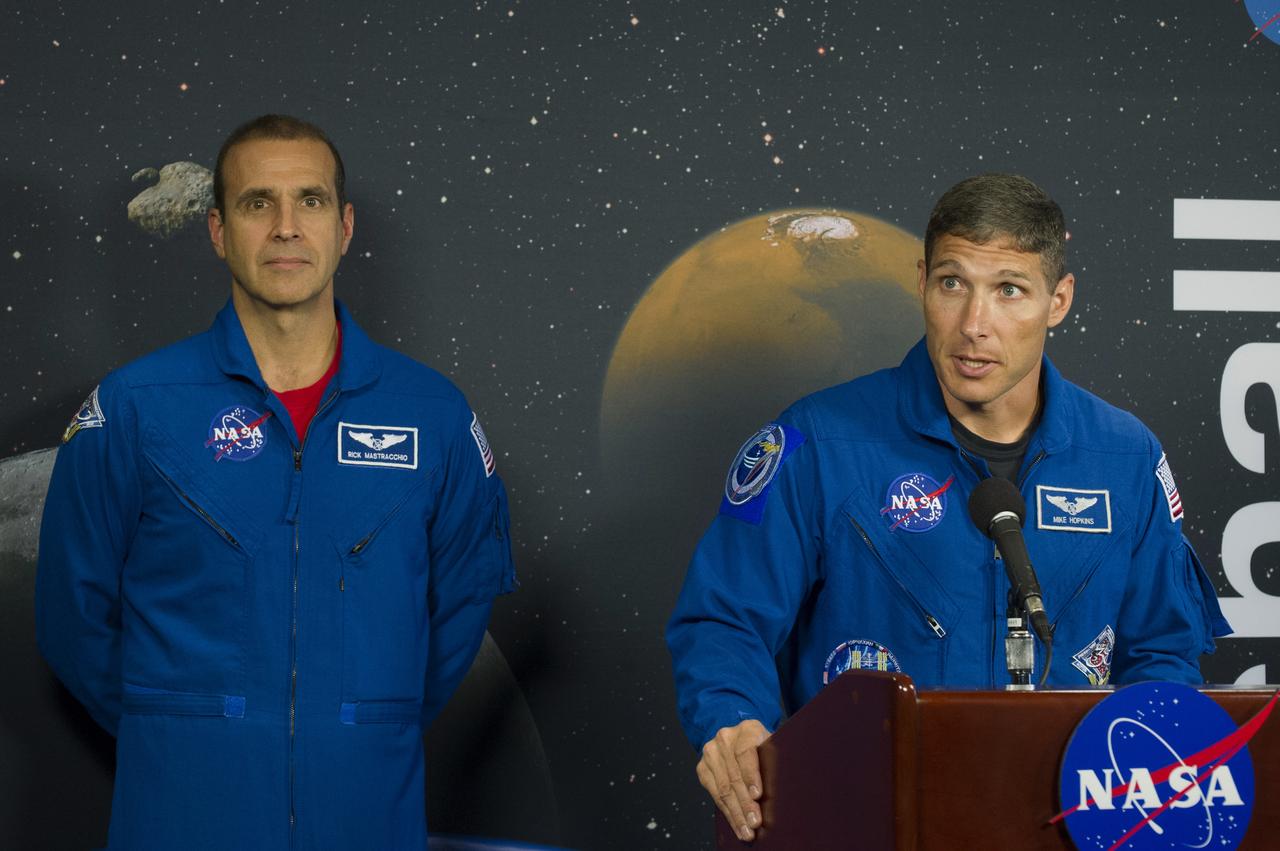
INTERNATIONAL SPACE STATION ASTRONAUTS RICK MASTRACCHIO, LEFT, AND MICHAEL HOPKINS DISCUSS THEIR WORK ON THE SPACE STATION DURING EXPEDITIONS 37, 38, AND 39 AT A NEWS CONFERENCE AT NASA'S MARSHALL SPACE FLIGHT CENTER ON JULY 29
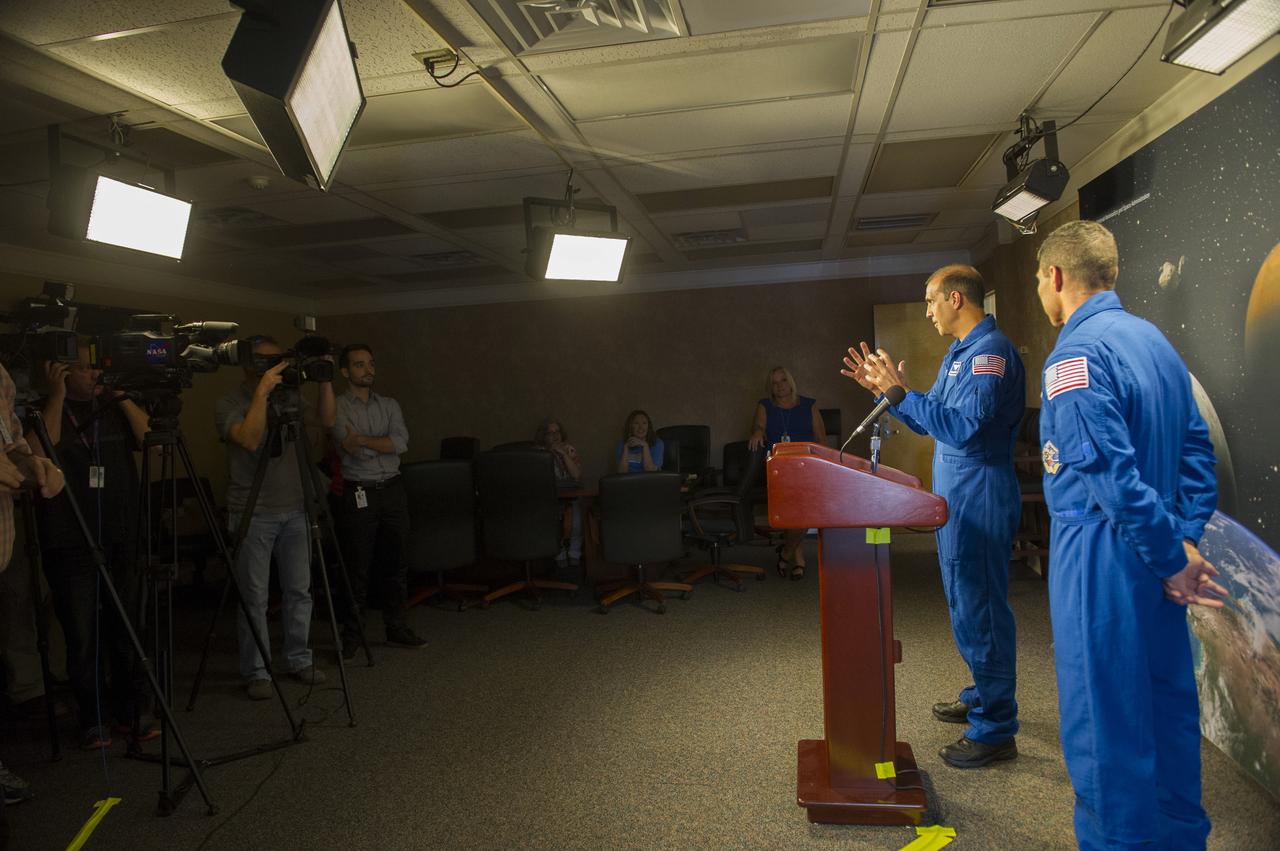
INTERNATIONAL SPACE STATION ASTRONAUTS RICK MASTRACCHIO, LEFT, AND MICHAEL HOPKINS DISCUSS THEIR WORK ON THE SPACE STATION DURING EXPEDITIONS 37, 38, AND 39 AT A NEWS CONFERENCE AT NASA'S MARSHALL SPACE FLIGHT CENTER ON JULY 29
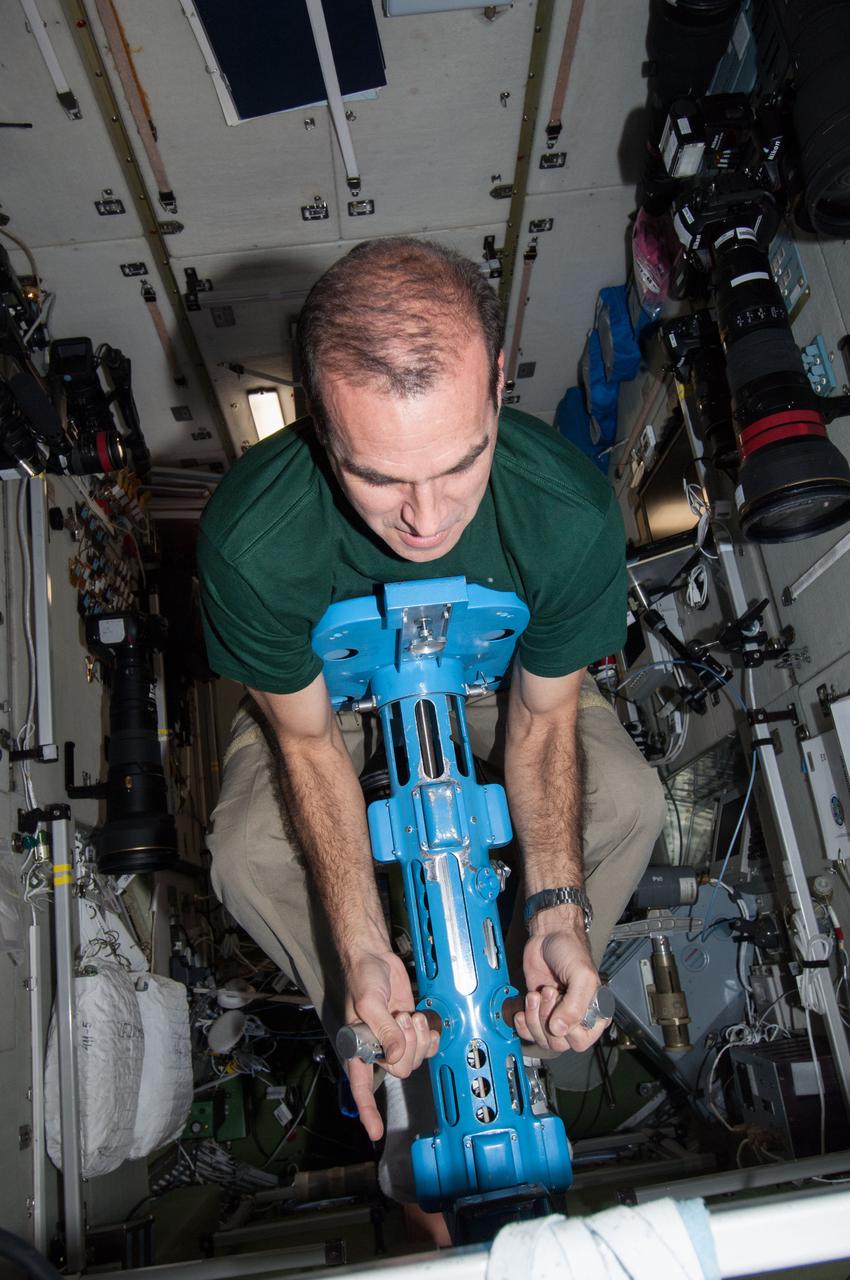
ISS038-E-008293 (25 Nov. 2013) --- NASA astronaut Rick Mastracchio, Expedition 38 flight engineer, uses a body mass measurement device (BMMD) in the Zvezda Service Module of the International Space Station.
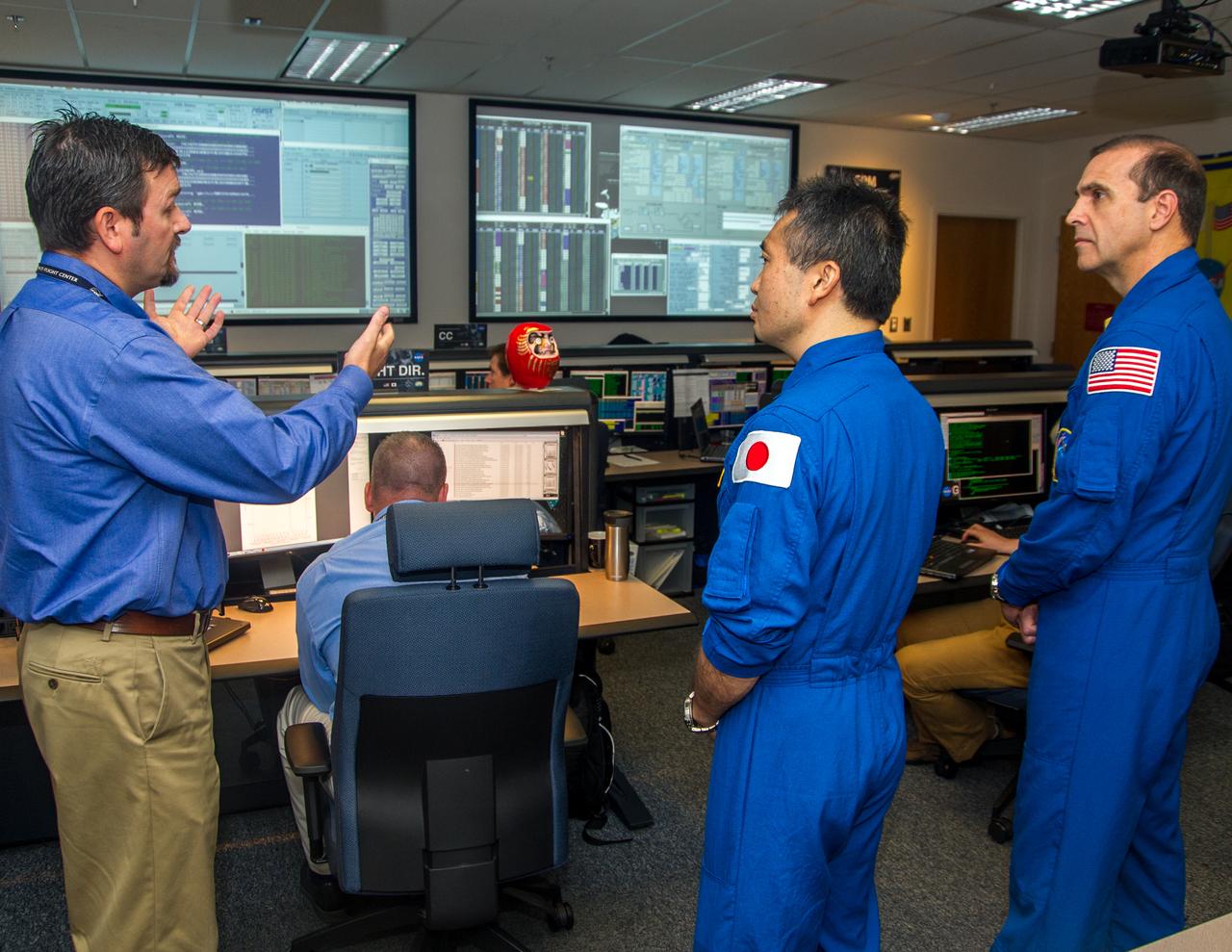
NASA Astronaut Rick Mastracchio and JAXA Astronaut Koichi Wakata visit the Earth Science Division at the Goddard Space Flight Center in the GPM control room with James Pawloski
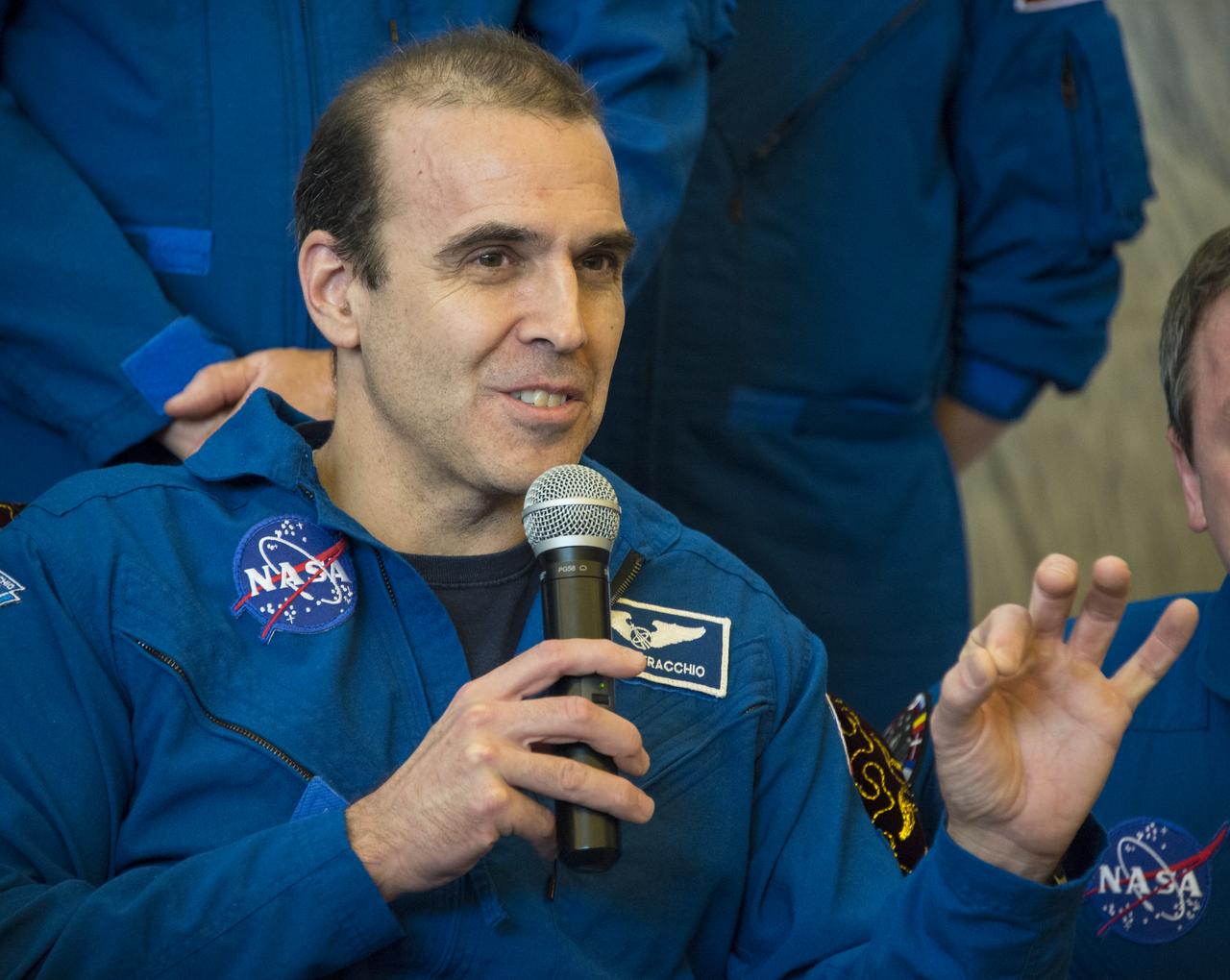
Expedition 39 Flight Engineer Rick Mastracchio of NASA answers questions from the media during a welcome home ceremony, Wednesday, May 14, 2014 at the Karaganda Airport in Kazakhstan. Mastracchio, Expedition 39 Commander Koichi Wakata of the Japan Aerospace Exploration Agency (JAXA), and Soyuz Commander Mikhail Tyurin of Roscosmos landed in their Soyuz TMA-11M spacecraft just a few hours earlier near the town of Zhezkazgan. Wakata, Tyurin and Mastracchio returned to Earth after more than six months onboard the International Space Station where they served as members of the Expedition 38 and 39 crews. Photo Credit: (NASA/Bill Ingalls)
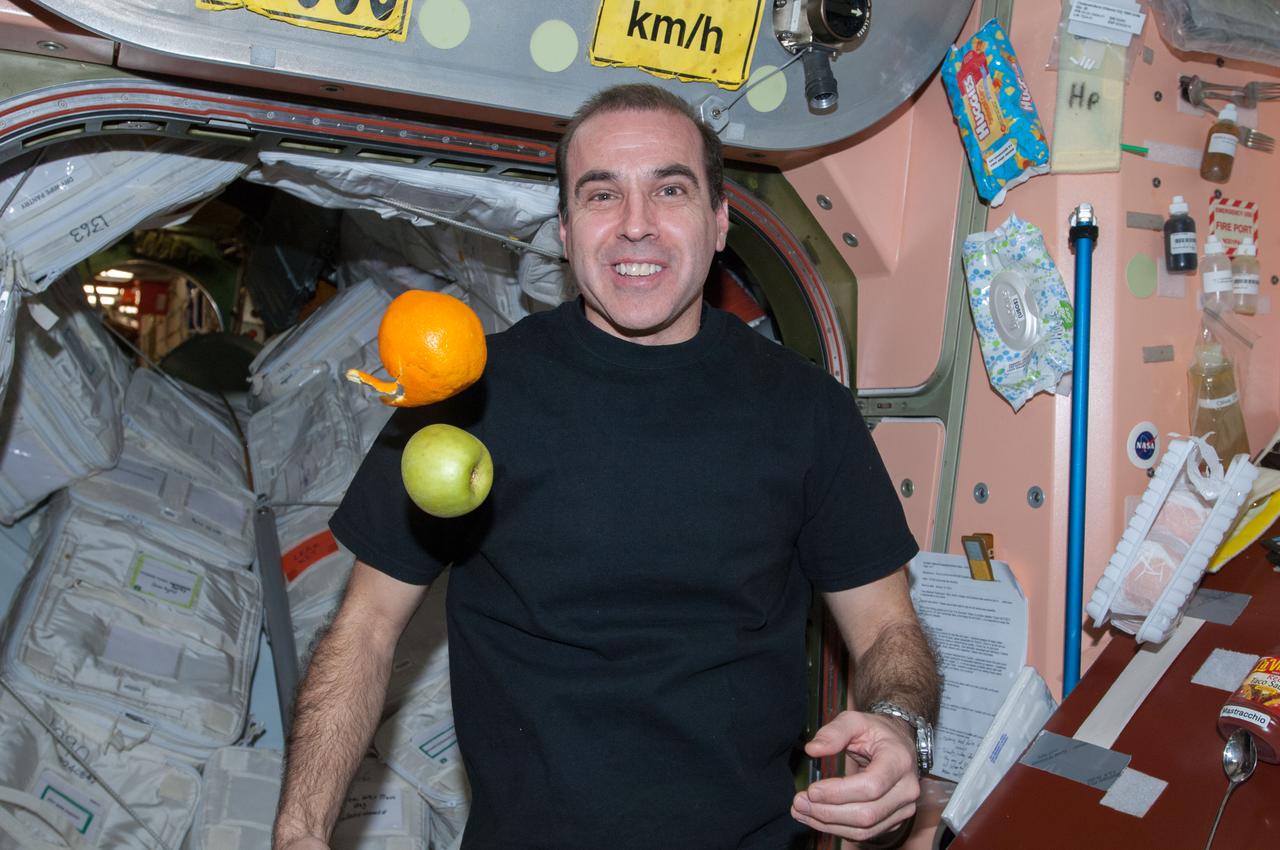
ISS038-E-043011 (6 Feb. 2014) --- NASA astronaut Rick Mastracchio, Expedition 38 flight engineer, is pictured near fresh fruit floating freely in the Unity node of the International Space Station. The fruit was brought to the station on the ISS Progress 54 cargo spacecraft, which docked Feb. 5, 2014.
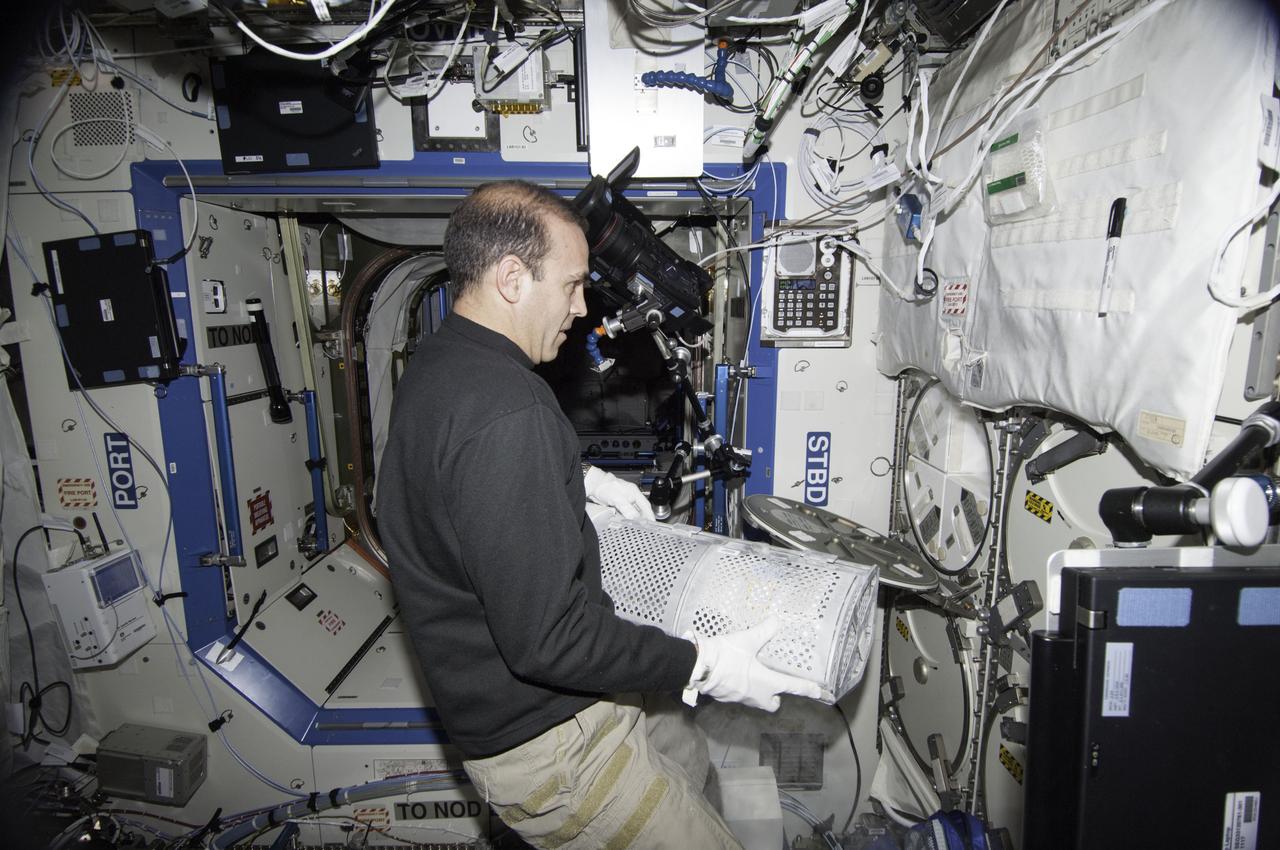
ISS038-E-006765 (21 Nov. 2013) --- In the International Space Station's Destiny laboratory, NASA astronaut Rick Mastracchio, Expedition 38 flight engineer, prepares to replace a dewar tray in the Minus Eighty Laboratory Freezer for ISS (MELFI) after inserting biological samples into the trays.
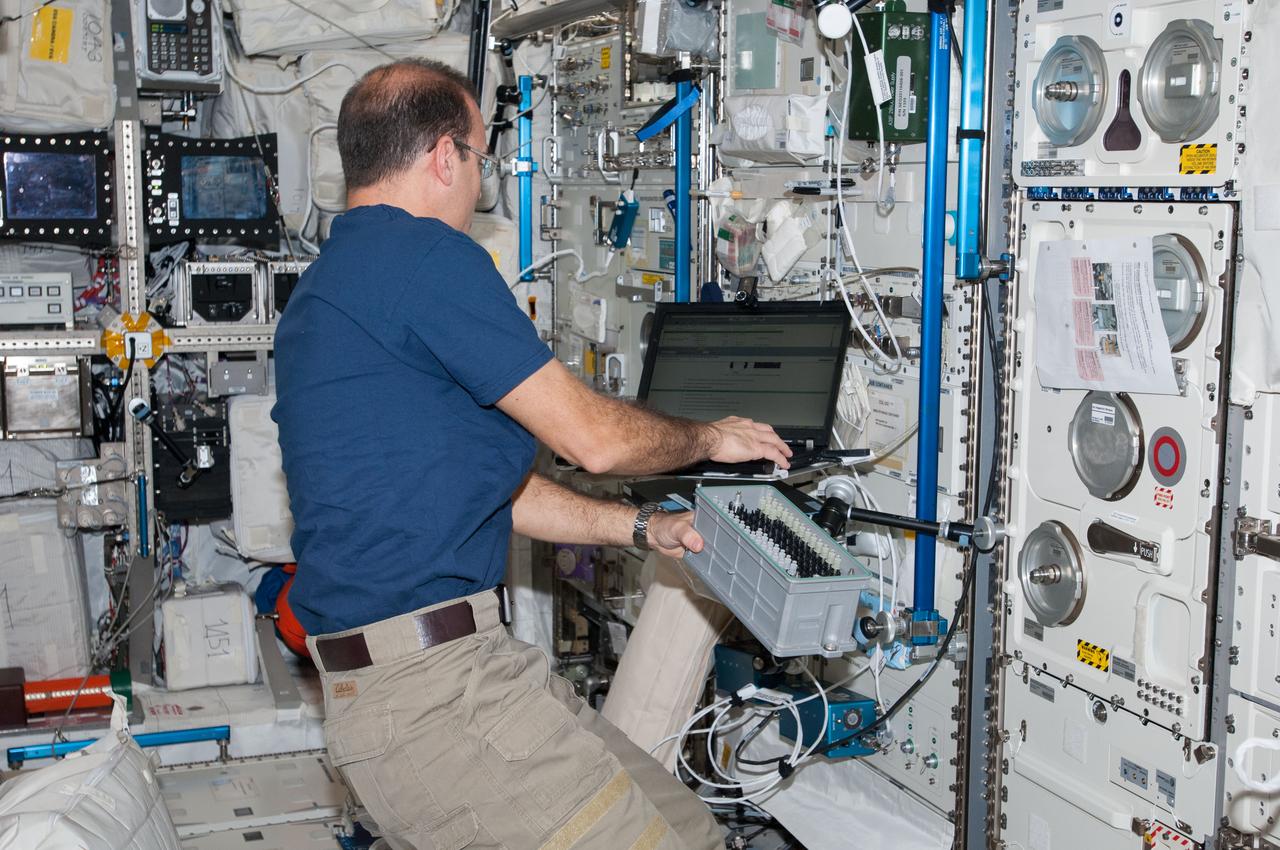
ISS038-E-008033 (25 Nov. 2013) --- NASA astronaut Rick Mastracchio, Expedition 38 flight engineer, works with Biolab hardware in the Columbus laboratory of the International Space Station. Biolab is used to perform space biology experiments on microorganisms, cells, tissue cultures, plants and small invertebrates.
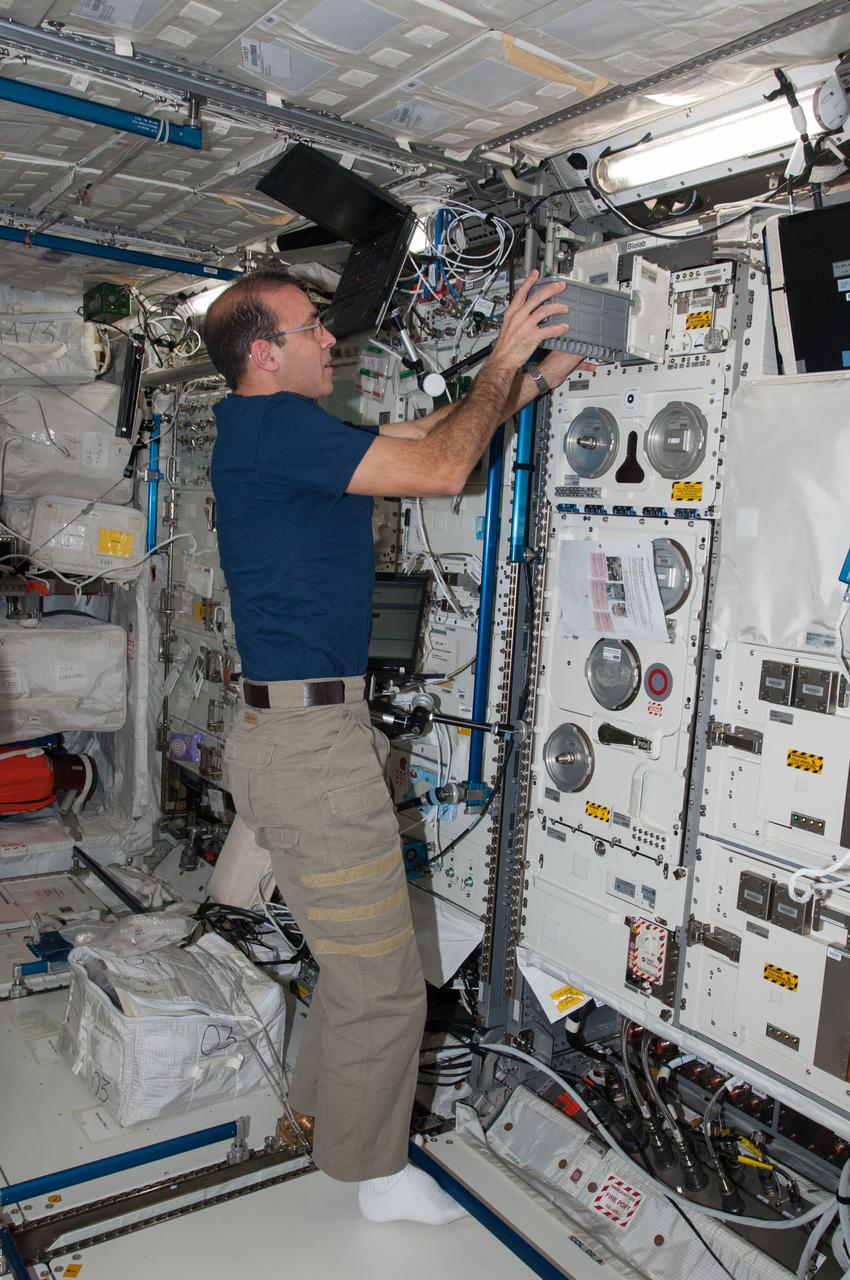
ISS038-E-008037 (25 Nov. 2013) --- NASA astronaut Rick Mastracchio, Expedition 38 flight engineer, works with Biolab hardware in the Columbus laboratory of the International Space Station. Biolab is used to perform space biology experiments on microorganisms, cells, tissue cultures, plants and small invertebrates.
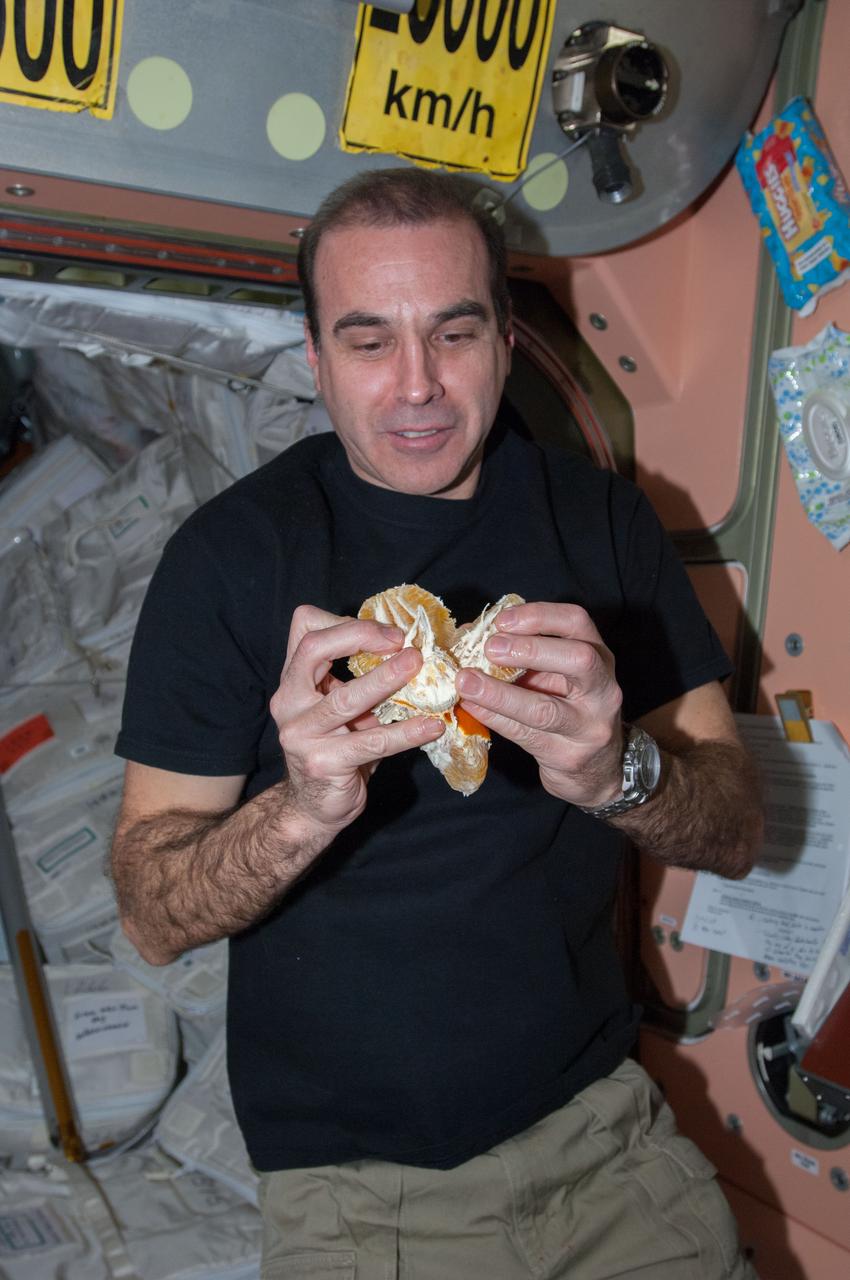
ISS038-E-043027 (6 Feb. 2014) --- NASA astronaut Rick Mastracchio, Expedition 38 flight engineer, prepares to eat a fresh orange in the Unity node of the International Space Station. The fruit was brought to the station on the ISS Progress 54 cargo spacecraft, which docked Feb. 5, 2014.

ISS038-E-044829 (10 Feb. 2014) --- NASA astronaut Rick Mastracchio, Expedition 38 flight engineer, prepares to use an ultraviolet light to decontaminate hardware used for life science experiments inside the Microgravity Science Glovebox (MSG) in the Destiny laboratory of the International Space Station.
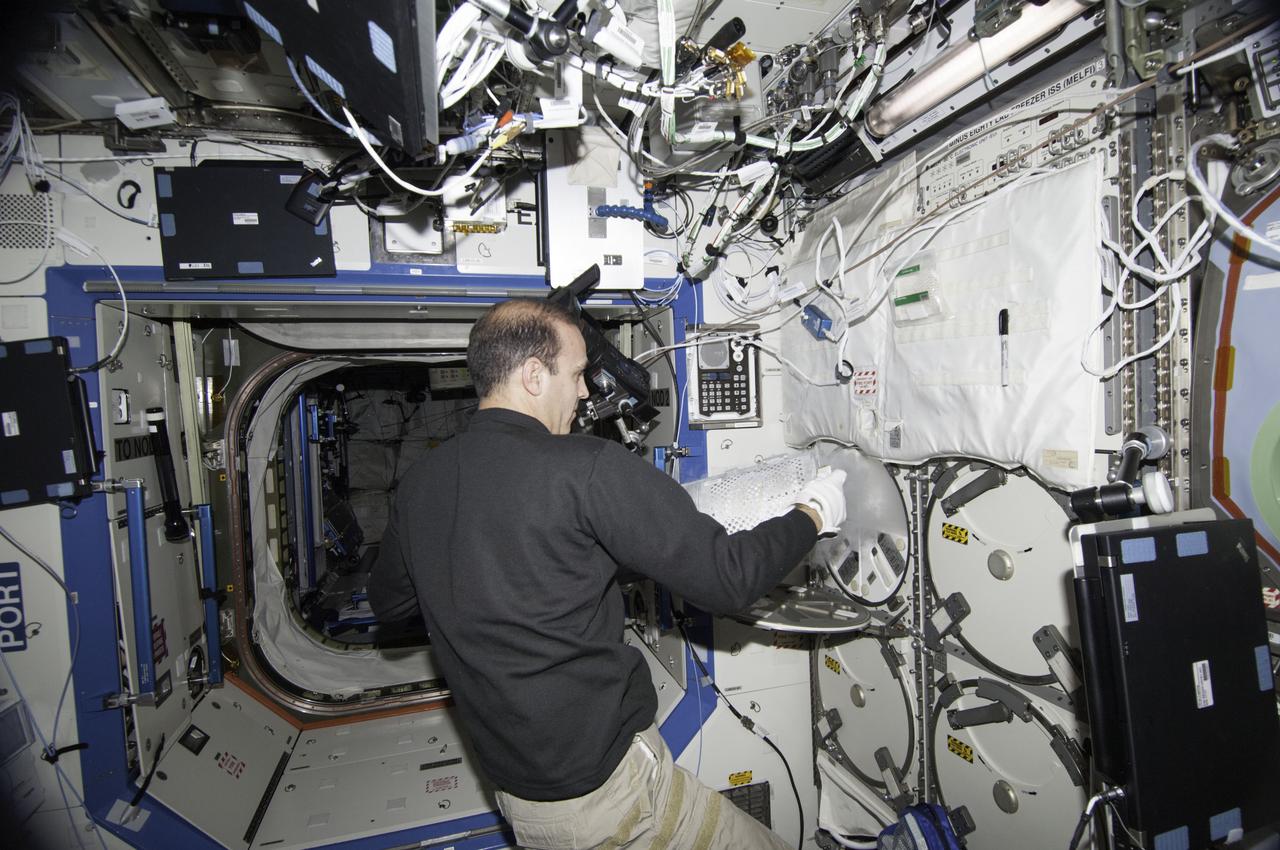
ISS038-E-006757 (21 Nov. 2013) --- In the International Space Station's Destiny laboratory, NASA astronaut Rick Mastracchio, Expedition 38 flight engineer, removes a dewar tray from the Minus Eighty Laboratory Freezer for ISS (MELFI) in order to insert biological samples into the trays.
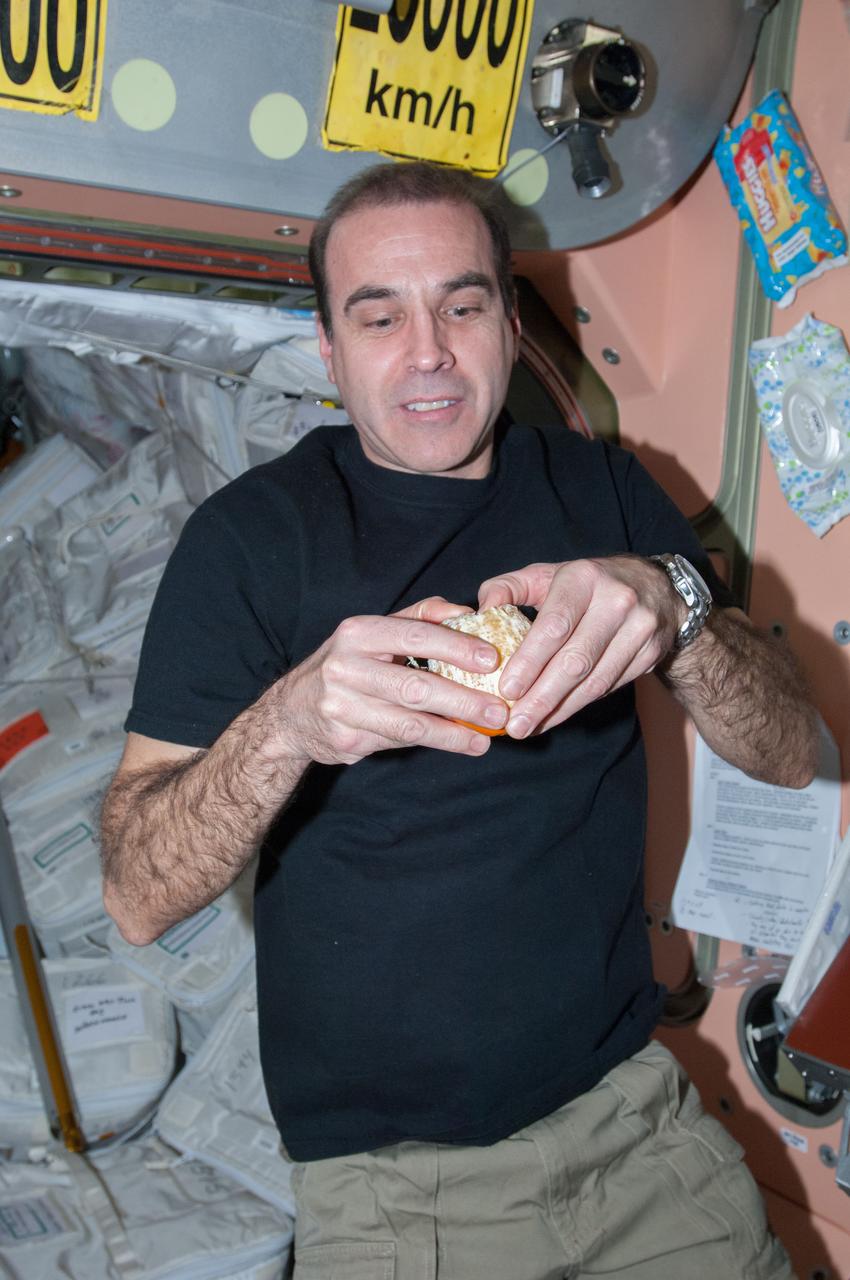
ISS038-E-043015 (6 Feb. 2014) --- NASA astronaut Rick Mastracchio, Expedition 38 flight engineer, prepares to eat a fresh orange in the Unity node of the International Space Station. The fruit was brought to the station on the ISS Progress 54 cargo spacecraft, which docked Feb. 5, 2014.
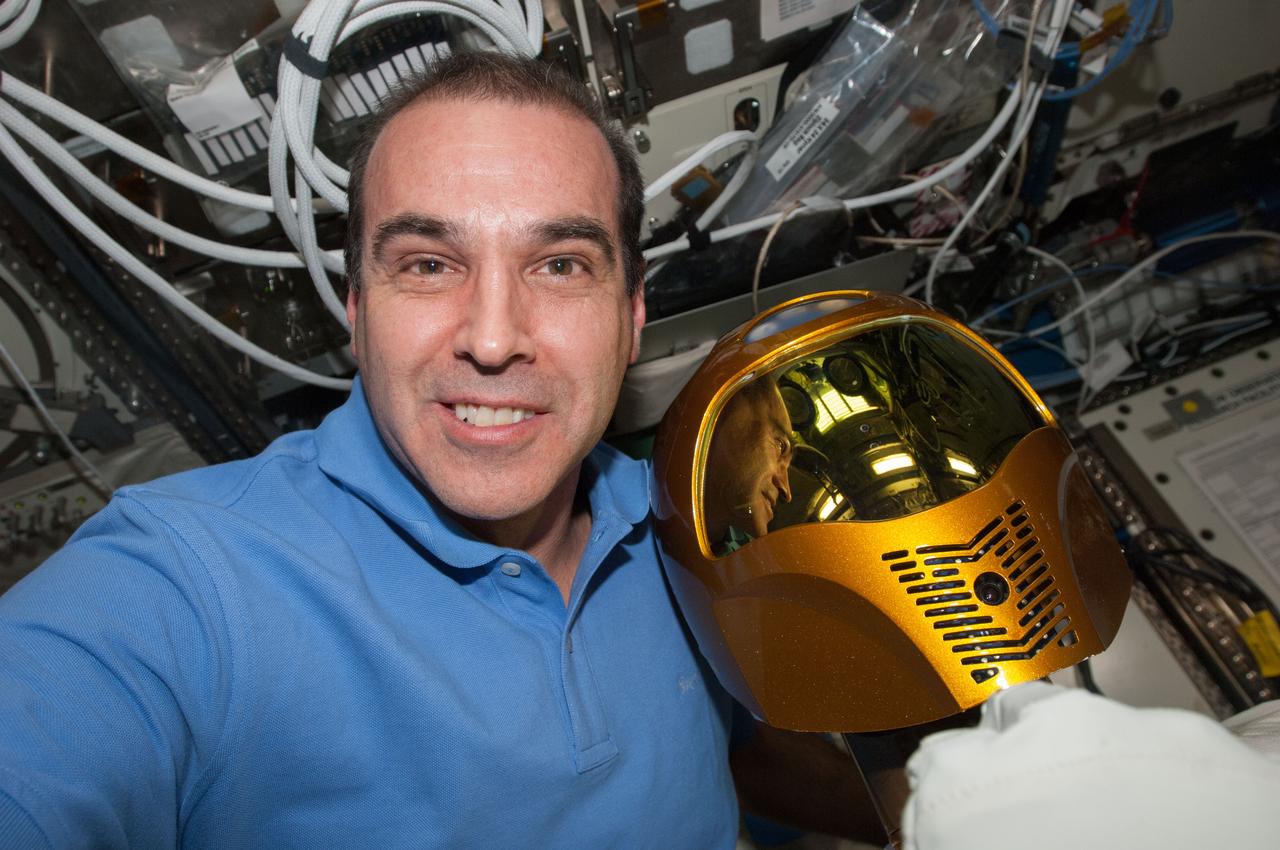
ISS039-E-003797 (15 March 2014) --- Expedition 39 flight engineer Rick Mastracchio poses for a self-portrait with Robonaut 2 in the U.S. Laboratory (Destiny) during a televised public event. (Note: The event was shown live on March 14 in U.S. time zones).
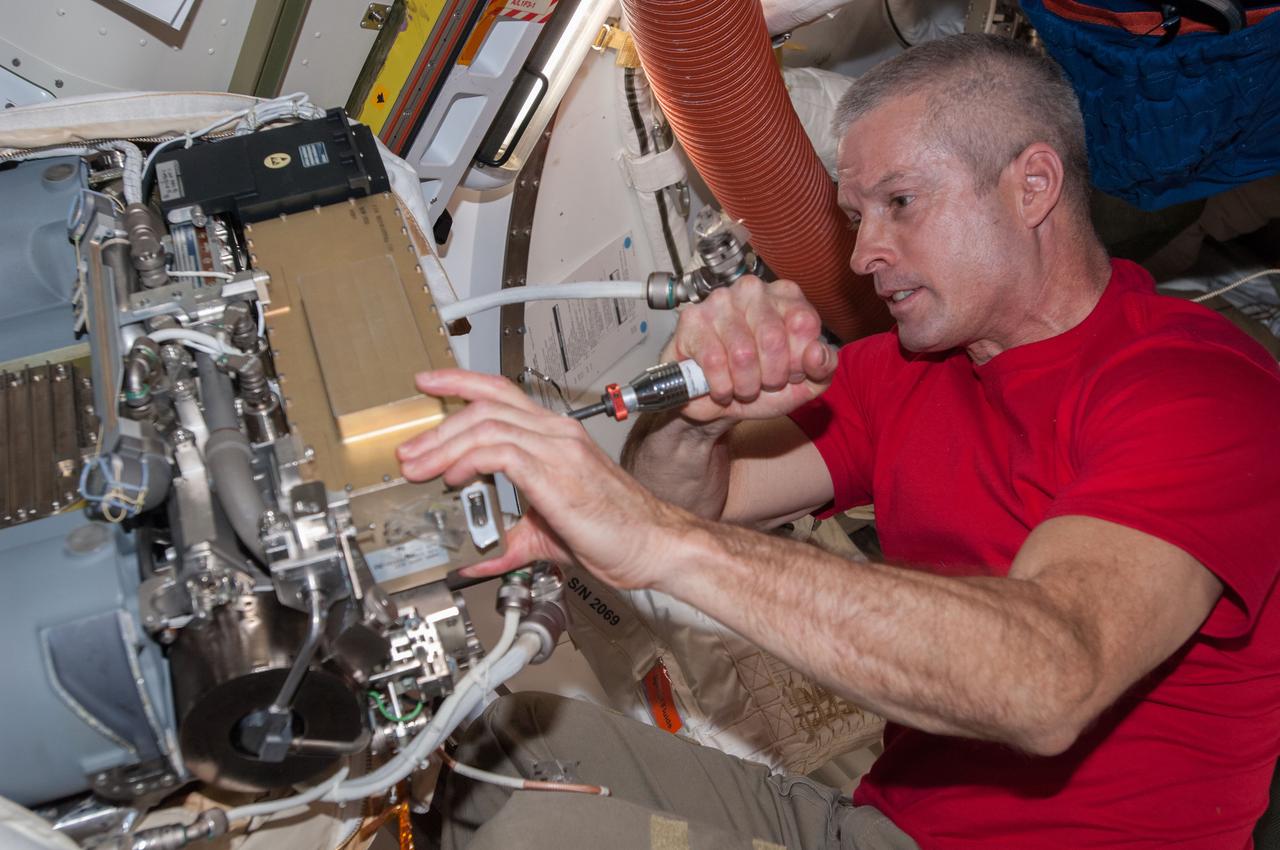
ISS039-E-011886 (14 April 2014) --- In the Quest airlock of the International Space Station, Expedition 39 Flight Engineer Steve Swanson of NASA works on one of the Extravehicular Mobility Unit (EMU) spacesuits to be used on an upcoming spacewalk on which Swanson and crewmate Rick Mastracchio of NASA will participate.
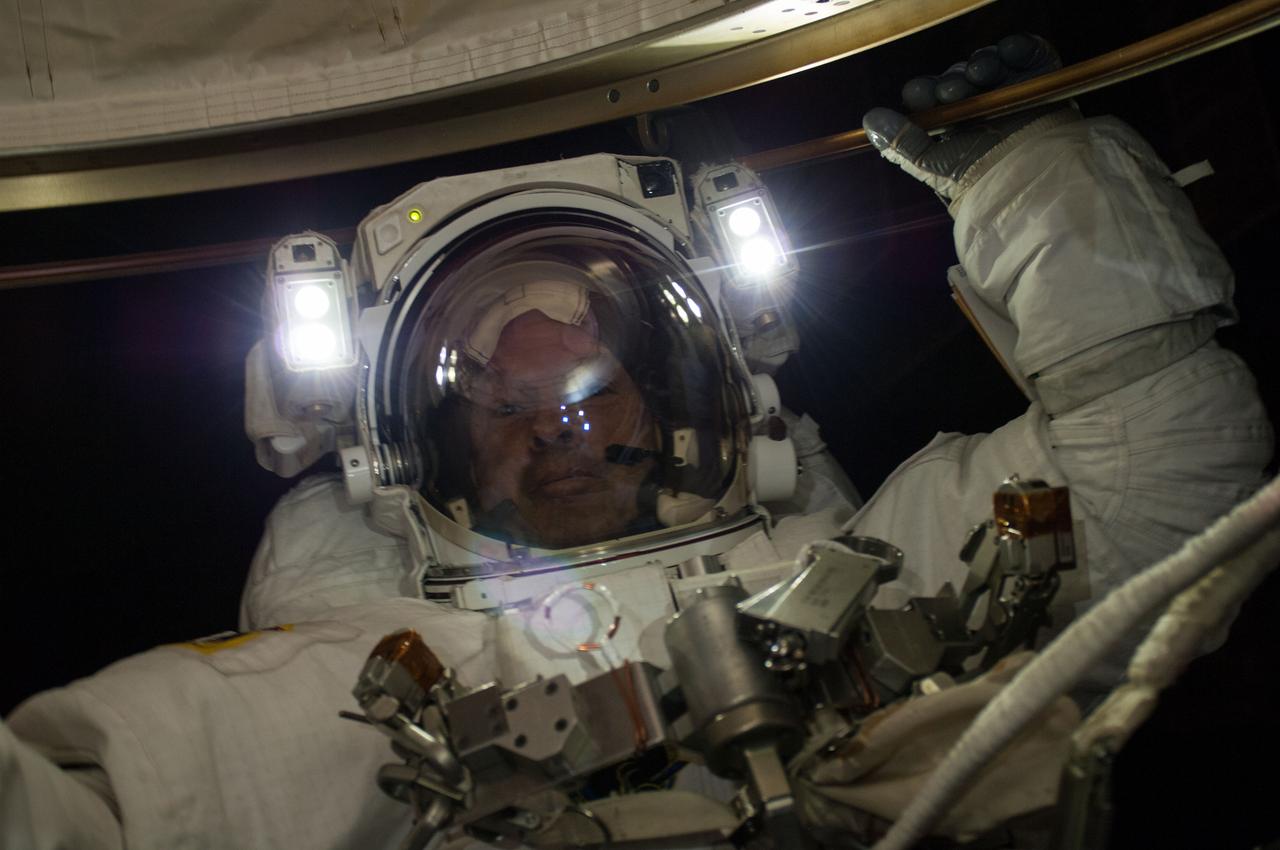
ISS039-E-014846 (22 April 2014) --- NASA astronaut Steve Swanson is pictured during a spacewalk to replace a failed backup computer relay box in the S0 truss of the International Space Station on April 22, 2014. He was accompanied on the spacewalk by fellow Flight Engineer Rick Mastracchio of NASA.
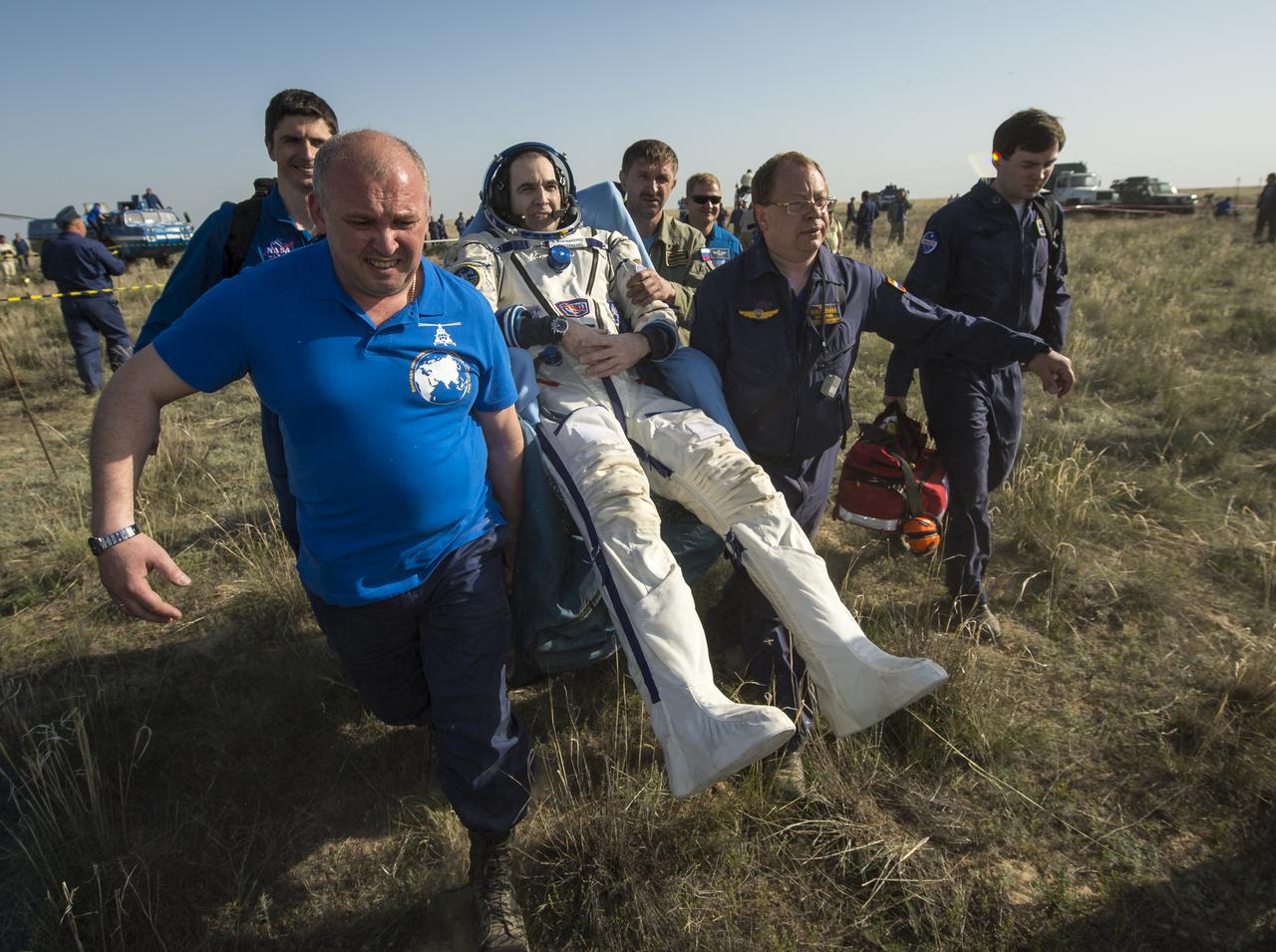
Expedition 39 Flight Engineer Rick Mastracchio of NASA is carried in a chair to a medical tent just minutes after he and Expedition 39 Commander Koichi Wakata of the Japan Aerospace Exploration Agency (JAXA), center, and Soyuz Commander Mikhail Tyurin of Roscosmos landed in their Soyuz TMA-11M spacecraft near the town of Zhezkazgan, Kazakhstan on Wednesday, May 14, 2014. Wakata, Tyurin and Mastracchio returned to Earth after more than six months onboard the International Space Station where they served as members of the Expedition 38 and 39 crews. Photo Credit: (NASA/Bill Ingalls)
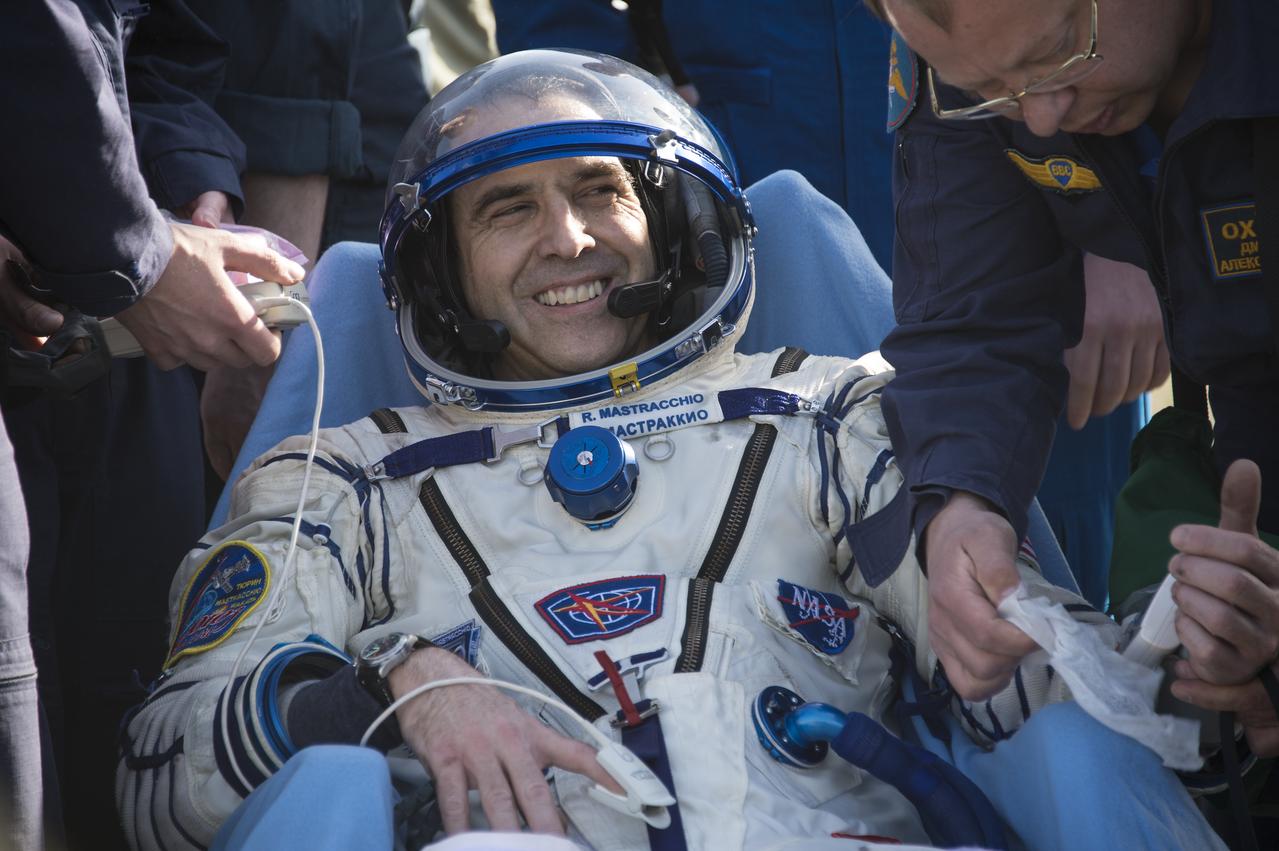
Expedition 39 Flight Engineer Rick Mastracchio of NASA rests in a chair outside the Soyuz Capsule just minutes after he and Expedition 39 Commander Koichi Wakata of the Japan Aerospace Exploration Agency (JAXA), and Soyuz Commander Mikhail Tyurin of Roscosmos landed in their Soyuz TMA-11M spacecraft near the town of Zhezkazgan, Kazakhstan on Wednesday, May 14, 2014. Wakata, Tyurin and Mastracchio returned to Earth after more than six months onboard the International Space Station where they served as members of the Expedition 38 and 39 crews. Photo Credit: (NASA/Bill Ingalls)
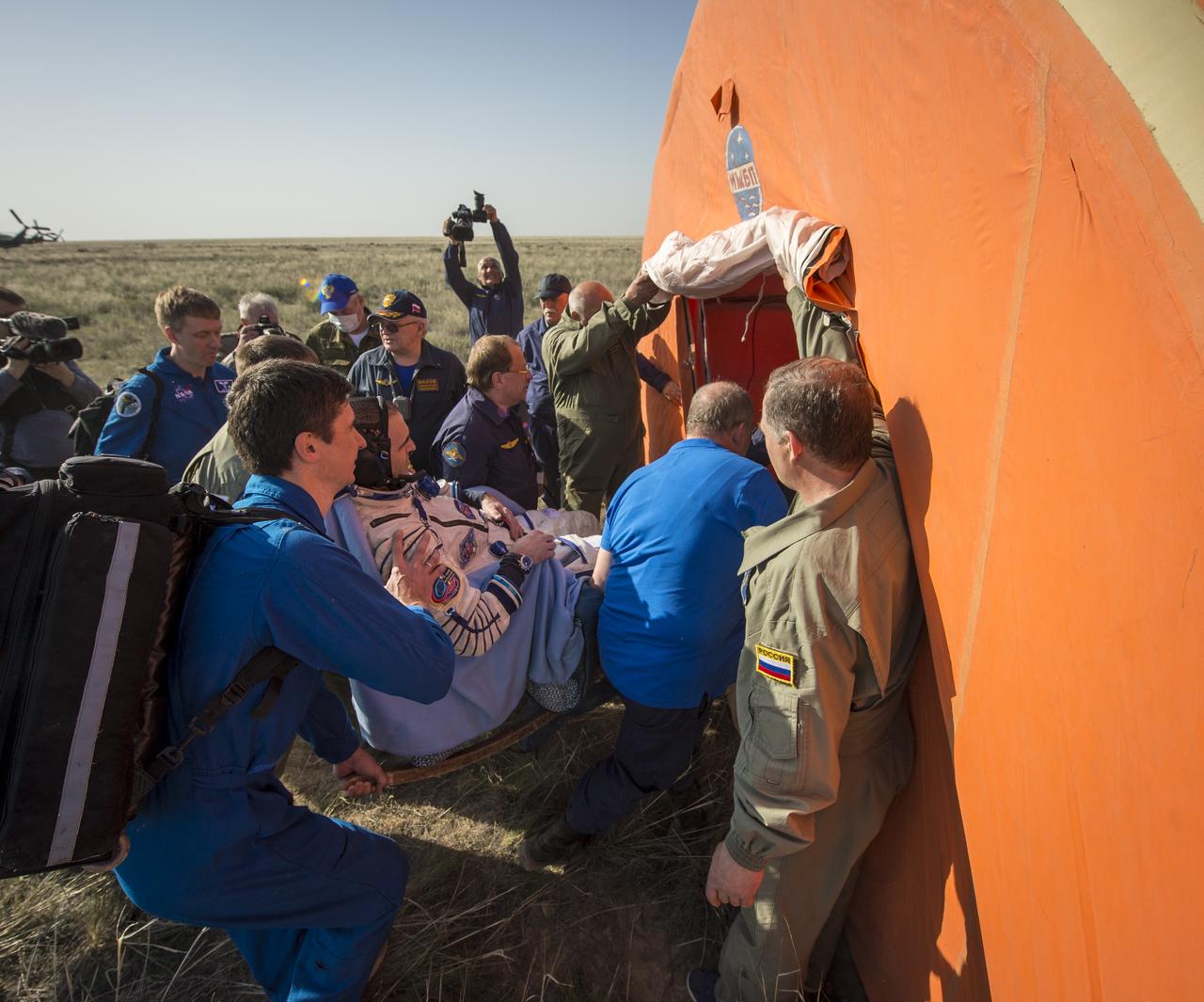
Expedition 39 Flight Engineer Rick Mastracchio of NASA is carried in a chair to a medical tent just minutes after he and Expedition 39 Commander Koichi Wakata of the Japan Aerospace Exploration Agency (JAXA), and Soyuz Commander Mikhail Tyurin of Roscosmos landed in their Soyuz TMA-11M spacecraft near the town of Zhezkazgan, Kazakhstan on Wednesday, May 14, 2014. Wakata, Tyurin and Mastracchio returned to Earth after more than six months onboard the International Space Station where they served as members of the Expedition 38 and 39 crews. Photo Credit: (NASA/Bill Ingalls)
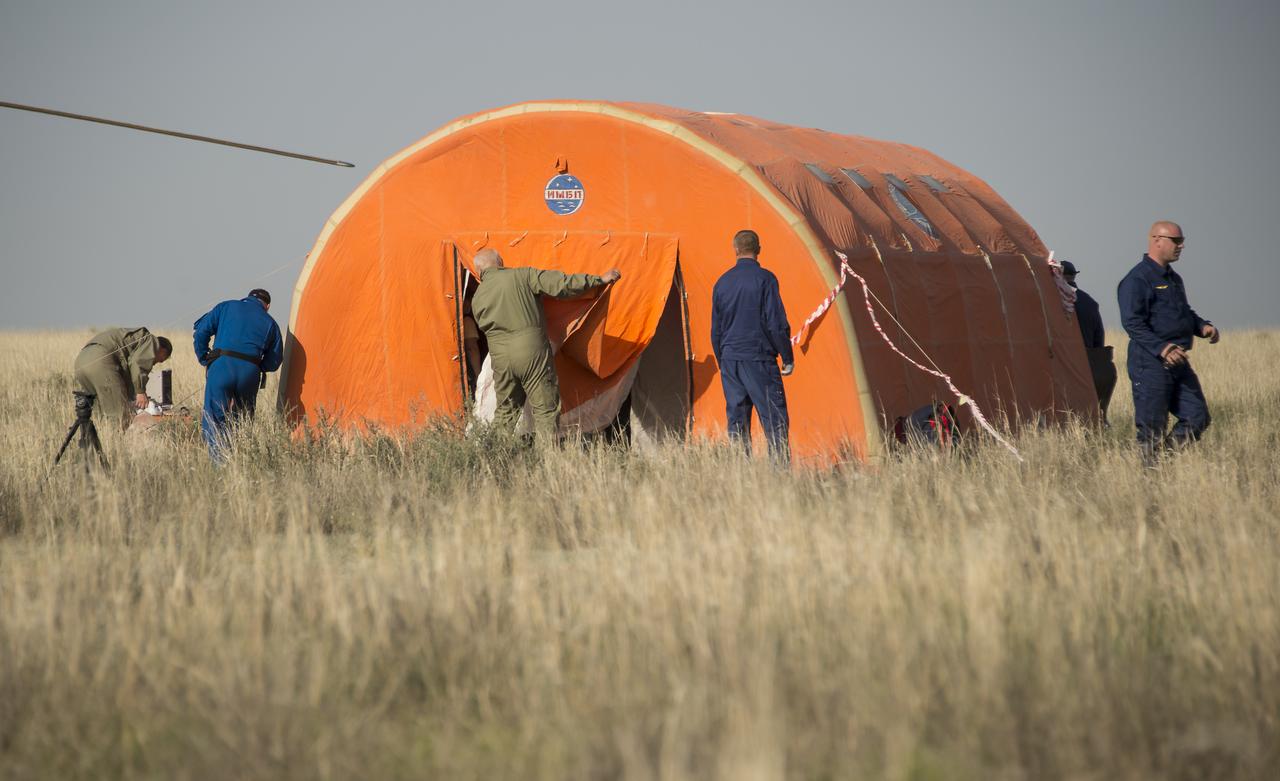
A portable tent for Expedition 39 Commander Koichi Wakata of the Japan Aerospace Exploration Agency (JAXA), Soyuz Commander Mikhail Tyurin of Roscosmos, and Flight Engineer Rick Mastracchio of NASA is used for the crew to remove their Russian Sokol suits and to have medical checks after the three landed in their Soyuz TMA-11M spacecraft near the town of Zhezkazgan, Kazakhstan on Wednesday, May 14, 2014. Wakata, Tyurin and Mastracchio returned to Earth after more than six months onboard the International Space Station where they served as members of the Expedition 38 and 39 crews. Photo Credit: (NASA/Bill Ingalls)
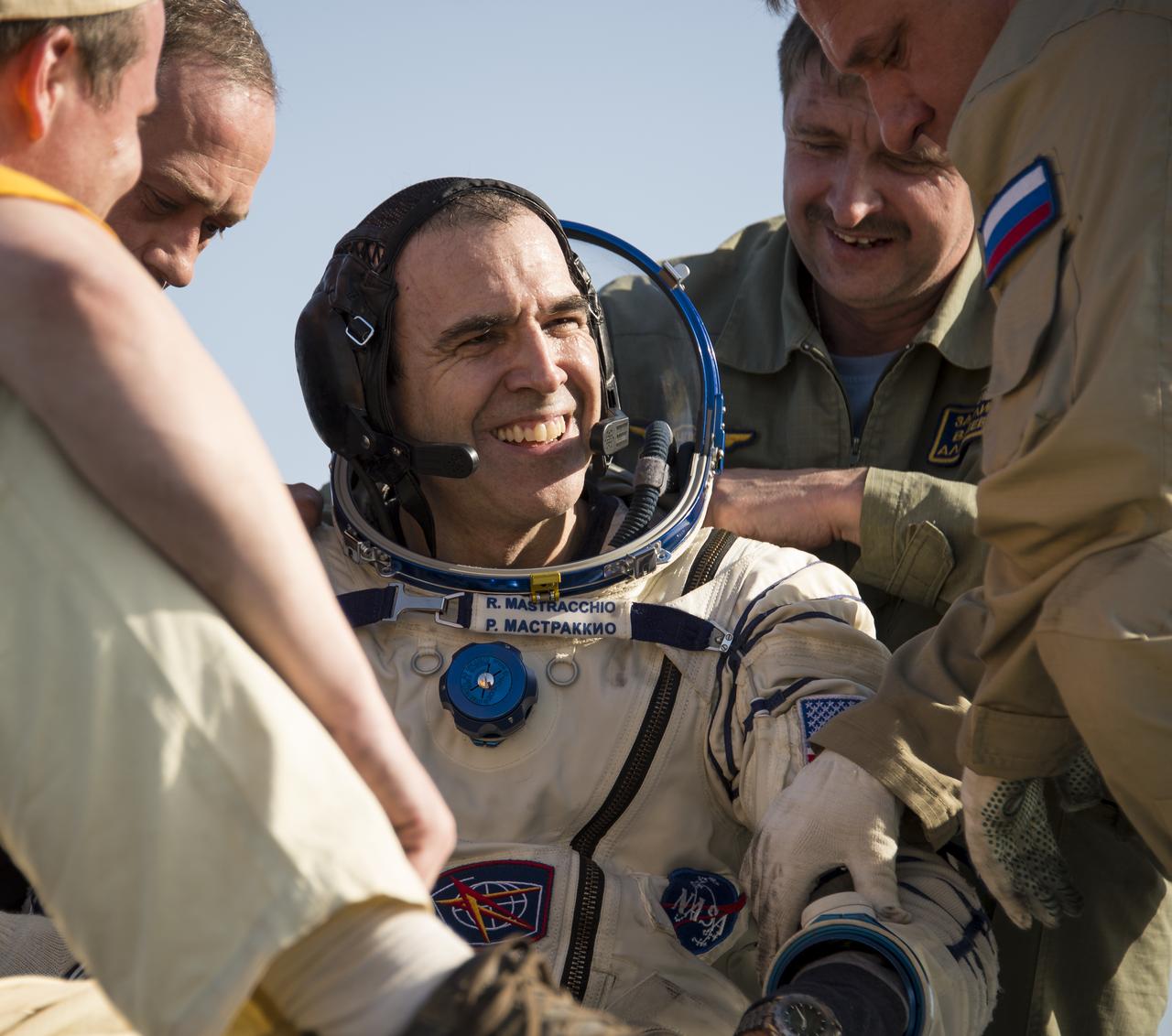
Expedition 39 Flight Engineer Rick Mastracchio of NASA is helped of the Soyuz Capsule just minutes after he and Expedition 39 Commander Koichi Wakata of the Japan Aerospace Exploration Agency (JAXA), center, and Soyuz Commander Mikhail Tyurin of Roscosmos landed in their Soyuz TMA-11M spacecraft near the town of Zhezkazgan, Kazakhstan on Wednesday, May 14, 2014. Wakata, Tyurin and Mastracchio returned to Earth after more than six months onboard the International Space Station where they served as members of the Expedition 38 and 39 crews. Photo Credit: (NASA/Bill Ingalls)
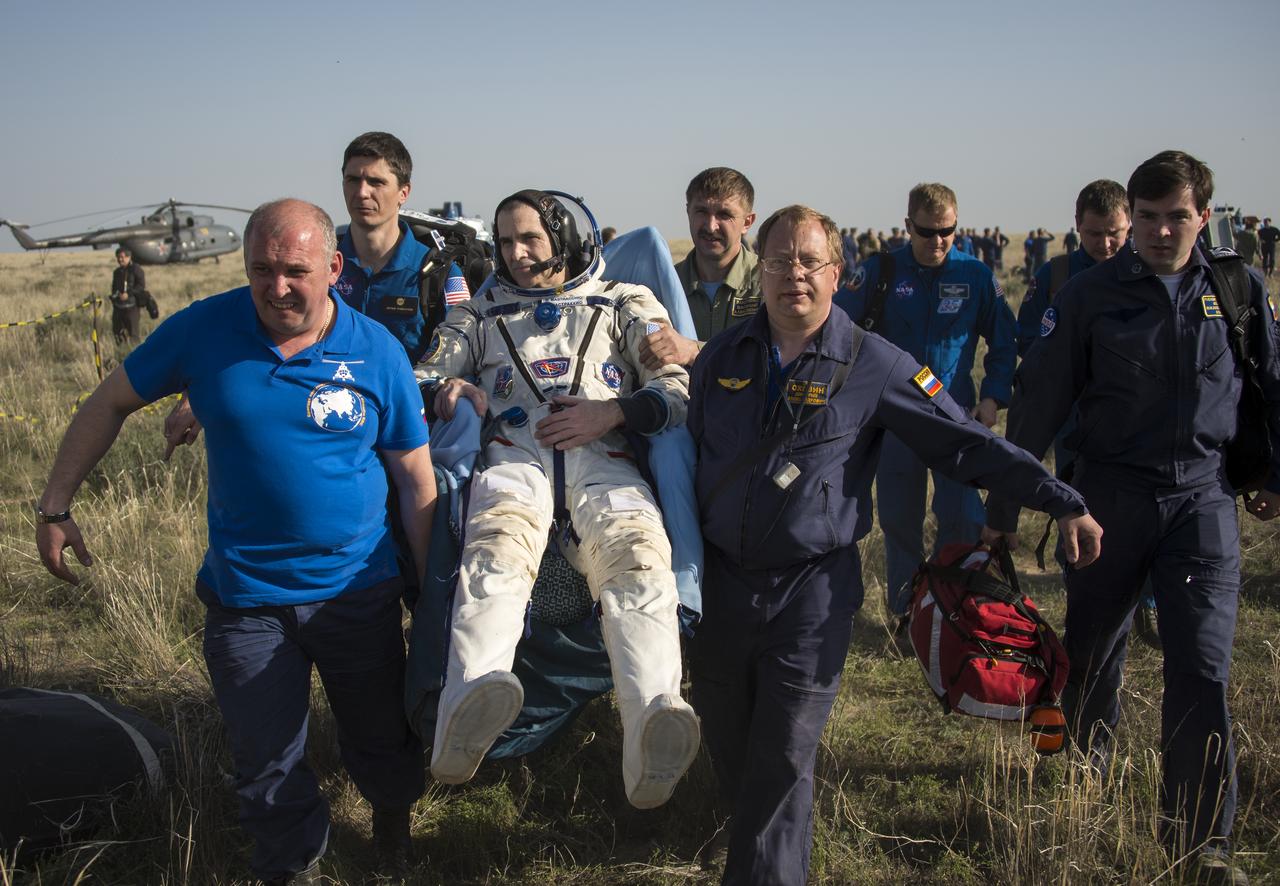
Expedition 39 Flight Engineer Rick Mastracchio of NASA is carried in a chair to a medical tent just minutes after he and Expedition 39 Commander Koichi Wakata of the Japan Aerospace Exploration Agency (JAXA), and Soyuz Commander Mikhail Tyurin of Roscosmos landed in their Soyuz TMA-11M spacecraft near the town of Zhezkazgan, Kazakhstan on Wednesday, May 14, 2014. Wakata, Tyurin and Mastracchio returned to Earth after more than six months onboard the International Space Station where they served as members of the Expedition 38 and 39 crews. Photo Credit: (NASA/Bill Ingalls)
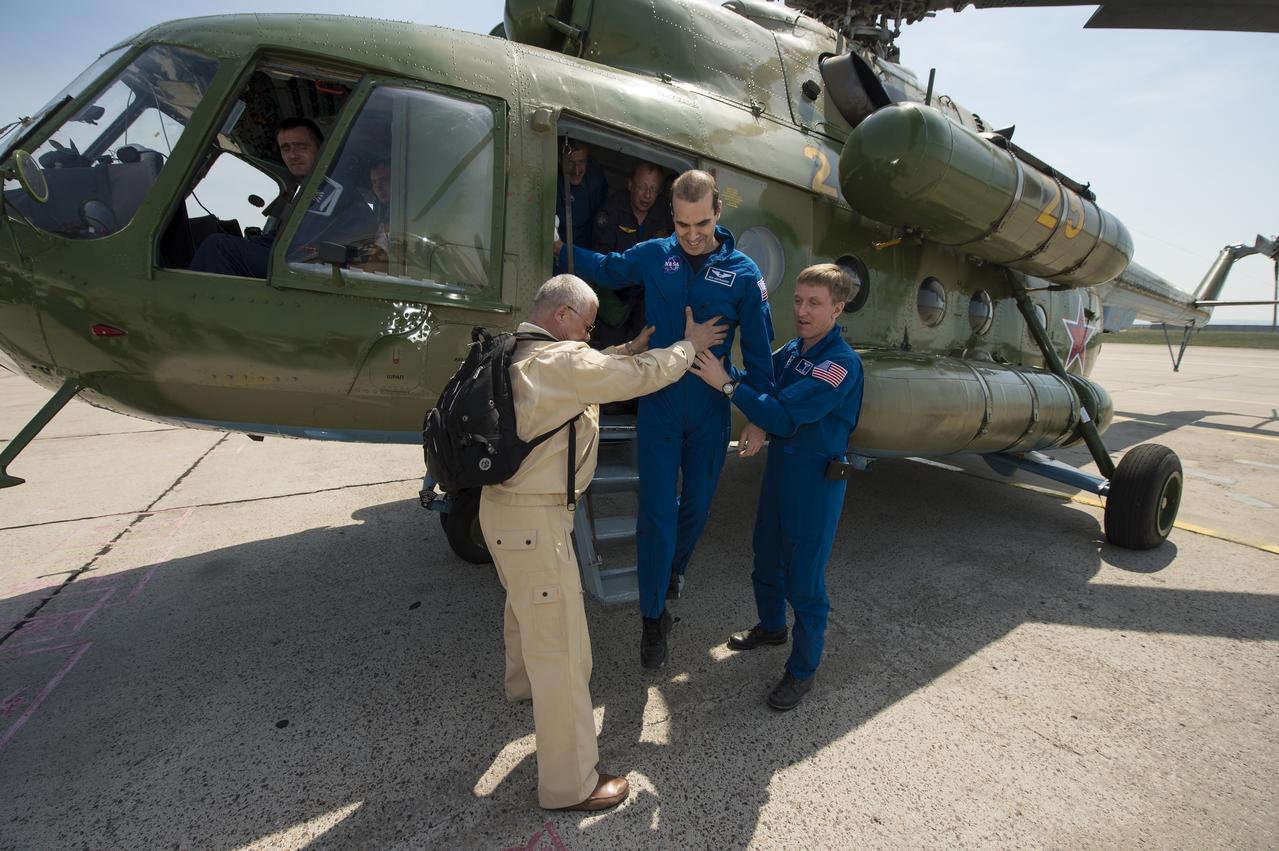
Expedition 39 Flight Engineer Rick Mastracchio of NASA, is helped out of a helicopter at the Karaganda Airport in Kazakhstan after the two hour flight from the Soyuz landing site near the town of Zhezkazgan, Kazakhstan where Mastracchio and Expedition 39 Commander Koichi Wakata of the Japan Aerospace Exploration Agency (JAXA), and Soyuz Commander Mikhail Tyurin of Roscosmos landed in their Soyuz TMA-11M spacecraft, Wednesday, May 14, 2014. Wakata, Tyurin and Mastracchio returned to Earth after more than six months onboard the International Space Station where they served as members of the Expedition 38 and 39 crews. Photo Credit: (NASA/Bill Ingalls)
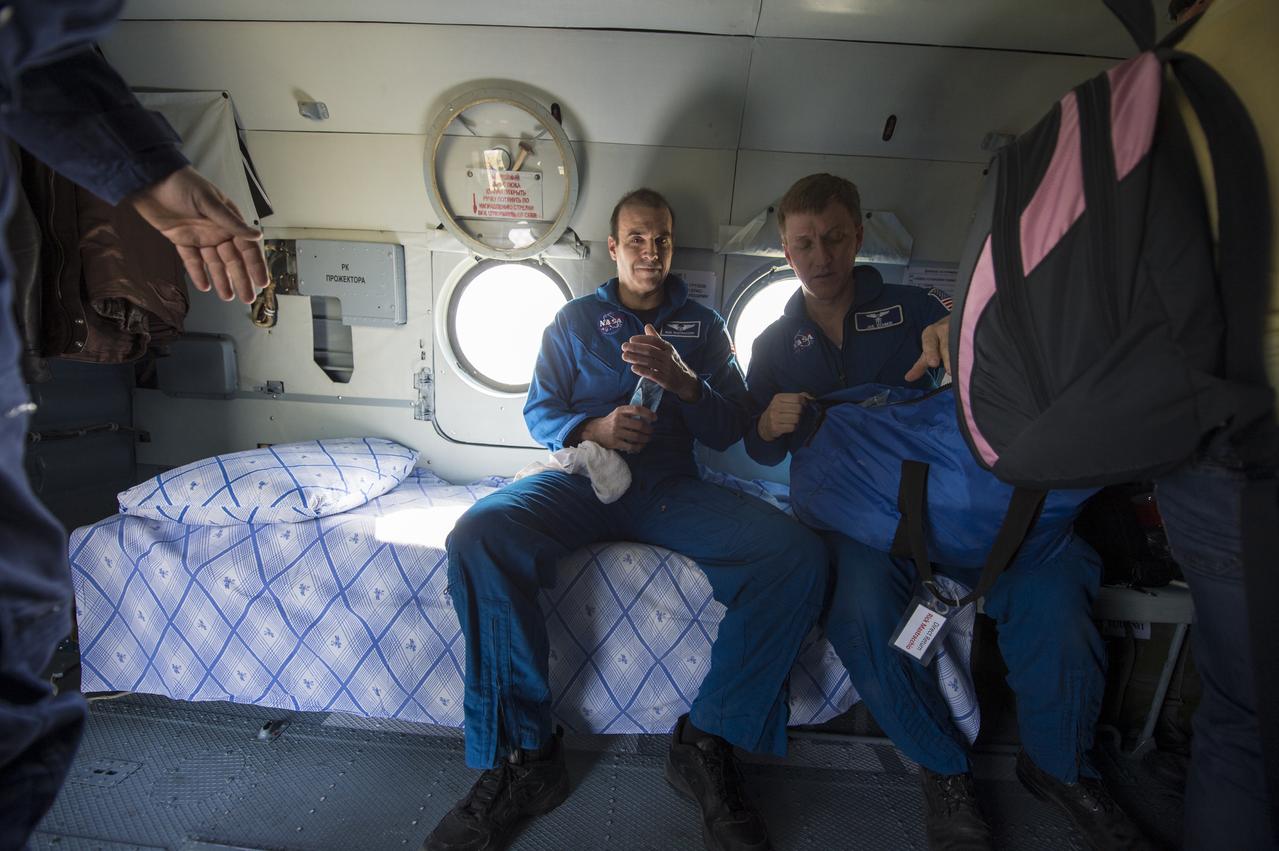
Expedition 39 Flight Engineer Rick Mastracchio of NASA, left, and NASA Flight Surgeon Joseph Schmid prepare to depart in a helicopter from the Soyuz landing site near the town of Zhezkazgan, Kazakhstan where Mastracchio and Expedition 39 Commander Koichi Wakata of the Japan Aerospace Exploration Agency (JAXA), and Soyuz Commander Mikhail Tyurin of Roscosmos landed in their Soyuz TMA-11M spacecraft, Wednesday, May 14, 2014. Wakata, Tyurin and Mastracchio returned to Earth after more than six months onboard the International Space Station where they served as members of the Expedition 38 and 39 crews. Photo Credit: (NASA/Bill Ingalls)
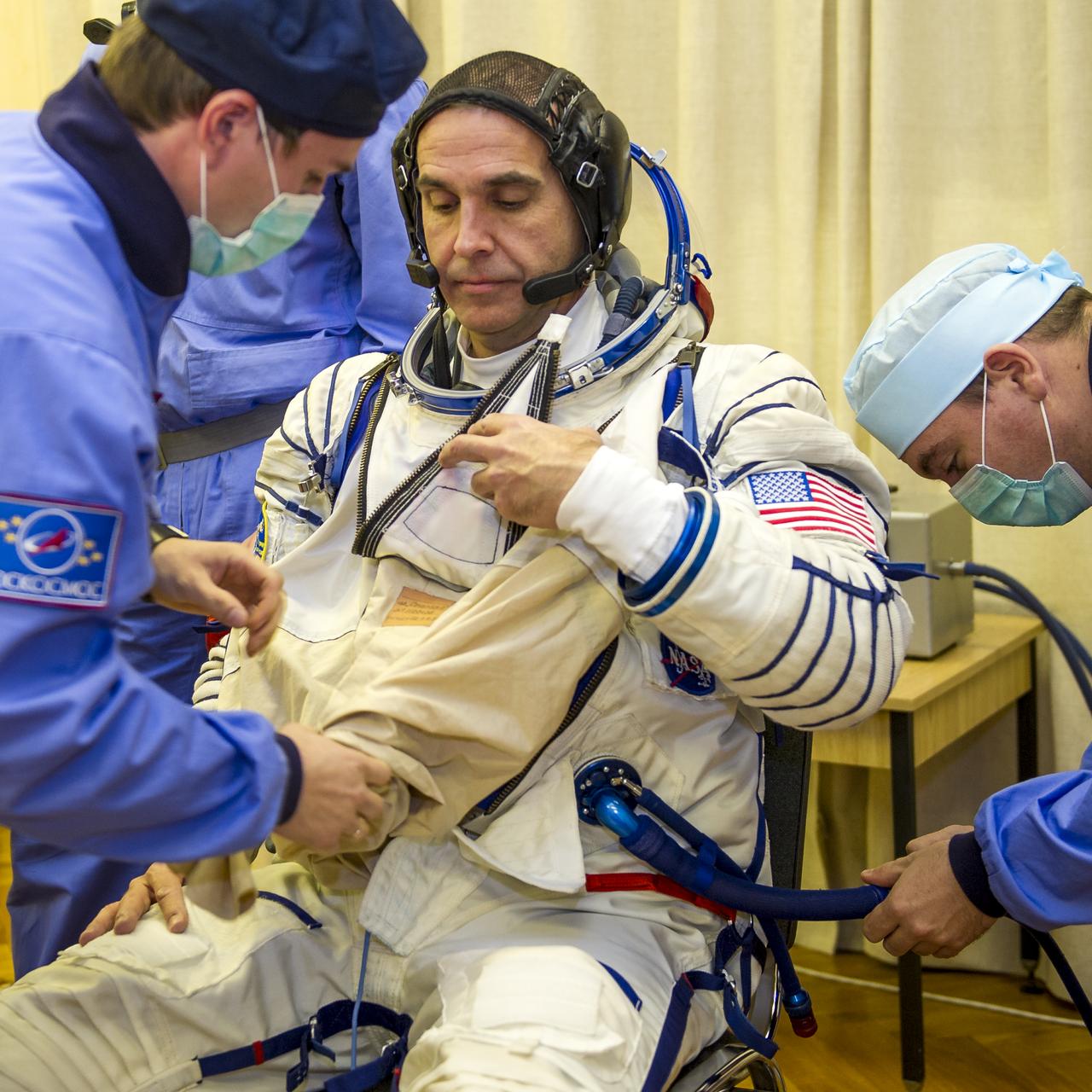
Expedition 38 Flight Engineer Rick Mastracchio of NASA dons his Russian sokol suit a few hours ahead of his launch on a soyuz rocket with fellow crew mates, Soyuz Commander Mikhail Tyurin of Roscosmos, and, Flight Engineer Koichi Wakata of the Japan Aerospace Exploration Agency, Thursday, Nov. 7, 2013, in Baikonur, Kazakhstan. Tyurin, Wakata, and, Mastracchio will launch in their Soyuz TMA-11M spacecraft to the International Space Station to begin a six-month mission. Photo Credit: (NASA/GCTC/Irina Peshkova)

Expedition 38 Flight Engineer Rick Mastracchio of NASA, performs the traditional door signing at the Cosmonaut hotel prior to departing the hotel for launch in a Soyuz rocket with fellow crew mates, Soyuz Commander Mikhail Tyurin of Roscosmos, and, Flight Engineer Koichi Wakata of the Japan Aerospace Exploration Agency, Thursday, Nov. 7, 2013, in Baikonur, Kazakhstan. Tyurin, Wakata, and, Mastracchio will launch in their Soyuz TMA-11M spacecraft to the International Space Station to begin a six-month mission. Photo Credit (NASA/Bill Ingalls)
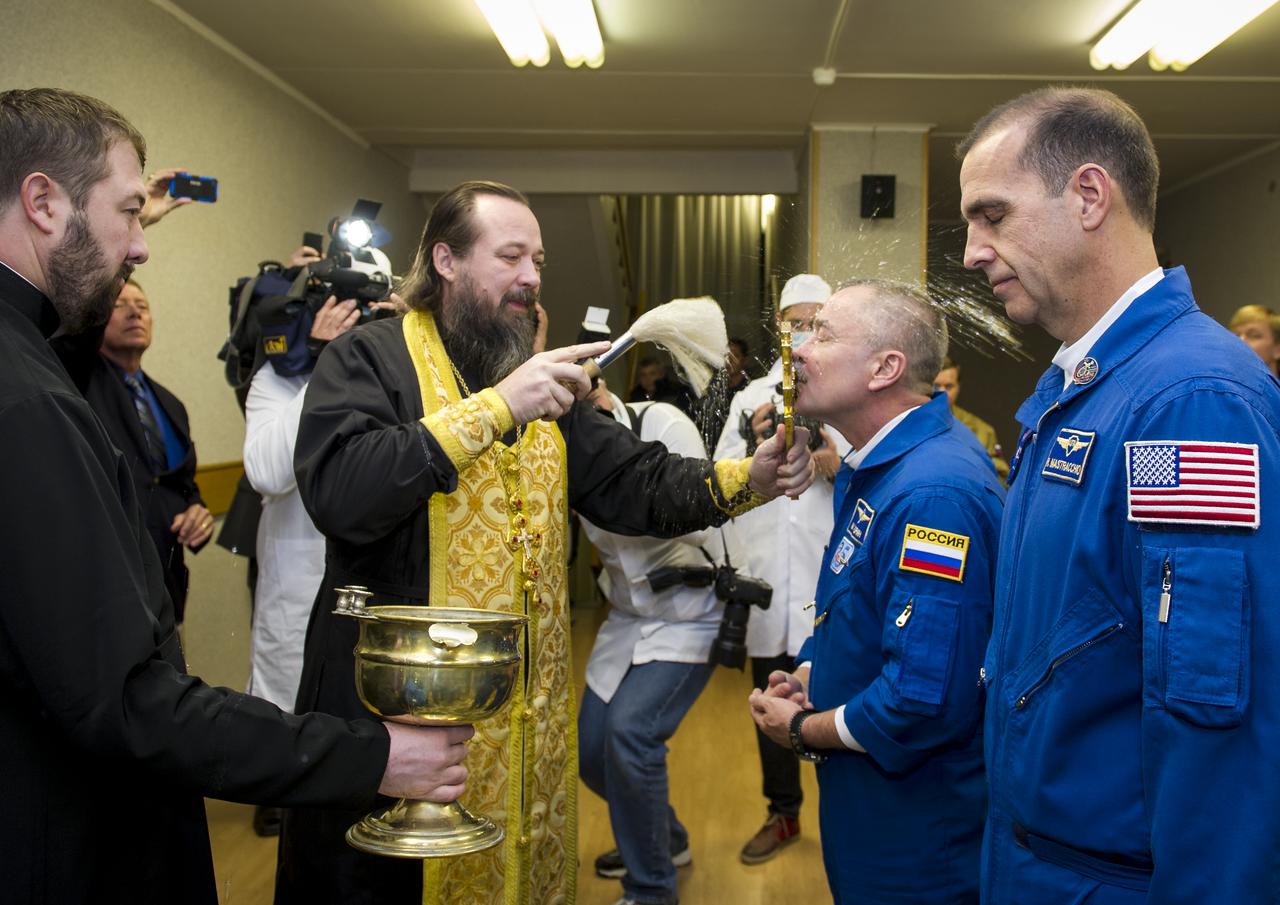
Expedition 38 Soyuz Commander Mikhail Tyurin of Roscosmos receives the traditional blessing from a Russian Orthodox priest at the Cosmonaut Hotel prior to his launch on the Soyuz rocket to the International Space Station with Flight Engineer Koichi Wakata of the Japan Aerospace Exploration Agency, and, Flight Engineer Rick Mastracchio of NASA, Thursday, Nov. 7, 2013, in Baikonur, Kazakhstan. Tyurin, Wakata, and, Mastracchio will launch in their Soyuz TMA-11M spacecraft to the International Space Station to begin a six-month mission. Photo Credit: (NASA/GCTC/Irina Peshkova)
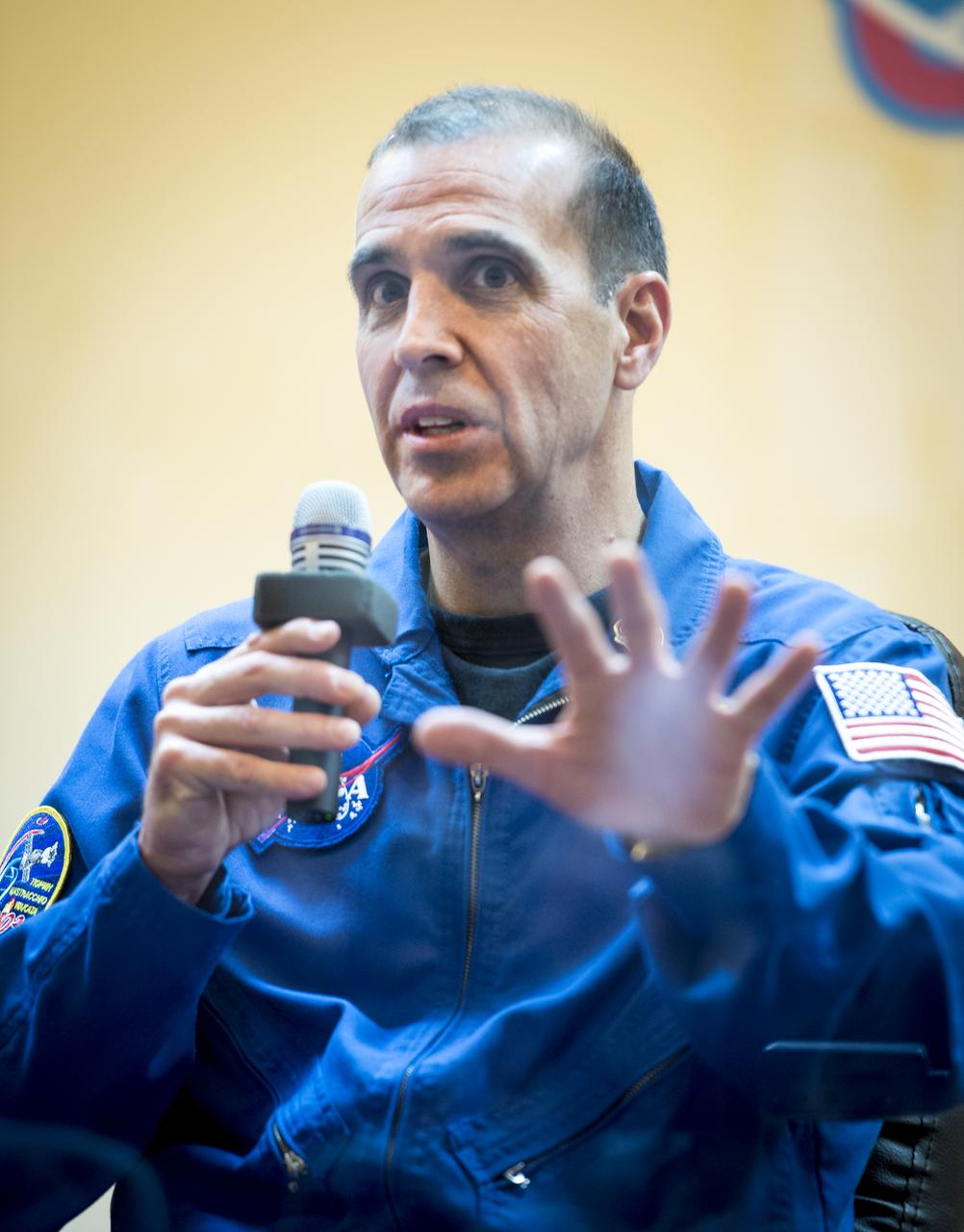
Expedition 38 Flight Engineer Rick Mastracchio of NASA talks, while in quarantine behind glass, during the final press conference held a day ahead of his launch with fellow crew mates, Soyuz Commander Mikhail Tyurin of Roscosmos, and, Flight Engineer Koichi Wakata of the Japan Aerospace Exploration Agency, to the International Space Station, Wednesday, Nov. 6, 2013 at the Cosmonaut Hotel in Baikonur, Kazakhstan. Photo Credit: (NASA/Bill Ingalls)
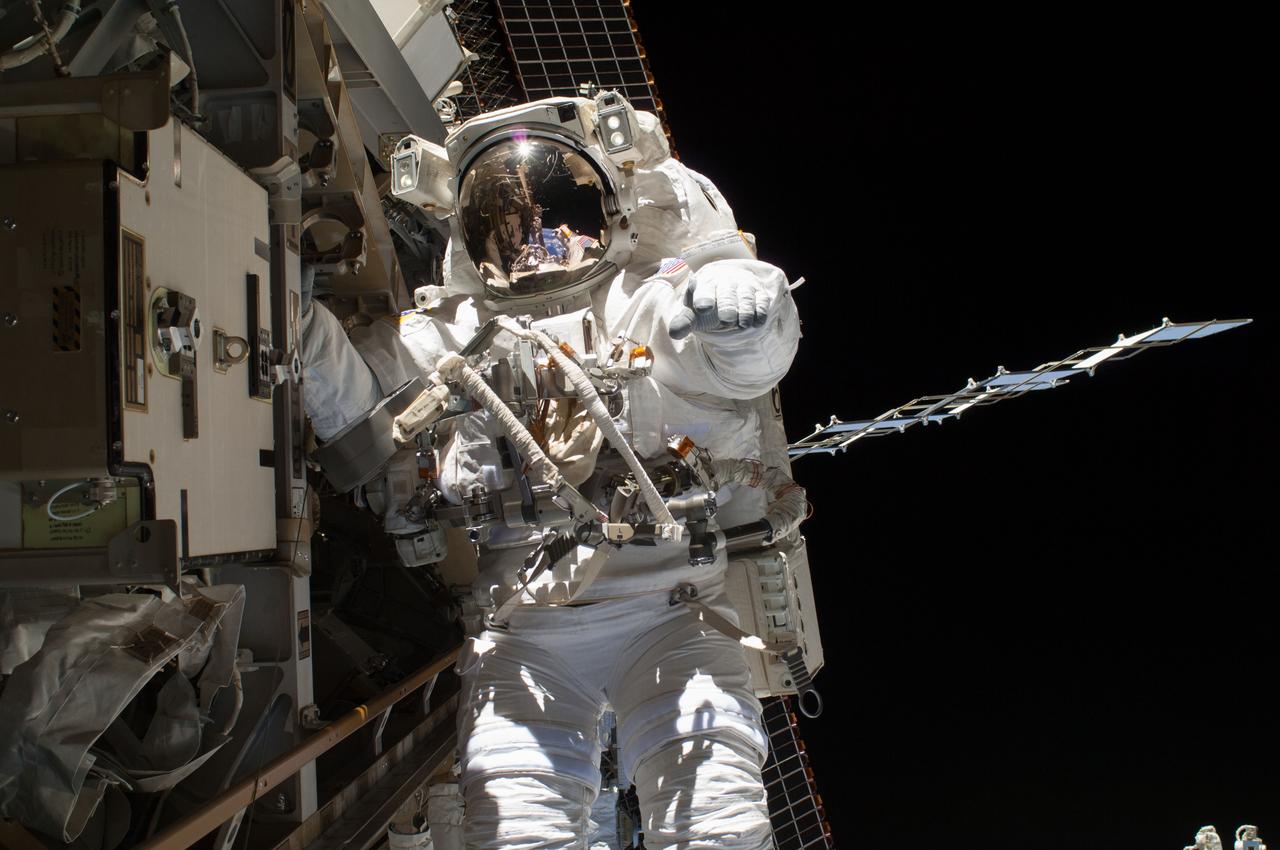
ISS039-E-014893 (22 April 2014) --- NASA astronaut Steve Swanson is pictured during a spacewalk to replace a failed backup computer relay box in the S0 truss of the International Space Station on April 22, 2014. He was accompanied on the spacewalk by fellow Flight Engineer Rick Mastracchio of NASA, who can be seen as a tiny figure anchored several yards away reflected in Swanson's helmet visor.
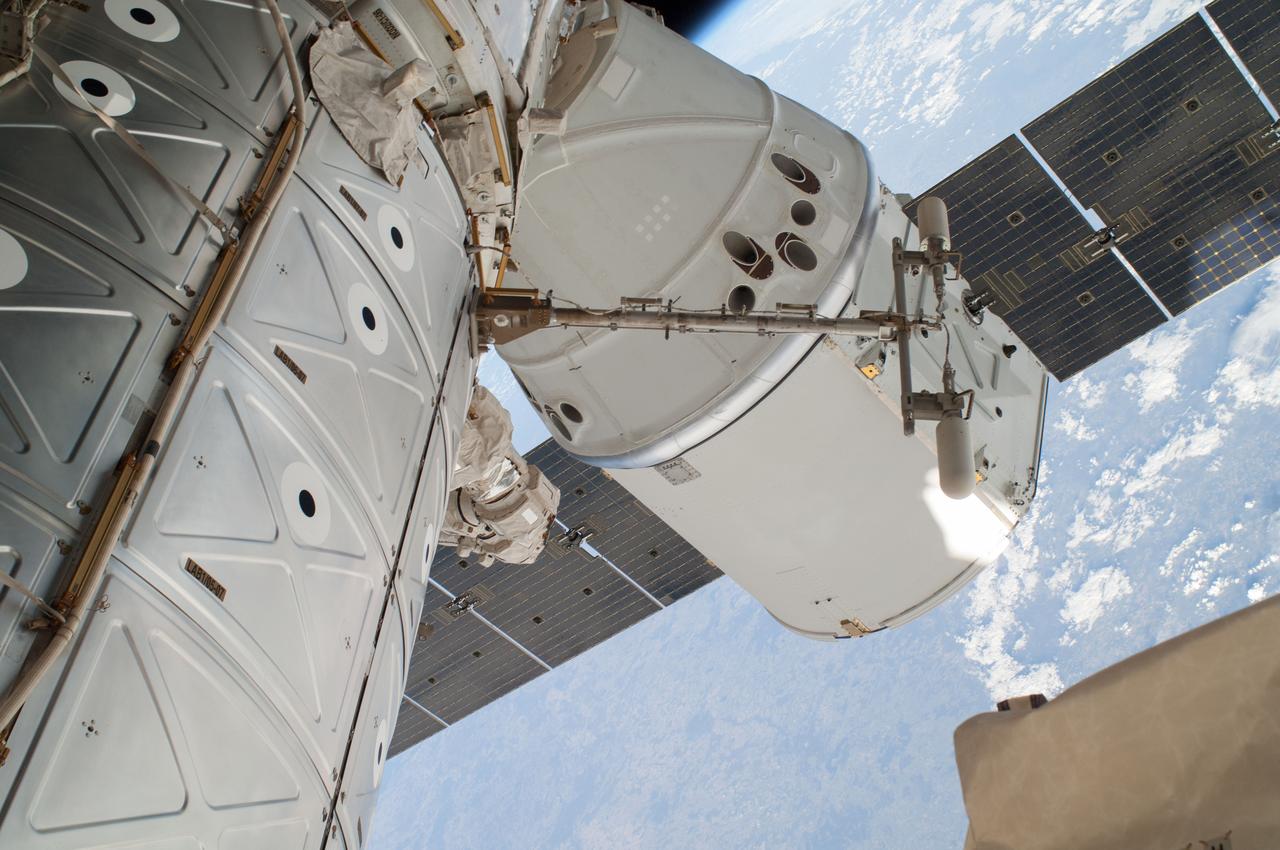
ISS039-E-014968 (22 April 2014) --- This snapshot of the SpaceX Dragon spacecraft docked to the International Space Station was photographed by one of two spacewalking astronauts on April 22, 2014. NASA astronauts Rick Mastracchio and Steve Swanson, Expediton 39 flight engineers, replaced a failed backup computer relay box in the S0 truss on the orbital outpost.
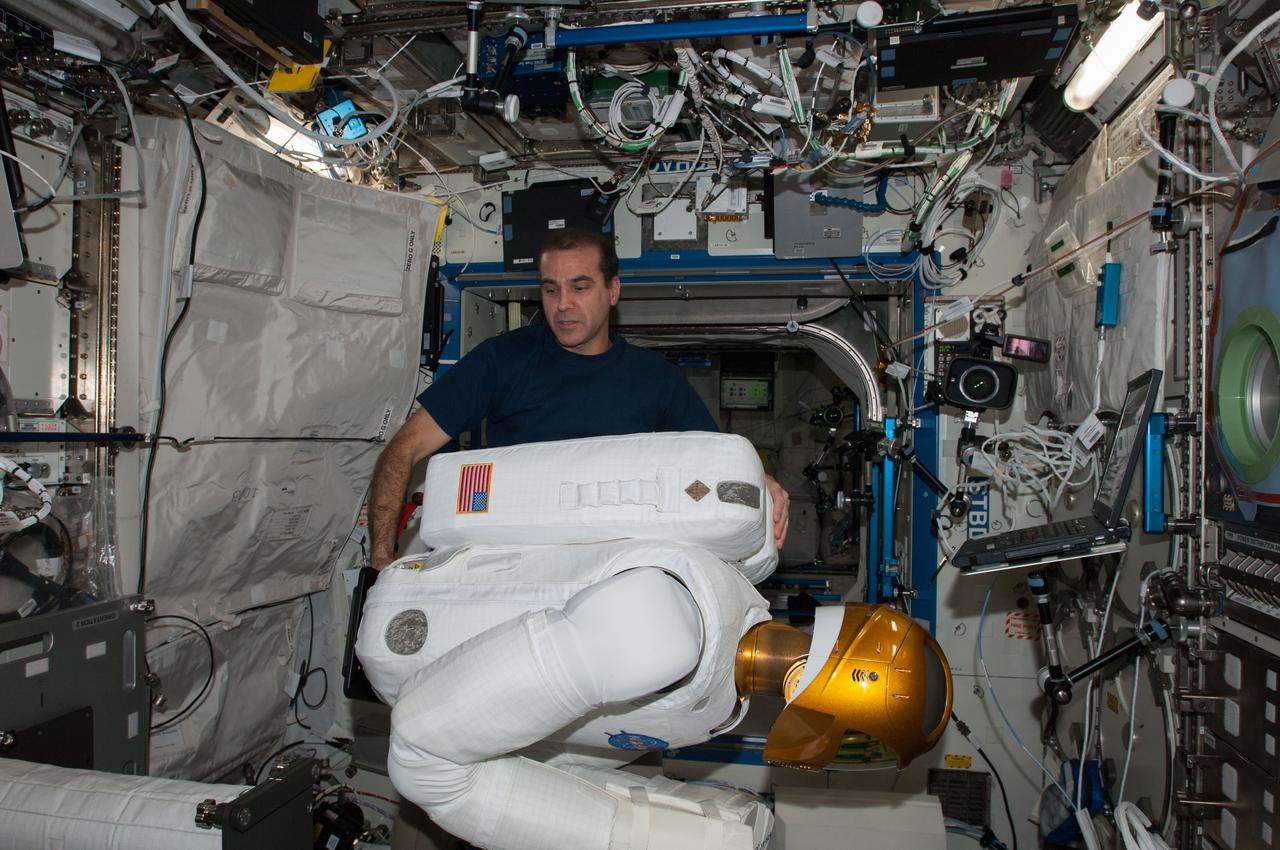
ISS038-E-013710 (9 Dec. 2013) --- In the International Space Station's Destiny laboratory, NASA astronaut Rick Mastracchio, Expedition 38 flight engineer, prepares Robonaut 2 for an upcoming ground-commanded firmware update that will support the installation of a pair of legs for the humanoid robot. R2 was designed to test out the capability of a robot to perform tasks deemed too dangerous or mundane for astronauts. Robonaut's legs are scheduled to arrive to the station aboard the SpaceX-3 commercial cargo mission in February 2014.
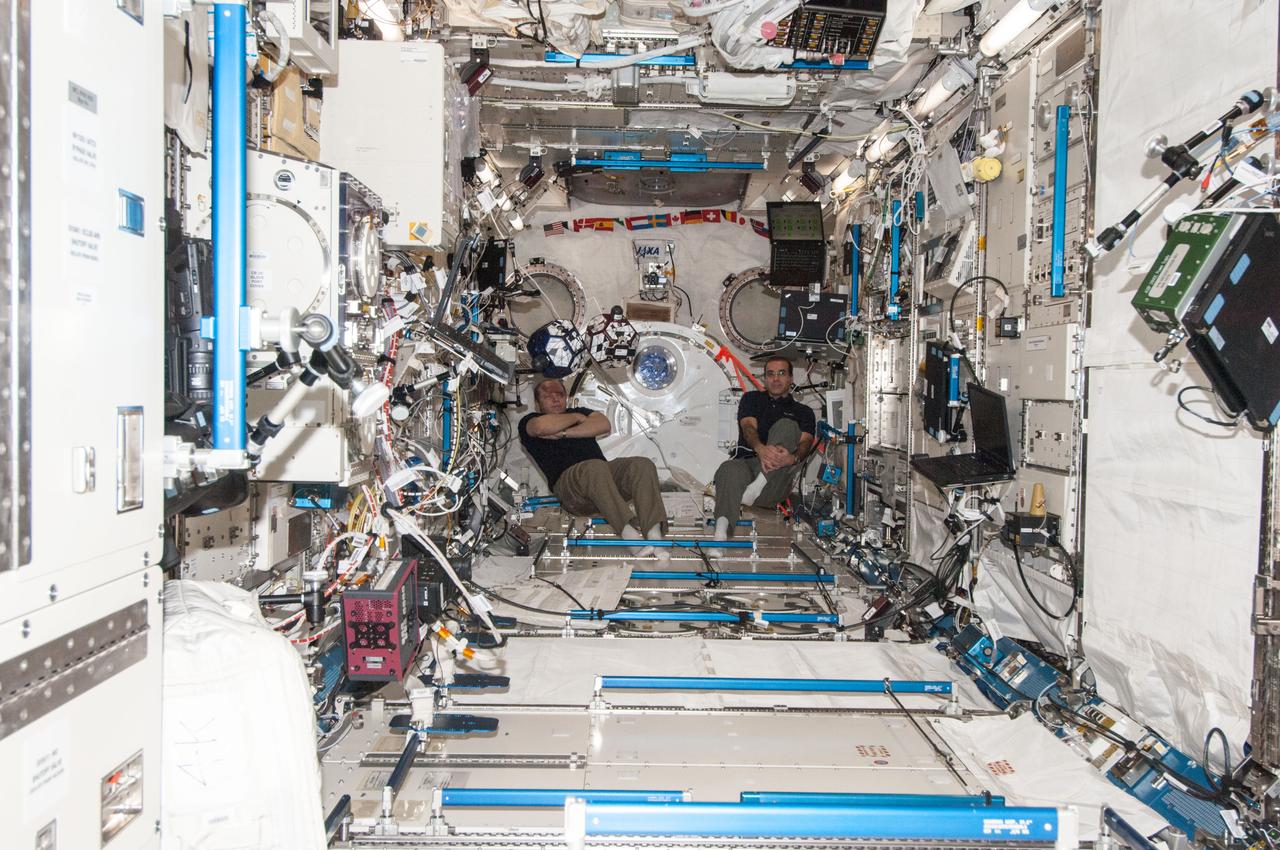
ISS038-E-031405 (15 Jan. 2014) --- In the International Space Station's Kibo laboratory, Russian cosmonaut Oleg Kotov (left), Expedition 38 commander; and NASA astronaut Rick Mastracchio, flight engineer, conduct a session with a pair of bowling-ball-sized free-flying satellites known as Synchronized Position Hold, Engage, Reorient, Experimental Satellites, or SPHERES. The experiment uses student written algorithms that operate the small satellites to demonstrate critical mission tasks such as formation flying and vehicle dockings.
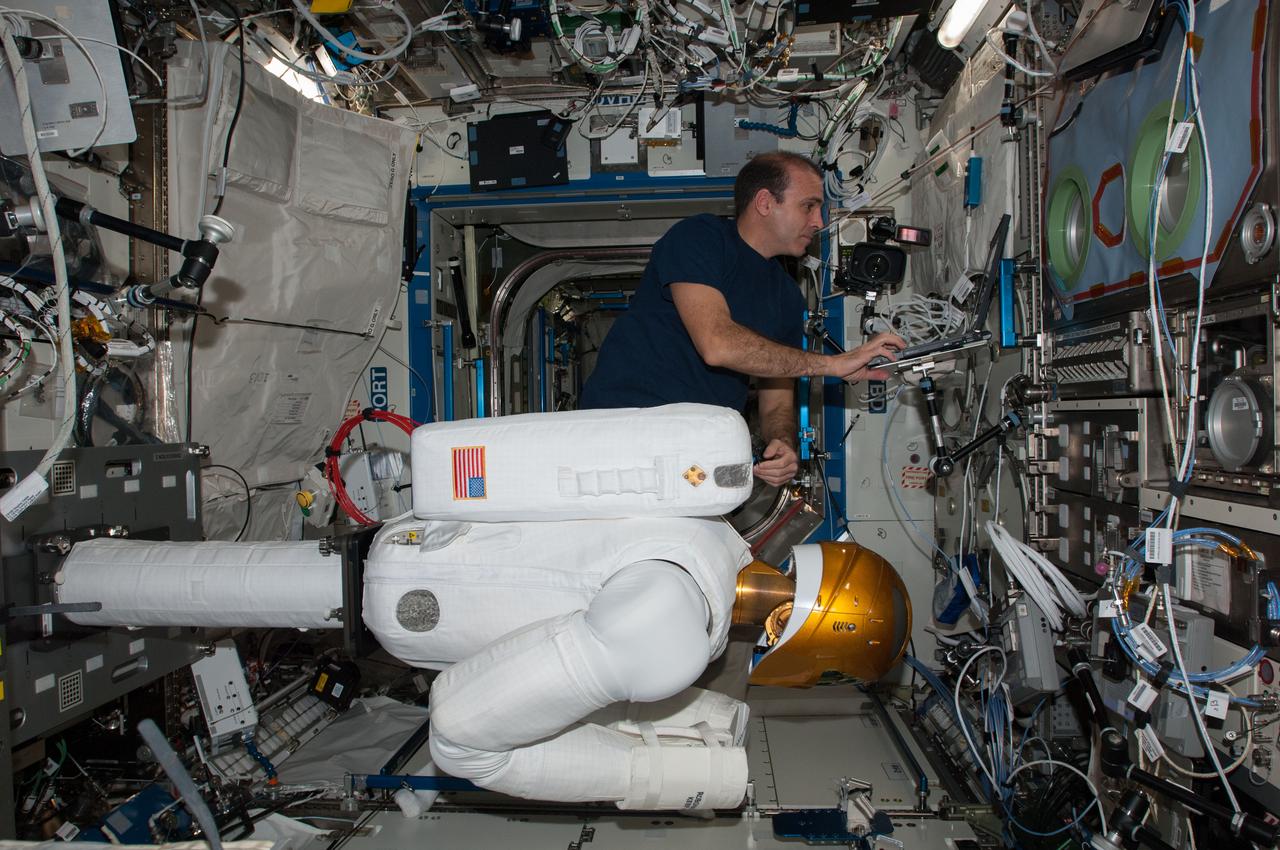
ISS038-E-013714 (9 Dec. 2013) --- In the International Space Station's Destiny laboratory, NASA astronaut Rick Mastracchio, Expedition 38 flight engineer, prepares Robonaut 2 for an upcoming ground-commanded firmware update that will support the installation of a pair of legs for the humanoid robot. R2 was designed to test out the capability of a robot to perform tasks deemed too dangerous or mundane for astronauts. Robonaut's legs are scheduled to arrive to the station aboard the SpaceX-3 commercial cargo mission in February 2014.
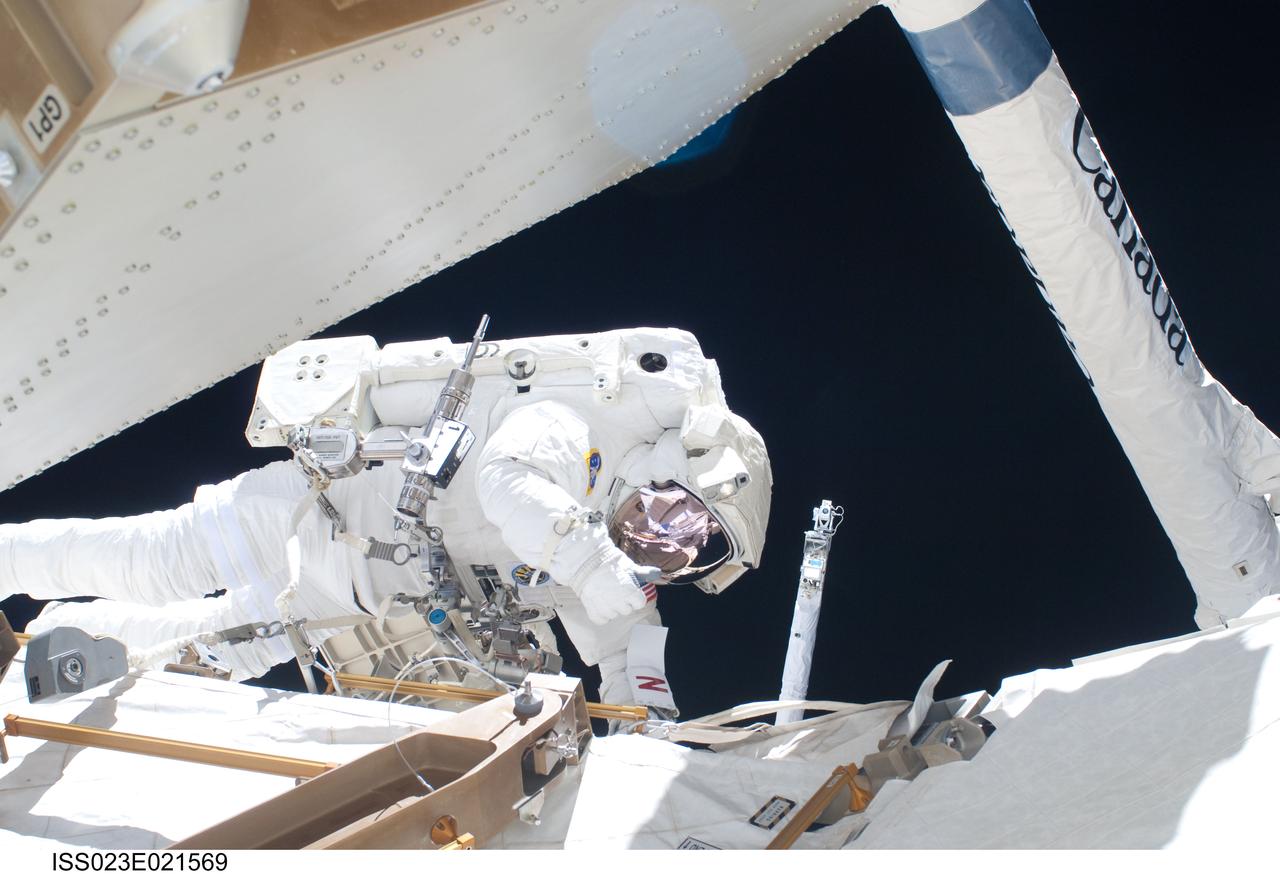
ISS023-E-021569 (11 April 2010) --- NASA astronaut Clayton Anderson, STS-131 mission specialist, participates in the mission's second session of extravehicular activity (EVA) as construction and maintenance continue on the International Space Station. During the seven-hour, 26-minute spacewalk, Anderson and Rick Mastracchio (out of frame), mission specialist, unhooked and removed the depleted ammonia tank and installed a 1,700-pound ammonia tank on the station’s Starboard 1 truss, completing the second of a three-spacewalk coolant tank replacement process.
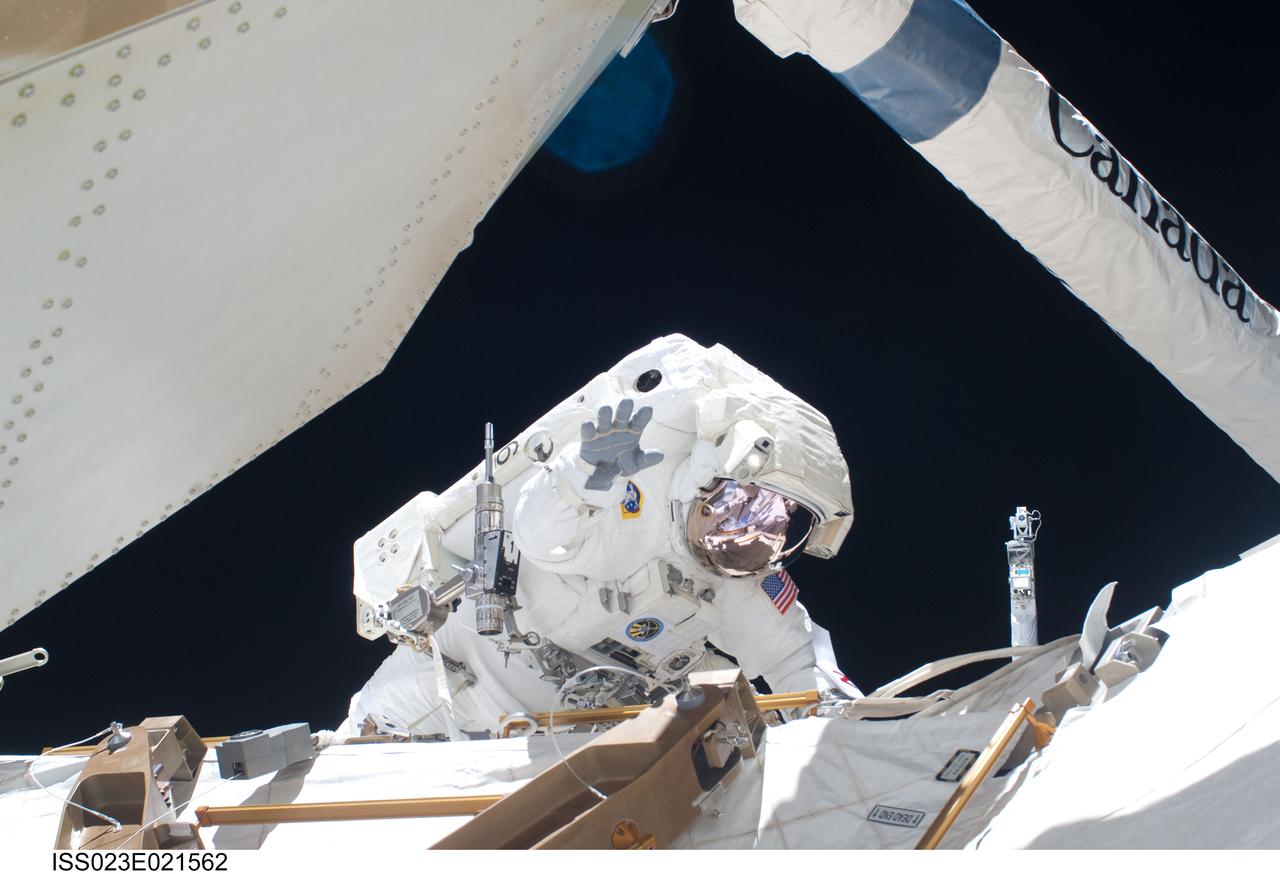
ISS023-E-021562 (11 April 2010) --- NASA astronaut Clayton Anderson, STS-131 mission specialist, participates in the mission's second session of extravehicular activity (EVA) as construction and maintenance continue on the International Space Station. During the seven-hour, 26-minute spacewalk, Anderson and Rick Mastracchio (out of frame), mission specialist, unhooked and removed the depleted ammonia tank and installed a 1,700-pound ammonia tank on the station’s Starboard 1 truss, completing the second of a three-spacewalk coolant tank replacement process.
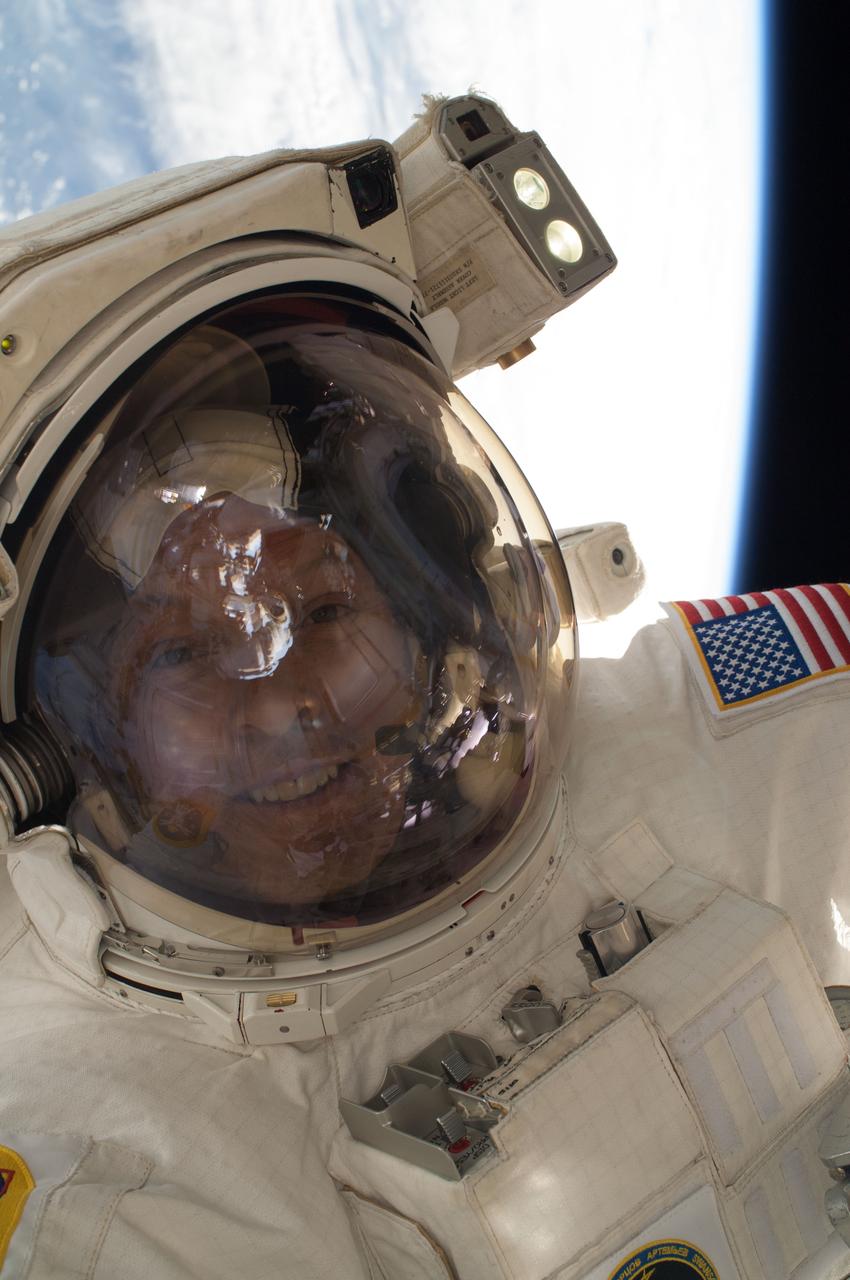
ISS039-E-014976 (22 April 2014) --- With a blue and white portion of Earth below him, NASA astronaut Steve Swanson, Expedition 39 flight engineer, is pictured during a spacewalk to replace a failed backup computer relay box in the S0 truss of the International Space Station on April 22, 2014. He was accompanied on the spacewalk by fellow Flight Engineer Rick Mastracchio of NASA.
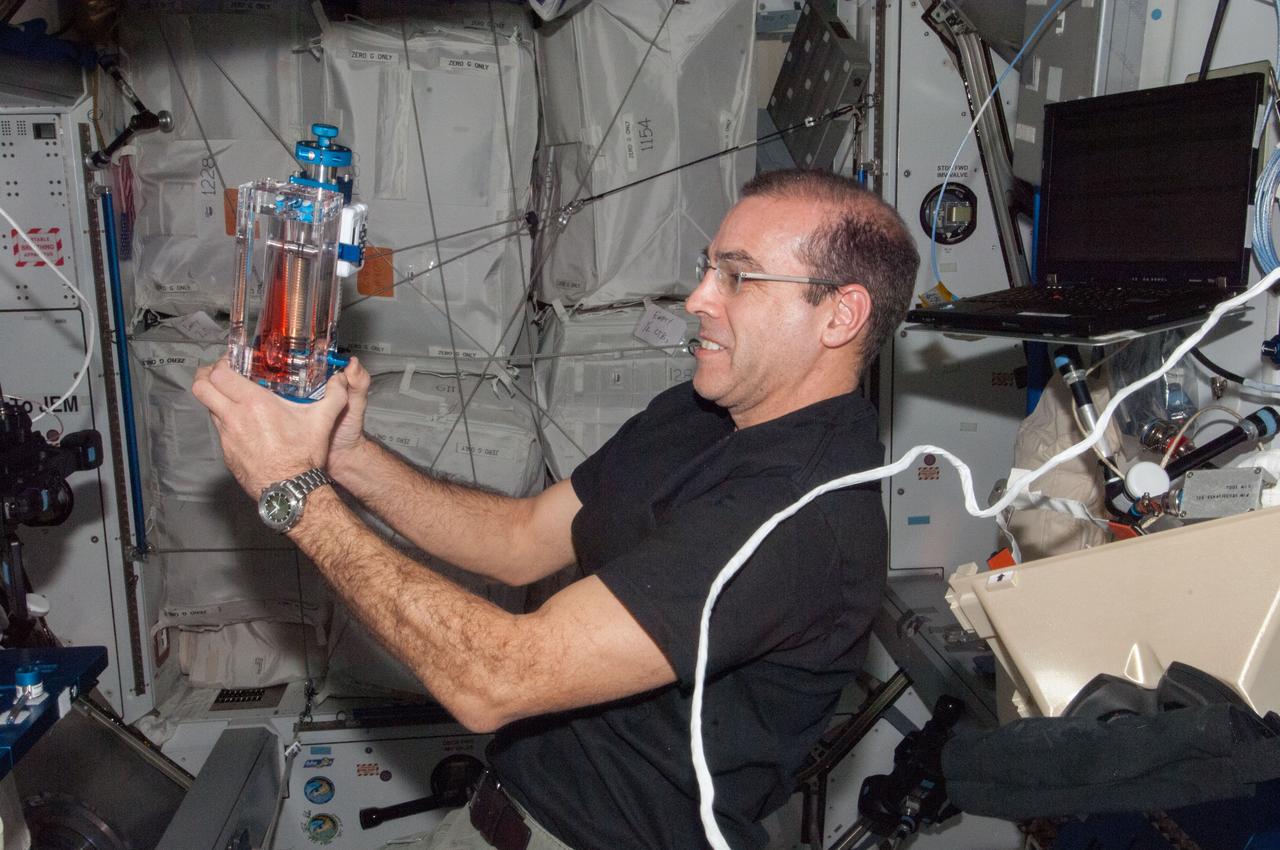
ISS038-E-025016 (3 Jan. 2014) --- NASA astronaut Rick Mastracchio, Expedition 38 flight engineer, conducts a session with the Capillary Flow Experiment (CFE-2) in the Harmony node of the International Space Station. CFE is a suite of fluid physics experiments that investigate how fluids behave in microgravity which could benefit water and fuel delivery systems on future spacecraft. Scientists designed the CFE-2 to study properties of fluids and bubbles inside containers with a specific 3-D geometry.
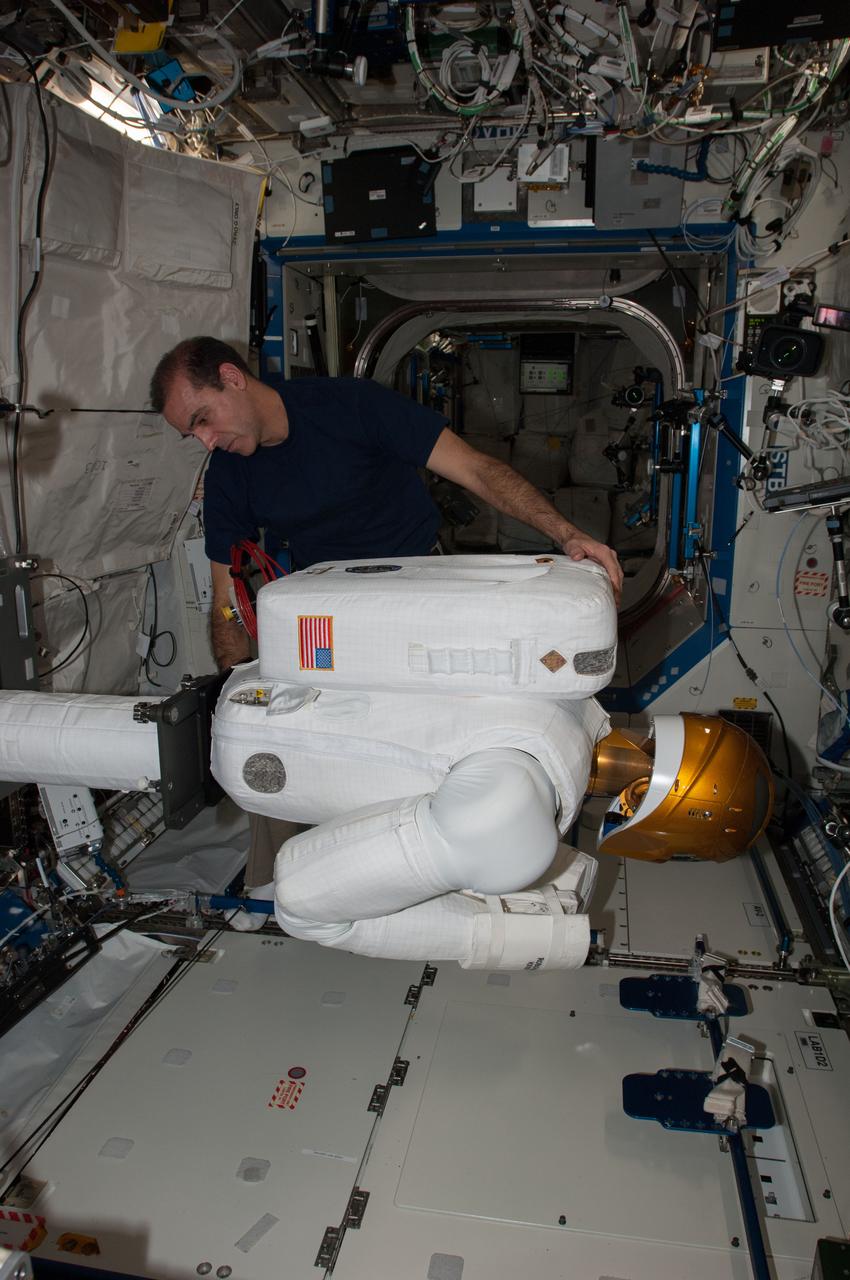
ISS038-E-013712 (9 Dec. 2013) --- In the International Space Station's Destiny laboratory, NASA astronaut Rick Mastracchio, Expedition 38 flight engineer, prepares Robonaut 2 for an upcoming ground-commanded firmware update that will support the installation of a pair of legs for the humanoid robot. R2 was designed to test out the capability of a robot to perform tasks deemed too dangerous or mundane for astronauts. Robonaut's legs are scheduled to arrive to the station aboard the SpaceX-3 commercial cargo mission in February 2014.
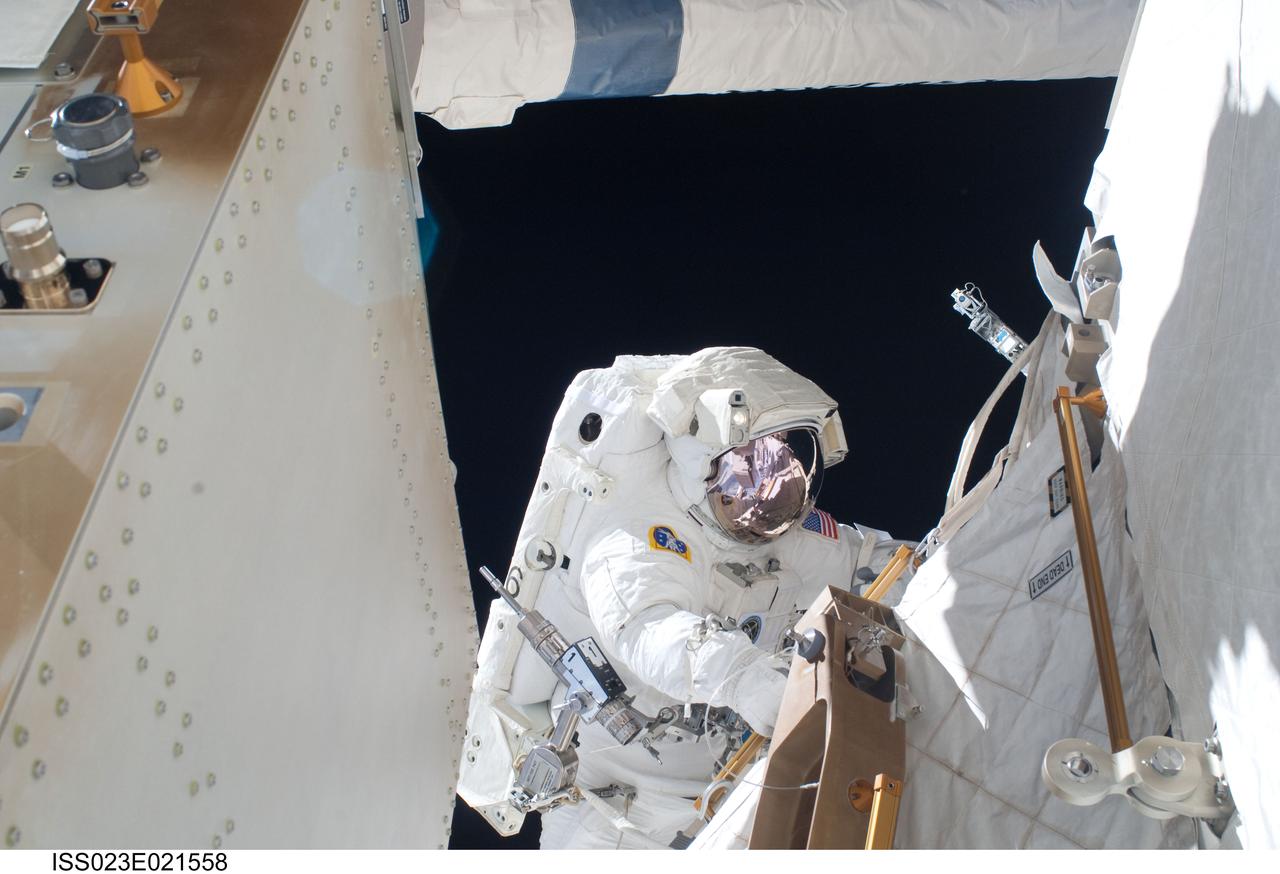
ISS023-E-021558 (11 April 2010) --- NASA astronaut Clayton Anderson, STS-131 mission specialist, participates in the mission's second session of extravehicular activity (EVA) as construction and maintenance continue on the International Space Station. During the seven-hour, 26-minute spacewalk, Anderson and Rick Mastracchio (out of frame), mission specialist, unhooked and removed the depleted ammonia tank and installed a 1,700-pound ammonia tank on the station’s Starboard 1 truss, completing the second of a three-spacewalk coolant tank replacement process.
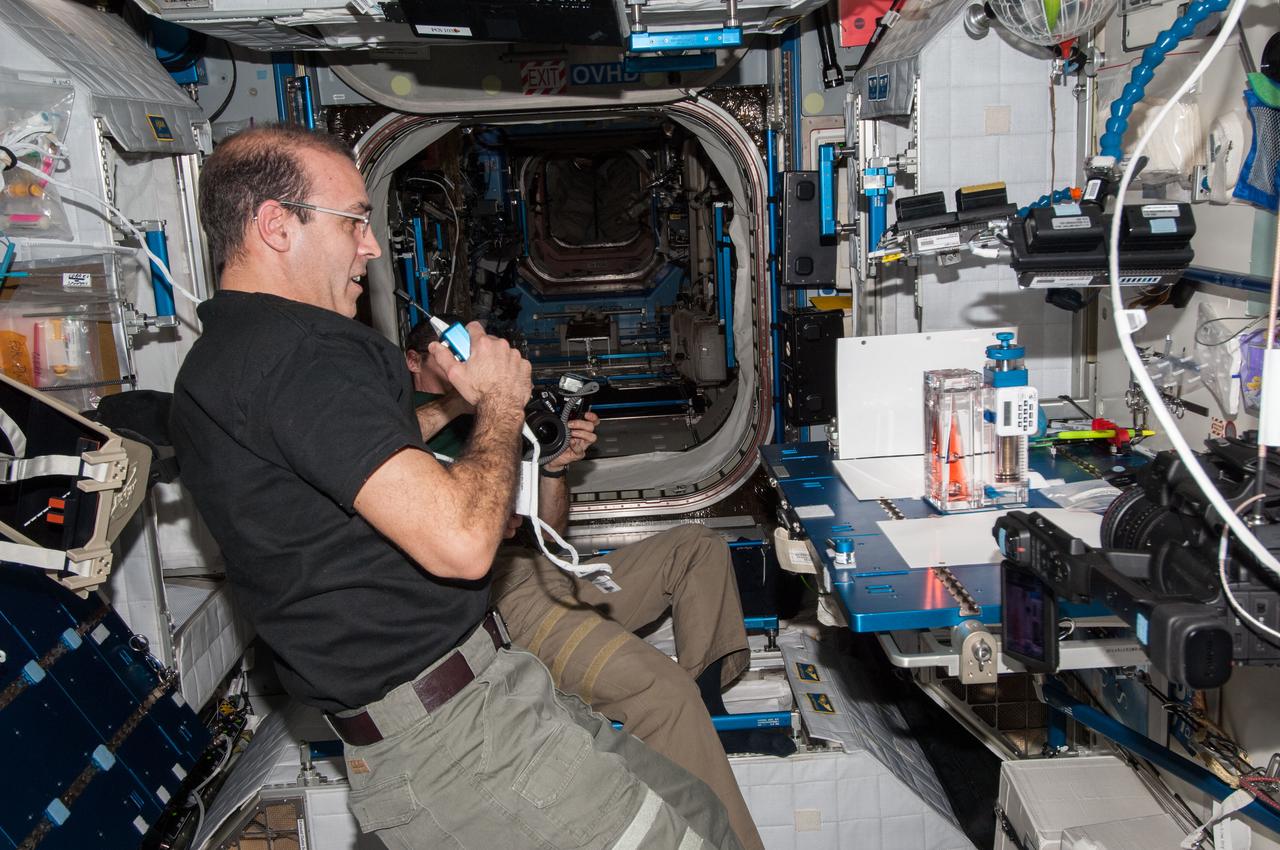
ISS038-E-025000 (3 Jan. 2014) --- NASA astronaut Rick Mastracchio, Expedition 38 flight engineer, speaks in a microphone while conducting a session with the Capillary Flow Experiment (CFE-2) in the Harmony node of the International Space Station. CFE is a suite of fluid physics experiments that investigate how fluids behave in microgravity which could benefit water and fuel delivery systems on future spacecraft. Scientists designed the CFE-2 to study properties of fluids and bubbles inside containers with a specific 3-D geometry.
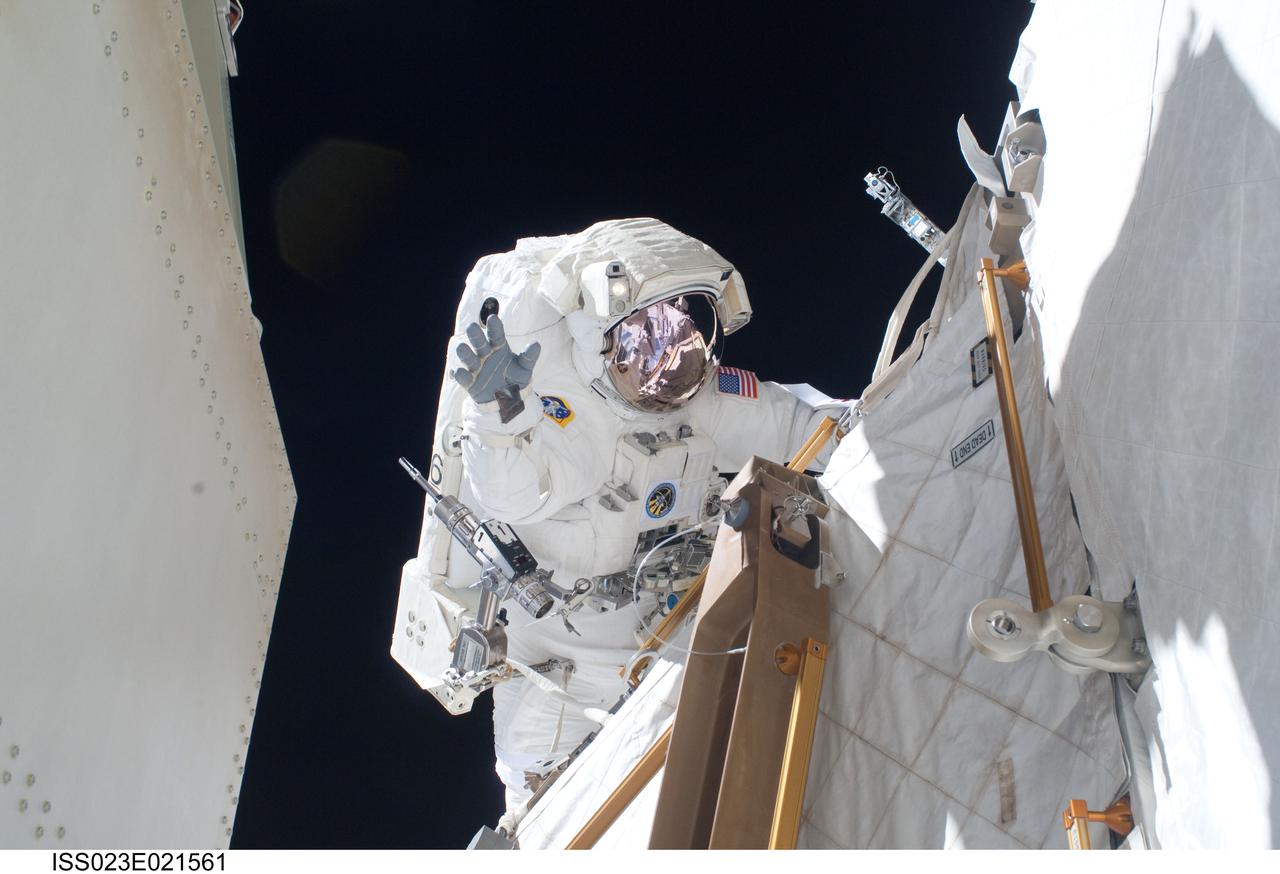
ISS023-E-021561 (11 April 2010) --- NASA astronaut Clayton Anderson, STS-131 mission specialist, participates in the mission's second session of extravehicular activity (EVA) as construction and maintenance continue on the International Space Station. During the seven-hour, 26-minute spacewalk, Anderson and Rick Mastracchio (out of frame), mission specialist, unhooked and removed the depleted ammonia tank and installed a 1,700-pound ammonia tank on the station’s Starboard 1 truss, completing the second of a three-spacewalk coolant tank replacement process.
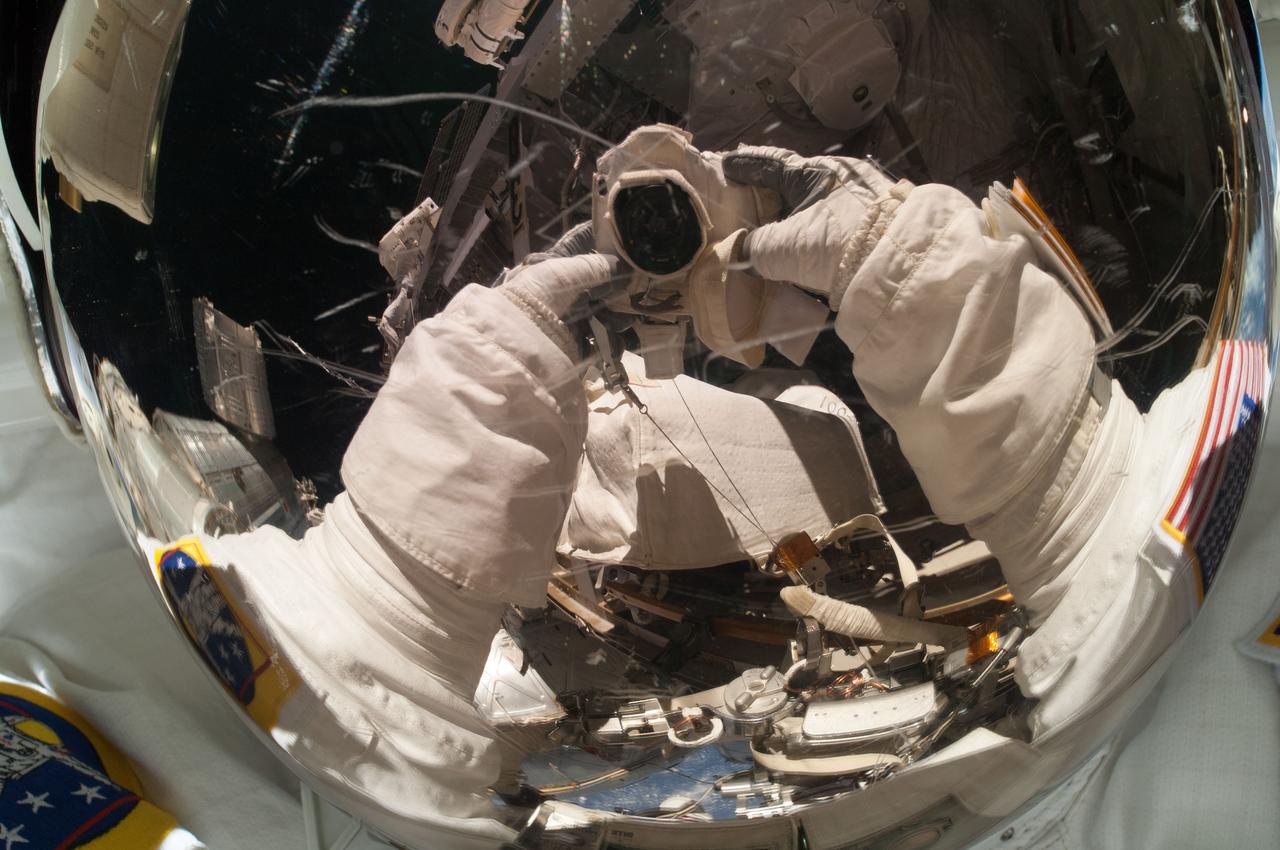
ISS039-E-014878 (22 April 2014) --- Part of the upper body of NASA astronaut Rick Mastracchio is pictured in a "selfie" or self-portrait during a spacewalk to replace a failed backup computer relay box in the S0 truss of the International Space Station on April 22, 2014. He was accompanied on the spacewalk by fellow Flight Engineer Steve Swanson of NASA.
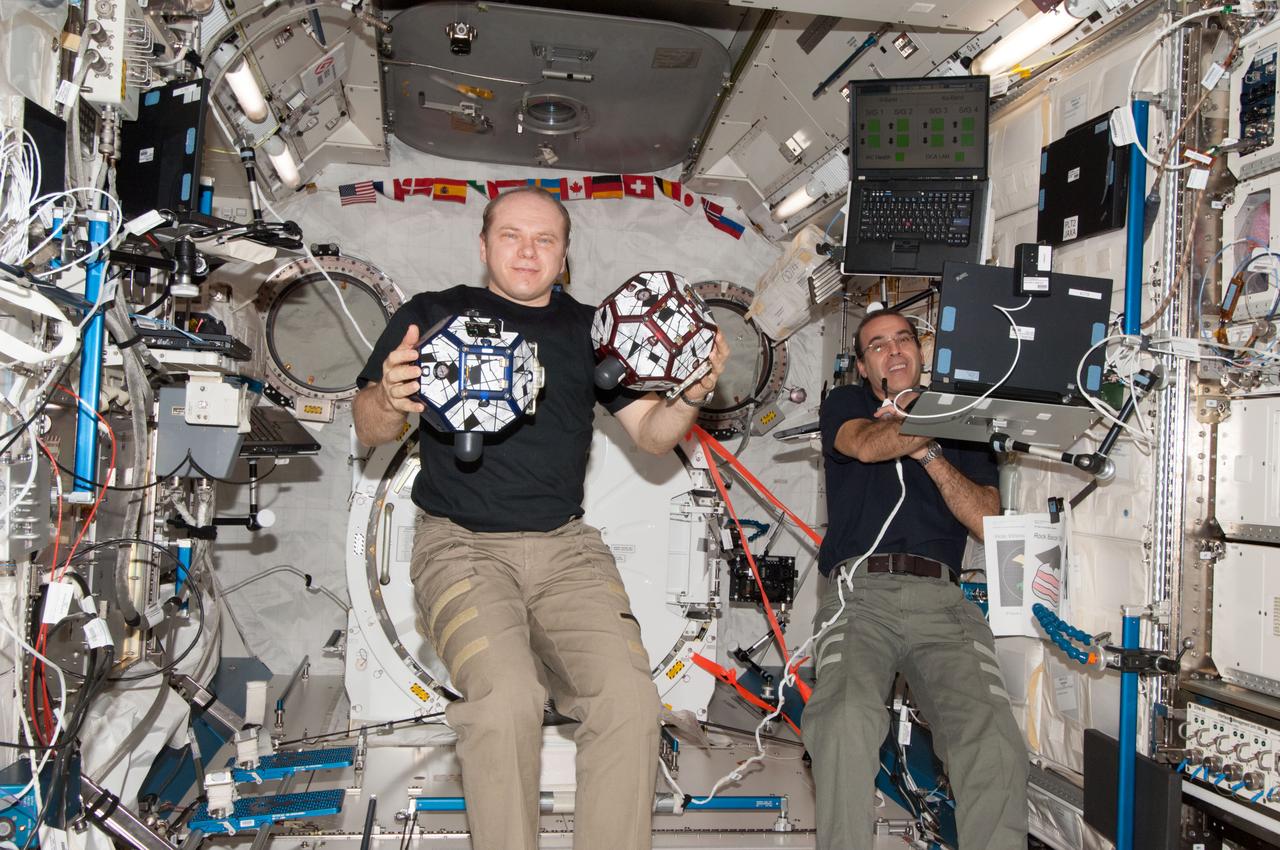
ISS038-E-031405 (15 Jan. 2014) --- In the International Space Station's Kibo laboratory, Russian cosmonaut Oleg Kotov (left), Expedition 38 commander; and NASA astronaut Rick Mastracchio, flight engineer, conduct a session with a pair of bowling-ball-sized free-flying satellites known as Synchronized Position Hold, Engage, Reorient, Experimental Satellites, or SPHERES. The experiment uses student written algorithms that operate the small satellites to demonstrate critical mission tasks such as formation flying and vehicle dockings.
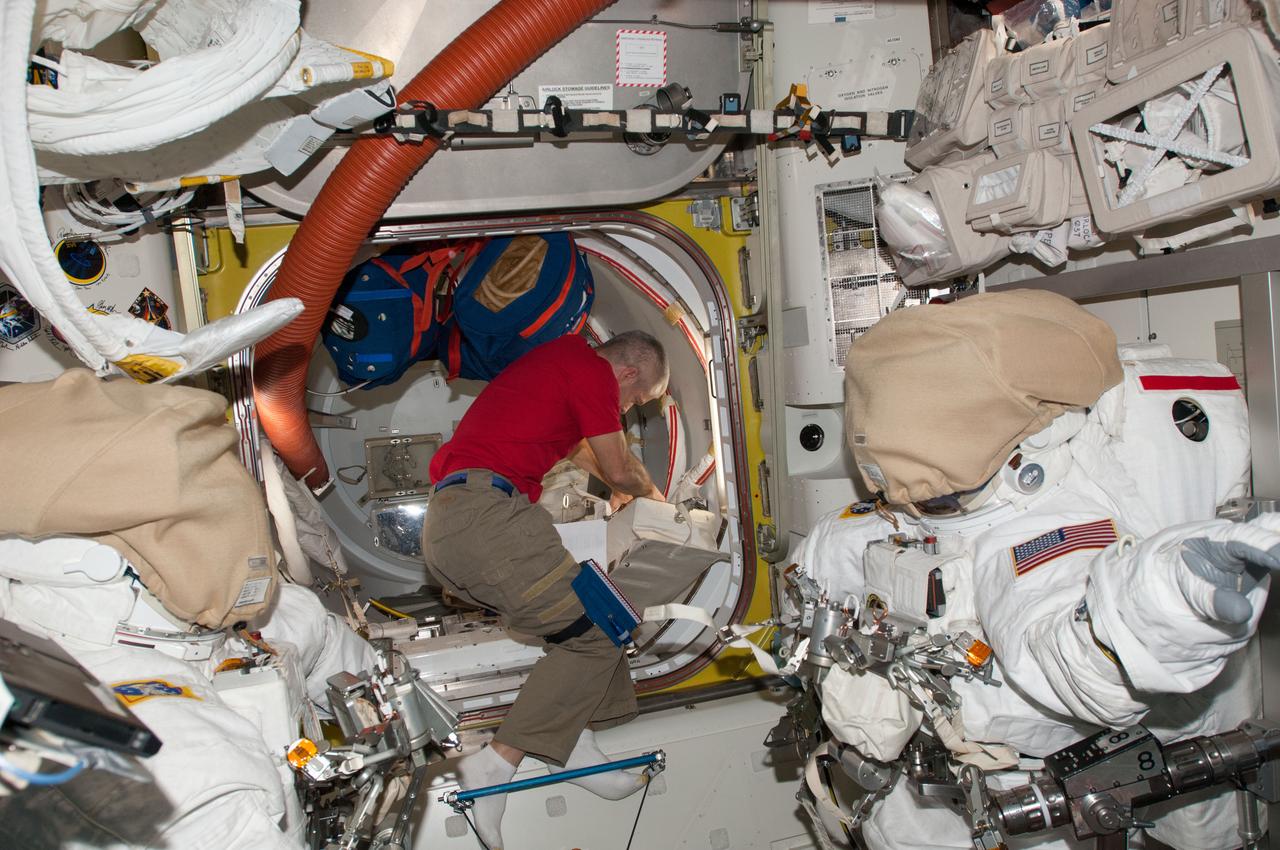
ISS039-E-013091 (17 April 2014) --- NASA astronaut Steve Swanson, Expedition 39 flight engineer, is seen in the Quest airlock of the Earth-orbiting International Space Station. He and NASA astronaut Rick Mastracchio, flight engineer, will conduct a spacewalk in the coming week to replace a failed backup computer relay system on the space station's truss. The activity, designated U.S. EVA 26, will be broadcast live on NASA Television. A pair of NASA extravehicular mobility units (EMU) can be seen in the foreground.
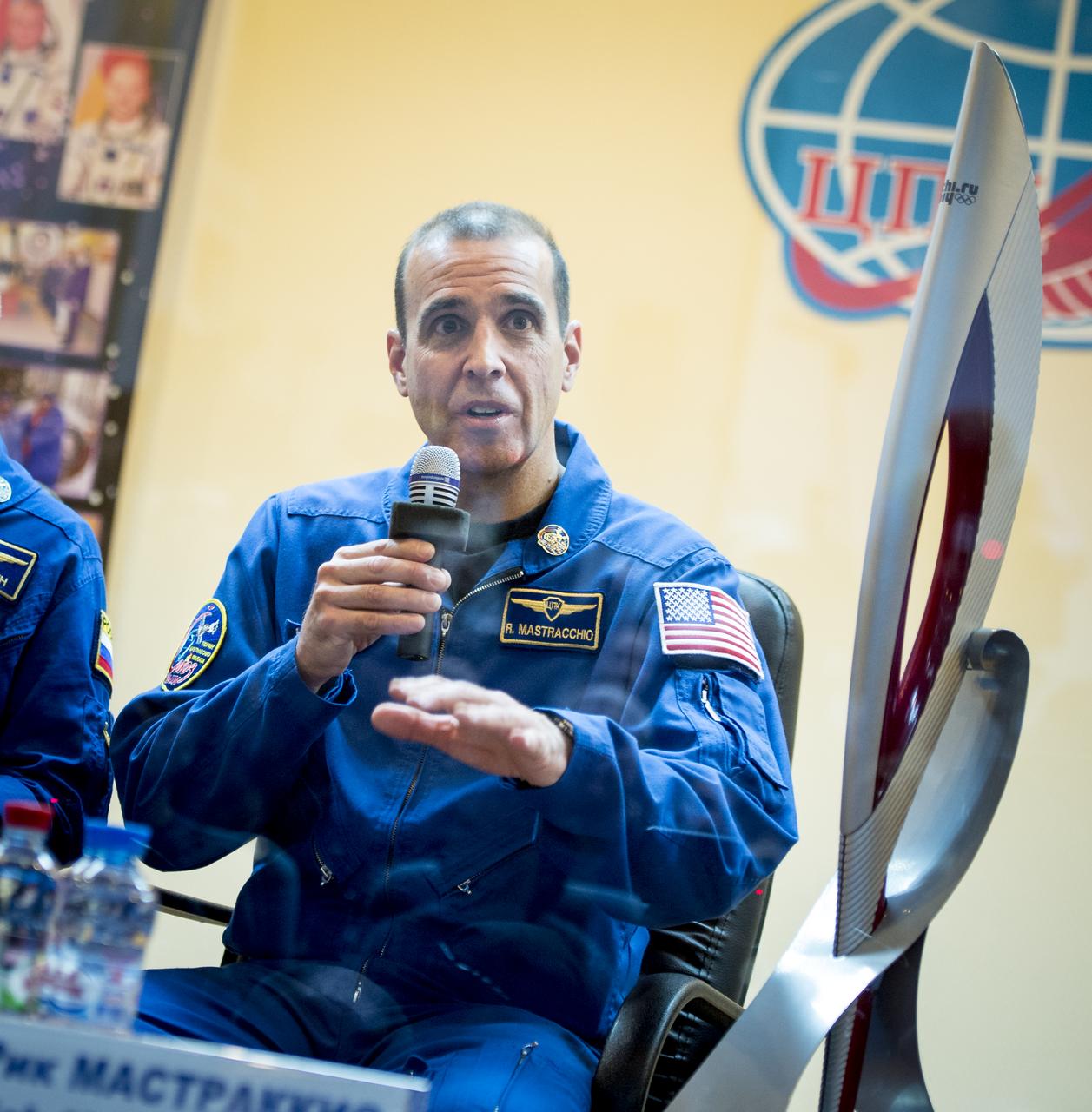
Expedition 38 Flight Engineer Rick Mastracchio of NASA talks, while in quarantine behind glass, during the final press conference held a day ahead of his launch with fellow crew mates, Soyuz Commander Mikhail Tyurin of Roscosmos, and, Flight Engineer Koichi Wakata of the Japan Aerospace Exploration Agency, to the International Space Station, Wednesday, Nov. 6, 2013 at the Cosmonaut Hotel in Baikonur, Kazakhstan. An Olympic torch that will be launched with the crew for a four-day visit to the station is seen next to Mastracchio. The torch will return to Earth with another trio of station residents on Nov. 11 and will be part of the torch relay that ends with the lighting of the flame at the Fisht Stadium in Sochi, Russia Feb. 7 to mark the opening of the 2014 Winter Olympics. Photo Credit: (NASA/Bill Ingalls)
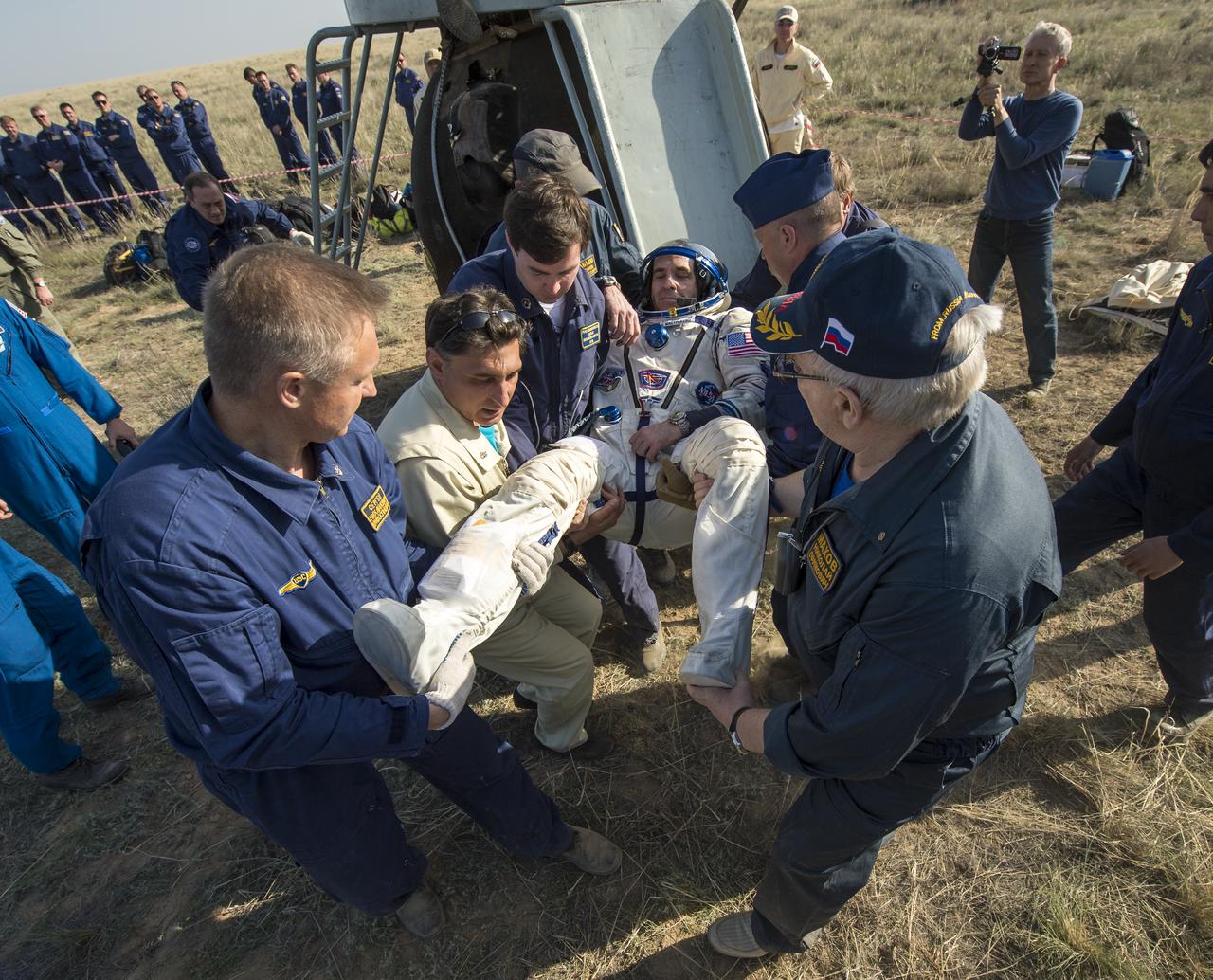
Expedition 39 Flight Engineer Rick Mastracchio of NASA is helped of the Soyuz Capsule just minutes after he and Expedition 39 Commander Koichi Wakata of the Japan Aerospace Exploration Agency (JAXA), center, and Soyuz Commander Mikhail Tyurin of Roscosmos landed in their Soyuz TMA-11M spacecraft near the town of Zhezkazgan, Kazakhstan on Wednesday, May 14, 2014. Wakata, Tyurin and Mastracchio returned to Earth after more than six months onboard the International Space Station where they served as members of the Expedition 38 and 39 crews. Photo Credit: (NASA/Bill Ingalls)
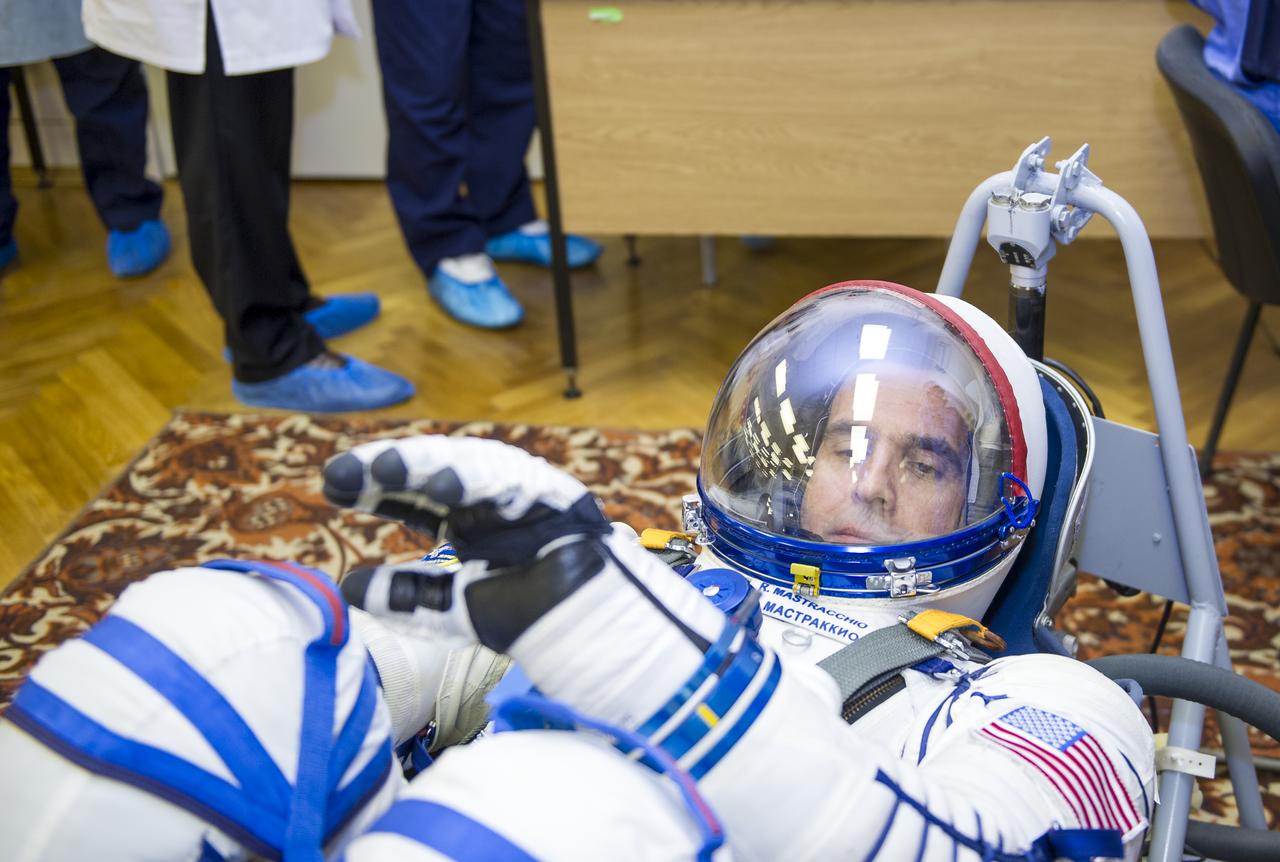
Expedition 38 Flight Engineer Rick Mastracchio of NASA is seen laying in a seat liner as he and fellow crew mates, Flight Engineer Koichi Wakata of the Japan Aerospace Exploration Agency, and, Soyuz Commander Mikhail Tyurin of Roscosmos, have their Russian Sokol suits pressure checked a few hours ahead of their launch, Thursday, Nov. 7, 2013, in Baikonur, Kazakhstan. Tyurin, Wakata, and, Mastracchio will launch in their Soyuz TMA-11M spacecraft to the International Space Station to begin a six-month mission. Photo Credit: (NASA/GCTC/Irina Peshkova)

Expedition 38 Flight Engineer Rick Mastracchio of NASA is seen laying in a seat liner as he and fellow crew mates, Flight Engineer Koichi Wakata of the Japan Aerospace Exploration Agency, and, Soyuz Commander Mikhail Tyurin of Roscosmos, have their Russian Sokol suits pressure checked a few hours ahead of their launch, Thursday, Nov. 7, 2013, in Baikonur, Kazakhstan. Tyurin, Wakata, and, Mastracchio will launch in their Soyuz TMA-11M spacecraft to the International Space Station to begin a six-month mission. Photo Credit: (NASA/GCTC/Irina Peshkova)
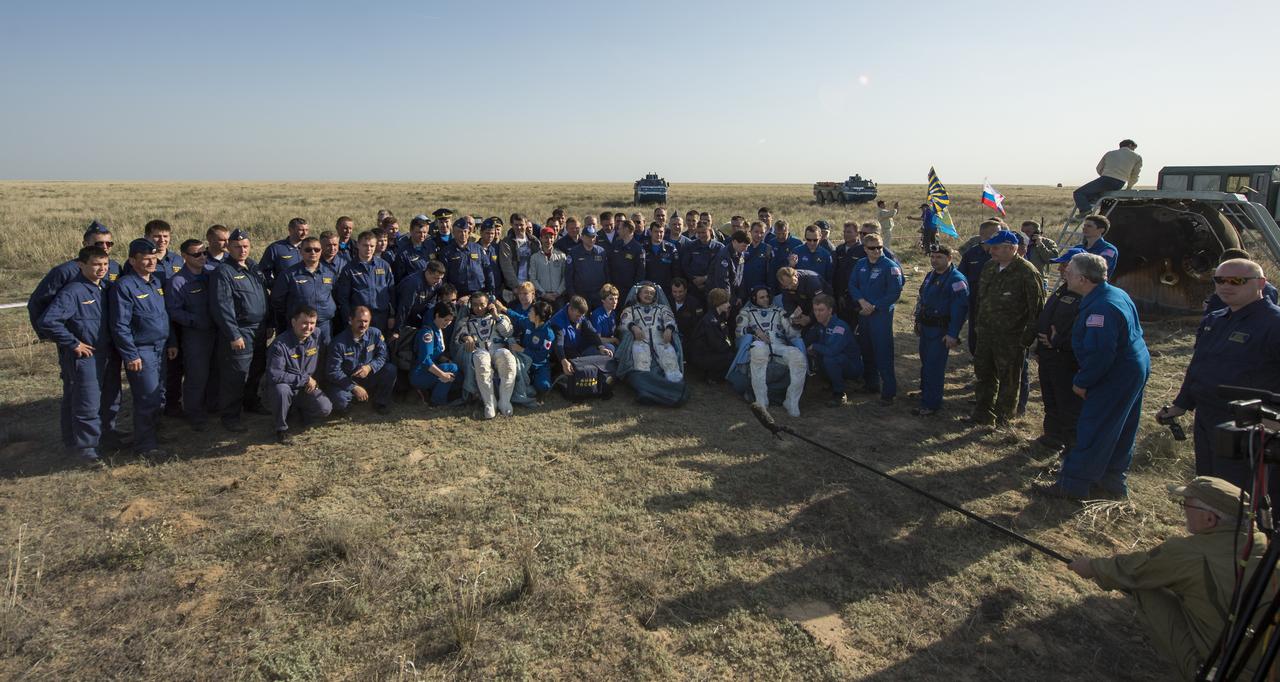
Expedition 39 Commander Koichi Wakata of the Japan Aerospace Exploration Agency (JAXA), left, Soyuz Commander Mikhail Tyurin of Roscosmos, center, and Flight Engineer Rick Mastracchio of NASA, sit in chairs outside the Soyuz TMA-11M capsule and pose for a group photo with the landing team after they landed in a remote area near the town of Zhezkazgan, Kazakhstan on Wednesday, May 14, 2014. Wakata, Tyurin and Mastracchio returned to Earth after more than six months onboard the International Space Station where they served as members of the Expedition 38 and 39 crews. Photo Credit: (NASA/Bill Ingalls)
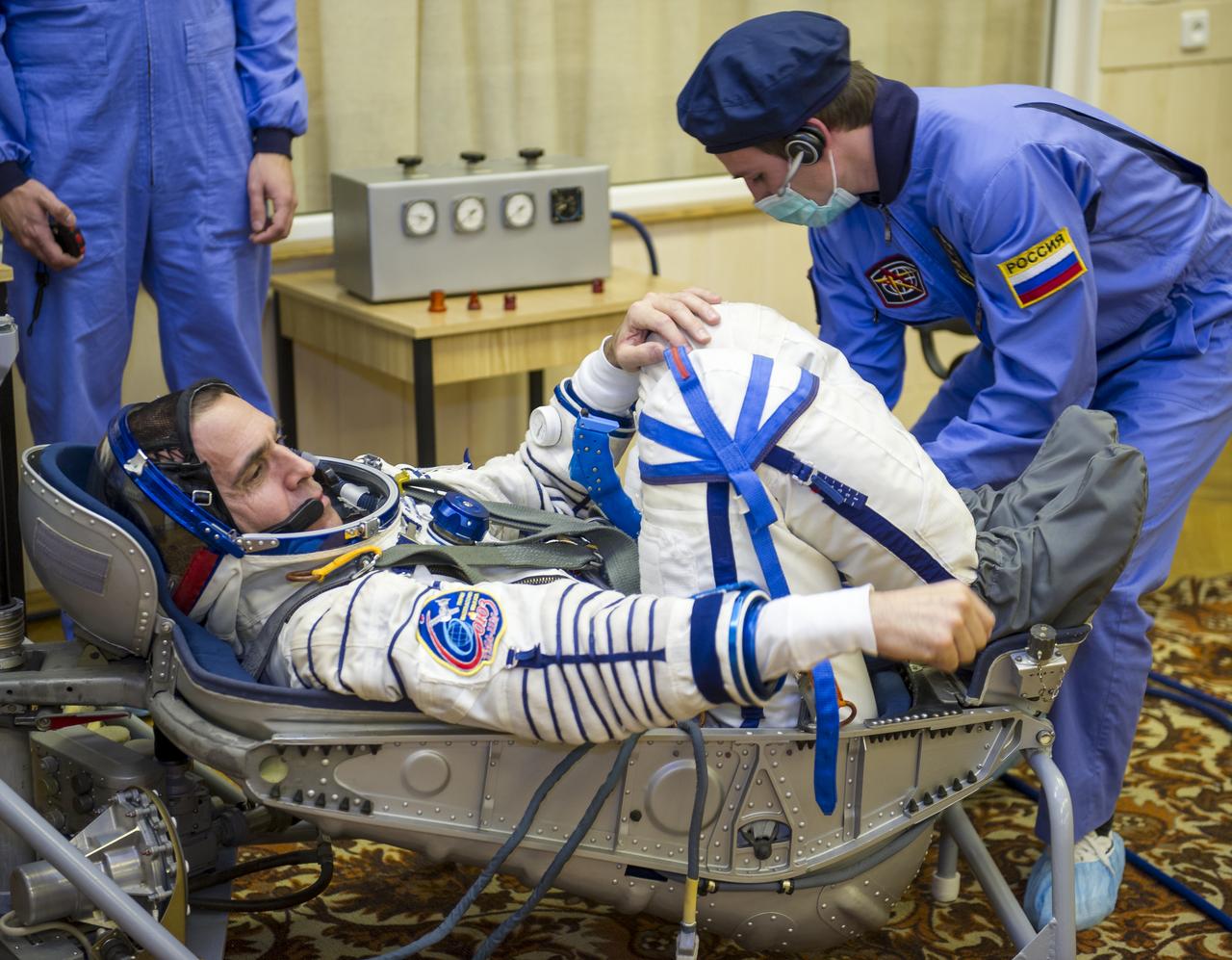
Expedition 38 Flight Engineer Rick Mastracchio of NASA is seen laying in a seat liner as he and fellow crew mates, Flight Engineer Koichi Wakata of the Japan Aerospace Exploration Agency, and, Soyuz Commander Mikhail Tyurin of Roscosmos, have their Russian Sokol suits pressure checked a few hours ahead of their launch, Thursday, Nov. 7, 2013, in Baikonur, Kazakhstan. Tyurin, Wakata, and, Mastracchio will launch in their Soyuz TMA-11M spacecraft to the International Space Station to begin a six-month mission. Photo Credit: (NASA/GCTC/Irina Peshkova)
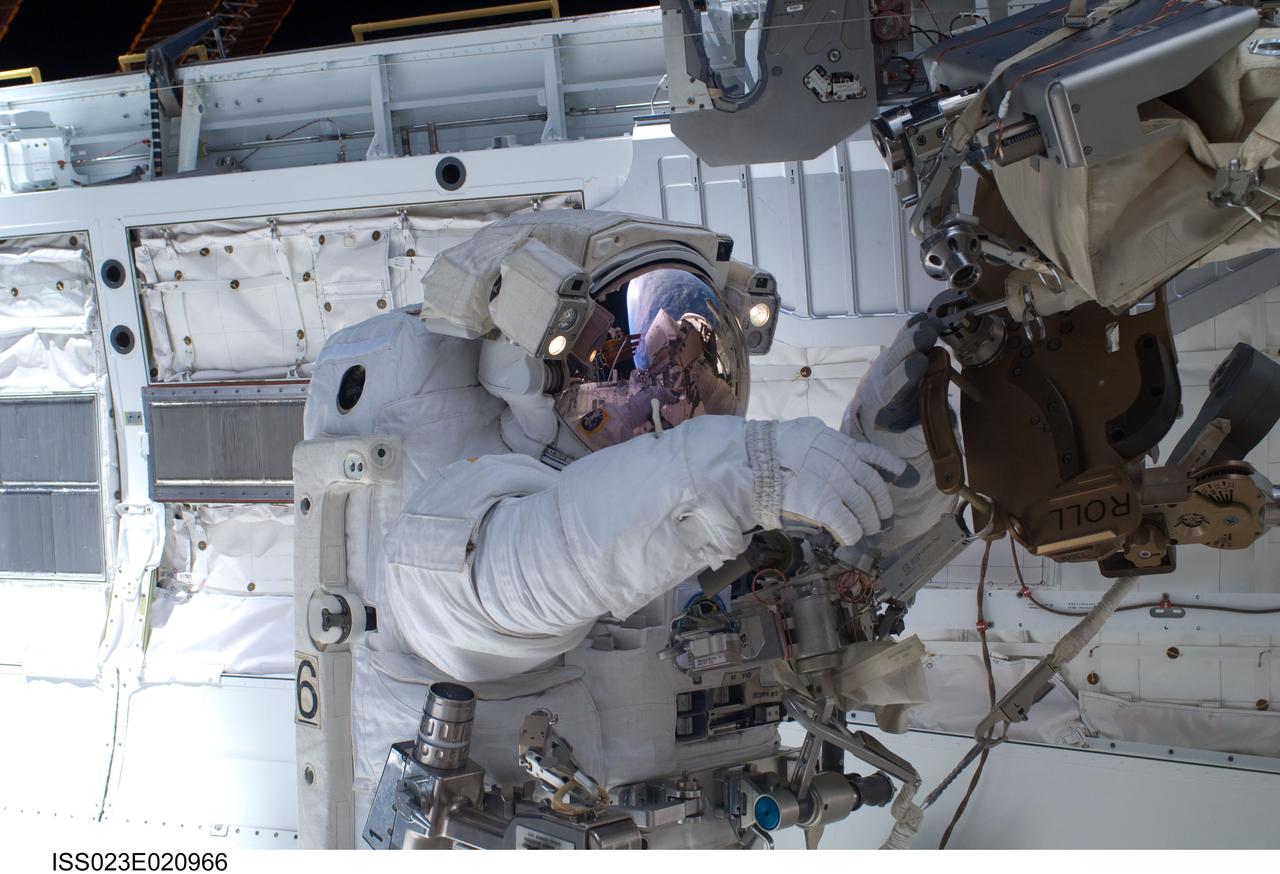
ISS023-E-020966 (9 April 2010) --- NASA astronaut Clayton Anderson, STS-131 mission specialist, participates in the mission's first session of extravehicular activity (EVA) as construction and maintenance continue on the International Space Station. During the six-hour, 27-minute spacewalk, Anderson and Rick Mastracchio (out of frame), mission specialist, helped move a new 1,700-pound ammonia tank from space shuttle Discovery’s cargo bay to a temporary parking place on the station, retrieved an experiment from the Japanese Kibo Laboratory exposed facility and replaced a Rate Gyro Assembly on one of the truss segments.
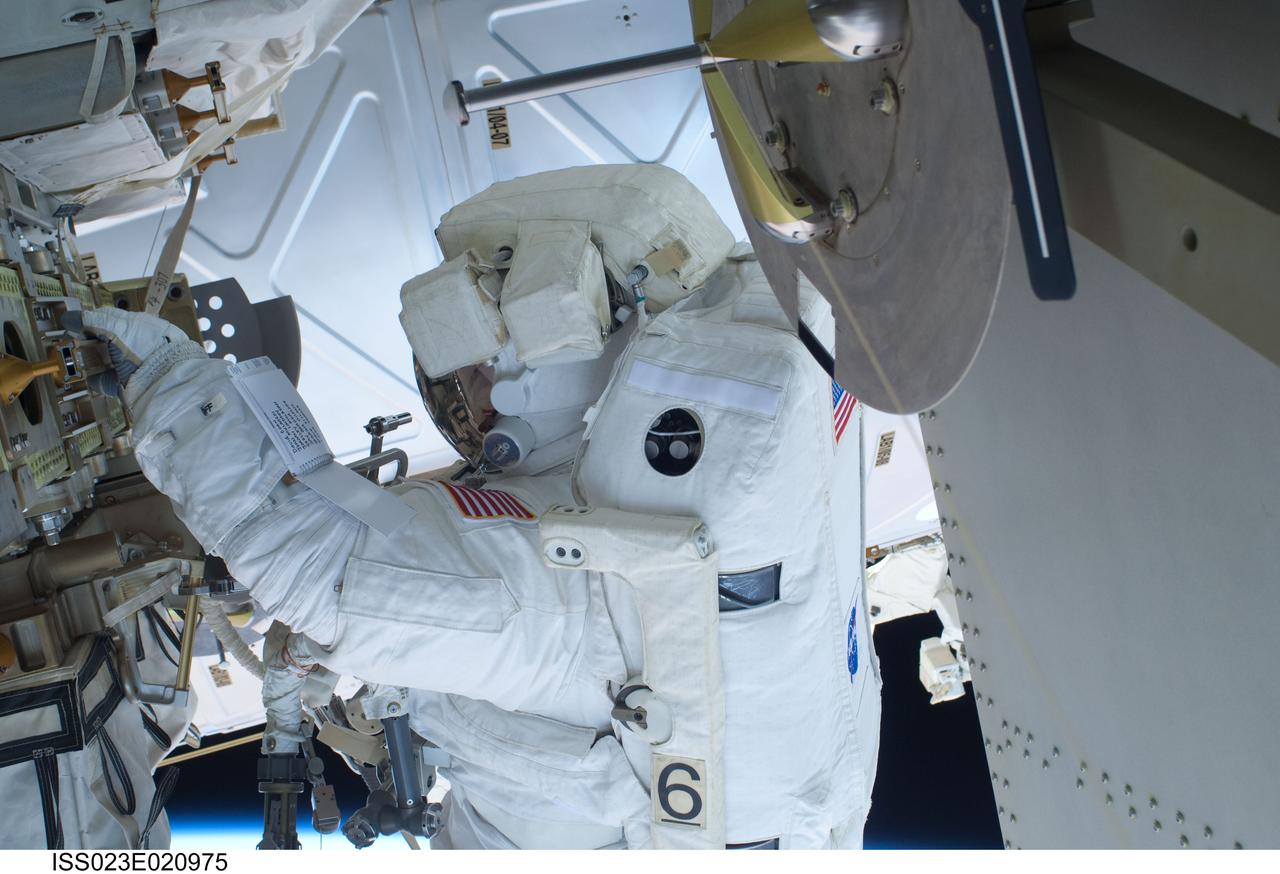
ISS023-E-020975 (9 April 2010) --- NASA astronaut Clayton Anderson, STS-131 mission specialist, participates in the mission's first session of extravehicular activity (EVA) as construction and maintenance continue on the International Space Station. During the six-hour, 27-minute spacewalk, Anderson and astronaut Rick Mastracchio (out of frame), mission specialist, helped move a new 1,700-pound ammonia tank from space shuttle Discovery’s cargo bay to a temporary parking place on the station, retrieved an experiment from the Japanese Kibo Laboratory exposed facility and replaced a Rate Gyro Assembly on one of the truss segments.
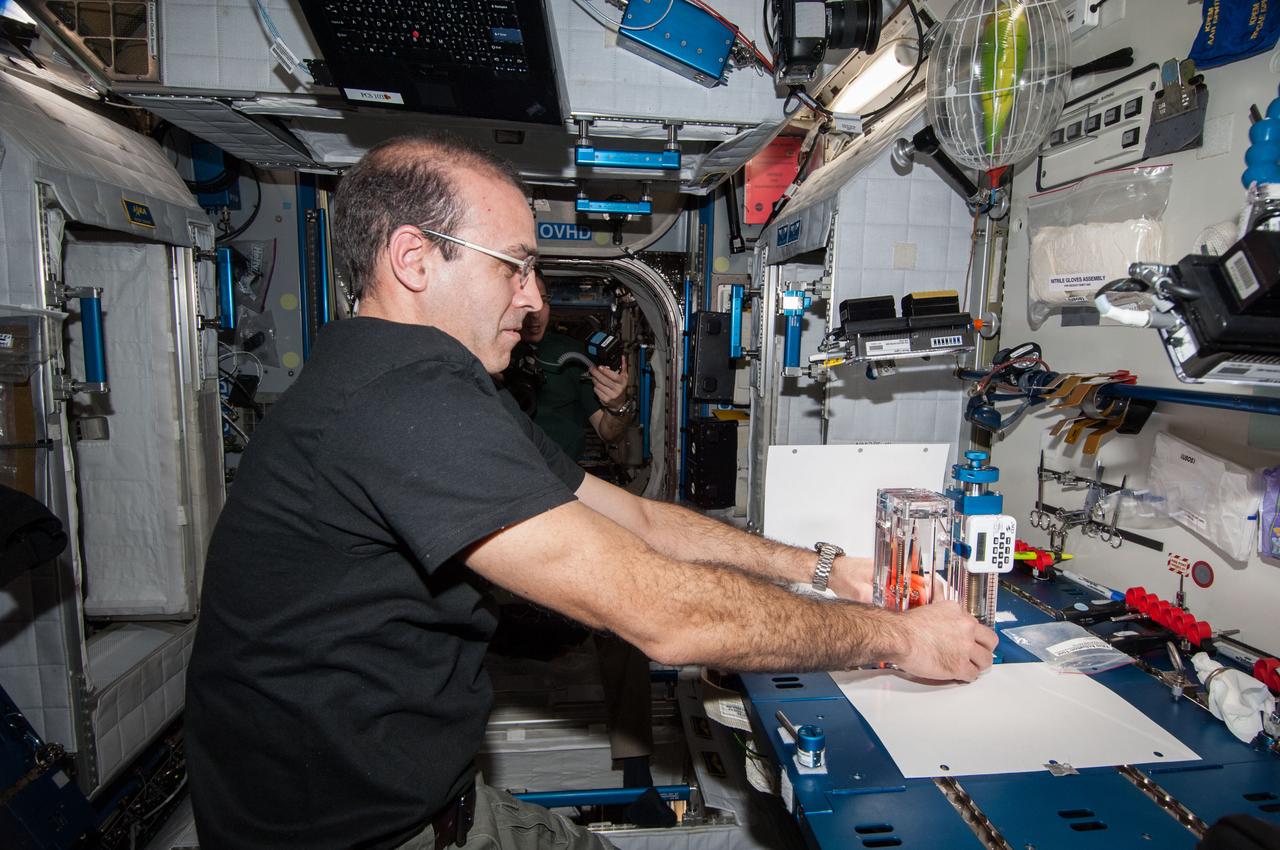
ISS038-E-025002 (3 Jan. 2014) --- NASA astronaut Rick Mastracchio, Expedition 38 flight engineer, conducts a session with the Capillary Flow Experiment (CFE-2) in the Harmony node of the International Space Station. CFE is a suite of fluid physics experiments that investigate how fluids behave in microgravity which could benefit water and fuel delivery systems on future spacecraft. Scientists designed the CFE-2 to study properties of fluids and bubbles inside containers with a specific 3-D geometry. NASA astronaut Mike Hopkins (mostly obscured in the background), flight engineer, uses a still camera to photograph the session.
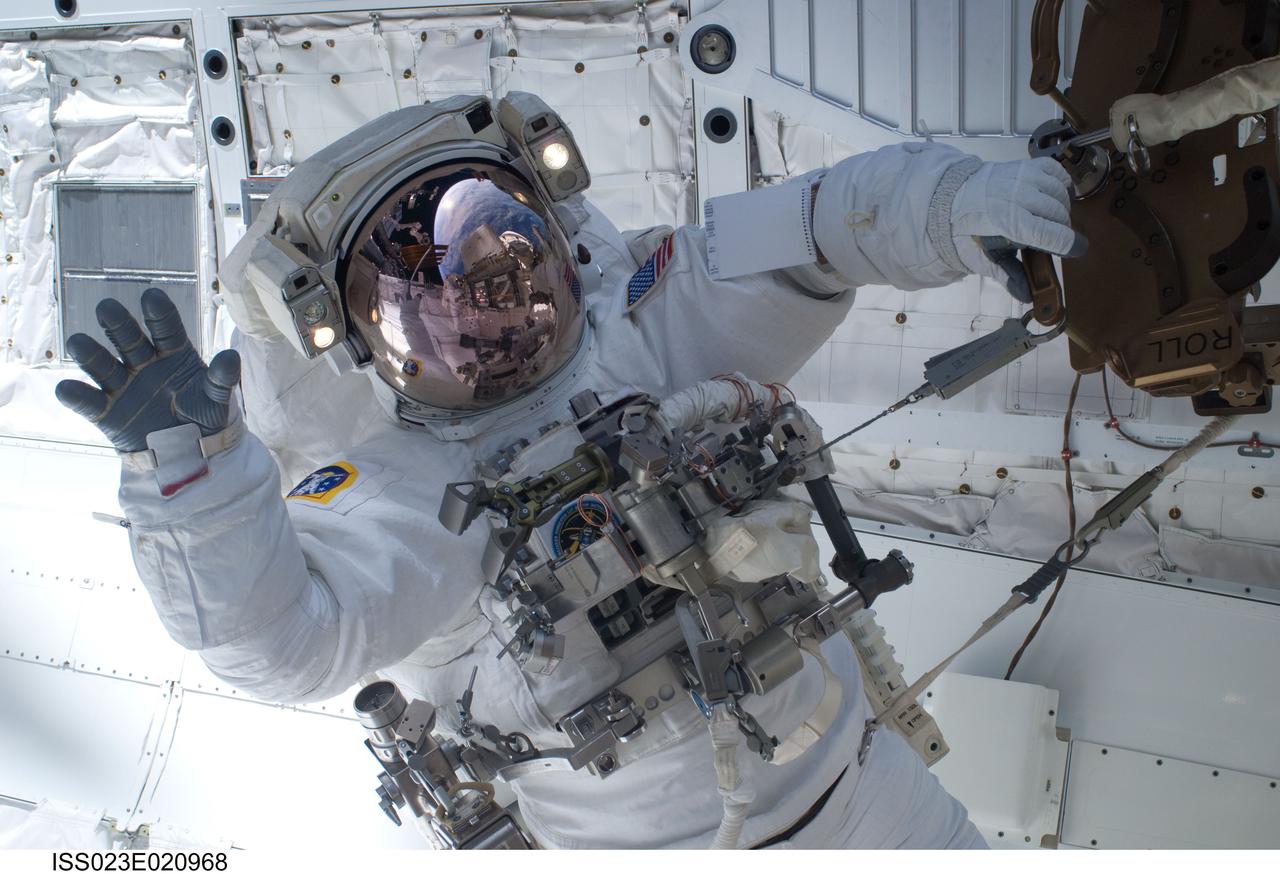
ISS023-E-020968 (9 April 2010) --- NASA astronaut Clayton Anderson, STS-131 mission specialist, participates in the mission's first session of extravehicular activity (EVA) as construction and maintenance continue on the International Space Station. During the six-hour, 27-minute spacewalk, Anderson and Rick Mastracchio (visible in the reflection of Anderson’s helmet visor), mission specialist, helped move a new 1,700-pound ammonia tank from space shuttle Discovery’s cargo bay to a temporary parking place on the station, retrieved an experiment from the Japanese Kibo Laboratory exposed facility and replaced a Rate Gyro Assembly on one of the truss segments.
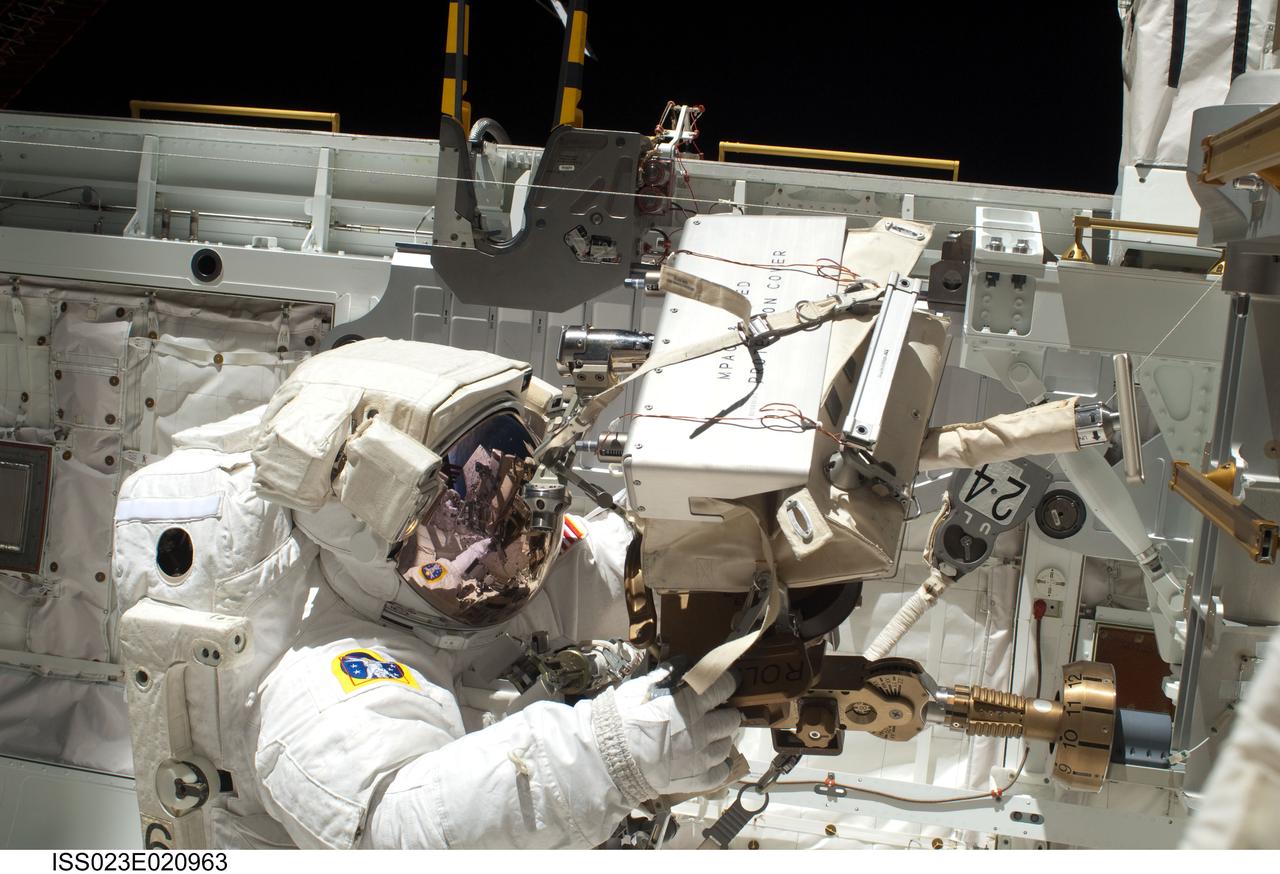
ISS023-E-020963 (9 April 2010) --- NASA astronaut Clayton Anderson, STS-131 mission specialist, participates in the mission's first session of extravehicular activity (EVA) as construction and maintenance continue on the International Space Station. During the six-hour, 27-minute spacewalk, Anderson and Rick Mastracchio (out of frame), mission specialist, helped move a new 1,700-pound ammonia tank from space shuttle Discovery’s cargo bay to a temporary parking place on the station, retrieved an experiment from the Japanese Kibo Laboratory exposed facility and replaced a Rate Gyro Assembly on one of the truss segments.
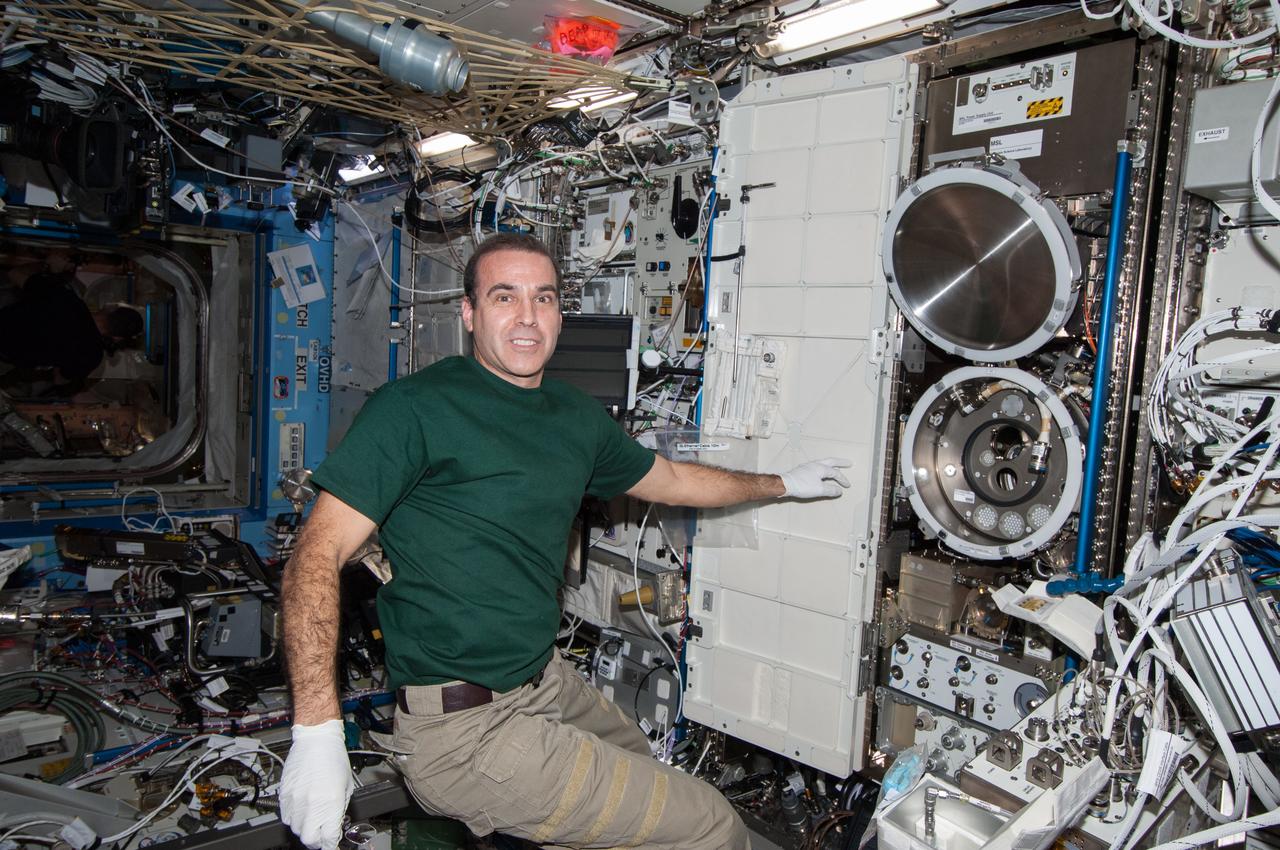
ss038e008298 (11/26/2013) --- A view of NASA astronaut Rick Mastracchio, during the Material Science Laboratory (MSL) Solidification and Quench Furnace (SQF) Sample Cartridge Exchange aboard the International Space Station (ISS). The Materials Science Laboratory (MSL) is used for basic materials research in the microgravity environment of the ISS. The MSL can accommodate and support diverse Experiment Modules. In this way many material types, such as metals, alloys, polymers, semiconductors, ceramics, crystals, and glasses, can be studied to discover new applications for existing materials and new or improved materials.
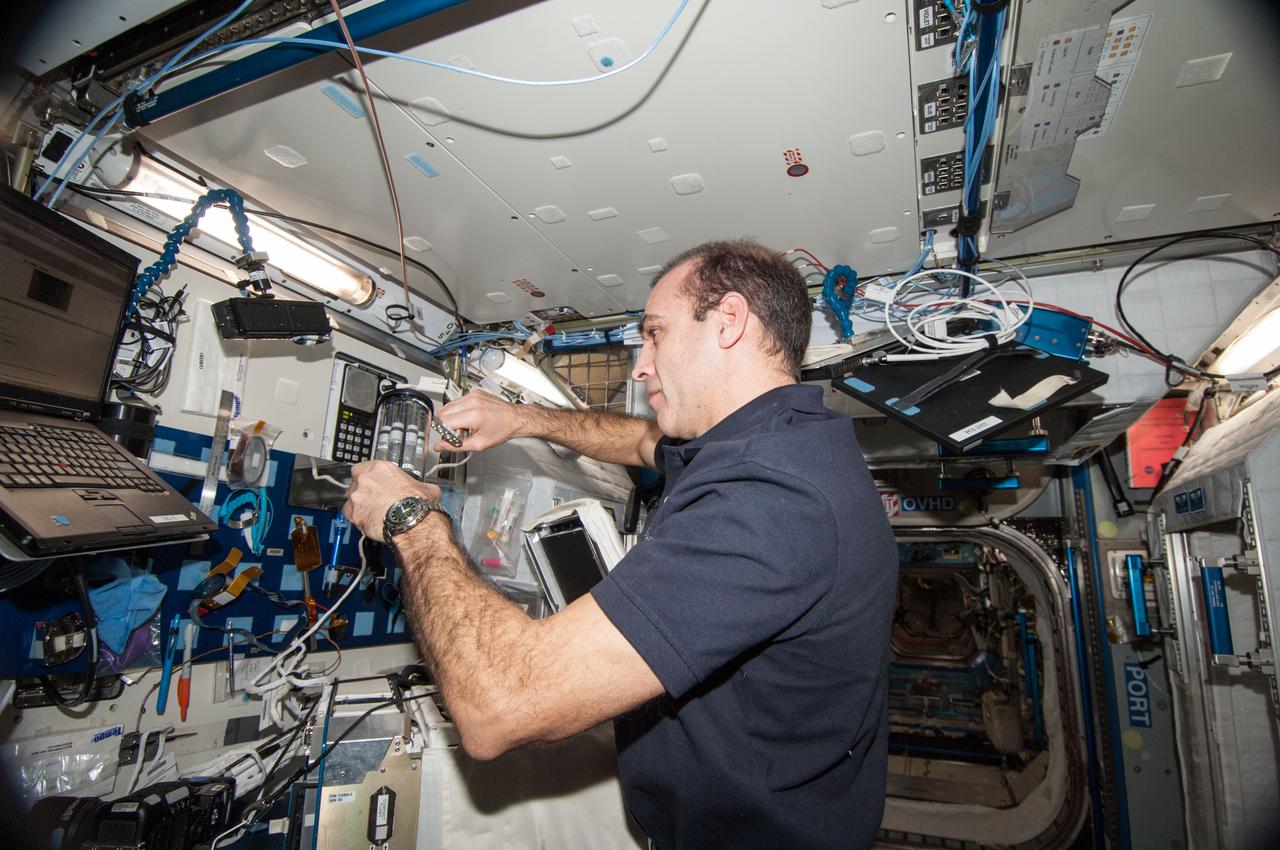
ISS038-E-031407 (16 Jan. 2014) --- NASA astronaut Rick Mastracchio, Expedition 38 flight engineer, accesses the Commercial Generic Bioprocessing Apparatus-2 (CGBA-2) while working with the Vaccine-21 Group Activation Pack (GAP) experiment in the Harmony node of the International Space Station. This experiment also referred to as Antibiotic Effectiveness in Space-1 (AES-1) tests the hypothesis that antibiotics used to treat bacterial grown in space will exhibit reduced efficacy and will be associated with specific changes in bacterial gene expression that correlate with cell survival.
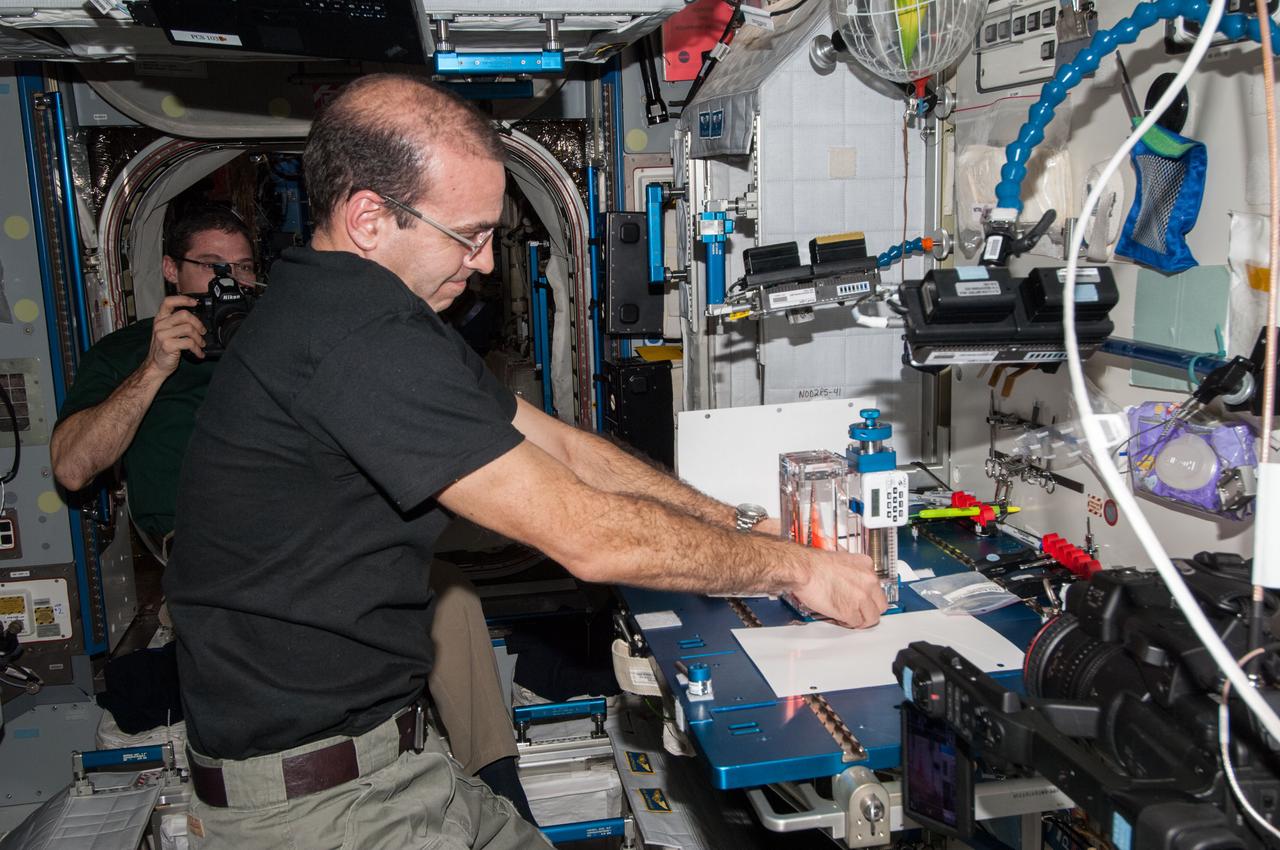
ISS038-E-025002 (3 Jan. 2014) --- NASA astronaut Rick Mastracchio, Expedition 38 flight engineer, conducts a session with the Capillary Flow Experiment (CFE-2) in the Harmony node of the International Space Station. CFE is a suite of fluid physics experiments that investigate how fluids behave in microgravity which could benefit water and fuel delivery systems on future spacecraft. Scientists designed the CFE-2 to study properties of fluids and bubbles inside containers with a specific 3-D geometry. NASA astronaut Mike Hopkins (mostly obscured in the background), flight engineer, uses a still camera to photograph the session.
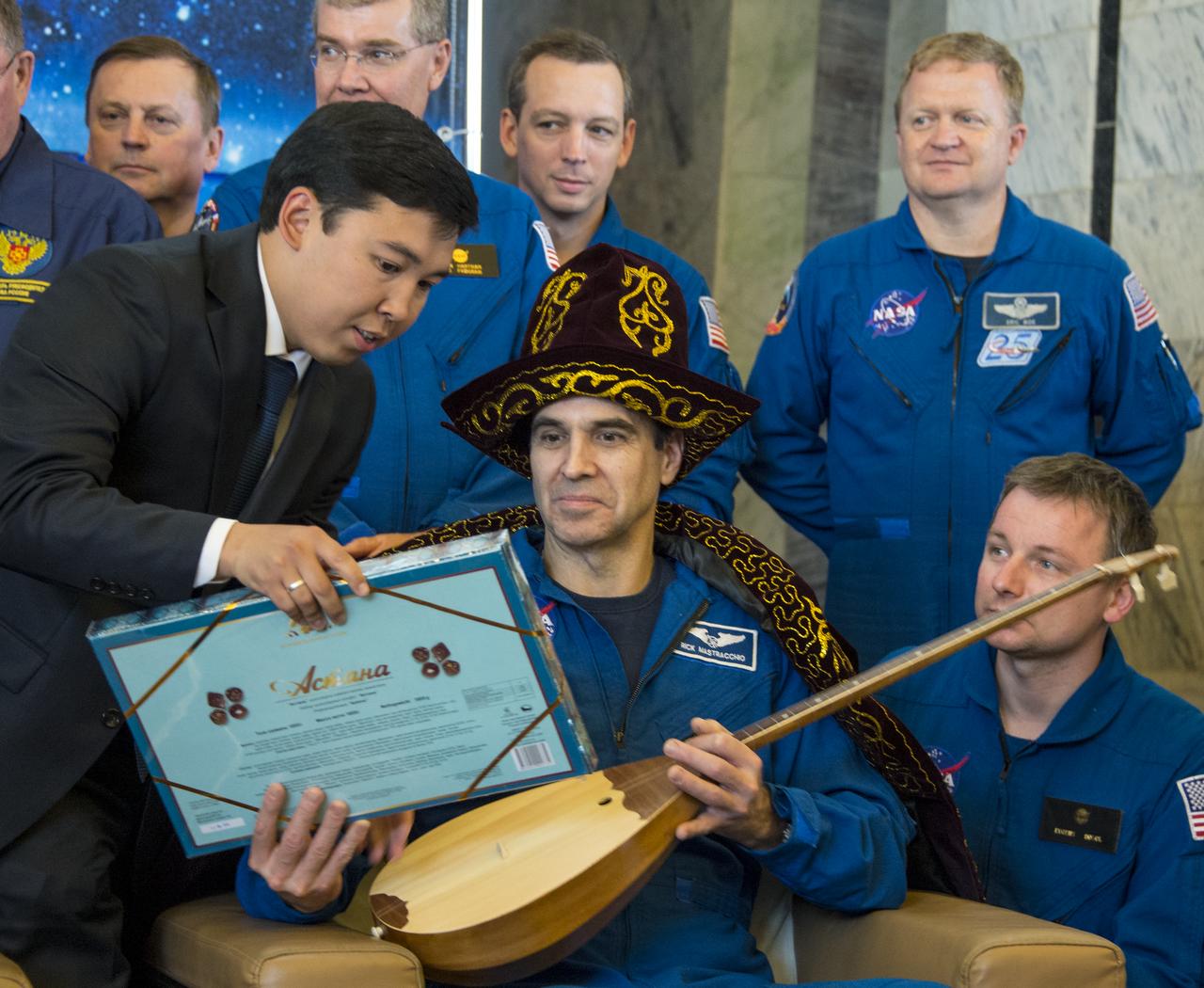
Expedition 39 Flight Engineer Rick Mastracchio of NASA is presented with a box of Karaganda chocolates during a welcome home ceremony, Wednesday, May 14, 2014 at the Karaganda Airport in Kazakhstan. Mastracchio, Expedition 39 Commander Koichi Wakata of the Japan Aerospace Exploration Agency (JAXA), and Soyuz Commander Mikhail Tyurin of Roscosmos landed in their Soyuz TMA-11M spacecraft just a few hours earlier near the town of Zhezkazgan. Wakata, Tyurin and Mastracchio returned to Earth after more than six months onboard the International Space Station where they served as members of the Expedition 38 and 39 crews. Photo Credit: (NASA/Bill Ingalls)
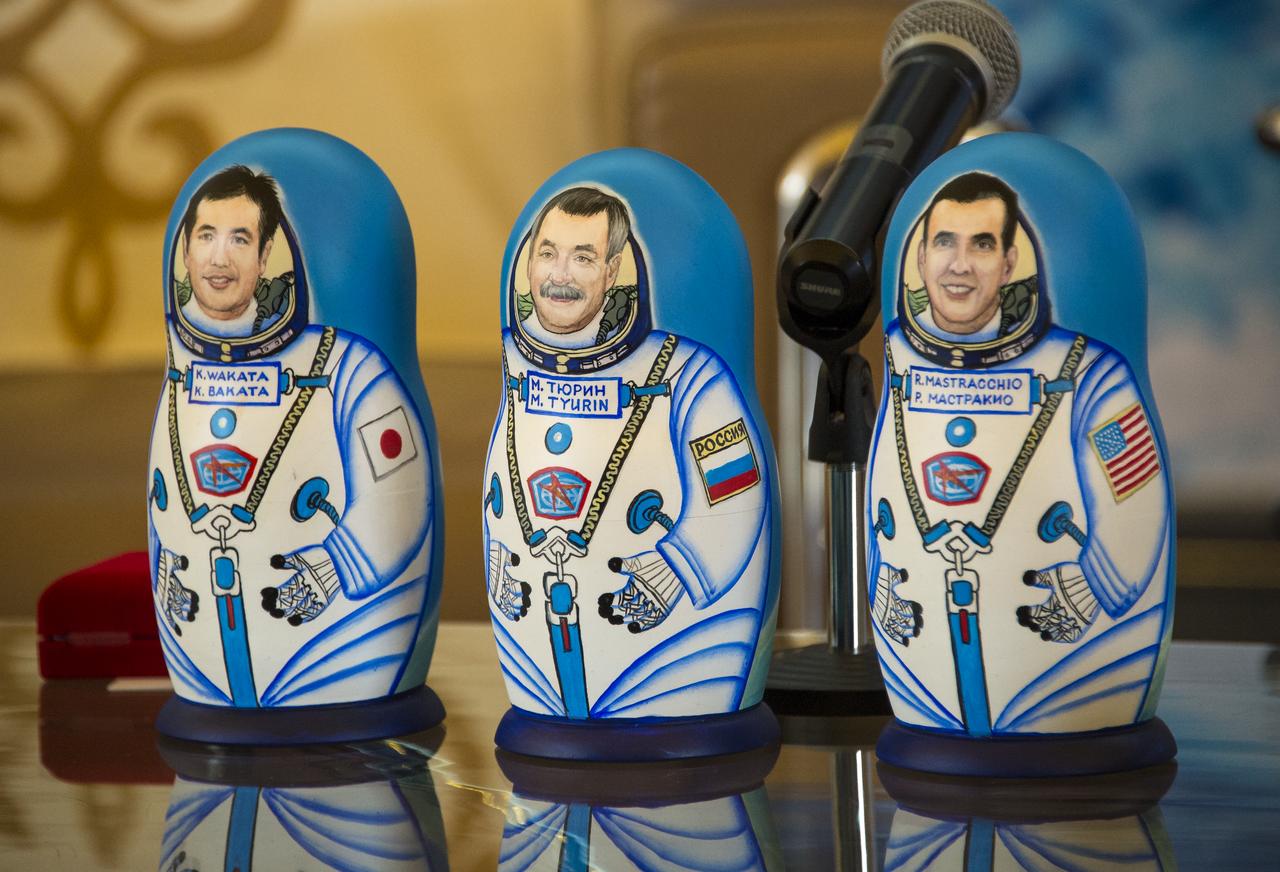
Matryoshka Dolls depicting Expedition 39 Commander Koichi Wakata of the Japan Aerospace Exploration Agency (JAXA), left, Soyuz Commander Mikhail Tyurin of Roscosmos, center, and Flight Engineer Rick Mastracchio of NASA are seen at a welcome ceremony, Wednesday, May 14, 2014 at the Karaganda Airport in Kazakhstan. Wakata, Tyurin and Mastracchio returned to Earth after more than six months onboard the International Space Station where they served as members of the Expedition 38 and 39 crews. Photo Credit: (NASA/Bill Ingalls)
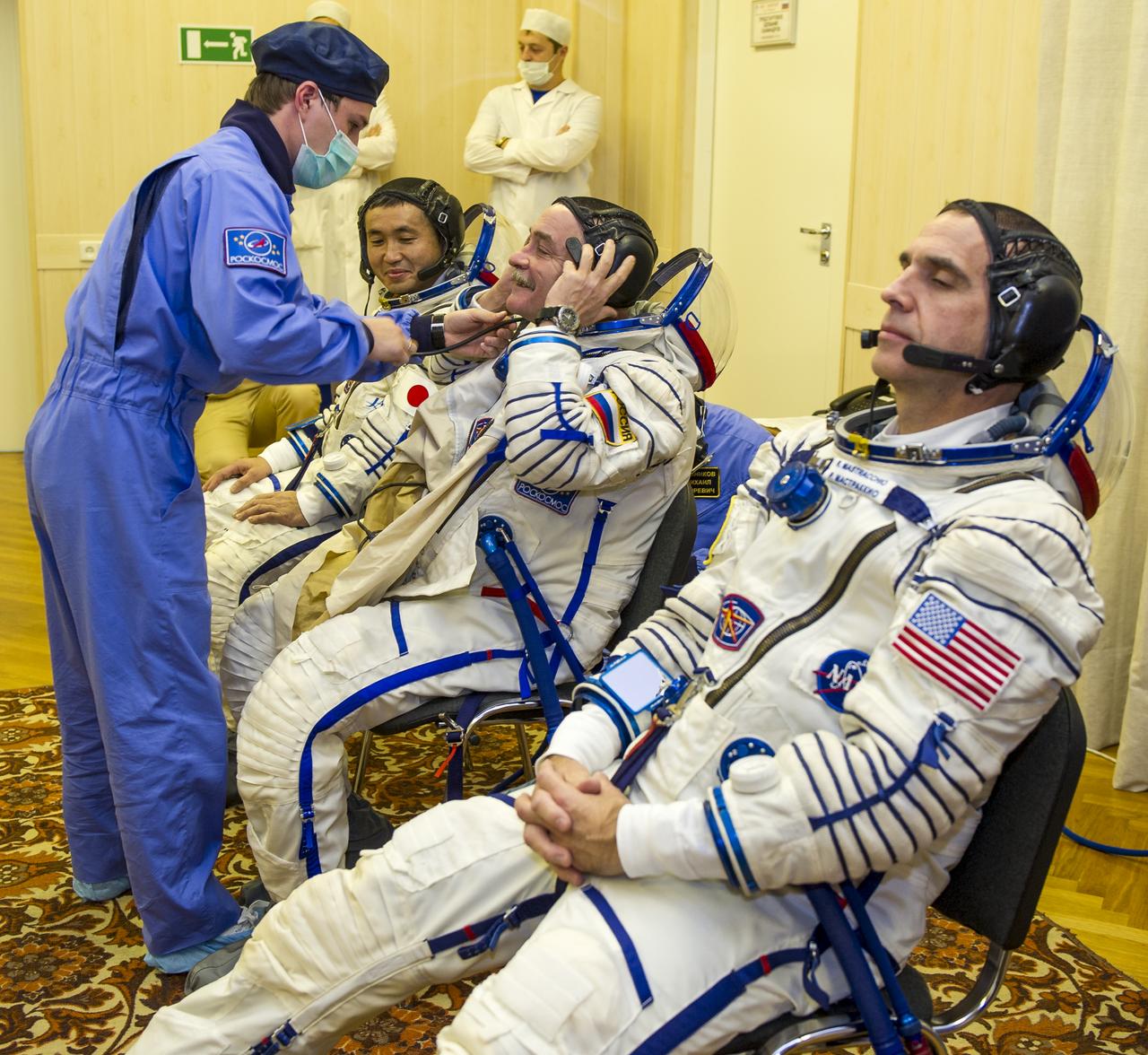
From left, Expedition 38 Flight Engineer Koichi Wakata of the Japan Aerospace Exploration Agency, Soyuz Commander Mikhail Tyurin of Roscosmos, and, Flight Engineer Rick Mastracchio of NASA don their Russian sokol suits a few hours ahead of their launch on a soyuz rocket, Thursday, Nov. 7, 2013, in Baikonur, Kazakhstan. Tyurin, Wakata, and, Mastracchio will launch in their Soyuz TMA-11M spacecraft to the International Space Station to begin a six-month mission. Photo Credit: (NASA/GCTC/Irina Peshkova)
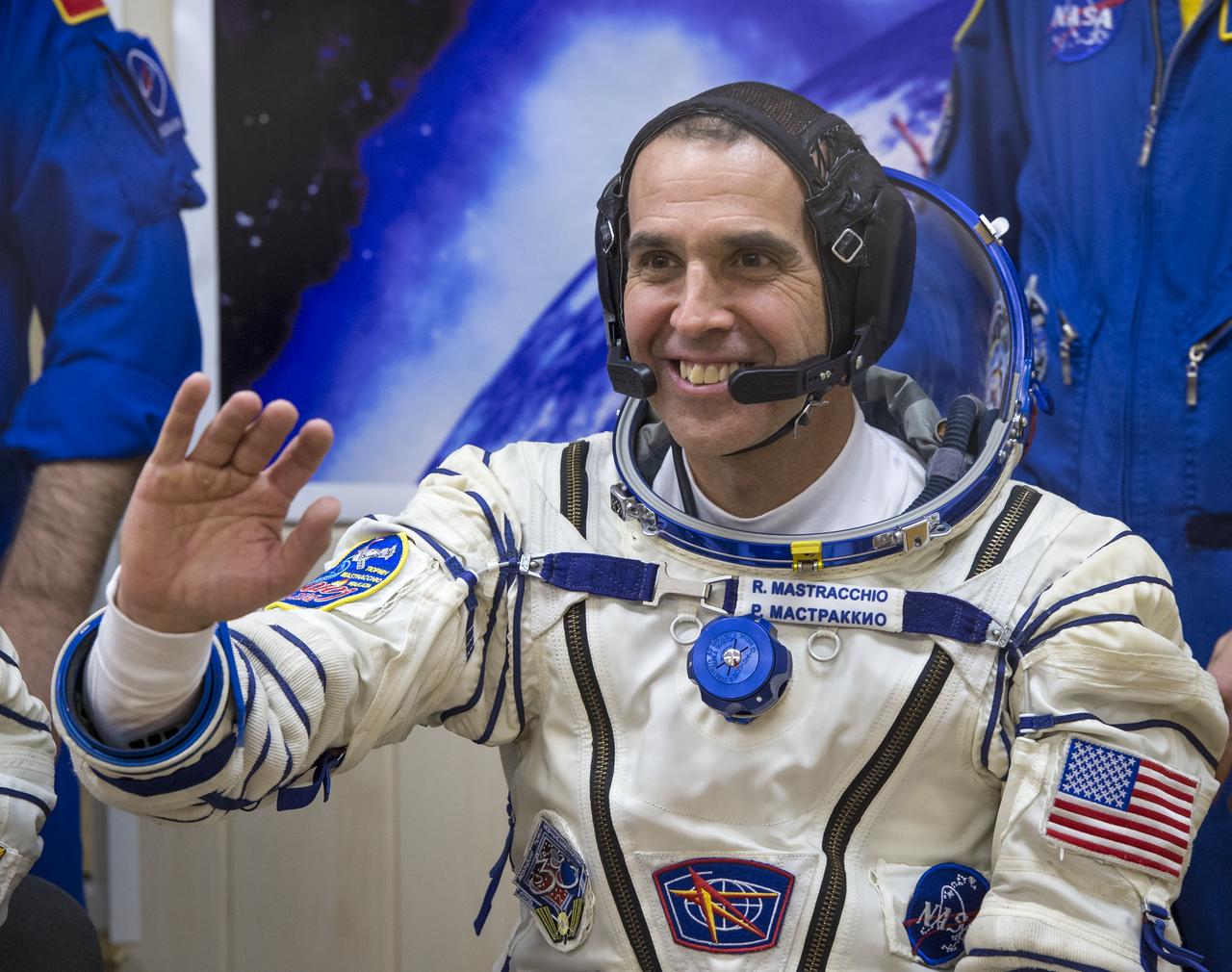
Expedition 38 Flight Engineer Rick Mastracchio of NASA is seen through glass as he and fellow crew mates, Soyuz Commander Mikhail Tyurin of Roscosmos, and, Flight Engineer Koichi Wakata of the Japan Aerospace Exploration Agency, have their Russian Sokol suits pressure checked a few hours ahead of their launch, Thursday, Nov. 7, 2013, in Baikonur, Kazakhstan. Tyurin, Wakata, and, Mastracchio will launch in their Soyuz TMA-11M spacecraft to the International Space Station to begin a six-month mission. Photo Credit (NASA/Bill Ingalls)
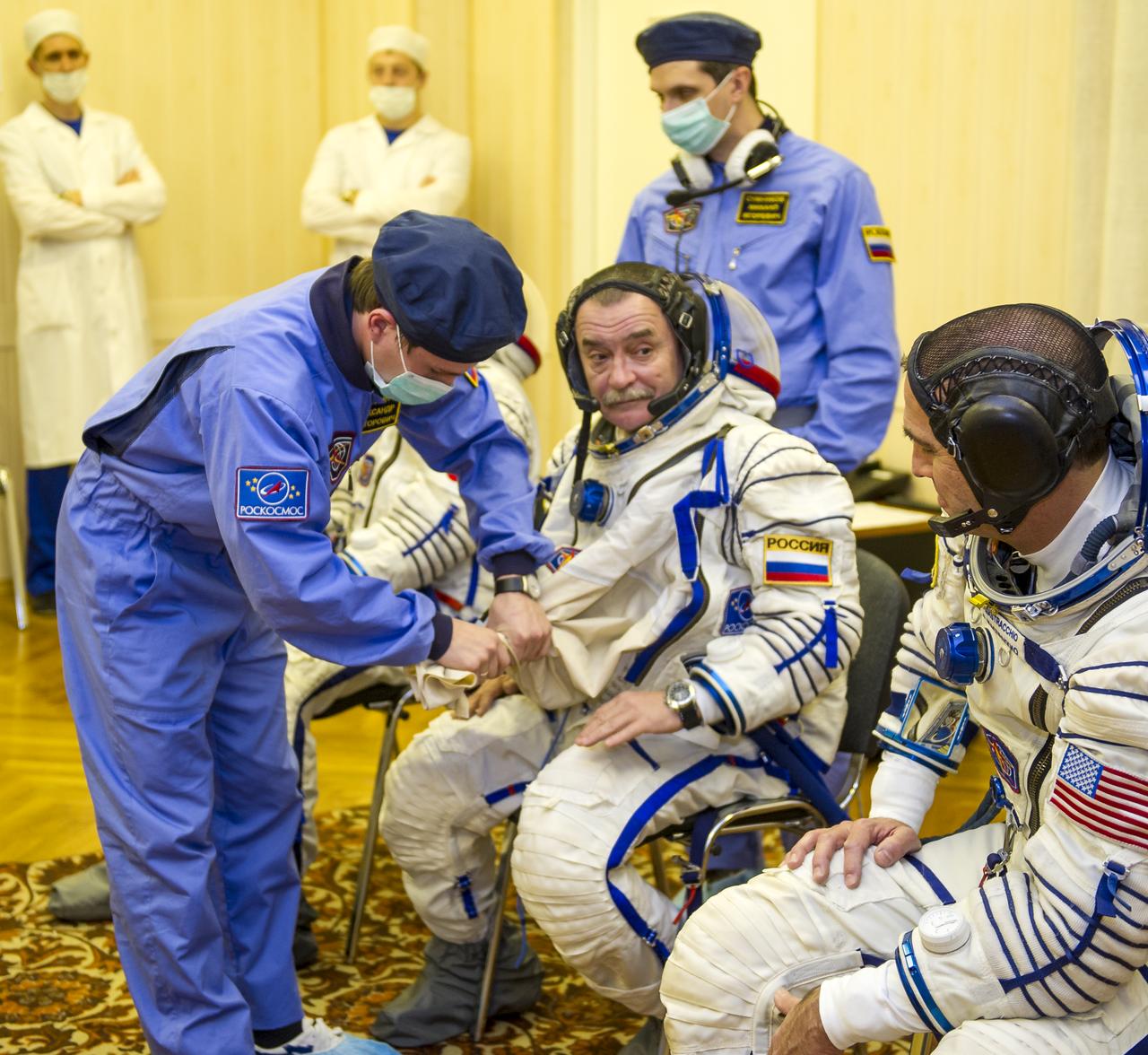
Expedition 38 Soyuz Commander Mikhail Tyurin of Roscosmos, left, and, Flight Engineer Rick Mastracchio of NASA, don their Russian sokol suits, along with Flight Engineer Koichi Wakata of the Japan Aerospace Exploration Agency, a few hours ahead of their launch on a soyuz rocket, Thursday, Nov. 7, 2013, in Baikonur, Kazakhstan. Tyurin, Wakata, and, Mastracchio will launch in their Soyuz TMA-11M spacecraft to the International Space Station to begin a six-month mission. Photo Credit: (NASA/GCTC/Irina Peshkova)
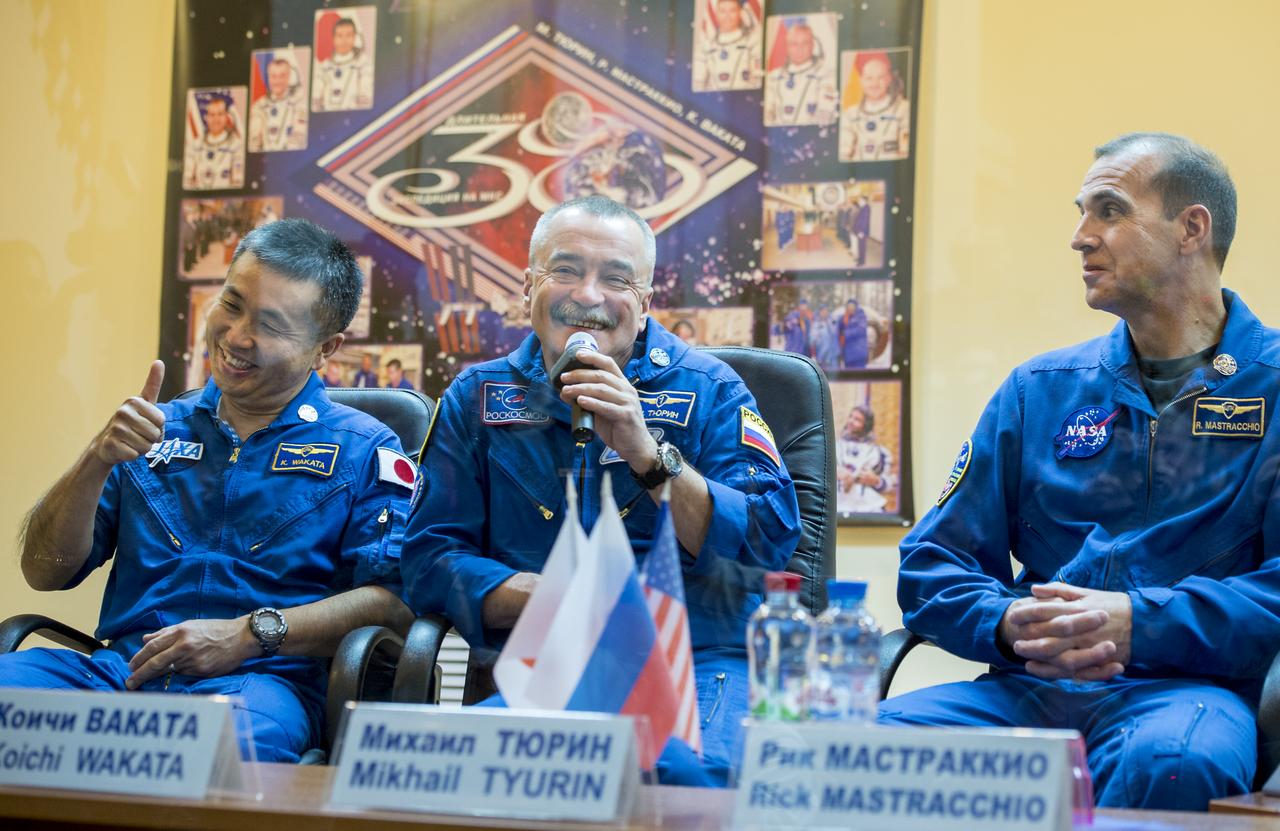
Expedition 38 Soyuz Commander Mikhail Tyurin of Roscosmos, center, talks as Flight Engineer Koichi Wakata of the Japan Aerospace Exploration Agency, left, and, Flight Engineer Rick Mastracchio of NASA listen, while quarantine behind glass, during the final press conference held a day ahead of their launch to the International Space Station, Wednesday, Nov. 6, 2013 at the Cosmonaut Hotel in Baikonur, Kazakhstan. Photo Credit: (NASA/Bill Ingalls)
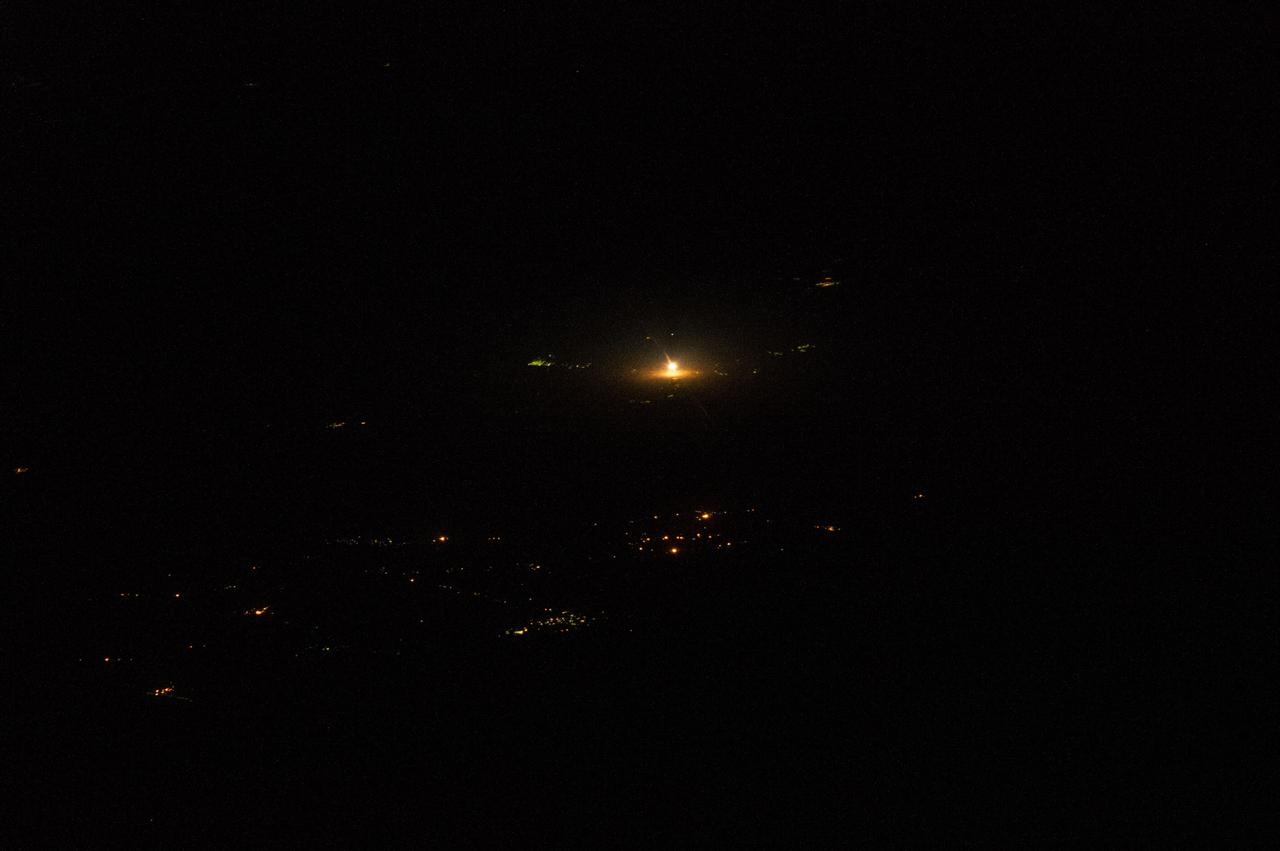
ISS039-E-005434 (25 March 2014) --- One of the three Expedition 39 crew members currently onboard the International Space Station photographed this image of the departure from Baikonur Cosmodrome in Kazakhstan at 21:18:03 GMT, March 25 (March 26, Kazakh time) of two Russian cosmonauts and a NASA astronaut in the Soyuz TMA12M. Inside the space station were Expediton 39 Commander Koichi Wakata of the Japan Aerospace Exploration Agency (JAXA) and Cosmonaut Mikhail Tyurin and NASA astronaut Rick Mastracchio, both flight engineers. Inside the Soyuz on route to meet the present inhabitants was another Expedition 39 trio -- Soyuz Commander Alexander Skvortsov of Rosmosmos and Flight Engineers Steve Swanson of NASA and Oleg Artemyev of Roscosmos.
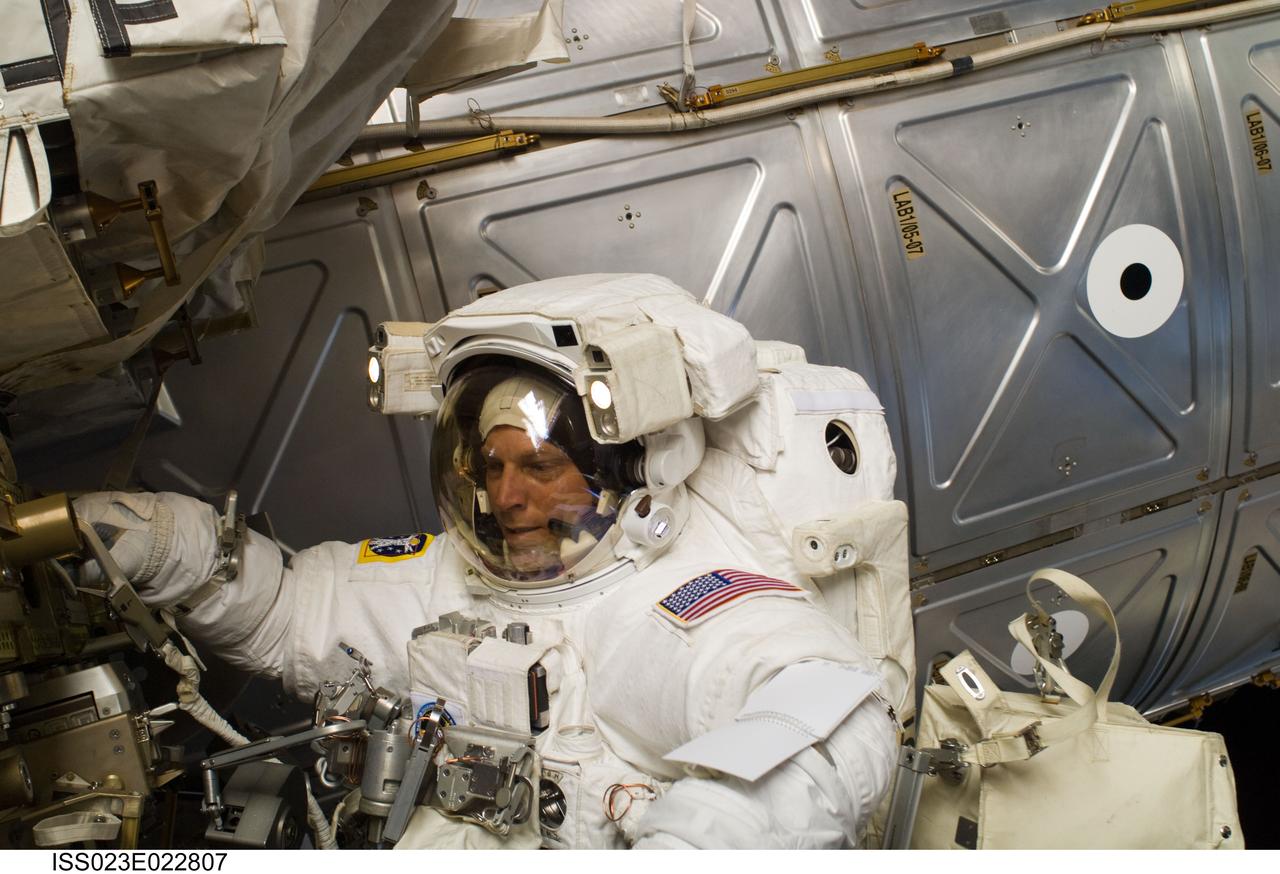
ISS023-E-022807 (13 April 2010) --- NASA astronaut Clayton Anderson, STS-131 mission specialist, participates in the mission's third and final session of extravehicular activity (EVA) as construction and maintenance continue on the International Space Station. During the six-hour, 24-minute spacewalk, Anderson and astronaut Rick Mastracchio (out of frame), mission specialist, hooked up fluid lines of the new 1,700-pound tank, retrieved some micrometeoroid shields from the Quest airlock’s exterior, relocated a portable foot restraint and prepared cables on the Zenith 1 truss for a spare Space to Ground Ku-Band antenna, two chores required before space shuttle Atlantis' STS-132/ULF-4 mission in May.
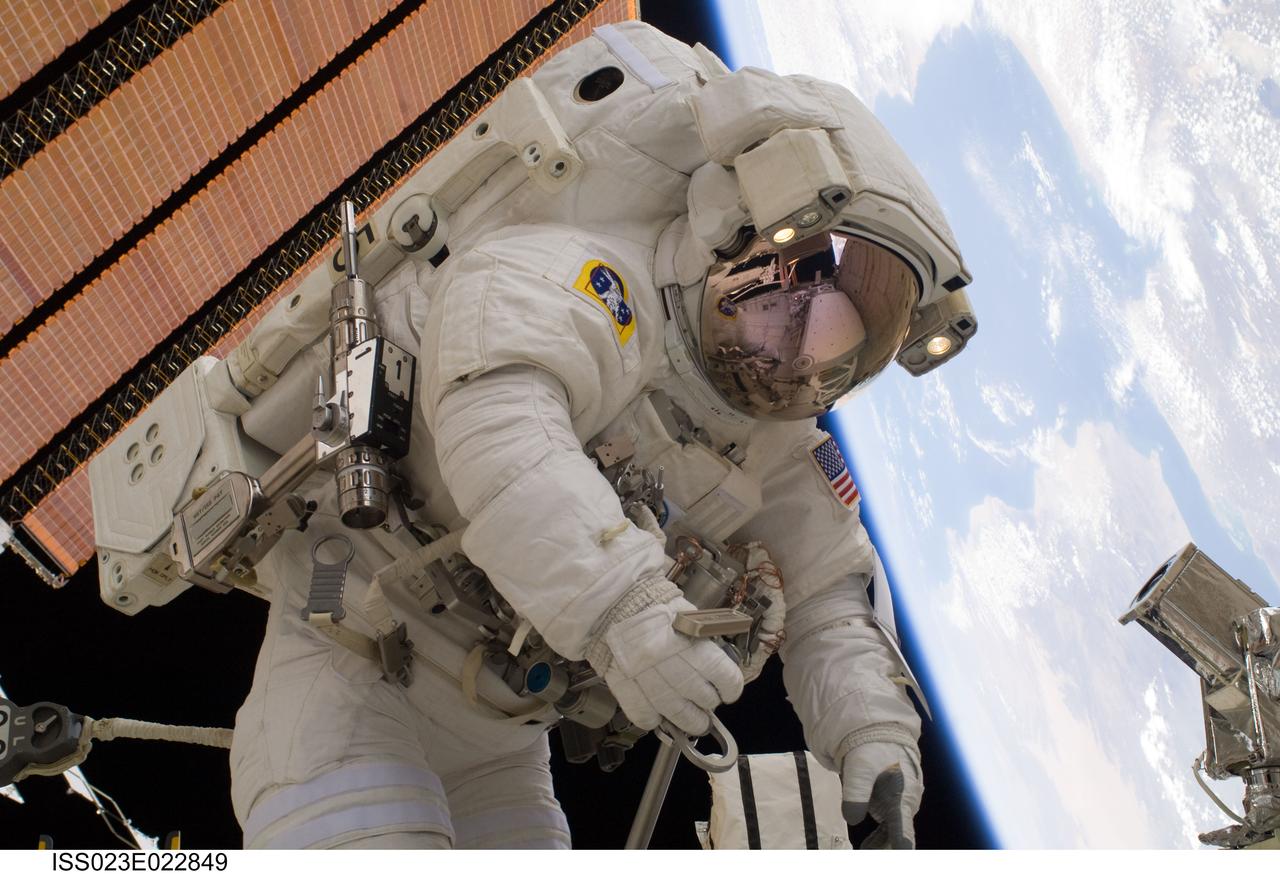
ISS023-E-022849 (13 April 2010) --- NASA astronaut Clayton Anderson, STS-131 mission specialist, participates in the mission's third and final session of extravehicular activity (EVA) as construction and maintenance continue on the International Space Station. During the six-hour, 24-minute spacewalk, Anderson and astronaut Rick Mastracchio (out of frame), mission specialist, hooked up fluid lines of the new 1,700-pound tank, retrieved some micrometeoroid shields from the Quest airlock’s exterior, relocated a portable foot restraint and prepared cables on the Zenith 1 truss for a spare Space to Ground Ku-Band antenna, two chores required before space shuttle Atlantis' STS-132/ULF-4 mission in May.
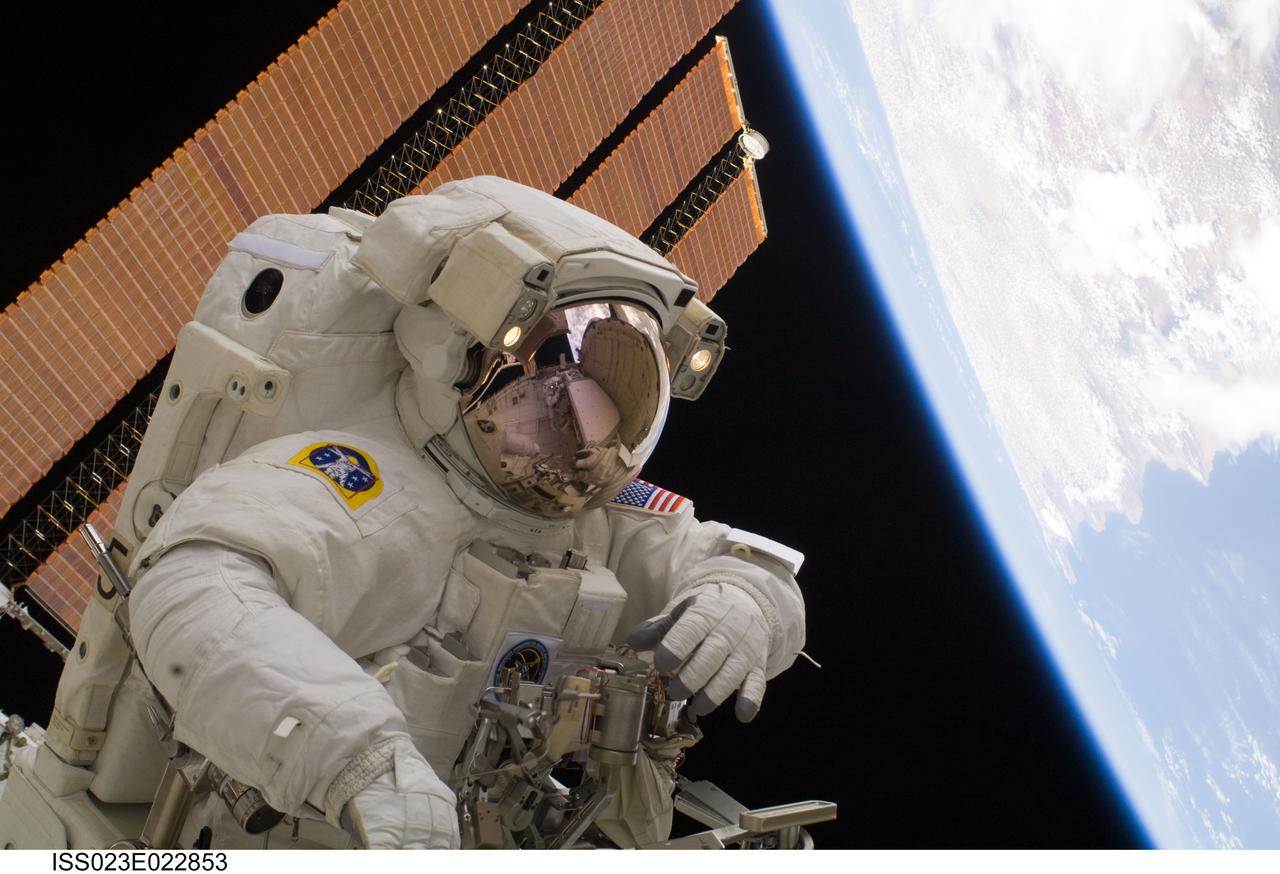
ISS023-E-022853 (13 April 2010) --- NASA astronaut Clayton Anderson, STS-131 mission specialist, participates in the mission's third and final session of extravehicular activity (EVA) as construction and maintenance continue on the International Space Station. During the six-hour, 24-minute spacewalk, Anderson and astronaut Rick Mastracchio (out of frame), mission specialist, hooked up fluid lines of the new 1,700-pound tank, retrieved some micrometeoroid shields from the Quest airlock’s exterior, relocated a portable foot restraint and prepared cables on the Zenith 1 truss for a spare Space to Ground Ku-Band antenna, two chores required before space shuttle Atlantis' STS-132/ULF-4 mission in May.
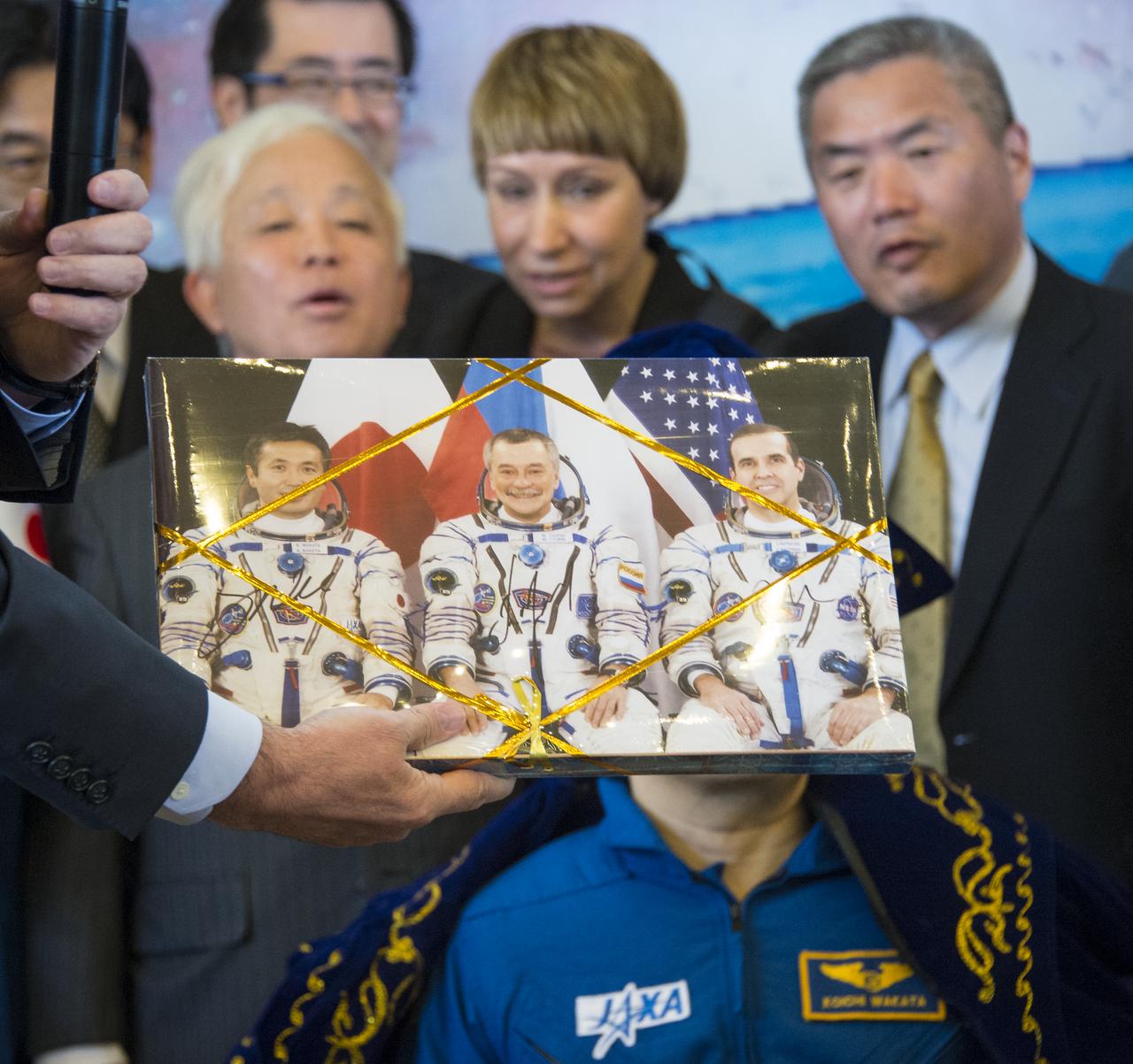
Japan Aerospace Exploration Agency (JAXA) President Naoki Okumura, background left, looks on as a boxes of Karaganda chocolates is presented to Expedition 39 Commander Koichi Wakata of the Japan Aerospace Exploration Agency (JAXA), Soyuz Commander Mikhail Tyurin of Roscosmos, and Flight Engineer Rick Mastracchio of NASA at a welcome ceremony, Wednesday, May 14, 2014 at the Karaganda Airport in Kazakhstan. Wakata, Tyurin and Mastracchio returned to Earth after more than six months onboard the International Space Station where they served as members of the Expedition 38 and 39 crews. Photo Credit: (NASA/Bill Ingalls)
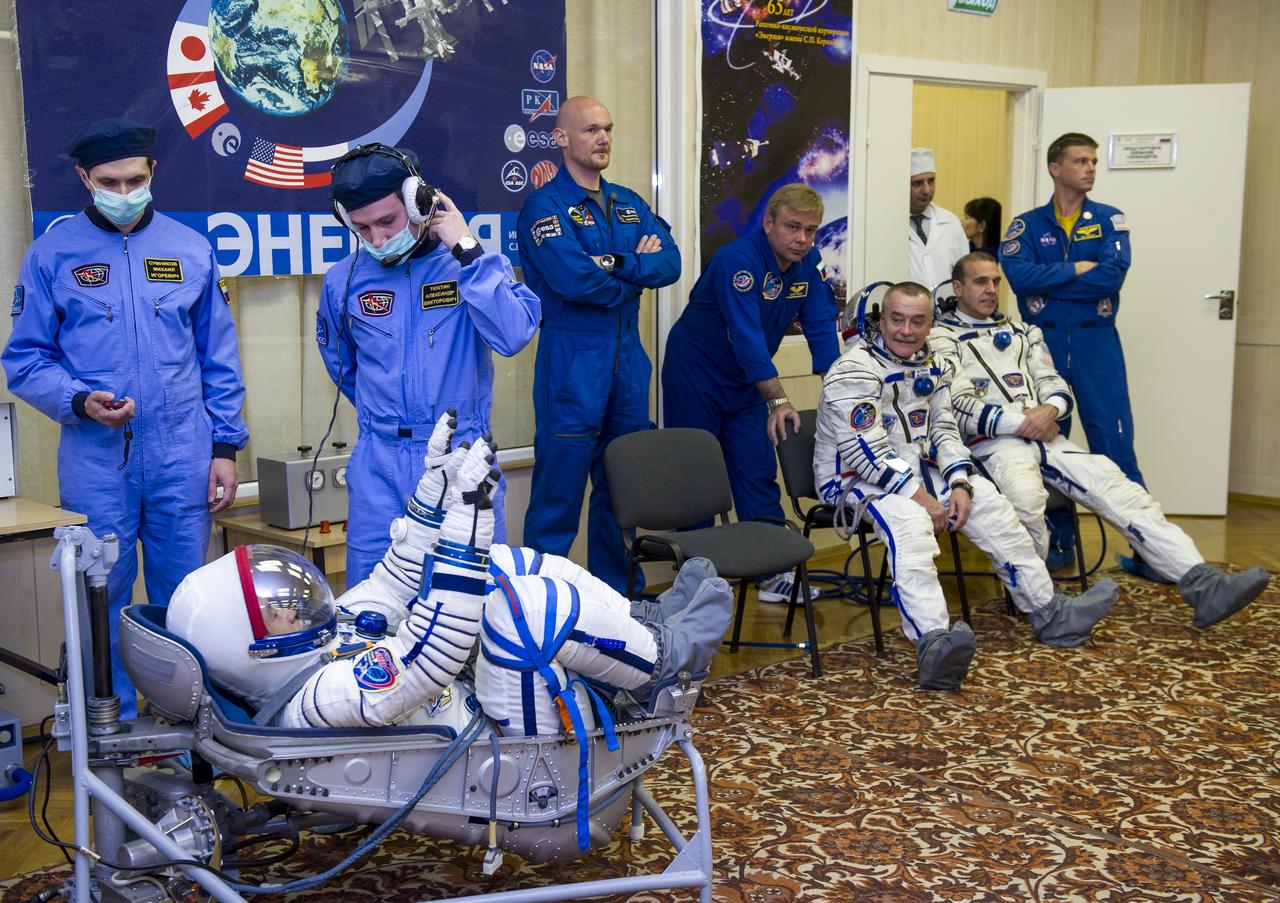
Expedition 38 Flight Engineer Koichi Wakata of the Japan Aerospace Exploration Agency is seen laying in a seat liner as he and fellow crew mates, Soyuz Commander Mikhail Tyurin of Roscosmos, seated left, and, Flight Engineer Rick Mastracchio of NASA, have their Russian Sokol suits pressure checked a few hours ahead of their launch, Thursday, Nov. 7, 2013, in Baikonur, Kazakhstan. Tyurin, Wakata, and, Mastracchio will launch in their Soyuz TMA-11M spacecraft to the International Space Station to begin a six-month mission. Photo Credit: (NASA/GCTC/Irina Peshkova)
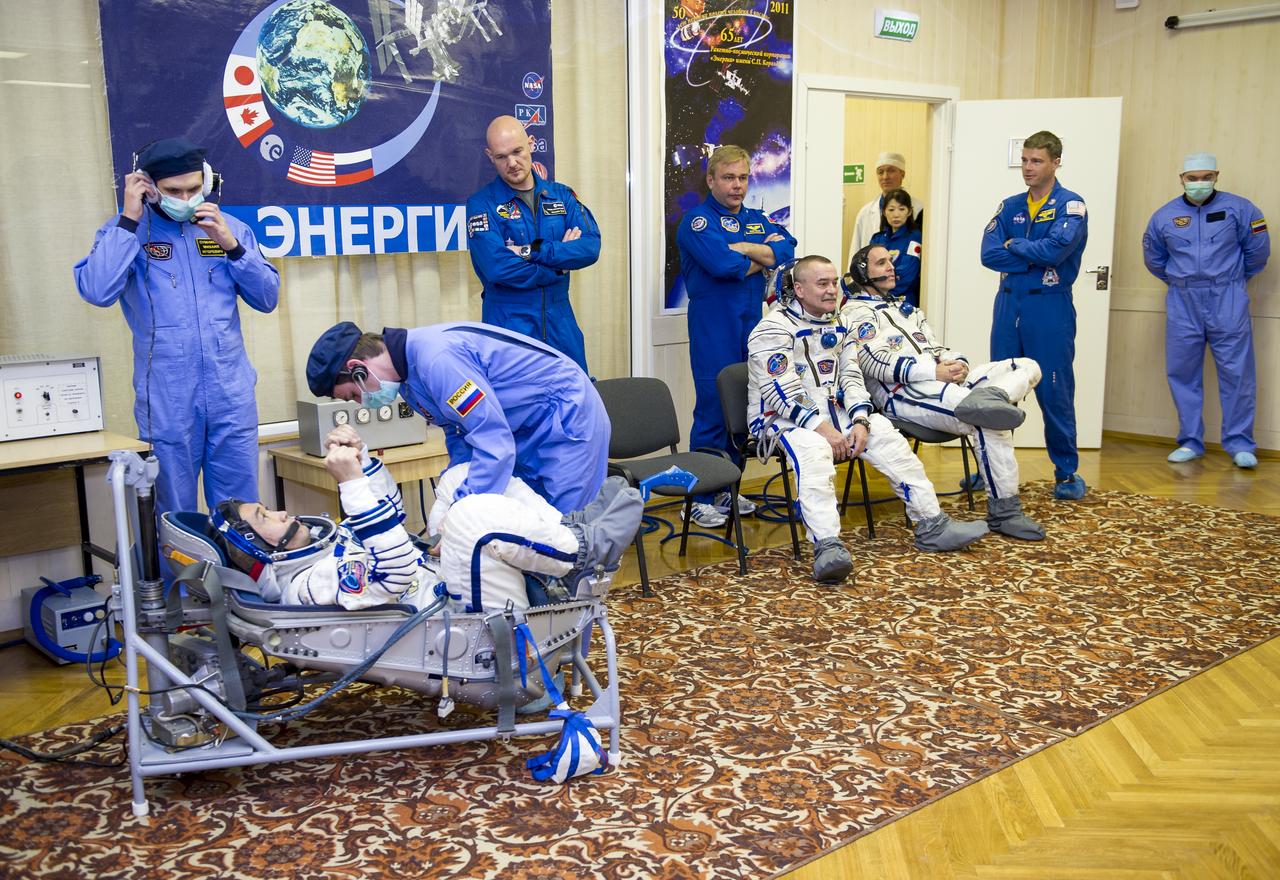
Expedition 38 Flight Engineer Koichi Wakata of the Japan Aerospace Exploration Agency is seen laying in a seat liner as he and fellow crew mates, Soyuz Commander Mikhail Tyurin of Roscosmos, seated left, and, Flight Engineer Rick Mastracchio of NASA, have their Russian Sokol suits pressure checked a few hours ahead of their launch, Thursday, Nov. 7, 2013, in Baikonur, Kazakhstan. Tyurin, Wakata, and, Mastracchio will launch in their Soyuz TMA-11M spacecraft to the International Space Station to begin a six-month mission. Photo Credit: (NASA/GCTC/Irina Peshkova)
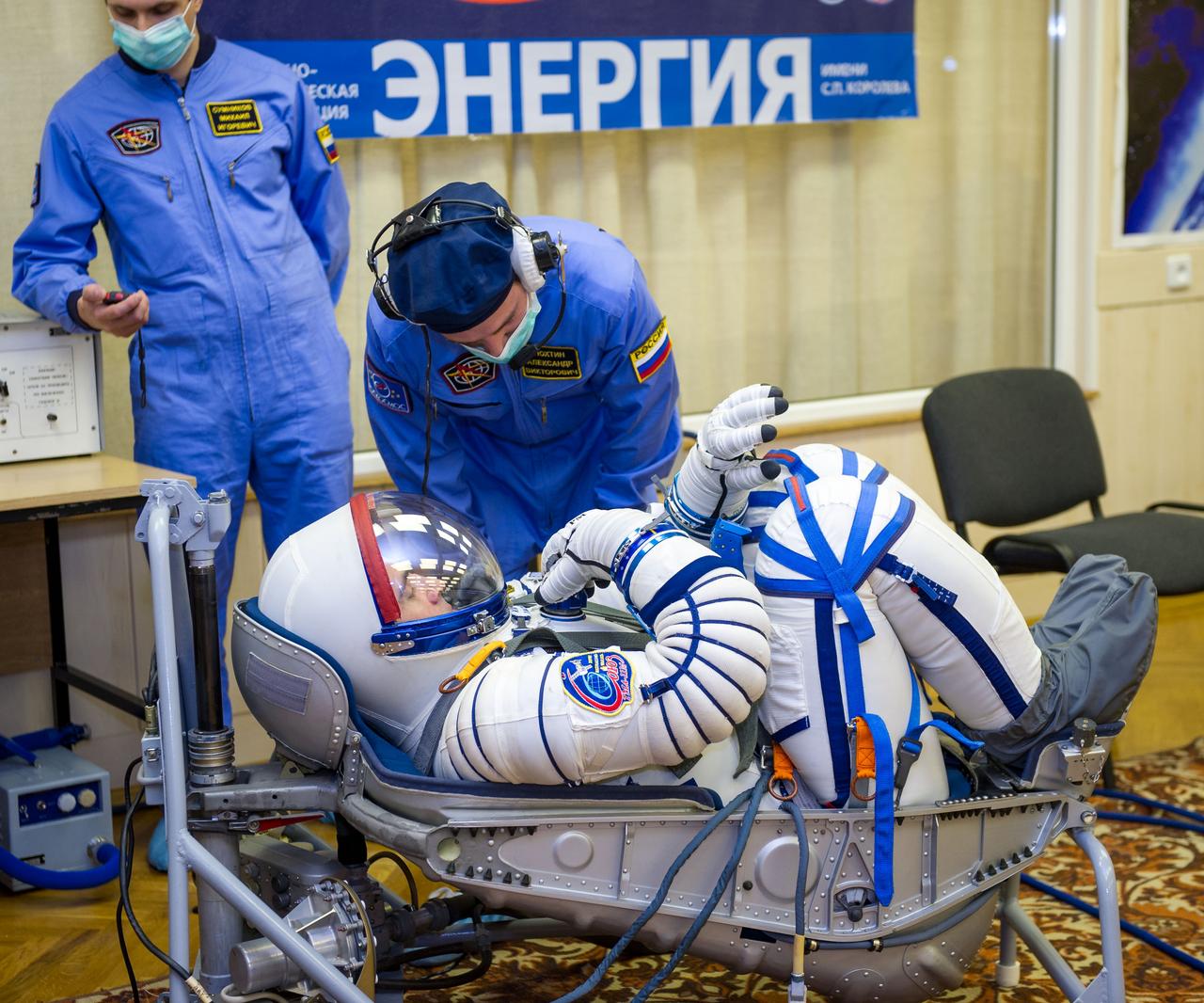
Expedition 38 Flight Engineer Rick Mastracchio of NASA is seen laying in a seat liner as he and fellow crew mates, Flight Engineer Koichi Wakata of the Japan Aerospace Exploration Agency, and, Soyuz Commander Mikhail Tyurin of Roscosmos, have their Russian Sokol suits pressure checked a few hours ahead of their launch, Thursday, Nov. 7, 2013, in Baikonur, Kazakhstan. Tyurin, Wakata, and, Mastracchio will launch in their Soyuz TMA-11M spacecraft to the International Space Station to begin a six-month mission. Photo Credit: (NASA/GCTC/Irina Peshkova)
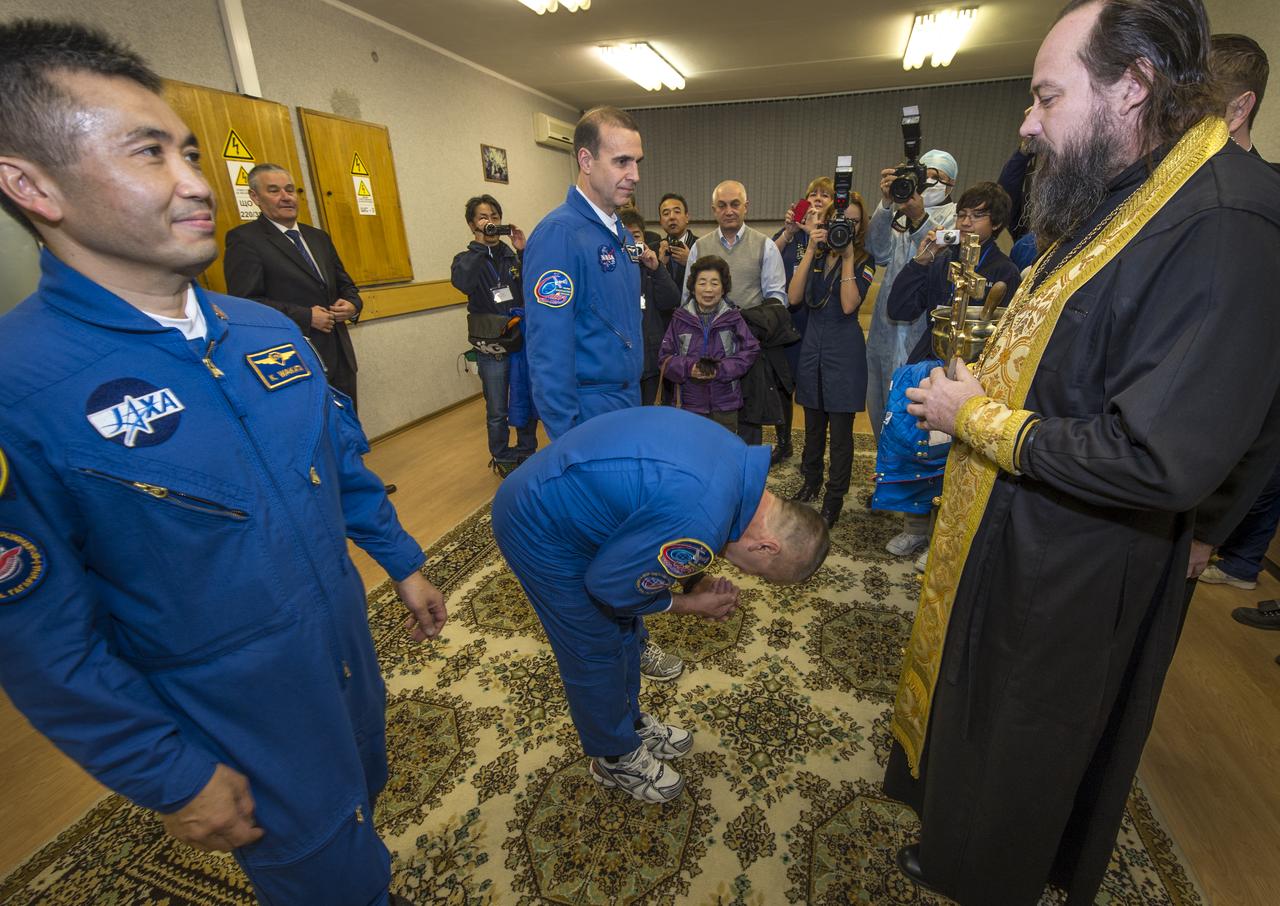
Expedition 38 Flight Engineer Koichi Wakata of the Japan Aerospace Exploration Agency, left, Soyuz Commander Mikhail Tyurin of Roscosmos, 2nd from left, and, Flight Engineer Rick Mastracchio of NASA, prepare to receive the traditional blessing from a Russian Orthodox priest at the Cosmonaut Hotel prior to their launch on the Soyuz rocket to the International Space Station, Thursday, Nov. 7, 2013, in Baikonur, Kazakhstan. Tyurin, Wakata, and, Mastracchio will launch in their Soyuz TMA-11M spacecraft to the International Space Station to begin a six-month mission. Photo Credit (NASA/Bill Ingalls)
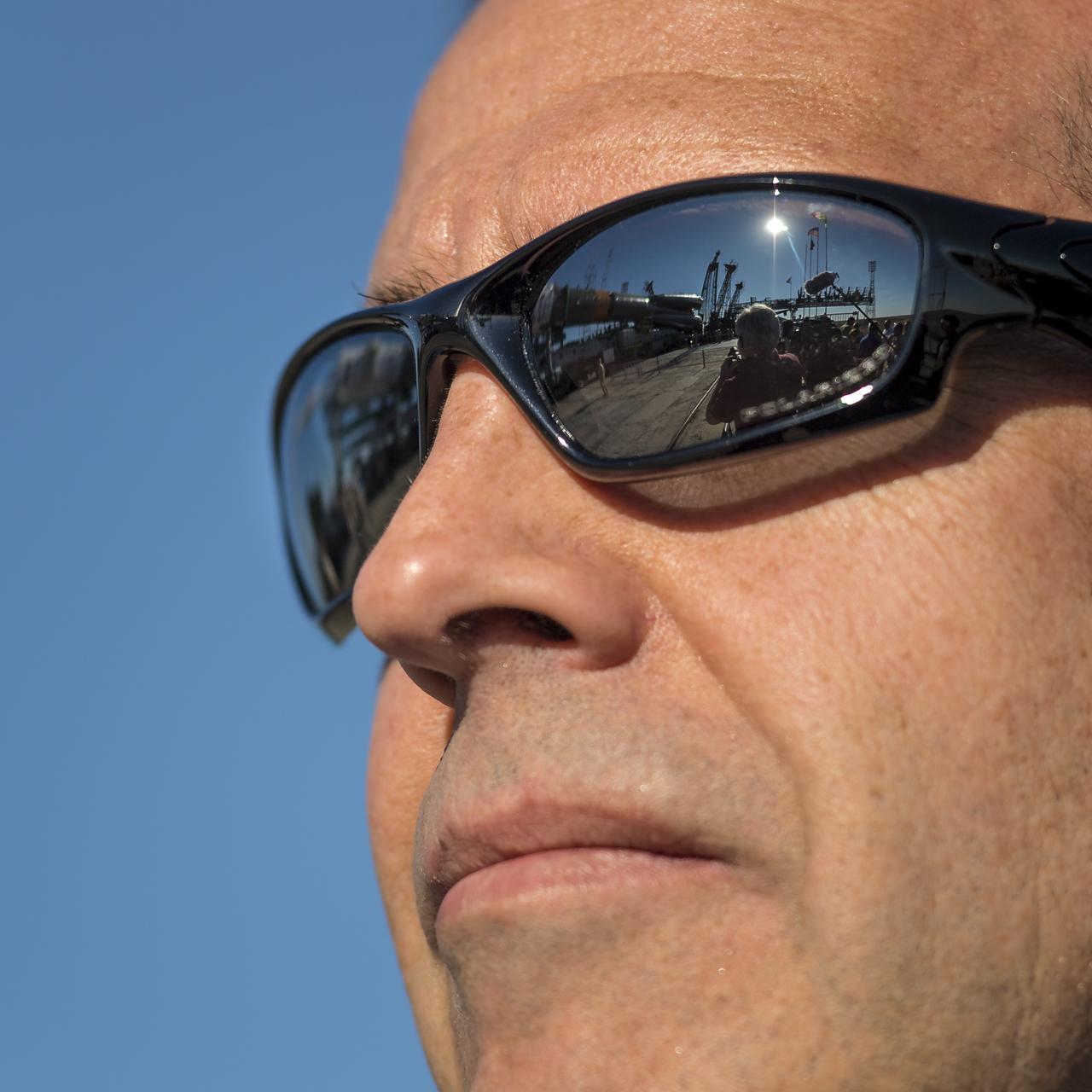
The Soyuz TMA-09M spacecraft is seen reflected in the glasses of Expedition 36 backup Flight Engineer Rick Mastracchio of NASA at the Baikonur Cosmodrome launch pad, Sunday, May 26, 2013, in Kazakhstan. The launch of the Soyuz rocket to the International Space Station (ISS) with Expedition 36/37 Soyuz Commander Fyodor Yurchikhin of the Russian Federal Space Agency (Roscosmos), Flight Engineers; Luca Parmitano of the European Space Agency, and Karen Nyberg of NASA, is scheduled for Wednesday May 29, Kazakh time. Yurchikhin, Nyberg, and, Parmitano, will remain aboard the station until mid-November. Photo credit: (NASA/Bill Ingalls)
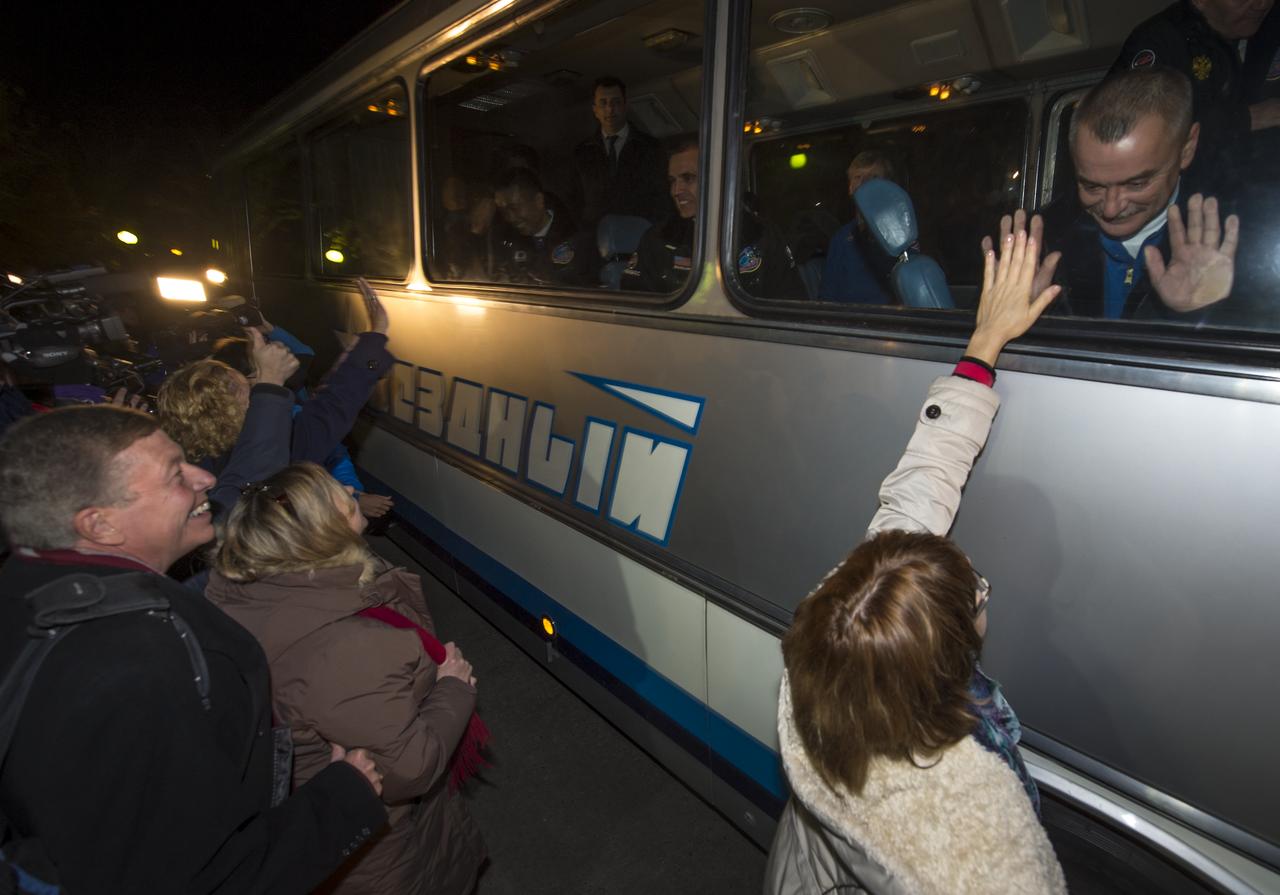
Expedition 38 Flight Engineer Koichi Wakata of the Japan Aerospace Exploration Agency, on bus left, Flight Engineer Rick Mastracchio of NASA, and, Soyuz Commander Mikhail Tyurin of Roscosmos, right, wave farewell to friends and family as they depart the Cosmonaut hotel ahead of their launch on a Soyuz rocket to the International Space Station, Thursday, Nov. 7, 2013, in Baikonur, Kazakhstan. Photo Credit: (NASA/Bill Ingalls)
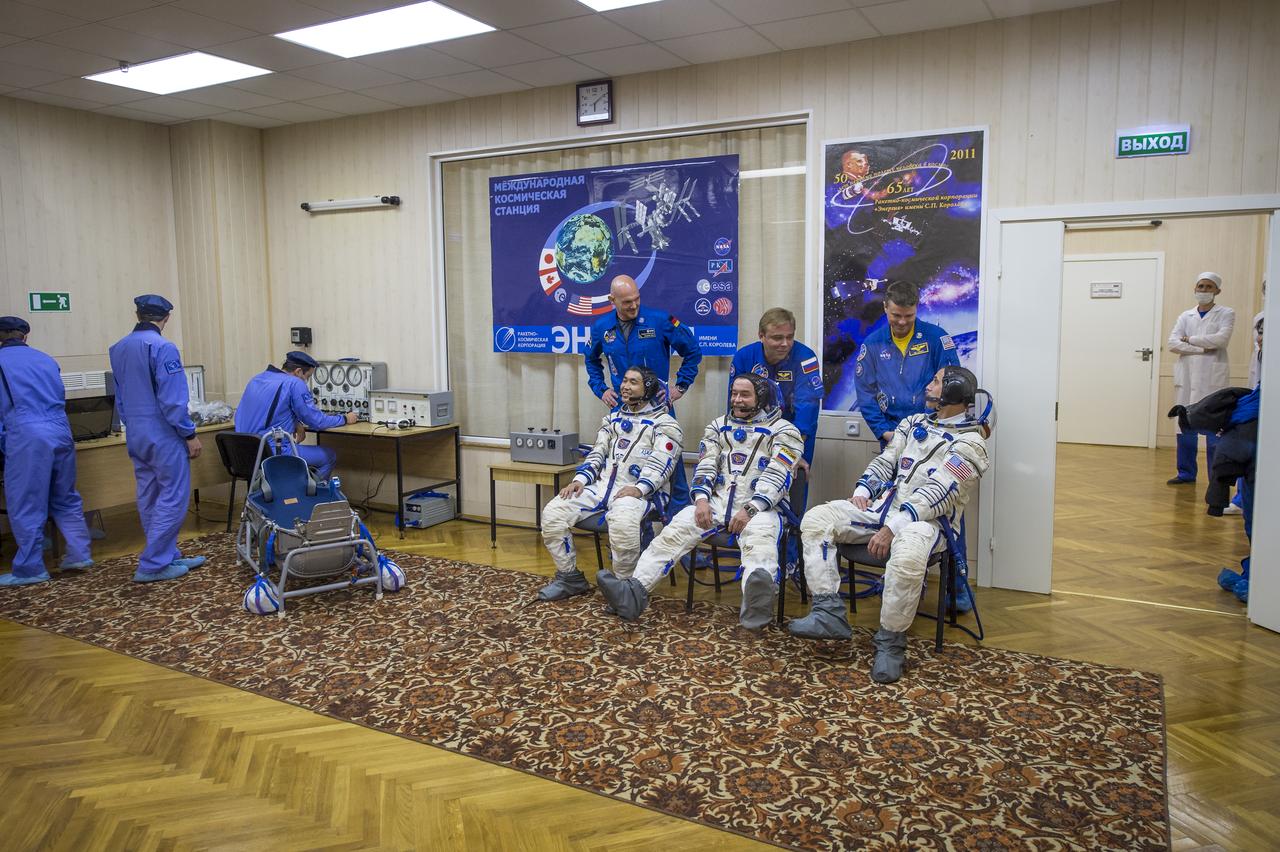
Seated left to right, Expedition 38 Flight Engineer Koichi Wakata of the Japan Aerospace Exploration Agency, Soyuz Commander Mikhail Tyurin of Roscosmos, and, Flight Engineer Rick Mastracchio of NASA are seen through glass along with backup crew members, standing behind them from left, Alexander Gerst of the European Space Agency, Russian cosmonaut Max Suraev, and, Reid Wiseman of NASA as they have prepare to have their Russian Sokol suits pressure checked a few hours ahead of their launch, Thursday, Nov. 7, 2013, in Baikonur, Kazakhstan. Tyurin, Wakata, and, Mastracchio will launch in their Soyuz TMA-11M spacecraft to the International Space Station to begin a six-month mission. Photo Credit: (NASA/Bill Ingalls)
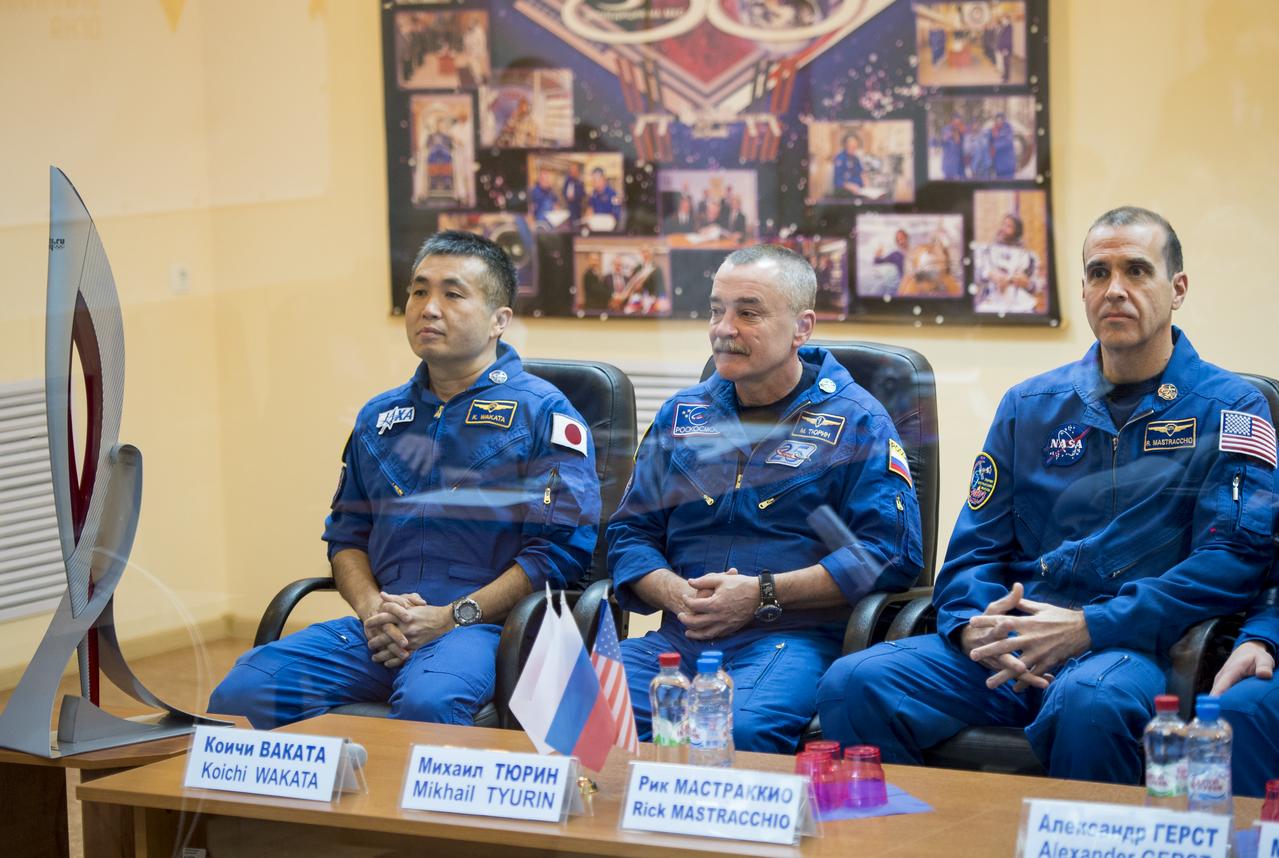
Expedition 38 Flight Engineer Koichi Wakata of the Japan Aerospace Exploration Agency, left, Soyuz Commander Mikhail Tyurin of Roscosmos, and, Flight Engineer Rick Mastracchio of NASA, right, are seen behind glass, while in quarantine, during the State Commission meeting held to approve the Soyuz launch of the crew for a six month mission aboard the International Space Station, Wednesday, Nov. 6, 2013 at the Cosmonaut Hotel in Baikonur, Kazakhstan. An Olympic torch that will be launched with the crew for a four-day visit to the station is seen on the left. The torch will return to Earth with another trio of station residents on Nov. 11 and will be part of the torch relay that ends with the lighting of the flame at the Fisht Stadium in Sochi, Russia Feb. 7 to mark the opening of the 2014 Winter Olympics. Photo Credit: (NASA/Bill Ingalls)
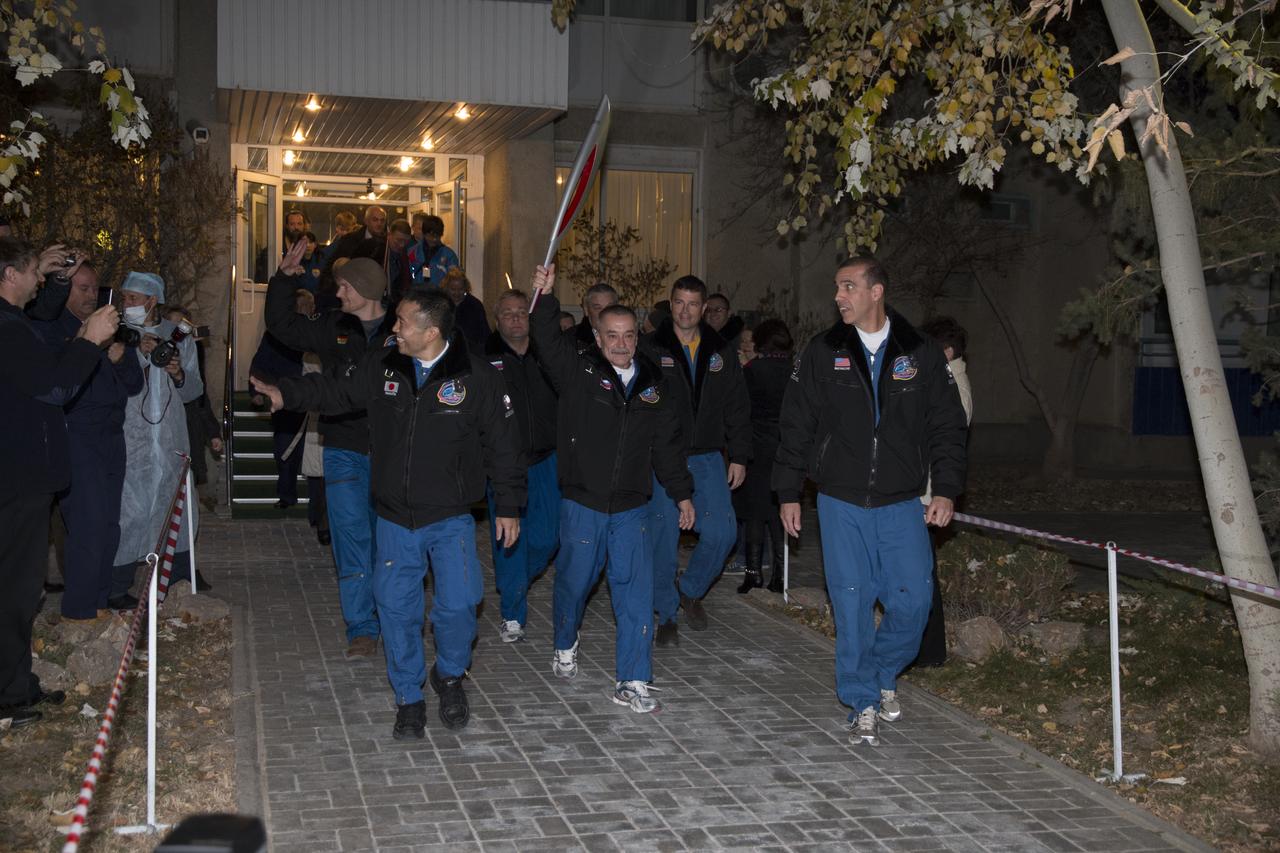
Expedition 38 Flight Engineer Koichi Wakata of the Japan Aerospace Exploration Agency, left, Soyuz Commander Mikhail Tyurin of Roscosmos, and, Flight Engineer Rick Mastracchio of NASA, right, are seen as they depart the Cosmonaut hotel with the Olympic Torch that will be launched with them on a Soyuz rocket to the International Space Station, Thursday, Nov. 7, 2013, in Baikonur, Kazakhstan. The Olympic torch will have a four-day visit to station and will return to Earth with another trio of station residents on Nov. 11 and will be part of the torch relay that ends with the lighting of the flame at the Fisht Stadium in Sochi, Russia Feb. 7 to mark the opening of the 2014 Winter Olympics. Photo Credit: (NASA/Victor Zelentsov)
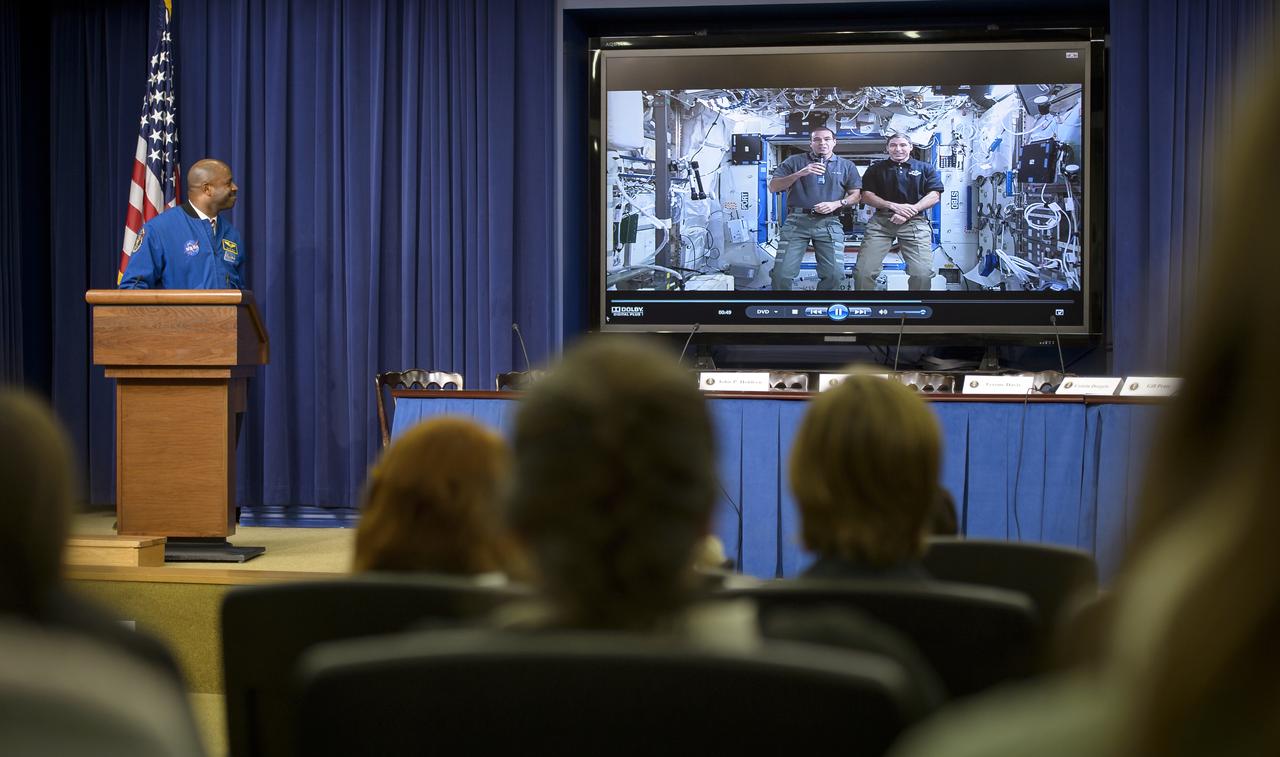
NASA associate administrator for education and former astronaut Leland Melvin, left, watches as astronauts, Rick Mastracchio, screen left, and Michael Hopkins, deliver a message from the International Space Station (ISS) to attendees of the annual White House State of Science, Technology, Engineering, and Math (SoSTEM) address, Wednesday, Jan. 29, 2014, in the South Court Auditorium in the Eisenhower Executive Office Building on the White House complex in Washington. Photo Credit: (NASA/Bill Ingalls)
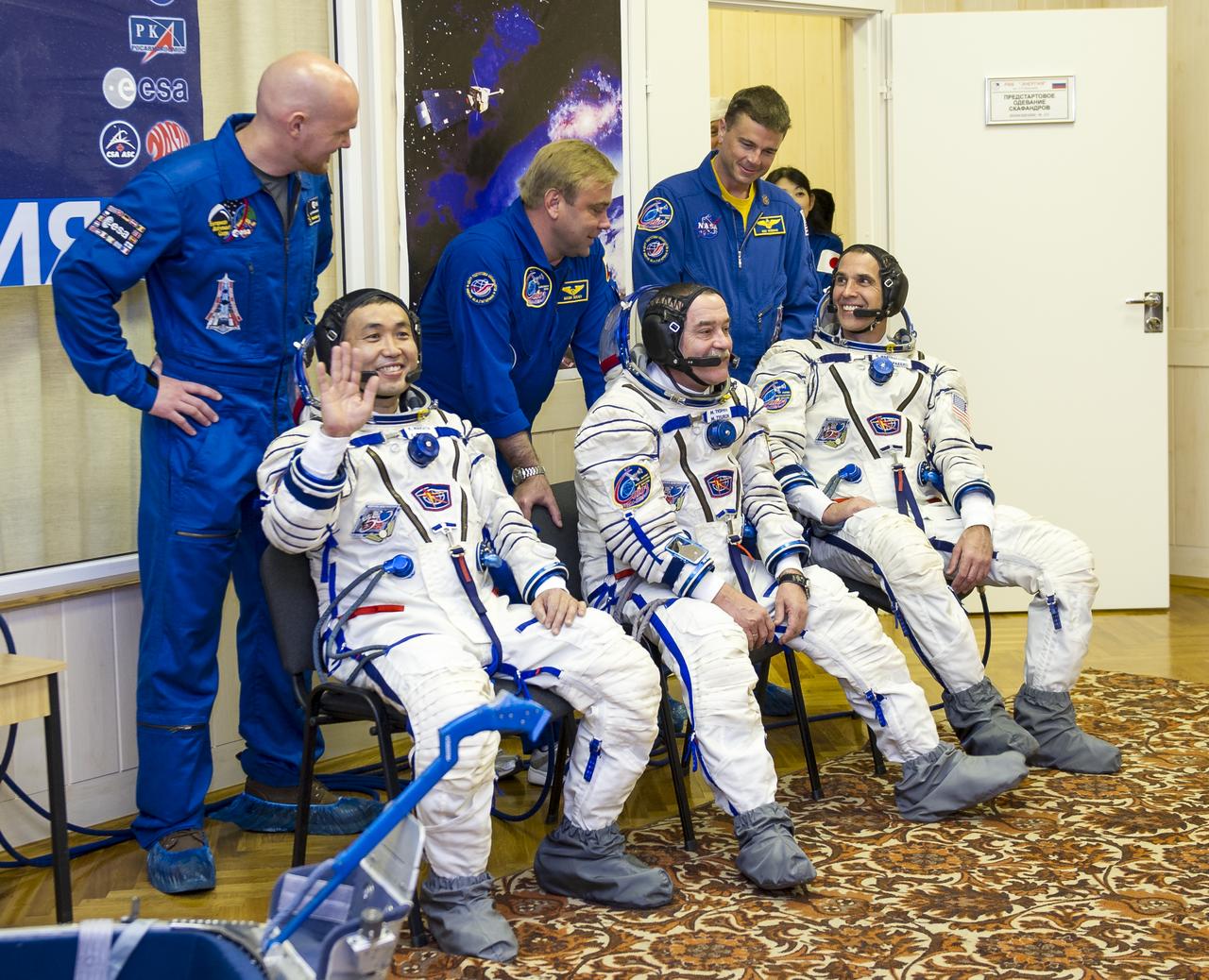
Seated left to right, Expedition 38 Flight Engineer Koichi Wakata of the Japan Aerospace Exploration Agency, Soyuz Commander Mikhail Tyurin of Roscosmos, and, Flight Engineer Rick Mastracchio of NASA are seen along with backup crew members, standing behind them, from left, Alexander Gerst of the European Space Agency, Russian cosmonaut Max Suraev, and, Reid Wiseman of NASA, as they have prepare to have their Russian Sokol suits pressure checked a few hours ahead of their launch, Thursday, Nov. 7, 2013, in Baikonur, Kazakhstan. Tyurin, Wakata, and, Mastracchio will launch in their Soyuz TMA-11M spacecraft to the International Space Station to begin a six-month mission. Photo Credit: (NASA/GCTC/Irina Peshkova)
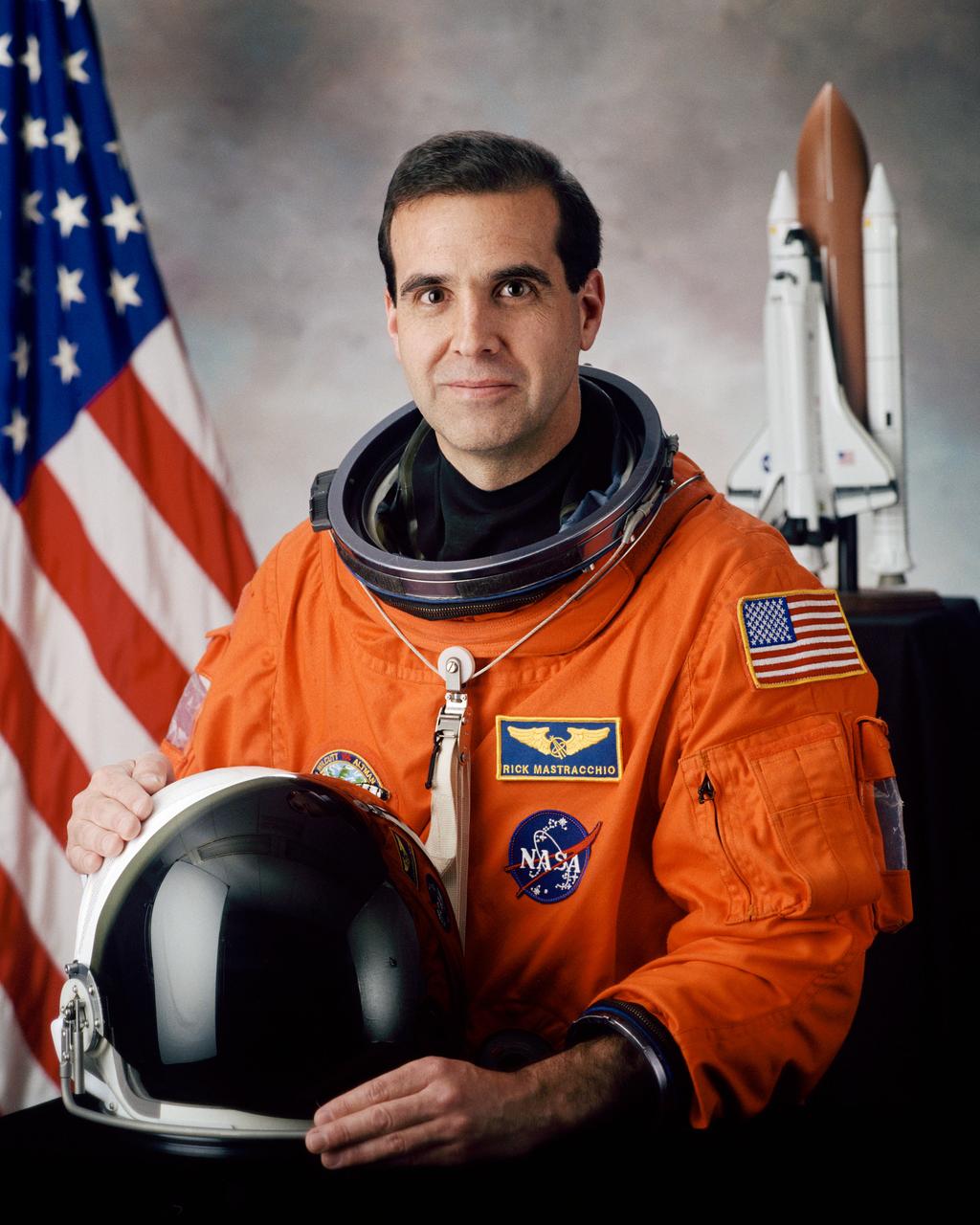
JSC2001-01617 (June 2001) --- NASA astronaut Richard A. Mastracchio, mission specialist
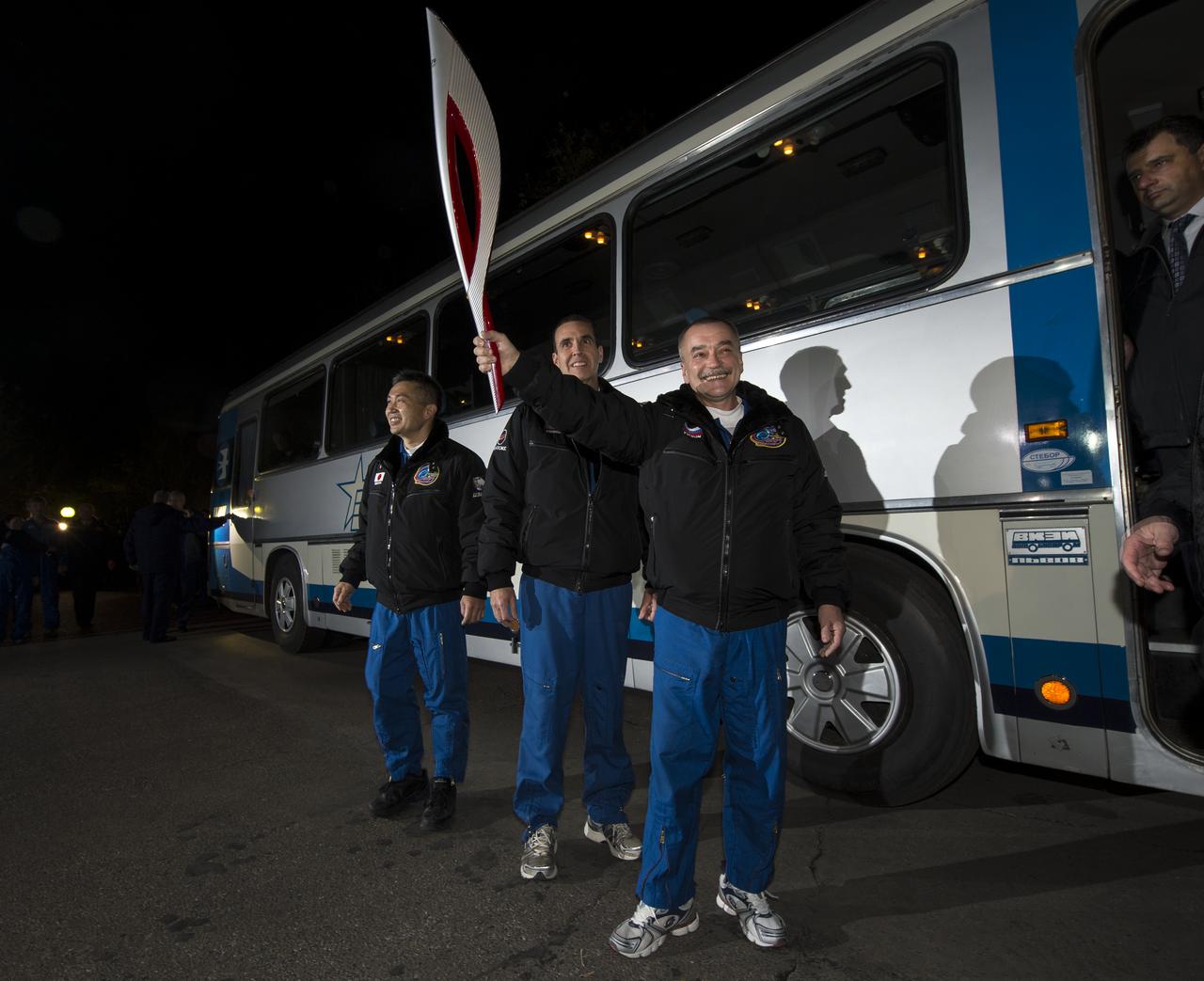
Expedition 38 Flight Engineer Koichi Wakata of the Japan Aerospace Exploration Agency, left, Flight Engineer Rick Mastracchio of NASA, and, Soyuz Commander Mikhail Tyurin of Roscosmos, right, are seen as they depart the Cosmonaut hotel with the Olympic Torch that will be launched with them on the Soyuz rocket to the International Space Station, Thursday, Nov. 7, 2013, in Baikonur, Kazakhstan. The Olympic torch will have a four-day visit to station and will return to Earth with another trio of station residents on Nov. 11 and will be part of the torch relay that ends with the lighting of the flame at the Fisht Stadium in Sochi, Russia Feb. 7 to mark the opening of the 2014 Winter Olympics. Photo Credit: (NASA/Bill Ingalls)
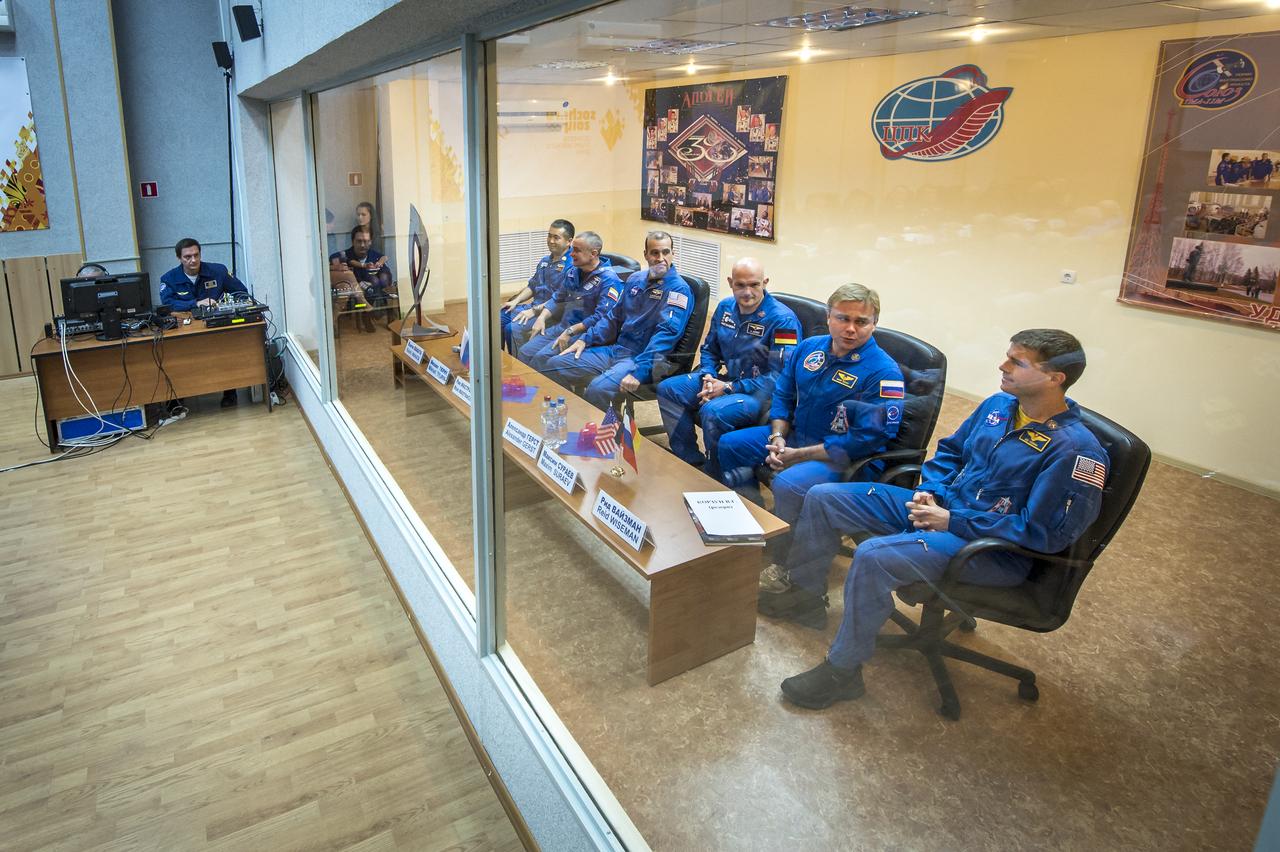
From left behind glass, Expedition 38 prime crew members, Flight Engineer Koichi Wakata of the Japan Aerospace Exploration Agency, Soyuz Commander Mikhail Tyurin of Roscosmos, and, Flight Engineer Rick Mastracchio of NASA, are joined with Expedition 38 backup crew members, Alexander Gerst of the European Space Agency, Max Suraev of Roscosmos, and Reid Wiseman of NASA during the State Commission meeting held to approve the Soyuz launch of the crew for a six month mission aboard the International Space Station, Wednesday, Nov. 6, 2013 at the Cosmonaut Hotel in Baikonur, Kazakhstan. Photo Credit: (NASA/Bill Ingalls)
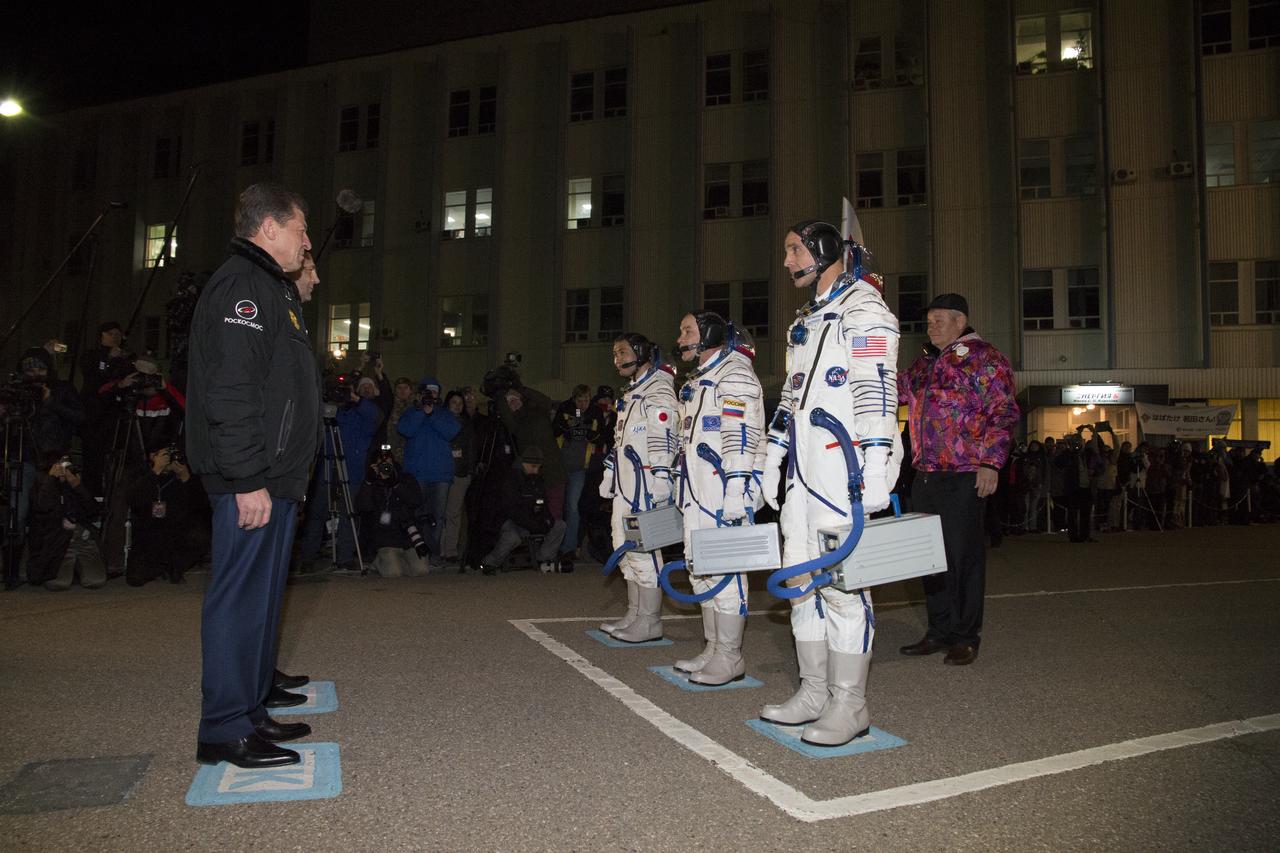
Dmitry Kozak, Deputy Prime Minister of Russian Federation, standing left, next to, Oleg Ostapenko, Head of Roscosmos, give a formal farewell to Expedition 38 Flight Engineer Koichi Wakata of the Japan Aerospace Exploration Agency, far right, Soyuz Commander Mikhail Tyurin of Roscosmos, center, and, Flight Engineer Rick Mastracchio of NASA, as Division Chief, GCTC, Valery Korzun holds the Olympic torch that will travel with the crew on their soyuz TMA-11M rocket to the International Space Station, Thursday, Nov. 7, 2013, in Baikonur, Kazakhstan. Photo Credit: (NASA/Victor Zelentsov)
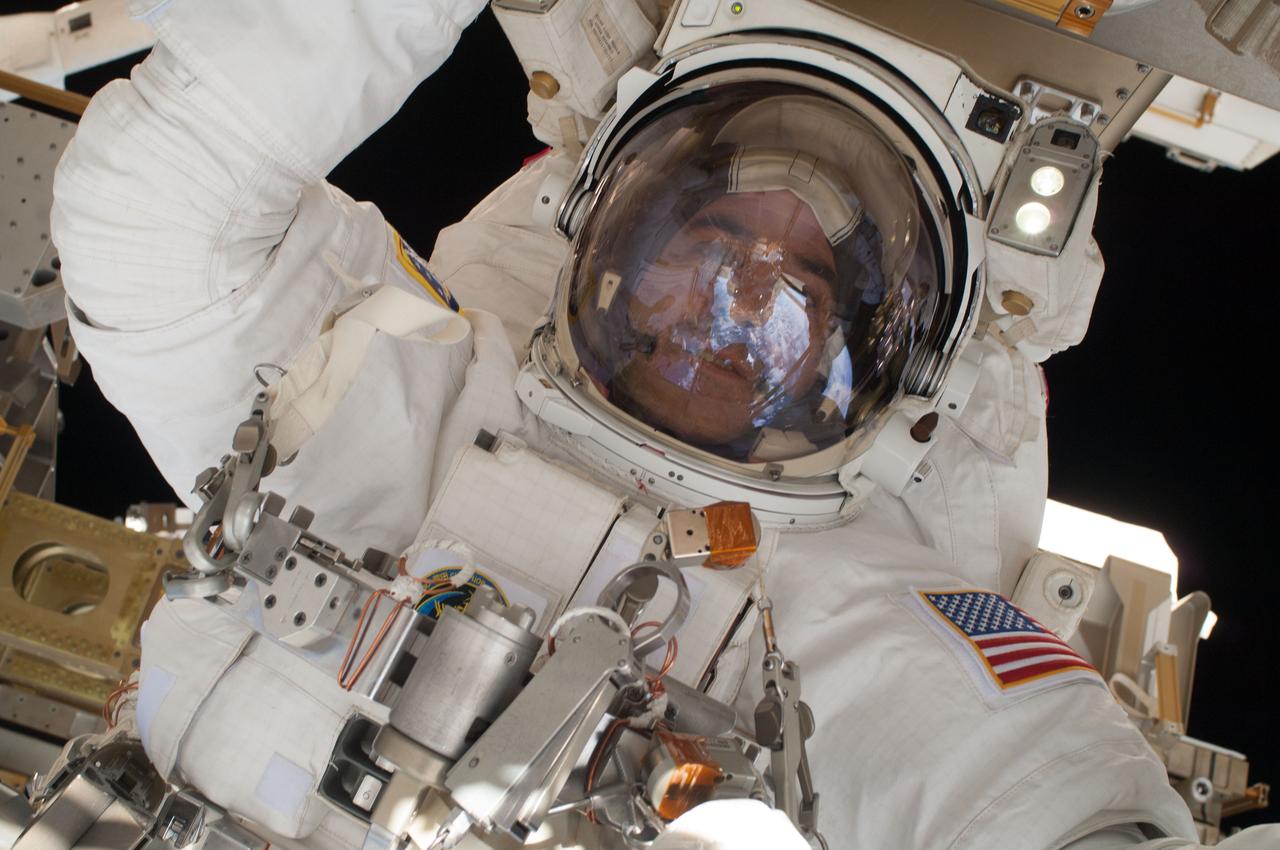
Close-up view of Expedition 39 flight engineer Rick Mastracchio at the close of Extravehicular Activity 26 (EVA 26).
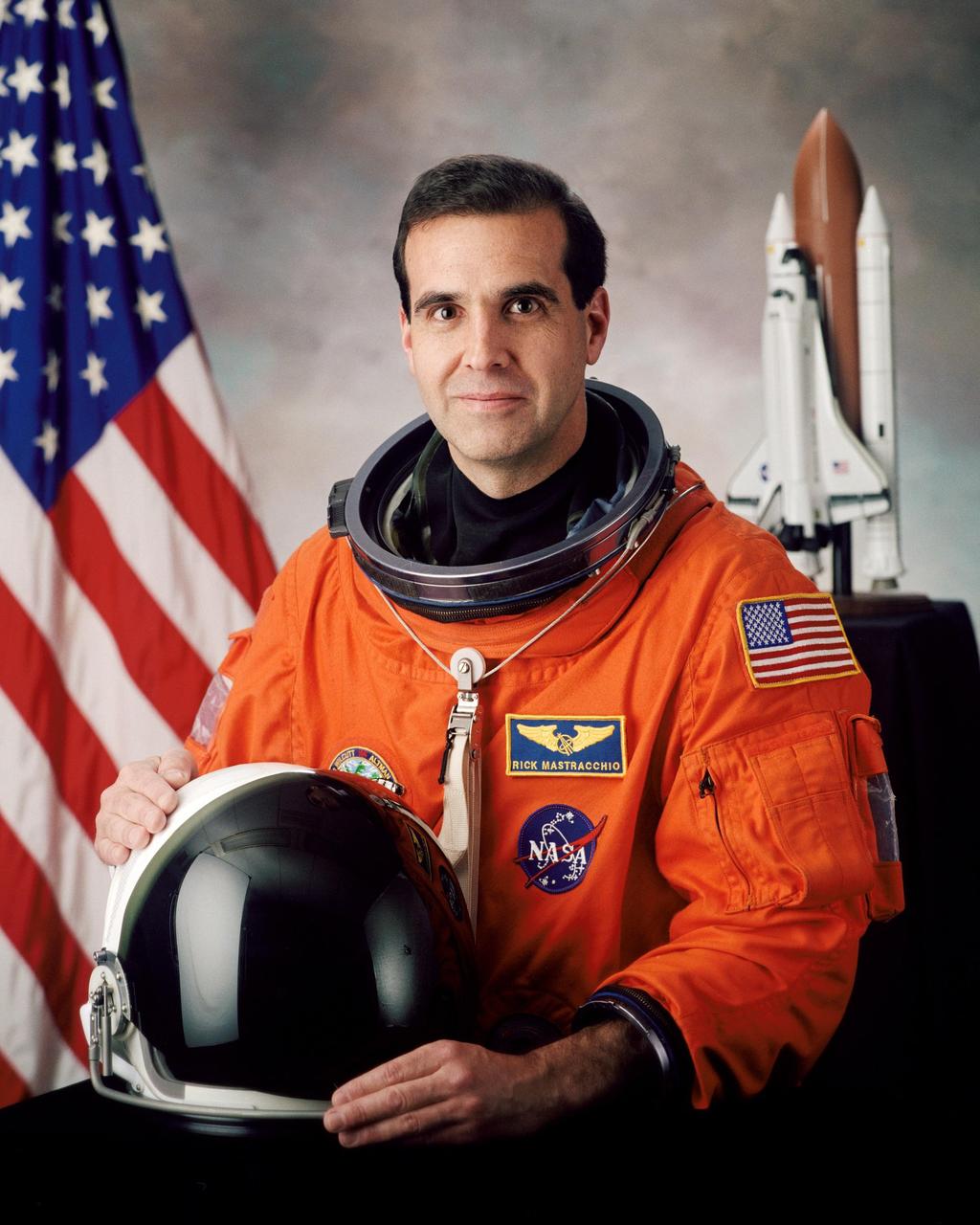
JOHNSON SPACE CENTER, Houston -- JSC2001-01617 -- Astronaut Richard A. (Rick) Mastracchio, mission specialist
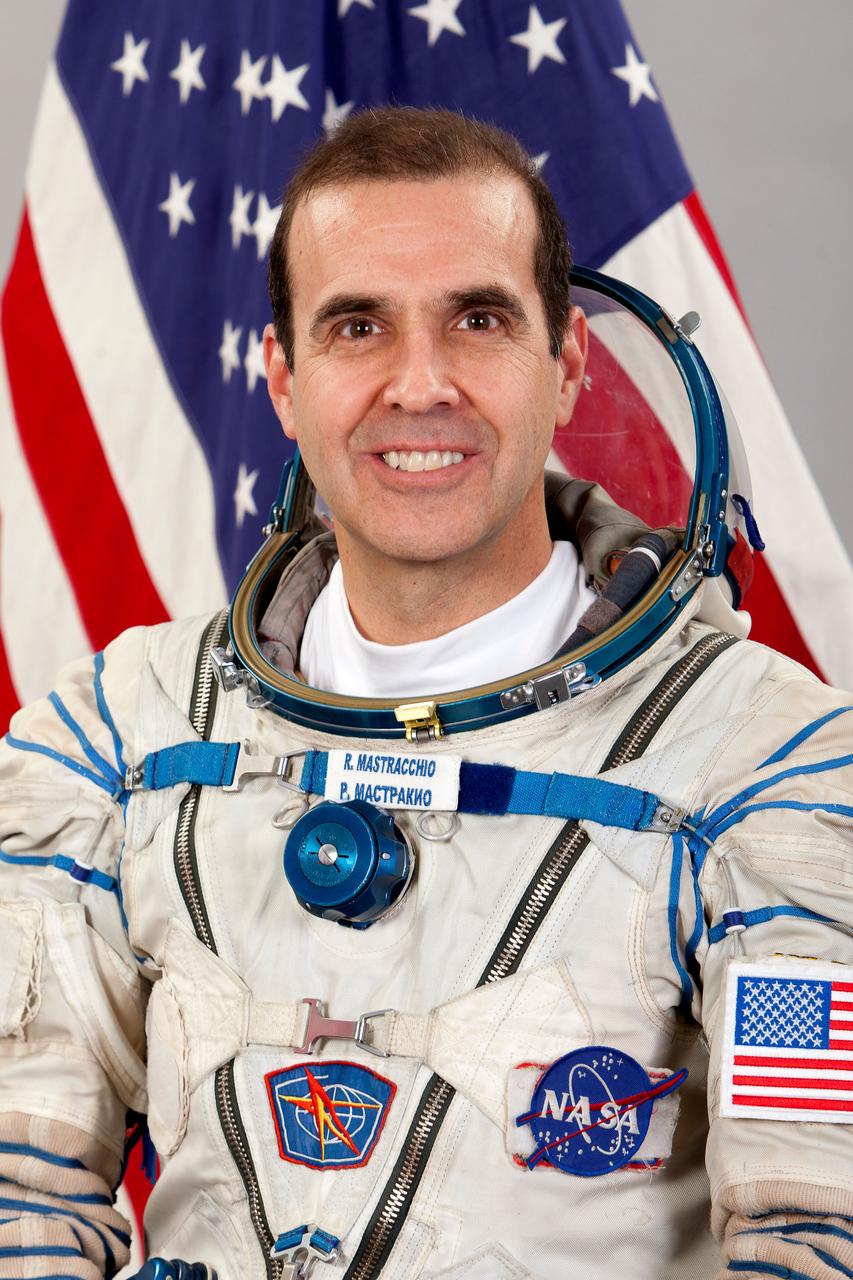
Official portrait of Expedition 38/39 NASA Flight Engineer Rick Mastracchio Photo credit: Gagarin Cosmonaut Training Center
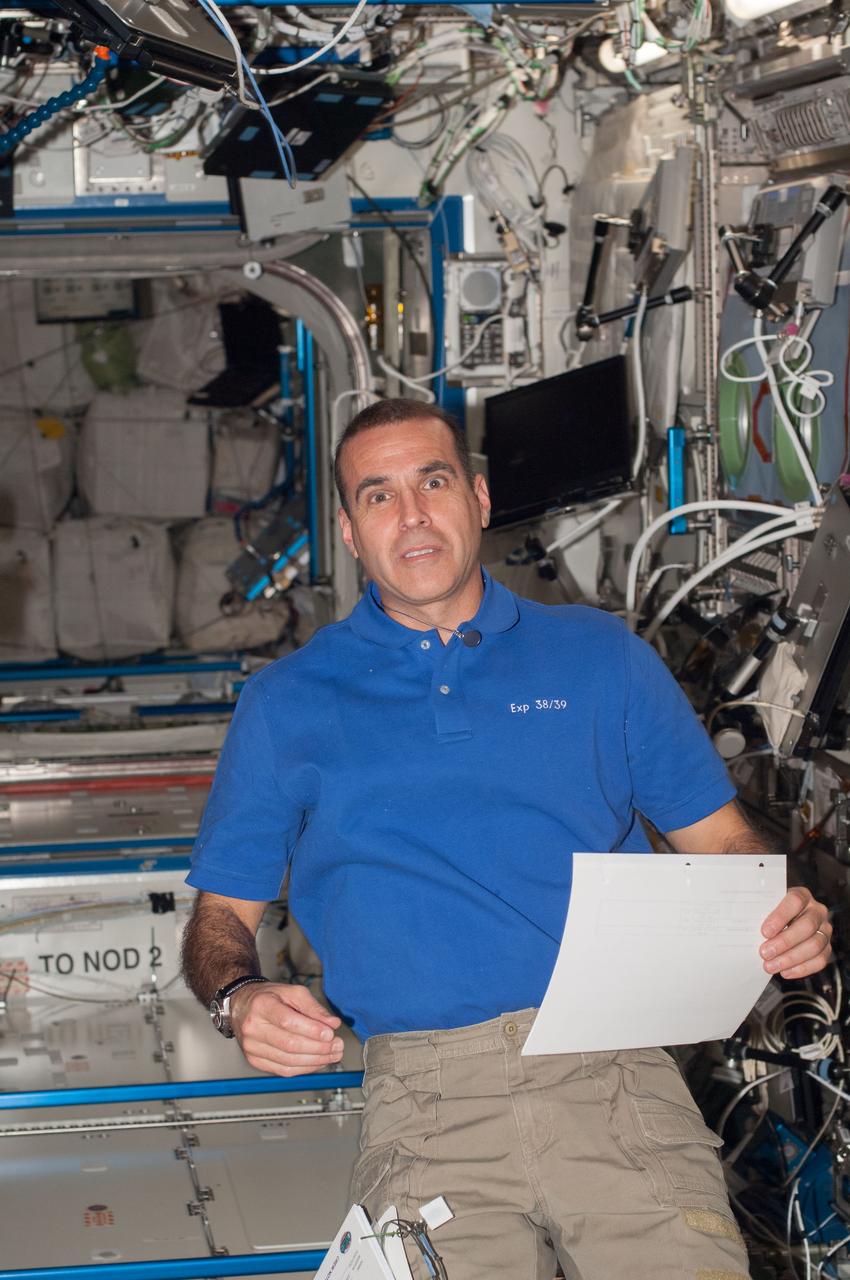
ISS037-E-028157 (8 Nov. 2013) --- NASA astronaut Rick Mastracchio, Expedition 38 flight engineer, is pictured in the Destiny laboratory of the International Space Station.
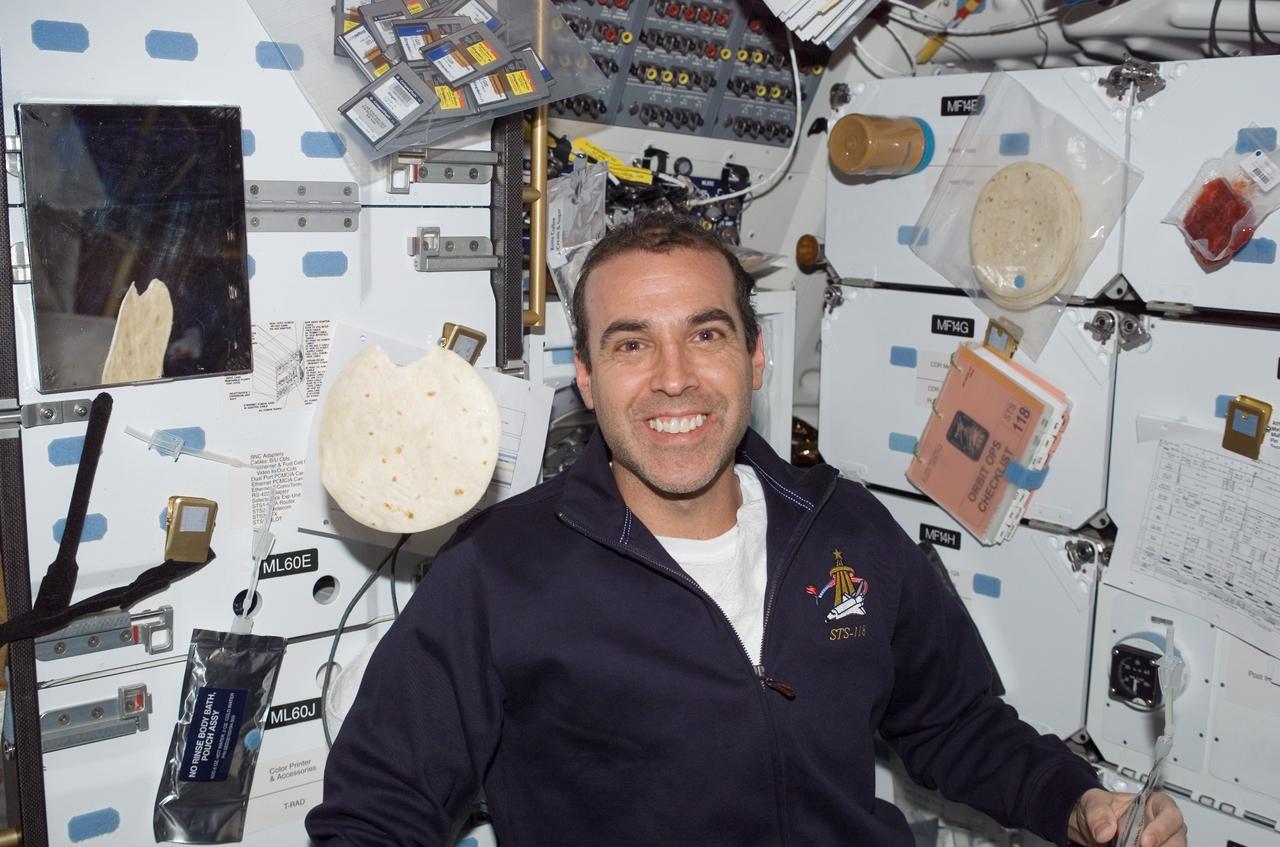
S118-E-07052 (13 Aug. 2007) --- Astronaut Rick Mastracchio, STS-118 mission specialist, smiles for a photo near the galley on the middeck of Space Shuttle Endeavour while docked with the International Space Station. A flour tortilla floats freely near Mastracchio.
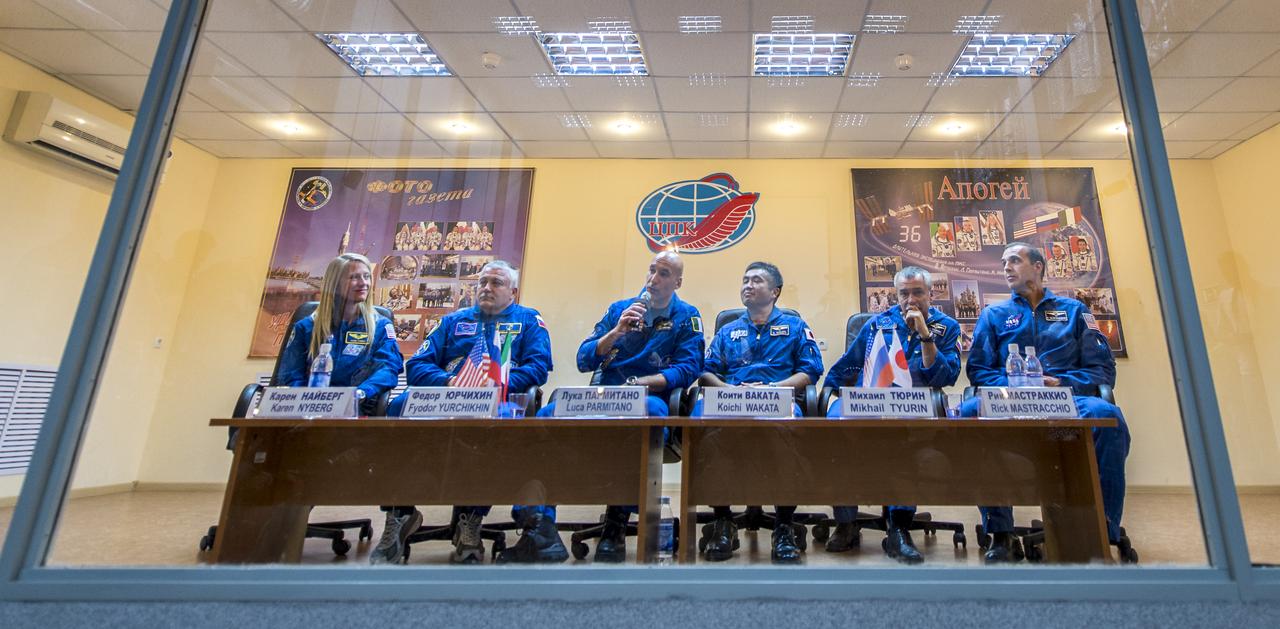
From left, Expedition 36/37 Flight Engineer Karen Nyberg of NASA, Soyuz Commander Fyodor Yurchikhin of the Russian Federal Space Agency (Roscosmos), Flight Engineer Luca Parmitano of the European Space Agency, and Expedition 36/37 backup crew members; Koichi Wakata of the Japan Aerospace Exploration Agency, Mikhail Tyurin of the Russian Federal Space Agency (Roscosmos), and Rick Mastracchio of NASA are seen during the crew's press conference at the Cosmonaut Hotel, Monday, May 27, 2013, in Kazakhstan. The crew is in quarantine and behind glass during the press conference in preparation for their launch on a Soyuz rocket to the International Space Station (ISS) on Wednesday May 29, Kazakh time. Yurchikhin, Nyberg, and, Parmitano, will remain aboard the station until mid-November. Photo credit: (NASA/Bill Ingalls)
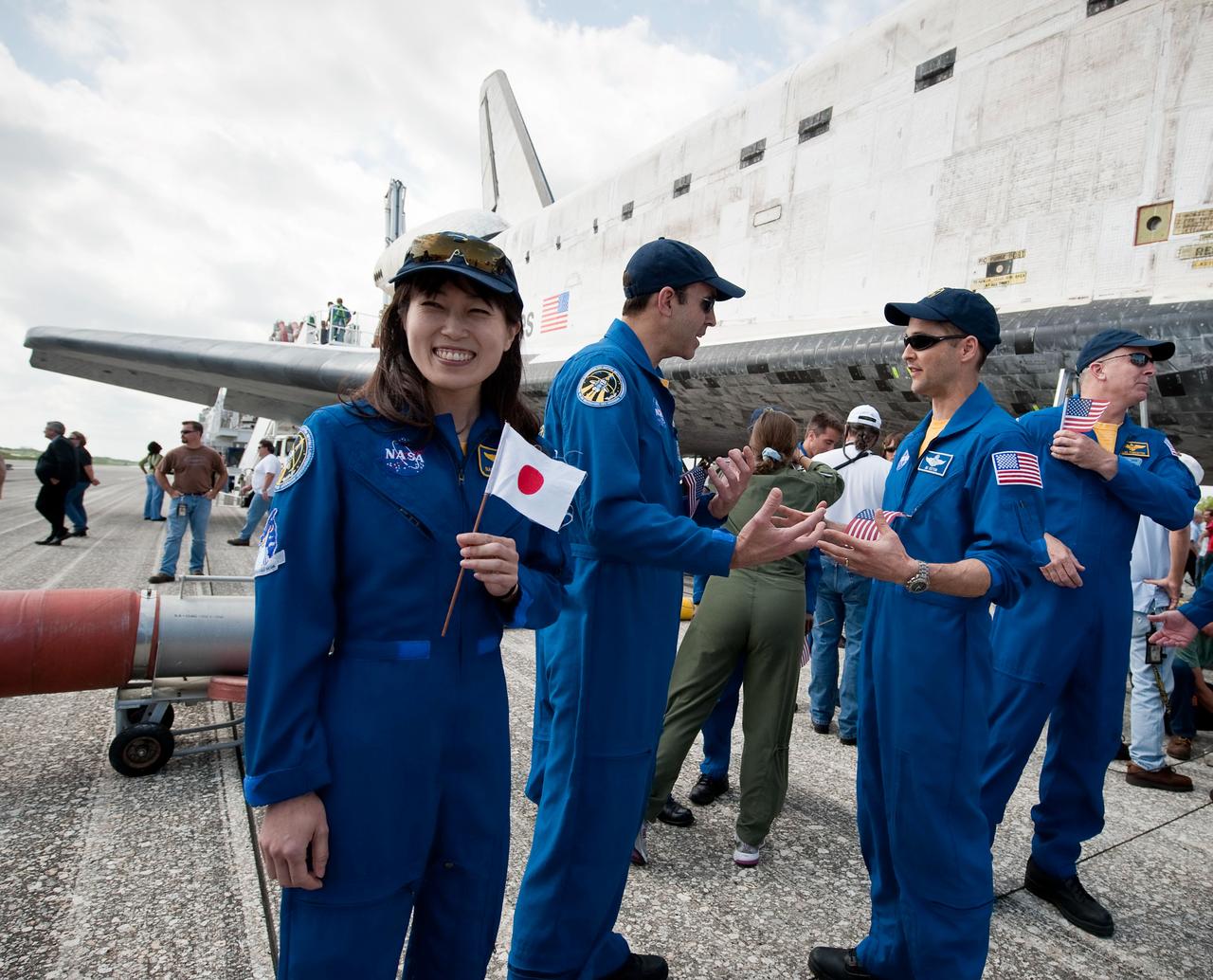
STS131-S-093 (20 April 2010) --- Japanese astronaut Naoko Yamazaki, holds a Japanese flag near the space shuttle Discovery shortly after Discovery and the STS-131 crew landed at the Kennedy Space Center in Cape Canaveral, Fla., on April 20, 2010. NASA astronauts Alan Poindexter, commander; James P. Dutton Jr., pilot; Dorothy Metcalf-Lindenburger, Rick Mastracchio, Stephanie Wilson, Clayton Anderson and Japanese astronaut Naoko Yamazaki, all mission specialists, returned from their 15-day journey of more than 6.2 million miles. The STS-131 mission to the International Space Station delivered science racks, new crew sleeping quarters, equipment and supplies. Photo credit: NASA/Bill Ingalls
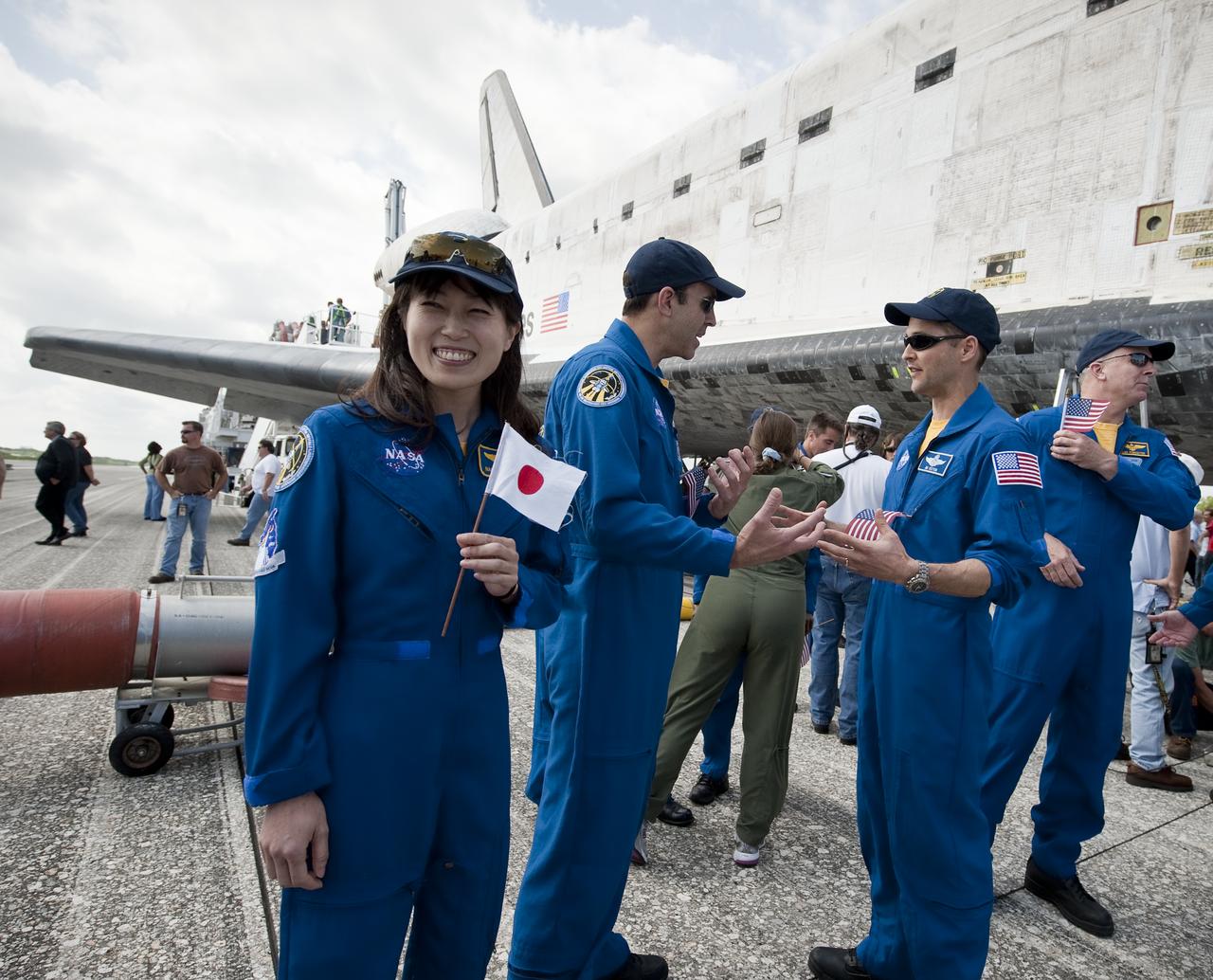
Japanese astronaut Naoko Yamazaki, holds a Japanese flag near the space shuttle Discovery shortly after Discovery and the STS-131 crew landed at the Kennedy Space Center in Cape Canaveral, Fla., Tuesday, April 20, 2010. STS-131 mission crew, Commander Alan G. Poindexter, Pilot James P. Dutton Jr. and Mission Specialists Dorothy Metcalf-Lindenburger, Rick Mastracchio, Stephanie Wilson, Clayton Anderson and Japanese astronaut Naoko Yamazaki returned from their 14-day journey of more than 6.2 million miles. The STS-131 mission to the International Space Station delivered science racks, new crew sleeping quarters, equipment and supplies. Photo credit: (NASA/Bill Ingalls)
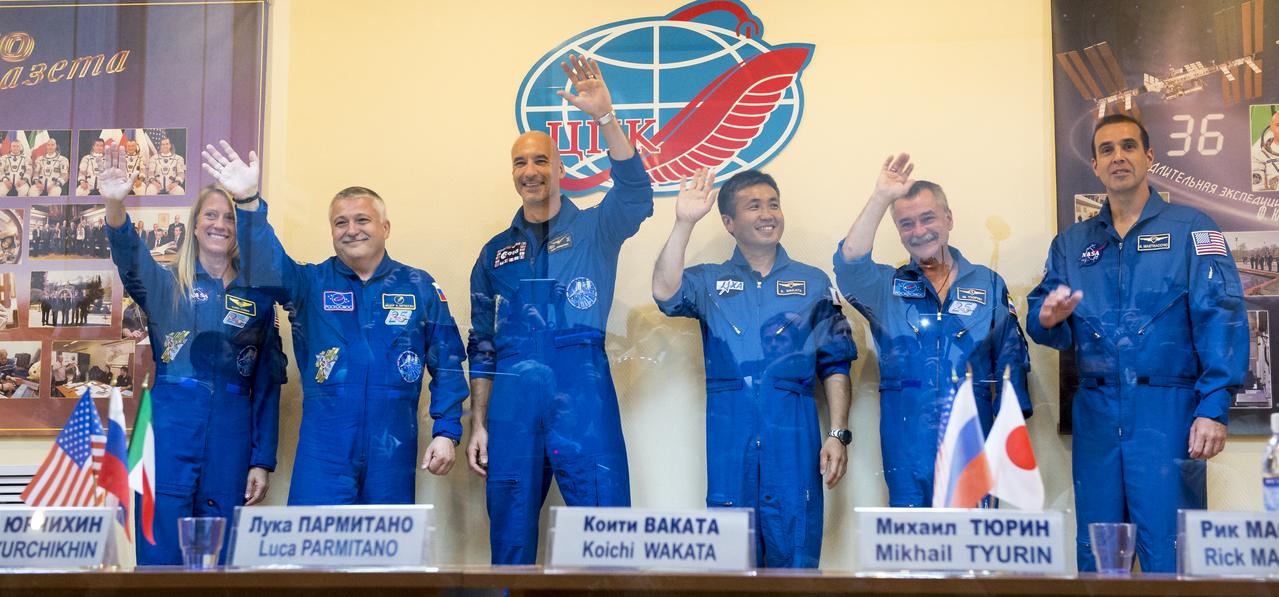
From left, Expedition 36/37 Flight Engineer Karen Nyberg of NASA, Soyuz Commander Fyodor Yurchikhin of the Russian Federal Space Agency (Roscosmos), Flight Engineer Luca Parmitano of the European Space Agency, and Expedition 36/37 backup crew members; Koichi Wakata of the Japan Aerospace Exploration Agency, Mikhail Tyurin of the Russian Federal Space Agency (Roscosmos), and Rick Mastracchio of NASA are seen during the crew's press conference at the Cosmonaut Hotel, Monday, May 27, 2013, in Kazakhstan. The crew is in quarantine and behind glass during the press conference in preparation for their launch on a Soyuz rocket to the International Space Station (ISS) on Wednesday May 29, Kazakh time. Yurchikhin, Nyberg, and, Parmitano, will remain aboard the station until mid-November. Photo credit: (NASA/Bill Ingalls)
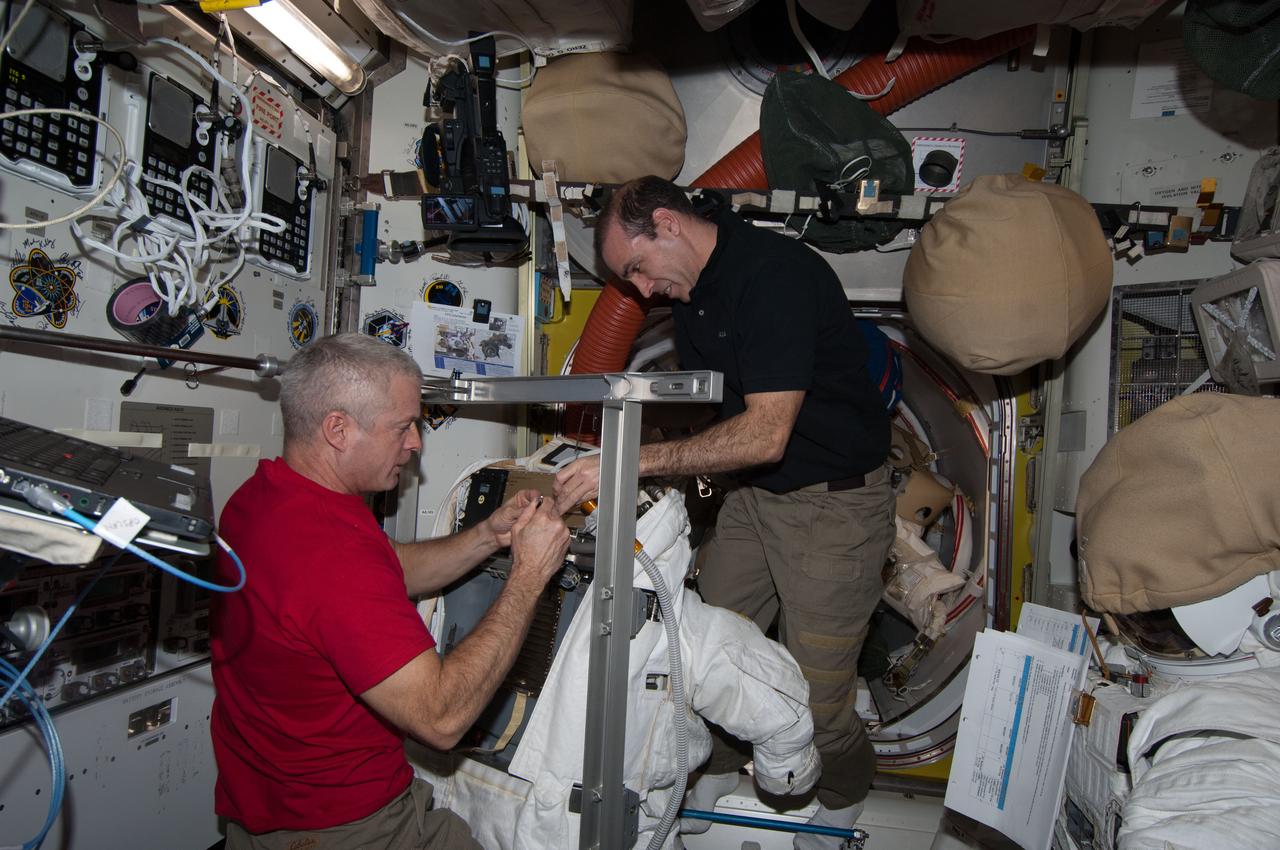
Expedition 39 flight engineers Steve Swanson and Rick Mastracchio work to remove and replace the Fan Pump Separator (FPS) on Extravehicular Mobility Unit (EMU) 3005. Image was taken in the Quest Airlock (A/L) and was released by Swanson on Instagram.
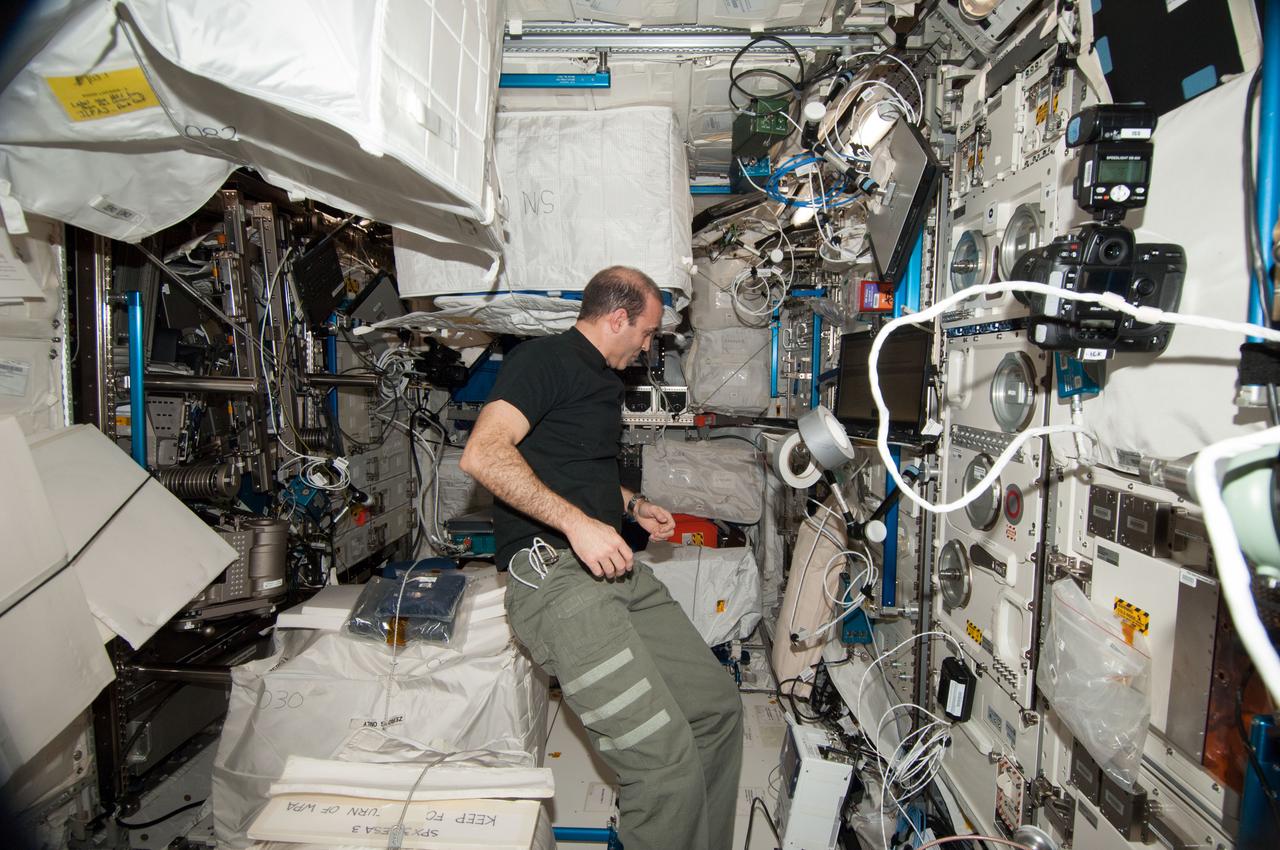
ISS039-E-017570 (30 April 2013) --- In the European Space Agency's Columbus module, Flight Engineer Rick Mastracchio of NASA prepares to access a tool box designated for intravehicular work.
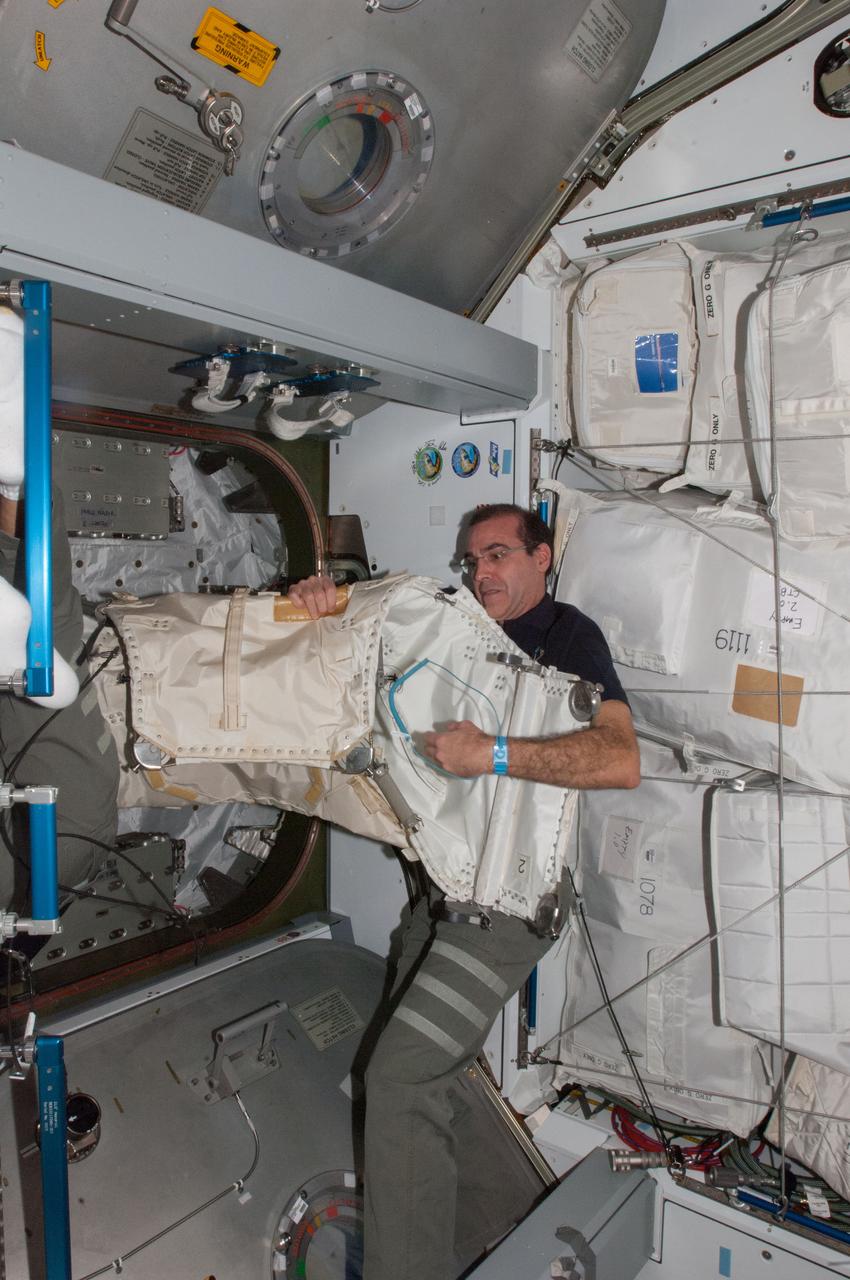
ISS038-E-031970 (12 Jan. 2014) --- NASA astronaut Rick Mastracchio, Expedition 38 flight engineer, is pictured during Cygnus cargo preparation in the Harmony node of the International Space Station.
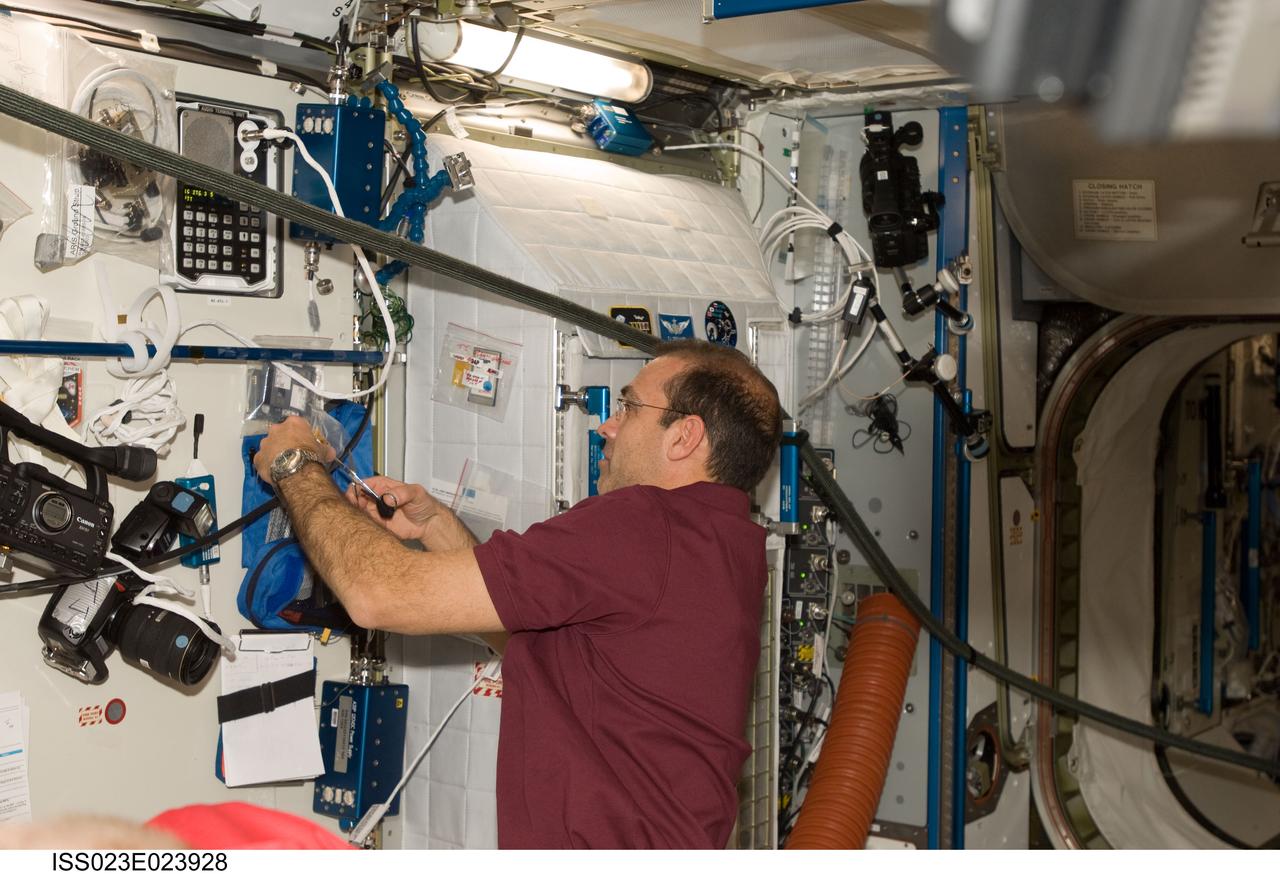
SS023-E-023928 (15 April 2010) --- NASA astronaut Rick Mastracchio, STS-131 mission specialist, is pictured in the Harmony node of the International Space Station while space shuttle Discovery remains docked with the station.
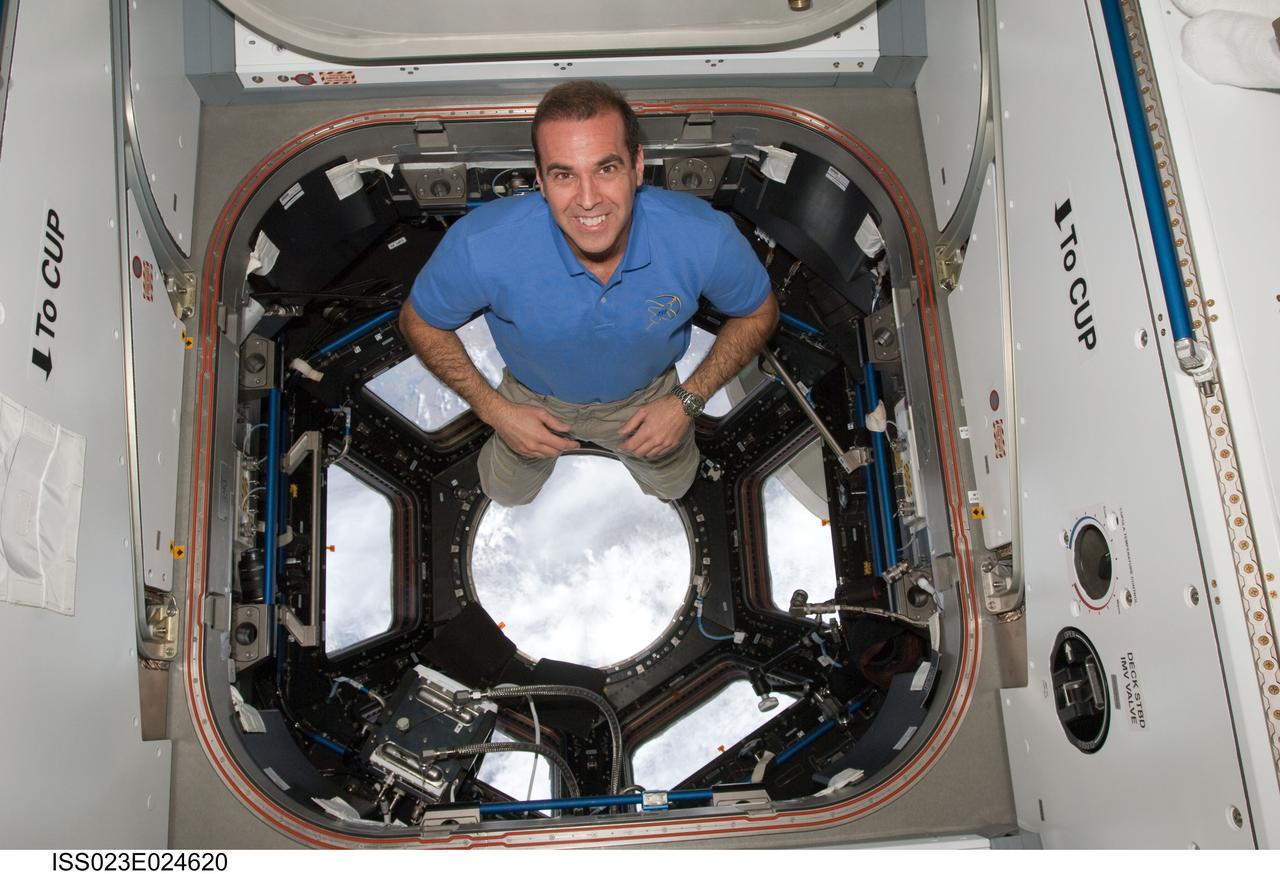
ISS023-E-024620 (17 April 2010) --- NASA astronaut Rick Mastracchio, STS-131 mission specialist, poses for a photo in the Cupola of the International Space Station while space shuttle Discovery remains docked with the station.
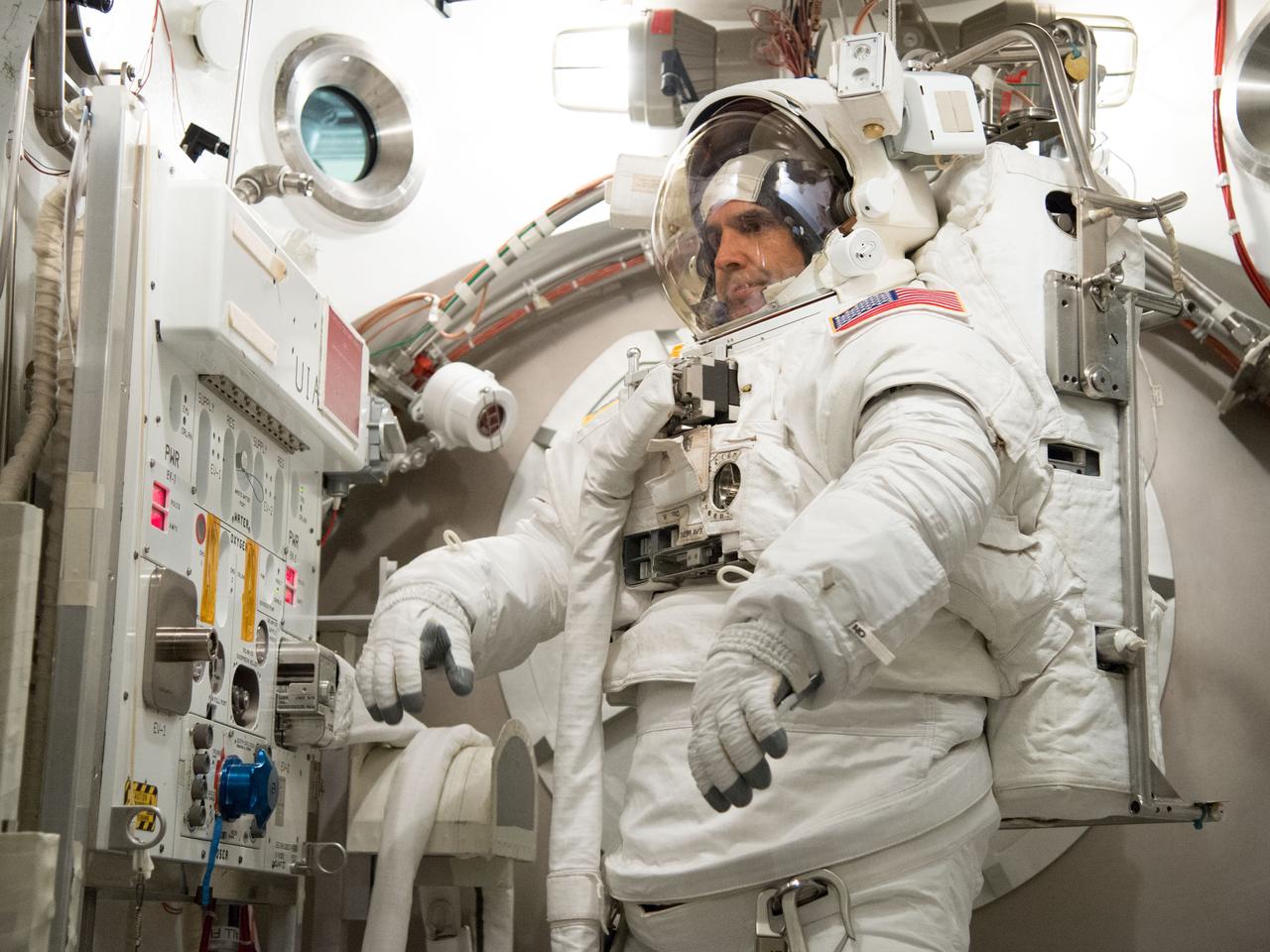
Date: 06-28-13 Location: Bldg 7, SSATA Subject: ISS-038 crew members a Rick Mastracchio and Koichi Wakata during SSATA crew training and EMU certification. Photographer: James Blair/ NASA