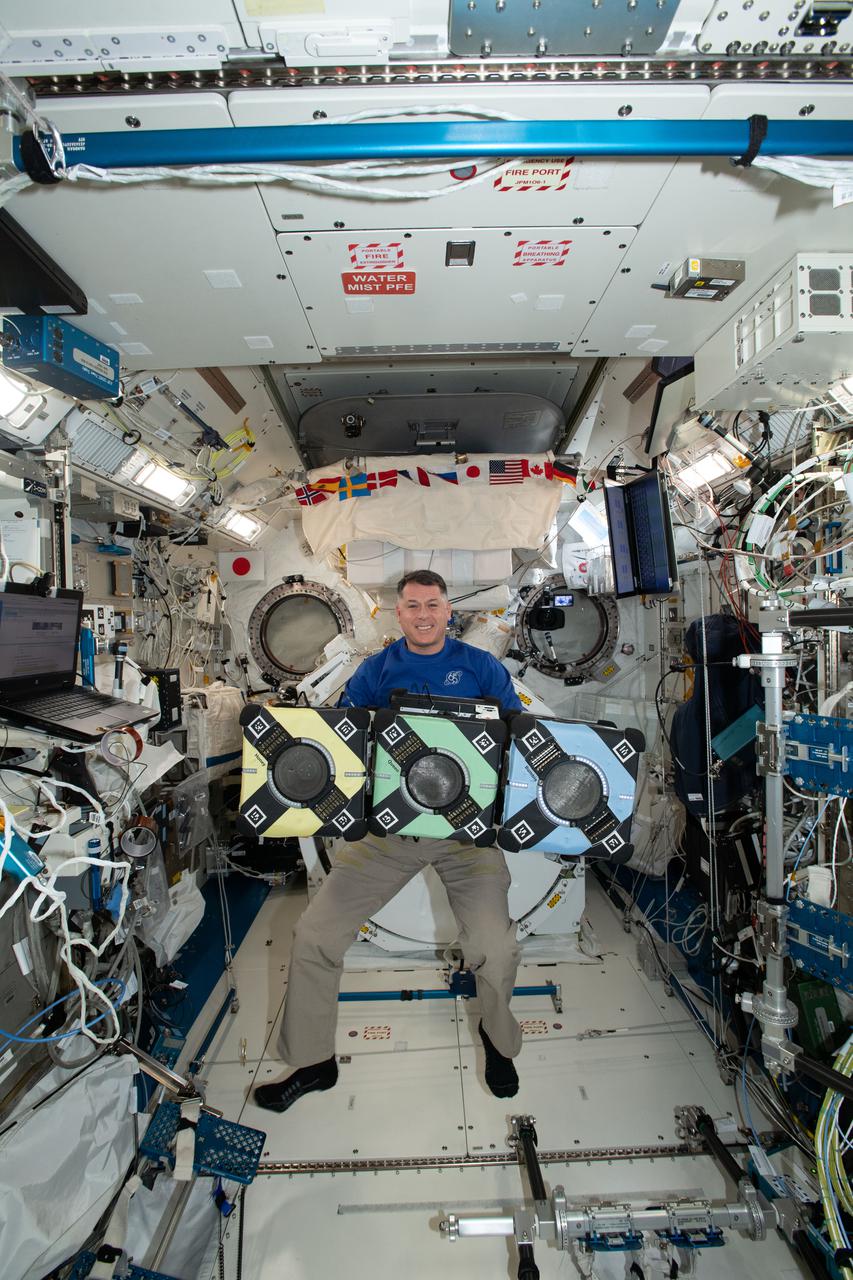
iss065e389375 (9/20/2021) --- NASA astronaut Shane Kimbrough poses with the Astrobee robotic free-flyers in support of the Kibo Robot Programming Challenge (Robo-Pro Challenge). The Kibo-RPC, allows students to create programs to control Astrobee, a free-flying robot aboard the International Space Station (ISS).
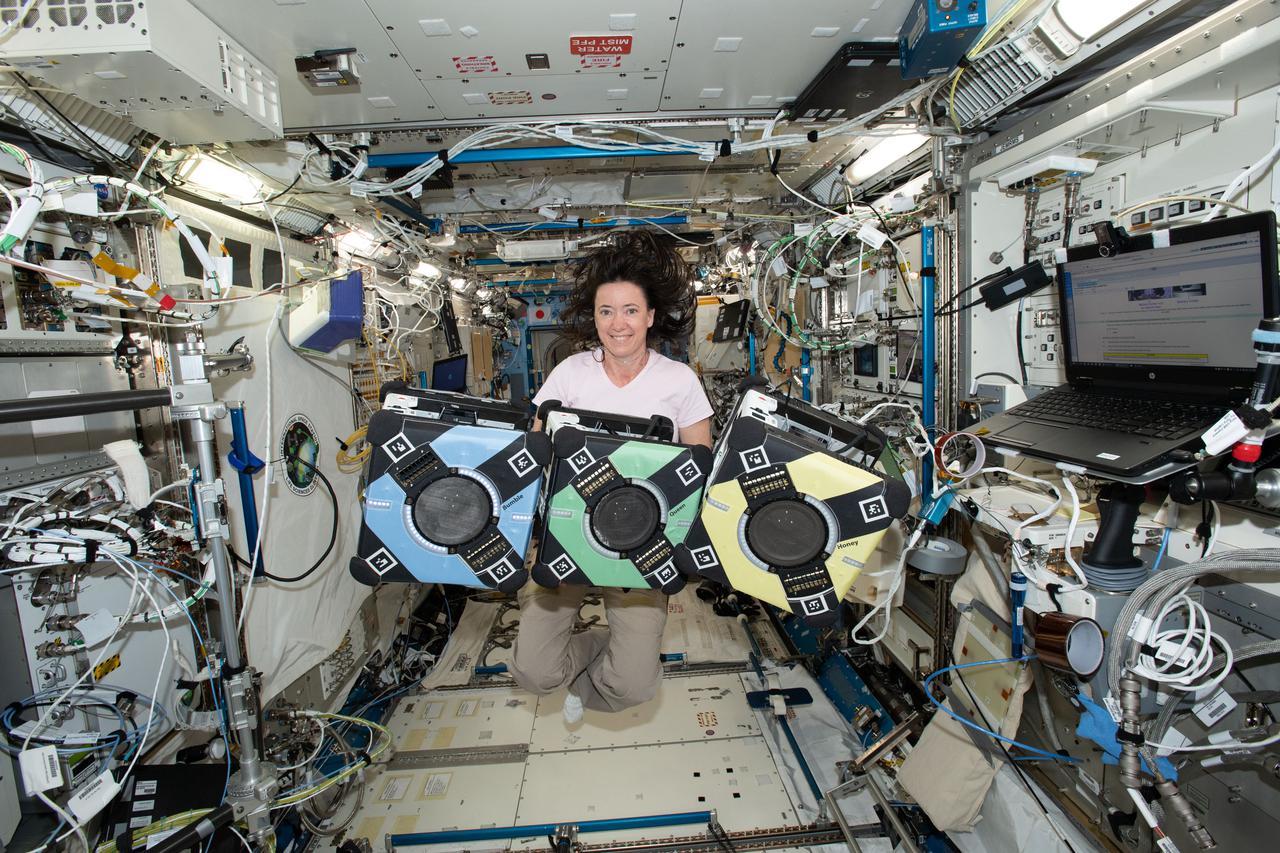
iss065e389383 (9/20/2021) --- NASA astronaut Megan McArthur poses with the Astrobee robotic free-flyers in support of the Kibo Robot Programming Challenge (Robo-Pro Challenge). The Kibo-RPC, allows students to create programs to control Astrobee, a free-flying robot aboard the International Space Station (ISS).
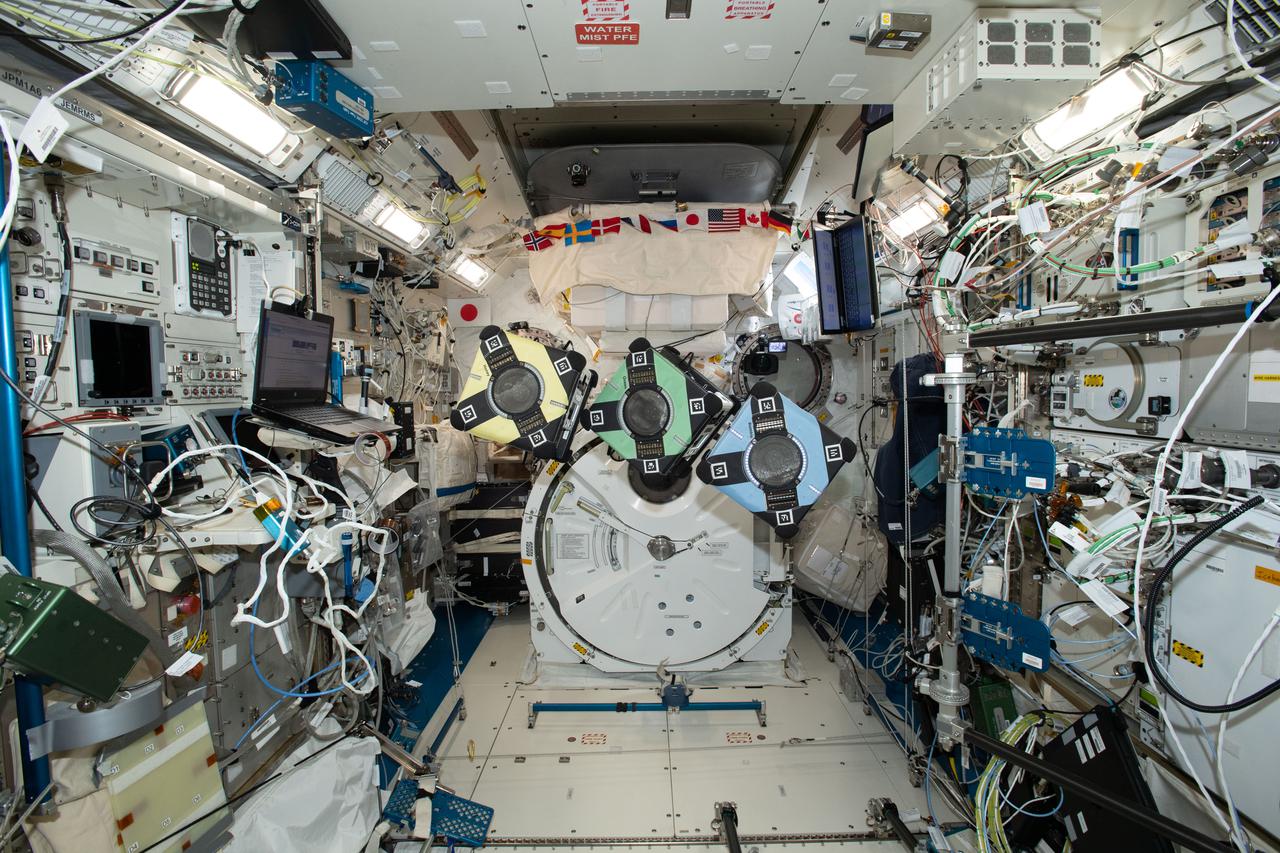
iss065e389379 (9/20/2021) --- A view of the Astrobee robotic free-flyers in support of the Kibo Robot Programming Challenge (Robo-Pro Challenge). The Kibo-RPC, allows students to create programs to control Astrobee, a free-flying robot aboard the International Space Station (ISS).
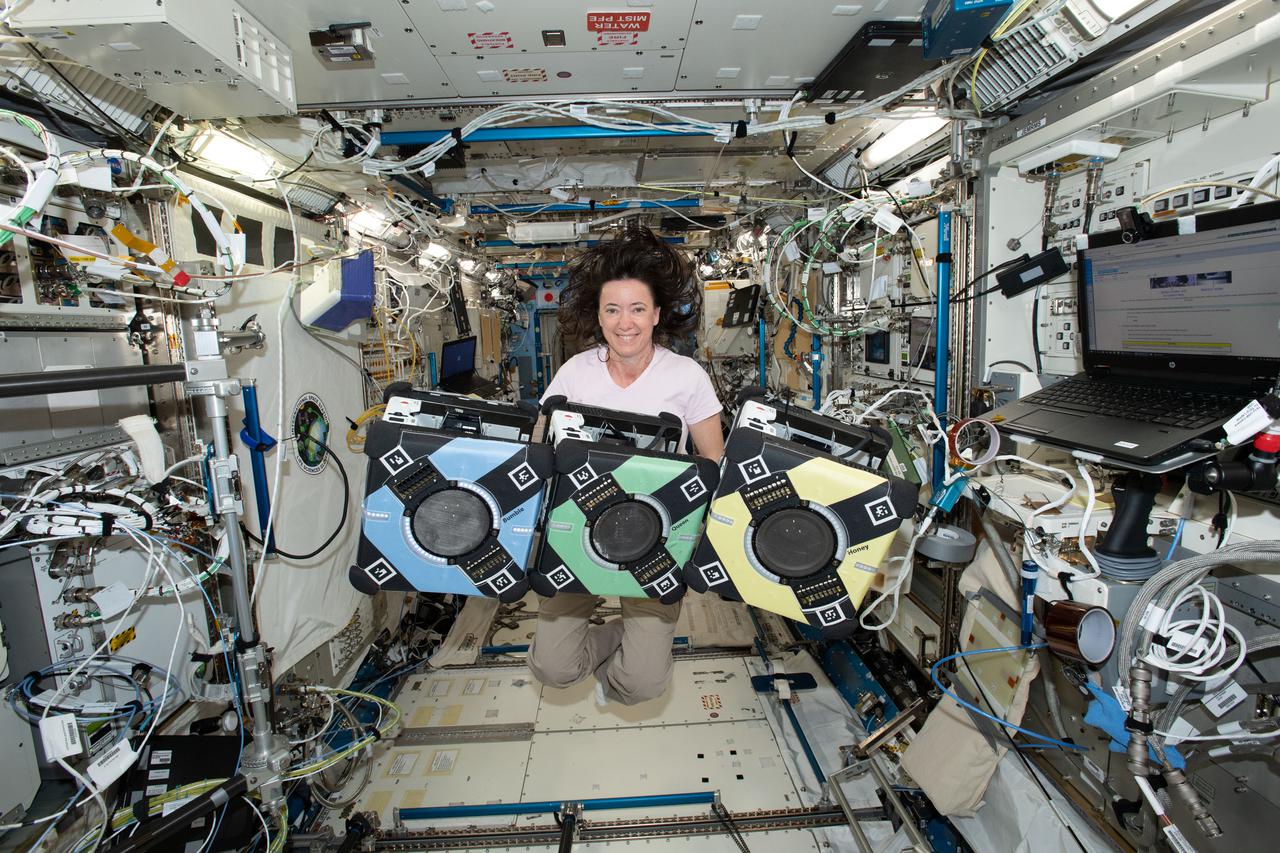
NASA astronaut Megan McArthur poses with the Astrobee robotic free-flyers in support of the Kibo Robot Programming Challenge (Robo-Pro Challenge). The Kibo-RPC, allows students to create programs to control Astrobee, a free-flying robot aboard the International Space Station (ISS).
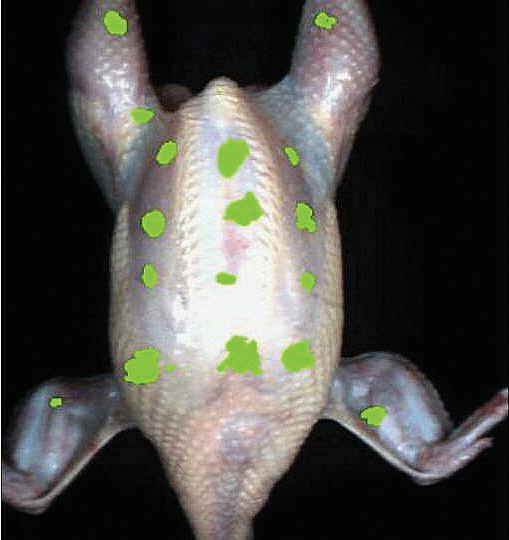
ProVision Technologies, a NASA research partnership center at Sternis Space Center in Mississippi, has developed a new hyperspectral imaging (HSI) system that is much smaller than the original large units used aboard remote sensing aircraft and satellites. The new apparatus is about the size of a breadbox. Health-related applications of HSI include scanning chickens during processing to help prevent contaminated food from getting to the table. ProVision is working with Sanderson Farms of Mississippi and the U.S. Department of Agriculture. ProVision has a record in its spectral library of the unique spectral signature of fecal contamination, so chickens can be scanned and those with a positive reading can be separated. HSI sensors can also determine the quantity of surface contamination. Research in this application is quite advanced, and ProVision is working on a licensing agreement for the technology. The potential for future use of this equipment in food processing and food safety is enormous.
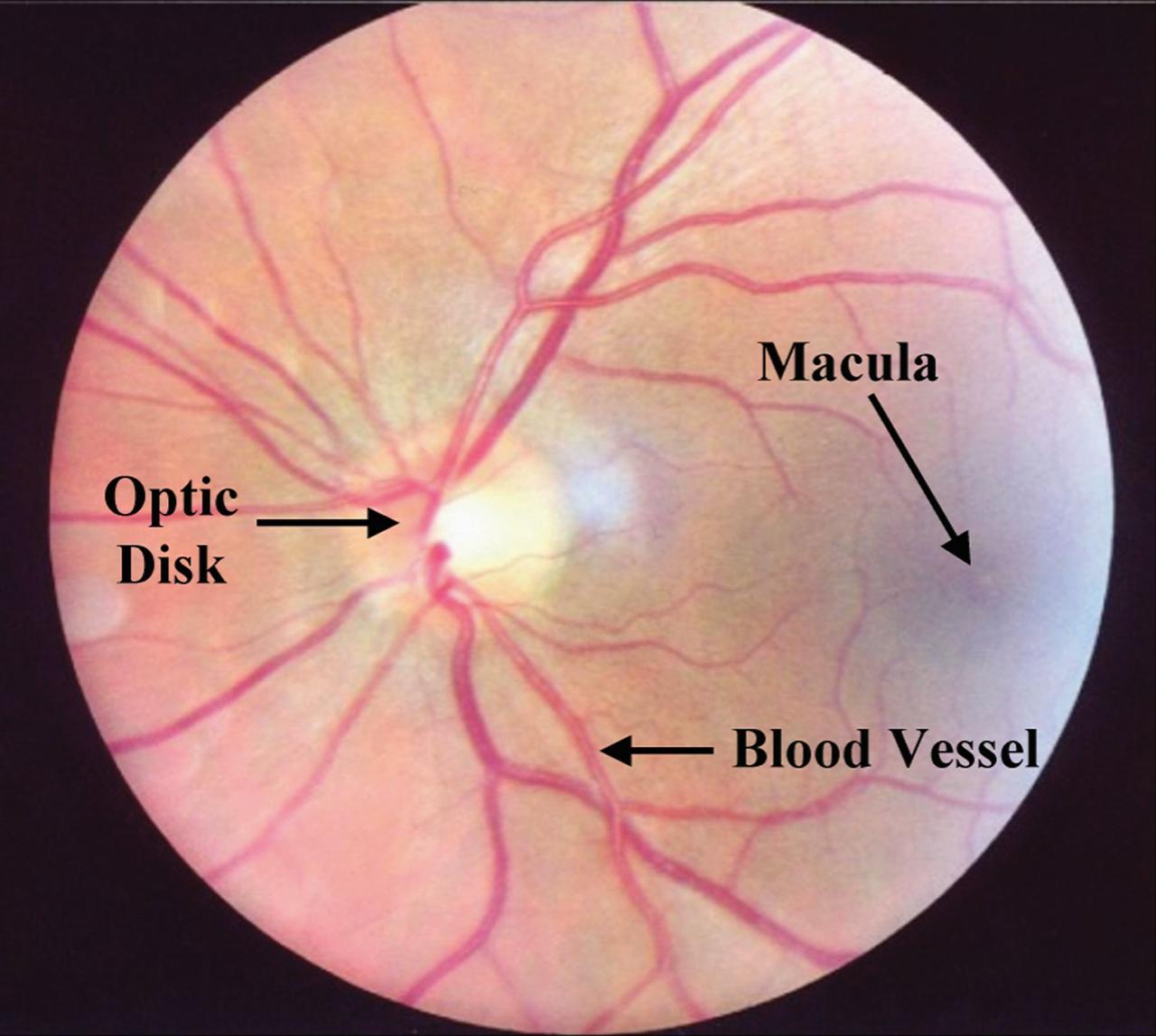
ProVision Technologies, a NASA commercial space center at Sternis Space Center in Mississippi, has developed a new hyperspectral imaging (HSI) system that is much smaller than the original large units used aboard remote sensing aircraft and satellites. The new apparatus is about the size of a breadbox. HSI may be useful to ophthalmologists to study and diagnose eye health, both on Earth and in space, by examining the back of the eye to determine oxygen and blood flow quickly and without any invasion. ProVision's hyperspectral imaging system can scan the human eye and produce a graph showing optical density or light absorption, which can then be compared to a graph from a normal eye. Scans of the macula, optic disk or optic nerve head, and blood vessels can be used to detect anomalies and identify diseases in this delicate and important organ. ProVision has already developed a relationship with the University of Alabama at Birmingham, but is still on the lookout for a commercial partner in this application.