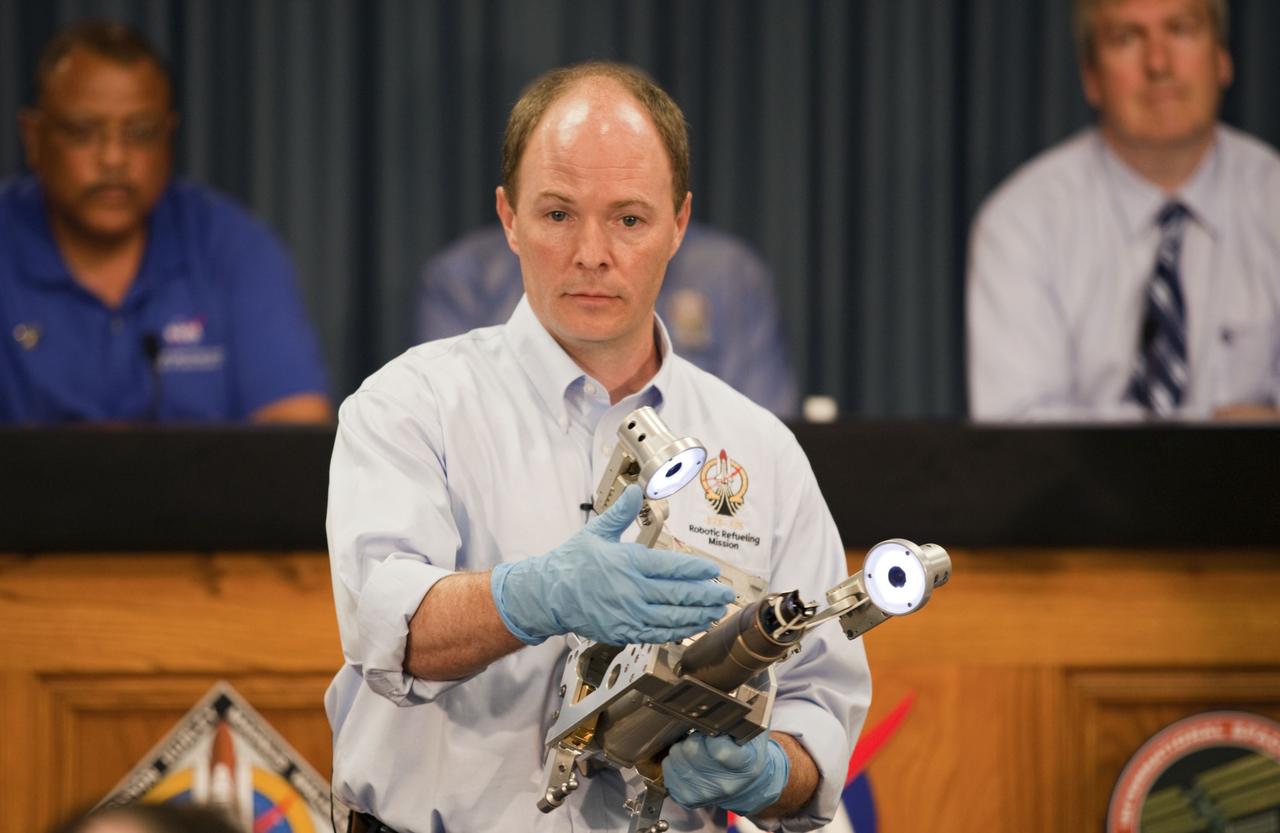
CAPE CANAVERAL, Fla. -- The Press Site auditorium at NASA's Kennedy Space Center in Florida hosted a Robotic Refueling Mission (RRM) module demonstration. Seen here is Benjamin Reed, deputy project manager with NASA's Satellite Servicing Capabilities Office, giving media an overview of the RRM. Space shuttle Atlantis will fly the RRM on its STS-135 mission to the International Space Station. Once in place, the RRM will use the station's two-armed robotic system, known as Dextre, to investigate the potential for robotically refueling existing satellites in orbit. Atlantis and its crew of four are scheduled to lift off at 11:26 a.m. EDT on July 8 to deliver the Raffaello multi-purpose logistics module packed with supplies and spare parts to the station. Atlantis also will fly the RRM and return a failed ammonia pump module to help NASA better understand the failure mechanism and improve pump designs for future systems. STS-135 will be the 33rd flight of Atlantis, the 37th shuttle mission to the space station, and the 135th and final mission of NASA's Space Shuttle Program. For more information visit, www.nasa.gov/mission_pages/shuttle/shuttlemissions/sts135/index.html. Photo credit: NASA/Frankie Martin
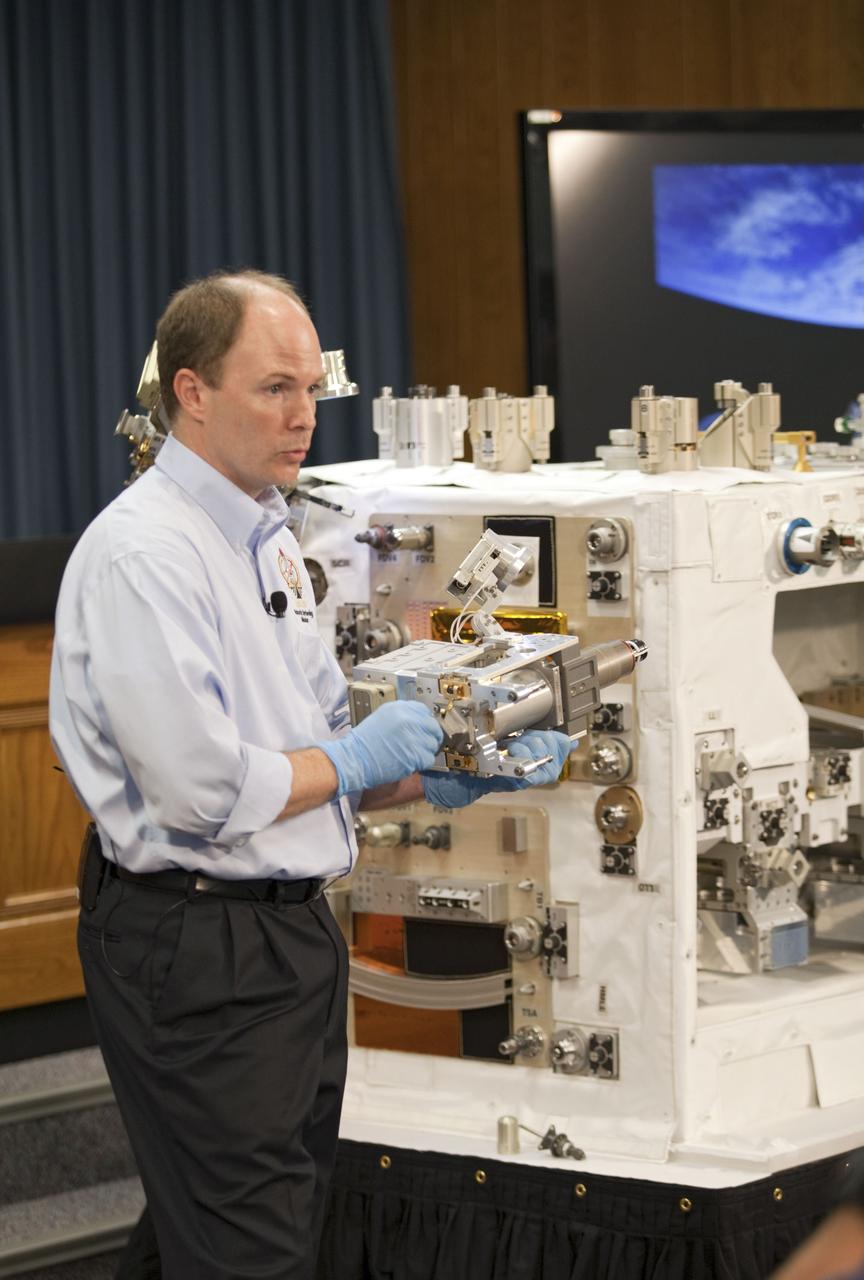
CAPE CANAVERAL, Fla. -- The Press Site auditorium at NASA's Kennedy Space Center in Florida hosted a Robotic Refueling Mission (RRM) module demonstration. Seen here is Benjamin Reed, deputy project manager with NASA's Satellite Servicing Capabilities Office, giving media an overview of the RRM. Space shuttle Atlantis will fly the RRM on its STS-135 mission to the International Space Station. Once in place, the RRM will use the station's two-armed robotic system, known as Dextre, to investigate the potential for robotically refueling existing satellites in orbit. Atlantis and its crew of four are scheduled to lift off at 11:26 a.m. EDT on July 8 to deliver the Raffaello multi-purpose logistics module packed with supplies and spare parts to the station. Atlantis also will fly the RRM and return a failed ammonia pump module to help NASA better understand the failure mechanism and improve pump designs for future systems. STS-135 will be the 33rd flight of Atlantis, the 37th shuttle mission to the space station, and the 135th and final mission of NASA's Space Shuttle Program. For more information visit, www.nasa.gov/mission_pages/shuttle/shuttlemissions/sts135/index.html. Photo credit: NASA/Frankie Martin
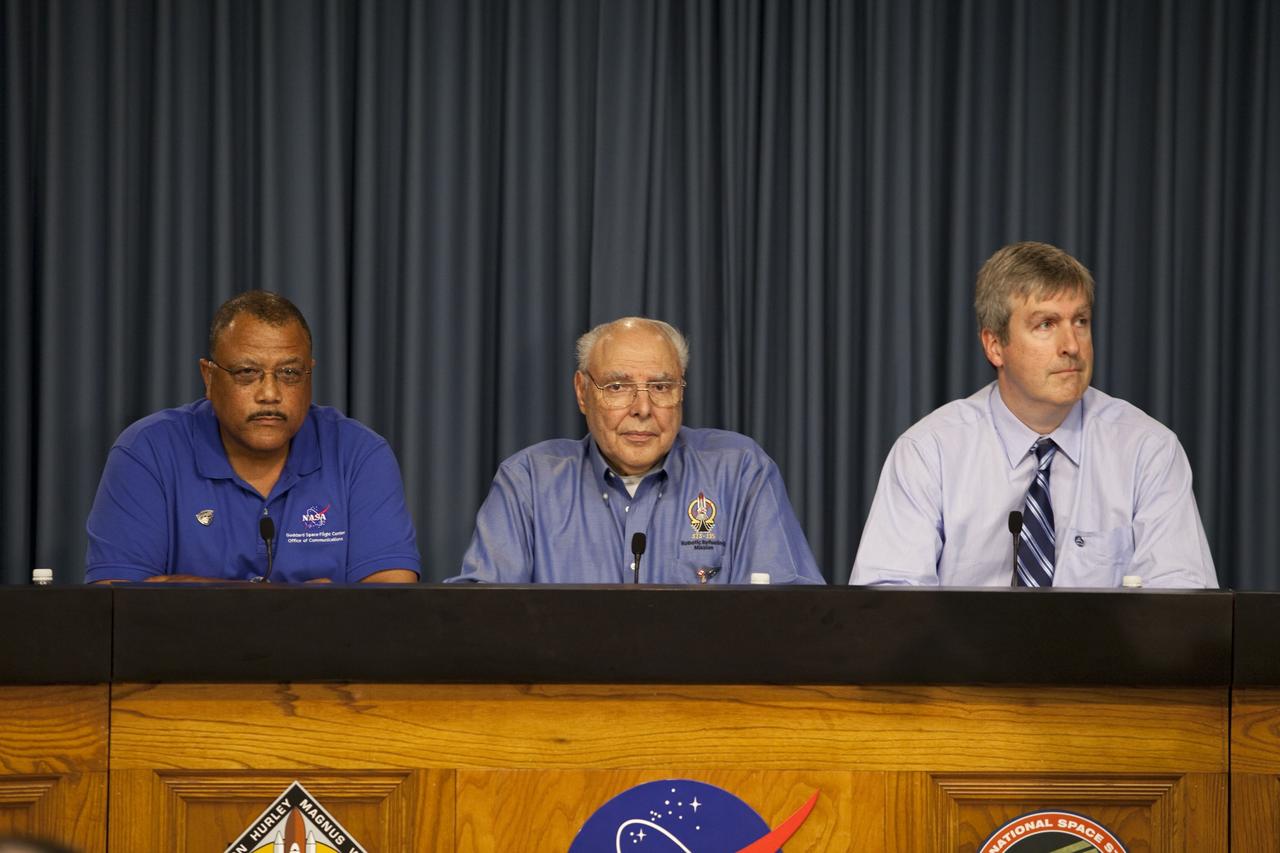
CAPE CANAVERAL, Fla. -- The Press Site auditorium at NASA's Kennedy Space Center in Florida hosted a Robotic Refueling Mission (RRM) module demonstration. Seen here speaking with media are Dewayne Washington from NASA's Goddard Space Flight Center in Maryland, moderator (left); Frank Cepollina, project manager with NASA's Satellite Servicing Capabilities Office and Mathieu Caron, Mission Operations manager with the Canadian Space Agency. Space shuttle Atlantis will fly the RRM on its STS-135 mission to the International Space Station. Once in place the RRM will use the station's two-armed robotic system, known as Dextre, to investigate the potential for robotically refueling existing satellites in orbit. Atlantis and its crew of four are scheduled to lift off at 11:26 a.m. EDT on July 8 to deliver the Raffaello multi-purpose logistics module packed with supplies and spare parts to the station. Atlantis also will fly the RRM and return a failed ammonia pump module to help NASA better understand the failure mechanism and improve pump designs for future systems. STS-135 will be the 33rd flight of Atlantis, the 37th shuttle mission to the space station, and the 135th and final mission of NASA's Space Shuttle Program. For more information visit, www.nasa.gov/mission_pages/shuttle/shuttlemissions/sts135/index.html. Photo credit: NASA/Frankie Martin
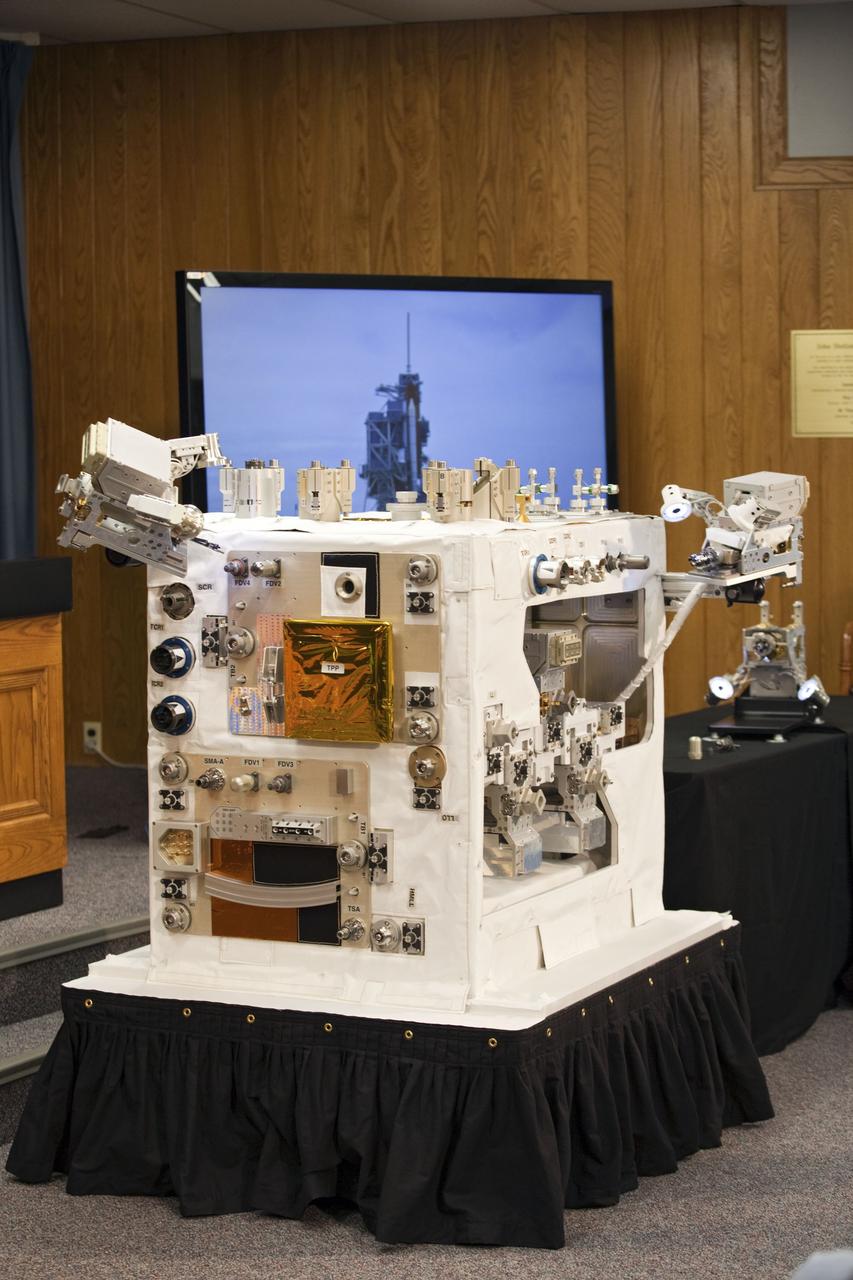
CAPE CANAVERAL, Fla. -- The Press Site auditorium at NASA's Kennedy Space Center in Florida hosted a Robotic Refueling Mission (RRM) module demonstration. Seen here is a demo version of the experiment that will fly on space shuttle Atlantis' STS-135 mission to the International Space Station. Once in place, the RRM will use the station's two-armed robotic system, known as Dextre, to investigate the potential for robotically refueling existing satellites in orbit. Atlantis and its crew of four are scheduled to lift off at 11:26 a.m. EDT on July 8 to deliver the Raffaello multi-purpose logistics module packed with supplies and spare parts to the station. Atlantis also will fly the RRM and return a failed ammonia pump module to help NASA better understand the failure mechanism and improve pump designs for future systems. STS-135 will be the 33rd flight of Atlantis, the 37th shuttle mission to the space station, and the 135th and final mission of NASA's Space Shuttle Program. For more information visit, www.nasa.gov/mission_pages/shuttle/shuttlemissions/sts135/index.html. Photo credit: NASA/Frankie Martin
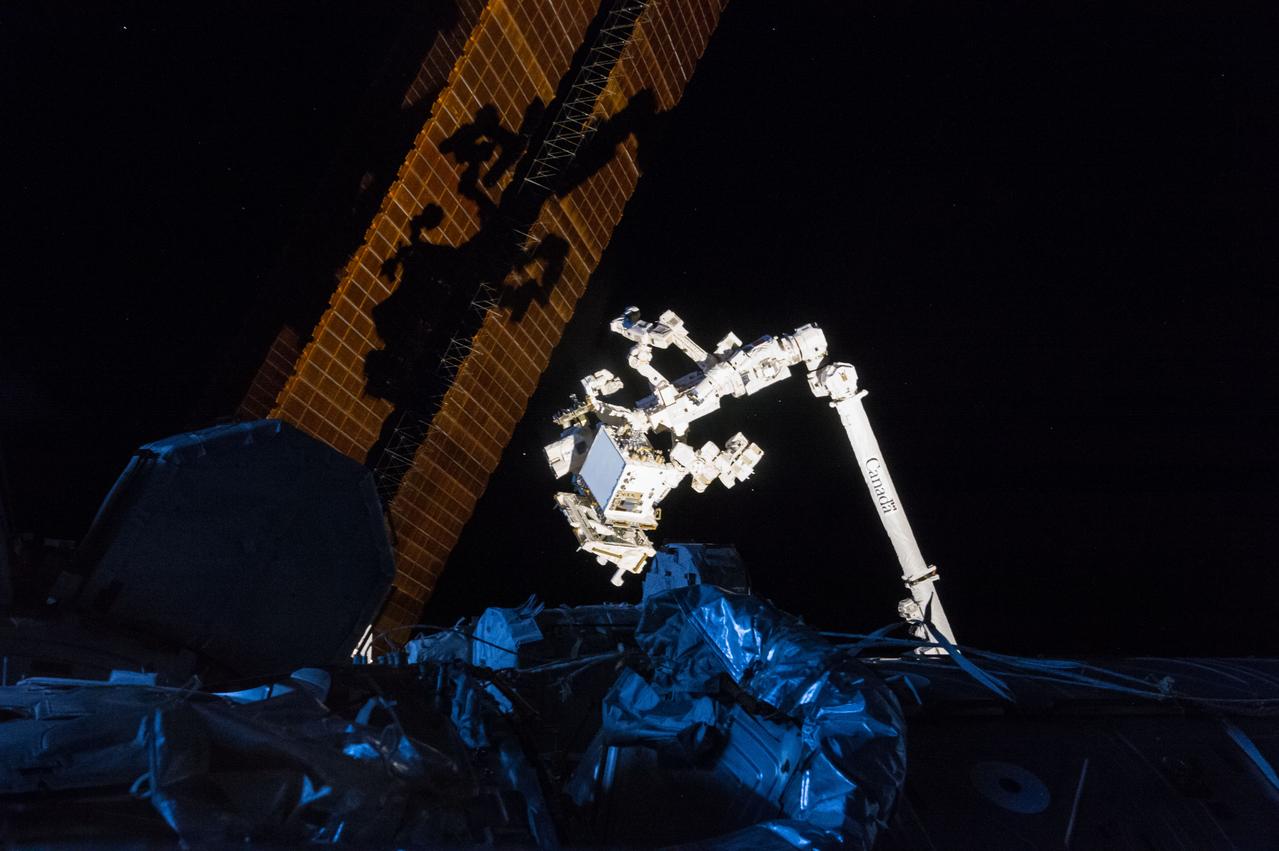
iss050e056301 (3/8/2017) --- A view of the Space Station Remote Manipulator System (SSRMS) during Robotic Refueling Mission-Phase 2 (RRM-P2) operations. NASA's Robotic Refueling Mission (RRM) is an external International Space Station (ISS) investigation that demonstrates and tests the tools, technologies and techniques needed to robotically refuel, repair, and upgrade satellites in space, especially satellites that were not designed to be serviced. A joint effort between NASA and the Canadian Space Agency (CSA), RRM is the first in-orbit attempt to test robotic refueling and servicing techniques for spacecraft not built with in-orbit servicing in mind.

Goddard's Ritsko Wins 2011 SAVE Award The winner of the 2011 SAVE Award is Matthew Ritsko, a Goddard financial manager. His tool lending library would track and enable sharing of expensive space-flight tools and hardware after projects no longer need them. This set of images represents the types of tools used at NASA. To read more go to: <a href="http://www.nasa.gov/topics/people/features/ritsko-save.html" rel="nofollow">www.nasa.gov/topics/people/features/ritsko-save.html</a> The engineering mockup of the Robotic Refueling Mission (RRM) module is currently on display within the press building at the Kennedy Space Center in Florida. The RRM mission is a joint effort between NASA and the Canadian Space Agency designed to demonstrate and test the tools, technologies, and techniques needed to robotically refuel satellites in space. Reporters have the opportunity to get a close-up view of the replica module and tools that are a part of the final shuttle mission payload. SSCO engineers test an RRM tool. To learn more about the RRM go to: <a href="http://ssco.gsfc.nasa.gov/" rel="nofollow">ssco.gsfc.nasa.gov/</a> <b><a href="http://www.nasa.gov/centers/goddard/home/index.html" rel="nofollow">NASA Goddard Space Flight Center</a></b> enables NASA’s mission through four scientific endeavors: Earth Science, Heliophysics, Solar System Exploration, and Astrophysics. Goddard plays a leading role in NASA’s accomplishments by contributing compelling scientific knowledge to advance the Agency’s mission. <b>Follow us on <a href="http://twitter.com/NASA_GoddardPix" rel="nofollow">Twitter</a></b> <b>Join us on <a href="http://www.facebook.com/pages/Greenbelt-MD/NASA-Goddard/395013845897?ref=tsd" rel="nofollow">Facebook</a></b> <b>Find us on <a href="http://instagr.am/p/E_05l/" rel="nofollow">Instagram</a></b>
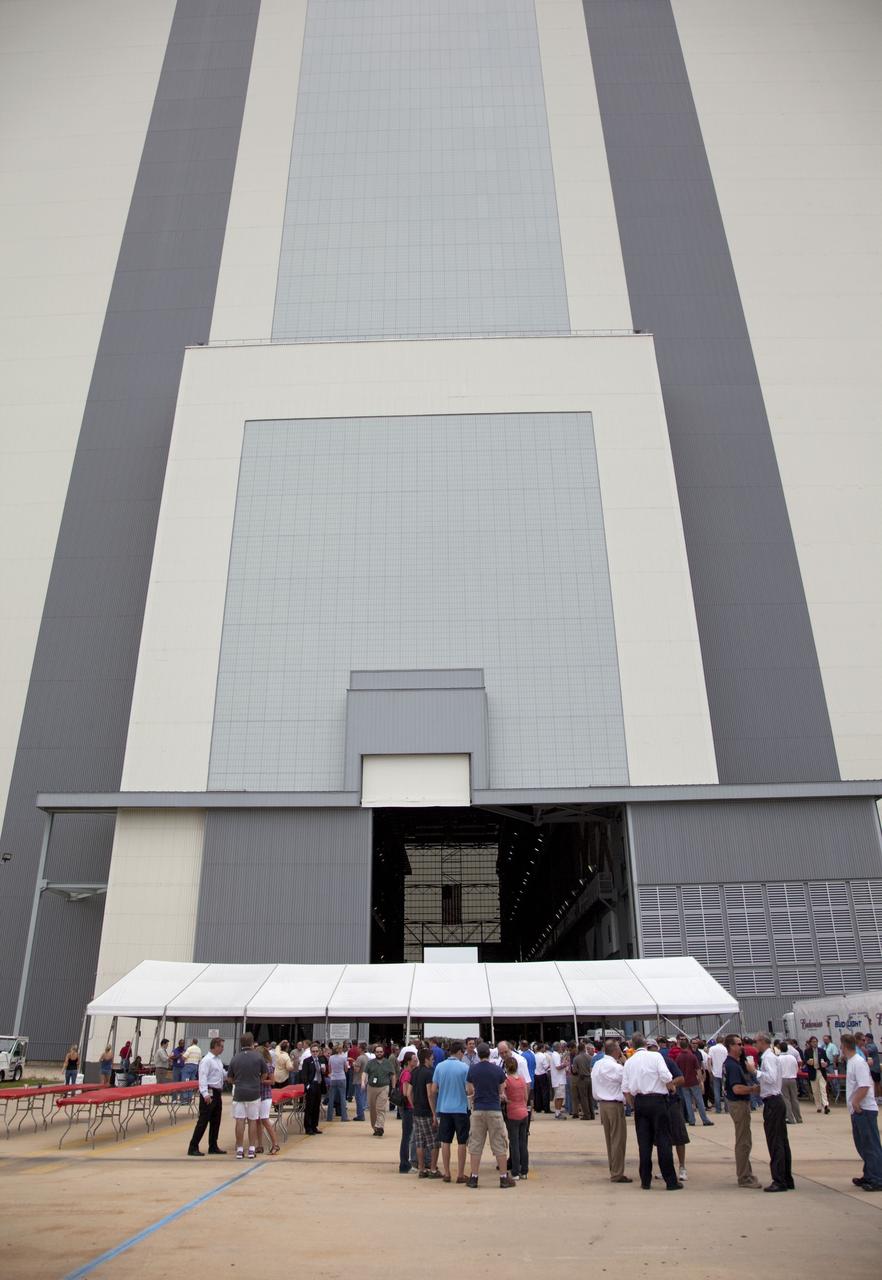
CAPE CANAVERAL, Fla. -- After the successful liftoff of space shuttle Atlantis on the STS-135 mission, hundreds of shuttle workers gather for a party at a tent beside the looming, 525-foot-tall Vehicle Assembly Building at NASA's Kennedy Space Center in Florida. STS-135 is the final flight of the agency's Space Shuttle Program. Atlantis, with its crew of Commander Chris Ferguson, Pilot Doug Hurley, Mission Specialists Sandy Magnus and Rex Walheim, lifted off at 11:29 a.m. EDT on July 8, 2011 to deliver the Raffaello multi-purpose logistics module packed with supplies and spare parts for the International Space Station. For more information, visit www.nasa.gov/mission_pages/shuttle/shuttlemissions/sts135/index.html. Photo credit: NASA/Frankie Martin
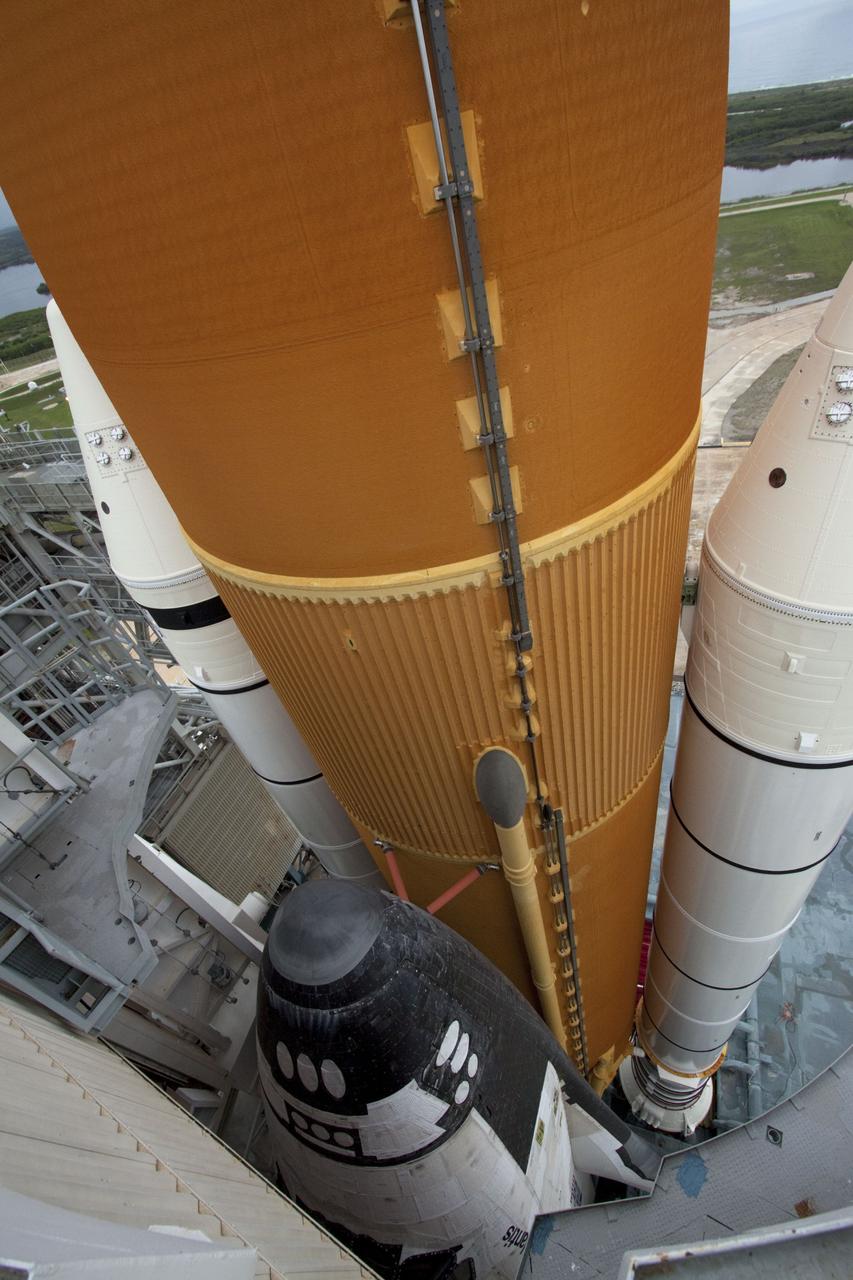
CAPE CANAVERAL, Fla.-- Space shuttle Atlantis is revealed on Launch Pad 39A at NASA's Kennedy Space Center in Florida following the move of the rotating service structure (RSS). The structure provides weather protection and access to the shuttle while it awaits liftoff on the pad. RSS "rollback" marks a major milestone in Atlantis' STS-135 mission countdown. Atlantis and its crew of four; Commander Chris Ferguson, Pilot Doug Hurley and Mission Specialists Sandy Magnus and Rex Walheim, are scheduled to lift off at 11:26 a.m. EDT on July 8 to deliver the Raffaello multi-purpose logistics module packed with supplies and spare parts to the International Space Station. Atlantis also will fly the Robotic Refueling Mission experiment that will investigate the potential for robotically refueling existing satellites in orbit. In addition, Atlantis will return with a failed ammonia pump module to help NASA better understand the failure mechanism and improve pump designs for future systems. STS-135 will be the 33rd flight of Atlantis, the 37th shuttle mission to the space station, and the 135th and final mission of NASA's Space Shuttle Program. For more information visit, www.nasa.gov/mission_pages/shuttle/shuttlemissions/sts135/index.html. Photo credit: NASA/Ken Thornsley
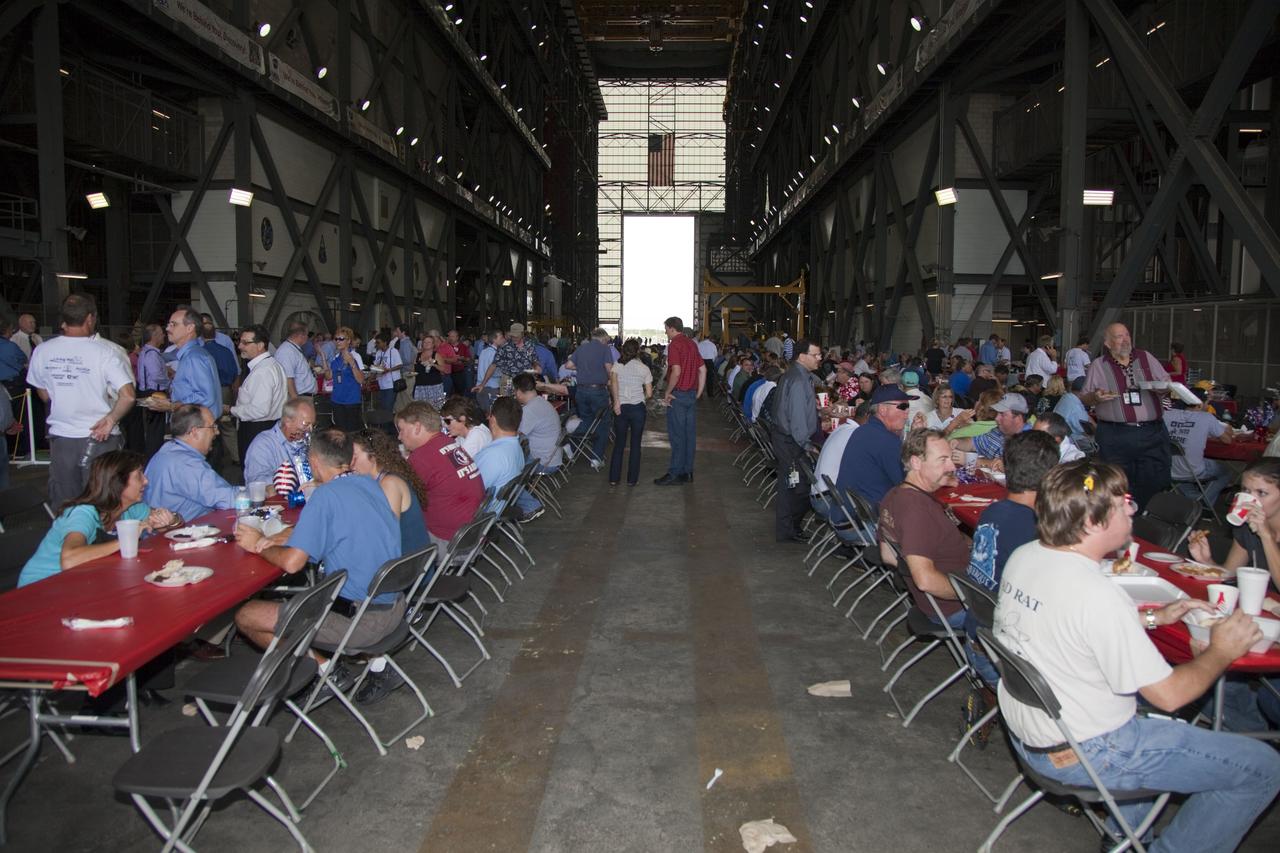
CAPE CANAVERAL, Fla. -- Hundreds of space shuttle workers enjoy a meal at tables set up in the transfer aisle of NASA Kennedy Space Center's Vehicle Assembly Building. The occasion celebrated the successful launch of shuttle Atlantis on the STS-135 mission, the final flight of the agency's Space Shuttle Program. Atlantis, with its crew of Commander Chris Ferguson, Pilot Doug Hurley, Mission Specialists Sandy Magnus and Rex Walheim, lifted off at 11:29 a.m. EDT on July 8, 2011 to deliver the Raffaello multi-purpose logistics module packed with supplies and spare parts for the International Space Station. For more information, visit www.nasa.gov/mission_pages/shuttle/shuttlemissions/sts135/index.html. Photo credit: NASA/Frankie Martin
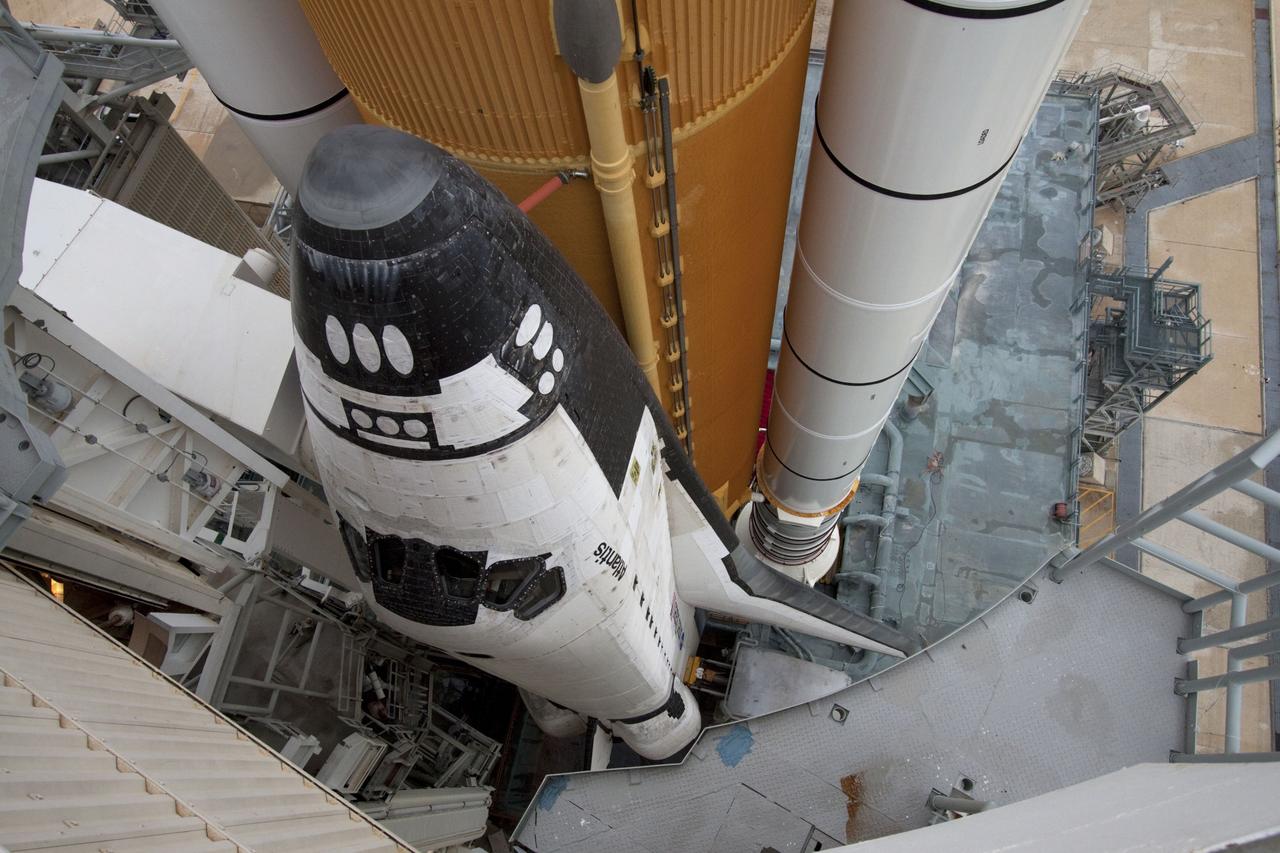
CAPE CANAVERAL, Fla. – Space shuttle Atlantis is revealed on Launch Pad 39A at NASA's Kennedy Space Center in Florida following the move of the rotating service structure (RSS). The structure provides weather protection and access to the shuttle while it awaits liftoff on the pad. RSS "rollback" marks a major milestone in Atlantis' STS-135 mission countdown. Atlantis and its crew of four; Commander Chris Ferguson, Pilot Doug Hurley and Mission Specialists Sandy Magnus and Rex Walheim, are scheduled to lift off at 11:26 a.m. EDT on July 8 to deliver the Raffaello multi-purpose logistics module packed with supplies and spare parts to the International Space Station. Atlantis also will fly the Robotic Refueling Mission experiment that will investigate the potential for robotically refueling existing satellites in orbit. In addition, Atlantis will return with a failed ammonia pump module to help NASA better understand the failure mechanism and improve pump designs for future systems. STS-135 will be the 33rd flight of Atlantis, the 37th shuttle mission to the space station, and the 135th and final mission of NASA's Space Shuttle Program. For more information visit, www.nasa.gov/mission_pages/shuttle/shuttlemissions/sts135/index.html. Photo credit: NASA/Ken Thornsley
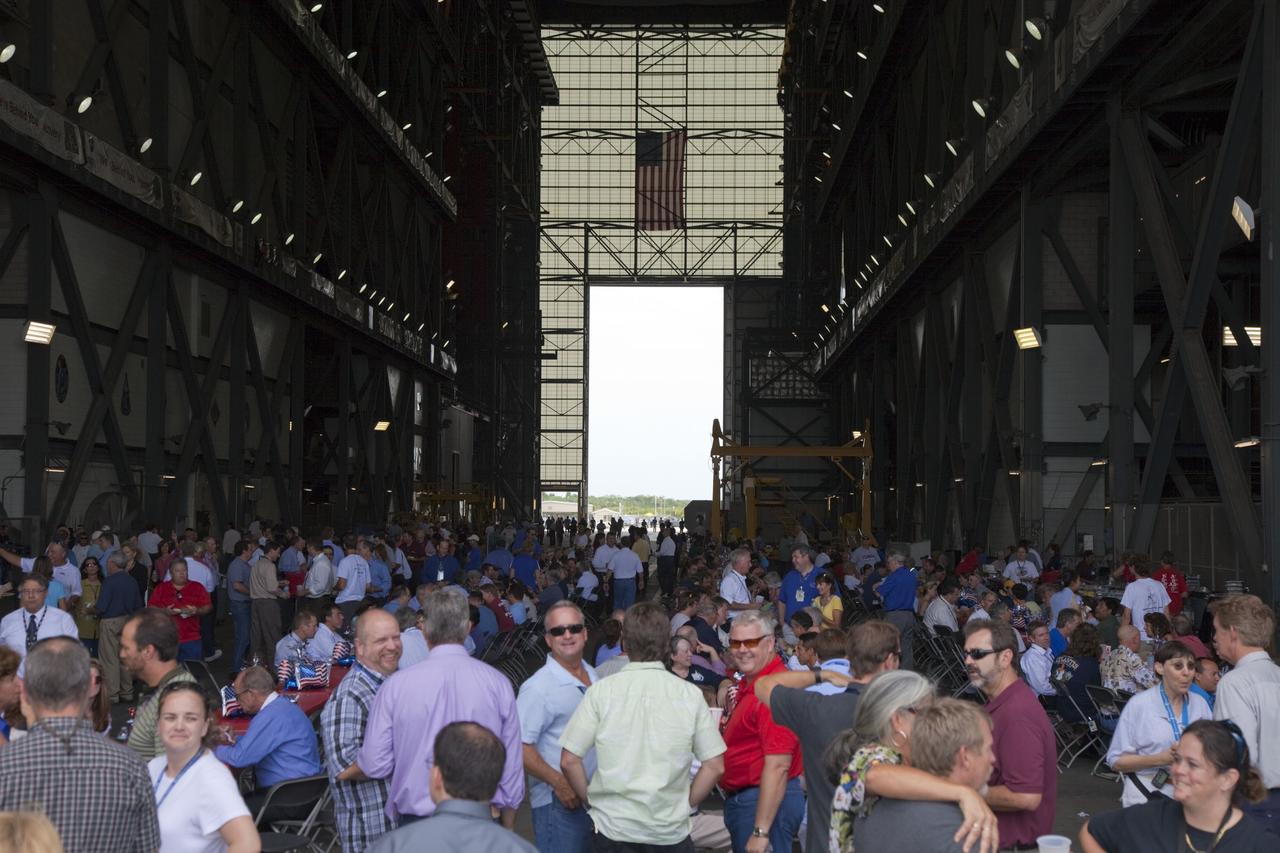
CAPE CANAVERAL, Fla. -- Space shuttle workers fill the transfer aisle of the massive Vehicle Assembly Building at NASA's Kennedy Space Center in Florida to celebrate the successful liftoff of shuttle Atlantis on the STS-135 mission, the final flight of the agency's Space Shuttle Program. Atlantis, with its crew of Commander Chris Ferguson, Pilot Doug Hurley, Mission Specialists Sandy Magnus and Rex Walheim, lifted off at 11:29 a.m. EDT on July 8, 2011 to deliver the Raffaello multi-purpose logistics module packed with supplies and spare parts for the International Space Station. For more information, visit www.nasa.gov/mission_pages/shuttle/shuttlemissions/sts135/index.html. Photo credit: NASA/Frankie Martin
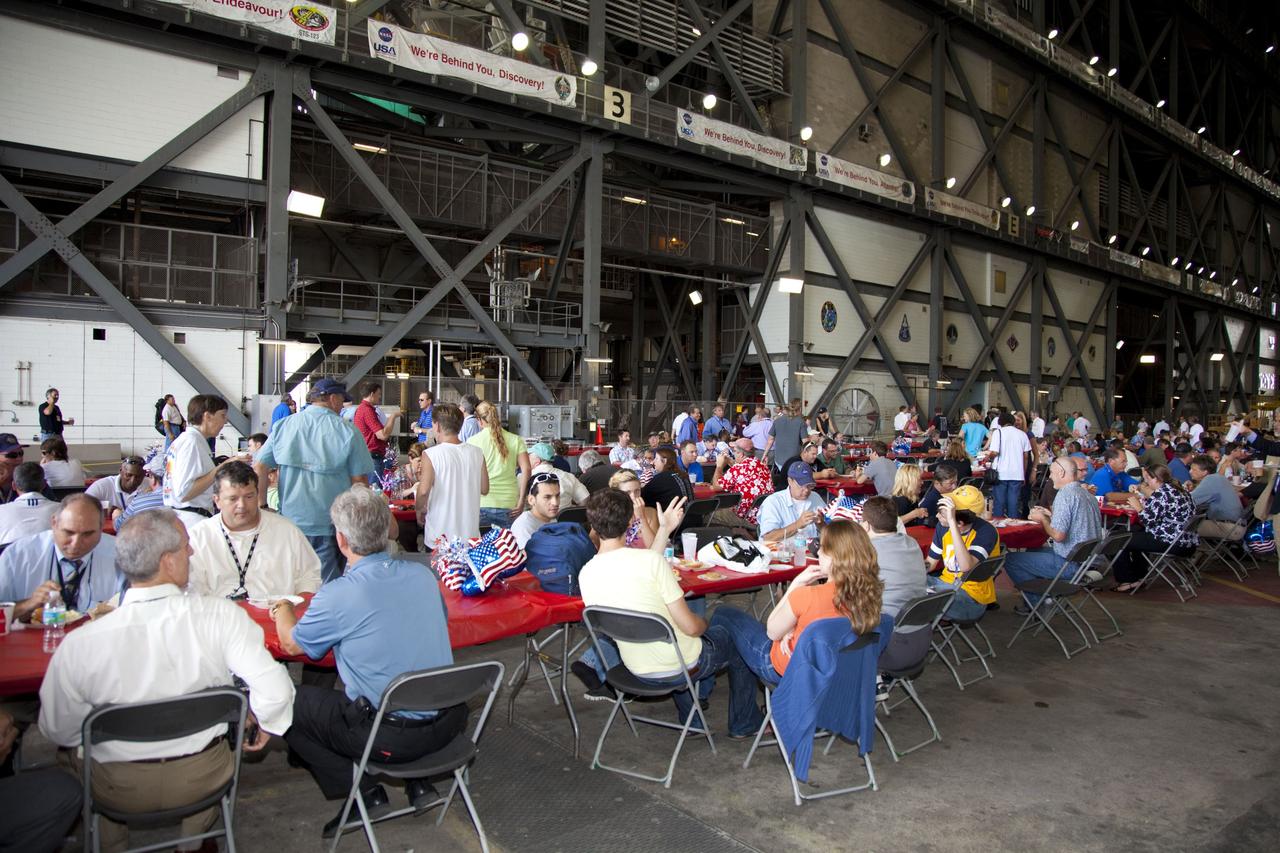
CAPE CANAVERAL, Fla. -- Inside the transfer aisle of NASA Kennedy Space Center's Vehicle Assembly Building, space shuttle workers relax and enjoy a meal at a party following the successful liftoff of shuttle Atlantis on the STS-135 mission, the final flight of the agency's Space Shuttle Program. Atlantis, with its crew of Commander Chris Ferguson, Pilot Doug Hurley, Mission Specialists Sandy Magnus and Rex Walheim, lifted off at 11:29 a.m. EDT on July 8, 2011 to deliver the Raffaello multi-purpose logistics module packed with supplies and spare parts for the International Space Station. For more information, visit www.nasa.gov/mission_pages/shuttle/shuttlemissions/sts135/index.html. Photo credit: NASA/Frankie Martin
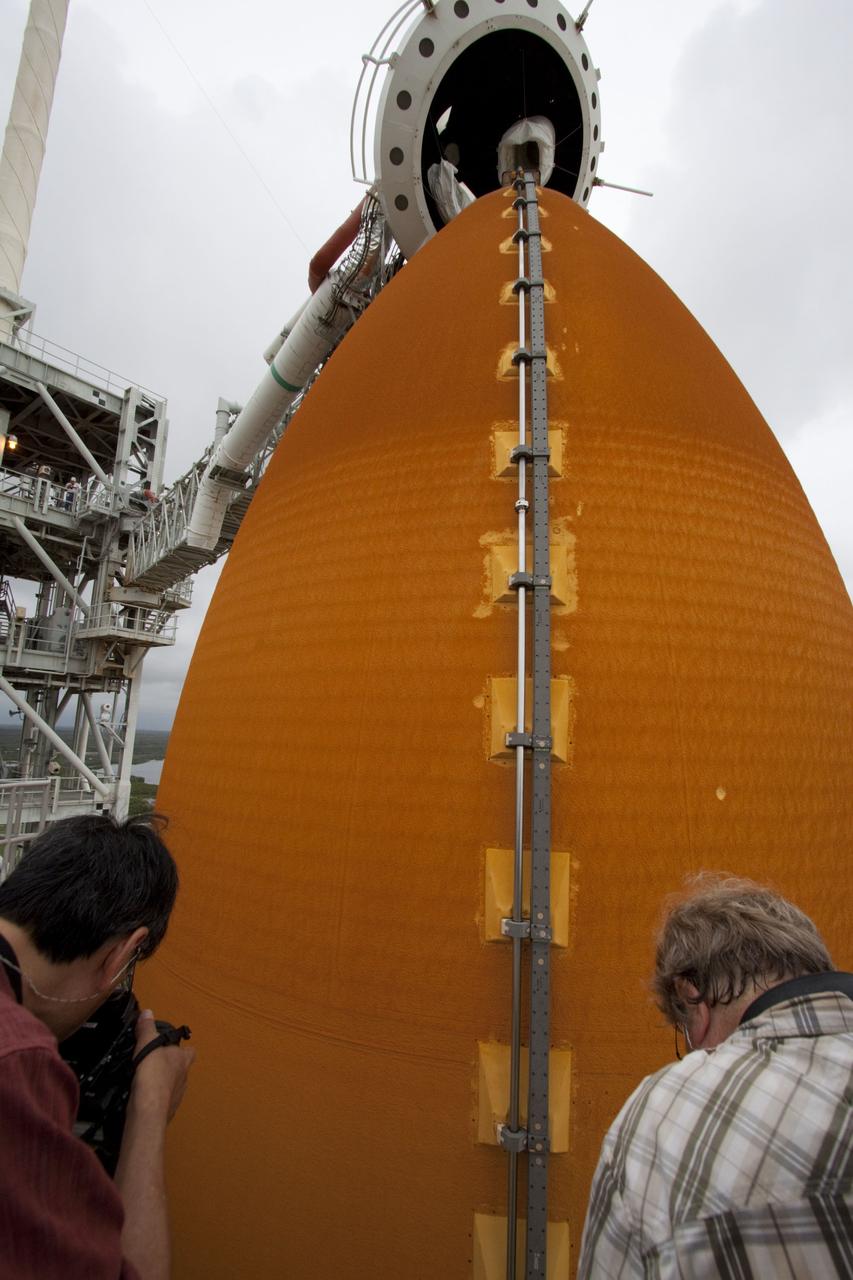
CAPE CANAVERAL, Fla. – Photographers Stan Hernda of AFP News, left, and Scott Andrews of Canon record space shuttle Atlantis as it is revealed on Launch Pad 39A at NASA's Kennedy Space Center in Florida following the move of the rotating service structure (RSS). The structure provides weather protection and access to the shuttle while it awaits liftoff on the pad. RSS "rollback" marks a major milestone in Atlantis' STS-135 mission countdown. Atlantis and its crew of four; Commander Chris Ferguson, Pilot Doug Hurley and Mission Specialists Sandy Magnus and Rex Walheim, are scheduled to lift off at 11:26 a.m. EDT on July 8 to deliver the Raffaello multi-purpose logistics module packed with supplies and spare parts to the International Space Station. Atlantis also will fly the Robotic Refueling Mission experiment that will investigate the potential for robotically refueling existing satellites in orbit. In addition, Atlantis will return with a failed ammonia pump module to help NASA better understand the failure mechanism and improve pump designs for future systems. STS-135 will be the 33rd flight of Atlantis, the 37th shuttle mission to the space station, and the 135th and final mission of NASA's Space Shuttle Program. For more information visit, www.nasa.gov/mission_pages/shuttle/shuttlemissions/sts135/index.html. Photo credit: NASA/Ken Thornsley
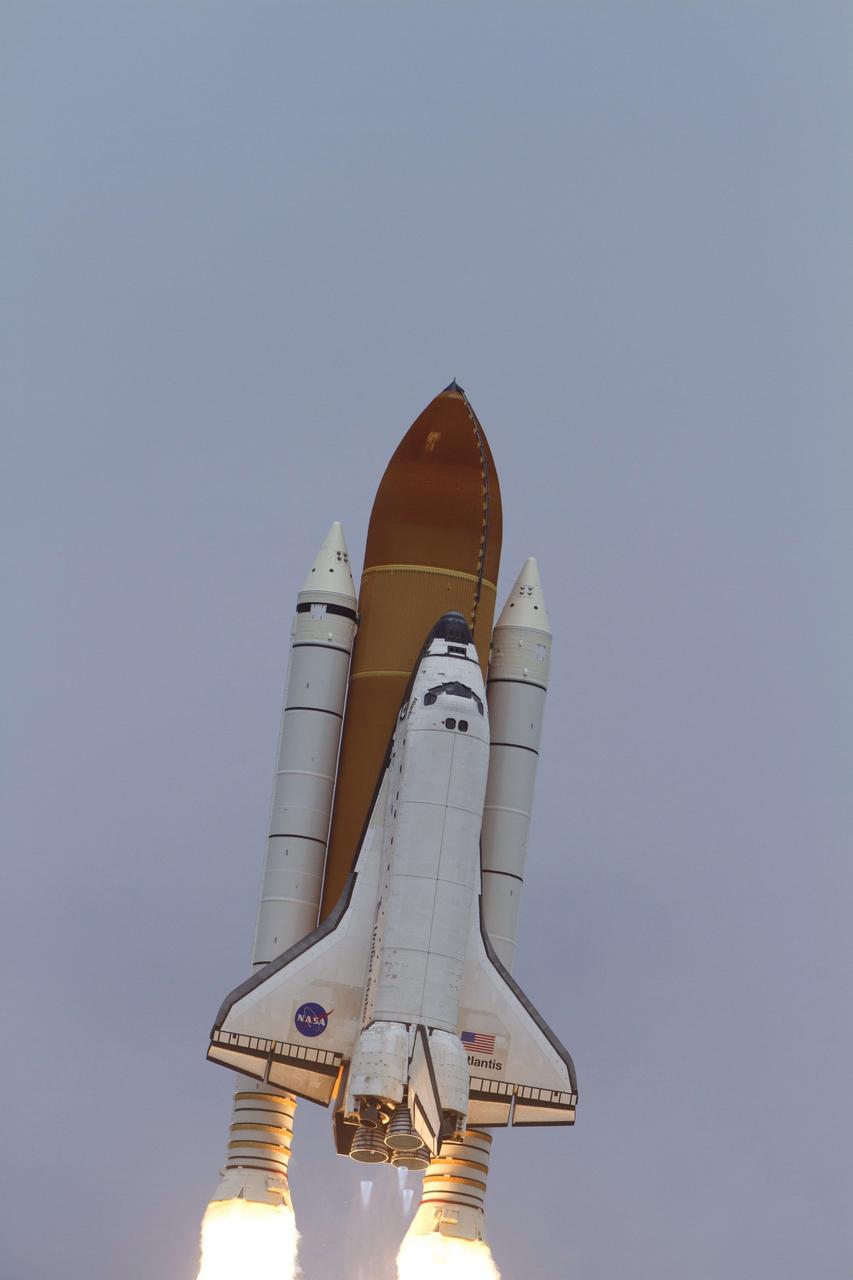
CAPE CANAVERAL, Fla. – Space shuttle Atlantis makes its last reach for the sky, rising above Launch Pad 39A at NASA's Kennedy Space Center in Florida to begin the STS-135 mission to the International Space Station. Atlantis, with its crew of Commander Chris Ferguson, Pilot Doug Hurley, Mission Specialists Sandy Magnus and Rex Walheim, lifted off at 11:29 a.m. EDT on July 8, 2011 to deliver the Raffaello multi-purpose logistics module packed with supplies and spare parts for the station. Atlantis also will fly the Robotic Refueling Mission experiment that will investigate the potential for robotically refueling existing satellites in orbit. In addition, Atlantis will return with a failed ammonia pump module to help NASA better understand the failure mechanism and improve pump designs for future systems. STS-135 is the 33rd flight of Atlantis, the 37th shuttle mission to the space station, and the 135th and final mission of NASA's Space Shuttle Program. For more information, visit www.nasa.gov/mission_pages/shuttle/shuttlemissions/sts135/index.html. Photo credit: NASA/Kenny Allen and George Roberts
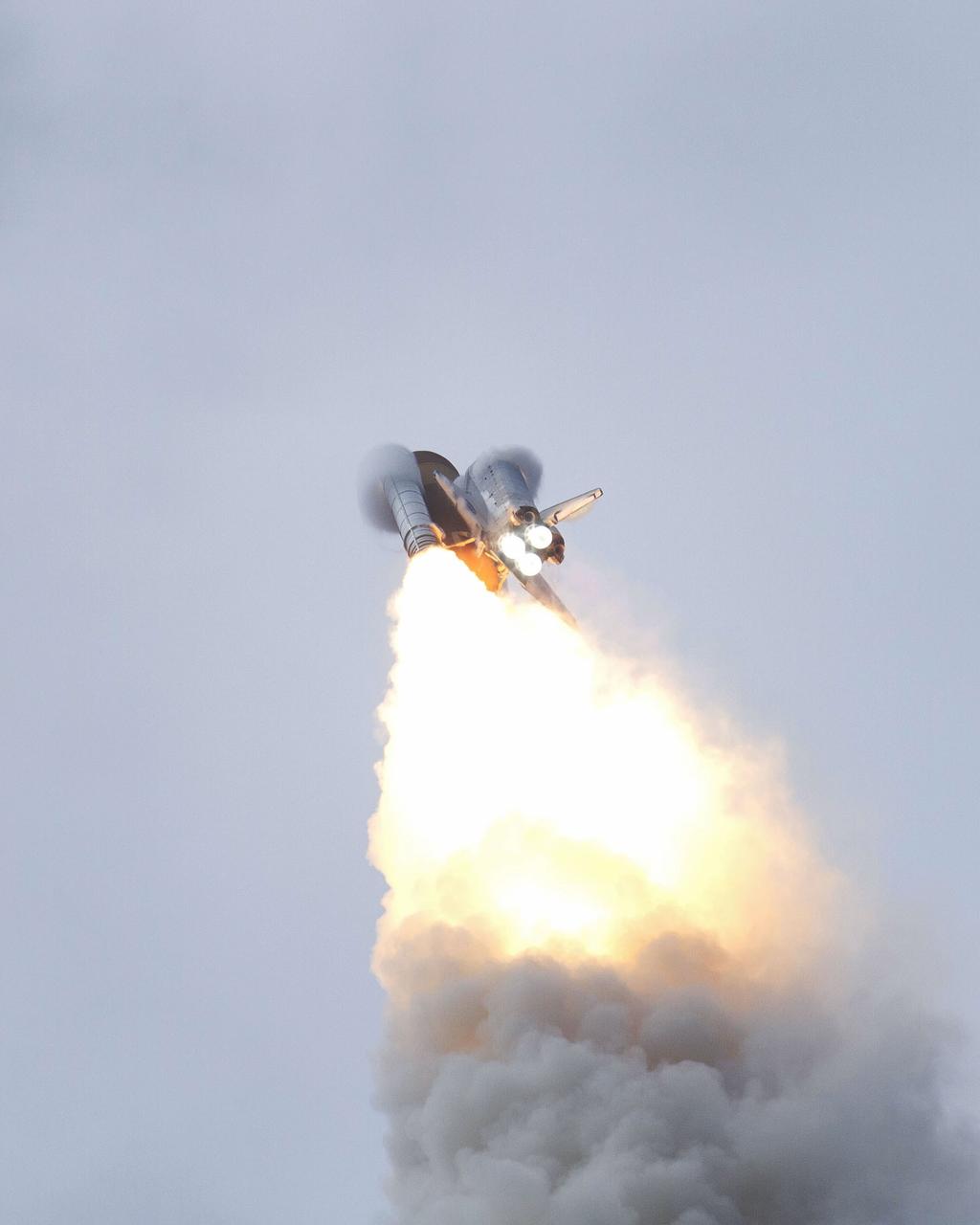
CAPE CANAVERAL, Fla. – A condensation collar is visible around space shuttle Atlantis' solid rocket boosters and forward fuselage as the vehicle makes its last climb toward orbit on the STS-135 mission to the International Space Station. Atlantis, with its crew of Commander Chris Ferguson, Pilot Doug Hurley, Mission Specialists Sandy Magnus and Rex Walheim, lifted off at 11:29 a.m. EDT on July 8, 2011 to deliver the Raffaello multi-purpose logistics module packed with supplies and spare parts for the station. Atlantis also will fly the Robotic Refueling Mission experiment that will investigate the potential for robotically refueling existing satellites in orbit. In addition, Atlantis will return with a failed ammonia pump module to help NASA better understand the failure mechanism and improve pump designs for future systems. STS-135 is the 33rd flight of Atlantis, the 37th shuttle mission to the space station, and the 135th and final mission of NASA's Space Shuttle Program. For more information, visit www.nasa.gov/mission_pages/shuttle/shuttlemissions/sts135/index.html. Photo credit: NASA/Kenny Allen and George Roberts
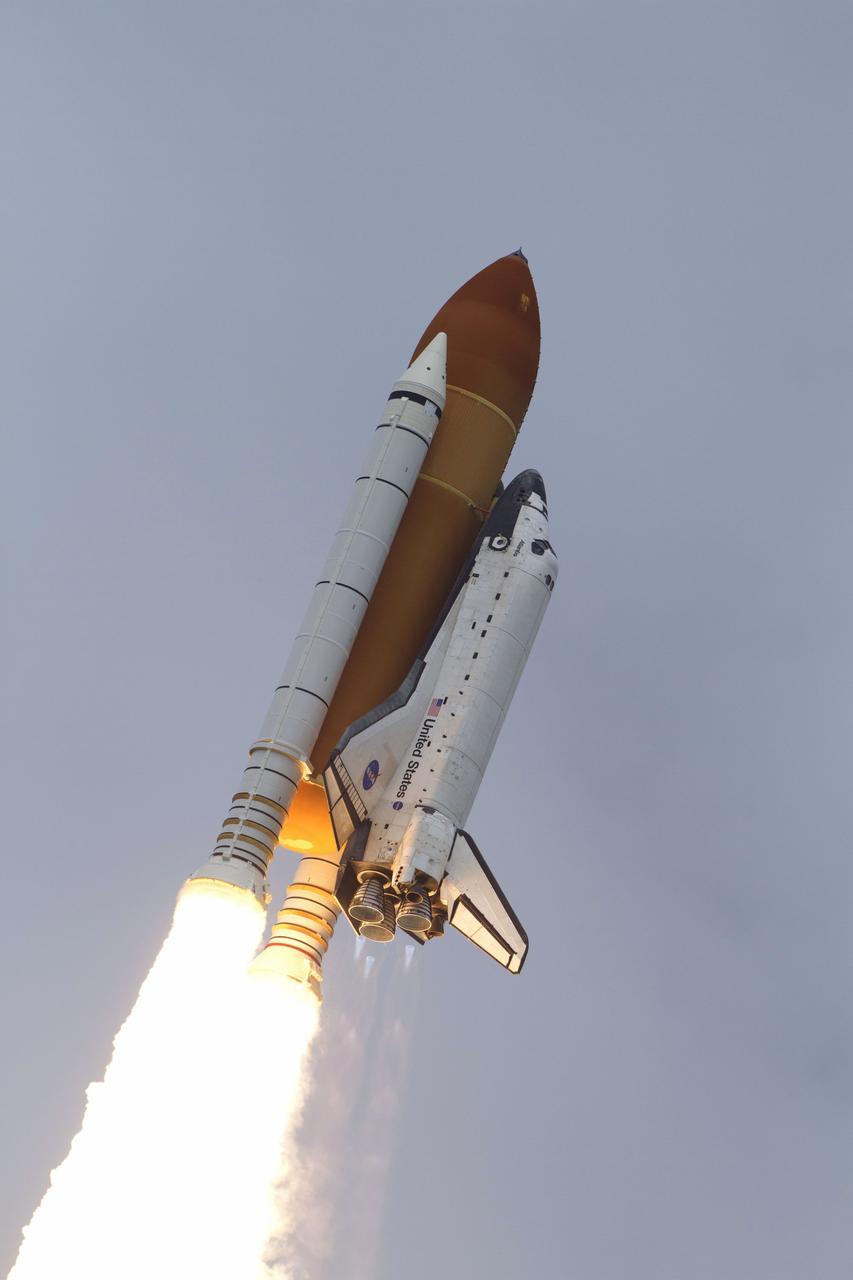
CAPE CANAVERAL, Fla. – Space shuttle Atlantis rolls into a head-down, wings-level orientation on its way toward space after a successful launch from Launch Pad 39A at NASA's Kennedy Space Center in Florida. Atlantis, with its crew of Commander Chris Ferguson, Pilot Doug Hurley, Mission Specialists Sandy Magnus and Rex Walheim, lifted off at 11:29 a.m. EDT on July 8, 2011 to deliver the Raffaello multi-purpose logistics module packed with supplies and spare parts for the station. Atlantis also will fly the Robotic Refueling Mission experiment that will investigate the potential for robotically refueling existing satellites in orbit. In addition, Atlantis will return with a failed ammonia pump module to help NASA better understand the failure mechanism and improve pump designs for future systems. STS-135 is the 33rd flight of Atlantis, the 37th shuttle mission to the space station, and the 135th and final mission of NASA's Space Shuttle Program. For more information, visit www.nasa.gov/mission_pages/shuttle/shuttlemissions/sts135/index.html. Photo credit: NASA/Kenny Allen and George Roberts
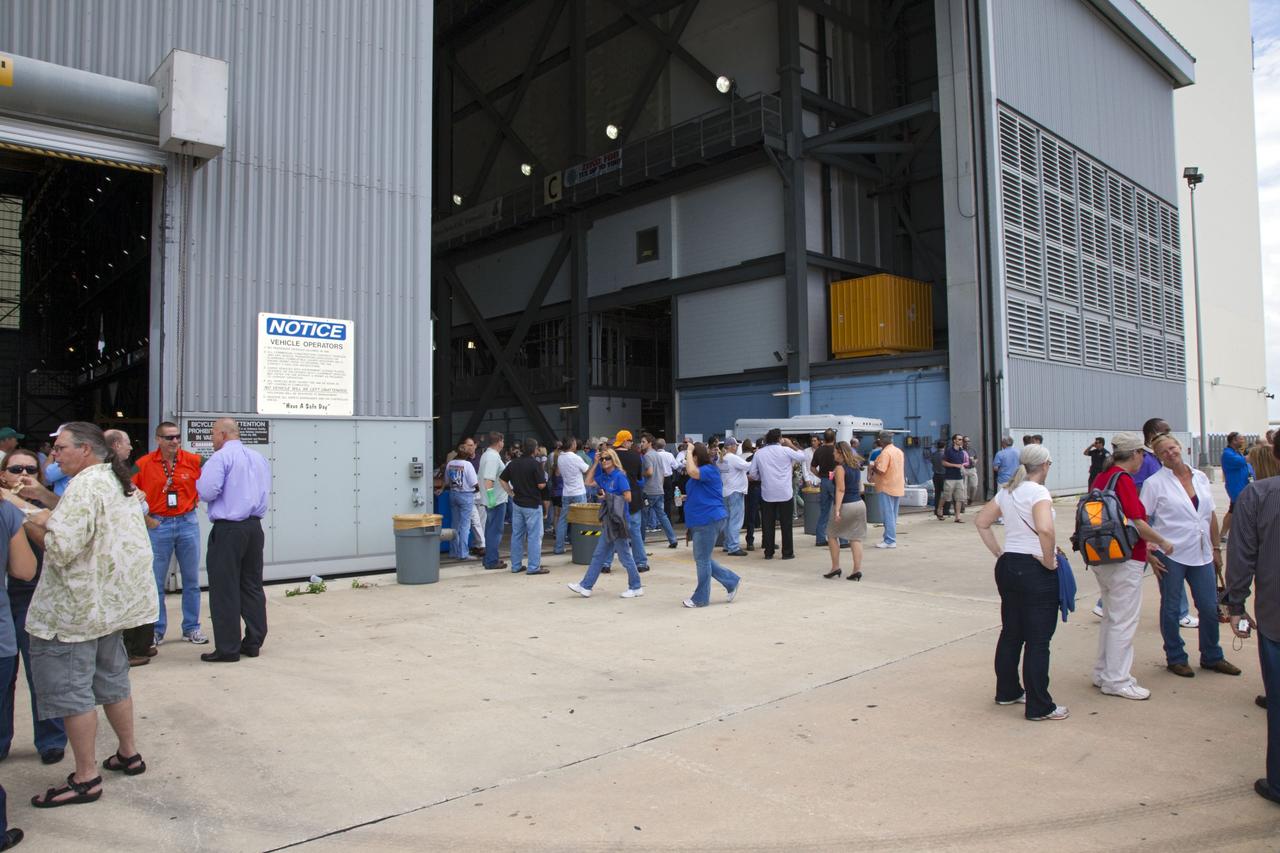
CAPE CANAVERAL, Fla. -- Hundreds of space shuttle workers gather for a party at NASA Kennedy Space Center's Vehicle Assembly Building following the successful liftoff of space shuttle Atlantis on the STS-135 mission, the final flight of the agency's Space Shuttle Program. Atlantis, with its crew of Commander Chris Ferguson, Pilot Doug Hurley, Mission Specialists Sandy Magnus and Rex Walheim, lifted off at 11:29 a.m. EDT on July 8, 2011 to deliver the Raffaello multi-purpose logistics module packed with supplies and spare parts for the International Space Station. For more information, visit www.nasa.gov/mission_pages/shuttle/shuttlemissions/sts135/index.html. Photo credit: NASA/Frankie Martin
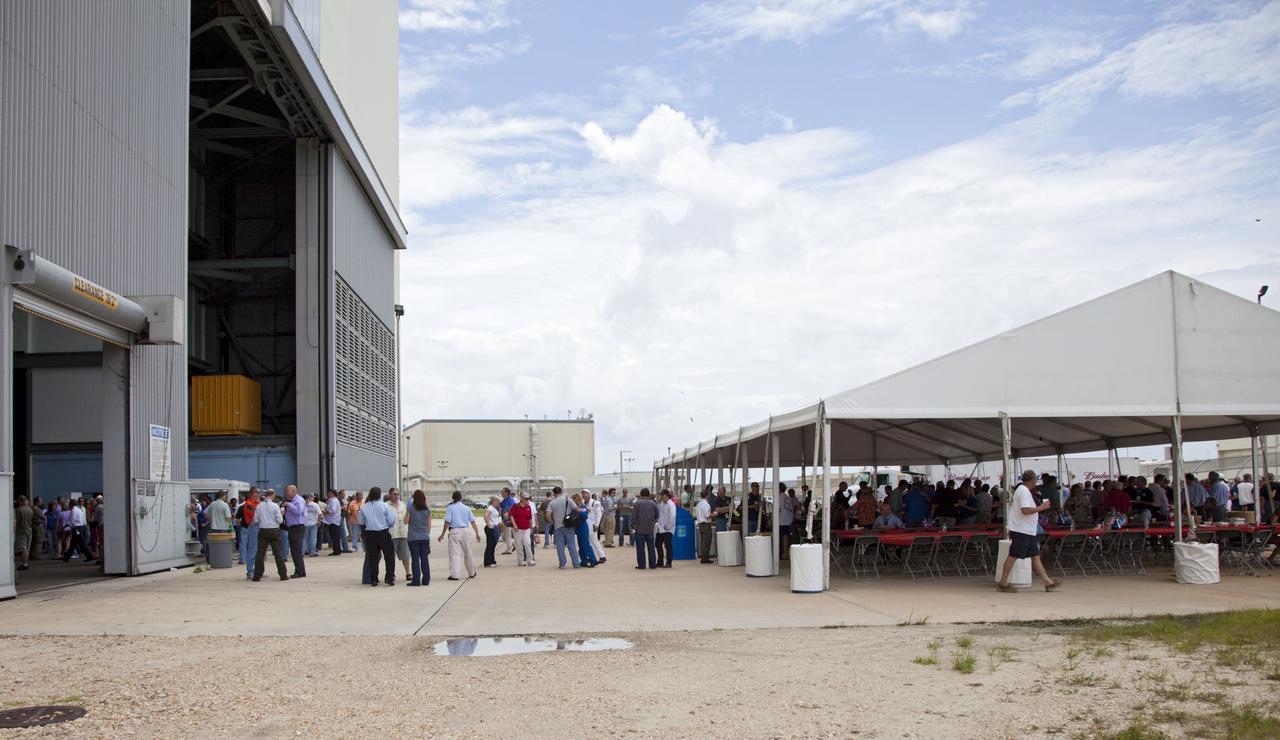
CAPE CANAVERAL, Fla. -- At NASA's Kennedy Space Center in Florida, hundreds of space shuttle workers congregate beneath a tent or inside the transfer aisle at the Vehicle Assembly Building, sharing a party following the successful liftoff of space shuttle Atlantis on the STS-135 mission, the final flight of the agency's Space Shuttle Program. Atlantis, with its crew of Commander Chris Ferguson, Pilot Doug Hurley, Mission Specialists Sandy Magnus and Rex Walheim, lifted off at 11:29 a.m. EDT on July 8, 2011 to deliver the Raffaello multi-purpose logistics module packed with supplies and spare parts for the International Space Station. For more information, visit www.nasa.gov/mission_pages/shuttle/shuttlemissions/sts135/index.html. Photo credit: NASA/Frankie Martin
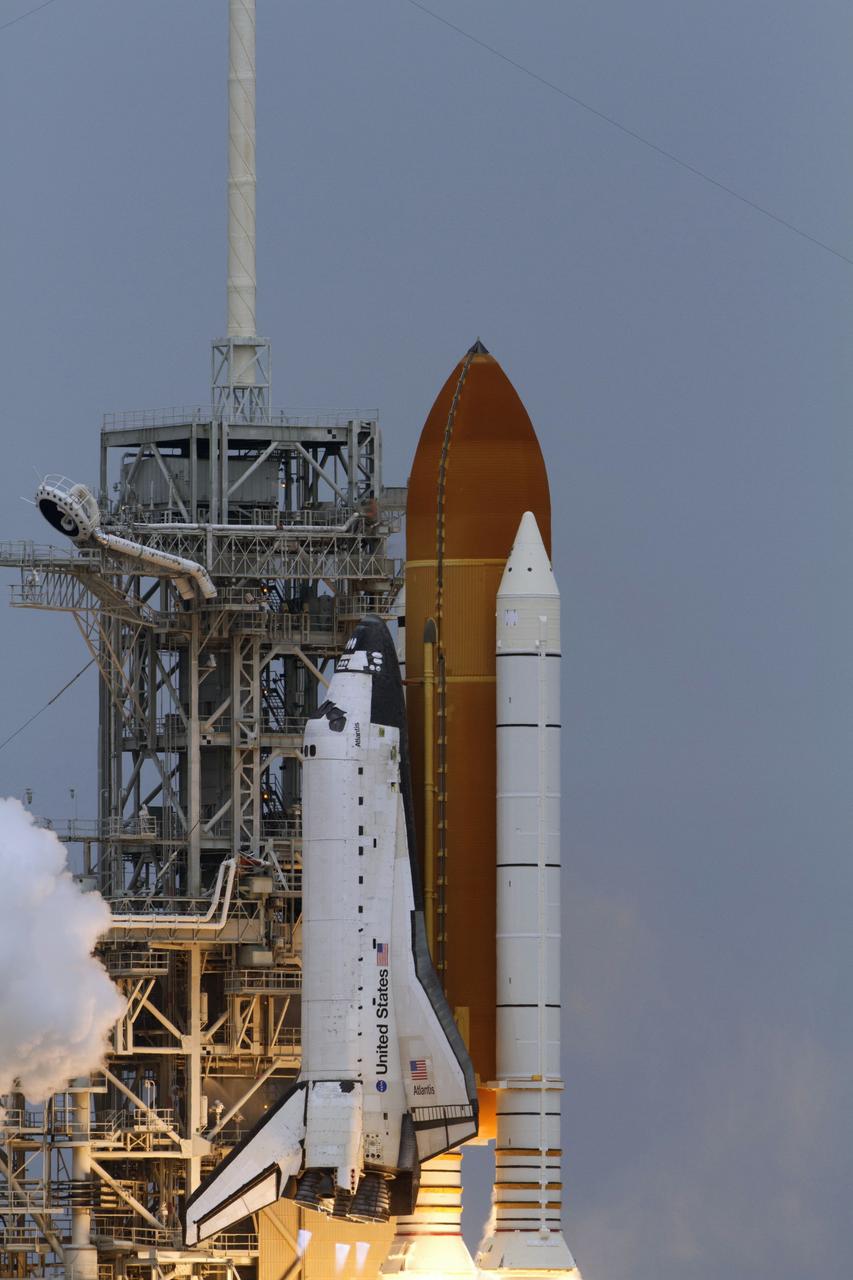
CAPE CANAVERAL, Fla. – At NASA's Kennedy Space Center in Florida, space shuttle Atlantis rises from Launch Pad 39A as it lifts off on its STS-135 mission to the International Space Station. Atlantis, with its crew of Commander Chris Ferguson, Pilot Doug Hurley, Mission Specialists Sandy Magnus and Rex Walheim, lifted off at 11:29 a.m. EDT on July 8, 2011 to deliver the Raffaello multi-purpose logistics module packed with supplies and spare parts for the station. Atlantis also will fly the Robotic Refueling Mission experiment that will investigate the potential for robotically refueling existing satellites in orbit. In addition, Atlantis will return with a failed ammonia pump module to help NASA better understand the failure mechanism and improve pump designs for future systems. STS-135 is the 33rd flight of Atlantis, the 37th shuttle mission to the space station, and the 135th and final mission of NASA's Space Shuttle Program. For more information, visit www.nasa.gov/mission_pages/shuttle/shuttlemissions/sts135/index.html. Photo credit: NASA/Kenny Allen and George Roberts
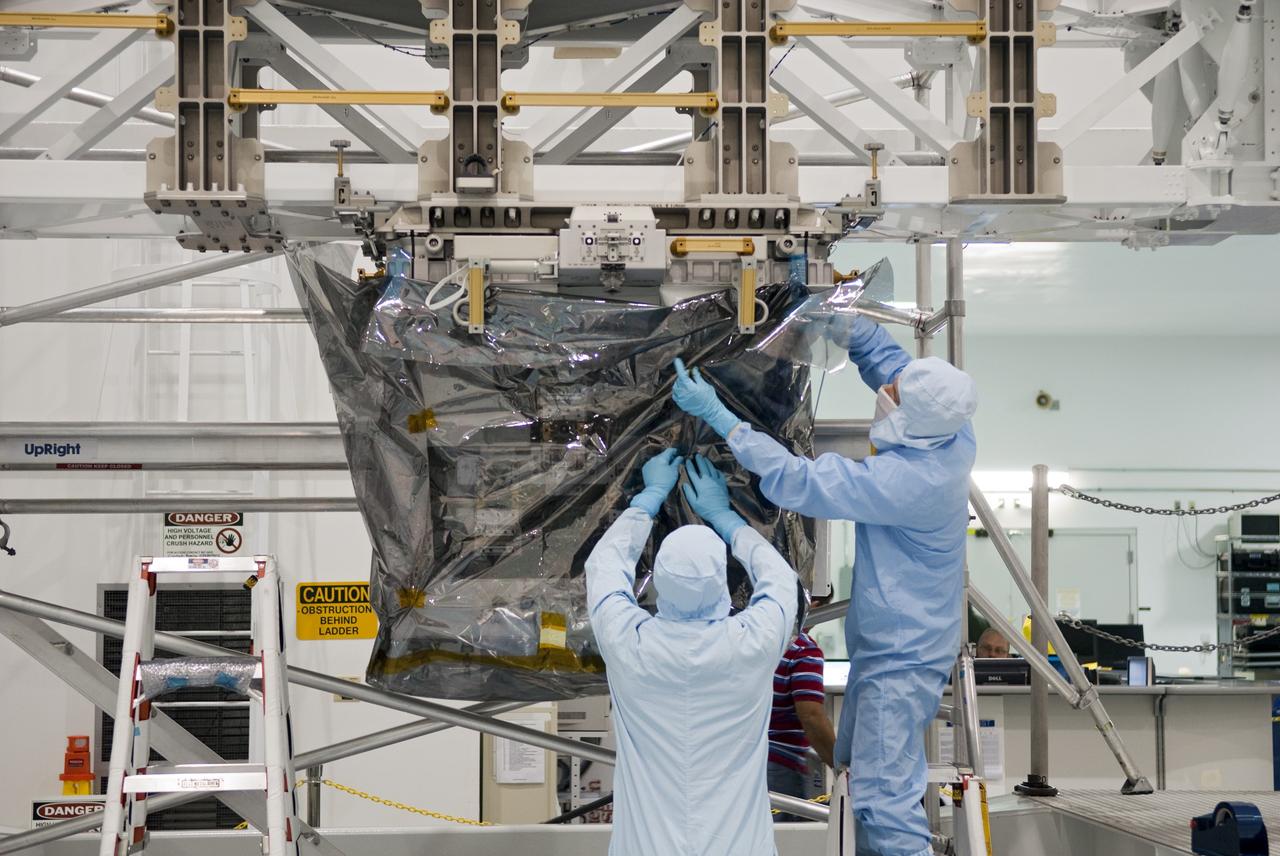
CAPE CANAVERAL, Fla. -- In the Space Station Processing Facility at NASA's Kennedy Space Center in Florida, technicians install a protective cover around the Robotic Refueling Mission (RRM) before its move into a payload canister. The RRM is being processed to fly aboard space shuttle Atlantis on the STS-135 mission to the International Space Station. Commander Chris Ferguson, Pilot Doug Hurley and Mission Specialists Sandra Magnus and Rex Walheim are targeted to launch in early July, taking with them the Raffaello multi-purpose logistics module packed with supplies, logistics and spare parts. The STS-135 mission also will fly a system to investigate the potential for robotically refueling existing spacecraft and return a failed ammonia pump module to help NASA better understand the failure mechanism and improve pump designs for future systems. STS-135 will be the 33rd flight of Atlantis, the 37th shuttle mission to the space station, and the 135th and final mission of NASA's Space Shuttle Program. For more information, visit www.nasa.gov/mission_pages/shuttle/shuttlemissions/sts135/index.html. Photo credit: NASA/Jim Grossmann
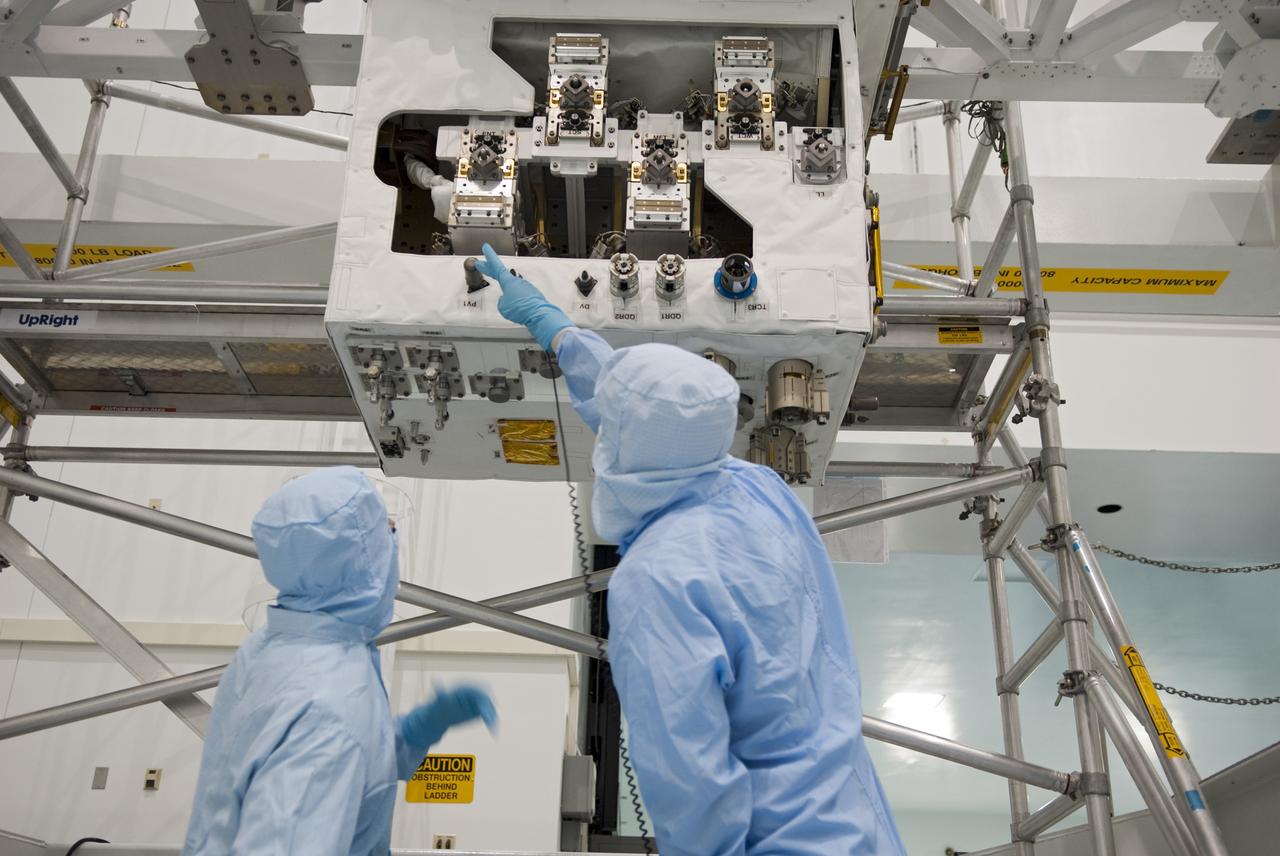
CAPE CANAVERAL, Fla. -- In the Space Station Processing Facility at NASA's Kennedy Space Center in Florida, technicians inspect the Robotic Refueling Mission (RRM) before installing its protective cover and later move it into a payload canister. The RRM is being processed to fly aboard space shuttle Atlantis on the STS-135 mission to the International Space Station. Commander Chris Ferguson, Pilot Doug Hurley and Mission Specialists Sandra Magnus and Rex Walheim are targeted to launch in early July, taking with them the Raffaello multi-purpose logistics module packed with supplies, logistics and spare parts. The STS-135 mission also will fly a system to investigate the potential for robotically refueling existing spacecraft and return a failed ammonia pump module to help NASA better understand the failure mechanism and improve pump designs for future systems. STS-135 will be the 33rd flight of Atlantis, the 37th shuttle mission to the space station, and the 135th and final mission of NASA's Space Shuttle Program. For more information, visit www.nasa.gov/mission_pages/shuttle/shuttlemissions/sts135/index.html. Photo credit: NASA/Jim Grossmann
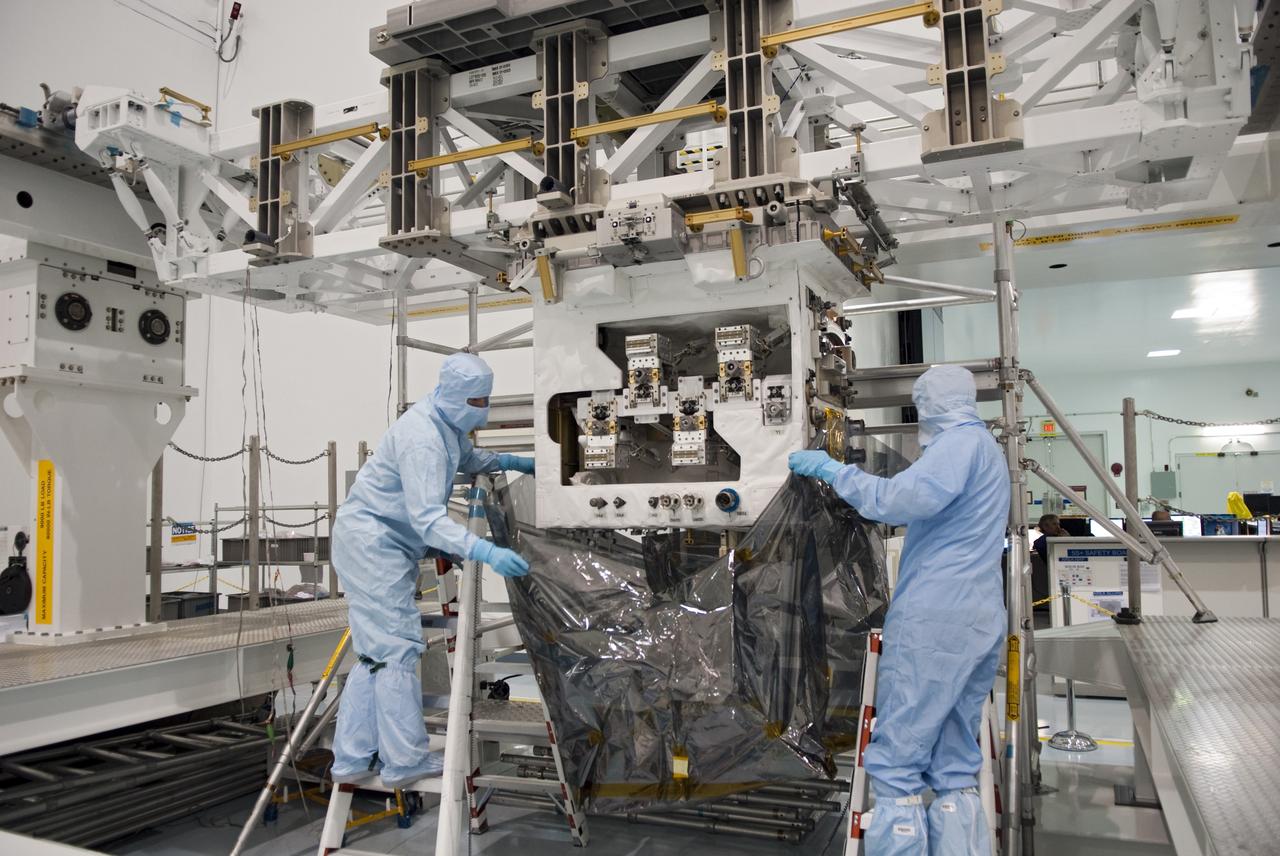
CAPE CANAVERAL, Fla. -- In the Space Station Processing Facility at NASA's Kennedy Space Center in Florida, technicians install a protective cover around the Robotic Refueling Mission (RRM) before its move into a payload canister. The RRM is being processed to fly aboard space shuttle Atlantis on the STS-135 mission to the International Space Station. Commander Chris Ferguson, Pilot Doug Hurley and Mission Specialists Sandra Magnus and Rex Walheim are targeted to launch in early July, taking with them the Raffaello multi-purpose logistics module packed with supplies, logistics and spare parts. The STS-135 mission also will fly a system to investigate the potential for robotically refueling existing spacecraft and return a failed ammonia pump module to help NASA better understand the failure mechanism and improve pump designs for future systems. STS-135 will be the 33rd flight of Atlantis, the 37th shuttle mission to the space station, and the 135th and final mission of NASA's Space Shuttle Program. For more information, visit www.nasa.gov/mission_pages/shuttle/shuttlemissions/sts135/index.html. Photo credit: NASA/Jim Grossmann
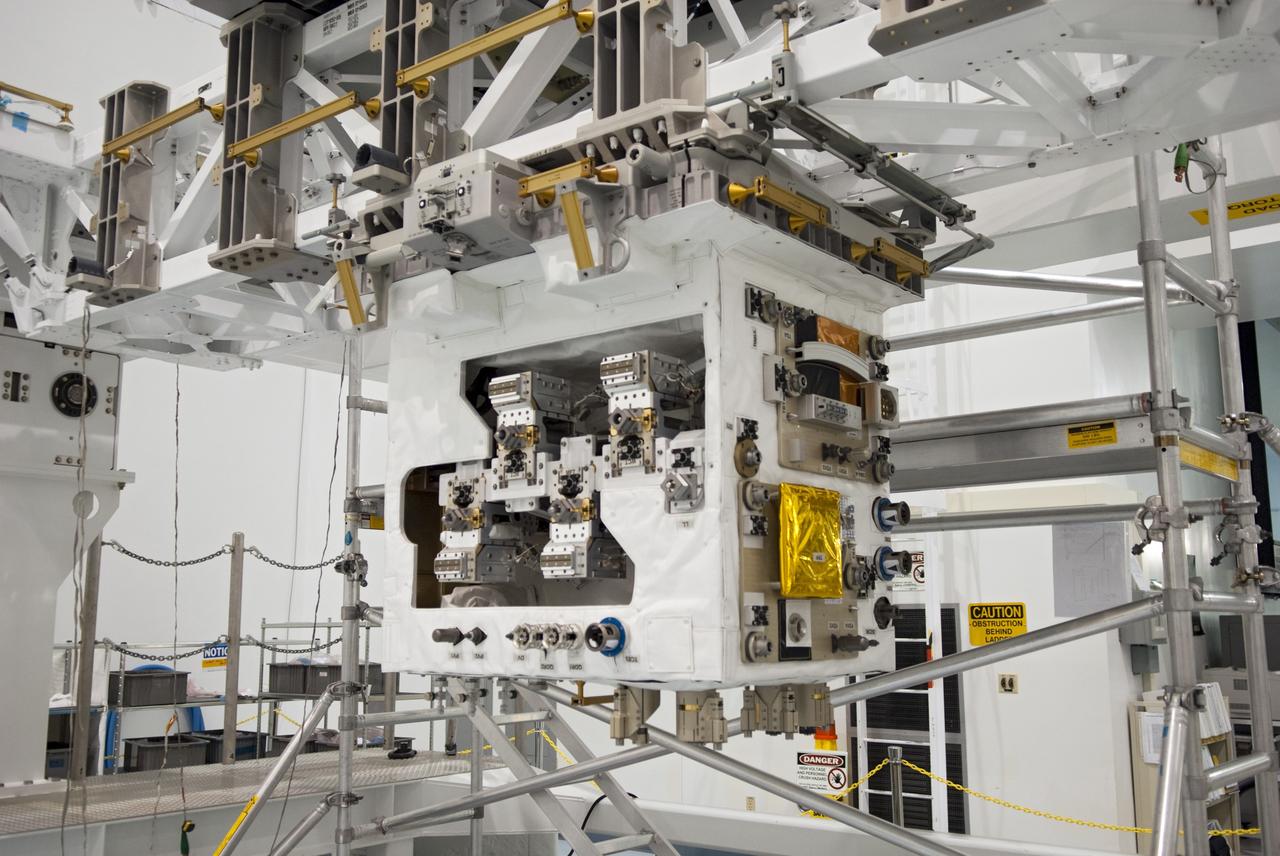
CAPE CANAVERAL, Fla. -- In the Space Station Processing Facility at NASA's Kennedy Space Center in Florida, the Robotic Refueling Mission (RRM) is installed on the Lightweight Multi- Purpose Experiment Support Structure Carrier, or LMC . Technicians are preparing it for its protective cover installation prior to its move into a payload canister. The RRM is being processed to fly aboard space shuttle Atlantis on the STS-135 mission to the International Space Station. Commander Chris Ferguson, Pilot Doug Hurley and Mission Specialists Sandra Magnus and Rex Walheim are targeted to launch in early July, taking with them the Raffaello multi-purpose logistics module packed with supplies, logistics and spare parts. The STS-135 mission also will fly a system to investigate the potential for robotically refueling existing spacecraft and return a failed ammonia pump module to help NASA better understand the failure mechanism and improve pump designs for future systems. STS-135 will be the 33rd flight of Atlantis, the 37th shuttle mission to the space station, and the 135th and final mission of NASA's Space Shuttle Program. For more information, visit www.nasa.gov/mission_pages/shuttle/shuttlemissions/sts135/index.html. Photo credit: NASA/Jim Grossmann
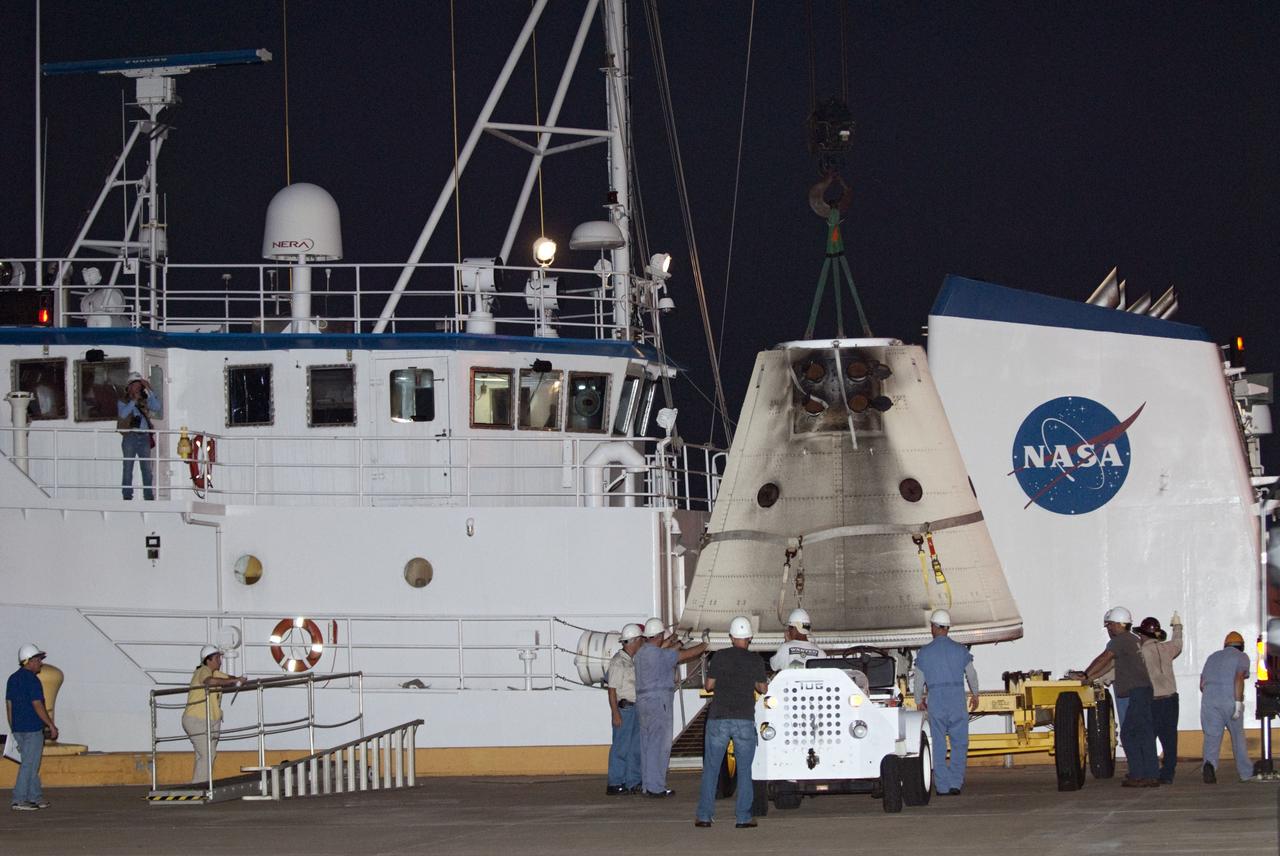
CAPE CANAVERAL, Fla. – At Hangar AF at Cape Canaveral Air Force Station in Florida, a booster retrieval ship delivers a frustum from one of space shuttle Atlantis' spent solid rocket boosters, beginning the safing process. The shuttle's two solid rocket booster casings and associated flight hardware are recovered in the Atlantic Ocean after every launch by the booster retrieval ships Freedom Star and Liberty Star. The boosters impact the Atlantic about seven minutes after liftoff and the ships are stationed about 10 miles from the impact area at the time of splashdown. After the spent segments are processed, they will be transported to Utah, where they will be deserviced and stored, if needed. Atlantis began its final flight at 11:29 a.m. EDT on July 8 to deliver the Raffaello multi-purpose logistics module packed with supplies and spare parts for the International Space Station. STS-135 is the 33rd flight of Atlantis, the 37th shuttle mission to the space station, and the 135th and final mission of NASA's Space Shuttle Program. For more information, visit www.nasa.gov/mission_pages/shuttle/shuttlemissions/sts135/index.html. Photo credit: NASA/Kim Shiflett
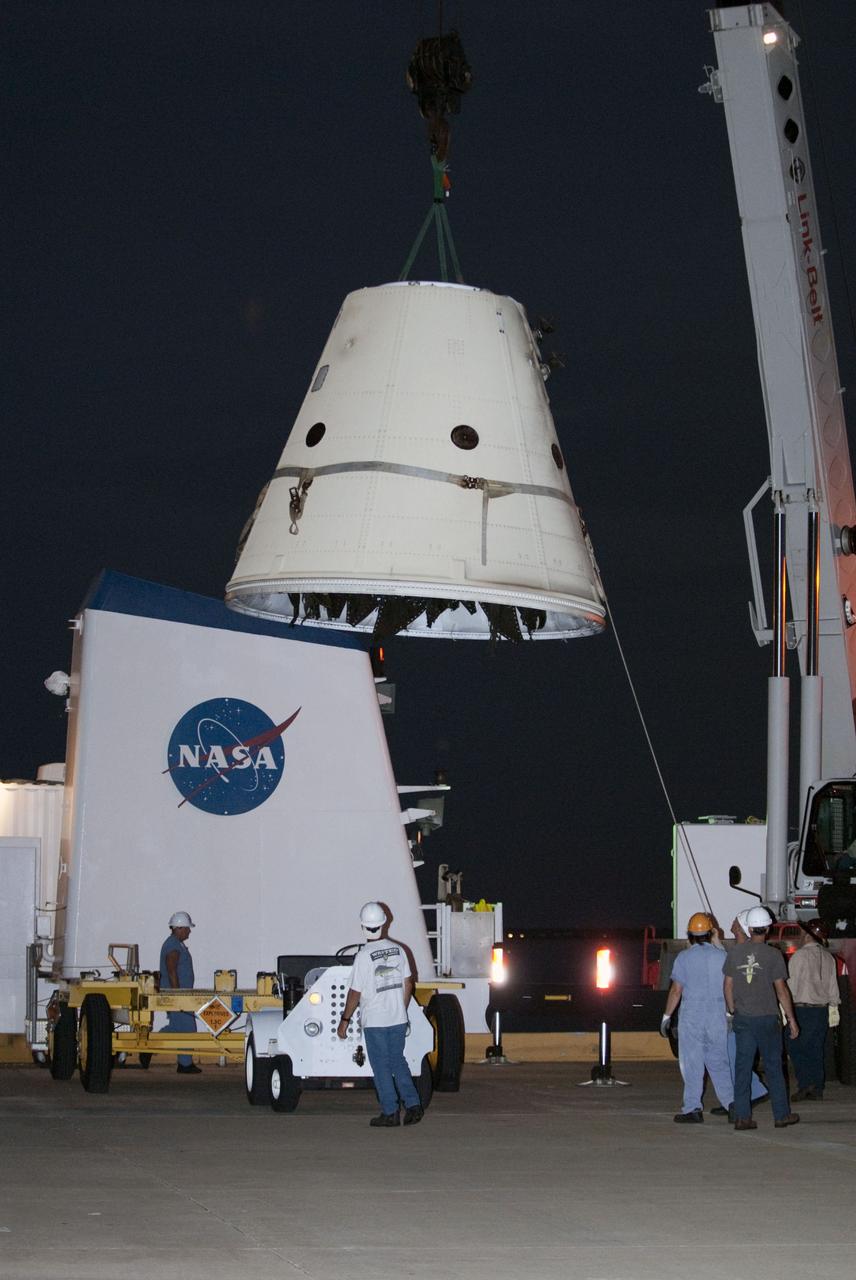
CAPE CANAVERAL, Fla. – A frustum from one of space shuttle Atlantis' two spent solid rocket boosters is lowered toward the dock at Hangar AF at Cape Canaveral Air Force Station in Florida to begin the safing process. The shuttle's two solid rocket booster casings and associated flight hardware are recovered in the Atlantic Ocean after every launch by the booster retrieval ships Freedom Star and Liberty Star. The boosters impact the Atlantic about seven minutes after liftoff and the ships are stationed about 10 miles from the impact area at the time of splashdown. After the spent segments are processed, they will be transported to Utah, where they will be deserviced and stored, if needed. Atlantis began its final flight at 11:29 a.m. EDT on July 8 to deliver the Raffaello multi-purpose logistics module packed with supplies and spare parts for the International Space Station. STS-135 is the 33rd flight of Atlantis, the 37th shuttle mission to the space station, and the 135th and final mission of NASA's Space Shuttle Program. For more information, visit www.nasa.gov/mission_pages/shuttle/shuttlemissions/sts135/index.html. Photo credit: NASA/Kim Shiflett
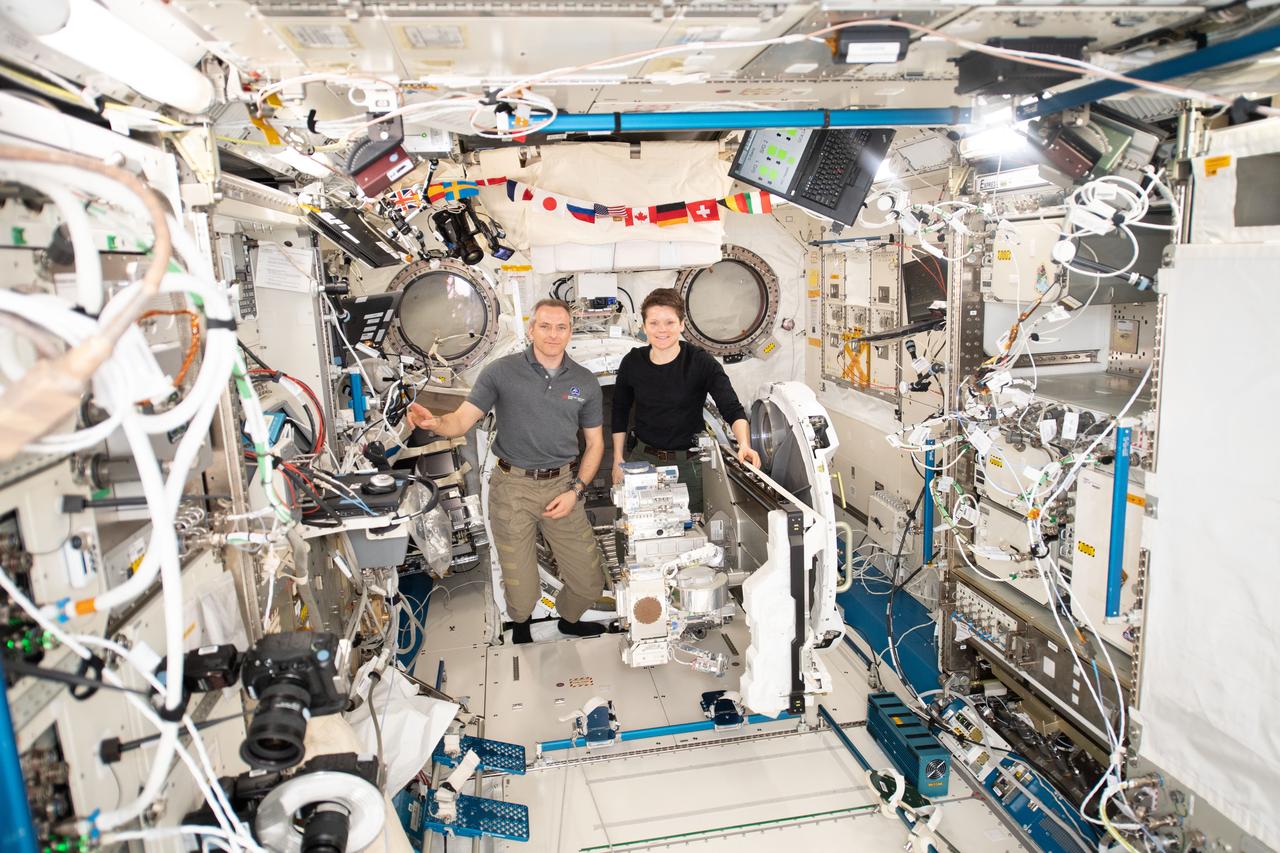
iss058e015664 (2/19/2019) --- NASA astronaut Anne McClain and Canadian Space Agency (CSA) astronaut David Saint-Jacques shown during the installation of the Robotics Refueling Mission (RRM)-3 on the JEM Airlock slide table in the KIBO module aboard the International Space Station (ISS). Robotic Refueling Mission 3 (RRM3) demonstrates the first transfer and long term storage of liquid methane, a cryogenic fluid, in microgravity. The ability to replenish and store cryogenic fluids, which can function as a fuel or coolant, can help enable long duration journeys to destinations like the Moon and Mars.
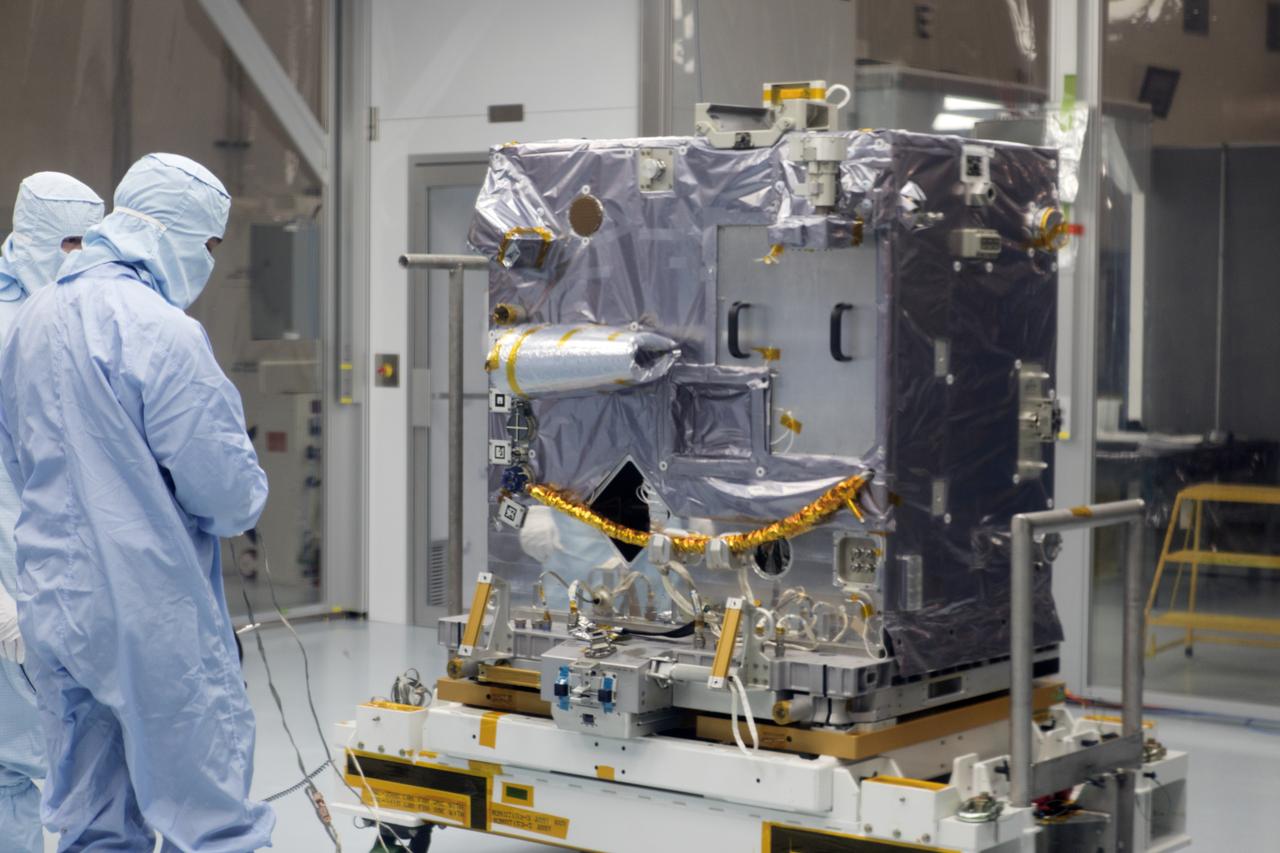
NASA’s Robotic Refueling Mission 3 arrived at Kennedy Space Center’s Space Station Processing Facility on May 8. The mission, which is scheduled to launch to the International Space Station later this year, will advance satellite servicing capabilities that will enable long duration, deep space exploration.
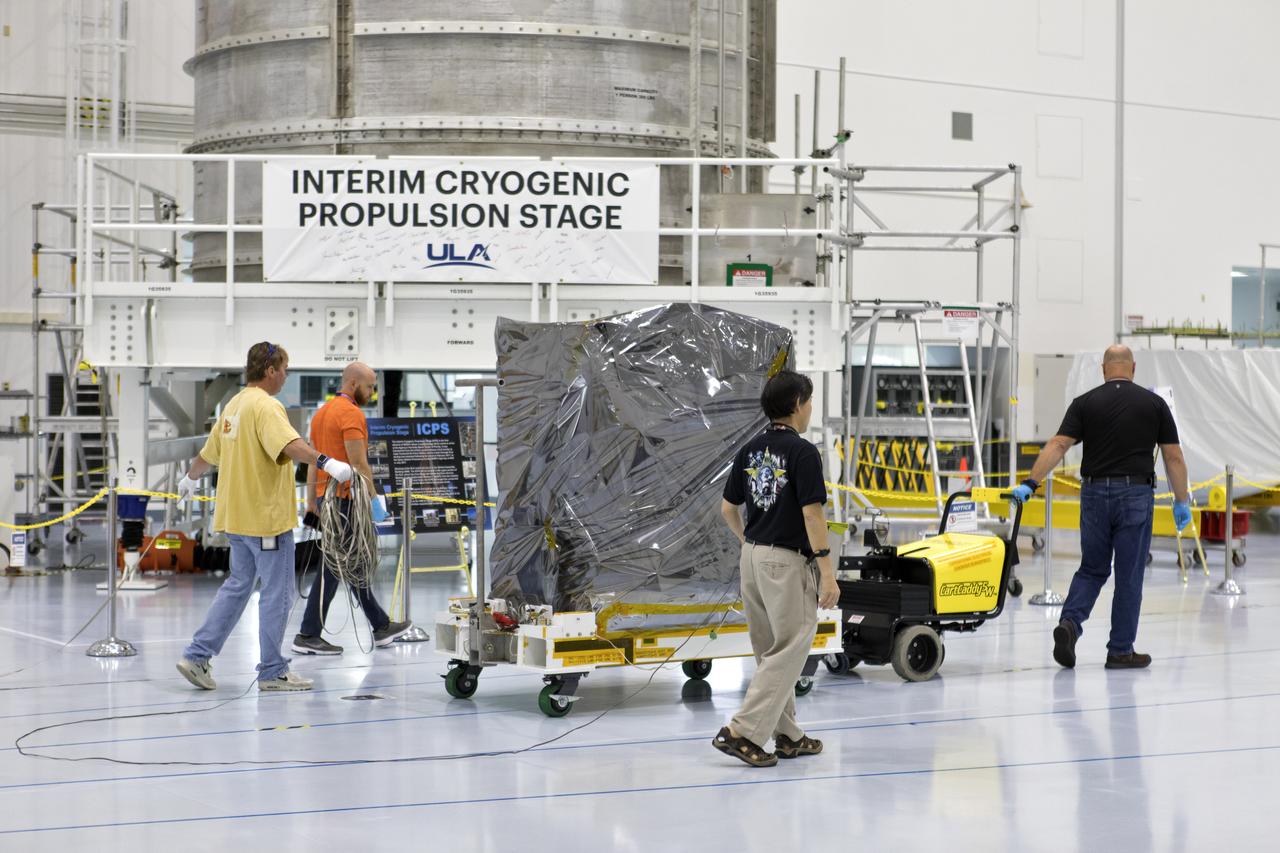
The technology to replenish crucial satellite supplies in space currently does not exist. NASA is looking to help change that with Robotic Refueling Mission 3 (RRM3). The fluid transfer module arrived at Kennedy Space Center on May 8, and is planned to launch to the International Space Station later this year.
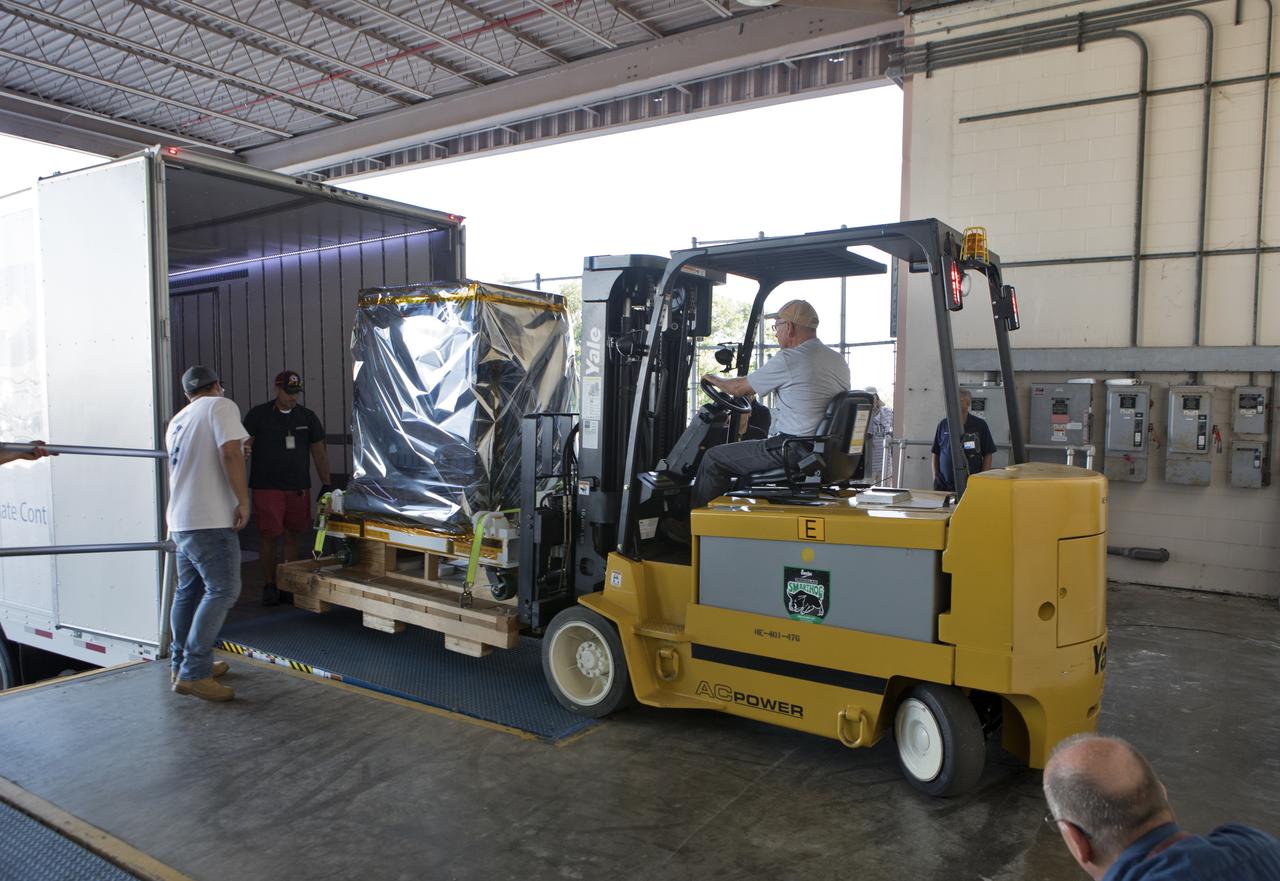
NASA’s Robotic Refueling Mission 3 (RRM3) arrived at Kennedy Space Center’s Space Station Processing Facility on May 8. The fluid transfer module will demonstrate innovative methods to store, transfer and freeze standard cryogenic fluid in space. RRM3 is scheduled to launch to the International Space Station later this year.
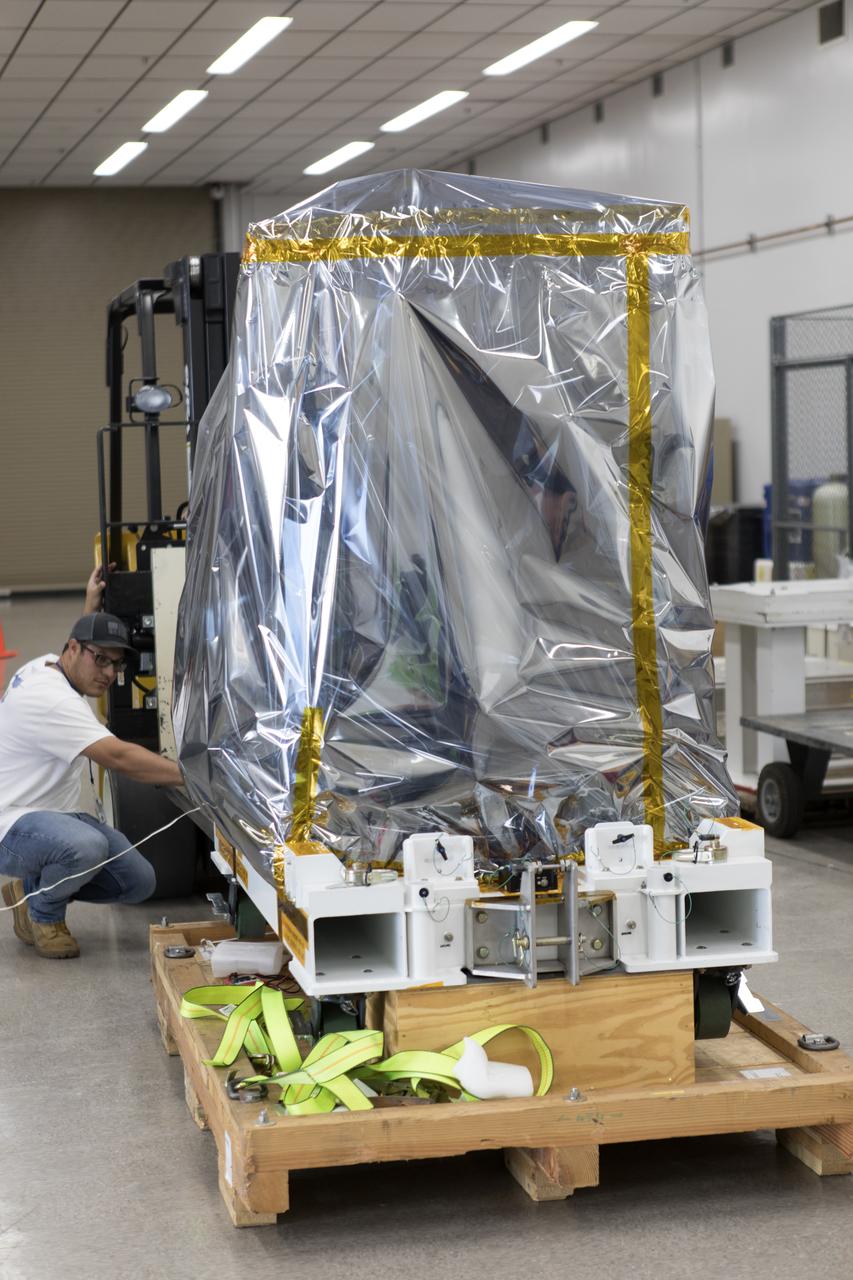
NASA’s Robotic Refueling Mission 3 (RRM3) builds on the first two phases of International Space Station (ISS) technology demonstrations that tested tools, technologies and techniques to refuel and repair satellites in orbit. RRM3, which arrived at Kennedy Space Center’s Space Station Processing Facility on May 8, is planned to launch to the ISS later this year.
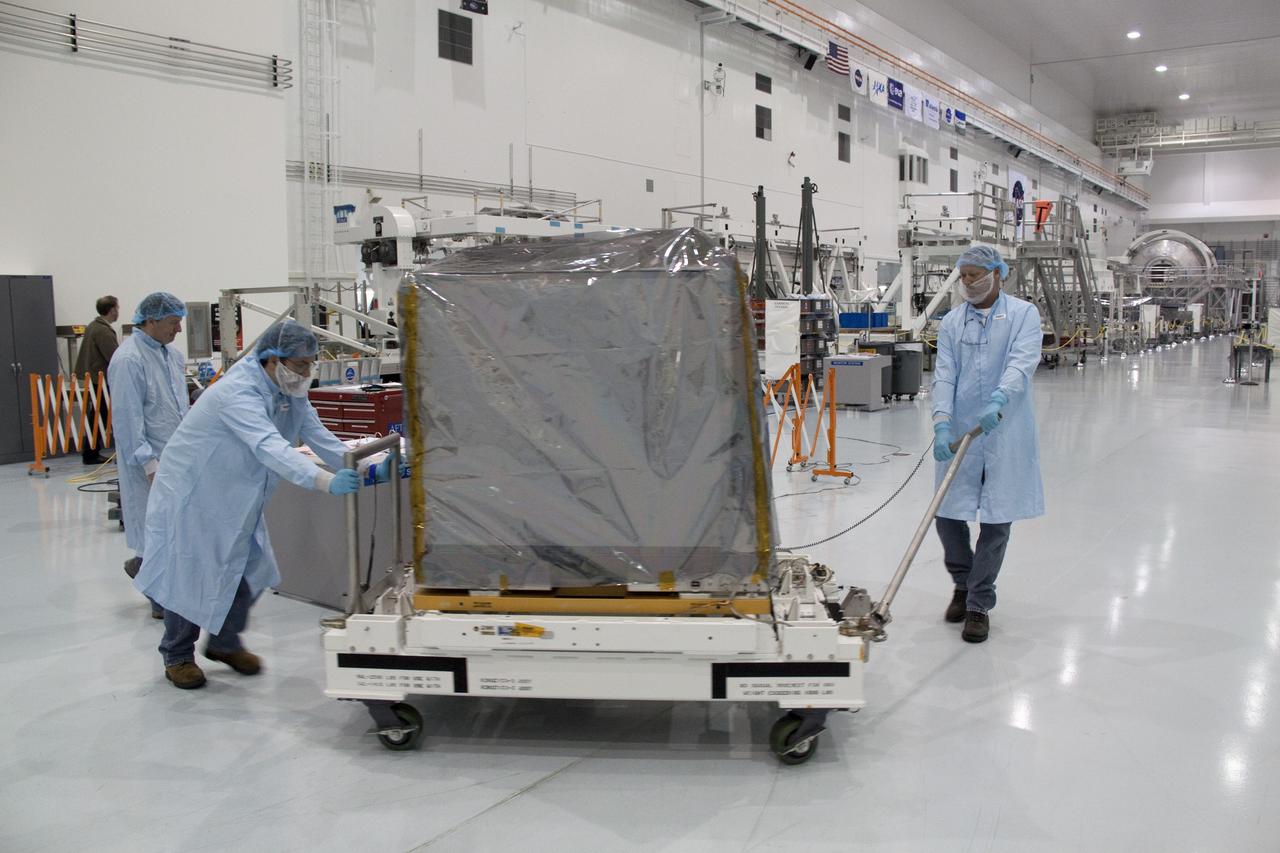
CAPE CANAVERAL, Fla. -- Technicians move a system that will investigate the potential for robotically refueling existing spacecraft in orbit from a processing lab to a high bay in the Space Station Processing Facility at NASA's Kennedy Space Center in Florida. The move prepares the system for its lift into the Lightweight Multi-Purpose Experiment Support Structure Carrier (LMC), which will carry it into orbit. Called the Robotic Refueling Mission (RRM), the system will be processed to fly aboard space shuttle Atlantis on the STS-135 mission to the International Space Station. Also going up will be the Raffaello multipurpose logistics module packed with supplies, logistics and spare parts. The mission also will return a failed ammonia pump module to help NASA better understand the failure mechanism and improve pump designs for future systems. STS-135, targeted to launch June 28, will be the 33rd flight of Atlantis, the 37th shuttle mission to the space station, and the 135th and final mission of NASA's Space Shuttle Program. For more information visit, www.nasa.gov/mission_pages/shuttle/shuttlemissions/sts135/index.html. Photo credit: NASA/Jack Pfaller
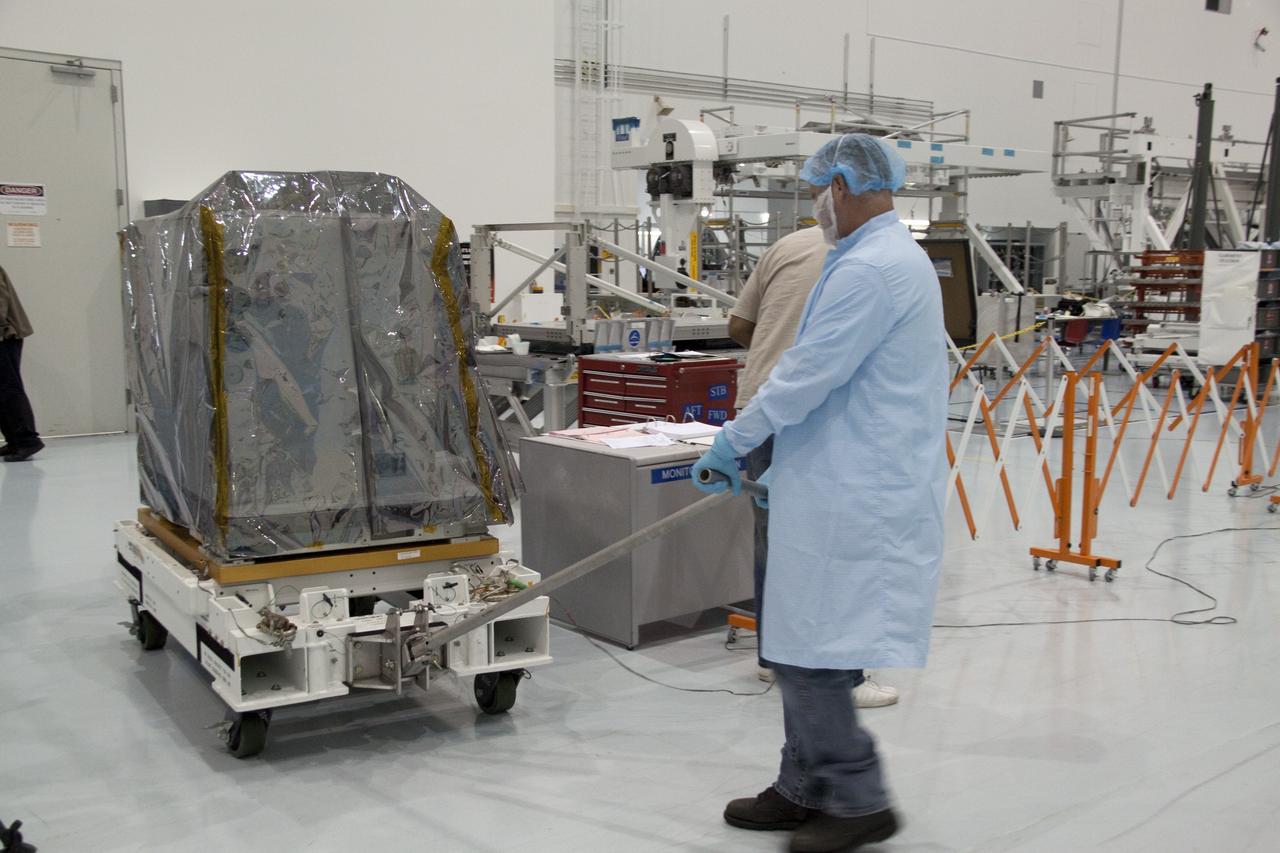
CAPE CANAVERAL, Fla. -- Technicians move a system that will investigate the potential for robotically refueling existing spacecraft in orbit from a processing lab to a high bay in the Space Station Processing Facility at NASA's Kennedy Space Center in Florida. The move prepares the system for its lift into the Lightweight Multi-Purpose Experiment Support Structure Carrier (LMC), which will carry it into orbit. Called the Robotic Refueling Mission (RRM), the system will be processed to fly aboard space shuttle Atlantis on the STS-135 mission to the International Space Station. Also going up will be the Raffaello multipurpose logistics module packed with supplies, logistics and spare parts. The mission also will return a failed ammonia pump module to help NASA better understand the failure mechanism and improve pump designs for future systems. STS-135, targeted to launch June 28, will be the 33rd flight of Atlantis, the 37th shuttle mission to the space station, and the 135th and final mission of NASA's Space Shuttle Program. For more information visit, www.nasa.gov/mission_pages/shuttle/shuttlemissions/sts135/index.html. Photo credit: NASA/Jack Pfaller
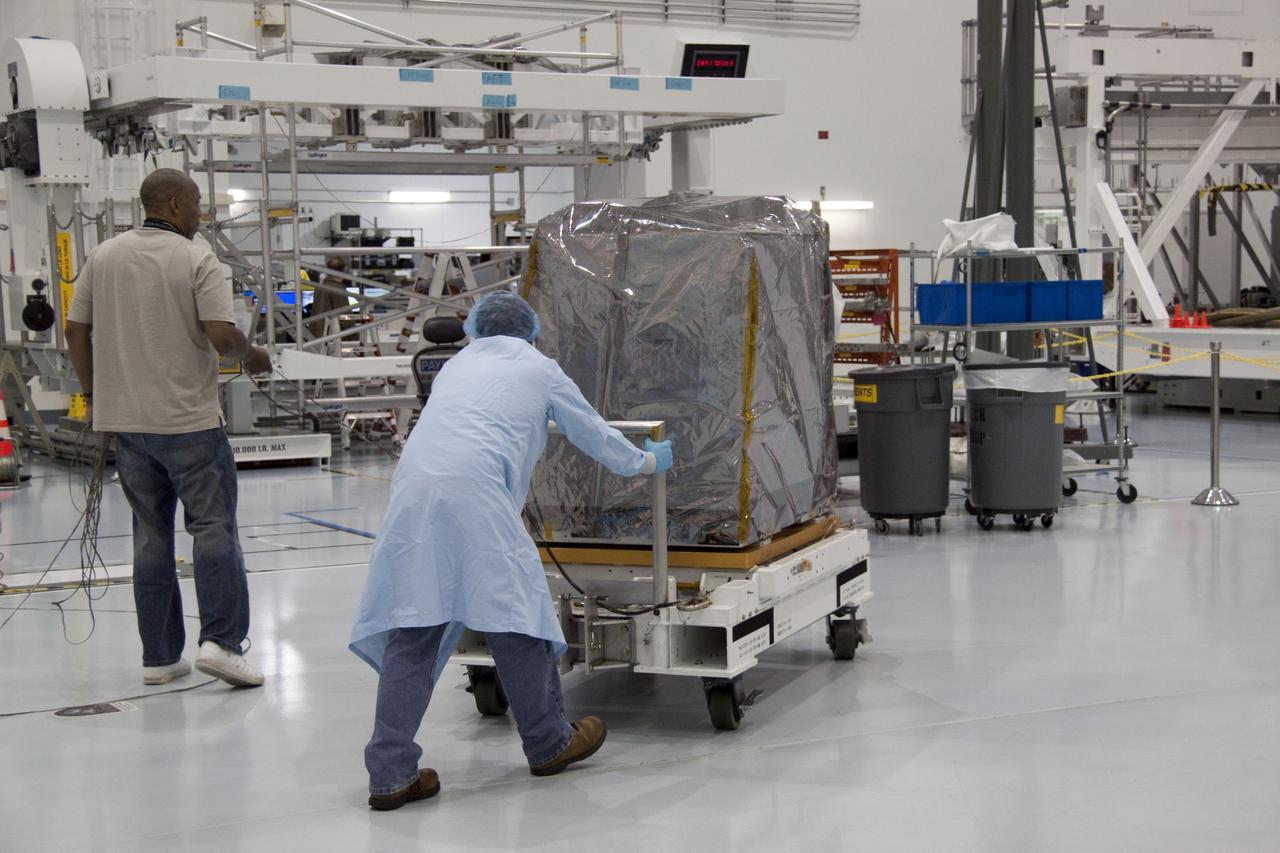
CAPE CANAVERAL, Fla. -- Technicians move a system that will investigate the potential for robotically refueling existing spacecraft in orbit from a processing lab to a high bay in the Space Station Processing Facility at NASA's Kennedy Space Center in Florida. The move prepares the system for its lift into the Lightweight Multi-Purpose Experiment Support Structure Carrier (LMC), which will carry it into orbit. Called the Robotic Refueling Mission (RRM), the system will be processed to fly aboard space shuttle Atlantis on the STS-135 mission to the International Space Station. Also going up will be the Raffaello multipurpose logistics module packed with supplies, logistics and spare parts. The mission also will return a failed ammonia pump module to help NASA better understand the failure mechanism and improve pump designs for future systems. STS-135, targeted to launch June 28, will be the 33rd flight of Atlantis, the 37th shuttle mission to the space station, and the 135th and final mission of NASA's Space Shuttle Program. For more information visit, www.nasa.gov/mission_pages/shuttle/shuttlemissions/sts135/index.html. Photo credit: NASA/Jack Pfaller
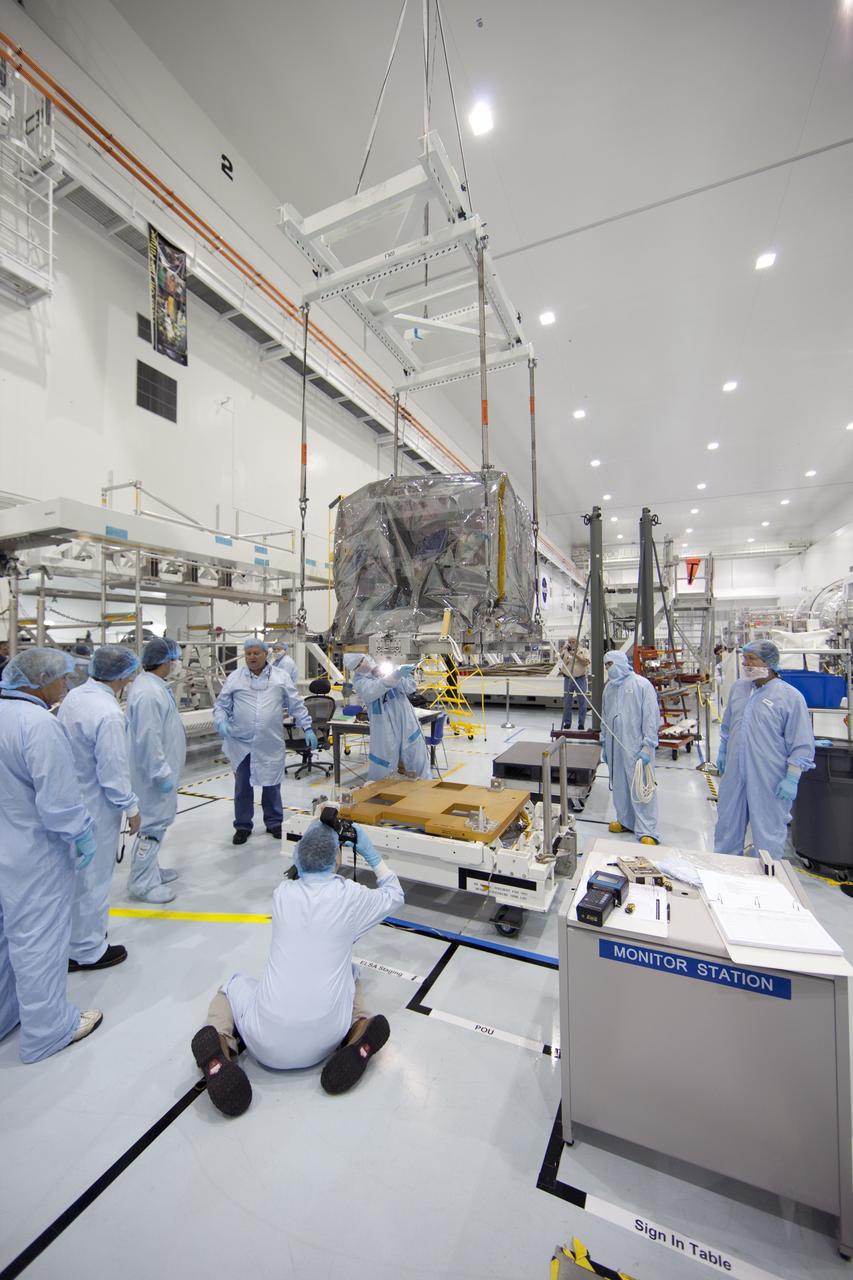
CAPE CANAVERAL, Fla. -- In the Space Station Processing Facility at NASA's Kennedy Space Center in Florida, technicians move a system that will investigate the potential for robotically refueling existing spacecraft in orbit into the Lightweight Multi-Purpose Experiment Support Structure Carrier (LMC). Called the Robotic Refueling Mission (RRM), the system is being processed to fly aboard space shuttle Atlantis in the LMC on the STS-135 mission to the International Space Station. Also going up will be the Raffaello multipurpose logistics module packed with supplies, logistics and spare parts. The mission also will return a failed ammonia pump module to help NASA better understand the failure mechanism and improve pump designs for future systems. STS-135, targeted to launch June 28, will be the 33rd flight of Atlantis, the 37th shuttle mission to the space station, and the 135th and final mission of NASA's Space Shuttle Program. For more information visit, www.nasa.gov/mission_pages/shuttle/shuttlemissions/sts135/index.html. Photo credit: NASA/Ben Smegelsky
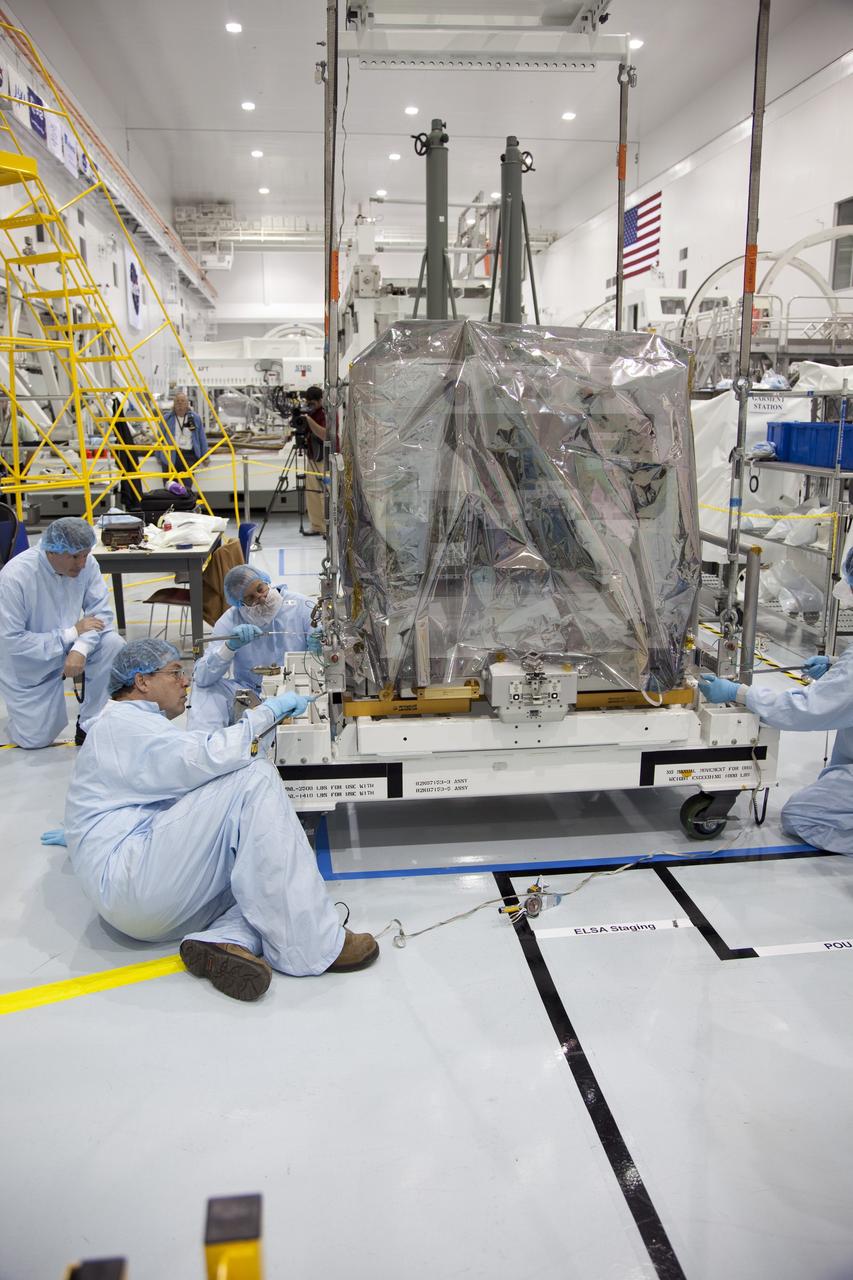
CAPE CANAVERAL, Fla. -- In the Space Station Processing Facility at NASA's Kennedy Space Center in Florida, technicians prepare to move a system that will investigate the potential for robotically refueling existing spacecraft in orbit into the Lightweight Multi-Purpose Experiment Support Structure Carrier (LMC). Called the Robotic Refueling Mission (RRM), the system is being processed to fly aboard space shuttle Atlantis in the LMC on the STS-135 mission to the International Space Station. Also going up will be the Raffaello multipurpose logistics module packed with supplies, logistics and spare parts. The mission also will return a failed ammonia pump module to help NASA better understand the failure mechanism and improve pump designs for future systems. STS-135, targeted to launch June 28, will be the 33rd flight of Atlantis, the 37th shuttle mission to the space station, and the 135th and final mission of NASA's Space Shuttle Program. For more information visit, www.nasa.gov/mission_pages/shuttle/shuttlemissions/sts135/index.html. Photo credit: NASA/Ben Smegelsky

CAPE CANAVERAL, Fla. -- Technicians move a system that will investigate the potential for robotically refueling existing spacecraft in orbit from a processing lab to a high bay in the Space Station Processing Facility at NASA's Kennedy Space Center in Florida. The move prepares the system for its lift into the Lightweight Multi-Purpose Experiment Support Structure Carrier (LMC), which will carry it into orbit. Called the Robotic Refueling Mission (RRM), the system will be processed to fly aboard space shuttle Atlantis on the STS-135 mission to the International Space Station. Also going up will be the Raffaello multipurpose logistics module packed with supplies, logistics and spare parts. The mission also will return a failed ammonia pump module to help NASA better understand the failure mechanism and improve pump designs for future systems. STS-135, targeted to launch June 28, will be the 33rd flight of Atlantis, the 37th shuttle mission to the space station, and the 135th and final mission of NASA's Space Shuttle Program. For more information visit, www.nasa.gov/mission_pages/shuttle/shuttlemissions/sts135/index.html. Photo credit: NASA/Jack Pfaller
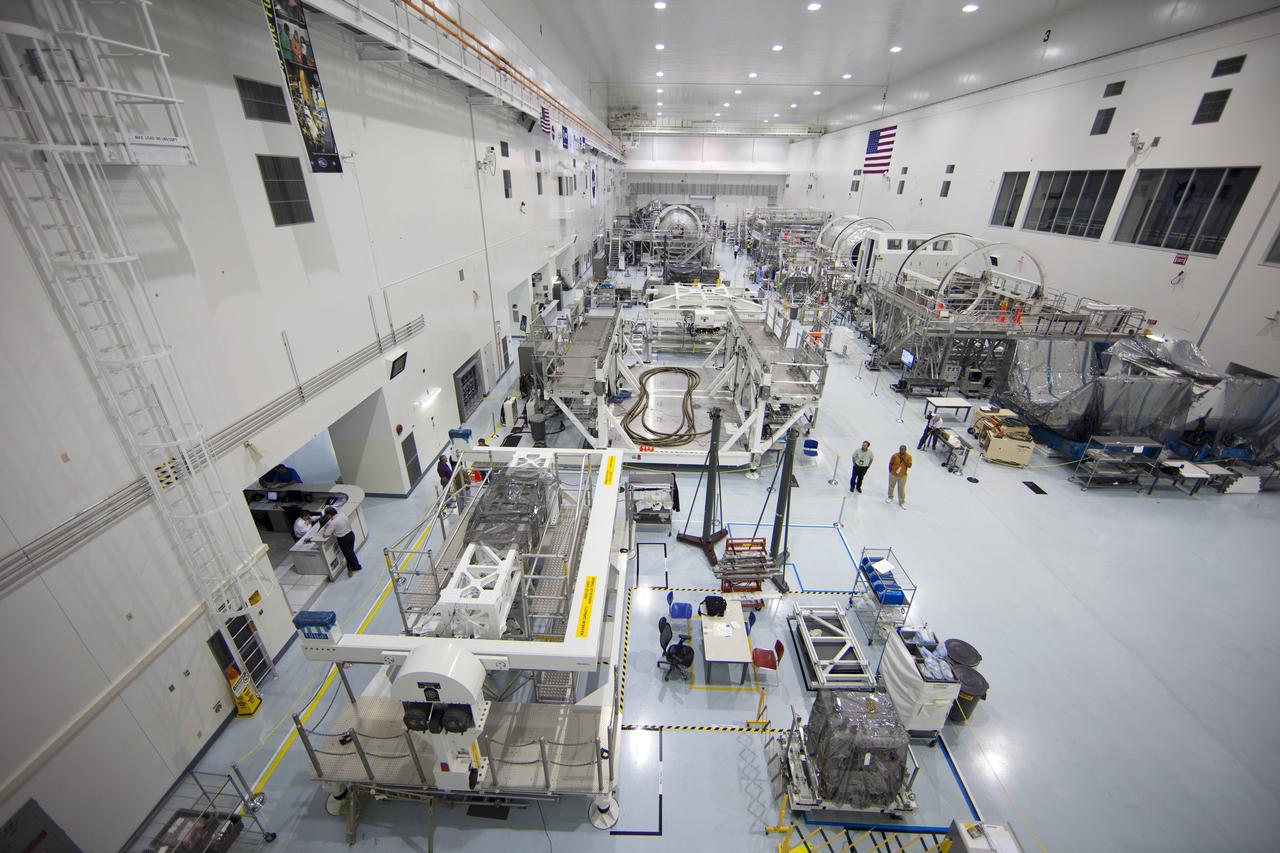
CAPE CANAVERAL, Fla. -- In the Space Station Processing Facility at NASA's Kennedy Space Center in Florida, a system that will investigate the potential for robotically refueling existing spacecraft in orbit will be moved into the Lightweight Multi-Purpose Experiment Support Structure Carrier (LMC). Called the Robotic Refueling Mission (RRM), the system is being processed to fly aboard space shuttle Atlantis in the LMC on the STS-135 mission to the International Space Station. Also going up will be the Raffaello multipurpose logistics module packed with supplies, logistics and spare parts. The mission also will return a failed ammonia pump module to help NASA better understand the failure mechanism and improve pump designs for future systems. STS-135, targeted to launch June 28, will be the 33rd flight of Atlantis, the 37th shuttle mission to the space station, and the 135th and final mission of NASA's Space Shuttle Program. For more information visit, www.nasa.gov/mission_pages/shuttle/shuttlemissions/sts135/index.html. Photo credit: NASA/Ben Smegelsky
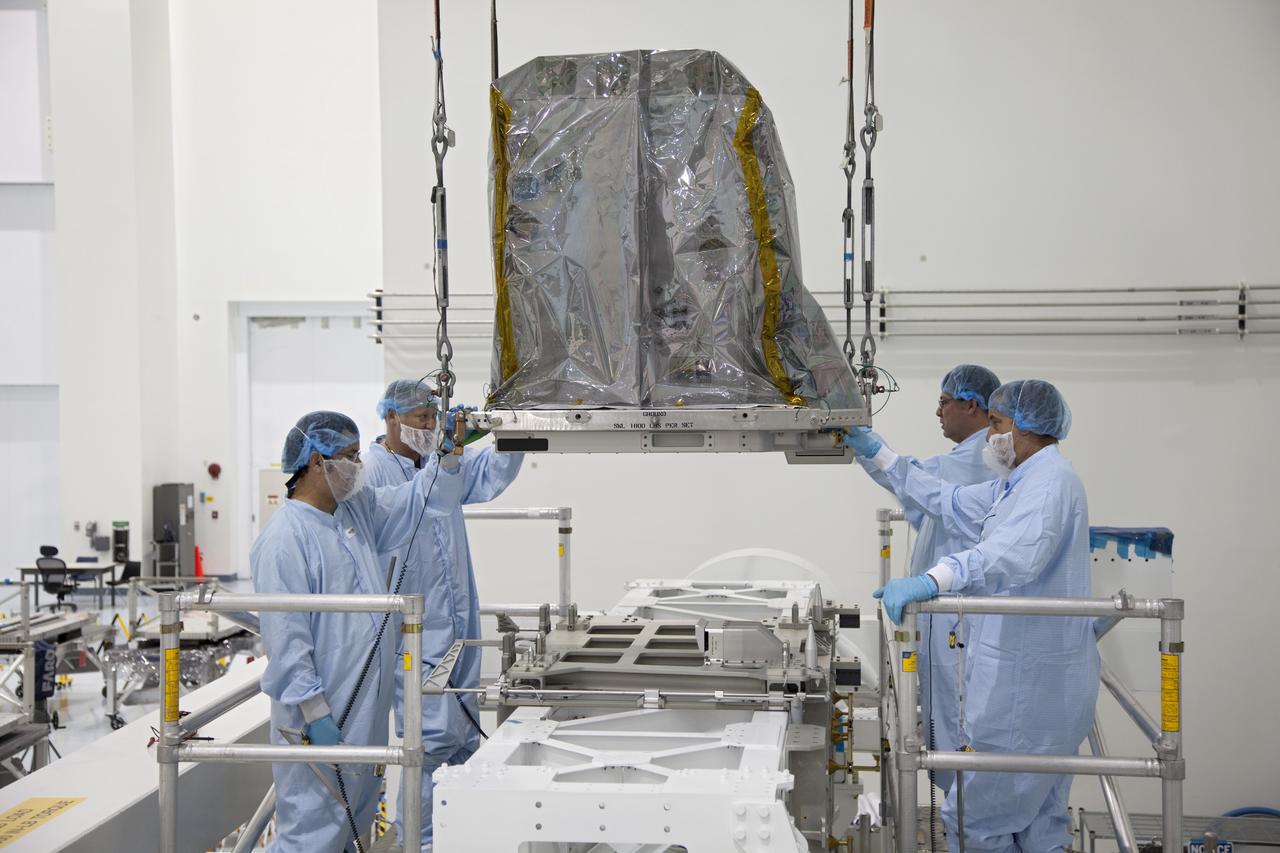
CAPE CANAVERAL, Fla. -- In the Space Station Processing Facility at NASA's Kennedy Space Center in Florida, technicians move a system that will investigate the potential for robotically refueling existing spacecraft in orbit into the Lightweight Multi-Purpose Experiment Support Structure Carrier (LMC). Called the Robotic Refueling Mission (RRM), the system is being processed to fly aboard space shuttle Atlantis in the LMC on the STS-135 mission to the International Space Station. Also going up will be the Raffaello multipurpose logistics module packed with supplies, logistics and spare parts. The mission also will return a failed ammonia pump module to help NASA better understand the failure mechanism and improve pump designs for future systems. STS-135, targeted to launch June 28, will be the 33rd flight of Atlantis, the 37th shuttle mission to the space station, and the 135th and final mission of NASA's Space Shuttle Program. For more information visit, www.nasa.gov/mission_pages/shuttle/shuttlemissions/sts135/index.html. Photo credit: NASA/Ben Smegelsky
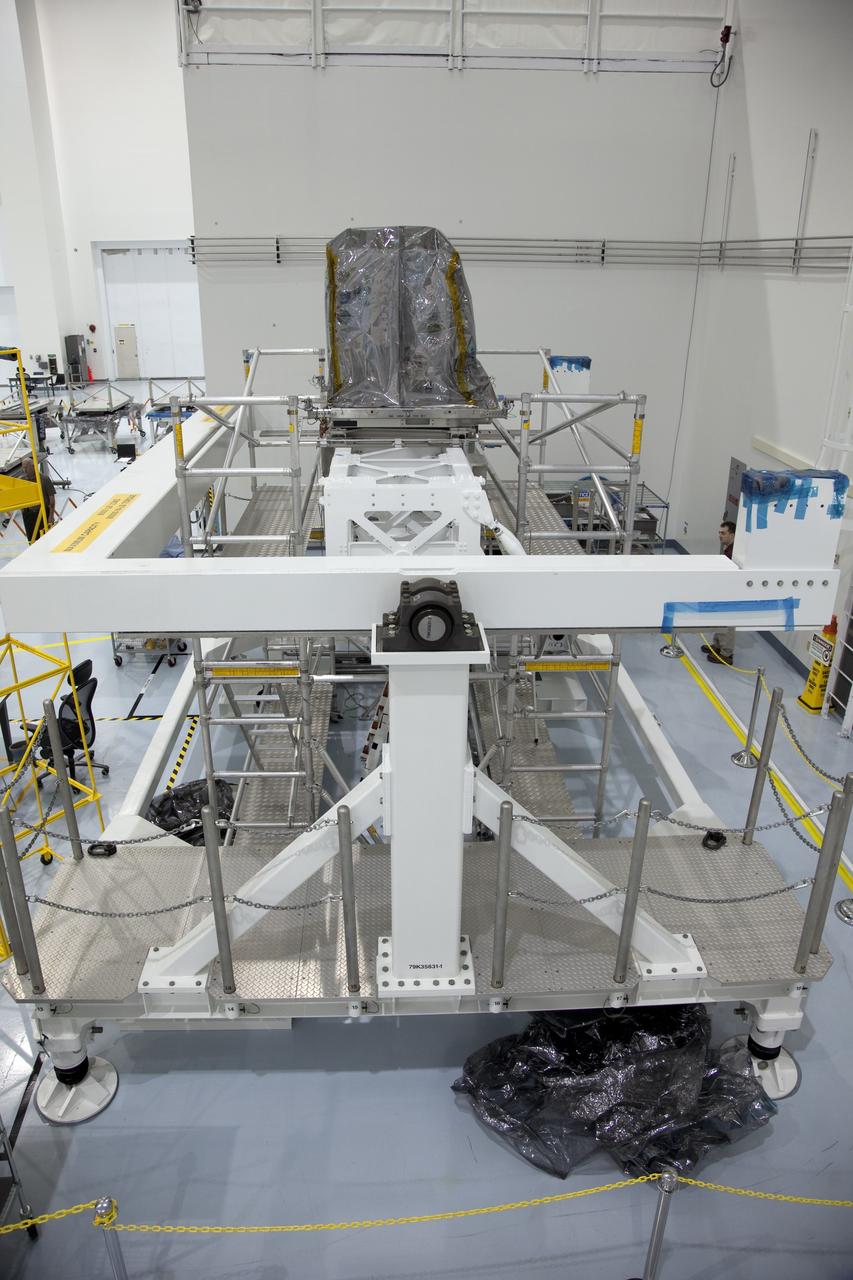
CAPE CANAVERAL, Fla. -- In the Space Station Processing Facility at NASA's Kennedy Space Center in Florida, a system that will investigate the potential for robotically refueling existing spacecraft in orbit is installed in the Lightweight Multi-Purpose Experiment Support Structure Carrier (LMC). Called the Robotic Refueling Mission (RRM), the system is being processed to fly aboard space shuttle Atlantis in the LMC on the STS-135 mission to the International Space Station. Also going up will be the Raffaello multipurpose logistics module packed with supplies, logistics and spare parts. The mission also will return a failed ammonia pump module to help NASA better understand the failure mechanism and improve pump designs for future systems. STS-135, targeted to launch June 28, will be the 33rd flight of Atlantis, the 37th shuttle mission to the space station, and the 135th and final mission of NASA's Space Shuttle Program. For more information visit, www.nasa.gov/mission_pages/shuttle/shuttlemissions/sts135/index.html. Photo credit: NASA/Ben Smegelsky

CAPE CANAVERAL, Fla. -- In the Space Station Processing Facility at NASA's Kennedy Space Center in Florida, technicians install a system that will investigate the potential for robotically refueling existing spacecraft in orbit in the Lightweight Multi-Purpose Experiment Support Structure Carrier (LMC). Called the Robotic Refueling Mission (RRM), the system is being processed to fly aboard space shuttle Atlantis in the LMC on the STS-135 mission to the International Space Station. Also going up will be the Raffaello multipurpose logistics module packed with supplies, logistics and spare parts. The mission also will return a failed ammonia pump module to help NASA better understand the failure mechanism and improve pump designs for future systems. STS-135, targeted to launch June 28, will be the 33rd flight of Atlantis, the 37th shuttle mission to the space station, and the 135th and final mission of NASA's Space Shuttle Program. For more information visit, www.nasa.gov/mission_pages/shuttle/shuttlemissions/sts135/index.html. Photo credit: NASA/Ben Smegelsky
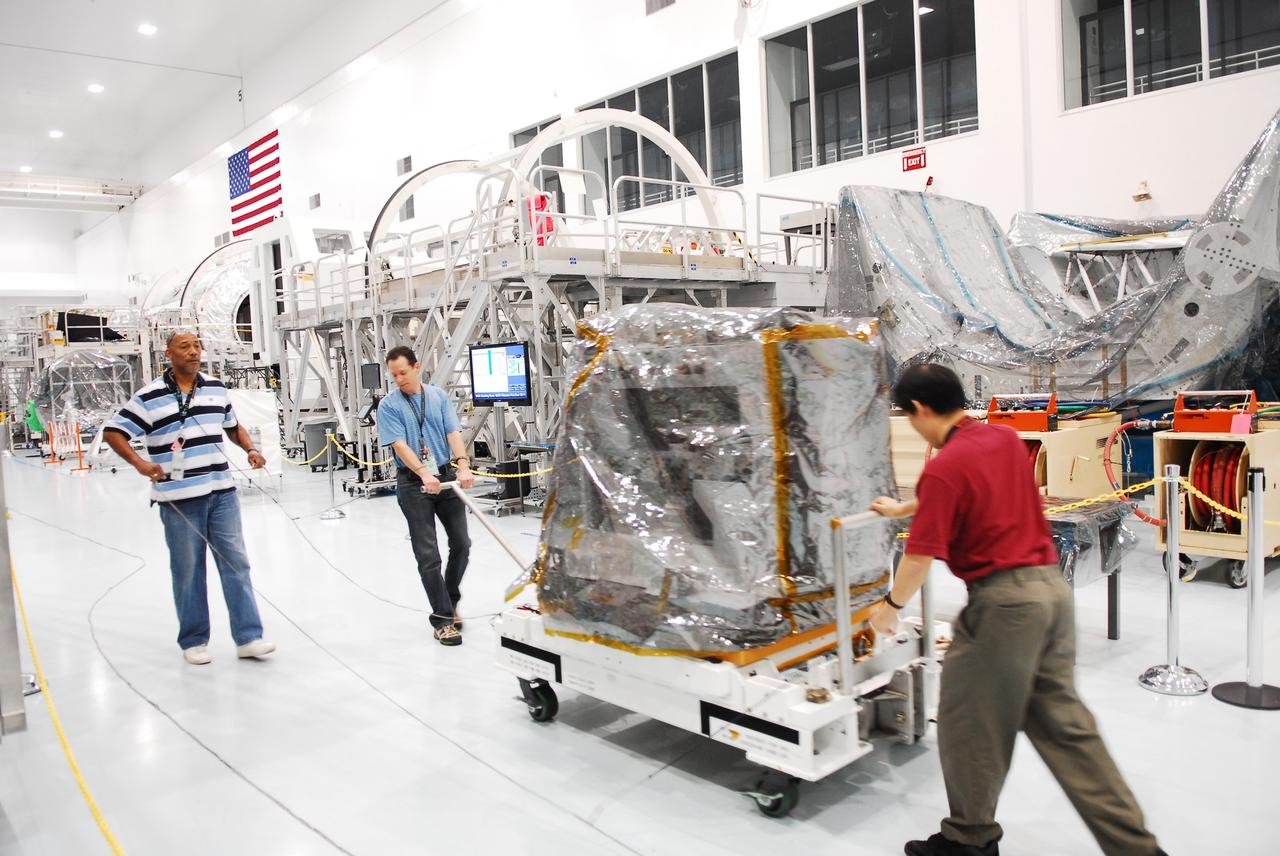
CAPE CANAVERAL, Fla. -- Technicians transport a system that will investigate the potential for robotically refueling existing spacecraft in orbit to a low bay test cell in the Space Station Processing Facility at NASA's Kennedy Space Center in Florida. Called the Robotic Refueling Mission RRM, the system will be processed to fly aboard space shuttle Atlantis on the STS-135 mission to the International Space Station. Atlantis and its STS-135 crew are scheduled to carry the Raffaello multipurpose logistics module packed with supplies, logistics and spare parts to the space station. The mission also will return a failed ammonia pump module to help NASA better understand the failure mechanism and improve pump designs for future systems. STS-135, targeted to launch June 28, will be the 33rd flight of Atlantis, the 37th shuttle mission to the space station, and the 135th and final mission of NASA's Space Shuttle Program. For more information visit, www.nasa.gov/mission_pages/shuttle/shuttlemissions/sts135/index.html. Photo credit: NASA/Jim Grossmann
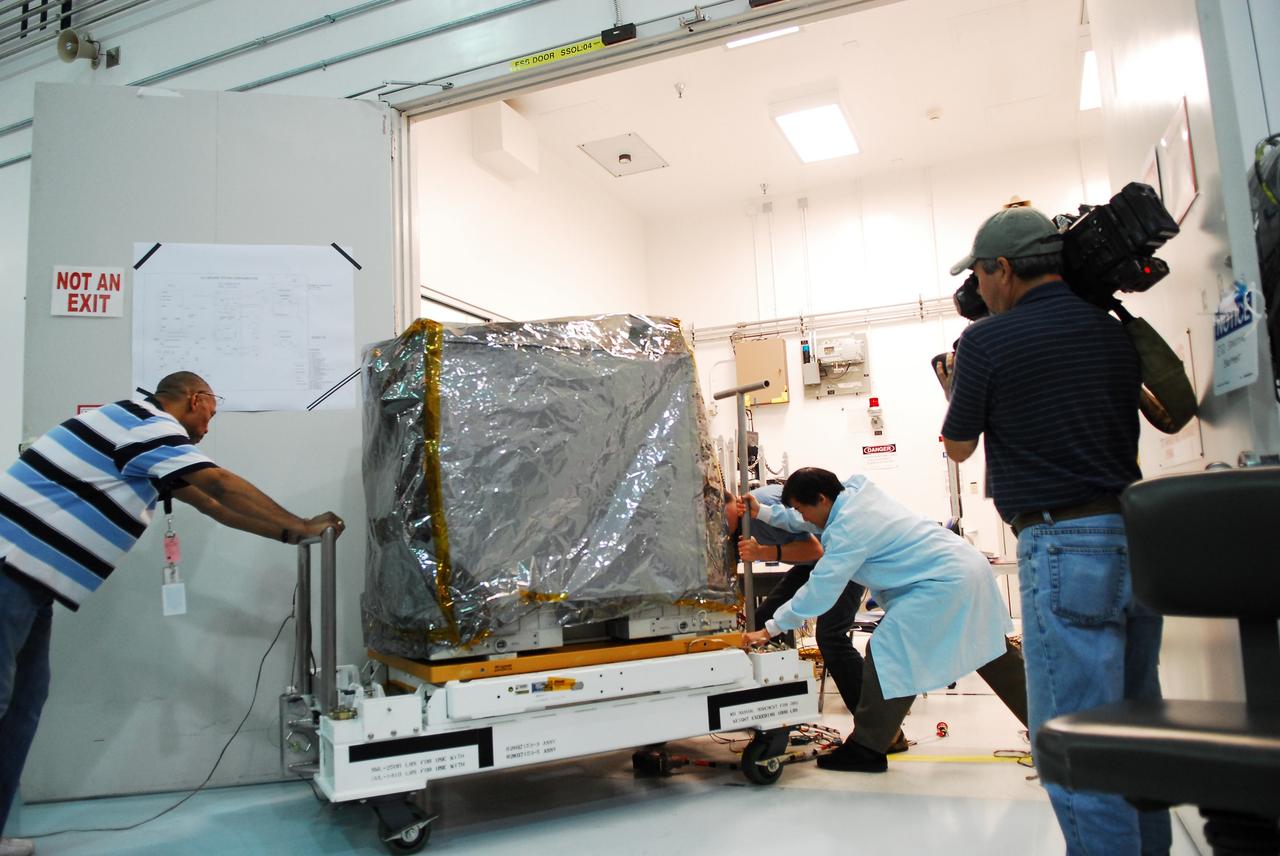
CAPE CANAVERAL, Fla. -- Technicians transport a system that will investigate the potential for robotically refueling existing spacecraft in orbit to a low bay test cell in the Space Station Processing Facility at NASA's Kennedy Space Center in Florida. Called the Robotic Refueling Mission RRM, the system will be processed to fly aboard space shuttle Atlantis on the STS-135 mission to the International Space Station. Atlantis and its STS-135 crew are scheduled to carry the Raffaello multipurpose logistics module packed with supplies, logistics and spare parts to the space station. The mission also will return a failed ammonia pump module to help NASA better understand the failure mechanism and improve pump designs for future systems. STS-135, targeted to launch June 28, will be the 33rd flight of Atlantis, the 37th shuttle mission to the space station, and the 135th and final mission of NASA's Space Shuttle Program. For more information visit, www.nasa.gov/mission_pages/shuttle/shuttlemissions/sts135/index.html. Photo credit: NASA/Jim Grossmann
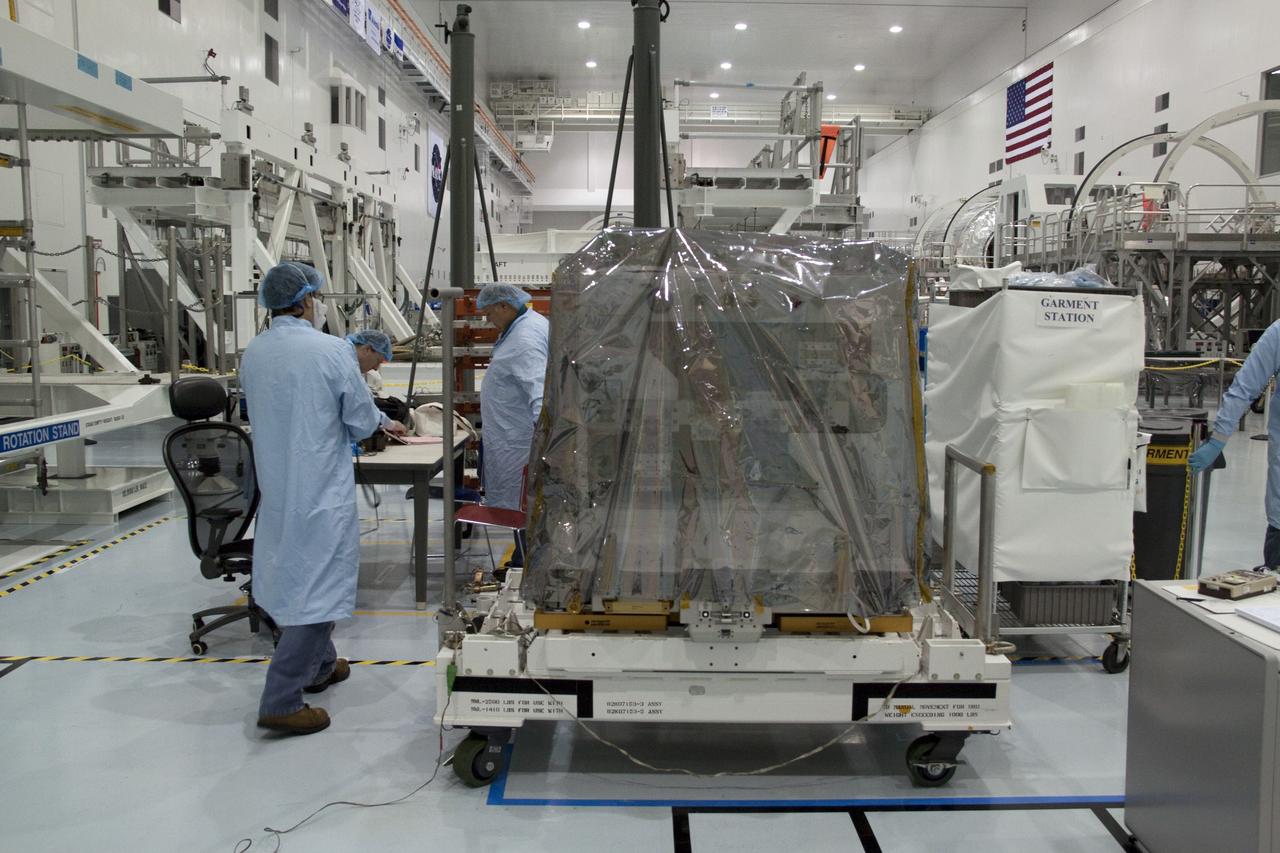
CAPE CANAVERAL, Fla. -- Technicians move a system that will investigate the potential for robotically refueling existing spacecraft in orbit from a processing lab to a high bay in the Space Station Processing Facility at NASA's Kennedy Space Center in Florida. The move prepares the system for its lift into the Lightweight Multi-Purpose Experiment Support Structure Carrier (LMC), which will carry it into orbit. Called the Robotic Refueling Mission (RRM), the system will be processed to fly aboard space shuttle Atlantis on the STS-135 mission to the International Space Station. Also going up will be the Raffaello multipurpose logistics module packed with supplies, logistics and spare parts. The mission also will return a failed ammonia pump module to help NASA better understand the failure mechanism and improve pump designs for future systems. STS-135, targeted to launch June 28, will be the 33rd flight of Atlantis, the 37th shuttle mission to the space station, and the 135th and final mission of NASA's Space Shuttle Program. For more information visit, www.nasa.gov/mission_pages/shuttle/shuttlemissions/sts135/index.html. Photo credit: NASA/Jack Pfaller
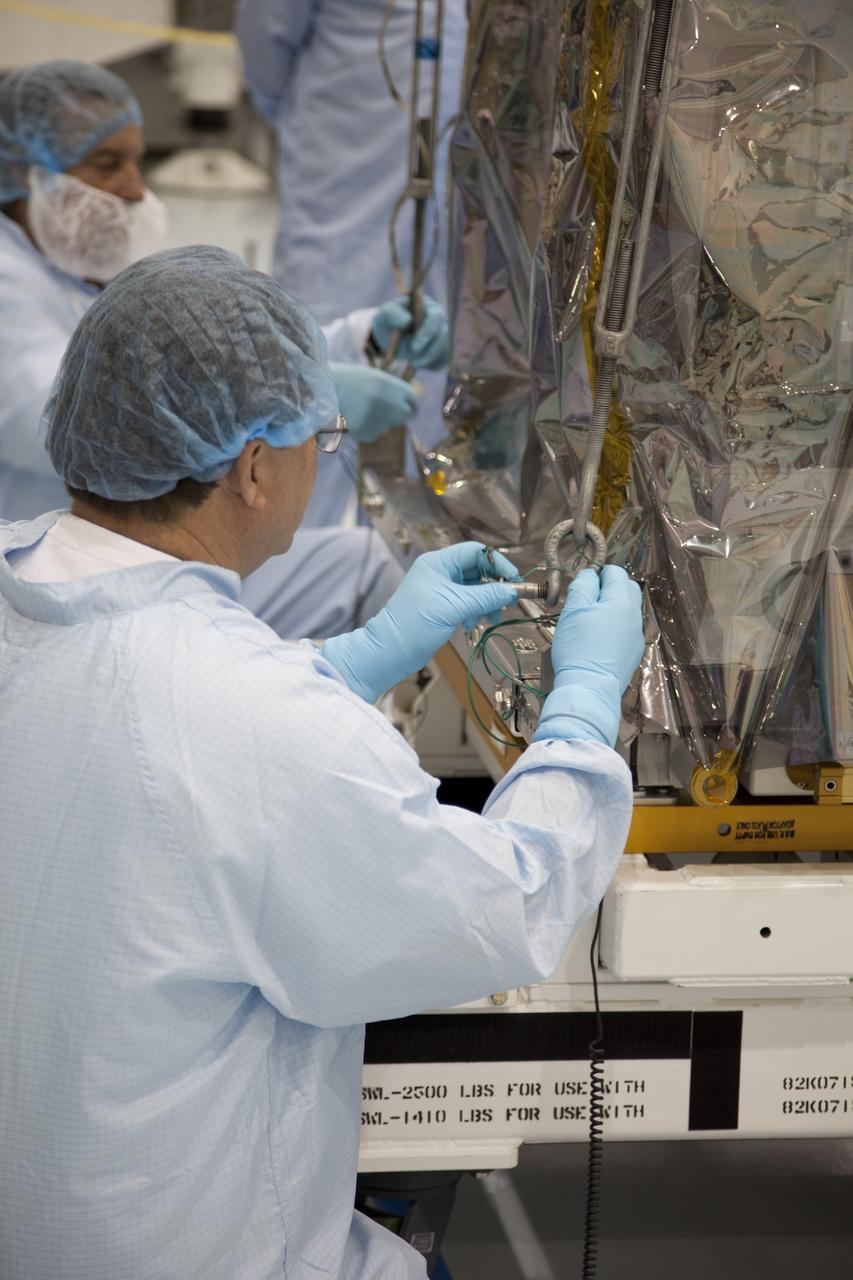
CAPE CANAVERAL, Fla. -- In the Space Station Processing Facility at NASA's Kennedy Space Center in Florida, technicians prepare to move a system that will investigate the potential for robotically refueling existing spacecraft in orbit into the Lightweight Multi-Purpose Experiment Support Structure Carrier (LMC). Called the Robotic Refueling Mission (RRM), the system is being processed to fly aboard space shuttle Atlantis in the LMC on the STS-135 mission to the International Space Station. Also going up will be the Raffaello multipurpose logistics module packed with supplies, logistics and spare parts. The mission also will return a failed ammonia pump module to help NASA better understand the failure mechanism and improve pump designs for future systems. STS-135, targeted to launch June 28, will be the 33rd flight of Atlantis, the 37th shuttle mission to the space station, and the 135th and final mission of NASA's Space Shuttle Program. For more information visit, www.nasa.gov/mission_pages/shuttle/shuttlemissions/sts135/index.html. Photo credit: NASA/Ben Smegelsky
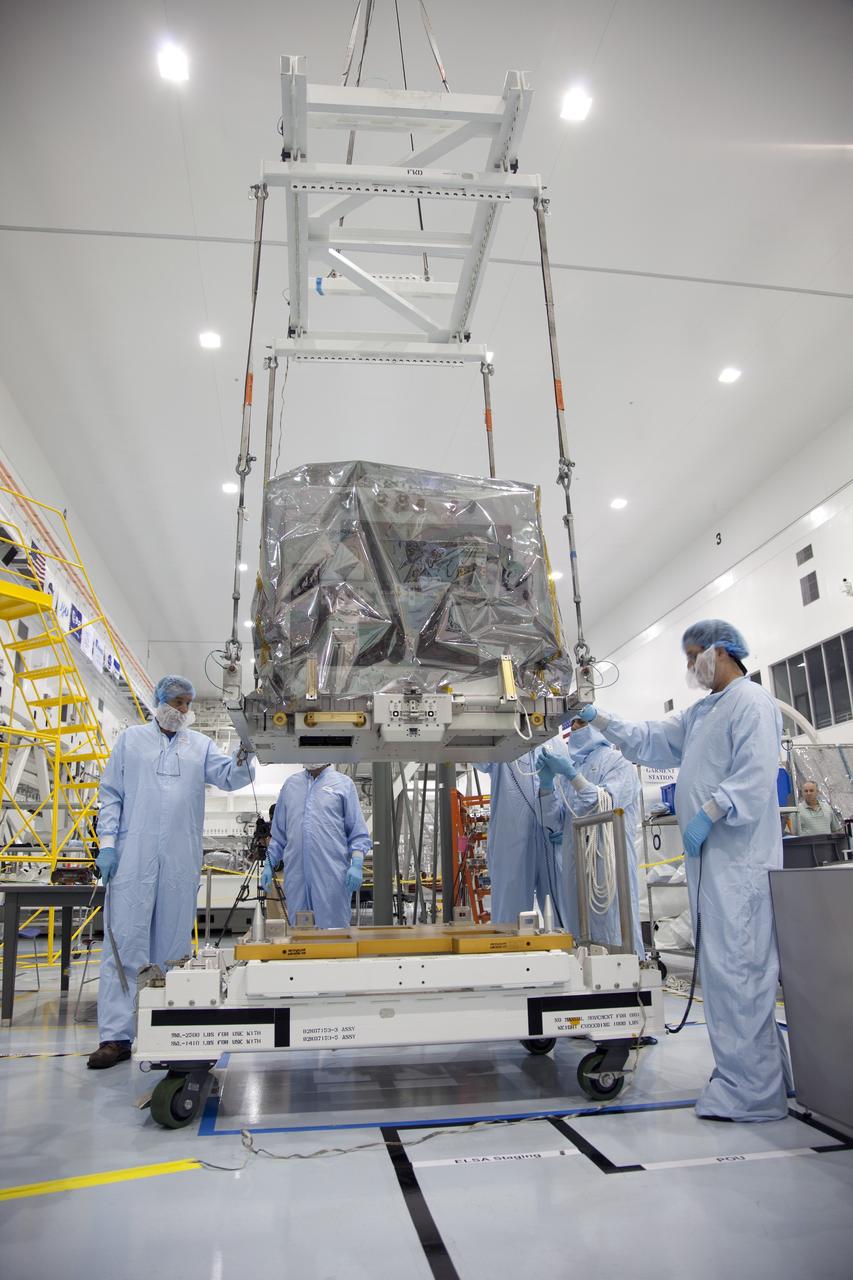
CAPE CANAVERAL, Fla. -- In the Space Station Processing Facility at NASA's Kennedy Space Center in Florida, technicians begin to move a system that will investigate the potential for robotically refueling existing spacecraft in orbit into the Lightweight Multi-Purpose Experiment Support Structure Carrier (LMC). Called the Robotic Refueling Mission (RRM), the system is being processed to fly aboard space shuttle Atlantis in the LMC on the STS-135 mission to the International Space Station. Also going up will be the Raffaello multipurpose logistics module packed with supplies, logistics and spare parts. The mission also will return a failed ammonia pump module to help NASA better understand the failure mechanism and improve pump designs for future systems. STS-135, targeted to launch June 28, will be the 33rd flight of Atlantis, the 37th shuttle mission to the space station, and the 135th and final mission of NASA's Space Shuttle Program. For more information visit, www.nasa.gov/mission_pages/shuttle/shuttlemissions/sts135/index.html. Photo credit: NASA/Ben Smegelsky
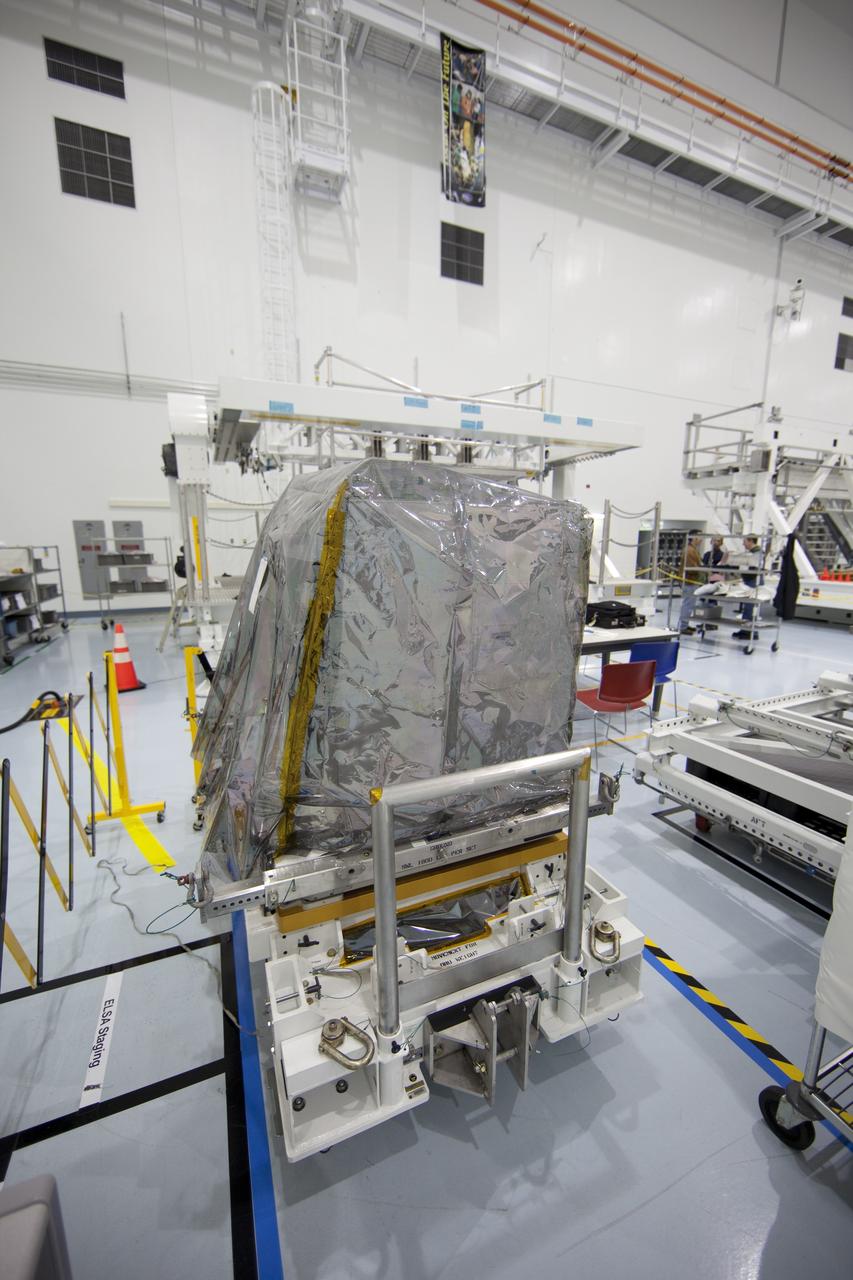
CAPE CANAVERAL, Fla. -- In the Space Station Processing Facility at NASA's Kennedy Space Center in Florida, a system that will investigate the potential for robotically refueling existing spacecraft in orbit will be moved into the Lightweight Multi-Purpose Experiment Support Structure Carrier (LMC). Called the Robotic Refueling Mission (RRM), the system is being processed to fly aboard space shuttle Atlantis in the LMC on the STS-135 mission to the International Space Station. Also going up will be the Raffaello multipurpose logistics module packed with supplies, logistics and spare parts. The mission also will return a failed ammonia pump module to help NASA better understand the failure mechanism and improve pump designs for future systems. STS-135, targeted to launch June 28, will be the 33rd flight of Atlantis, the 37th shuttle mission to the space station, and the 135th and final mission of NASA's Space Shuttle Program. For more information visit, www.nasa.gov/mission_pages/shuttle/shuttlemissions/sts135/index.html. Photo credit: NASA/Ben Smegelsky
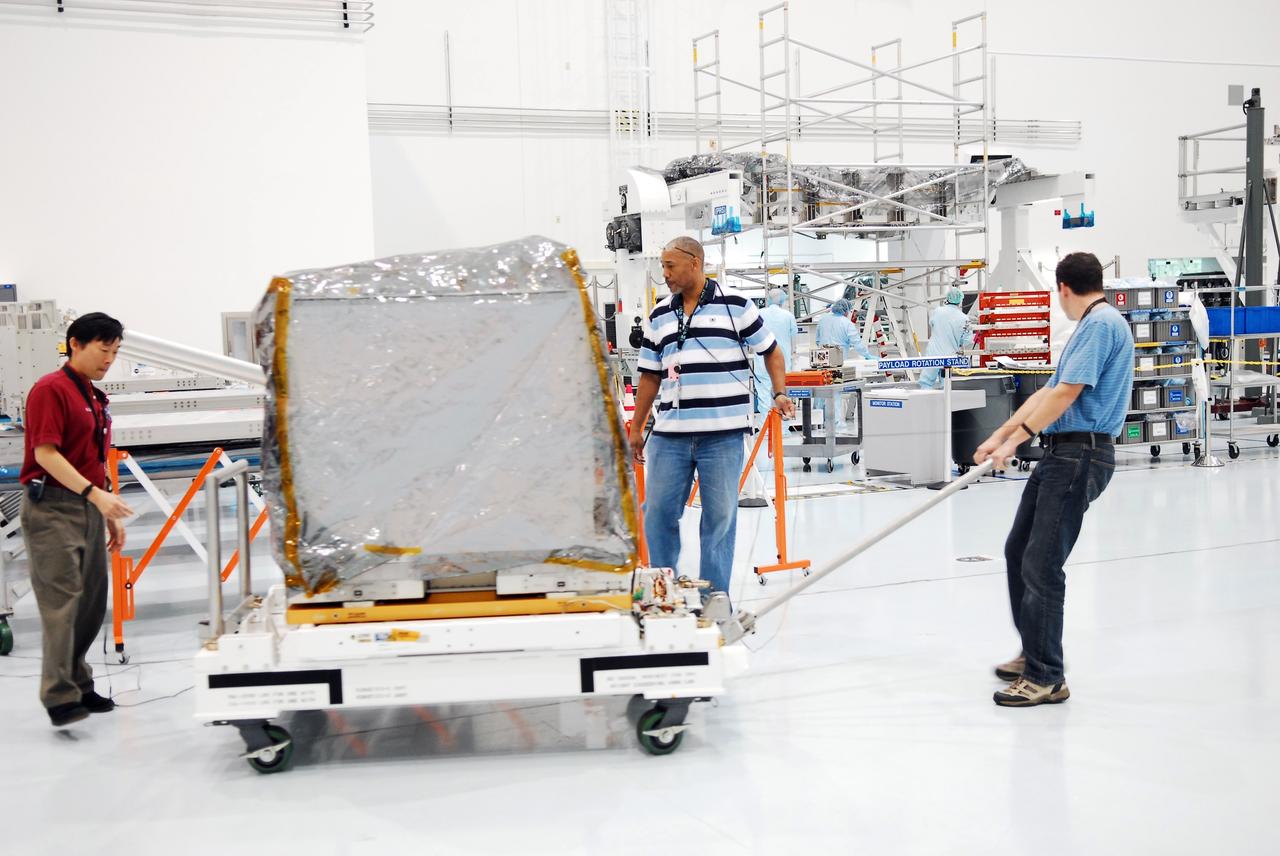
CAPE CANAVERAL, Fla. -- Technicians transport a system that will investigate the potential for robotically refueling existing spacecraft in orbit to a low bay test cell in the Space Station Processing Facility at NASA's Kennedy Space Center in Florida. Called the Robotic Refueling Mission RRM, the system will be processed to fly aboard space shuttle Atlantis on the STS-135 mission to the International Space Station. Atlantis and its STS-135 crew are scheduled to carry the Raffaello multipurpose logistics module packed with supplies, logistics and spare parts to the space station. The mission also will return a failed ammonia pump module to help NASA better understand the failure mechanism and improve pump designs for future systems. STS-135, targeted to launch June 28, will be the 33rd flight of Atlantis, the 37th shuttle mission to the space station, and the 135th and final mission of NASA's Space Shuttle Program. For more information visit, www.nasa.gov/mission_pages/shuttle/shuttlemissions/sts135/index.html. Photo credit: NASA/Jim Grossmann
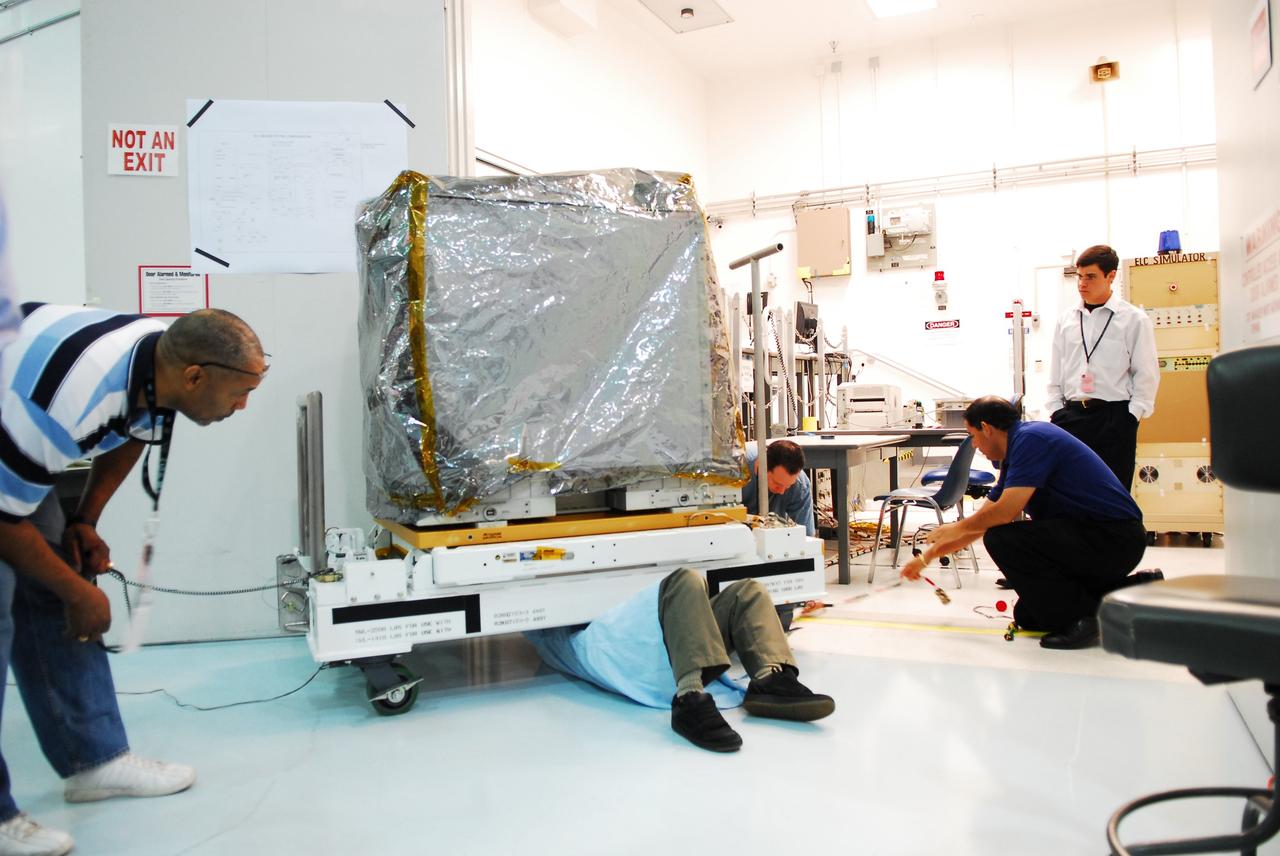
CAPE CANAVERAL, Fla. -- Technicians transport a system that will investigate the potential for robotically refueling existing spacecraft in orbit to a low bay test cell in the Space Station Processing Facility at NASA's Kennedy Space Center in Florida. Called the Robotic Refueling Mission RRM, the system will be processed to fly aboard space shuttle Atlantis on the STS-135 mission to the International Space Station. Atlantis and its STS-135 crew are scheduled to carry the Raffaello multipurpose logistics module packed with supplies, logistics and spare parts to the space station. The mission also will return a failed ammonia pump module to help NASA better understand the failure mechanism and improve pump designs for future systems. STS-135, targeted to launch June 28, will be the 33rd flight of Atlantis, the 37th shuttle mission to the space station, and the 135th and final mission of NASA's Space Shuttle Program. For more information visit, www.nasa.gov/mission_pages/shuttle/shuttlemissions/sts135/index.html. Photo credit: NASA/Jim Grossmann
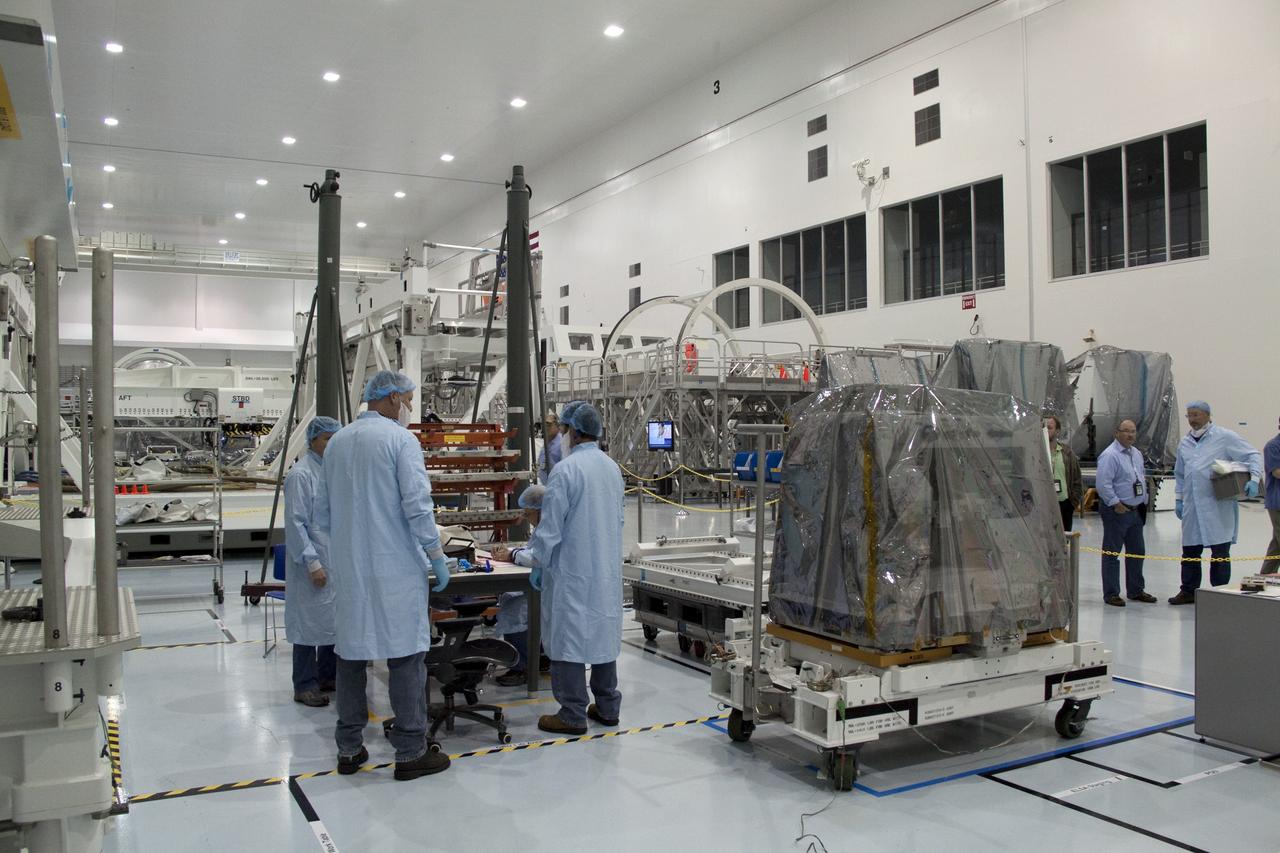
CAPE CANAVERAL, Fla. -- Technicians move a system that will investigate the potential for robotically refueling existing spacecraft in orbit from a processing lab to a high bay in the Space Station Processing Facility at NASA's Kennedy Space Center in Florida. The move prepares the system for its lift into the Lightweight Multi-Purpose Experiment Support Structure Carrier (LMC), which will carry it into orbit. Called the Robotic Refueling Mission (RRM), the system will be processed to fly aboard space shuttle Atlantis on the STS-135 mission to the International Space Station. Also going up will be the Raffaello multipurpose logistics module packed with supplies, logistics and spare parts. The mission also will return a failed ammonia pump module to help NASA better understand the failure mechanism and improve pump designs for future systems. STS-135, targeted to launch June 28, will be the 33rd flight of Atlantis, the 37th shuttle mission to the space station, and the 135th and final mission of NASA's Space Shuttle Program. For more information visit, www.nasa.gov/mission_pages/shuttle/shuttlemissions/sts135/index.html. Photo credit: NASA/Jack Pfaller
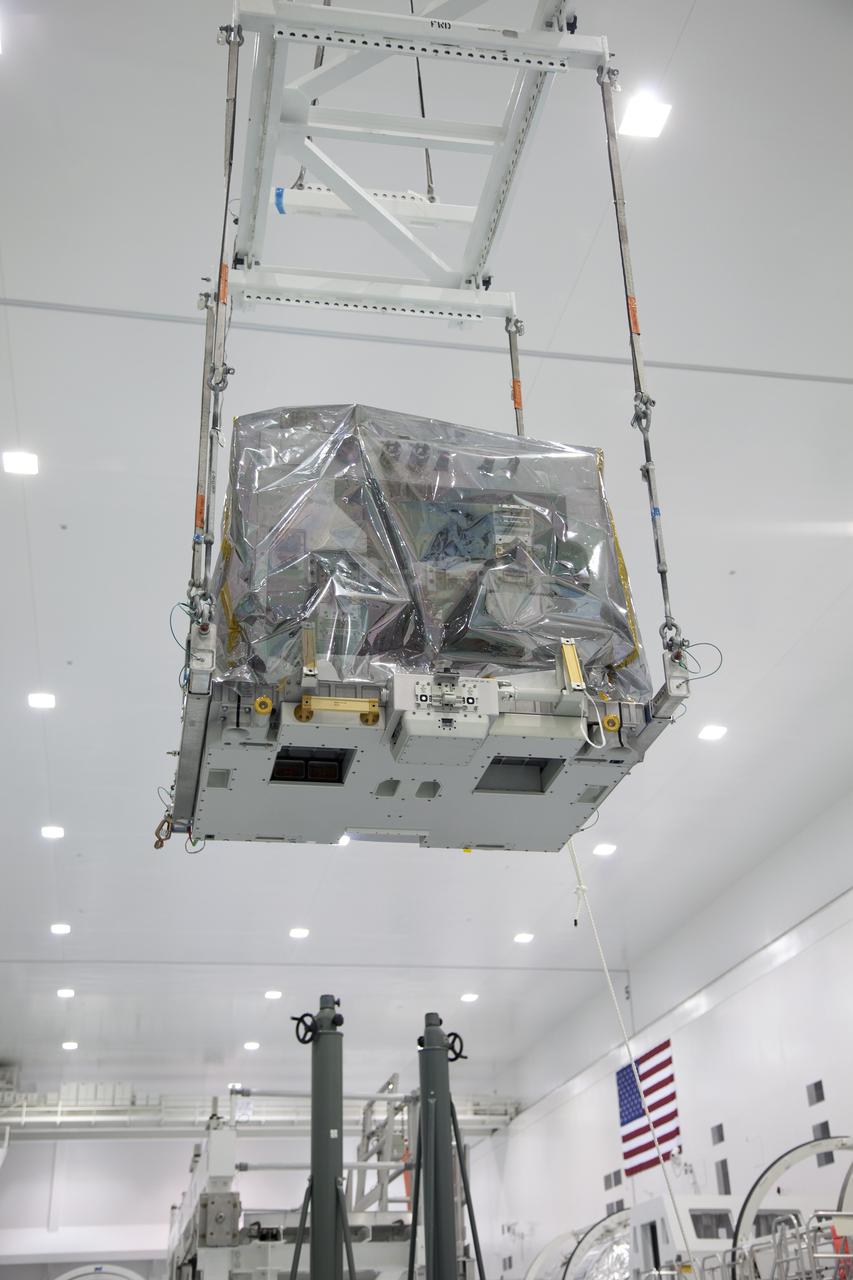
CAPE CANAVERAL, Fla. -- In the Space Station Processing Facility at NASA's Kennedy Space Center in Florida, a system that will investigate the potential for robotically refueling existing spacecraft in orbit moves toward the Lightweight Multi-Purpose Experiment Support Structure Carrier (LMC). Called the Robotic Refueling Mission (RRM), the system is being processed to fly aboard space shuttle Atlantis in the LMC on the STS-135 mission to the International Space Station. Also going up will be the Raffaello multipurpose logistics module packed with supplies, logistics and spare parts. The mission also will return a failed ammonia pump module to help NASA better understand the failure mechanism and improve pump designs for future systems. STS-135, targeted to launch June 28, will be the 33rd flight of Atlantis, the 37th shuttle mission to the space station, and the 135th and final mission of NASA's Space Shuttle Program. For more information visit, www.nasa.gov/mission_pages/shuttle/shuttlemissions/sts135/index.html. Photo credit: NASA/Ben Smegelsky
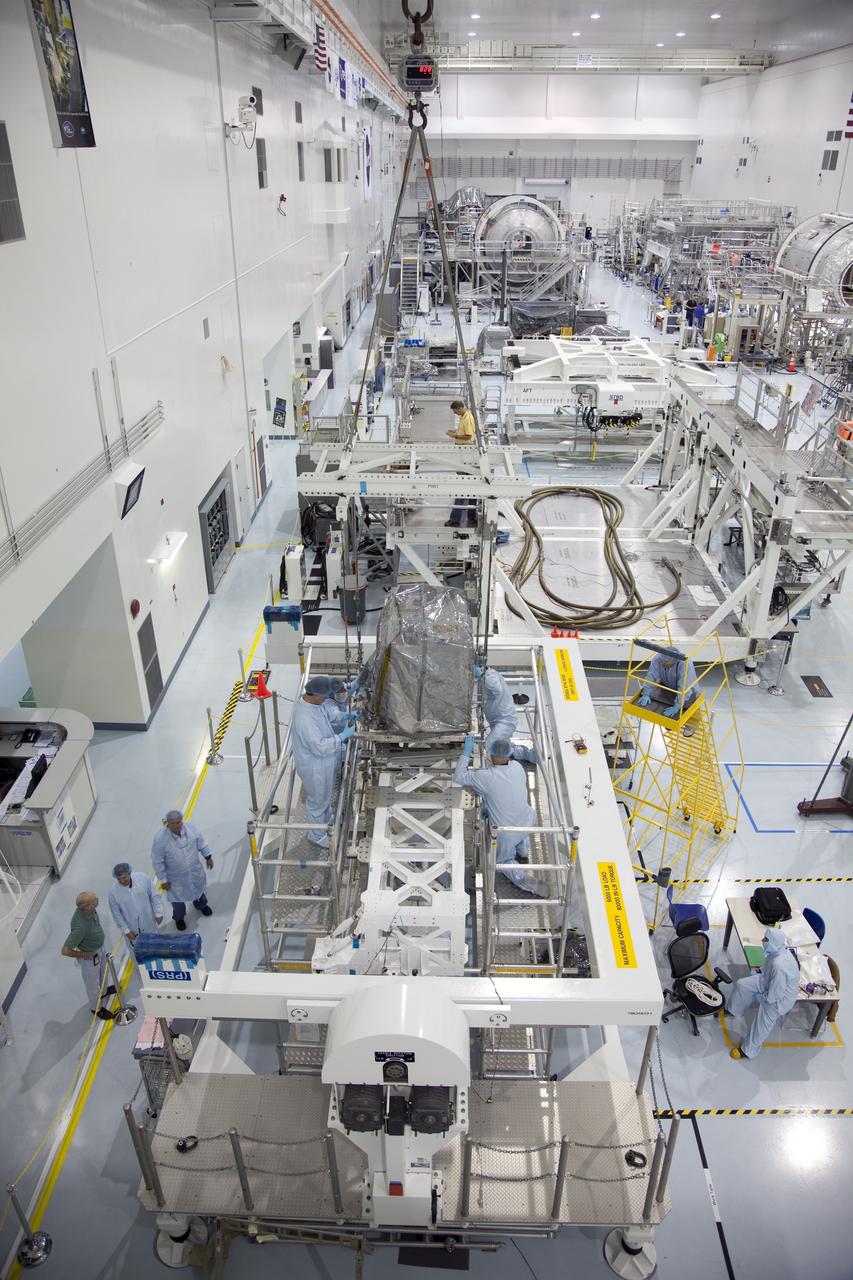
CAPE CANAVERAL, Fla. -- In the Space Station Processing Facility at NASA's Kennedy Space Center in Florida, technicians install a system that will investigate the potential for robotically refueling existing spacecraft in orbit in the Lightweight Multi-Purpose Experiment Support Structure Carrier (LMC). Called the Robotic Refueling Mission (RRM), the system is being processed to fly aboard space shuttle Atlantis in the LMC on the STS-135 mission to the International Space Station. Also going up will be the Raffaello multipurpose logistics module packed with supplies, logistics and spare parts. The mission also will return a failed ammonia pump module to help NASA better understand the failure mechanism and improve pump designs for future systems. STS-135, targeted to launch June 28, will be the 33rd flight of Atlantis, the 37th shuttle mission to the space station, and the 135th and final mission of NASA's Space Shuttle Program. For more information visit, www.nasa.gov/mission_pages/shuttle/shuttlemissions/sts135/index.html. Photo credit: NASA/Ben Smegelsky