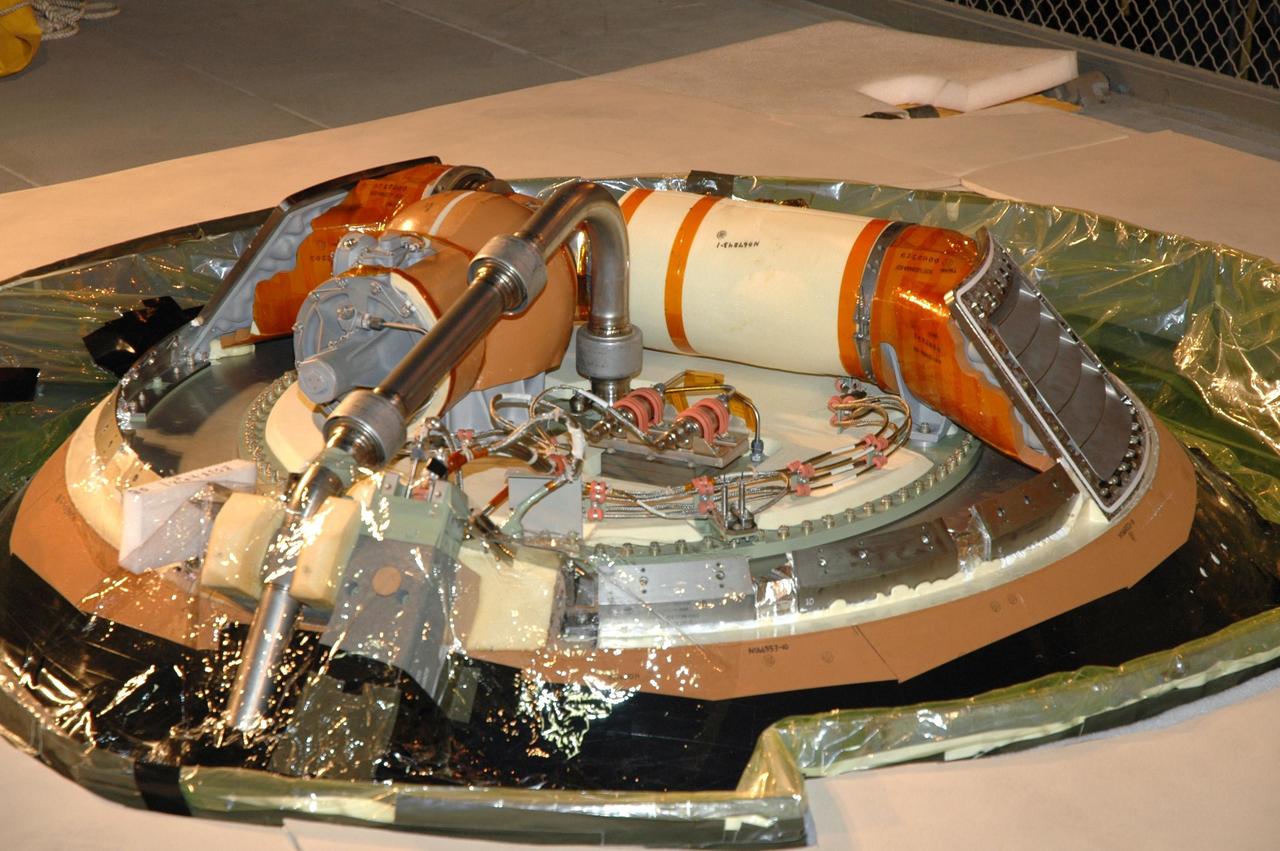
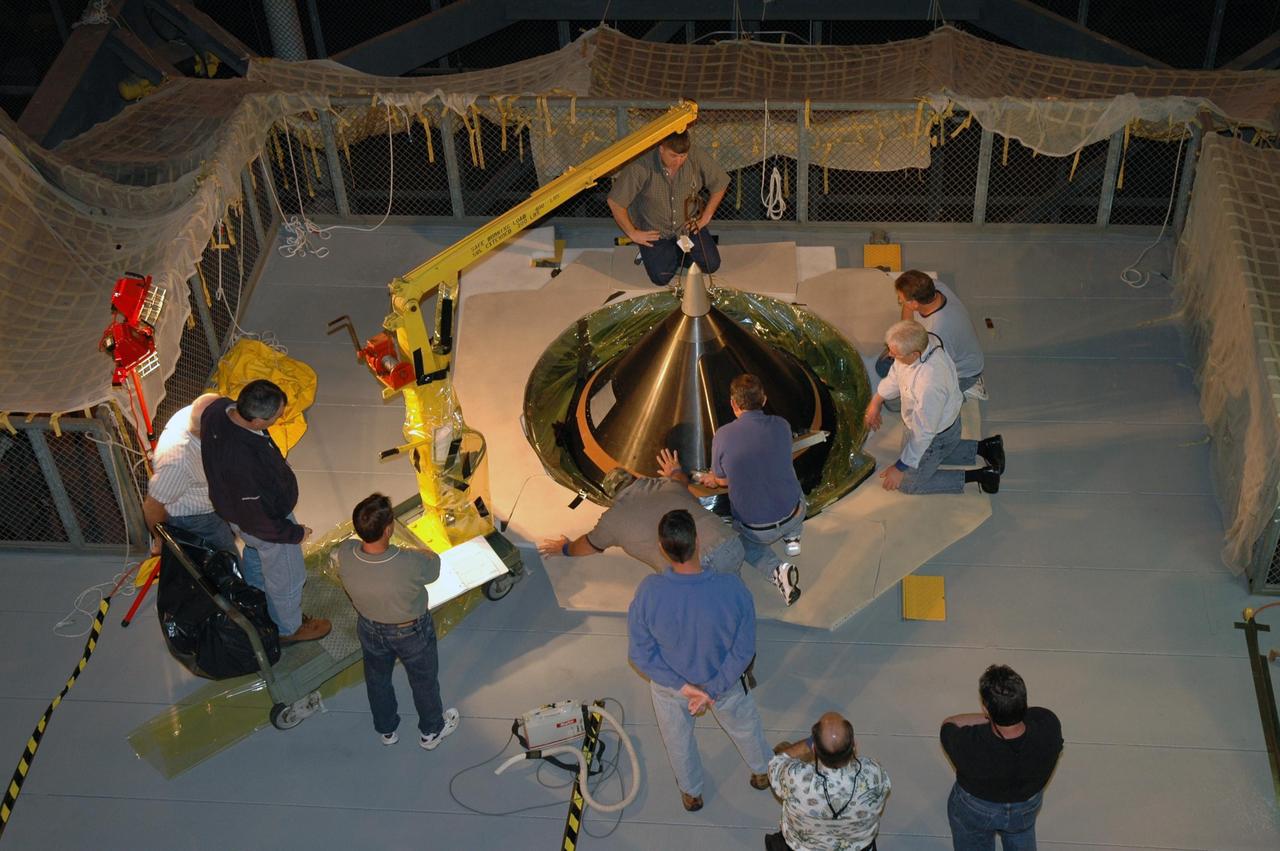
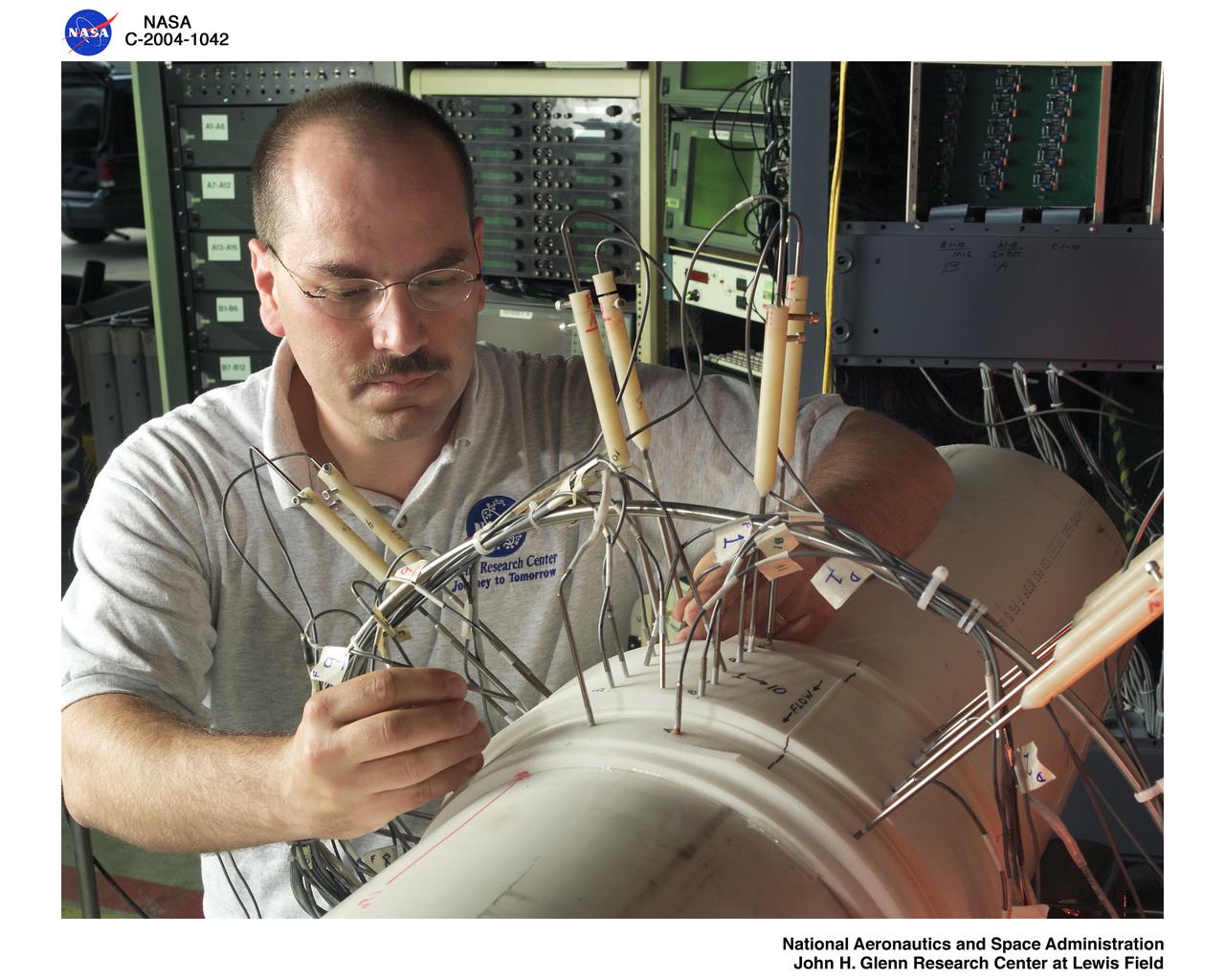
Return to Flight ( RTF ) flow line Air Test
GRC-2004-C-01042
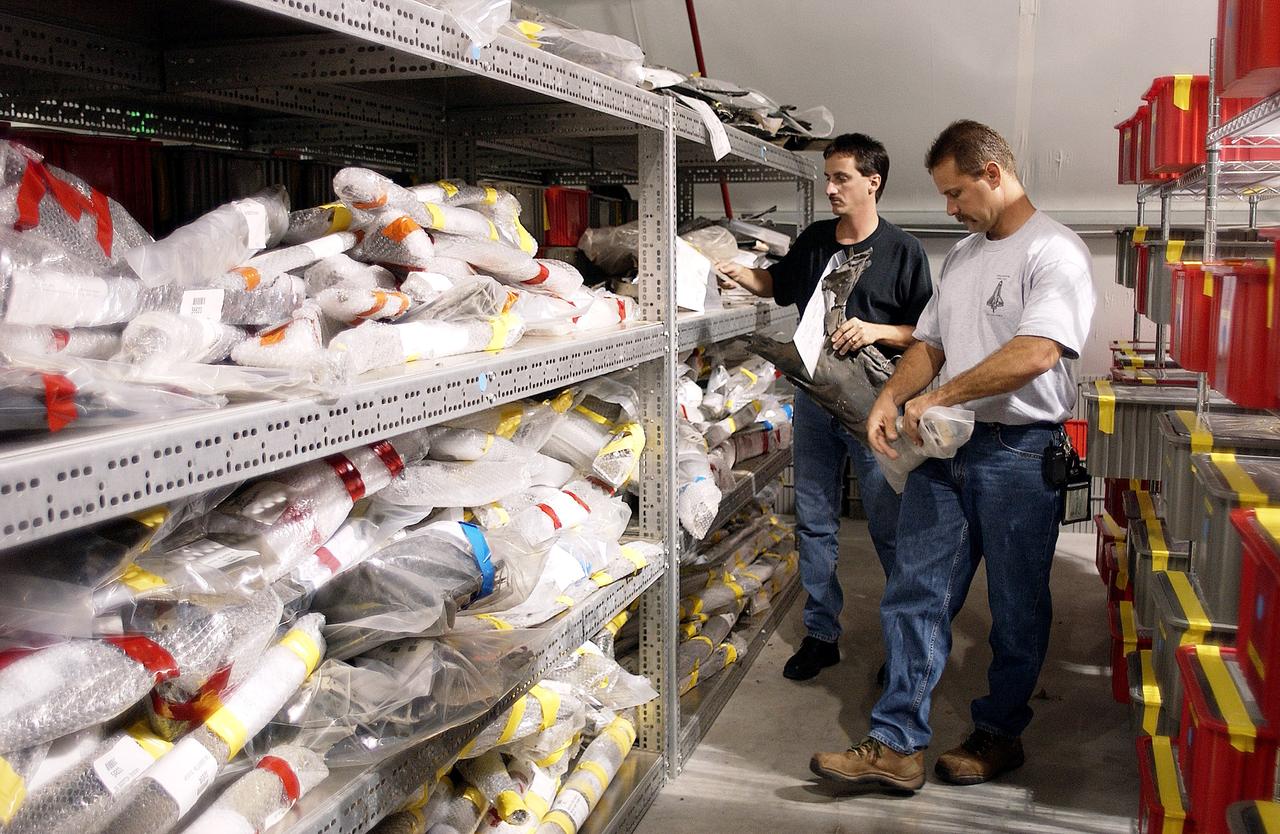
KENNEDY SPACE CENTER, FLA. - In the Columbia Debris Hangar,  Jim Delie (left) and Don Eitel select from the shelves wrapped pieces of debris to be packed into storage boxes.  About 83,000 pieces of debris were shipped to KSC during search and recovery efforts in East Texas. That represents about 38 percent of the dry weight of Columbia, equaling almost 85,000 pounds.  An area of the Vehicle Assembly Building is being prepared to store the debris.
KENNEDY SPACE CENTER, FLA. - In the Columbia Debris Hangar, Jim Delie (left) and Don Eitel select from the shelves wrapped pieces of debris to be packed into storage boxes. About 83,000 pieces of debris were shipped to KSC during search and recovery efforts in East Texas. That represents about 38 percent of the dry weight of Columbia, equaling almost 85,000 pounds. An area of the Vehicle Assembly Building is being prepared to store the debris.
KENNEDY SPACE CENTER, FLA. - In the Columbia Debris Hangar, Jack Nowling transfers bags with debris pieces into a storage box.  About 83,000 pieces of debris were shipped to KSC during search and recovery efforts in East Texas. That represents about 38 percent of the dry weight of Columbia, equaling almost 85,000 pounds.  An area of the Vehicle Assembly Building is being prepared to store the debris.
KENNEDY SPACE CENTER, FLA. - In the Columbia Debris Hangar, Jack Nowling transfers bags with debris pieces into a storage box. About 83,000 pieces of debris were shipped to KSC during search and recovery efforts in East Texas. That represents about 38 percent of the dry weight of Columbia, equaling almost 85,000 pounds. An area of the Vehicle Assembly Building is being prepared to store the debris.
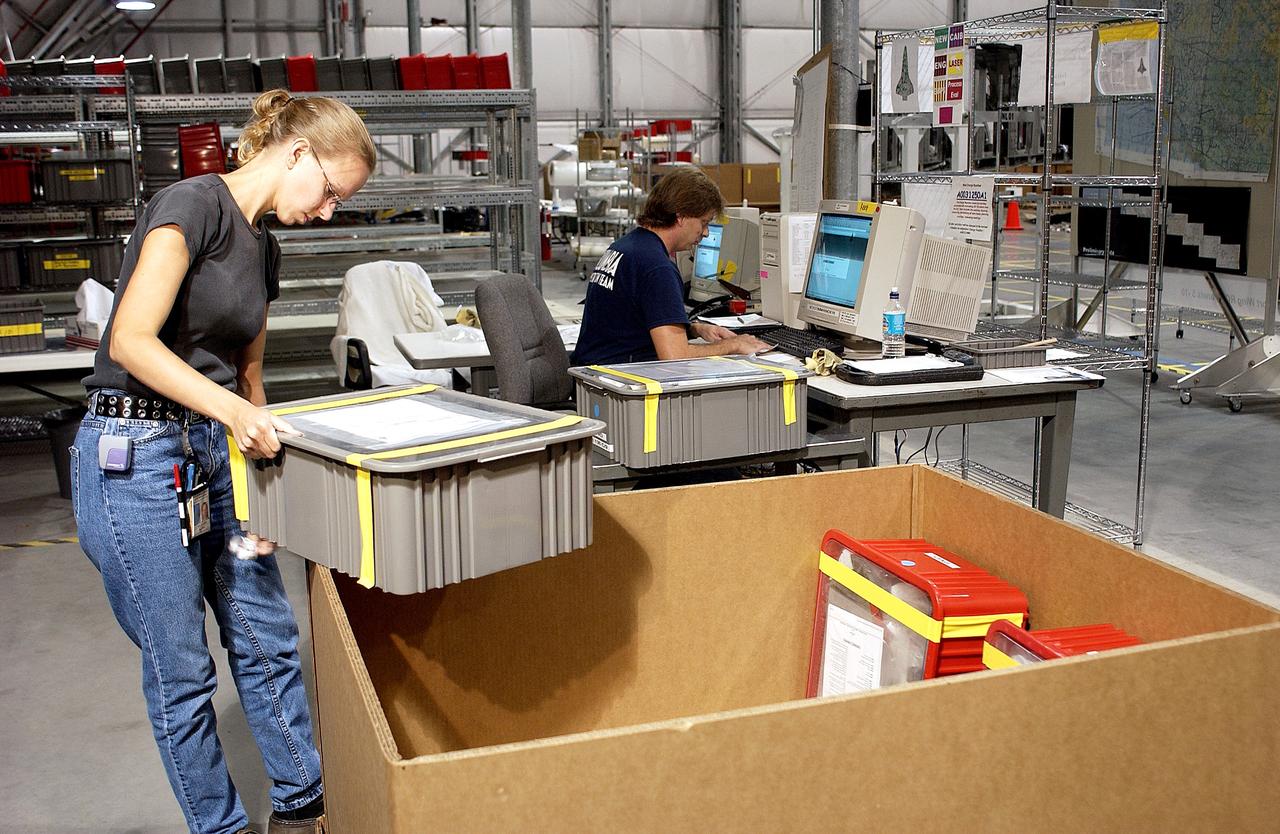
KENNEDY SPACE CENTER, FLA. -  Amy Norris (left) packs some of the debris stored in the Columbia Debris Hangar.  Jack Nowling works on the computer.  About 83,000 pieces of debris were shipped to KSC during search and recovery efforts in East Texas. That represents about 38 percent of the dry weight of Columbia, equaling almost 85,000 pounds.  An area of the Vehicle Assembly Building is being prepared to store the debris.
KENNEDY SPACE CENTER, FLA. - Amy Norris (left) packs some of the debris stored in the Columbia Debris Hangar. Jack Nowling works on the computer. About 83,000 pieces of debris were shipped to KSC during search and recovery efforts in East Texas. That represents about 38 percent of the dry weight of Columbia, equaling almost 85,000 pounds. An area of the Vehicle Assembly Building is being prepared to store the debris.
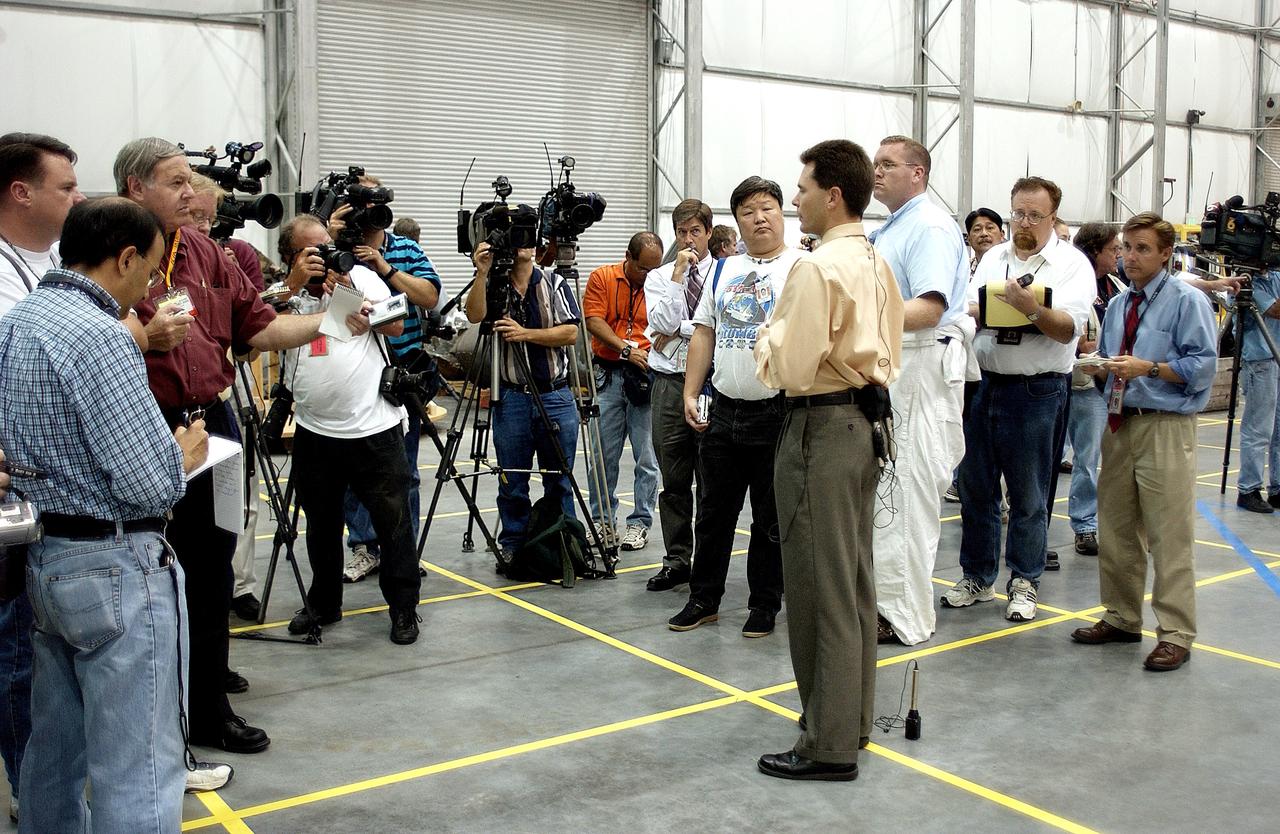
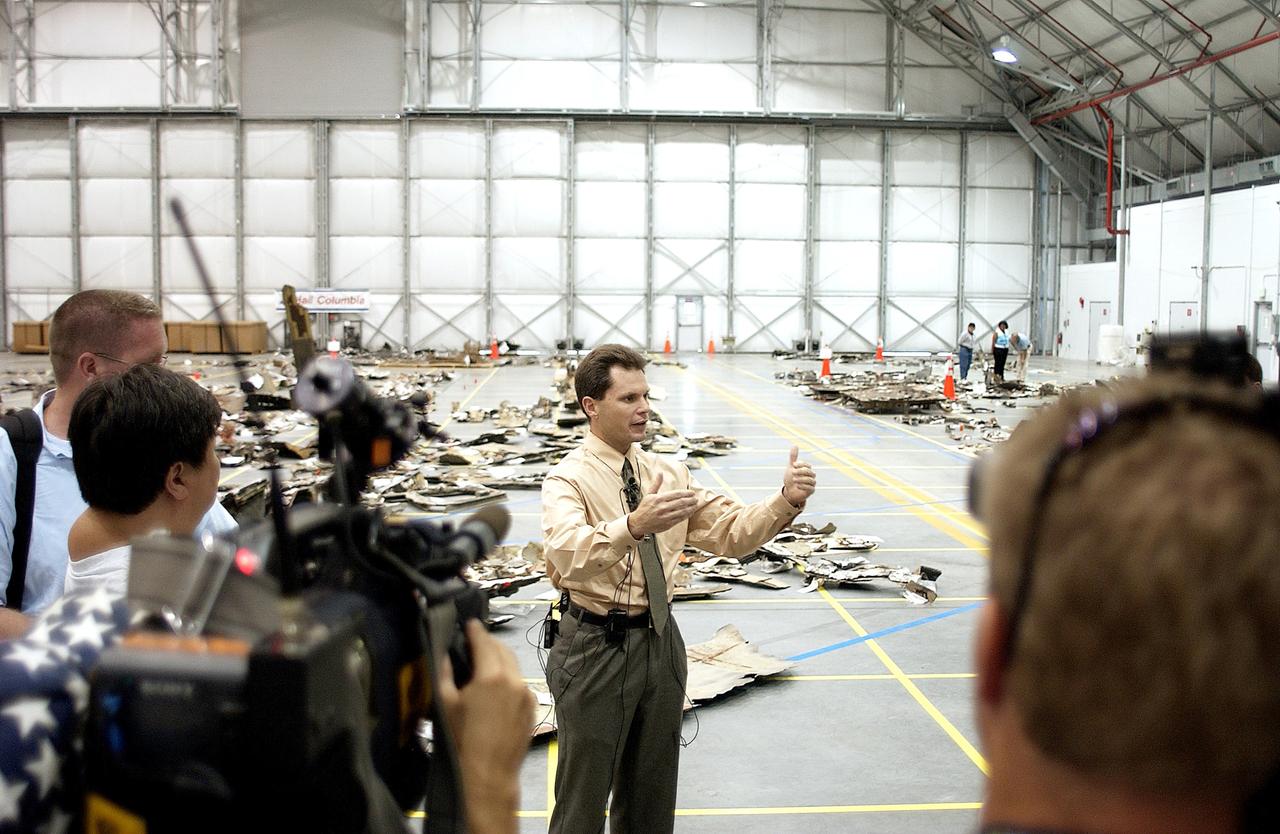
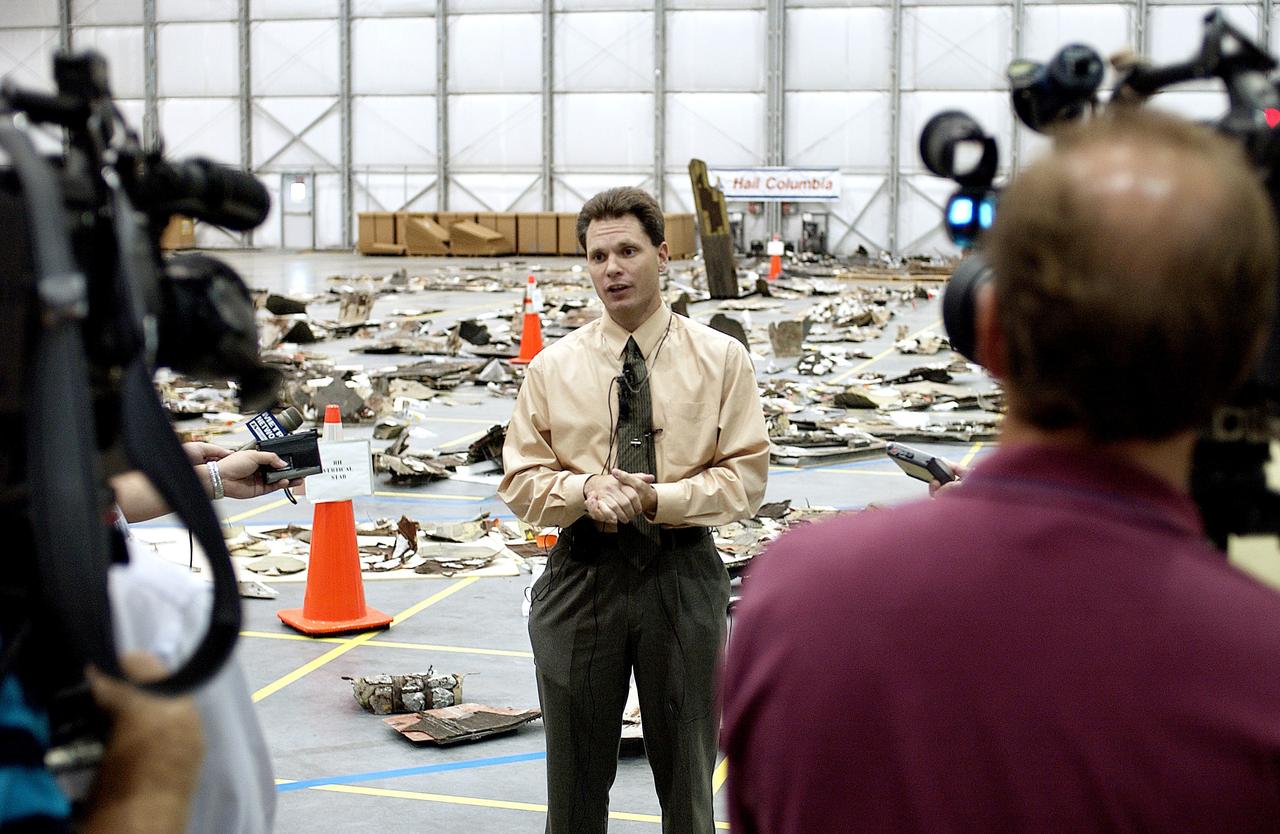
KENNEDY SPACE CENTER, FLA. - In the Columbia Debris Hangar, Scott Thurston, NASA vehicle flow manager, addresses the media about efforts to pack the debris stored in the Columbia Debris Hangar.  More than 83,000  pieces of debris were shipped to KSC during search and recovery efforts in East Texas. That represents about 38 percent of the dry weight of Columbia, equaling almost 85,000 pounds. An area of the Vehicle Assembly Building is being prepared to store the debris permanently.
KSC-03pd2571
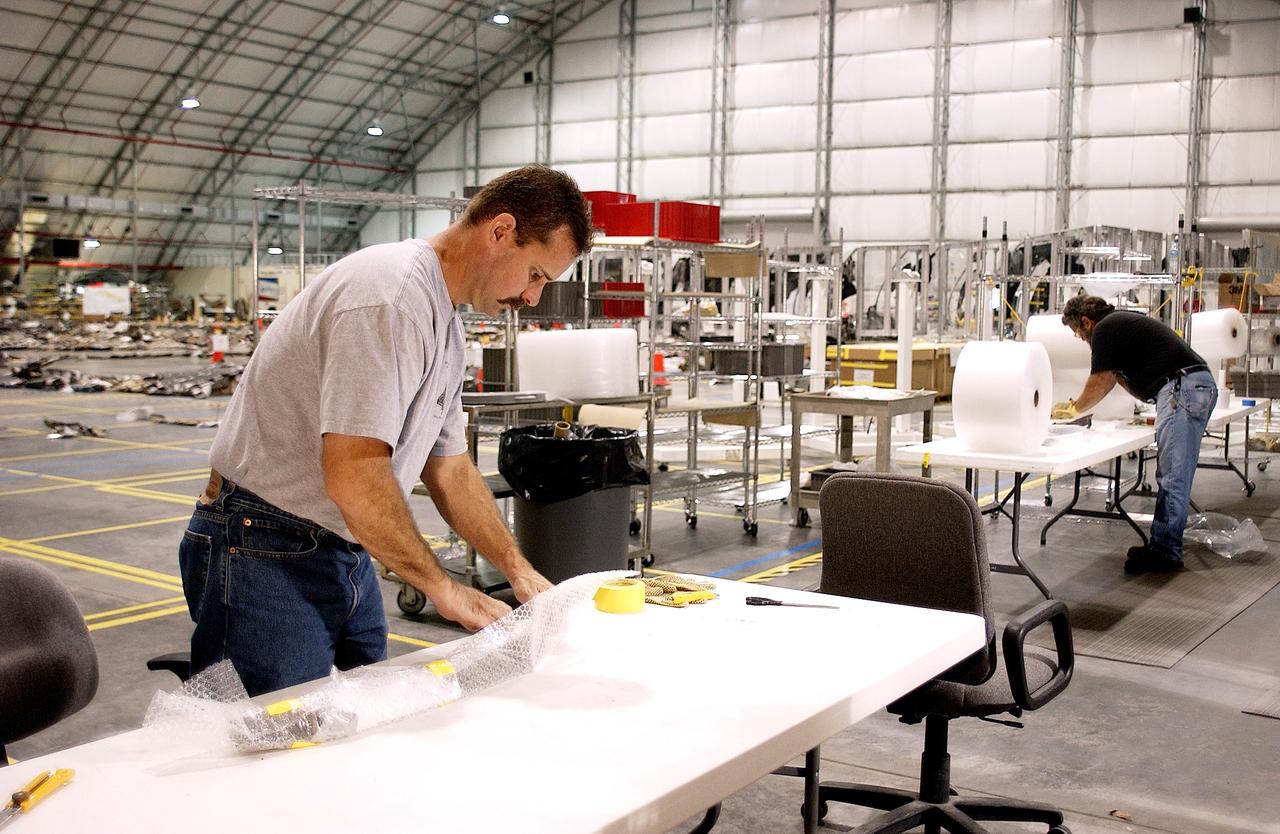
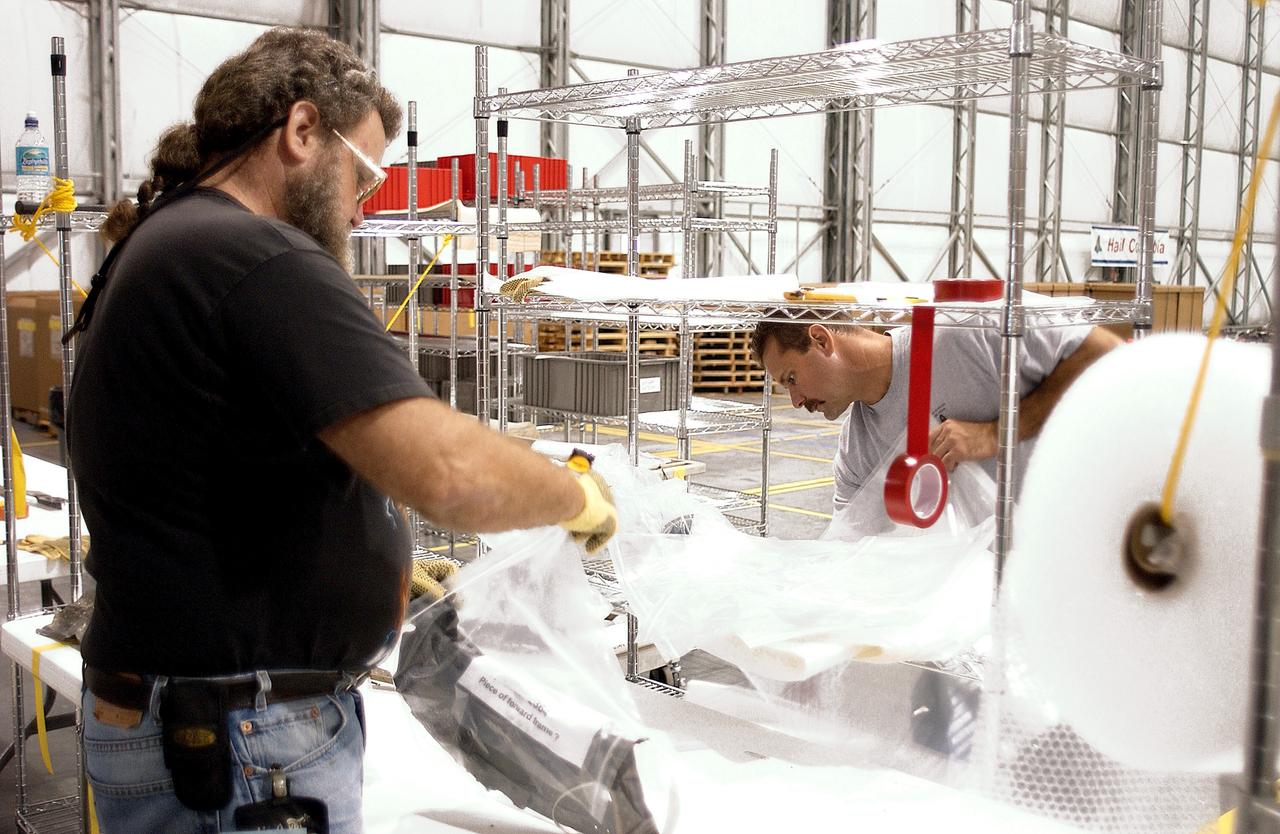
KENNEDY SPACE CENTER, FLA. -  In the Columbia Debris Hangar, Larry Tarver (left) and Don Eitel bag and wrap pieces of debris to be packed into storage boxes.  About 83,000 pieces of debris were shipped to KSC during search and recovery efforts in East Texas. That represents about 38 percent of the dry weight of Columbia, equaling almost 85,000 pounds.  An area of the Vehicle Assembly Building is being prepared to store the debris.
KENNEDY SPACE CENTER, FLA. - In the Columbia Debris Hangar, Larry Tarver (left) and Don Eitel bag and wrap pieces of debris to be packed into storage boxes. About 83,000 pieces of debris were shipped to KSC during search and recovery efforts in East Texas. That represents about 38 percent of the dry weight of Columbia, equaling almost 85,000 pounds. An area of the Vehicle Assembly Building is being prepared to store the debris.
KENNEDY SPACE CENTER, FLA. -In the Columbia Debris Hangar, Don Eitel (left) wraps pieces of Columbia debris for storage.  About 83,000 pieces of debris were shipped to KSC during search and recovery efforts in East Texas. That represents about 38 percent of the dry weight of Columbia, equaling almost 85,000 pounds.  An area of the Vehicle Assembly Building is being prepared to store the debris.
KENNEDY SPACE CENTER, FLA. -In the Columbia Debris Hangar, Don Eitel (left) wraps pieces of Columbia debris for storage. About 83,000 pieces of debris were shipped to KSC during search and recovery efforts in East Texas. That represents about 38 percent of the dry weight of Columbia, equaling almost 85,000 pounds. An area of the Vehicle Assembly Building is being prepared to store the debris.
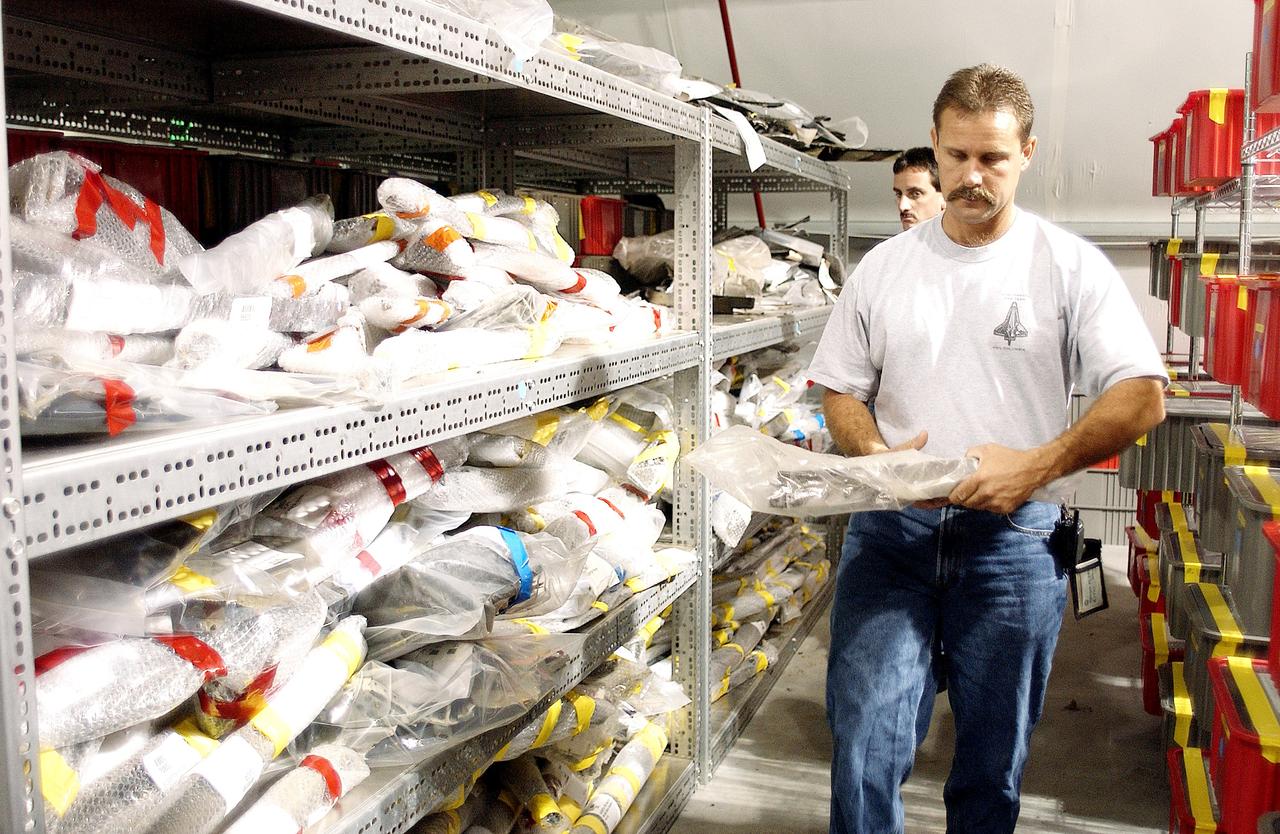
KENNEDY SPACE CENTER, FLA. -  In the Columbia Debris Hangar,  Don Eitel (in front) and Jim Delie carry pieces of debris to be packed into storage boxes.  About 83,000 pieces of debris were shipped to KSC during search and recovery efforts in East Texas. That represents about 38 percent of the dry weight of Columbia, equaling almost 85,000 pounds.  An area of the Vehicle Assembly Building is being prepared to store the debris.
KENNEDY SPACE CENTER, FLA. - In the Columbia Debris Hangar, Don Eitel (in front) and Jim Delie carry pieces of debris to be packed into storage boxes. About 83,000 pieces of debris were shipped to KSC during search and recovery efforts in East Texas. That represents about 38 percent of the dry weight of Columbia, equaling almost 85,000 pounds. An area of the Vehicle Assembly Building is being prepared to store the debris.
KENNEDY SPACE CENTER, FLA. - In the Columbia Debris Hangar, Scott Thurston, NASA vehicle flow manager, addresses the media about efforts to pack the debris stored in the Columbia Debris Hangar.  More than 83,000  pieces of debris were shipped to KSC during search and recovery efforts in East Texas. That represents about 38 percent of the dry weight of Columbia, equaling almost 85,000 pounds. An area of the Vehicle Assembly Building is being prepared to store the debris permanently.
KENNEDY SPACE CENTER, FLA. - In the Columbia Debris Hangar, Scott Thurston, NASA vehicle flow manager, addresses the media about efforts to pack the debris stored in the Columbia Debris Hangar. More than 83,000 pieces of debris were shipped to KSC during search and recovery efforts in East Texas. That represents about 38 percent of the dry weight of Columbia, equaling almost 85,000 pounds. An area of the Vehicle Assembly Building is being prepared to store the debris permanently.
KENNEDY SPACE CENTER, FLA. - In the Columbia Debris Hangar, Scott Thurston, NASA vehicle flow manager, addresses the media about efforts to pack the debris stored in the Columbia Debris Hangar.  More than 83,000  pieces of debris were shipped to KSC during search and recovery efforts in East Texas. That represents about 38 percent of the dry weight of Columbia, equaling almost 85,000 pounds. An area of the Vehicle Assembly Building is being prepared to store the debris permanently.
KENNEDY SPACE CENTER, FLA. - In the Columbia Debris Hangar, Scott Thurston, NASA vehicle flow manager, addresses the media about efforts to pack the debris stored in the Columbia Debris Hangar. More than 83,000 pieces of debris were shipped to KSC during search and recovery efforts in East Texas. That represents about 38 percent of the dry weight of Columbia, equaling almost 85,000 pounds. An area of the Vehicle Assembly Building is being prepared to store the debris permanently.
KENNEDY SPACE CENTER, FLA. - In the Columbia Debris Hangar, Scott Thurston, NASA vehicle flow manager, addresses the media about efforts to pack the debris stored in the Columbia Debris Hangar.  More than 83,000  pieces of debris were shipped to KSC during search and recovery efforts in East Texas. That represents about 38 percent of the dry weight of Columbia, equaling almost 85,000 pounds. An area of the Vehicle Assembly Building is being prepared to store the debris permanently.
KENNEDY SPACE CENTER, FLA. - In the Columbia Debris Hangar, Scott Thurston, NASA vehicle flow manager, addresses the media about efforts to pack the debris stored in the Columbia Debris Hangar. More than 83,000 pieces of debris were shipped to KSC during search and recovery efforts in East Texas. That represents about 38 percent of the dry weight of Columbia, equaling almost 85,000 pounds. An area of the Vehicle Assembly Building is being prepared to store the debris permanently.
ASTRONAUT STEVE ROBINSON  & @ COMUMBIA IN N-258 W/RTF (Return to Flight) TEAMS Arc Jet Facilities with Frank Hue and other personnel.
ARC-2005-ACD05-0191-034
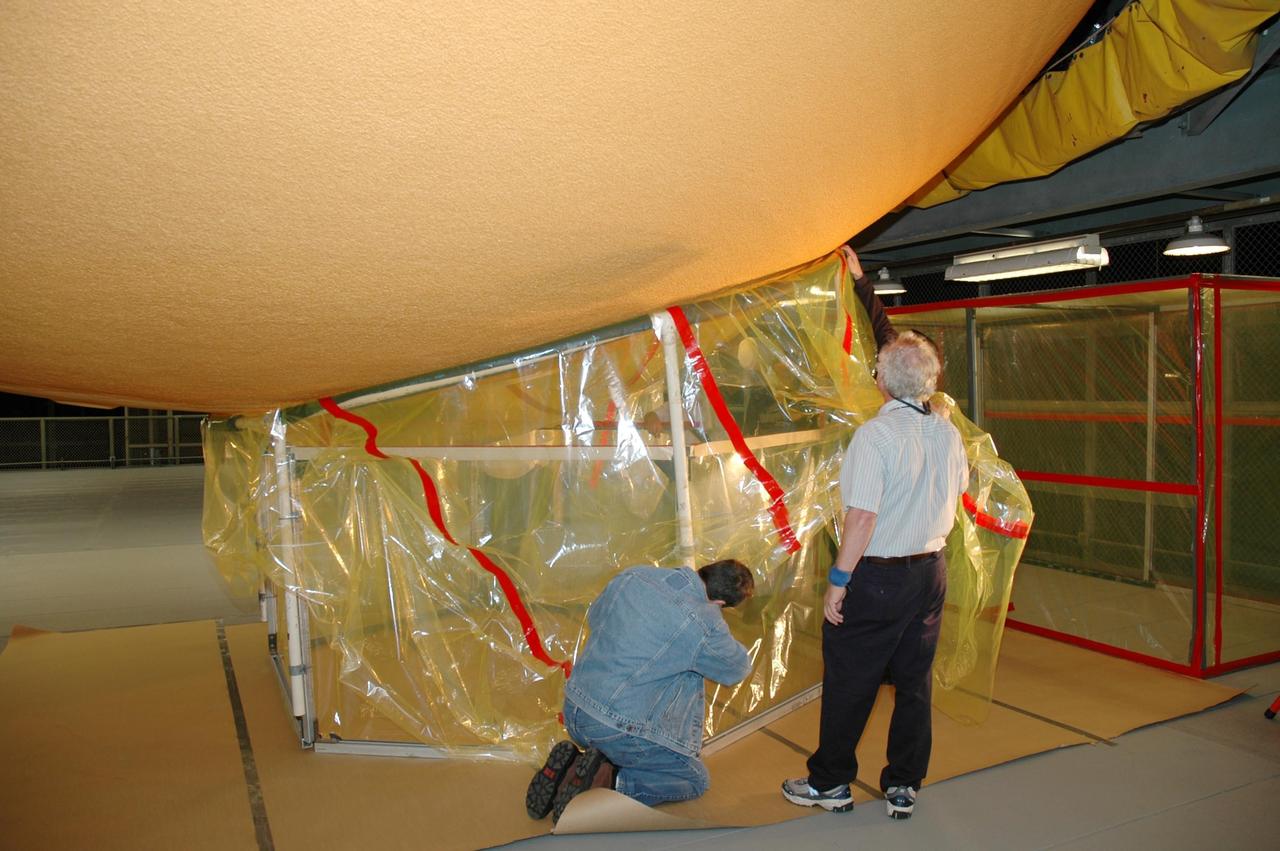
KENNEDY SPACE CENTER, FLA. - KENNEDY SPACE CENTER, FLA. - Lockheed Martin technicians from NASA's Michoud Assembly Facility in Louisiana install a clean-room working area around the "manhole" on the external tank designated for mission STS-121. The work is part of the process in removing and replacing the external tank's four liquid hydrogen main engine cutoff sensors, which indicate whether the tank still has fuel during its climb to orbit. After the cleaning, the manhole will be removed to provide access to the area of the sensors for their removal. Photo credit: NASA/Jim Grossmann
KSC-06pd0561
KENNEDY SPACE CENTER, FLA. - In the Vehicle Assembly Building at NASA's Kennedy Space Center, workers begin removal of the nose cap on top of external tank number 119, the tank designated for mission STS-121.  The cap is being removed in order to install a new gaseous oxygen vent valve under the nose cap. Vapors are created prior to launch as the liquid oxygen in the external tank boils off. At the forward end of each external tank propellant tank is a vent and relief valve that can be opened before launch for venting or by excessive tank pressure for relief. The vent function is available only before launch. Mission STS-121 to the International Space Station is scheduled for launch in July. Photo credit: NASA/Jim Grossmann
KSC-06pd0562
KENNEDY SPACE CENTER, FLA. -  In the Vehicle Assembly Building at NASA's Kennedy Space Center, the nose cap on top of external tank number 119 has been removed.  A new gaseous oxygen vent valve will be installed.  Tank 119 is designated for mission STS-121.  Vapors are created prior to launch as the liquid oxygen in the external tank boils off. At the forward end of each external tank propellant tank is a vent and relief valve that can be opened before launch for venting or by excessive tank pressure for relief. The vent function is available only before launch. Mission STS-121 to the International Space Station is scheduled for launch in July. Photo credit: NASA/Jim Grossmann
KSC-06pd0564
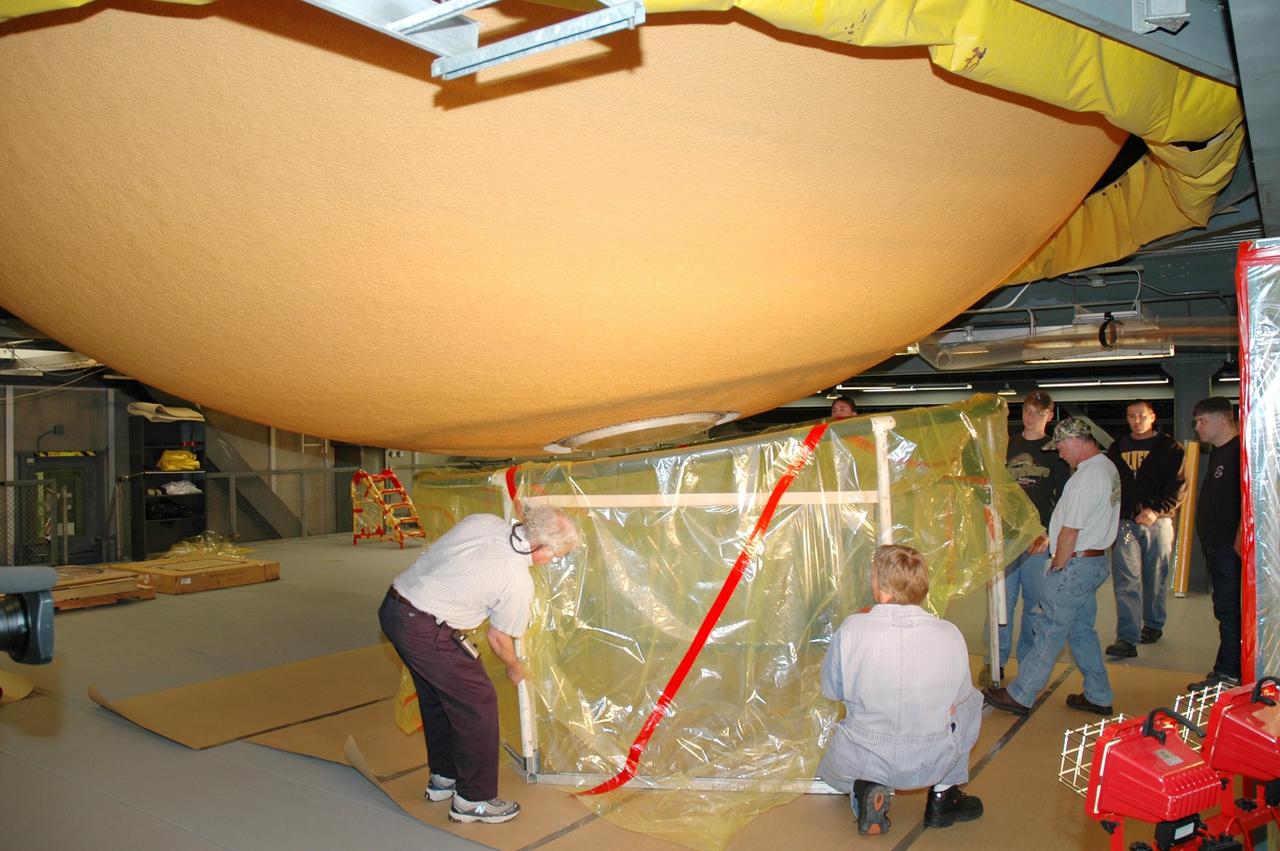
KENNEDY SPACE CENTER, FLA. - Lockheed Martin technicians from NASA's Michoud Assembly Facility in Louisiana create a clean-room working area around the "manhole" on the external tank designated for mission STS-121. The work is part of the process in removing and replacing the external tank's four liquid hydrogen main engine cutoff sensors, which indicate whether the tank still has fuel during its climb to orbit. After the cleaning, the manhole will be removed to provide access to the area of the sensors for their removal. Photo credit: NASA/Jim Grossmann
KSC-06pd0560
KENNEDY SPACE CENTER, FLA.  - Lockheed Martin technicians from NASA's Michoud Assembly Facility in Louisiana clean the area around the "manhole" on the external tank designated for mission STS-121. The work is part of the process in removing and replacing the external tank's four liquid hydrogen main engine cutoff sensors, which indicate whether the tank still has fuel during its climb to orbit. After the cleaning, the manhole will be removed to provide access to the area of the sensors for their removal. Photo credit: NASA/Jim Grossmann
KSC-06pd0559
Student Assistant Antoinette Davis (left) of Utica; Carmella Forsythe, 13, of Clinton; Terri Henderson, 14, of Clinton; Tyra Greer, 12, of Port Gibson; and Kala Battle, 14, of Edwards, answer curriculum questions about NASA's Return to Flight mission exhibit at StenniSphere, the visitor center at NASA's Stennis Space Center (SSC) near Bay St. Louis, Miss. The girls were on a field trip to StenniSphere with fellow participants in Hinds Community College's MSEIP (Minority Science Engineering Improvement Program) summer program. MSEIP encourages students to pursue and prepare for careers in science, technology, engineering and math.
Hinds Community College MSEIP program
KENNEDY SPACE CENTER, FLA. -  In the Vehicle Assembly Building at NASA's Kennedy Space Center, workers remove the nose cap on top of external tank number 119, the tank designated for mission STS-121.  The cap is being removed in order to install a new gaseous oxygen vent valve under the nose cap. Vapors are created prior to launch as the liquid oxygen in the external tank boils off. At the forward end of each external tank propellant tank is a vent and relief valve that can be opened before launch for venting or by excessive tank pressure for relief. The vent function is available only before launch. Mission STS-121 to the International Space Station is scheduled for launch in July. Photo credit: NASA/Jim Grossmann
KSC-06pd0563
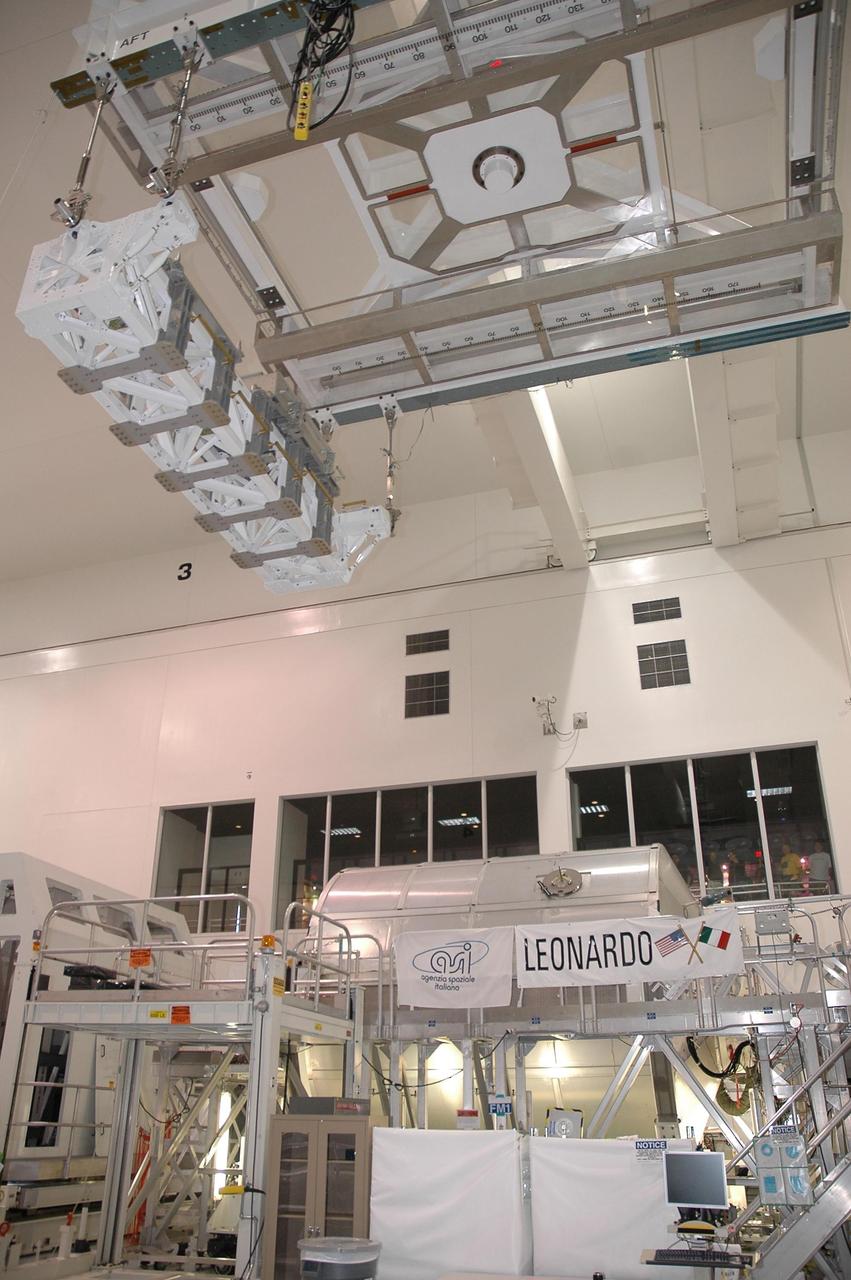
KENNEDY SPACE CENTER, FLA. - In the Space Station Processing Facility, a crane moves the Lightweight Multi-Purpose Experiment Support Structure Carrier (LMC) over an abundance of hardware and equipment including the Multi-Purpose Logistics Module Leonardo. Slated to fly on space shuttle mission STS-121, the LMC is ready to be delivered to Launch Pad 39B for installation into orbiter Discovery.  It is a cross-bay carrier for hardware required to perform development test objective 848. Test objective 848 is a demonstration of the tools and techniques developed to repair damaged orbiter thermal protection system tiles during a spacewalk, or extravehicular activity. The target launch window for STS-121 is July 1 to July 19, 2006.  Photo credit: NASA/Cory Husten
KSC-06pd0796
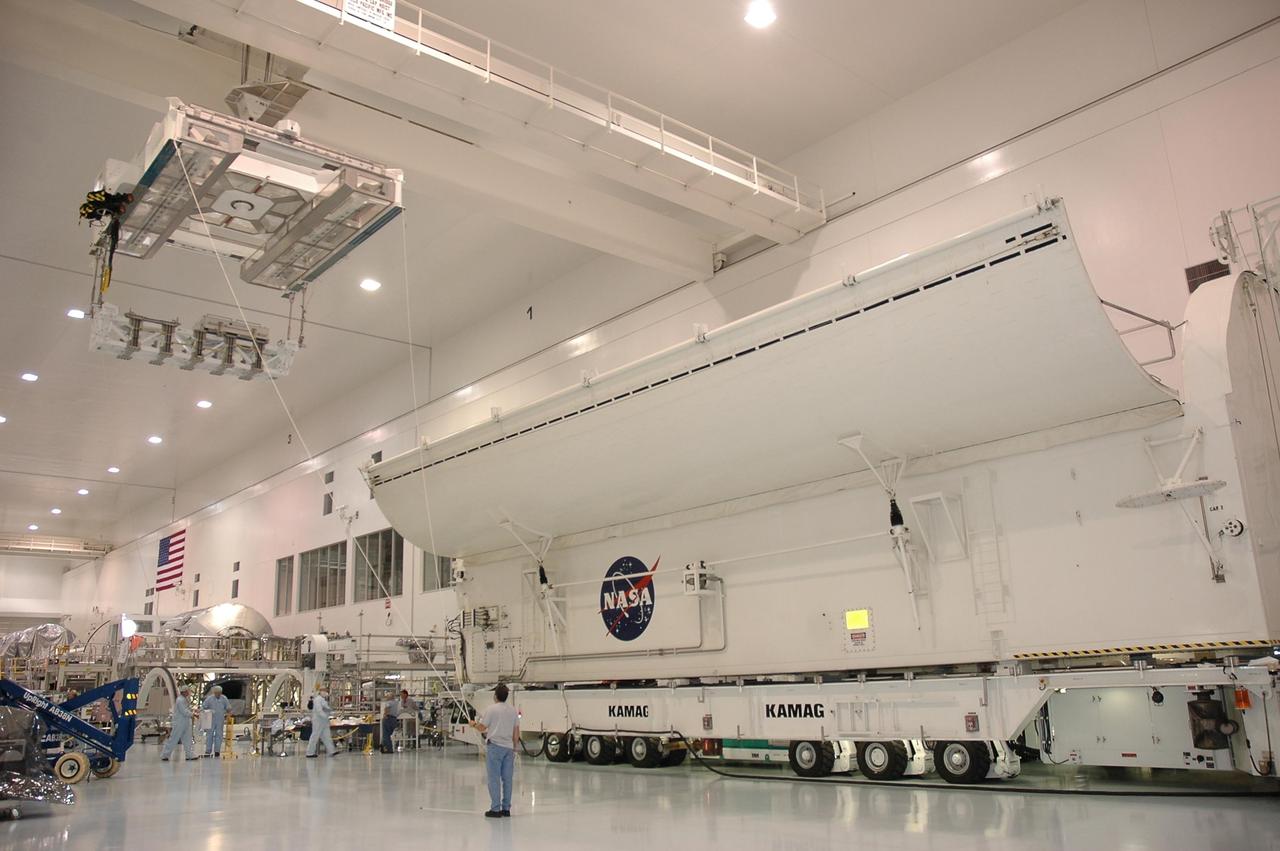
KENNEDY SPACE CENTER, FLA. - In the Space Station Processing Facility, workers monitor the Lightweight Multi-Purpose Experiment Support Structure Carrier (LMC) as it is lifted by a crane toward a payload canister, doors open to receive it. Slated to fly on space shuttle mission STS-121, the LMC is ready to be delivered to Launch Pad 39B for installation into orbiter Discovery.  It is a cross-bay carrier for hardware required to perform development test objective 848. Test objective 848 is a demonstration of the tools and techniques developed to repair damaged orbiter thermal protection system tiles during a spacewalk, or extravehicular activity. The target launch window for STS-121 is July 1 to July 19, 2006.  Photo credit: NASA/Cory Husten
KSC-06pd0798
KENNEDY SPACE CENTER, FLA. - In the Space Station Processing Facility, a crane moves the Lightweight Multi-Purpose Experiment Support Structure Carrier (LMC) toward a payload canister, doors open to receive it. Slated to fly on space shuttle mission STS-121, the LMC is ready to be delivered to Launch Pad 39B for installation into orbiter Discovery.  It is a cross-bay carrier for hardware required to perform development test objective 848. Test objective 848 is a demonstration of the tools and techniques developed to repair damaged orbiter thermal protection system tiles during a spacewalk, or extravehicular activity. The target launch window for STS-121 is July 1 to July 19, 2006.  Photo credit: NASA/Cory Husten
KSC-06pd0797
KENNEDY SPACE CENTER, FLA. - In the Space Station Processing Facility, a crane moves the Lightweight Multi-Purpose Experiment Support Structure Carrier (LMC) over an abundance of hardware and equipment. Slated to fly on space shuttle mission STS-121, the LMC is ready to be delivered to Launch Pad 39B for installation into orbiter Discovery.  It is a cross-bay carrier for hardware required to perform development test objective 848. Test objective 848 is a demonstration of the tools and techniques developed to repair damaged orbiter thermal protection system tiles during a spacewalk, or extravehicular activity. The target launch window for STS-121 is July 1 to July 19, 2006.  Photo credit: NASA/Cory Husten
KSC-06pd0795
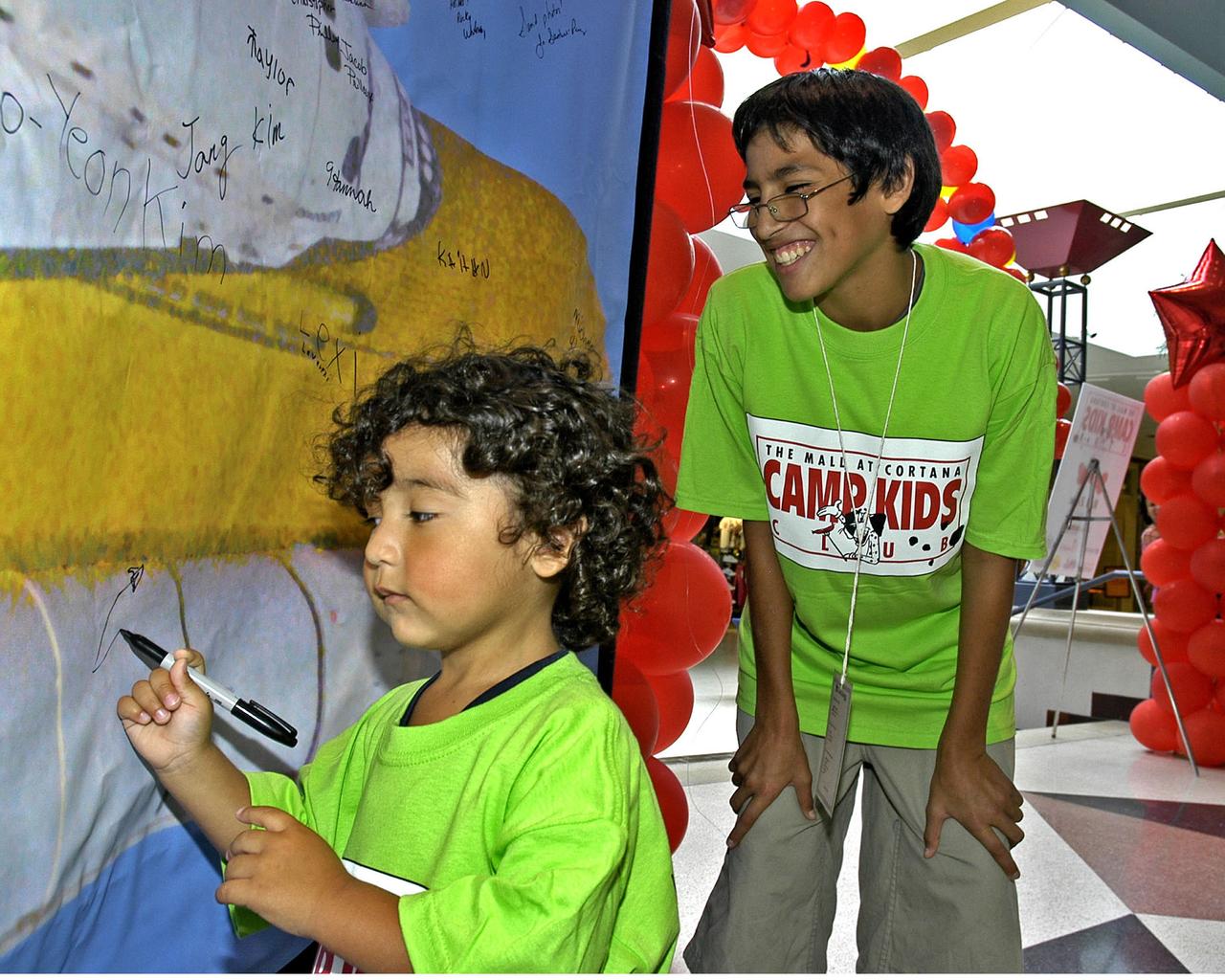
Christian Gonzales, 11 (right), watches as his little brother Walter, 2, adds his own brand of good wishes to a banner encouraging the crew of Space Shuttle Discovery on NASA's Return to Flight mission, scheduled to launch in summer 2005. The brothers, of Baton Rouge, were participating in a Camp Kids event at The Mall at Cortana, where Return to Flight activities were presented by NASA's Stennis Space Center (SSC).
Return to Flight activities at The Mall at Cortana
KENNEDY SPACE CENTER, FLA. - In the Space Station Processing Facility, workers monitor the Lightweight Multi-Purpose Experiment Support Structure Carrier (LMC) as it is lifted by a crane. Slated to fly on space shuttle mission STS-121, the LMC is ready to be delivered to Launch Pad 39B for installation into orbiter Discovery.  It is a cross-bay carrier for hardware required to perform development test objective 848. Test objective 848 is a demonstration of the tools and techniques developed to repair damaged orbiter thermal protection system tiles during a spacewalk, or extravehicular activity. The target launch window for STS-121 is July 1 to July 19, 2006.  Photo credit: NASA/Cory Husten
KSC-06pd0794
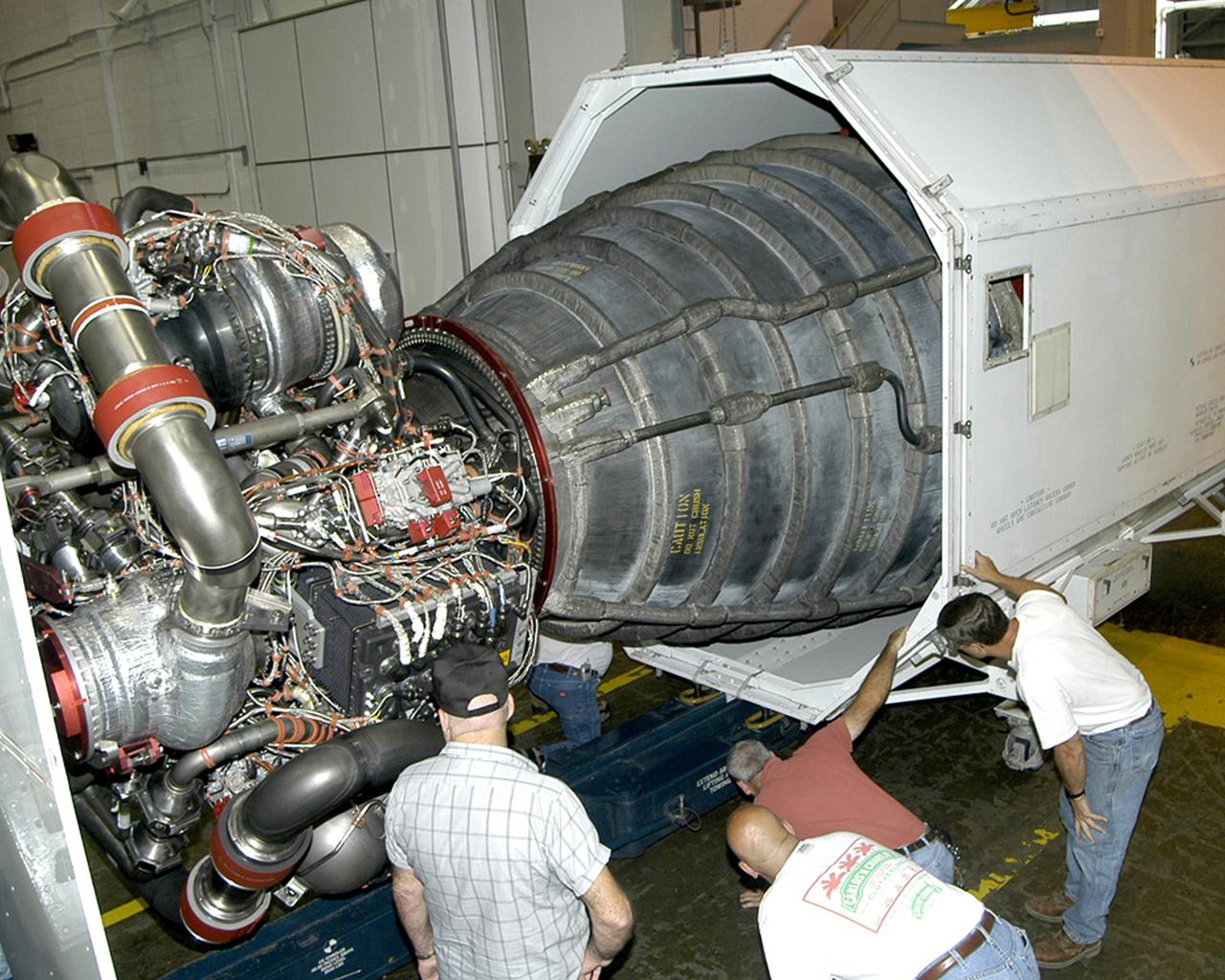
On Oct. 5, 2004, SSC shipped the last of the three Space Shuttle Main Engines to NASA's Kennedy Space Center for installation on Space Shuttle Discovery for STS-114, NASA's Return to Flight mission.
Return to Flight SSME loaded for shipping