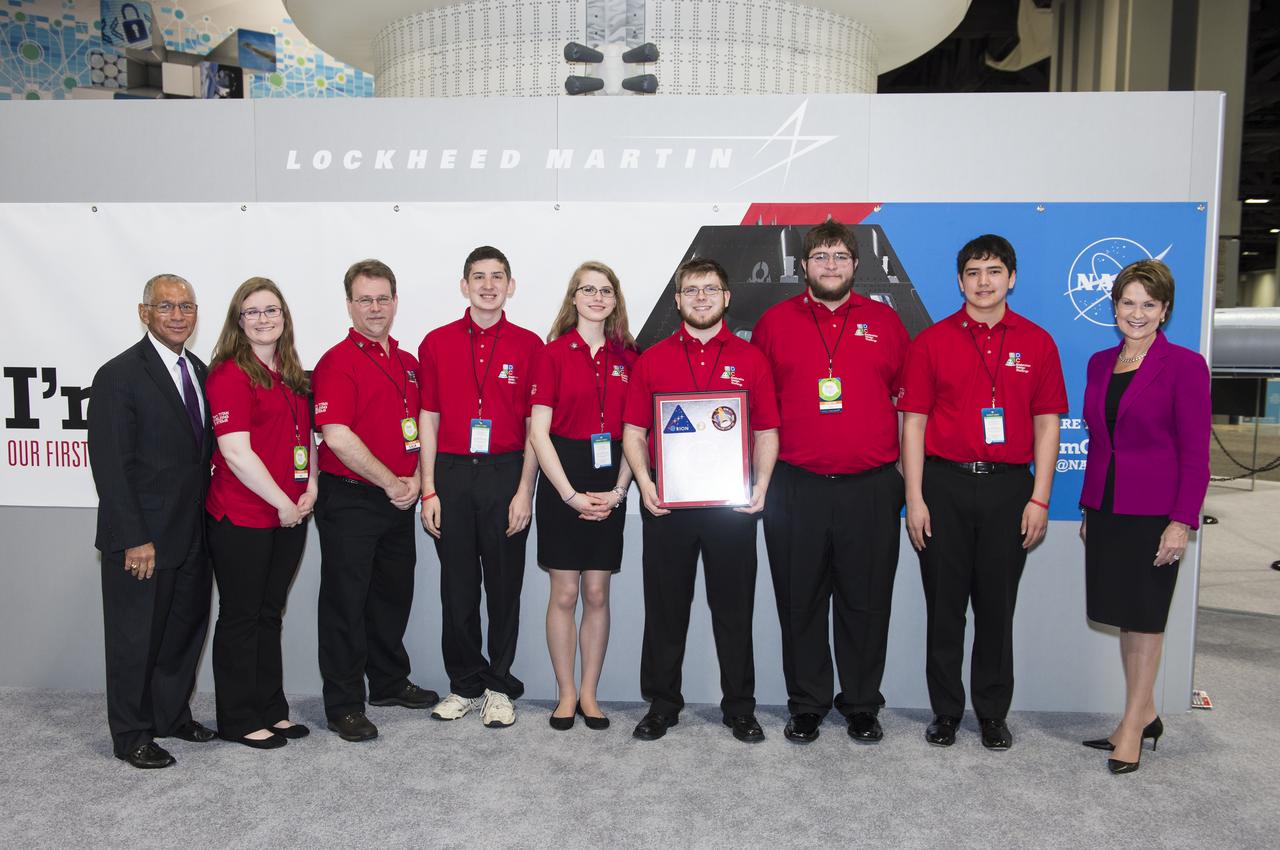
Team Titan Shielding Systems poses with NASA Administrator Charles Bolden and Lockheed Martin CEO, Marillyn Hewson. Team Titan Shielding Systems was one of the semi-finalists in the Exploration Design Challenge. The goal of the Exploration Design Challenge is for students to research and design ways to protect astronauts from space radiation. The winner of the challenge was announced on April 25, 2014 at the USA Science and Engineering Festival at the Washington Convention Center in Washington, DC. Photo Credit: (NASA/Aubrey Gemignani)
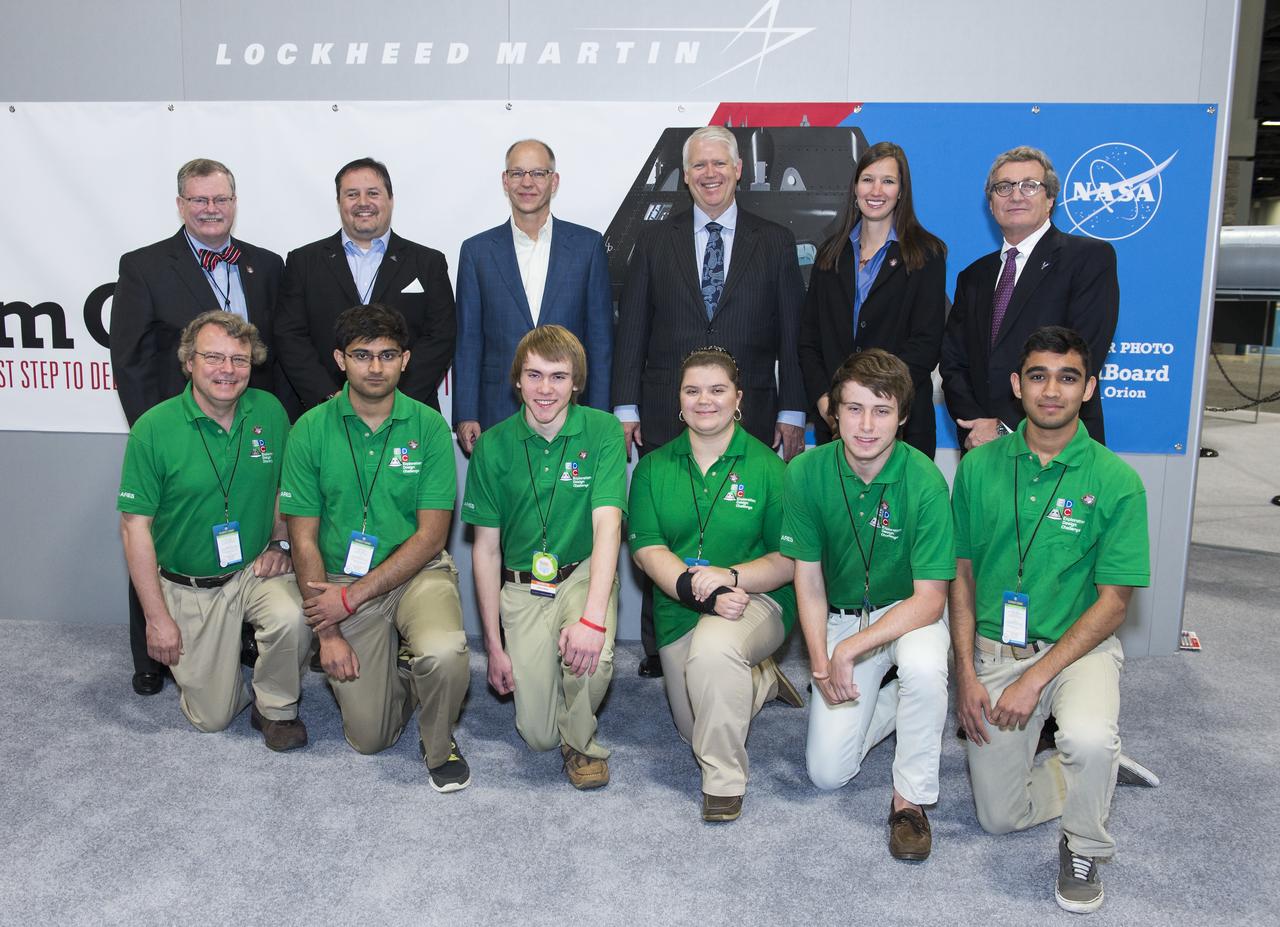
Sponsors of Team ARES pose for a group photo with the winning high school team in the Exploration Design Challenge. Team ARES from the Governors School for Science and Technology in Hampton, Va. won the challenge with their radiation shield design, which will be built and flown aboard the Orion/EFT-1. The award was announced at the USA Science and Engineering Festival on April 25, 2014 at the Washington Convention Center. Photo Credit: (NASA/Aubrey Gemignani)
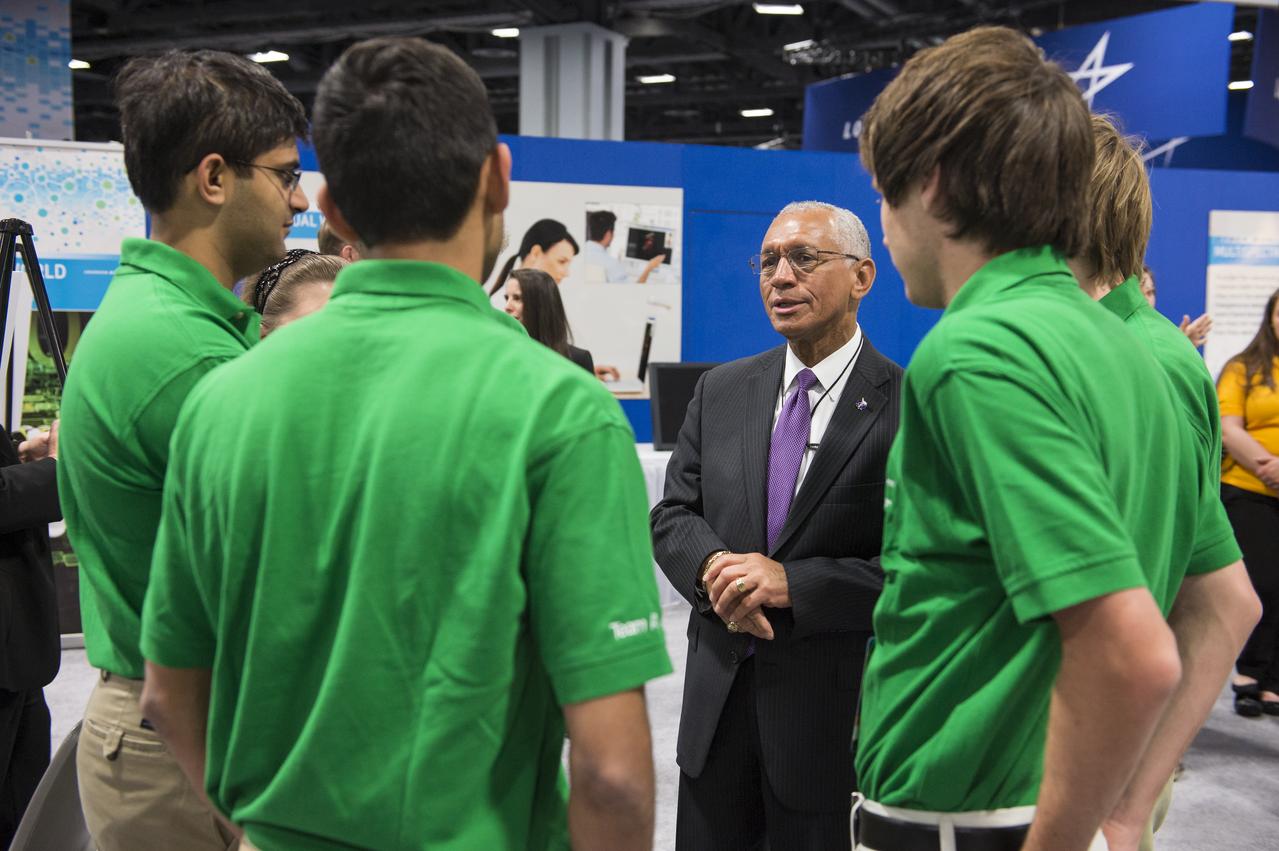
NASA’s Administrator, Charles Bolden speaks with the winning high school team in the Exploration Design Challenge prior to the award ceremony. Team ARES from the Governors School for Science and Technology in Hampton, Va. won the challenge with their radiation shield design, which will be built and flown aboard the Orion/EFT-1. The award was announced at the USA Science and Engineering Festival on April 25, 2014 at the Washington Convention Center. Photo Credit: (NASA/Aubrey Gemignani)
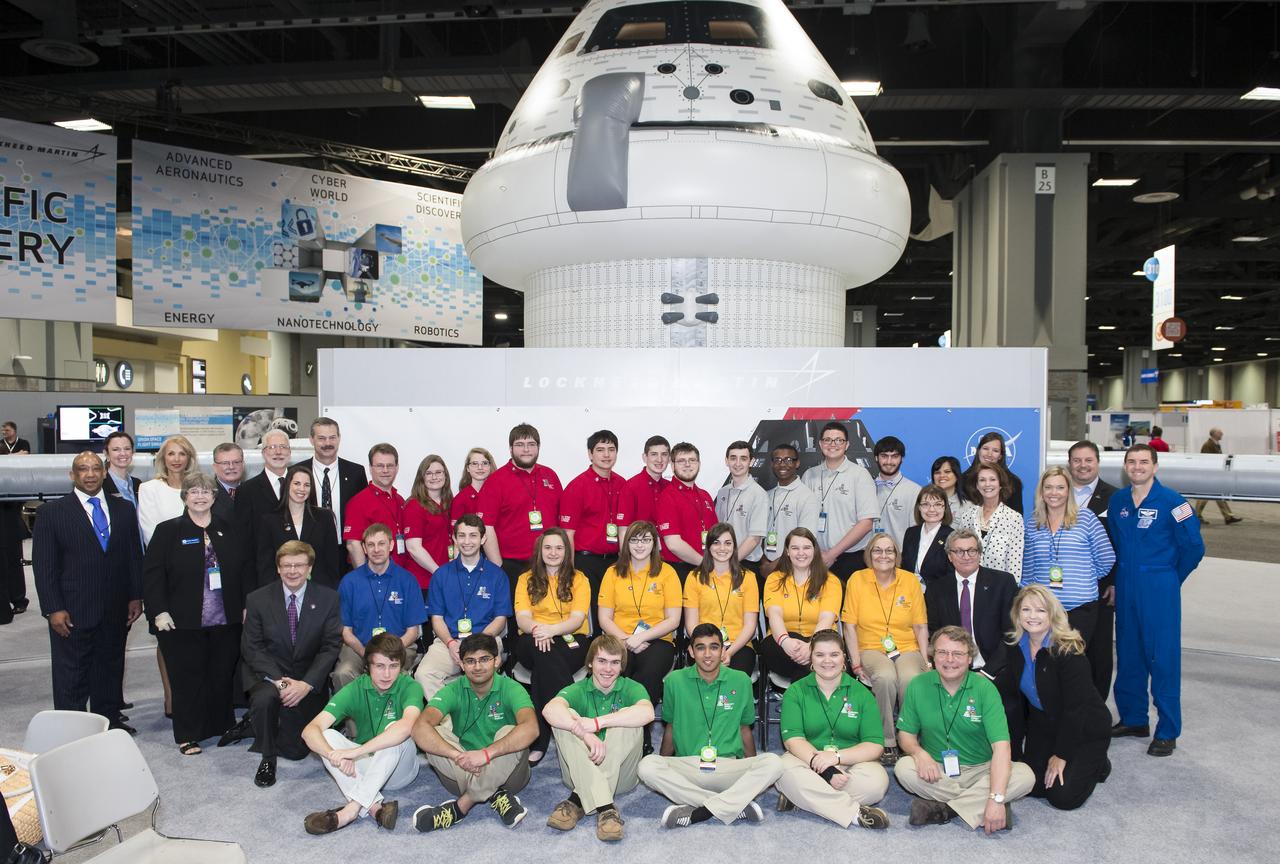
Sponsors of all of the semi-finalist teams in the Exploration Design Challenge pose for a group photo with the teams. Team ARES from the Governors School for Science and Technology in Hampton, Va. won the challenge with their radiation shield design, which will be built and flown aboard the Orion/EFT-1. The award was announced at the USA Science and Engineering Festival on April 25, 2014 at the Washington Convention Center. Photo Credit: (NASA/Aubrey Gemignani)
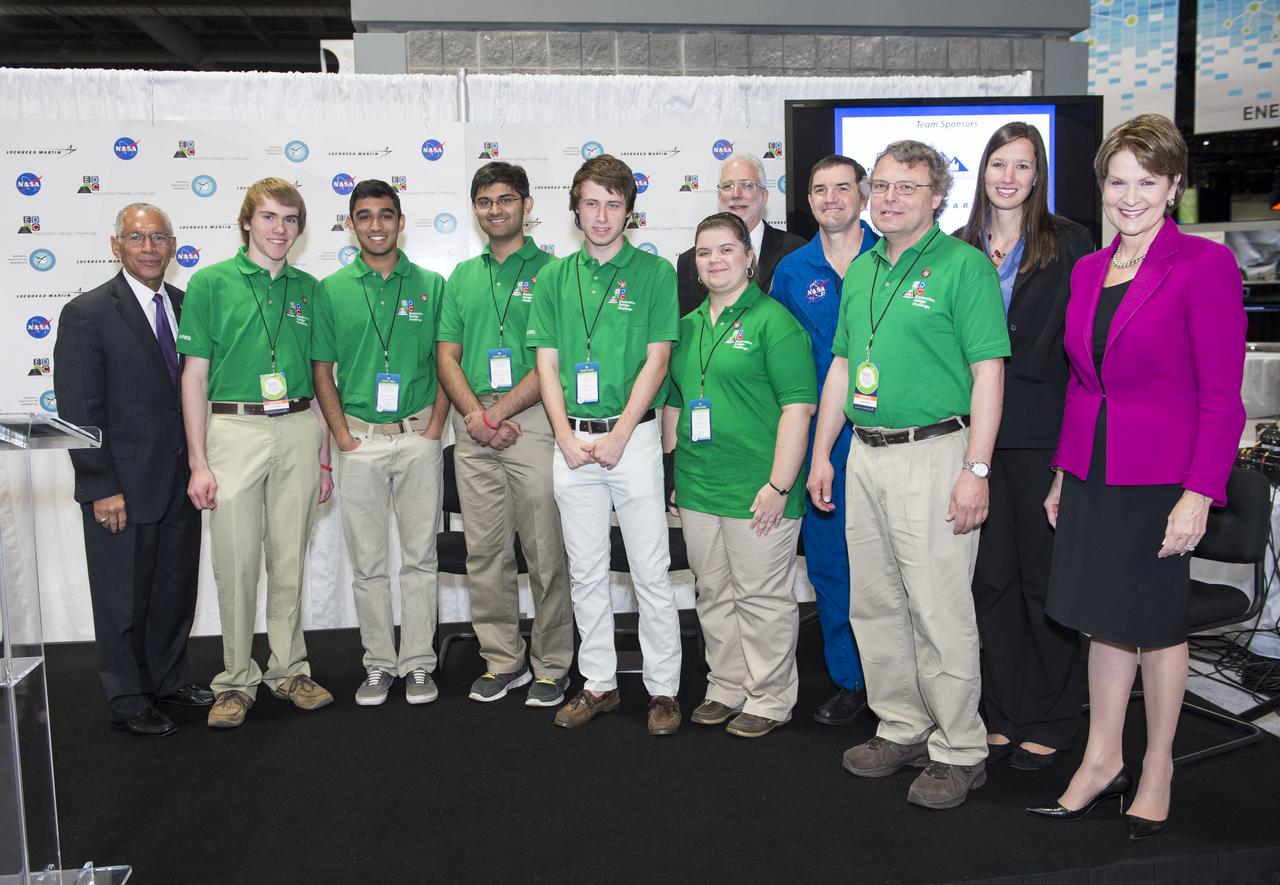
NASA’s Administrator, Charles Bolden (left), President/CEO of Lockheed Martin, Marillyn Hewson (right), and astronaut Rex Walheim (back row) pose for a group photo with the winning high school team in the Exploration Design Challenge. Team ARES from the Governors School for Science and Technology in Hampton, Va. won the challenge with their radiation shield design, which will be built and flown aboard the Orion/EFT-1. The award was announced at the USA Science and Engineering Festival on April 25, 2014 at the Washington Convention Center. Photo Credit: (NASA/Aubrey Gemignani)
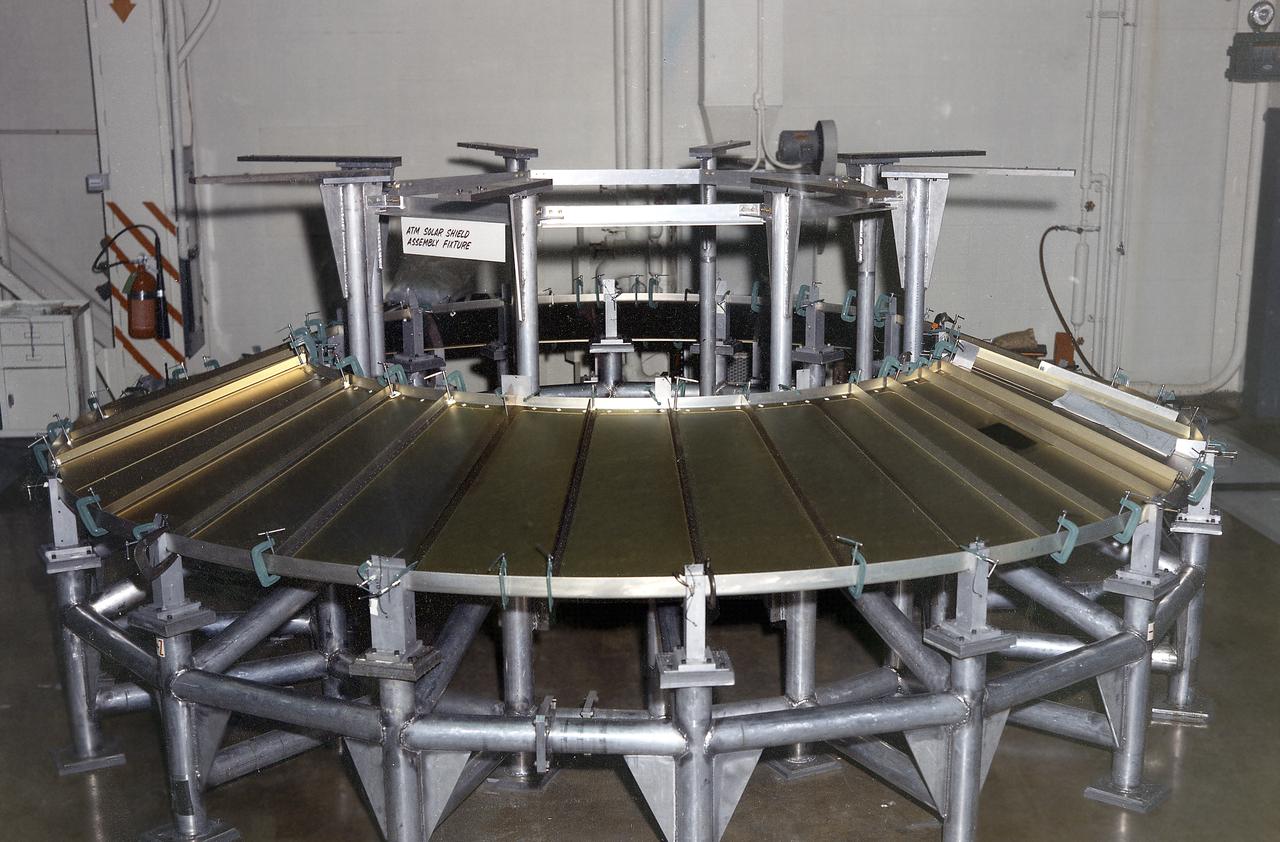
The Apollo Telescope Mount (ATM) was designed and developed by the Marshall Space Flight Center and served as the primary scientific instrument unit aboard Skylab (1973-1979). The ATM consisted of eight scientific instruments as well as a number of smaller experiments. One scientific instrument was the ATM solar shield that formed the base for the rack/frame instrument and the instrument canister. The solar shield contained aperture doors for each instrument to protect against solar radiation and space contamination.
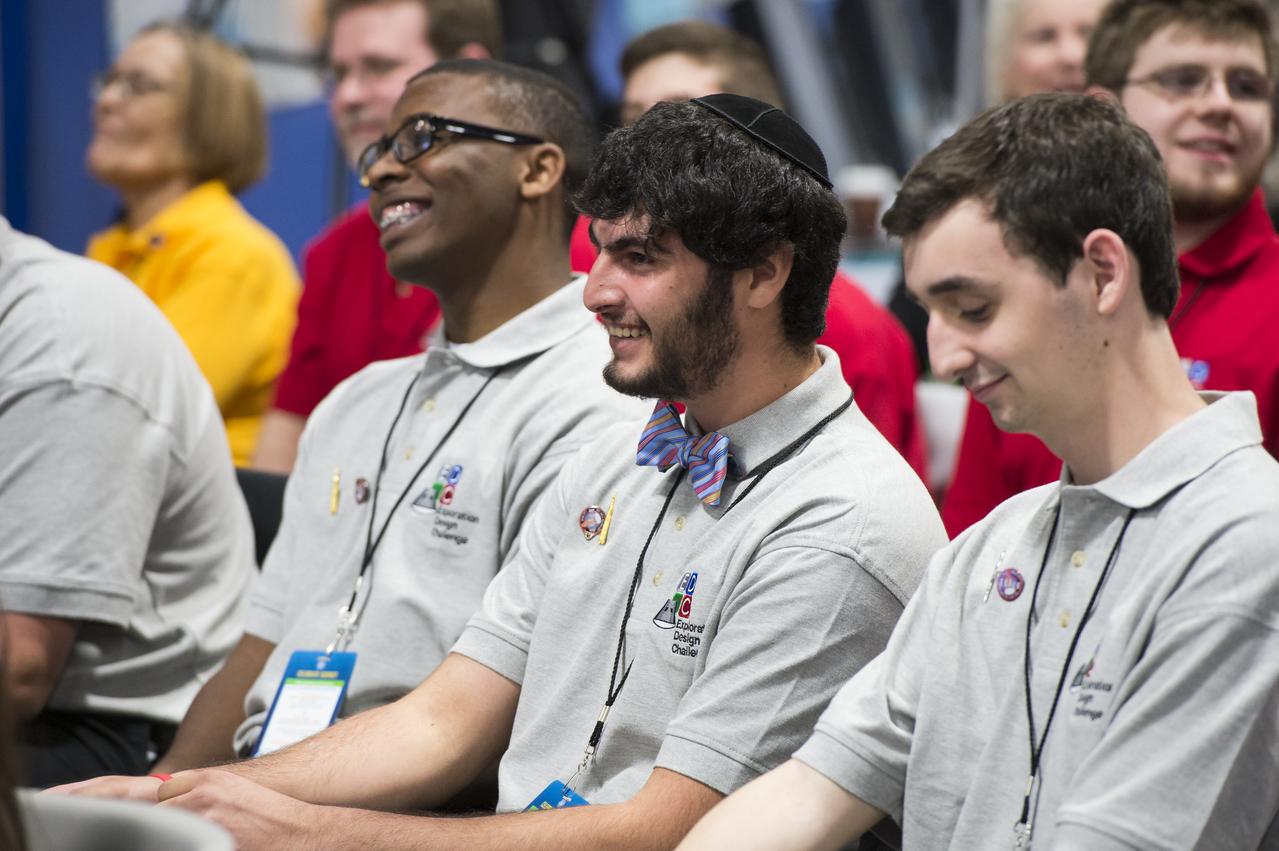
Team Lore listens in the audience as NASA Administrator Charles Bolden speaks at the event to announce the winner of the Exploration Design Challenge. Team Lore was one of the semi-finalists in the challenge. The goal of the Exploration Design Challenge is for students to research and design ways to protect astronauts from space radiation. The winner of the challenge was announced on April 25, 2014 at the USA Science and Engineering Festival at the Washington Convention Center in Washington, DC. Photo Credit: (NASA/Aubrey Gemignani)
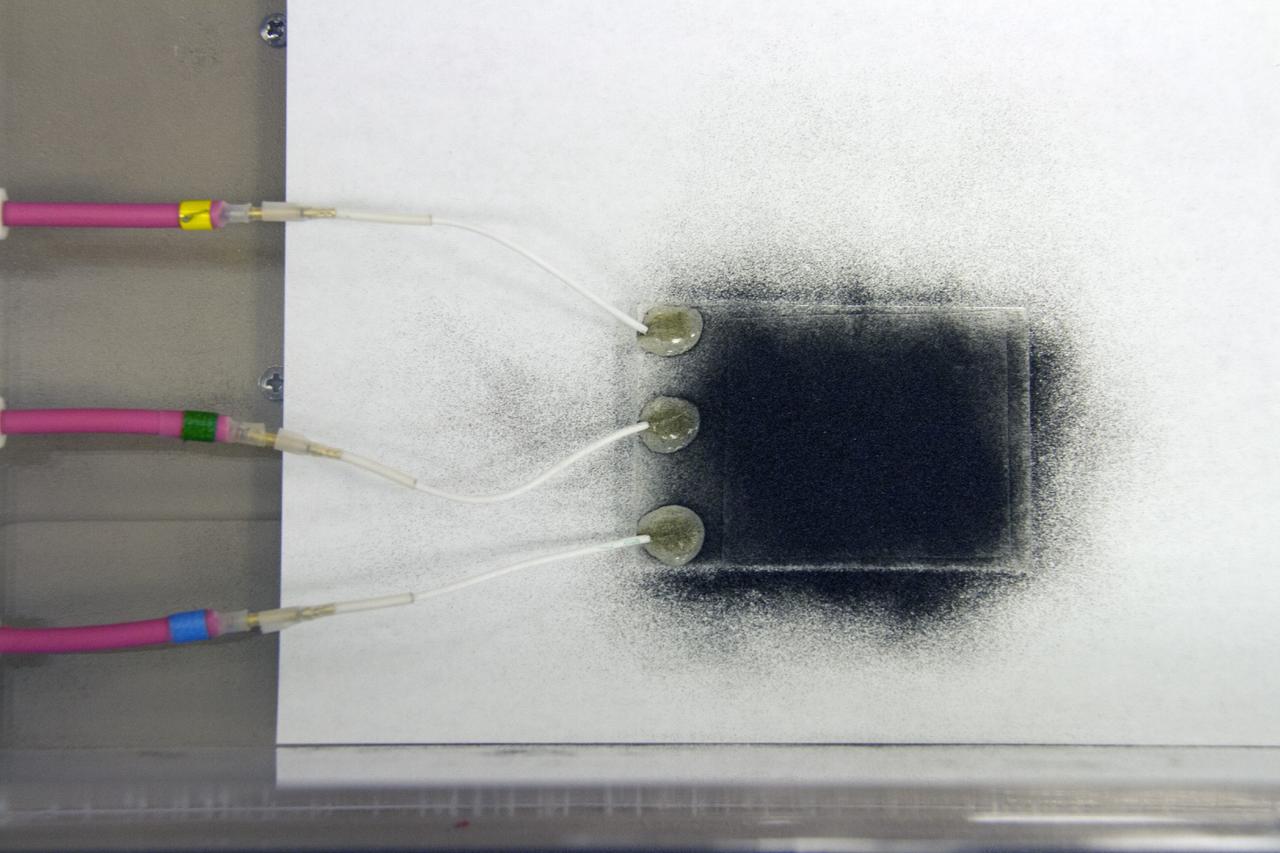
CAPE CANAVERAL, Fla. -- Dust particles are readied for an experiment for the Electrodynamic Dust Shield for Dust Mitigation project in the Electrostatics and Surface Physics Laboratory in the SwampWorks at NASA's Kennedy Space Center in Florida. The fabricated material is designed to mimic the dust on the lunar surface. The technology works by creating an electric field that propagates out like the ripples on a pond. This could prevent dust accumulation on spacesuits, thermal radiators, solar panels, optical instruments and view ports for future lunar and Mars exploration activities. CAPE CANAVERAL, Fla. -- Preparations are underway to conduct a dust particle experiment for the Electrodynamic Dust Shield for Dust Mitigation project in the Electrostatics and Surface Physics Laboratory in the SwampWorks at NASA's Kennedy Space Center in Florida. The technology works by creating an electric field that propagates out like the ripples on a pond. This could prevent dust accumulation on spacesuits, thermal radiators, solar panels, optical instruments and view ports for future lunar and Mars exploration activities.
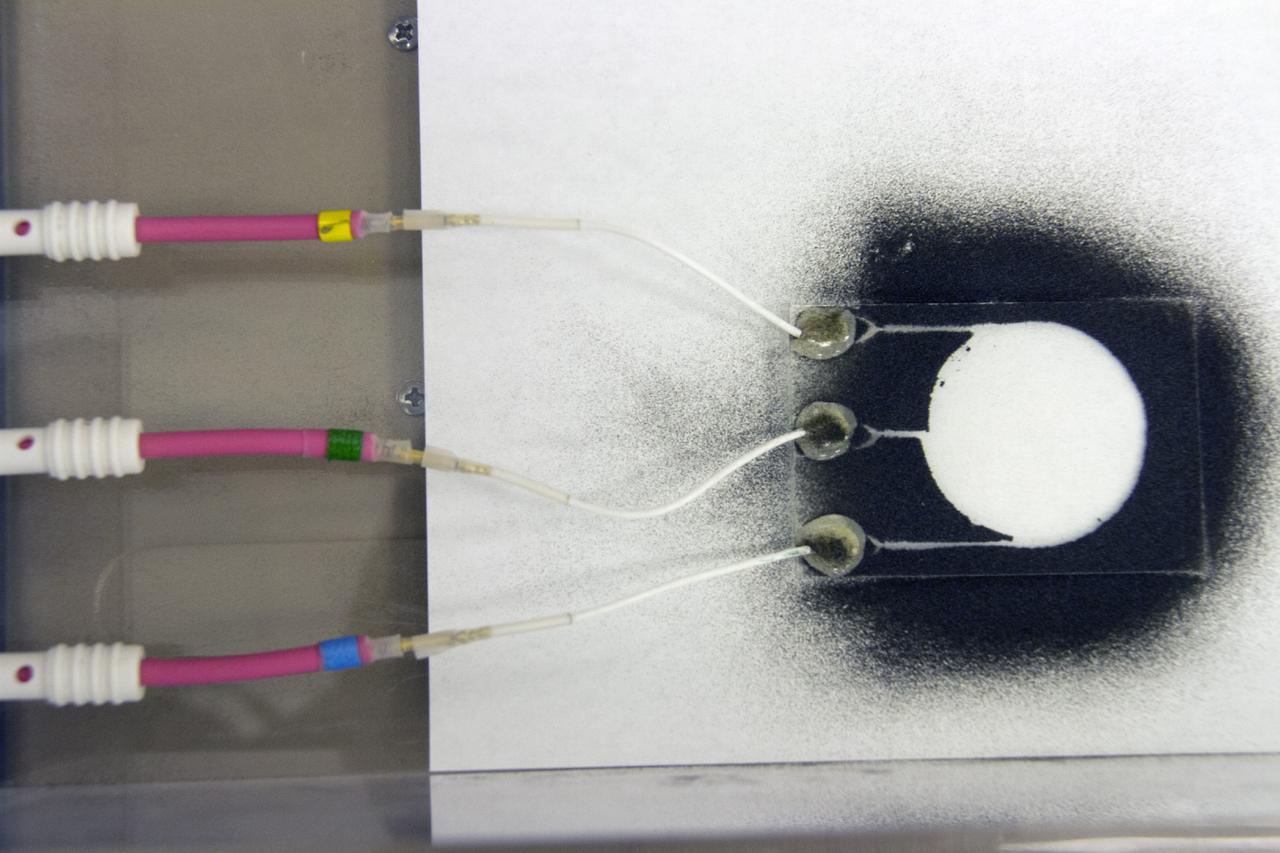
CAPE CANAVERAL, Fla. -- Dust particles scatter during an experiment for the Electrodynamic Dust Shield for Dust Mitigation project in the Electrostatics and Surface Physics Laboratory in the SwampWorks at NASA's Kennedy Space Center in Florida. The fabricated material is designed to mimic the dust on the lunar surface. The technology works by creating an electric field that propagates out like the ripples on a pond. This could prevent dust accumulation on spacesuits, thermal radiators, solar panels, optical instruments and view ports for future lunar and Mars exploration activities. CAPE CANAVERAL, Fla. -- Preparations are underway to conduct a dust particle experiment for the Electrodynamic Dust Shield for Dust Mitigation project in the Electrostatics and Surface Physics Laboratory in the SwampWorks at NASA's Kennedy Space Center in Florida. The technology works by creating an electric field that propagates out like the ripples on a pond. This could prevent dust accumulation on spacesuits, thermal radiators, solar panels, optical instruments and view ports for future lunar and Mars exploration activities.
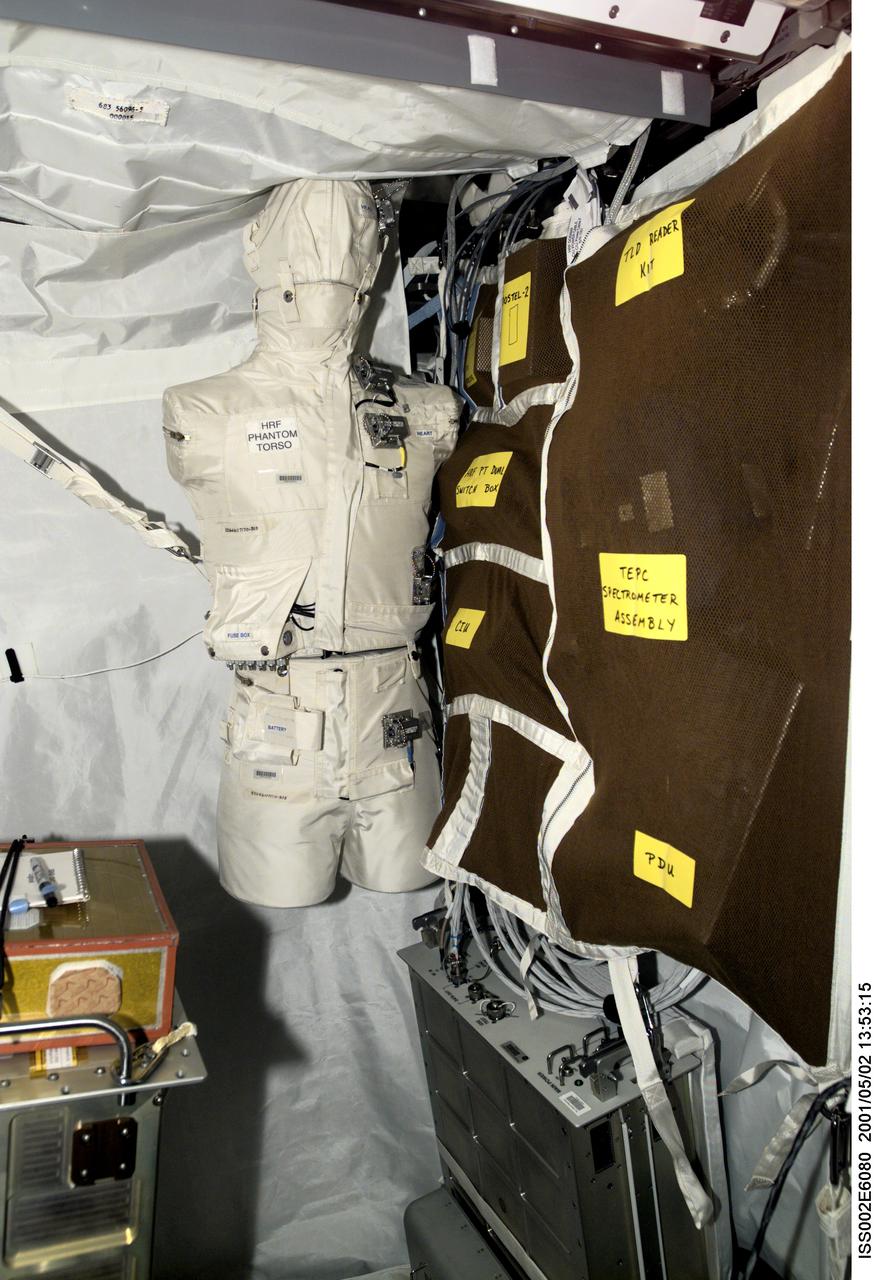
ISS002-E-6080 (2 May 2001) --- The Phantom Torso, seen here in the Human Research Facility (HRF) section of the Destiny/U.S. laboratory on the International Space Station (ISS), is designed to measure the effects of radiation on organs inside the body by using a torso that is similar to those used to train radiologists on Earth. The torso is equivalent in height and weight to an average adult male. It contains radiation detectors that will measure, in real-time, how much radiation the brain, thyroid, stomach, colon, and heart and lung area receive on a daily basis. The data will be used to determine how the body reacts to and shields its internal organs from radiation, which will be important for longer duration space flights. The experiment was delivered to the orbiting outpost during by the STS-100/6A crew in April 2001. Dr. Gautam Badhwar, NASA JSC, Houston, TX, is the principal investigator for this experiment. A digital still camera was used to record this image.
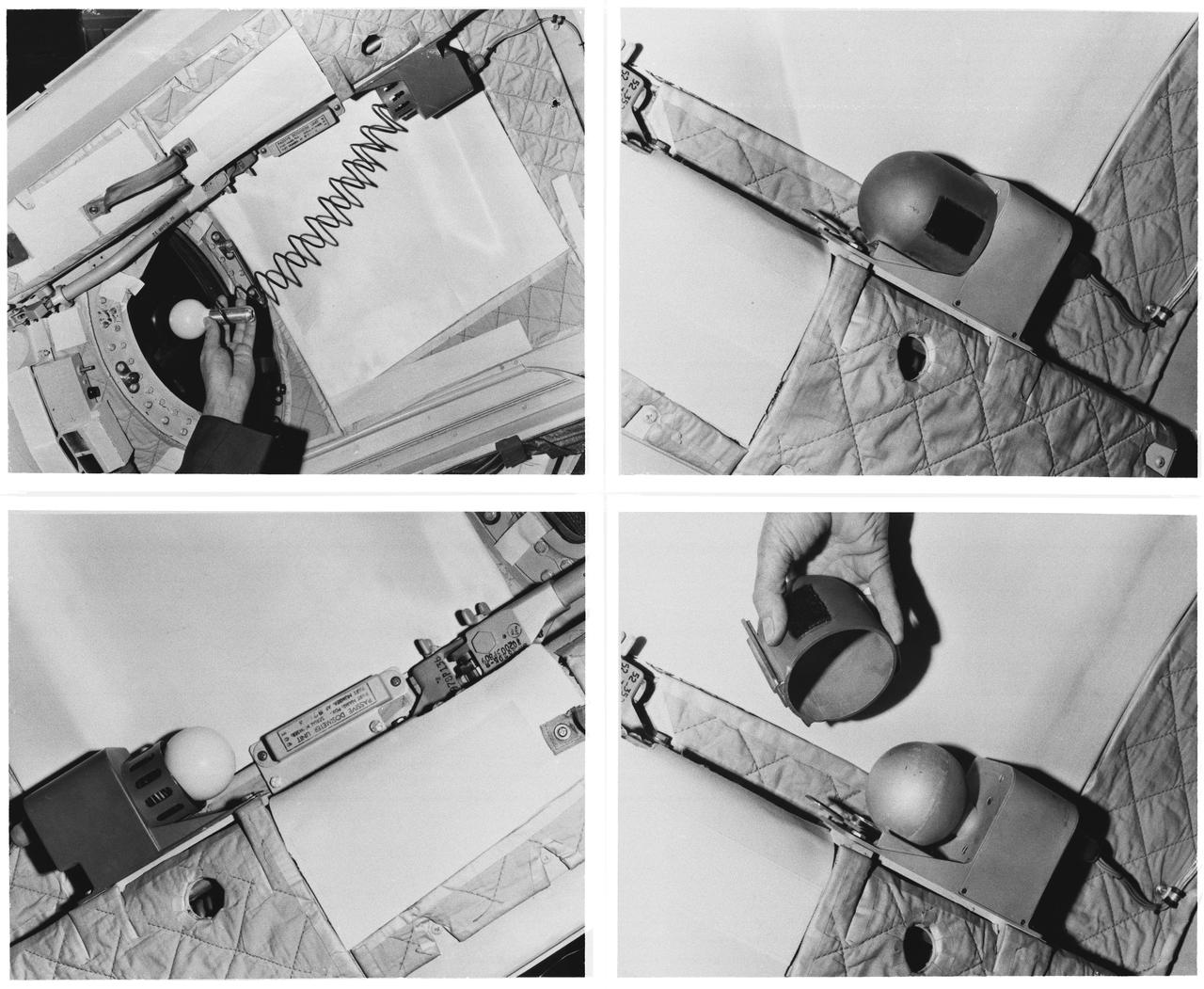
S65-61788 (For release: 11 Dec. 1965) --- Close-up view of equipment which will be used in the D-8 (Radiation in Spacecraft) experiment on the National Aeronautics and Space Administration's Gemini-6 spaceflight. This experiment is designed to make highly accurate measurements of the absorbed dose rate of radiation which penetrates the Gemini spacecraft, and determine the spatial distribution of dose levels inside the spacecraft particularly in the crew area. This is experimentation of the U.S. Air Force Weapons Laboratory, Kirtland AFB, N.M. LOWER LEFT: The second ionization chamber, this one is unshielded. This chamber can be removed from its bracket by the astronaut who will periodically take measurements at various locations in the spacecraft. Nearby is Passive Dosimeter Unit which is one of five small packets each containing a standard pocket ionization chamber, gamma electron sensitive film, glass needles and thermo luminescent dosimeters which are mounted at various locations in the cabin. UPPER LEFT: Photo illustrates how ionization chamber can be removed from bracket for measurements. LOWER RIGHT: Shield of bulb-shaped chamber will be removed (shown in photo) as the spacecraft passes through the South Atlantic anomaly, the area where the radiation belt dips closest to Earth's surface. UPPER RIGHT: Dome-shaped object is shield covering one of two Tissue Equivalent Ionization Chambers (sensors) which will read out continuously the instantaneous rate at which dose is delivered during the flight. This chamber is mounted permanently. The information will be recorded aboard the spacecraft, and will also be received directly by ground stations. This chamber is shielded to simulate the amount of radiation the crew members are receiving beneath their skin. Photo credit: NASA or National Aeronautics and Space Administration
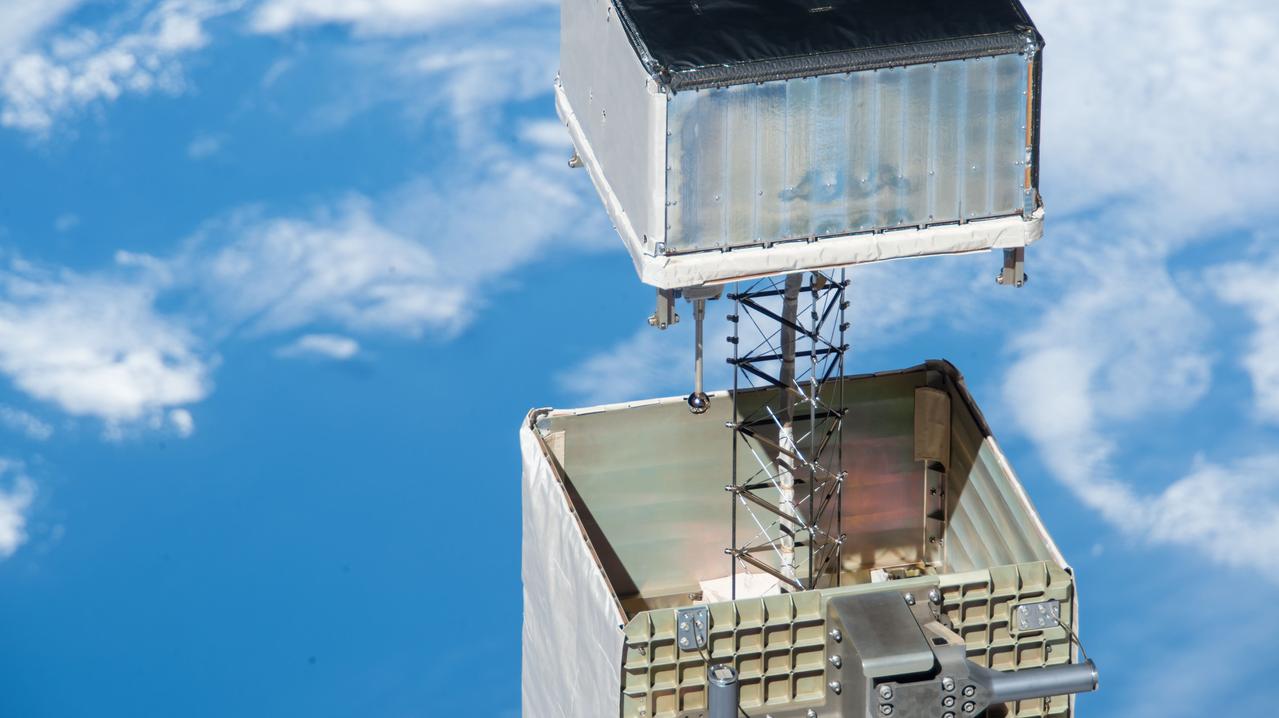
iss057e080455 (11/12/2018) --- A view of the Space Environment Data Acquisition Equipment - Attached Payload (SEDA-AP) located on the Japanese Experiment Module - Exposed Facility (JEM-EF). The SEDA-AP investigation consists of eight small instruments designed to measure the space environment. Five radiation and particle monitors, an electronic device performance monitor, a micro-particle capture , and a space environment exposure device will provide data to help researchers characterize the environment around space vehicles in low-Earth orbit, which will be used to develop shielding to ensure future spacecraft are safe.
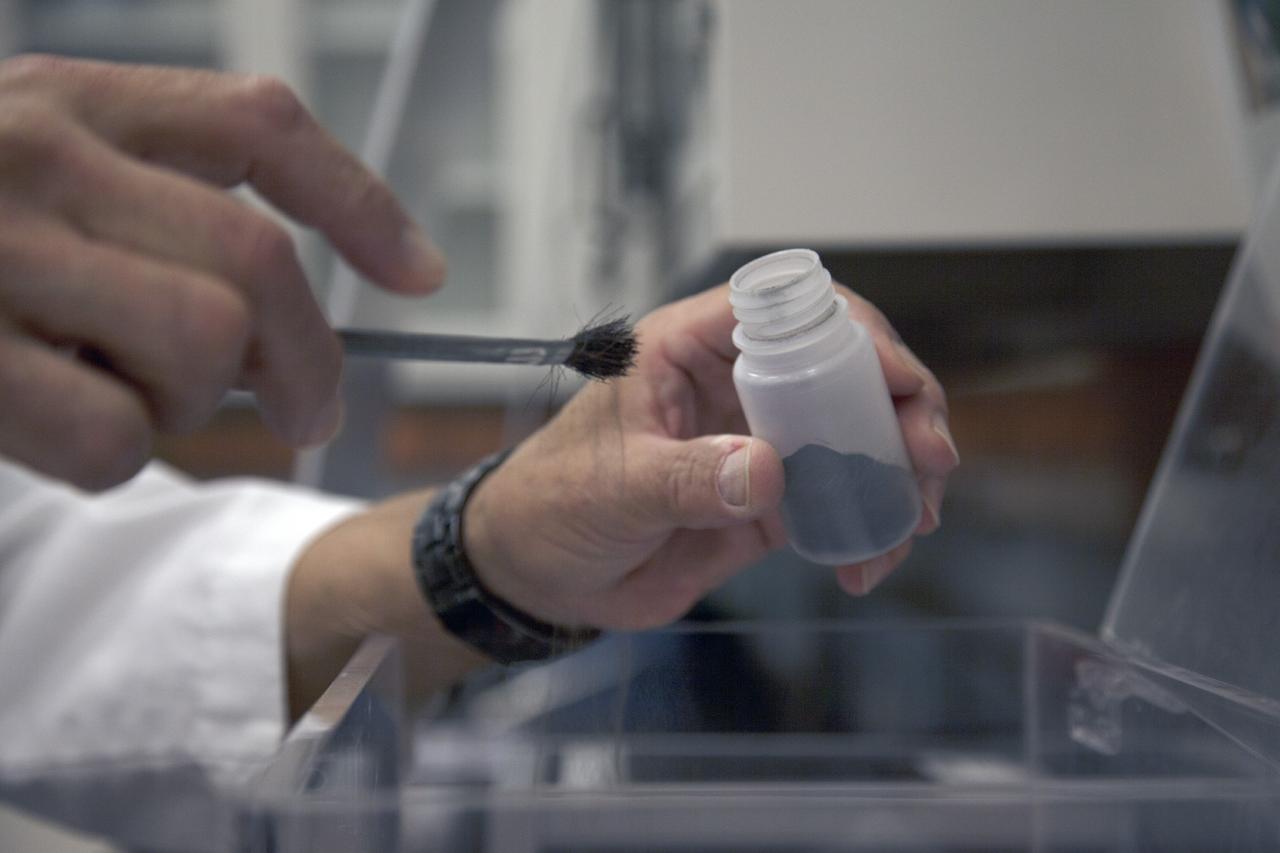
CAPE CANAVERAL, Fla. -- Dr. Carlos Calle, senior research scientist on the Electrodynamic Dust Shield for Dust Mitigation project, works with dust fabricated for use in his experiments in the Electrostatics and Surface Physics Laboratory in the SwampWorks at NASA's Kennedy Space Center in Florida. The fabricated material is designed to mimic the dust on the lunar surface. The technology works by creating an electric field that propagates out like the ripples on a pond. This could prevent dust accumulation on spacesuits, thermal radiators, solar panels, optical instruments and view ports for future lunar and Mars exploration activities. Electrodynamic dust shield, or EDS, technology is based on concepts originally developed by NASA as early as 1967 and later by the University of Tokyo. In 2003, NASA, in collaboration with the University of Arkansas at Little Rock, started development of the EDS for dust particle removal from solar panels to be used on future missions to the moon, an asteroid or Mars. A flight experiment to expose the dust shields to the space environment currently is under development. For more information, visit: http://www.nasa.gov/content/scientists-developing-ways-to-mitigate-dust-problem-for-explorers/ Photo credit: NASA/Dan Casper
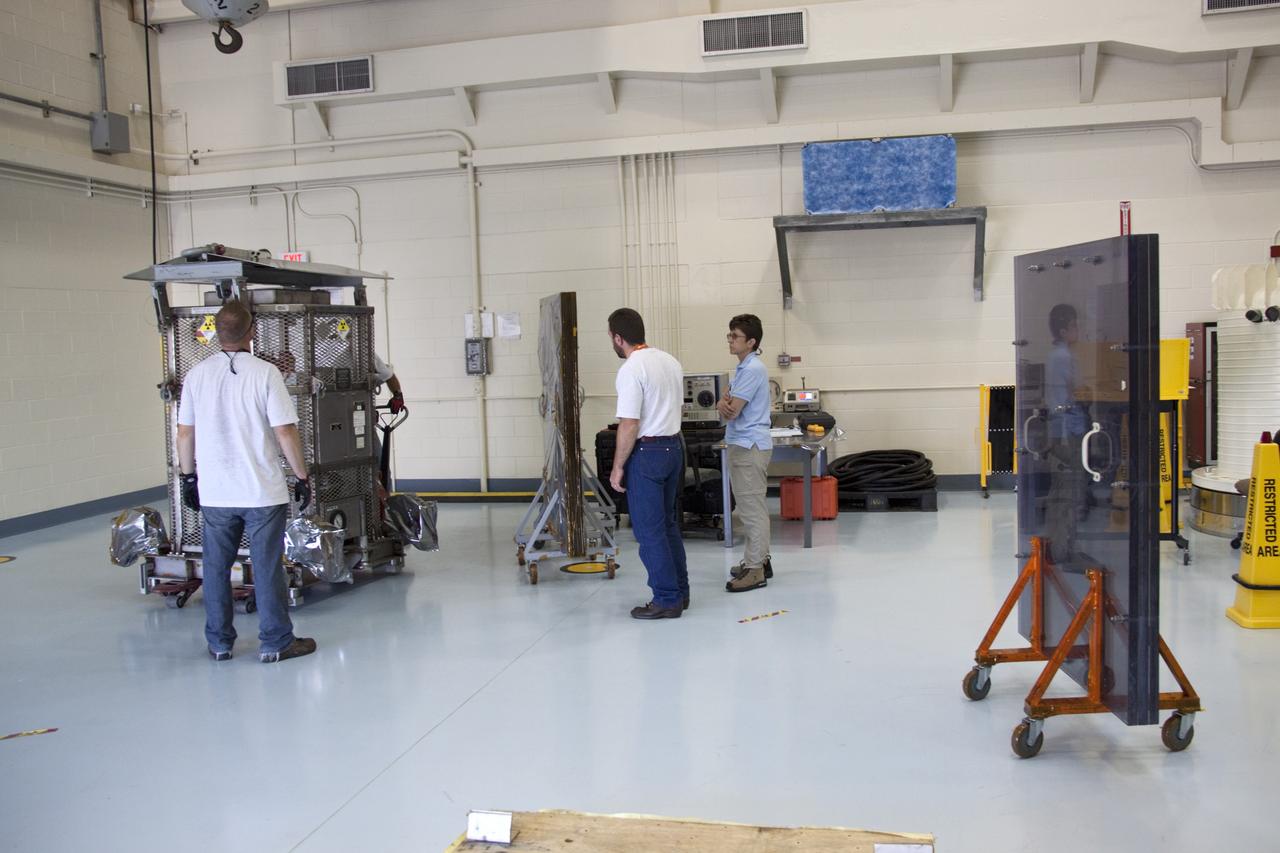
CAPE CANAVERAL, Fla. -- Department of Energy workers position mobile plexiglass radiation shields around the multi-mission radioisotope thermoelectric generator (MMRTG) for NASA's Mars Science Laboratory (MSL) mission upon its arrival in the high bay of the RTG storage facility (RTGF) at NASA's Kennedy Space Center in Florida. The shields are designed to minimize the employees' radiation exposure. The MMRTG is enclosed in a mesh container, known as the "gorilla cage," which protects it during transport and allows any excess heat generated to dissipate into the air. The MMRTG is returning to the RTGF following a fit check on MSL's Curiosity rover in the Payload Hazardous Servicing Facility (PHSF). The MMRTG will generate the power needed for the mission from the natural decay of plutonium-238, a non-weapons-grade form of the radioisotope. Heat given off by this natural decay will provide constant power through the day and night during all seasons. MSL's components include a compact car-sized rover, Curiosity, which has 10 science instruments designed to search for signs of life, including methane, and help determine if the gas is from a biological or geological source. Waste heat from the MMRTG will be circulated throughout the rover system to keep instruments, computers, mechanical devices and communications systems within their operating temperature ranges. Launch of MSL aboard a United Launch Alliance Atlas V rocket is targeted for Nov. 25 from Space Launch Complex 41 on Cape Canaveral Air Force Station. For more information, visit http://www.nasa.gov/msl. Photo credit: NASA/Troy Cryder
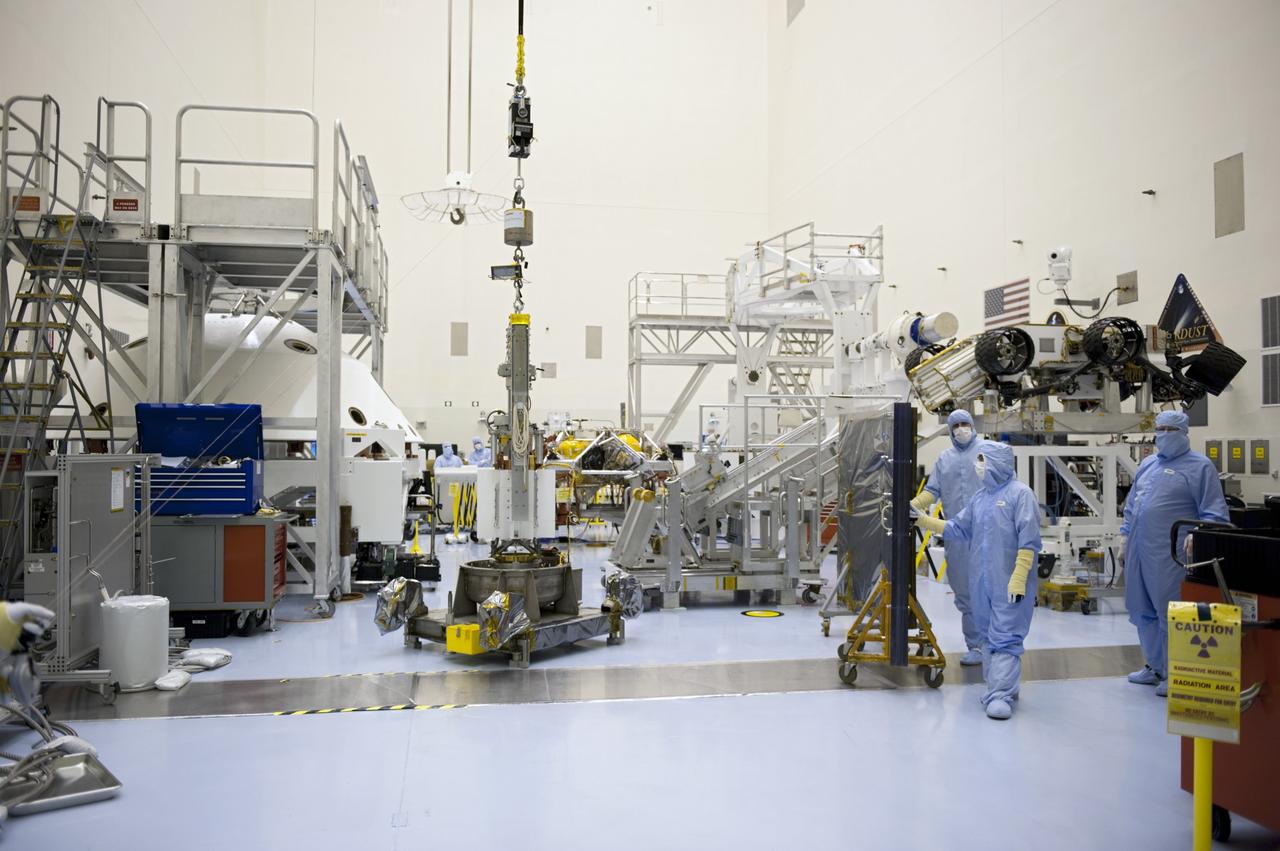
CAPE CANAVERAL, Fla. -- In the high bay of the Payload Hazardous Servicing Facility at NASA's Kennedy Space Center in Florida, the multi-mission radioisotope thermoelectric generator (MMRTG) for NASA's Mars Science Laboratory (MSL) mission, still connected to the turning fixture, rests on a support base following the MMRTG fit check on the Curiosity rover. A mobile plexiglass radiation shield is in place between the MMRTG and the spacecraft technicians, at right, to help minimize the employees' radiation exposure. The MMRTG will generate the power needed for the mission from the natural decay of plutonium-238, a non-weapons-grade form of the radioisotope. Heat given off by this natural decay will provide constant power through the day and night during all seasons. MSL's components include a car-sized rover, Curiosity, which has 10 science instruments designed to search for signs of life, including methane, and help determine if the gas is from a biological or geological source. Waste heat from the MMRTG will be circulated throughout the rover system to keep instruments, computers, mechanical devices and communications systems within their operating temperature ranges. Launch of MSL aboard a United Launch Alliance Atlas V rocket is targeted for Nov. 25 from Space Launch Complex 41 on Cape Canaveral Air Force Station. For more information, visit http://www.nasa.gov/msl. Photo credit: NASA/Kim Shiflett
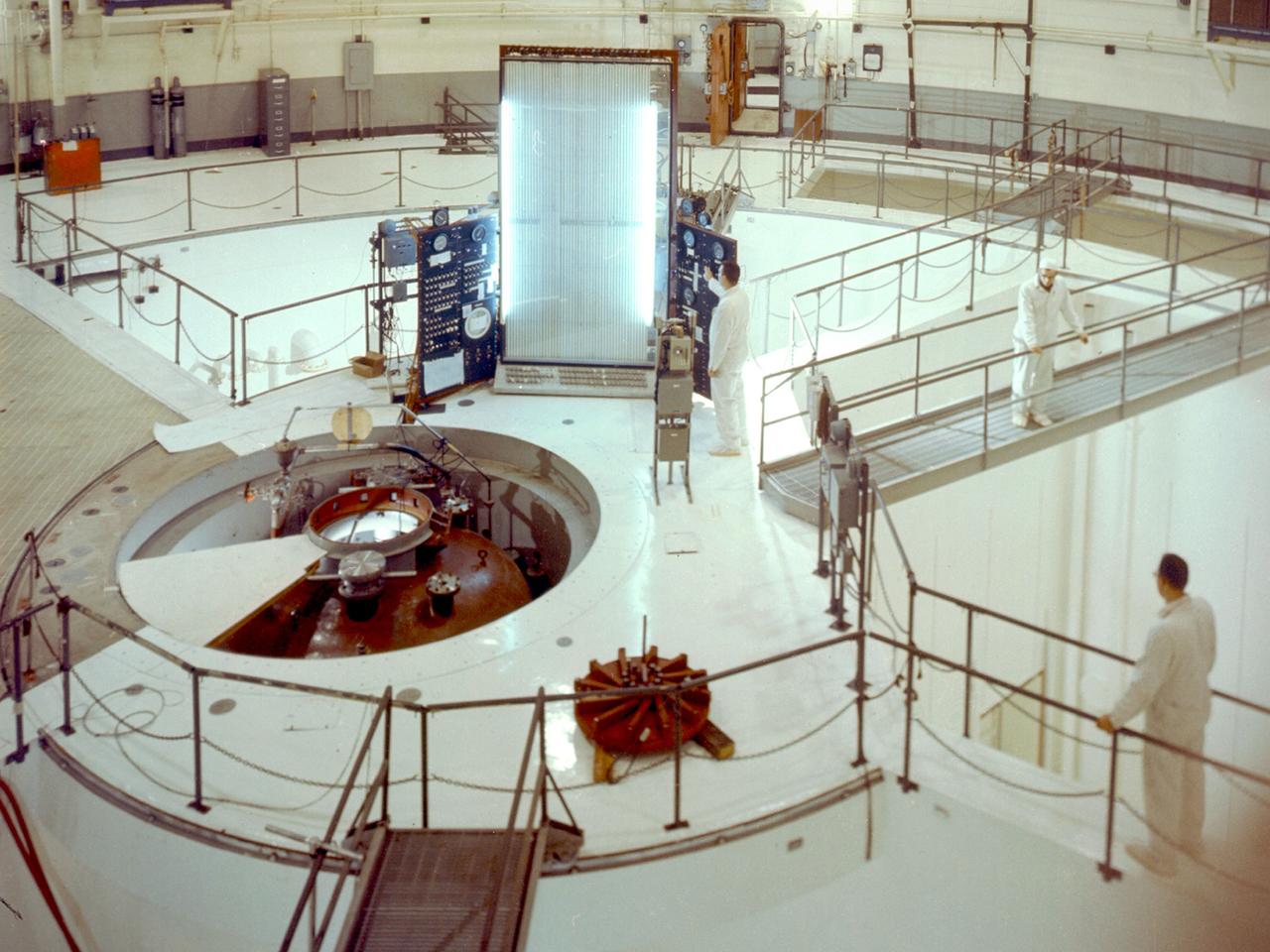
A view inside the 55-foot high containment vessel of the National Aeronautics and Space Administration (NASA) Plum Brook Reactor Facility in Sandusky, Ohio. The 60-megawatt test reactor went critical for the first time in 1961 and began its full-power research operations in 1963. From 1961 to 1973, this reactor performed some of the nation’s most advanced nuclear research. The reactor was designed to determine the behavior of metals and other materials after long durations of irradiation. The materials would be used to construct a nuclear-powered rocket. The reactor core, where the chain reaction occurred, sat at the bottom of the tubular pressure vessel, seen here at the center of the shielding pool. The core contained fuel rods with uranium isotopes. A cooling system was needed to reduce the heat levels during the reaction. A neutron-impervious reflector was also employed to send many of the neutrons back to the core. The Plum Brook Reactor Facility was constructed from high-density concrete and steel to prevent the excess neutrons from escaping the facility, but the water in the pool shielded most of the radiation. The water, found in three of the four quadrants served as a reflector, moderator, and coolant. In this photograph, the three 20-ton protective shrapnel shields and hatch have been removed from the top of the pressure tank revealing the reactor tank. An overhead crane could be manipulated to reach any section of this room. It was used to remove the shrapnel shields and transfer equipment.
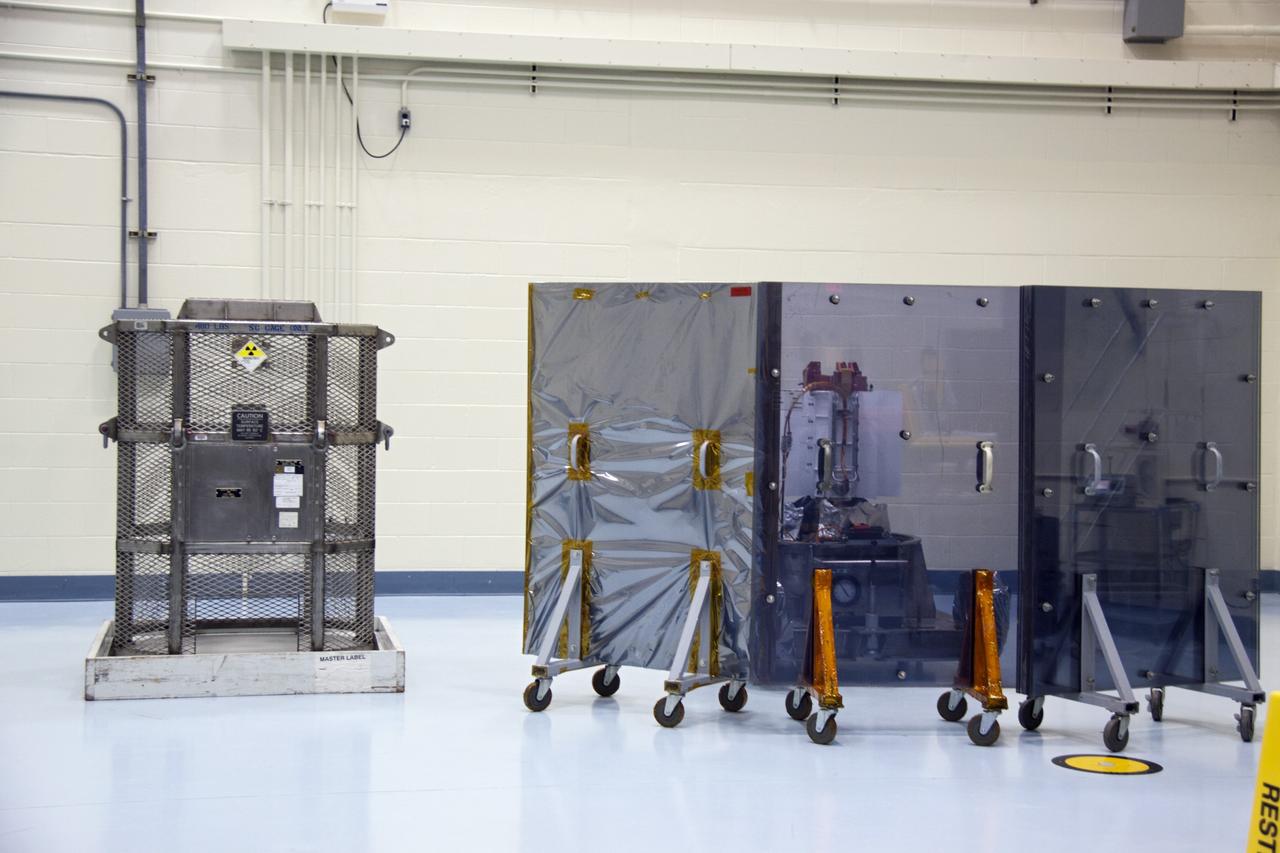
CAPE CANAVERAL, Fla. -- The multi-mission radioisotope thermoelectric generator (MMRTG) for NASA's Mars Science Laboratory (MSL) mission is position behind mobile plexiglass radiation shields in the high bay of the RTG storage facility (RTGF) at NASA's Kennedy Space Center in Florida. The MMRTG was returned to the RTGF following a fit check on MSL's Curiosity rover in the Payload Hazardous Servicing Facility (PHSF). The generator will remain in the RTGF until is moved to the pad for integration on the rover. The MMRTG will generate the power needed for the mission from the natural decay of plutonium-238, a non-weapons-grade form of the radioisotope. Heat given off by this natural decay will provide constant power through the day and night during all seasons. MSL's components include a compact car-sized rover, Curiosity, which has 10 science instruments designed to search for signs of life, including methane, and help determine if the gas is from a biological or geological source. Waste heat from the MMRTG will be circulated throughout the rover system to keep instruments, computers, mechanical devices and communications systems within their operating temperature ranges. Launch of MSL aboard a United Launch Alliance Atlas V rocket is targeted for Nov. 25 from Space Launch Complex 41 on Cape Canaveral Air Force Station. For more information, visit http://www.nasa.gov/msl. Photo credit: NASA/Troy Cryder
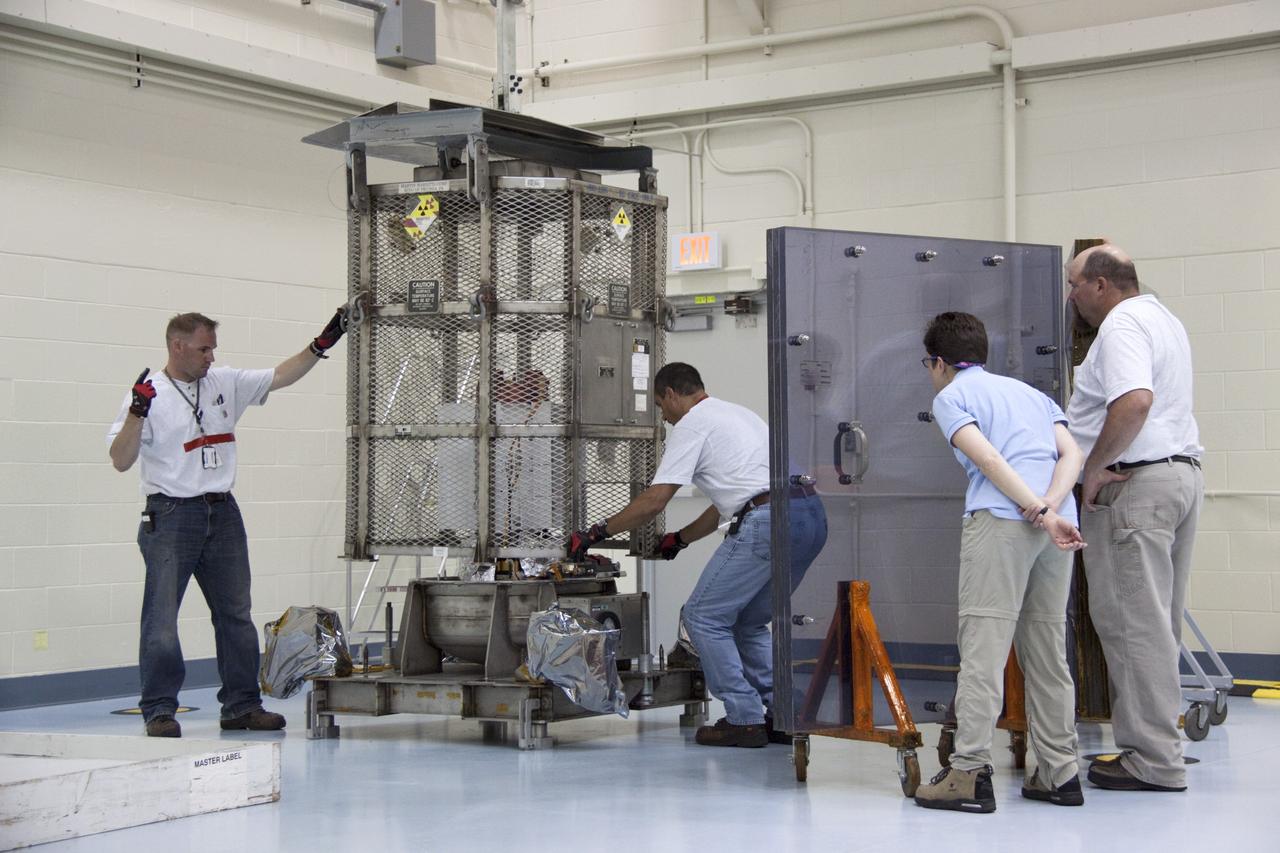
CAPE CANAVERAL, Fla. -- In the high bay of the RTG storage facility (RTGF) at NASA's Kennedy Space Center in Florida, Department of Energy workers guide the mesh container enclosing the multi-mission radioisotope thermoelectric generator (MMRTG) for NASA's Mars Science Laboratory (MSL) mission as it is lifted by a crane. The container, known as the "gorilla cage," protects the MMRTG during transport and allows any excess heat generated to dissipate into the air. The cage is being removed from around the MMRTG following it return to the RTGF from a fit check on MSL's Curiosity rover in the Payload Hazardous Servicing Facility (PHSF). The workers at right are observing the operation from behind a mobile plexiglass radiation shield to minimize their radiation exposure. The MMRTG will generate the power needed for the mission from the natural decay of plutonium-238, a non-weapons-grade form of the radioisotope. Heat given off by this natural decay will provide constant power through the day and night during all seasons. MSL's components include a compact car-sized rover, Curiosity, which has 10 science instruments designed to search for signs of life, including methane, and help determine if the gas is from a biological or geological source. Waste heat from the MMRTG will be circulated throughout the rover system to keep instruments, computers, mechanical devices and communications systems within their operating temperature ranges. Launch of MSL aboard a United Launch Alliance Atlas V rocket is targeted for Nov. 25 from Space Launch Complex 41 on Cape Canaveral Air Force Station. For more information, visit http://www.nasa.gov/msl. Photo credit: NASA/Troy Cryder
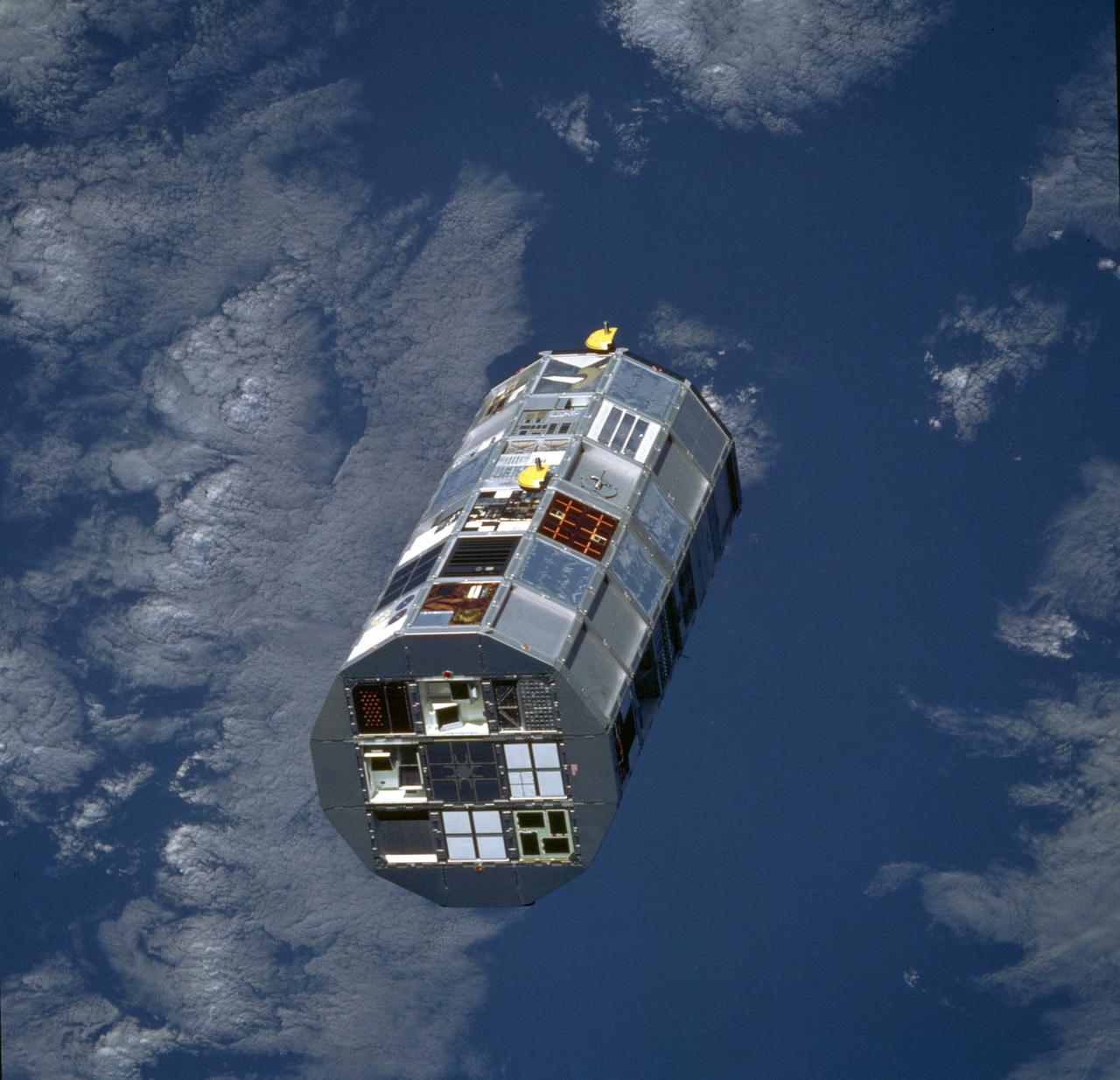
The Long Duration Exposure Facility (LDEF) was designed by the Marshall Space Flight Center (MSFC) to test the performance of spacecraft materials, components, and systems that have been exposed to the environment of micrometeoroids and space debris for an extended period of time. The LDEF proved invaluable to the development of future spacecraft and the International Space Station (ISS). The LDEF carried 57 science and technology experiments, the work of more than 200 investigators. MSFC`s experiments included: Trapped Proton Energy Determination to determine protons trapped in the Earth's magnetic field and the impact of radiation particles; Linear Energy Transfer Spectrum Measurement Experiment which measures the linear energy transfer spectrum behind different shielding configurations; Atomic oxygen-Simulated Out-gassing, an experiment that exposes thermal control surfaces to atomic oxygen to measure the damaging out-gassed products; Thermal Control Surfaces Experiment to determine the effects of the near-Earth orbital environment and the shuttle induced environment on spacecraft thermal control surfaces; Transverse Flat-Plate Heat Pipe Experiment, to evaluate the zero-gravity performance of a number of transverse flat plate heat pipe modules and their ability to transport large quantities of heat; Solar Array Materials Passive LDEF Experiment to examine the effects of space on mechanical, electrical, and optical properties of lightweight solar array materials; and the Effects of Solar Radiation on Glasses. Launched aboard the Space Shuttle Orbiter Challenger's STS-41C mission April 6, 1984, the LDEF remained in orbit for five years until January 1990 when it was retrieved by the Space Shuttle Orbiter Columbia STS-32 mission and brought back to Earth for close examination and analysis.
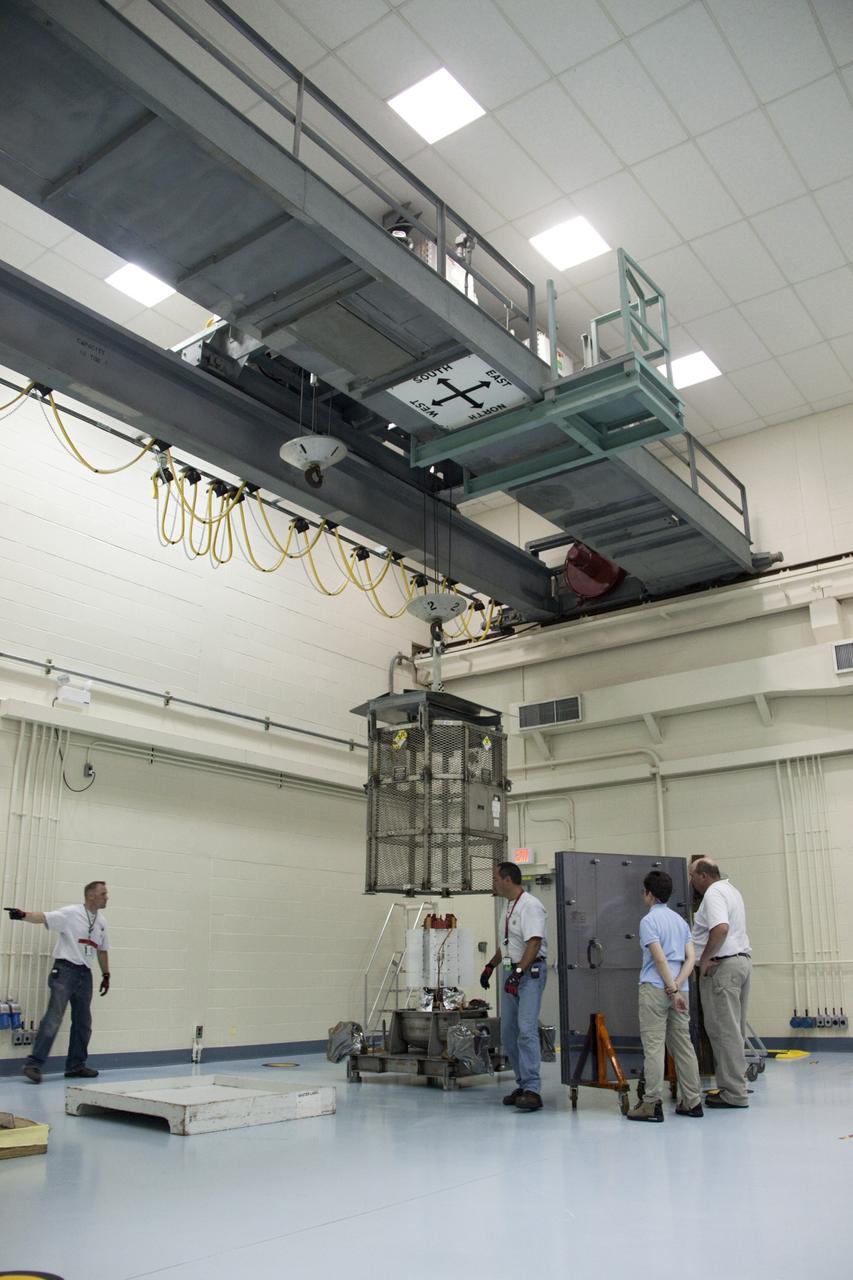
CAPE CANAVERAL, Fla. -- In the high bay of the RTG storage facility (RTGF) at NASA's Kennedy Space Center in Florida, the mesh container enclosing the multi-mission radioisotope thermoelectric generator (MMRTG) for NASA's Mars Science Laboratory (MSL) mission is lifted from around the MMRTG. The container, known as the "gorilla cage," protects the MMRTG during transport and allows any excess heat generated to dissipate into the air. The cage is being removed following the return of the MMRTG to the RTGF from a fit check on MSL's Curiosity rover in the Payload Hazardous Servicing Facility (PHSF). The workers at right are observing the operation from behind a mobile plexiglass radiation shield to minimize their radiation exposure. The MMRTG will generate the power needed for the mission from the natural decay of plutonium-238, a non-weapons-grade form of the radioisotope. Heat given off by this natural decay will provide constant power through the day and night during all seasons. MSL's components include a compact car-sized rover, Curiosity, which has 10 science instruments designed to search for signs of life, including methane, and help determine if the gas is from a biological or geological source. Waste heat from the MMRTG will be circulated throughout the rover system to keep instruments, computers, mechanical devices and communications systems within their operating temperature ranges. Launch of MSL aboard a United Launch Alliance Atlas V rocket is targeted for Nov. 25 from Space Launch Complex 41 on Cape Canaveral Air Force Station. For more information, visit http://www.nasa.gov/msl. Photo credit: NASA/Troy Cryder
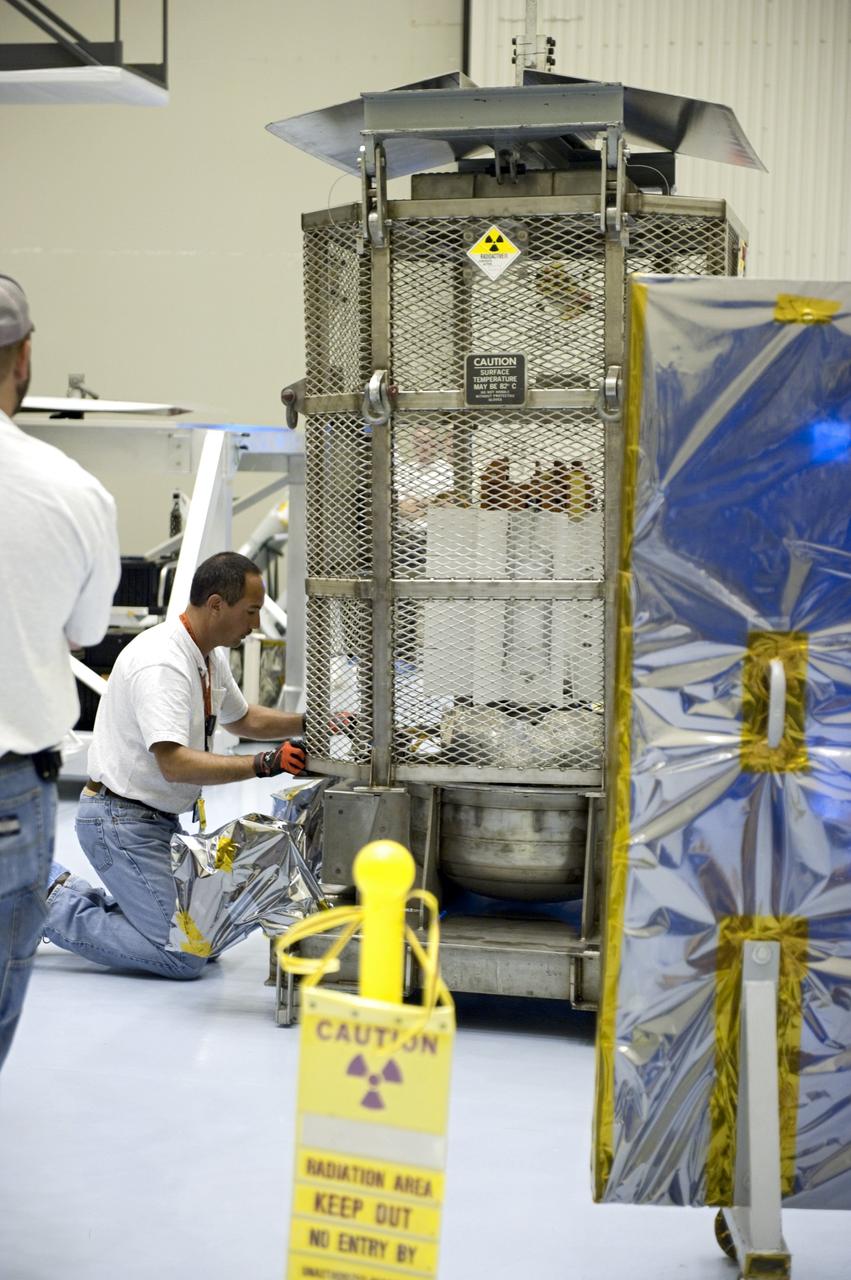
CAPE CANAVERAL, Fla. -- In the airlock of the Payload Hazardous Servicing Facility at NASA's Kennedy Space Center in Florida, a Department of Energy employee positions the mesh container, known as the "gorilla cage," on the support base of the multi-mission radioisotope thermoelectric generator (MMRTG) for NASA's Mars Science Laboratory (MSL) mission. The mobile plexiglass radiation shields, in the foreground at right, helps minimize the employees' radiation exposure. The cage protects the MMRTG during transport and allows any excess heat generated to dissipate into the air. Transport of the MMRTG to the RTG storage facility follows the completion of the MMRTG fit check on the Curiosity rover. The MMRTG will generate the power needed for the mission from the natural decay of plutonium-238, a non-weapons-grade form of the radioisotope. Heat given off by this natural decay will provide constant power through the day and night during all seasons. MSL's components include a car-sized rover, Curiosity, which has 10 science instruments designed to search for signs of life, including methane, and help determine if the gas is from a biological or geological source. Waste heat from the MMRTG will be circulated throughout the rover system to keep instruments, computers, mechanical devices and communications systems within their operating temperature ranges. Launch of MSL aboard a United Launch Alliance Atlas V rocket is targeted for Nov. 25 from Space Launch Complex 41 on Cape Canaveral Air Force Station. For more information, visit http://www.nasa.gov/msl. Photo credit: NASA/Kim Shiflett
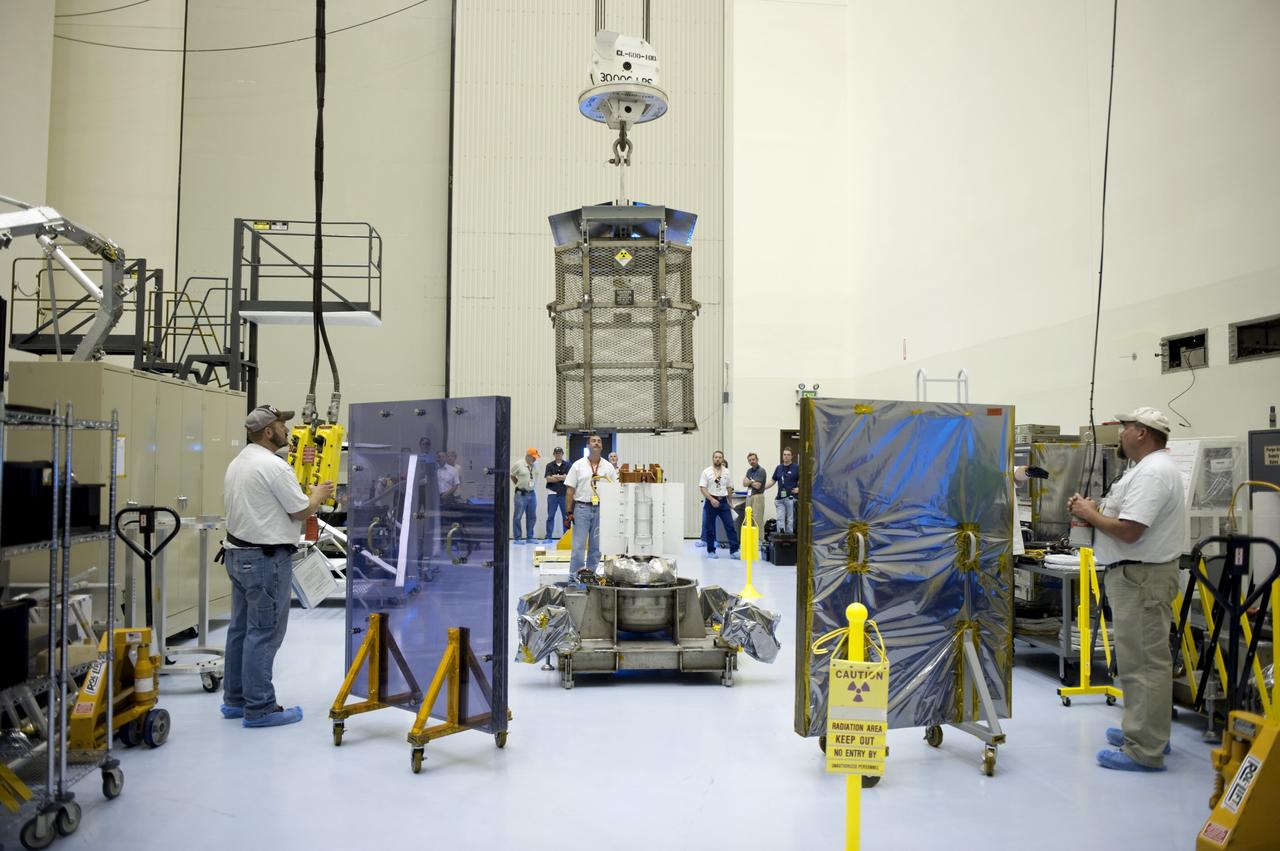
CAPE CANAVERAL, Fla. -- In the airlock of the Payload Hazardous Servicing Facility at NASA's Kennedy Space Center in Florida, Department of Energy employees lower the mesh container, known as the "gorilla cage," toward the multi-mission radioisotope thermoelectric generator (MMRTG) for NASA's Mars Science Laboratory (MSL) mission. The employees are standing behind mobile plexiglass radiation shields to help minimize the employees' radiation exposure. The cage protects the MMRTG during transport and allows any excess heat generated to dissipate into the air. Transport of the MMRTG to the RTG storage facility follows the completion of the MMRTG fit check on the Curiosity rover. The MMRTG will generate the power needed for the mission from the natural decay of plutonium-238, a non-weapons-grade form of the radioisotope. Heat given off by this natural decay will provide constant power through the day and night during all seasons. MSL's components include a car-sized rover, Curiosity, which has 10 science instruments designed to search for signs of life, including methane, and help determine if the gas is from a biological or geological source. Waste heat from the MMRTG will be circulated throughout the rover system to keep instruments, computers, mechanical devices and communications systems within their operating temperature ranges. Launch of MSL aboard a United Launch Alliance Atlas V rocket is targeted for Nov. 25 from Space Launch Complex 41 on Cape Canaveral Air Force Station. For more information, visit http://www.nasa.gov/msl. Photo credit: NASA/Kim Shiflett
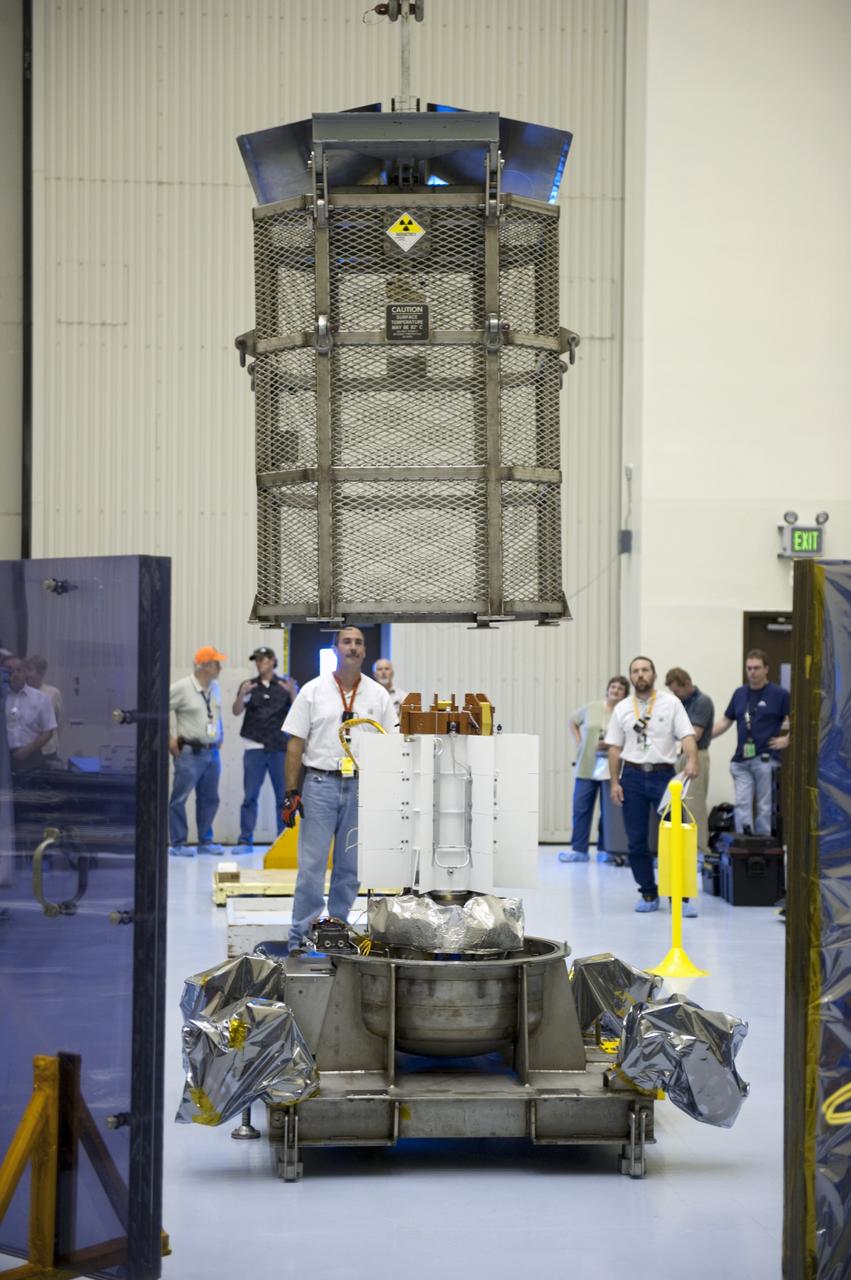
CAPE CANAVERAL, Fla. -- In the airlock of the Payload Hazardous Servicing Facility at NASA's Kennedy Space Center in Florida, Department of Energy employees lower the mesh container, known as the "gorilla cage," toward the multi-mission radioisotope thermoelectric generator (MMRTG) for NASA's Mars Science Laboratory (MSL) mission. The mobile plexiglass radiation shields in the foreground help minimize the employees' radiation exposure. The cage protects the MMRTG during transport and allows any excess heat generated to dissipate into the air. Transport of the MMRTG to the RTG storage facility follows the completion of the MMRTG fit check on the Curiosity rover. The MMRTG will generate the power needed for the mission from the natural decay of plutonium-238, a non-weapons-grade form of the radioisotope. Heat given off by this natural decay will provide constant power through the day and night during all seasons. MSL's components include a car-sized rover, Curiosity, which has 10 science instruments designed to search for signs of life, including methane, and help determine if the gas is from a biological or geological source. Waste heat from the MMRTG will be circulated throughout the rover system to keep instruments, computers, mechanical devices and communications systems within their operating temperature ranges. Launch of MSL aboard a United Launch Alliance Atlas V rocket is targeted for Nov. 25 from Space Launch Complex 41 on Cape Canaveral Air Force Station. For more information, visit http://www.nasa.gov/msl. Photo credit: NASA/Kim Shiflett
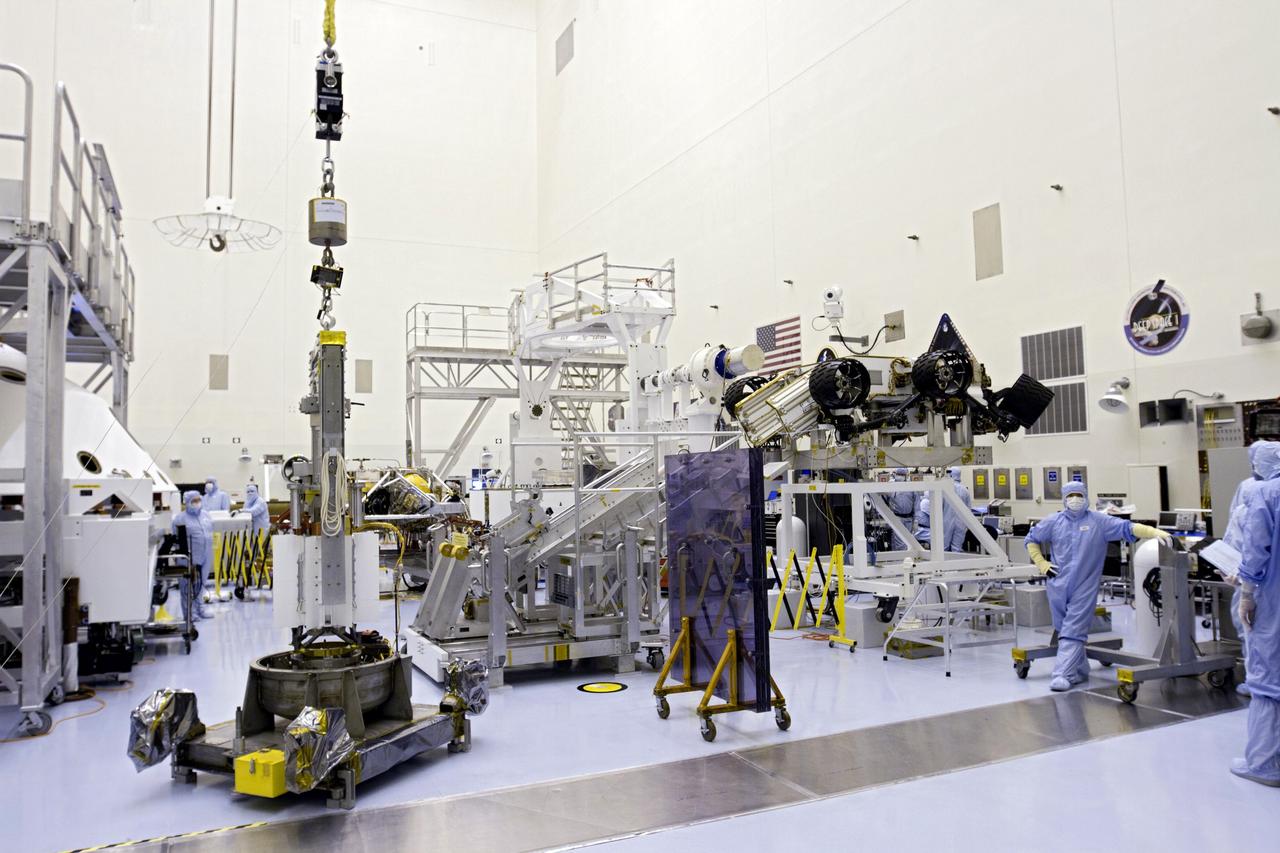
CAPE CANAVERAL, Fla. -- In the high bay of the Payload Hazardous Servicing Facility (PHSF) at NASA's Kennedy Space Center in Florida, preparations are under way for a crane to lift the turning fixture connected to the multi-mission radioisotope thermoelectric generator (MMRTG) for NASA's Mars Science Laboratory (MSL) mission from its support base. Between the MMRTG and the spacecraft technicians at right is a mobile plexiglass radiation shield to help minimize the employees' radiation exposure. The turning fixture will lift and lower the MMRTG onto the MMRTG integration cart. The cart will be used to install the MMRTG on Curiosity for a fit check. The MMRTG will be installed on the rover for launch at the pad. The MMRTG will generate the power needed for the mission from the natural decay of plutonium-238, a non-weapons-grade form of the radioisotope. Heat given off by this natural decay will provide constant power through the day and night during all seasons. Curiosity, MSL's car-sized rover, has 10 science instruments designed to search for signs of life, including methane, and help determine if the gas is from a biological or geological source. Waste heat from the MMRTG will be circulated throughout the rover system to keep instruments, computers, mechanical devices and communications systems within their operating temperature ranges. Launch of MSL aboard a United Launch Alliance Atlas V rocket is planned for Nov. 25 from Space Launch Complex 41 on Cape Canaveral Air Force Station. For more information, visit http://www.nasa.gov/msl. Photo credit: NASA/Cory Huston
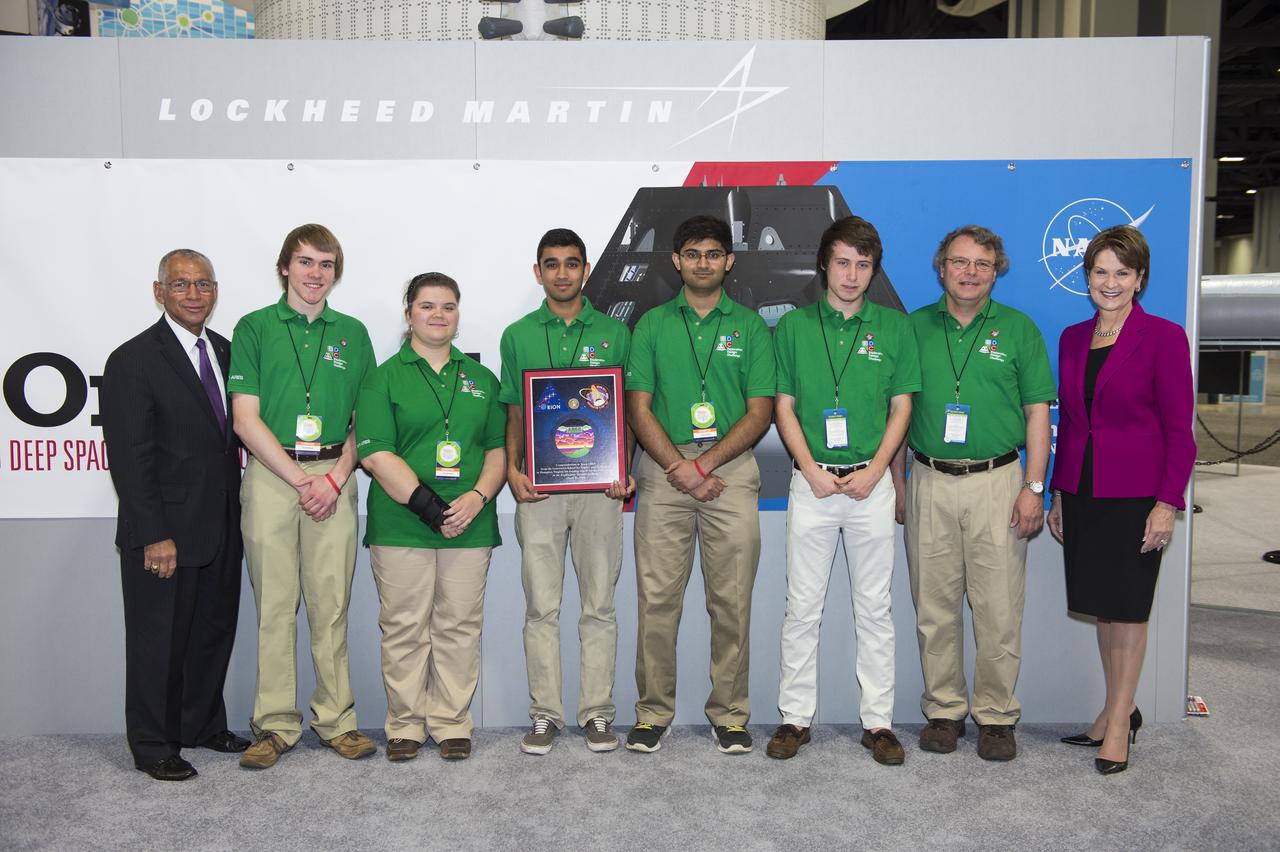
Team ARES poses with NASA Administrator Charles Bolden and Lockheed Martin CEO, Marillyn Hewson. Team ARES was the winner of the Exploration Design Challenge. The goal of the Exploration Design Challenge is for students to research and design ways to protect astronauts from space radiation. The winning team was announced on April 25, 2014 at the USA Science and Engineering Festival at the Washington Convention Center in Washington, DC. Photo Credit: (NASA/Aubrey Gemignani)
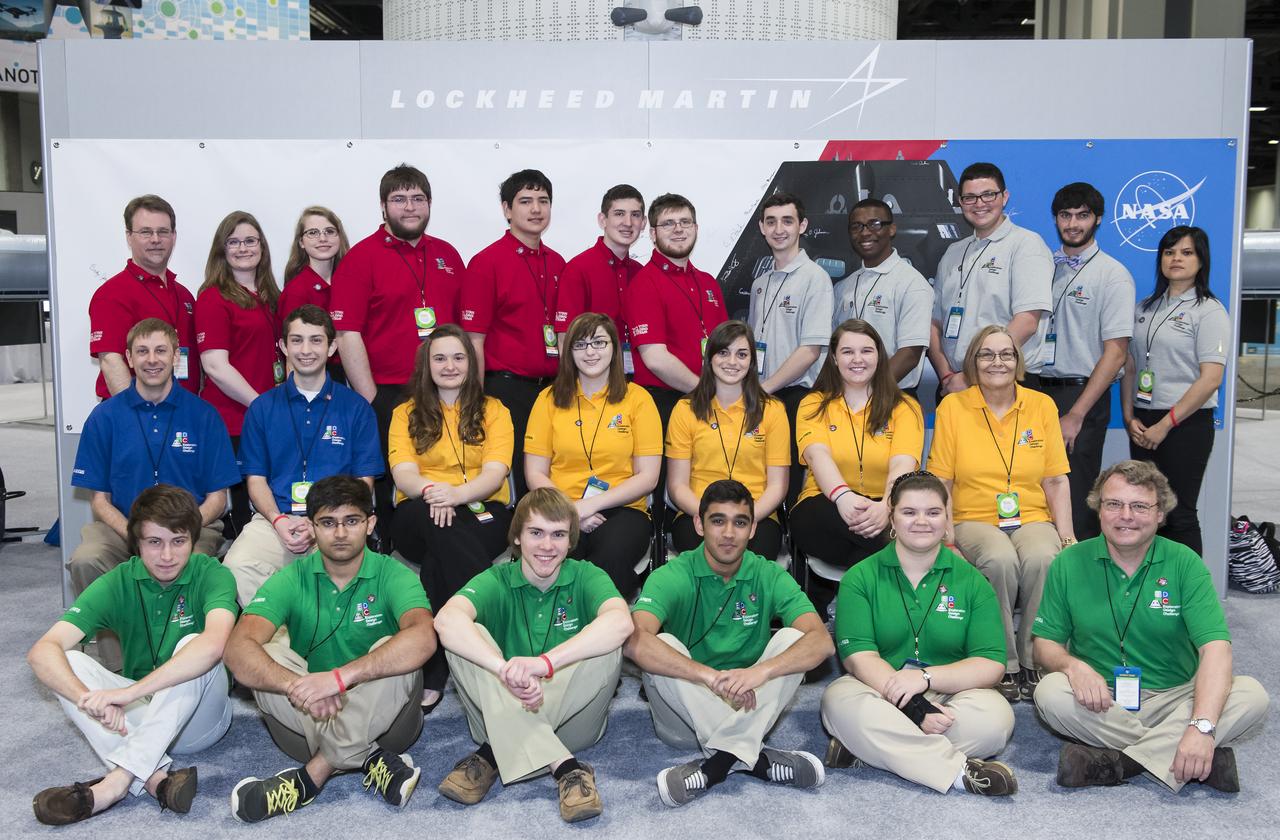
Pictured are all Semi-finalist teams in the Exploration Design Challenge. NASA Administrator, Charles Bolden and Lockheed Martin CEO, Marillyn Hewson announced the winner of the Exploration Design Challenge at the USA Science and Engineering Festival on April 25, 2014. The goal of the challenge was for students to research and design ways to protect astronauts from space radiation. The winning team's design will be built and flown aboard the Orion/EFT-1. The USA Science and Engineering Festival is taking place at the Washington Convention Center in Washington, DC on April 26 and 27, 2014. Photo Credit: (NASA/Aubrey Gemignani)