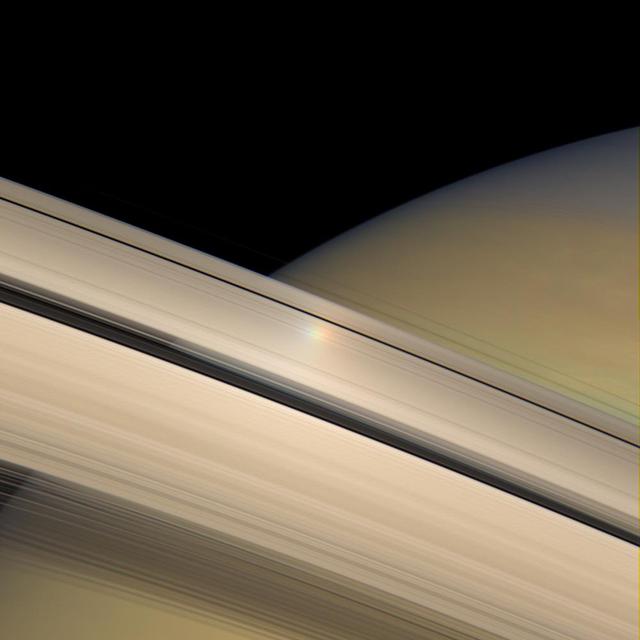
Rainbow on the Rings
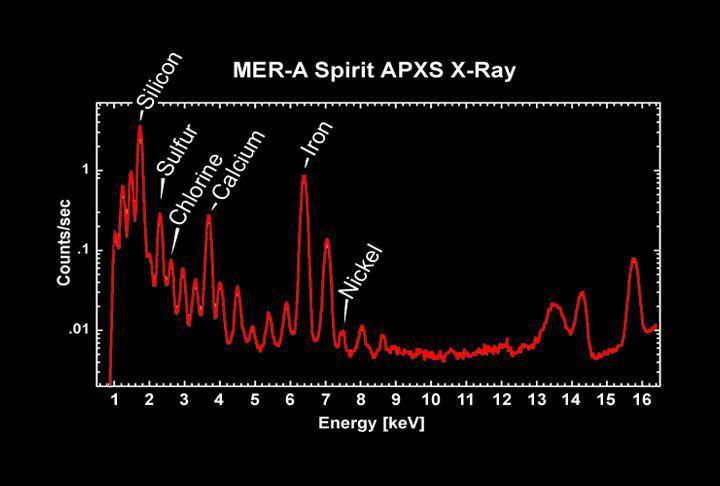
A Rainbow of Martian Elements
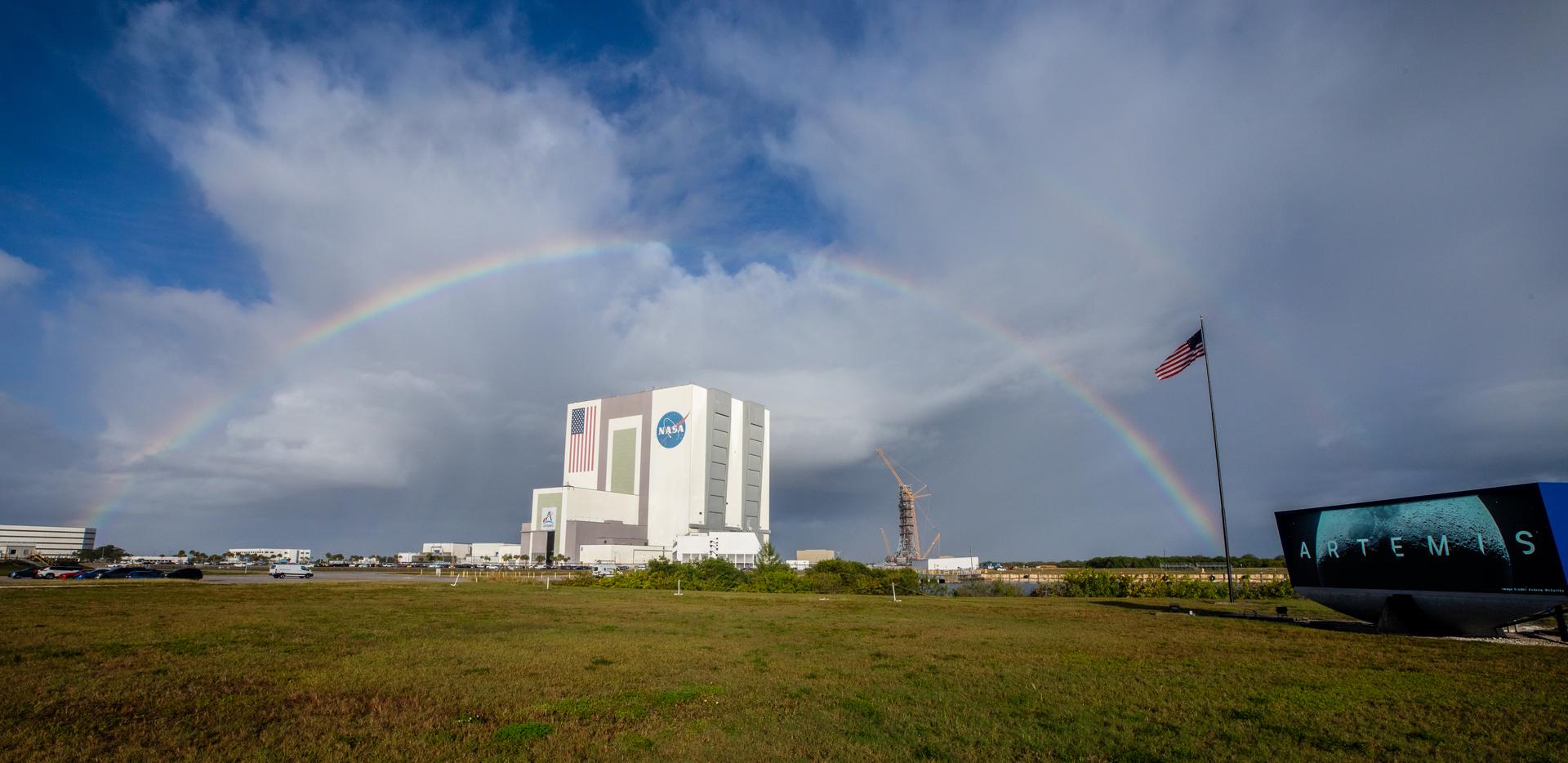
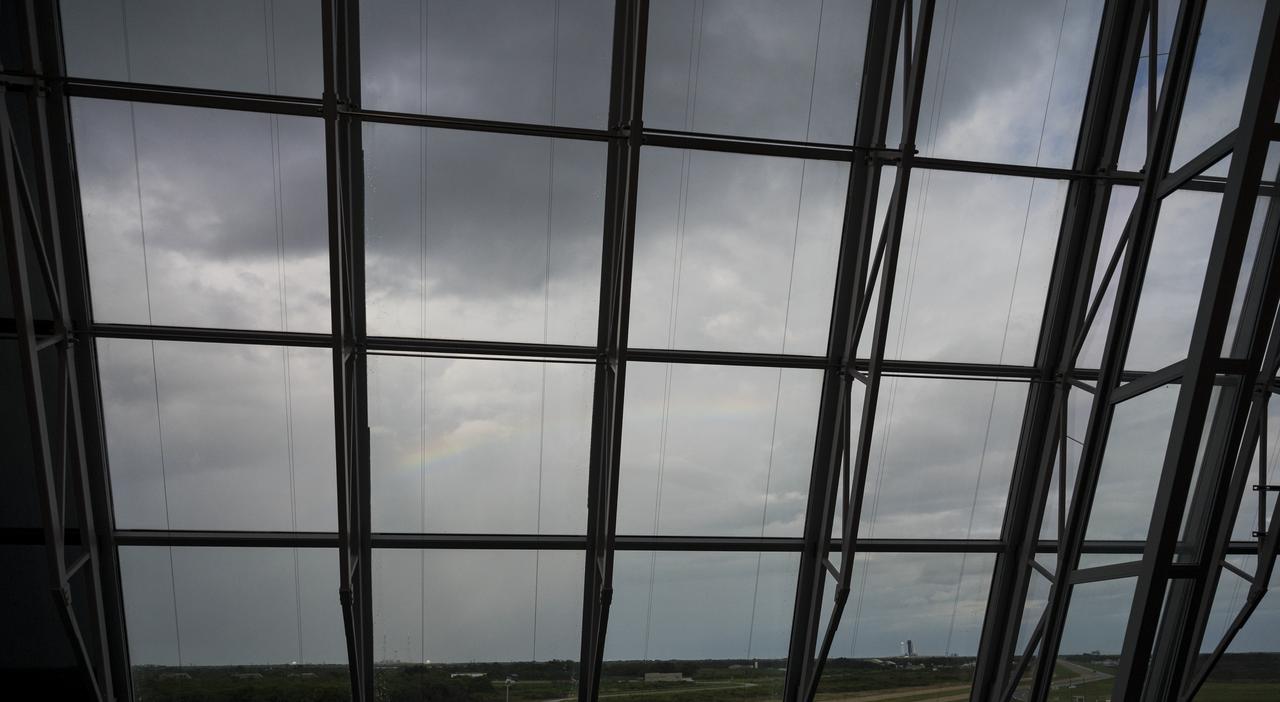
Rain showers create a rainbow over the Vehicle Assembly Building near countdown clock featuring the Artemis Moon logo at the NASA News Center at the agency’s Kennedy Space Center in Florida on Thursday, Dec. 19, 2025.
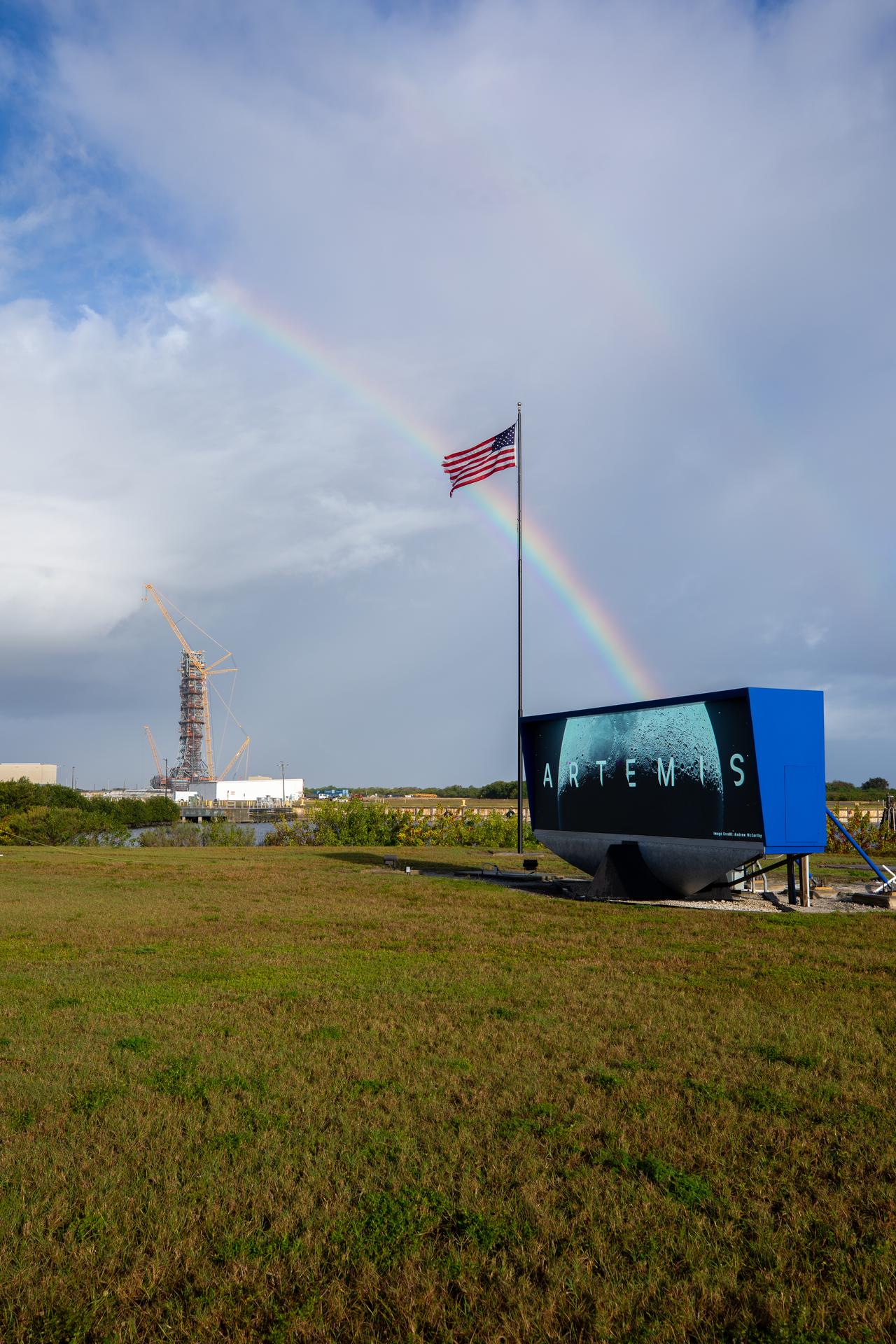
Rain showers create a rainbow near countdown clock featuring the Artemis Moon logo at the NASA News Center at the agency’s Kennedy Space Center in Florida on Thursday, Dec. 19, 2025.
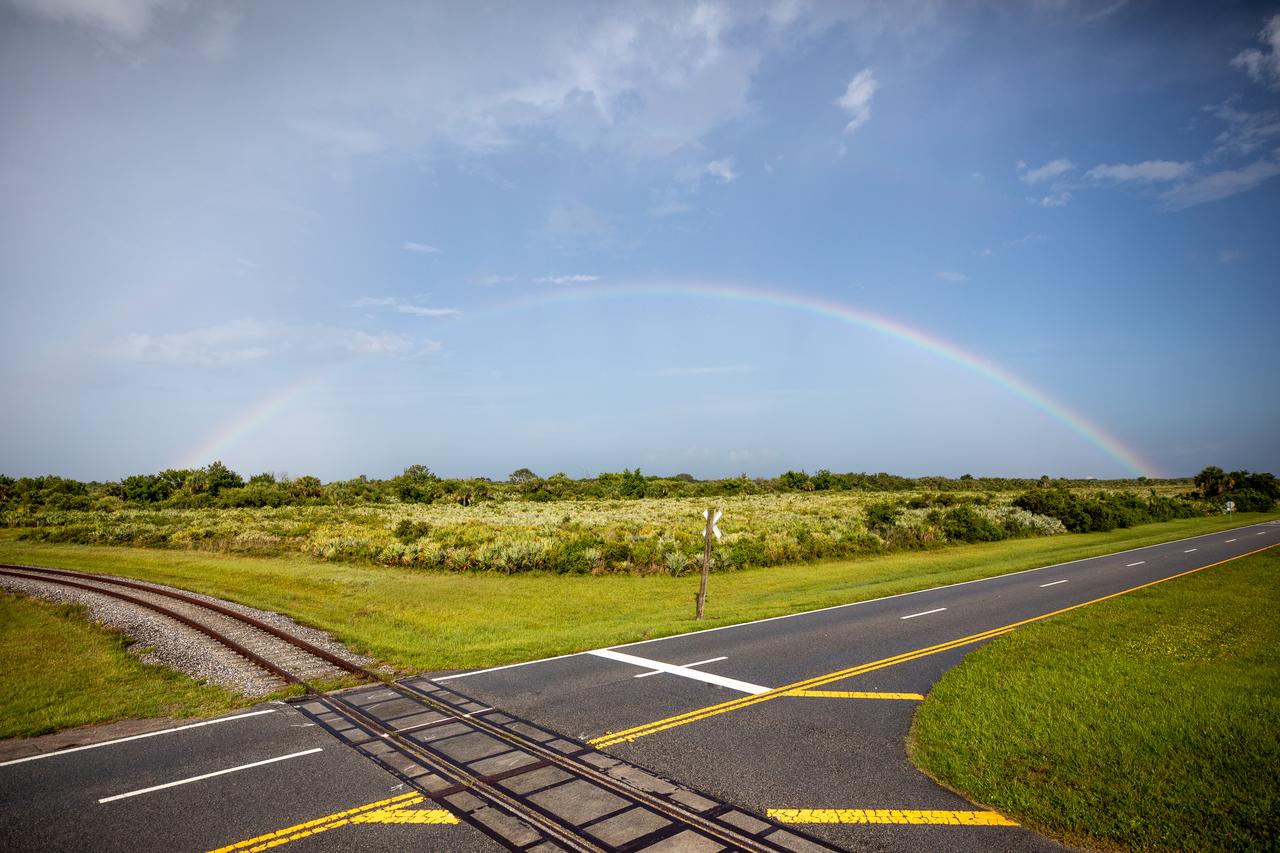
A full rainbow is in view over the Launch Complex 39B area at NASA’s Kennedy Space Center in Florida on June 12, 2022. The Artemis I Space Launch System and Orion spacecraft atop the mobile launcher were moved to Pad 39B atop the crawler-transport 2 for a prelaunch test called a wet dress rehearsal. Artemis I will be the first integrated test of the SLS and Orion spacecraft. In later missions, NASA will land the first woman and the first person of color on the surface of the Moon, paving the way for a long-term lunar presence and serving as a steppingstone on the way to Mars.
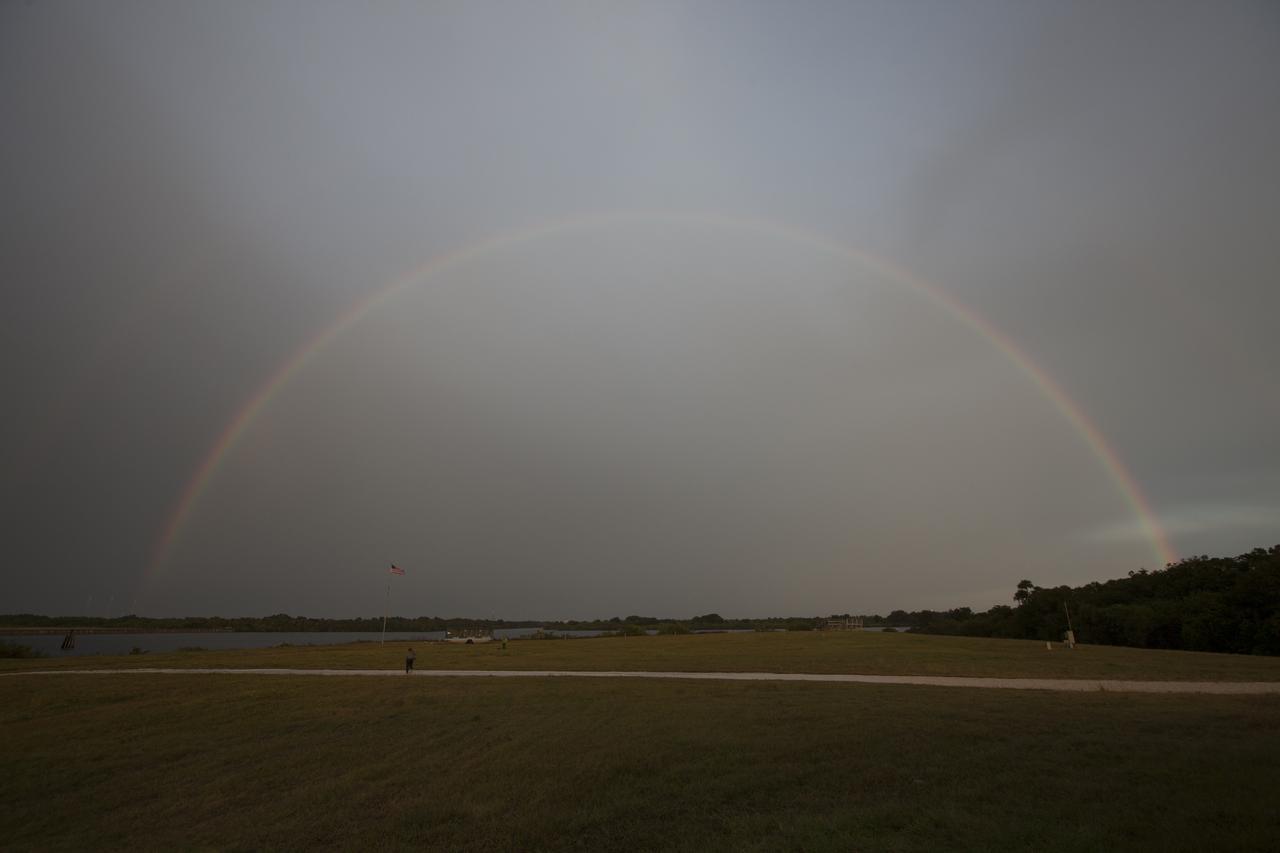
As rain showers dissipate, a rainbow appeared over the Kennedy Space Center's Press Site and turn basin. In the background is the historic countdown clock.
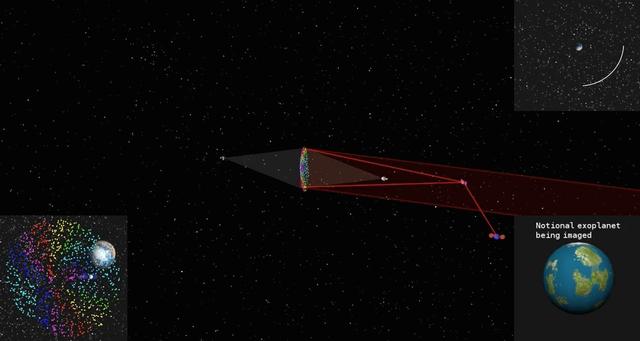
This simulated image shows how a cloud of glitter in geostationary orbit would be illuminated and controlled by two laser beams. As the cloud orbits Earth, grains scatter the sun's light at different angles like many tiny prisms, similar to how rainbows are produced from light being dispersed by water droplets. That is why the project concept is called "Orbiting Rainbows." The cloud functions like a reflective surface, allowing the exoplanet (displayed in the bottom right) to be imaged. The orbit path is shown in the top right. On the bottom left, Earth's image is seen behind the cloud. To image an exoplanet, the cloud would need to have a diameter of nearly 98 feet (30 meters). This simulation confines the cloud to a 3.3 x 3.3 x 3.3 foot volume (1 x 1 x 1 meter volume) to simplify the computations. The elements of the orbiting telescope are not to scale. Orbiting Rainbows is currently in Phase II development through the NASA Innovative Advanced Concepts (NIAC) Program. It was one of five technology proposals chosen for continued study in 2014. In the current phase, Orbiting Rainbows researchers are conducting small-scale ground experiments to demonstrate how granular materials can be manipulated using lasers and simulations of how the imaging system would behave in orbit. http://photojournal.jpl.nasa.gov/catalog/PIA19318
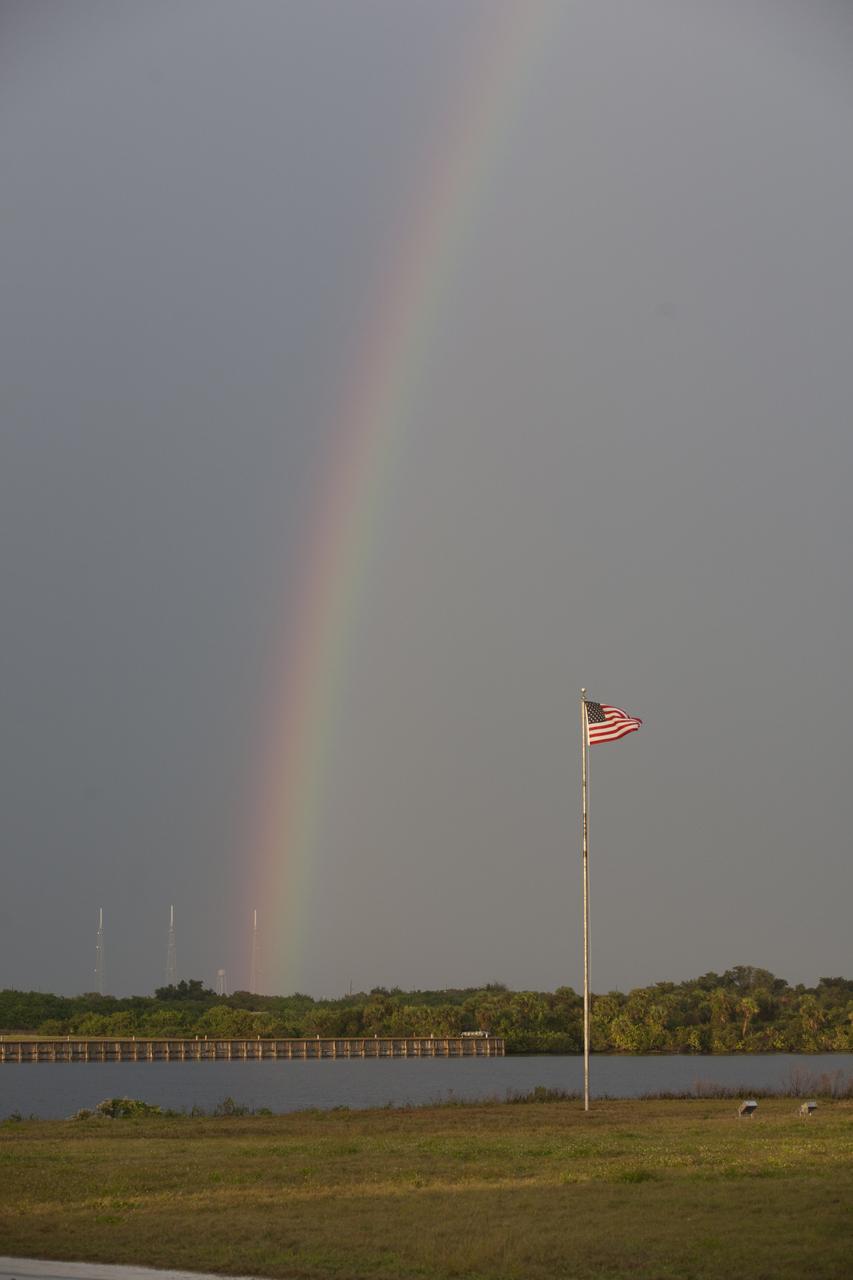
As rain showers dissipate, a rainbow appeared over NASA's Kennedy Space Center's Launch Pad 39B. This is the site where the agency's Space Launch System will launch astronauts aboard the Orion spacecraft to deep-space destinations such as an asteroid and Mars.
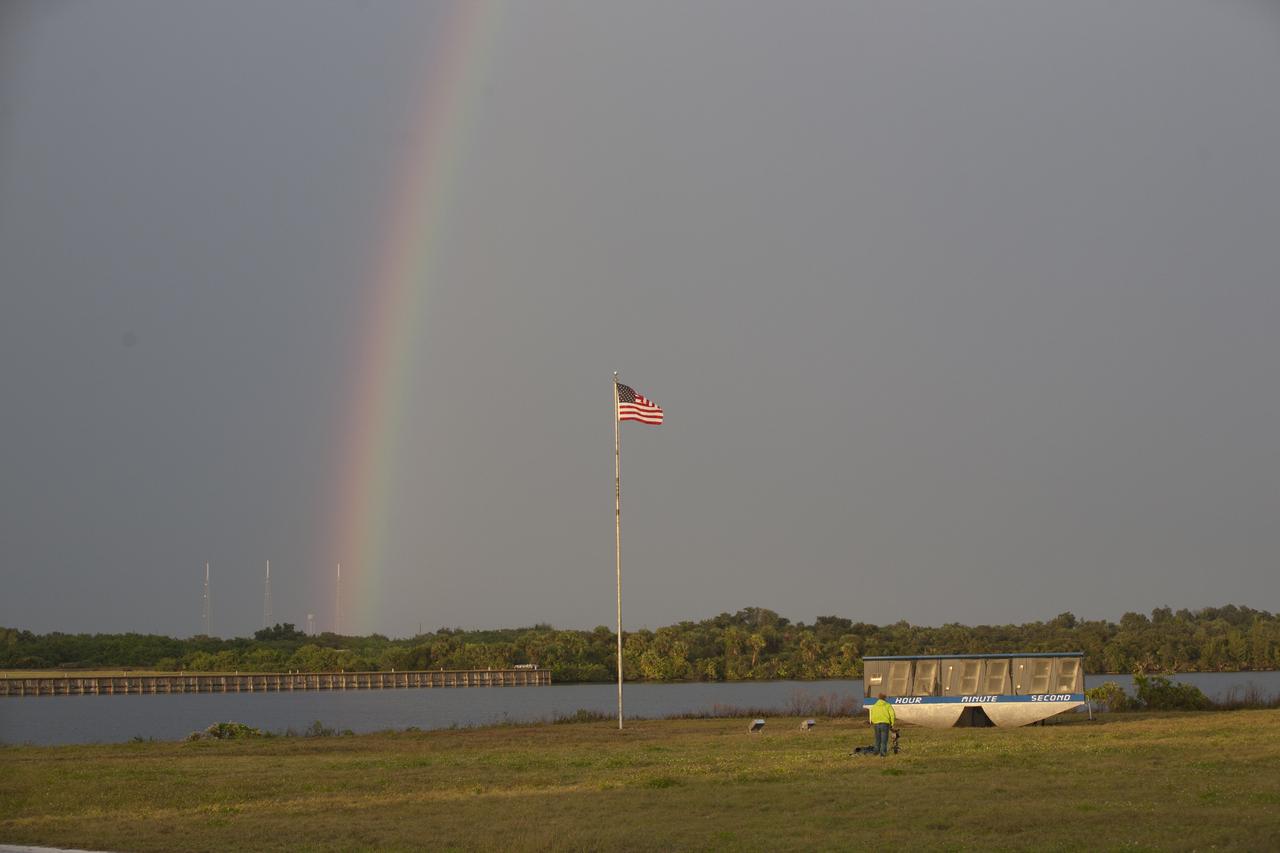
As rain showers dissipate, a rainbow appeared over the Kennedy Space Center's Press Site and turn basin. In the foreground is the historic countdown clock. In the background, is Launch Pad 39B where agency's Space Launch System will launch astronauts aboard the Orion spacecraft to deep-space destinations such as an asteroid and Mars.
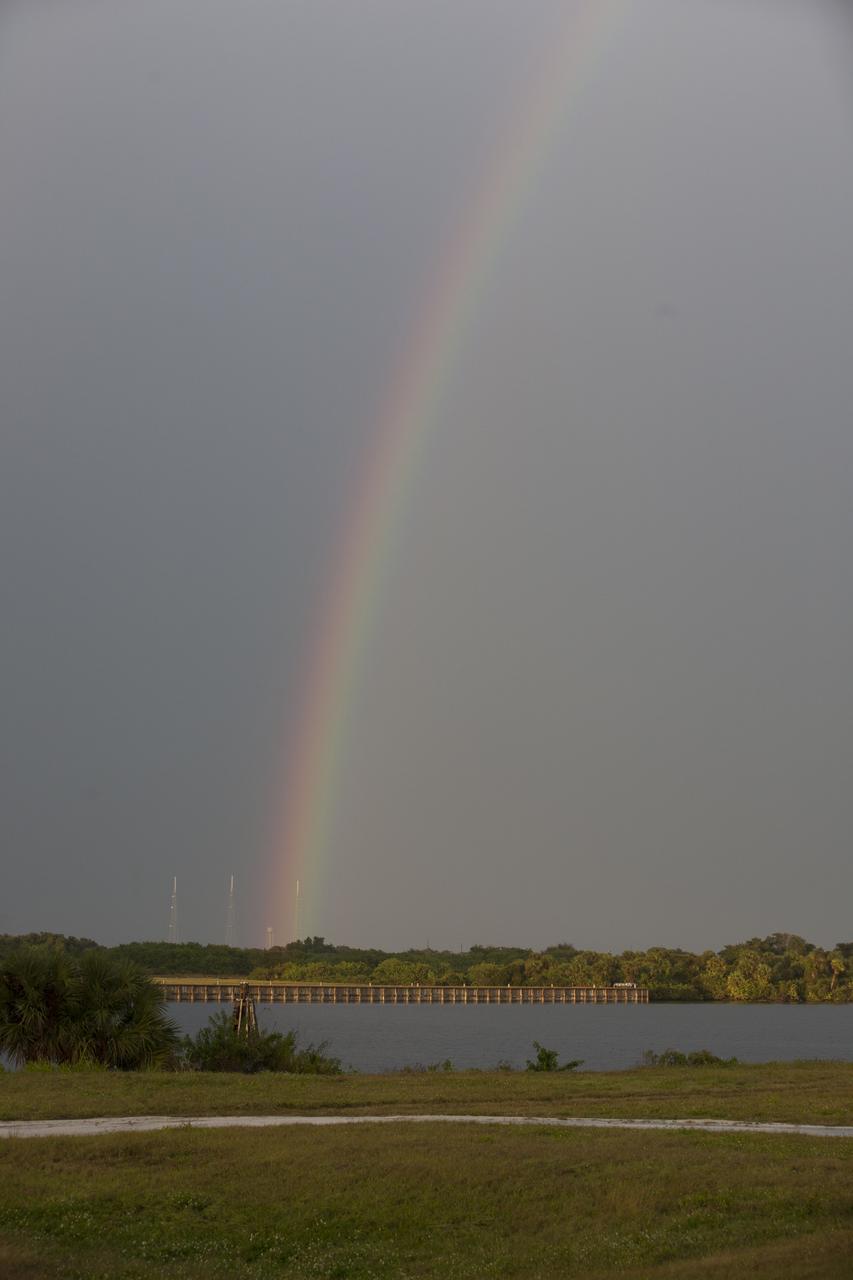
As rain showers dissipate, a rainbow appeared over NASA's Kennedy Space Center's Launch Pad 39B. This is the site where the agency's Space Launch System will launch astronauts aboard the Orion spacecraft to deep-space destinations such as an asteroid and Mars.
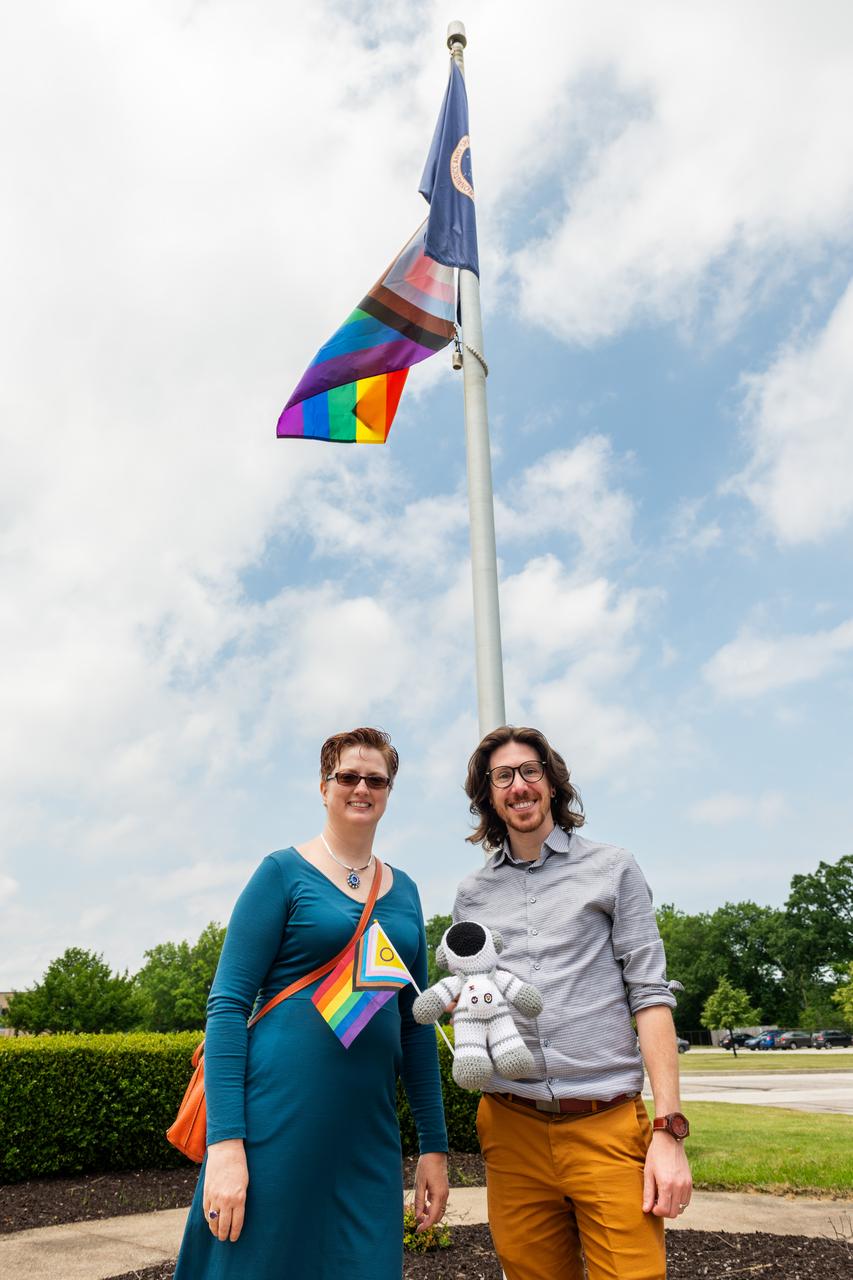
NASA Glenn’s Rainbow Alliance Advisory Group hosted an in-person and livestreamed Pride flag raising ceremony at the building 3 flagpole on June 3, 2024. The event included remarks from Deputy Director Dawn Schaible and NASA Safety Center Director Harmony Myers. Flag raising events such as this are times for LGBTQ+ employees and their allies to come together to celebrate the progress made in the quest for safety, tolerance, acceptance, rights, happiness, and freedom for the LGBTQ+ community on- and off-site of the center. Pictured here are Co-Chairs of the Rainbow Alliance Advisory Group Jessica Reinert and Matthew Huffman.
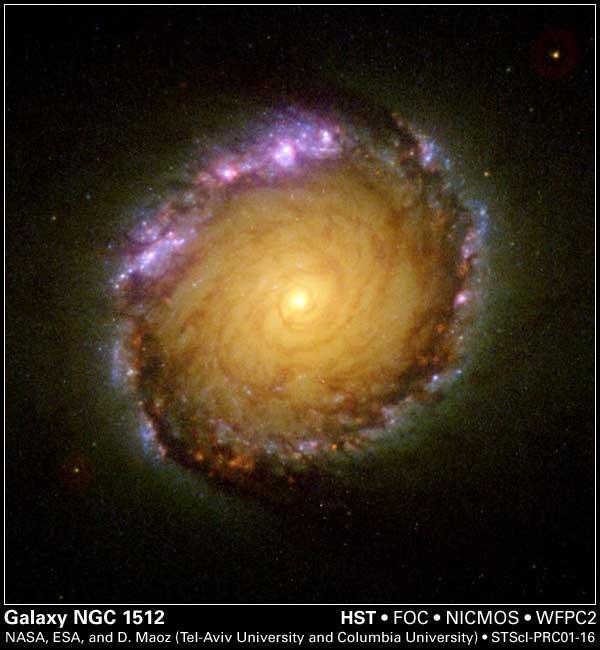
A rainbow of colors is captured in the center of a magnificent barred spiral galaxy, as witnessed by the three cameras of NASA Hubble Space Telescope.
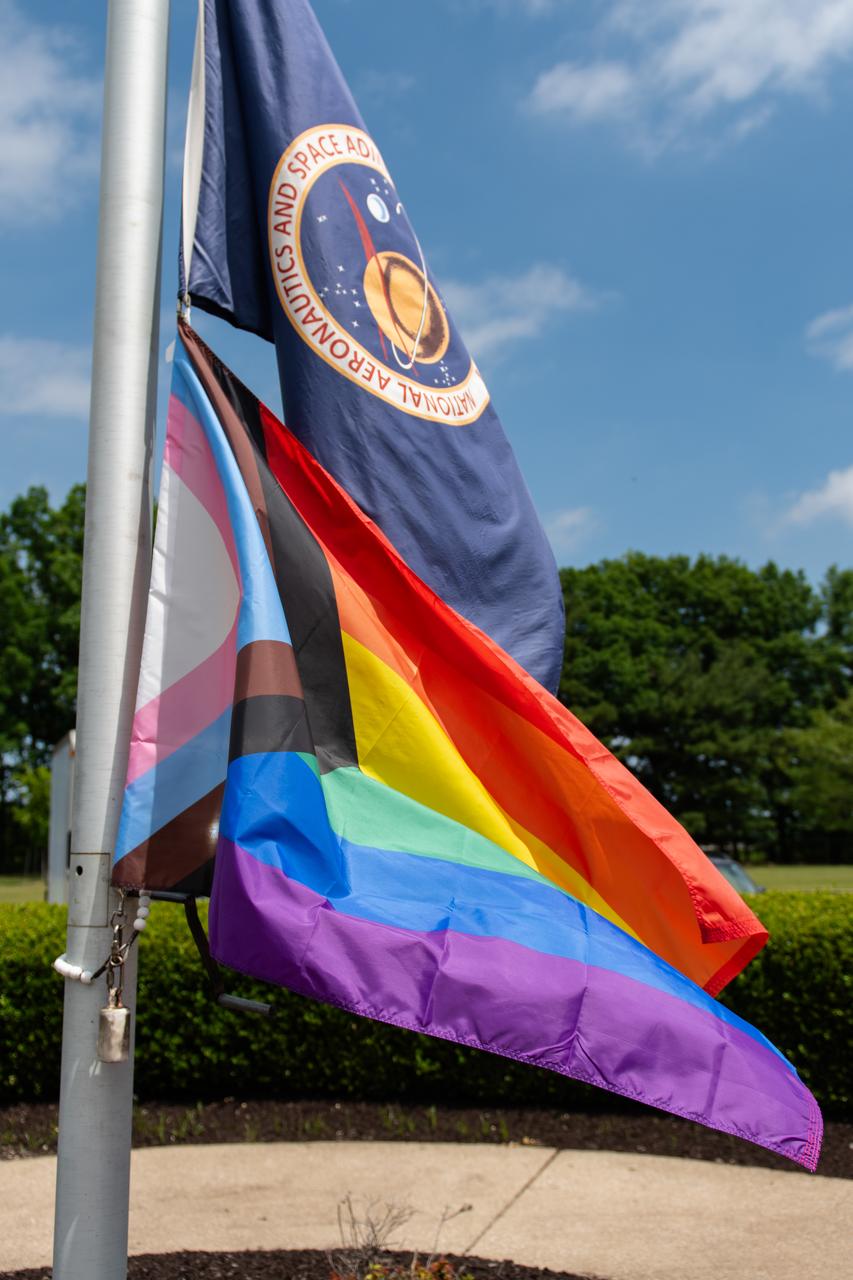
NASA Glenn’s Rainbow Alliance Advisory Group hosted an in-person and livestreamed Pride flag raising ceremony at the building 3 flagpole on June 3, 2024. The event included remarks from Deputy Director Dawn Schaible and NASA Safety Center Director Harmony Myers. Flag raising events such as this are times for LGBTQ+ employees and their allies to come together to celebrate the progress made in the quest for safety, tolerance, acceptance, rights, happiness, and freedom for the LGBTQ+ community on- and off-site of the center. Photo Credit: (NASA/Sara Lowthian-Hanna)
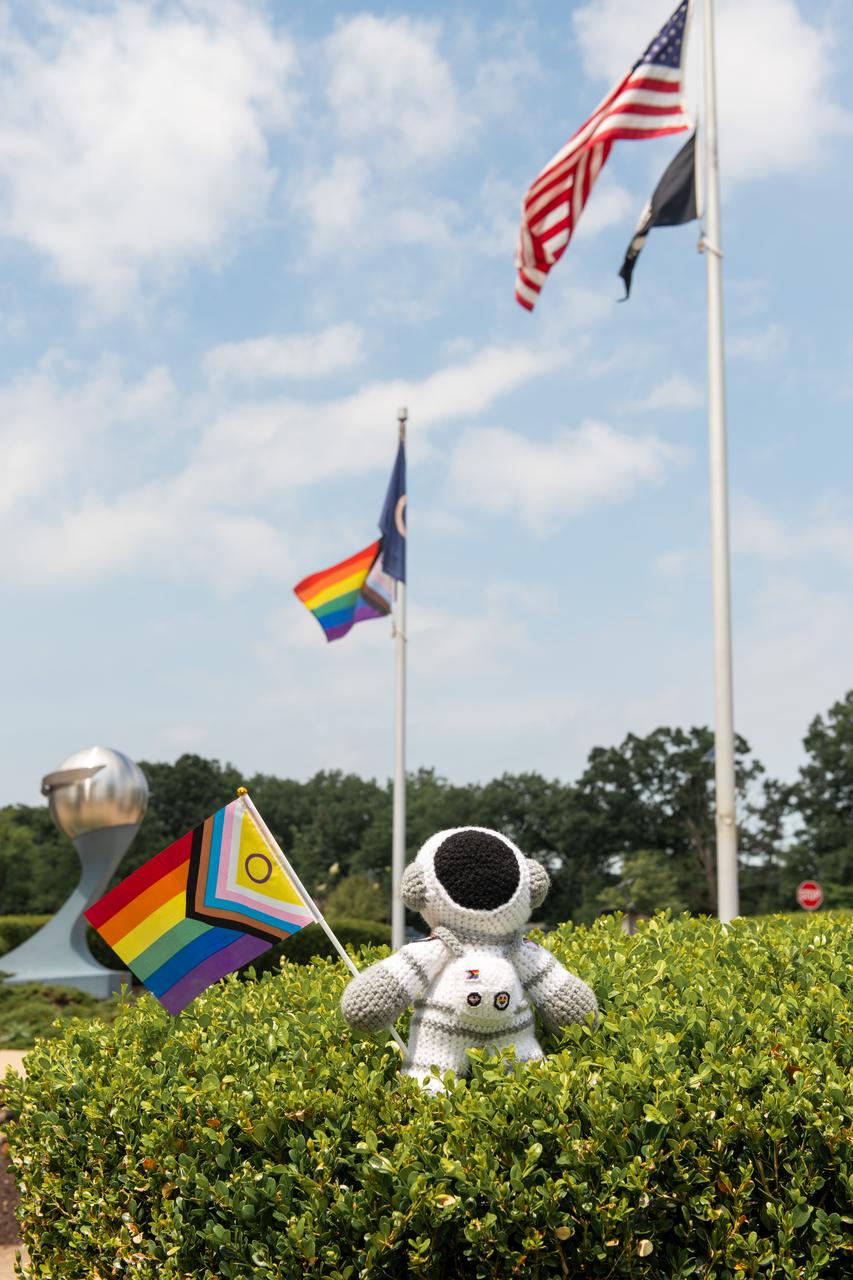
NASA Glenn’s Rainbow Alliance Advisory Group hosted an in-person and livestreamed Pride flag raising ceremony at the building 3 flagpole on June 3, 2024. The event included remarks from Deputy Director Dawn Schaible and NASA Safety Center Director Harmony Myers. Flag raising events such as this are times for LGBTQ+ employees and their allies to come together to celebrate the progress made in the quest for safety, tolerance, acceptance, rights, happiness, and freedom for the LGBTQ+ community on- and off-site of the center. Photo Credit: (NASA/Sara Lowthian-Hanna)
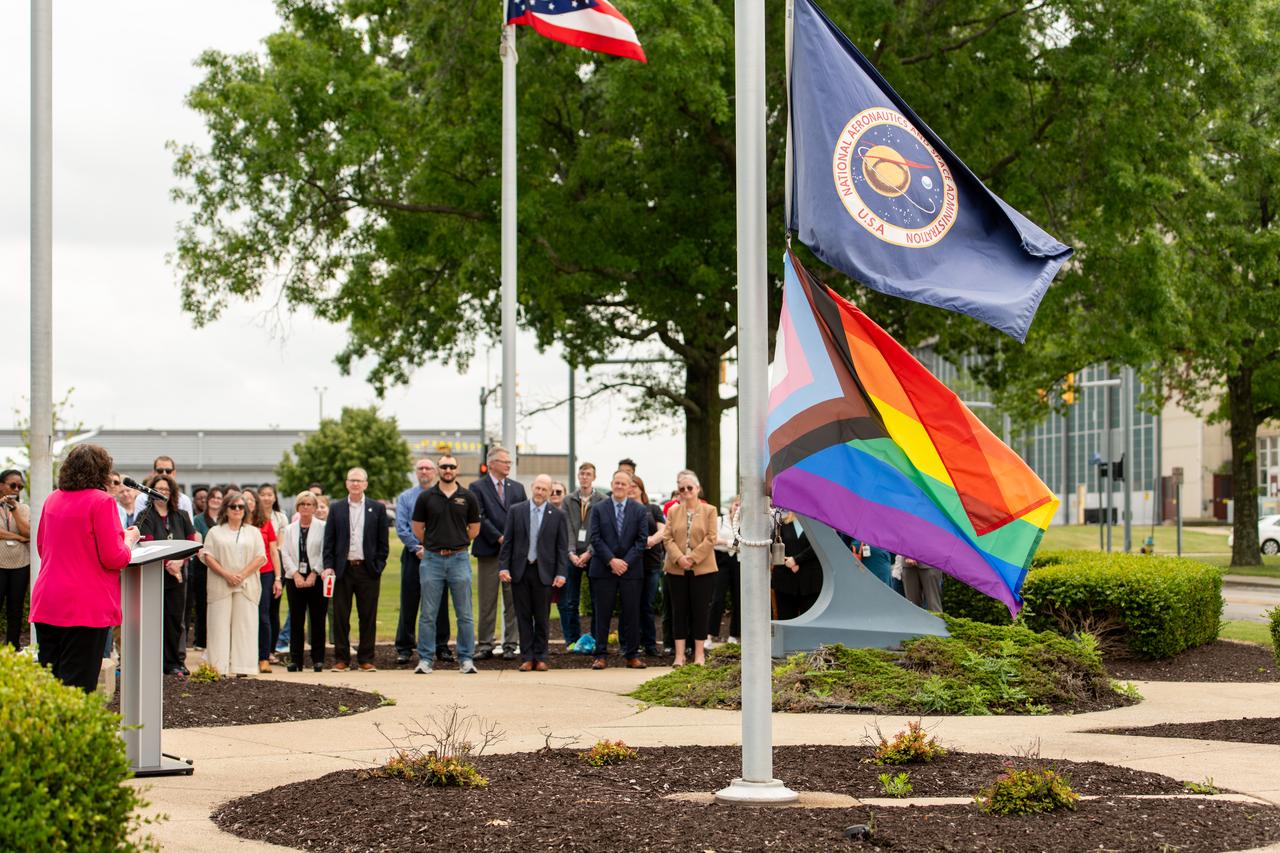
NASA Glenn’s Rainbow Alliance Advisory Group hosted an in-person and livestreamed Pride flag raising ceremony at the building 3 flagpole on June 3, 2024. The event included remarks from Deputy Director Dawn Schaible and NASA Safety Center Director Harmony Myers. Flag raising events such as this are times for LGBTQ+ employees and their allies to come together to celebrate the progress made in the quest for safety, tolerance, acceptance, rights, happiness, and freedom for the LGBTQ+ community on- and off-site of the center.

NASA Glenn’s Rainbow Alliance Advisory Group hosted an in-person and livestreamed Pride flag raising ceremony at the building 3 flagpole on June 3, 2024. The event included remarks from Deputy Director Dawn Schaible and NASA Safety Center Director Harmony Myers. Flag raising events such as this are times for LGBTQ+ employees and their allies to come together to celebrate the progress made in the quest for safety, tolerance, acceptance, rights, happiness, and freedom for the LGBTQ+ community on- and off-site of the center.
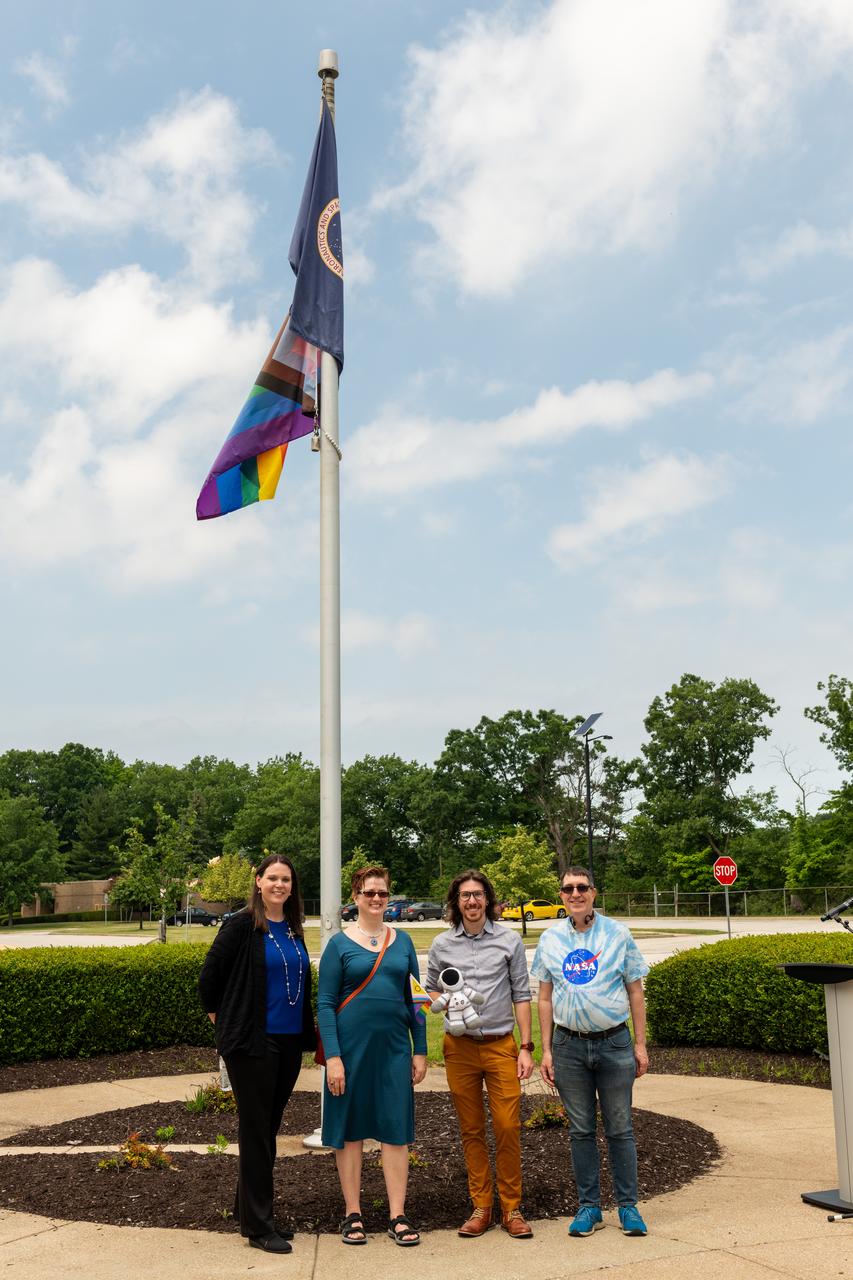
NASA Glenn’s Rainbow Alliance Advisory Group hosted an in-person and livestreamed Pride flag raising ceremony at the building 3 flagpole on June 3, 2024. The event included remarks from Deputy Director Dawn Schaible and NASA Safety Center Director Harmony Myers. Flag raising events such as this are times for LGBTQ+ employees and their allies to come together to celebrate the progress made in the quest for safety, tolerance, acceptance, rights, happiness, and freedom for the LGBTQ+ community on- and off-site of the center. Pictured here is NASA Safety Center Director Harmony Myers, Rainbow Alliance Advisory Group Co-Chairs Matthew Huffman and Jessica Reinert and John Wolter.

A rainbow frames the Stratospheric Observatory for Infrared Astronomy 747SP during its first Southern Hemisphere deployment in Christchurch, New Zealand, in July 2013.
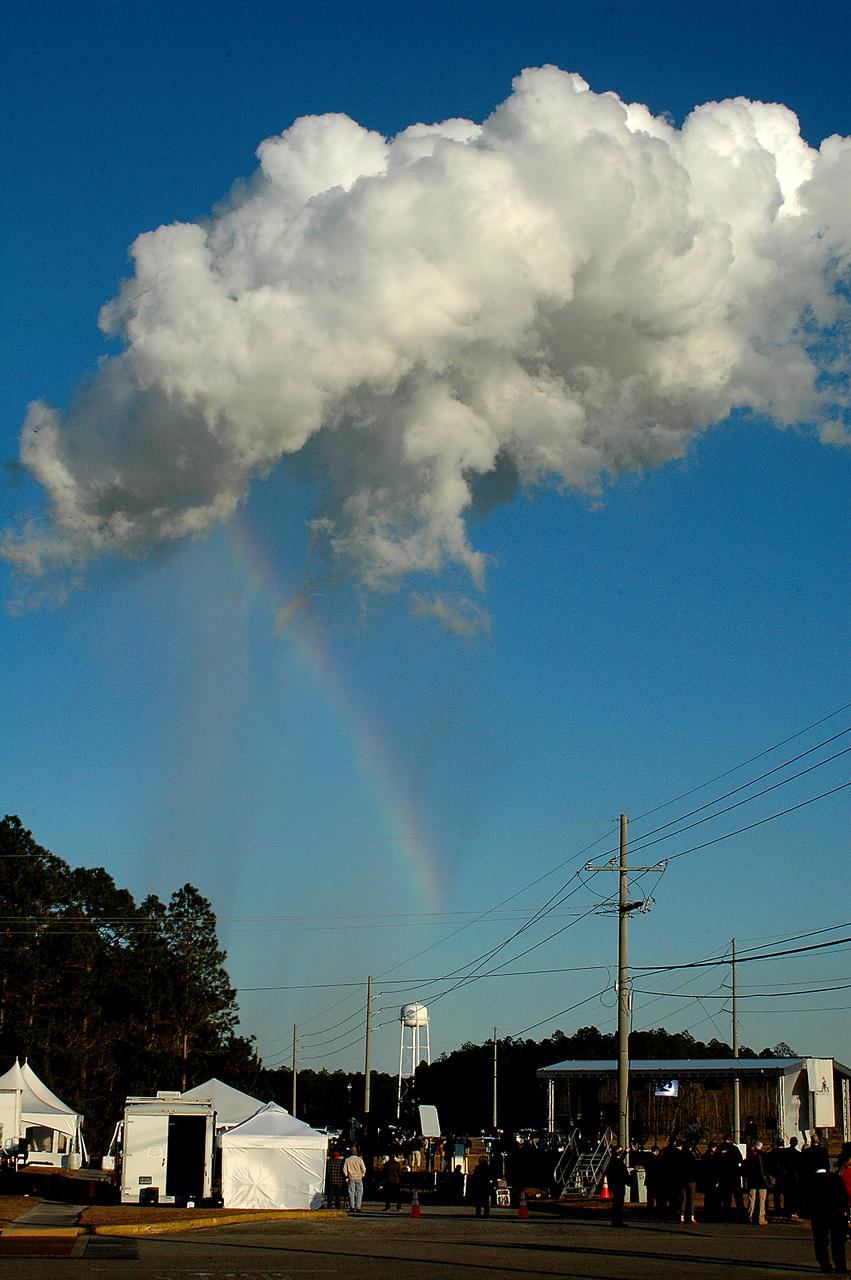
A rainbow appears as the steam cloud dissipates following the Green Run hot fire test of the core stage for NASA’s Space Launch System (SLS) rocket on Saturday, January 16, 2021. NASA conducted a hot fire test of the core stage’s four RS-25 engines on the B-2 Test Stand at Stennis Space Center near Bay St. Louis, Mississippi. Scheduled for as long as eight minutes, the engines fired for a little more than one minute to generate a combined 1.6 million pounds of thrust, just as will occur during an actual launch. The hot fire is the final test of the Green Run test series, a comprehensive assessment of the SLS core stage prior to launching the Artemis I mission to the Moon.

NASA Glenn’s Rainbow Alliance Advisory Group hosted an in-person and livestreamed Pride flag raising ceremony at the building 3 flagpole on June 3, 2024. The event included remarks from Deputy Director Dawn Schaible and NASA Safety Center Director Harmony Myers. Flag raising events such as this are times for LGBTQ+ employees and their allies to come together to celebrate the progress made in the quest for safety, tolerance, acceptance, rights, happiness, and freedom for the LGBTQ+ community on- and off-site of the center.
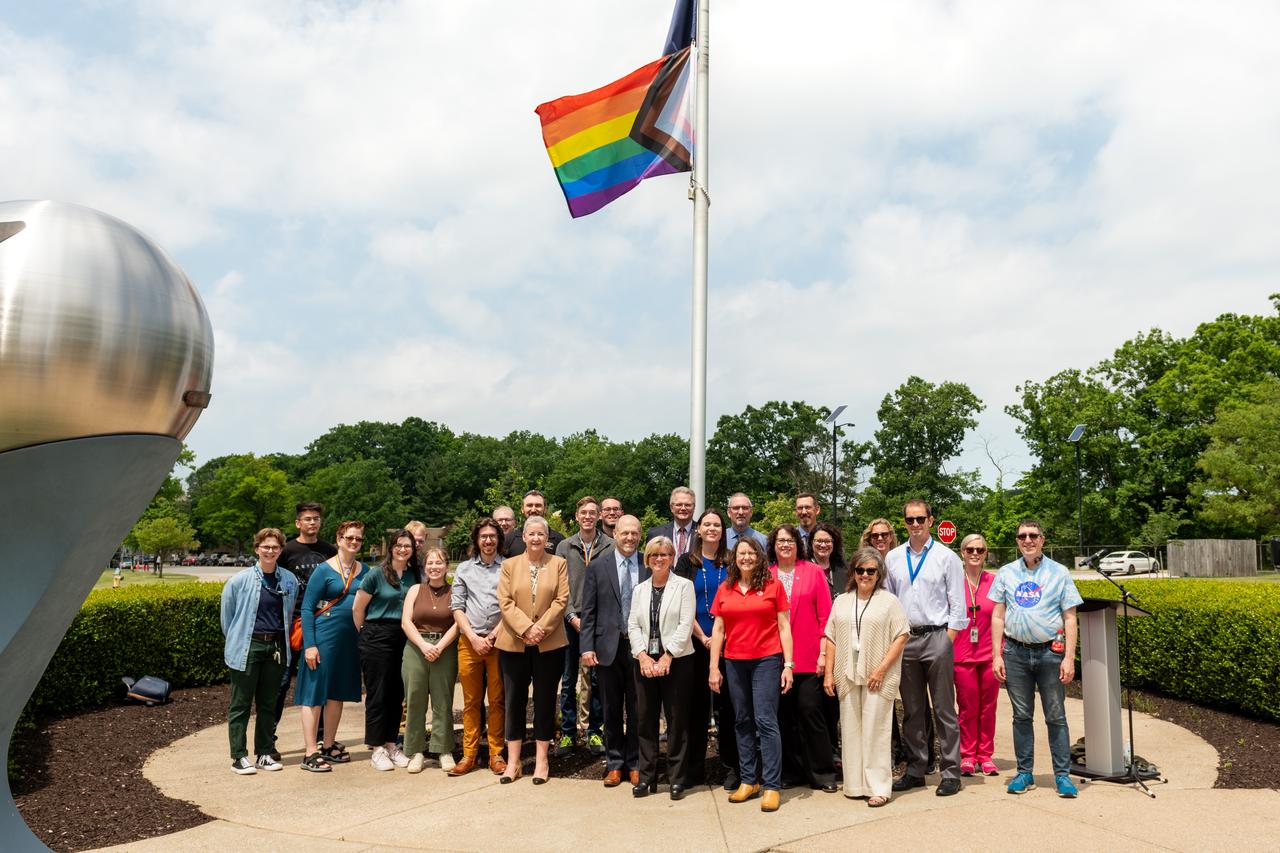
NASA Glenn’s Rainbow Alliance Advisory Group hosted an in-person and livestreamed Pride flag raising ceremony at the building 3 flagpole on June 3, 2024. The event included remarks from Deputy Director Dawn Schaible and NASA Safety Center Director Harmony Myers. Flag raising events such as this are times for LGBTQ+ employees and their allies to come together to celebrate the progress made in the quest for safety, tolerance, acceptance, rights, happiness, and freedom for the LGBTQ+ community on- and off-site of the center.
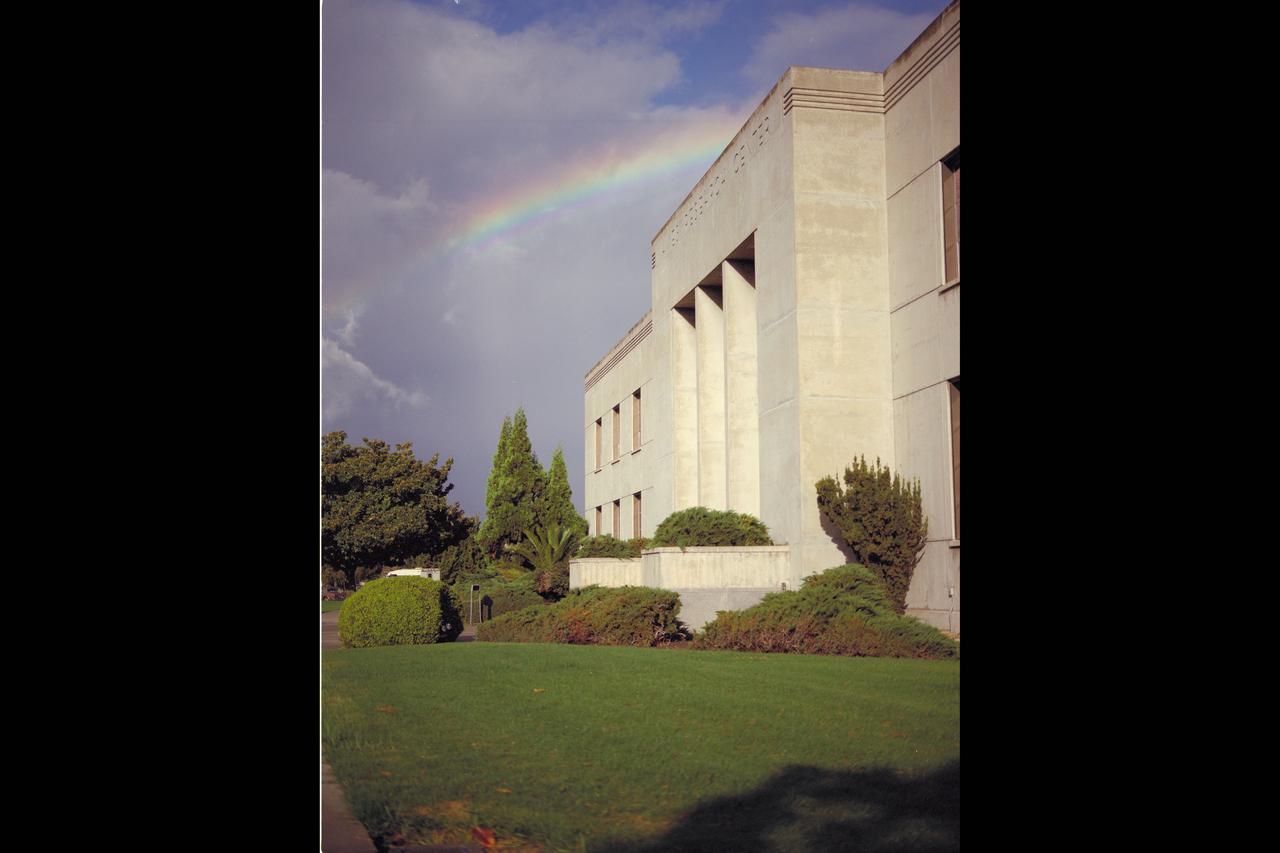
N-200 Administration Building with rainbow
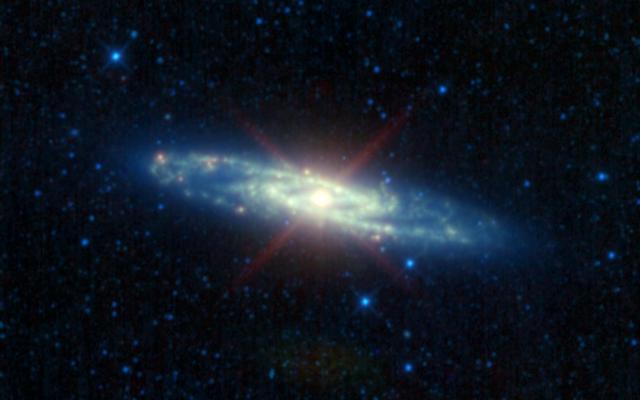
The Sculptor galaxy, or NGC 253, is seen in a rainbow of infrared colors in this mosaic by NASA Wide-field Infrared Survey Explorer. The Sculptor galaxy can be seen by observers in the southern hemisphere with a pair of good binoculars.
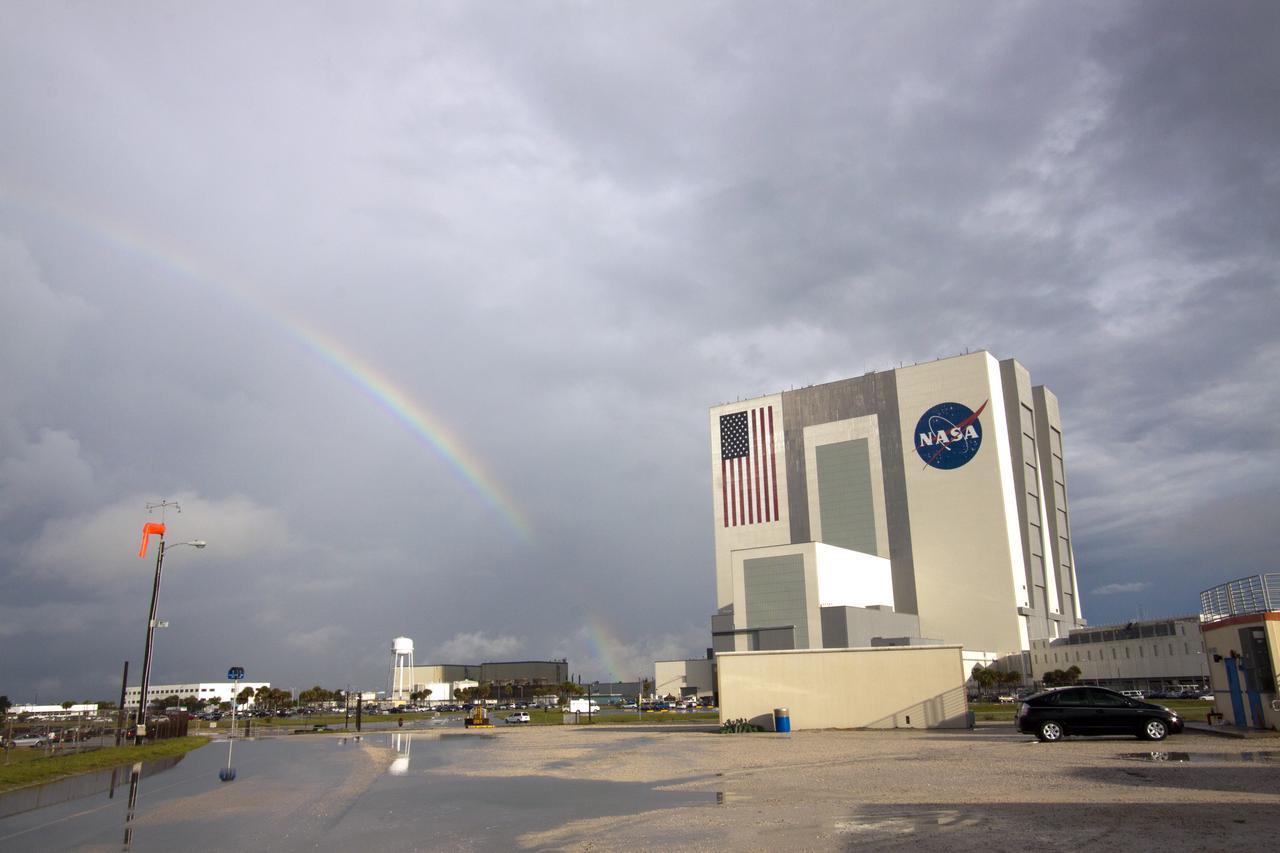
KSC WEATHER - RAINBOWS NEAR VAB AND HQ BLDG.
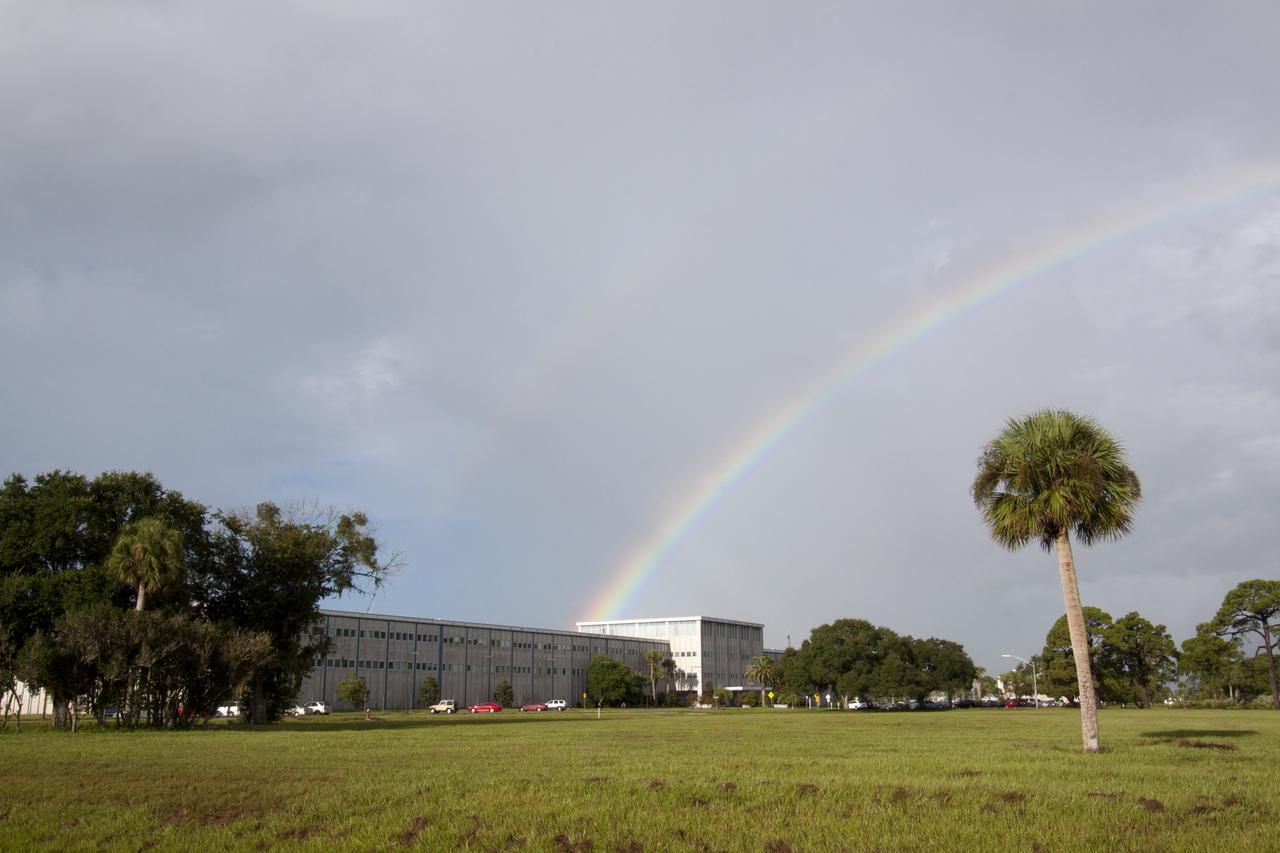
KSC WEATHER - RAINBOWS NEAR VAB AND HQ BLDG.
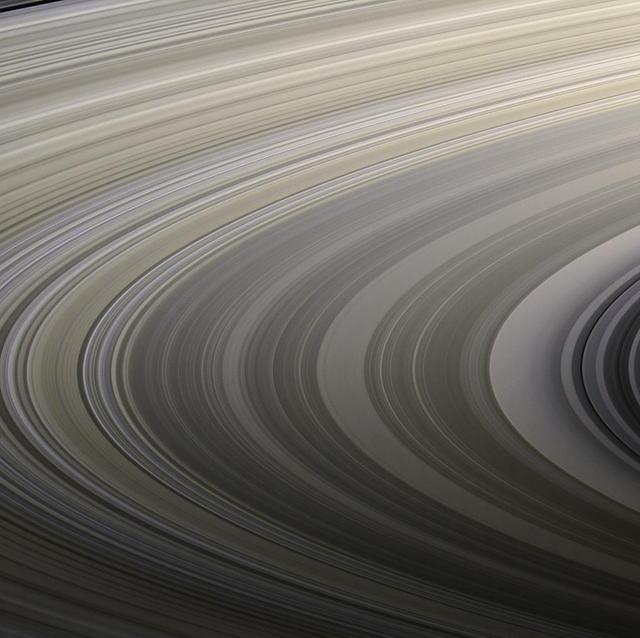
Saturn's rings display their subtle colors in this view captured on Aug. 22, 2009, by NASA's Cassini spacecraft. The particles that make up the rings range in size from smaller than a grain of sand to as large as mountains, and are mostly made of water ice. The exact nature of the material responsible for bestowing color on the rings remains a matter of intense debate among scientists. Images taken using red, green and blue spectral filters were combined to create this natural color view. Cassini's narrow-angle camera took the images at a distance of approximately 1.27 million miles (2.05 million kilometers) from the center of the rings. The Cassini spacecraft ended its mission on Sept. 15, 2017 https://photojournal.jpl.nasa.gov/catalog/PIA22418
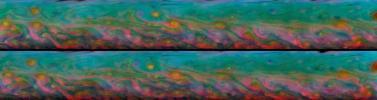
With kaleidoscopic forms and hues, these two false-color views from NASA Cassini spacecraft show the patterns that come and go in the course of one Saturn day within the huge storm in the planet northern hemisphere.
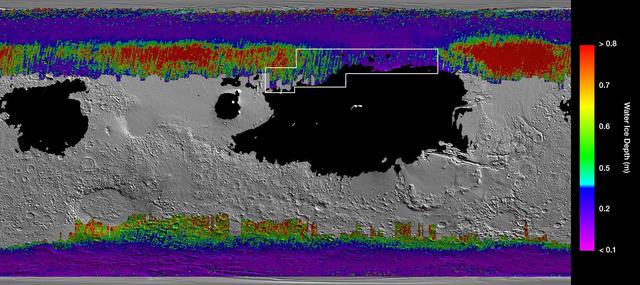
This rainbow-colored map shows underground water ice on Mars. Cool colors represent less than one foot (30 centimeters) below the surface; warm colors are over two feet (60 centimeters) deep. Sprawling black zones on the map represent areas where a landing spacecraft would sink into fine dust. The outlined box represents the ideal region to send astronauts for them to be able to dig up water ice. The map was created by combining data from multiple NASA orbiters, including the Mars Reconnaissance Orbiter and its Mars Climate Sounder instrument; Mars Odyssey and its Thermal Emission Imaging System; and the Mars Global Surveyor. https://photojournal.jpl.nasa.gov/catalog/PIA23514
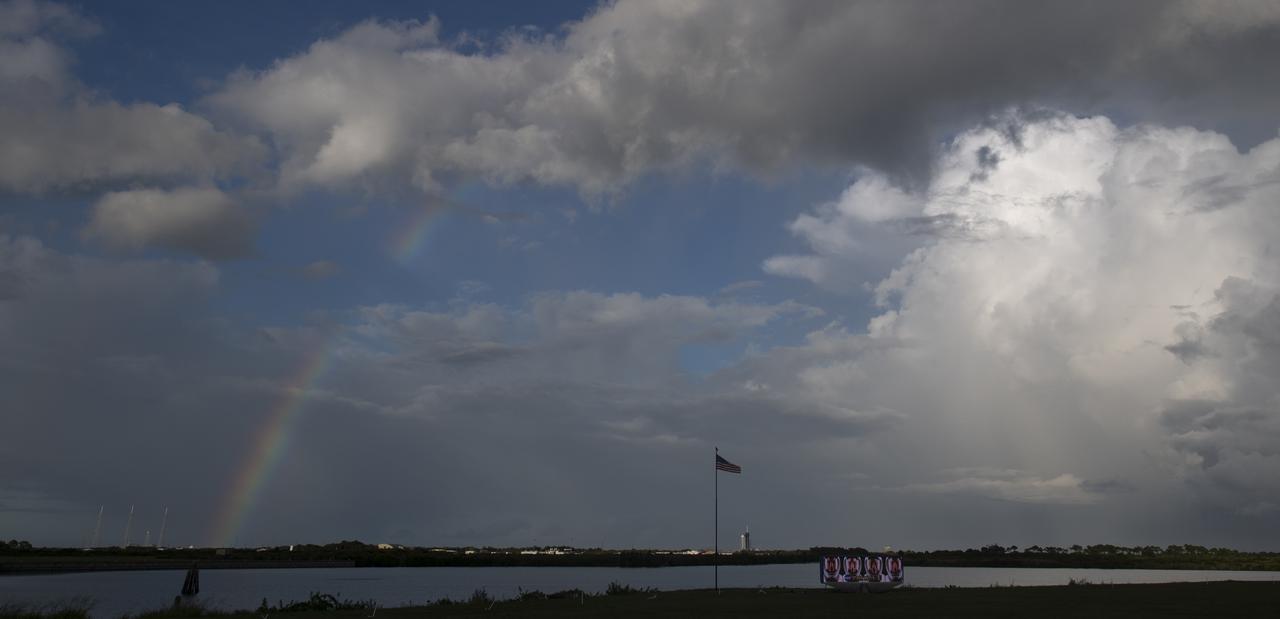
A rainbow is seen between Launch Complex 39B and Launch Complex 39A after weather moved through the area as preparations continue for NASA’s SpaceX Crew-3 mission, Monday, Oct. 25, 2021, at NASA’s Kennedy Space Center in Florida. NASA’s SpaceX Crew-3 mission is the third crew rotation mission of the SpaceX Crew Dragon spacecraft and Falcon 9 rocket to the International Space Station as part of the agency’s Commercial Crew Program. NASA astronauts Raja Chari, Tom Marshburn, Kayla Barron, and ESA (European Space Agency) astronaut Matthias Maurer are scheduled to launch on Oct. 31 at 2:21 a.m. ET, from Launch Complex 39A at the Kennedy Space Center. Photo Credit: (NASA/Joel Kowsky)
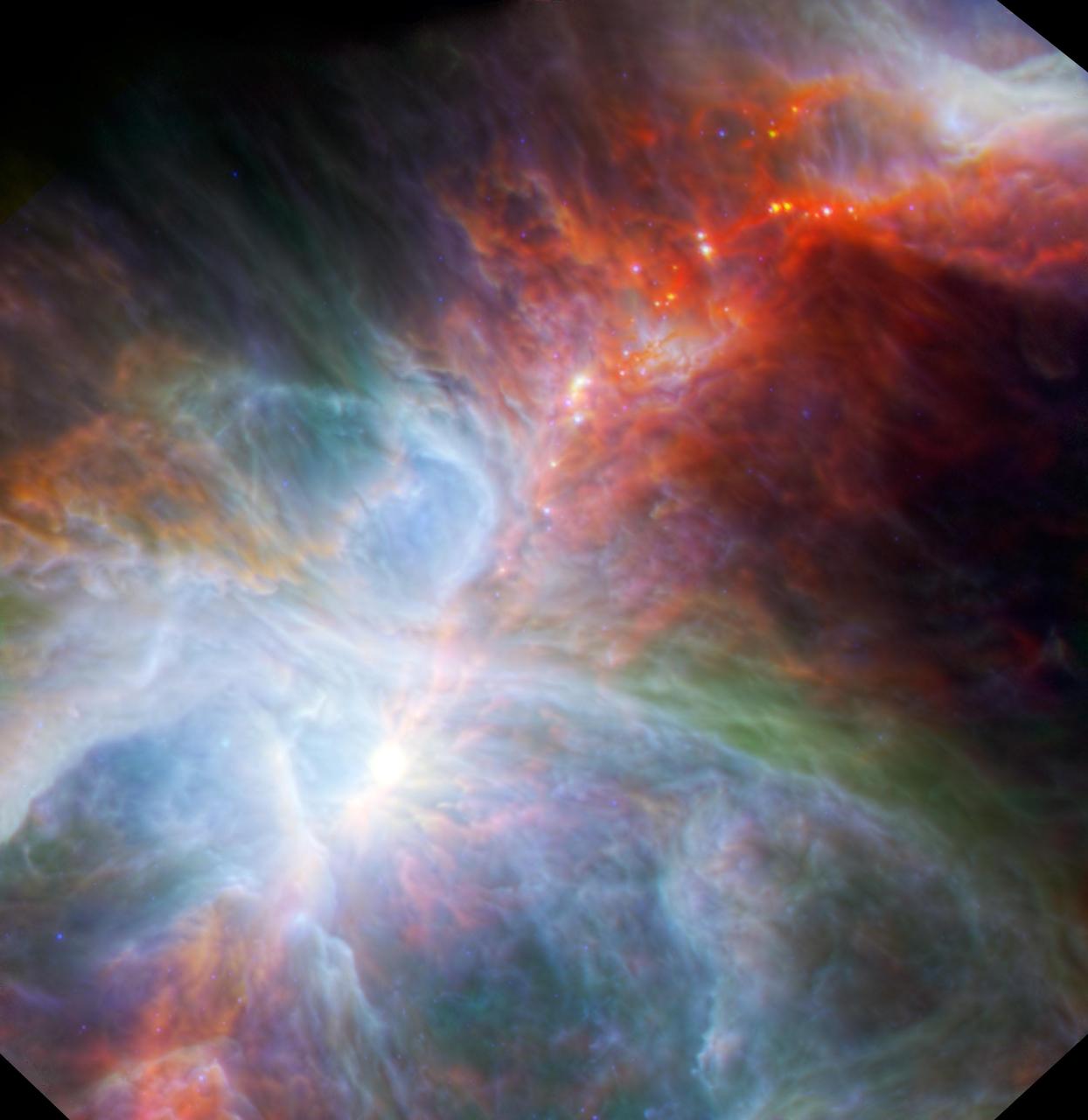
NASA Spitzer Space Telescope and ESA Herschel mission combined to show this view of the Orion nebula, found below the three belt stars in the famous constellation of Orion the Hunter, highlights fledgling stars hidden in the gas and clouds.
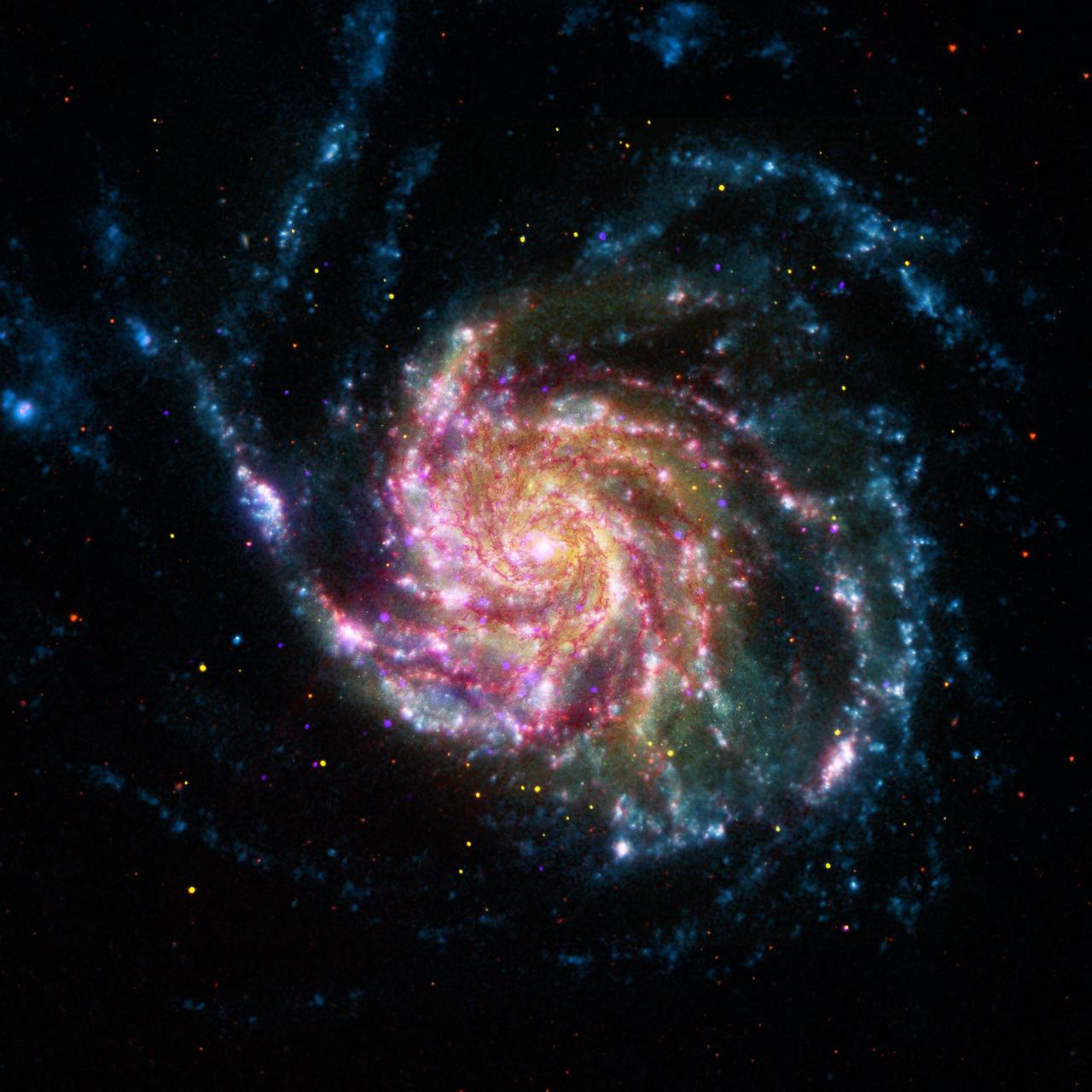
This image of the Pinwheel Galaxy, or M101, in the constellation of Ursa Major, combines data from four of NASA space telescopes. The view shows that both young and old stars are evenly distributed along M101 tightly wound spiral arms.
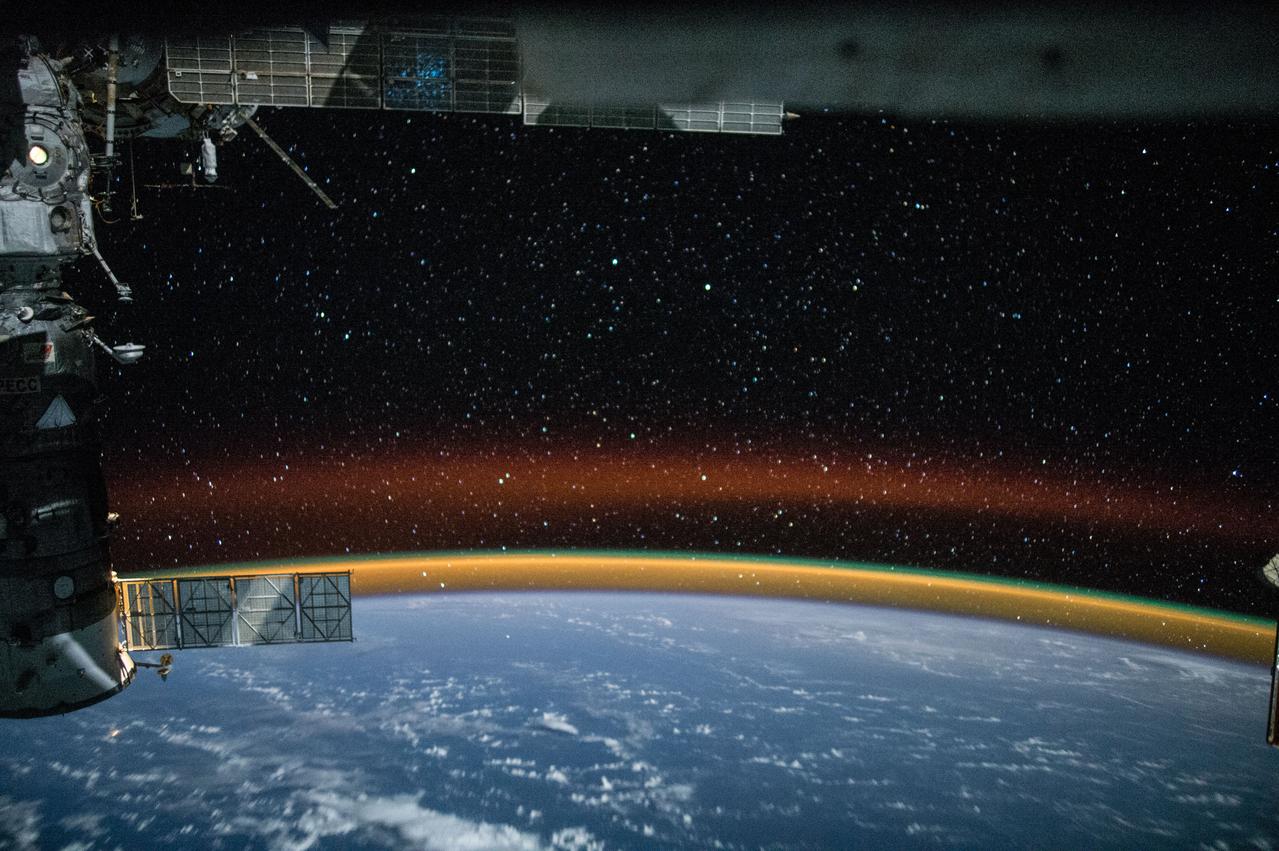
ISS043E108129 (04/11/2015) --- "Rainbow double Aurora" greet the astronauts and cosmonauts on board the International Space Station on Apr. 11, 2015 as a bonus during their busy workdays of science experiments, maintenance and operational duties.
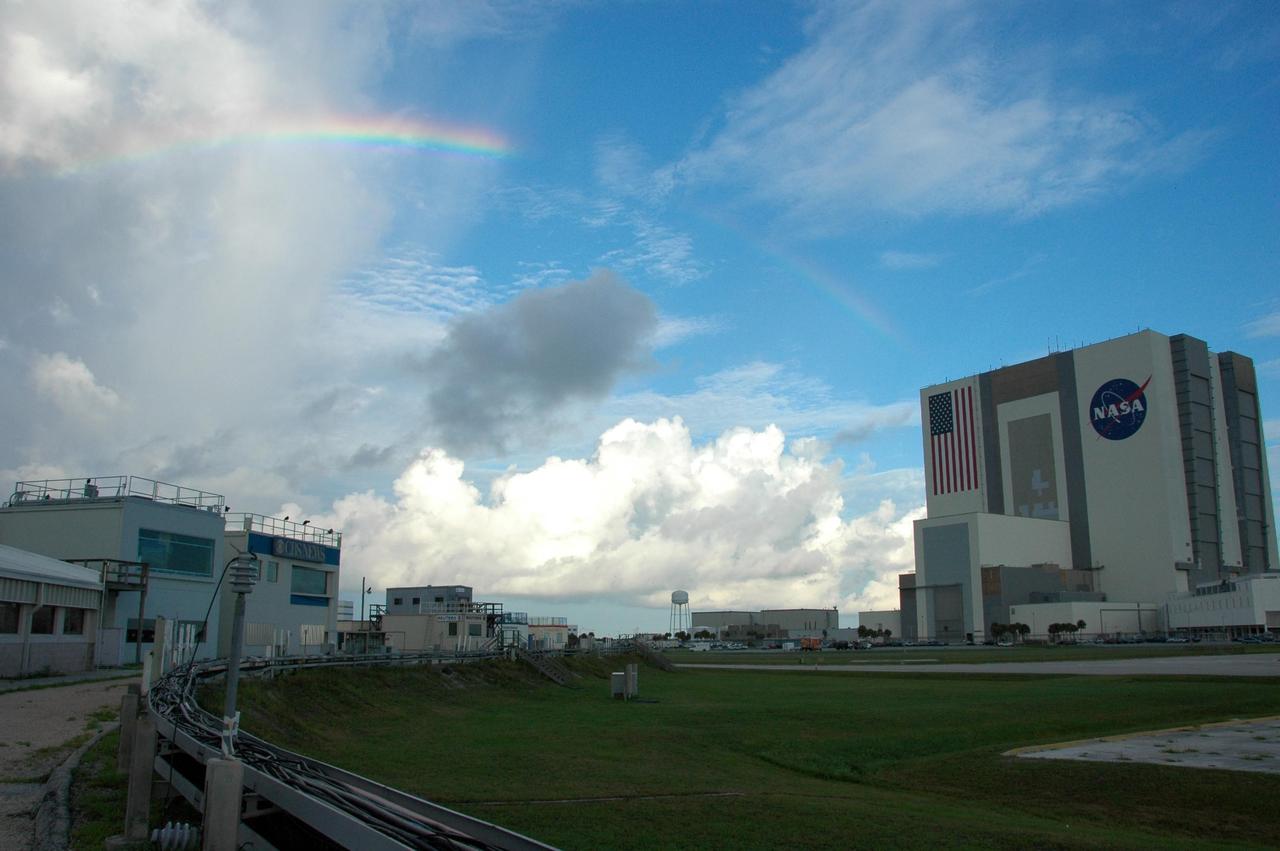
KENNEDY SPACE CENTER, FLA. -- A rainbow arcs over NASA's Kennedy Space Center in the Launch Complex 39Area. At right is the Vehicle Assembly Building; at left is the NASA News Center. Photo credit: NASA/Amanda Diller
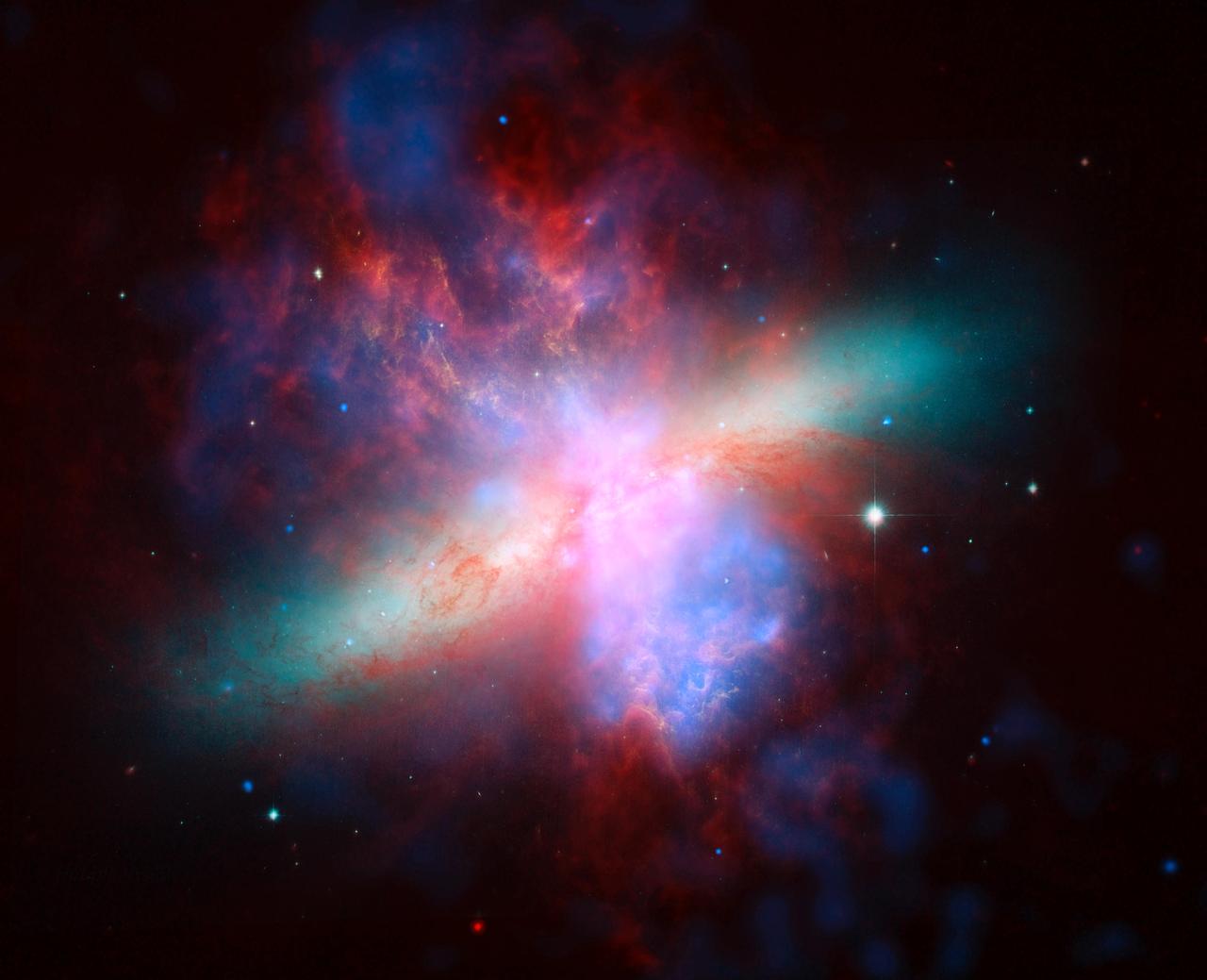
NASA Spitzer, Hubble and Chandra space observatories teamed up to create this multi-wavelength, false-colored view of the M82 galaxy. The lively portrait celebrates Hubble weet sixteen birthday.
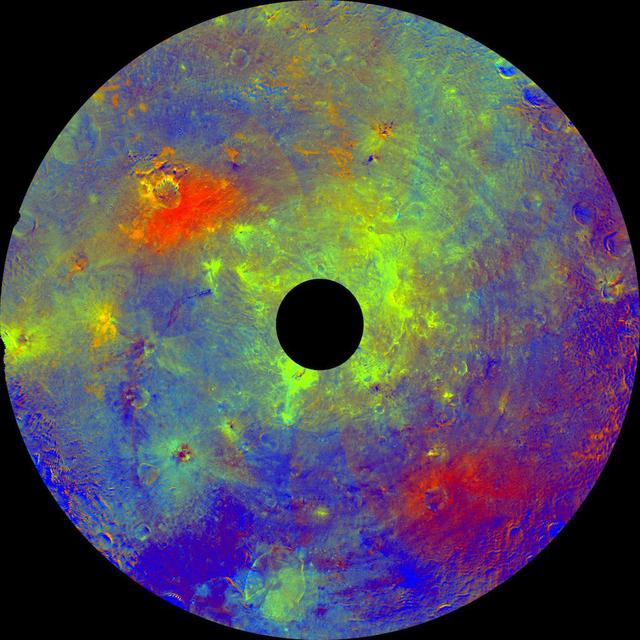
This image using color data obtained by the framing camera aboard NASA Dawn spacecraft shows asteroid Vesta southern hemisphere in color, centered on the Rheasilvia formation.
A rainbow is seen in the sky over the SpaceX Falcon 9 rocket carrying the company's Crew Dragon spacecraft during a dress rehearsal in preparation for launch of NASA’s SpaceX Crew-1 mission with NASA astronauts Mike Hopkins, Victor Glover, Shannon Walker, and Japan Aerospace Exploration Agency (JAXA) astronaut Soichi Noguchi onboard, Thursday, Nov. 12, 2020, in firing room four of the Launch Control Center at NASA’s Kennedy Space Center in Florida. NASA’s SpaceX Crew-1 mission is the first crew rotation mission of the SpaceX Crew Dragon spacecraft and Falcon 9 rocket to the International Space Station as part of the agency’s Commercial Crew Program. Hopkins, Glover, Walker, and Noguchi are scheduled to launch at 7:49 p.m. EST on Saturday, Nov. 14, from Launch Complex 39A at the Kennedy Space Center. Photo Credit: (NASA/Aubrey Gemignani)
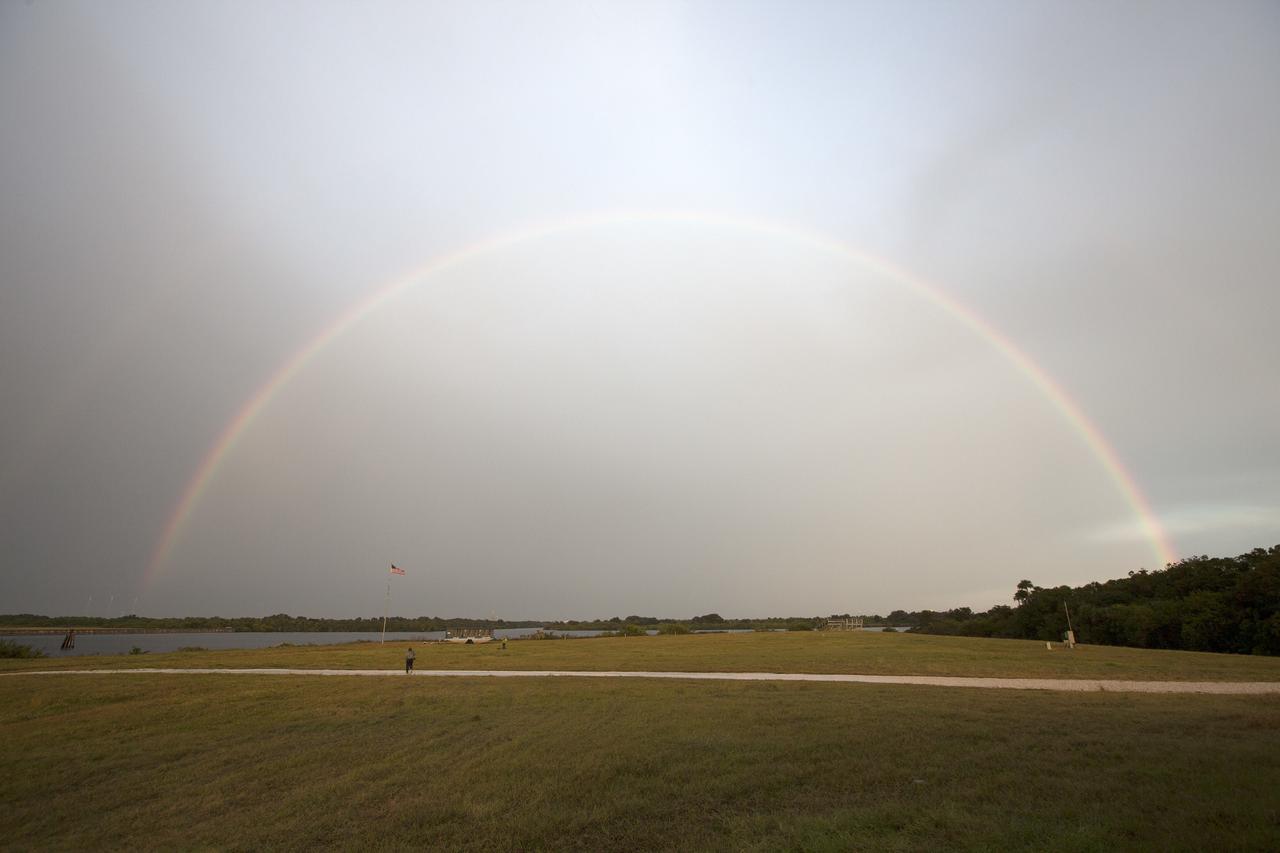
CAPE CANAVERAL, Fla. – As rain showers dissipate, a rainbow appeared over the Kennedy Space Center's Press Site and turn basin. In the background is the historic countdown clock. For more information, visit http://www.nasa.gov/kennedy Photo credit: NASA/Kim Shiflett
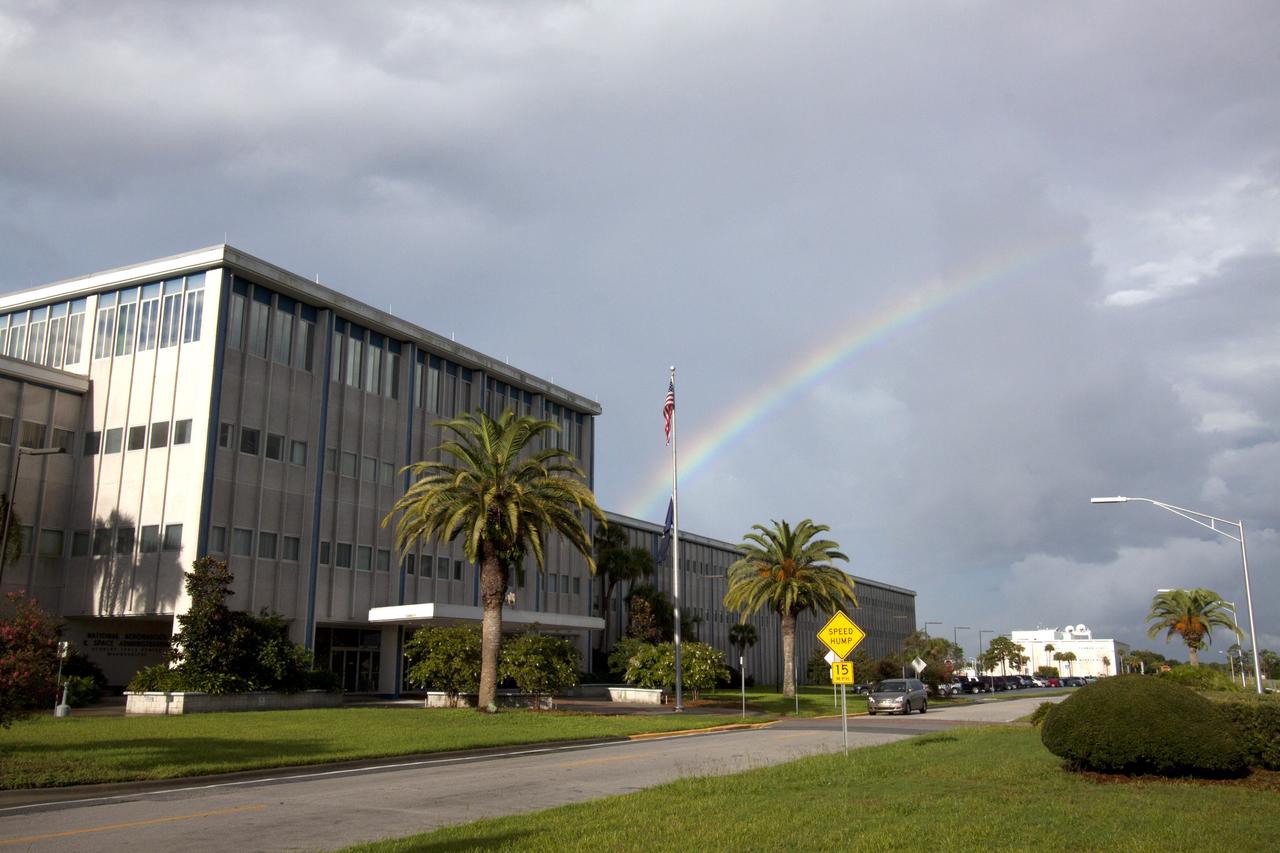
CAPE CANAVERAL, Fla. -- As the sun was rising over NASA's Kennedy Space Center in Florida, an early morning rain shower caused a meteorological and optical rainbow show over the Headquarters building. Florida's Space Coast often is the scene of showers and thunderstorms during the summer months. Photo credit: NASA/Jack Pfaller
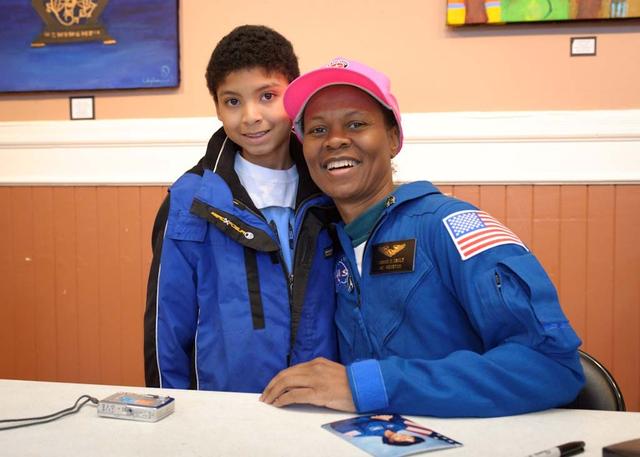
10th Anniversary of Reachout for the Rainbow after School Science Festival highlighting NASA Ames and the Traveling Space Museum exhibits and activities at the South San Francisco Bayview Opera House. NASA Astronaut Yvonne Cagle signing autographs after speaking at event, shown here with Stephen Horsley. photo release on file
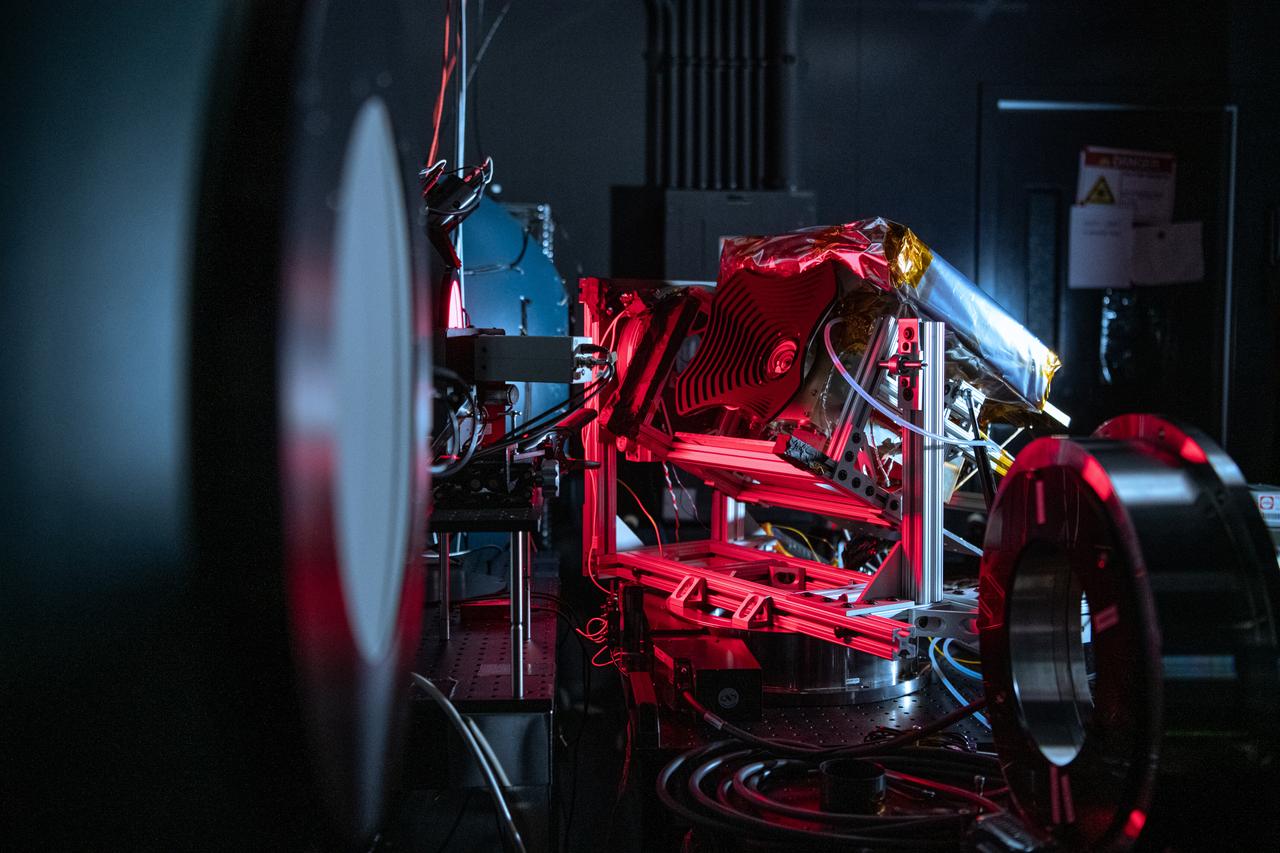
The Hyper-Angular Rainbow Polarimeter #2 (HARP2) instrument undergoes calibration testing after at NASA's Goddard Space Flight Center in Greenbelt Maryland on October 4th, 2022. HARP2 is one of three instruments on NASA's Plankton, Aerosol, Cloud, ocean Ecosystem (PACE) observatory, it was designed and built by UMBC's Earth and Space Institute.
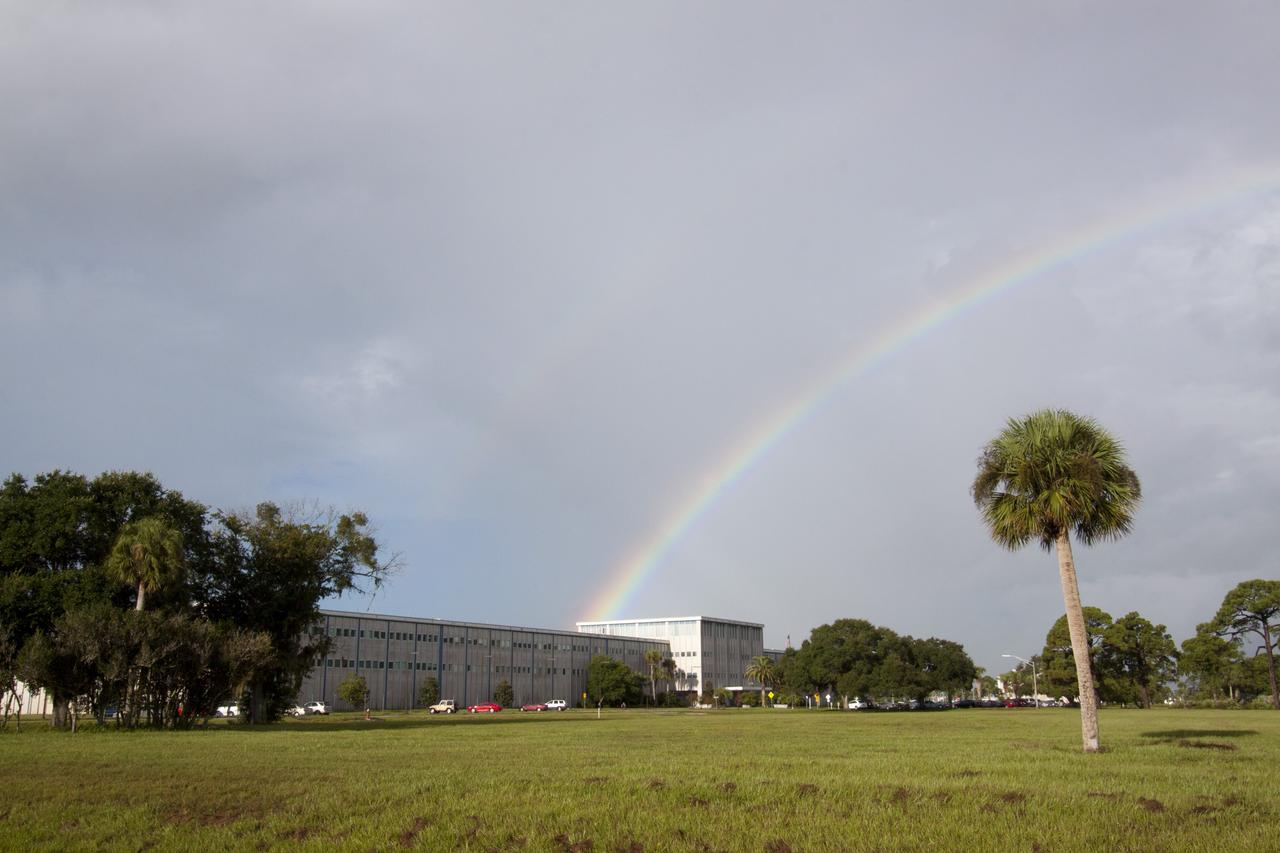
CAPE CANAVERAL, Fla. -- As the sun was rising over NASA's Kennedy Space Center in Florida, an early morning rain shower caused a meteorological and optical rainbow show over the Headquarters building. Florida's Space Coast often is the scene of showers and thunderstorms during the summer months. Photo credit: NASA/Jack Pfaller
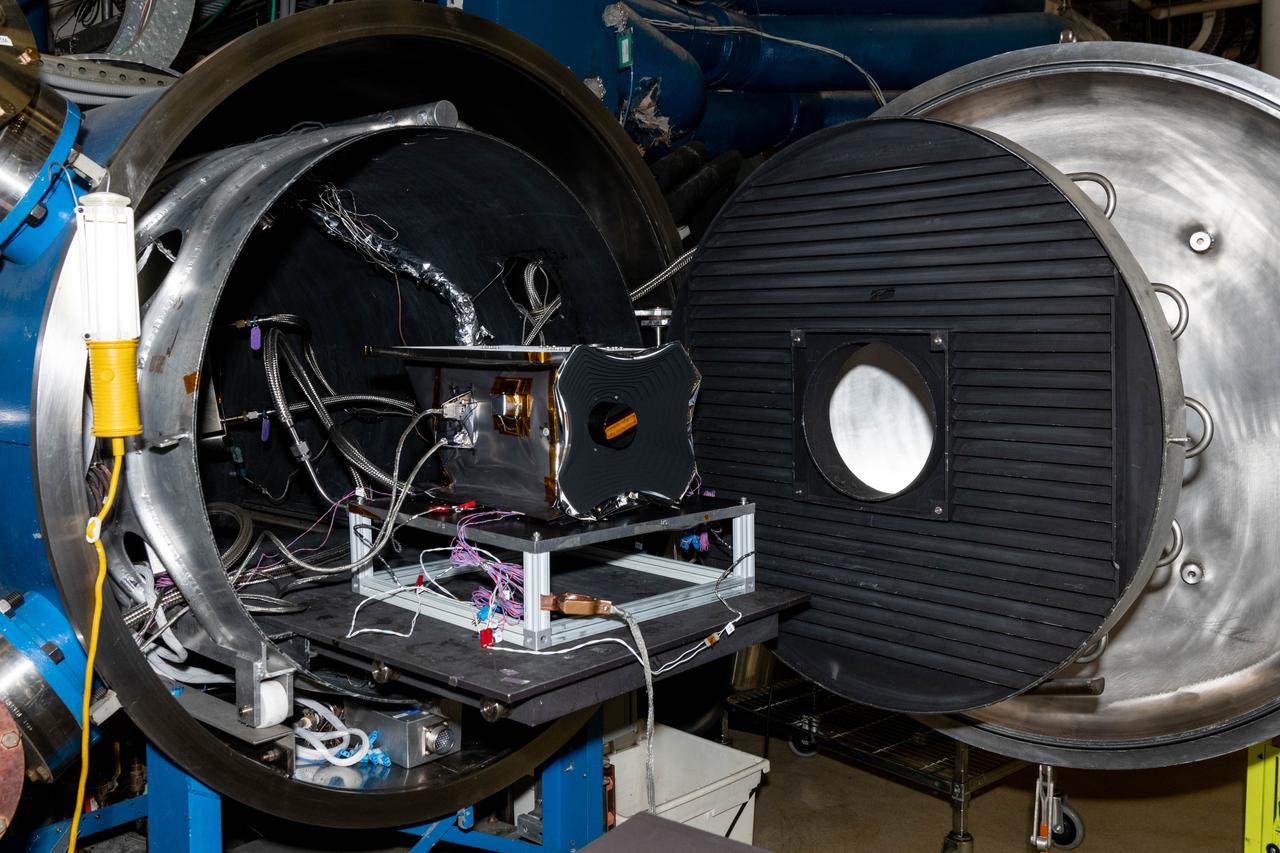
The Hyper-Angular Rainbow Polarimeter #2 (HARP2) instrument prior to thermal vacuum testing at NASA's Goddard Space Flight Center in Greenbelt Maryland on August 8th, 2022. HARP2 is one of three instruments on NASA's Plankton, Aerosol, Cloud, ocean Ecosystem (PACE) observatory, it was designed and built by UMBC's Earth and Space Institute.
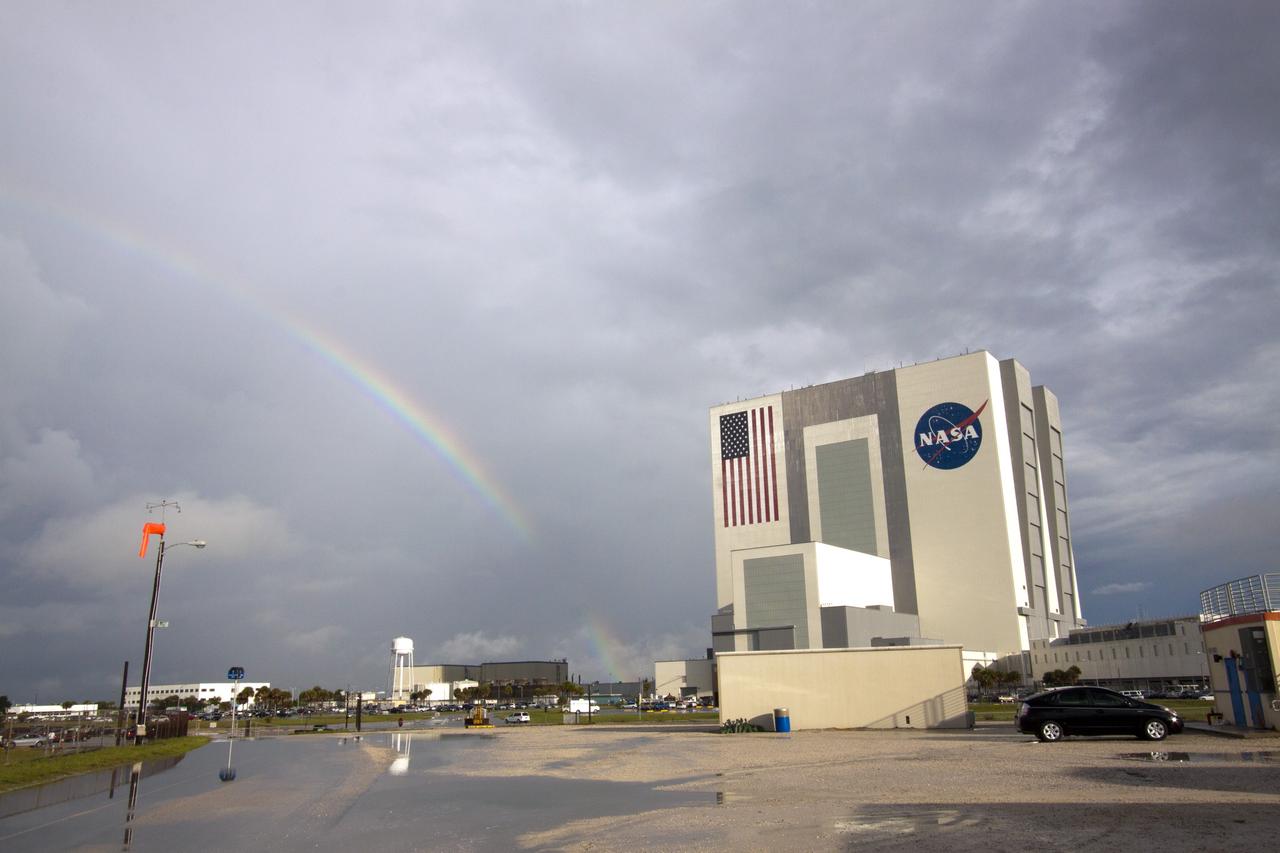
CAPE CANAVERAL, Fla. -- As the sun was rising over NASA's Kennedy Space Center in Florida, an early morning rain shower caused a meteorological and optical rainbow show next to the Vehicle Assembly Building. Florida's Space Coast often is the scene of showers and thunderstorms during the summer months. Photo credit: NASA/Jack Pfaller
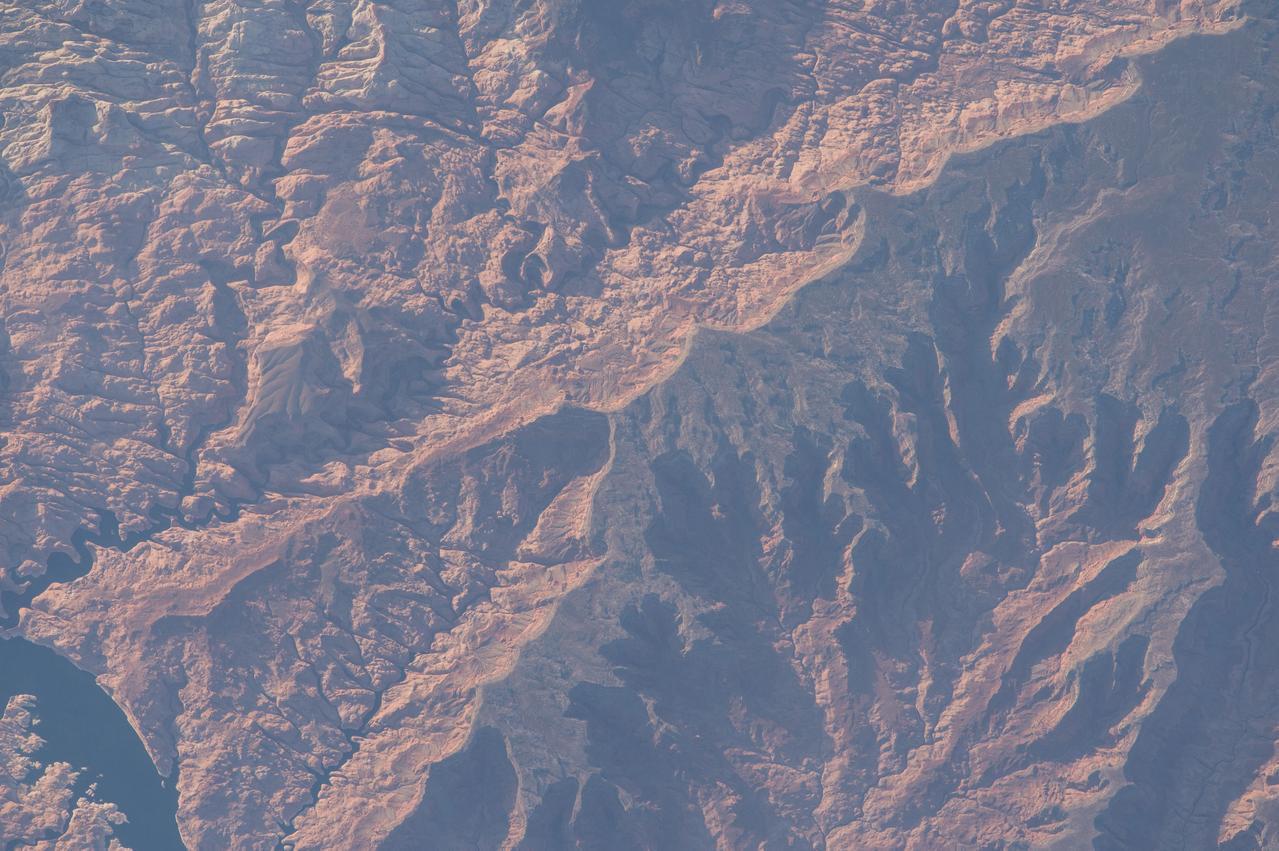
ISS043E182476 (05/08/2015) ---The US rugged southern Utah area is highlighted in this image captured by NASA astronaut Scott Kelly from the International Space Station May, 8th, 2015. The area shown is the Forbidden Canyon, Rainbow Plateau and San Juan River.
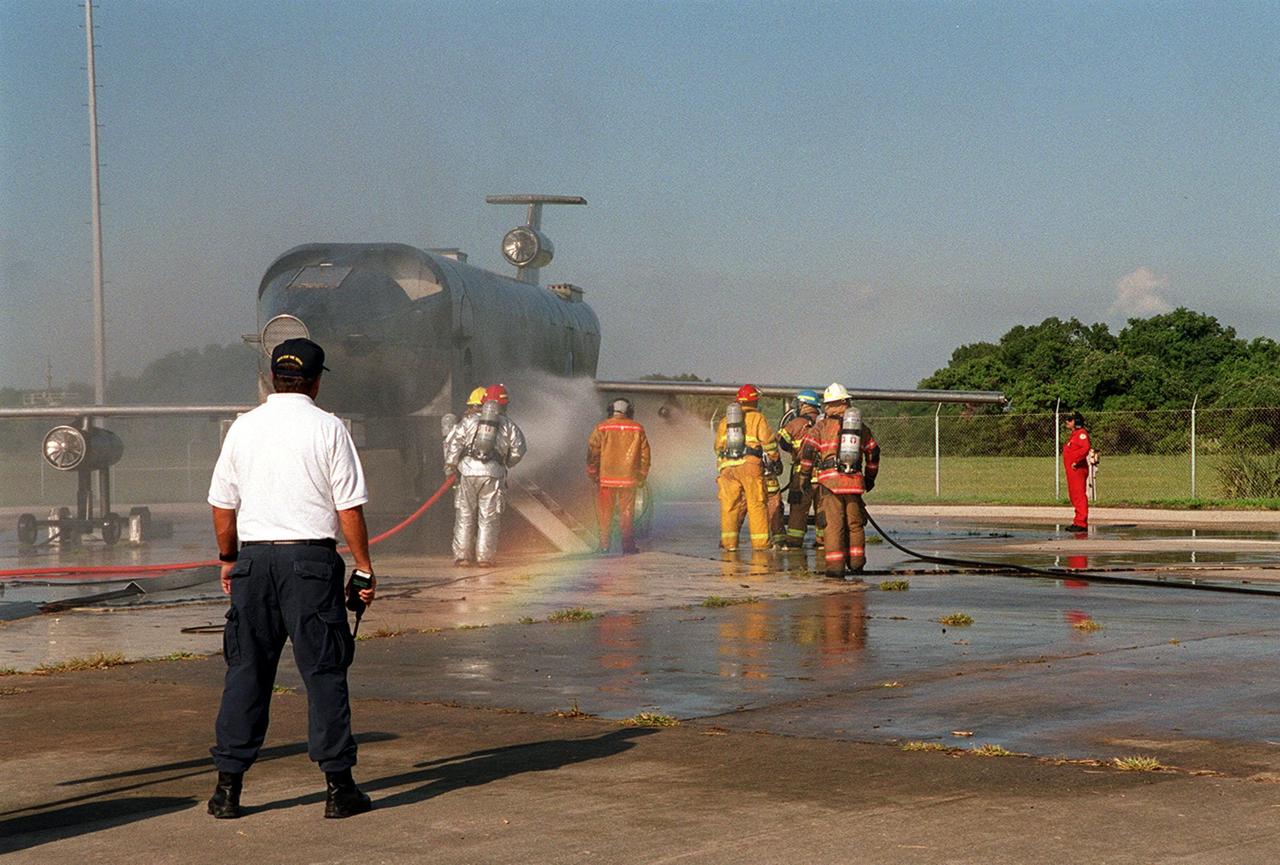
KENNEDY SPACE CENTER, FLA. -- Firefighters hold their hoses on a burning simulated aircraft, creating a rainbow. Watching at right (red uniform) and in the foreground are trainers. The training exercises for firefighters with Fire and Emergency Services at Naval Station Mayport, Fla., are being held at Cape Canaveral Air Force Station Pad 30.
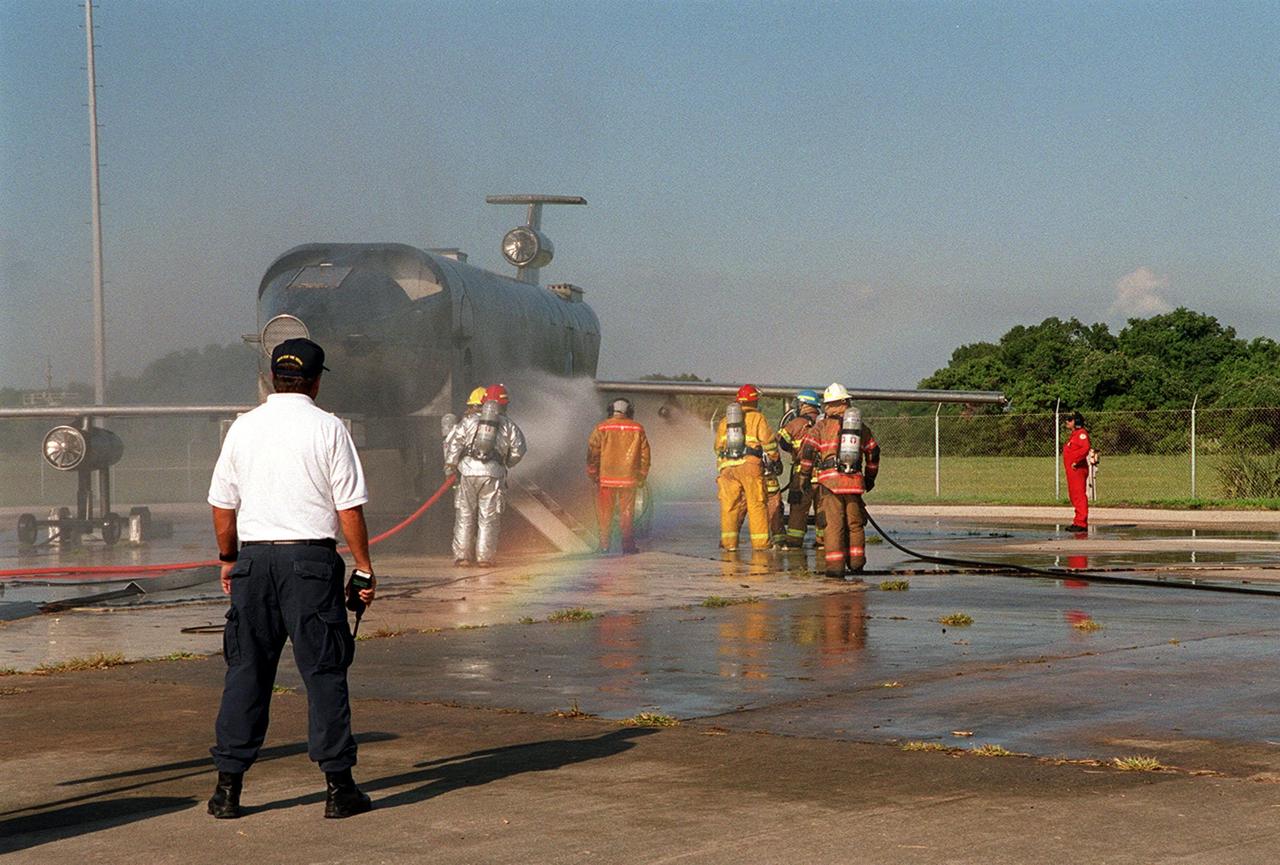
KENNEDY SPACE CENTER, FLA. -- Firefighters hold their hoses on a burning simulated aircraft, creating a rainbow. Watching at right (red uniform) and in the foreground are trainers. The training exercises for firefighters with Fire and Emergency Services at Naval Station Mayport, Fla., are being held at Cape Canaveral Air Force Station Pad 30.
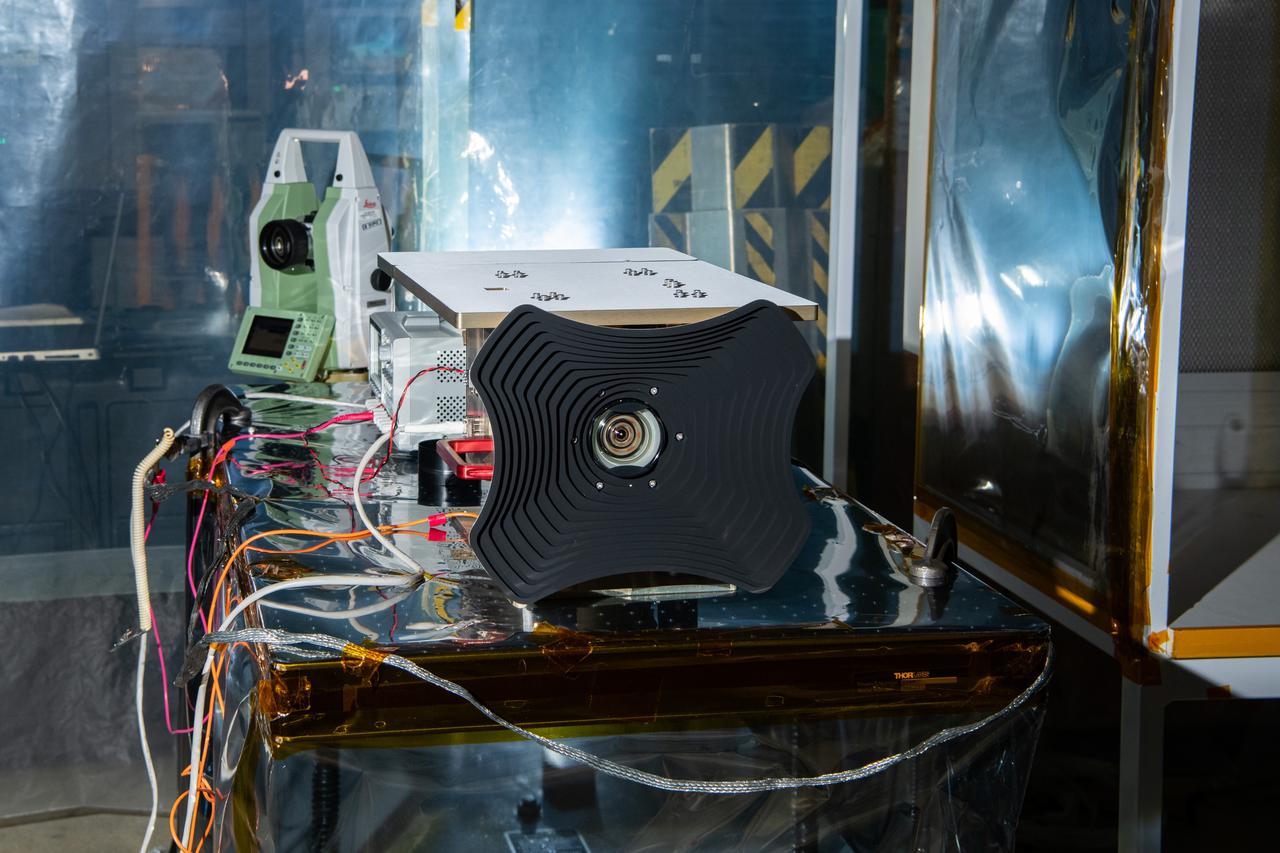
The Hyper-Angular Rainbow Polarimeter #2 (HARP2) instrument undergoes Boresight alignment at NASA's Goddard Space Flight Center in Greenbelt, Maryland. HARP2 is one of three instruments on NASA's Plankton, Aerosol, Cloud, ocean Ecosystem (PACE) observatory, it was designed and built by UMBC's Earth and Space Institute.
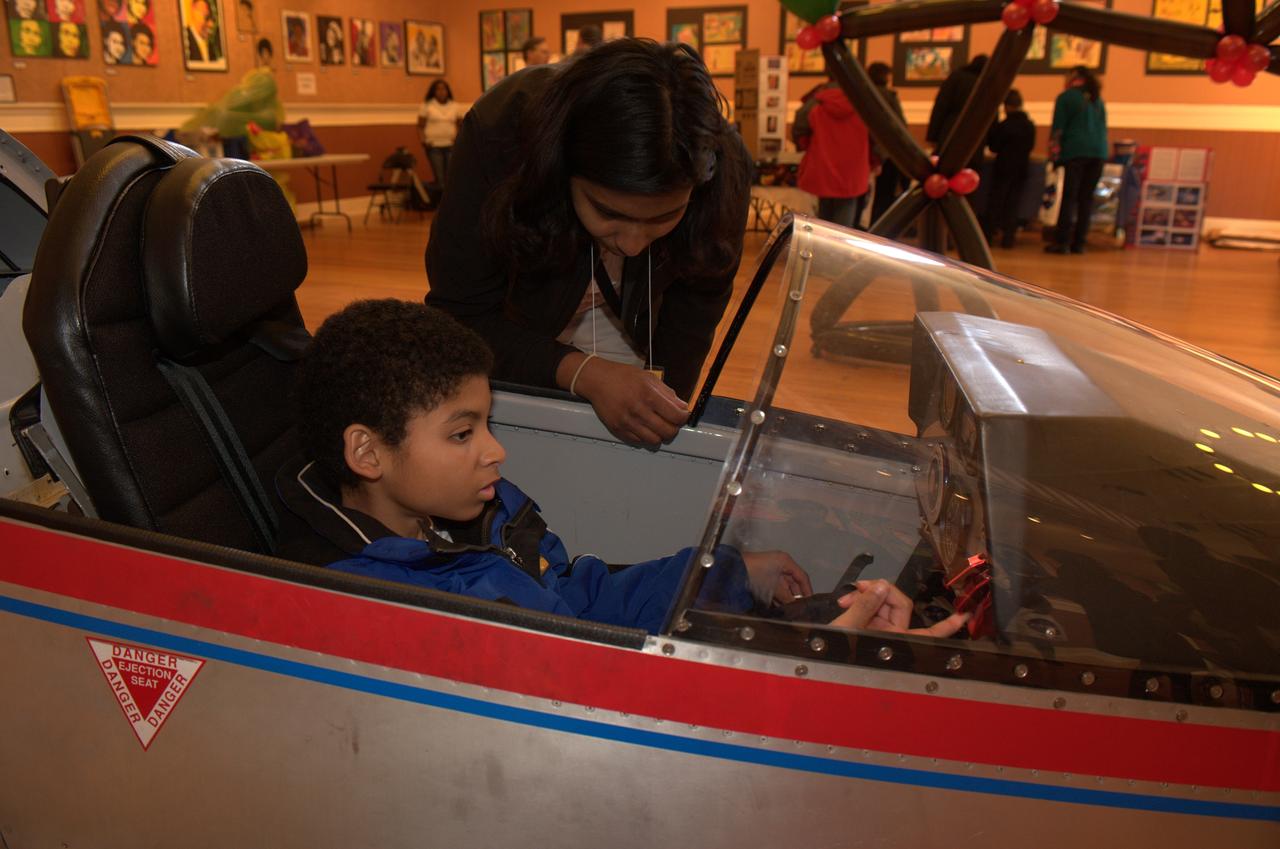
10th Anniversary of Reachout for the Rainbow after School Science Festival highlighting NASA Ames and the Traveling Space Museum exhibits and activities at the South San Francisco Bayview Opera House. Stephen Horsley gets a close up look at the cockpit of one the models provided by the Traveling Space Museum (TCS). photo release on file

The data captured here is one of the outputs of a September 2023 test conducted at NASA's Jet Propulsion Laboratory of a state-of-the-art imaging spectrometer instrument, which will measure the greenhouse gases methane and carbon dioxide from space. The instrument successfully detected the presence of methane (dark blue line near the top of the rainbow band), a greenhouse gas, in a sample cylinder. The rainbow band shown on a screen here is a measure of the intensity of a spectrum of light. Blue is low intensity and red is high intensity. Designed and built by JPL, imaging spectrometer will be part of an effort led by the nonprofit Carbon Mapper organization to collect data on greenhouse gas point-source emissions. The information will help locate and quantify "super-emitters" – the small percentage of individual sources responsible for a significant fraction of methane and carbon dioxide emissions around the world. https://photojournal.jpl.nasa.gov/catalog/PIA26096

NASA's New Horizons spacecraft captured this high-resolution enhanced color view of Pluto on July 14, 2015. The image combines blue, red and infrared images taken by the Ralph/Multispectral Visual Imaging Camera (MVIC). Pluto's surface sports a remarkable range of subtle colors, enhanced in this view to a rainbow of pale blues, yellows, oranges, and deep reds. Many landforms have their own distinct colors, telling a complex geological and climatological story that scientists have only just begun to decode. The image resolves details and colors on scales as small as 0.8 miles (1.3 kilometers). http://photojournal.jpl.nasa.gov/catalog/PIA19952

Although the rings lack the many colors of the rainbow, they arc across the sky of Saturn. From equatorial locations on the planet, they'd appear very thin since they would be seen edge-on. Closer to the poles, the rings would appear much wider; in some locations (for parts of the Saturn's year), they would even block the sun for part of each day. This view looks toward the sunlit side of the rings from about 19 degrees above the ringplane. The image was taken in visible light with the Cassini spacecraft wide-angle camera on April 10, 2017. The view was obtained at a distance of approximately 680,000 miles (1.1 million kilometers) from Saturn and at a sun-Saturn-spacecraft, or phase, angle of 128 degrees. Image scale is 43 miles (69 kilometers) per pixel. https://photojournal.jpl.nasa.gov/catalog/PIA21339

The patch depicts the Space Shuttle lifting off against the multi-colored backdrop of a rainbow, symbolizing the triumphal return to flight of our nation's manned space program. The design also commemorates the memory of the crew of Challenger mission STS-51-L, represented by the seven stars. The names of the flight crewmembers of STS-27 are located along the border of the patch.
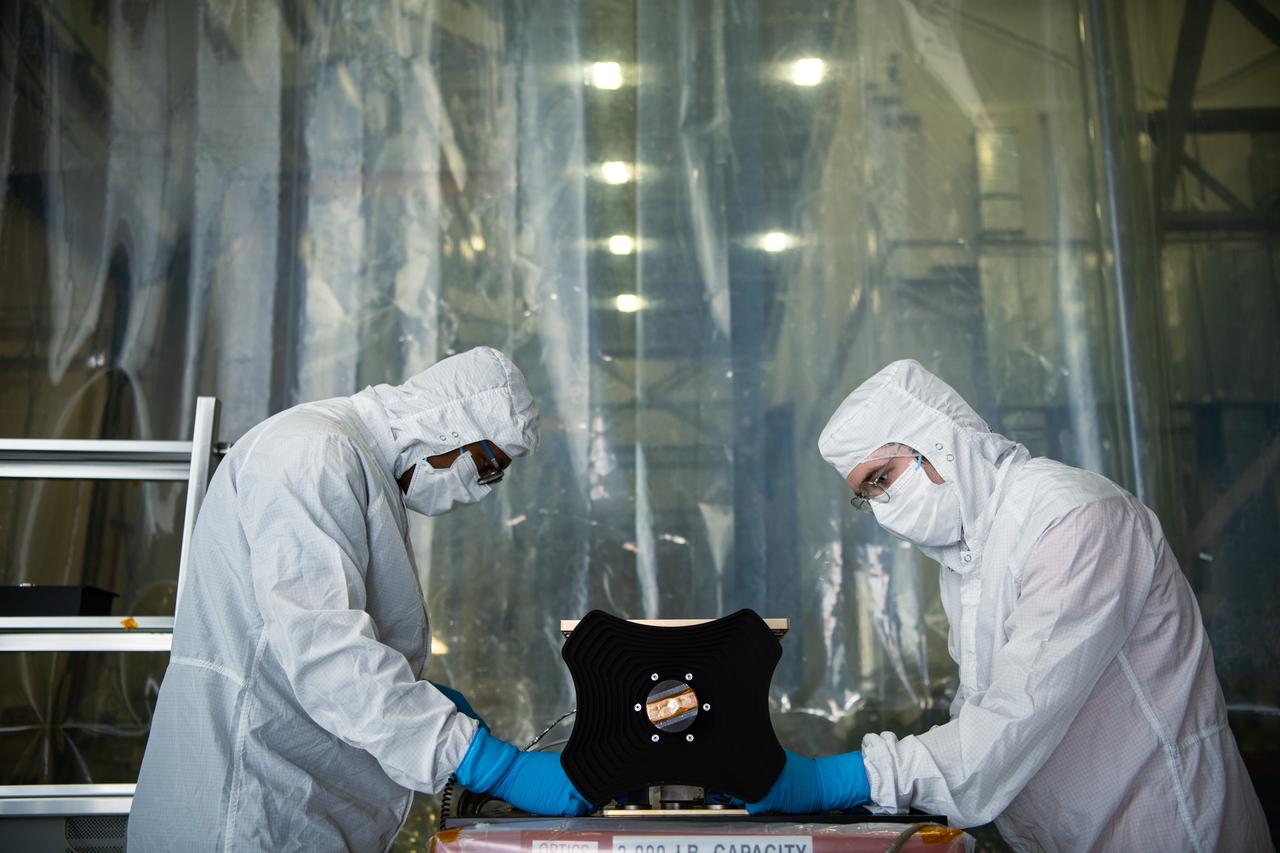
UMBC Earth and Space Institute engineers Yomiyu Fekadu (left) and Danny Nelson (right) prepare the Hyper-Angular Rainbow Polarimeter #2 (HARP2) instrument for thermal vacuum testing at NASA's Goddard Space Flight Center in Greenbelt Maryland on August 8th, 2022. HARP2 is one of three instruments on NASA's Plankton, Aerosol, Cloud, ocean Ecosystem (PACE) observatory, it was designed and built by UMBC's Earth and Space Institute.

CAPE CANAVERAL, Fla. – As rain showers dissipate, a rainbow appeared over NASA's Kennedy Space Center's Launch Pad 39B. This is the site where the agency's Space Launch System will launch astronauts aboard the Orion spacecraft to deep-space destinations such as an asteroid and Mars. For more information, visit http://www.nasa.gov/kennedy Photo credit: NASA/Kim Shiflett

A rainbow is seen at launch Pad-0A after the Northrop Grumman Antares rocket launched, Wednesday, April 17, 2019 at NASA's Wallops Flight Facility in Virginia. Northrop Grumman's 11th contracted cargo resupply mission for NASA to the International Space Station will deliver about 7,600 pounds of science and research, crew supplies and vehicle hardware to the orbital laboratory and its crew. Photo Credit: (NASA/Bill Ingalls)
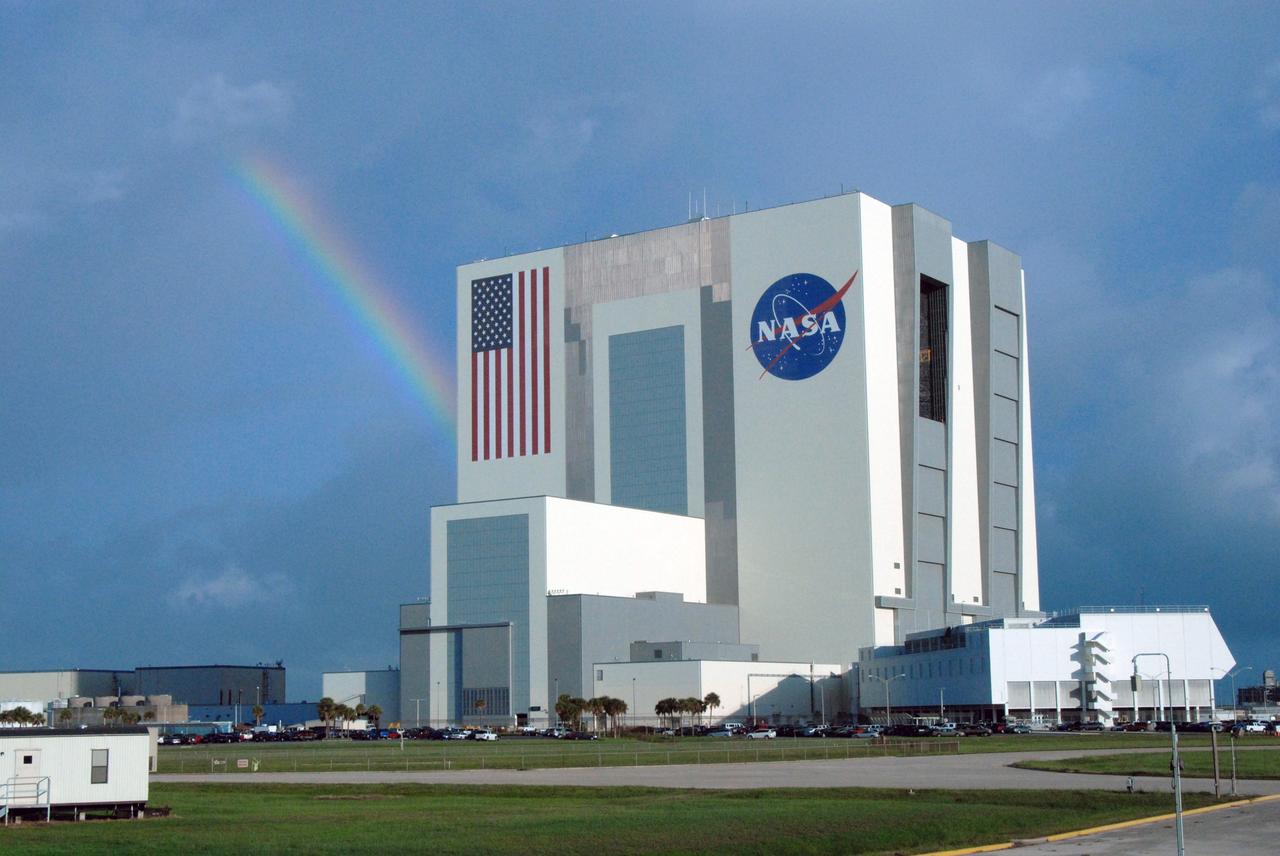
CAPE CANAVERAL, Fla. – Between rain showers over NASA's Kennedy Space Center in Florida, a rainbow breaks through the clouds behind the Vehicle Assembly Building. Rain and thunderstorms caused the waveoff of two landing opportunities Sept. 10 for space shuttle Discovery's return to Earth from the STS-128 mission. Photo credit: NASA/Jim Grossmann
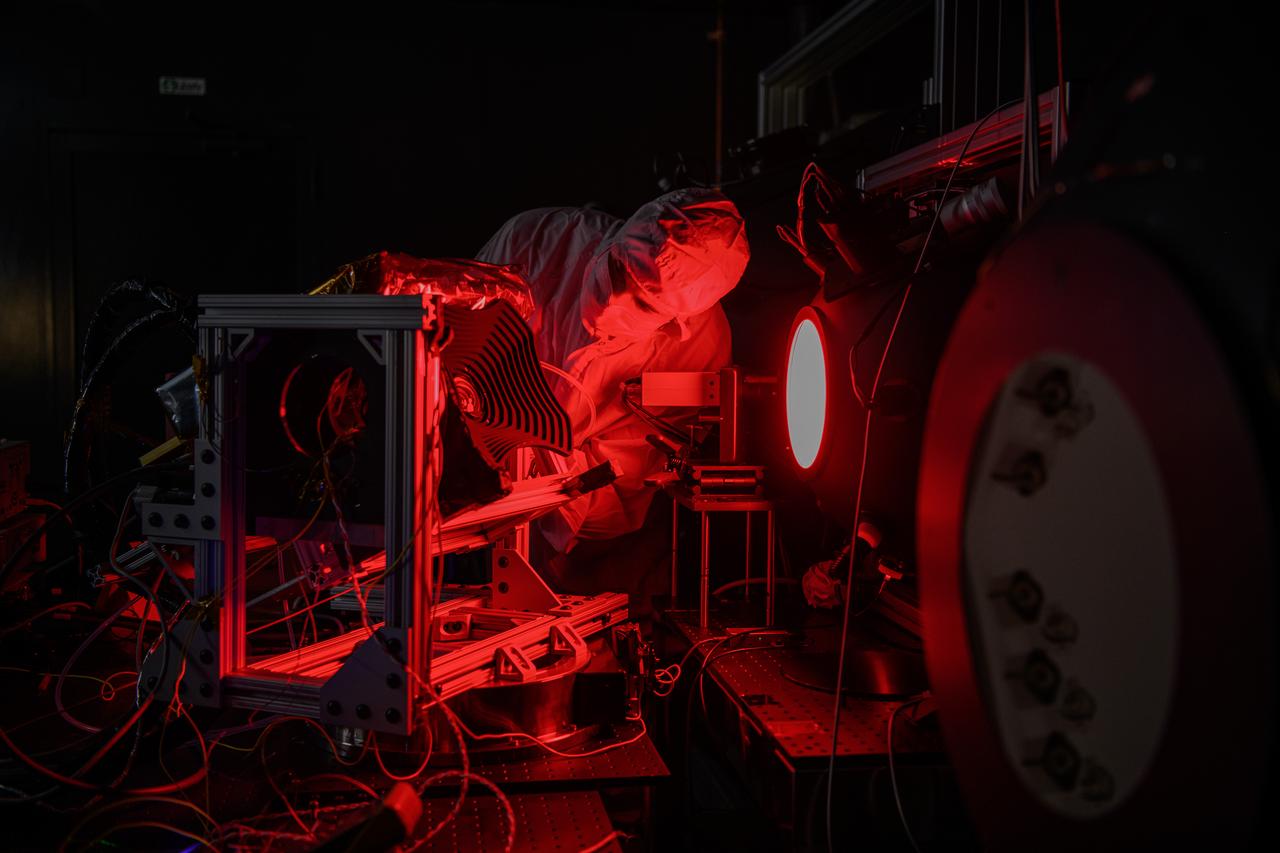
An engineer inspects the The Hyper-Angular Rainbow Polarimeter #2 (HARP2) instrument during calibration testing after at NASA's Goddard Space Flight Center in Greenbelt Maryland on October 4th, 2022. HARP2 is one of three instruments on NASA's Plankton, Aerosol, Cloud, ocean Ecosystem (PACE) observatory, it was designed and built by UMBC's Earth and Space Institute.
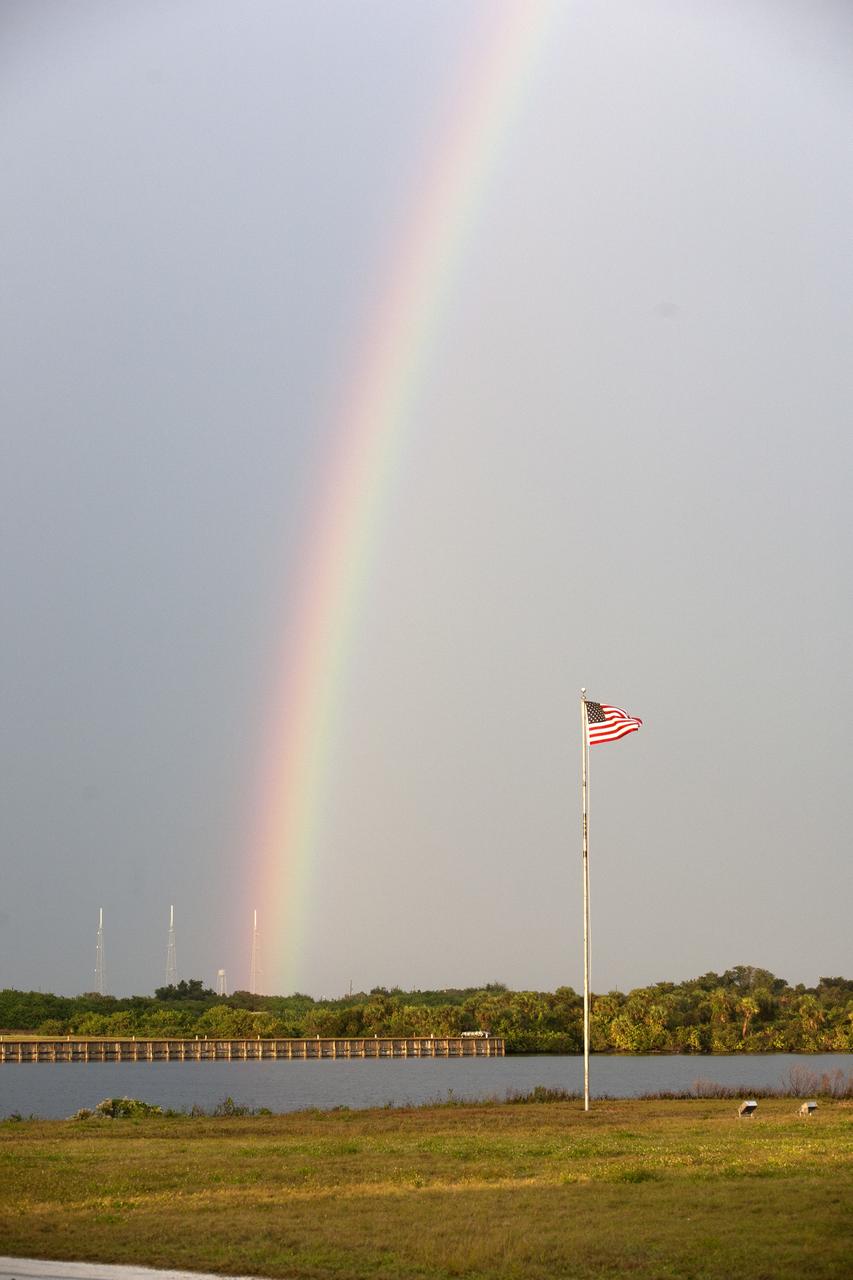
CAPE CANAVERAL, Fla. – As rain showers dissipate, a rainbow appeared over NASA's Kennedy Space Center's Launch Pad 39B. This is the site where the agency's Space Launch System will launch astronauts aboard the Orion spacecraft to deep-space destinations such as an asteroid and Mars. For more information, visit http://www.nasa.gov/kennedy Photo credit: NASA/Kim Shiflett

CAPE CANAVERAL, Fla. – As rain showers dissipate, a rainbow appeared over the Kennedy Space Center's Press Site and turn basin. In the foreground is the historic countdown clock. In the background, is Launch Pad 39B where agency's Space Launch System will launch astronauts aboard the Orion spacecraft to deep-space destinations such as an asteroid and Mars. For more information, visit http://www.nasa.gov/kennedy Photo credit: NASA/Kim Shiflett
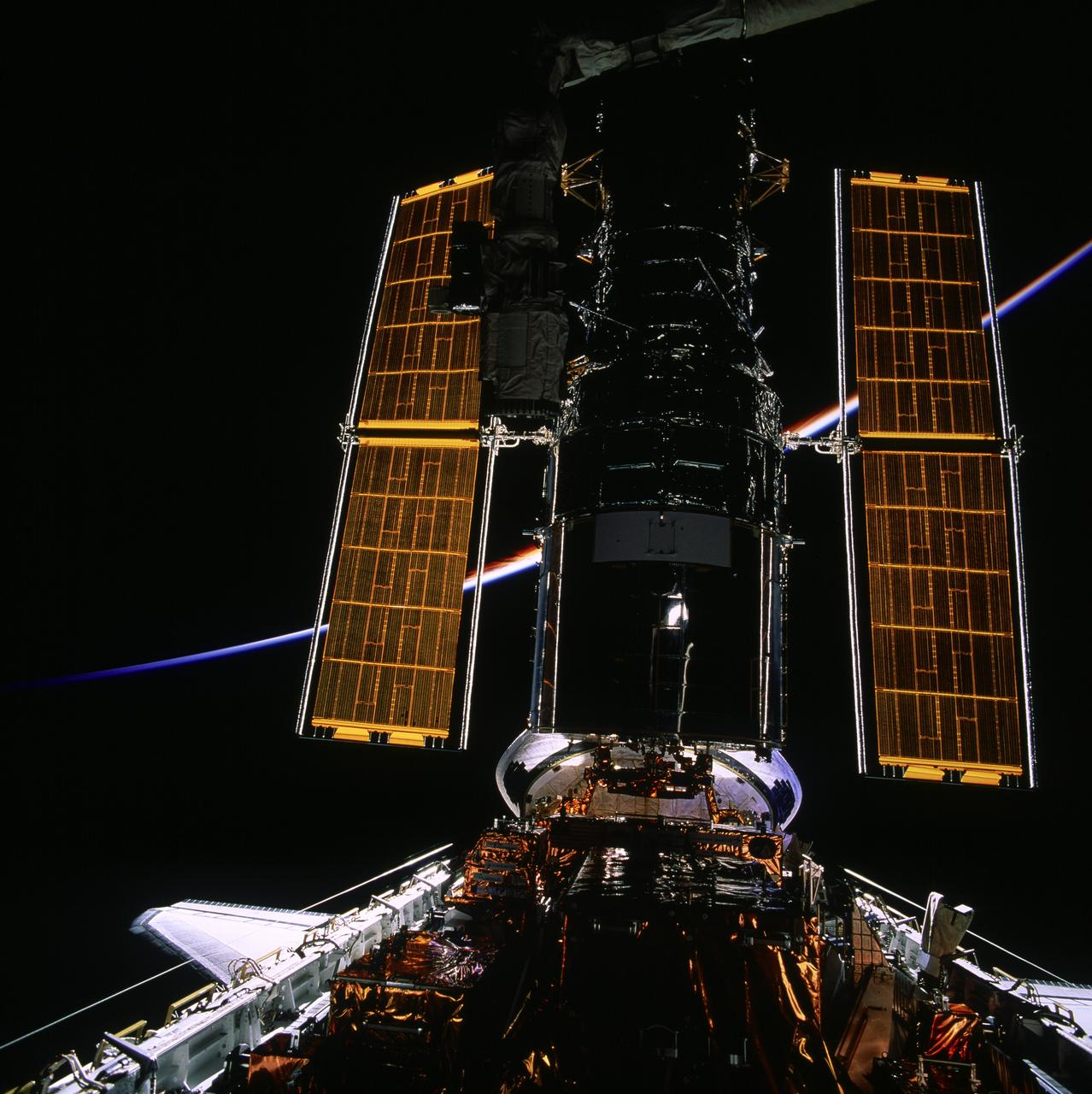
STS082-703-077 (11-21 Feb. 1997) --- This view of the Hubble Space Telescope (HST), temporarily captured in the Space Shuttle Discovery's cargo bay, was recorded with a 70mm camera at sunset, giving Earth's limb a rainbow effect. The crew, using two teams of two astronauts on alternating days to work on the HST, went on to perform five days of Extravehicular Activity (EVA).
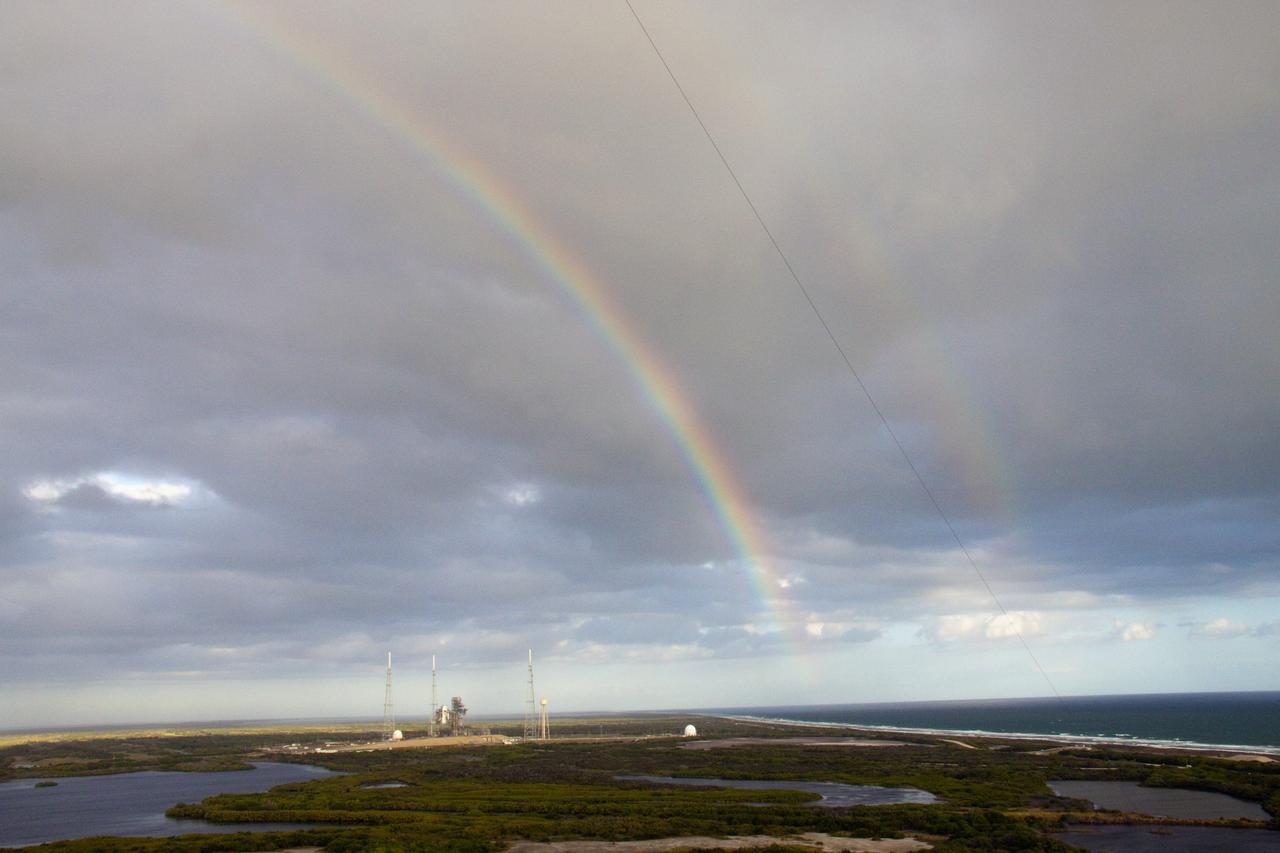
CAPE CANAVERAL, Fla. -- At NASA's Kennedy Space Center in Florida, two rainbows appear between Launch Pad 39B and Launch Pad 39A. Pad B, seen here, is morphing to support a commercial space program with multiple customers, multiple providers and multiple systems that will take Americans to the International Space Station and other low Earth orbit destinations. For information on NASA's future plans, visit www.nasa.gov. Photo credit: NASA/Troy Cryder
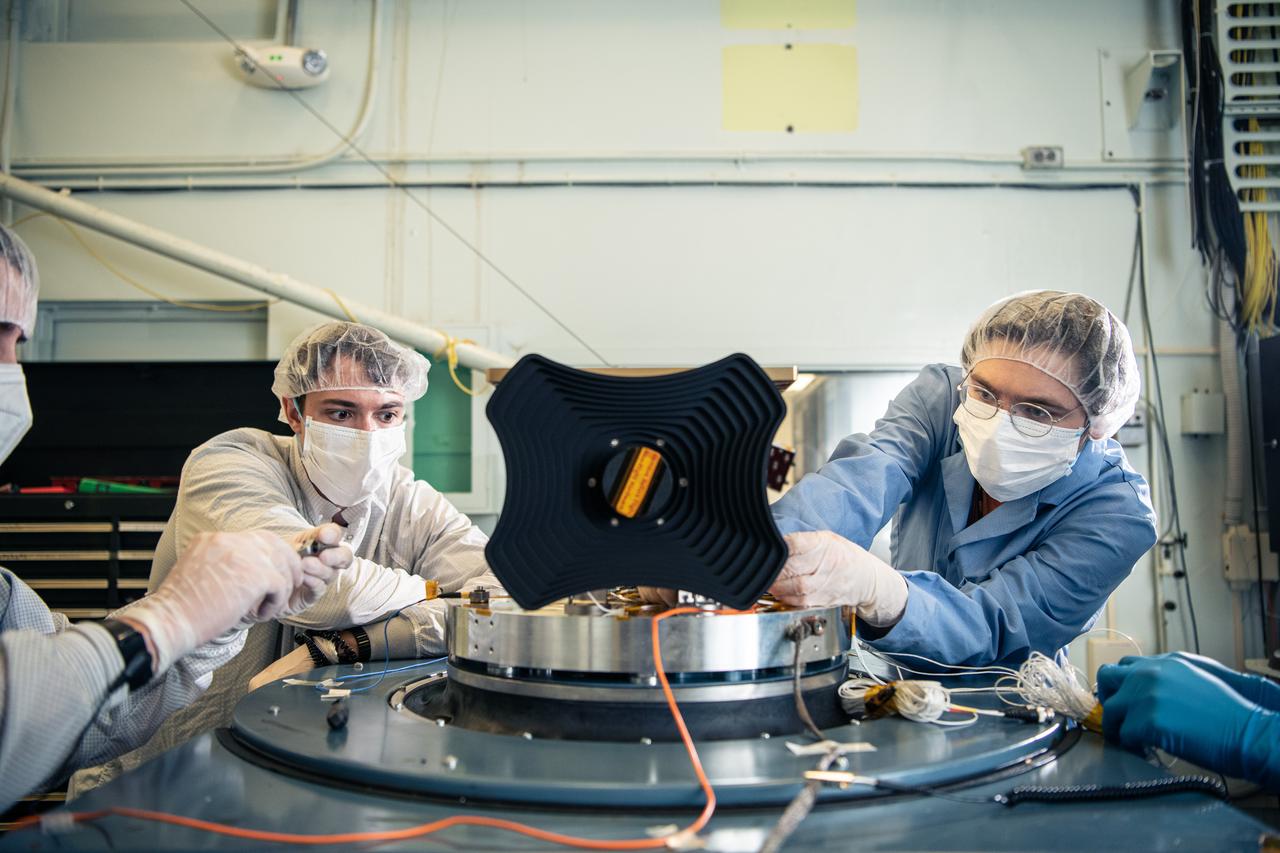
UMBC Earth and Space Institute engineers Ian Decker (left) and Danny Nelson (right) attach the Hyper-Angular Rainbow Polarimeter #2 (HARP2) instrument to the shaker table for vibration testing at NASA's Goddard Space Flight Center in Greenbelt Maryland on August 8th, 2022. HARP2 is one of three instruments on NASA's Plankton, Aerosol, Cloud, ocean Ecosystem (PACE) observatory, it was designed and built by UMBC's Earth and Space Institute.
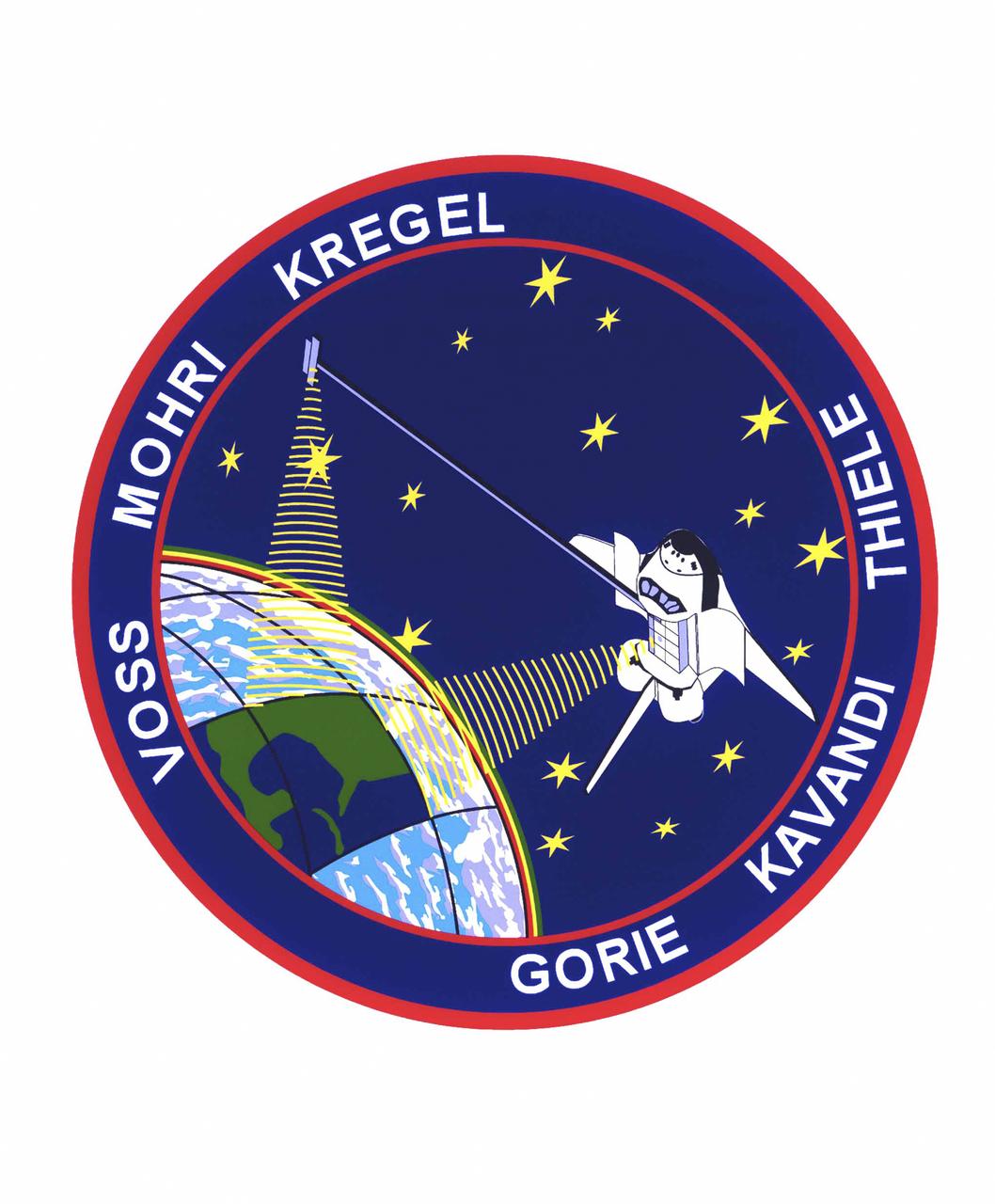
The STS-99 crew members designed the flight insignia for the Shuttle Radar Topography Mission (SRTM), the most ambitious Earth mapping mission to date. Two radar anternas, one located in the Shuttle bay and the other located on the end of a 60-meter deployable mast, was used during the mission to map Earth's features. The goal was to provide a 3-dimensional topographic map of the world's surface up to the Arctic and Antarctic Circles. In the patch, the clear portion of Earth illustrates the radar beams penetrating its cloudy atmosphere and the unique understanding of the home planet that is provided by space travel. The grid on Earth reflects the mapping character of the SRTM mission. The patch depicts the Space Shuttle Endeavour orbiting Earth in a star spangled universe. The rainbow along Earth's horizon resembles an orbital sunrise. The crew deems the bright colors of the rainbow as symbolic of the bright future ahead because of human beings' venturing into space. The crew of six launched aboard the Space Shuttle Endeavor on February 11, 2000 and completed 222 hours of around the clock radar mapping gathering enough information to fill more than 20,000 CDs.
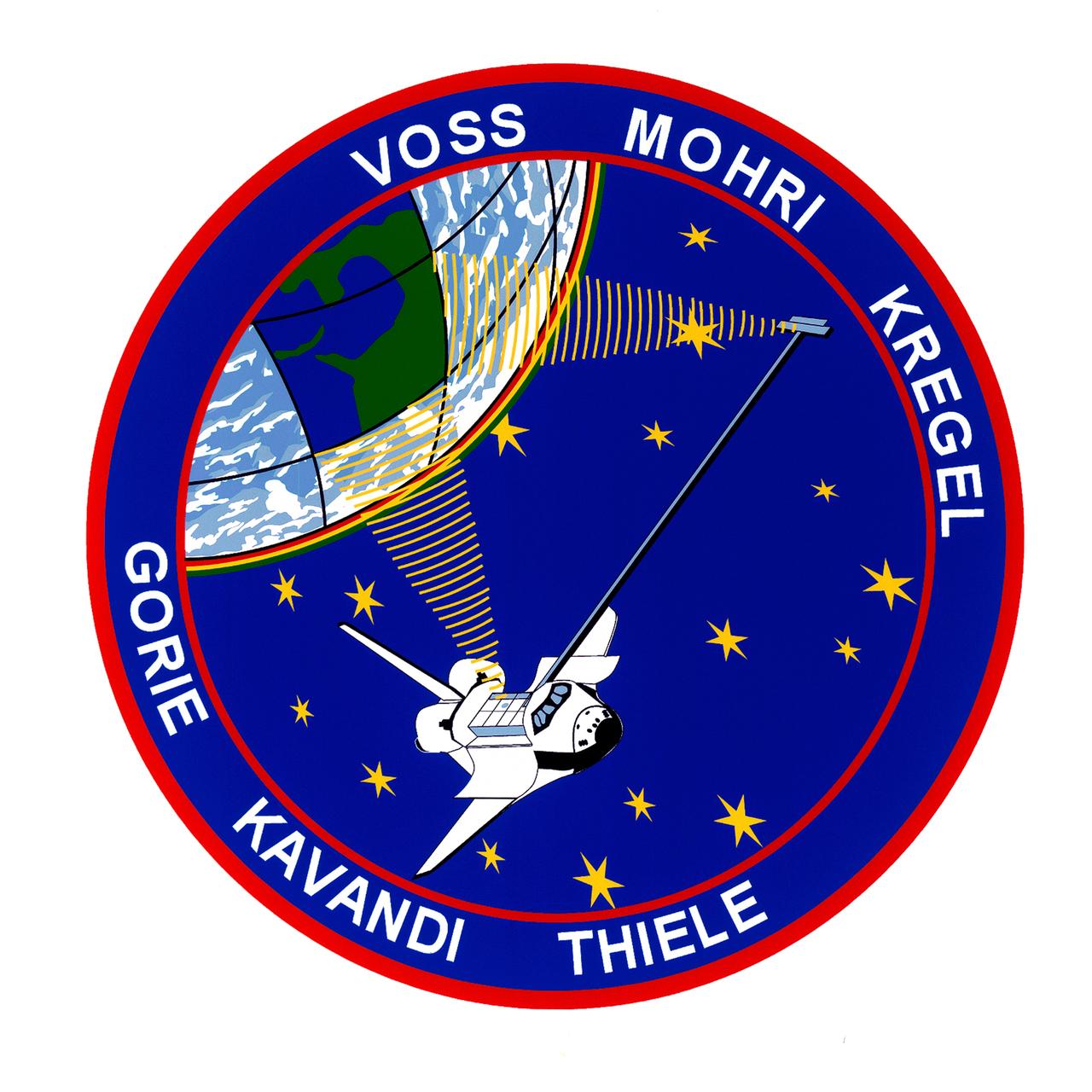
STS099-S-001 (June 1999) --- The STS-99 crew members designed the flight insignia for the Shuttle Radar Topography Mission (SRTM), the most ambitious Earth mapping mission to date. Two radar antennas, one located in the shuttle bay and the other located on the end of a 60-meter deployable mast, will be used during the mission to map Earth?s features. The goal is to provide a three-dimensional topographic map of the world?s surface up to the Arctic and Antarctic Circles. The clear portion of Earth illustrates the radar beams penetrating its cloudy atmosphere and the unique understanding of the home planet that is provided by space travel. The grid on Earth reflects the mapping character of the SRTM mission. The patch depicts the space shuttle Endeavour orbiting Earth in a star spangled universe. The rainbow along Earth?s horizon resembles an orbital sunrise. The crew deems the bright colors of the rainbow as symbolic of the bright future ahead because of human beings? venturing into space. The NASA insignia design for space shuttle flights is reserved for use by the astronauts and for other official use as the NASA Administrator may authorize. Public availability has been approved only in the forms of illustrations by the various news media. When and if there is any change in this policy, which is not anticipated, the change will be publicly announced. Photo credit: NASA
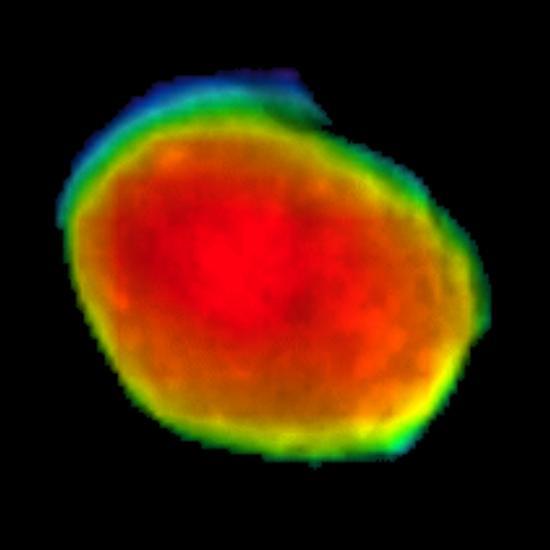
Taken on April 24, 2019, this rainbow-colored image shows the Martian moon Phobos, as viewed by NASA's 2001 Mars Odyssey orbiter using its infrared camera, Thermal Emission Imaging System (THEMIS). Each color represents a different temperature range, with the warmest in the center and coolest on the outer edge. This was the first time THEMIS was used to observe Phobos while in a full moon phase, which offers scientists a much better view for studying the composition of the Martian moon. Previous half-moon views, which can be seen here, were better for studying surface textures. https://photojournal.jpl.nasa.gov/catalog/PIA23204
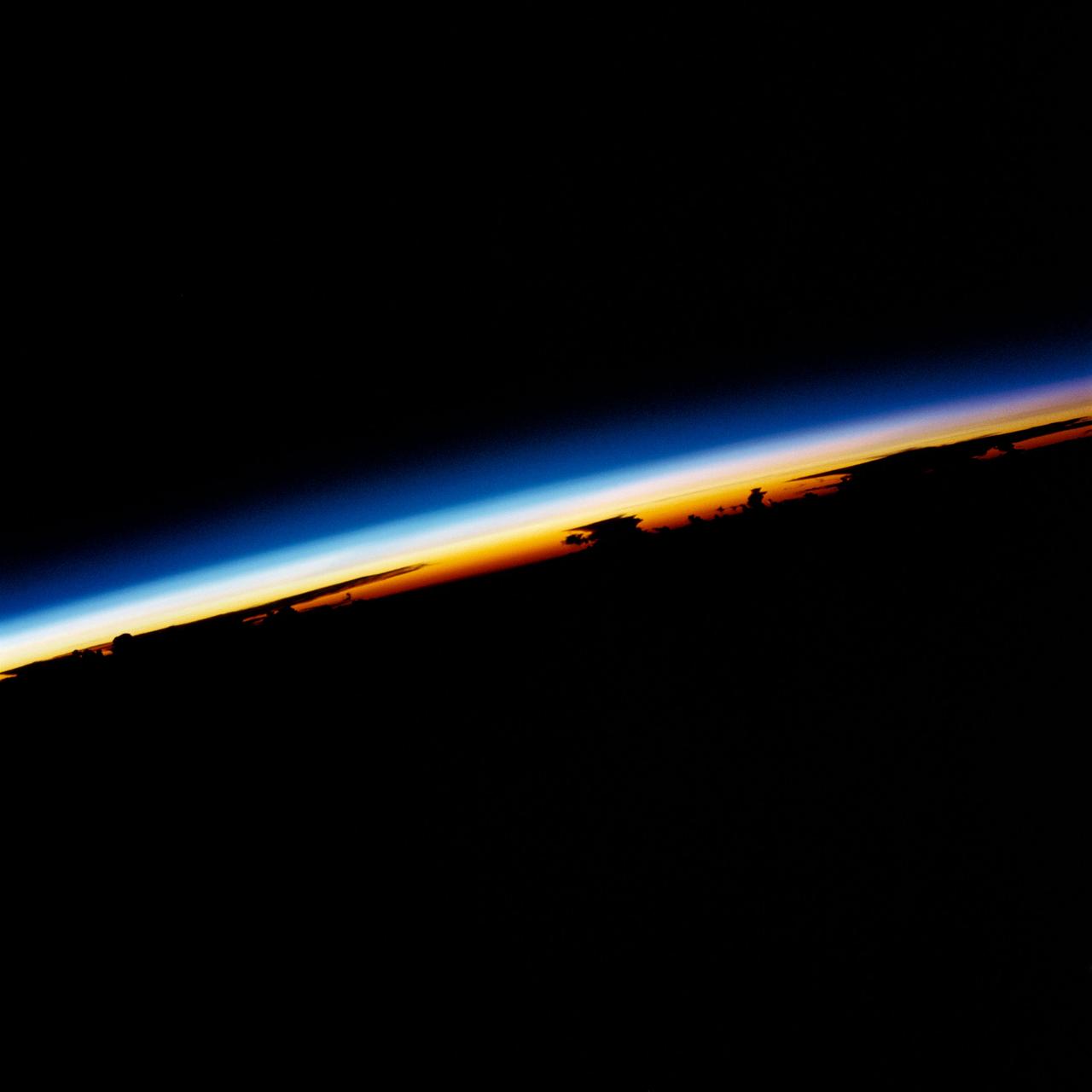
41D-32-14 (30 Aug 1984) --- A rainbow-like sunrise over the Philippine Sea greeted the six crew members aboard the Earth-orbiting Space Shuttle Discovery on its first day in space. A 70mm camera was used to record the scene at 3:08:14 p.m. (CDT), August 30, 1984, during Discovery's sixth orbit of a six-day mission. The spacecraft was above a position on Earth centered at 21.1 degrees north and 12.9 degrees east (about 250 miles north - northeast of the Philippine Islands). The scene was shown as one of the Post-Flight Press Conference (PFPC) visuals by the crew on September 12, 1984.
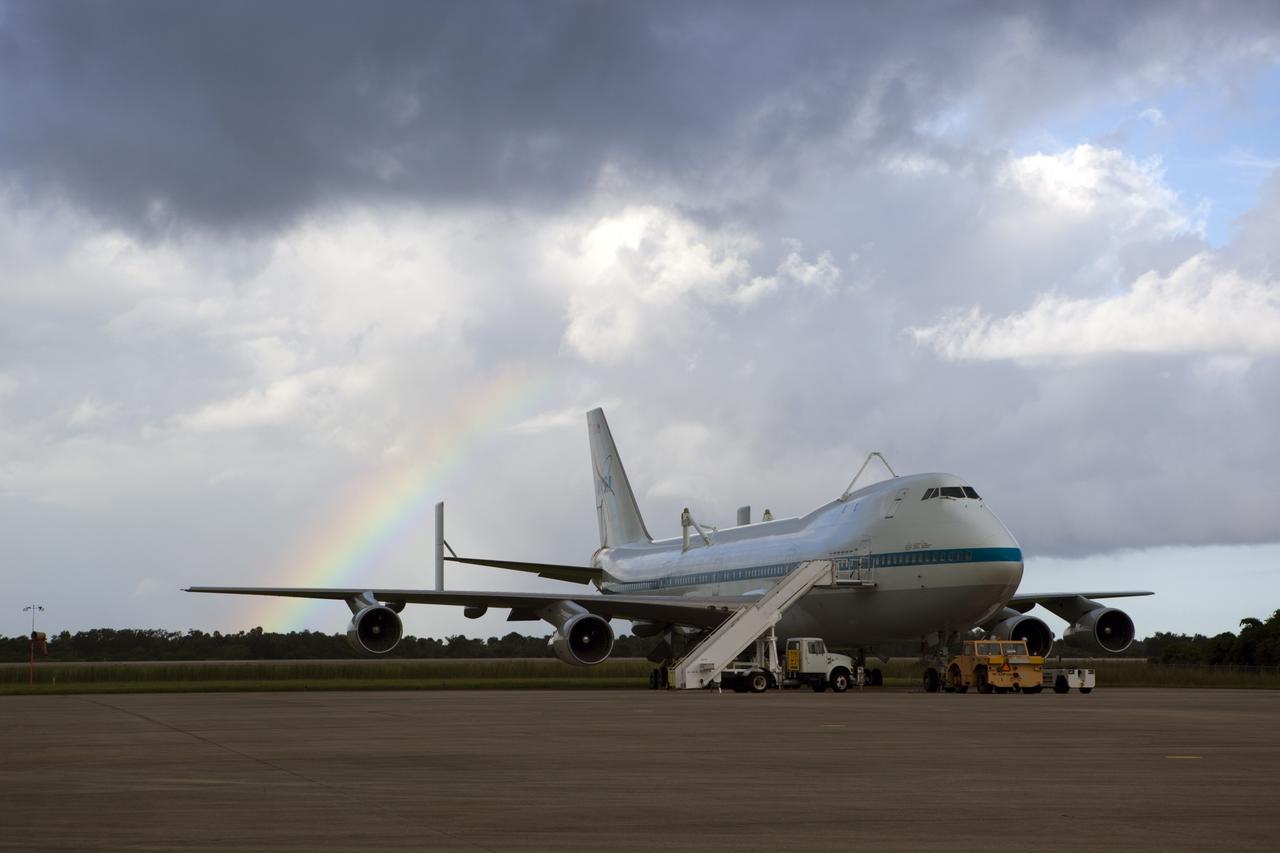
CAPE CANAVERAL, Fla. – A rainbow forms behind NASA's Shuttle Carrier Aircraft, or SCA, at the Shuttle Landing Facility at NASA's Kennedy Space Center in Florida. Operations are under way to position space shuttle Endeavour atop the SCA for its upcoming ferry flight. The SCA, a modified 747 jetliner, will fly Endeavour to Los Angeles where it will be placed on public display at the California Science Center. This is the final ferry flight scheduled in the Space Shuttle Program era. For more information on the shuttles' transition and retirement, visit http://www.nasa.gov/transition. Photo credit: NASA/Dimitri Gerondidakis

KENNEDY SPACE CENTER, Fla. -- A rainbow corona of light shimmers behind Space Shuttle Endeavour as a column of flame hurls it into space. Liftoff of the Shuttle on mission STS-99 occurred at 12:43:40 p.m. EST. Known as the Shuttle Radar Topography Mission (SRTM), STS-99 will chart a new course to produce unrivaled 3-D images of the Earth's surface. The result of the SRTM could be close to 1 trillion measurements of the Earth's topography. The mission is expected to last 11days, with Endeavour landing at KSC Tuesday, Feb. 22, at 4:36 p.m. EST. This is the 97th Shuttle flight and 14th for Shuttle Endeavour
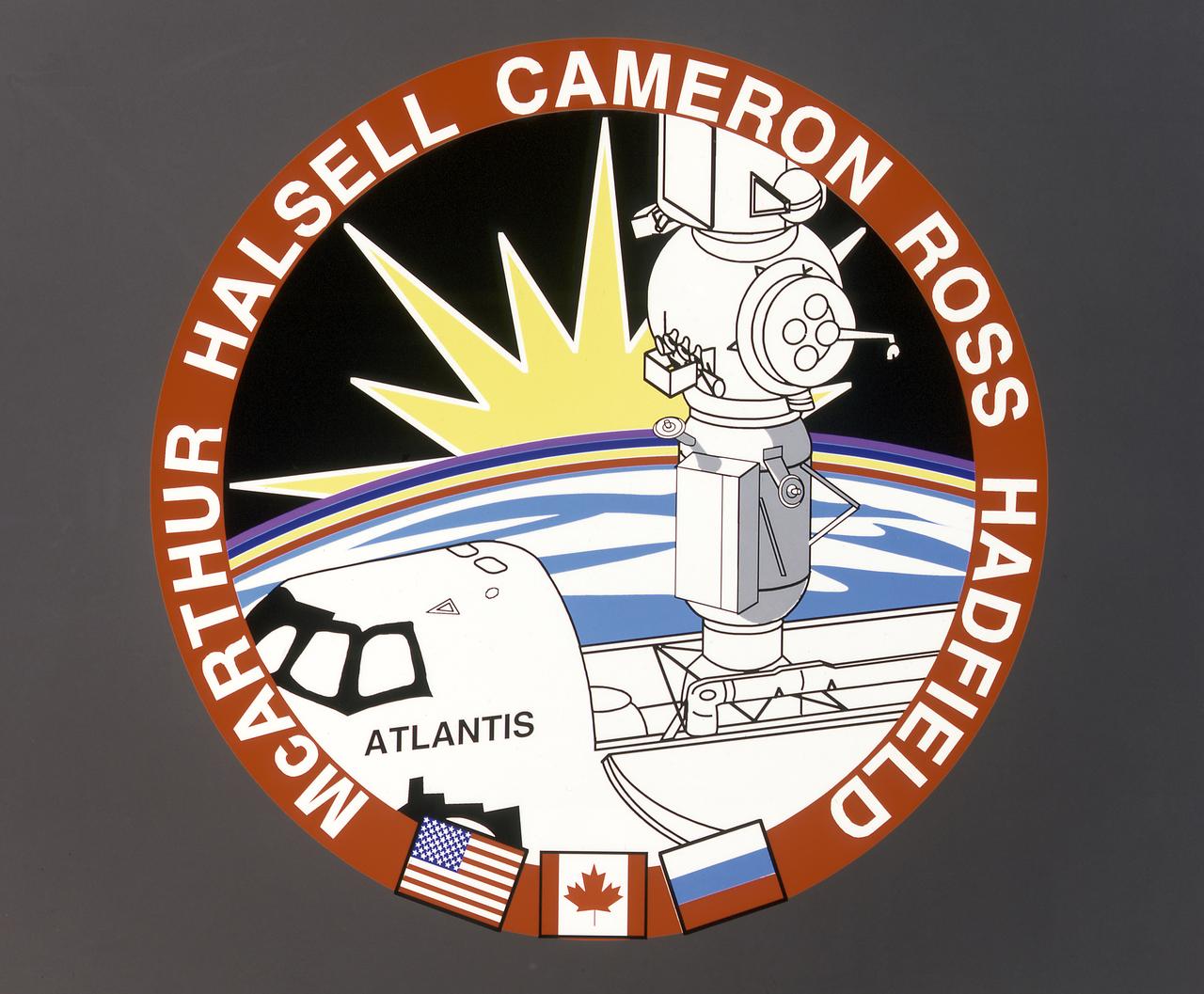
The STS-74 crew patch depicts the orbiter Atlantis docked to the Russian Space Station Mir. The central focus is on the Russian-built docking module, drawn with shading to accentuate its pivotal importance to both STS-74 and the NASA-Mir Program. The rainbow across the horizon represents the Earth's atmosphere, the thin membrane protecting all nations, while the three flags across the bottom show those nations participating in STS-74: Russia, Canada, and the United States. The sunrise is symbolic of the dawn of a new era in NASA space flight , that of International Space Station construction.

KENNEDY SPACE CENTER, Fla. -- A rainbow corona of light shimmers behind Space Shuttle Endeavour as a column of flame hurls it into space. Liftoff of the Shuttle on mission STS-99 occurred at 12:43:40 p.m. EST. Known as the Shuttle Radar Topography Mission (SRTM), STS-99 will chart a new course to produce unrivaled 3-D images of the Earth's surface. The result of the SRTM could be close to 1 trillion measurements of the Earth's topography. The mission is expected to last 11days, with Endeavour landing at KSC Tuesday, Feb. 22, at 4:36 p.m. EST. This is the 97th Shuttle flight and 14th for Shuttle Endeavour
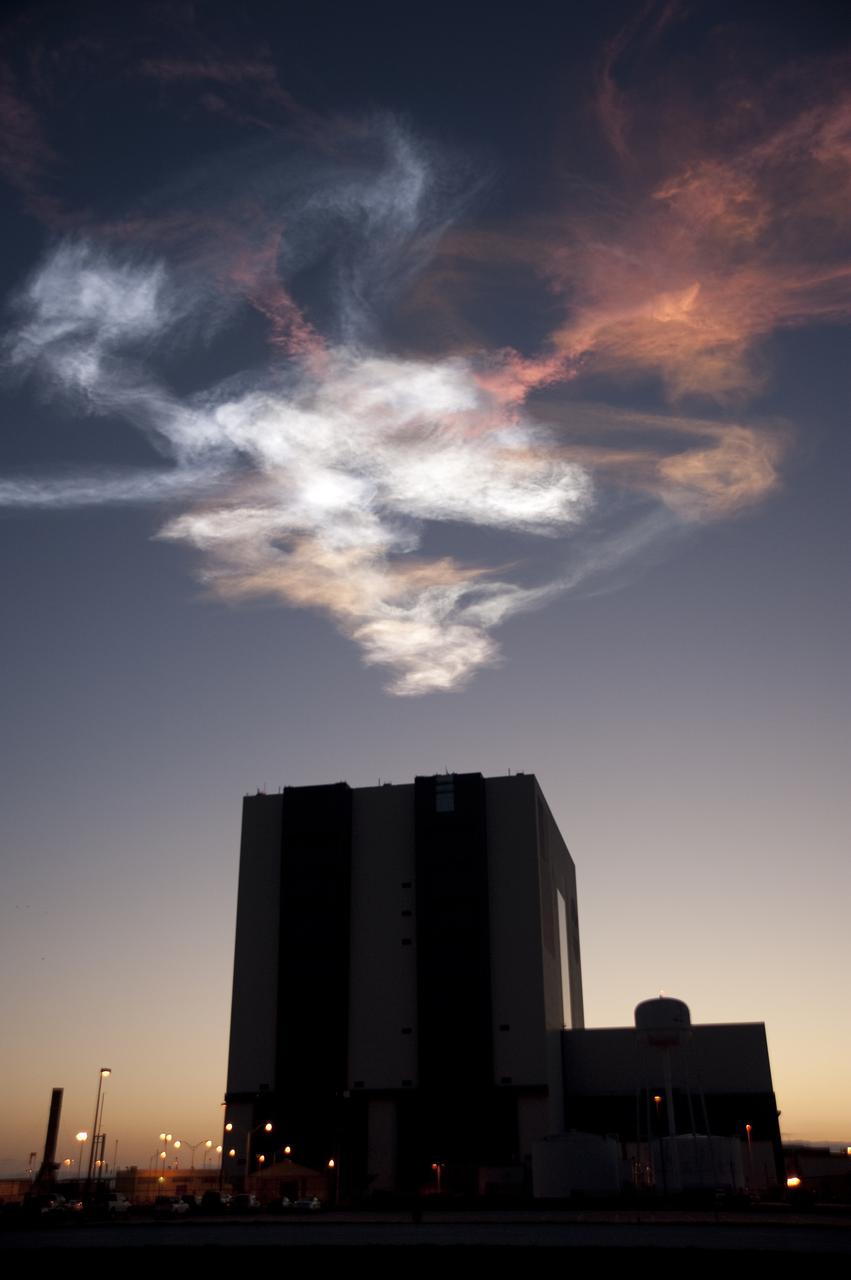
CAPE CANAVERAL, Fla. - Contrails from the launch of space shuttle Discovery on the STS-131 mission glow in rainbow colors in the early morning hours as the sun rises over the Vehicle Assembly Building at NASA's Kennedy Space Center in Florida. Shuttle Discovery lifted off at 6:21 a.m. EDT on April 5, 2010. The seven-member STS-131 crew will deliver the multi-purpose logistics module Leonardo, filled with supplies, a new crew sleeping quarters and science racks that will be transferred to the International Space Station's laboratories. The crew also will switch out a gyroscope on the station’s truss, install a spare ammonia storage tank and retrieve a Japanese experiment from the station’s exterior. STS-131 is the 33rd shuttle mission to the station and the 131st shuttle mission overall. For information on the STS-131 mission and crew, visit http:__www.nasa.gov_mission_pages_shuttle_shuttlemissions_sts131_index.html. Photo credit: NASA_Kim Shiflett
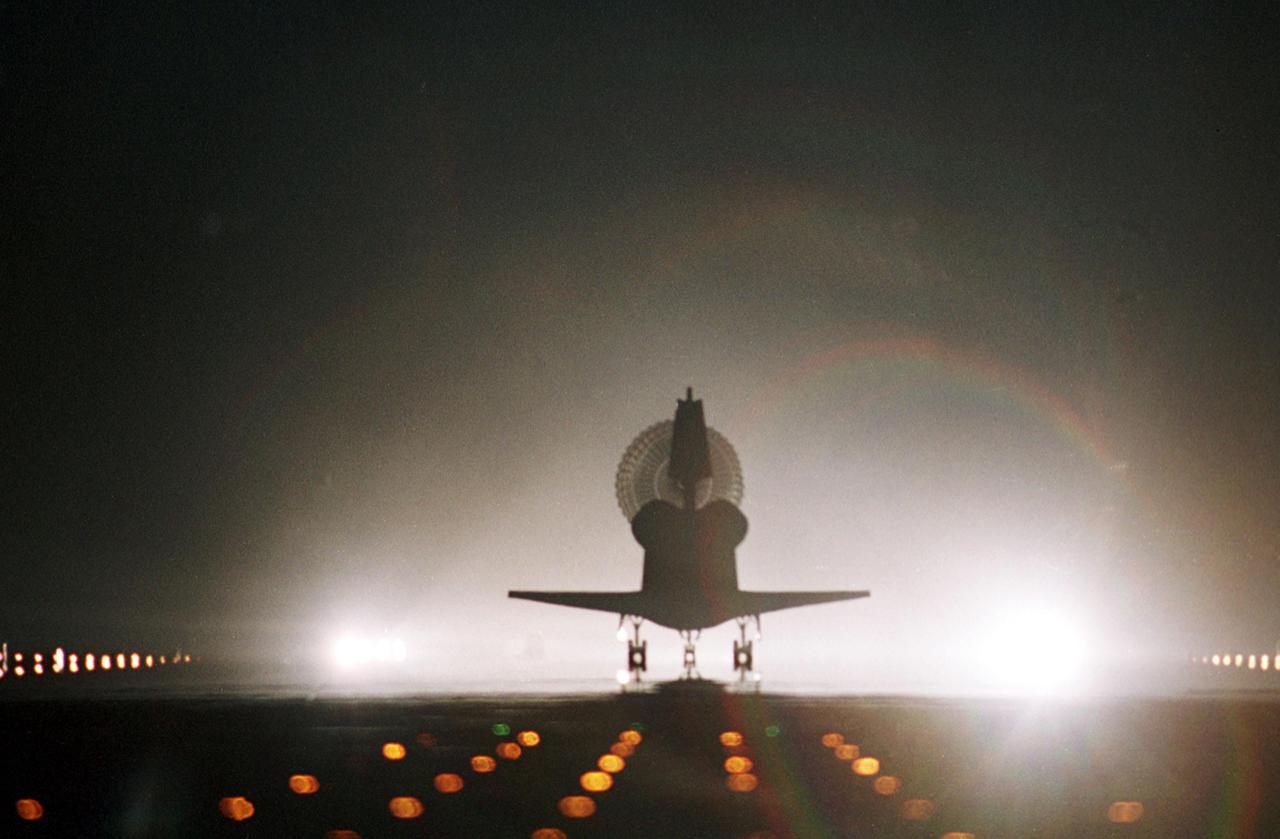
KENNEDY SPACE CENTER, Fla. -- Runway lights cast a rainbow from the colors in the drag chute behind Atlantis as it lands at the Shuttle Landing Facility. Main gear touchdown occurred at 11:38:55 p.m. EDT, completing complete a 12-day, 18-hour, 34-minute-long STS-104 mission. At the controls is Commander Steven W. Lindsey. Other crew members on board are Pilot Charles Hobaugh and Mission Specialists Michael Gernhardt, Janet Lynn Kavandi and James F. Reilly. This is the 18th nighttime landing for a Space Shuttle, the 13th at Kennedy Space Center. The mission delivered the Joint Airlock Module to the International Space Station, completing the second phase of the assembly of the Space Station

CAPE CANAVERAL, Fla. - With a rainbow serving as a backdrop in the sky, space shuttle Atlantis (foreground) sits on Launch Pad A and Endeavour on Launch Pad B at NASA’s Kennedy Space Center in Florida. At the left of each shuttle are the open rotating service structures with the payload changeout rooms revealed. The rotating service structures provide protection for weather and access to the shuttle. For the first time since July 2001, two shuttles are on the launch pads at the same time at the center. Endeavour will stand by at pad B in the unlikely event that a rescue mission is necessary during space shuttle Atlantis’ upcoming mission to repair NASA’s Hubble Space Telescope, targeted to launch Oct. 10. After Endeavour is cleared from its duty as a rescue spacecraft, it will be moved to Launch Pad 39A for its STS-126 mission to the International Space Station. That flight is targeted for launch Nov. 12. Photo credit: NASA/Troy Cryder
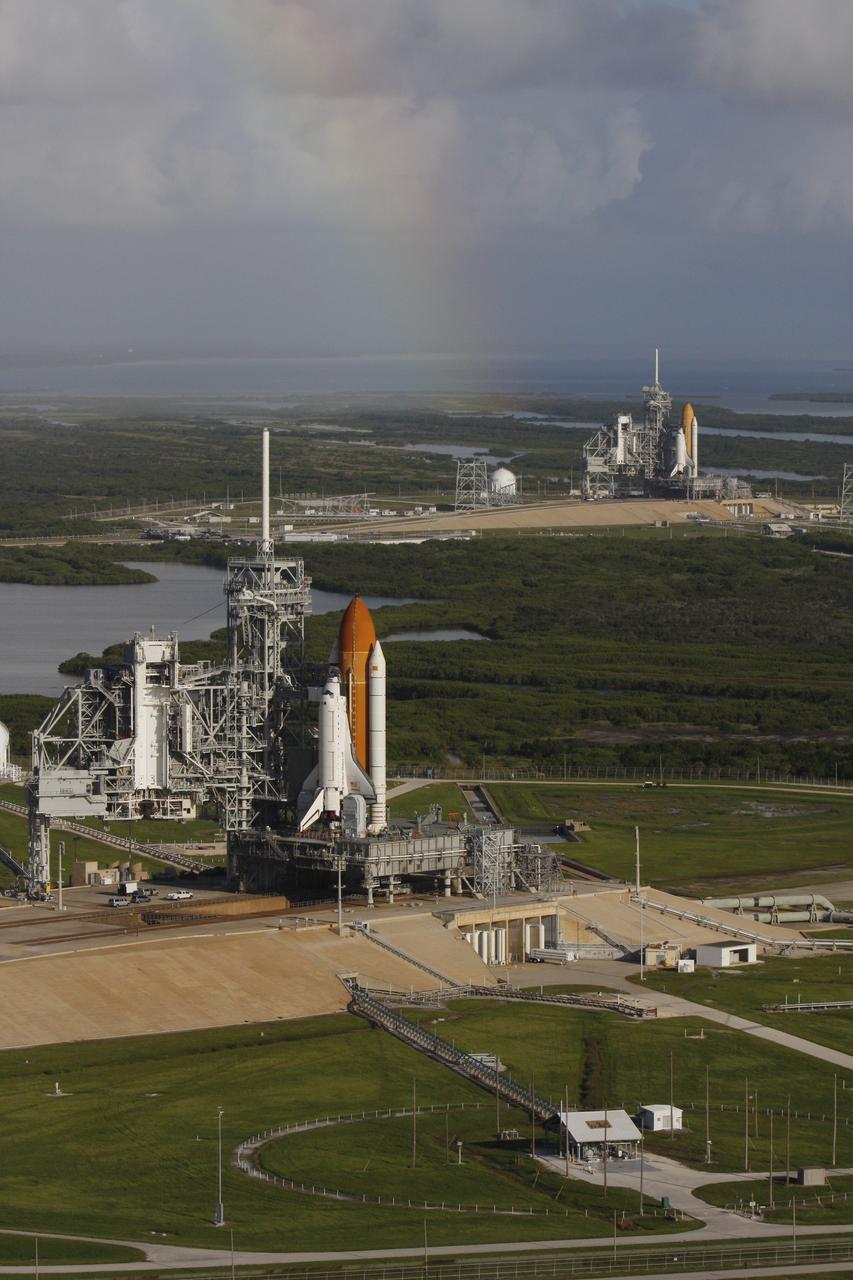
CAPE CANAVERAL, Fla. - With a rainbow serving as a backdrop in the sky, space shuttle Atlantis (foreground) sits on Launch Pad A and Endeavour on Launch Pad B at NASA’s Kennedy Space Center in Florida. At the left of each shuttle are the open rotating service structures with the payload changeout rooms revealed. The rotating service structures provide protection for weather and access to the shuttle. For the first time since July 2001, two shuttles are on the launch pads at the same time at the center. Endeavour will stand by at pad B in the unlikely event that a rescue mission is necessary during space shuttle Atlantis’ upcoming mission to repair NASA’s Hubble Space Telescope, targeted to launch Oct. 10. After Endeavour is cleared from its duty as a rescue spacecraft, it will be moved to Launch Pad 39A for its STS-126 mission to the International Space Station. That flight is targeted for launch Nov. 12. Photo credit: NASA/Troy Cryder
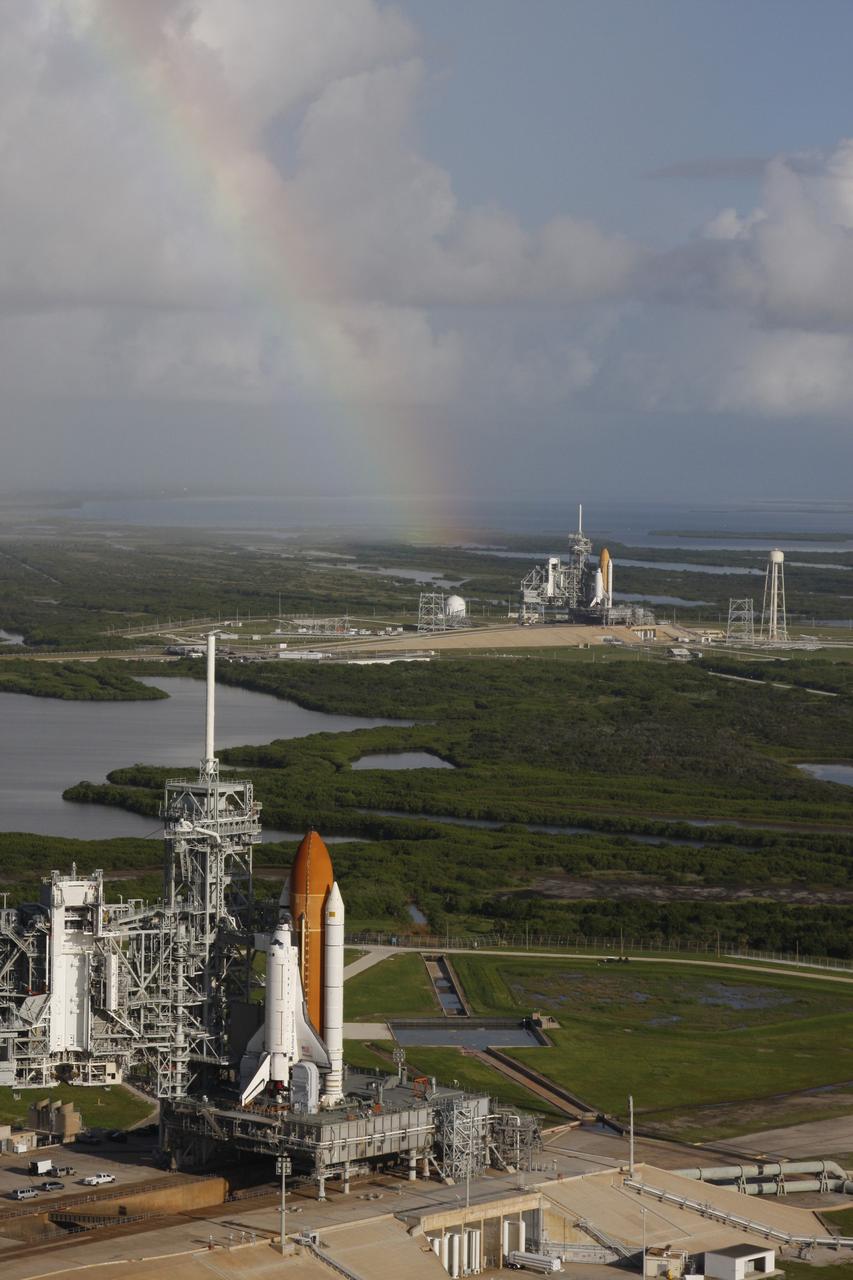
CAPE CANAVERAL, Fla. - With a rainbow beginning to appear in the sky, space shuttle Atlantis (foreground) sits on Launch Pad A and Endeavour on Launch Pad B at NASA’s Kennedy Space Center in Florida. At the left of each shuttle are the open rotating service structures with the payload changeout rooms revealed. The rotating service structures provide protection for weather and access to the shuttle. For the first time since July 2001, two shuttles are on the launch pads at the same time at the center. Endeavour will stand by at pad B in the unlikely event that a rescue mission is necessary during space shuttle Atlantis’ upcoming mission to repair NASA’s Hubble Space Telescope, targeted to launch Oct. 10. After Endeavour is cleared from its duty as a rescue spacecraft, it will be moved to Launch Pad 39A for its STS-126 mission to the International Space Station. That flight is targeted for launch Nov. 12. Photo credit: NASA/Troy Cryder
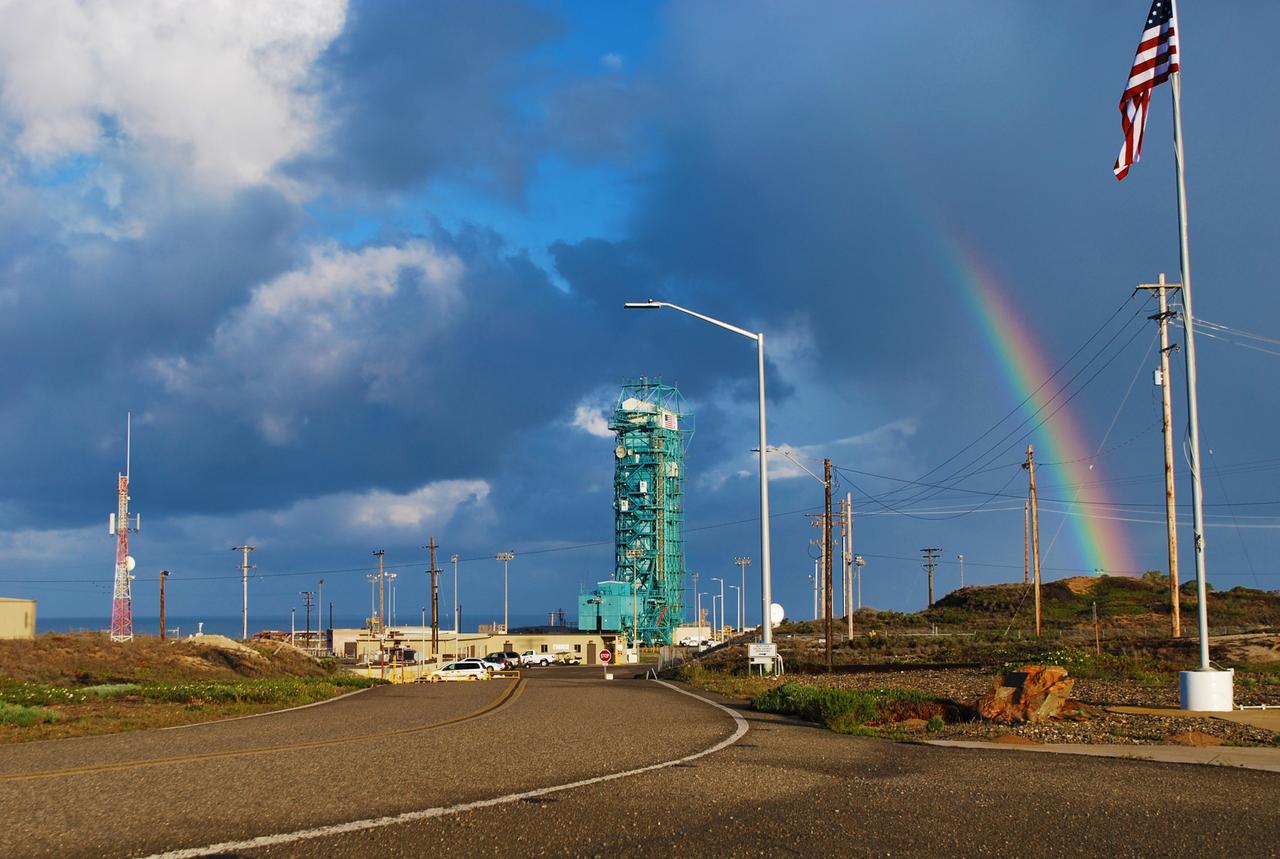
VANDENBERG AIR FORCE BASE, Calif. – A morning hailstorm at Vandenberg Air Force Base in California leaves in its wake a rainbow over Space Launch Complex 2 where the United Launch Alliance Delta II rocket for NASA's Orbiting Carbon Observatory-2 mission, or OCO-2, is being prepared for launch in the mobile service tower. Launch is scheduled for July 1, 2014. The observatory will collect precise global measurements of carbon dioxide in the Earth's atmosphere and provide scientists with a better idea of the chemical compound's impacts on climate change. Scientists will analyze this data to improve our understanding of the natural processes and human activities that regulate the abundance and distribution of this important atmospheric gas. To learn more about OCO-2, visit http://oco.jpl.nasa.gov. Photo credit: NASA/Randy Beaudoin
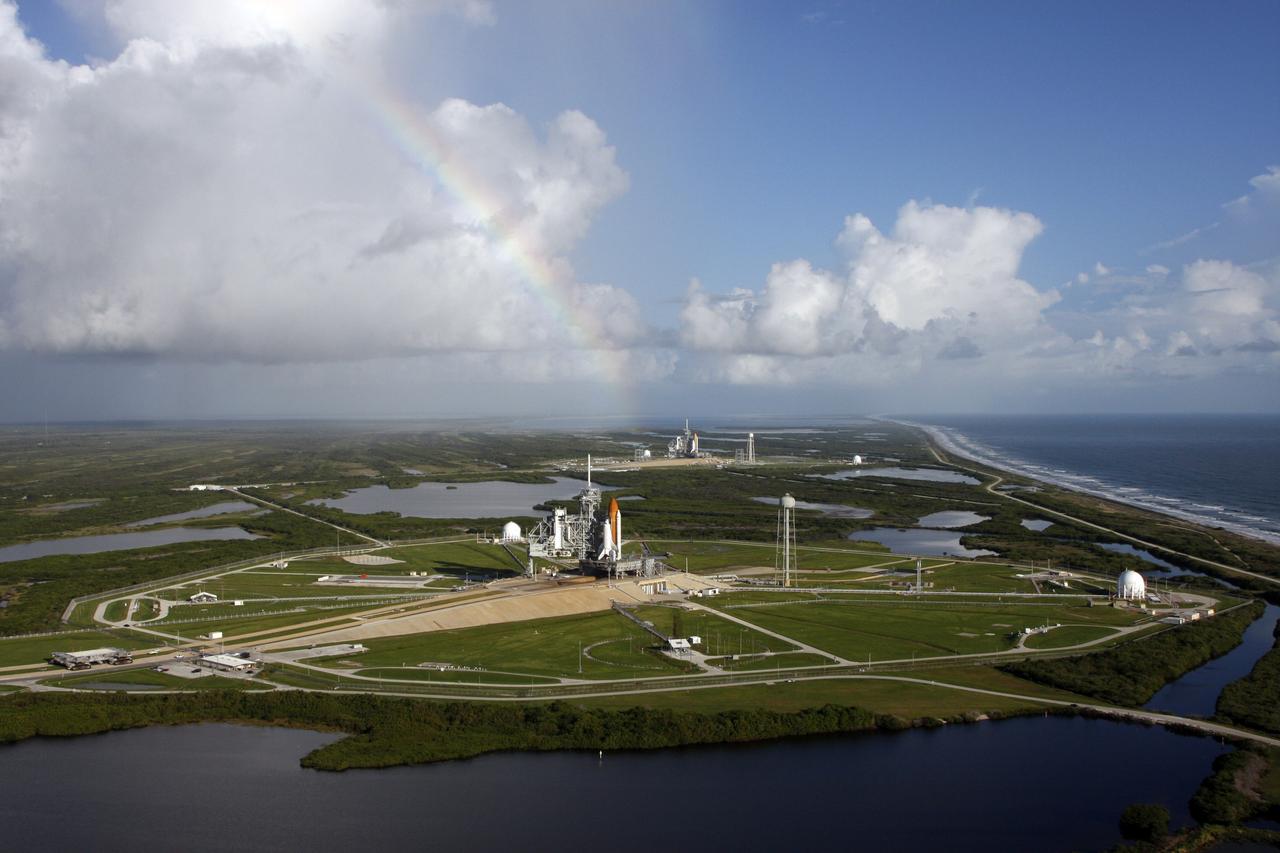
CAPE CANAVERAL, Fla. - With a rainbow serving as a backdrop in the sky, space shuttle Atlantis (foreground) sits on Launch Pad A and Endeavour on Launch Pad B at NASA’s Kennedy Space Center in Florida. At the left of each shuttle are the open rotating service structures with the payload changeout rooms revealed. The rotating service structures provide protection for weather and access to the shuttle. For the first time since July 2001, two shuttles are on the launch pads at the same time at the center. Endeavour will stand by at pad B in the unlikely event that a rescue mission is necessary during space shuttle Atlantis’ upcoming mission to repair NASA’s Hubble Space Telescope, targeted to launch Oct. 10. After Endeavour is cleared from its duty as a rescue spacecraft, it will be moved to Launch Pad 39A for its STS-126 mission to the International Space Station. That flight is targeted for launch Nov. 12. Photo credit: NASA/Troy Cryder
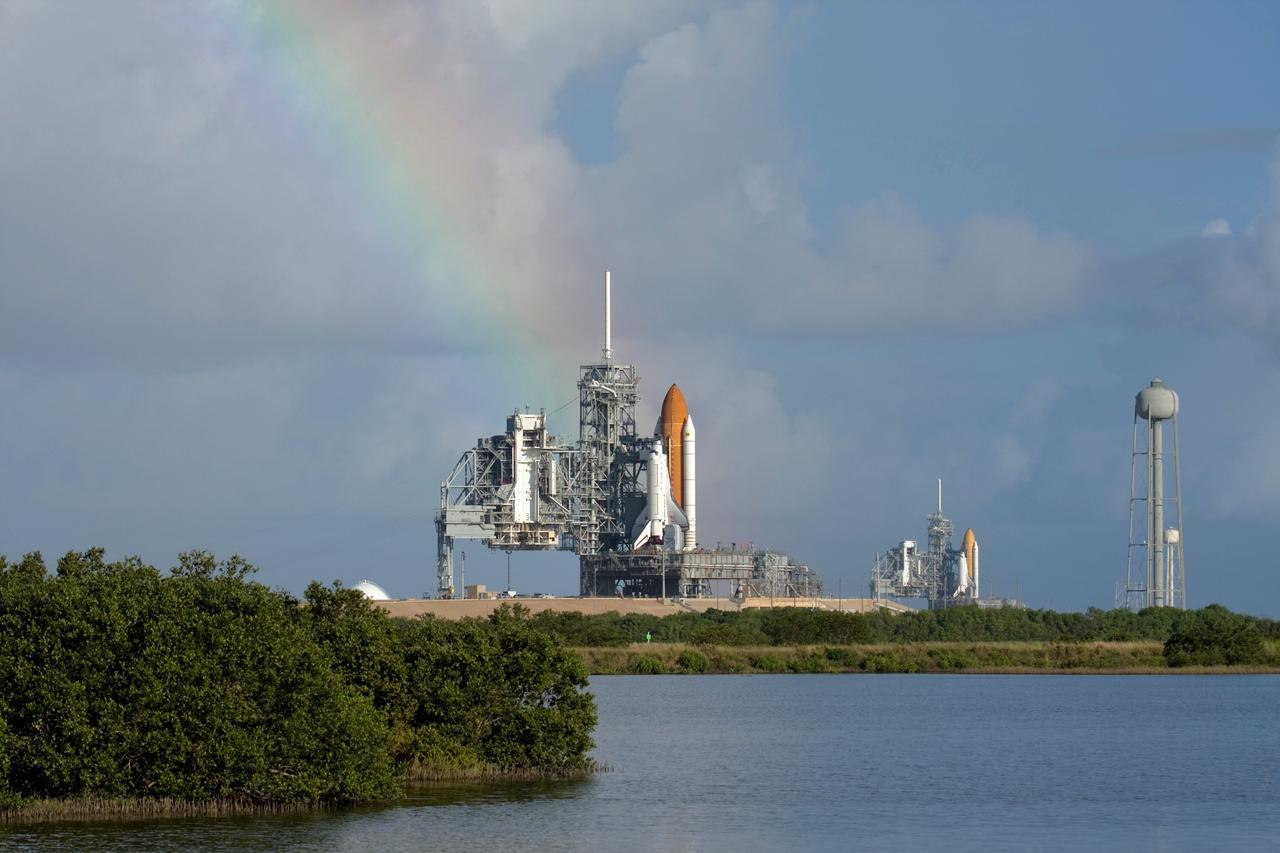
CAPE CANAVERAL, Fla. - A rainbow completes this unique panorama of two space shuttles on the launch pads at the same time, the first time since July 2001. At upper right is STS-126 mission’s space shuttle Endeavour, which rolled out Sept. 19. At left is space shuttle Atlantis, preparing for its launch on the STS-125 mission to repair NASA's Hubble Space Telescope, targeted for Oct. 10. Endeavour will stand by at pad B in the unlikely event that a rescue mission is necessary during space shuttle Atlantis' upcoming mission. After Endeavour is cleared from its duty as a rescue spacecraft, it will be moved to Launch Pad 39A for the STS-126 mission to the International Space Station. That flight is targeted for launch Nov. 12. Photo courtesy of NASA.
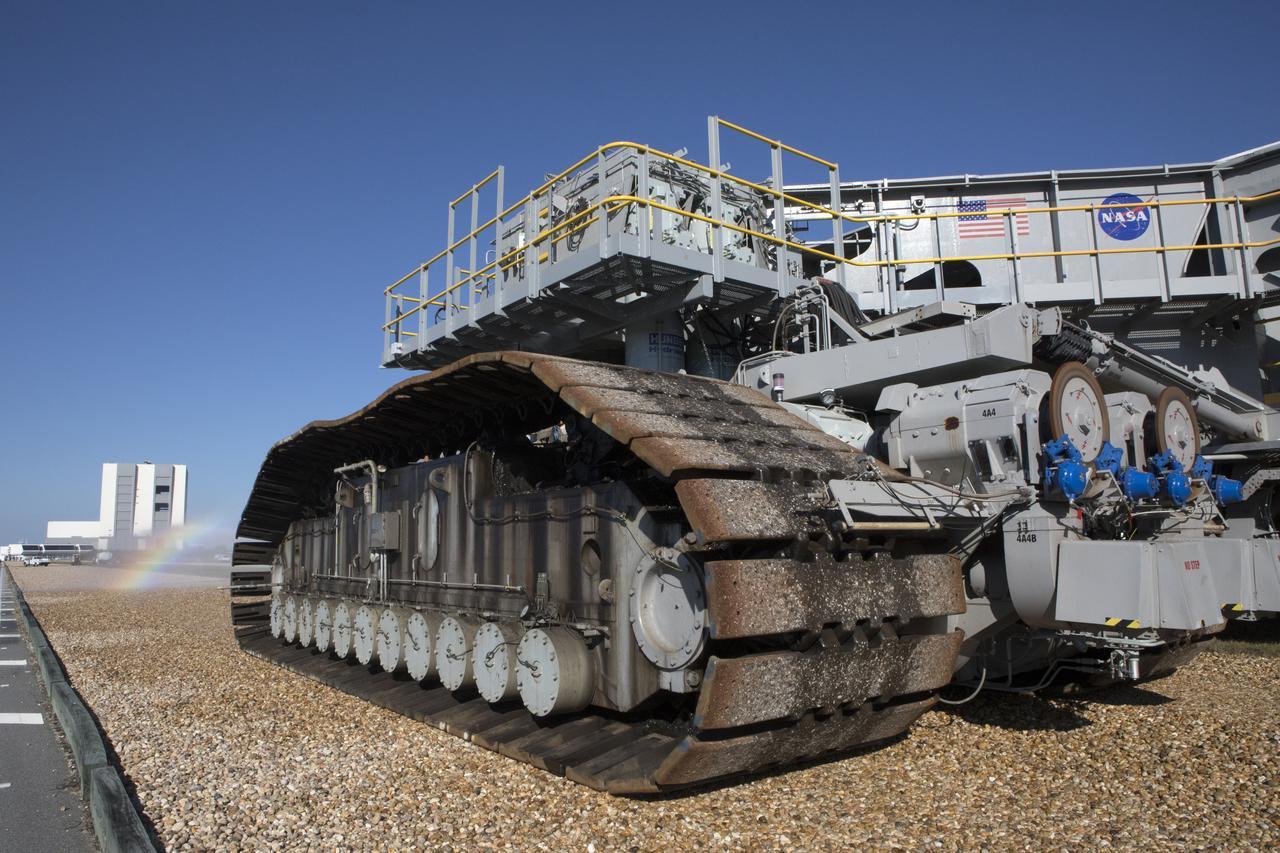
Crawler-transporter 2 (CT-2) moves slowly along the crawlerway on its way back to the Vehicle Assembly Building (in view in the background) at NASA's Kennedy Space Center in Florida. Water sprayed by a truck in front to reduce dust creates a small rainbow. The crawler took a trip to the Pad A/B split to test upgrades recently completed that will allow the giant vehicle to handle the load of the agency's Space Launch System rocket and Orion spacecraft atop the mobile launcher. The Ground Systems Development and Operations Program oversaw upgrades to the 50-year-old CT-2. New generators, gear assemblies, jacking, equalizing and leveling (JEL) hydraulic cylinders, roller bearings and brakes were installed, and other components were upgraded to prepare for Exploration Mission 1.
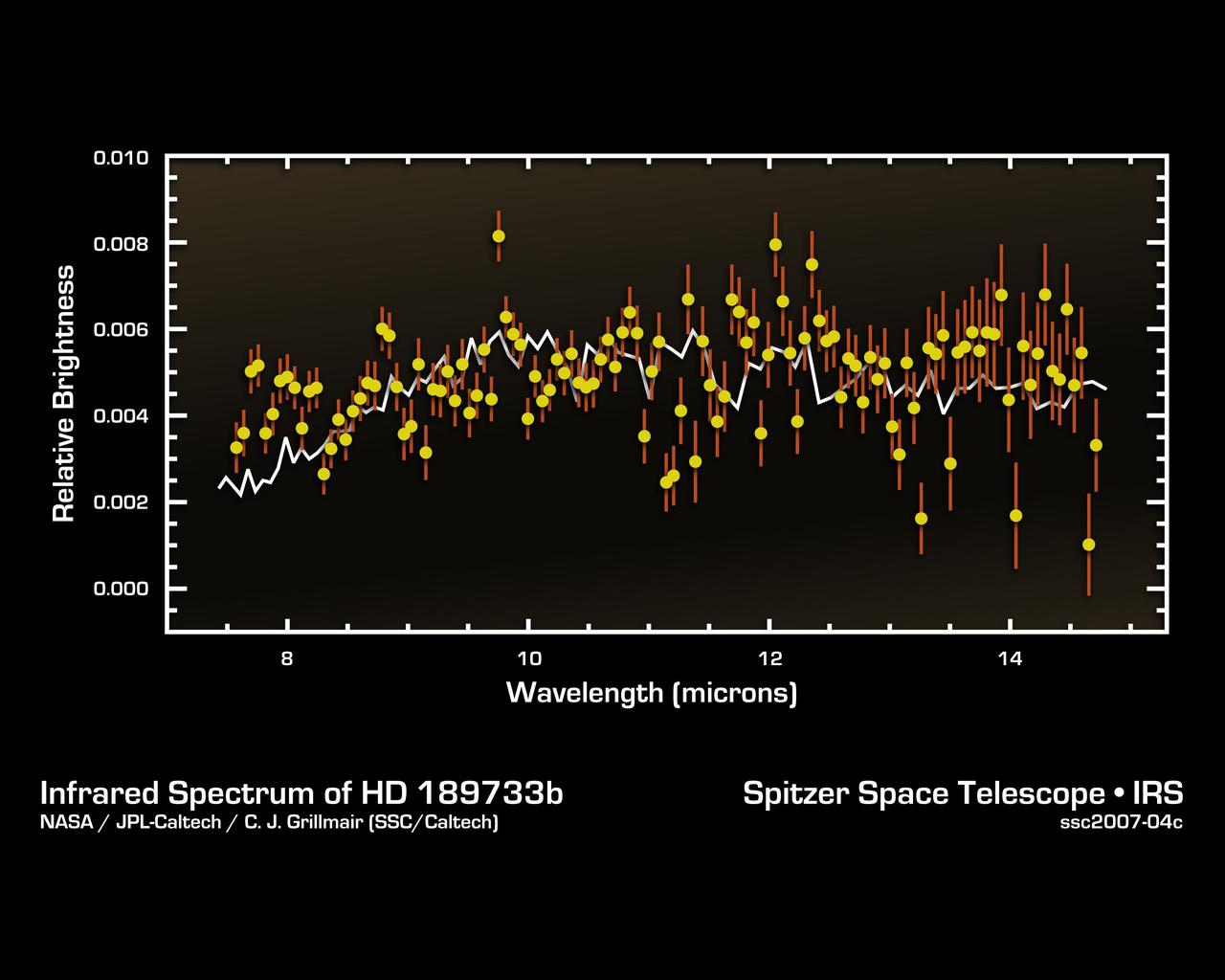
This infrared data from NASA's Spitzer Space Telescope -- called a spectrum -- tells astronomers that a distant gas planet, a so-called "hot Jupiter" called HD 189733b, might be smothered with high clouds. It is one of the first spectra of an alien world. A spectrum is created when an instrument called a spectrograph cracks light from an object open into a rainbow of different wavelengths. Patterns or ripples within the spectrum indicate the presence, or absence, of molecules making up the object. Astronomers using Spitzer's spectrograph were able to obtain infrared spectra for two so-called "transiting" hot-Jupiter planets using the "secondary eclipse" technique. In this method, the spectrograph first collects the combined infrared light from the planet plus its star, then, as the planet is eclipsed by the star, the infrared light of just the star. Subtracting the latter from the former reveals the planet's own rainbow of infrared colors. Astronomers were perplexed when they first saw the infrared spectrum above. It doesn't look anything like what theorists had predicted. Theorists thought the spectra of hot, Jupiter-like planets like this one would be filled with the signatures of molecules in the planets' atmospheres. But the spectrum doesn't show any molecules, and is instead what astronomers call "flat." For example, theorists thought there'd be a strong signature of water in the form of a big drop in the wavelength range between 7 and 10 microns. The fact that water is not detected may indicate that it is hidden underneath a thick blanket of high, dry clouds. The average brightness of the spectrum is also a bit lower than theoretical predictions, suggesting that very high winds are rapidly moving the terrific heat of the noonday sun from the day side of HD 189733b to the night side. This spectrum was produced by Dr. Carl Grillmair of NASA's Spitzer Science Center at the California Institute of Technology in Pasadena, Calif., and his colleagues. The data were taken by Spitzer's infrared spectrograph on November 22, 2006. http://photojournal.jpl.nasa.gov/catalog/PIA09199
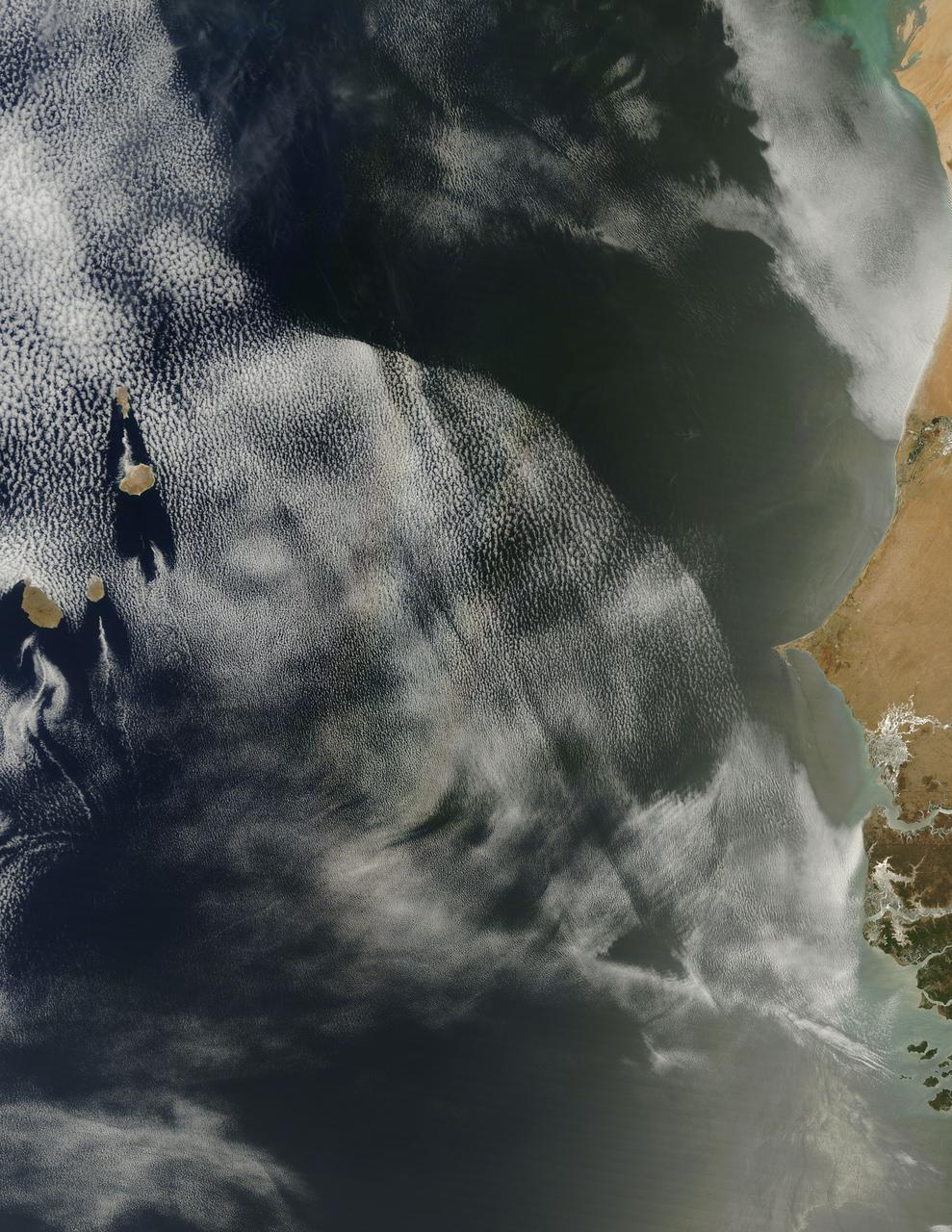
On April 23, 2013 NASA’s Terra satellite passed off the coast of West Africa, allowing the Moderate Resolution Imaging Spectroradiometer (MODIS) flying aboard to capture a curious phenomenon over the cloud deck below. The rainbow-like discoloration that can be seen streaking across the bank of marine cumulus clouds near the center of this image is known as a “glory”. A glory is caused by the scattering of sunlight by a cloud made of water droplets that are all roughly the same size, and is only produced when the light is just right. In order for a glory to be viewed, the observer’s anti-solar point must fall on the cloud deck below. In this case the observer is the Terra satellite, and the anti-solar point is where the sun is directly behind you – 180° from the MODIS line of sight. Water and ice particles in the cloud bend the light, breaking it into all its wavelengths, and the result is colorful flare, which may contain all of the colors of the rainbow. Credit: NASA/GSFC/Jeff Schmaltz/MODIS Land Rapid Response Team <b><a href="http://www.nasa.gov/audience/formedia/features/MP_Photo_Guidelines.html" rel="nofollow">NASA image use policy.</a></b> <b><a href="http://www.nasa.gov/centers/goddard/home/index.html" rel="nofollow">NASA Goddard Space Flight Center</a></b> enables NASA’s mission through four scientific endeavors: Earth Science, Heliophysics, Solar System Exploration, and Astrophysics. Goddard plays a leading role in NASA’s accomplishments by contributing compelling scientific knowledge to advance the Agency’s mission. <b>Follow us on <a href="http://twitter.com/NASA_GoddardPix" rel="nofollow">Twitter</a></b> <b>Like us on <a href="http://www.facebook.com/pages/Greenbelt-MD/NASA-Goddard/395013845897?ref=tsd" rel="nofollow">Facebook</a></b> <b>Find us on <a href="http://instagram.com/nasagoddard?vm=grid" rel="nofollow">Instagram</a></b>
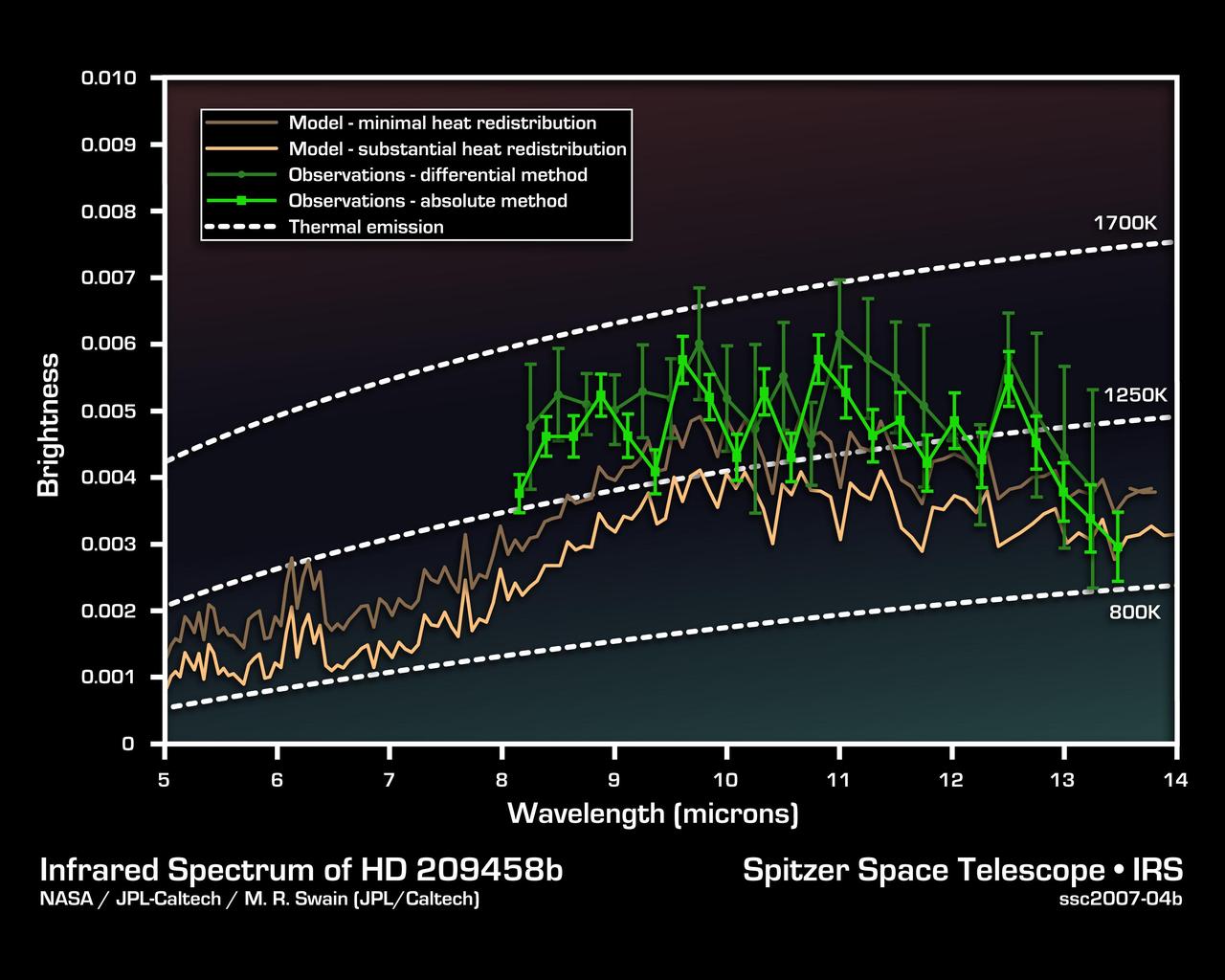
This infrared data from NASA's Spitzer Space Telescope -- called a spectrum -- tells astronomers that a distant gas planet, a so-called "hot Jupiter" called HD 209458b, might be smothered with high clouds. It is one of the first spectra of an alien world. A spectrum is created when an instrument called a spectrograph cracks light from an object open into a rainbow of different wavelengths. Patterns or ripples within the spectrum indicate the presence, or absence, of molecules making up the object. Astronomers using Spitzer's spectrograph were able to obtain infrared spectra for two so-called "transiting" hot-Jupiter planets using the "secondary eclipse" technique. In this method, the spectrograph first collects the combined infrared light from the planet plus its star, then, as the planet is eclipsed by the star, the infrared light of just the star. Subtracting the latter from the former reveals the planet's own rainbow of infrared colors. When astronomers first saw the infrared spectrum above, they were shocked. It doesn't look anything like what theorists had predicted. For example, theorists thought there'd be signatures of water in the wavelength ranges of 8 to 9 microns. The fact that water is not detected might indicate that it is hidden under a thick blanket of high, dry clouds. In addition, the spectrum shows signs of silicate dust -- tiny grains of sand -- in the wavelength range of 9 to 10 microns. This suggests that the planet's skies could be filled with high clouds of dust unlike anything seen in our own solar system. There is also an unidentified molecular signature at 7.78 microns. Future observations using Spitzer's spectrograph should be able to determine the nature of the mysterious feature. This spectrum was produced by Dr. Jeremy Richardson of NASA's Goddard Space Flight Center, Greenbelt, Md. and his colleagues. The data were taken by Spitzer's infrared spectrograph on July 6 and 13, 2005. http://photojournal.jpl.nasa.gov/catalog/PIA09198
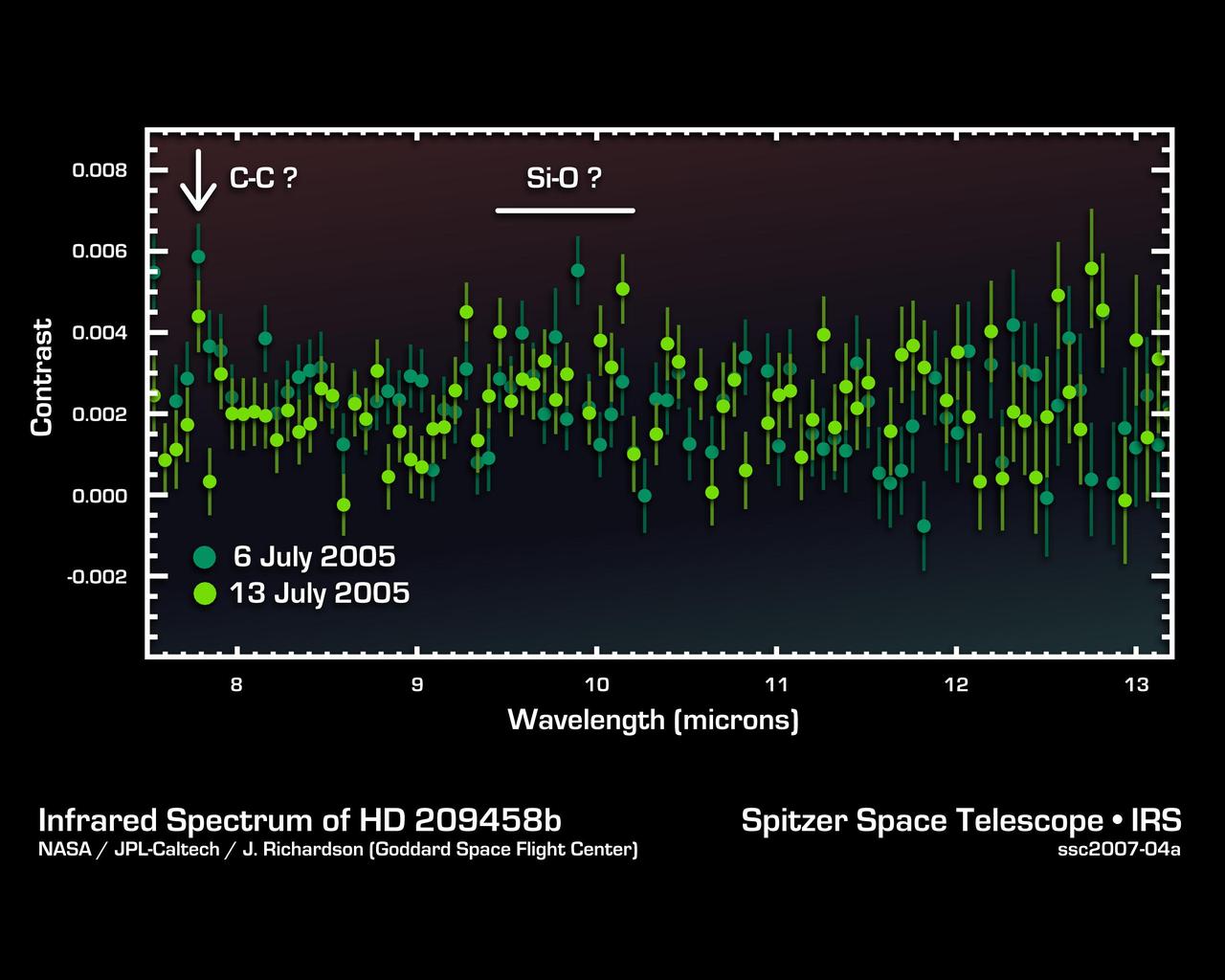
This infrared data from NASA's Spitzer Space Telescope -- called a spectrum -- tells astronomers that a distant gas planet, a so-called "hot Jupiter" called HD 209458b, might be smothered with high clouds. It is one of the first spectra of an alien world. A spectrum is created when an instrument called a spectrograph cracks light from an object open into a rainbow of different wavelengths. Patterns or ripples within the spectrum indicate the presence, or absence, of molecules making up the object. Astronomers using Spitzer's spectrograph were able to obtain infrared spectra for two so-called "transiting" hot-Jupiter planets using the "secondary eclipse" technique. In this method, the spectrograph first collects the combined infrared light from the planet plus its star, then, as the planet is eclipsed by the star, the infrared light of just the star. Subtracting the latter from the former reveals the planet's own rainbow of infrared colors. When astronomers first saw the infrared spectrum above, they were shocked. It doesn't look anything like what theorists had predicted. For example, theorists thought there'd be signatures of water in the wavelength ranges of 8 to 9 microns. The fact that water is not detected might indicate that it is hidden under a thick blanket of high, dry clouds. In addition, the spectrum shows signs of silicate dust -- tiny grains of sand -- in the wavelength range of 9 to 10 microns. This suggests that the planet's skies could be filled with high clouds of dust unlike anything seen in our own solar system. There is also an unidentified molecular signature at 7.78 microns. Future observations using Spitzer's spectrograph should be able to determine the nature of the mysterious feature. This spectrum was produced by Dr. Jeremy Richardson of NASA's Goddard Space Flight Center, Greenbelt, Md. and his colleagues. The data were taken by Spitzer's infrared spectrograph on July 6 and 13, 2005. http://photojournal.jpl.nasa.gov/catalog/PIA09197
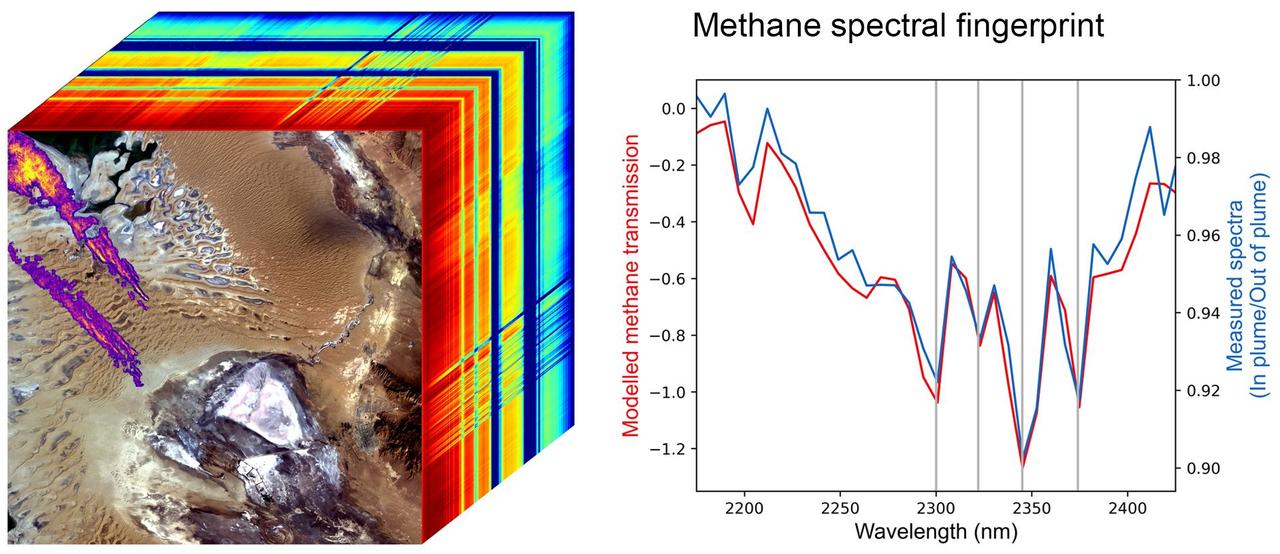
Produced with data from NASA's Earth Surface Mineral Dust Source Investigation (EMIT) mission, this image uses two different ways of displaying methane's unique pattern of absorbed infrared light – called a spectral fingerprint. This potent greenhouse gas is estimated to be 80 times more effective at trapping heat in the atmosphere than carbon dioxide. EMIT uses an imaging spectrometer to detect the spectral fingerprints of various materials on Earth's surface and in its atmosphere. Installed on the International Space Station in July 2022, EMIT was originally intended to map the prevalence of minerals in Earth's arid regions, such as the deserts of Africa, Australia, and the Americas. Scientists verified that EMIT could also detect the spectral fingerprints of methane and carbon dioxide exceptionally well when they were checking the accuracy of the image spectrometer's mineral data. The left panel shows an EMIT data cube that spans an area of Turkmenistan roughly 2,500 square miles (6,400 square kilometers). The rainbow colors extending through the data cube represent the spectral fingerprints from each location within the scene at the front of the cube. The purple, orange, and yellow streaks shown on the satellite image represent multiple methane plumes; the colors correspond to differing concentrations of methane. The line graph on the right displays the methane spectral fingerprint measured by EMIT (blue line). The red line displays the expected spectral fingerprint for methane calculated using an atmospheric simulation. The data for this image was collected by EMIT in August 2022. https://photojournal.jpl.nasa.gov/catalog/PIA25593

This video shows the SPHEREx observatory's field of view as it scans across a section of the sky, observing the universe in 102 colors, or wavelengths of light. Taken in April 2025, just weeks after the spacecraft's launch, the images show a region inside the Large Magellanic Cloud, a dwarf galaxy near the Milky Way. The wavelengths seen by NASA's SPHEREx (Spectro-Photometer for the History of the Universe, Epoch of Reionization and Ices Explorer) are in the infrared range, which is invisible to the human eye; the infrared wavelengths are represented here by visible light colors. While most telescopes use color filters that block one wavelength at a time, SPHEREx's filters gradually transition through a range of wavelengths, creating the rainbow gradients seen in this video. The telescope takes overlapping images so that every section of the sky is imaged 102 times, each time in a different wavelength. The color filters sit on top of two arrays, each with three detectors, that observe the sky simultaneously. In the video, one array's view moves from purple to green, followed by the second array's view (of the same section of sky), which changes from yellow to red. The images are looped four times. SPHEREx will repeat this scanning motion each day for two years, gradually compiling a map of the entire sky. Every day, it will take about 600 exposures, each of which is made up of six images, one from each of the six detectors. Combining those images, scientists can see the total emission from the observed section of the sky or look at an individual wavelength. Observing individual wavelengths of light from cosmic sources is called spectroscopy. This technique can be used to reveal the composition of objects, because chemical elements and molecules leave a unique signature in the colors they absorb and emit. This is made apparent in the images' lower right quadrant, where a collection of dust appears only in the red and orange wavelengths. This indicates the presence of a particular molecule that radiates in specific wavelengths and not others. Video available at https://photojournal.jpl.nasa.gov/catalog/PIA26351
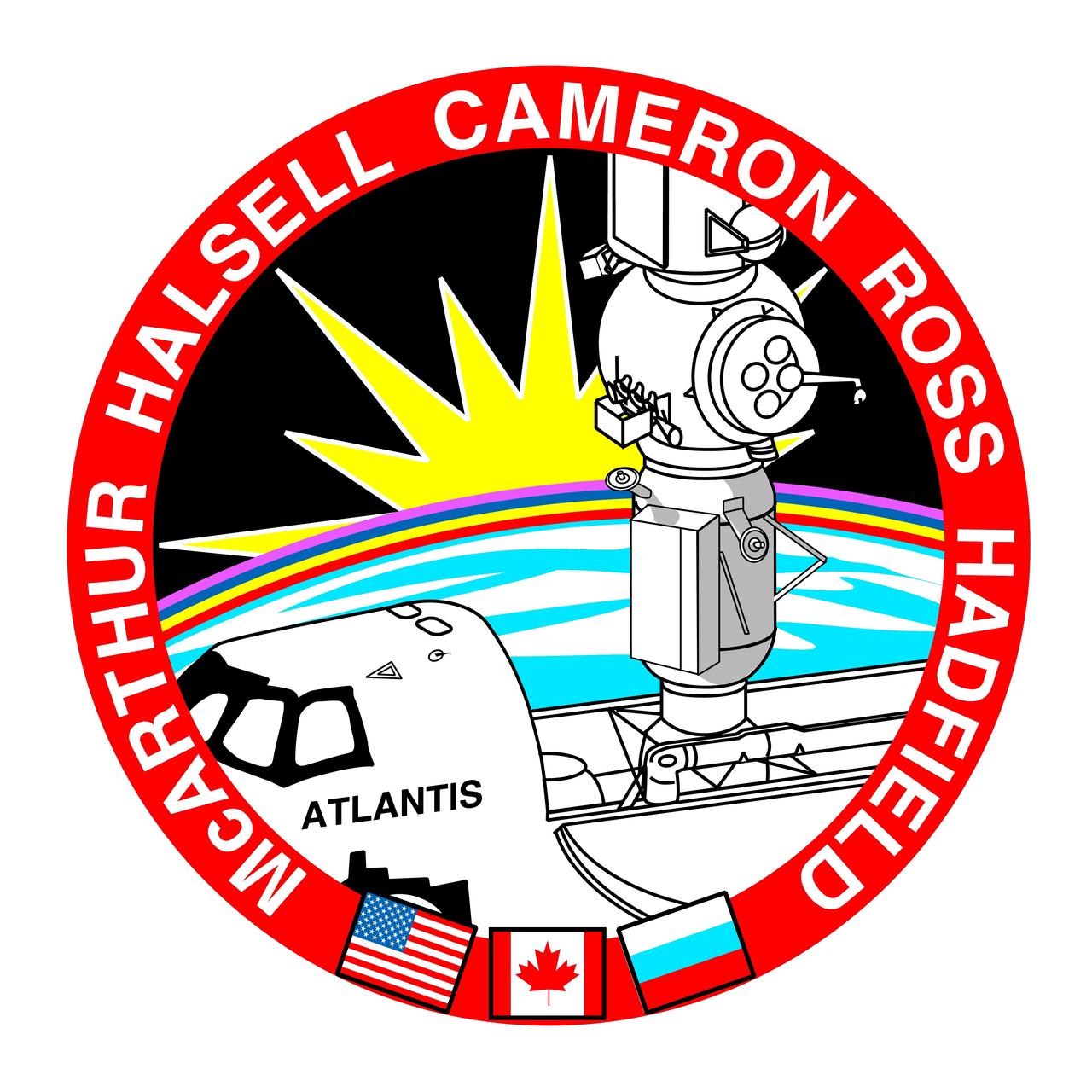
STS074-S-001 (July 1995) --- Designed by crew members, this STS-74 crew patch depicts the space shuttle Atlantis docked to Russia's Mir Space Station. The central focus is on the Russian-built Docking Module (DM), drawn with shading to accentuate its pivotal importance to both mission STS-74 and the NASA - Mir Program. The rainbow across the horizon represents Earth's atmosphere, the thin membrane protecting all nations, while the three flags across the bottom show those nations participating in STS-74 - Russia, Canada and the United States. The sunrise is symbolic of the dawn of a new era in NASA space flight - that of space station construction. The NASA insignia design for space shuttle flights is reserved for use by the astronauts and for other official use as the NASA Administrator may authorize. Public availability has been approved only in the forms of illustrations by the various news media. When and if there is any change in this policy, which is not anticipated, the change will be publicly announced. Photo credit: NASA
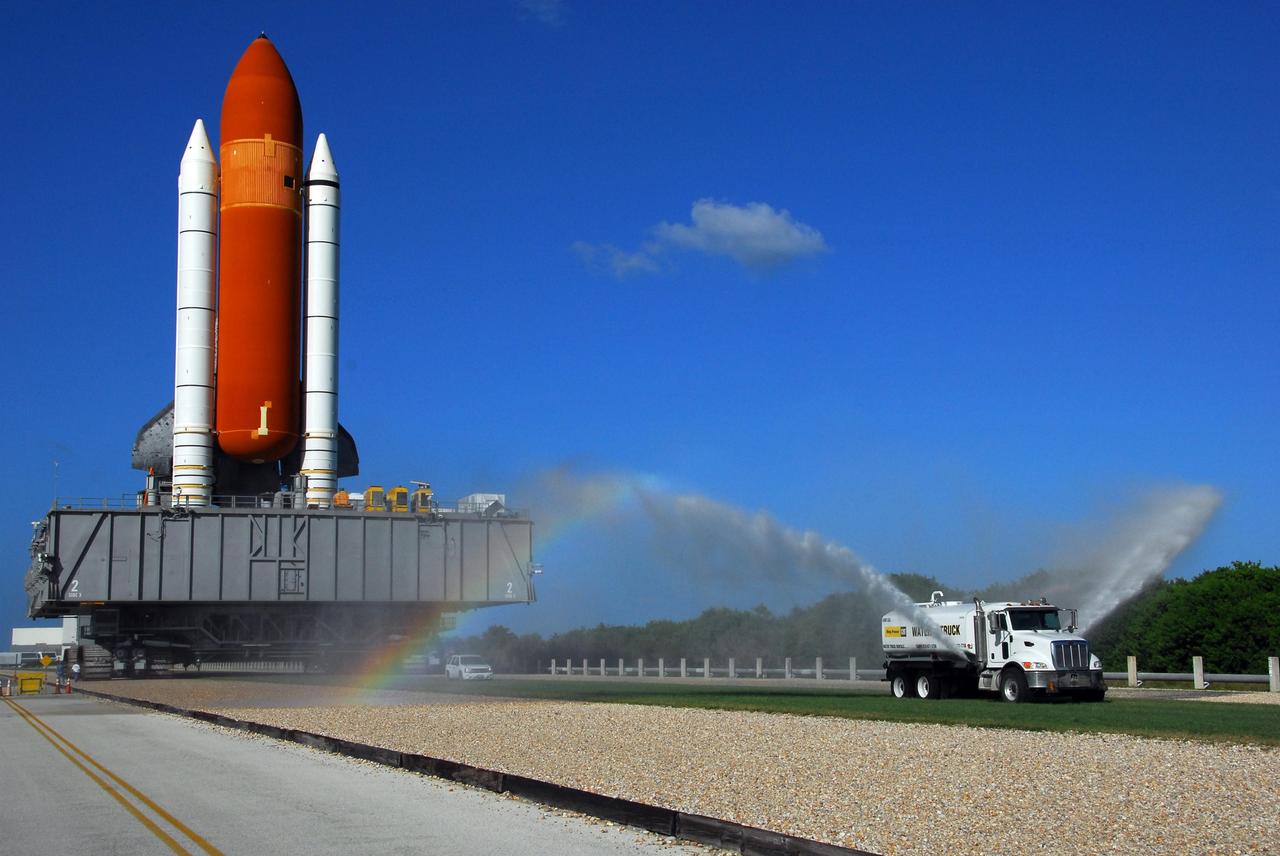
KENNEDY SPACE CENTER, FLA. -- A rainbow can be seen in the spray from the water truck traveling ahead of Space Shuttle Discovery on its move from the Vehicle Assembly Building to Launch Pad 39A. First motion out of the VAB was at 6:47 a.m. EDT. The water dampens the rocks on the crawlerway, reducing the amount of dust churned up by the passage of the shuttle. The crawler transporter carrying the mobile launch platform and unfueled space shuttle weighs approximately 17.5 million pounds. Rollout is a milestone for Discovery's launch to the International Space Station on mission STS-120, targeted for Oct. 23. The crew will be delivering and installing the Italian-built U.S. Node 2, named Harmony. The pressurized module will act as an internal connecting port and passageway to additional international science labs and cargo spacecraft. In addition to increasing the living and working space inside the station, it also will serve as a work platform outside for the station's robotic arm. Photo credit: NASA/George Shelton

Showcased at the centre of this NASA/ESA Hubble Space Telescope image is an emission-line star known as IRAS 12196-6300. Located just under 2300 light-years from Earth, this star displays prominent emission lines, meaning that the star’s light, dispersed into a spectrum, shows up as a rainbow of colours marked with a characteristic pattern of dark and bright lines. The characteristics of these lines, when compared to the “fingerprints” left by particular atoms and molecules, can be used to reveal IRAS 12196-6300’s chemical composition. Under 10 million years old and not yet burning hydrogen at its core, unlike the Sun, this star is still in its infancy. Further evidence of IRAS 12196-6300’s youth is provided by the presence of reflection nebulae. These hazy clouds, pictured floating above and below IRAS 12196-6300, are created when light from a star reflects off a high concentration of nearby dust, such as the dusty material still remaining from IRAS 12196-6300’s formation.
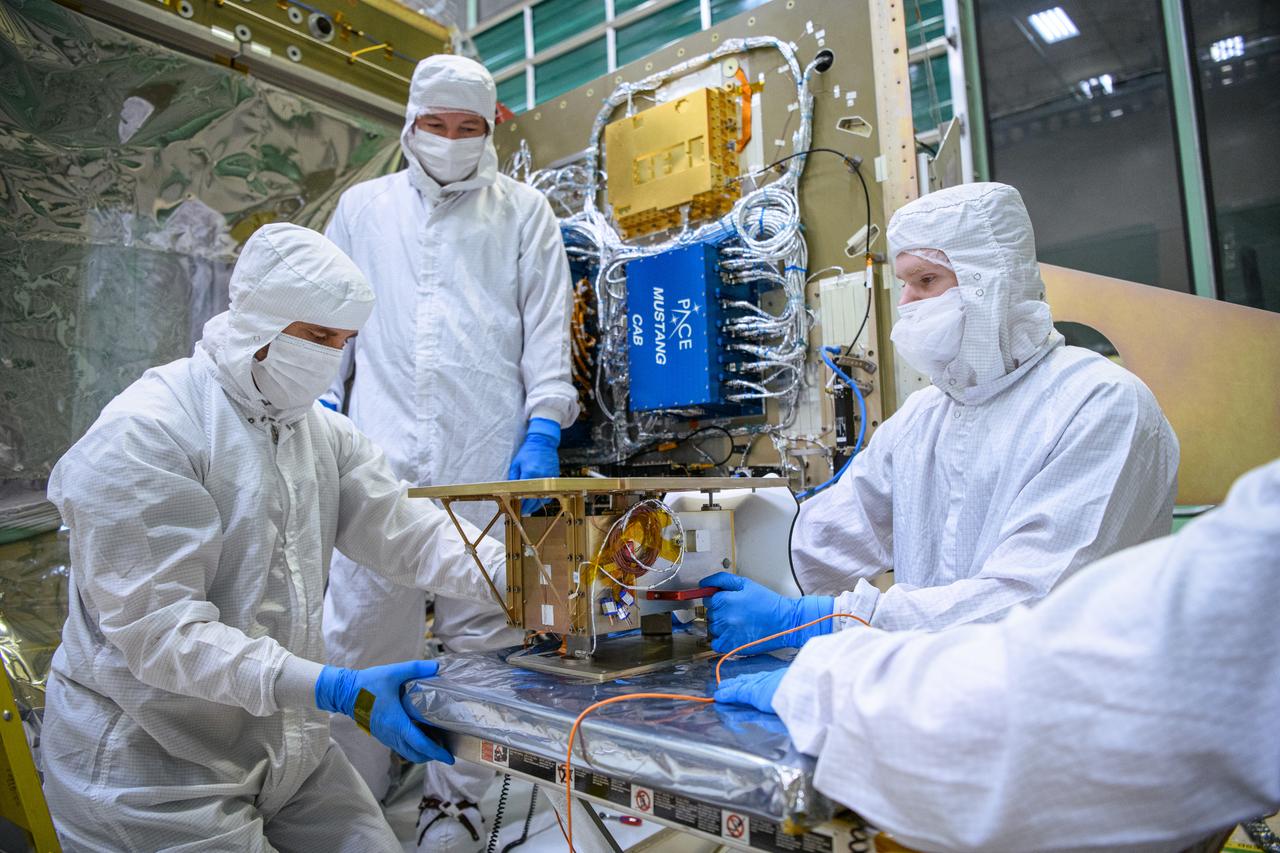
Technicians prepare to integrate the Hyper-Angular Rainbow Polarimeter #2 (HARP2) instrument to the Plankton, Aerosol, Cloud, ocean Ecosystem (PACE) spacecraft bus at NASA's Goddard Space Flight Center in Greenbelt, Maryland on October 25th, 2022. HARP2 is one of three instruments on NASA's PACE observatory, it was designed and built by UMBC's Earth and Space Institute. PACE's unprecedented spectral coverage will provide the first-ever global measurements designed to identify phytoplankton community composition. The mission will make global ocean color measurements, using the Ocean Color Instrument (OCI), to provide extended data records on ocean ecology and global biogeochemistry along with polarimetry measurements, using the Spectro-polarimeter for Planetary Exploration (SPEXone) and the Hyper Angular Research Polarimeter (HARP2) to provide extended data records on clouds and aerosols. The Earth-observing satellite mission, built at Goddard Space Flight Center in Greenbelt, MD, will continue and advance observations of global ocean color, biogeochemistry, and ecology, as well as the carbon cycle, aerosols and clouds.
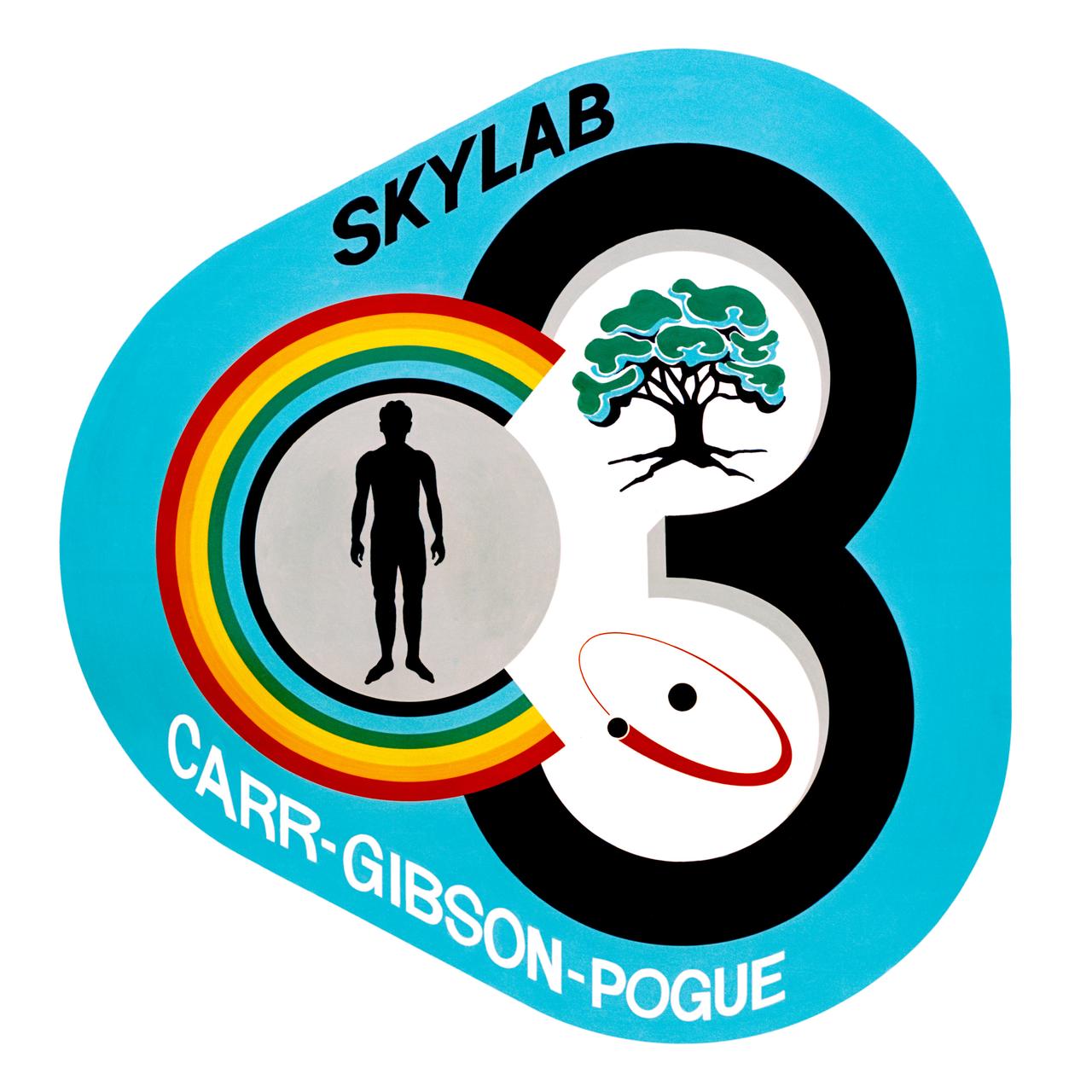
S72-53094 (For release February 1973) --- This is the emblem for the third manned Skylab mission. It will be a mission of up to 56 days. Skylab is an experimental space station consisting of a 100-ton laboratory complex in which medical, scientific and technological experiments will be performed in Earth orbit. The members of the crew will be astronaut Gerald P. Carr, commander; scientist-astronaut Edward G. Gibson, science pilot; and astronaut William R. Pogue, pilot. The symbols in the patch refer to the three major areas of investigation proposed in the mission. The tree represents man's natural environment and relates directly to the Skylab mission objectives of advancing the study of Earth resources. The hydrogen atom, as the basic building block of the universe, represents man's exploration of the physical world, his application of knowledge, and his development of technology. Since the sun is composed primarily of hydrogen, it is appropriate that the symbol refers to the solar physics mission objectives. The human silhouette represents mankind and the human capacity to direct technology with a wisdom tempered by regard for his natural environment. It also directly relates to the Skylab medical studies of man himself. The rainbow, adopted from the Biblical story of the flood, symbolizes the promise that is offered man. It embraces man and extends to the tree and the hydrogen atom emphasizing man's pivotal role in the conciliation of technology with nature. Photo credit: NASA

ISS012-E-05172 (14 October 2005) --- Navajo Mountain, Utah is featured in this image photographed by an Expedition 12 crewmember on the international space station. According to scientists, the Colorado Plateau of Arizona, Colorado, New Mexico, and Utah is characterized by mostly flat-lying sedimentary layers that record paleoclimate extremes ranging from oceans to widespread deserts over the last 1.8 billion years. Navajo Mountain is formed by a dome-shaped body of igneous rock (called a laccolith by geologists), one of several in southeast Utah that intrude and uplift the surrounding sedimentary layers of the Plateau. This oblique image highlights Navajo Mountain in the center of the image, surrounded by light red-brown Navajo Sandstone (also visible in canyons at bottom of image). Scientists believe the peak of Navajo Mountain, at approximately 3148 meters (10,388 feet) elevation, is comprised of uplifted Dakota Sandstone deposited during the Cretaceous Period. The establishment of Rainbow Bridge National Monument (1910), and the filling of Glen Canyon by Lake Powell in 1963 (upper right), have facilitated tourism and aesthetic appreciation of this previously remote region. Access to Navajo Mountain is still regulated by the sovereign Navajo Nation, and the process of permitting is required to hike in the region.
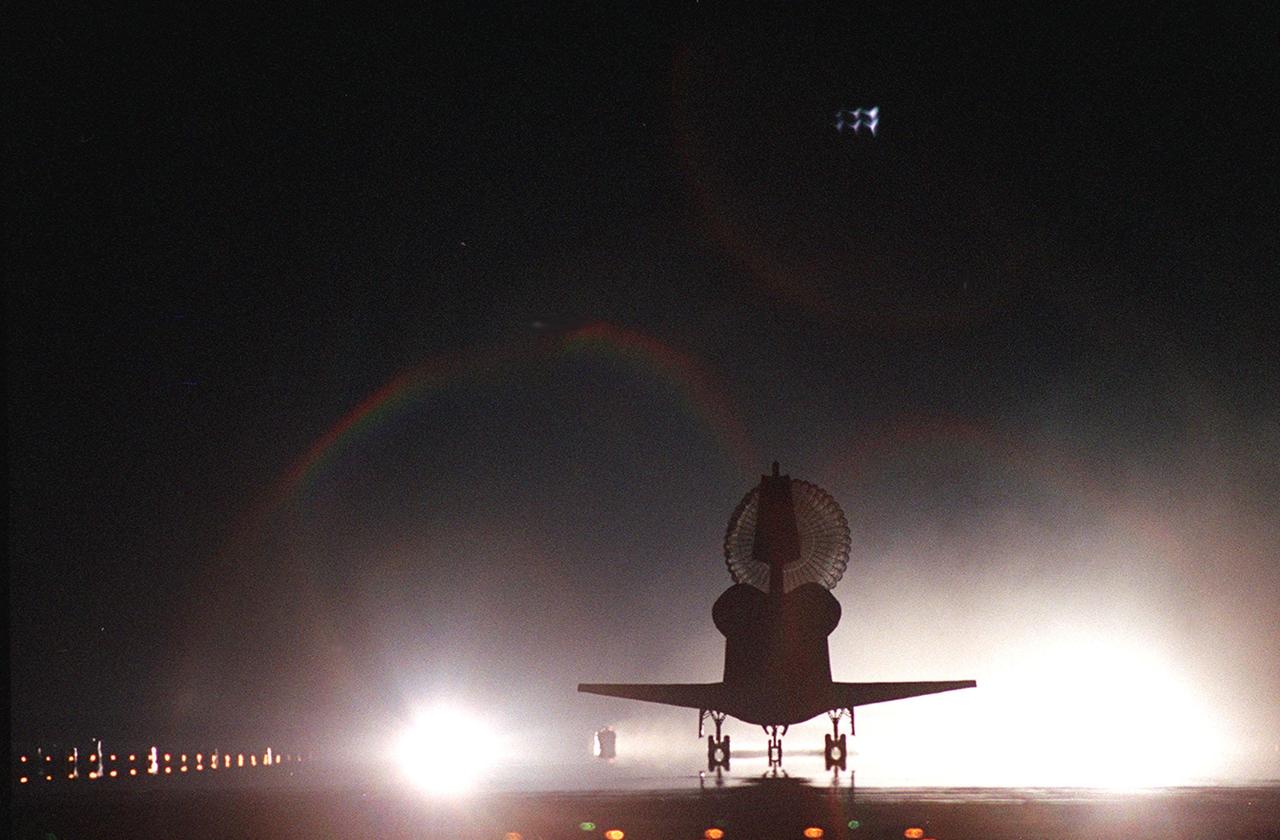
With its drag chute billowing behind, Space Shuttle Atlantis is silhouetted against the bright lights on Runway 15, Shuttle Landing Facility, as it rolls to a stop. Two rainbows appear above the lights. The landing of Atlantis completed the 9-day, 20-hour, 9-minute-long STS-101 mission. At the controls are Commander James D. Halsell Jr. and Pilot Scott 'Doc' Horowitz. Also onboard the orbiter are Mission Specialists Mary Ellen Weber, James S. Voss, Jeffrey N. Williams, Susan J. Helms and Yury Usachev of Russia. Main gear touchdown was at 2:20:17 a.m. EDT, landing on orbit 155 of the mission. Nose gear touchdown was at 2:20:30 a.m. EDT, and wheel stop at 2:21:19 a.m. EDT. The crew is returning from the third flight to the International Space Station. This was the 98th flight in the Space Shuttle program and the 21st for Atlantis, also marking the 51st landing at KSC, the 22nd consecutive landing at KSC, the 14th nighttime landing in Shuttle history and the 29th in the last 30 Shuttle flights.
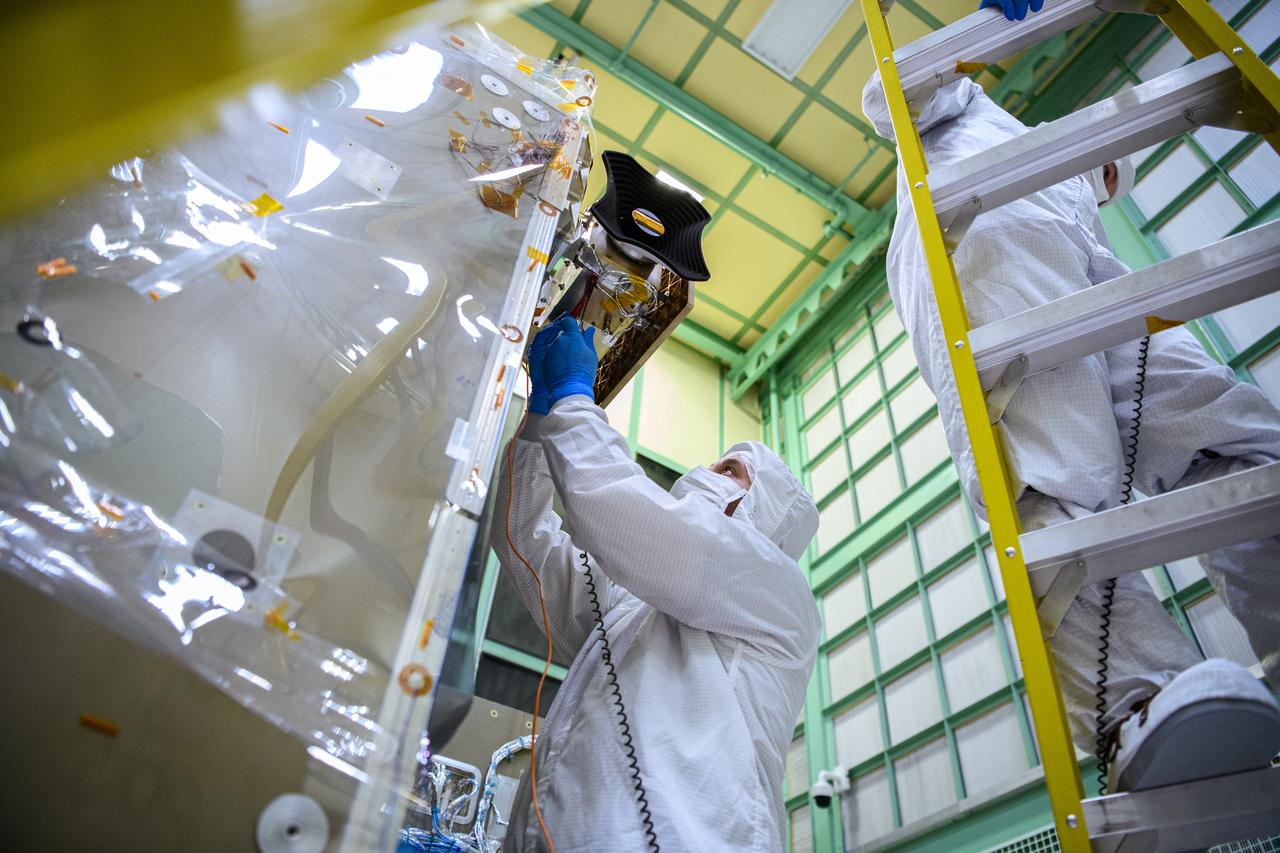
Technicians integrate the Hyper-Angular Rainbow Polarimeter #2 (HARP2) instrument to the Plankton, Aerosol, Cloud, ocean Ecosystem (PACE) spacecraft bus at NASA's Goddard Space Flight Center in Greenbelt, Maryland on October 25th, 2022. HARP2 is one of three instruments on NASA's PACE observatory, it was designed and built by UMBC's Earth and Space Institute. PACE's unprecedented spectral coverage will provide the first-ever global measurements designed to identify phytoplankton community composition. The mission will make global ocean color measurements, using the Ocean Color Instrument (OCI), to provide extended data records on ocean ecology and global biogeochemistry along with polarimetry measurements, using the Spectro-polarimeter for Planetary Exploration (SPEXone) and the Hyper Angular Research Polarimeter (HARP2) to provide extended data records on clouds and aerosols. The Earth-observing satellite mission, built at Goddard Space Flight Center in Greenbelt, MD, will continue and advance observations of global ocean color, biogeochemistry, and ecology, as well as the carbon cycle, aerosols and clouds.

S88-41481 (15 July 1988) --- This is the official insignia of the NASA STS-27 mission. The patch depicts the space shuttle lifting off against the multi-colored backdrop of a rainbow, symbolizing the triumphal return to flight of our nation's manned space program. The design also commemorates the memory of the crew of Challenger mission STS51-L, represented by the seven stars. The names of the flight crew members of STS-27 are located along the border of the patch. They are astronauts Robert L. Gibson, commander; Guy S. Gardner, pilot; Jerry L. Ross, Richard M. (Mike) Mullane and William M. Shepherd, mission specialists. Each crew member contributed to the design of the insignia. The NASA insignia design for space shuttle flights is reserved for use by the astronauts and for other official use as the NASA Administrator may authorize. Public availability has been approved only in the forms of illustrations by the various news media. When and if there is any change in this policy, which is not anticipated, the change will be publicly announced. Photo credit: NASA
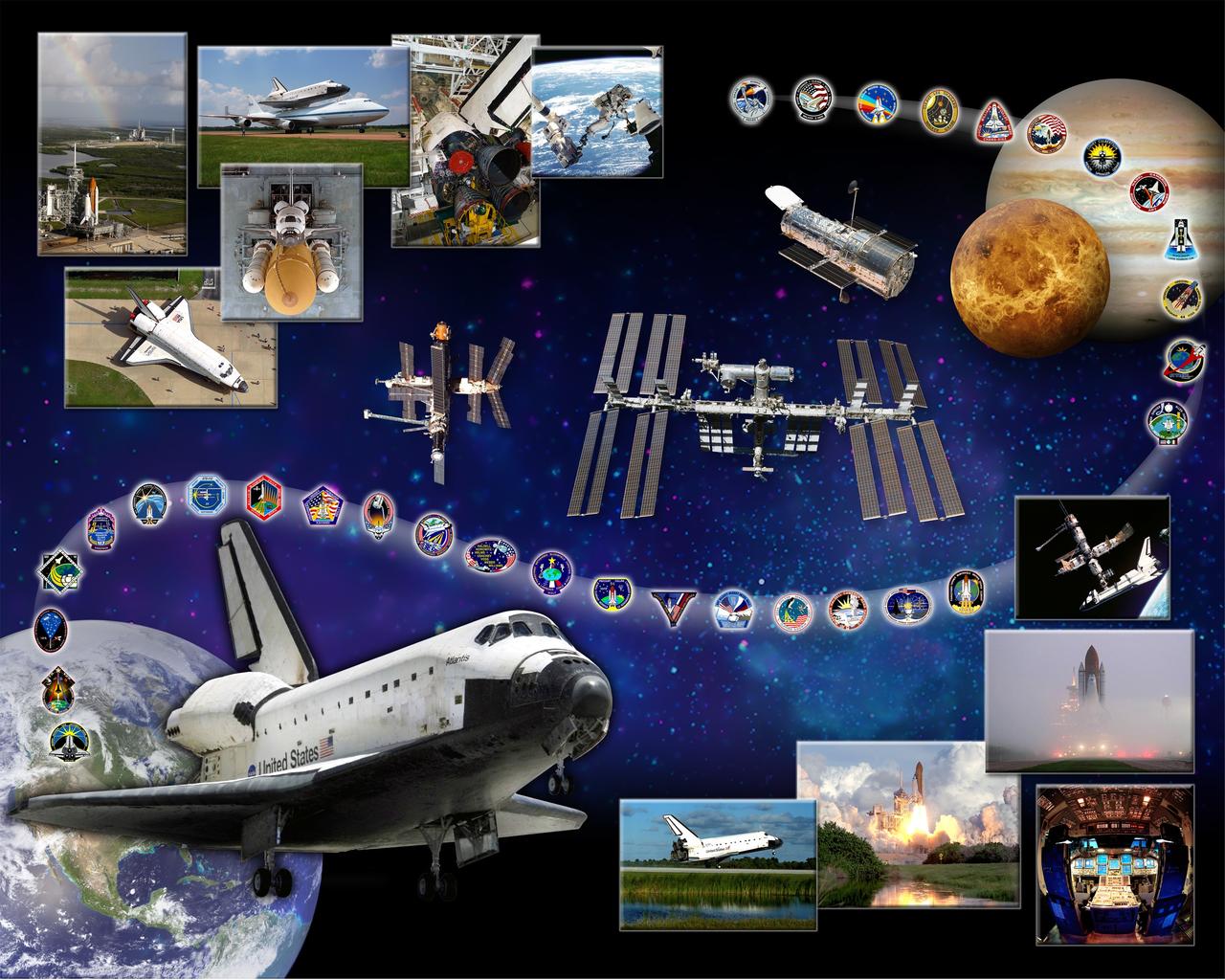
CAPE CANAVERAL, Fla. -- This orbiter tribute of space shuttle Atlantis, or OV-104, hangs in Firing Room 4 of the Launch Control Center at NASA's Kennedy Space Center in Florida. In the lower-left corner, it features Atlantis soaring above Earth and threaded through the design are the mission patches for each of Atlantis’ flights. Atlantis' accomplishments include seven missions to the Russian space station Mir and several assembly, construction and resupply missions to the International Space Station. Atlantis also flew the last Hubble Space Telescope servicing mission on STS-125. In the tribute, the planet Venus represents the Magellan probe being deployed during STS-30, and Jupiter represents the Galileo probe being deployed during STS-34. The inset photos illustrate various aspects of shuttle processing as well as significant achievements, such as the glass cockpit and the first shuttle docking with Mir during STS-71. The inset photo in the upper-left corner shows a rainbow over Atlantis on Launch Pad 39A and shuttle Endeavour on Launch Pad 39B at Kennedy. Endeavour was the assigned vehicle had Atlantis’ STS-125 mission needed rescue, and this was the last time both launch pads were occupied at the same time. The stars in the background represent the many people who have worked with Atlantis and their contributions to the vehicle’s success. Graphic design credit: NASA/Amy Lombardo
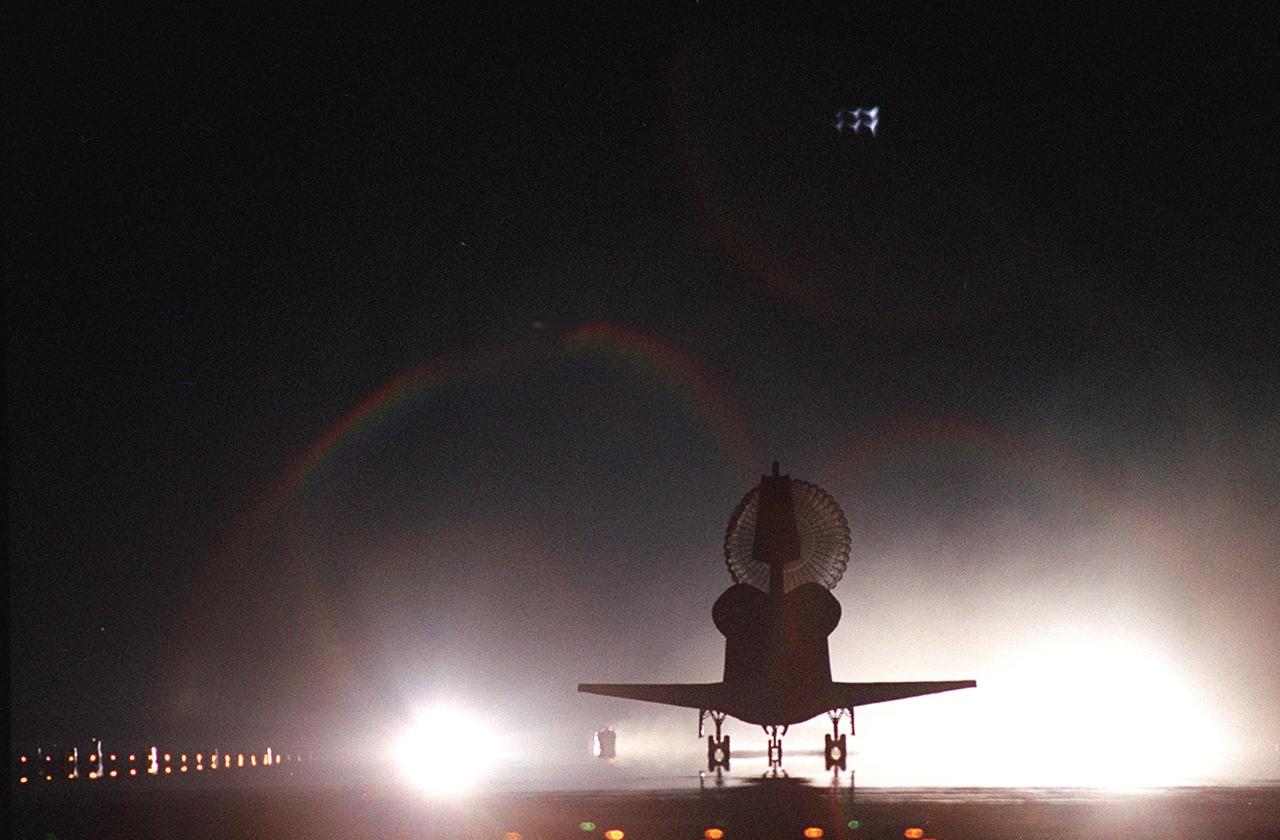
KENNEDY SPACE CENTER, Fla. -- With its drag chute billowing behind, Space Shuttle Atlantis is silhouetted against the bright lights on Runway 15, Shuttle Landing Facility, as it rolls to a stop. Two rainbows appear above the lights. The landing of Atlantis completed the 9-day, 20-hour, 9-minute-long STS-101 mission. At the controls are Commander James D. Halsell Jr. and Pilot Scott “Doc” Horowitz. Also onboard the orbiter are Mission Specialists Mary Ellen Weber, James S. Voss, Jeffrey N. Williams, Susan J. Helms and Yury Usachev of Russia. Main gear touchdown was at 2:20:17 a.m. EDT, landing on orbit 155 of the mission. Nose gear touchdown was at 2:20:30 a.m. EDT, and wheel stop at 2:21:19 a.m. EDT. The crew is returning from the third flight to the International Space Station. This was the 98th flight in the Space Shuttle program and the 21st for Atlantis, also marking the 51st landing at KSC, the 22nd consecutive landing at KSC, the 14th nighttime landing in Shuttle history and the 29th in the last 30 Shuttle flights
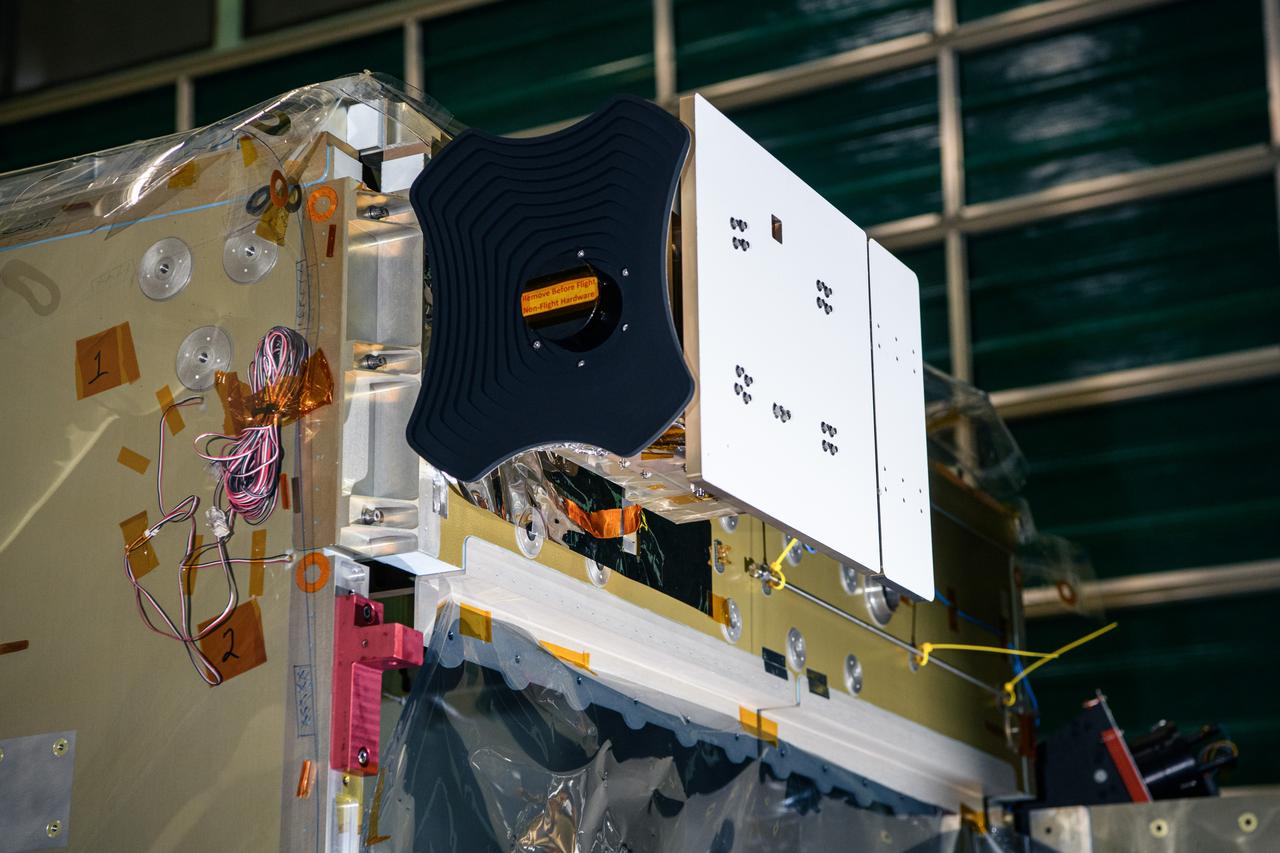
The Hyper-Angular Rainbow Polarimeter #2 (HARP2) instrument after integration to the Plankton, Aerosol, Cloud, ocean Ecosystem (PACE) spacecraft bus at NASA's Goddard Space Flight Center in Greenbelt, Maryland on October 25th, 2022. HARP2 is one of three instruments on NASA's PACE observatory, it was designed and built by UMBC's Earth and Space Institute. PACE's unprecedented spectral coverage will provide the first-ever global measurements designed to identify phytoplankton community composition. The mission will make global ocean color measurements, using the Ocean Color Instrument (OCI), to provide extended data records on ocean ecology and global biogeochemistry along with polarimetry measurements, using the Spectro-polarimeter for Planetary Exploration (SPEXone) and the Hyper Angular Research Polarimeter (HARP2) to provide extended data records on clouds and aerosols. The Earth-observing satellite mission, built at Goddard Space Flight Center in Greenbelt, MD, will continue and advance observations of global ocean color, biogeochemistry, and ecology, as well as the carbon cycle, aerosols and clouds.
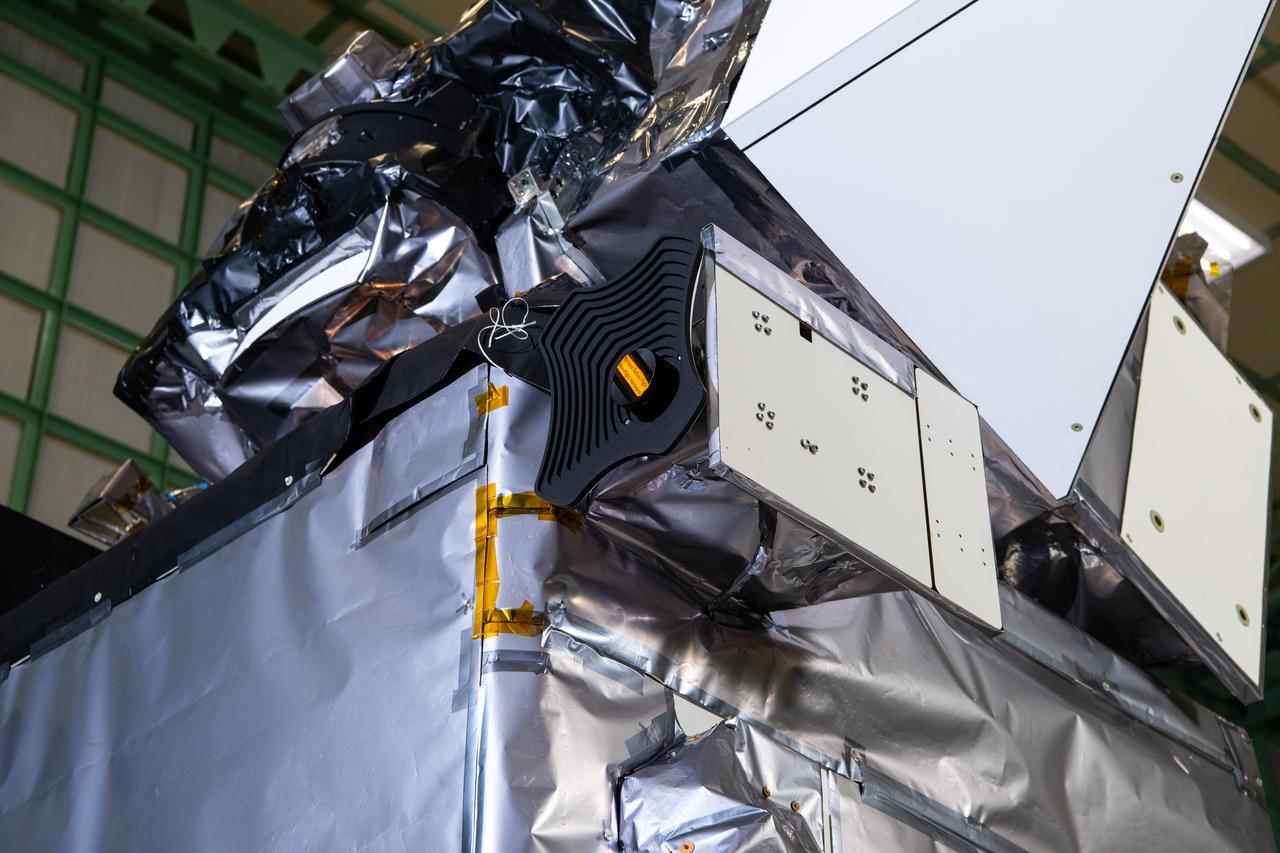
The Hyper-Angular Rainbow Polarimeter #2 (HARP2) instrument on The Plankton, Aerosol, Cloud, ocean Ecosystem (PACE) in the clean room at NASA's Goddard Space Flight Center in Greenbelt, Maryland on October 31st, 2023. HARP2 is one of three instruments on NASA's PACE observatory, it was designed and built by UMBC's Earth and Space Institute. PACE's unprecedented spectral coverage will provide the first-ever global measurements designed to identify phytoplankton community composition. The mission will make global ocean color measurements, using the Ocean Color Instrument (OCI), to provide extended data records on ocean ecology and global biogeochemistry along with polarimetry measurements, using the Spectro-polarimeter for Planetary Exploration (SPEXone) and the Hyper Angular Research Polarimeter (HARP2) to provide extended data records on clouds and aerosols. The Earth-observing satellite mission, built at Goddard Space Flight Center in Greenbelt, MD, will continue and advance observations of global ocean color, biogeochemistry, and ecology, as well as the carbon cycle, aerosols and clouds.
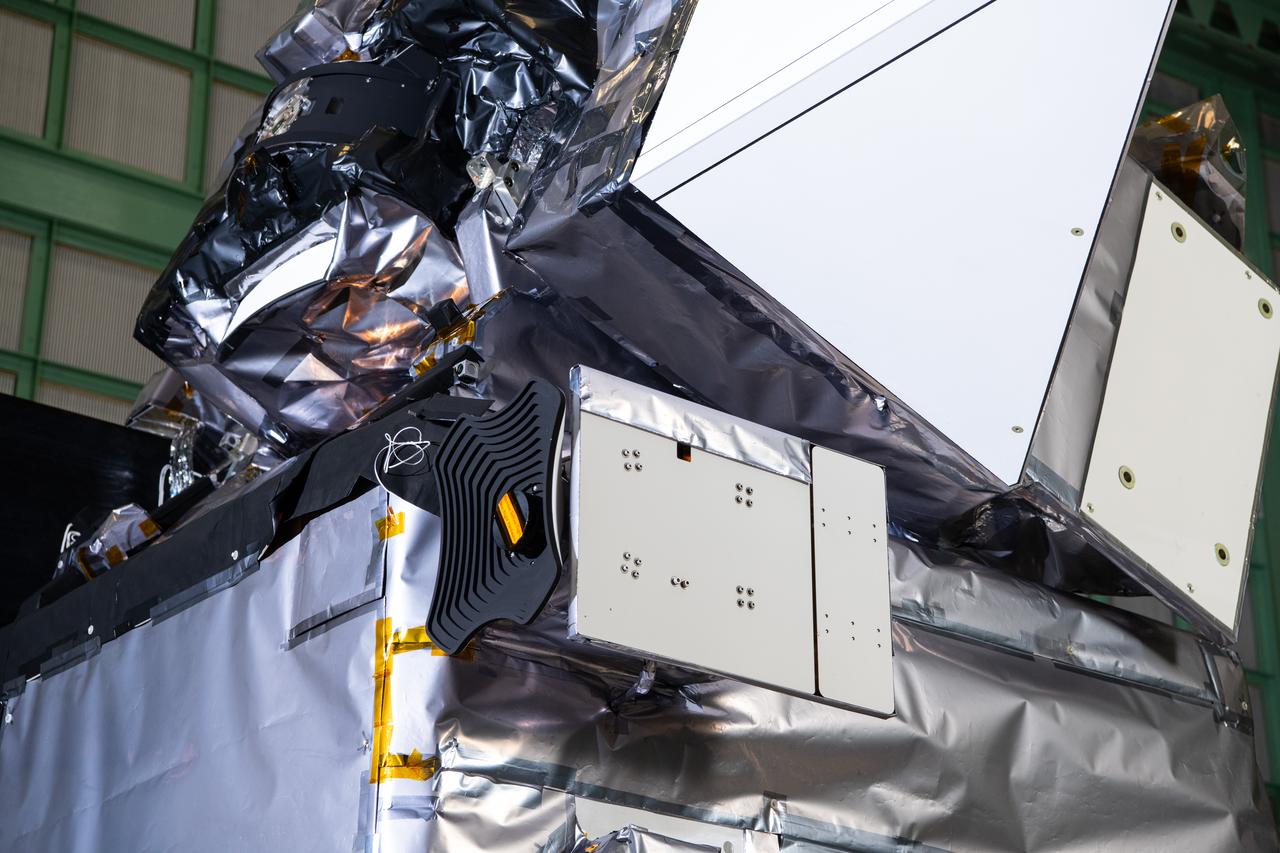
The Hyper-Angular Rainbow Polarimeter #2 (HARP2) instrument on The Plankton, Aerosol, Cloud, ocean Ecosystem (PACE) in the clean room at NASA's Goddard Space Flight Center in Greenbelt, Maryland on October 31st, 2023. HARP2 is one of three instruments on NASA's PACE observatory, it was designed and built by UMBC's Earth and Space Institute. PACE's unprecedented spectral coverage will provide the first-ever global measurements designed to identify phytoplankton community composition. The mission will make global ocean color measurements, using the Ocean Color Instrument (OCI), to provide extended data records on ocean ecology and global biogeochemistry along with polarimetry measurements, using the Spectro-polarimeter for Planetary Exploration (SPEXone) and the Hyper Angular Research Polarimeter (HARP2) to provide extended data records on clouds and aerosols. The Earth-observing satellite mission, built at Goddard Space Flight Center in Greenbelt, MD, will continue and advance observations of global ocean color, biogeochemistry, and ecology, as well as the carbon cycle, aerosols and clouds.

Technicians integrate the Hyper-Angular Rainbow Polarimeter #2 (HARP2) instrument to the Plankton, Aerosol, Cloud, ocean Ecosystem (PACE) spacecraft bus at NASA's Goddard Space Flight Center in Greenbelt, Maryland on October 25th, 2022. HARP2 is one of three instruments on NASA's PACE observatory, it was designed and built by UMBC's Earth and Space Institute. PACE's unprecedented spectral coverage will provide the first-ever global measurements designed to identify phytoplankton community composition. The mission will make global ocean color measurements, using the Ocean Color Instrument (OCI), to provide extended data records on ocean ecology and global biogeochemistry along with polarimetry measurements, using the Spectro-polarimeter for Planetary Exploration (SPEXone) and the Hyper Angular Research Polarimeter (HARP2) to provide extended data records on clouds and aerosols. The Earth-observing satellite mission, built at Goddard Space Flight Center in Greenbelt, MD, will continue and advance observations of global ocean color, biogeochemistry, and ecology, as well as the carbon cycle, aerosols and clouds.