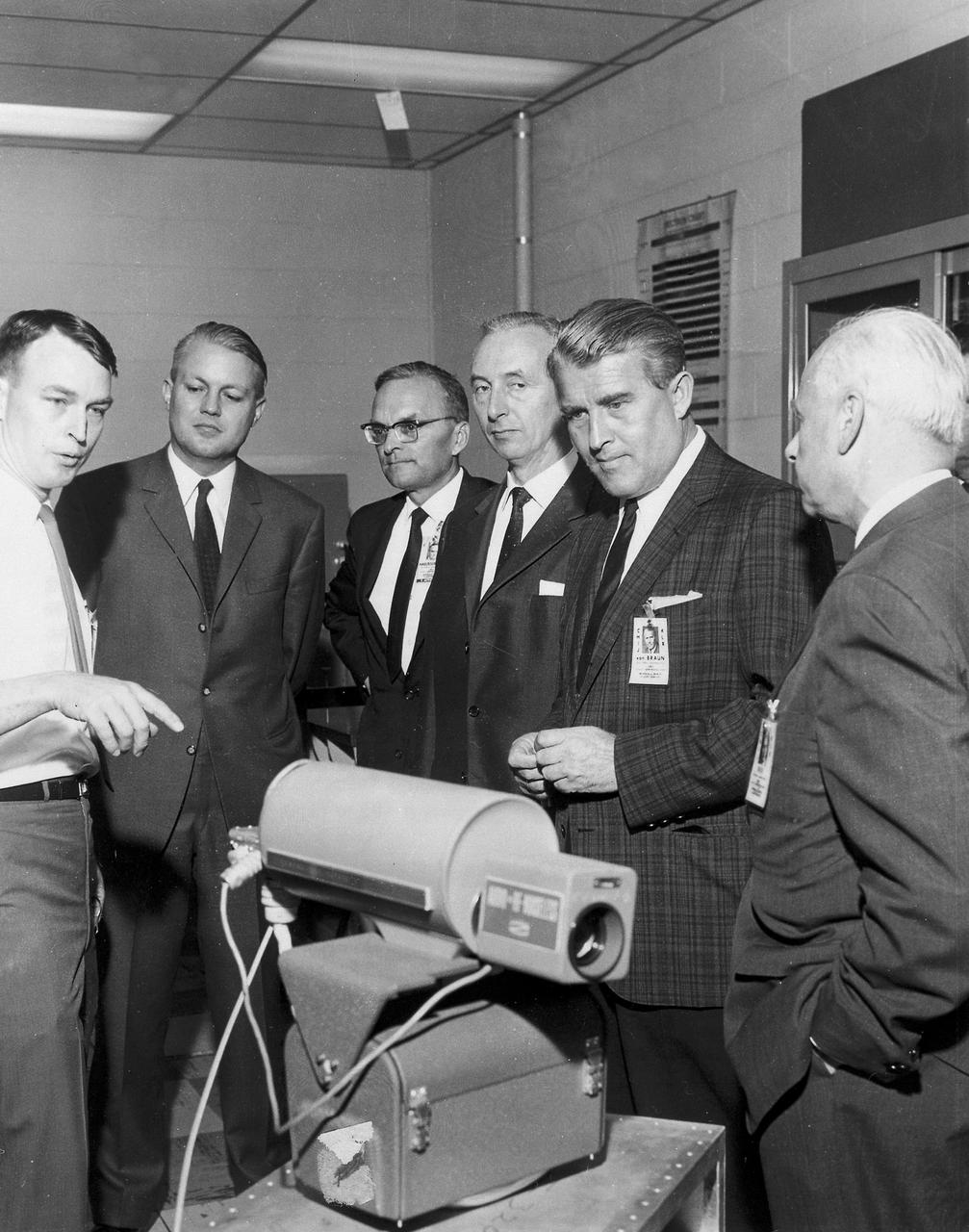
Dr. Joseph Randall, a laser expert at Marshall Space Flight Center (MSFC), explains one of the projects he is working on to a group composed of Federal Republic of Germany and MSFC officials. From left are: Dr. Randall; Minister for Scientific Research of Federal Republic of Germany, Dr. Gerhard Stolenberg; Director of MSFC Astrionics Lab, Dr. Walter Haeusserman; Head of Space Research Federal Republic of Germany, Max Mayer; MSFC Director Dr. von Braun; MSFC Deputy Director Dr. Elberhard Rees.
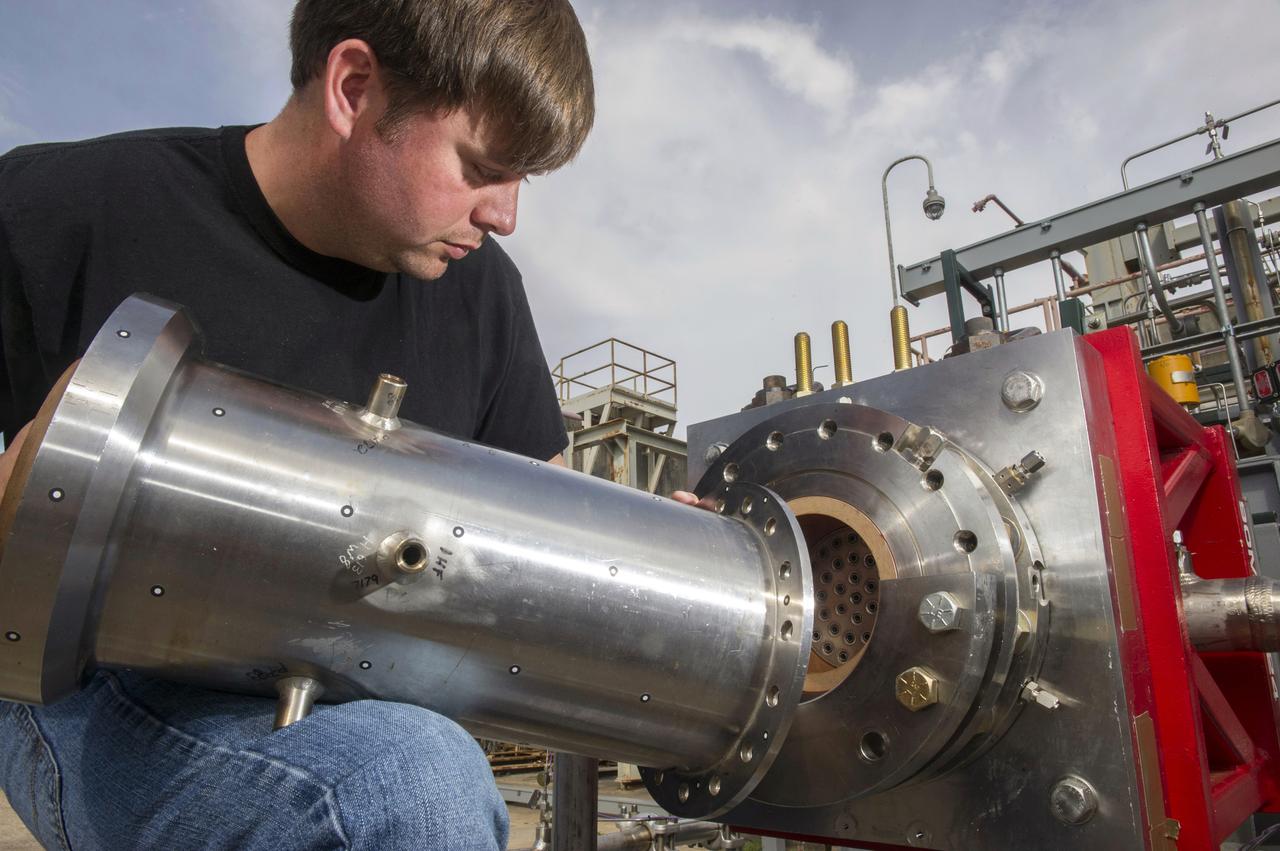
1. ENGINEERS AND TECHNICIANS PREPARE FOR AN UPCOMING HOT-FIRE TEST OF A ROCKET INJECTOR MANUFACTURED USING ADDITIVE MANUFACTURING, OR 3-D PRINTING…RANDALL MCALLISTER, INFOPRO TECHNICIAN, FITS NOZZLE TO ROCKET INJECTOR
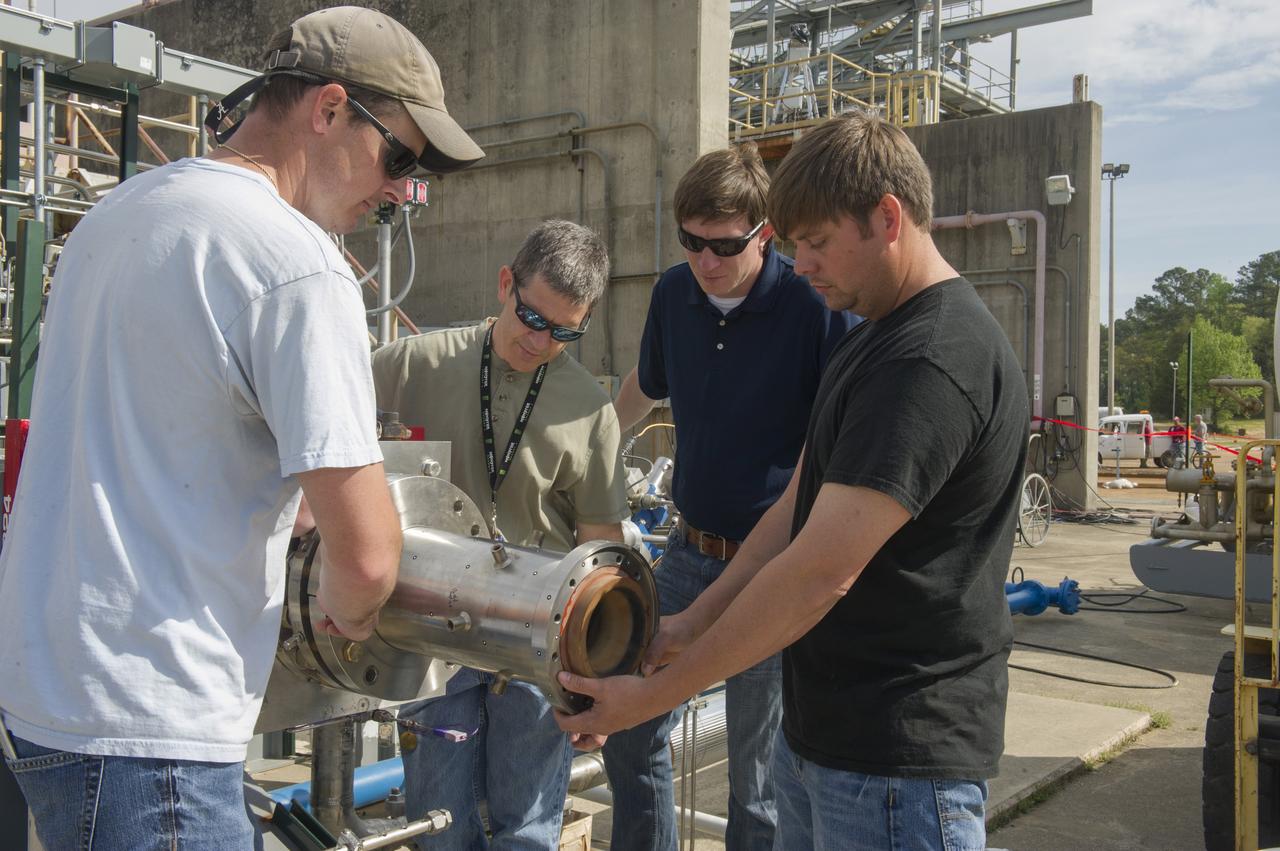
2. ENGINEERS AND TECHNICIANS PREPARE FOR AN UPCOMING HOT-FIRE TEST OF A ROCKET INJECTOR MANUFACTURED USING ADDITIVE MANUFACTURING, OR 3-D PRINTING…(L TO R) WILLIE PARKER, INFOPRO TECHNICIAN, BRAD BULLARD, NASA, NICK CASE, NASA, AND RANDALL MCALLISTER, INFOPRO TECHNICIAN
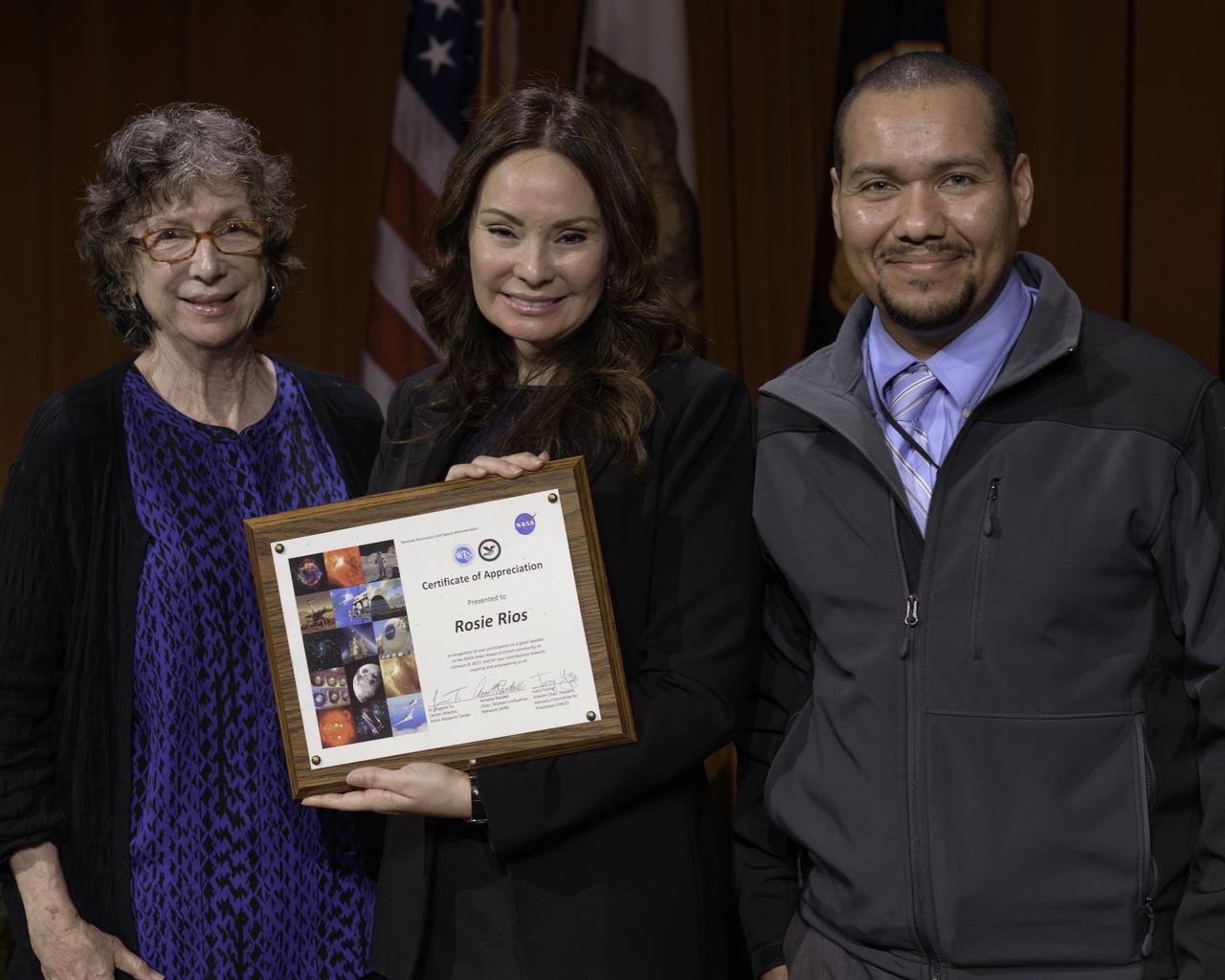
Rosie Rios, the 43rd Treasurer of the United States explores how understanding our history will provide a clearer roadmap for understanding where the country's future is heading. Presented by the Ames Women's Influence Network (WIN) and the Hispanic Advisory Committee for Employees (HACE) in the Syvertson Auditorium (N-201) at Ames Research Center. Annette Randall, Chair, WIN, Rosie Rios, Ivory Young, HACE Rep.
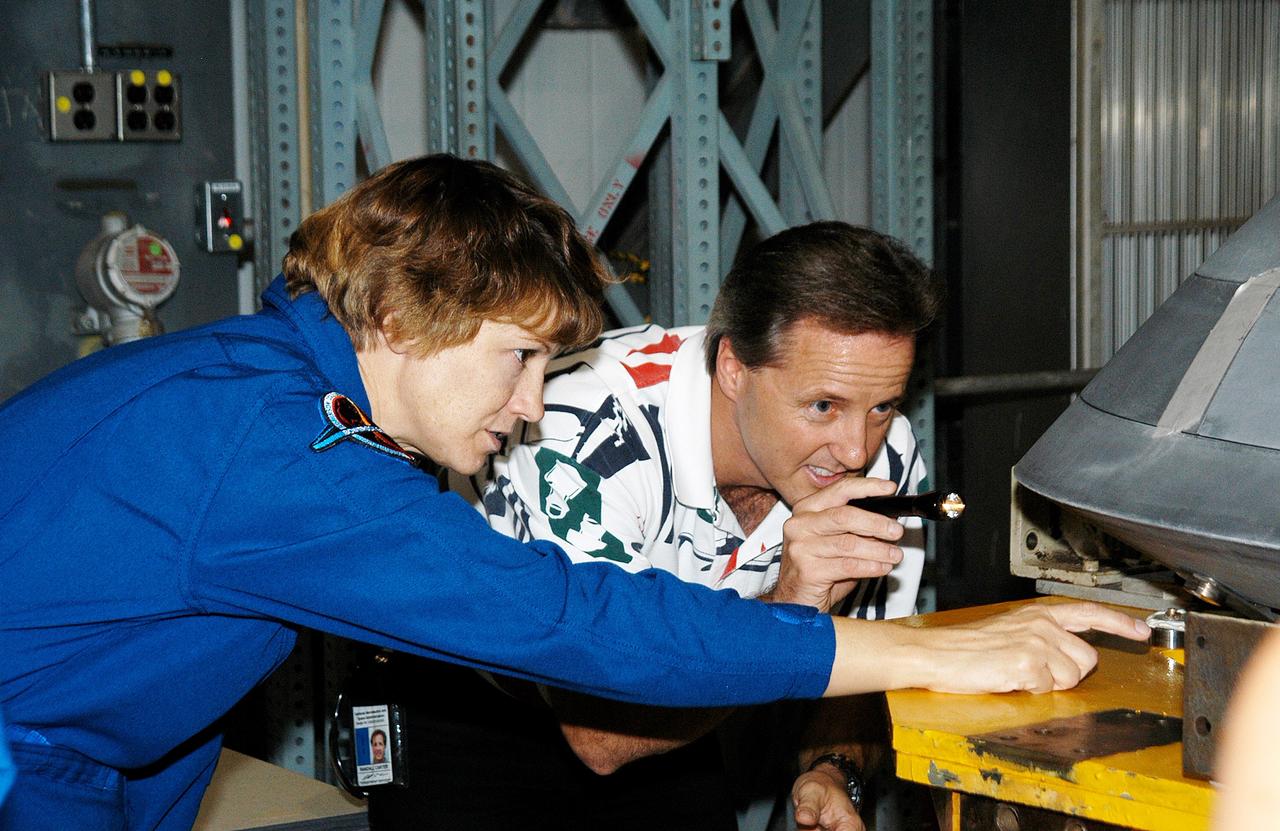
KENNEDY SPACE CENTER, FLA. - In the Orbiter Processing Facility, STS-114 Commander Eileen Collins examines part of the Atlantis nose cap with Randall Carter, who is with The Boeing Company. The nose cap was recently removed from Atlantis. The STS-114 crew is at KSC to take part in crew equipment and orbiter familiarization.
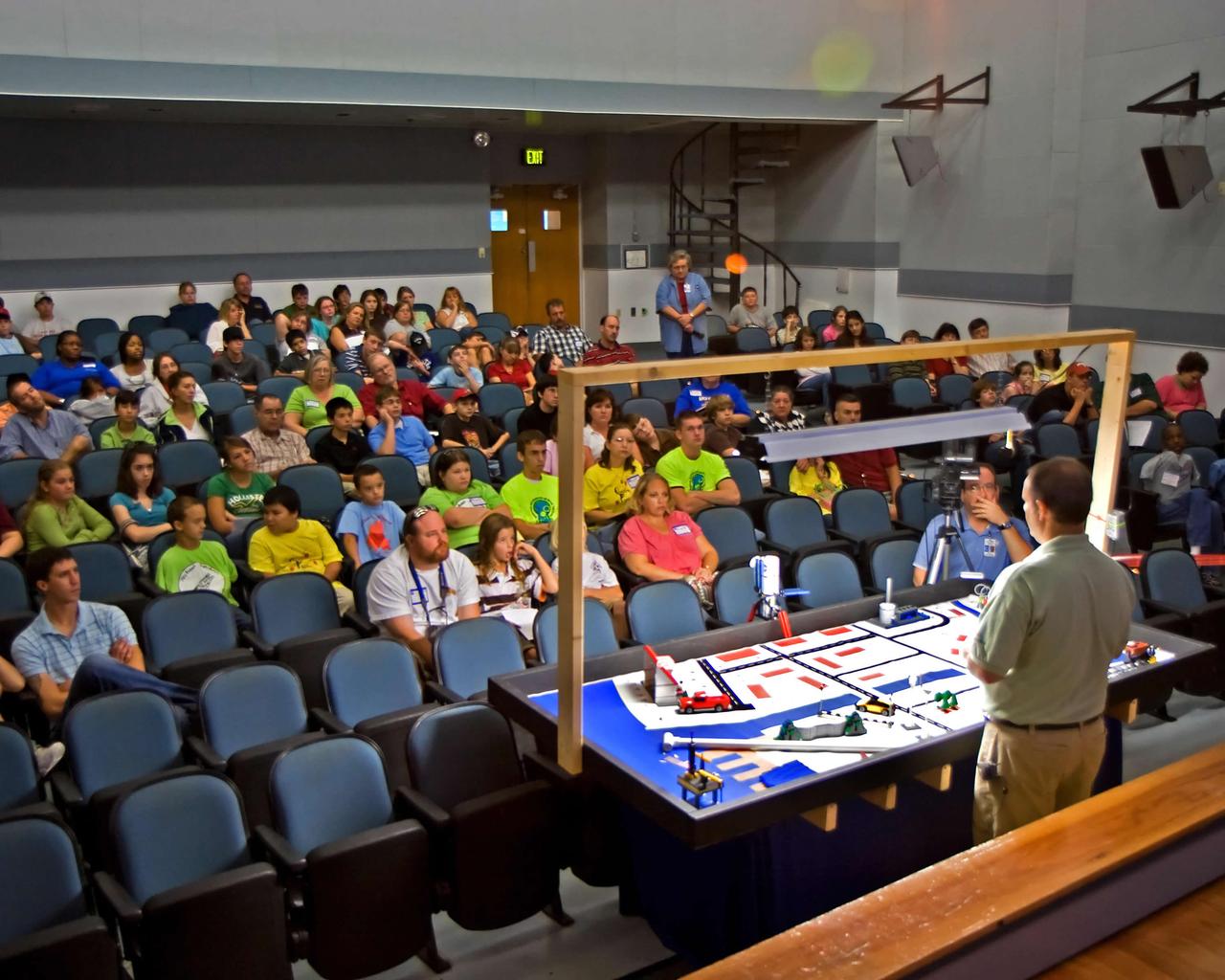
Randall Hicks (right), Jacobs Technology's Education Services manager at NASA John C. Stennis Space Center, answers questions about the playing field for FIRST (For Inspiration and Recognition of Science and Technology) LEGO League's 2007 Challenge, `Power Puzzle.' More than 140 teachers, mentors, parents and students from 15 schools attended the Sept. 15 FLL season kickoff at StenniSphere, the visitor center at SSC. The teams from southern and central Mississippi and Mobile, Ala., who came to SSC heard rules for and asked questions about `Power Puzzle,' and saw robot demonstrations by Gulfport and Picayune high schools' past FIRST Robotics competitions. Using LEGO Mindstorms NXT kits, FLL teams of children ages 9-14 will spend the next three months building and programming robots to perform 'Power Puzzle's' challenge tasks, then pit them in competitions. They also will submit a research project about how energy choices impact the environment and the economy. The season will culminate at the Mississippi Championship Tournament on Dec. 8 at the Mississippi Gulf Coast Community College. FLL, considered the `little league' of the FIRST Robotics Competition, partners FIRST and the LEGO Group. Competitions aim to inspire and celebrate science and technology using real-world context and hands-on experimentation. NASA recognizes FIRST activities as an excellent hands-on method to increase student knowledge of science, engineering, technology and mathematics. Schools represented in this year's kickoff were: Madison Avenue Upper Elementary, the Mississippi Band of Choctaw Indians' Conehatta Elementary, Hattiesburg's Lillie Burney Elementary, Pearl Upper Elementary, Long Beach Middle, Oktibehha Elementary, d'Iberville Middle, Saucier's West Wortham Middle, Picayune's Nicholson Elementary and Roseland Park Baptist Church Academy, Bay St. Louis' St. Stanislaus College and Mobile's Davidson High, as well as two home-school groups from the Jackson area.
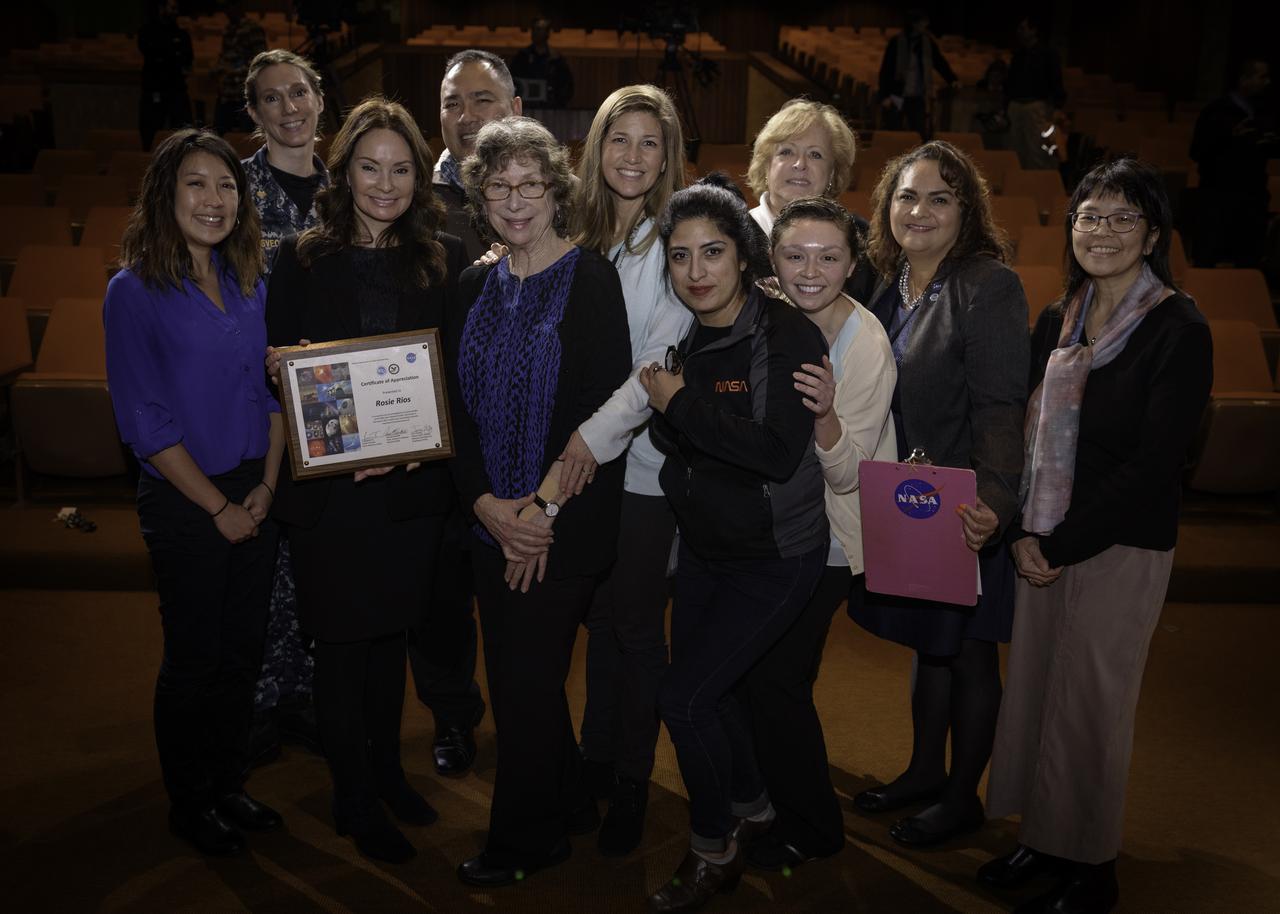
Rosie Rios, the 43rd Treasurer of the United States explores how understanding our history will provide a clearer roadmap for understanding where the country's future is heading. Presented by the Ames Women's Influence Network (WIN) and the Hispanic Advisory Committee for Employees (HACE) in the Syvertson Auditorium (N-201) at Ames Research Center. Back row; Leedjia Svec, Jonais Dino, Nettie Halcomb Roozeboom, Carolina Blake, Carolina Rudisel, Kathy Lee. Front row; Vanessa Kuroda, Rosie Rios, Annette Randall, Ali Guarneros Luna and Erika Rodriquez
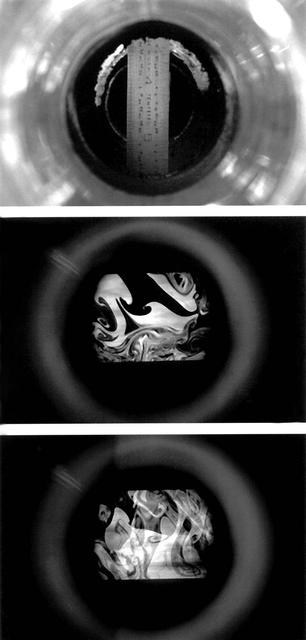
LII is a technique for measuring soot concentration. This image was taken with an ordinary 35-mm camera, these reveal soot distribution within the chimney. Principal Investigator: Dr. Randall L. Vander Wal

A Mars Science Laboratory cap is displayed in the Randall E. Scott Radiological Control Center at NASA's Kennedy Space Center. The facility was recently named in honor of Randy Scott, a professional health physicist of more than 40 years. He served as the Florida spaceport's Radiation Protection Officer for 14 years until his death June 17, 2016. Launched Nov. 26, 2011, the Mars Science Laboratory with the Curiosity lander was powered by a radioisotope thermalelectric generator. Located in the Neil Armstrong Operations and Checkout building, the Randall E. Scott Radiological Control Center is staffed by technical and radiological experts from NASA, the U.S. Department of Energy, the U.S. Air Force 45th Space Wing and the state of Florida. The group performs data collection and assessment functions supporting launch site and field data collection activities during launces involving plutonium-powered spacecraft such as the Mars Science Laboratory.
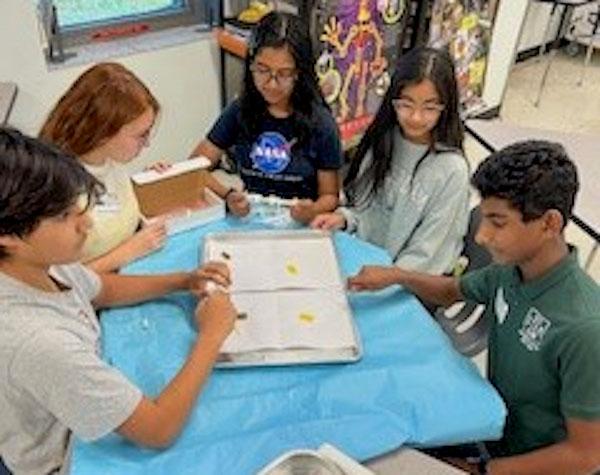
jsc2024e066526 (10/7/2024) --- Randall Middle School students work to optimize the materials and volumes for testing the growth of Trigonella foenum-graecum in microgravity. Their experiment, Fenugreek and its Nutritional Value in Microgravity, is part of the Nanoracks-National Center for Earth and Space Science Education-Surveyor-Student Spaceflight Experiments Program Mission 18 to ISS (Nanoracks-NCESSE-Surveyor-SSEP).
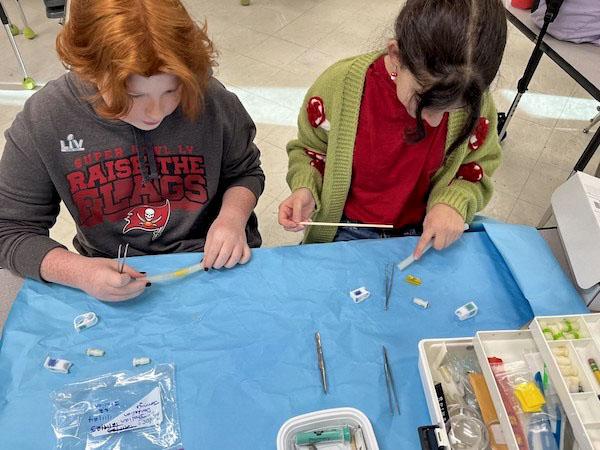
jsc2024e066525 (10/7/2024) --- Seventh grade researchers from Randall Middle School work on optimizing their Taraxacum officinale germination experiment, Handy Dandy Dandelions – Germination of Dandelion in Microgravity, for flight.Their experiment is part of the Nanoracks-National Center for Earth and Space Science Education-Surveyor-Student Spaceflight Experiments Program Mission 18 to ISS (Nanoracks-NCESSE-Surveyor-SSEP).

Nancy Bray, director of Spaceport Integration and Services at NASA's Kennedy Space Center, left, is joined by Myrna Scott, center, and Dr. David Tipton, chief of Aerospace Medicine and Occupational Health, in cutting a ceremonial ribbon dedicating the Randal E. Scott Radiological Control Center at the Florida spaceport. Myrna Scott is the widow of Randy Scott, who was a professional health physicist of more than 40 years. He served as the Florida spaceport's Radiation Protection Officer for 14 years until his death June 17, 2016.
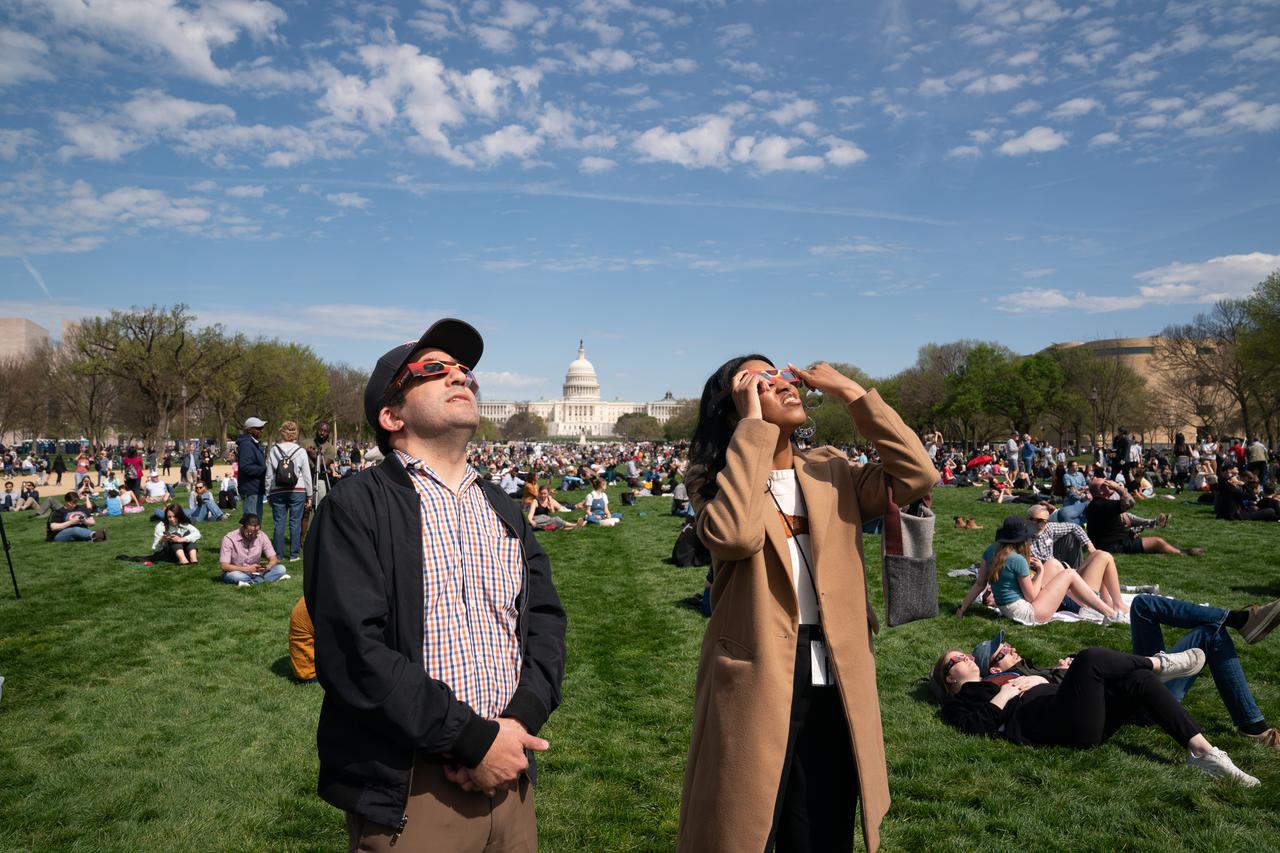
Brian Wolly and Kayla Randall view a partial solar eclipse in Washington, DC, Monday, April 8, 2024. A total solar eclipse swept across a narrow portion of the North American continent from Mexico’s Pacific coast to the Atlantic coast of Newfoundland, Canada. A partial solar eclipse was visible across the entire North American continent along with parts of Central America and Europe. Photo Credit: (NASA/Denny Henry)

Nancy Bray, director of Spaceport Integration and Services at NASA's Kennedy Space Center, left, is joined by Myrna Scott, center, and Dr. David Tipton, chief of Aerospace Medicine and Occupational Health, in cutting a ceremonial ribbon dedicating the Randal E. Scott Radiological Control Center at the Florida spaceport. Myrna Scott is the widow of Randy Scott, who was a professional health physicist of more than 40 years. He served as the Florida spaceport's Radiation Protection Officer for 14 years until his death June 17, 2016.

Nancy Bray, director of Spaceport Integration and Services at NASA's Kennedy Space Center, left, is joined by Myrna Scott, center, and Dr. David Tipton, chief of Aerospace Medicine and Occupational Health, in cutting a ceremonial ribbon dedicating the Randal E. Scott Radiological Control Center at the Florida spaceport. Myrna Scott is the widow of Randy Scott, who was a professional health physicist of more than 40 years. He served as the Florida spaceport's Radiation Protection Officer for 14 years until his death June 17, 2016.

Consoles in the Radiological Control Center at NASA's Kennedy Space Center are seen during ceremonies to name the facility in honor of Randy Scott. A professional health physicist of more than 40 years, Scott served as the Florida spaceport's Radiation Protection Officer for 14 years until his death June 17, 2016. Located in the Neil Armstrong Operations and Checkout building, the Randall E. Scott Radiological Control Center is staffed by technical and radiological experts from NASA, the U.S. Department of Energy, the U.S. Air Force 45th Space Wing and the state of Florida. The group performs data collection and assessment functions supporting launch site and field data collection activities.

A portion of the Radiological Control Center at NASA's Kennedy Space Center is seen during ceremonies to name the facility in honor of Randy Scott. A professional health physicist of more than 40 years, Scott served as the Florida spaceport's Radiation Protection Officer for 14 years until his death June 17, 2016. Located in the Neil Armstrong Operations and Checkout building, the Randall E. Scott Radiological Control Center is staffed by technical and radiological experts from NASA, the U.S. Department of Energy, the U.S. Air Force 45th Space Wing and the state of Florida. The group performs data collection and assessment functions supporting launch site and field data collection activities.
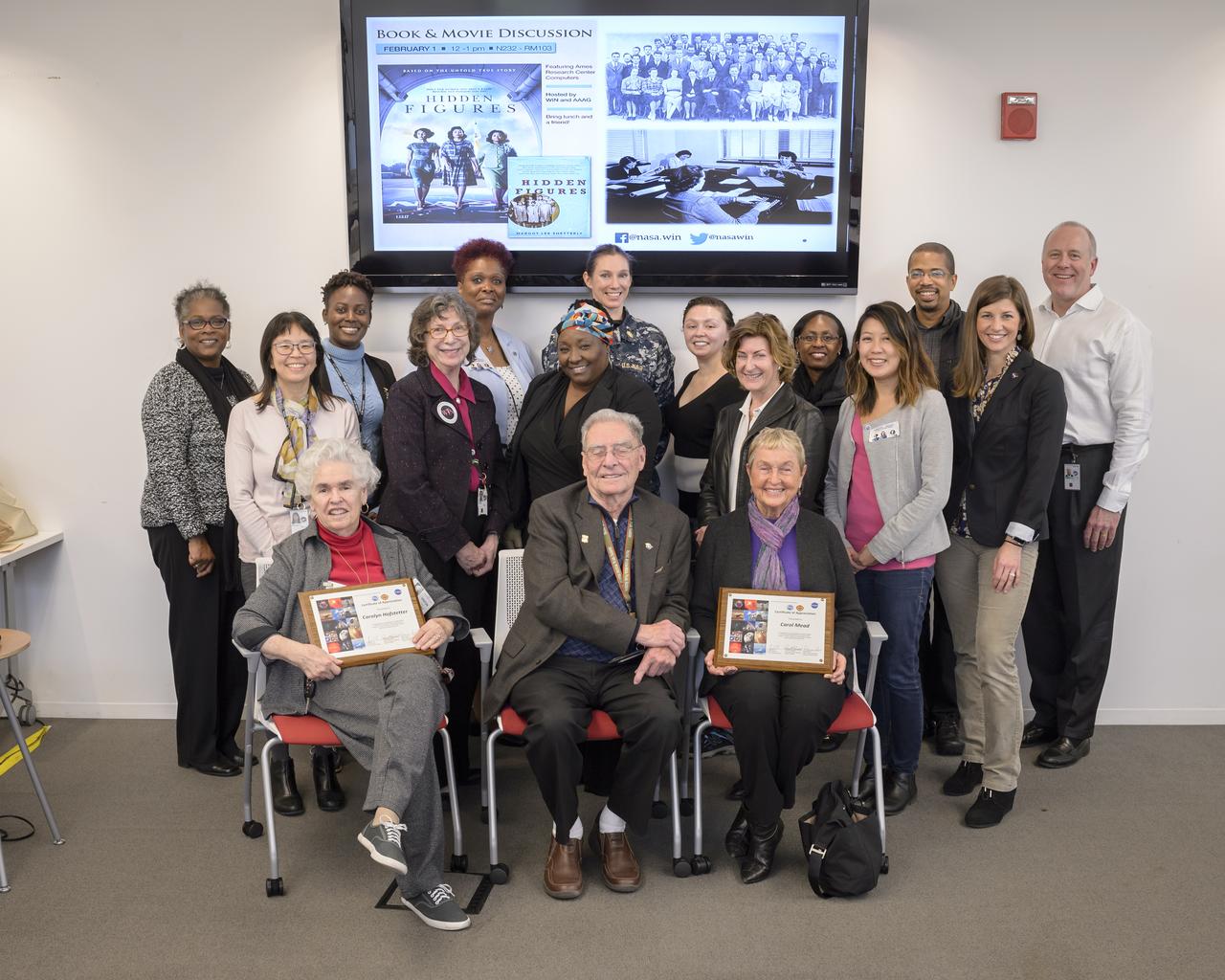
Ames Women's Influence Network (WIN) Hidden Figures talk with "Computers" Carolyn Hofstetter and Carol Mead co-sponsored by the AAAG. Group photo Front Row left to right; Carolyn Hofstetter, Jack Boyd, Carol Mead Middle Row: Kathy Lee, Annette Randall, Trincella Lewis, Ann Mead (daughter to Carol Mead), Vanessa Kuroda, Netti Halcomb Roozeboom Back Row; Dr Barbara Miller, Dr Wendy Okolo, Denise Snow, Leedjia Svec, Erika Rodriquez, Rhonda Baker, Ray Gilstrap, Glenn Bugos
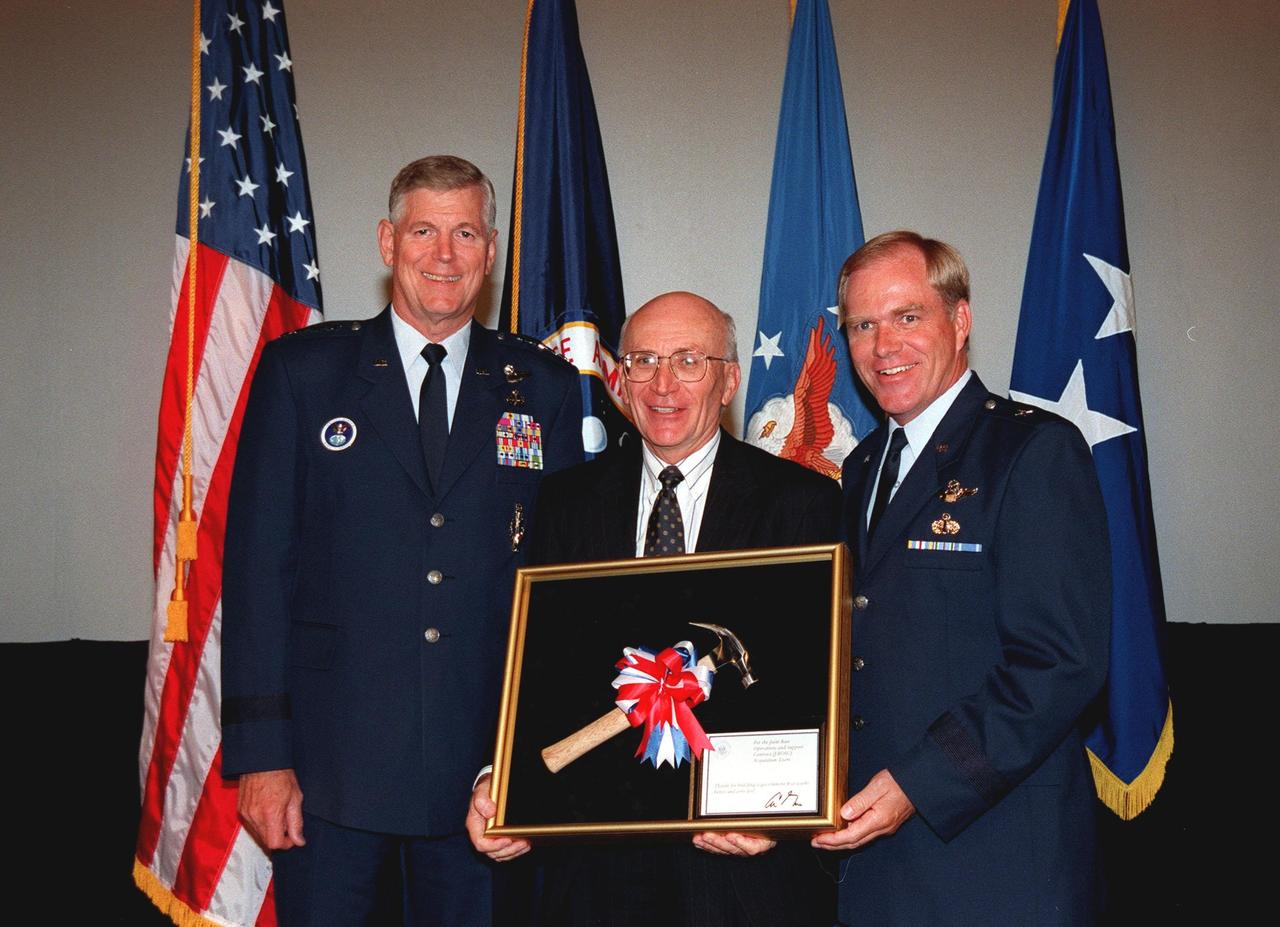
Commander of the Air Force Space Command, General Richard B. Myers (left) joins Ed Gormel (center) and Commander of the 45th Space Wing Brig. Gen. F. Randall Starbuck (right) after the presentation of the Hammer Award. The Hammer Award is Vice President Al Gore's special recognition of teams of federal employees who have made significant contributions in support of the principles of the National Partnership for Reinventing Government. Morley Winograd, director of the National Partnership for Reinventing Government, presented the award to the Joint Base Operations and Support Contract (J-BOSC) Source Evaluation Board (SEB). Gormel is a co-chair of the SEB. This Hammer Award acknowledges the accomplishments of a joint NASA and Air Force team that established the J-BOSC SEB. The team developed and implemented the acquisition strategy for establishing a single set of base operations and support service requirements for KSC, Cape Canaveral Air Station and Patrick Air Force Base
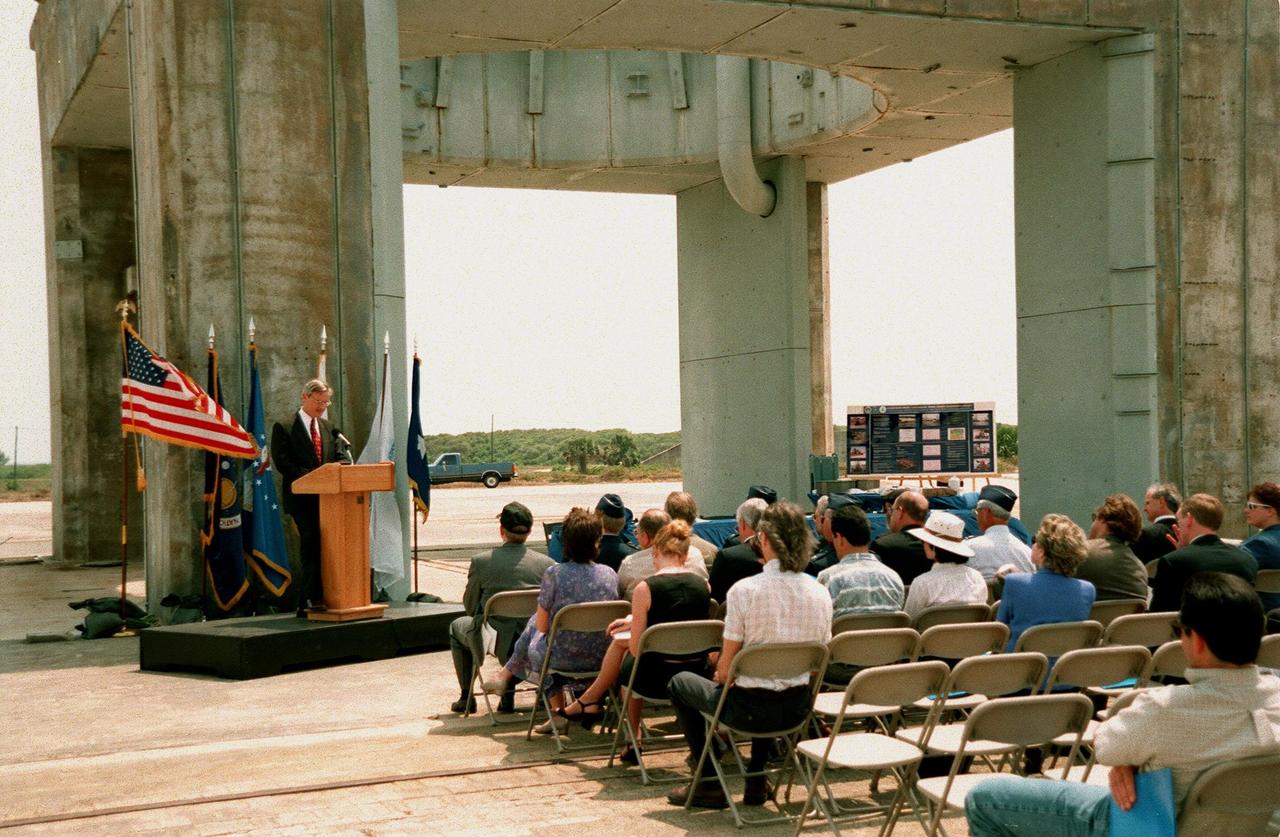
Walter W. Kovalick Jr., Ph.D., director of Technology Innovation Office for the U.S. Environmental Protection Agency, addresses representatives from Kennedy Space Center, the 45th Space Wing, and various federal environmental agencies gathered to attend a Memorandum of Agreement (MOA) signing, taking place at the site of Launch Complex 34. The MOA formalizes the cooperative efforts of the federal agencies in ground-water cleanup initiatives. NASA, the U.S. Air Force and the agencies have formed a consortium and are participating in a comparative study of three innovative techniques to be used in cleaning a contaminated area of Launch Complex 34. The study will be used to help improve groundwater cleanup processes nationally. Other attendees included Timothy Oppelt, director, National Risk Management Research Laboratory, U.S. Environmental Protection Agency; Tom Heenan, assistant manager of environmental management, Savannah River Site, U.S. Department of Energy; Col. James Heald, Vice Commander, Air Force Research Laboratory, U.S. Air Force; Gerald Boyd, acting deputy assistant secretary, Office of Science and Technology, U.S. Department of Energy; James Fiore, acting deputy assistant secretary, Office of Environmental Restoration, Department of Energy; Brig. Gen. Randall R. Starbuck, Commander 45th Space Wing, U.S. Air Force; and Roy Bridges Jr., director of John F. Kennedy Space Center
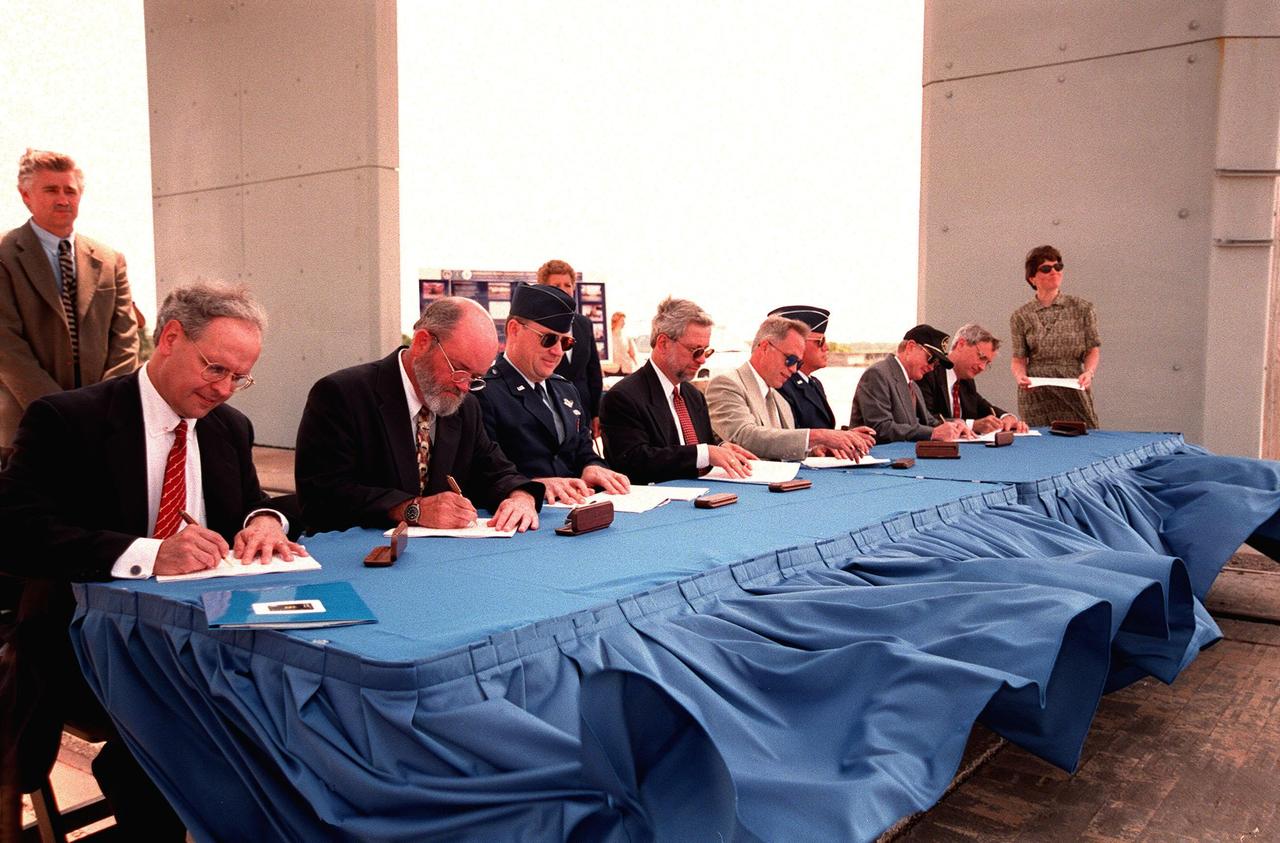
On the site of Launch Complex 34, key participants sign a Memorandum of Agreement, formalizing cooperative efforts of NASA, the U.S. Air Force, and federal agencies in ground-water cleanup initiatives. Seated from left to right are Timothy Oppelt, director, National Risk Management Research Laboratory, U.S. Environmental Protection Agency; Tom Heenan, assistant manager of environmental management, Savannah River Site, U.S. Department of Energy; Col. James Heald, Vice Commander, Air Force Research Laboratory, U.S. Air Force; Gerald Boyd, acting deputy assistant secretary, Office of Science and Technology, U.S. Department of Energy; James Fiore, acting deputy assistant secretary, Office of Environmental Restoration, Department of Energy; Brig. Gen. Randall R. Starbuck, Commander 45th Space Wing, U.S. Air Force; Roy Bridges Jr., director of John F. Kennedy Space Center; Walter Kovalick Jr., Ph.D., director, Technology Innovation Office, U.S. Environmental Protection Agency. NASA, the U.S. Air Force and the agencies have formed a consortium and are participating in a comparative study of three innovative techniques to be used in cleaning a contaminated area of Launch Complex 34. The study will be used to help improve groundwater cleanup processes nationally
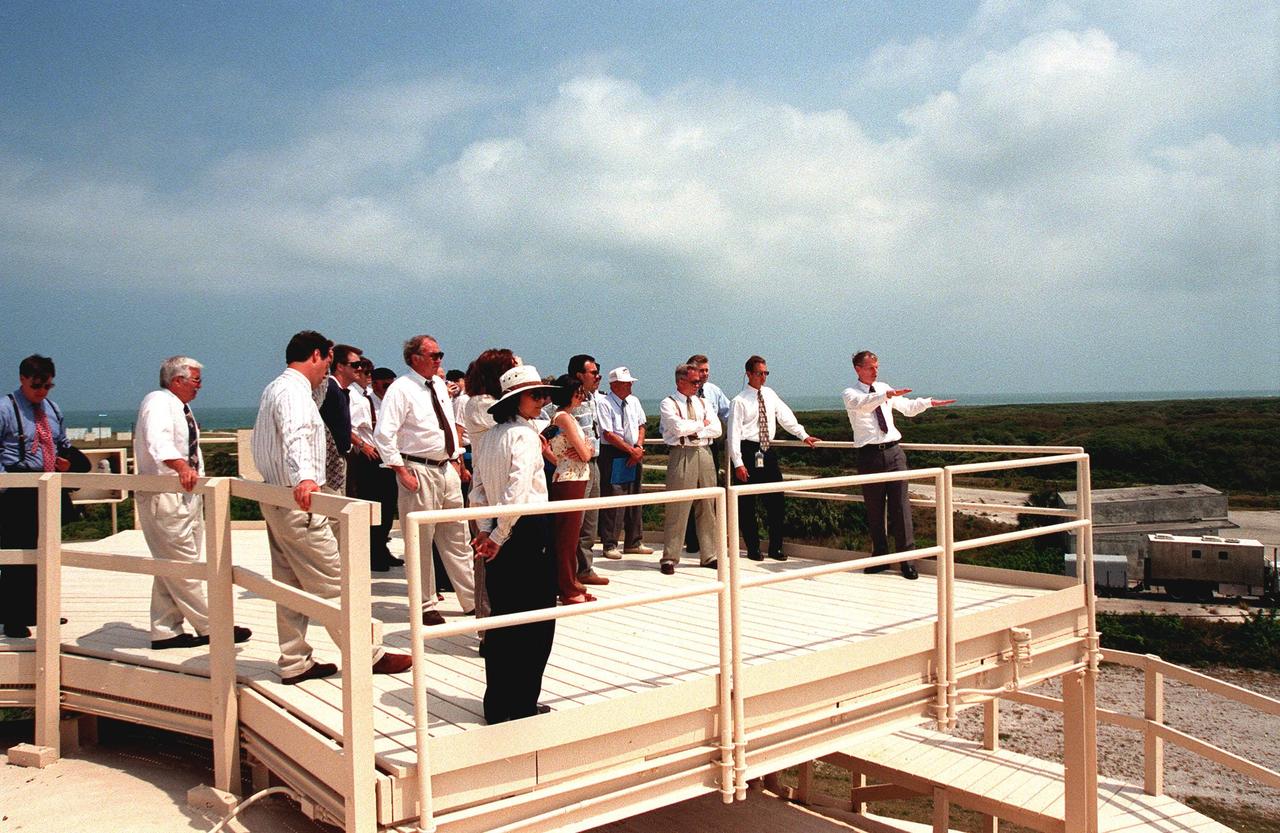
Key participants in the signing of a Memorandum of Agreement, formalizing cooperative efforts of NASA, the U.S. Air Force, and federal agencies in ground-water cleanup initiatives, gather on top of the block house at Launch Complex 34. Motioning at right is Skip Chamberlain, program manager, Office of Science and Technology, U.S. Department of Energy. Others on the tour include Timothy Oppelt, director, National Risk Management Research Laboratory, U.S. Environmental Protection Agency; Tom Heenan, assistant manager of environmental management, Savannah River Site, U.S. Department of Energy; Col. James Heald, Vice Commander, Air Force Research Laboratory, U.S. Air Force; Gerald Boyd, acting deputy assistant secretary, Office of Science and Technology, U.S. Department of Energy; James Fiore, acting deputy assistant secretary, Office of Environmental Restoration, Department of Energy; Brig. Gen. Randall R. Starbuck, Commander 45th Space Wing, U.S. Air Force; Roy Bridges Jr., director of John F. Kennedy Space Center; Walter Kovalick Jr., Ph.D., director, Technology Innovation Office, U.S. Environmental Protection Agency. NASA, the U.S. Air Force and the agencies have formed a consortium and are participating in a comparative study of three innovative techniques to be used in cleaning a contaminated area of Launch Complex 34. The study will be used to help improve groundwater cleanup processes nationally
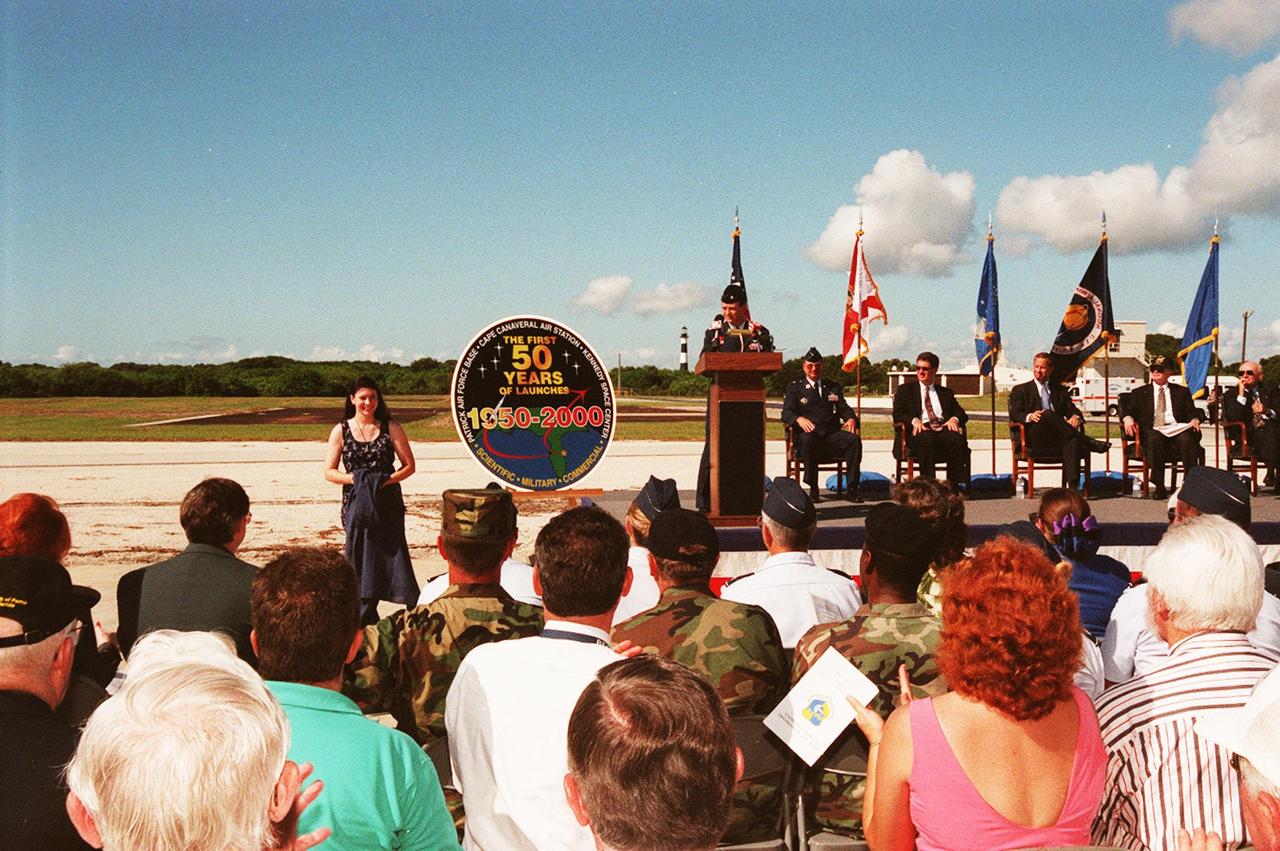
At Cape Canaveral Air Station's (CCAS) Complex 3/4, officials held a ceremony kicking off a year-long series of events commemorating 50 years of launches from the Space Coast that began with the Bumper rockets. At left is artist Darlene Egli who designed the 50th anniversary logo next to her. On stage, from left to right, are Lt. Col. Randall K. Horn, Commander, CCAS; Brig. Gen. Donald P. Pettit, Commander, 45th Space Wing; Congressman David Weldon, 15th Congressional District of the State of Florida; Lieutenant Governor of the State of Florida Frank T. Brogan; Center Director Roy D. Bridges; and Executive Director Edward F. Gormel, Joint Performance Management Office. After six Bumper launches at White Sands Proving Grounds, N.M., and a failed Bumper 7, a successful Bumper 8 lifted off July 24, 1950, from Complex 3/4 to conduct aerodynamic investigations around Mach 7 at relatively low altitudes. The kick-off event also inaugurated a student art contest to design a commemorative etching. The winning artwork will be permanently displayed on a 24-inch black granite square in the U.S. Space Walk Hall of Fame in Titusville, Fla
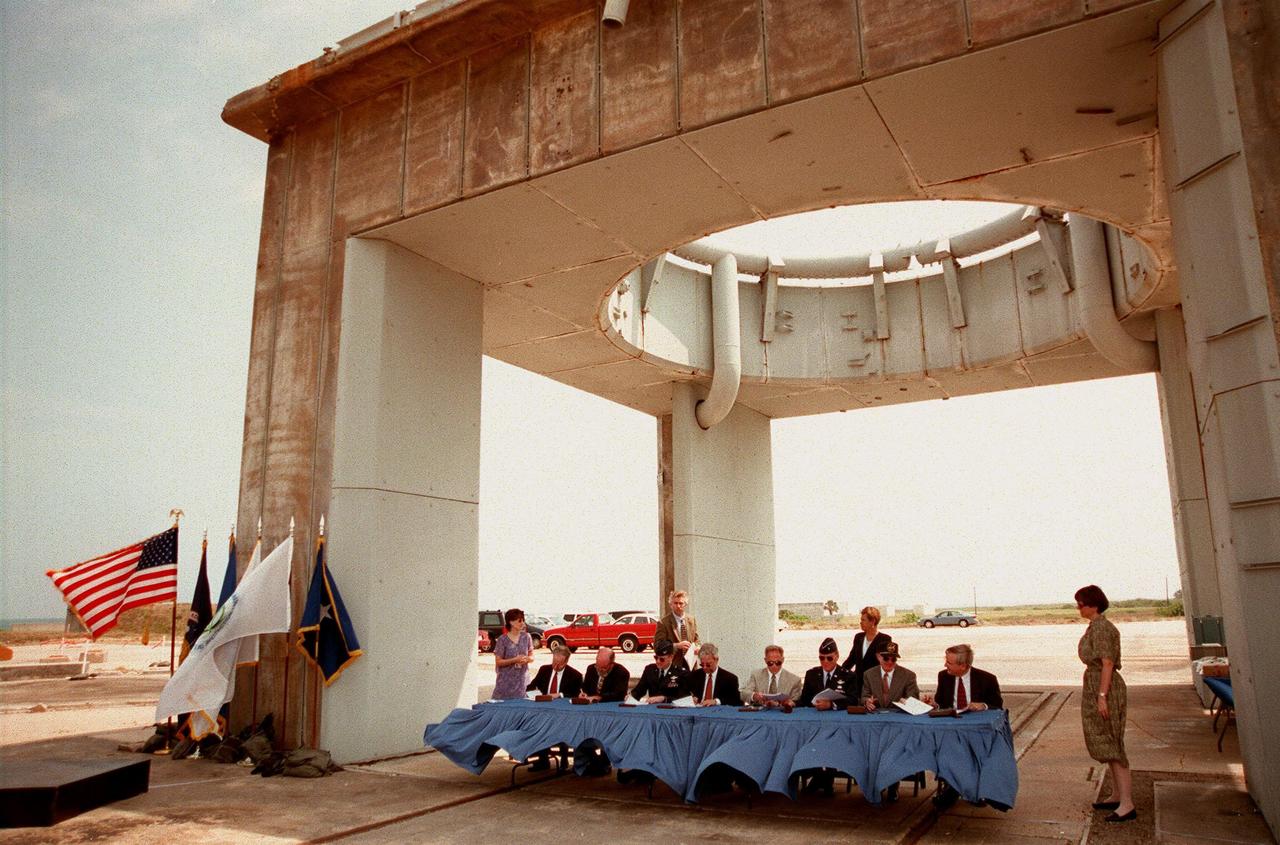
On the site of Launch Complex 34, key participants sign a Memorandum of Agreement, formalizing cooperative efforts of NASA, the U.S. Air Force, and federal agencies in ground-water cleanup initiatives. Seated at the table, from left to right, are Timothy Oppelt, director, National Risk Management Research Laboratory, U.S. Environmental Protection Agency; Tom Heenan, assistant manager of environmental management, Savannah River Site, U.S. Department of Energy; Col. James Heald, Vice Commander, Air Force Research Laboratory, U.S. Air Force; Gerald Boyd, acting deputy assistant secretary, Office of Science and Technology, U.S. Department of Energy; James Fiore, acting deputy assistant secretary, Office of Environmental Restoration, Department of Energy; Brig. Gen. Randall R. Starbuck, Commander 45th Space Wing, U.S. Air Force; Roy Bridges Jr., director of John F. Kennedy Space Center; Walter Kovalick Jr., Ph.D., director, Technology Innovation Office, U.S. Environmental Protection Agency. NASA, the U.S. Air Force and the agencies have formed a consortium and are participating in a comparative study of three innovative techniques to be used in cleaning a contaminated area of Launch Complex 34. The study will be used to help improve groundwater cleanup processes nationally
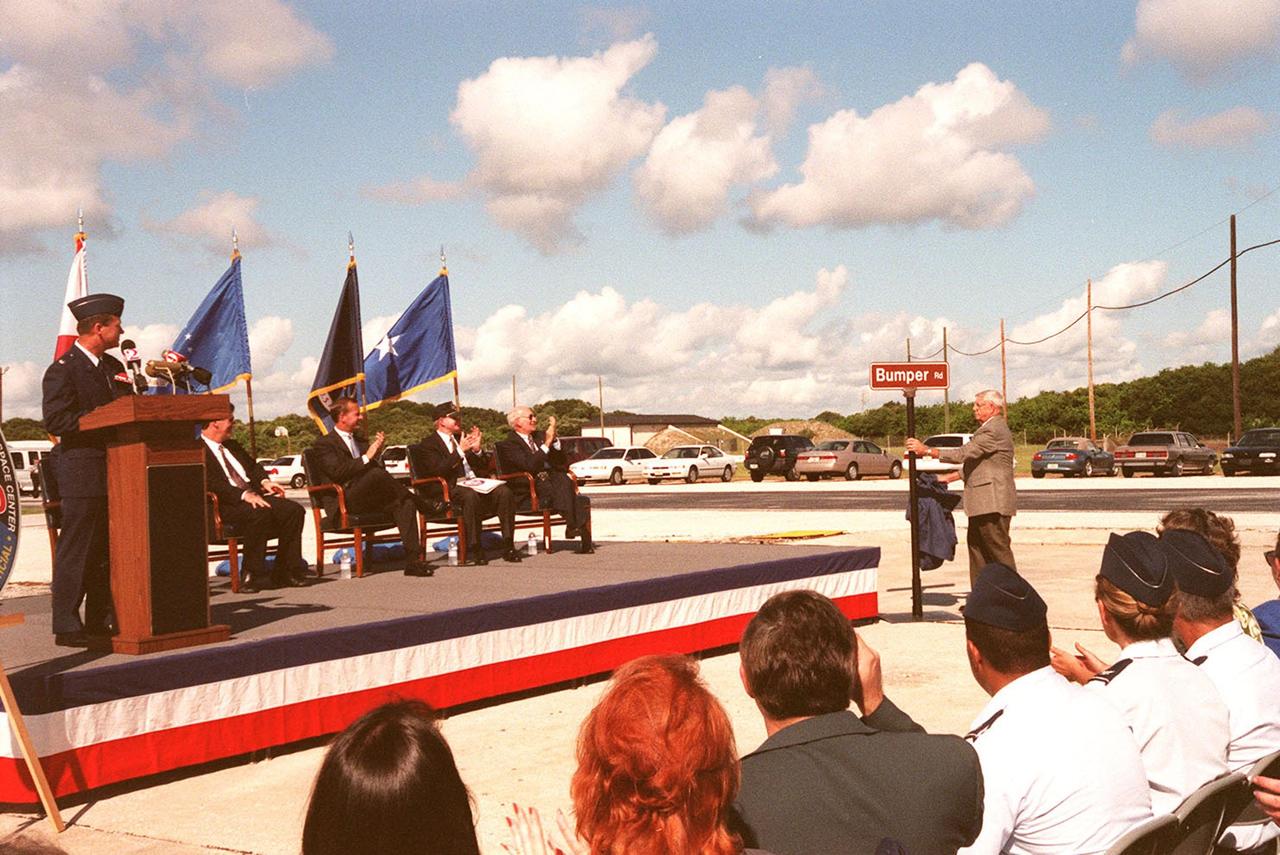
At Cape Canaveral Air Station's (CCAS) Complex 3/4, officials held a ceremony kicking off a year-long series of events commemorating 50 years of launches from the Space Coast that began with the Bumper rockets. At right, Norris Gray, a Bumper Program veteran, unveils a street sign that will be used to mark the road leading to the launch complex from which Bumper was launched. Seen on the stage are, left to right, Lt. Col. Randall K. Horn (at the podium), Commander, CCAS; Congressman David Weldon, 15th Congressional District of the State of Florida; Lieutenant Governor of the State of Florida Frank T. Brogan; Center Director Roy D. Bridges; and Executive Director Edward F. Gormel, Joint Performance Management Office. Also present (but not seen) is Brig. Gen. Donald P. Pettit, Commander, 45th Space Wing. After six Bumper launches at White Sands Proving Grounds, N.M., and a failed Bumper 7, a successful Bumper 8 lifted off July 24, 1950, from Complex 3/4 to conduct aerodynamic investigations around Mach 7 at relatively low altitudes. The kick-off event also inaugurated a student art contest to design a commemorative etching. The winning artwork will be permanently displayed on a 24-inch black granite square in the U.S. Space Walk Hall of Fame in Titusville, Fla
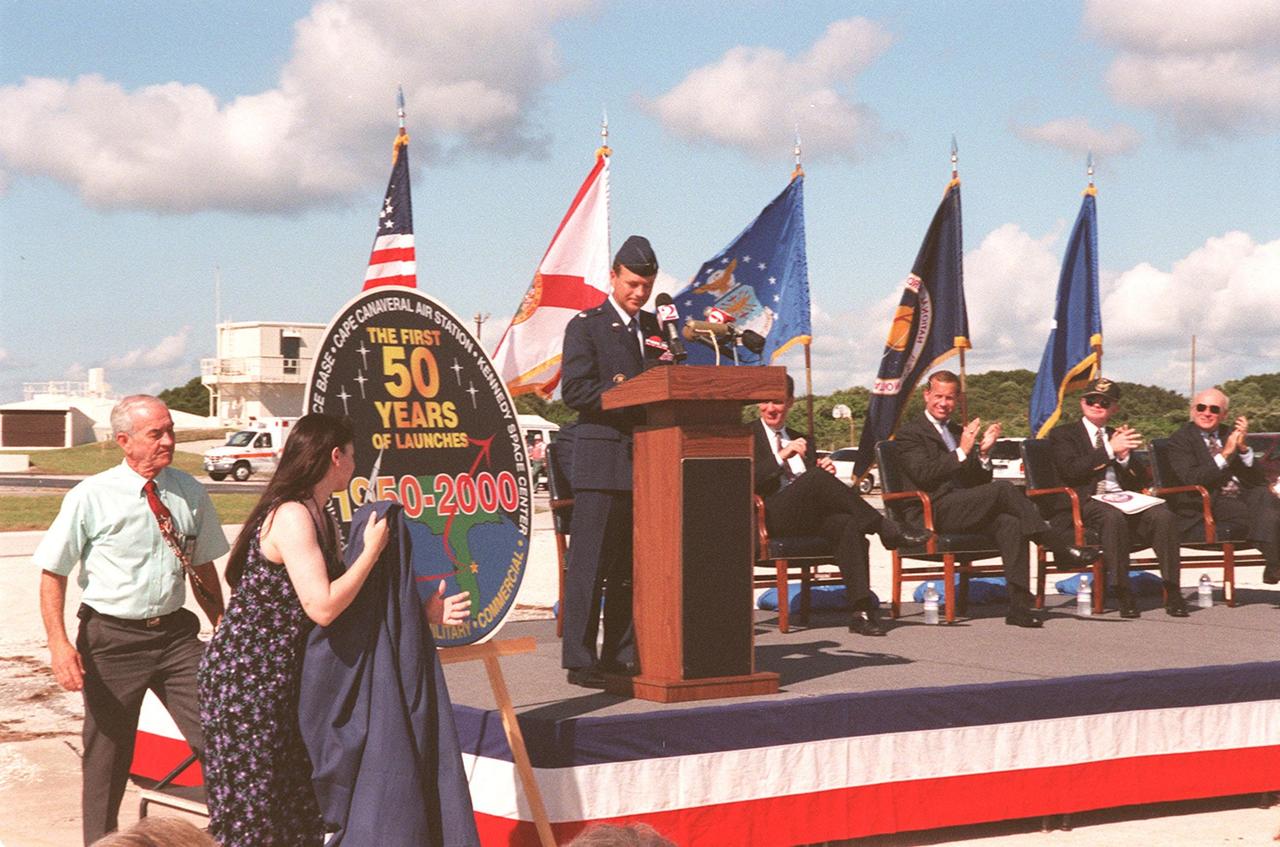
At Cape Canaveral Air Station's (CCAS) Complex 3/4, officials held a ceremony kicking off a year-long series of events commemorating 50 years of launches from the Space Coast that began with the Bumper rockets. At left is Jim Thompson, who is with CCAS. Unveiling the 50th anniversary logo at left is the artist Darlene Egli. On stage, from left to right, are Lt. Col. Randall K. Horn, Commander, CCAS; Congressman David Weldon, 15th Congressional District of the State of Florida; Lieutenant Governor of the State of Florida Frank T. Brogan; Center Director Roy D. Bridges; and Executive Director Edward F. Gormel, Joint Performance Management Office. Also present (but not seen) is Brig. Gen. Donald P. Pettit, Commander, 45th Space Wing. After six Bumper launches at White Sands Proving Grounds, N.M., and a failed Bumper 7, a successful Bumper 8 lifted off July 24, 1950, from Complex 3/4 to conduct aerodynamic investigations around Mach 7 at relatively low altitudes. The kick-off event also inaugurated a student art contest to design a commemorative etching. The winning artwork will be permanently displayed on a 24-inch black granite square in the U.S. space Walk Hall of Fame in Titusville, Fla
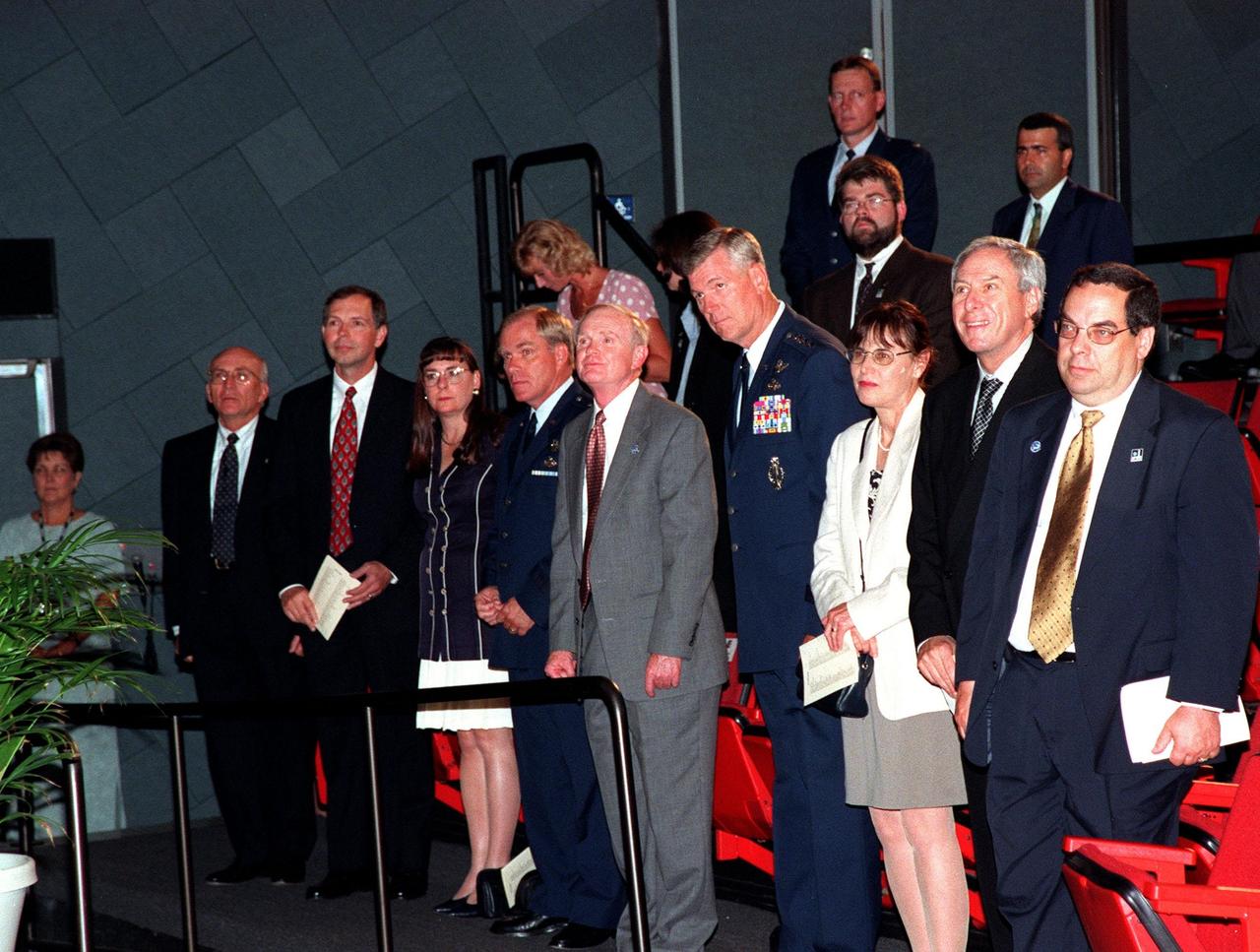
At a special presentation in the IMAX 2 Theater in the Kennedy Space Center Visitor Complex, the Hammer Award is presented to Kennedy Space Center and the 45th Space Wing. Among the attendees in the audience are (center) Center Director Roy D. Bridges Jr., flanked by (at left) Commander of the 45th Space Wing Brig. Gen. F. Randall Starbuck and (at right) Commander of the Air Force Space Command General Richard B. Myers. Standing second from right is NASA Administrator Daniel S. Goldin. At the far right is Morley Winograd, director of the National Partnership for Reinventing Government, who presented the award. The Hammer Award is Vice President Al Gore's special recognition of teams of federal employees who have made significant contributions in support of the principles of the National Partnership for Reinventing Government. This Hammer Award acknowledges the accomplishments of a joint NASA and Air Force team that established the Joint Base Operations and Support Contract (J-BOSC) Source Evaluation Board (SEB). Ed Gormel and Chris Fairey, co-chairs of the SEB, accepted the awards for the SEB. The team developed and implemented the acquisition strategy for establishing a single set of base operations and support service requirements for KSC, Cape Canaveral Air Station and Patrick Air Force Base
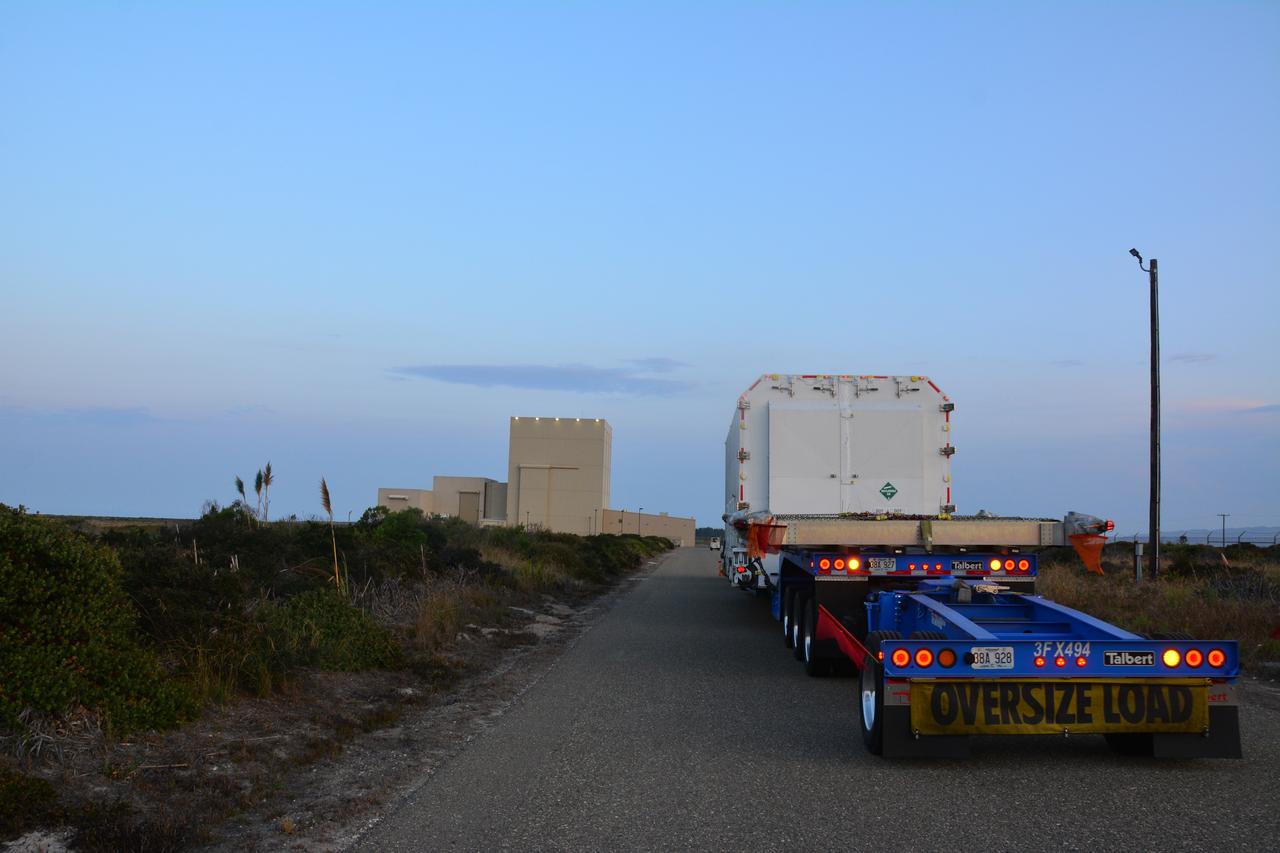
The Joint Polar Satellite System-1, or JPSS-1, arrives at the Astrotech Processing Facility at Vandenberg Air Force Base in California. JPSS is the first in a series four next-generation environmental satellites in a collaborative program between the National Oceanic and Atmospheric Administration (NOAA) and NASA. The satellite is scheduled to liftoff later this year atop a United Launch Alliance Delta II rocket.
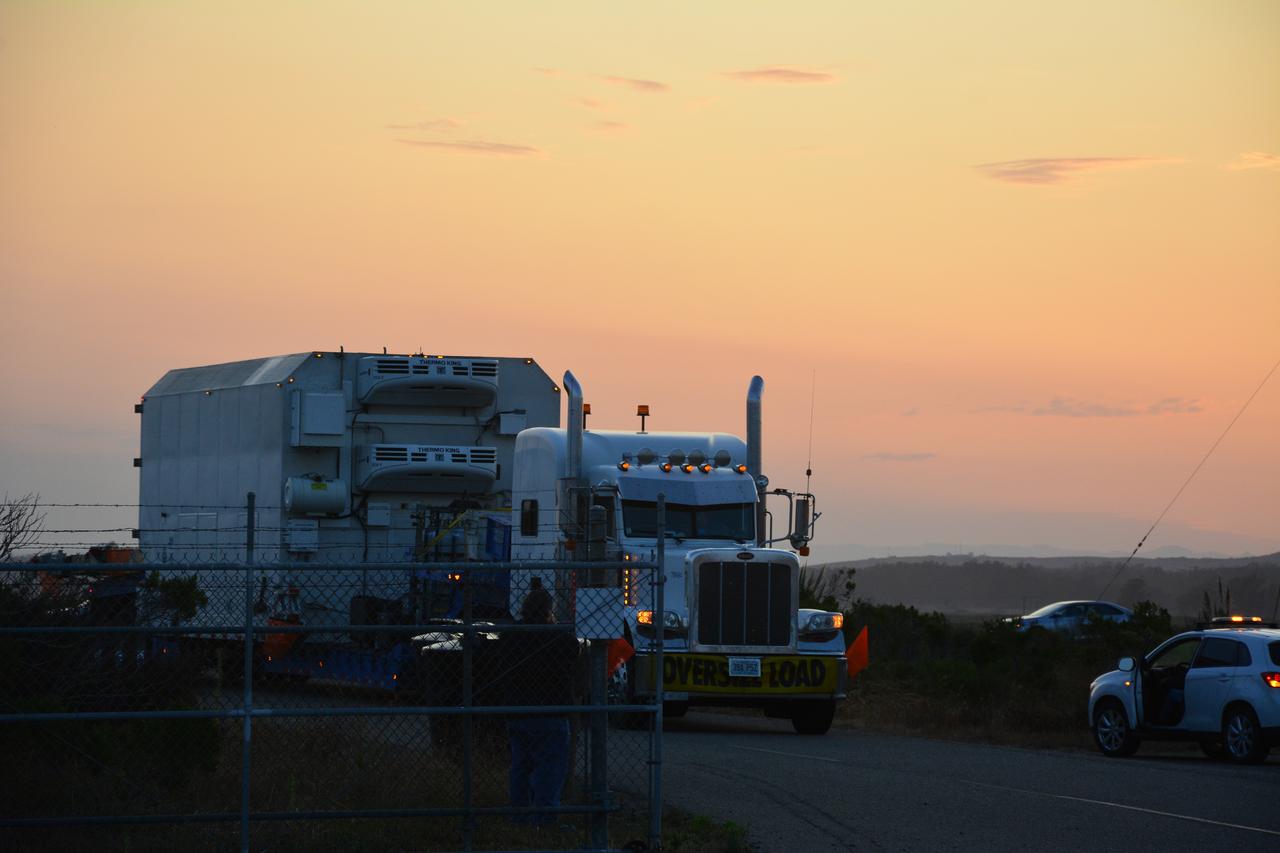
The Joint Polar Satellite System-1, or JPSS-1, arrives at the Astrotech Processing Facility at Vandenberg Air Force Base in California. JPSS is the first in a series four next-generation environmental satellites in a collaborative program between the National Oceanic and Atmospheric Administration (NOAA) and NASA. The satellite is scheduled to liftoff later this year atop a United Launch Alliance Delta II rocket.
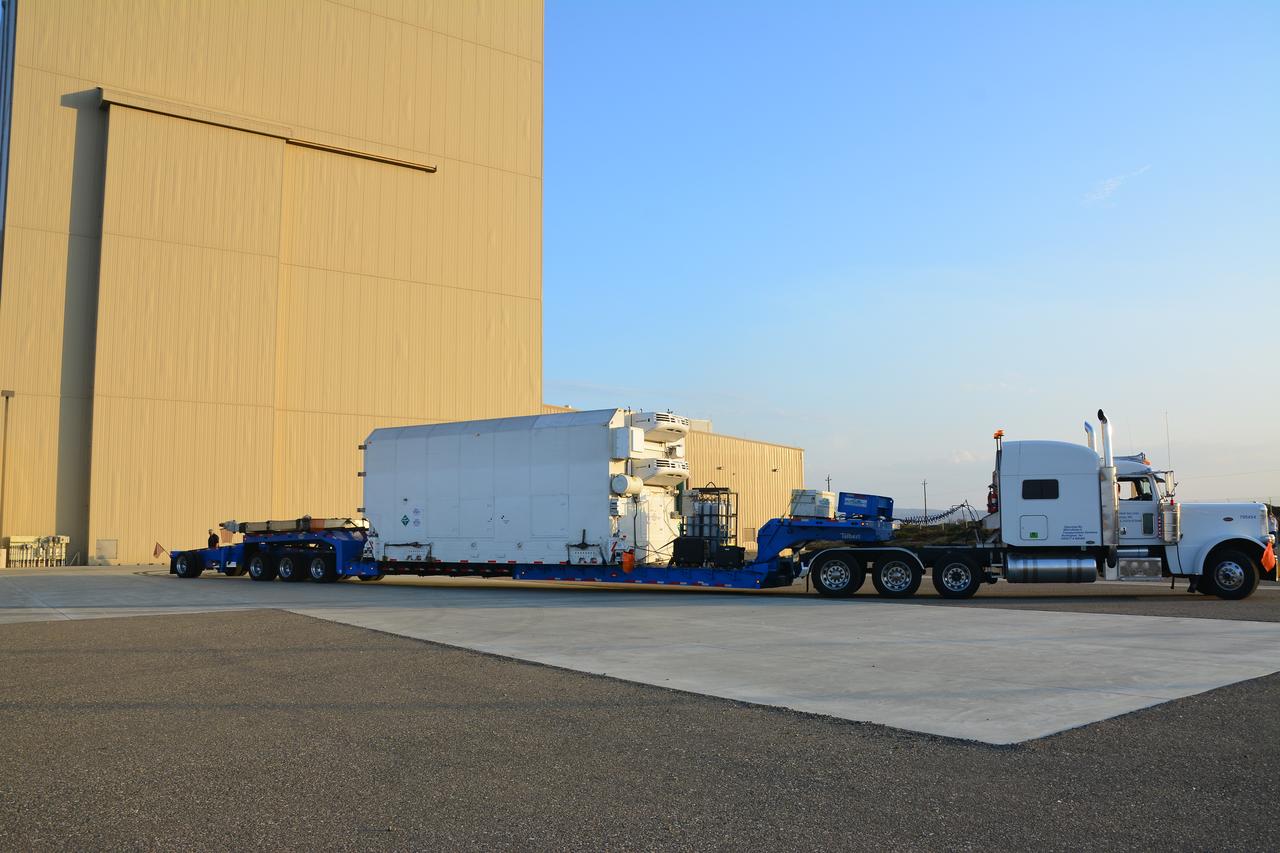
The Joint Polar Satellite System-1, or JPSS-1, arrives at the Astrotech Processing Facility at Vandenberg Air Force Base in California. JPSS is the first in a series four next-generation environmental satellites in a collaborative program between the National Oceanic and Atmospheric Administration (NOAA) and NASA. The satellite is scheduled to liftoff later this year atop a United Launch Alliance Delta II rocket.
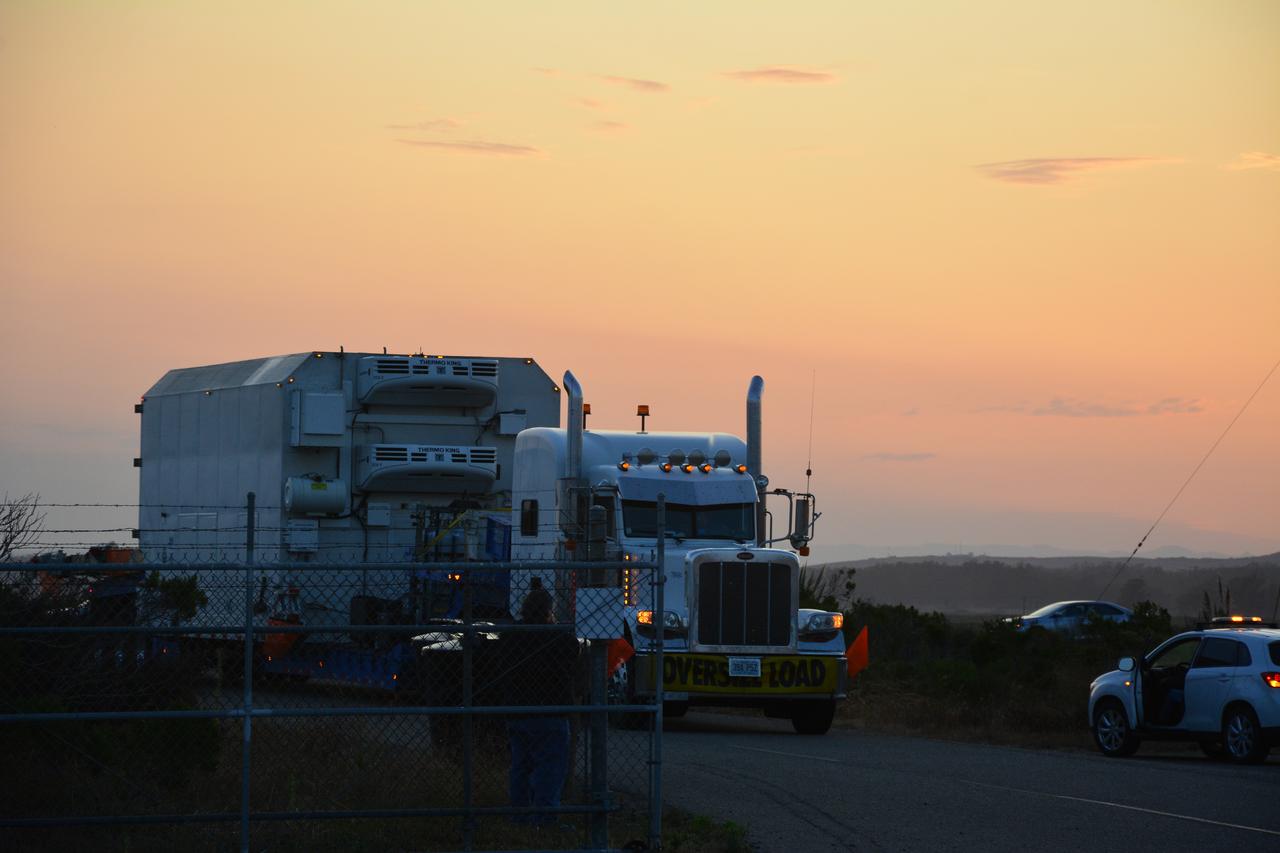
The Joint Polar Satellite System-1, or JPSS-1, arrives at the Astrotech Processing Facility at Vandenberg Air Force Base in California. JPSS is the first in a series four next-generation environmental satellites in a collaborative program between the National Oceanic and Atmospheric Administration (NOAA) and NASA. The satellite is scheduled to liftoff later this year atop a United Launch Alliance Delta II rocket.
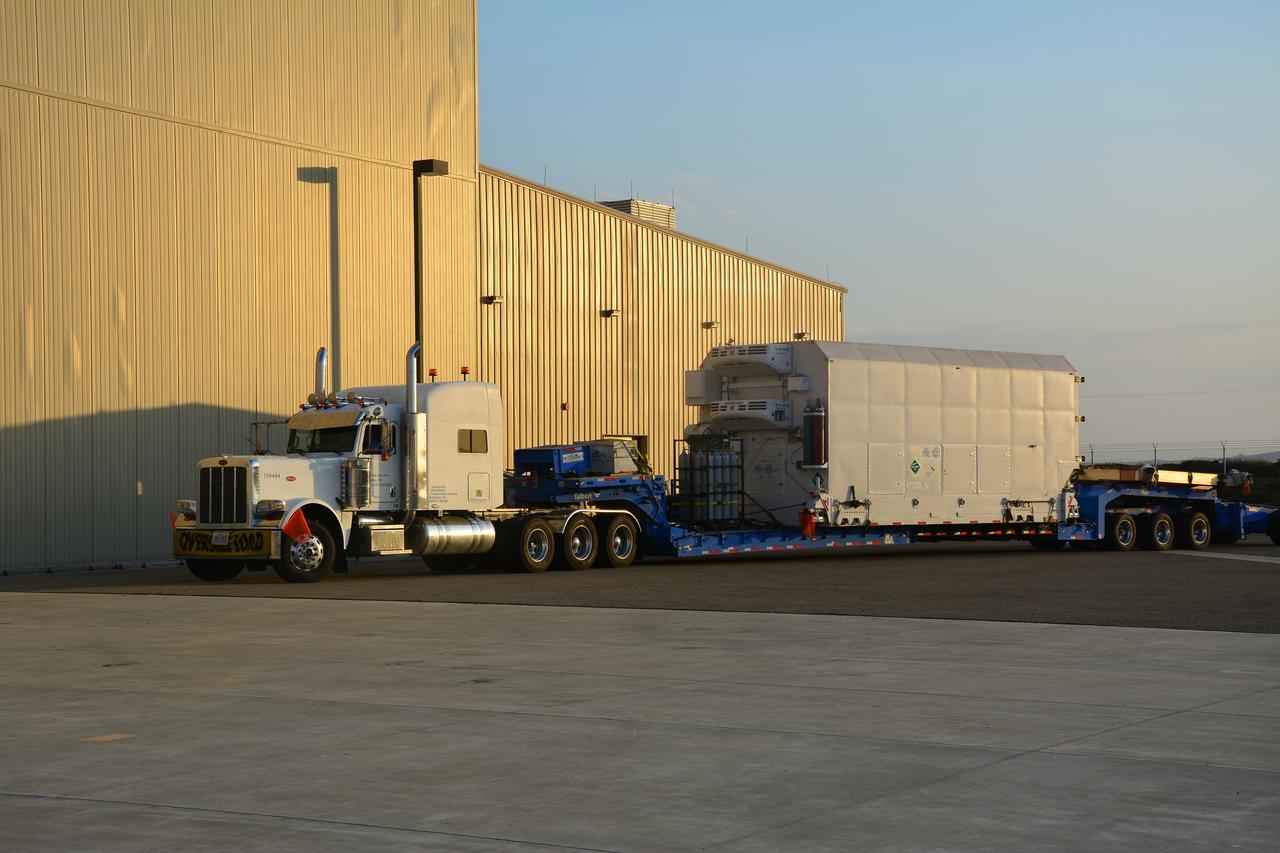
The Joint Polar Satellite System-1, or JPSS-1, arrives at the Astrotech Processing Facility at Vandenberg Air Force Base in California. JPSS is the first in a series four next-generation environmental satellites in a collaborative program between the National Oceanic and Atmospheric Administration (NOAA) and NASA. The satellite is scheduled to liftoff later this year atop a United Launch Alliance Delta II rocket.
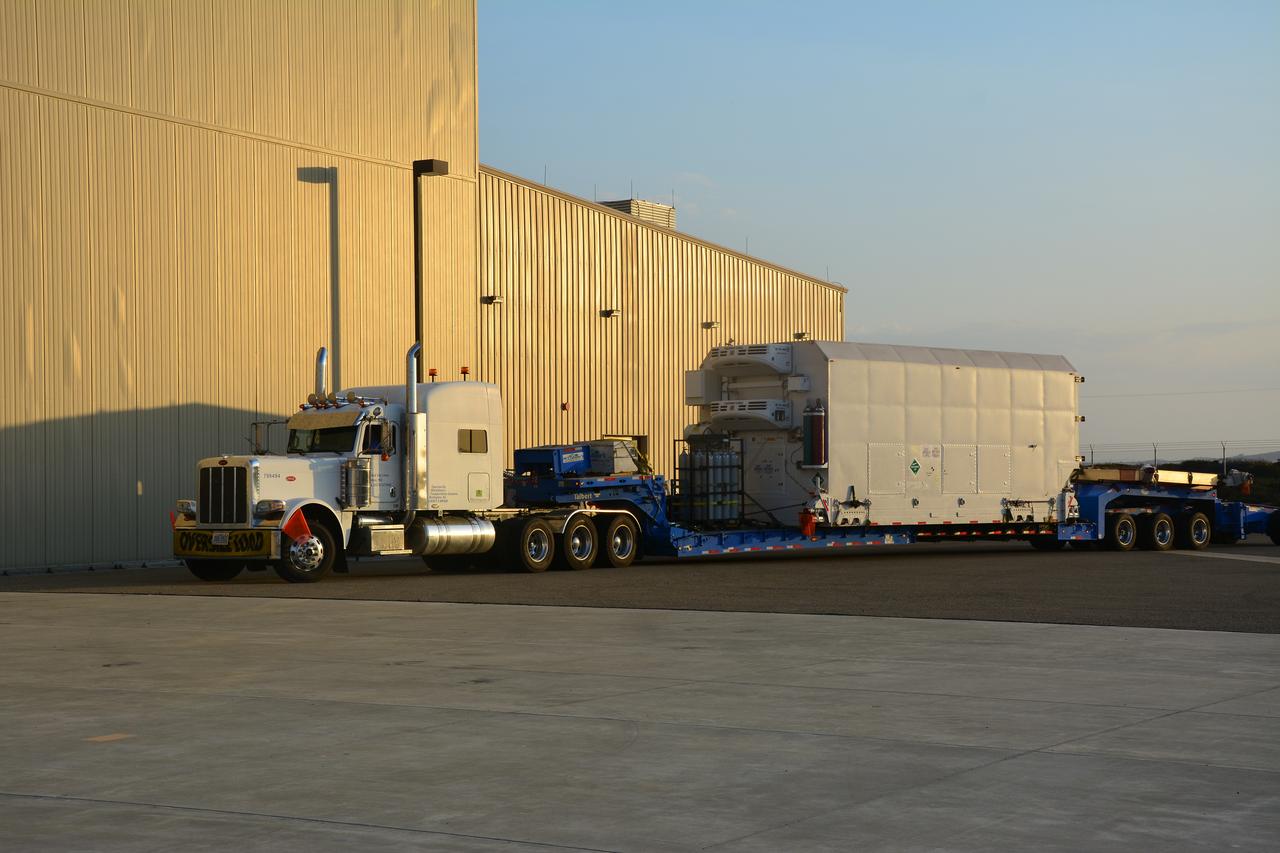
The Joint Polar Satellite System-1, or JPSS-1, arrives at the Astrotech Processing Facility at Vandenberg Air Force Base in California. JPSS is the first in a series four next-generation environmental satellites in a collaborative program between the National Oceanic and Atmospheric Administration (NOAA) and NASA. The satellite is scheduled to liftoff later this year atop a United Launch Alliance Delta II rocket.
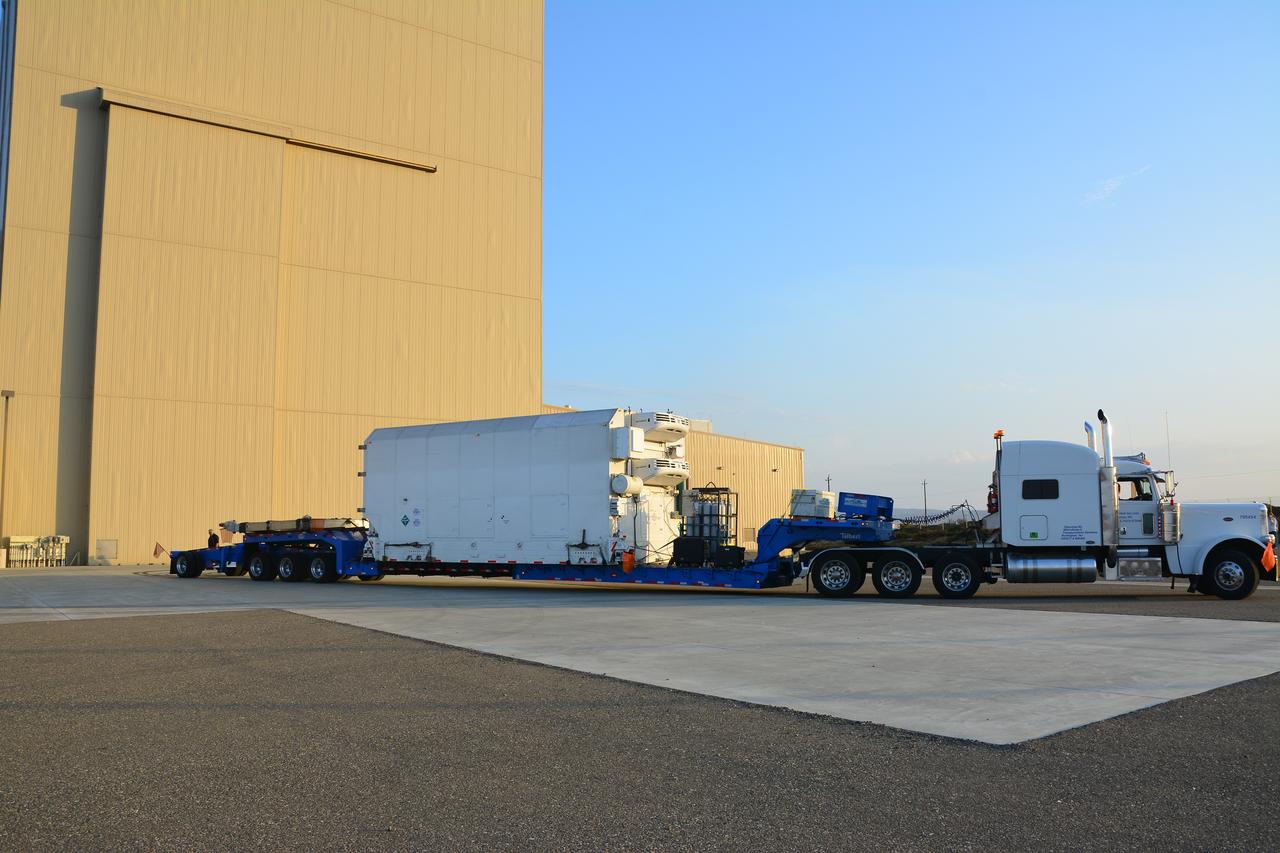
The Joint Polar Satellite System-1, or JPSS-1, arrives at the Astrotech Processing Facility at Vandenberg Air Force Base in California. JPSS is the first in a series four next-generation environmental satellites in a collaborative program between the National Oceanic and Atmospheric Administration (NOAA) and NASA. The satellite is scheduled to liftoff later this year atop a United Launch Alliance Delta II rocket.
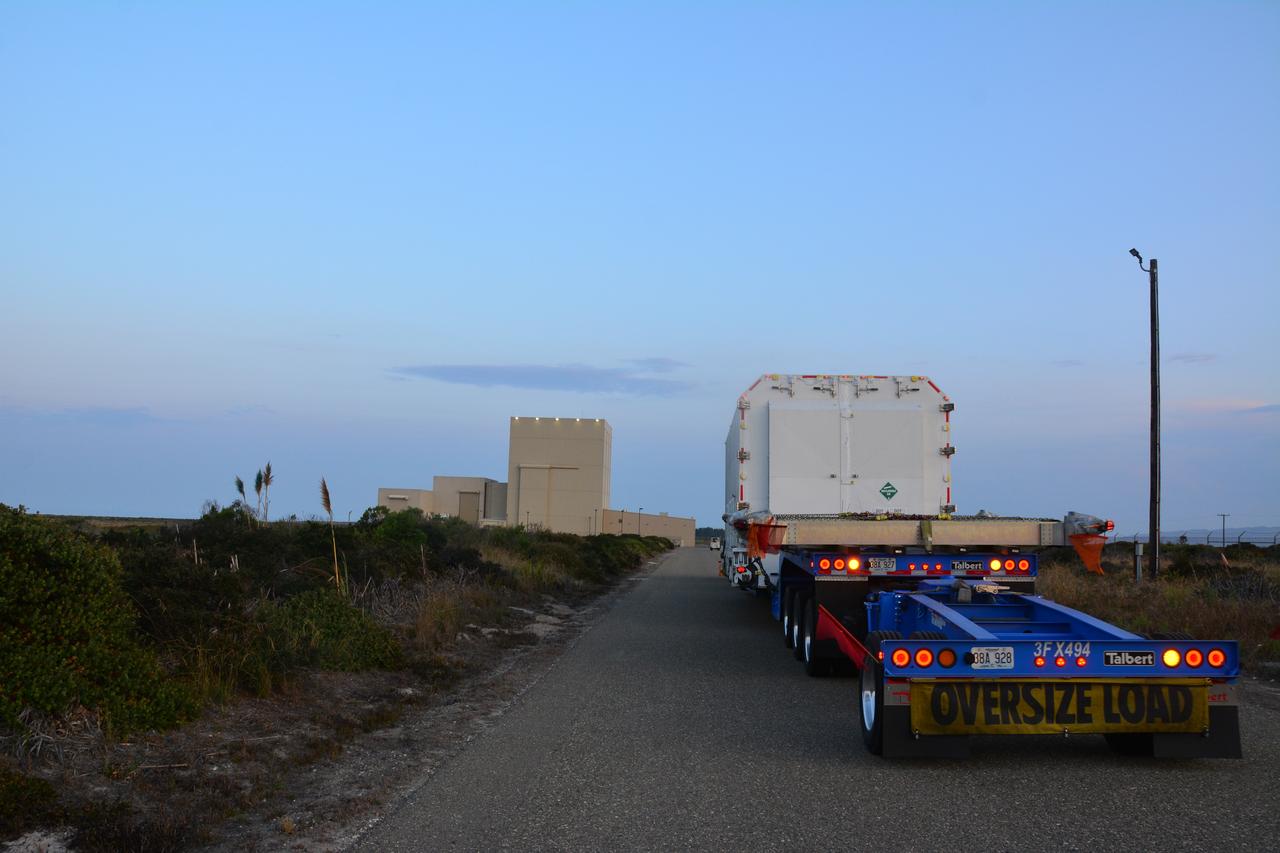
The Joint Polar Satellite System-1, or JPSS-1, arrives at the Astrotech Processing Facility at Vandenberg Air Force Base in California. JPSS is the first in a series four next-generation environmental satellites in a collaborative program between the National Oceanic and Atmospheric Administration (NOAA) and NASA. The satellite is scheduled to liftoff later this year atop a United Launch Alliance Delta II rocket.
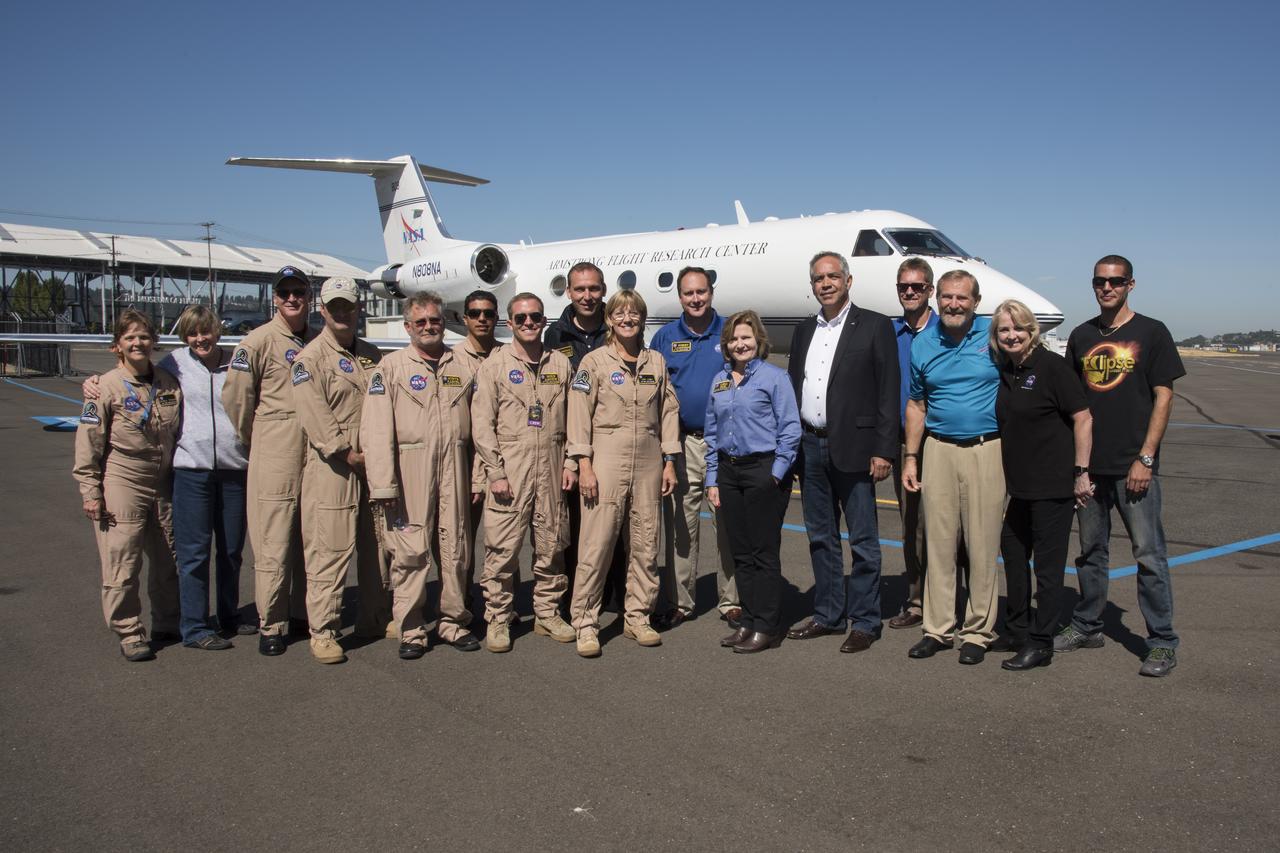
NASA Armstrong and NASA senior management Gulfstream III team pose for group shot by aircraft after return from covering Total solar eclipse. Photo Credit: (NASA/Carla Thomas)