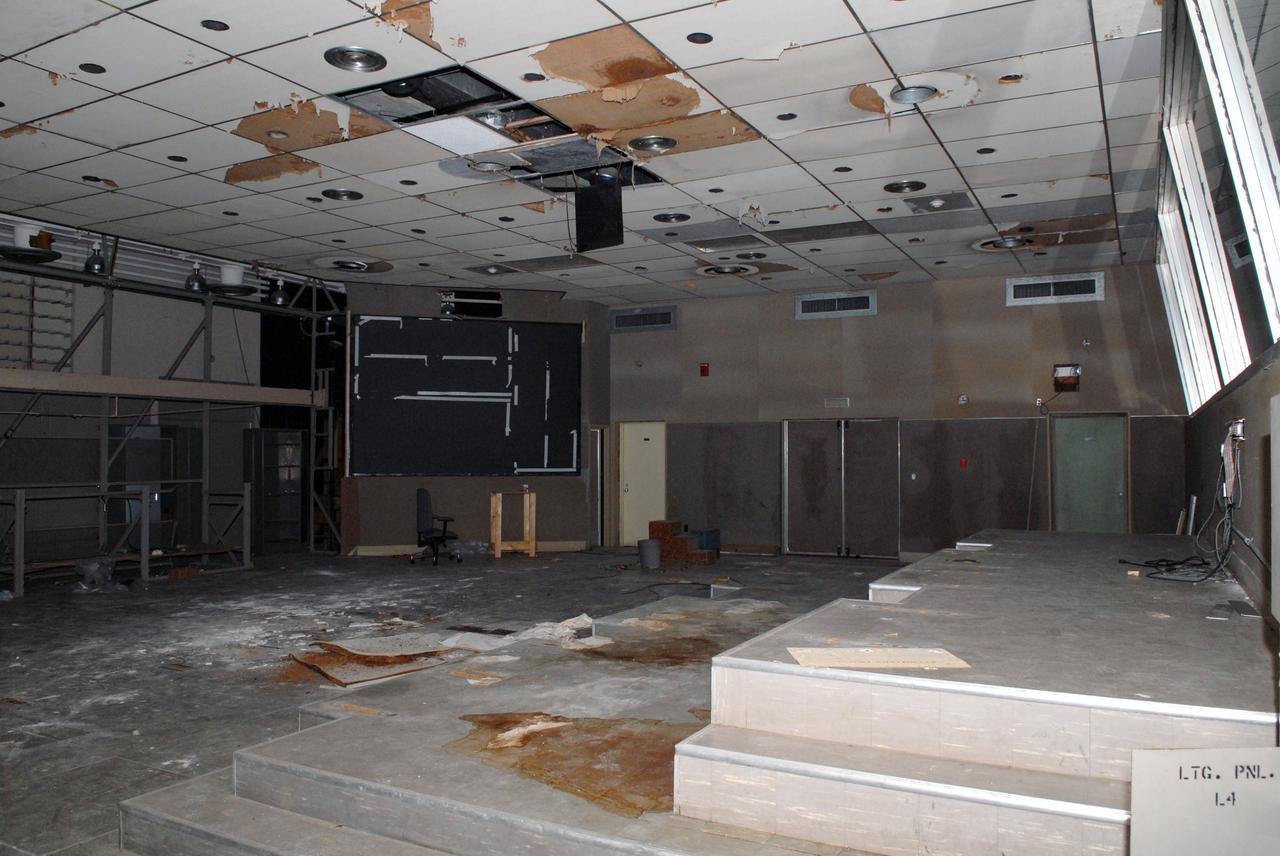
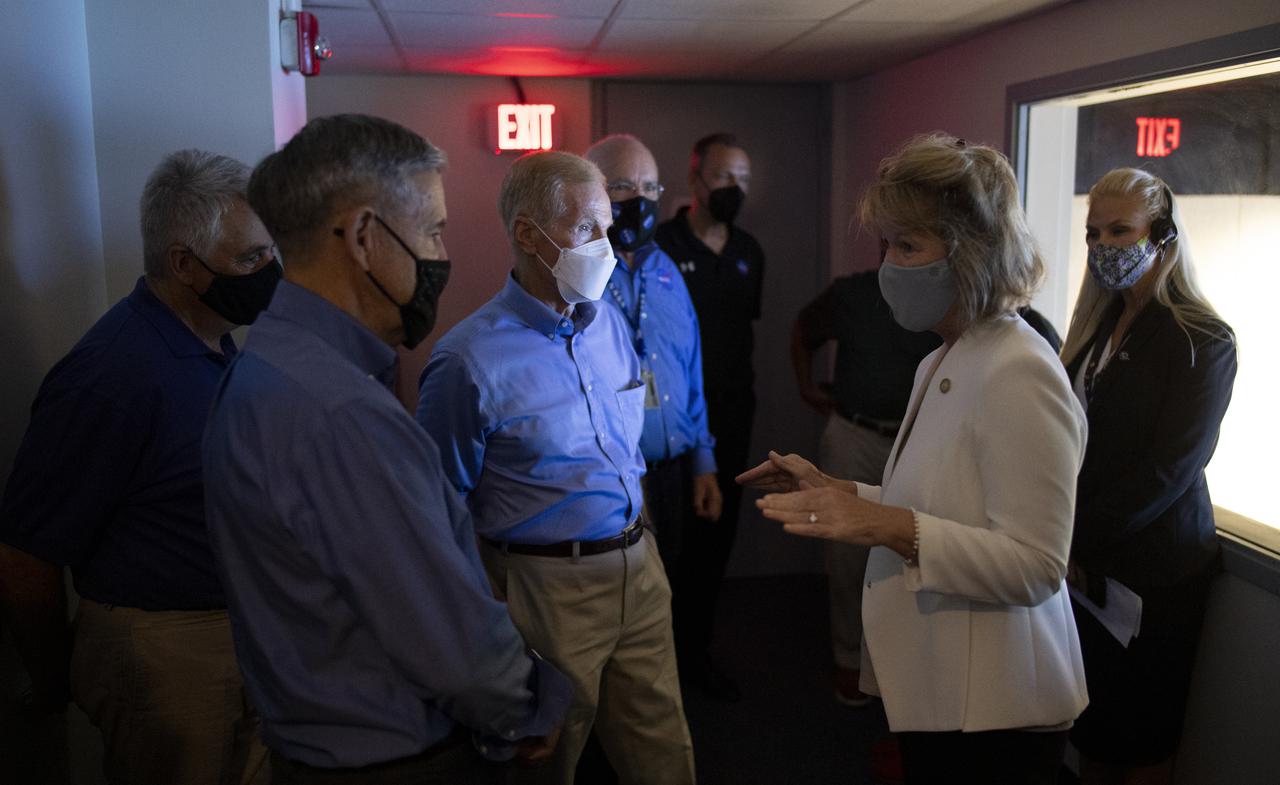
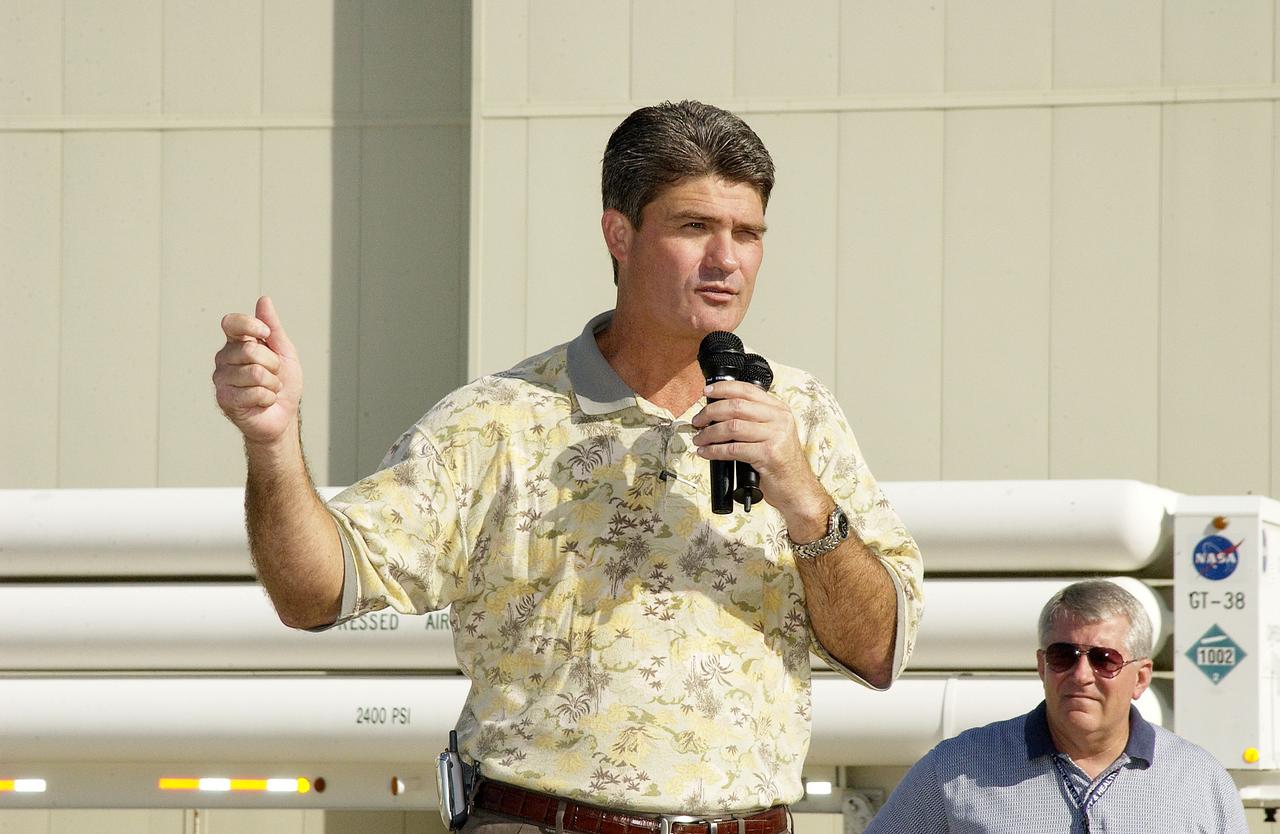
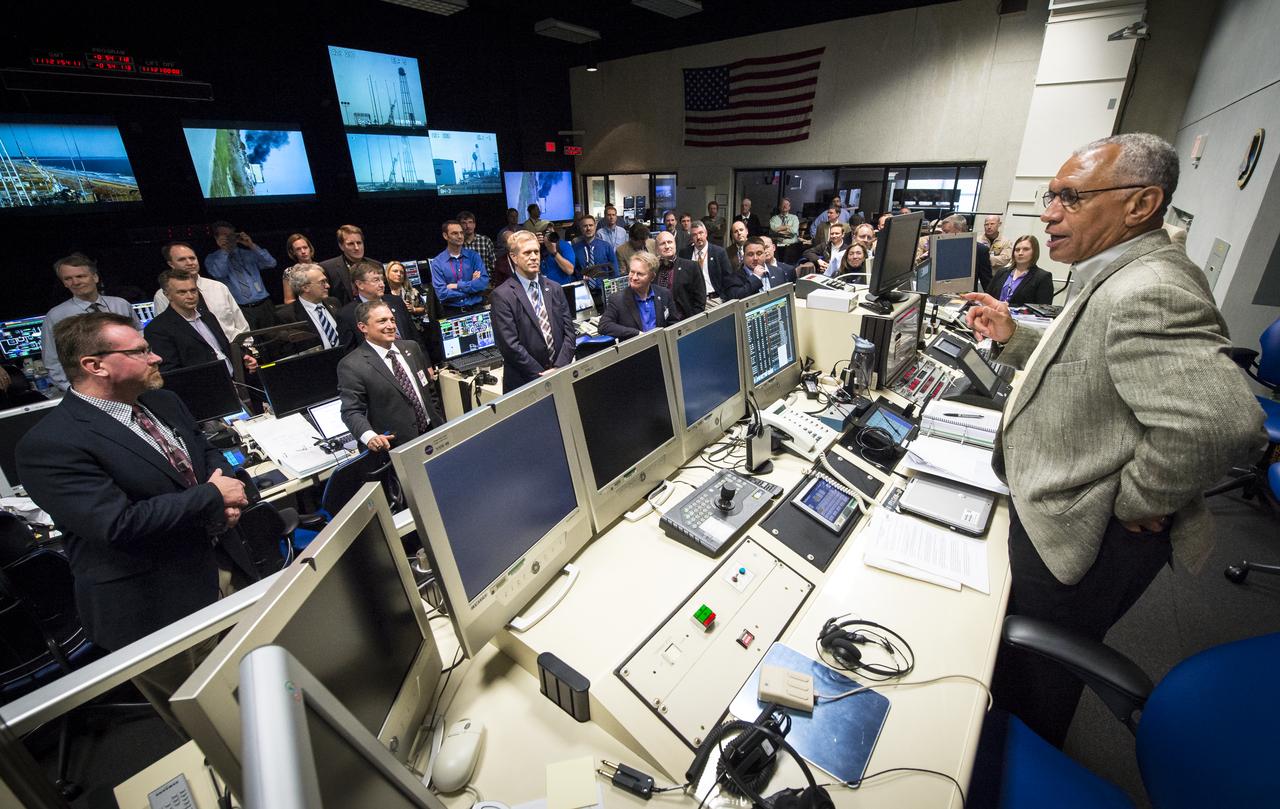
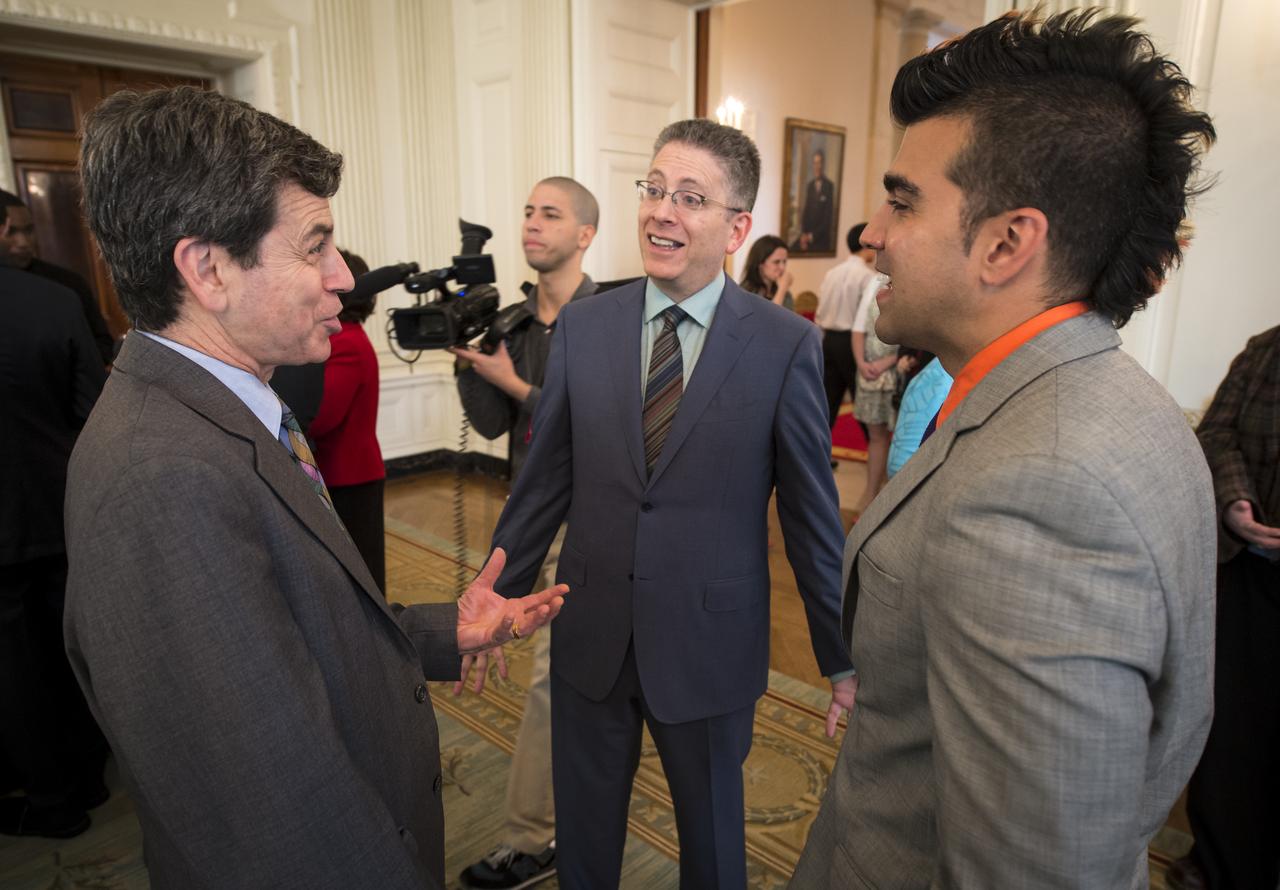
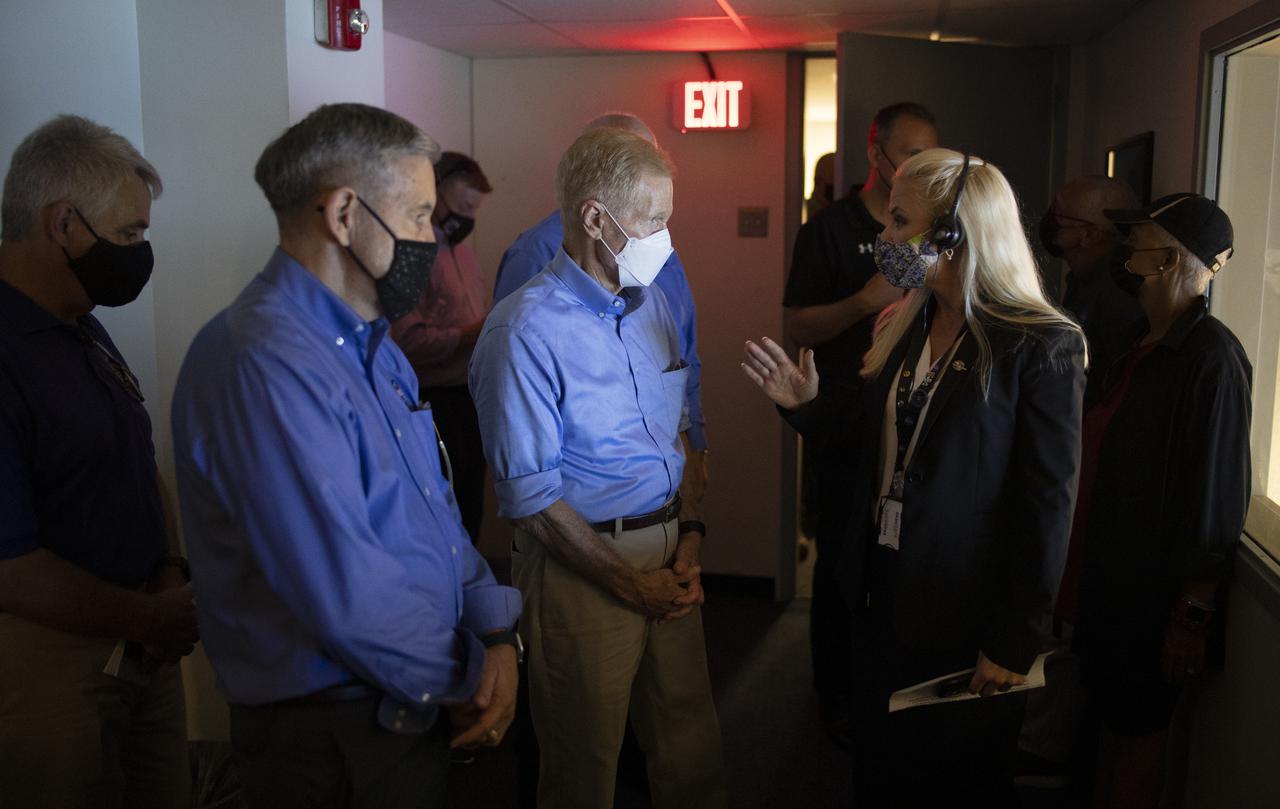
Shannon Fitzpatrick, chief of the Range and Mission Management office at NASA's Wallops Flight Facility, right, speaks about the progress of the countdown of Northrop Grumman’s 16th resupply mission to the International Space Station with NASA Administrator Bill Nelson, center, Bob Cabana, NASA associate administrator, second from left, and Dave Pierce, director of NASA's Wallops Flight Facility, left, in an area overlooking the Range Control Center, Tuesday, Aug. 10, 2021, at NASA’s Wallops Flight Facility in Virginia.  Photo Credit: (NASA/Joel Kowsky)
NASA Leadership Tours Wallops Flight Facility
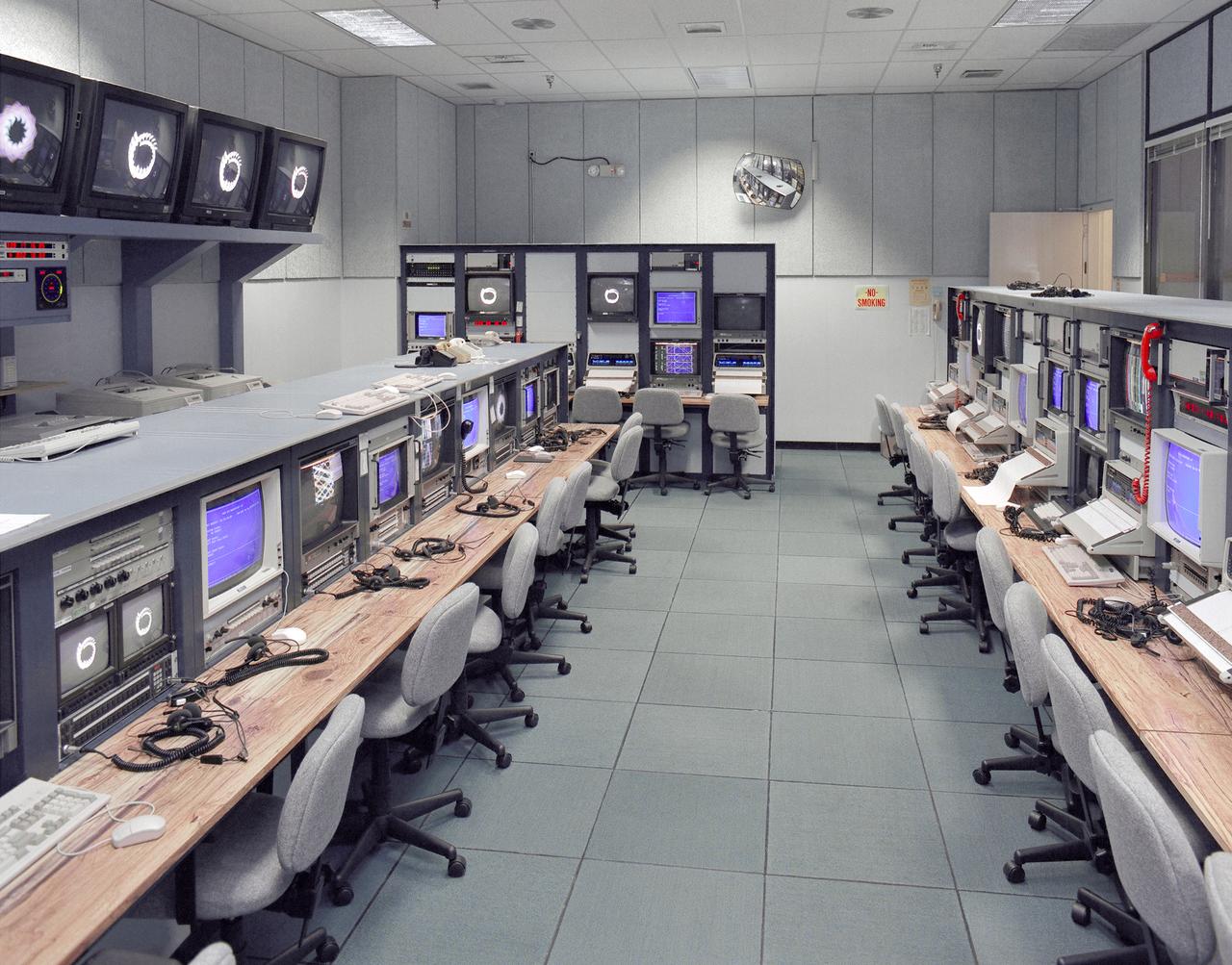
Mission control Blue Room, seen here, in building 4800 at NASA's Dryden Flight Research Center, is part of the Western Aeronautical Test Range (WATR). All aspects of a research mission are monitored from one of two of these control rooms at Dryden.  The WATR consists of a highly automated complex of computer controlled tracking, telemetry, and communications systems and control room complexes that are capable of supporting any type of mission ranging from system and component testing, to sub-scale and full-scale flight tests of new aircraft and reentry systems. Designated areas are assigned for spin/dive tests, corridors are provided for low, medium, and high-altitude supersonic flight, and special STOL/VSTOL facilities are available at Ames Moffett and Crows Landing. Special use airspace, available at Edwards, covers approximately twelve thousand square miles of mostly desert area. The southern boundary lies to the south of Rogers Dry Lake, the western boundary lies midway between Mojave and Bakersfield, the northern boundary passes just south of Bishop, and the eastern boundary follows about 25 miles west of the Nevada border except in the northern areas where it crosses into Nevada.
Western Aeronautical Test Range (WATR) mission control Blue room
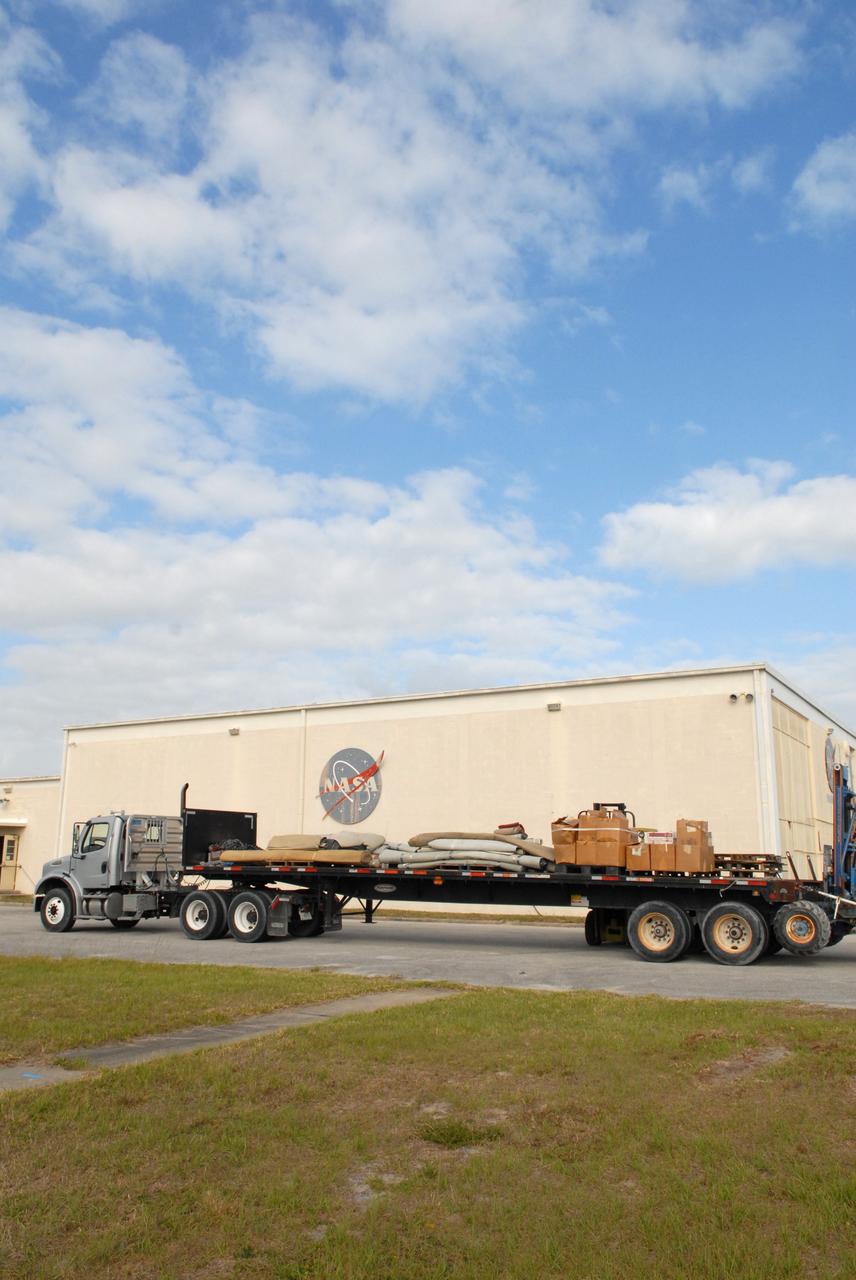
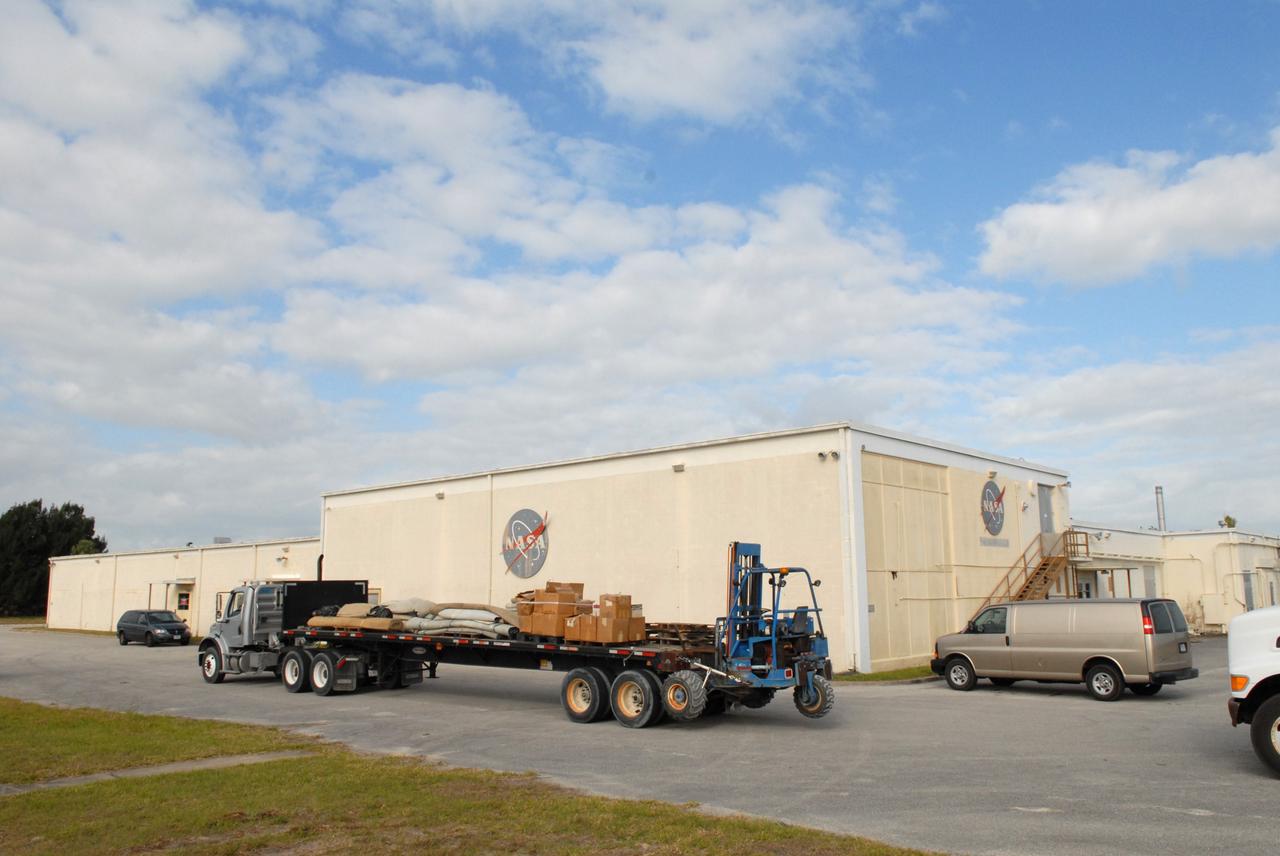
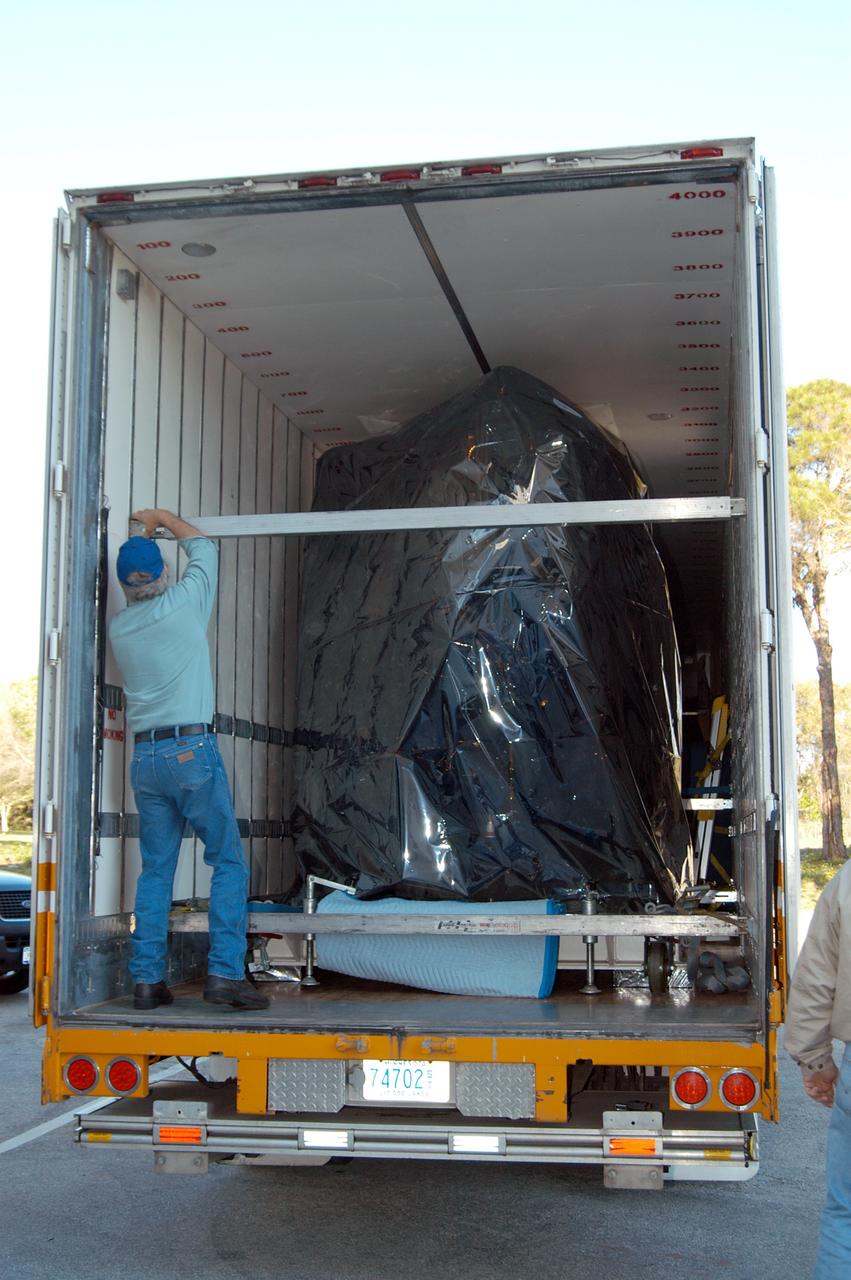
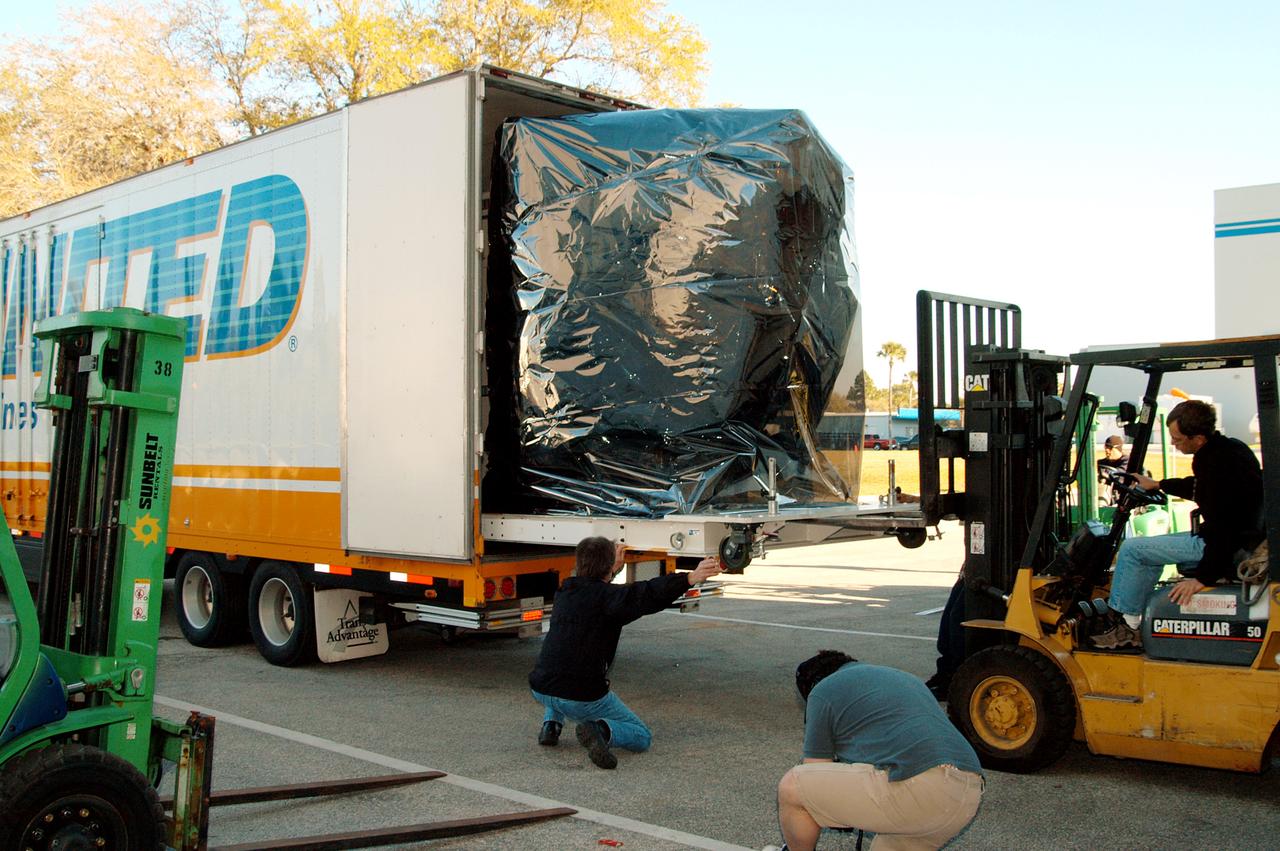
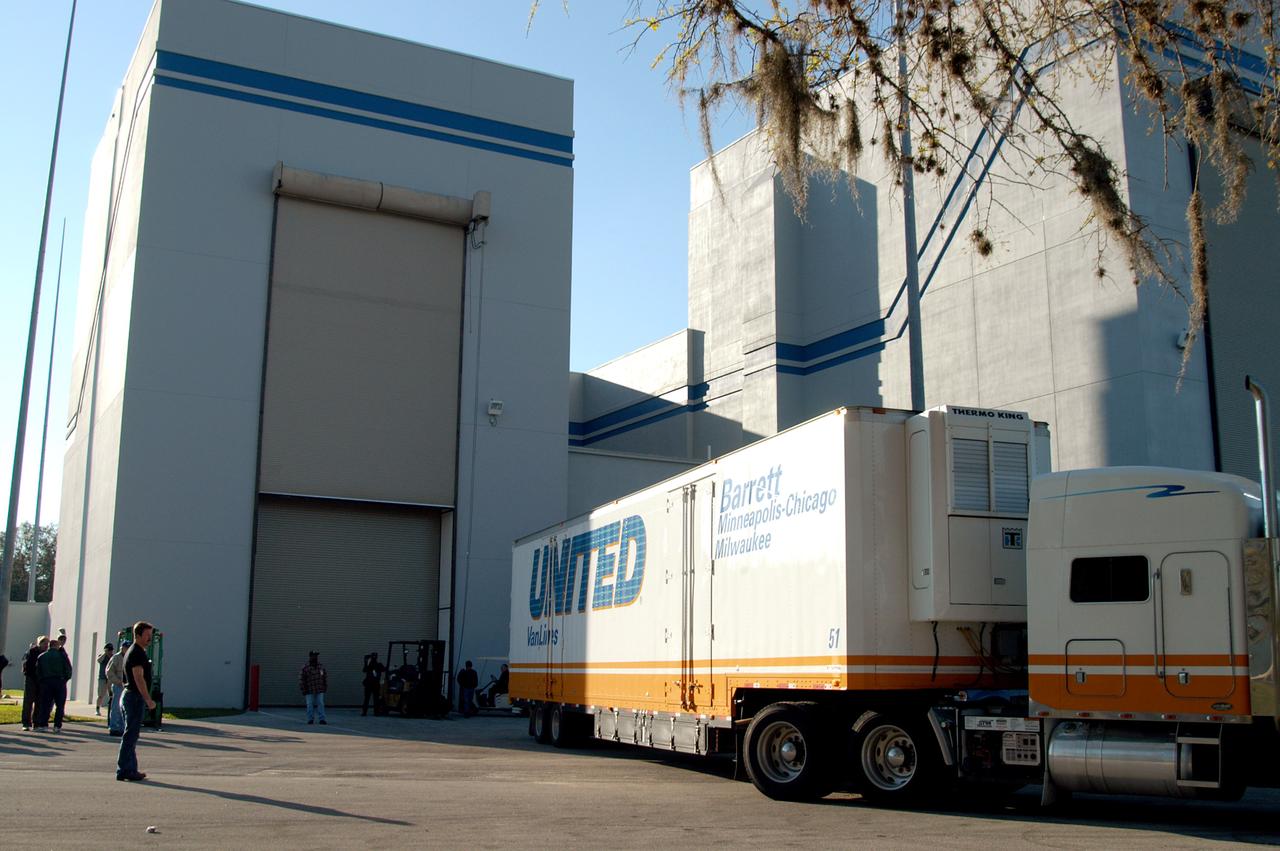
CAPE CANAVERAL, Fla. – A trailer hauls boxes and equipment from the 50-year-old Mission Control Center on the Cape Canaveral Air Force Station in Florida.  Out of use for many years, and with no valid operational or other use for the facility, NASA plans to demolish the site. The facility once controlled all manned Mercury space flights and the first two unmanned Gemini flights from May 1961-1963.  It provided launch, orbital, re-entry and landing control for the flights.  That function was later transferred to NASA's Johnson Space Center in Houston.  Photo credit: NASA/Jack Pfaller
KSC-2009-2877
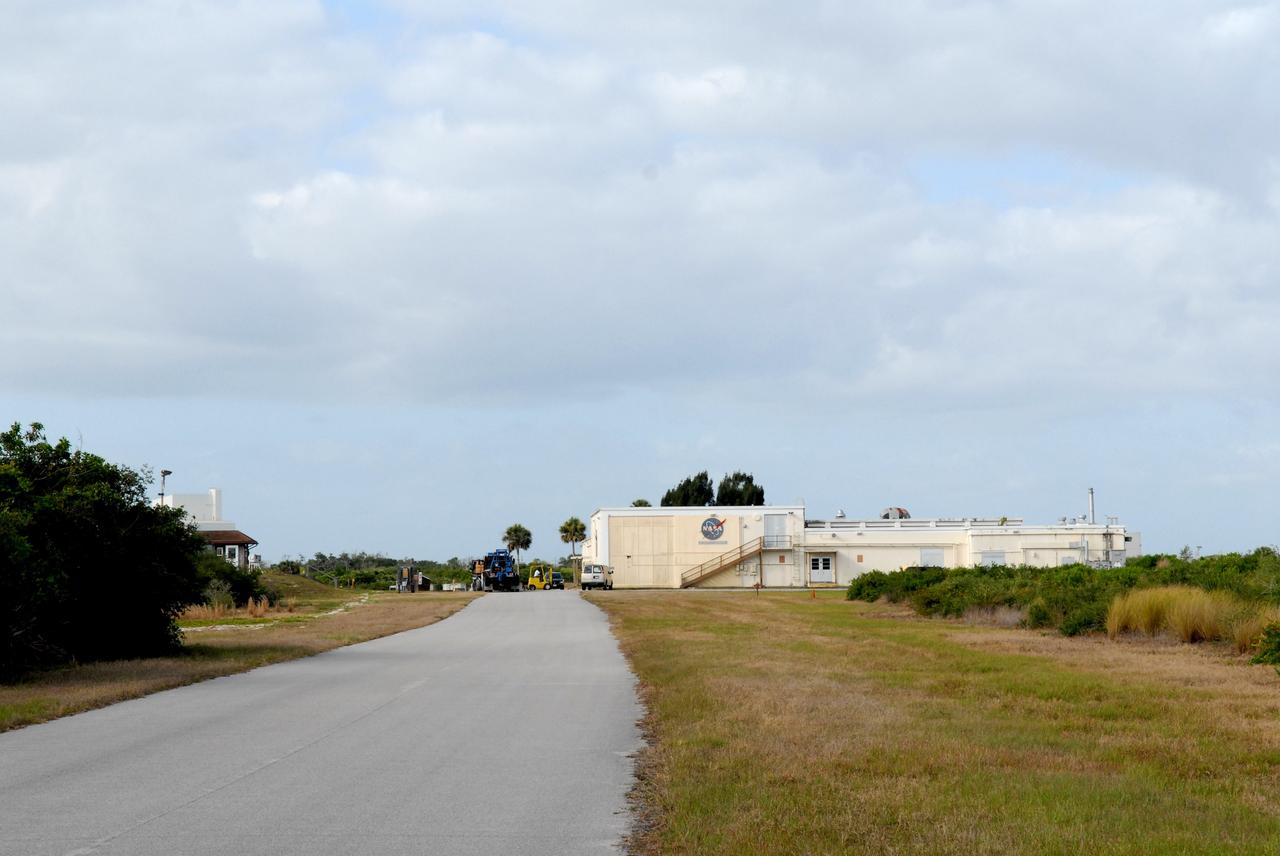
CAPE CANAVERAL, Fla. – Built in 1958, the Mission Control Center is located on the Cape Canaveral Air Force Station in Florida.  Out of use for many years, and with no valid operational or other use for the facility, NASA plans to demolish the site. The facility once controlled all manned Mercury space flights and the first two unmanned Gemini flights from May 1961-1963.  It provided launch, orbital, re-entry and landing control for the flights.  That function was later transferred to NASA's Johnson Space Center in Houston.  Photo credit: NASA/Jack Pfaller
KSC-2009-2875
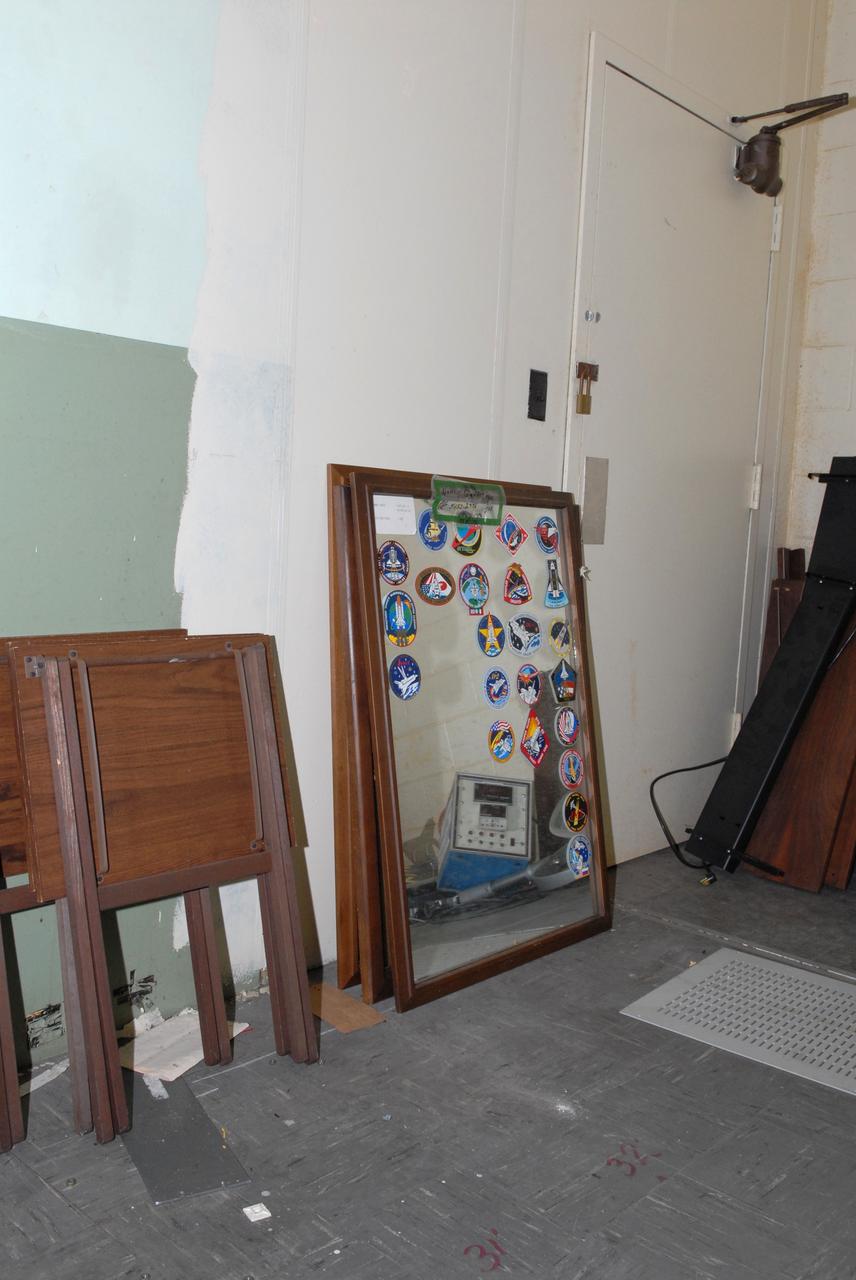
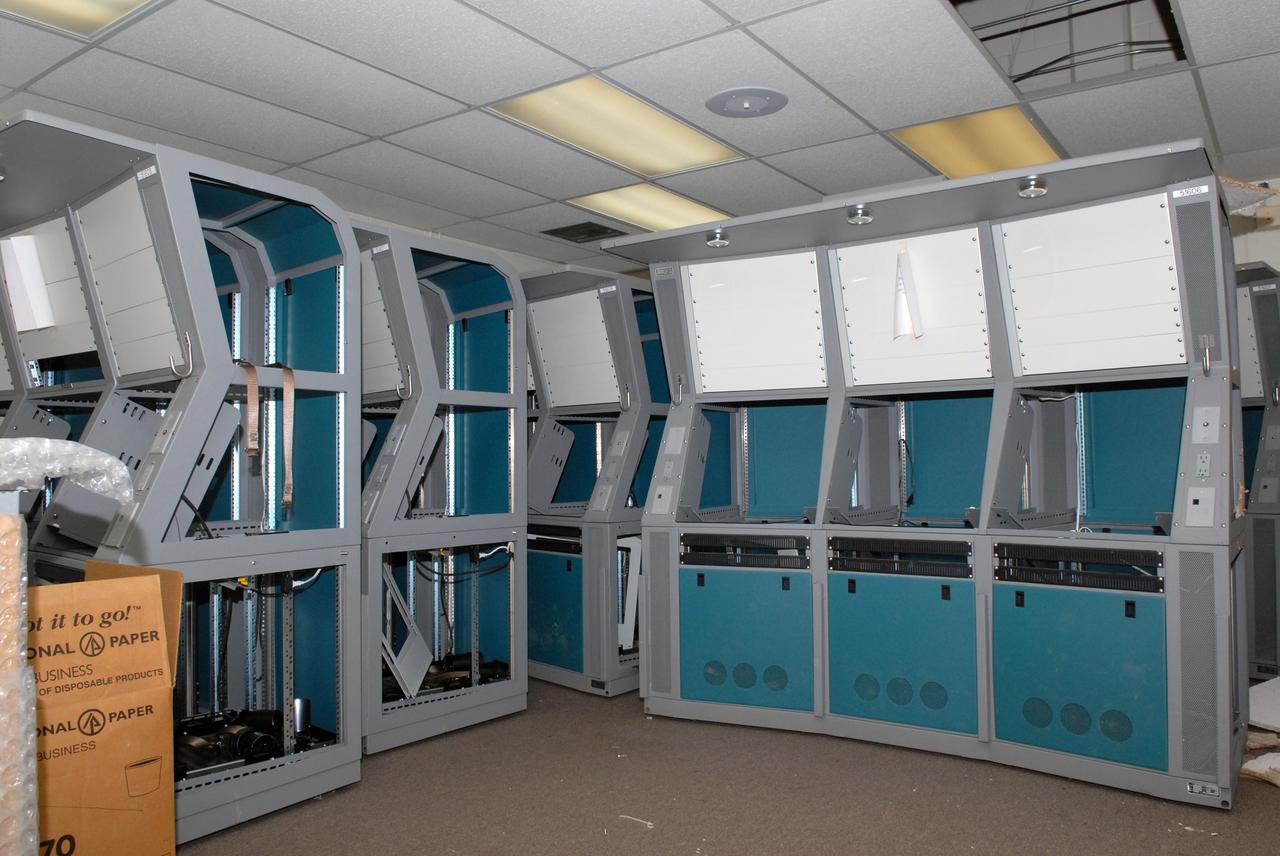
CAPE CANAVERAL, Fla. – Outdated furniture and display items are being moved out of the 50-year-old Mission Control Center on the Cape Canaveral Air Force Station in Florida. Out of use for many years, and with no valid operational or other use for the facility, NASA plans to demolish the site.  The facility once controlled all manned Mercury space flights and the first two unmanned Gemini flights from May 1961-1963.  It provided launch, orbital, re-entry and landing control for the flights.  That function was later transferred to NASA's Johnson Space Center in Houston.  Photo credit: NASA/Jack Pfaller
KSC-2009-2882
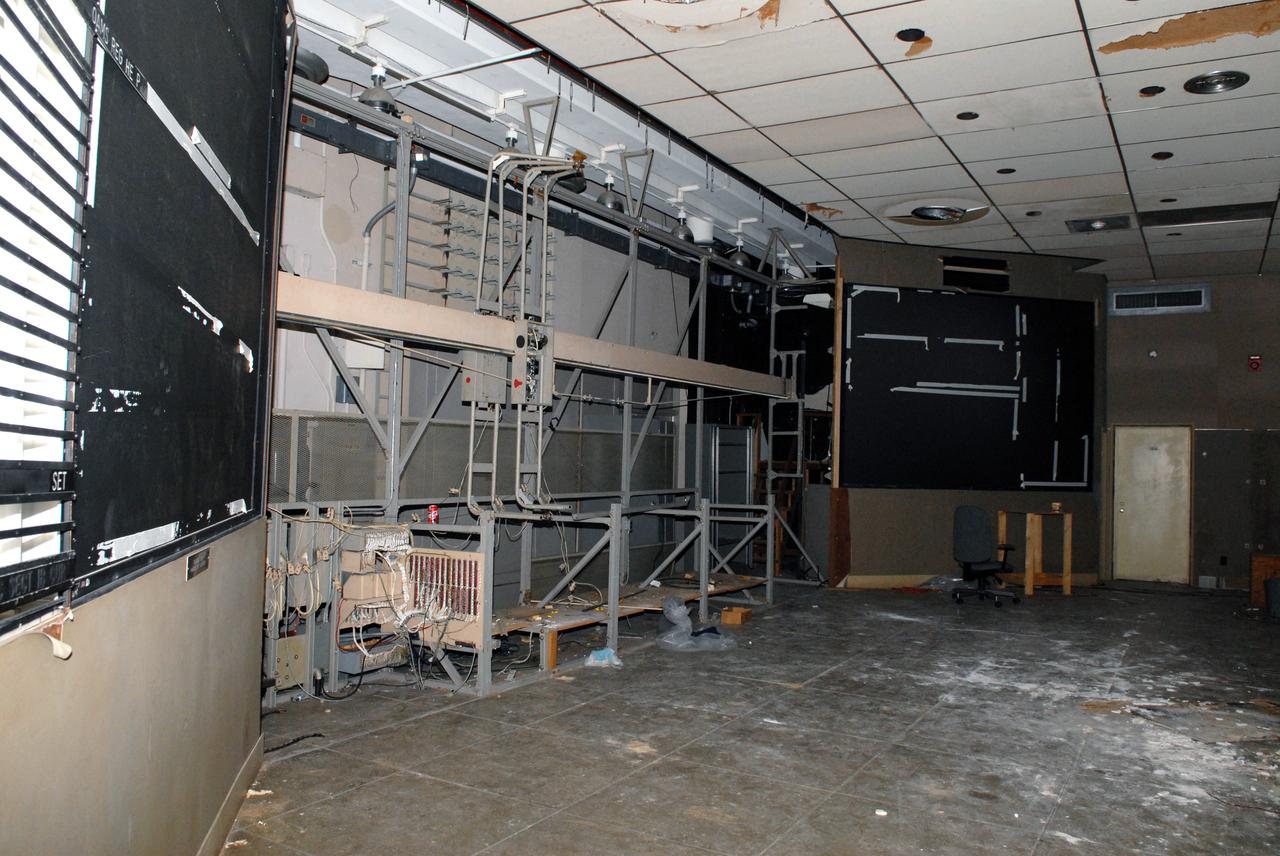
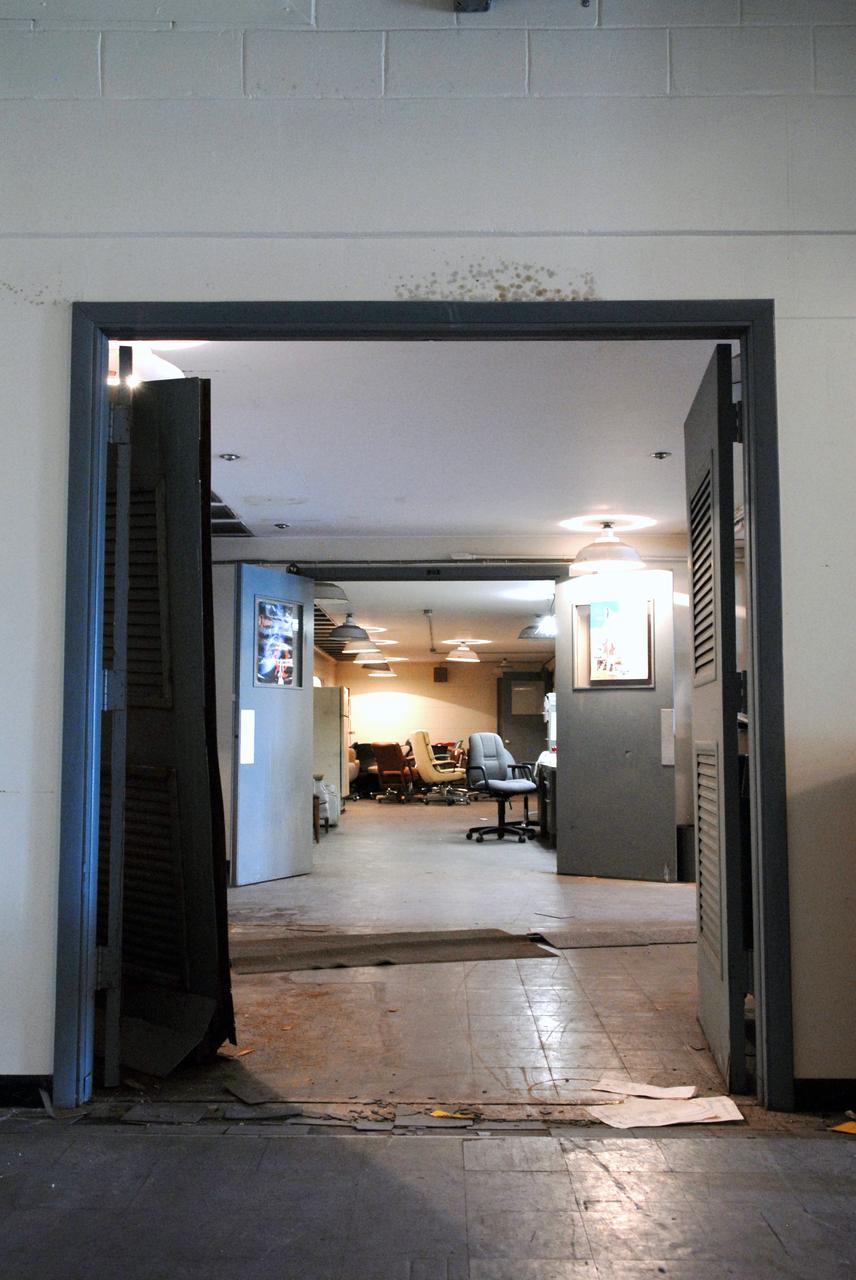
CAPE CANAVERAL, Fla. – Rooms are being dismantled in the 50-year-old Mission Control Center on the Cape Canaveral Air Force Station in Florida. Out of use for many years, and with no valid operational or other use for the facility, NASA plans to demolish the site.  The facility once controlled all manned Mercury space flights and the first two unmanned Gemini flights from May 1961-1963.  It provided launch, orbital, re-entry and landing control for the flights.  That function was later transferred to NASA's Johnson Space Center in Houston.  Photo credit: NASA/Jack Pfaller
KSC-2009-2884
CAPE CANAVERAL, Fla. – Equipment is staged for removal from the 50-year-old Mission Control Center on the Cape Canaveral Air Force Station in Florida. Out of use for many years, and with no valid operational or other use for the facility, NASA plans to demolish the site.  The facility once controlled all manned Mercury space flights and the first two unmanned Gemini flights from May 1961-1963.  It provided launch, orbital, re-entry and landing control for the flights.  That function was later transferred to NASA's Johnson Space Center in Houston.  Photo credit: NASA/Jack Pfaller
KSC-2009-2881
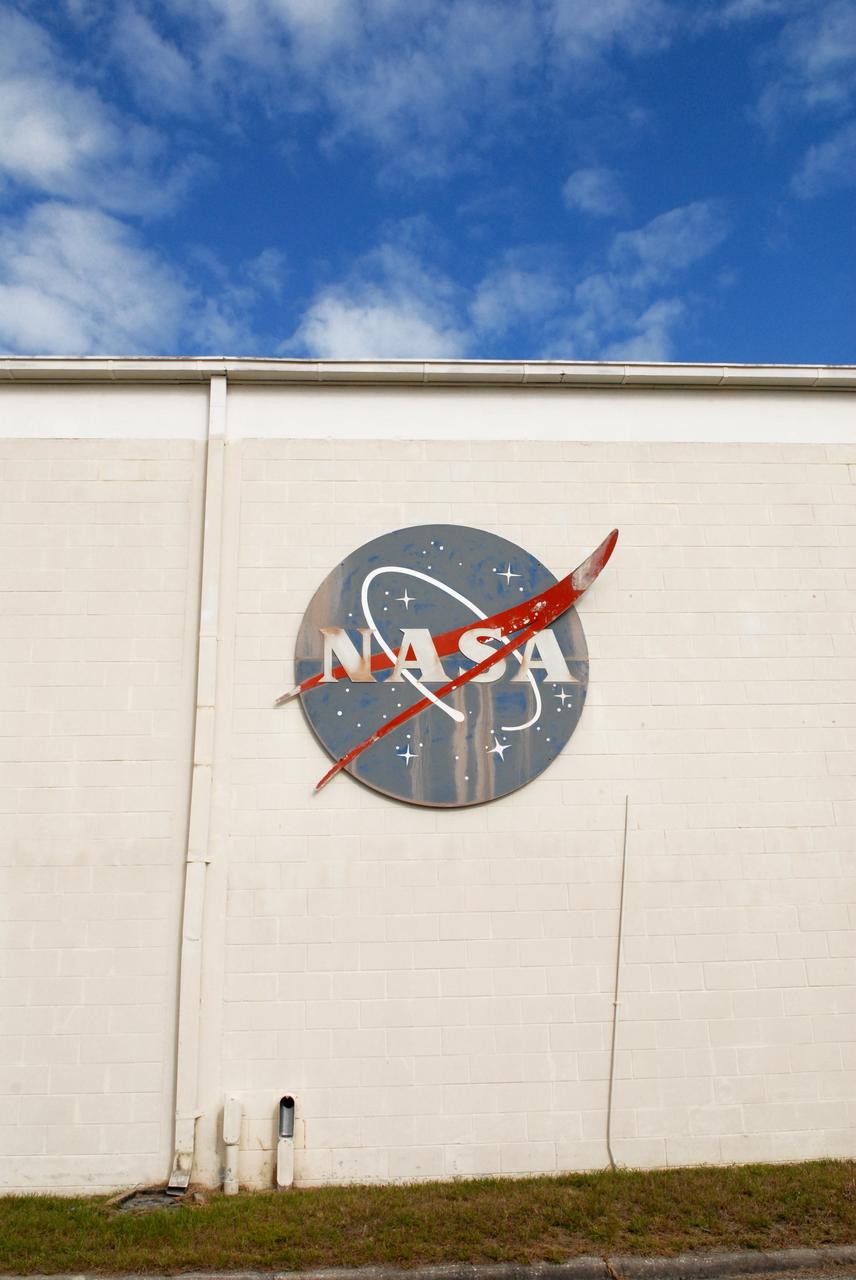
CAPE CANAVERAL, Fla. – The NASA insignia has faded on the 50-year-old Mission Control Center on the Cape Canaveral Air Force Station in Florida. Out of use for many years, and with no valid operational or other use for the facility, NASA plans to demolish the site.  The facility once controlled all manned Mercury space flights and the first two unmanned Gemini flights from May 1961-1963.  It provided launch, orbital, re-entry and landing control for the flights.  That function was later transferred to NASA's Johnson Space Center in Houston.  Photo credit: NASA/Jack Pfaller
KSC-2009-2878
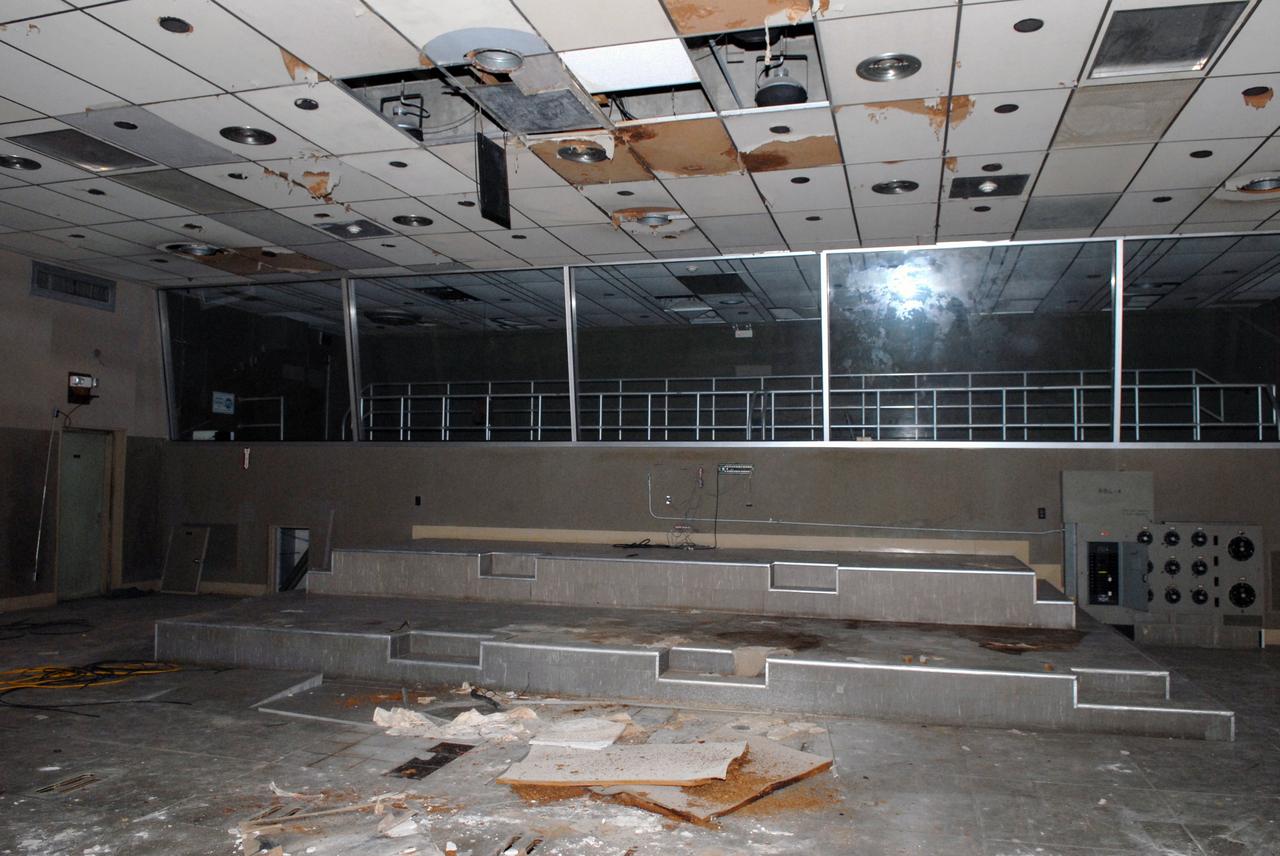
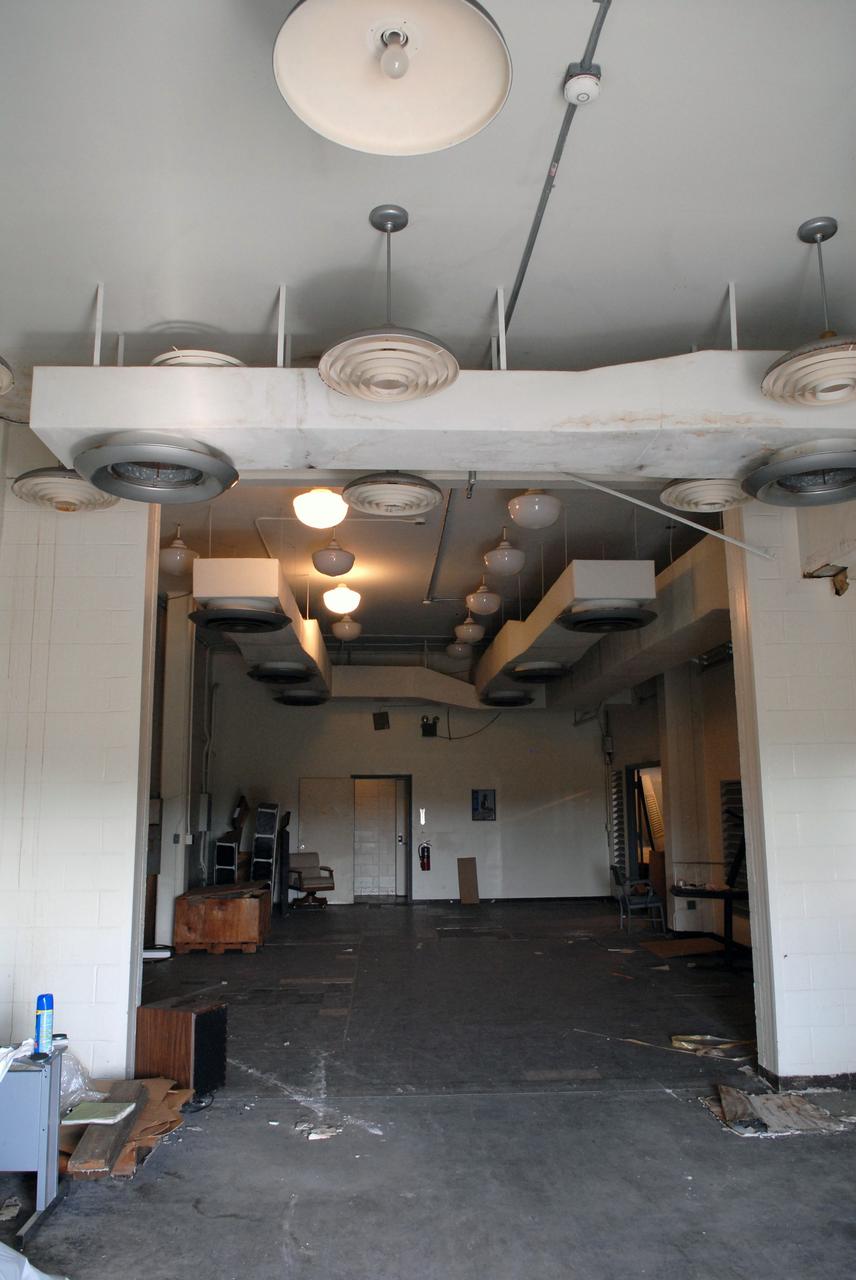
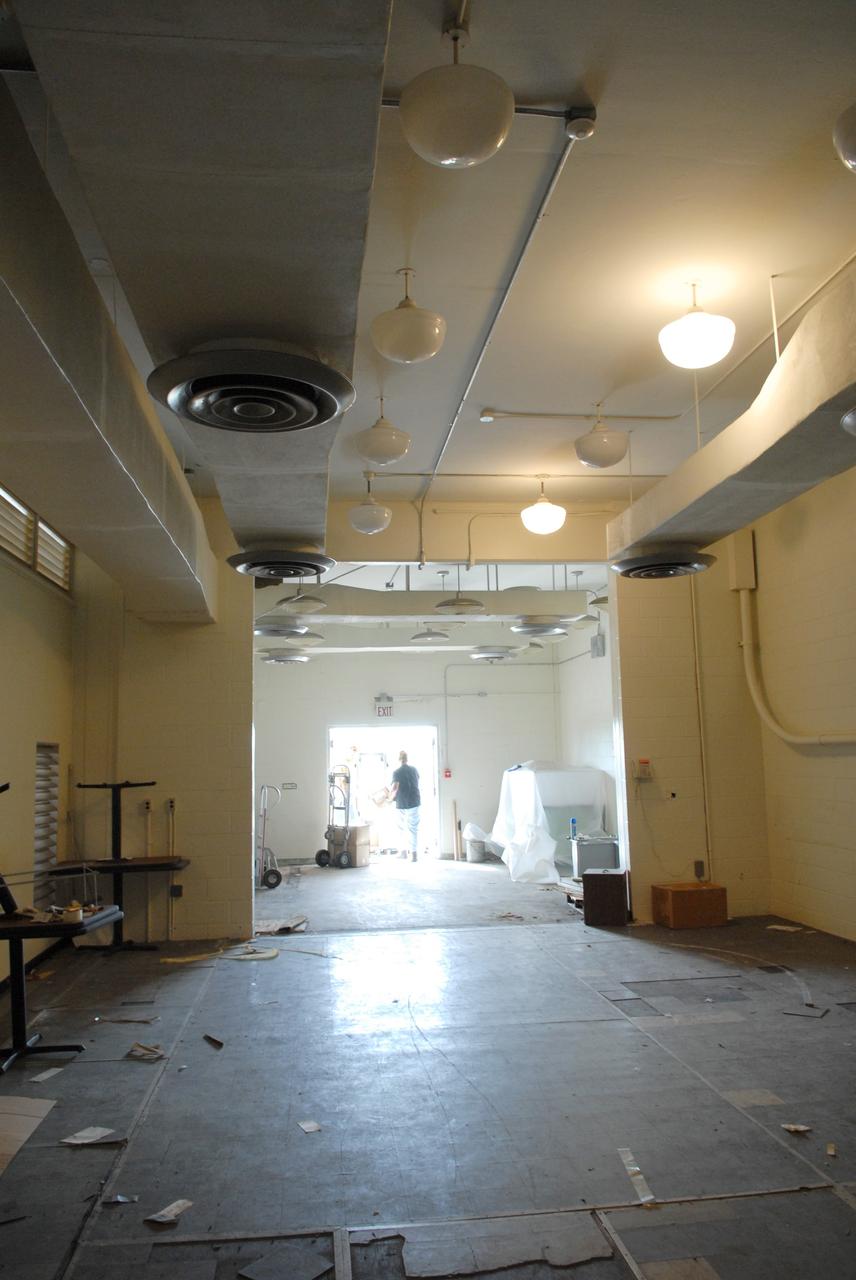
CAPE CANAVERAL, Fla. – Water damage and mold in rooms in the 50-year-old Mission Control Center on the Cape Canaveral Air Force Station in Florida are part of the reason for NASA's decision to demolish the site. The center has been out of use for many years, and NASA has found no valid operational or other use for the facility. The facility once controlled all manned Mercury space flights and the first two unmanned Gemini flights from May 1961-1963.  It provided launch, orbital, re-entry and landing control for the flights.  That function was later transferred to NASA's Johnson Space Center in Houston.  Photo credit: NASA/Jack Pfaller
KSC-2009-2883
CAPE CANAVERAL, Fla. – Furniture and equipment is being moved out of the 50-year-old Mission Control Center on the Cape Canaveral Air Force Station in Florida. Out of use for many years, and with no valid operational or other use for the facility, NASA plans to demolish the site. The facility once controlled all manned Mercury space flights and the first two unmanned Gemini flights from May 1961-1963.  It provided launch, orbital, re-entry and landing control for the flights.  That function was later transferred to NASA's Johnson Space Center in Houston.  Photo credit: NASA/Jack Pfaller
KSC-2009-2887
CAPE CANAVERAL, Fla. – A trailer hauls boxes and equipment from the 50-year-old Mission Control Center on the Cape Canaveral Air Force Station in Florida.  Out of use for many years, and with no valid operational or other use for the facility, NASA plans to demolish the site. The facility once controlled all manned Mercury space flights and the first two unmanned Gemini flights from May 1961-1963.  It provided launch, orbital, re-entry and landing control for the flights.  That function was later transferred to NASA's Johnson Space Center in Houston.  Photo credit: NASA/Jack Pfaller
KSC-2009-2876
CAPE CANAVERAL, Fla. – Water damage and mold in rooms in the 50-year-old Mission Control Center on the Cape Canaveral Air Force Station in Florida are part of the reason for NASA's decision to demolish the site. The center has been out of use for many years, and NASA has found no valid operational or other use for the facility.  The facility once controlled all manned Mercury space flights and the first two unmanned Gemini flights from May 1961-1963.  It provided launch, orbital, re-entry and landing control for the flights.  That function was later transferred to NASA's Johnson Space Center in Houston.  Photo credit: NASA/Jack Pfaller
KSC-2009-2885
CAPE CANAVERAL, Fla. – Furniture and equipment is being moved out of the 50-year-old Mission Control Center on the Cape Canaveral Air Force Station in Florida. Out of use for many years, and with no valid operational or other use for the facility, NASA plans to demolish the site. The facility once controlled all manned Mercury space flights and the first two unmanned Gemini flights from May 1961-1963.  It provided launch, orbital, re-entry and landing control for the flights.  That function was later transferred to NASA's Johnson Space Center in Houston.  Photo credit: NASA/Jack Pfaller
KSC-2009-2880
CAPE CANAVERAL, Fla. – Furniture no longer in use is stored in the far room of the 50-year-old Mission Control Center on the Cape Canaveral Air Force Station in Florida. Out of use for many years, and with no valid operational or other use for the facility, NASA plans to demolish the site.  The facility once controlled all manned Mercury space flights and the first two unmanned Gemini flights from May 1961-1963.  It provided launch, orbital, re-entry and landing control for the flights.  That function was later transferred to NASA's Johnson Space Center in Houston.  Photo credit: NASA/Jack Pfaller
KSC-2009-2886
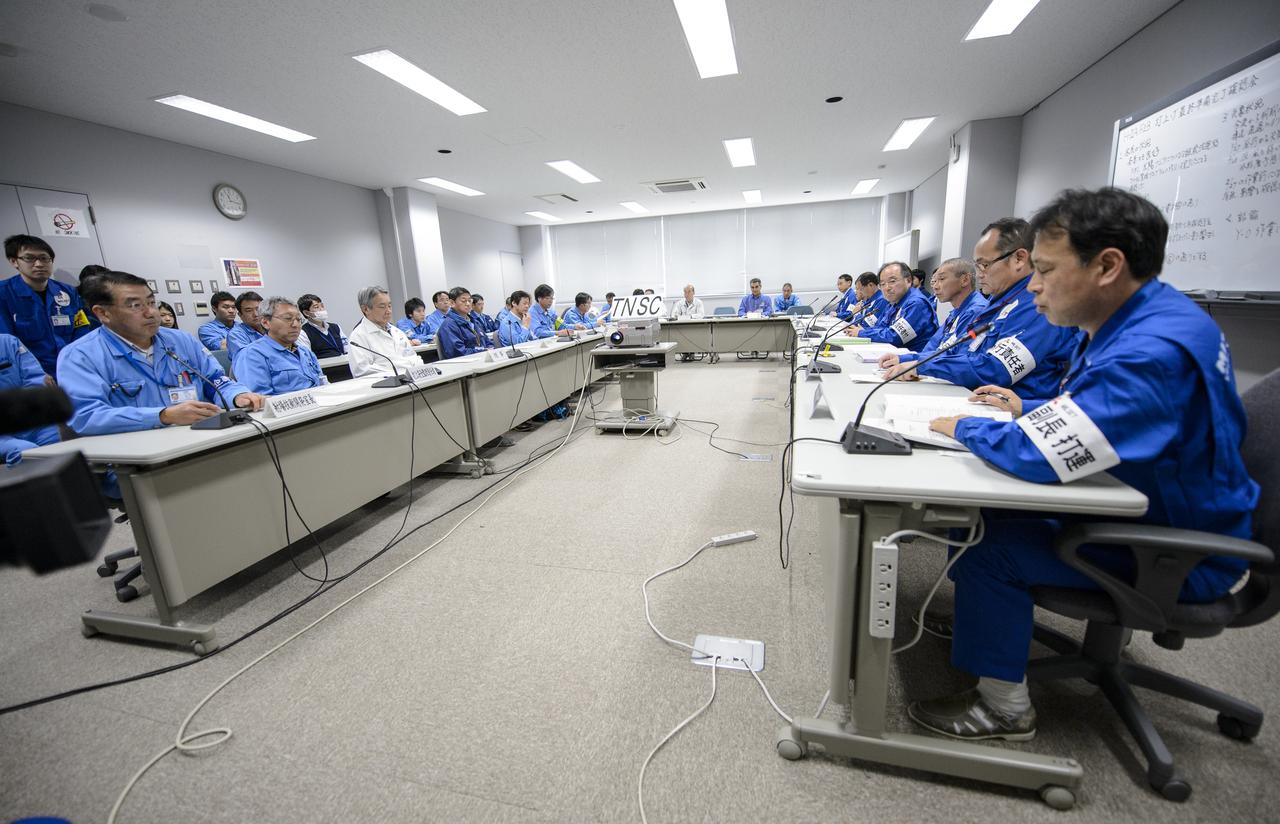
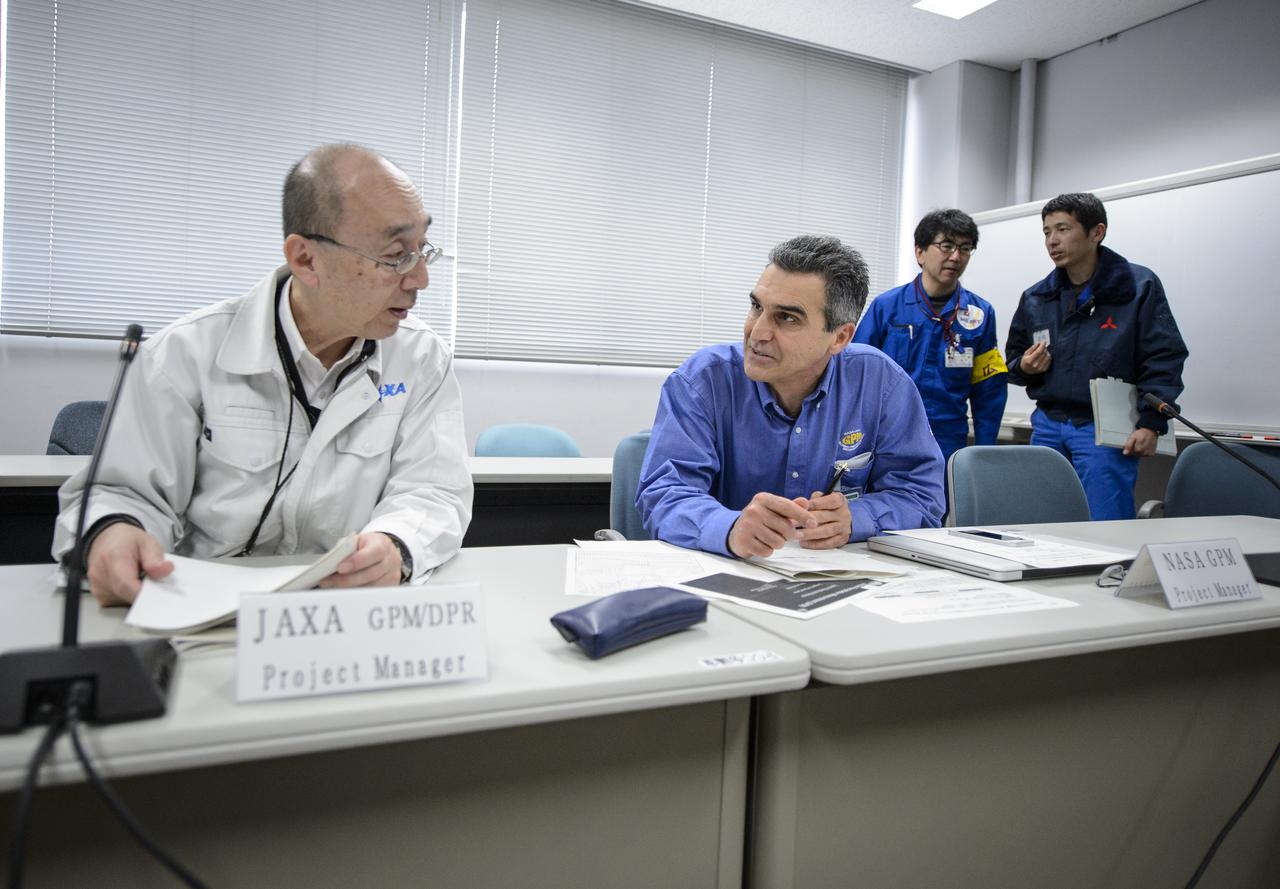
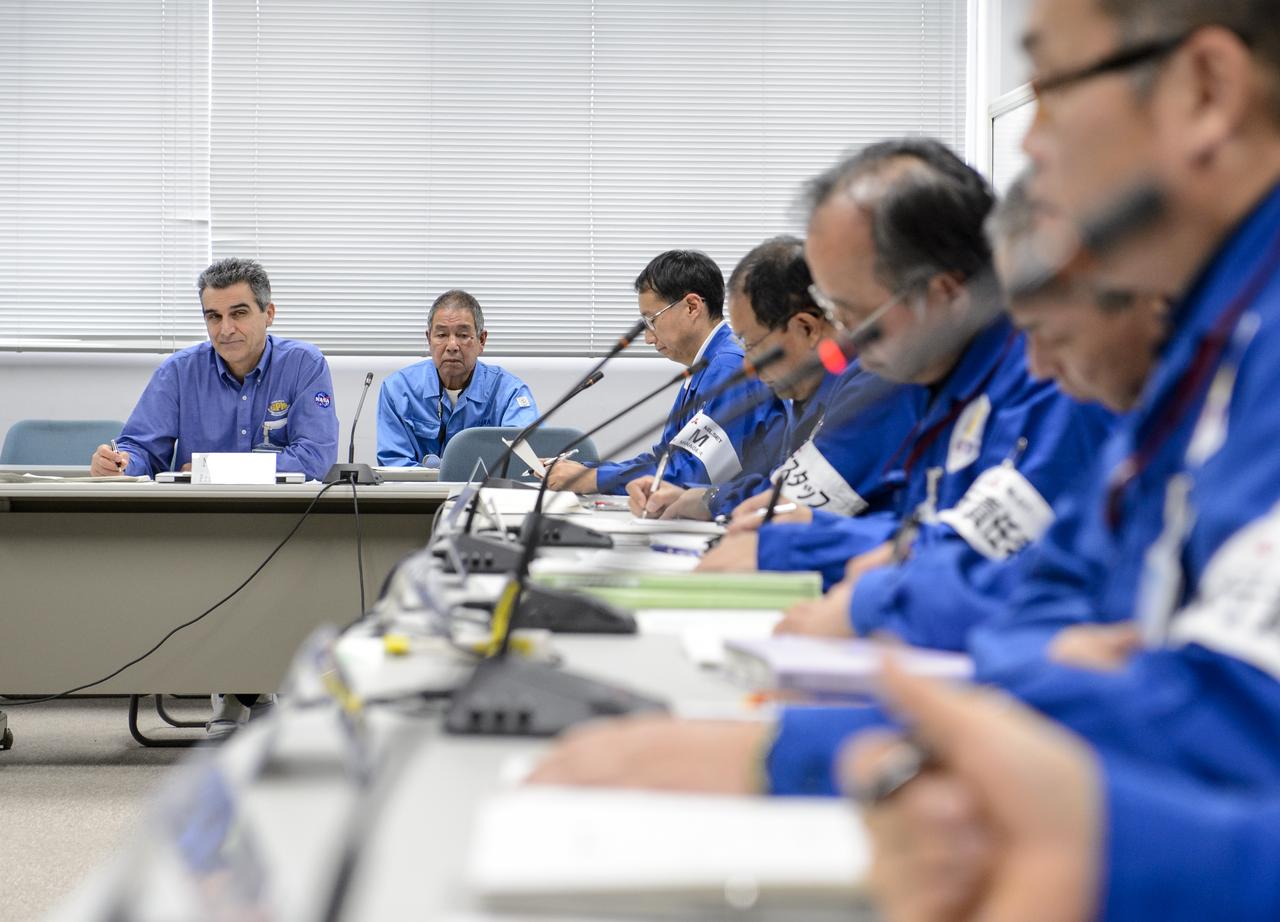
Chief officers from Mitsubishi Heavy Industries, Ltd., the Japan Aerospace Exploration Agency (JAXA) and NASA met on Wednesday, Feb. 26, 2014 in the Range Control Center (RCC) of the Tanegashima Space Center, Japan, to review the readiness of the Global Precipitation Measurement (GPM) Core Observatory for launch. The spacecraft is scheduled to launch aboard an H-IIA rocket early on the morning of Feb. 28 Japan time. Once launched, the GPM spacecraft will collect information that unifies data from an international network of existing and future satellites to map global rainfall and snowfall every three hours.  Photo Credit: (NASA/Bill Ingalls)
Global Precipitation Measurement (GPM) Mission
Chief officers from Mitsubishi Heavy Industries, Ltd., the Japan Aerospace Exploration Agency (JAXA) and NASA met on Wednesday, Feb. 26, 2014 in the Range Control Center (RCC) of the Tanegashima Space Center, Japan, to review the readiness of the Global Precipitation Measurement (GPM) Core Observatory for launch. The spacecraft is scheduled to launch aboard an H-IIA rocket early on the morning of Feb. 28 Japan time. Once launched, the GPM spacecraft will collect information that unifies data from an international network of existing and future satellites to map global rainfall and snowfall every three hours.  Photo Credit: (NASA/Bill Ingalls)
Global Precipitation Measurement (GPM) Mission
Art Azarbarzin, NASA Global Precipitation Measurement (GPM) project manager, left, participates in the GPM Launch Readiness Review (LRR) along with Chief officers from Mitsubishi Heavy Industries, Ltd., and the Japan Aerospace Exploration Agency (JAXA) on Wednesday, Feb. 26, 2014 at Tanegashima Space Center, Japan. The spacecraft is scheduled to launch aboard an H-IIA rocket early on the morning of Feb. 28 Japan time.  At the meeting in the space center's Range Control Center, all preparations to date were reviewed and approval was given to proceed with launch on schedule.  Once launched, the GPM spacecraft will collect information that unifies data from an international network of existing and future satellites to map global rainfall and snowfall every three hours.  Photo Credit: (NASA/Bill Ingalls)
Global Precipitation Measurement (GPM) Mission
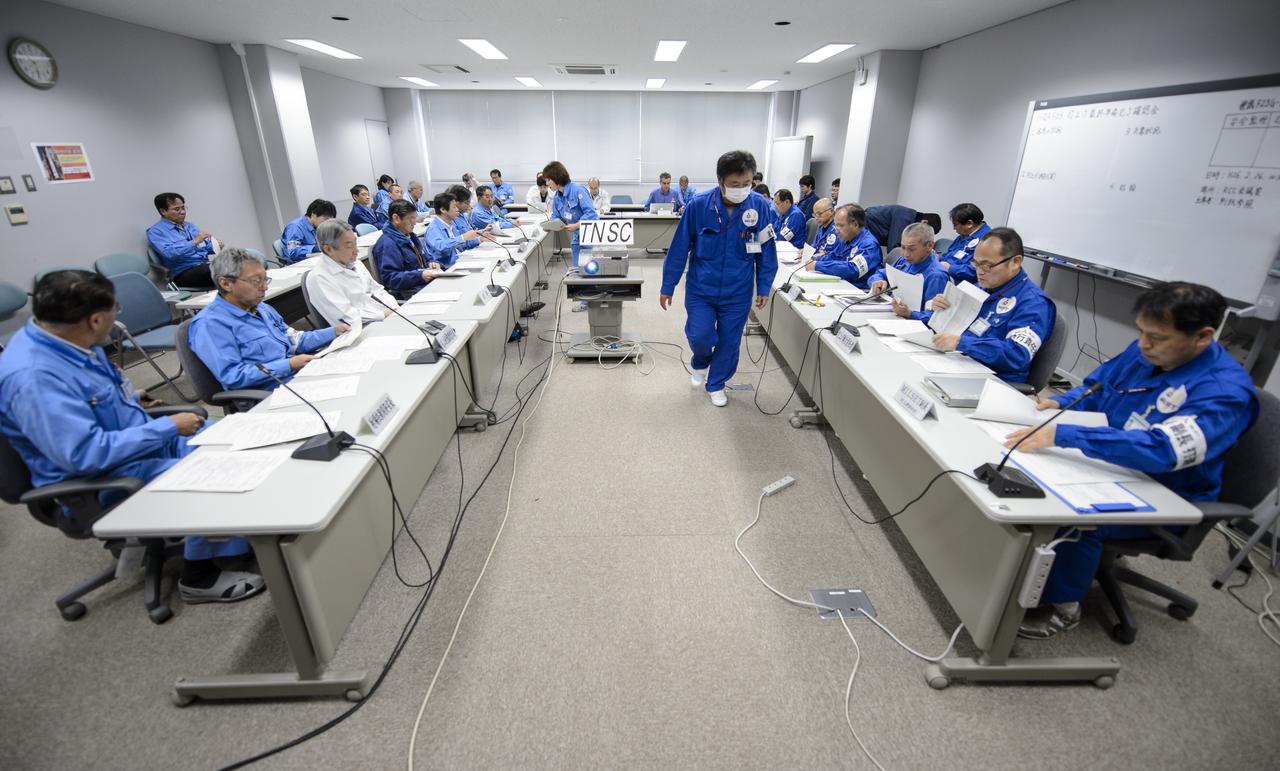
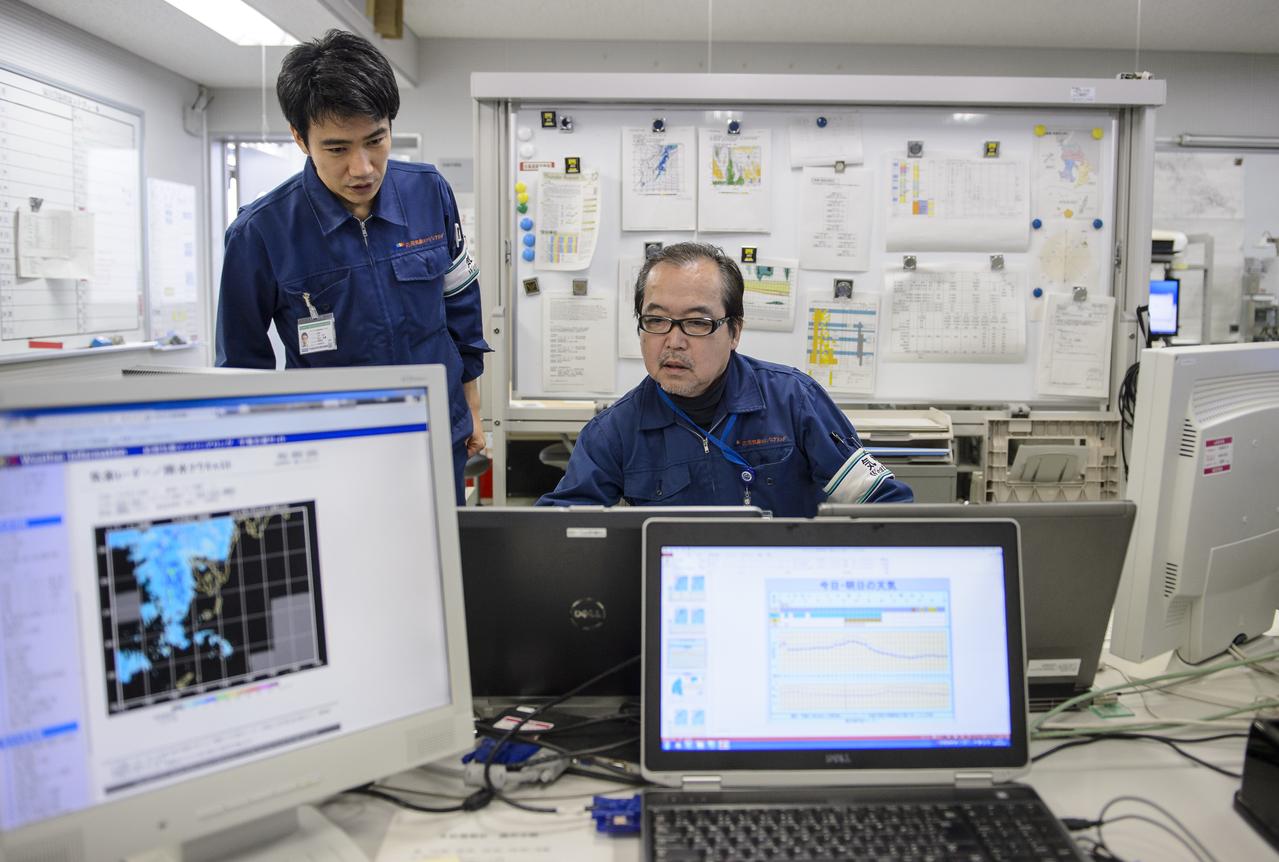
Members of the weather team prepare reports for the Global Precipitation Measurement (GPM) Core Observatory Launch Readiness Review (LRR) with Chief officers from Mitsubishi Heavy Industries, Ltd., the Japan Aerospace Exploration Agency (JAXA), and NASA, on Wednesday, Feb. 26, 2014 at Tanegashima Space Center, Japan. The GPM spacecraft is scheduled to launch aboard an H-IIA rocket early on the morning of Feb. 28 Japan time.  At the meeting in the space center's Range Control Center, all preparations to date were reviewed and approval was given to proceed with launch on schedule.  Once launched, the GPM spacecraft will collect information that unifies data from an international network of existing and future satellites to map global rainfall and snowfall every three hours.  Photo Credit: (NASA/Bill Ingalls)
Global Precipitation Measurement (GPM) Mission
Masahiro Kojima, GPM Dual-frequency Precipitation Radar project manager, Japan Aerospace Exploration Agency (JAXA), left, and, Art Azarbarzin, NASA Global Precipitation Measurement (GPM) project manager, talk after the GPM Launch Readiness Review (LRR), Wednesday, Feb. 26, 2014 at Tanegashima Space Center, Japan. The GPM spacecraft is scheduled to launch aboard an H-IIA rocket early on the morning of Feb. 28 Japan time.  At the meeting in the space center's Range Control Center, all preparations to date were reviewed and approval was given to proceed with launch on schedule.  Once launched, the GPM spacecraft will collect information that unifies data from an international network of existing and future satellites to map global rainfall and snowfall every three hours.  Photo Credit: (NASA/Bill Ingalls)
Global Precipitation Measurement (GPM) Mission
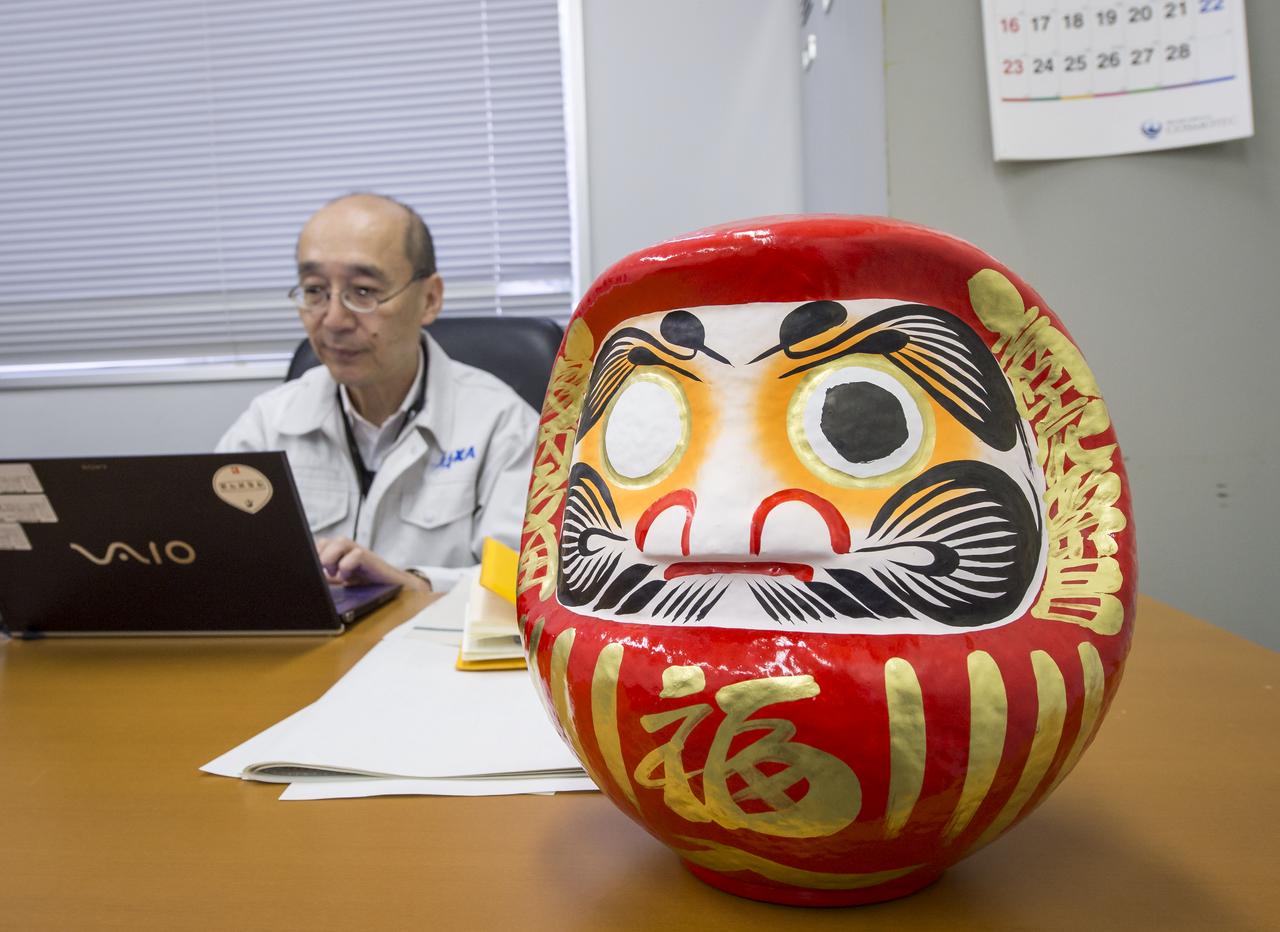
A daruma doll is seen on the desk of Masahiro Kojima, GPM Dual-frequency Precipitation Radar project manager, Japan Aerospace Exploration Agency (JAXA), at the Tanegashima Space Cener's Range Control Center (RCC), Wednesday, Feb. 26, 2014, Tanegashima, Japan. One eye of the daruma doll is colored in when a goal is set and the second eye is colored in at the completion of the goal. JAXA plans to launch an H-IIA rocket carrying the NASA-JAXA, Global Precipitation Measurement (GPM) Core Observatory from the space center on Feb. 28, 2014. Once launched, the GPM spacecraft will collect information that unifies data from an international network of existing and future satellites to map global rainfall and snowfall every three hours.  Photo Credit: (NASA/Bill Ingalls)
Global Precipitation Measurement (GPM) Mission
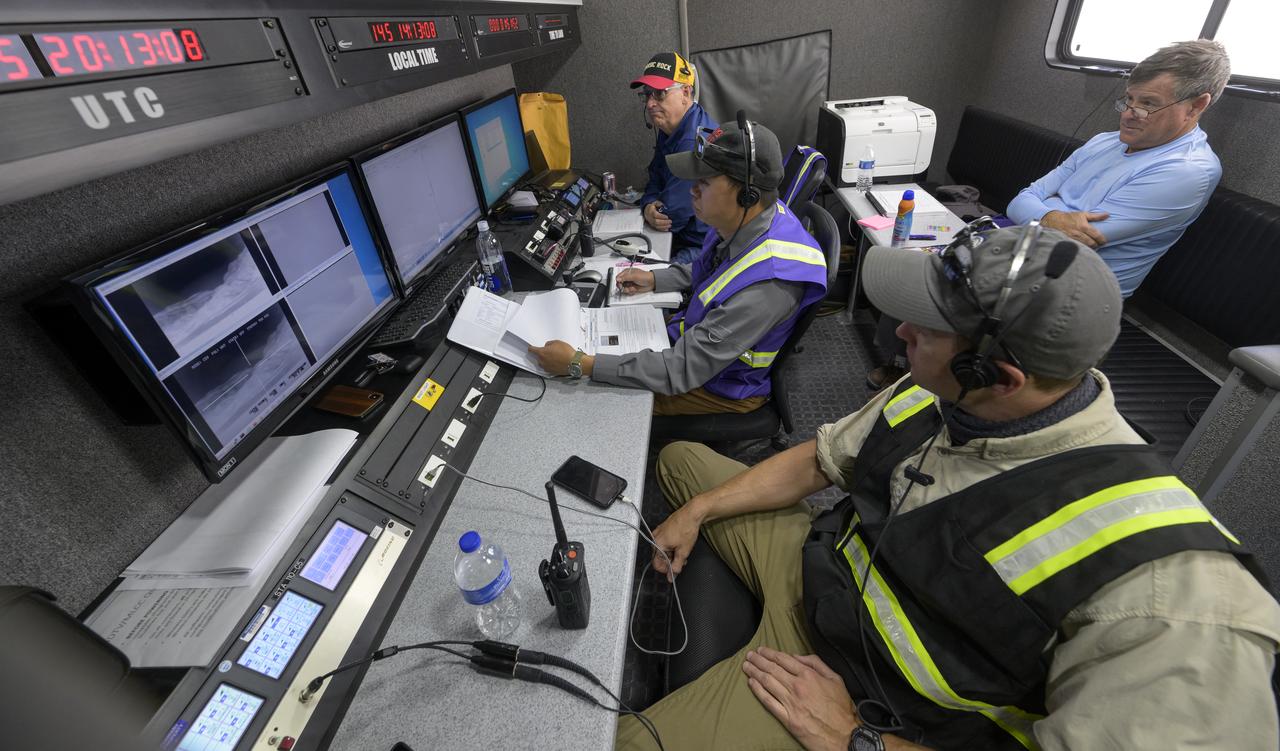
Boeing teams inside the Mobile Landing Control Center (MLCC) prepare for the landing of Boeing’s CST-100 Starliner spacecraft at White Sands Missile Range’s Space Harbor, Wednesday, May 25, 2022, in New Mexico. Boeing’s Orbital Flight Test-2 (OFT-2) is Starliner’s second uncrewed flight test to the International Space Station as part of NASA's Commercial Crew Program. OFT-2 serves as an end-to-end test of the system's capabilities. Photo Credit: (NASA/Bill Ingalls)
Boeing Orbital Flight Test-2 Prelanding
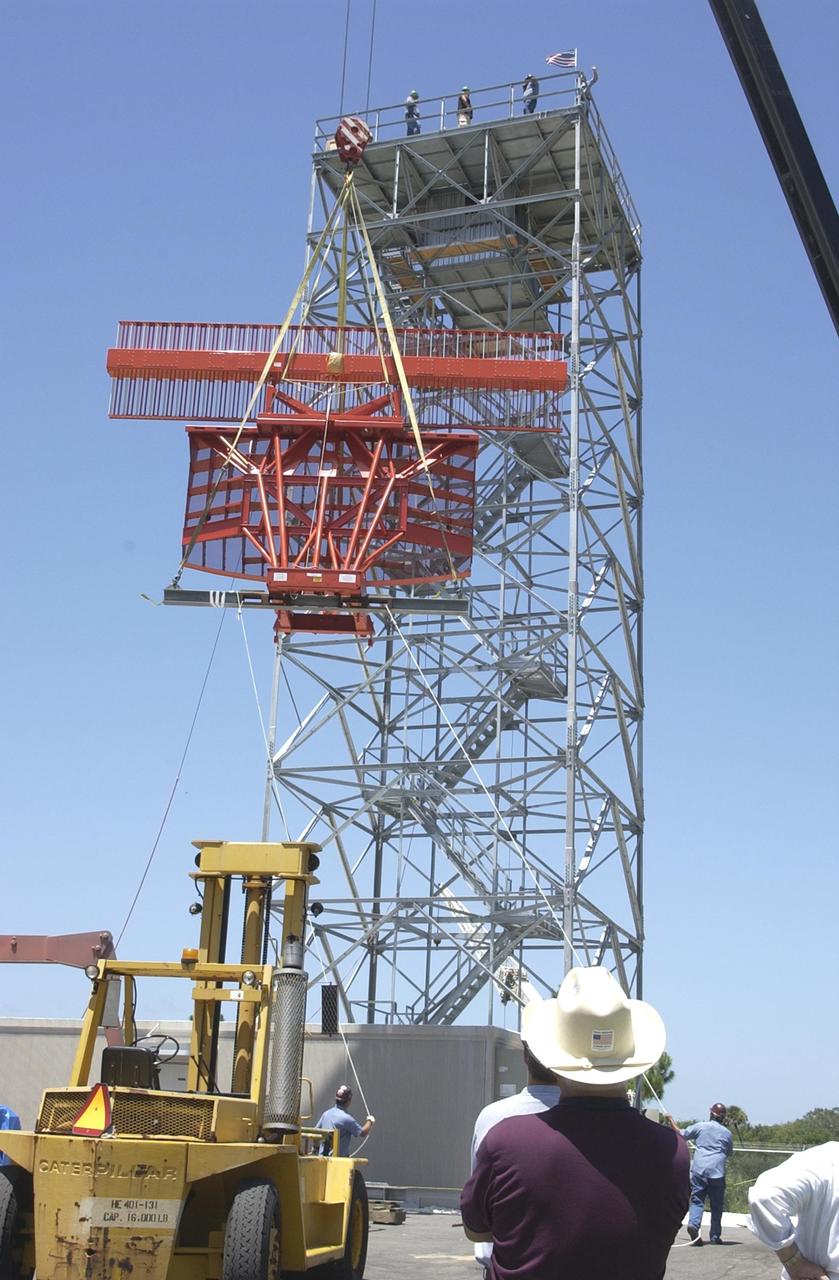
KENNEDY SPACE CENTER, FLA. - An Air Traffic Control radar is being constructed at Shiloh for the NASA control tower at the Shuttle Landing Facility.  It will be used by NASA and the Eastern Range for surveillance of controlled air space in Kennedy Space Center and Cape Canaveral Air Force Station restricted areas.  Shiloh is on the northern end of Merritt Island.
KSC-03pd3293
An Air Traffic Control radar is being constructed at Shiloh for the NASA control tower at the Shuttle Landing Facility. It will be used by NASA and the Eastern Range for surveillance of controlled air space in Kennedy Space Center and Cape Canaveral Air Force Station restricted areas. Shiloh is on the northern end of Merritt Island.
Air Traffic Control Radar
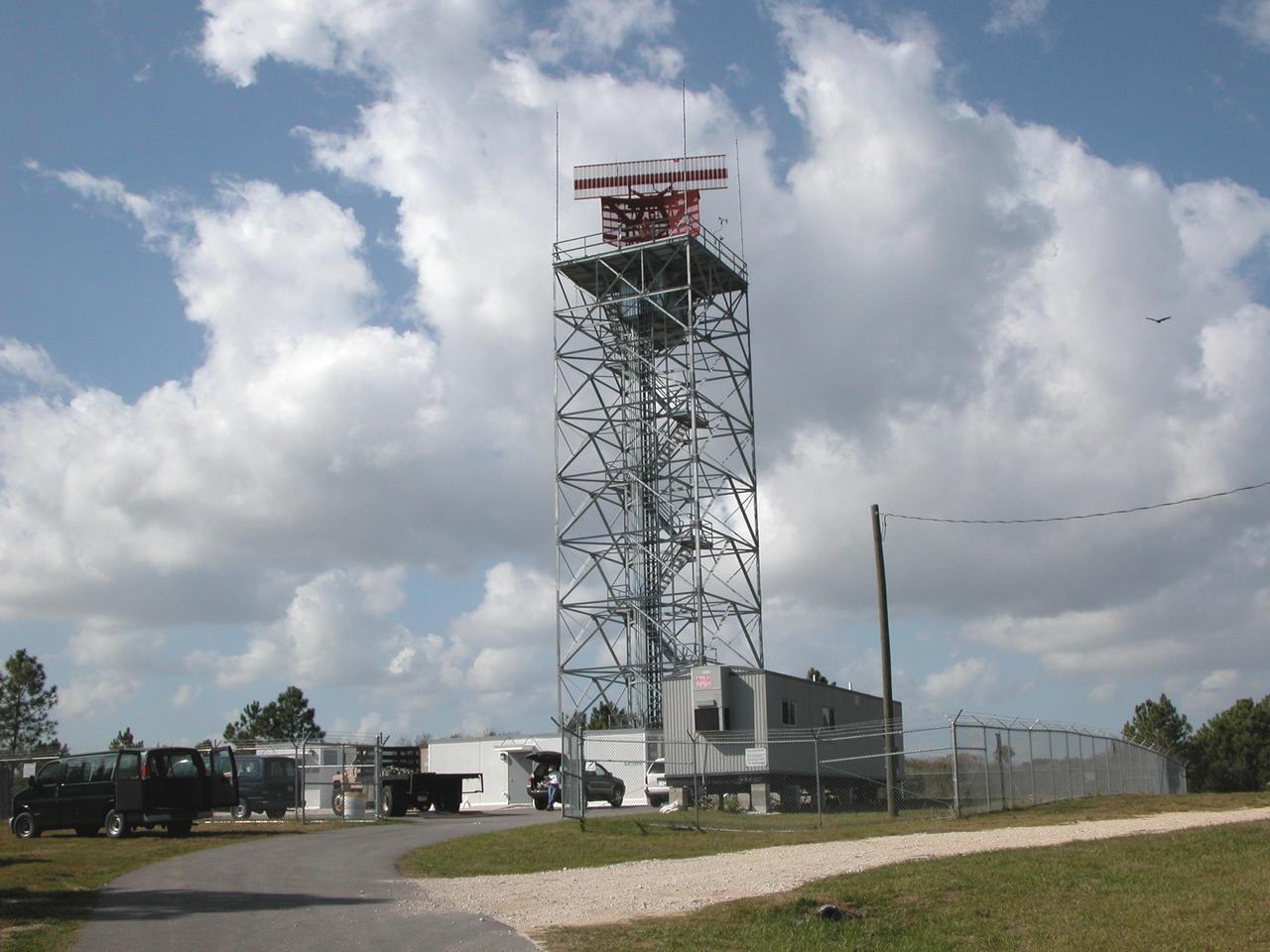
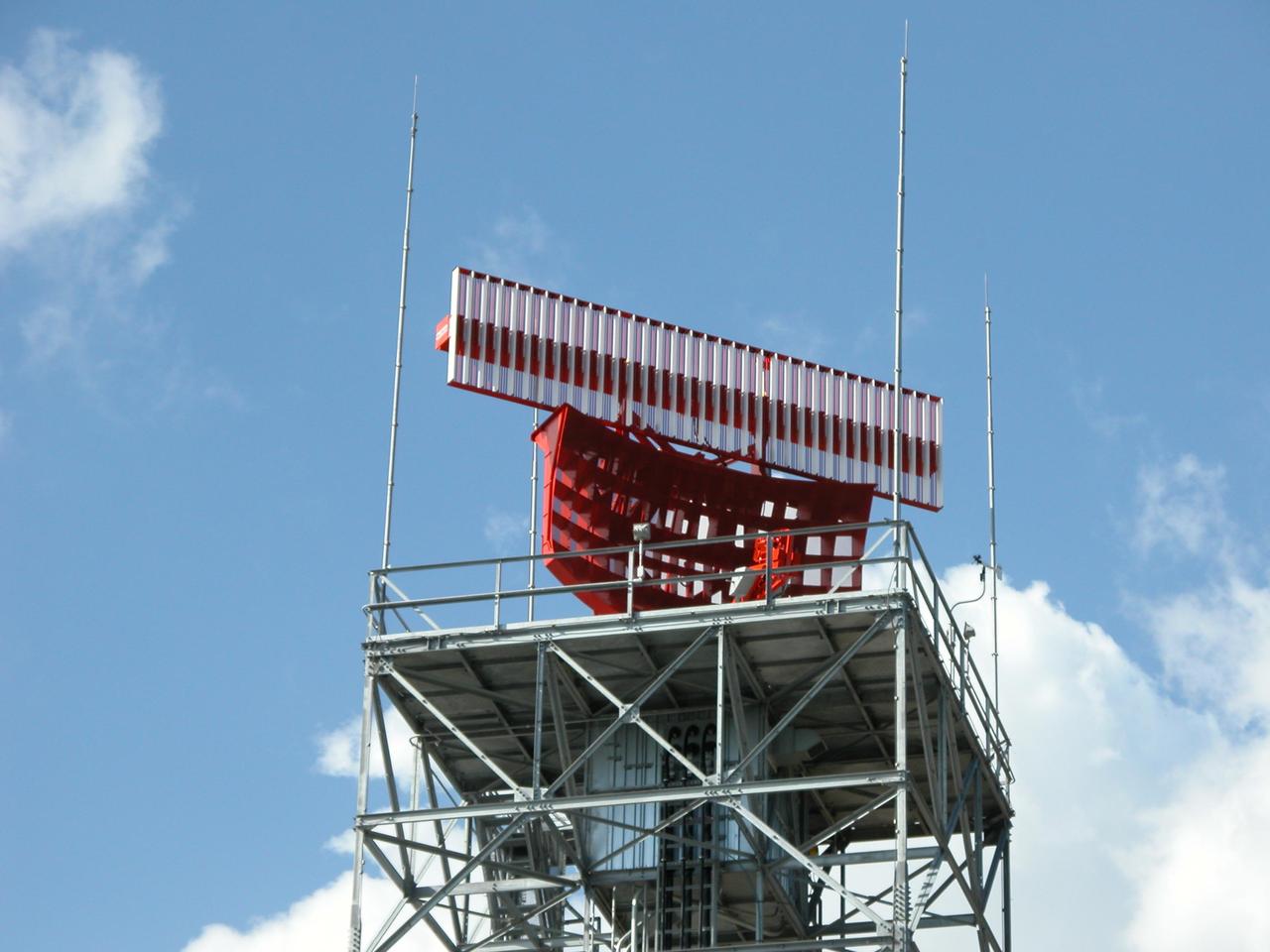
An Air Traffic Control radar has been constructed at Shiloh for the NASA control tower at the Shuttle Landing Facility. It will be used by NASA and the Eastern Range for surveillance of controlled air space in Kennedy Space Center and Cape Canaveral Air Force Station restricted areas. Shiloh is on the northern end of Merritt Island.
Air Traffic Control Radar
An Air Traffic Control radar is being constructed at Shiloh for the NASA control tower at the Shuttle Landing Facility. It will be used by NASA and the Eastern Range for surveillance of controlled air space in Kennedy Space Center and Cape Canaveral Air Force Station restricted areas. Shiloh is on the northern end of Merritt Island.
Air Traffic Control Radar
An Air Traffic Control radar has been constructed at Shiloh for the NASA control tower at the Shuttle Landing Facility. It will be used by NASA and the Eastern Range for surveillance of controlled air space in Kennedy Space Center and Cape Canaveral Air Force Station restricted areas. Shiloh is on the northern end of Merritt Island.
Air Traffic Control Radar
An Air Traffic Control radar has been constructed at Shiloh for the NASA control tower at the Shuttle Landing Facility. It will be used by NASA and the Eastern Range for surveillance of controlled air space in Kennedy Space Center and Cape Canaveral Air Force Station restricted areas. Shiloh is on the northern end of Merritt Island.
Air Traffic Control Radar
An Air Traffic Control radar is being constructed at Shiloh for the NASA control tower at the Shuttle Landing Facility. It will be used by NASA and the Eastern Range for surveillance of controlled air space in Kennedy Space Center and Cape Canaveral Air Force Station restricted areas. Shiloh is on the northern end of Merritt Island.
Air Traffic Control Radar
An Air Traffic Control radar has been constructed at Shiloh for the NASA control tower at the Shuttle Landing Facility. It will be used by NASA and the Eastern Range for surveillance of controlled air space in Kennedy Space Center and Cape Canaveral Air Force Station restricted areas. Shiloh is on the northern end of Merritt Island.
Air Traffic Control Radar
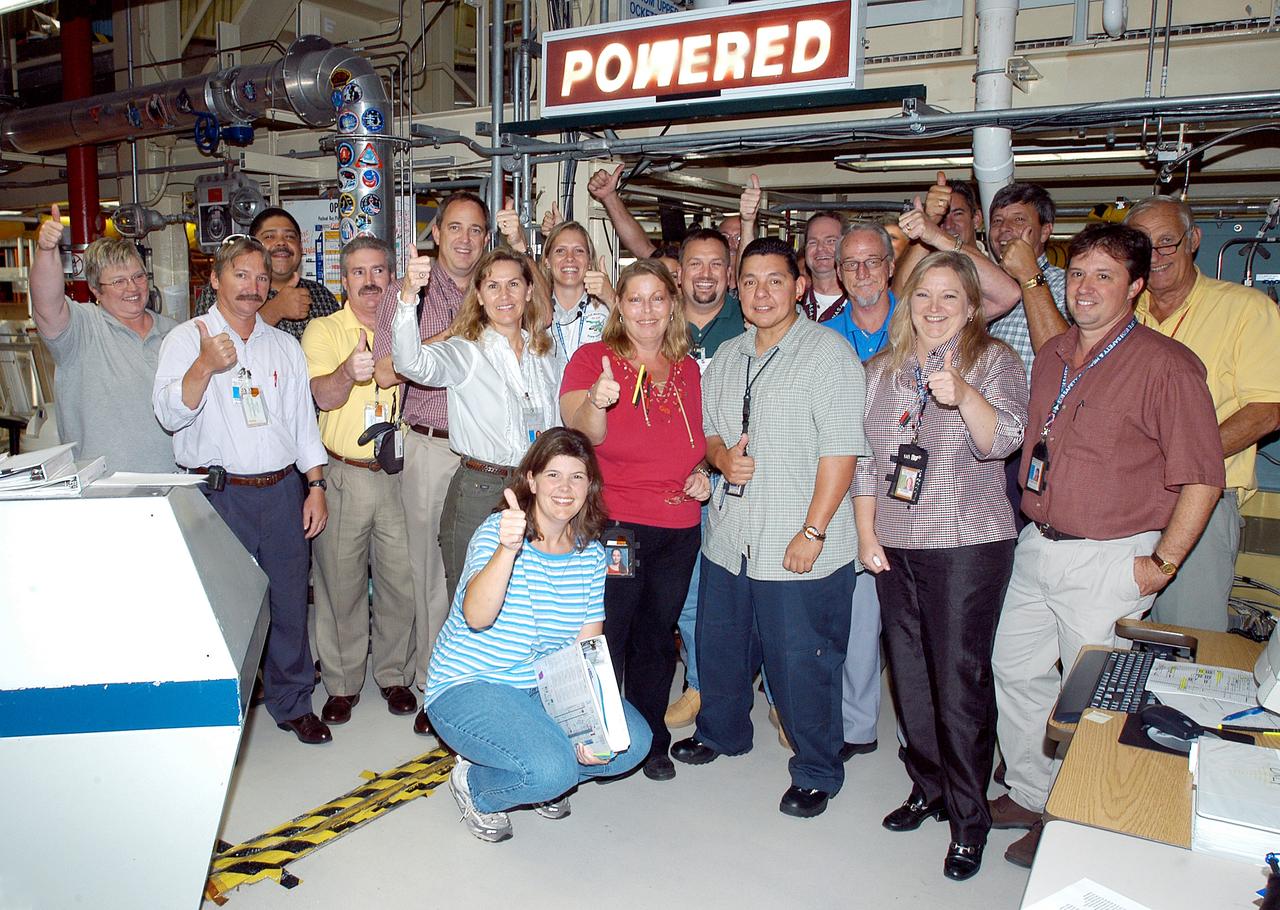
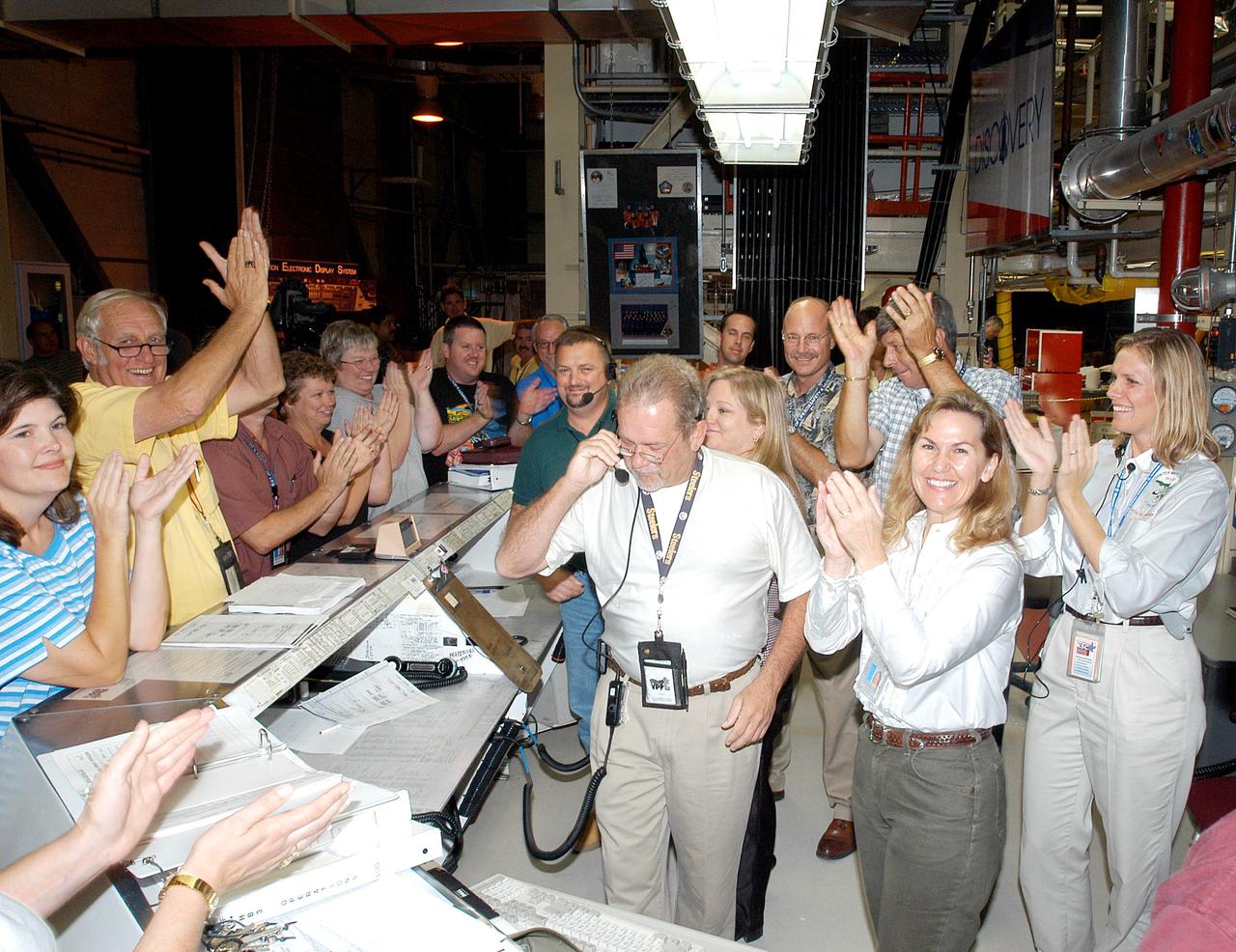
KENNEDY SPACE CENTER, FLA.  -  In the Orbiter Processing Facility, the processing team celebrates the  successful power-up of the orbiter Discovery.  The vehicle has been undergoing Orbiter Major Modifications in the past year, ranging from wiring, control panels and black boxes to gaseous and fluid systems tubing and components.  These systems were deserviced, disassembled, inspected, modified, reassembled, checked out and reserviced, as were most other systems onboard.  The work includes the installation of the Multifunction Electronic Display Subsystem (MEDS) - a state-of-the-art “glass cockpit.”
KENNEDY SPACE CENTER, FLA. - In the Orbiter Processing Facility, the processing team celebrates the successful power-up of the orbiter Discovery. The vehicle has been undergoing Orbiter Major Modifications in the past year, ranging from wiring, control panels and black boxes to gaseous and fluid systems tubing and components. These systems were deserviced, disassembled, inspected, modified, reassembled, checked out and reserviced, as were most other systems onboard. The work includes the installation of the Multifunction Electronic Display Subsystem (MEDS) - a state-of-the-art “glass cockpit.”
KENNEDY SPACE CENTER, FLA.  -   In the Orbiter Processing Facility, the processing team applaud the successful power-up of the orbiter Discovery.  The vehicle has been undergoing Orbiter Major Modifications in the past year, ranging from wiring, control panels and black boxes to gaseous and fluid systems tubing and components.  These systems were deserviced, disassembled, inspected, modified, reassembled, checked out and reserviced, as were most other systems onboard.  The work includes the installation of the Multifunction Electronic Display Subsystem (MEDS) - a state-of-the-art “glass cockpit.”
KENNEDY SPACE CENTER, FLA. - In the Orbiter Processing Facility, the processing team applaud the successful power-up of the orbiter Discovery. The vehicle has been undergoing Orbiter Major Modifications in the past year, ranging from wiring, control panels and black boxes to gaseous and fluid systems tubing and components. These systems were deserviced, disassembled, inspected, modified, reassembled, checked out and reserviced, as were most other systems onboard. The work includes the installation of the Multifunction Electronic Display Subsystem (MEDS) - a state-of-the-art “glass cockpit.”
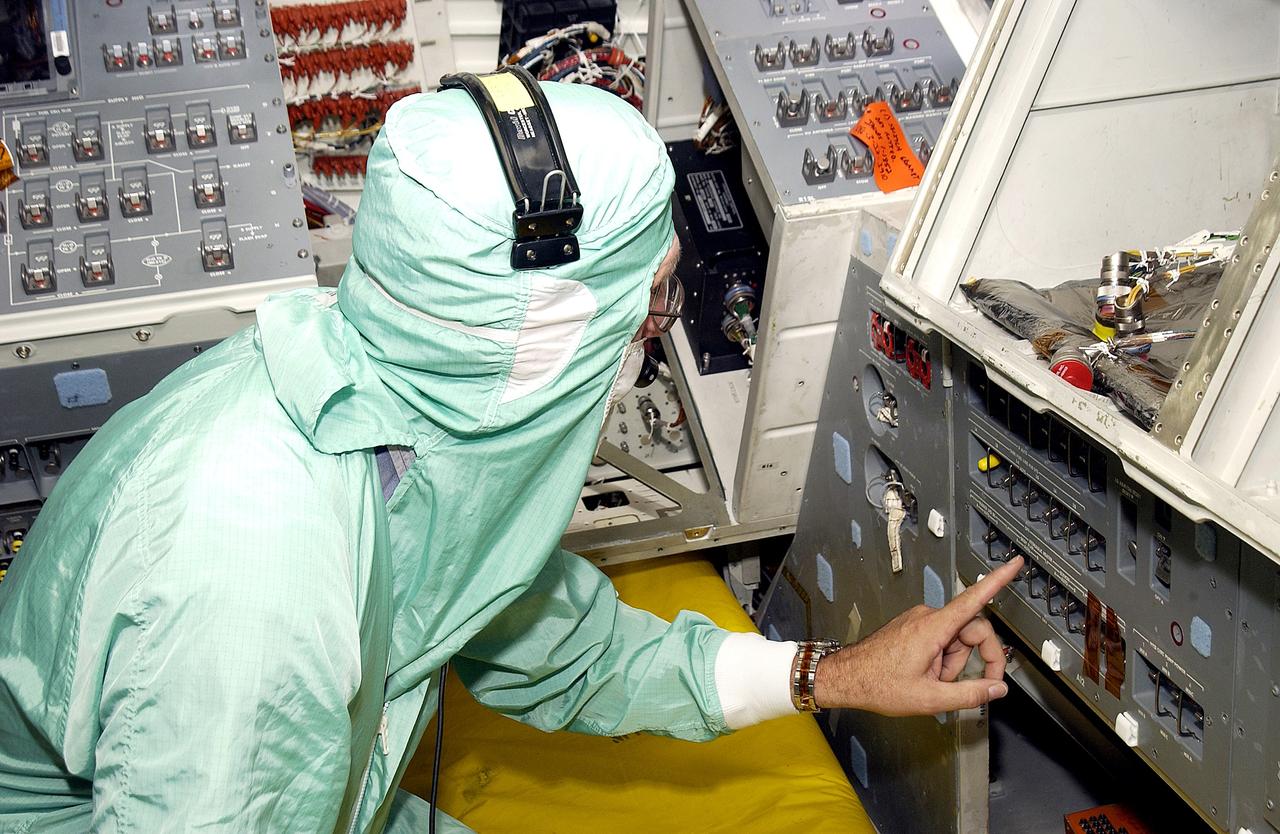
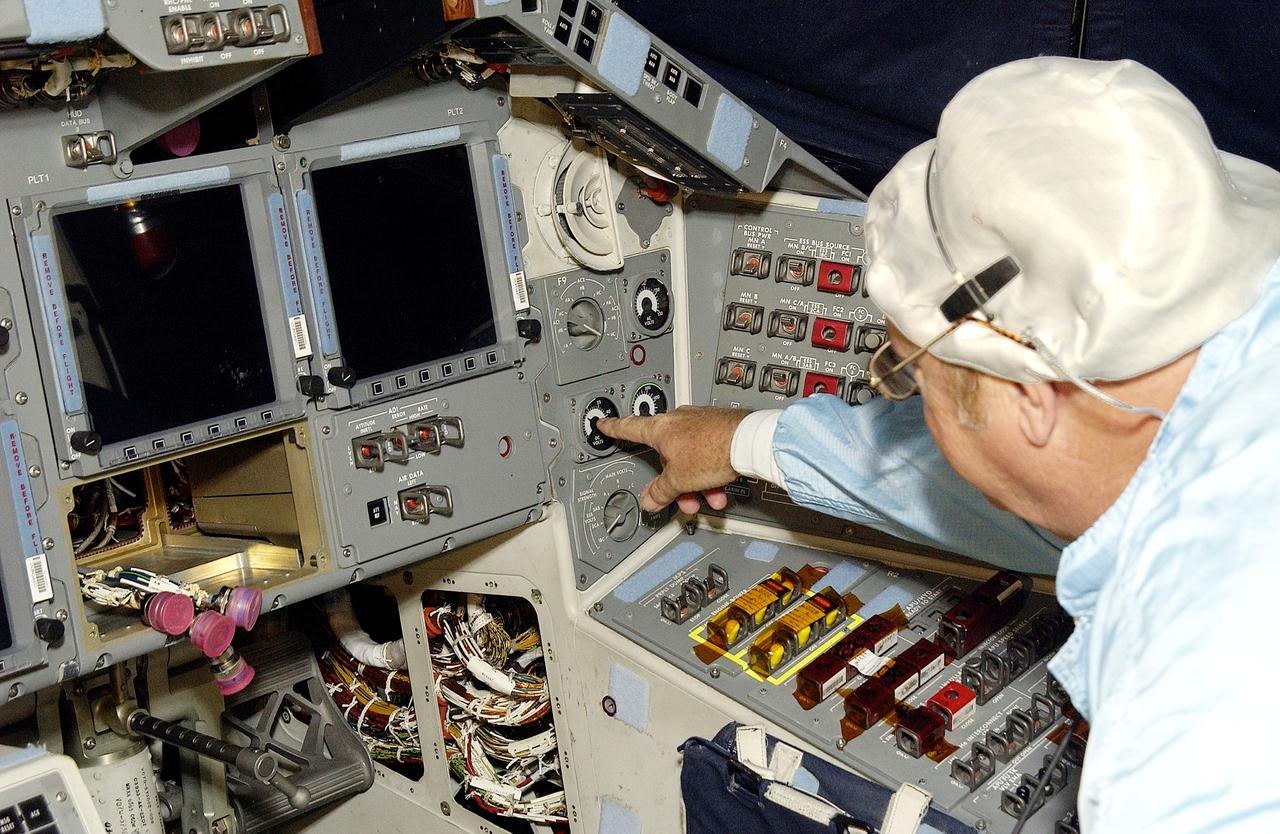
KENNEDY SPACE CENTER, FLA.  -   During power-up of the orbiter Discovery in the Orbiter Processing Facility, a technician turns on a switch.  Discovery has been undergoing Orbiter Major Modifications in the past year, ranging from wiring, control panels and black boxes to gaseous and fluid systems tubing and components.  These systems were deserviced, disassembled, inspected, modified, reassembled, checked out and reserviced, as were most other systems onboard.  The work includes the installation of the Multifunction Electronic Display Subsystem (MEDS) - a state-of-the-art “glass cockpit.”
KENNEDY SPACE CENTER, FLA. - During power-up of the orbiter Discovery in the Orbiter Processing Facility, a technician turns on a switch. Discovery has been undergoing Orbiter Major Modifications in the past year, ranging from wiring, control panels and black boxes to gaseous and fluid systems tubing and components. These systems were deserviced, disassembled, inspected, modified, reassembled, checked out and reserviced, as were most other systems onboard. The work includes the installation of the Multifunction Electronic Display Subsystem (MEDS) - a state-of-the-art “glass cockpit.”
KENNEDY SPACE CENTER, FLA.  -  During power-up of the orbiter Discovery in the Orbiter Processing Facility, a technician moves a switch.  Discovery has been undergoing Orbiter Major Modifications in the past year, ranging from wiring, control panels and black boxes to gaseous and fluid systems tubing and components.  These systems were deserviced, disassembled, inspected, modified, reassembled, checked out and reserviced, as were most other systems onboard.  The work includes the installation of the Multifunction Electronic Display Subsystem (MEDS) - a state-of-the-art “glass cockpit.”
KENNEDY SPACE CENTER, FLA. - During power-up of the orbiter Discovery in the Orbiter Processing Facility, a technician moves a switch. Discovery has been undergoing Orbiter Major Modifications in the past year, ranging from wiring, control panels and black boxes to gaseous and fluid systems tubing and components. These systems were deserviced, disassembled, inspected, modified, reassembled, checked out and reserviced, as were most other systems onboard. The work includes the installation of the Multifunction Electronic Display Subsystem (MEDS) - a state-of-the-art “glass cockpit.”
KENNEDY SPACE CENTER, FLA.  - This aerial view shows the air traffic control radar at Shiloh for the NASA control tower at NASA Kennedy Space Center's Shuttle Landing Facility. It is used by NASA and the Eastern Range for surveillance of controlled air space in Kennedy Space Center and Cape Canaveral Air Force Station restricted areas. Shiloh is on the northern end of Merritt Island.  Photo credit: Cory Huston
KSC-06pd0387
KENNEDY SPACE CENTER, FLA.  - This aerial view shows the air traffic control radar at Shiloh for the NASA control tower at the Shuttle Landing Facility. It is used by NASA and the Eastern Range for surveillance of controlled air space in Kennedy Space Center and Cape Canaveral Air Force Station restricted areas and for aircraft landings and departures. Shiloh is on the northern end of Merritt Island.  Photo credit: Cory Huston
KSC-06pd0386
The communication antenna is used primarily for test flights to receive downlink flight data and video from test aircraft and also to support command uplink of data to test aircraft for command and control. It is one of two such assets of the Dryden Aeronautical Test Range at NASA’s Armstrong Flight Research Center in California.
DATR Supports Space Communication, Research Flights
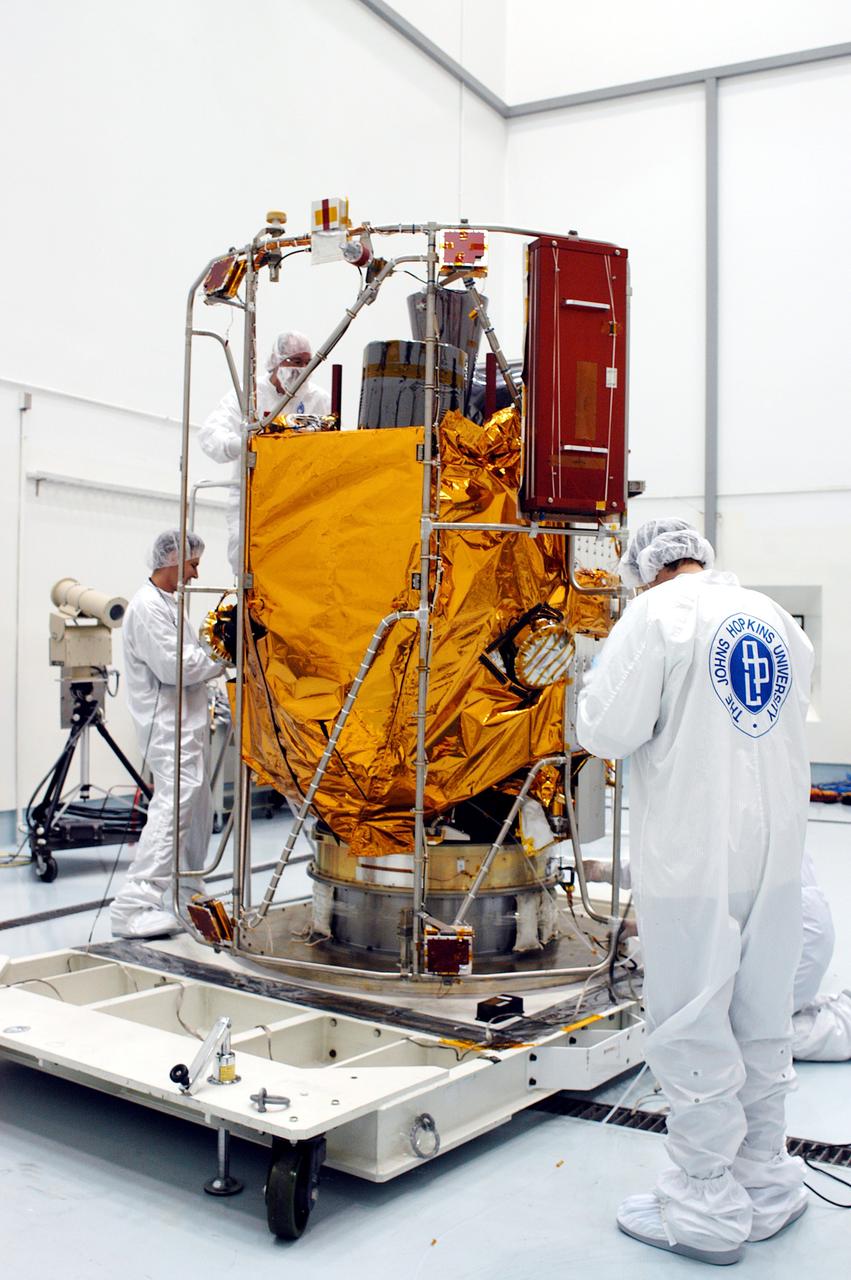
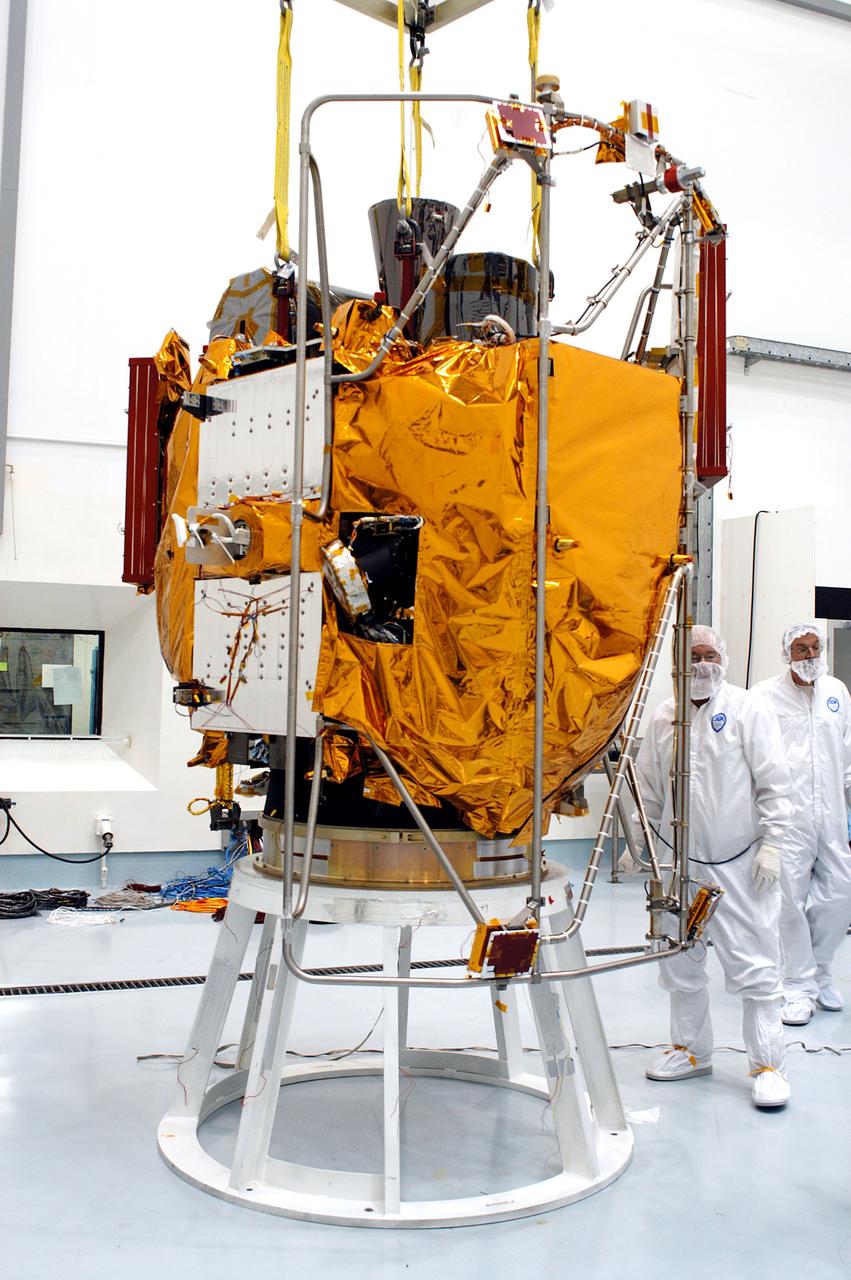
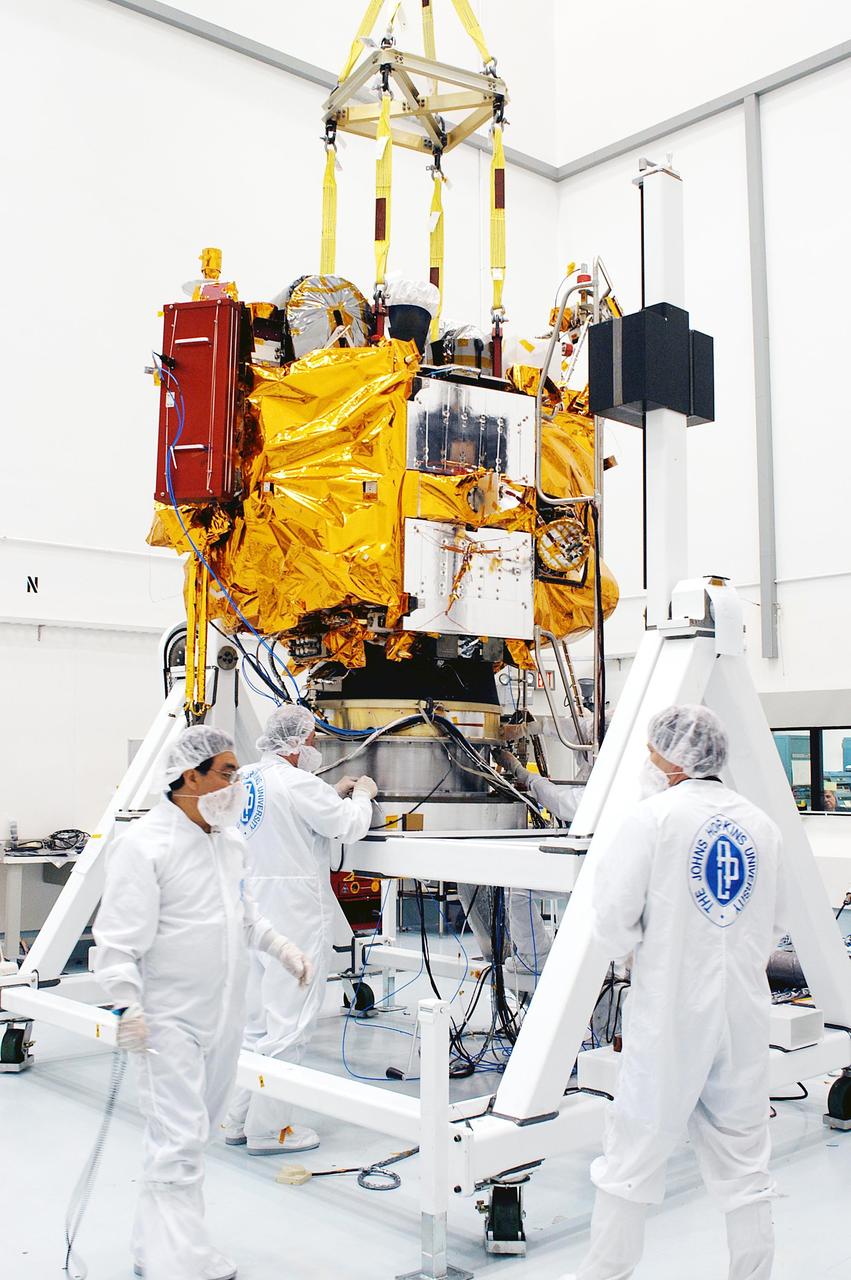
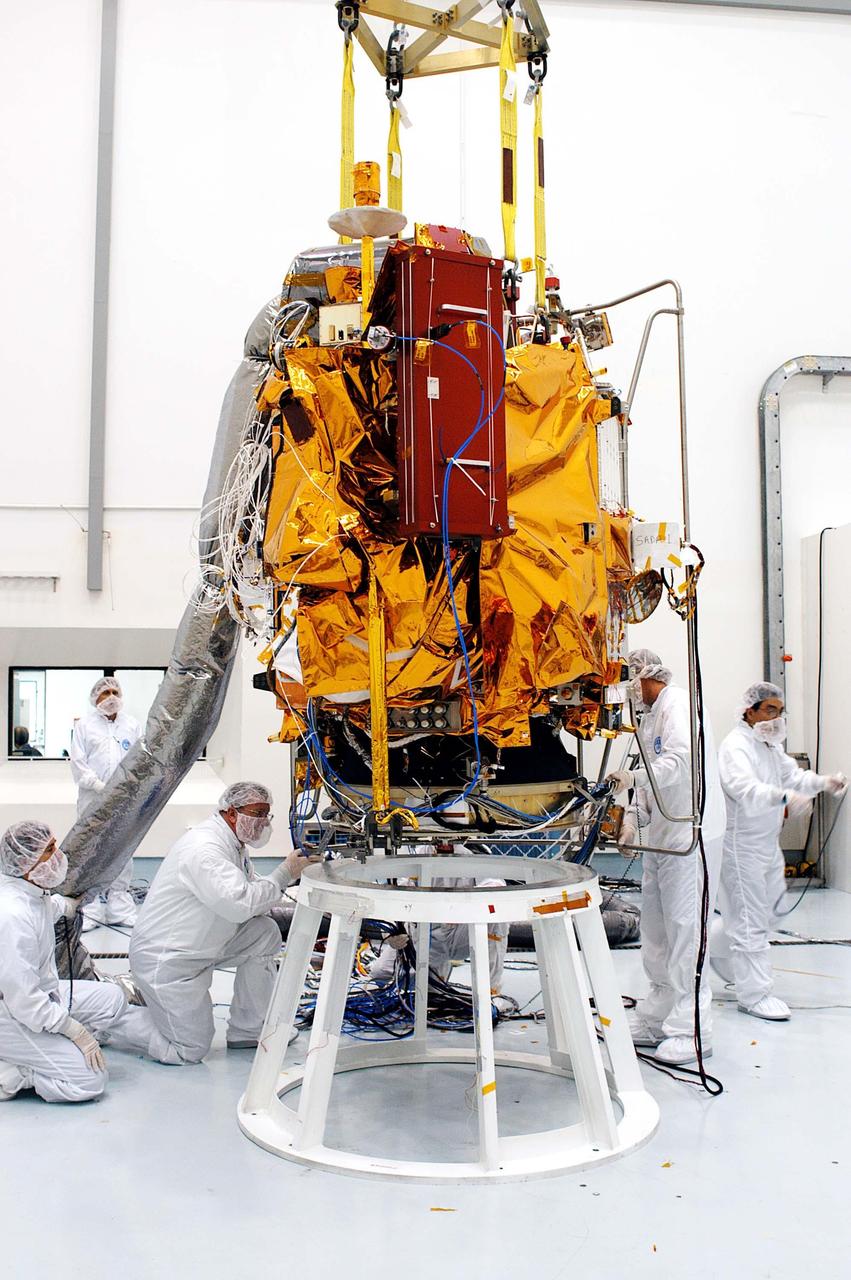
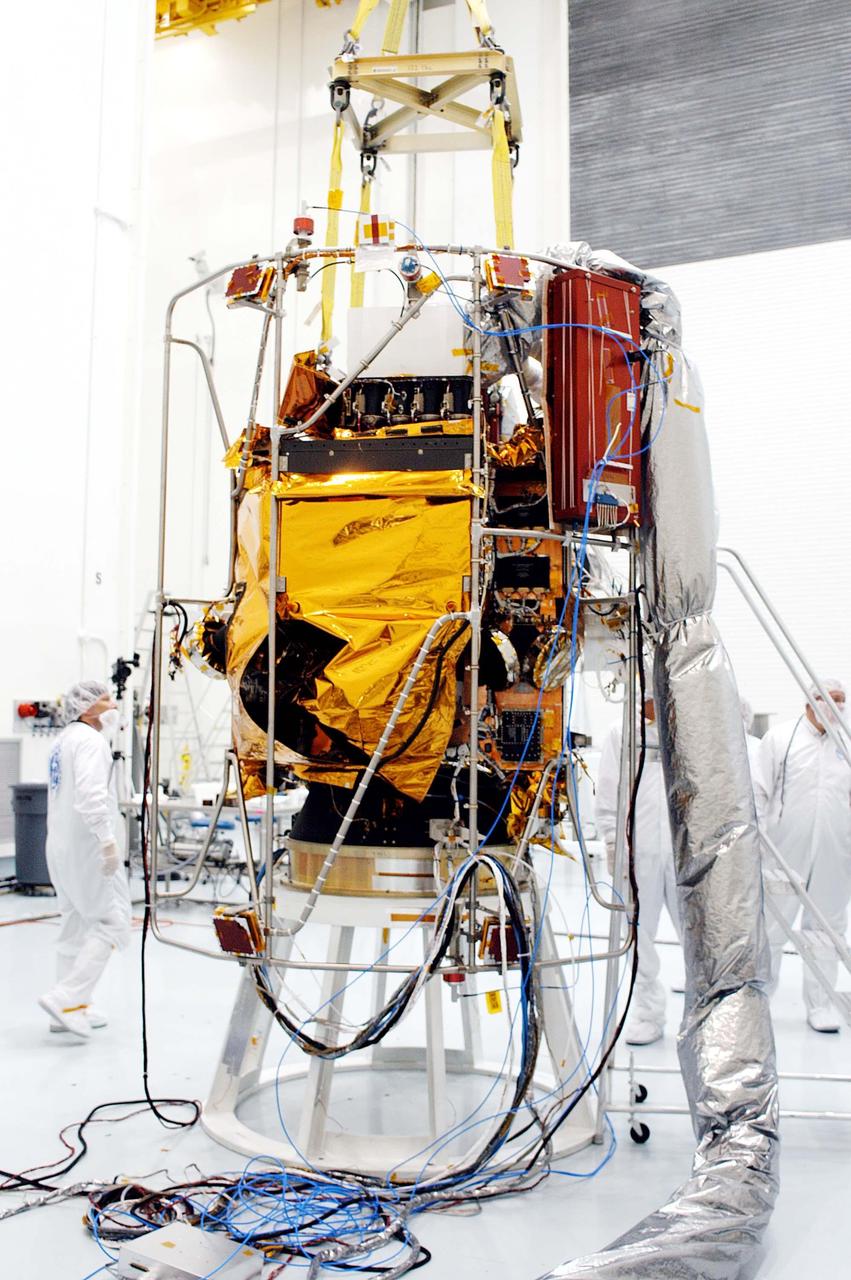
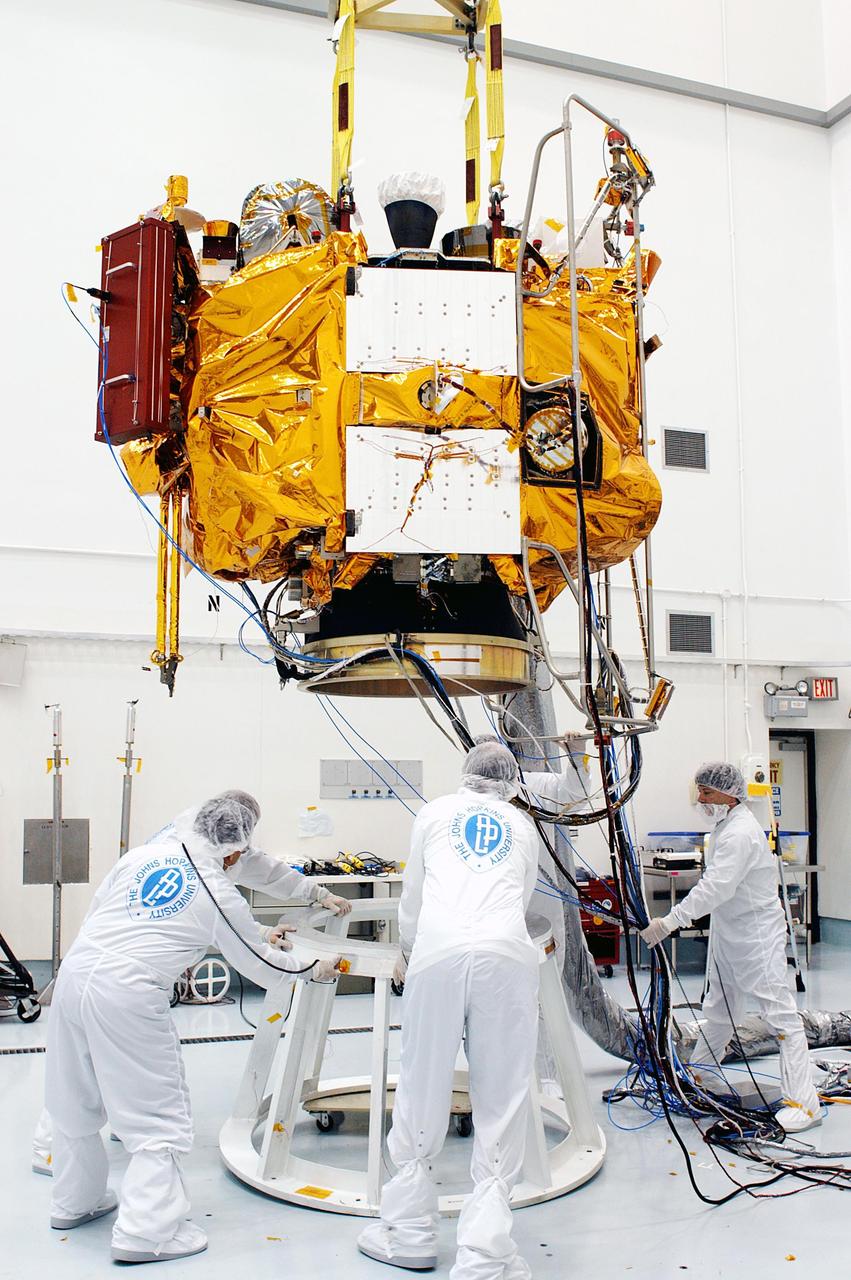
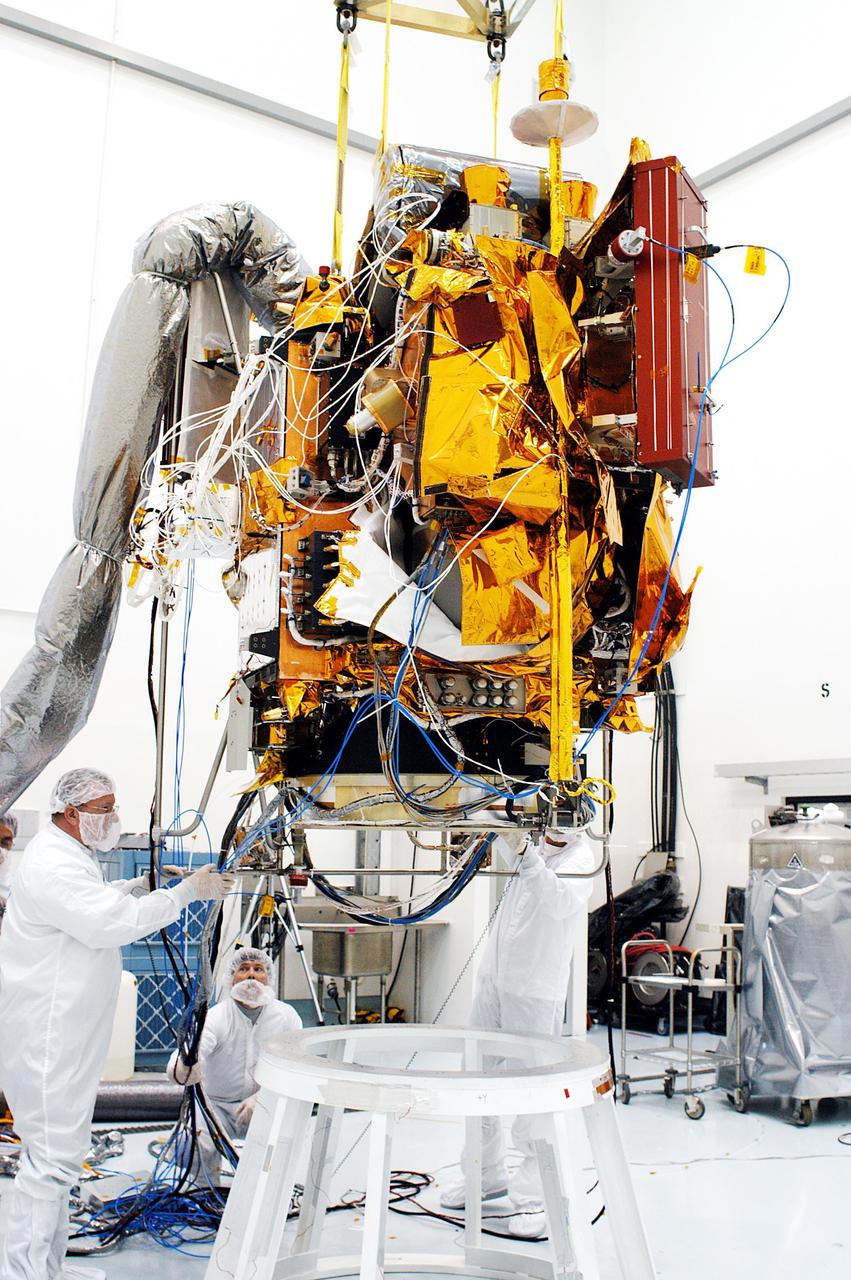
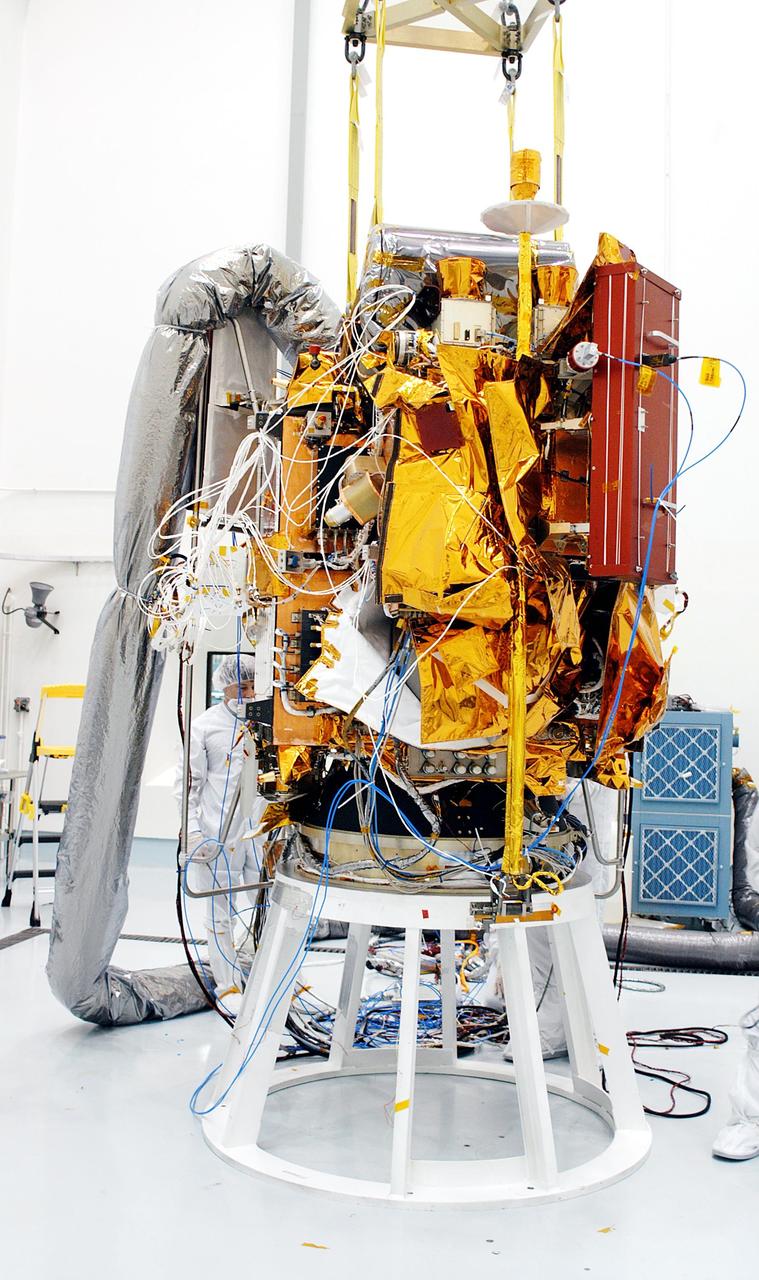
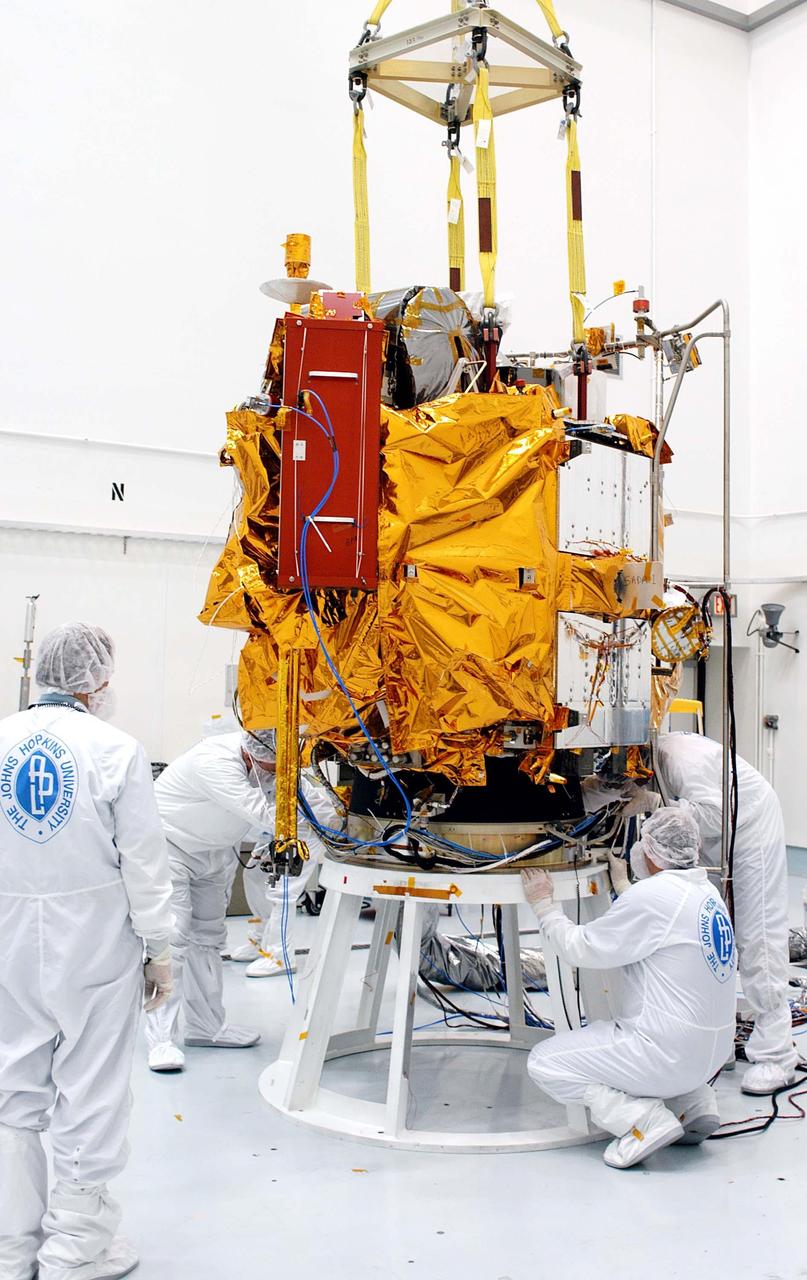
KENNEDY SPACE CENTER, FLA. -  At the Astrotech Space Operations processing facilities, an overhead crane moves NASA’s MESSENGER spacecraft toward a work stand. There employees of the Johns Hopkins University Applied Physics Laboratory, builders of the spacecraft, will perform an initial state-of-health check.  Then processing for launch can begin, including checkout of the power systems, communications systems and control systems.  The thermal blankets will also be attached for flight.  MESSENGER - short for MErcury Surface, Space ENvironment, GEochemistry and Ranging - will be launched May 11 on a six-year mission aboard a Boeing Delta II rocket.  Liftoff is targeted for 2:26 a.m. EDT on Tuesday, May 11.
KENNEDY SPACE CENTER, FLA. - At the Astrotech Space Operations processing facilities, an overhead crane moves NASA’s MESSENGER spacecraft toward a work stand. There employees of the Johns Hopkins University Applied Physics Laboratory, builders of the spacecraft, will perform an initial state-of-health check. Then processing for launch can begin, including checkout of the power systems, communications systems and control systems. The thermal blankets will also be attached for flight. MESSENGER - short for MErcury Surface, Space ENvironment, GEochemistry and Ranging - will be launched May 11 on a six-year mission aboard a Boeing Delta II rocket. Liftoff is targeted for 2:26 a.m. EDT on Tuesday, May 11.
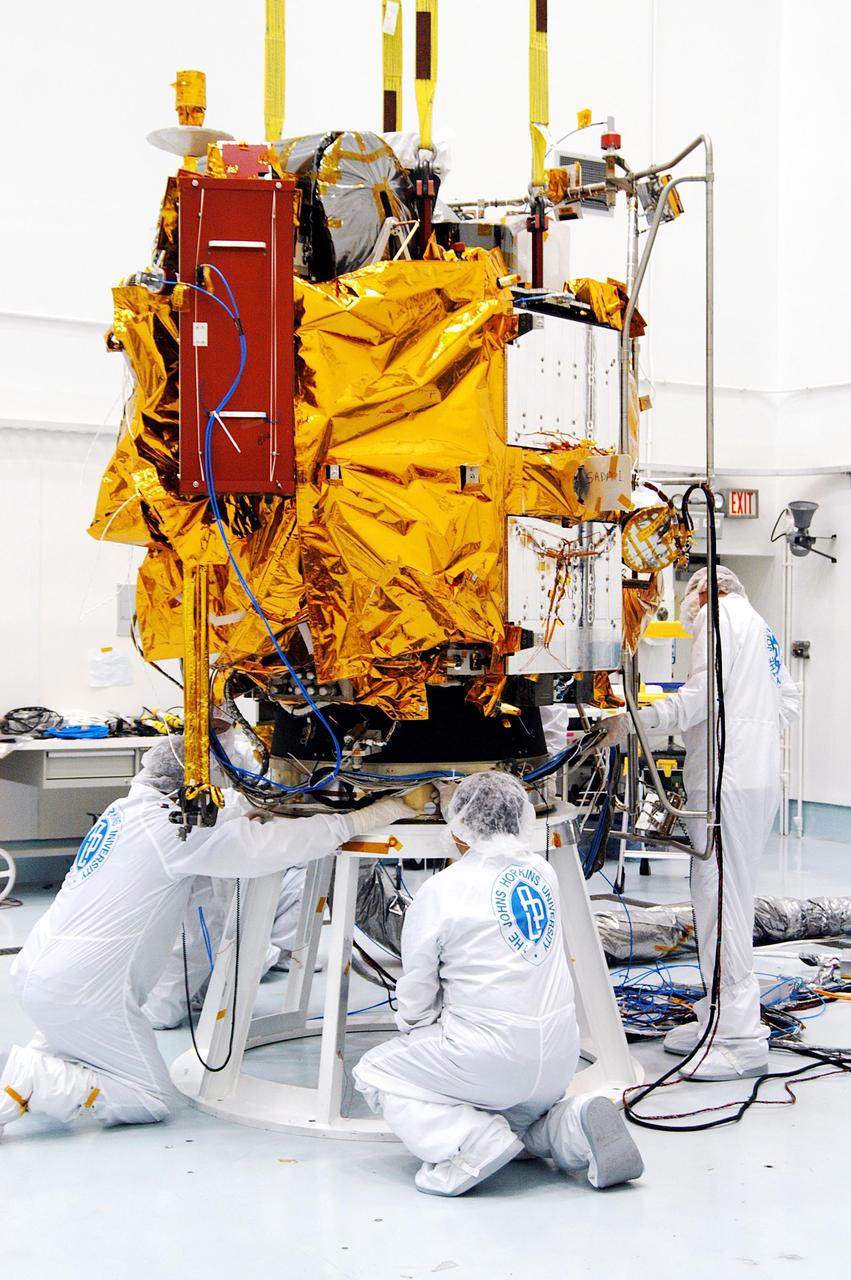
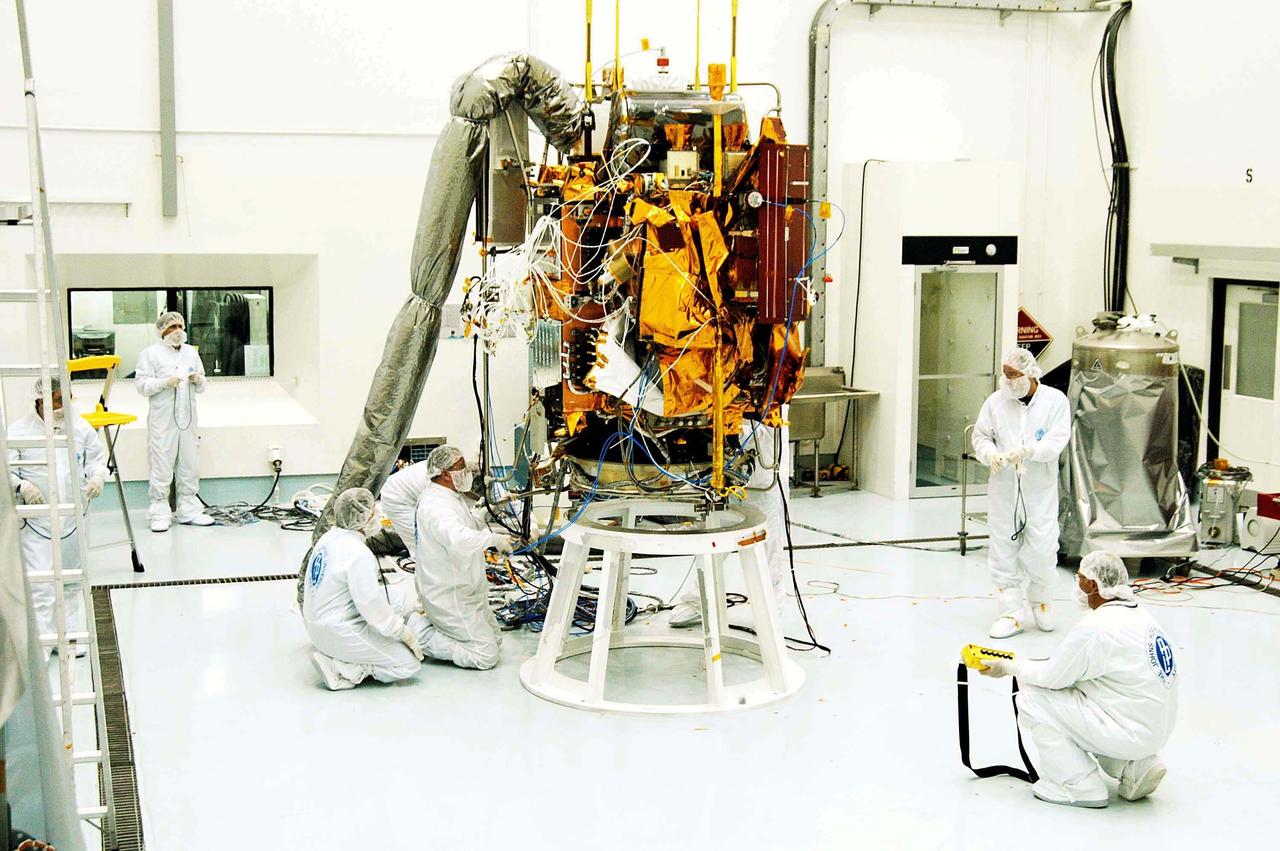
KENNEDY SPACE CENTER, FLA. -  At the Astrotech Space Operations processing facilities, NASA’s MESSENGER spacecraft is secure after transfer to the work stand. There employees of the Johns Hopkins University Applied Physics Laboratory, builders of the spacecraft, will perform an initial state-of-health check.  Then processing for launch can begin, including checkout of the power systems, communications systems and control systems.  The thermal blankets will also be attached for flight.  MESSENGER - short for MErcury Surface, Space ENvironment, GEochemistry and Ranging - will be launched May 11 on a six-year mission aboard a Boeing Delta II rocket.  Liftoff is targeted for 2:26 a.m. EDT on Tuesday, May 11.
KENNEDY SPACE CENTER, FLA. - At the Astrotech Space Operations processing facilities, NASA’s MESSENGER spacecraft is secure after transfer to the work stand. There employees of the Johns Hopkins University Applied Physics Laboratory, builders of the spacecraft, will perform an initial state-of-health check. Then processing for launch can begin, including checkout of the power systems, communications systems and control systems. The thermal blankets will also be attached for flight. MESSENGER - short for MErcury Surface, Space ENvironment, GEochemistry and Ranging - will be launched May 11 on a six-year mission aboard a Boeing Delta II rocket. Liftoff is targeted for 2:26 a.m. EDT on Tuesday, May 11.
KENNEDY SPACE CENTER, FLA. -  At the Astrotech Space Operations processing facilities, an overhead crane lowers NASA’s MESSENGER spacecraft onto a work stand. There employees of the Johns Hopkins University Applied Physics Laboratory, builders of the spacecraft, will perform an initial state-of-health check.  Then processing for launch can begin, including checkout of the power systems, communications systems and control systems.  The thermal blankets will also be attached for flight.  MESSENGER - short for MErcury Surface, Space ENvironment, GEochemistry and Ranging - will be launched May 11 on a six-year mission aboard a Boeing Delta II rocket.  Liftoff is targeted for 2:26 a.m. EDT on Tuesday, May 11.
KENNEDY SPACE CENTER, FLA. - At the Astrotech Space Operations processing facilities, an overhead crane lowers NASA’s MESSENGER spacecraft onto a work stand. There employees of the Johns Hopkins University Applied Physics Laboratory, builders of the spacecraft, will perform an initial state-of-health check. Then processing for launch can begin, including checkout of the power systems, communications systems and control systems. The thermal blankets will also be attached for flight. MESSENGER - short for MErcury Surface, Space ENvironment, GEochemistry and Ranging - will be launched May 11 on a six-year mission aboard a Boeing Delta II rocket. Liftoff is targeted for 2:26 a.m. EDT on Tuesday, May 11.
KENNEDY SPACE CENTER, FLA. -  In the high bay clean room at the Astrotech Space Operations processing facilities near KSC, NASA’s MESSENGER spacecraft is revealed.  Employees of the Johns Hopkins University Applied Physics Laboratory, builders of the spacecraft, will perform an initial state-of-health check.  Then processing for launch can begin, including checkout of the power systems, communications systems and control systems.  The thermal blankets will also be attached for flight.  MESSENGER - short for MErcury Surface, Space ENvironment, GEochemistry and Ranging - will be launched May 11 on a six-year mission aboard a Boeing Delta II rocket.  Liftoff is targeted for 2:26 a.m. EDT on Tuesday, May 11.
KENNEDY SPACE CENTER, FLA. - In the high bay clean room at the Astrotech Space Operations processing facilities near KSC, NASA’s MESSENGER spacecraft is revealed. Employees of the Johns Hopkins University Applied Physics Laboratory, builders of the spacecraft, will perform an initial state-of-health check. Then processing for launch can begin, including checkout of the power systems, communications systems and control systems. The thermal blankets will also be attached for flight. MESSENGER - short for MErcury Surface, Space ENvironment, GEochemistry and Ranging - will be launched May 11 on a six-year mission aboard a Boeing Delta II rocket. Liftoff is targeted for 2:26 a.m. EDT on Tuesday, May 11.
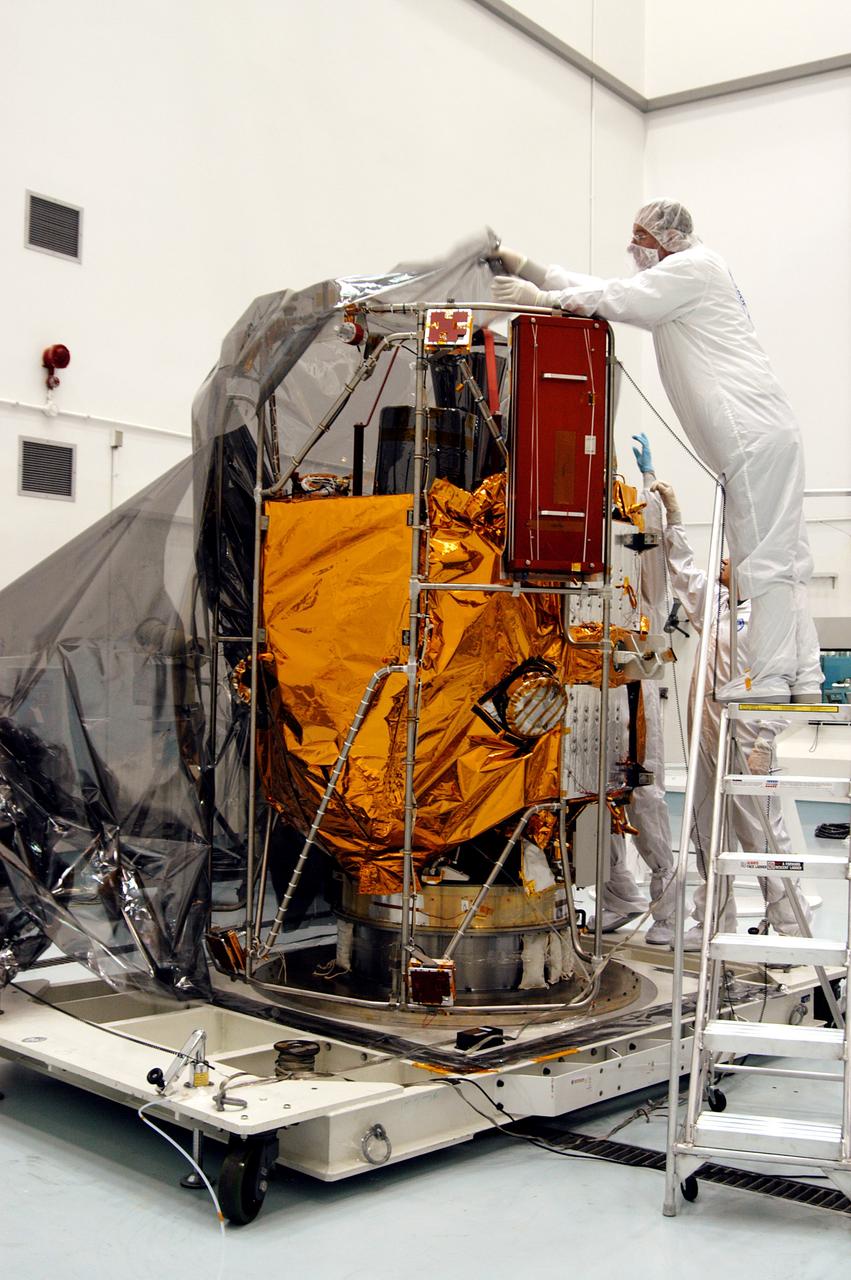
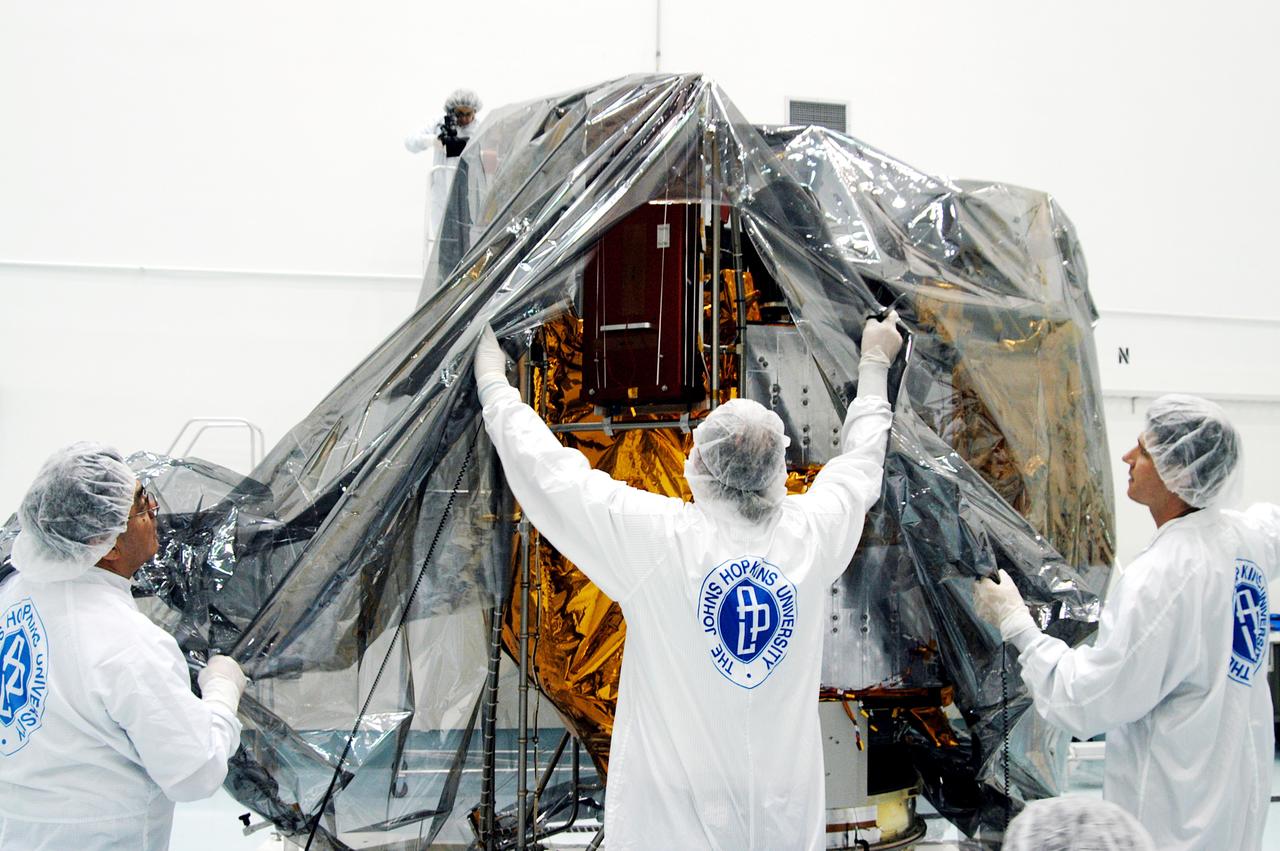
KENNEDY SPACE CENTER, FLA. -  In the high bay clean room at the Astrotech Space Operations processing facilities near KSC, workers remove the protective cover from NASA’s MESSENGER spacecraft.  Employees of the Johns Hopkins University Applied Physics Laboratory, builders of the spacecraft, will perform an initial state-of-health check.  Then processing for launch can begin, including checkout of the power systems, communications systems and control systems.  The thermal blankets will also be attached for flight.  MESSENGER - short for MErcury Surface, Space ENvironment, GEochemistry and Ranging - will be launched May 11 on a six-year mission aboard a Boeing Delta II rocket.  Liftoff is targeted for 2:26 a.m. EDT on Tuesday, May 11.
KENNEDY SPACE CENTER, FLA. - In the high bay clean room at the Astrotech Space Operations processing facilities near KSC, workers remove the protective cover from NASA’s MESSENGER spacecraft. Employees of the Johns Hopkins University Applied Physics Laboratory, builders of the spacecraft, will perform an initial state-of-health check. Then processing for launch can begin, including checkout of the power systems, communications systems and control systems. The thermal blankets will also be attached for flight. MESSENGER - short for MErcury Surface, Space ENvironment, GEochemistry and Ranging - will be launched May 11 on a six-year mission aboard a Boeing Delta II rocket. Liftoff is targeted for 2:26 a.m. EDT on Tuesday, May 11.
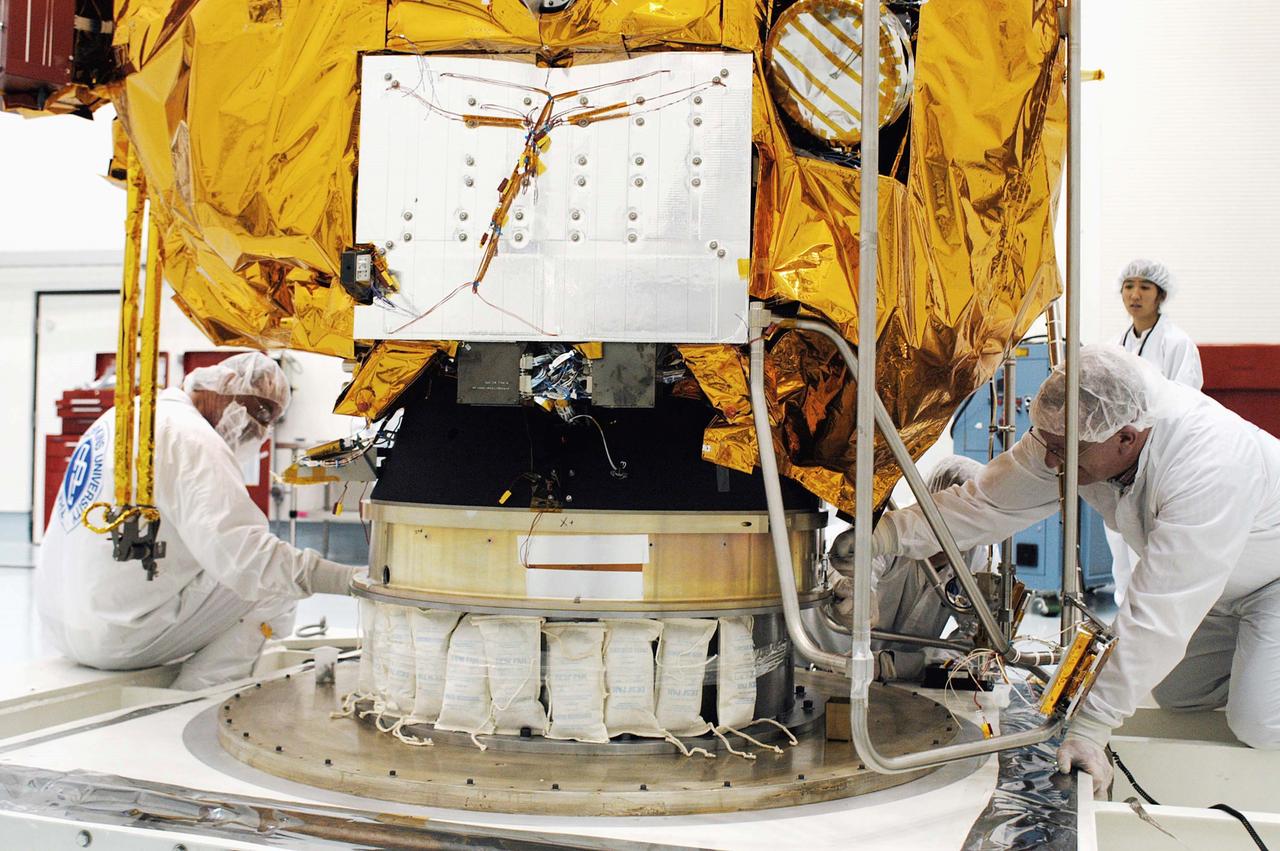
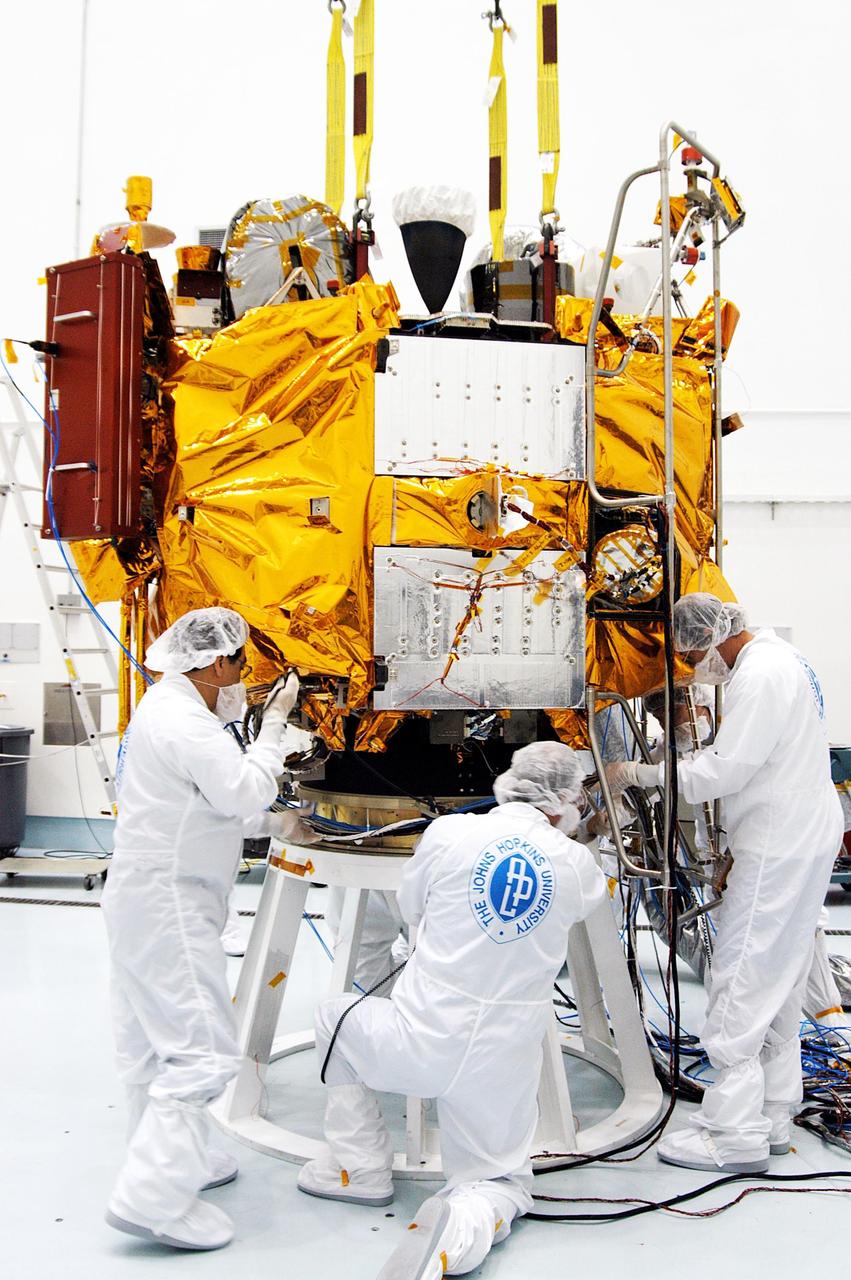
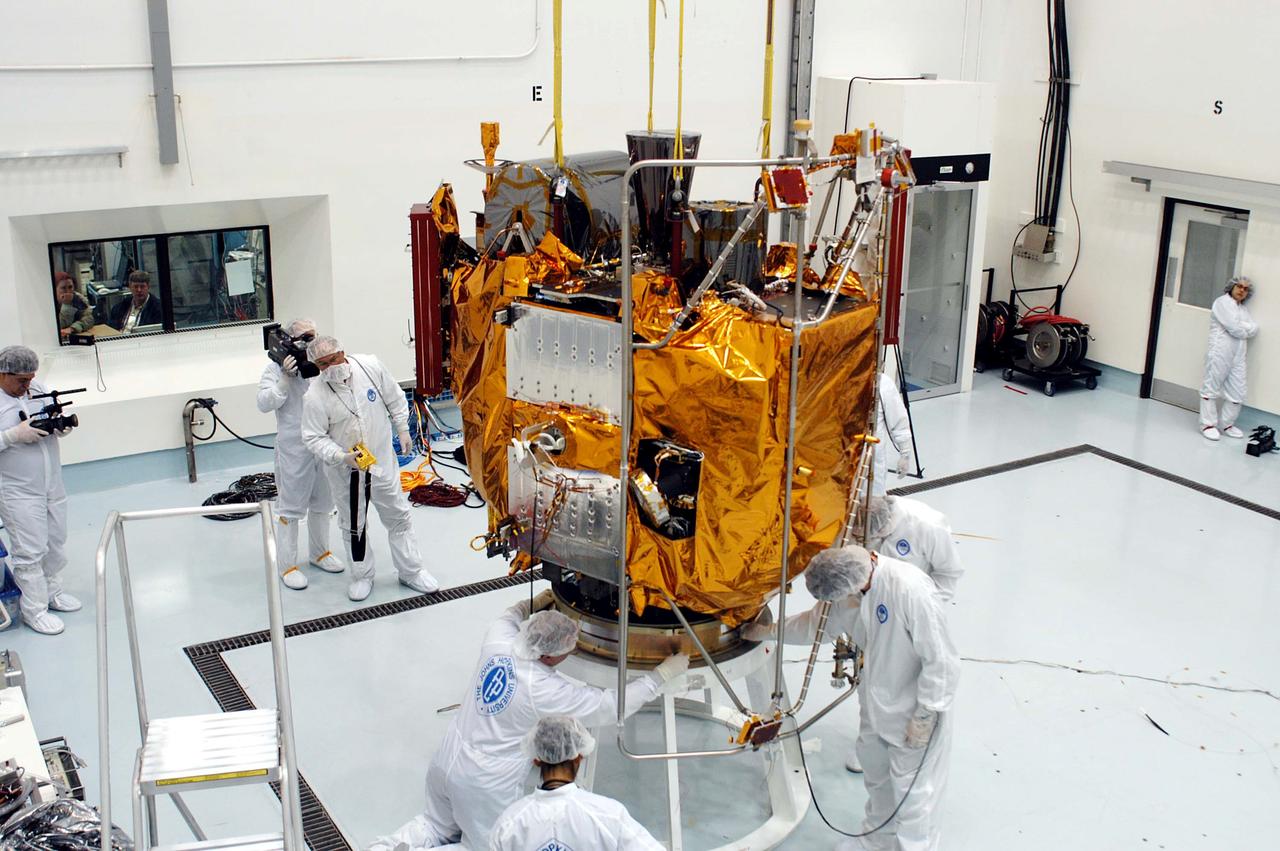
KENNEDY SPACE CENTER, FLA. -  At the Astrotech Space Operations processing facilities, workers check the placement of NASA’s MESSENGER spacecraft on a work stand. There employees of the Johns Hopkins University Applied Physics Laboratory, builders of the spacecraft, will perform an initial state-of-health check.  Then processing for launch can begin, including checkout of the power systems, communications systems and control systems.  The thermal blankets will also be attached for flight.  MESSENGER - short for MErcury Surface, Space ENvironment, GEochemistry and Ranging - will be launched May 11 on a six-year mission aboard a Boeing Delta II rocket.  Liftoff is targeted for 2:26 a.m. EDT on Tuesday, May 11.
KENNEDY SPACE CENTER, FLA. - At the Astrotech Space Operations processing facilities, workers check the placement of NASA’s MESSENGER spacecraft on a work stand. There employees of the Johns Hopkins University Applied Physics Laboratory, builders of the spacecraft, will perform an initial state-of-health check. Then processing for launch can begin, including checkout of the power systems, communications systems and control systems. The thermal blankets will also be attached for flight. MESSENGER - short for MErcury Surface, Space ENvironment, GEochemistry and Ranging - will be launched May 11 on a six-year mission aboard a Boeing Delta II rocket. Liftoff is targeted for 2:26 a.m. EDT on Tuesday, May 11.
KENNEDY SPACE CENTER, FLA. -  In the high bay clean room at the Astrotech Space Operations processing facilities near KSC, workers remove the protective cover from NASA’s MESSENGER spacecraft.  Employees of the Johns Hopkins University Applied Physics Laboratory, builders of the spacecraft, will perform an initial state-of-health check.  Then processing for launch can begin, including checkout of the power systems, communications systems and control systems.  The thermal blankets will also be attached for flight.  MESSENGER - short for MErcury Surface, Space ENvironment, GEochemistry and Ranging - will be launched May 11 on a six-year mission aboard a Boeing Delta II rocket.  Liftoff is targeted for 2:26 a.m. EDT on Tuesday, May 11.
KENNEDY SPACE CENTER, FLA. - In the high bay clean room at the Astrotech Space Operations processing facilities near KSC, workers remove the protective cover from NASA’s MESSENGER spacecraft. Employees of the Johns Hopkins University Applied Physics Laboratory, builders of the spacecraft, will perform an initial state-of-health check. Then processing for launch can begin, including checkout of the power systems, communications systems and control systems. The thermal blankets will also be attached for flight. MESSENGER - short for MErcury Surface, Space ENvironment, GEochemistry and Ranging - will be launched May 11 on a six-year mission aboard a Boeing Delta II rocket. Liftoff is targeted for 2:26 a.m. EDT on Tuesday, May 11.
KENNEDY SPACE CENTER, FLA. -  In the high bay clean room at the Astrotech Space Operations processing facilities near KSC, workers prepare NASA’s MESSENGER spacecraft for transfer to a work stand.  There employees of the Johns Hopkins University Applied Physics Laboratory, builders of the spacecraft, will perform an initial state-of-health check.  Then processing for launch can begin, including checkout of the power systems, communications systems and control systems.  The thermal blankets will also be attached for flight.  MESSENGER - short for MErcury Surface, Space ENvironment, GEochemistry and Ranging - will be launched May 11 on a six-year mission aboard a Boeing Delta II rocket.  Liftoff is targeted for 2:26 a.m. EDT on Tuesday, May 11.
KENNEDY SPACE CENTER, FLA. - In the high bay clean room at the Astrotech Space Operations processing facilities near KSC, workers prepare NASA’s MESSENGER spacecraft for transfer to a work stand. There employees of the Johns Hopkins University Applied Physics Laboratory, builders of the spacecraft, will perform an initial state-of-health check. Then processing for launch can begin, including checkout of the power systems, communications systems and control systems. The thermal blankets will also be attached for flight. MESSENGER - short for MErcury Surface, Space ENvironment, GEochemistry and Ranging - will be launched May 11 on a six-year mission aboard a Boeing Delta II rocket. Liftoff is targeted for 2:26 a.m. EDT on Tuesday, May 11.
KENNEDY SPACE CENTER, FLA.  -  During power-up of the orbiter Discovery in the Orbiter Processing Facility, a technician (left) looks at the circuit breaker lights in the cabin.  Discovery has been undergoing Orbiter Major Modifications in the past year, ranging from wiring, control panels and black boxes to gaseous and fluid systems tubing and components.  These systems were deserviced, disassembled, inspected, modified, reassembled, checked out and reserviced, as were most other systems onboard.  The work includes the installation of the Multifunction Electronic Display Subsystem (MEDS) - a state-of-the-art “glass cockpit.”
KENNEDY SPACE CENTER, FLA. - During power-up of the orbiter Discovery in the Orbiter Processing Facility, a technician (left) looks at the circuit breaker lights in the cabin. Discovery has been undergoing Orbiter Major Modifications in the past year, ranging from wiring, control panels and black boxes to gaseous and fluid systems tubing and components. These systems were deserviced, disassembled, inspected, modified, reassembled, checked out and reserviced, as were most other systems onboard. The work includes the installation of the Multifunction Electronic Display Subsystem (MEDS) - a state-of-the-art “glass cockpit.”
KENNEDY SPACE CENTER, FLA. -  At the Astrotech Space Operations processing facilities, an overhead crane lowers NASA’s MESSENGER spacecraft onto a work stand. There employees of the Johns Hopkins University Applied Physics Laboratory, builders of the spacecraft, will perform an initial state-of-health check.  Then processing for launch can begin, including checkout of the power systems, communications systems and control systems.  The thermal blankets will also be attached for flight.  MESSENGER - short for MErcury Surface, Space ENvironment, GEochemistry and Ranging - will be launched May 11 on a six-year mission aboard a Boeing Delta II rocket.  Liftoff is targeted for 2:26 a.m. EDT on Tuesday, May 11.
KENNEDY SPACE CENTER, FLA. - At the Astrotech Space Operations processing facilities, an overhead crane lowers NASA’s MESSENGER spacecraft onto a work stand. There employees of the Johns Hopkins University Applied Physics Laboratory, builders of the spacecraft, will perform an initial state-of-health check. Then processing for launch can begin, including checkout of the power systems, communications systems and control systems. The thermal blankets will also be attached for flight. MESSENGER - short for MErcury Surface, Space ENvironment, GEochemistry and Ranging - will be launched May 11 on a six-year mission aboard a Boeing Delta II rocket. Liftoff is targeted for 2:26 a.m. EDT on Tuesday, May 11.
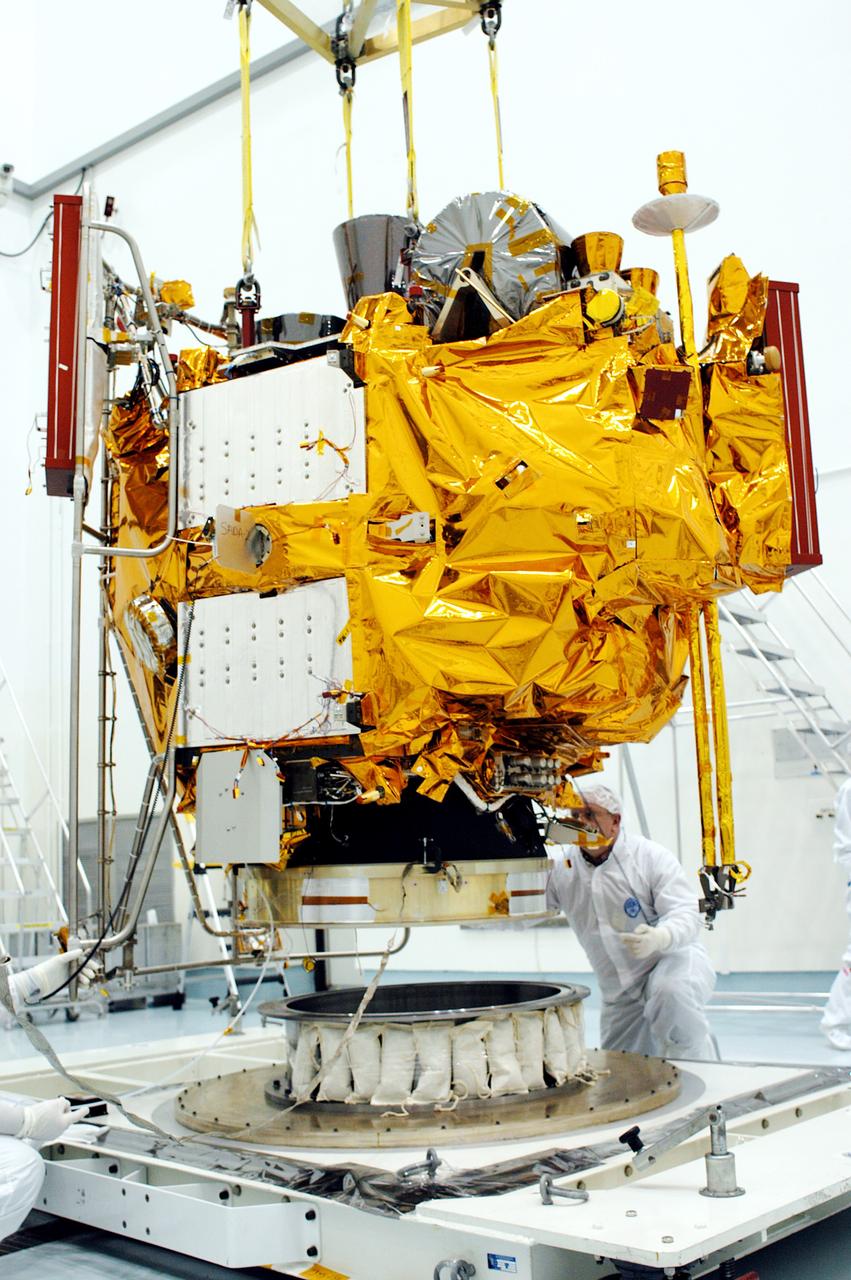
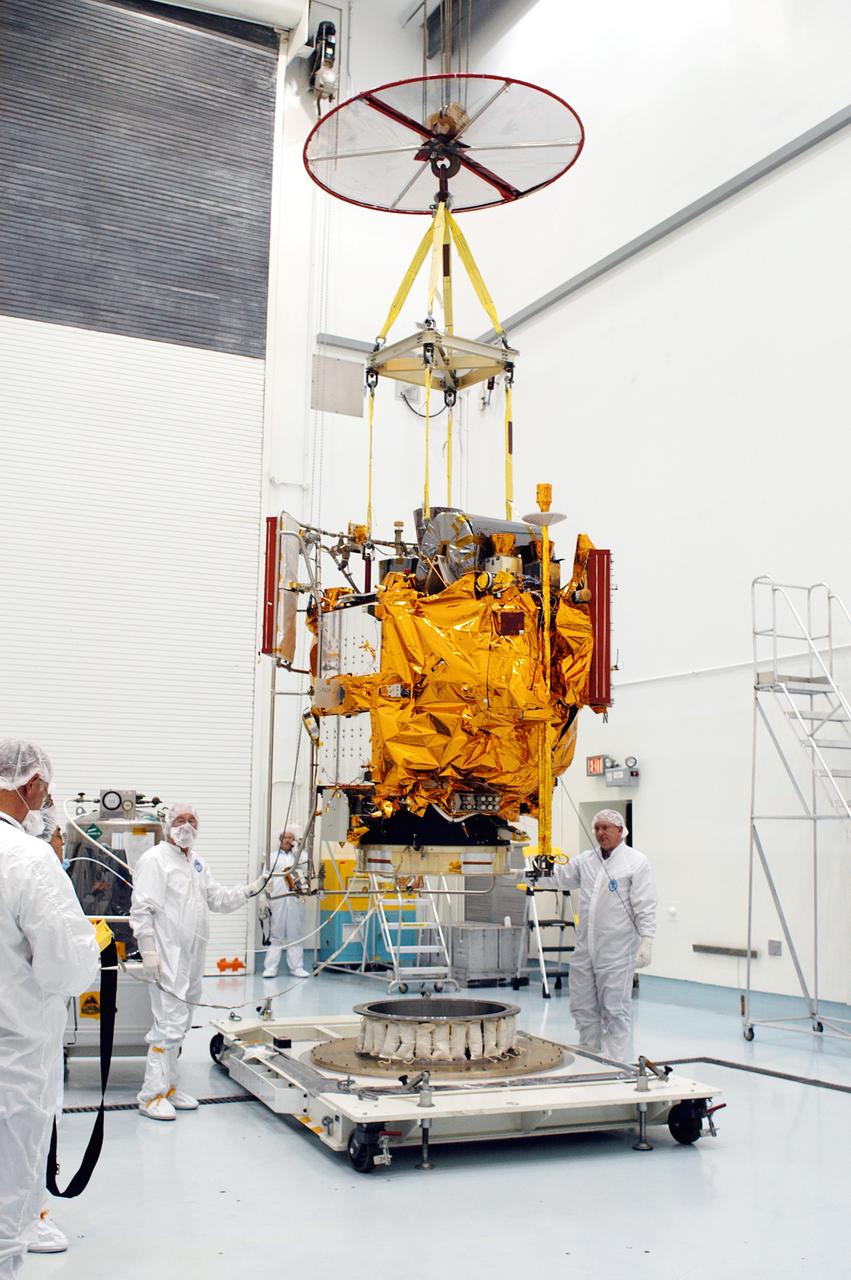
KENNEDY SPACE CENTER, FLA. -  At the Astrotech Space Operations processing facilities, NASA’s MESSENGER spacecraft is lifted off the pallet for transfer to a work stand. There employees of the Johns Hopkins University Applied Physics Laboratory, builders of the spacecraft, will perform an initial state-of-health check.  Then processing for launch can begin, including checkout of the power systems, communications systems and control systems.  The thermal blankets will also be attached for flight.  MESSENGER - short for MErcury Surface, Space ENvironment, GEochemistry and Ranging - will be launched May 11 on a six-year mission aboard a Boeing Delta II rocket.  Liftoff is targeted for 2:26 a.m. EDT on Tuesday, May 11.
KENNEDY SPACE CENTER, FLA. - At the Astrotech Space Operations processing facilities, NASA’s MESSENGER spacecraft is lifted off the pallet for transfer to a work stand. There employees of the Johns Hopkins University Applied Physics Laboratory, builders of the spacecraft, will perform an initial state-of-health check. Then processing for launch can begin, including checkout of the power systems, communications systems and control systems. The thermal blankets will also be attached for flight. MESSENGER - short for MErcury Surface, Space ENvironment, GEochemistry and Ranging - will be launched May 11 on a six-year mission aboard a Boeing Delta II rocket. Liftoff is targeted for 2:26 a.m. EDT on Tuesday, May 11.
KENNEDY SPACE CENTER, FLA. -  At the Astrotech Space Operations processing facilities near KSC, workers move NASA’s MESSENGER spacecraft into a high bay clean room.  Employees of the Johns Hopkins University Applied Physics Laboratory, builders of the spacecraft, will perform an initial state-of-health check.  Then processing for launch can begin, including checkout of the power systems, communications systems and control systems.  The thermal blankets will also be attached for flight.  MESSENGER - short for MErcury Surface, Space ENvironment, GEochemistry and Ranging - will be launched May 11 on a six-year mission aboard a Boeing Delta II rocket.  Liftoff is targeted for 2:26 a.m. EDT on Tuesday, May 11.
KENNEDY SPACE CENTER, FLA. - At the Astrotech Space Operations processing facilities near KSC, workers move NASA’s MESSENGER spacecraft into a high bay clean room. Employees of the Johns Hopkins University Applied Physics Laboratory, builders of the spacecraft, will perform an initial state-of-health check. Then processing for launch can begin, including checkout of the power systems, communications systems and control systems. The thermal blankets will also be attached for flight. MESSENGER - short for MErcury Surface, Space ENvironment, GEochemistry and Ranging - will be launched May 11 on a six-year mission aboard a Boeing Delta II rocket. Liftoff is targeted for 2:26 a.m. EDT on Tuesday, May 11.
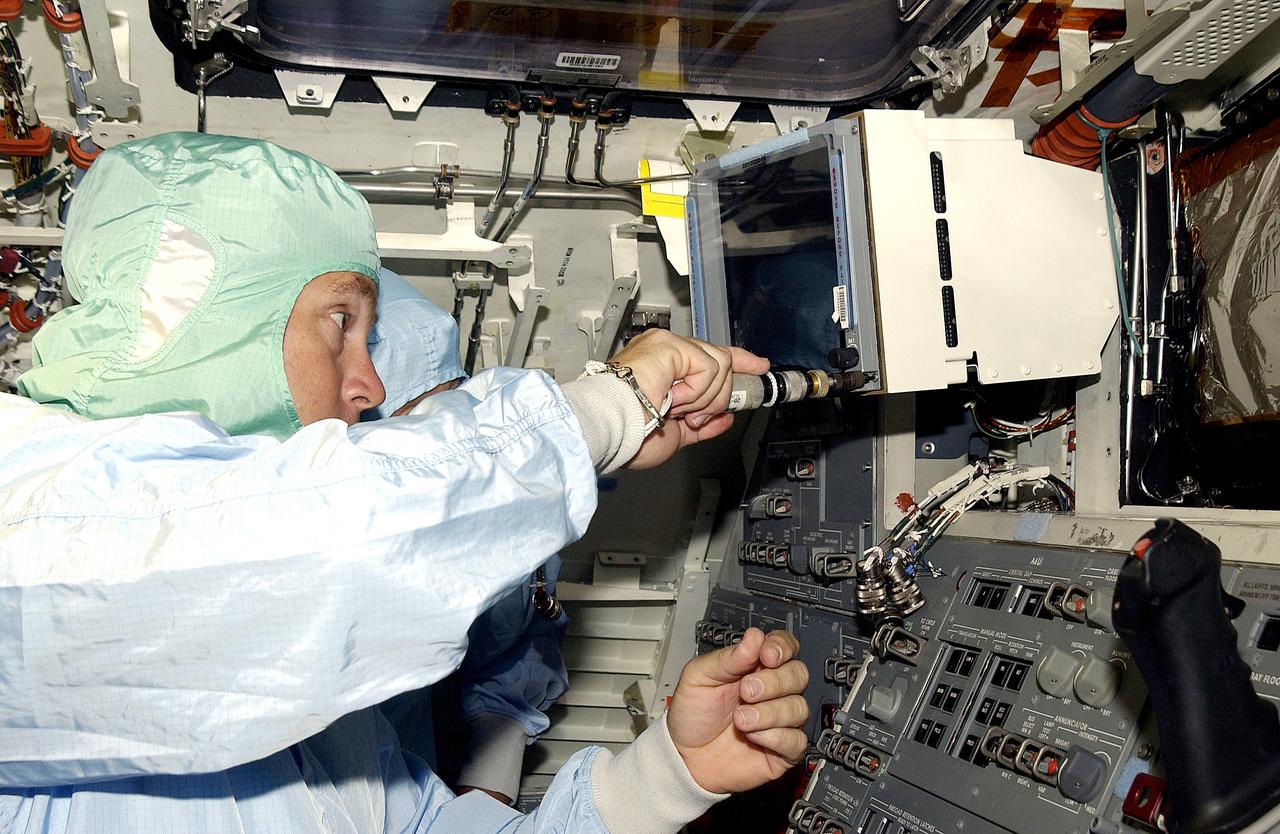
KENNEDY SPACE CENTER, FLA.  -   A technician with United Space Alliance works inside orbiter Discovery before power-up of the vehicle in the Orbiter Processing Facility .  Discovery has been undergoing Orbiter Major Modifications in the past year, ranging from wiring, control panels and black boxes to gaseous and fluid systems tubing and components.  These systems were deserviced, disassembled, inspected, modified, reassembled, checked out and reserviced, as were most other systems onboard.  The work includes the installation of the Multifunction Electronic Display Subsystem (MEDS) - a state-of-the-art “glass cockpit.”
KENNEDY SPACE CENTER, FLA. - A technician with United Space Alliance works inside orbiter Discovery before power-up of the vehicle in the Orbiter Processing Facility . Discovery has been undergoing Orbiter Major Modifications in the past year, ranging from wiring, control panels and black boxes to gaseous and fluid systems tubing and components. These systems were deserviced, disassembled, inspected, modified, reassembled, checked out and reserviced, as were most other systems onboard. The work includes the installation of the Multifunction Electronic Display Subsystem (MEDS) - a state-of-the-art “glass cockpit.”
KENNEDY SPACE CENTER, FLA. -  At the Astrotech Space Operations processing facilities, NASA’s MESSENGER spacecraft is lifted off the pallet for transfer to a work stand. There employees of the Johns Hopkins University Applied Physics Laboratory, builders of the spacecraft, will perform an initial state-of-health check.  Then processing for launch can begin, including checkout of the power systems, communications systems and control systems.  The thermal blankets will also be attached for flight.  MESSENGER - short for MErcury Surface, Space ENvironment, GEochemistry and Ranging - will be launched May 11 on a six-year mission aboard a Boeing Delta II rocket.  Liftoff is targeted for 2:26 a.m. EDT on Tuesday, May 11.
KENNEDY SPACE CENTER, FLA. - At the Astrotech Space Operations processing facilities, NASA’s MESSENGER spacecraft is lifted off the pallet for transfer to a work stand. There employees of the Johns Hopkins University Applied Physics Laboratory, builders of the spacecraft, will perform an initial state-of-health check. Then processing for launch can begin, including checkout of the power systems, communications systems and control systems. The thermal blankets will also be attached for flight. MESSENGER - short for MErcury Surface, Space ENvironment, GEochemistry and Ranging - will be launched May 11 on a six-year mission aboard a Boeing Delta II rocket. Liftoff is targeted for 2:26 a.m. EDT on Tuesday, May 11.
KENNEDY SPACE CENTER, FLA. -  At the Astrotech Space Operations processing facilities, workers check the placement of NASA’s MESSENGER spacecraft on a work stand. There employees of the Johns Hopkins University Applied Physics Laboratory, builders of the spacecraft, will perform an initial state-of-health check.  Then processing for launch can begin, including checkout of the power systems, communications systems and control systems.  The thermal blankets will also be attached for flight.  MESSENGER - short for MErcury Surface, Space ENvironment, GEochemistry and Ranging - will be launched May 11 on a six-year mission aboard a Boeing Delta II rocket.  Liftoff is targeted for 2:26 a.m. EDT on Tuesday, May 11.
KENNEDY SPACE CENTER, FLA. - At the Astrotech Space Operations processing facilities, workers check the placement of NASA’s MESSENGER spacecraft on a work stand. There employees of the Johns Hopkins University Applied Physics Laboratory, builders of the spacecraft, will perform an initial state-of-health check. Then processing for launch can begin, including checkout of the power systems, communications systems and control systems. The thermal blankets will also be attached for flight. MESSENGER - short for MErcury Surface, Space ENvironment, GEochemistry and Ranging - will be launched May 11 on a six-year mission aboard a Boeing Delta II rocket. Liftoff is targeted for 2:26 a.m. EDT on Tuesday, May 11.
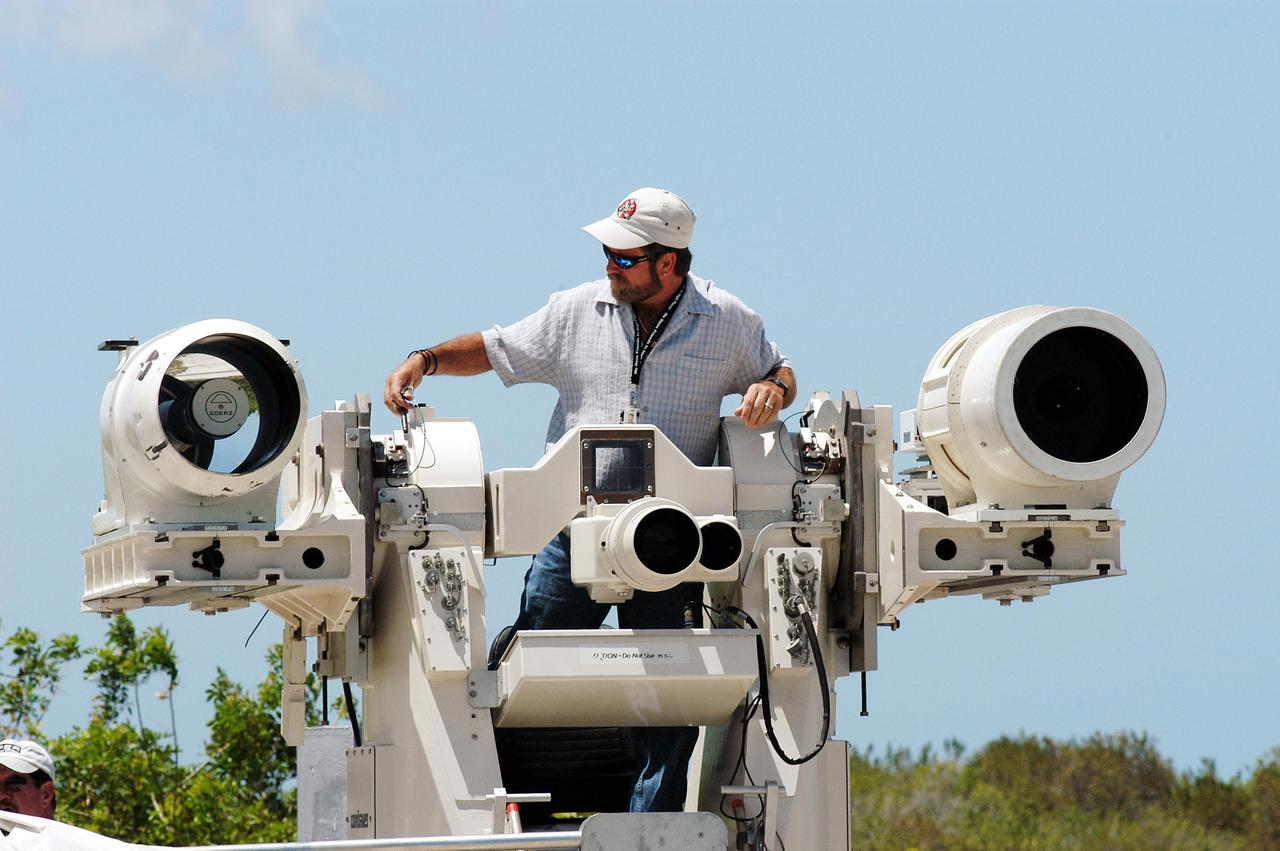
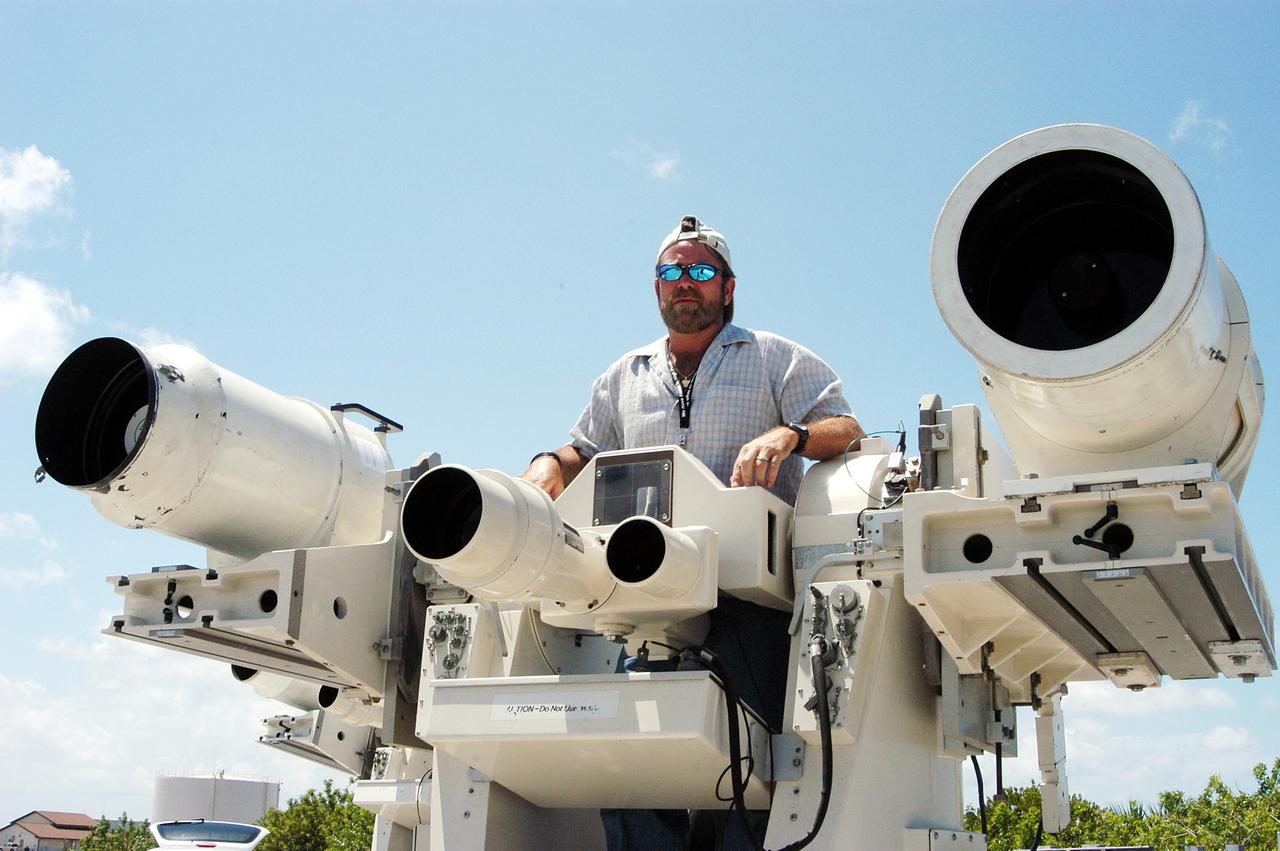
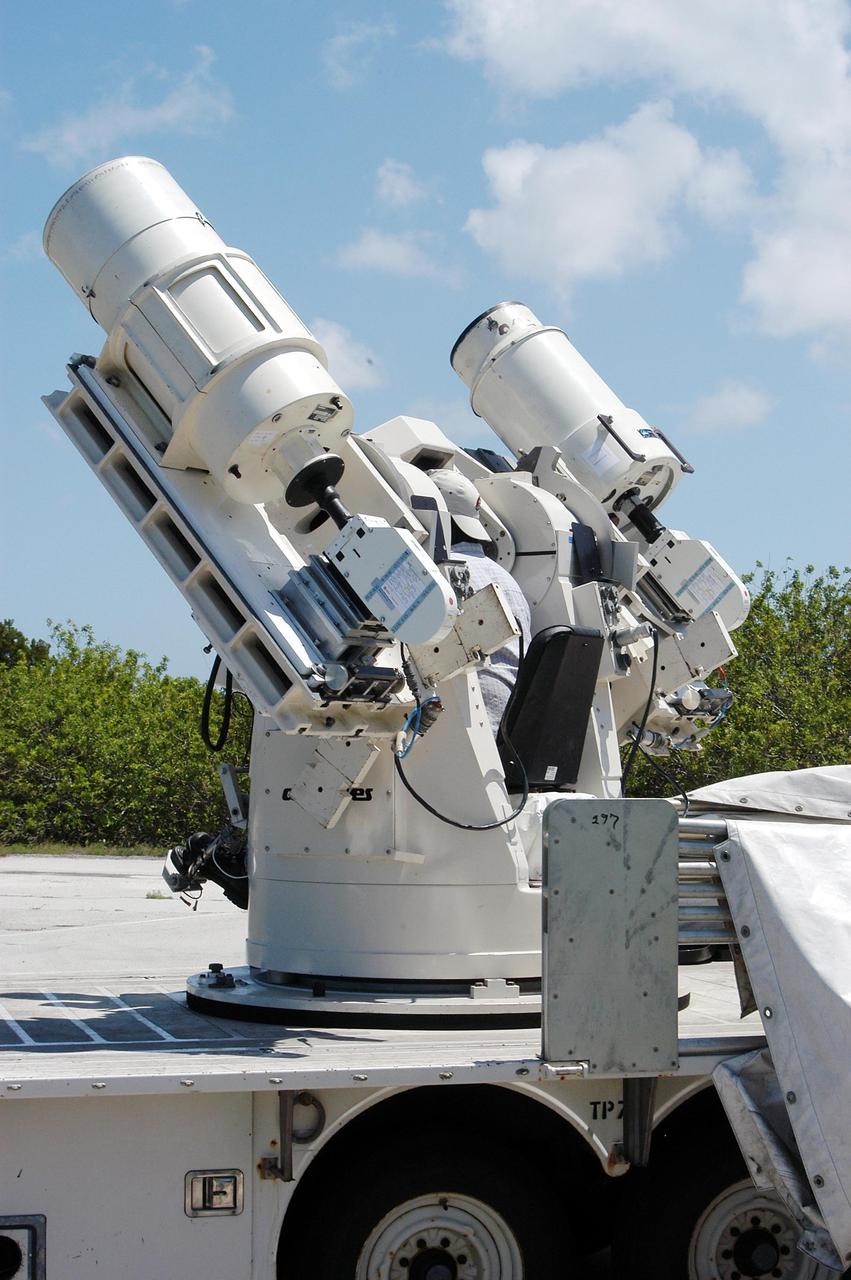
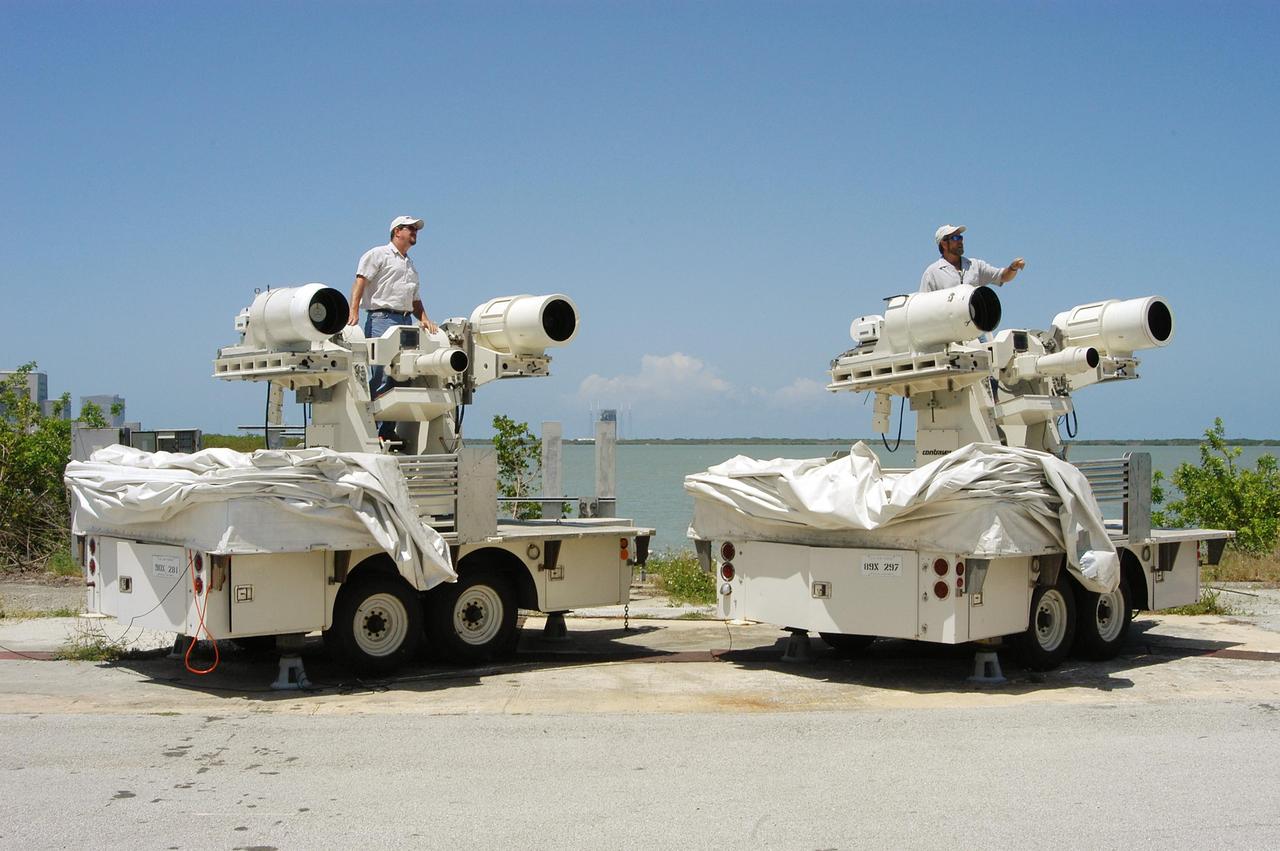
KENNEDY SPACE CENTER, FLA. -- Johnson Controls operator Kenny Allen stands in the center console area of one of the recently acquired Contraves-Goerz Kineto Tracking Mounts (KTM).  There are 10 KTMs certified for use on the Eastern Range. The KTM, which is trailer-mounted with an electric-drive tracking mount, includes a two-camera, camera control unit that will be used during launches.  The KTM is designed for remotely controlled operations and offers a combination of film, shuttered and high-speed digital video, and FLIR cameras configured with 20-inch to 150-inch focal length lenses. The KTMs are generally placed in the field and checked out the day before a launch and manned 3 hours prior to liftoff.
KSC-04pd1225
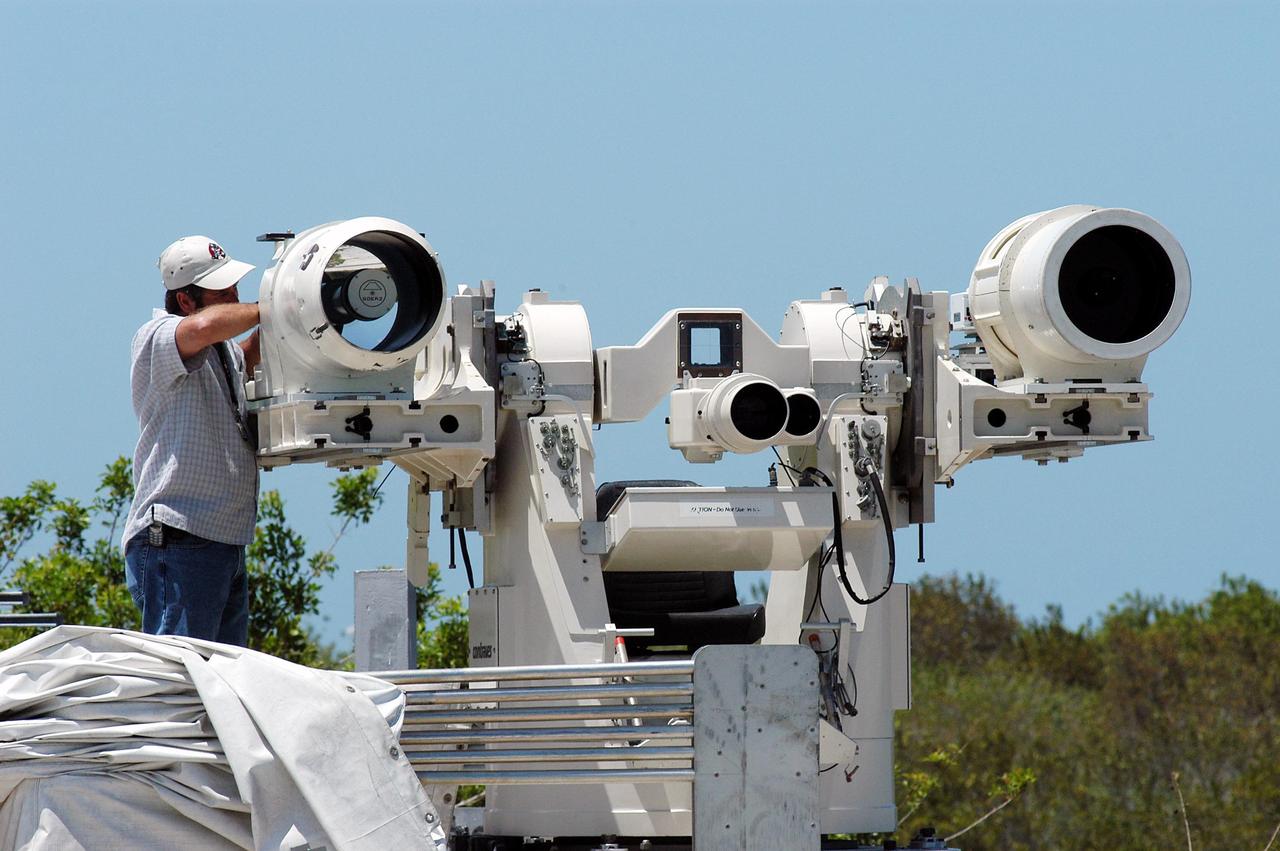
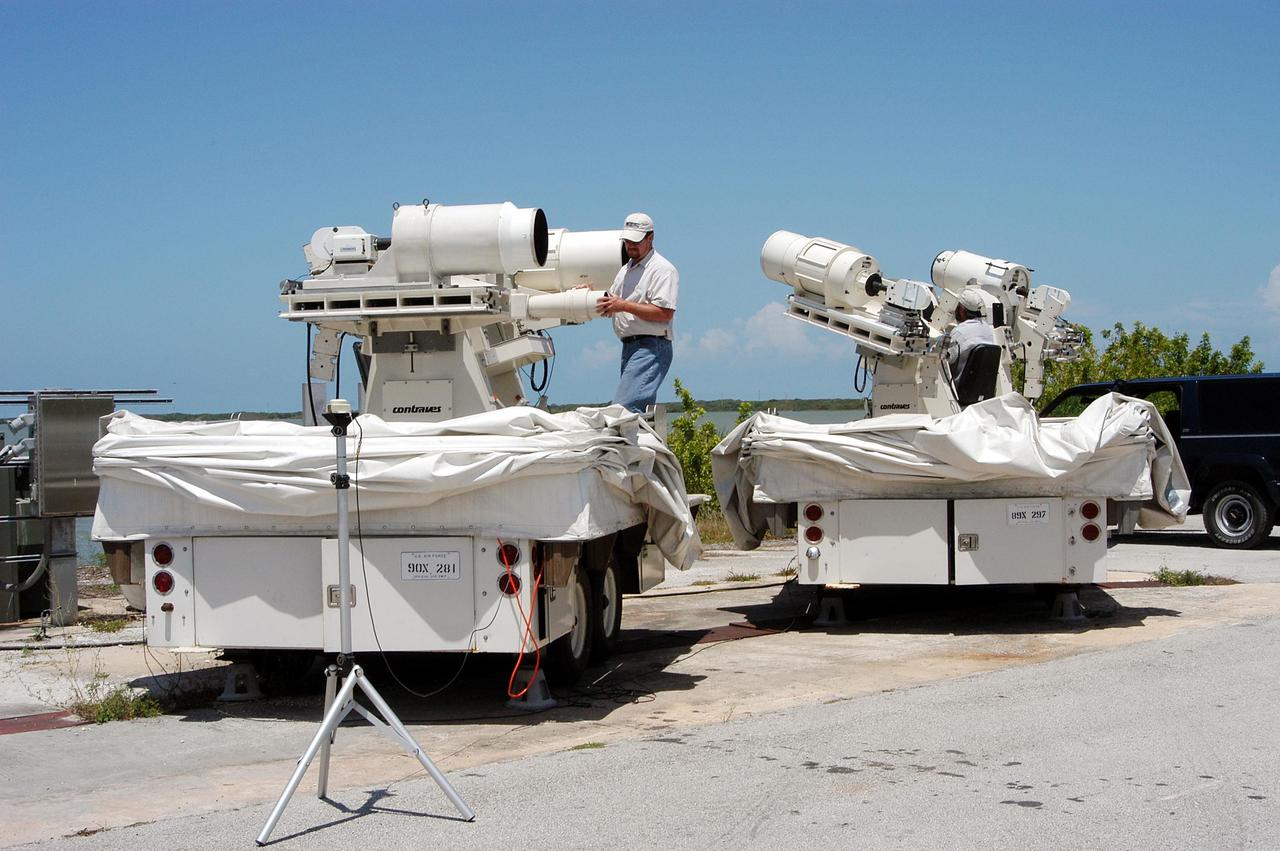
KENNEDY SPACE CENTER, FLA. -- Johnson Controls operator Kenny Allen works on the recently acquired Contraves-Goerz Kineto Tracking Mount (KTM).   Trailer-mounted with a center console/seat and electric drive tracking mount, the KTM includes a two-camera, camera control unit that will be used during launches.  The KTM is designed for remotely controlled operations and offers a combination of film, shuttered and high-speed digital video, and FLIR cameras configured with 20-inch to 150-inch focal length lenses. The KTMs are generally placed in the field and checked out the day before a launch and manned 3 hours prior to liftoff.  There are 10 KTMs certified for use on the Eastern Range.
KSC-04pd1219
KENNEDY SPACE CENTER, FLA. -- Johnson Controls operator Kenny Allen works on the recently acquired Contraves-Goerz Kineto Tracking Mount (KTM).  Trailer-mounted with a center console/seat and electric drive tracking mount, the KTM includes a two-camera, camera control unit that will be used during launches.  The KTM is designed for remotely controlled operations and offers a combination of film, shuttered and high-speed digital video, and FLIR cameras configured with 20-inch to 150-inch focal length lenses. The KTMs are generally placed in the field and checked out the day before a launch and manned 3 hours prior to liftoff.  There are 10 KTMs certified for use on the Eastern Range.
KSC-04pd1220
KENNEDY SPACE CENTER, FLA. -- Johnson Controls operator Rick Wetherington sits in the center console seat of one of the recently acquired Contraves-Goerz Kineto Tracking Mounts (KTM).  There are 10 KTMs certified for use on the Eastern Range. The KTM, which is trailer-mounted with an electric drive tracking mount, includes a two-camera, camera control unit that will be used during launches.  The KTM is designed for remotely controlled operations and offers a combination of film, shuttered and high-speed digital video, and FLIR cameras configured with 20-inch to 150-inch focal length lenses. The KTMs are generally placed in the field and checked out the day before a launch and manned 3 hours prior to liftoff.
KSC-04pd1224
KENNEDY SPACE CENTER, FLA. -- Johnson Controls operator Kenny Allen makes adjustments on one of the recently acquired Contraves-Goerz Kineto Tracking Mounts (KTM).  There are 10 KTMs certified for use on the Eastern Range. The KTM, which is trailer-mounted with a center console/seat and electric drive tracking mount, includes a two-camera, camera control unit that will be used during launches.  The KTM is designed for remotely controlled operations and offers a combination of film, shuttered and high-speed digital video, and FLIR cameras configured with 20-inch to 150-inch focal length lenses. The KTMs are generally placed in the field and checked out the day before a launch and manned 3 hours prior to liftoff.
KSC-04pd1223
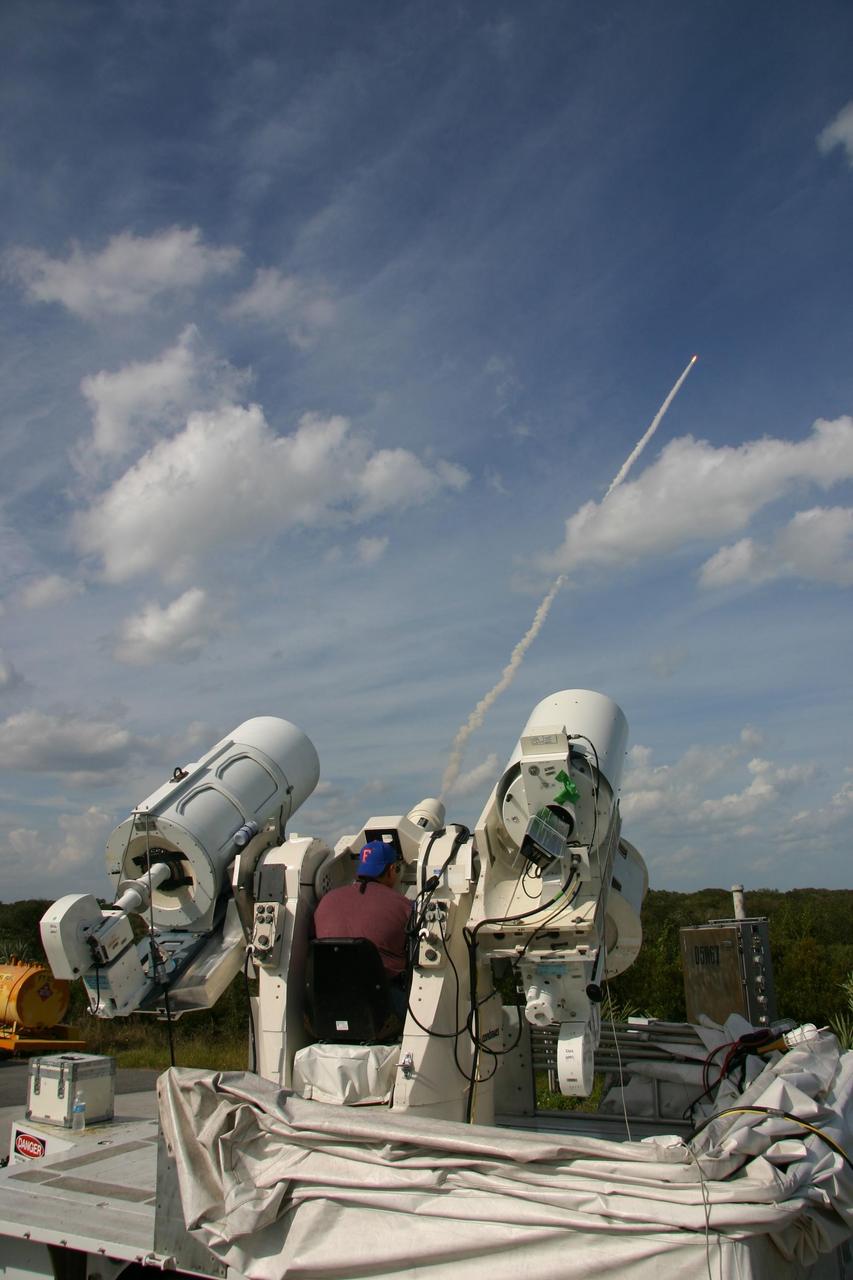
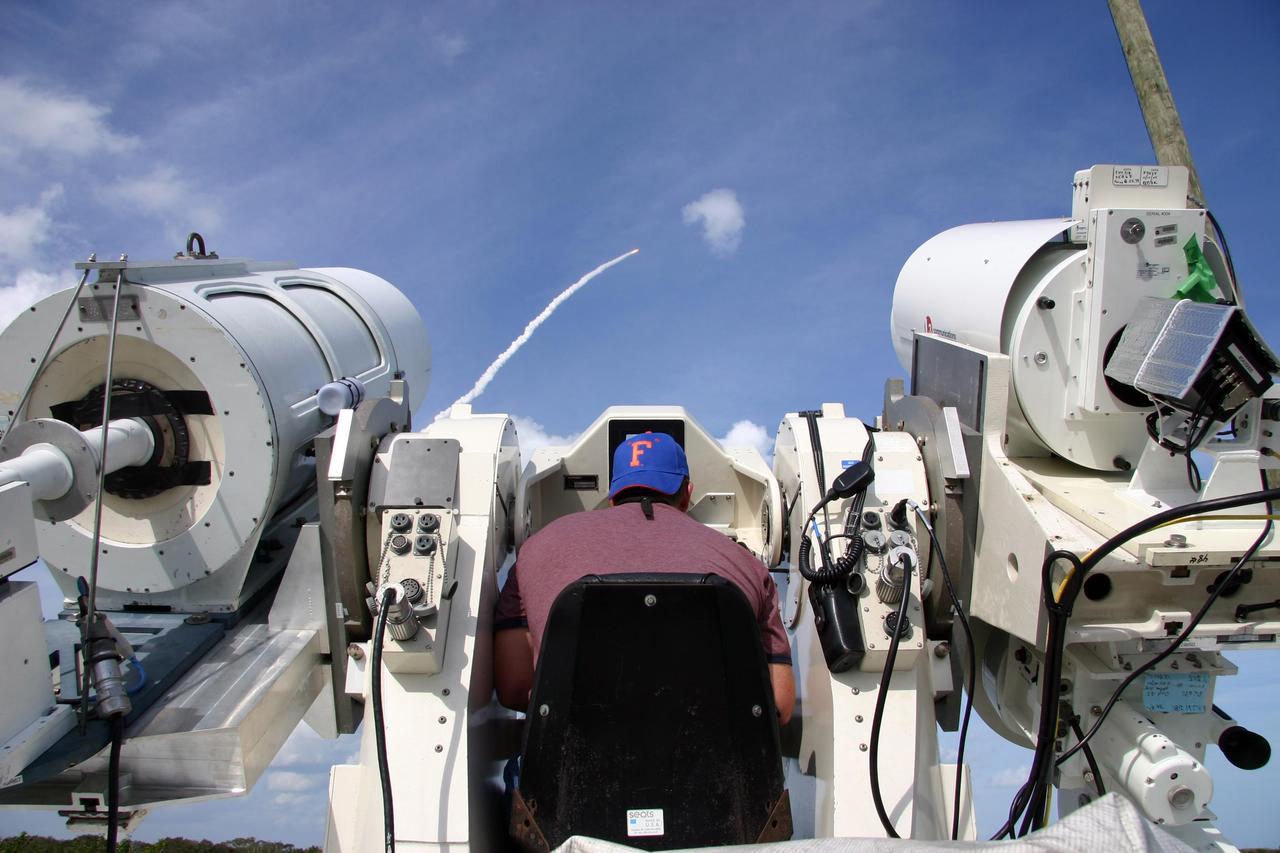
KENNEDY SPACE CENTER, FLA. --  A long-range tracking camera captures images of space shuttle Atlantis as it launches on mission STS-122 from Launch Pad 39A at NASA's Kennedy Space Center.  Liftoff was on time at 2:45 p.m. EST.  Long-range cameras are used during early phases of ascent to identify and track debris and continue to be used as long as the vehicle is visible.  At the controls is Tim Terry, with Kennedy Space Center Integrated Communications Services. During the 11-day mission, the crew's prime objective is to attach the Columbus laboratory to the Harmony module, adding to the International Space Station's size and capabilities.   Photo credit: NASA/Kenny Allen
KSC-08pd0240
Engineers and technicians in the control room at the Dryden Flight Research Center must constantly monitor critical operations and checks during research projects like NASA's hypersonic X-43A. Visible in the photo, taken two days before the X-43's captive carry flight in January 2004, are [foreground to background]; Tony Kawano (Range Safety Officer), Brad Neal (Mission Controller), and Griffin Corpening (Test Conductor).
Engineers and technicians in the control room at the Dryden Flight Research Center must constantly monitor critical operations and checks during research projects like NASA's hypersonic X-43A
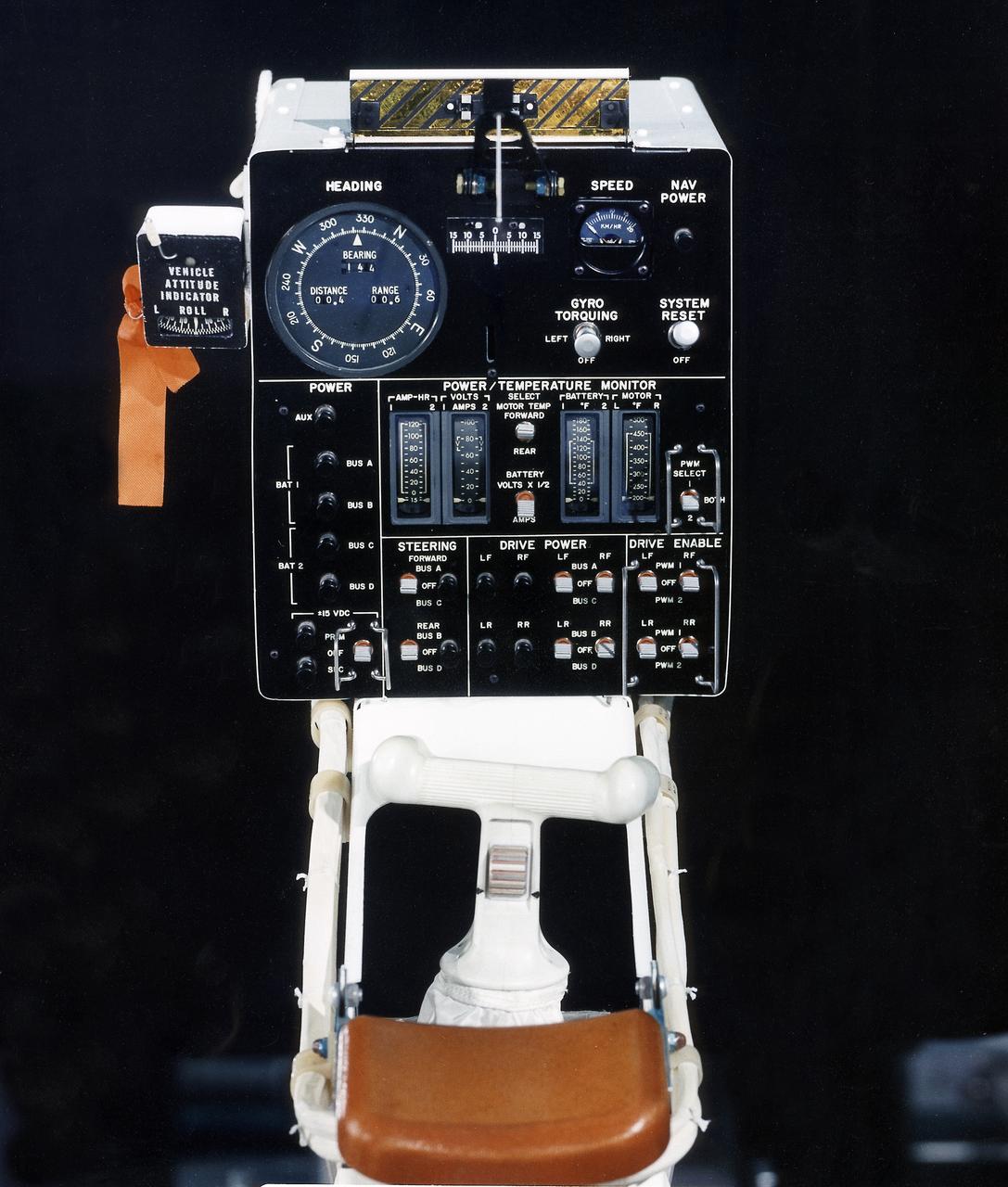
This photograph is a view of a display, control console, and hand controller for the Lunar Roving Vehicle (LRV) No. 2. The LRV was built to give Apollo astronauts a greater range of mobility during lunar exploration. It was an open-space and collapsible vehicle about 10 feet long with large mesh wheels, anterna, appendages, tool caddies, and camera. An LRV was used on each of the last three Apollo missions; Apollo 15, Apollo 16, and Apollo 17. It was built by the Boeing Company under the direction of the Marshall Space Flight Center.
Saturn Apollo Program
KENNEDY SPACE CENTER, FLA. --  Tim Terry, with Kennedy Space Center Integrated Communications Services, sits at the controls of a long-range tracking camera during the launch of space shuttle Atlantis on mission STS-122.  Liftoff was on time at 2:45 p.m. EST.  Long-range cameras are used during early phases of ascent to identify and track debris and continue to be used as long as the vehicle is visible.  During the 11-day mission, the crew's prime objective is to attach the Columbus laboratory to the Harmony module, adding to the International Space Station's size and capabilities.   Photo credit: NASA/Kenny Allen
KSC-08pd0241
KENNEDY SPACE CENTER, FLA. -- Johnson Controls operator Rick Wetherington checks out one of the recently acquired Contraves-Goerz Kineto Tracking Mounts (KTM).  There are 10 KTMs certified for use on the Eastern Range. The KTM, which is trailer-mounted with an electric drive tracking mount, includes a two-camera, camera control unit that will be used during launches.  The KTM is designed for remotely controlled operations and offers a combination of film, shuttered and high-speed digital video, and FLIR cameras configured with 20-inch to 150-inch focal length lenses. The KTMs are generally placed in the field and checked out the day before a launch and manned 3 hours prior to liftoff.
KSC-04pd1226
KENNEDY SPACE CENTER, FLA. -- Johnson Controls operator Kenny Allen checks out one of the recently acquired Contraves-Goerz Kineto Tracking Mounts (KTM).  There are 10 KTMs certified for use on the Eastern Range. The KTM, which is trailer-mounted with an electric drive tracking mount, includes a two-camera, camera control unit that will be used during launches.  The KTM is designed for remotely controlled operations and offers a combination of film, shuttered and high-speed digital video, and FLIR cameras configured with 20-inch to 150-inch focal length lenses. The KTMs are generally placed in the field and checked out the day before a launch and manned 3 hours prior to liftoff.
KSC-04pd1227
Virginia Secretary of Transportation Shannon Valentine, right, speaks with NASA Administrator Bill Nelson, center, Dennis Andrucyk, director of NASA's Goddard Space Flight Center, Bob Cabana, NASA associate administrator, and Dave Pierce, director of NASA's Wallops Flight Facility, in a viewing area overlooking the Range Control Center ahead of the launch of Northrop Grumman’s 16th resupply mission to the International Space Station, Tuesday, Aug. 10, 2021, at NASA’s Wallops Flight Facility in Virginia.  Photo Credit: (NASA/Joel Kowsky)
NASA Leadership Tours Wallops Flight Facility
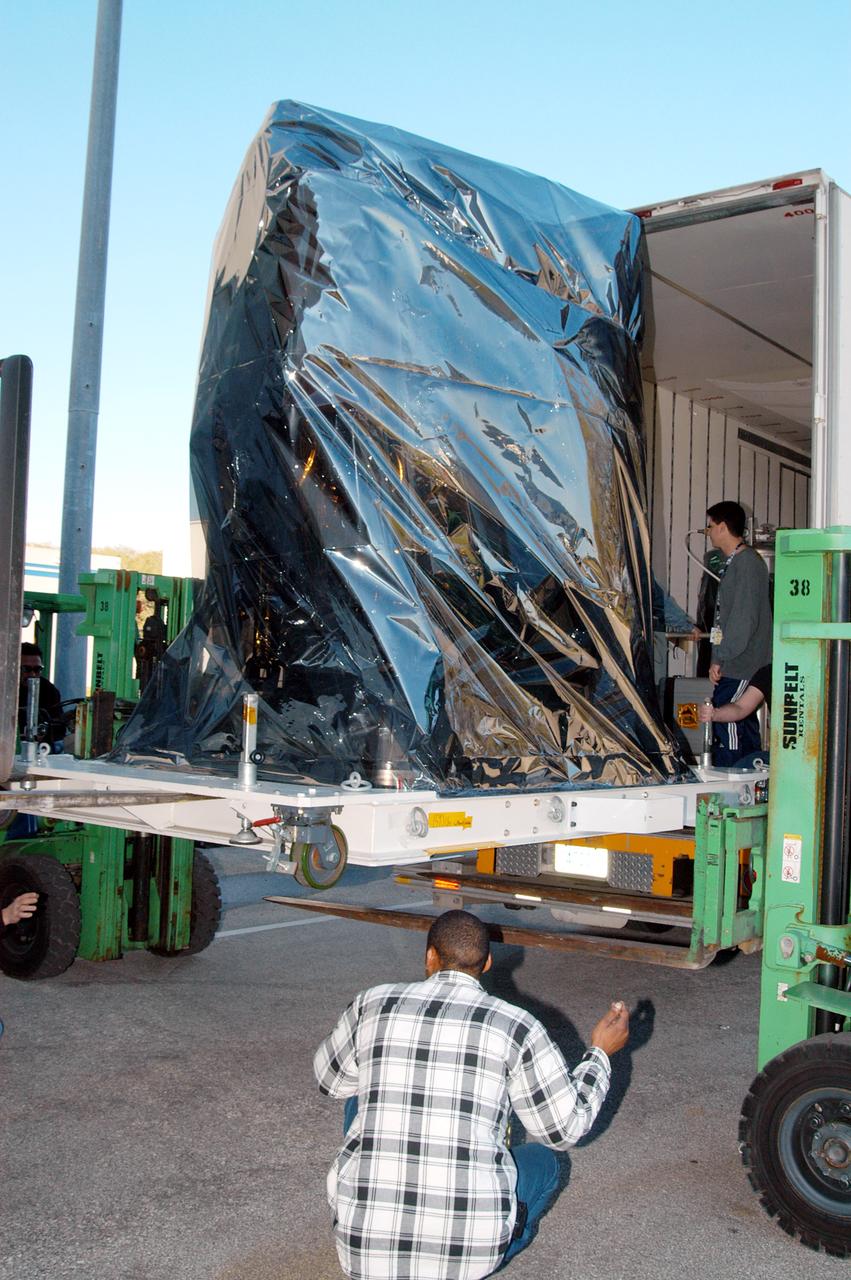
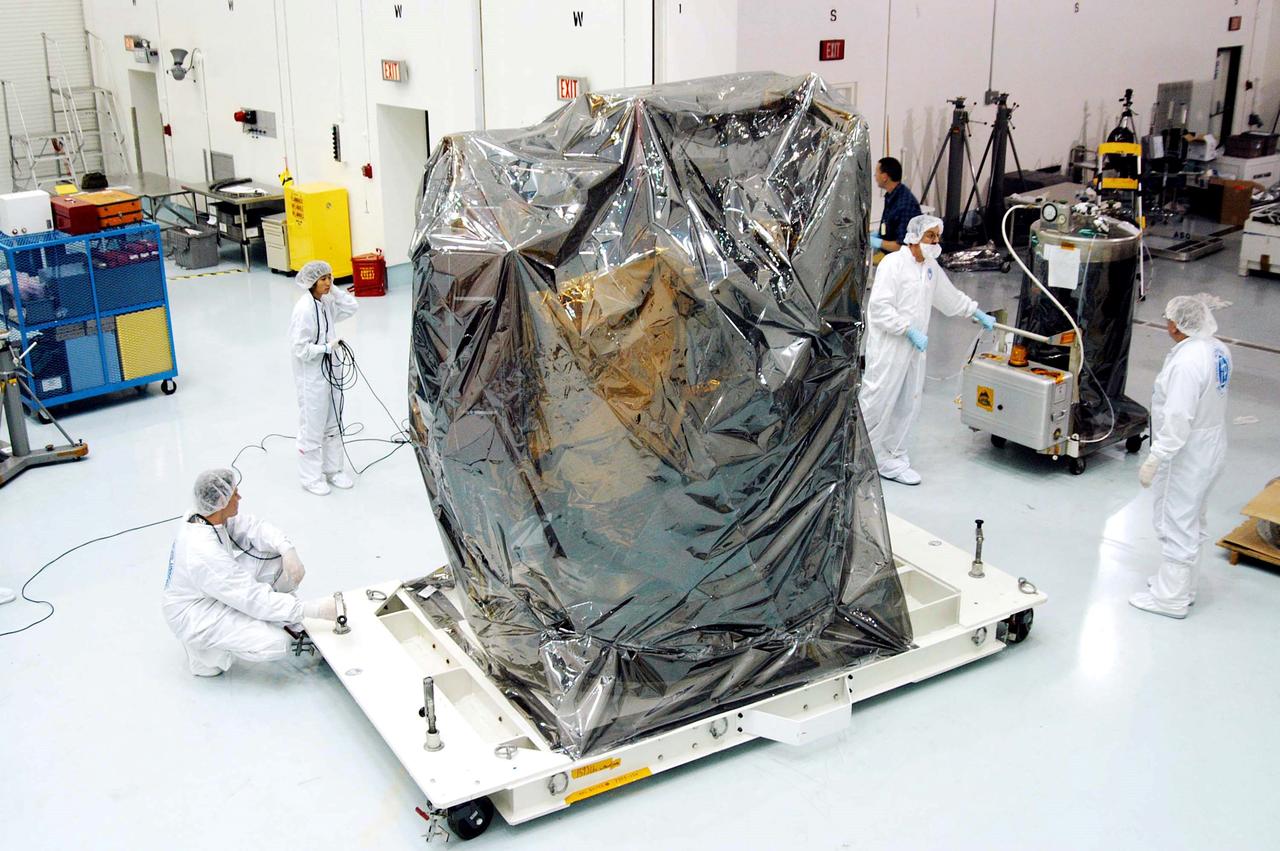
KENNEDY SPACE CENTER, FLA. -  At the Astrotech Space Operations processing facilities near KSC, a lift helps offload NASA’s MESSENGER spacecraft shipped from NASA’s Goddard Space Flight Center in Greenbelt, Md.  MESSENGER - short for MErcury Surface, Space ENvironment, GEochemistry and Ranging - will be taken into a high bay clean room and employees of the Johns Hopkins University Applied Physics Laboratory, builders of the spacecraft, will perform an initial state-of-health check.  Then processing for launch can begin, including checkout of the power systems, communications systems and control systems.  The thermal blankets will also be attached for flight.  MESSENGER will be launched May 11 on a six-year mission aboard a Boeing Delta II rocket.  Liftoff is targeted for 2:26 a.m. EDT on Tuesday, May 11.
KENNEDY SPACE CENTER, FLA. - At the Astrotech Space Operations processing facilities near KSC, a lift helps offload NASA’s MESSENGER spacecraft shipped from NASA’s Goddard Space Flight Center in Greenbelt, Md. MESSENGER - short for MErcury Surface, Space ENvironment, GEochemistry and Ranging - will be taken into a high bay clean room and employees of the Johns Hopkins University Applied Physics Laboratory, builders of the spacecraft, will perform an initial state-of-health check. Then processing for launch can begin, including checkout of the power systems, communications systems and control systems. The thermal blankets will also be attached for flight. MESSENGER will be launched May 11 on a six-year mission aboard a Boeing Delta II rocket. Liftoff is targeted for 2:26 a.m. EDT on Tuesday, May 11.
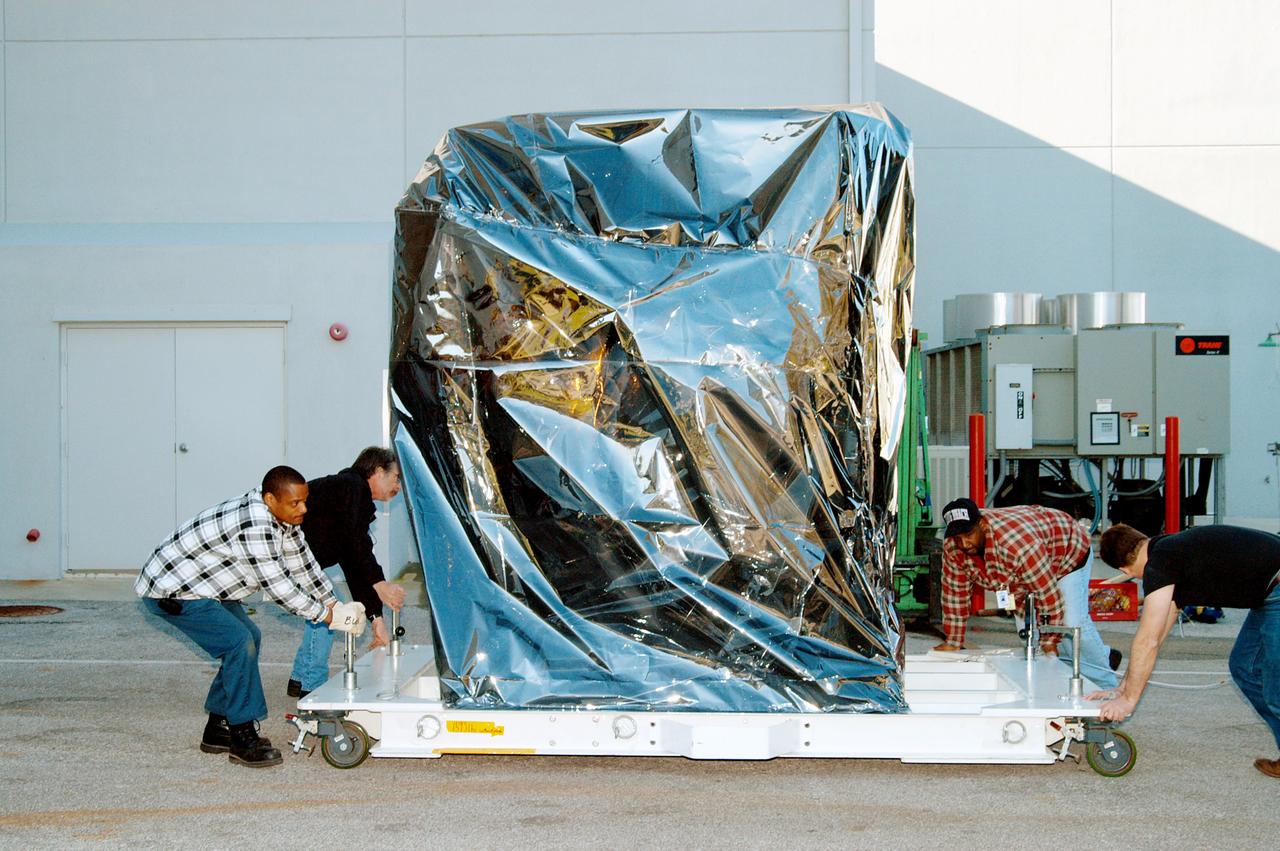
KENNEDY SPACE CENTER, FLA. -  Shipped in an air-conditioned transportation van from NASA’s Goddard Space Flight Center in Greenbelt, Md., NASA’s MESSENGER spacecraft, the first Mercury orbiter, arrives at the Astrotech Space Operations processing facilities near KSC.    MESSENGER - short for MErcury Surface, Space ENvironment, GEochemistry and Ranging - will be offloaded and taken into a high bay clean room.  After the spacecraft is removed from its shipping container, employees of the Johns Hopkins University Applied Physics Laboratory, builders of the spacecraft, will perform an initial state-of-health check.  Then processing for launch can begin, including checkout of the power systems, communications systems and control systems.  The thermal blankets will also be attached for flight.  MESSENGER will be launched May 11 on a six-year mission aboard a Boeing Delta II rocket.  Liftoff is targeted for 2:26 a.m. EDT on Tuesday, May 11.
KENNEDY SPACE CENTER, FLA. - Shipped in an air-conditioned transportation van from NASA’s Goddard Space Flight Center in Greenbelt, Md., NASA’s MESSENGER spacecraft, the first Mercury orbiter, arrives at the Astrotech Space Operations processing facilities near KSC. MESSENGER - short for MErcury Surface, Space ENvironment, GEochemistry and Ranging - will be offloaded and taken into a high bay clean room. After the spacecraft is removed from its shipping container, employees of the Johns Hopkins University Applied Physics Laboratory, builders of the spacecraft, will perform an initial state-of-health check. Then processing for launch can begin, including checkout of the power systems, communications systems and control systems. The thermal blankets will also be attached for flight. MESSENGER will be launched May 11 on a six-year mission aboard a Boeing Delta II rocket. Liftoff is targeted for 2:26 a.m. EDT on Tuesday, May 11.
KENNEDY SPACE CENTER, FLA. -  Doors are open on the air-conditioned transportation van that carried NASA’s MESSENGER spacecraft from NASA’s Goddard Space Flight Center in Greenbelt, Md., to the Astrotech Space Operations processing facilities near KSC.  After offloading, MESSENGER - short for MErcury Surface, Space ENvironment, GEochemistry and Ranging - will be taken into a high bay clean room and employees of the Johns Hopkins University Applied Physics Laboratory, builders of the spacecraft, will perform an initial state-of-health check.  Then processing for launch can begin, including checkout of the power systems, communications systems and control systems.  The thermal blankets will also be attached for flight.  MESSENGER will be launched May 11 on a six-year mission aboard a Boeing Delta II rocket.  Liftoff is targeted for 2:26 a.m. EDT on Tuesday, May 11.
KENNEDY SPACE CENTER, FLA. - Doors are open on the air-conditioned transportation van that carried NASA’s MESSENGER spacecraft from NASA’s Goddard Space Flight Center in Greenbelt, Md., to the Astrotech Space Operations processing facilities near KSC. After offloading, MESSENGER - short for MErcury Surface, Space ENvironment, GEochemistry and Ranging - will be taken into a high bay clean room and employees of the Johns Hopkins University Applied Physics Laboratory, builders of the spacecraft, will perform an initial state-of-health check. Then processing for launch can begin, including checkout of the power systems, communications systems and control systems. The thermal blankets will also be attached for flight. MESSENGER will be launched May 11 on a six-year mission aboard a Boeing Delta II rocket. Liftoff is targeted for 2:26 a.m. EDT on Tuesday, May 11.
KENNEDY SPACE CENTER, FLA. -  At the Astrotech Space Operations processing facilities near KSC, NASA’s MESSENGER spacecraft from NASA’s Goddard Space Flight Center in Greenbelt, Md., is offloaded.  MESSENGER - short for MErcury Surface, Space ENvironment, GEochemistry and Ranging - will be taken into a high bay clean room and employees of the Johns Hopkins University Applied Physics Laboratory, builders of the spacecraft, will perform an initial state-of-health check.  Then processing for launch can begin, including checkout of the power systems, communications systems and control systems.  The thermal blankets will also be attached for flight.  MESSENGER will be launched May 11 on a six-year mission aboard a Boeing Delta II rocket.  Liftoff is targeted for 2:26 a.m. EDT on Tuesday, May 11.
KENNEDY SPACE CENTER, FLA. - At the Astrotech Space Operations processing facilities near KSC, NASA’s MESSENGER spacecraft from NASA’s Goddard Space Flight Center in Greenbelt, Md., is offloaded. MESSENGER - short for MErcury Surface, Space ENvironment, GEochemistry and Ranging - will be taken into a high bay clean room and employees of the Johns Hopkins University Applied Physics Laboratory, builders of the spacecraft, will perform an initial state-of-health check. Then processing for launch can begin, including checkout of the power systems, communications systems and control systems. The thermal blankets will also be attached for flight. MESSENGER will be launched May 11 on a six-year mission aboard a Boeing Delta II rocket. Liftoff is targeted for 2:26 a.m. EDT on Tuesday, May 11.
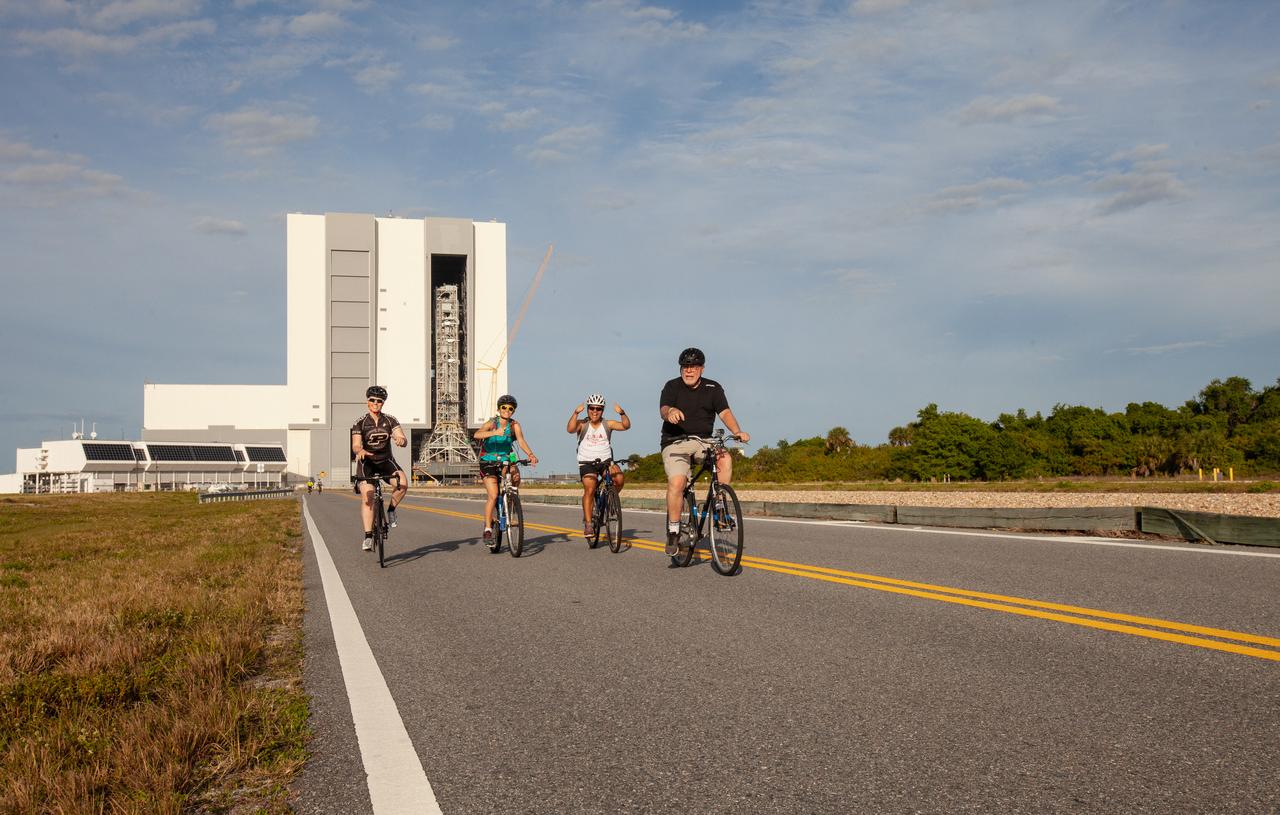
Cyclists pedal away from the Vehicle Assembly Building (VAB) and Launch Control Center, continuing on the Kennedy Space Center’s annual Tour de KSC. The bicycle tour took place March 30, giving Kennedy employees and guests the opportunity to choose from three different routes that ranged from seven to 33 miles along some of the Florida spaceport’s most notable facilities such as the VAB, the Shuttle Landing Facility and historic Launch Pad 39A, among others.
Tour de KSC
KENNEDY SPACE CENTER, FLA. -- Johnson Controls operators Rick Wetherington (left) and Kenny Allen work on two  of the recently acquired Contraves-Goerz Kineto Tracking Mounts (KTM).  There are 10 KTMs certified for use on the Eastern Range. The KTM, which is trailer-mounted with a center console/seat and electric drive tracking mount, includes a two-camera, camera control unit that will be used during launches.  The KTM is designed for remotely controlled operations and offers a combination of film, shuttered and high-speed digital video, and FLIR cameras configured with 20-inch to 150-inch focal length lenses. The KTMs are generally placed in the field and checked out the day before a launch and manned 3 hours prior to liftoff.
KSC-04pd1222
KENNEDY SPACE CENTER, FLA. -- Johnson Controls operators Rick Worthington (left) and Kenny Allen work on one of the recently acquired Contraves-Goerz Kineto Tracking Mounts (KTM).  There are 10 KTMs certified for use on the Eastern Range. The KTM, which is trailer-mounted with a center console/seat and electric drive tracking mount, includes a two-camera, camera control unit that will be used during launches.  The KTM is designed for remotely controlled operations and offers a combination of film, shuttered and high-speed digital video, and FLIR cameras configured with 20-inch to 150-inch focal length lenses. The KTMs are generally placed in the field and checked out the day before a launch and manned 3 hours prior to liftoff.
KSC-04pd1221
KENNEDY SPACE CENTER, FLA.  -  Shuttle Program Manager Bill Parsons praises the Discovery processing team for their successful power-up of the vehicle after Orbiter Major Modifications (OMM). The OMM work ranged from wiring, control panels and black boxes to gaseous and fluid systems tubing and components.  These systems were deserviced, disassembled, inspected, modified, reassembled, checked out and reserviced, as were most other systems onboard.  The work included the installation of the Multifunction Electronic Display Subsystem (MEDS) - a state-of-the-art “glass cockpit.”
KSC-03pd2467
In the Orbiter Processing Facility, Shuttle Program Manager Bill Parsons, center, is briefed on Orbiter Major Modifications (OMM) that were recently completed on Discovery. The OMM work ranged from wiring, control panels and black boxes to gaseous and fluid systems tubing and components. These systems were deserviced, disassembled, inspected, modified, reassembled, checked out and reserviced, as were most other systems onboard. The work included the installation of the Multifunction Electronic Display Subsystem (MEDS) - a state-of-the-art “glass cockpit.”
Bill Parsons with Discovery Processing Team
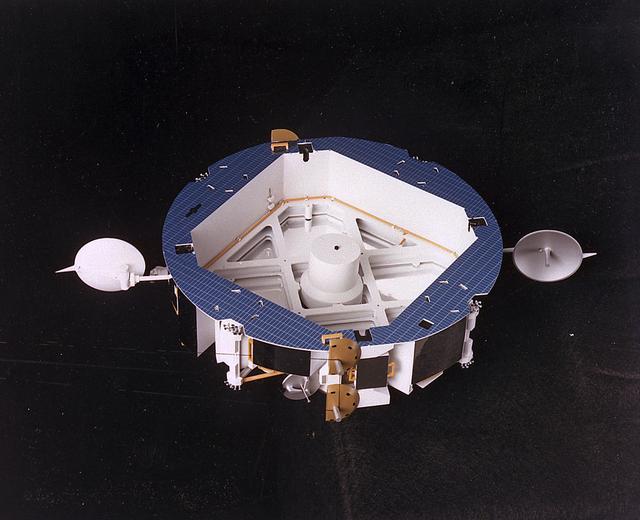
In this 1986 artist's concept, the Orbital Maneuvering Vehicle (OMV), is shown without its main propulsion module. Essentially two propulsion vehicles in one, the OMV could be powered by a main propulsion module , or, in its short range vehicle configuration shown here, use its own hydrazine and cold gas thrusters. As envisioned by Marshall Space Flight Center plarners, the OMV would be a remotely-controlled free-flying space tug which would place, rendezvous, dock, and retrieve orbital payloads.
Early Program Development
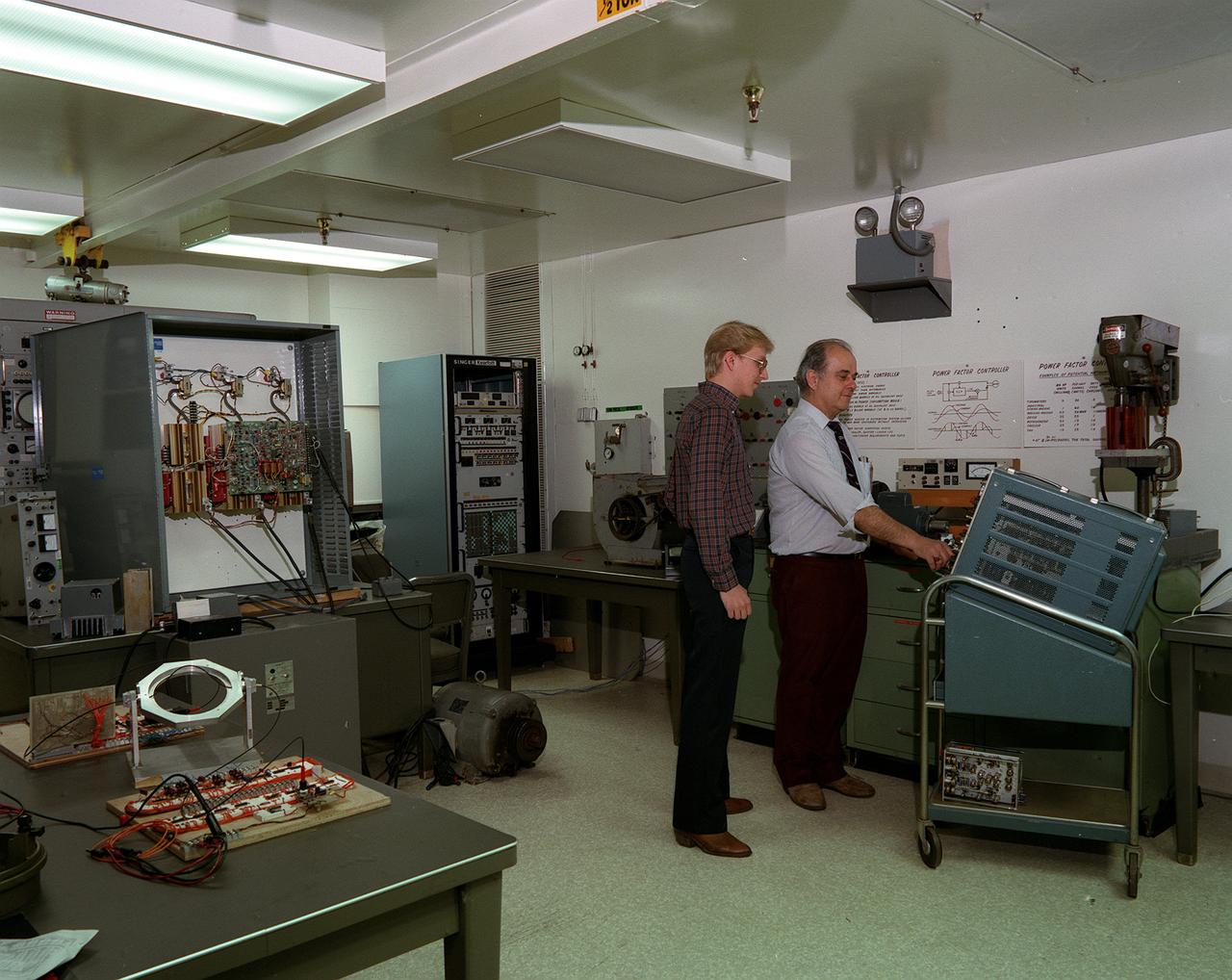
Frank Nola invented the Power Factor Controller (PFC) at Marshall Space Flight Center more than a decade ago. Nola came up with a way to curb power wastage in AC induction motors. The PFC matches voltage with the motor's actual need by continuously sensing shifts between voltage and current. When it senses a light load it cuts the voltage to the minimum needed. Potential energy savings range from 8 to 65 percent.
Benefit from NASA
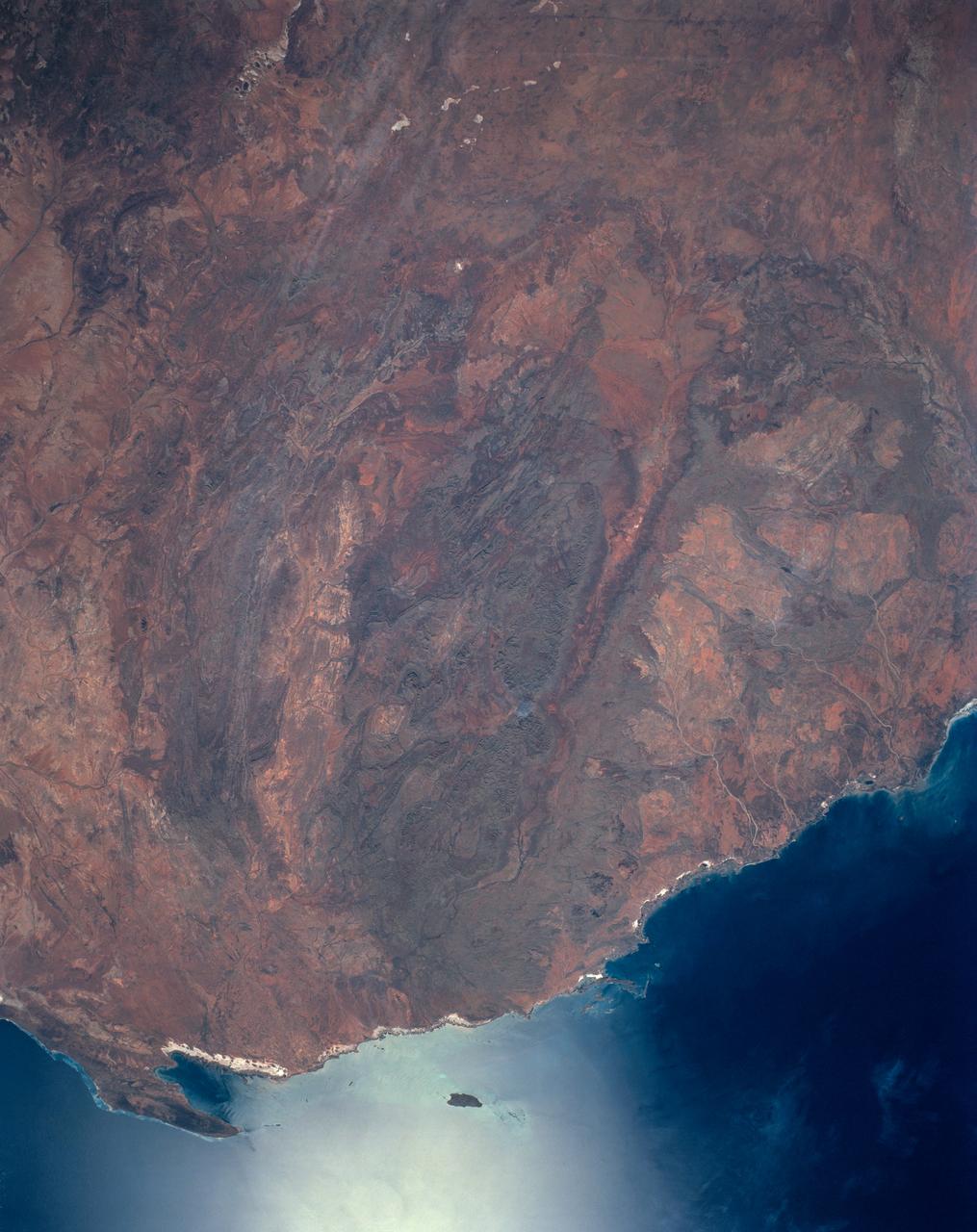
The oval shaped basin of the sedimentary rocks of the Hammersley Range, northern Western Australia (23.0S, 119.0E) dominates the center of this near nadir view. The Fortescue River is the remarkably straight, fault controlled feature bordering the Hammersley on the north. Sand dunes are the main surface features in the northeast and southwest. Many dry lakebeds can be seen to the east as light grey colored patches along the watercourses.
Hammersley Range, northern Western Australia
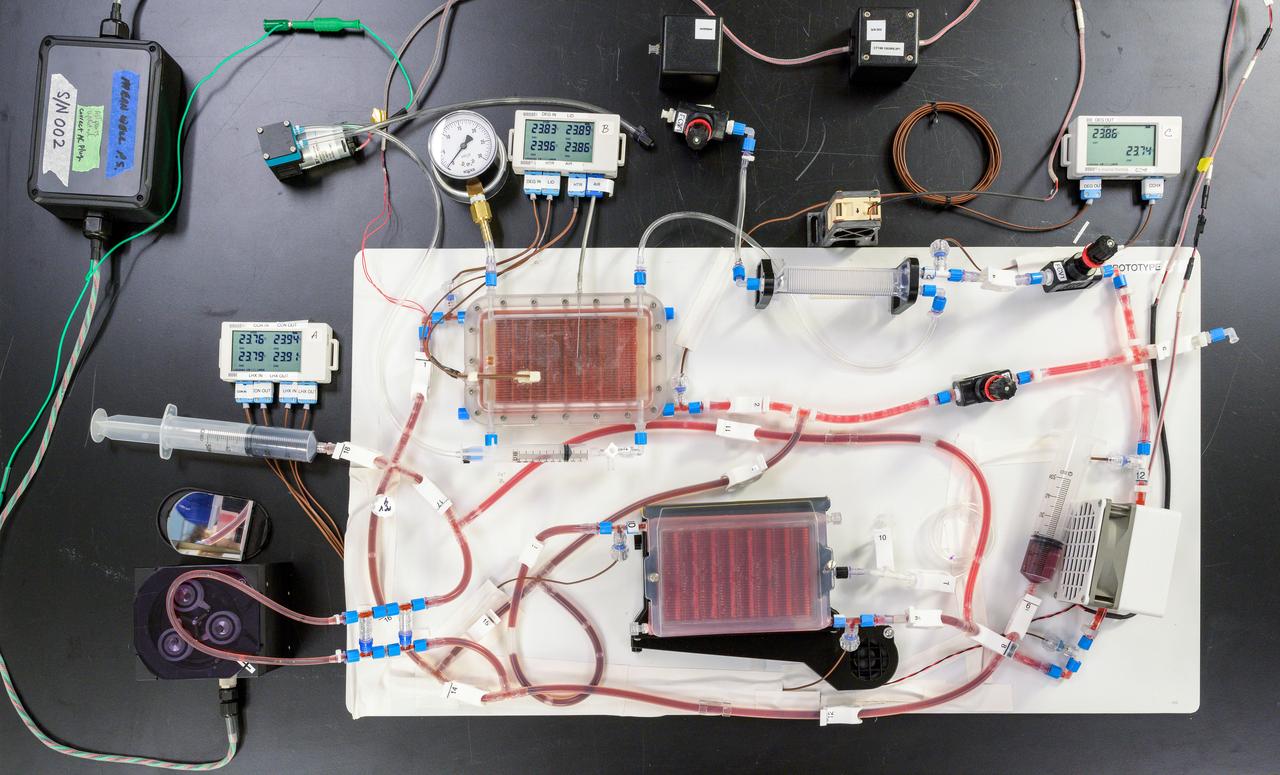
jsc2023e010170 (1/30/2023) --- Overall view of the CapiSorb Visible System prototype with sorbent simulant liquid in N240 room 133B. The CapiSorb Visible System will be launched on SpaceX CRS-27 in March 2023 to the International Space Station to demonstrate a liquid sorbent-based system that leverages the advantages of liquid control through capillary action to remove carbon dioxide from crewed atmospheres...The CapiSorb Visible System, shown here preflight, is used to study visco-capillary control and passive transport of liquid while simulating a fluid loop representative of a liquid carbon dioxide sorbent scrubber. The CapiSorb Visible System investigation demonstrates a liquid control using capillary forces, over a range of properties that are characteristic of liquids which absorb carbon dioxide. Image courtesy of NASA's Ames Research Center.
CapiSorb Visible System
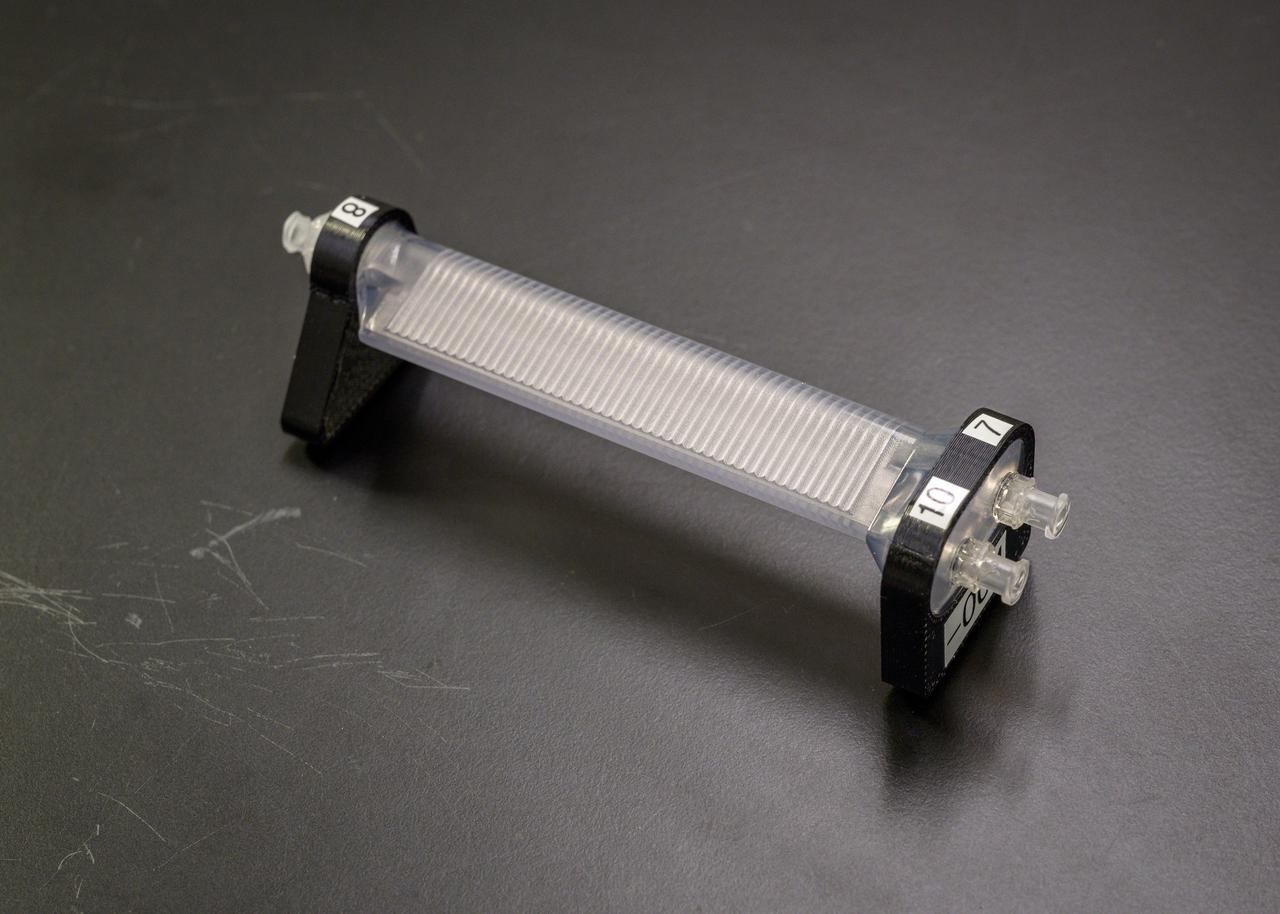
jsc2023e010169 (1/30/2023) --- CapiSorb Visible System flight unit capillary condensing heat exchanger (CCHX) in N240 room 133B. The CapiSorb Visible System will be launched on SpaceX CRS-27 in March 2023 to the International Space Station to demonstrate a liquid sorbent-based system that leverages the advantages of liquid control through capillary action to remove carbon dioxide from crewed atmospheres...The CapiSorb Visible System Capillary Condensing Heat Exchanger, shown here pre-flight, uses capillary surfaces and active cooling to condense water vapor from heated, humid air during microgravity experimentation. The capillary surfaces enable control and passive transport of fluids. The CapiSorb Visible System investigation demonstrates a liquid control using capillary forces, over a range of liquid properties that are characteristic of liquid carbon dioxide sorbents. Image courtesy of NASA's Ames Research Center.
CapiSorb Visible System
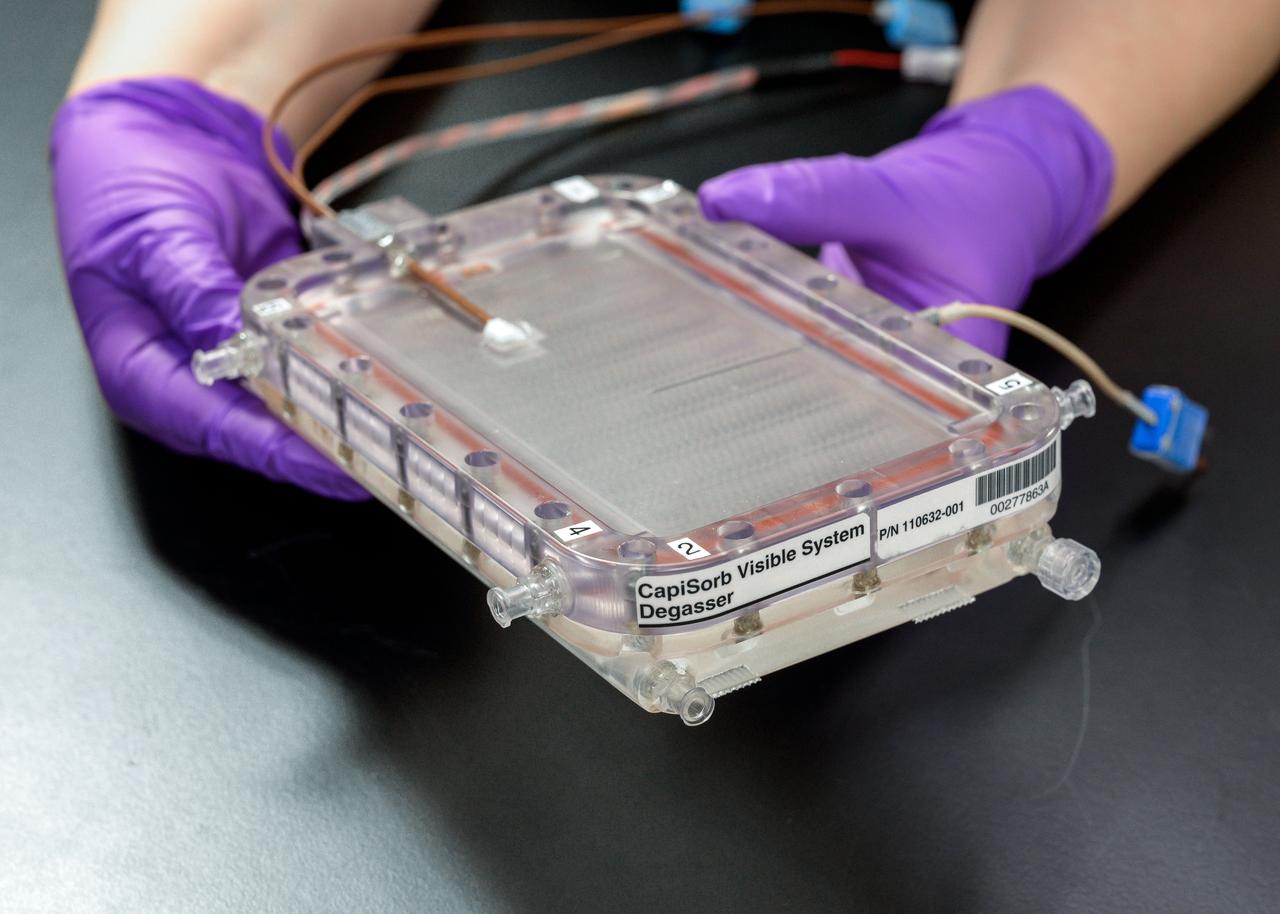
jsc2023e010167 (1/30/2023) --- CapiSorb Visible System flight unit degasser assembly in N240 room 133B. The CapiSorb Visible System will be launched on SpaceX CRS-27 in March 2023 to the International Space Station to demonstrate a liquid sorbent-based system that leverages the advantages of liquid control through capillary action to remove carbon dioxide from crewed atmospheres...Capillary wedges in the CapiSorb Visible System Degasser, shown here pre-flight, control and passively transport viscous liquid in microgravity in order to demonstrate capabilities needed for future liquid sorbent carbon dioxide removal technologies. The CapiSorb Visible System investigation demonstrates a liquid control using capillary forces, over a range of liquid properties that are characteristic of liquid carbon dioxide sorbents. Image courtesy of NASA's Ames Research Center.
CapiSorb Visible System
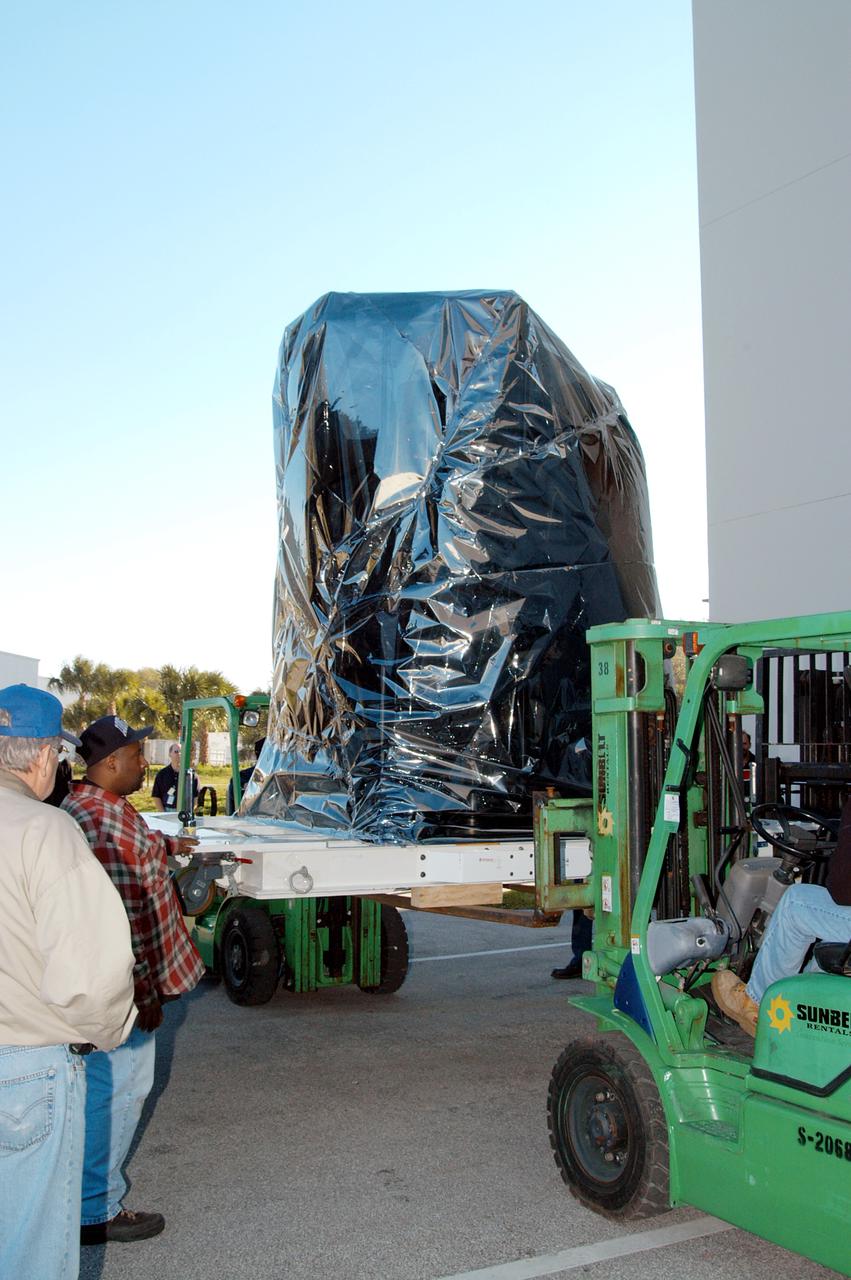
KENNEDY SPACE CENTER, FLA. -  At the Astrotech Space Operations processing facilities near KSC, workers begin moving NASA’s MESSENGER spacecraft into the building  MESSENGER - short for MErcury Surface, Space ENvironment, GEochemistry and Ranging - is being taken into a high bay clean room where employees of the Johns Hopkins University Applied Physics Laboratory, builders of the spacecraft, will perform an initial state-of-health check.  Then processing for launch can begin, including checkout of the power systems, communications systems and control systems.  The thermal blankets will also be attached for flight.  MESSENGER will be launched May 11 on a six-year mission aboard a Boeing Delta II rocket.  Liftoff is targeted for 2:26 a.m. EDT on Tuesday, May 11.
KENNEDY SPACE CENTER, FLA. - At the Astrotech Space Operations processing facilities near KSC, workers begin moving NASA’s MESSENGER spacecraft into the building MESSENGER - short for MErcury Surface, Space ENvironment, GEochemistry and Ranging - is being taken into a high bay clean room where employees of the Johns Hopkins University Applied Physics Laboratory, builders of the spacecraft, will perform an initial state-of-health check. Then processing for launch can begin, including checkout of the power systems, communications systems and control systems. The thermal blankets will also be attached for flight. MESSENGER will be launched May 11 on a six-year mission aboard a Boeing Delta II rocket. Liftoff is targeted for 2:26 a.m. EDT on Tuesday, May 11.
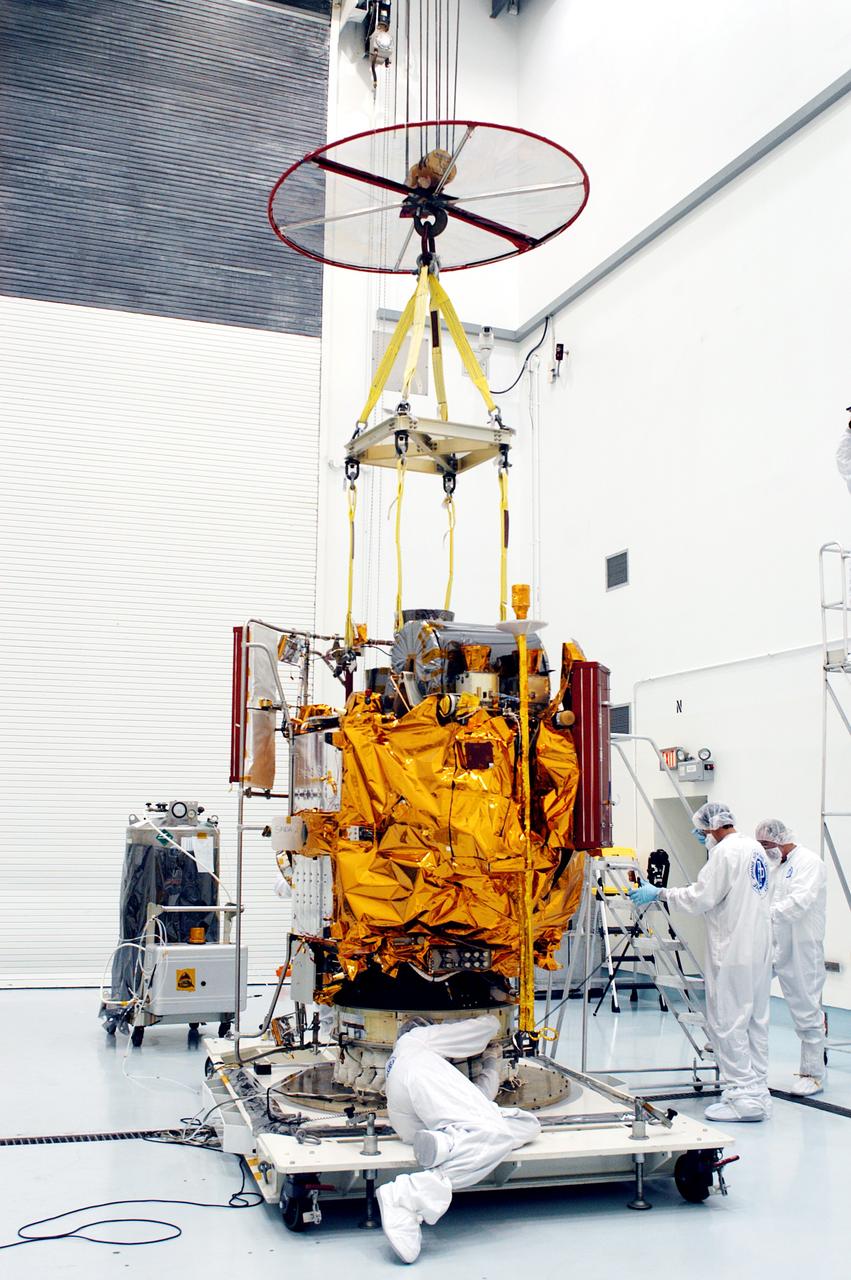
KENNEDY SPACE CENTER, FLA. -  In the high bay clean room at the Astrotech Space Operations processing facilities near KSC, workers attach an overhead crane to NASA’s MESSENGER spacecraft.  The spacecraft will be moved to a work stand where employees of the Johns Hopkins University Applied Physics Laboratory, builders of the spacecraft, will perform an initial state-of-health check.  Then processing for launch can begin, including checkout of the power systems, communications systems and control systems.  The thermal blankets will also be attached for flight.  MESSENGER - short for MErcury Surface, Space ENvironment, GEochemistry and Ranging - will be launched May 11 on a six-year mission aboard a Boeing Delta II rocket.  Liftoff is targeted for 2:26 a.m. EDT on Tuesday, May 11.
KENNEDY SPACE CENTER, FLA. - In the high bay clean room at the Astrotech Space Operations processing facilities near KSC, workers attach an overhead crane to NASA’s MESSENGER spacecraft. The spacecraft will be moved to a work stand where employees of the Johns Hopkins University Applied Physics Laboratory, builders of the spacecraft, will perform an initial state-of-health check. Then processing for launch can begin, including checkout of the power systems, communications systems and control systems. The thermal blankets will also be attached for flight. MESSENGER - short for MErcury Surface, Space ENvironment, GEochemistry and Ranging - will be launched May 11 on a six-year mission aboard a Boeing Delta II rocket. Liftoff is targeted for 2:26 a.m. EDT on Tuesday, May 11.
KENNEDY SPACE CENTER, FLA. -  At the Astrotech Space Operations processing facilities near KSC, workers check the moveable pallet holding NASA’s MESSENGER spacecraft.  MESSENGER - short for MErcury Surface, Space ENvironment, GEochemistry and Ranging - will be taken into a high bay clean room and employees of the Johns Hopkins University Applied Physics Laboratory, builders of the spacecraft, will perform an initial state-of-health check.  Then processing for launch can begin, including checkout of the power systems, communications systems and control systems.  The thermal blankets will also be attached for flight.  MESSENGER will be launched May 11 on a six-year mission aboard a Boeing Delta II rocket.  Liftoff is targeted for 2:26 a.m. EDT on Tuesday, May 11.
KENNEDY SPACE CENTER, FLA. - At the Astrotech Space Operations processing facilities near KSC, workers check the moveable pallet holding NASA’s MESSENGER spacecraft. MESSENGER - short for MErcury Surface, Space ENvironment, GEochemistry and Ranging - will be taken into a high bay clean room and employees of the Johns Hopkins University Applied Physics Laboratory, builders of the spacecraft, will perform an initial state-of-health check. Then processing for launch can begin, including checkout of the power systems, communications systems and control systems. The thermal blankets will also be attached for flight. MESSENGER will be launched May 11 on a six-year mission aboard a Boeing Delta II rocket. Liftoff is targeted for 2:26 a.m. EDT on Tuesday, May 11.
KENNEDY SPACE CENTER, FLA. -  In the high bay clean room at the Astrotech Space Operations processing facilities near KSC, workers get ready to remove the protective cover from NASA’s MESSENGER spacecraft.  Employees of the Johns Hopkins University Applied Physics Laboratory, builders of the spacecraft, will perform an initial state-of-health check.  Then processing for launch can begin, including checkout of the power systems, communications systems and control systems.  The thermal blankets will also be attached for flight.  MESSENGER - short for MErcury Surface, Space ENvironment, GEochemistry and Ranging - will be launched May 11 on a six-year mission aboard a Boeing Delta II rocket.  Liftoff is targeted for 2:26 a.m. EDT on Tuesday, May 11.
KENNEDY SPACE CENTER, FLA. - In the high bay clean room at the Astrotech Space Operations processing facilities near KSC, workers get ready to remove the protective cover from NASA’s MESSENGER spacecraft. Employees of the Johns Hopkins University Applied Physics Laboratory, builders of the spacecraft, will perform an initial state-of-health check. Then processing for launch can begin, including checkout of the power systems, communications systems and control systems. The thermal blankets will also be attached for flight. MESSENGER - short for MErcury Surface, Space ENvironment, GEochemistry and Ranging - will be launched May 11 on a six-year mission aboard a Boeing Delta II rocket. Liftoff is targeted for 2:26 a.m. EDT on Tuesday, May 11.
KENNEDY SPACE CENTER, FLA. -  In the high bay clean room at the Astrotech Space Operations processing facilities near KSC, workers prepare to attach an overhead crane to NASA’s MESSENGER spacecraft.  The spacecraft will be moved to a work stand where employees of the Johns Hopkins University Applied Physics Laboratory, builders of the spacecraft, will perform an initial state-of-health check.  Then processing for launch can begin, including checkout of the power systems, communications systems and control systems.  The thermal blankets will also be attached for flight.  MESSENGER - short for MErcury Surface, Space ENvironment, GEochemistry and Ranging - will be launched May 11 on a six-year mission aboard a Boeing Delta II rocket.  Liftoff is targeted for 2:26 a.m. EDT on Tuesday, May 11.
KENNEDY SPACE CENTER, FLA. - In the high bay clean room at the Astrotech Space Operations processing facilities near KSC, workers prepare to attach an overhead crane to NASA’s MESSENGER spacecraft. The spacecraft will be moved to a work stand where employees of the Johns Hopkins University Applied Physics Laboratory, builders of the spacecraft, will perform an initial state-of-health check. Then processing for launch can begin, including checkout of the power systems, communications systems and control systems. The thermal blankets will also be attached for flight. MESSENGER - short for MErcury Surface, Space ENvironment, GEochemistry and Ranging - will be launched May 11 on a six-year mission aboard a Boeing Delta II rocket. Liftoff is targeted for 2:26 a.m. EDT on Tuesday, May 11.
KENNEDY SPACE CENTER, FLA. -  At the Astrotech Space Operations processing facilities near KSC, a lift begins lowering NASA’s MESSENGER spacecraft onto the ground.  MESSENGER - short for MErcury Surface, Space ENvironment, GEochemistry and Ranging - will be taken into a high bay clean room and employees of the Johns Hopkins University Applied Physics Laboratory, builders of the spacecraft, will perform an initial state-of-health check.  Then processing for launch can begin, including checkout of the power systems, communications systems and control systems.  The thermal blankets will also be attached for flight.  MESSENGER will be launched May 11 on a six-year mission aboard a Boeing Delta II rocket.  Liftoff is targeted for 2:26 a.m. EDT on Tuesday, May 11.
KENNEDY SPACE CENTER, FLA. - At the Astrotech Space Operations processing facilities near KSC, a lift begins lowering NASA’s MESSENGER spacecraft onto the ground. MESSENGER - short for MErcury Surface, Space ENvironment, GEochemistry and Ranging - will be taken into a high bay clean room and employees of the Johns Hopkins University Applied Physics Laboratory, builders of the spacecraft, will perform an initial state-of-health check. Then processing for launch can begin, including checkout of the power systems, communications systems and control systems. The thermal blankets will also be attached for flight. MESSENGER will be launched May 11 on a six-year mission aboard a Boeing Delta II rocket. Liftoff is targeted for 2:26 a.m. EDT on Tuesday, May 11.
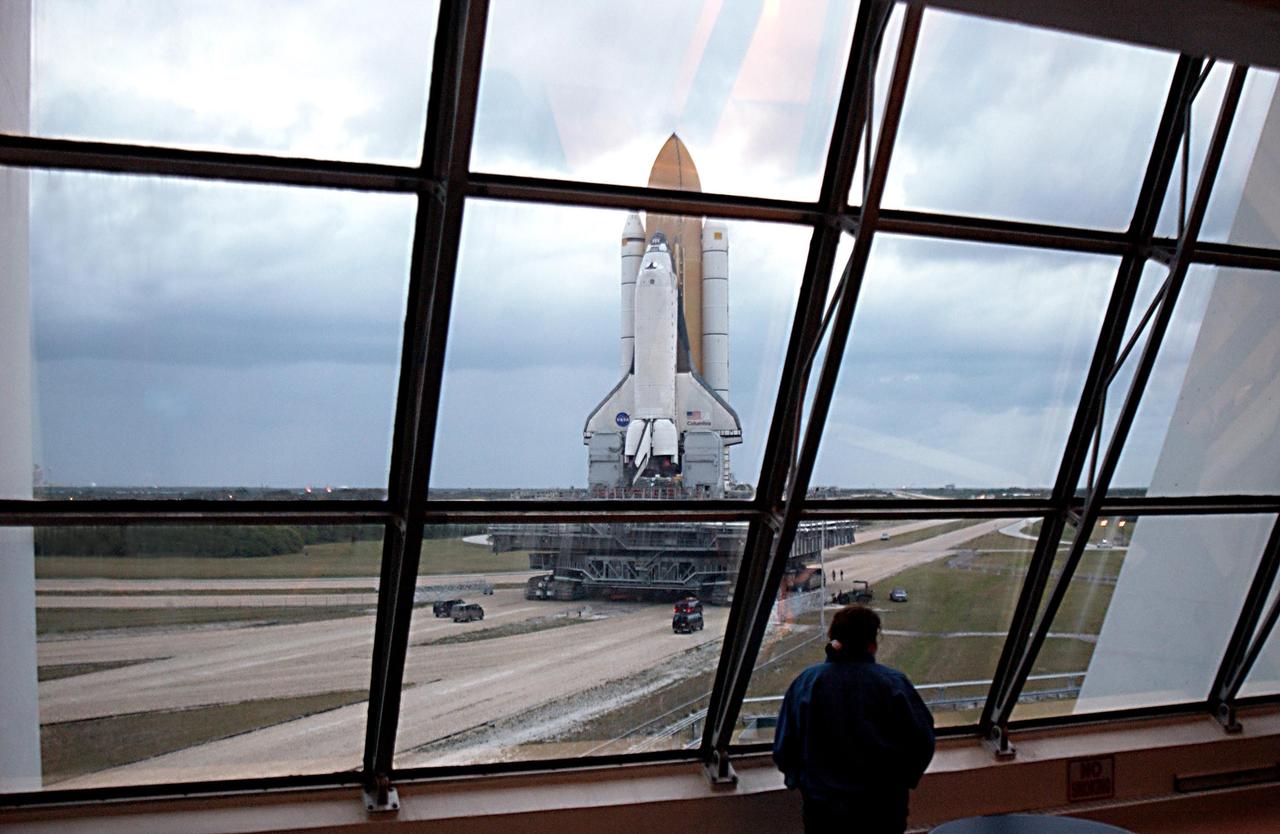
KENNEDY SPACE CENTER, FLA. -- A view from inside the Launch Control Center shows Space Shuttle Columbia rolling to Launch Pad 39A, sitting atop the Mobile Launcher Platform, which in turn is carried by the crawler-transporter underneath. The STS-107 research mission comprises experiments ranging from material sciences to life sciences (many rats), plus the Fast Reaction Experiments Enabling Science, Technology, Applications and Research (FREESTAR) that incorporates eight high priority secondary attached shuttle experiments. Mission STS-107 is scheduled to launch Jan. 16, 2003.
KSC-02pd1884
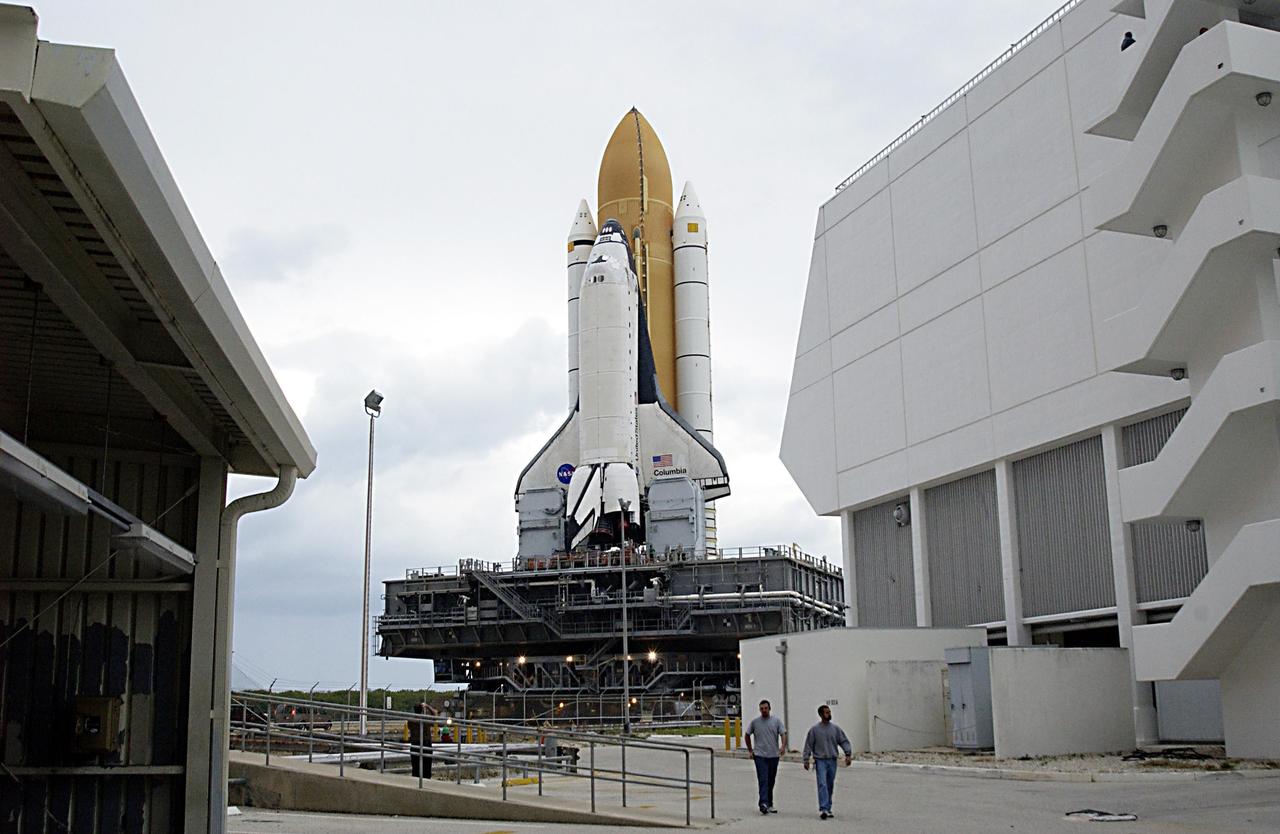
KENNEDY SPACE CENTER, FLA. -- Space Shuttle Columbia, sitting atop the Mobile Launcher Platform, which in turn is carried by the crawler-transporter underneath, makes the journey past the Launch Control Center on its way to Launch Pad 39A. The STS-107 research mission comprises experiments ranging from material sciences to life sciences (many rats), plus the Fast Reaction Experiments Enabling Science, Technology, Applications and Research (FREESTAR) that incorporates eight high priority secondary attached shuttle experiments. Mission STS-107 is scheduled to launch Jan. 16, 2003.
KSC-02pd1883
KENNEDY SPACE CENTER, FLA. -- At the Astrotech Space Operations processing facilities, the attachment of NASA’s MESSENGER spacecraft to a test stand is complete. The spacecraft is now ready for employees of the Johns Hopkins University Applied Physics Laboratory, builders of the spacecraft, to begin final processing for launch, including checkout of the power systems, communications systems and control systems. The thermal blankets will also be attached for flight. MESSENGER - short for MErcury Surface, Space ENvironment, GEochemistry and Ranging - will be launched aboard a Boeing Delta II rocket no earlier than July 30 on a six-year mission to study the planet Mercury.
KSC-04pd0603
KENNEDY SPACE CENTER, FLA. -- At the Astrotech Space Operations processing facilities, workers secure NASA’s MESSENGER spacecraft on a test stand. Once in place, employees of the Johns Hopkins University Applied Physics Laboratory, builders of the spacecraft, will begin final processing for launch, including checkout of the power systems, communications systems and control systems. The thermal blankets will also be attached for flight. MESSENGER - short for MErcury Surface, Space ENvironment, GEochemistry and Ranging - will be launched aboard a Boeing Delta II rocket no earlier than July 30 on a six-year mission to study the planet Mercury.
KSC-04pd0600
KENNEDY SPACE CENTER, FLA. -- At the Astrotech Space Operations processing facilities, workers secure NASA’s MESSENGER spacecraft on a test stand. Once in place, employees of the Johns Hopkins University Applied Physics Laboratory, builders of the spacecraft, will begin final processing for launch, including checkout of the power systems, communications systems and control systems. The thermal blankets will also be attached for flight. MESSENGER - short for MErcury Surface, Space ENvironment, GEochemistry and Ranging - will be launched aboard a Boeing Delta II rocket no earlier than July 30 on a six-year mission to study the planet Mercury.
KSC-04pd0602
NASA Administrator Charles Bolden congratulates the Orbital Sciences Corporation launch team and management in the Range Control Center at the NASA Wallops Flight Facility after the successful launch of the Orbital Sciences Antares rocket from the Mid-Atlantic Regional Spaceport (MARS) in Virginia, Sunday, April 21, 2013. The test launch marked the first flight of Antares and the first rocket launch from Pad-0A. The Antares rocket delivered the equivalent mass of a spacecraft, a so-called mass simulated payload, into Earth's orbit. Photo Credit: (NASA/Bill Ingalls)
Antares Rocket Test Launch
KENNEDY SPACE CENTER, FLA. -- At the Astrotech Space Operations processing facilities, workers prepare for contact of NASA’s MESSENGER spacecraft with a test stand. Once in place, employees of the Johns Hopkins University Applied Physics Laboratory, builders of the spacecraft, will begin final processing for launch, including checkout of the power systems, communications systems and control systems. The thermal blankets will also be attached for flight. MESSENGER - short for MErcury Surface, Space ENvironment, GEochemistry and Ranging - will be launched aboard a Boeing Delta II rocket no earlier than July 30 on a six-year mission to study the planet Mercury.
KSC-04pd0597
KENNEDY SPACE CENTER, FLA. -- At the Astrotech Space Operations processing facilities, workers lower NASA’s MESSENGER spacecraft onto a test stand using an overhead crane. Once in place, employees of the Johns Hopkins University Applied Physics Laboratory, builders of the spacecraft, will begin final processing for launch, including checkout of the power systems, communications systems and control systems. The thermal blankets will also be attached for flight. MESSENGER - short for MErcury Surface, Space ENvironment, GEochemistry and Ranging - will be launched aboard a Boeing Delta II rocket no earlier than July 30 on a six-year mission to study the planet Mercury.
KSC-04pd0595
KENNEDY SPACE CENTER, FLA. -- At the Astrotech Space Operations processing facilities, workers prepare to move NASA’s MESSENGER spacecraft onto a test stand using an overhead crane. There, employees of the Johns Hopkins University Applied Physics Laboratory, builders of the spacecraft, will begin final processing for launch, including checkout of the power systems, communications systems and control systems. The thermal blankets will also be attached for flight. MESSENGER - short for MErcury Surface, Space ENvironment, GEochemistry and Ranging - will be launched aboard a Boeing Delta II rocket no earlier than July 30 on a six-year mission to study the planet Mercury.
KSC-04pd0594
KENNEDY SPACE CENTER, FLA. -- At the Astrotech Space Operations processing facilities, workers secure NASA’s MESSENGER spacecraft on a test stand. Once in place, employees of the Johns Hopkins University Applied Physics Laboratory, builders of the spacecraft, will begin final processing for launch, including checkout of the power systems, communications systems and control systems. The thermal blankets will also be attached for flight. MESSENGER - short for MErcury Surface, Space ENvironment, GEochemistry and Ranging - will be launched aboard a Boeing Delta II rocket no earlier than July 30 on a six-year mission to study the planet Mercury.
KSC-04pd0601
KENNEDY SPACE CENTER, FLA. -- At the Astrotech Space Operations processing facilities, workers verify the correct placement of NASA’s MESSENGER spacecraft on a test stand. Once in place, employees of the Johns Hopkins University Applied Physics Laboratory, builders of the spacecraft, will begin final processing for launch, including checkout of the power systems, communications systems and control systems. The thermal blankets will also be attached for flight. MESSENGER - short for MErcury Surface, Space ENvironment, GEochemistry and Ranging - will be launched aboard a Boeing Delta II rocket no earlier than July 30 on a six-year mission to study the planet Mercury.
KSC-04pd0599
KENNEDY SPACE CENTER, FLA. -- At the Astrotech Space Operations processing facilities, workers monitor NASA’s MESSENGER spacecraft as it is lowered onto a test stand by an overhead crane. Once in place, employees of the Johns Hopkins University Applied Physics Laboratory, builders of the spacecraft, will begin final processing for launch, including checkout of the power systems, communications systems and control systems. The thermal blankets will also be attached for flight. MESSENGER - short for MErcury Surface, Space ENvironment, GEochemistry and Ranging - will be launched aboard a Boeing Delta II rocket no earlier than July 30 on a six-year mission to study the planet Mercury.
KSC-04pd0596
Director of Strategic Communications and Senior Science and Technology Policy Analyst, Office of Science and Technology Policy, Executive Office of the President, Rick Weiss, left, “Big Bang Theory” co-creator Bill Prady, center, and NASA Mars Curiosity Landing mission controller, Bobak "Mohawk Guy" Ferdowsi talk during the White House Science Fair held at the White House, April 22, 2013. The science fair celebrated student winners of a broad range of science, technology, engineering and math (STEM) competitions from across the country.  Photo Credit: (NASA/Bill Ingalls)
White House Science Fair
Tim Evans, a mechanical engineering technician, uses a computer numerical control (CNC) machine to machine a part for a Launch Pad 39B camera enclosure inside the Prototype Development Laboratory at NASA’s Kennedy Space Center in Florida on Oct. 21, 2020. The prototype laboratory designs, fabricates, and tests prototypes, test articles and test support equipment. It has a long history of providing fast solutions to complex operations problems. The lab’s teams of engineers use specialized equipment to produce exacting, one-of-a-kind items made from a range of materials depending on the design. The lab supports projects at Kennedy and at the agency level.
Engineering Labs: Prototype Development Laboratory (PDL)
KENNEDY SPACE CENTER, FLA. -- At the Astrotech Space Operations processing facilities, workers check for the correct alignment of NASA’s MESSENGER spacecraft as it is lowered onto a test stand. Once in place, employees of the Johns Hopkins University Applied Physics Laboratory, builders of the spacecraft, will begin final processing for launch, including checkout of the power systems, communications systems and control systems. The thermal blankets will also be attached for flight. MESSENGER - short for MErcury Surface, Space ENvironment, GEochemistry and Ranging - will be launched aboard a Boeing Delta II rocket no earlier than July 30 on a six-year mission to study the planet Mercury.
KSC-04pd0598
United Space Alliance workers explain tile installation around Discovery’s nose landing gear to Shuttle Program Manager Bill Parsons (center). Discovery has been undergoing Orbiter Major Modifications. The OMM work ranged from wiring, control panels and black boxes to gaseous and fluid systems tubing and components. These systems were deserviced, disassembled, inspected, modified, reassembled, checked out and reserviced, as were most other systems onboard. The work included the installation of the Multifunction Electronic Display Subsystem (MEDS) - a state-of-the-art “glass cockpit.”
Bill Parsons with Discovery Processing Team