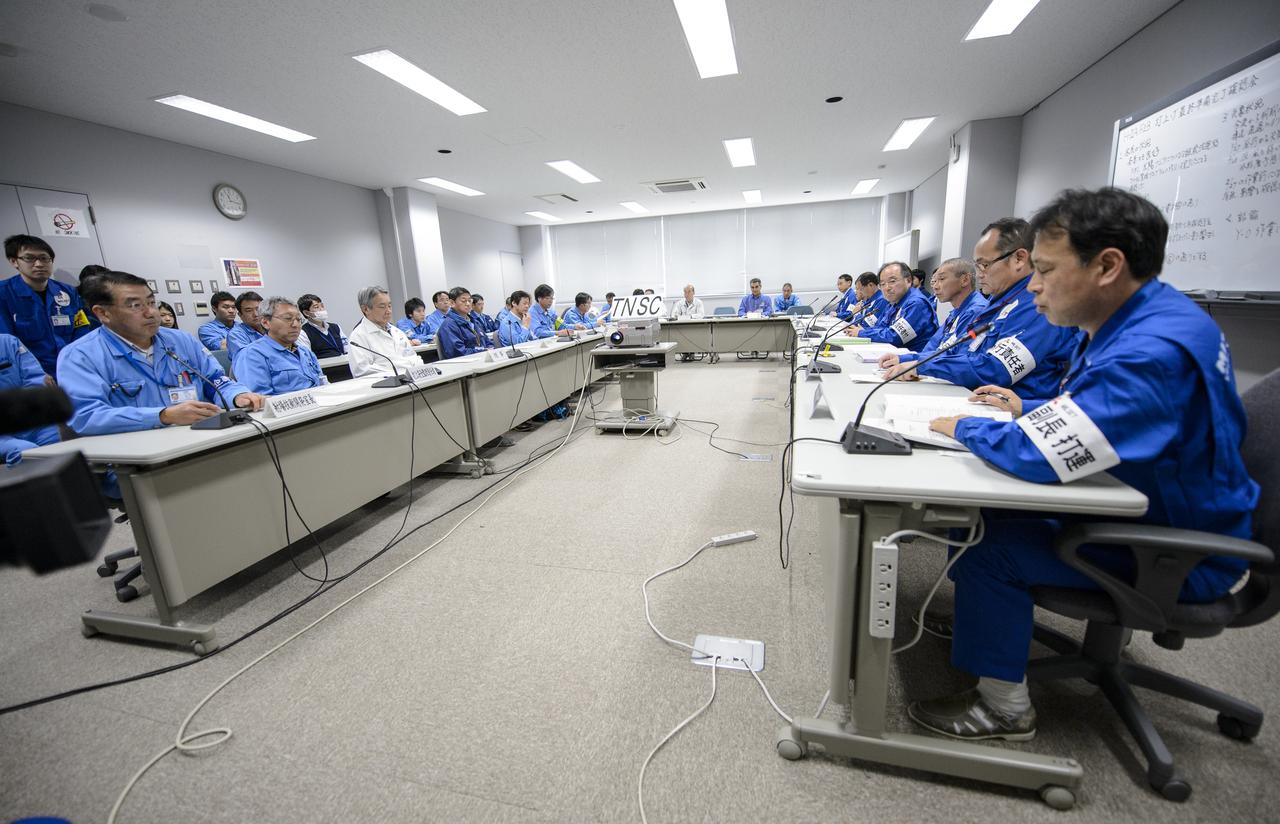
Chief officers from Mitsubishi Heavy Industries, Ltd., the Japan Aerospace Exploration Agency (JAXA) and NASA met on Wednesday, Feb. 26, 2014 in the Range Control Center (RCC) of the Tanegashima Space Center, Japan, to review the readiness of the Global Precipitation Measurement (GPM) Core Observatory for launch. The spacecraft is scheduled to launch aboard an H-IIA rocket early on the morning of Feb. 28 Japan time. Once launched, the GPM spacecraft will collect information that unifies data from an international network of existing and future satellites to map global rainfall and snowfall every three hours. Photo Credit: (NASA/Bill Ingalls)
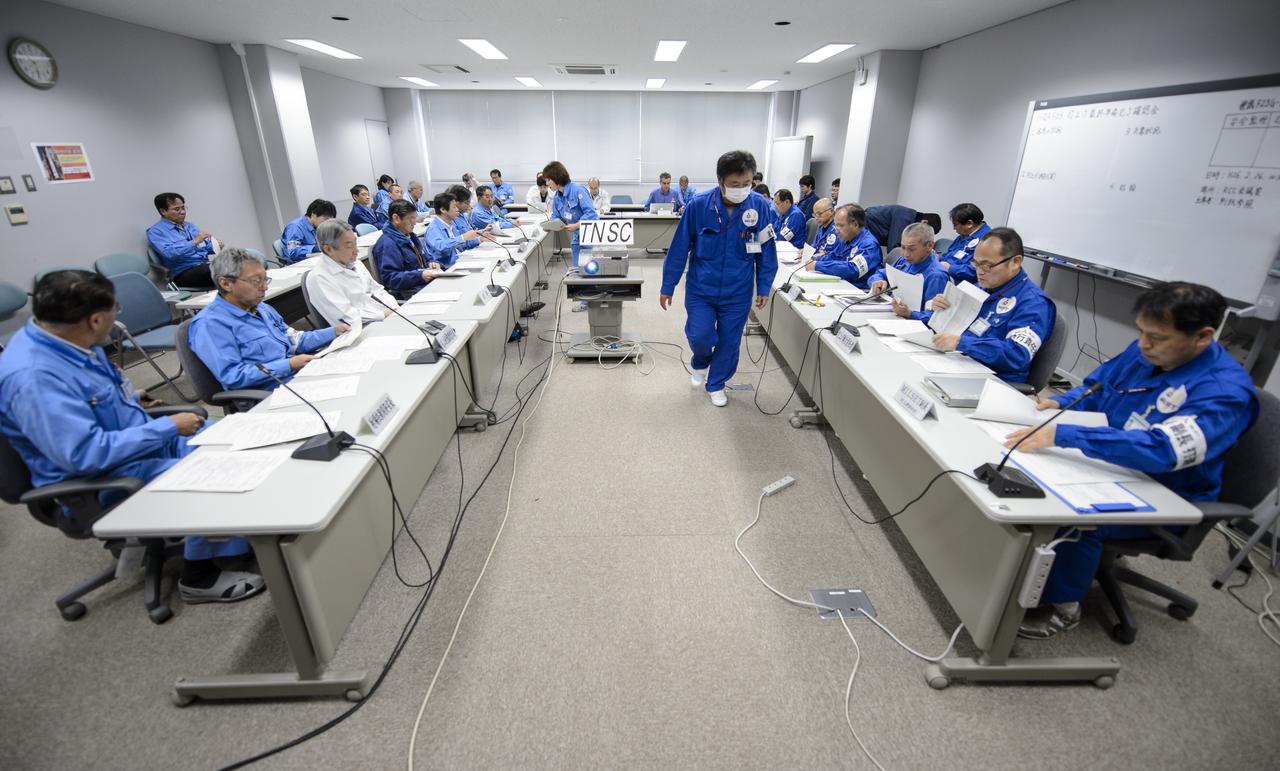
Chief officers from Mitsubishi Heavy Industries, Ltd., the Japan Aerospace Exploration Agency (JAXA) and NASA met on Wednesday, Feb. 26, 2014 in the Range Control Center (RCC) of the Tanegashima Space Center, Japan, to review the readiness of the Global Precipitation Measurement (GPM) Core Observatory for launch. The spacecraft is scheduled to launch aboard an H-IIA rocket early on the morning of Feb. 28 Japan time. Once launched, the GPM spacecraft will collect information that unifies data from an international network of existing and future satellites to map global rainfall and snowfall every three hours. Photo Credit: (NASA/Bill Ingalls)
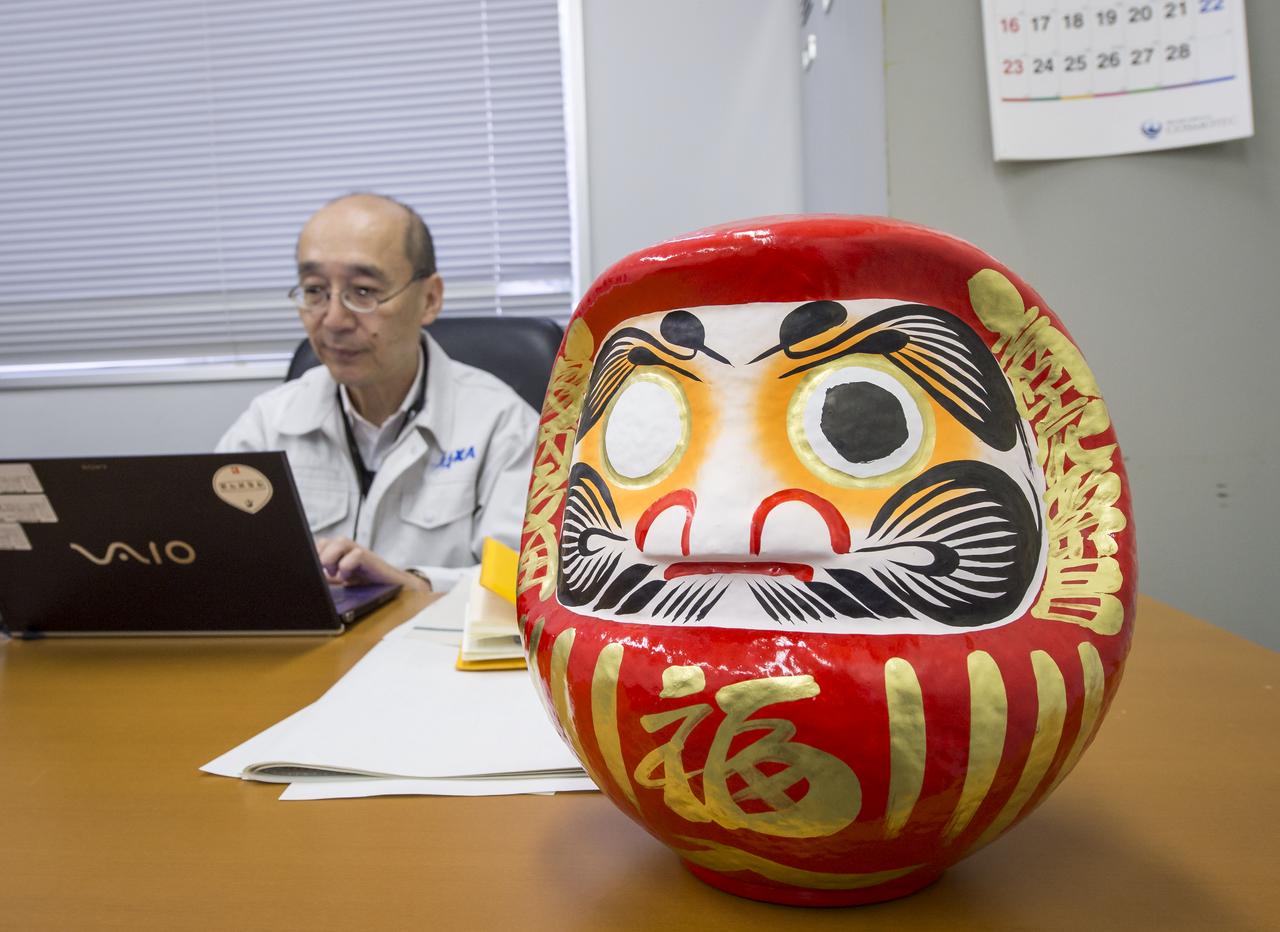
A daruma doll is seen on the desk of Masahiro Kojima, GPM Dual-frequency Precipitation Radar project manager, Japan Aerospace Exploration Agency (JAXA), at the Tanegashima Space Cener's Range Control Center (RCC), Wednesday, Feb. 26, 2014, Tanegashima, Japan. One eye of the daruma doll is colored in when a goal is set and the second eye is colored in at the completion of the goal. JAXA plans to launch an H-IIA rocket carrying the NASA-JAXA, Global Precipitation Measurement (GPM) Core Observatory from the space center on Feb. 28, 2014. Once launched, the GPM spacecraft will collect information that unifies data from an international network of existing and future satellites to map global rainfall and snowfall every three hours. Photo Credit: (NASA/Bill Ingalls)
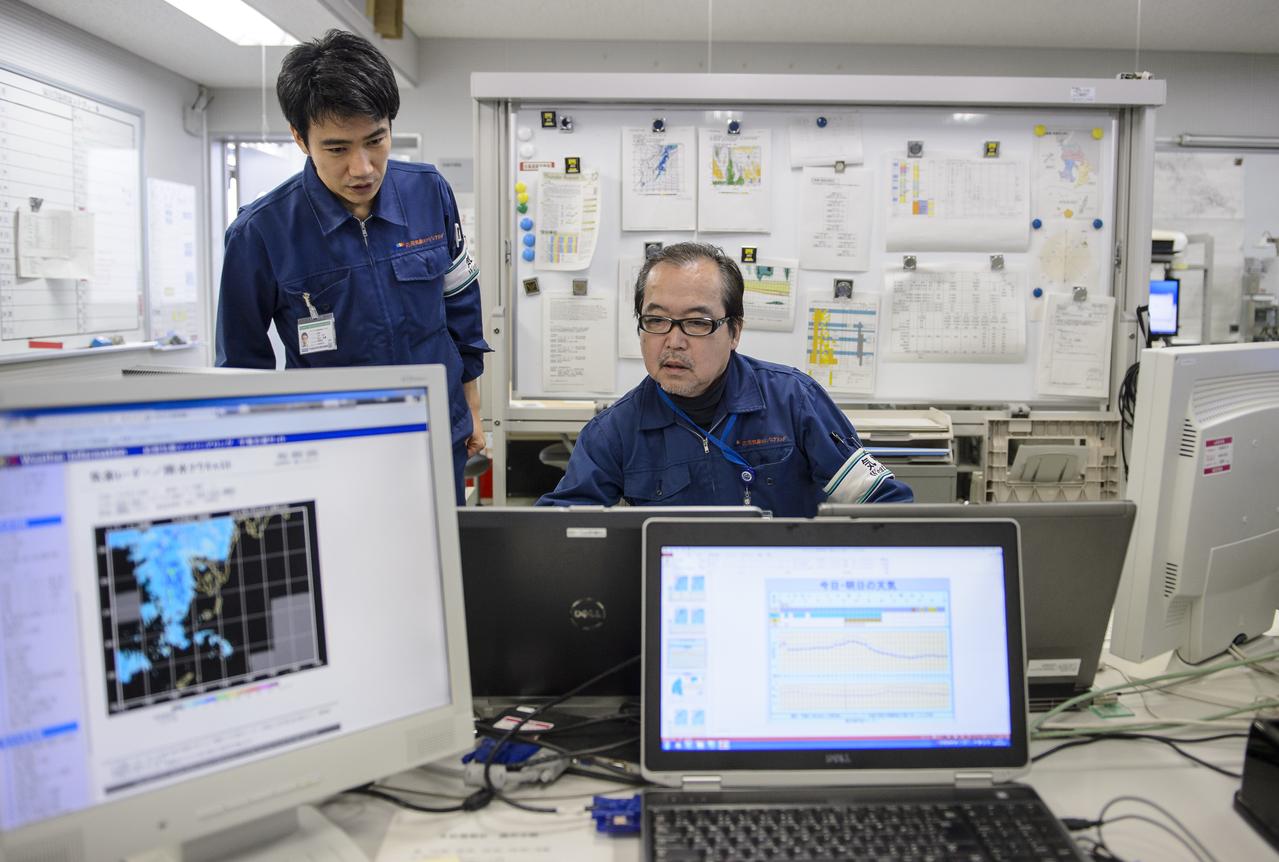
Members of the weather team prepare reports for the Global Precipitation Measurement (GPM) Core Observatory Launch Readiness Review (LRR) with Chief officers from Mitsubishi Heavy Industries, Ltd., the Japan Aerospace Exploration Agency (JAXA), and NASA, on Wednesday, Feb. 26, 2014 at Tanegashima Space Center, Japan. The GPM spacecraft is scheduled to launch aboard an H-IIA rocket early on the morning of Feb. 28 Japan time. At the meeting in the space center's Range Control Center, all preparations to date were reviewed and approval was given to proceed with launch on schedule. Once launched, the GPM spacecraft will collect information that unifies data from an international network of existing and future satellites to map global rainfall and snowfall every three hours. Photo Credit: (NASA/Bill Ingalls)
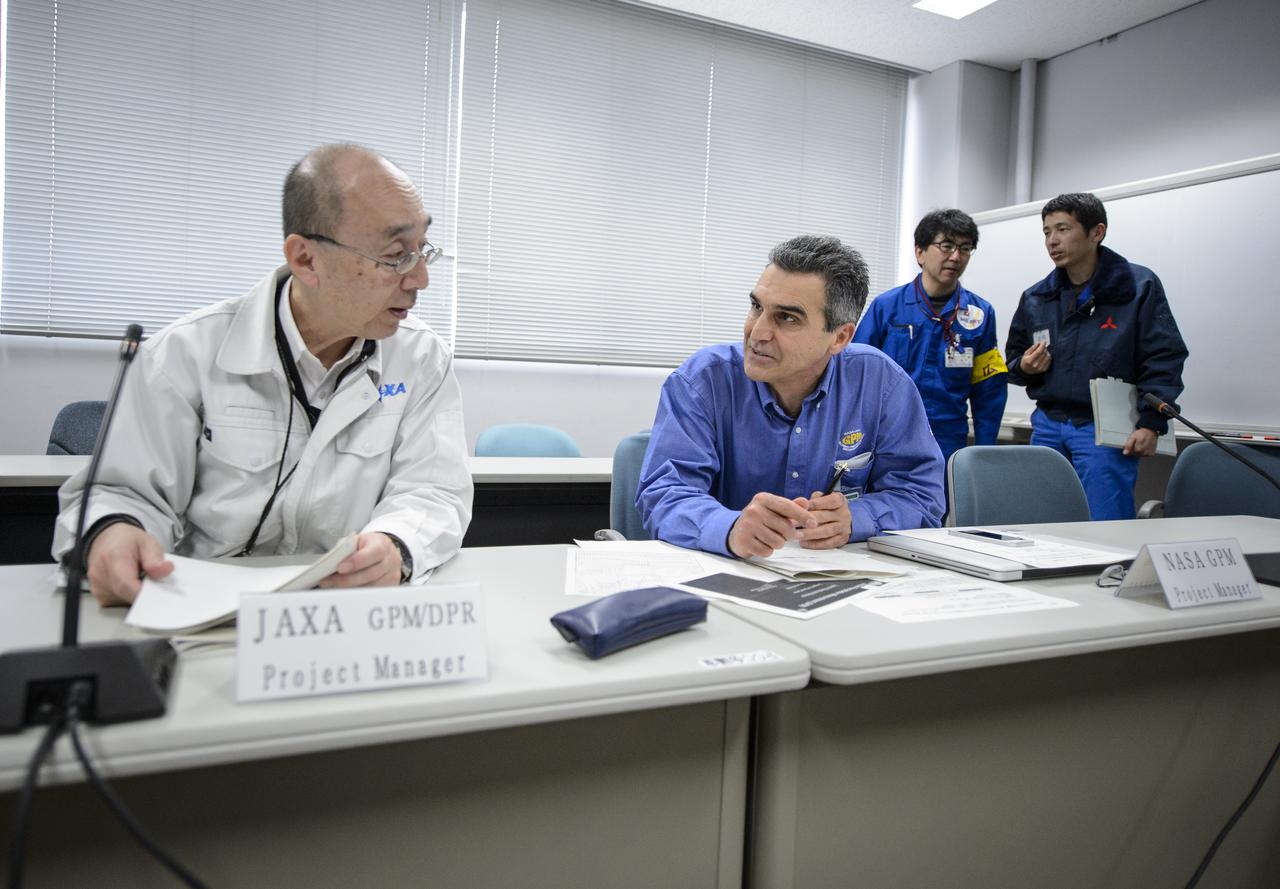
Masahiro Kojima, GPM Dual-frequency Precipitation Radar project manager, Japan Aerospace Exploration Agency (JAXA), left, and, Art Azarbarzin, NASA Global Precipitation Measurement (GPM) project manager, talk after the GPM Launch Readiness Review (LRR), Wednesday, Feb. 26, 2014 at Tanegashima Space Center, Japan. The GPM spacecraft is scheduled to launch aboard an H-IIA rocket early on the morning of Feb. 28 Japan time. At the meeting in the space center's Range Control Center, all preparations to date were reviewed and approval was given to proceed with launch on schedule. Once launched, the GPM spacecraft will collect information that unifies data from an international network of existing and future satellites to map global rainfall and snowfall every three hours. Photo Credit: (NASA/Bill Ingalls)
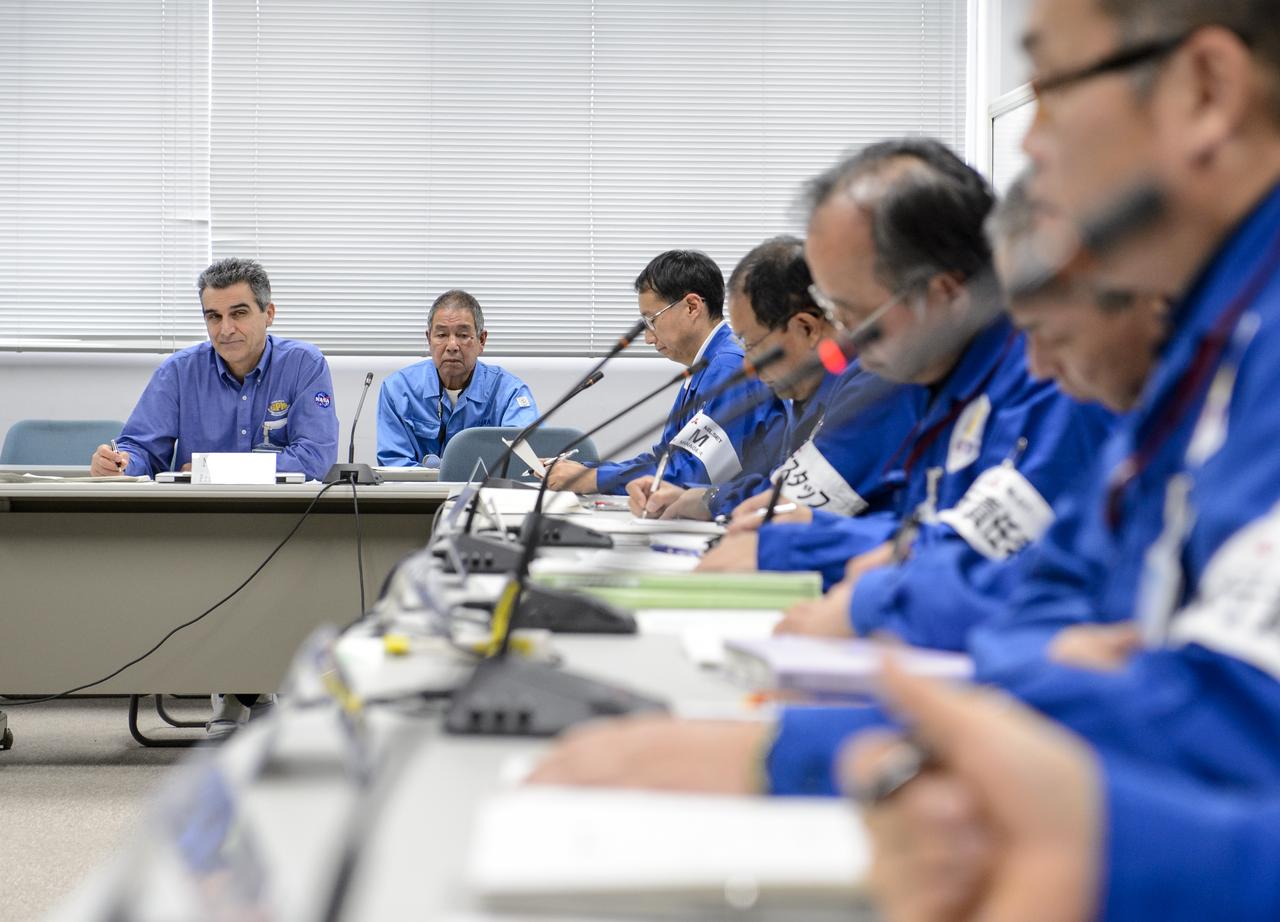
Art Azarbarzin, NASA Global Precipitation Measurement (GPM) project manager, left, participates in the GPM Launch Readiness Review (LRR) along with Chief officers from Mitsubishi Heavy Industries, Ltd., and the Japan Aerospace Exploration Agency (JAXA) on Wednesday, Feb. 26, 2014 at Tanegashima Space Center, Japan. The spacecraft is scheduled to launch aboard an H-IIA rocket early on the morning of Feb. 28 Japan time. At the meeting in the space center's Range Control Center, all preparations to date were reviewed and approval was given to proceed with launch on schedule. Once launched, the GPM spacecraft will collect information that unifies data from an international network of existing and future satellites to map global rainfall and snowfall every three hours. Photo Credit: (NASA/Bill Ingalls)