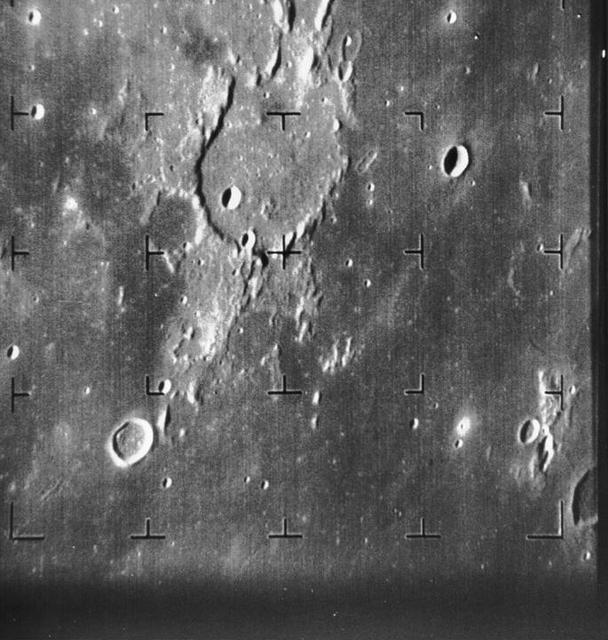
Guericke Crater as seen by Ranger 7
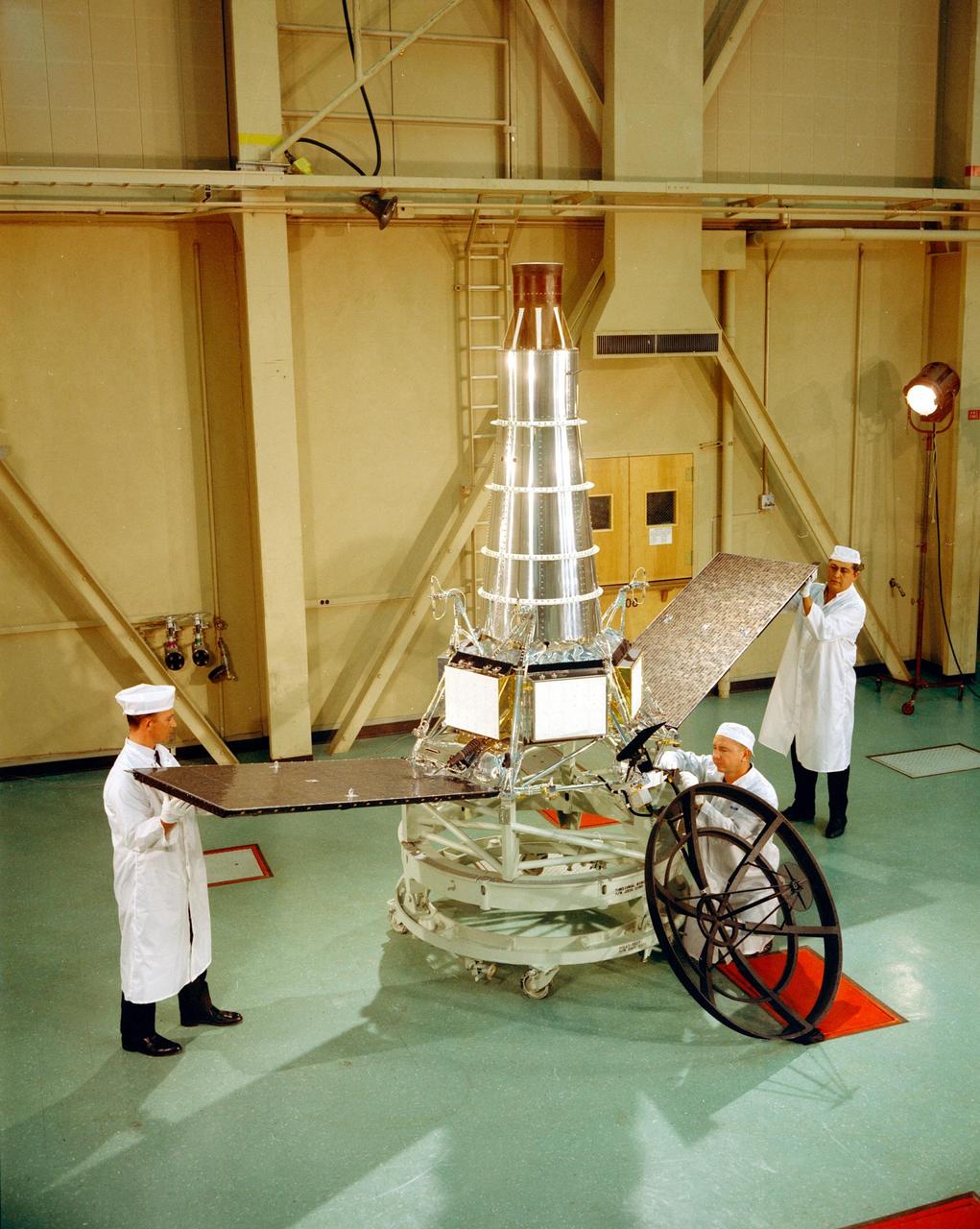
Engineers stand with Ranger 7 on Dec. 10, 1963, in High Bay 1, located at NASA's Jet Propulsion Laboratory. Ranger 7 was the first U.S. mission to transmit images from the surface of the Moon. The Ranger program included a series of robotic spacecraft launched at the Moon. JPL developed the art of spacecraft assembly and testing with each iteration of the Ranger spacecraft. https://photojournal.jpl.nasa.gov/catalog/PIA23520
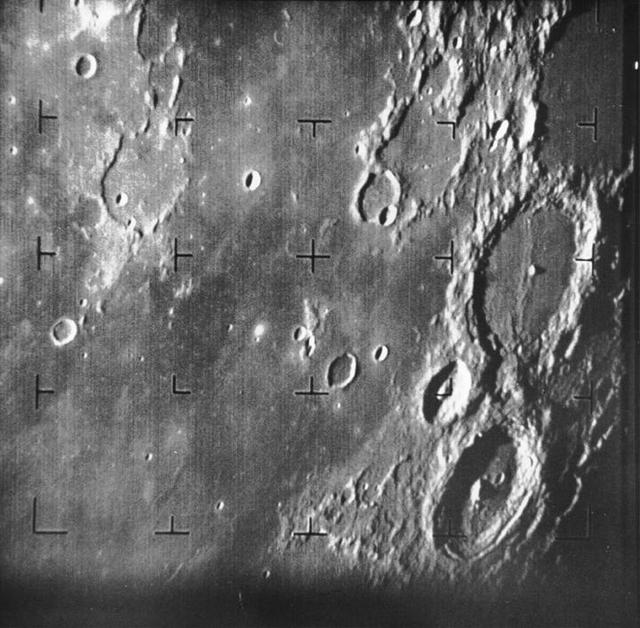
Ranger 7 took this image, the first picture of the Moon by aU.S. spacecraft, on 31 July 1964 at 13:09 UT 9:09 AM EDT about 17 minutes before impacting the lunar surface.

The Atlas-Agena-4 boosted the Ranger IV spacecraft for the first U.S. lunar impact on April 23, 1962.

Dr. Kurt Debus and Dr. von Braun during prelaunch activities of the Ranger IV at Launch Pad 12 on April 12. 1962.

AUGUST 23, 1961 LAUNCH OF NASA AGENA RANGER 1 FROM PAD 12.

LIFTOFF RANGER 3 FROM PAD 12. ATLAS AGENA-2 1/26/1962 TEST 125 ITEM 1.3.18U

The Atlas-Agena B space Vehicle waits on the launch pad to launch the National Aeronautics and Space Administration’s Ranger V Spacecraft on a 66 – 62 hour journey to the moon. Ranger V is a 735-pound gold and chrome Plated payload designed to perform a series of complicated tasks, including taking television pictures of the lunar surface.

Pre-launch alert of Atlas-Agena 7, Ranger V.

Lift-off of Atlas-Agena 7, Ranger V. (Test 5050)(ITEM 1.3- )

EDWARDS AIR FORCE BASE, Calif. – Disney’s space ranger Buzz Lightyear returned from space on Sept. 11 aboard space shuttle Discovery’s STS-128 mission after 15 months aboard the International Space Station. His time on the orbiting laboratory will be celebrated in a ticker-tape parade together with his space station crewmates and former Apollo 11 moonwalker Buzz Aldrin on Oct. 2 at Walt Disney World in Florida.

Park ranger Rader Lane speaks on the National Park Service’s astronomy and dark sky programs at Grand Canyon National Park during a visit by NASA’s SpaceX Crew-2 astronauts Megan McArthur and Shane Kimbrough of NASA, and Akihiko Hoshide of the Japan Aerospace Exploration Agency (JAXA), Thursday, June 9, 2022 at the U.S. Department of the Interior in Washington, DC. Kimbrough, McArthur, Hoshide, and ESA (European Space Agency) astronaut Thomas Pesquet completed the second crew rotation mission to the International Space Station as part of the agency’s Commercial Crew Program and spent 198 days aboard the orbiting laboratory as part of Expeditions 65 and 66. Photo Credit: (NASA/Joel Kowsky)
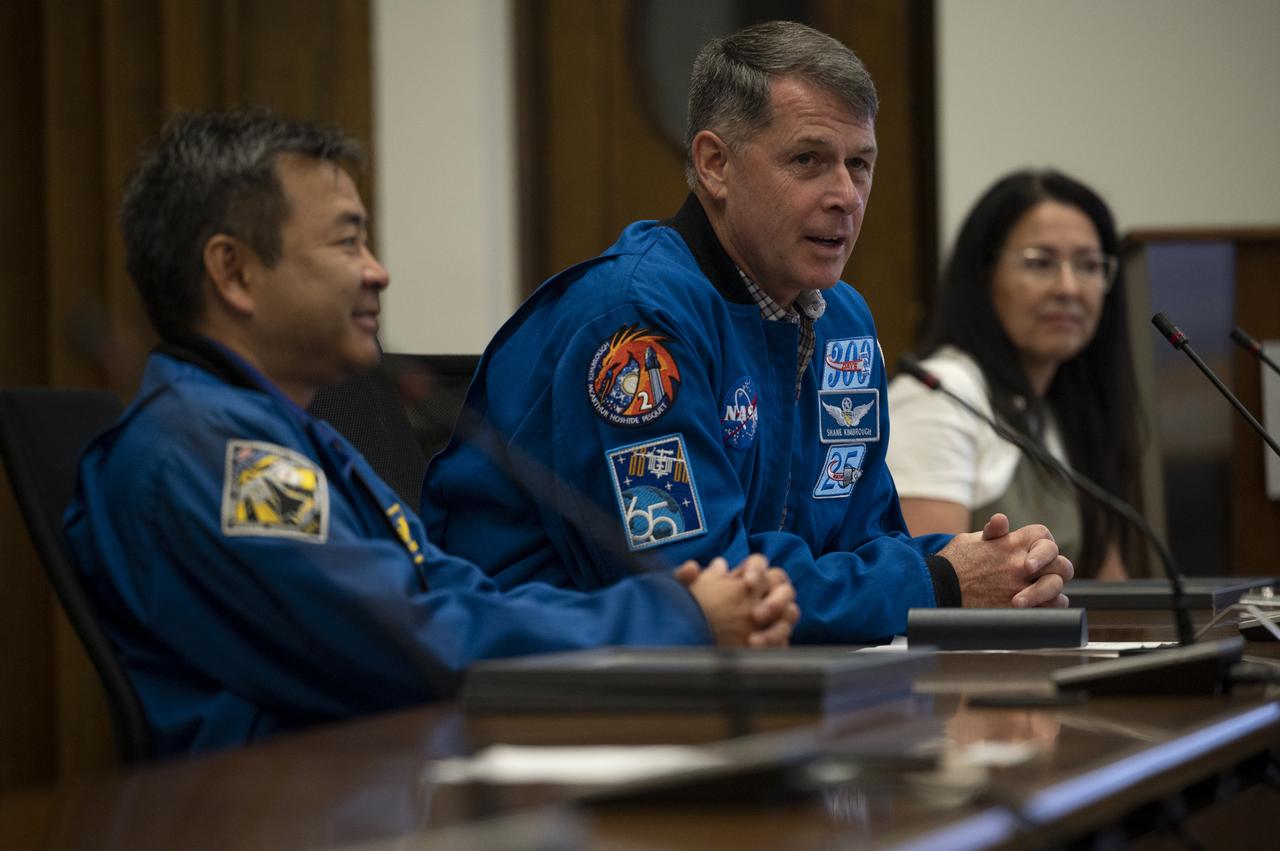
NASA astronaut Shane Kimbrough and Japan Aerospace Exploration Agency (JAXA) astronaut Akihiko Hoshide speak about NASA’s SpaceX Crew-2 mission during a presentation with leadership and rangers who participate in the National Park Service’s astronomy and dark sky programs, Thursday, June 9, 2022 at the U.S. Department of the Interior in Washington, DC. Kimbrough, Hoshide, NASA astronaut Megan McArthur, and ESA (European Space Agency) astronaut Thomas Pesquet completed the second crew rotation mission to the International Space Station as part of the agency’s Commercial Crew Program and spent 198 days aboard the orbiting laboratory as part of Expeditions 65 and 66. Photo Credit: (NASA/Joel Kowsky)
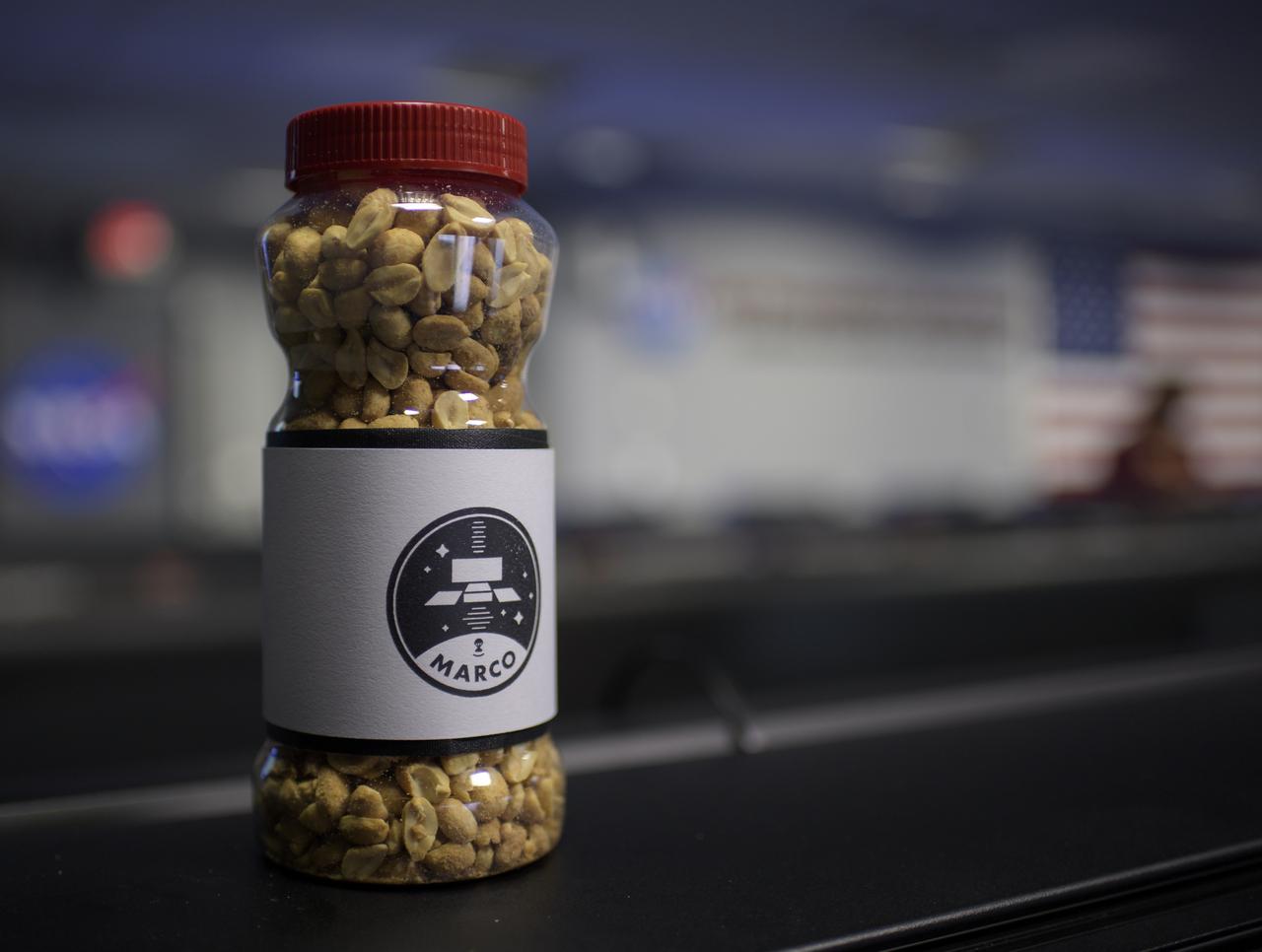
A jar of nuts with the Mars Cube One (MarCO) logo is seen inside the Mission Control Area (MSA) where teams are starting to gather for the Mars InSight landing, Monday, Nov. 26, 2018 inside the Mission Support Area at NASA's Jet Propulsion Laboratory in Pasadena, California. Good-luck peanuts made their first appearance at the Jet Propulsion Laboratory's Space Flight Operations Facility in 1964 during the Ranger 7 mission. InSight, short for Interior Exploration using Seismic Investigations, Geodesy and Heat Transport, is a Mars lander designed to study the "inner space" of Mars: its crust, mantle, and core. Photo Credit: (NASA/Bill Ingalls)
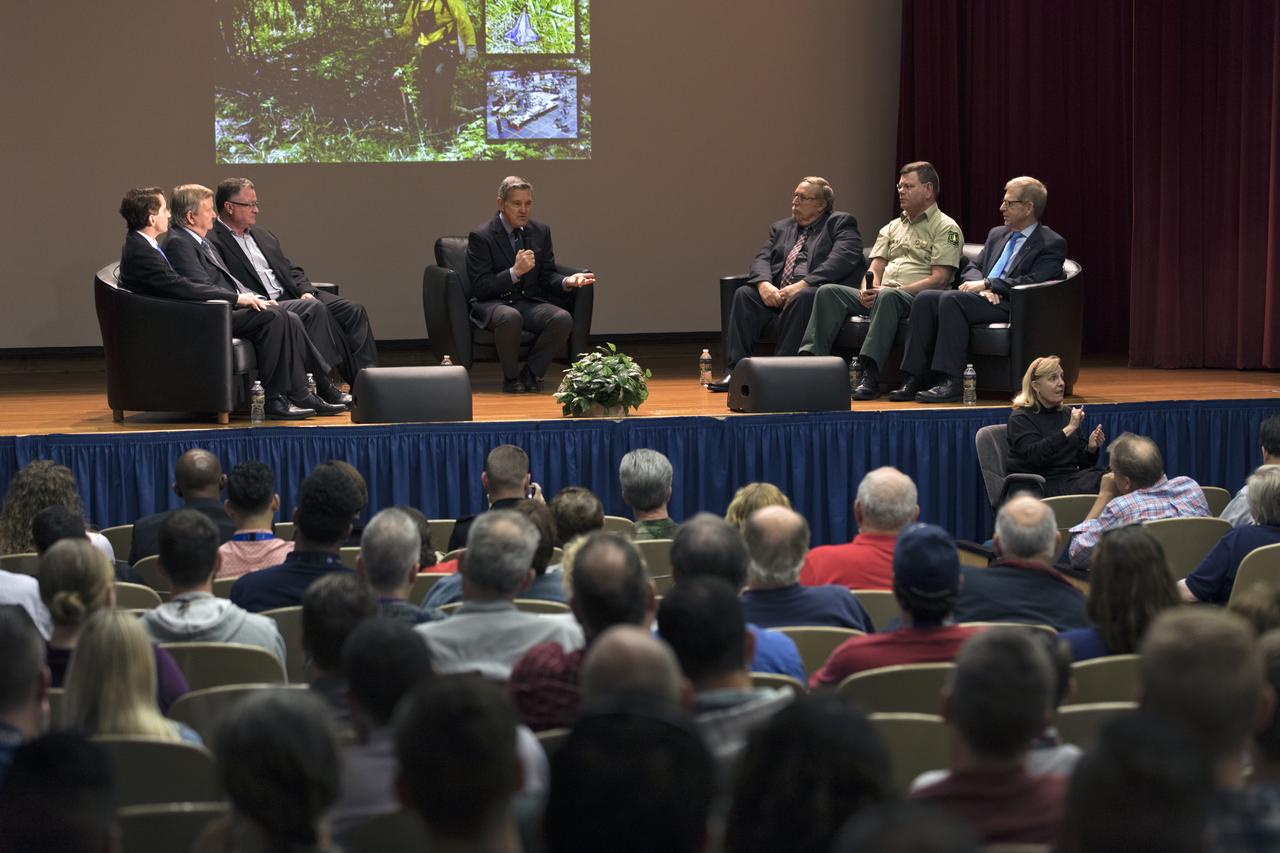
NASA Kennedy Space Center Director Bob Cabana, center, leads a panel discussion during an Apollo, Challenger, Columbia Lessons Learned Program (ACCLLP) employee event. The theme of the presentation was "Columbia: Lessons and Legends of Recovery." Participating, from left, are Mike Ciannilli, ACCLLP manager; Mike Leinbach, former shuttle launch director; Dave King, NASA Columbia Recovery director and former director of Marshall Space Flight Center; Gerry Schumann, NASA Mishap Investigation manager; Greg Cohrs, U.S. Forestry Service ranger; and Jonathan Ward, author and space historian.
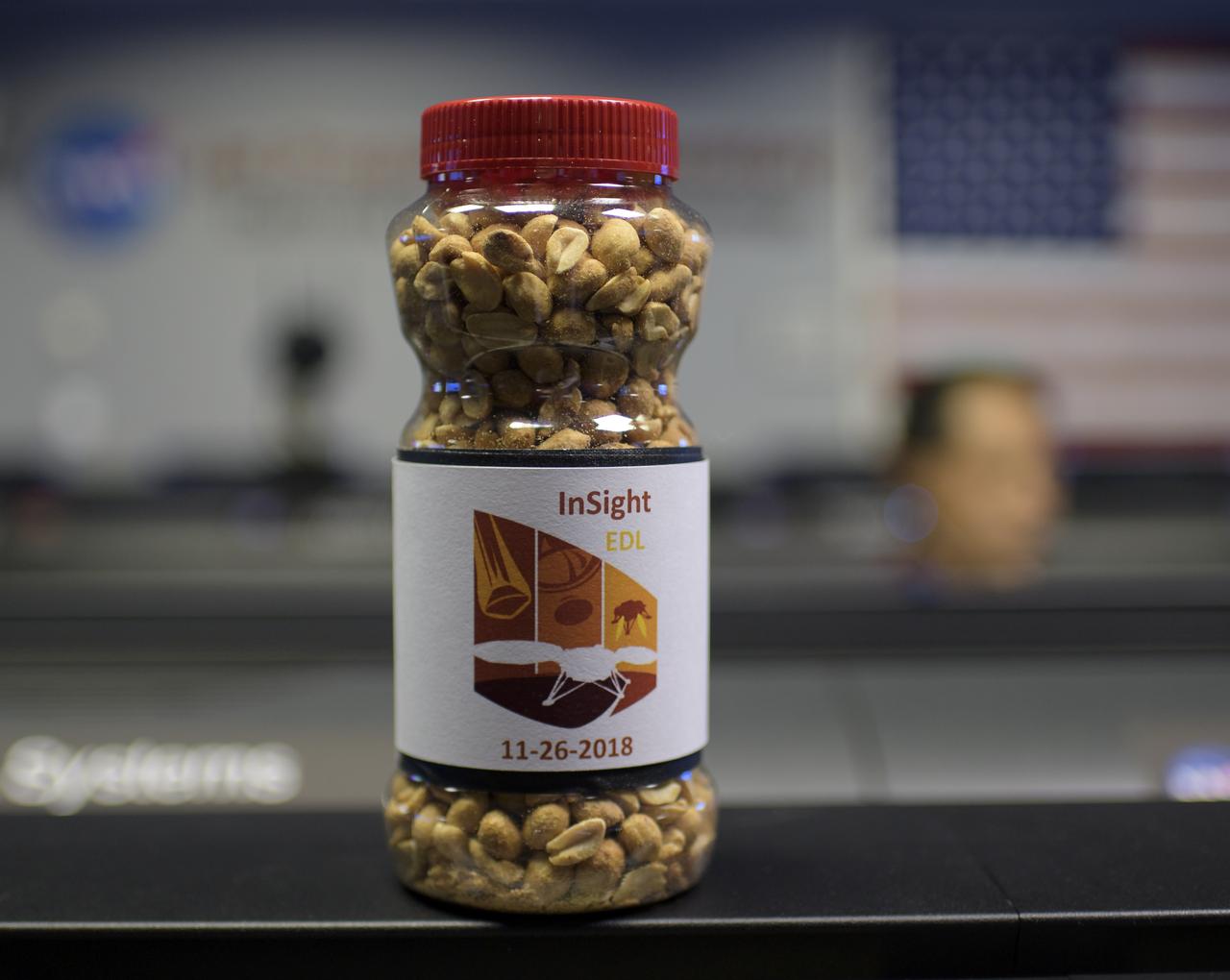
A jar of nuts is seen inside the Mission Control Area (MSA) where teams are starting to gather for the Mars InSight landing, Monday, Nov. 26, 2018 inside the Mission Support Area at NASA's Jet Propulsion Laboratory in Pasadena, California. Good-luck peanuts made their first appearance at the Jet Propulsion Laboratory's Space Flight Operations Facility in 1964 during the Ranger 7 mission. InSight, short for Interior Exploration using Seismic Investigations, Geodesy and Heat Transport, is a Mars lander designed to study the "inner space" of Mars: its crust, mantle, and core. Photo Credit: (NASA/Bill Ingalls)

NASA Kennedy Space Center Director Bob Cabana, center, leads a panel discussion during an Apollo, Challenger, Columbia Lessons Learned Program (ACCLLP) employee event. The theme of the presentation was "Columbia: Lessons and Legends of Recovery." Participating, from left, are Mike Ciannilli, ACCLLP manager; Mike Leinbach, former shuttle launch director; Dave King, NASA Columbia Recovery director and former director of Marshall Space Flight Center; Gerry Schumann, NASA Mishap Investigation manager; Greg Cohrs, U.S. Forestry Service ranger; and Jonathan Ward, author and space historian.
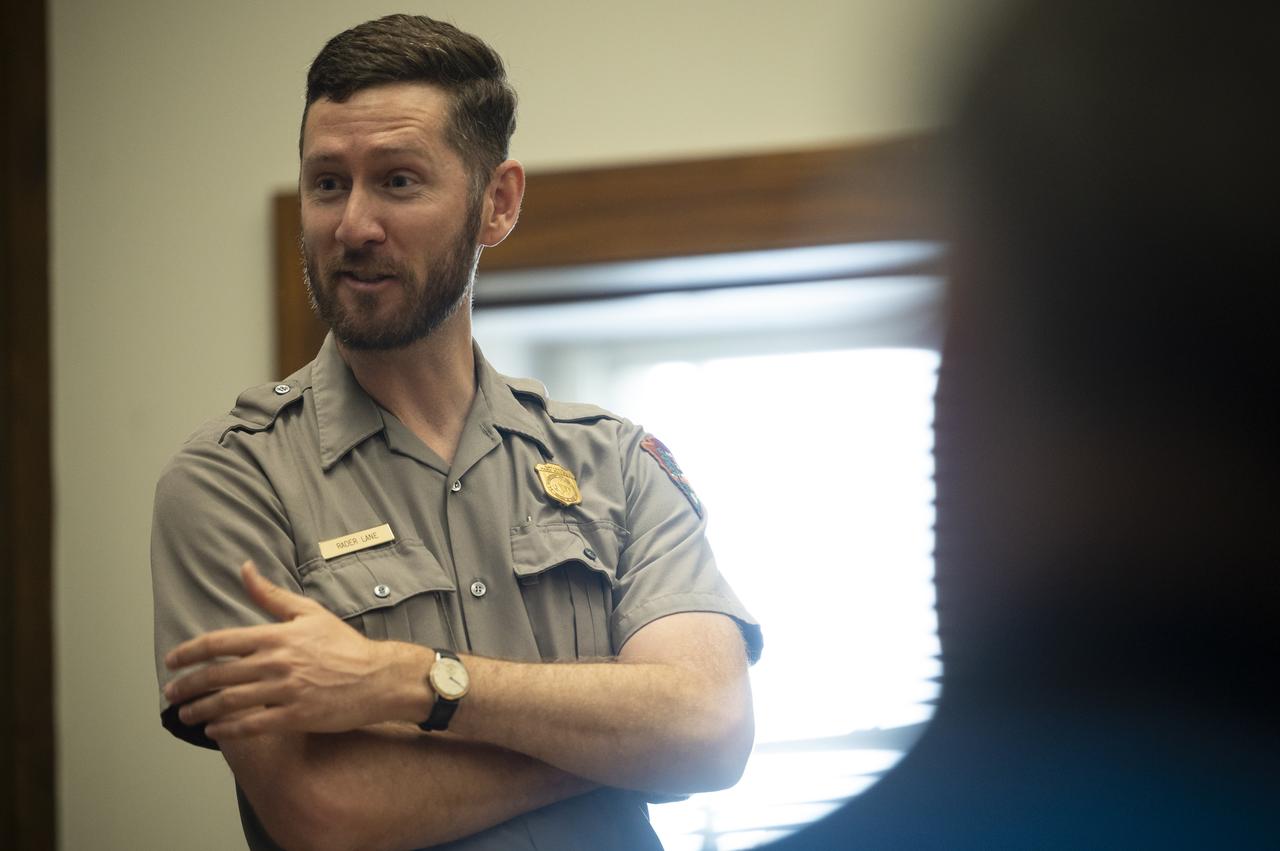
Park ranger Rader Lane speaks on the National Park Service’s astronomy and dark sky programs at Grand Canyon National Park during a visit by NASA’s SpaceX Crew-2 astronauts Megan McArthur and Shane Kimbrough of NASA, and Akihiko Hoshide of the Japan Aerospace Exploration Agency (JAXA), Thursday, June 9, 2022 at the U.S. Department of the Interior in Washington, DC. Kimbrough, McArthur, Hoshide, and ESA (European Space Agency) astronaut Thomas Pesquet completed the second crew rotation mission to the International Space Station as part of the agency’s Commercial Crew Program and spent 198 days aboard the orbiting laboratory as part of Expeditions 65 and 66. Photo Credit: (NASA/Joel Kowsky)
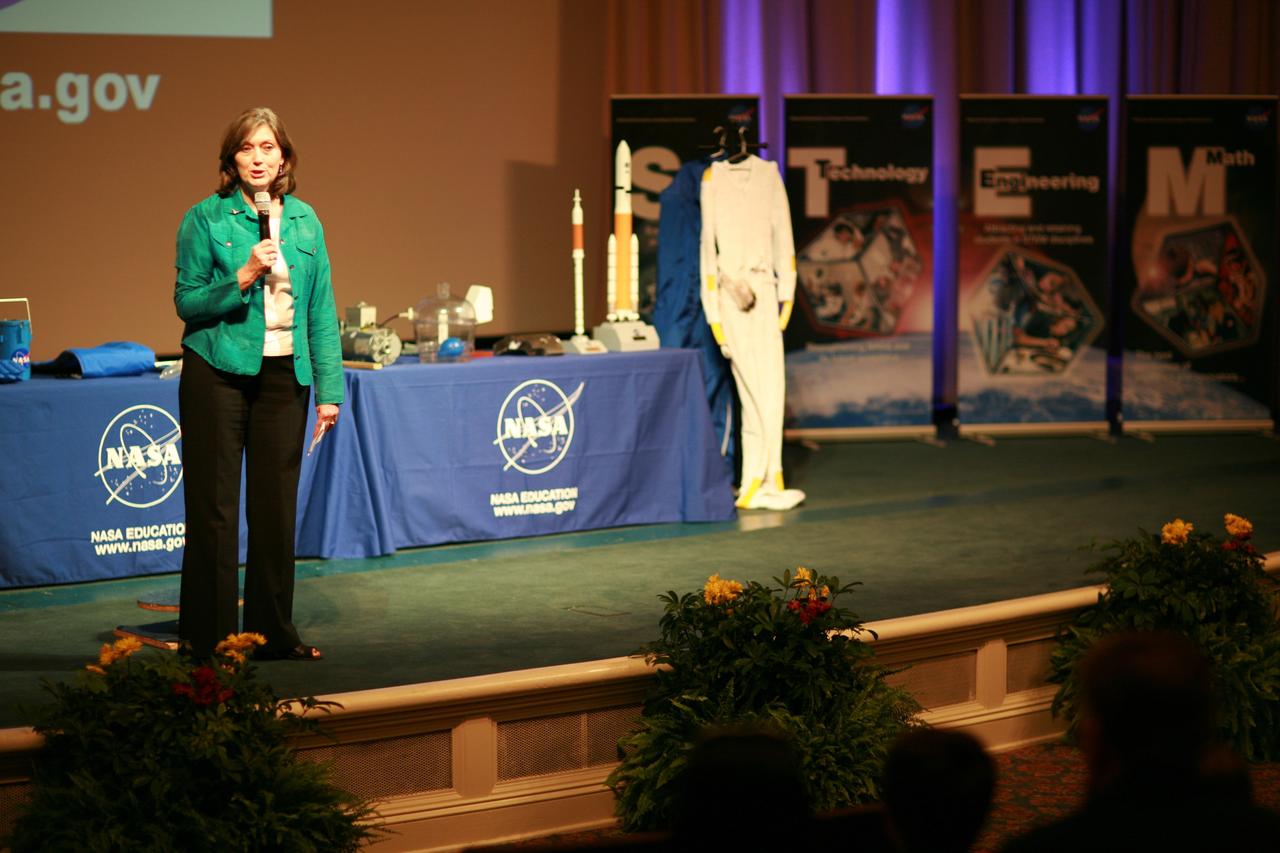
CAPE CANAVERAL, Fla. – At Walt Disney World's Magic Kingdom in Orlando, Fla., NASA’s Assistant Administrator for Education Joyce Winterton addresses students and teachers attending an educational presentation, part of the festivities to welcome toy space ranger Buzz Lightyear home from space. The 12-inch-tall action figure spent more than 15 months aboard the International Space Station and returned to Earth aboard space shuttle Discovery on Sept. 11 with the STS-128 crew. Lightyear's space adventure, a collaboration between NASA and Disney Parks, is intended to share the excitement of space exploration with students around the world and encourage them to pursue studies in science, technology, engineering and mathematics. For additional information, visit http://www.nasa.gov/buzzoniss. Photo credit: NASA/Dimitri Gerondidakis
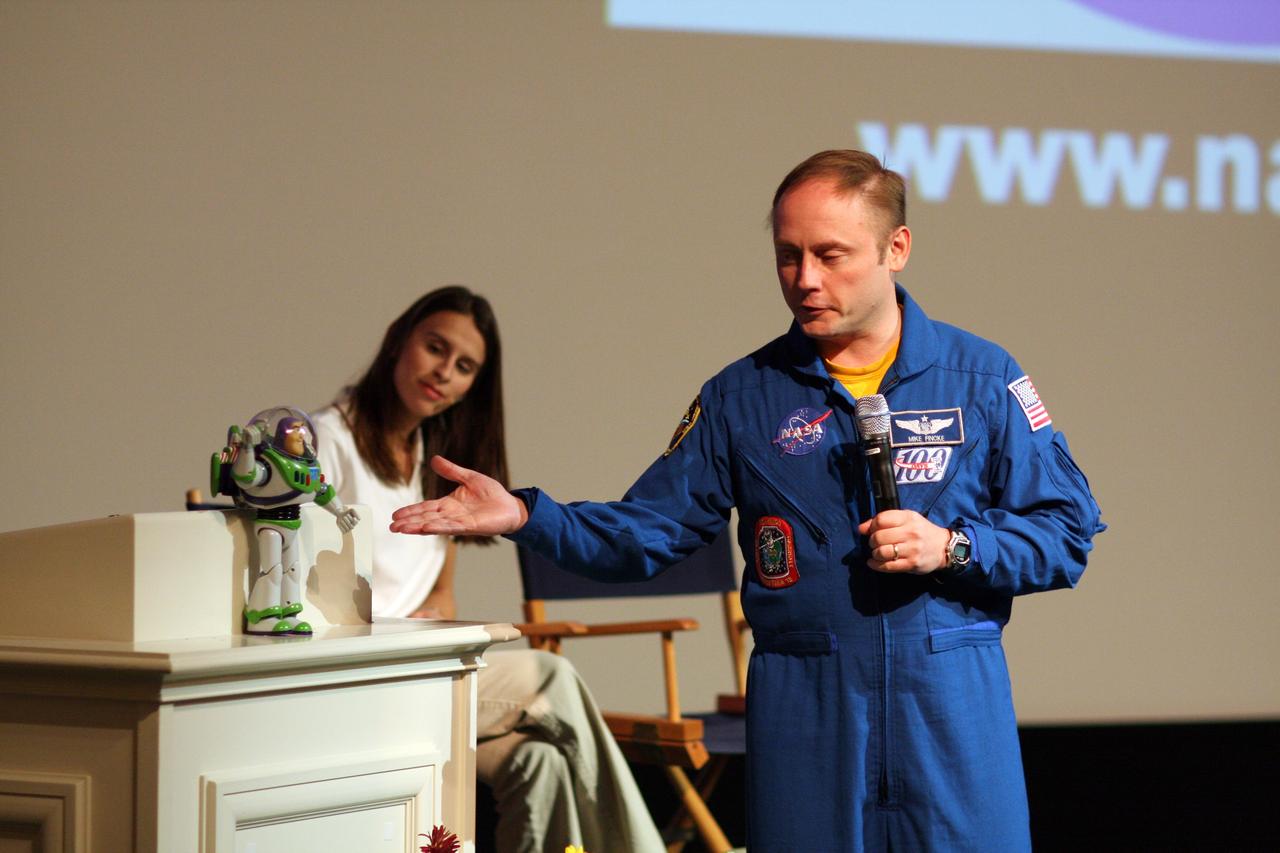
CAPE CANAVERAL, Fla. – At Walt Disney World's Magic Kingdom in Orlando, Fla., NASA astronaut Mike Fincke introduces toy space ranger Buzz Lightyear to students and teachers attending an education presentation, as Veronica Franco of NASA's Education Office at Kennedy Space Center looks on. The event is part of the festivities to welcome Lightyear home from space. Fincke was commander of the International Space Station from October 2008 to April 2009. The 12-inch-tall action figure spent more than 15 months aboard the International Space Station and returned to Earth aboard space shuttle Discovery on Sept. 11 with the STS-128 crew. Lightyear's space adventure, a collaboration between NASA and Disney Parks, is intended to share the excitement of space exploration with students around the world and encourage them to pursue studies in science, technology, engineering and mathematics. For additional information, visit http://www.nasa.gov/buzzoniss. Photo credit: NASA/Dimitri Gerondidakis
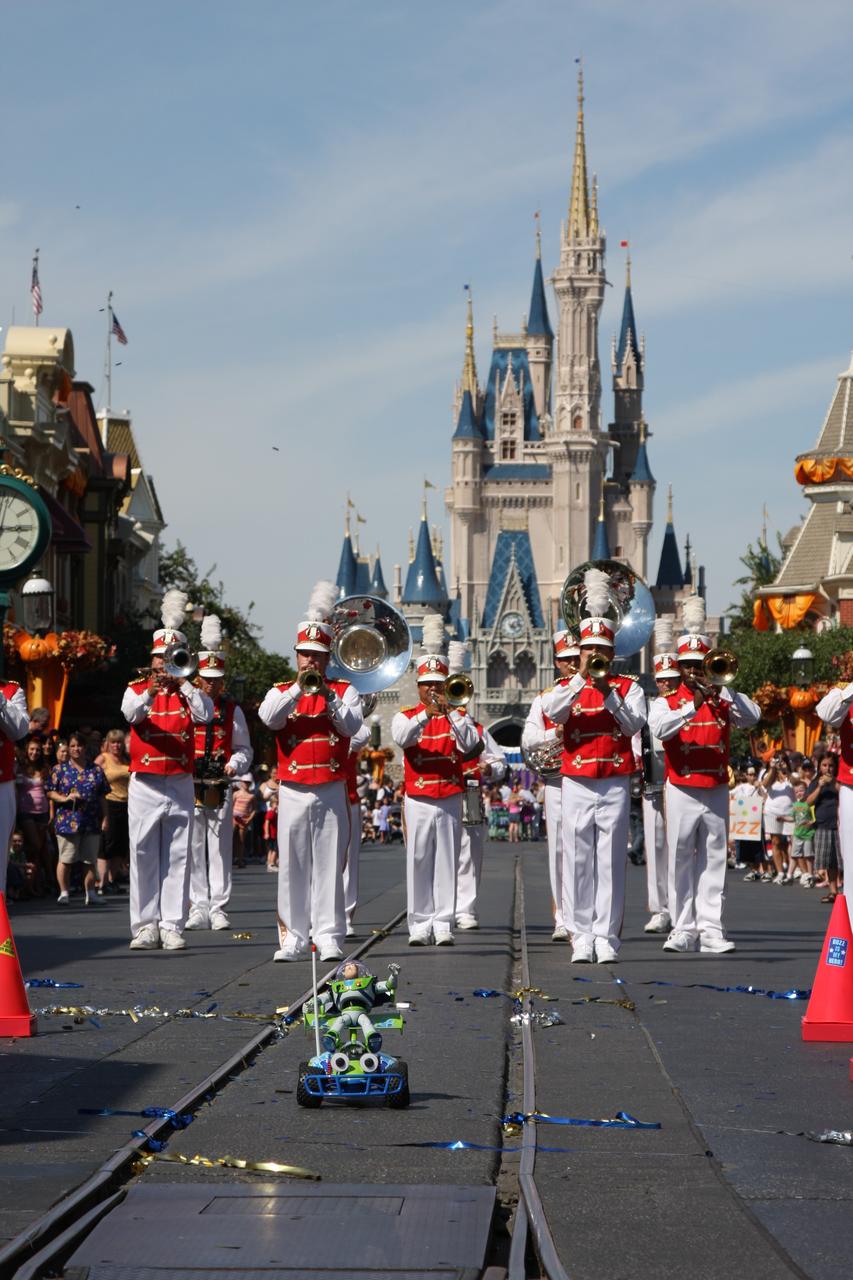
CAPE CANAVERAL, Fla. – At Walt Disney World's Magic Kingdom in Orlando, Fla., toy space ranger Buzz Lightyear participates in a ticker-tape parade to welcome him home from space. The 12-inch-tall action figure spent more than 15 months aboard the International Space Station and returned to Earth aboard space shuttle Discovery on Sept. 11 with the STS-128 crew. Lightyear's space adventure, a collaboration between NASA and Disney Parks, is intended to share the excitement of space exploration with students around the world and encourage them to pursue studies in science, technology, engineering and mathematics. For additional information, visit http://www.nasa.gov/buzzoniss. Photo credit: NASA/Dimitri Gerondidakis
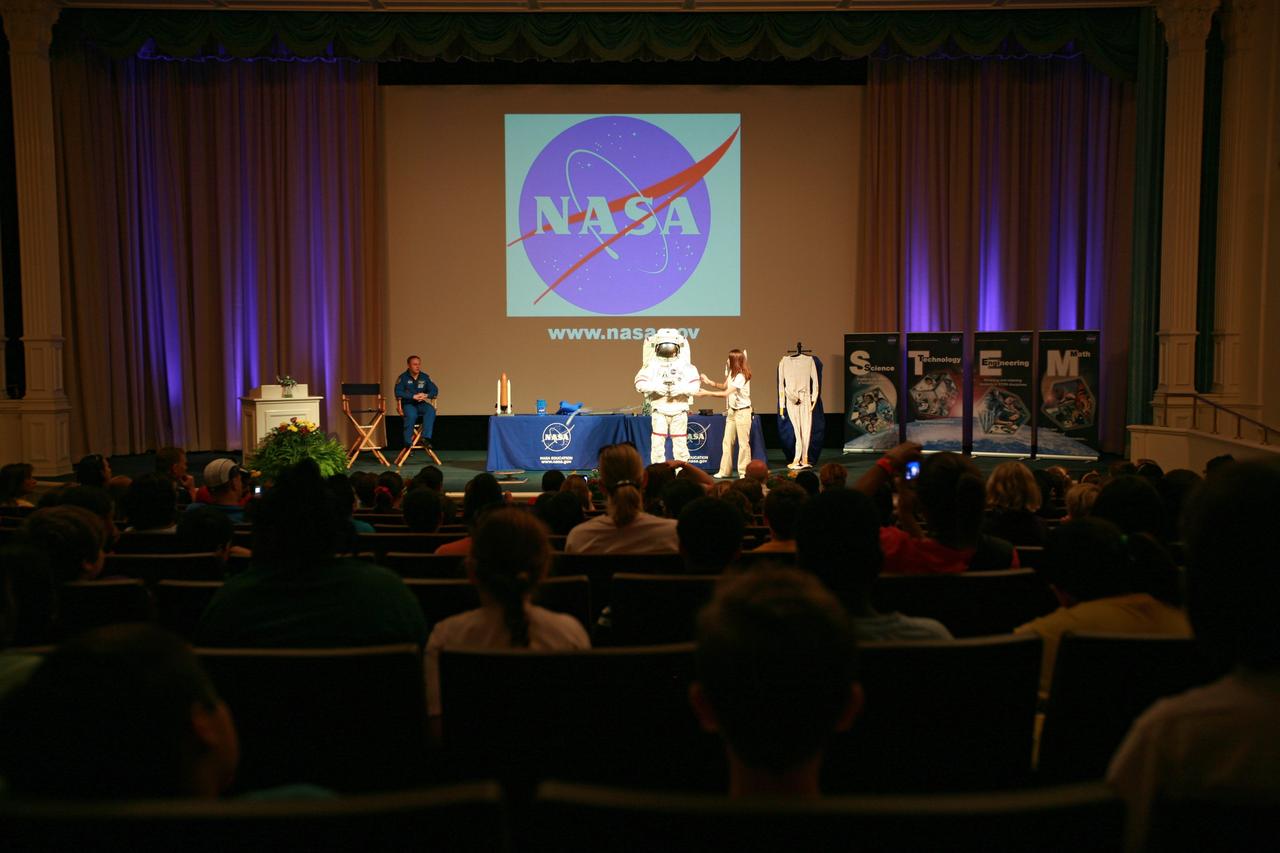
CAPE CANAVERAL, Fla. – At Walt Disney World's Magic Kingdom in Orlando, Fla., NASA astronaut Mike Fincke observes as Veronica Franco of NASA's Education Office at Kennedy Space Center explains the intricacies of a space suit to students and teachers attending an educational presentation, part of the festivities to welcome toy space ranger Buzz Lightyear home from space. Fincke was commander of the International Space Station from October 2008 to April 2009. The 12-inch-tall action figure spent more than 15 months aboard the International Space Station and returned to Earth aboard space shuttle Discovery on Sept. 11 with the STS-128 crew. Lightyear's space adventure, a collaboration between NASA and Disney Parks, is intended to share the excitement of space exploration with students around the world and encourage them to pursue studies in science, technology, engineering and mathematics. For additional information, visit http://www.nasa.gov/buzzoniss. Photo credit: NASA/Dimitri Gerondidakis
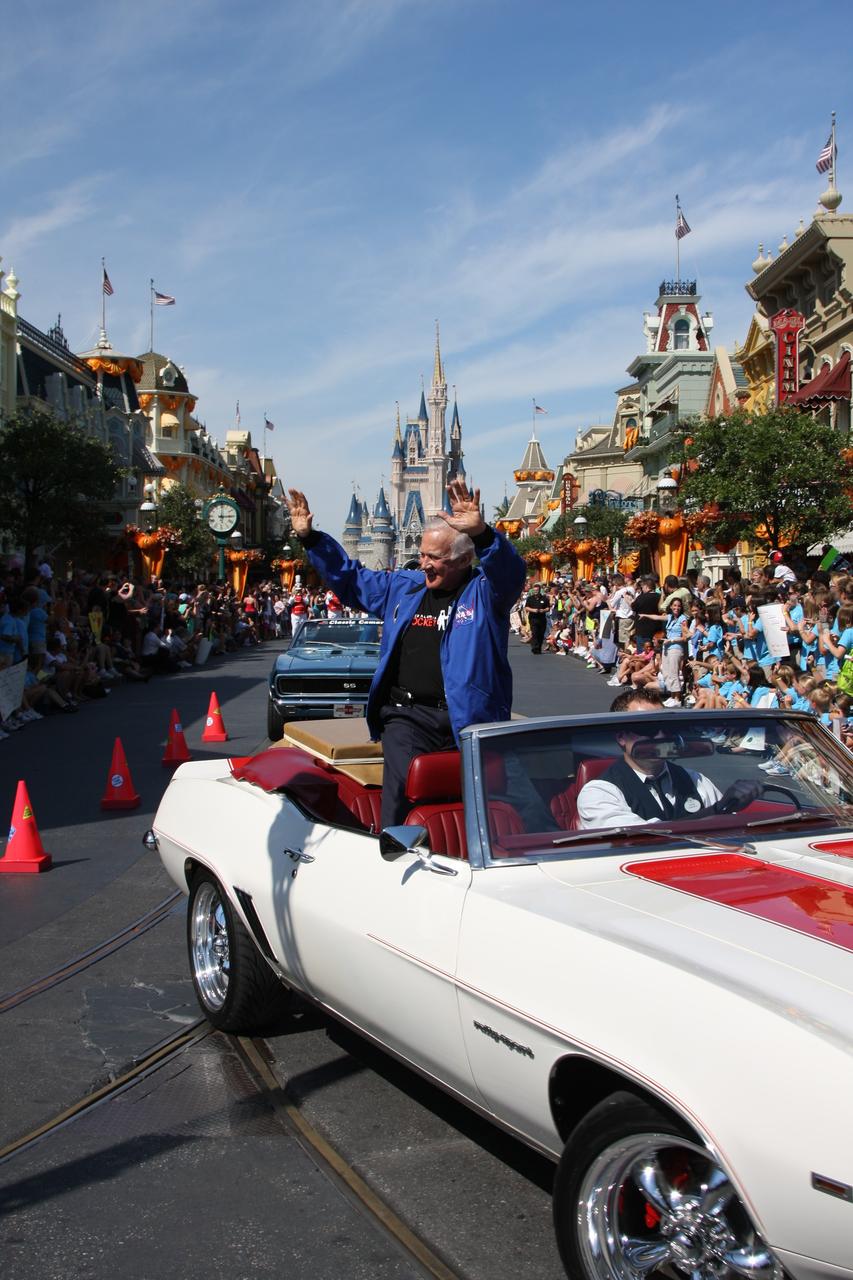
CAPE CANAVERAL, Fla. – At Walt Disney World's Magic Kingdom in Orlando, Fla., Apollo 11 astronaut Buzz Aldrin, riding in a 1969 Camaro convertible, participates in a ticker-tape parade to welcome his namesake, toy space ranger Buzz Lightyear, home from space. The 12-inch-tall action figure spent more than 15 months aboard the International Space Station and returned to Earth aboard space shuttle Discovery on Sept. 11 with the STS-128 crew. Lightyear's space adventure, a collaboration between NASA and Disney Parks, is intended to share the excitement of space exploration with students around the world and encourage them to pursue studies in science, technology, engineering and mathematics. For additional information, visit http://www.nasa.gov/buzzoniss. Photo credit: NASA/Dimitri Gerondidakis
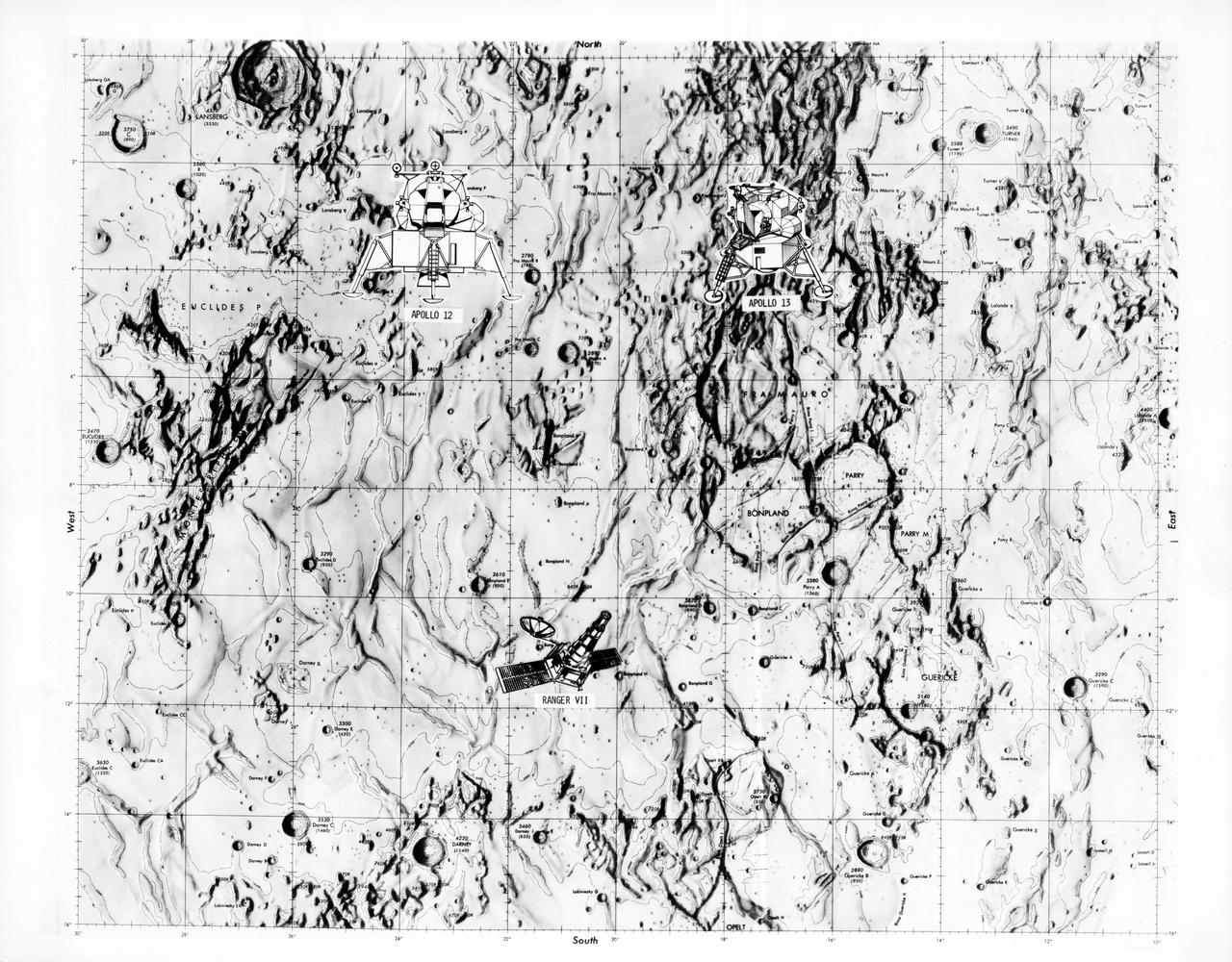
S70-28115 (January 1970) --- This overlay map of terrain on the lunar nearside shows the area of the landing site of the upcoming Apollo 13 mission, in relation to two previous NASA landings. The proposed Apollo 13 landing site is located in the highlands north of Fra Mauro. The coordinates of the planned site are 17.550 degrees west longitude and 3.617 degrees south latitude. The landing site of the Apollo 12 mission, which was highlighted by a lunar landing on Nov. 19, 1969, is located approximately 105 nautical miles west of the Apollo 13 site. The landing site of the unmanned Ranger 7 space vehicle, which impacted on the moon on July 31, 1964, at 10.74 degrees south latitude and 20.7 degrees west longitude, is approximately 130 nautical miles south-southwest of the Apollo 13 site, and approximately 140 nautical miles south-southeast of the Apollo 12 site.
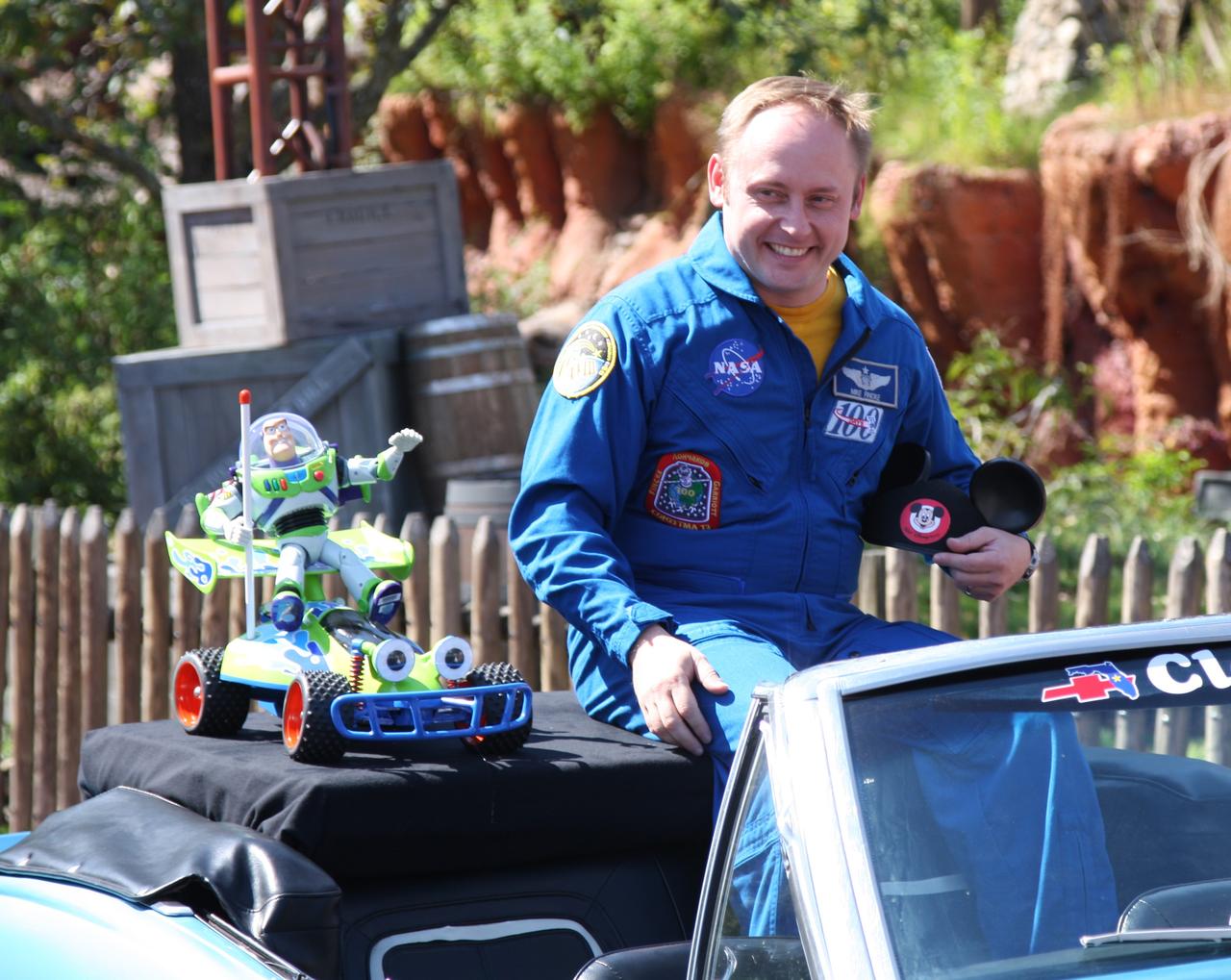
CAPE CANAVERAL, Fla. – At Walt Disney World's Magic Kingdom in Orlando, Fla., NASA astronaut Mike Fincke, riding in a 1968 Camaro convertible, participates in a ticker-tape parade, part of the festivities to welcome toy space ranger Buzz Lightyear, at his side, home from space. Fincke was commander of the International Space Station from October 2008 to April 2009. The 12-inch-tall action figure spent more than 15 months aboard the International Space Station and returned to Earth aboard space shuttle Discovery on Sept. 11 with the STS-128 crew. Lightyear's space adventure, a collaboration between NASA and Disney Parks, is intended to share the excitement of space exploration with students around the world and encourage them to pursue studies in science, technology, engineering and mathematics. For additional information, visit http://www.nasa.gov/buzzoniss. Photo credit: NASA/Dimitri Gerondidakis
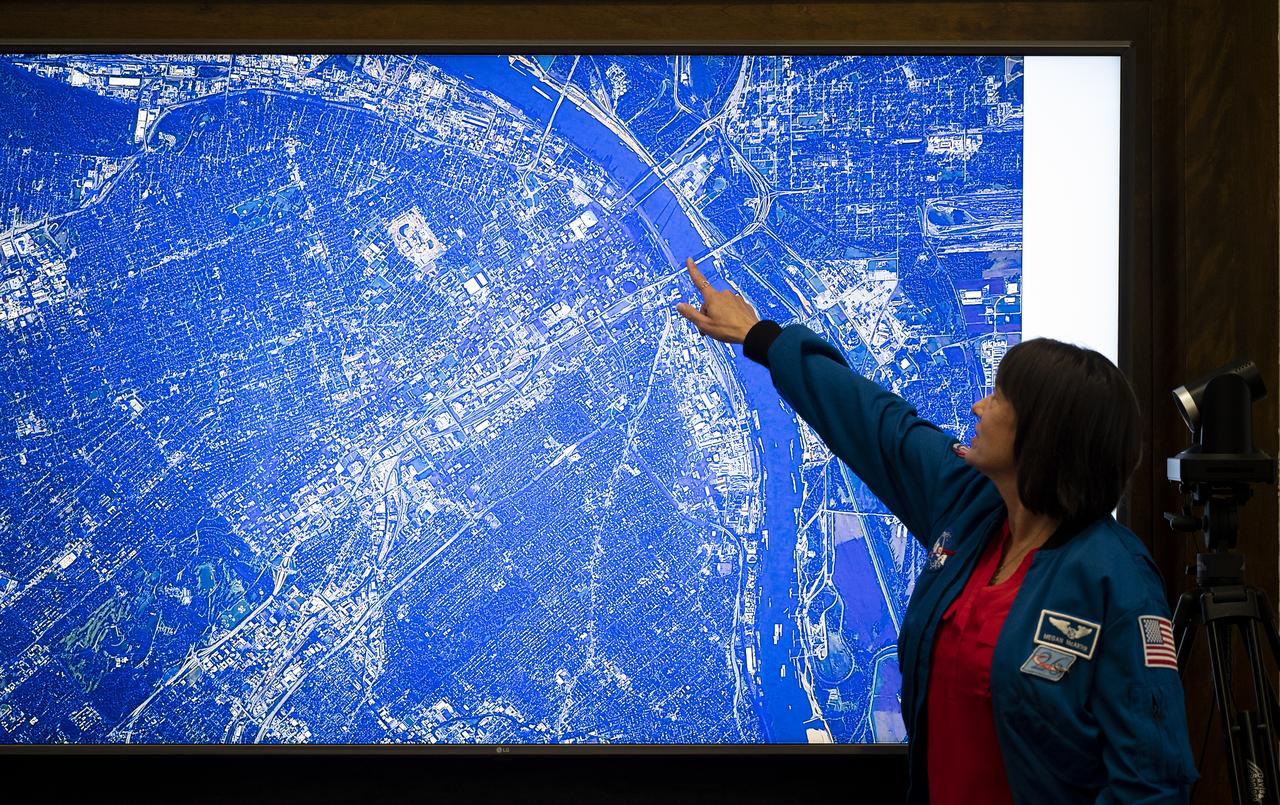
NASA astronaut Megan McArthur points to the shadow of the Gateway Arch on the Mississippi River in St. Louis while showing images of National Parks taken from the International Space Station during Expeditions 65 and 66 during a presentation to leadership and rangers who participate in the National Park Service’s astronomy and dark sky programs, Thursday, June 9, 2022 at the U.S. Department of the Interior in Washington, DC. McArthur, NASA astronaut Shane Kimbrough, Japan Aerospace Exploration Agency (JAXA) astronaut Akihiko Hoshide, and ESA (European Space Agency) astronaut Thomas Pesquet, flew on NASA’s SpaceX Crew-2 mission, the second crew rotation mission to the International Space Station as part of the agency’s Commercial Crew Program, and spent 198 days aboard the orbiting laboratory as part of Expeditions 65 and 66. Photo Credit: (NASA/Joel Kowsky)
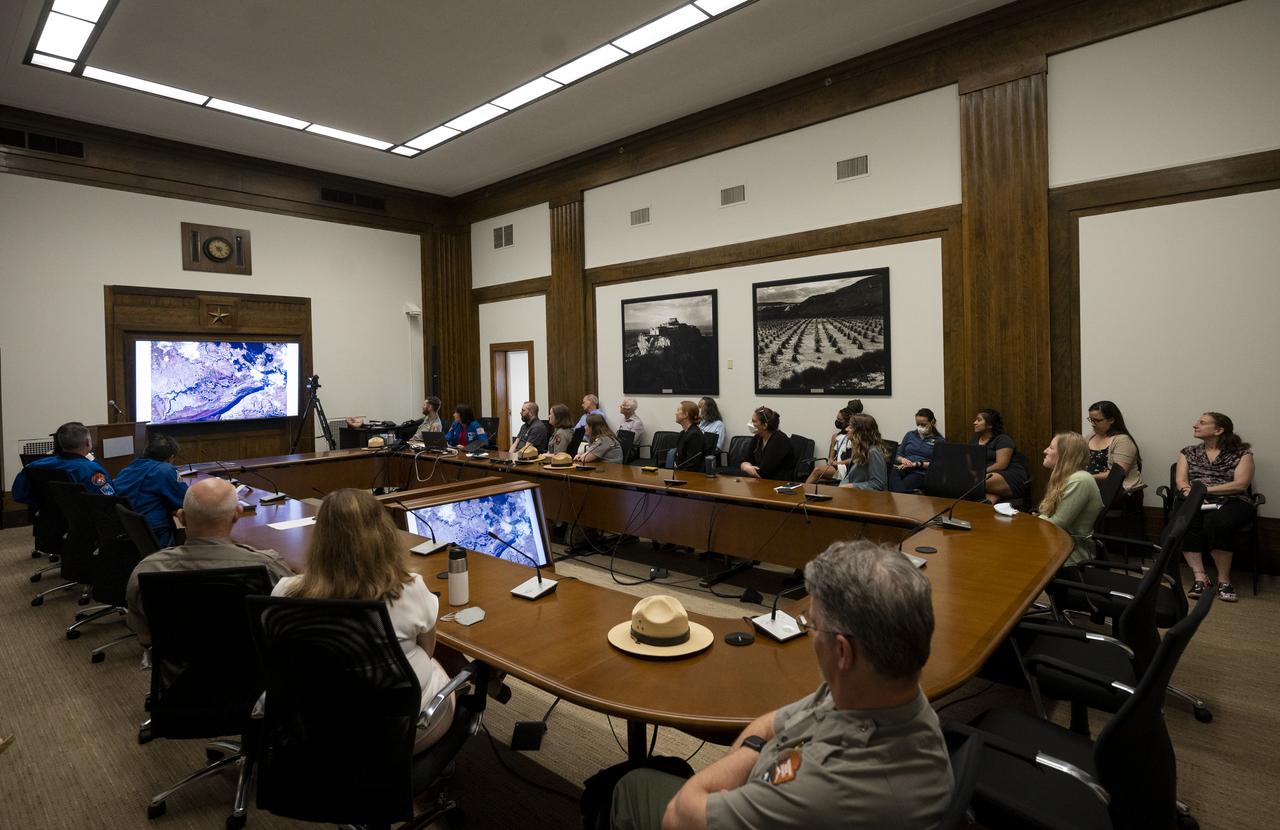
NASA astronaut Megan McArthur shows pictures of National Parks taken from the International Space Station during Expeditions 65 and 66 during a presentation to leadership and rangers who participate in the National Park Service’s astronomy and dark sky programs, Thursday, June 9, 2022 at the U.S. Department of the Interior in Washington, DC. McArthur, NASA astronaut Shane Kimbrough, Japan Aerospace Exploration Agency (JAXA) astronaut Akihiko Hoshide, and ESA (European Space Agency) astronaut Thomas Pesquet, flew on NASA’s SpaceX Crew-2 mission, the second crew rotation mission to the International Space Station as part of the agency’s Commercial Crew Program, and spent 198 days aboard the orbiting laboratory as part of Expeditions 65 and 66. Photo Credit: (NASA/Joel Kowsky)
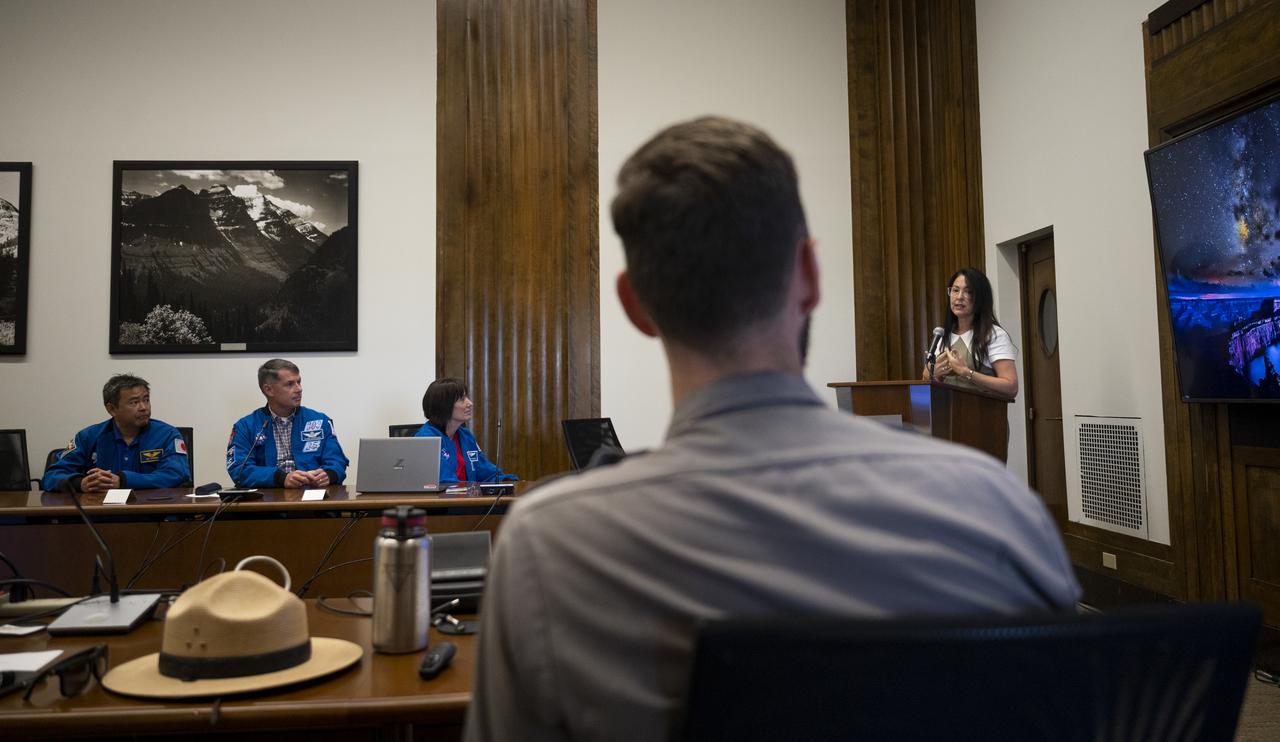
Shannon Estenoz, Assistant Secretary for Fish and Wildlife and Parks at the Department of the Interior, delivers remarks during a visit by NASA’s SpaceX Crew-2 astronauts with leadership and rangers who participate in the National Park Service’s astronomy and dark sky programs, Thursday, June 9, 2022 at the U.S. Department of the Interior in Washington, DC. NASA astronauts Shane Kimbrough and Megan McArthur, Japan Aerospace Exploration Agency (JAXA) astronaut Akihiko Hoshide, and ESA (European Space Agency) astronaut Thomas Pesquet completed the second crew rotation mission to the International Space Station as part of the agency’s Commercial Crew Program and spent 198 days aboard the orbiting laboratory as part of Expeditions 65 and 66. Photo Credit: (NASA/Joel Kowsky)
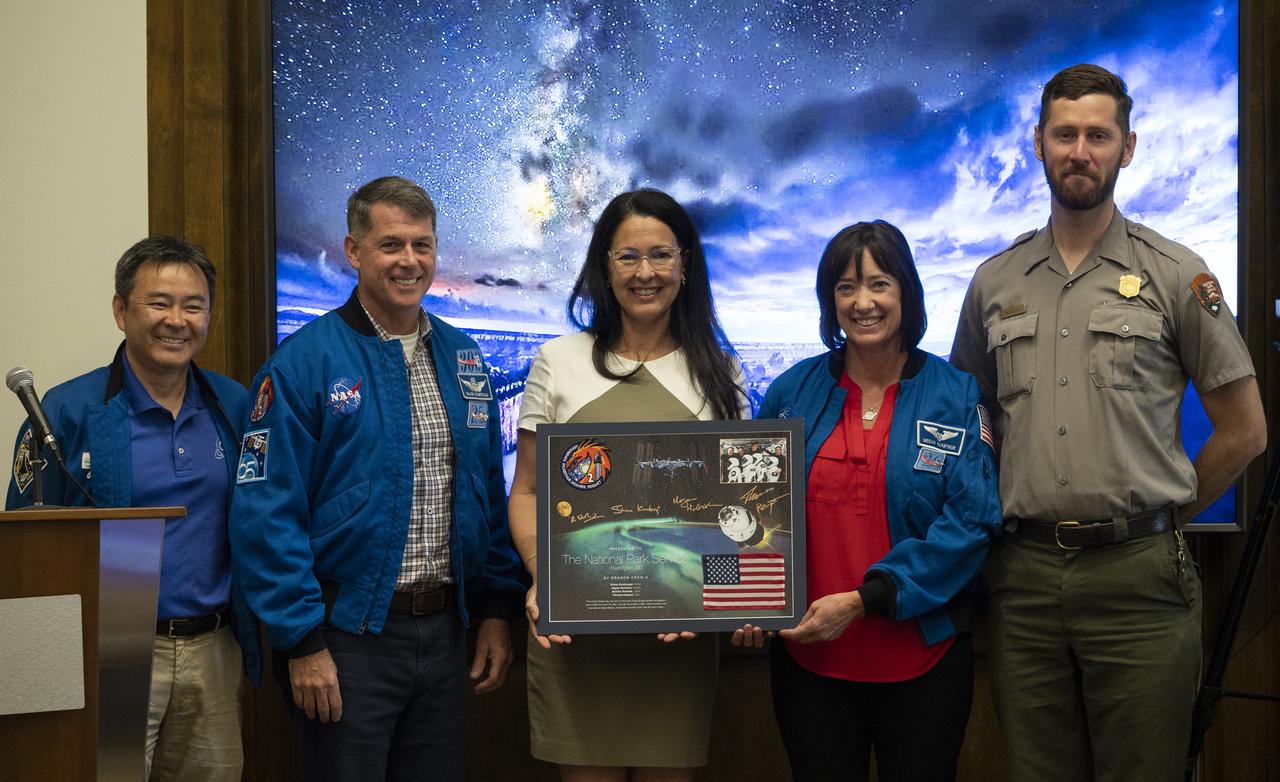
NASA’s SpaceX Crew-2 astronauts Akihiko Hoshide of the Japan Aerospace Exploration Agency (JAXA), left, Shane Kimbrough, second from left, and Megan McArthur, second from right, of NASA, pose for a picture with Shannon Estenoz, Assistant Secretary for Fish and Wildlife and Parks at the Department of the Interior, center, and park ranger Rader Lane, right, after presenting a montage to the National Park Service during a visit to the U.S. Department of the Interior, Thursday, June 9, 2022, Washington, DC. Kimbrough, McArthur, Hoshide, and ESA (European Space Agency) astronaut Thomas Pesquet completed the second crew rotation mission to the International Space Station as part of the agency’s Commercial Crew Program and spent 198 days aboard the orbiting laboratory as part of Expeditions 65 and 66. Photo Credit: (NASA/Joel Kowsky)
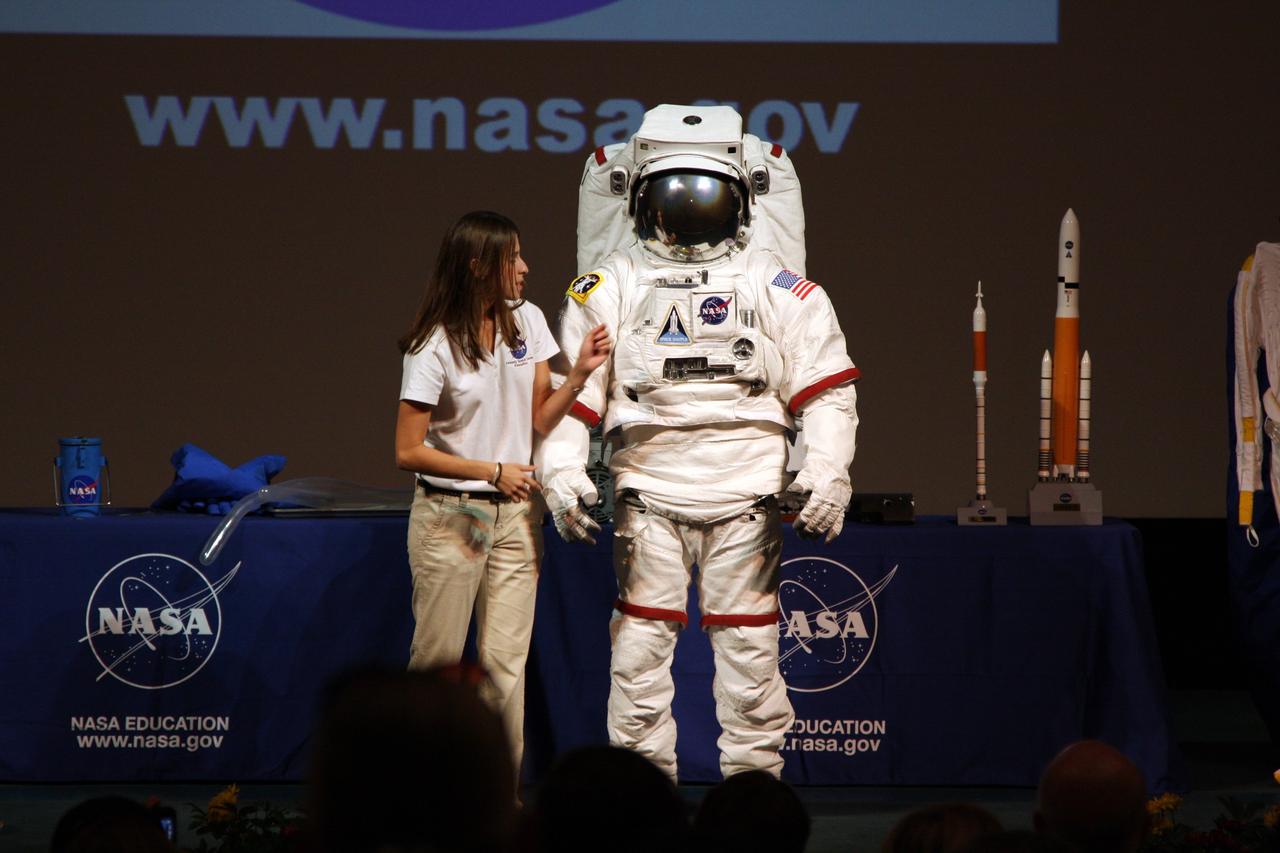
CAPE CANAVERAL, Fla. – At Walt Disney World's Magic Kingdom in Orlando, Fla., Veronica Franco of NASA's Education Office at Kennedy Space Center explains the intricacies of a space suit to students and teachers attending an educational presentation, part of the festivities to welcome toy space ranger Buzz Lightyear home from space. The 12-inch-tall action figure spent more than 15 months aboard the International Space Station and returned to Earth aboard space shuttle Discovery on Sept. 11 with the STS-128 crew. Lightyear's space adventure, a collaboration between NASA and Disney Parks, is intended to share the excitement of space exploration with students around the world and encourage them to pursue studies in science, technology, engineering and mathematics. For additional information, visit http://www.nasa.gov/buzzoniss. Photo credit: NASA/Dimitri Gerondidakis
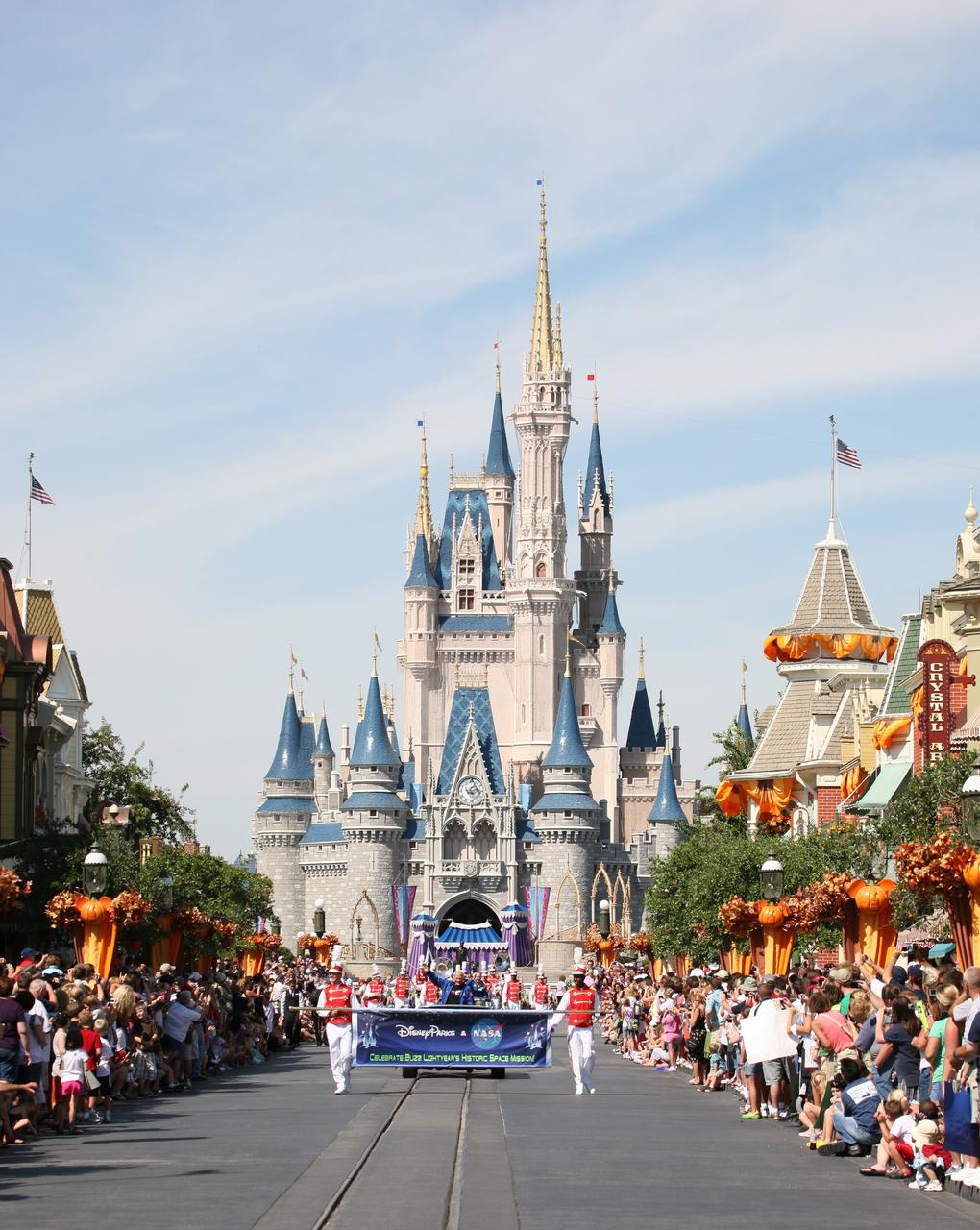
CAPE CANAVERAL, Fla. – At Walt Disney World's Magic Kingdom in Orlando, Fla., a ticker-tape parade officially welcomes toy space ranger Buzz Lightyear home from space. NASA Apollo 11 astronaut Buzz Aldrin and International Space Station commander Mike Fincke are featured in the procession. The 12-inch-tall action figure spent more than 15 months aboard the International Space Station and returned to Earth aboard space shuttle Discovery on Sept. 11 with the STS-128 crew. Lightyear's space adventure, a collaboration between NASA and Disney Parks, is intended to share the excitement of space exploration with students around the world and encourage them to pursue studies in science, technology, engineering and mathematics. For additional information, visit http://www.nasa.gov/buzzoniss. Photo credit: NASA/Dimitri Gerondidakis
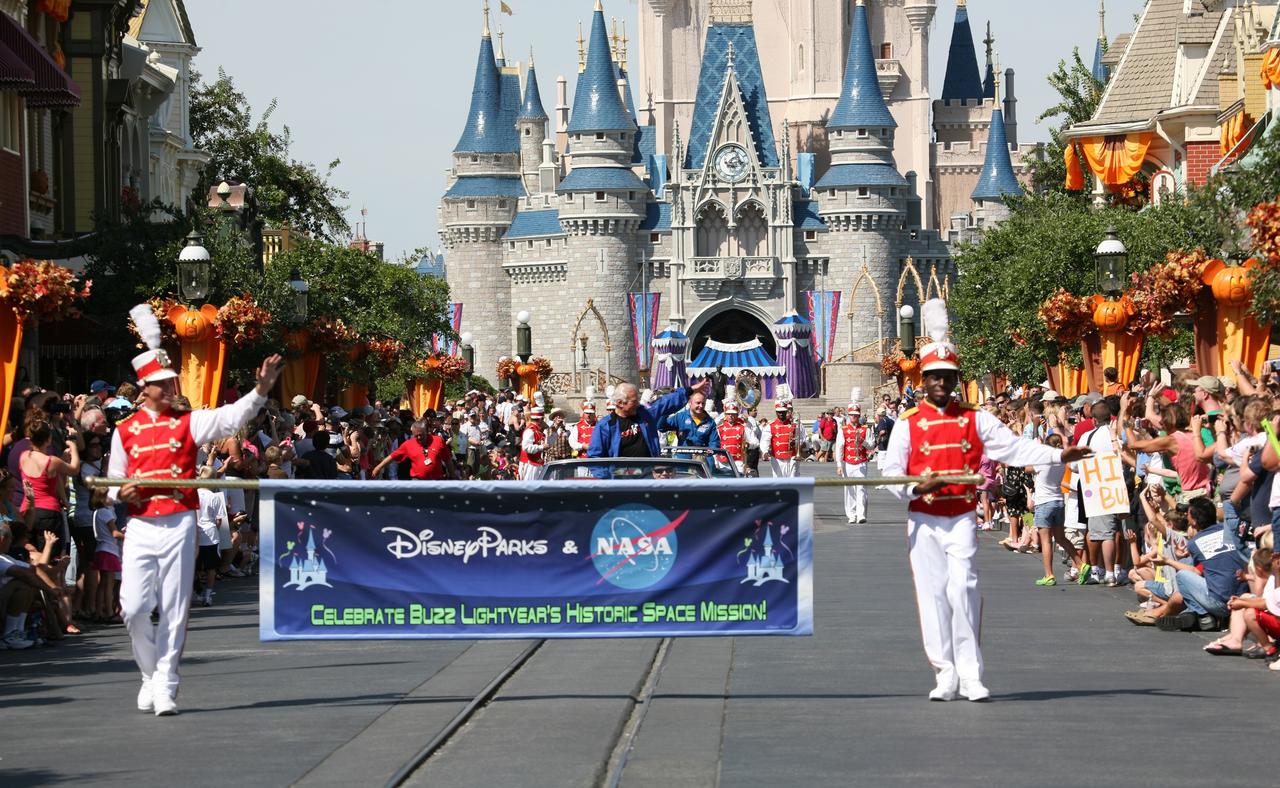
CAPE CANAVERAL, Fla. – At Walt Disney World's Magic Kingdom in Orlando, Fla., a ticker-tape parade officially welcomes toy space ranger Buzz Lightyear home from space. NASA Apollo 11 astronaut Buzz Aldrin, behind the banner, and International Space Station commander Mike Fincke are featured in the procession. The 12-inch-tall action figure spent more than 15 months aboard the International Space Station and returned to Earth aboard space shuttle Discovery on Sept. 11 with the STS-128 crew. Lightyear's space adventure, a collaboration between NASA and Disney Parks, is intended to share the excitement of space exploration with students around the world and encourage them to pursue studies in science, technology, engineering and mathematics. For additional information, visit http://www.nasa.gov/buzzoniss. Photo credit: NASA/Dimitri Gerondidakis
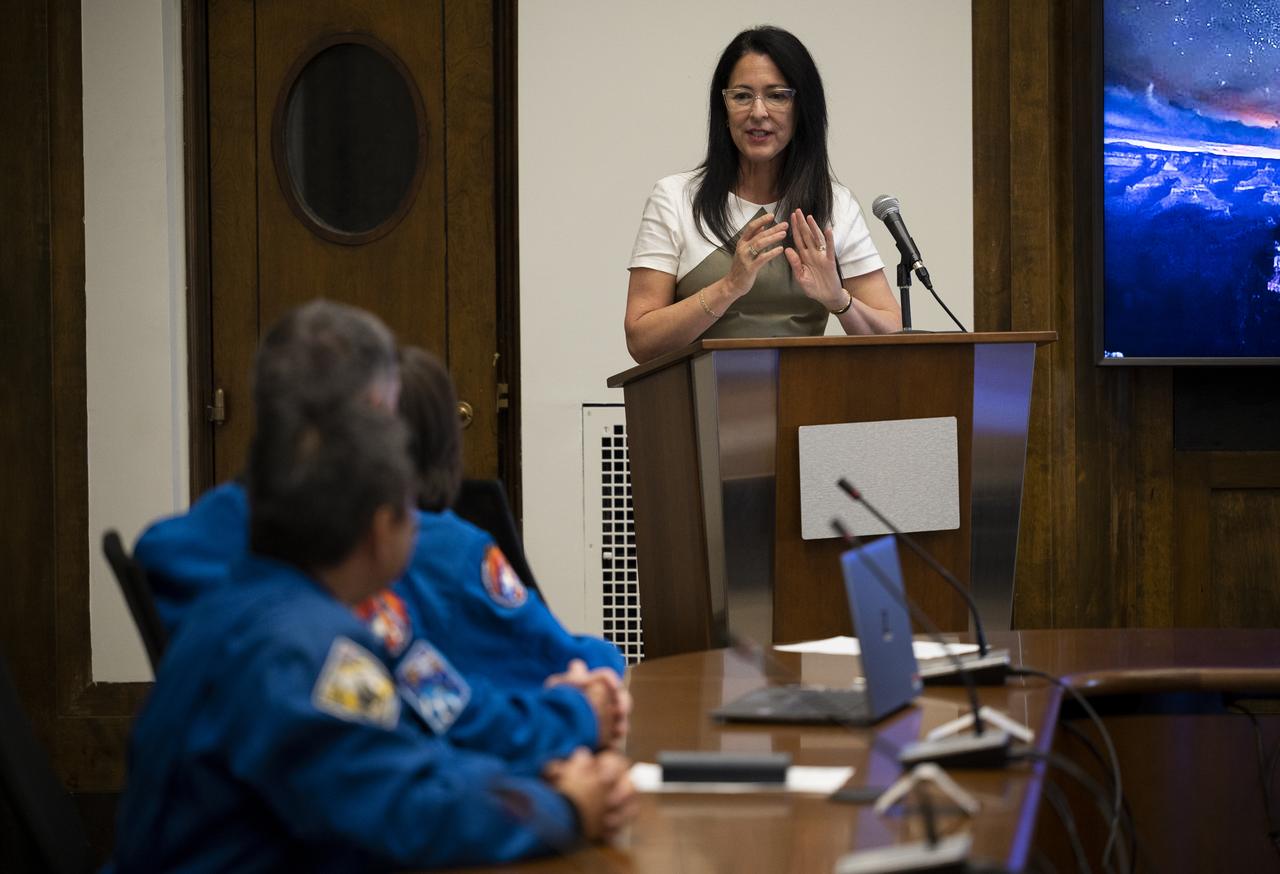
Shannon Estenoz, Assistant Secretary for Fish and Wildlife and Parks at the Department of the Interior, delivers remarks during a visit by NASA’s SpaceX Crew-2 astronauts with leadership and rangers who participate in the National Park Service’s astronomy and dark sky programs, Thursday, June 9, 2022 at the U.S. Department of the Interior in Washington, DC. NASA astronauts Shane Kimbrough and Megan McArthur, Japan Aerospace Exploration Agency (JAXA) astronaut Akihiko Hoshide, and ESA (European Space Agency) astronaut Thomas Pesquet completed the second crew rotation mission to the International Space Station as part of the agency’s Commercial Crew Program and spent 198 days aboard the orbiting laboratory as part of Expeditions 65 and 66. Photo Credit: (NASA/Joel Kowsky)
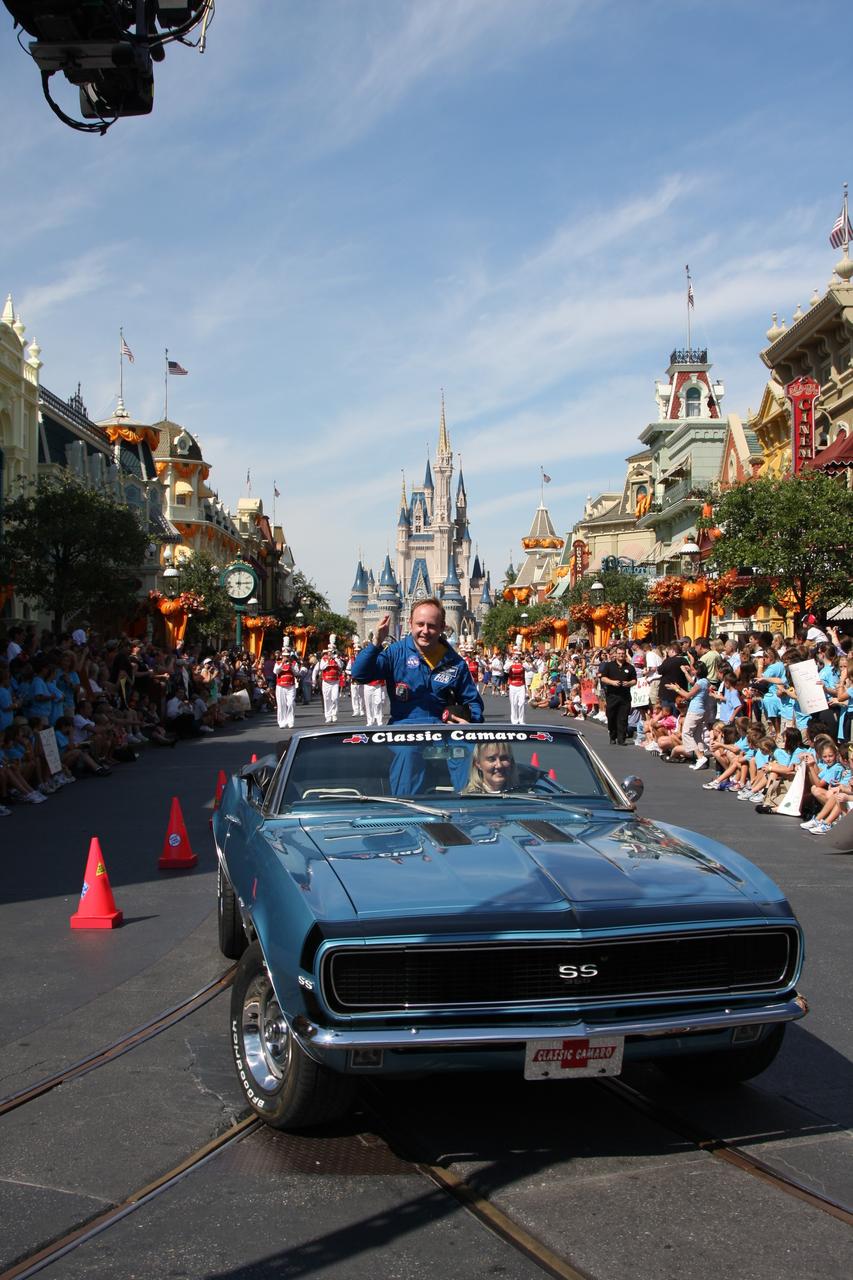
CAPE CANAVERAL, Fla. – At Walt Disney World's Magic Kingdom in Orlando, Fla., NASA astronaut Mike Fincke, riding in a 1968 Camaro convertible, participates in a ticker-tape parade, part of the festivities to welcome toy space ranger Buzz Lightyear home from space. Fincke was commander of the International Space Station from October 2008 to April 2009. The 12-inch-tall action figure spent more than 15 months aboard the International Space Station and returned to Earth aboard space shuttle Discovery on Sept. 11 with the STS-128 crew. Lightyear's space adventure, a collaboration between NASA and Disney Parks, is intended to share the excitement of space exploration with students around the world and encourage them to pursue studies in science, technology, engineering and mathematics. For additional information, visit http://www.nasa.gov/buzzoniss. Photo credit: NASA/Dimitri Gerondidakis
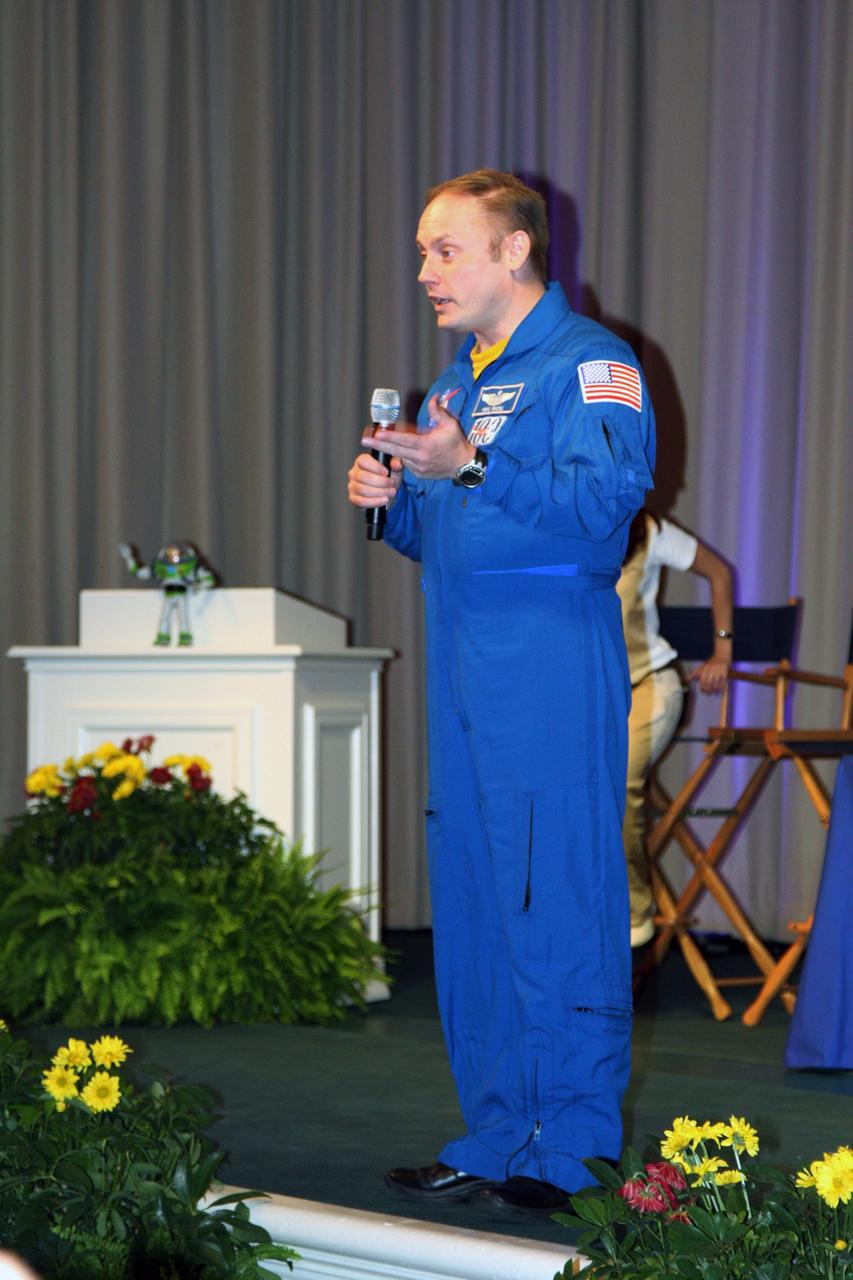
CAPE CANAVERAL, Fla. – At Walt Disney World's Magic Kingdom in Orlando, Fla., NASA astronaut Mike Fincke relates his experiences in space to students and teachers attending an education presentation, part of the festivities to welcome toy space ranger Buzz Lightyear home from space. Fincke was commander of the International Space Station from October 2008 to April 2009. The 12-inch-tall action figure spent more than 15 months aboard the International Space Station and returned to Earth aboard space shuttle Discovery on Sept. 11 with the STS-128 crew. Lightyear's space adventure, a collaboration between NASA and Disney Parks, is intended to share the excitement of space exploration with students around the world and encourage them to pursue studies in science, technology, engineering and mathematics. For additional information, visit http://www.nasa.gov/buzzoniss. Photo credit: NASA/Dimitri Gerondidakis
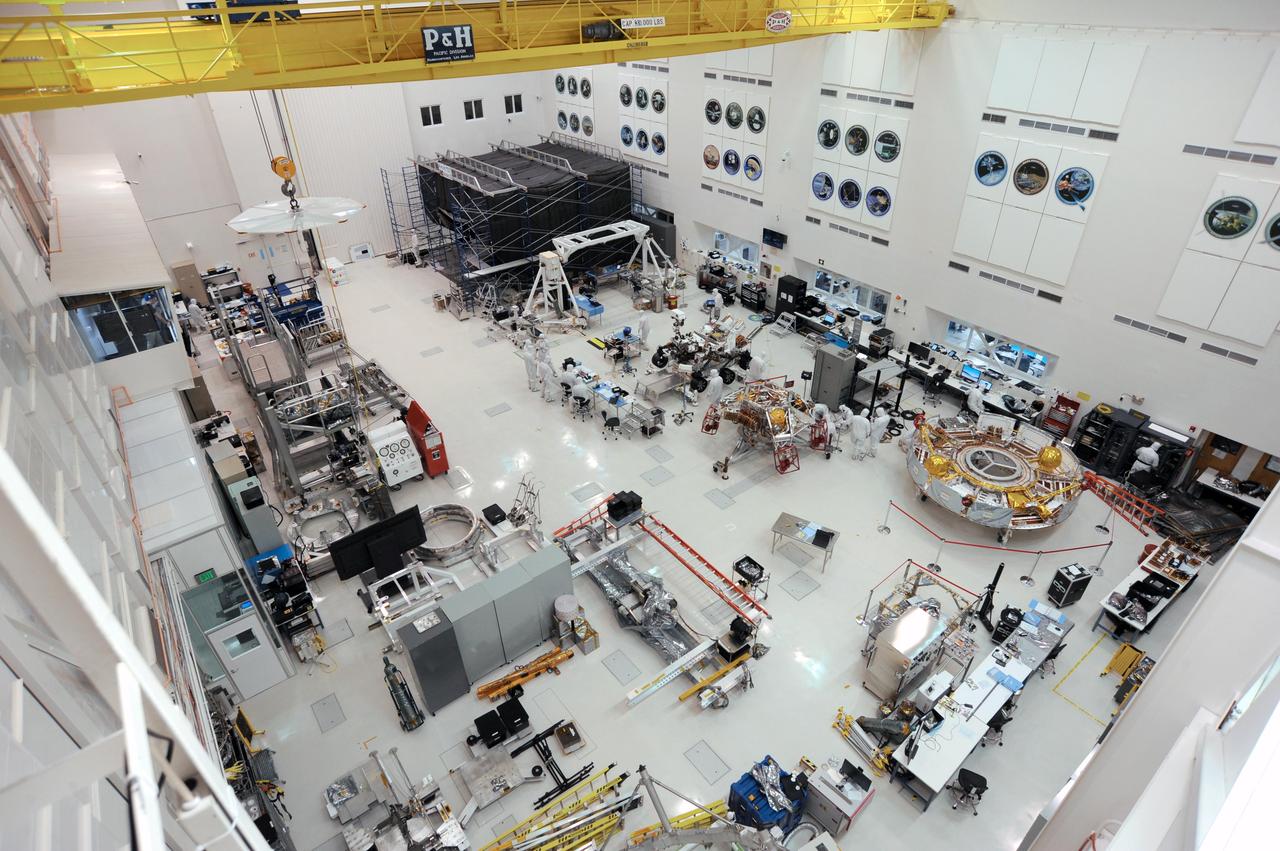
The Mars 2020 rover is visible (just above center) in this image — taken on Nov. 12, 2019 — of the High Bay 1 clean room floor in JPL's Spacecraft Assembly Facility. Many of NASA's most famous robotic spacecraft were assembled and tested in High Bay 1, including most of the Ranger and Mariner spacecraft; Voyager 1; the Galileo and Cassini orbiters; and all of NASA's Mars rovers. An annotated version of the image points to the facility's Wall of Fame, featuring emblems of those and other spacecraft that successfully launched after being built in the room. It also points to other features of the room, including the facility's gallery, which hosts about 30,000 members of the public each year. https://photojournal.jpl.nasa.gov/catalog/PIA23519
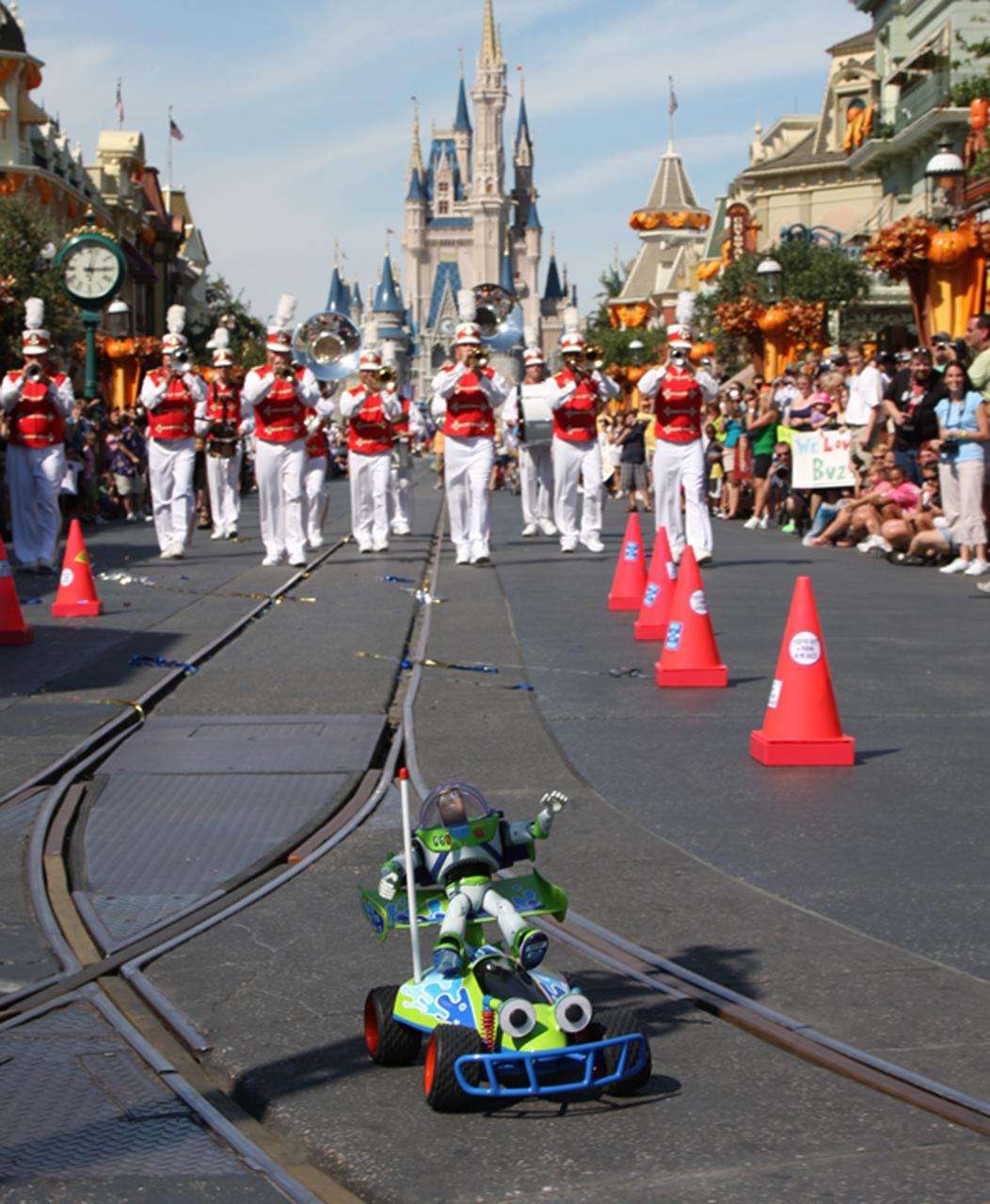
CAPE CANAVERAL, Fla. – At Walt Disney World's Magic Kingdom in Orlando, Fla., toy space ranger Buzz Lightyear participates in a ticker-tape parade to welcome him home from space. The 12-inch-tall action figure spent more than 15 months aboard the International Space Station and returned to Earth aboard space shuttle Discovery on Sept. 11 with the STS-128 crew. Lightyear's space adventure, a collaboration between NASA and Disney Parks, is intended to share the excitement of space exploration with students around the world and encourage them to pursue studies in science, technology, engineering and mathematics. For additional information, visit http://www.nasa.gov/buzzoniss. Photo credit: NASA/Dimitri Gerondidakis
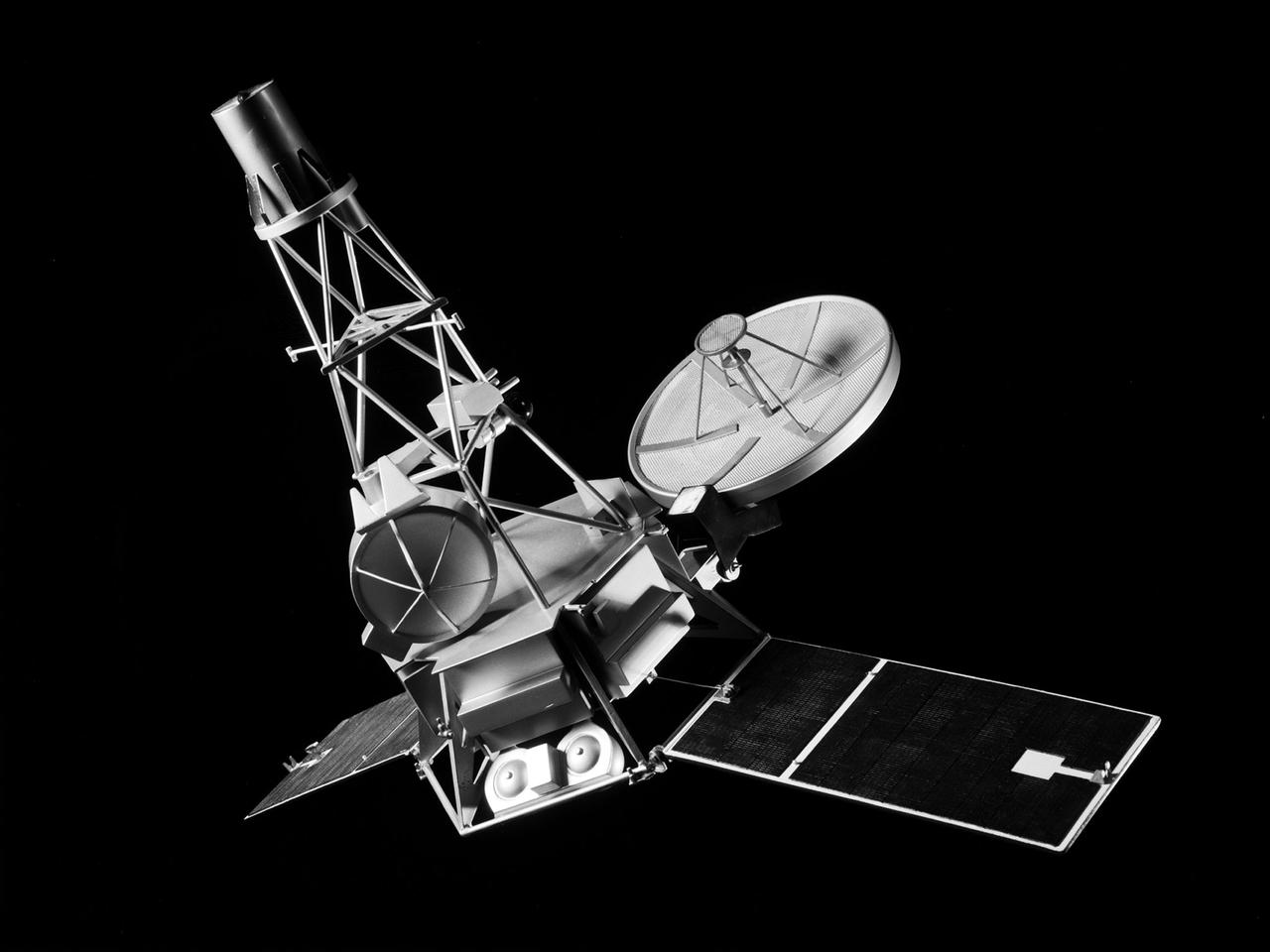
A model of the Mariner-C spacecraft at the National Aeronautics and Space Administration (NASA) Lewis Research Center for a June 1964 Conference on New Technology. Mariner-C and Mariner-D were identical spacecraft designed by the Jet Propulsion Laboratory to flyby Mars and photograph the Martian surface. Mariner-C was launched on November 4, 1964, but the payload shroud did not jettison properly and the spacecraft’s battery power did not function. The mission ended unsuccessfully two days later. Mariner-D was launched as designed on November 28, 1964 and became the first successful mission to Mars. It was the first time a planet was photographed from space. Mariner-D’s 21 photographs revealed an inhospitable and barren landscape. The two Mariner spacecraft were launched by Atlas-Agena-D rockets. Lewis had taken over management of the Agena Program in October 1962. There had been five failures and two partial failures in the 17 Agena launches before being taken over by NASA Lewis. Lewis, however, oversaw 28 successful Agena missions between 1962 and 1968, including several Rangers and the Mariner Venus '67.
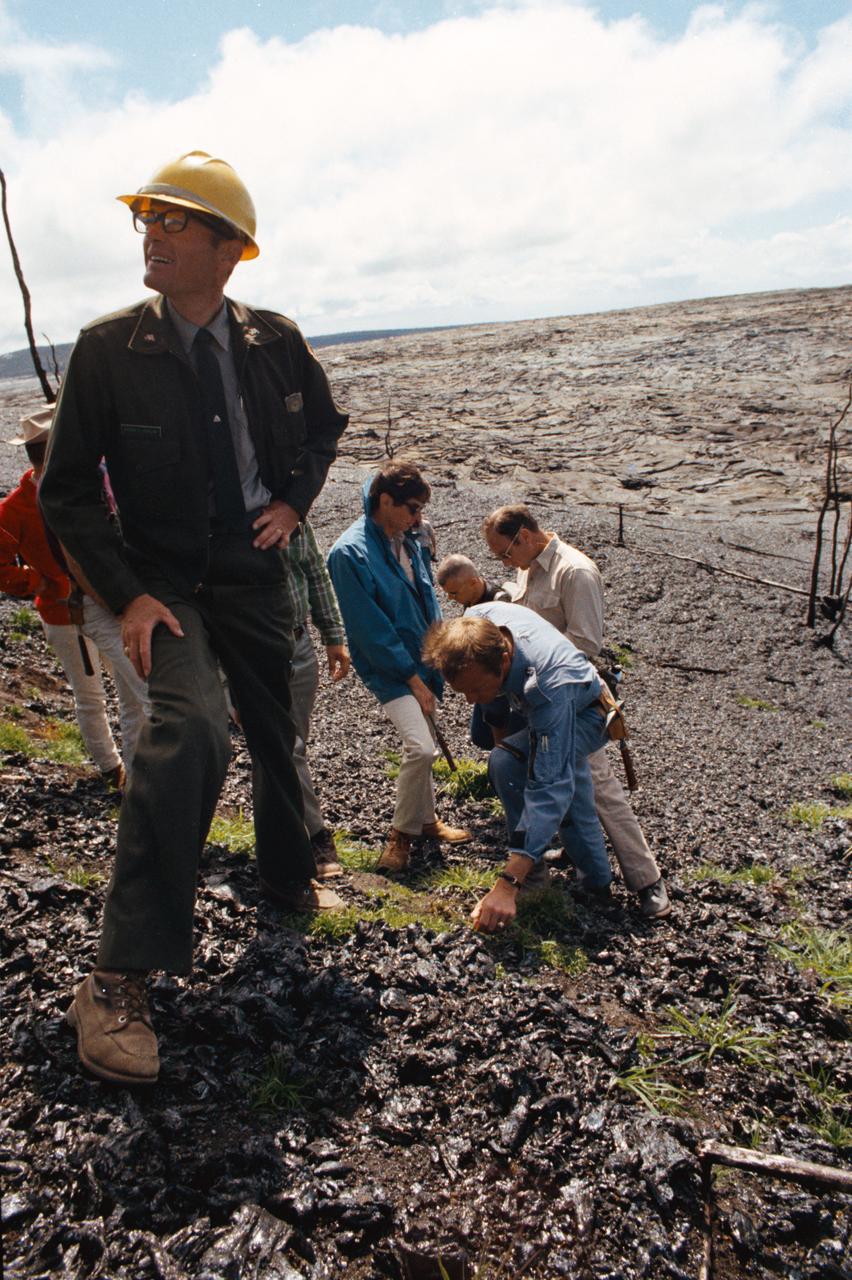
S70-34421 (April 1970) --- Prime crew men and backup crew men, of the Apollo 14 lunar landing mission, look over an area near the site of a volcanic eruption on Dec. 30, 1969. Astronauts Alan B. Shepard Jr. (leaning with left hand on ground) and Edgar D. Mitchell (behind Shepard, wearing dark glasses) are the prime crew men scheduled to walk on the moon. Astronauts Eugene A. Cernan (almost obscured at extreme left) and Joe H. Engle (partially visible, on Cernan's right) are backup crew commander and lunar module pilot, respectively, for the mission. Others in the photograph are Pat Crosland (in hard hat), a geologist and a park ranger in Hawaii Volcanoes State Park; Michael C. McEwen (facing Mitchell) of the Geology Branch, Lunar and Earth Sciences Division, Manned Spacecraft Center (MSC); and astronaut Bruce McCandless II, who made the trip to serve as a spacecraft communicator during simulations of extravehicular activity (EVA) on the lunar surface.