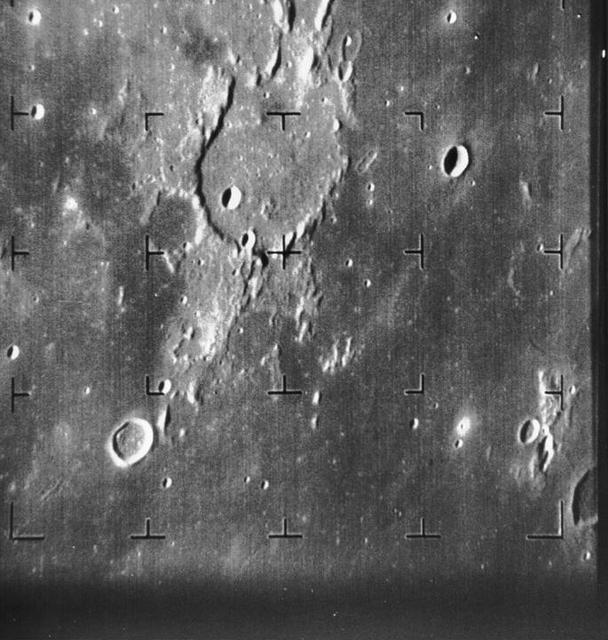
Guericke Crater as seen by Ranger 7
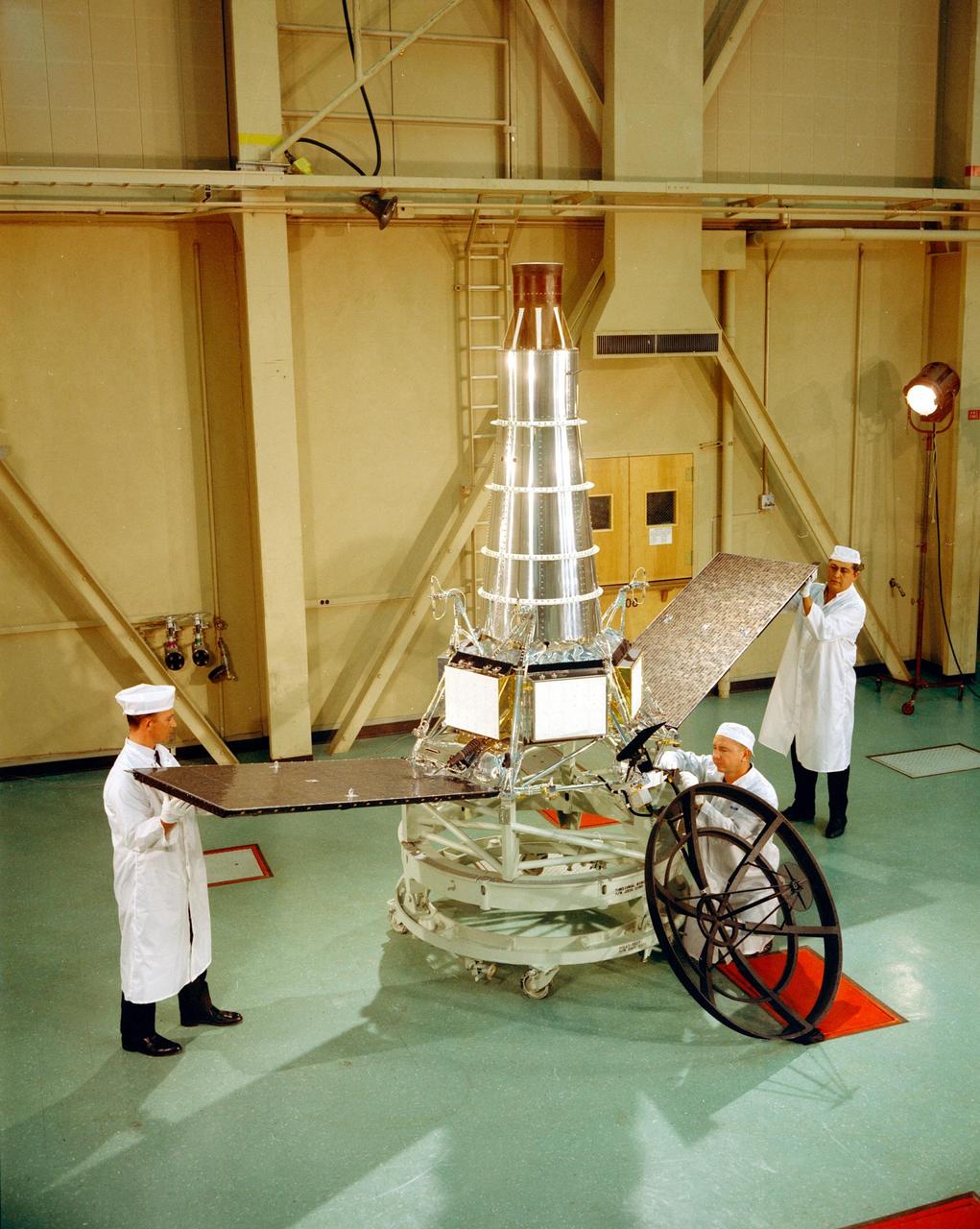
Engineers stand with Ranger 7 on Dec. 10, 1963, in High Bay 1, located at NASA's Jet Propulsion Laboratory. Ranger 7 was the first U.S. mission to transmit images from the surface of the Moon. The Ranger program included a series of robotic spacecraft launched at the Moon. JPL developed the art of spacecraft assembly and testing with each iteration of the Ranger spacecraft. https://photojournal.jpl.nasa.gov/catalog/PIA23520
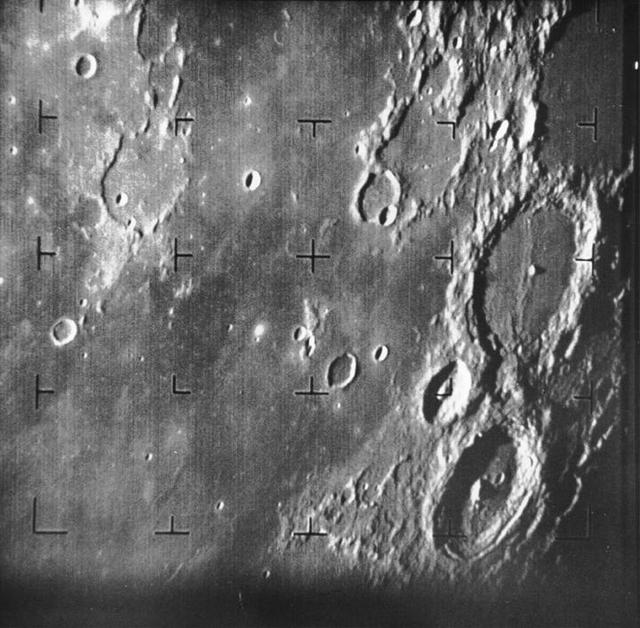
Ranger 7 took this image, the first picture of the Moon by aU.S. spacecraft, on 31 July 1964 at 13:09 UT 9:09 AM EDT about 17 minutes before impacting the lunar surface.

Pre-launch alert of Atlas-Agena 7, Ranger V.

Lift-off of Atlas-Agena 7, Ranger V. (Test 5050)(ITEM 1.3- )
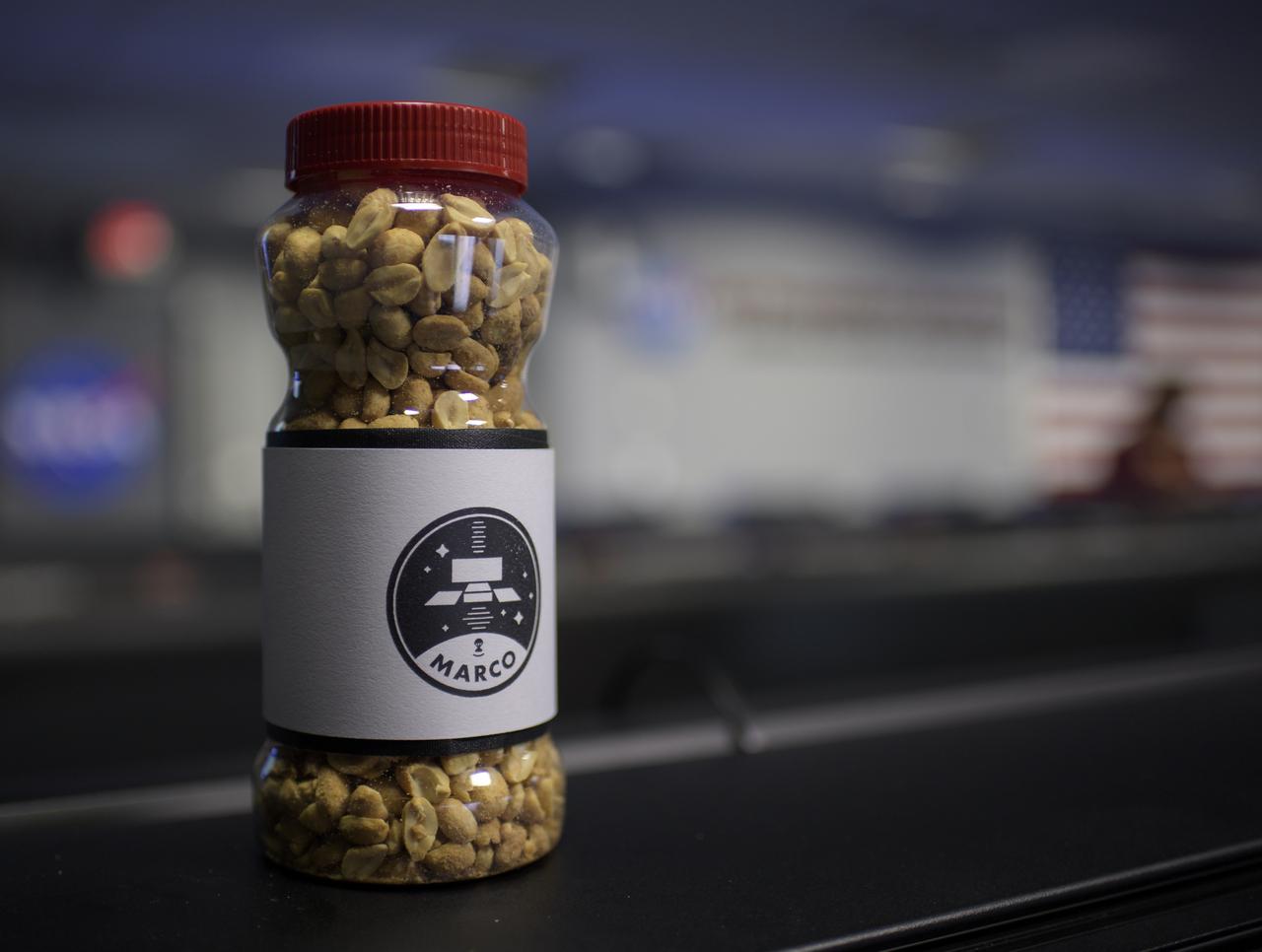
A jar of nuts with the Mars Cube One (MarCO) logo is seen inside the Mission Control Area (MSA) where teams are starting to gather for the Mars InSight landing, Monday, Nov. 26, 2018 inside the Mission Support Area at NASA's Jet Propulsion Laboratory in Pasadena, California. Good-luck peanuts made their first appearance at the Jet Propulsion Laboratory's Space Flight Operations Facility in 1964 during the Ranger 7 mission. InSight, short for Interior Exploration using Seismic Investigations, Geodesy and Heat Transport, is a Mars lander designed to study the "inner space" of Mars: its crust, mantle, and core. Photo Credit: (NASA/Bill Ingalls)
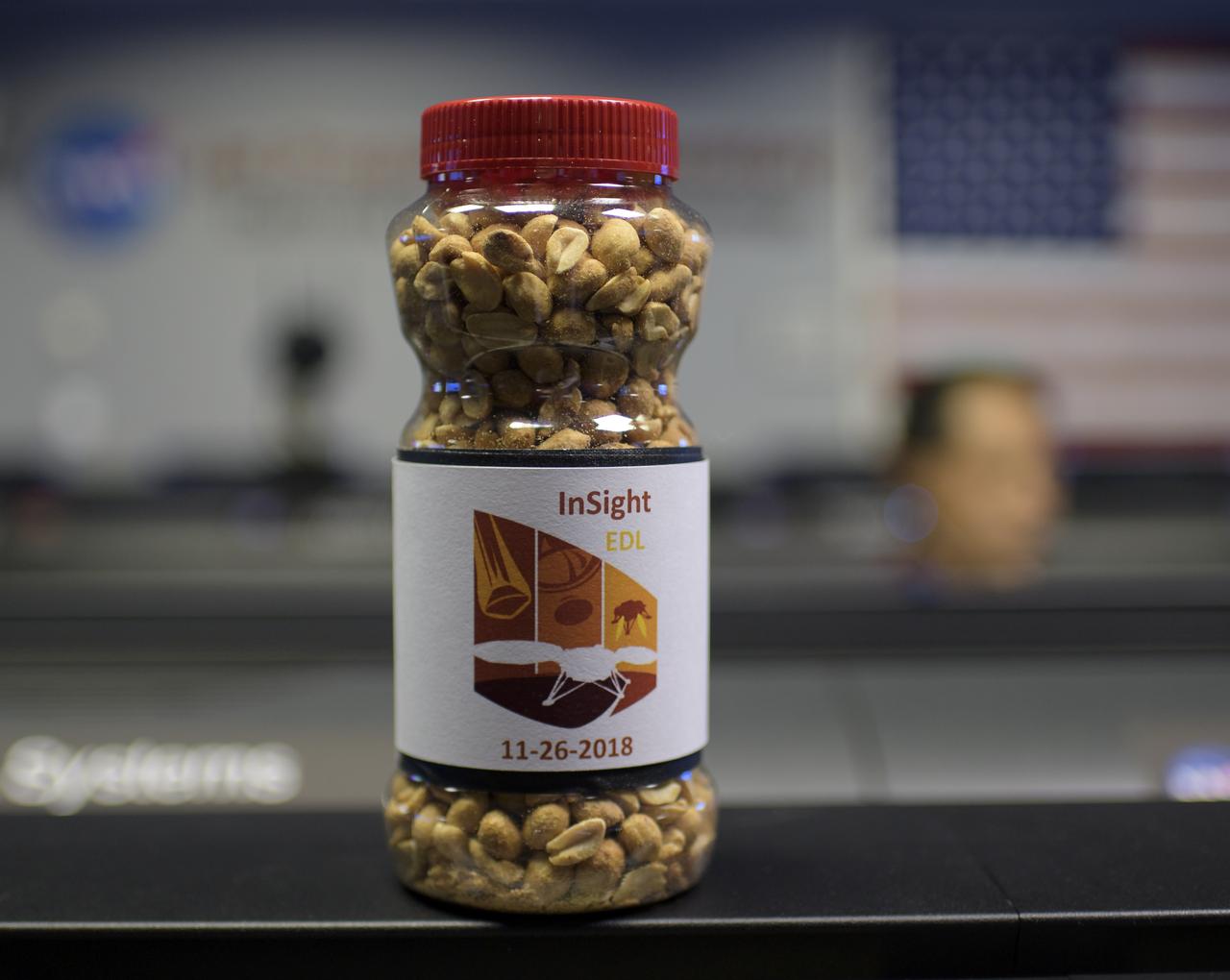
A jar of nuts is seen inside the Mission Control Area (MSA) where teams are starting to gather for the Mars InSight landing, Monday, Nov. 26, 2018 inside the Mission Support Area at NASA's Jet Propulsion Laboratory in Pasadena, California. Good-luck peanuts made their first appearance at the Jet Propulsion Laboratory's Space Flight Operations Facility in 1964 during the Ranger 7 mission. InSight, short for Interior Exploration using Seismic Investigations, Geodesy and Heat Transport, is a Mars lander designed to study the "inner space" of Mars: its crust, mantle, and core. Photo Credit: (NASA/Bill Ingalls)
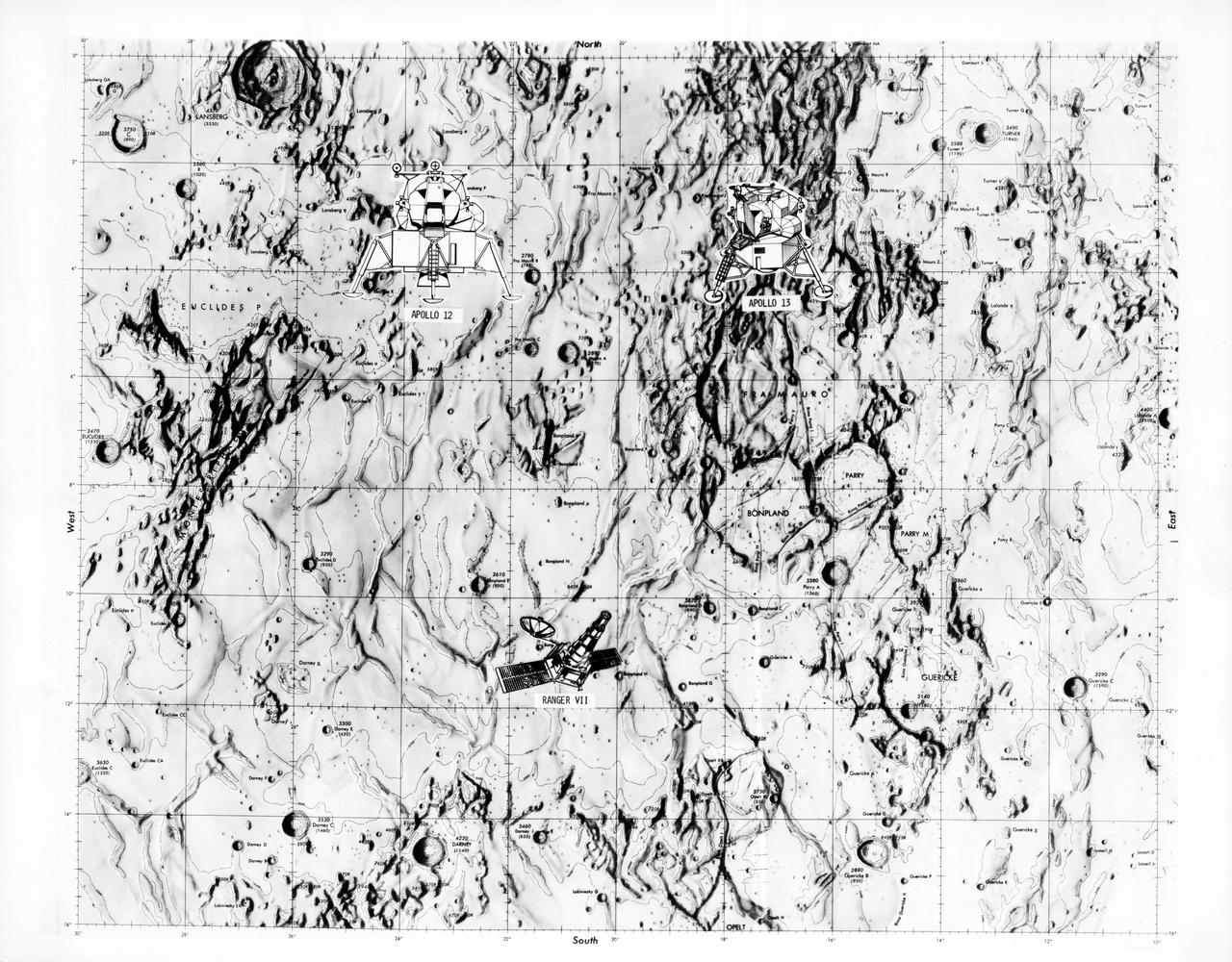
S70-28115 (January 1970) --- This overlay map of terrain on the lunar nearside shows the area of the landing site of the upcoming Apollo 13 mission, in relation to two previous NASA landings. The proposed Apollo 13 landing site is located in the highlands north of Fra Mauro. The coordinates of the planned site are 17.550 degrees west longitude and 3.617 degrees south latitude. The landing site of the Apollo 12 mission, which was highlighted by a lunar landing on Nov. 19, 1969, is located approximately 105 nautical miles west of the Apollo 13 site. The landing site of the unmanned Ranger 7 space vehicle, which impacted on the moon on July 31, 1964, at 10.74 degrees south latitude and 20.7 degrees west longitude, is approximately 130 nautical miles south-southwest of the Apollo 13 site, and approximately 140 nautical miles south-southeast of the Apollo 12 site.