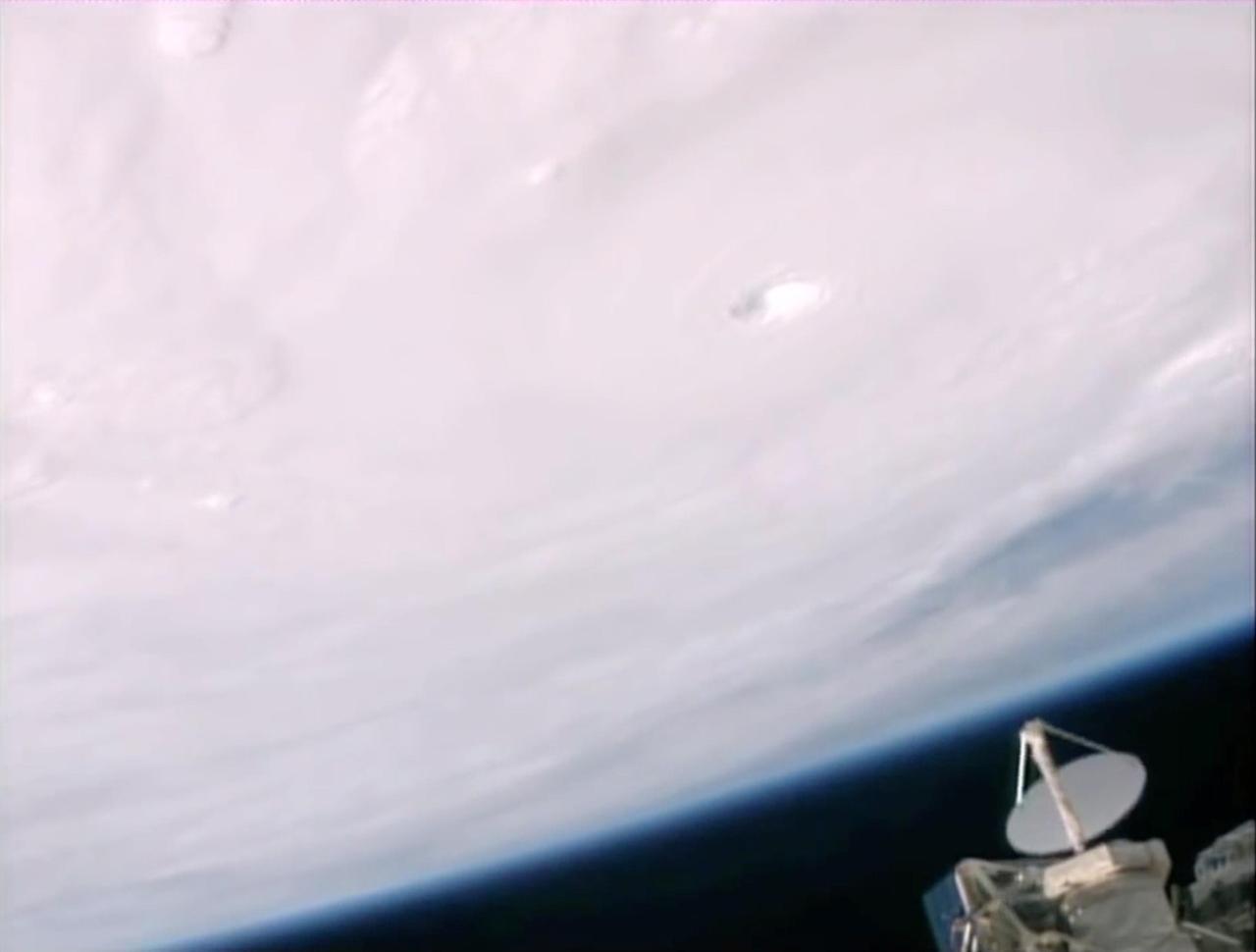
NASA's RapidScat's antenna, lower right, was pointed at Hurricane Patricia as the powerful storm approached Mexico on Oct. 23, 2015. Patricia was the strongest hurricane ever recorded in the Western Hemisphere, with maximum winds of 200 mph (320 kilometers per hour). When it first made landfall on the Pacific coast of Mexico on Oct. 23, it was a destructive Category 5 storm. The videos are from the International Space Station. RapidScat's spinning antenna, lower right, collects wind-speed data from Hurricane Patricia. http://photojournal.jpl.nasa.gov/catalog/PIA20049
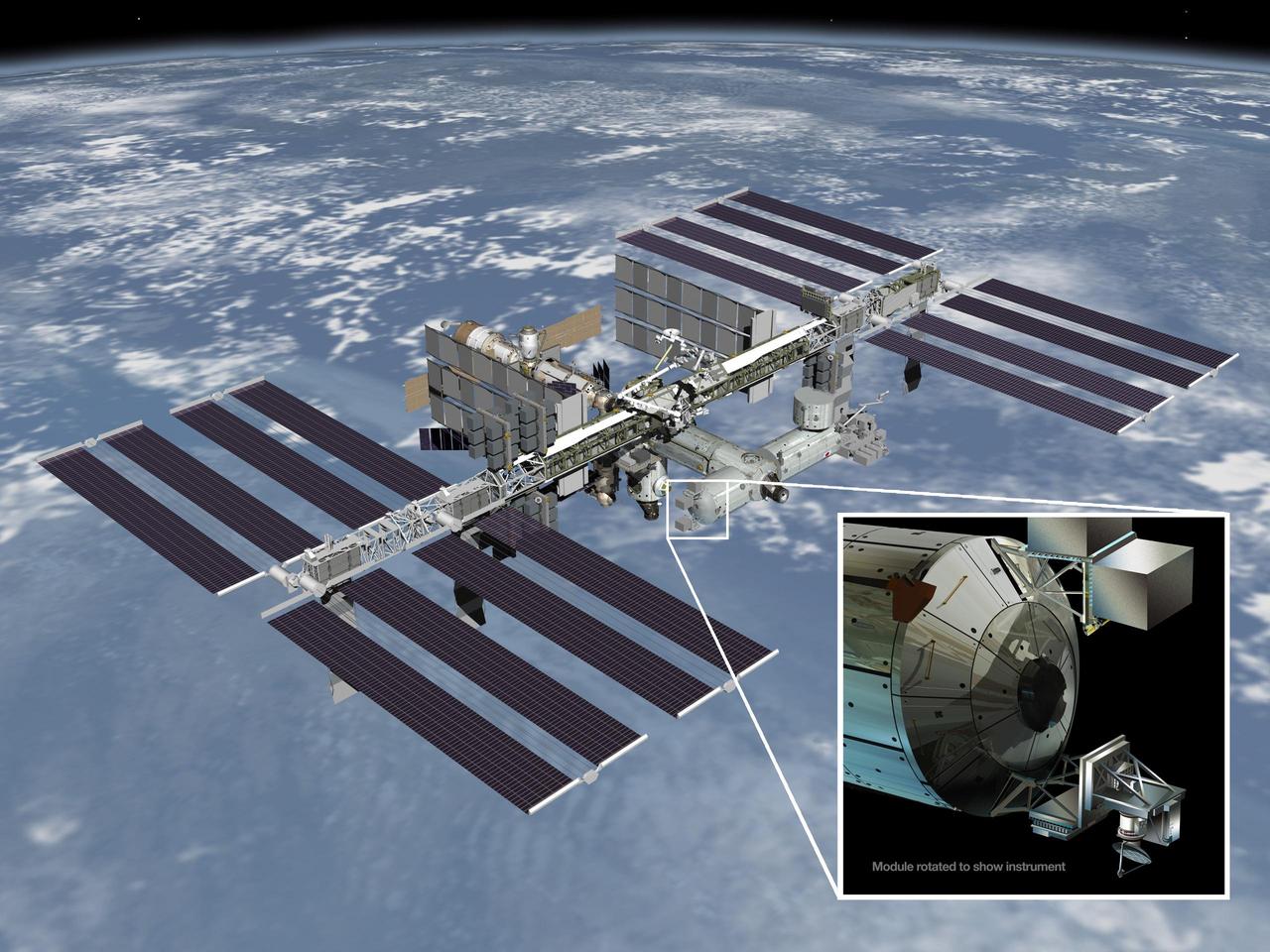
Artist rendering of NASA ISS-RapidScat instrument inset, which will launch to the International Space Station in 2014 to measure ocean surface wind speed and direction and help improve weather forecasts, including hurricane monitoring.
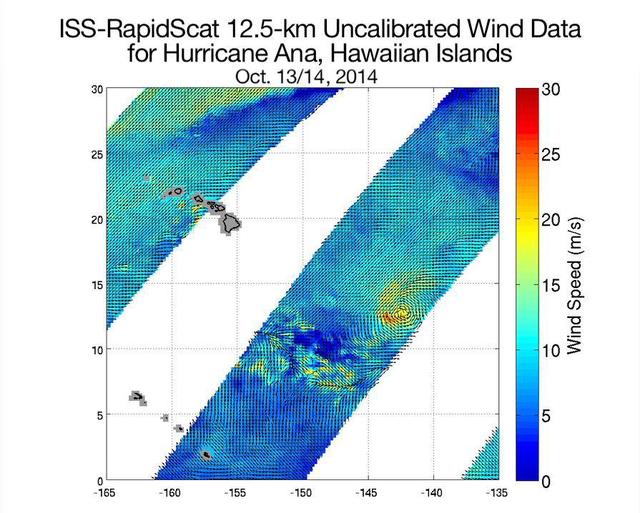
NASA ISS-RapidScat ocean wind scatterometer viewed Hurricane Ana as it approached Hawaii. From Oct. 13 to Oct. 19, 2014, RapidScat observed Ana seven times. This frame is from a movie containing multiple days of observation.
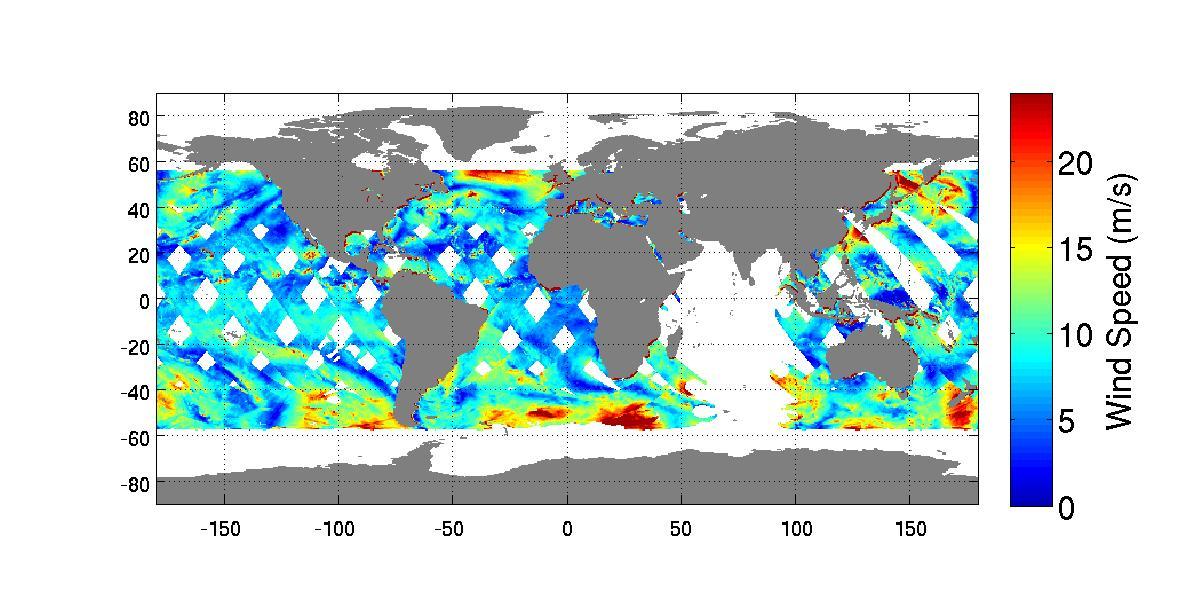
Launched Sept. 21, 2014, to the International Space Station, NASA newest Earth-observing mission, the International Space Station-RapidScat scatterometer to measure global ocean near-surface wind speeds and directions.
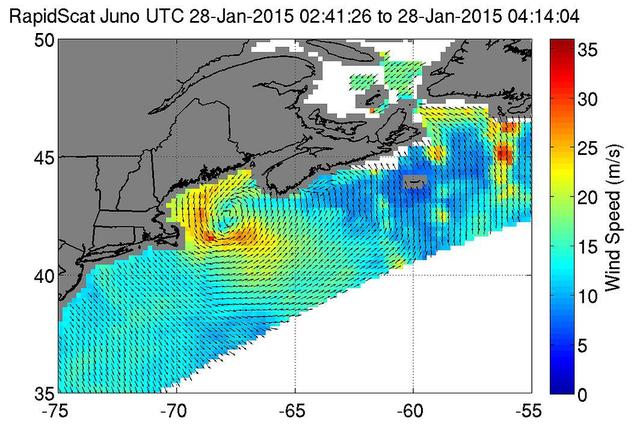
On Jan. 28, 2015 from 2:41 to 4:14 UTC, NASA ISS-RapidScat saw the noreaster strongest sustained winds red between 56 and 67 mph 25 to 30 mps/90 to 108 kph just off-shore from eastern Cape Cod.
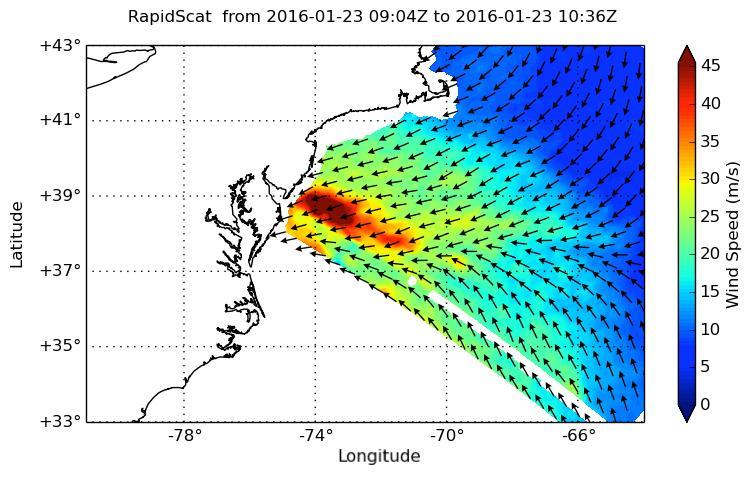
NASA's ISS-RapidScat instrument on the International Space Station provided a look at the strong winds that led to coastal flooding in southern New Jersey during the historic winter storm that blanketed much of the U.S. East Coast, starting Jan. 23, 2016. At 2 a.m. PST on Jan. 23, RapidScat showed sustained winds as strong as 45 meters per second (100 mph/162 kilometers per hour) along the coast of southern New Jersey. Many beachfront towns in this region were flooded as winds pushed ocean waters inland. The town of Cape May, New Jersey, reported a flood level of 8.98 feet (2.74 meters) -- the highest on record. This image shows ocean winds near the surface off the U.S. East Coast, from the hook of Cape Cod at top center to the South Carolina coastline at bottom left. Southern New Jersey and the northern edge of Delaware are directly in the path of the highest wind speeds. http://photojournal.jpl.nasa.gov/catalog/PIA20366
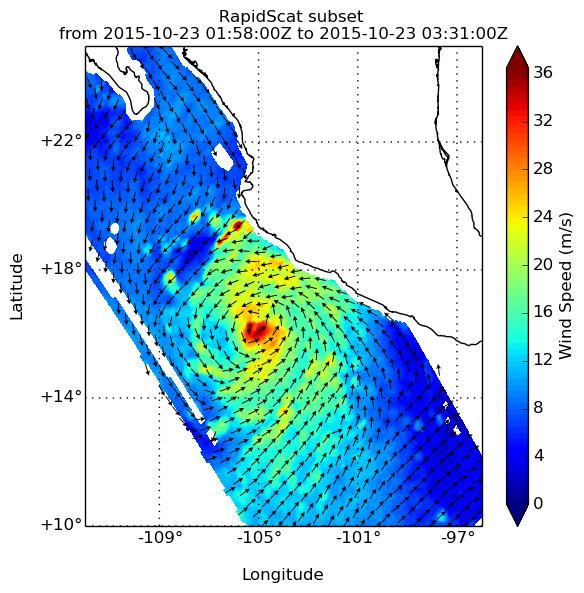
NASA's ISS-RapidScat passed over Hurricane Patricia at about 3:00 AM GMT on Oct. 23, 2015. A Hurricane Warning was in effect from San Blas to Punta San Telmo. A Hurricane Watch was in effect from east of Punta San Telmo to Lazaro Cardenas and a Tropical Storm Warning was in effect from east of Punta San Telmo to Lazaro Cardenas. Patricia was moving toward the north-northwest near 12 mph (19 kph) and a turn toward the north is expected later this morning, followed by a turn toward the north-northeast this afternoon. On the forecast track, the core of Patricia will make landfall in the hurricane warning area today, Oct. 23, 2015, during the afternoon or evening. http://photojournal.jpl.nasa.gov/catalog/PIA20031
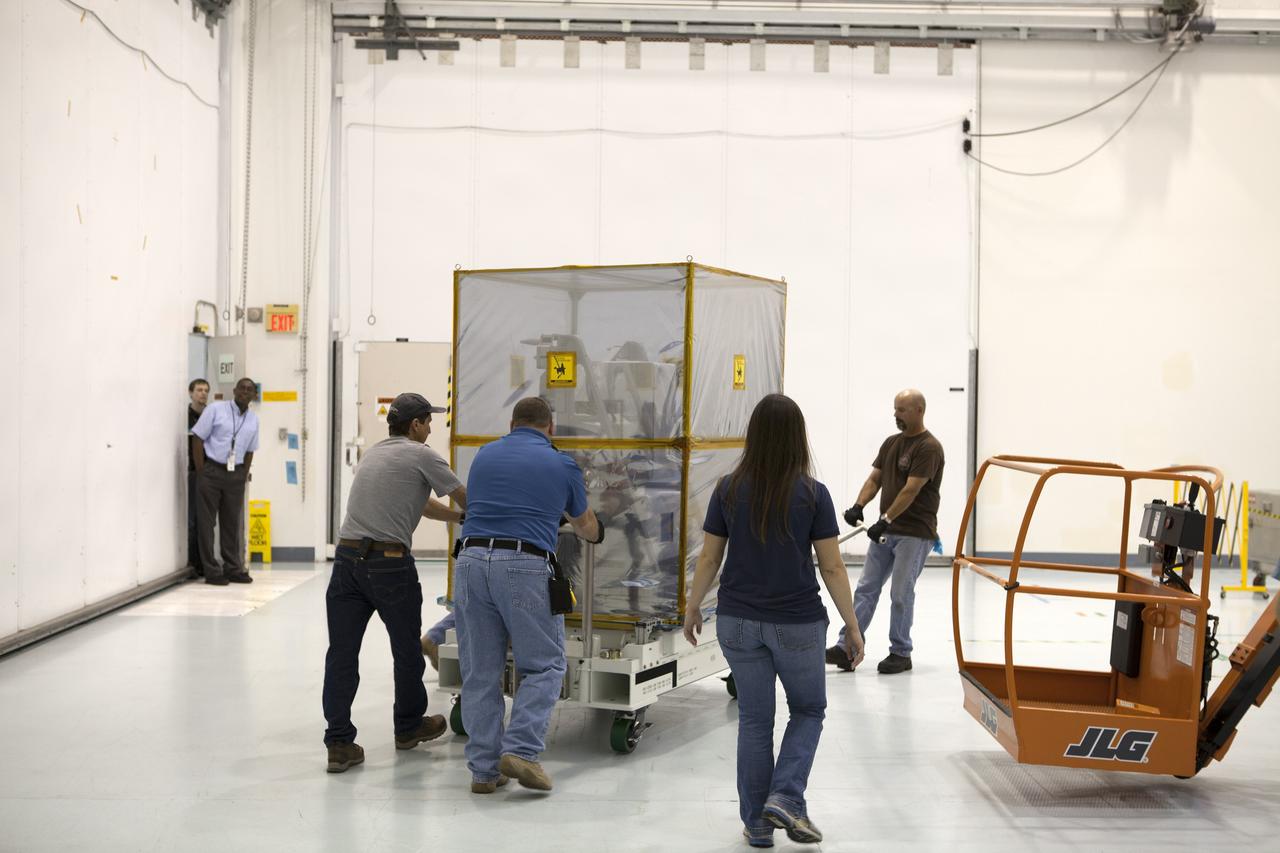
CAPE CANAVERAL, Fla. – Part of NASA's International Space Station-RapidScat scatterometer instrument is moved into Space Station Processing Facility at Kennedy Space Center in Florida. ISS-RapidScat is the first scientific Earth-observing instrument designed to operate from the exterior of the space station. It will measure Earth's ocean surface wind speed and direction, providing data to be used in weather and marine forecasting. Built at NASA's Jet Propulsion Laboratory, ISS-RapidScat is slated to fly on the SpaceX-4 commercial cargo resupply flight in 2014. For more information, visit http://www.jpl.nasa.gov/missions/iss-rapidscat. Photo credit: NASA/Dimitri Gerondidakis

CAPE CANAVERAL, Fla. – NASA's International Space Station-RapidScat scatterometer instrument is revealed inside Kennedy Space Center's Space Station Processing Facility. ISS-RapidScat is the first scientific Earth-observing instrument designed to operate from the exterior of the space station. It will measure Earth's ocean surface wind speed and direction, providing data to be used in weather and marine forecasting. Built at NASA's Jet Propulsion Laboratory, ISS-RapidScat is slated to fly on the SpaceX-4 commercial cargo resupply flight in 2014. For more information, visit http://www.jpl.nasa.gov/missions/iss-rapidscat. Photo credit: NASA/Dimitri Gerondidakis
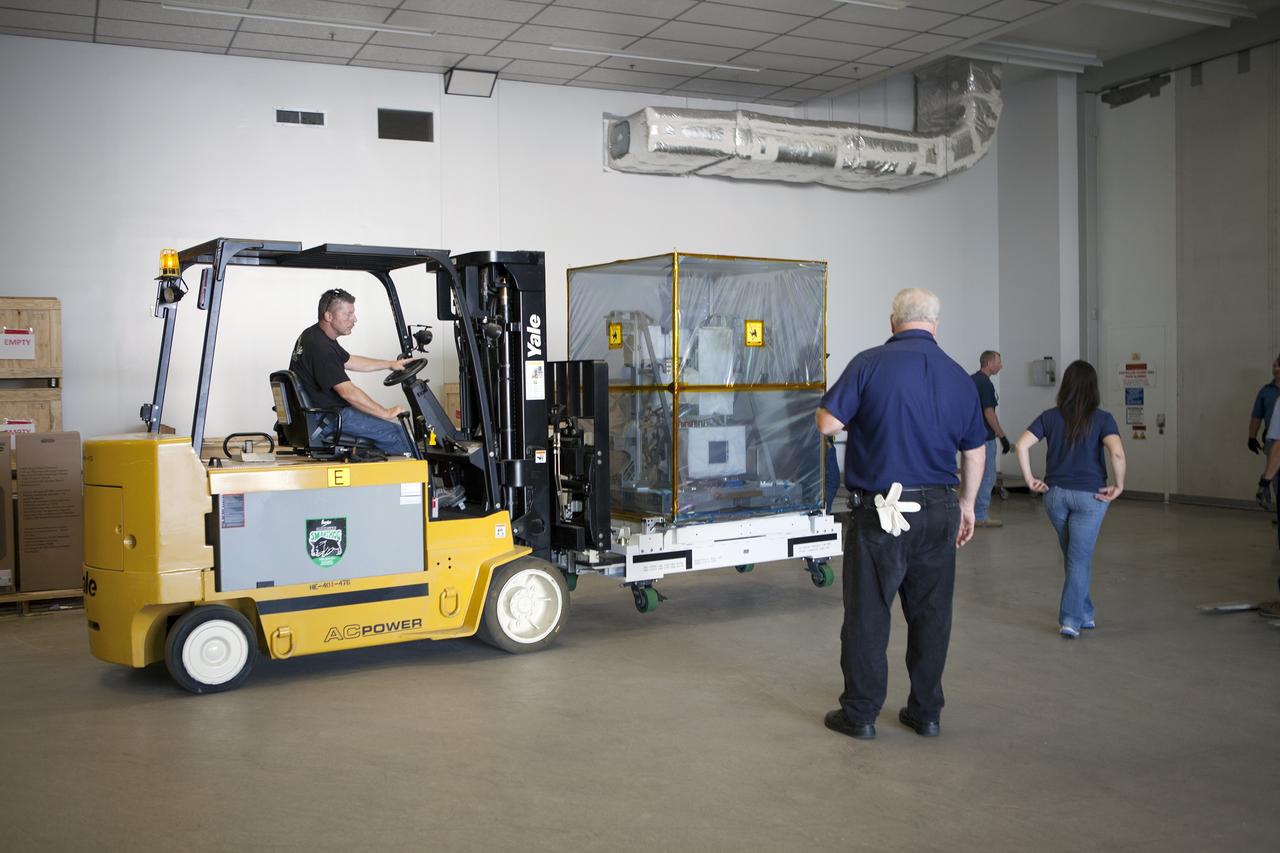
CAPE CANAVERAL, Fla. – NASA's International Space Station-RapidScat scatterometer instrument arrives at the Space Station Processing Facility at Kennedy Space Center in Florida. ISS-RapidScat is the first scientific Earth-observing instrument designed to operate from the exterior of the space station. It will measure Earth's ocean surface wind speed and direction, providing data to be used in weather and marine forecasting. Built at NASA's Jet Propulsion Laboratory, ISS-RapidScat is slated to fly on the SpaceX-4 commercial cargo resupply flight in 2014. For more information, visit http://www.jpl.nasa.gov/missions/iss-rapidscat. Photo credit: NASA/Dimitri Gerondidakis
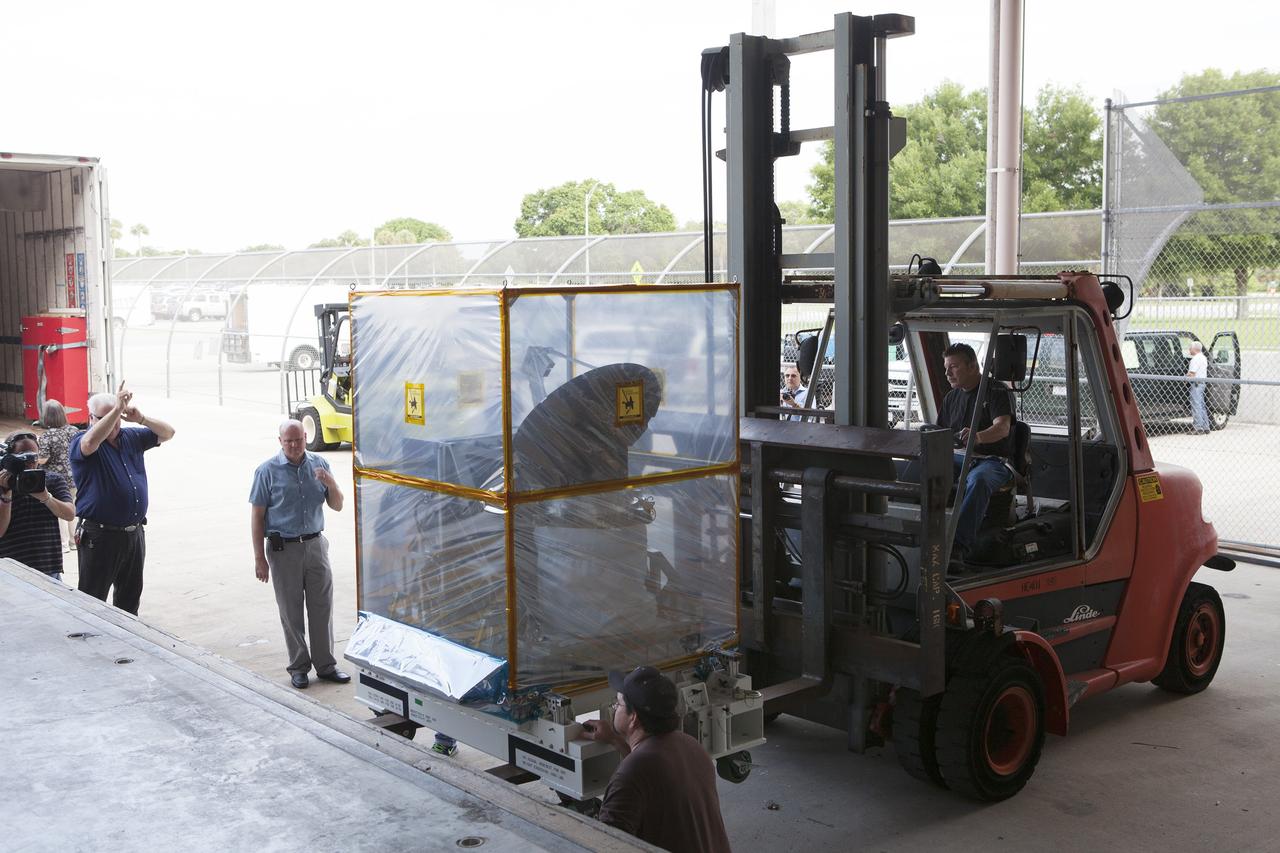
CAPE CANAVERAL, Fla. – A component of NASA's International Space Station-RapidScat scatterometer instrument is removed from a truck at the Space Station Processing Facility at Kennedy Space Center in Florida. ISS-RapidScat is the first scientific Earth-observing instrument designed to operate from the exterior of the space station. It will measure Earth's ocean surface wind speed and direction, providing data to be used in weather and marine forecasting. Built at NASA's Jet Propulsion Laboratory, ISS-RapidScat is slated to fly on the SpaceX-4 commercial cargo resupply flight in 2014. For more information, visit http://www.jpl.nasa.gov/missions/iss-rapidscat. Photo credit: NASA/Dimitri Gerondidakis
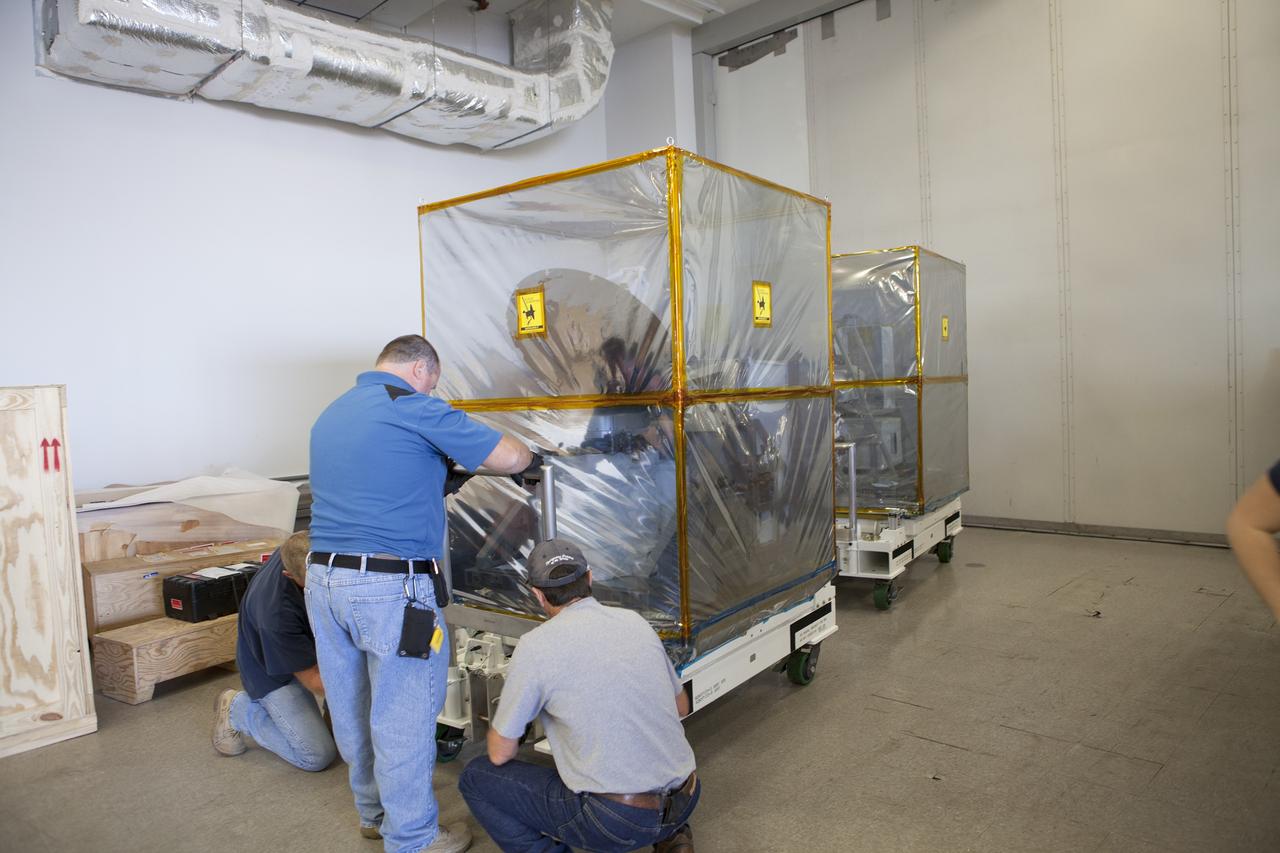
CAPE CANAVERAL, Fla. – The components of NASA's International Space Station-RapidScat scatterometer instrument arrive at the Space Station Processing Facility at Kennedy Space Center in Florida. ISS-RapidScat is the first scientific Earth-observing instrument designed to operate from the exterior of the space station. It will measure Earth's ocean surface wind speed and direction, providing data to be used in weather and marine forecasting. Built at NASA's Jet Propulsion Laboratory, ISS-RapidScat is slated to fly on the SpaceX-4 commercial cargo resupply flight in 2014. For more information, visit http://www.jpl.nasa.gov/missions/iss-rapidscat. Photo credit: NASA/Dimitri Gerondidakis
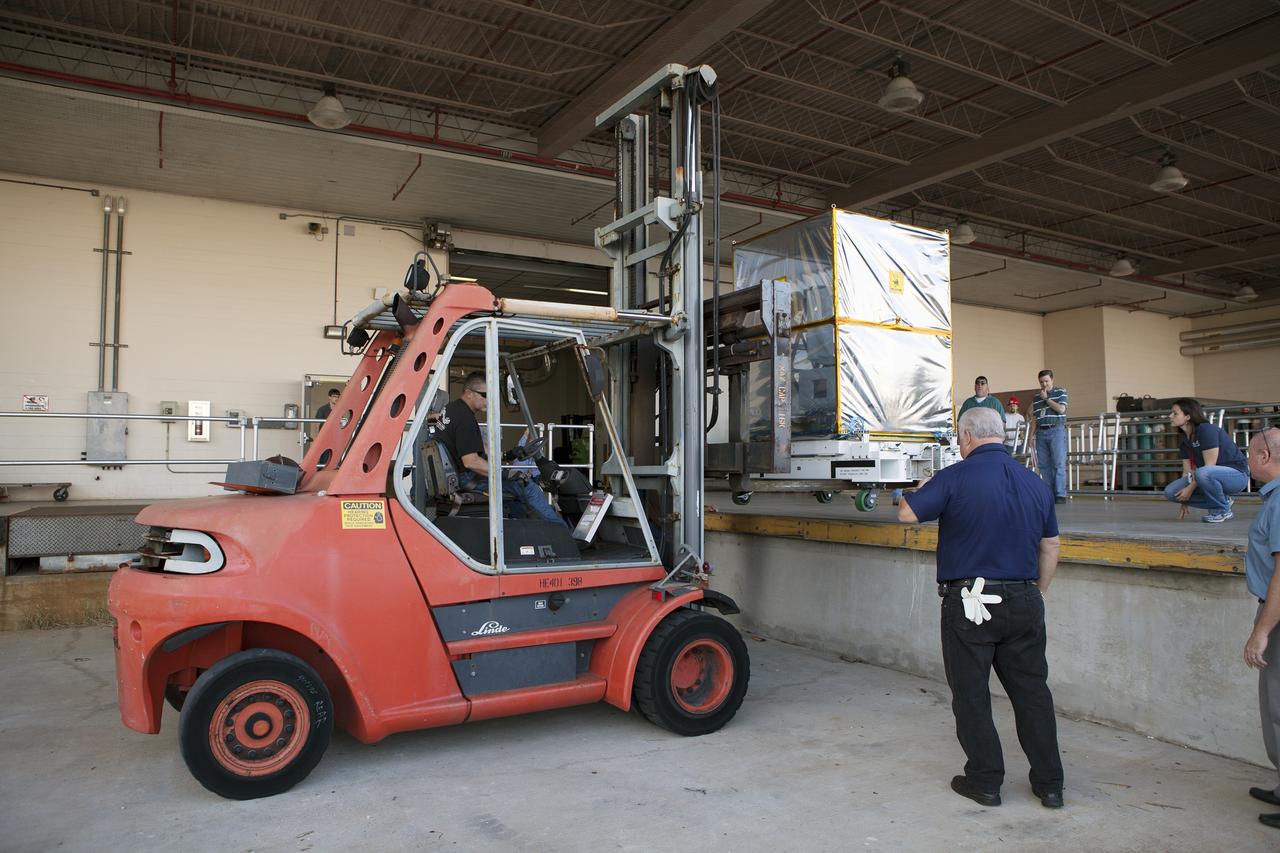
CAPE CANAVERAL, Fla. – A component of NASA's International Space Station-RapidScat scatterometer instrument is moved via forklift into the Space Station Processing Facility at Kennedy Space Center in Florida. ISS-RapidScat is the first scientific Earth-observing instrument designed to operate from the exterior of the space station. It will measure Earth's ocean surface wind speed and direction, providing data to be used in weather and marine forecasting. Built at NASA's Jet Propulsion Laboratory, ISS-RapidScat is slated to fly on the SpaceX-4 commercial cargo resupply flight in 2014. For more information, visit http://www.jpl.nasa.gov/missions/iss-rapidscat. Photo credit: NASA/Dimitri Gerondidakis
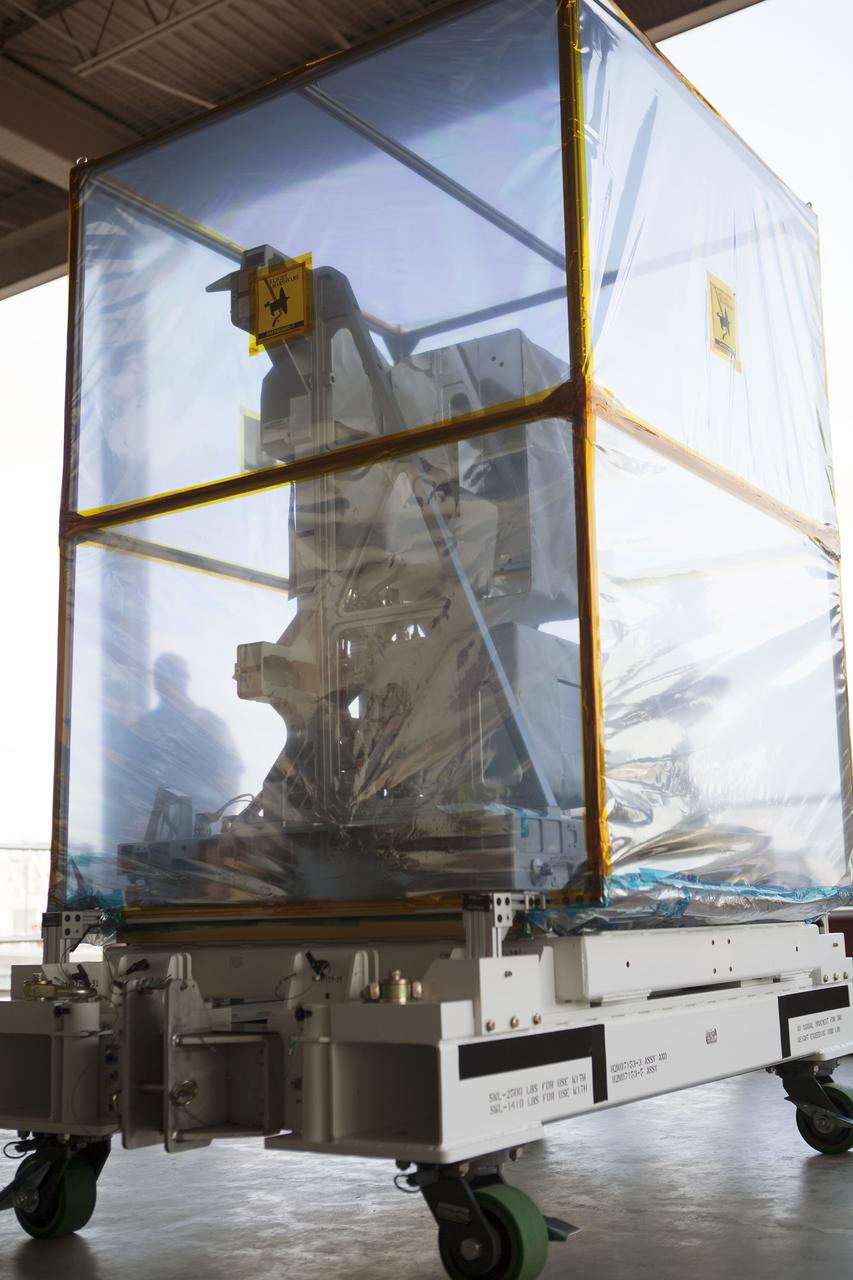
CAPE CANAVERAL, Fla. – A component of NASA's International Space Station-RapidScat scatterometer instrument is moved via forklift into the Space Station Processing Facility at Kennedy Space Center in Florida. ISS-RapidScat is the first scientific Earth-observing instrument designed to operate from the exterior of the space station. It will measure Earth's ocean surface wind speed and direction, providing data to be used in weather and marine forecasting. Built at NASA's Jet Propulsion Laboratory, ISS-RapidScat is slated to fly on the SpaceX-4 commercial cargo resupply flight in 2014. For more information, visit http://www.jpl.nasa.gov/missions/iss-rapidscat. Photo credit: NASA/Dimitri Gerondidakis

CAPE CANAVERAL, Fla. – Part of NASA's International Space Station-RapidScat scatterometer instrument is visible inside its protective enclosure as it arrives at the Space Station Processing Facility at Kennedy Space Center in Florida. ISS-RapidScat is the first scientific Earth-observing instrument designed to operate from the exterior of the space station. It will measure Earth's ocean surface wind speed and direction, providing data to be used in weather and marine forecasting. Built at NASA's Jet Propulsion Laboratory, ISS-RapidScat is slated to fly on the SpaceX-4 commercial cargo resupply flight in 2014. For more information, visit http://www.jpl.nasa.gov/missions/iss-rapidscat. Photo credit: NASA/Dimitri Gerondidakis
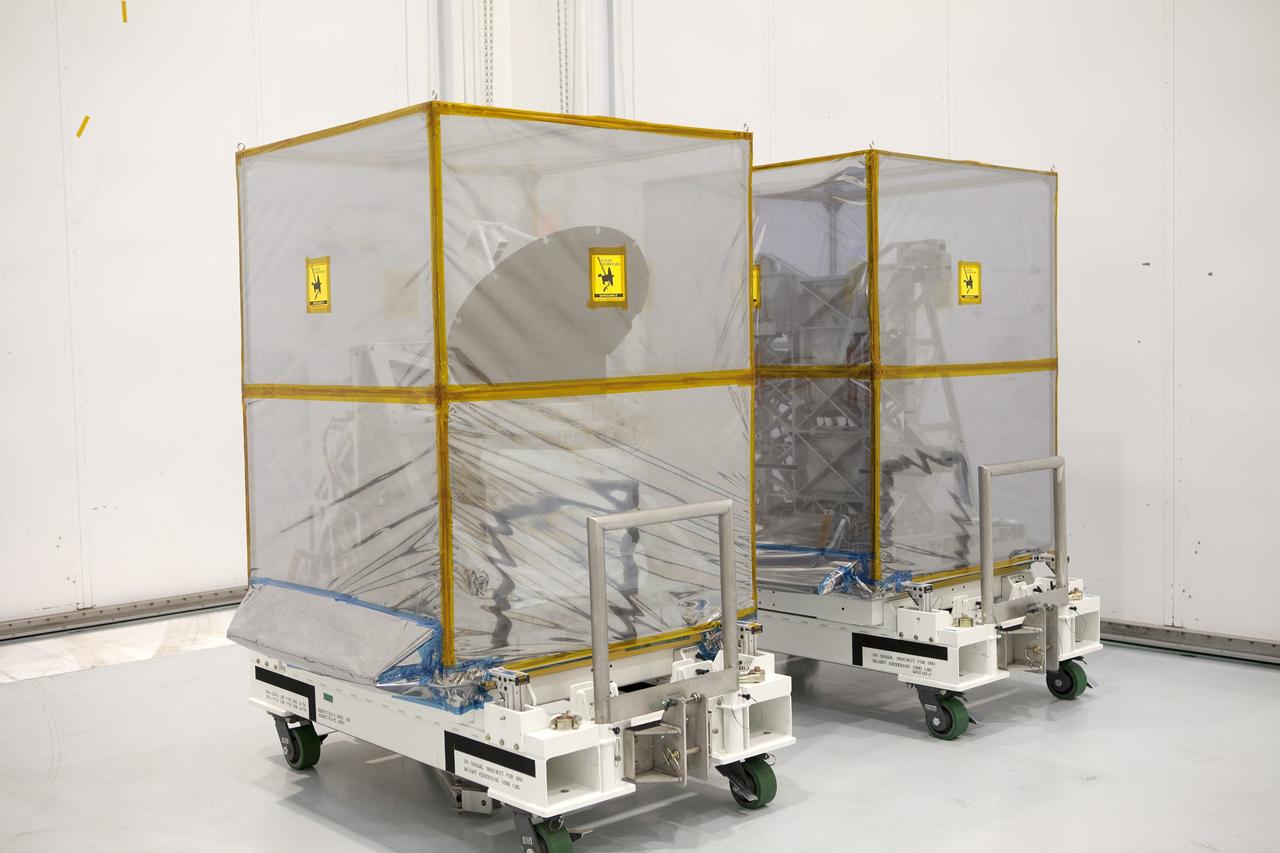
CAPE CANAVERAL, Fla. – The components of NASA's International Space Station-RapidScat scatterometer instrument await processing inside Kennedy Space Center's Space Station Processing Facility. ISS-RapidScat is the first scientific Earth-observing instrument designed to operate from the exterior of the space station. It will measure Earth's ocean surface wind speed and direction, providing data to be used in weather and marine forecasting. Built at NASA's Jet Propulsion Laboratory, ISS-RapidScat is slated to fly on the SpaceX-4 commercial cargo resupply flight in 2014. For more information, visit http://www.jpl.nasa.gov/missions/iss-rapidscat. Photo credit: NASA/Dimitri Gerondidakis
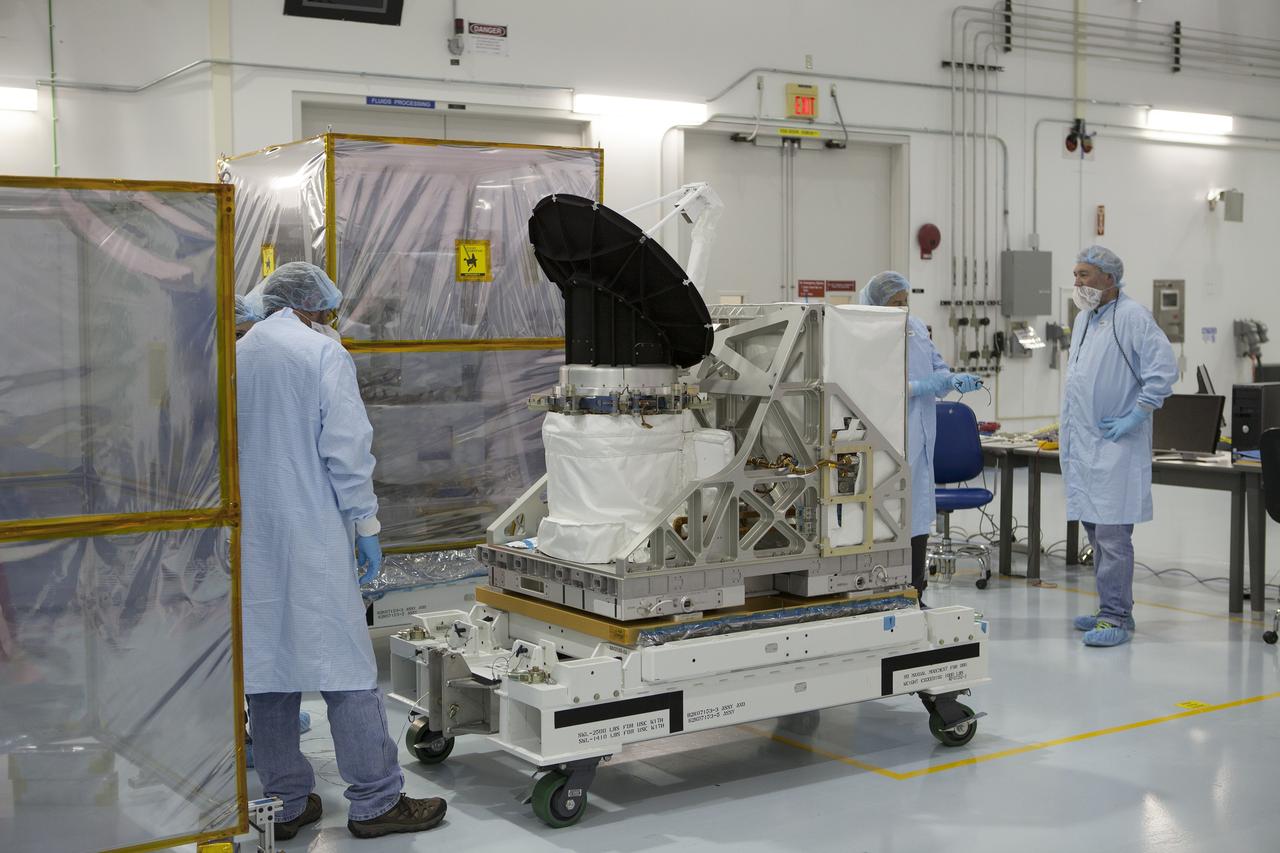
CAPE CANAVERAL, Fla. – Part of NASA's International Space Station-RapidScat scatterometer instrument is revealed after removal of its shipping container inside Kennedy Space Center's Space Station Processing Facility. ISS-RapidScat is the first scientific Earth-observing instrument designed to operate from the exterior of the space station. It will measure Earth's ocean surface wind speed and direction, providing data to be used in weather and marine forecasting. Built at NASA's Jet Propulsion Laboratory, ISS-RapidScat is slated to fly on the SpaceX-4 commercial cargo resupply flight in 2014. For more information, visit http://www.jpl.nasa.gov/missions/iss-rapidscat. Photo credit: NASA/Dimitri Gerondidakis
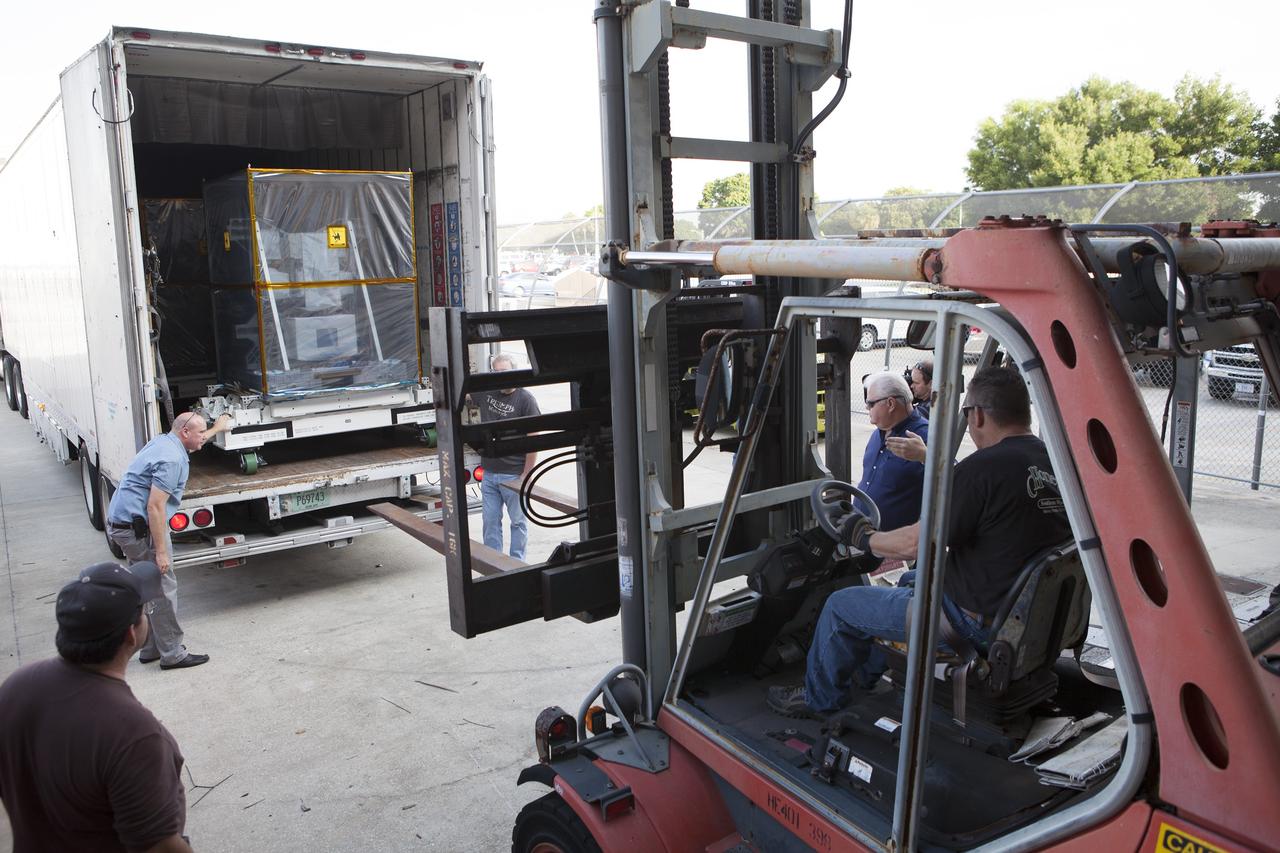
CAPE CANAVERAL, Fla. – NASA's International Space Station-RapidScat scatterometer instrument waits to be removed from the truck that delivered it to the Space Station Processing Facility at Kennedy Space Center in Florida. ISS-RapidScat is the first scientific Earth-observing instrument designed to operate from the exterior of the space station. It will measure Earth's ocean surface wind speed and direction, providing data to be used in weather and marine forecasting. Built at NASA's Jet Propulsion Laboratory, ISS-RapidScat is slated to fly on the SpaceX-4 commercial cargo resupply flight in 2014. For more information, visit http://www.jpl.nasa.gov/missions/iss-rapidscat. Photo credit: NASA/Dimitri Gerondidakis

CAPE CANAVERAL, Fla. – A component of NASA's International Space Station-RapidScat scatterometer instrument is removed from the truck that delivered it to the Space Station Processing Facility at Kennedy Space Center in Florida. ISS-RapidScat is the first scientific Earth-observing instrument designed to operate from the exterior of the space station. It will measure Earth's ocean surface wind speed and direction, providing data to be used in weather and marine forecasting. Built at NASA's Jet Propulsion Laboratory, ISS-RapidScat is slated to fly on the SpaceX-4 commercial cargo resupply flight in 2014. For more information, visit http://www.jpl.nasa.gov/missions/iss-rapidscat. Photo credit: NASA/Dimitri Gerondidakis
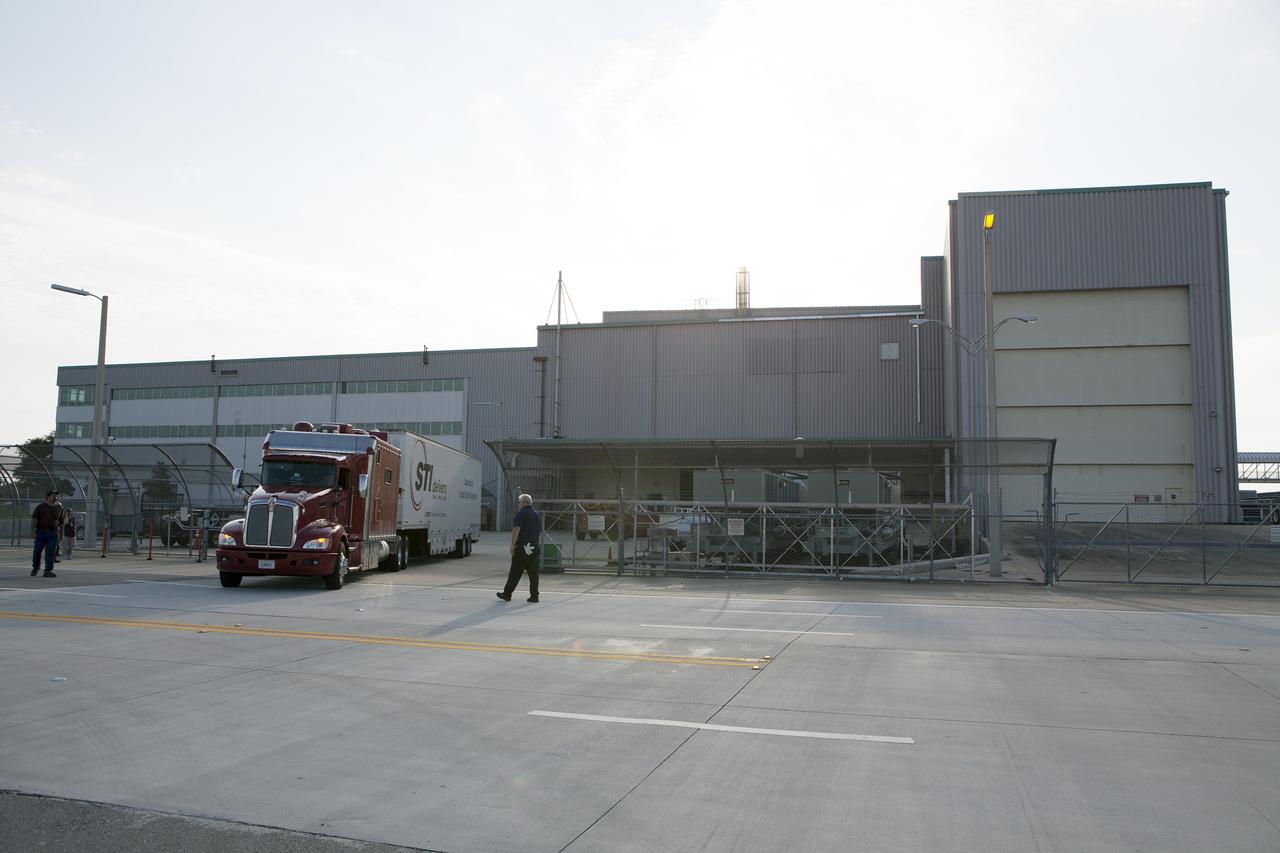
CAPE CANAVERAL, Fla. – A truck carrying NASA's International Space Station-RapidScat scatterometer instrument arrives outside the Space Station Processing Facility at Kennedy Space Center in Florida. ISS-RapidScat is the first scientific Earth-observing instrument designed to operate from the exterior of the space station. It will measure Earth's ocean surface wind speed and direction, providing data to be used in weather and marine forecasting. Built at NASA's Jet Propulsion Laboratory, ISS-RapidScat is slated to fly on the SpaceX-4 commercial cargo resupply flight in 2014. For more information, visit http://www.jpl.nasa.gov/missions/iss-rapidscat. Photo credit: NASA/Dimitri Gerondidakis
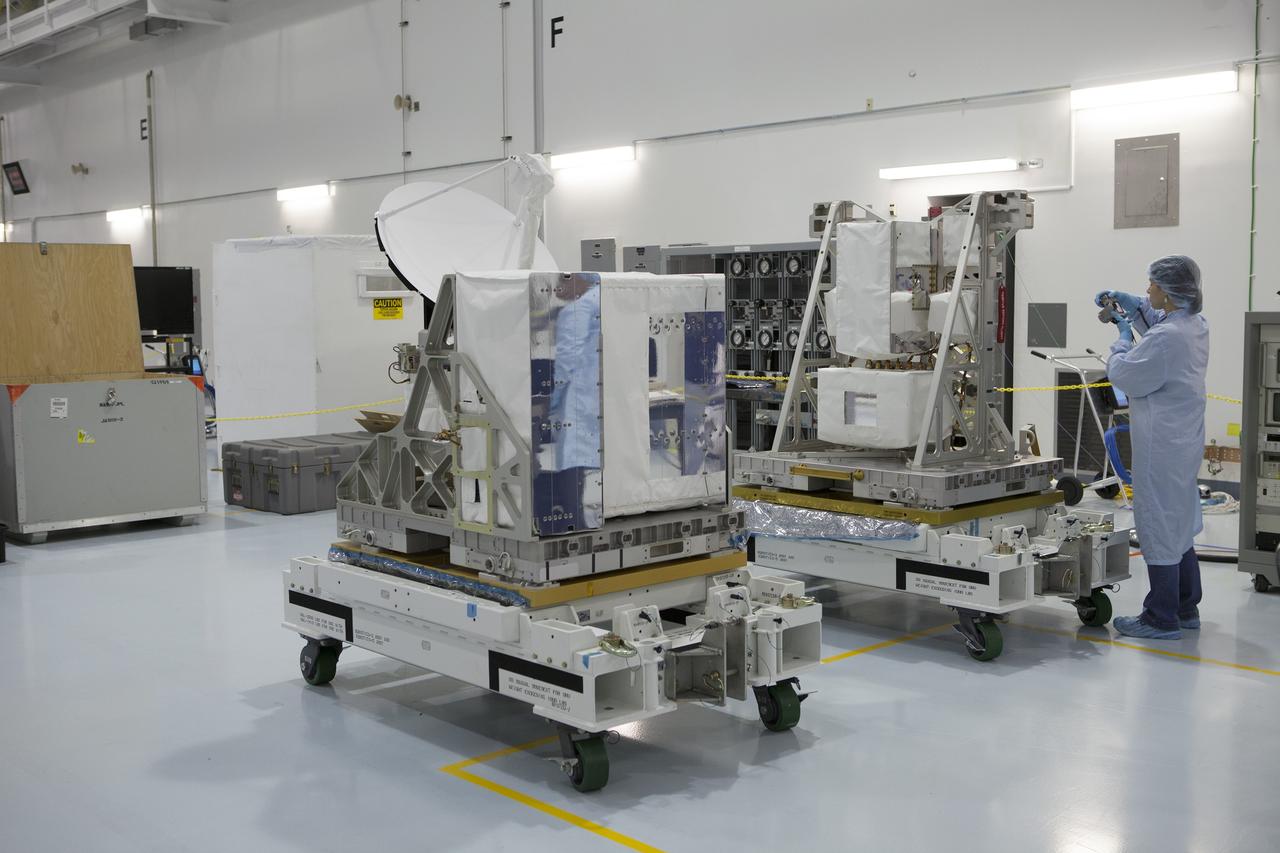
CAPE CANAVERAL, Fla. – NASA's International Space Station-RapidScat scatterometer instrument is revealed inside Kennedy Space Center's Space Station Processing Facility. ISS-RapidScat is the first scientific Earth-observing instrument designed to operate from the exterior of the space station. It will measure Earth's ocean surface wind speed and direction, providing data to be used in weather and marine forecasting. Built at NASA's Jet Propulsion Laboratory, ISS-RapidScat is slated to fly on the SpaceX-4 commercial cargo resupply flight in 2014. For more information, visit http://www.jpl.nasa.gov/missions/iss-rapidscat. Photo credit: NASA/Dimitri Gerondidakis
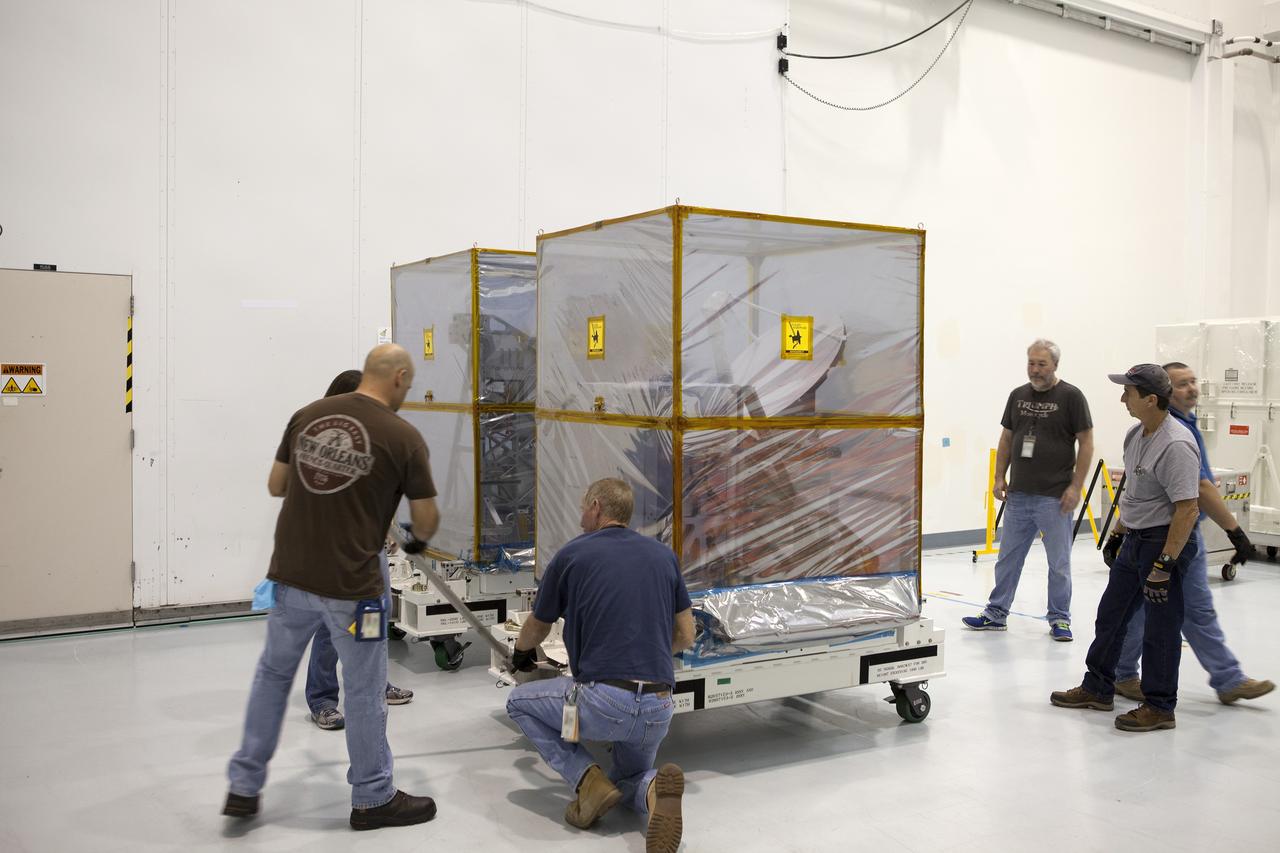
CAPE CANAVERAL, Fla. – The components of NASA's International Space Station-RapidScat scatterometer instrument are moved into a laboratory inside Kennedy Space Center's Space Station Processing Facility. ISS-RapidScat is the first scientific Earth-observing instrument designed to operate from the exterior of the space station. It will measure Earth's ocean surface wind speed and direction, providing data to be used in weather and marine forecasting. Built at NASA's Jet Propulsion Laboratory, ISS-RapidScat is slated to fly on the SpaceX-4 commercial cargo resupply flight in 2014. For more information, visit http://www.jpl.nasa.gov/missions/iss-rapidscat. Photo credit: NASA/Dimitri Gerondidakis

CAPE CANAVERAL, Fla. – The components of NASA's International Space Station-RapidScat scatterometer instrument rest side by side after removal of their shipping cover inside Kennedy Space Center's Space Station Processing Facility. ISS-RapidScat is the first scientific Earth-observing instrument designed to operate from the exterior of the space station. It will measure Earth's ocean surface wind speed and direction, providing data to be used in weather and marine forecasting. Built at NASA's Jet Propulsion Laboratory, ISS-RapidScat is slated to fly on the SpaceX-4 commercial cargo resupply flight in 2014. For more information, visit http://www.jpl.nasa.gov/missions/iss-rapidscat. Photo credit: NASA/Dimitri Gerondidakis
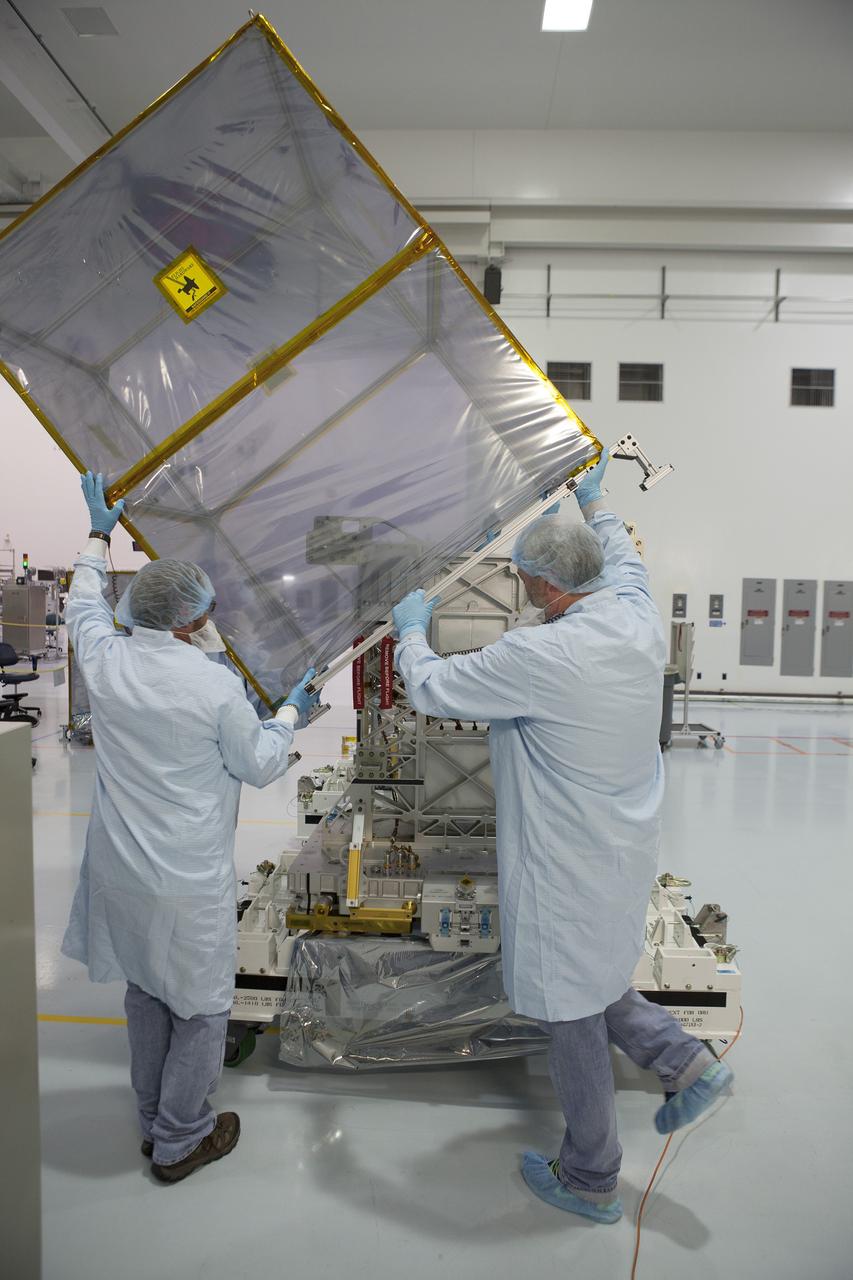
CAPE CANAVERAL, Fla. – Payload technicians and Jet Propulsion Laboratory personnel carefully remove the shipping cover from one of the components of NASA's International Space Station-RapidScat scatterometer instrument inside Kennedy Space Center's Space Station Processing Facility. ISS-RapidScat is the first scientific Earth-observing instrument designed to operate from the exterior of the space station. It will measure Earth's ocean surface wind speed and direction, providing data to be used in weather and marine forecasting. Built at NASA's Jet Propulsion Laboratory, ISS-RapidScat is slated to fly on the SpaceX-4 commercial cargo resupply flight in 2014. For more information, visit http://www.jpl.nasa.gov/missions/iss-rapidscat. Photo credit: NASA/Dimitri Gerondidakis

CAPE CANAVERAL, Fla. – Payload technicians and Jet Propulsion Laboratory personnel prepare to remove shipping covers from NASA's International Space Station-RapidScat scatterometer instrument components following the hardware's arrival at Kennedy Space Center's Space Station Processing Facility. ISS-RapidScat is the first scientific Earth-observing instrument designed to operate from the exterior of the space station. It will measure Earth's ocean surface wind speed and direction, providing data to be used in weather and marine forecasting. Built at NASA's Jet Propulsion Laboratory, ISS-RapidScat is slated to fly on the SpaceX-4 commercial cargo resupply flight in 2014. For more information, visit http://www.jpl.nasa.gov/missions/iss-rapidscat. Photo credit: NASA/Dimitri Gerondidakis
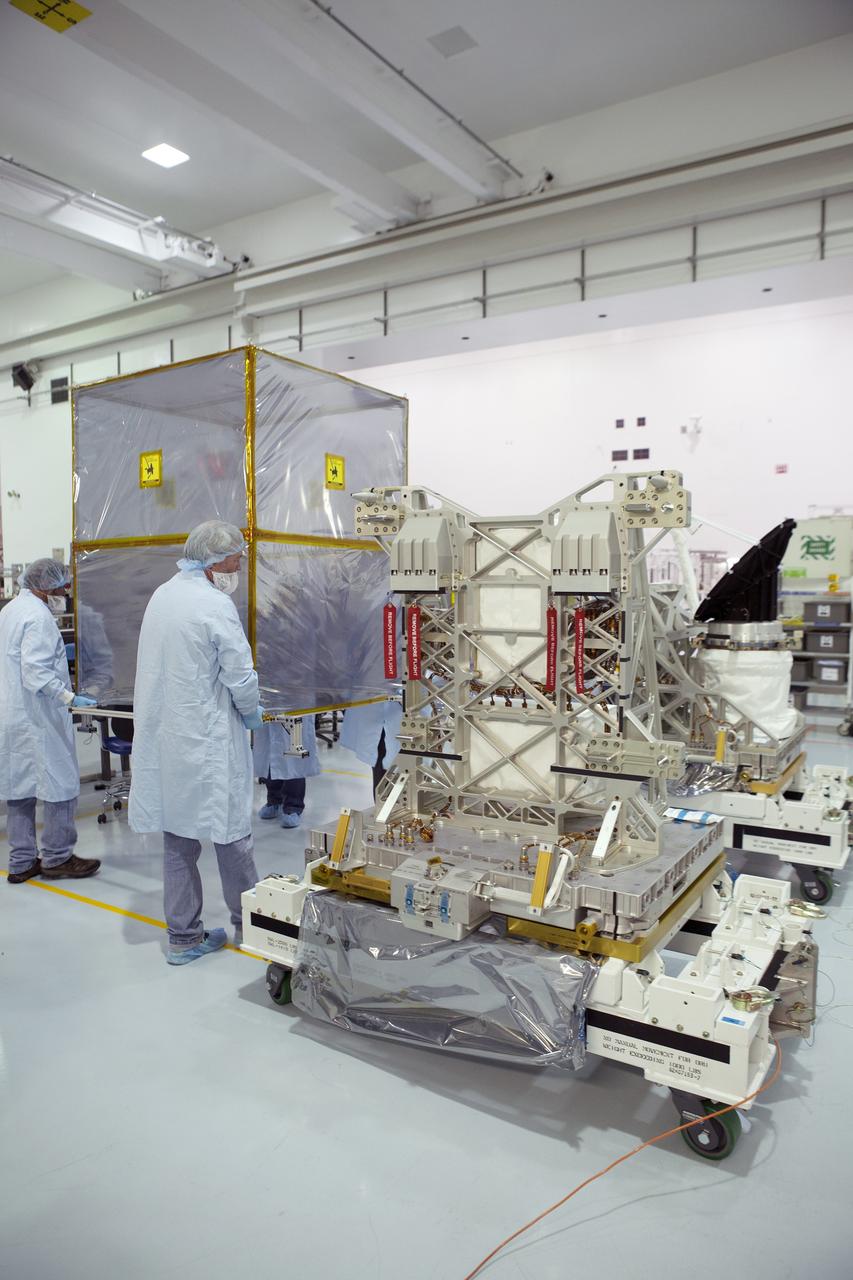
CAPE CANAVERAL, Fla. – Payload technicians and Jet Propulsion Laboratory personnel set aside a shipping cover after removing it from NASA's International Space Station-RapidScat scatterometer instrument inside Kennedy Space Center's Space Station Processing Facility. ISS-RapidScat is the first scientific Earth-observing instrument designed to operate from the exterior of the space station. It will measure Earth's ocean surface wind speed and direction, providing data to be used in weather and marine forecasting. Built at NASA's Jet Propulsion Laboratory, ISS-RapidScat is slated to fly on the SpaceX-4 commercial cargo resupply flight in 2014. For more information, visit http://www.jpl.nasa.gov/missions/iss-rapidscat. Photo credit: NASA/Dimitri Gerondidakis
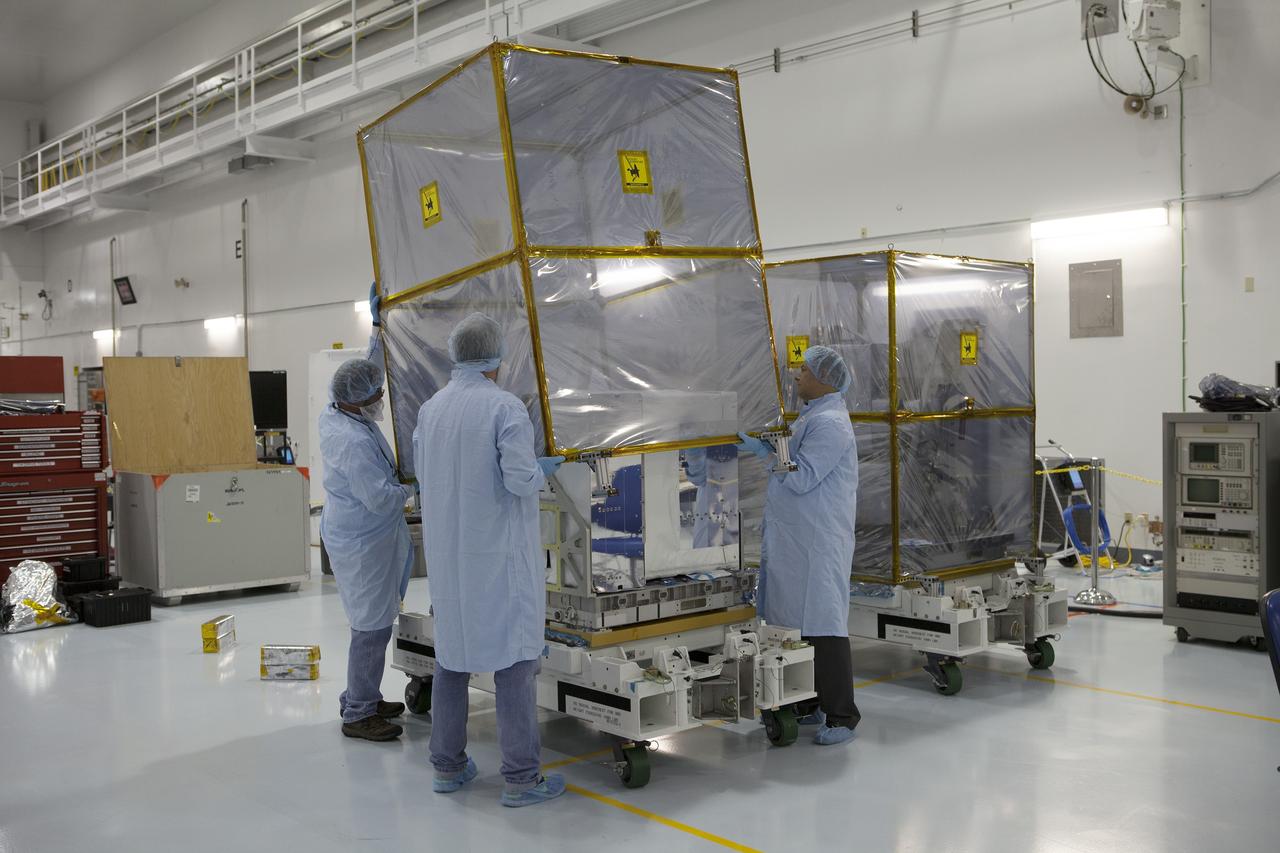
CAPE CANAVERAL, Fla. – Payload technicians and Jet Propulsion Laboratory personnel carefully remove the shipping cover from one of the components of NASA's International Space Station-RapidScat scatterometer instrument inside Kennedy Space Center's Space Station Processing Facility. ISS-RapidScat is the first scientific Earth-observing instrument designed to operate from the exterior of the space station. It will measure Earth's ocean surface wind speed and direction, providing data to be used in weather and marine forecasting. Built at NASA's Jet Propulsion Laboratory, ISS-RapidScat is slated to fly on the SpaceX-4 commercial cargo resupply flight in 2014. For more information, visit http://www.jpl.nasa.gov/missions/iss-rapidscat. Photo credit: NASA/Dimitri Gerondidakis
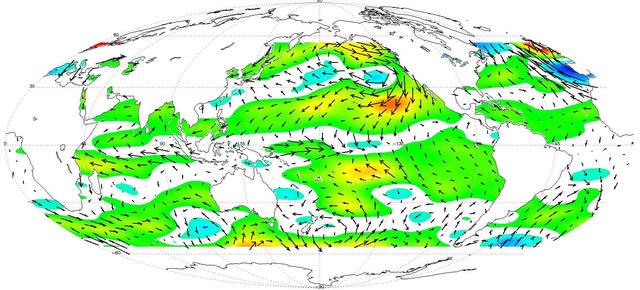
While El Niño events have a significant impact on the entire Earth System, they are most easily visible in measurements of sea surface temperature (SST), sea surface height (SSH) and ocean winds near the surface. In fact, the precursor and the main driver of El Niño events is manifested in the weakening of the normally westward blowing trade winds, or even their complete reversal to blow from west to east, in the Western and Central tropical Pacific. http://photojournal.jpl.nasa.gov/catalog/PIA20365
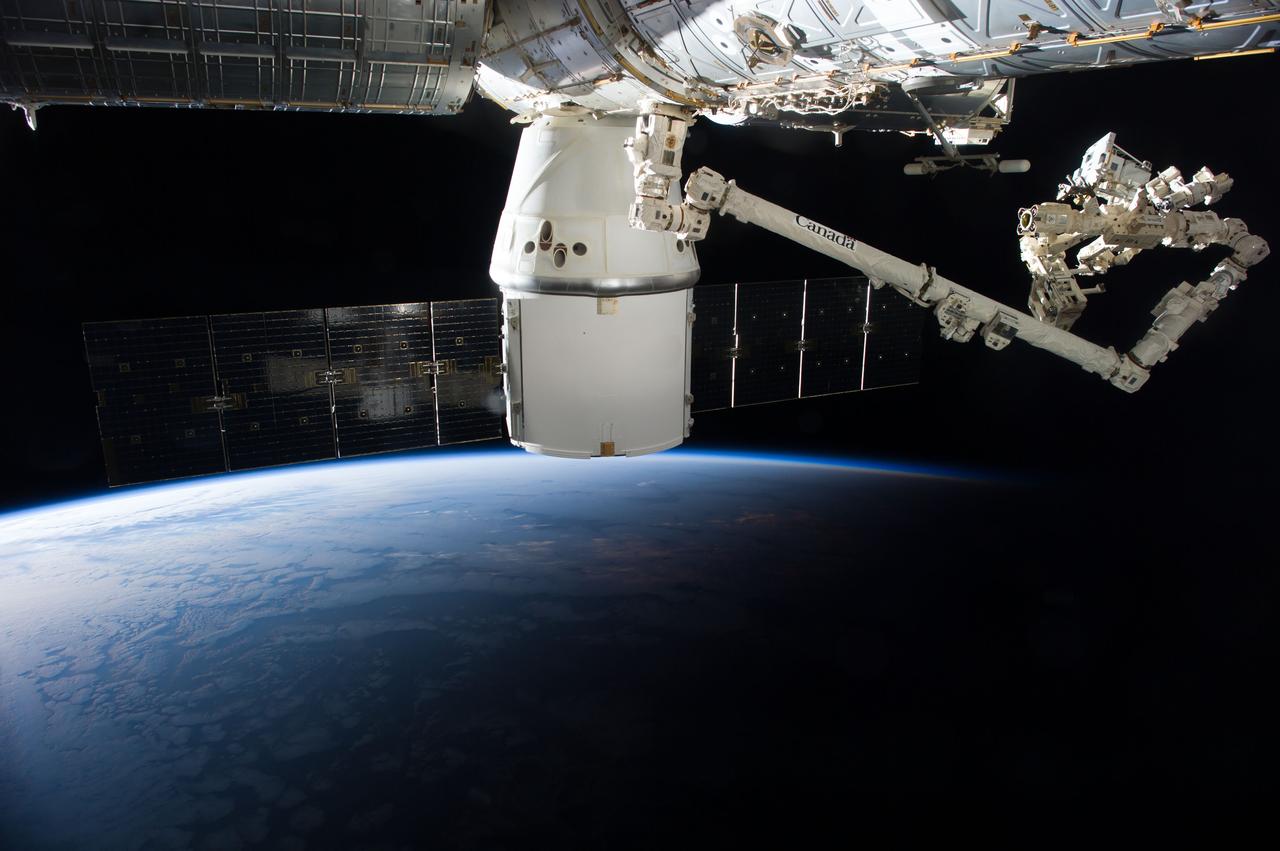
iss041e047260 (9/29/2014) --- A view of the removal of the RapidScat Nadir Adapter from the SpaceX-4 Dragon trunk and installation of the adapter onto the Columbus Exposed Facility Unit (EFU). ISS-RapidScat is a space-based scatterometer that replaces the inoperable SeaWinds payload aboard the QuickSCAT satellite. Scatterometers are radar instruments that measure wind speed and direction over the ocean, and are useful for weather forecasting, hurricane monitoring, and observations of large-scale climate phenomena such as El Niño. The ISS RapidScat instrument enhances measurements from other international scatterometers by cross-checking their data, and demonstrates a unique way to replace an instrument aboard an aging satellite. External Caption
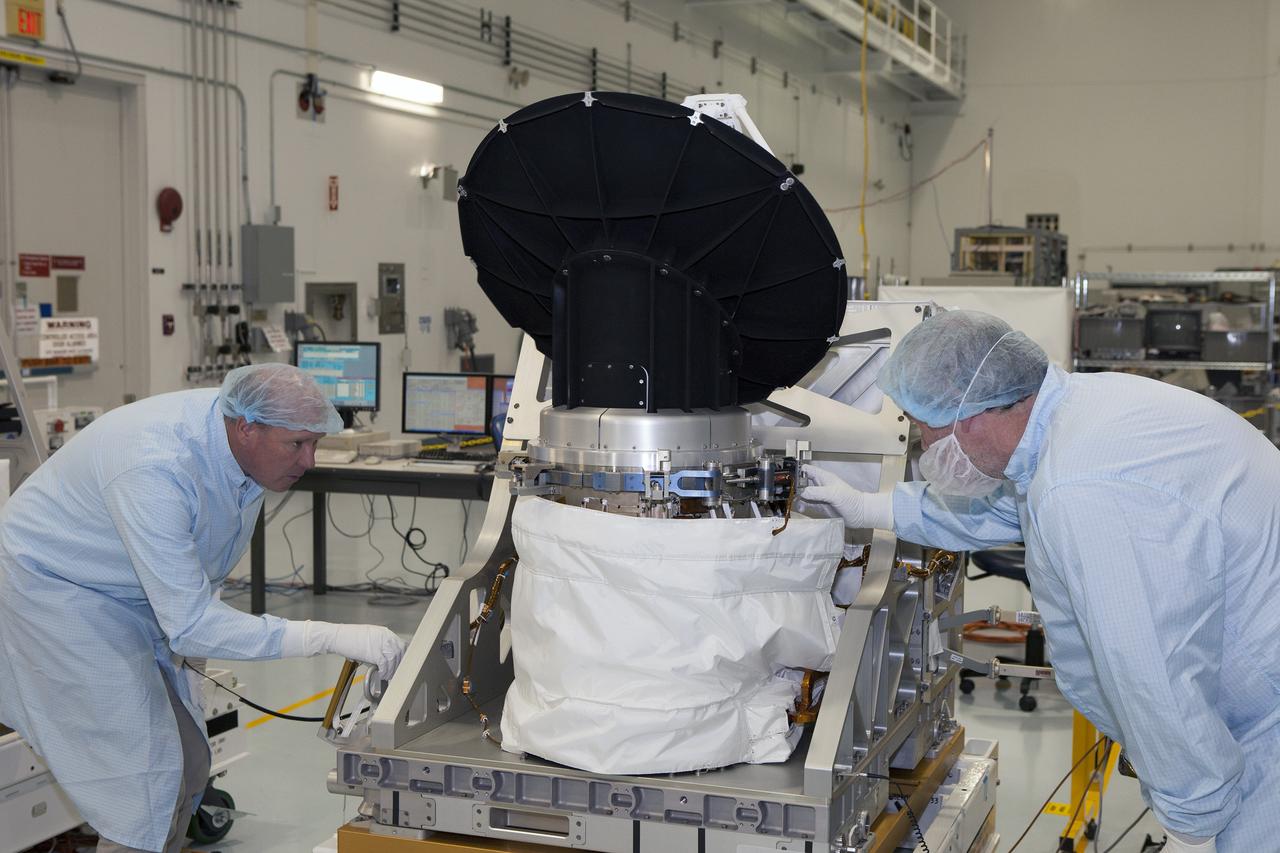
CAPE CANAVERAL, Fla. – The rotating radar antenna on NASA's International Space Station-RapidScat undergoes preflight testing in the Space Station Processing Facility at NASA's Kennedy Space Center in Florida by visiting personnel from NASA's Jet Propulsion Laboratory in California. From left are RapidScat project manager John Wirth and JPL flight technician Kieran McKay. Built at JPL, the radar scatterometer is the first scientific Earth-observing instrument designed to operate from the exterior of the space station. It will measure Earth's ocean surface wind speed and direction, providing data to be used in weather and marine forecasting. ISS-RapidScat will be delivered to the station on the SpaceX-4 commercial cargo resupply flight targeted for August 2014. For more information, visit http://www.jpl.nasa.gov/missions/iss-rapidscat. Photo credit: NASA/Daniel Casper
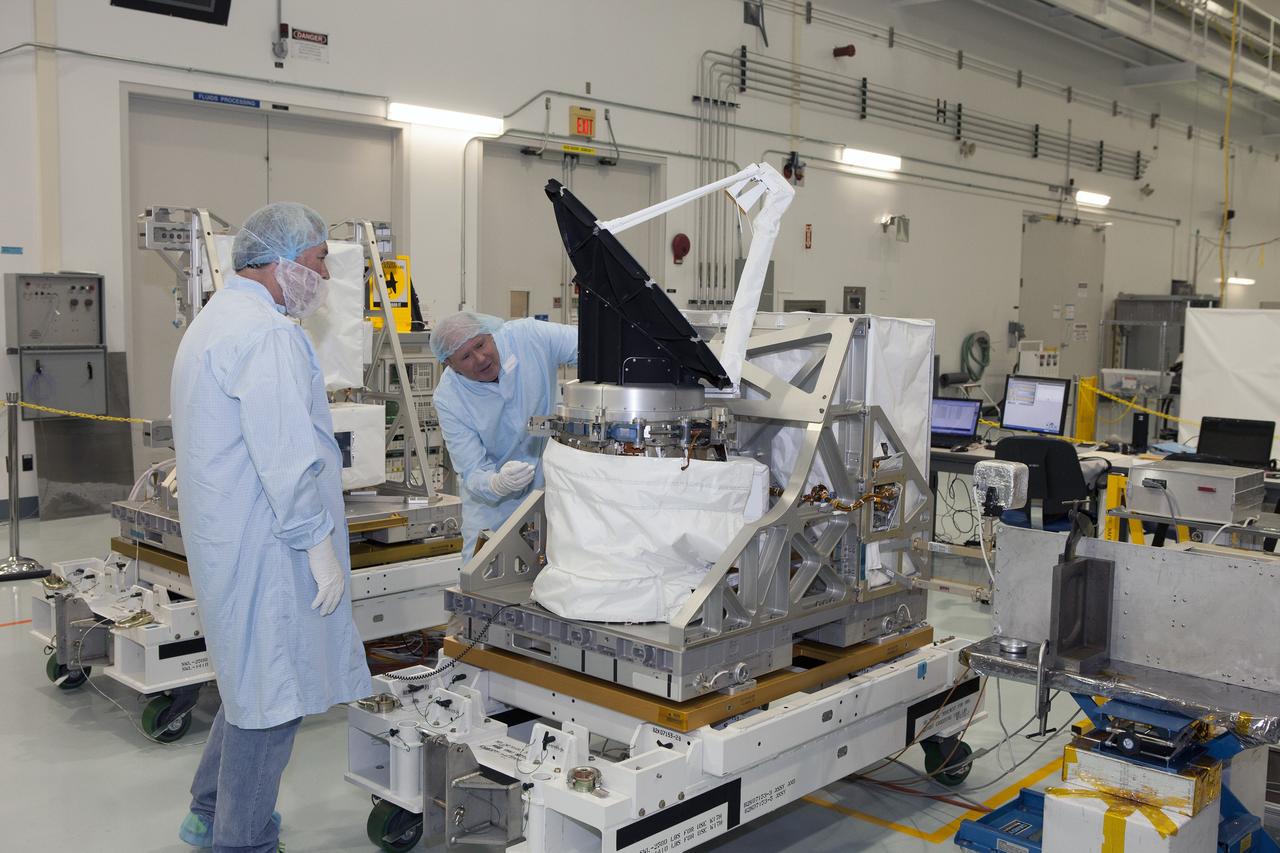
CAPE CANAVERAL, Fla. – Personnel from NASA's Jet Propulsion Laboratory JPL in California oversee testing of the rotating radar antenna on NASA's International Space Station-RapidScat in the Space Station Processing Facility at NASA's Kennedy Space Center in Florida. From left are JPL flight technician Kieran McKay and RapidScat project manager John Wirth. Built at JPL, the radar scatterometer is the first scientific Earth-observing instrument designed to operate from the exterior of the space station. It will measure Earth's ocean surface wind speed and direction, providing data to be used in weather and marine forecasting. ISS-RapidScat will be delivered to the station on the SpaceX-4 commercial cargo resupply flight targeted for August 2014. For more information, visit http://www.jpl.nasa.gov/missions/iss-rapidscat. Photo credit: NASA/Daniel Casper
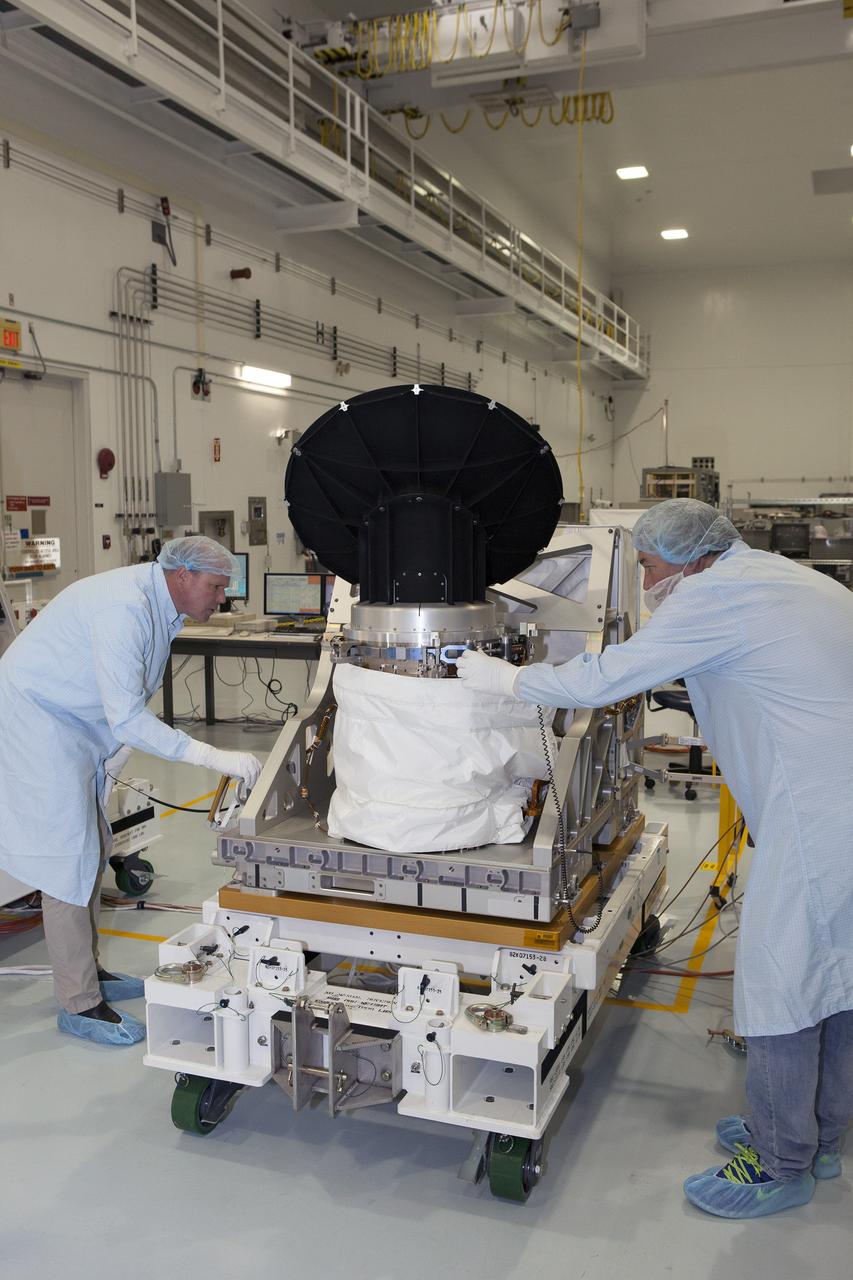
CAPE CANAVERAL, Fla. – Personnel from NASA's Jet Propulsion Laboratory JPL in California check the instruments on NASA's International Space Station-RapidScat during testing of its rotating radar antenna in the Space Station Processing Facility at NASA's Kennedy Space Center in Florida. From left are RapidScat project manager John Wirth and JPL flight technician Kieran McKay. Built at JPL, the radar scatterometer is the first scientific Earth-observing instrument designed to operate from the exterior of the space station. It will measure Earth's ocean surface wind speed and direction, providing data to be used in weather and marine forecasting. ISS-RapidScat will be delivered to the station on the SpaceX-4 commercial cargo resupply flight targeted for August 2014. For more information, visit http://www.jpl.nasa.gov/missions/iss-rapidscat. Photo credit: NASA/Daniel Casper
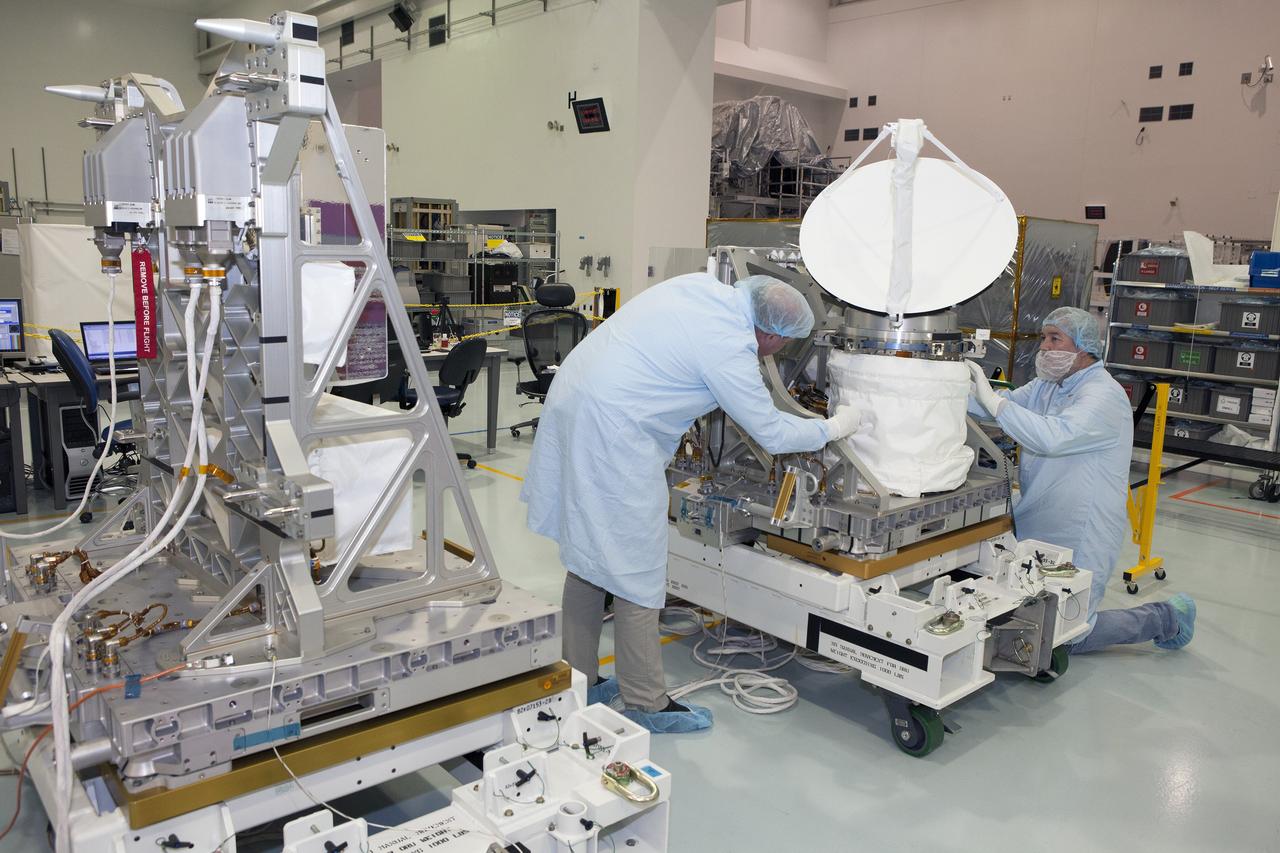
CAPE CANAVERAL, Fla. – Personnel from NASA's Jet Propulsion Laboratory JPL in California secure the protective cover around NASA's International Space Station-RapidScat during testing of its rotating radar antenna and its flight computer and airborne support equipment, at left, in the Space Station Processing Facility at NASA's Kennedy Space Center in Florida. From left are RapidScat project manager John Wirth and JPL flight technician Kieran McKay. Built at JPL, the radar scatterometer is the first scientific Earth-observing instrument designed to operate from the exterior of the space station. It will measure Earth's ocean surface wind speed and direction, providing data to be used in weather and marine forecasting. ISS-RapidScat will be delivered to the station on the SpaceX-4 commercial cargo resupply flight targeted for August 2014. For more information, visit http://www.jpl.nasa.gov/missions/iss-rapidscat. Photo credit: NASA/Daniel Casper
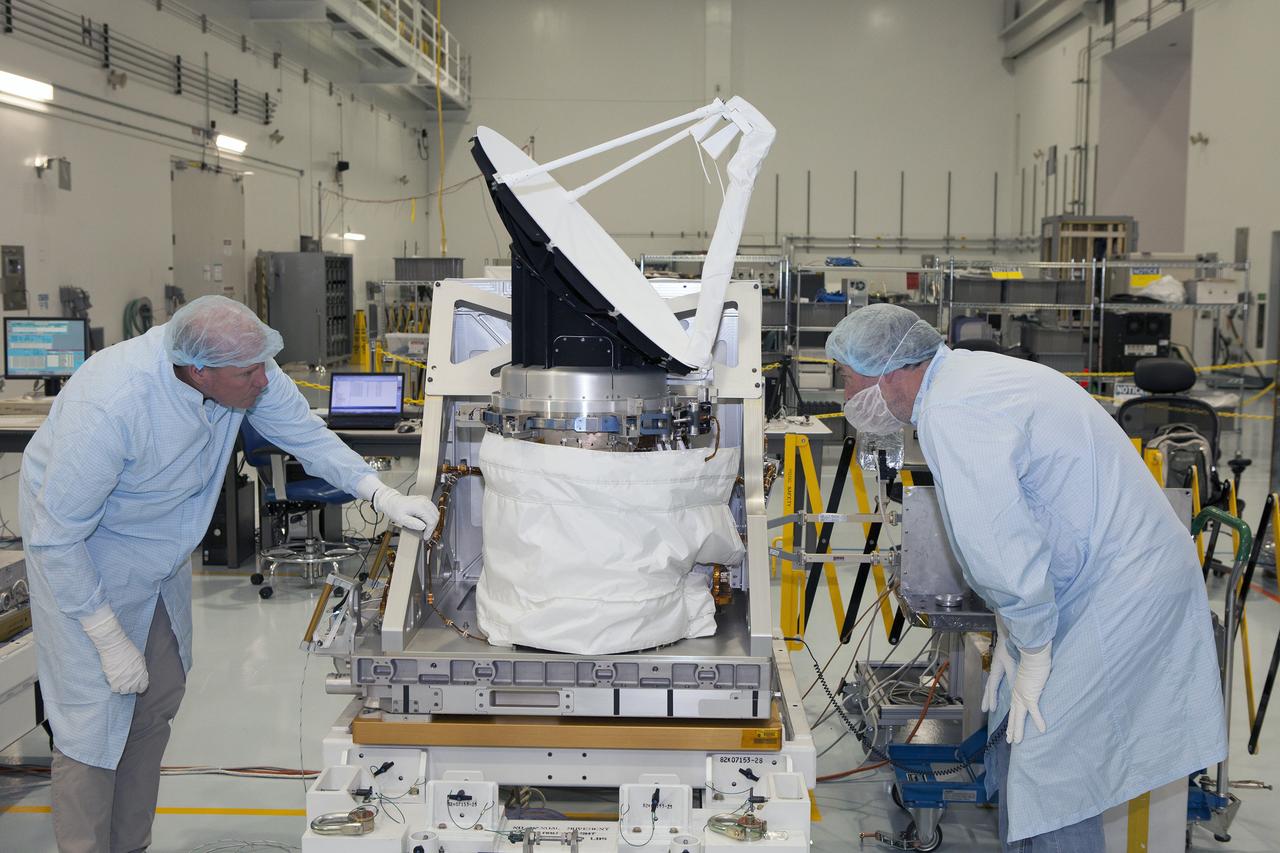
CAPE CANAVERAL, Fla. – Personnel from NASA's Jet Propulsion Laboratory JPL in California double-check instrument performance on NASA's International Space Station-RapidScat as testing of its rotating radar antenna is conducted in the Space Station Processing Facility at NASA's Kennedy Space Center in Florida. From left are RapidScat project manager John Wirth and JPL flight technician Kieran McKay. Built at JPL, the radar scatterometer is the first scientific Earth-observing instrument designed to operate from the exterior of the space station. It will measure Earth's ocean surface wind speed and direction, providing data to be used in weather and marine forecasting. ISS-RapidScat will be delivered to the station on the SpaceX-4 commercial cargo resupply flight targeted for August 2014. For more information, visit http://www.jpl.nasa.gov/missions/iss-rapidscat. Photo credit: NASA/Daniel Casper
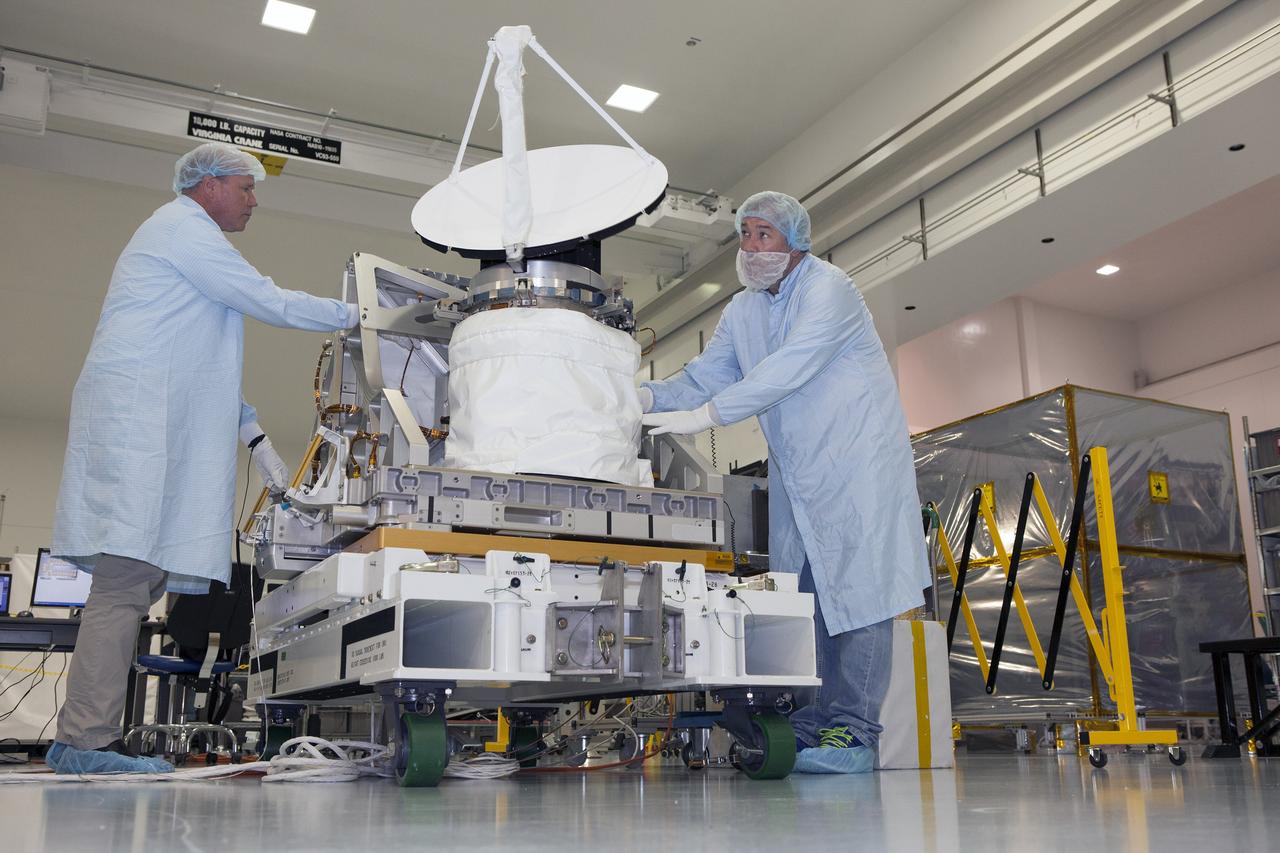
CAPE CANAVERAL, Fla. – Personnel from NASA's Jet Propulsion Laboratory JPL in California reposition NASA's International Space Station-RapidScat during testing of its rotating radar antenna in the Space Station Processing Facility at NASA's Kennedy Space Center in Florida. From left are RapidScat project manager John Wirth and JPL flight technician Kieran McKay. Built at JPL, the radar scatterometer is the first scientific Earth-observing instrument designed to operate from the exterior of the space station. It will measure Earth's ocean surface wind speed and direction, providing data to be used in weather and marine forecasting. ISS-RapidScat will be delivered to the station on the SpaceX-4 commercial cargo resupply flight targeted for August 2014. For more information, visit http://www.jpl.nasa.gov/missions/iss-rapidscat. Photo credit: NASA/Daniel Casper
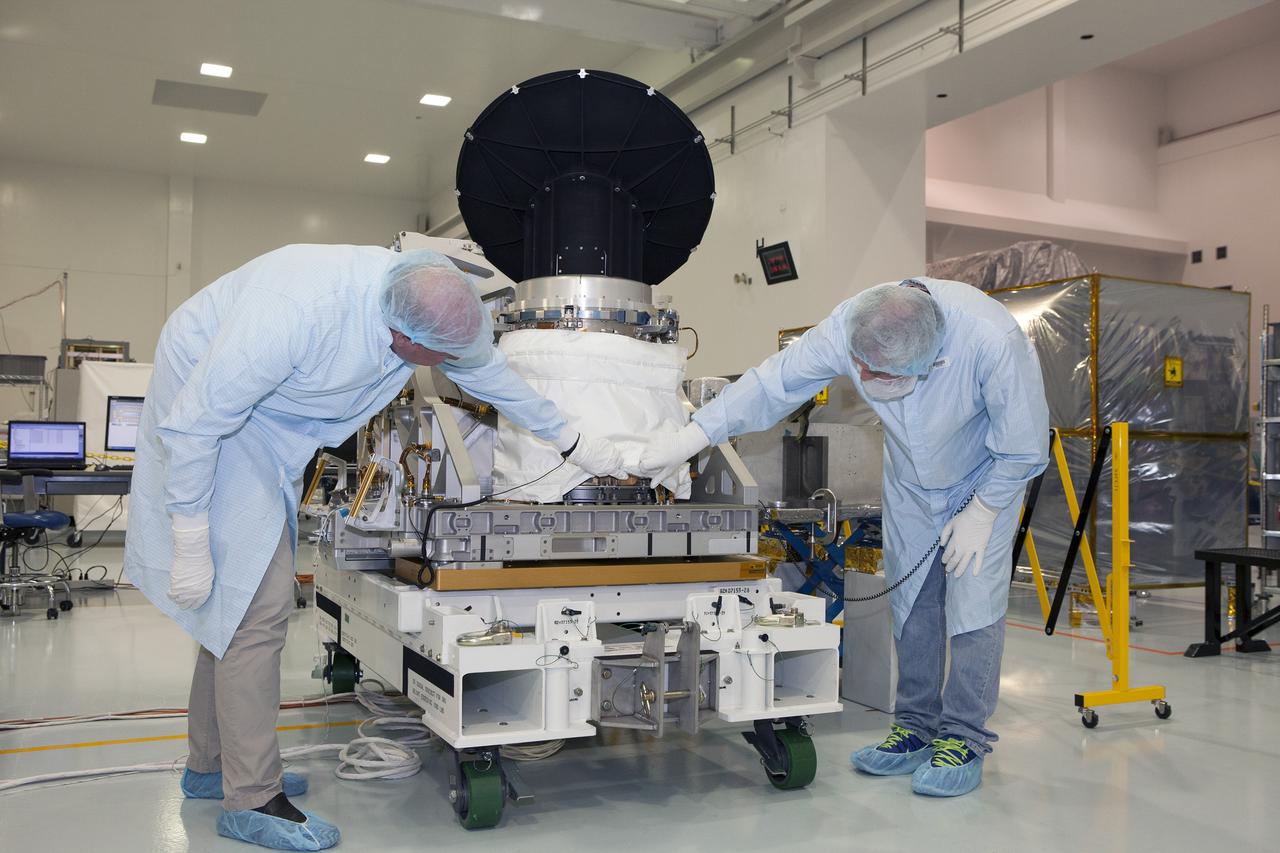
CAPE CANAVERAL, Fla. – Personnel from NASA's Jet Propulsion Laboratory JPL in California verify that NASA's International Space Station-RapidScat is performing properly during testing of its rotating radar antenna in the Space Station Processing Facility at NASA's Kennedy Space Center in Florida. From left are RapidScat project manager John Wirth and JPL flight technician Kieran McKay. Built at JPL, the radar scatterometer is the first scientific Earth-observing instrument designed to operate from the exterior of the space station. It will measure Earth's ocean surface wind speed and direction, providing data to be used in weather and marine forecasting. ISS-RapidScat will be delivered to the station on the SpaceX-4 commercial cargo resupply flight targeted for August 2014. For more information, visit http://www.jpl.nasa.gov/missions/iss-rapidscat. Photo credit: NASA/Daniel Casper
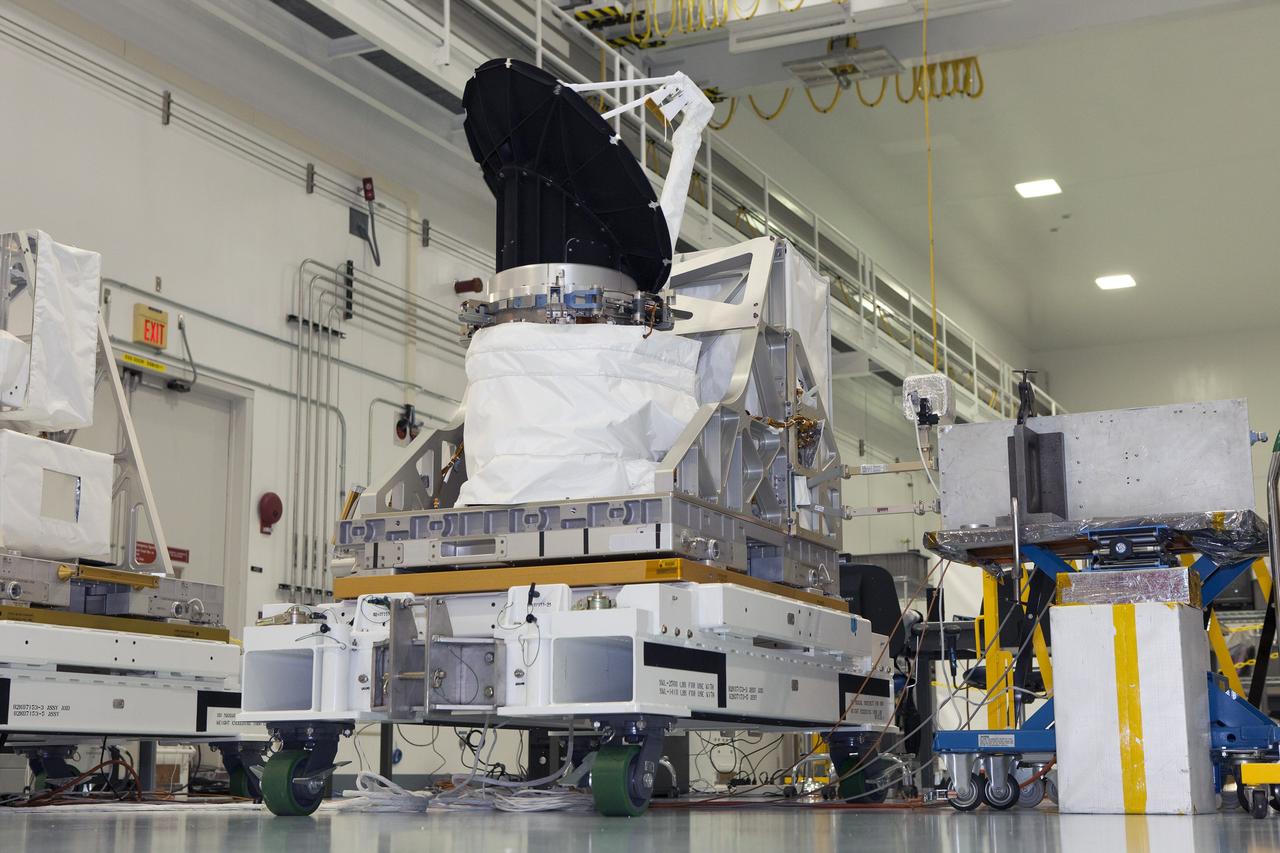
CAPE CANAVERAL, Fla. – NASA's International Space Station-RapidScat undergoes testing of its rotating radar antenna in the Space Station Processing Facility at NASA's Kennedy Space Center in Florida. Built at NASA's Jet Propulsion Laboratory JPL in California, the radar scatterometer is the first scientific Earth-observing instrument designed to operate from the exterior of the space station. It will measure Earth's ocean surface wind speed and direction, providing data to be used in weather and marine forecasting. ISS-RapidScat will be delivered to the station on the SpaceX-4 commercial cargo resupply flight targeted for August 2014. For more information, visit http://www.jpl.nasa.gov/missions/iss-rapidscat. Photo credit: NASA/Daniel Casper
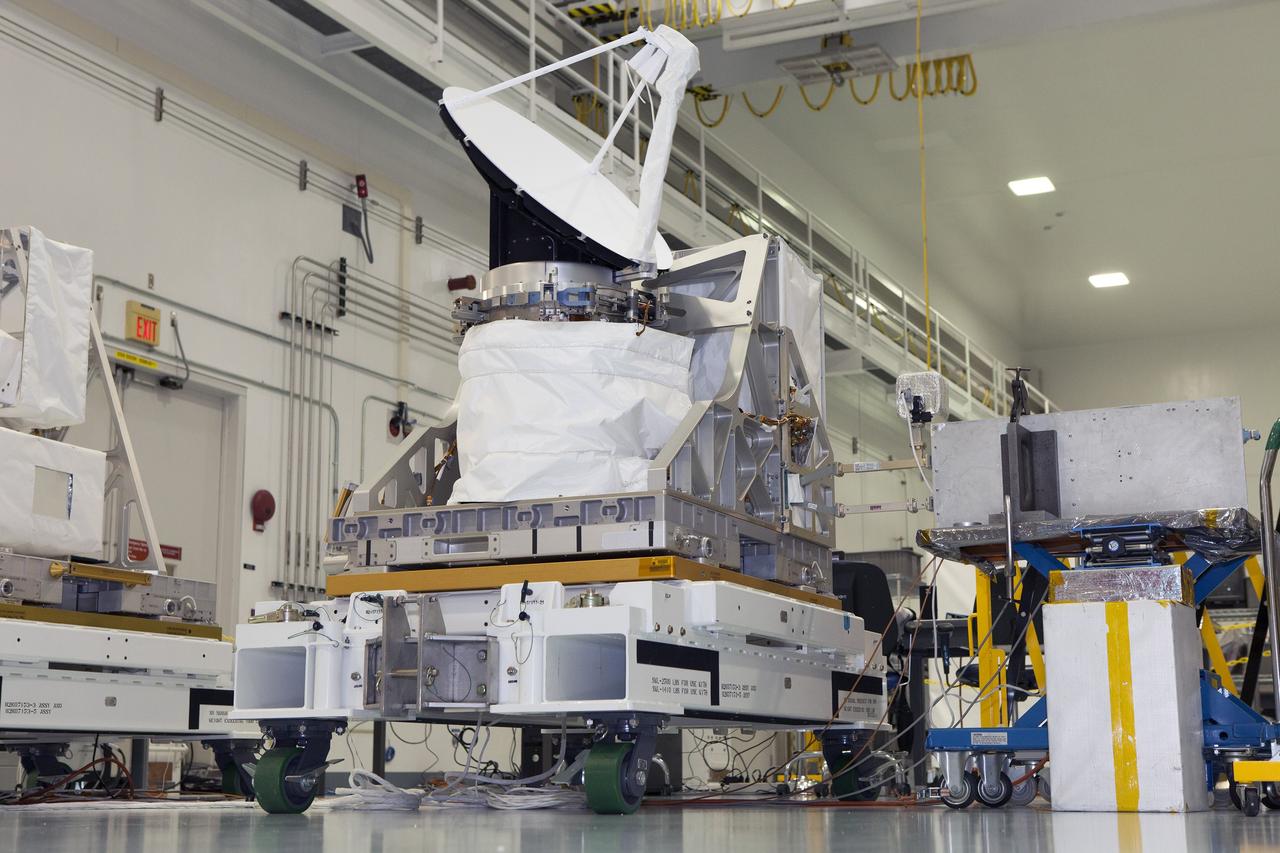
CAPE CANAVERAL, Fla. – Testing of the rotating radar antenna on NASA's International Space Station-RapidScat concludes in the Space Station Processing Facility at NASA's Kennedy Space Center in Florida. Built at NASA's Jet Propulsion Laboratory JPL in California, the radar scatterometer is the first scientific Earth-observing instrument designed to operate from the exterior of the space station. It will measure Earth's ocean surface wind speed and direction, providing data to be used in weather and marine forecasting. ISS-RapidScat will be delivered to the station on the SpaceX-4 commercial cargo resupply flight targeted for August 2014. For more information, visit http://www.jpl.nasa.gov/missions/iss-rapidscat. Photo credit: NASA/Daniel Casper
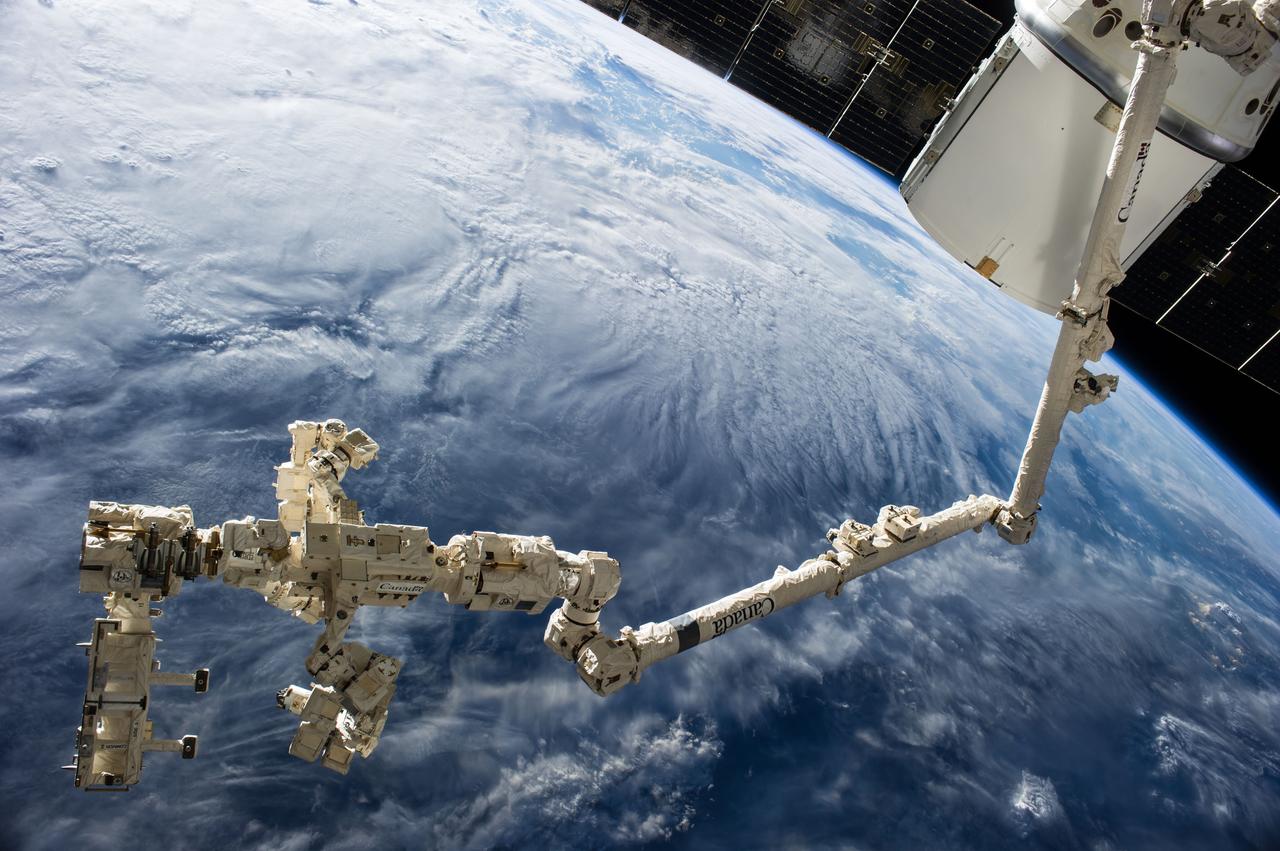
ISS041-E-049099 (30 Sept. 2014) --- The International Space Station?s Canadarm2 and Dextre, also known as the Special Purpose Dextrous Manipulator (SPDM), carry the Rapidscat instrument assembly after removing it from the trunk of the SpaceX Dragon cargo ship (upper right), which is currently docked to the nadir port of the Harmony node. The Rapidscat was then maneuvered for attachment to the nadir adapter that is affixed to the station?s Columbus laboratory.
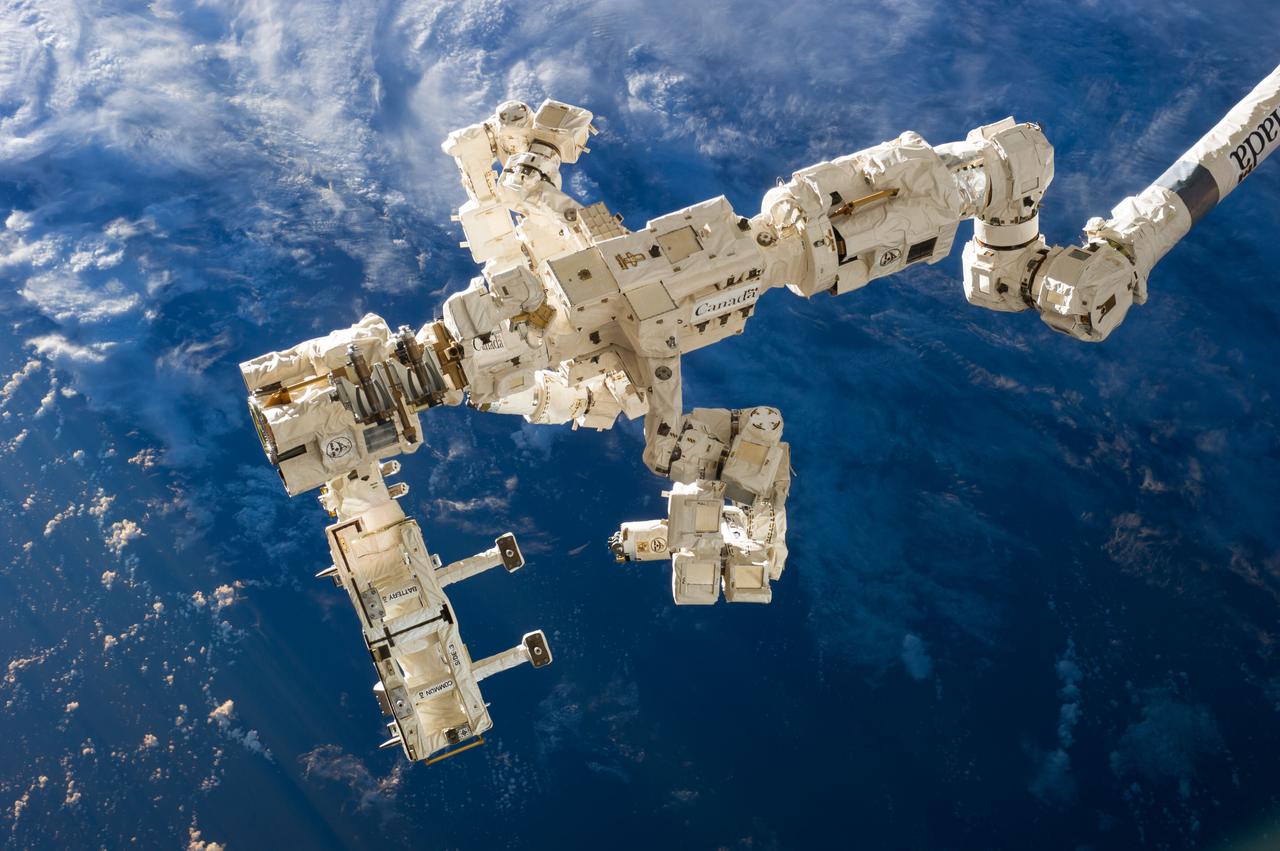
ISS041-E-049091 (30 Sept. 2014) --- The International Space Station?s Canadarm2 and Dextre, also known as the Special Purpose Dextrous Manipulator (SPDM), carry the Rapidscat instrument assembly after removing it from the trunk of the SpaceX Dragon cargo ship, which is currently docked to the nadir port of the Harmony node. The Rapidscat was then maneuvered for attachment to the nadir adapter that is affixed to the station?s Columbus laboratory.
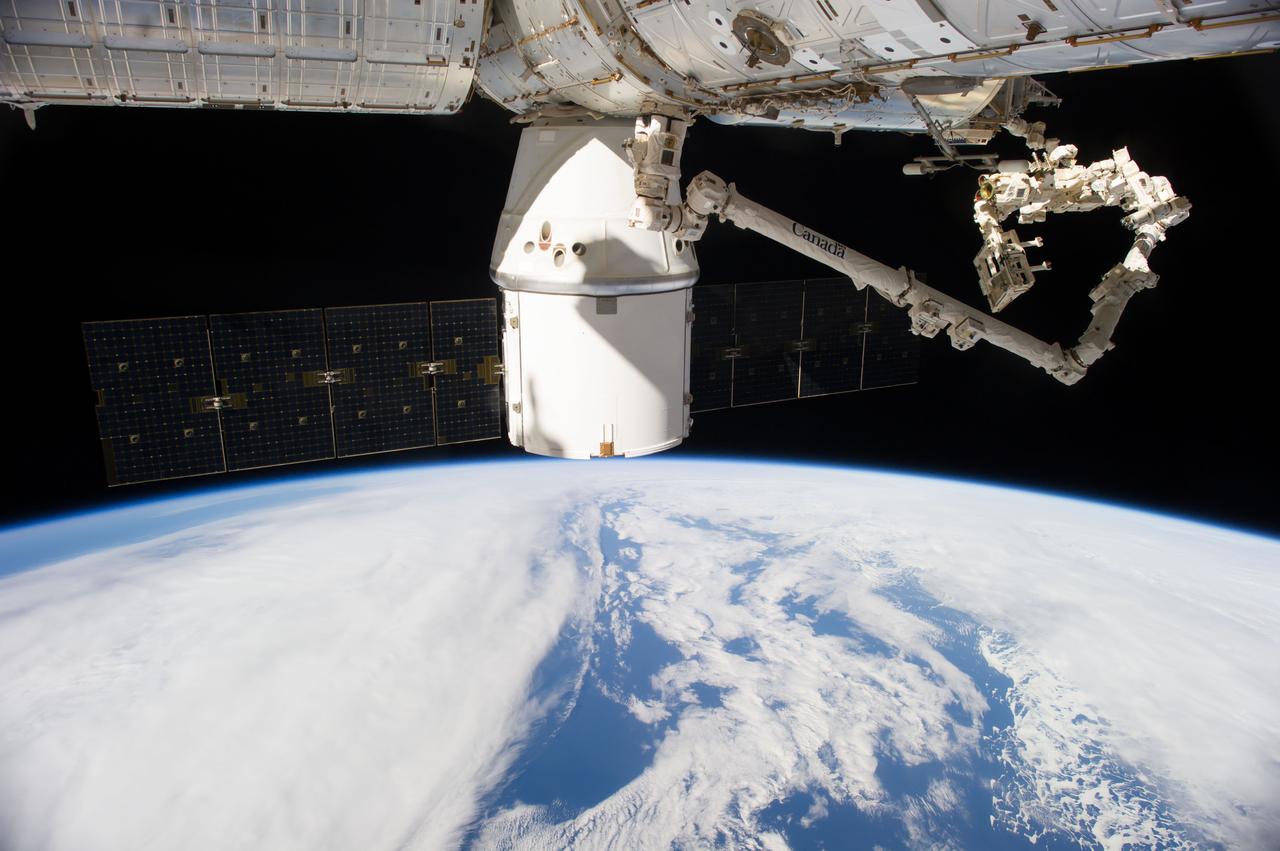
ISS041-E-047455 (29 Sept. 2014) --- An Expedition 41 crew member aboard the International Space Station photographed this view of the SpaceX Dragon cargo ship docked to the nadir port of the Harmony node as the station's Canadarm2 and the Special Purpose Dexterous Manipulator move external cargo from Dragon. A blue and white part of Earth and the blackness of space provide the backdrop for the scene.
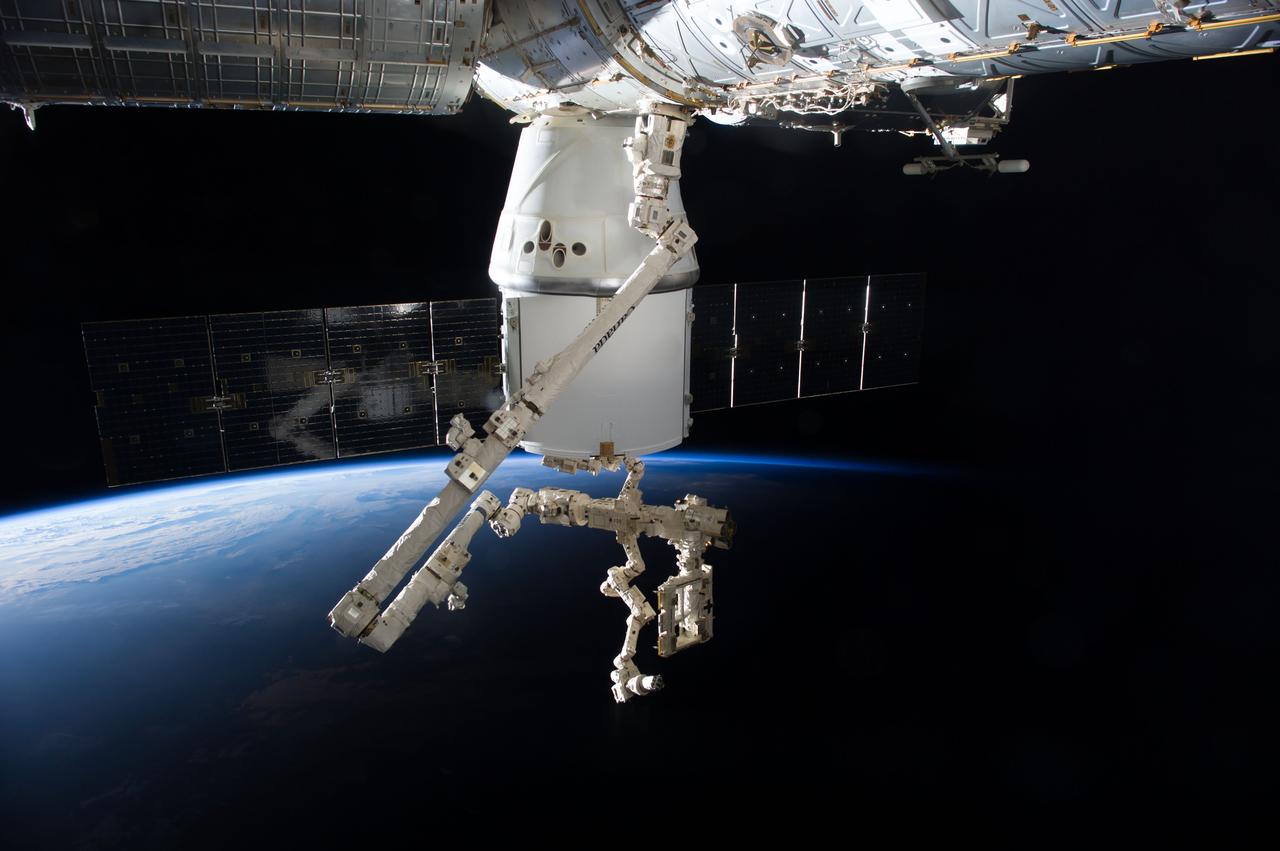
ISS041-E-046700 (29 Sept. 2014) --- An Expedition 41 crew member aboard the International Space Station photographed this view of the SpaceX Dragon cargo ship docked to the nadir port of the Harmony node as the station's Canadarm2 and the Special Purpose Dexterous Manipulator prepare to remove external cargo from Dragon. Earth?s horizon and the blackness of space provide the backdrop for the scene.
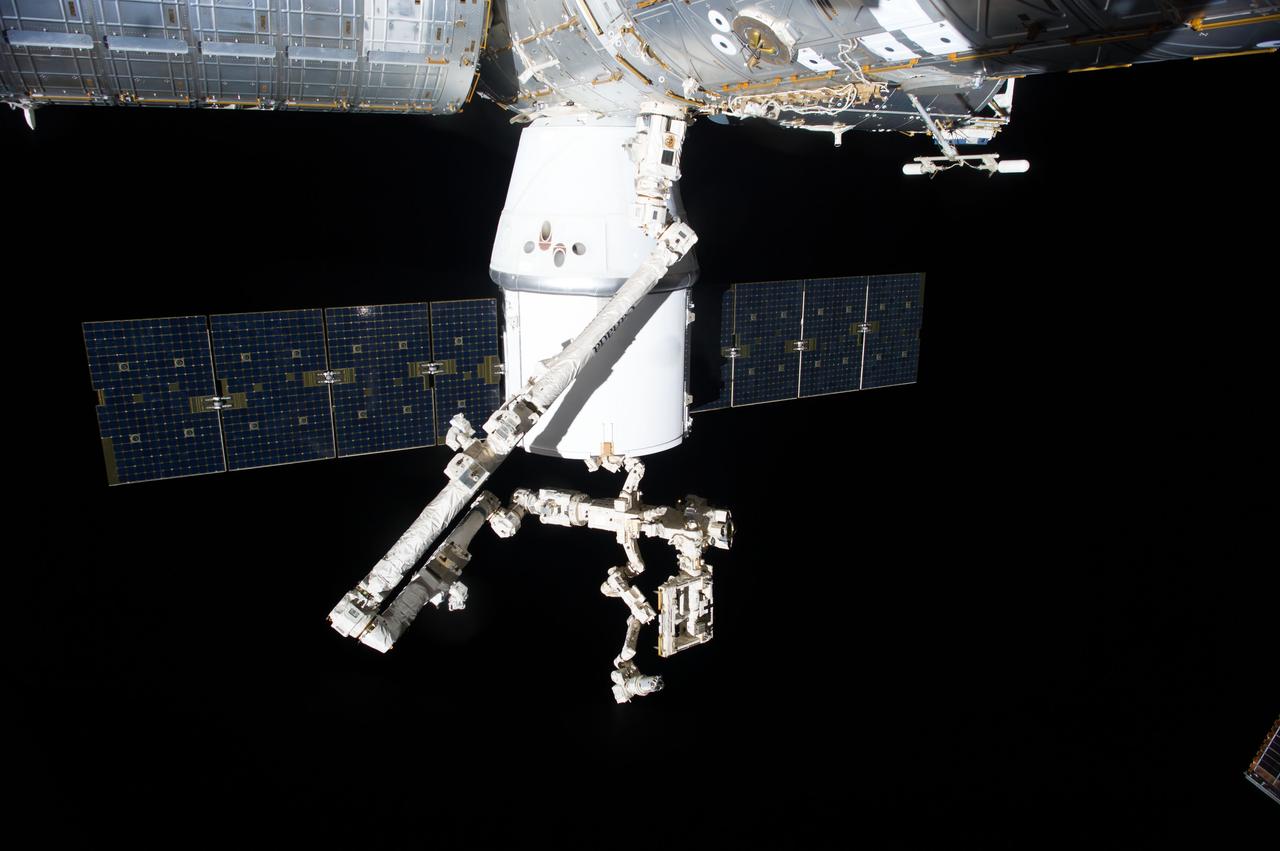
ISS041-E-046450 (29 Sept. 2014) --- An Expedition 41 crew member aboard the International Space Station photographed this view of the SpaceX Dragon cargo ship docked to the nadir port of the Harmony node as the station's Canadarm2 and the Special Purpose Dexterous Manipulator prepare to remove external cargo from Dragon.
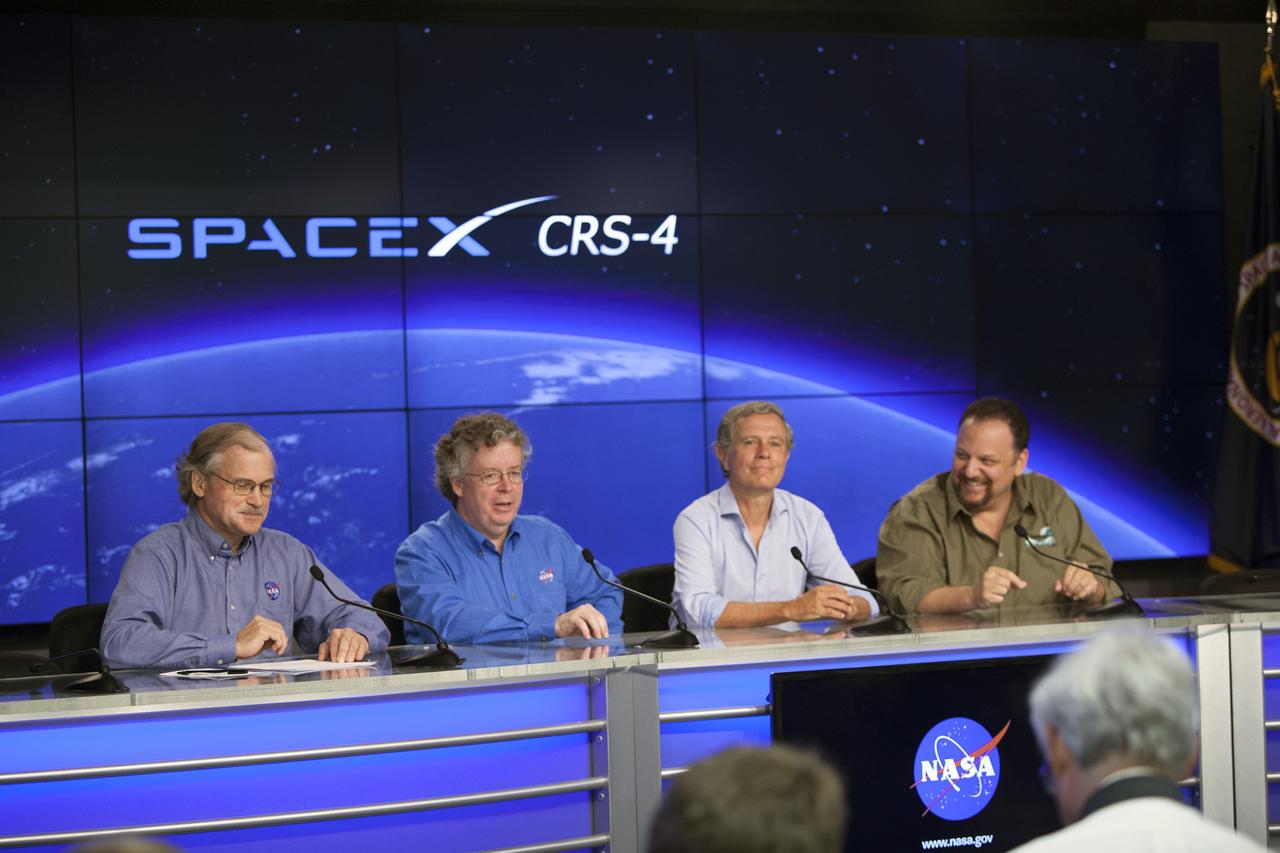
CAPE CANAVERAL, Fla. – Members of an ISS Earth Science: Tracking Ocean Winds Panel brief media representatives in Kennedy Space Center’s Press Site auditorium in preparation for the launch of the SpaceX CRS-4 mission to resupply the International Space Station. From left are Steve Cole, NASA Public Affairs, Steve Volz, associate director for flight programs, Earth Science Division, Science Mission Directorate, NASA Headquarters, Ernesto Rodriquez, ISS RapidScat project scientist, NASA Jet Propulsion Laboratory or JPL, and Howard Eisen, ISS RapidScat project manager, JPL. The mission is the fourth of 12 SpaceX flights NASA contracted with the company to resupply the space station. It will be the fifth trip by a Dragon spacecraft to the orbiting laboratory. The spacecraft’s 2.5 tons of supplies, science experiments, and technology demonstrations include critical materials to support 255 science and research investigations that will occur during the station's Expeditions 41 and 42. Liftoff is targeted for an instantaneous window at 2:14 a.m. EDT. To learn more about the mission, visit http://www.nasa.gov/mission_pages/station/structure/launch/index.html. Photo credit: NASA/Jim Grossmann
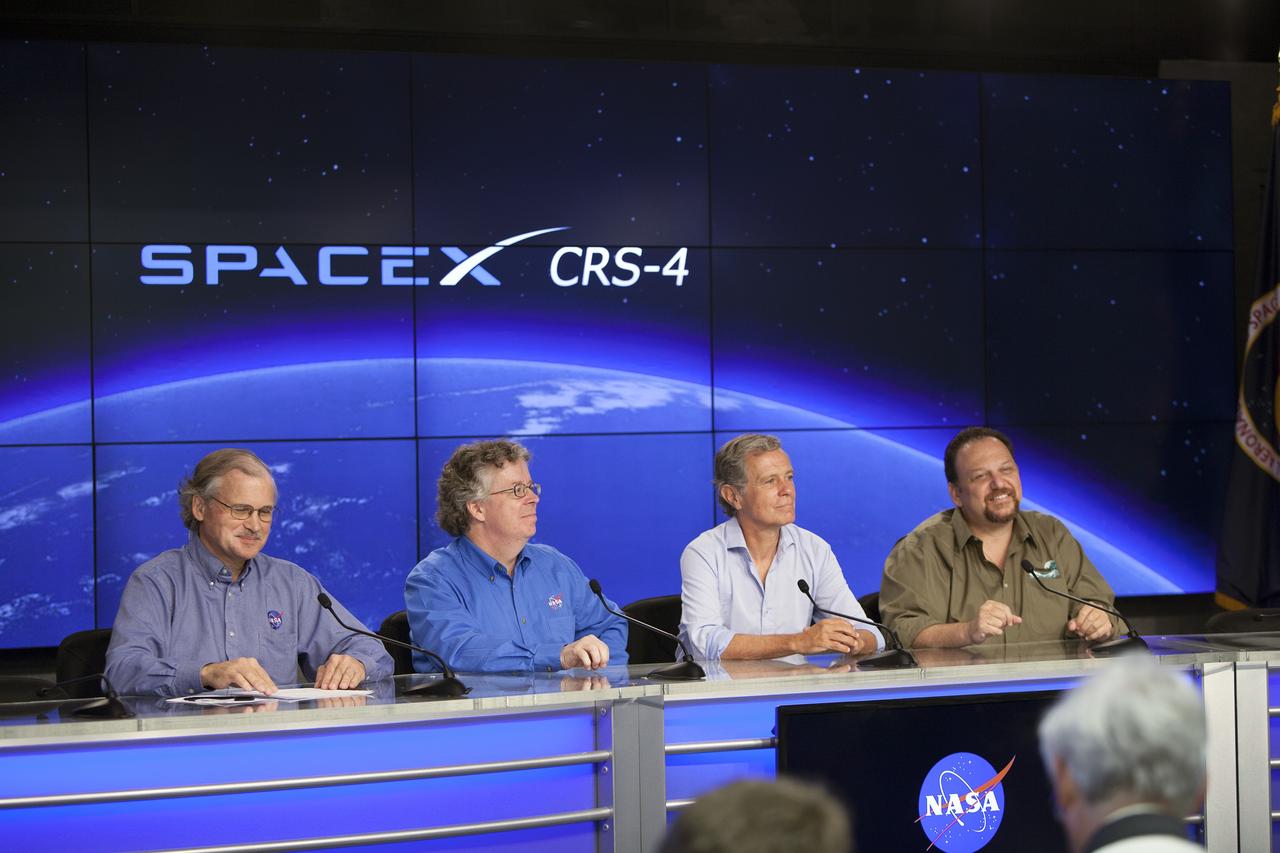
CAPE CANAVERAL, Fla. – Members of an ISS Earth Science: Tracking Ocean Winds Panel brief media representatives in Kennedy Space Center’s Press Site auditorium in preparation for the launch of the SpaceX CRS-4 mission to resupply the International Space Station. From left are Steve Cole, NASA Public Affairs, Steve Volz, associate director for flight programs, Earth Science Division, Science Mission Directorate, NASA Headquarters, Ernesto Rodriquez, ISS RapidScat project scientist, NASA Jet Propulsion Laboratory or JPL, and Howard Eisen, ISS RapidScat project manager, JPL. The mission is the fourth of 12 SpaceX flights NASA contracted with the company to resupply the space station. It will be the fifth trip by a Dragon spacecraft to the orbiting laboratory. The spacecraft’s 2.5 tons of supplies, science experiments, and technology demonstrations include critical materials to support 255 science and research investigations that will occur during the station's Expeditions 41 and 42. Liftoff is targeted for an instantaneous window at 2:14 a.m. EDT. To learn more about the mission, visit http://www.nasa.gov/mission_pages/station/structure/launch/index.html. Photo credit: NASA/Jim Grossmann
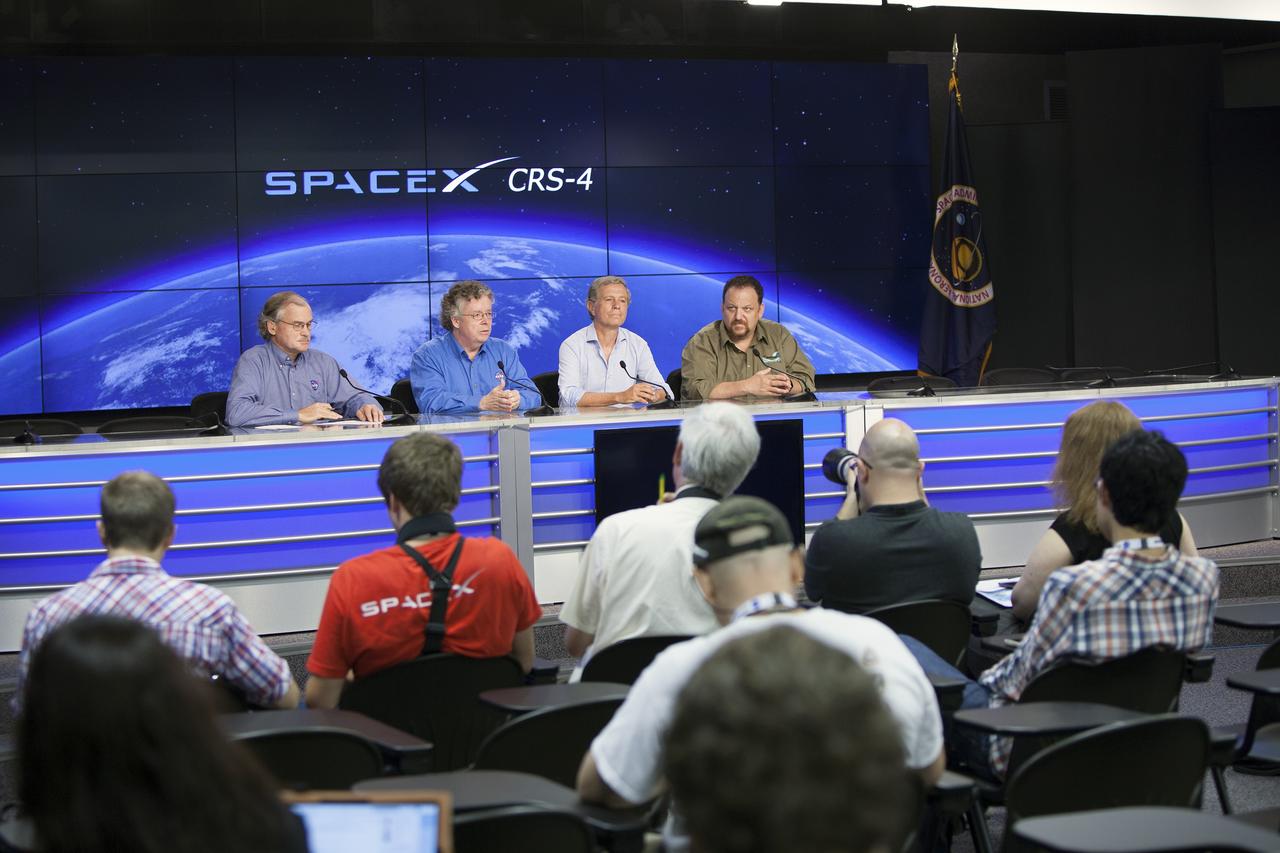
CAPE CANAVERAL, Fla. – Media representatives ask questions of the ISS Earth Science: Tracking Ocean Winds Panel in Kennedy Space Center’s Press Site auditorium in preparation for the launch of the SpaceX CRS-4 mission to resupply the International Space Station. On the dais from left are Steve Cole, NASA Public Affairs, Steve Volz, associate director for flight programs, Earth Science Division, Science Mission Directorate, NASA Headquarters, Ernesto Rodriquez, ISS RapidScat project scientist, NASA Jet Propulsion Laboratory or JPL, and Howard Eisen, ISS RapidScat project manager, JPL. The mission is the fourth of 12 SpaceX flights NASA contracted with the company to resupply the space station. It will be the fifth trip by a Dragon spacecraft to the orbiting laboratory. The spacecraft’s 2.5 tons of supplies, science experiments, and technology demonstrations include critical materials to support 255 science and research investigations that will occur during the station's Expeditions 41 and 42. Liftoff is targeted for an instantaneous window at 2:14 a.m. EDT. To learn more about the mission, visit http://www.nasa.gov/mission_pages/station/structure/launch/index.html. Photo credit: NASA/Jim Grossmann
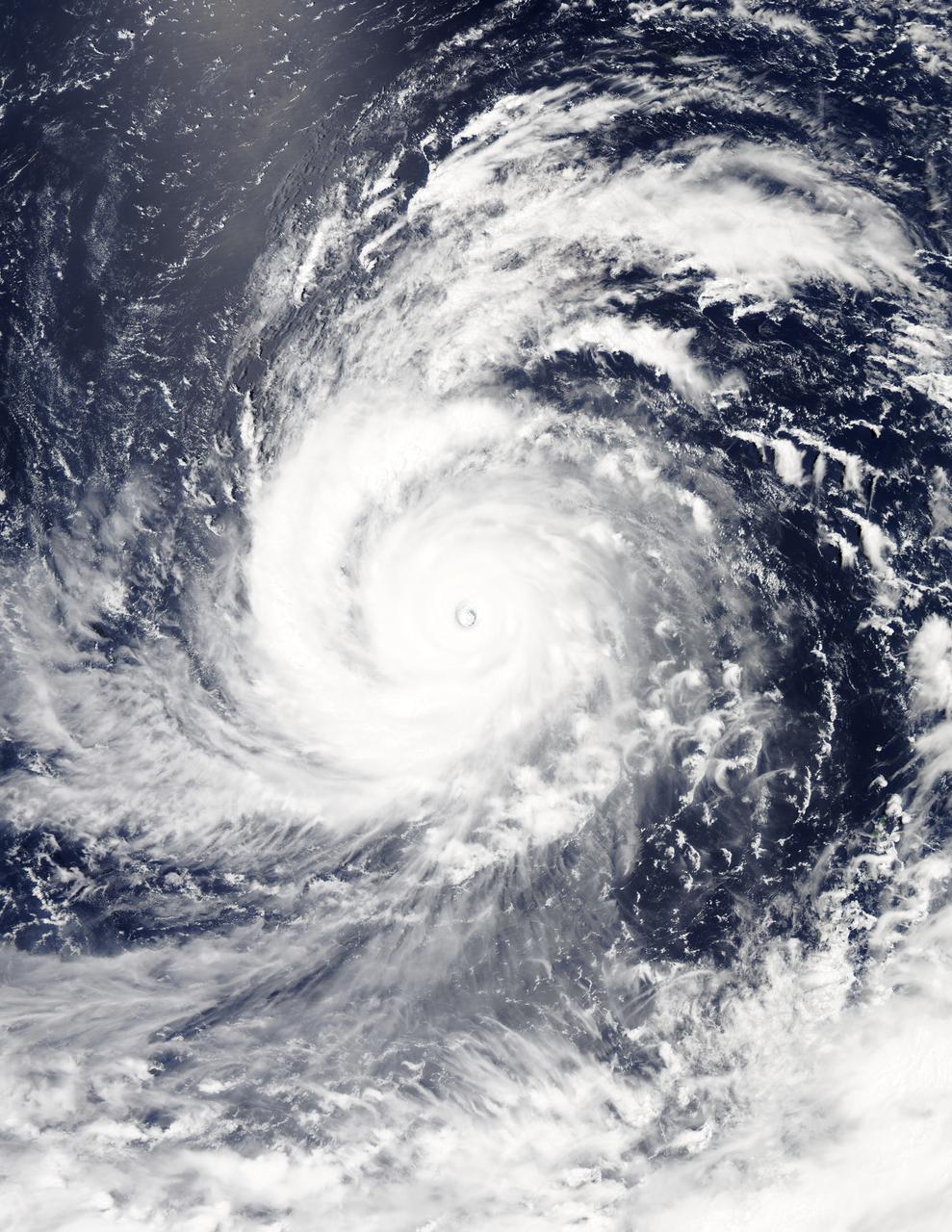
NASA's Aqua satellite and RapidScat instrument analyzed Super typhoon Soudelor's extent and winds as it reached Category Five typhoon status on the Saffir-Simpson Wind Scale. On Aug. 4, 2015, at 4:10 UTC (12:10 a.m. EDT) the MODIS instrument aboard NASA's Aqua satellite captured this visible-light image of Super typhoon Soudelor. Read more: <a href="http://www.nasa.gov/feature/goddard/2015/soudelor-northwestern-pacific-ocean" rel="nofollow">www.nasa.gov/feature/goddard/2015/soudelor-northwestern-p...</a> Credits: NASA Goddard's MODIS Rapid Response Team

CAPE CANAVERAL, Fla. – Howard Eisen, ISS RapidScat project manager, NASA Jet Propulsion Laboratory, briefs media representatives in Kennedy Space Center’s Press Site auditorium in preparation for the launch of the SpaceX CRS-4 mission to resupply the International Space Station. Eisen is a member of the ISS Earth Science: Tracking Ocean Winds Panel. The mission is the fourth of 12 SpaceX flights NASA contracted with the company to resupply the space station. It will be the fifth trip by a Dragon spacecraft to the orbiting laboratory. The spacecraft’s 2.5 tons of supplies, science experiments, and technology demonstrations include critical materials to support 255 science and research investigations that will occur during the station's Expeditions 41 and 42. Liftoff is targeted for an instantaneous window at 2:14 a.m. EDT. To learn more about the mission, visit http://www.nasa.gov/mission_pages/station/structure/launch/index.html. Photo credit: NASA/Jim Grossmann
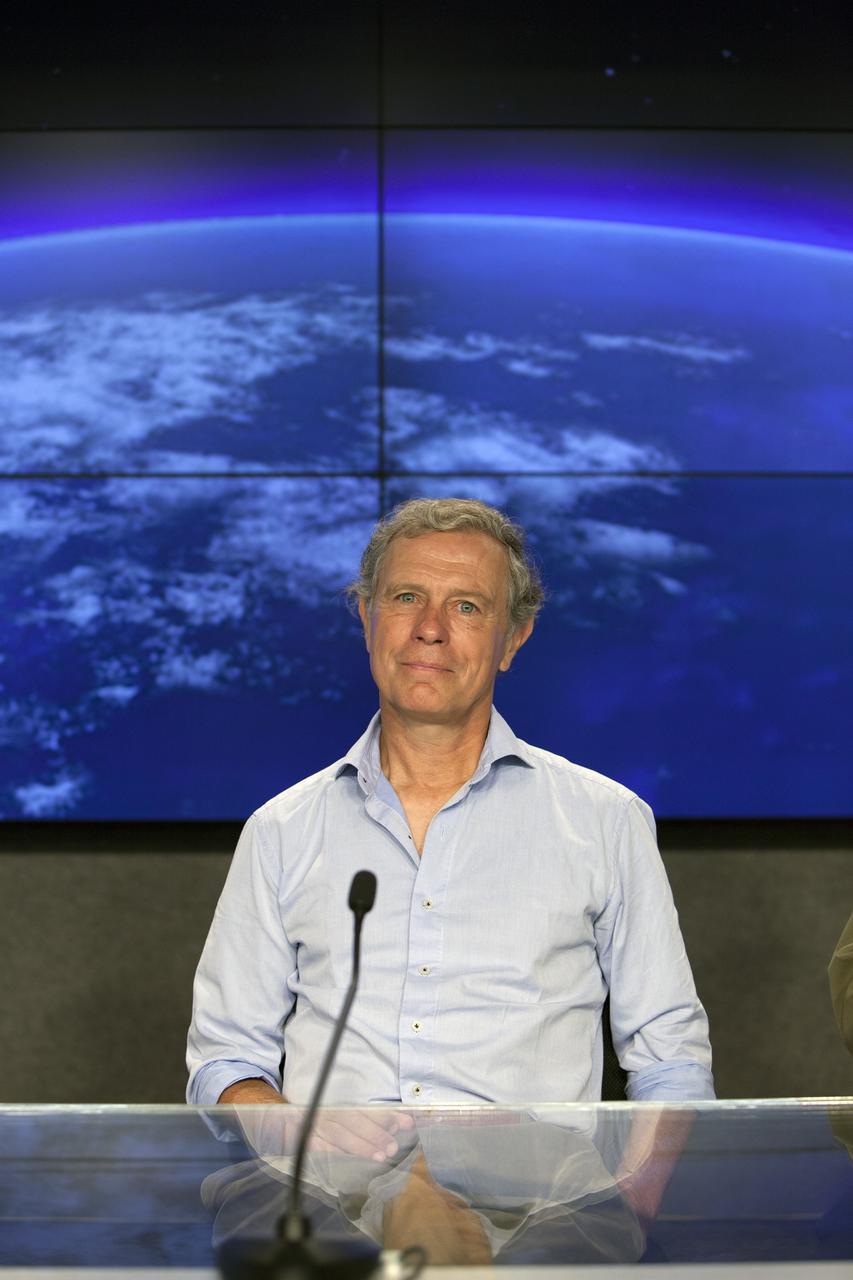
CAPE CANAVERAL, Fla. – Ernesto Rodriquez, ISS RapidScat project scientist, NASA Jet Propulsion Laboratory, briefs media representatives in Kennedy Space Center’s Press Site auditorium in preparation for the launch of the SpaceX CRS-4 mission to resupply the International Space Station. Rodriquez is a member of the ISS Earth Science: Tracking Ocean Winds Panel. The mission is the fourth of 12 SpaceX flights NASA contracted with the company to resupply the space station. It will be the fifth trip by a Dragon spacecraft to the orbiting laboratory. The spacecraft’s 2.5 tons of supplies, science experiments, and technology demonstrations include critical materials to support 255 science and research investigations that will occur during the station's Expeditions 41 and 42. Liftoff is targeted for an instantaneous window at 2:14 a.m. EDT. To learn more about the mission, visit http://www.nasa.gov/mission_pages/station/structure/launch/index.html. Photo credit: NASA/Jim Grossmann

The remnant moisture from what was once Hurricane Patricia and moisture from the Gulf of Mexico were being transported north by a trough of low pressure over Wisconsin. The clouds and moisture were streaming into the Eastern third of the U.S. on October 28, 2015. The hybrid system was generating windy conditions which were seen from NASA's RapidScat instrument, while NOAA's GOES-East satellite captured an image of the impressive and sizeable cloud cover. Read more: <a href="http://www.nasa.gov/feature/goddard/patricia-eastern-pacific-2015" rel="nofollow">www.nasa.gov/feature/goddard/patricia-eastern-pacific-2015</a> <b><a href="http://goes.gsfc.nasa.gov/" rel="nofollow">Credit: NOAA/NASA GOES Project</a></b> <b><a href="http://www.nasa.gov/audience/formedia/features/MP_Photo_Guidelines.html" rel="nofollow">NASA image use policy.</a></b> <b><a href="http://www.nasa.gov/centers/goddard/home/index.html" rel="nofollow">NASA Goddard Space Flight Center</a></b> enables NASA’s mission through four scientific endeavors: Earth Science, Heliophysics, Solar System Exploration, and Astrophysics. Goddard plays a leading role in NASA’s accomplishments by contributing compelling scientific knowledge to advance the Agency’s mission. <b>Follow us on <a href="http://twitter.com/NASAGoddardPix" rel="nofollow">Twitter</a></b> <b>Like us on <a href="http://www.facebook.com/pages/Greenbelt-MD/NASA-Goddard/395013845897?ref=tsd" rel="nofollow">Facebook</a></b> <b>Find us on <a href="http://instagrid.me/nasagoddard/?vm=grid" rel="nofollow">Instagram</a></b>

Of all the planets NASA has explored, none have matched the dynamic complexity of our own. Earth is constantly changing, and NASA are working constantly to explore and understand the planet on scales from local to global. Though Earth science has been a key part of NASA’s mission since the agency was founded in 1958, this year has been one of the peaks. Two new Earth-observing satellites have already been launched and put to work: the Global Precipitation Measurement (GPM) and the Orbiting Carbon Observatory 2 (OCO-2). Three more missions are set to take off in the next six months: the wind-measuring ISS-RapidScat, the ISS Cloud-Aerosol Transport System (CATS), and the Soil Moisture Active Passive (SMAP). And research planes have been flying over polar ice, hurricanes, boreal forests, and pollution plumes. All of these new efforts complement an existing fleet of Earth-observing satellites. In visible light and many invisible wavelengths, NASA and its science partners are observing the entire planet every day. The image above was captured on March 30, 2014, by the Visible Infrared Imaging Radiometer Suite (VIIRS) on the Suomi NPP satellite. The composite image of the eastern hemisphere was compiled from eight orbits of the satellite and ten imaging channels, then stitched together to blend the edges of each satellite pass. Read more: <a href="http://earthobservatory.nasa.gov/IOTD/view.php?id=84214&eocn=home&eoci=iotd_title" rel="nofollow">earthobservatory.nasa.gov/IOTD/view.php?id=84214&eocn...</a> NASA Earth Observatory image by Robert Simmon, using Suomi NPP VIIRS imagery from NOAA's Environmental Visualization Laboratory. Suomi NPP is the result of a partnership between NASA, NOAA and the Department of Defense. Caption by Mike Carlowicz. Credit: <b><a href="http://www.earthobservatory.nasa.gov/" rel="nofollow"> NASA Earth Observatory</a></b> <b><a href="http://www.nasa.gov/audience/formedia/features/MP_Photo_Guidelines.html" rel="nofollow">NASA image use policy.</a></b> <b><a href="http://www.nasa.gov/centers/goddard/home/index.html" rel="nofollow">NASA Goddard Space Flight Center</a></b> enables NASA’s mission through four scientific endeavors: Earth Science, Heliophysics, Solar System Exploration, and Astrophysics. Goddard plays a leading role in NASA’s accomplishments by contributing compelling scientific knowledge to advance the Agency’s mission. <b>Follow us on <a href="http://twitter.com/NASAGoddardPix" rel="nofollow">Twitter</a></b> <b>Like us on <a href="http://www.facebook.com/pages/Greenbelt-MD/NASA-Goddard/395013845897?ref=tsd" rel="nofollow">Facebook</a></b> <b>Find us on <a href="http://instagram.com/nasagoddard?vm=grid" rel="nofollow">Instagram</a></b>