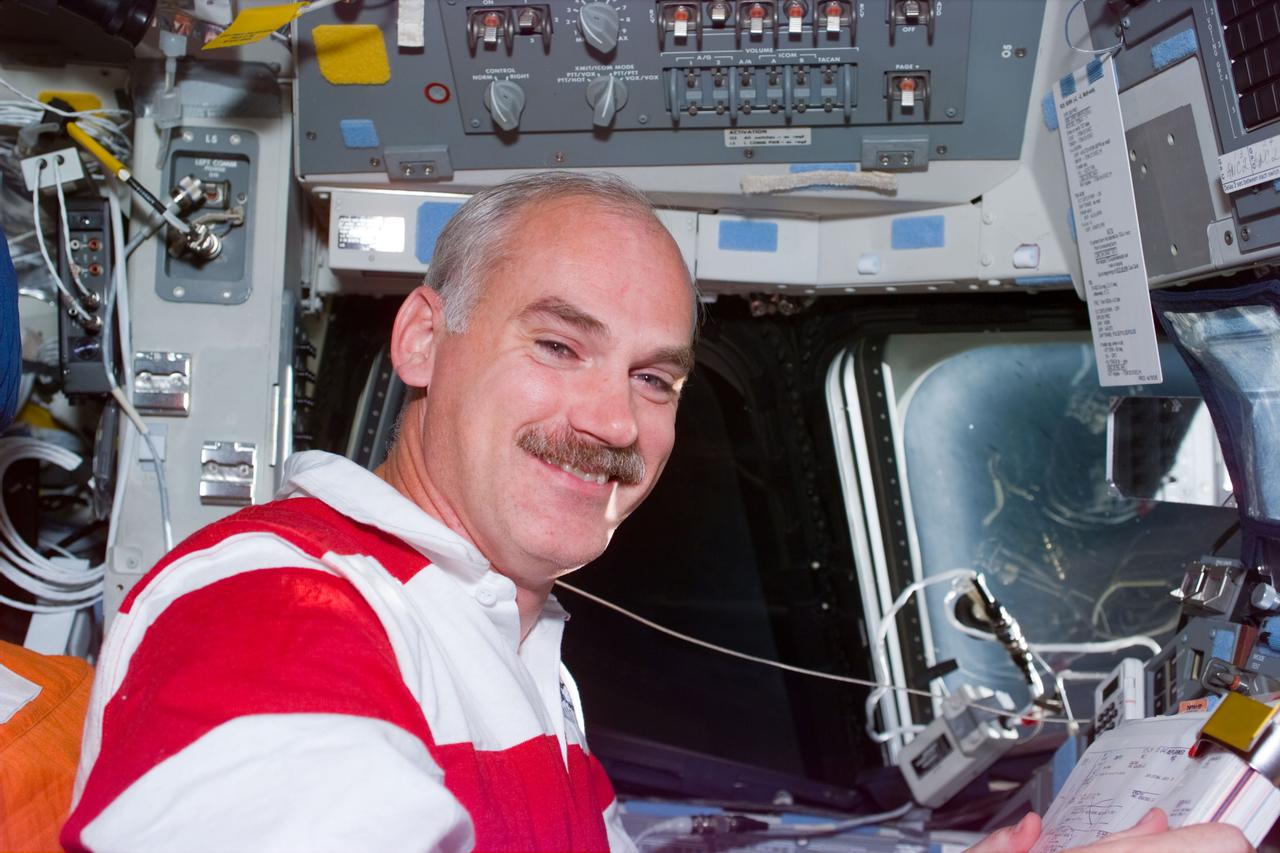
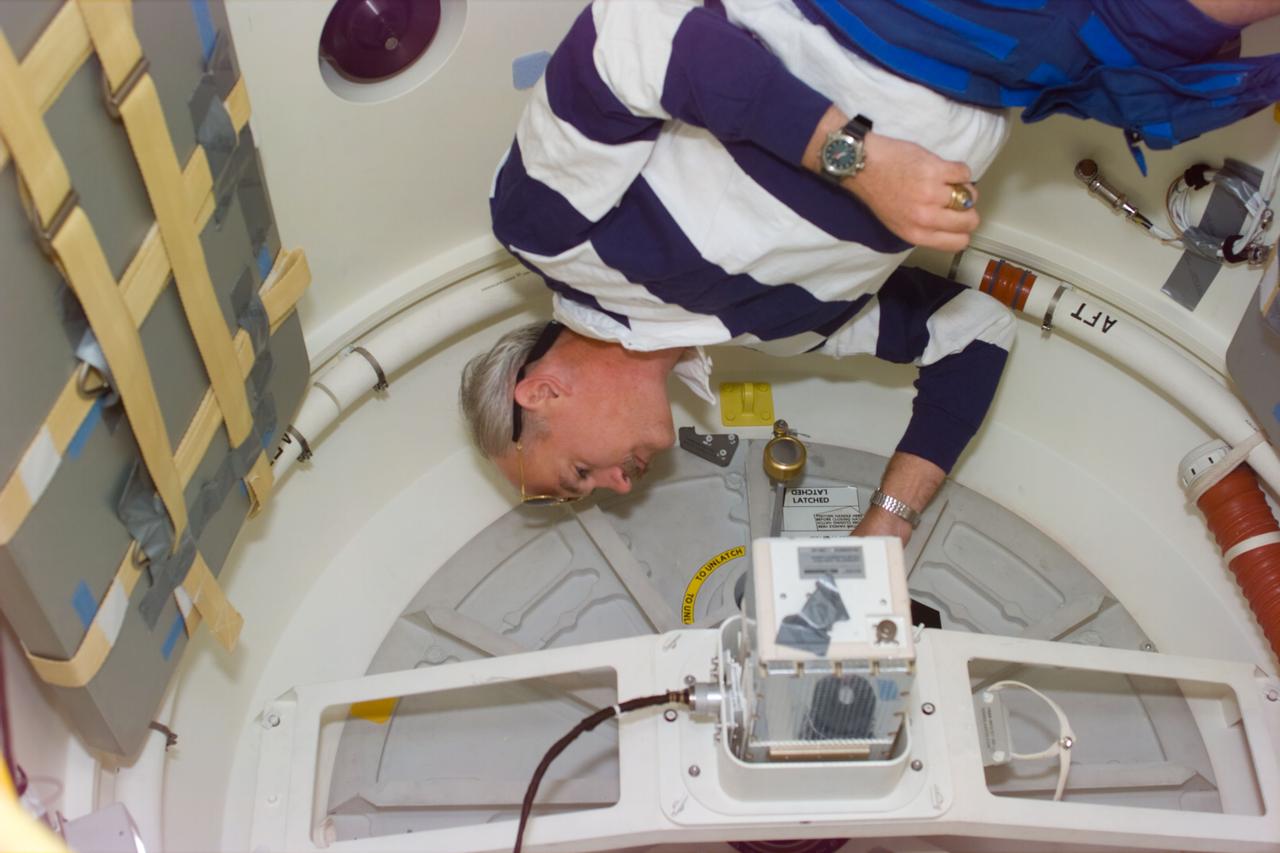
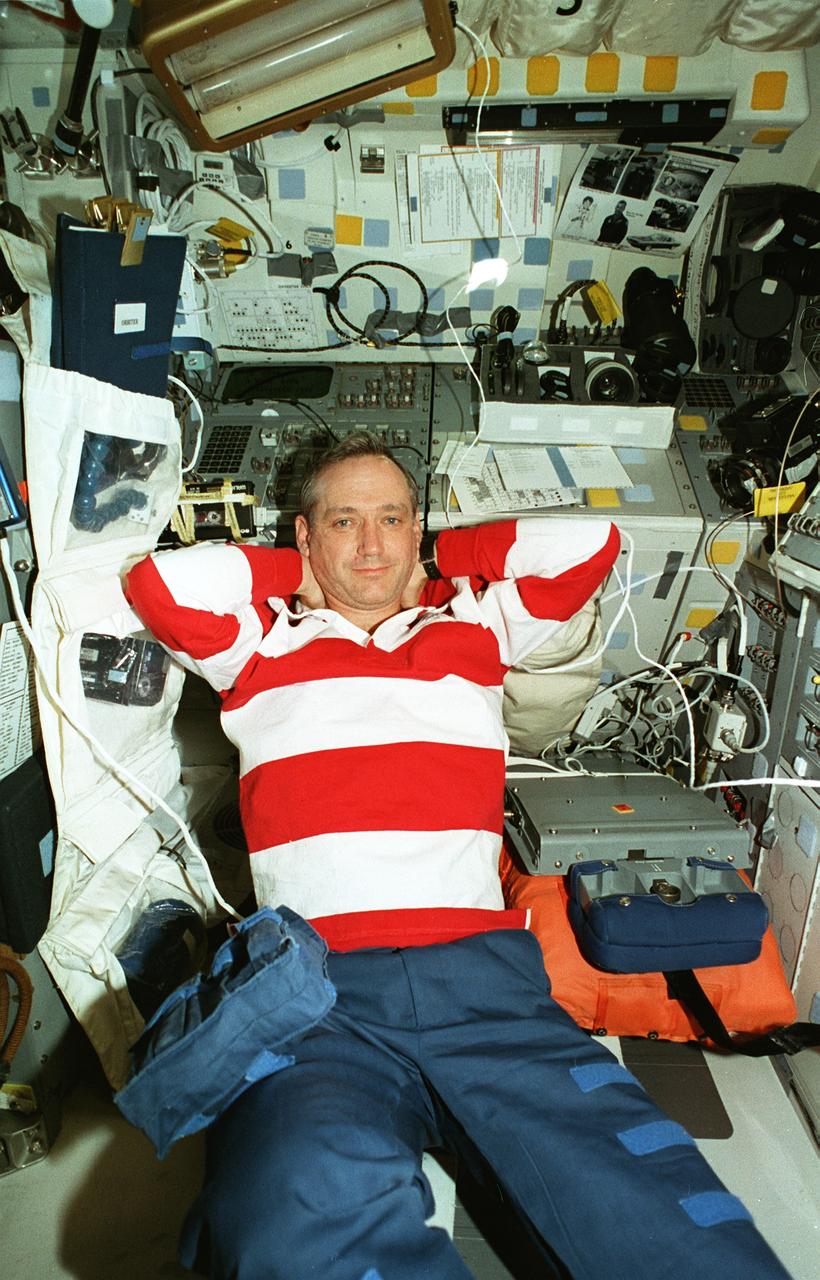
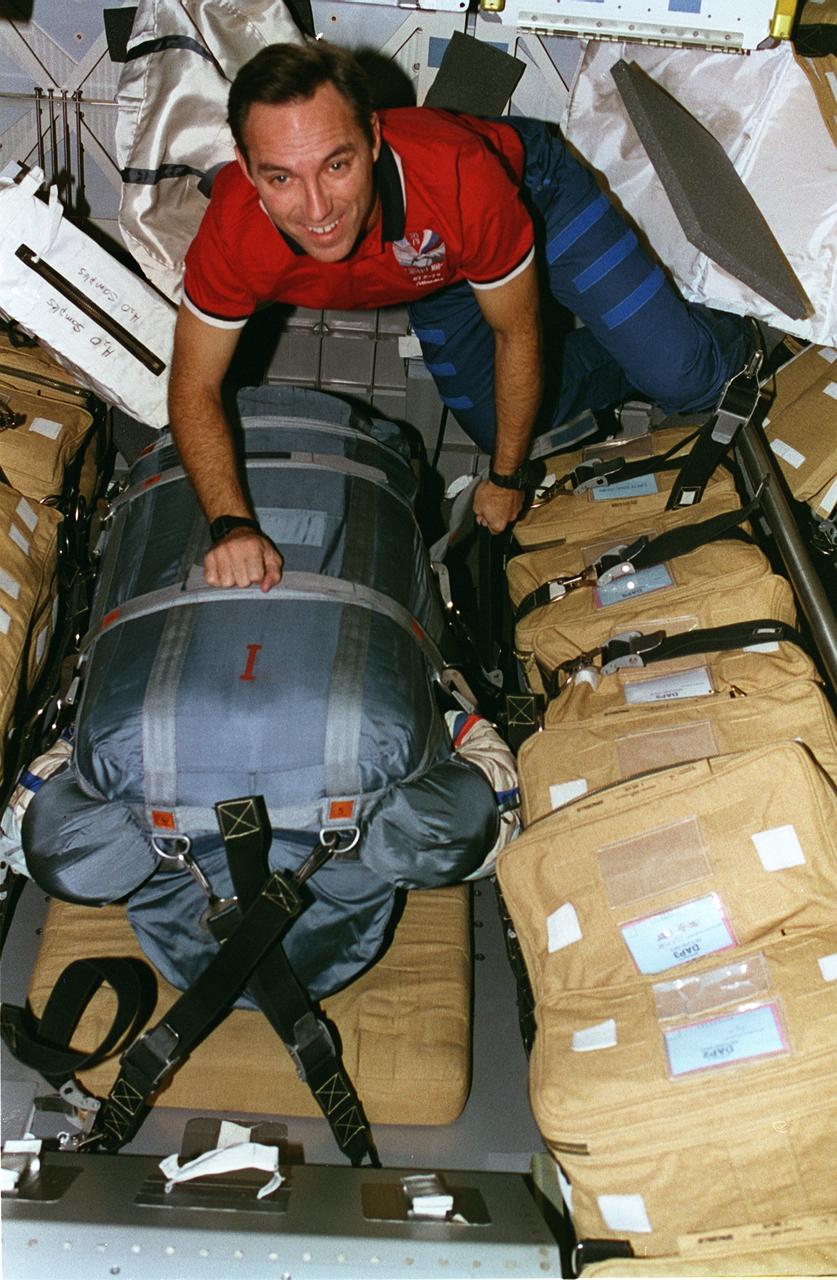
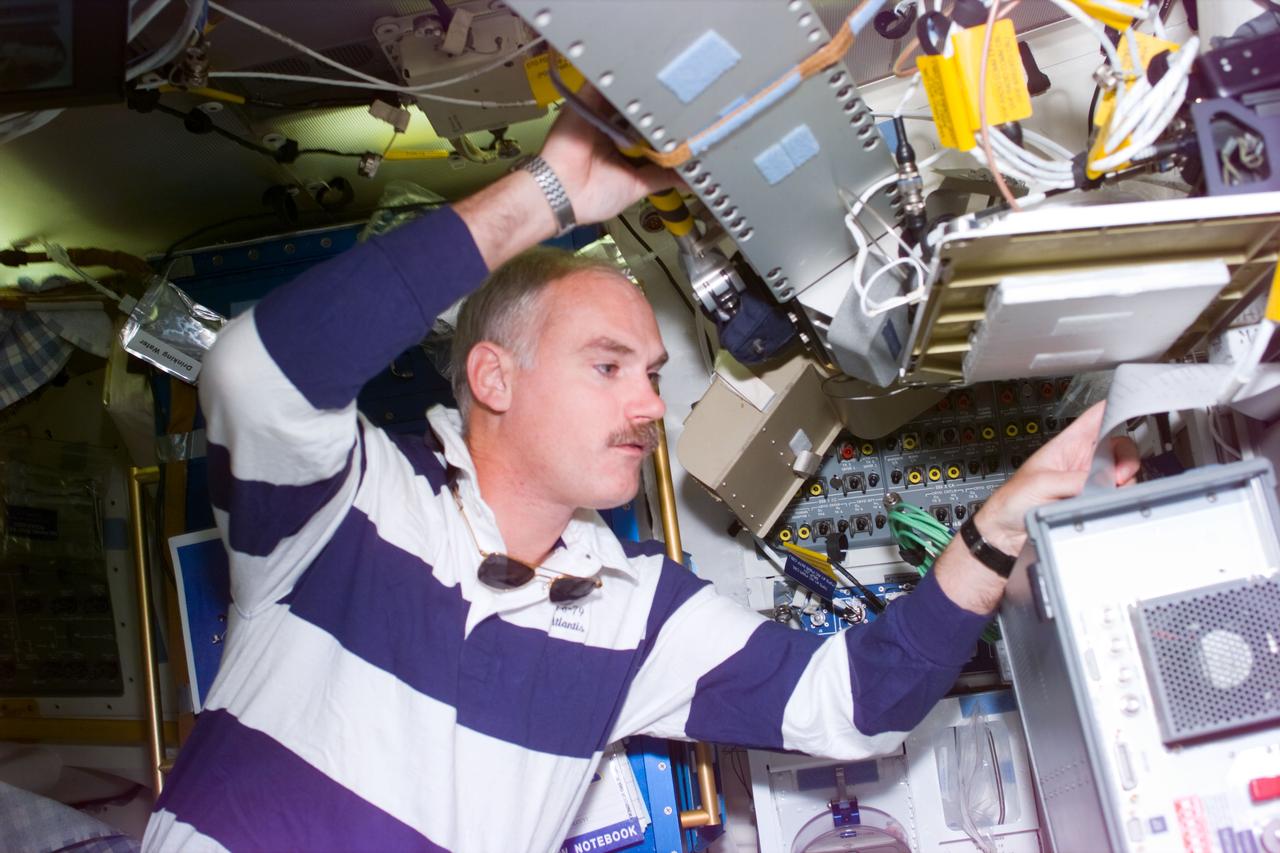
STS79-E-5022 (18 September 1996) --- William F. Readdy, mission commander, checks on Spacehab prior to preparing for Day 4 docking of the Space Shuttle Atlantis with Russia's Mir Space Station, on flight day 3.
Mission commander Readdy on middeck
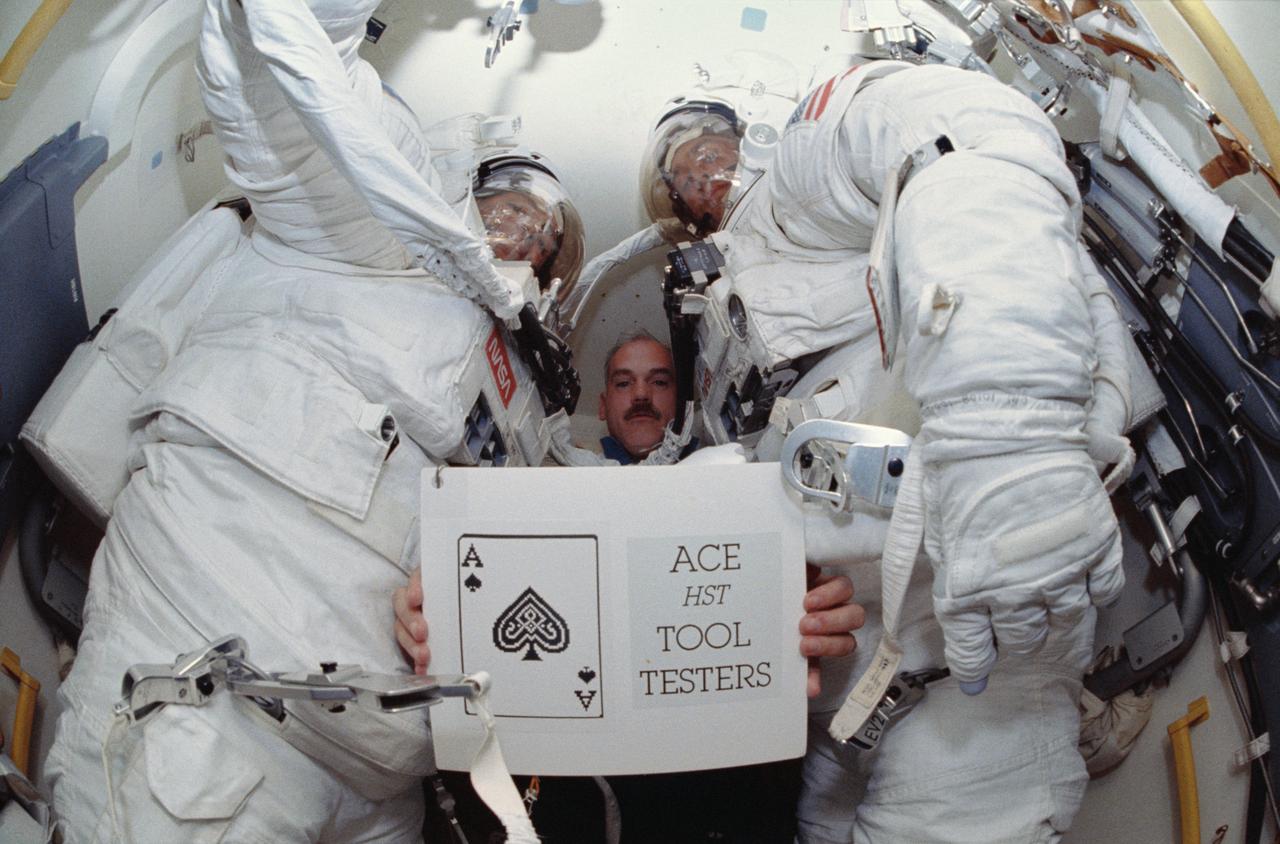
STS051-66-009 (16 Sept 1993) --- In Discovery's airlock, astronaut William F. Readdy, pilot, holds up a STS-51 slogan -- "Ace HST Tool Testers" -- for still and video cameras to record.  Readdy is flanked by astronauts Carl E. Walz (left) and James H. Newman, who had just shared a lengthy period of extravehicular activity (EVA) in and around Discovery's cargo bay.  Not pictured are astronauts Frank L. Culbertson Jr., mission commander, and Daniel W. Bursch, mission specialist.
Astronauts Readdy, Walz, and Newman in airlock after EVA
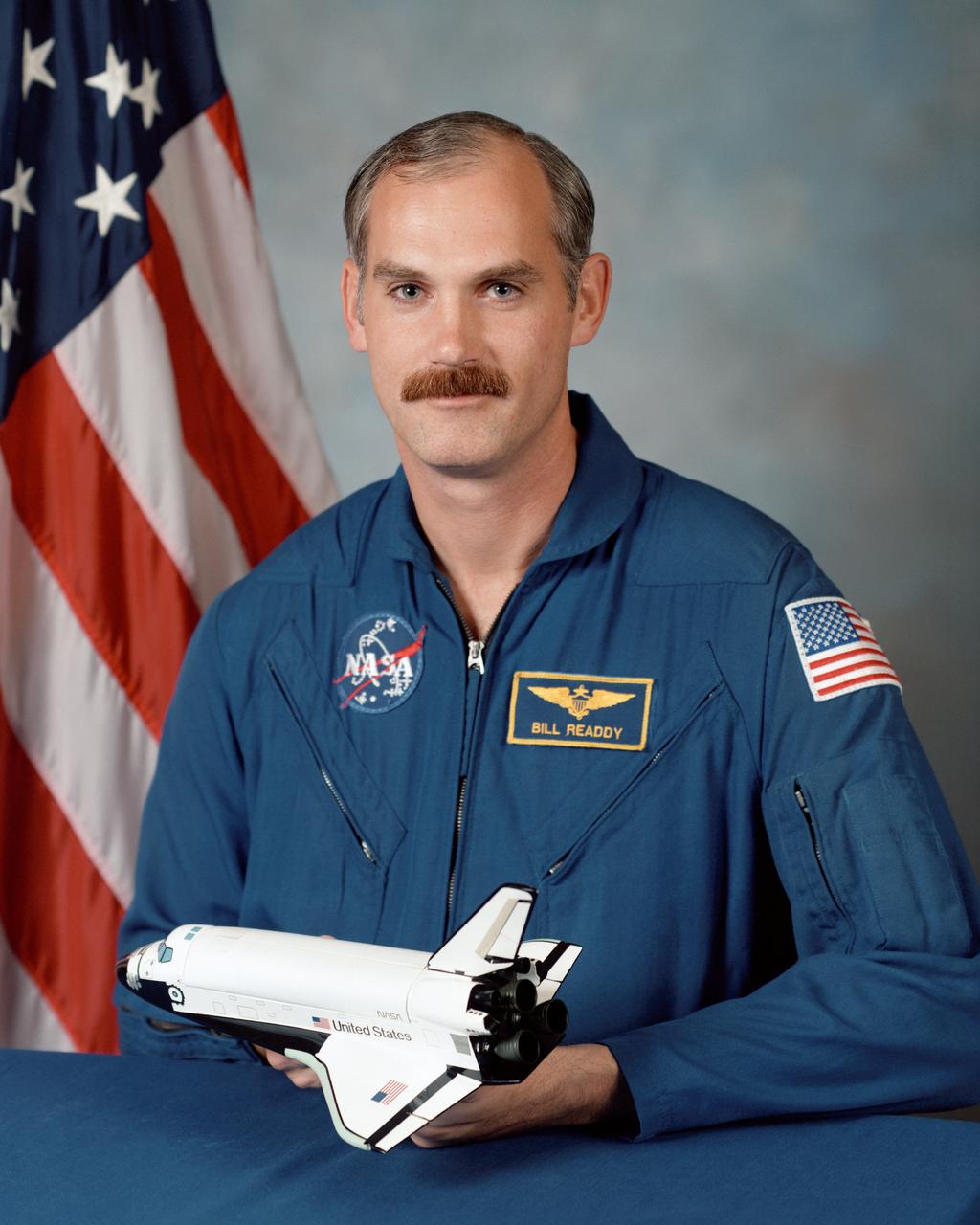
S87-45884 (9 Oct. 1987) --- Astronaut William F. Readdy, pilot
Official portrait of 1987 astronaut candidate William F. Readdy
STS79-E-5058 (19 September 1996) --- During operations to catch up with Russia's Mir Space Station, astronaut William F. Readdy, mission commander, commands the Space Shuttle Atlantis from the left hand station on the forward flight deck, during Flight Day 4.
Commander Readdy after rendezvous with Mir
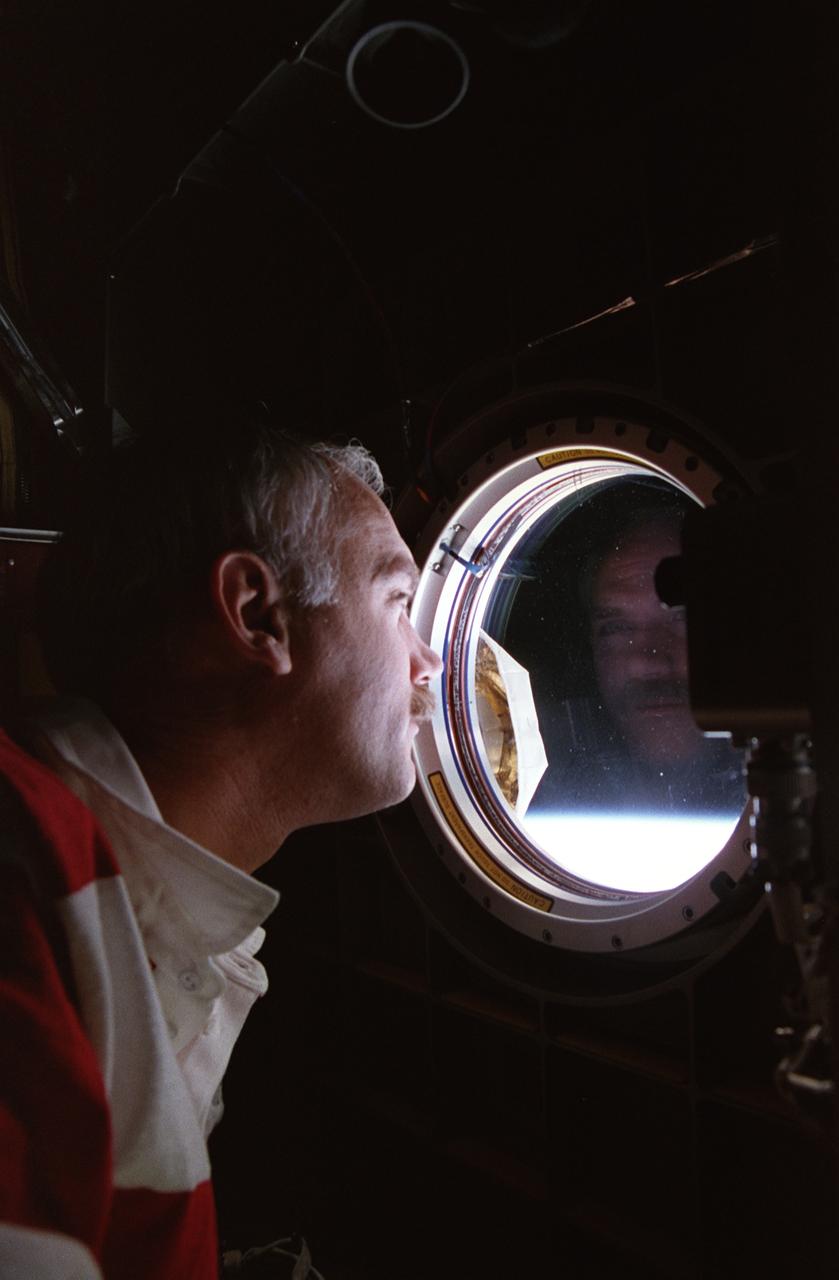
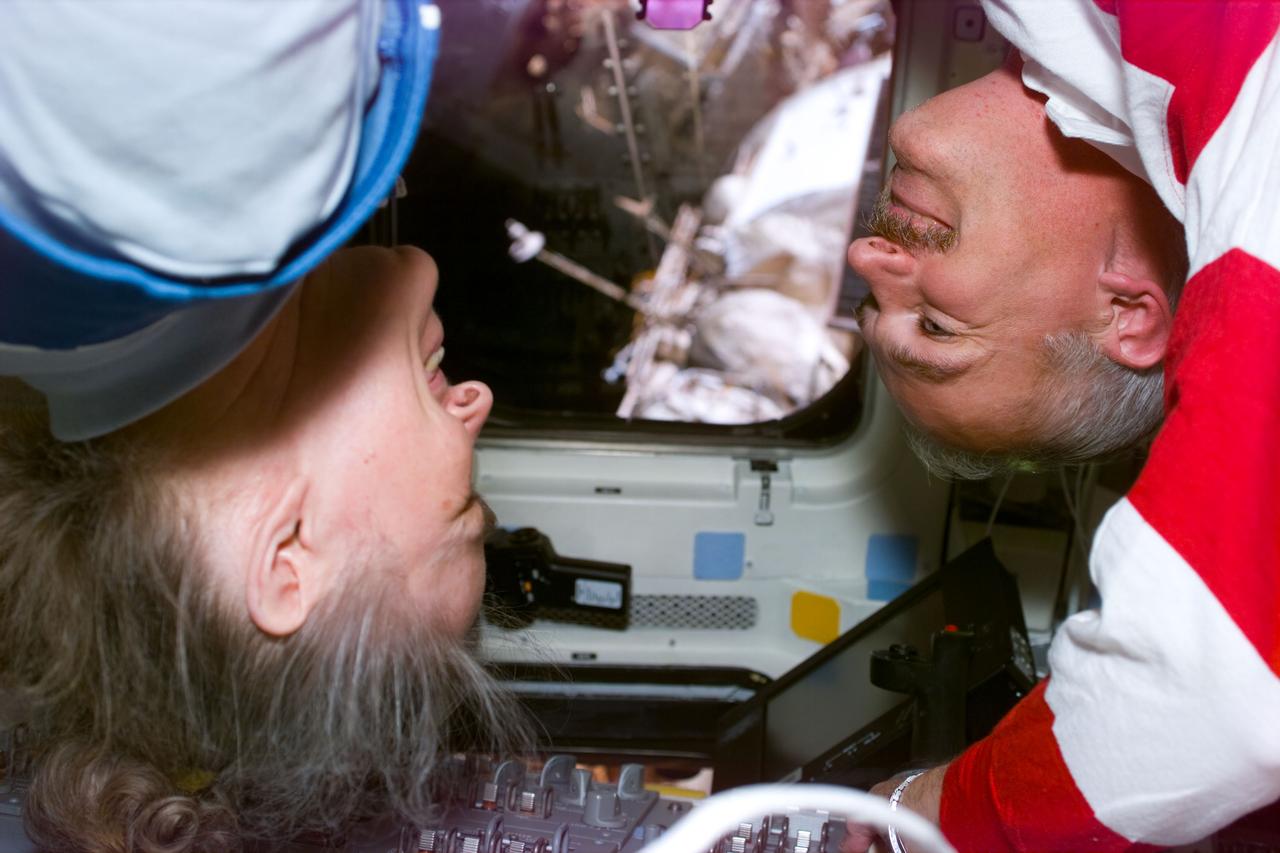
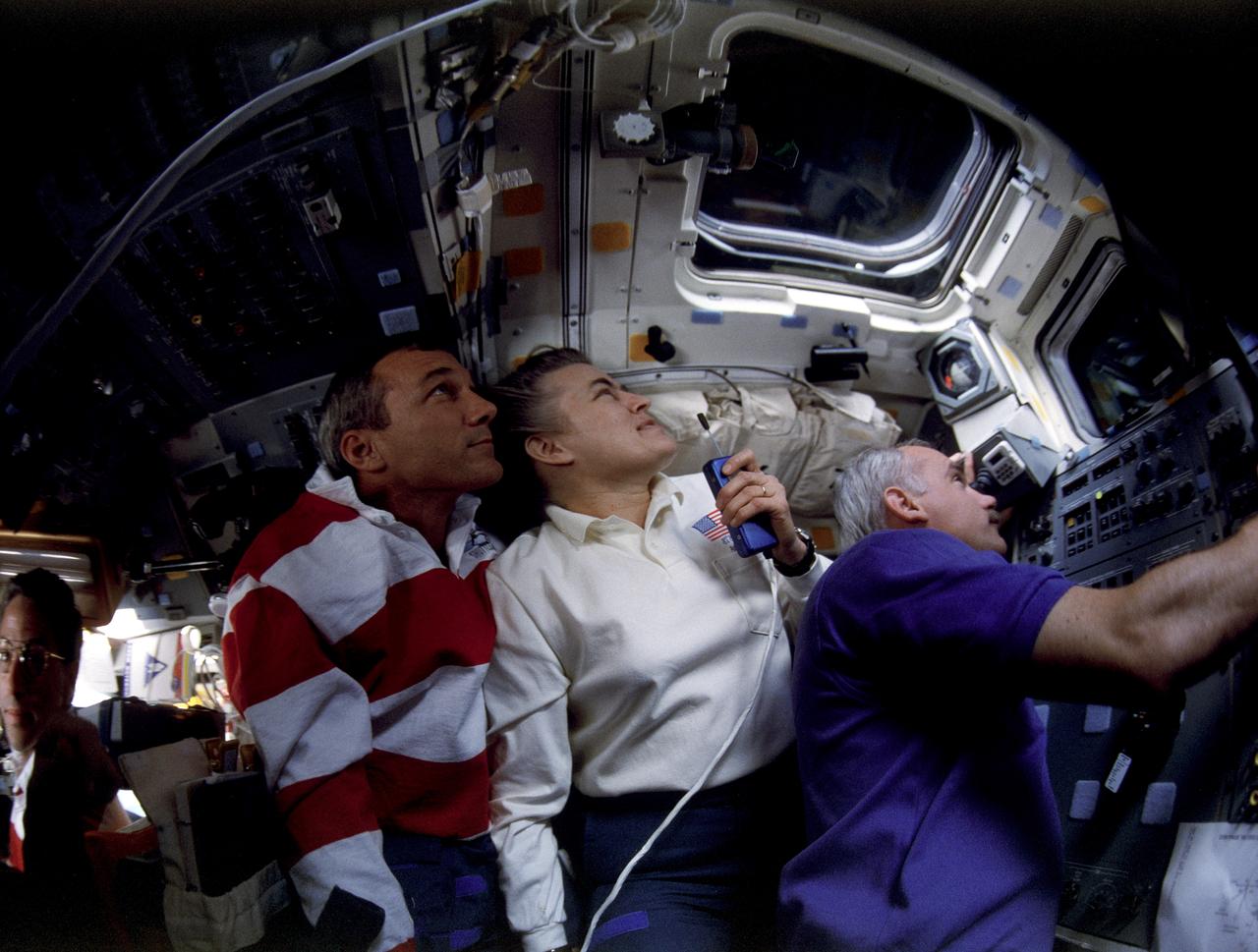
STS079-346-022 (16-26 Sept. 1996) --- Astronaut William F. Readdy, mission commander, looks at the night sky and Earth's horizon through a viewing port in the Spacehab Module in the space shuttle Atlantis' cargo bay.  The double module version of Spacehab was flying for the first time.
Astronauts Apt and Readdy at Spacehab window
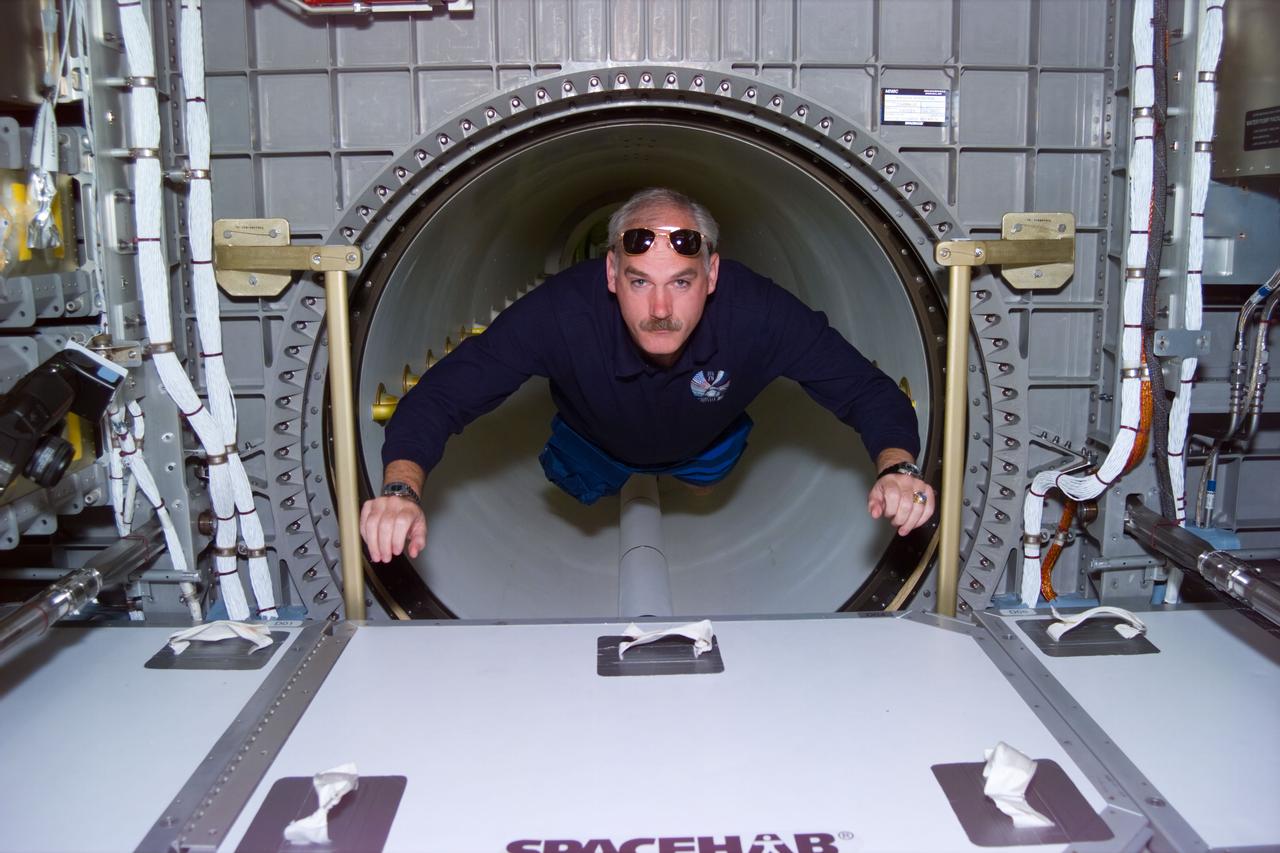
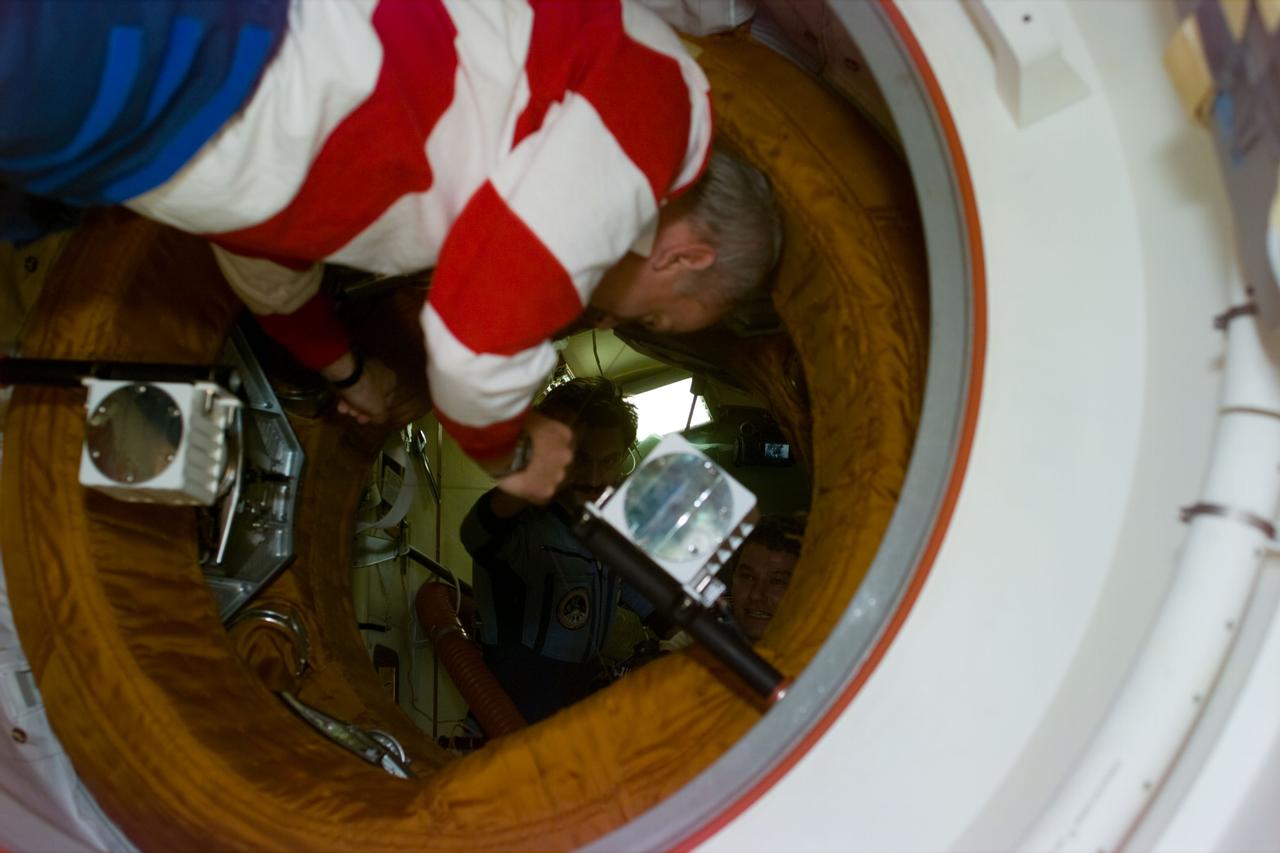
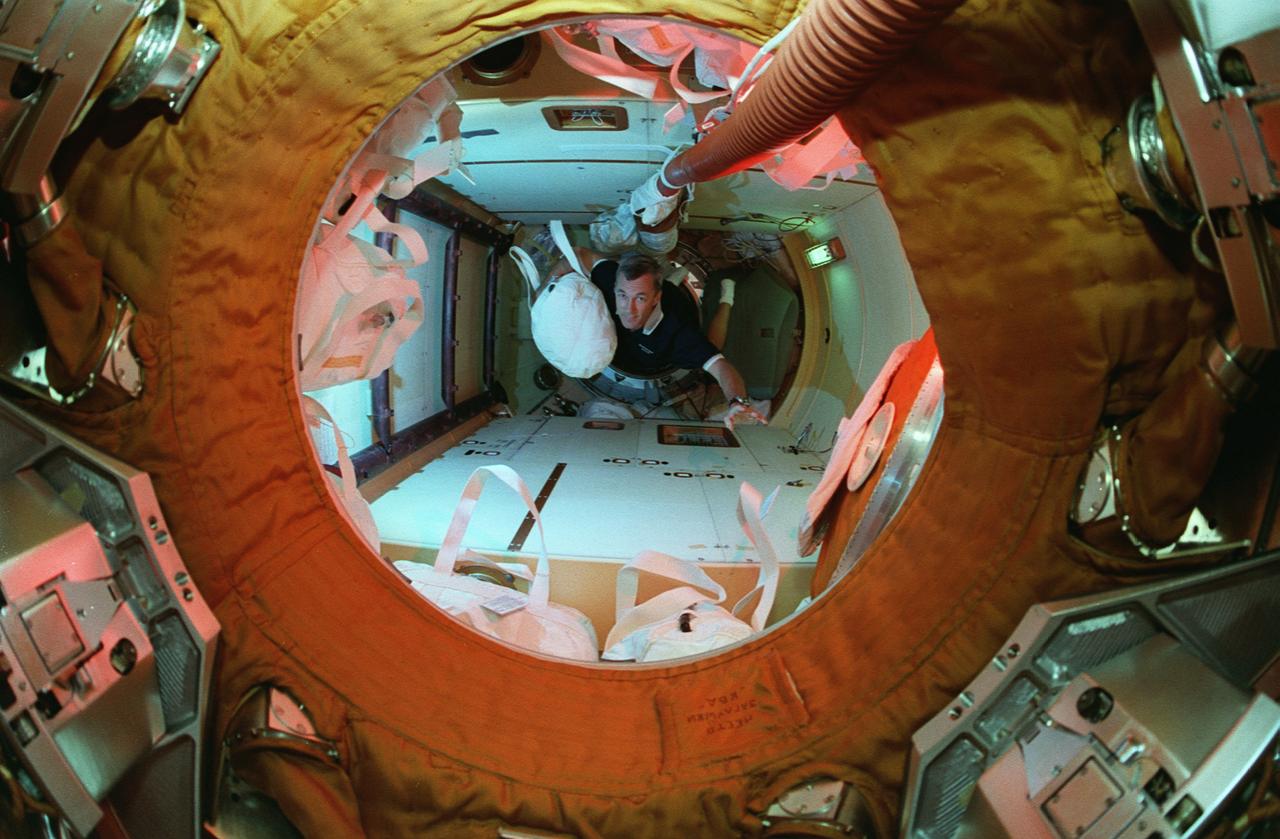
STS79-E-5008 (17 September 1996) --- Astronaut William F. Readdy, mission commander, floats through tunnel into Spacehab Module, onboard the Space Shuttle Atlantis on Flight Day 2.
Commander Readdy floats through connecting tunnel into Spacehab
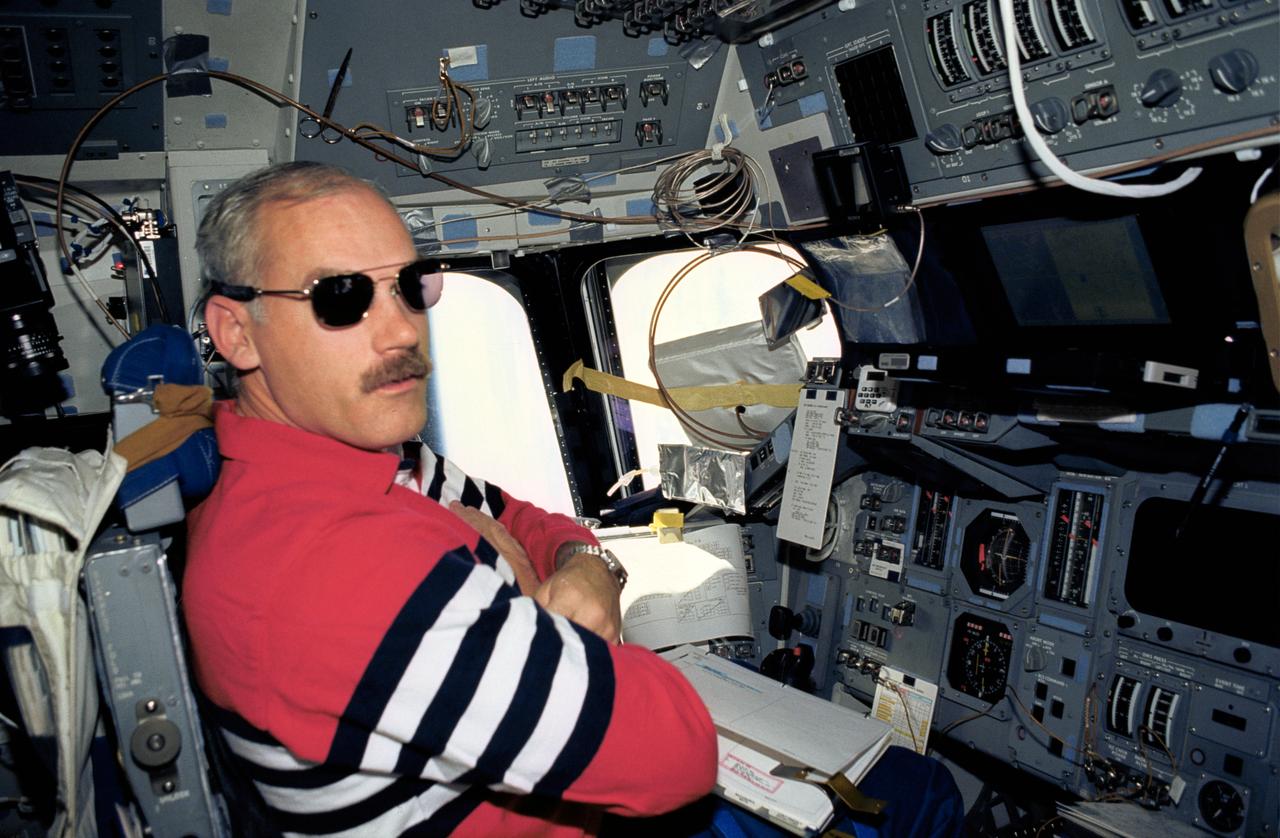
STS051-16-012 (12-22 Sept 1993) --- On Discovery's forward flight deck, astronaut William F. Readdy, pilot, wears shades to block out bright sunshine.  Much of the sunshine that normally would be coming through forward windows is blocked by an array of portable computers.  Readdy was joined by four other NASA astronauts for almost ten full days in space.
Astronaut William Readdy on flight deck wearing sun glasses
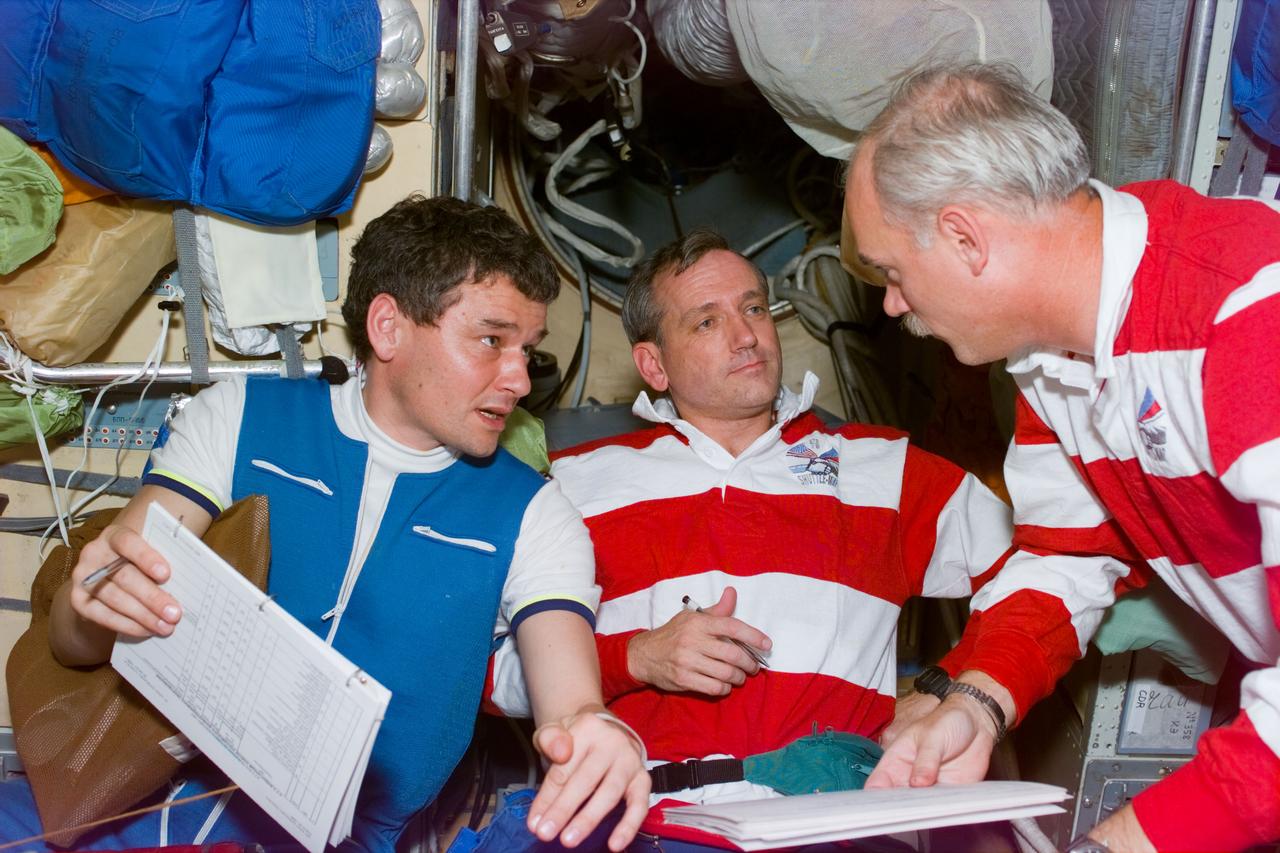
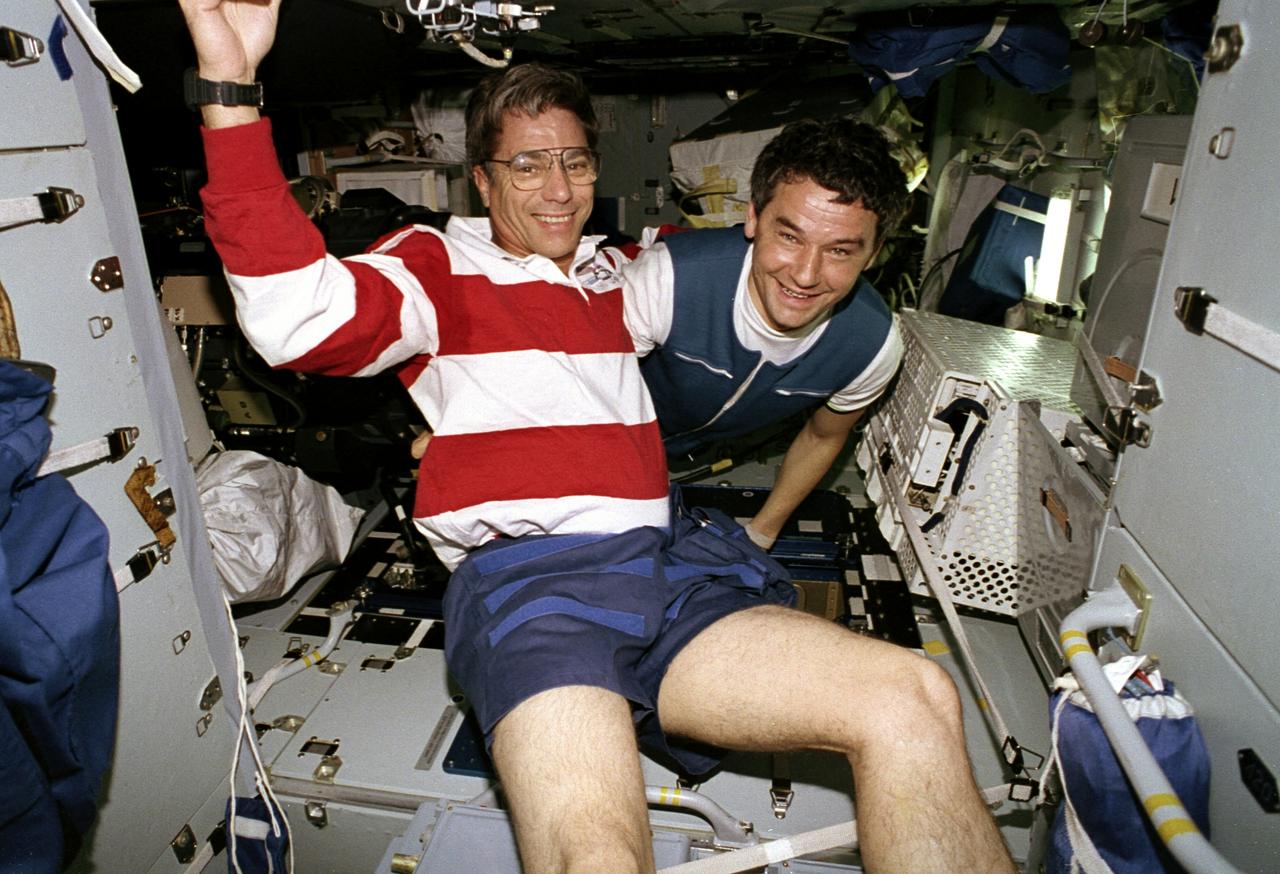
STS79-E-5088 (19 September 1996) --- Left to right, Valeri G. Korzun, Thomas D. Akers and William F. Readdy discuss the agenda of their shared activities for the next few days, on Flight Day 4.  Korzun and Readdy share common positions - that of commander - for the Mir-22 and STS-79 missions, respectively.  Akers is a STS-79 mission specialist.
Astronauts Akers and Readdy with Mir 22 commander Korzun in Base Block
STS79-E-5078 (19 September 1996) --- Astronaut and cosmonaut guest researcher Shannon W. Lucid sees her first astronaut visitors since March 1996, as she greets William F. Readdy, STS-79 commander, during Flight Day 4.  Some of Russia's Mir Space Station's components can be seen through the window in background.  Lucid is to return to Earth with Readdy's crew in a few days.
Mission commander Readdy and astronaut Lucid on aft flight deck
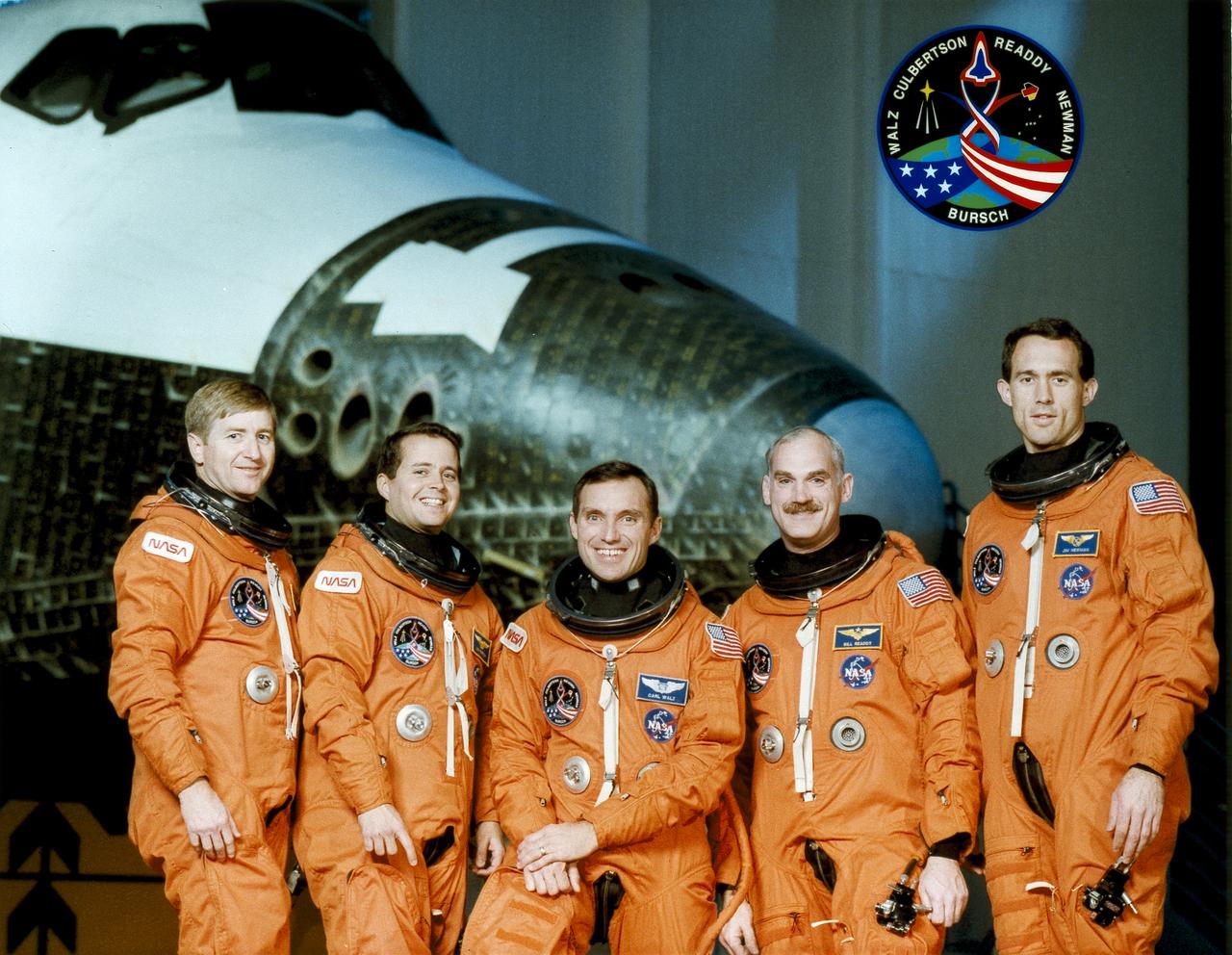
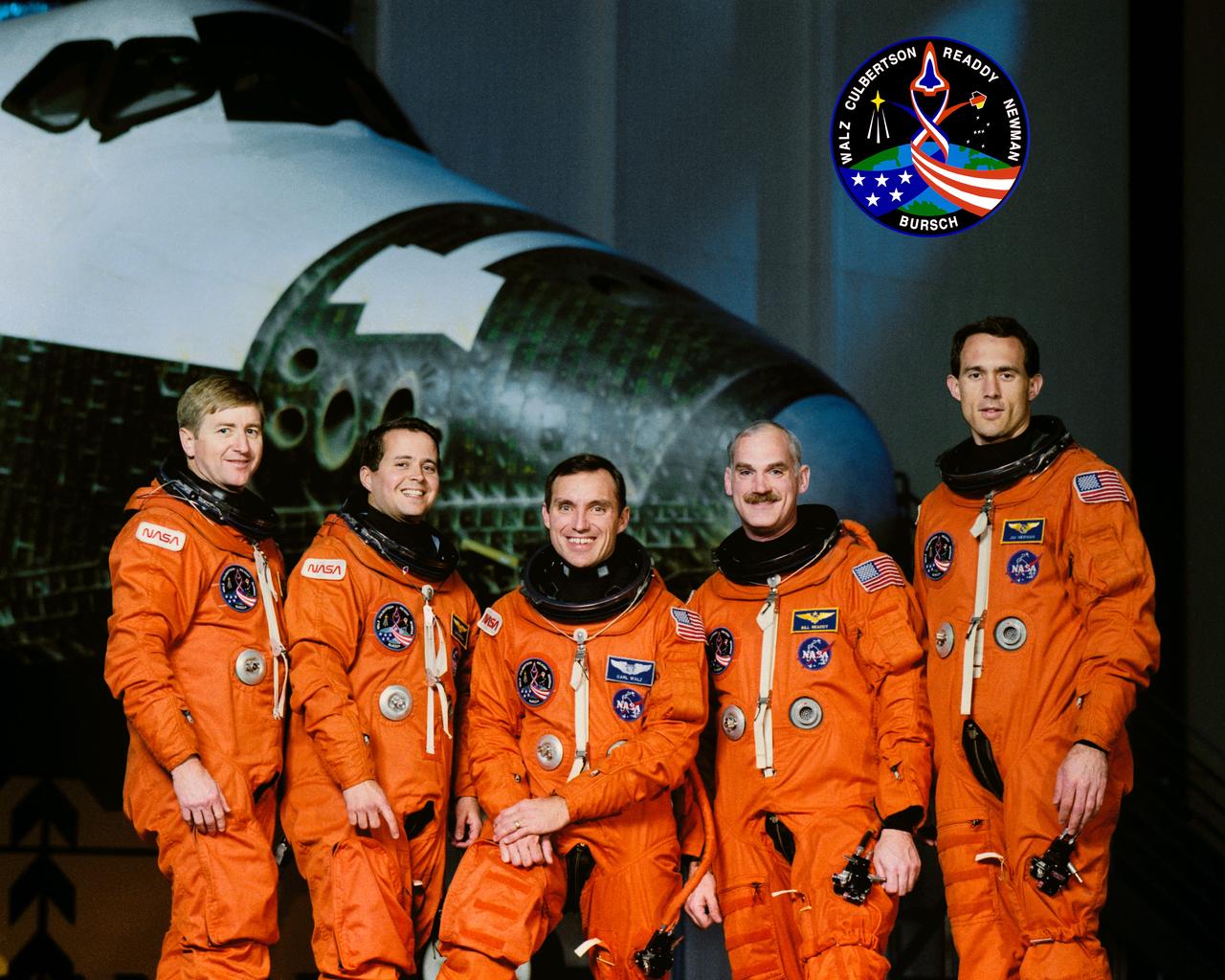
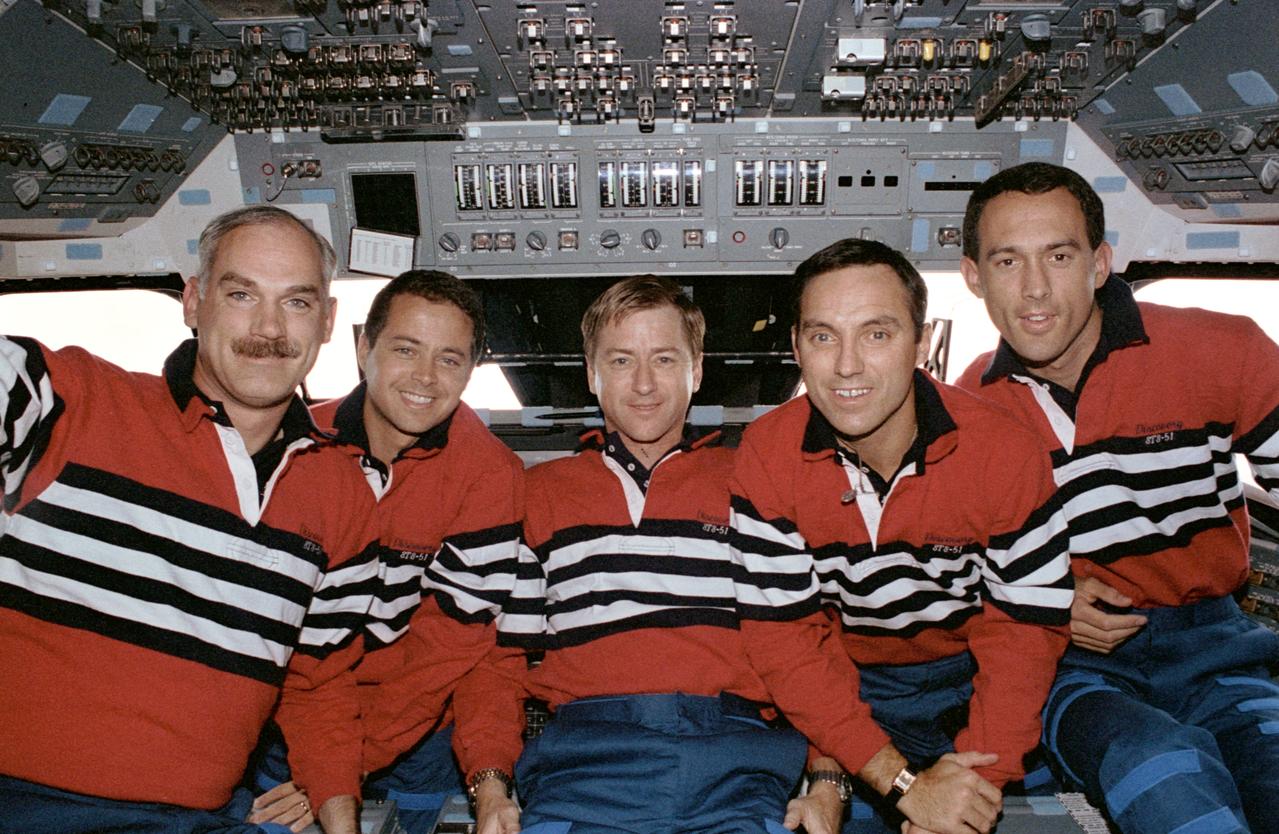
The STS-51 crew portrait features (left to right): Frank L. Culbertson, commander; Daniel W. Bursch, mission specialist; Carl E. Walz, mission specialist; William F. Readdy, pilot; and James H. Newman, mission specialist. The crew of five launched aboard the Space Shuttle Discovery on September 12, 1993 at 7:45:00 am (EDT). Two primary payloads included the Advanced Communications Technology Satellite (ACTS), and the Orbiting and Retrievable Far and Extreme Ultraviolet Spectrograph Shuttle Pallet Satellite (OERFEUS-SPAS).
Space Shuttle Projects
STS-79 mission commander William F. Readdy checks the center-line docking camera in the orbiter docking system (ODS) during flight day 3. The camera will be used on flight day 4 to line up the Atlantis for its docking with the Mir space station.
Mission commander Readdy checks center-line camera in ODS
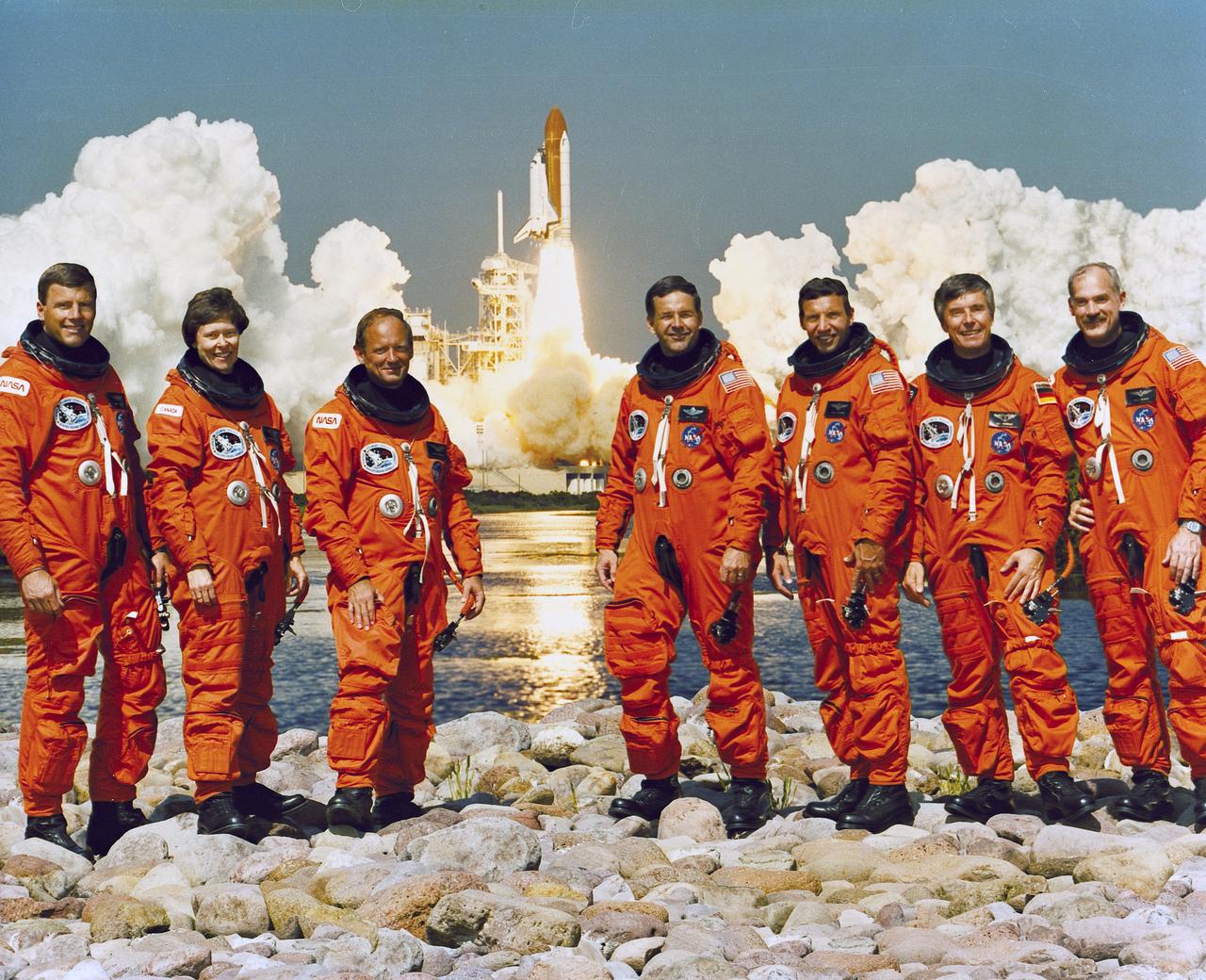
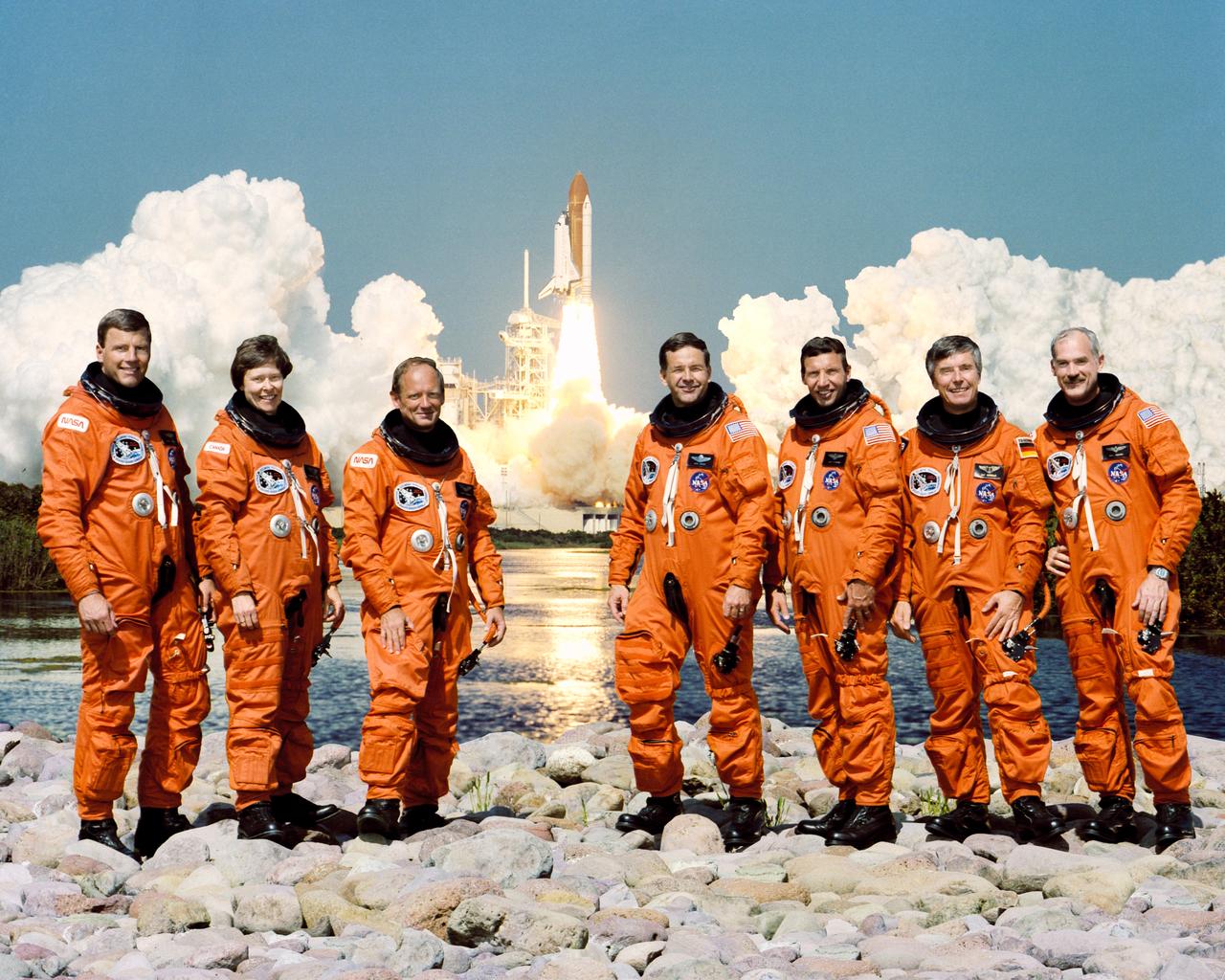
The STS-42 crew portrait includes from left to right: Stephen S. Oswald, pilot; Roberta L. Bondar, payload specialist 1; Norman E. Thagard, mission specialist 1; Ronald J. Grabe, commander; David C. Hilmers, mission specialist 2; Ulf D. Merbold, payload specialist 2; and William F. Readdy, mission specialist 3.  Launched aboard the Space Shuttle Discovery on January 22, 1992 at 9:52:33 am (EST), the STS-42 served as the International Microgravity Laboratory-1 (ML-1 ) mission.
Space Shuttle Projects
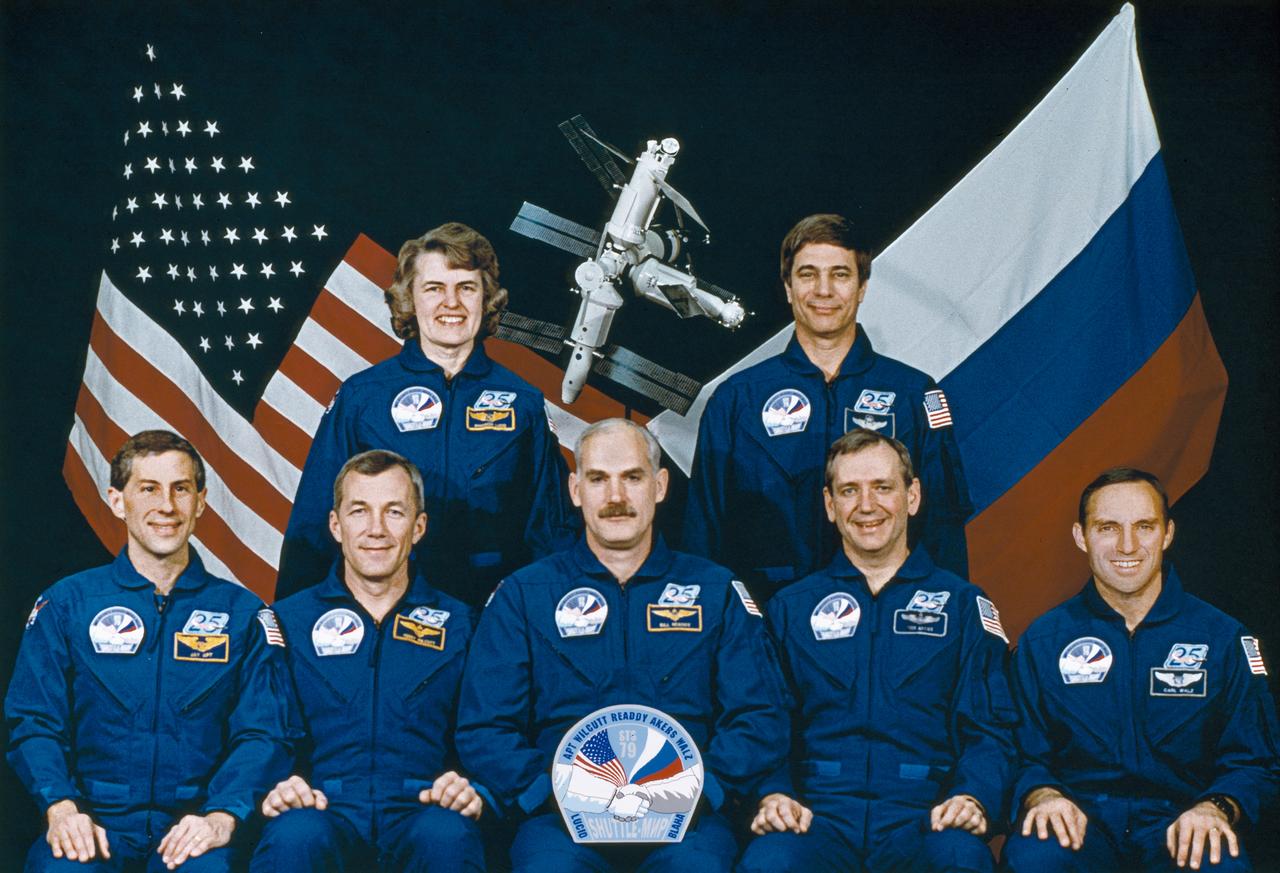
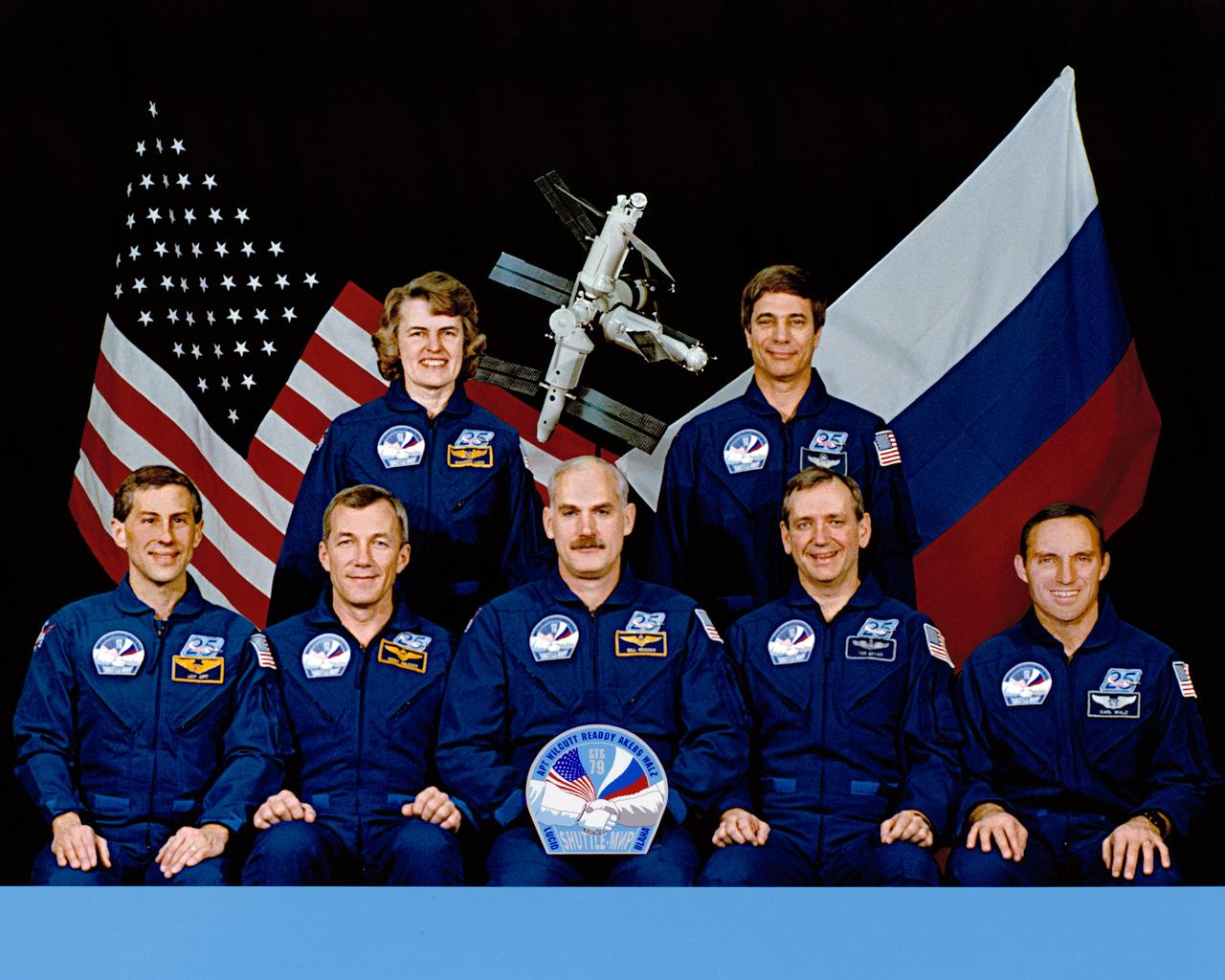
The crew assigned to the STS-79 mission included (seated front left to right) Jerome (Jay) Apt, mission specialist; Terrence W. Wilcutt, pilot; William F. Readdy, commander; Thomas D. Akers, and Carl E. Walz, both mission specialists. On the back row (left to right) are mission specialists Shannon W. Lucid, and John E. Blaha. Launched aboard the Space Shuttle Atlantis on September 16, 1996 at 4:54:49 am (EDT), the STS-79 mission marked the fourth U.S. Space Shuttle-Russian Space Station Mir docking, the second flight of the SPACEHAB module in support of Shuttle-Mir activities and the first flight of the SPACEHAB Double Module Configuration.
Space Shuttle Projects
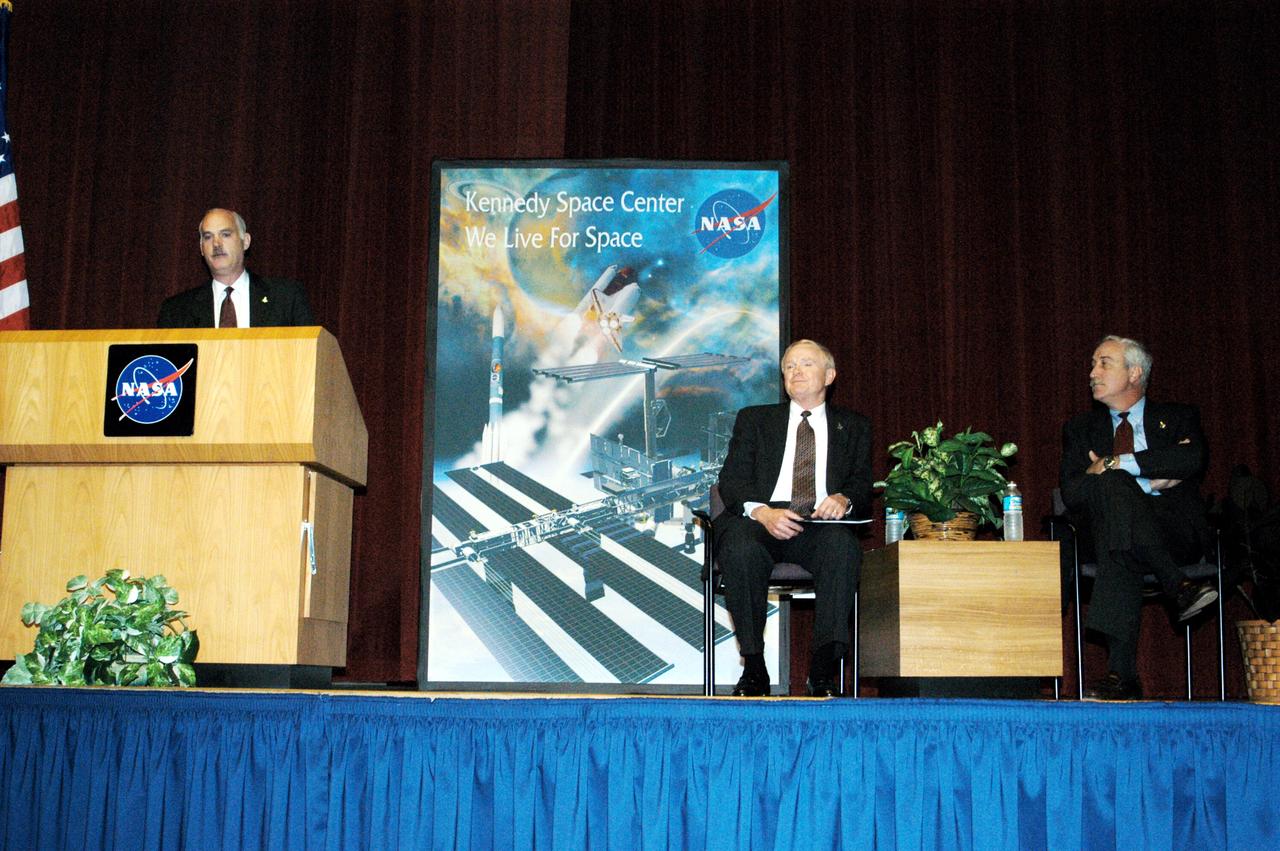
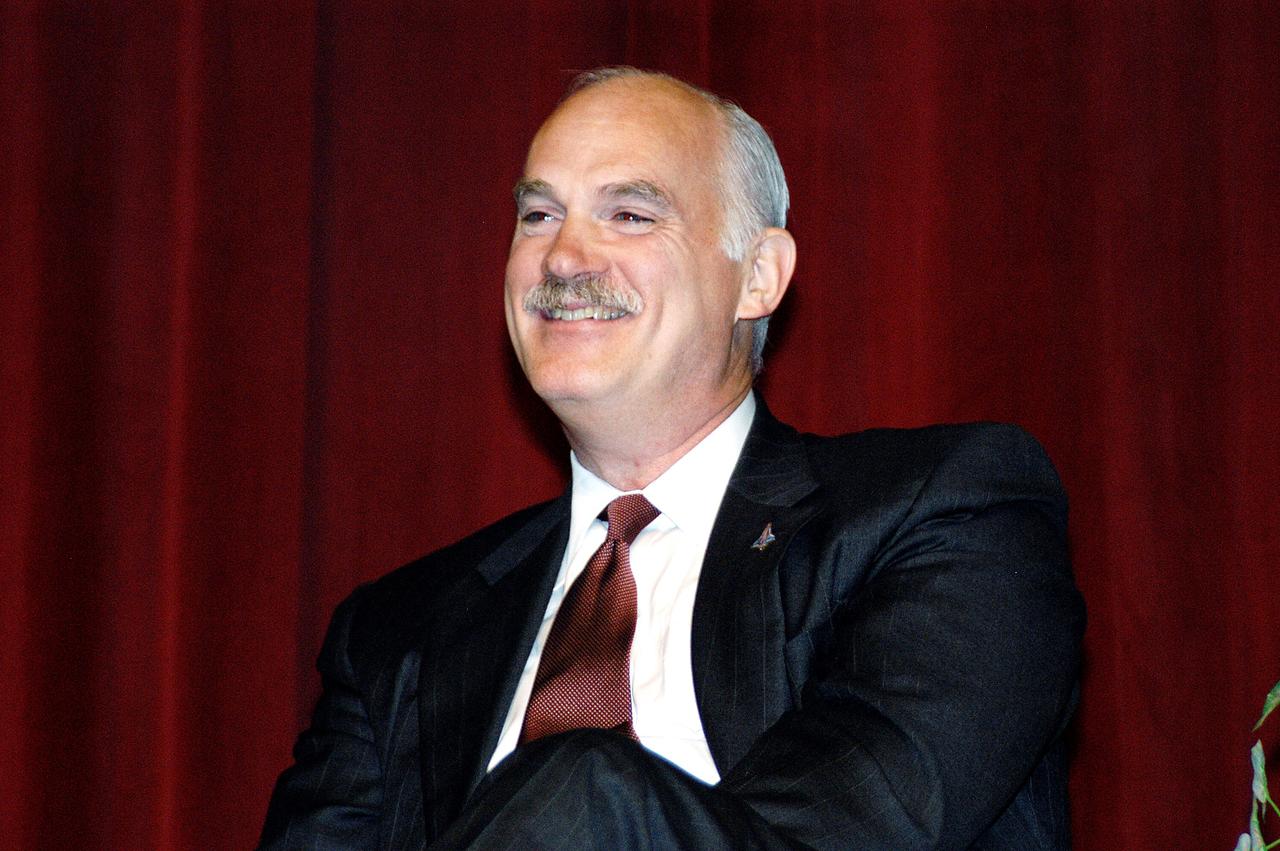
KENNEDY SPACE CENTER, FLA. -  NASA Associate Administrator for Space Flight William F. Readdy addresses a group of KSC employees assembled in the KSC Training Auditorium. From left are Readdy, KSC Center Director Roy D. Bridges, and NASA Administrator Sean O'Keefe. The occasion is the announcement of James W. Kennedy as the next director of the NASA Kennedy Space Center (KSC) in Florida. Kennedy has served as KSC's deputy director since November 2002. He will succeed Bridges, who was appointed on June 13 to lead NASA's Langley Research Center, Hampton, Va.
KENNEDY SPACE CENTER, FLA. - NASA Associate Administrator for Space Flight William F. Readdy addresses a group of KSC employees assembled in the KSC Training Auditorium. From left are Readdy, KSC Center Director Roy D. Bridges, and NASA Administrator Sean O'Keefe. The occasion is the announcement of James W. Kennedy as the next director of the NASA Kennedy Space Center (KSC) in Florida. Kennedy has served as KSC's deputy director since November 2002. He will succeed Bridges, who was appointed on June 13 to lead NASA's Langley Research Center, Hampton, Va.
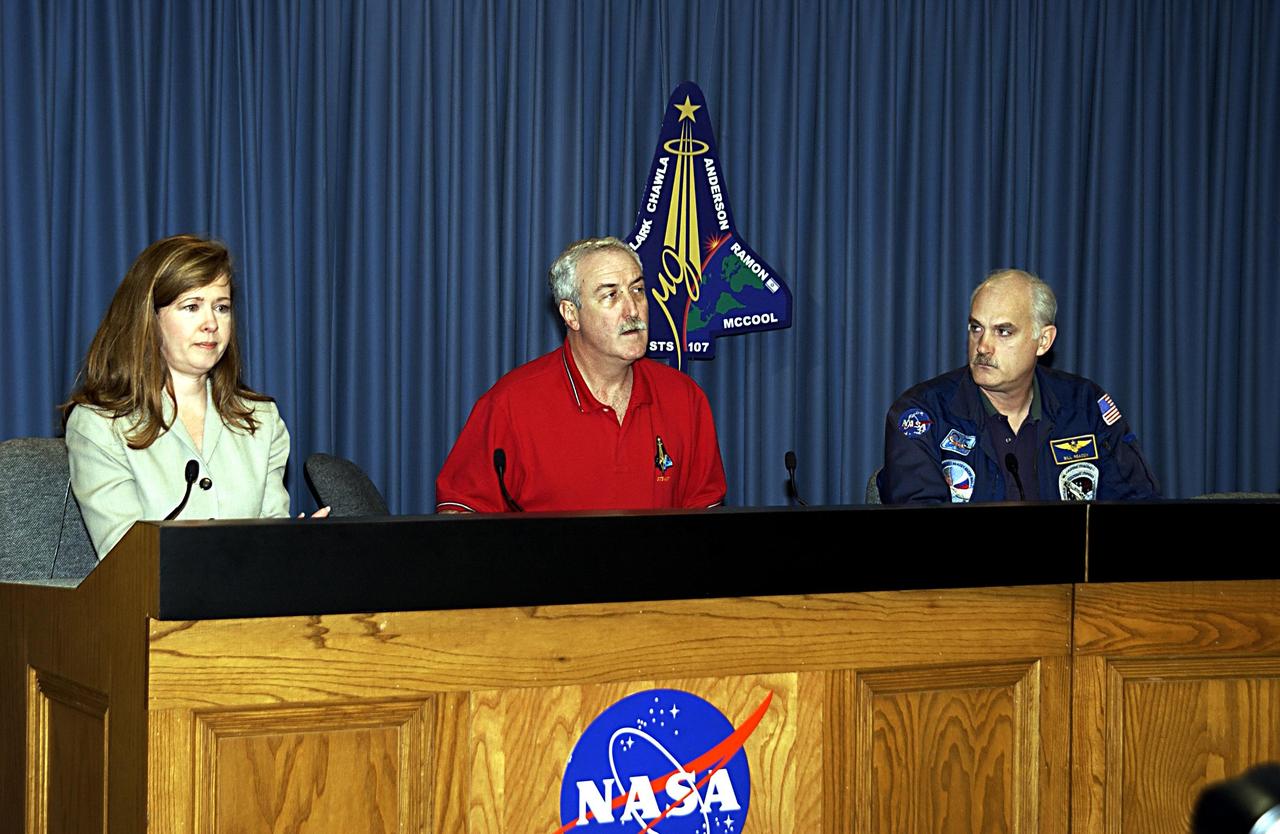
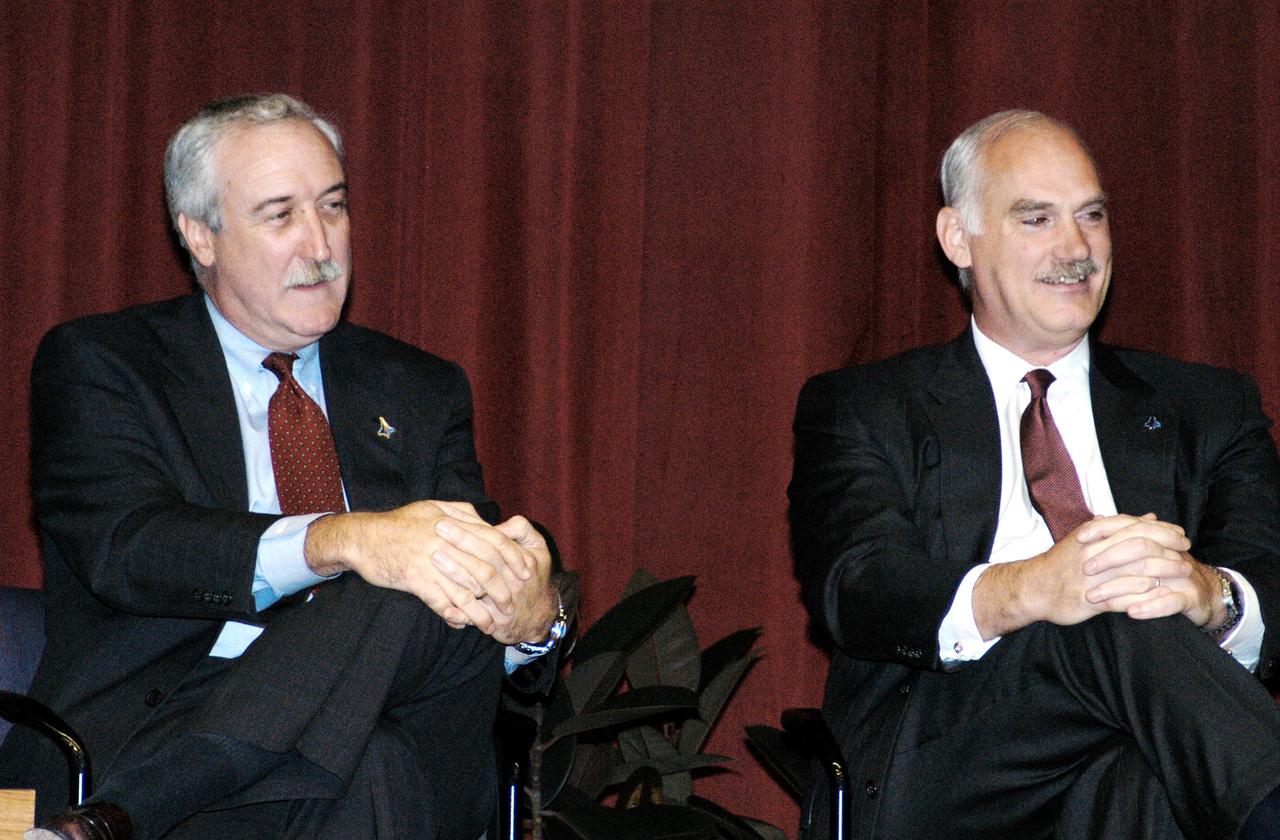
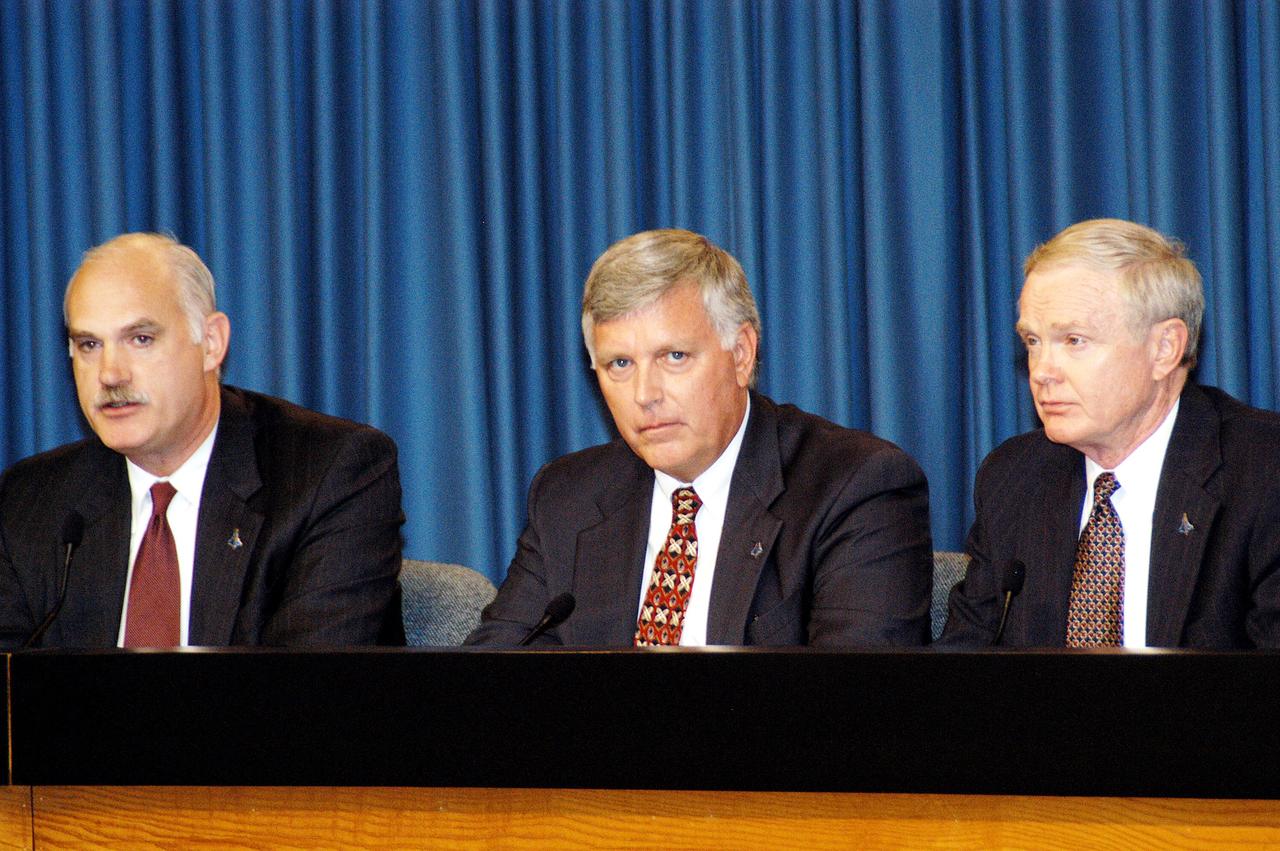
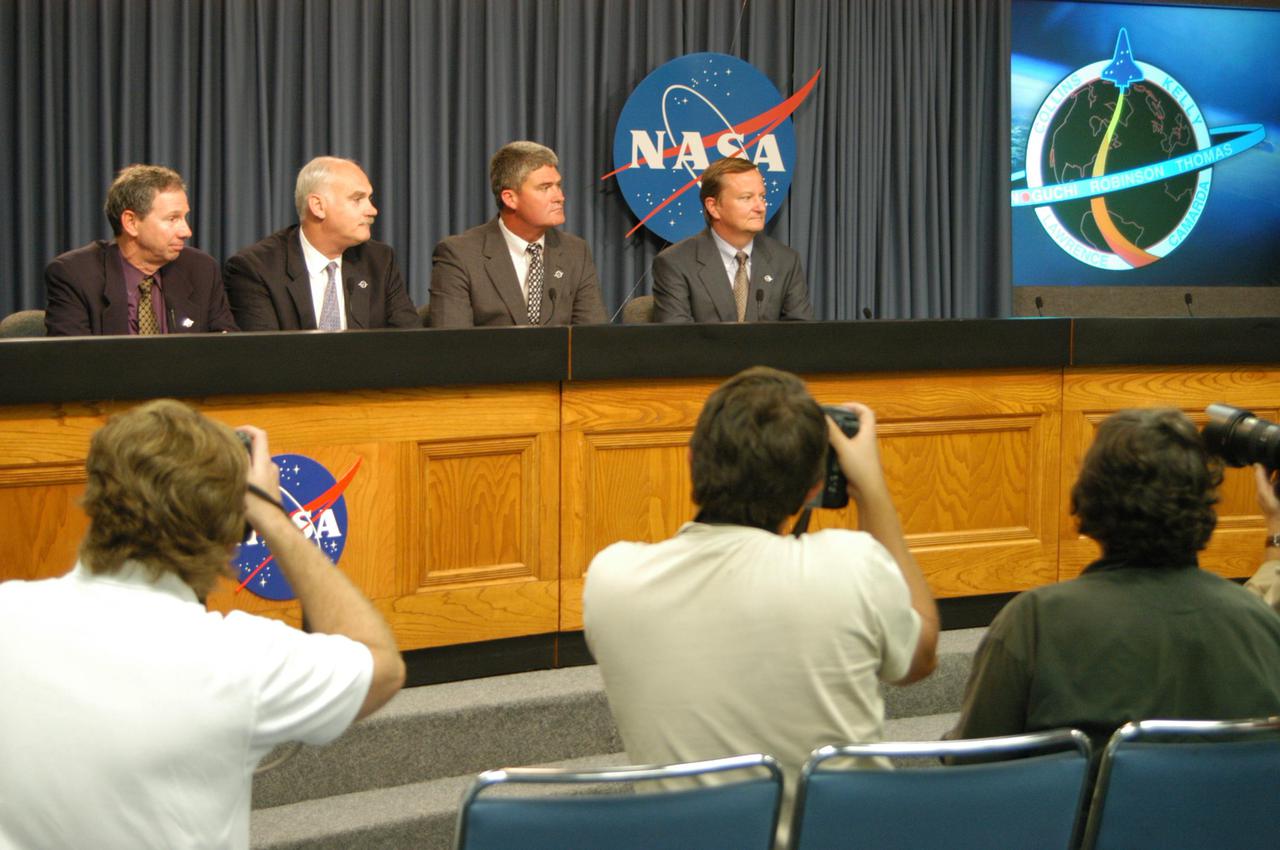
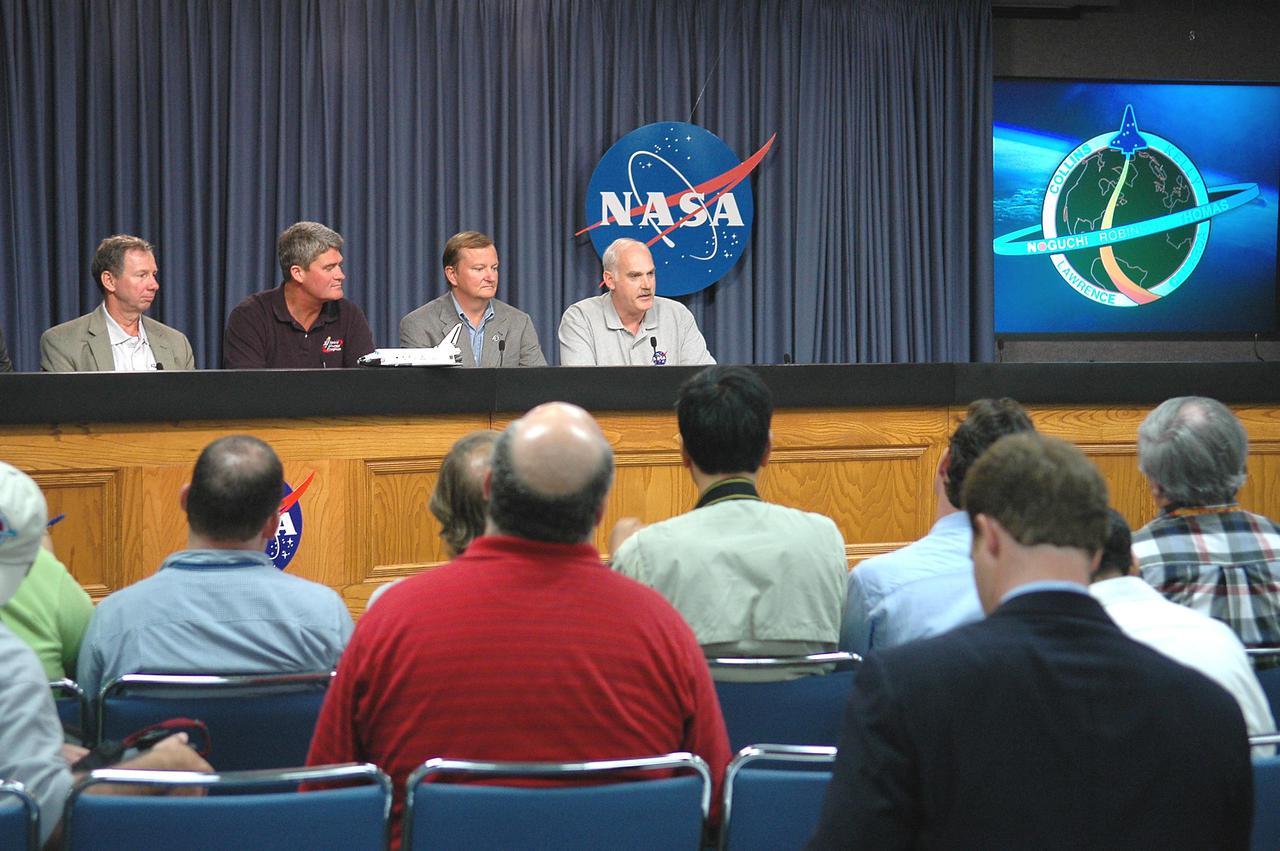
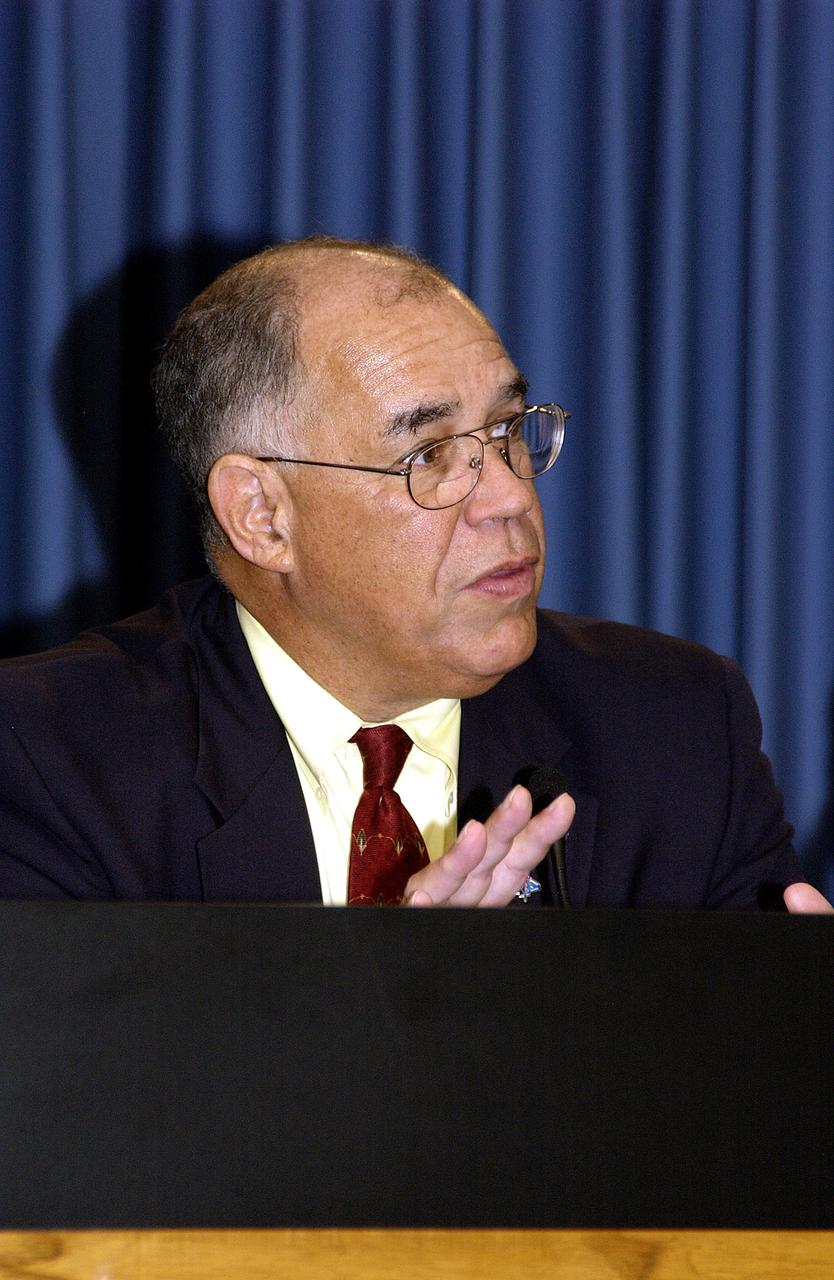
KENNEDY SPACE CENTER, FLA.  -  NASA Deputy Administrator Fred Gregory speaks at a media briefing at KSC.  NASA officials discussed the agency’s human space flight program.  Others on the panel were Associate Administrator for Space Flight Bill Readdy and Associate Administrator for Safety and Mission Assurance Bryan O’Connor.
KENNEDY SPACE CENTER, FLA. - NASA Deputy Administrator Fred Gregory speaks at a media briefing at KSC. NASA officials discussed the agency’s human space flight program. Others on the panel were Associate Administrator for Space Flight Bill Readdy and Associate Administrator for Safety and Mission Assurance Bryan O’Connor.
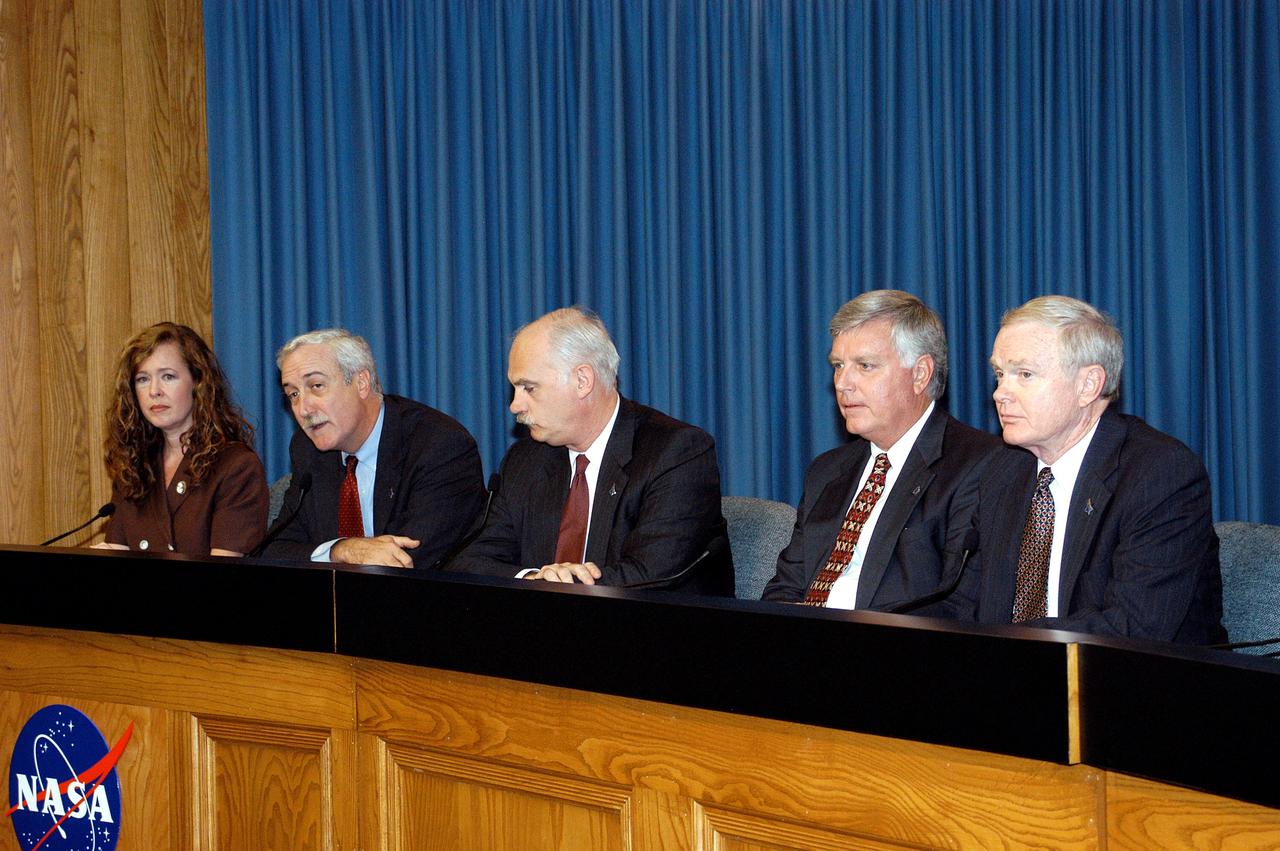
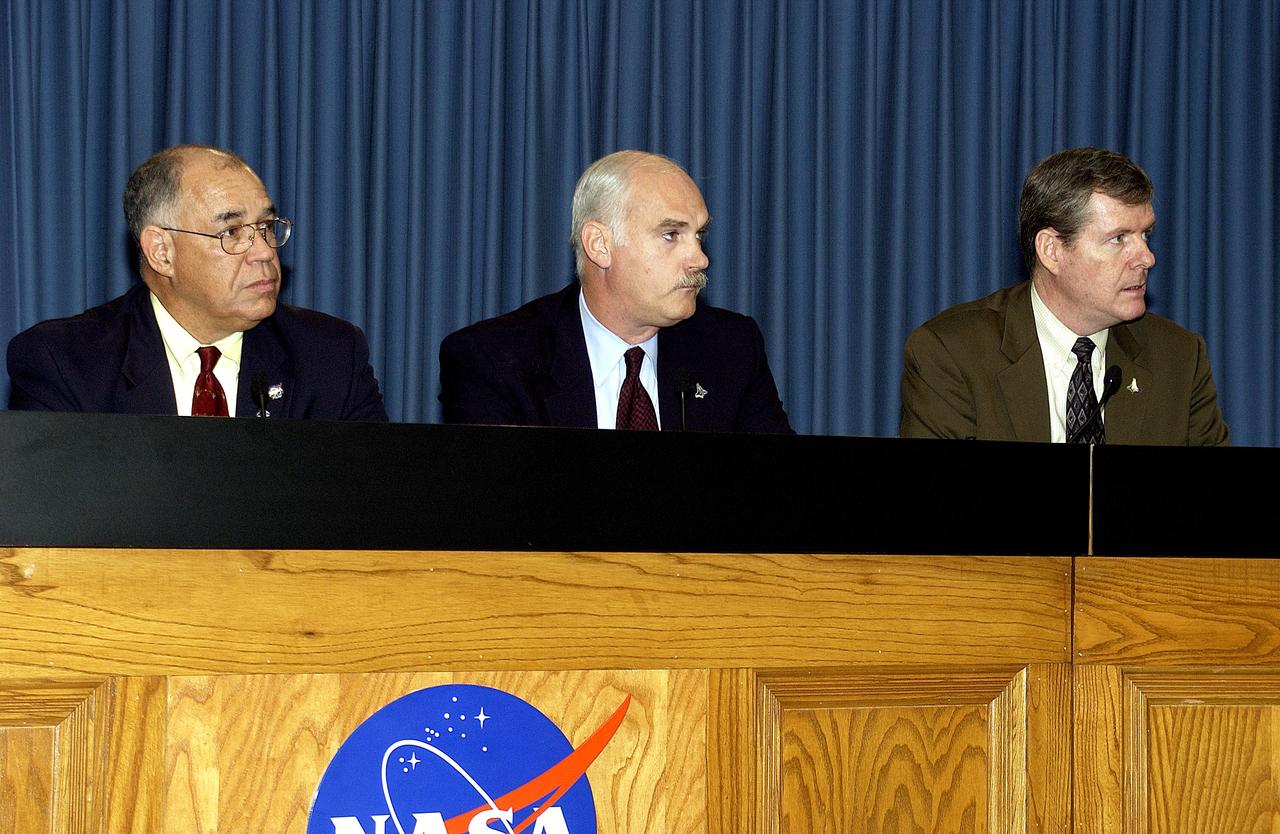
KENNEDY SPACE CENTER, FLA.  -  NASA officials brief the media at KSC about the agency’s human space flight program.  On the panel (left to right) are NASA Deputy Administrator Fred Gregory, Associate Administrator for Space Flight Bill Readdy and Associate Administrator for Safety and Mission Assurance Bryan O’Connor.
KENNEDY SPACE CENTER, FLA. - NASA officials brief the media at KSC about the agency’s human space flight program. On the panel (left to right) are NASA Deputy Administrator Fred Gregory, Associate Administrator for Space Flight Bill Readdy and Associate Administrator for Safety and Mission Assurance Bryan O’Connor.
KENNEDY SPACE CENTER, FLA.  -  Associate Administrator for Safety and Mission Assurance Bryan O’Connor  speaks at a media briefing at KSC.  NASA officials discussed the agency’s human space flight program.  Others on the panel were NASA Deputy Administrator Fred Gregory and Associate Administrator for Space Flight Bill Readdy
KENNEDY SPACE CENTER, FLA. - Associate Administrator for Safety and Mission Assurance Bryan O’Connor speaks at a media briefing at KSC. NASA officials discussed the agency’s human space flight program. Others on the panel were NASA Deputy Administrator Fred Gregory and Associate Administrator for Space Flight Bill Readdy
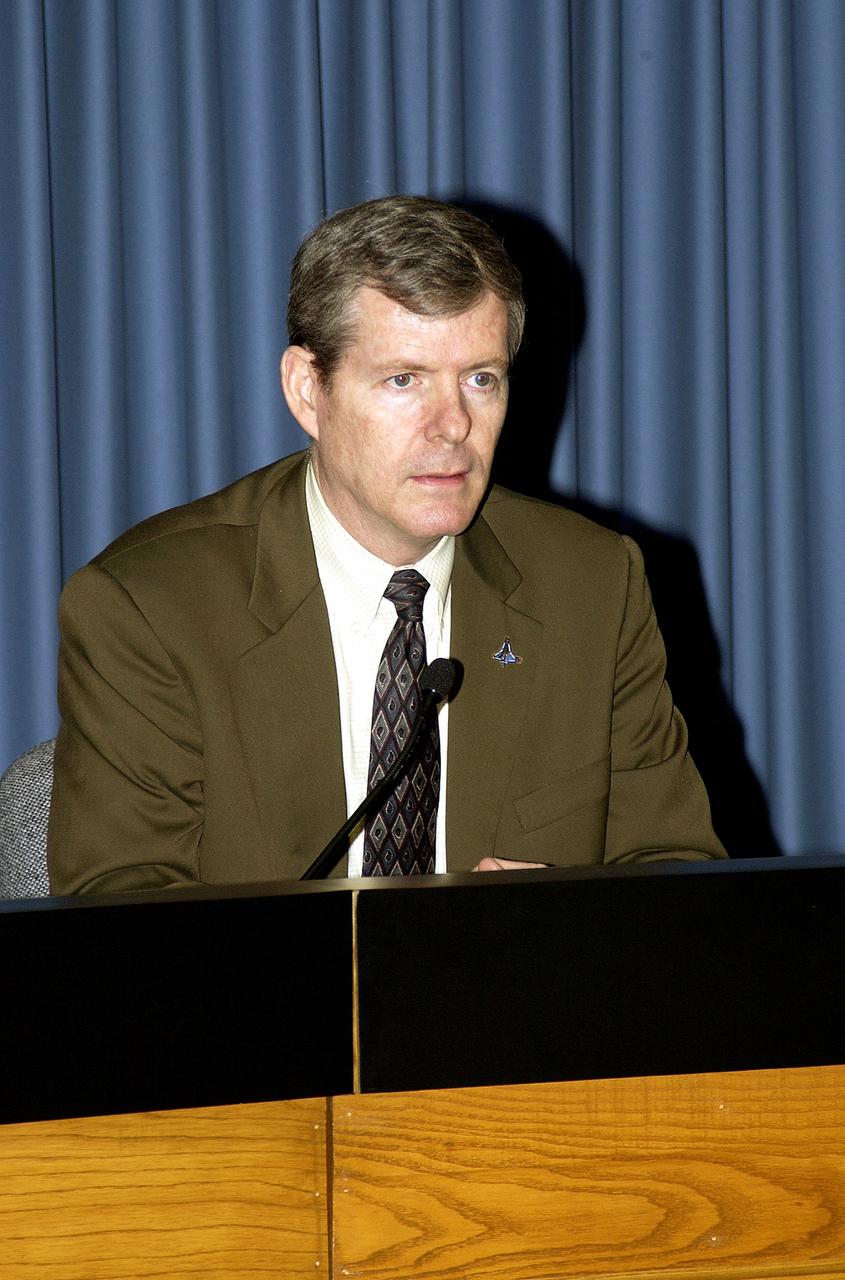
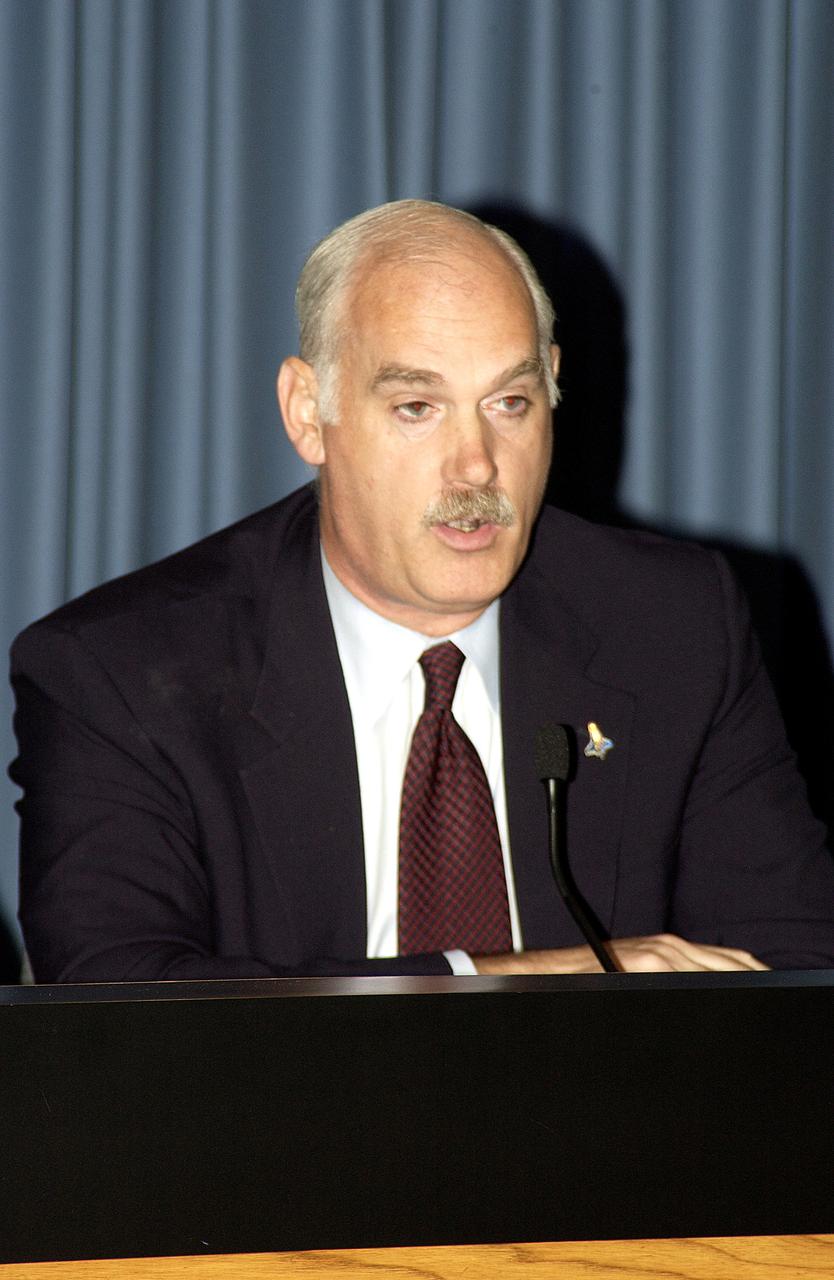
KENNEDY SPACE CENTER, FLA.  -  Associate Administrator for Space Flight Bill Readdy speaks at a media briefing at KSC.  NASA officials discussed the agency’s human space flight program.  Others on the panel were NASA Deputy Administrator Fred Gregory and Associate Administrator for Safety and Mission Assurance Bryan O’Connor.
KENNEDY SPACE CENTER, FLA. - Associate Administrator for Space Flight Bill Readdy speaks at a media briefing at KSC. NASA officials discussed the agency’s human space flight program. Others on the panel were NASA Deputy Administrator Fred Gregory and Associate Administrator for Safety and Mission Assurance Bryan O’Connor.
STS051-44-005 (12-22 sept 1993) --- The five crew members pose for the traditional inflight crew portrait on the Space Shuttle Discovery's flight deck.  Left to right are astronauts William F. Readdy, Daniel W. Bursch, Frank L. Culbertson, Jr., Carl E. Walz and James H. Newman.  Culbertson is mission commander, with Readdy serving as pilot and the others are mission specialists.
STS-51 onboard crew portrait
KENNEDY SPACE CENTER, FLA. - Following the loss of Columbia and crew on their return to Earth, Bill Readdy, associate administrator, Office of Space Flight, comments on the tragedy during a press briefing at KSC.
KSC-03pd0245
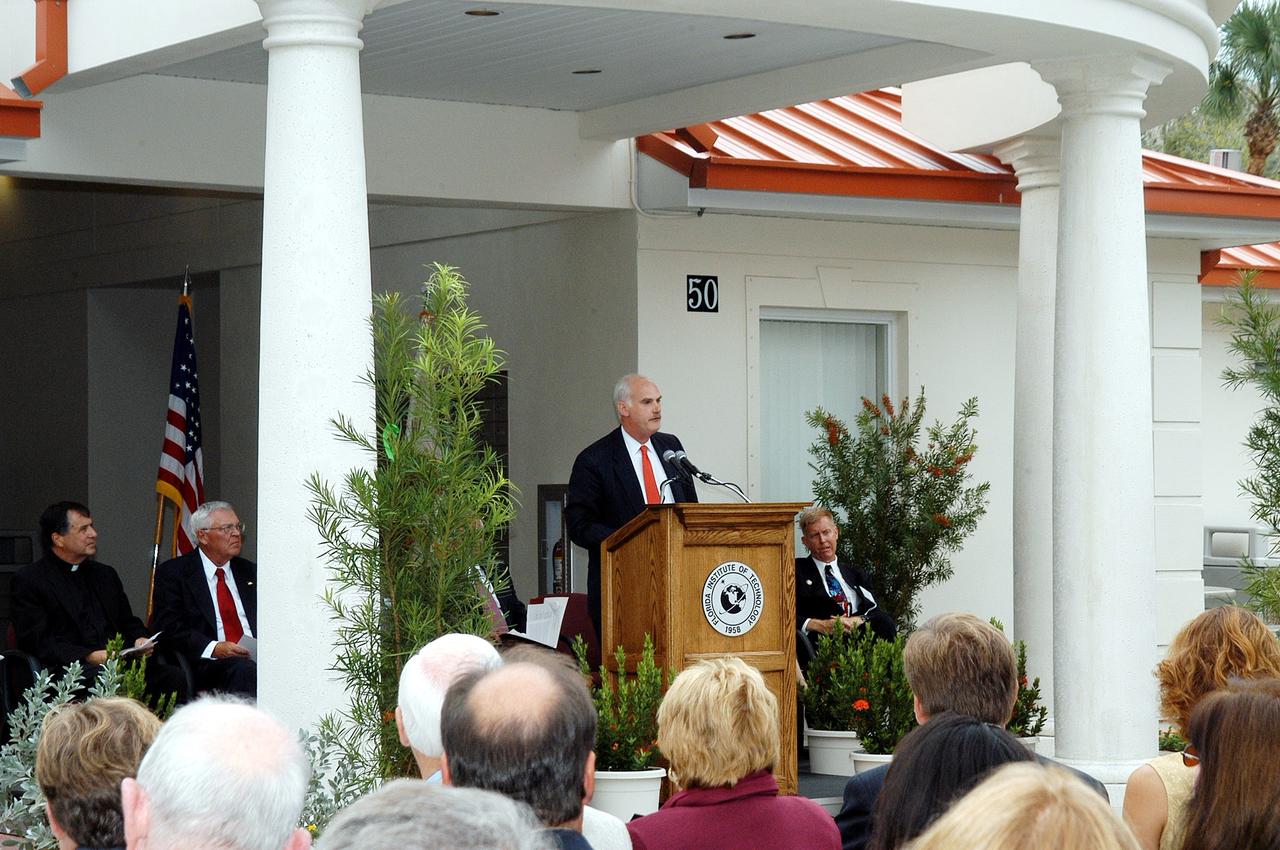
KENNEDY SPACE CENTER, FLA. -- NASA Associate Administrator for Space Flight William F. Readdy addresses the family members of the STS-107 astronauts, other dignitaries, members of the university community and the public gathered for the dedication ceremony of the Columbia Village at the Florida Institute of Technology in Melbourne, Fla.  Each of the seven new residence halls in the complex is named for one of the STS-107 astronauts who perished during the Columbia accident -- Rick Husband, Willie McCool, Laurel Clark, Michael Anderson, David Brown, Kalpana Chawla, and Ilan Ramon.
KENNEDY SPACE CENTER, FLA. -- NASA Associate Administrator for Space Flight William F. Readdy addresses the family members of the STS-107 astronauts, other dignitaries, members of the university community and the public gathered for the dedication ceremony of the Columbia Village at the Florida Institute of Technology in Melbourne, Fla. Each of the seven new residence halls in the complex is named for one of the STS-107 astronauts who perished during the Columbia accident -- Rick Husband, Willie McCool, Laurel Clark, Michael Anderson, David Brown, Kalpana Chawla, and Ilan Ramon.
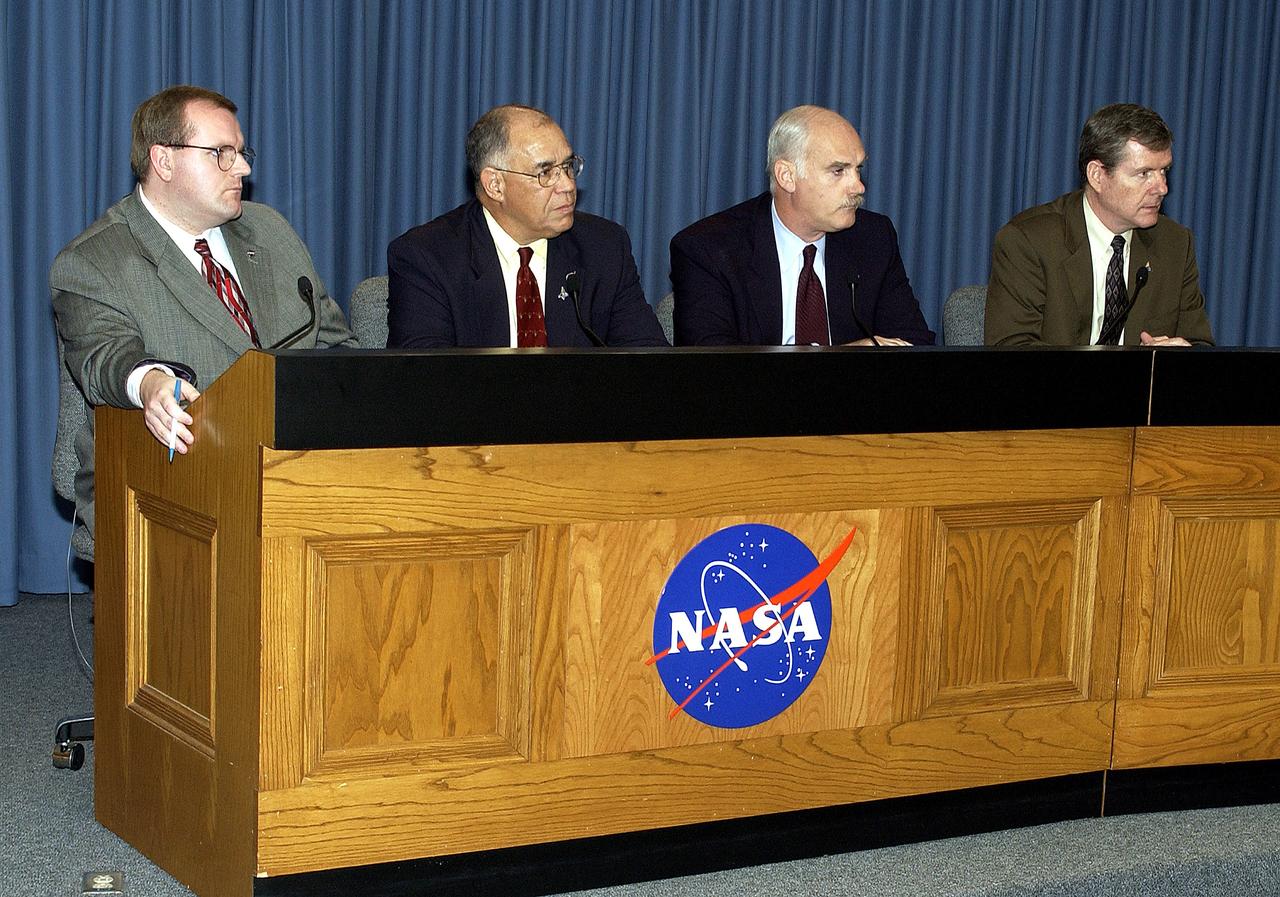
KENNEDY SPACE CENTER, FLA.  - NASA officials brief the media at KSC about the agency’s human space flight program.  At left is moderator Allard Beutel, with NASA Headquarters.  Others on the panel (left to right) are NASA Deputy Administrator Fred Gregory, Associate Administrator for Space Flight Bill Readdy and Associate Administrator for Safety and Mission Assurance Bryan O’Connor.
KENNEDY SPACE CENTER, FLA. - NASA officials brief the media at KSC about the agency’s human space flight program. At left is moderator Allard Beutel, with NASA Headquarters. Others on the panel (left to right) are NASA Deputy Administrator Fred Gregory, Associate Administrator for Space Flight Bill Readdy and Associate Administrator for Safety and Mission Assurance Bryan O’Connor.
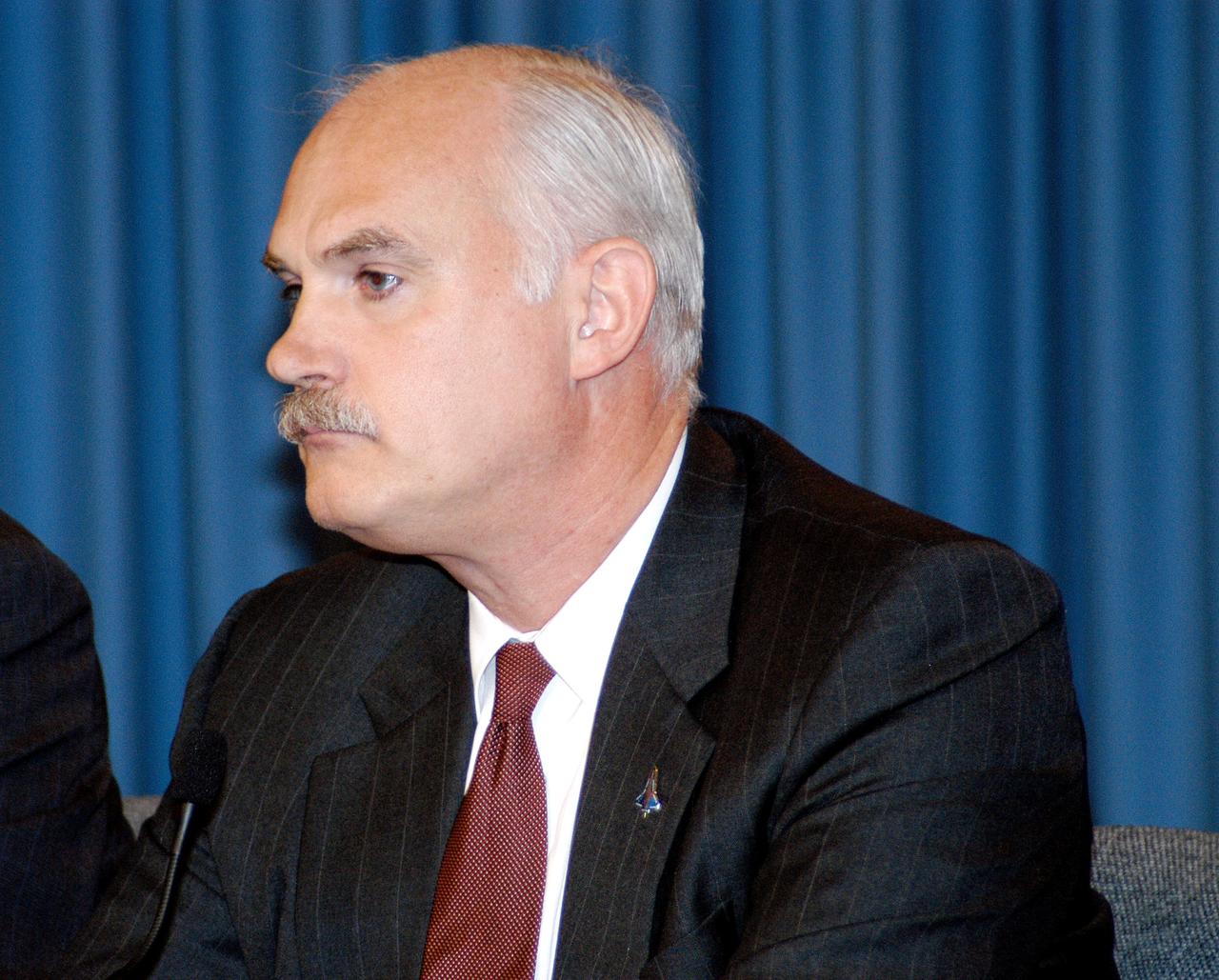
KENNEDY SPACE CENTER, FLA. -  NASA Associate Administrator for Space Flight William F. Readdy participates in a press conference in KSC's Press Site Auditorium. The press conference followed the official announcement of James W. Kennedy as the next director of the NASA Kennedy Space Center (KSC) in Florida. Kennedy has served as KSC's deputy director since November 2002.  He will succeed KSC Director Roy D. Bridges, who was appointed on June 13 to lead NASA's Langley Research Center, Hampton, Va.
KENNEDY SPACE CENTER, FLA. - NASA Associate Administrator for Space Flight William F. Readdy participates in a press conference in KSC's Press Site Auditorium. The press conference followed the official announcement of James W. Kennedy as the next director of the NASA Kennedy Space Center (KSC) in Florida. Kennedy has served as KSC's deputy director since November 2002. He will succeed KSC Director Roy D. Bridges, who was appointed on June 13 to lead NASA's Langley Research Center, Hampton, Va.
KENNEDY SPACE CENTER, FLA. -  STS-79 Commander William F. Readdy arrives at KSC's Shuttle Landing Facility with five fellow astronauts, ready to participate in the Terminal Countdown Demonstration Test (TCDT).  The TCDT is a dress rehearsal for launch for the flight crew and launch team.  Over the next several days, the astronauts will take part in training exercises at the launch pad that will culminate in a simulated launch countdown.  The Space Shuttle Atlantis is being prepared for liftoff on STS-79 around Sept. 12.
KENNEDY SPACE CENTER, FLA. - STS-79 Commander William F. Readdy arrives at KSC's Shuttle Landing Facility with five fellow astronauts, ready to participate in the Terminal Countdown Demonstration Test (TCDT). The TCDT is a dress rehearsal for launch for the flight crew and launch team. Over the next several days, the astronauts will take part in training exercises at the launch pad that will culminate in a simulated launch countdown. The Space Shuttle Atlantis is being prepared for liftoff on STS-79 around Sept. 12.
KENNEDY SPACE CENTER, FLA. -  NASA Associate Administrator for Space Flight William F. Readdy addresses a group of KSC employees assembled in the KSC Training Auditorium.  The occasion is the announcement of James W. Kennedy as the next director of the NASA Kennedy Space Center (KSC) in Florida. Kennedy has served as KSC's deputy director since November 2002. He will succeed KSC Director Roy D. Bridges, who was appointed on June 13 to lead NASA's Langley Research Center, Hampton, Va.
KENNEDY SPACE CENTER, FLA. - NASA Associate Administrator for Space Flight William F. Readdy addresses a group of KSC employees assembled in the KSC Training Auditorium. The occasion is the announcement of James W. Kennedy as the next director of the NASA Kennedy Space Center (KSC) in Florida. Kennedy has served as KSC's deputy director since November 2002. He will succeed KSC Director Roy D. Bridges, who was appointed on June 13 to lead NASA's Langley Research Center, Hampton, Va.
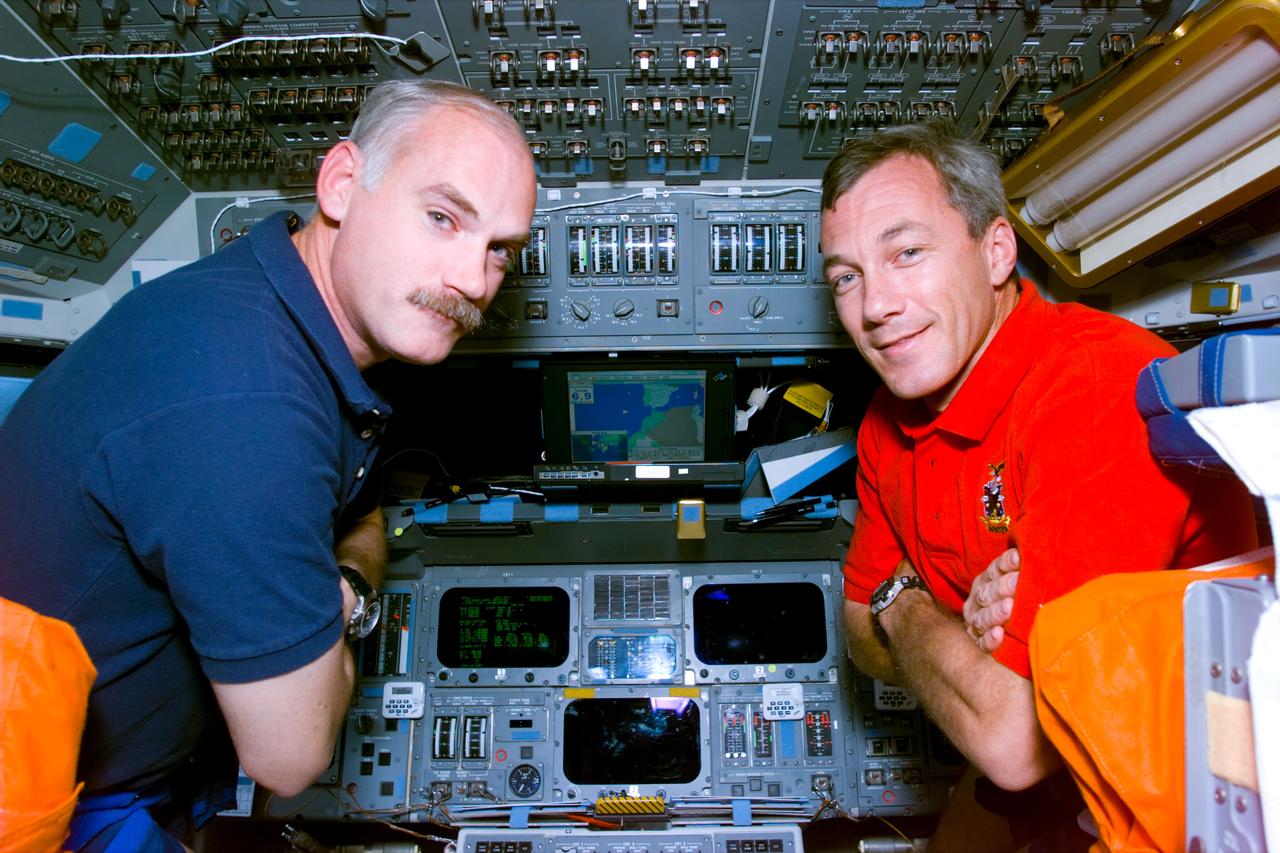
STS079-358-027 (16-26 September 1996) --- Astronaut William F. Readdy looks over a checklist at the commander's station on the Space Shuttle Atlantis' flight deck.  Among his many other duties as mission commander, Readdy controlled the Orbiter during a series of maneuvers associated with the docking and undocking operations with Russia's Mir Space Station.  This photograph is one of fifteen 35mm frames (along with four 70mm frames) of still photography documenting the activities of NASA's STS-79 mission, which began with a September 16, 1996, liftoff from Launch Pad 39A the Kennedy Space Center (KSC) and ended with a landing at KSC on September 26, 1996.  Onboard for the launch were astronauts Readdy; Terrence W. Wilcutt, pilot; John E. Blaha, Jerome (Jay) Apt, Thomas D. Akers and Carl E. Walz, all mission specialists.  On flight day 4, the crew docked with Russia's Mir Space Station.  Shannon W. Lucid, who had spent six months aboard Mir, switched cosmonaut guest researcher roles with Blaha.  The latter joined fellow Mir-22 crewmembers Valeri G. Korzun, commander, and Aleksandr Y. Kaleri, flight engineer.
STS-79 crew on flight deck during rendezvous with Mir
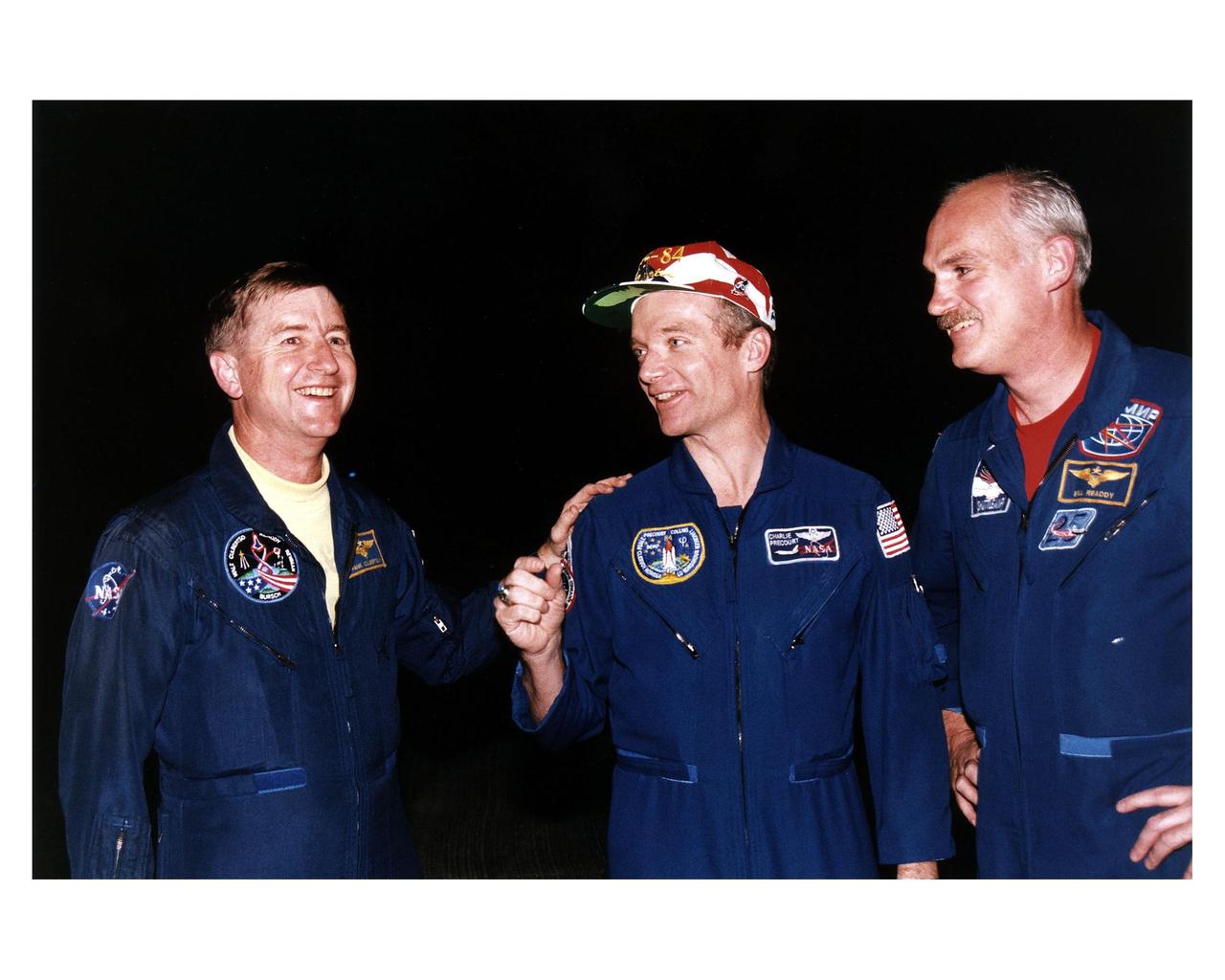
STS-84 Commander Charles J. Precourt talks with fellow astronauts Frank Culbertson, at left, and William F. Readdy after their arrival at KSC’s Shuttle Landing Facilty. Culbertson, NASA director of the Phase One Program of the International Space Station, and Readdy, manager, program development, in the Space Shuttle Program Office at Johnson Space Center, were the pilots of T-38 jets which brought STS-84 crew members to KSC for the launch. Culbertson’s passenger was STS-84 Mission Specialist Carlos I. Noriega; Readdy’s passenger was Mission Specialist C. Michael Foale. Liftoff of Space Shuttle Mission STS-84 is scheduled May 15. STS-84 will be the sixth docking of the Space Shuttle with the Russian Space Station Mir. During the docking, Foale will transfer to the Russian space station to become a member of the Mir 23 crew, replacing U.S. astronaut Jerry M. Linenger, who will return to Earth on Atlantis. Foale is scheduled to remain on Mir about four months until his replacement arrives on STS-86 in September
KSC-97pc784
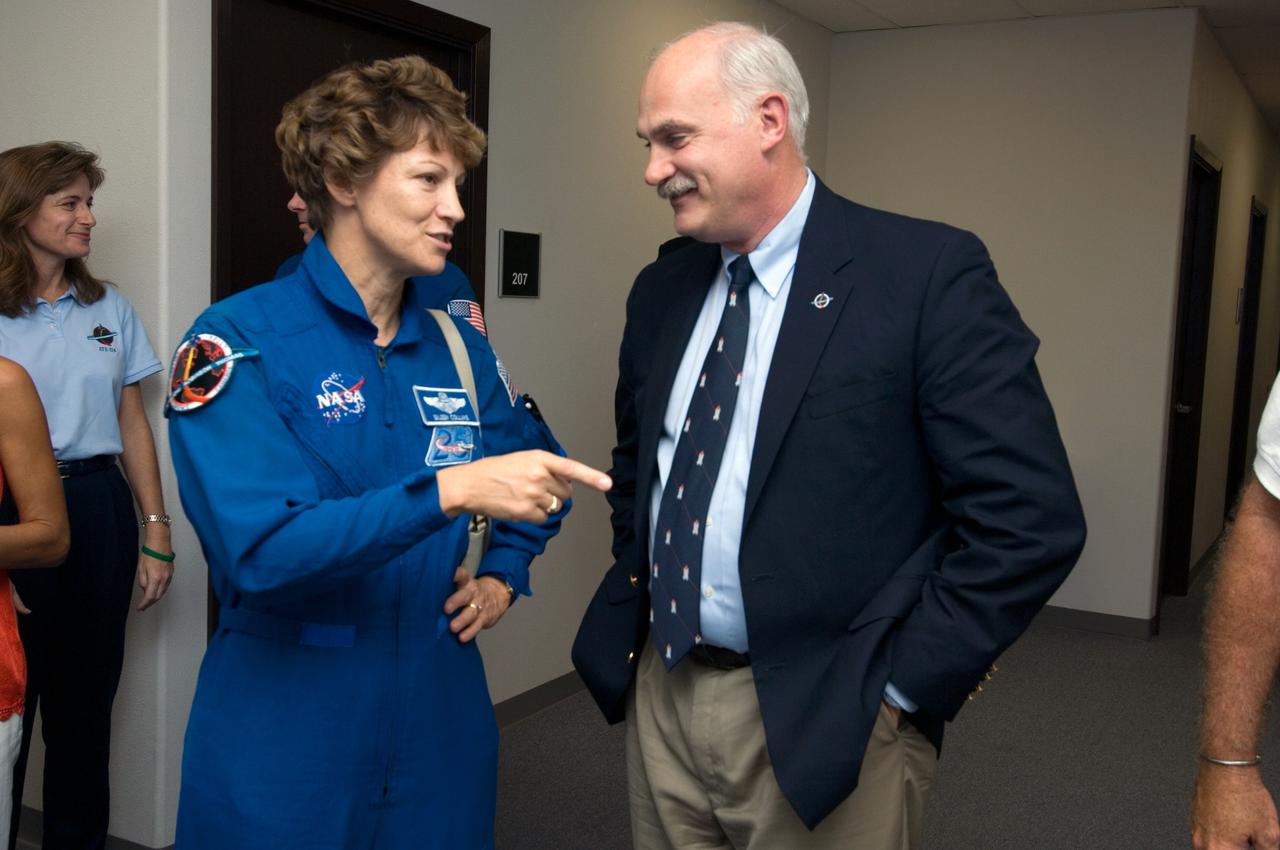
JSC2005-E-33437 (10 August 2005) --- Astronaut Eileen M. Collins, STS-114 commander, and William F. Readdy, Associate Administrator for Space Flight, NASA Headquarters, enjoy a light moment prior to the STS-114 crew return ceremonies at Ellington Field near Johnson Space Center (JSC).
STS-114 Homecoming at Ellington Field
KENNEDY SPACE CENTER, FLA. - Following the loss of Columbia and crew on their return to Earth, Sean O'Keefe (center), NASA Administrator, and  Bill Readdy (right), Associate Administrator, Office of Space Flighthold, hold a press briefing at KSC.  Moderating is Lisa Malone (left), associate director of the External Relations and Business Development Directorate.
KSC-03pd0240
STS79-E-5383 (24 September 1996) --- Astronauts William F. Readdy (left) and Terrence W. Wilcutt sit at the commander and pilot stations, respectively, during undocking operations, during Flight Day 9, onboard the Space Shuttle Atlantis.
STS-79 commander and pilot on the forward flight deck
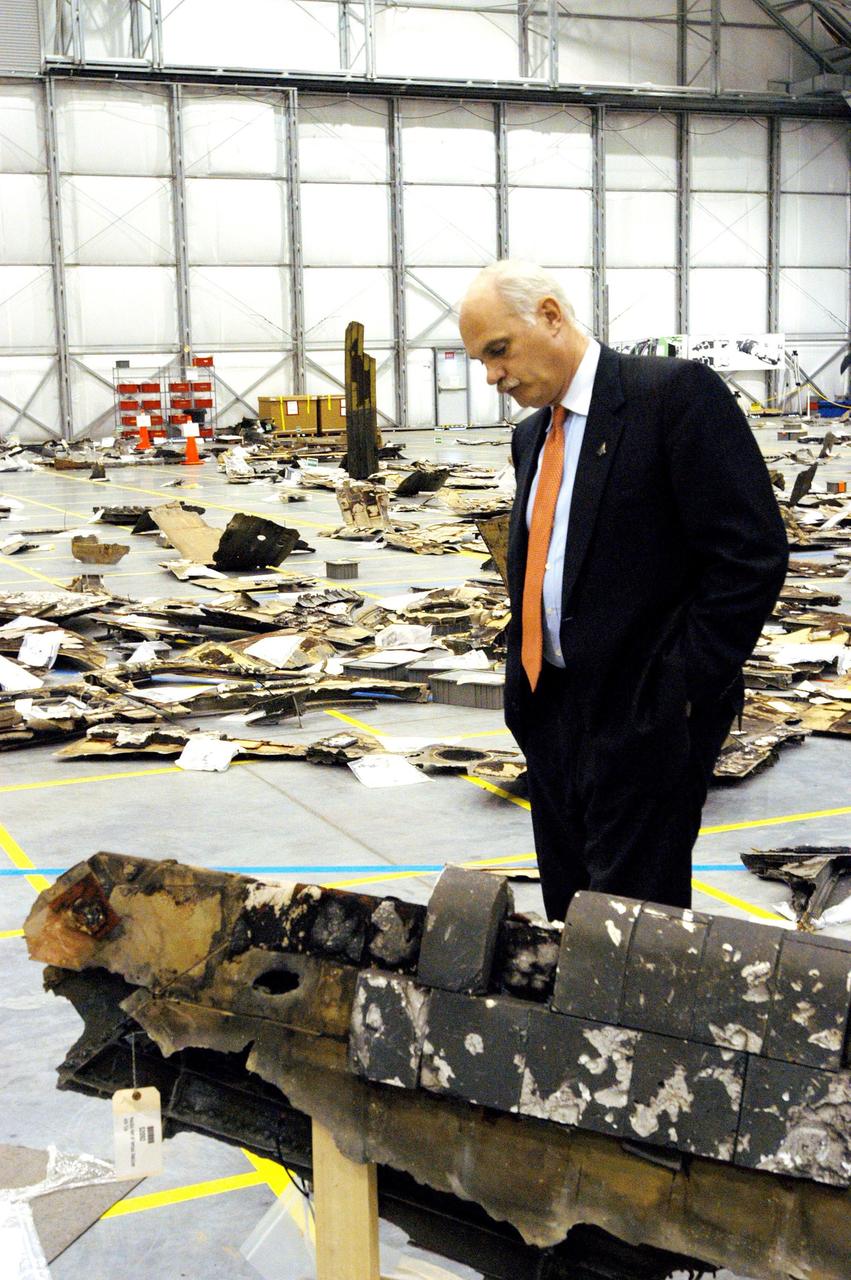
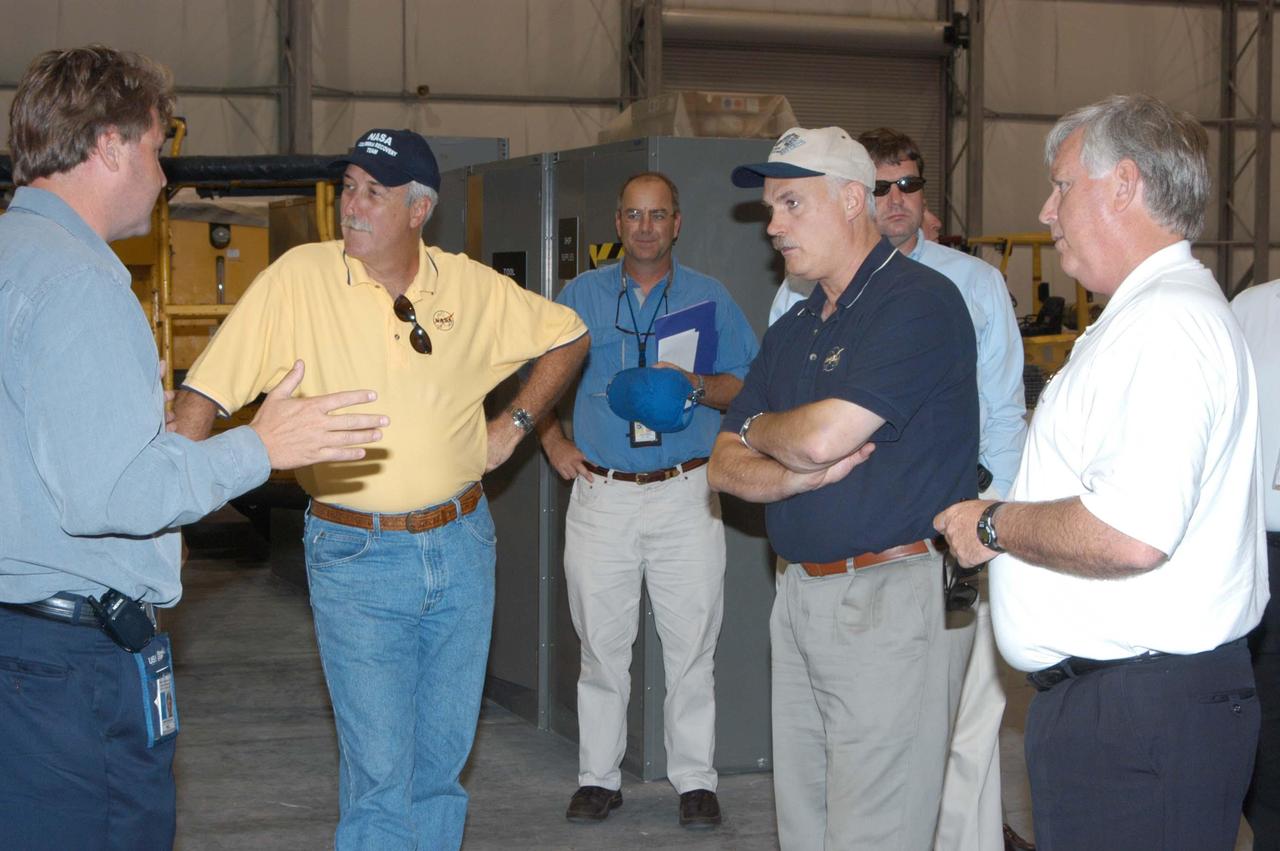
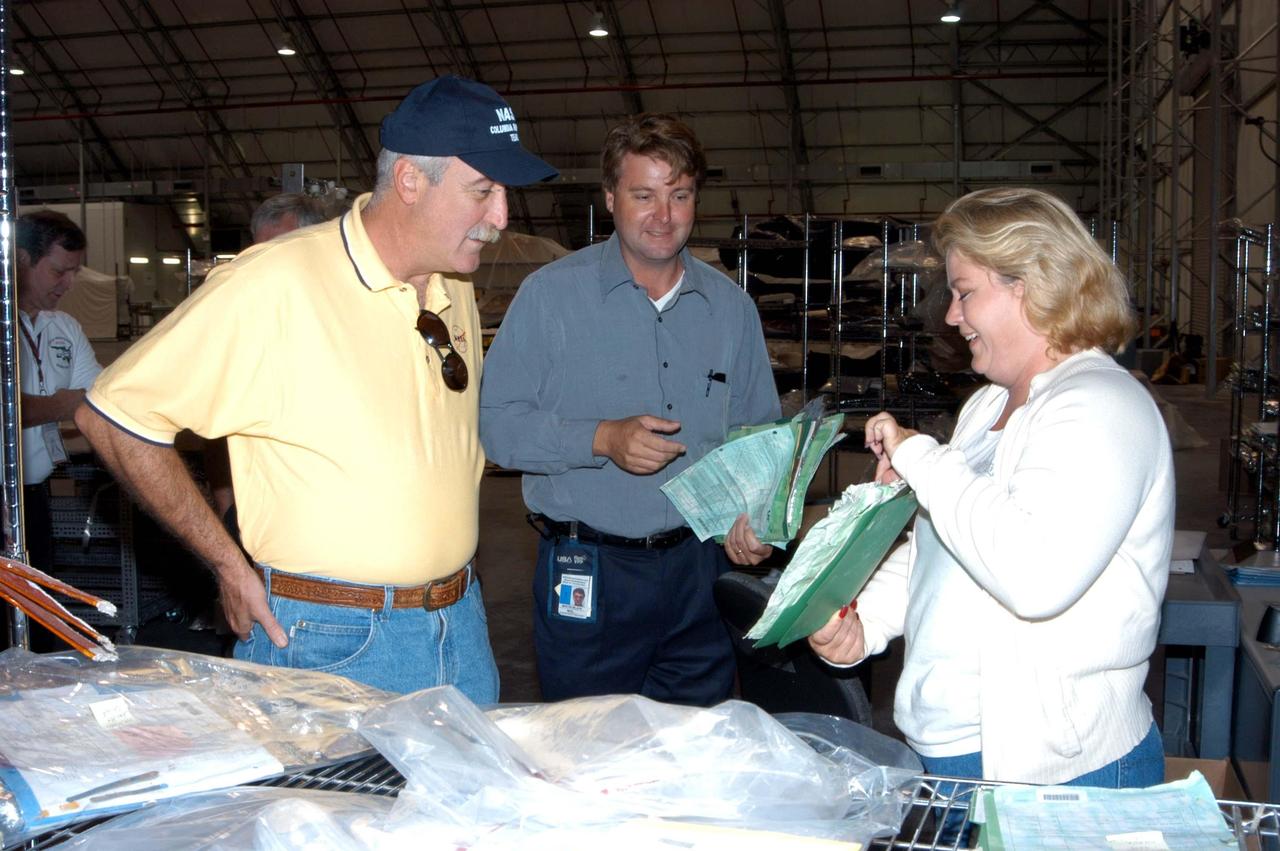
KENNEDY SPACE CENTER, FLA. - In the RLV Hangar, NASA Associate Administrator William F. (Bill) Readdy, Office of Space Flight, examines a piece of debris from Space Shuttle Columbia. To date, more than 70,000 items have been delivered to KSC for use in the ongoing mishap investigation.
KSC-03pd1302
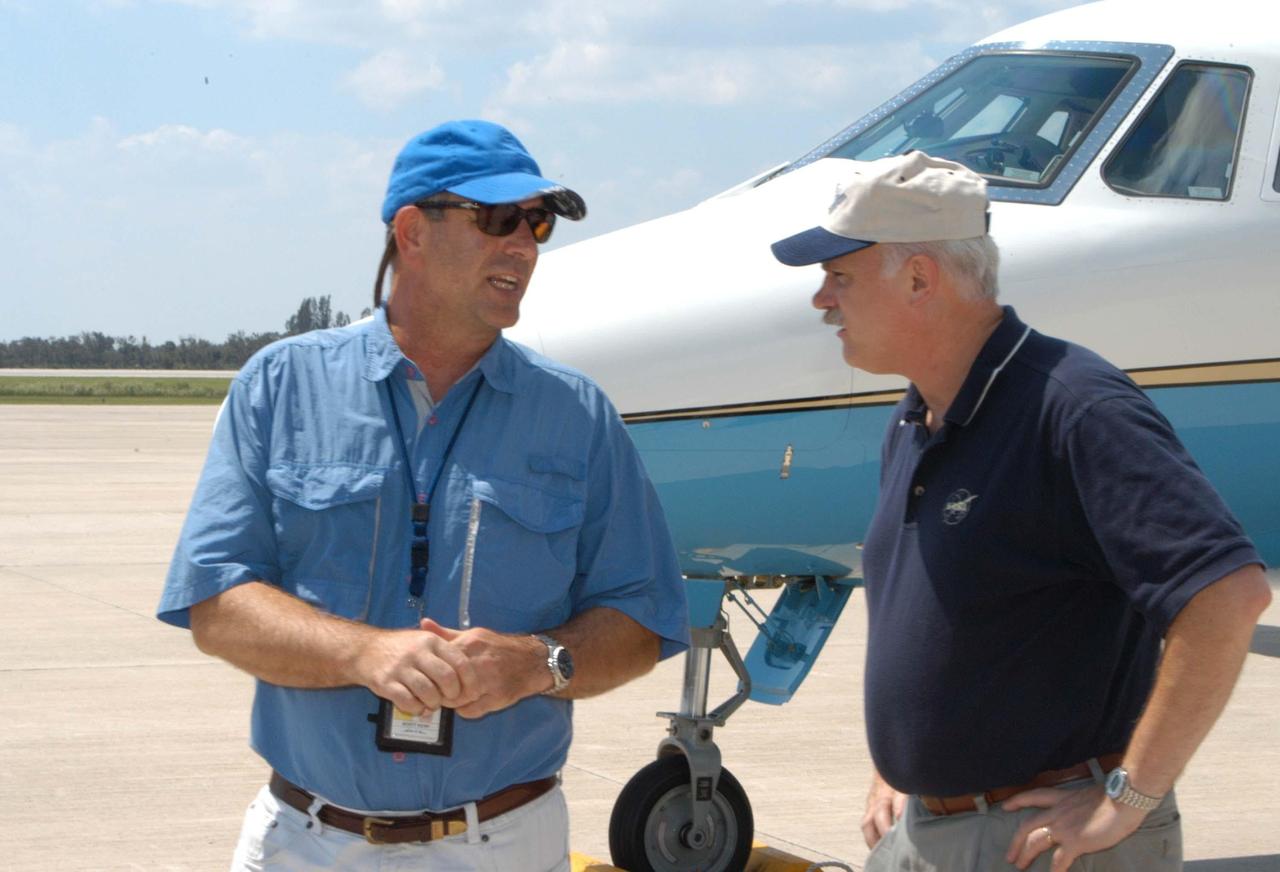
KENNEDY SPACE CENTER, FLA. -  KSC Director of Spaceport Services Scott Kerr (left) talks to NASA Associate Administrator of the Space Operations Mission Directorate William Readdy at the Shuttle Landing Facility.  NASA Administrator Sean O’Keefe and Readdy are visiting KSC to survey the damage sustained by KSC facilities from Hurricane Frances over Labor Day weekend. The Vehicle Assembly Building, Thermal Protection System Facility, and Processing Control Center all received significant damage from the storm.  Additionally, the Operations and Checkout Building, Vertical Processing Facility, Hangar AE, Hangar S and Hangar AF Small Parts Facility each received substantial damage. However, well-protected and unharmed were NASA’s three Space Shuttle orbiters -- Discovery, Atlantis and Endeavour - along with the Shuttle launch pads, all of the critical flight hardware for the orbiters and the International Space Station, and NASA’s Swift spacecraft that is awaiting launch in October.
KSC-04pd1832
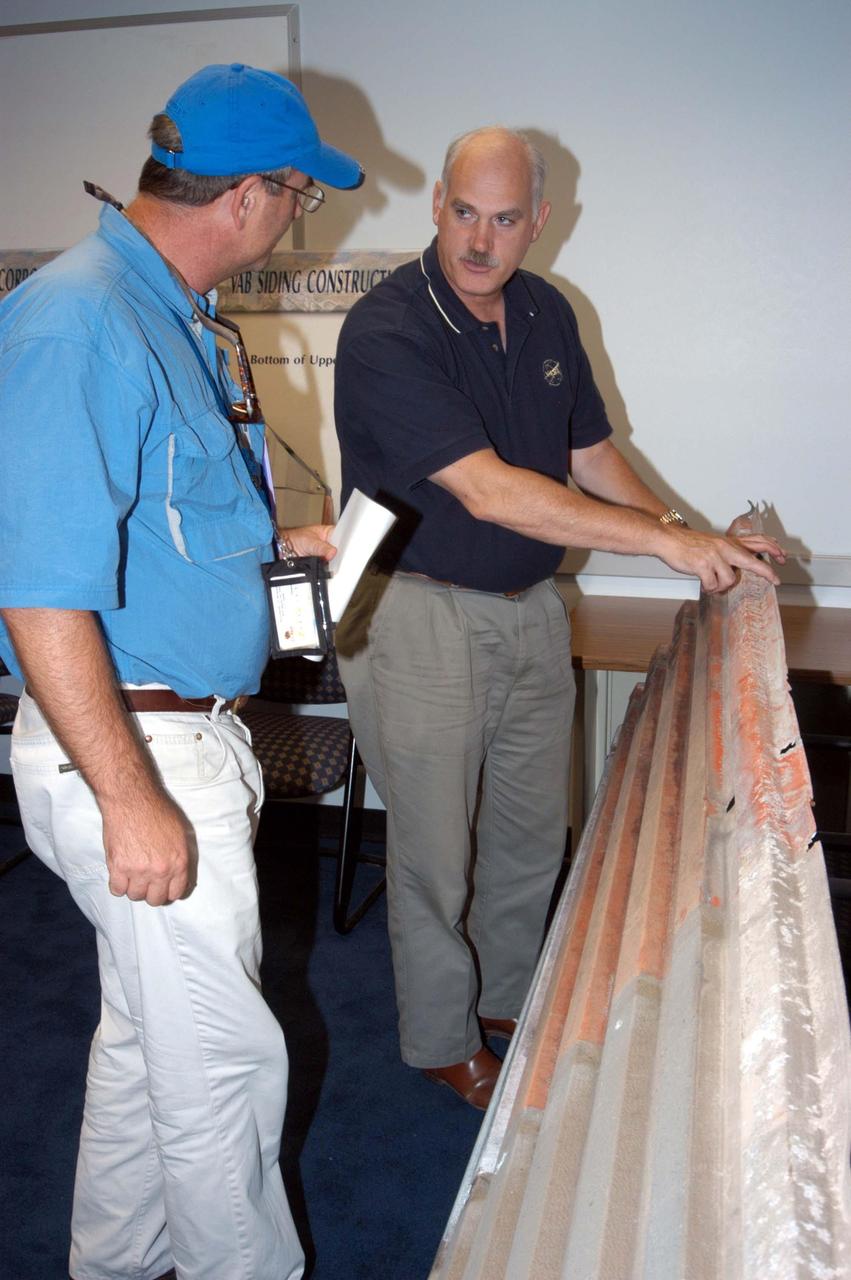
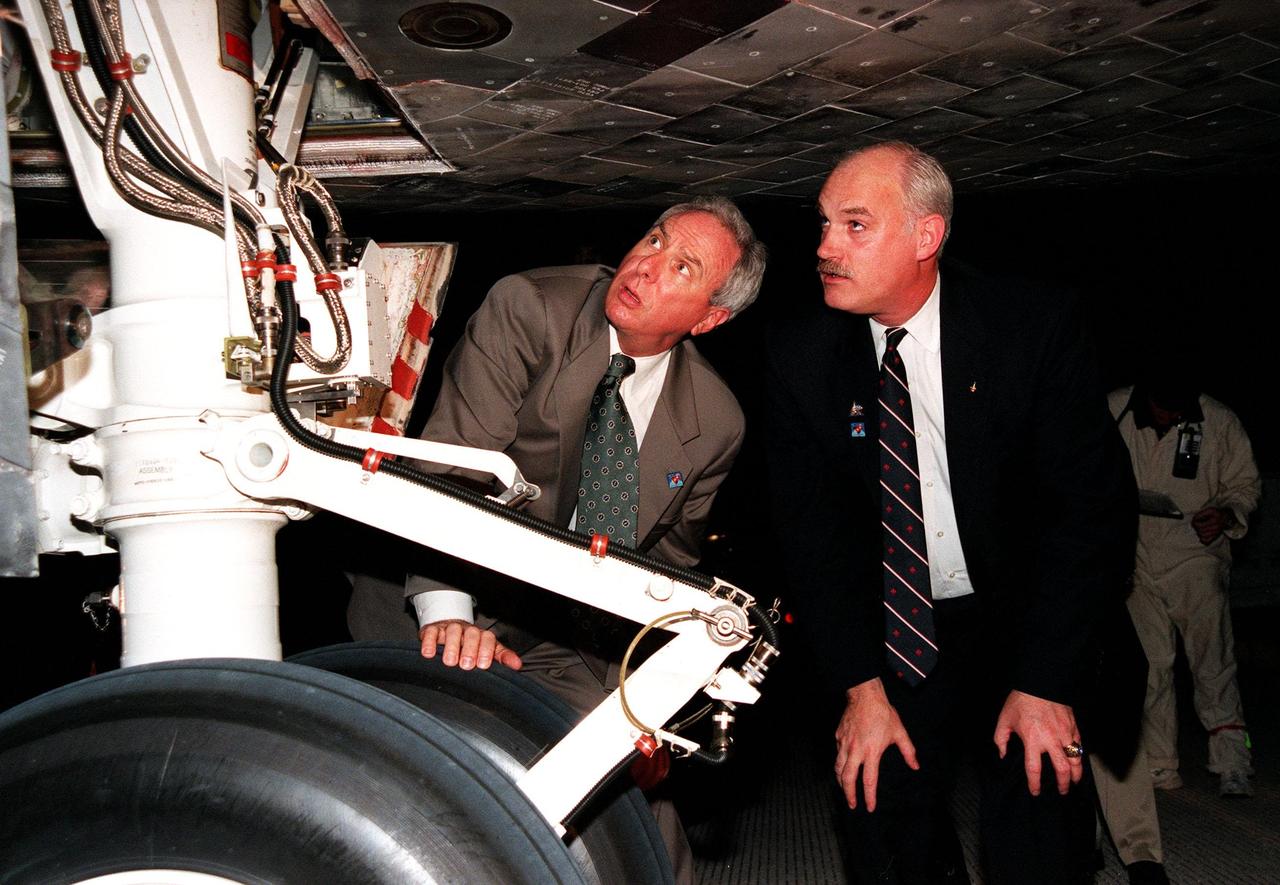
KENNEDY SPACE CENTER, FLA. -  KSC Director of the Spaceport Services Scott Kerr (left) and NASA Associate Administrator of the Space Operations Mission Directorate William Readdy examine one of the panels that was blown off the Vehicle Assembly Building.  NASA Administrator Sean O’Keefe and Readdy are visiting KSC to survey the damage sustained by KSC facilities from Hurricane Frances over Labor Day weekend. The Vehicle Assembly Building, Thermal Protection System Facility, and Processing Control Center all received significant damage from the storm.  Additionally, the Operations and Checkout Building, Vertical Processing Facility, Hangar AE, Hangar S and Hangar AF Small Parts Facility each received substantial damage. NASA’s three Space Shuttle orbiters -- Discovery, Atlantis and Endeavour - along with the Shuttle launch pads, all of the critical flight hardware for the orbiters and the International Space Station, and NASA’s Swift spacecraft, awaiting launch in October, were well protected and unharmed.
KSC-04pd1837
KENNEDY SPACE CENTER, FLA. -  NASA Administrator Sean O'Keefe (left) and NASA Associate Administrator of Space Flight William F. Readdy address a group of KSC employees assembled in the KSC Training Auditorium. The occasion is the announcement of James W. Kennedy as the next director of the NASA Kennedy Space Center (KSC) in Florida. Kennedy has served as KSC's deputy director since November 2002. He will succeed KSC Director Roy D. Bridges, who was appointed on June 13 to lead NASA's Langley Research Center, Hampton, Va.
KENNEDY SPACE CENTER, FLA. - NASA Administrator Sean O'Keefe (left) and NASA Associate Administrator of Space Flight William F. Readdy address a group of KSC employees assembled in the KSC Training Auditorium. The occasion is the announcement of James W. Kennedy as the next director of the NASA Kennedy Space Center (KSC) in Florida. Kennedy has served as KSC's deputy director since November 2002. He will succeed KSC Director Roy D. Bridges, who was appointed on June 13 to lead NASA's Langley Research Center, Hampton, Va.
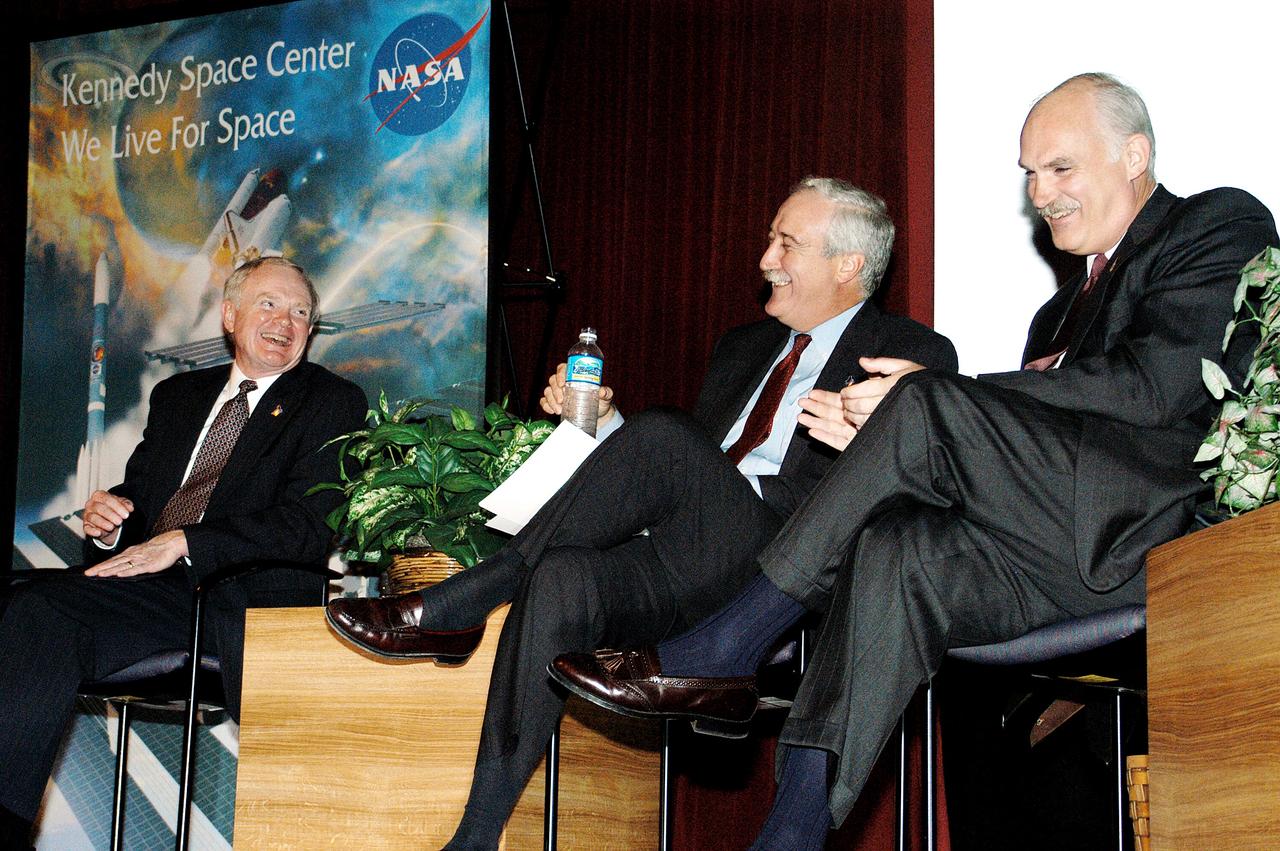
KENNEDY SPACE CENTER, FLA. -  From left, KSC Director Roy D. Bridges, NASA Administrator Sean O'Keefe, and NASA Associate Administrator of Space Flight William F. Readdy share a light moment on the stage in the KSC Training Auditorium. The occasion is the announcement of James W. Kennedy as the next director of the NASA Kennedy Space Center (KSC) in Florida. Kennedy has served as KSC's deputy director since November 2002. He will succeed Bridges, who was appointed on June 13 to lead NASA's Langley Research Center, Hampton, Va.
KENNEDY SPACE CENTER, FLA. - From left, KSC Director Roy D. Bridges, NASA Administrator Sean O'Keefe, and NASA Associate Administrator of Space Flight William F. Readdy share a light moment on the stage in the KSC Training Auditorium. The occasion is the announcement of James W. Kennedy as the next director of the NASA Kennedy Space Center (KSC) in Florida. Kennedy has served as KSC's deputy director since November 2002. He will succeed Bridges, who was appointed on June 13 to lead NASA's Langley Research Center, Hampton, Va.
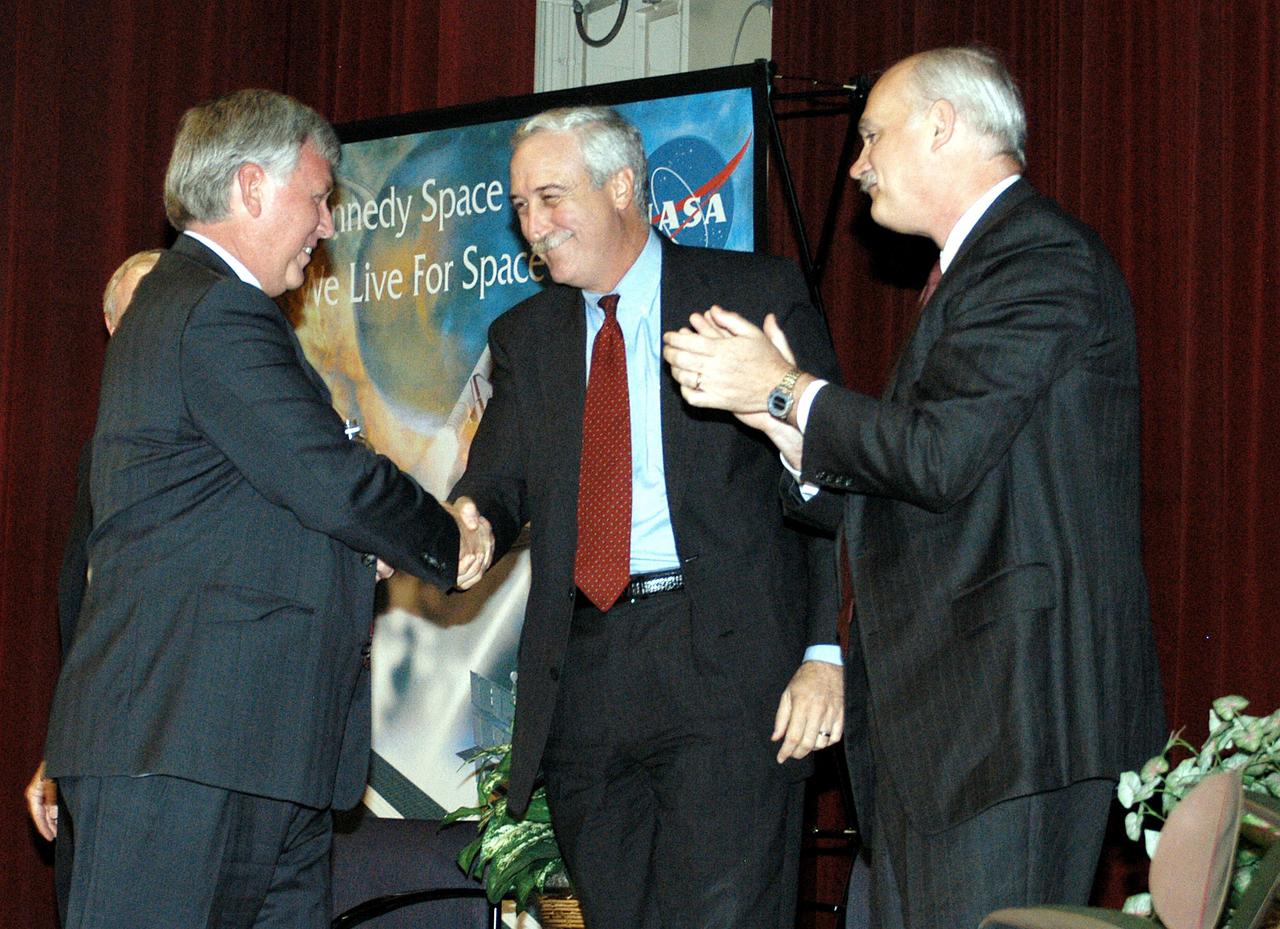
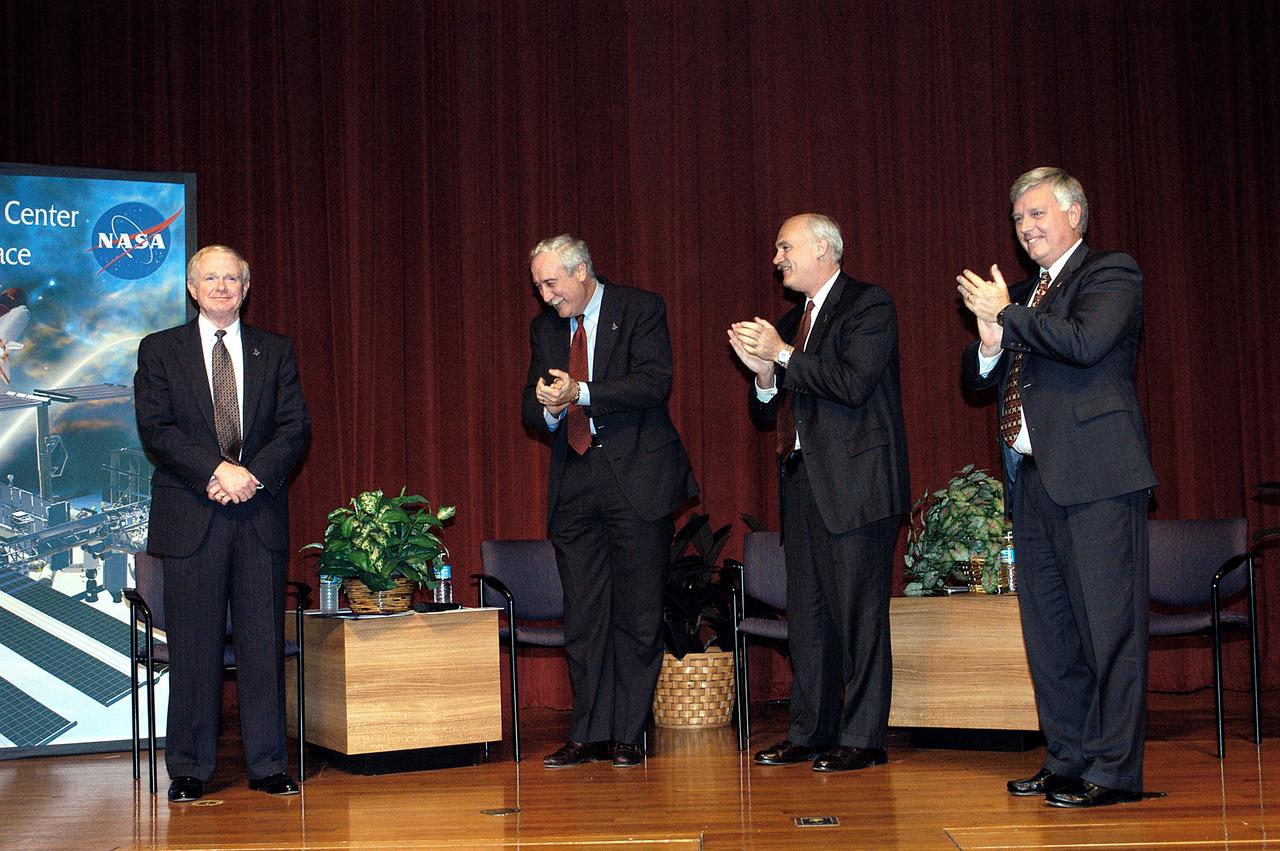
KENNEDY SPACE CENTER, FLA. -  KSC Deputy Director James W. Kennedy (left) and NASA Administrator Sean O'Keefe shake hands before a group of KSC employees assembled in the KSC Training Auditorium.  NASA Associate Administrator for Space Flight William F. Readdy applauds, at right. The occasion is the announcement of Kennedy as the next director of the NASA Kennedy Space Center (KSC) in Florida. Kennedy has served as KSC's deputy director since November 2002. He will succeed KSC Director Roy D. Bridges, who was appointed on June 13 to lead NASA's Langley Research Center, Hampton, Va.
KENNEDY SPACE CENTER, FLA. - KSC Deputy Director James W. Kennedy (left) and NASA Administrator Sean O'Keefe shake hands before a group of KSC employees assembled in the KSC Training Auditorium. NASA Associate Administrator for Space Flight William F. Readdy applauds, at right. The occasion is the announcement of Kennedy as the next director of the NASA Kennedy Space Center (KSC) in Florida. Kennedy has served as KSC's deputy director since November 2002. He will succeed KSC Director Roy D. Bridges, who was appointed on June 13 to lead NASA's Langley Research Center, Hampton, Va.
KENNEDY SPACE CENTER, FLA. -  NASA officials participate in a press conference in KSC's Press Site Auditorium. From left are NASA Associate Administrator for Space Flight William F. Readdy, KSC Deputy Director James W. Kennedy, and KSC Director Roy D. Bridges. The press conference followed the official announcement of Kennedy as the next director of the NASA Kennedy Space Center (KSC) in Florida. Kennedy has served as KSC's deputy director since November 2002. He will succeed Bridges, who was appointed on June 13 to lead NASA's Langley Research Center, Hampton, Va.
KENNEDY SPACE CENTER, FLA. - NASA officials participate in a press conference in KSC's Press Site Auditorium. From left are NASA Associate Administrator for Space Flight William F. Readdy, KSC Deputy Director James W. Kennedy, and KSC Director Roy D. Bridges. The press conference followed the official announcement of Kennedy as the next director of the NASA Kennedy Space Center (KSC) in Florida. Kennedy has served as KSC's deputy director since November 2002. He will succeed Bridges, who was appointed on June 13 to lead NASA's Langley Research Center, Hampton, Va.
KENNEDY SPACE CENTER, FLA. -  KSC Center Director Roy D. Bridges receives the applause of NASA officials and a group of KSC employees assembled in the KSC Training Auditorium.   From left are Bridges, NASA Administrator Sean O'Keefe, NASA Associate Administrator of Space Flight William F. Readdy, and KSC Deputy Director James W. Kennedy. The occasion is the announcement of Kennedy as the next director of the NASA Kennedy Space Center (KSC) in Florida. Kennedy has served as KSC's deputy director since November 2002. He will succeed Bridges, who was appointed on June 13 to lead NASA's Langley Research Center, Hampton, Va.
KENNEDY SPACE CENTER, FLA. - KSC Center Director Roy D. Bridges receives the applause of NASA officials and a group of KSC employees assembled in the KSC Training Auditorium. From left are Bridges, NASA Administrator Sean O'Keefe, NASA Associate Administrator of Space Flight William F. Readdy, and KSC Deputy Director James W. Kennedy. The occasion is the announcement of Kennedy as the next director of the NASA Kennedy Space Center (KSC) in Florida. Kennedy has served as KSC's deputy director since November 2002. He will succeed Bridges, who was appointed on June 13 to lead NASA's Langley Research Center, Hampton, Va.
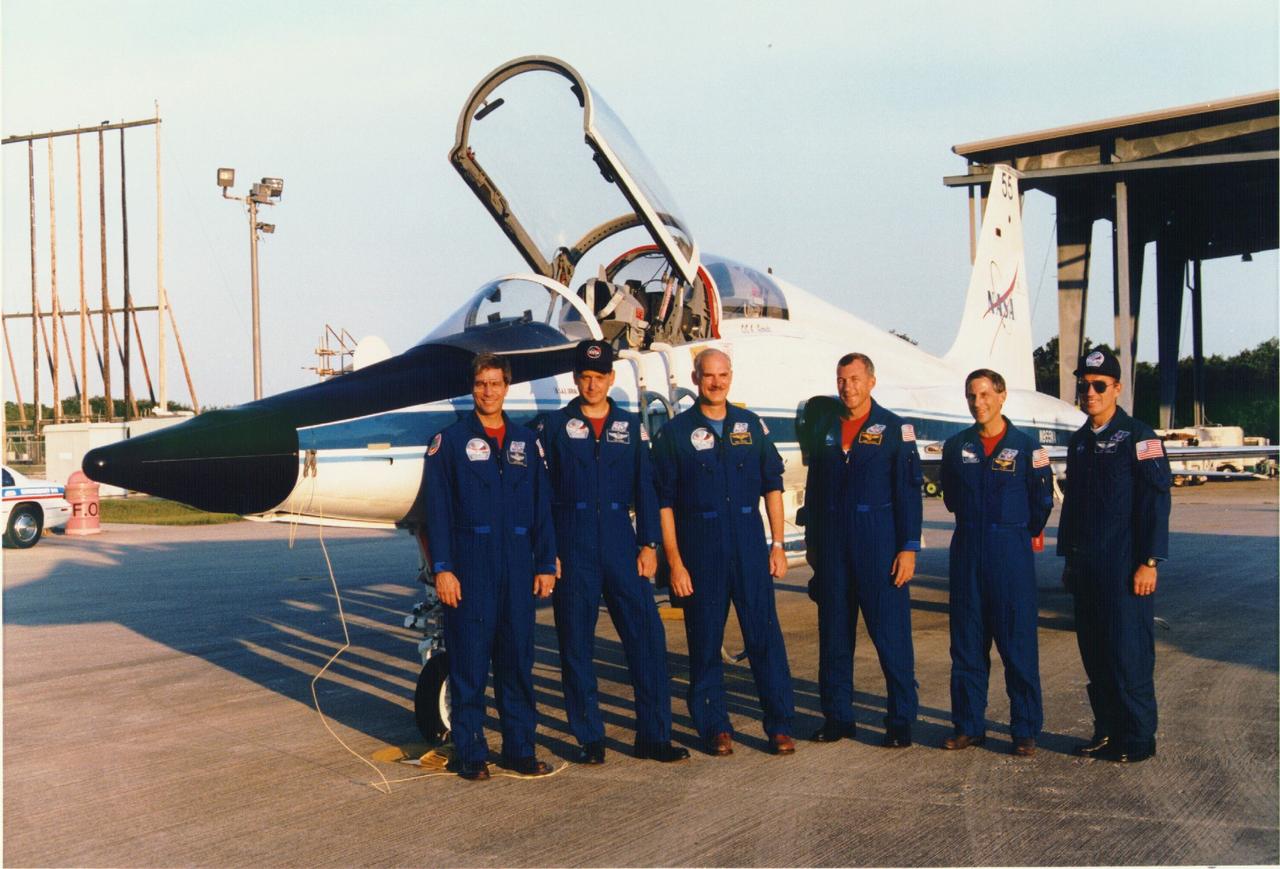
KENNEDY SPACE CENTER, FLA. -  The STS-79 astronauts arrive at KSC's Shuttle Landing Facility in their T-38 aircraft from Johnson Space Center in Houston.  From left are Mission Specialists John E. Blaha and Tom Akers; Commander William F. Readdy; PIlot Terrence W. Wilcutt; and Mission Specialists Jay Apt and Carl E. Walz.  The astronauts are at KSC for the Terminal Countdown Demonstration Test, a dress rehearsal for launch.  They are scheduled to lift off around Sept. 12 on Mission STS-79, the fourth docking between the U.S. Shuttle and Russian Space Station Mir.
KENNEDY SPACE CENTER, FLA. - The STS-79 astronauts arrive at KSC's Shuttle Landing Facility in their T-38 aircraft from Johnson Space Center in Houston. From left are Mission Specialists John E. Blaha and Tom Akers; Commander William F. Readdy; PIlot Terrence W. Wilcutt; and Mission Specialists Jay Apt and Carl E. Walz. The astronauts are at KSC for the Terminal Countdown Demonstration Test, a dress rehearsal for launch. They are scheduled to lift off around Sept. 12 on Mission STS-79, the fourth docking between the U.S. Shuttle and Russian Space Station Mir.
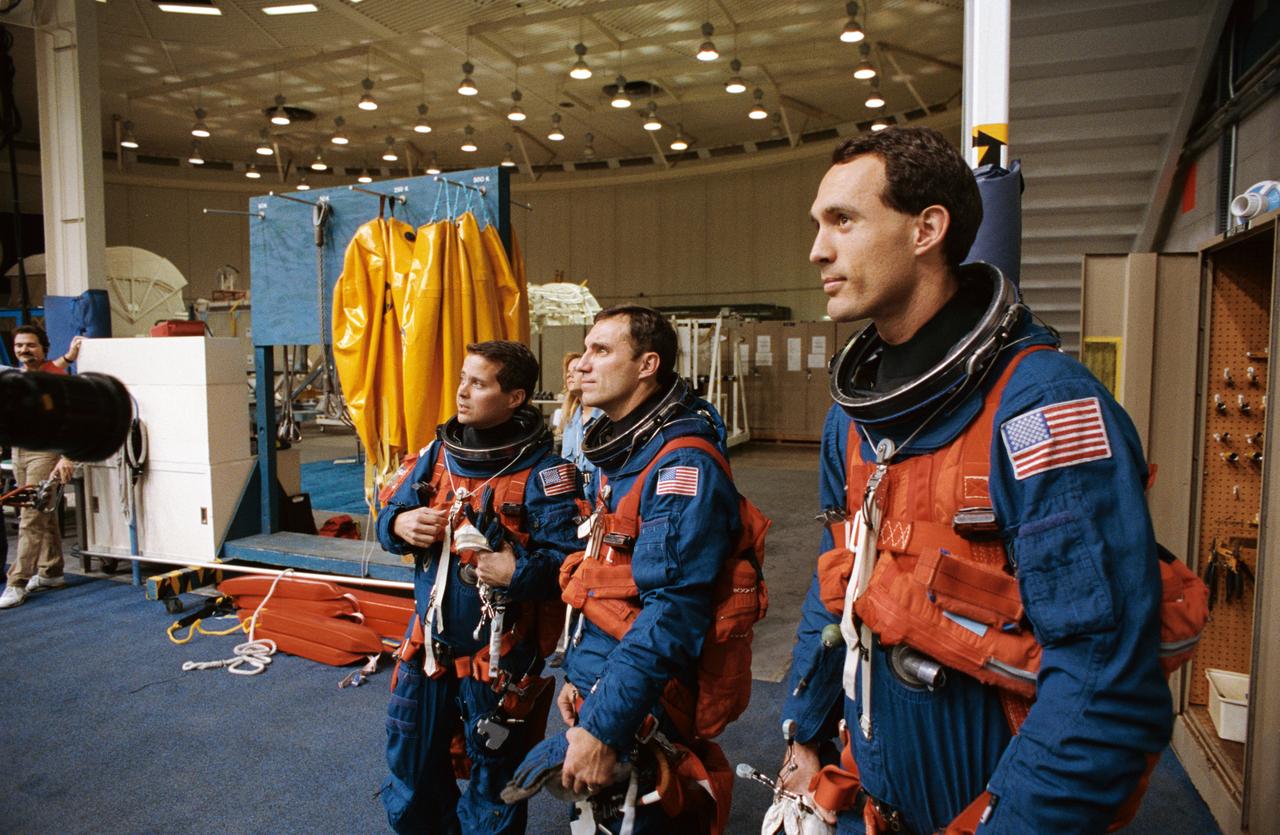
S93-31929 (24 March 1993) --- The three mission specialists for NASA's STS-51 mission watch as a crewmate (out of frame) simulates a parachute jump into water during emergency bailout training exercises at the Johnson Space Center's Weightless Environment Training Facility (WET-F).  Left to right are astronauts Daniel W. Bursch, Carl E. Walz and James H. Newman.  Out of frame are astronauts Frank L. Culbertson and William F. Readdy, commander and pilot, respectively.
STS-51 astronauts participate in emergency bailout training in WETF
STS79-E-5300 (23 September 1996) --- Astronaut William F. Readdy (foreground), STS-79 commander, bids farewell to Russian cosmonauts Aleksandr Y. Kaleri (left in background), Mir-22 flight engineer, and Valeri G. Korzun, Mir-22 commander, just prior to hatch closing, during Flight Day 8.  The Americans and Russians will undock the Space Shuttle Atlantis and the Russia's Mir Space Station later today.
STS-79 commander at entrance to docking module
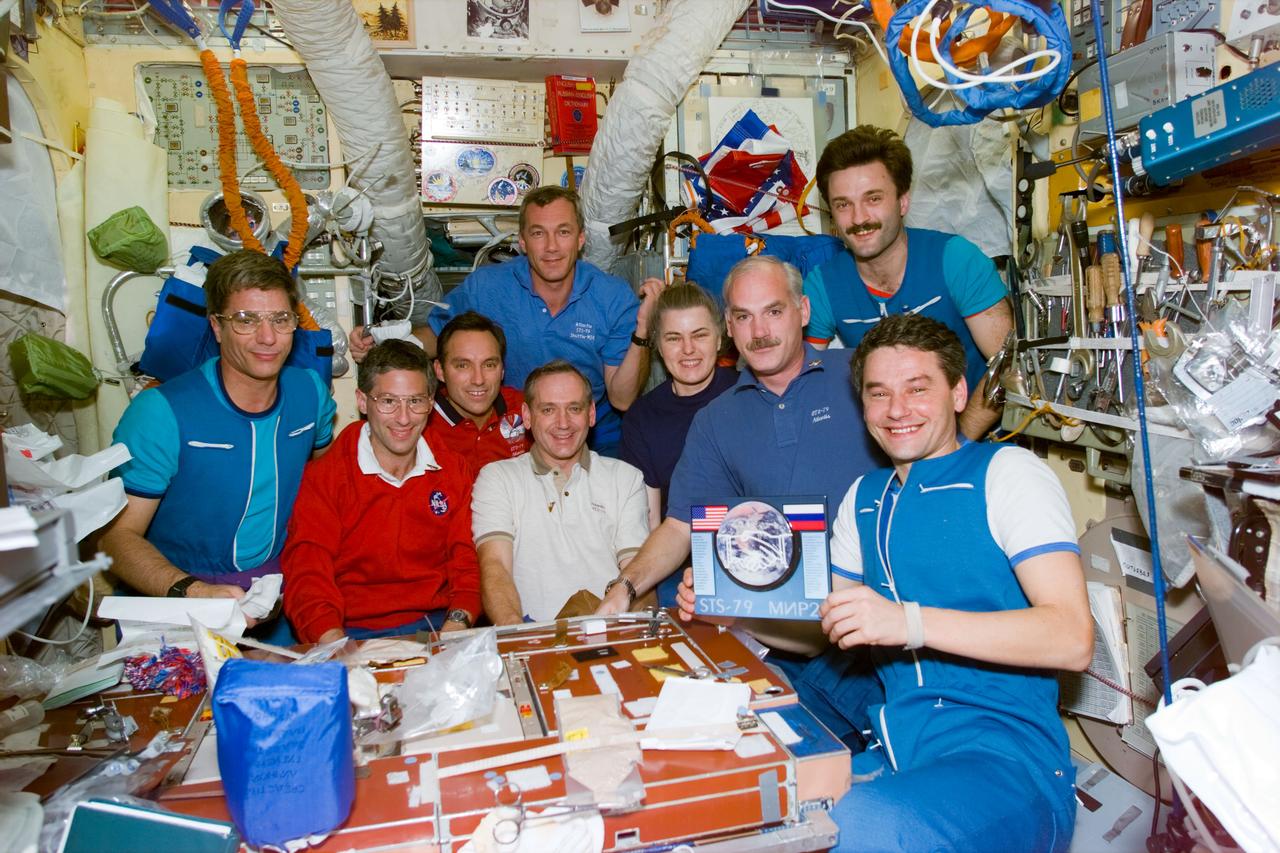
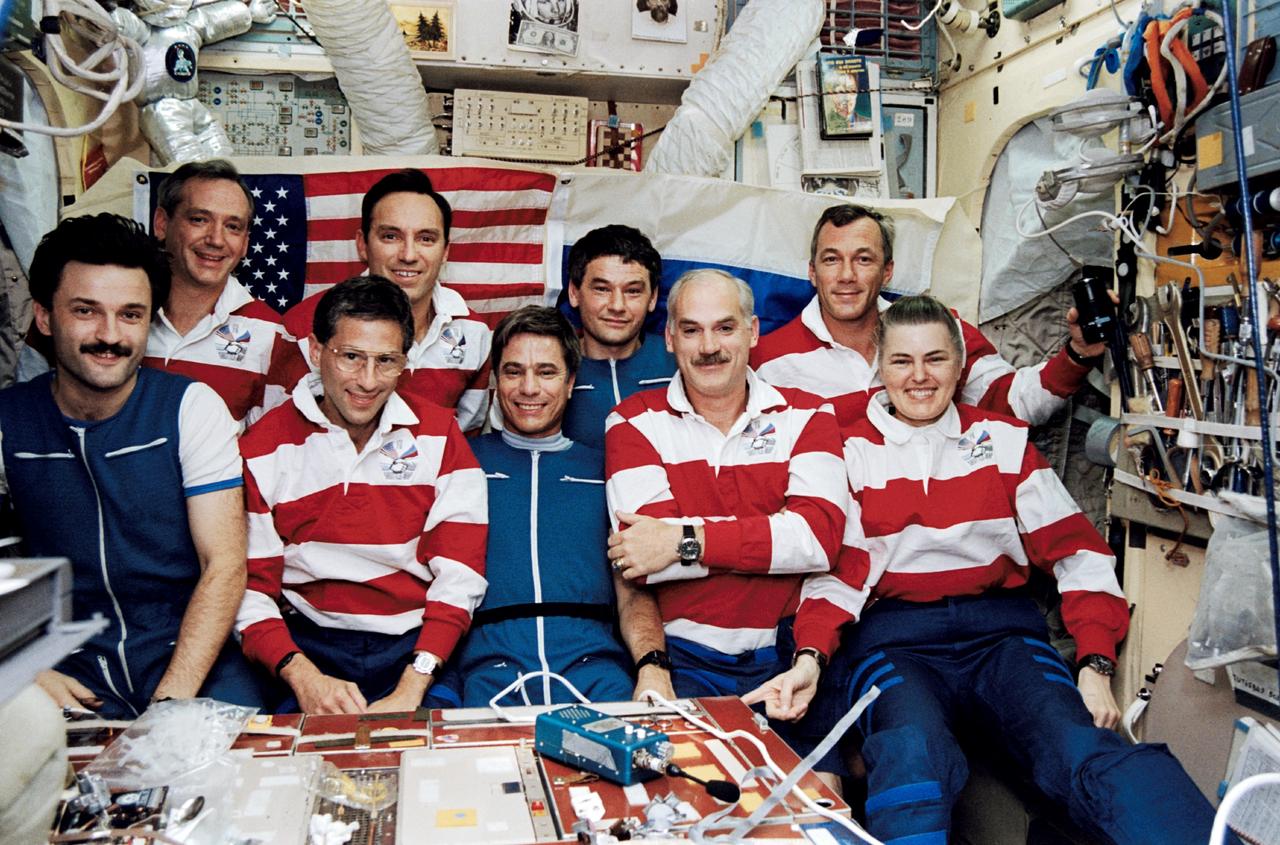
STS79-E-5180 (20 September 1996) --- The entire crews of STS-79 and Mir-22 are shown during a gift exchange ceremony aboard Russia's Mir Space Station's Base Block, during Flight Day 5.  Front row, from the left, John E. Blaha, Jerome (Jay) Apt, Carl E. Walz, Thomas D. Akers, Shannon W. Lucid, William F. Readdy and Valeri G. Korzun.  Back row: Terrence W. Wilcutt and Aleksandr Y. Kaleri.
STS-79 and Mir 22 gift exchange ceremony
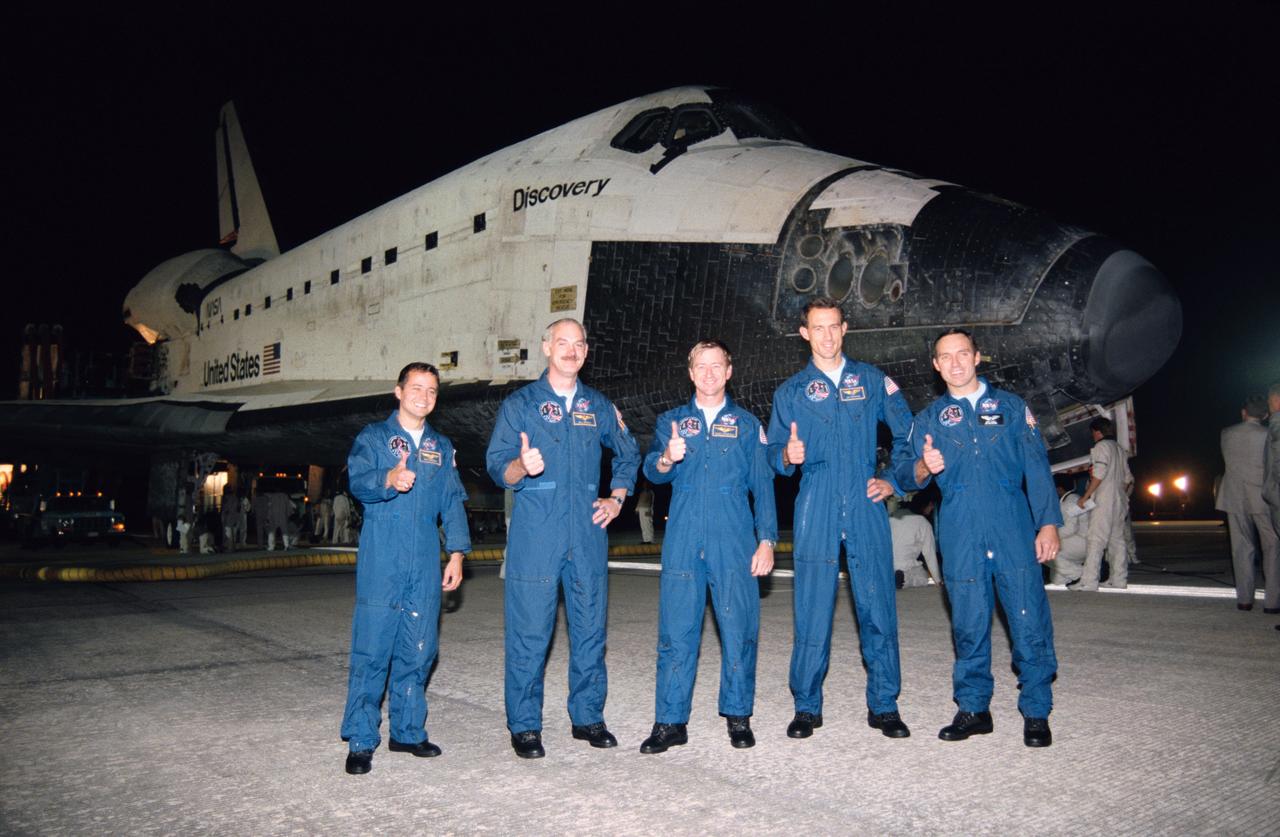
STS051-S-161 (22 Sept 1993) --- Thumbs up from all five crew members signal the successful completion of almost ten full days in space.  Backdropped against Discovery -- their in-space "home" for the flight -- are, left to right, astronauts Daniel W. Bursch, William F. Readdy, Frank L. Culbertson Jr., James H. Newman and Carl E. Walz.
STS-51 Discovery crew during post-landing at KSC
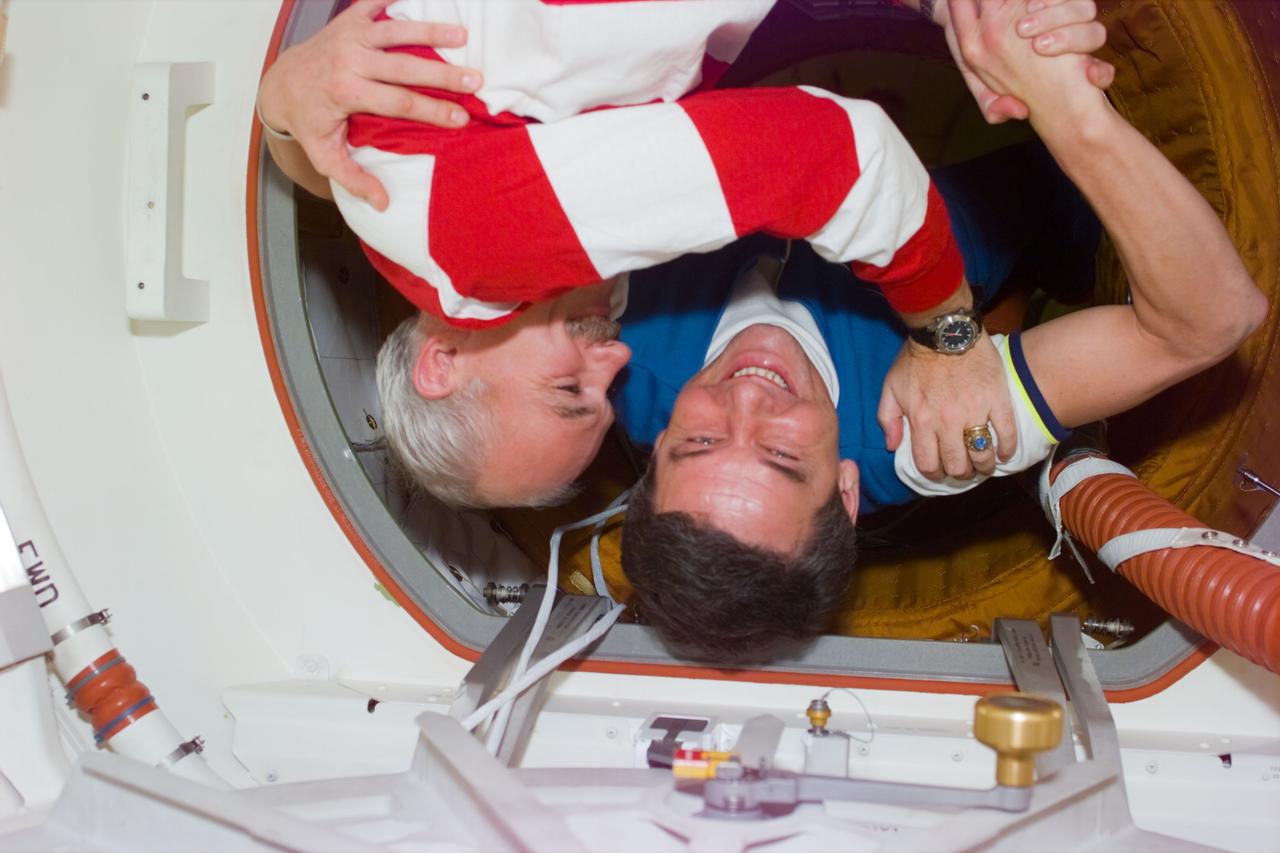
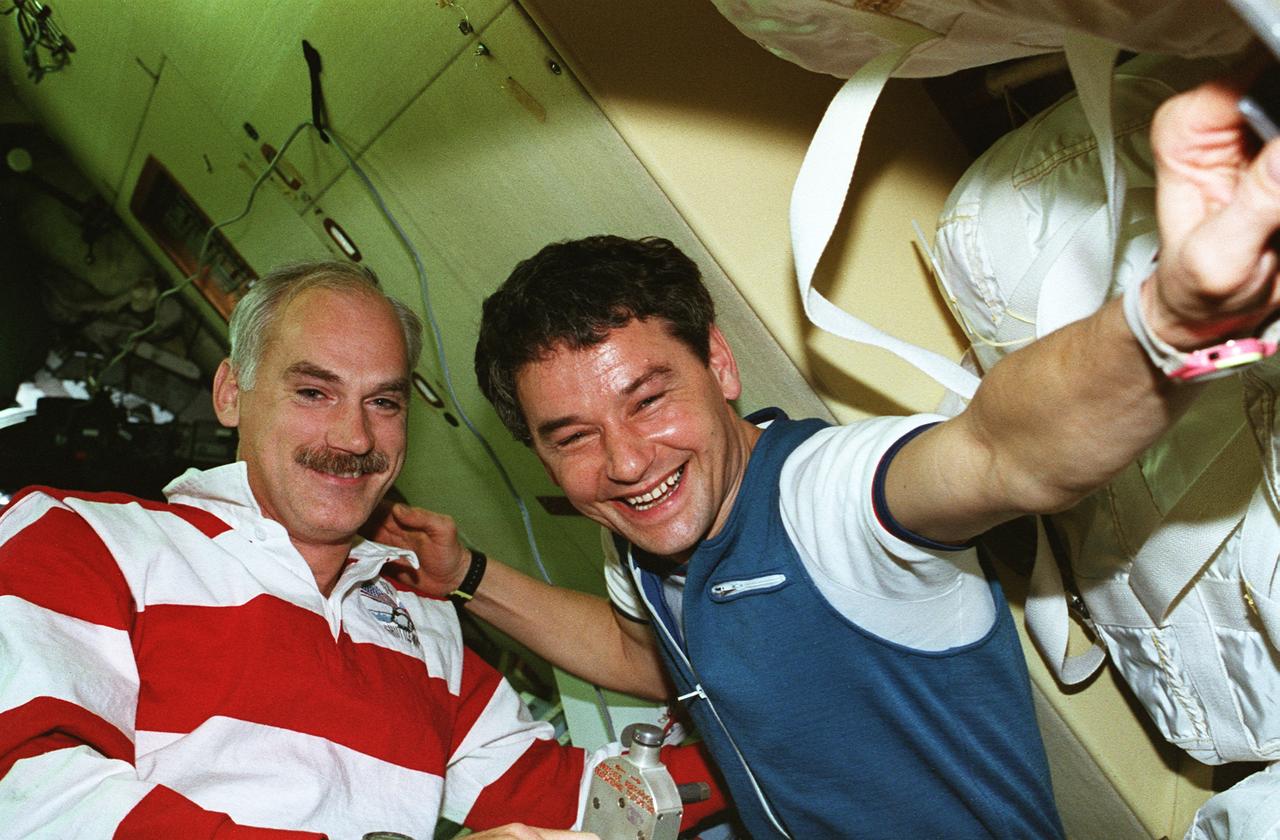
STS79-E-5090 (19 September 1996) --- Cosmonaut Valeri G. Korzun, Mir-22 commander, greets his American counterpart - astronaut William F. Readdy in the tunnel connecting the Space Shuttle Atlantis to Russia's Mir Space Station, during Flight Day 4.  This mission marks the fourth such reunion involving astronauts and cosmonauts during the Shuttle era and the fifth overall, going back to the historic Apollo-Soyuz Test Project (ASTP) in 1975.
Greeting between STS-79 commander and Mir 22 commander after docking
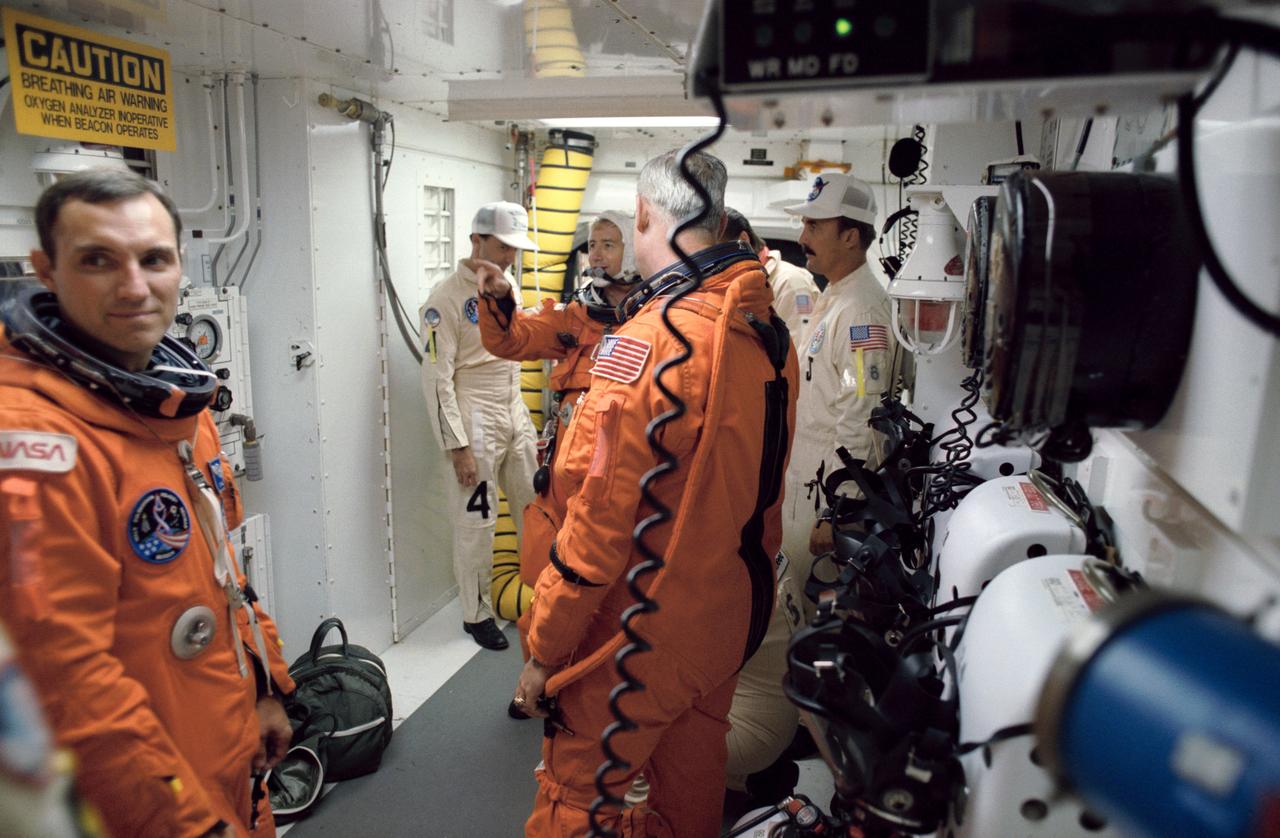
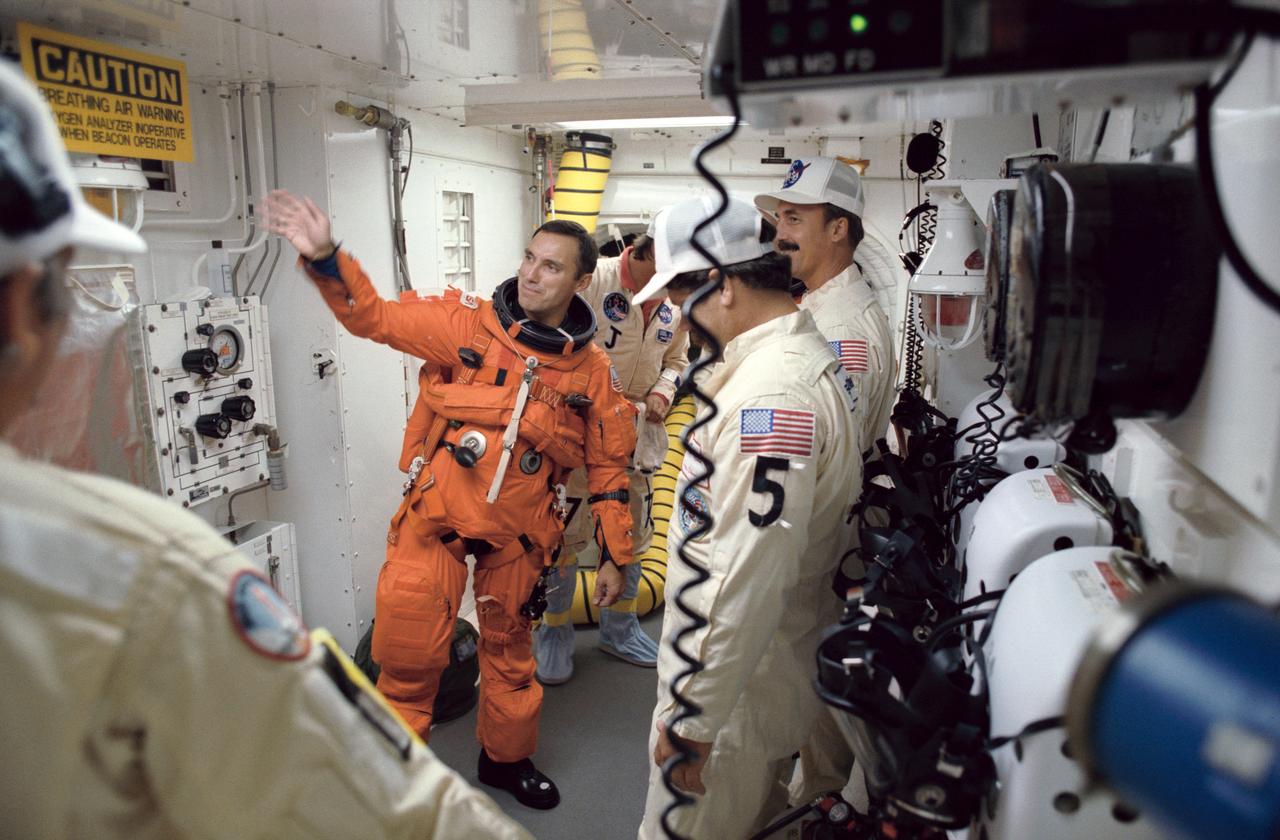
STS051-S-109 (12 Sept 1993) --- Inside the White Room, three astronaut crew members for the STS-51 flight await their queues to ingress the Space Shuttle Discovery.  Wearing the partial pressure launch and entry suits are, left to right, Carl E. Walz, mission specialist; Frank L. Culbertson Jr., mission commander; and William F. Readdy, pilot.  Not pictured are astronauts James H. Newman and Daniel W. Bursch.  Launch occurred at 7:45 a.m. (EDT), September 12, 1993.
STS-51 crew seen in White room prior to launch of Discovery
STS051-S-002 (June 1993) --- These five NASA astronauts have been assigned to fly aboard the Space Shuttle Discovery for the STS-51 mission, scheduled for July, 1993. Left to right are astronauts Frank L. Culbertson, Jr., mission commander; Daniel W. Bursch and Carl E. Walz, mission specialists; William F. Readdy, pilot; and James H. Newman, mission specialist.
STS-51 crew portrait
STS051-S-112 (12 Sept 1993) --- Inside the White Room, astronaut Carl E. Walz talks to suit technicians prior to ingressing the Space Shuttle Discovery.  Walz, mission specialist, was joined by astronauts Frank L. Culbertson Jr., mission commander; William F. Readdy, pilot; and James H. Newman and Daniel W. Bursch, mission specialists for the almost ten-day flight.  Launch occurred at 7:45 a.m. (EDT), September 12, 1993.
STS-51 Walz seen in White Room prior to the launch of Discovery, OV-103
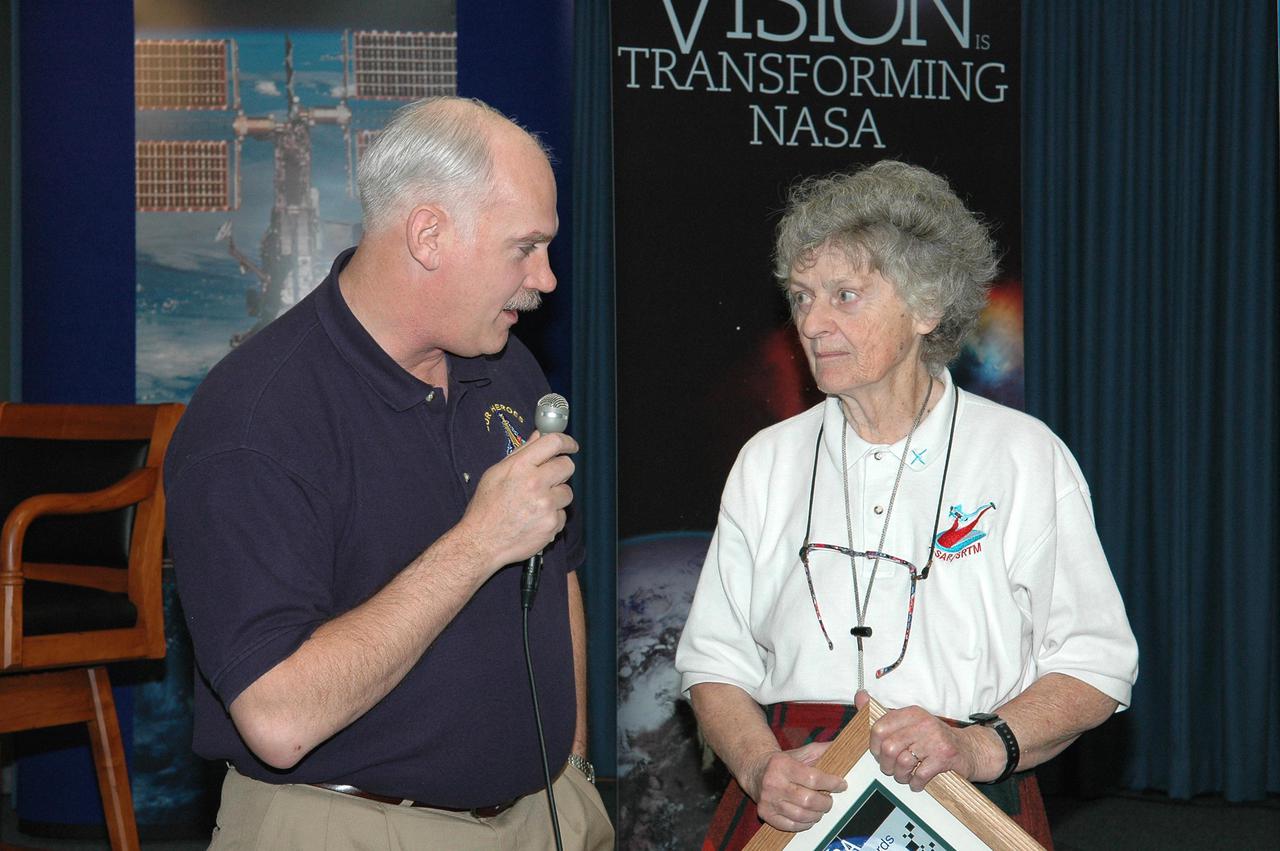
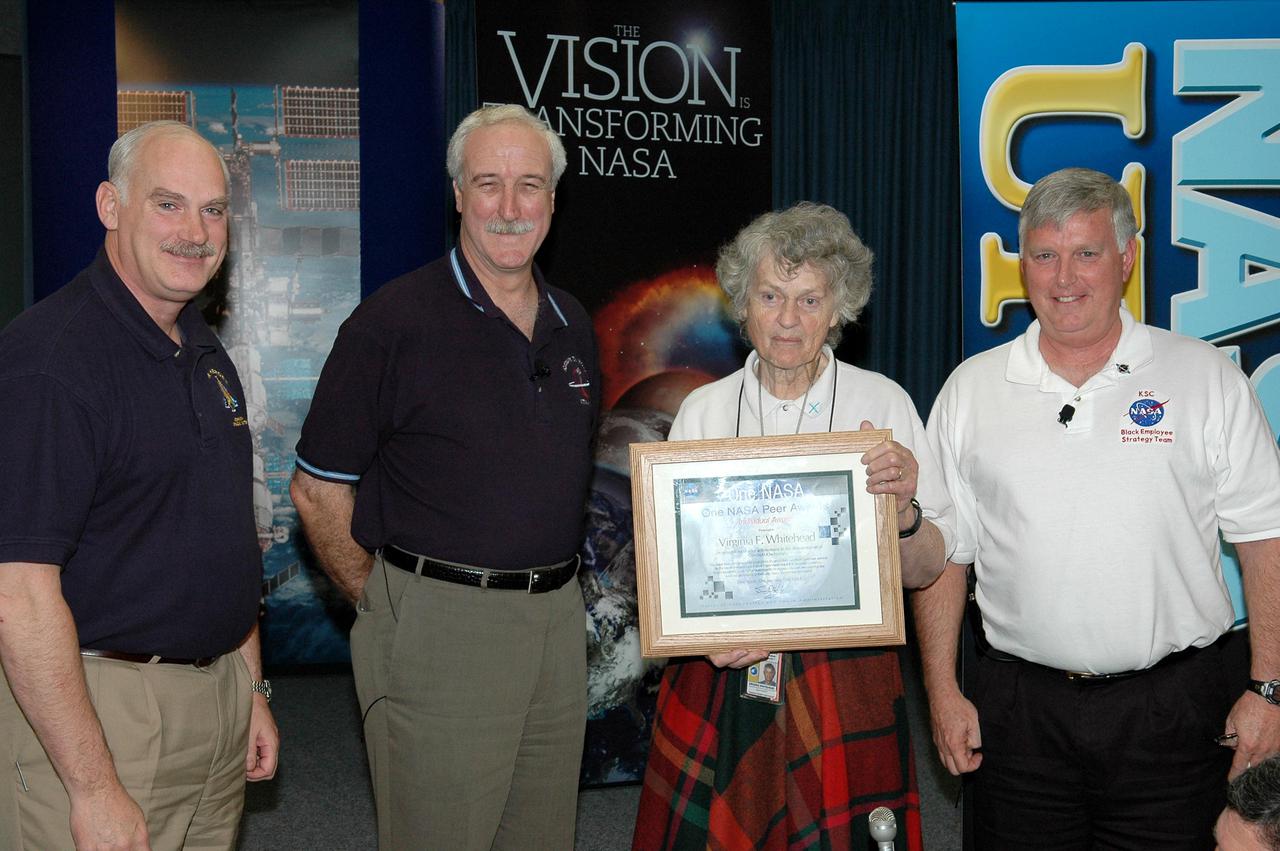
KENNEDY SPACE CENTER, FLA.  -  Associate Administrator of Space Operations Mission Directorate William F. Readdy (left) publicly praises the outstanding customer service provided by Virginia Whitehead upon her receipt of a One NASA Peer Award.  The award was presented in the Press Site Auditorium following the NASA Update by Administrator Sean O’Keefe. The award is given to recognize employees who have demonstrated behaviors consistent with the spirit of One NASA and are called Peer Awards because candidates must be nominated by their peers.
KSC-05pd-0150
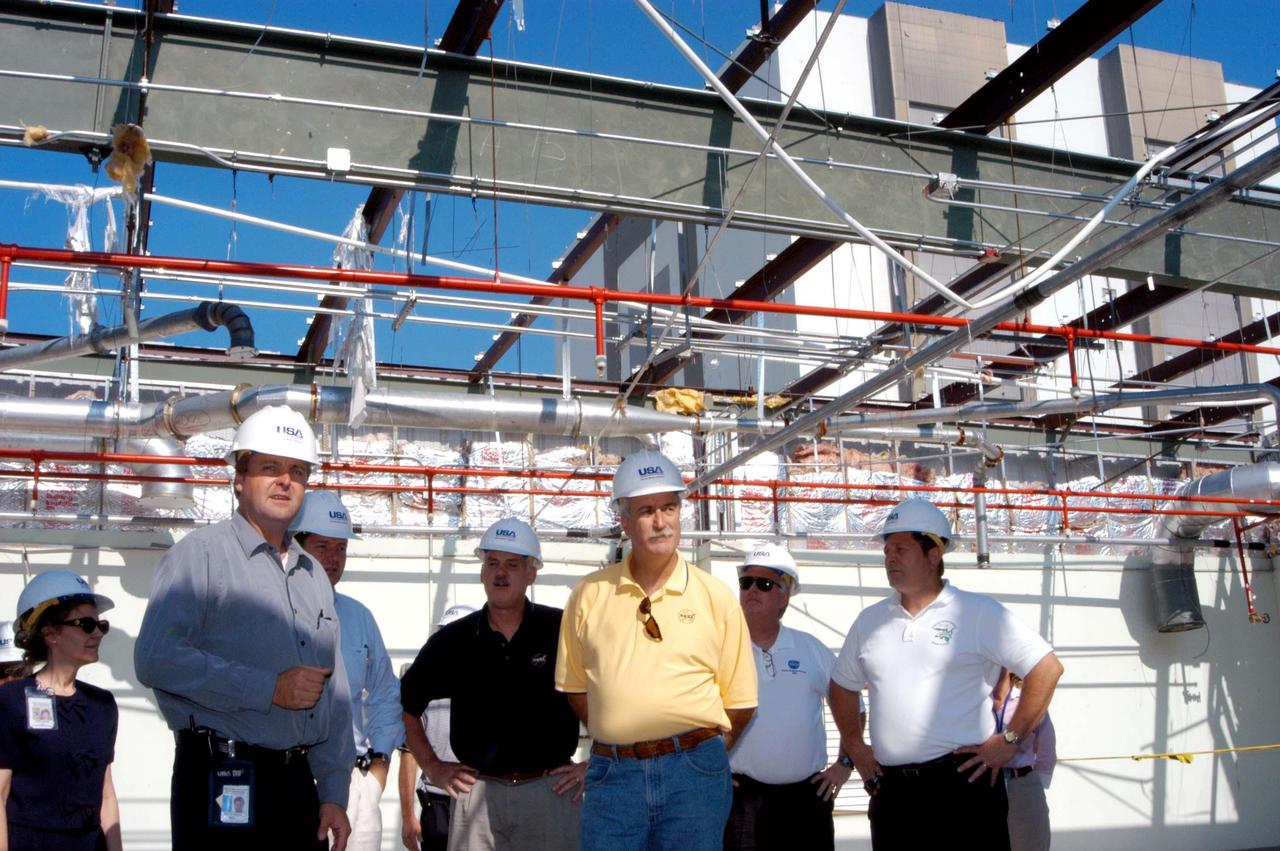
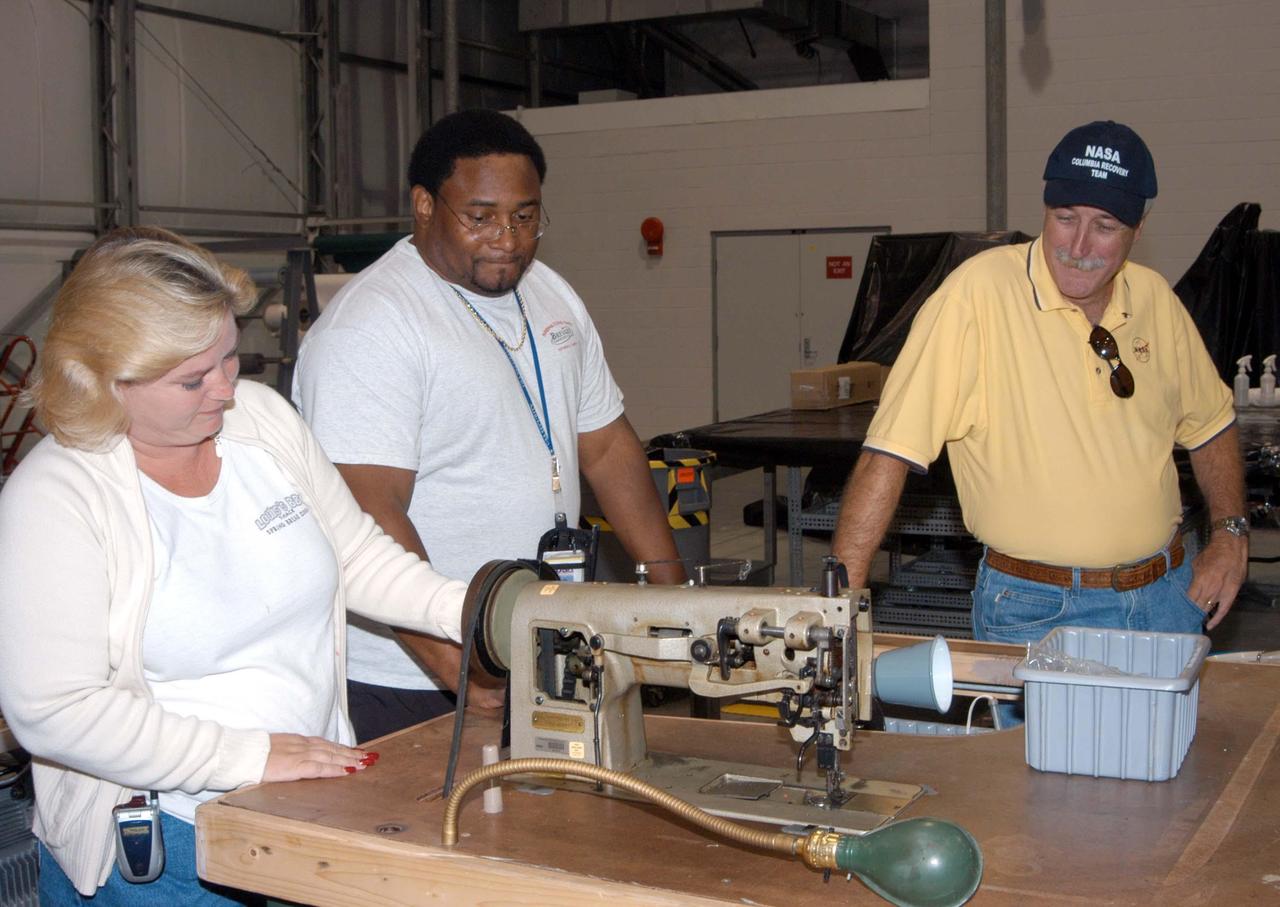
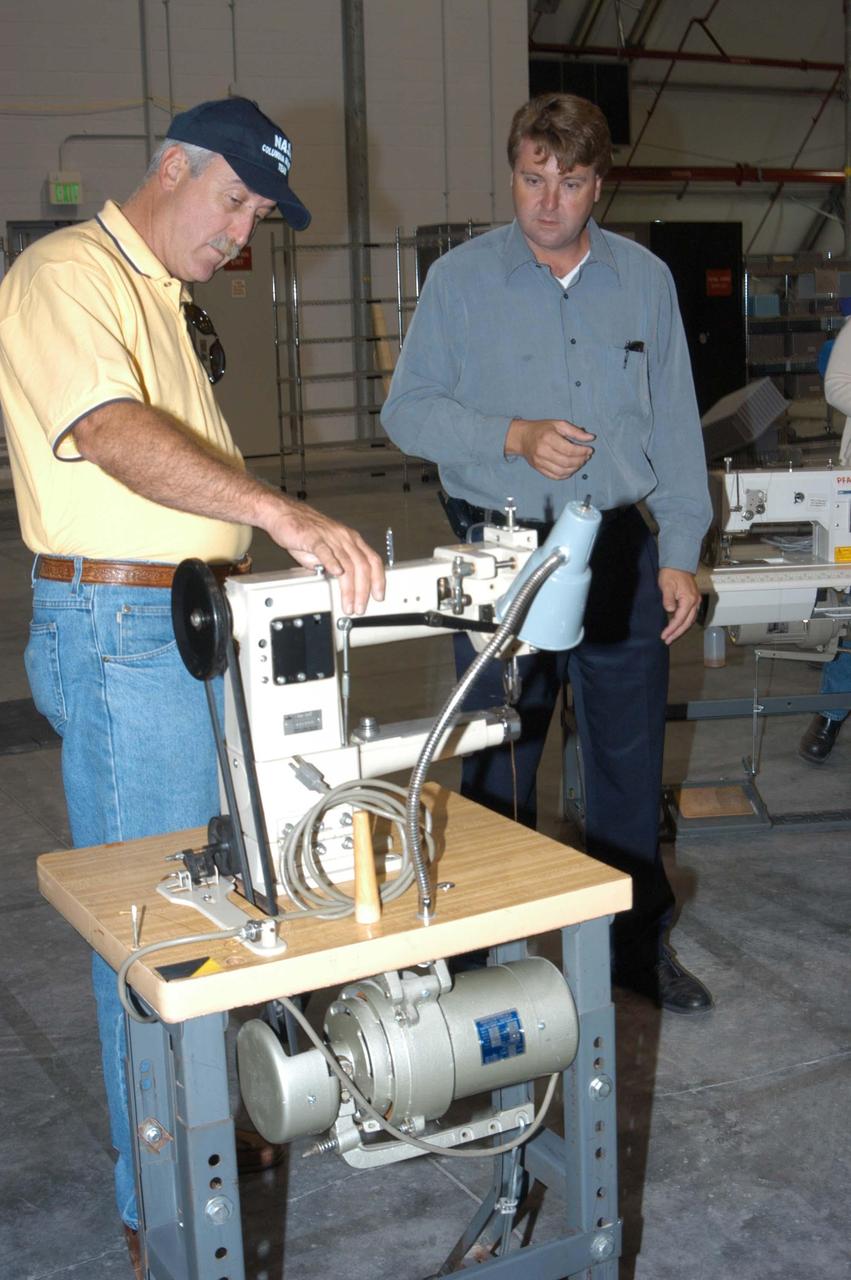
KENNEDY SPACE CENTER, FLA. -  From left, Martin Wilson, manager of Thermal Protection System (TPS) operations for United Space Alliance, briefs NASA Administrator Sean O’Keefe, KSC Director of the Spaceport Services Scott Kerr, NASA Associate Administrator of the Space Operations Mission Directorate William Readdy, and Center Director James Kennedy (right) on the temporary tile shop set up in the RLV hangar.  O’Keefe and Readdy are visiting KSC to survey the damage sustained by KSC facilities from Hurricane Frances. The Thermal Protection System Facility (TPSF), which creates the TPS tiles, blankets and all the internal thermal control systems for the Space Shuttles, is almost totally unserviceable at this time after losing approximately 35 percent of its roof in the storm, which blew across Central Florida Sept. 4-5. Undamaged equipment was removed from the TPSF and stored in the hangar. NASA’s three Space Shuttle orbiters -- Discovery, Atlantis and Endeavour - along with the Shuttle launch pads, all of the critical flight hardware for the orbiters and the International Space Station, and NASA’s Swift spacecraft, awaiting launch in October, were well protected and unharmed.
KSC-04pd1839
STS079-347-033 (16-26 Sept. 1996) --- Valeri G. Korzun and William F. Readdy, commanders, for Mir-22 and STS-79, respectively, reunite in the Docking Module (DM). The two have shared training experience in both Russia and the United States.  This photograph is one of fifteen 35mm frames (along with four 70mm frames) of still photography documenting the activities of NASA's STS-79 mission, which began with a September 16, 1996, liftoff from Launch Pad 39A the Kennedy Space Center (KSC) and ended with a landing at KSC on September 26, 1996.  Onboard for the launch were astronauts Readdy; Terrence W. Wilcutt, pilot; John E. Blaha, Jerome (Jay) Apt, Thomas D. Akers and Carl E. Walz, all mission specialists. On flight day 4, the crew docked with Russia's Mir Space Station.  Shannon W. Lucid, who had spent six months aboard Mir, switched cosmonaut guest researcher roles with Blaha.  The latter joined fellow Mir-22 crewmembers Korzun, and Aleksandr Y. Kaleri, flight engineer.
STS-79 and Mir cosmonauts in the docking module prior to undocking
KENNEDY SPACE CENTER, FLA. -  Martin Wilson (left, in foreground), manager of Thermal Protection System (TPS) operations for United Space Alliance (USA), gives a tour of the hurricane-ravaged Thermal Protection System Facility to (from center) NASA Associate Administrator of  Space Operations Mission Directorate William Readdy,  NASA Administrator Sean O’Keefe, Center Director James Kennedy and Director of Shuttle Processing Michael E. Wetmore.  The TPSF, which creates the TPS tiles, blankets and all the internal thermal control systems for the Space Shuttles, is almost totally unserviceable at this time after losing approximately 35 percent of its roof during Hurricane Frances, which blew across Central Florida Sept. 4-5. O’Keefe and Readdy are visiting KSC to survey the damage sustained by KSC facilities from the hurricane.  The Labor Day storm also caused significant damage to the Vehicle Assembly Building and Processing Control Center.  Additionally, the Operations and Checkout Building, Vertical Processing Facility, Hangar AE, Hangar S and Hangar AF Small Parts Facility each received substantial damage. However, well-protected and unharmed were NASA’s three Space Shuttle orbiters - Discovery, Atlantis and Endeavour - along with the Shuttle launch pads, all of the critical flight hardware for the orbiters and the International Space Station, and NASA’s Swift spacecraft that is awaiting launch in October.
KSC-04pd1850
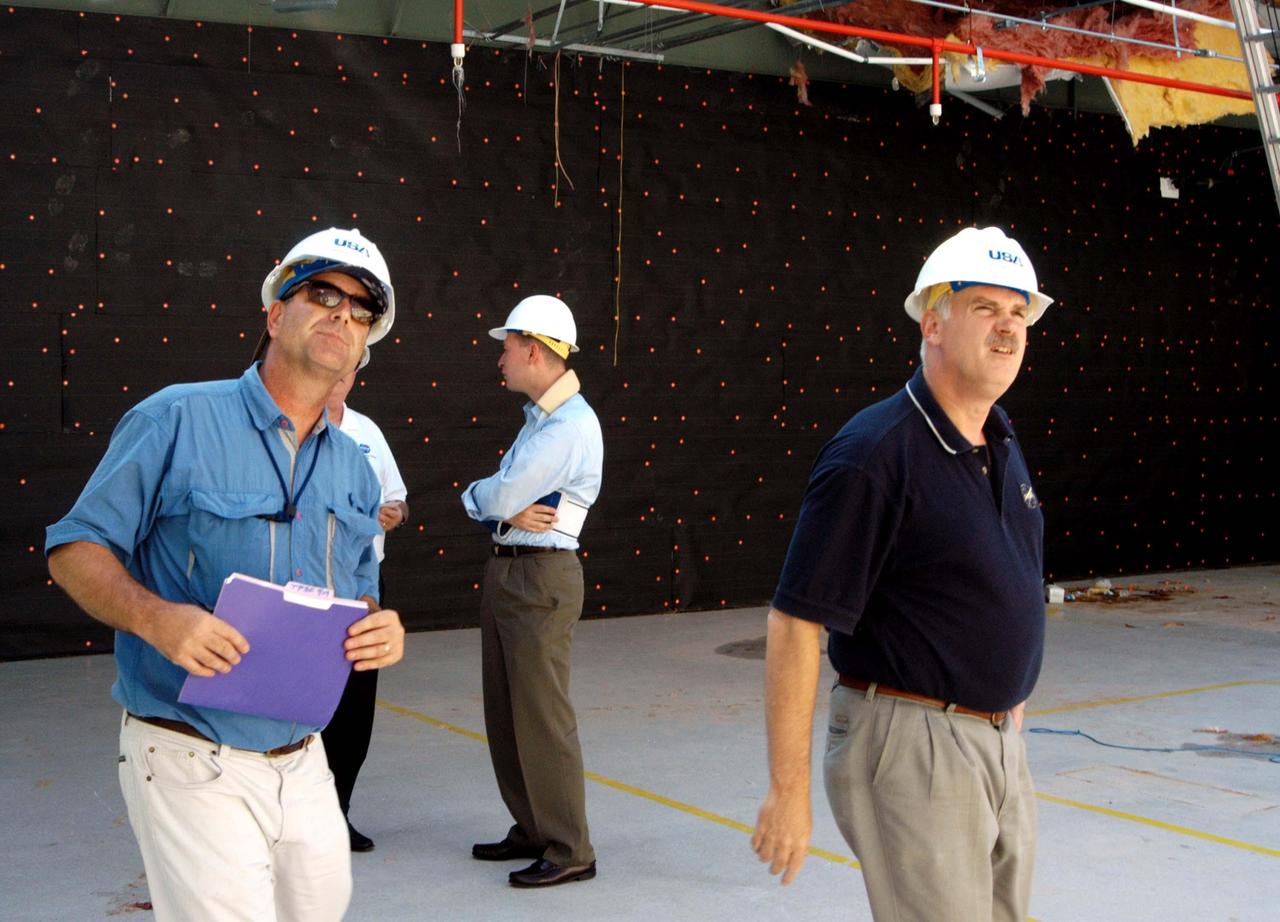
KENNEDY SPACE CENTER, FLA. -  Looking at damage inside the hurricane-ravaged Thermal Protection System Facility are KSC Director of Spaceport Services Scott Kerr (left) and NASA Associate Administrator of  Space Operations Mission Directorate William Readdy (right).  The TPSF, which creates the TPS tiles, blankets and all the internal thermal control systems for the Space Shuttles, is almost totally unserviceable at this time after losing approximately 35 percent of its roof during Hurricane Frances, which blew across Central Florida Sept. 4-5.  Readdy and NASA Administrator Sean O’Keefe are visiting KSC to survey the damage sustained by KSC facilities from the hurricane.  The Labor Day storm also caused significant damage to the Vehicle Assembly Building and Processing Control Center.  Additionally, the Operations and Checkout Building, Vertical Processing Facility, Hangar AE, Hangar S and Hangar AF Small Parts Facility each received substantial damage. However, well-protected and unharmed were NASA’s three Space Shuttle orbiters - Discovery, Atlantis and Endeavour - along with the Shuttle launch pads, all of the critical flight hardware for the orbiters and the International Space Station, and NASA’s Swift spacecraft that is awaiting launch in October.
KSC-04pd1851
STS079-349-022 (16-26 Sept. 1996) --- The traditional inflight crew portrait, taken in Russia's Mir Space Station base block.  Front row, left to right, Aleksandr Y. Kaleri, Jerome (Jay) Apt, John E. Blaha, William F. Readdy and Shannon W. Lucid.  Back row, left to right, Thomas D. Akers, Carl E. Walz, Valeri G. Korzun and Terrence W. Wilcutt.  This photograph is one of fifteen 35mm frames (along with four 70mm frames) of still photography documenting the activities of NASA's STS-79 mission, which began with a September 16, 1996, liftoff from Launch Pad 39A the Kennedy Space Center (KSC) and ended with a landing at KSC on September 26, 1996.  Onboard for the launch were astronauts Readdy, commander; Wilcutt, pilot; Blaha, Apt, Akers and Walz, all mission specialists.  On flight day 4, the crew docked with the Mir Space Station.  Lucid, who had spent six months aboard Mir, switched cosmonaut guest researcher roles with Blaha.  The latter joined fellow Mir-22 crewmembers Korzun, commander, and Kaleri, flight engineer.
STS-79 and Mir 22 crew portrait
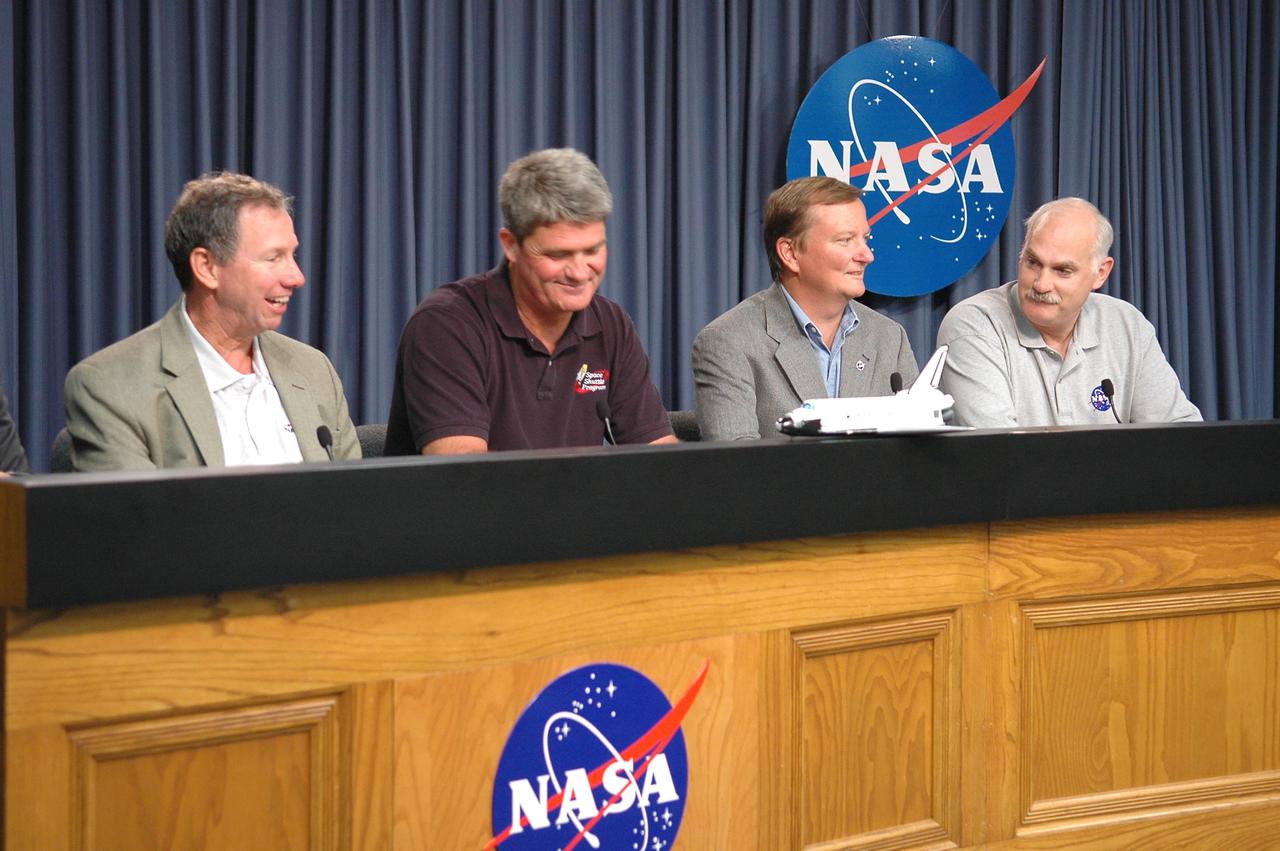
KENNEDY SPACE CENTER, FLA. - Space Shuttle managers take questions from the media during a press conference held following the conclusion of the Flight Readiness Review for Space Shuttle Discovery's Return to Flight mission STS-114.  From left are NASA's Administrator Michael Griffin, Associate Administrator for Space Operations William Readdy, Space Shuttle Program Manager William Parsons, and Space Shuttle Launch Director Michael Leinbach. A July 13 launch date was approved for the 12-day mission during which Discovery’s seven-person crew will test new hardware and techniques to improve Shuttle safety, as well as deliver supplies to the International Space Station.
KSC-05pd-1446
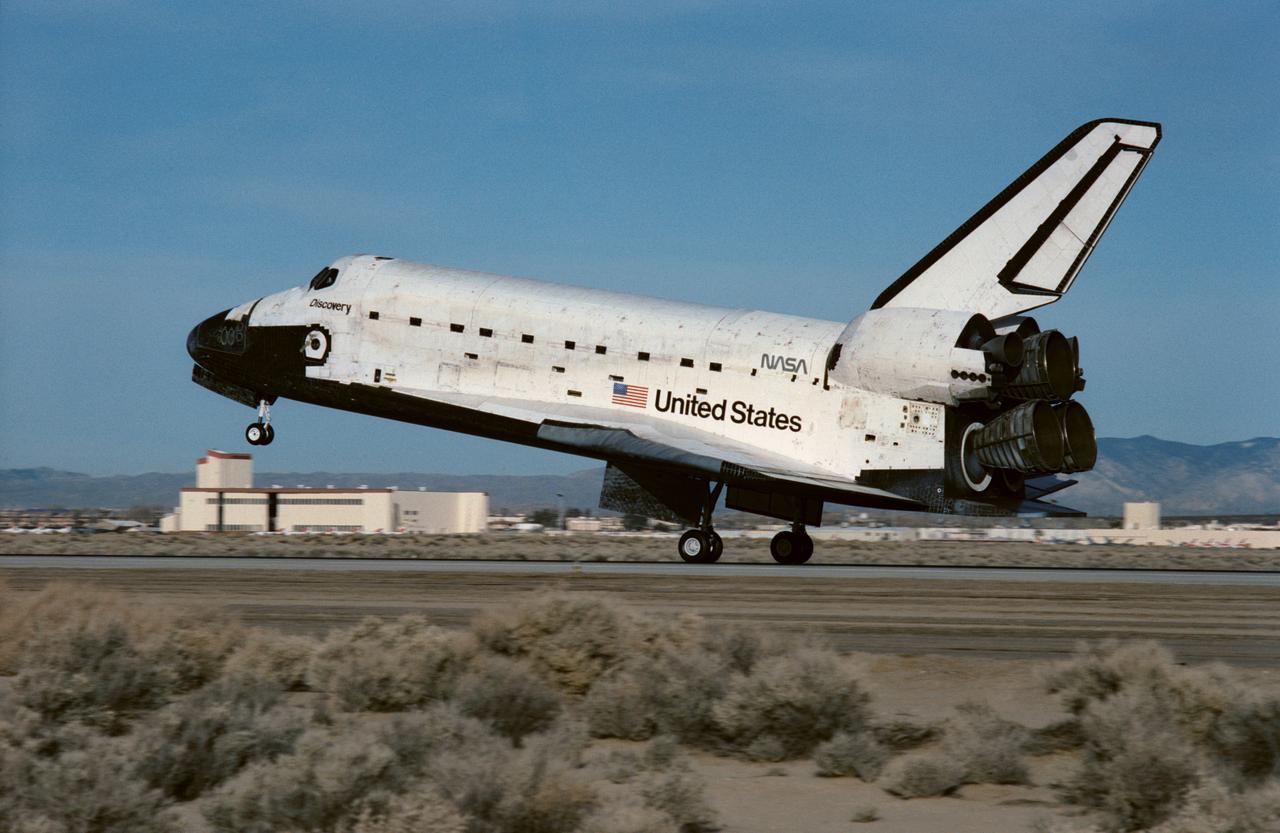
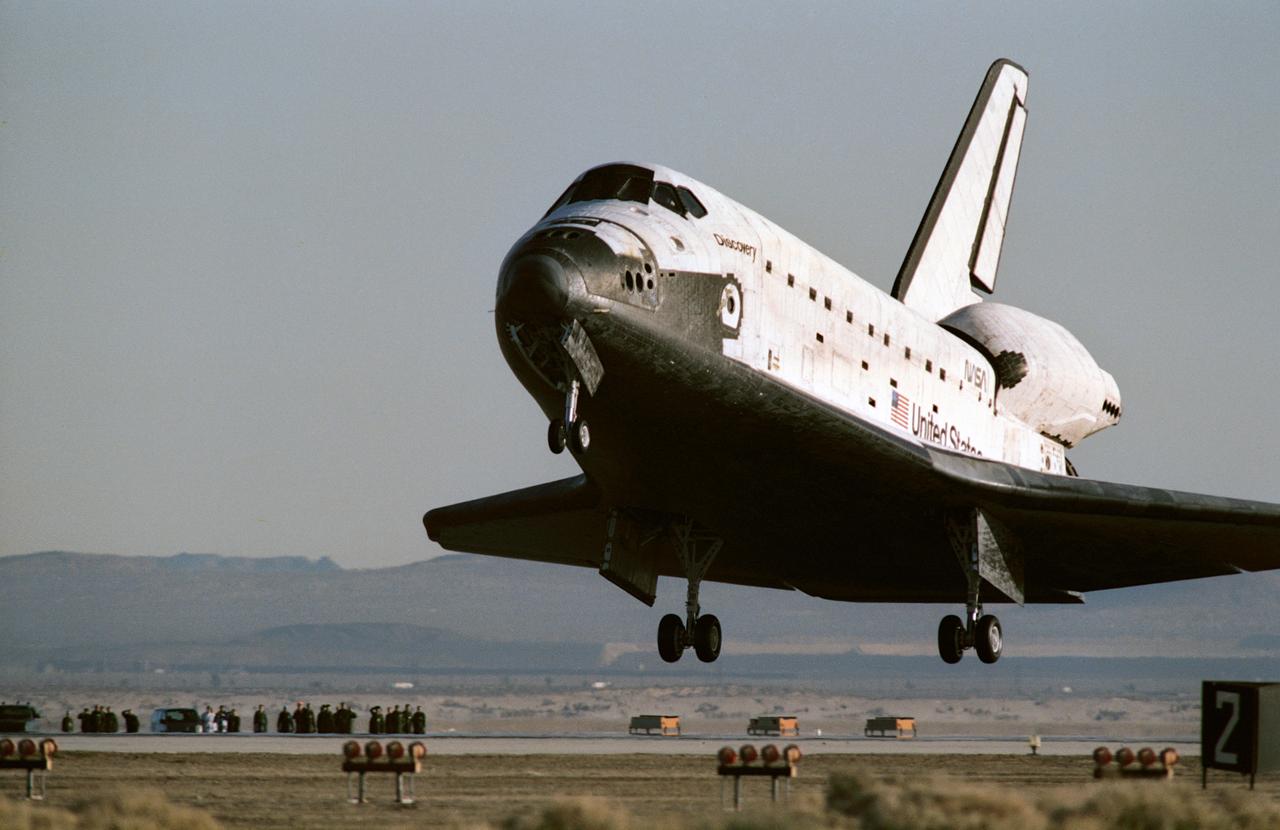
STS042-S-094 (30 Jan 1992) --- Space Shuttle Discovery lands on Runway 22 at Edwards Air Force Base in southern California to complete an eight-day mission.  Main gear touchdown occurred at 8:07:18 a.m. (PST), Jan. 30, 1992.  The crewmembers aboard Discovery for the first International Microgravity Laboratory (IML-1) mission were astronauts Ronald J. Grabe, mission commander;  Stephen S. Oswald, pilot;  Norman E. Thagard, payload commander;  and David C. Hilmers and William F. Readdy, both mission specialists;  and payload specialists Roberta L. Bondar of Canada and Ulf Merbold, representing the European Space Agency (ESA).
STS-42 Discovery, Orbiter Vehicle (OV) 103, lands on runway 22 at EAFB, Calif
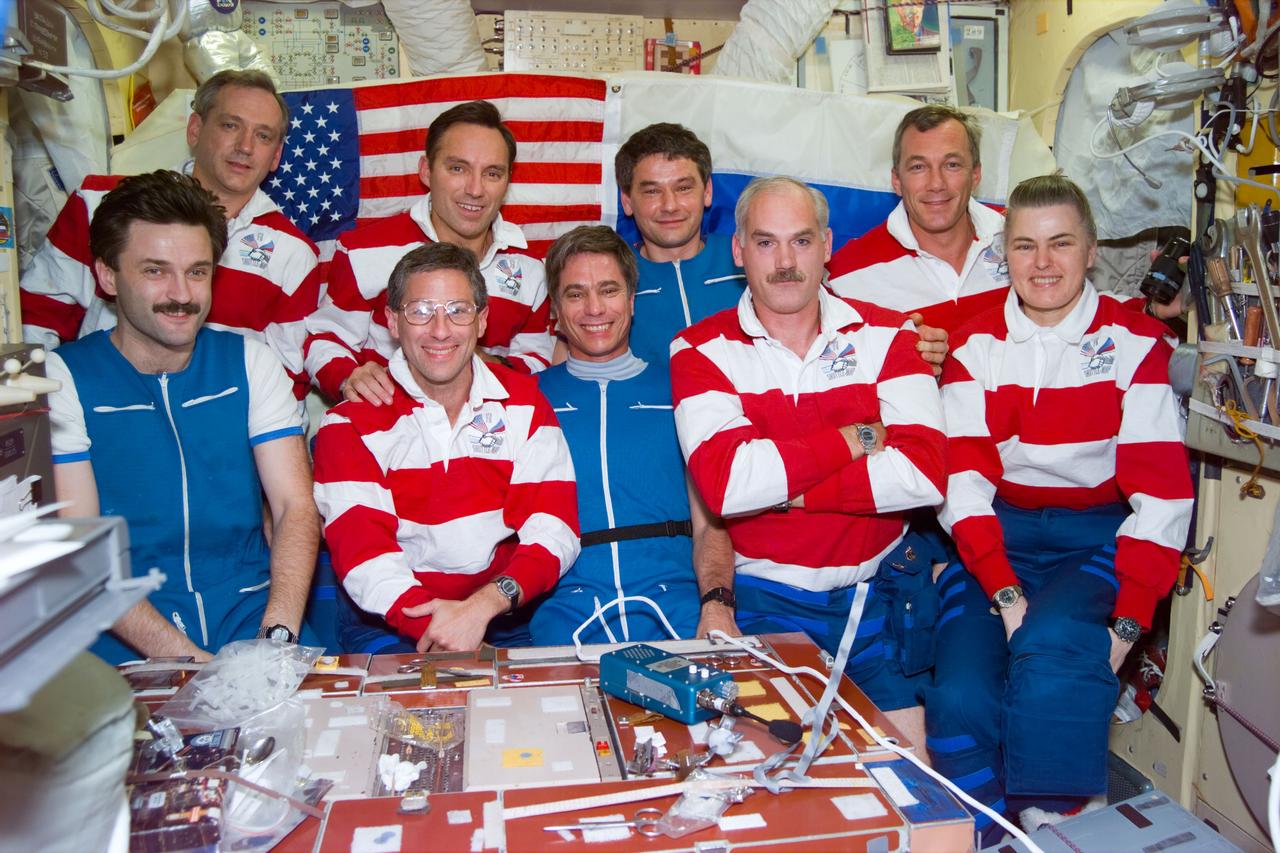
STS79-E-5289 (23 September 1996) --- Crew members of STS-79 and Mir-22 pose for final group portrait aboard Russia's Mir Space Station's Core Module before going separate ways in Earth-orbit, during Flight Day 8.  Front row, left to right, are Aleksandr Y. Kaleri, Jerome (Jay) Apt, William F. Readdy and Shannon W. Lucid.  On the back row are, left to right, Thomas D. Akers, Carl E. Walz, Valeri G. Korzun and Terrence W. Wilcutt.  Note Blaha, the new cosmonaut researcher for Mir-22, is now wearing the uniform of that crew and Lucid's garment is uniform with the STS-79 astronauts.
Joint STS-79 & Mir 22 crew in-flight portrait
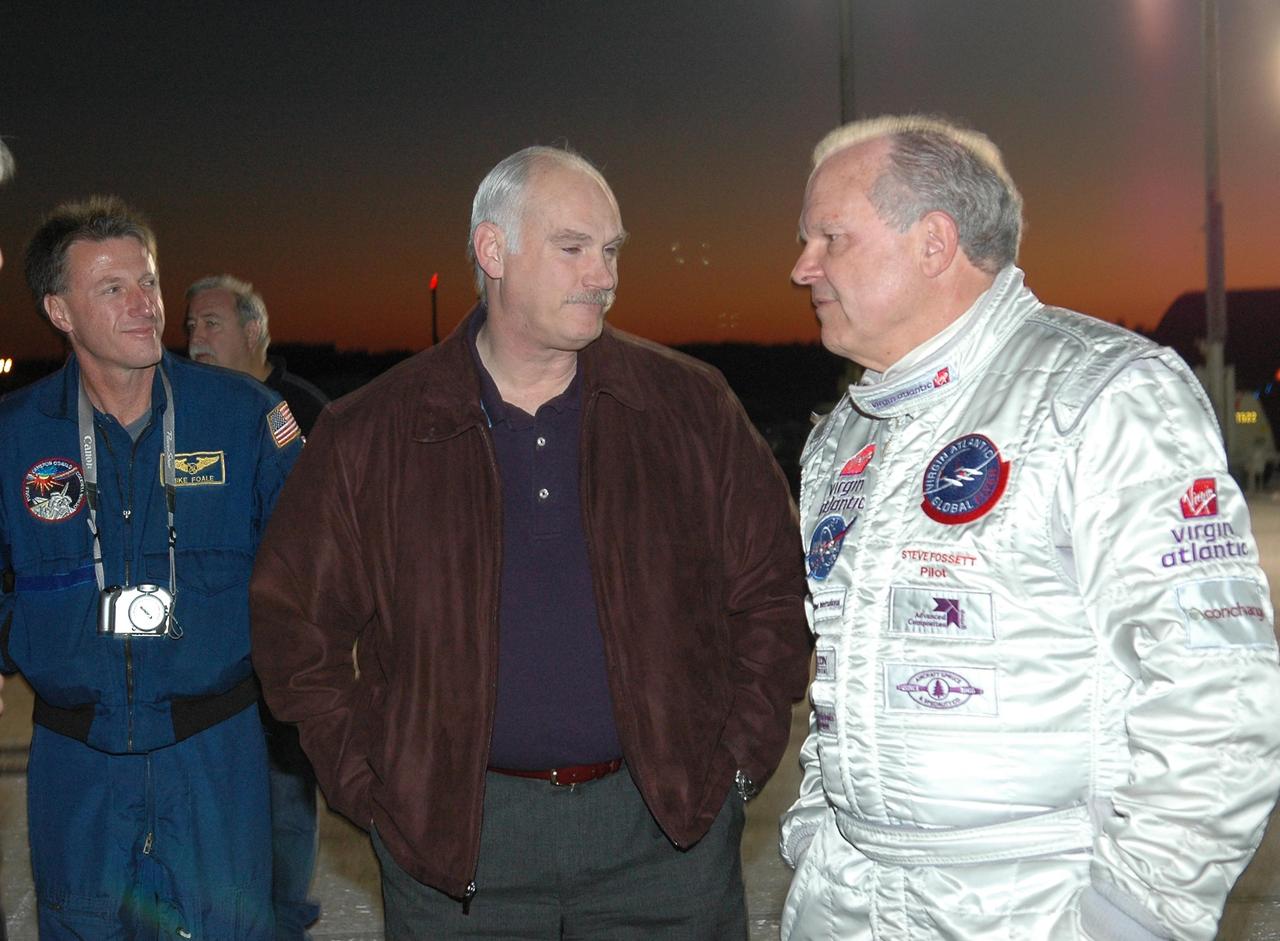
KENNEDY SPACE CENTER, FLA. -   As a rosy dawn creeps over the horizon, Deputy Associate Administrator for Exploration Operations Michael Foale (left) and astronaut Bill Readdy (center) talk to Steve Fossett about the anticipated flight of the Virgin Atlantic GlobalFlyer. Fossett will pilot the GlobalFlyer on a record-breaking attempt by flying solo, non-stop without refueling, to surpass the current record for the longest flight of any aircraft.  Fossett is expected to take off from the KSC SLF.  Later, takeoff of the GlobalFlyer was postponed due to a fuel leak that appeared during the last moments of loading. The next planned takeoff attempt is 7 a.m. Feb. 8 from the SLF.   Photo credit: NASA/Kim Shiflett
KSC-06pd0216
STS042-S-002 (November 1991) --- Payload specialists representing Canada and the European Space Agency (CSA - ESA) join five NASA astronauts for the January 1992 scheduled STS-42 mission.  Left to right are astronauts Stephen S. Oswald, pilot; Roberta L. Bondar, payload specialist; Norman E. Thagard, payload commander; Ronald J. Grabe, mission commander; David C. Hilmers, mission specialist; Ulf Merbold, payload specialist; and William F. Readdy, mission specialist. The STS-42 mission will utilize the Space Shuttle Discovery to carry out experiments for the International Microgravity Laboratory (IML-1).
STS-42 Discovery, OV-103, official crew portrait
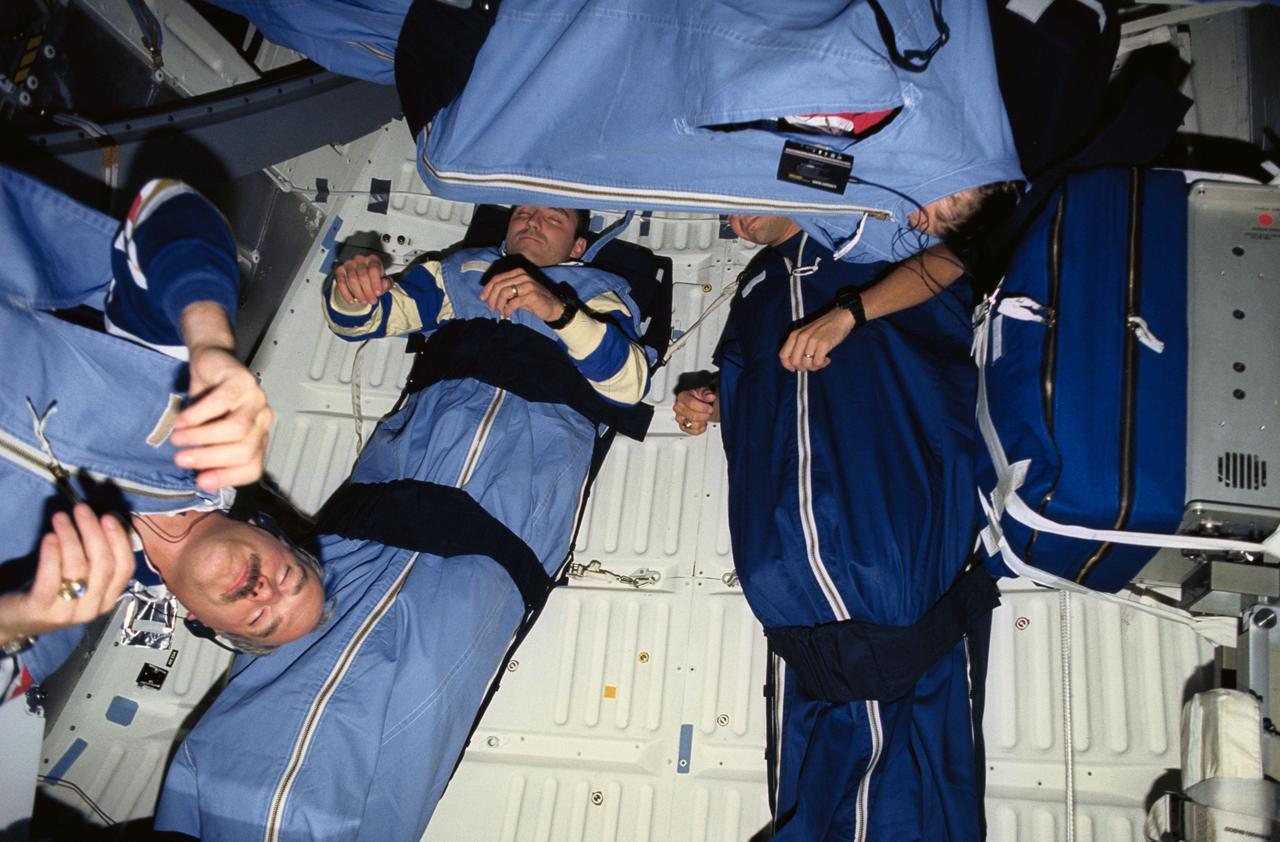
STS051-20-037 (12-22 Sept 1993) --- Four of the five astronaut crew members were photographed during one of their sleep periods on the Space Shuttle Discovery's mid-deck.  At bottom center, astronaut Frank L. Culbertson, Jr., mission commander, is barely visible, with most of his body zipped securely in the sleep restraint.  Others, left to right, are astronauts Daniel W. Bursch and Carl E. Walz, mission specialists, and William F. Readdy, pilot.  The photograph was taken by astronaut James H. Newman, mission specialist.
STS-51 astronauts photographed during sleep period on Discovery's middeck
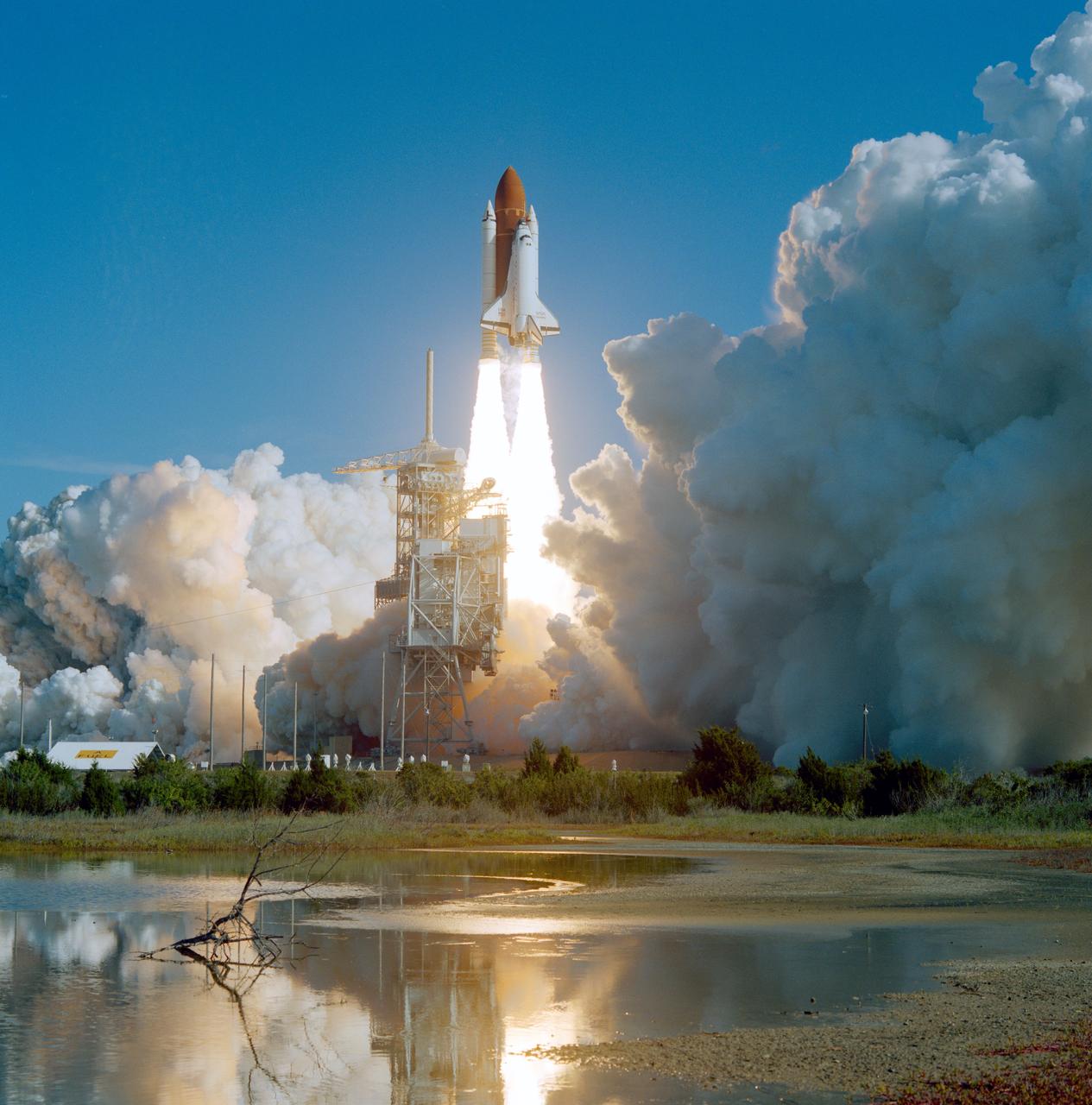
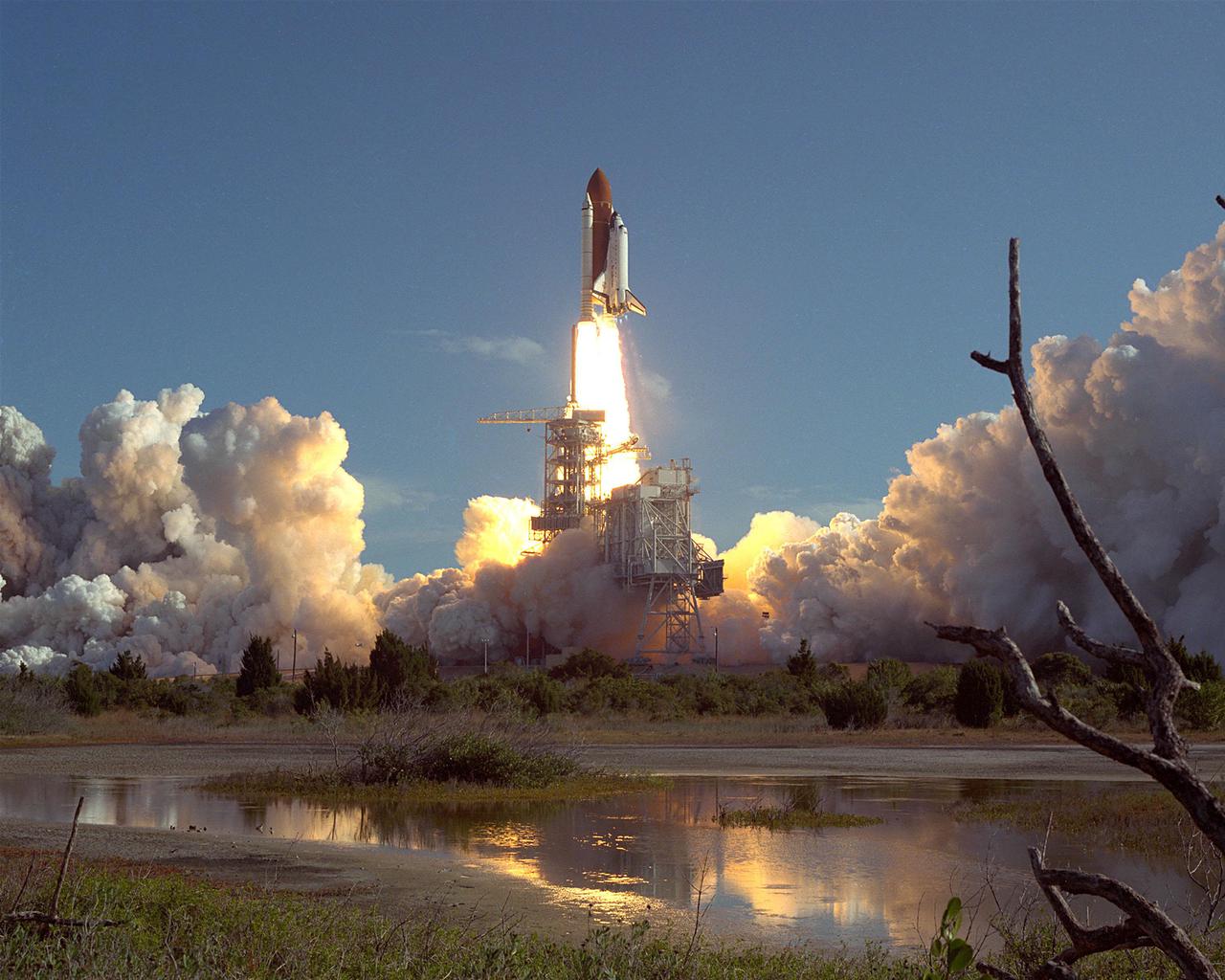
STS042-S-064 (22 Jan 1992) --- A horizontal image of liftoff of STS-42, with a crew of seven and the International Microgravity Laboratory (IML-1) onboard.  Crewmembers are astronauts Ronald J. Grabe, mission commander; Stephen S. Oswald, pilot; Norman E. Thagard, payload commander; David C. Hilmers and William F. Readdy, both mission specialists; and payload specialists Roberta L. Bondar of Canada and Ulf Merbold, representing the European Space Agency (ESA).  Liftoff occurred at 9:52:33 a.m. (EST), Jan. 22, 1992.
STS-42 Discovery, Orbiter Vehicle (OV) 103, lifts off from KSC LC Pad
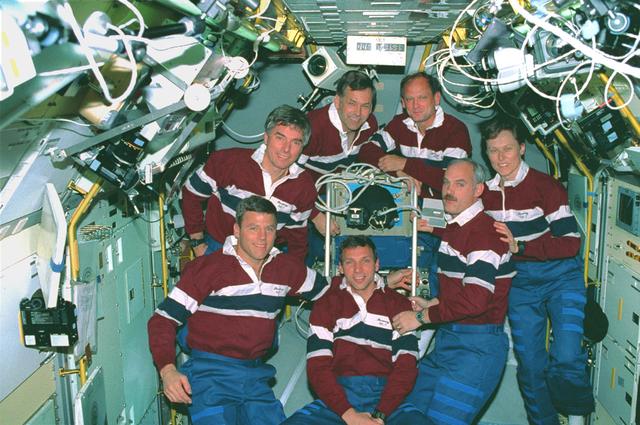
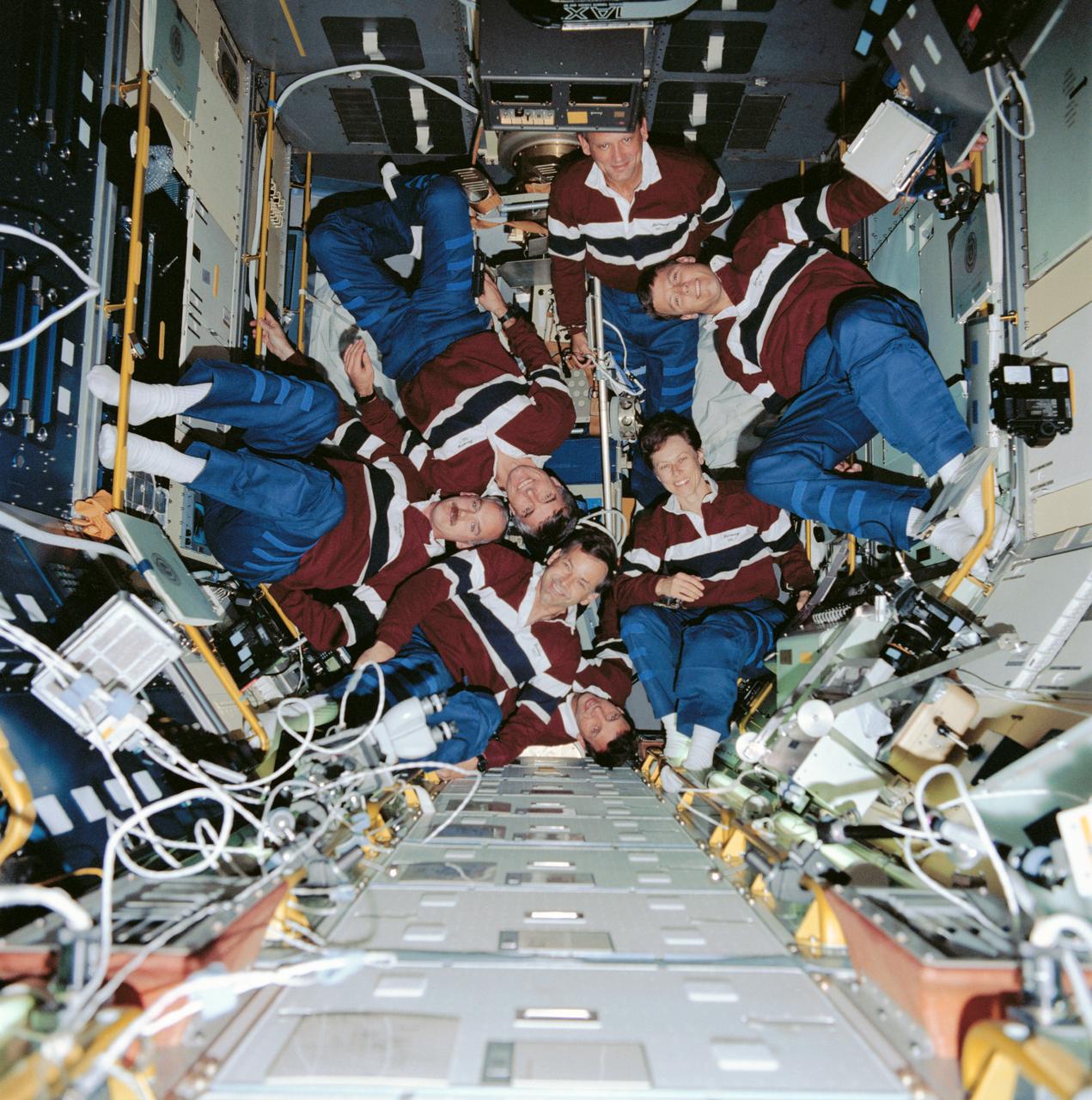
Onboard Space Shuttle Discovery (STS-42) the seven crewmembers pose for a traditional in-space portrait in the shirt-sleeve environment of the International Microgravity Laboratory (IML-1) science module in the Shuttle's cargo bay. Pictured are (clockwise from top),Commander Ronald J. Grabe, payload commander Norman E. Thagard, payload specialist Roberta L. Bondar; mission specialists William F. Readdy and David C. Hilmers; pilot Stephen S. Oswald and payload specialist Ulf Merbold. The rotating chair, used often in biomedical tests on the eight-day flight, is in center frame.
Space Shuttle Project
KENNEDY SPACE CENTER, FLA.  -  After the NASA Update by Administrator Sean O’Keefe, Center Director Jim Kennedy presented a One NASA Peer Award to Virginia Whitehead for her outstanding customer service.   From left are Associate Administrator of Space Operations Mission Directorate William F. Readdy, O'Keefe, Whitehead, and Kennedy. Whitehead is a manager in the Center’s Payload Processing Directorate. The award is given to recognize employees who have demonstrated behaviors consistent with the spirit of One NASA and are called Peer Awards because candidates must be nominated by their peers.
KSC-05pd-0149
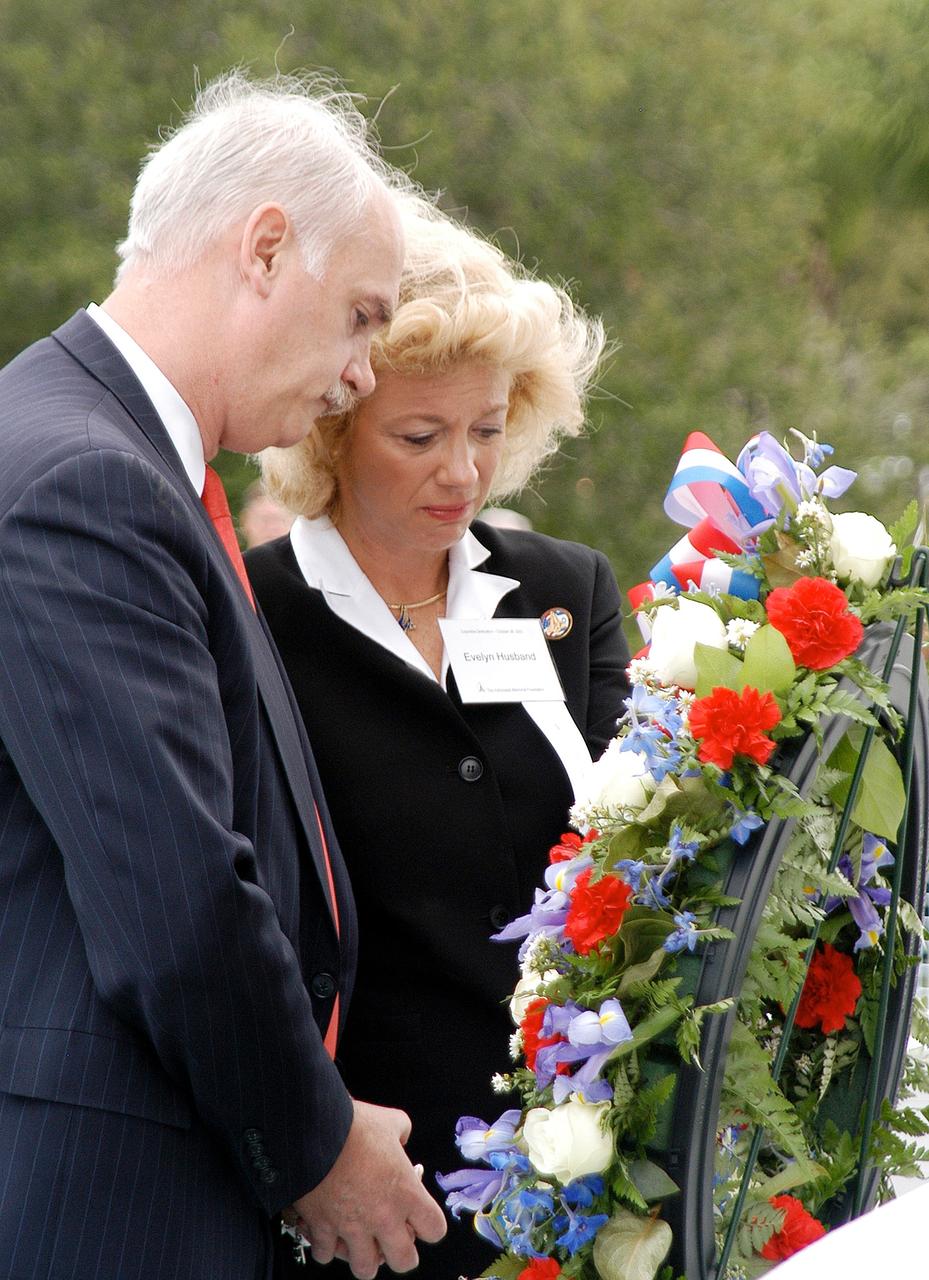
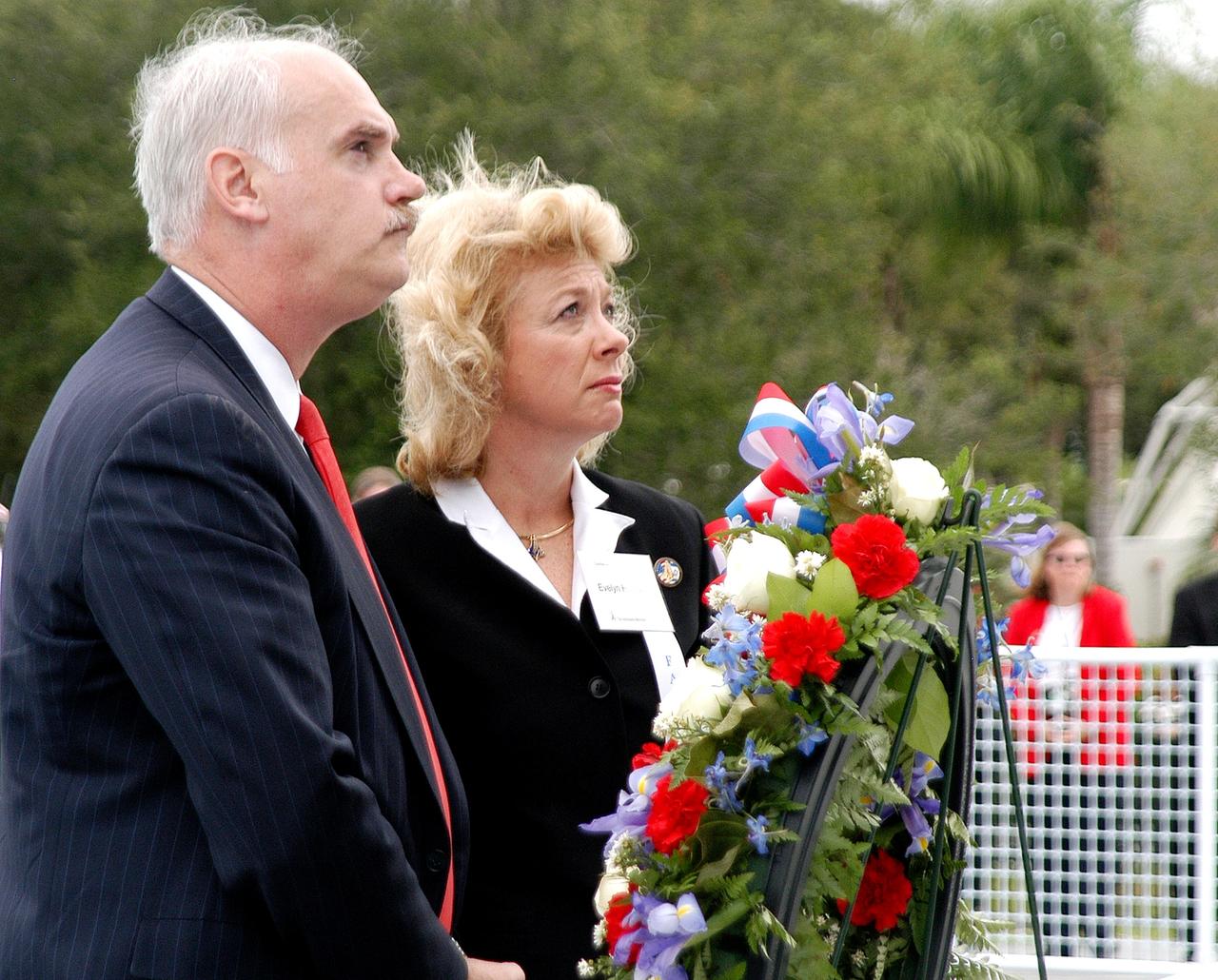
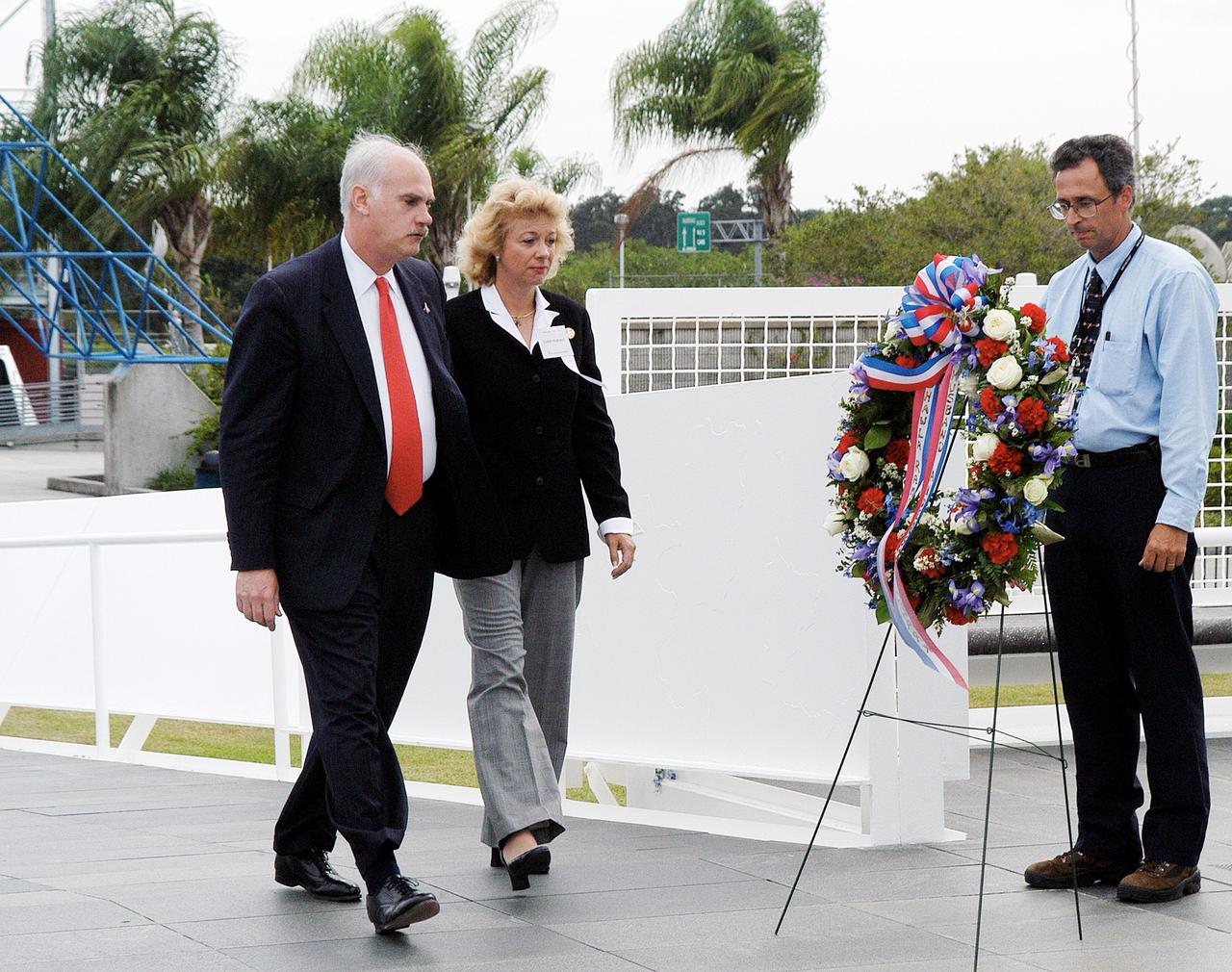
KENNEDY SPACE CENTER, FLA. -  NASA's Associate Administrator for Space Flight William Readdy (left) and Evelyn Husband, widow of astronaut Rick Husband, place a ceremonial wreath at the Space Mirror Memorial at the Kennedy Space Center Visitor Complex.  During this dedication ceremony, the names of the STS-107 astronauts who lost their lives during the Columbia accident -- Rick Husband, Willie McCool, Laurel Clark, Michael Anderson, David Brown, Kalpana Chawla, and Ilan Ramon -- join the names of 17 other space heroes who gave their lives for the U.S. space program. The "Space Mirror," 42 1/2 feet high by 50 feet wide, illuminates the names of the fallen astronauts cut through the monument's black granite surface.
KENNEDY SPACE CENTER, FLA. - NASA's Associate Administrator for Space Flight William Readdy (left) and Evelyn Husband, widow of astronaut Rick Husband, place a ceremonial wreath at the Space Mirror Memorial at the Kennedy Space Center Visitor Complex. During this dedication ceremony, the names of the STS-107 astronauts who lost their lives during the Columbia accident -- Rick Husband, Willie McCool, Laurel Clark, Michael Anderson, David Brown, Kalpana Chawla, and Ilan Ramon -- join the names of 17 other space heroes who gave their lives for the U.S. space program. The "Space Mirror," 42 1/2 feet high by 50 feet wide, illuminates the names of the fallen astronauts cut through the monument's black granite surface.
KENNEDY SPACE CENTER, FLA. -  NASA officials participate in a press conference in KSC's Press Site Auditorium.  From left are KSC Deputy Director of External Relations and Business Development Lisa Malone, NASA Administrator Sean O'Keefe, NASA Associate Administrator for Space Flight William F. Readdy, KSC Deputy Director James W. Kennedy, and KSC Director Roy D. Bridges. The press conference followed the official announcement of James W. Kennedy as the next director of the NASA Kennedy Space Center (KSC) in Florida. Kennedy has served as KSC's deputy director since November 2002. He will succeed Bridges, who was appointed on June 13 to lead NASA's Langley Research Center, Hampton, Va.
KENNEDY SPACE CENTER, FLA. - NASA officials participate in a press conference in KSC's Press Site Auditorium. From left are KSC Deputy Director of External Relations and Business Development Lisa Malone, NASA Administrator Sean O'Keefe, NASA Associate Administrator for Space Flight William F. Readdy, KSC Deputy Director James W. Kennedy, and KSC Director Roy D. Bridges. The press conference followed the official announcement of James W. Kennedy as the next director of the NASA Kennedy Space Center (KSC) in Florida. Kennedy has served as KSC's deputy director since November 2002. He will succeed Bridges, who was appointed on June 13 to lead NASA's Langley Research Center, Hampton, Va.
KENNEDY SPACE CENTER, FLA. -  NASA's Associate Administrator for Space Flight William Readdy and Evelyn Husband, widow of astronaut Rick Husband, place a ceremonial wreath at the Space Mirror Memorial at the Kennedy Space Center Visitor Complex.  During this dedication ceremony, the names of the STS-107 astronauts who lost their lives during the Columbia accident -- Rick Husband, Willie McCool, Laurel Clark, Michael Anderson, David Brown, Kalpana Chawla, and Ilan Ramon -- join the names of 17 other space heroes who gave their lives for the U.S. space program. The "Space Mirror," 42 1/2 feet high by 50 feet wide, illuminates the names of the fallen astronauts cut through the monument's black granite surface.
KENNEDY SPACE CENTER, FLA. - NASA's Associate Administrator for Space Flight William Readdy and Evelyn Husband, widow of astronaut Rick Husband, place a ceremonial wreath at the Space Mirror Memorial at the Kennedy Space Center Visitor Complex. During this dedication ceremony, the names of the STS-107 astronauts who lost their lives during the Columbia accident -- Rick Husband, Willie McCool, Laurel Clark, Michael Anderson, David Brown, Kalpana Chawla, and Ilan Ramon -- join the names of 17 other space heroes who gave their lives for the U.S. space program. The "Space Mirror," 42 1/2 feet high by 50 feet wide, illuminates the names of the fallen astronauts cut through the monument's black granite surface.
KENNEDY SPACE CENTER, FLA. -  NASA's Associate Administrator for Space Flight William Readdy and Evelyn Husband, widow of astronaut Rick Husband, place a ceremonial wreath at the Space Mirror Memorial at the Kennedy Space Center Visitor Complex.  During this dedication ceremony, the names of the STS-107 astronauts who lost their lives during the Columbia accident -- Rick Husband, Willie McCool, Laurel Clark, Michael Anderson, David Brown, Kalpana Chawla, and Ilan Ramon -- join the names of 17 other space heroes who gave their lives for the U.S. space program. The "Space Mirror," 42 1/2 feet high by 50 feet wide, illuminates the names of the fallen astronauts cut through the monument's black granite surface.
KENNEDY SPACE CENTER, FLA. - NASA's Associate Administrator for Space Flight William Readdy and Evelyn Husband, widow of astronaut Rick Husband, place a ceremonial wreath at the Space Mirror Memorial at the Kennedy Space Center Visitor Complex. During this dedication ceremony, the names of the STS-107 astronauts who lost their lives during the Columbia accident -- Rick Husband, Willie McCool, Laurel Clark, Michael Anderson, David Brown, Kalpana Chawla, and Ilan Ramon -- join the names of 17 other space heroes who gave their lives for the U.S. space program. The "Space Mirror," 42 1/2 feet high by 50 feet wide, illuminates the names of the fallen astronauts cut through the monument's black granite surface.
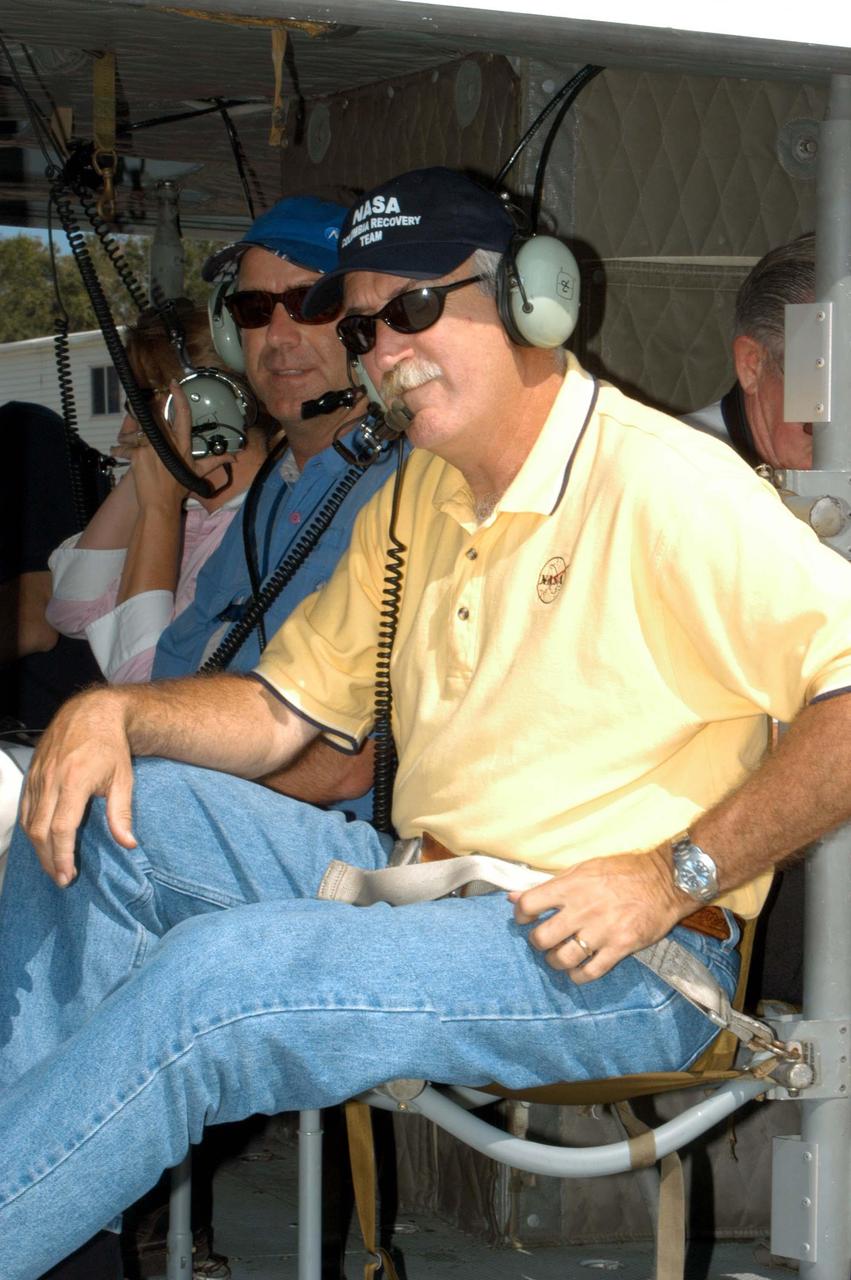
KENNEDY SPACE CENTER, FLA. -  NASA Administrator Sean O’Keefe (right) sits next to KSC Director of Spaceport Services Scott Kerr in the helicopter from which they will observe overall damage at the Center from Hurricane Frances. O’Keefe and NASA Associate Administrator of  Space Operations Mission Directorate William Readdy are visiting KSC to survey the damage sustained by KSC facilities from the hurricane. The Labor Day storm caused significant damage to the Vehicle Assembly Building, Thermal Protection System Facility, and Processing Control Center.  Additionally, the Operations and Checkout Building, Vertical Processing Facility, Hangar AE, Hangar S and Hangar AF Small Parts Facility each received substantial damage. However, well-protected and unharmed were NASA’s three Space Shuttle orbiters -- Discovery, Atlantis and Endeavour - along with the Shuttle launch pads, all of the critical flight hardware for the orbiters and the International Space Station, and NASA’s Swift spacecraft that is awaiting launch in October.
KSC-04pd1846
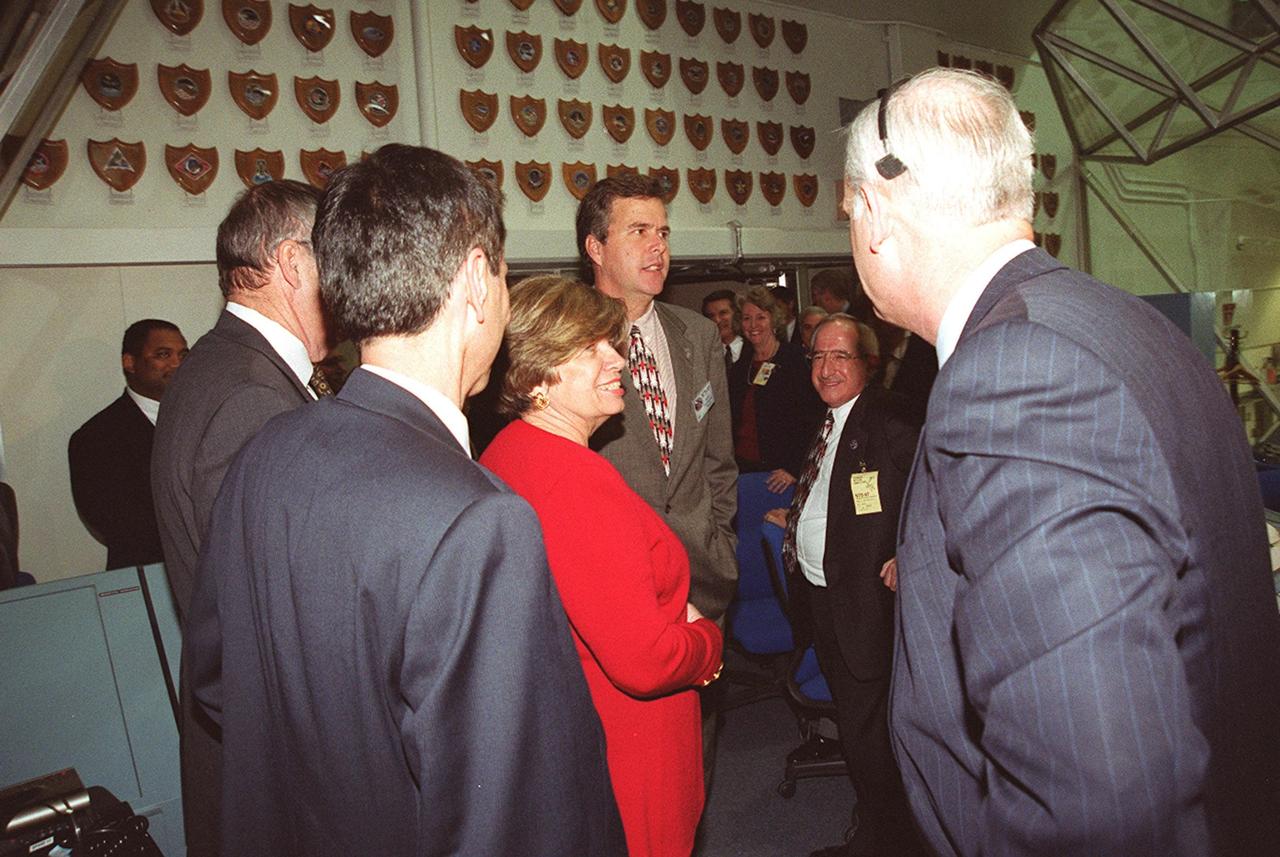
KENNEDY SPACE CENTER, FLA. -- In the Firing Room, Launch Control Center, after a successful launch of STS-97, VIPs gather to congratulate the launch team. In the center of the photo is Florida Governor Jeb Bush. On his left is KSC Director of External Relations and Business Development JoAnn H. Morgan; on Bush’s right is Joseph Rothenberg, associate administrator, Office of Space Flight; on the far right is Bill Readdy, manager at Johnson Space Center. Liftoff of Endeavour occurred at 10:06:01 p.m. EST. Endeavour and its five-member crew will deliver U.S. solar arrays to the International Space Station and be the first Shuttle crew to visit the Station’s first resident crew. The 11-day mission includes three spacewalks. This marks the 101st mission in Space Shuttle history and the 25th night launch. Endeavour is expected to land at KSC Dec. 11 at 6:19 p.m. EST
KSC-00pp1817
KENNEDY SPACE CENTER, FLA. -  At a post-landing briefing, NASA Administrator Mike Griffin, Space Shuttle Program Manager Bill Parsons, Shuttle Launch Director Mike Leinbach and Associate Administrator of NASA’s Space Operations Mission Directorate Bill Readdy respond to questions from the media. Space Shuttle Discovery safely landed at Edwards Air Force Base in California at 8:11 a.m. EDT, guided by Mission Commander Eileen Collins.  Discovery spent two weeks in space on Return to Flight mission STS-114, where the crew demonstrated new methods to inspect and repair the Shuttle in orbit. The crew also delivered supplies, outfitted and performed maintenance on the International Space Station. A number of these tasks were conducted during three spacewalks.
KSC-05PD-1848
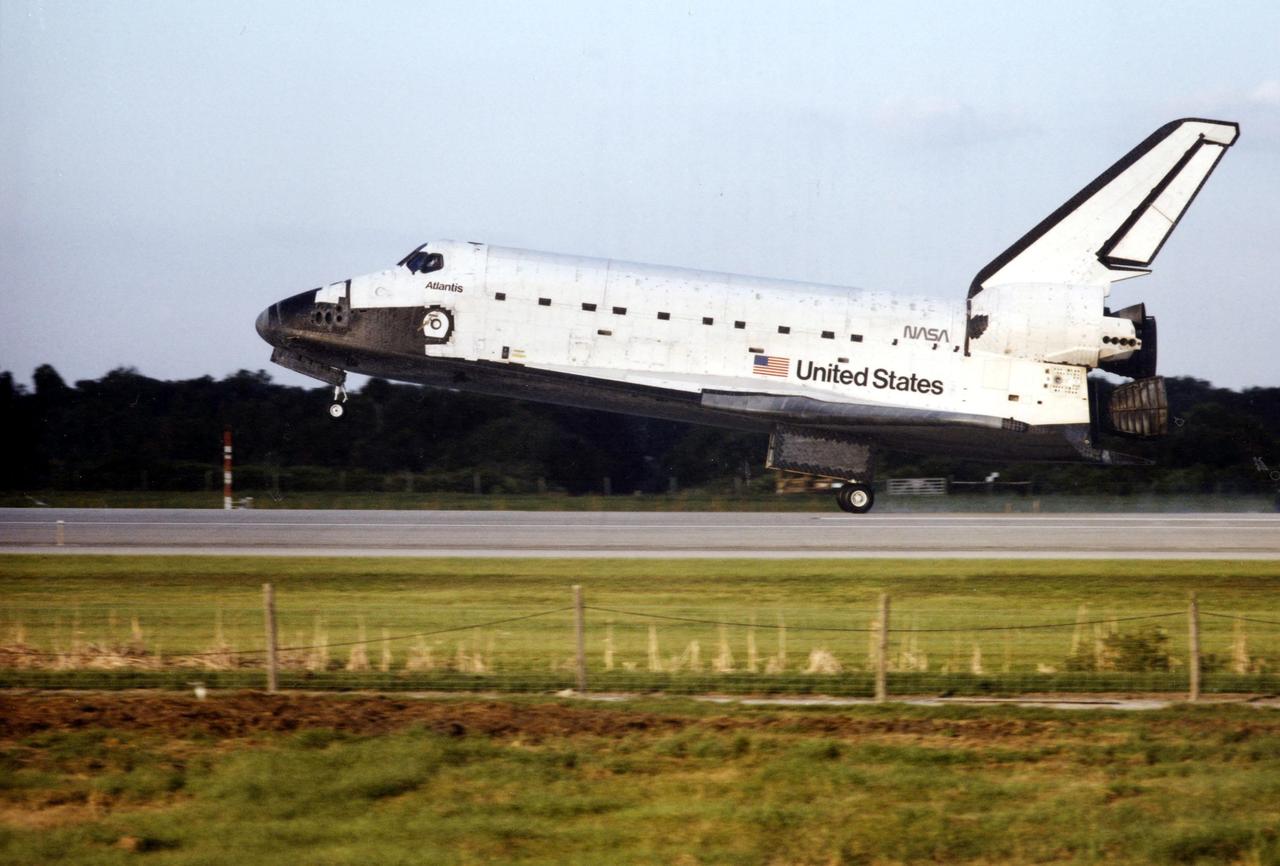
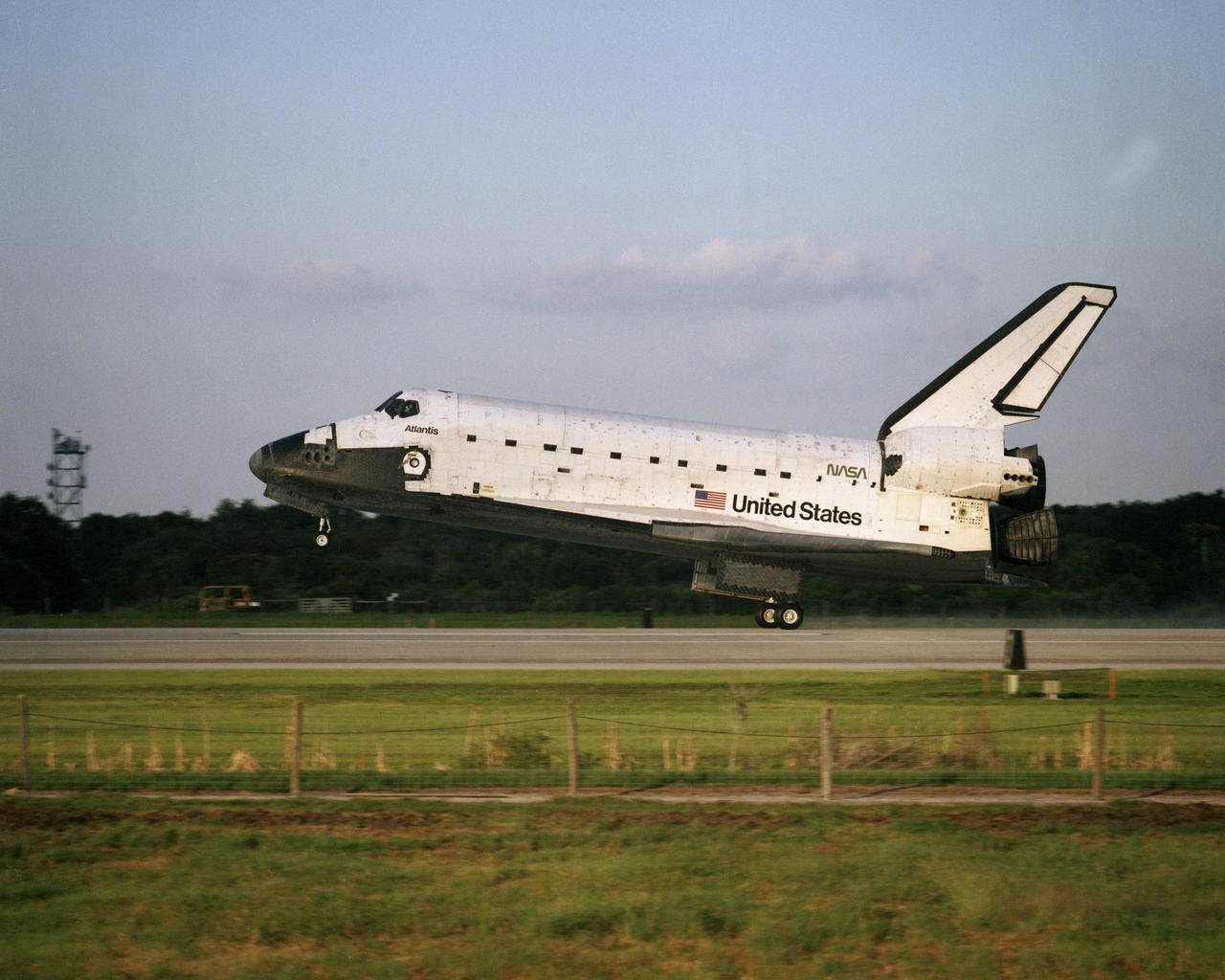
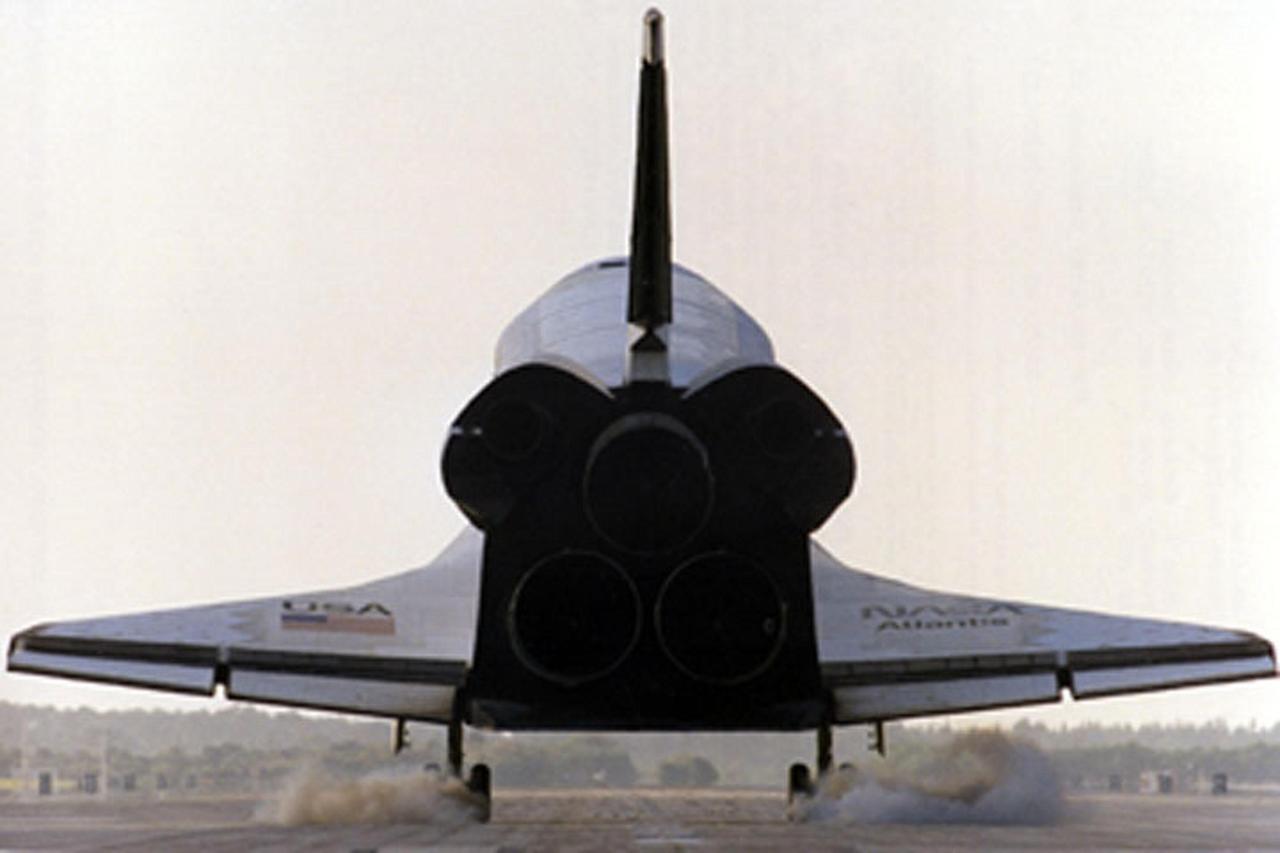
STS079-S-022 (26 Sept. 1996) --- The main landing gear of the space shuttle Atlantis touches down on Runway 15 at the Shuttle Landing Facility (SLF) at the Kennedy Space Center (KSC), bringing an end to the successful ten-day mission.  Landing occurred at 8:13:15 a.m. (EDT), Sept. 26, 1996.  The touchdown marked the end of 188 days in space for astronaut Shannon W. Lucid, following her in-space exchange with astronaut John E. Blaha, who is now aboard Russia's Mir Space Station. Returning along with Lucid were her STS-79 crew mates - astronauts William F. Readdy, commander; Terrence W. Wilcutt, pilot; and Thomas D. Akers, Jerome (Jay) Apt and Carl E. Walz, mission specialists.
STS-79 landing views
KENNEDY SPACE CENTER, FLA. -- The STS-79 mission comes to a successful conclusion as the orbiter Atlantis touches down on Runway 15 of KSC's Shuttle Landing Facility at 8:13:15 a.m. EDT, September 26. On board is U.S. astronaut Shannon W. Lucid, who has been living and working on the Russian Space Station Mir for about six months. Lucid has spent 188 days in space from launch aboard Atlantis in March to her return today, establishing a U.S. record for long-duration spaceflight as well as representing the longest spaceflight for a woman. Succeeding Lucid on Mir is U.S. astronaut John E. Blaha, who embarked to Mir with the STS-79 crew. The commander of Mission STS-79 is William F. Readdy; Terrence W. Wilcutt is the pilot, and the three mission specialists are Jay Apt, Thomas D. Akers and Carl E. Walz
KSC-96pc1125
STS042-78-061 (22-30 Jan. 1992) --- The seven STS-42 crewmembers pose for a traditional in-space portrait in the shirt-sleeve environment of the International Microgravity Laboratory (IML-1) science module in the shuttle's cargo bay. (Hold picture with index numbers at top.) David C. Hilmers, mission specialist, is at top center of the 70mm image.  Others pictured are (clockwise) Ronald J. Grabe, mission commander; William F. Readdy; mission specialist; Ulf Merbold, European Space Agency (ESA) payload specialist; Norman E. Thagard, payload commander; Stephen S. Oswald, pilot; and Roberta L. Bondar, Canadian payload specialist. The rotating chair, used often in biomedical tests on the eight-day flight, is (partially obscured) in center frame.
STS-42 OV-103 crew poses for onboard (in-space) portrait in IML-1 SL module
STS042-S-093  (30 Jan 1992) --- Space Shuttle Discovery is just about to ease down its main gear on Runway 22 at Edwards Air Force Base in southern California.  Main gear touchdown occurred at 8:07:18 a.m. (PST), Jan. 30, 1992.  The successful landing completed an eight-day mission for five NASA astronauts and two payload specialists supporting the first International Microgravity Laboratory (IML-1) mission.  Onboard were astronauts Ronald J. Grabe, mission commander; Stephen S. Oswald, pilot; Norman E. Thagard, payload commander; David C. Hilmers and William F. Readdy, both mission specialists; and payload specialists Roberta L. Bondar of Canada and Ulf Merbold, representing the European Space Agency (ESA).
STS-42 Discovery, Orbiter Vehicle (OV) 103, lands on runway 22 at EAFB, Calif
KENNEDY SPACE CENTER, FLA. -  At a post-landing briefing, mission management cannot help smiling over the good news that Space Shuttle Discovery safely landed at Edwards Air Force Base in California.  From left are NASA Administrator Mike Griffin, Space Shuttle Program Manager Bill Parsons, Shuttle Launch Director Mike Leinbach and Associate Administrator of NASA’s Space Operations Mission Directorate Bill Readdy.  A landing at Kennedy Space Center was deferred due to weather concerns.  The California landing occurred at 8:11 a.m. EDT, guided by Mission Commander Eileen Collins.  Discovery spent two weeks in space on Return to Flight mission STS-114, where the crew demonstrated new methods to inspect and repair the Shuttle in orbit. The crew also delivered supplies, outfitted and performed maintenance on the International Space Station. A number of these tasks were conducted during three spacewalks.
KSC-05PD-1847
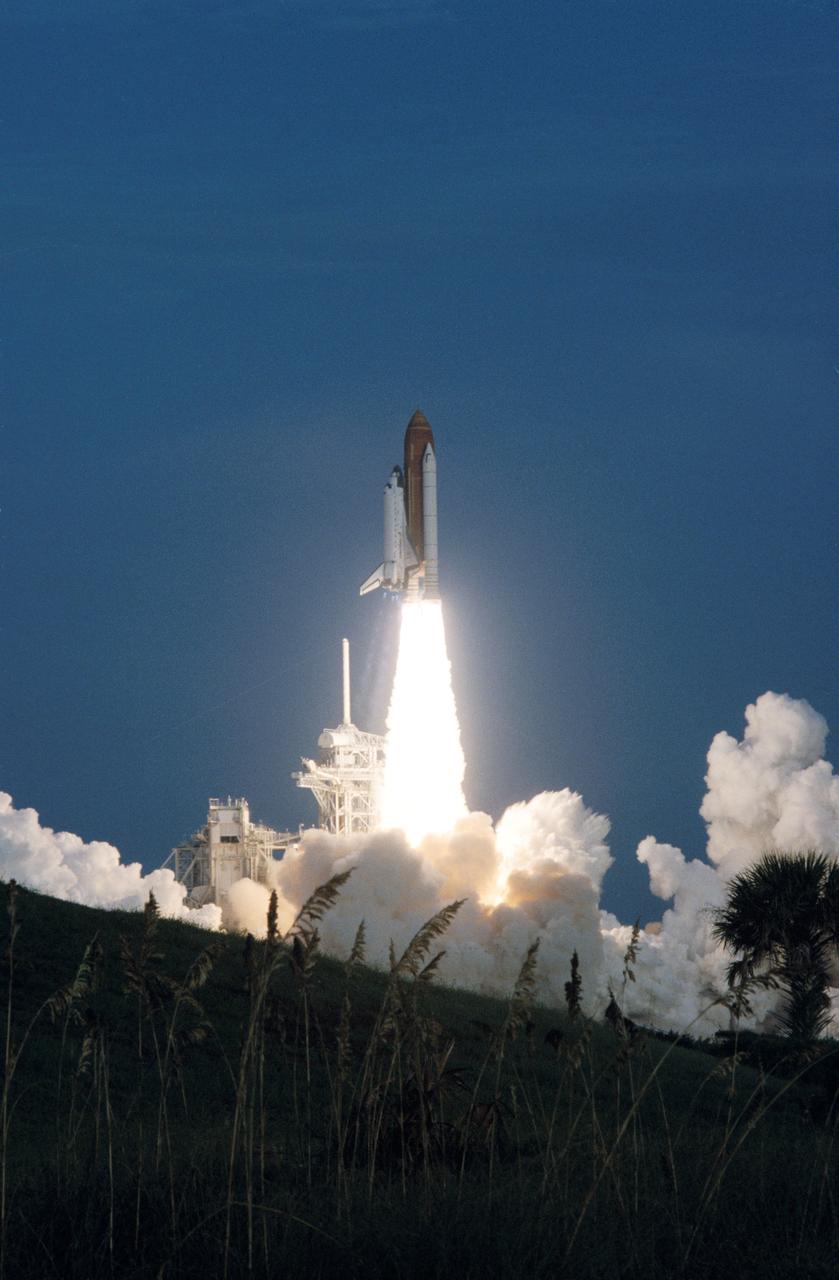
STS051-S-108 (12 Sept. 1993) --- The Space Shuttle Discovery soars toward a nine-day stay in Earth-orbit to support the mission.  Launch occurred at 7:45 a.m. (EDT) September 12, 1993. Note the diamond shock effect coming from the thrust of the three main engines. Onboard the shuttle were astronauts Frank L. Culbertson, Jr., William F. Readdy, Daniel W. Bursch, James H. Newman and Carl E. Walz, along with a number of payloads. The payloads included the Advanced Communications Technology Satellite (ACTS) with its Transfer Orbit Stage (TOS), the Orbiting Retrievable Far and Extreme Ultraviolet Spectrometer (ORFEUS) and its Shuttle Pallet Satellite (SPAS) carrier. This photograph was taken with a 35mm camera.
STS-51 Discovery launch
KENNEDY SPACE CENTER, FLA. -- The mid-morning liftoff of the Space Shuttle Discovery on mission STS-42 was even prettier than a picture at the start of the first Shuttle mission of 1992. The seven-member crew is scheduled to spend seven days in space, mostly to conduct a variety of experiments in the International Microgravity Laboratory-1. The experiments will explore the effects of weightlessness on living organisms and materials processing. Liftoff was at 9:52 a.m. EST. The seven crew members are Commander Ronald J. Grabe, Pilot Stephen S. Oswald, Payload Commander and Mission Specialist Dr. Norman E. Thagard, Mission Specialists David C. Hilmers and William F. Readdy, and Payload Specialists Dr. Roberta L. Bondar of the Canadian Space Agency and Ulf D. Merbold of the European Space Agency
92PC-0184
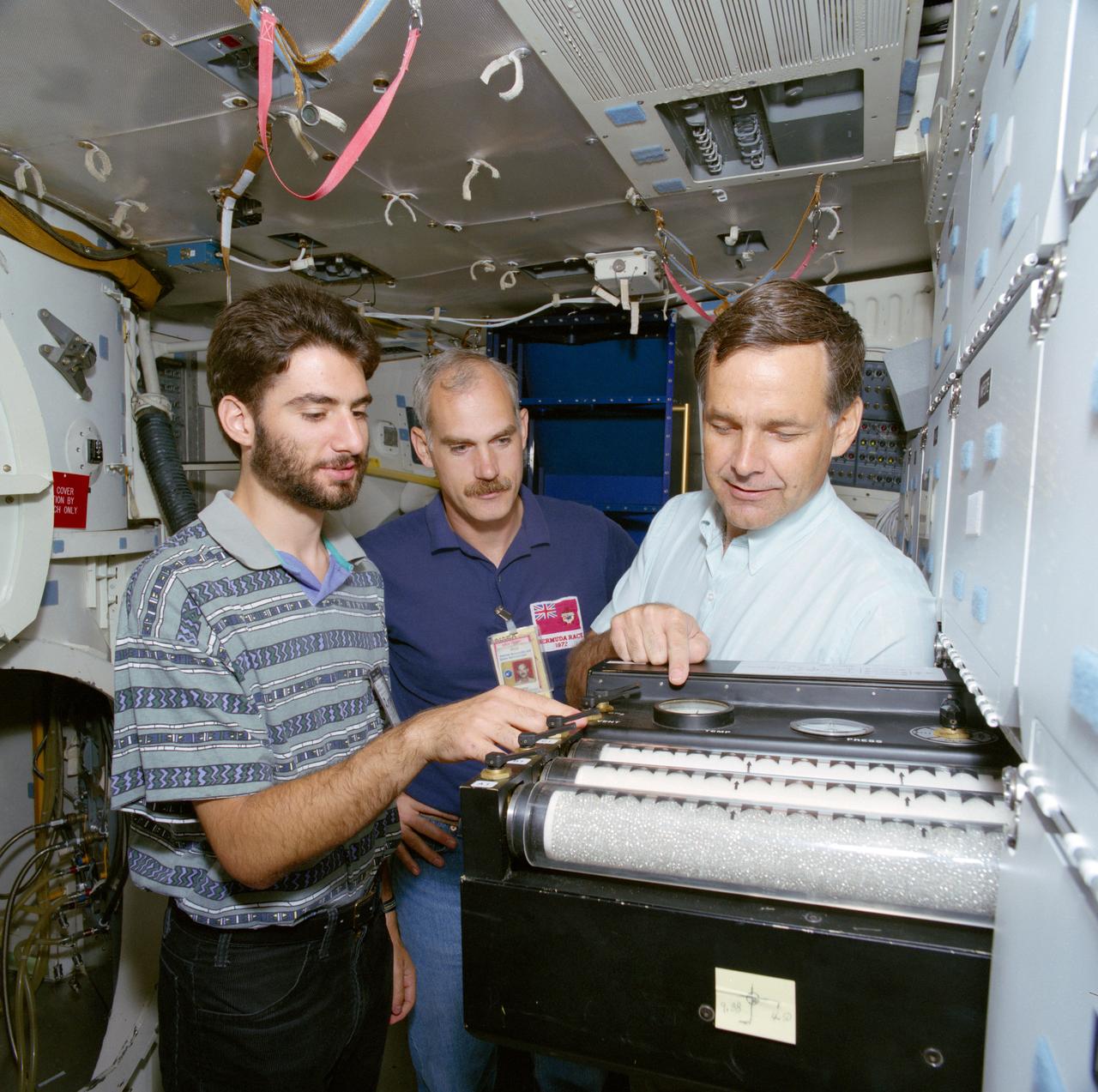
S91-47323 (18 Sept 1991) --- Constantine Costes, left, a student experimenter sponsored by United Space Boosters Inc, in Huntsville, Alabama, discusses his student experiment, "Zero-G Rise of Liquid Through Porous Media" with astronauts Ronald J. Grabe (right), STS 42 mission commander; and  William Readdy, mission specialist. The student experimenter and crew members are in the Full Fuselage Trainer (FFT) in the Shuttle Mockup and Integration Laboratory.  While attending Randolph School, a high school in Huntsville, Alabama, Costes was chosen in the national competition to participate in the Shuttle Student Involvement Program (SSIP).  The experiment, contained in a middeck locker, involves the investigation of the effects of gravity on the flow characteristics of a fluid.  Both pure capillary and forced flow behavior will be investigated.  A ground based experiment was conducted so that gravity influenced data can be compared to that gathered in weightlessness.  Costes is now a candidate for a Ph.D in mathematics at Harvard University.
Student experimenter stands near middeck lockers in JSC Bldg 9A mockup
KENNEDY SPACE CENTER, FLA. -- The STS-79 mission comes to a successful conclusion as the orbiter Atlantis touches down on Runway 15 of KSC's Shuttle Landing Facility at 8:13:15 a.m. EDT, September 26. On board is U.S. astronaut Shannon W. Lucid, who has been living and working on the Russian Space Station Mir for about six months. Lucid has spent 188 days in space from launch aboard Atlantis in March to her return today, establishing a U.S. record for long-duration spaceflight as well as representing the longest spaceflight for a woman. Succeeding Lucid on Mir is U.S. astronaut John E. Blaha, who embarked to Mir with the STS-79 crew. The commander of Mission STS-79 is William F. Readdy; Terrence W. Wilcutt is the pilot, and the three mission specialists are Jay Apt, Thomas D. Akers and Carl E. Walz.
KSC-96pc1123
STS079-S-002 (May 1996) --- In various venues, these seven astronauts have been in training for several months for the different phases of the STS-79 mission scheduled for launch in August, 1996. Front row, left to right, are astronauts Jerome (Jay) Apt, mission specialist; Terrence W. Wilcutt, pilot; William F. Readdy, mission commander; Thomas D. Akers and Carl E. Walz, both mission specialists. On the back row are astronauts Shannon W. Lucid and John E. Blaha, both mission specialists. Lucid is currently aboard Russia’s Mir Space Station, having been delivered there by the Space Shuttle Atlantis crew of STS-76 in March, 1996. She will return to Earth with this crew, while Blaha will launch with this crew and remain onboard Mir for a subsequent tour of duty as a cosmonaut guest researcher.
STS-79 preflight crew portrait
KENNEDY SPACE CENTER, FLA. -- In the Firing Room, Launch Control Center, after a successful launch of STS-97, VIPs gather to congratulate the launch team. In the center of the photo is Florida Governor Jeb Bush. On his left is KSC Director of External Relations and Business Development JoAnn H. Morgan; on Bush’s right is Joseph Rothenberg, associate administrator, Office of Space Flight; on the far right is Bill Readdy, manager at Johnson Space Center. Liftoff of Endeavour occurred at 10:06:01 p.m. EST. Endeavour and its five-member crew will deliver U.S. solar arrays to the International Space Station and be the first Shuttle crew to visit the Station’s first resident crew. The 11-day mission includes three spacewalks. This marks the 101st mission in Space Shuttle history and the 25th night launch. Endeavour is expected to land at KSC Dec. 11 at 6:19 p.m. EST
KSC00pp1817
STS079-354-016 (20 Sept. 1996) --- Astronaut Thomas D. Akers, mission specialist, spends a few moments of his off-duty time aboard the Space Shuttle Atlantis in a rare relaxed posture.  Akers is on the aft flight deck, looking toward overhead windows (out of frame) through which he could see several of the components of Russia's Mir Space Station, docked for several days to Atlantis.  Later, during a post-flight presentation to an assembly of co-workers in Houston, astronaut William F. Readdy, mission commander, recalled this moment as the only one on the STS-79 flight during which he witnessed Akers not busy with transfer chores or Spacehab experiment tasks.  Several pieces of camera equipment and a stowed chair used during launch and entry are identifiable among the items on the flight deck.
Astronauts Akers and Wilcutt relax on the Atlantis flight deck
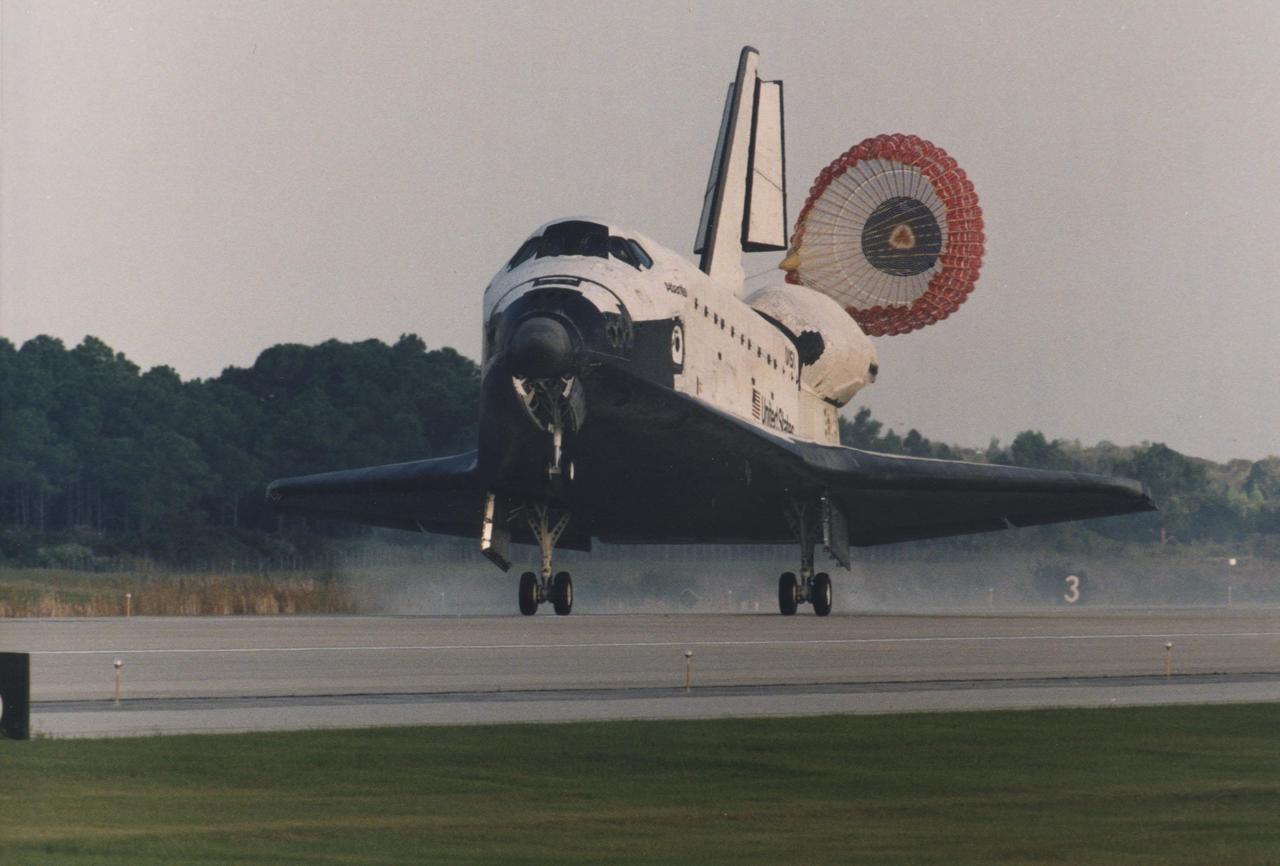
STS079-S-021 (26 Sept. 1996) --- The drag chute on the space shuttle Atlantis is fully deployed as the orbiter rolls down Runway 15 at the Shuttle Landing Facility (SLF) at the Kennedy Space Center (KSC), bringing an end to the successful ten-day mission. Landing occurred at 8:13:15 a.m. (EDT), Sept. 26, 1996. The touchdown marked the end of 188 days in space for astronaut Shannon W. Lucid, following her in-space exchange with astronaut John E. Blaha, who is now aboard Russia's Mir Space Station. Returning along with Lucid were her STS-79 crew mates - astronauts William F. Readdy, commander; Terrence W. Wilcutt, pilot; and Thomas D. Akers, Jerome (Jay) Apt and Carl E. Walz, mission specialists.
STS-79 landing views
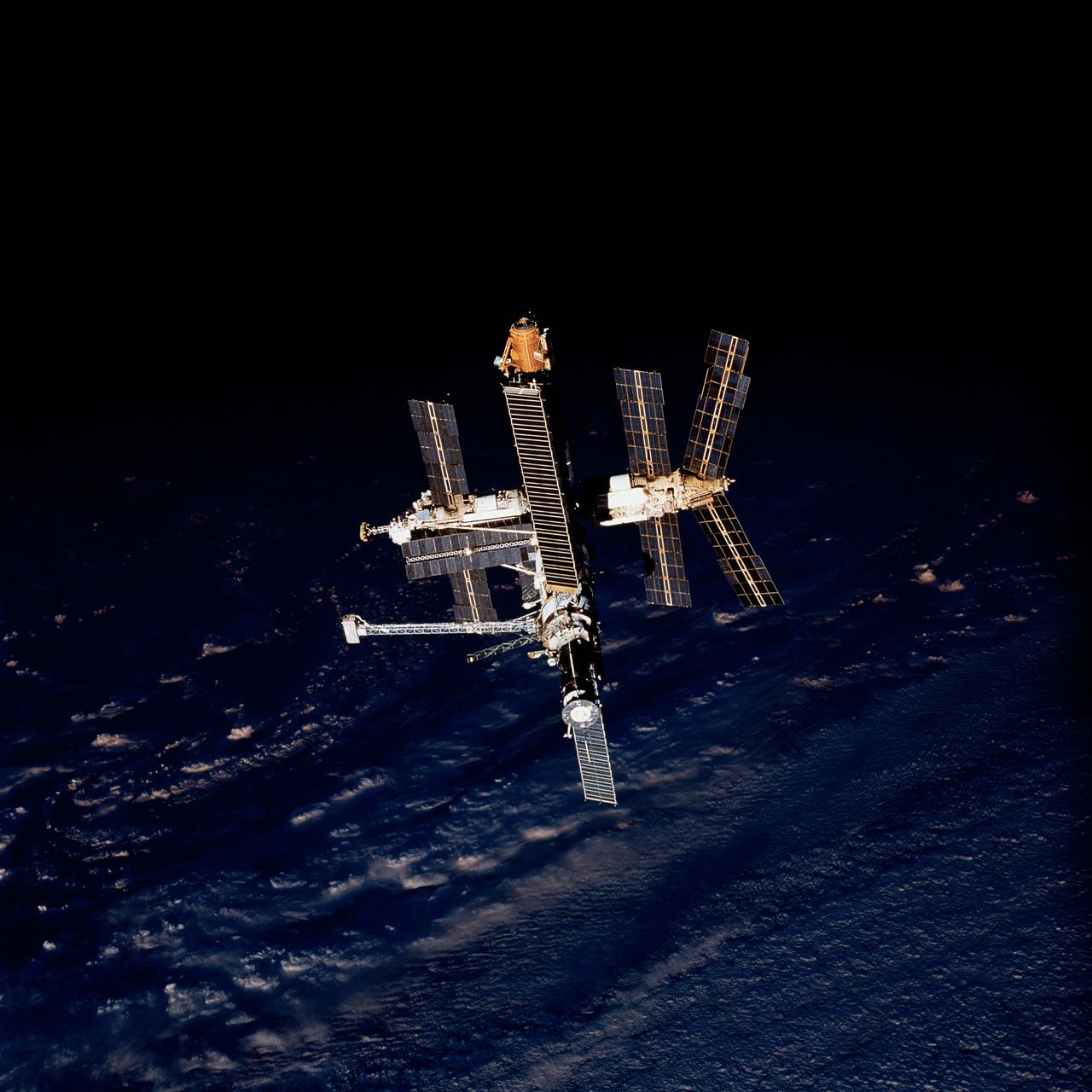
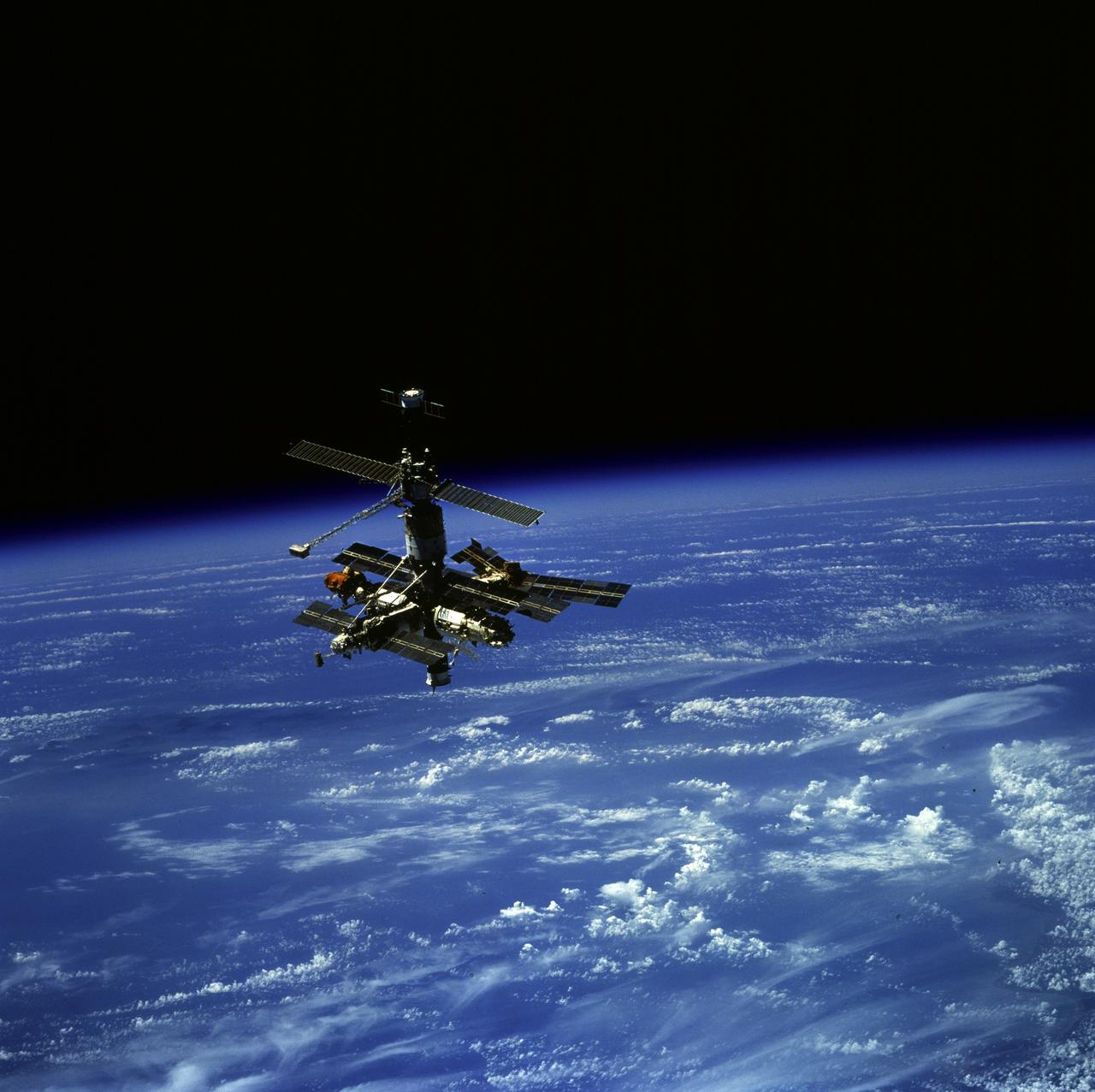
STS079-810-028 (24 Sept. 1996) --- Russia's Mir Space Station, backdropped over Earth's horizon,  was photographed by one of the STS-79 crew members aboard the space shuttle Atlantis as it performed its final fly around following undocking operations. The STS-79 flight began with a Sept. 16, 1996, liftoff from Launch Pad 39A at the Kennedy Space Center and ended with a landing at KSC on Sept. 26, 1996. Onboard for the launch were astronauts William F. Readdy, commander; Terrence W. Wilcutt, pilot; John E. Blaha, Jerome (Jay) Apt, Thomas D. Akers and Carl E. Walz, all mission specialists. On flight day four, the crew docked with Mir. Shannon W. Lucid, who had spent six months aboard Mir, switched cosmonaut guest researcher roles with Blaha. The latter joined fellow Mir-22 crew members Valeri G. Korzun, commander, and Aleksandr Y. Kaleri, flight engineer. Photo credit: NASA
Full Mir over horizon
STS079-353-007 (16-26 Sept. 1996) --- Astronaut Terrence W. Wilcutt, on the Space Shuttle Atlantis' aft flight deck, takes pictures of Earth for study by Earth observations scientists at the Johnson Space Center (JSC).  Several components of the docked Russia's Mir Space Station can be seen in the background.  This photograph is one of fifteen 35mm frames (along with four 70mm frames) of still photography documenting the activities of NASA's STS-79 mission, which began with a September 16, 1996, liftoff from Launch Pad 39A the Kennedy Space Center (KSC) and ended with a landing at KSC on September 26, 1996.  Onboard for the launch were astronauts William F. Readdy, commander; Wilcutt, pilot; John E. Blaha, Jerome (Jay) Apt, Thomas D. Akers and Carl E. Walz, all mission specialists.  On flight day 4, the crew docked with Russia's Mir Space Station.  Shannon W. Lucid, who had spent six months aboard Mir, switched cosmonaut guest researcher roles with Blaha.  The latter joined fellow Mir-22 crew members Valeri G. Korzun, commander, and Aleksandr Y. Kaleri, flight engineer.
STS-79 crew at aft flight deck overhead windows with Mir in background
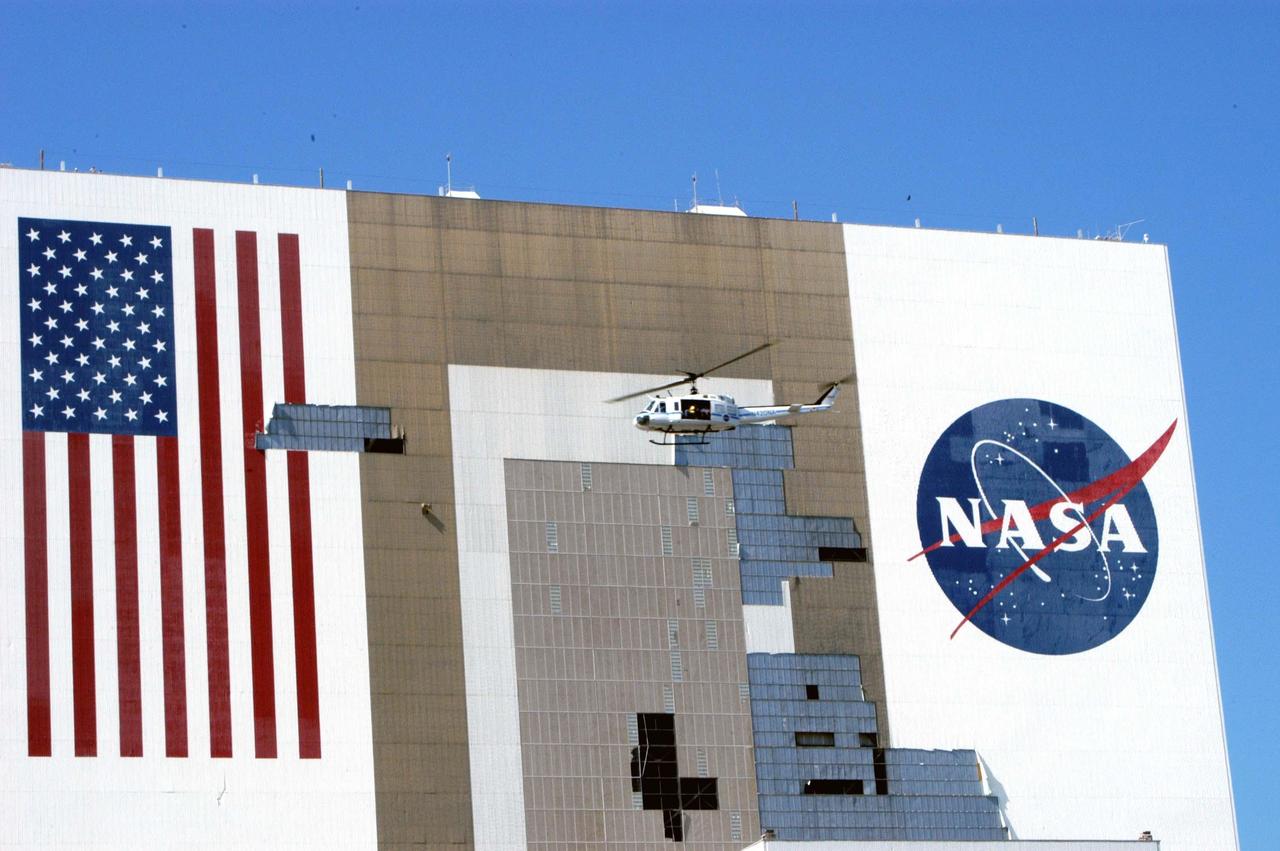
KENNEDY SPACE CENTER, FLA. -  The helicopter carrying NASA Administrator Sean O’Keefe and KSC Director of Spaceport Services Scott Kerr passes by the Vehicle Assembly Building (VAB) to observe the damage inflicted by Hurricane Frances over the Labor Day weekend.  The VAB lost approximately 850 tiles on the south wall, seen here.  O’Keefe and NASA Associate Administrator of  Space Operations Mission Directorate William Readdy are visiting KSC to survey the damage sustained by KSC facilities from the hurricane.  The storm also caused significant damage to the Thermal Protection System Facility and Processing Control Center.  Additionally, the Operations and Checkout Building, Vertical Processing Facility, Hangar AE, Hangar S and Hangar AF Small Parts Facility each received substantial damage. However, well-protected and unharmed were NASA’s three Space Shuttle orbiters -- Discovery, Atlantis and Endeavour - along with the Shuttle launch pads, all of the critical flight hardware for the orbiters and the International Space Station, and NASA’s Swift spacecraft that is awaiting launch in October.
KSC-04pd1847
STS079-335-001 (16-26 Sept. 1996) --- Astronaut Terrence W. Wilcutt traverses into Russia's Mir Space Station Kristall Module toting a water bag from the Space Shuttle Atlantis to be used on Mir. This photograph is one of fifteen 35mm frames (along with four 70mm frames) of still photography documenting the activities of NASA's STS-79 mission, which began with a Sept. 16, 1996, liftoff from Launch Pad 39A the Kennedy Space Center (KSC) and ended with a landing at KSC on September 26, 1996.  Onboard for the launch were astronauts William F. Readdy, commander; Wilcutt, pilot; John E. Blaha, Jerome (Jay) Apt, Thomas D. Akers and Carl E. Walz, all mission specialists.  On flight day 4, the crew docked with Mir.  Shannon W. Lucid, who had spent six months aboard Mir, switched cosmonaut guest researcher roles with Blaha.  The latter joined fellow Mir-22 crewmembers Valeri G. Korzun, commander, and Aleksandr Y. Kaleri, flight engineer.
Astronaut Wilcutt with water transfer bag in docking module
KENNEDY SPACE CENTER, FLA. -  -  NASA Administrator Sean O’Keefe (right) looks at equipment moved from the Thermal Protection System Facility to the RLV Hangar.  At left are United Space Alliance technicians Shelly Kipp and Eric Moss.  O’Keefe and NASA Associate Administrator of  Space Operations Mission Directorate William Readdy are visiting KSC to survey the damage sustained by KSC facilities from Hurricane Frances. The Thermal Protection System Facility (TPSF), which creates the TPS tiles, blankets and all the internal thermal control systems for the Space Shuttles, is almost totally unserviceable at this time after losing approximately 35 percent of its roof in the storm, which blew across Central Florida Sept. 4-5. Undamaged equipment was removed from the TPSF and stored in the hangar. The Labor Day storm also caused significant damage to the Vehicle Assembly Building and Processing Control Center.  Additionally, the Operations and Checkout Building, Vertical Processing Facility, Hangar AE, Hangar S and Hangar AF Small Parts Facility each received substantial damage. However, well-protected and unharmed were NASA’s three Space Shuttle orbiters - Discovery, Atlantis and Endeavour - along with the Shuttle launch pads, all of the critical flight hardware for the orbiters and the International Space Station, and NASA’s Swift spacecraft that is awaiting launch in October.
KSC-04pd1843
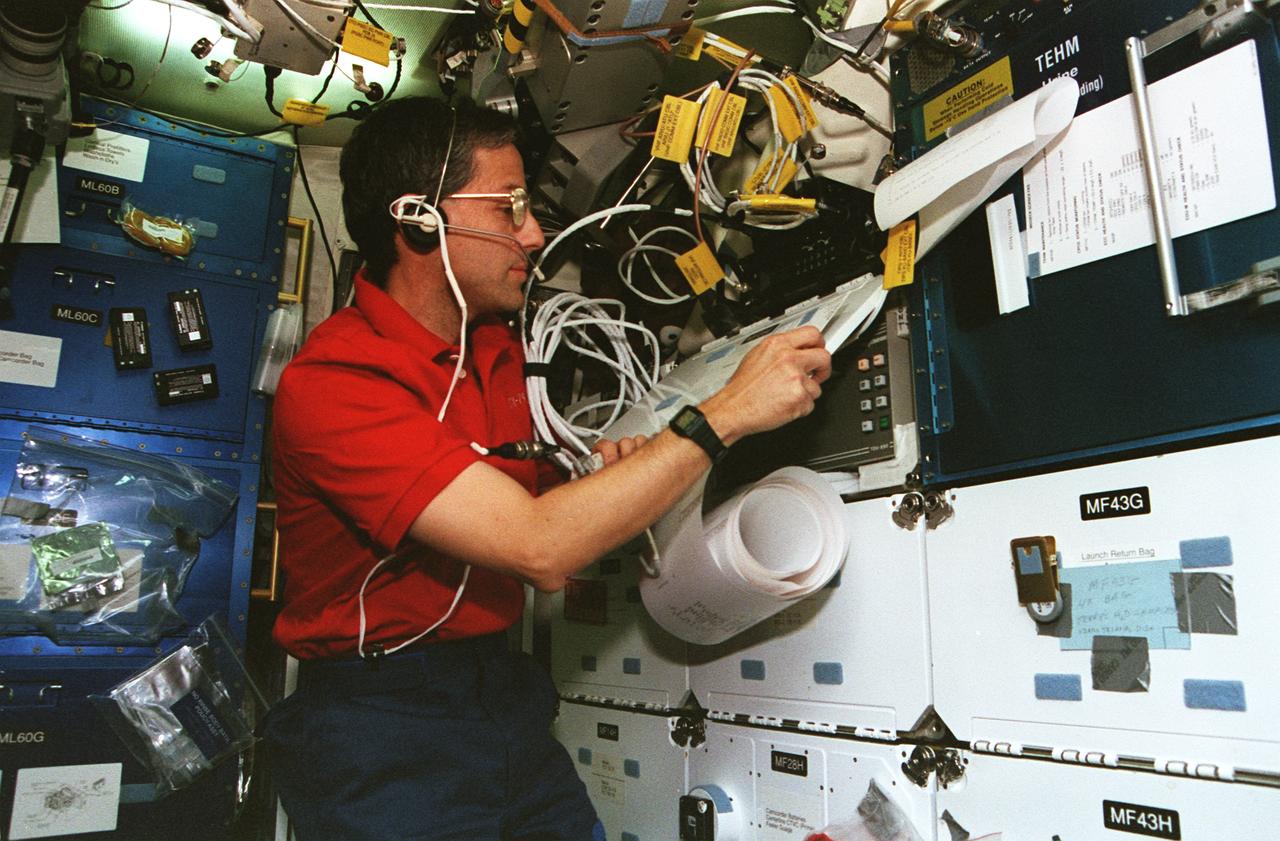
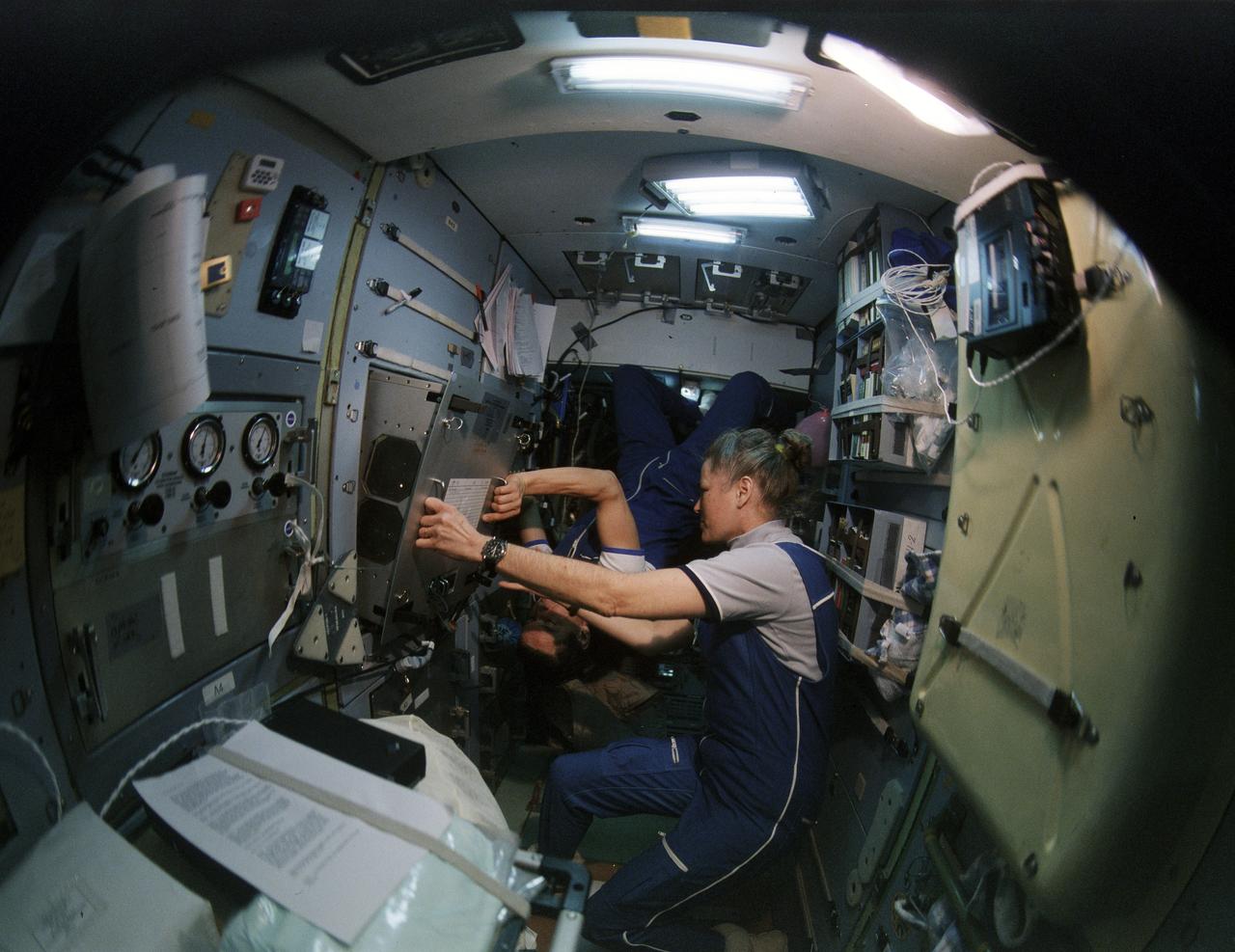
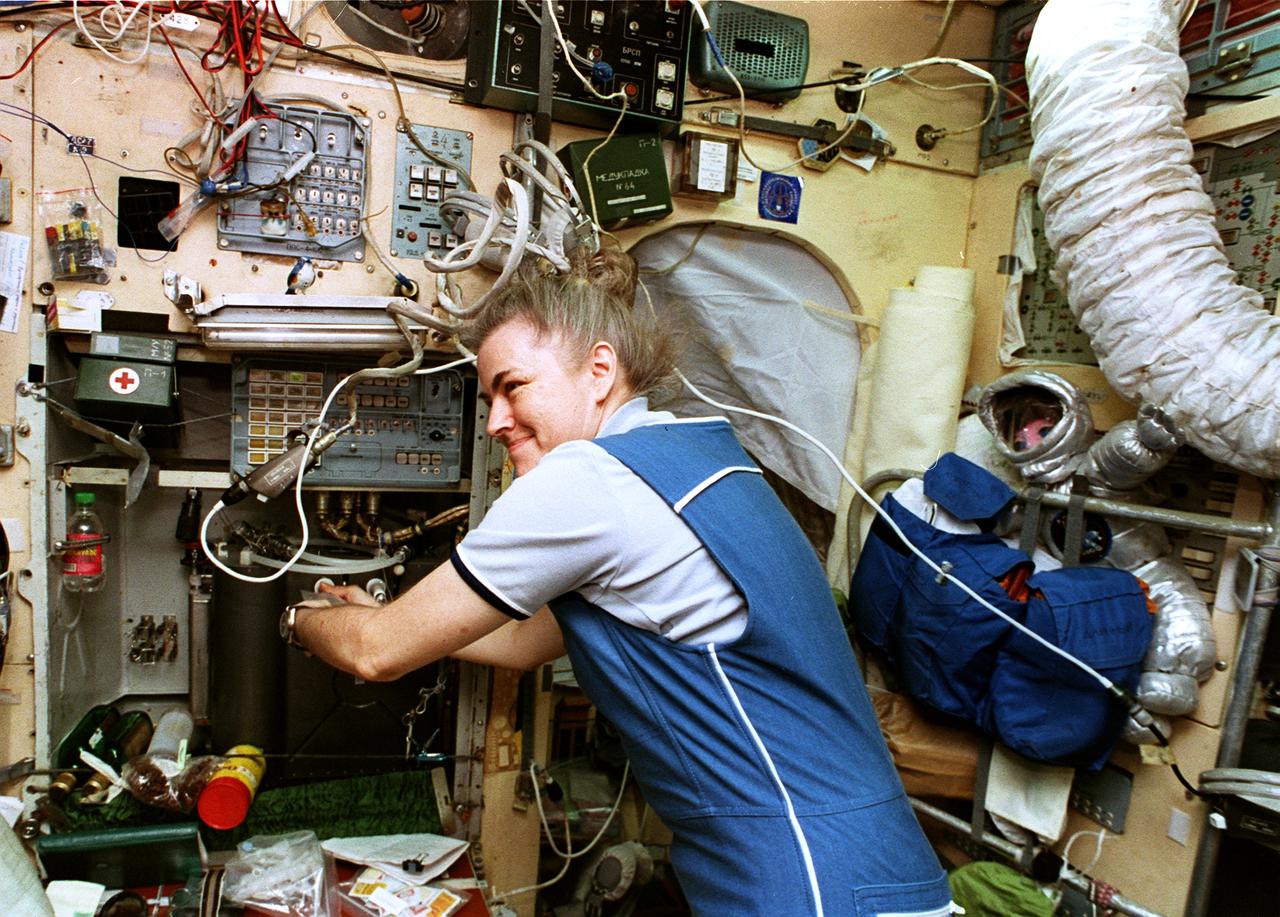
STS079-S-082 (16-26 Sept. 1996) --- Cosmonaut guest researcher Shannon W. Lucid and Valeri G. Korzun, her Mir-22 commander, are pictured on the Spektr Module aboard Russia's Earth-orbiting Mir Space Station.  Korzun was the third of four commanders that Lucid served with during her record-setting 188 consecutive days in space. Later, Lucid returned to Earth with her fourth commander-astronaut William F. Readdy-and five other NASA astronauts to complete the STS-79 mission. During the STS-79 mission, the crew used an IMAX camera to document activities aboard the space shuttle Atlantis and the various Mir modules. A hand-held version of the 65mm camera system accompanied the STS-79 crew into space in Atlantis' crew cabin.  NASA has flown IMAX camera systems on many Shuttle missions, including a special cargo bay camera's coverage of other recent Shuttle-Mir rendezvous and/or docking missions.
MS Lucid places samples in the TEHOF aboard the Spektr module
STS079-354-011 (16-26 Sept. 1996) --- Astronaut Shannon W. Lucid with cosmonaut Aleksandr Y. Kaleri prepare to move Lucid's cosmonaut space suit from Russia's Mir Space Station to the Space Shuttle Atlantis. This photograph is one of fifteen 35mm frames (along with four 70mm frames) of still photography documenting the activities of NASA's STS-79 mission, which began with a Sept. 16, 1996, liftoff from Launch Pad 39A the Kennedy Space Center (KSC) and ended with a landing at KSC on Sept. 26, 1996. Onboard for the launch were astronauts William F. Readdy, commander; Terrence W. Wilcutt, pilot; John E. Blaha, Jerome (Jay) Apt, Thomas D. Akers and Carl E. Walz, all mission specialists. On flight day 4, the crew docked with Mir.  Lucid, who had spent six months aboard Mir, switched cosmonaut guest researcher roles with Blaha. The latter joined fellow Mir-22 crewmembers Valeri G. Korzun, commander, and Kaleri, flight engineer.
Astronaut Lucid with her Russian pressure suit
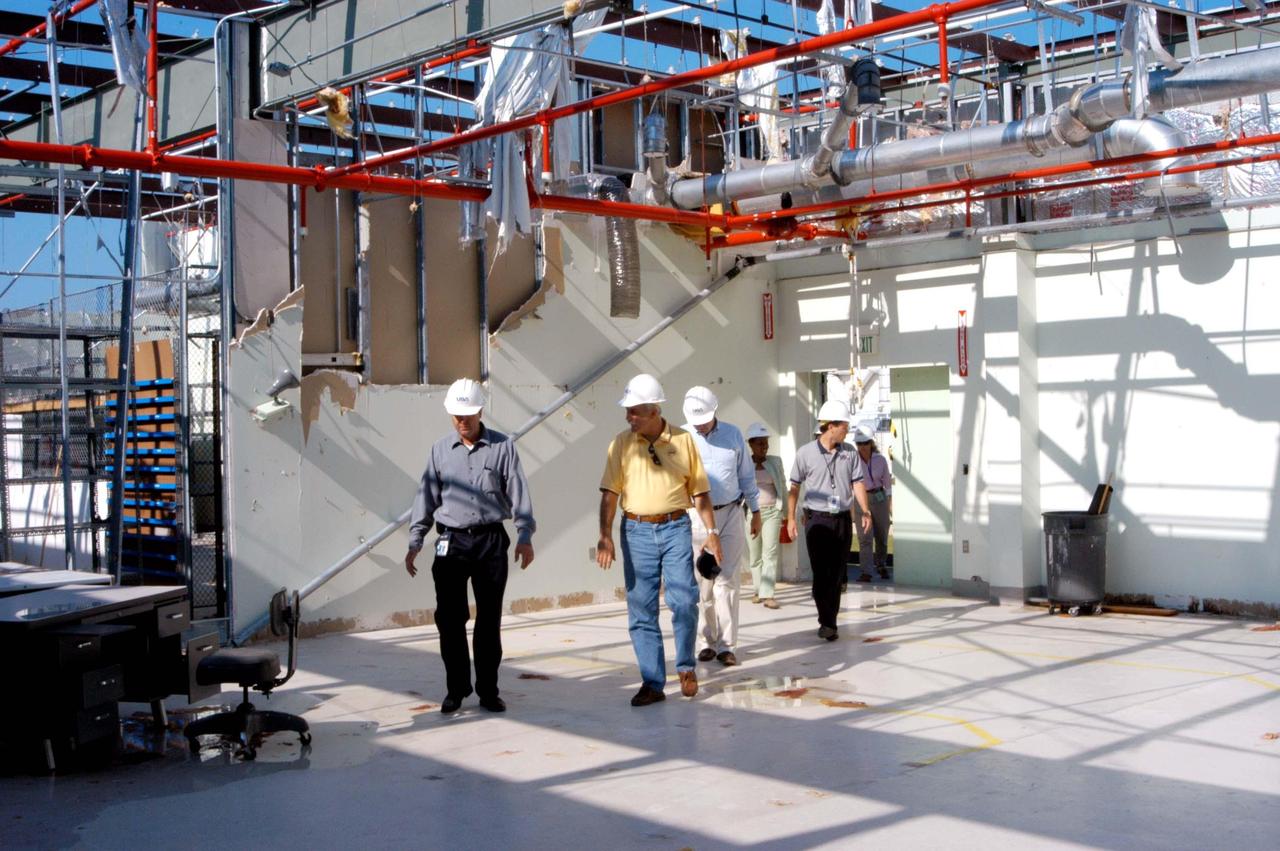
KENNEDY SPACE CENTER, FLA. - Inside the Vehicle Assembly Building, the media talk with Bill Readdy, associate administrator of NASA’s Space Operations Mission Directorate, after the orbiter Discovery’s rollover from the Orbiter Processing Facility bay 3.  The rollover marks a major milestone in the march to Return to Flight.  First motion in the OPF was at 1:29 a.m. EST.  Inside the VAB, Discovery will be mated to the External Tank_Solid Rocket Booster assembly for Return to Flight mission STS-114.  After all umbilicals have been connected, workers will perform an electrical and mechanical verification of the mated interfaces to verify all critical vehicle connections. A Space Shuttle interface test is performed to verify vehicle interfaces and vehicle-to-ground interfaces. The launch processing system is used to control and monitor orbiter systems as required.  Space Shuttle Discovery will roll out to Launch Pad 39B approximately one week after the rollover to the VAB.  The launch window for mission STS-114 is May 15 to June 3.
KSC-05pd-0495
STS079-354-001 (16-26 Sept. 1996) --- Astronaut Shannon W. Lucid gets a beverage at the galley on Russia's Mir Space Station Base Block.  This photograph is one of fifteen 35mm frames (along with four 70mm frames) of still photography documenting the activities of NASA's STS-79 mission, which began with a September 16, 1996, liftoff from Launch Pad 39A the Kennedy Space Center (KSC) and ended with a landing at KSC on September 26, 1996.  Onboard for the launch were astronauts William F. Readdy, commander; Terrence W. Wilcutt, pilot; John E. Blaha, Jerome (Jay) Apt, Thomas D. Akers and Carl E. Walz, all mission specialists.  On flight day 4, the crew docked with Mir.  Lucid, who had spent six months aboard Mir, switched cosmonaut guest researcher roles with Blaha.  The latter joined fellow Mir-22 crew members Valeri G. Korzun, commander, and Aleksandr Y. Kaleri, flight engineer.
STS-79 crew enjoy a meal on the Mir space station
STS079-350-028 (16-26 Sept. 1996) --- Aboard Russian Mir Space Station's Spektr Module, astronaut John E. Blaha, now a cosmonaut guest researcher, visits with Valeri G. Korzun, his mission commander for Mir-22. This photograph is one of fifteen 35mm frames (along with four 70mm frames) of still photography documenting the activities of NASA's STS-79 mission, which began with a Sept. 16, 1996, liftoff from Launch Pad 39A the Kennedy Space Center (KSC) and ended with a landing at KSC on September 26, 1996.  Onboard for the launch were astronauts William F. Readdy, commander; Terrence W. Wilcutt, pilot; Blaha, Jerome (Jay) Apt, Thomas D. Akers and Carl E. Walz, all mission specialists.  On flight day 4, the crew docked with Mir.  Shannon W. Lucid, who had spent six months aboard Mir, switched cosmonaut guest researcher roles with Blaha. The latter joined fellow Mir-22 crewmembers Korzun, and Aleksandr Y. Kaleri, flight engineer.
STS-79 and Mir 22 crew activities in the Priroda module
STS079-309-022 (16-26 Sept. 1996) --- Astronaut Thomas D. Akers, in the Spacehab, goes over an inventory of supplies which will be transferred to the Russia's Mir Space Station. This photograph is one of fifteen 35mm frames (along with four 70mm frames) of still photography documenting the activities of NASA's STS-79 mission, which began with a September 16, 1996, liftoff from Launch Pad 39A the Kennedy Space Center (KSC) and ended with a landing at KSC on September 26, 1996.  Onboard for the launch were astronauts William F. Readdy, commander; Terrence W. Wilcutt, pilot; John E. Blaha, Jerome (Jay) Apt, Akers and Carl E. Walz, all mission specialists.  On flight day 4, the crew docked with the Mir Space Station.  Shannon W. Lucid, who had spent six months aboard Mir, switched cosmonaut guest researcher roles with Blaha.  The latter joined fellow Mir-22 crew members Valeri G. Korzun, commander, and Aleksandr Y. Kaleri, flight engineer.
STS-79 crewmembers preparing stowage for transfer
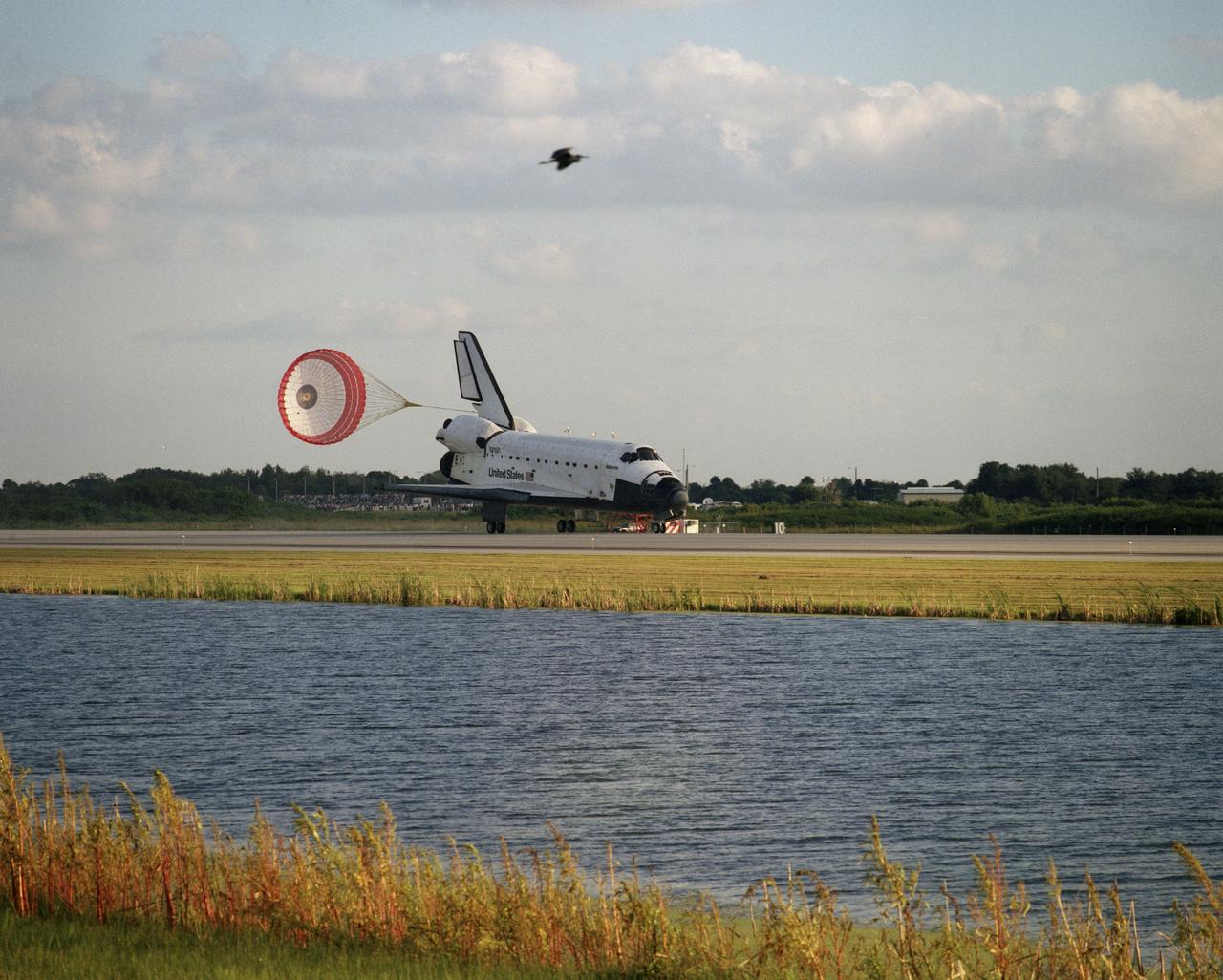
KENNEDY SPACE CENTER, FLA. -- A KSC fire truck stands on alert as the STS-79 Space Shuttle Atlantis hurtles down Runway 15 of KSC's Shuttle Landing Facility, its drag chute billowing behind it. Atlantis touched down at 8:13:15 a.m. EDT, September 26. On board is U.S. astronaut Shannon W. Lucid, who has been living and working on the Russian Space Station Mir for about six months. Lucid has spent 188 days in space from launch aboard Atlantis in March to her return today, establishing a U.S. record for long-duration spaceflight as well as representing the longest spaceflight for a woman. Succeeding Lucid on Mir is U.S. astronaut John E. Blaha, who embarked to Mir with the STS-79 crew. The commander of Mission STS-79 is William F. Readdy; Terrence W. Wilcutt is the pilot, and the three mission specialists are Jay Apt, Thomas D. Akers and Carl E. Walz
KSC-96pc1124
STS079-813-023 (16-26 Sept. 1996) --- The docked Russian Mir Space Station is partially visible through the Spacehab viewing port, onboard the space shuttle Atlantis. This photograph is one of four 70mm frames (along with fifteen 35mm frames) of still photography documenting the activities of NASA's STS-79 mission, which began with a Sept. 16, 1996, liftoff from Launch Pad 39A the Kennedy Space Center (KSC) and ended with a landing at KSC on Sept. 26, 1996. Onboard for the launch were astronauts William F. Readdy, commander; Terrence W. Wilcutt, pilot; John E. Blaha, Jerome (Jay) Apt, Thomas D. Akers and Carl E. Walz, all mission specialists.  On flight day 4, the crew docked with the Mir Space Station.  Shannon W. Lucid, who had spent six months aboard Mir, switched cosmonaut guest researcher roles with Blaha.  The latter joined fellow Mir-22 crewmembers Valeri G. Korzun, commander, and Aleksandr Y. Kaleri, flight engineer.
Mir complex docked to shuttle Atlantis
KENNEDY SPACE CENTER, FLA. -- In a special commemorative service held at NASA's Kennedy Space Center Visitor Complex to honor NASA's fallen heroes, Kennedy Center Director Bill Parsons speaks to guests gathered in front of the Space Mirror Memorial.  Other participants seated on the dais are (from left) NASA Administrator Michael Griffin; Chairman of the Indian Space Research Organization G. Madhavan Nair; the 2007 Alan Shepard Technology in Education Award winner Luther Richardson; Shuttle Commander and former NASA Associate Administrator for Space Operations William Readdy; NASA Associate Administrator for Space Operations William Gerstenmaier; Shuttle Commander Eileen Collins of the Return to Flight mission, STS-114; Evelyn Husband-Thompson, widow of Colonel Rick Husband; and Astronauts Memorial Foundation President Stephen Feldman.  Kennedy marked the NASA Day of Remembrance with special ceremonies.  This year the crew of Columbia was remembered in a special way on the day that marked the fifth anniversary of the Columbia accident.   Photo credit: NASA/Kim Shiflett
KSC-08pd0109
STS079-S-097 (16-26 Sept. 1996) --- Left to right, Terrence W. (Terry) Wilcutt, pilot; Shannon W. Lucid, mission specialist; and William F. Readdy, mission commander, are pictured on the space shuttle Atlantis' aft flight deck during undocking operations with Russia's Mir Space Station.  Mir had served as both work and home for Lucid for over six months before greeting her American colleagues upon docking of Mir and Atlantis last week. Following her lengthy stay aboard Mir and several days on Atlantis, Lucid went on to spend 188 consecutive days in space before returning to Earth with the STS-79 crew. During the STS-79 mission, the crew used an IMAX camera to document activities aboard the Space Shuttle Atlantis and the various Mir modules.  A hand-held version of the 65mm camera system accompanied the STS-79 crew into space in Atlantis' crew cabin.  NASA has flown IMAX camera systems on many Shuttle missions, including a special cargo bay camera's coverage of other recent Shuttle-Mir rendezvous and/or docking missions.
STS-79 crew watches from aft flight deck during undocking from Mir
STS079-304-001 (16 Sept. 1996)--- Astronaut Carl E. Walz totes a bag carrying a space suit used by the cosmonauts.  At the completion of the STS-79 mission, the suit was brought back to Earth for analysis.  This photograph is one of fifteen 35mm frames (along with four 70mm frames) of still photography documenting the activities of NASA's STS-79 mission, which began with a September 16, 1996, liftoff from Launch Pad 39A the Kennedy Space Center (KSC) and ended with a landing at KSC on September 26, 1996.  Onboard for the launch were astronauts William F. Readdy, commander; Terrence W. Wilcutt, pilot; John E. Blaha, Jerome (Jay) Apt, Thomas D. Akers and Walz, all mission specialists.  On flight day 4, the crew docked with Russia's Mir Space Station.  Shannon W. Lucid, who had spent six months aboard Mir, switched cosmonaut guest researcher roles with Blaha.  The latter joined fellow Mir-22 crew members Valeri G. Korzun, commander, and Aleksandr Y. Kaleri, flight engineer.
Astronaut Walz with stowed Orlan space suit
KENNEDY SPACE CENTER, FLA. -  NASA Administrator Sean O’Keefe looks at equipment moved from the Thermal Protection System Facility to the RLV Hangar.  AT right is Martin Wilson, manager of TPS operations for United Space Alliance.  O’Keefe and NASA Associate Administrator of  Space Operations Mission Directorate William Readdy are visiting KSC to survey the damage sustained by KSC facilities from Hurricane Frances. The Thermal Protection System Facility (TPSF), which creates the TPS tiles, blankets and all the internal thermal control systems for the Space Shuttles, is almost totally unserviceable at this time after losing approximately 35 percent of its roof in the storm, which blew across Central Florida Sept. 4-5. Undamaged equipment was removed from the TPSF and stored in the hangar. The Labor Day storm also caused significant damage to the Vehicle Assembly Building and Processing Control Center.  Additionally, the Operations and Checkout Building, Vertical Processing Facility, Hangar AE, Hangar S and Hangar AF Small Parts Facility each received substantial damage.  However, well-protected and unharmed were NASA’s three Space Shuttle orbiters -- Discovery, Atlantis and Endeavour - along with the Shuttle launch pads, all of the critical flight hardware for the orbiters and the International Space Station, and NASA’s Swift spacecraft that is awaiting launch in October.
KSC-04pd1842
STS079-817-034 (16-26 Sept. 1996) --- The Russian Mir Space Station is backdropped over a storm in the Roaring 40's near Heard Island in the south Indian Ocean. This photograph is one of four 70mm frames (along with fifteen 35mm frames) of still photography documenting the activities of NASA's STS-79 mission, which began with a Sept. 16, 1996, liftoff from Launch Pad 39A the Kennedy Space Center (KSC) and ended with a landing at KSC on Sept. 26, 1996.  Onboard for the launch were astronauts William F. Readdy, commander; Terrence W. Wilcutt, pilot; John E. Blaha, Jerome (Jay) Apt, Thomas D. Akers and Carl E. Walz, all mission specialists.  On flight day 4, the crew docked with Russia's Mir Space Station.  Shannon W. Lucid, who had spent six months aboard Mir, switched cosmonaut guest researcher roles with Blaha.  The latter joined fellow Mir-22 crewmembers Valeri G. Korzun, commander, and Aleksandr Y. Kaleri, flight engineer.
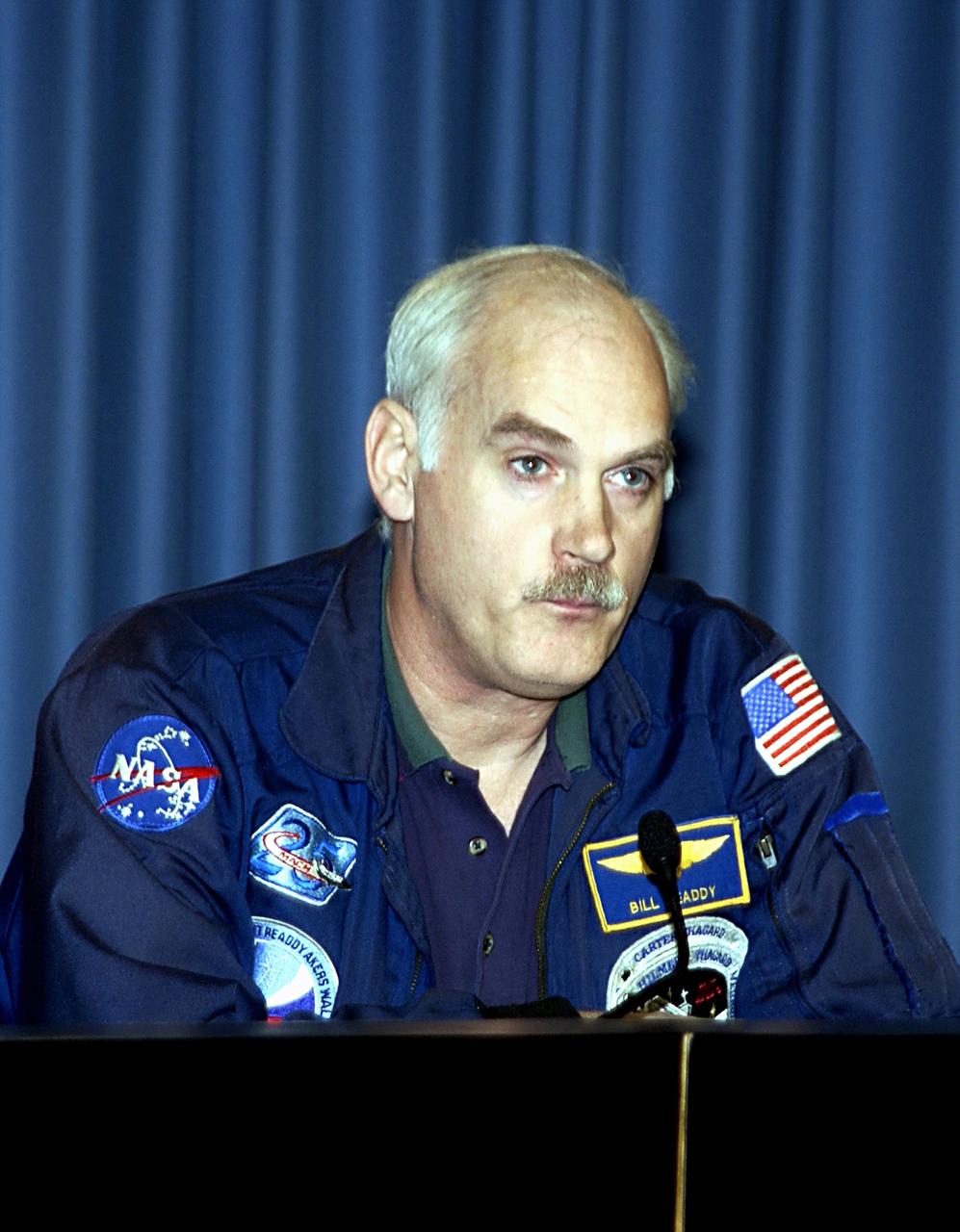
Survey views of the Mir space station