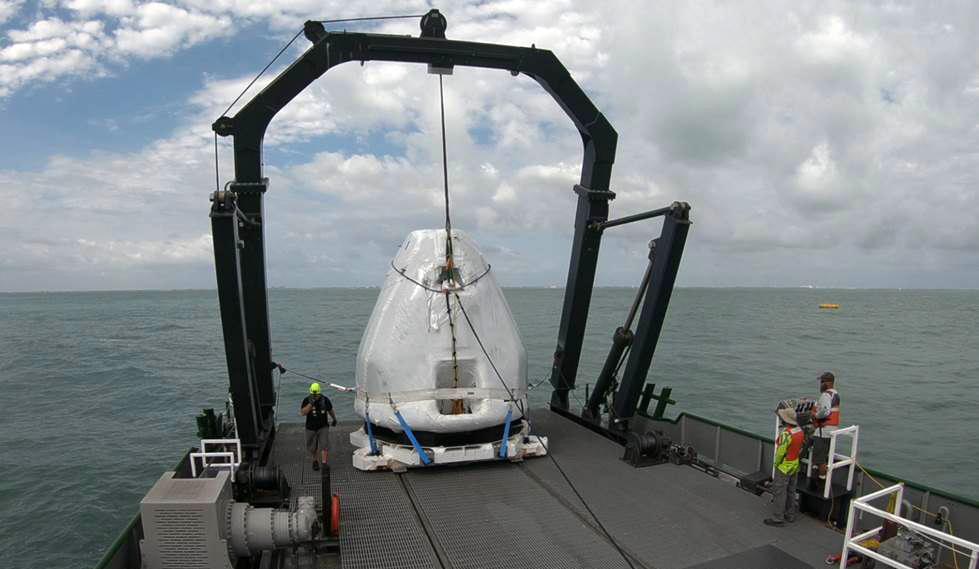
On February 28, SpaceX completed a demonstration of their ability to recover the crew and capsule after a nominal water splashdown. This marks an important recovery milestone and joint test. The timeline requirement from splashdown to crew egress onboard the ship is one hour, and the recovery team demonstrated that they can accomplish this operation under worst-case conditions in under 45 minutes. Further improvements are planned to shorten the recovery time even more as the team works to build a process that is safe, repeatable, and efficient.

The Orion boilerplate test vehicle is in the water-filled well deck of the USS Anchorage during the first day of Underway Recovery Test 3 in the Pacific Ocean. NASA, Lockheed Martin and U.S. Navy personnel are conducting the recovery test to prepare for recovery of the Orion crew module on its return from a deep space mission. The test allows the teams to demonstrate and evaluate the recovery processes, procedures, hardware and personnel in open waters. The Ground Systems Development and Operations Program is conducting the underway recovery tests. Orion is the exploration spacecraft designed to carry astronauts to destinations not yet explored by humans, including an asteroid and Mars. It will have emergency abort capability, sustain the crew during space travel and provide safe re-entry from deep space return velocities. The first unpiloted test flight of Orion is scheduled to launch in 2014 atop a United Launch Alliance Delta IV Heavy rocket and in 2018 on NASA’s Space Launch System rocket.
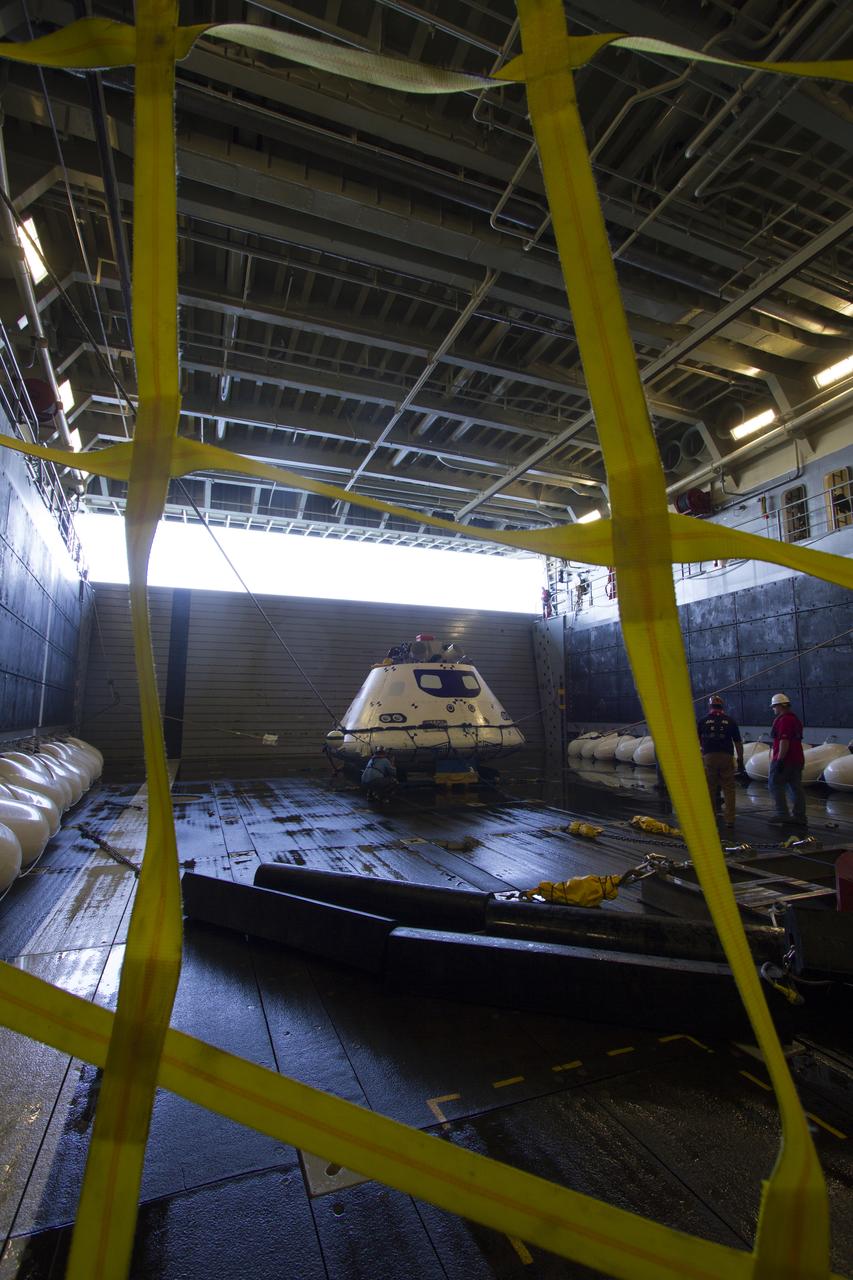
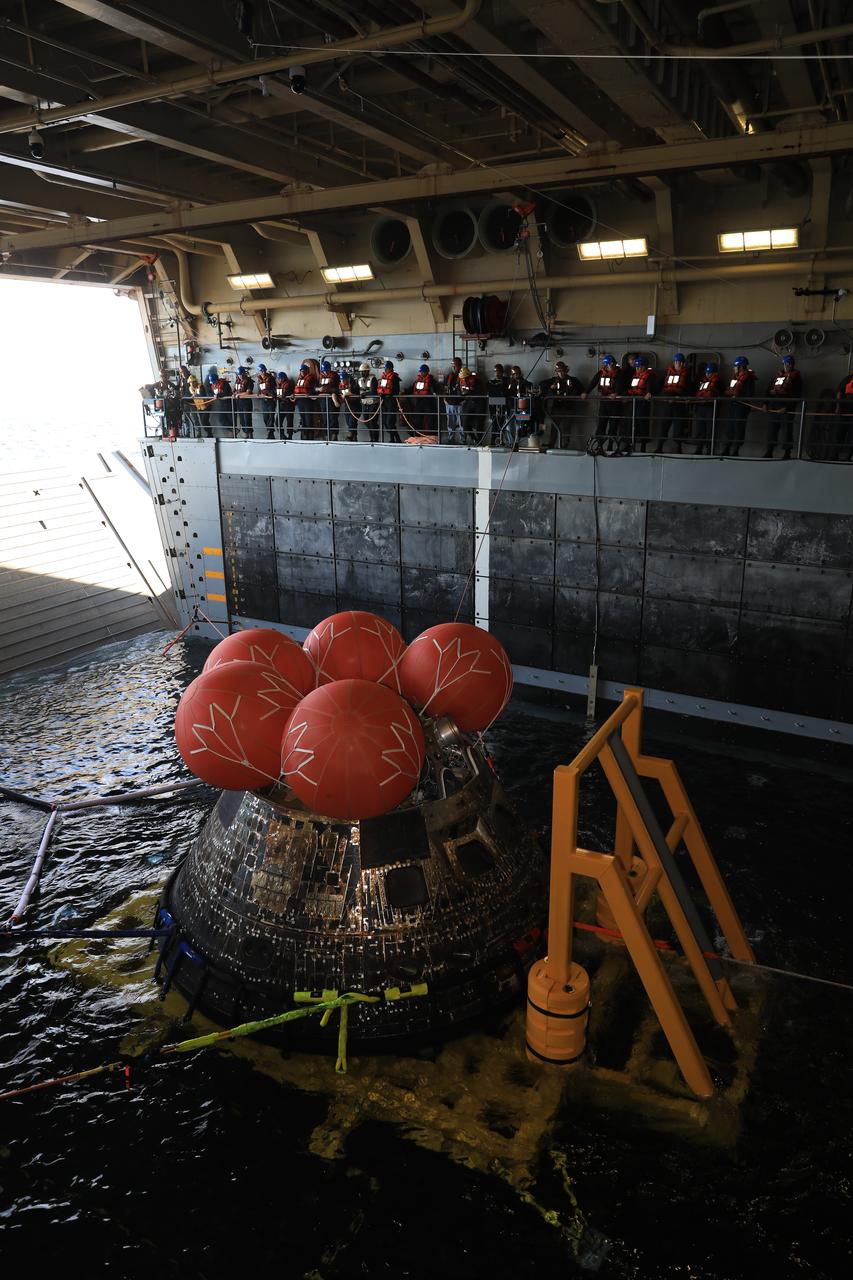
The Orion boilerplate test vehicle is secured in the well deck of the USS Anchorage during the first day of Underway Recovery Test 3 in the Pacific Ocean. NASA, Lockheed Martin and U.S. Navy personnel are conducting the recovery test to prepare for recovery of the Orion crew module on its return from a deep space mission. The test allows the teams to demonstrate and evaluate the recovery processes, procedures, hardware and personnel in open waters. The Ground Systems Development and Operations Program is conducting the underway recovery tests. Orion is the exploration spacecraft designed to carry astronauts to destinations not yet explored by humans, including an asteroid and Mars. It will have emergency abort capability, sustain the crew during space travel and provide safe re-entry from deep space return velocities. The first unpiloted test flight of Orion is scheduled to launch in 2014 atop a United Launch Alliance Delta IV Heavy rocket and in 2018 on NASA’s Space Launch System rocket.
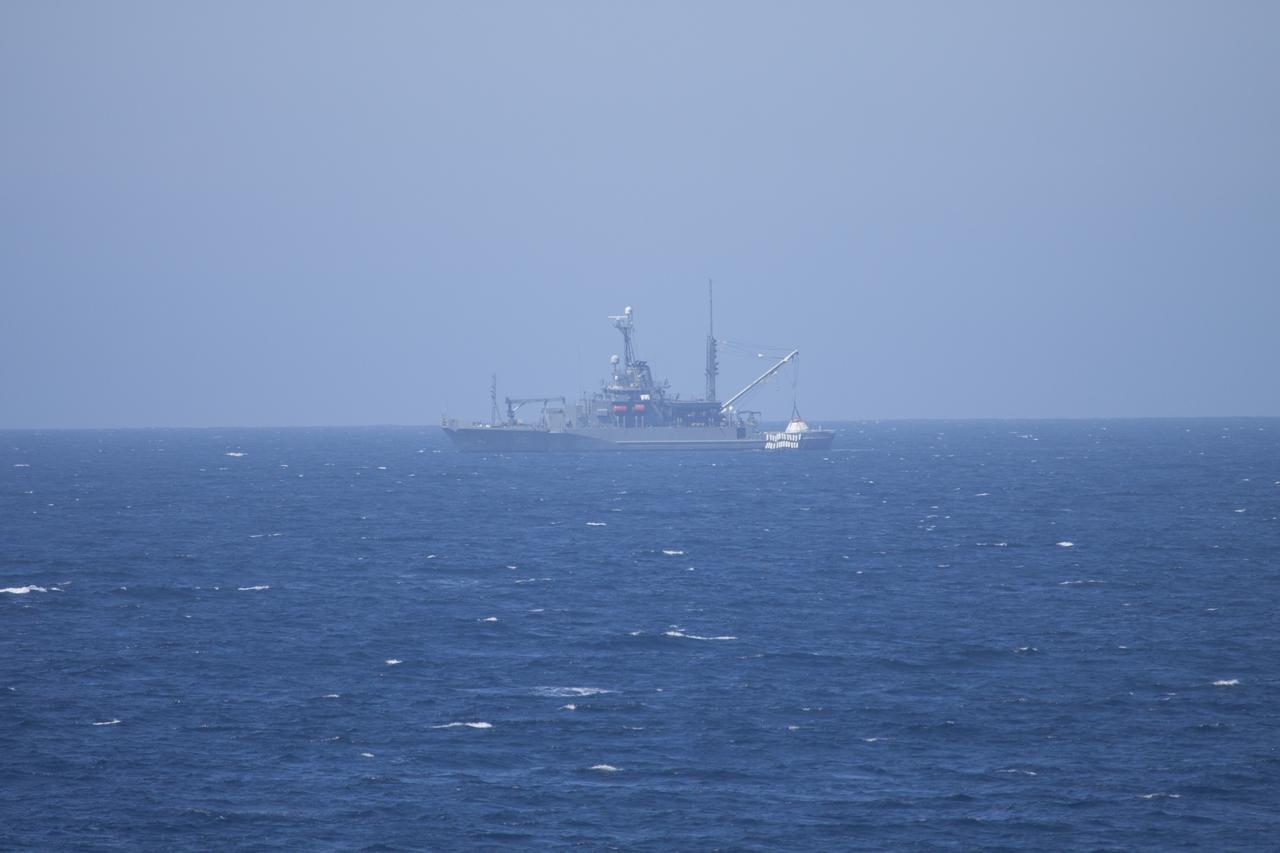
During Orion Underway Recovery Test 4A aboard the USNS Salvor, a safeguard-class rescue and salvage ship, a crane is used to lift the Orion boilerplate test vehicle. Orion will be lifted up and lowered into the water to test crew module crane recovery operations. NASA, Lockheed Martin and the U.S. Navy are conducting the test in the Pacific Ocean to prepare for recovery of the Orion crew module on its return from a deep space mission. The test allows the teams to demonstrate and evaluate the recovery processes, procedures, hardware and personnel in open waters. The Ground Systems Development and Operations Program is conducting the underway recovery tests. Orion is the exploration spacecraft designed to carry astronauts to destinations not yet explored by humans, including an asteroid and Mars. It will have emergency abort capability, sustain the crew during space travel and provide safe re-entry from deep space return velocities. The first unpiloted test flight of Orion is scheduled to launch in 2014 atop a United Launch Alliance Delta IV Heavy rocket and in 2018 on NASA’s Space Launch System rocket.
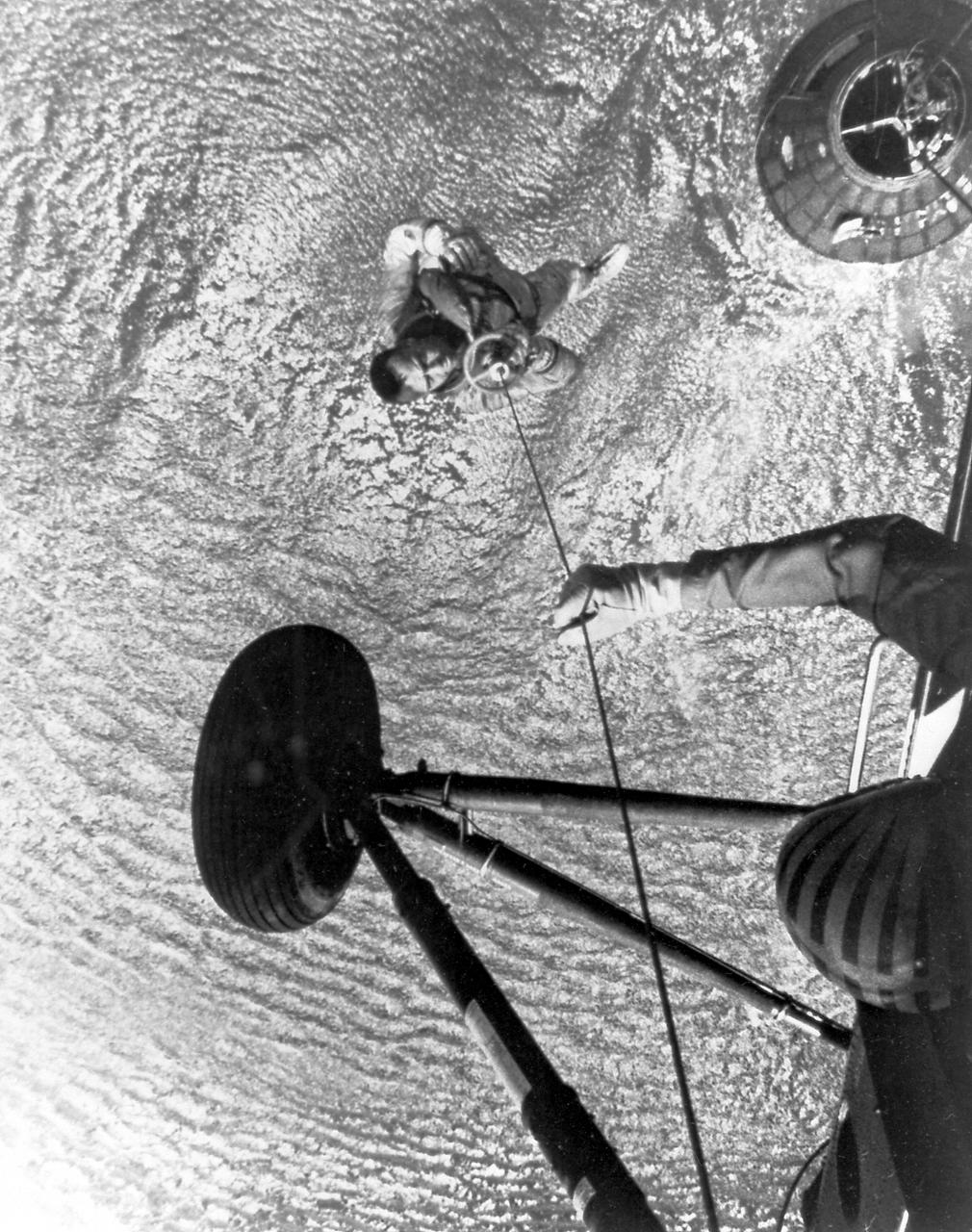
This photo depicts the recovery operations of the MR-3 mission. Astronaut Alan Shepard was picked up by a U.S. Marine helicopter after the completion of the first marned suborbital flight by MR-3 (Mercury-Redstone) with the Freedom 7 capsule.
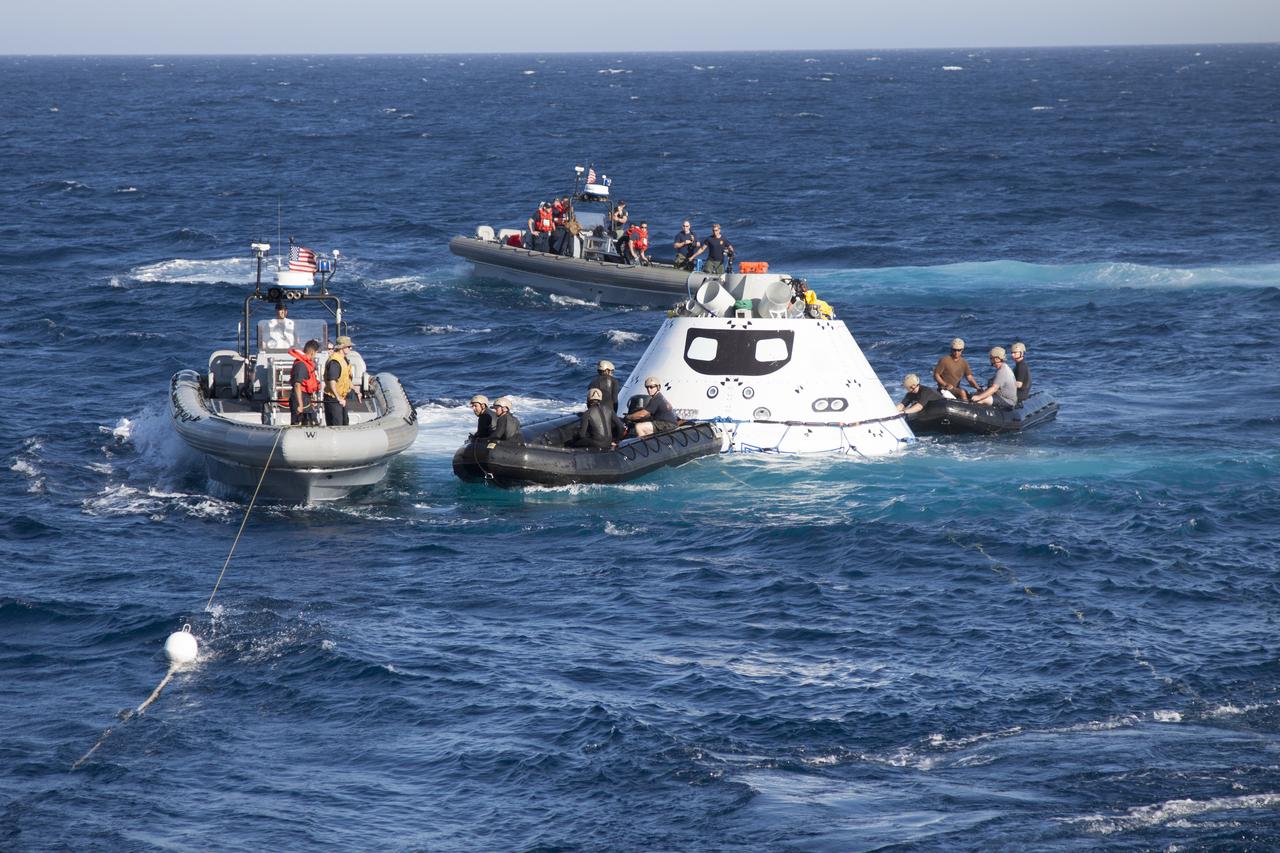
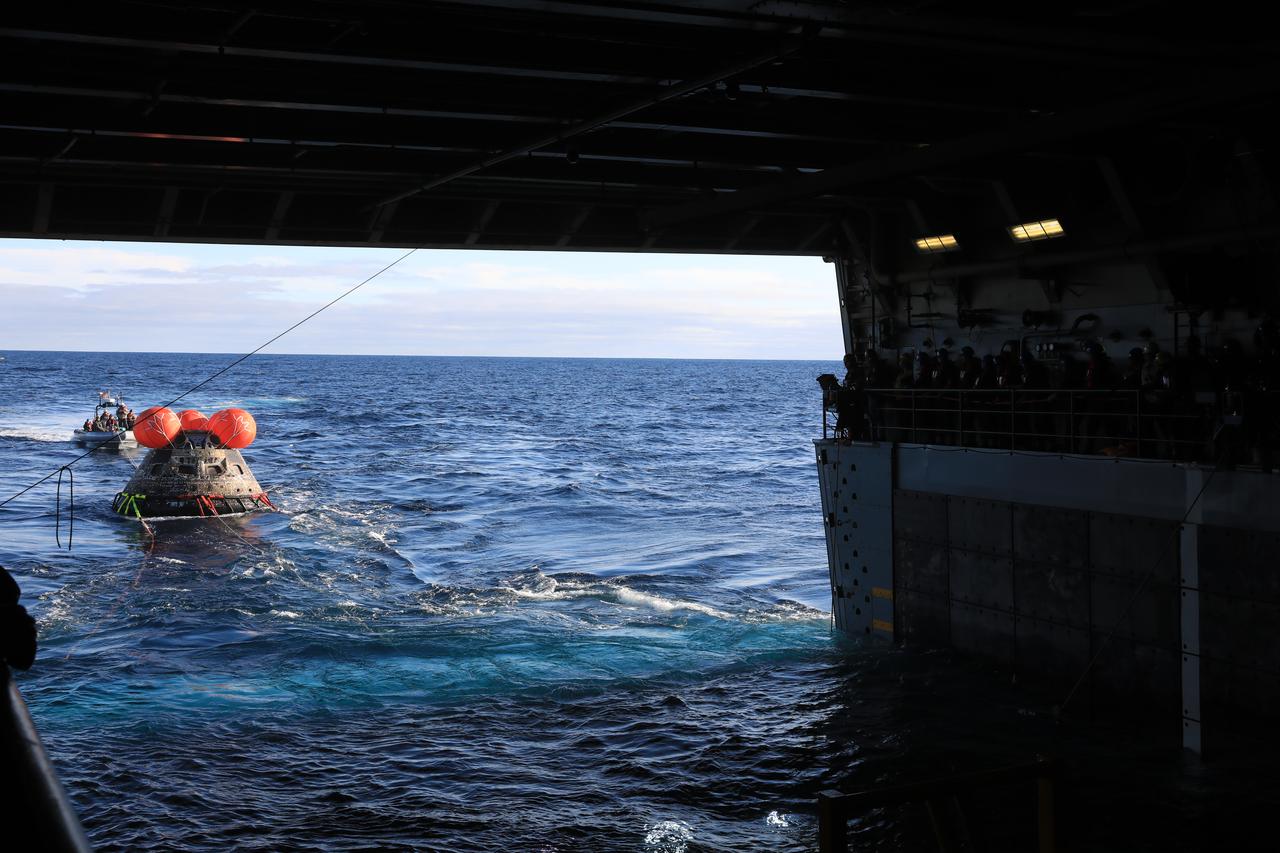
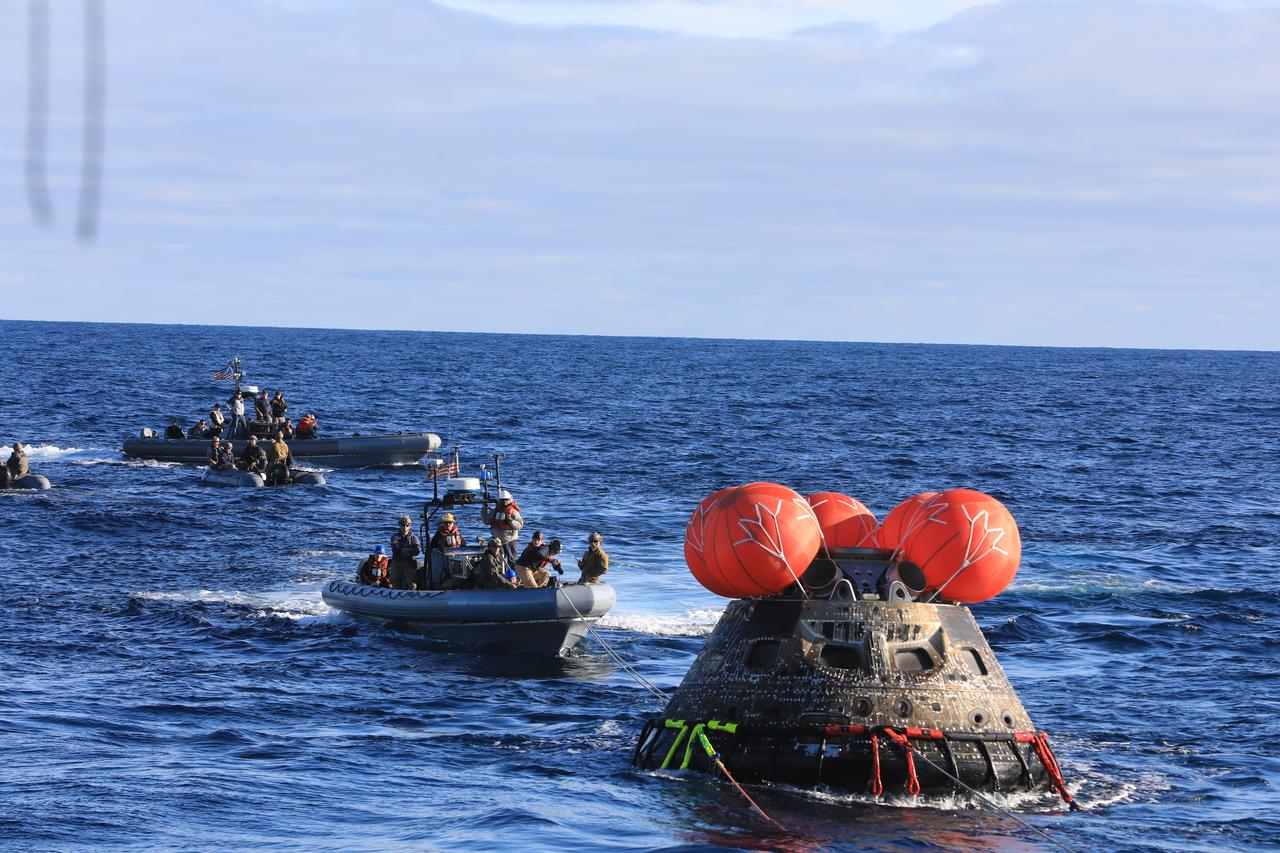
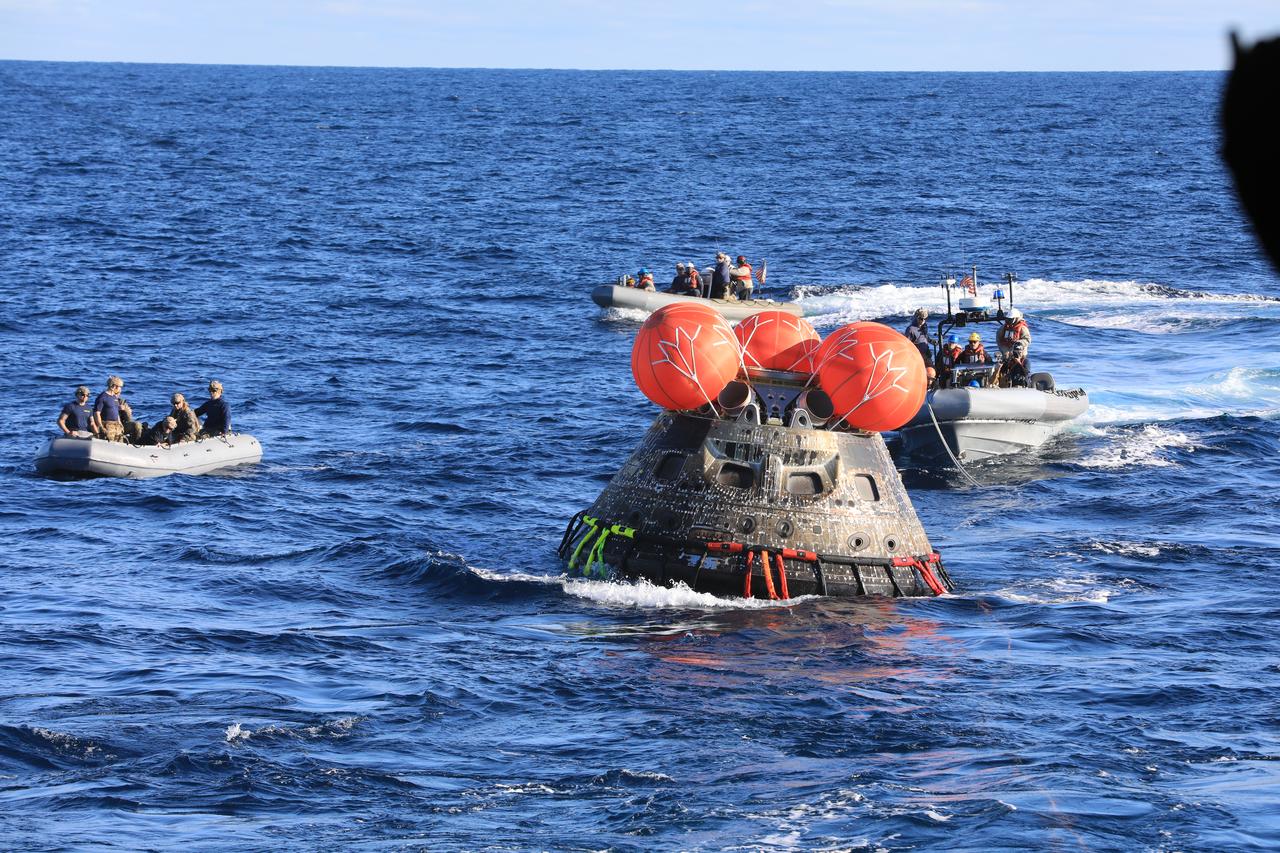
The Orion boilerplate test vehicle floats in the Pacific Ocean near the USS Anchorage during Underway Recovery Test 3. U.S. Navy divers and other recovery team members in two Zodiac boats attach tether lines to Orion. Other recovery team members are nearby in two rigid hull inflatable boats. NASA, Lockheed Martin and U.S. Navy personnel are conducting the recovery test to prepare for recovery of the Orion crew module on its return from a deep space mission. The test allows the teams to demonstrate and evaluate the recovery processes, procedures, hardware and personnel in open waters. The Ground Systems Development and Operations Program is conducting the underway recovery tests. Orion is the exploration spacecraft designed to carry astronauts to destinations not yet explored by humans, including an asteroid and Mars. It will have emergency abort capability, sustain the crew during space travel and provide safe re-entry from deep space return velocities. The first unpiloted test flight of Orion is scheduled to launch in 2014 atop a United Launch Alliance Delta IV Heavy rocket and in 2018 on NASA’s Space Launch System rocket.
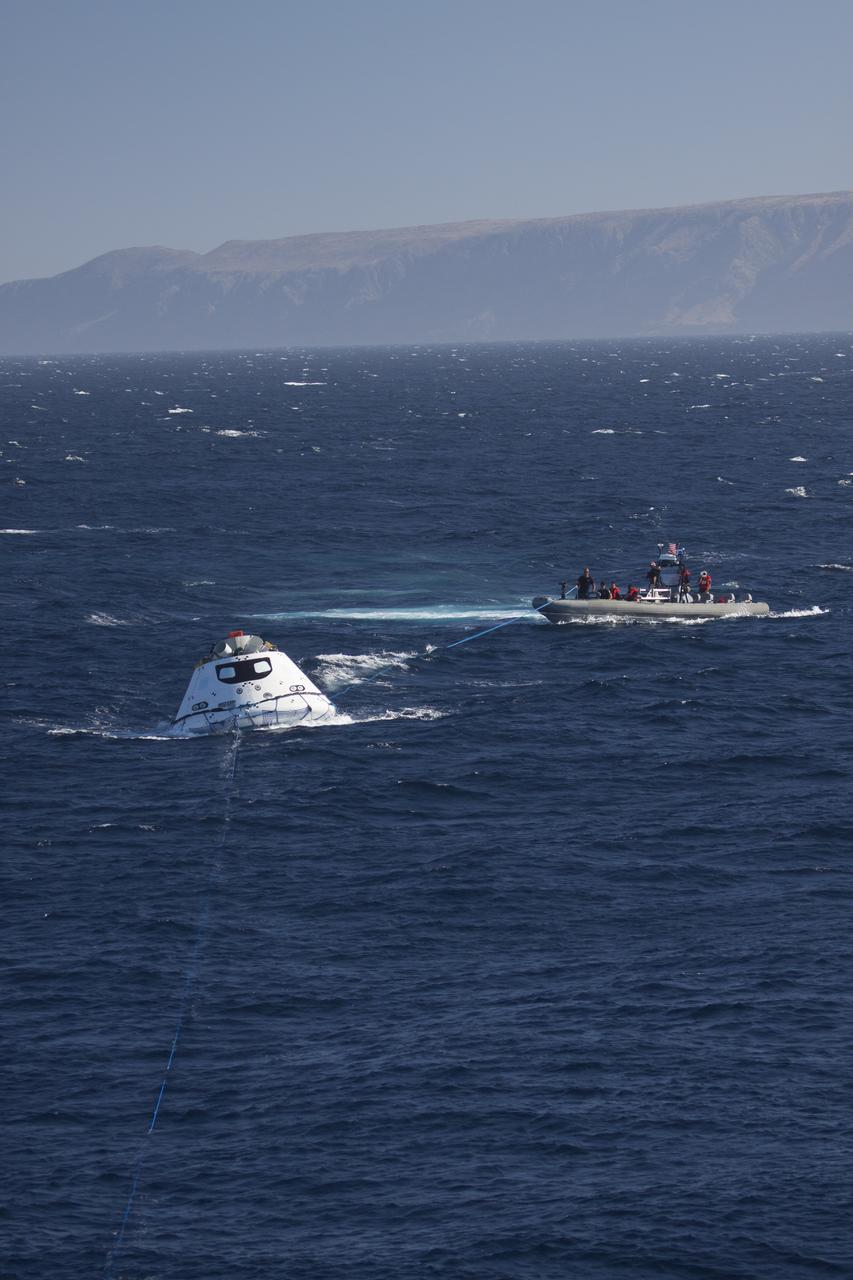
The Orion boilerplate test vehicle floats in the Pacific Ocean near the USS Anchorage during Underway Recovery Test 3. Tether lines have been attached to the test vehicle. Nearby, recovery team members in a rigid hull inflatable boat are practicing recovery procedures. NASA, Lockheed Martin and U.S. Navy personnel are conducting the recovery test to prepare for recovery of the Orion crew module on its return from a deep space mission. The test allows the teams to demonstrate and evaluate the recovery processes, procedures, hardware and personnel in open waters. The Ground Systems Development and Operations Program is conducting the underway recovery tests. Orion is the exploration spacecraft designed to carry astronauts to destinations not yet explored by humans, including an asteroid and Mars. It will have emergency abort capability, sustain the crew during space travel and provide safe re-entry from deep space return velocities. The first unpiloted test flight of Orion is scheduled to launch in 2014 atop a United Launch Alliance Delta IV Heavy rocket and in 2018 on NASA’s Space Launch System rocket.
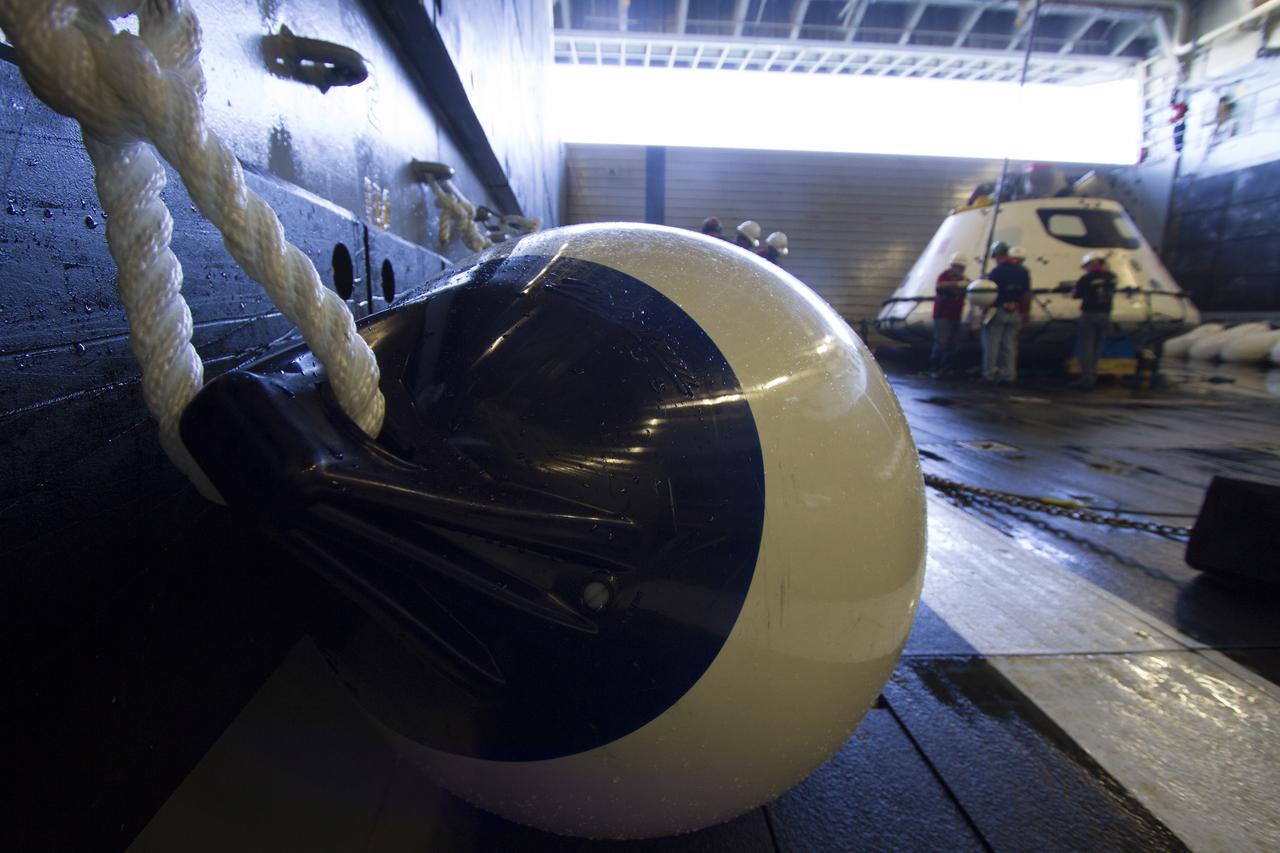
Underway Recovery Test team members help secure the Orion boilerplate test vehicle in the well deck of the USS Anchorage during the first day of Underway Recovery Test 3 in the Pacific Ocean. NASA, Lockheed Martin and U.S. Navy personnel are conducting the recovery test to prepare for recovery of the Orion crew module on its return from a deep space mission. The test allows the teams to demonstrate and evaluate the recovery processes, procedures, hardware and personnel in open waters. The Ground Systems Development and Operations Program is conducting the underway recovery tests. Orion is the exploration spacecraft designed to carry astronauts to destinations not yet explored by humans, including an asteroid and Mars. It will have emergency abort capability, sustain the crew during space travel and provide safe re-entry from deep space return velocities. The first unpiloted test flight of Orion is scheduled to launch in 2014 atop a United Launch Alliance Delta IV Heavy rocket and in 2018 on NASA’s Space Launch System rocket.
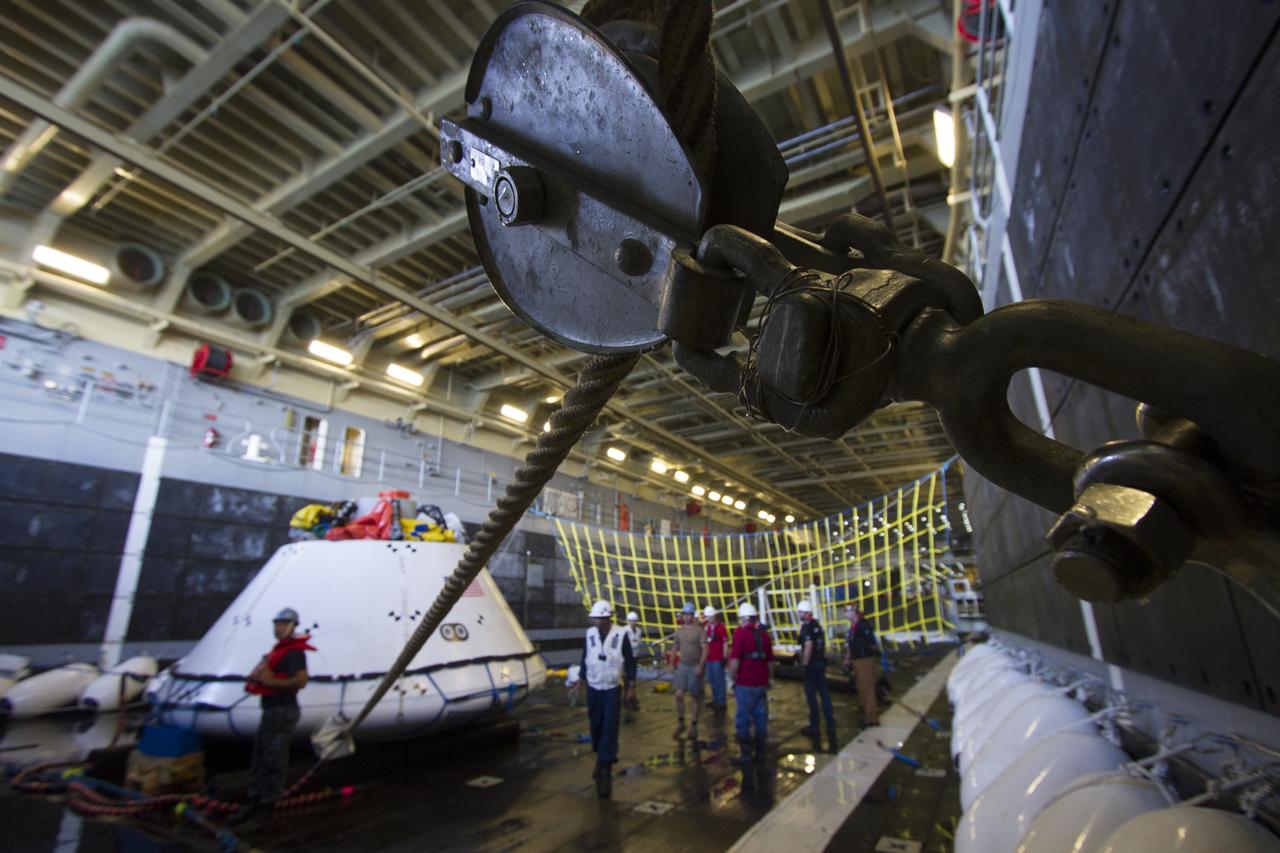
Underway Recovery Test team members help secure the Orion boilerplate test vehicle in the well deck of the USS Anchorage during the first day of Underway Recovery Test 3 in the Pacific Ocean. NASA, Lockheed Martin and U.S. Navy personnel are conducting the recovery test to prepare for recovery of the Orion crew module on its return from a deep space mission. The test allows the teams to demonstrate and evaluate the recovery processes, procedures, hardware and personnel in open waters. The Ground Systems Development and Operations Program is conducting the underway recovery tests. Orion is the exploration spacecraft designed to carry astronauts to destinations not yet explored by humans, including an asteroid and Mars. It will have emergency abort capability, sustain the crew during space travel and provide safe re-entry from deep space return velocities. The first unpiloted test flight of Orion is scheduled to launch in 2014 atop a United Launch Alliance Delta IV Heavy rocket and in 2018 on NASA’s Space Launch System rocket.
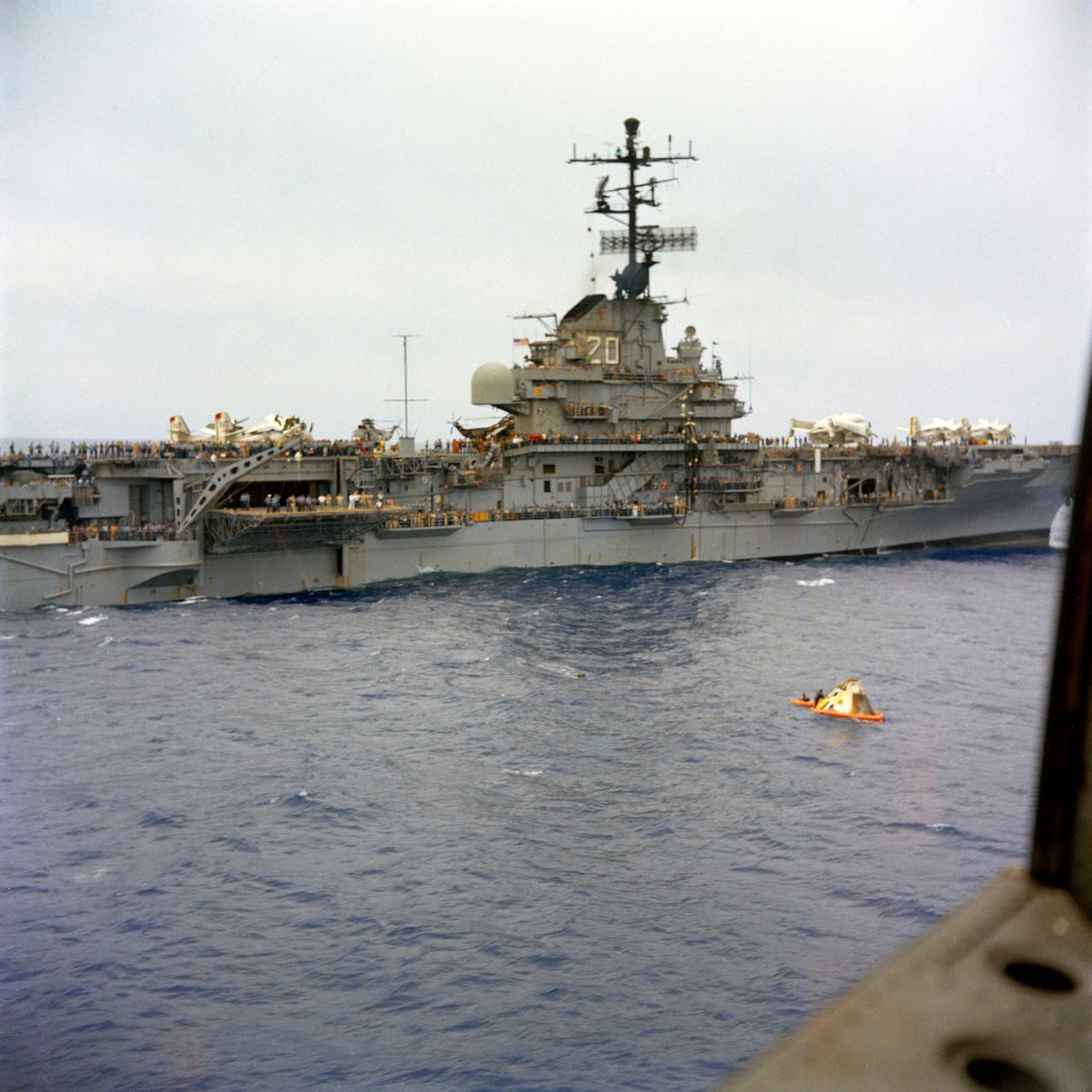
U.S.S. Bennington comes alongside the floating Apollo spacecraft 017 Command Module during recovery operations in the mid-Pacific Ocean. The Command Module splashed down at 3:37 p.m., November 9, 1967, 934 nautical miles northwest of Honolulu, Hawaii.
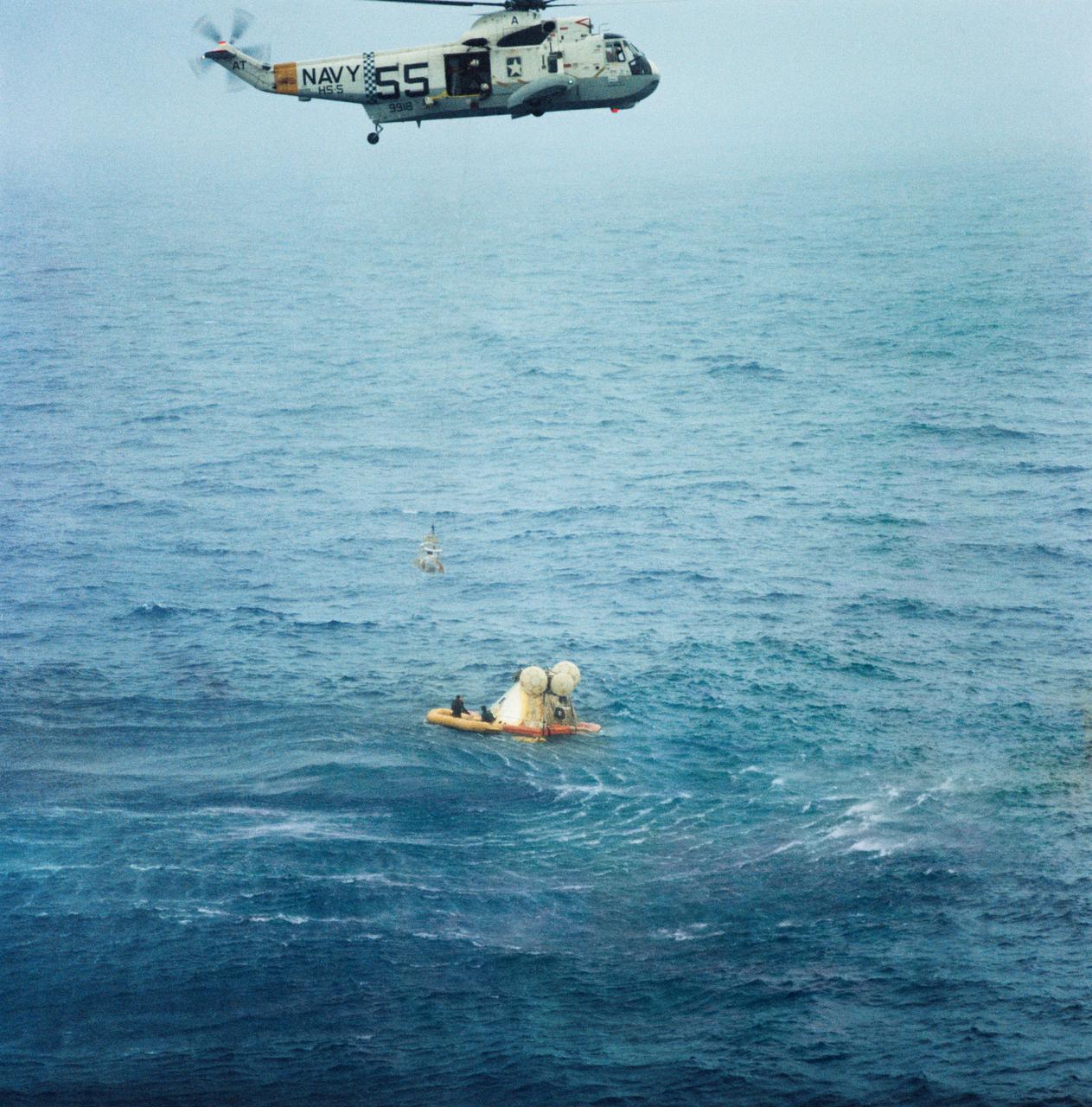
S68-49661 (22 Oct. 1968) --- A member of the Apollo 7 crew is hoisted up to a recovery helicopter from the USS Essex during recovery operations. The Apollo 7 spacecraft splashed down at 7:11 a.m., Oct. 22, 1968, approximately 200 nautical miles south-southwest of Bermuda. Photo credit: NASA
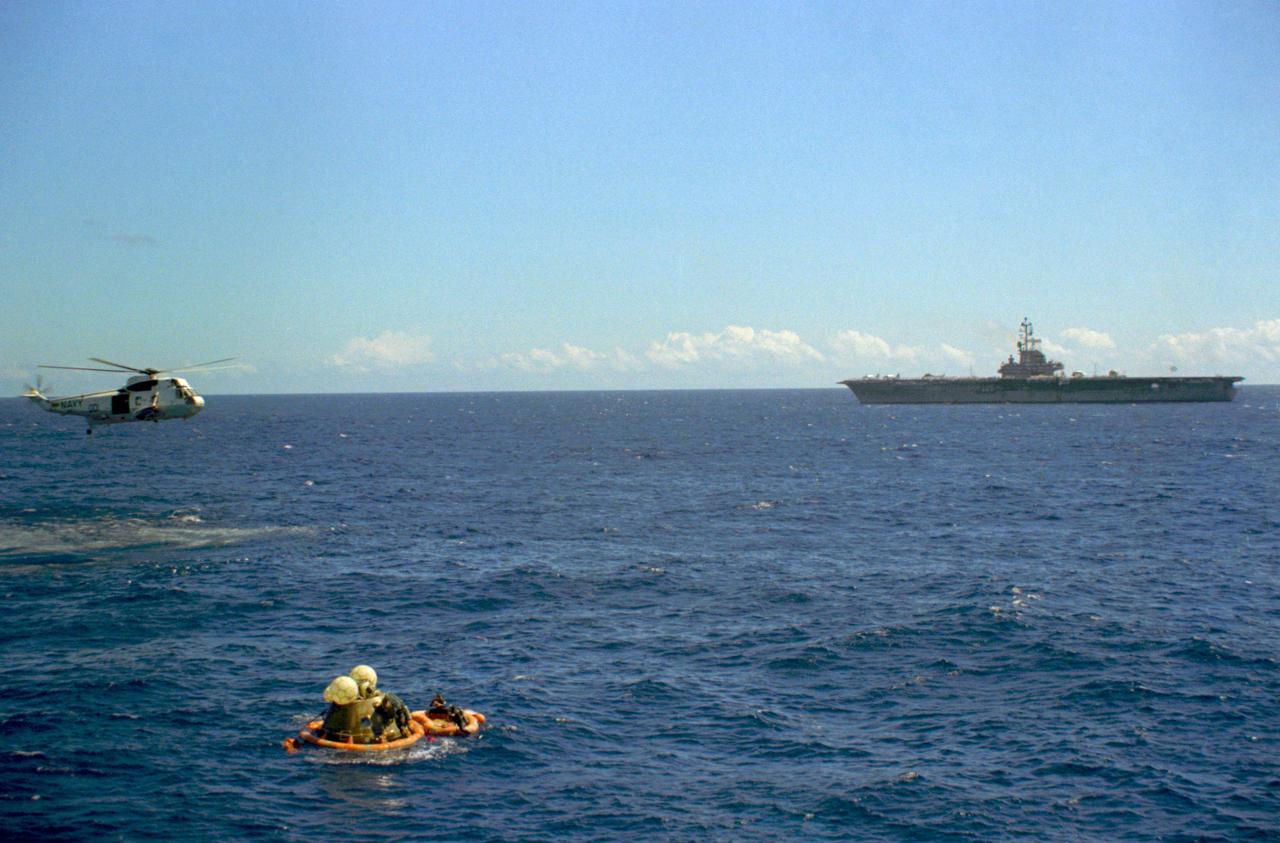
S72-36602 (27 April 1972) --- The Apollo 16 Command Module bobbles photographed in the waters of the central Pacific Ocean during recovery operations. The prime recovery ship, USS Ticonderoga, is in the background. A recovery helicopter hovers overhead. The Apollo 16 crew, astronauts John W. Young, Thomas K. Mattingly II, and Charles M. Duke Jr., were picked up by helicopter and flown to the deck of the ship. The splashdown occurred at 290:37:06 ground elapsed time, 1:45:06 p.m. (CST), Thursday, April 27, 1972, at coordinates of 00:45.2 degrees south latitude and 156:11.4 degrees west longitude, a point approximately 215 miles southeast of Christmas Island. A team of Earth Landing System swimmers assisted with the recovery operations.
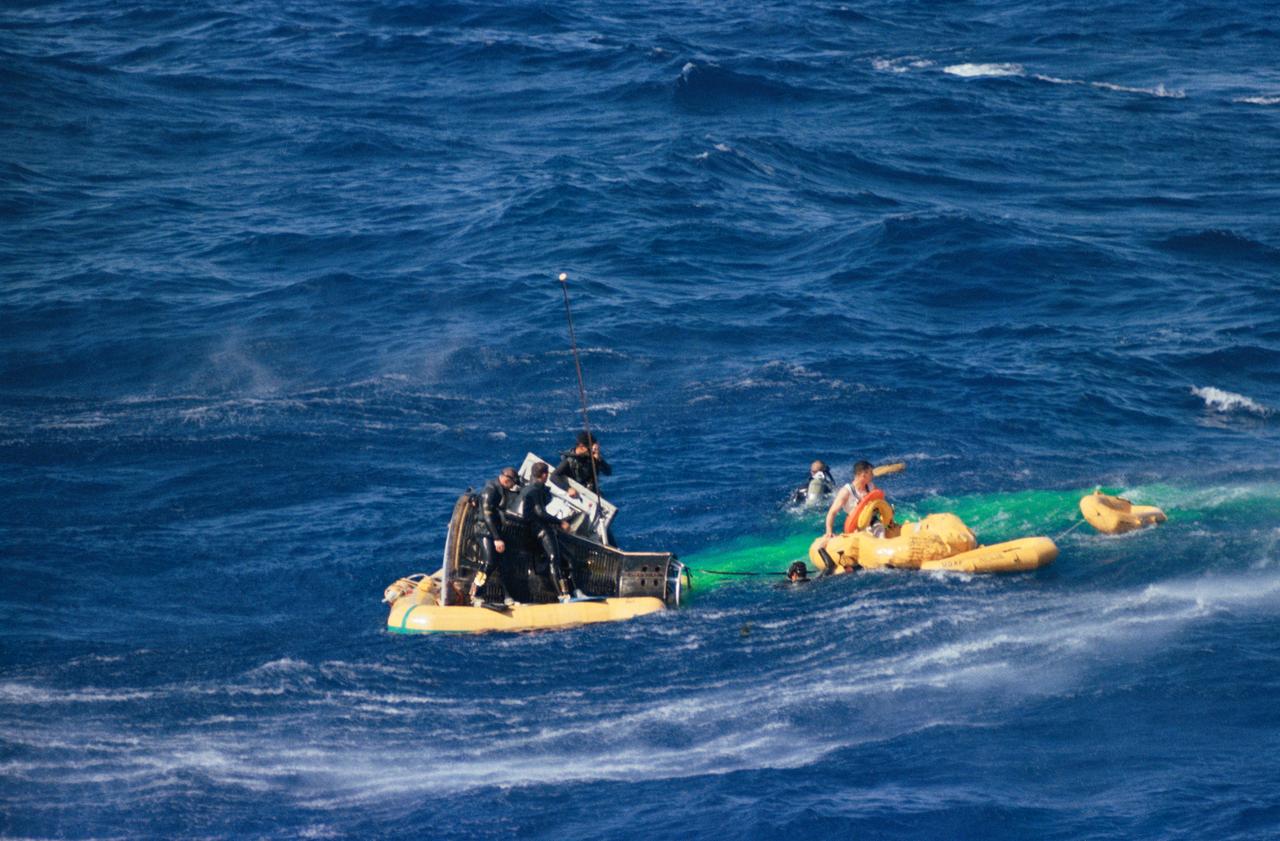
S65-22893 (23 March 1965) --- Astronaut John W. Young, the pilot of the Gemini-Titan III (GT-3) flight, waits in a life raft to be picked up by a helicopter during recovery operations following the successful three-orbit mission. Young and astronaut Virgil I. Grissom, command pilot, were flown by helicopter to the nearby recovery vessel, the USS Intrepid. The recovery ship later came alongside and retrieved the GT-3 spacecraft. United States Navy swimmers assisted in the GT-3 recovery operations.
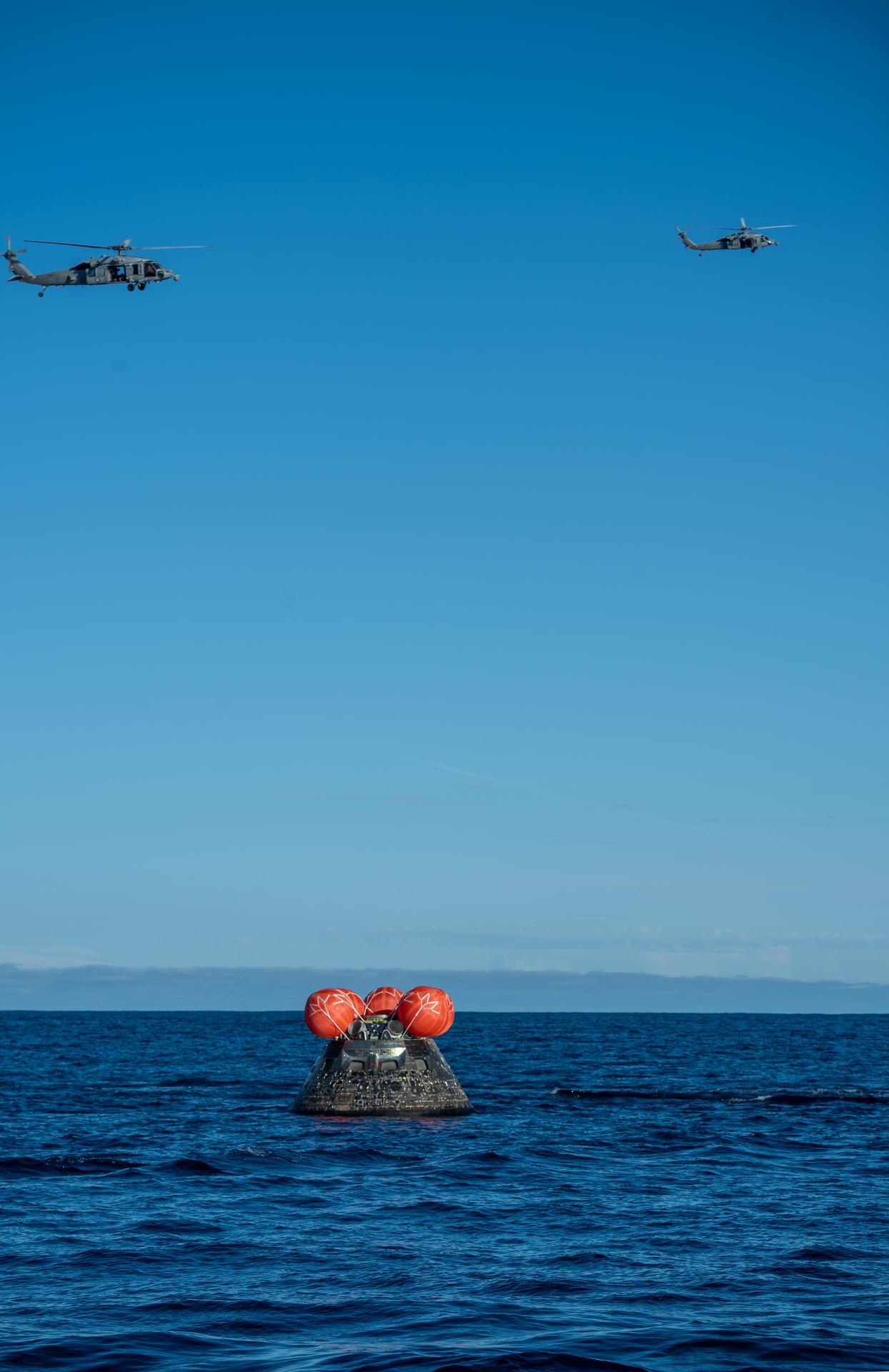
NASA's Orion spacecraft carrying Artemis II Commander Reid Wiseman, Pilot Victor Glover, and Mission Specialist Christina Koch from NASA, along with Mission Specialist Jeremy Hansen from the CSA (Canadian Space Agency), floats in the Pacific Ocean near San Diego, California, at 5:07 p.m. PDT, (8:07 p.m. EDT) on Friday, April 10, 2026. A H60-S Seahawk helicopter hovers above to observe recovery operations to coordinate efforts to secure the spacecraft in the well deck of the ship. The Artemis II test flight launched on Wednesday, April 1, from NASA’s Kennedy Space Center in Florida to begin its 10-day journey around the Moon for scientific discovery, economic benefits, and to build on our foundation for the first crewed missions to Mars.
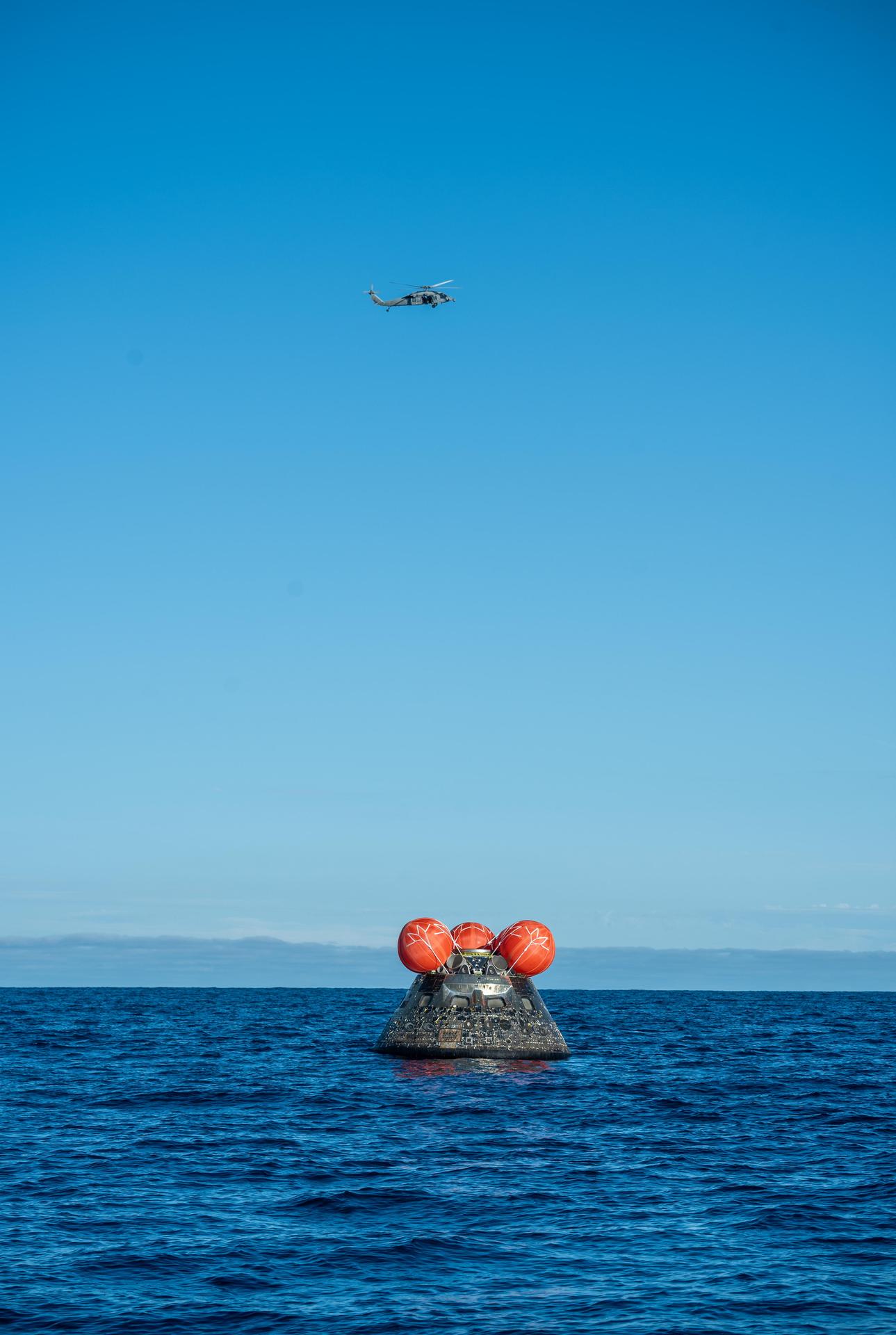
NASA's Orion spacecraft carrying Artemis II Commander Reid Wiseman, Pilot Victor Glover, and Mission Specialist Christina Koch from NASA, along with Mission Specialist Jeremy Hansen from the CSA (Canadian Space Agency), floats in the Pacific Ocean near San Diego, California, at 5:07 p.m. PDT, (8:07 p.m. EDT) on Friday, April 10, 2026. A H60-S Seahawk helicopter hovers above to observe recovery operations to coordinate efforts to secure the spacecraft in the well deck of the ship. The Artemis II test flight launched on Wednesday, April 1, from NASA’s Kennedy Space Center in Florida to begin its 10-day journey around the Moon for scientific discovery, economic benefits, and to build on our foundation for the first crewed missions to Mars.
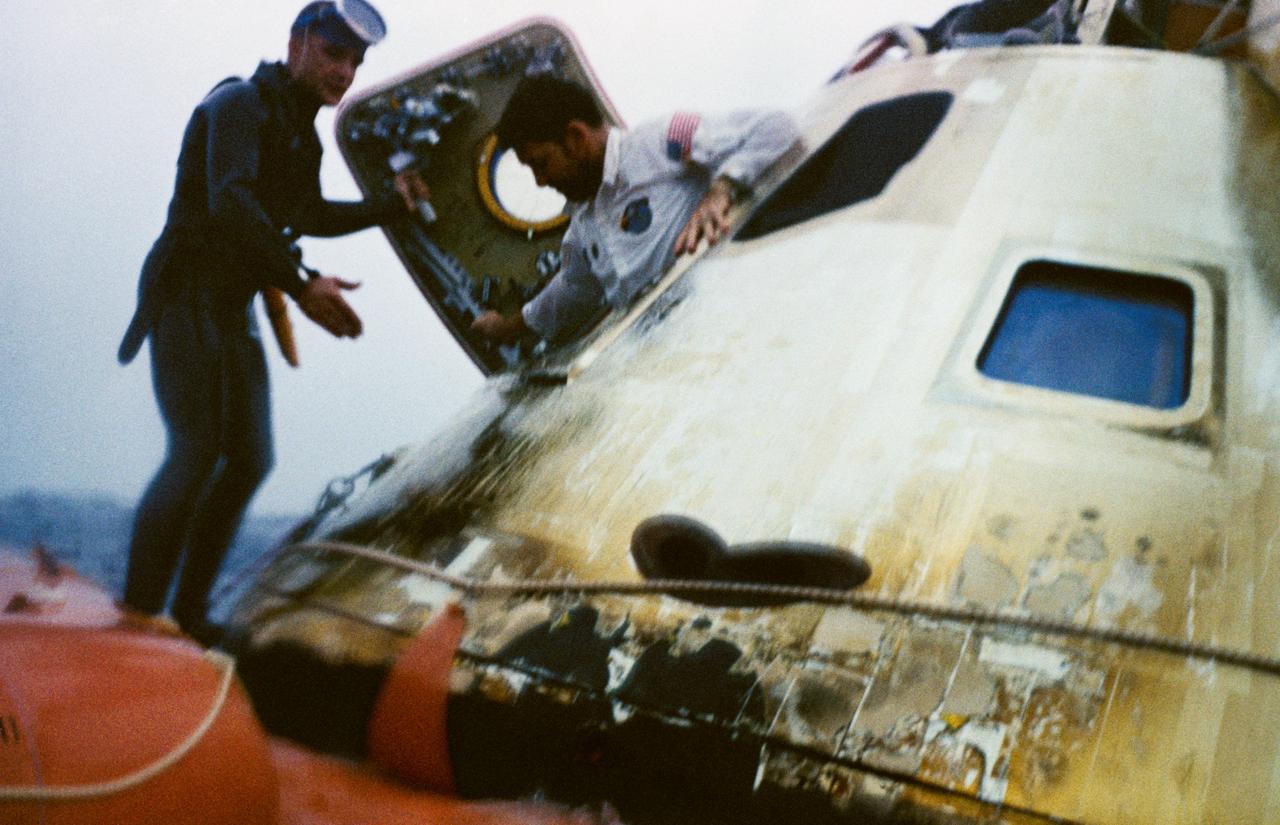
Astronaut Walter M. Schirra, Jr., Apollo 7 commander, egresses the spacecraft during recovery operations in the Atlantic. He is assisted by a member of the U.S. Navy frogman team. The Apollo 7 spacecraft splashed down at 7:11 a.m., October 22, 1968, approximately 200 nautical miles south-southwest of Bermuda.
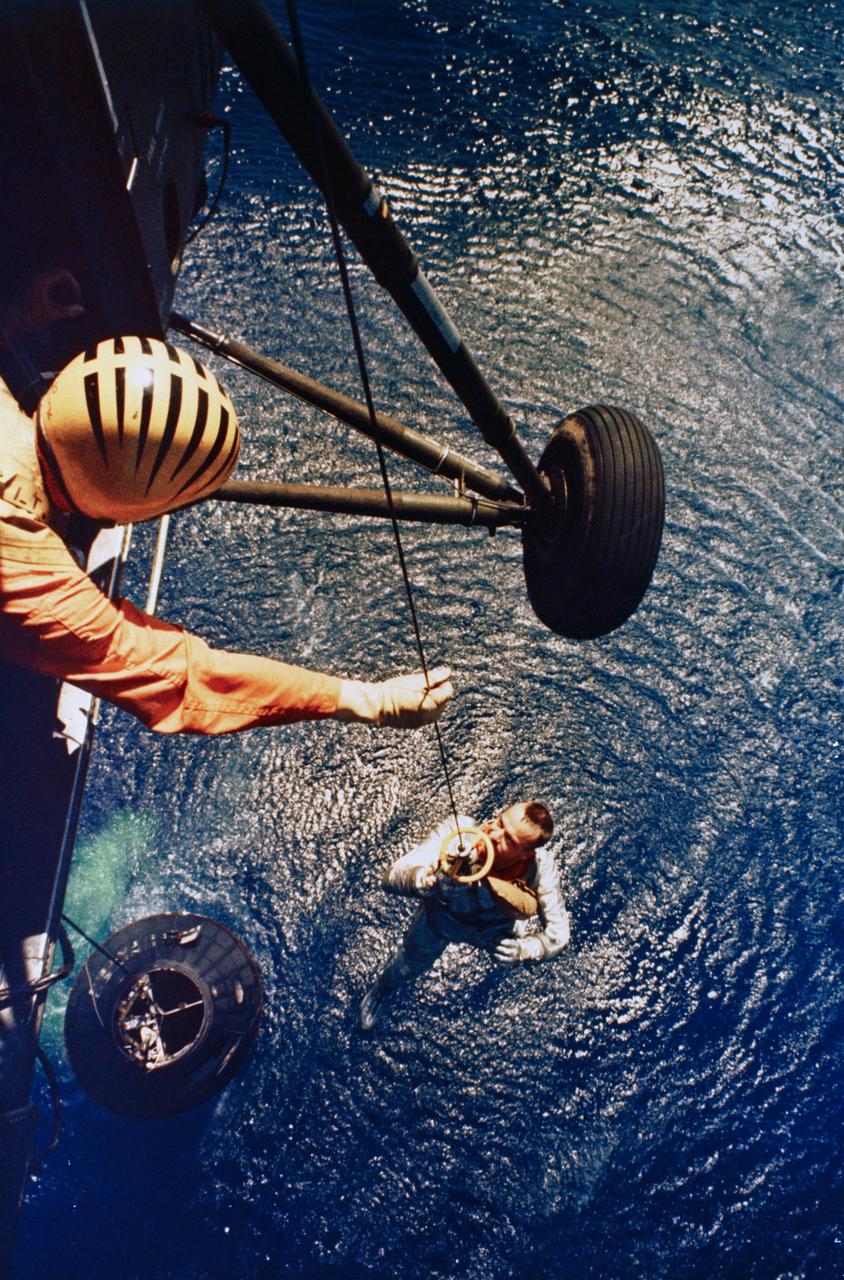
S88-31376 (5 May 1961) --- Astronaut Alan B. Shepard Jr., pilot of the Mercury-Redstone 3 (MR-3) suborbital spaceflight, is retrieved by a helicopter from the USS Lake Champlain during recovery operations in the western Atlantic Ocean. Shepard and the Mercury spacecraft designated the ?Freedom 7? (floating in water below) were flown to the deck of the recovery ship within 11 minutes of splashdown. MR-3 was the United States? first manned space mission. The spacecraft attained a maximum speed of 5,180 miles per hour, reached an altitude of 116 1/2 statute miles, and landed 302 statute miles downrange from Cape Canaveral, Florida. The suborbital mission lasted 15 minutes and 22 seconds. Photo credit: NASA or National Aeronautics and Space Administration

S69-40753 (24 July 1969) --- The Apollo 11 crewmen, wearing biological isolation garments, arrive aboard the USS Hornet during recovery operations in the central Pacific. They are walking toward the Mobile Quarantine Facility (MQF), in which they will be confined until they arrive at the Manned Spacecraft Center's (MSC), Lunar Receiving Laboratory (LRL). Apollo 11, with astronauts Neil A. Armstrong, commander; Michael Collins, command module pilot; and Edwin E. Aldrin Jr., lunar module pilot, onboard, splashed down at 11:49 a.m. (CDT), July 24, 1969, about 812 nautical miles southwest of Hawaii and only 12 nautical miles from the USS Hornet to conclude their historic lunar landing mission.
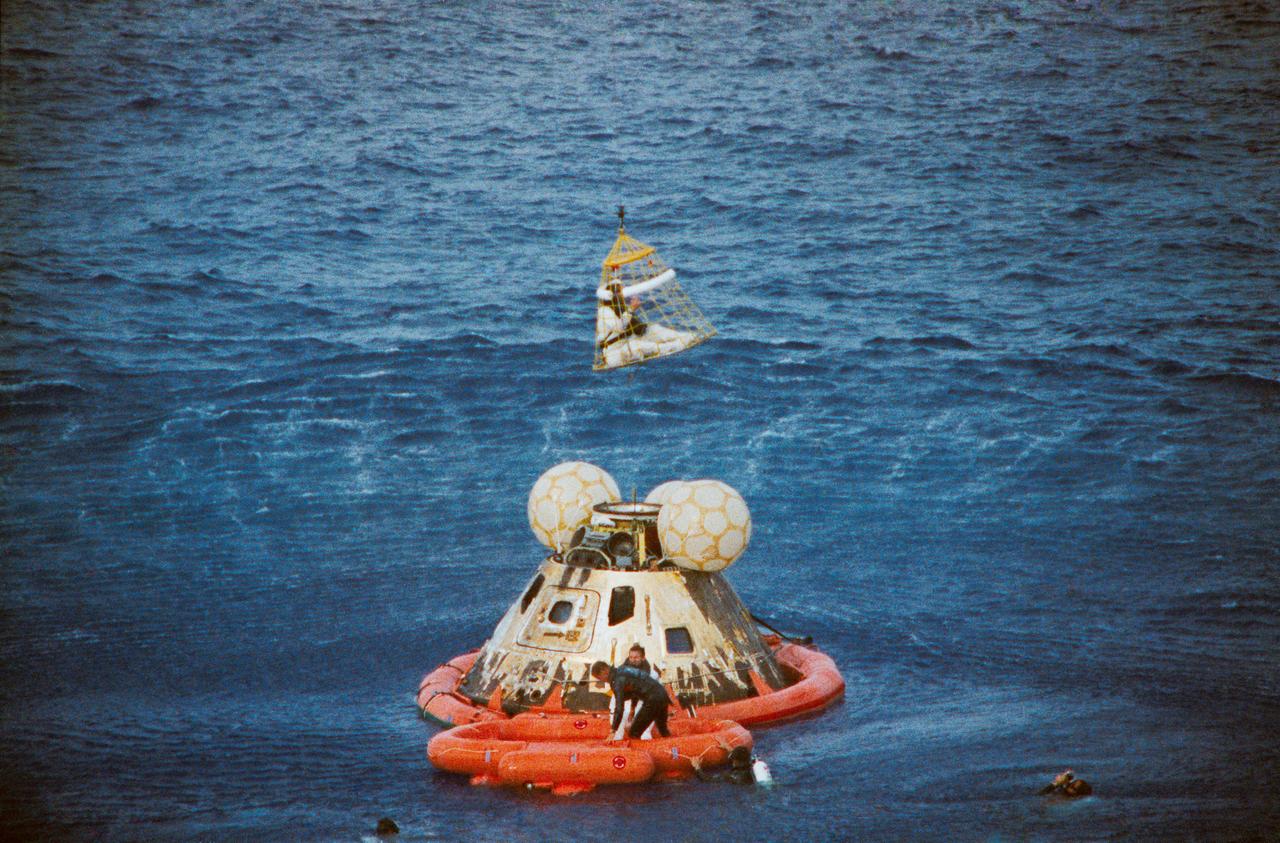
S70-35651 (17 April 1970) --- Astronaut John L. Swigert Jr., command module pilot, is lifted aboard a helicopter in a "Billy Pugh" net while astronaut James A. Lovell Jr., commander, awaits his turn. Astronaut Fred W. Haise Jr., lunar module pilot, is already aboard the helicopter. In the life raft with Lovell, and in the water are several U.S. Navy underwater demolition team swimmers, who assisted in the recovery operations. The crew was taken to the USS Iwo Jima, prime recovery ship, several minutes after the Apollo 13 spacecraft splashed down at 12:07:44 p.m. (CST), April 17, 1970.
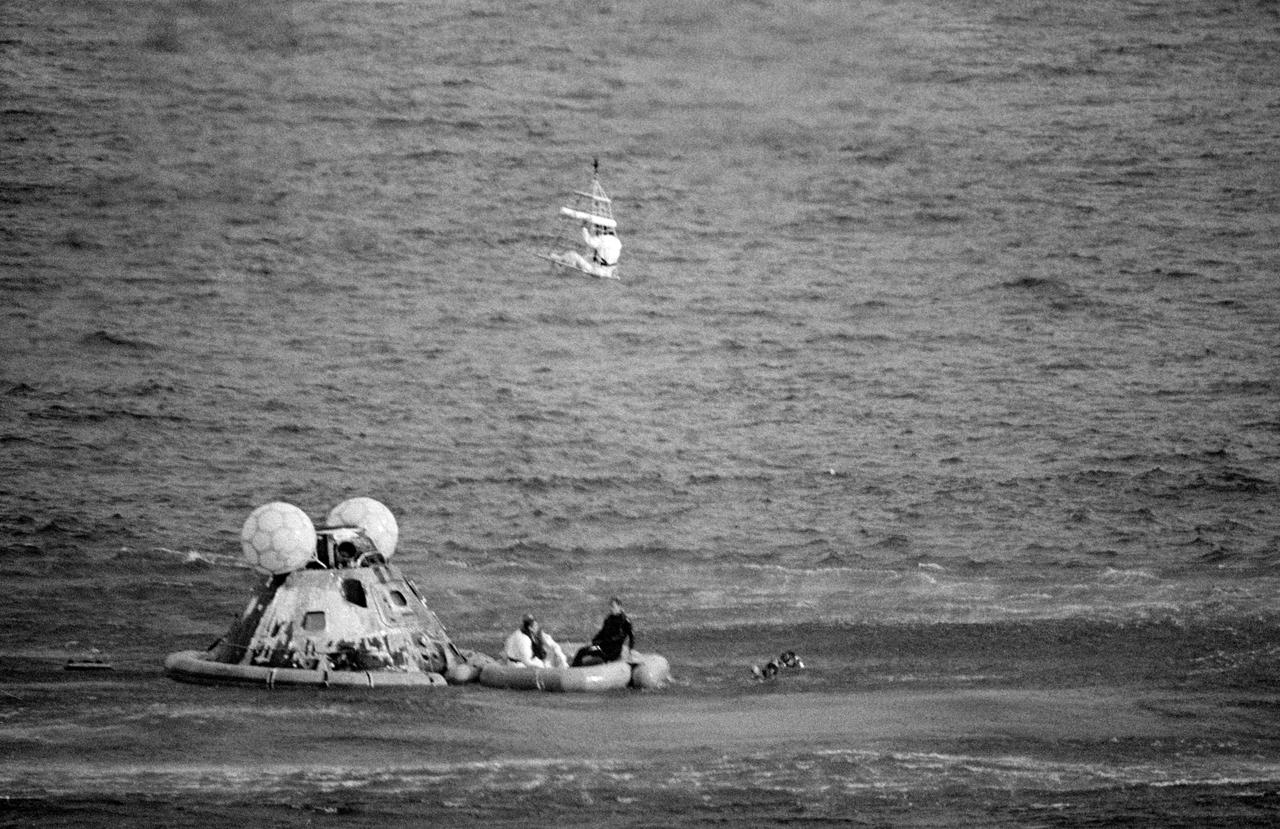
S70-35625 (17 April 1970) --- Astronaut Fred W. Haise Jr., lunar module pilot, is hoisted in a "Billy Pugh" net into a Navy helicopter, while United States Navy underwater demolition team swimmers assist in the recovery operations of the Apollo 13 crewmembers. Astronauts John L. Swigert Jr., command module pilot, and James A. Lovell Jr., commander, are waiting to get hoisted into the helicopter. The helicopter is taking the astronauts to the prime recovery ship, the USS Iwo Jima. Apollo 13 splashed down at 12:07:44 p.m. (CST), April 17, 1970.
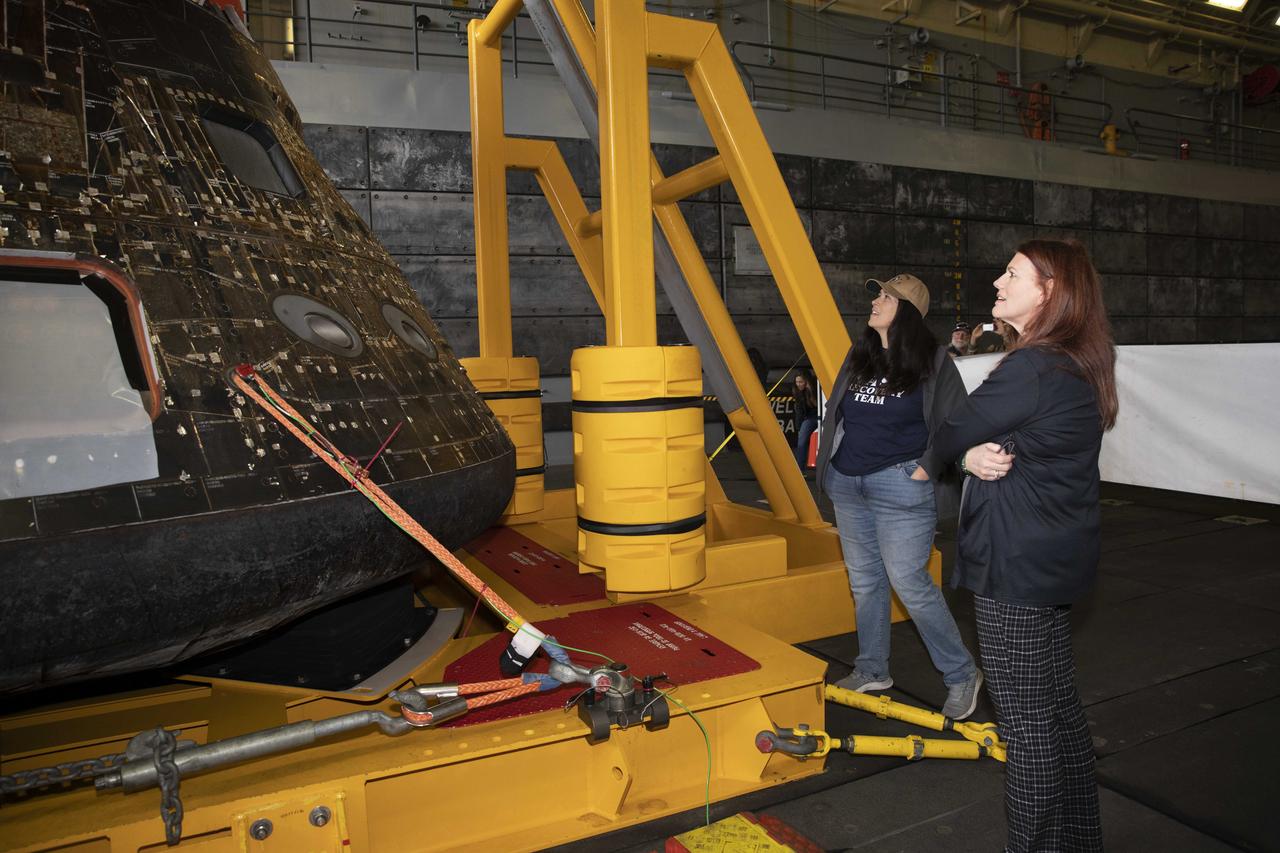
NASA Artemis Launch Director Charlie Blackwell-Thompson, at right, and Melissa Jones, NASA’s Artemis I Recovery director, both with the Exploration Ground Systems program, look at the Artemis I Orion spacecraft inside the well deck of the USS Portland at U.S. Naval Base San Diego on Dec. 13, 2022. The Orion spacecraft is secured inside the well deck after splashing down at 12:40 p.m. EST on Dec. 11, 2022. U.S. Navy divers helped recover the Orion spacecraft. NASA, the Navy and other Department of Defense partners worked together to secure the spacecraft inside the ship’s well deck approximately five hours after Orion splashed down in the Pacific Ocean off the coast of Baja, California.
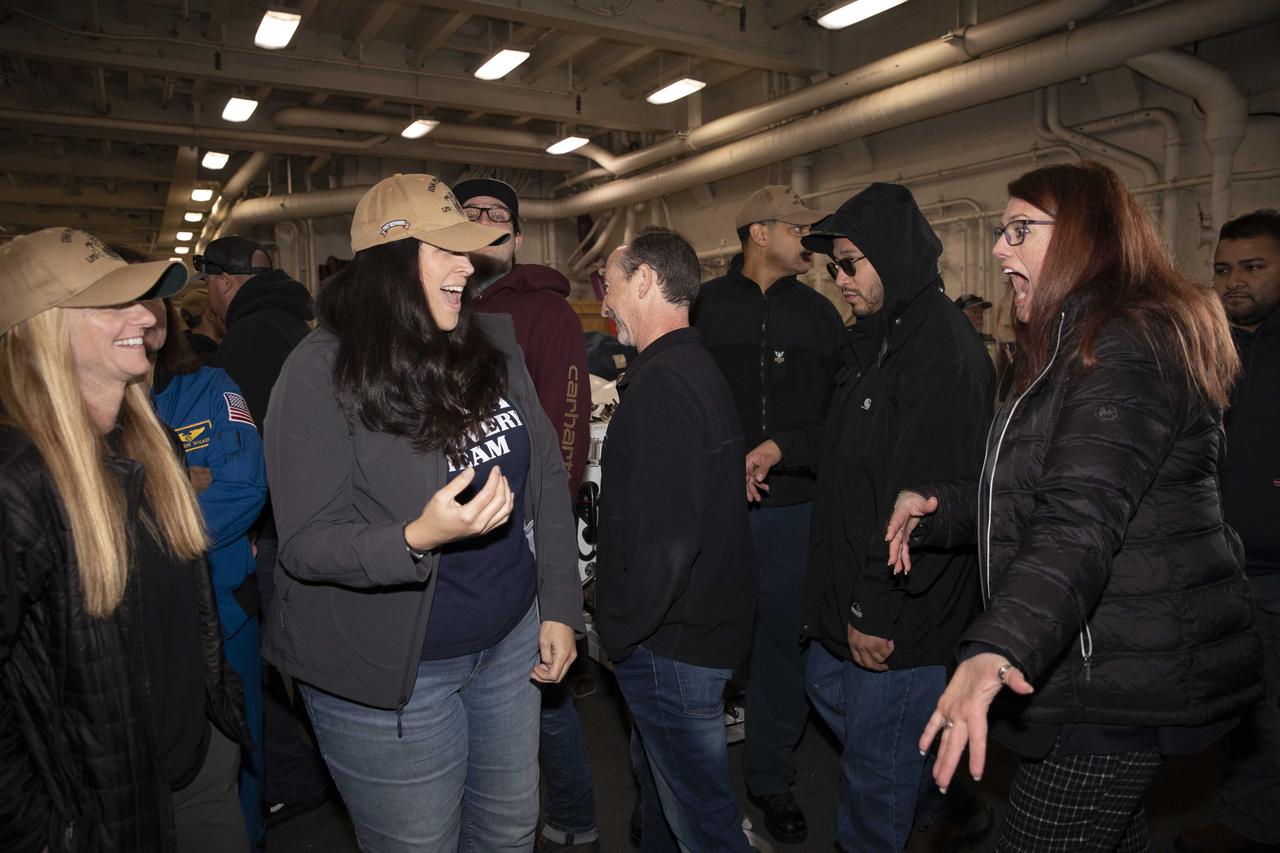
NASA Artemis Launch Director Charlie Blackwell-Thompson, at right, and Melissa Jones, NASA’s Artemis I Recovery director, second from left, both with the Exploration Ground Systems program, along with other recovery team members, exchange congratulations inside the well deck of the USS Portland at U.S. Naval Base San Diego on Dec. 13, 2022. The Orion spacecraft is secured inside the well deck after splashing down at 12:40 p.m. EST on Dec. 11, 2022. U.S. Navy divers helped recover the Orion spacecraft. NASA, the Navy and other Department of Defense partners worked together to secure the spacecraft inside the ship’s well deck approximately five hours after Orion splashed down in the Pacific Ocean off the coast of Baja, California.
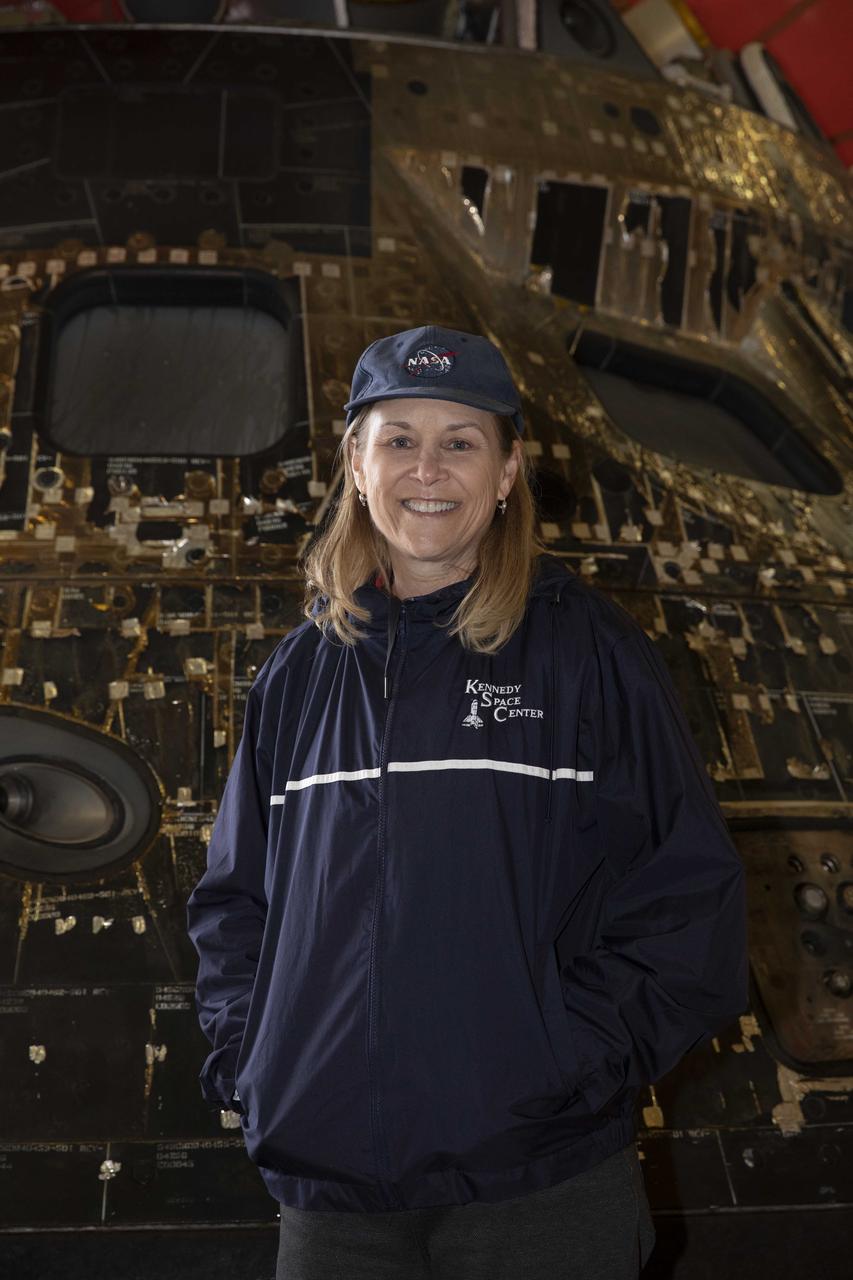
Kennedy Space Center Director Janet Petro stands near the Artemis I Orion spacecraft inside the well deck of the USS Portland at U.S. Naval Base San Diego on Dec. 13, 2022. The Orion spacecraft is secured inside the well deck after splashing down at 12:40 p.m. EST on Dec. 11, 2022. U.S. Navy divers helped recover the Orion spacecraft. NASA, the Navy and other Department of Defense partners worked together to secure the spacecraft inside the ship’s well deck approximately five hours after Orion splashed down in the Pacific Ocean off the coast of Baja, California.
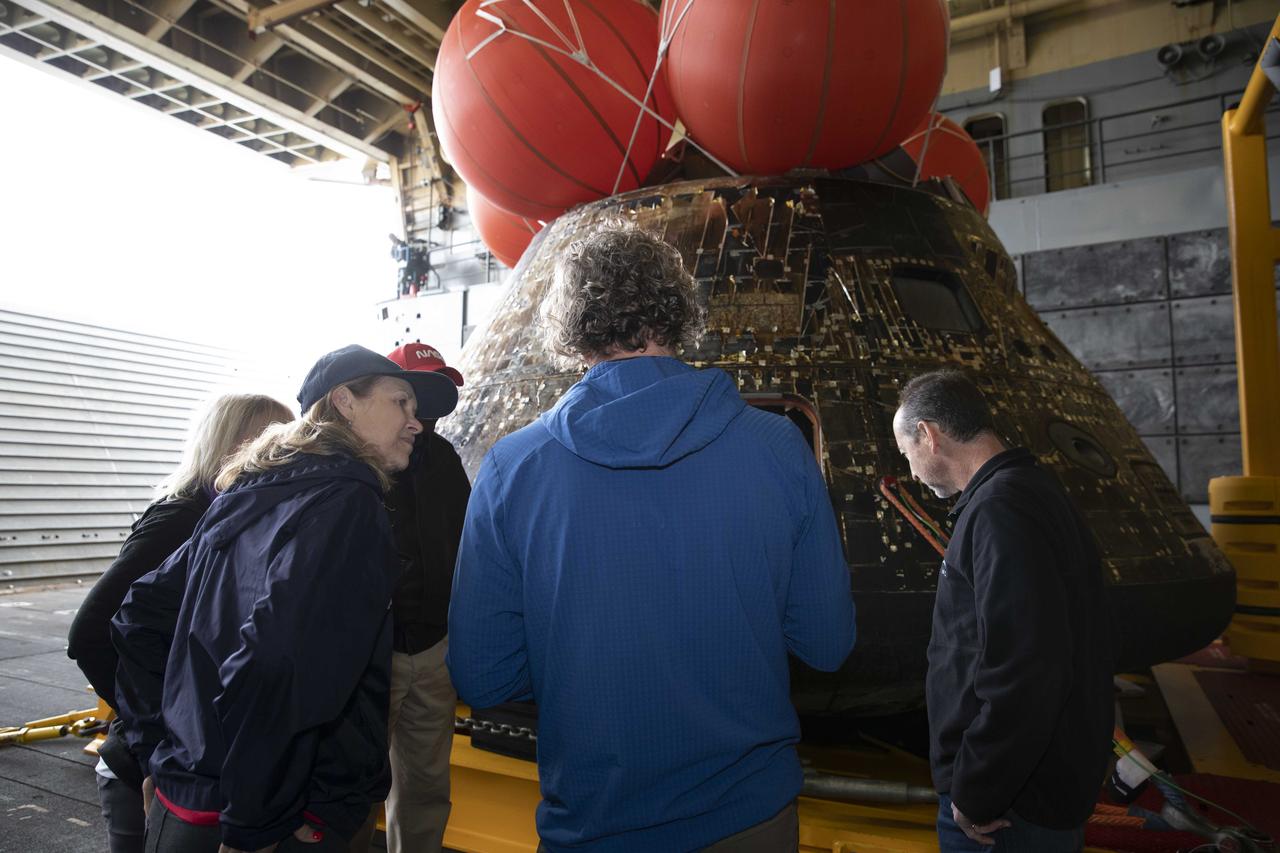
Kennedy Space Center Director Janet Petro, third from left, and recovery team members look at the Artemis I Orion spacecraft inside the well deck of the USS Portland at U.S. Naval Base San Diego on Dec. 13, 2022. The Orion spacecraft is secured inside the well deck after splashing down at 12:40 p.m. EST on Dec. 11, 2022. U.S. Navy divers helped recover the Orion spacecraft. NASA, the Navy and other Department of Defense partners worked together to secure the spacecraft inside the ship’s well deck approximately five hours after Orion splashed down in the Pacific Ocean off the coast of Baja, California.
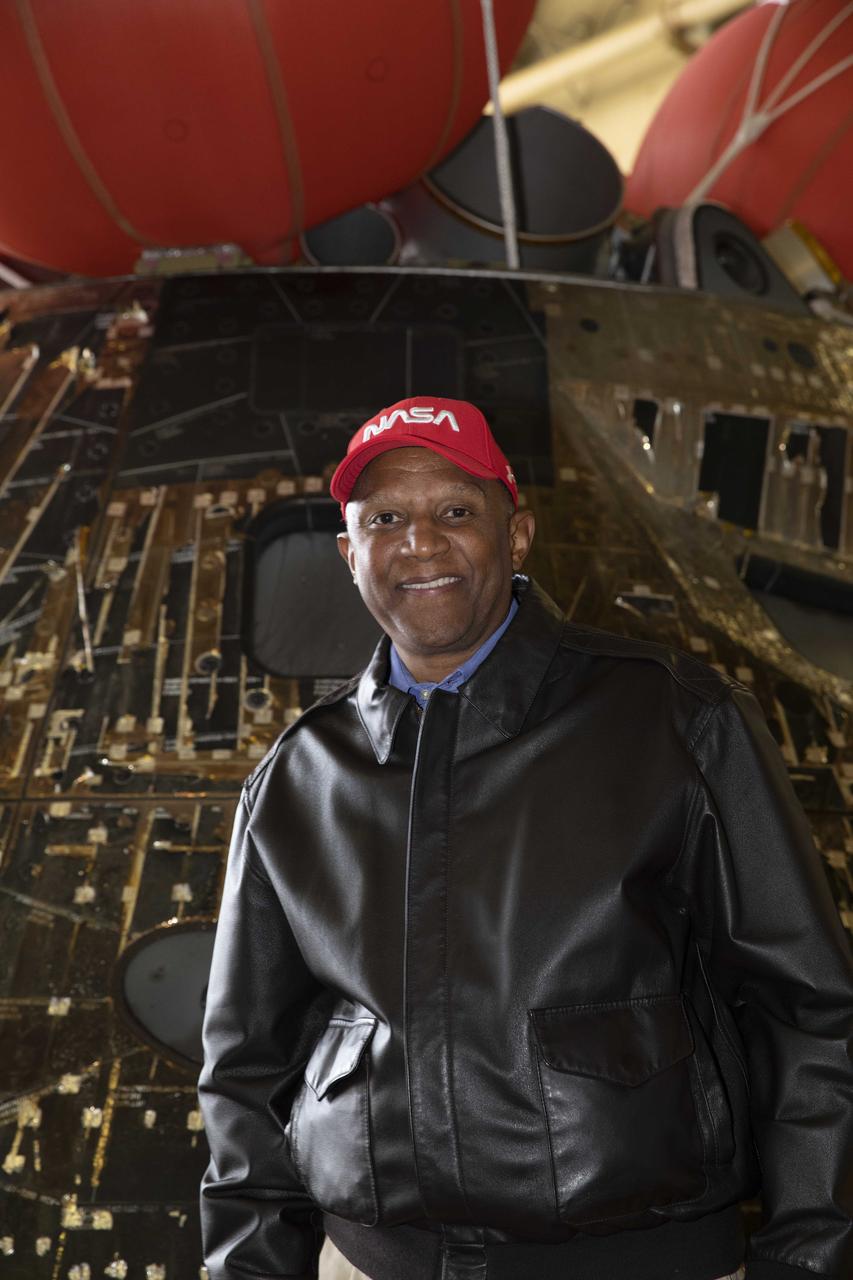
Kennedy Space Center Deputy Director Kelvin Manning stands near the Artemis I Orion spacecraft inside the well deck of the USS Portland at U.S. Naval Base San Diego on Dec. 13, 2022. The Orion spacecraft is secured inside the well deck after splashing down at 12:40 p.m. EST on Dec. 11, 2022. U.S. Navy divers helped recover the Orion spacecraft. NASA, the Navy and other Department of Defense partners worked together to secure the spacecraft inside the ship’s well deck approximately five hours after Orion splashed down in the Pacific Ocean off the coast of Baja, California.
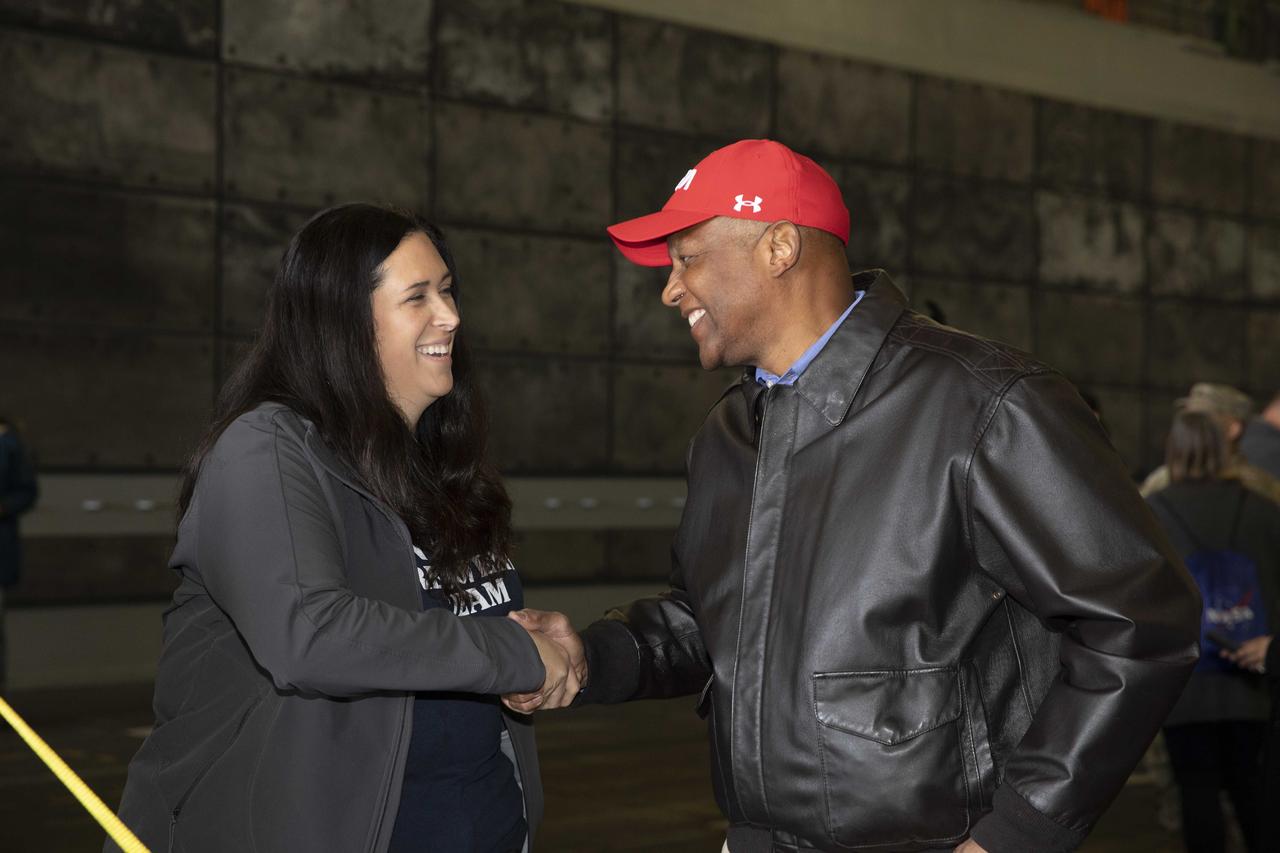
NASA Artemis I Recovery Director Melissa Jones, at right, with Exploration Ground Systems, shakes hands with Kennedy Space Center Deputy Director Kelvin Manning inside the well deck of the USS Portland at U.S. Naval Base San Diego on Dec. 13, 2022. The Artemis I Orion spacecraft is secured inside the well deck after splashing down at 12:40 p.m. EST on Dec. 11, 2022. U.S. Navy divers helped recover the Orion spacecraft. NASA, the Navy and other Department of Defense partners worked together to secure the spacecraft inside the ship’s well deck approximately five hours after Orion splashed down in the Pacific Ocean off the coast of Baja, California.
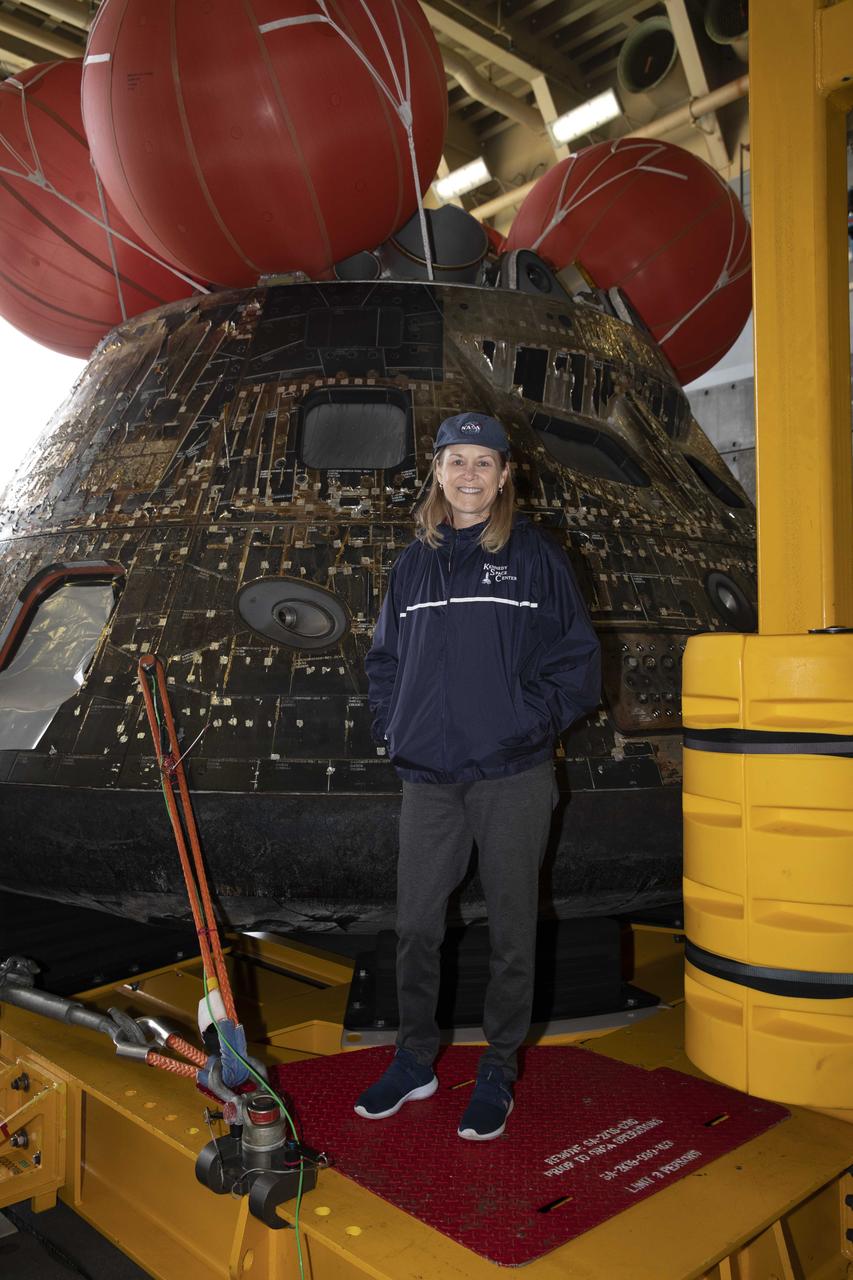
Kennedy Space Center Director Janet Petro stands near the Artemis I Orion spacecraft inside the well deck of the USS Portland at U.S. Naval Base San Diego on Dec. 13, 2022. The Orion spacecraft is secured inside the well deck after splashing down at 12:40 p.m. EST on Dec. 11, 2022. U.S. Navy divers helped recover the Orion spacecraft. NASA, the Navy and other Department of Defense partners worked together to secure the spacecraft inside the ship’s well deck approximately five hours after Orion splashed down in the Pacific Ocean off the coast of Baja, California.
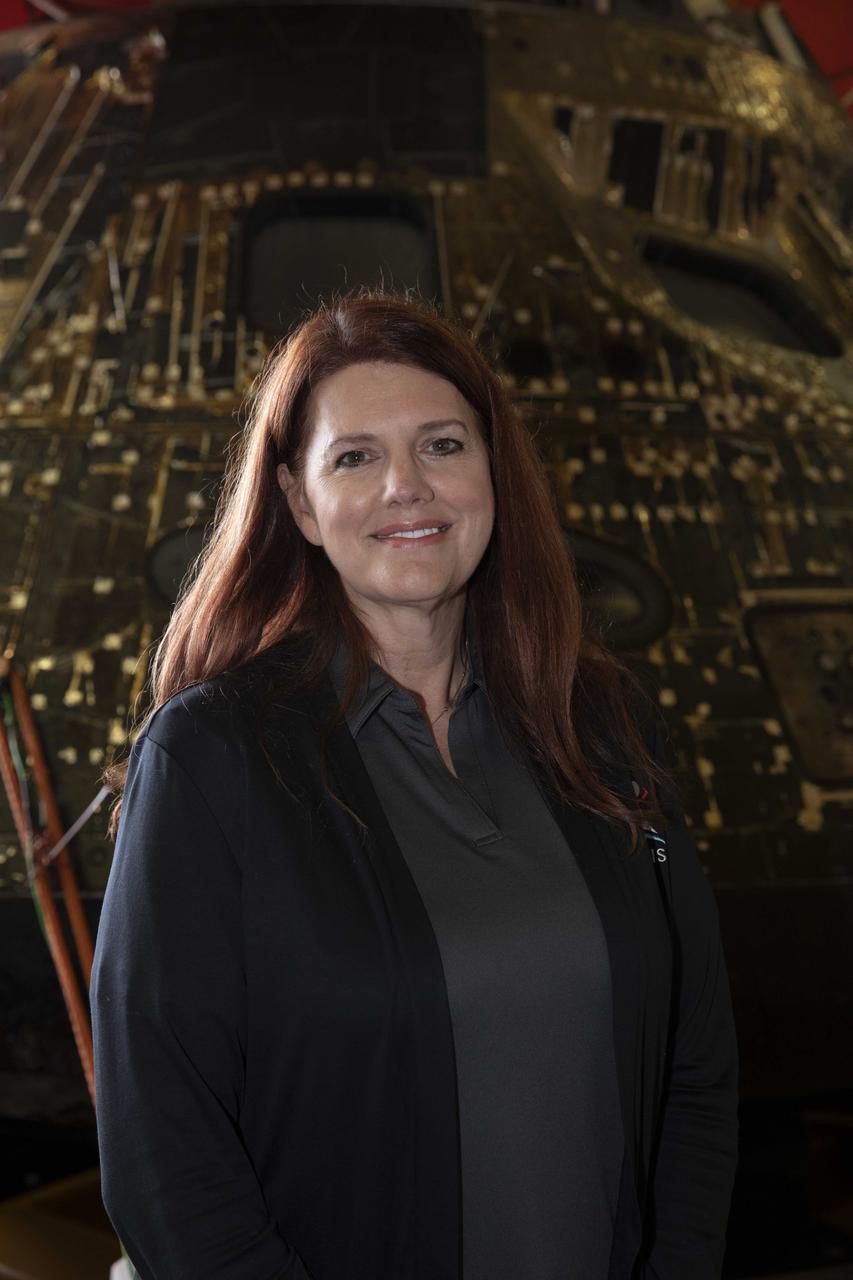
NASA Artemis Launch Director Charlie Blackwell-Thompson, with the Exploration Ground Systems program, stands near the Artemis I Orion spacecraft inside the well deck of the USS Portland at U.S. Naval Base San Diego on Dec. 13, 2022. The Orion spacecraft is secured inside the well deck after splashing down at 12:40 p.m. EST on Dec. 11, 2022. U.S. Navy divers helped recover the Orion spacecraft. NASA, the Navy and other Department of Defense partners worked together to secure the spacecraft inside the ship’s well deck approximately five hours after Orion splashed down in the Pacific Ocean off the coast of Baja, California.
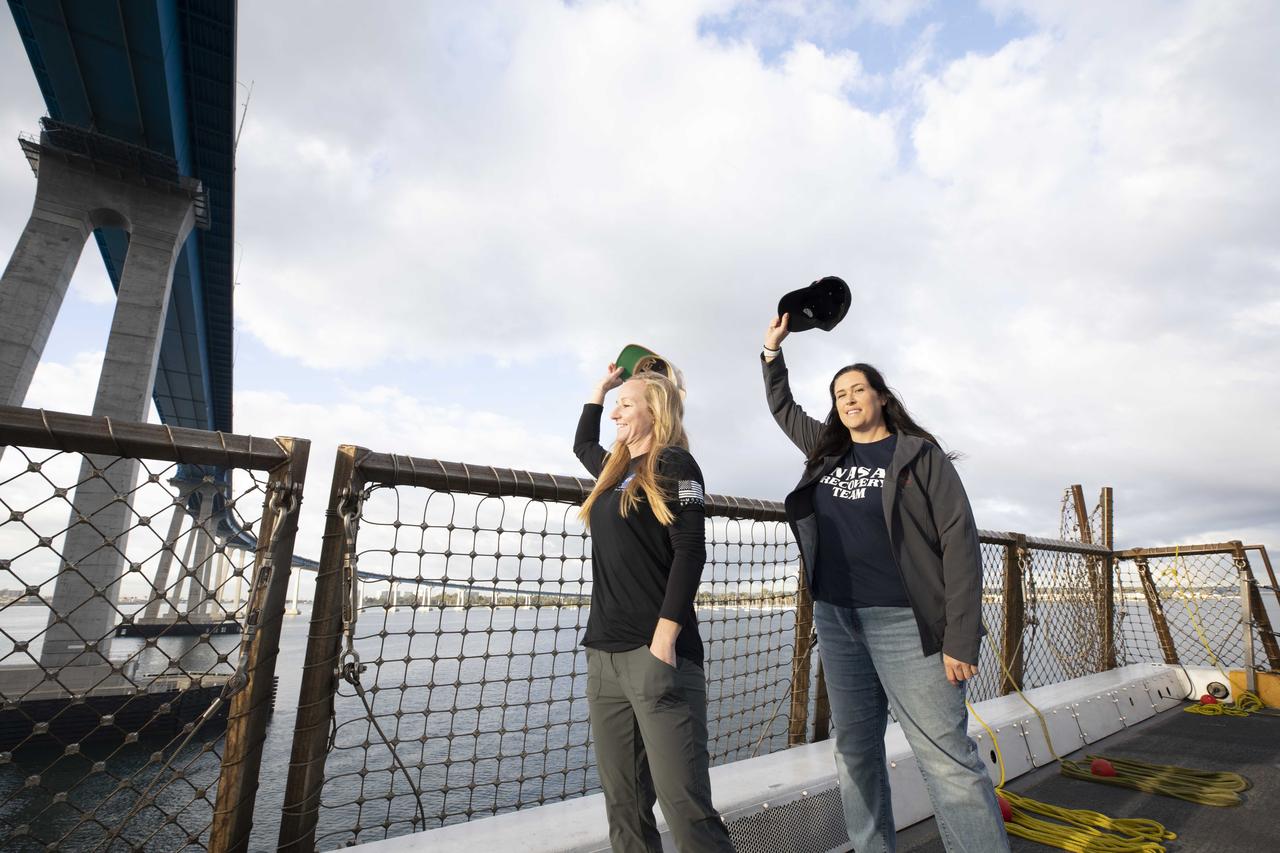
While returning to port after successfully recovering the Orion spacecraft for the Artemis I mission, NASA Artemis Recovery Director Melissa Jones, at right, and Assistant NASA Recovery Director Carla Rekucki, throw their hats in the air aboard the USS Portland as they pass under the San Diego-Coronado bridge on Dec. 13, 2022. The Artemis I Orion spacecraft is secured inside the ship’s well deck after splashing down at 12:40 p.m. EST on Dec. 11, 2022. U.S. Navy divers helped recover the Orion spacecraft. NASA, the Navy and other Department of Defense partners worked together to secure the spacecraft inside the ship’s well deck approximately five hours after Orion splashed down in the Pacific Ocean off the coast of Baja, California.
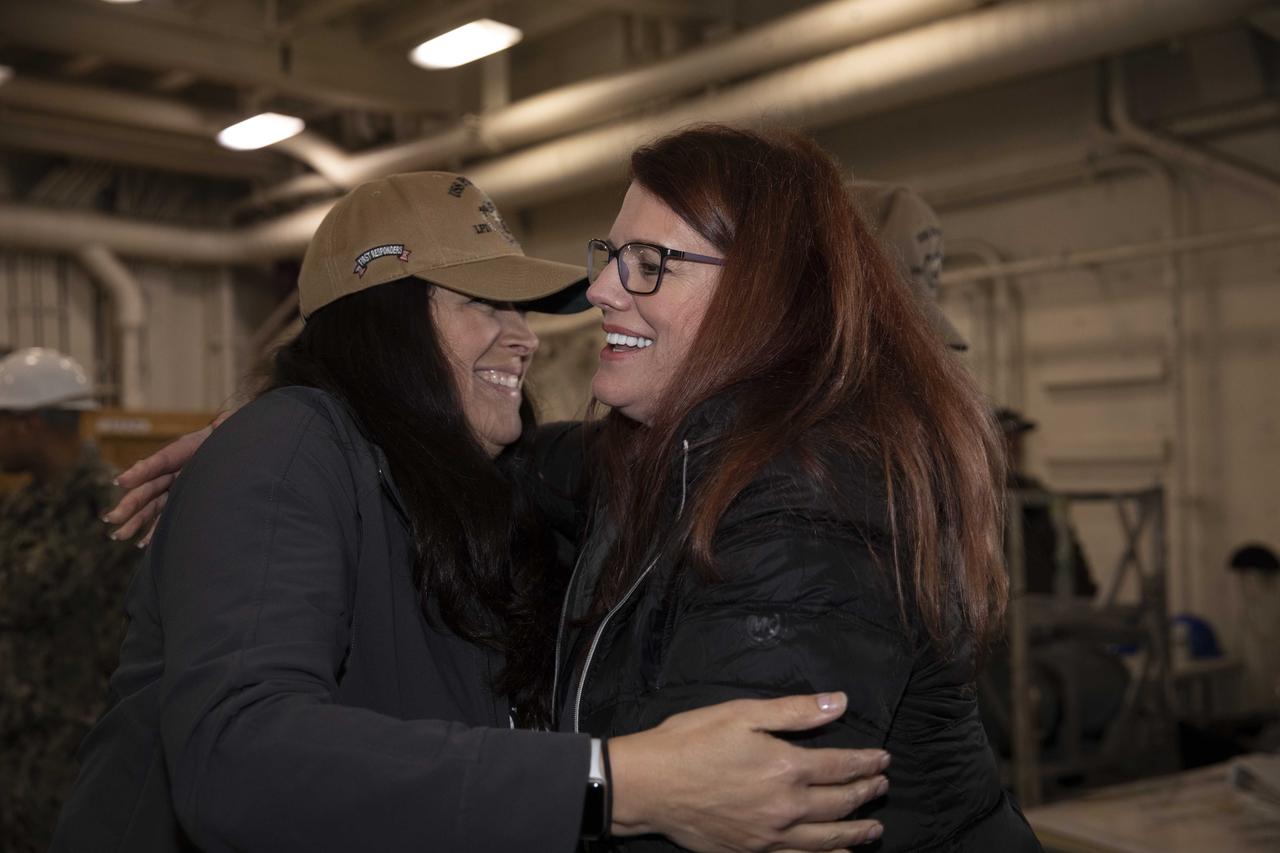
NASA Artemis Launch Director Charlie Blackwell-Thompson, at right, and Melissa Jones, NASA’s Artemis I Recovery director, both with the Exploration Ground Systems program, exchange congratulations inside the well deck of the USS Portland at U.S. Naval Base San Diego on Dec. 13, 2022. The Orion spacecraft is secured inside the well deck after splashing down at 12:40 p.m. EST on Dec. 11, 2022. U.S. Navy divers helped recover the Orion spacecraft. NASA, the Navy and other Department of Defense partners worked together to secure the spacecraft inside the ship’s well deck approximately five hours after Orion splashed down in the Pacific Ocean off the coast of Baja, California.
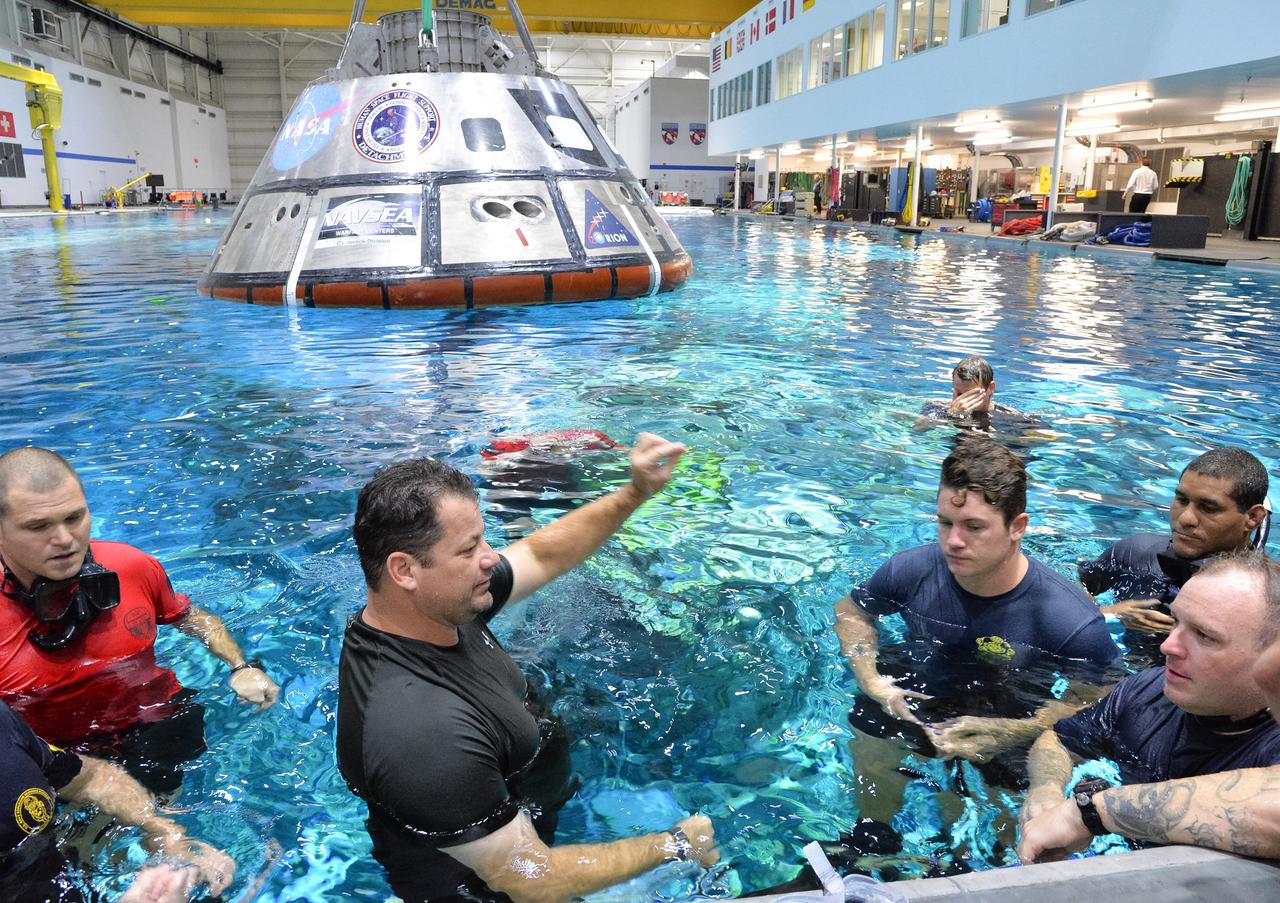
Tim Goddard, center, NASA Open Water Recovery Operations director, reviews recovery procedures with U.S. Navy divers, Air Force pararescuemen and Coast Guard rescue swimmers during training in the Neutral Buoyancy Laboratory at NASA’s Johnson Space Center in Houston. The group is practicing Orion underway recovery techniques using a test version of the Orion spacecraft. Training will help the team prepare for Underway Recovery Test 5 for Exploration Mission 1 aboard the USS San Diego in the Pacific Ocean off the coast of California in October. The Ground Systems Development and Operations Program, along with the U.S. Navy and Lockheed Martin, are preparing the recovery team, hardware and operations to support EM-1 recovery.
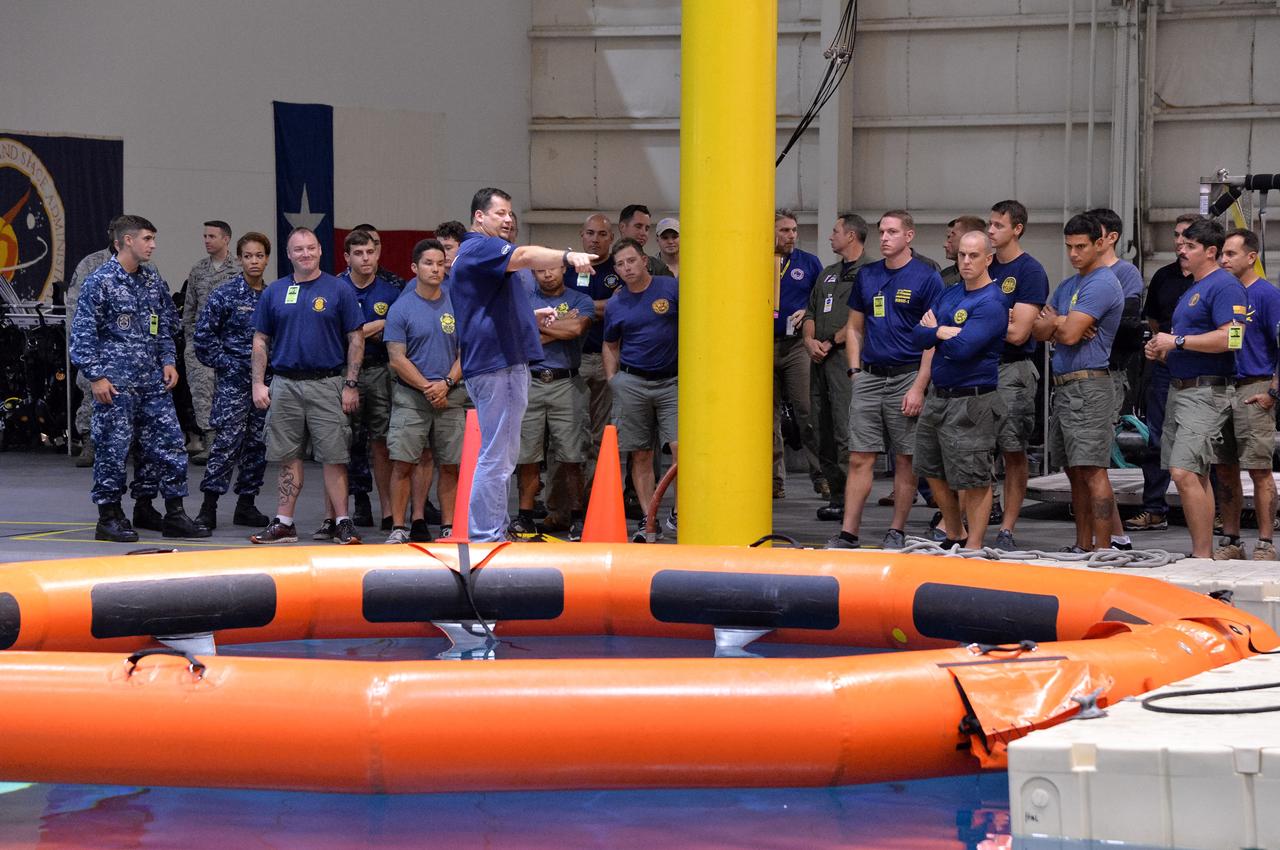
Tim Goddard, NASA Open Water Recovery Operations director, briefs U.S. Navy divers, Air Force pararescuemen and Coast Guard rescue swimmers during training in the Neutral Buoyancy Laboratory at NASA’s Johnson Space Center in Houston. The group is preparing to practice Orion underway recovery techniques using a test version of the Orion spacecraft. Training will help the team prepare for Underway Recovery Test 5 for Exploration Mission 1 aboard the USS San Diego in the Pacific Ocean off the coast of California in October. The Ground Systems Development and Operations Program, along with the U.S. Navy and Lockheed Martin, are preparing the recovery team, hardware and operations to support EM-1 recovery.
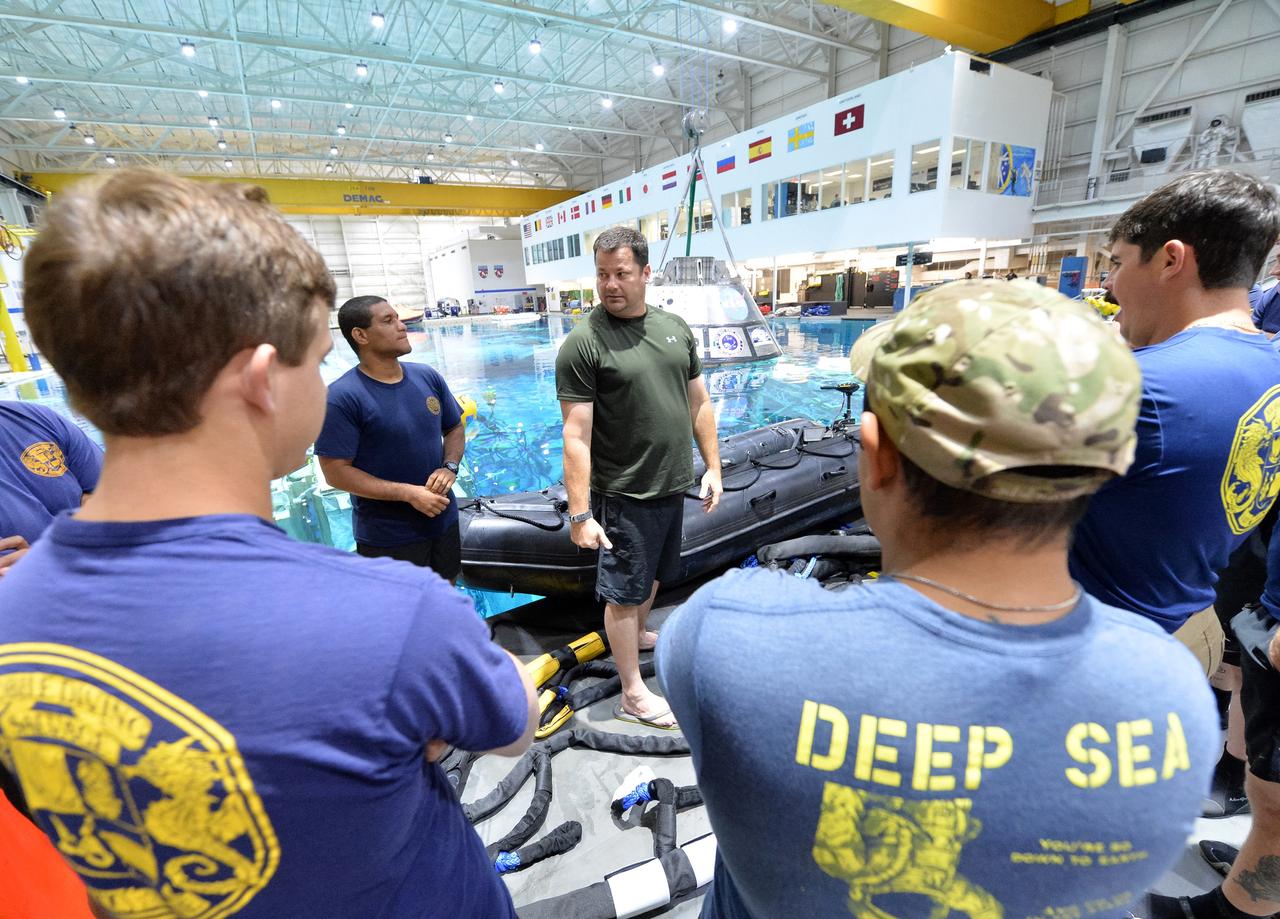
Tim Goddard, center, NASA Open Water Recovery Operations director, briefs U.S. Navy divers, Air Force pararescuemen and Coast Guard rescue swimmers during training in the Neutral Buoyancy Laboratory at NASA’s Johnson Space Center in Houston. The group will practice Orion underway recovery techniques using a test version of the Orion spacecraft. Training will help the team prepare for Underway Recovery Test 5 for Exploration Mission 1 aboard the USS San Diego in the Pacific Ocean off the coast of California in October. The Ground Systems Development and Operations Program, along with the U.S. Navy and Lockheed Martin, are preparing the recovery team, hardware and operations to support EM-1 recovery.
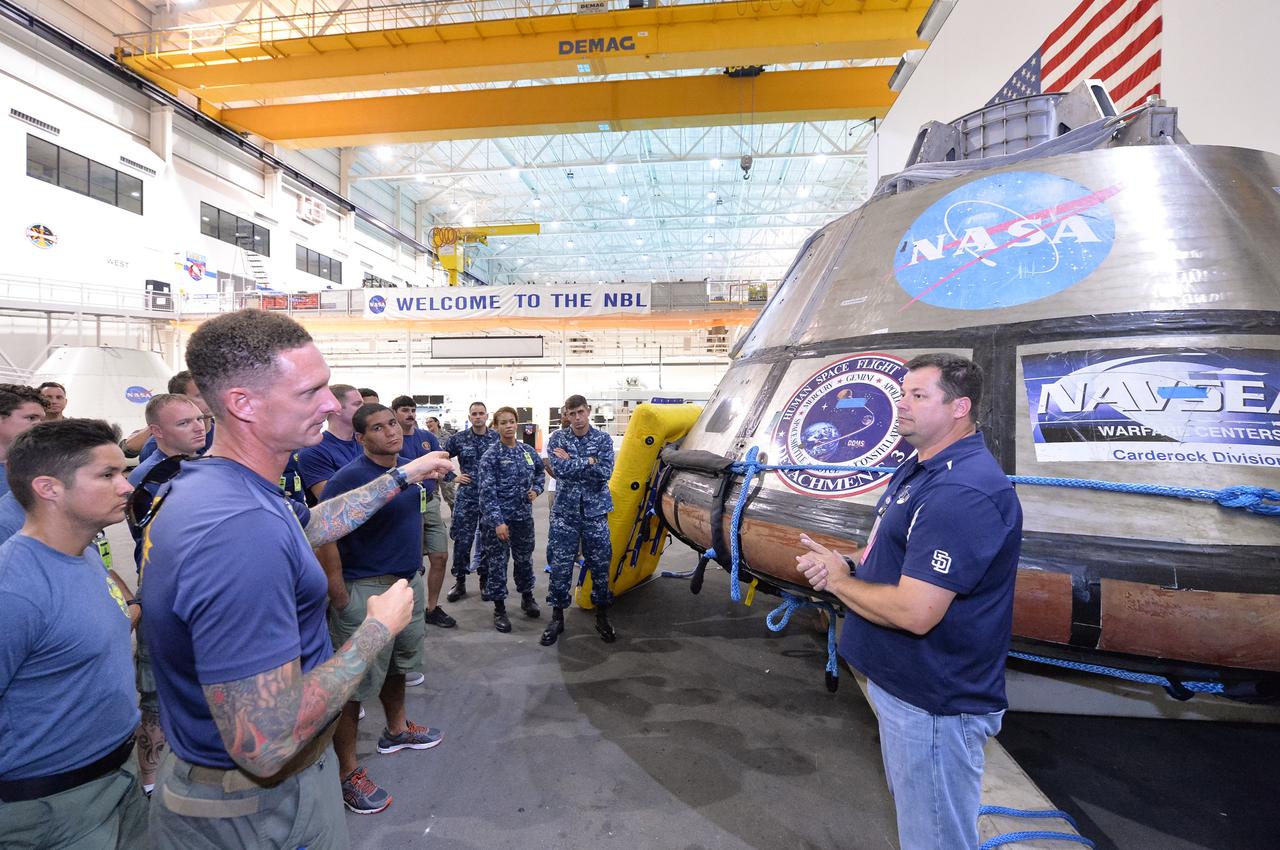
Tim Goddard, far right, NASA Open Water Recovery Operations director, briefs U.S. Navy divers, Air Force pararescuemen and Coast Guard rescue swimmers during training in the Neutral Buoyancy Laboratory at NASA’s Johnson Space Center in Houston. The group is preparing to practice Orion underway recovery techniques using a test version of the Orion spacecraft. Training will help the team prepare for Underway Recovery Test 5 for Exploration Mission 1 aboard the USS San Diego in the Pacific Ocean off the coast of California in October. The Ground Systems Development and Operations Program, along with the U.S. Navy and Lockheed Martin, are preparing the recovery team, hardware and operations to support EM-1 recovery.
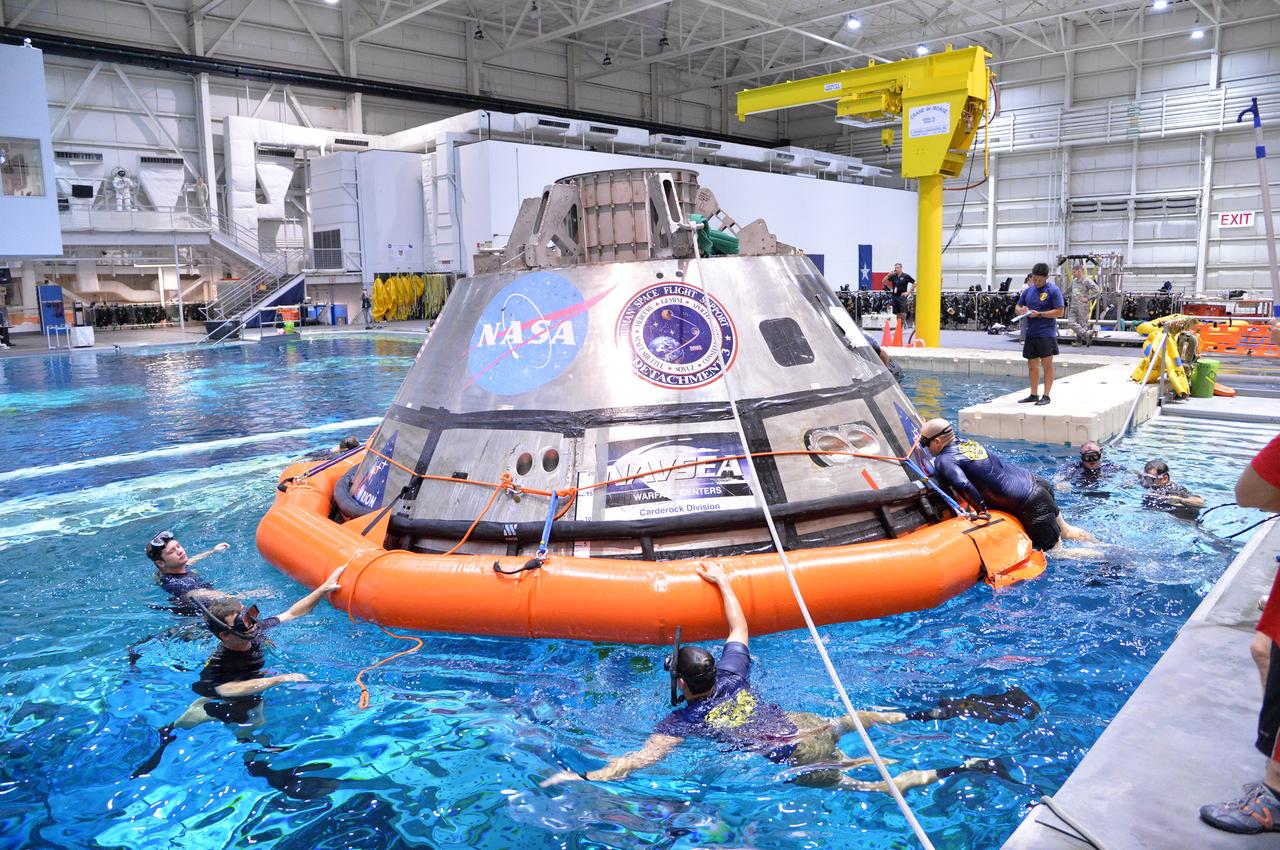
U.S. Navy divers, Air Force pararescuemen and Coast Guard rescue swimmers practice Orion recovery techniques at the Neutral Buoyancy Laboratory (NBL) at the agency’s Johnson Space Center in Houston. The recovery team is practicing underway recovery techniques using a test version of the Orion spacecraft. Training will help the team prepare for Underway Recovery Test 5 for Exploration Mission 1 aboard the USS San Diego in the Pacific Ocean off the coast of California in October. The Ground Systems Development and Operations Program, along with the U.S. Navy and Lockheed Martin, are preparing the recovery team, hardware and operations to support EM-1 recovery.
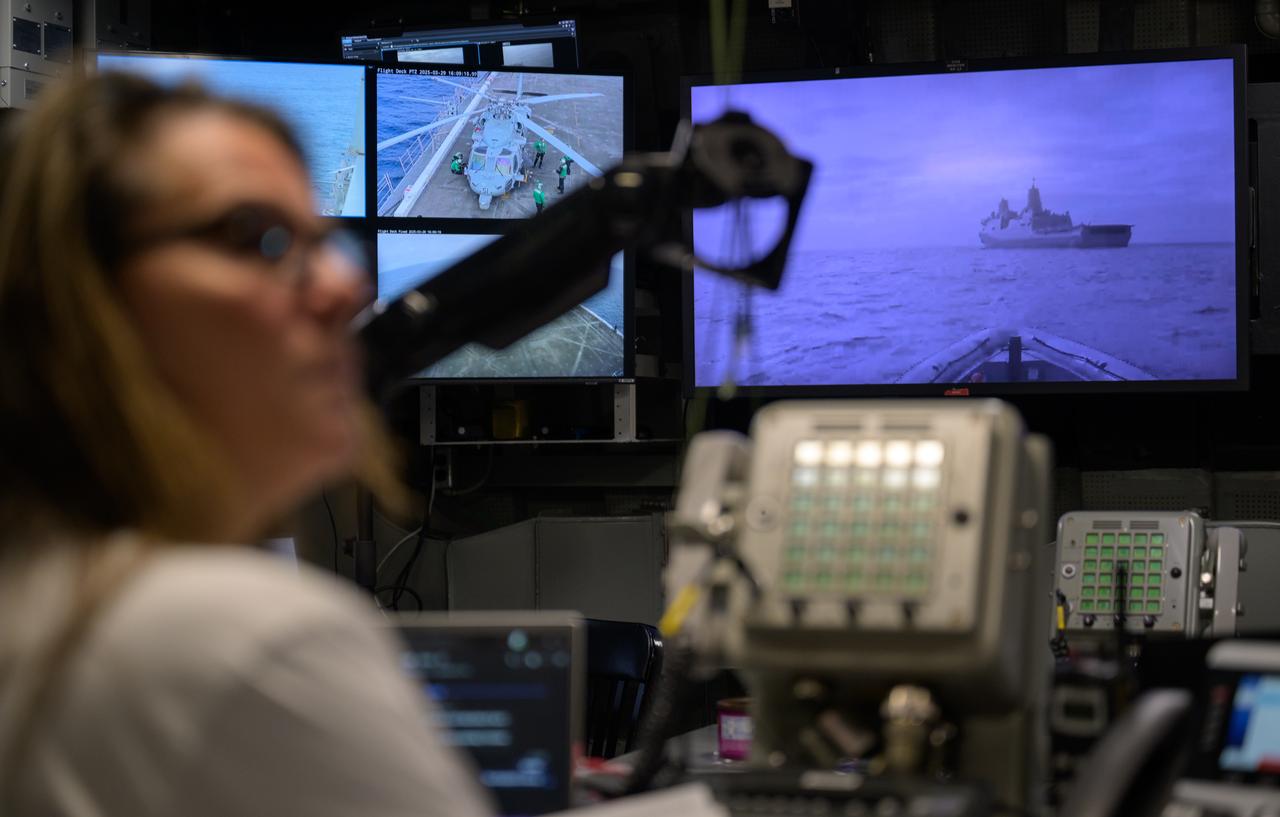
Lisa Seiler, Artemis Landing and Recovery deputy director, works inside the Landing Force Operations Center onboard USS Somerset as they practice Artemis recovery operations during Underway Recovery Test-12 off the coast of California, Saturday, March 29, 2025. During the test, NASA and Department of Defense teams are practicing to ensure recovery procedures are validated as NASA plans to send Artemis II around the Moon and splashdown in the Pacific Ocean. Photo Credit: (NASA/Bill Ingalls)
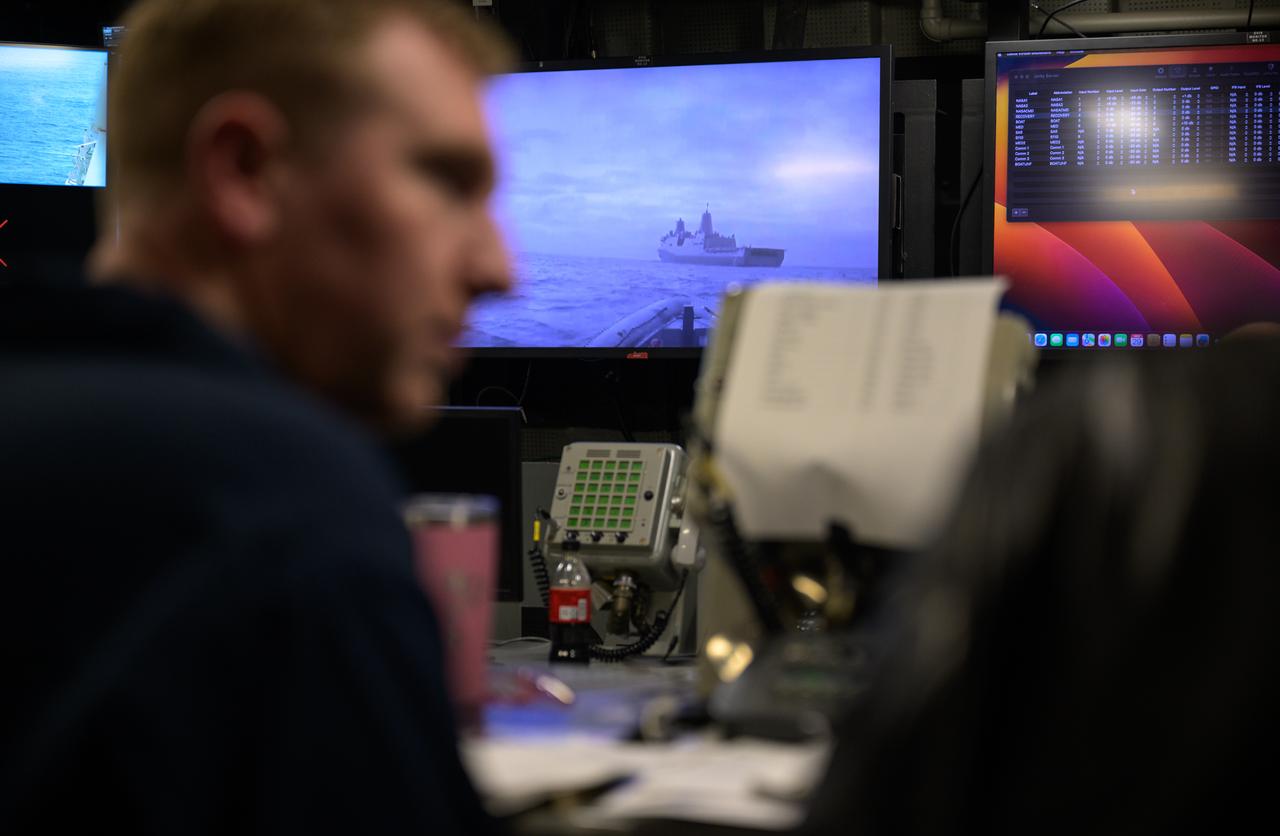
Members of the NASA and Department of Defense recovery team work inside the Landing Force Operations Center onboard USS Somerset as they practice Artemis recovery operations during Underway Recovery Test-12 off the coast of California, Saturday, March 29, 2025. During the test, NASA and Department of Defense teams are practicing to ensure recovery procedures are validated as NASA plans to send Artemis II around the Moon and splashdown in the Pacific Ocean. Photo Credit: (NASA/Bill Ingalls)
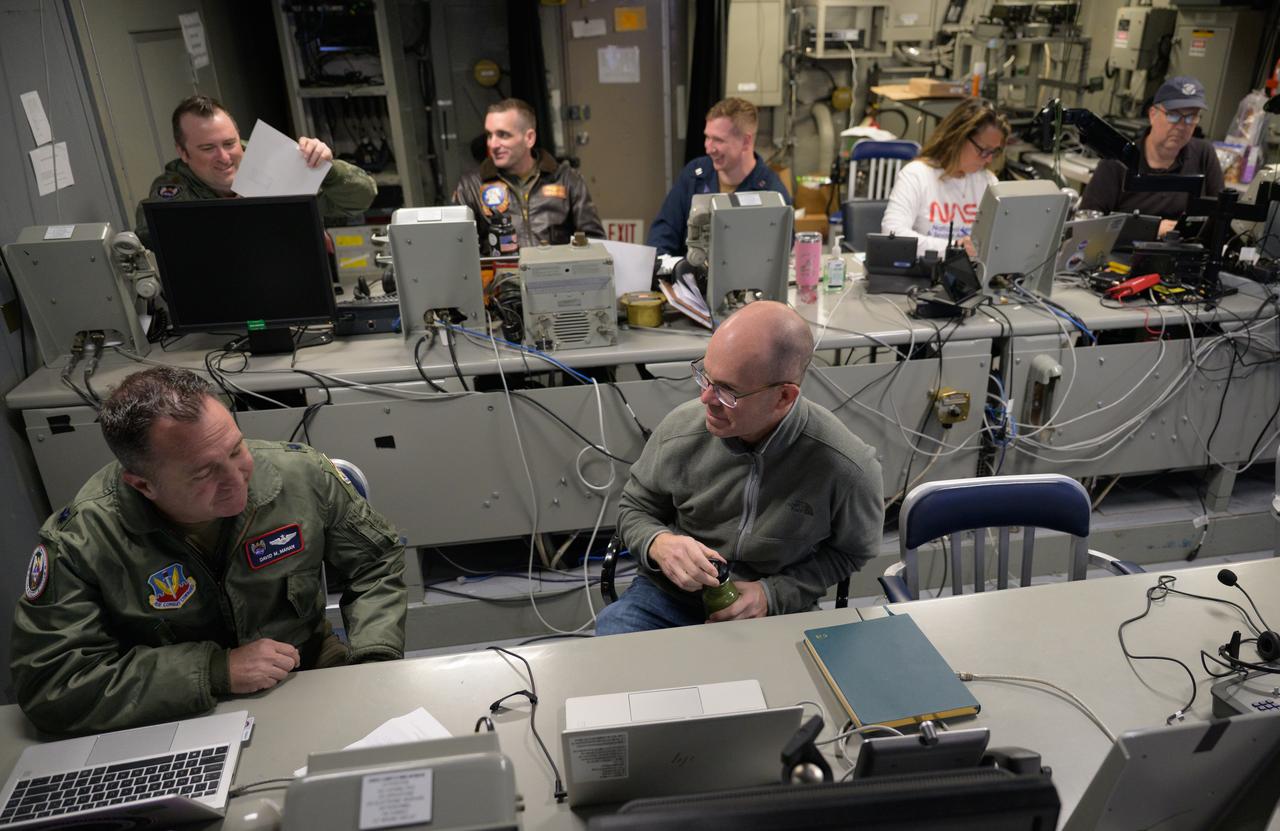
Members of the NASA and Department of Defense recovery team work inside the Landing Force Operations Center onboard USS Somerset as they practice Artemis recovery operations during Underway Recovery Test-12 off the coast of California, Saturday, March 29, 2025. During the test, NASA and Department of Defense teams are practicing to ensure recovery procedures are validated as NASA plans to send Artemis II around the Moon and splashdown in the Pacific Ocean. Photo Credit: (NASA/Bill Ingalls)
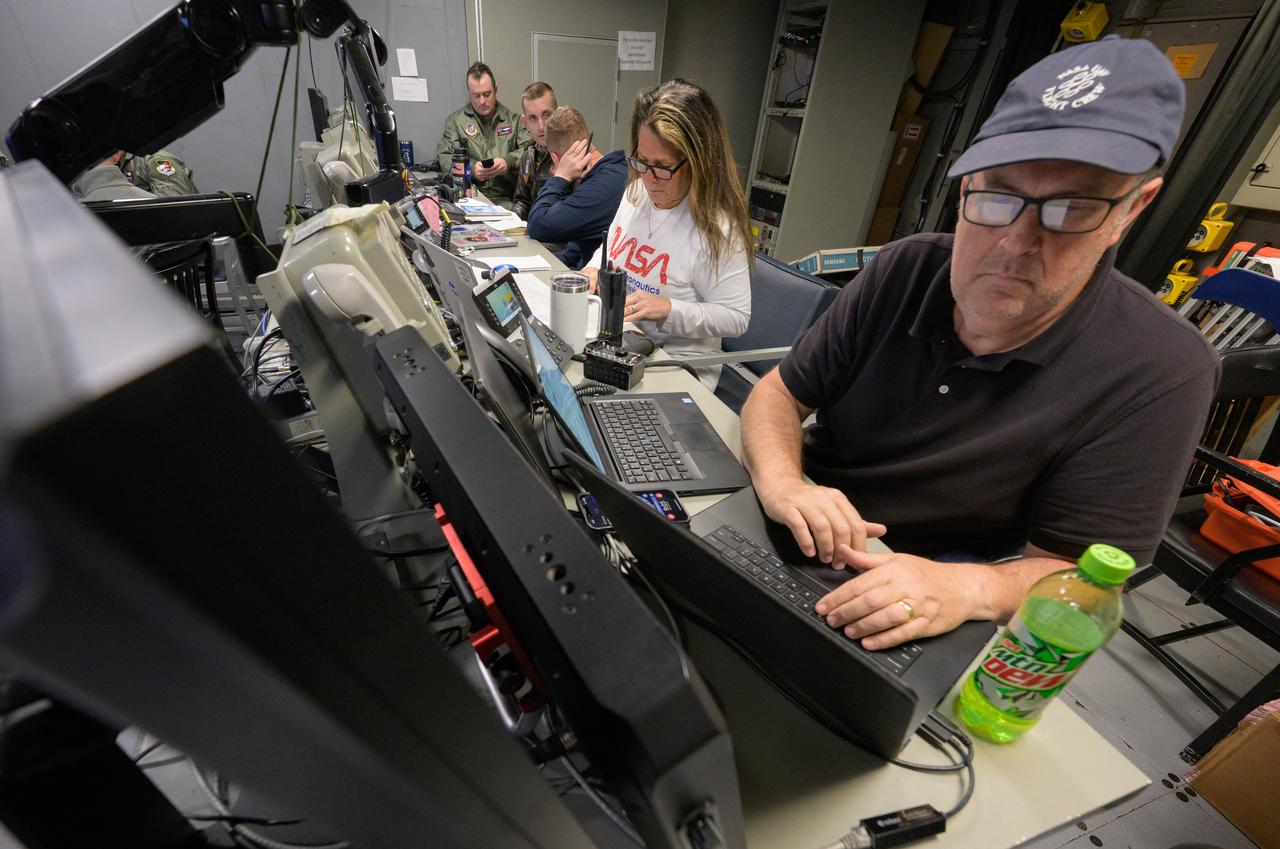
Members of the NASA and Department of Defense recovery team work inside the Landing Force Operations Center onboard USS Somerset as they practice Artemis recovery operations during Underway Recovery Test-12 off the coast of California, Saturday, March 29, 2025. During the test, NASA and Department of Defense teams are practicing to ensure recovery procedures are validated as NASA plans to send Artemis II around the Moon and splashdown in the Pacific Ocean. Photo Credit: (NASA/Bill Ingalls)
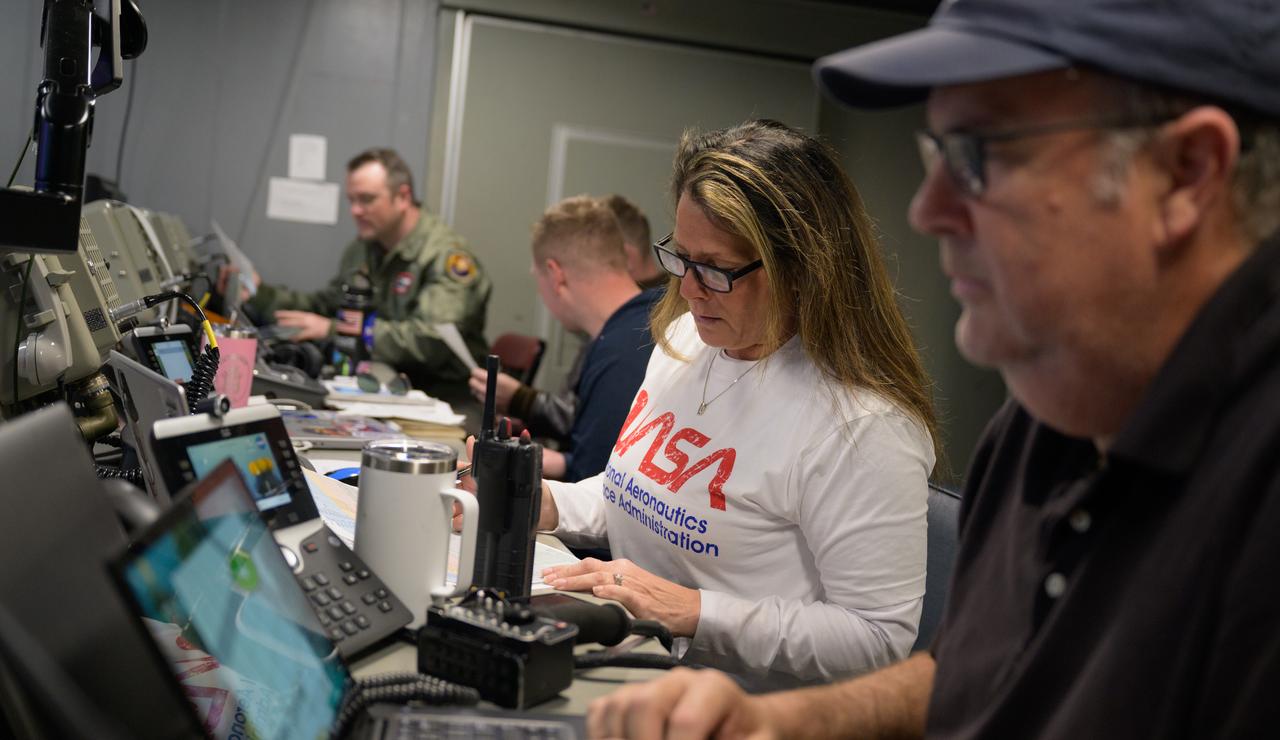
Lisa Seiler, Artemis Landing and Recovery deputy director, works inside the Landing Force Operations Center onboard USS Somerset as they practice Artemis recovery operations during Underway Recovery Test-12 off the coast of California, Saturday, March 29, 2025. During the test, NASA and Department of Defense teams are practicing to ensure recovery procedures are validated as NASA plans to send Artemis II around the Moon and splashdown in the Pacific Ocean. Photo Credit: (NASA/Bill Ingalls)
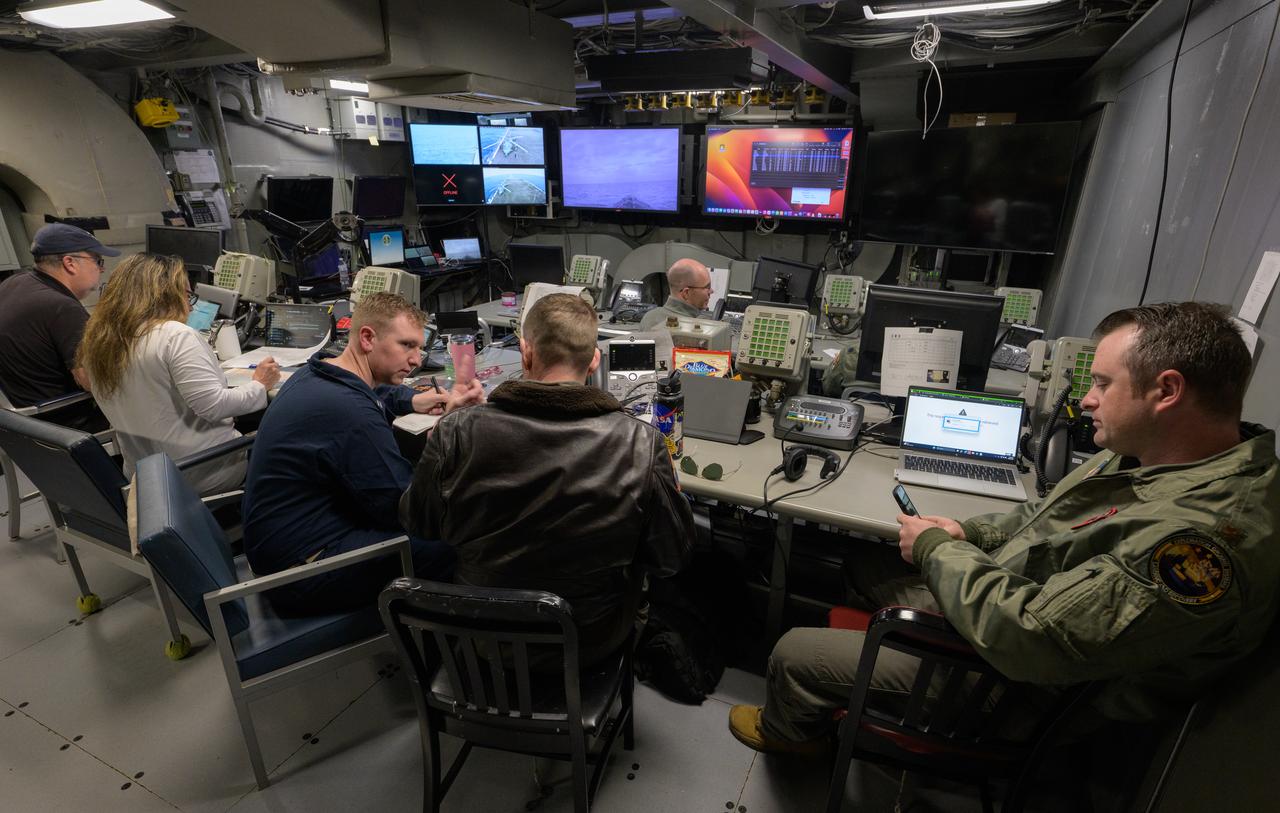
Members of the NASA and Department of Defense recovery team work inside the Landing Force Operations Center onboard USS Somerset as they practice Artemis recovery operations during Underway Recovery Test-12 off the coast of California, Saturday, March 29, 2025. During the test, NASA and Department of Defense teams are practicing to ensure recovery procedures are validated as NASA plans to send Artemis II around the Moon and splashdown in the Pacific Ocean. Photo Credit: (NASA/Bill Ingalls)
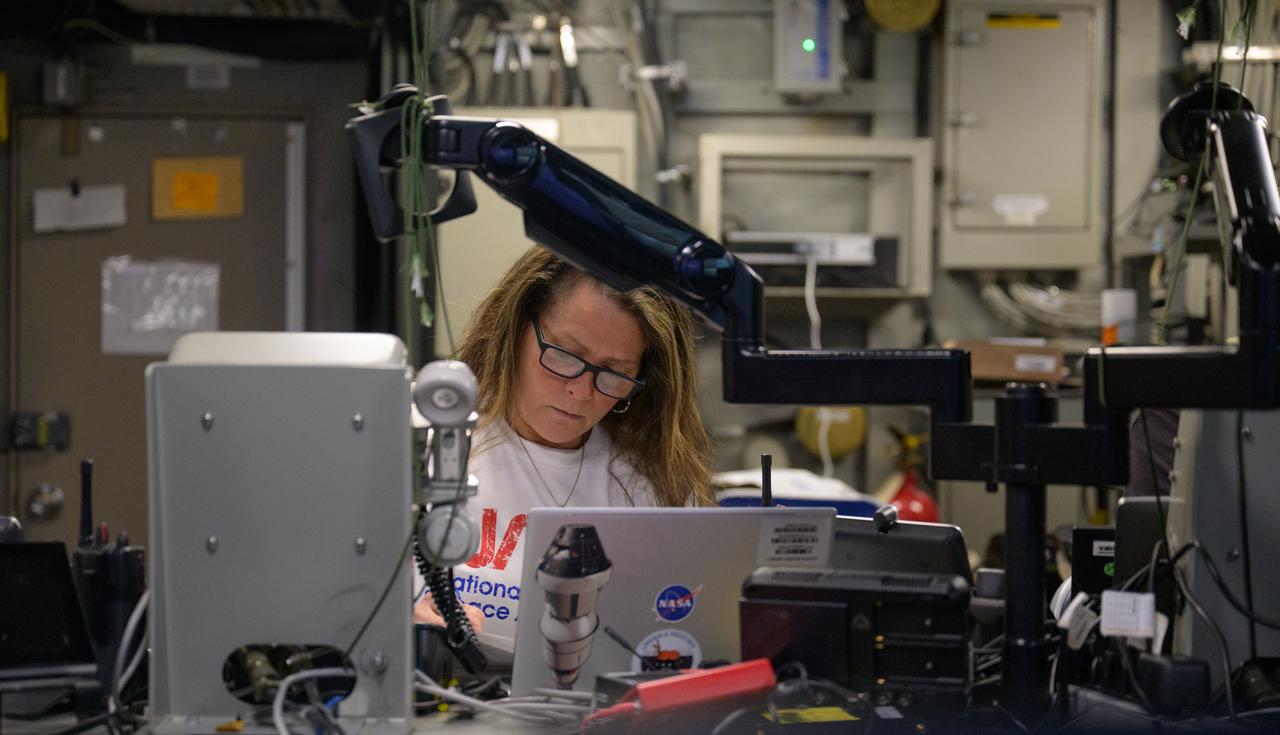
Lisa Seiler, Artemis Landing and Recovery deputy director, works inside the Landing Force Operations Center onboard USS Somerset as they practice Artemis recovery operations during Underway Recovery Test-12 off the coast of California, Saturday, March 29, 2025. During the test, NASA and Department of Defense teams are practicing to ensure recovery procedures are validated as NASA plans to send Artemis II around the Moon and splashdown in the Pacific Ocean. Photo Credit: (NASA/Bill Ingalls)
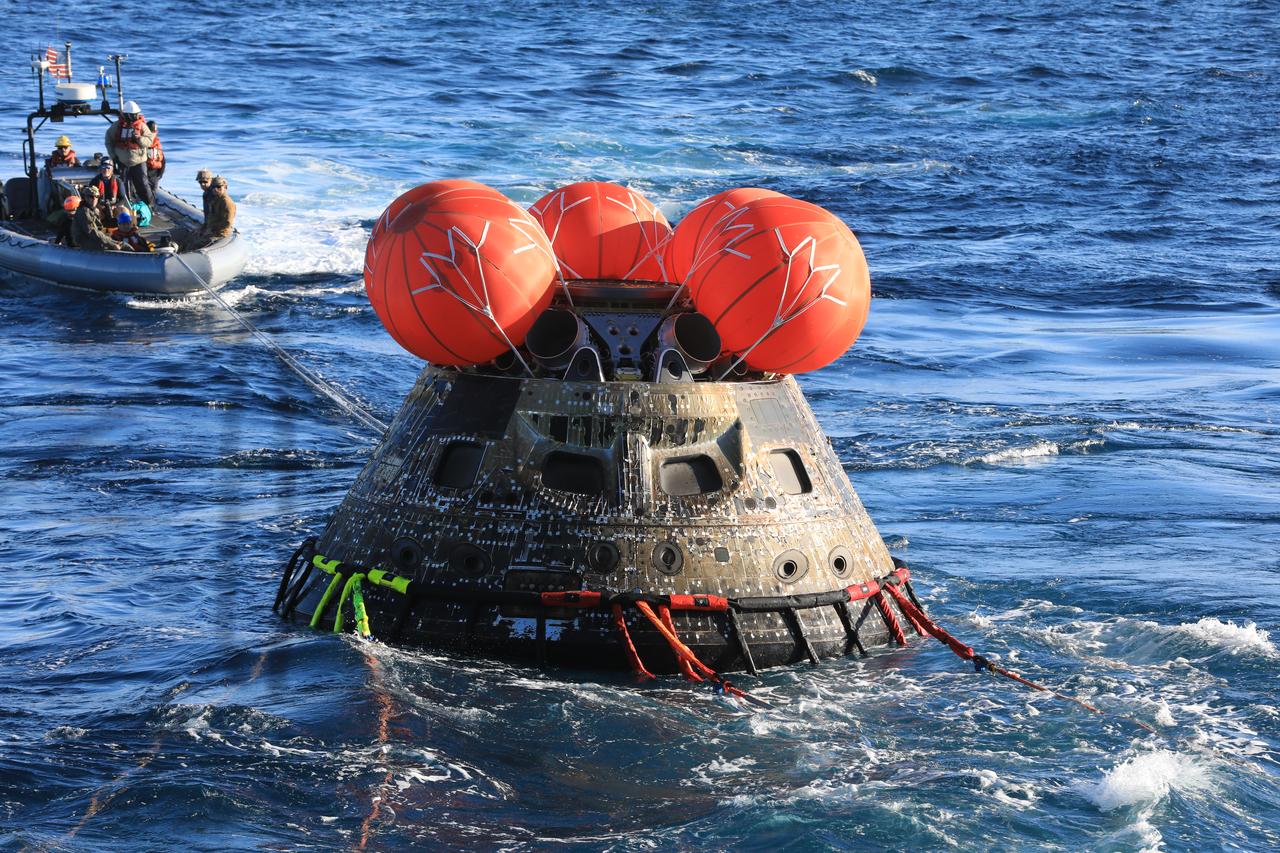
NASA’s Orion spacecraft for the Artemis I mission was successfully recovered inside the well deck of the USS Portland on Dec. 11, 2022 off the coast of Baja California. After launching atop the Space Launch System rocket on Nov. 16, 2022 from the agency’s Kennedy Space Center in Florida, Orion spent 25.5 days in space before returning to Earth, completing the Artemis I mission.
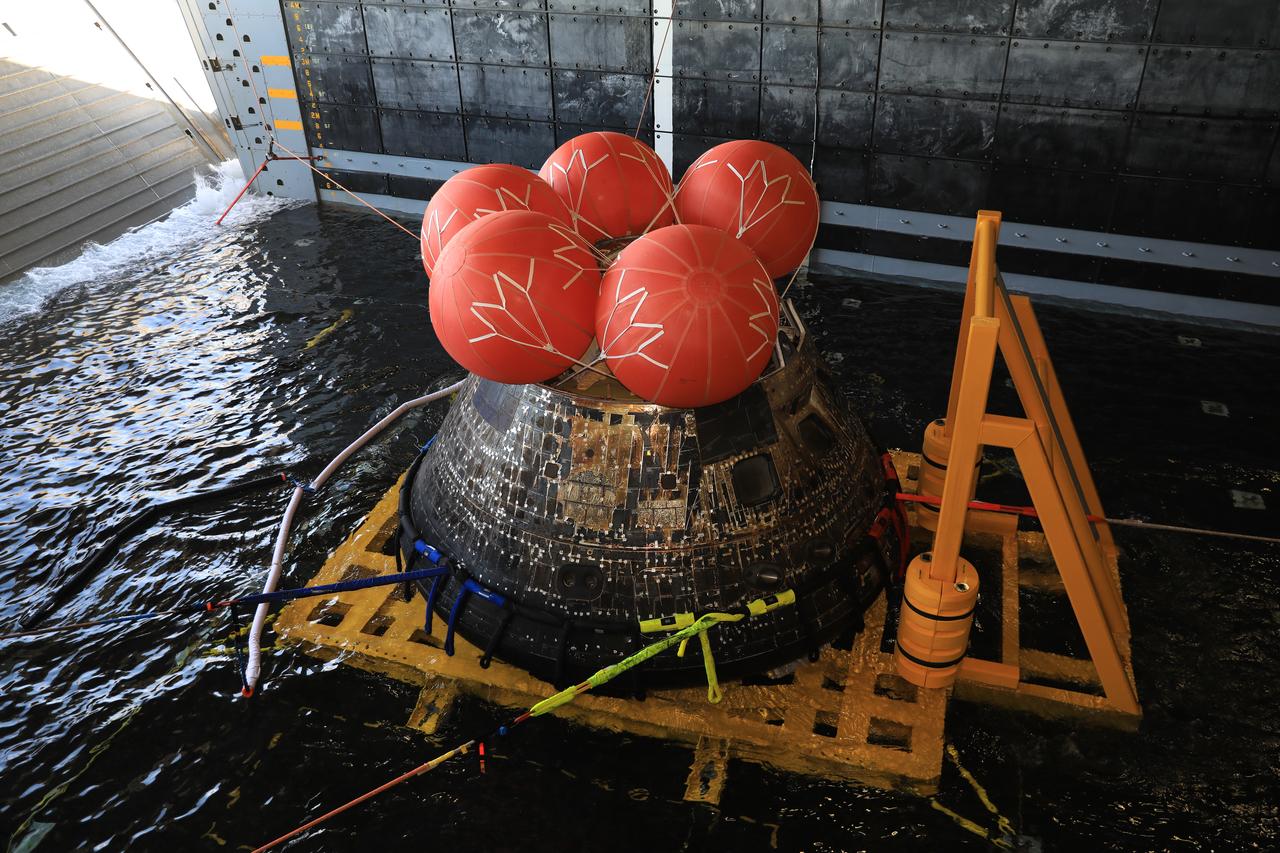
NASA’s Orion spacecraft for the Artemis I mission was successfully recovered inside the well deck of the USS Portland on Dec. 11, 2022 off the coast of Baja California. After launching atop the Space Launch System rocket on Nov. 16, 2022 from the agency’s Kennedy Space Center in Florida, Orion spent 25.5 days in space before returning to Earth, completing the Artemis I mission.
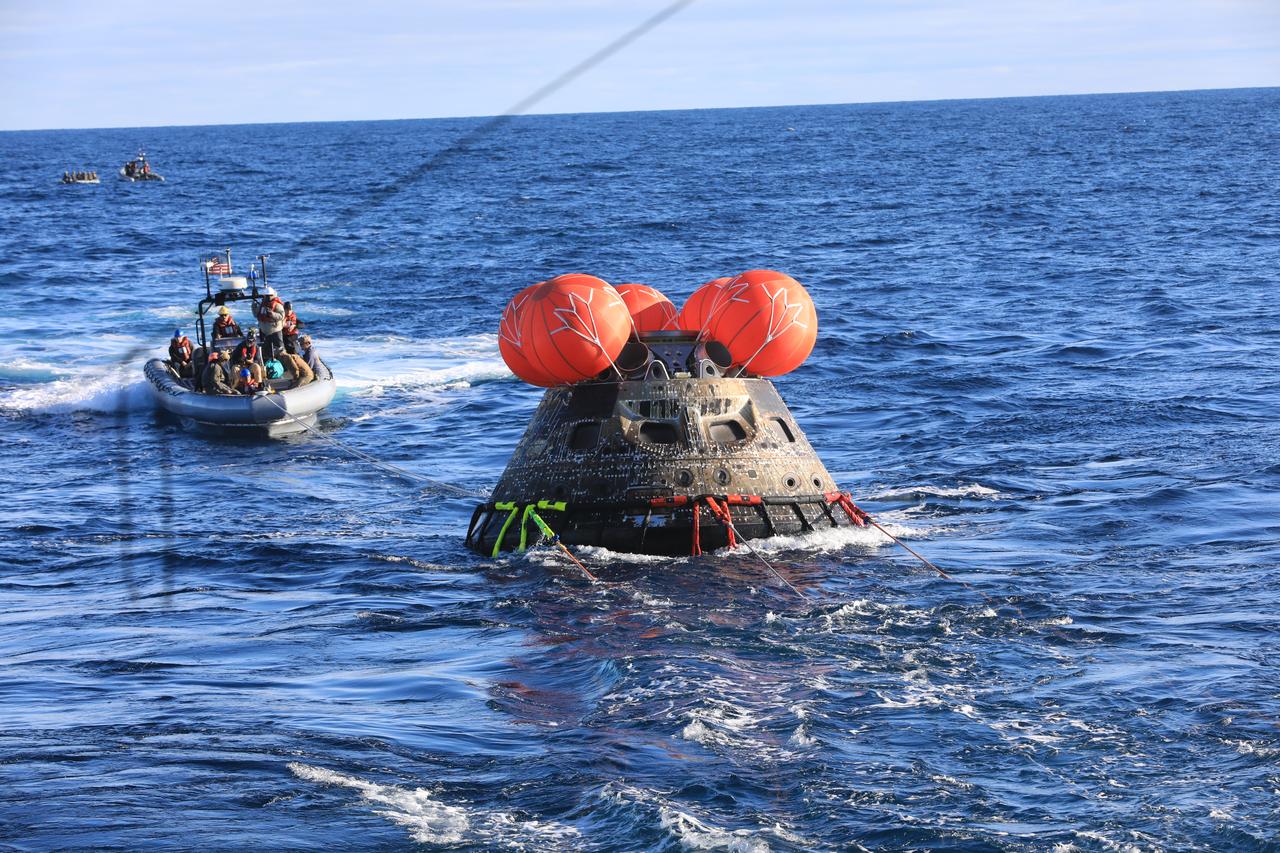
NASA’s Orion spacecraft for the Artemis I mission was successfully recovered inside the well deck of the USS Portland on Dec. 11, 2022 off the coast of Baja California. After launching atop the Space Launch System rocket on Nov. 16, 2022 from the agency’s Kennedy Space Center in Florida, Orion spent 25.5 days in space before returning to Earth, completing the Artemis I mission.
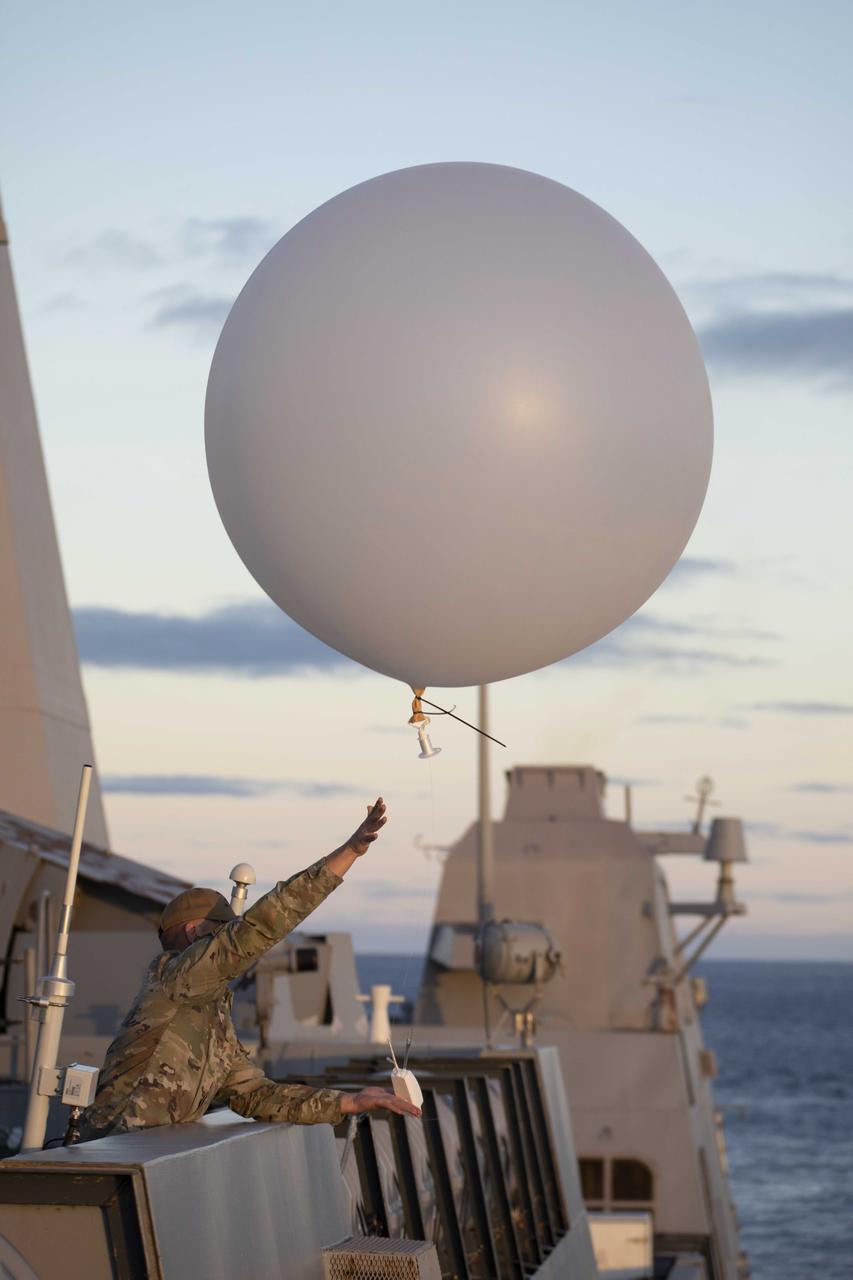
A member of the 45th Weather Squadron out of Patrick Space Force Base releases a weather balloon from the deck of USS Portland prior to splashdown of the NASA’s Orion spacecraft for the Artemis I mission on Dec. 11, 2022.
NASA’s Orion spacecraft for the Artemis I mission was successfully recovered inside the well deck of the USS Portland on Dec. 11, 2022 off the coast of Baja California. After launching atop the Space Launch System rocket on Nov. 16, 2022 from the agency’s Kennedy Space Center in Florida, Orion spent 25.5 days in space before returning to Earth, completing the Artemis I mission.
NASA’s Orion spacecraft for the Artemis I mission was successfully recovered inside the well deck of the USS Portland on Dec. 11, 2022 off the coast of Baja California. After launching atop the Space Launch System rocket on Nov. 16, 2022 from the agency’s Kennedy Space Center in Florida, Orion spent 25.5 days in space before returning to Earth, completing the Artemis I mission.
NASA’s Orion spacecraft for the Artemis I mission was successfully recovered inside the well deck of the USS Portland on Dec. 11, 2022 off the coast of Baja California. After launching atop the Space Launch System rocket on Nov. 16, 2022 from the agency’s Kennedy Space Center in Florida, Orion spent 25.5 days in space before returning to Earth, completing the Artemis I mission.
NASA’s Orion spacecraft for the Artemis I mission was successfully recovered inside the well deck of the USS Portland on Dec. 11, 2022 off the coast of Baja California. After launching atop the Space Launch System rocket on Nov. 16, 2022 from the agency’s Kennedy Space Center in Florida, Orion spent 25.5 days in space before returning to Earth, completing the Artemis I mission.
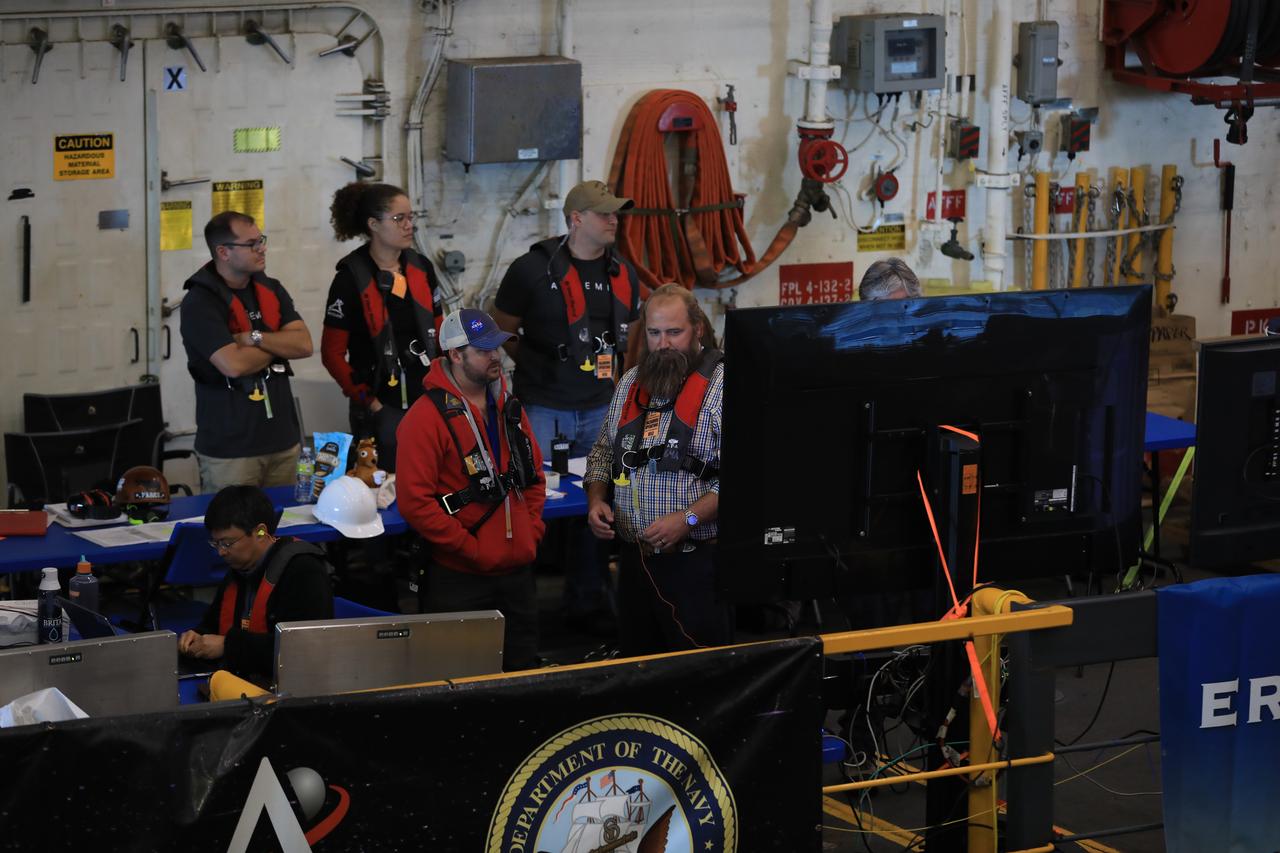
Members of NASA's Landing and Recovery Team, the U.S. Navy and the Department of Defense help bring NASA's Orion spacecraft inside the well deck of the USS Portland on Dec. 11, 2022 2022 off the coast of Baja California. After launching atop the Space Launch System rocket on Nov. 16, 2022 from the agency’s Kennedy Space Center in Florida, Orion spent 25.5 days in space before returning to Earth, completing the Artemis I mission.
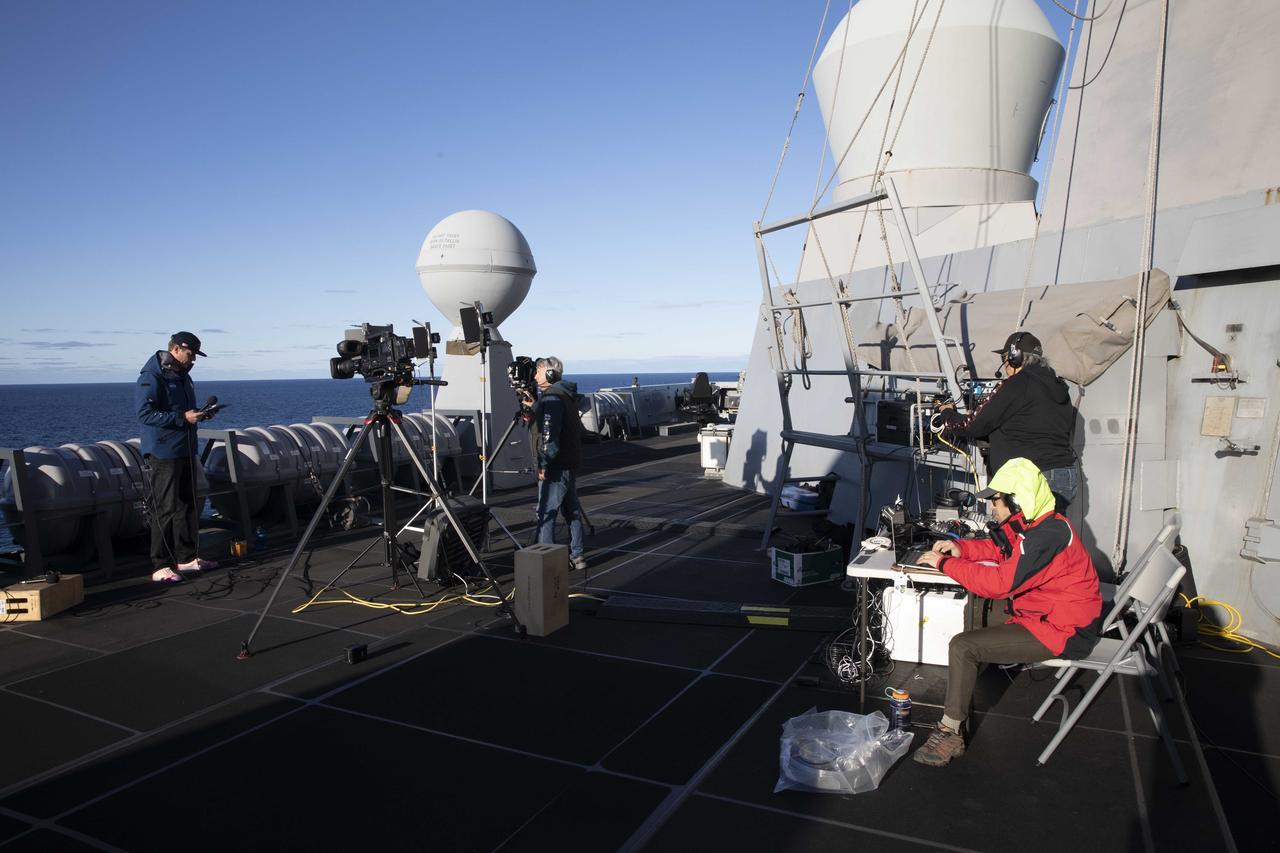
Members of Kennedy Space Center’s public affairs team prepare for live coverage of NASA’s Orion spacecraft’s splashdown for the Artemis I mission while aboard USS Portland. Orion safely splashed down in the Pacific Ocean on Dec. 11, 2022, completing a 25.5 day mission around the Moon and back.
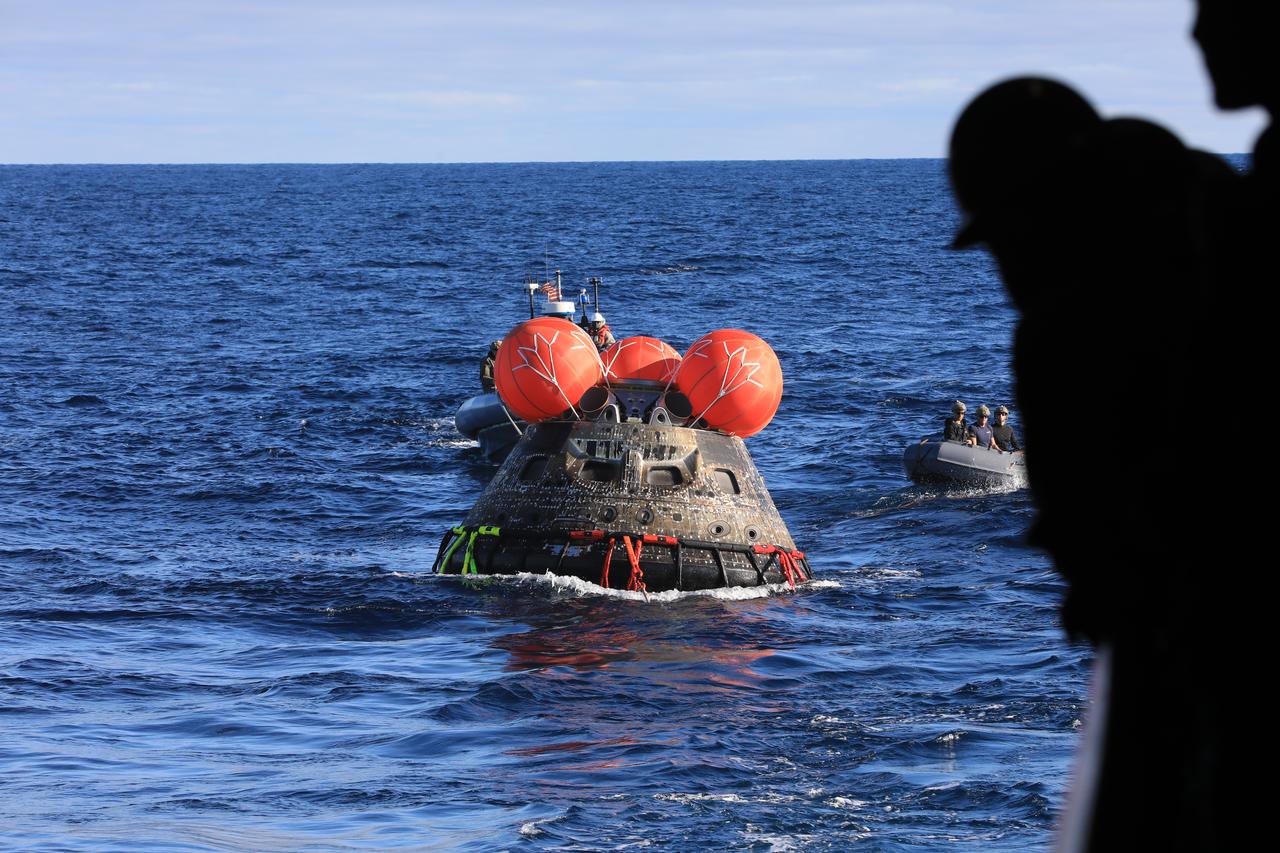
NASA’s Orion spacecraft for the Artemis I mission was successfully recovered inside the well deck of the USS Portland on Dec. 11, 2022 off the coast of Baja California. After launching atop the Space Launch System rocket on Nov. 16, 2022 from the agency’s Kennedy Space Center in Florida, Orion spent 25.5 days in space before returning to Earth, completing the Artemis I mission.
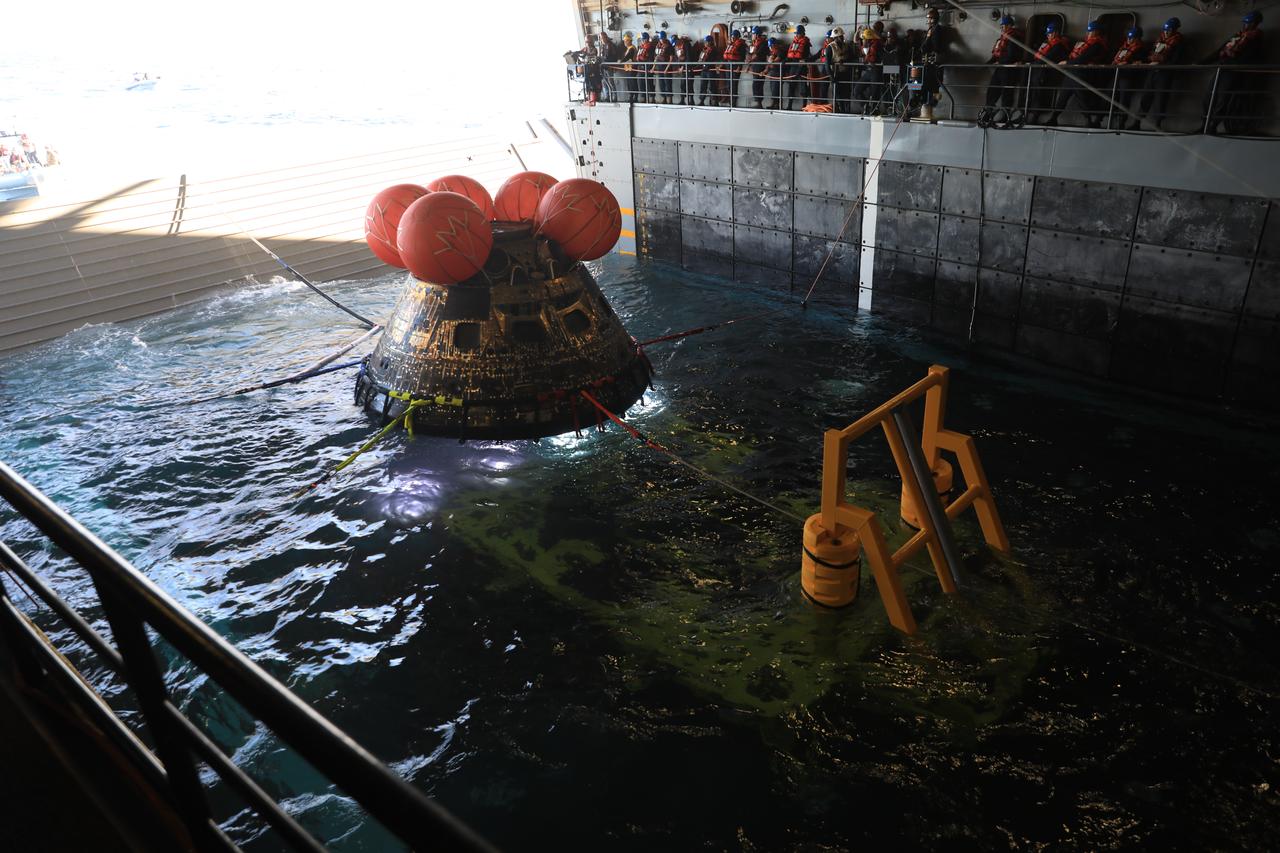
NASA’s Orion spacecraft for the Artemis I mission was successfully recovered inside the well deck of the USS Portland on Dec. 11, 2022 off the coast of Baja California. After launching atop the Space Launch System rocket on Nov. 16, 2022 from the agency’s Kennedy Space Center in Florida, Orion spent 25.5 days in space before returning to Earth, completing the Artemis I mission.
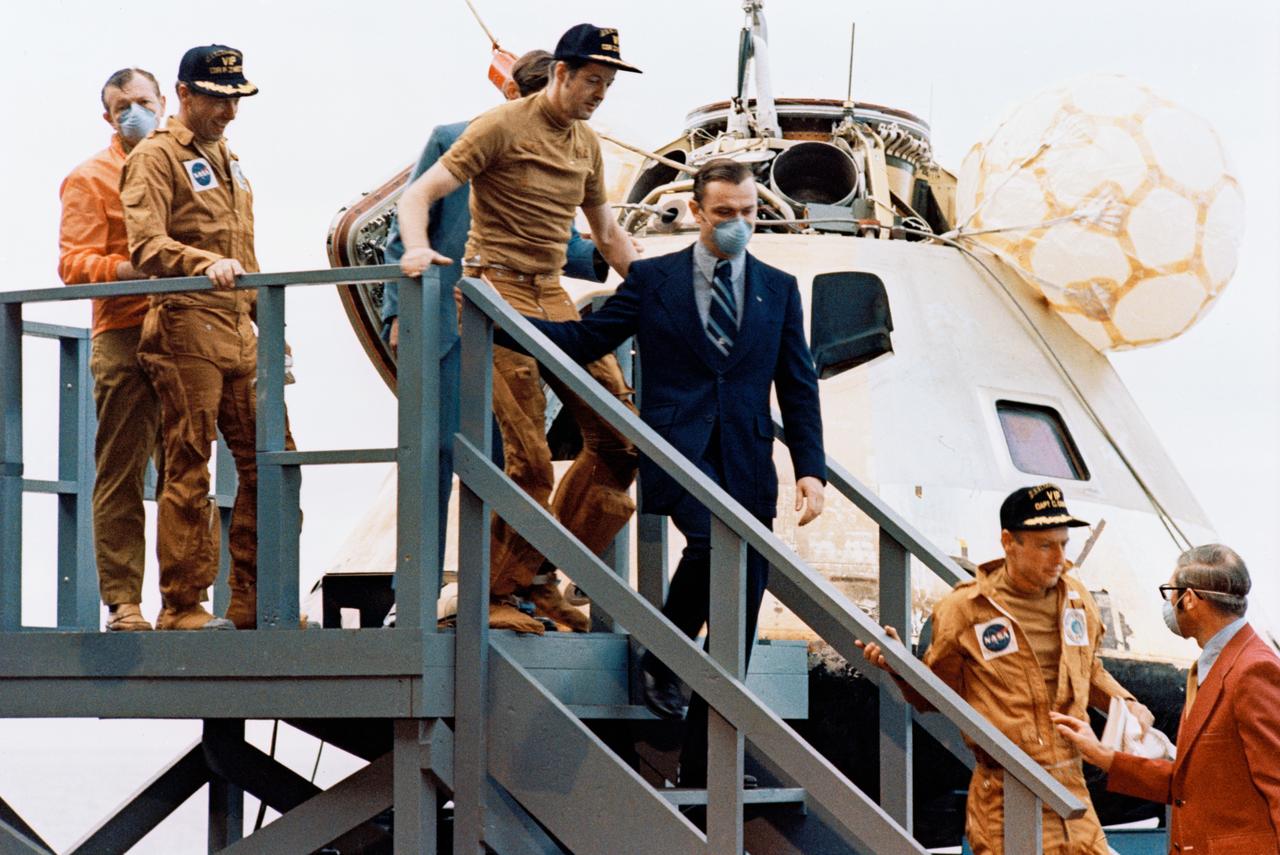
S73-29141 (22 June 1973) --- The three Skylab 2 crewmen arrive on the deck of the prime recovery ship, USS Ticonderoga, following the successful splashdown of the Skylab 2 Command Module about 835 miles southwest of San Diego, California. Leading down the steps is astronaut Charles Conrad Jr., commander, followed by scientist-astronaut Joseph P. Kerwin, science pilot, and astronaut Paul J. Weitz, pilot. Recovery and medical personnel walk down the steps with the astronauts. The crewmen remained inside the spacecraft (seen in background) until it was hoisted aboard the recovery ship. Conrad, Kerwin and Weitz had just completed a 28-day stay with the Skylab 1 space station in Earth orbit conducting numerous medical, scientific and technological experiments. Photo credit: NASA
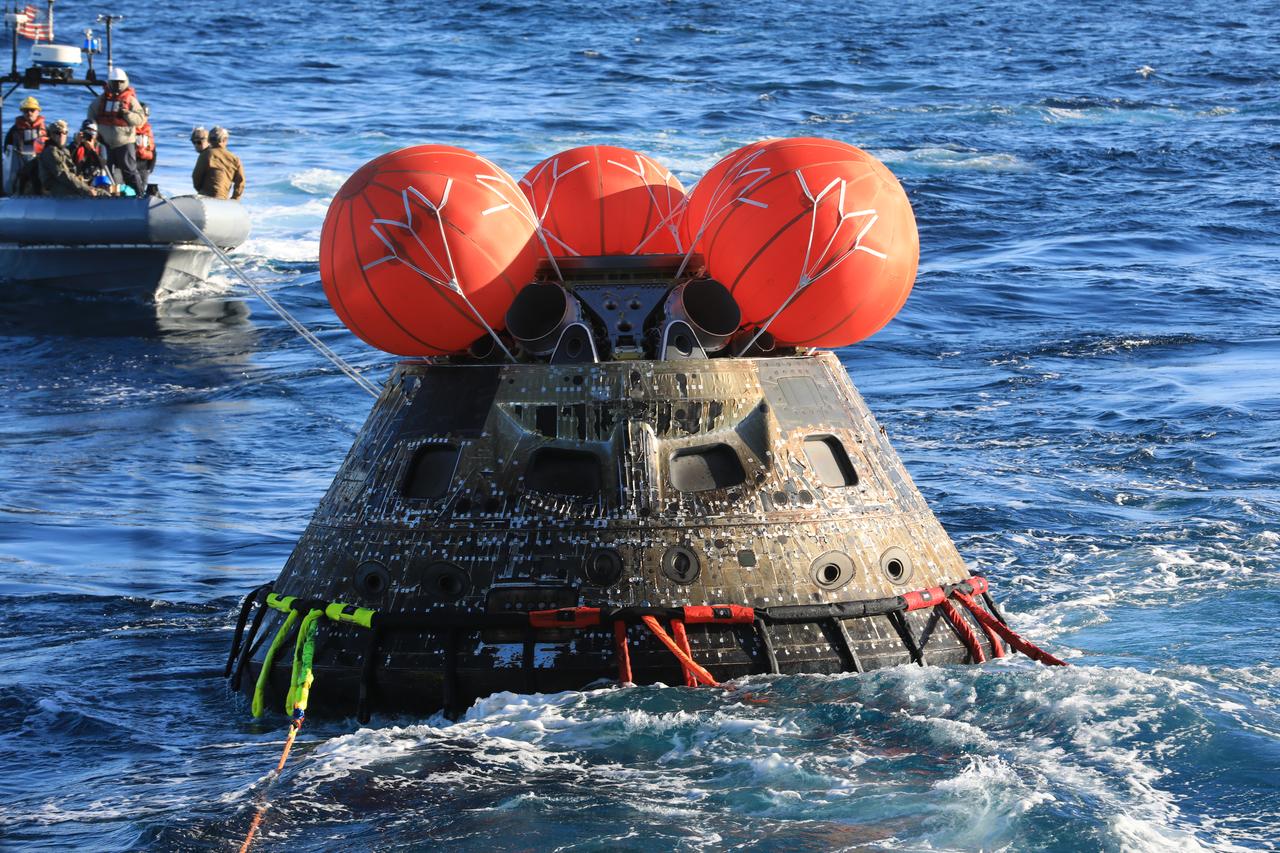
NASA’s Orion spacecraft for the Artemis I mission was successfully recovered inside the well deck of the USS Portland on Dec. 11, 2022 off the coast of Baja California. After launching atop the Space Launch System rocket on Nov. 16, 2022 from the agency’s Kennedy Space Center in Florida, Orion spent 25.5 days in space before returning to Earth, completing the Artemis I mission.
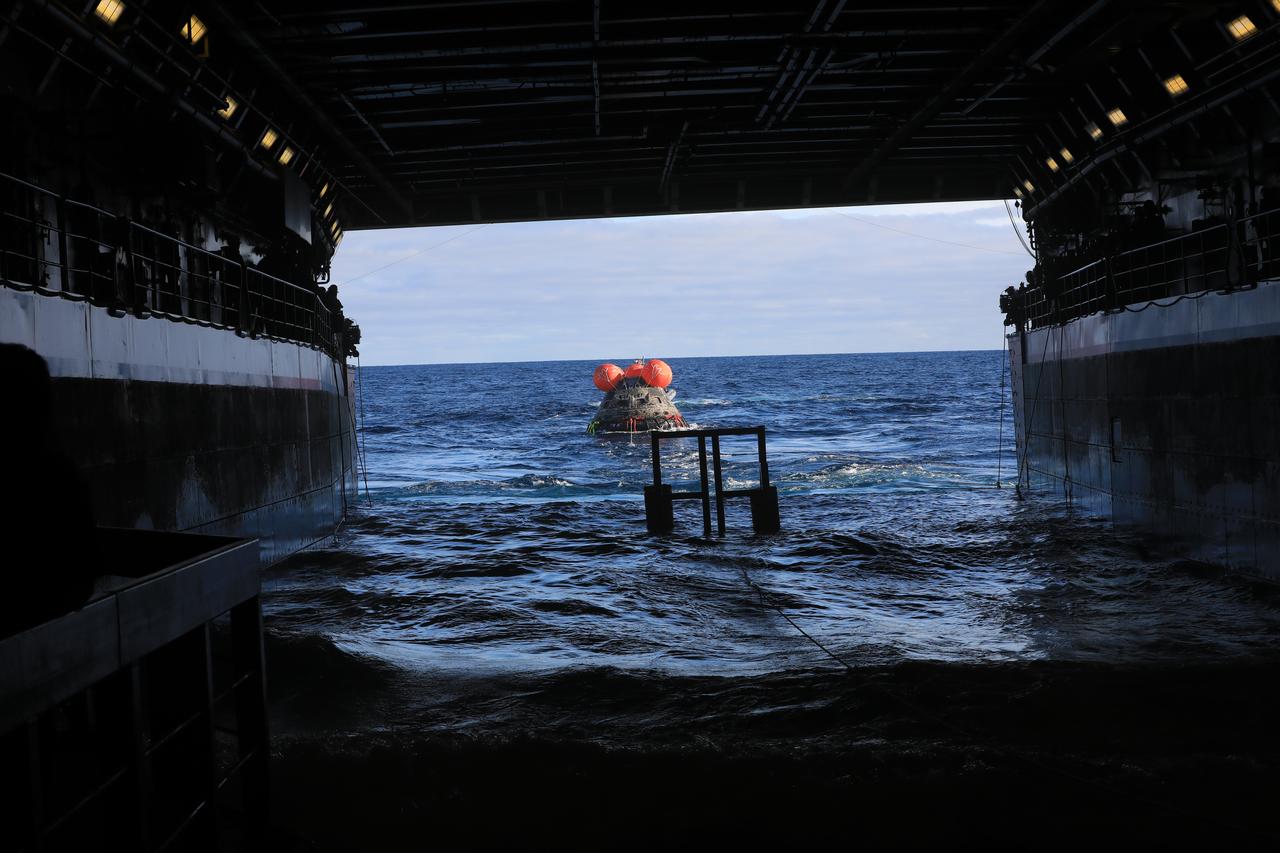
NASA’s Orion spacecraft for the Artemis I mission was successfully recovered inside the well deck of the USS Portland on Dec. 11, 2022 off the coast of Baja California. After launching atop the Space Launch System rocket on Nov. 16, 2022 from the agency’s Kennedy Space Center in Florida, Orion spent 25.5 days in space before returning to Earth, completing the Artemis I mission.
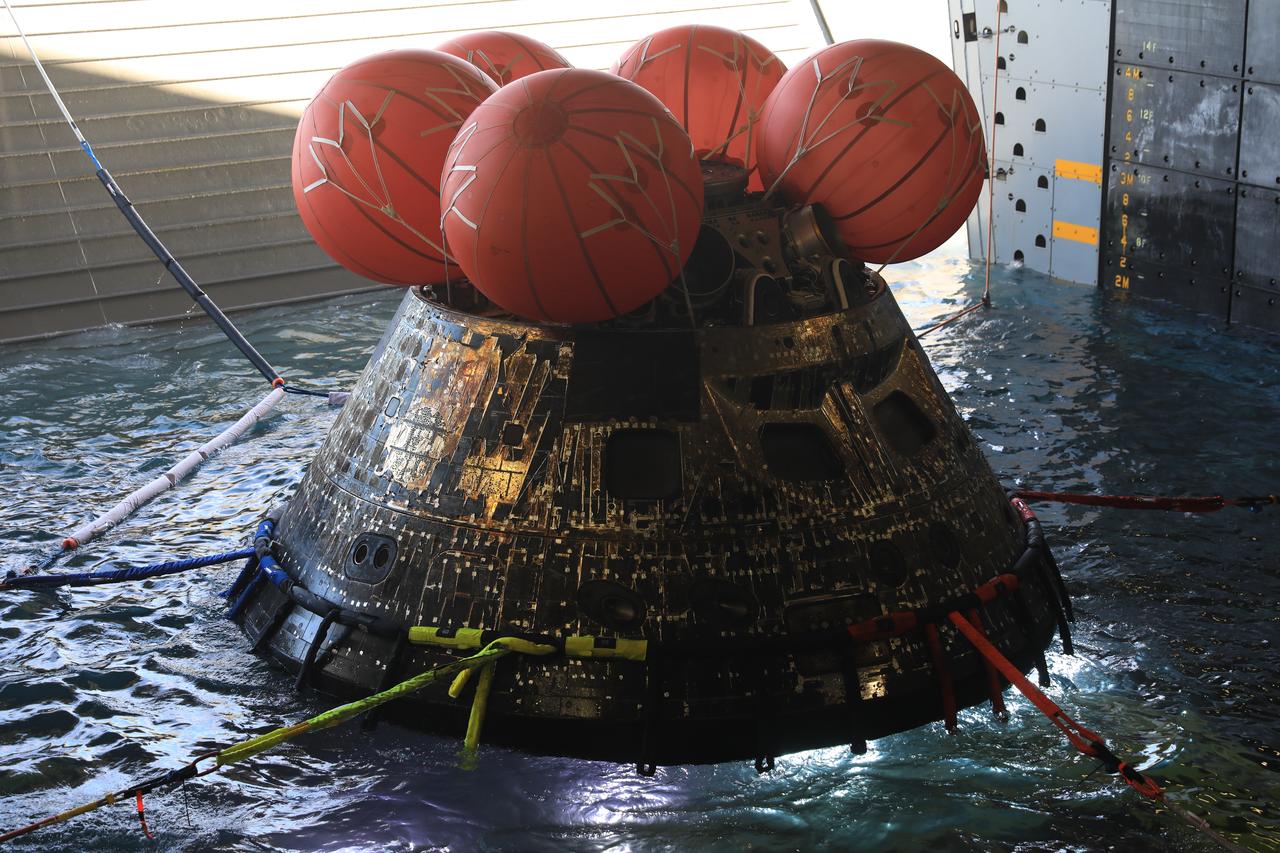
NASA’s Orion spacecraft for the Artemis I mission was successfully recovered inside the well deck of the USS Portland on Dec. 11, 2022 off the coast of Baja California. After launching atop the Space Launch System rocket on Nov. 16, 2022 from the agency’s Kennedy Space Center in Florida, Orion spent 25.5 days in space before returning to Earth, completing the Artemis I mission.
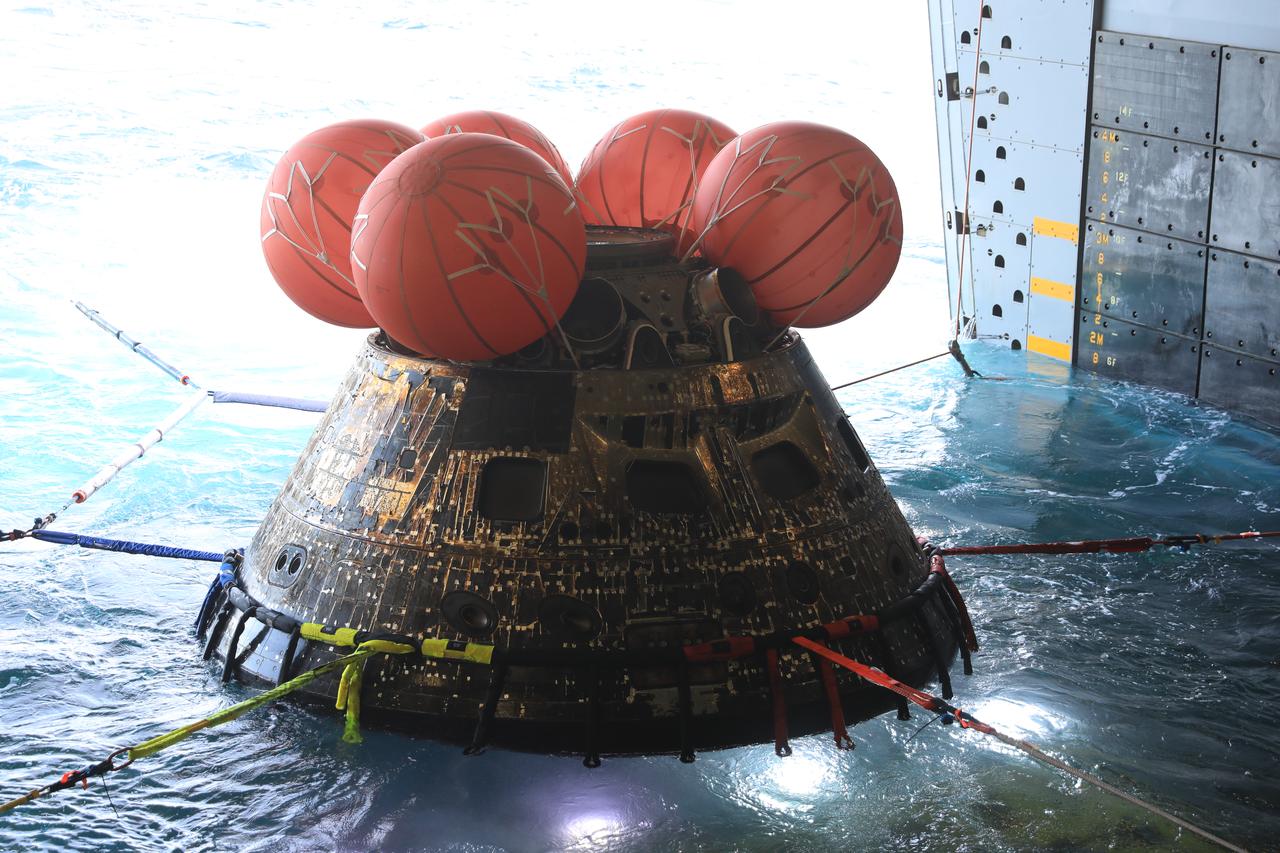
NASA’s Orion spacecraft for the Artemis I mission was successfully recovered inside the well deck of the USS Portland on Dec. 11, 2022 off the coast of Baja California. After launching atop the Space Launch System rocket on Nov. 16, 2022 from the agency’s Kennedy Space Center in Florida, Orion spent 25.5 days in space before returning to Earth, completing the Artemis I mission.
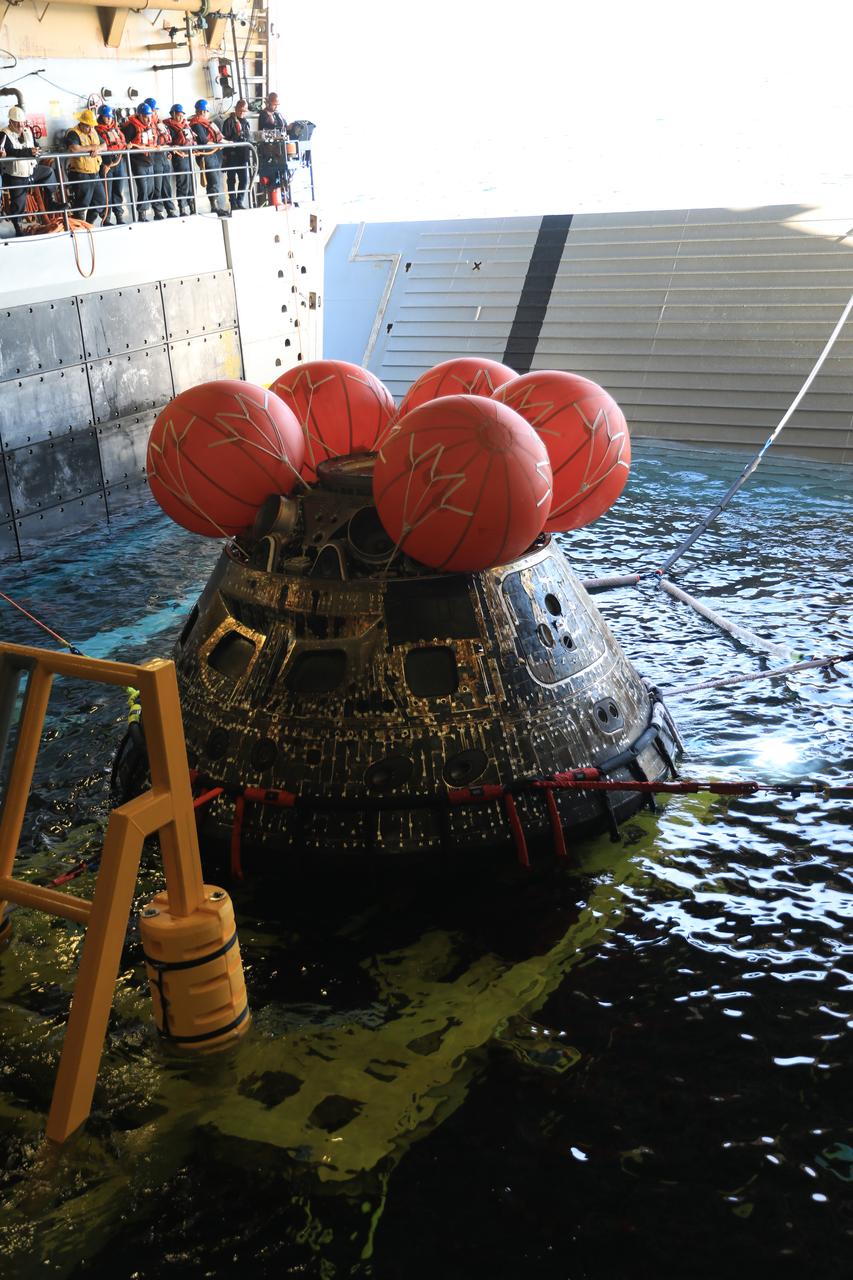
NASA’s Orion spacecraft for the Artemis I mission was successfully recovered inside the well deck of the USS Portland on Dec. 11, 2022 off the coast of Baja California. After launching atop the Space Launch System rocket on Nov. 16, 2022 from the agency’s Kennedy Space Center in Florida, Orion spent 25.5 days in space before returning to Earth, completing the Artemis I mission.
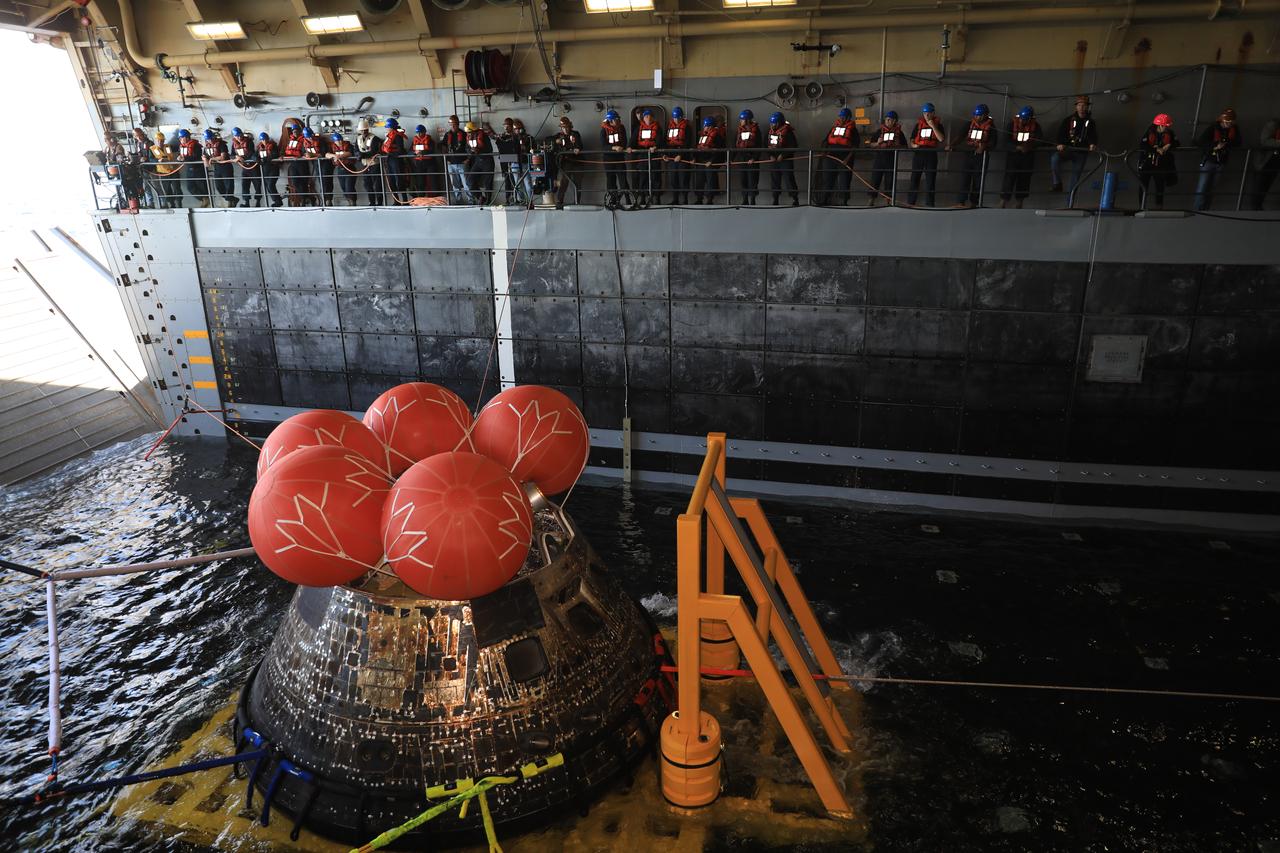
NASA’s Orion spacecraft for the Artemis I mission was successfully recovered inside the well deck of the USS Portland on Dec. 11, 2022 off the coast of Baja California. After launching atop the Space Launch System rocket on Nov. 16, 2022 from the agency’s Kennedy Space Center in Florida, Orion spent 25.5 days in space before returning to Earth, completing the Artemis I mission.
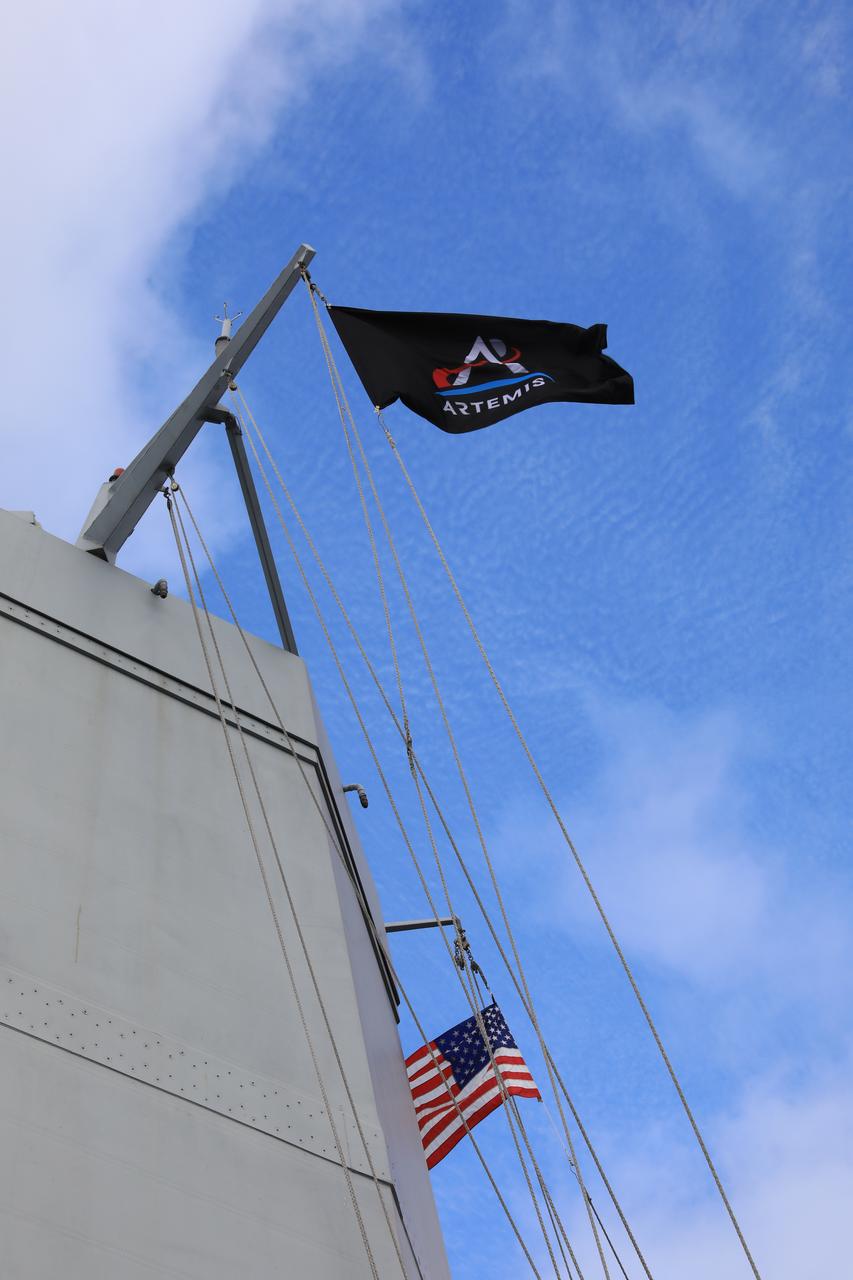
After splashdown of the Orion spacecraft on Dec. 11, 2022, NASA’s Artemis I Landing and Recovery Director Melissa Jones helps to raise the Artemis flag aboard USS Portland.
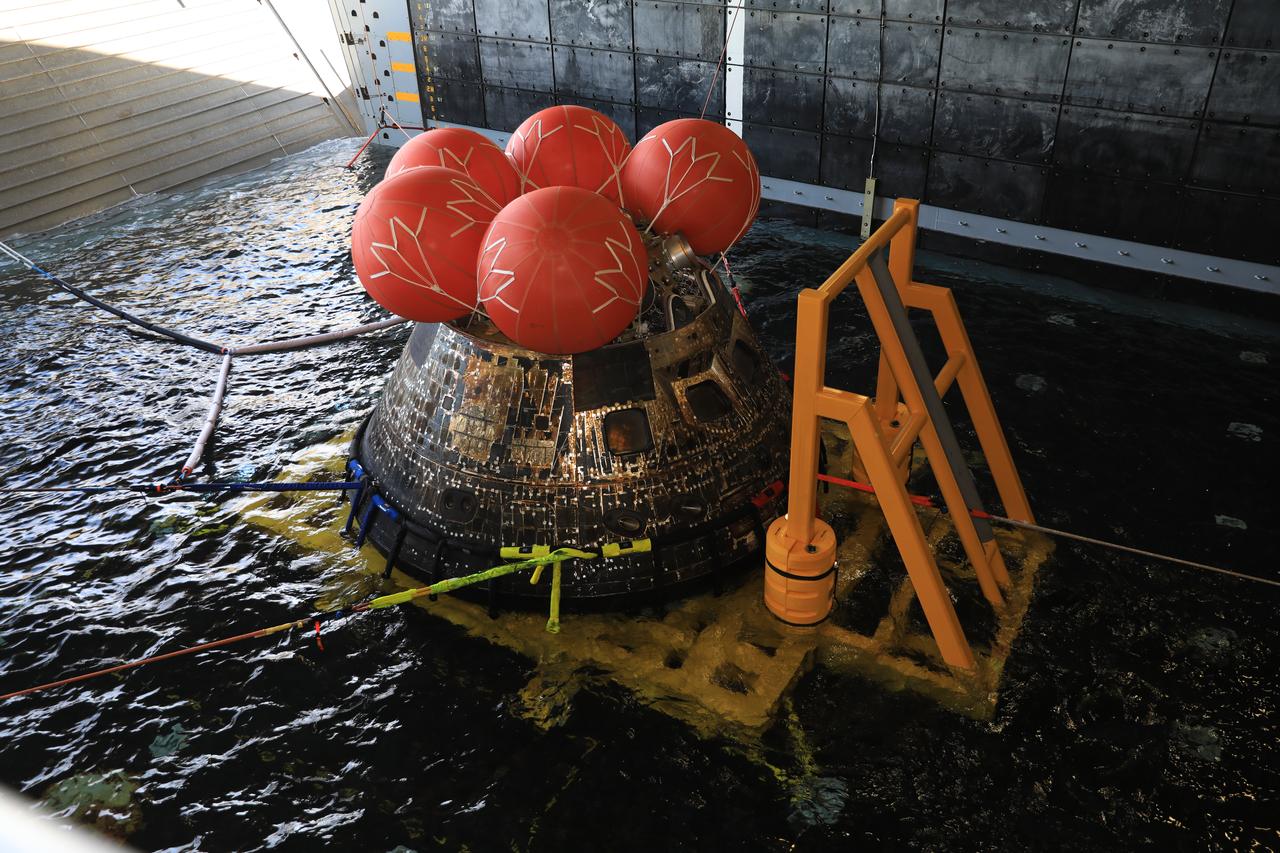
NASA’s Orion spacecraft for the Artemis I mission was successfully recovered inside the well deck of the USS Portland on Dec. 11, 2022 off the coast of Baja California. After launching atop the Space Launch System rocket on Nov. 16, 2022 from the agency’s Kennedy Space Center in Florida, Orion spent 25.5 days in space before returning to Earth, completing the Artemis I mission.
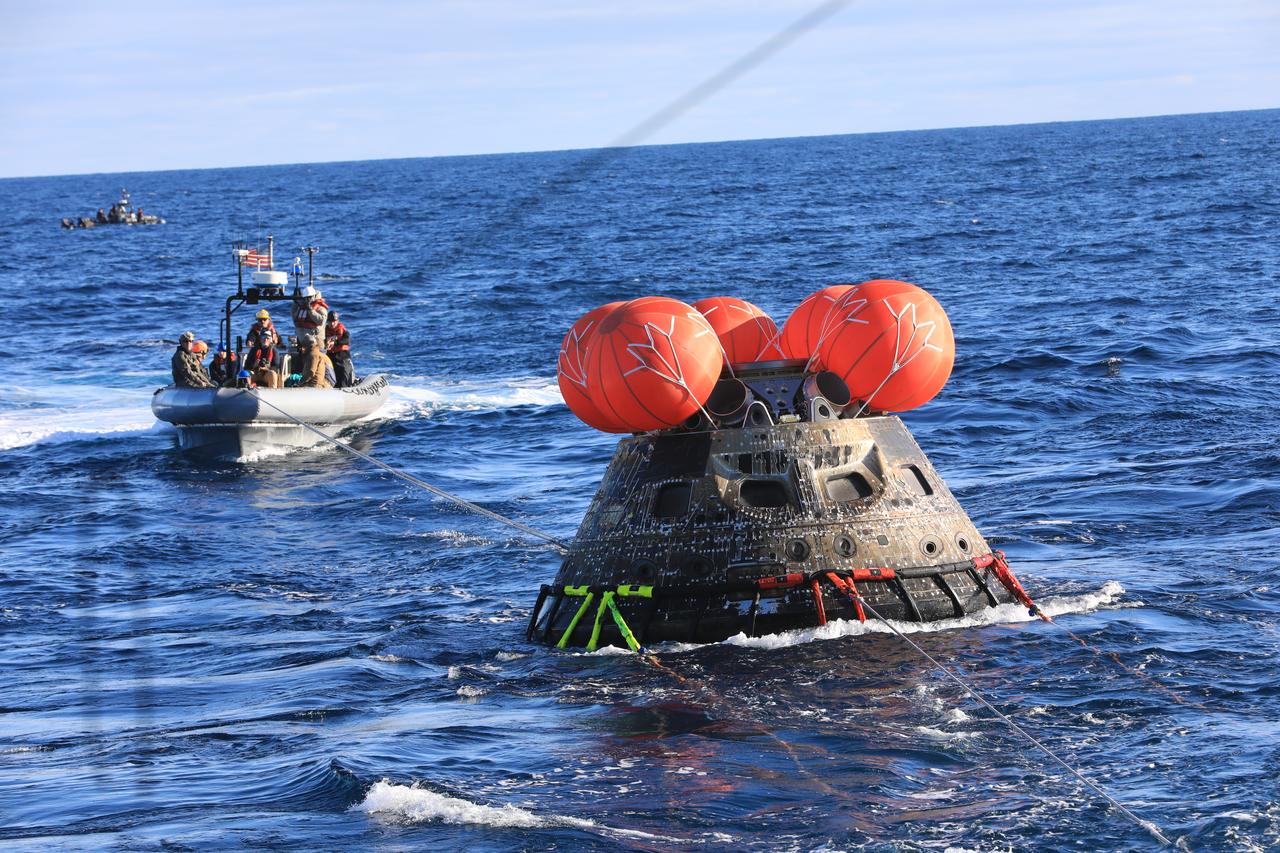
NASA’s Orion spacecraft for the Artemis I mission was successfully recovered inside the well deck of the USS Portland on Dec. 11, 2022 off the coast of Baja California. After launching atop the Space Launch System rocket on Nov. 16, 2022 from the agency’s Kennedy Space Center in Florida, Orion spent 25.5 days in space before returning to Earth, completing the Artemis I mission.
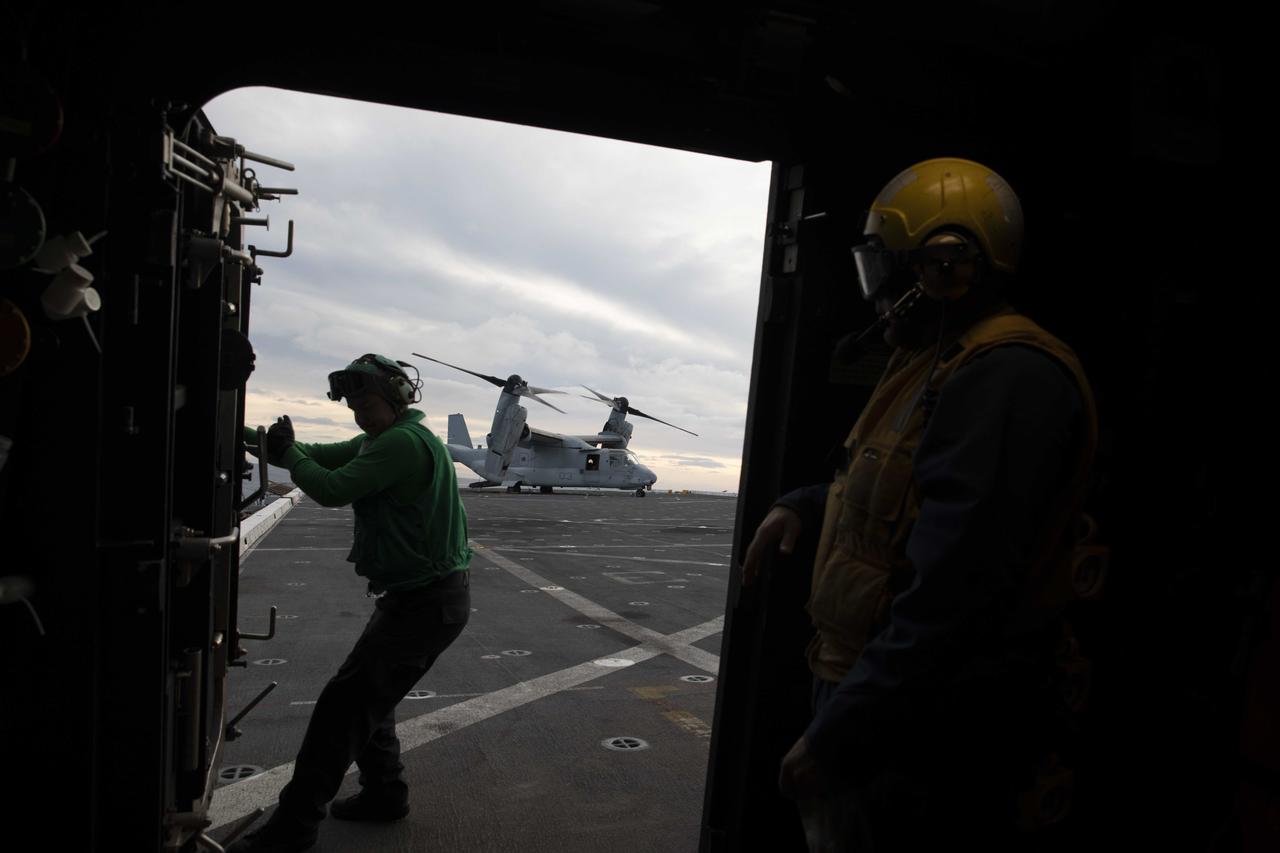
A member of the U.S. Navy helicopter team aboard USS Portland opens a door to the flight deck after a V-22 Osprey lands prior to NASA’s Orion splashdown for the Artemis I mission on Dec. 11, 2022.
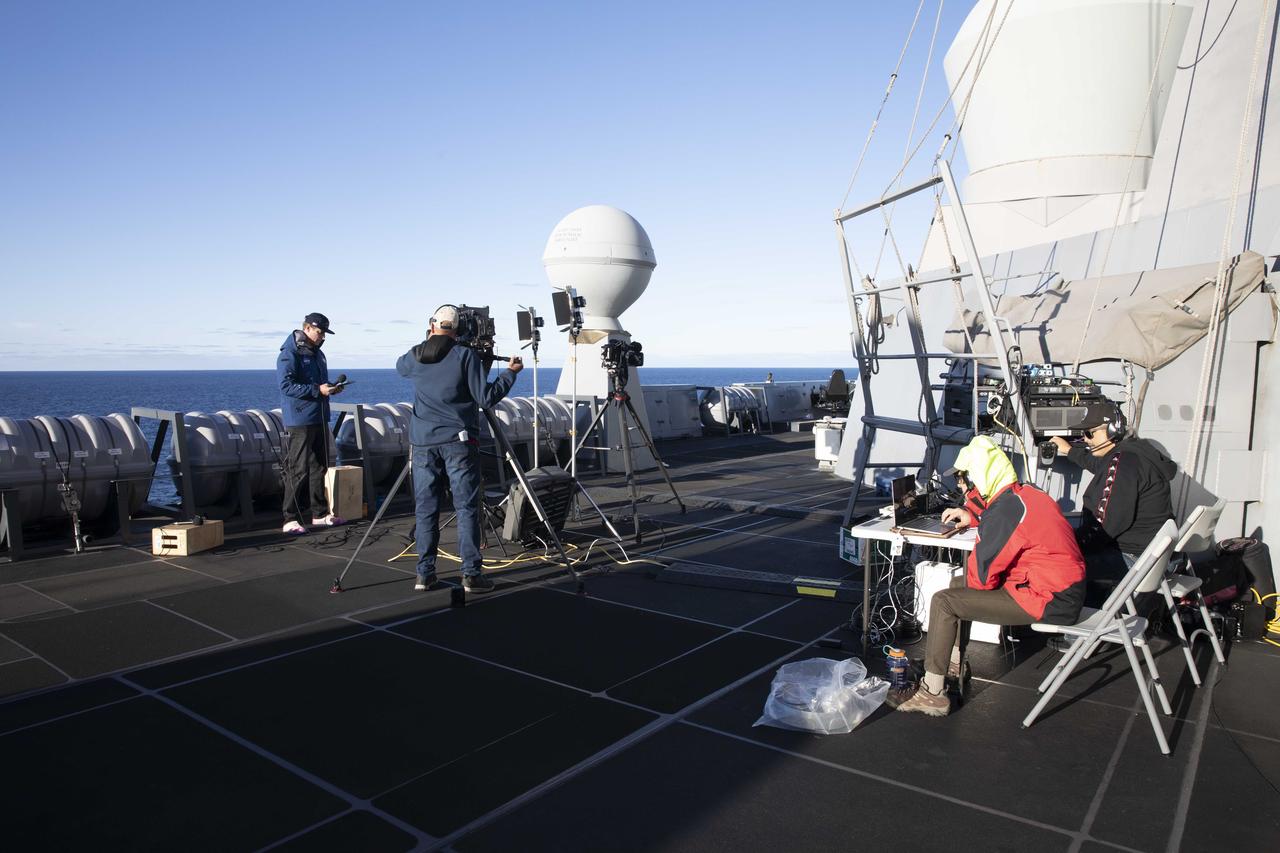
Members of Kennedy Space Center’s public affairs team prepare for live coverage of NASA’s Orion spacecraft’s splashdown for the Artemis I mission while aboard USS Portland. Orion safely splashed down in the Pacific Ocean on Dec. 11, 2022, completing a 25.5 day mission around the Moon and back.
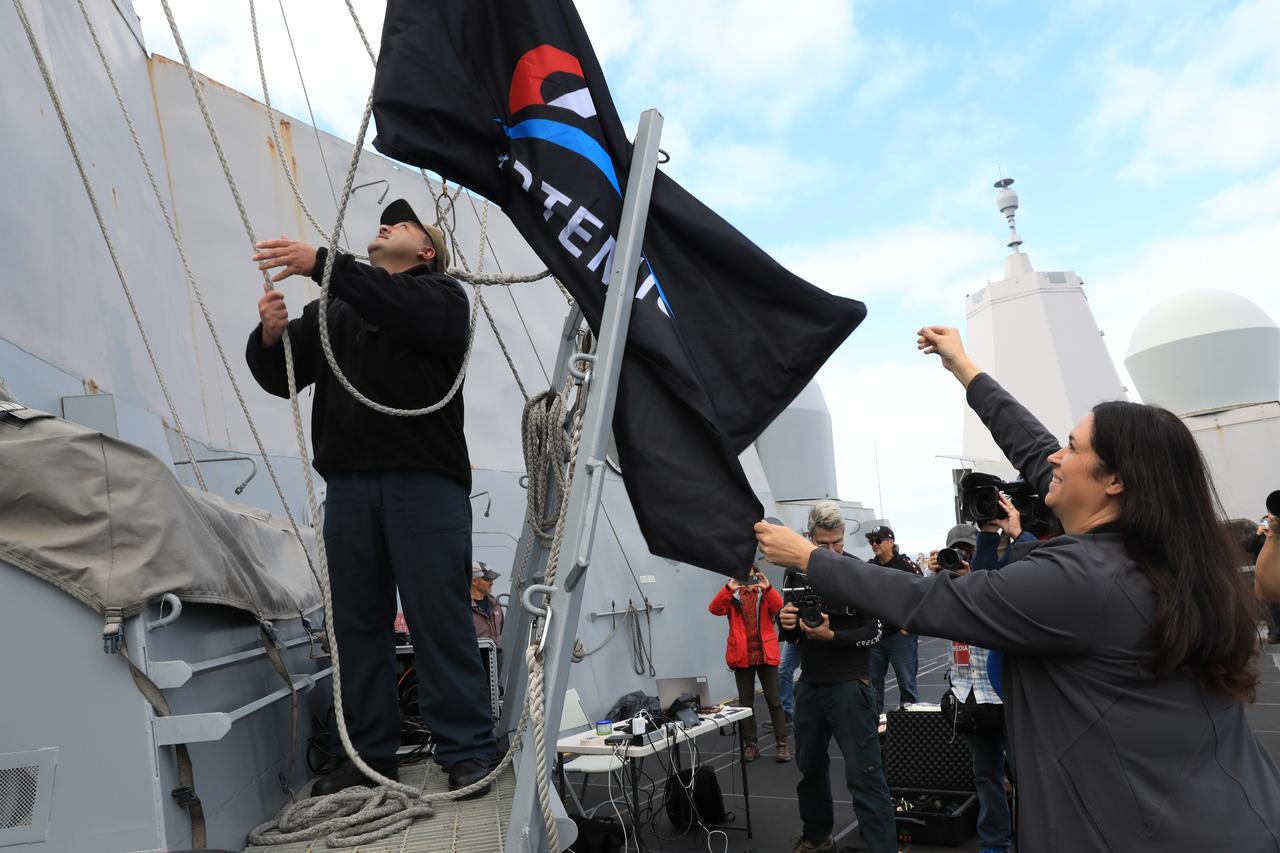
After splashdown of the Orion spacecraft on Dec. 11, 2022, NASA’s Artemis I Landing and Recovery Director Melissa Jones helps to raise the Artemis flag aboard USS Portland.
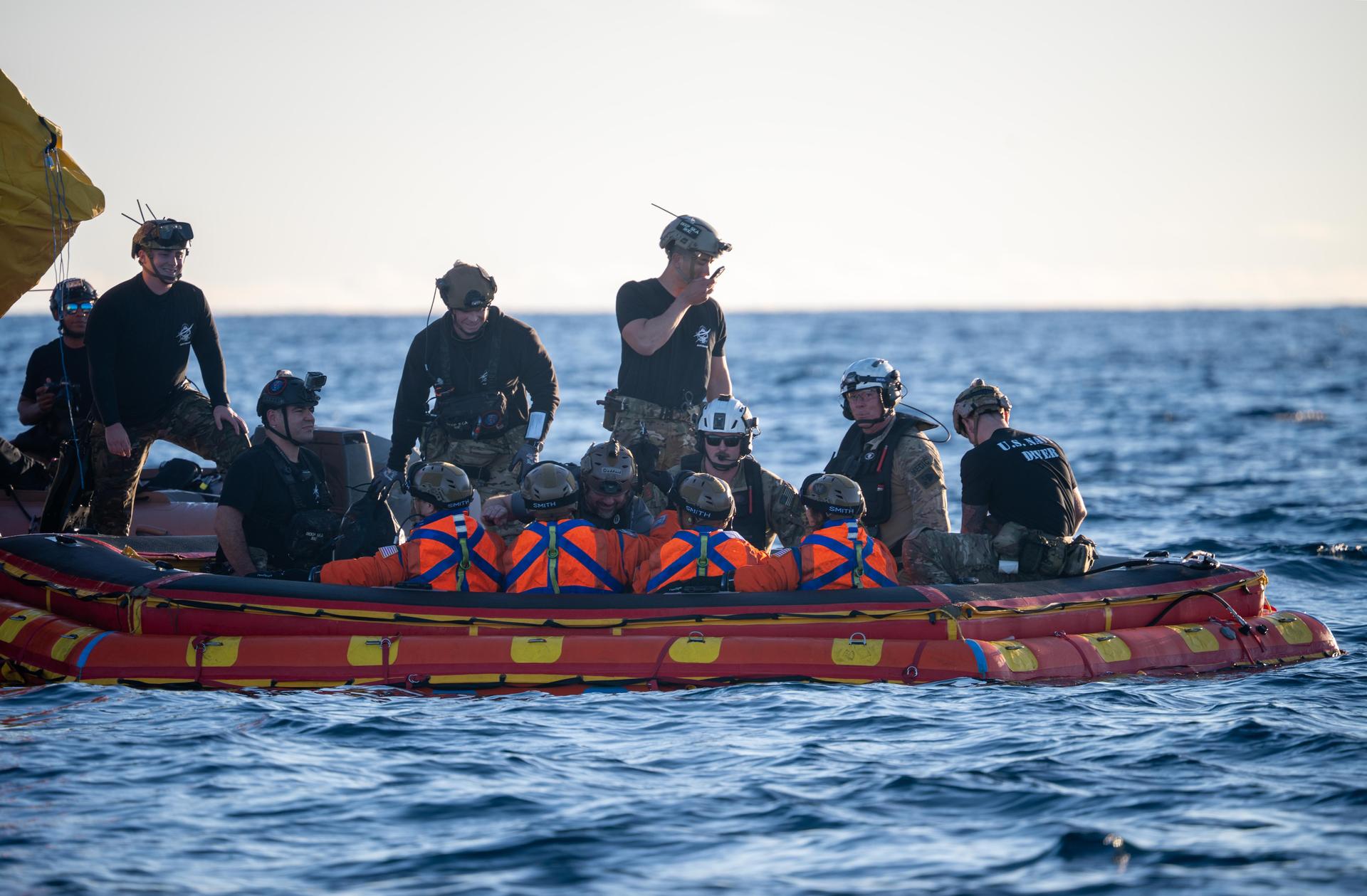
From left to right, Artemis II Commander Reid Wiseman, Mission Specialist Jeremy Hansen from the CSA (Canadian Space Agency), Pilot Victor Glover, and Mission Specialist Christina Koch from NASA, are extracted from NASA’s Orion spacecraft and loaded onto an inflatable raft, called the front porch, following splashdown in the Pacific Ocean near San Diego, California, at 5:07 p.m. PDT, (8:07 p.m. EDT) on Friday, April 10, 2026. The Artemis II crew will be taken to USS John P. Murtha to be routinely examined while NASA’s Landing and Recovery team and the U.S. Navy recover Orion and secure it in the well deck of USS John P. Murtha. The Artemis II test flight launched on Wednesday, April 1, from NASA’s Kennedy Space Center in Florida to begin its 10-day journey around the Moon for scientific discovery, economic benefits, and to build on our foundation for the first crewed missions to Mars.
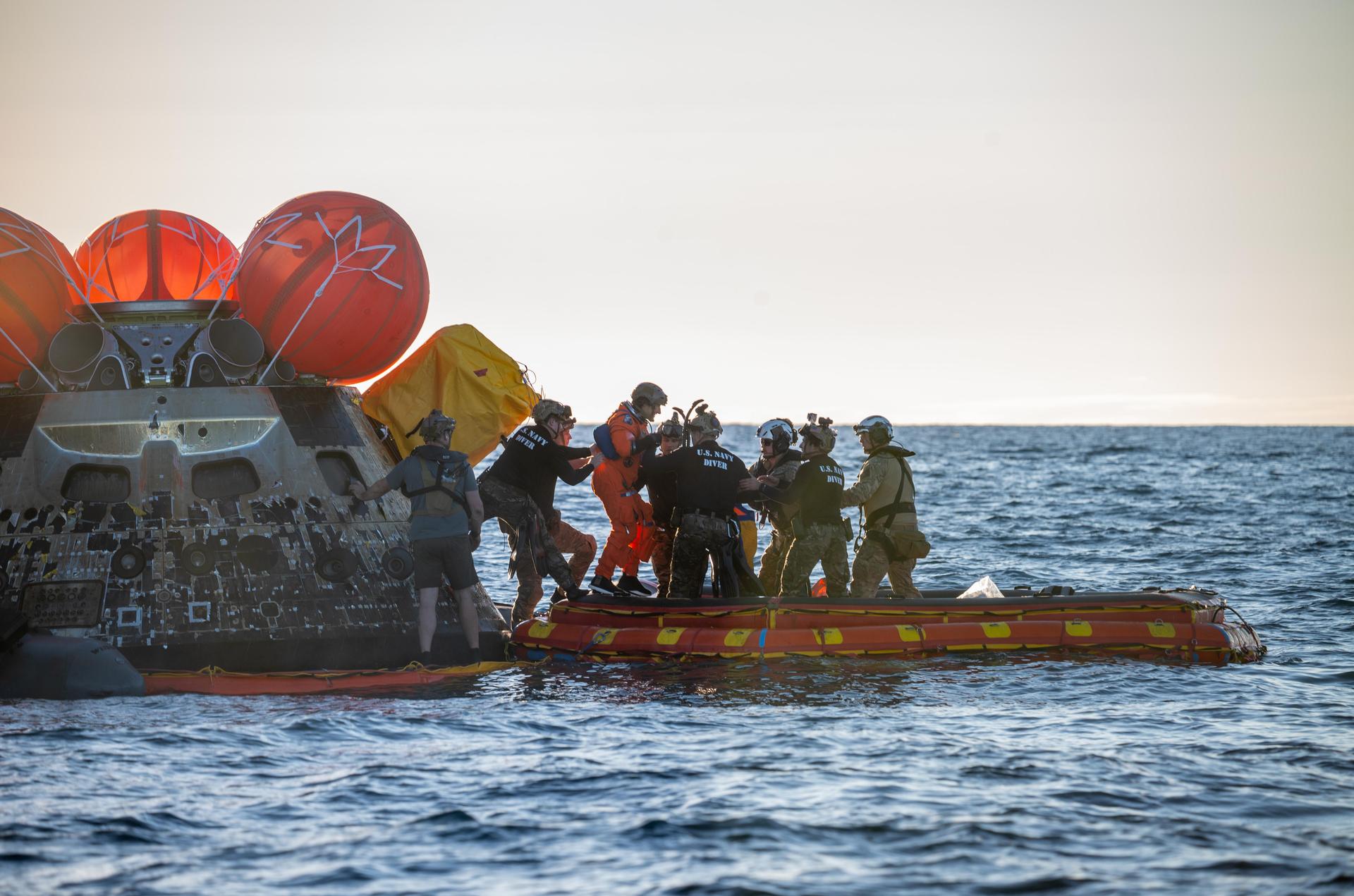
Artemis II Mission Specialist Christina Koch, from NASA, is extracted from NASA’s Orion spacecraft and loaded onto an inflatable raft, called the front porch, following splashdown in the Pacific Ocean near San Diego, California, at 5:07 p.m. PDT, (8:07 p.m. EDT) on Friday, April 10, 2026. Koch and the other Artemis II crew will be taken to USS John P. Murtha to be routinely examined while NASA’s Landing and Recovery team and the U.S. Navy recover Orion and secure it in the well deck of the USS John P. Murtha. The Artemis II test flight launched on Wednesday, April 1, from NASA’s Kennedy Space Center in Florida to begin its 10-day journey around the Moon for scientific discovery, economic benefits, and to build on our foundation for the first crewed missions to Mars.
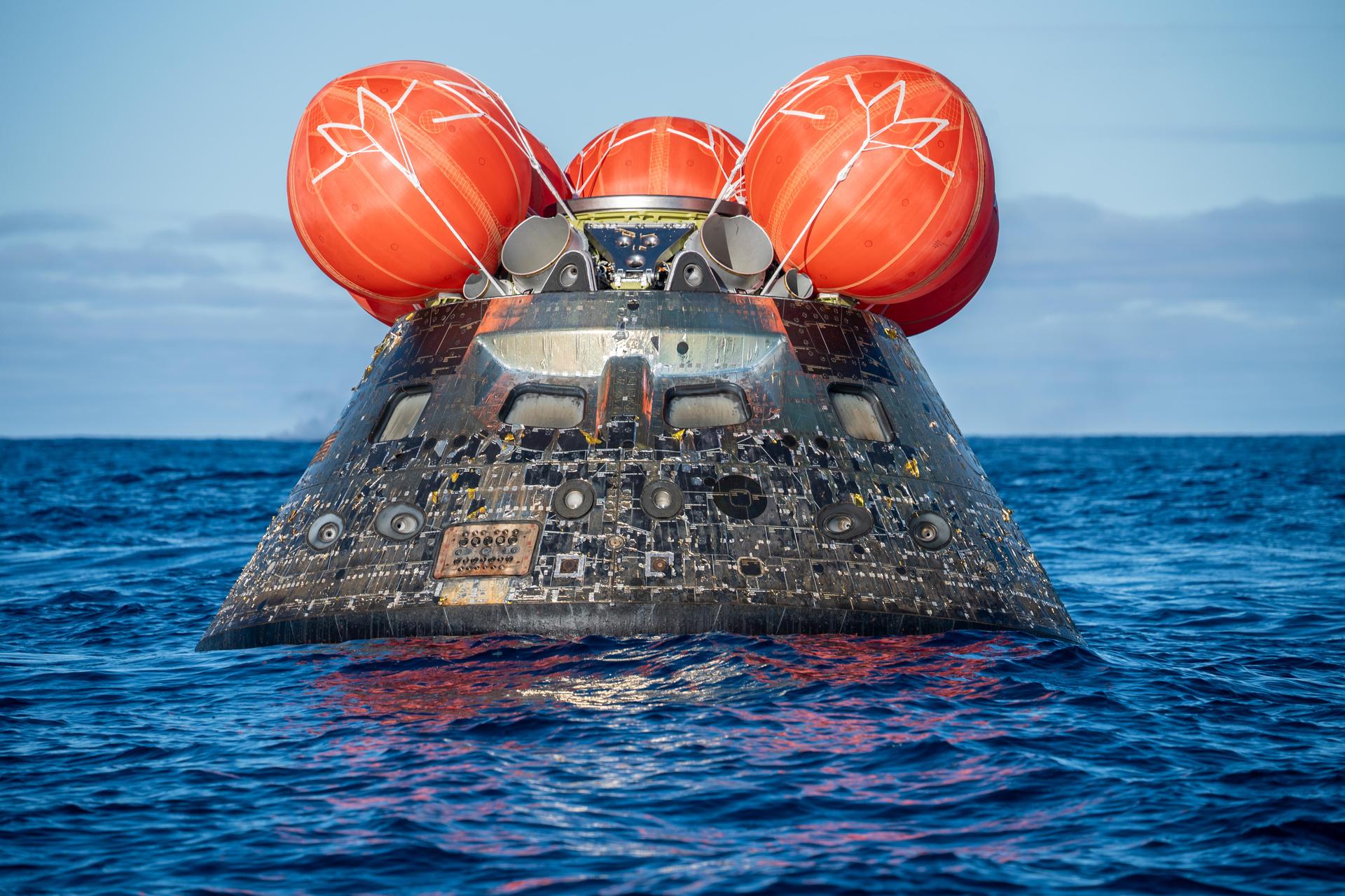
NASA's Orion spacecraft carrying Artemis II Commander Reid Wiseman, Pilot Victor Glover, and Mission Specialist Christina Koch from NASA, along with Mission Specialist Jeremy Hansen from the CSA (Canadian Space Agency), splashes down in the Pacific Ocean near San Diego, California, at 5:07 p.m. PDT, (8:07 p.m. EDT) on Friday, April 10, 2026. The Artemis II test flight launched on Wednesday, April 1, from NASA’s Kennedy Space Center in Florida to begin its 10-day journey around the Moon for scientific discovery, economic benefits, and to build on our foundation for the first crewed missions to Mars. NASA’s Landing and Recovery team and the U.S. military are coordinating efforts to extract the Artemis II crew from the Orion spacecraft.
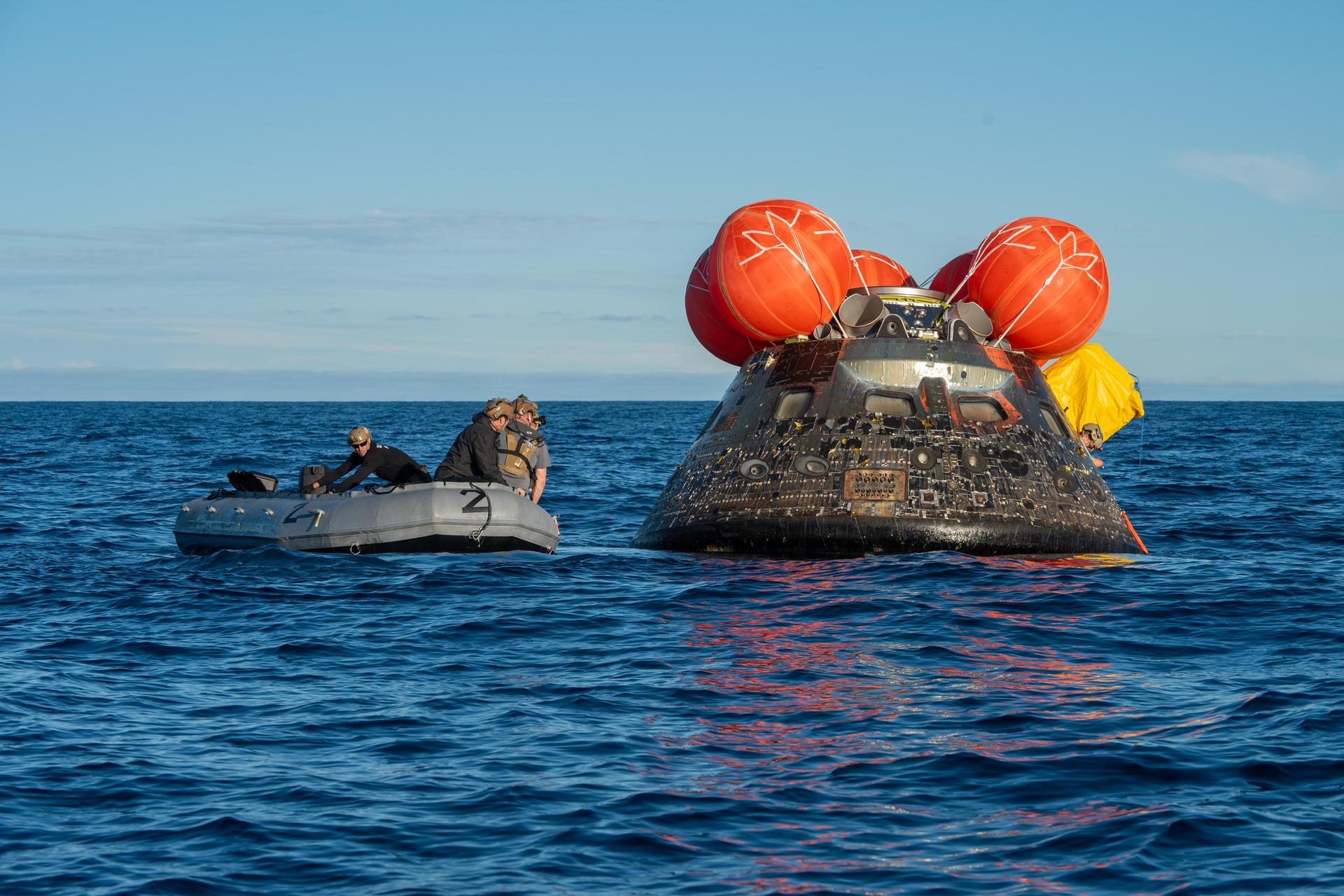
NASA’s Landing and Recovery team, along with U.S. Navy personnel aboard an inflatable raft approach NASA’s Orion spacecraft carrying Artemis II Commander Reid Wiseman, Pilot Victor Glover, and Mission Specialist Christina Koch from NASA, along with Mission Specialist Jeremy Hansen from the CSA (Canadian Space Agency), following splashdown in the Pacific Ocean near San Diego, California, at 5:07 p.m. PDT, (8:07 p.m. EDT) on Friday, April 10, 2026. The Artemis II test flight launched on Wednesday, April 1, from NASA’s Kennedy Space Center in Florida to begin its 10-day journey around the Moon for scientific discovery, economic benefits, and to build on our foundation for the first crewed missions to Mars. NASA’s Landing and Recovery team and the U.S. military are helping the Artemis II crew out of their Orion spacecraft.
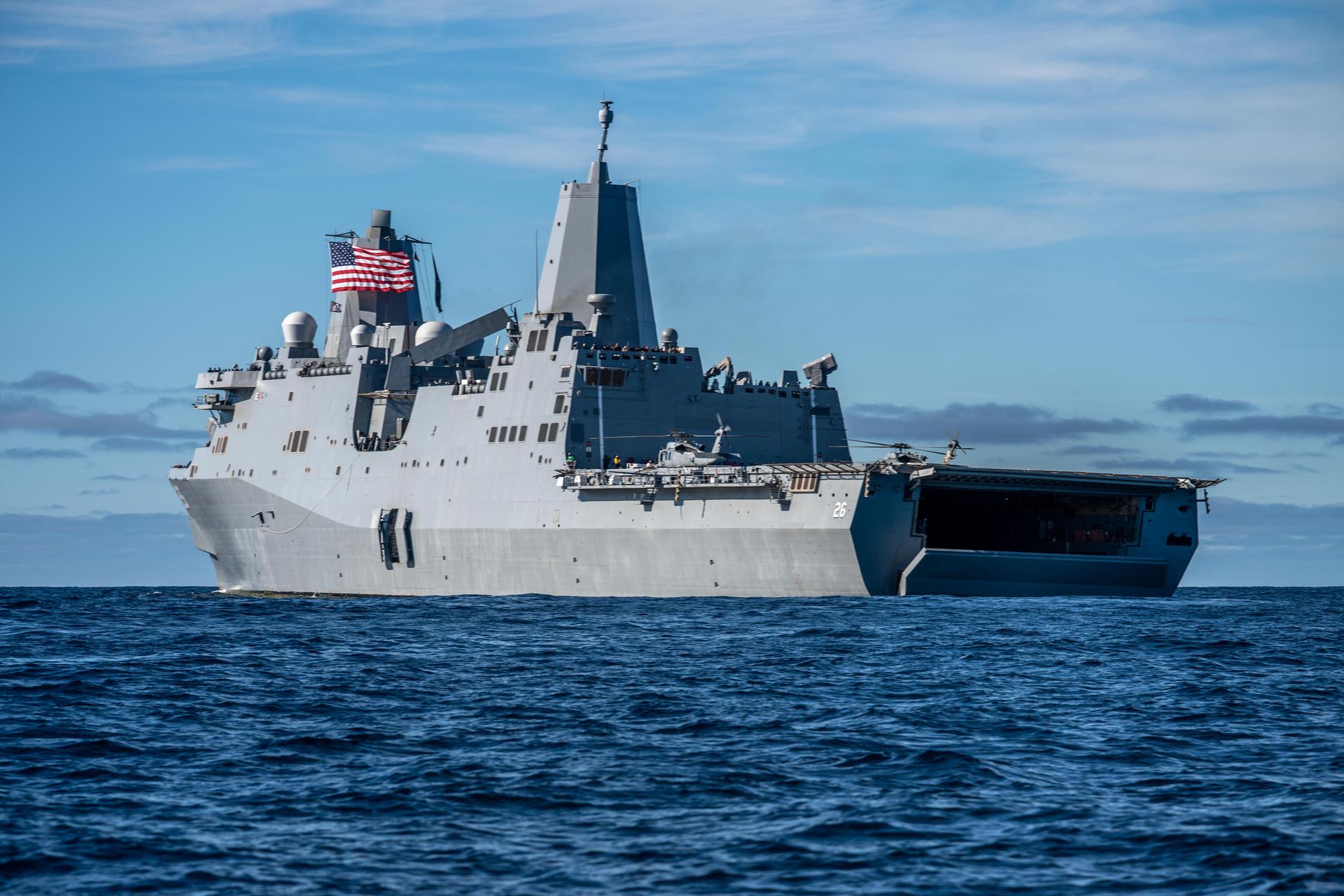
USS John P. Murtha approaches NASA's Orion spacecraft carrying Artemis II Commander Reid Wiseman, Pilot Victor Glover, and Mission Specialist Christina Koch from NASA, along with Mission Specialist Jeremy Hansen from the CSA (Canadian Space Agency), following splashdown in the Pacific Ocean near San Diego, California, at 5:07 p.m. PDT, (8:07 p.m. EDT) on Friday, April 10, 2026. The Artemis II test flight launched on Wednesday, April 1, from NASA’s Kennedy Space Center in Florida to begin its 10-day journey around the Moon for scientific discovery, economic benefits, and to build on our foundation for the first crewed missions to Mars. NASA’s Landing and Recovery team and the U.S. military are coordinating efforts to extract the Artemis II crew from the Orion spacecraft.
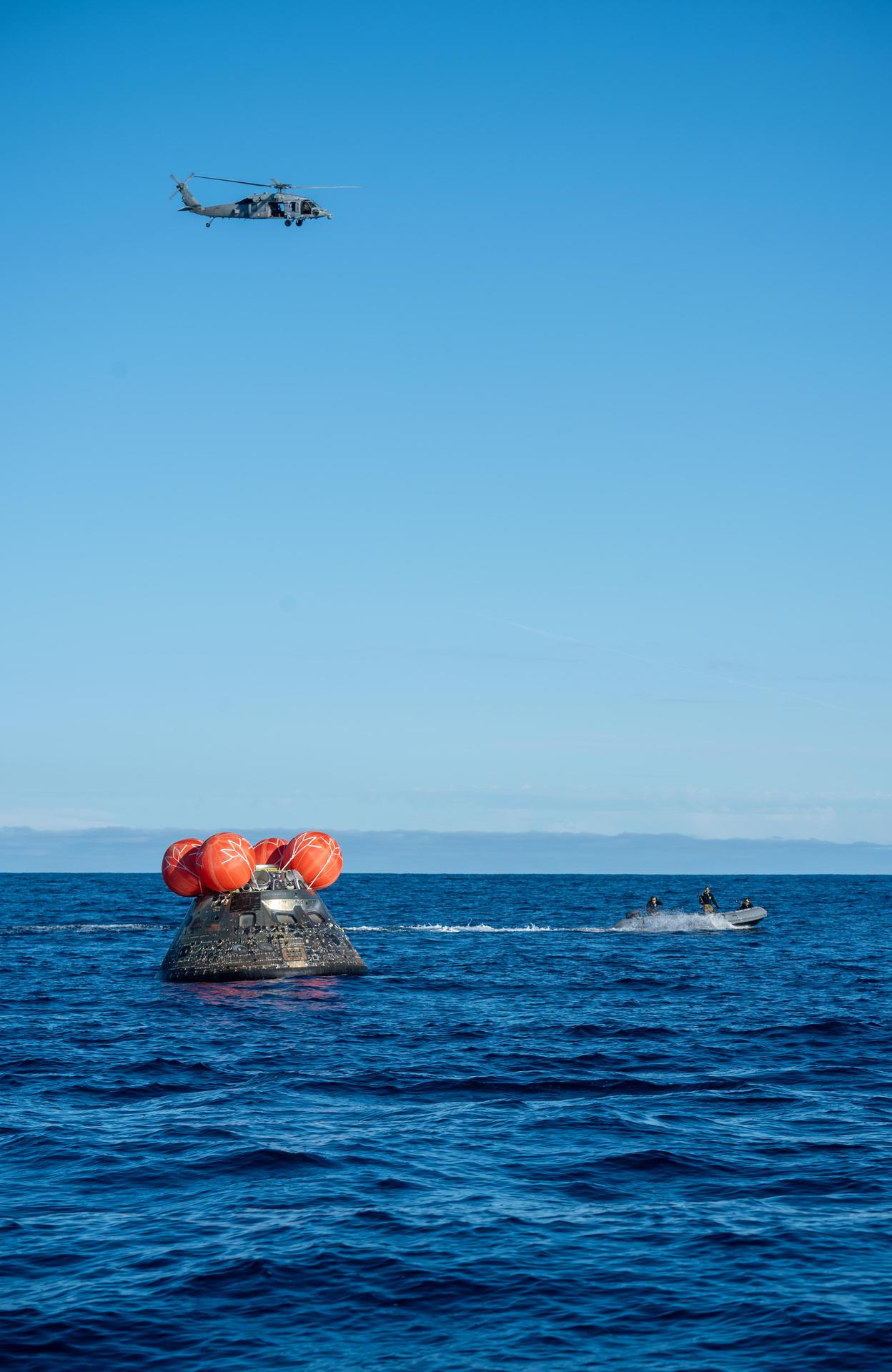
NASA's Orion spacecraft carrying Artemis II Commander Reid Wiseman, Pilot Victor Glover, and Mission Specialist Christina Koch from NASA, along with Mission Specialist Jeremy Hansen from the CSA (Canadian Space Agency), floats in the Pacific Ocean near San Diego, California, at 5:07 p.m. PDT, (8:07 p.m. EDT) on Friday, April 10, 2026. NASA’s Landing and Recovery team and U.S. Navy personnel aboard an inflatable raft and a H60-S Seahawk helicopter hovers above to communicate Orion’s location back to USS John P. Murtha to coordinate efforts to secure the spacecraft in the well deck of the ship. The Artemis II test flight launched on Wednesday, April 1, from NASA’s Kennedy Space Center in Florida to begin its 10-day journey around the Moon for scientific discovery, economic benefits, and to build on our foundation for the first crewed missions to Mars.
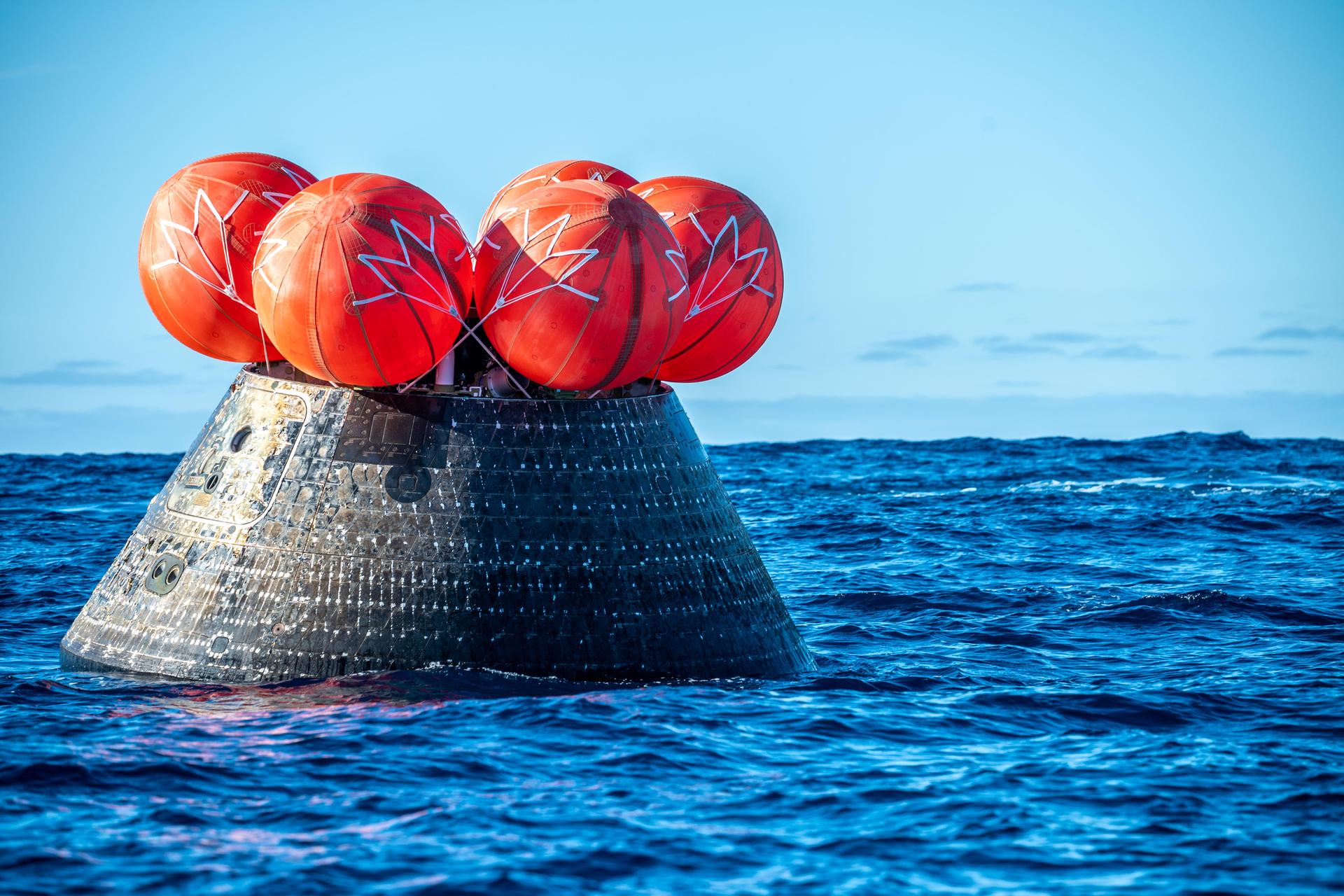
NASA's Orion spacecraft carrying Artemis II Commander Reid Wiseman, Pilot Victor Glover, and Mission Specialist Christina Koch from NASA, along with Mission Specialist Jeremy Hansen from the CSA (Canadian Space Agency), splashes down in the Pacific Ocean near San Diego, California, at 5:07 p.m. PDT, (8:07 p.m. EDT) on Friday, April 10, 2026. The Artemis II test flight launched on Wednesday, April 1, from NASA’s Kennedy Space Center in Florida to begin its 10-day journey around the Moon for scientific discovery, economic benefits, and to build on our foundation for the first crewed missions to Mars. NASA’s Landing and Recovery team and the U.S. military are coordinating efforts to extract the Artemis II crew from the Orion spacecraft.
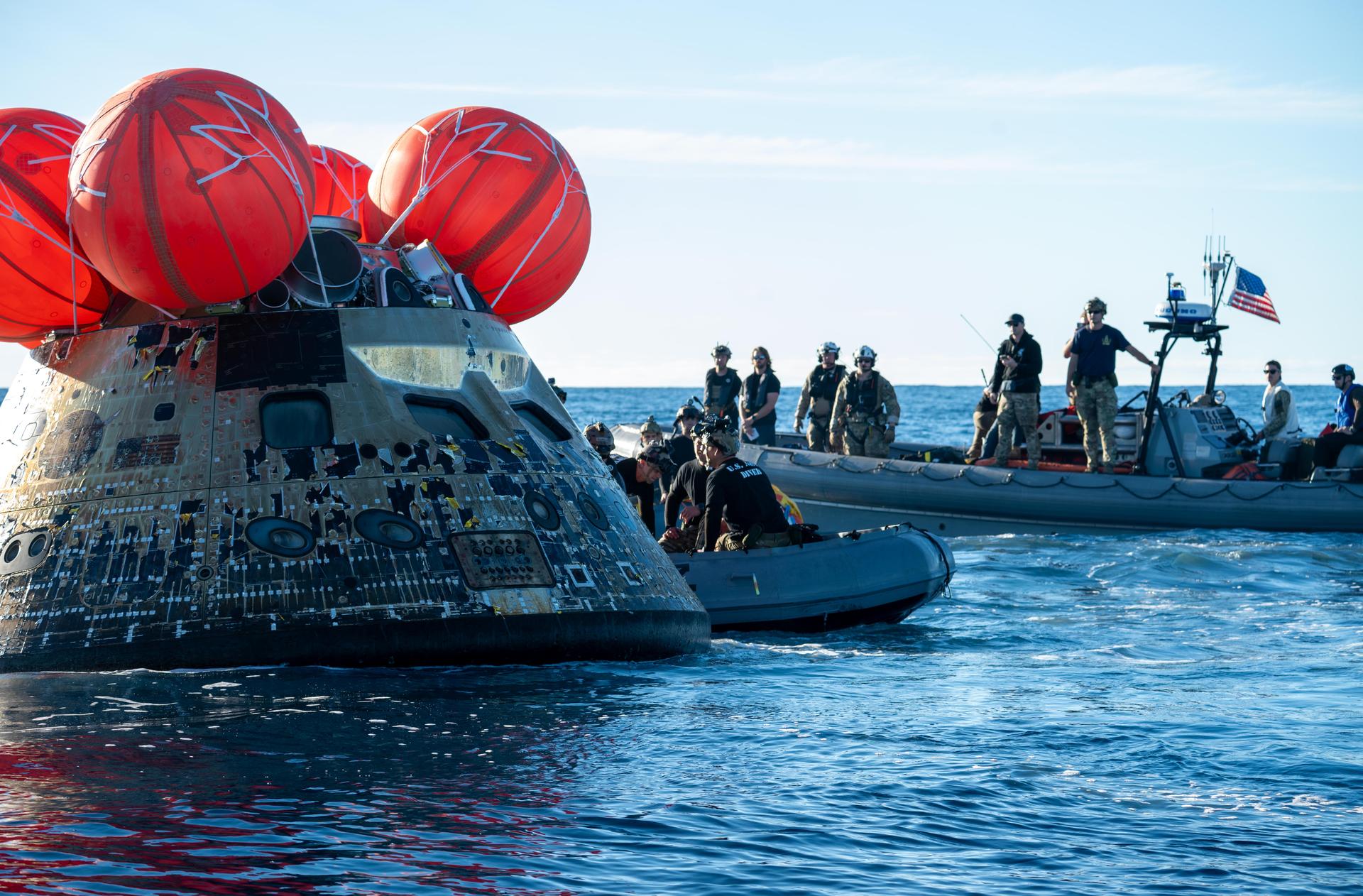
NASA’s Landing and Recovery team, along with U.S. Navy personnel aboard an inflatable raft approach NASA’s Orion spacecraft carrying Artemis II Commander Reid Wiseman, Pilot Victor Glover, and Mission Specialist Christina Koch from NASA, along with Mission Specialist Jeremy Hansen from the CSA (Canadian Space Agency), following splashdown in the Pacific Ocean near San Diego, California, at 5:07 p.m. PDT, (8:07 p.m. EDT) on Friday, April 10, 2026. The Artemis II test flight launched on Wednesday, April 1, from NASA’s Kennedy Space Center in Florida to begin its 10-day journey around the Moon for scientific discovery, economic benefits, and to build on our foundation for the first crewed missions to Mars. NASA’s Landing and Recovery team and the U.S. military are helping the Artemis II crew out of their Orion spacecraft.
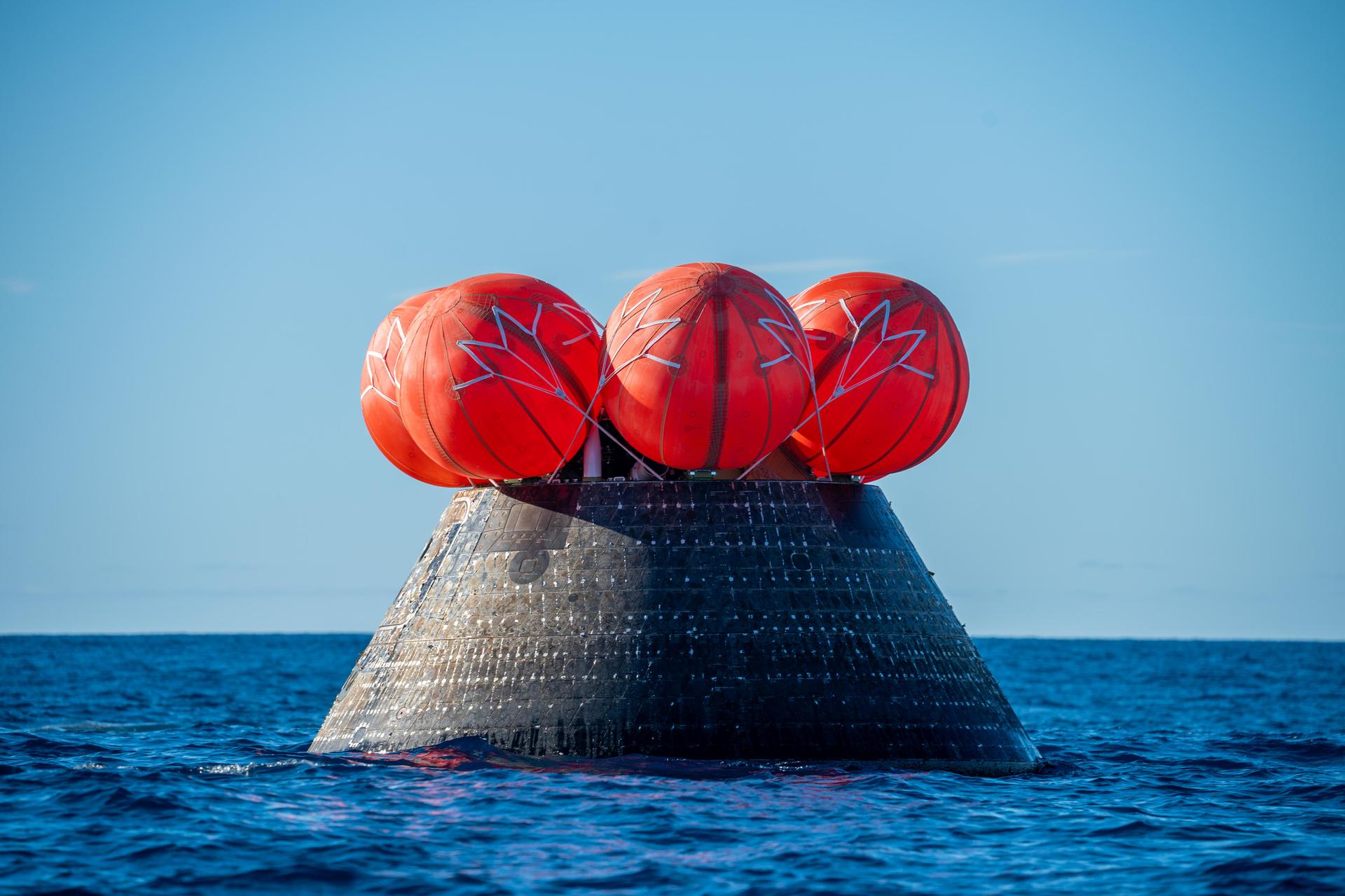
NASA's Orion spacecraft carrying Artemis II Commander Reid Wiseman, Pilot Victor Glover, and Mission Specialist Christina Koch from NASA, along with Mission Specialist Jeremy Hansen from the CSA (Canadian Space Agency), splashes down in the Pacific Ocean near San Diego, California, at 5:07 p.m. PDT, (8:07 p.m. EDT) on Friday, April 10, 2026. The Artemis II test flight launched on Wednesday, April 1, from NASA’s Kennedy Space Center in Florida to begin its 10-day journey around the Moon for scientific discovery, economic benefits, and to build on our foundation for the first crewed missions to Mars. NASA’s Landing and Recovery team and the U.S. military are coordinating efforts to extract the Artemis II crew from the Orion spacecraft.
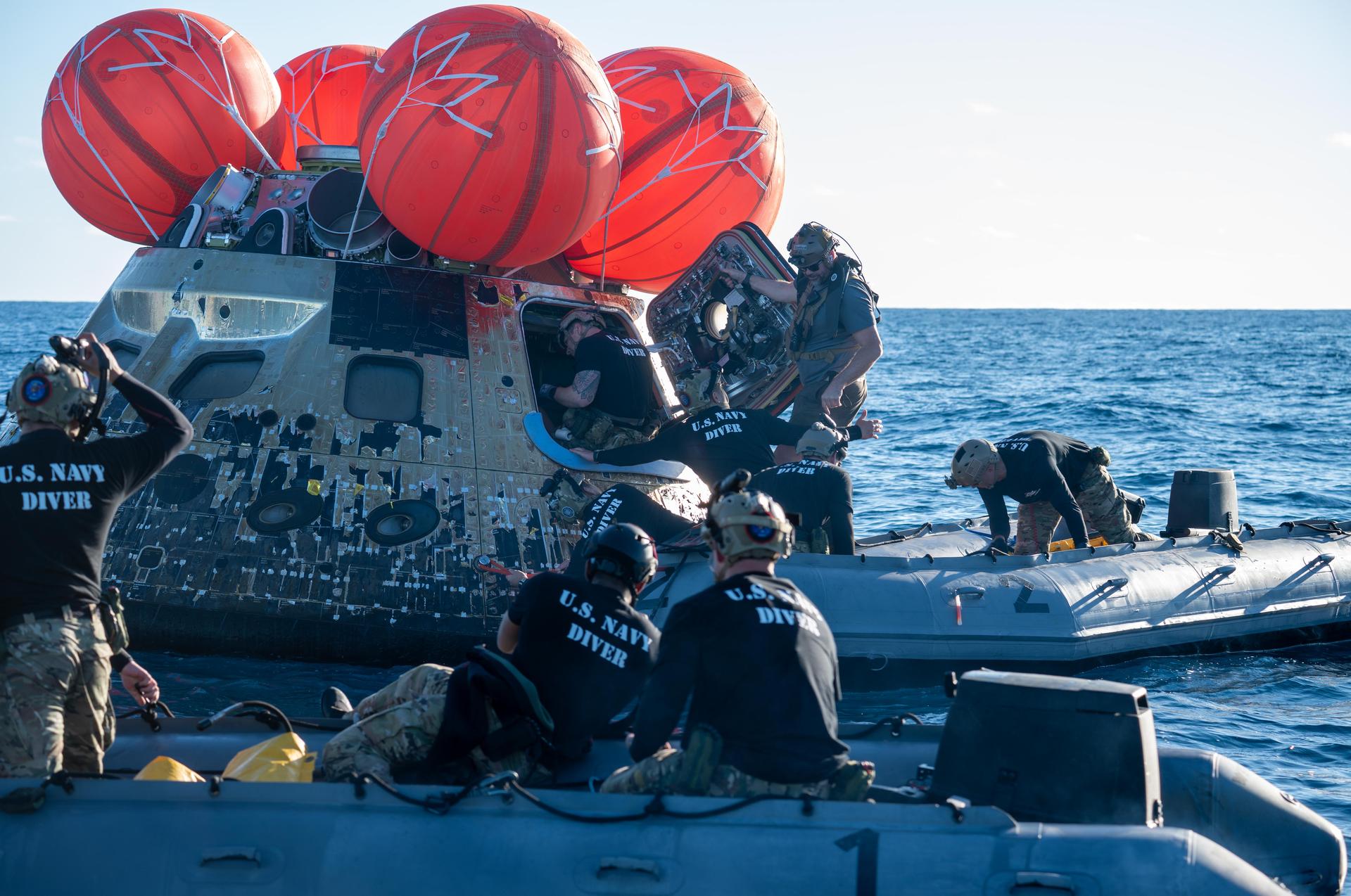
NASA’s Landing and Recovery team, along with U.S. Navy personnel aboard an inflatable raft approach NASA’s Orion spacecraft carrying Artemis II Commander Reid Wiseman, Pilot Victor Glover, and Mission Specialist Christina Koch from NASA, along with Mission Specialist Jeremy Hansen from the CSA (Canadian Space Agency), following splashdown in the Pacific Ocean near San Diego, California, at 5:07 p.m. PDT, (8:07 p.m. EDT) on Friday, April 10, 2026. The Artemis II test flight launched on Wednesday, April 1, from NASA’s Kennedy Space Center in Florida to begin its 10-day journey around the Moon for scientific discovery, economic benefits, and to build on our foundation for the first crewed missions to Mars. NASA’s Landing and Recovery team and the U.S. military are helping the Artemis II crew out of their Orion spacecraft.
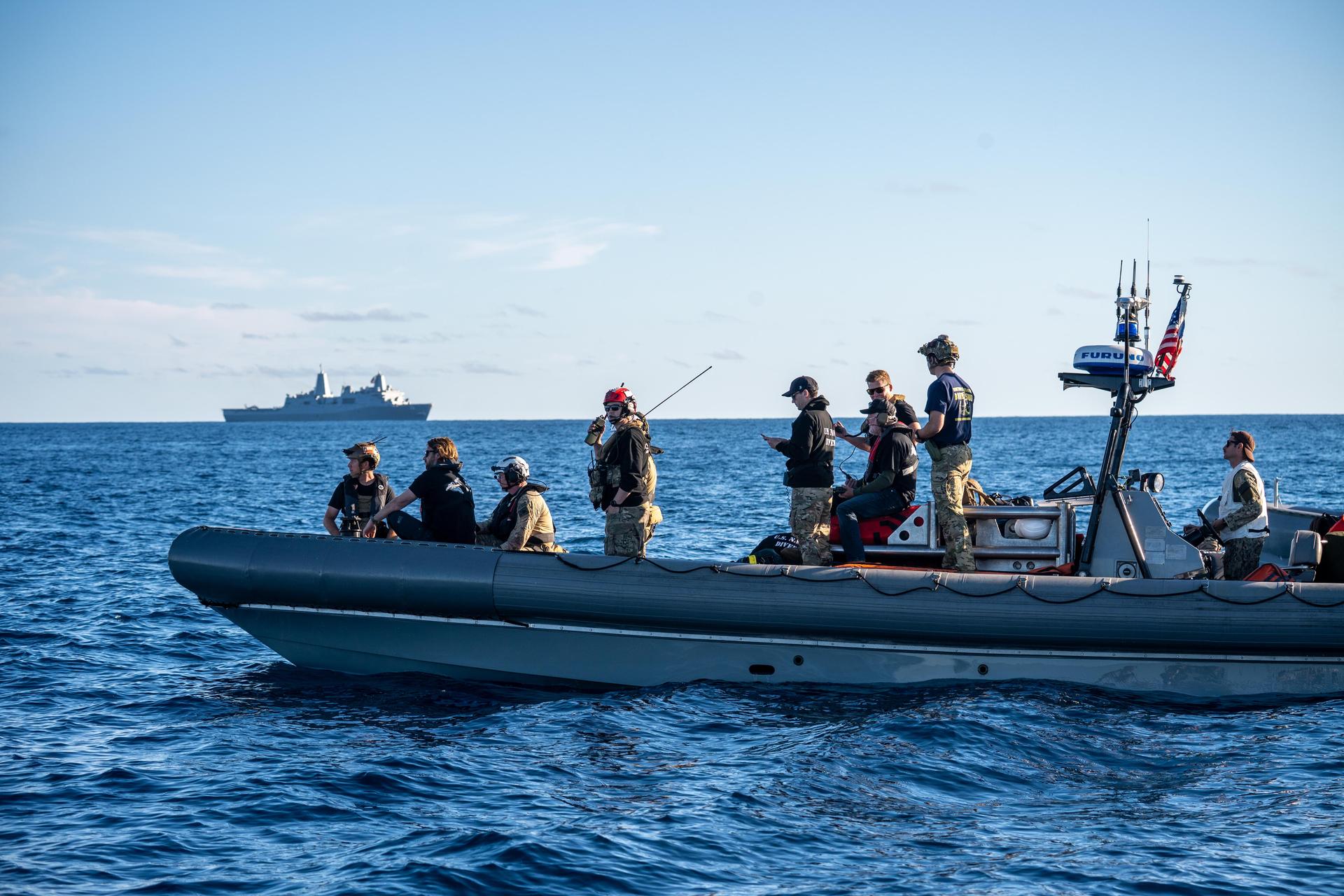
U.S. Navy personnel aboard an inflatable raft help recover NASA's Orion spacecraft following its splashdown in the Pacific Ocean near San Diego, California, at 5:07 p.m. PDT, (8:07 p.m. EDT) on Friday, April 10, 2026, after the Artemis II test flight. The Artemis II mission carrying Artemis II Commander Reid Wiseman, Pilot Victor Glover, and Mission Specialist Christina Koch from NASA, along with Mission Specialist Jeremy Hansen from the CSA (Canadian Space Agency), launched on Wednesday, April 1, from NASA’s Kennedy Space Center in Florida to begin its 10-day journey around the Moon for scientific discovery, economic benefits, and to build on our foundation for the first crewed missions to Mars. NASA’s Landing and Recovery team and the U.S. Navy are coordinating efforts to secure Orion in the well deck of USS John P. Murtha.
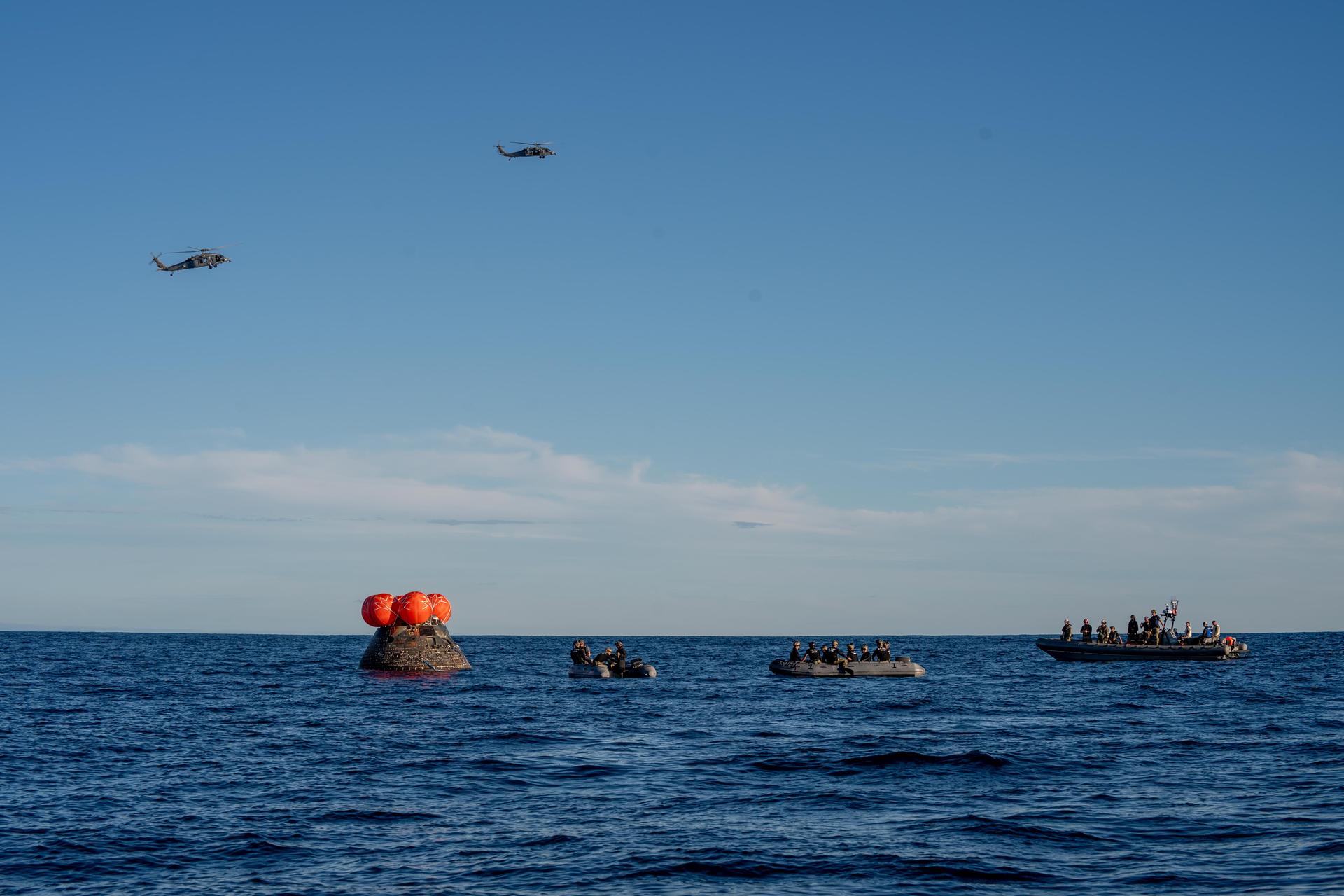
NASA's Orion spacecraft carrying Artemis II Commander Reid Wiseman, Pilot Victor Glover, and Mission Specialist Christina Koch from NASA, along with Mission Specialist Jeremy Hansen from the CSA (Canadian Space Agency), floats in the Pacific Ocean near San Diego, California, at 5:07 p.m. PDT, (8:07 p.m. EDT) on Friday, April 10, 2026. NASA’s Landing and Recovery team and U.S. Navy personnel aboard an inflatable raft, called the front porch, and a H60-S Seahawk helicopter hovers above to communicate Orion’s location back to USS John P. Murtha to coordinate efforts to secure the spacecraft in the well deck of the ship. The Artemis II test flight launched on Wednesday, April 1, from NASA’s Kennedy Space Center in Florida to begin its 10-day journey around the Moon for scientific discovery, economic benefits, and to build on our foundation for the first crewed missions to Mars.
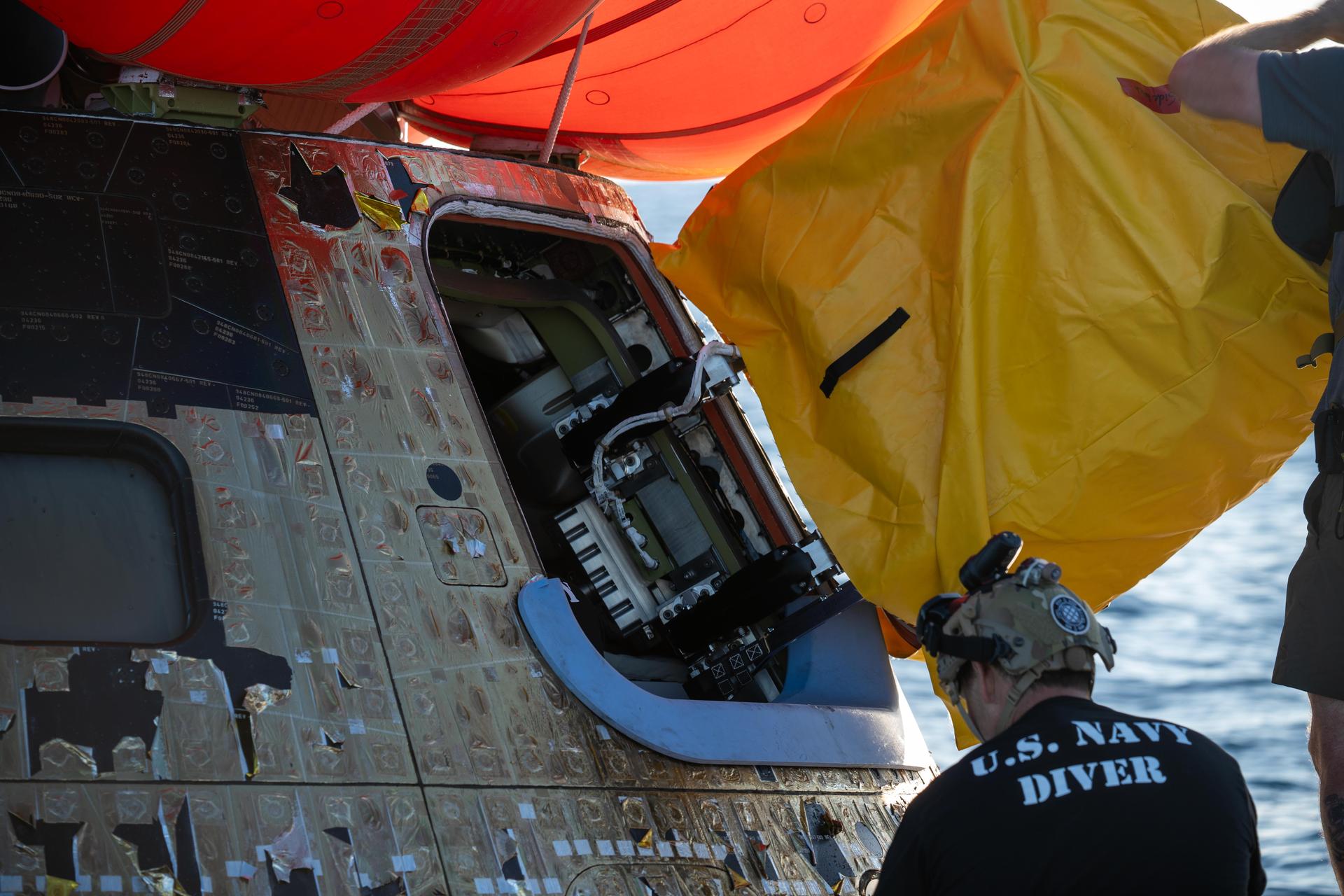
NASA’s Landing and Recovery team, along with U.S. Navy personnel aboard an inflatable raft approach NASA’s Orion spacecraft carrying Artemis II Commander Reid Wiseman, Pilot Victor Glover, and Mission Specialist Christina Koch from NASA, along with Mission Specialist Jeremy Hansen from the CSA (Canadian Space Agency), following splashdown in the Pacific Ocean near San Diego, California, at 5:07 p.m. PDT, (8:07 p.m. EDT) on Friday, April 10, 2026. The Artemis II test flight launched on Wednesday, April 1, from NASA’s Kennedy Space Center in Florida to begin its 10-day journey around the Moon for scientific discovery, economic benefits, and to build on our foundation for the first crewed missions to Mars. NASA’s Landing and Recovery team and the U.S. military are helping the Artemis II crew out of their Orion spacecraft.
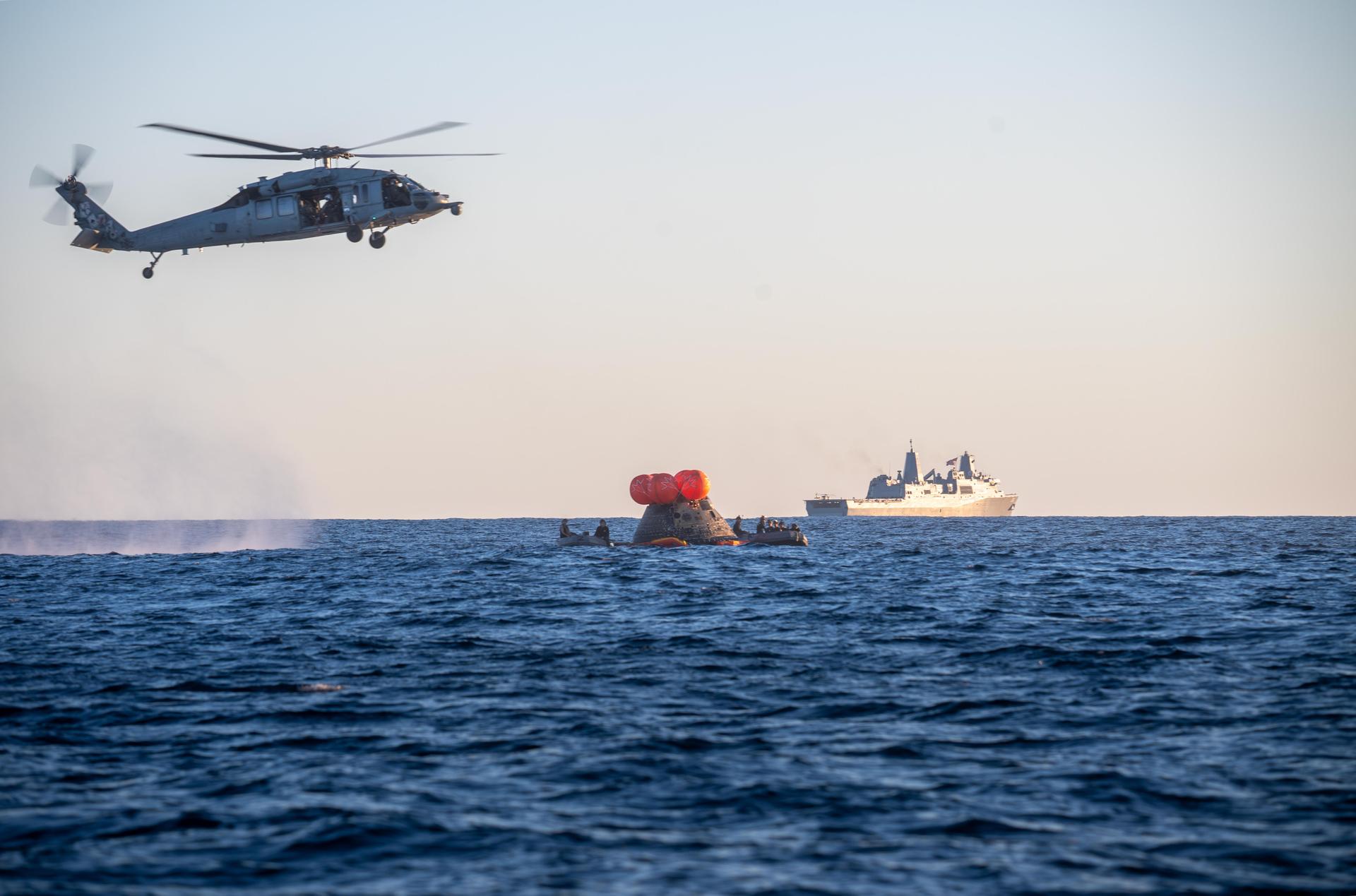
NASA's Orion spacecraft carrying Artemis II Commander Reid Wiseman, Pilot Victor Glover, and Mission Specialist Christina Koch from NASA, along with Mission Specialist Jeremy Hansen from the CSA (Canadian Space Agency), floats in the Pacific Ocean near San Diego, California, at 5:07 p.m. PDT, (8:07 p.m. EDT) on Friday, April 10, 2026. NASA’s Landing and Recovery team and U.S. Navy personnel aboard an inflatable raft, called the front porch, and a H60-S Seahawk helicopter hovers above to communicate Orion’s location back to USS John P. Murtha to coordinate efforts to secure the spacecraft in the well deck of the ship. The Artemis II test flight launched on Wednesday, April 1, from NASA’s Kennedy Space Center in Florida to begin its 10-day journey around the Moon for scientific discovery, economic benefits, and to build on our foundation for the first crewed missions to Mars.
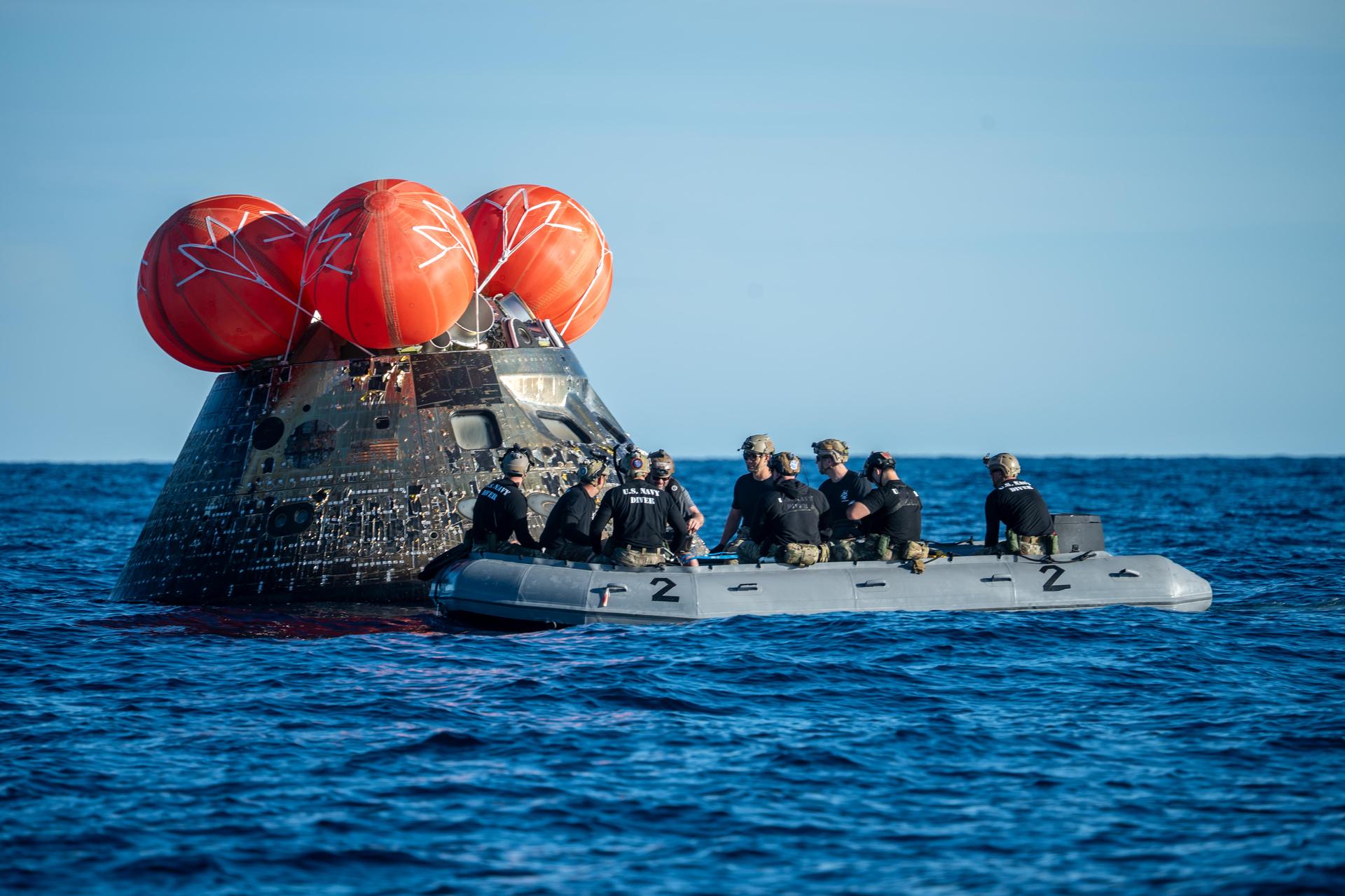
NASA’s Landing and Recovery team, along with U.S. Navy personnel aboard an inflatable raft approach NASA’s Orion spacecraft carrying Artemis II Commander Reid Wiseman, Pilot Victor Glover, and Mission Specialist Christina Koch from NASA, along with Mission Specialist Jeremy Hansen from the CSA (Canadian Space Agency), following splashdown in the Pacific Ocean near San Diego, California, at 5:07 p.m. PDT, (8:07 p.m. EDT) on Friday, April 10, 2026. The Artemis II test flight launched on Wednesday, April 1, from NASA’s Kennedy Space Center in Florida to begin its 10-day journey around the Moon for scientific discovery, economic benefits, and to build on our foundation for the first crewed missions to Mars. NASA’s Landing and Recovery team and the U.S. military are helping the Artemis II crew out of their Orion spacecraft.
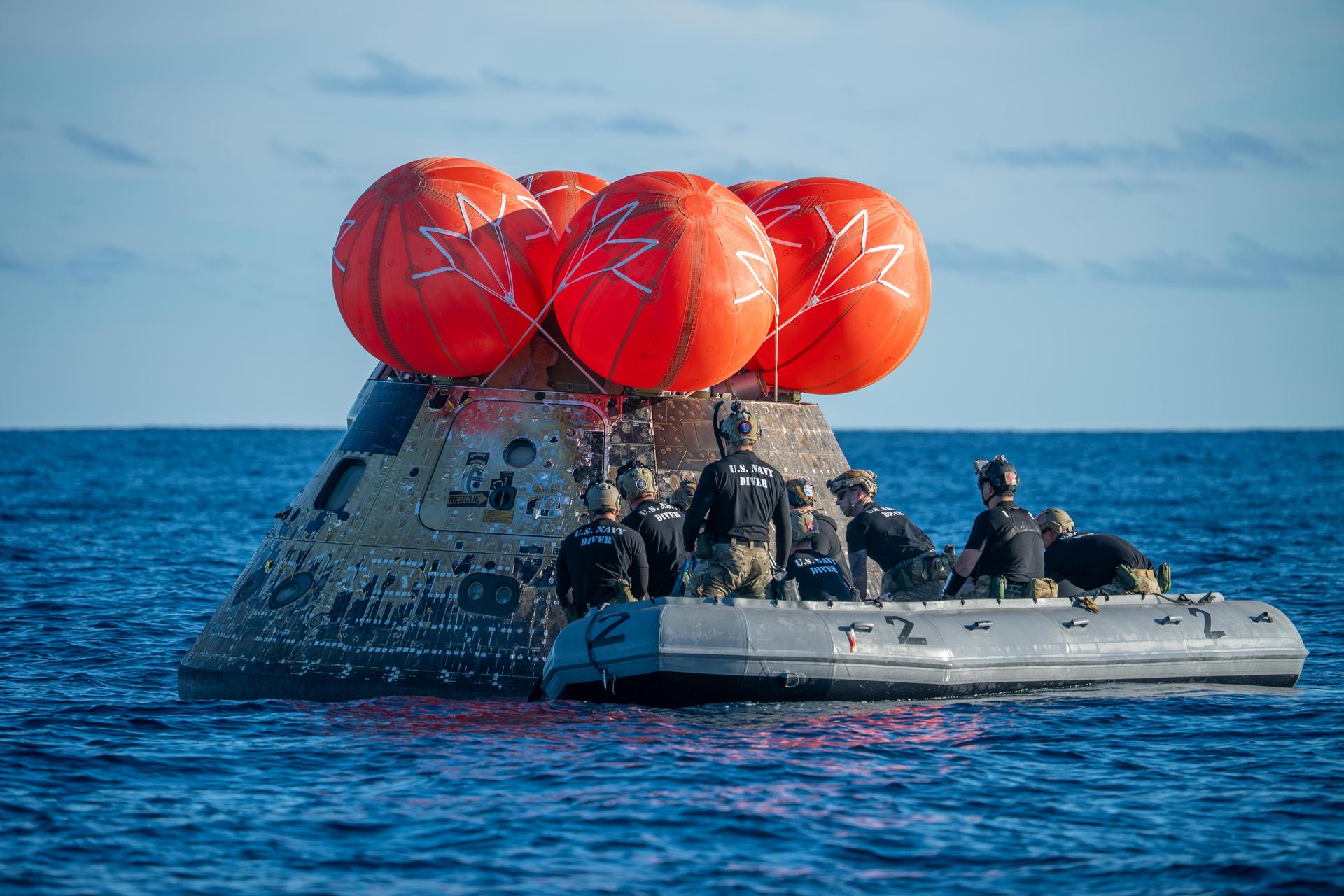
NASA’s Landing and Recovery team, along with U.S. Navy personnel aboard an inflatable raft approach NASA’s Orion spacecraft carrying Artemis II Commander Reid Wiseman, Pilot Victor Glover, and Mission Specialist Christina Koch from NASA, along with Mission Specialist Jeremy Hansen from the CSA (Canadian Space Agency), following splashdown in the Pacific Ocean near San Diego, California, at 5:07 p.m. PDT, (8:07 p.m. EDT) on Friday, April 10, 2026. The Artemis II test flight launched on Wednesday, April 1, from NASA’s Kennedy Space Center in Florida to begin its 10-day journey around the Moon for scientific discovery, economic benefits, and to build on our foundation for the first crewed missions to Mars. NASA’s Landing and Recovery team and the U.S. military are helping the Artemis II crew out of their Orion spacecraft.
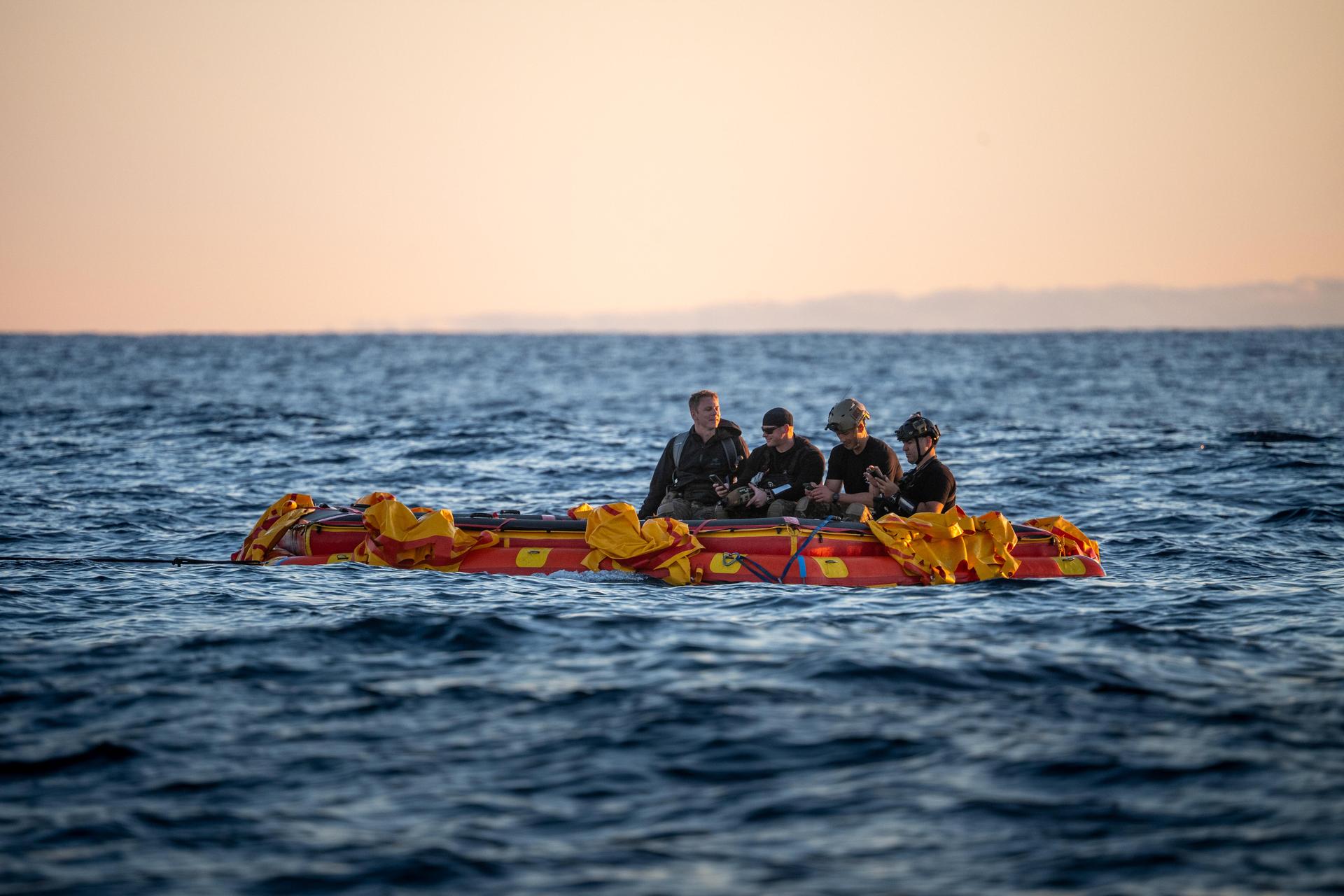
U.S. Navy personnel aboard an inflatable raft, called the front porch, help recover NASA's Orion spacecraft following its splashdown in the Pacific Ocean near San Diego, California, at 5:07 p.m. PDT, (8:07 p.m. EDT) on Friday, April 10, 2026, after the Artemis II test flight. The Artemis II mission carrying Artemis II Commander Reid Wiseman, Pilot Victor Glover, and Mission Specialist Christina Koch from NASA, along with Mission Specialist Jeremy Hansen from the CSA (Canadian Space Agency), launched on Wednesday, April 1, from NASA’s Kennedy Space Center in Florida to begin its 10-day journey around the Moon for scientific discovery, economic benefits, and to build on our foundation for the first crewed missions to Mars. NASA’s Landing and Recovery team and the U.S. Navy are coordinating efforts to secure Orion in the well deck of USS John P. Murtha.
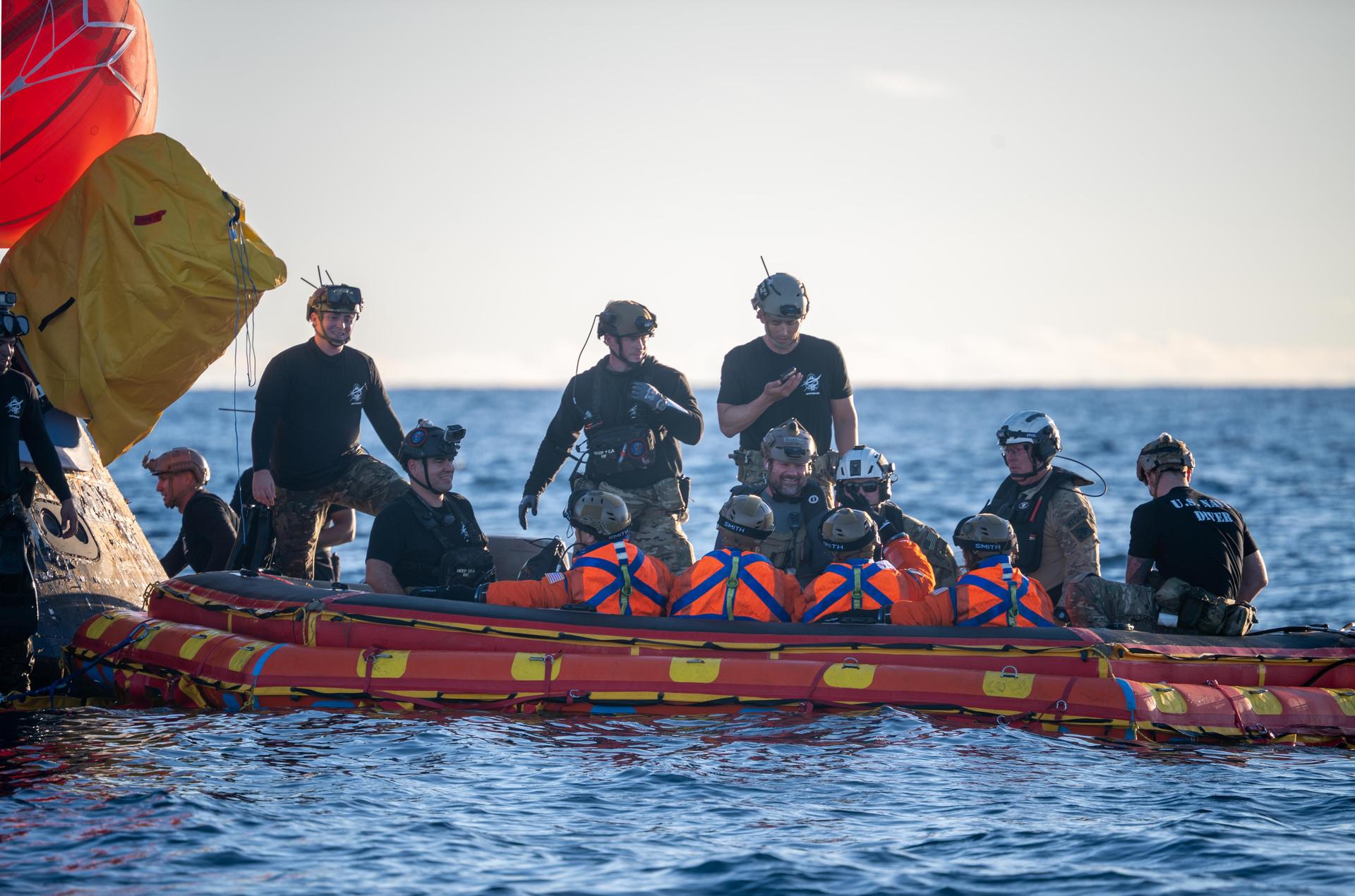
From left to right, Artemis II Commander Reid Wiseman, Mission Specialist Jeremy Hansen from the CSA (Canadian Space Agency), Pilot Victor Glover, and Mission Specialist Christina Koch from NASA, are extracted from NASA’s Orion spacecraft and loaded onto an inflatable raft, called the front porch, following splashdown in the Pacific Ocean near San Diego, California, at 5:07 p.m. PDT, (8:07 p.m. EDT) on Friday, April 10, 2026. The Artemis II crew will be taken to USS John P. Murtha to be routinely examined while NASA’s Landing and Recovery team and the U.S. Navy recover Orion and secure it in the well deck of USS John P. Murtha. The Artemis II test flight launched on Wednesday, April 1, from NASA’s Kennedy Space Center in Florida to begin its 10-day journey around the Moon for scientific discovery, economic benefits, and to build on our foundation for the first crewed missions to Mars.
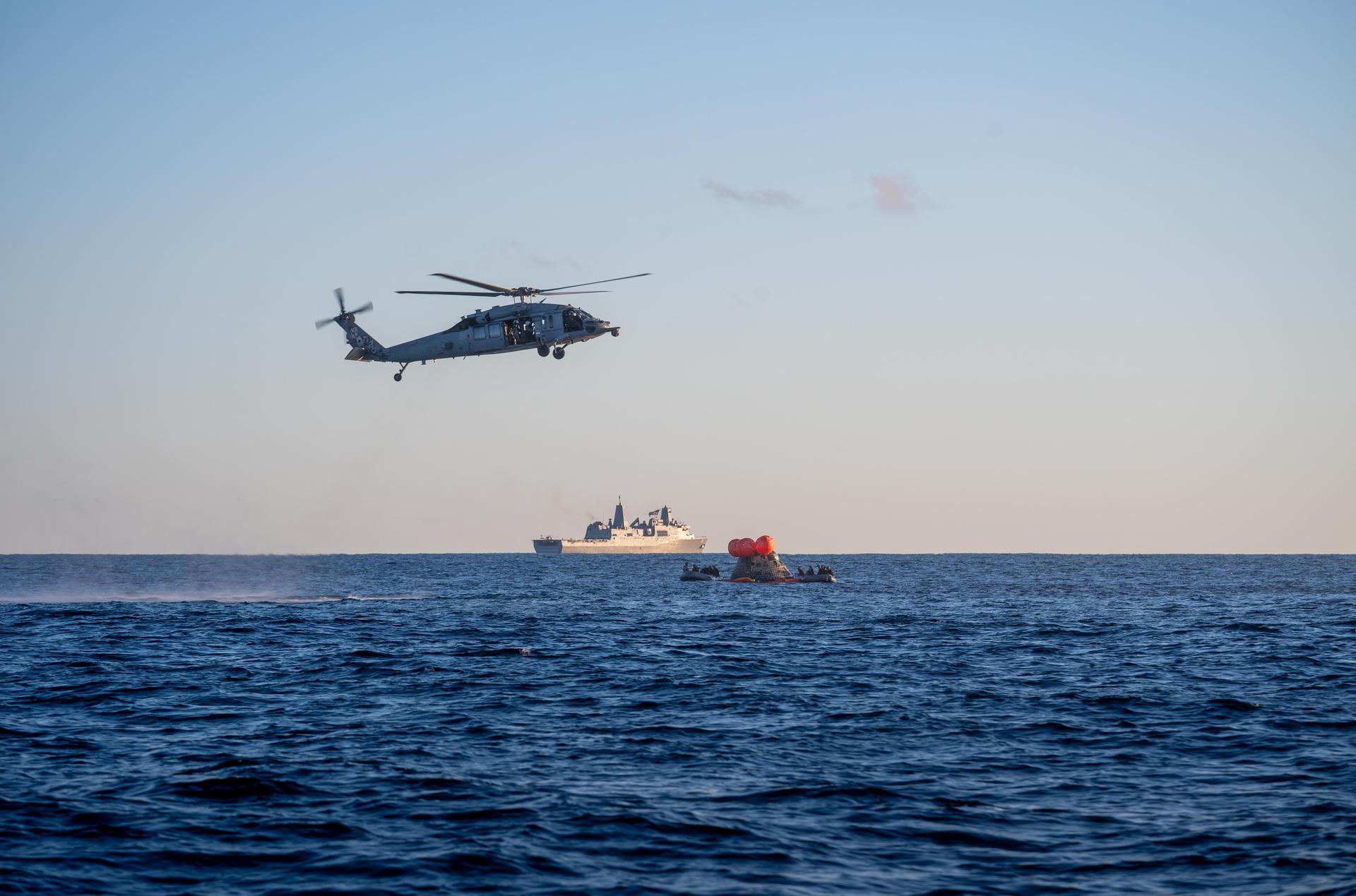
NASA's Orion spacecraft carrying Artemis II Commander Reid Wiseman, Pilot Victor Glover, and Mission Specialist Christina Koch from NASA, along with Mission Specialist Jeremy Hansen from the CSA (Canadian Space Agency), floats in the Pacific Ocean near San Diego, California, at 5:07 p.m. PDT, (8:07 p.m. EDT) on Friday, April 10, 2026. NASA’s Landing and Recovery team and U.S. Navy personnel aboard an inflatable raft, called the front porch, and a H60-S Seahawk helicopter hovers above to communicate Orion’s location back to USS John P. Murtha to coordinate efforts to secure the spacecraft in the well deck of the ship. The Artemis II test flight launched on Wednesday, April 1, from NASA’s Kennedy Space Center in Florida to begin its 10-day journey around the Moon for scientific discovery, economic benefits, and to build on our foundation for the first crewed missions to Mars.
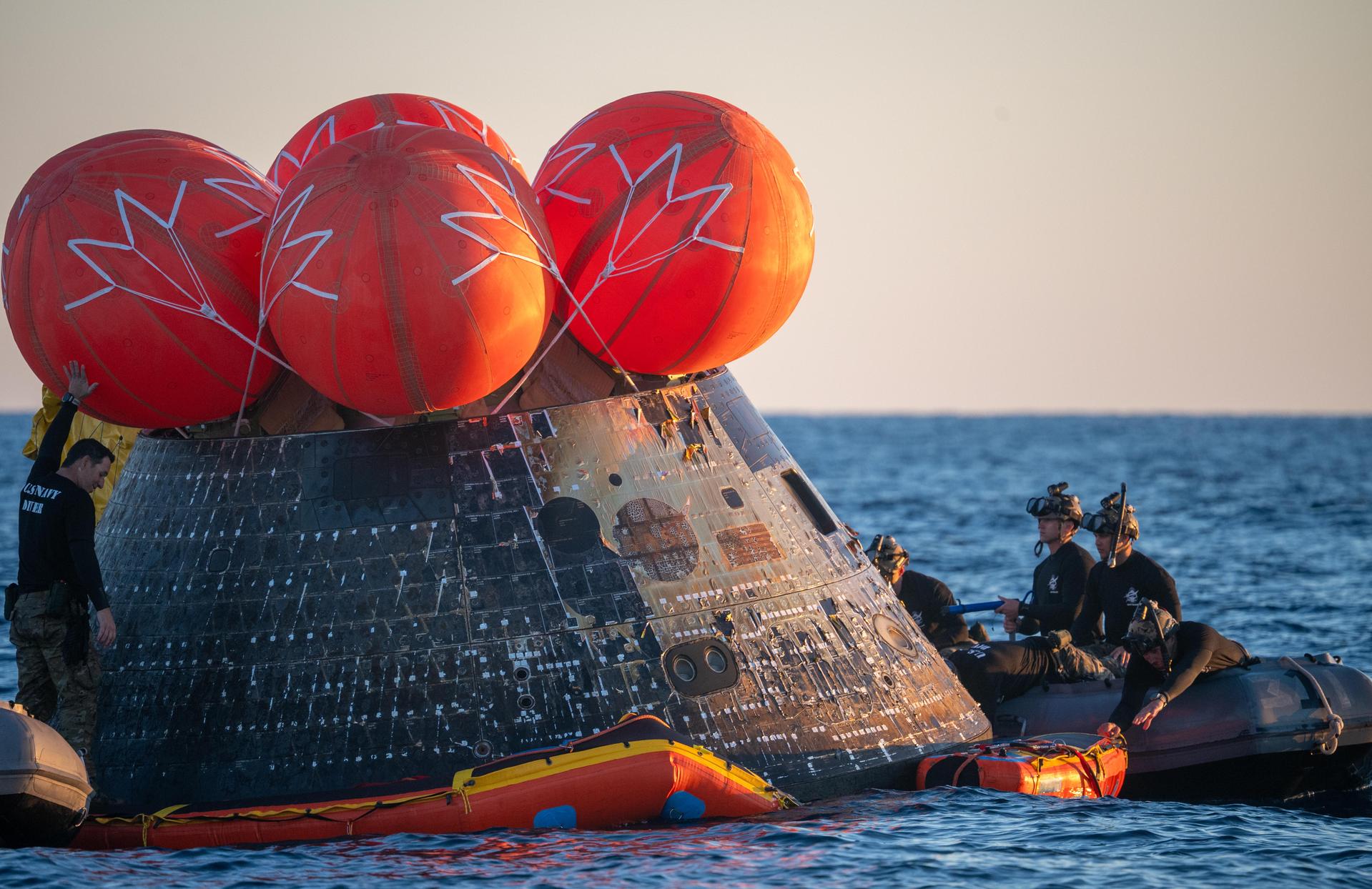
U.S. Navy personnel aboard an inflatable raft, called the front porch, help recover NASA's Orion spacecraft following its splashdown in the Pacific Ocean near San Diego, California, at 5:07 p.m. PDT, (8:07 p.m. EDT) on Friday, April 10, 2026, after the Artemis II test flight. The Artemis II mission carrying Artemis II Commander Reid Wiseman, Pilot Victor Glover, and Mission Specialist Christina Koch from NASA, along with Mission Specialist Jeremy Hansen from the CSA (Canadian Space Agency), launched on Wednesday, April 1, from NASA’s Kennedy Space Center in Florida to begin its 10-day journey around the Moon for scientific discovery, economic benefits, and to build on our foundation for the first crewed missions to Mars. NASA’s Landing and Recovery team and the U.S. Navy are coordinating efforts to secure Orion in the well deck of USS John P. Murtha.
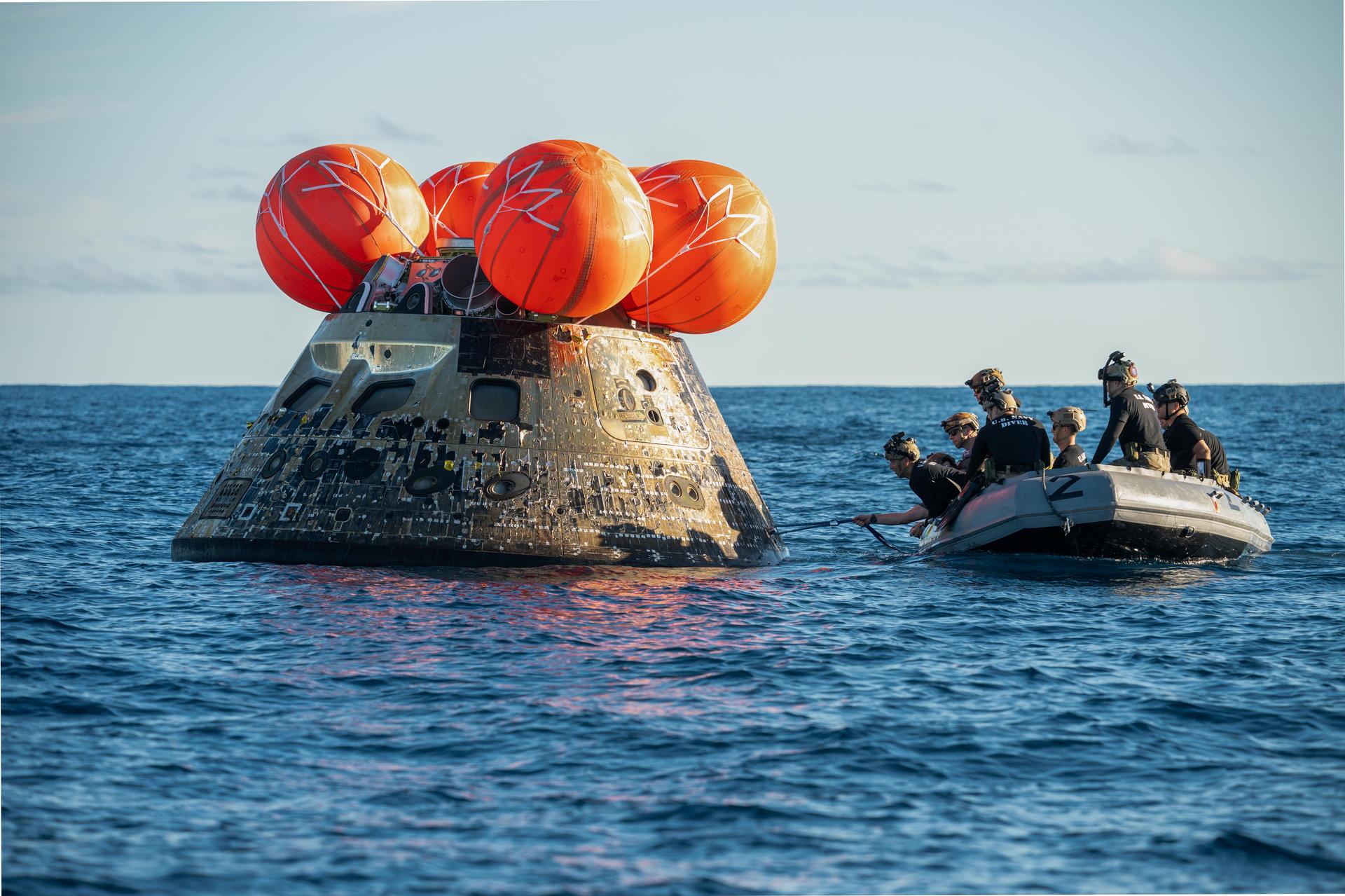
NASA’s Landing and Recovery team, along with U.S. Navy personnel aboard an inflatable raft approach NASA’s Orion spacecraft carrying Artemis II Commander Reid Wiseman, Pilot Victor Glover, and Mission Specialist Christina Koch from NASA, along with Mission Specialist Jeremy Hansen from the CSA (Canadian Space Agency), following splashdown in the Pacific Ocean near San Diego, California, at 5:07 p.m. PDT, (8:07 p.m. EDT) on Friday, April 10, 2026. The Artemis II test flight launched on Wednesday, April 1, from NASA’s Kennedy Space Center in Florida to begin its 10-day journey around the Moon for scientific discovery, economic benefits, and to build on our foundation for the first crewed missions to Mars. NASA’s Landing and Recovery team and the U.S. military are helping the Artemis II crew out of their Orion spacecraft.
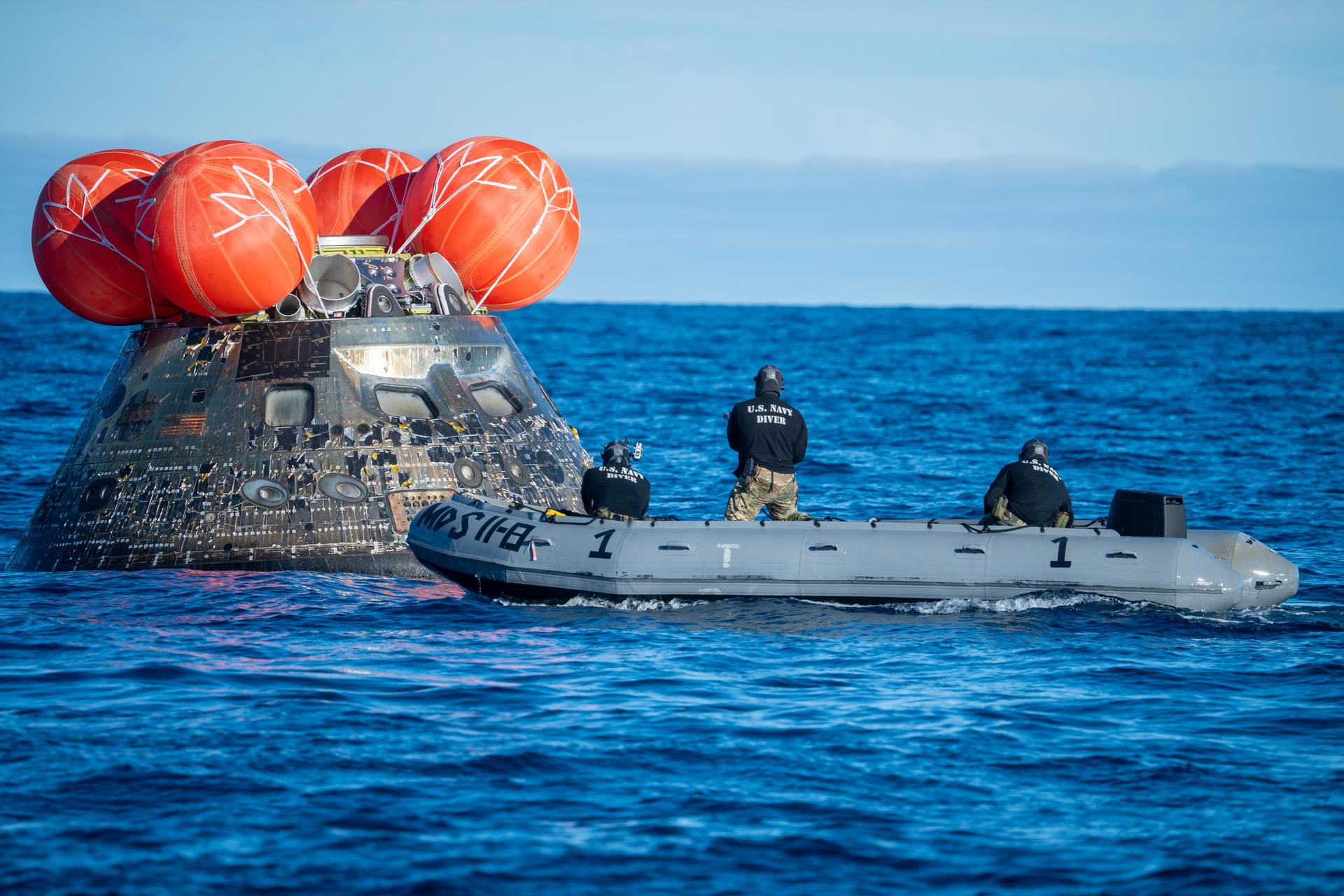
NASA’s Landing and Recovery team, along with U.S. Navy personnel aboard an inflatable raft approach NASA’s Orion spacecraft carrying Artemis II Commander Reid Wiseman, Pilot Victor Glover, and Mission Specialist Christina Koch from NASA, along with Mission Specialist Jeremy Hansen from the CSA (Canadian Space Agency), following splashdown in the Pacific Ocean near San Diego, California, at 5:07 p.m. PDT, (8:07 p.m. EDT) on Friday, April 10, 2026. The Artemis II test flight launched on Wednesday, April 1, from NASA’s Kennedy Space Center in Florida to begin its 10-day journey around the Moon for scientific discovery, economic benefits, and to build on our foundation for the first crewed missions to Mars. NASA’s Landing and Recovery team and the U.S. military are helping the Artemis II crew out of their Orion spacecraft.
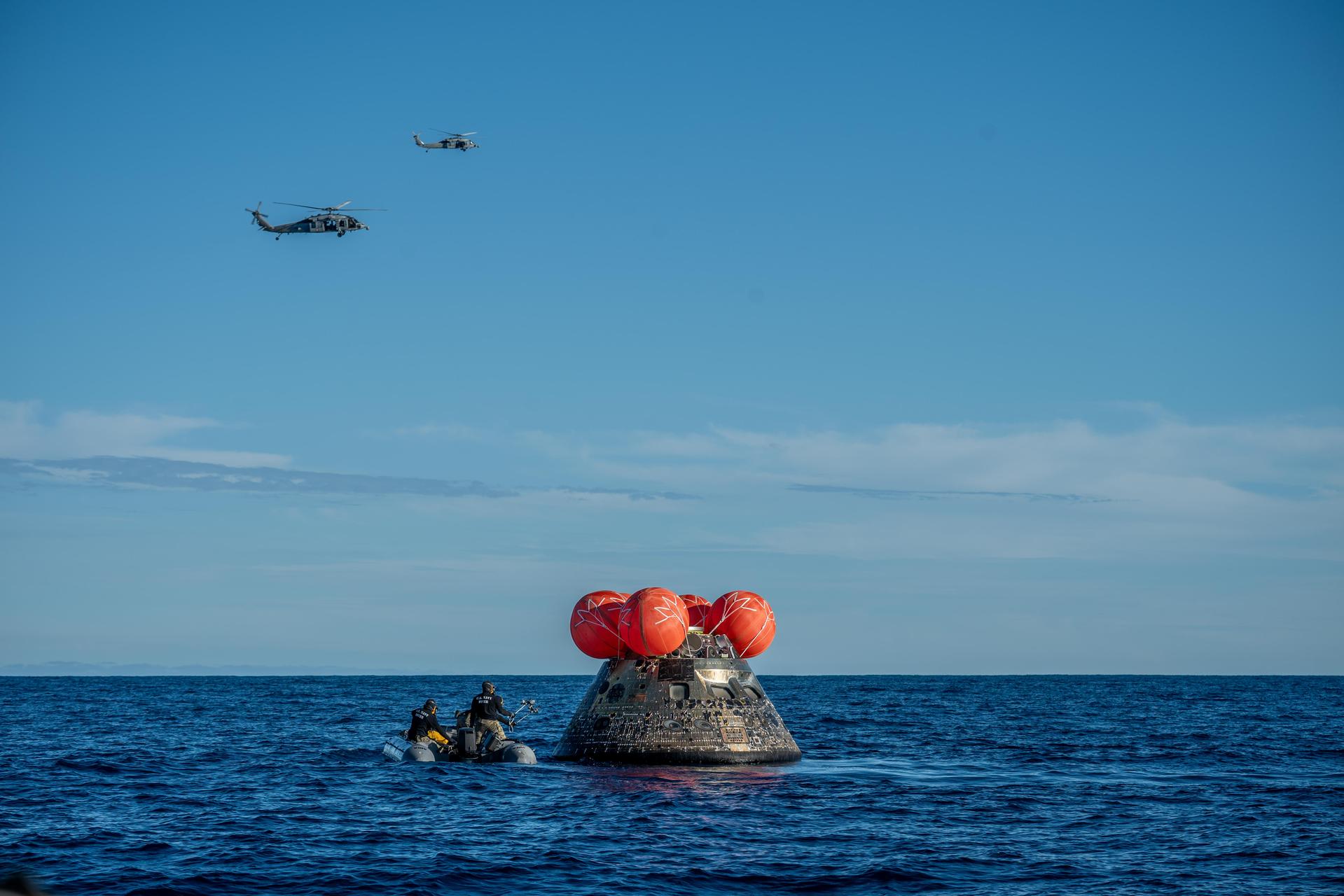
NASA's Orion spacecraft carrying Artemis II Commander Reid Wiseman, Pilot Victor Glover, and Mission Specialist Christina Koch from NASA, along with Mission Specialist Jeremy Hansen from the CSA (Canadian Space Agency), floats in the Pacific Ocean near San Diego, California, at 5:07 p.m. PDT, (8:07 p.m. EDT) on Friday, April 10, 2026. NASA’s Landing and Recovery team and U.S. Navy personnel aboard an inflatable raft and a H60-S Seahawk helicopter hovers above to communicate Orion’s location back to USS John P. Murtha to coordinate efforts to secure the spacecraft in the well deck of the ship. The Artemis II test flight launched on Wednesday, April 1, from NASA’s Kennedy Space Center in Florida to begin its 10-day journey around the Moon for scientific discovery, economic benefits, and to build on our foundation for the first crewed missions to Mars.
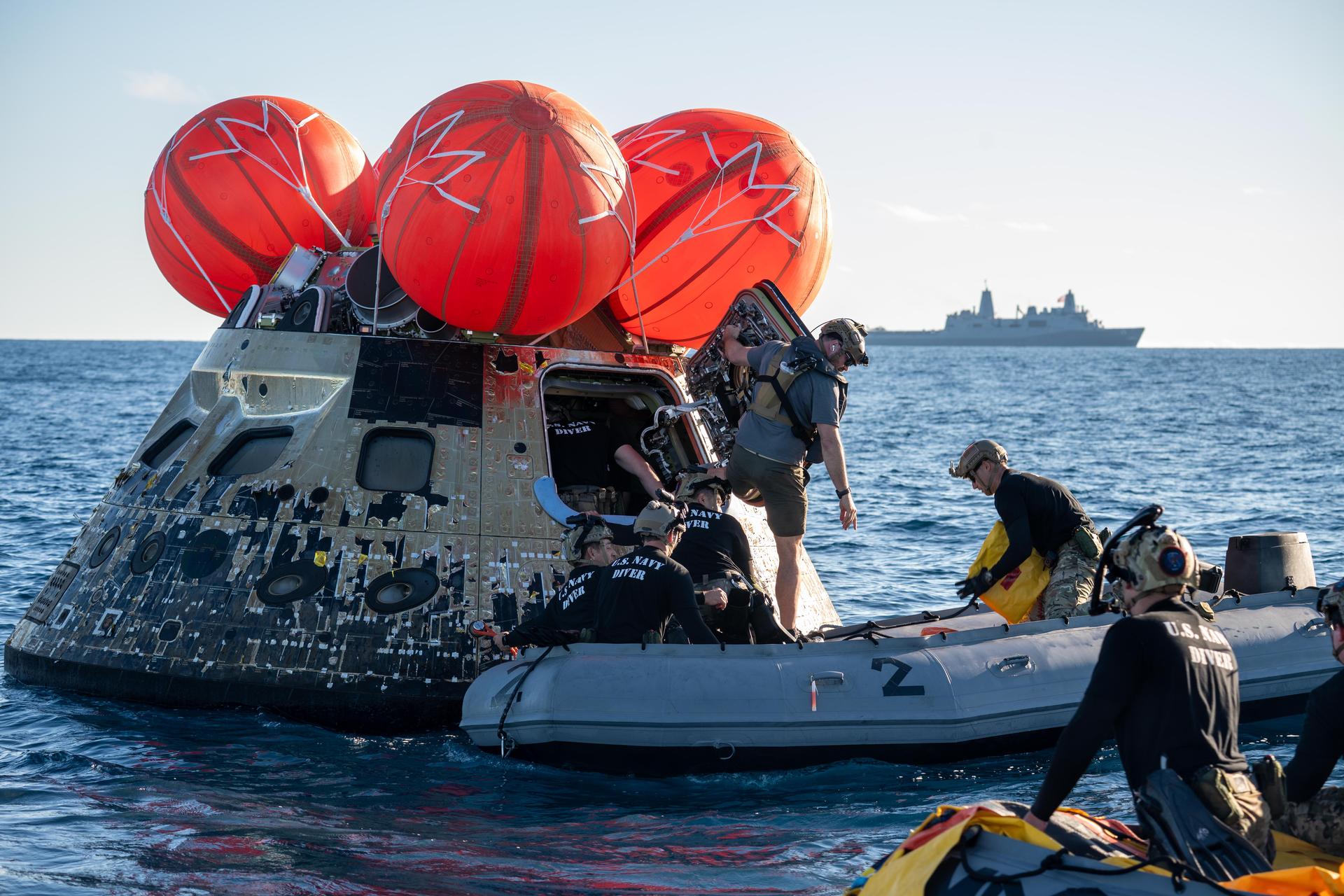
NASA’s Landing and Recovery team, along with U.S. Navy personnel aboard an inflatable raft approach NASA’s Orion spacecraft carrying Artemis II Commander Reid Wiseman, Pilot Victor Glover, and Mission Specialist Christina Koch from NASA, along with Mission Specialist Jeremy Hansen from the CSA (Canadian Space Agency), following splashdown in the Pacific Ocean near San Diego, California, at 5:07 p.m. PDT, (8:07 p.m. EDT) on Friday, April 10, 2026. The Artemis II test flight launched on Wednesday, April 1, from NASA’s Kennedy Space Center in Florida to begin its 10-day journey around the Moon for scientific discovery, economic benefits, and to build on our foundation for the first crewed missions to Mars. NASA’s Landing and Recovery team and the U.S. military are helping the Artemis II crew out of their Orion spacecraft.
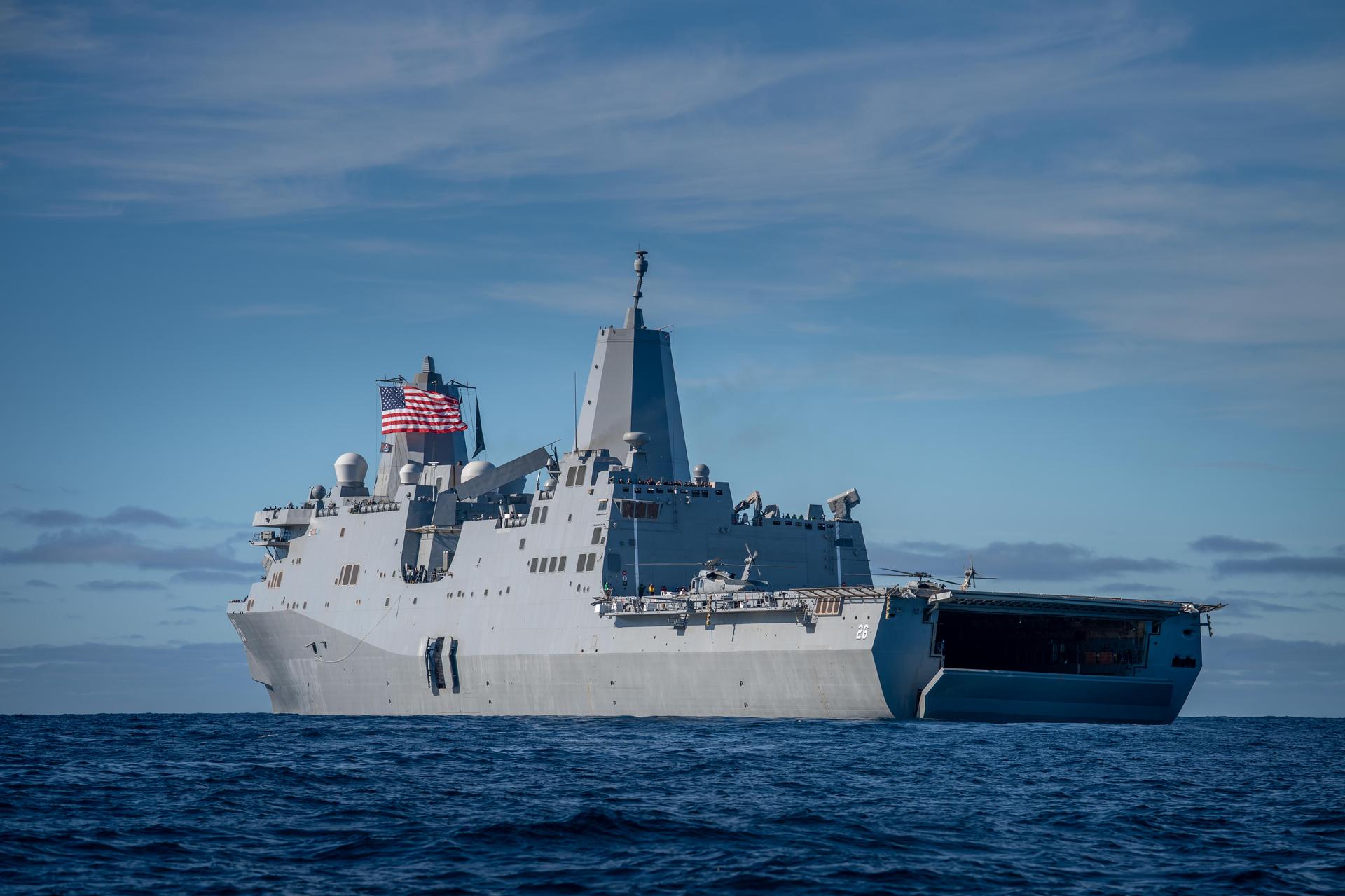
USS John P. Murtha approaches NASA's Orion spacecraft carrying Artemis II Commander Reid Wiseman, Pilot Victor Glover, and Mission Specialist Christina Koch from NASA, along with Mission Specialist Jeremy Hansen from the CSA (Canadian Space Agency), following splashdown in the Pacific Ocean near San Diego, California, at 5:07 p.m. PDT, (8:07 p.m. EDT) on Friday, April 10, 2026. The Artemis II test flight launched on Wednesday, April 1, from NASA’s Kennedy Space Center in Florida to begin its 10-day journey around the Moon for scientific discovery, economic benefits, and to build on our foundation for the first crewed missions to Mars. NASA’s Landing and Recovery team and the U.S. military are coordinating efforts to extract the Artemis II crew from the Orion spacecraft.
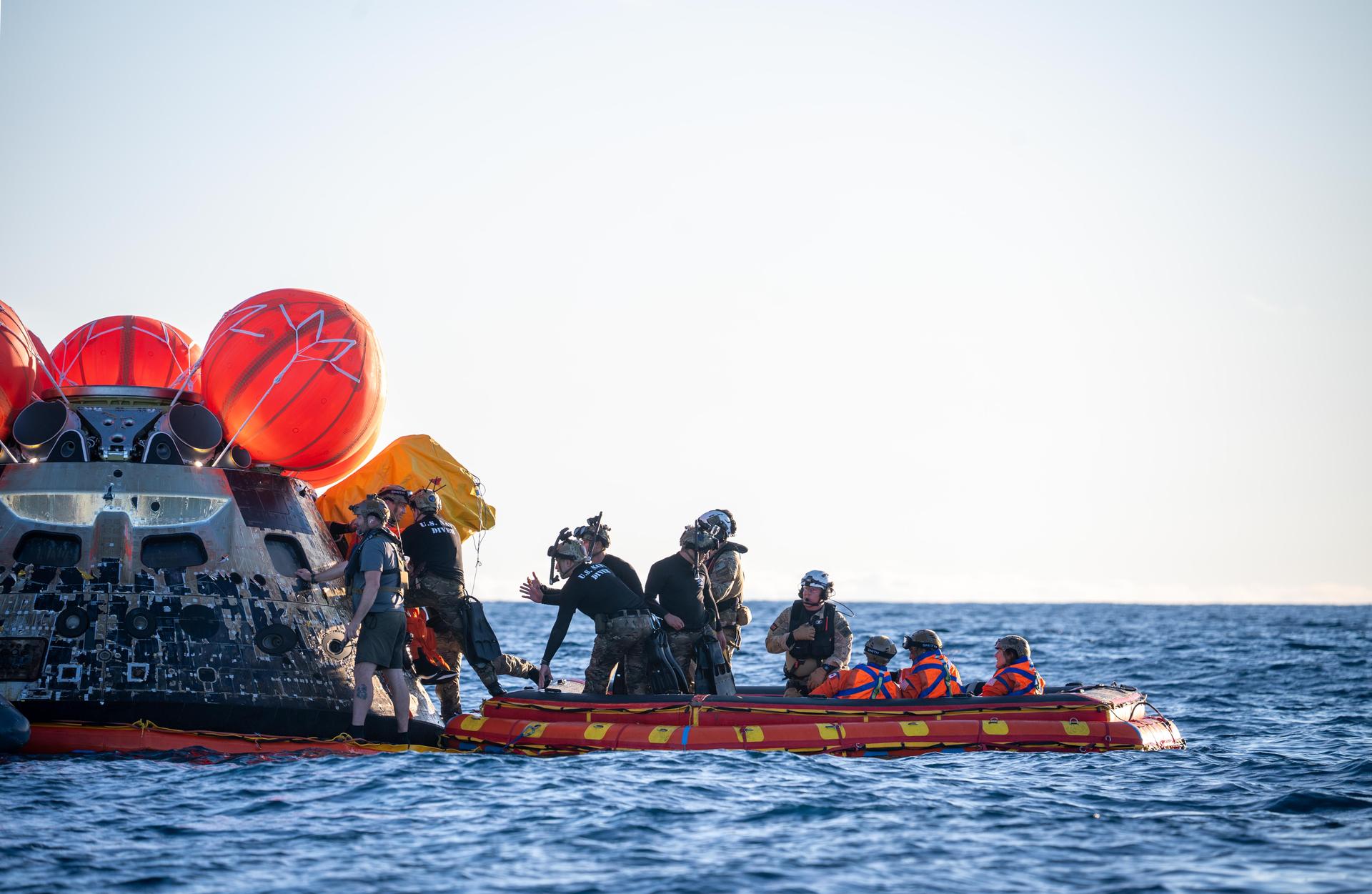
Artemis II Commander Reid Wiseman, from NASA, is extracted from NASA’s Orion spacecraft and loaded onto an inflatable raft, called the front porch, following splashdown in the Pacific Ocean near San Diego, California, at 5:07 p.m. PDT, (8:07 p.m. EDT) on Friday, April 10, 2026. Koch and the other Artemis II crew will be taken to USS John P. Murtha to be routinely examined while NASA’s Landing and Recovery team and the U.S. Navy recover Orion and secure it in the well deck of the USS John P. Murtha. The Artemis II test flight launched on Wednesday, April 1, from NASA’s Kennedy Space Center in Florida to begin its 10-day journey around the Moon for scientific discovery, economic benefits, and to build on our foundation for the first crewed missions to Mars.
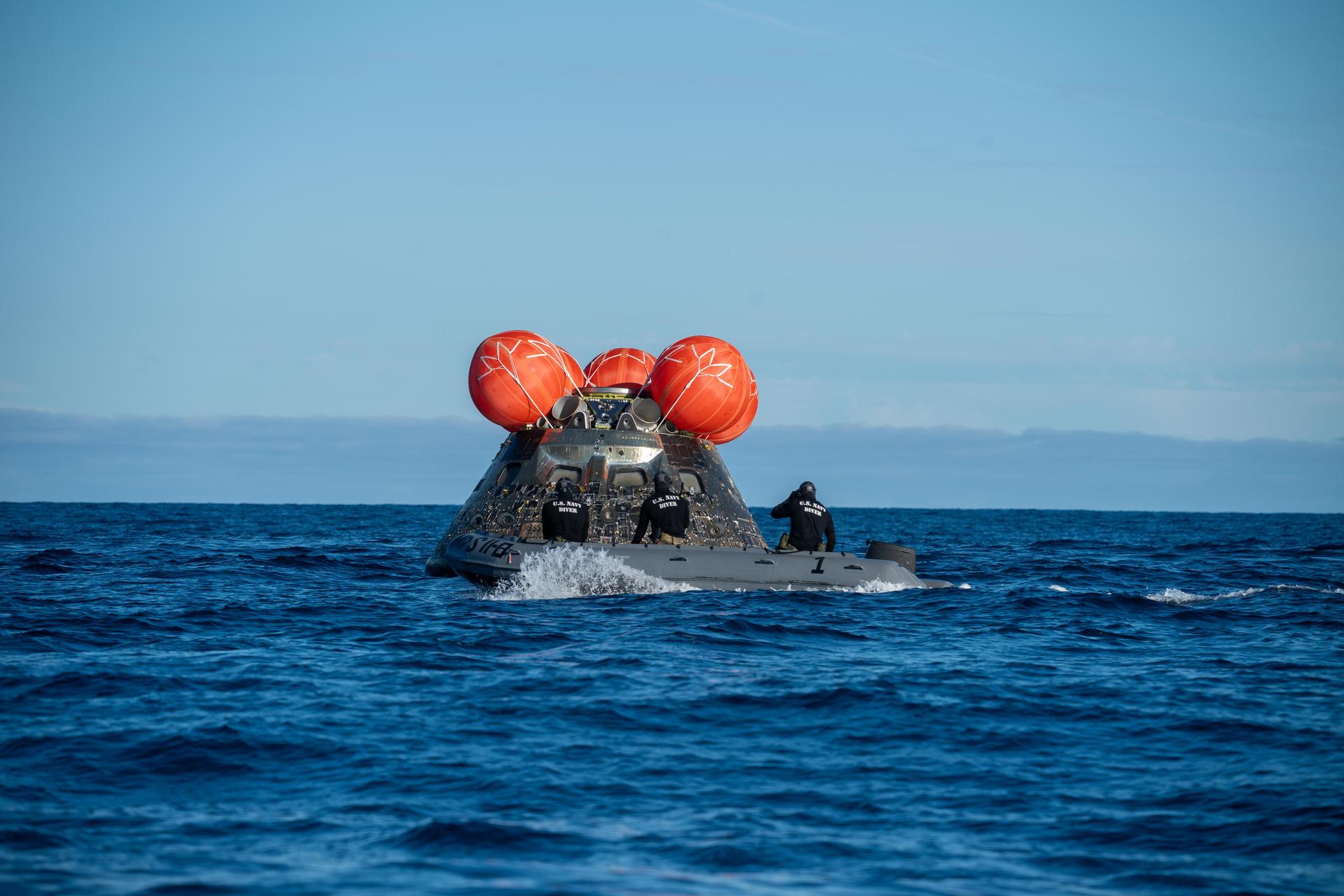
NASA’s Landing and Recovery team, along with U.S. Navy personnel aboard an inflatable raft approach NASA’s Orion spacecraft carrying Artemis II Commander Reid Wiseman, Pilot Victor Glover, and Mission Specialist Christina Koch from NASA, along with Mission Specialist Jeremy Hansen from the CSA (Canadian Space Agency), following splashdown in the Pacific Ocean near San Diego, California, at 5:07 p.m. PDT, (8:07 p.m. EDT) on Friday, April 10, 2026. The Artemis II test flight launched on Wednesday, April 1, from NASA’s Kennedy Space Center in Florida to begin its 10-day journey around the Moon for scientific discovery, economic benefits, and to build on our foundation for the first crewed missions to Mars. NASA’s Landing and Recovery team and the U.S. military are helping the Artemis II crew out of their Orion spacecraft.
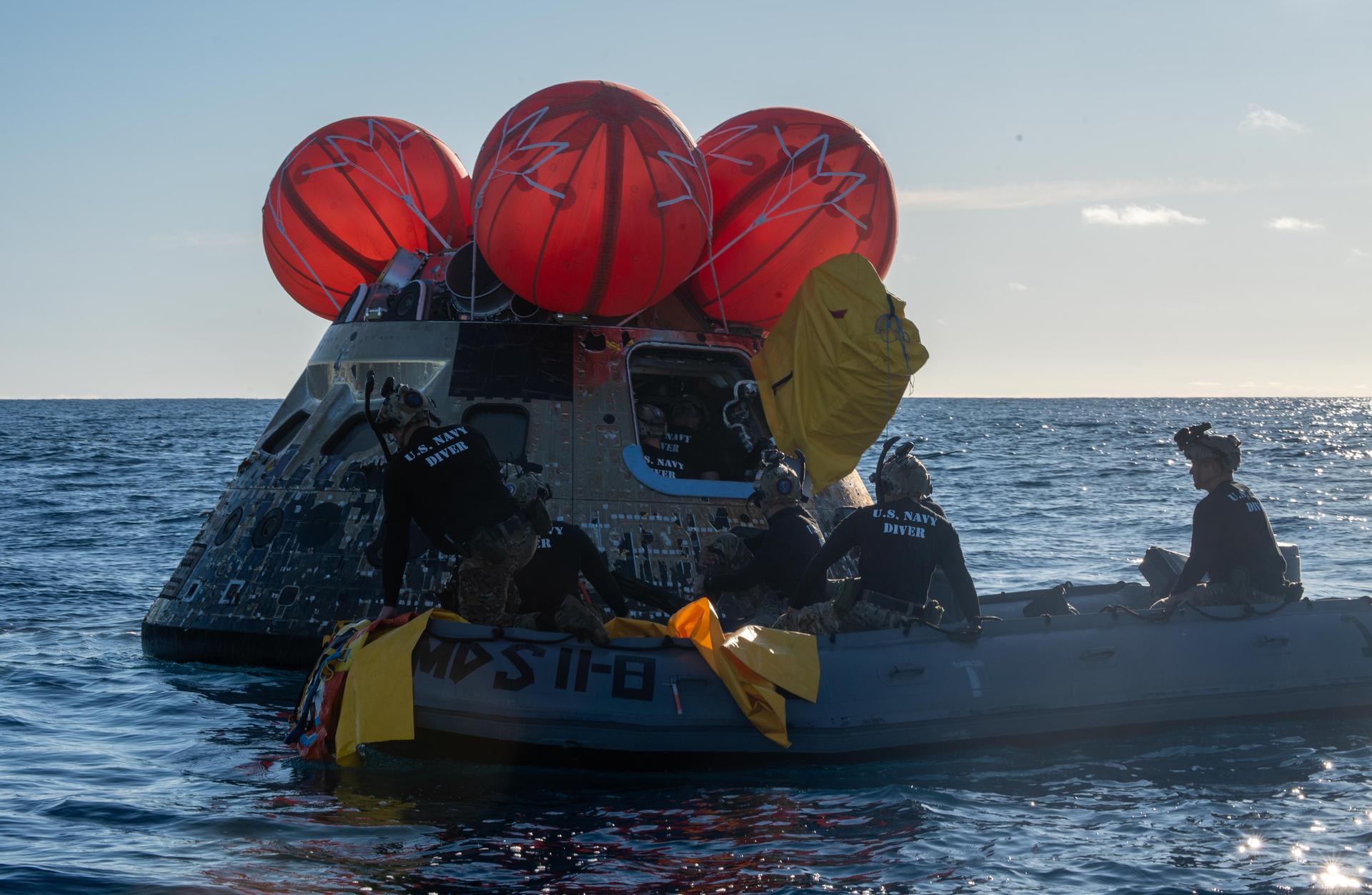
NASA’s Landing and Recovery team, along with U.S. Navy personnel aboard an inflatable raft approach NASA’s Orion spacecraft carrying Artemis II Commander Reid Wiseman, Pilot Victor Glover, and Mission Specialist Christina Koch from NASA, along with Mission Specialist Jeremy Hansen from the CSA (Canadian Space Agency), following splashdown in the Pacific Ocean near San Diego, California, at 5:07 p.m. PDT, (8:07 p.m. EDT) on Friday, April 10, 2026. The Artemis II test flight launched on Wednesday, April 1, from NASA’s Kennedy Space Center in Florida to begin its 10-day journey around the Moon for scientific discovery, economic benefits, and to build on our foundation for the first crewed missions to Mars. NASA’s Landing and Recovery team and the U.S. military are helping the Artemis II crew out of their Orion spacecraft.
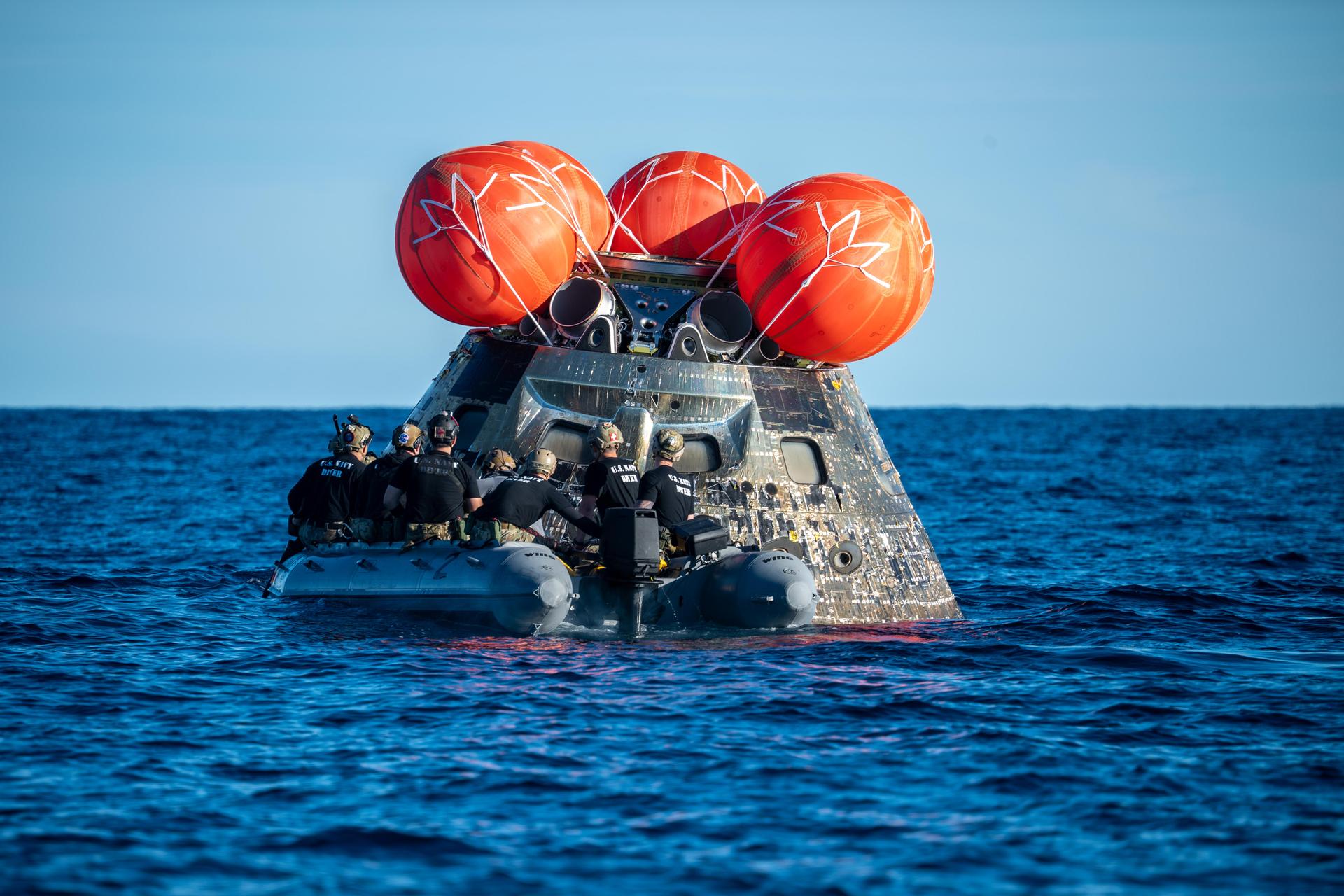
NASA’s Landing and Recovery team, along with U.S. Navy personnel aboard an inflatable raft approach NASA’s Orion spacecraft carrying Artemis II Commander Reid Wiseman, Pilot Victor Glover, and Mission Specialist Christina Koch from NASA, along with Mission Specialist Jeremy Hansen from the CSA (Canadian Space Agency), following splashdown in the Pacific Ocean near San Diego, California, at 5:07 p.m. PDT, (8:07 p.m. EDT) on Friday, April 10, 2026. The Artemis II test flight launched on Wednesday, April 1, from NASA’s Kennedy Space Center in Florida to begin its 10-day journey around the Moon for scientific discovery, economic benefits, and to build on our foundation for the first crewed missions to Mars. NASA’s Landing and Recovery team and the U.S. military are helping the Artemis II crew out of their Orion spacecraft.
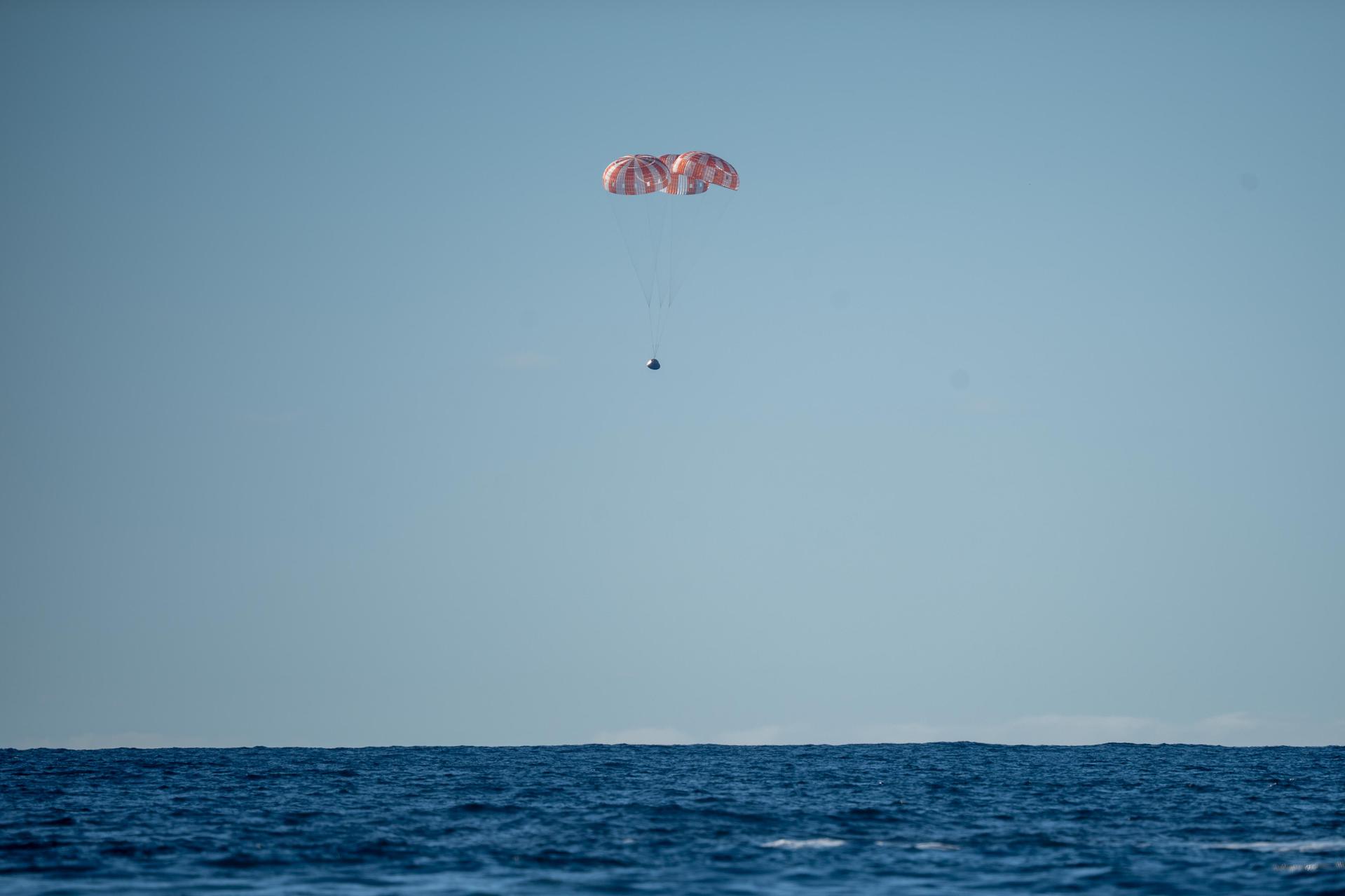
Parachutes secured to NASA’s Orion spacecraft deploy before splashdown in the Pacific Ocean near San Diego, California, on Friday, April 10, 2026, for the Artemis II test flight. The Artemis II mission carrying Artemis II Commander Reid Wiseman, Pilot Victor Glover, and Mission Specialist Christina Koch from NASA, along with Mission Specialist Jeremy Hansen from the CSA (Canadian Space Agency), launched on Wednesday, April 1, from NASA’s Kennedy Space Center in Florida to begin its 10-day journey around the Moon for scientific discovery, economic benefits, and to build on our foundation for the first crewed missions to Mars. NASA’s Landing and Recovery team and the U.S. military are coordinating efforts to extract the Artemis II crew from Orion.
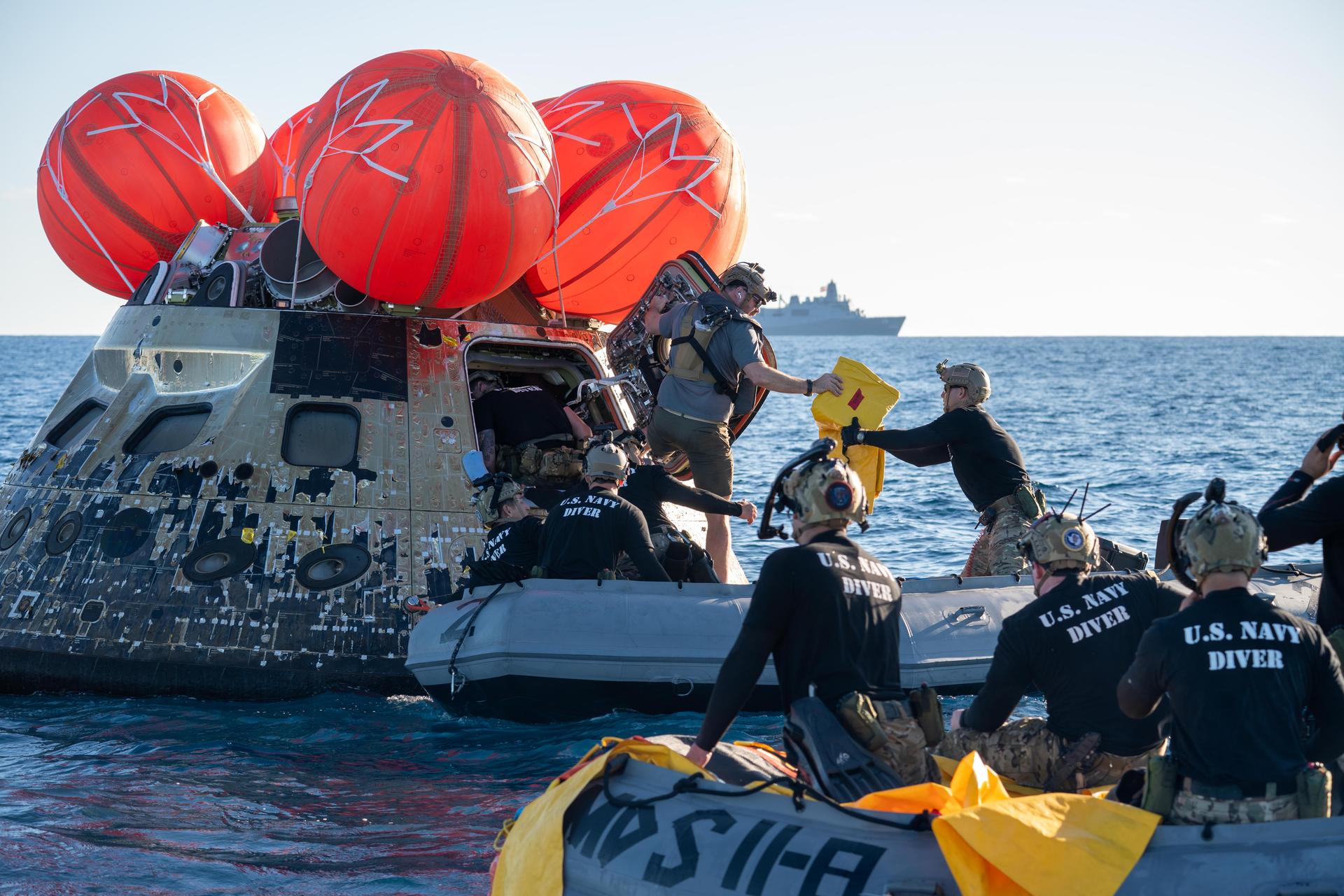
NASA’s Landing and Recovery team, along with U.S. Navy personnel aboard an inflatable raft approach NASA’s Orion spacecraft carrying Artemis II Commander Reid Wiseman, Pilot Victor Glover, and Mission Specialist Christina Koch from NASA, along with Mission Specialist Jeremy Hansen from the CSA (Canadian Space Agency), following splashdown in the Pacific Ocean near San Diego, California, at 5:07 p.m. PDT, (8:07 p.m. EDT) on Friday, April 10, 2026. The Artemis II test flight launched on Wednesday, April 1, from NASA’s Kennedy Space Center in Florida to begin its 10-day journey around the Moon for scientific discovery, economic benefits, and to build on our foundation for the first crewed missions to Mars. NASA’s Landing and Recovery team and the U.S. military are helping the Artemis II crew out of their Orion spacecraft.
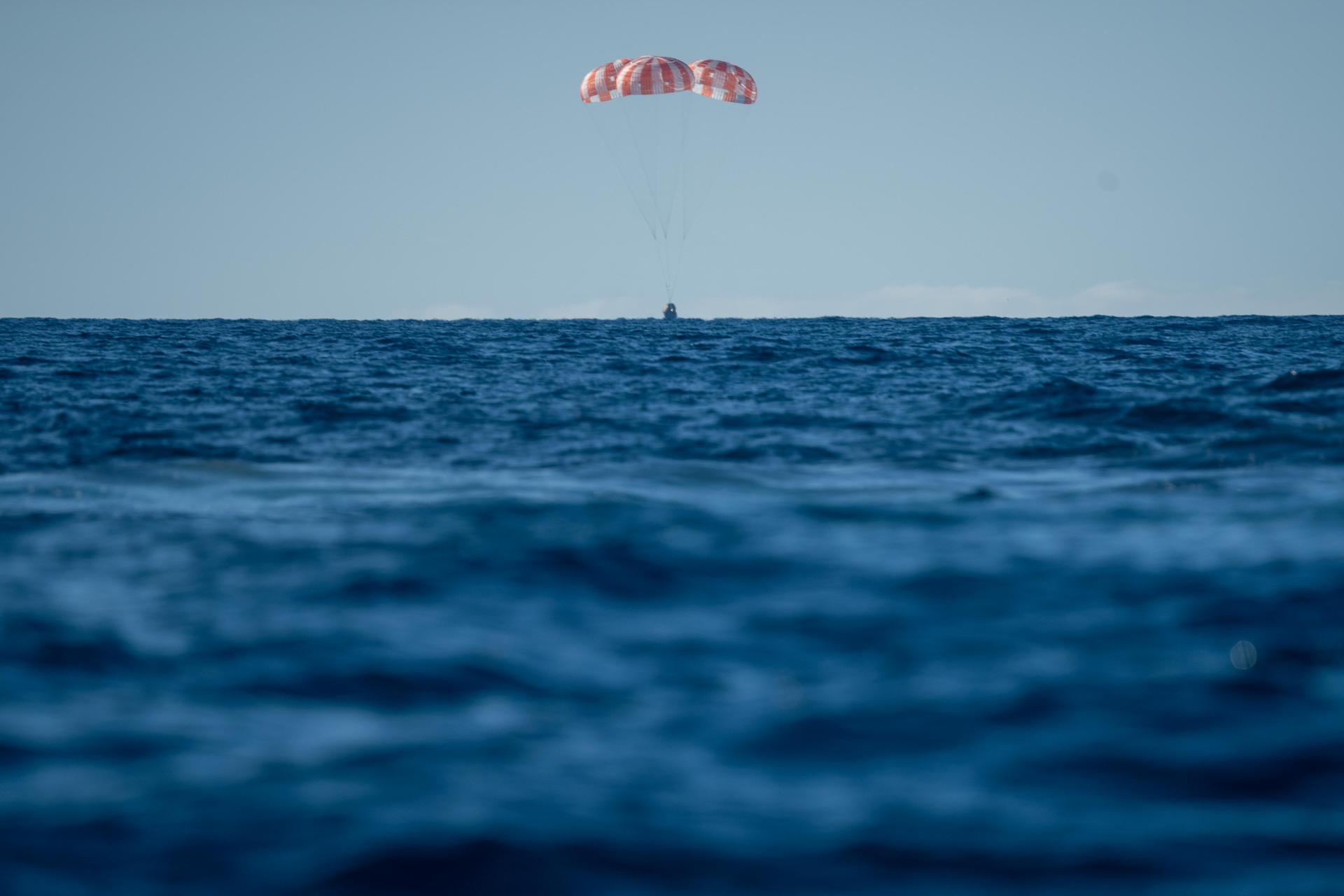
NASA's Orion spacecraft carrying Artemis II Commander Reid Wiseman, Pilot Victor Glover, and Mission Specialist Christina Koch from NASA, along with Mission Specialist Jeremy Hansen from the CSA (Canadian Space Agency), splashes down in the Pacific Ocean near San Diego, California, at 5:07 p.m. PDT, (8:07 p.m. EDT) on Friday, April 10, 2026. The Artemis II test flight launched on Wednesday, April 1, from NASA’s Kennedy Space Center in Florida to begin its 10-day journey around the Moon for scientific discovery, economic benefits, and to build on our foundation for the first crewed missions to Mars. NASA’s Landing and Recovery team and the U.S. military are coordinating efforts to extract the Artemis II crew from the Orion spacecraft.
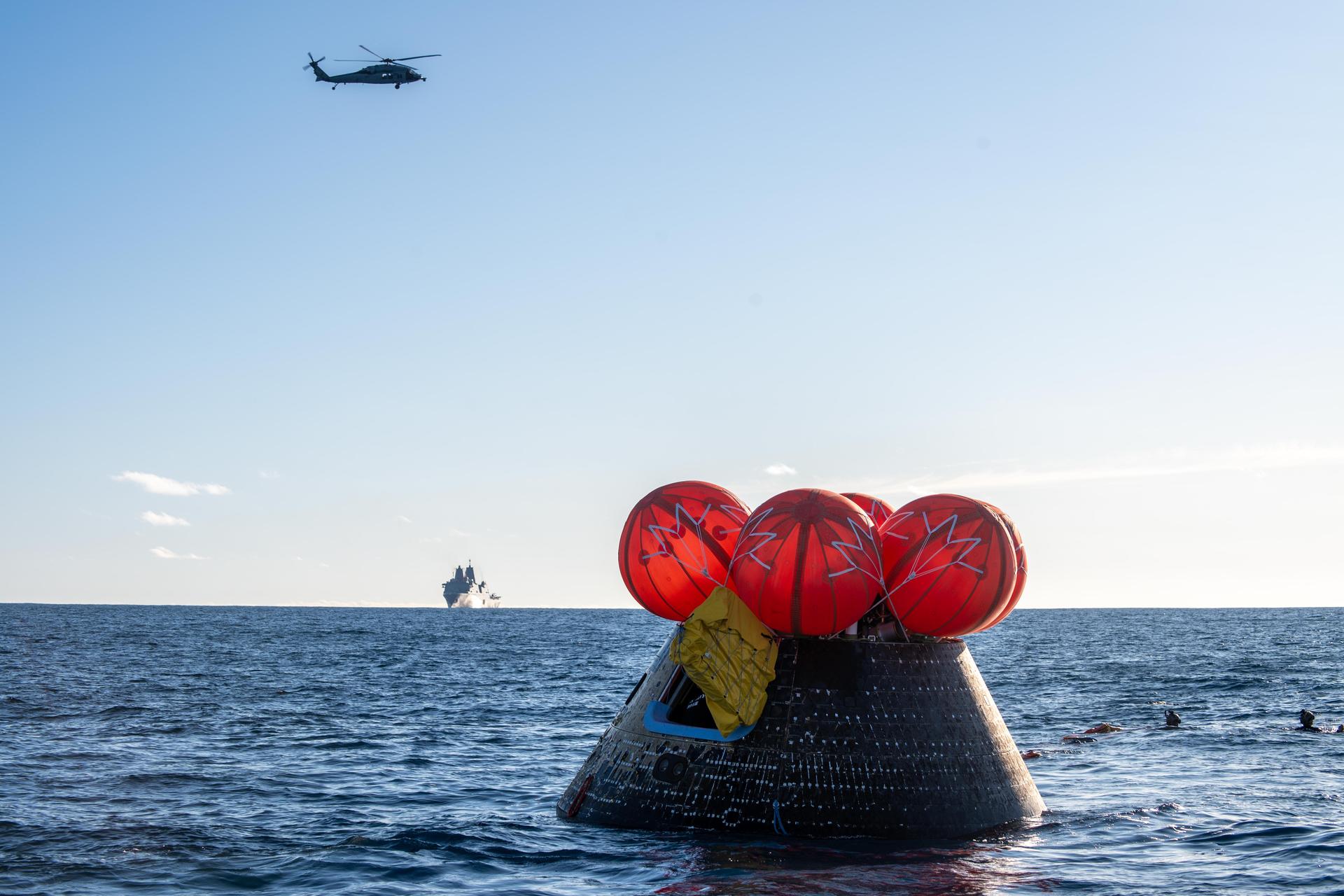
NASA's Orion spacecraft carrying Artemis II Commander Reid Wiseman, Pilot Victor Glover, and Mission Specialist Christina Koch from NASA, along with Mission Specialist Jeremy Hansen from the CSA (Canadian Space Agency), floats in the Pacific Ocean near San Diego, California, at 5:07 p.m. PDT, (8:07 p.m. EDT) on Friday, April 10, 2026. NASA’s Landing and Recovery team and U.S. Navy personnel aboard an inflatable raft, called the front porch, and a H60-S Seahawk helicopter hovers above to communicate Orion’s location back to USS John P. Murtha to coordinate efforts to secure the spacecraft in the well deck of the ship. The Artemis II test flight launched on Wednesday, April 1, from NASA’s Kennedy Space Center in Florida to begin its 10-day journey around the Moon for scientific discovery, economic benefits, and to build on our foundation for the first crewed missions to Mars.