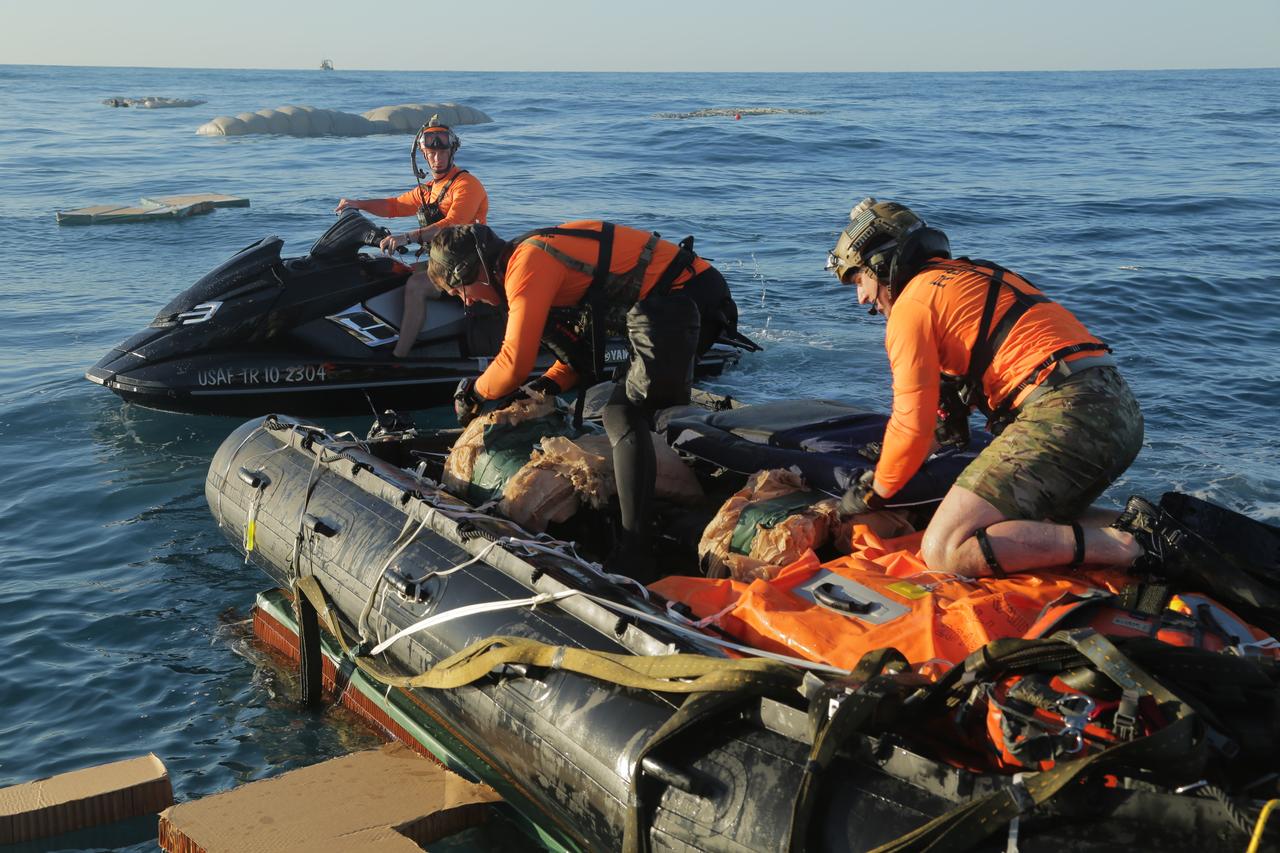
Pararescue specialists from the 304th Rescue Squadron, located in Portland, Oregon and supporting the 45th Operations Group’s Detachment 3, based out of Patrick Air Force Base, prepare equipment during an April astronaut rescue exercise with NASA’s Commercial Crew Program and SpaceX off of Florida’s eastern coast. The pararescue specialists, also known as “Guardian Angels,” jumped from military aircraft and simulated a rescue operation to demonstrate their ability to safely remove crew from the SpaceX Crew Dragon in the unlikely event of an emergency landing. The pararescue specialists are fully qualified paramedics able to perform field surgery, if necessary.

A C-17 Globemaster aircraft from the Alaska Air National Guard’s 249th Airlift Squadron flies overhead as pararescue specialists from the 304th Rescue Squadron, located in Portland, Oregon complete an astronaut rescue training exercise inside a covered life raft on the Atlantic Ocean. The pararescue specialists, supporting the 45th Operations Group’s Detachment 3, based out of Patrick Air Force Base, conducted the exercise in April with NASA’s Commercial Crew Program and SpaceX off of Florida’s eastern coast. The specially designed 20-person life raft is equipped with enough food, water and medical supplies to sustain both rescuers and crew for up to three days, if necessary. In this situation, the Department of Defense (DOD) would complete the rescue by enlisting help from the US Coast Guard, a DOD ship, or a nearby commercial ship of opportunity to transport the crew to safety.
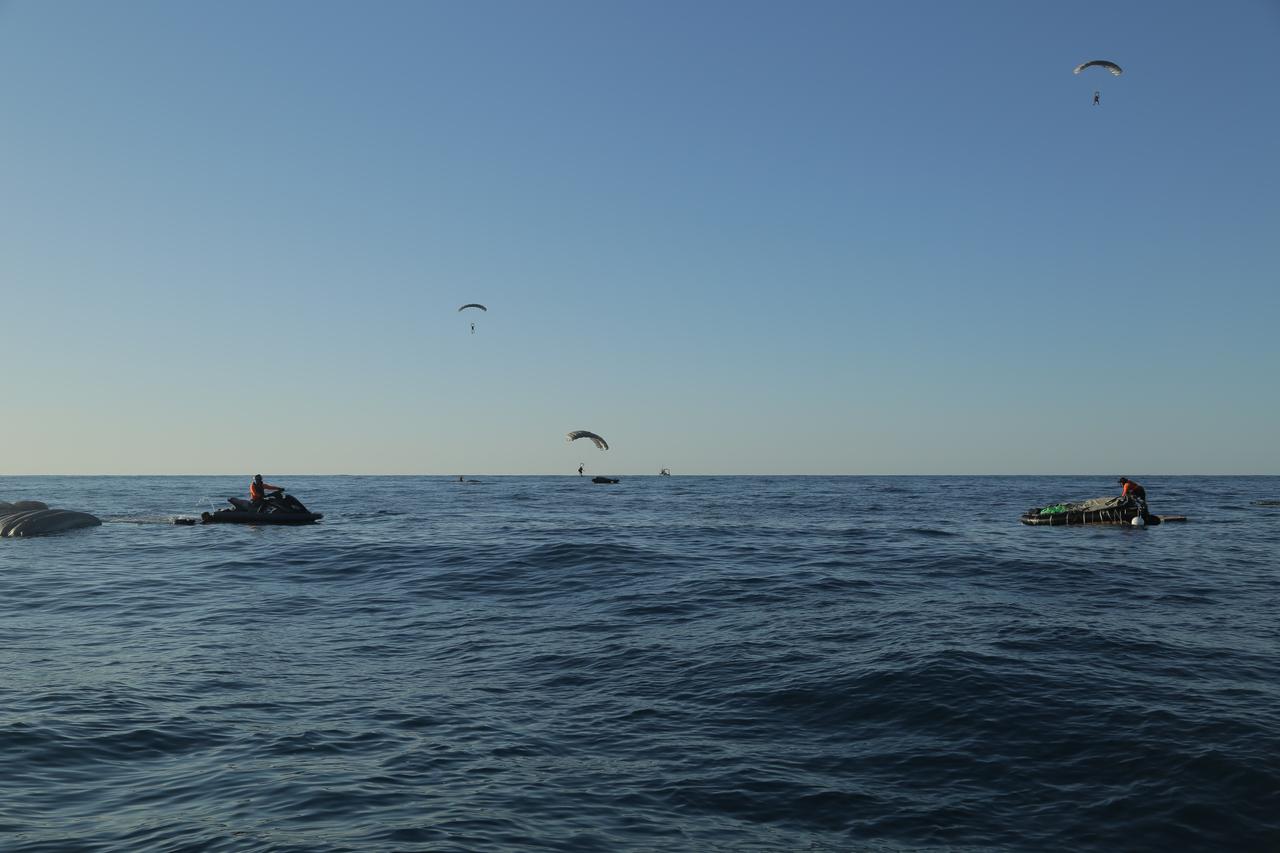
Pararescue specialists from the 304th Rescue Squadron, located in Portland, Oregon and supporting the 45th Operations Group’s Detachment 3, based out of Patrick Air Force Base, deploy their parachutes and prepare to touch down on the Atlantic Ocean surface during an April astronaut rescue exercise with NASA’s Commercial Crew Program and SpaceX off of Florida’s eastern coast. The pararescue specialists, also known as “Guardian Angels,” jumped from military aircraft and simulated a rescue operation to demonstrate their ability to safely remove crew from the SpaceX Crew Dragon in the unlikely event of an emergency landing.

Pararescue specialists from the 304th Rescue Squadron, located in Portland, Oregon and supporting the 45th Operations Group’s Detachment 3, based out of Patrick Air Force Base, secure a covered life raft as the sun sets during an astronaut rescue training exercise with NASA’s Commercial Crew Program and SpaceX off of Florida’s eastern coast in April. The specially designed 20-person life raft is equipped with enough food, water and medical supplies to sustain both rescuers and crew for up to three days, if necessary. In this situation, the Department of Defense (DOD) would complete the rescue by enlisting help from the US Coast Guard, a DOD ship, or a nearby commercial ship of opportunity to transport the crew to safety.
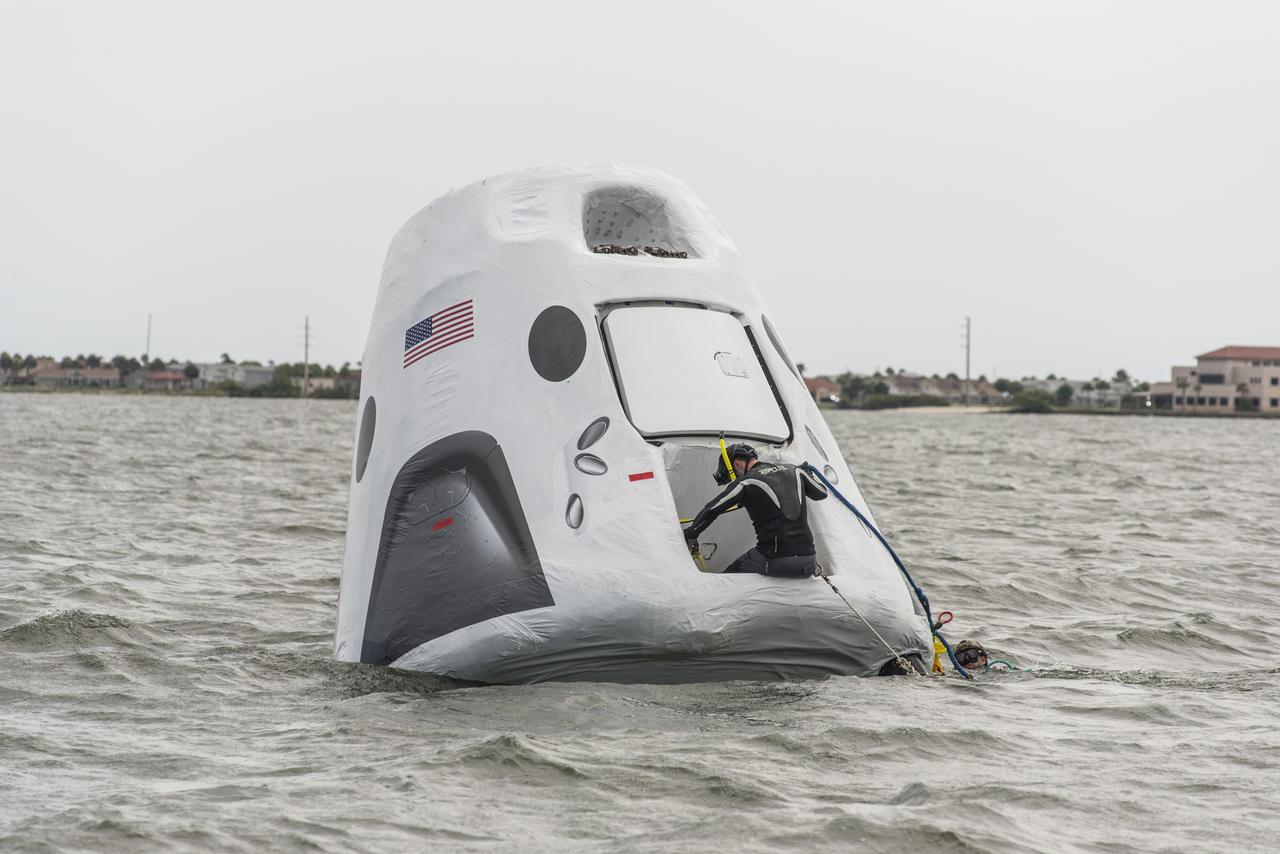
Personnel from NASA, SpaceX and the U.S. Air Force have begun practicing recovery operations for the SpaceX Crew Dragon. Using a full-size model of the spacecraft that will take astronauts to the International Space Station, Air Force parajumpers practice helping astronauts out of the SpaceX Crew Dragon following a mission. In certain unusual recovery situations, SpaceX may need to work with Air Force for parajumpers to recover astronauts from the capsule following a water landing. The recovery trainer was recently lowered into the Indian River Lagoon near NASA’s Kennedy Space Center allowing Air Force pararescue and others to refine recovery procedures. SpaceX is developing the Crew Dragon in partnership with NASA’s Commercial Crew Program to carry astronauts to and from the International Space Station.