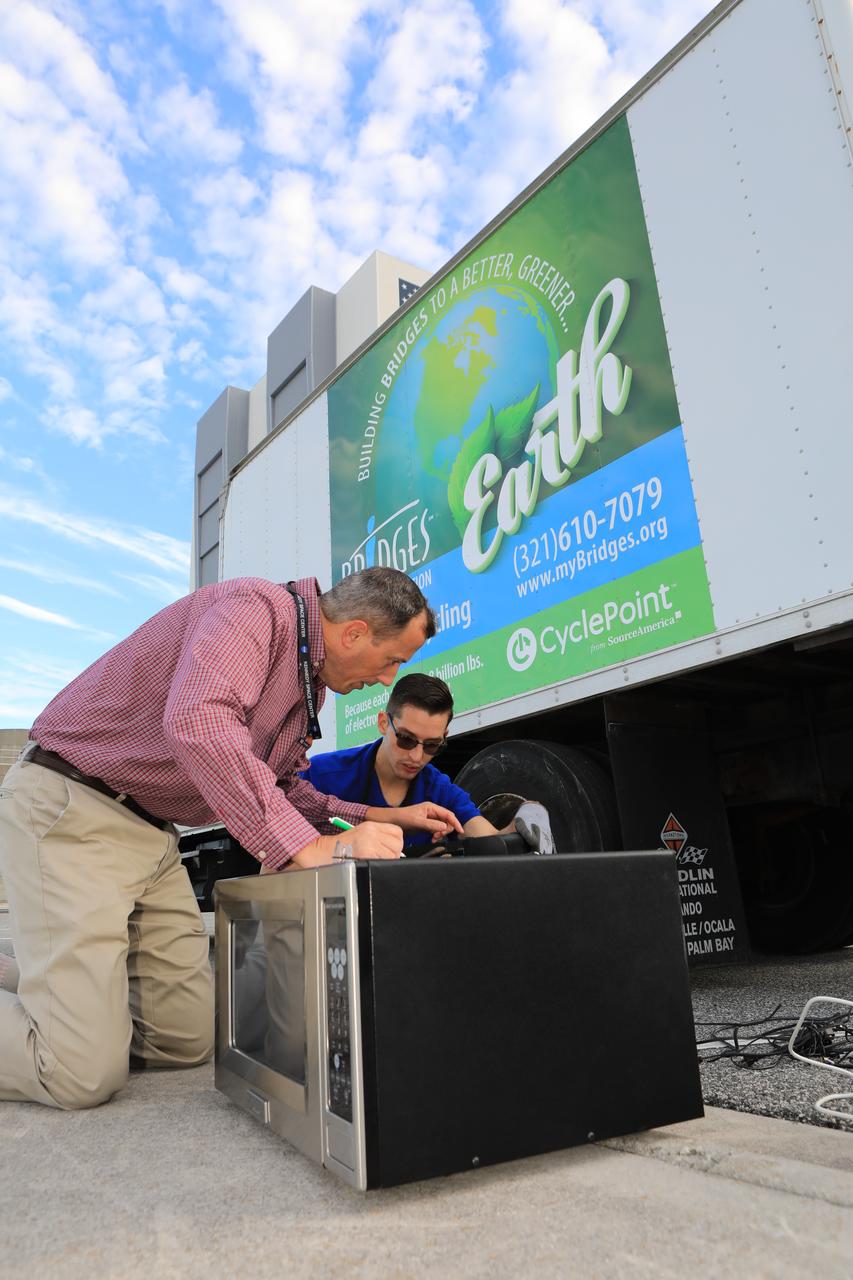
Members of the Sustainability team at NASA's Kennedy Space Center in Florida look over appliances donated for reuse or recycling in conjunction with America Recycles Day. America Recycles Day is a nationally recognized initiative dedicated to promoting recycling in the United States. Kennedy partnered with several organizations in order to donate as many of the items as possible to those who could use them the most in the Space Coast community. Space center personnel brought in electronic waste, gently used household goods, clothing and more.
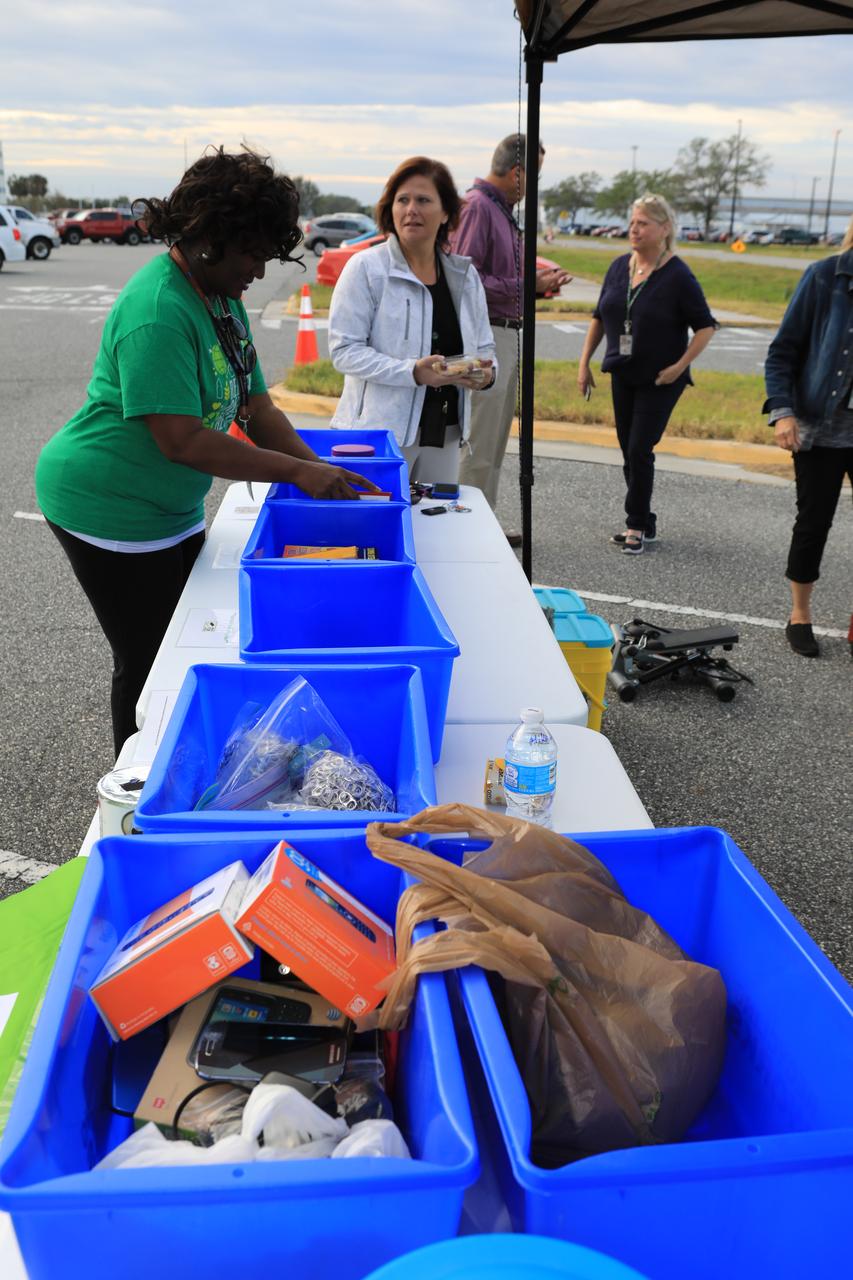
Members of the Sustainability team at NASA's Kennedy Space Center in Florida sort through items donated for reuse or recycling in conjunction with America Recycles Day. America Recycles Day is a nationally recognized initiative dedicated to promoting recycling in the United States. Kennedy partnered with several organizations in order to donate as many of the items as possible to those who could use them the most in the Space Coast community. Space center personnel brought in electronic waste, gently used household goods, clothing and more.
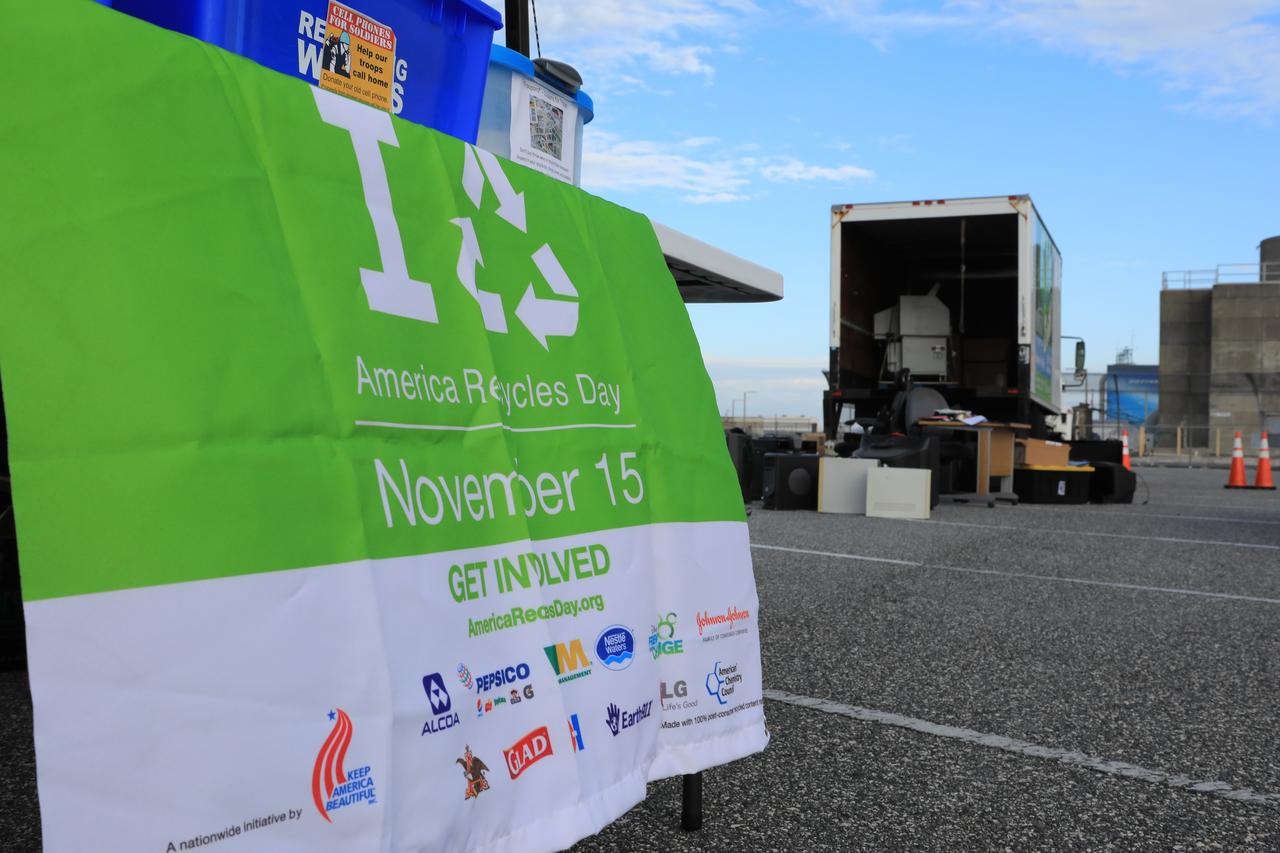
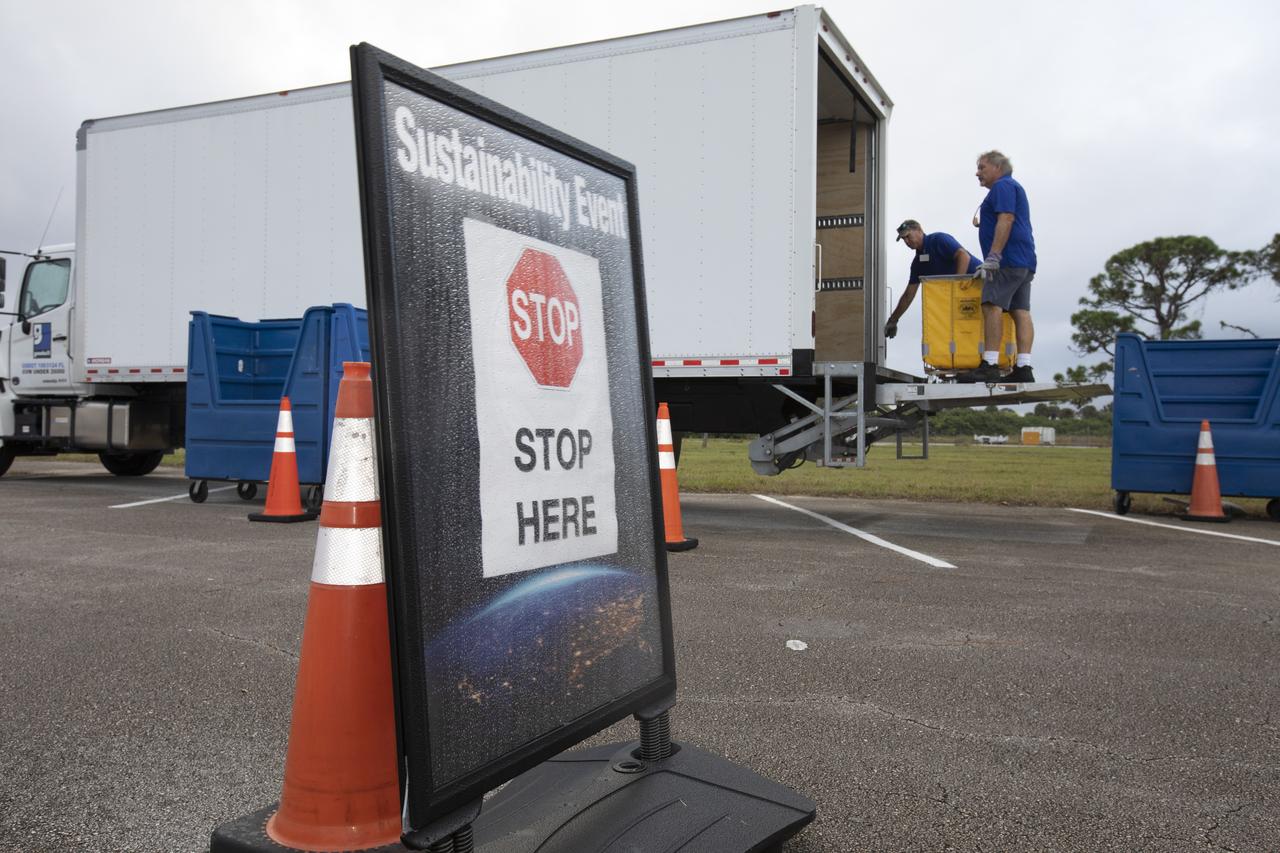
A sign tells NASA Kennedy Space Center employees they have come to the right place to donate items for reuse or recycling in conjunction with America Recycles Day. America Recycles Day is a nationally recognized initiative dedicated to promoting recycling in the United States. Kennedy partnered with several organizations in order to donate as many of the items as possible to those who could use them the most in the Space Coast community. Space center personnel brought in electronic waste, gently used household goods, clothing and more. The two-day event was sponsored by Kennedy's Sustainability team.
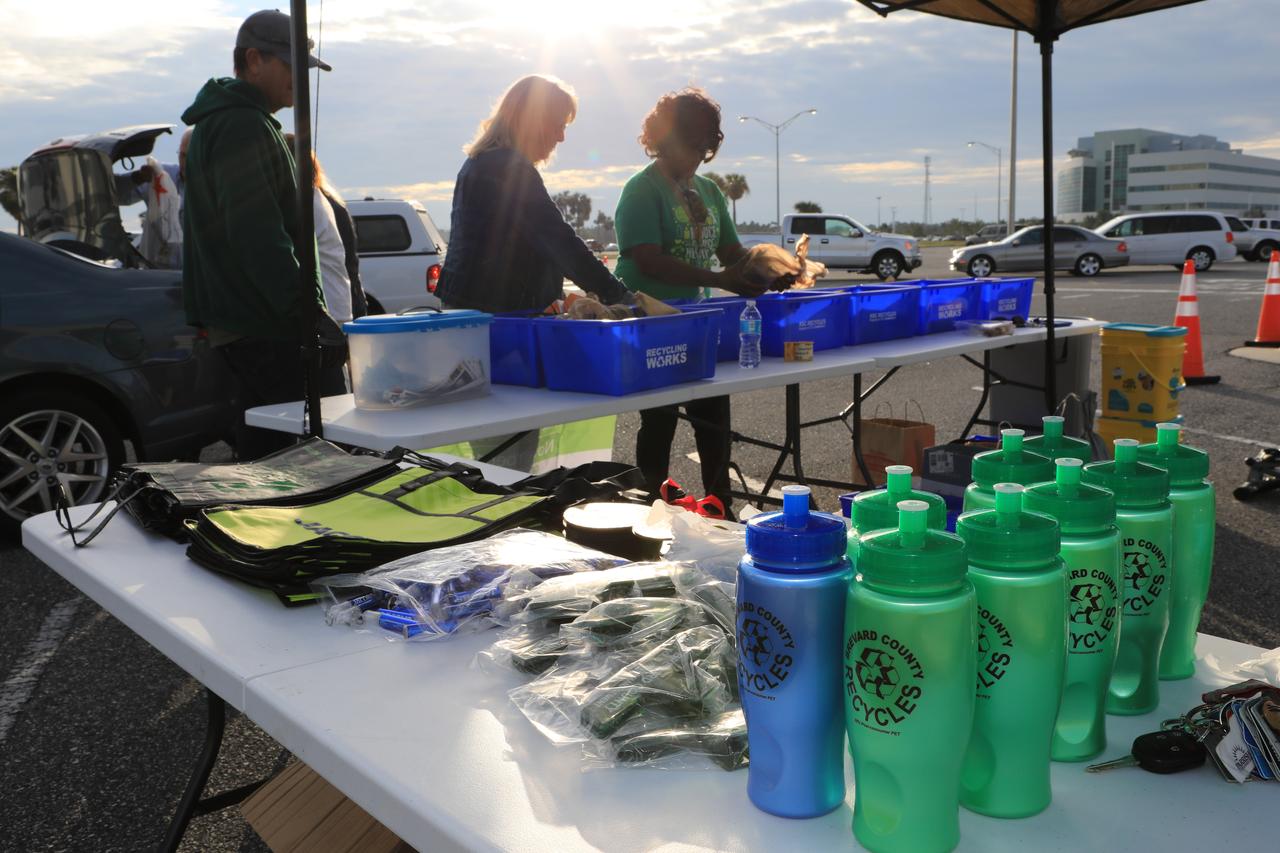
Members of the Sustainability team at NASA's Kennedy Space Center in Florida set up giveaway items and sort through donations for reuse or recycling in conjunction with America Recycles Day. America Recycles Day is a nationally recognized initiative dedicated to promoting recycling in the United States. Kennedy partnered with several organizations in order to donate as many of the items as possible to those who could use them the most in the Space Coast community. Space center personnel brought in electronic waste, gently used household goods, clothing and more. The two-day event was sponsored by Kennedy's Sustainability team.
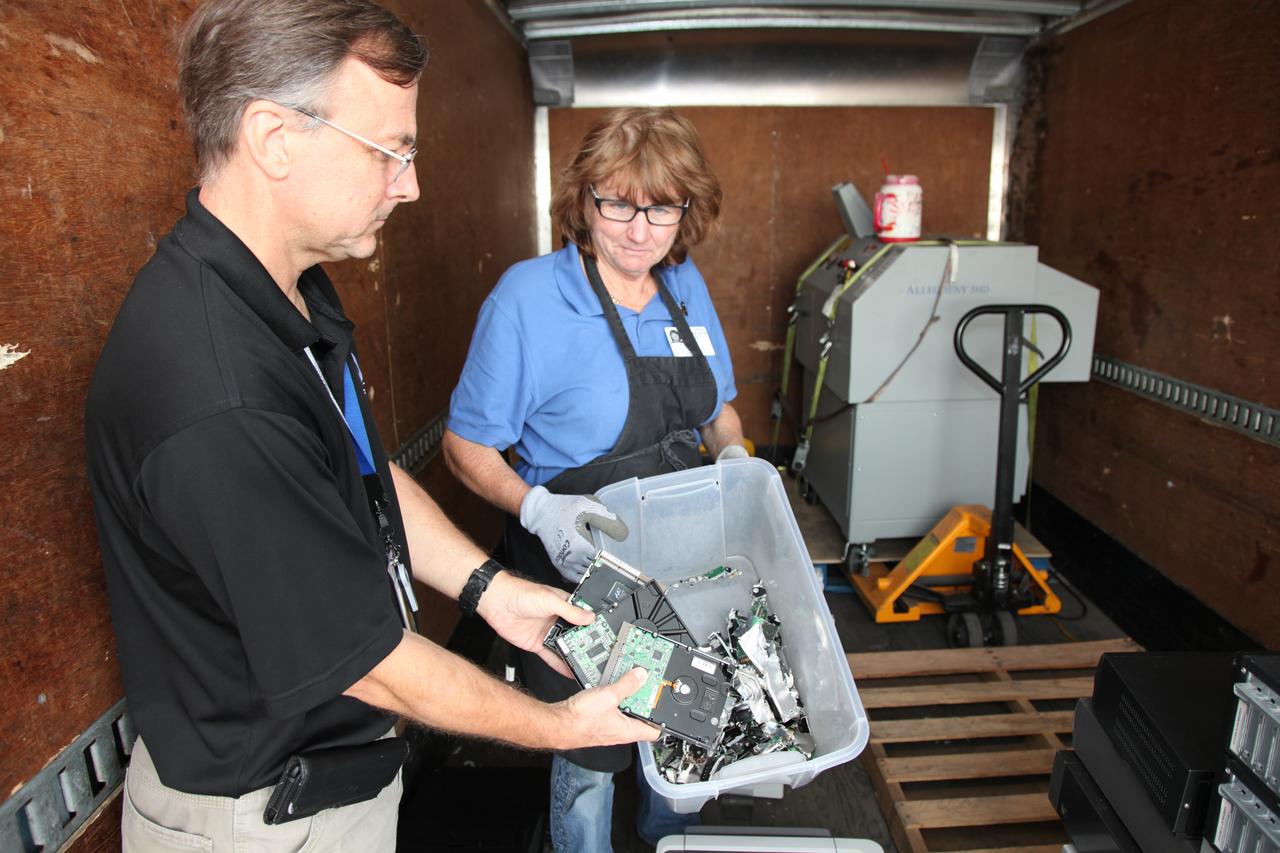
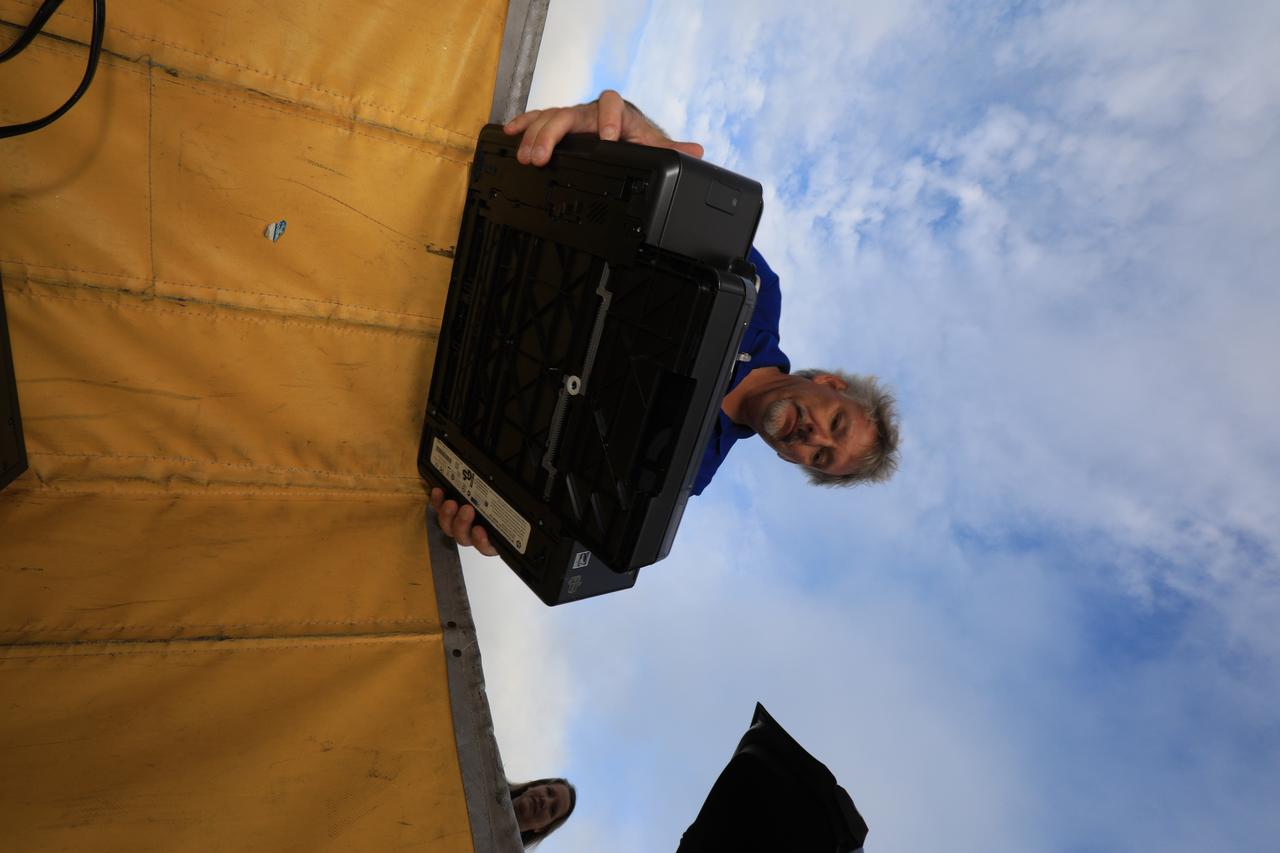
Members of the Sustainability team at NASA's Kennedy Space Center in Florida take a bin of disposed hard drives to be shredded in conjunction with America Recycles Day. America Recycles Day is a nationally recognized initiative dedicated to promoting recycling in the United States. Kennedy partnered with several organizations in order to donate as many of the items as possible to those who could use them the most in the Space Coast community. Space center personnel brought in electronic waste, gently used household goods, clothing and more.
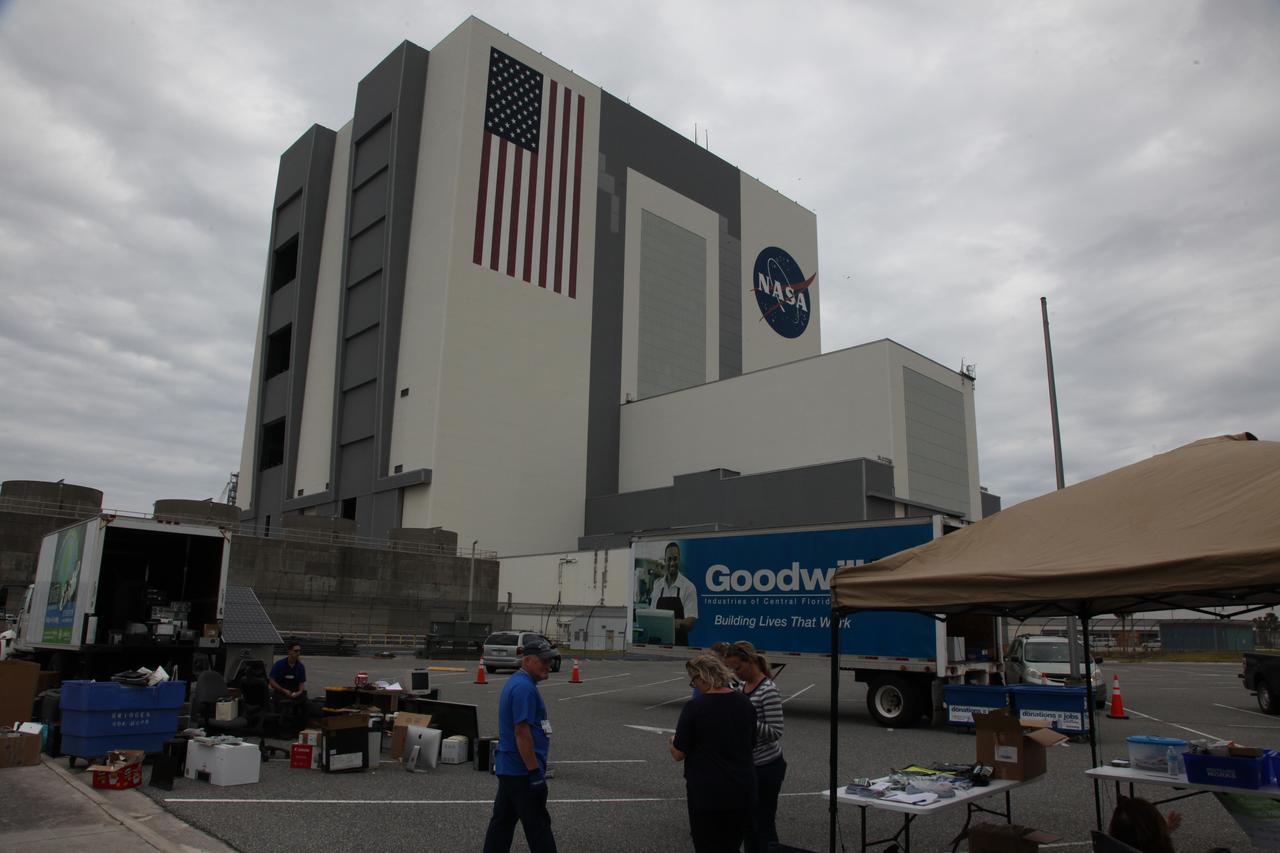
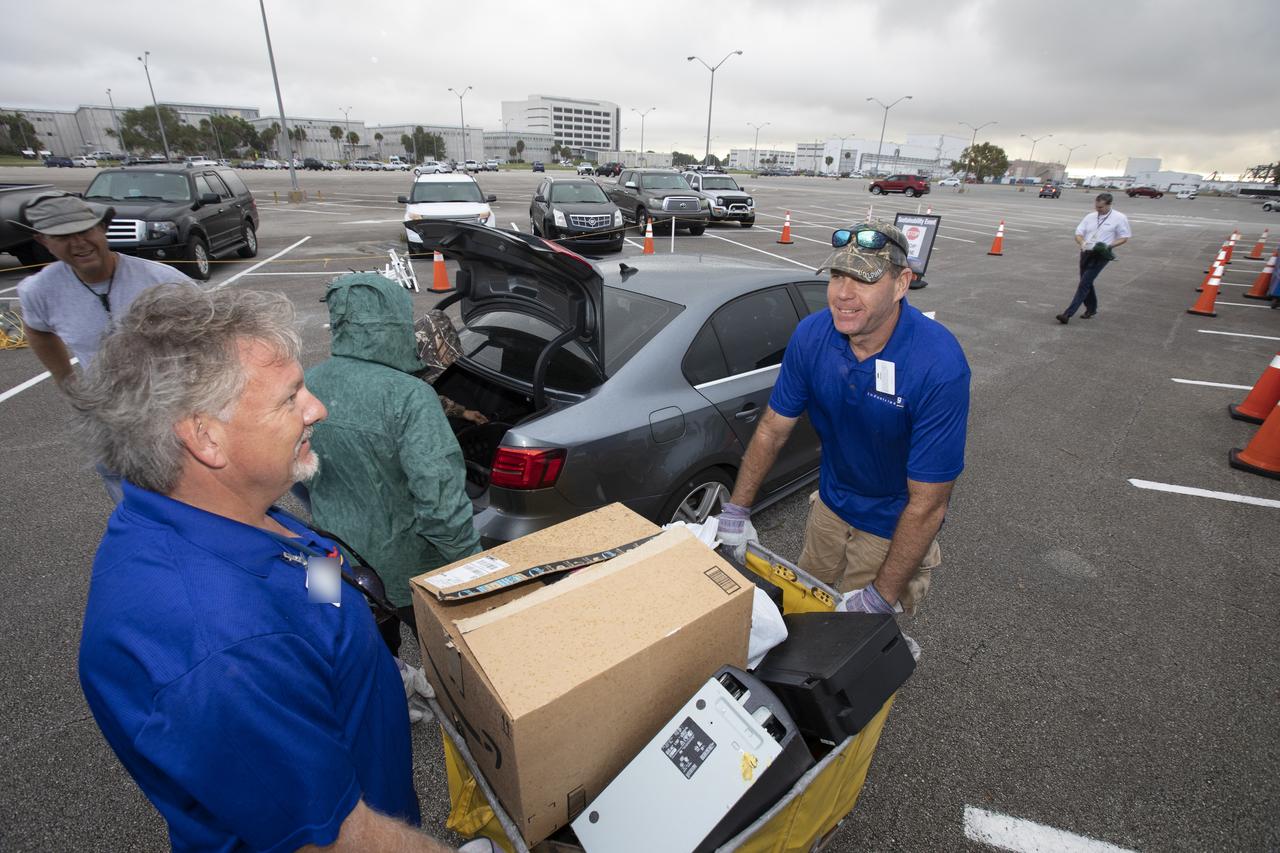
Members of the Sustainability team at NASA's Kennedy Space Center in Florida accept items donated by employees in conjunction with America Recycles Day. America Recycles Day is a nationally recognized initiative dedicated to promoting recycling in the United States. Kennedy partnered with several organizations in order to donate as many of the items as possible to those who could use them the most in the Space Coast community. Space center personnel brought in electronic waste, gently used household goods, clothing and more.
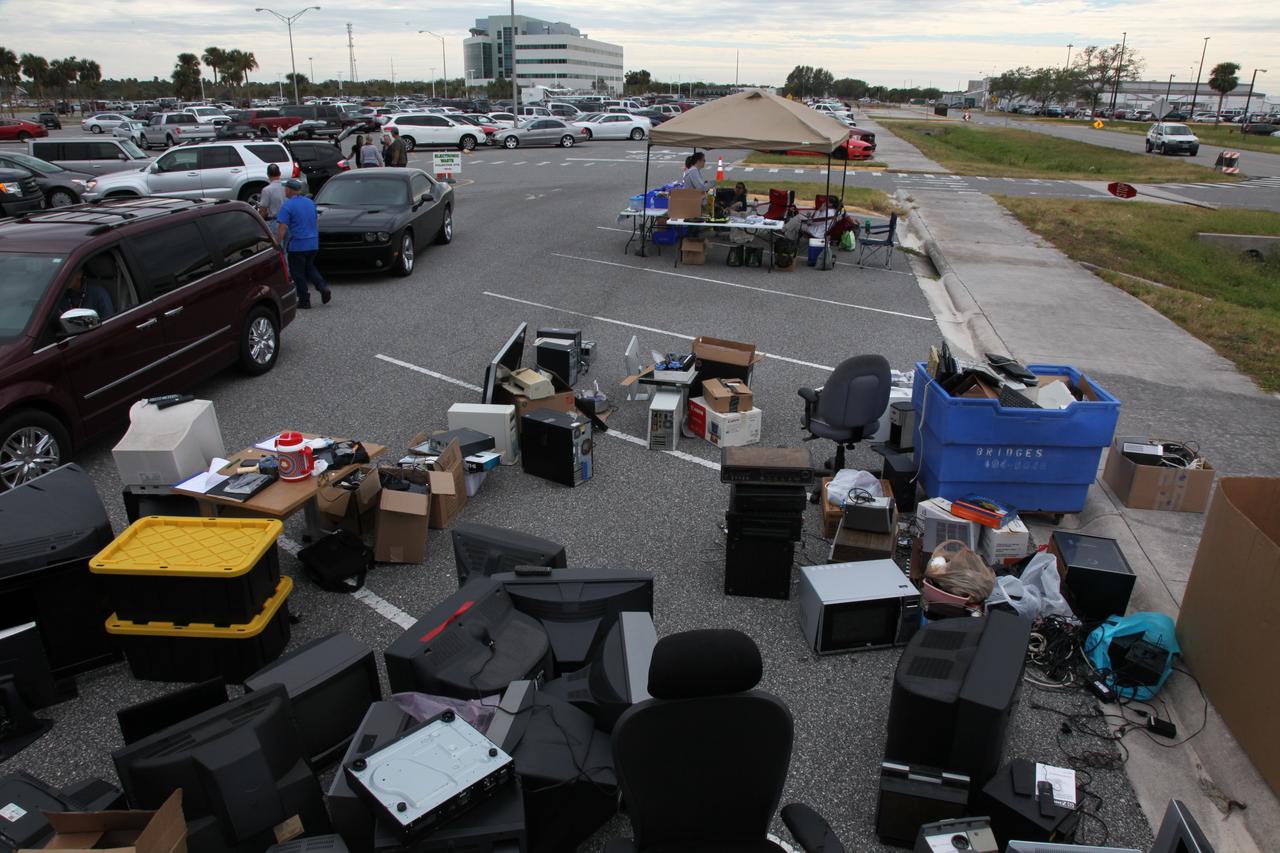
Computers, monitors, vacuum cleaners and other electronics have been donated by employees at NASA's Kennedy Space Center in Florida in conjunction with America Recycles Day. America Recycles Day is a nationally recognized initiative dedicated to promoting recycling in the United States. Kennedy partnered with several organizations in order to donate as many of the items as possible to those who could use them the most in the Space Coast community. Space center personnel brought in electronic waste, gently used household goods, clothing and more.
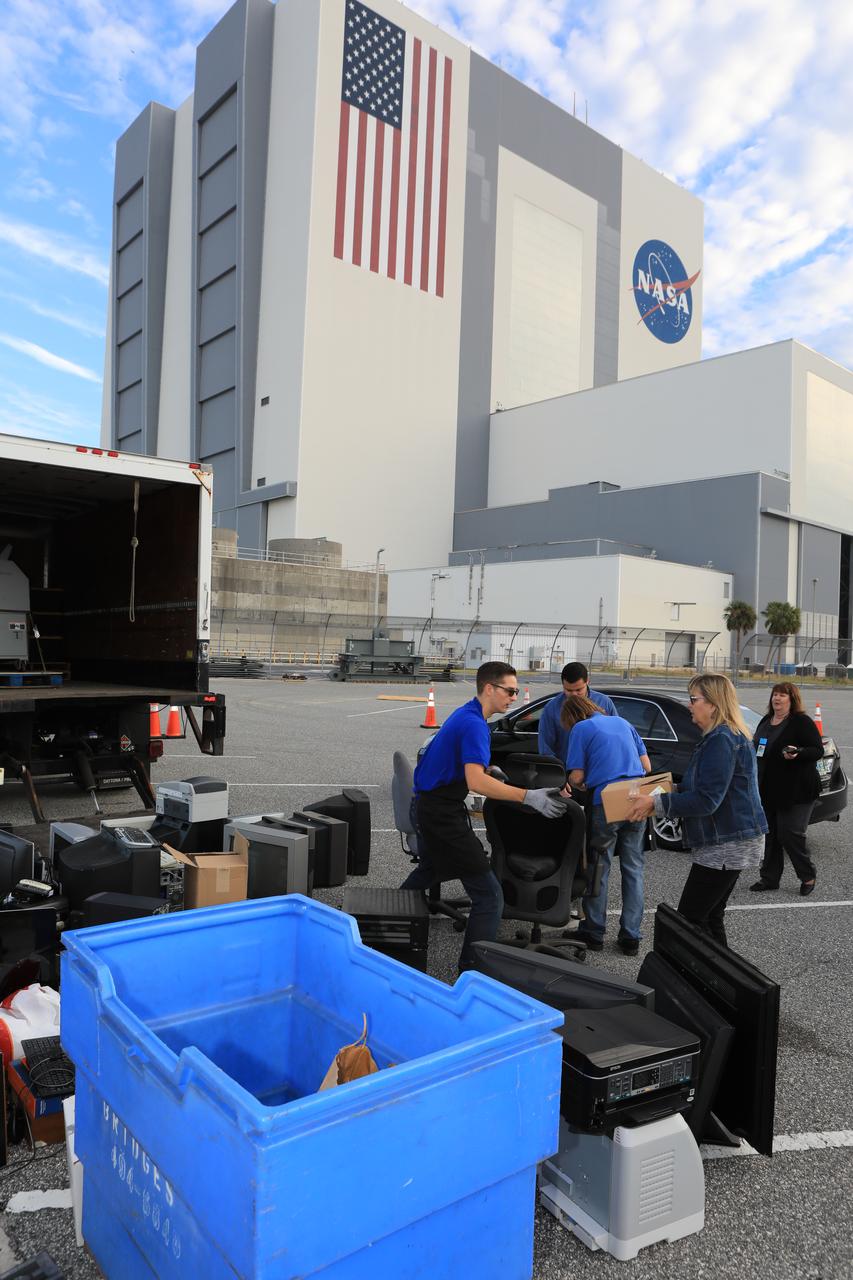
Members of the Sustainability team at NASA's Kennedy Space Center in Florida accept items donated by employees in conjunction with America Recycles Day. America Recycles Day is a nationally recognized initiative dedicated to promoting recycling in the United States. Kennedy partnered with several organizations in order to donate as many of the items as possible to those who could use them the most in the Space Coast community. Space center personnel brought in electronic waste, gently used household goods, clothing and more.
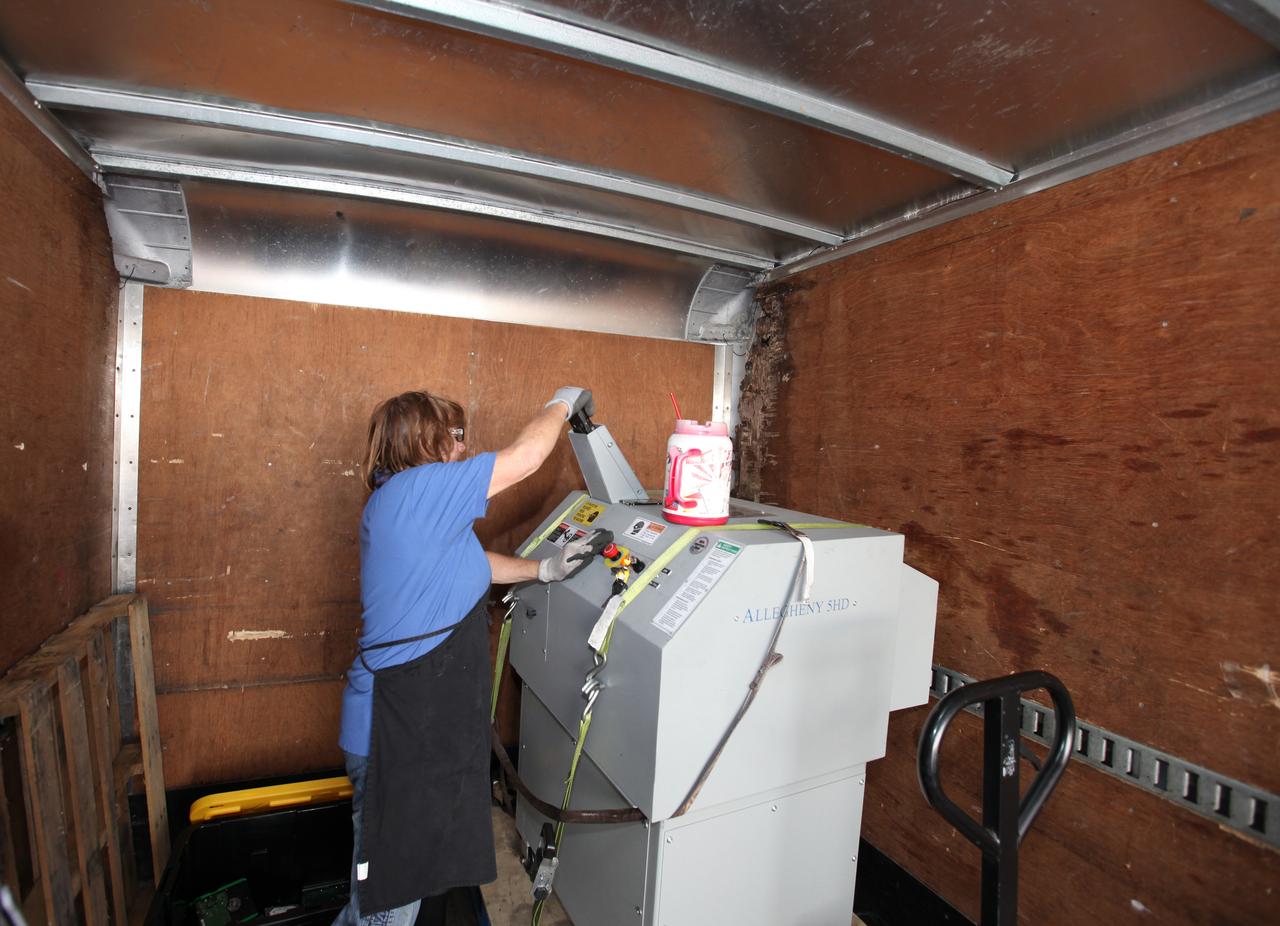
Members of the Sustainability team at NASA's Kennedy Space Center in Florida shred a disposed hard drive in conjunction with America Recycles Day. America Recycles Day is a nationally recognized initiative dedicated to promoting recycling in the United States. Kennedy partnered with several organizations in order to donate as many of the items as possible to those who could use them the most in the Space Coast community. Space center personnel brought in electronic waste, gently used household goods, clothing and more.

A sign points the way to the electronic waste collection site, where NASA Kennedy Space Center employees donated computers, monitors, vacuum cleaners and other electronics in conjunction with America Recycles Day. America Recycles Day is a nationally recognized initiative dedicated to promoting recycling in the United States. Kennedy partnered with several organizations in order to donate as many of the items as possible to those who could use them the most in the Space Coast community. Space center personnel brought in electronic waste, gently used household goods, clothing and more. The two-day event was sponsored by Kennedy's Sustainability team.
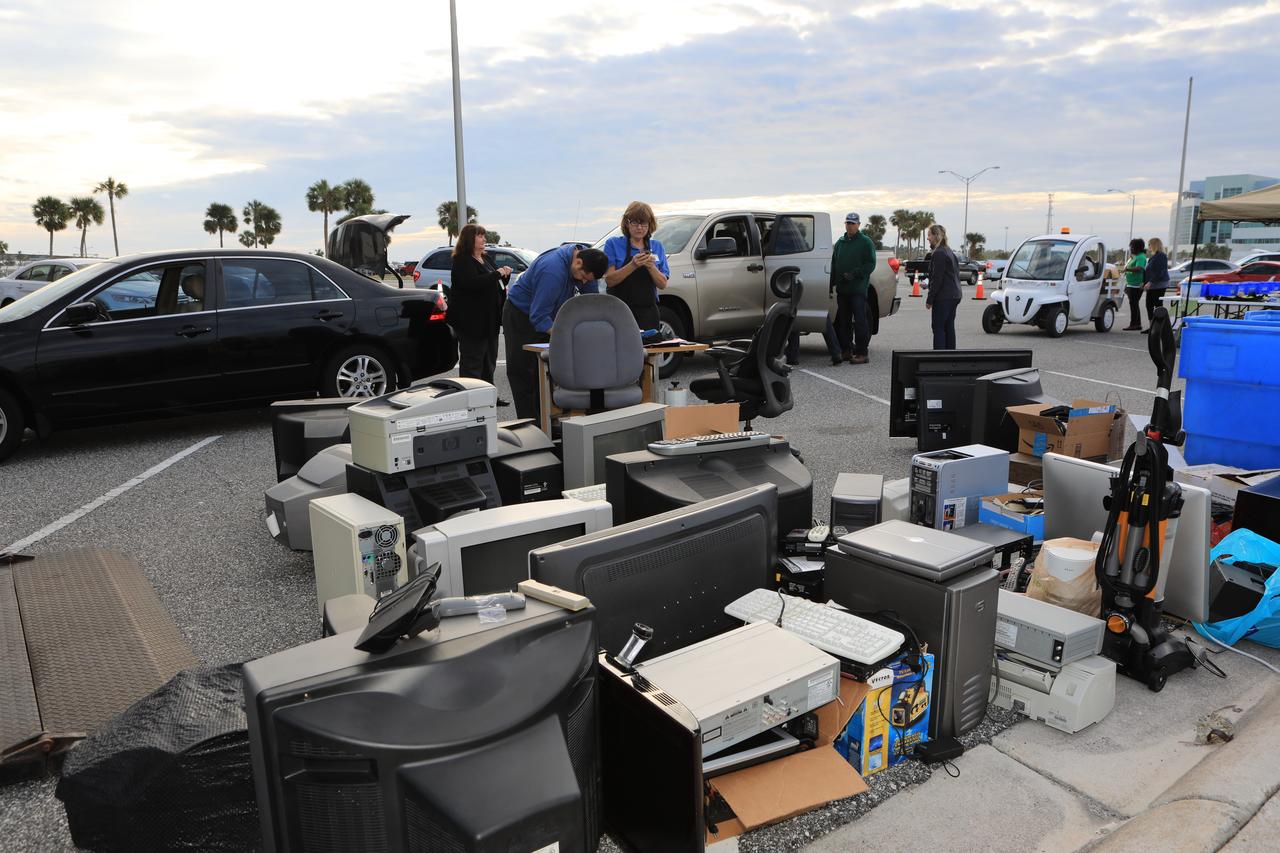
Computers, monitors, vacuum cleaners and other electronics have been donated by employees at NASA's Kennedy Space Center in Florida in conjunction with America Recycles Day. America Recycles Day is a nationally recognized initiative dedicated to promoting recycling in the United States. Kennedy partnered with several organizations in order to donate as many of the items as possible to those who could use them the most in the Space Coast community. Space center personnel brought in electronic waste, gently used household goods, clothing and more. The two-day event was sponsored by Kennedy's Sustainability team.
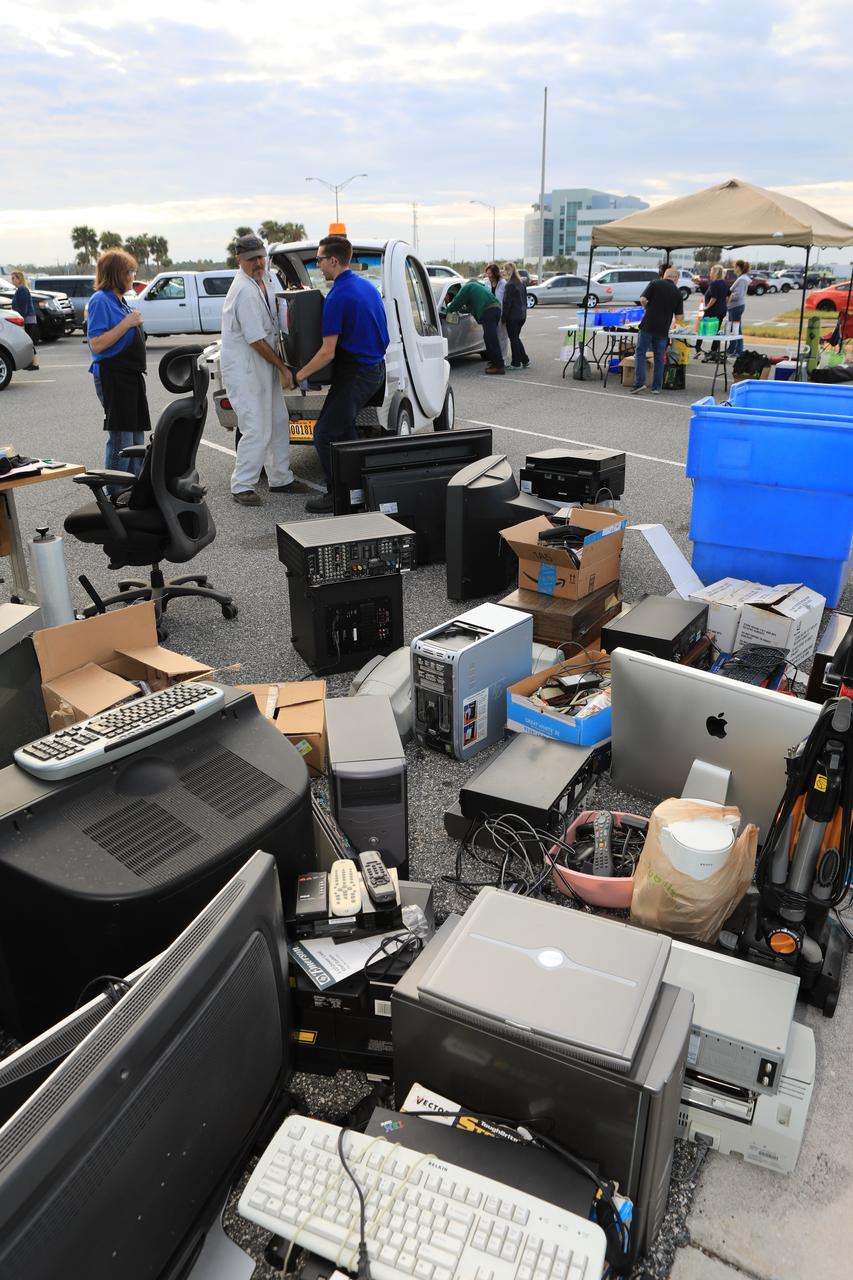
Computers, monitors, vacuum cleaners and other electronics have been donated by employees at NASA's Kennedy Space Center in Florida in conjunction with America Recycles Day. America Recycles Day is a nationally recognized initiative dedicated to promoting recycling in the United States. Kennedy partnered with several organizations in order to donate as many of the items as possible to those who could use them the most in the Space Coast community. Space center personnel brought in electronic waste, gently used household goods, clothing and more. The two-day event was sponsored by Kennedy's Sustainability team.

Saturn Recycling Rings
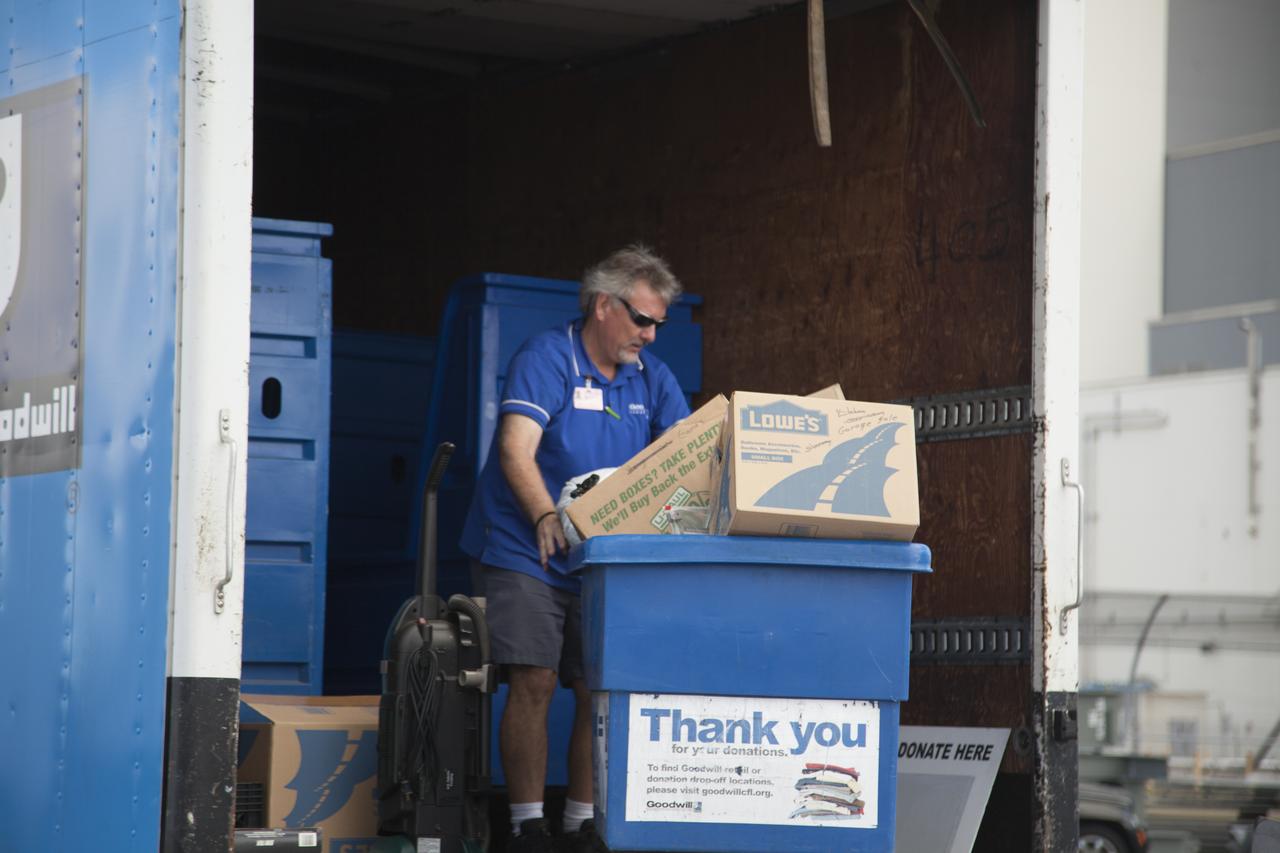
In the parking lot of the Vehicle Assembly Building at NASA's Kennedy Space Center in Florida, a member of Goodwill Industries loads used household material for recycling. During the two-day event, employees dropped off items as part of America Recycles Day. The center partnered with Goodwill Industries and several other local organizations to collect items for reprocessing. The annual event is a program of Keep America Beautiful, dedicated to promoting and celebrating recycling.
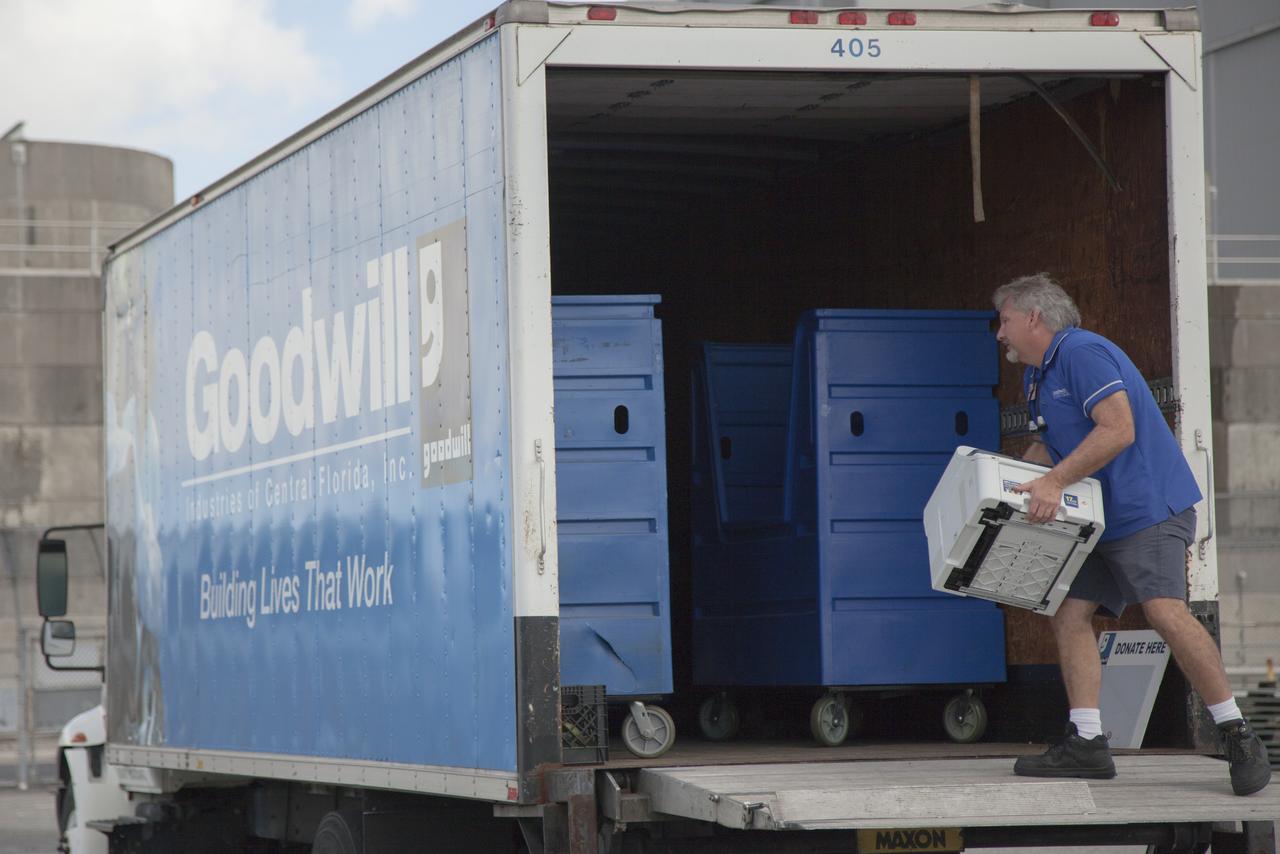
In the parking lot of the Vehicle Assembly Building at NASA's Kennedy Space Center in Florida, a member of Goodwill Industries loads used household material for recycling. During the two-day event, employees dropped off items as part of America Recycles Day. The center partnered with Goodwill Industries and several other local organizations to collect items for reprocessing. The annual event is a program of Keep America Beautiful, dedicated to promoting and celebrating recycling.
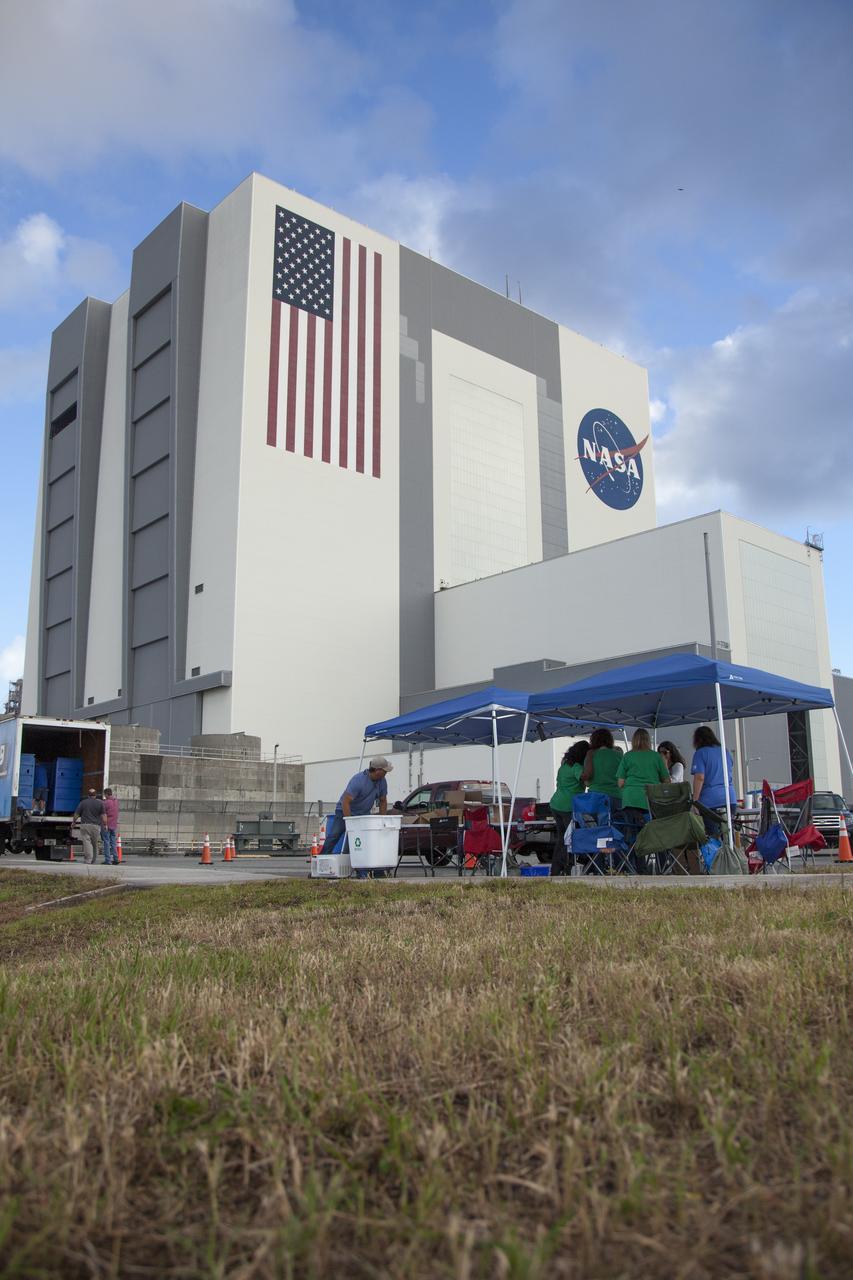
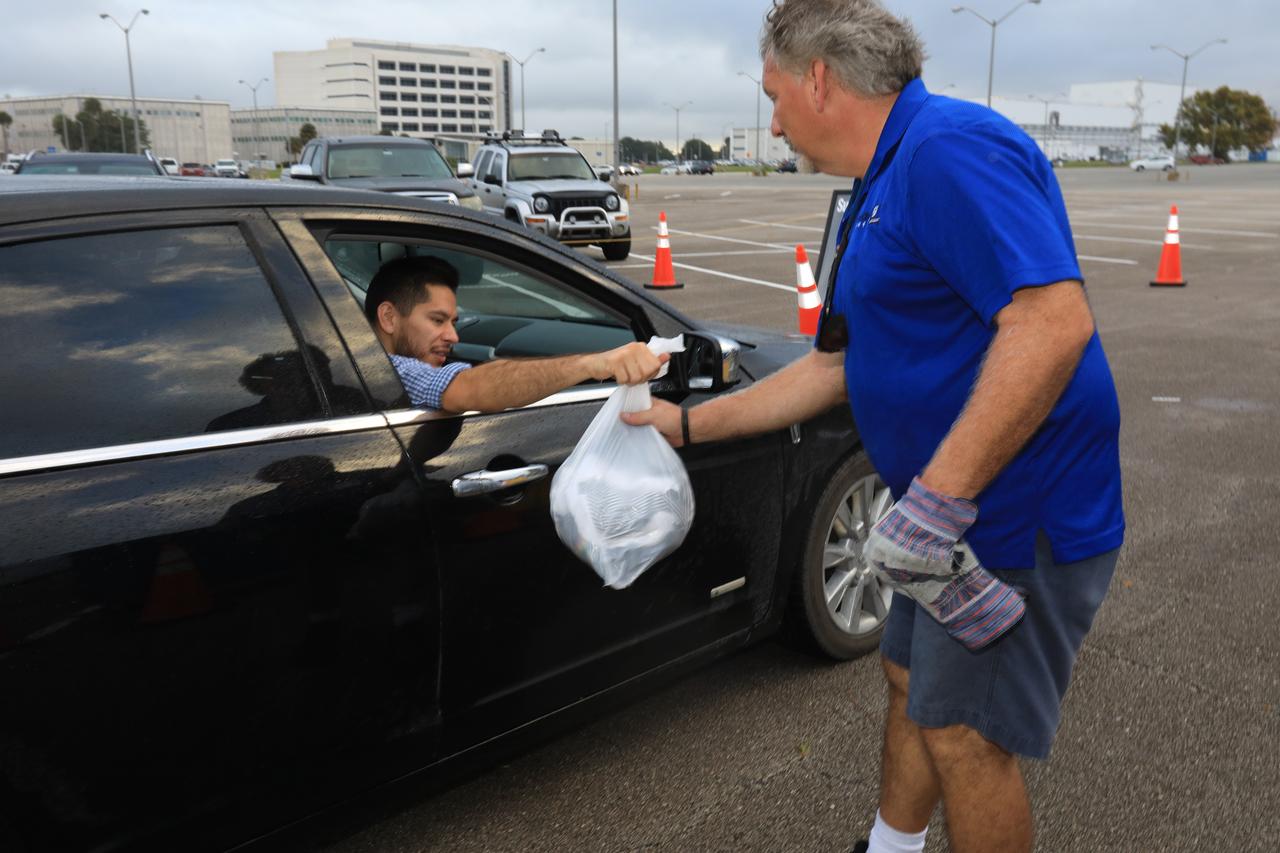
In the parking lot of the Vehicle Assembly Building at NASA's Kennedy Space Center in Florida, employees drop off used household items as part of America Recycles Day. The center recently partnered with Goodwill Industries and several other local organizations to collect items for reprocessing. The annual event is a program of Keep America Beautiful, dedicated to promoting and celebrating recycling.
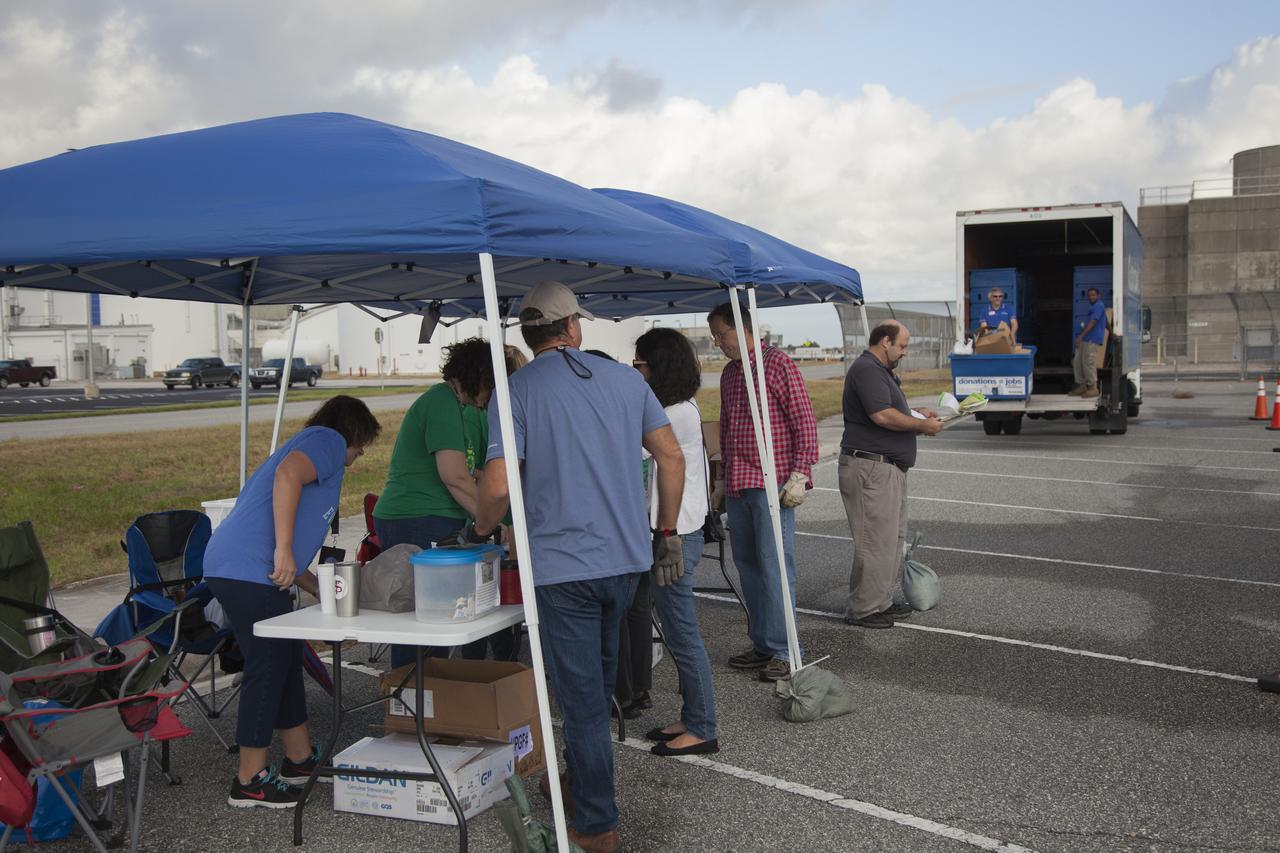
In the parking lot of the Vehicle Assembly Building at NASA's Kennedy Space Center in Florida, employees drop off used household items as part of America Recycles Day. The center recently partnered with Goodwill Industries and several other local organizations to collect items for reprocessing. The annual event is a program of Keep America Beautiful, dedicated to promoting and celebrating recycling.

In the parking lot of the Vehicle Assembly Building at NASA's Kennedy Space Center in Florida, employees drop off used household items, such as this television, as part of America Recycles Day. The center recently partnered with Goodwill Industries and several other local organizations to collect items for reprocessing. The annual event is a program of Keep America Beautiful, dedicated to promoting and celebrating recycling.
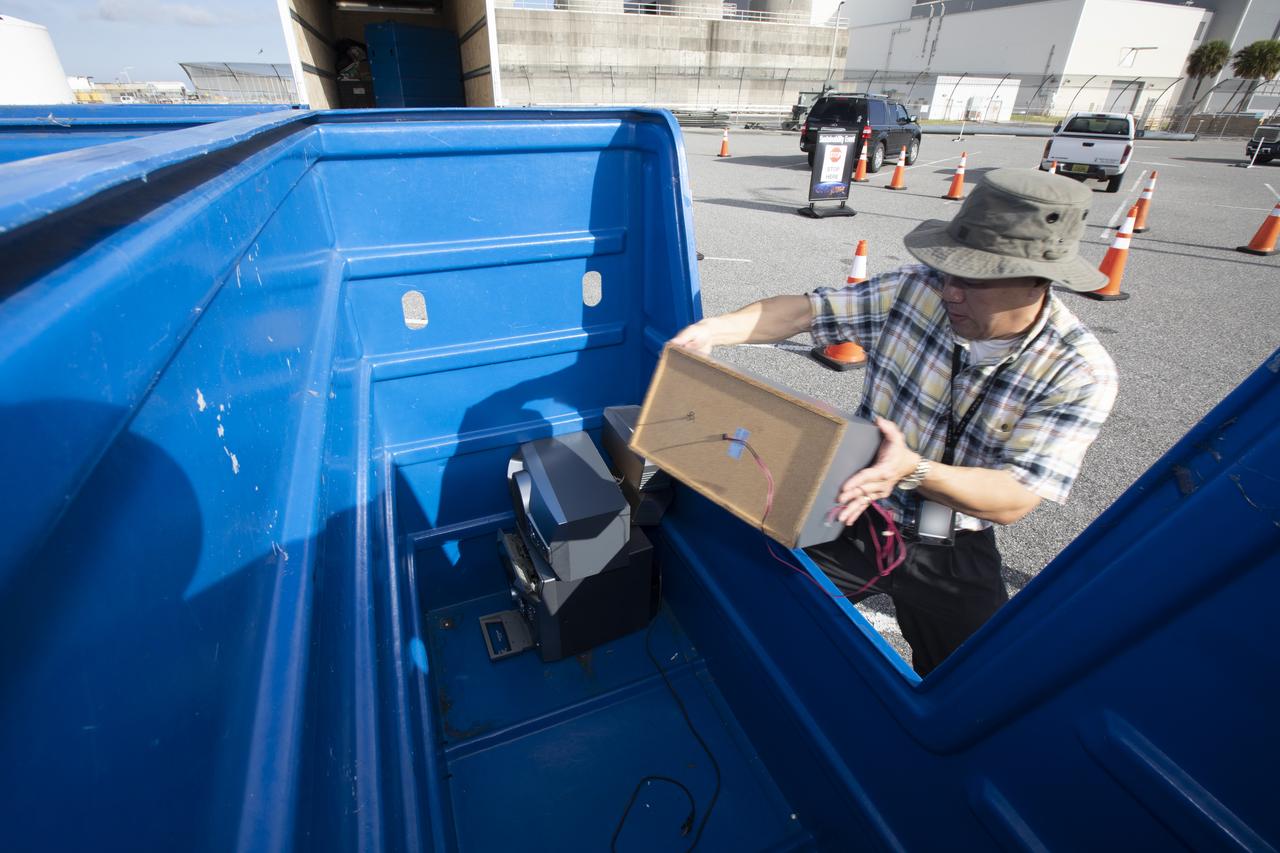
In the parking lot of the Vehicle Assembly Building at NASA's Kennedy Space Center in Florida, employees turn in used household material for recycling as part of America Recycles Day (ARD). The annual event is a nationally recognized initiative dedicated to promoting recycling in the United States. This year, KSC is partnered with Goodwill Industries and several other local organizations to receive donation material from employees such as gently used household items, personal electronic waste, greeting cards and serviceable eyeglasses.
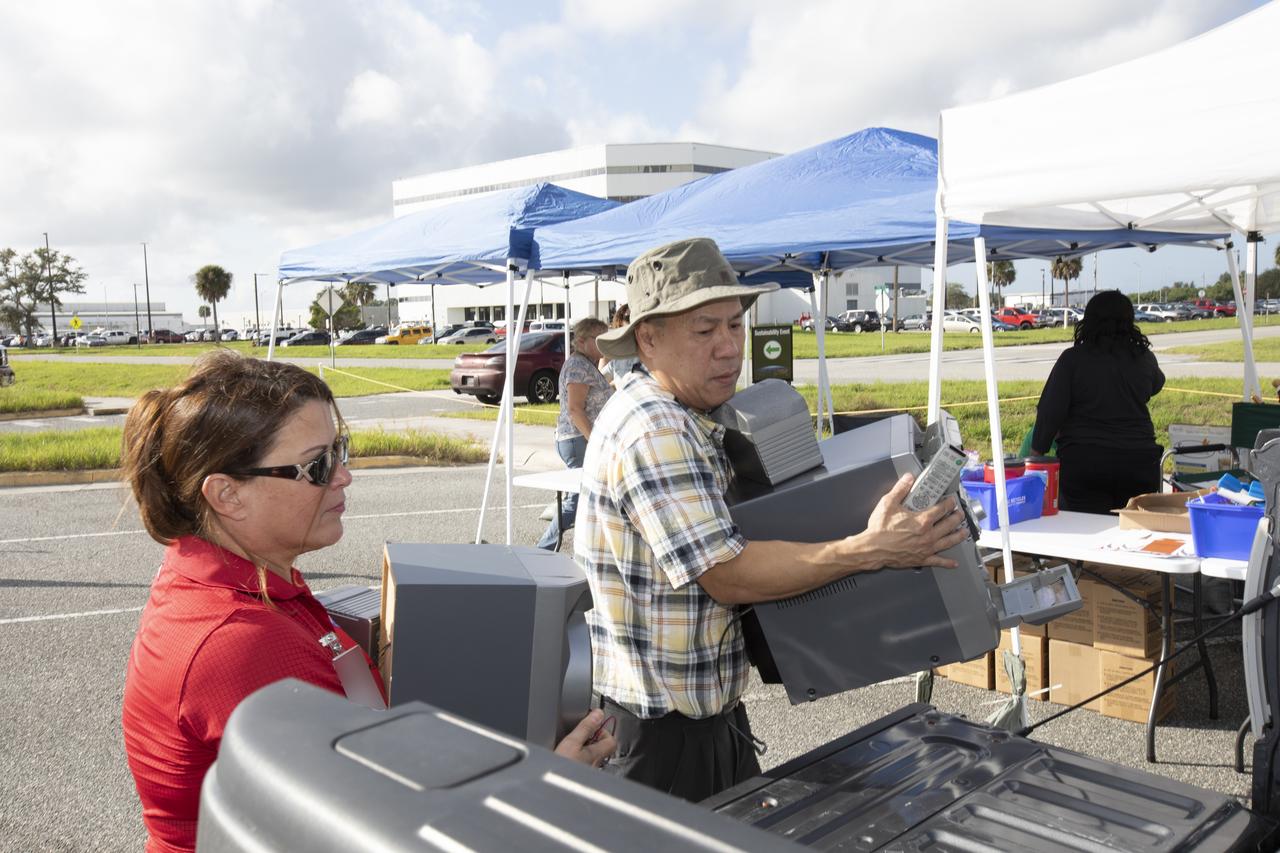
In the parking lot of the Vehicle Assembly Building at NASA's Kennedy Space Center in Florida, employees turn in used household material for recycling as part of America Recycles Day (ARD). The annual event is a nationally recognized initiative dedicated to promoting recycling in the United States. This year, KSC is partnered with Goodwill Industries and several other local organizations to receive donation material from employees such as gently used household items, personal electronic waste, greeting cards and serviceable eyeglasses.
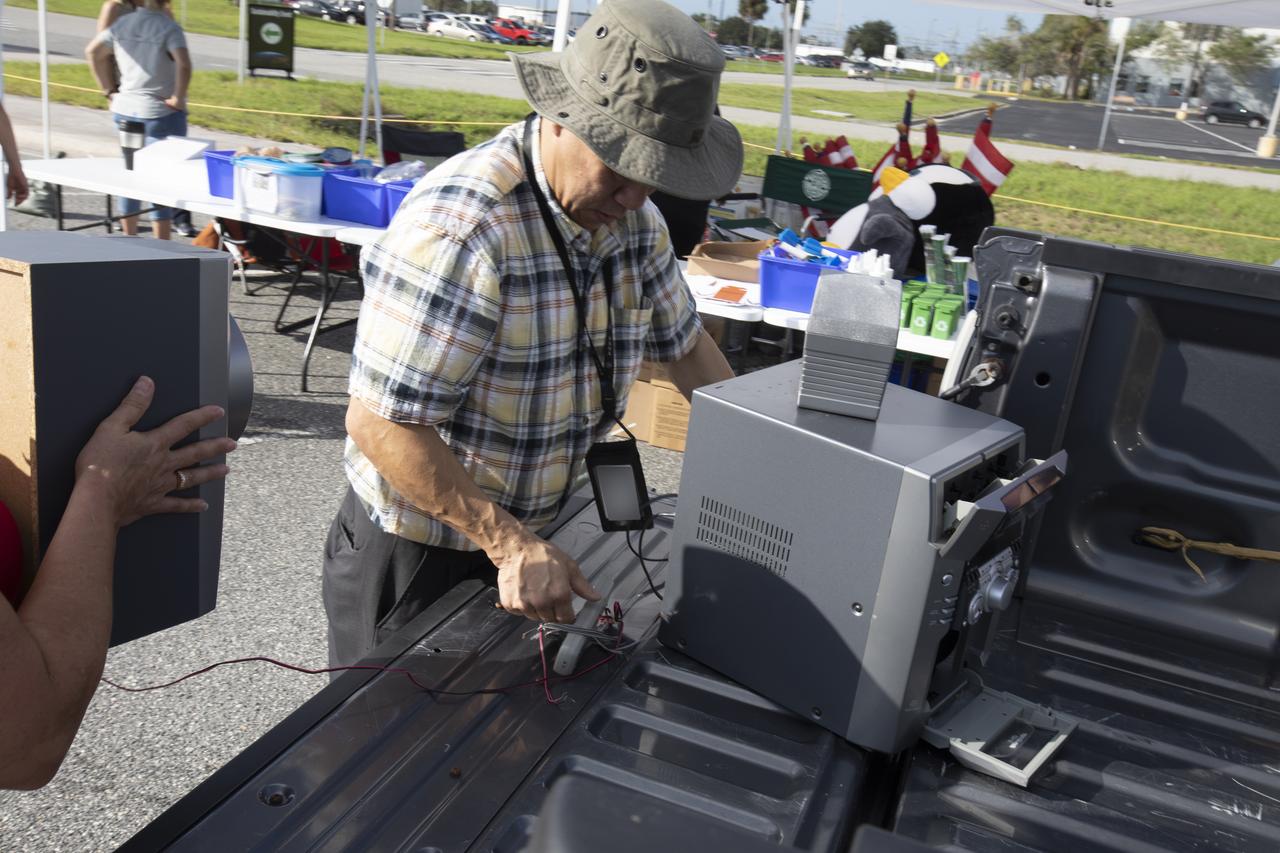
In the parking lot of the Vehicle Assembly Building at NASA's Kennedy Space Center in Florida, employees turn in used household material for recycling as part of America Recycles Day (ARD). The annual event is a nationally recognized initiative dedicated to promoting recycling in the United States. This year, KSC is partnered with Goodwill Industries and several other local organizations to receive donation material from employees such as gently used household items, personal electronic waste, greeting cards and serviceable eyeglasses.
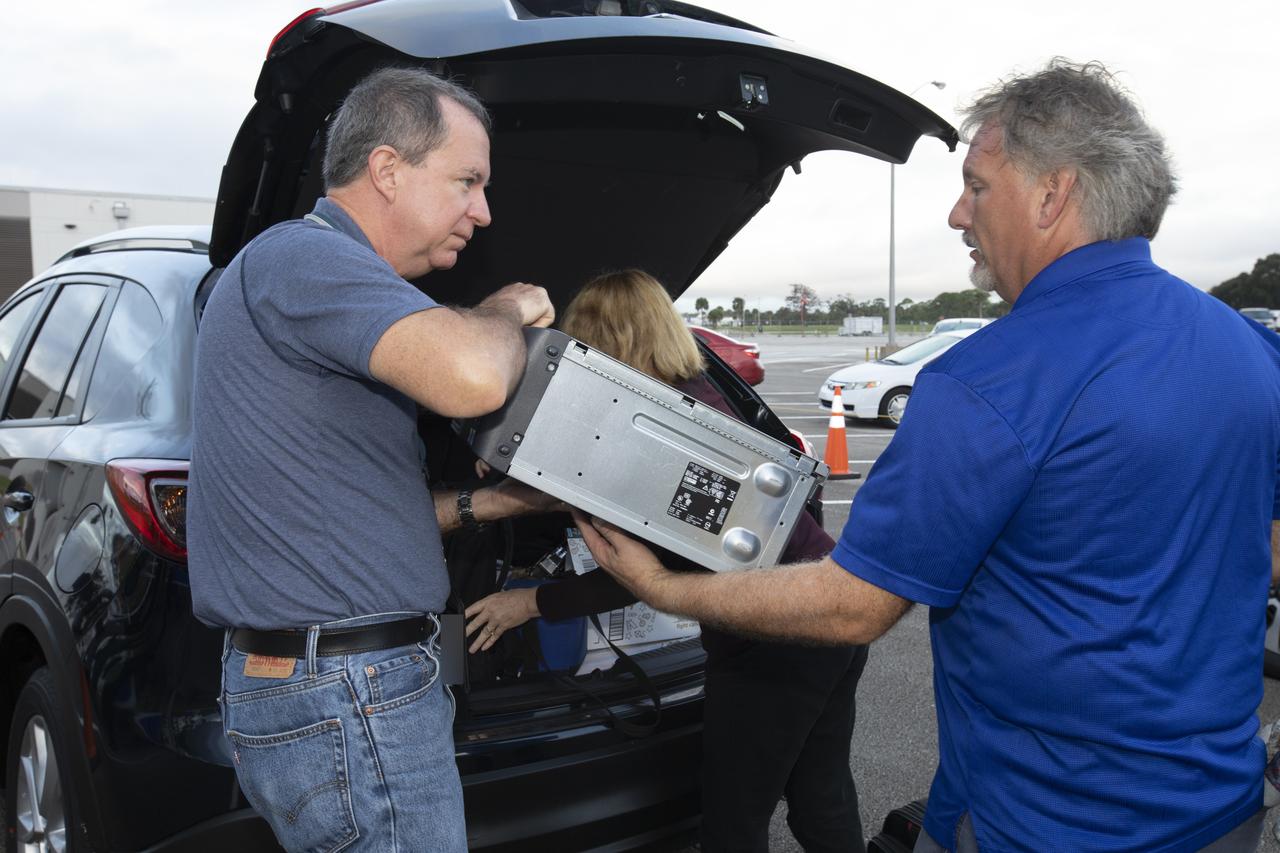
In the parking lot of the Vehicle Assembly Building at NASA's Kennedy Space Center in Florida, employees turn in used household material for recycling as part of America Recycles Day (ARD). The annual event is a nationally recognized initiative dedicated to promoting recycling in the United States. This year, KSC is partnered with Goodwill Industries and several other local organizations to receive donation material from employees such as gently used household items, personal electronic waste, greeting cards and serviceable eyeglasses.
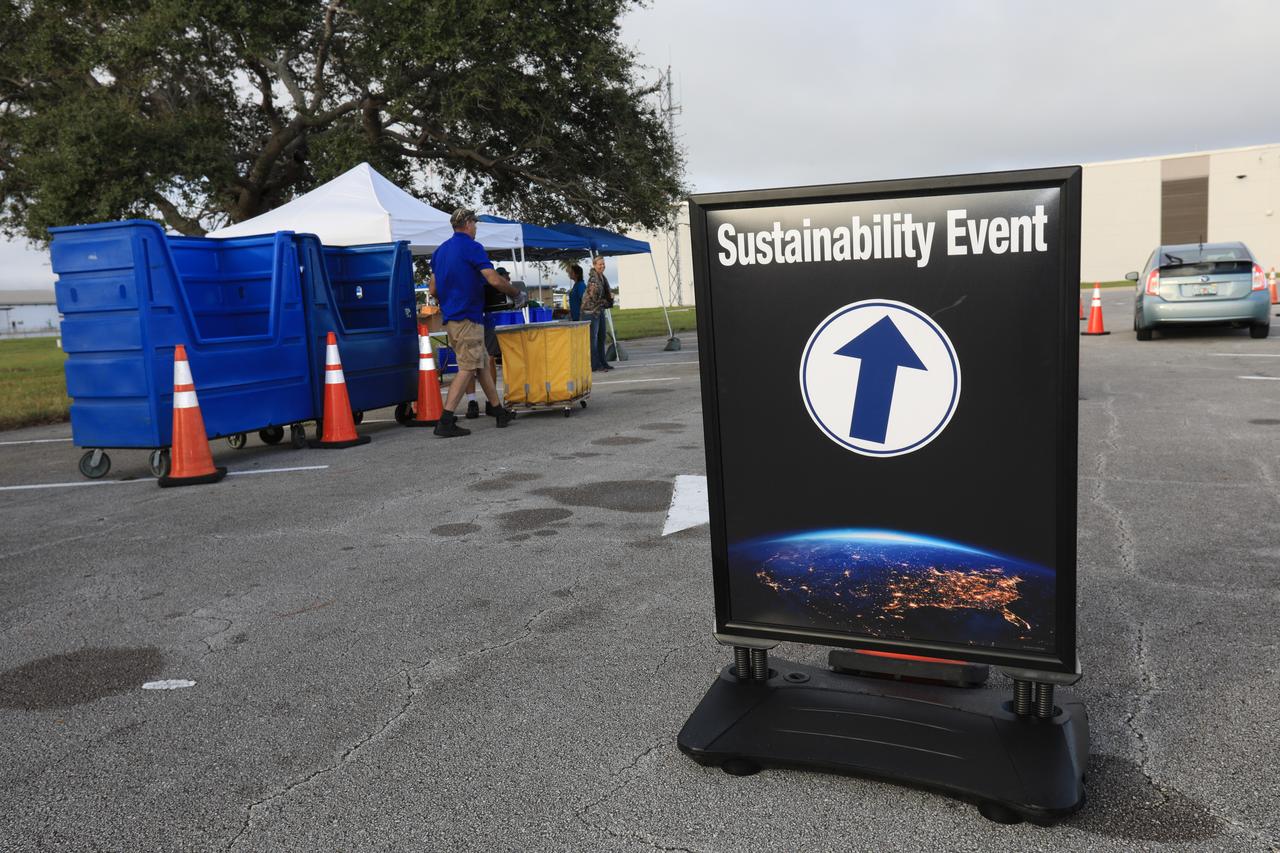
In the parking lot of the Data Center at NASA's Kennedy Space Center in Florida, employees turn in used household material for recycling as part of America Recycles Day (ARD) led by the center's Sustainability organization. The annual event is a nationally recognized initiative dedicated to promoting recycling in the United States. This year, KSC is partnered with Goodwill Industries and several other local organizations to receive donation material from employees such as gently used household items, personal electronic waste, greeting cards and serviceable eyeglasses.
In the parking lot of the Vehicle Assembly Building at NASA's Kennedy Space Center in Florida, employees turn in used household material for recycling as part of America Recycles Day (ARD). The annual event is a nationally recognized initiative dedicated to promoting recycling in the United States. This year, KSC is partnered with Goodwill Industries and several other local organizations to receive donation material from employees such as gently used household items, personal electronic waste, greeting cards and serviceable eyeglasses.
In the parking lot of the Vehicle Assembly Building at NASA's Kennedy Space Center in Florida, employees turn in used household material for recycling as part of America Recycles Day (ARD). The annual event is a nationally recognized initiative dedicated to promoting recycling in the United States. This year, KSC is partnered with Goodwill Industries and several other local organizations to receive donation material from employees such as gently used household items, personal electronic waste, greeting cards and serviceable eyeglasses.
In the parking lot of the Vehicle Assembly Building at NASA's Kennedy Space Center in Florida, employees turn in used household material for recycling as part of America Recycles Day (ARD). The annual event is a nationally recognized initiative dedicated to promoting recycling in the United States. This year, KSC is partnered with Goodwill Industries and several other local organizations to receive donation material from employees such as gently used household items, personal electronic waste, greeting cards and serviceable eyeglasses.
In the parking lot of the Vehicle Assembly Building at NASA's Kennedy Space Center in Florida, employees turn in used household material for recycling as part of America Recycles Day (ARD). The annual event is a nationally recognized initiative dedicated to promoting recycling in the United States. This year, KSC is partnered with Goodwill Industries and several other local organizations to receive donation material from employees such as gently used household items, personal electronic waste, greeting cards and serviceable eyeglasses.
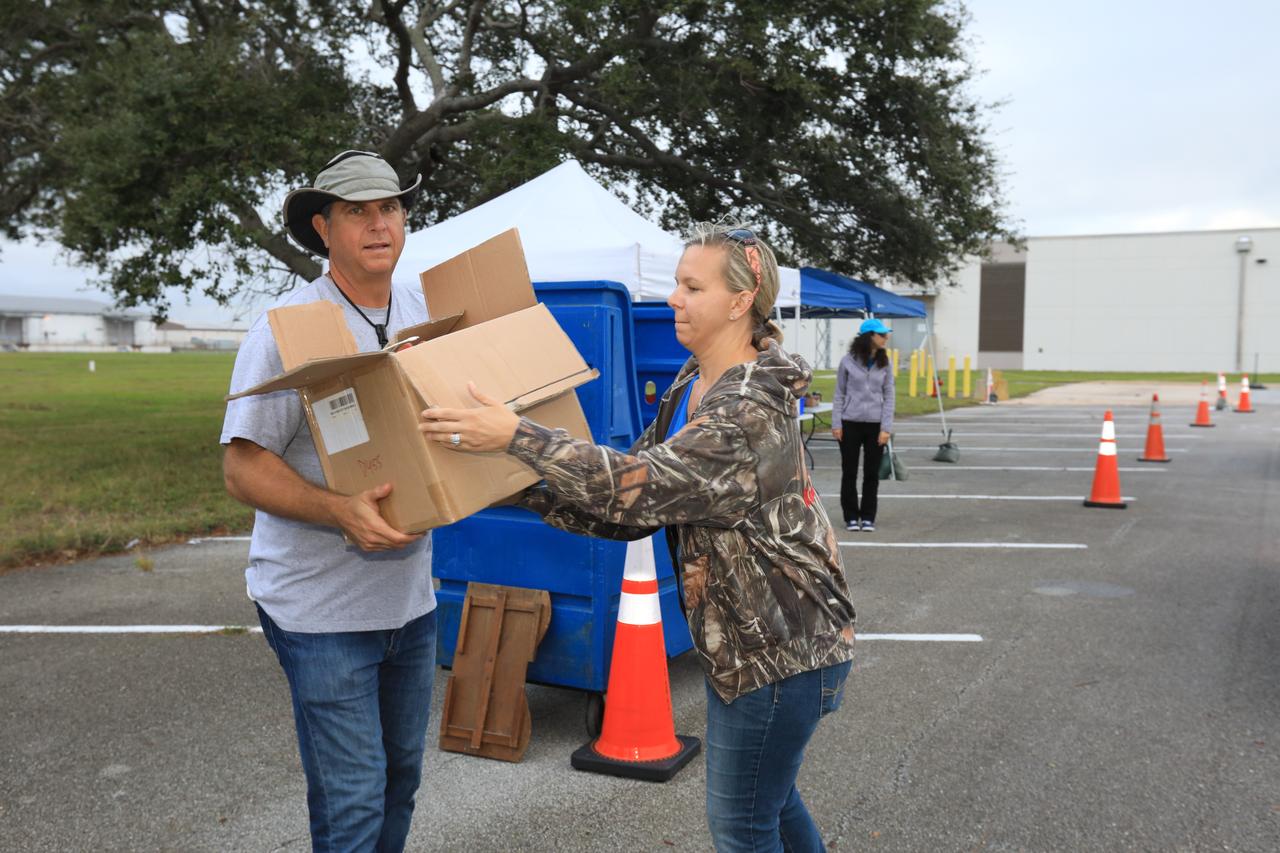
In the parking lot of the Vehicle Assembly Building at NASA's Kennedy Space Center in Florida, employees turn in used household material for recycling as part of America Recycles Day (ARD). The annual event is a nationally recognized initiative dedicated to promoting recycling in the United States. This year, KSC is partnered with Goodwill Industries and several other local organizations to receive donation material from employees such as gently used household items, personal electronic waste, greeting cards and serviceable eyeglasses.
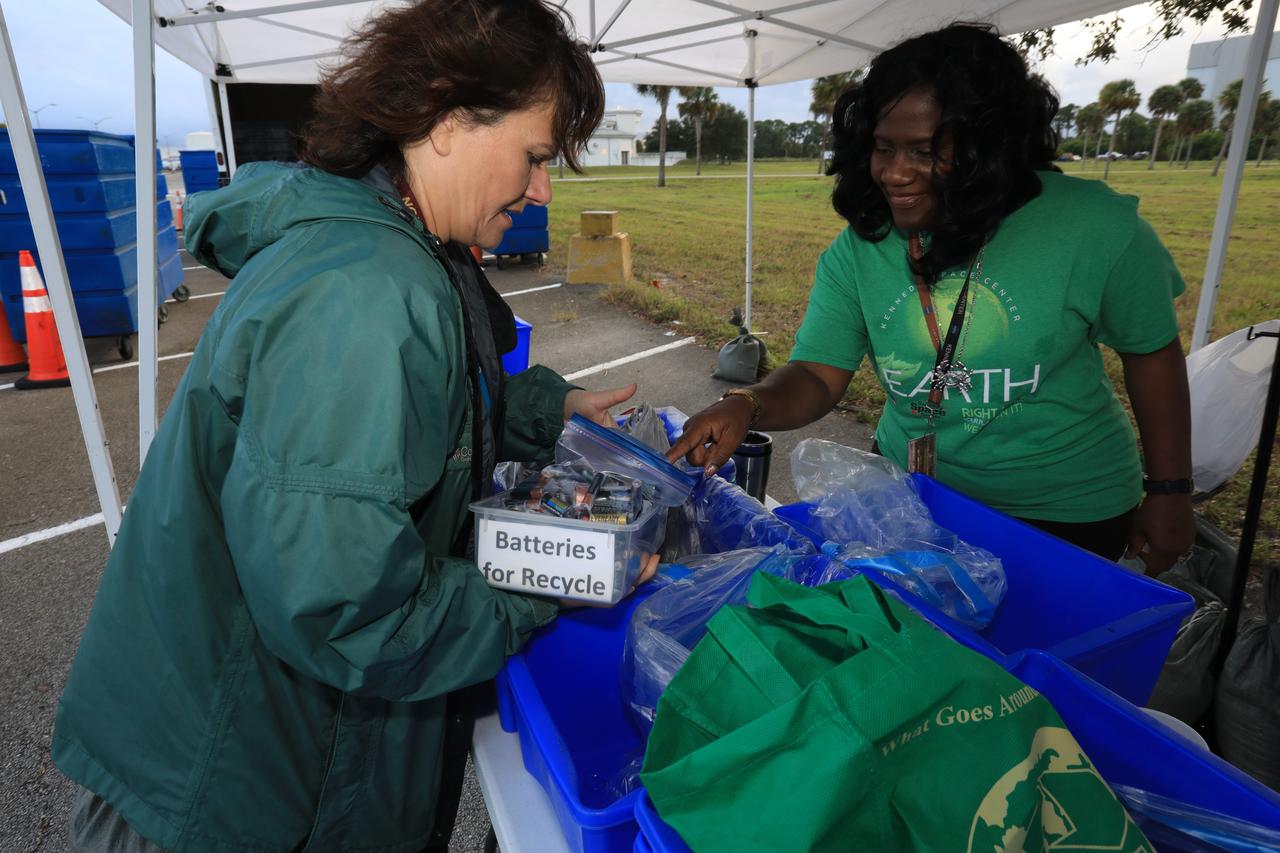
In the parking lot of the Vehicle Assembly Building at NASA's Kennedy Space Center in Florida, employees turn in used household material for recycling as part of America Recycles Day (ARD). The annual event is a nationally recognized initiative dedicated to promoting recycling in the United States. This year, KSC is partnered with Goodwill Industries and several other local organizations to receive donation material from employees such as gently used household items, personal electronic waste, greeting cards and serviceable eyeglasses.
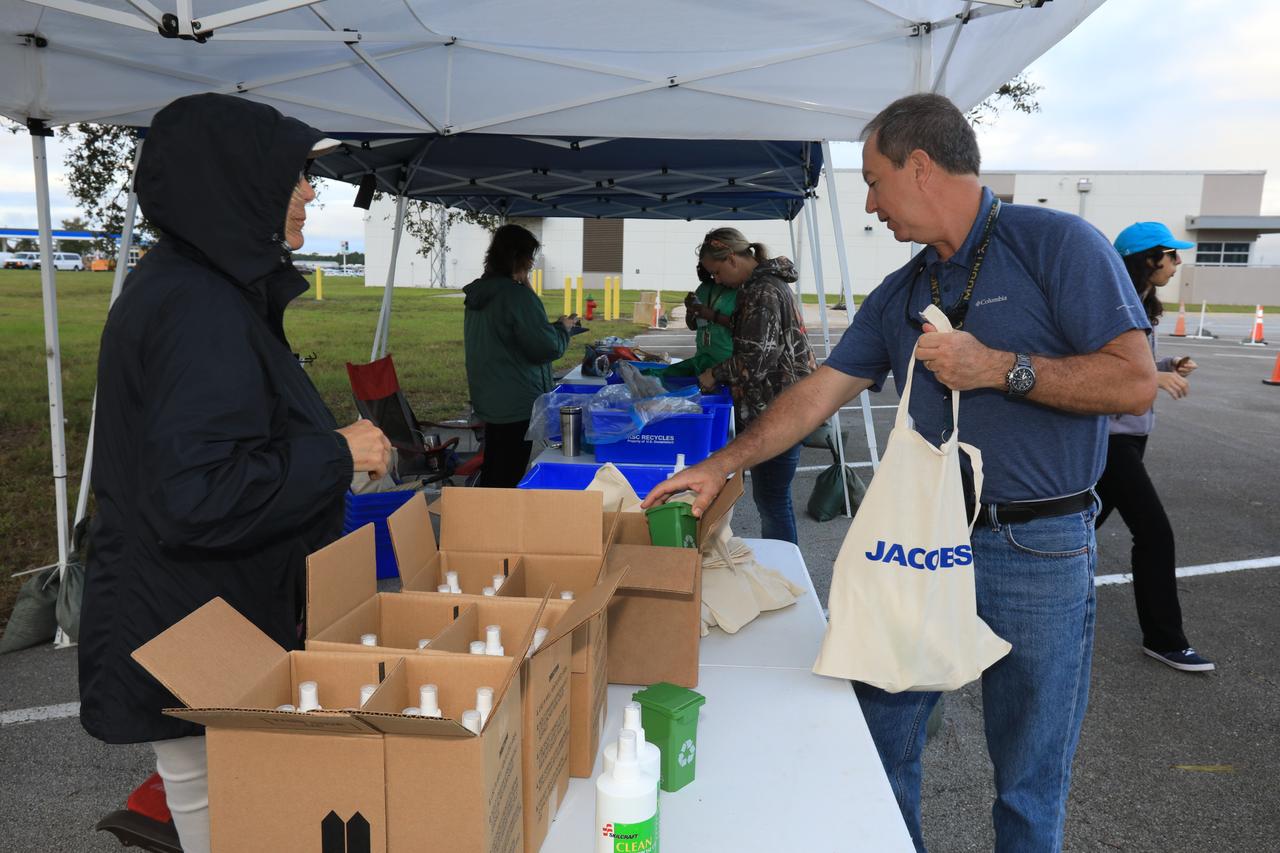
In the parking lot of the Vehicle Assembly Building at NASA's Kennedy Space Center in Florida, employees turn in used household material for recycling as part of America Recycles Day (ARD). The annual event is a nationally recognized initiative dedicated to promoting recycling in the United States. This year, KSC is partnered with Goodwill Industries and several other local organizations to receive donation material from employees such as gently used household items, personal electronic waste, greeting cards and serviceable eyeglasses.
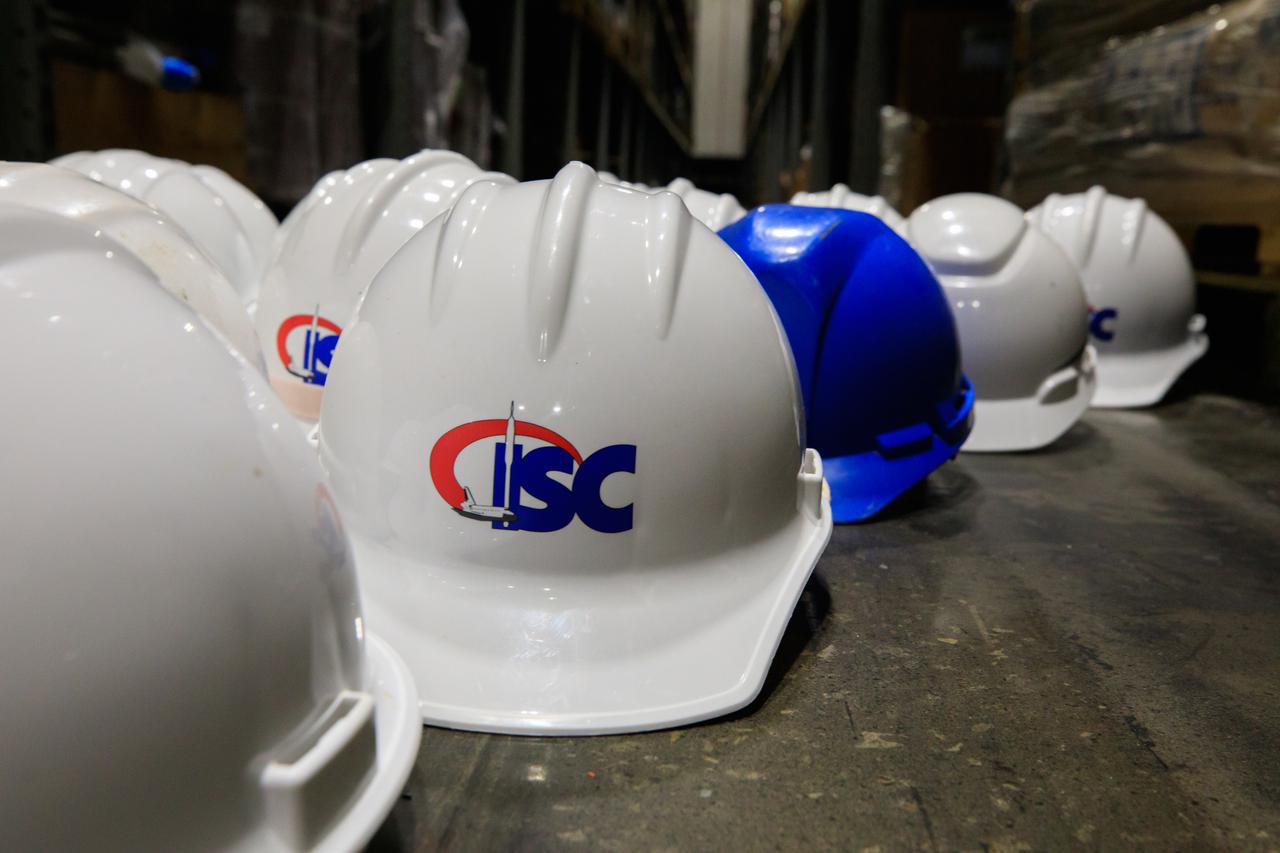
The Test and Operations Support Contract (TOSC) Kimberly-Clark RightCycle program team of April Smith and An Huynh recently earned a Fiscal Year 2021 Sustainable Environment Awareness (SEA) Award Citation. The Kennedy Space Center employees received the honor in SEA’s Waste Management category. Personal Protective Equipment (PPE) is being replaced with Kimberly-Clark brand, where possible, as collection containers are placed in all applicable TOSC facilities at Kennedy. All supplier PPE is collected, placed in a container, and shipped back to the company to be recycled into usable products.
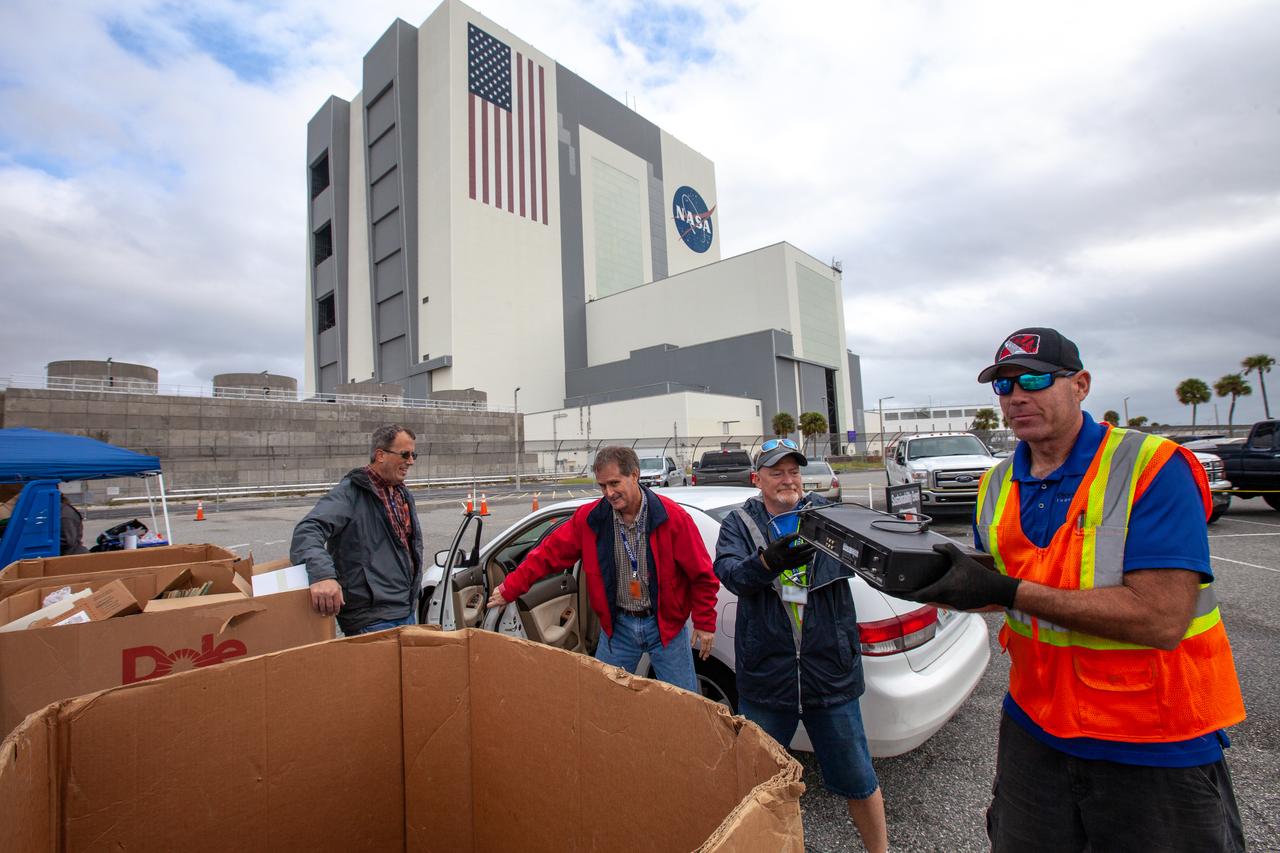
Household items are dropped off in the Vehicle Assembly Building parking lot at Kennedy Space Center on Nov. 13, 2019, as part of America Recycles Day. The Florida spaceport partnered with Goodwill Industries and several other organizations to put on the annual two-day event. A second collection day took place near the Kennedy Learning Institute. This year, employees accounted for 211 drop-offs, totaling approximately 5,500 pounds.
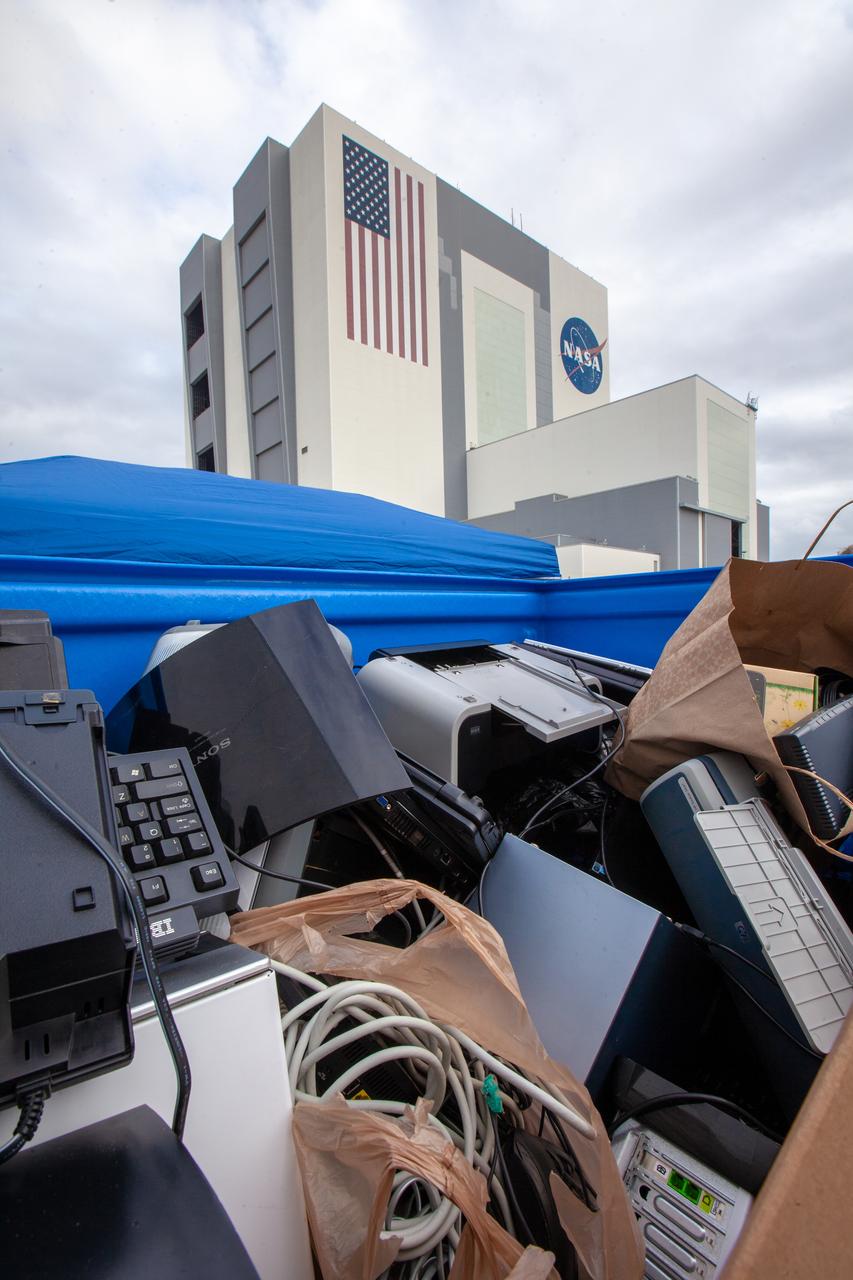
A look at some of the items that were dropped off by Kennedy Space Center employees at the Florida spaceport’s “America Recycles Day” event in the Vehicle Assembly Building parking lot on Nov. 13, 2019. Kennedy partnered with Goodwill Industries and several other organizations to put on the annual two-day event. A second collection day took place near the Kennedy Learning Institute. This year, employees accounted for 211 drop-offs, totaling approximately 5,500 pounds.
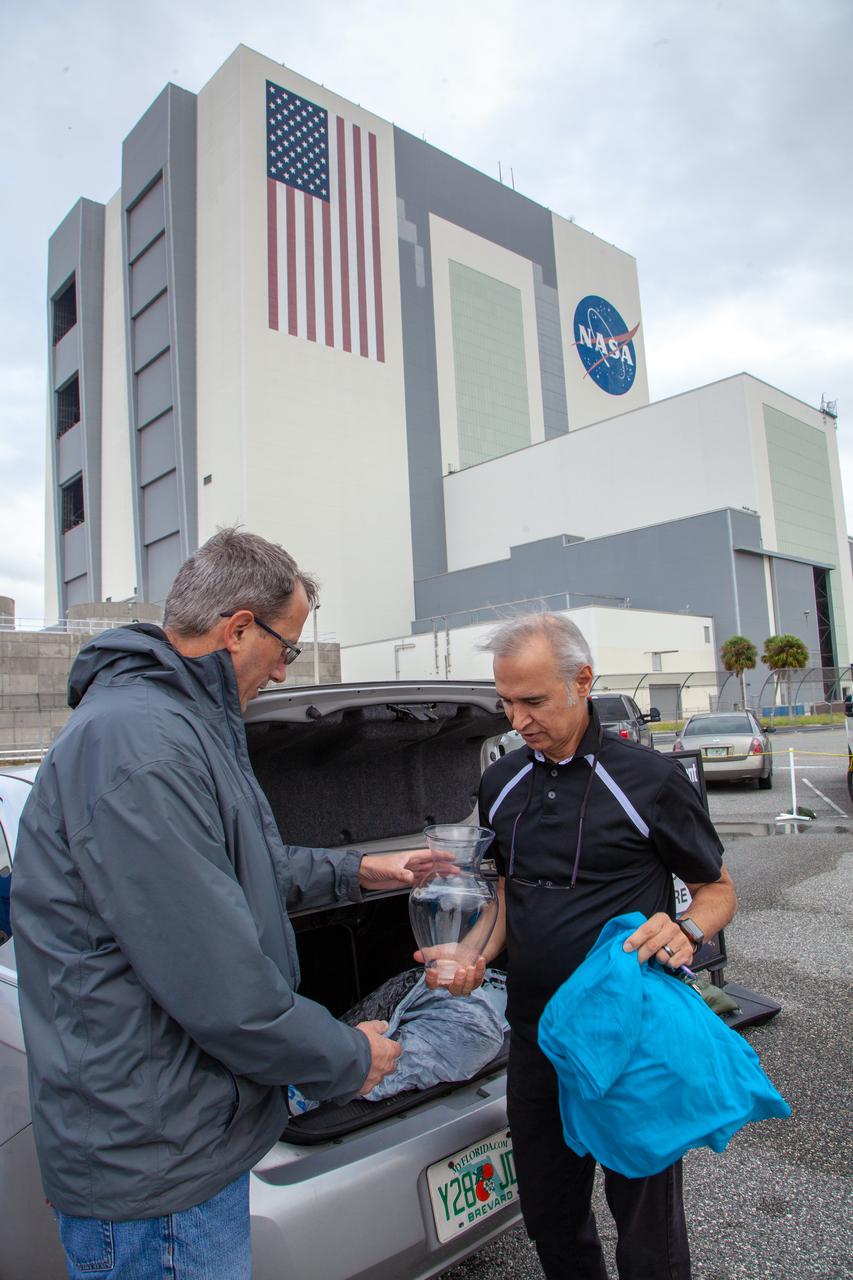
Household items are dropped off in the Vehicle Assembly Building parking lot at Kennedy Space Center on Nov. 13, 2019, as part of America Recycles Day. The Florida spaceport partnered with Goodwill Industries and several other organizations to put on the annual two-day event. A second collection day took place near the Kennedy Learning Institute. This year, employees accounted for 211 drop-offs, totaling approximately 5,500 pounds.
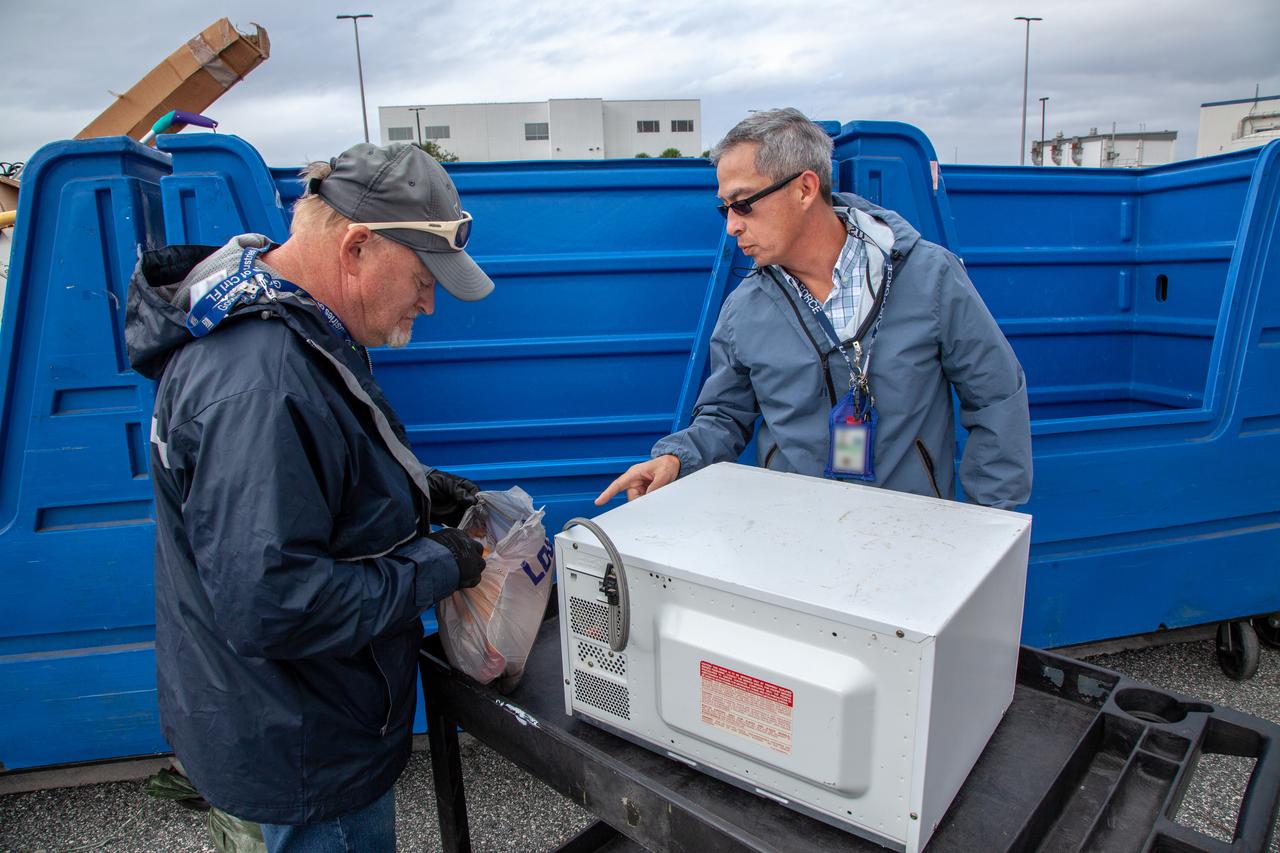
Household items are sorted in the Vehicle Assembly Building parking lot at Kennedy Space Center on Nov. 13, 2019, as part of America Recycles Day. The Florida spaceport partnered with Goodwill Industries and several other organizations to put on the annual two-day event. A second collection day took place near the Kennedy Learning Institute. This year, employees accounted for 211 drop-offs, totaling approximately 5,500 pounds.

A look at some of the items that were dropped off by Kennedy Space Center employees at the Florida spaceport’s “America Recycles Day” event in the Vehicle Assembly Building parking lot on Nov. 13, 2019. Kennedy partnered with Goodwill Industries and several other organizations to put on the annual two-day event. A second collection day took place near the Kennedy Learning Institute. This year, employees accounted for 211 drop-offs, totaling approximately 5,500 pounds.
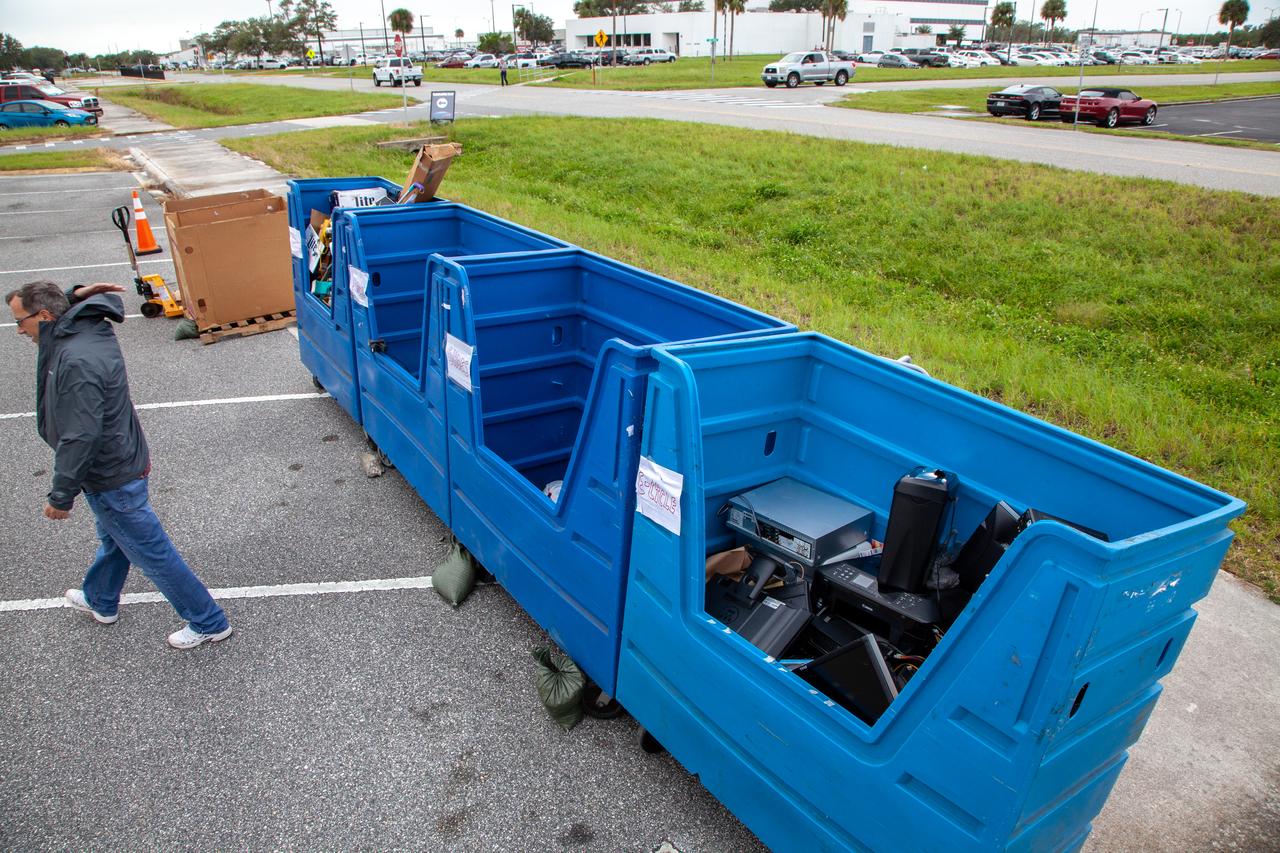
Household items are collected in the Vehicle Assembly Building parking lot at Kennedy Space Center on Nov. 13, 2019, as part of America Recycles Day. The Florida spaceport partnered with Goodwill Industries and several other organizations to put on the annual two-day event. A second collection day took place near the Kennedy Learning Institute. This year, employees accounted for 211 drop-offs, totaling approximately 5,500 pounds.
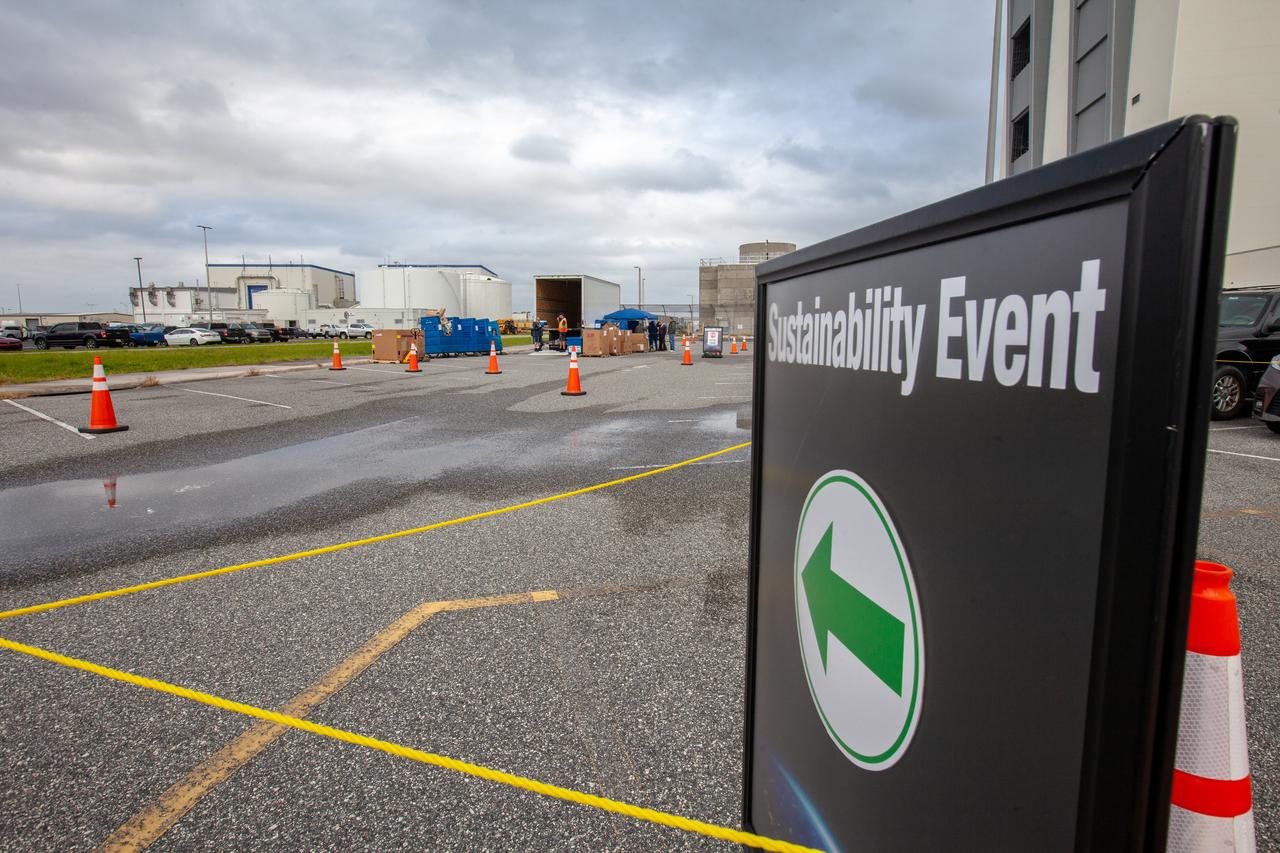
A sign points the way to Kennedy Space Center’s “America Recycles Day” event in the Vehicle Assembly Building parking lot on Nov. 13, 2019. The Florida spaceport partnered with Goodwill Industries and several other organizations to put on the annual two-day event. A second collection day took place near the Kennedy Learning Institute. This year, employees accounted for 211 drop-offs, totaling approximately 5,500 pounds.
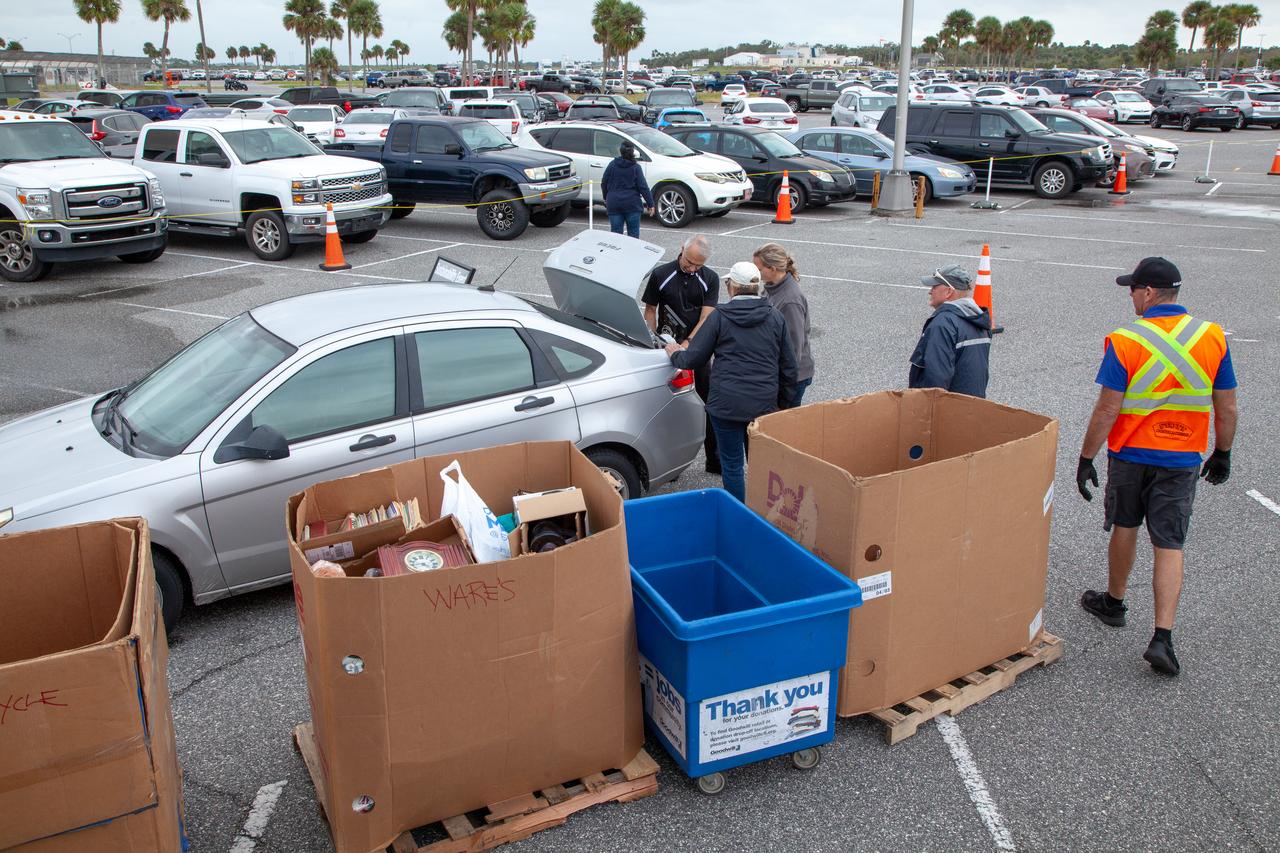
Household items are dropped off in the Vehicle Assembly Building parking lot at Kennedy Space Center on Nov. 13, 2019, as part of America Recycles Day. The Florida spaceport partnered with Goodwill Industries and several other organizations to put on the annual two-day event. A second collection day took place near the Kennedy Learning Institute. This year, employees accounted for 211 drop-offs, totaling approximately 5,500 pounds.
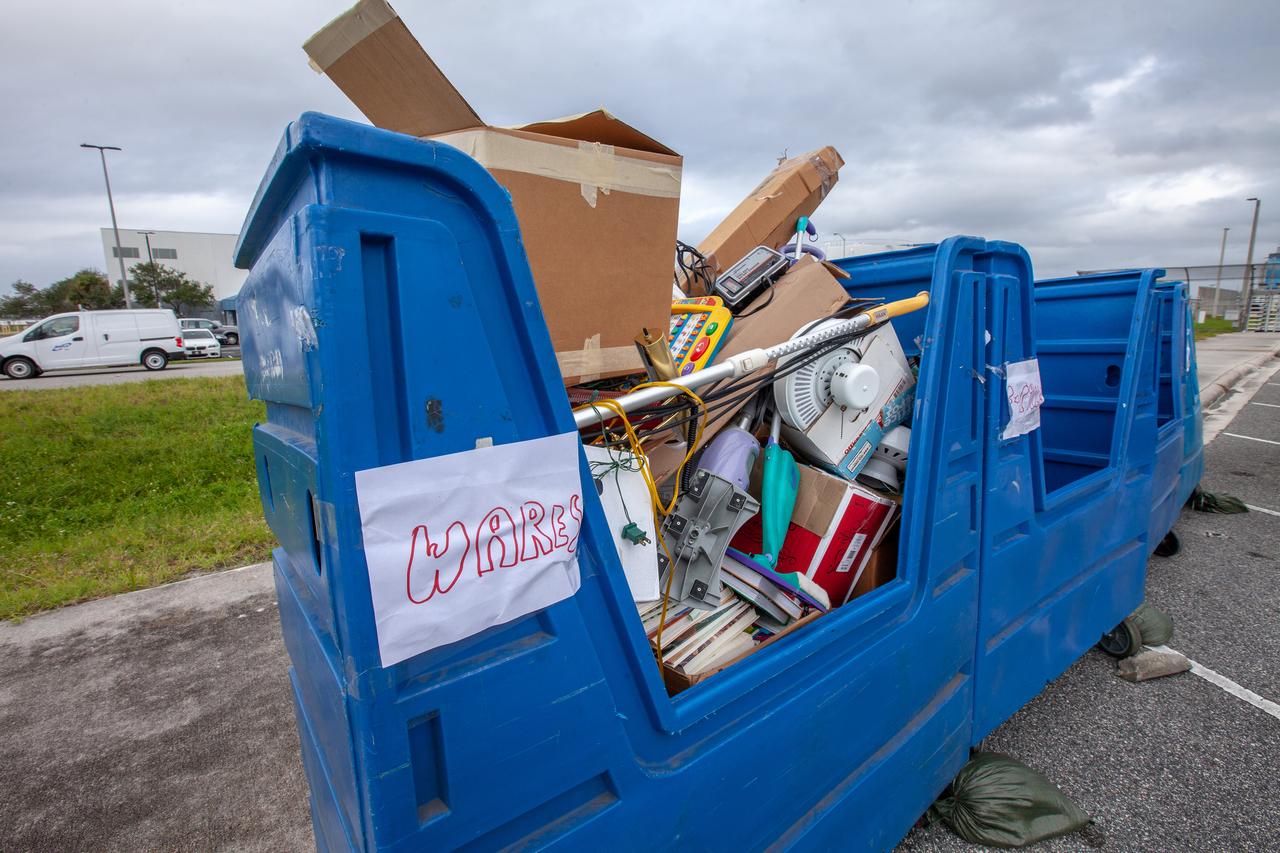
A look at some of the items that were dropped off by Kennedy Space Center employees at the Florida spaceport’s “America Recycles Day” event in the Vehicle Assembly Building parking lot on Nov. 13, 2019. Kennedy partnered with Goodwill Industries and several other organizations to put on the annual two-day event. A second collection day took place near the Kennedy Learning Institute. This year, employees accounted for 211 drop-offs, totaling approximately 5,500 pounds.
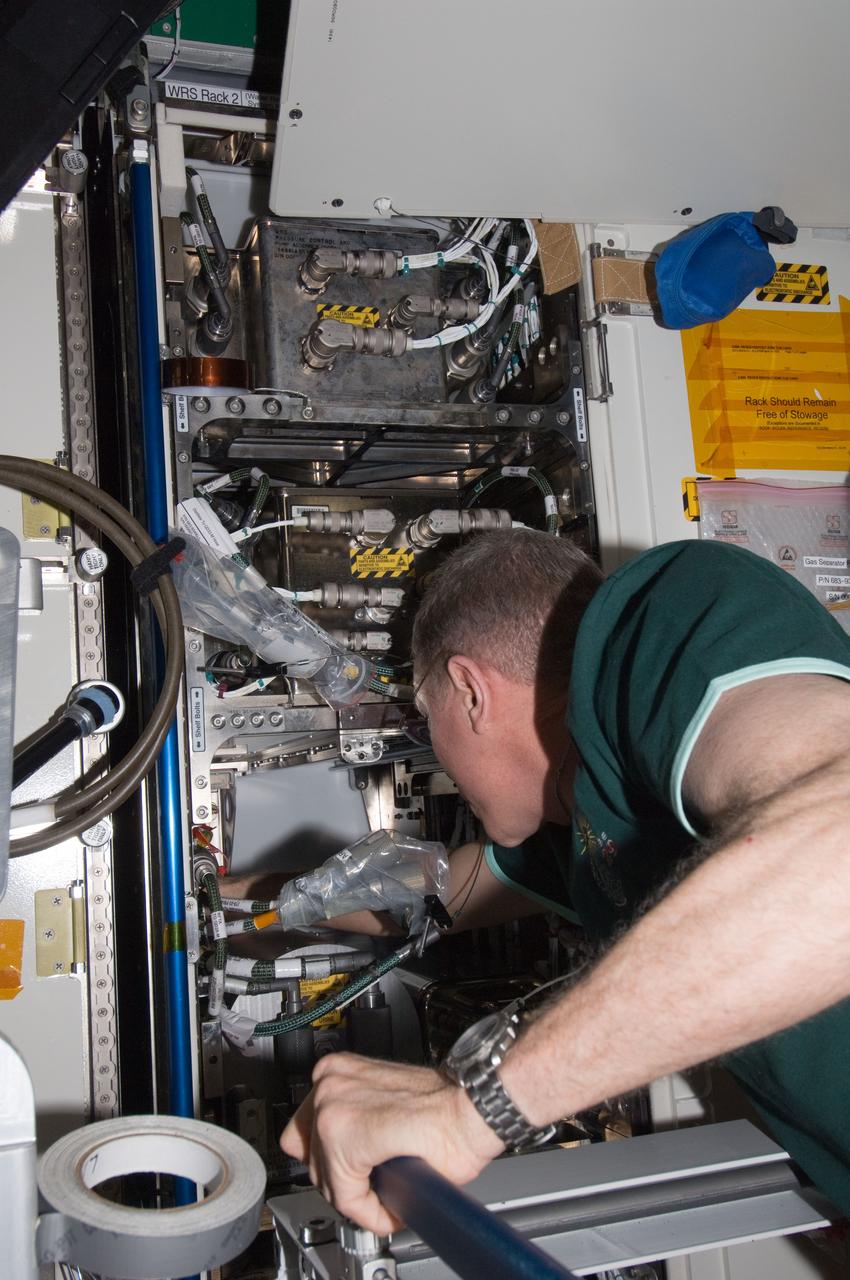
ISS029-E-021648 (10 Oct. 2011) --- NASA astronaut Mike Fossum, Expedition 29 commander, installs the Advanced Recycle Filter Tank Assembly (ARFTA) at the Urine Processor Assembly / Water Recovery System (UPA WRS) in the Destiny laboratory of the International Space Station.
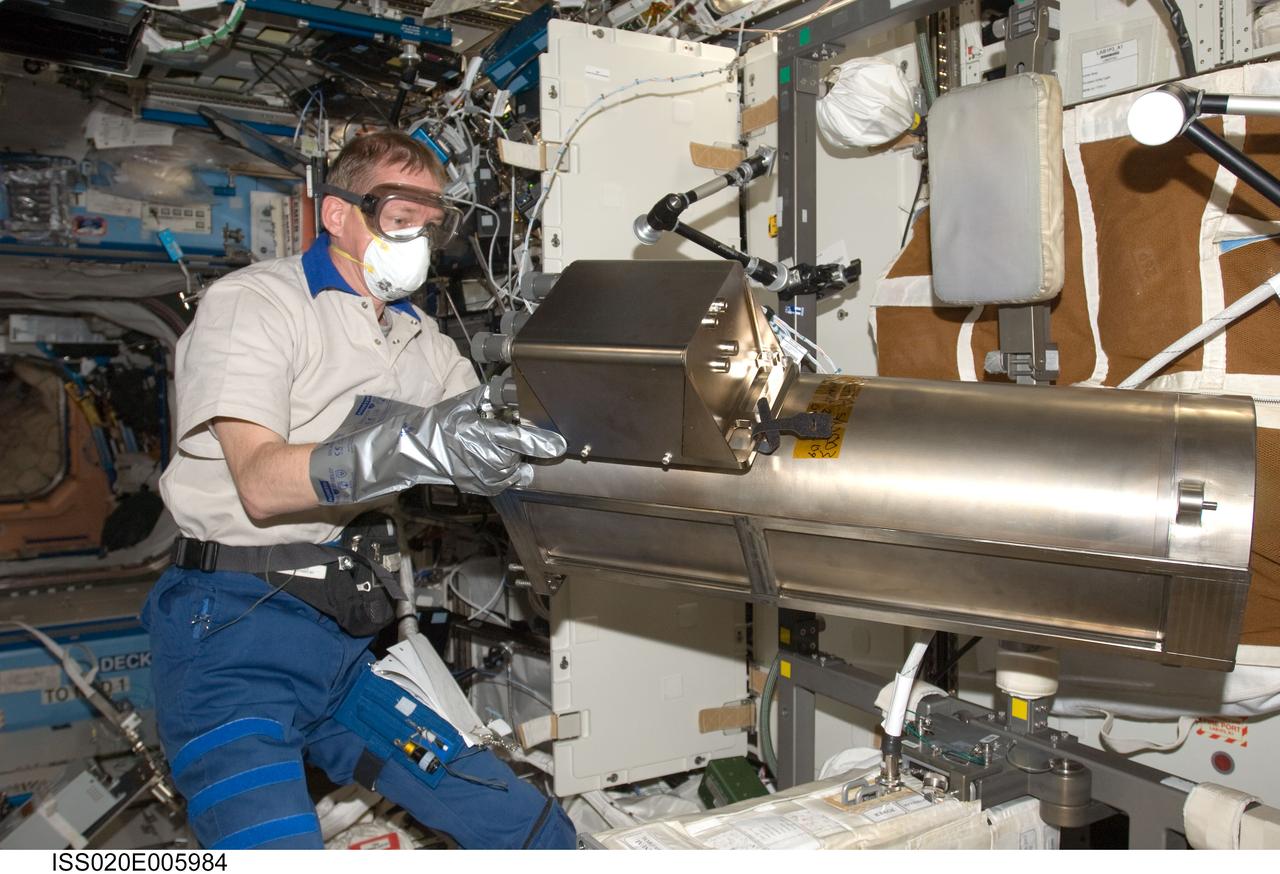
ISS020-E-005984 (2 June 2009) --- European Space Agency astronaut Frank De Winne, Expedition 20 flight engineer, works with the Water Recovery System Recycle Filter Tank Assembly (RFTA) in the Destiny laboratory of the International Space Station.

ISS019-E-018483 (20 May 2009) --- After NASA's Mission Control gave the Expedition 19 astronaut crew aboard the International Space Station a "go" to drink water that the station's new recycling system has purified, the three celebrated with a ?toast? that also involved Mission Control, Houston, and the Payload Operations Center at Marshall Space Flight Center in Huntsville, Ala., which led development of the Water Recovery System. Pictured are Expedition 19 Commander Gennady Padalka (center) and Flight Engineers Mike Barratt (right) and Koichi Wakata, holding drink bags with special commemorative labels in the Destiny laboratory.
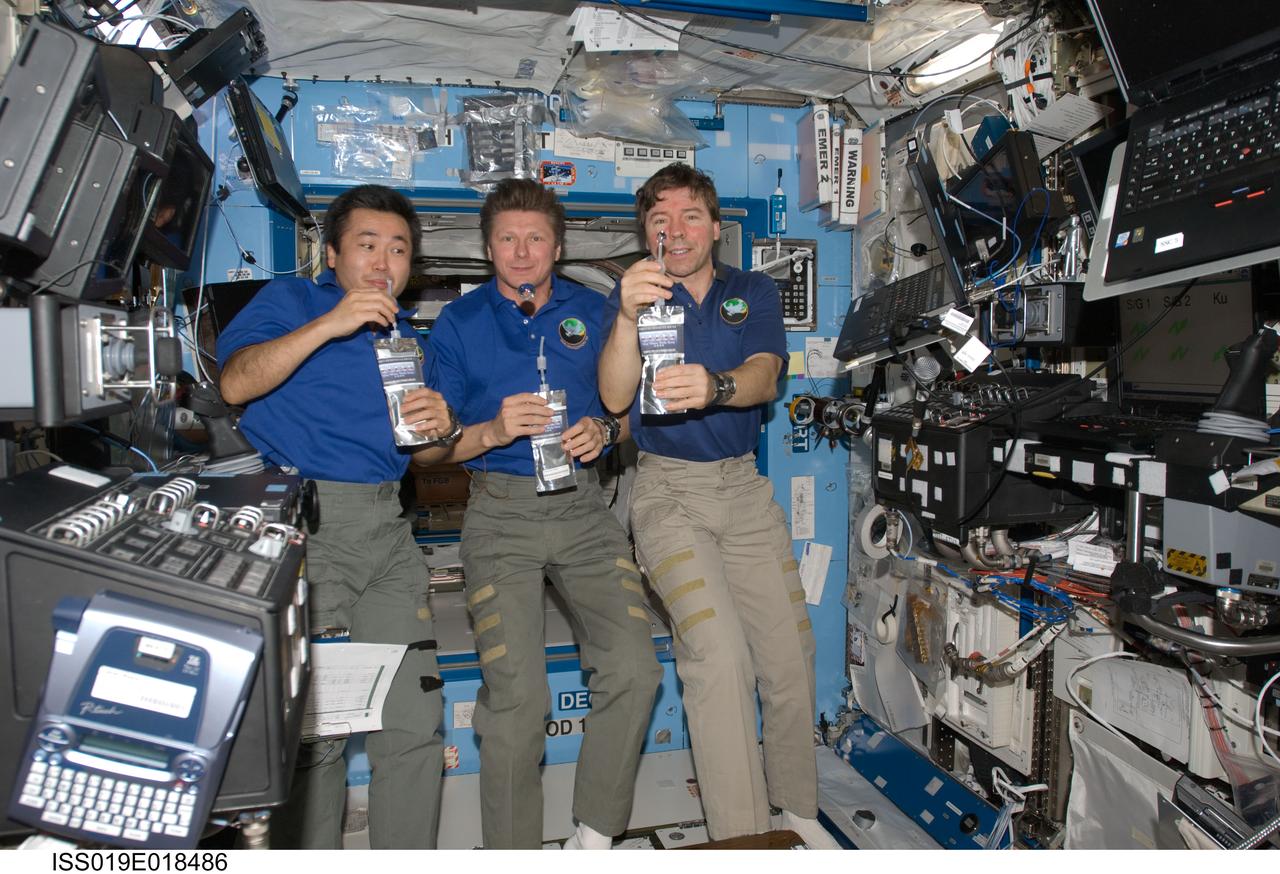
ISS019-E-018486 (20 May 2009) --- After NASA's Mission Control gave the Expedition 19 astronaut crew aboard the International Space Station a "go" to drink water that the station's new recycling system has purified, the three celebrated with a ?toast? that also involved Mission Control, Houston, and the Payload Operations Center at Marshall Space Flight Center in Huntsville, Ala., which led development of the Water Recovery System. Pictured are Expedition 19 Commander Gennady Padalka (center) and Flight Engineers Mike Barratt (right) and Koichi Wakata, holding drink bags with special commemorative labels in the Destiny laboratory.
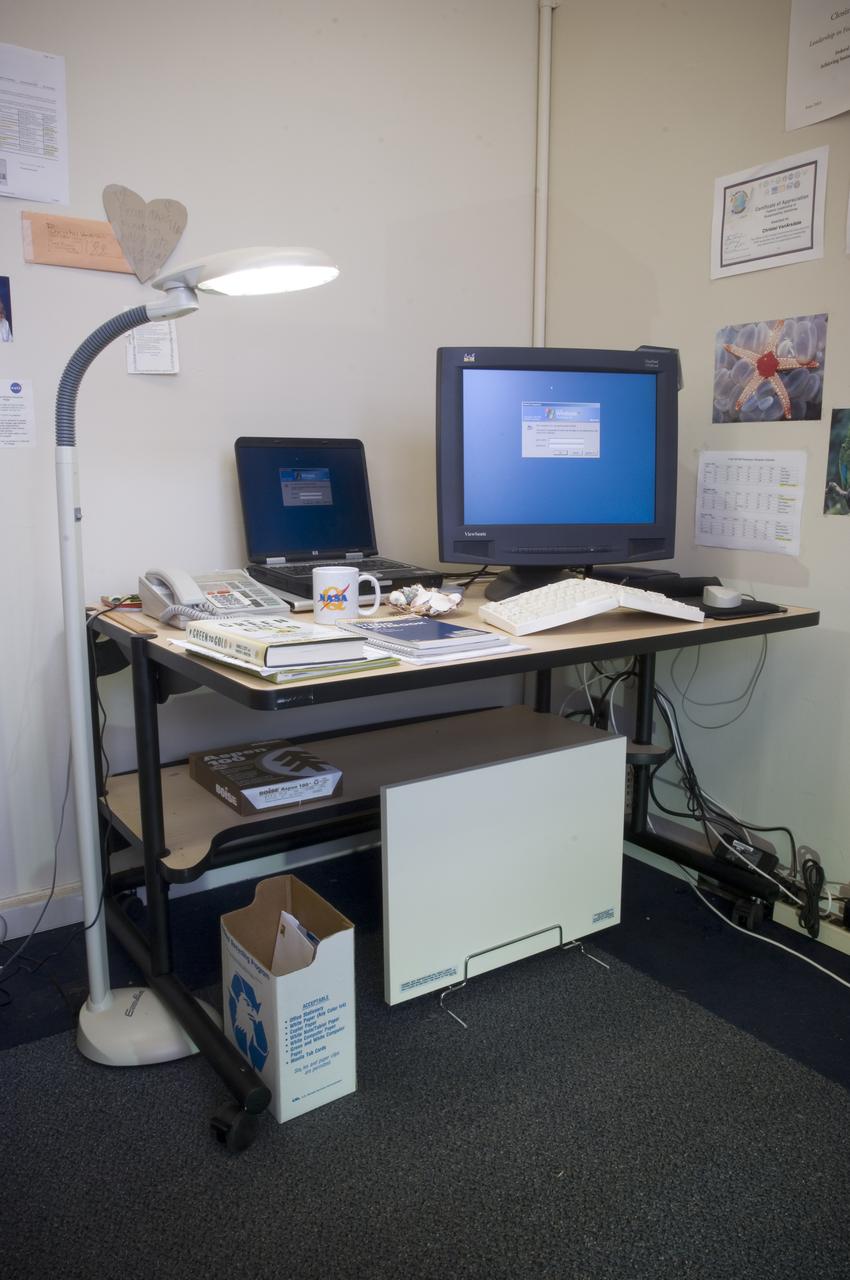
2007 Sustainability report: - Christel Van Arsdale's green office in N-218 with LCD computer monitor, a radiant heating panel, recycling bin, recycled content paper and notebooks, fluorescent lights
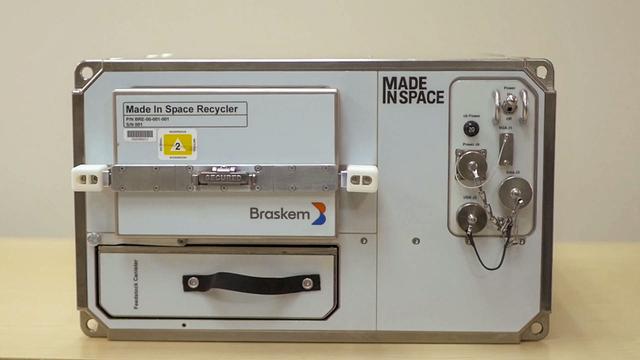
jsc2019e053733 (9/12/2019) --- Preflight imagery of the Made in Space - Recycler. The Made in Space - Recycler will utilize polymer materials to produce filament that is transferred to Manufacturing Device to perform printing operations. This experiment shows the value of closing the loop between the printer and recycling materials utilized by the printer. This has implications for space conservation and deep space missions. Image courtesy of: Made In Space, Inc.

CAPE CANAVERAL, Fla. – A replacement distillation assembly for the International Space Station's new water recycling system is being checked out in the Space Station Processing Facility at NASA's Kennedy Space Center in Florida. The unit is part of the Urine Processing Assembly that removes impurities from urine in an early stage of the recycling process. It will be flown to the station aboard space shuttle Discovery on the STS-119 mission. Photo credit: NASA/Jack Pfaller
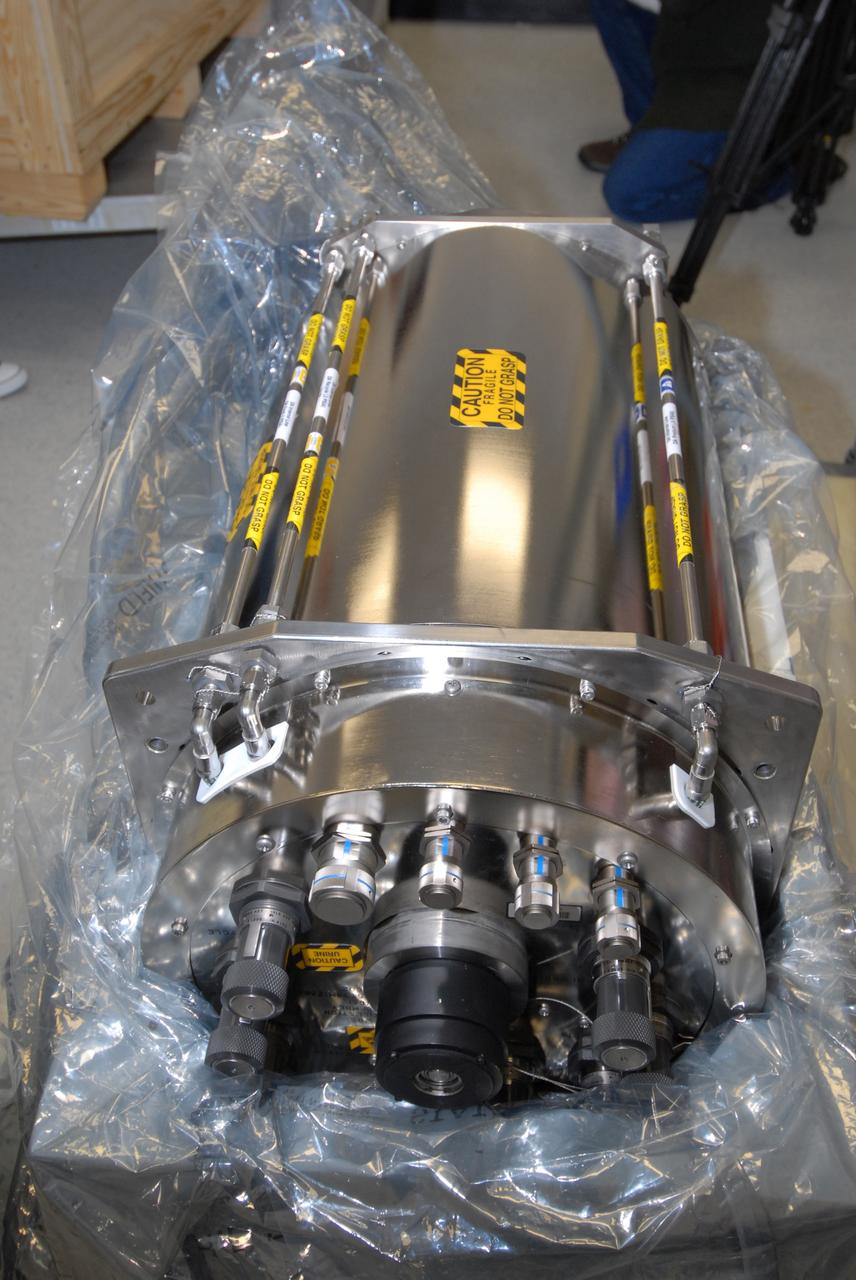
CAPE CANAVERAL, Fla. – A closeup of the replacement distillation assembly for the International Space Station's new water recycling system being checked out in the Space Station Processing Facility at NASA's Kennedy Space Center in Florida. The unit is part of the Urine Processing Assembly that removes impurities from urine in an early stage of the recycling process. It will be flown to the station aboard space shuttle Discovery on the STS-119 mission. Photo credit: NASA/Jack Pfaller
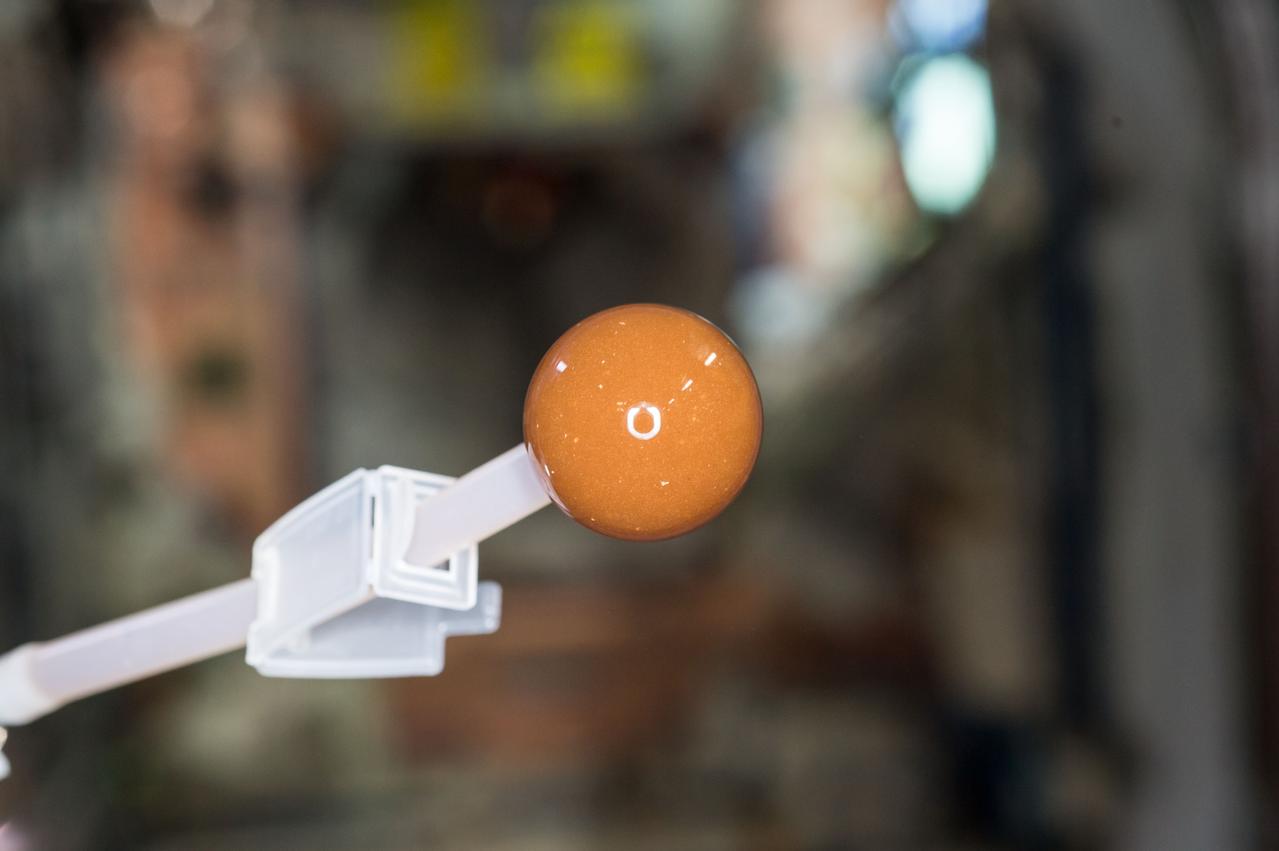
ISS043E128431 (04/22/2015) --- The International Space Station employs one of the most complex water recycling systems ever designed, reclaiming waste water from astronauts and the environment and turning it into potable water. NASA astronaut Scott Kelly tweeted out this image of part of the innovative device with this remark: " Recycle Good to the last drop! Making pee potable and turning it into coffee on @space station. #NoPlaceLikeHome"
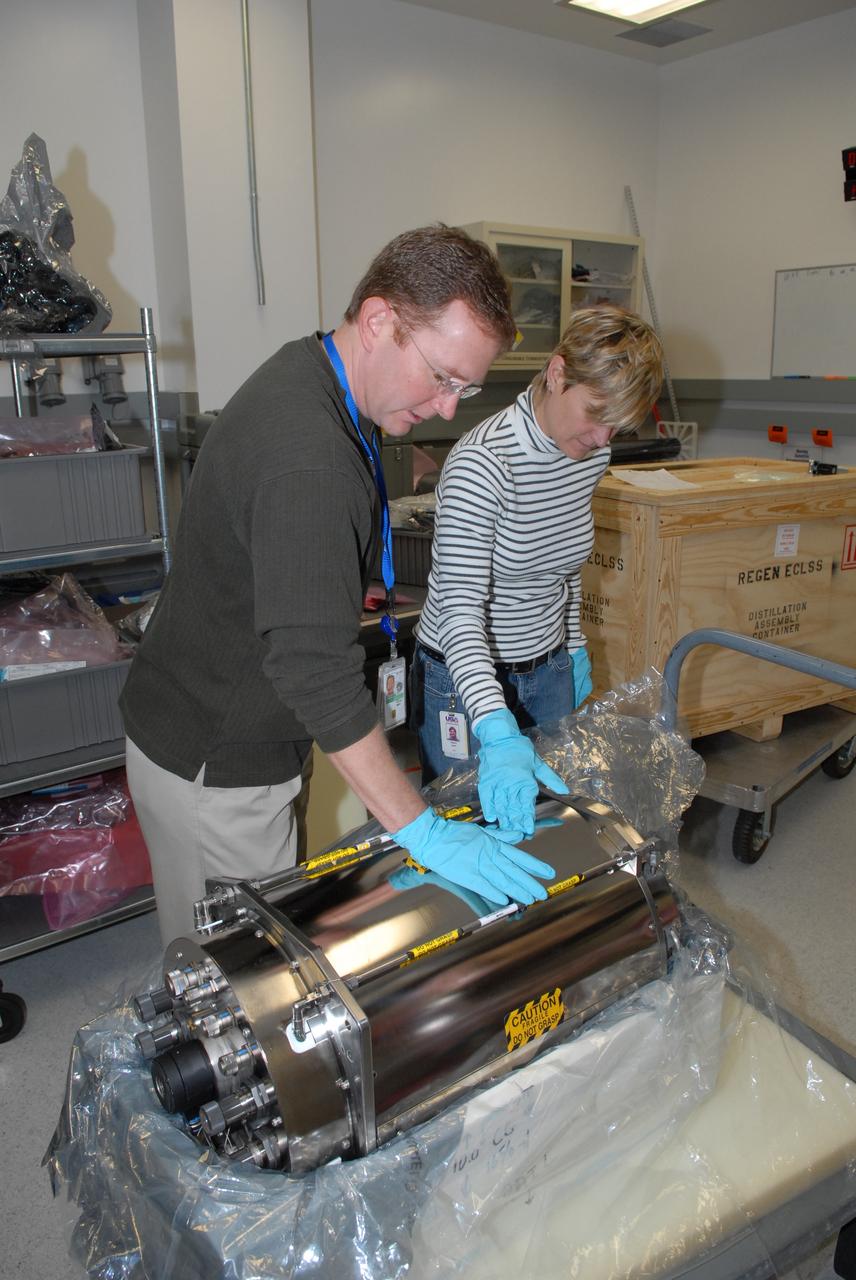
CAPE CANAVERAL, Fla. – A replacement distillation assembly for the International Space Station's new water recycling system is being checked out in the Space Station Processing Facility at NASA's Kennedy Space Center in Florida. The unit is part of the Urine Processing Assembly that removes impurities from urine in an early stage of the recycling process. It will be flown to the station aboard space shuttle Discovery on the STS-119 mission. Photo credit: NASA/Jack Pfaller
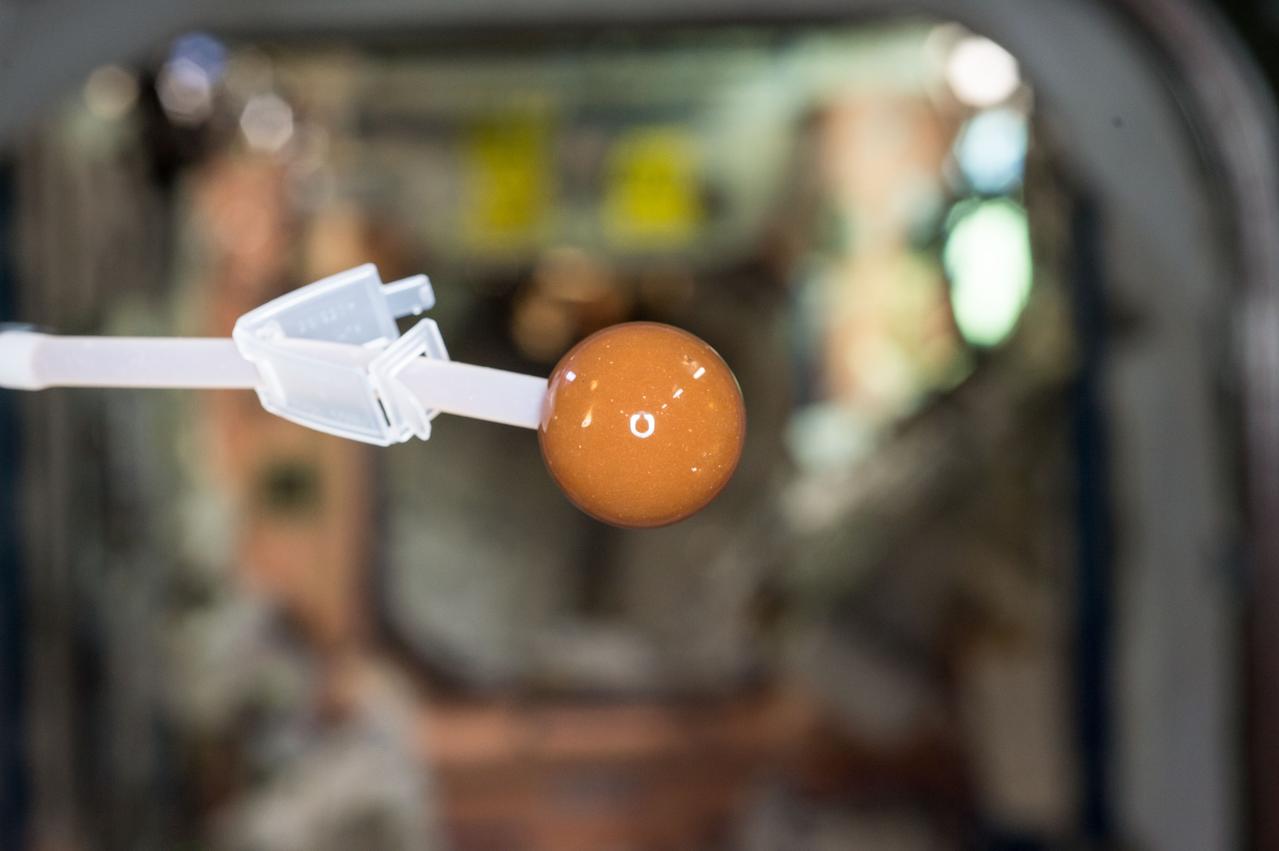
ISS043E128431 (04/22/2015) --- The International Space Station employs one of the most complex water recycling systems ever designed, reclaiming waste water from astronauts and the environment and turning it into potable water. NASA astronaut Scott Kelly tweeted out this image of part of the innovative device with this remark: " Recycle Good to the last drop! Making pee potable and turning it into coffee on @space station. #NoPlaceLikeHome"
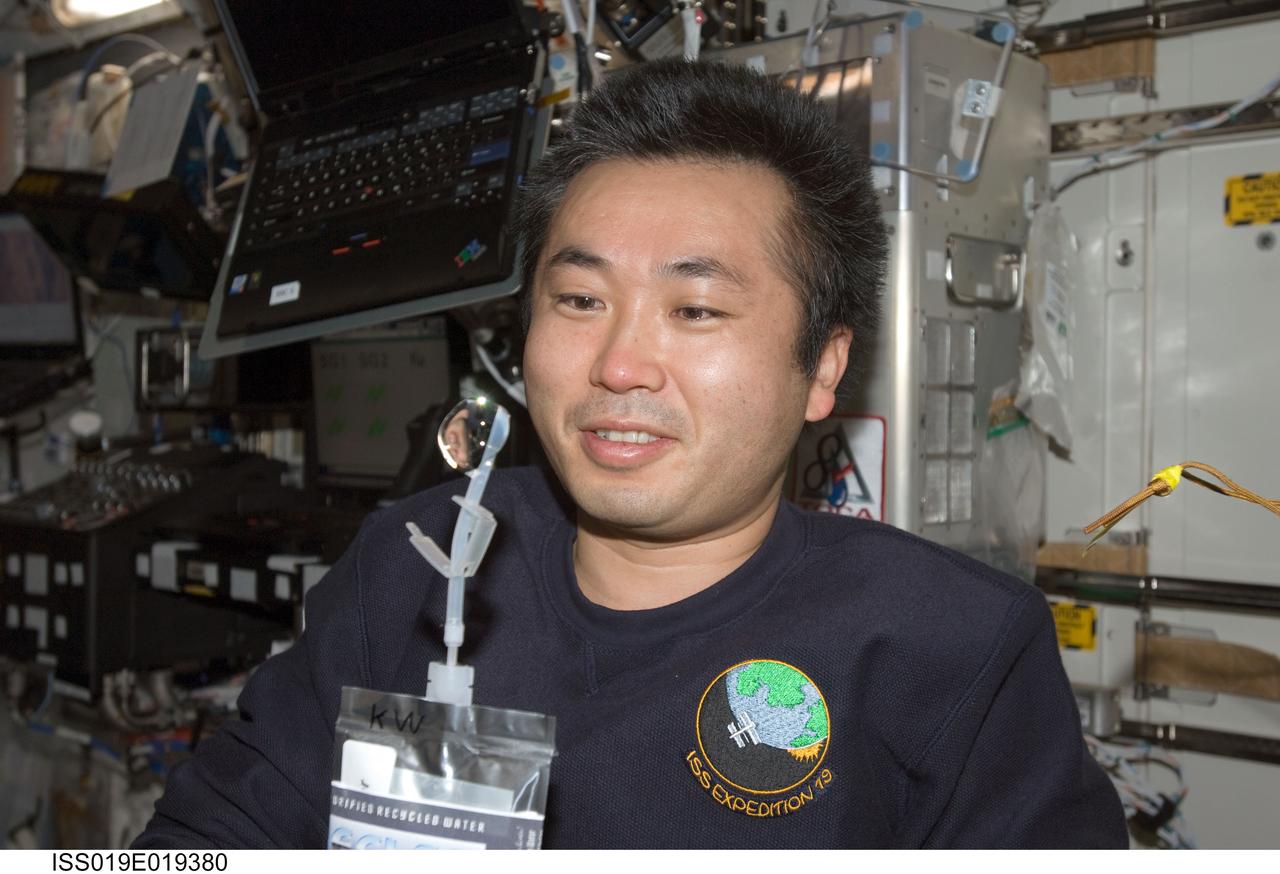
ISS019-E-019380 (22 May 2009) --- Japan Aerospace Exploration Agency (JAXA) astronaut Koichi Wakata, Expedition 19/20 flight engineer, squeezes a bubble out of his beverage container in the Destiny laboratory of the International Space Station.
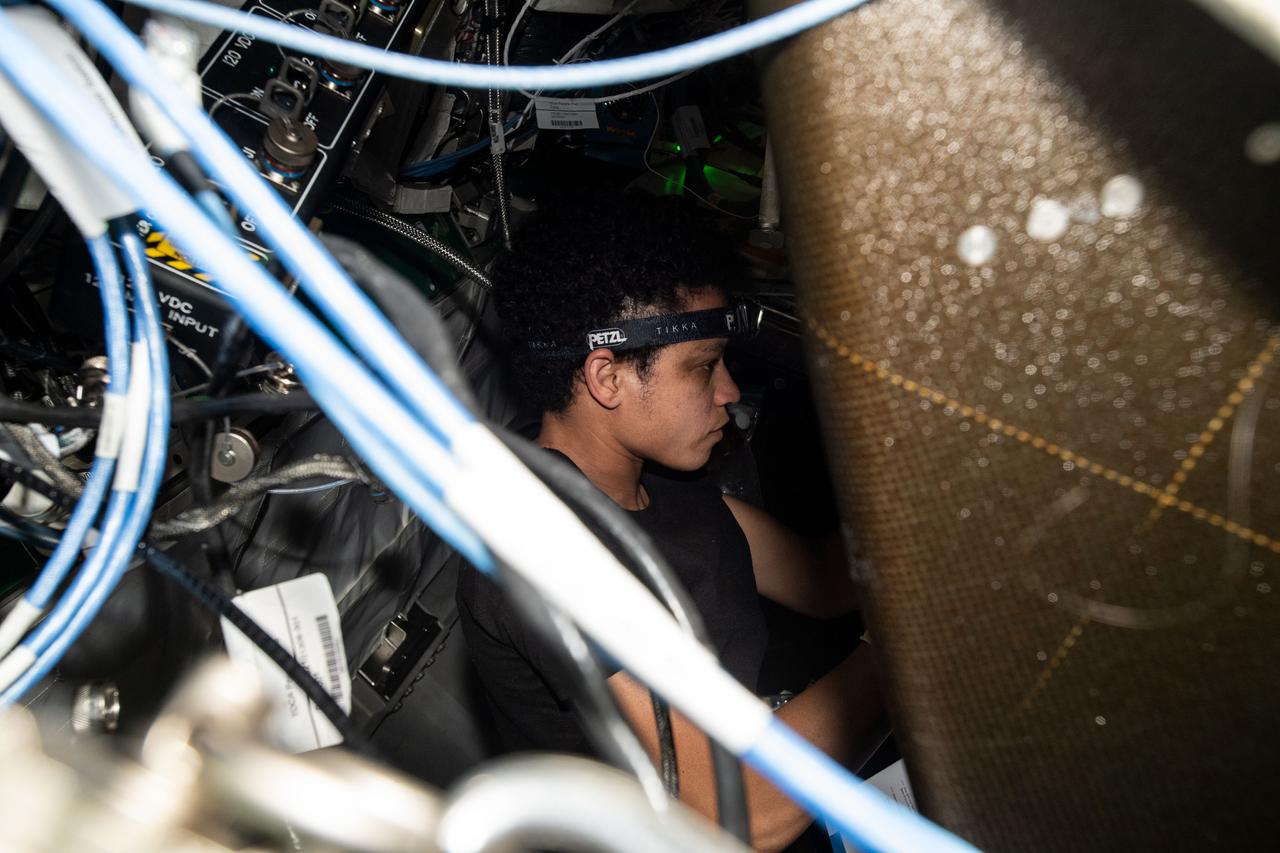
iss067e099400 (June 1, 2022) --- NASA astronaut and Expedition 67 Flight Engineer Jessica Watkins performs maintenance inside the Tranquility module's Waste and Recycling System abaord the International Space Station.
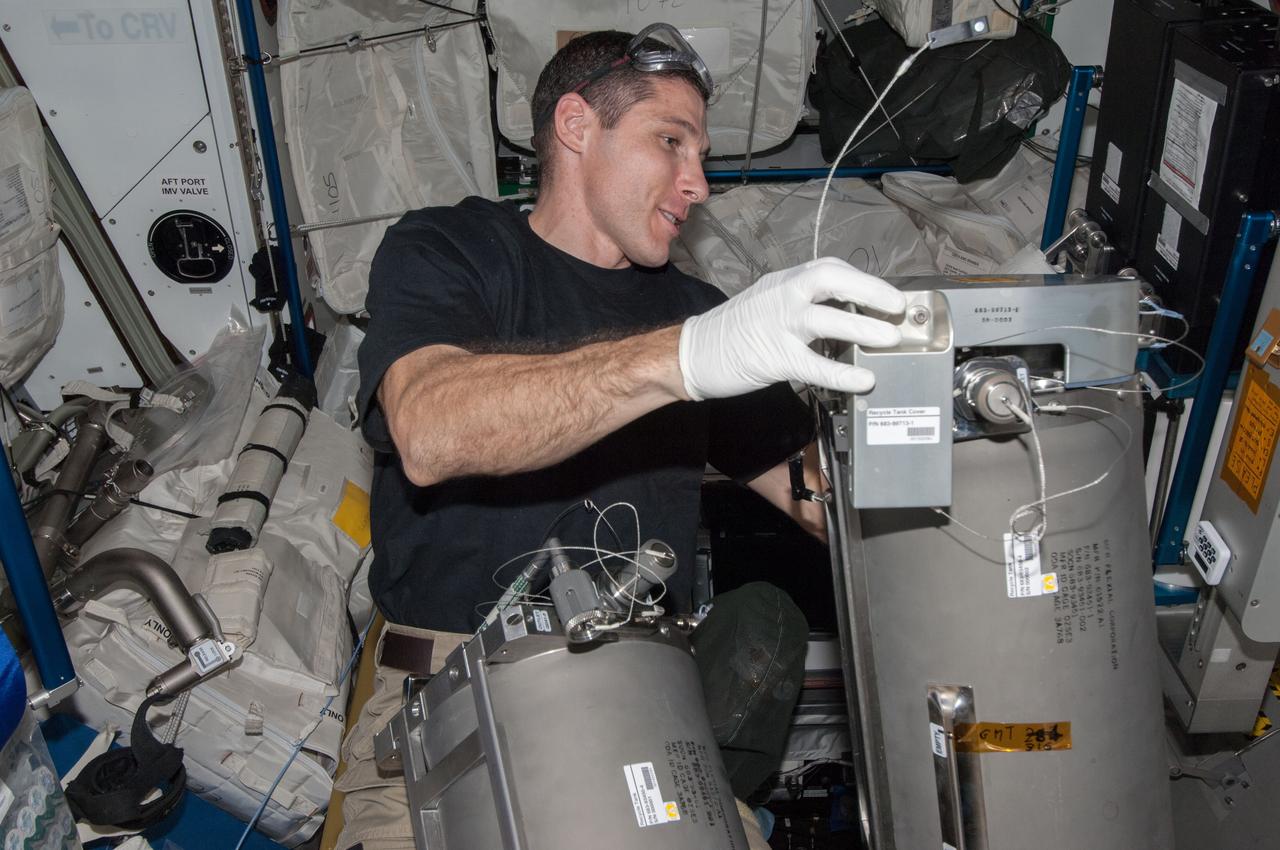
ISS038-E-008289 (24 Nov. 2013) --- NASA astronaut Michael Hopkins, Expedition 38 flight engineer, works with tanks from the Advanced Recycle Filter Tank Assembly (ARFTA) in the Tranquility node of the International Space Station.
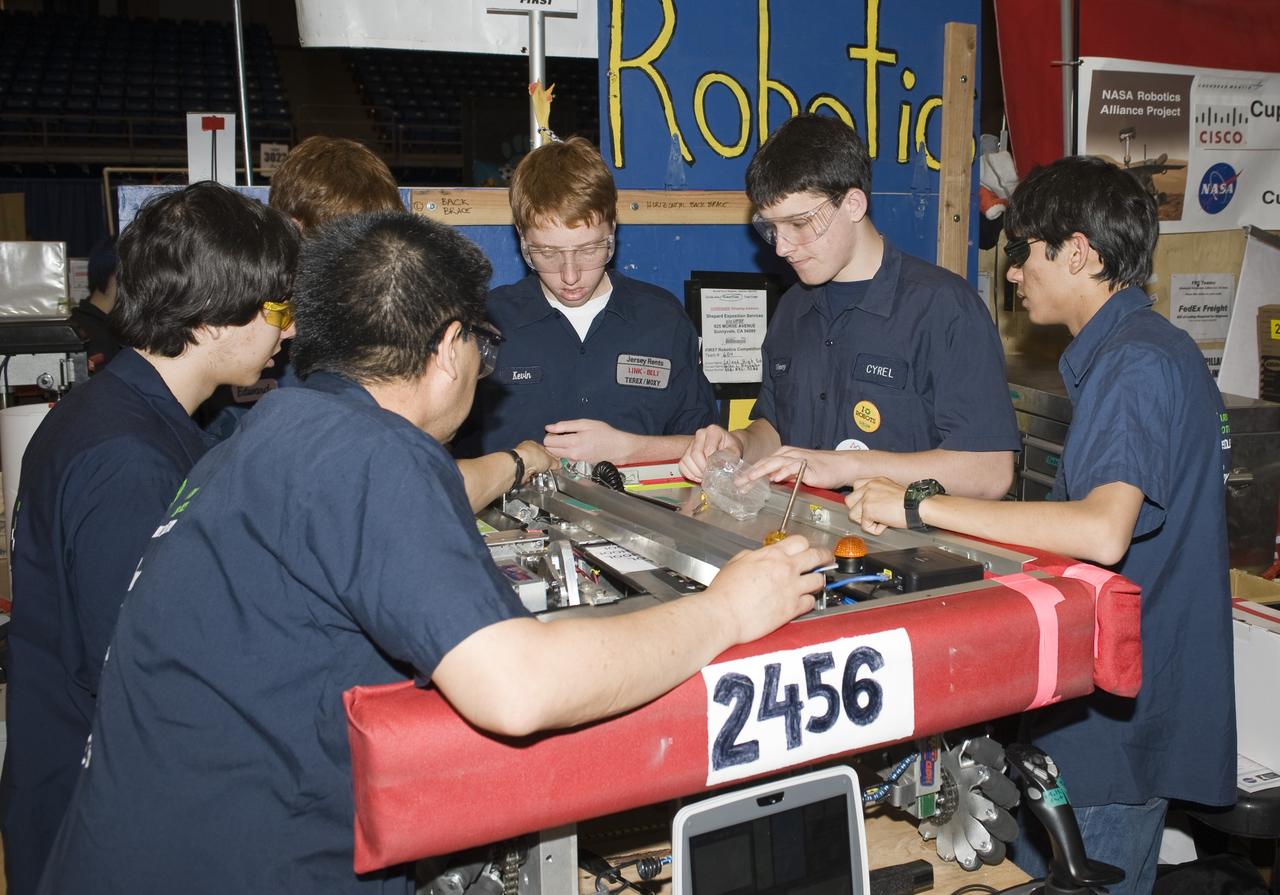
For Inspiration and Recognition of Science and Technology; FIRST Robotics Competition 2010 Silicon Valley Regional held at San Jose State University, San Jose, California Recycle it!, Talmalpais Alumni Association, Team 2456
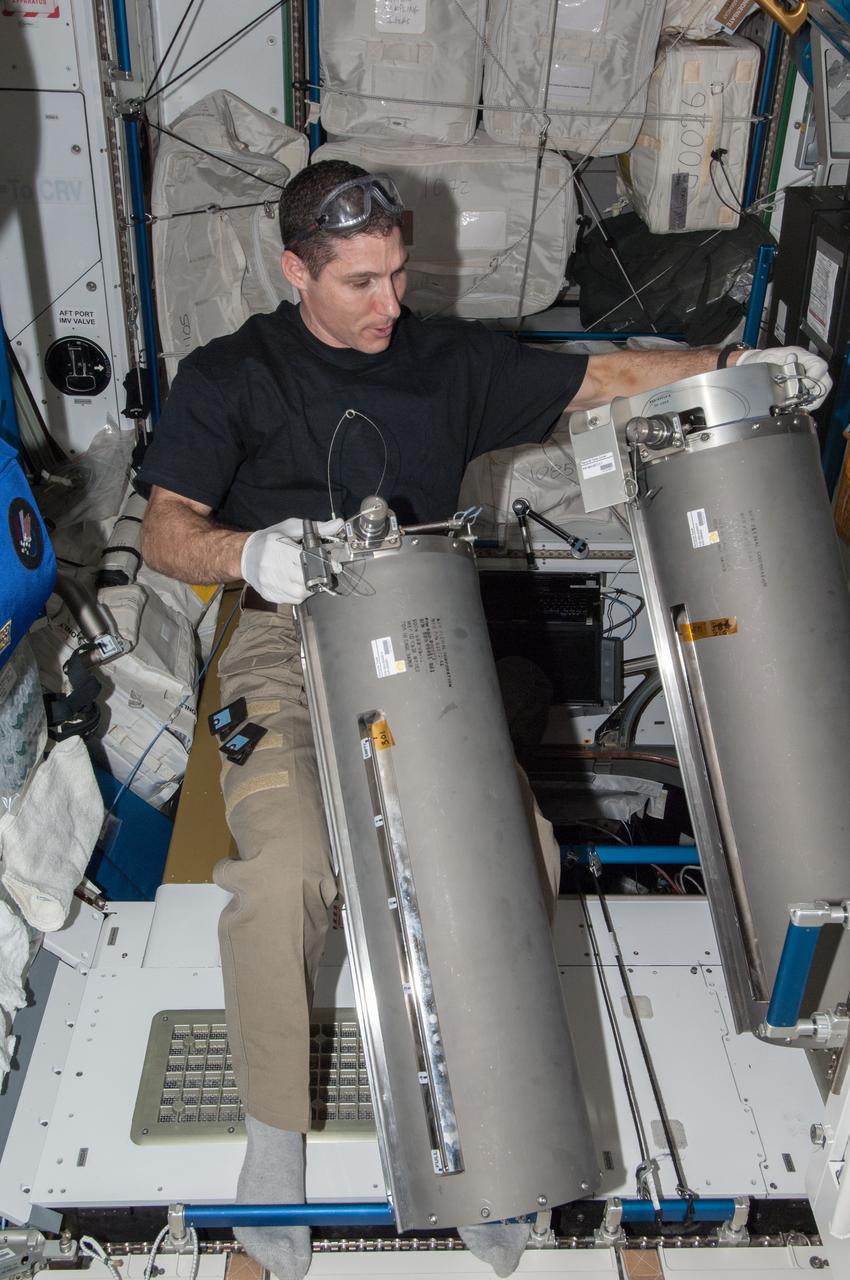
ISS038-E-008287 (24 Nov. 2013) --- NASA astronaut Michael Hopkins, Expedition 38 flight engineer, works with tanks from the Advanced Recycle Filter Tank Assembly (ARFTA) in the Tranquility node of the International Space Station.
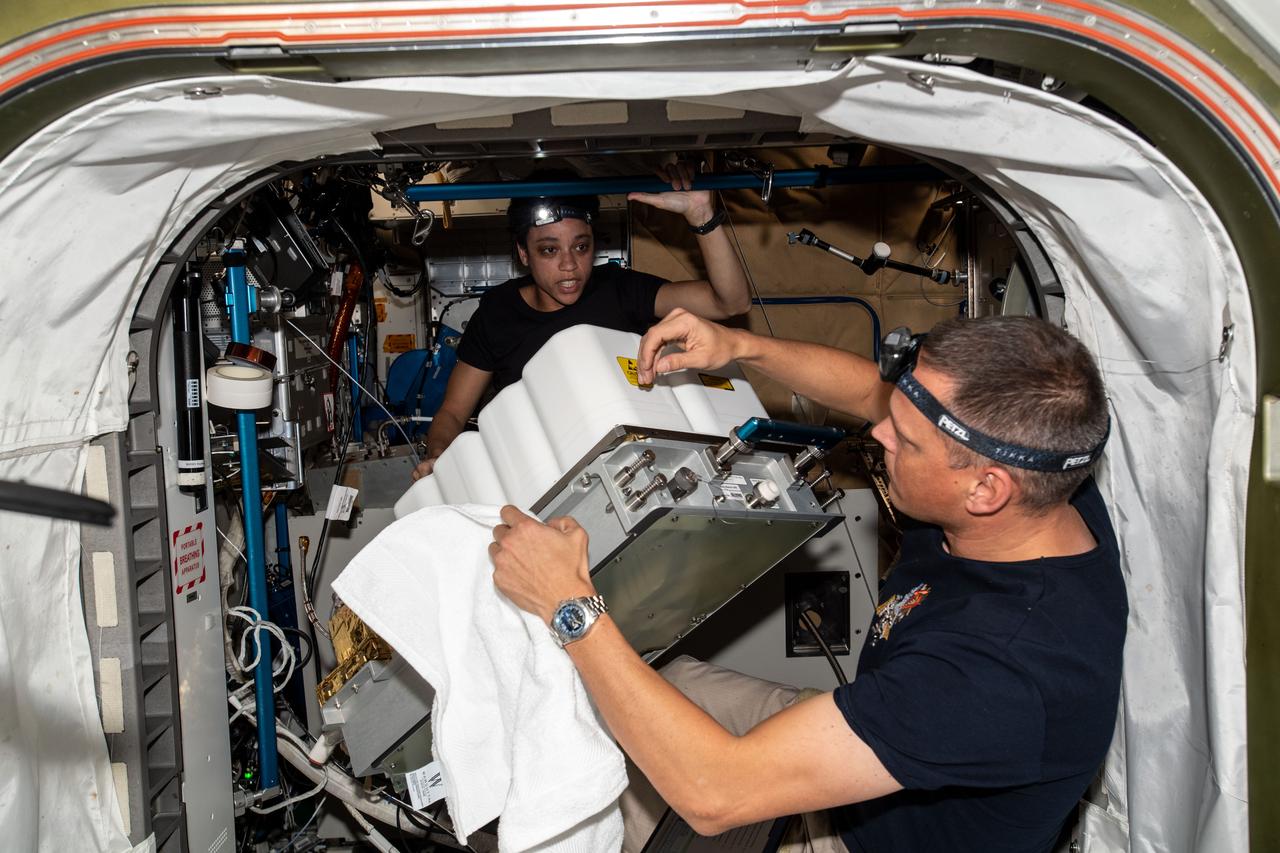
iss067e099398 (June 1, 2022) --- NASA astronauts and Expedition 67 Flight Engineers Bob Hines and Jessica Watkins perform maintenance inside the Tranquility module's Waste and Recycling System abaord the International Space Station.
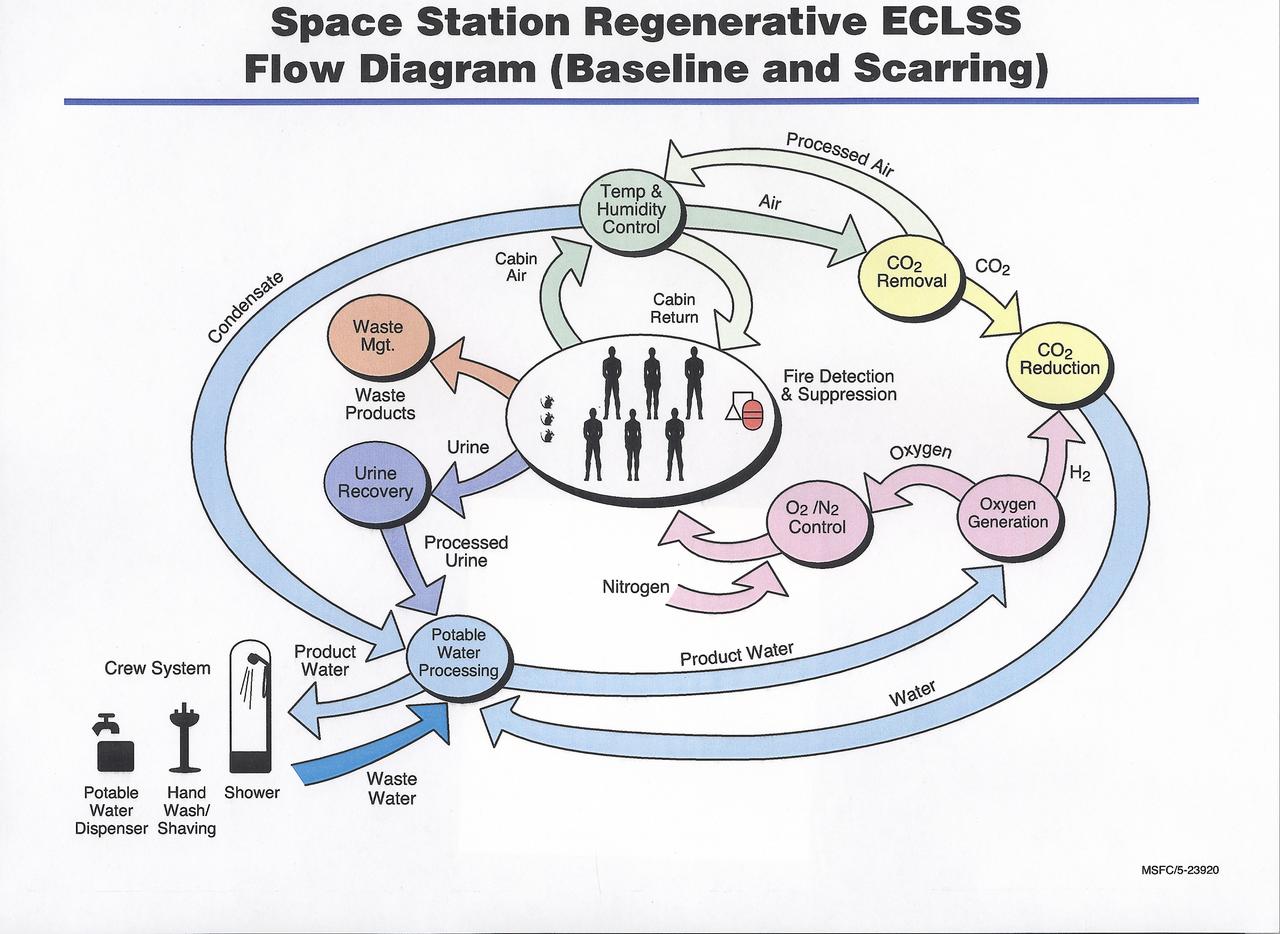
This diagram shows the flow of recyclable resources in the International Space Station (ISS). The Environmental Control and Life Support System (ECLSS) Group of the Flight Projects Directorate at the Marshall Space Flight Center is responsible for the regenerative ECLSS hardware, as well as providing technical support for the rest of the system. The regenerative ECLSS, whose main components are the Water Recovery System (WRS), and the Oxygen Generation System (OGS), reclaims and recycles water and oxygen. The ECLSS maintains a pressurized habitation environment, provides water recovery and storage, maintains and provides fire detection / suppression, and provides breathable air and a comfortable atmosphere in which to live and work within the ISS. The ECLSS hardware will be located in the Node 3 module of the ISS.
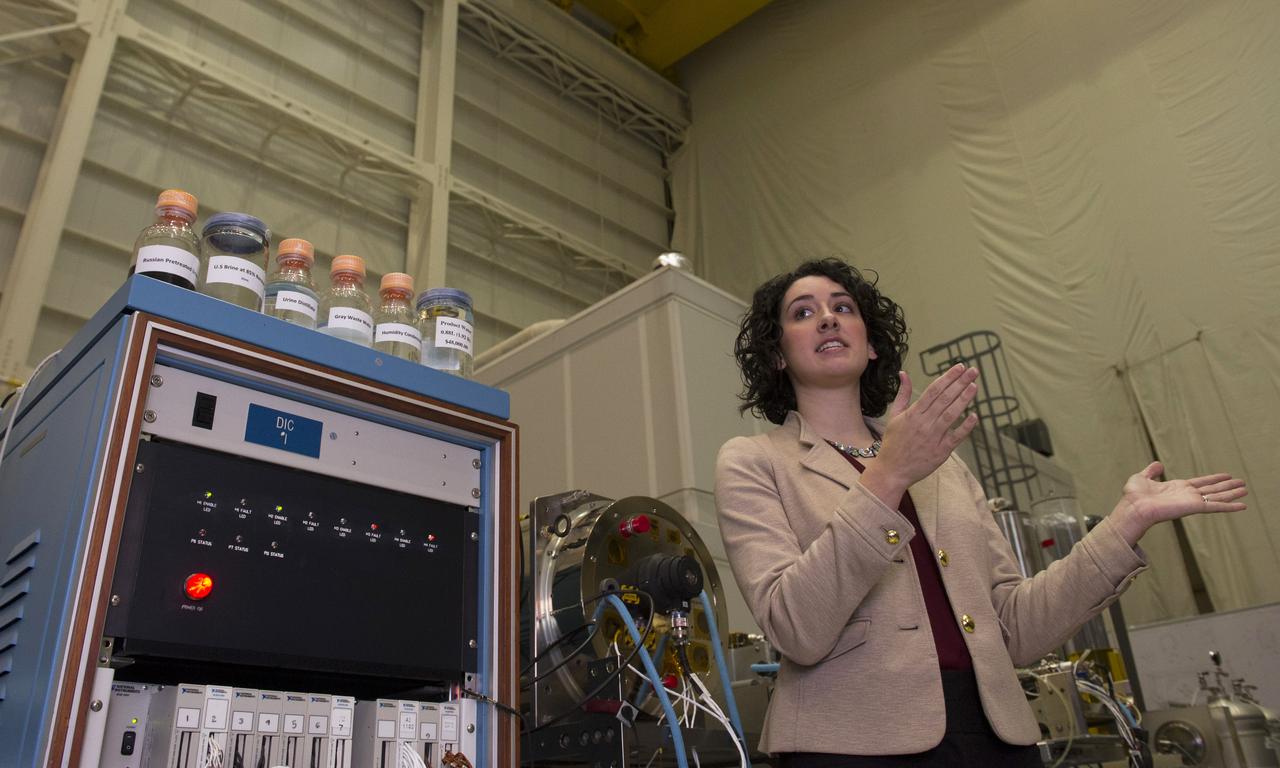
JENNIFER PRUITT, LEAD DESIGN ENGINEER FOR THE INTERNATIONAL SPACE STATION URINE PROCESSING ASSEMBLY AT MARSHALL, BRIEFS A GROUP OF MORE THAN 20 SOCIAL AND TRADITIONAL MEDIA REPRESENTATIVES ABOUT HER WORK TO IMPROVE THE RECYCLING OF WATER FOR ASTRONAUTS. THE TOUR OF MARSHALL WORK SUPPORTING NASA'S JOURNEY TO MARS WAS PART OF AGENCY-WIDE "STATE OF NASA" EVENTS FEB. 2. THE TOUR ALSO INCLUDED A LOOK AT OXYGEN RECYCLING EFFORTS, A SPACE LAUNCH SYSTEM CORE STAGE SIMULATOR AND A CHANCE TO TALK WITH MARSHALL DIRECTOR PATRICK SCHEUERMANN AND DEPUTY DIRECTOR TERESA VANHOOSER.
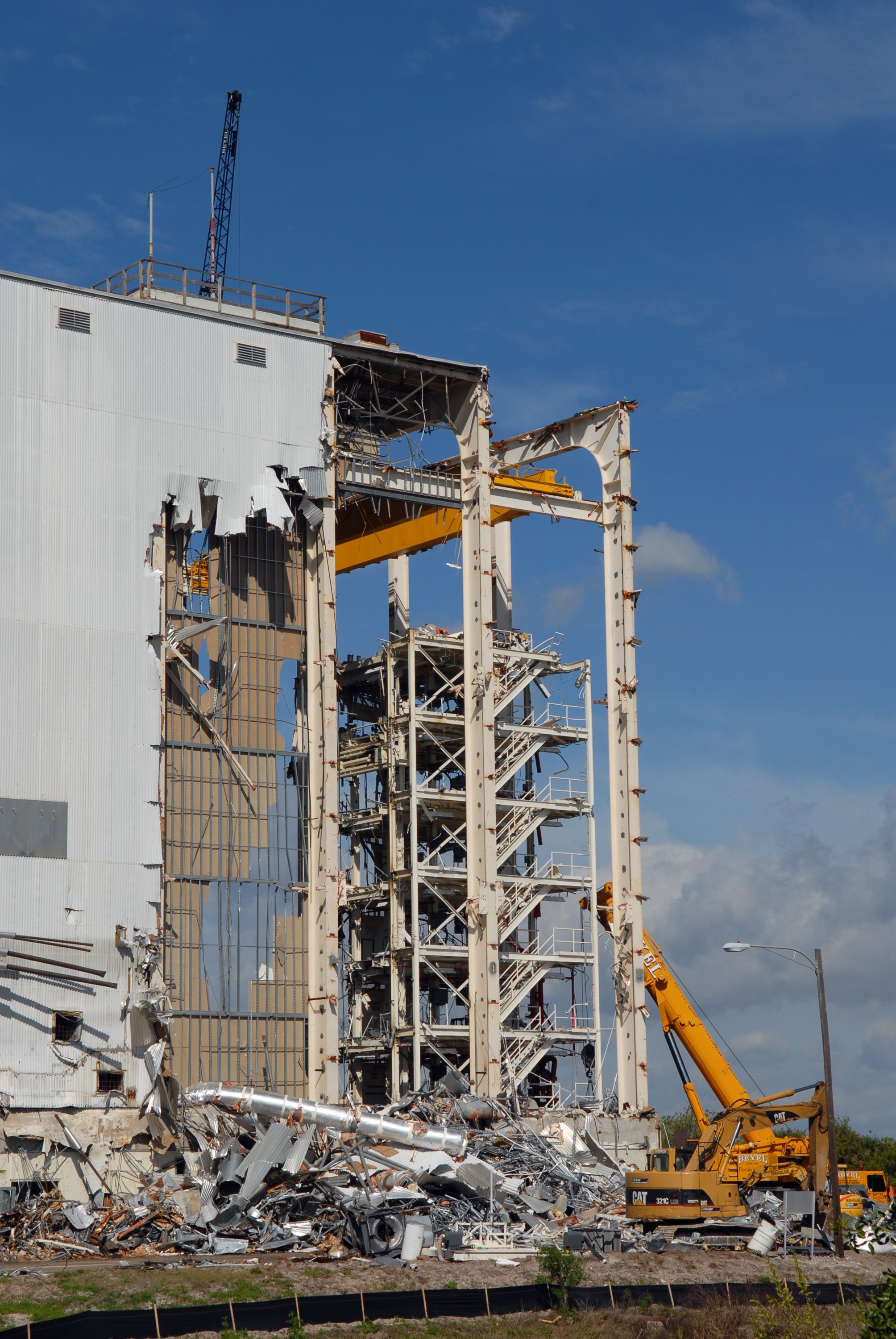
CAPE CANAVERAL, Fla. -- At NASA's Kennedy Space Center in Florida, workers demolish the Vertical Processing Facility, or VPF. The demolition, which started in February and is about half done, is scheduled to be finished by July. About 90 percent of the debris will be recycled. Photo credit: NASA/Jim Grossmann
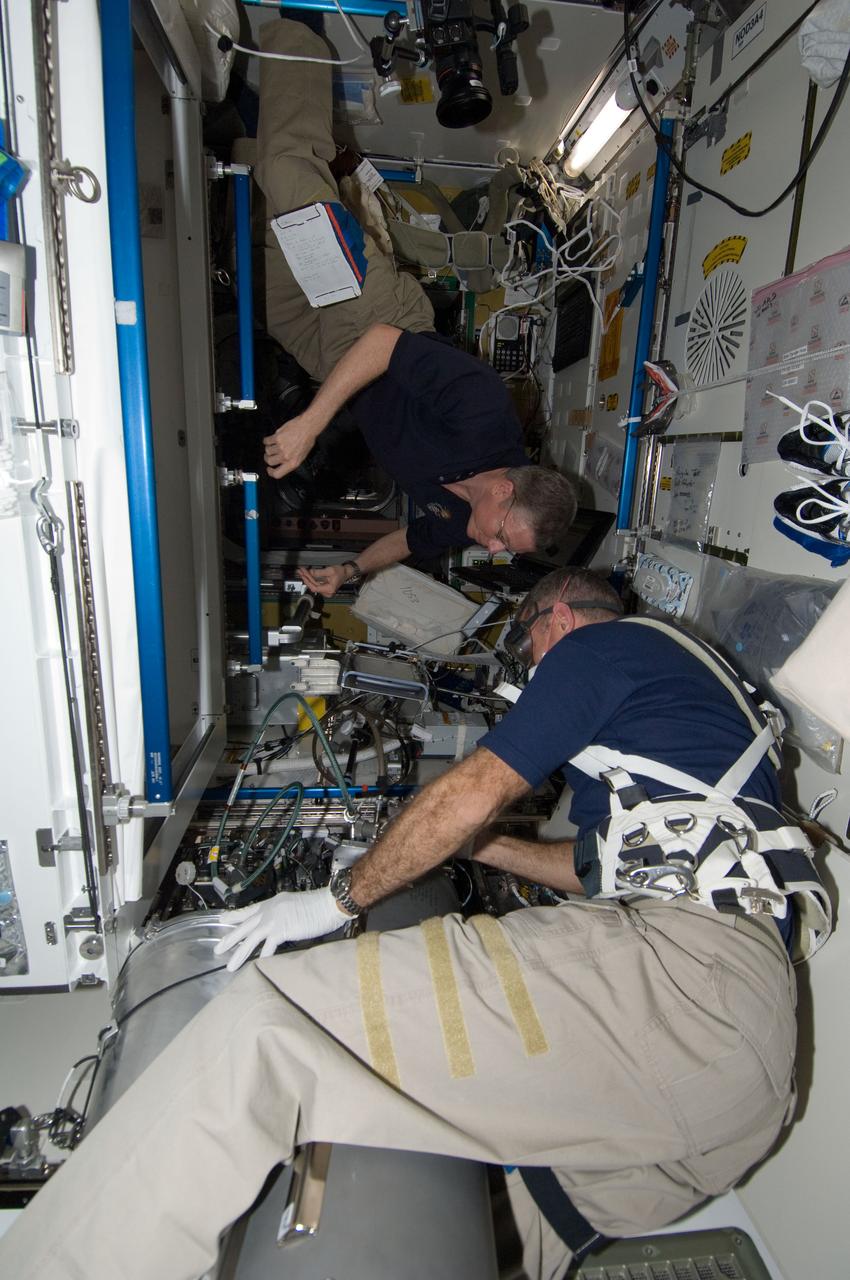
ISS029-E-043420 (19 Nov. 2011) --- NASA astronauts Mike Fossum (background), Expedition 29 commander; and Dan Burbank, flight engineer, work with the Advanced Recycle Filter Tank Assembly (ARFTA) in the Tranquility node of the International Space Station.

ISS043E182395 (05/08/2015) --- NASA astronaut Scott Kelly took this picture of the water filled Siwa Oasis in the northwestern Egyptian desert. Water is also treasured within the International Space Station where recycling plays an important role in conserving and reusing the precious life giving liquid.
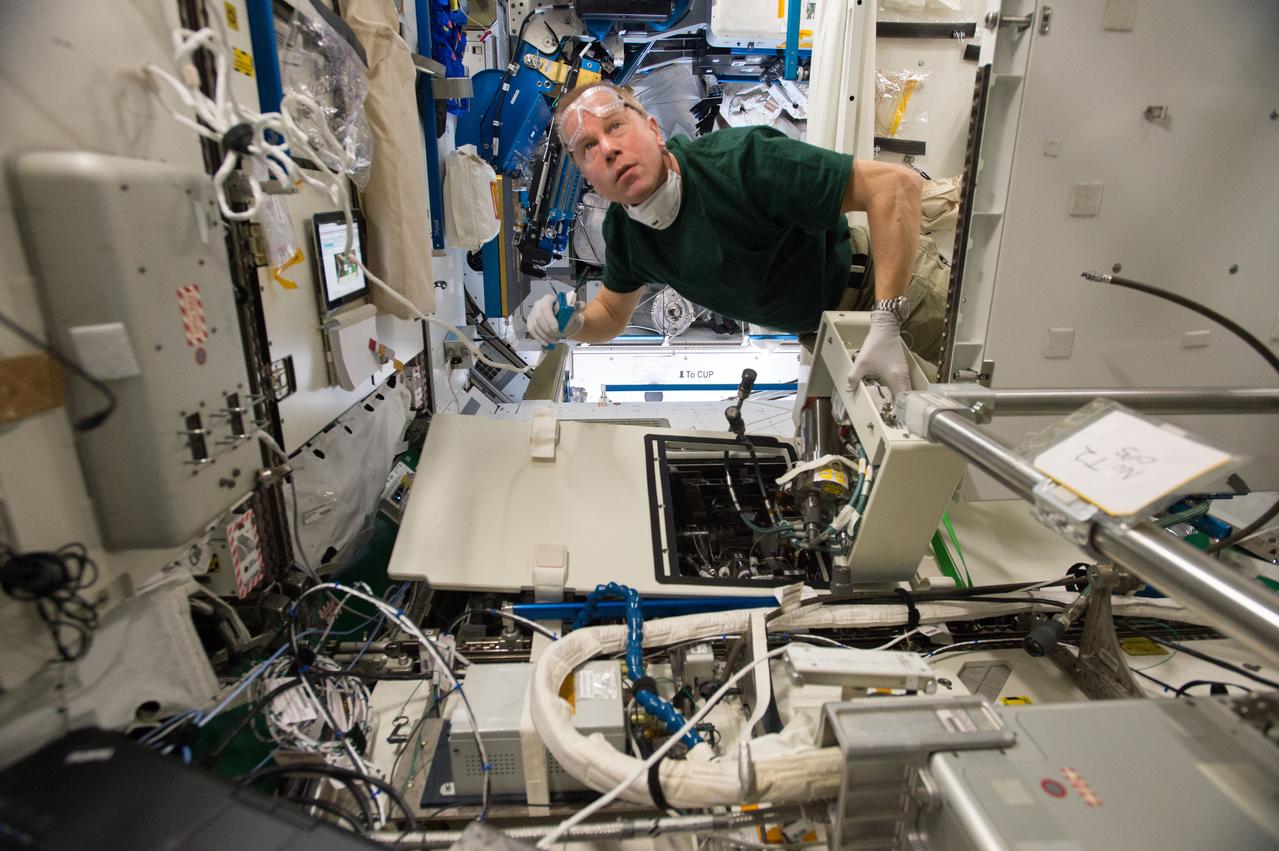
ISS046e023885 (01/25/2016) --- NASA astronaut Tim Kopra performs regular maintenance on the Urine Processing Assembly (UPA) aboard the International Space Station. The UPA is used by the crew to recycle water for use on the station. The image shows Tim replacing the brine filter from the UPA Fill Drain Valve enclosure.
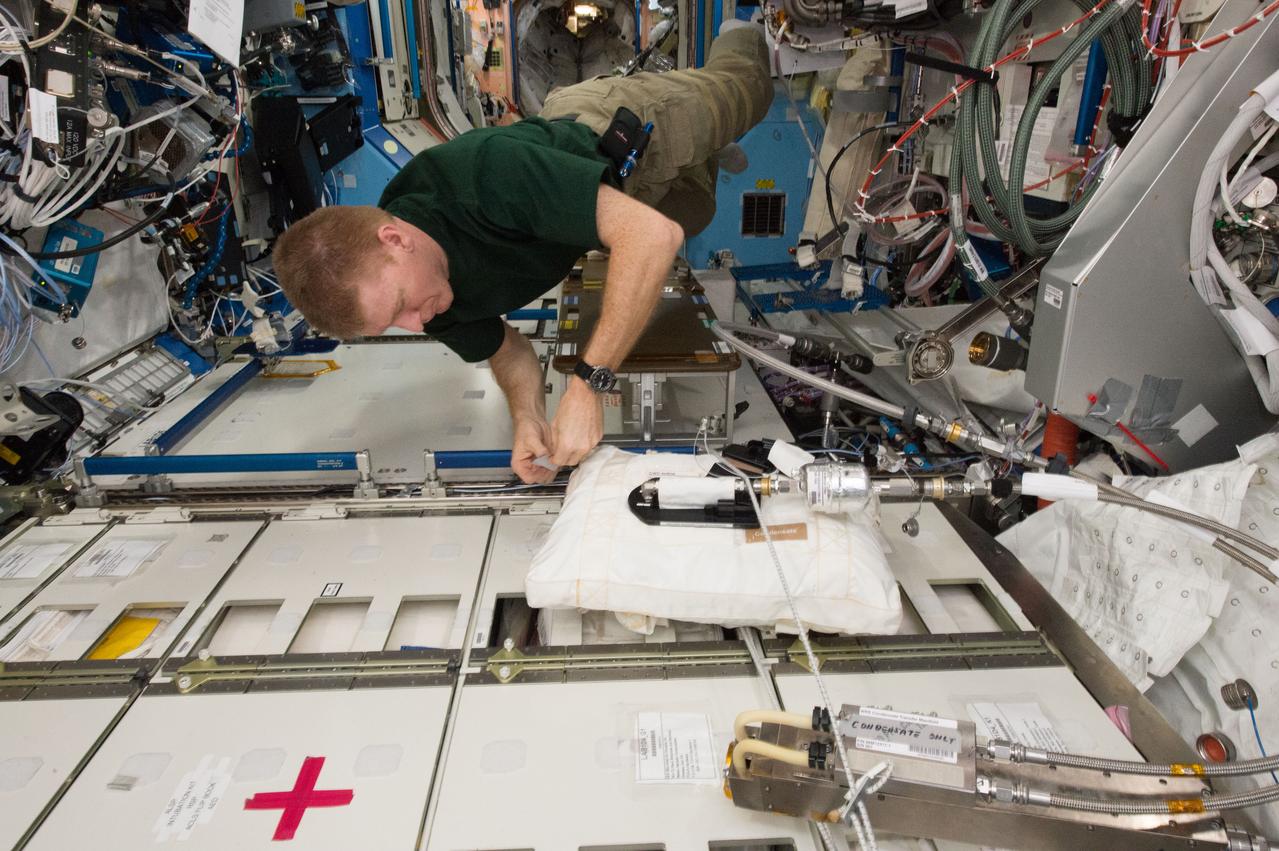
ISS047e013845 (03/22/2016) --- ESA (European Space Agency) astronaut Tim Peake works on the Water Processor Assembly (WPA) aboard the International Space Station. The WPA is is responsible for treating waste water aboard the station for recycling back into potable water.
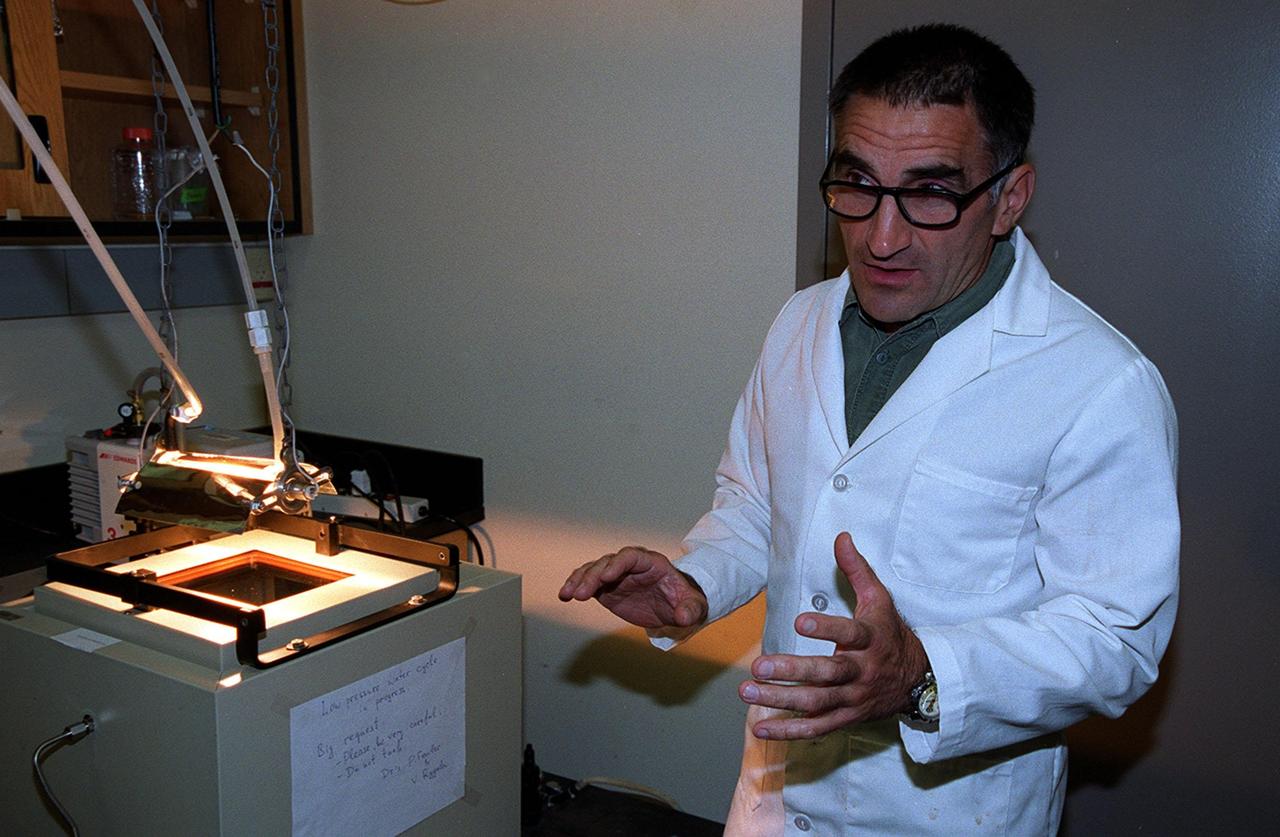
Research scientist Vadim Rygalov describes a new low-pressure water-recycling experiment being designed to help simulate plant growth conditions on Mars. The research he is performing is one of many studies at the Biological Sciences Branch in the Spaceport Engineering and Technology Directorate at Kennedy Space Center. The branch's operations and research areas include life sciences Space Shuttle payloads, bioregenerative life-support for long-duration spaceflight and environmental/ecological stewardship
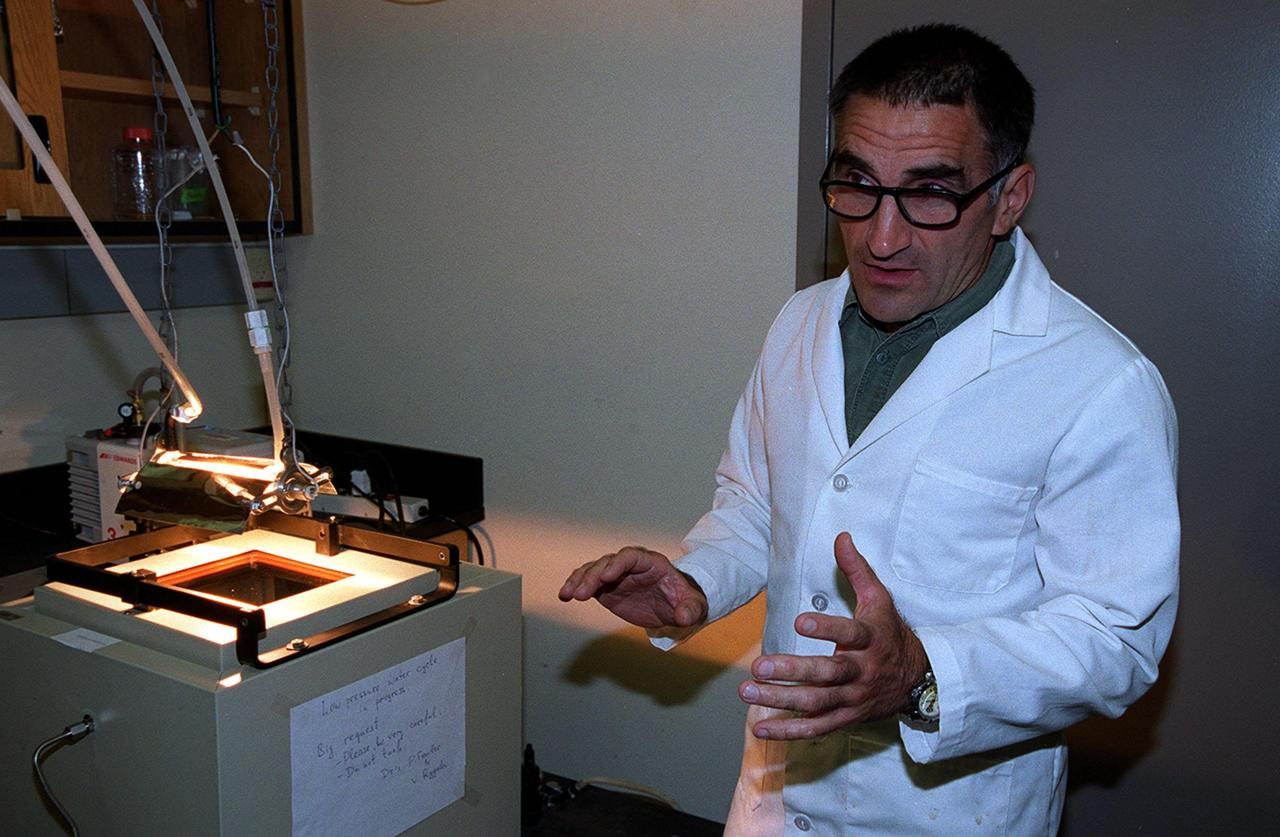
Research scientist Vadim Rygalov describes a new low-pressure water-recycling experiment being designed to help simulate plant growth conditions on Mars. The research he is performing is one of many studies at the Biological Sciences Branch in the Spaceport Engineering and Technology Directorate at Kennedy Space Center. The branch's operations and research areas include life sciences Space Shuttle payloads, bioregenerative life-support for long-duration spaceflight and environmental/ecological stewardship
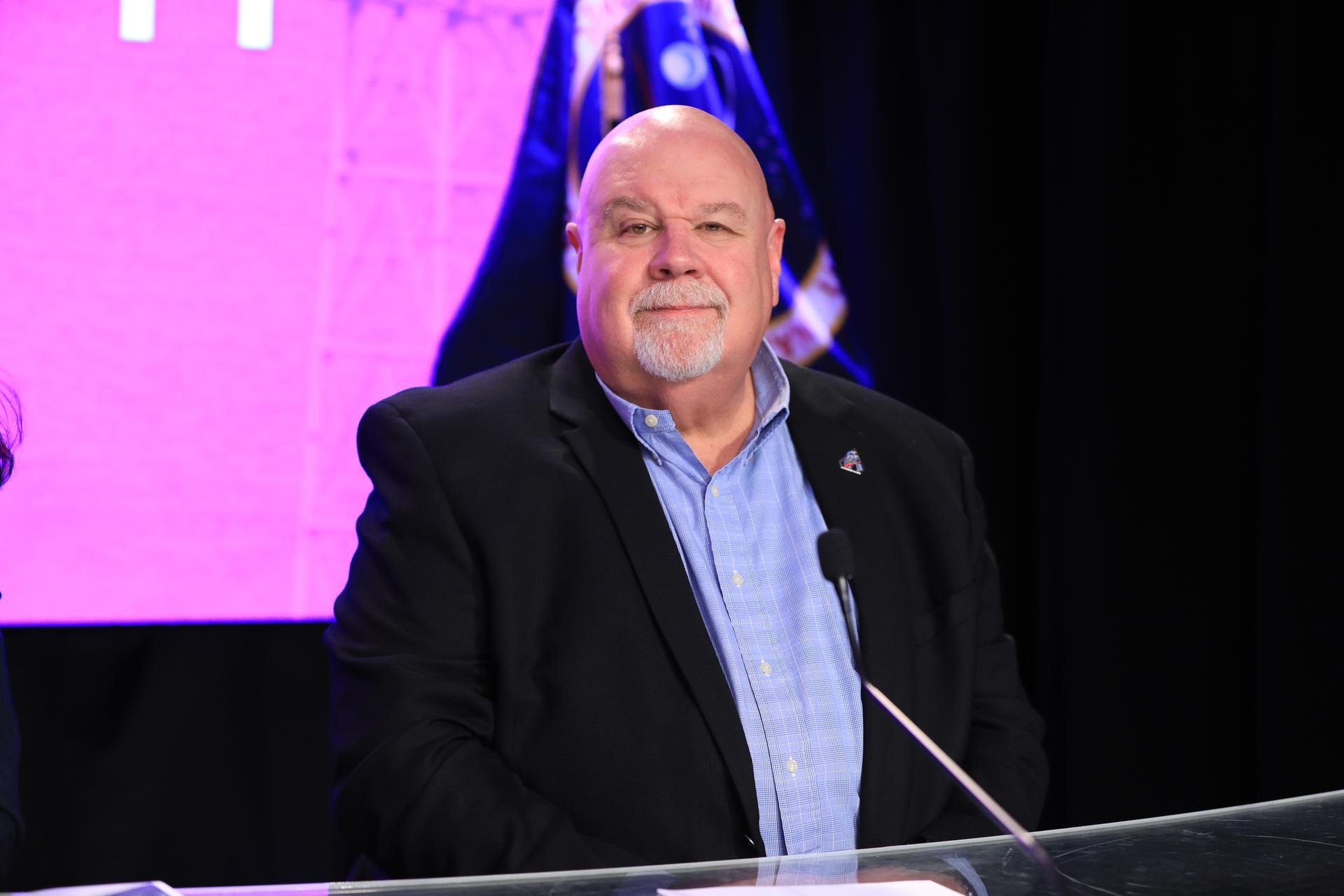
John Honeycutt, chair, Artemis II mission management team, participates in a news conference on Tuesday, Feb. 3, 2026, to discuss the completion of Artemis II wet dress rehearsal at NASA’s Kennedy Space Center in Florida. The wet dress rehearsal allows the Artemis II launch team to run through operations to load propellant, conduct a full launch countdown, demonstrate the ability to recycle the countdown clock, and drain the tanks to practice timelines and procedures for launch.
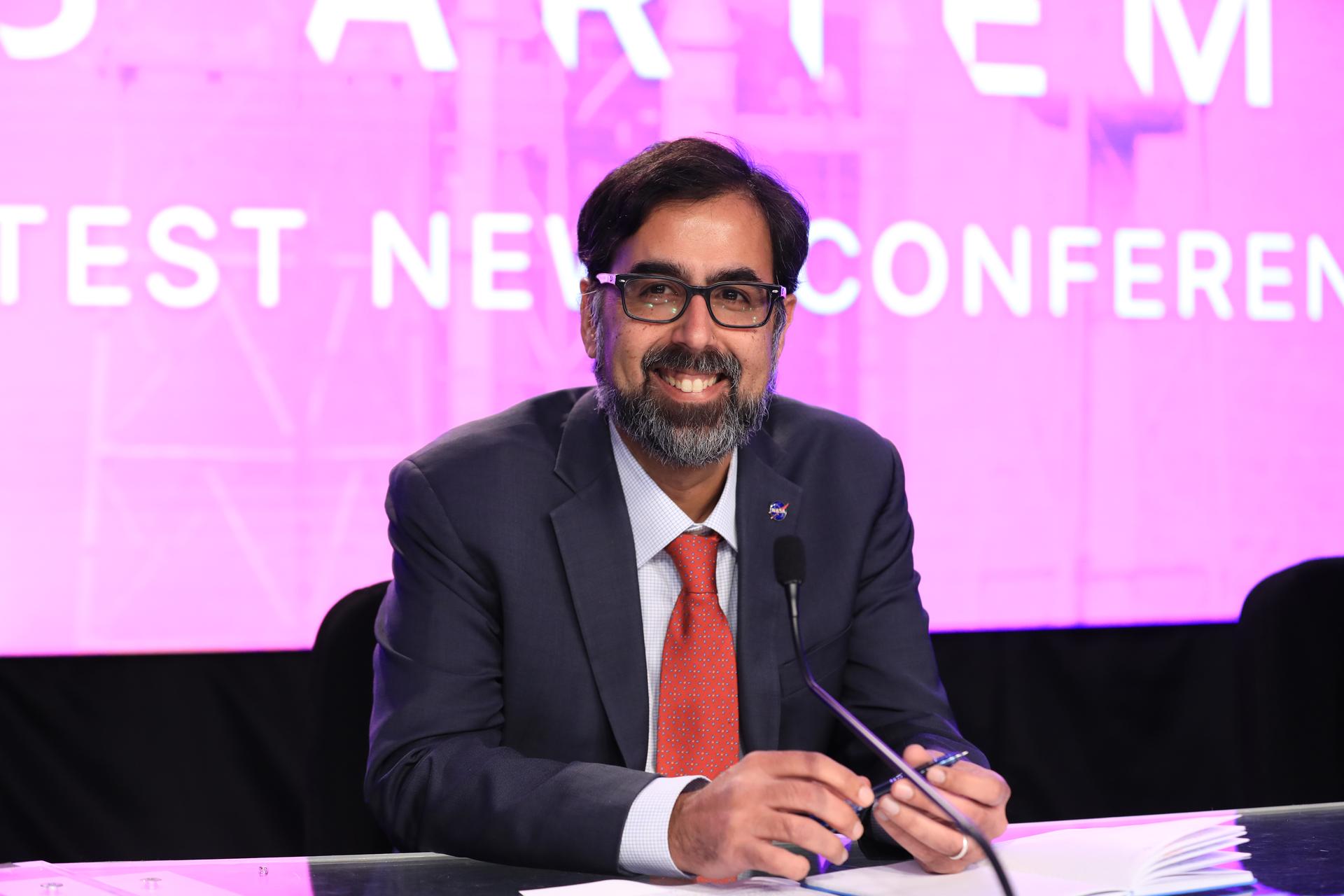
NASA Associate Administrator Amit Kshatriya participates in a news conference on Tuesday, Feb. 3, 2026, to discuss the completion of Artemis II wet dress rehearsal at NASA’s Kennedy Space Center in Florida. The wet dress rehearsal allows the Artemis II launch team to run through operations to load propellant, conduct a full launch countdown, demonstrate the ability to recycle the countdown clock, and drain the tanks to practice timelines and procedures for launch.
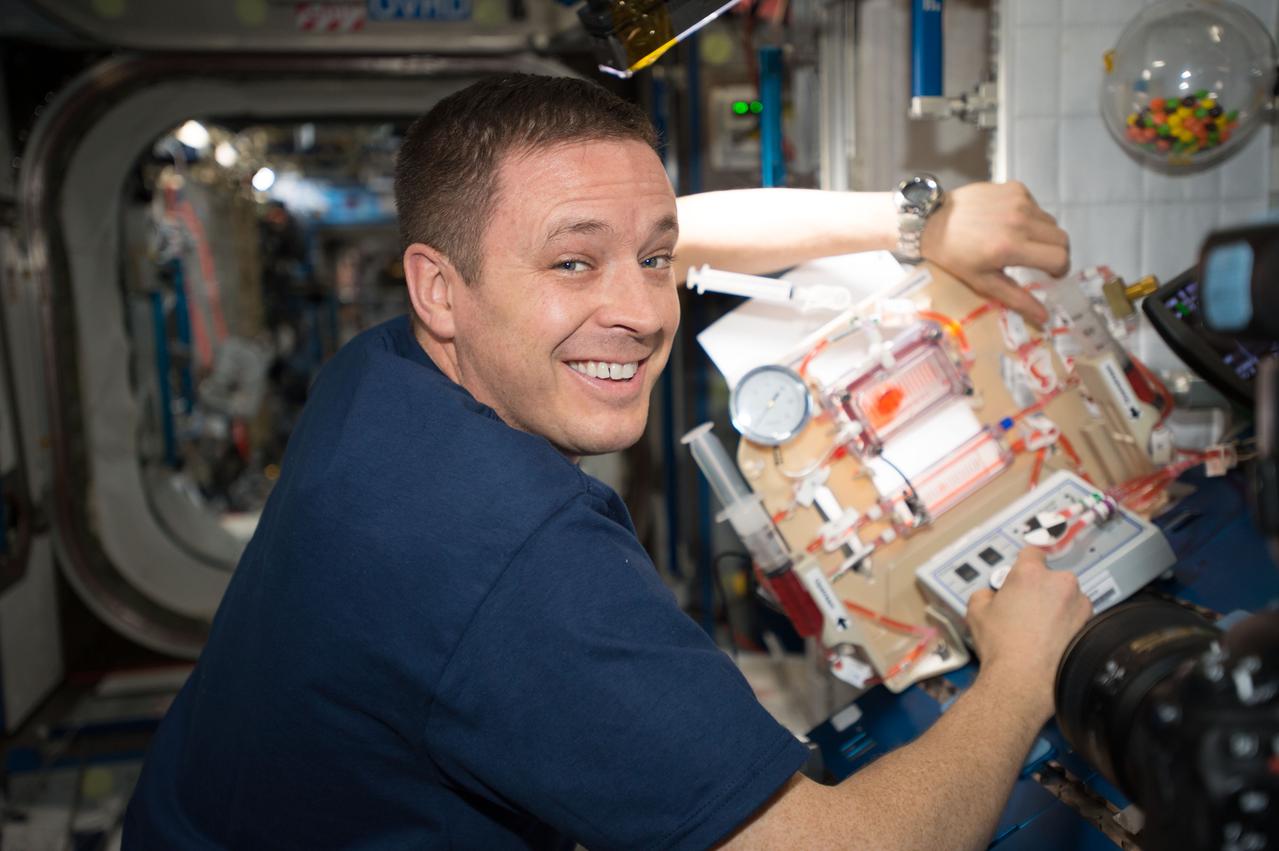
iss052e013146 (July 10, 2017) --- Astronaut Jack Fischer is photographed during setup of hardware for the Capillary Structures for Exploration Life Support (Capillary Structures) two sorbent demonstrations. The Capillary Structures for Exploration Life Support (Capillary Structures) investigation studies a new method using structures of specific shapes to manage fluid and gas mixtures. The investigation studies water recycling and carbon dioxide removal, benefiting future efforts to design lightweight, more reliable life support systems for future space missions.

iss059e091418 (6/4/2019) --- View taken of the hardware for the Capillary Structures investigation in the Japanese Experiment Module (JEM) onboard the International Space Station (ISS). This investigation studies a new method using structures of specific shapes to manage fluid and gas mixtures. It also studies water recycling and carbon dioxide removal, benefitting future efforts to design lightweight, more reliable life support systems for future space missions.
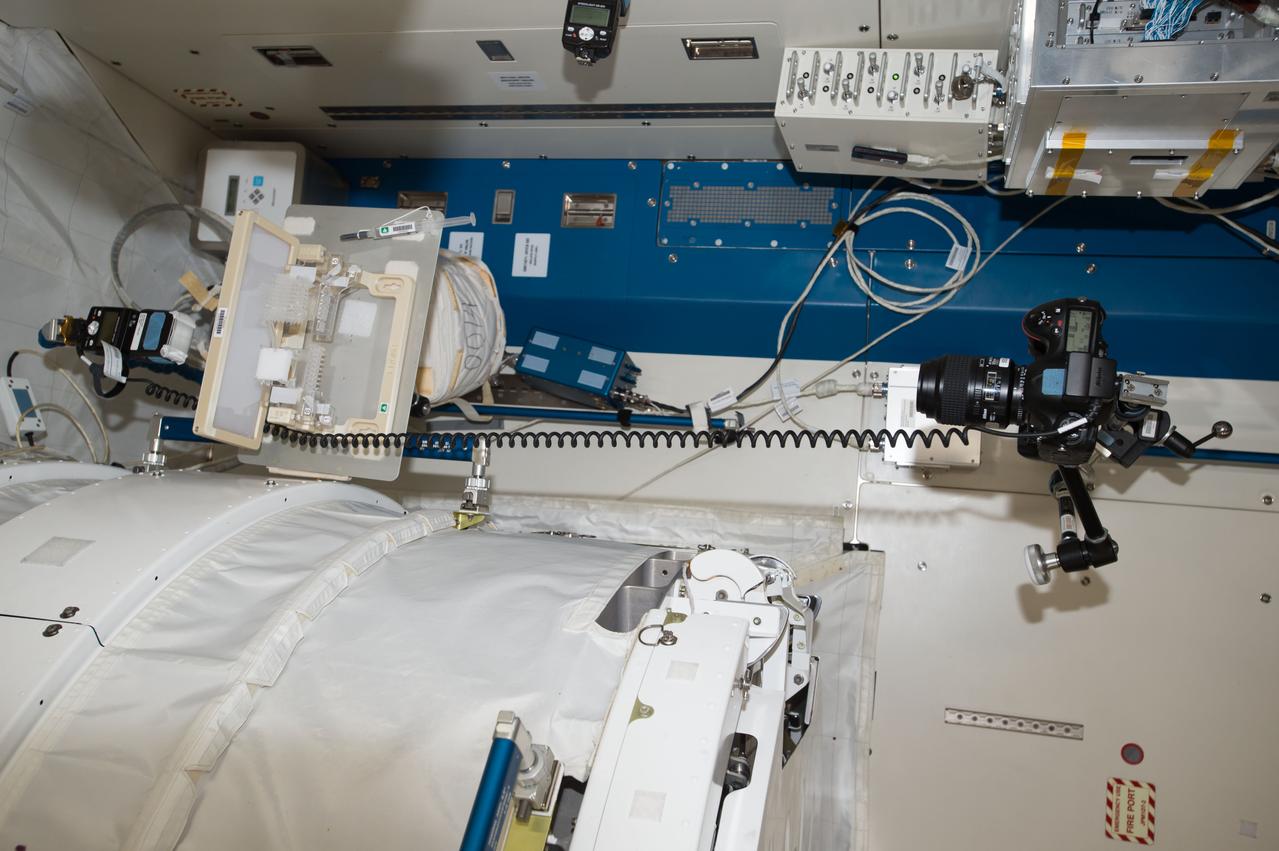
iss052e016460 (7/19/2017) --- A view taken of Capillary Structures setup in the Japanese Experiment Module (JEM) beside the internal airlock. This investigation studies a new method using structures of specific shapes to manage fluid and gas mixtures. It also studies water recycling and carbon dioxide removal, benefiting future efforts to design lightweight, more reliable life support systems for future space missions.
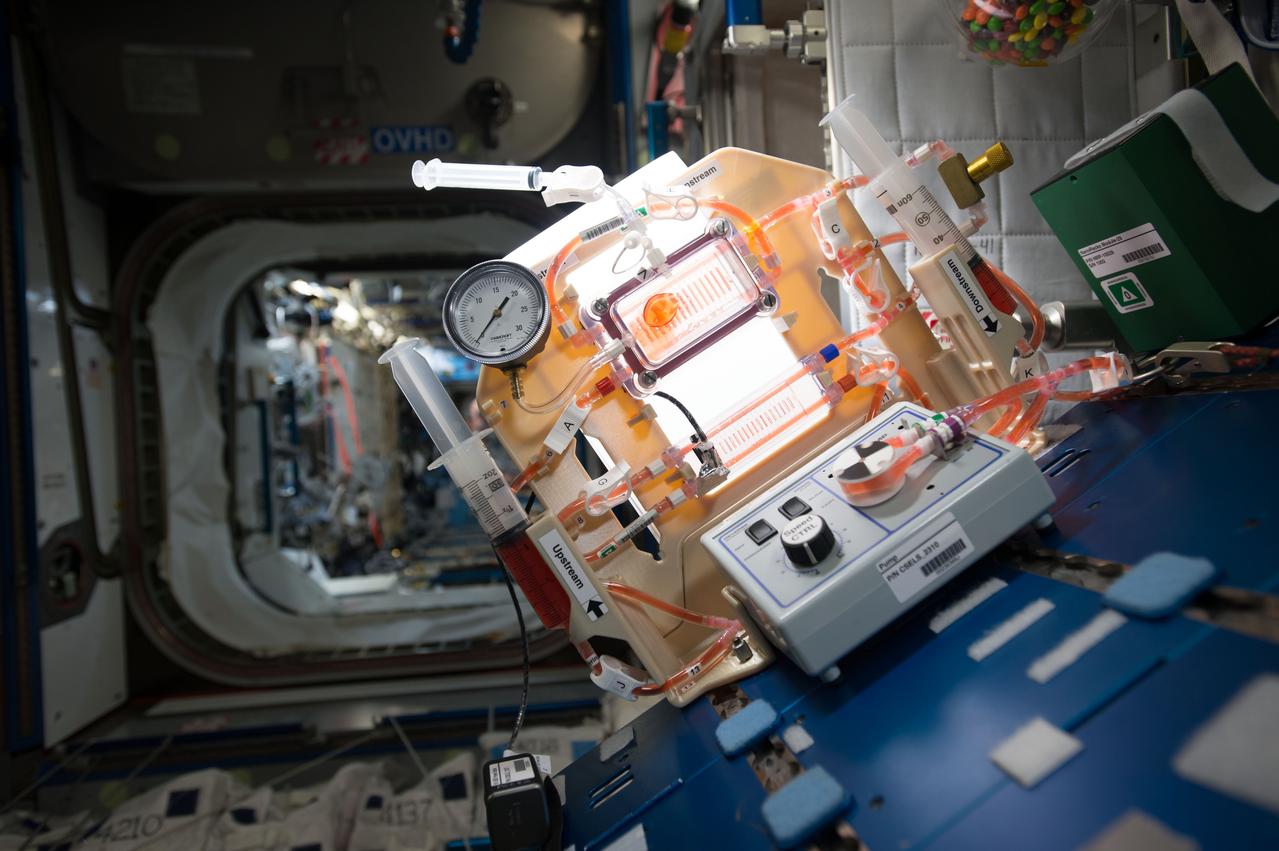
iss052e013081 (7/10/2017) --- The Capillary Structures for Exploration Life Support (Capillary Structures) investigation studies a new method using structures of specific shapes to manage fluid and gas mixtures. The investigation studies water recycling and carbon dioxide removal, benefiting future efforts to design lightweight, more reliable life support systems for future space missions.
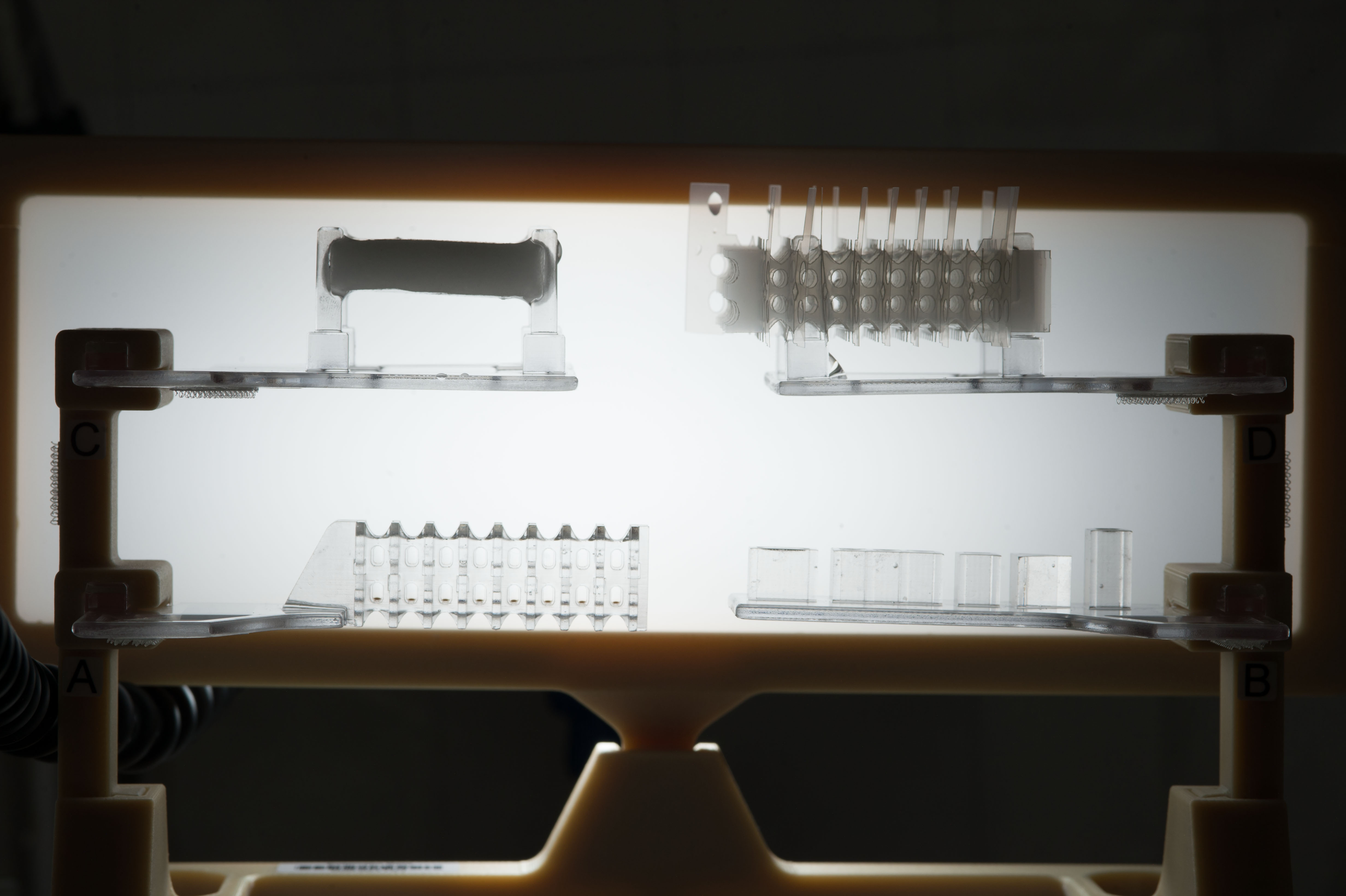
iss052e017187 (7/22/2017) --- A view taken of hardware for the Capillary Structures investigation in the Japanese Experiment Module (JEM). This investigation studies a new method using structures of specific shapes to manage fluid and gas mixtures. It also studies water recycling and carbon dioxide removal, benefiting future efforts to design lightweight, more reliable life support systems for future space missions.
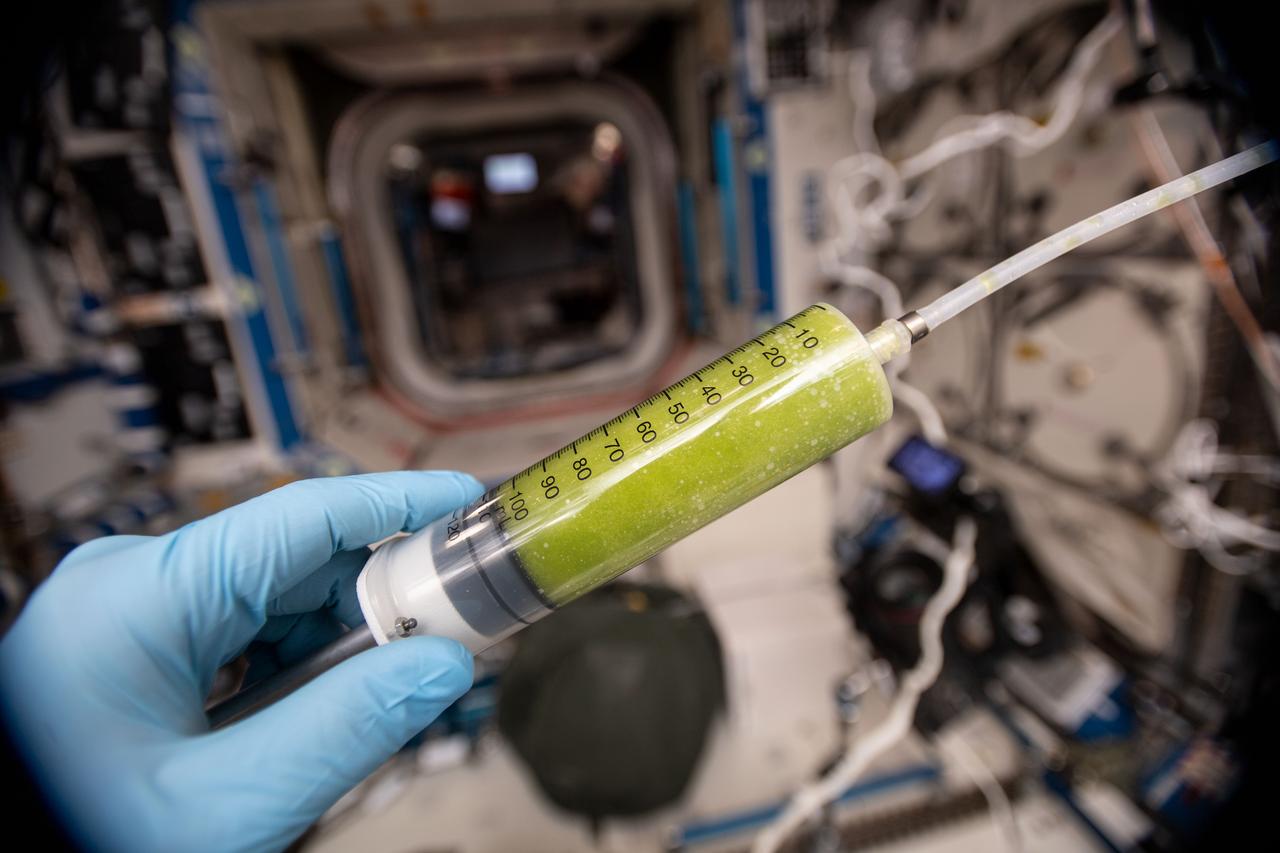
iss059e114352 (6/20/2019) — Photo documentation abroad the International Space Station (ISS) of the syringe during the filling of the Photobioreactor (PBR) with medium and algae to begin the experiment. The Photobioreactor investigation aims at demonstrating that microalgae (i.e. biological processes) can be used together with existing systems to improve recycling of resources, creating a hybrid life support system. This hybrid approach could be helpful in future long-duration exploration missions, as it could reduce the amount of consumables required from Earth.
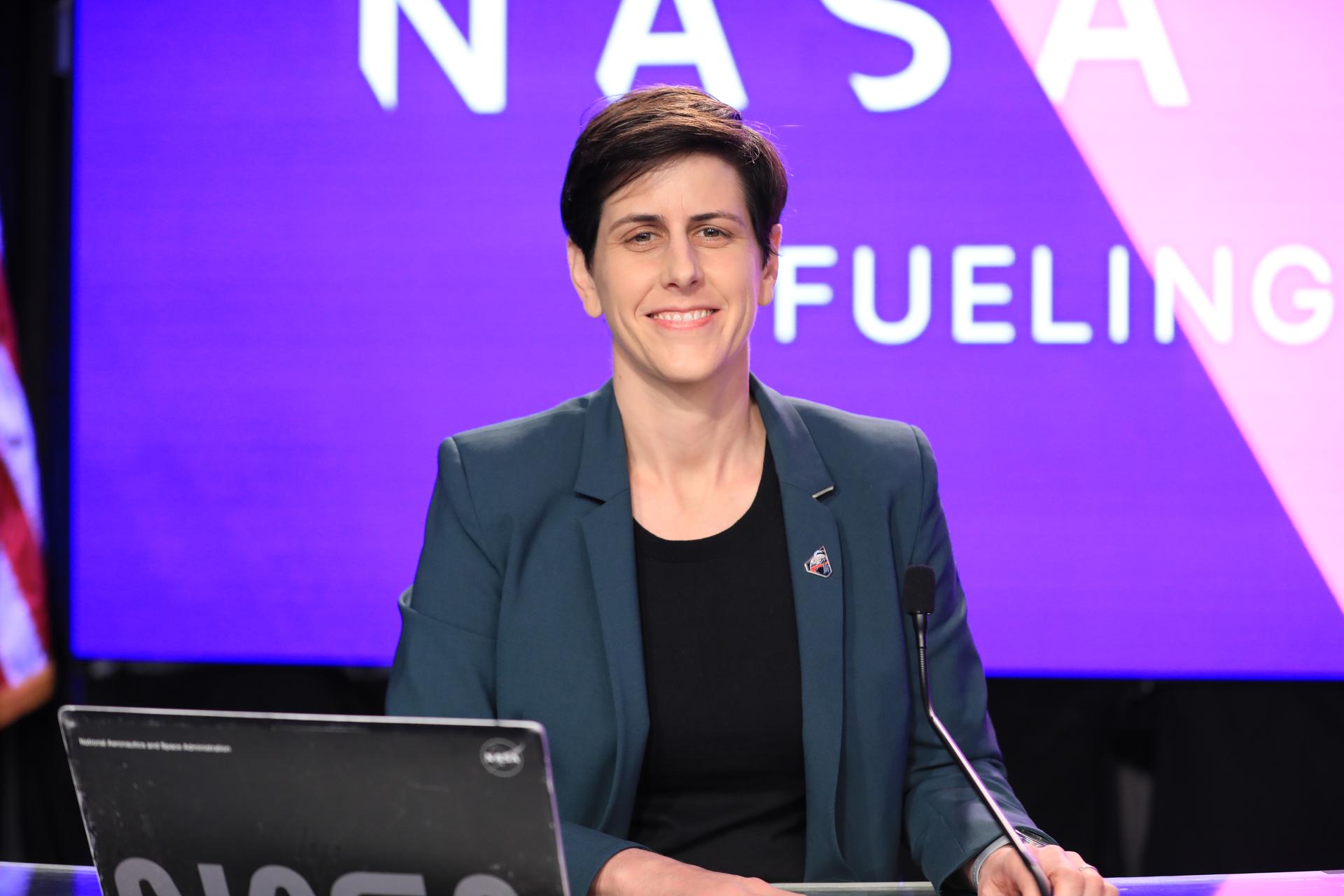
Rachel Kraft, NASA Communications, participates in a news conference on Tuesday, Feb. 3, 2026, to discuss the completion of Artemis II wet dress rehearsal at NASA’s Kennedy Space Center in Florida. The wet dress rehearsal allows the Artemis II launch team to run through operations to load propellant, conduct a full launch countdown, demonstrate the ability to recycle the countdown clock, and drain the tanks to practice timelines and procedures for launch.
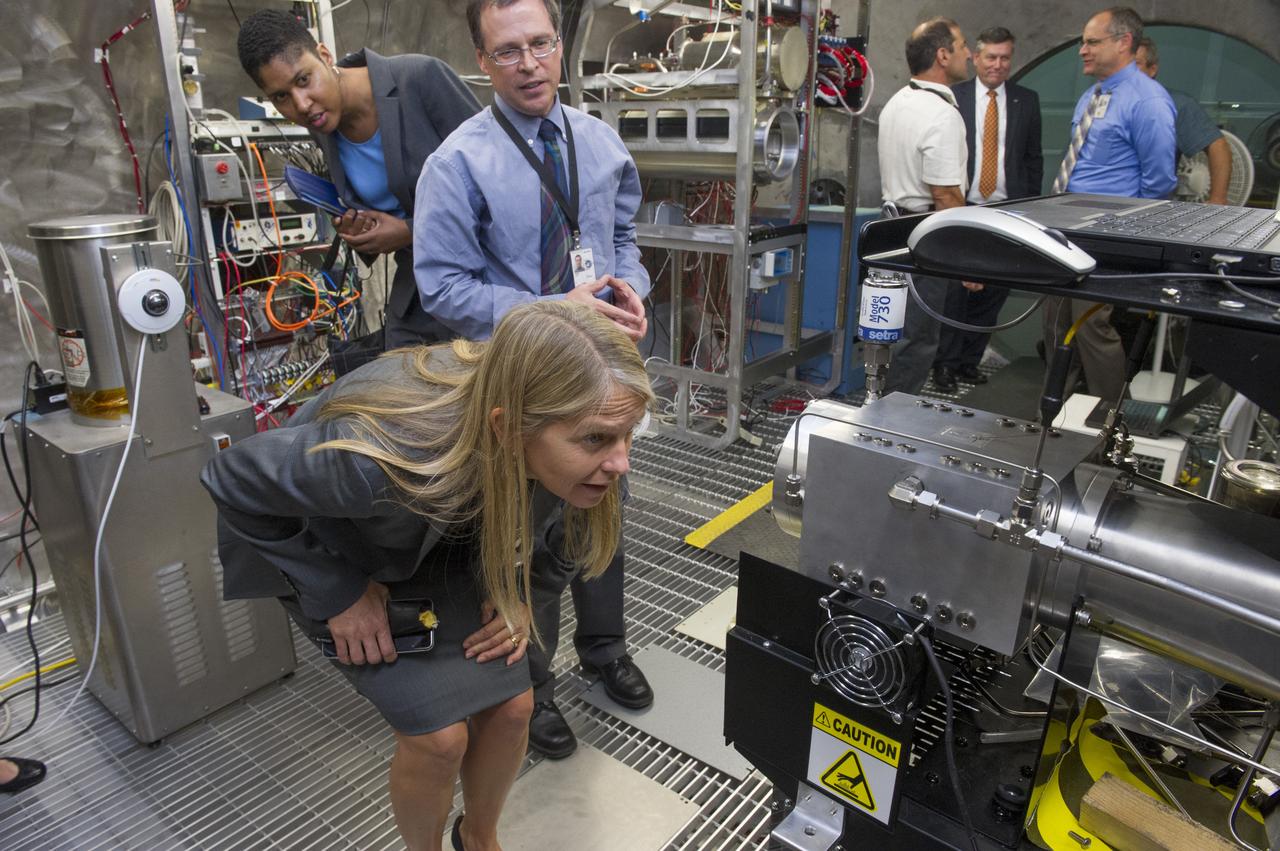
NEWMAN TAKES A CLOSER LOOK AT EQUIPMENT UNDER DEVELOPMENT IN THE ENVIRONMENTAL CONTROL & LIFE SUPPORT SYSTEMS SECTION IN BUILDING 4755. ELCSS IS BUILDING DEVICES TO RECYCLE AIR AND WATER FOR CREW MEMBERS ON THE INTERNATIONAL SPACE STATION, USING THE ORBITING LABORATORY AS A TEST BED FOR LIFE SUPPORT SYSTEMS ON LONG-DURATION MISSIONS DEEPER INTO OUR SOLAR SYSTEM.
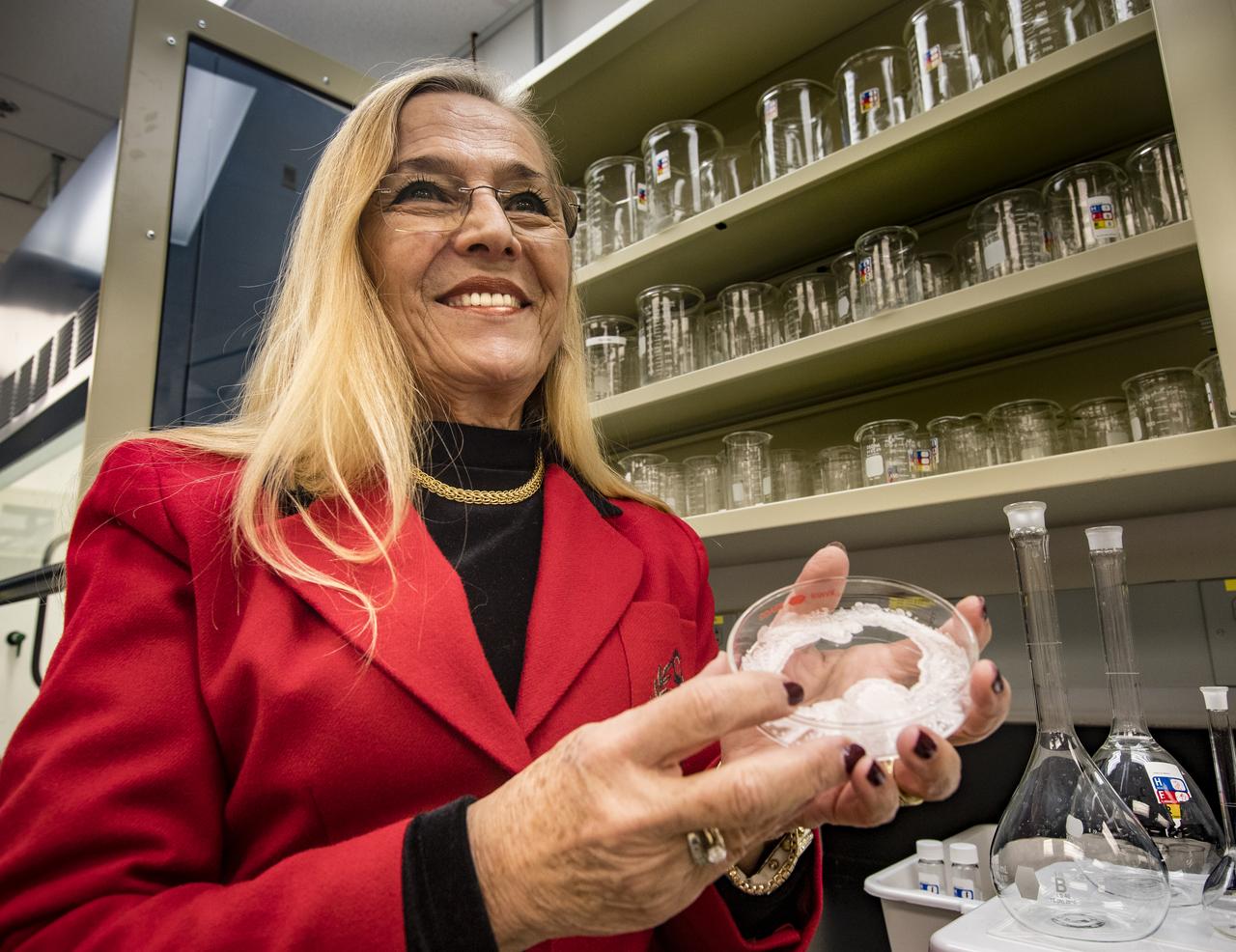
Dr. Luz M. Calle, a principal investigator for corrosion research at NASA’s Kennedy Space Center, shows a dish of crystals left over from an experiment to separate salt from water Dec. 12, 2018. Astronauts traveling on long-duration missions in space will need to recycle water, which means having to remove salt and other chemicals from wastewater to turn it back into drinking water.
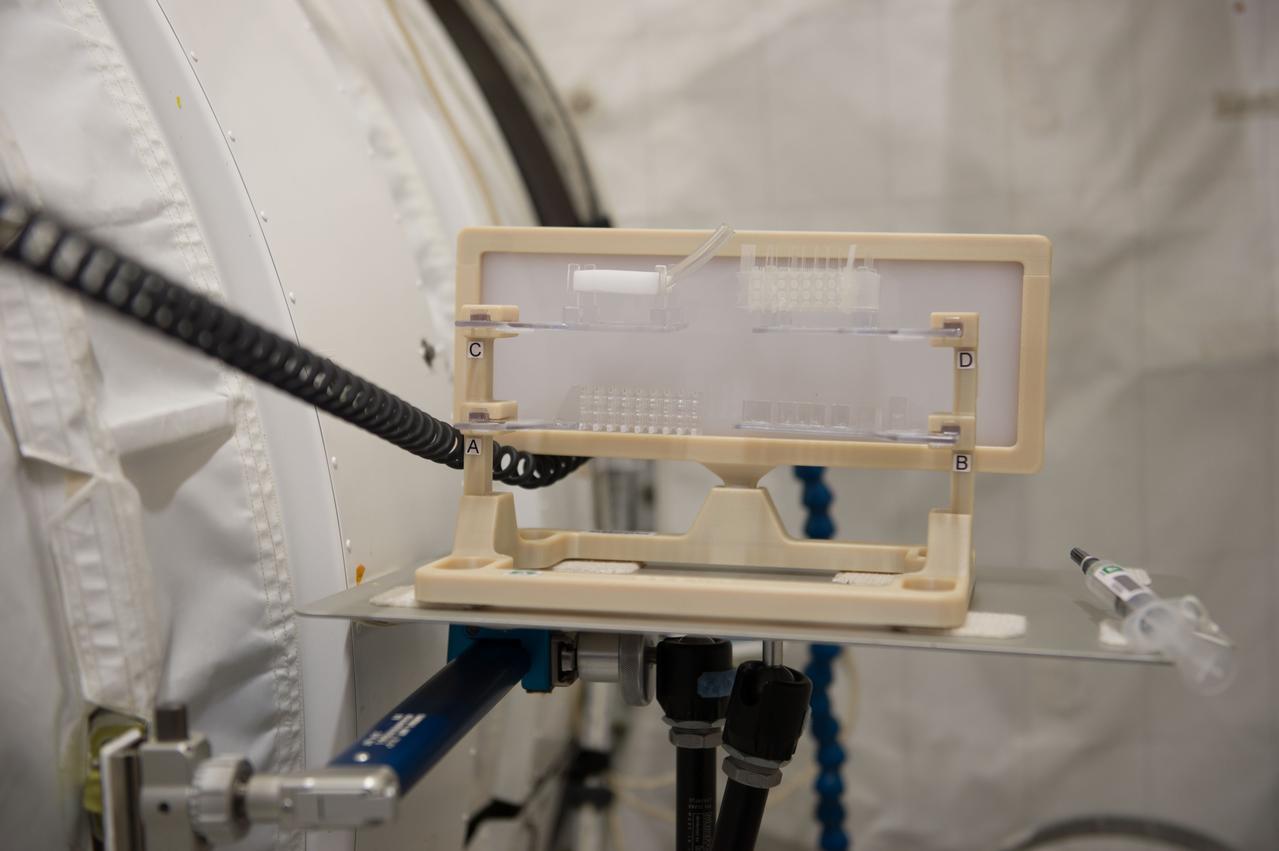
iss052e016481 (7/19/2017) --- A view taken of hardware for the Capillary Structures investigation in the Japanese Experiment Module (JEM). This investigation studies a new method using structures of specific shapes to manage fluid and gas mixtures. It also studies water recycling and carbon dioxide removal, benefiting future efforts to design lightweight, more reliable life support systems for future space missions.
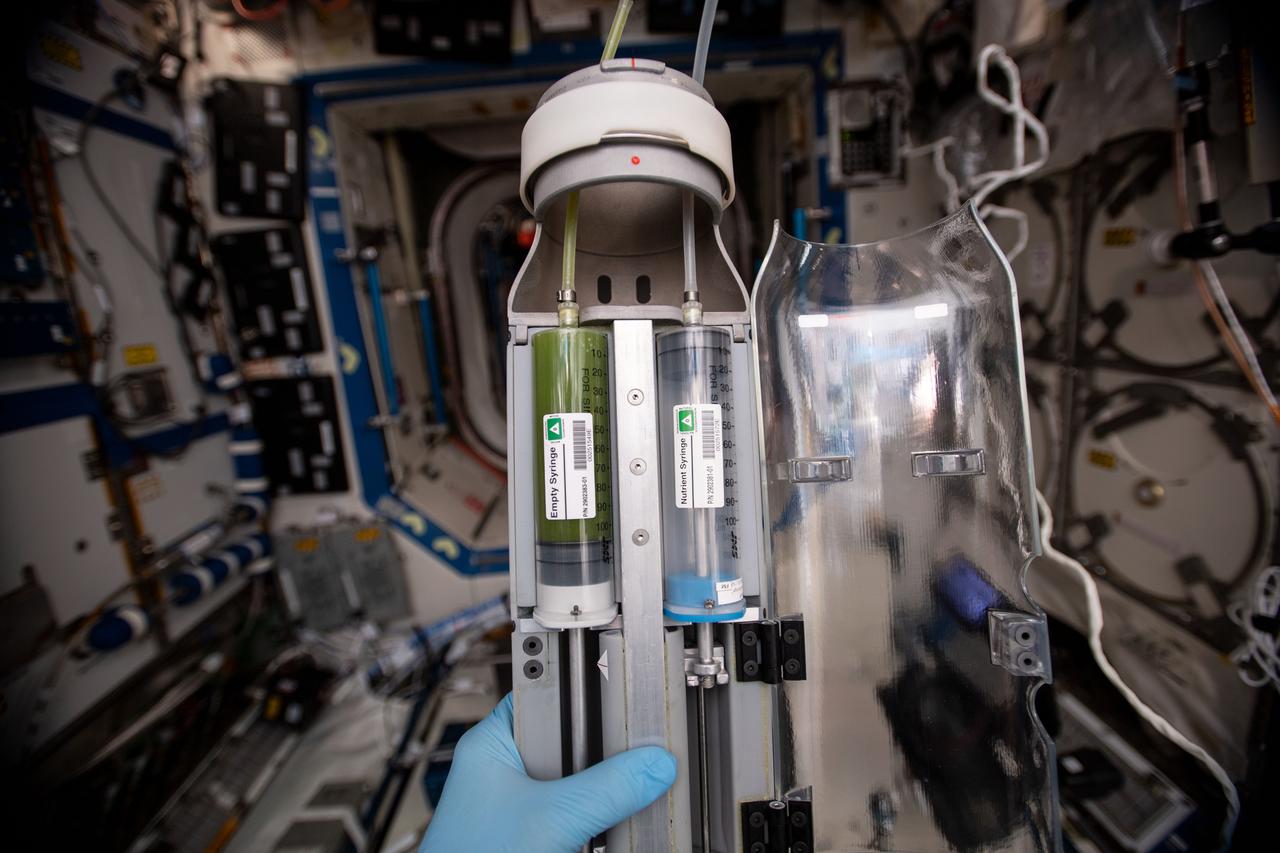
iss059e114346 (6/20/2019) — Photo documentation abroad the International Space Station (ISS) of the Empty Syringe and the Nutrient Syringe during the filling of the Photobioreactor (PBR) with medium and algae to begin the experiment. The Photobioreactor investigation aims at demonstrating that microalgae (i.e. biological processes) can be used together with existing systems to improve recycling of resources, creating a hybrid life support system. This hybrid approach could be helpful in future long-duration exploration missions, as it could reduce the amount of consumables required from Earth.
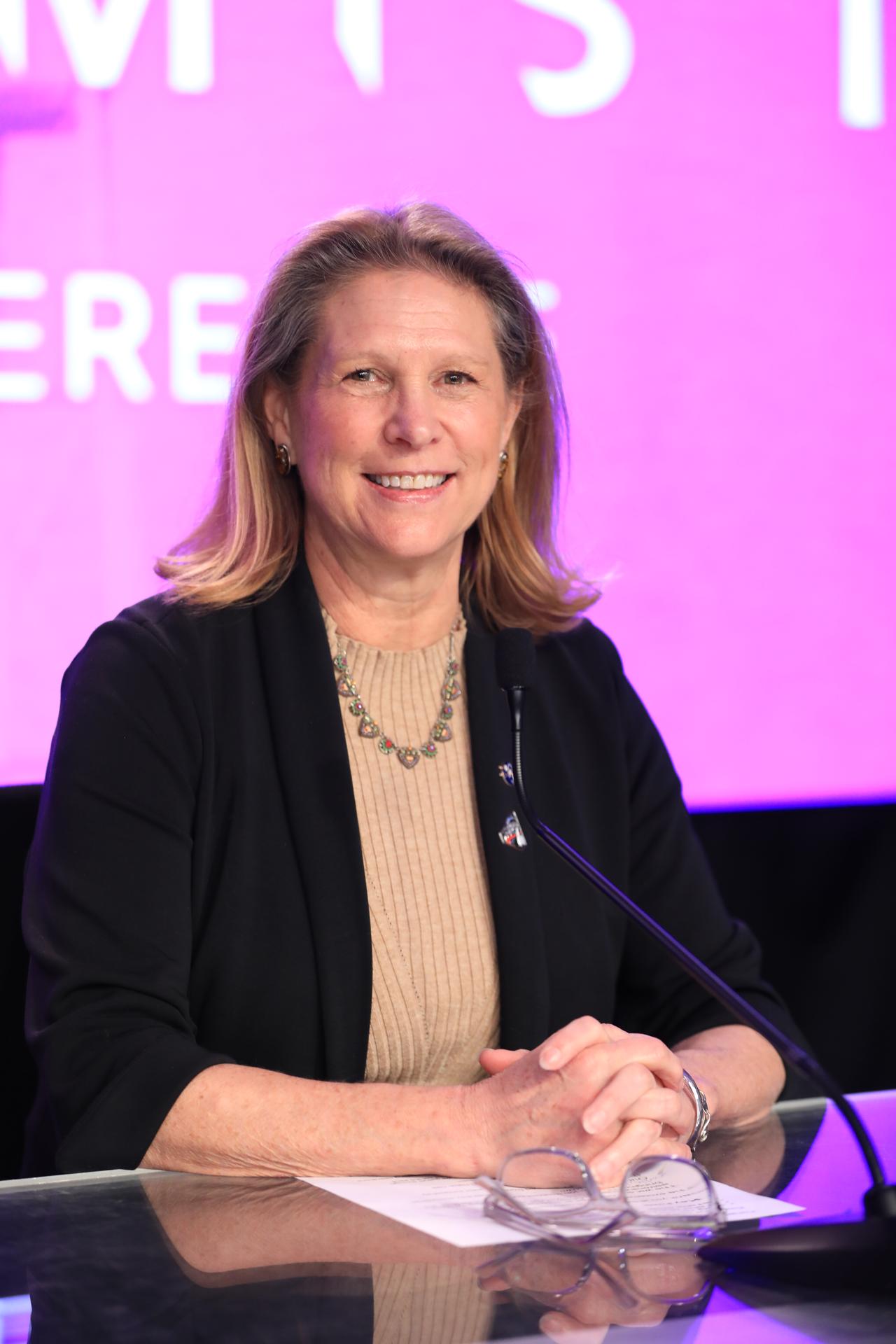
Lori Glaze, acting associate administrator for Exploration Systems Development Mission Directorate, participates in a news conference on Tuesday, Feb. 3, 2026, to discuss the completion of Artemis II wet dress rehearsal at NASA’s Kennedy Space Center in Florida. The wet dress rehearsal allows the Artemis II launch team to run through operations to load propellant, conduct a full launch countdown, demonstrate the ability to recycle the countdown clock, and drain the tanks to practice timelines and procedures for launch.
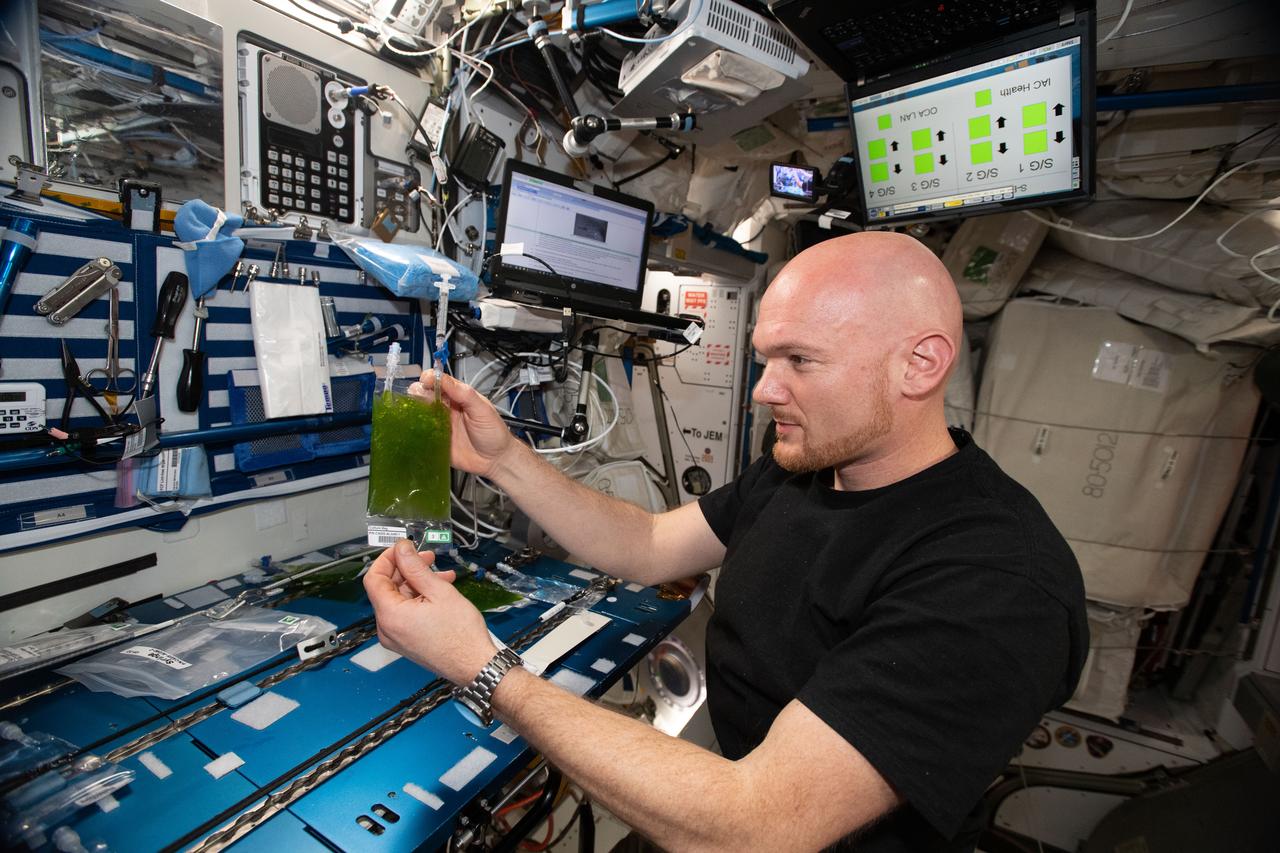
iss056e098238 (July 23, 2018) --- Astronaut Alexander Gerst of ESA (European Space Agency) checks a culture bag for the Space Algae experiment that is exploring the potential of cultivating algae for recycling carbon dioxide and providing food for crew members on long space voyages. The culture bags are placed in the VEGGIE facility to promote growth over a few weeks with the samples returned to Earth for analysis.
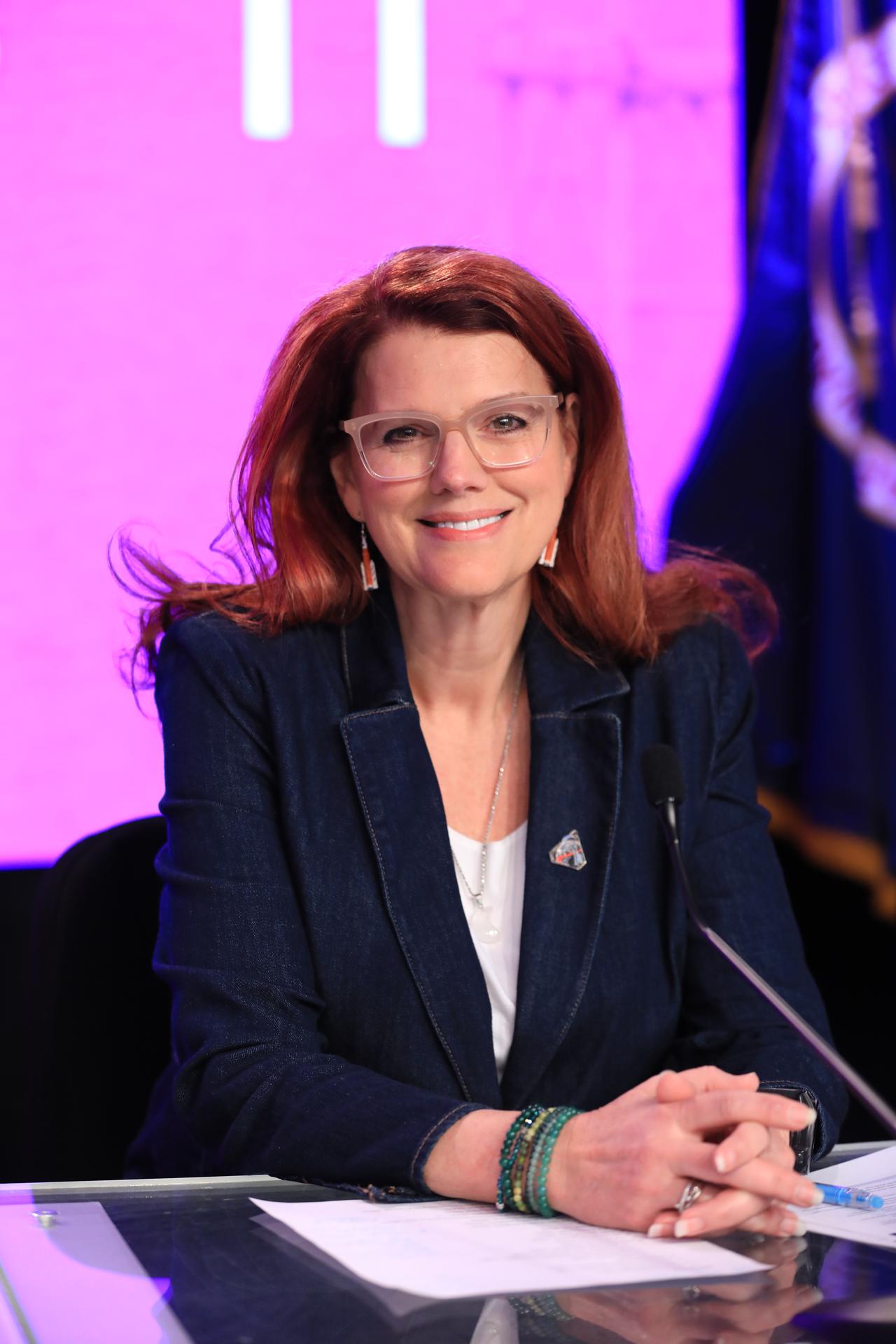
Charlie Blackwell-Thompson, launch director, Exploration Ground Systems Program, participates in a news conference on Tuesday, Feb. 3, 2026, to discuss the completion of Artemis II wet dress rehearsal at NASA’s Kennedy Space Center in Florida. The wet dress rehearsal allows the Artemis II launch team to run through operations to load propellant, conduct a full launch countdown, demonstrate the ability to recycle the countdown clock, and drain the tanks to practice timelines and procedures for launch.
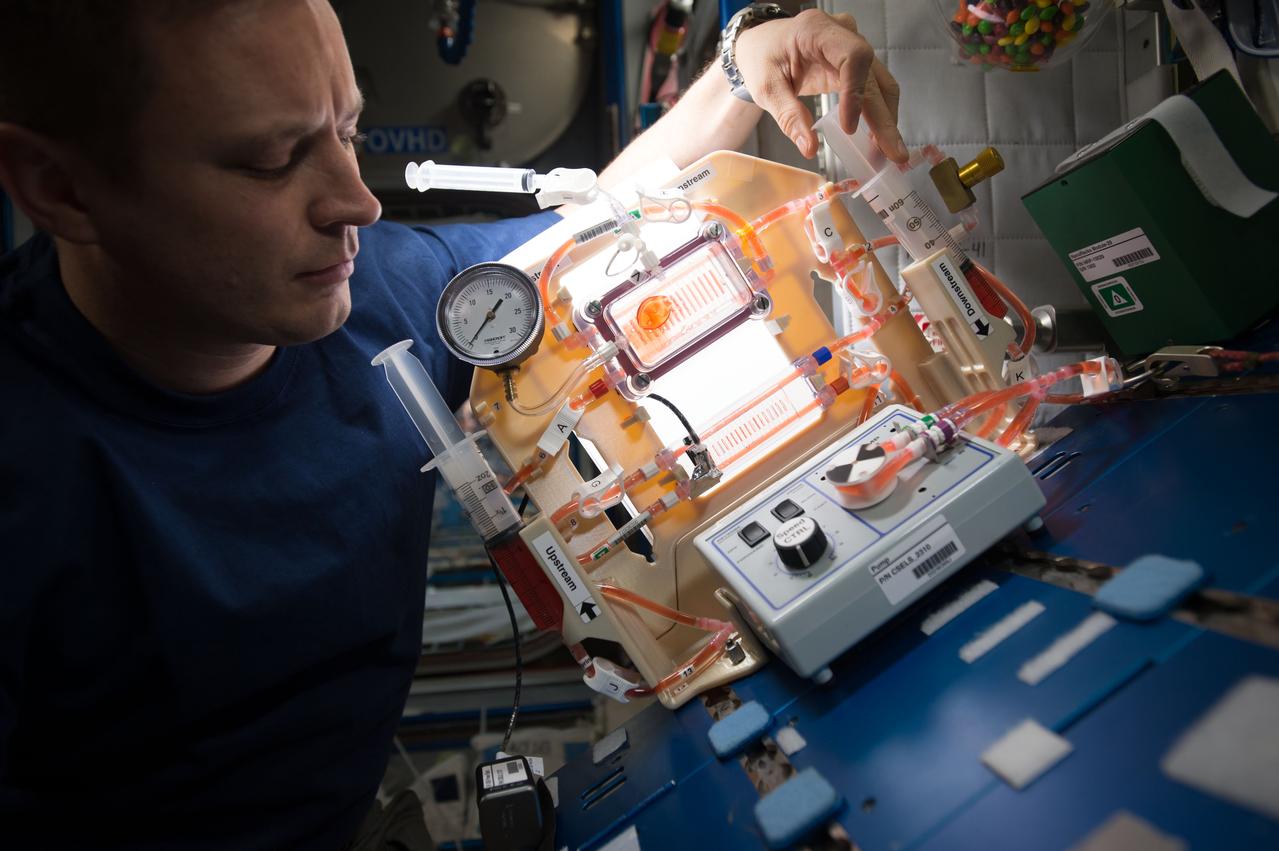
iss052e013087 (7/10/2017) NASA astronaut Jack Fischer is photographed during setup of hardware for the Capillary Structures for Exploration Life Support (Capillary Structures) two sorbent demonstrations. The Capillary Structures for Exploration Life Support (Capillary Structures) investigation studies a new method using structures of specific shapes to manage fluid and gas mixtures. The investigation studies water recycling and carbon dioxide removal, benefiting future efforts to design lightweight, more reliable life support systems for future space missions.
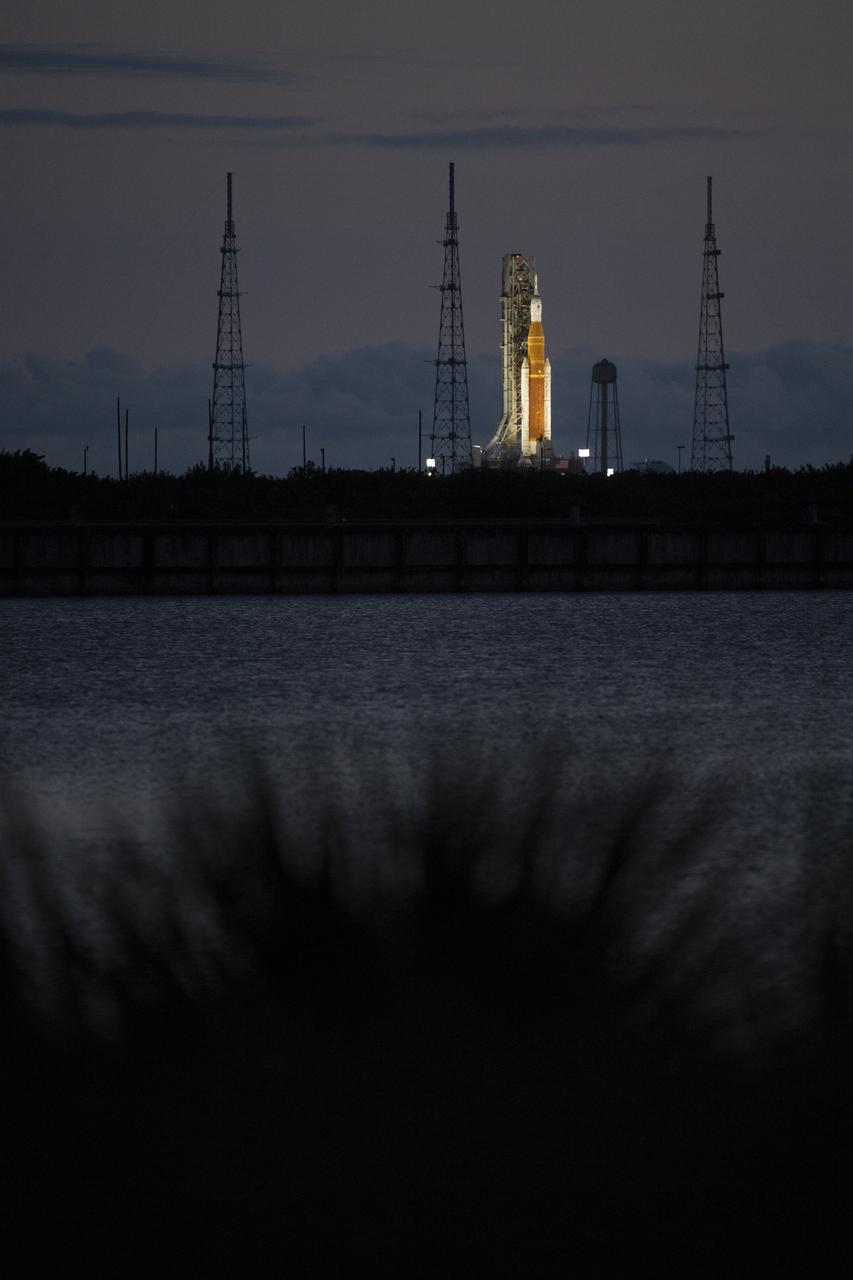
NASA’s Space Launch System (SLS) rocket with the Orion spacecraft aboard is seen at sunrise atop a mobile launcher at Launch Complex 39B, Sunday, April 3, 2022, as the Artemis I launch team conducts the wet dress rehearsal test at NASA’s Kennedy Space Center in Florida. Ahead of NASA’s Artemis I flight test, the wet dress rehearsal will run the Artemis I launch team through operations to load propellant, conduct a full launch countdown, demonstrate the ability to recycle the countdown clock, and drain the tanks to practice timelines and procedures for launch. Photo Credit: (NASA/Joel Kowsky)
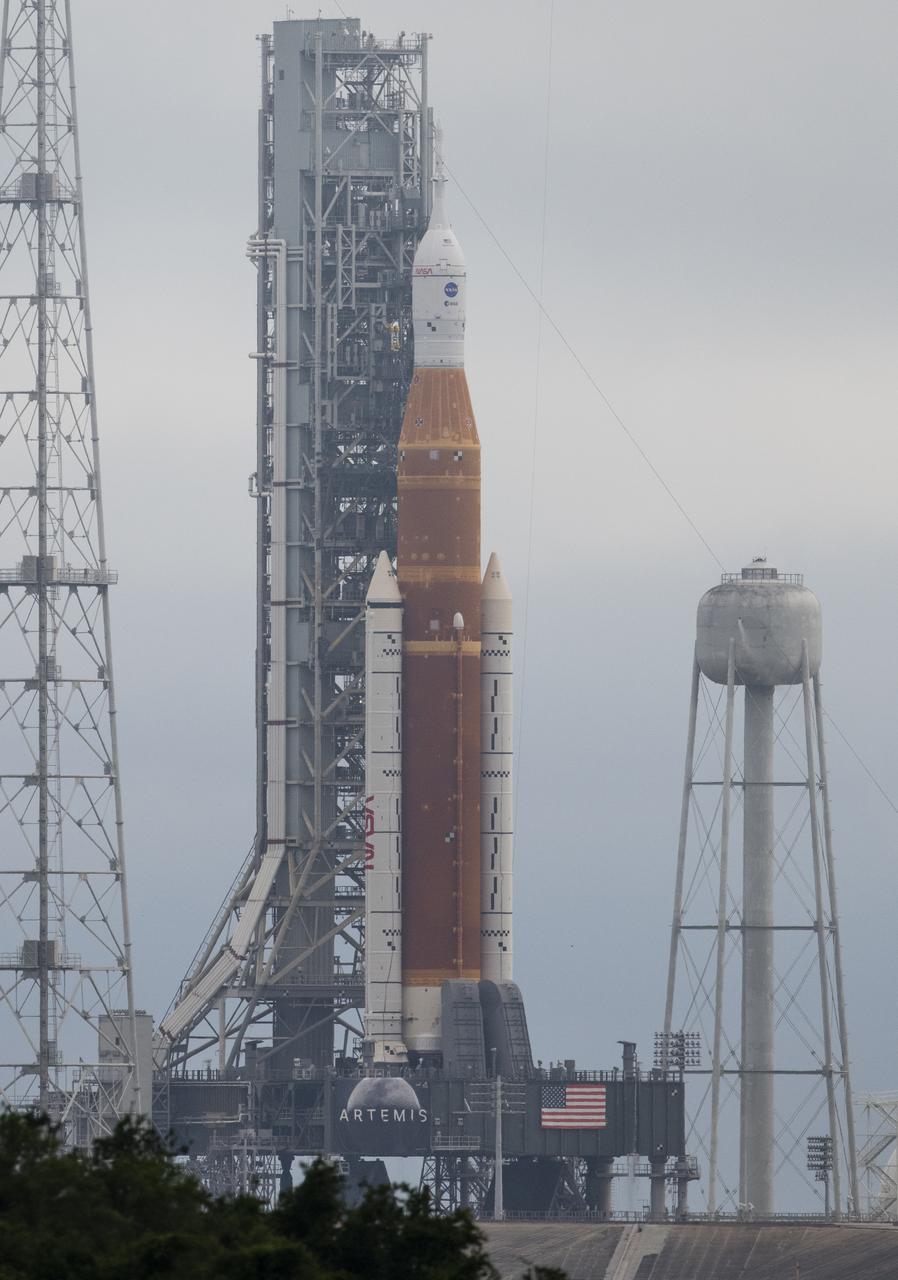
NASA’s Space Launch System (SLS) rocket with the Orion spacecraft aboard is seen atop a mobile launcher at Launch Complex 39B, Sunday, April 3, 2022, as the Artemis I launch team conducts the wet dress rehearsal test at NASA’s Kennedy Space Center in Florida. Ahead of NASA’s Artemis I flight test, the wet dress rehearsal will run the Artemis I launch team through operations to load propellant, conduct a full launch countdown, demonstrate the ability to recycle the countdown clock, and drain the tanks to practice timelines and procedures for launch. Photo Credit: (NASA/Joel Kowsky)
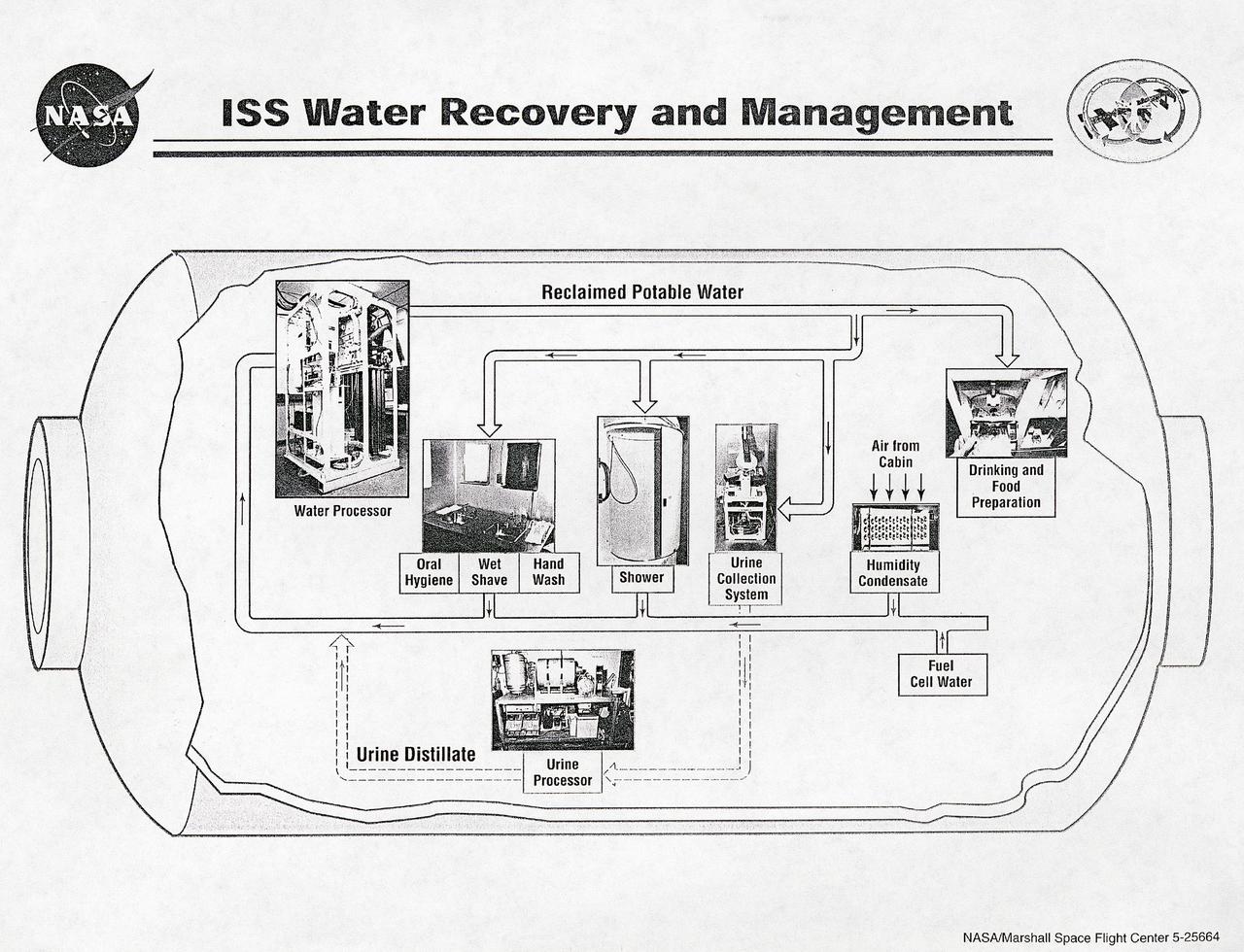
This diagram shows the flow of water recovery and management in the International Space Station (ISS). The Environmental Control and Life Support System (ECLSS) Group of the Flight Projects Directorate at the Marshall Space Flight Center is responsible for the regenerative ECLSS hardware, as well as providing technical support for the rest of the system. The regenerative ECLSS, whose main components are the Water Recovery System (WRS), and the Oxygen Generation System (OGS), reclaims and recycles water oxygen. The ECLSS maintains a pressurized habitation environment, provides water recovery and storage, maintains and provides fire detection/ suppression, and provides breathable air and a comfortable atmosphere in which to live and work within the ISS. The ECLSS hardware will be located in the Node 3 module of the ISS.
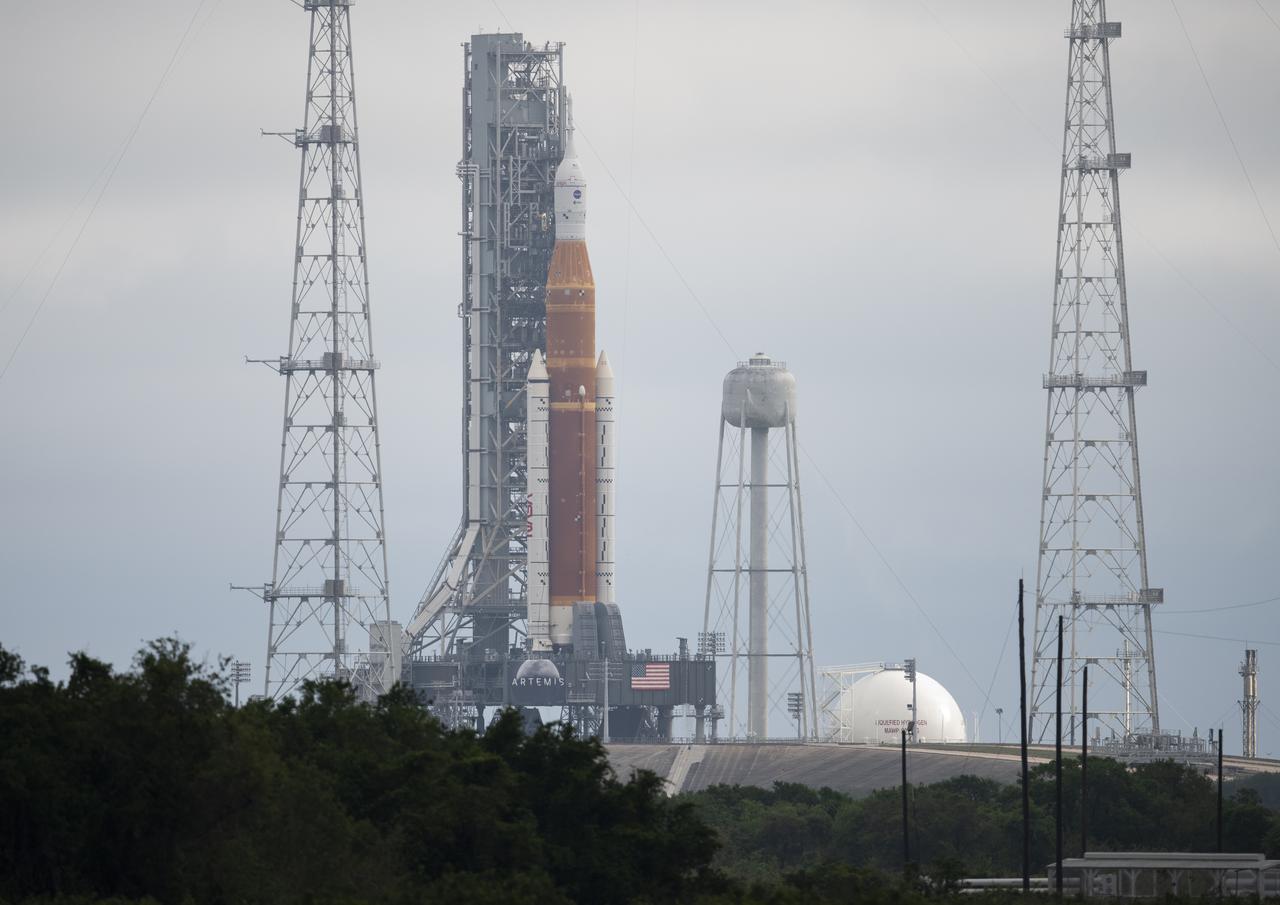
NASA’s Space Launch System (SLS) rocket with the Orion spacecraft aboard is seen atop a mobile launcher at Launch Complex 39B, Sunday, April 3, 2022, as the Artemis I launch team conducts the wet dress rehearsal test at NASA’s Kennedy Space Center in Florida. Ahead of NASA’s Artemis I flight test, the wet dress rehearsal will run the Artemis I launch team through operations to load propellant, conduct a full launch countdown, demonstrate the ability to recycle the countdown clock, and drain the tanks to practice timelines and procedures for launch. Photo Credit: (NASA/Joel Kowsky)
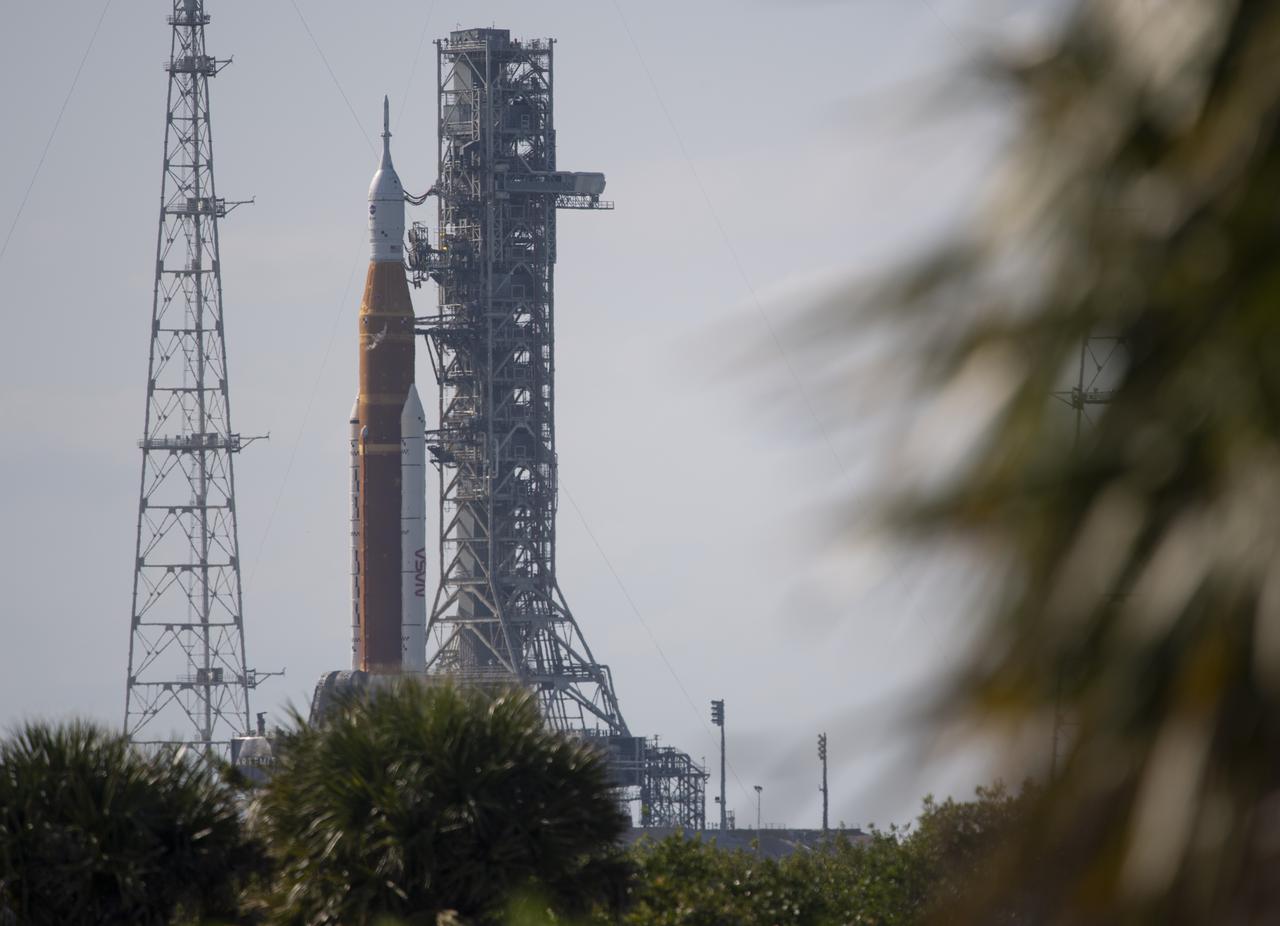
NASA’s Space Launch System (SLS) rocket with the Orion spacecraft aboard is seen atop a mobile launcher at Launch Complex 39B, Monday, April 4, 2022, as the Artemis I launch team conducts the wet dress rehearsal test at NASA’s Kennedy Space Center in Florida. Ahead of NASA’s Artemis I flight test, the wet dress rehearsal will run the Artemis I launch team through operations to load propellant, conduct a full launch countdown, demonstrate the ability to recycle the countdown clock, and drain the tanks to practice timelines and procedures for launch. Photo Credit: (NASA/Joel Kowsky)
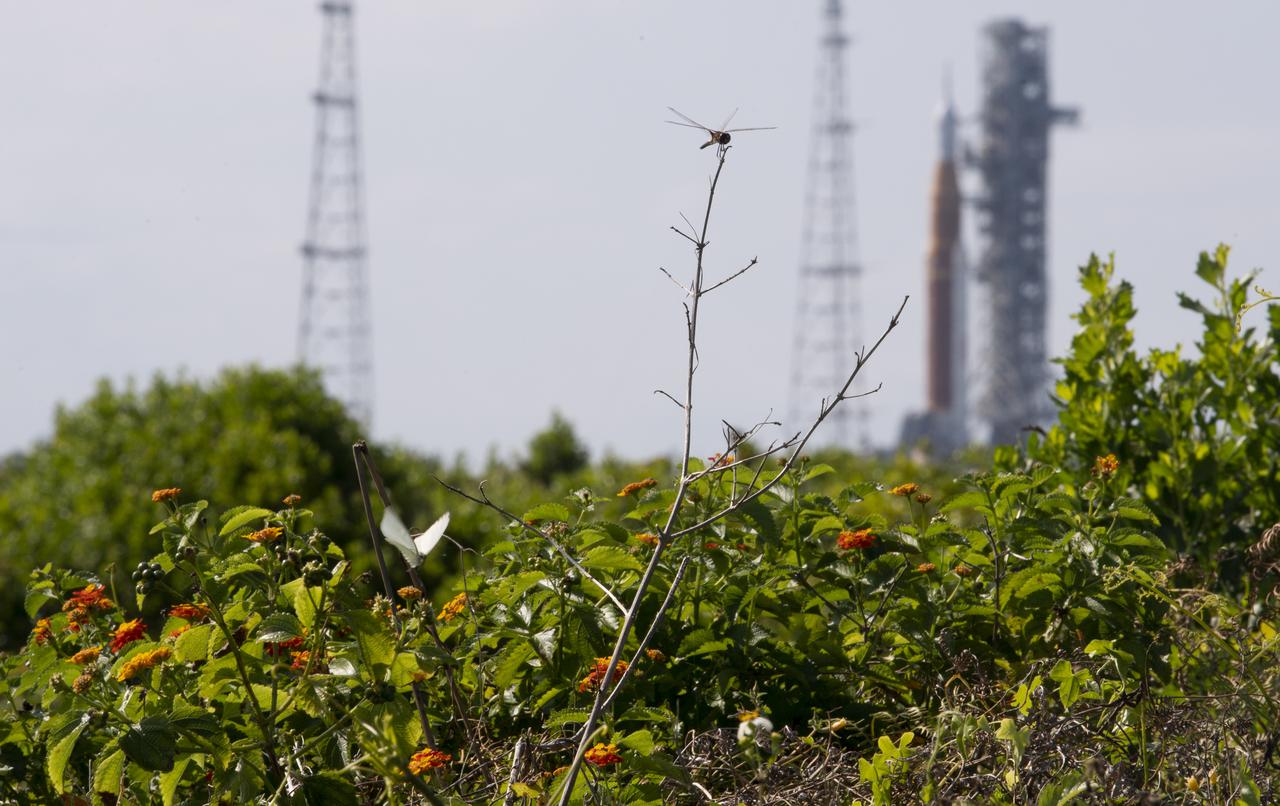
A dragon fly is seen as NASA’s Space Launch System (SLS) rocket with the Orion spacecraft aboard atop a mobile launcher at Launch Complex 39B undergoes the wet dress rehearsal test, Monday, April 4, 2022, NASA’s Kennedy Space Center in Florida. Ahead of NASA’s Artemis I flight test, the wet dress rehearsal will run the Artemis I launch team through operations to load propellant, conduct a full launch countdown, demonstrate the ability to recycle the countdown clock, and drain the tanks to practice timelines and procedures for launch. Photo Credit: (NASA/Joel Kowsky)
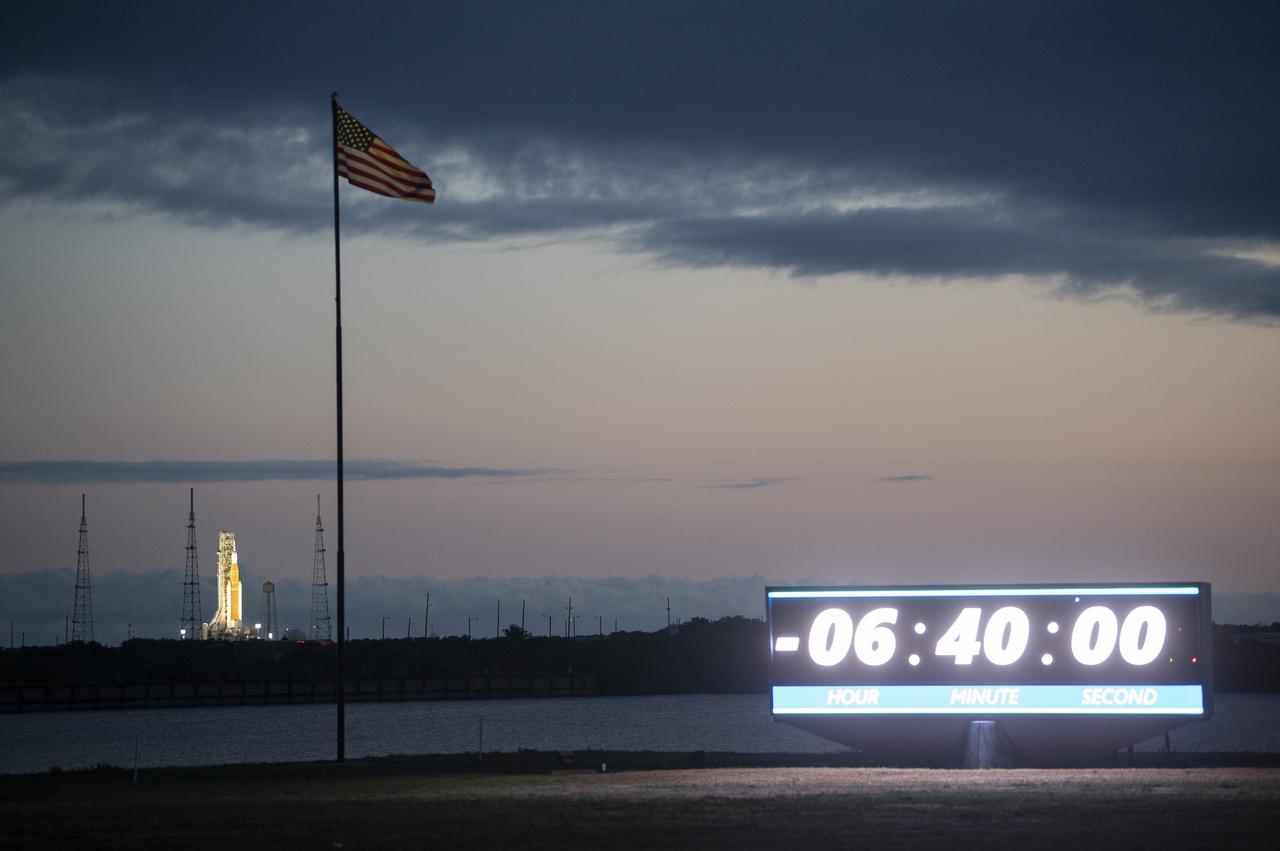
NASA’s Space Launch System (SLS) rocket with the Orion spacecraft aboard is seen at sunrise atop a mobile launcher at Launch Complex 39B, Sunday, April 3, 2022, as the Artemis I launch team conducts the wet dress rehearsal test at NASA’s Kennedy Space Center in Florida. Ahead of NASA’s Artemis I flight test, the wet dress rehearsal will run the Artemis I launch team through operations to load propellant, conduct a full launch countdown, demonstrate the ability to recycle the countdown clock, and drain the tanks to practice timelines and procedures for launch. Photo Credit: (NASA/Joel Kowsky)
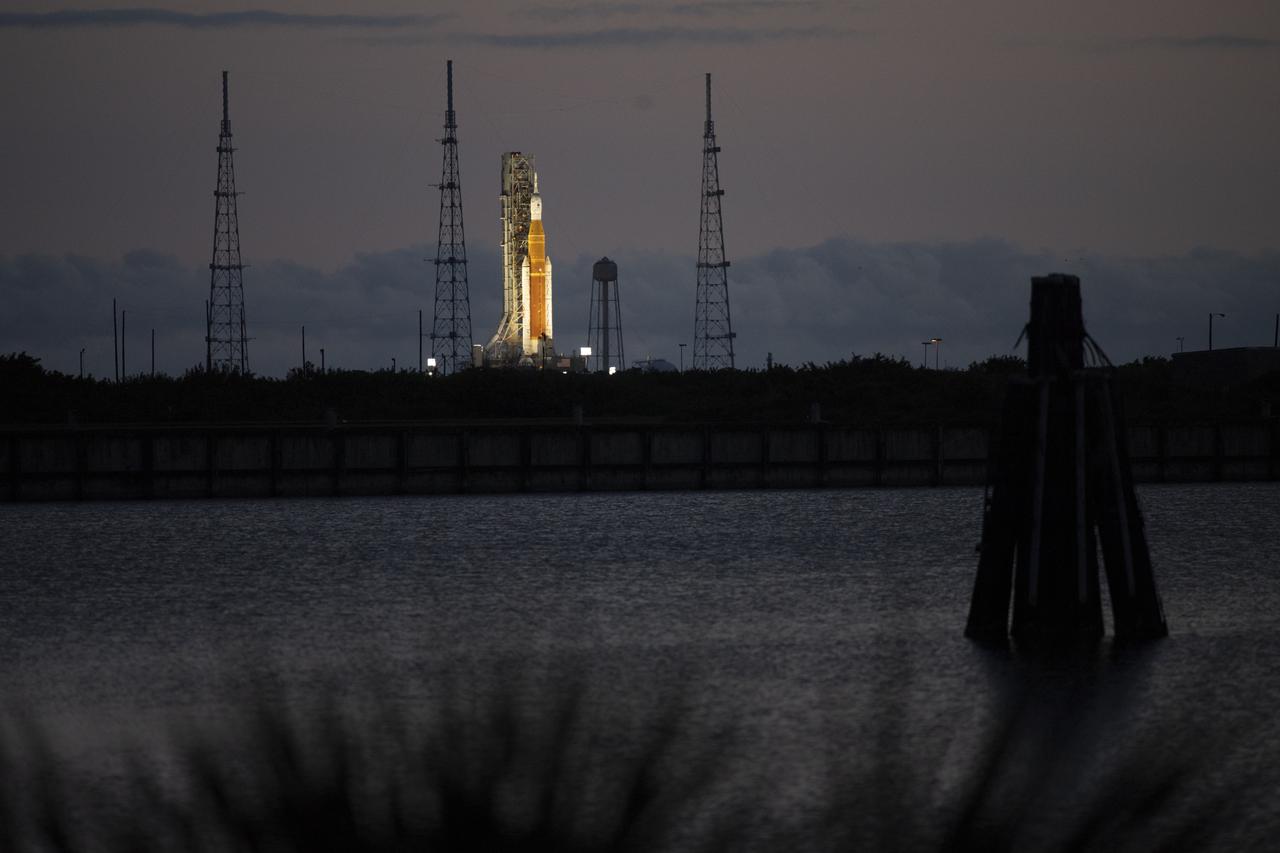
NASA’s Space Launch System (SLS) rocket with the Orion spacecraft aboard is seen at sunrise atop a mobile launcher at Launch Complex 39B, Sunday, April 3, 2022, as the Artemis I launch team conducts the wet dress rehearsal test at NASA’s Kennedy Space Center in Florida. Ahead of NASA’s Artemis I flight test, the wet dress rehearsal will run the Artemis I launch team through operations to load propellant, conduct a full launch countdown, demonstrate the ability to recycle the countdown clock, and drain the tanks to practice timelines and procedures for launch. Photo Credit: (NASA/Joel Kowsky)
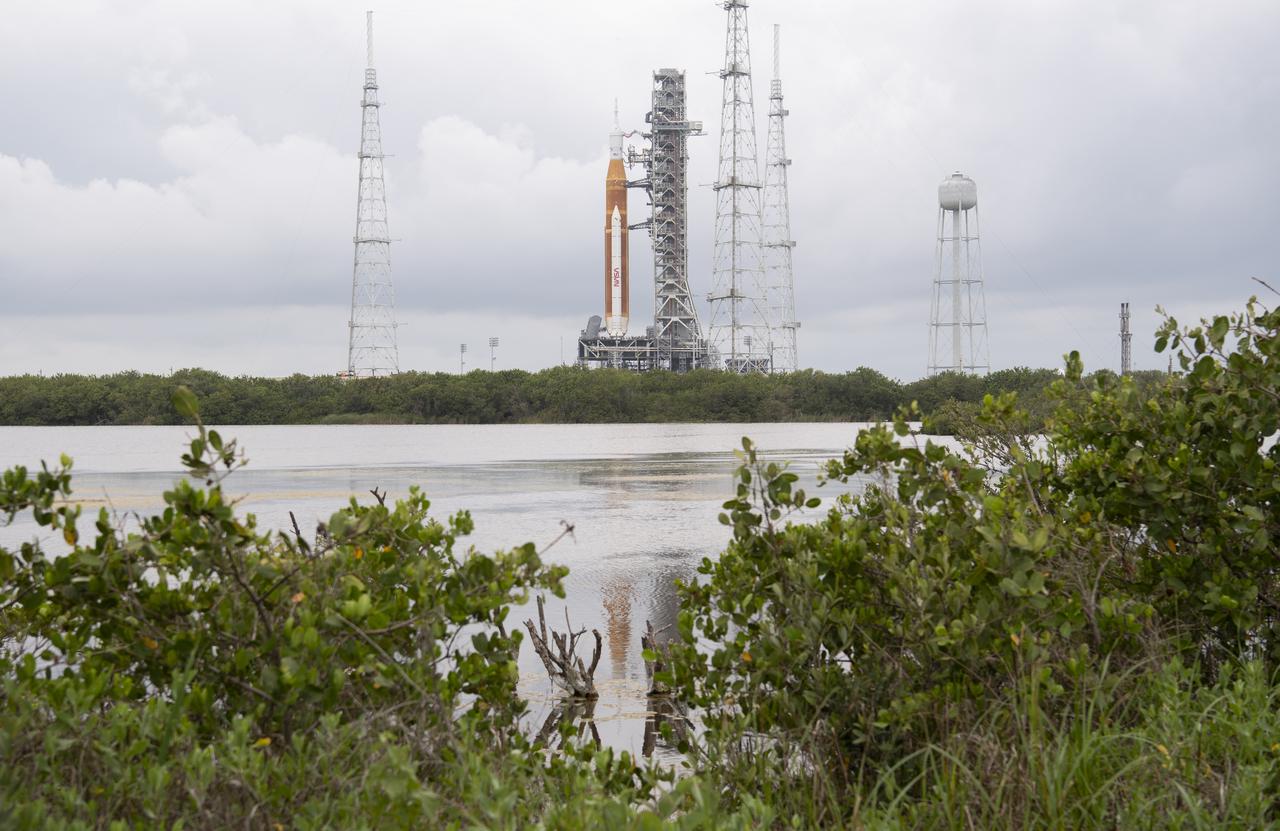
NASA’s Space Launch System (SLS) rocket with the Orion spacecraft aboard is seen atop a mobile launcher at Launch Complex 39B, Saturday, April 2, 2022, as the Artemis I launch team conducts the wet dress rehearsal test at NASA’s Kennedy Space Center in Florida. Ahead of NASA’s Artemis I flight test, the wet dress rehearsal will run the Artemis I launch team through operations to load propellant, conduct a full launch countdown, demonstrate the ability to recycle the countdown clock, and drain the tanks to practice timelines and procedures for launch. Photo Credit: (NASA/Joel Kowsky)
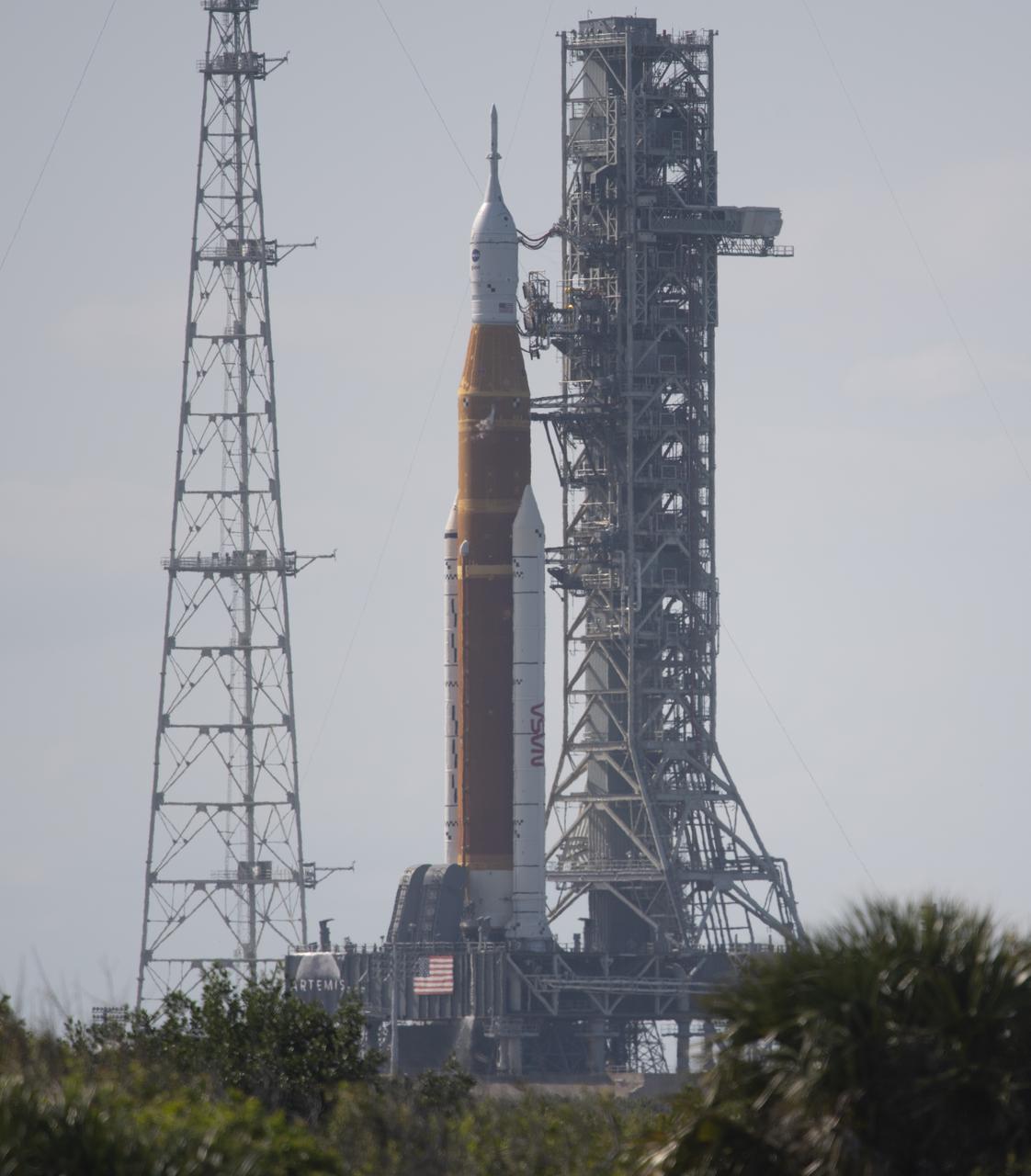
NASA’s Space Launch System (SLS) rocket with the Orion spacecraft aboard is seen atop a mobile launcher at Launch Complex 39B, Monday, April 4, 2022, as the Artemis I launch team conducts the wet dress rehearsal test at NASA’s Kennedy Space Center in Florida. Ahead of NASA’s Artemis I flight test, the wet dress rehearsal will run the Artemis I launch team through operations to load propellant, conduct a full launch countdown, demonstrate the ability to recycle the countdown clock, and drain the tanks to practice timelines and procedures for launch. Photo Credit: (NASA/Joel Kowsky)
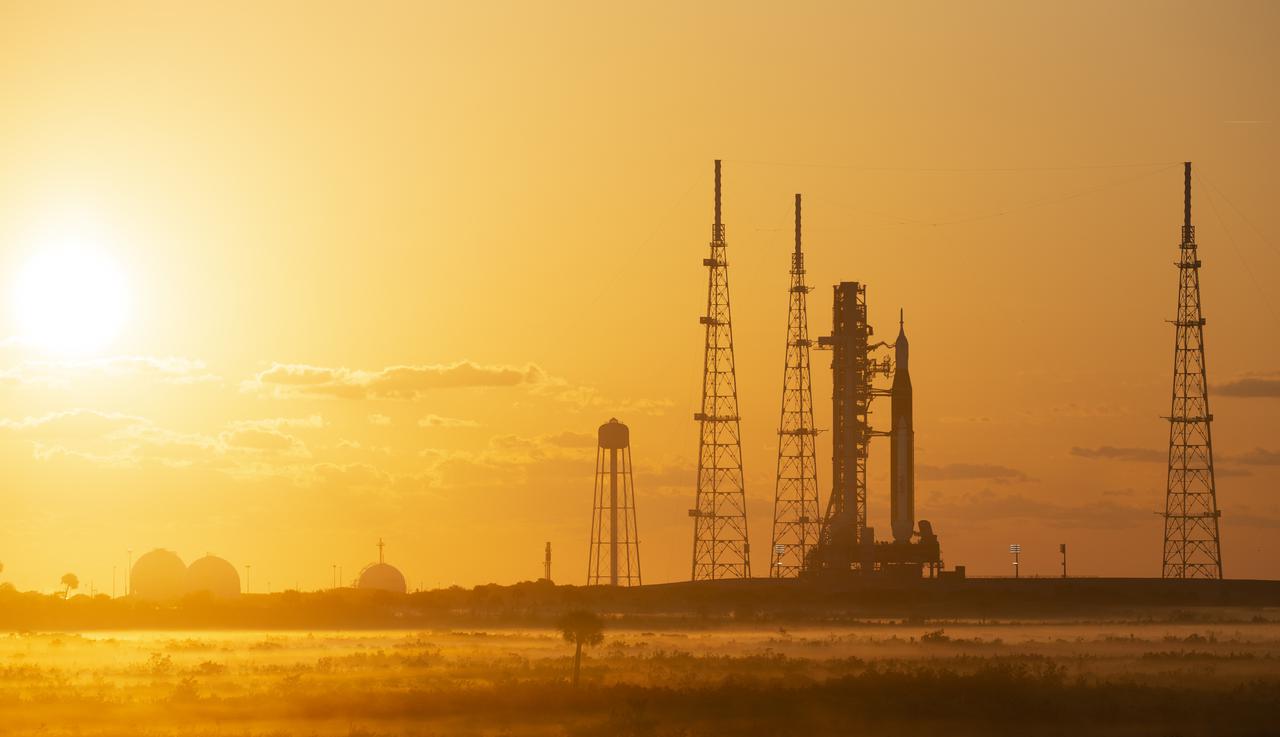
NASA’s Space Launch System (SLS) rocket with the Orion spacecraft aboard is seen at sunrise atop a mobile launcher at Launch Complex 39B, Monday, April 4, 2022, as the Artemis I launch team conducts the wet dress rehearsal test at NASA’s Kennedy Space Center in Florida. Ahead of NASA’s Artemis I flight test, the wet dress rehearsal will run the Artemis I launch team through operations to load propellant, conduct a full launch countdown, demonstrate the ability to recycle the countdown clock, and drain the tanks to practice timelines and procedures for launch. Photo Credit: (NASA/Joel Kowsky)
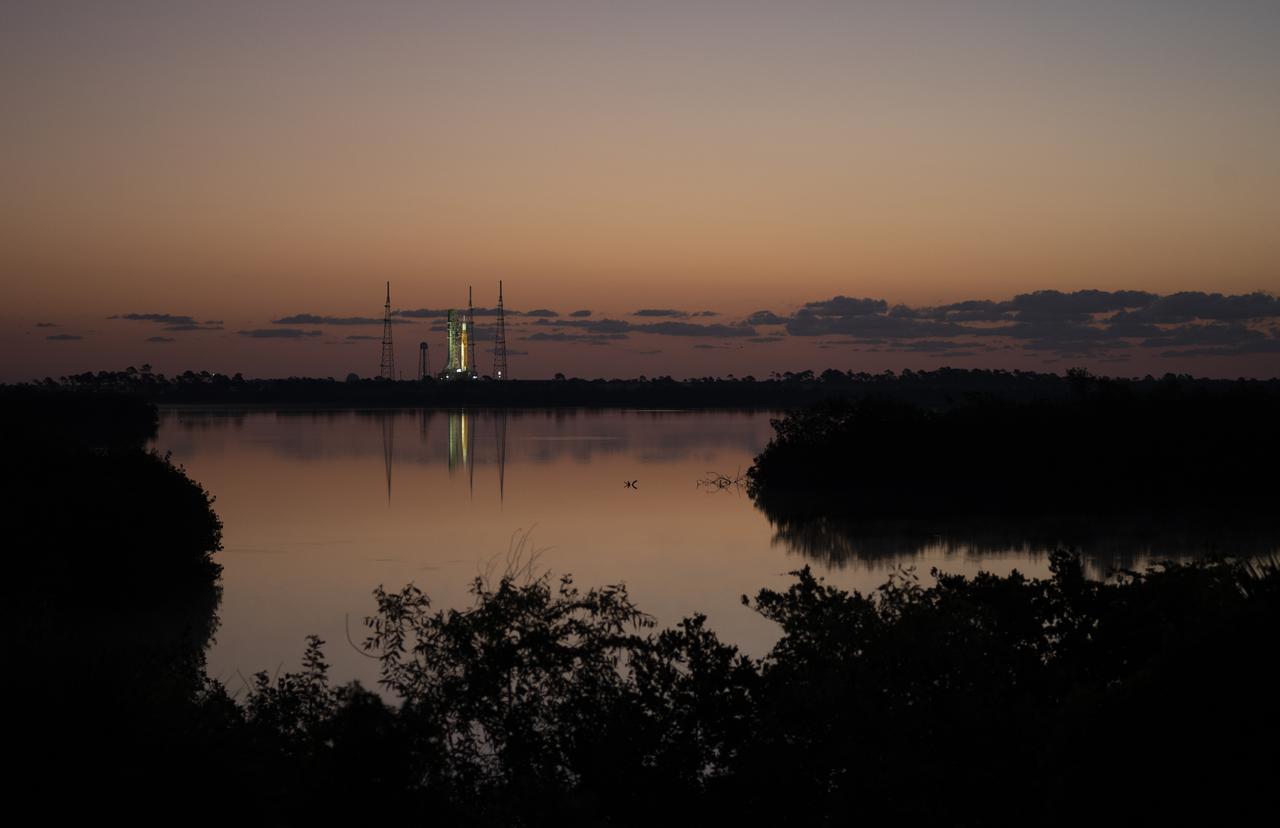
NASA’s Space Launch System (SLS) rocket with the Orion spacecraft aboard is seen at sunrise atop a mobile launcher at Launch Complex 39B, Monday, April 4, 2022, as the Artemis I launch team conducts the wet dress rehearsal test at NASA’s Kennedy Space Center in Florida. Ahead of NASA’s Artemis I flight test, the wet dress rehearsal will run the Artemis I launch team through operations to load propellant, conduct a full launch countdown, demonstrate the ability to recycle the countdown clock, and drain the tanks to practice timelines and procedures for launch. Photo Credit: (NASA/Joel Kowsky)
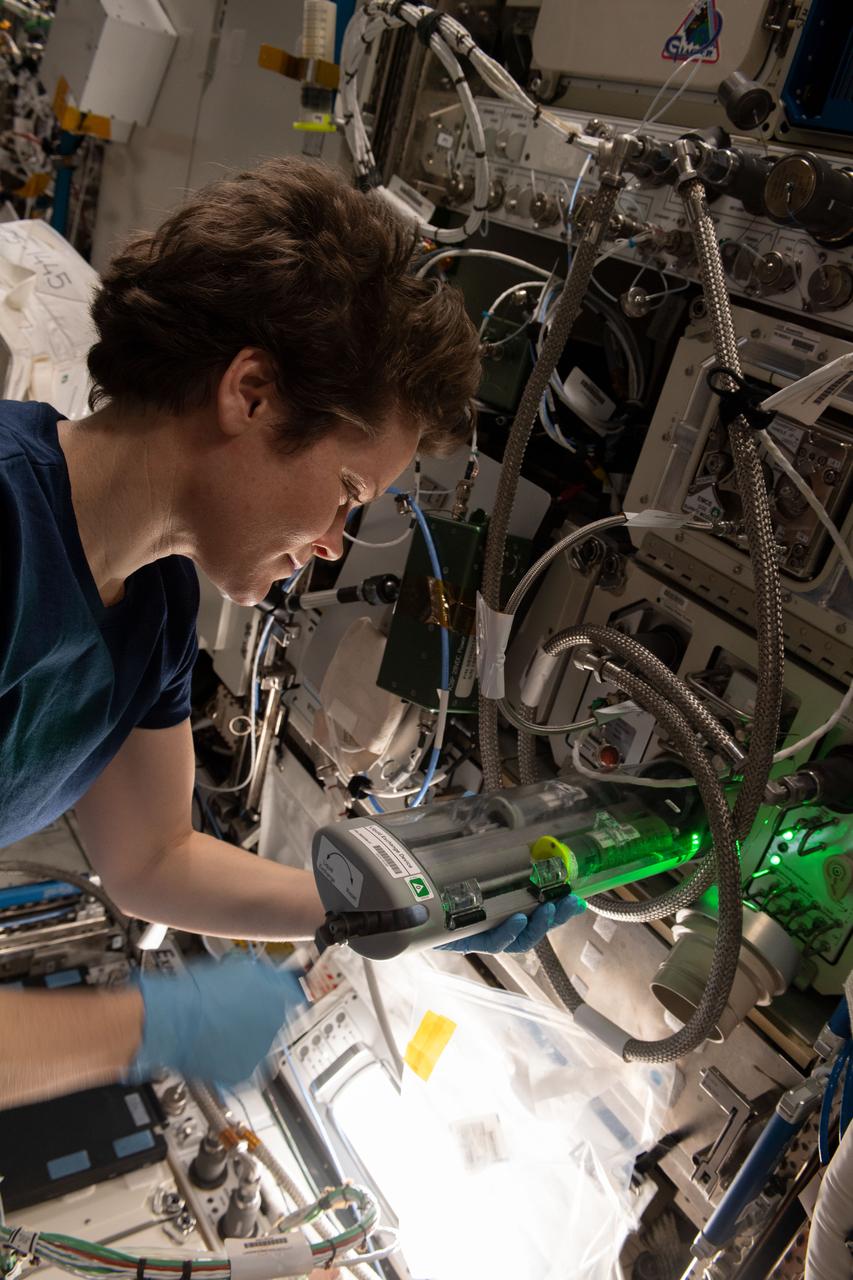
iss059e092376 (6/6/2019) --- NASA astronaut Anne McClain is photographed onboard the International Space Station (ISS) using the Liquid Exchange Device. The documentation was taken during the filling of the Photobioreactor (PBR) with medium and algae to begin the experiment. The Photobioreactor investigation aims at demonstrating that microalgae (i.e. biological processes) can be used together with existing systems to improve recycling of resources, creating a hybrid life support system. This hybrid approach could be helpful in future long-duration exploration missions, as it could reduce the amount of consumables required from Earth.
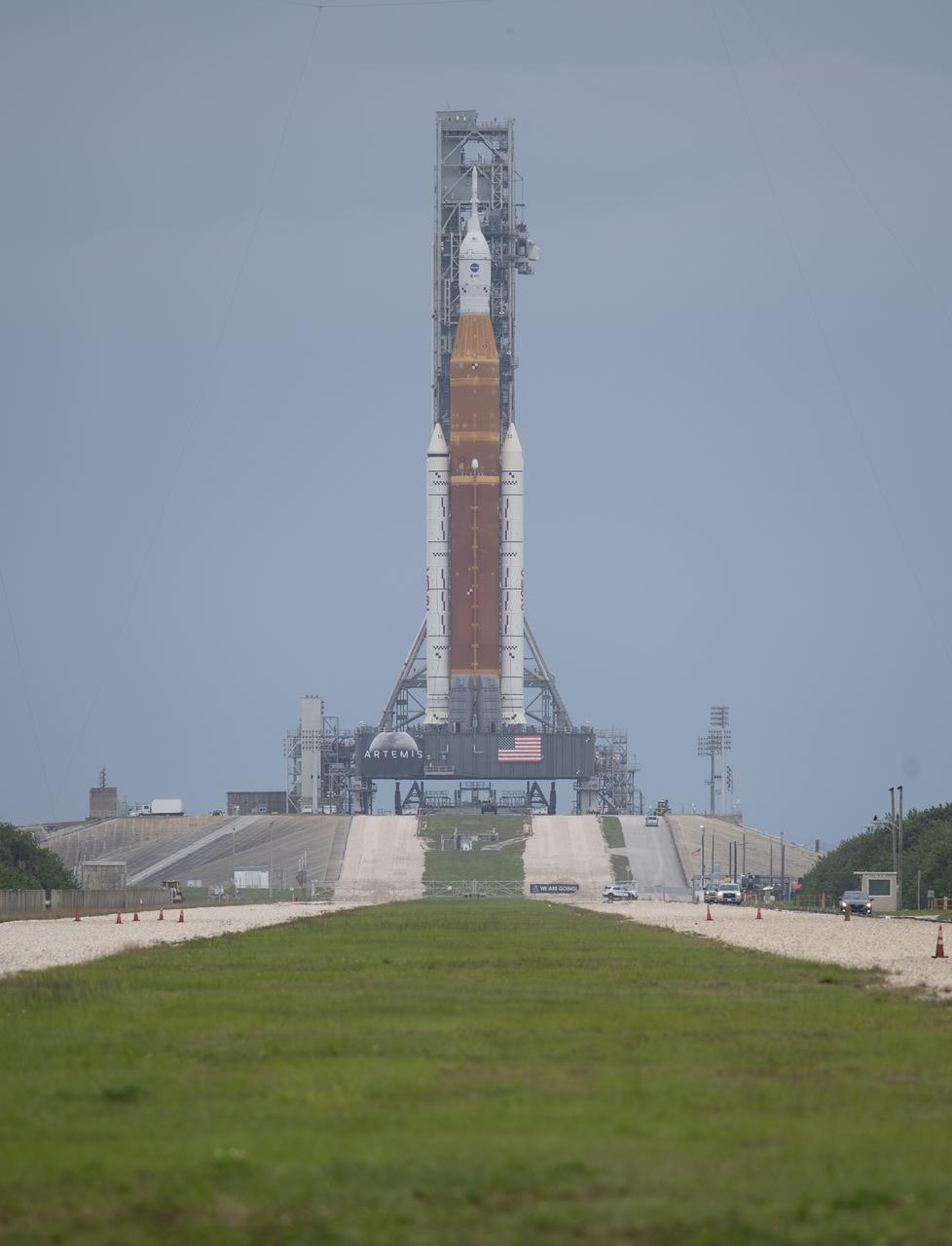
NASA’s Space Launch System (SLS) rocket with the Orion spacecraft aboard is seen atop a mobile launcher at Launch Complex 39B, Saturday, April 2, 2022, as the Artemis I launch team conducts the wet dress rehearsal test at NASA’s Kennedy Space Center in Florida. Ahead of NASA’s Artemis I flight test, the wet dress rehearsal will run the Artemis I launch team through operations to load propellant, conduct a full launch countdown, demonstrate the ability to recycle the countdown clock, and drain the tanks to practice timelines and procedures for launch. Photo Credit: (NASA/Joel Kowsky)
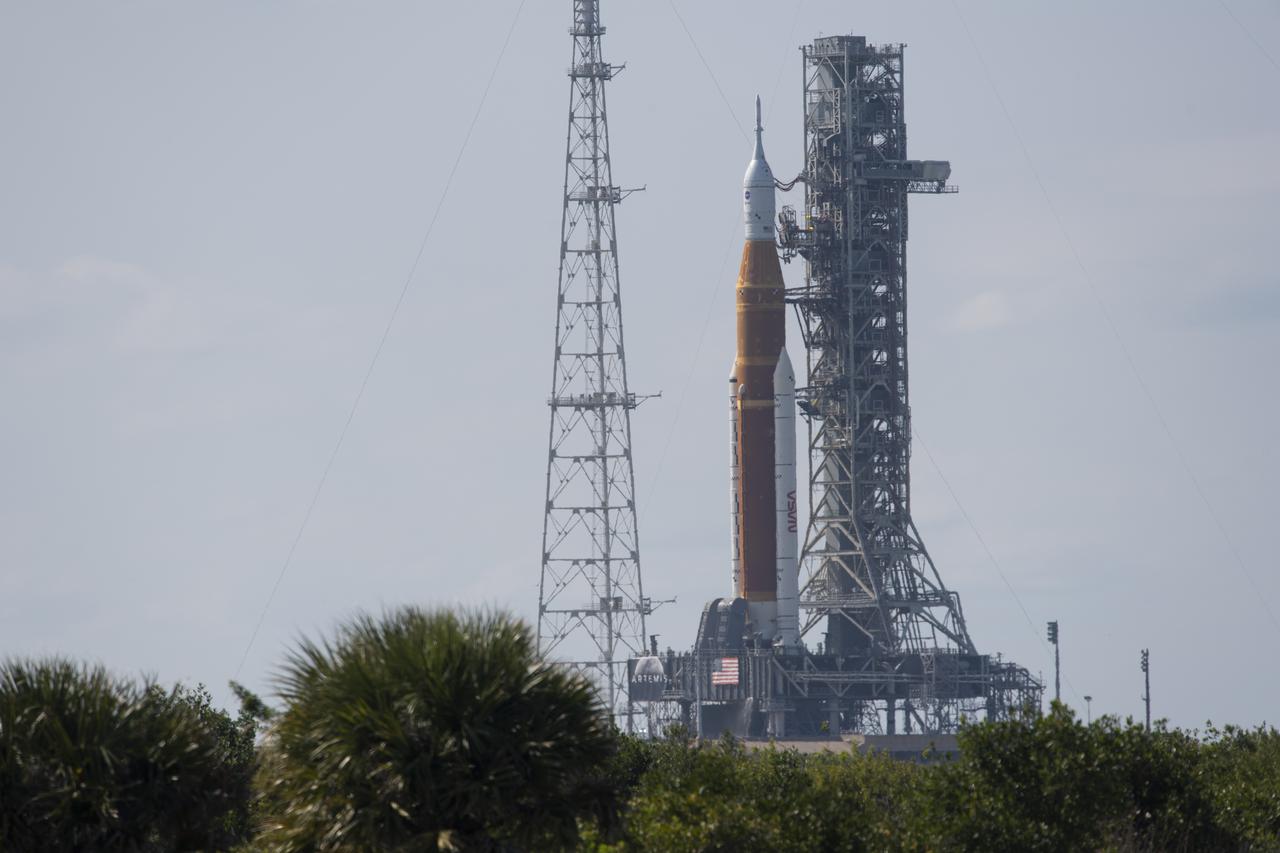
NASA’s Space Launch System (SLS) rocket with the Orion spacecraft aboard is seen atop a mobile launcher at Launch Complex 39B, Monday, April 4, 2022, as the Artemis I launch team conducts the wet dress rehearsal test at NASA’s Kennedy Space Center in Florida. Ahead of NASA’s Artemis I flight test, the wet dress rehearsal will run the Artemis I launch team through operations to load propellant, conduct a full launch countdown, demonstrate the ability to recycle the countdown clock, and drain the tanks to practice timelines and procedures for launch. Photo Credit: (NASA/Joel Kowsky)
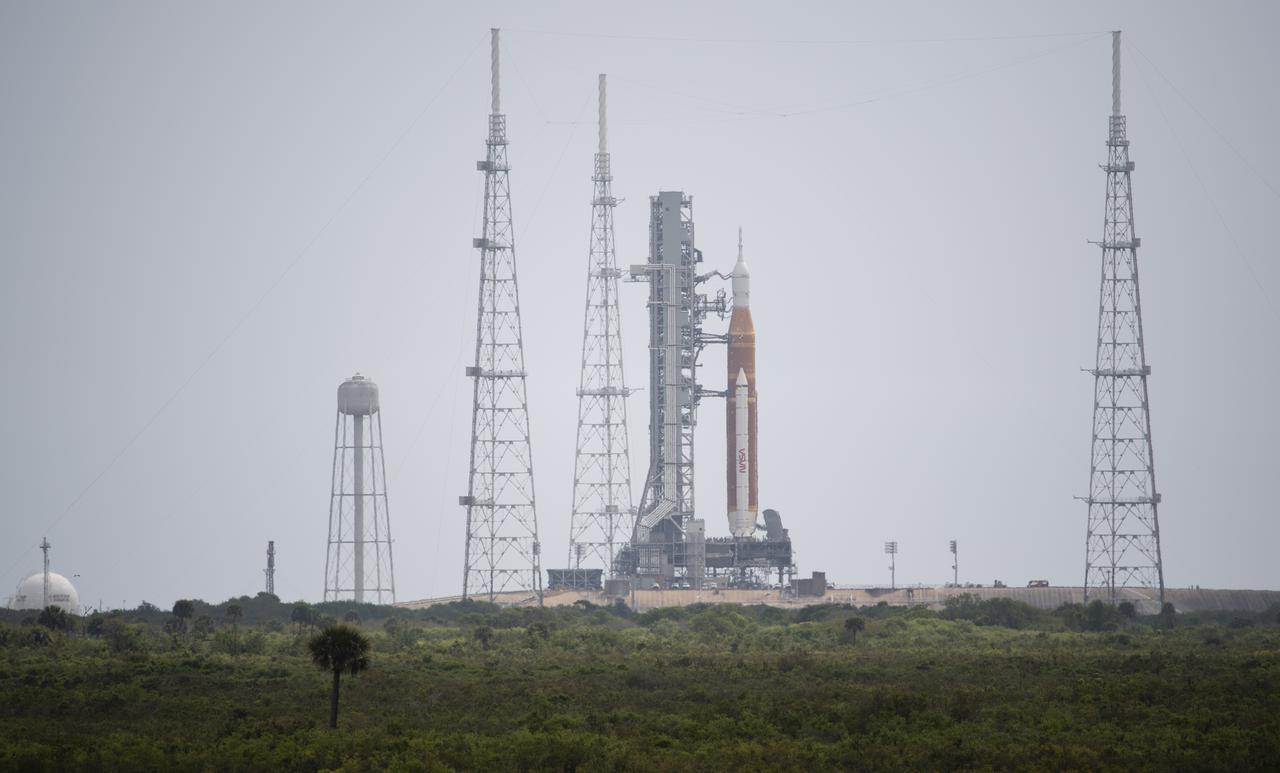
NASA’s Space Launch System (SLS) rocket with the Orion spacecraft aboard is seen atop a mobile launcher at Launch Complex 39B, Saturday, April 2, 2022, as the Artemis I launch team conducts the wet dress rehearsal test at NASA’s Kennedy Space Center in Florida. Ahead of NASA’s Artemis I flight test, the wet dress rehearsal will run the Artemis I launch team through operations to load propellant, conduct a full launch countdown, demonstrate the ability to recycle the countdown clock, and drain the tanks to practice timelines and procedures for launch. Photo Credit: (NASA/Joel Kowsky)

In this 30-second exposure, NASA’s Space Launch System (SLS) rocket with the Orion spacecraft aboard is seen atop a mobile launcher at Launch Complex 39B, Friday, April 8, 2022, as the Artemis I launch team prepares for the next attempt of the wet dress rehearsal test at NASA’s Kennedy Space Center in Florida. Ahead of NASA’s Artemis I flight test, the wet dress rehearsal will run the Artemis I launch team through operations to load propellant, conduct a full launch countdown, demonstrate the ability to recycle the countdown clock, and drain the tanks to practice timelines and procedures for launch. Photo Credit: (NASA/Joel Kowsky)