
Kennedy Space Center Janet Petro recognizes the Red Crew/High Crew for their support of the Artemis I test flight.
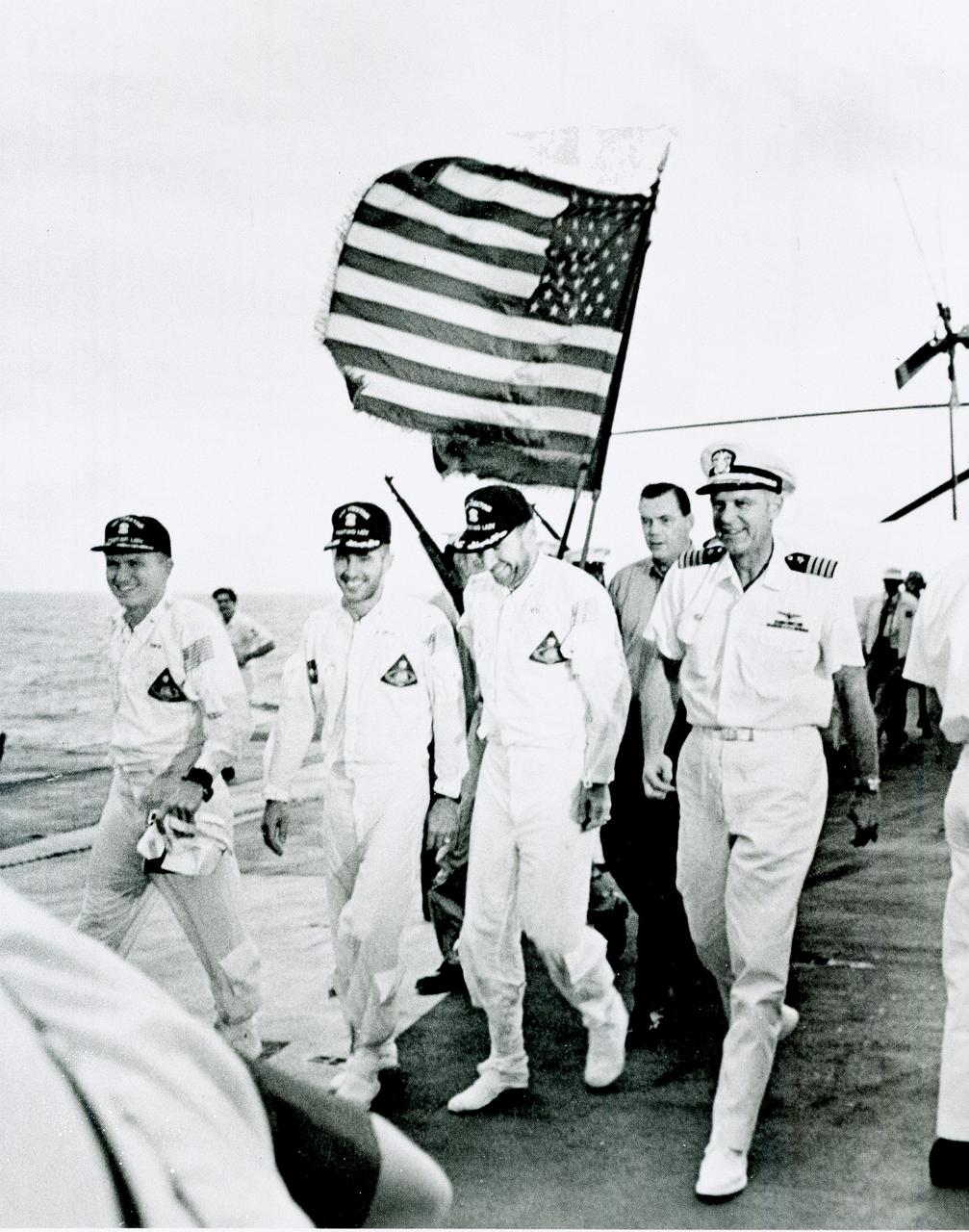
Apollo 8 astronauts and commanding officer of the recovery ship U.S.S. Yorktown walk the red carpet of the flight deck after splashdown recovery in the Pacific Ocean. Apollo 8 served as the first manned lunar orbit mission and the first manned flight of the Saturn V space vehicle, developed by the Marshall Space Flight Center (MSFC). Liftoff occurred on December 21, 1968, carrying astronauts Frank Borman, commander; William Anders, Lunar Module (LM) Pilot; and James Lovell, Command Module (CM) pilot. The three safely returned to Earth on December 27, 1968. The mission achieved operational experience and tested the Apollo command module systems, including communications, tracking, and life-support, in cis-lunar space and lunar orbit, and allowed evaluation of crew performance on a lunar orbiting mission. The crew photographed the lunar surface, both far side and near side, obtaining information on topography and landmarks as well as other scientific information necessary for future Apollo landings. All systems operated within allowable parameters and all objectives of the mission were achieved.
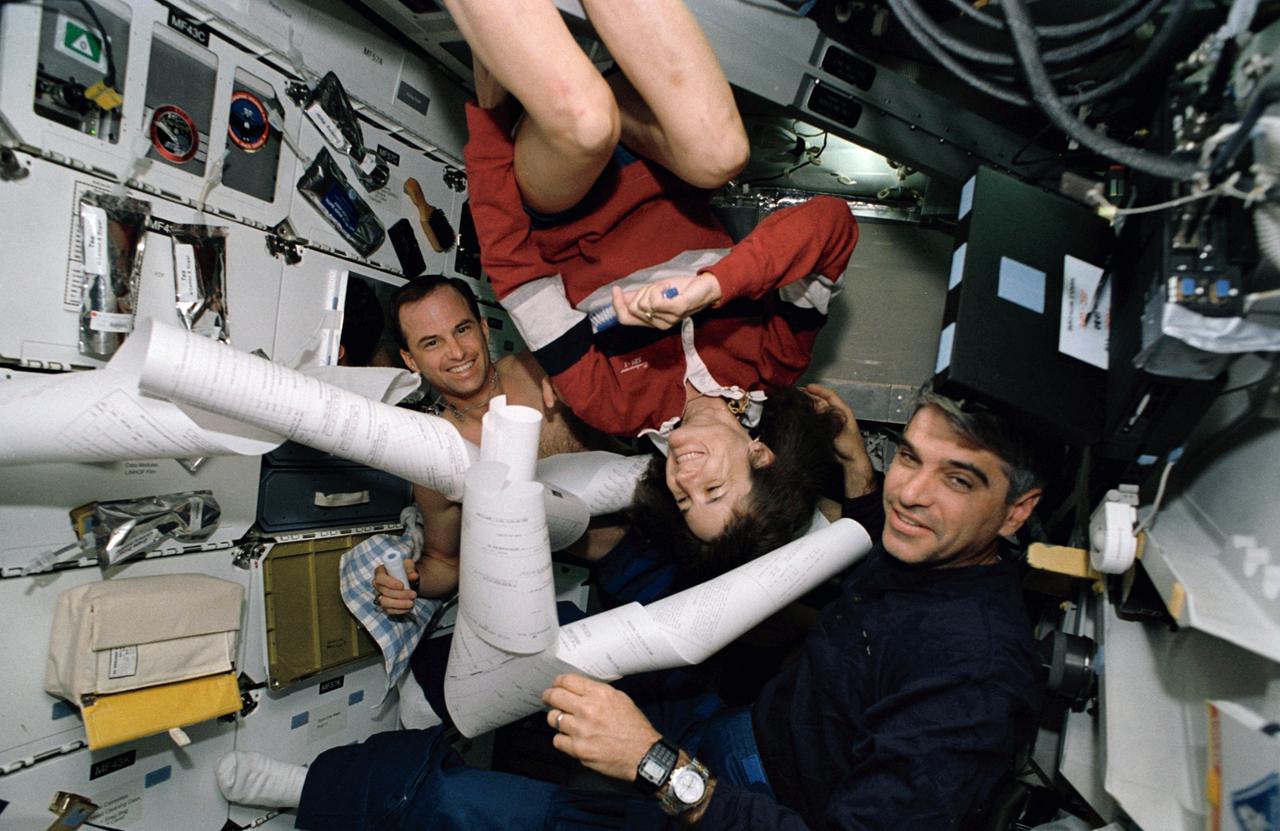
STS059-05-007 (9-20 April 1994) --- On Endeavour's middeck, the three STS-59 red shift crew members begin to organize what was believed to be among the longest mail messages in recent Shuttle history. With the picture held vertically, astronaut Sidney M. Gutierrez, mission commander, is in upper right. Also seen are astronauts Linda M. Godwin, payload commander, and Kevin P. Chilton, pilot. Though early Shuttle flights could brag of longer teleprinted messages, this Thermal Imaging Printing System's (TIPS) message from the ground competes with those of recent Shuttle flights.
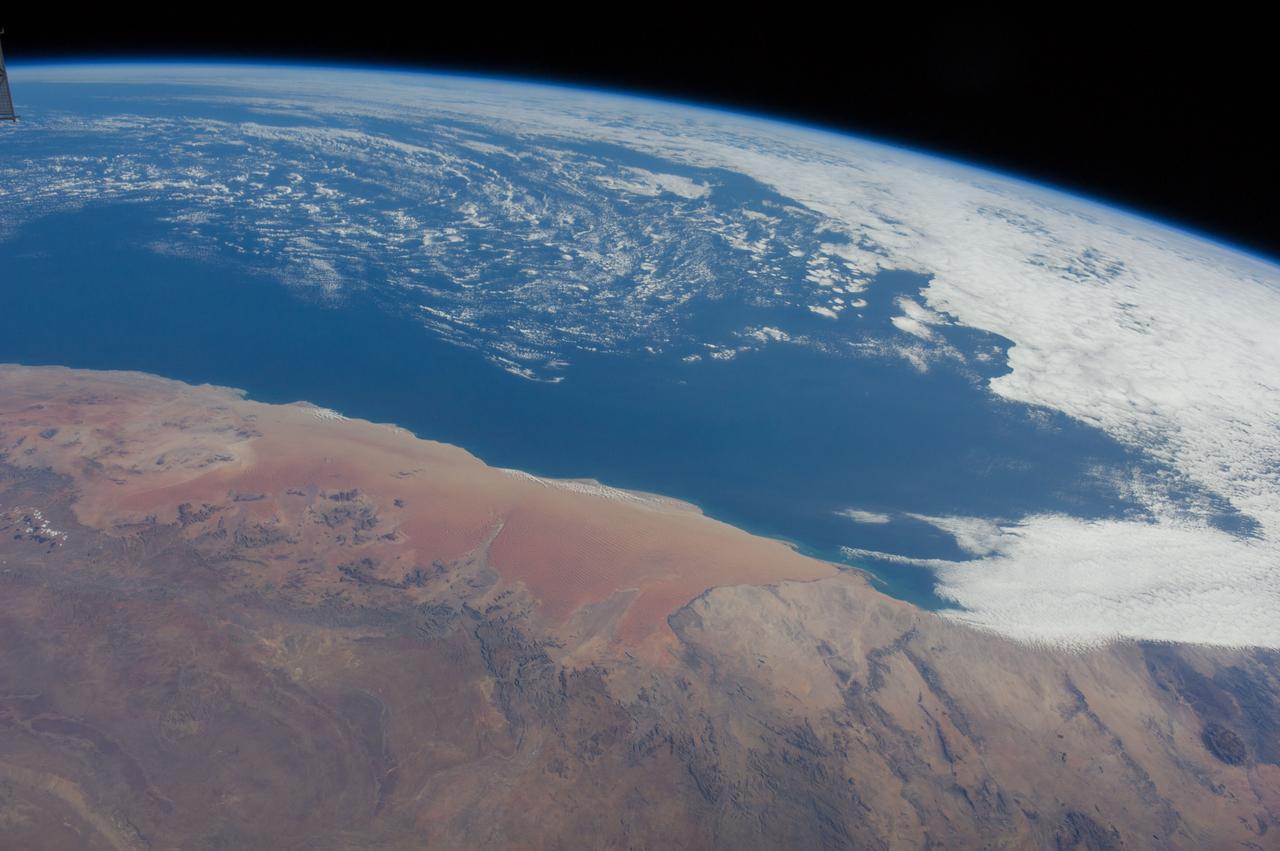
Earth observation taken by the Expedition 40 crew aboard the International Space Station (ISS). Folder lists this as: glancing shot of Africa's red dunes.
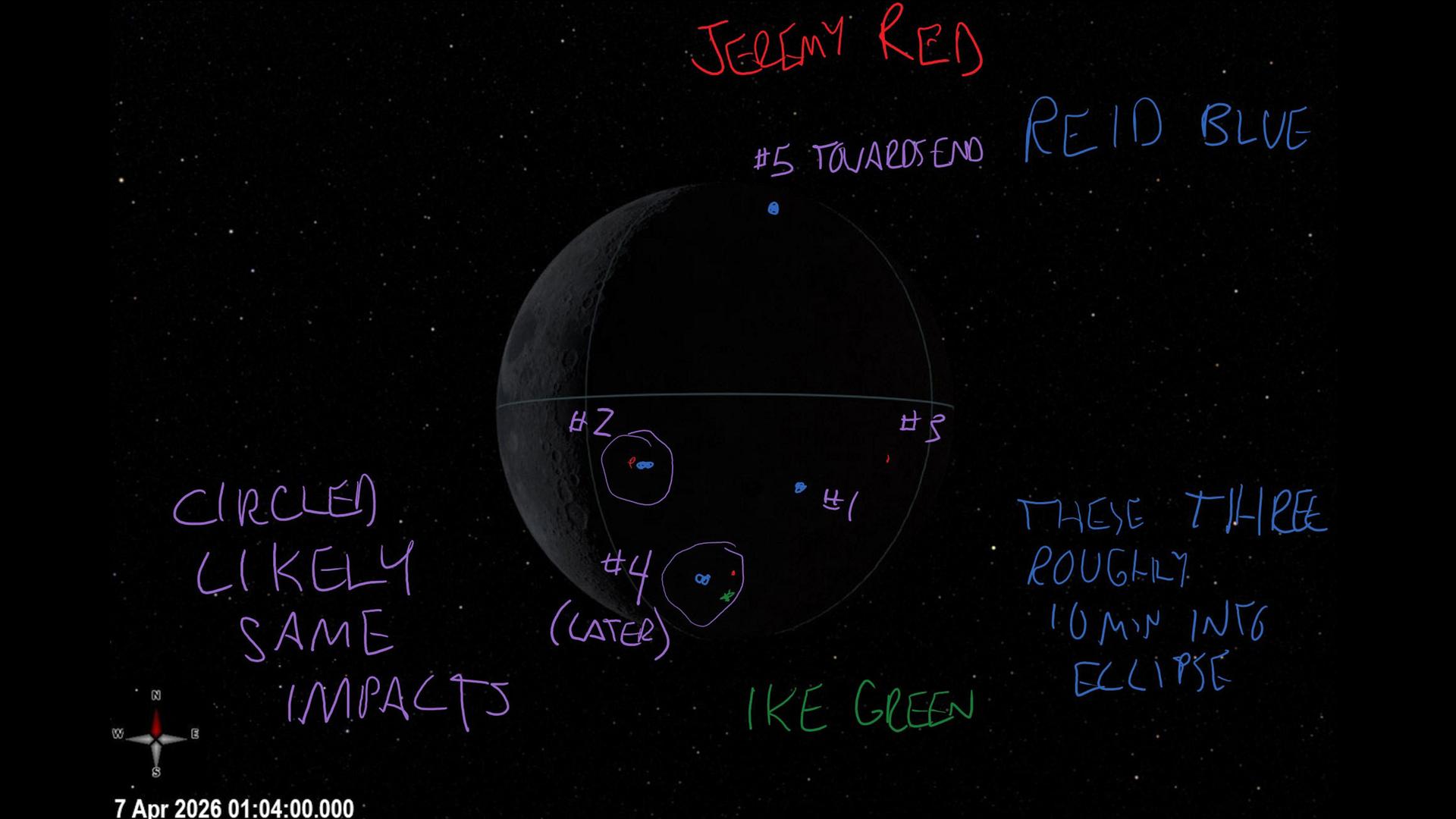
art002e016252 (April 7, 2026) –A screenshot from an Artemis II crew member’s tablet shows handwritten annotations made during the lunar flyby on April 6, 2026, atop a visualization of the dark Moon eclipsing the Sun. Three crew members, who signed their first names, noted impact flashes and their locations on the image. NASA astronauts Reid Wiseman and Victor “Ike” Glover wrote in blue and green, respectively, while CSA (Canadian Space Agency) astronaut Jeremy Hansen wrote in red. Credit: CSA/NASA
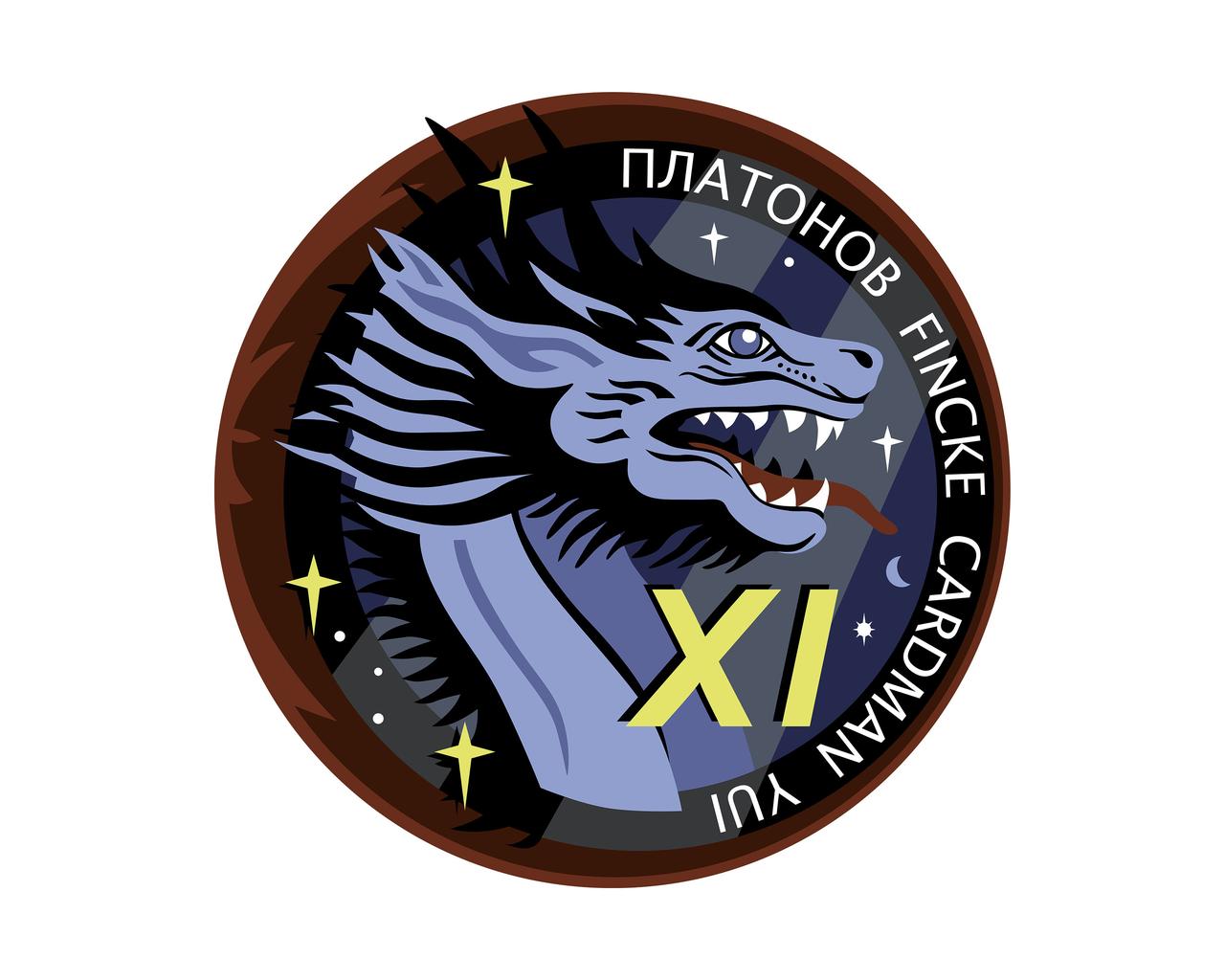
jsc2025e034097 (Feb. 14, 2025) --- The Crew-11 mission patch embodies teamwork, exploration, and the deep connections that bind us—across nations, agencies, and families. Shades of white, red, and blue pay tribute to the flags of the three nations represented by the crew, while three gold stars symbolize the unity of our three space agencies working together in pursuit of discovery. .At the heart of the design, two radiant sunbeams form the number “11” illuminating a blue circle—a subtle nod to Voyager’s Pale Blue Dot image, reminding us of the fragile unity of our shared home. This vision of Earth is reflected in the dragon’s eye, reinforcing our focus on exploration and the perspective gained from space. .The dragon, evoking the heraldry of family crests, stands as a guardian of our mission and legacy. Within the stars, we honor the children of the crew, a reminder of the generations inspired by human spaceflight. Encircling it all, a red flame represents both the power of launch and the plasma of reentry, symbolizing the full journey—our departure from Earth, our work aboard the International Space Station, and our safe return home. Crew-11: Together, we rise.
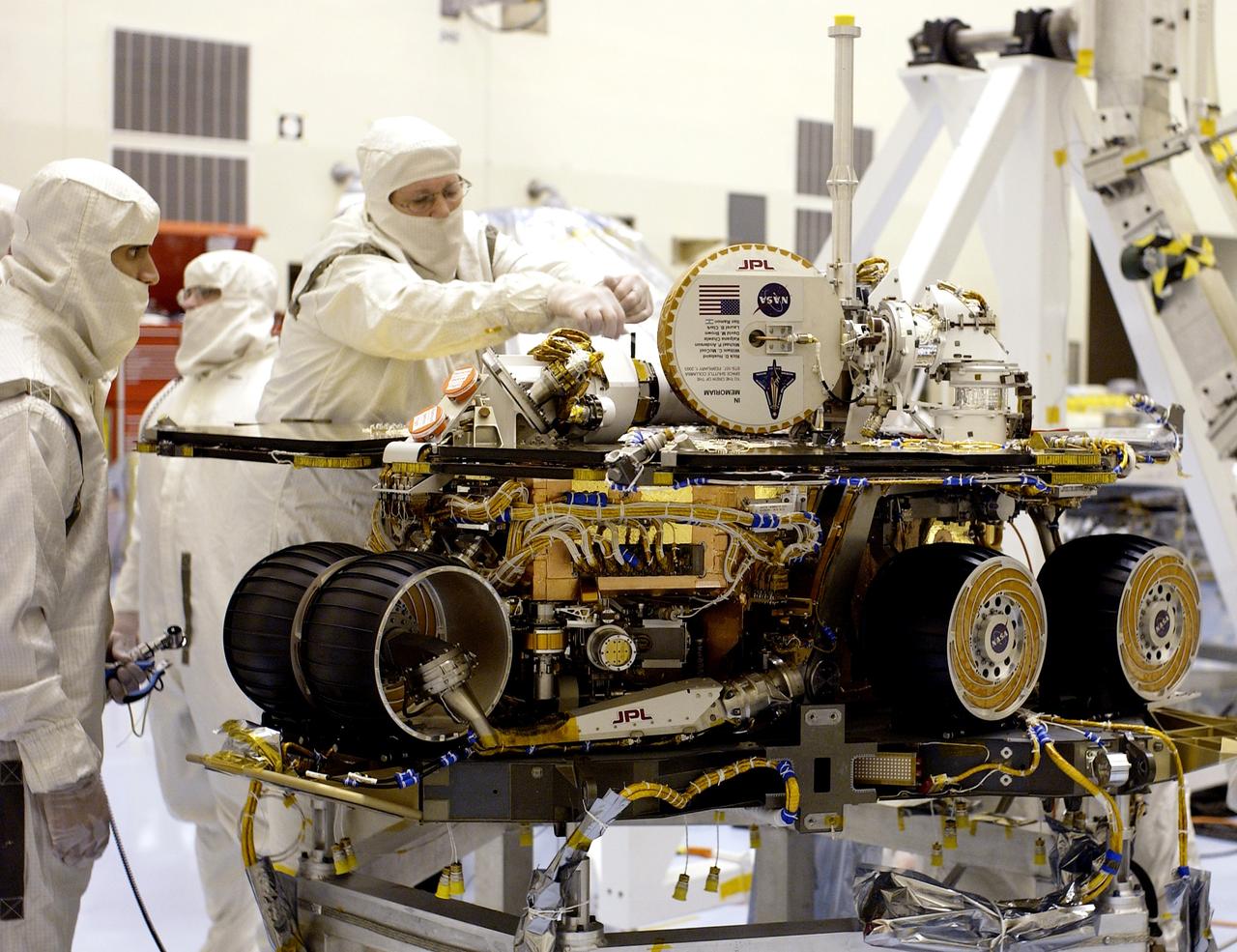
KENNEDY SPACE CENTER, FLA. -- This plaque commemorating the STS-107 Space Shuttle Columbia crew now looks over the Mars landscape after the successful landing and deployment of the Mars Exploration Rover “Spirit” Jan. 4 onto the red planet. The plaque, mounted on the high-gain antenna, is shown while the rover underwent final checkout March 28, 2003, in the Payload Hazardous Servicing Facility at KSC.
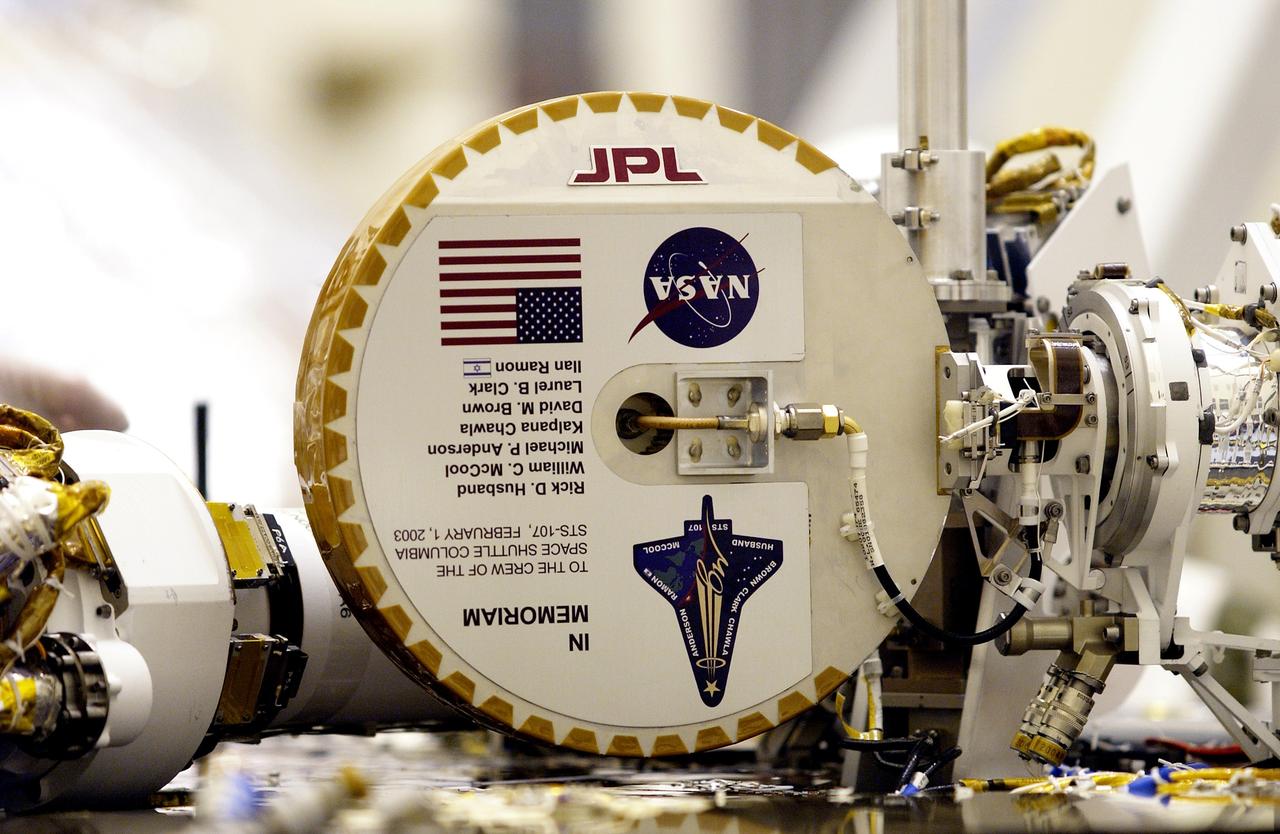
KENNEDY SPACE CENTER, FLA. -- This plaque commemorating the STS-107 Space Shuttle Columbia crew now looks over the Mars landscape after the successful landing and deployment of the Mars Exploration Rover “Spirit” Jan. 4 onto the red planet. The plaque, mounted on the high-gain antenna, is shown while the rover underwent final checkout March 28, 2003, in the Payload Hazardous Servicing Facility at KSC.
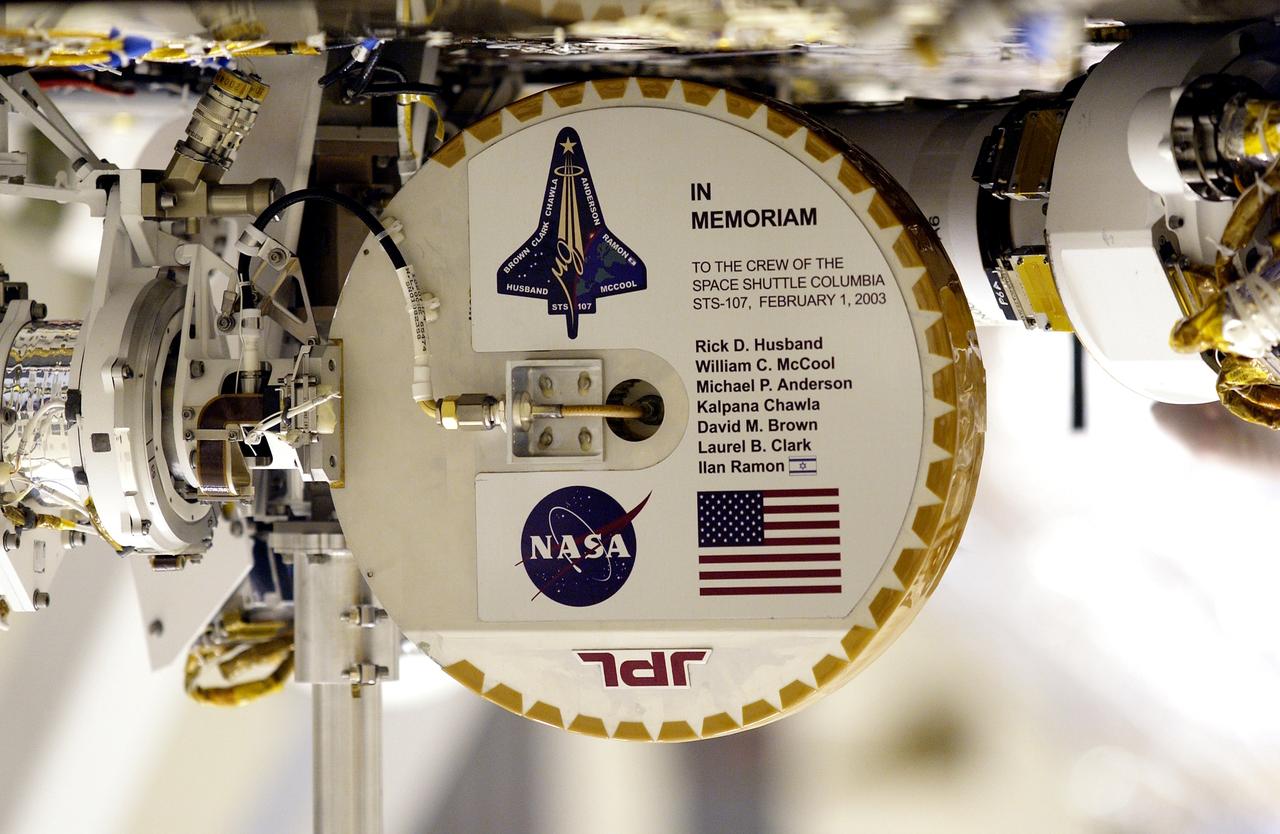
KENNEDY SPACE CENTER, FLA. --Shown upside down to read the names, this plaque commemorating the STS-107 Space Shuttle Columbia crew now looks over the Mars landscape after the successful landing and deployment of the Mars Exploration Rover “Spirit” Jan. 4 onto the red planet. The plaque, mounted on the high-gain antenna, is shown while the rover underwent final checkout March 28, 2003, in the Payload Hazardous Servicing Facility at KSC.

Earth observation taken during night pass by an Expedition 36 crew member on board the International Space Station (ISS). Per Twitter message: First hint of sunrise is blue. Then red creeps in.
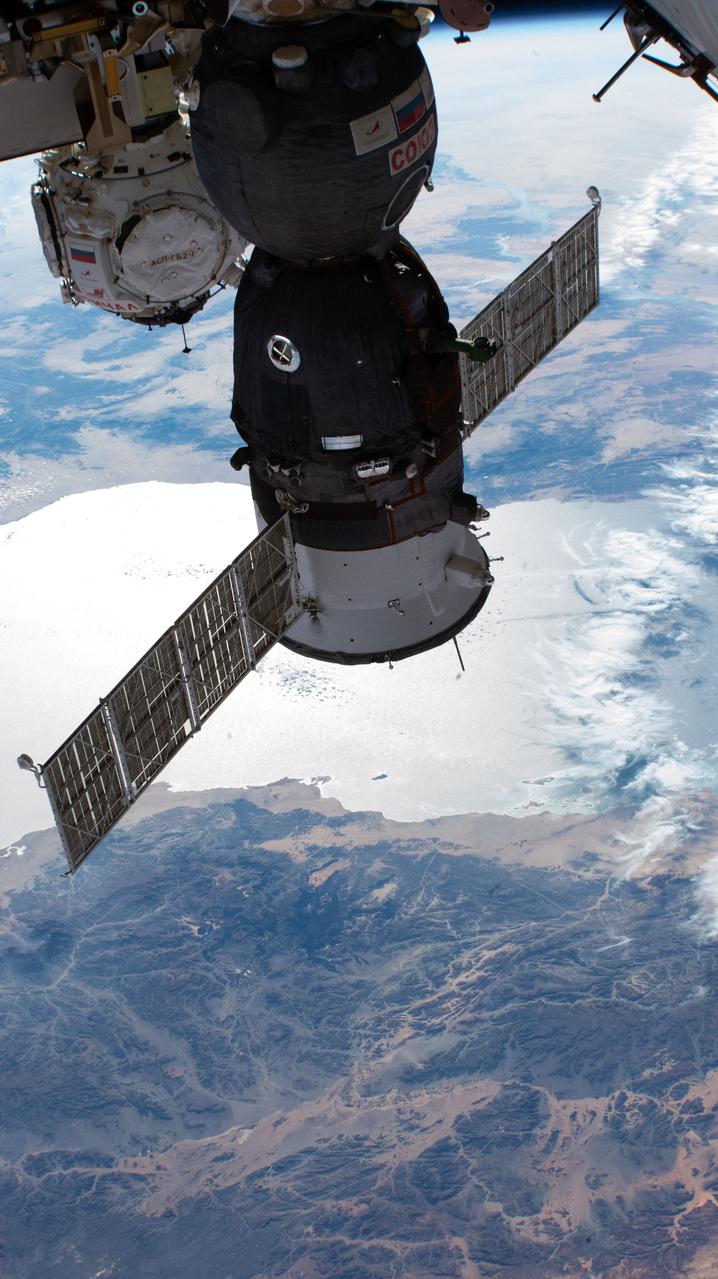
iss066e125409 (Jan. 24, 2022) --- The Soyuz MS-19 crew ship and the Prichal docking module (in the background), with the Red Sea below, are pictured as the International Space Station orbited 258 miles above Saudi Arabia.

jsc2026e034363 (April 28, 2026) --- The Spleen Activity in Space Anemia and Red Cells Kinetics (SPARK) logo. This investigation uses imaging techniques in space to study how the spleen changes and how red blood cells break down in space. SPARK aims to better understand the biological mechanisms of space-related anemia to find ways to better protect crew health during long-duration space missions. Credit: Katbdesign Studio.
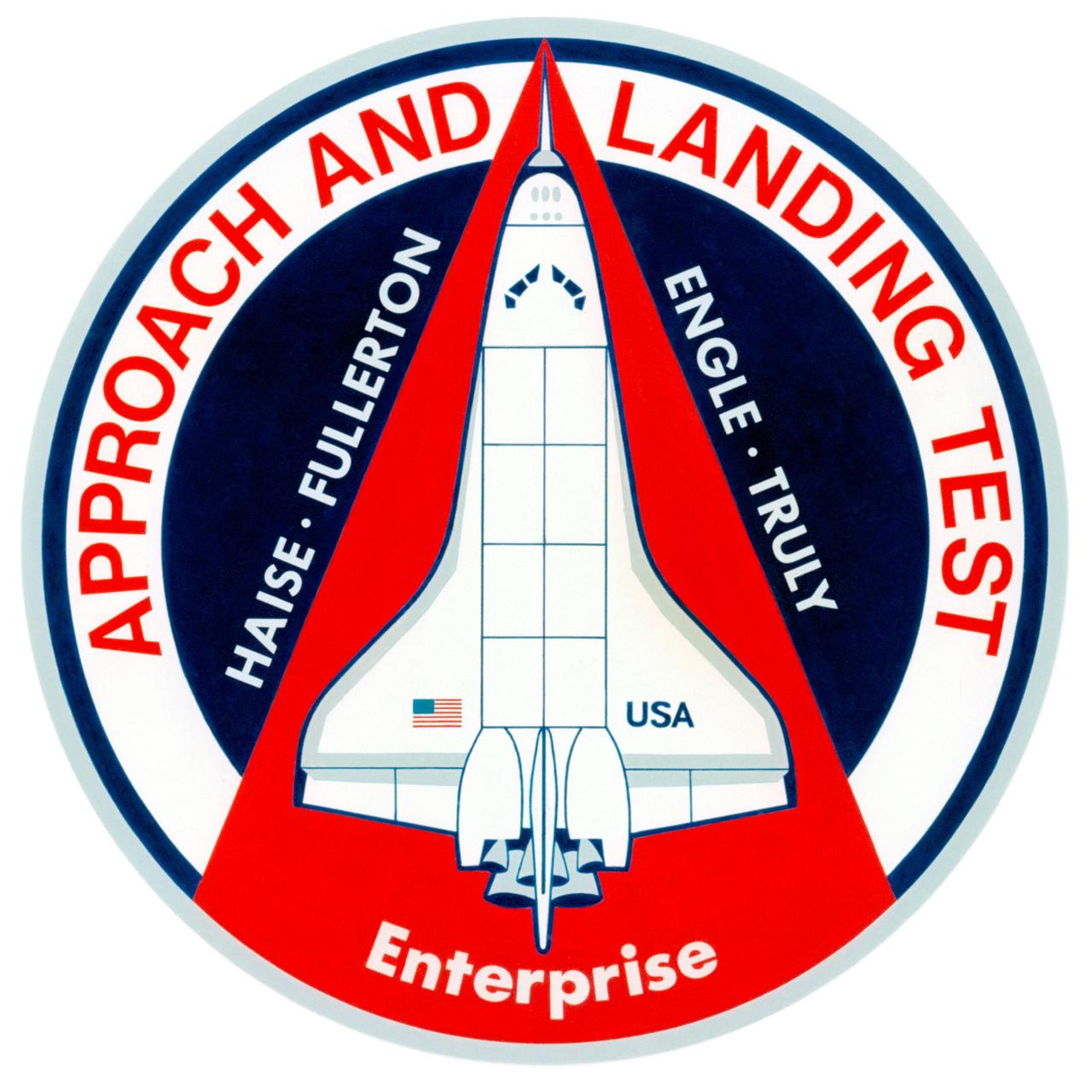
S76-30340 (1976) --- This circular, red, white and blue emblem has been chosen as the official insignia for the Space Shuttle Approach and Landing Test (ALT) flights. A picture of the Orbiter 101 "Enterprise" is superimposed over a red triangle, which in turn is superimposed over a large inner circle of dark blue. The surnames of the members of the two ALT crews are in white in the field of blue. The four crew men are astronauts Fred W. Haise Jr., commander of the first crew; Joe H. Engle, commander of the second crew; and Richard H. Truly, pilot of the second crew. ALT is a series of flights with a modified Boeing 747 Shuttle Carrier Aircraft (SCA) as a ferry aircraft and airborne launch platform for the 67,300 kilogram (75-ton) "Enterprise". The Shuttle Orbiter atmospheric testing is in preparation for the first Earth-orbital flights scheduled in 1979.
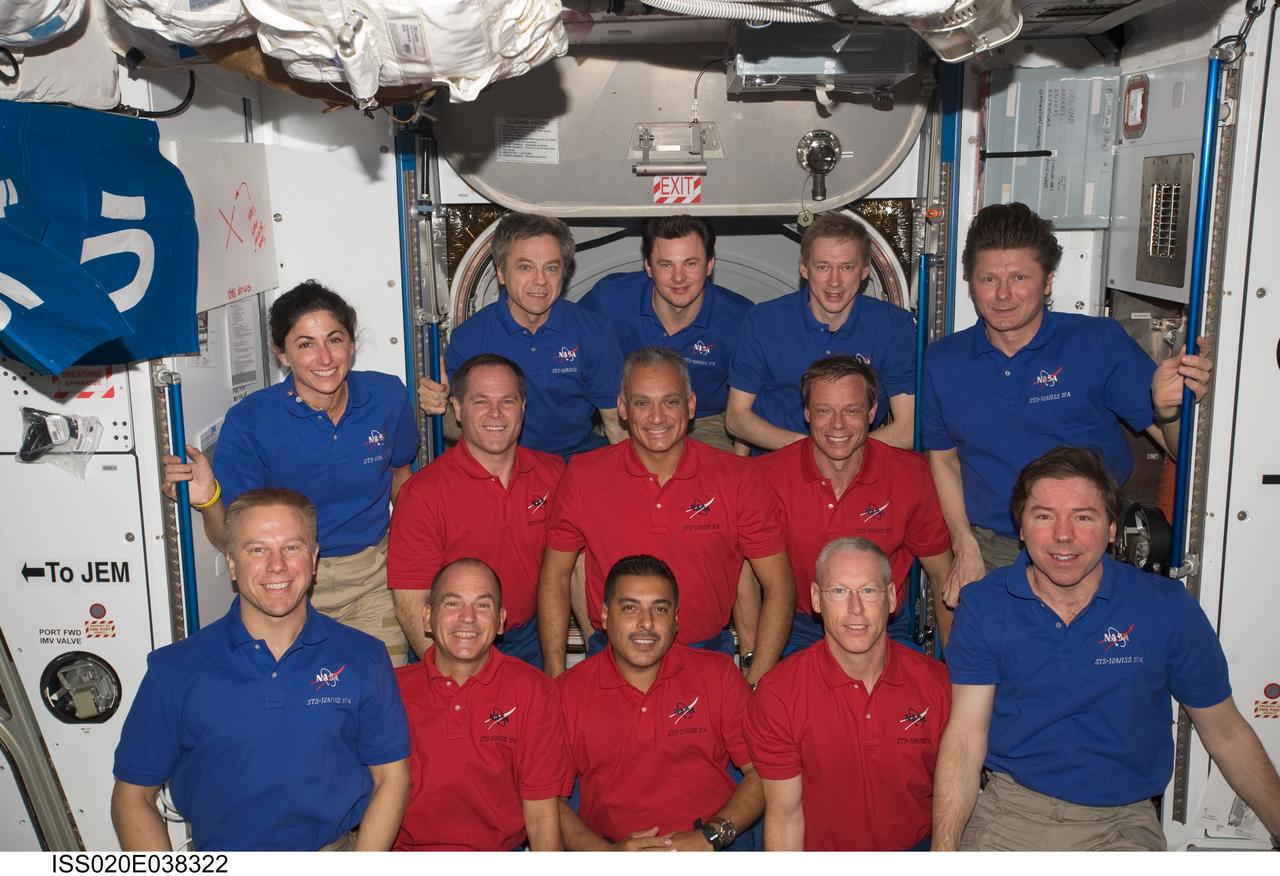
ISS020-E-038322 (5 Sept. 2009) --- The STS-128 and Expedition 20 crewmembers found a few moments on a day between two spacewalk days to pose for some portraits on the International Space Station. The red-clad crewmembers are with STS-128. They include, front row, from the left, astronauts Rick Sturckow, Jose Hernandez and Patrick Forrester; behind them in red, are astronauts Kevin Ford, John "Danny" Olivas, with European Space Agency astronaut Christer Fuglesang. At bottom left is Tim Kopra, who joined the station crew in July but now is scheduled to return to Earth in less than a week with the Discovery astronauts. Surrounding the Discovery crew, in clockwise fashion, are the members of Expedition 20 crew, astronaut Nicole Stott, Canadian astronaut Robert Thirsk, with cosmonaut Roman Romanenko, European Space Agency astronaut Frank De Winne, cosmonaut Gennady Padalka and astronaut Michael Barratt.

NASA Administrator Bill Nelson (second from right) meets with members of the “red crew” after the launch of Artemis I at NASA’s Kennedy Space Center in Florida on Nov. 16, 2022. Members of the red crew include Jacobs/TOSC ERC employees Billy Cairns, cryogenic engineering technician (left); Chad Garrett (second from left), safety engineer; and Trent Annis (right), cryogenic engineering technician. The team of technicians are part of the personnel specially trained to conduct operations at the launch pad during cryogenic loading operations at the launch pad. Prior to the launch of Artemis I, the red crew entered the zero deck, or base, of the mobile launcher and tightened several bolts to troubleshoot a valve used to replenish the core stage with liquid hydrogen which showed a leak with readings above limits. NASA has historically sent teams to the pad to conduct inspections during active launch operations as needed. Artemis I launch successfully at 1:47 a.m. EST on Nov. 16, from Kennedy’s Launch Pad 39B.
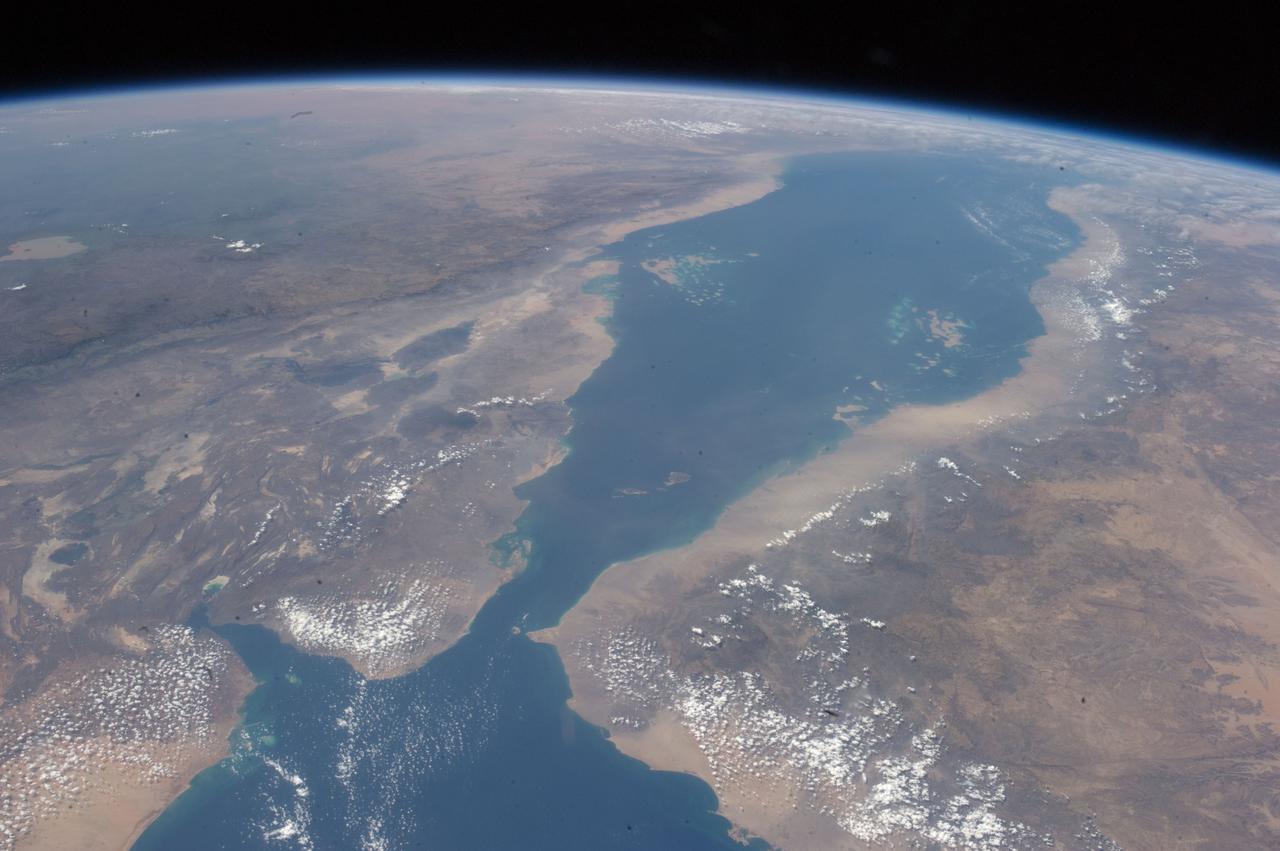
ISS033-E-013636 (20 Oct. 2012) --- One of the Expedition 33 crew members aboard the International Space Station took this oblique photograph showing part of the Red Sea and the Gulf of Aden. Areas that are easily recognized in the picture include parts of Eritrea, Yemen and Ethiopia. Slight haze is also visible.

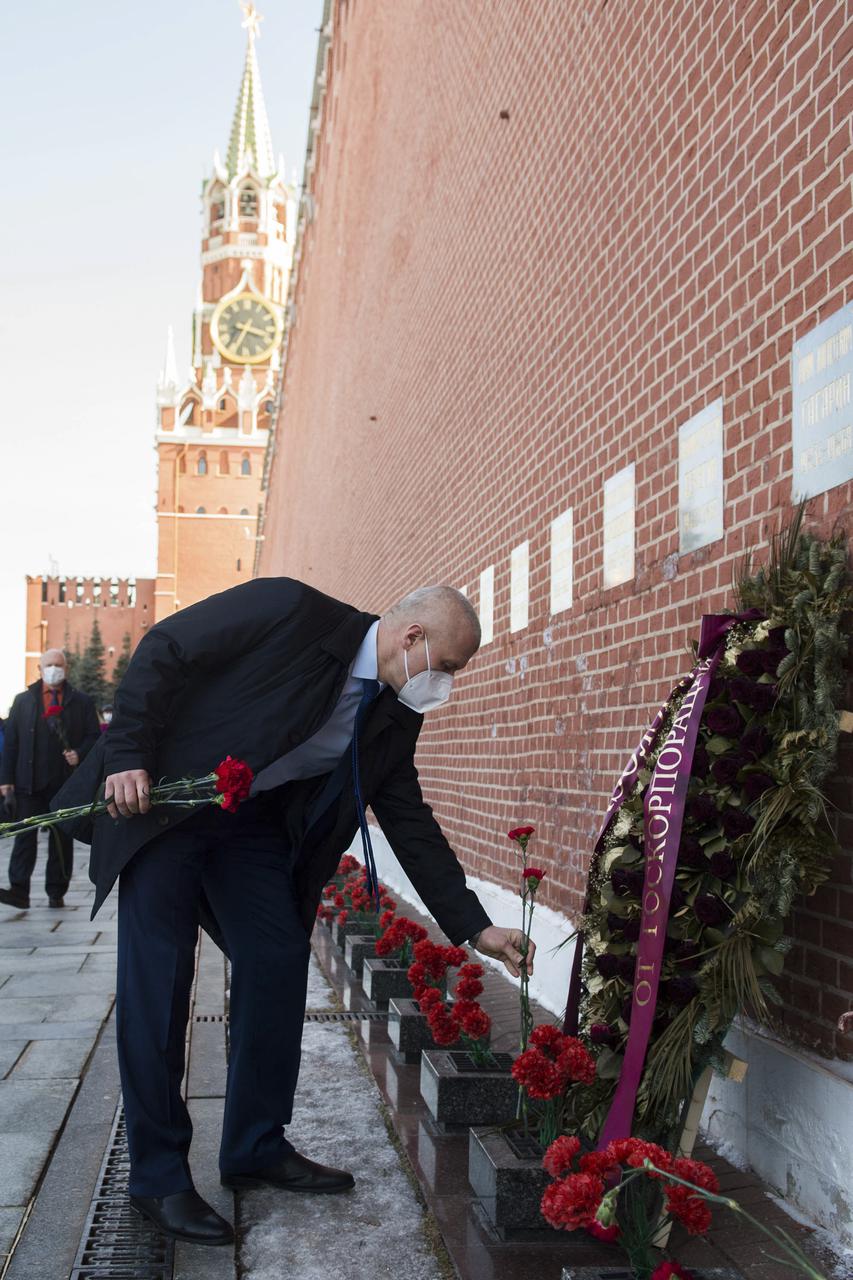
Expedition 65 prime crew member NASA astronaut Mark Vande Hei lays flowers at the site where Russian space icons are interred as part of traditional pre-launch ceremonies, Wednesday, March 24, 2021, at Red Square in Moscow. Photo Credit: (NASA/GCTC/Andrey Shelepin)

Expedition 65 prime crew member Russian cosmonaut Pyotr Dubrov of Roscosmos lays flowers at the site where Russian space icons are interred as part of traditional pre-launch ceremonies, Wednesday, March 24, 2021, at Red Square in Moscow. Photo Credit: (NASA/GCTC/Andrey Shelepin)
Expedition 65 prime crew member Russian cosmonaut Oleg Novitskiy of Roscosmos lays flowers at the site where Russian space icons are interred as part of traditional pre-launch ceremonies, Wednesday, March 24, 2021, at Red Square in Moscow. Photo Credit: (NASA/GCTC/Andrey Shelepin)

Expedition 64 backup crew member, Petr Dubrov of Roscosmos lays flowers at the site where Russian space icons are interred as part of traditional pre-launch ceremonies, Thursday, Sept. 24, 2020 at Red Square in Moscow. Photo Credit: (NASA/GCTC/Irina Spector)

Expedition 64 backup crew member, Mark Vande Hei of NASA lays flowers at the site where Russian space icons are interred as part of traditional pre-launch ceremonies, Thursday, Sept. 24, 2020 at Red Square in Moscow. Photo Credit: (NASA/GCTC/Irina Spector)
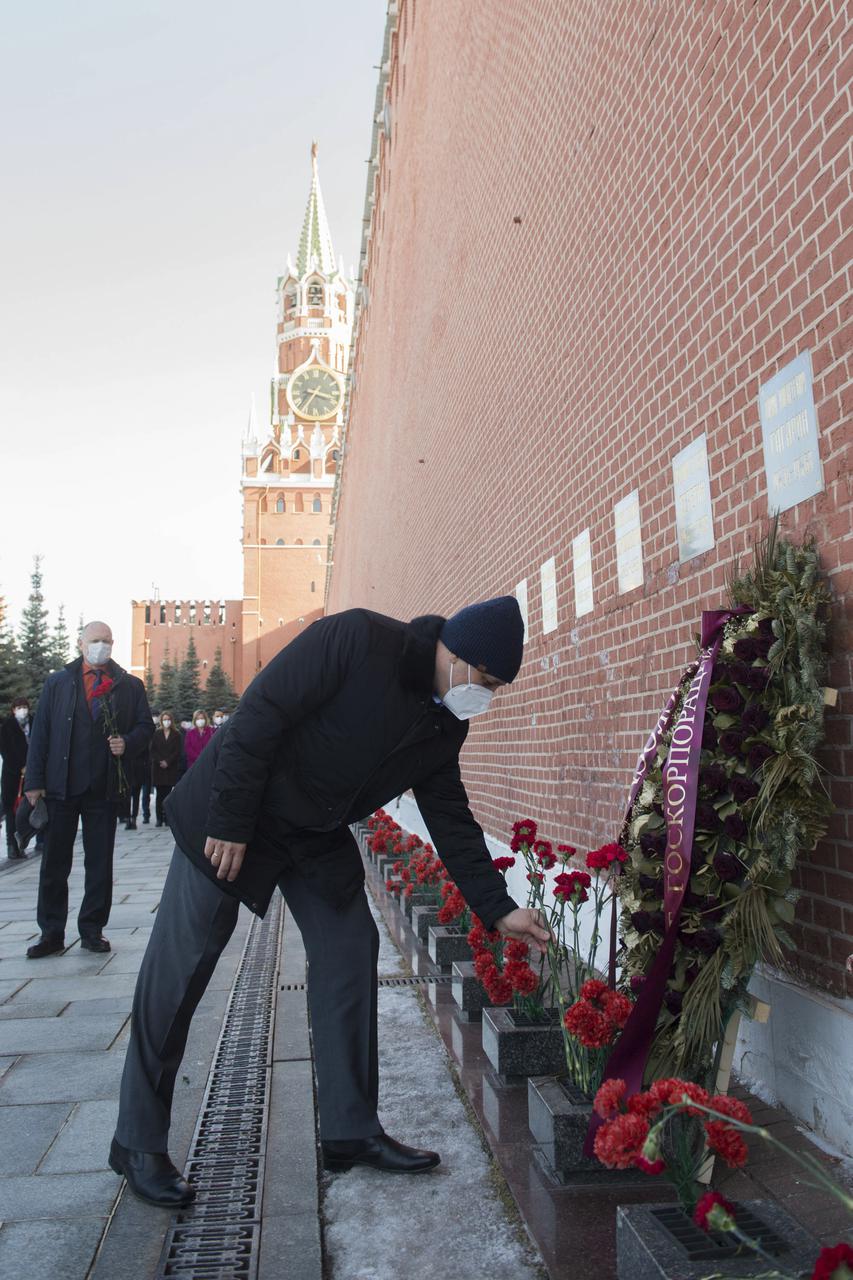
Expedition 65 backup crew member Russian cosmonaut Anton Shkaplerov of Roscosmos lays flowers at the site where Russian space icons are interred as part of traditional pre-launch ceremonies, Wednesday, March 24, 2021, at Red Square in Moscow. Photo Credit: (NASA/GCTC/Andrey Shelepin)
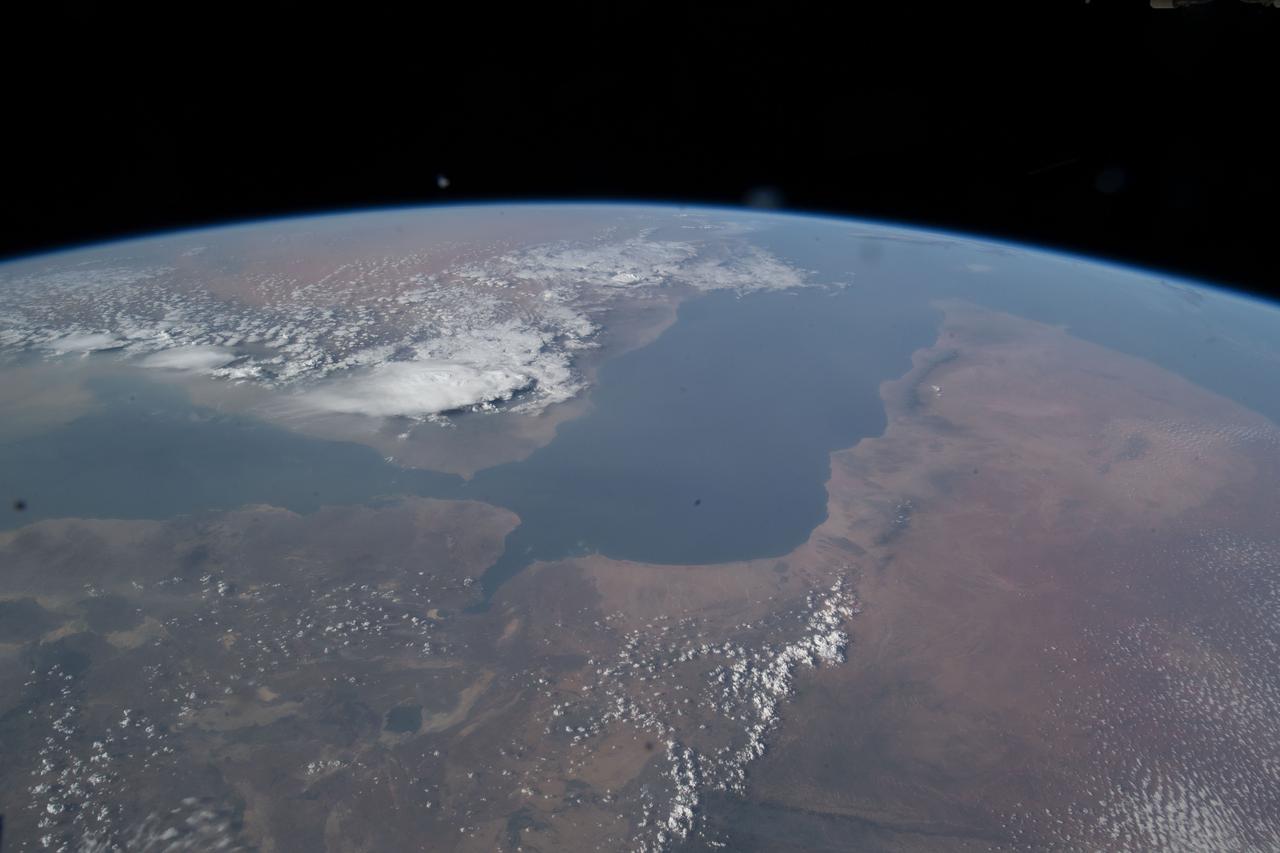
iss069e033356 (July 19, 2023) -- Eastern Africa meets the Middle East as the Red Sea and Gulf of Aden flow between the regions. United Arab Emirates (UAE) Flight Engineer Sultan Alneyadi snapped this photograph during Crew Earth Observation tasks while the International Space Station soared roughly 260 miles above.

Expedition 64 prime crew member, Kate Rubins of NASA lays flowers at the site where Russian space icons are interred as part of traditional pre-launch ceremonies, Thursday, Sept. 24, 2020 at Red Square in Moscow. Photo Credit: (NASA/GCTC/Irina Spector)

S131-E-008949 (10 April 2010) --- The aft section of the docked space shuttle Discovery and the station?s robotic Canadarm2 are featured in this image photographed by an STS-131 crew member on the International Space Station. The Red Sea, Sinai Peninsula (center) and Nile River (left) are seen approximately 215 miles below.
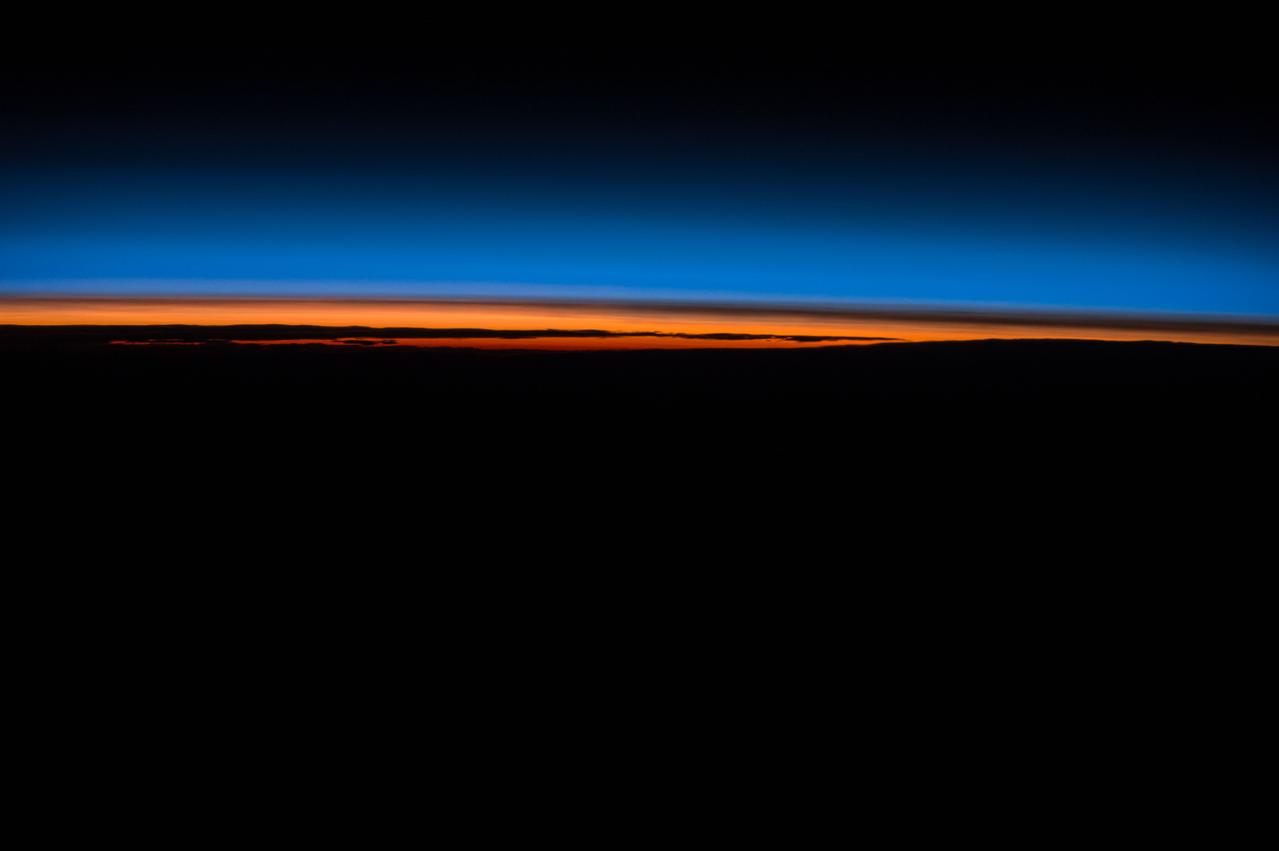
ISS043E193911 (05/14/2015) --- Crew members of Expedition 43 on the International Space Station are treated to the spectacular beauty of the Earth day and night. In this image they captured the dying sun as it creates brilliant orange and red streaks contrasted with the darkening Earth and the still blue night sky.
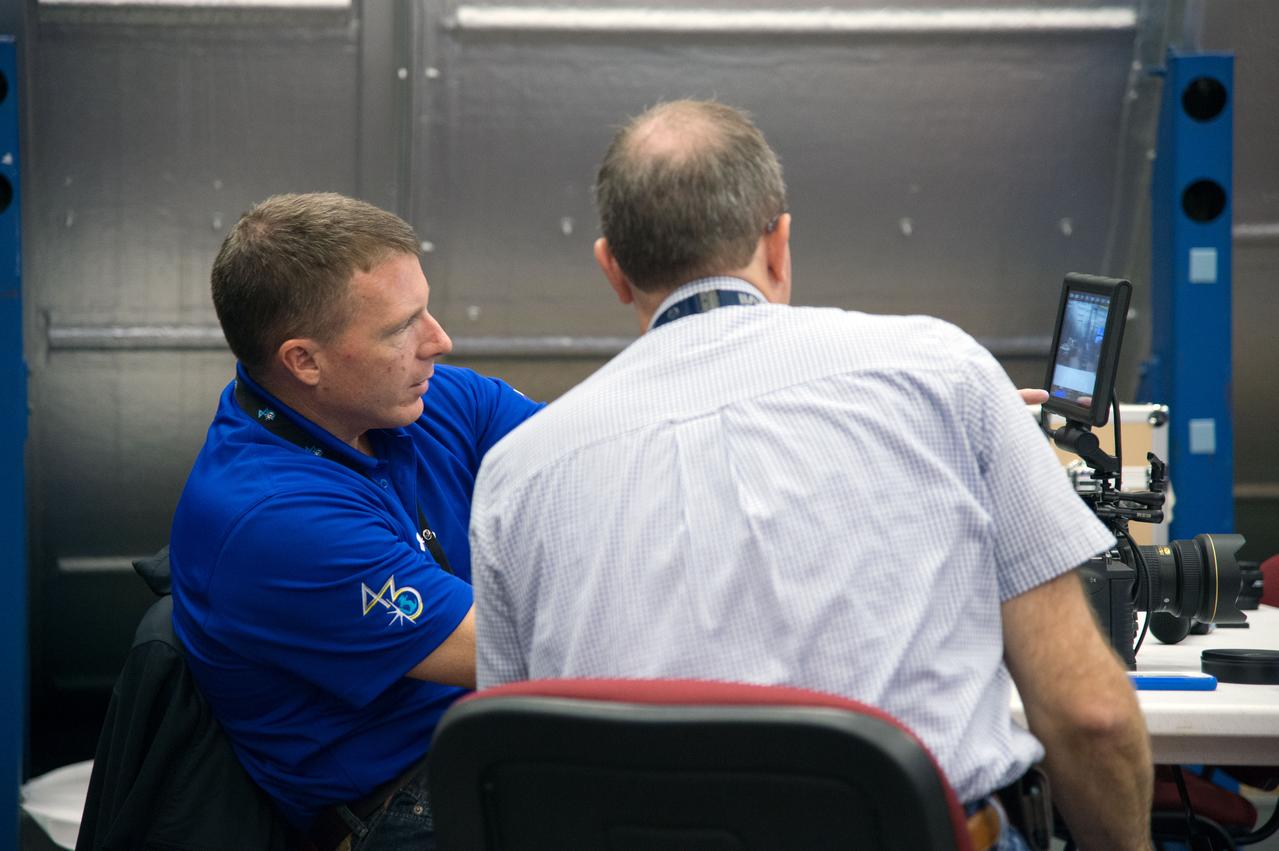
PHOTO DATE: 09-26-14 LOCATION: Bldg. 9NW - ISS Mockups SUBJECT: Expedition 43 crew member Terry Virts during Red Dragon cinema camera training with instructor Mark Turner. PHOTOGRAPHER: BILL STAFFORD
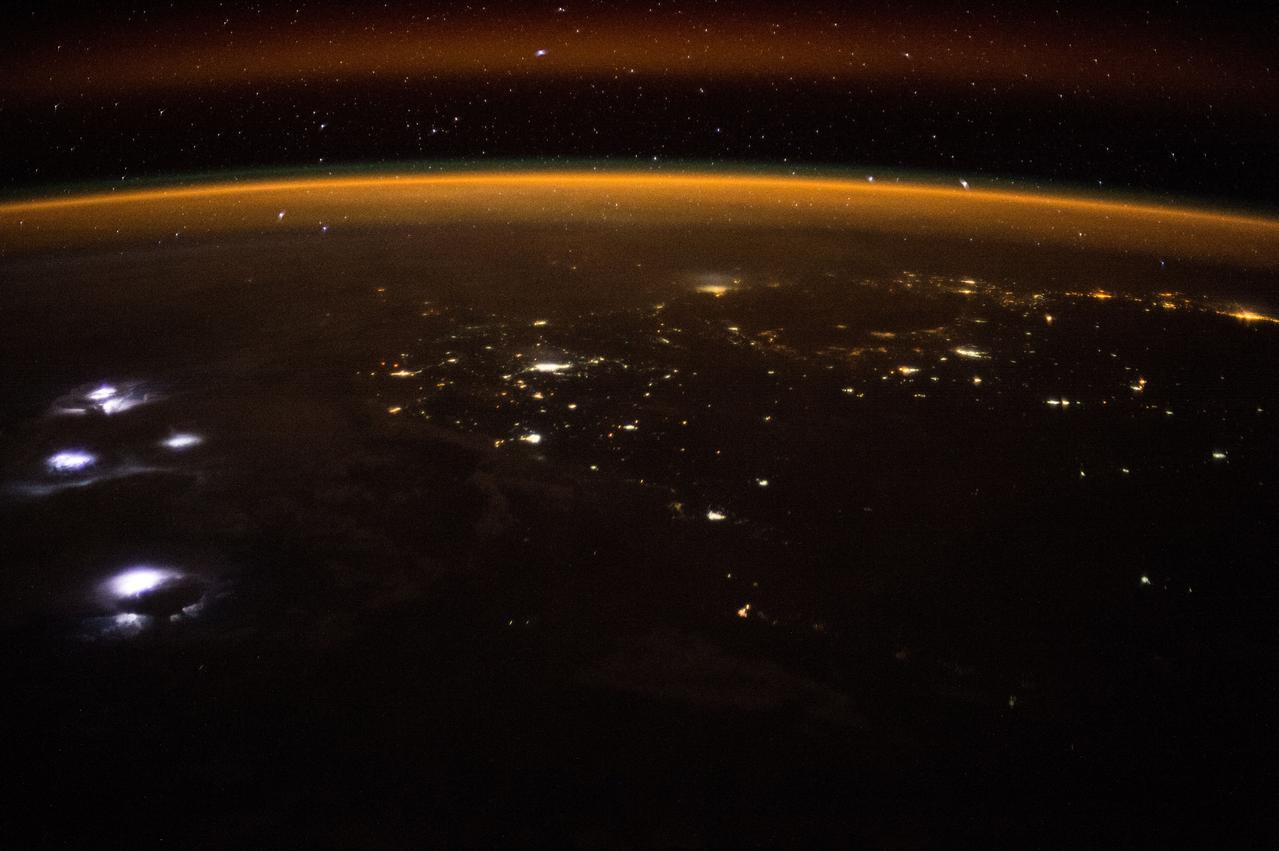
ISS047e007765 (03/14/2016) --- Using special cameras and Chronophotography aboard the International Space Station, crew members of Expedition 47 during Earth observations capture awesome beauty . This nighttime image shows an approaching lightning storm on the left. The gold and red aurora act as a frame to this display of natures wonders.
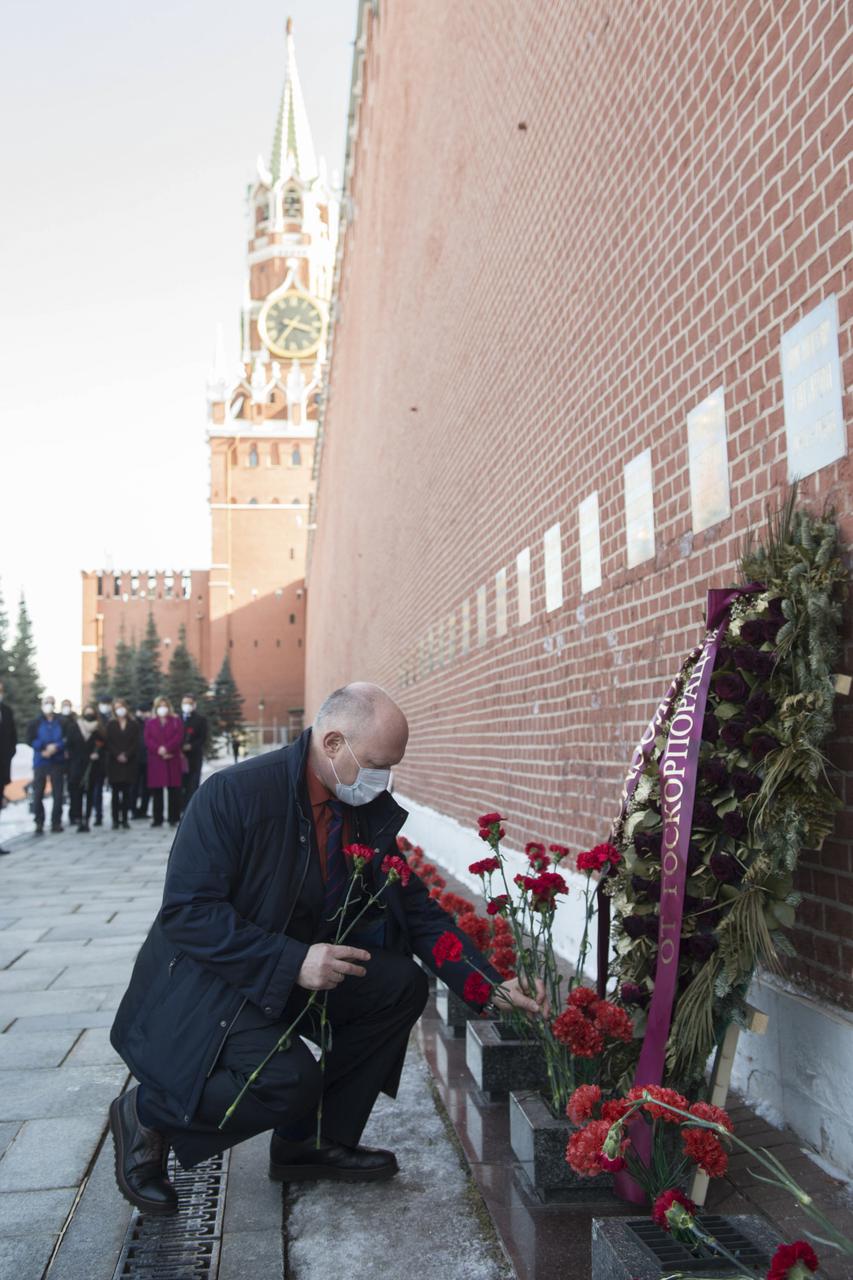
Expedition 65 backup crew member Russian cosmonaut Oleg Artemyev of Roscosmos lays flowers at the site where Russian space icons are interred as part of traditional pre-launch ceremonies, Wednesday, March 24, 2021, at Red Square in Moscow. Photo Credit: (NASA/GCTC/Andrey Shelepin)
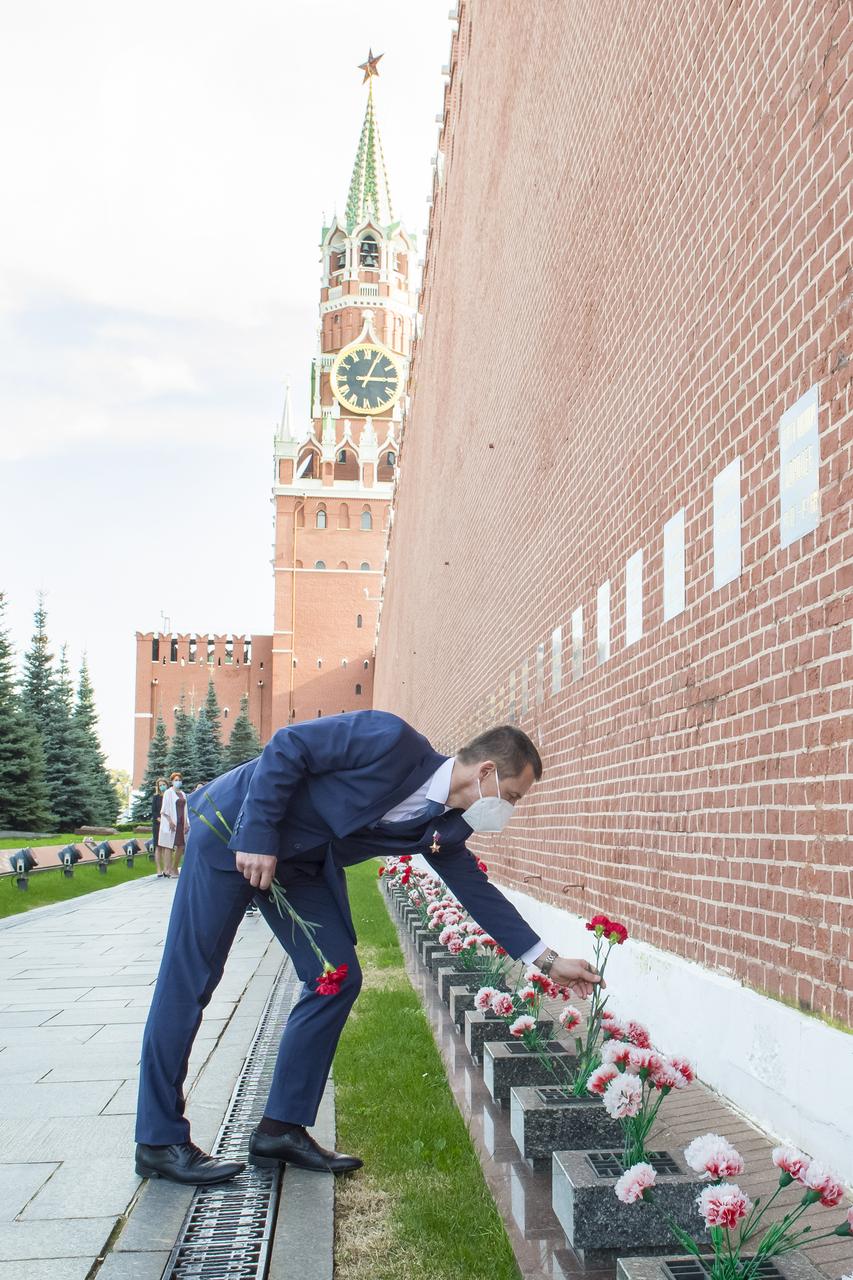
Expedition 64 prime crew member Sergey Ryzhikov of Roscosmos lays flowers at the site where Russian space icons are interred as part of traditional pre-launch ceremonies, Thursday, Sept. 24, 2020 at Red Square in Moscow. Photo Credit: (NASA/GCTC/Irina Spector)
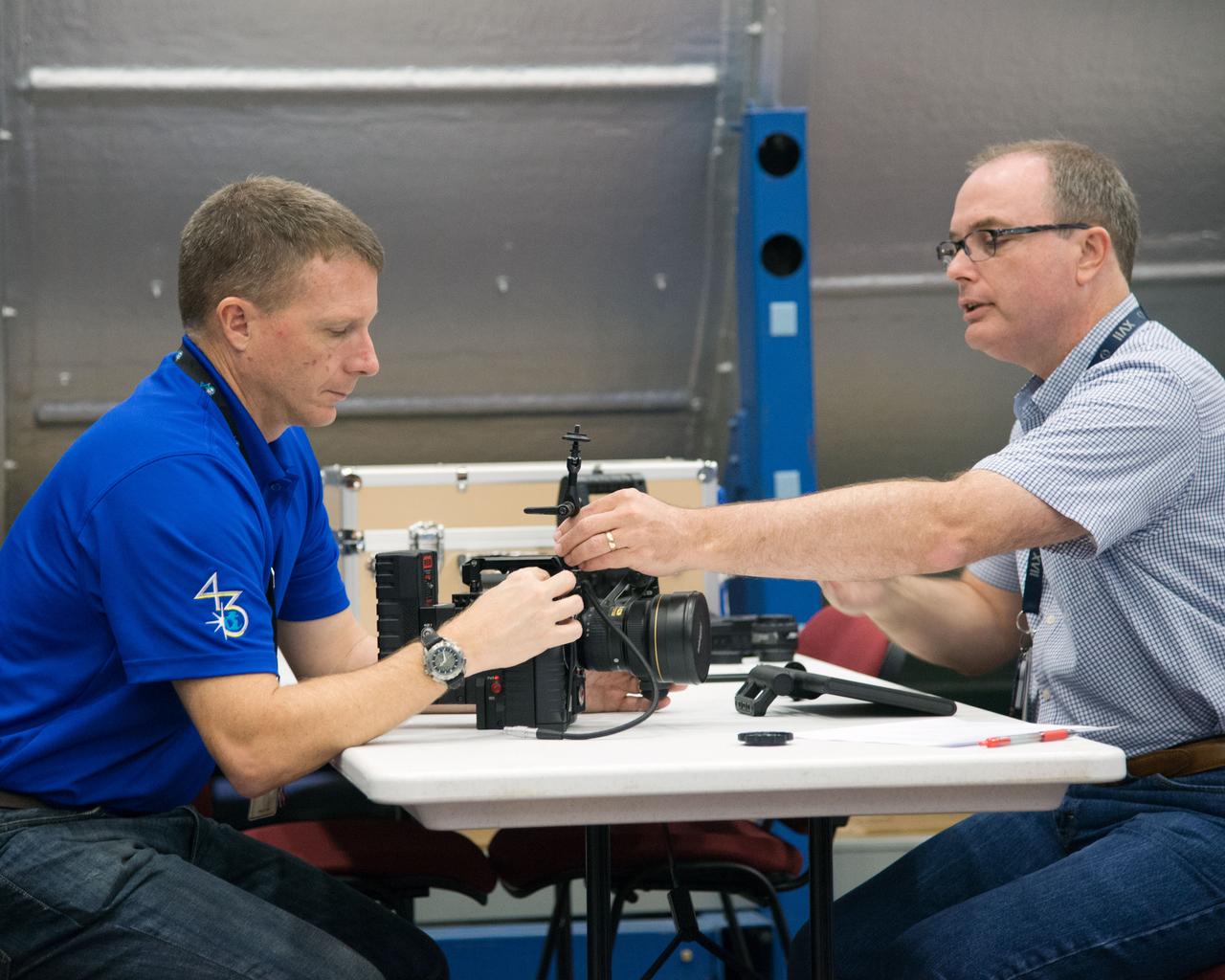
PHOTO DATE: 09-26-14 LOCATION: Bldg. 9NW - ISS Mockups SUBJECT: Expedition 43 crew member Terry Virts during Red Dragon cinema camera training with instructor Mark Turner. PHOTOGRAPHER: BILL STAFFORD
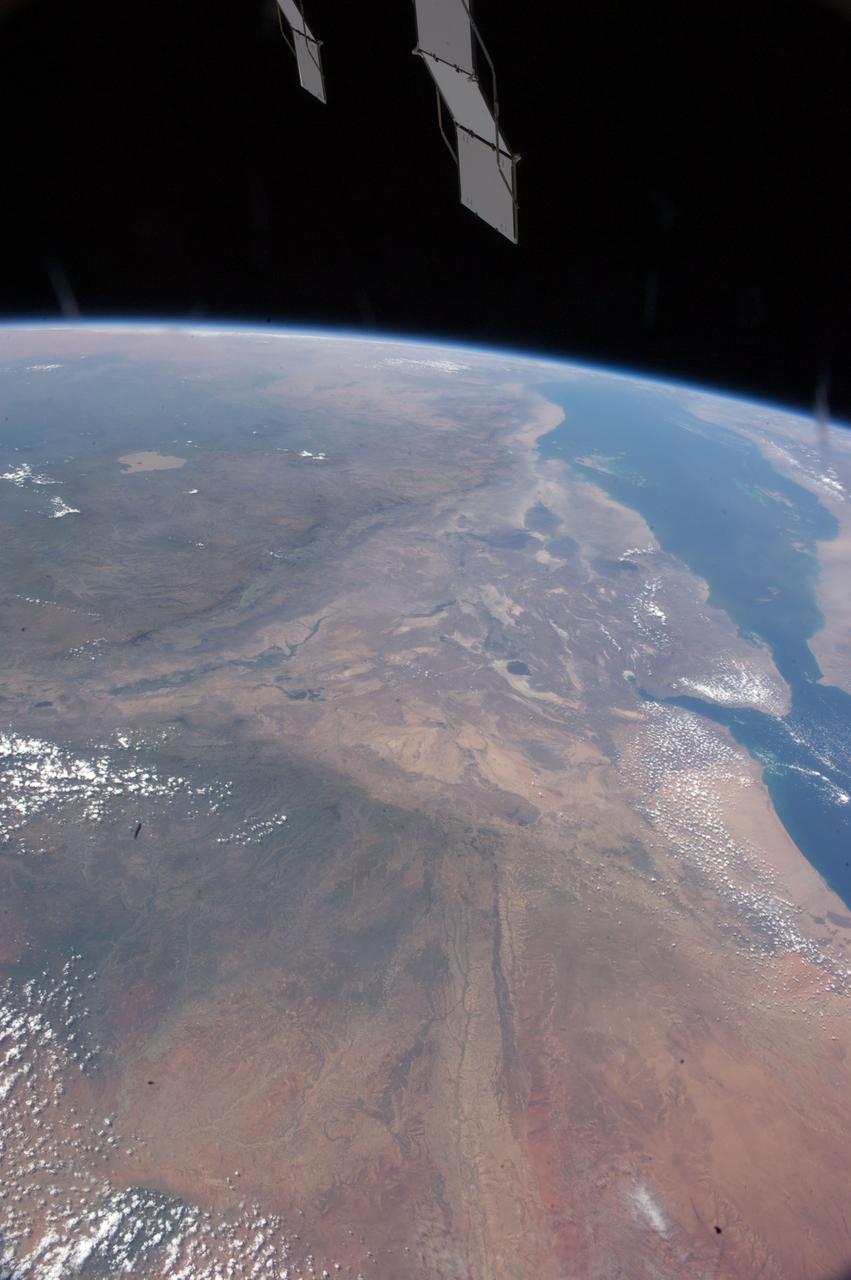
ISS033-E-013632 (20 Oct. 2012) --- This oblique photo of Ethiopia and part of the Red Sea was photographed by one of the Expedition 33 crew members aboard the International Space Station. The name of the funnel-shaped area is the Afar Depression or Afar Triangle. The green body of water is Lake Tana, connected to the Blue Nile.

Expedition 64 prime crew member Sergey Kud-Sverchkov of Roscosmos lays flowers at the site where Russian space icons are interred as part of traditional pre-launch ceremonies, Thursday, Sept. 24, 2020 at Red Square in Moscow. Photo Credit: (NASA/GCTC/Irina Spector)

Expedition 64 backup crew member, Oleg Novitskiy of Roscosmos lays flowers at the site where Russian space icons are interred as part of traditional pre-launch ceremonies, Thursday, Sept. 24, 2020 at Red Square in Moscow. Photo Credit: (NASA/GCTC/Irina Spector)

The unpiloted Japanese "Kounotori" H2 Transfer Vehicle-4 (HTV-4) approaches the International Space Station. View taken by the Expedition 36 crew during a night pass. Per Twitter message: #HTV4, with its red & green lights, approaching #ISS from below as we passed over Houston earlier today.
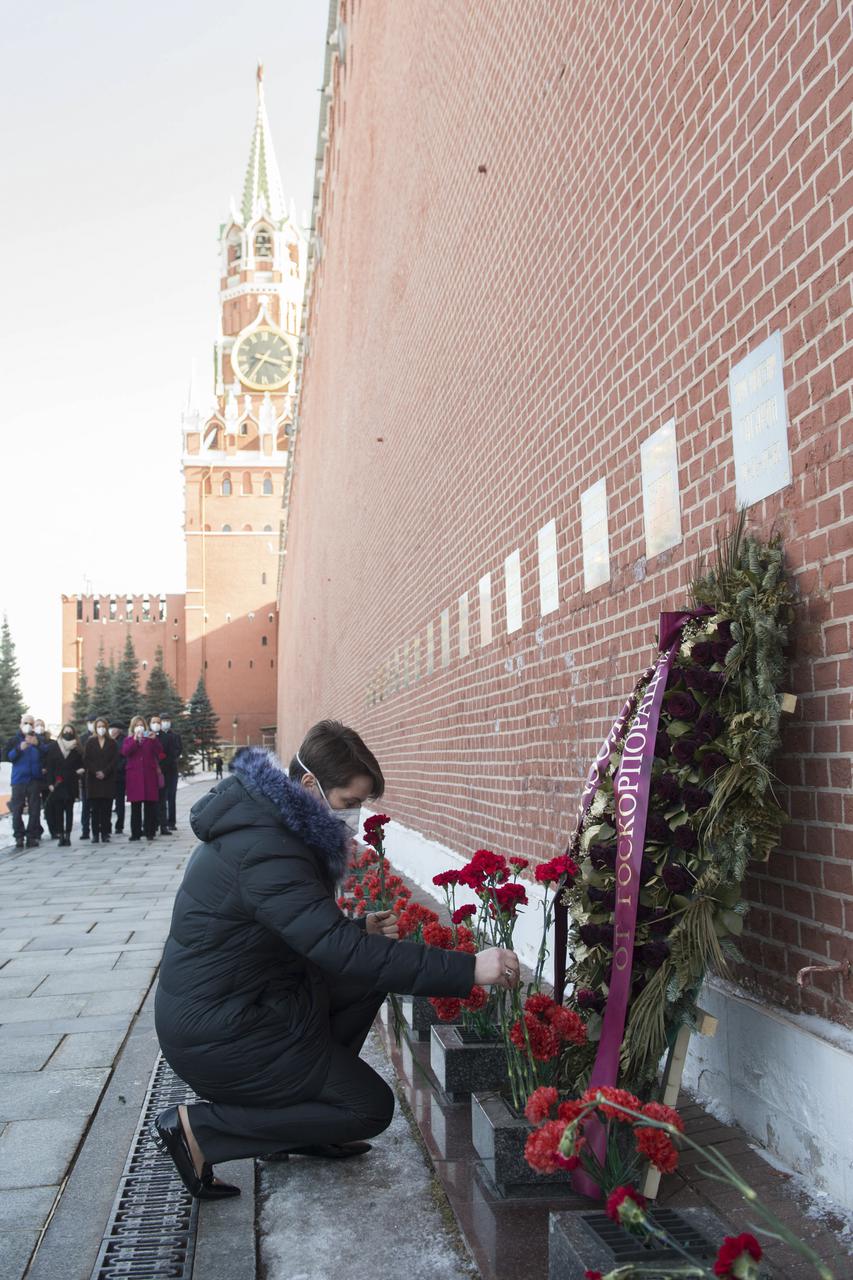
Expedition 65 backup crew member NASA astronaut Anne McClain lays flowers at the site where Russian space icons are interred as part of traditional pre-launch ceremonies, Wednesday, March 24, 2021, at Red Square in Moscow. Photo Credit: (NASA/GCTC/Andrey Shelepin)

This is the insignia for the STS-108 mission, which marked a major milestone in the assembly of the International Space Station (ISS) as the first designated Utilization Flight, UF-1. The crew of Endeavour delivered the Expedition Four crew to ISS and returned the Expedition Three crew to Earth. Endeavour launched with a Multi-Purpose Logistics Module (MPLM) that was berthed to the ISS and unloaded. The MPLM was returned to Endeavour for the trip home and used again on a later flight. The crew patch depicts Endeavour and the ISS in the configuration at the time of arrival and docking. The Station is shown viewed along the direction of flight as seen by the Shuttle crew during their final approach and docking along the X-axis. The three ribbons and stars on the left side of the patch signify the returning Expedition Three crew. The red, white and blue order of the ribbons represents the American commander for that mission. The three ribbons and stars on the right depict the arriving Expedition Four crew. The white, blue, and red order of the Expedition Four ribbon matches the color of the Russian flag and signifies that the commander of Expedition Four is a Russian cosmonaut. Each white star in the center of the patch represents the four Endeavour crew members. The names of the four astronauts who crewed Endeavour are shown along the top border of the patch. The three astronauts and three cosmonauts of the two expedition crews are shown on the chevron at the bottom of the patch.
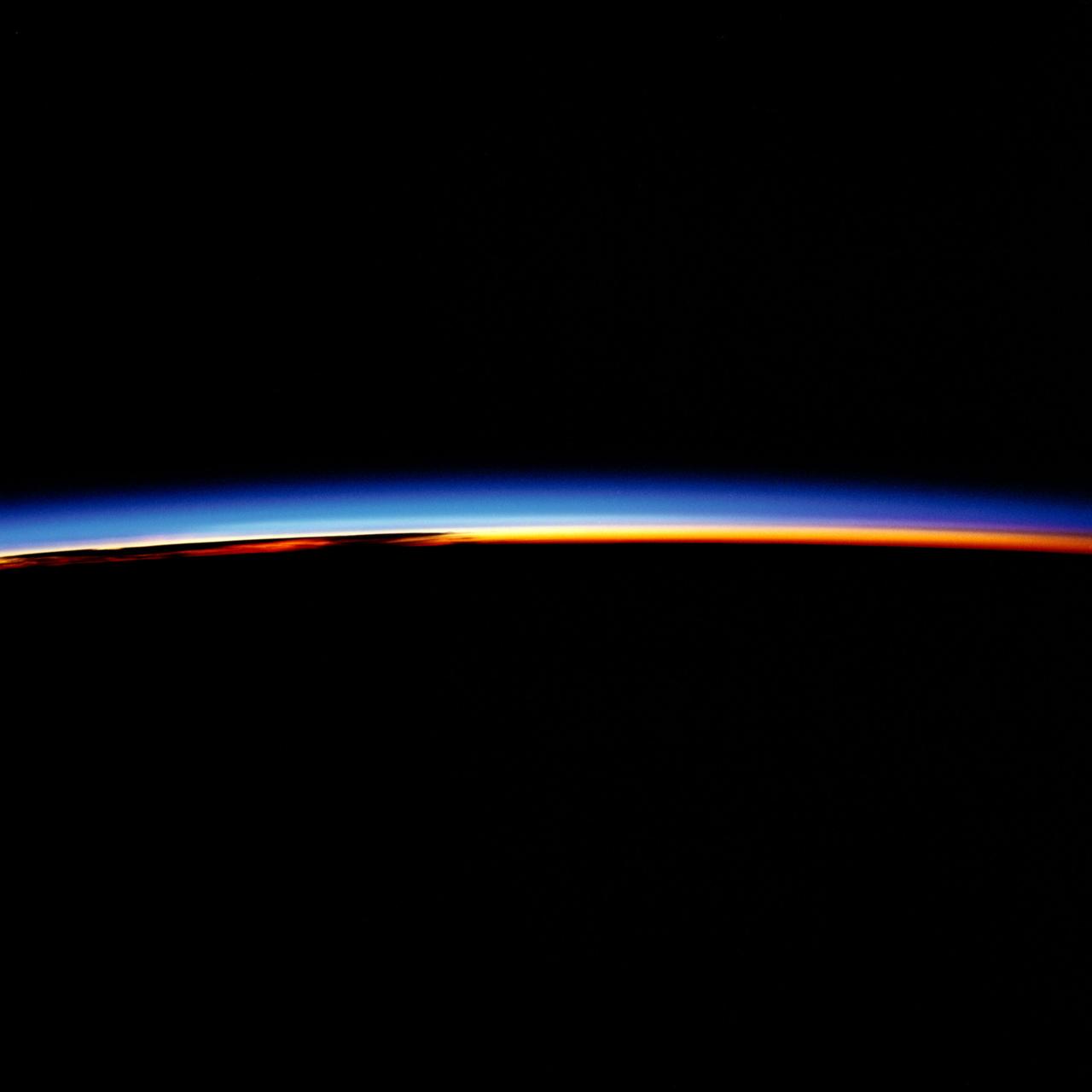
41G-34-036 (5-13 Oct 1984) --- When in space, Space Shuttle astronauts experience 18-dawns to every one on terra firma. The crew of NASA's STS-41G mission captured these spectacular colors just prior to passing through one of those orbital dawns in October of 1984. The scene is over the Pacific Ocean, approximately 2,000 miles from Tokyo. The bands of color represent the various layers of aerosol which surround the planet. The brilliant red is the atmosphere; the overlap between red and blue is the stratosphere; the blue layer is the ionosphere. With increased altitude, the electrons and ions are reduced in number, leaving the vast blackness of space.
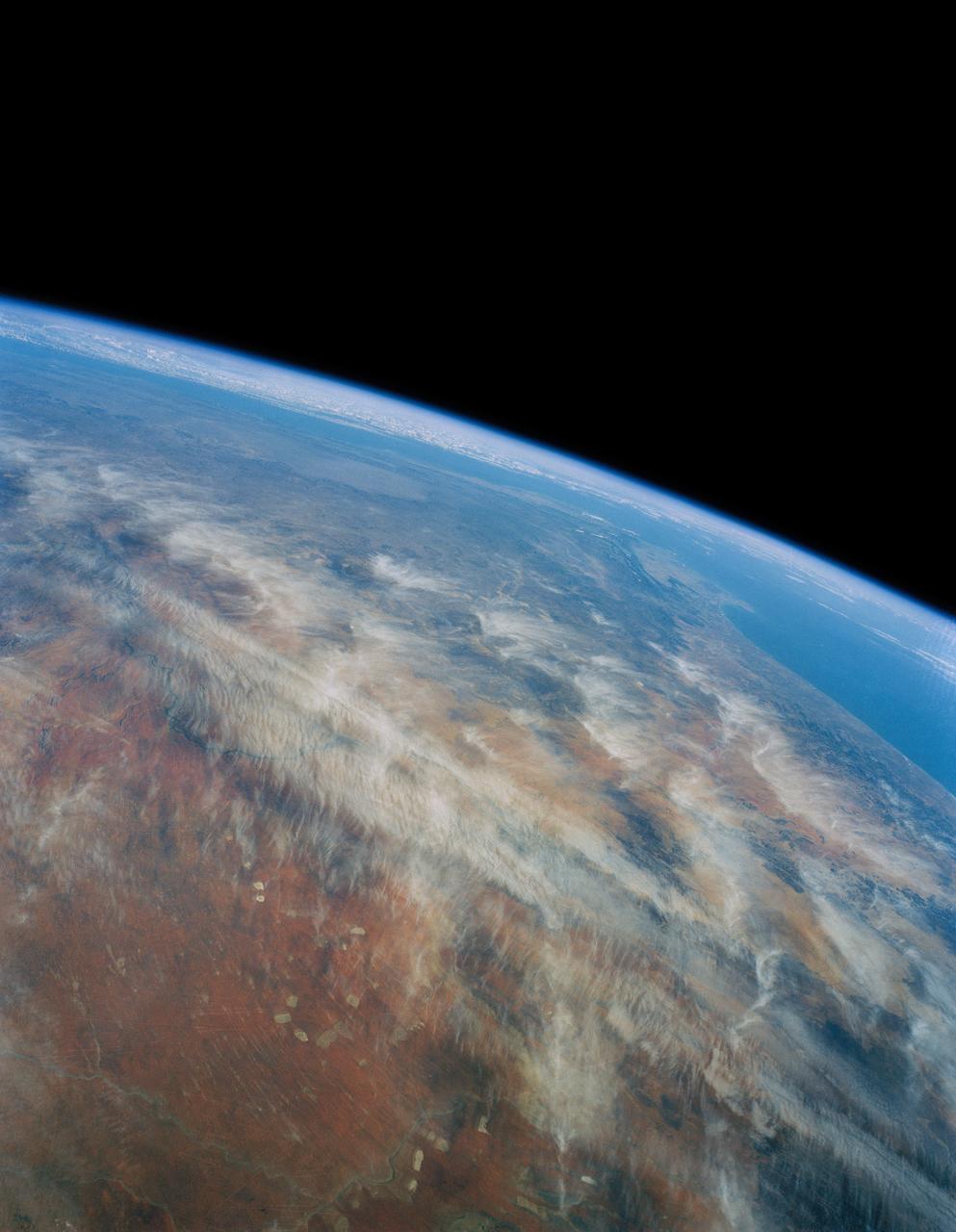
41G-121-189 (5-13 Oct 1984) --- The Kalihari Desert is visible in the foreground of this photograph covering three African nations. The desert is a classic red to orange-red, with small depressions and salt encrustation's which appear as lakes. Visible are Cape Town, the Cape of Good Hope and Cape Agulhas. The crew consisted of astronauts Robert L. Crippen, commander; Jon A. McBride, pilot; mission specialist's Kathryn D. Sullivan, Sally K. Ride, and David D. Leestma; Canadian astronaut Marc Garneau; and Paul D. Scully-Power, payload specialist. EDITOR'S NOTE: The STS-41G mission had the first American female EVA (Sullivan); first seven-person crew; first orbital fuel transfer; and the first Canadian (Garneau).
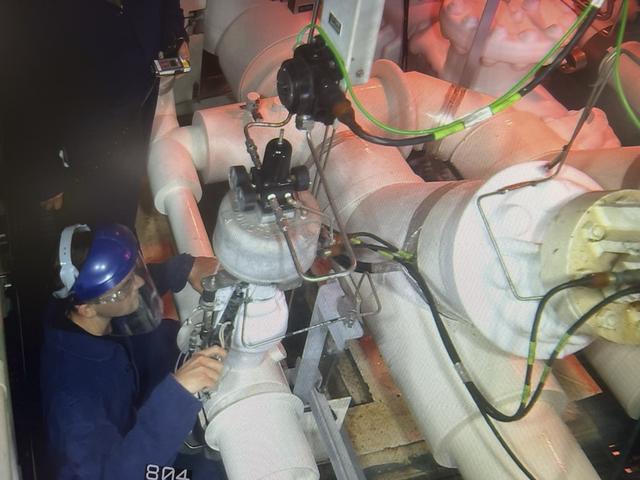
Members of the “red crew” perform work at the mobile launcher during the launch countdown for Artemis I at NASA’s Kennedy Space Center in Florida on Nov. 15, 2022. The team of technicians are part of the personnel specially trained to conduct operations at the launch pad during cryogenic loading operations. Prior to the launch of Artemis I, the red crew entered the zero deck, or base, of the mobile launcher and tightened several bolts to troubleshoot a valve used to replenish the core stage with liquid hydrogen which showed a leak with readings above limits. NASA has historically sent teams to the pad to conduct inspections during active launch operations as needed. Artemis I launched successfully at 1:47 a.m. on Nov. 16, from Kennedy’s Launch Pad 39B.

CAPE CANAVERAL, Fla. – The Commercial Crew Program logo is derived from the NASA flight crew symbol as the foundation for the program. The red/white/blue swoosh illustrates an American-led capability. The star depicts a future vehicle emerging from the overlapping double C's representing the Commercial Crew Program. The goal of NASA’s Commercial Crew Program is to have a commercially developed, human-capable, certified spacecraft safely flying astronauts into orbit and to the International Space Station by the middle of the decade. For more information about NASA's Commercial Crew Program, visit http://www.nasa.gov/exploration/commercial. Photo credit: NASA
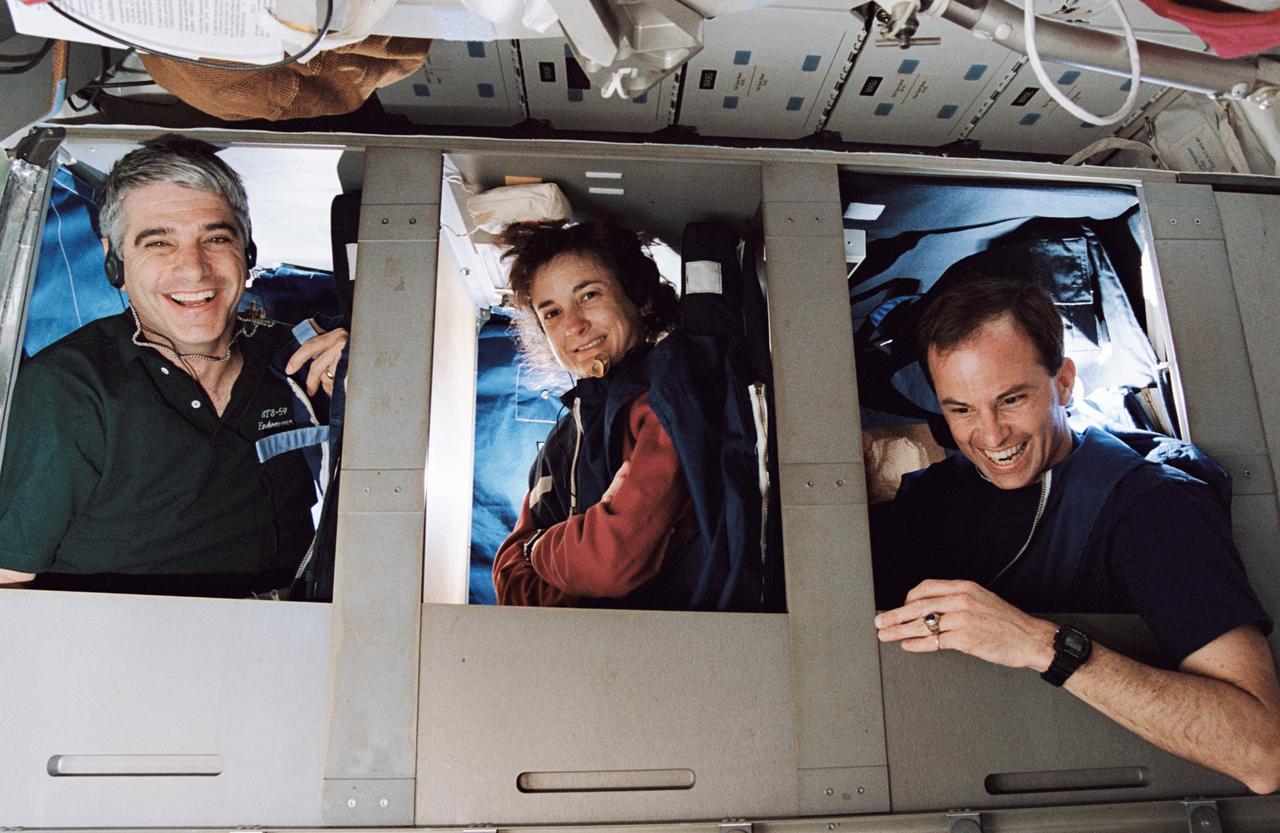
STS059-22-004 (9-20 April 1994) --- Half of Space Shuttle Endeavour's crew of six astronauts are pictured in bunks on the middeck. With the picture held horizontally, the red shift crew members pictured are, left to right, astronauts Sidney M. Gutierrez, mission commander; Linda M. Godwin, payload commander; and Kevin P. Chilton, pilot.
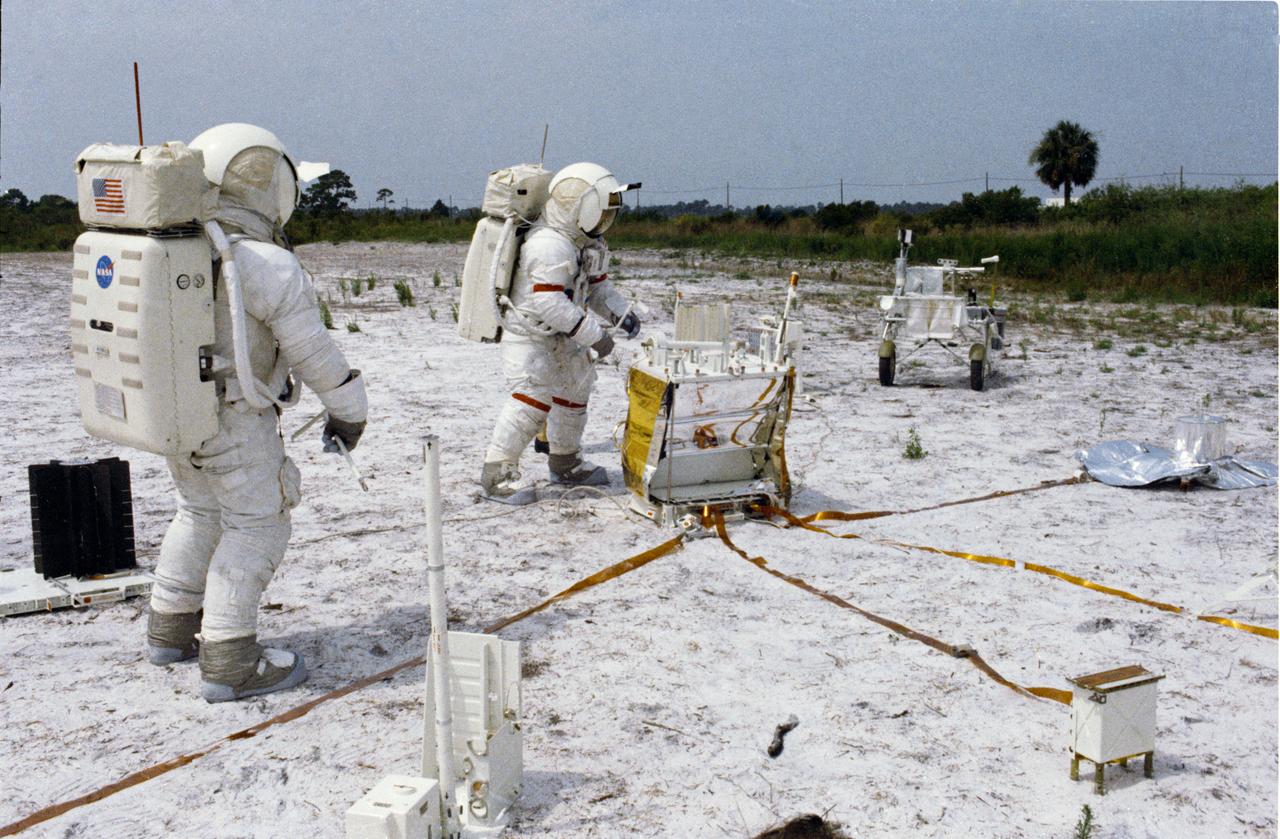
S70-46152 (July 1970) --- Two crew men of the Apollo 14 lunar landing mission participate in lunar surface simulation training at the Kennedy Space Center (KSC). They are deploying components of the Apollo lunar surface experiments package (ALSEP). Standing in the center next to the ALSEP central station is astronaut Alan B. Shepard Jr. (wearing red stripe on space suit), commander. Astronaut Edgar D. Mitchell, lunar module pilot, is in the left foreground. Both crew men are wearing the Extravehicular Mobility Units (EMU).
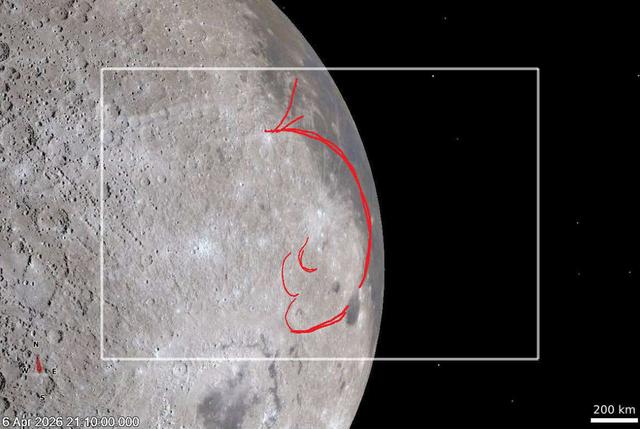
art002e009506 (April 6, 2026) – The Artemis II crew observed bright, curved features near the Moon’s limb during their lunar flyby. In an in-flight annotation, Artemis II commander Reid Wiseman marked the features in red to document their shape and location. The crew described the features as similar in brightness to rays extending from Glushko crater. Credit: CSA/NASA
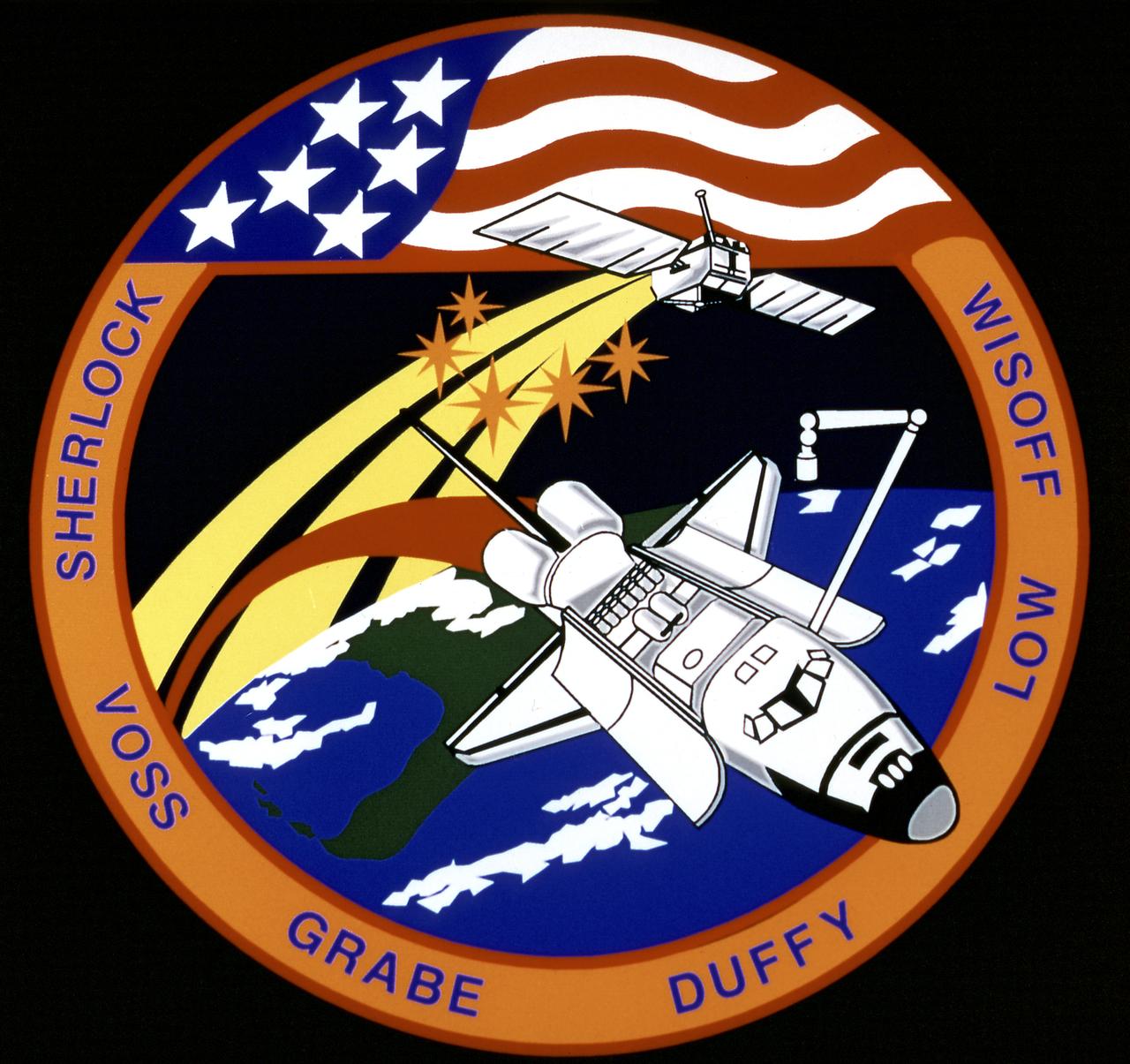
Designed by the mission’s crew members, the STS-57 crew patch depicts the Space Shuttle Endeavour maneuvering to retrieve the European Space Agency's microgravity experiment satellite EURECA. SpaceHab, the first commercial space laboratory, is depicted in the cargo bay, and its characteristic shape is represented by the inner red border of the patch. The three gold plumes surrounded by the five stars trailing EURECA are suggestive of the U.S. astronaut logo. The five gold stars together with the shape of the orbiter's mechanical arm form the mission's numerical designation. The six stars on the American flag represent the U.S. astronauts who comprise the crew. With detailed input from the crew members, the final artwork was accomplished by artist Tim Hall.

Expedition 65 prime crew members NASA astronaut Mark Vande Hei, left, and Russian cosmonaut Oleg Novitskiy of Roscosmos, second from left, and backup crew members NASA astronaut Anne McClain, third from left, and Russian cosmonaut Anton Shkaplerov of Roscosmos, second from right watch as prime crew member Russian cosmonaut Pyotr Dubrov of Roscosmos, right, lays flowers at the site where Russian space icons are interred as part of traditional pre-launch ceremonies, Wednesday, March 24, 2021, at Red Square in Moscow. Photo Credit: (NASA/GCTC/Andrey Shelepin)

Expedition 65 backup crew members Russian cosmonaut Anton Shkaplerov, left, NASA astronaut Anne McClain, second from left, prime crew members NASA astronaut Mark Vande Hei, third from left, Russian cosmonaut Oleg Novitskiy of Roscosmos, third from right, and Russian cosmonaut Pyotr Dubrov of Roscosmos, second from right, and backup crew member Russian cosmonaut Oleg Artemyev of Roscosmos, right, pose for a photo in Red Square after laying flowers at the site where Russian space icons are interred as part of traditional pre-launch ceremonies, Wednesday, March 24, 2021 in Moscow. Photo Credit: (NASA/GCTC/Andrey Shelepin)
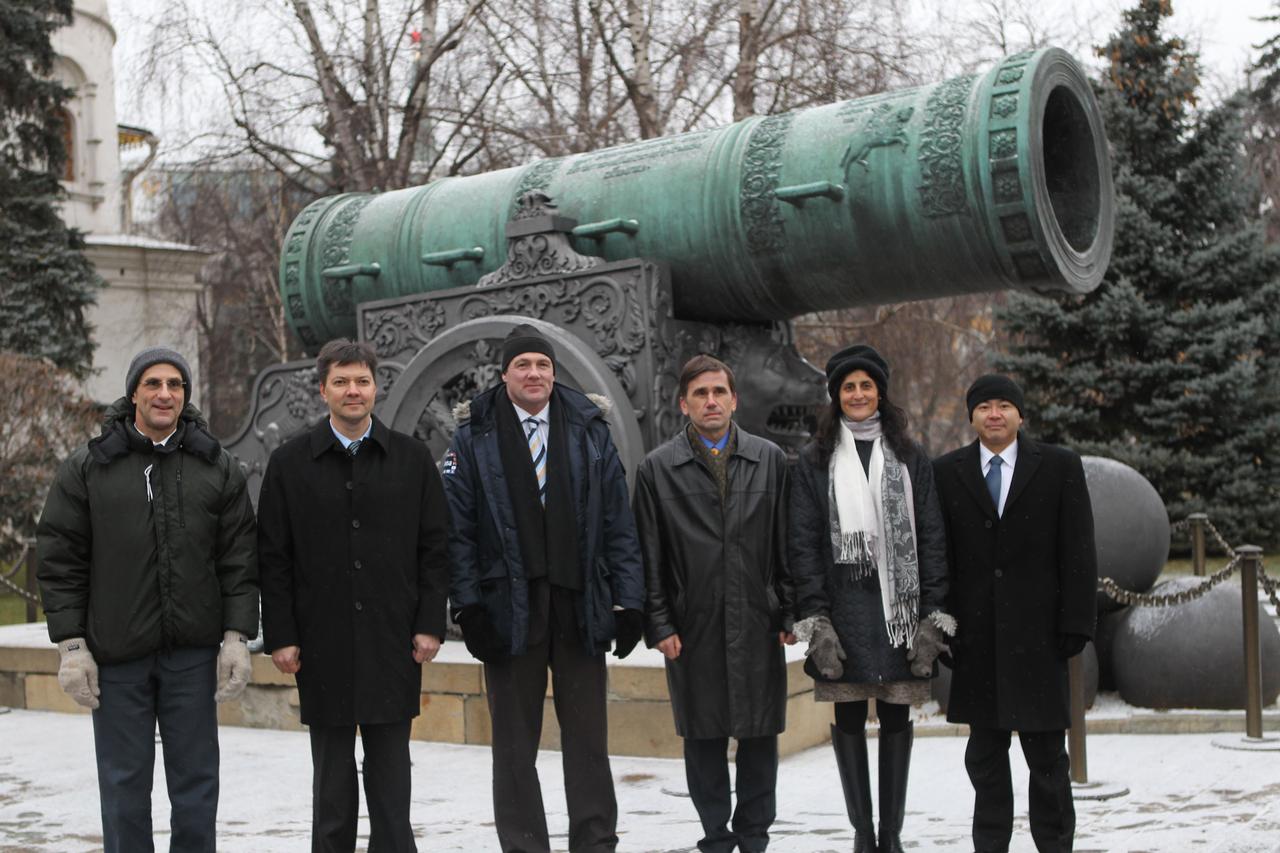
At the Kremlin in Moscow, the prime and backup crews for the next launch of crewmembers to the International Space Station pose for pictures Dec. 1, 2011 in front of the Tsar Cannon following ceremonial activities at Red Square. From left to right are the prime Expedition 30 crew --- NASA Flight Engineer Don Pettit, Soyuz Commander Oleg Kononenko and Flight Engineer Andre Kuipers of the European Space Agency, and the backup crew – Soyuz Commander Yuri Malenchenko, NASA Flight Engineer Suni Williams and Flight Engineer Aki Hoshide of the Japan Aerospace Exploration Agency. Pettit, Kononenko and Kuipers will launch Dec. 21 from the Baikonur Cosmodrome in Kazakhstan on the Soyuz TMA-03M spacecraft. Credit: NASA
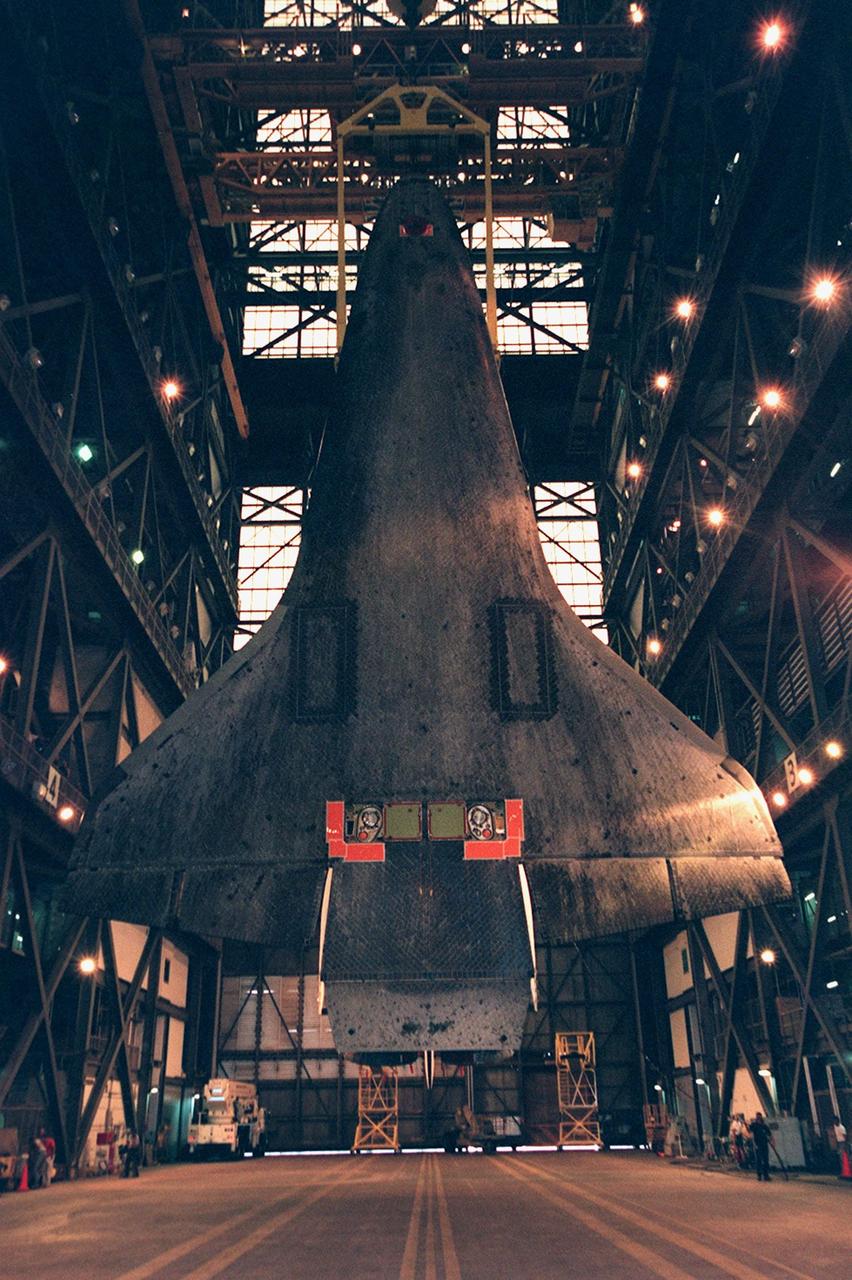
KENNEDY SPACE CENTER, FLA. -- In the transfer aisle of the Vehicle Assembly Building (VAB), the orbiter Atlantis hangs suspended vertically from an overhead crane. Shown is the underside of the orbiter. The black-outlined rectangles near the wings are the location of the main landing gear doors. At the lower end, the two squares centered between the red corners are two of the connection points for the external tank. Another connection is at the top of the underside, between the two red areas shown there. The 122-foot-long orbiter is easily accommodated inside the 525-foot-tall, 518-foot-wide VAB. Atlantis will be mated with its external tank and solid rocket boosters before being transported to Launch Pad 39A. Atlantis will fly on mission STS-101 to the International Space Station, where its crew of seven will prepare the Station for the arrival of the next pressurized module, the Russian-built Zvezda. Atlantis is expected to launch no earlier than April 17, 2000
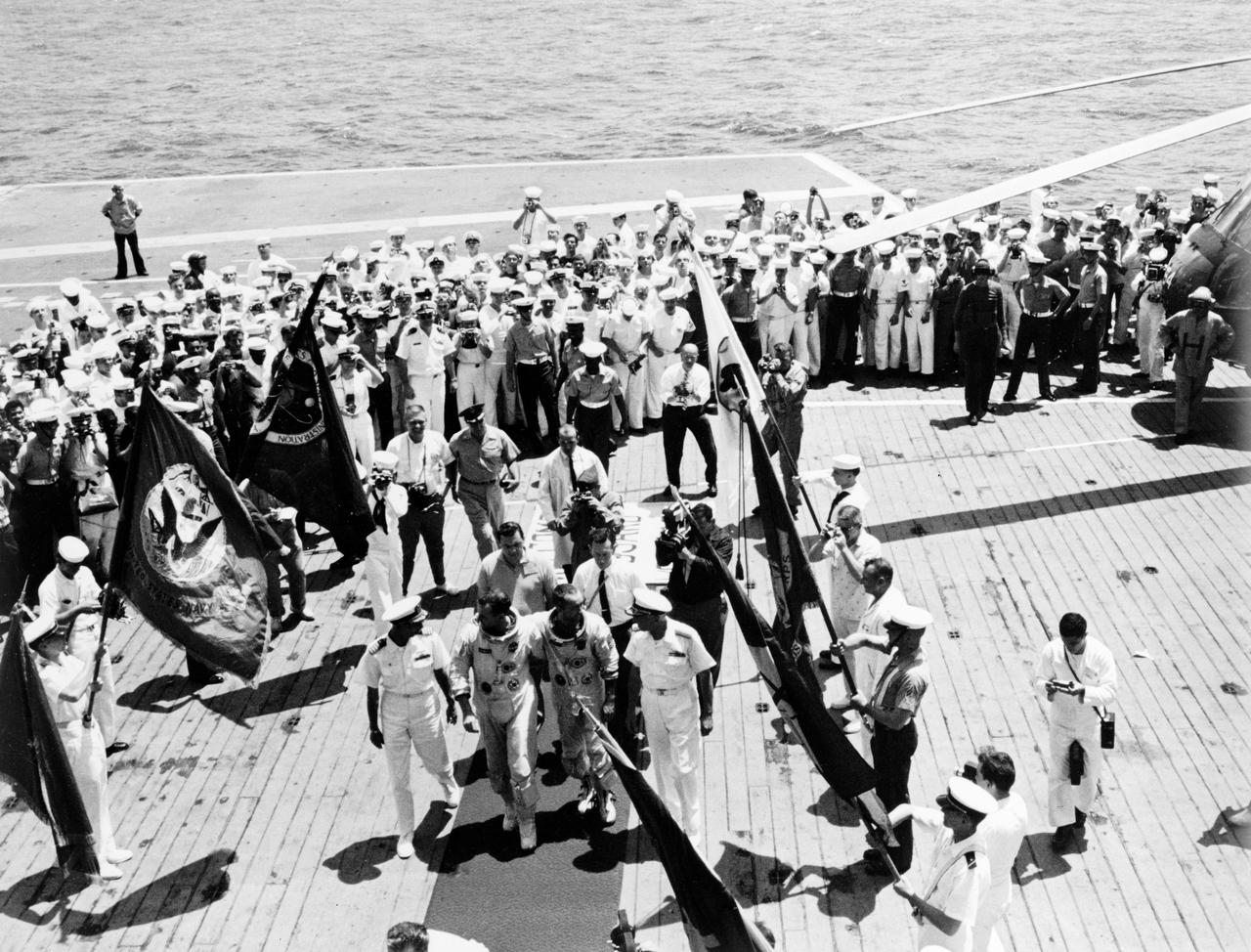
S65-19530 (7 June 1965) --- The red carpet treatment is given to the Gemini-Titan 4 astronauts Edward H. White II and James A. McDivitt as they arrive on the flight deck of the aircraft carrier USS Wasp after their record breaking 62-revolution, 97-hour and 56-minute flight which ended in the Atlantic Ocean about 400 miles east of Cape Kennedy at 12:12 p.m. (EST) on June 7, 1965. Here they are shown being welcomed by members of the crew and NASA people. White and McDivitt (center) walk on the red carpet flanked by Capt. J.W. Conger (left), commander of the ship; and Rear Adm. W.M. McCormick, commander, Carrier Division 14, Atlantic Fleet. NASA's Gemini-4 flight landed about 48 miles short of the aircraft carrier.
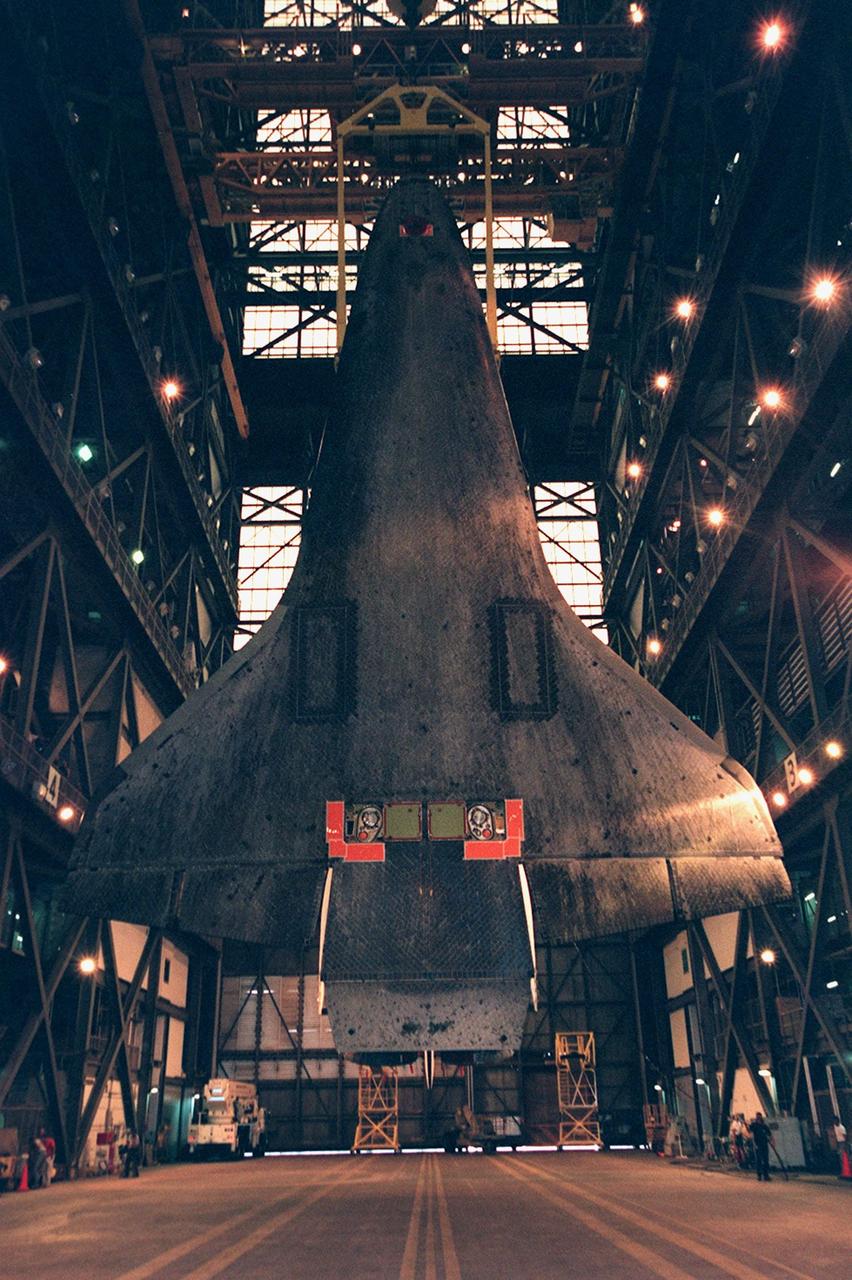
KENNEDY SPACE CENTER, FLA. -- In the transfer aisle of the Vehicle Assembly Building (VAB), the orbiter Atlantis hangs suspended vertically from an overhead crane. Shown is the underside of the orbiter. The black-outlined rectangles near the wings are the location of the main landing gear doors. At the lower end, the two squares centered between the red corners are two of the connection points for the external tank. Another connection is at the top of the underside, between the two red areas shown there. The 122-foot-long orbiter is easily accommodated inside the 525-foot-tall, 518-foot-wide VAB. Atlantis will be mated with its external tank and solid rocket boosters before being transported to Launch Pad 39A. Atlantis will fly on mission STS-101 to the International Space Station, where its crew of seven will prepare the Station for the arrival of the next pressurized module, the Russian-built Zvezda. Atlantis is expected to launch no earlier than April 17, 2000

S71-30463 (May 1971) --- This is the insignia designed for the Apollo 15 lunar landing mission. The circular design features the colors red, white and blue. On the outer portion of the patch a narrow band of blue and a narrow band of red encircle a wider band of white. The large disc in the center of the emblem has red, white and blue symbols of flight, superimposed over an artist's concept of the Apollo 15 Hadley-Apennine landing site of gray tone. The surnames of the three names are centered in the white band at the bottom of the insignia. The Apollo 15 prime crew men are David R. Scott, commander; Alfred M. Worden, command module pilot; and James B. Irwin, lunar module pilot. This is the official Apollo 15 emblem, property of the government of the United States. It has been authorized only for use by the astronauts. Its production in any form other than in news, information and education media is not authorized without approval. Unauthorized use of the photograph is subject to the provisions of Title 18, U.S. Code, Section 701.

ISS036-E-011050 (22 June 2013) --- An Egyptian dust plume and the Red Sea are featured in this image photographed by an Expedition 36 crew member on the International Space Station. This photograph provides a panoramic view of most of the length of the Red Sea, with the northernmost end, the Gulf of Suez, just visible at top center—fully 1,900 kilometers (ground distance) from the space station. The River Nile snakes its way northward through the Sahara Desert at top left. Much closer to the camera—but still more than 550 kilometers distant from the ground point above which the space station is orbiting—is a prominent dust plume surging out over the clear water of the Red Sea (foreground), reaching most of the way to Saudi Arabia. The “point source” of this plume is the delta of the southern Egyptian river Khor Baraka. Images from the spacecraft have shown that this delta is a common source for dust plumes, mainly because it is a relatively large area of exposed, loose sand and clay, easily lofted into the air. But the river also cuts through a high range of hills in a narrow valley that channels the wind, making it blow faster. This dramatic view of the Red Sea shows the generally parallel margins of the opposing coastlines. According to scientists, the rift or depression which now holds the Red Sea has been opening slowly for about 30 million years, and is nearly 300 kilometers wide in the region of the dust plume. Scientists believe the depression only recently filled with seawater within the last approximately five million years.
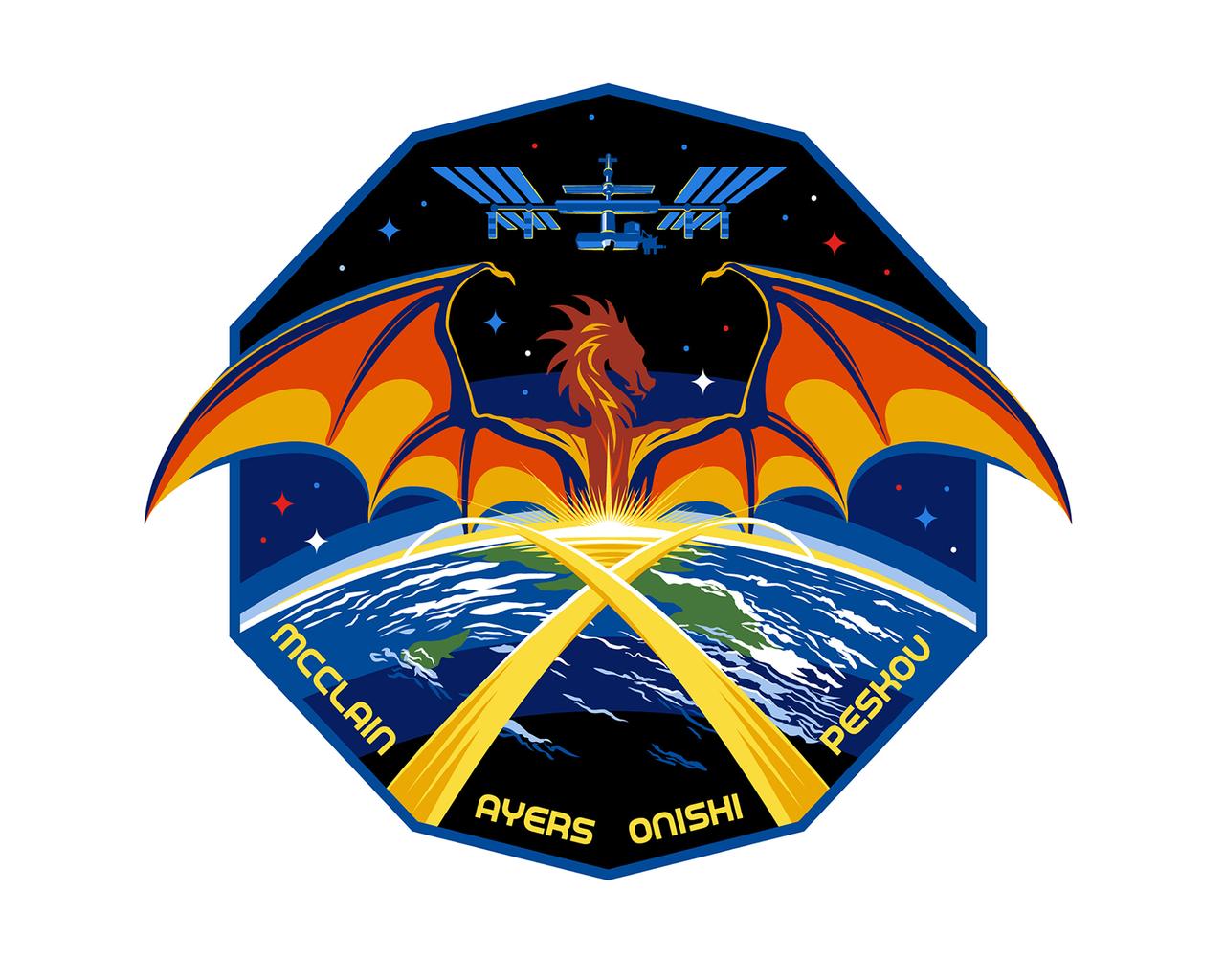
jsc2024e060607 (Sept. 4, 2024) --- The SpaceX Crew-10 patch was thoughtfully designed by the four-person crew. They used AI for initial inspiration, while the ever-irreplaceable human perfected the design and brought the patch to fruition. It is a 10-sided patch with the roman numeral X boldly in the center, representing the 10th operational flight of the Crew Dragon spacecraft. The Dragon, also the capsule’s namesake, is wings out in full flight, representing the four professional pilots that make up the crew complement. The Dragon, illuminated by one of Earth’s stunning and beautiful sunrises, is focused on the ISS and its mission, while keeping a watchful position above Earth. The stars are red, white, and blue for the flag colors of each crew members’ home country, and the brightest stars represent the crew’s closest family members and support system.
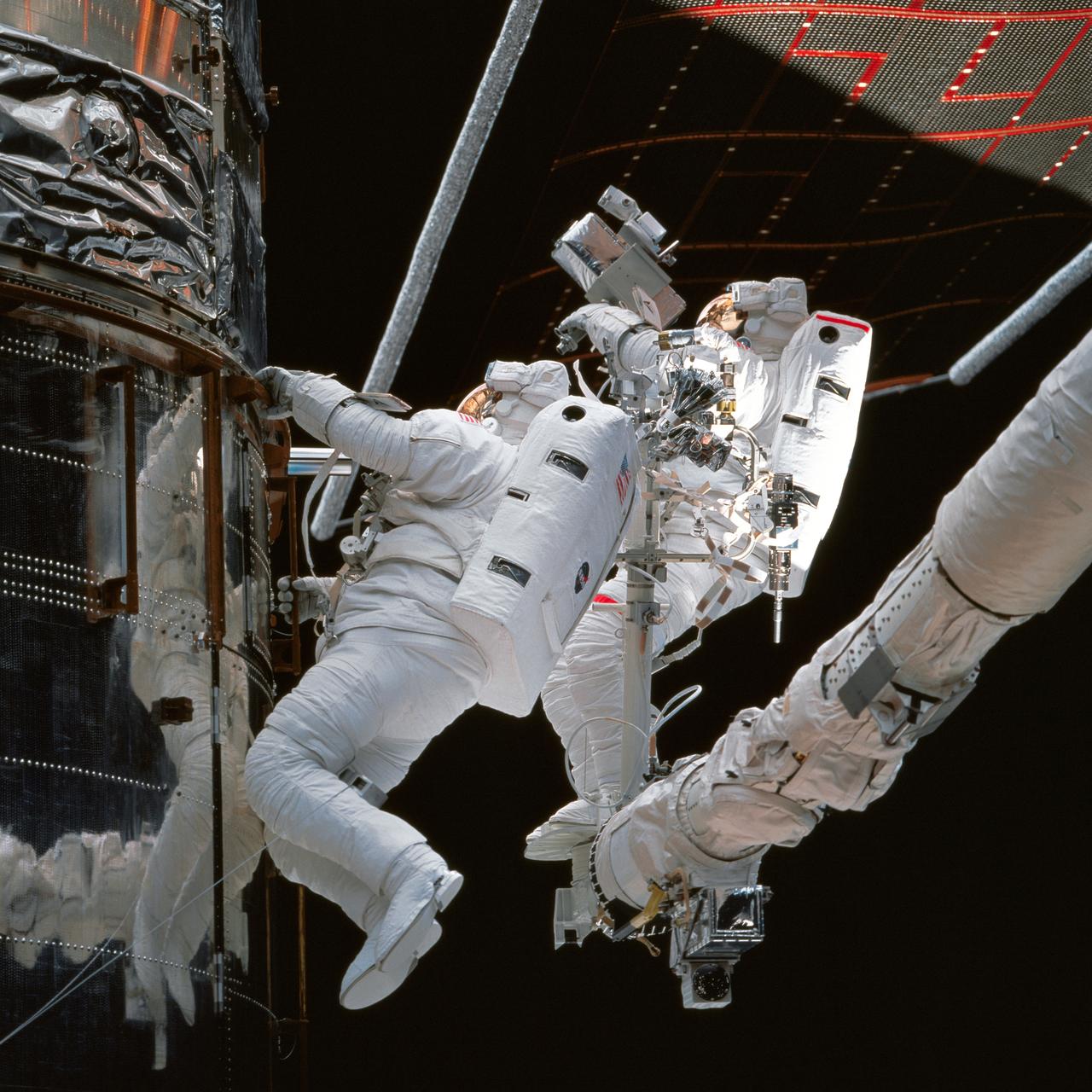
STS082-738-054 (11-21 Feb. 1997) --- As photographed from inside the Space Shuttle Discovery?s crew cabin, astronauts Steven L. Smith (left) and Mark C. Lee (red stripe) inspect insulation around Bay 10 of the Hubble Space Telescope (HST) during one of five days of extravehicular activities (EVA) designed to service the HST. Lee, payload commander, and Smith, performed three of the five EVA?s which eventually were carried out on the mission.
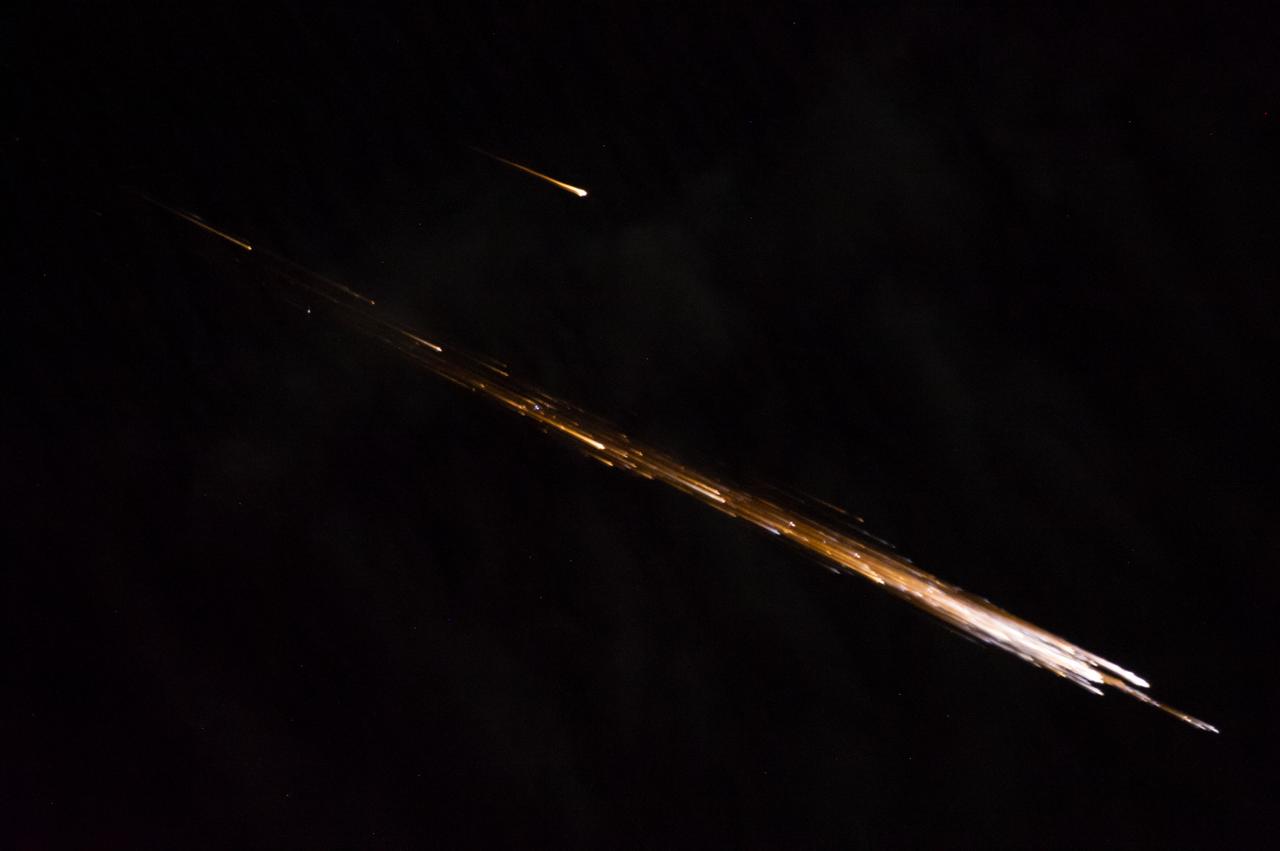
iss040e098572 (8/19/2014) --- A dark view of the Orbital Cygnus 2 reentry taken by the Expedition 40 crew. Light streak from reentry visible in frame. The Thermal Protection Material Flight Test and Reentry Data Collection (RED-Data2) investigation studies a new type of recording device that rides along a vehicle reentering Earth’s atmosphere, providing crucial data about the extreme conditions a spacecraft encounters during atmospheric reentry.
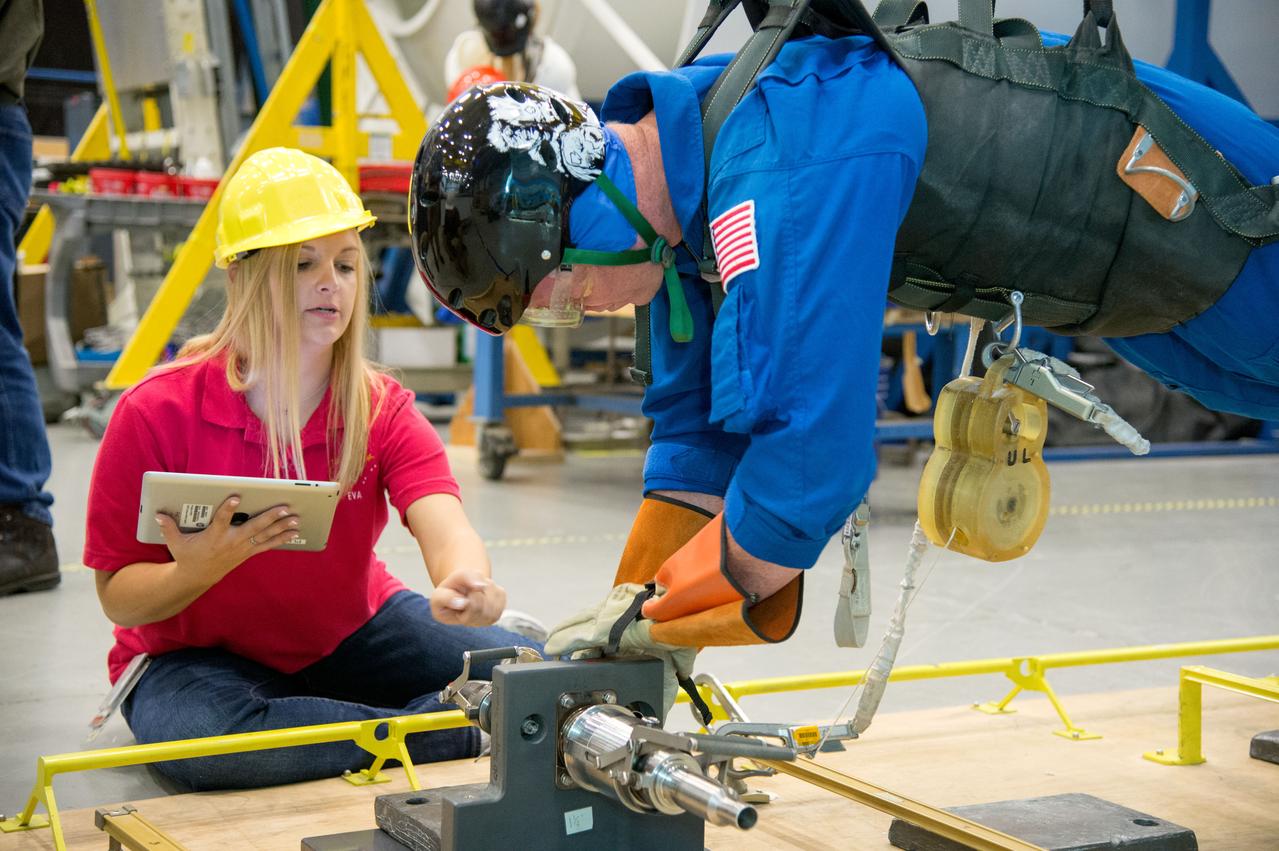
PHOTO DATE: 29 July 2013 LOCATION: Bldg. 9NW, Space Vehicle Mockup Training Facility - POGO SUBJECT: Expedition 42 crew member and astronaut Barry "Butch" Wilmore during ISS EVA POGO 1 training. Instructors Faruq Sabur (black shirt), Allissa Battocletti (red shirt), Sandy Fletcher (light blue shirt with glasses) and astronaut Shane Kimbrough assist. PHOTOGRAPHER: Mark Sowa
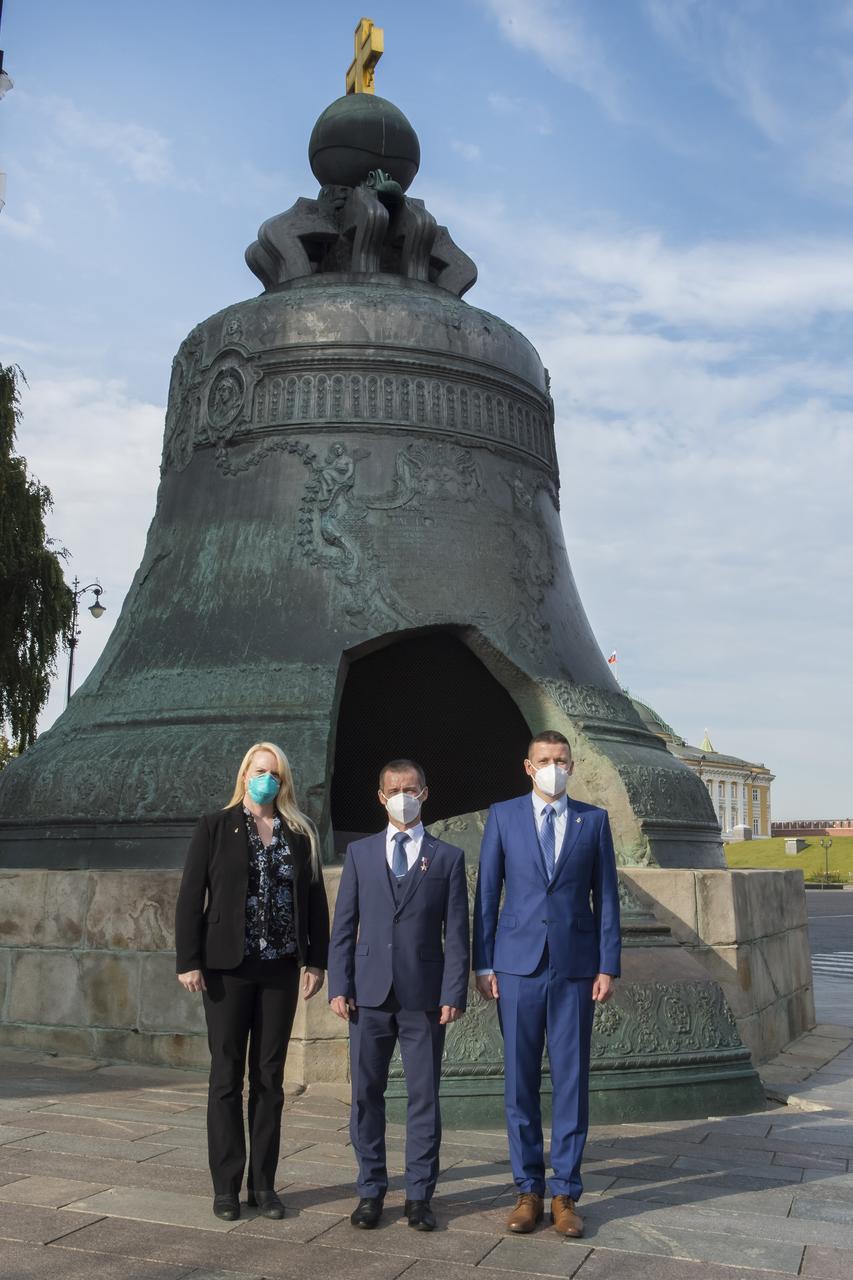
Expedition 64 prime crew members, NASA astronaut Kate Rubins, left, Russian cosmonaut Sergey Ryzhikov of Roscosmos, center, and Russian cosmonaut Sergey Kud-Sverchkov of Roscosmos pose for a photo in front of the Tsar Bell in Red Square after laying flowers at the site where Russian space icons are interred as part of traditional pre-launch ceremonies, Thursday, Sept. 24, 2020 in Moscow. Photo Credit: (NASA/GCTC/Irina Spector)
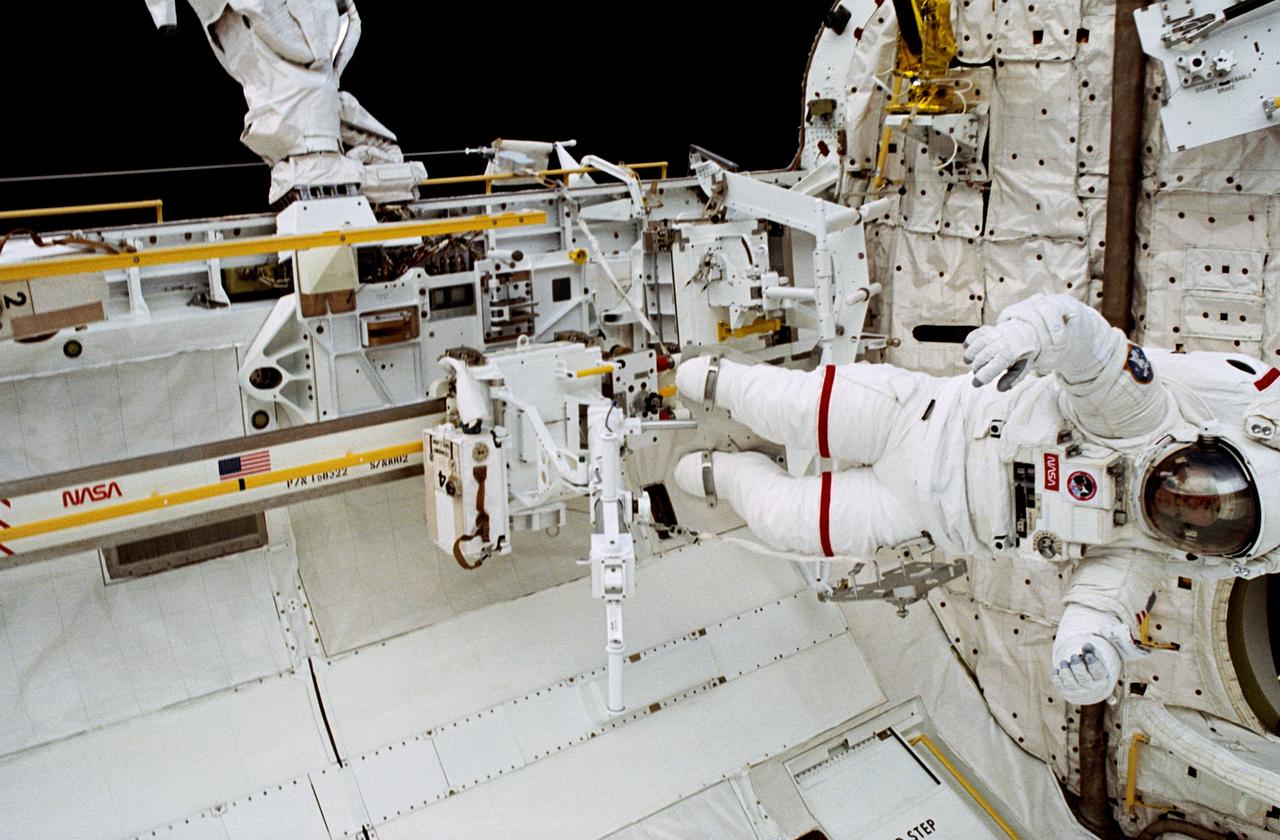
S37-52-008 (April 1999) --- STS-37 Mission Specialist Jerry L. Ross, attired in an extravehicular mobility unit (EMU) with red stripes, can be seen with the crew and equipment transport aid (CETA) just below the base of the remote manipulator system arm on the port side of the payload bay of the space shuttle Atlantis. Photo credit: NASA

ISS040-E-009116 (10 June 2014) --- In the International Space Station?s Harmony node, NASA astronaut Steve Swanson, Expedition 40 commander, harvests a crop of red romaine lettuce plants that were grown from seed inside the station?s Veggie facility, a low-cost plant growth chamber that uses a flat-panel light bank for plant growth and crew observation. For the Veg-01 experiment, researchers are testing and validating the Veggie hardware, and the plants will be returned to Earth to determine food safety.

JSC2011-E-040332 (30 March 2011) --- NASA astronauts Rex Walheim and Chris Ferguson visit Red Square in Moscow on March 30, 2011. The crew of the final shuttle mission traveled to Moscow for a suit fit check of their Russian Soyuz suits which would be required in the event of an emergency. Photo credit: NASA Photo/Houston Chronicle, Smiley N. Pool

PHOTO DATE: 29 July 2013 LOCATION: Bldg. 9NW, Space Vehicle Mockup Training Facility - POGO SUBJECT: Expedition 42 crew member and astronaut Barry "Butch" Wilmore during ISS EVA POGO 1 training. Instructors Faruq Sabur (black shirt), Allissa Battocletti (red shirt), Sandy Fletcher (light blue shirt with glasses) and astronaut Shane Kimbrough assist. PHOTOGRAPHER: Mark Sowa
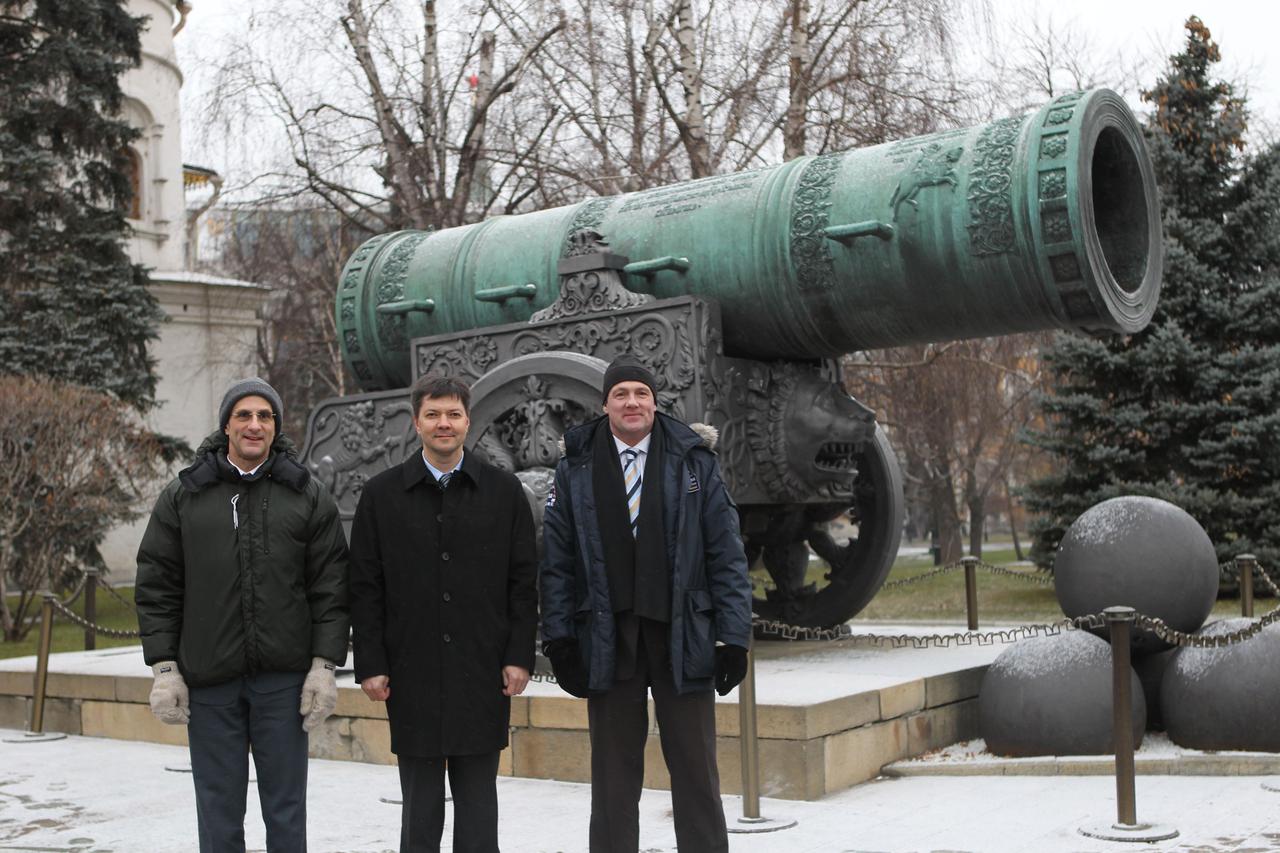
At the Kremlin in Moscow, the prime crew for the next launch of Expedition 30 crewmembers to the International Space Station pose for pictures Dec. 1, 2011 in front of the Tsar Cannon following traditional ceremonial activities at Red Square. From left to right are NASA Flight Engineer Don Pettit, Soyuz Commander Oleg Kononenko and Flight Engineer Andre Kuipers of the European Space Agency. The trio will launch Dec. 21 from the Baikonur Cosmodrome in Kazakhstan on their Soyuz TMA-03M spacecraft. Credit: NASA

From the first taste of Red Romaine Lettuce in fall 2015, astronauts have grown and eaten a range of salad crops in orbit as NASA researches ways to keep crews healthy on future missions exploring the Moon and Mars. These plants are good sources of Vitamin C and Vitamin K, and they have traits that make them good candidates for feeding future space explorers.
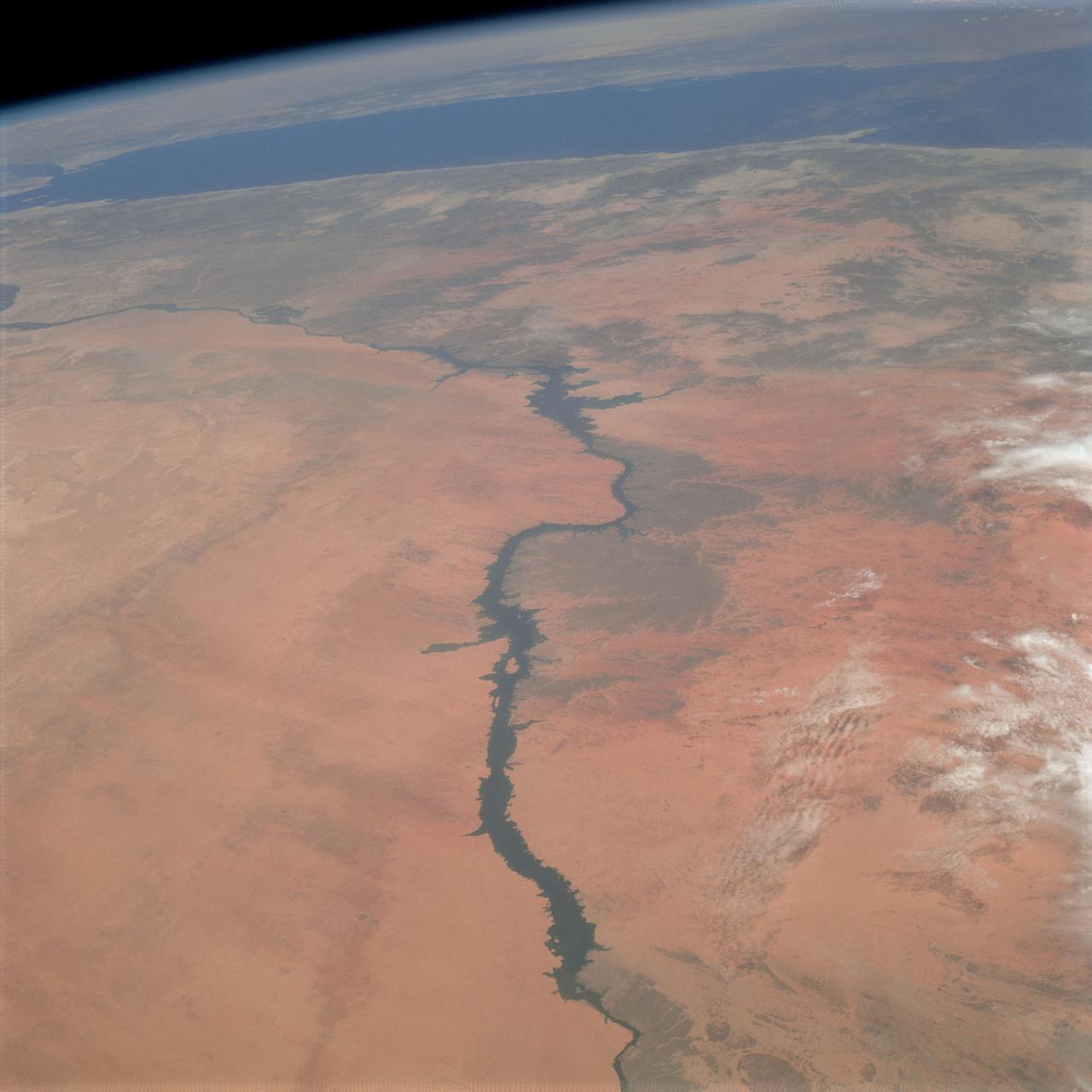
Oblique Earth Observation taken by the Apollo 9 crew. View is the United Arab Republic,the Nile River,The Red Sea and the Aswan Dam. Film magazine was E,film type was SO-368 Ektachrome with 0.460 - 0.710 micrometers film / filter transmittance response and haze filter,80mm lens. Latitude was 19.38 N by Longitude 30.24 E, Overlap was 50%, Altitude was 97 nautical miles and cloud cover was 5%.
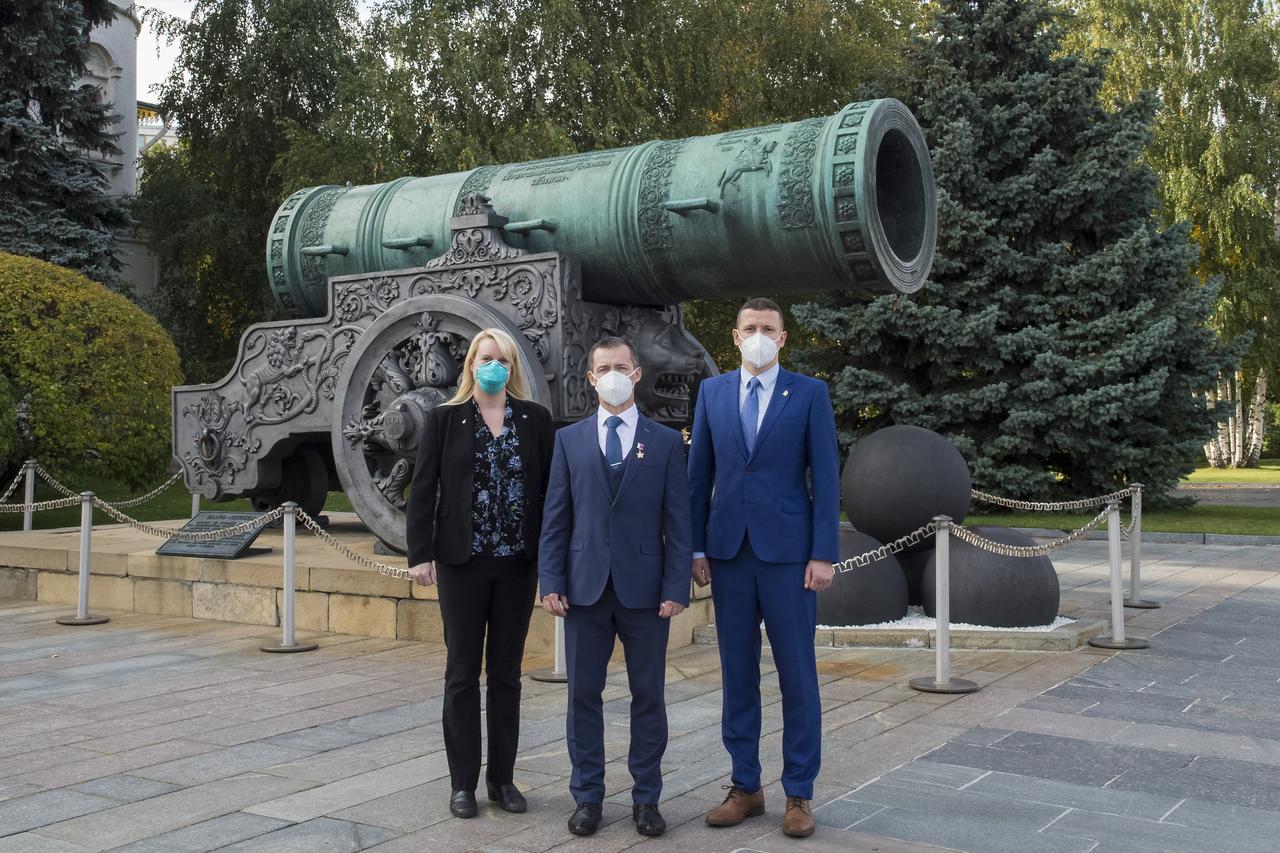
Expedition 64 prime crew members, NASA astronaut Kate Rubins, left, Russian cosmonaut Sergey Ryzhikov of Roscosmos, center, and Russian cosmonaut Sergey Kud-Sverchkov of Roscosmos pose for a photo in front of the Tsar Cannon in Red Square after laying flowers at the site where Russian space icons are interred as part of traditional pre-launch ceremonies, Thursday, Sept. 24, 2020 in Moscow. Photo Credit: (NASA/GCTC/Irina Spector)

STS111-321-024 (5-19 June 2002) --- This sunset over the Sahara Desert was photographed by the STS-111 crew members aboard the Space Shuttle Endeavour. When this photograph was taken, the shuttle was in a position over the Sudan near the Red Sea coast. The Gateway to Astronaut Photography of Earth (link to http://eol.jsc.nasa.gov/sseop/ ) provides searchable access to other photographs of Earth taken by astronauts.
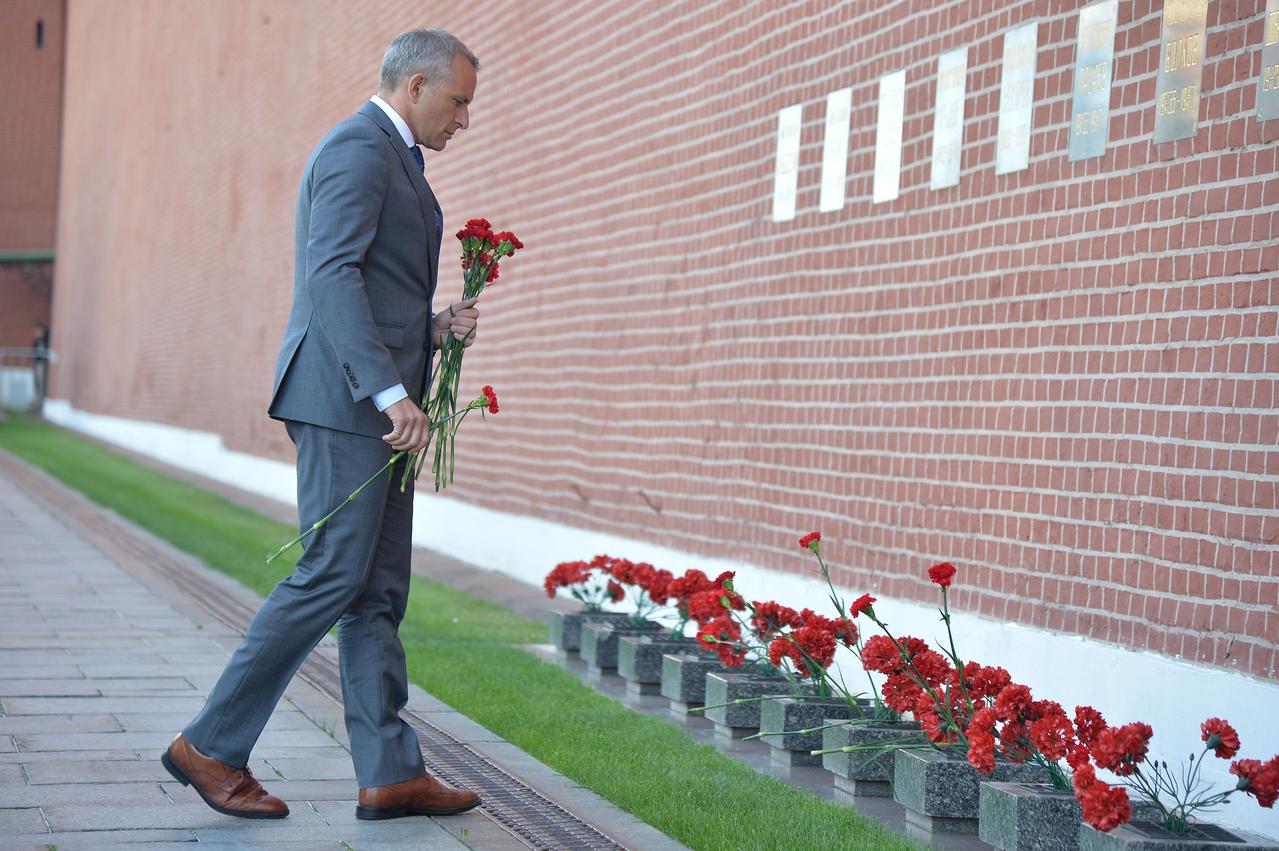
At Red Square in Moscow, Expedition 57 backup crewmember David Saint-Jacques of the Canadian Space Agency lays flowers at the Kremlin Wall where Russian space icons are interred as part of traditional ceremonies Sept. 17. Saint-Jacques is a backup to the prime crew, Nick Hague of NASA and Alexey Ovchinin of Roscosmos, who will launch Oct. 11 from the Baikonur Cosmodrome in Kazakhstan on the Soyuz MS-10 spacecraft for a six-month mission on the International Space Station...NASA/Sarah Volkman.

Expedition 52 flight engineers Paolo Nespoli of ESA, left, Randy Bresnik of NASA, Sergey Ryazanskiy of Roscosmos, and backup crew members, Alexander Misurkin of Roscosmos, Mark Vande Hei of NASA, and Norishige Kanai of the Japan Aerospace Exploration Agency (JAXA), right, pose for a group photograph in Red Square after having laid roses at the site where Russian space icons are interred as part of traditional pre-launch ceremonies, Monday, July 10, 2017 in Moscow. Photo Credit: (NASA/Bill Ingalls)
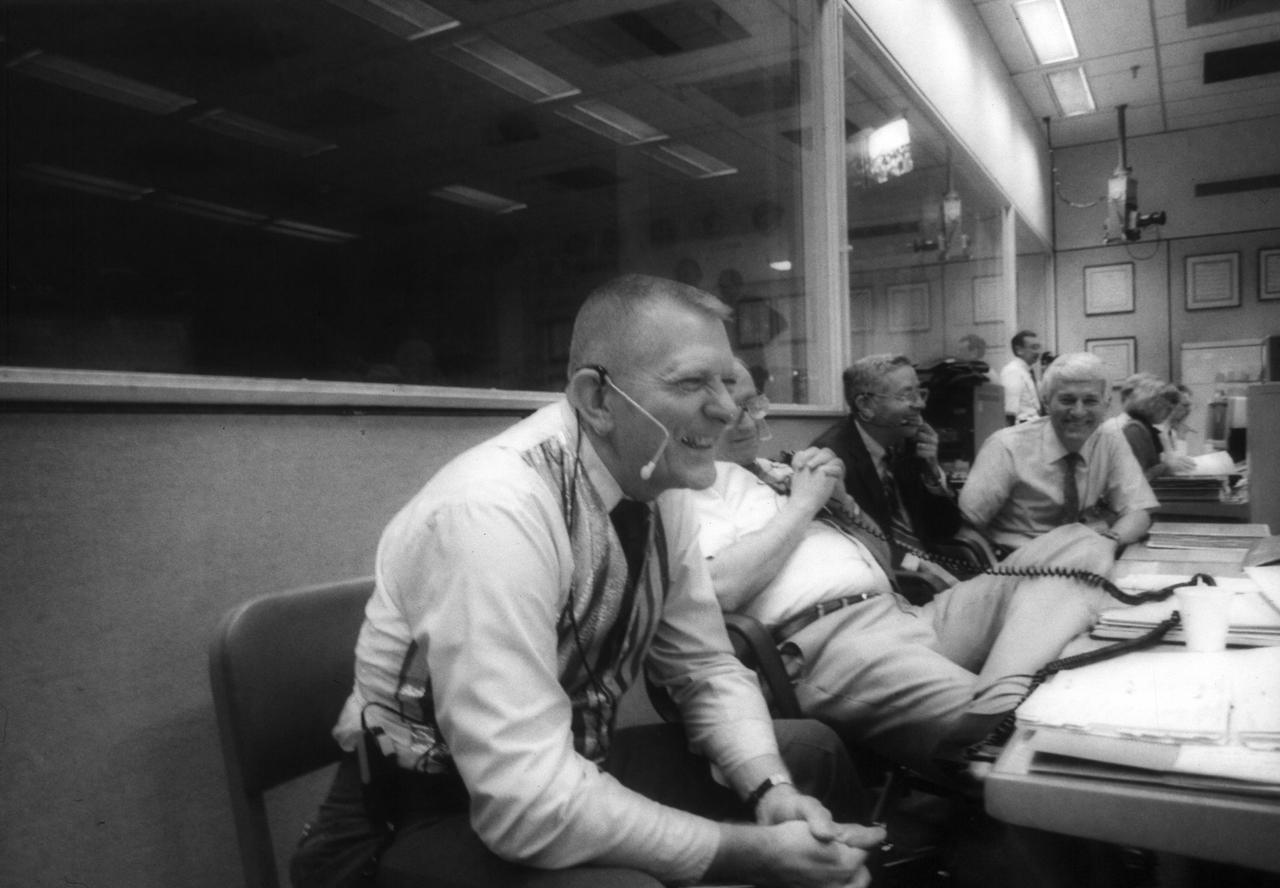
JSC officials, laughing, listen to crewmembers' commentary onboard Discovery, Orbiter Vehicle (OV) 103, during STS-26. In the Flight Control Room (FCR) of JSC's Mission Control Center (MCC) Bldg 30 and seated at the Mission Operations Directorate (MOD) console, MOD Director Eugene F. Kranz (foreground), wearing red, white and blue vest, smiles along with JSC Director Aaron Cohen and Flight Crew Operations Deputy Director Henry W. Hartsfield, Jr. (far right).
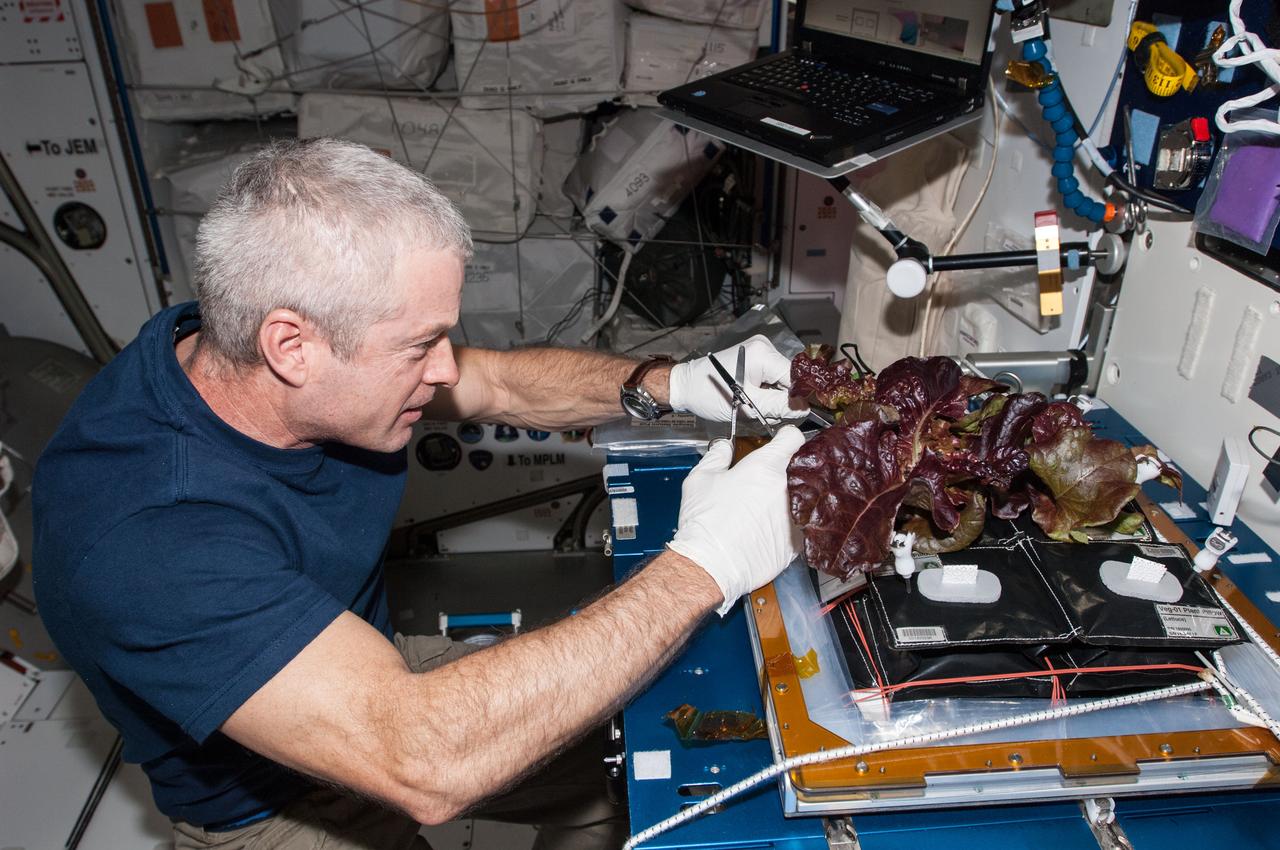
ISS040-E-009125 (10 June 2014) --- In the International Space Station?s Harmony node, NASA astronaut Steve Swanson, Expedition 40 commander, harvests a crop of red romaine lettuce plants that were grown from seed inside the station?s Veggie facility, a low-cost plant growth chamber that uses a flat-panel light bank for plant growth and crew observation. For the Veg-01 experiment, researchers are testing and validating the Veggie hardware, and the plants will be returned to Earth to determine food safety.
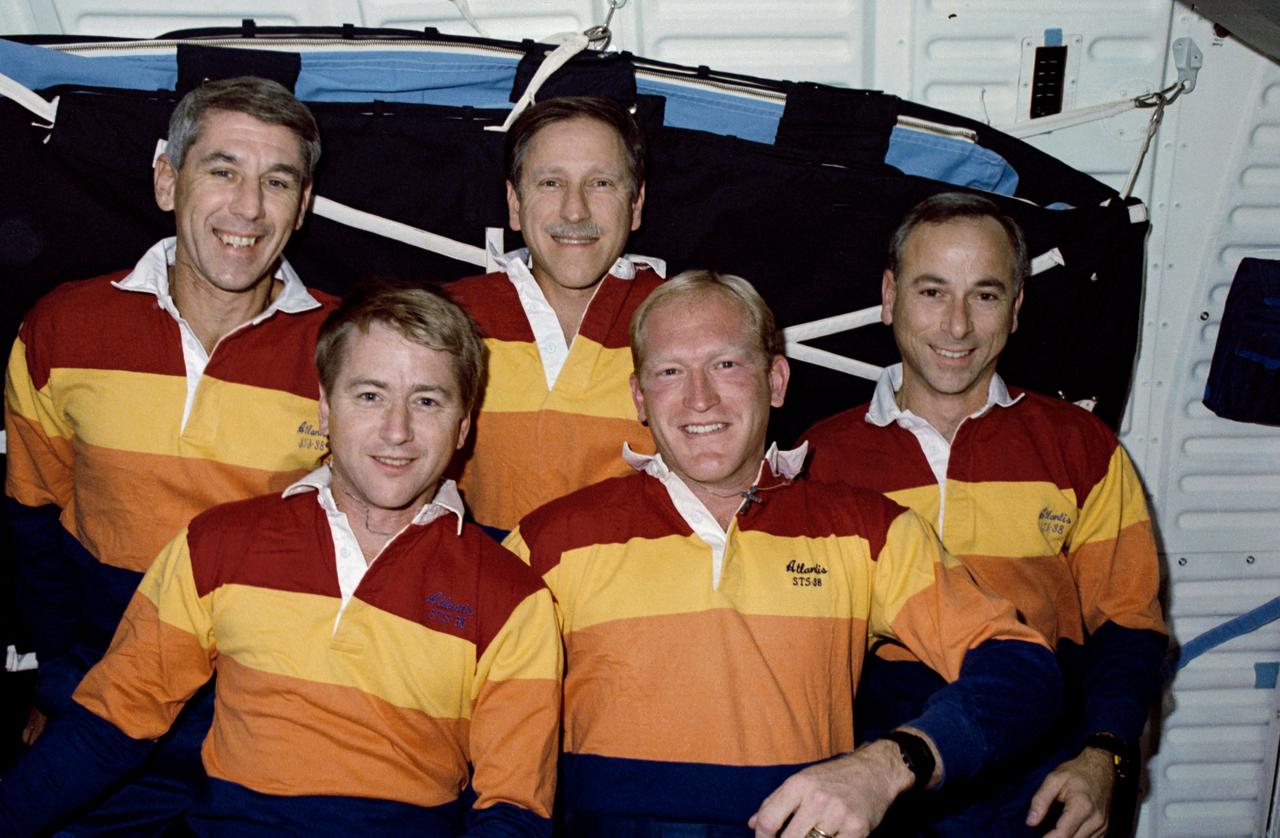
STS038-28-016 (20 Nov 1990) --- STS-38 crewmembers pose on Atlantis', Orbiter Vehicle (OV) 104's, middeck for traditional onboard (in-space) portrait. Wearing red, yellow, and orange crew polo shirts are (right to left) Mission Specialist (MS) Robert C. Springer, Pilot Frank L. Culbertson, Commander Richard O. Covey, MS Charles D. Gemar, and MS Carl J. Meade.

CAPE CANAVERAL, Fla. – In the Space Station Processing Facility, STS-128 crew members look over packages of equipment that will accompany the mission. At left are Pilot Kevin Ford, and Mission Specialists Christer Fuglesang and John "Danny" Olivas. At right is Commander Rick Sturckow (with the red cap). The STS-128 flight will carry science and storage racks to the International Space Station on space shuttle Discovery. Launch of Discovery is targeted for Aug. 6. Photo credit: NASA/Jim Grossmann
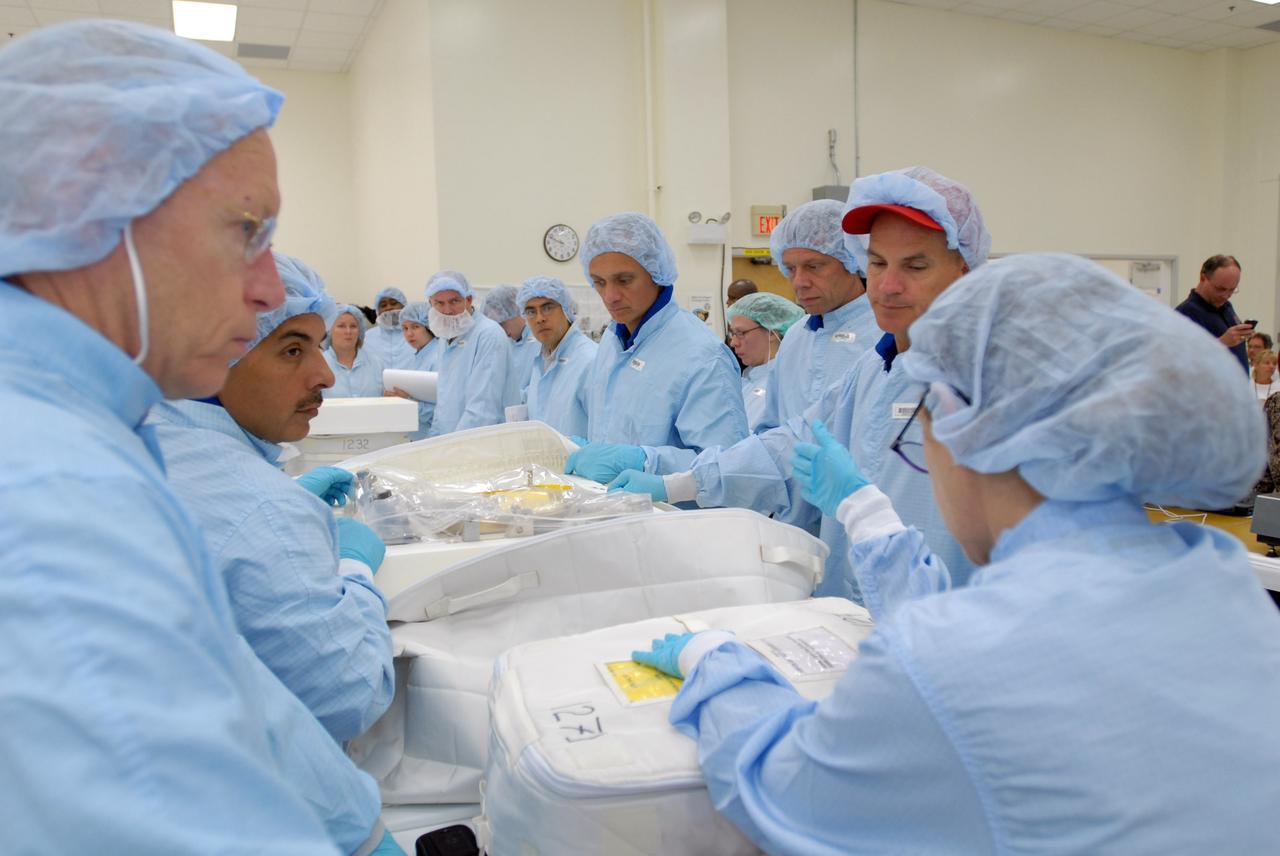
CAPE CANAVERAL, Fla. – In the Space Station Processing Facility, STS-128 crew members look over packages of equipment that will accompany the mission. At left are Mission Specialists Patrick Forrester and Jose Hernandez. At right are Commander Rick Sturckow (with the red cap) and on his left Mission Specialists Christer Fuglesang and John "Danny" Olivas. The STS-128 flight will carry science and storage racks to the International Space Station on space shuttle Discovery. Launch of Discovery is targeted for Aug. 6. Photo credit: NASA/Jim Grossmann
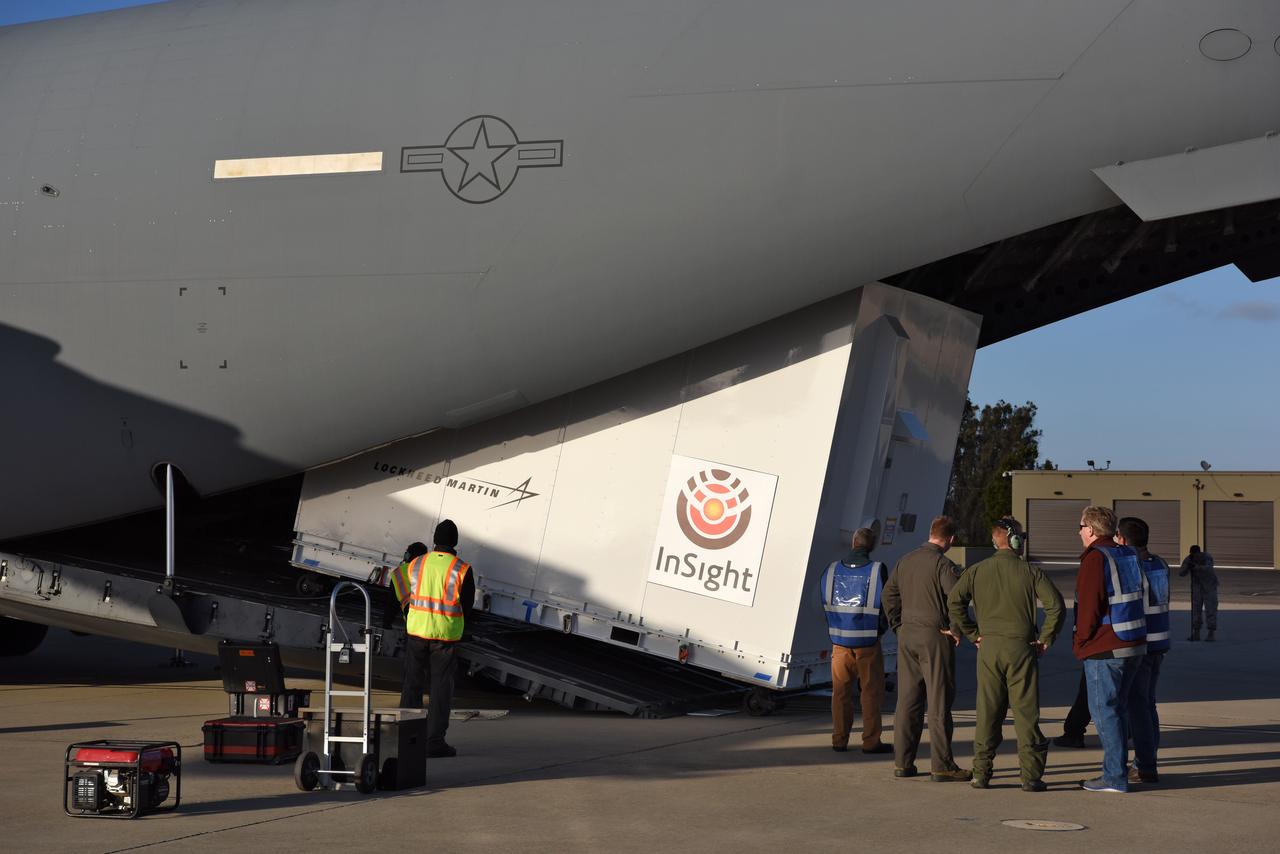
After a U.S. Air Force C-17 aircraft arrived at Vandenberg Air Force Base in California, ground crews offload NASA's Interior Exploration using Seismic Investigations, Geodesy and Heat Transport, or InSight, spacecraft designed to land on Mars. InSight was developed and built by Lockheed-Martin Space Systems in Denver, Colorado, and is scheduled for liftoff is May 5, 2018. InSight is the first mission to explore the Red Planet's deep interior. It will investigate processes that shaped the rocky planets of the inner solar system including Earth.

ISS039-E-013567 (20 April 2014) --- This is one of an extensive series of still photos documenting the April 20 arrival and ultimate capture and berthing of the SpaceX Dragon at the International Space Station, as photographed by the Expedition 39 crew members onboard the orbital outpost. In this photo, the two orbiting spacecraft were above a point in Yemen. Part of the Gulf of Aden and the Red Sea, can be seen at left. The Dragon spacecraft was captured by the space station and successfully berthed using the Canadian-built space station remote manipulator system or Canadarm2.
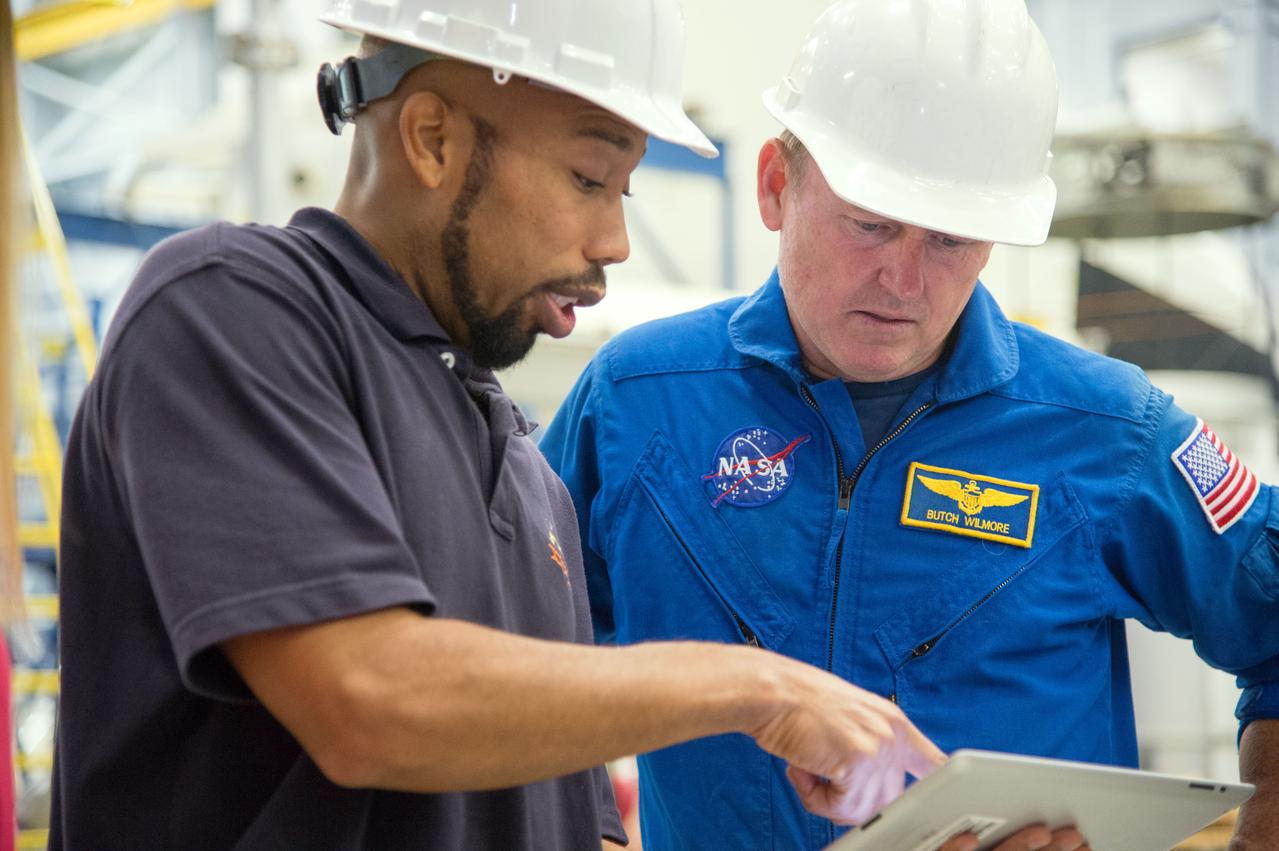
PHOTO DATE: 29 July 2013 LOCATION: Bldg. 9NW, Space Vehicle Mockup Training Facility - POGO SUBJECT: Expedition 42 crew member and astronaut Barry "Butch" Wilmore during ISS EVA POGO 1 training. Instructors Faruq Sabur (black shirt), Allissa Battocletti (red shirt), Sandy Fletcher (light blue shirt with glasses) and astronaut Shane Kimbrough assist. PHOTOGRAPHER: Mark Sowa

The Space Shuttle Discovery en route to Earth orbit for NASA's 51-A mission is reminiscent of a soaring Eagle. The red and white trailing stripes and the blue background, along with the presence of the Eagle, generate memories of America's 208 year-old history and traditions. The two satellites orbiting the Earth backgrounded amidst a celestial scene are a universal representation of the versatility of the Space Shuttle. White lettering against the blue border lists the surnames of the five-member crew.
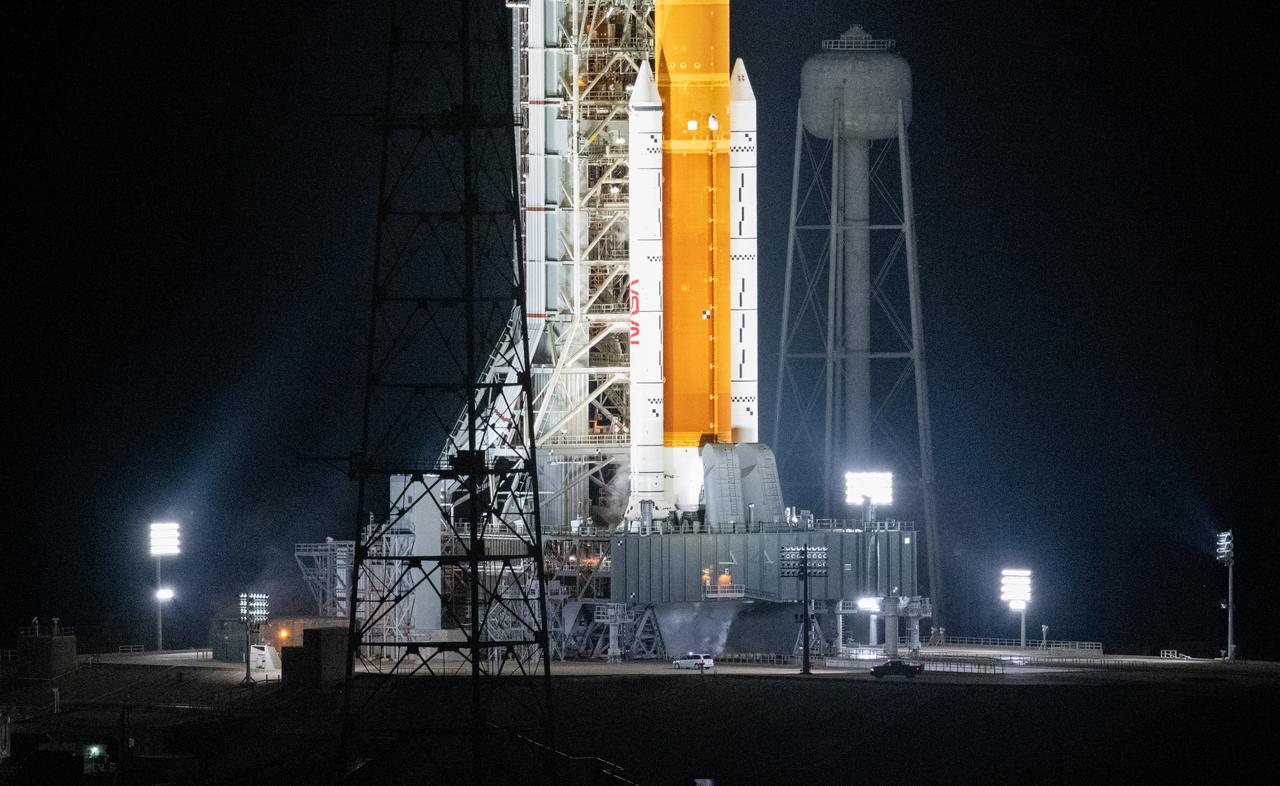
Vehicles with members of the red crew are seen as they arrive at Launch Pad 39B to make sure all connections and valves remain tight, Tuesday, Nov. 15, 2022, NASA’s Kennedy Space Center in Florida. NASA’s Artemis I flight test is the first integrated test of the agency’s deep space exploration systems: the Orion spacecraft, SLS rocket, and supporting ground systems. Launch of the uncrewed flight test is targeted for Nov. 16 at 1:04 a.m. EST. Photo Credit: (NASA/Joel Kowsky)

JSC2011-E-040330 (30 March 2011) --- NASA astronaut Chris Ferguson (foreground), STS-135 commander, visits Red Square in Moscow on March 30, 2011. The crew of the final shuttle mission traveled to Moscow for a suit fit check of their Russian Sokol suits which would be required in the event of an emergency. Photo credit: NASA Photo/Houston Chronicle, Smiley N. Pool
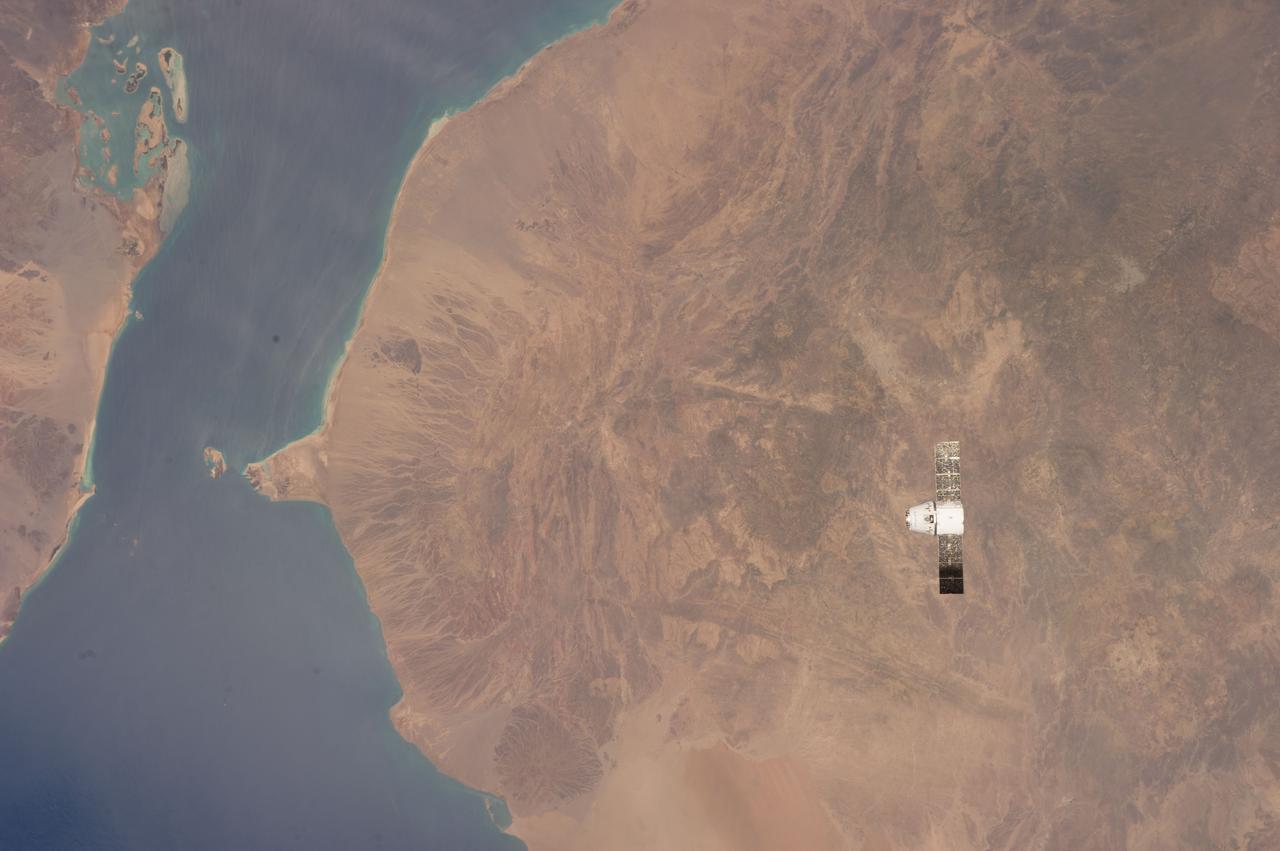
ISS039-E-013569 (20 April 2014) --- This is one of an extensive series of still photos documenting the April 20 arrival and ultimate capture and berthing of the SpaceX Dragon at the International Space Station, as photographed by the Expedition 39 crew members onboard the orbital outpost. In this photo, the two orbiting spacecraft were above a point in Yemen. Part of the Gulf of Aden and the Red Sea, can be seen at left. The Dragon spacecraft was captured by the space station and successfully berthed using the Canadian-built space station remote manipulator system or Canadarm2.
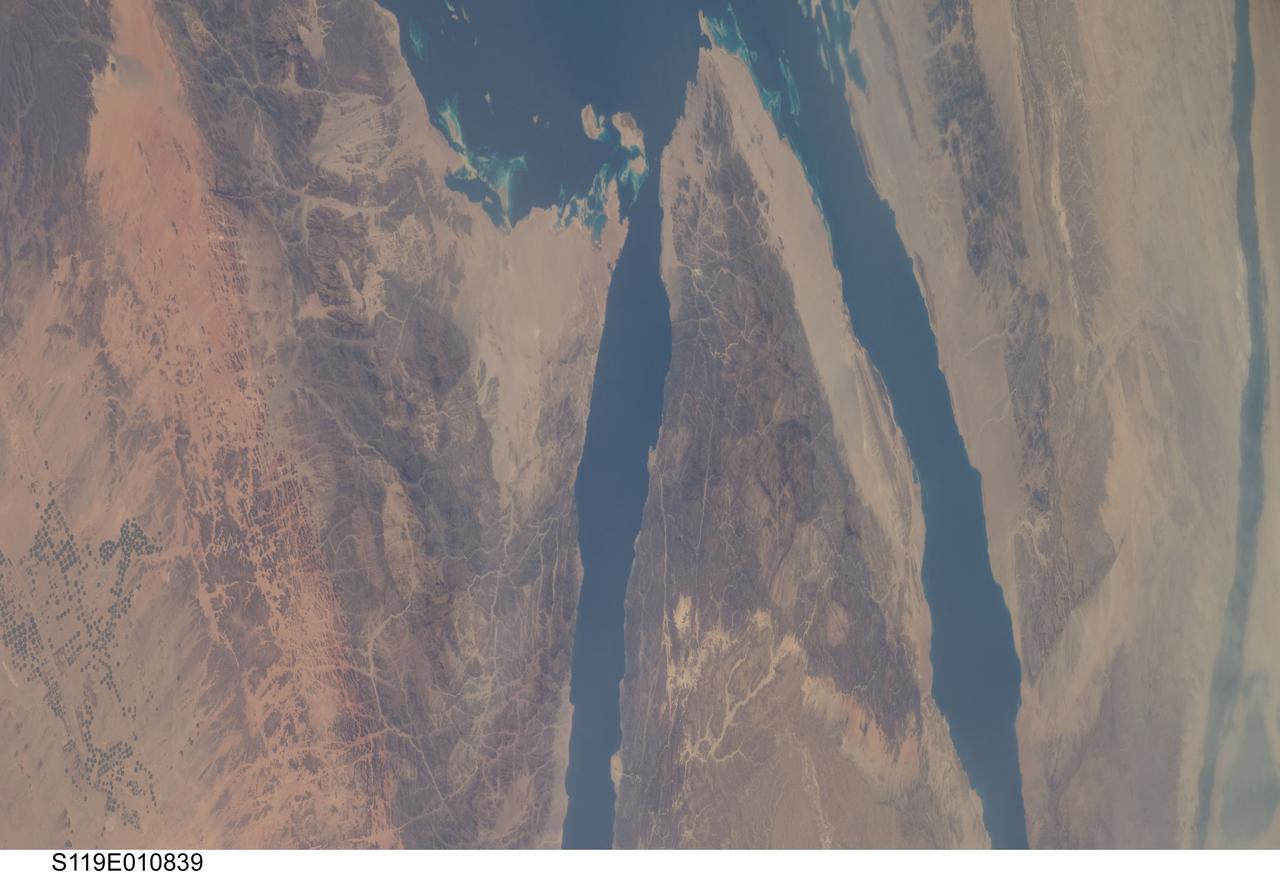
S119-E-010839 (27 March 2009) --- On its final full day in space before its scheduled return home on March 28, the crew of Space Shuttle Discovery took some pictures of the home planet, including this one of the Sinai Peninsula. The frame shows part of the Red Sea (top), Gulf of Suez (right of center), Nile River (far right edge), Gulf of Aqaba (center frame) and parts of the nations of Egypt, Jordan and Saudi Arabia.
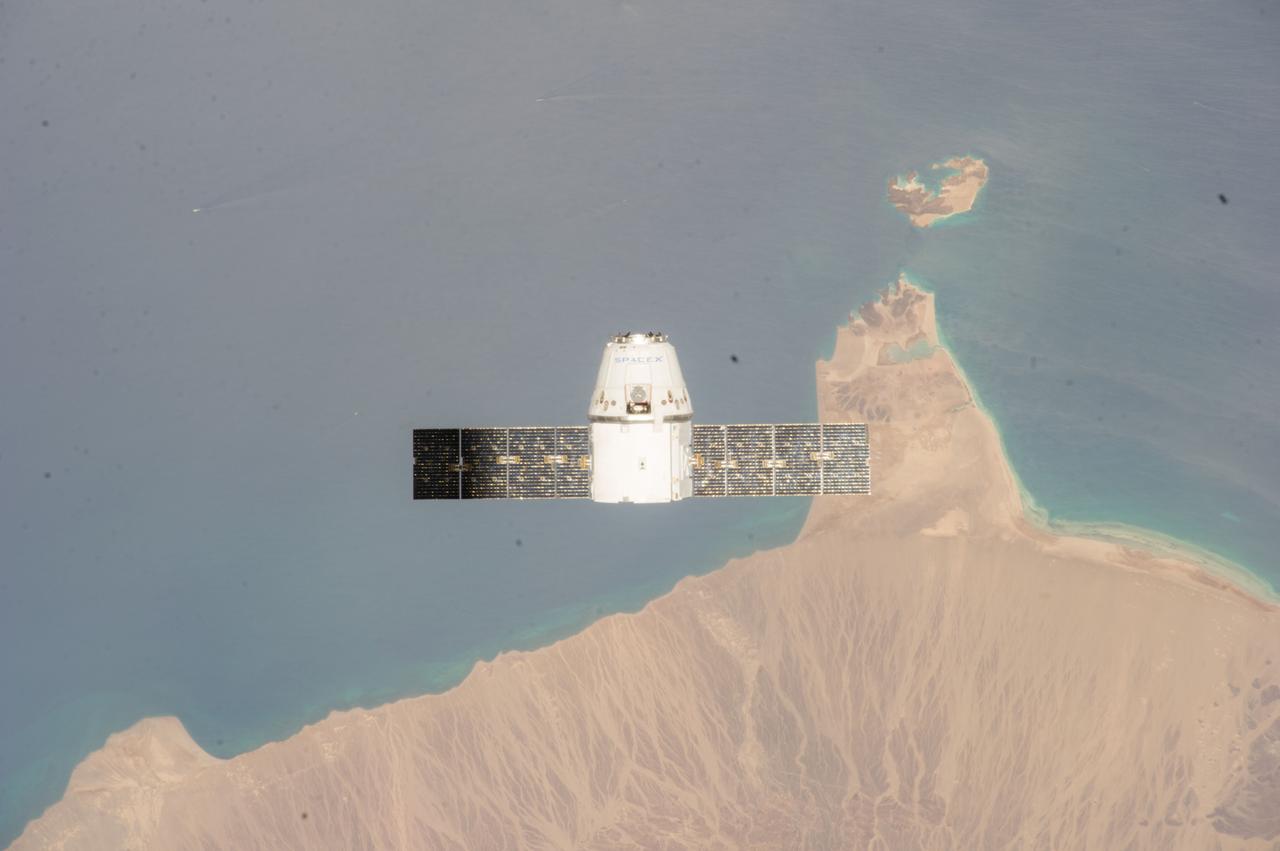
ISS039-E-013405 (20 April 2014) --- This is one of an extensive series of still photos documenting the April 20 arrival and ultimate capture and berthing of the SpaceX Dragon at the International Space Station, as photographed by the Expedition 39 crew members onboard the orbital outpost. The two orbiting spacecraft were above a point in the Gulf of Aden near the Red Sea, off the coast of Yemen. The Dragon spacecraft was captured by the space station and successfully berthed using the Canadian-built space station remote manipulator system or Canadarm2.
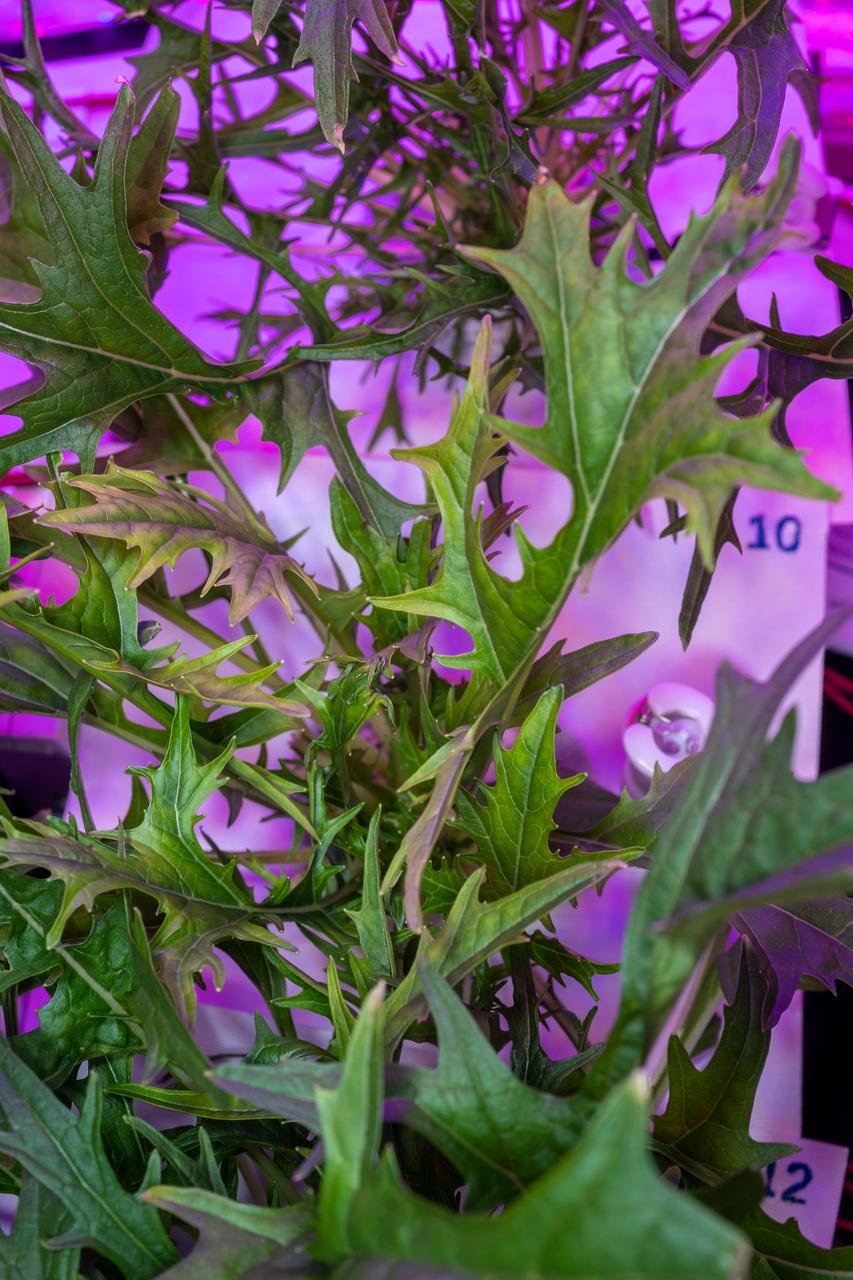
iss061e033379 (Nov. 7, 2019) --- Mizuna mustard greens are growing aboard the International Space Station to demonstrate the feasibility of space agriculture to provide fresh food for crews on deep space missions. The plants are grown under red-to-blue lighting and watered in pillows rather than soil in a specialized botany facility called VEGGIE. Crops are grown, harvested and consumed by astronauts with some samples stowed in science freezers for later analysis as part of the VEG-04 study.

iss073e0420541 (July 28, 2025) --- A vivid red and green aurora crowns Earth’s horizon over the southern Indian Ocean in this photo from the International Space Station as it orbited 270 miles above. At top left, a lit window reveals the docked SpaceX Dragon crew spacecraft docked to the orbital outpost's forward port on the Harmony module, set against a starry sky captured with long-exposure, low-light settings.
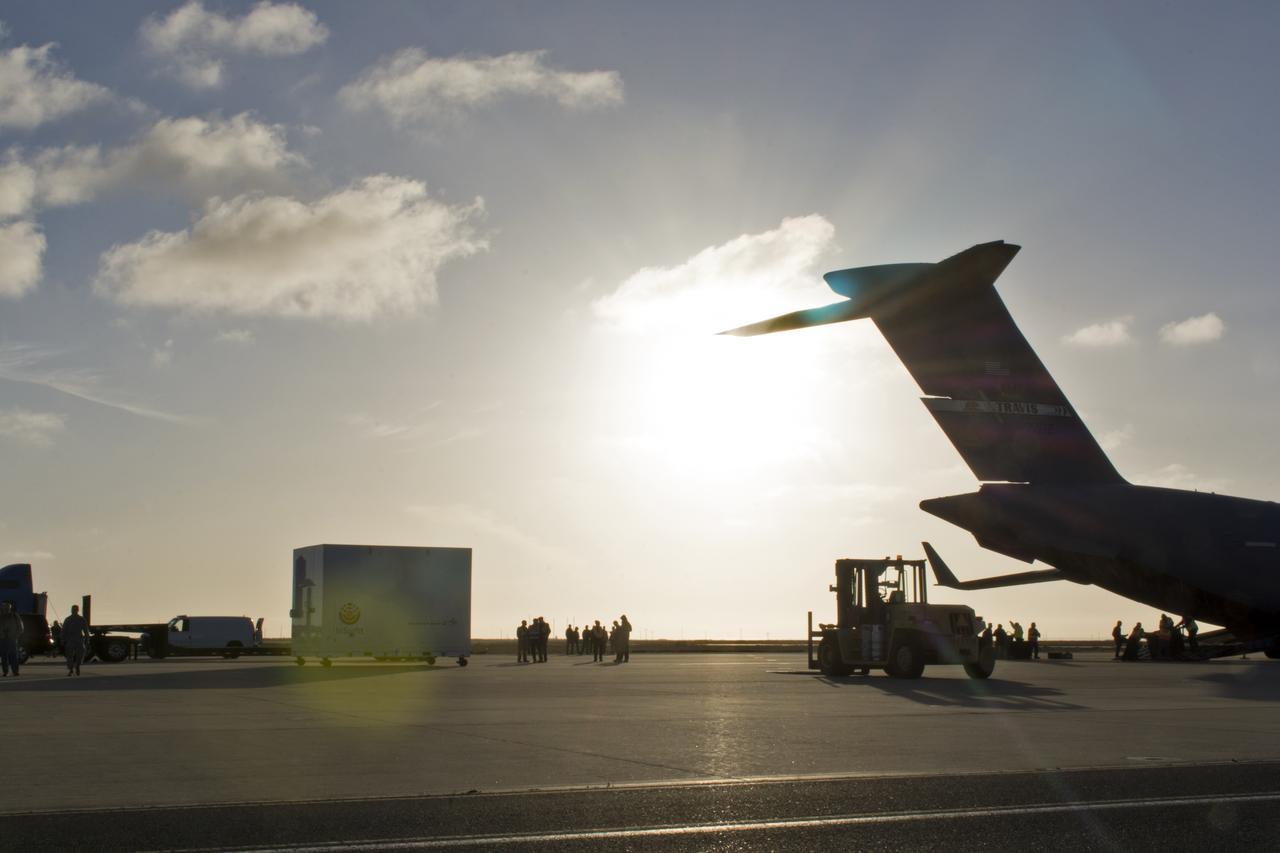
After a U.S. Air Force C-17 aircraft arrived at Vandenberg Air Force Base in California, ground crews offload NASA's Interior Exploration using Seismic Investigations, Geodesy and Heat Transport, or InSight, spacecraft designed to land on Mars. InSight was developed and built by Lockheed-Martin Space Systems in Denver, Colorado, and is scheduled for liftoff is May 5, 2018. InSight is the first mission to explore the Red Planet's deep interior. It will investigate processes that shaped the rocky planets of the inner solar system including Earth.

Expedition 65 prime crew members NASA astronaut Mark Vande Hei, left, and Russian cosmonaut Pyotr Dubrov of Roscosmos, center, watch as Russian cosmonaut Oleg Novitskiy of Roscosmos lays flowers at the site where Russian space icons are interred as part of traditional pre-launch ceremonies, Wednesday, March 24, 2021, at Red Square in Moscow. Photo Credit: (NASA/GCTC/Andrey Shelepin)

jsc2026e034360 (April 28, 2026) --- Preflight 3D reconstruction of the spleen as part of SPARK, an investigation that studies how spleen changes in size and shape and how red blood cells break down in space. SPARK aims to better understand the biological mechanisms of space-related anemia to better protect crew health during long-duration space missions. Credit: Bone and Joint Research Laboratory.
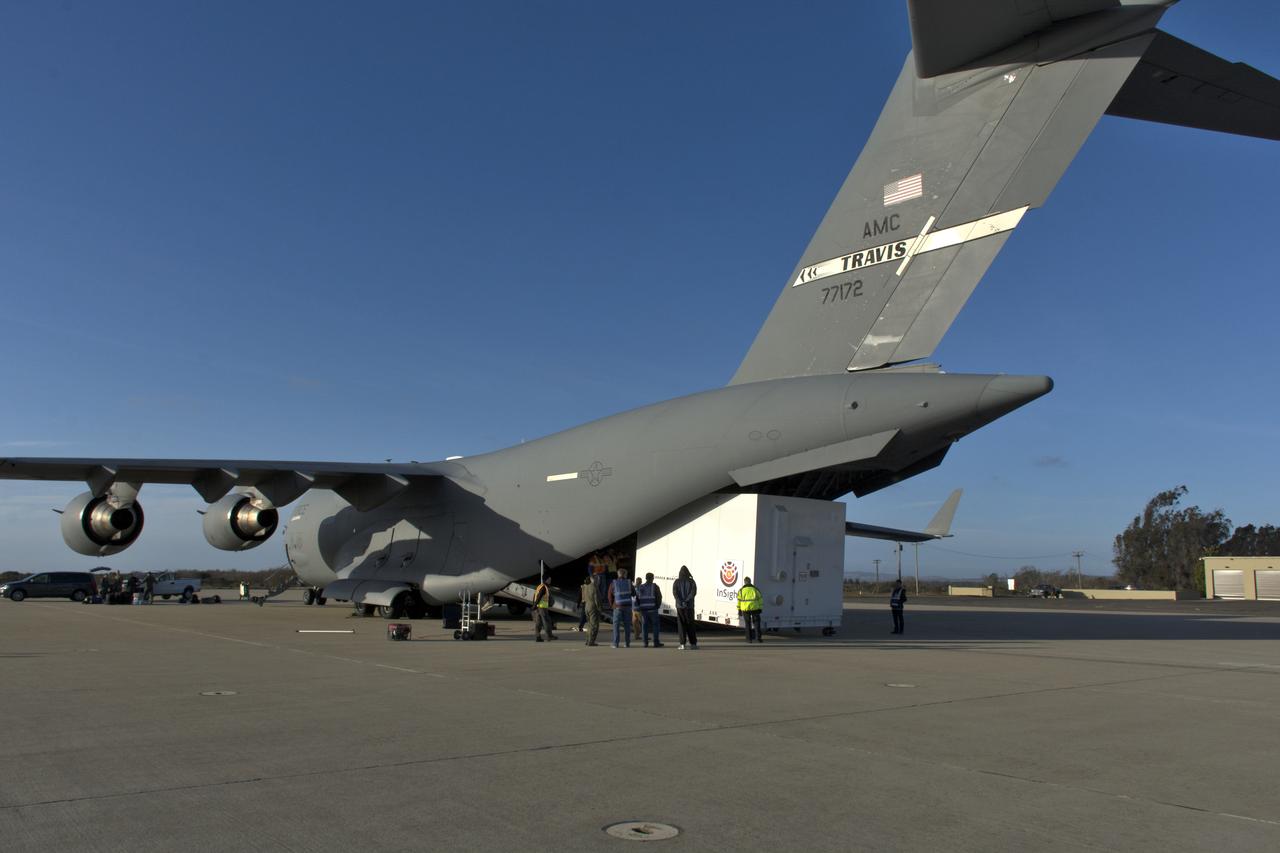
After a U.S. Air Force C-17 aircraft arrived at Vandenberg Air Force Base in California, ground crews offload NASA's Interior Exploration using Seismic Investigations, Geodesy and Heat Transport, or InSight, spacecraft designed to land on Mars. InSight was developed and built by Lockheed-Martin Space Systems in Denver, Colorado, and is scheduled for liftoff is May 5, 2018. InSight is the first mission to explore the Red Planet's deep interior. It will investigate processes that shaped the rocky planets of the inner solar system including Earth.

JSC2000-E-27077 (16 October 2000) --- Expedition One crew members in Moscow's Red Square. From left, Soyuz pilot Yuri Gidzenko, flight engineer Sergei Krikalev, and expedition commander William M. (Bill) Shepherd. While in Moscow, the trio also visited the grave of Soviet cosmonaut Yuri Gagarin (1934-1968). Paying respects to the first man in space is customary in Russia prior to a spaceflight.
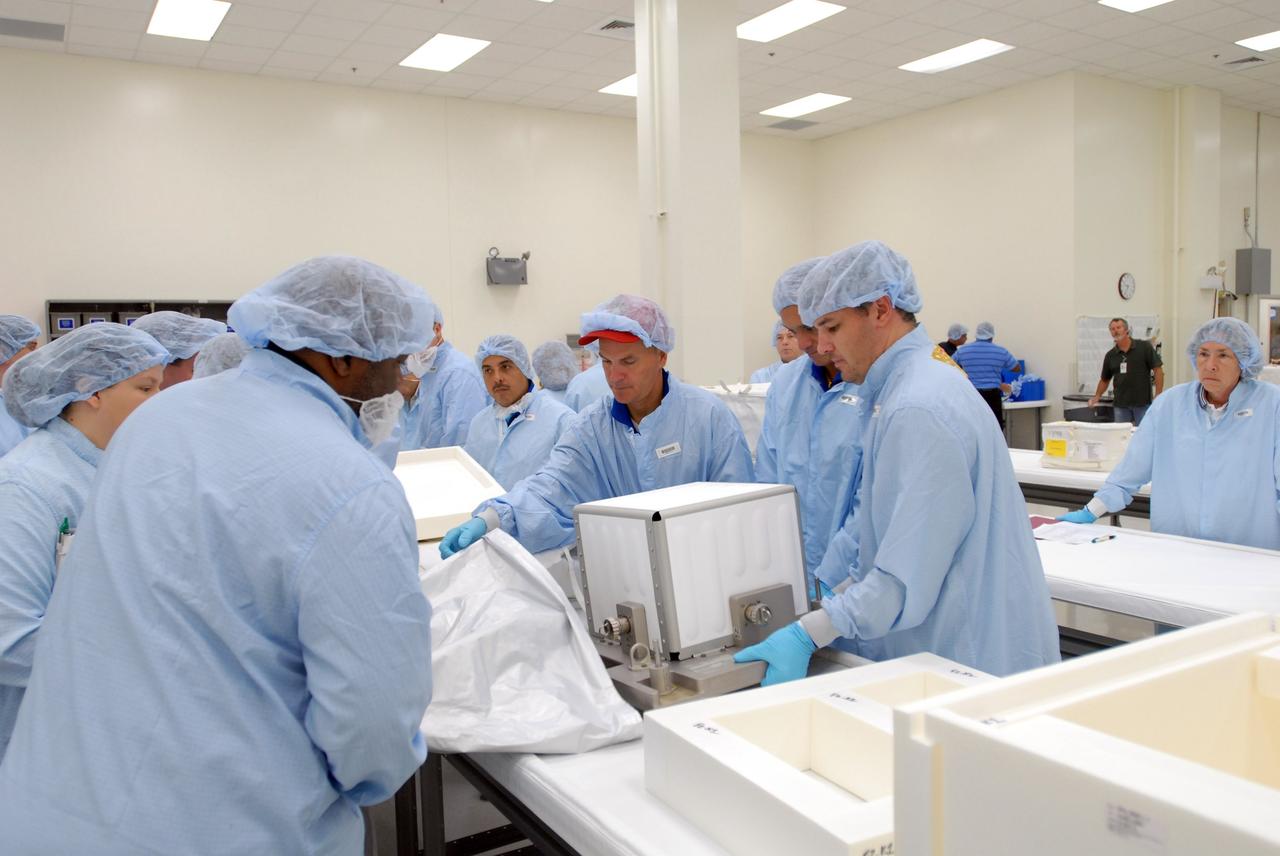
CAPE CANAVERAL, Fla. – In the Space Station Processing Facility, STS-128 crew members look over packages of equipment that will accompany the mission. At center (with the red cap) is Commander Rick Sturckow; to his left is Mission Specialist José Hernandez. The STS-128 flight will carry science and storage racks to the International Space Station on space shuttle Discovery. Launch of Discovery is targeted for Aug. 6. Photo credit: NASA/Jim Grossmann
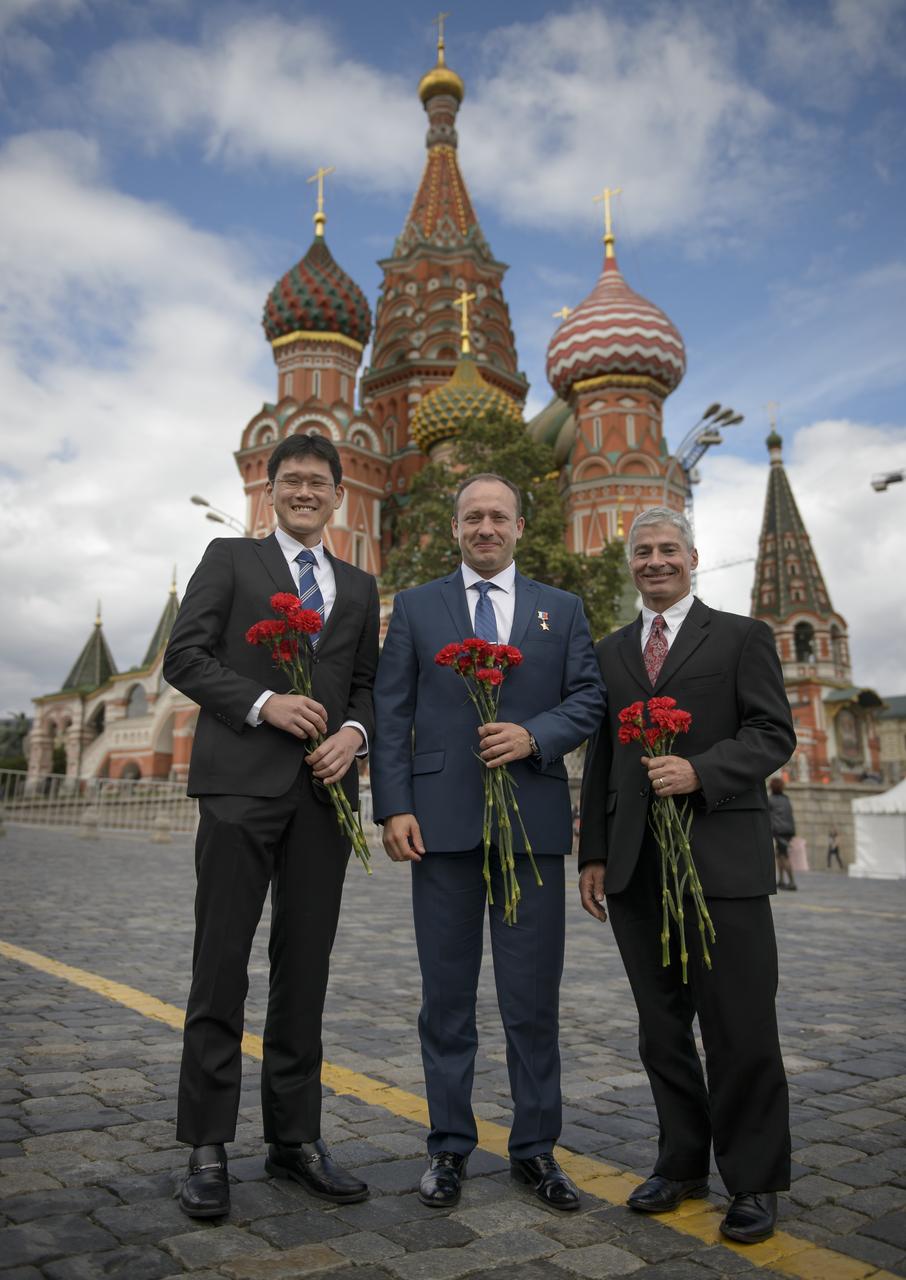
Expedition 52 backup crew members Norishige Kanai of the Japan Aerospace Exploration Agency (JAXA), left, Alexander Misurkin of Roscosmos, center, and Mark Vande Hei of NASA pose for a photograph in front of Saint Basil's Cathedral as they visited Red Square to lay roses at the site where Russian space icons are interred as part of traditional pre-launch ceremonies, Monday, July 10, 2017 in Moscow. Photo Credit: (NASA/Bill Ingalls)

After a U.S. Air Force C-17 aircraft arrived at Vandenberg Air Force Base in California, ground crews have offloaded NASA's Interior Exploration using Seismic Investigations, Geodesy and Heat Transport, or InSight, spacecraft designed to land on Mars. InSight was developed and built by Lockheed-Martin Space Systems in Denver, Colorado, and is scheduled for liftoff is May 5, 2018. InSight is the first mission to explore the Red Planet's deep interior. It will investigate processes that shaped the rocky planets of the inner solar system including Earth.

Expedition 65 prime crew members, NASA astronaut Mark Vande Hei, left, Russian cosmonaut Oleg Novitskiy of Roscosmos, center, and Russian cosmonaut Pyotr Dubrov of Roscosmos visit Red Square to lay flowers at the site where Russian space icons are interred as part of traditional pre-launch ceremonies, Wednesday, March 24, 2021 in Moscow. Photo Credit: (NASA/GCTC/Andrey Shelepin)
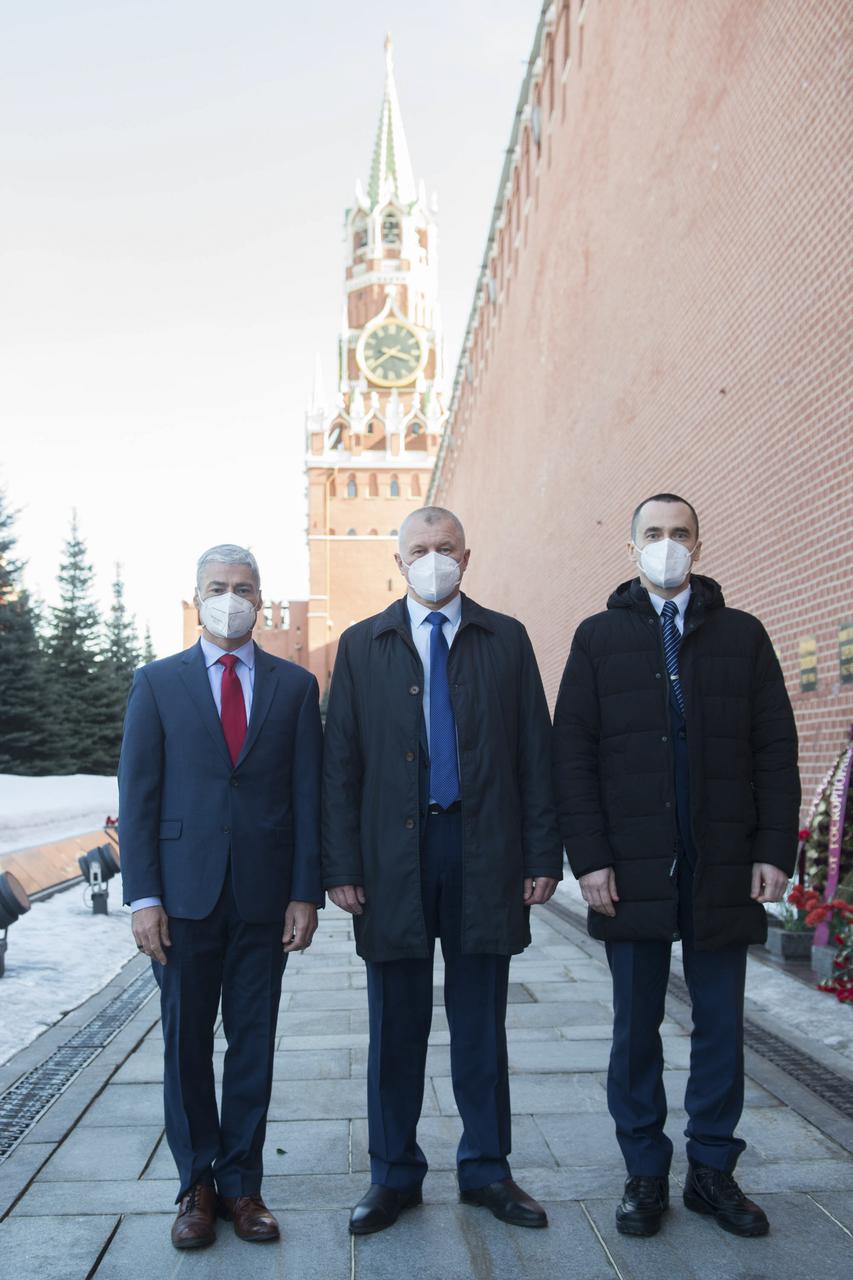
Expedition 65 prime crew members, NASA astronaut Mark Vande Hei, left, Russian cosmonaut Oleg Novitskiy of Roscosmos, center, and Russian cosmonaut Pyotr Dubrov of Roscosmos, right, pose for a photo in Red Square after laying flowers at the site where Russian space icons are interred as part of traditional pre-launch ceremonies, Wednesday, March 24, 2021 in Moscow. Photo Credit: (NASA/GCTC/Andrey Shelepin)
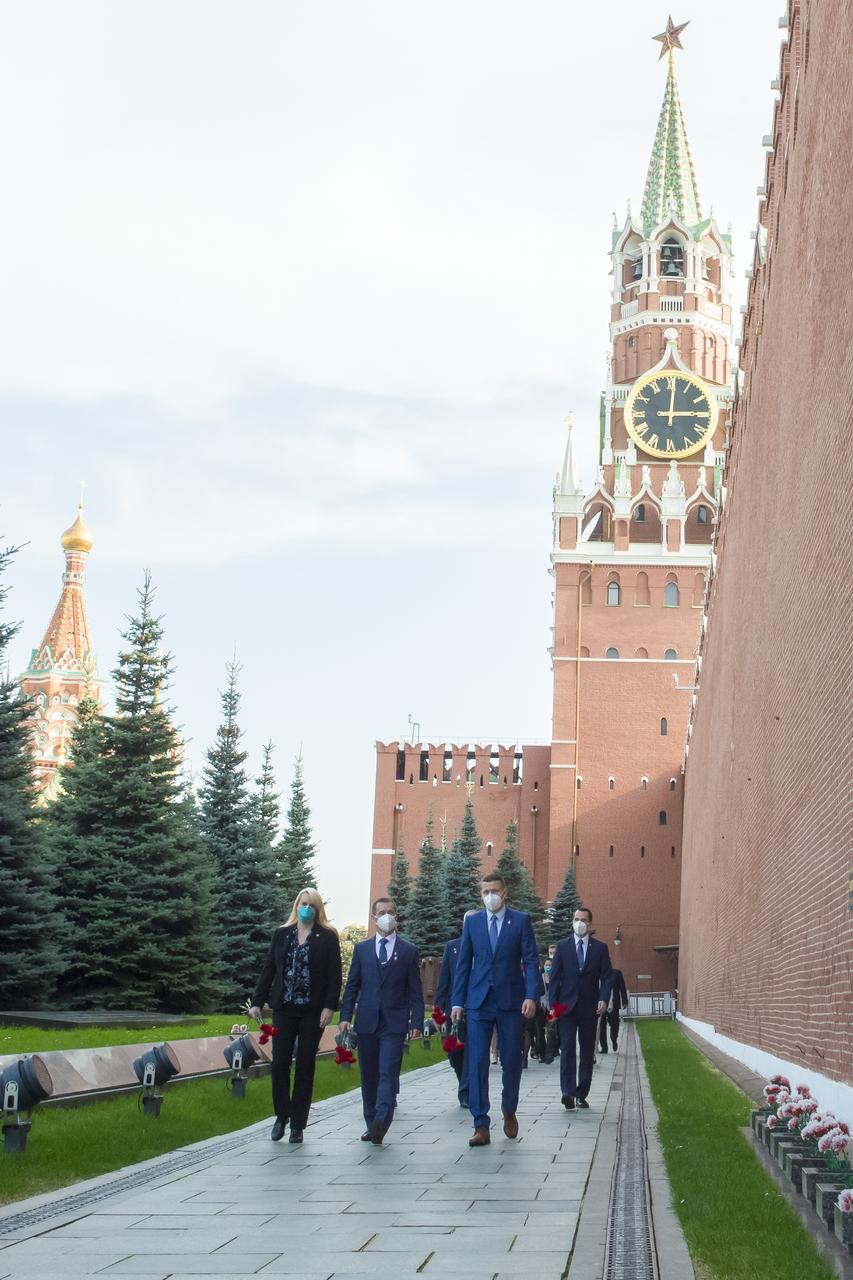
Expedition 64 prime crew members, NASA astronaut Kate Rubins, left, Russian cosmonaut Sergey Ryzhikov of Roscosmos, center, and Russian cosmonaut Sergey Kud-Sverchkov of Roscosmos visit Red Square to lay flowers at the site where Russian space icons are interred as part of traditional pre-launch ceremonies, Thursday, Sept. 24, 2020 in Moscow. Photo Credit: (NASA/GCTC/Irina Spector)
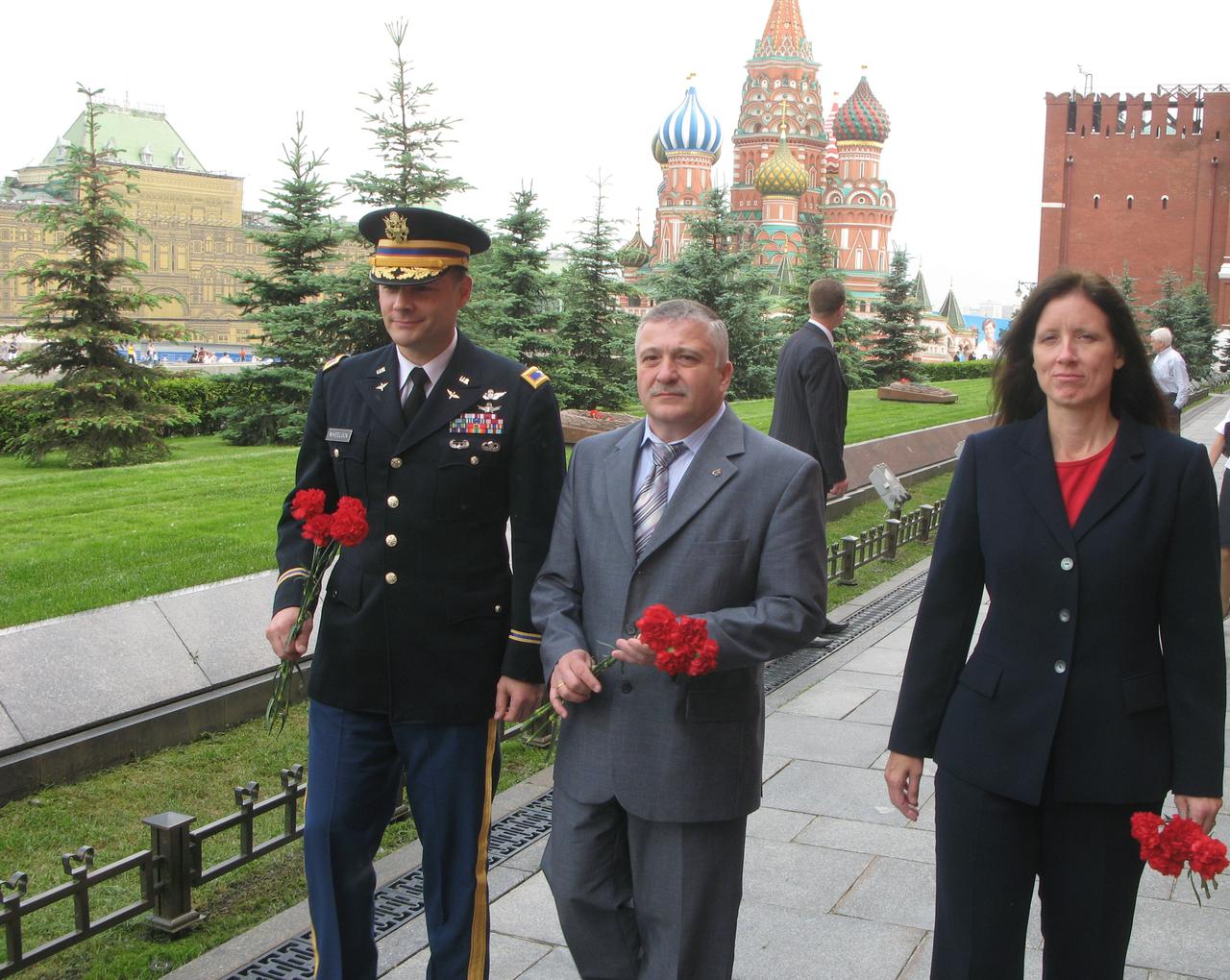
The prime crew for the launch of the Soyuz TMA-19 spacecraft to the International Space Station conducts its ceremonial tour of Red Square May 31, 2010 prior to flying to the Baikonur Cosmodrome in Kazakhstan for final prelaunch preparations. From left to right are prime crewmembers Doug Wheelock, Soyuz Commander Fyodor Yurchikhin and Flight Engineer Shannon Walker. They are scheduled to liftoff June 16 to the International Space Station. Credit: NASA/Stephanie Stoll and Mark Polansky
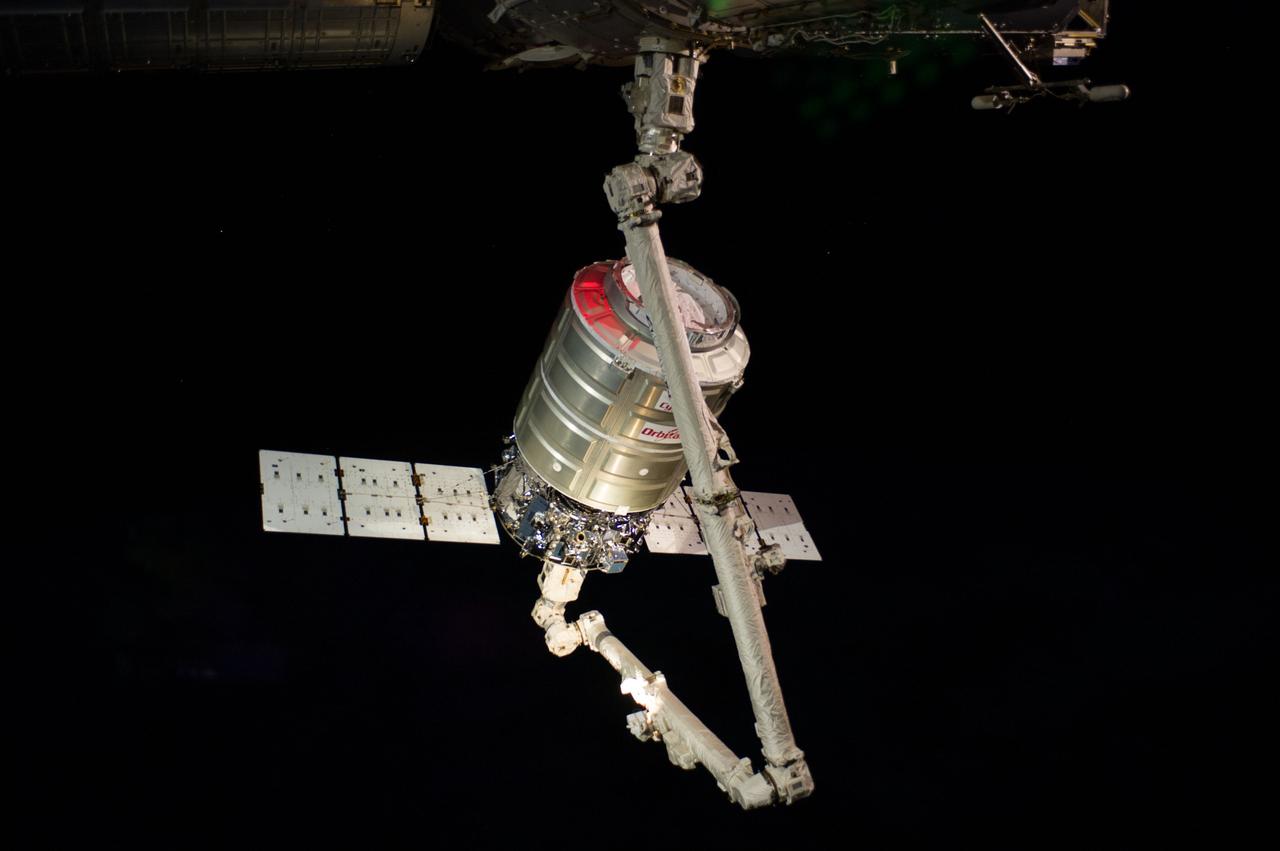
ISS040-E-067885 (16 July 2014) --- The Orbital Sciences’ Cygnus cargo craft attached to the end of the Canadarm2 robotic arm of the International Space Station is photographed by an Expedition 40 crew member after the two spacecraft converged at 6:36 a.m. (EDT) on July 16, 2014. The red color on Cygnus is a spectral effect from one of Cygnus’ strobe lights against the fading light heading into an orbital sunset following grapple.
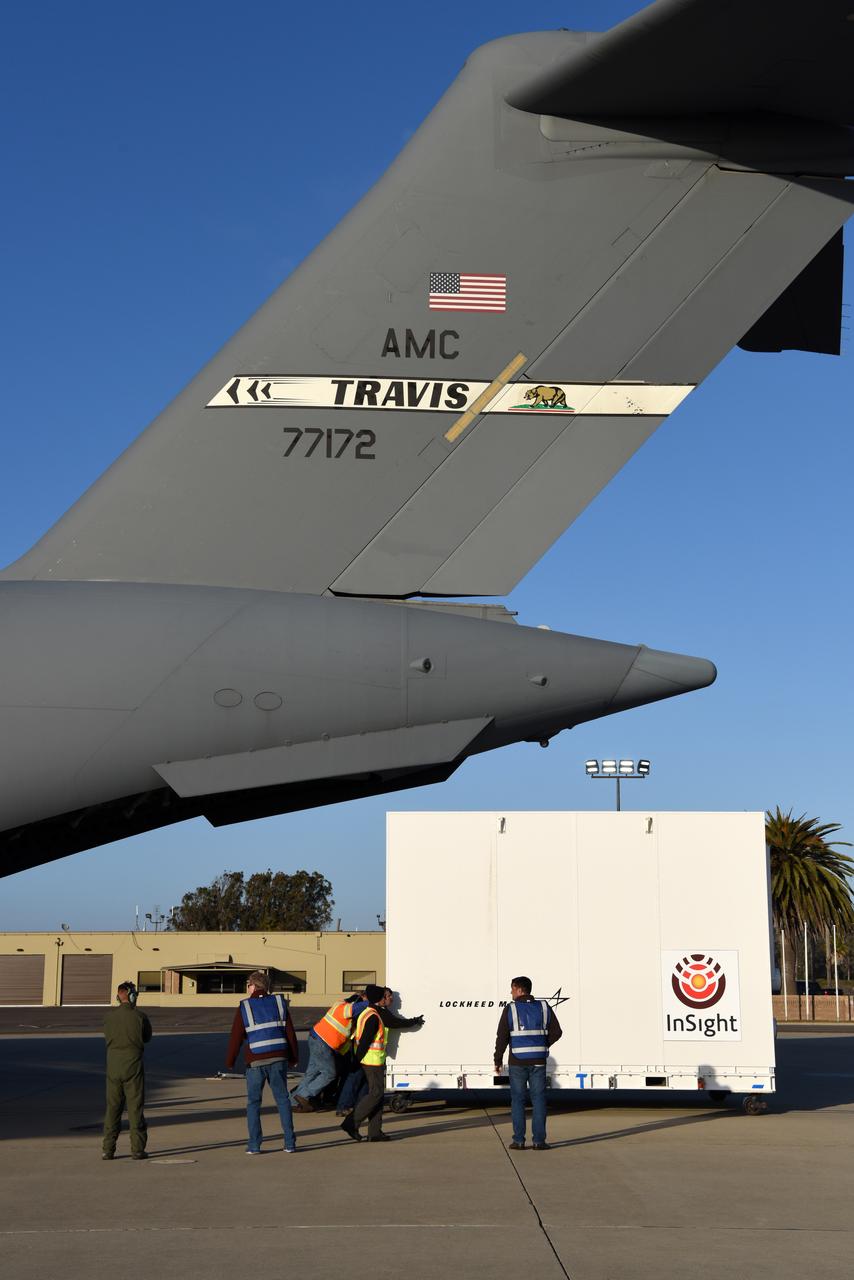
After a U.S. Air Force C-17 aircraft arrived at Vandenberg Air Force Base in California, ground crews offload NASA's Interior Exploration using Seismic Investigations, Geodesy and Heat Transport, or InSight, spacecraft designed to land on Mars. InSight was developed and built by Lockheed-Martin Space Systems in Denver, Colorado, and is scheduled for liftoff is May 5, 2018. InSight is the first mission to explore the Red Planet's deep interior. It will investigate processes that shaped the rocky planets of the inner solar system including Earth.
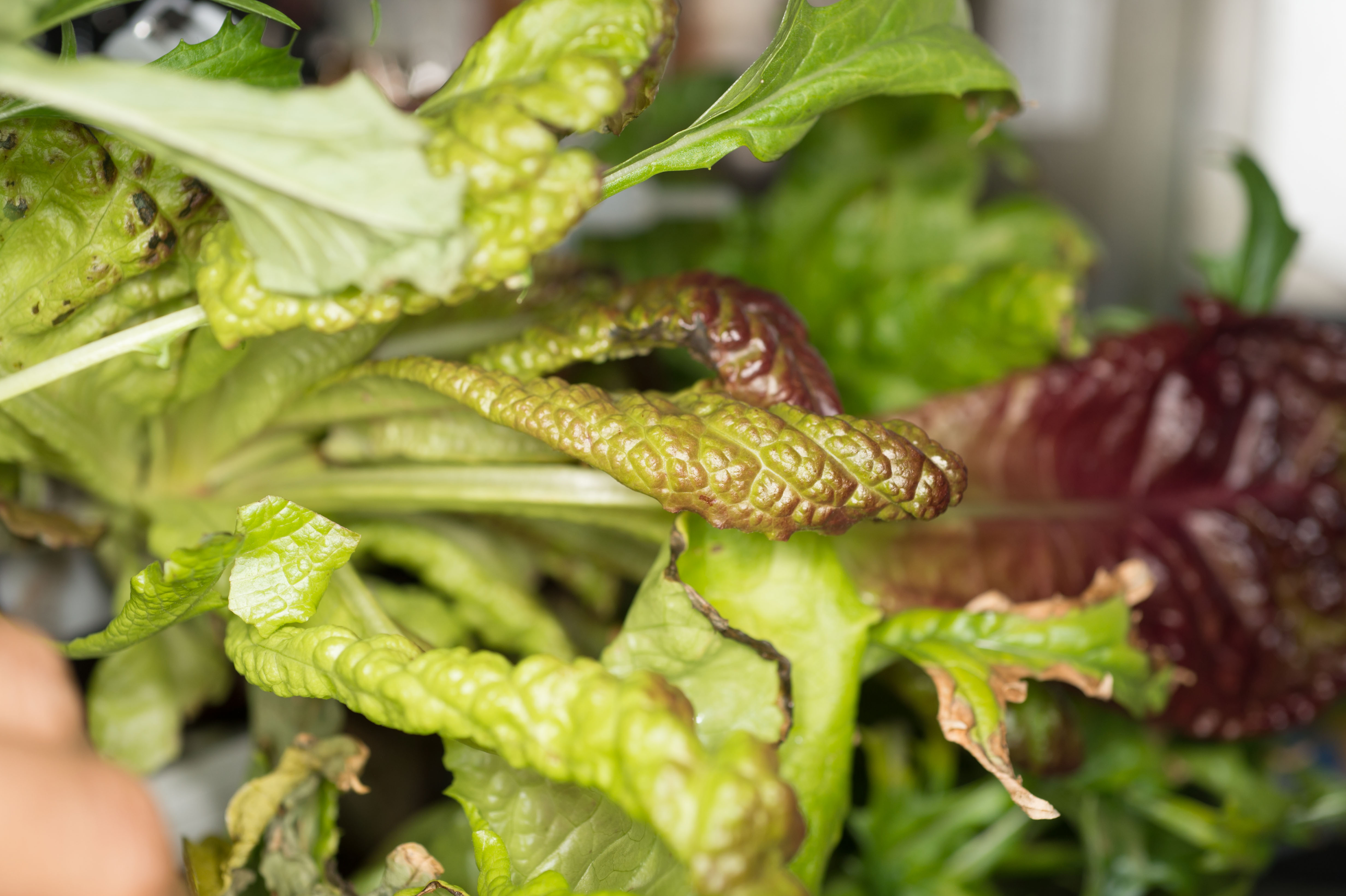
iss053e143976 (Nov. 11, 2017) --- Red lettuce is pictured being cultivated inside the Veggie facility for the Veg-03 botany experiment. Future long-duration space missions will look to have crew members grow their own food, so understanding how plants respond to microgravity is an important step toward that goal. Veg-03 uses the Veggie plant growth facility to cultivate a type of cabbage, lettuce and mizuna which are harvested on-orbit with samples returned to Earth for testing.