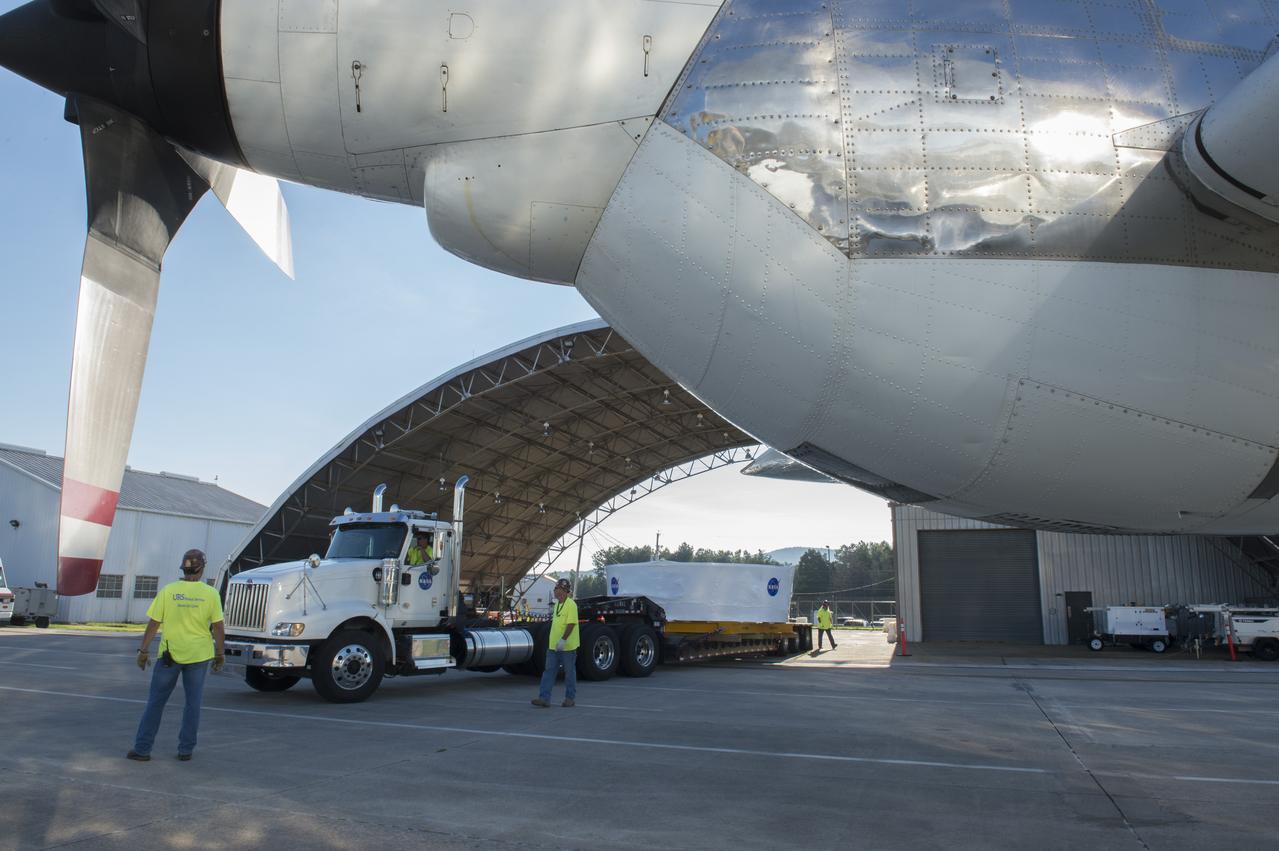
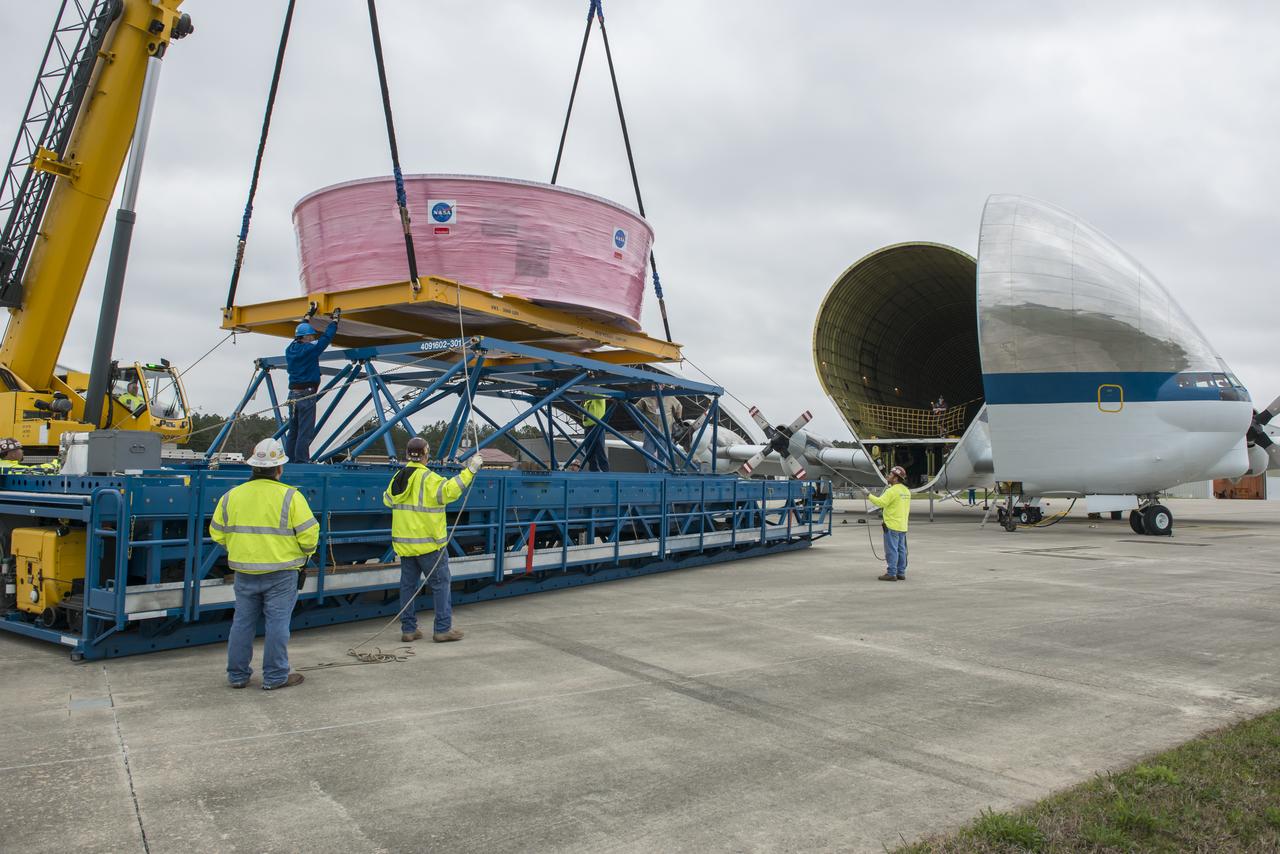
The Orion stage adapter arrives at Redstone Airfield where it will be loaded into NASA's Super Guppie aircraft for transportation to Denver, Colorado where it will undergo further testing.
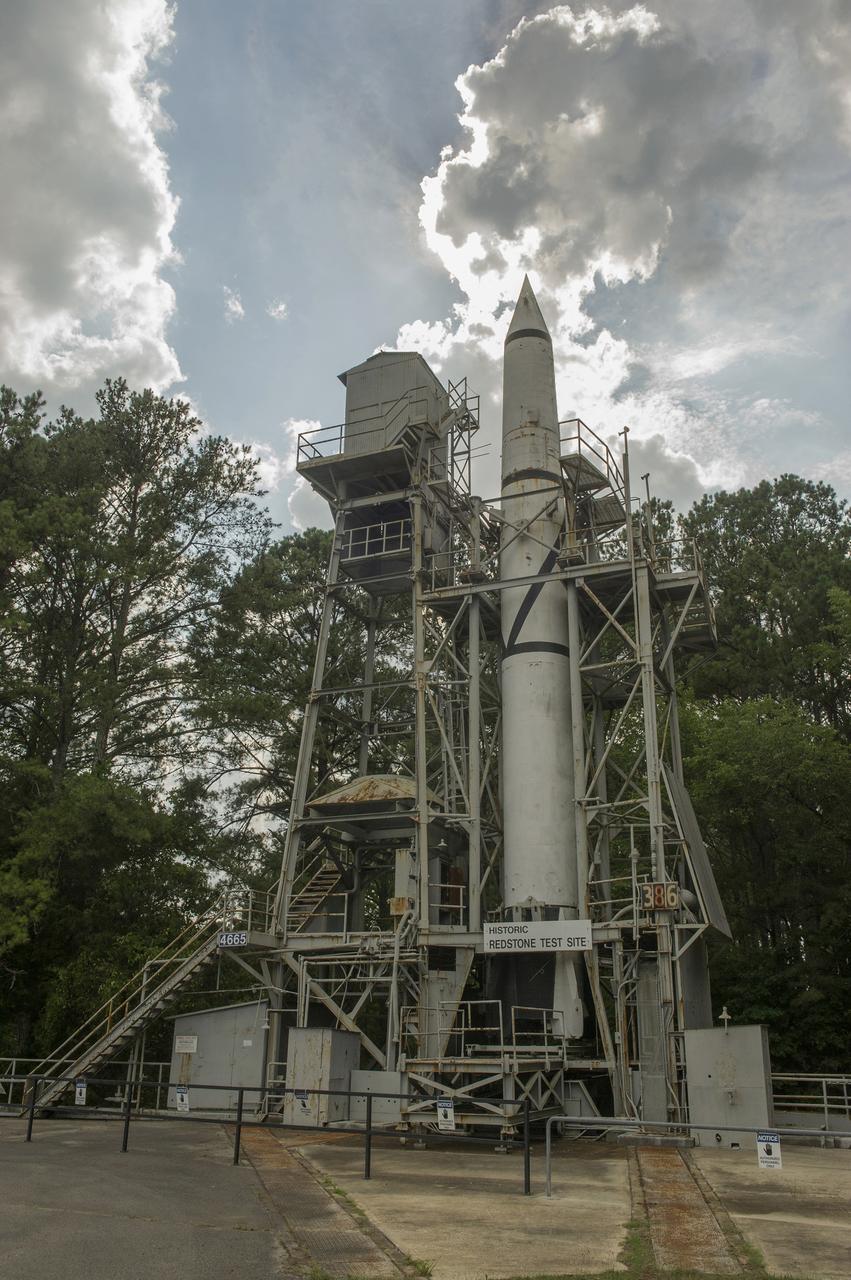
HISTORIC REDSTONE TEST SITE-TEST STAND 4665
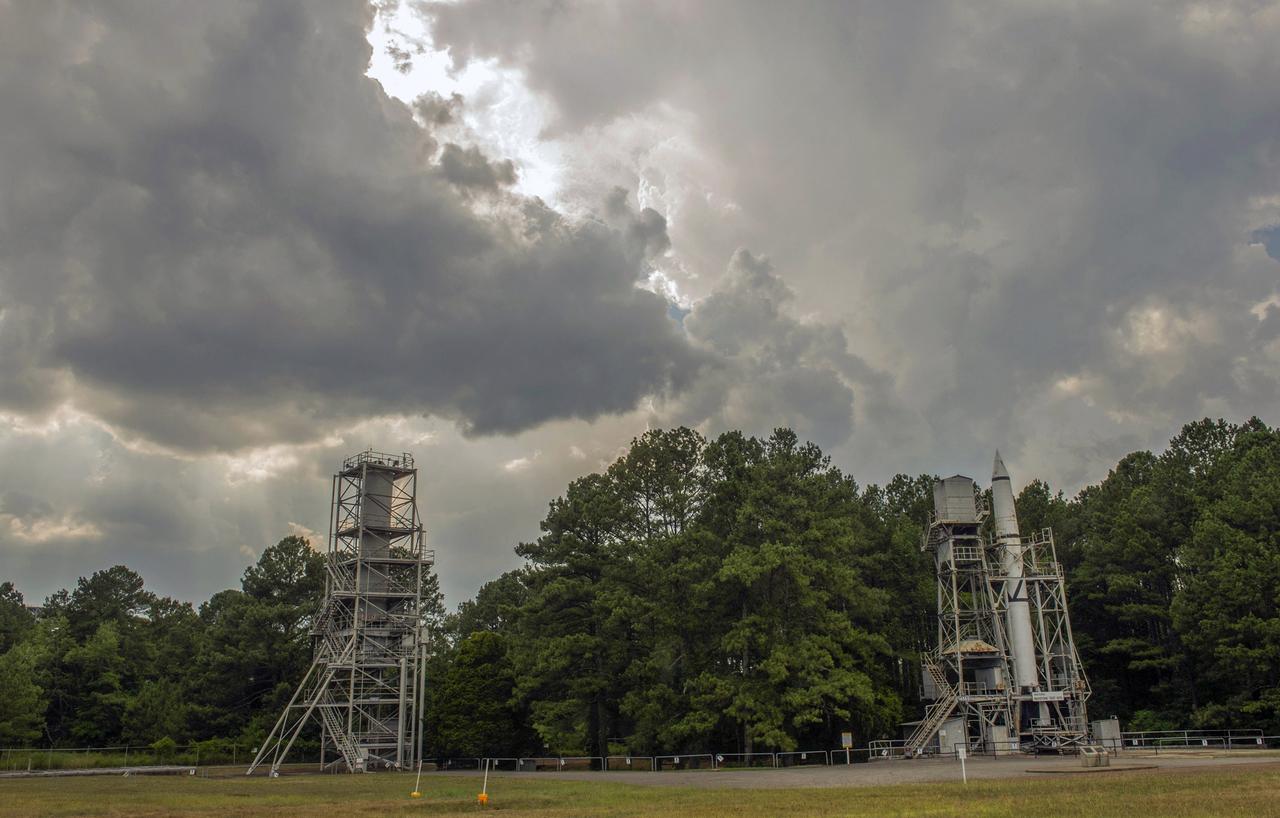
HISTORIC REDSTONE TEST SITE-TEST STAND 4665 (R), AND TEST STAND 4665A (L)
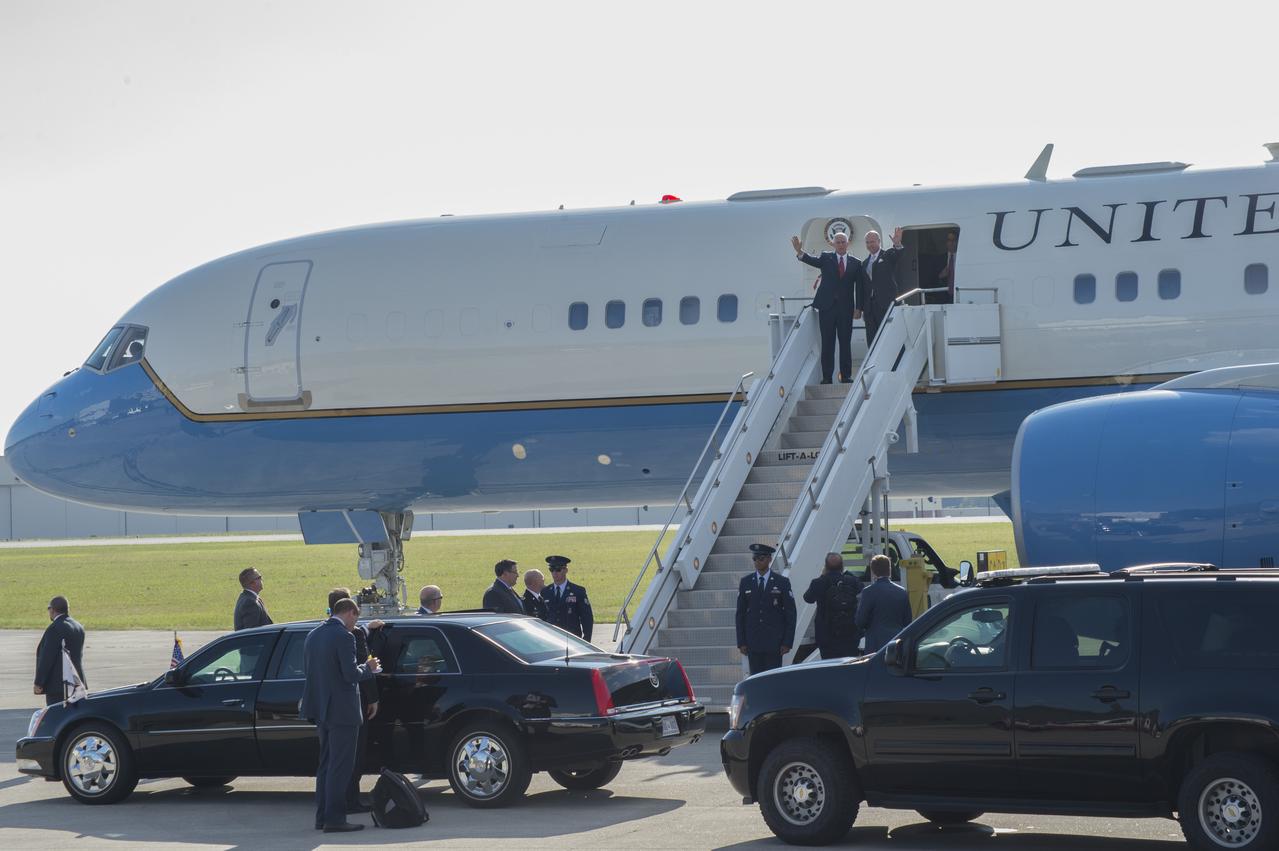
Air Force Two lands with Vice President Mike Pence along with Congressman Robert Aderholt at the Redstone Army Airfield in Huntsville, Alabama, on Monday, Sept. 25. The Vice President is visiting NASA’s Marshall Space Flight Center, located on Redstone Arsenal, to meet with employees, view test hardware for NASA’s Space Launch System — America’s new deep-space rocket, and tour the Payload Operations Integration Center, “science central” for the International Space Station.
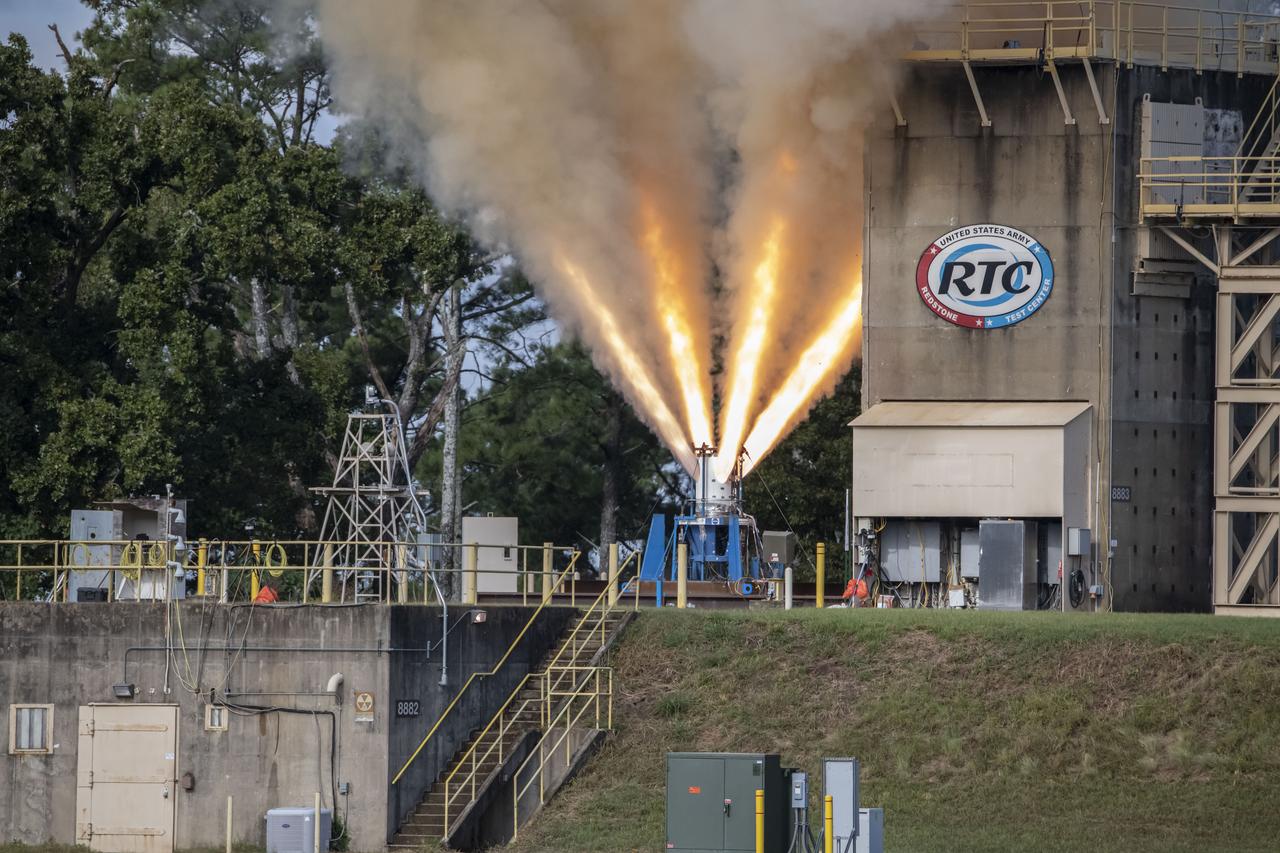
Redstone Test Center hosted the final hot fire test of the Aerojet Rocketdyne Orion Launch Abort System (LAS) at Redstone Arsenal’s test area 5.
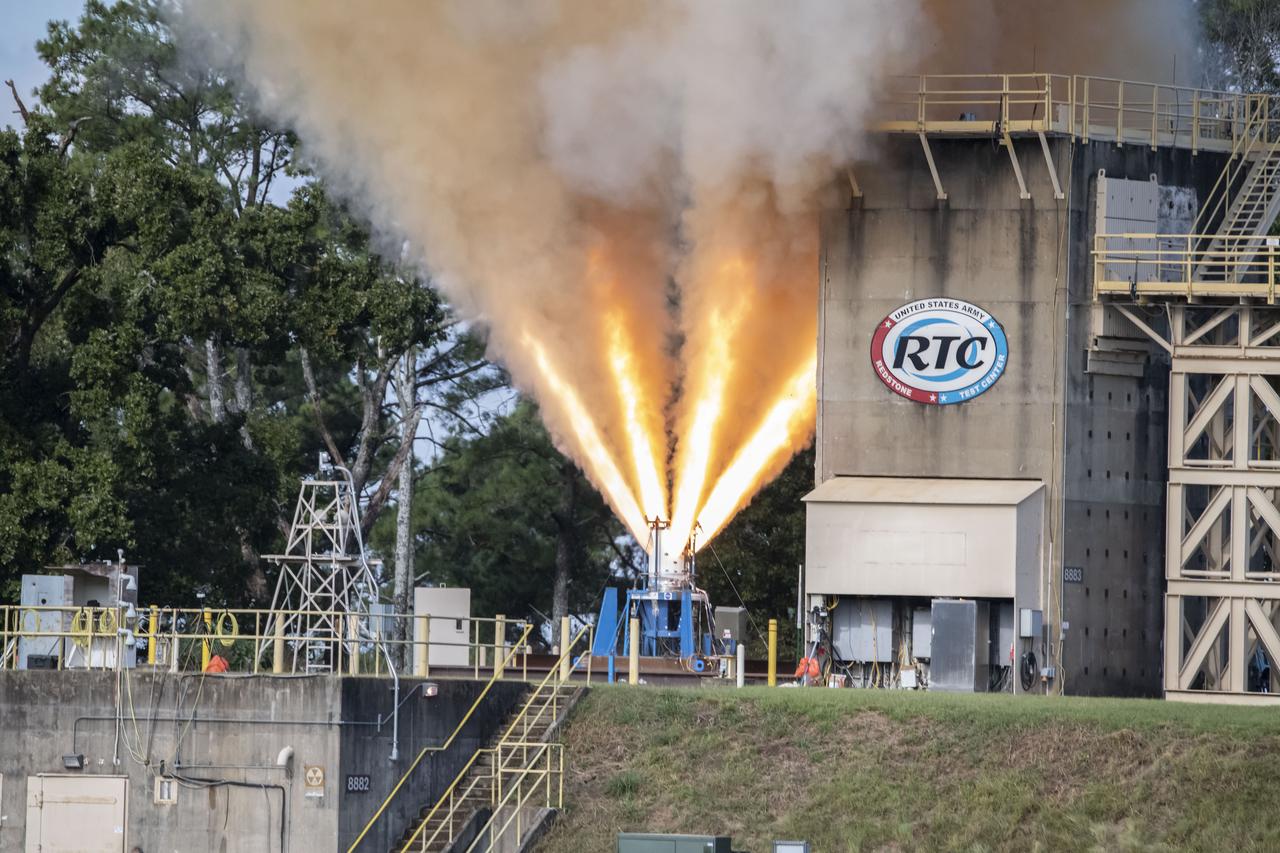
Redstone Test Center hosted the final hot fire test of the Aerojet Rocketdyne Orion Launch Abort System (LAS) at Redstone Arsenal’s test area 5.
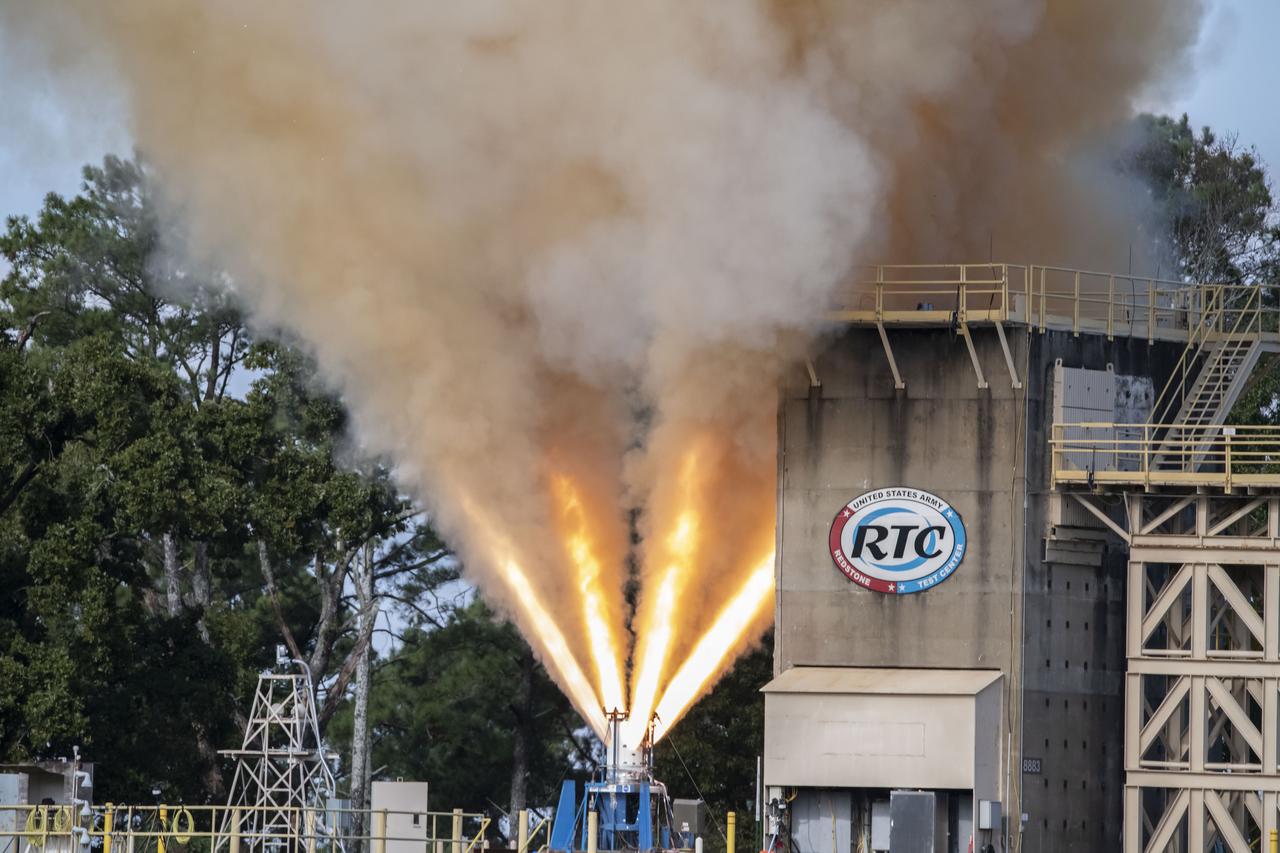
Redstone Test Center hosted the final hot fire test of the Aerojet Rocketdyne Orion Launch Abort System (LAS) at Redstone Arsenal’s test area 5.
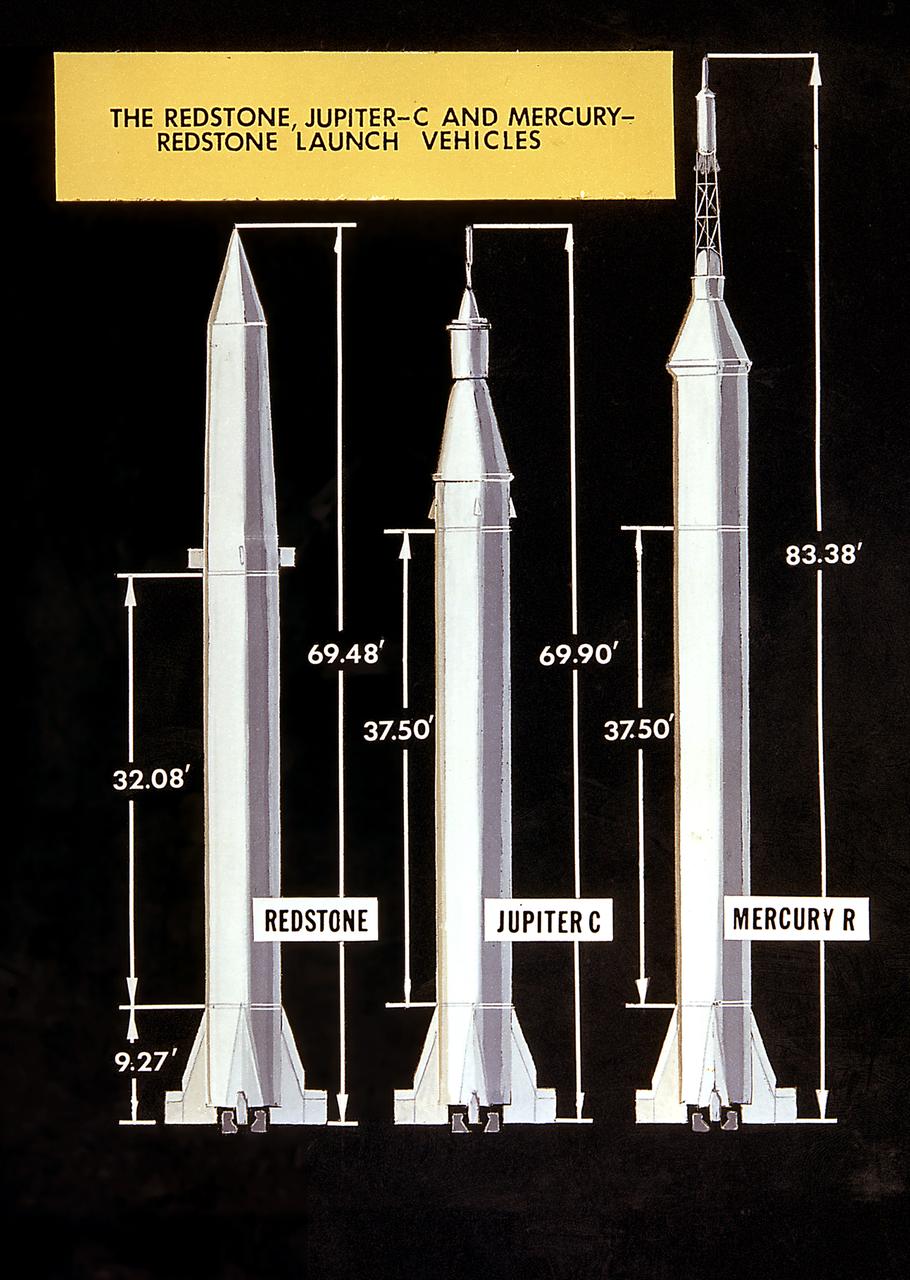
This is a comparison illustration of the Redstone, Jupiter-C, and Mercury Redstone launch vehicles. The Redstone ballistic missile was a high-accuracy, liquid-propelled, surface-to-surface missile. Originally developed as a nose cone re-entry test vehicle for the Jupiter intermediate range ballistic missile, the Jupiter-C was a modification of the Redstone missile and successfully launched the first American Satellite, Explorer-1, in orbit on January 31, 1958. The Mercury Redstone lifted off carrying the first American, astronaut Alan Shepard, in his Mercury spacecraft Freedom 7, on May 5, 1961.
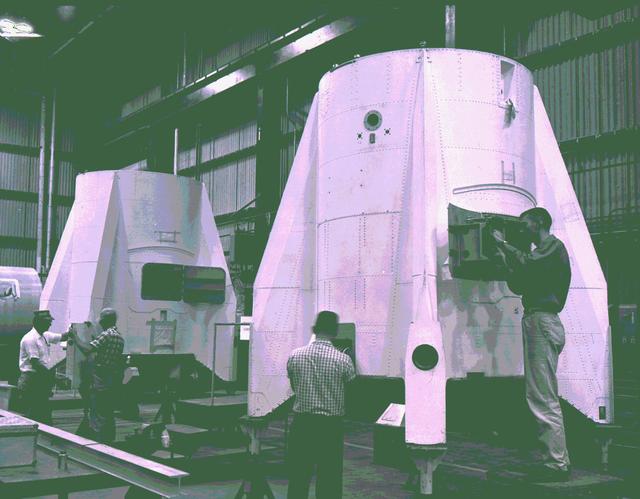
In this 1959 photograph, technicians prepare tail sections for Mercury-Redstone vehicles in Building 4706 at Redstone Arsenal in Huntsville, Alabama. Developed by Dr. Wernher von Braun and the rocket team at Redstone, the Mercury-Redstone launched the first two marned U.S. missions.
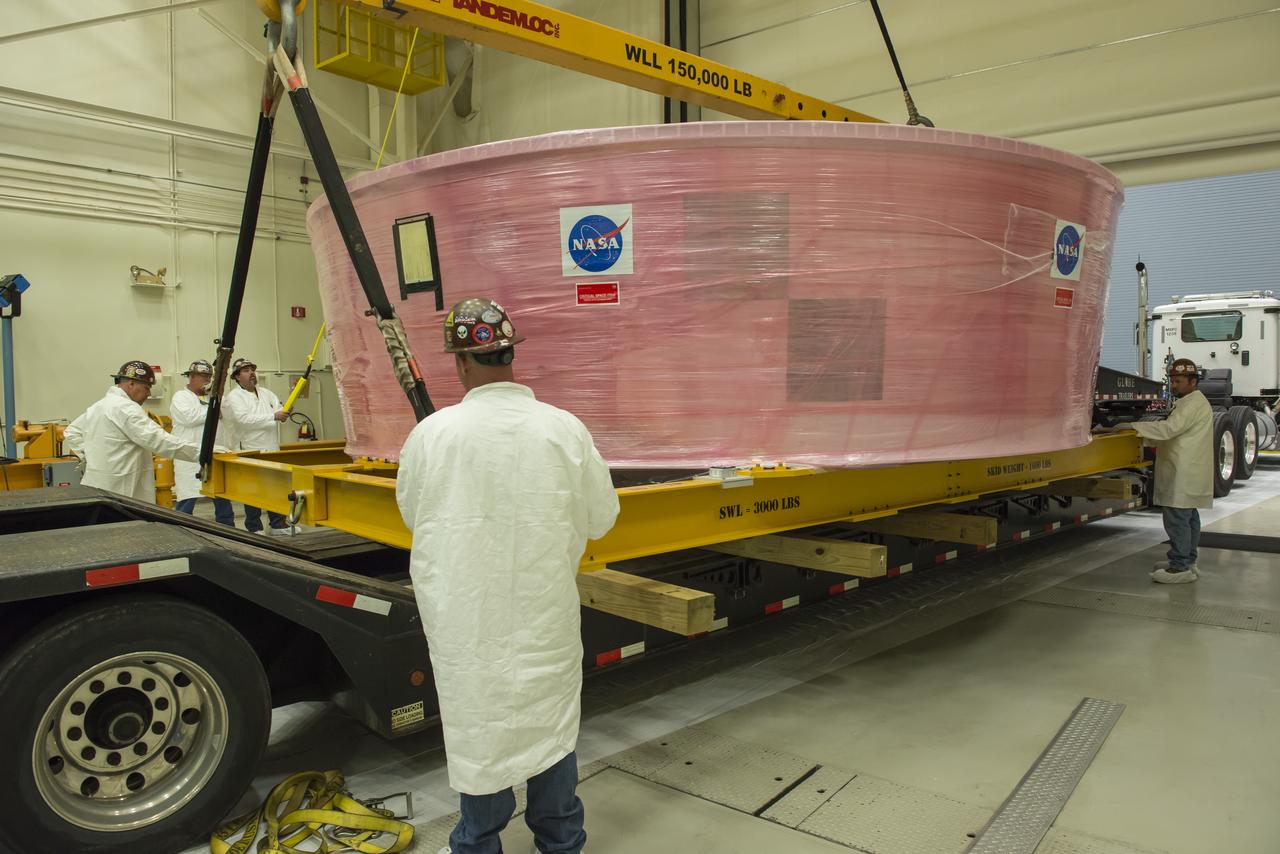
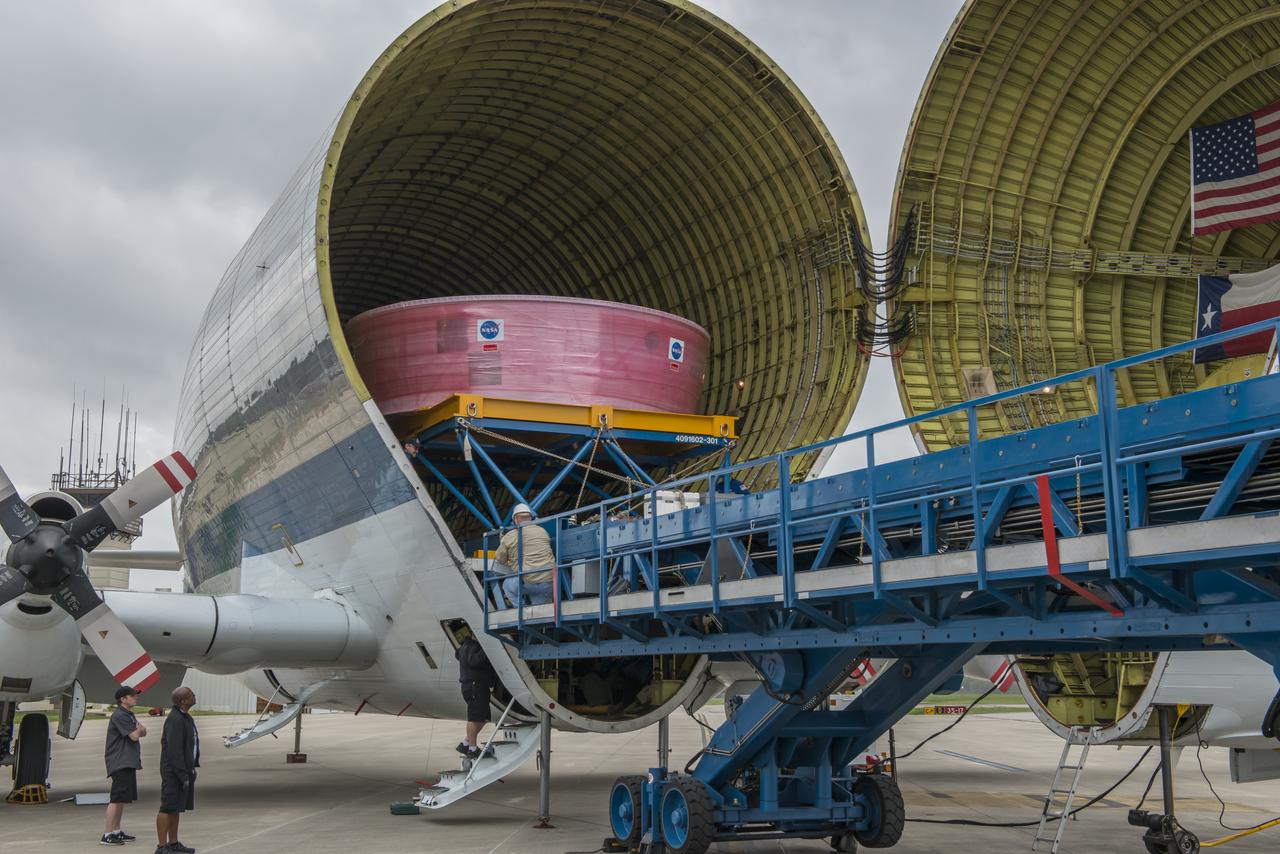
The Orion Stage Adapter flight hardware is prepared for the move to Redstone Airfield where the NASA Guppy aircraft will pick up the hardware and take the unit to Kennedy Space Center (KSC)
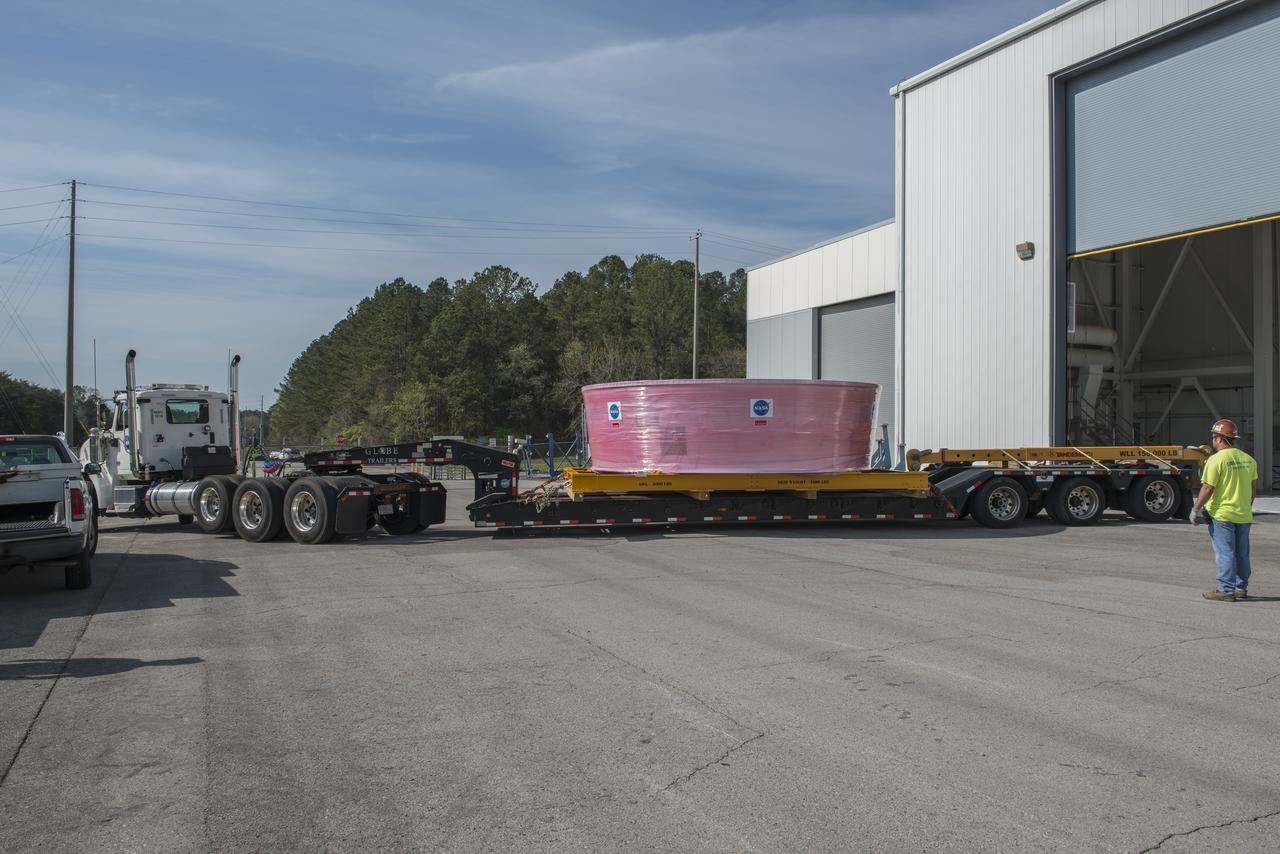
The Orion Stage Adapter flight hardware is prepared for the move to Redstone Airfield where the NASA Guppy aircraft will pick up the hardware and take the unit to Kennedy Space Center (KSC)

The Orion Stage Adapter flight hardware is prepared for the move to Redstone Airfield where the NASA Guppy aircraft will pick up the hardware and take the unit to Kennedy Space Center (KSC)
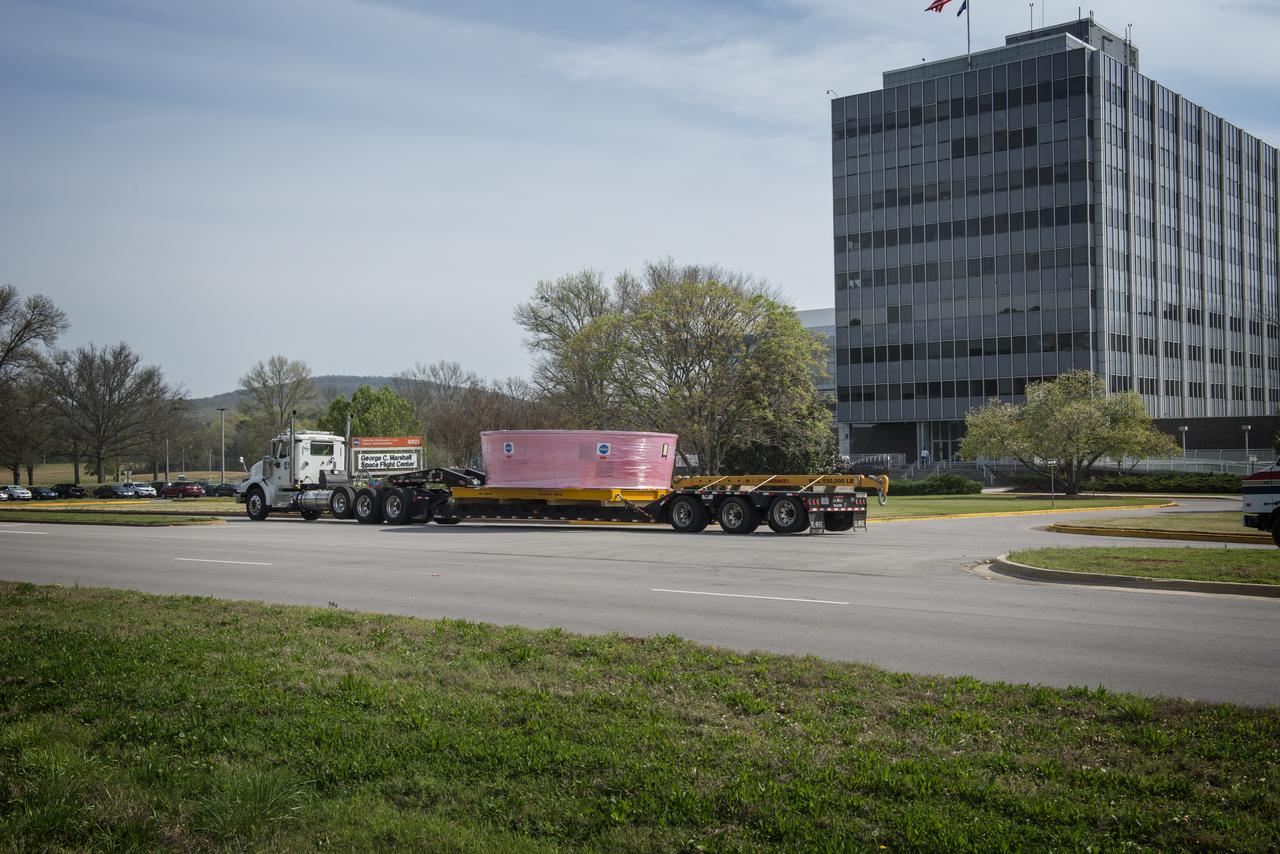
The Orion Stage Adapter flight hardware is prepared for the move to Redstone Airfield where the NASA Guppy aircraft will pick up the hardware and take the unit to Kennedy Space Center (KSC)
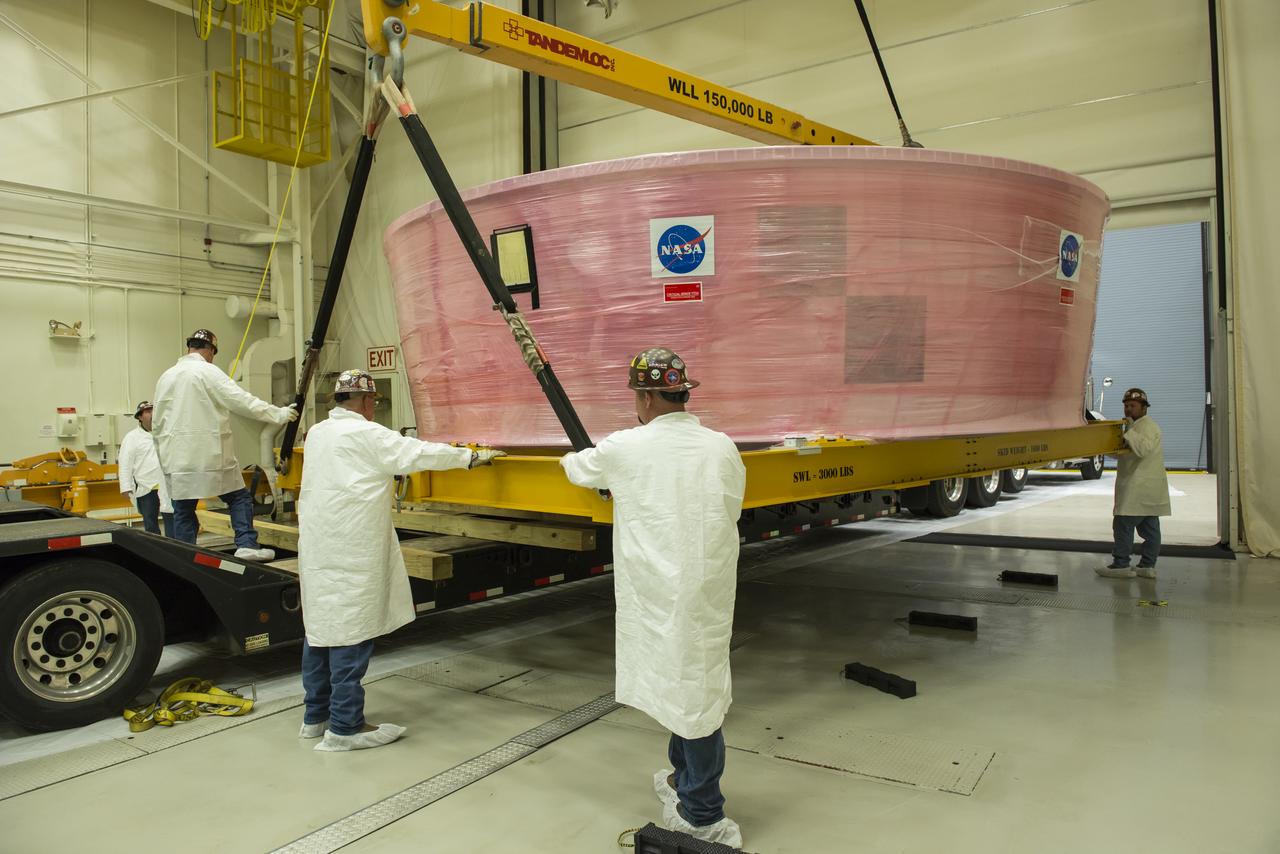
The Orion Stage Adapter flight hardware is prepared for the move to Redstone Airfield where the NASA Guppy aircraft will pick up the hardware and take the unit to Kennedy Space Center (KSC)
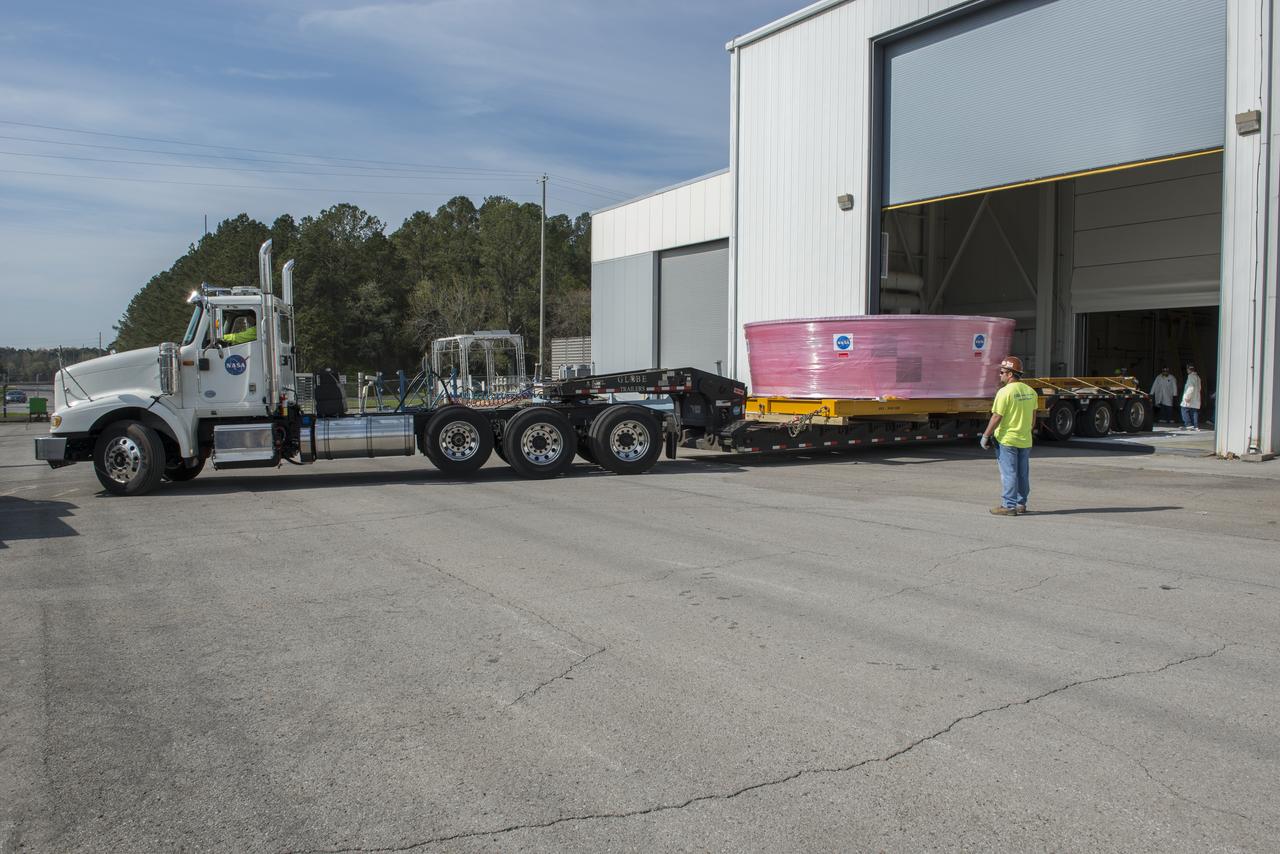
The Orion Stage Adapter flight hardware is prepared for the move to Redstone Airfield where the NASA Guppy aircraft will pick up the hardware and take the unit to Kennedy Space Center (KSC)
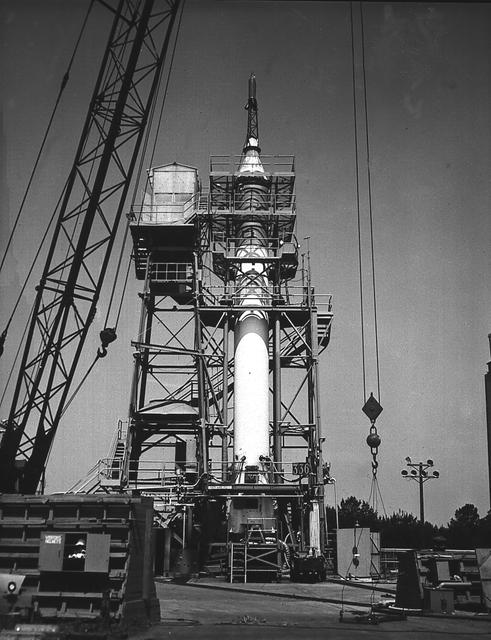
A Mercury-Redstone launch vehicle awaits test-firing in the Redstone Test Stand during the late 1950s. Between 1953 and 1960, the rocket team at Redstone Arsenal in Huntsville, Alabama performed hundreds of test firings on the Redstone rocket, over 200 on the Mercury-Redstone vehicle configuration alone. It was this configuration which launched America's first two marned space missions, Freedom 7 and Liberty Bell 7,in 1961.
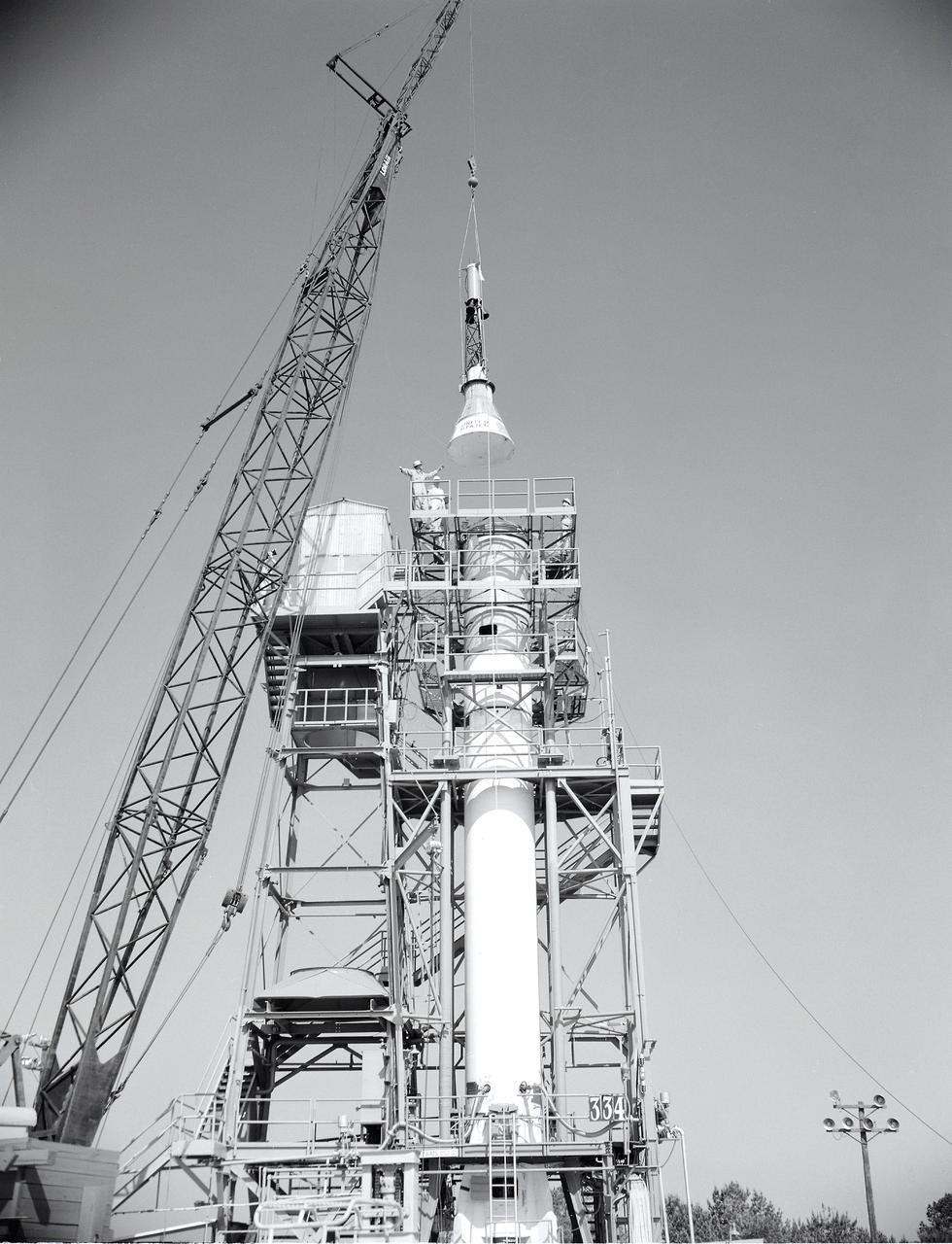
Installation of the Mercury capsule on Redstone booster at the Redstone Test Stand. Assembled at the Marshall Space Flight Center (MSFC), the Mercury-Redstone launch vehicle was designed to place a marned space capsule into orbital flight around the Earth and recover both safely.
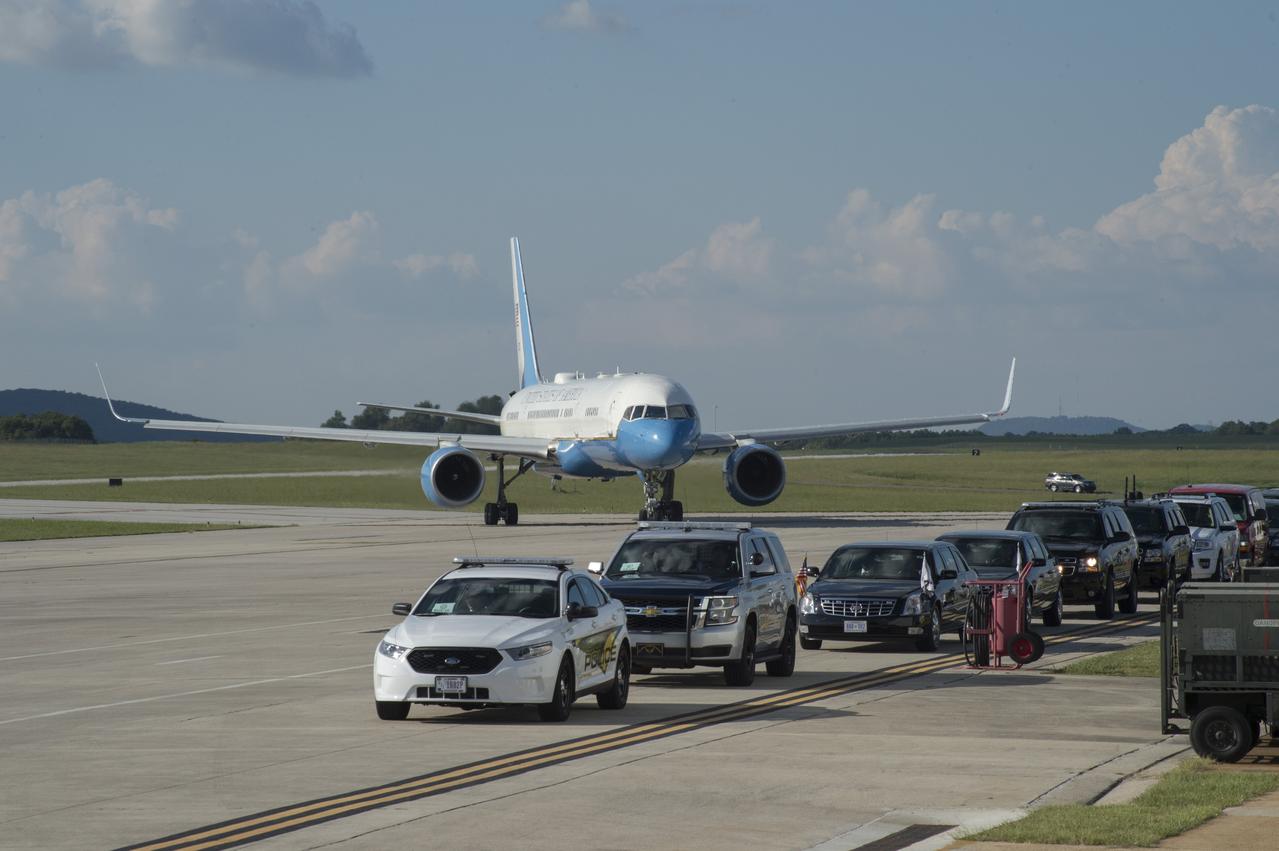
Air Force Two lands with Vice President Mike Pence along with Congressman Robert Aderholt at the Redstone Army Airfield in Huntsville, Alabama, on Monday, Sept. 25. The Vice President is visiting NASA’s Marshall Space Flight Center, located on Redstone Arsenal, to meet with employees, view test hardware for NASA’s Space Launch System — America’s new deep-space rocket, and tour the Payload Operations Integration Center, “science central” for the International Space Station.
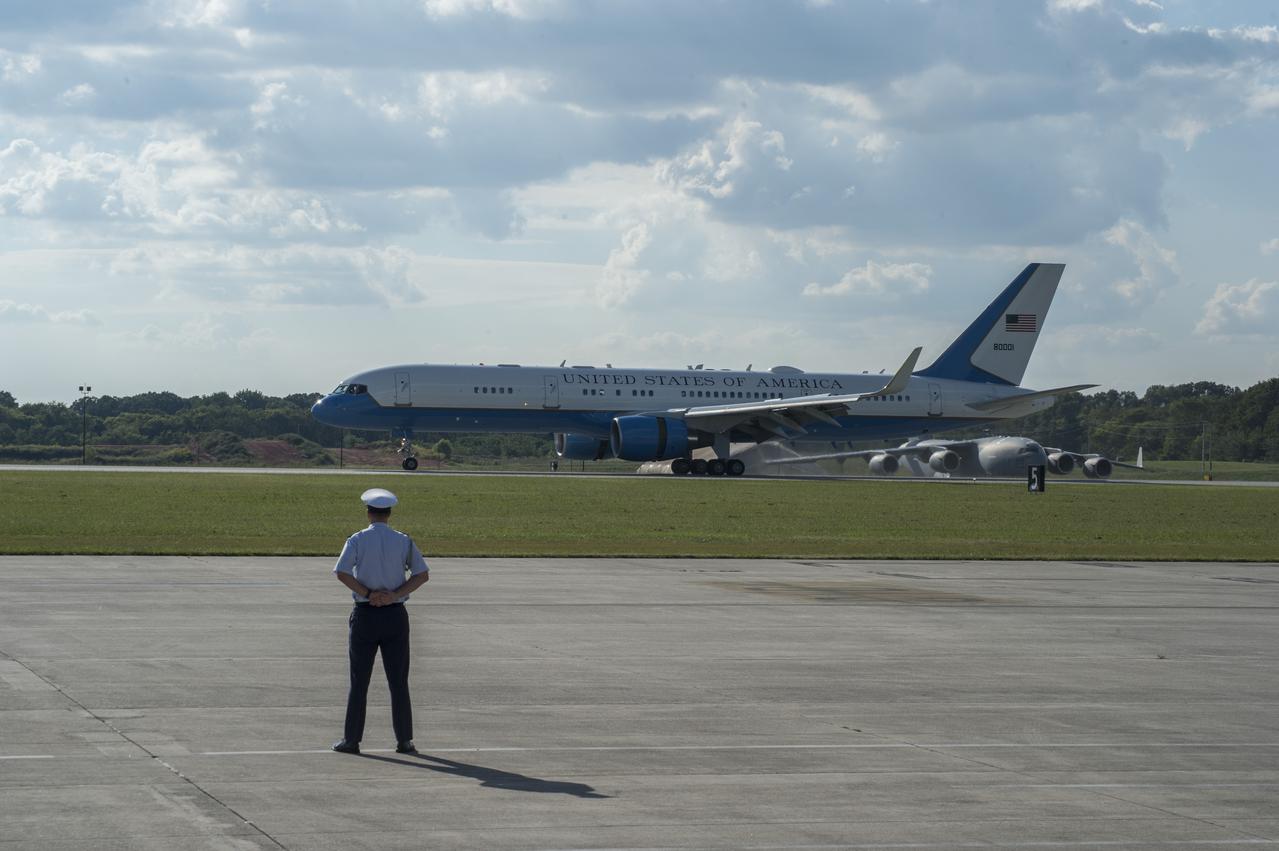
Air Force Two lands with Vice President Mike Pence along with Congressman Robert Aderholt at the Redstone Army Airfield in Huntsville, Alabama, on Monday, Sept. 25. The Vice President is visiting NASA’s Marshall Space Flight Center, located on Redstone Arsenal, to meet with employees, view test hardware for NASA’s Space Launch System — America’s new deep-space rocket, and tour the Payload Operations Integration Center, “science central” for the International Space Station.
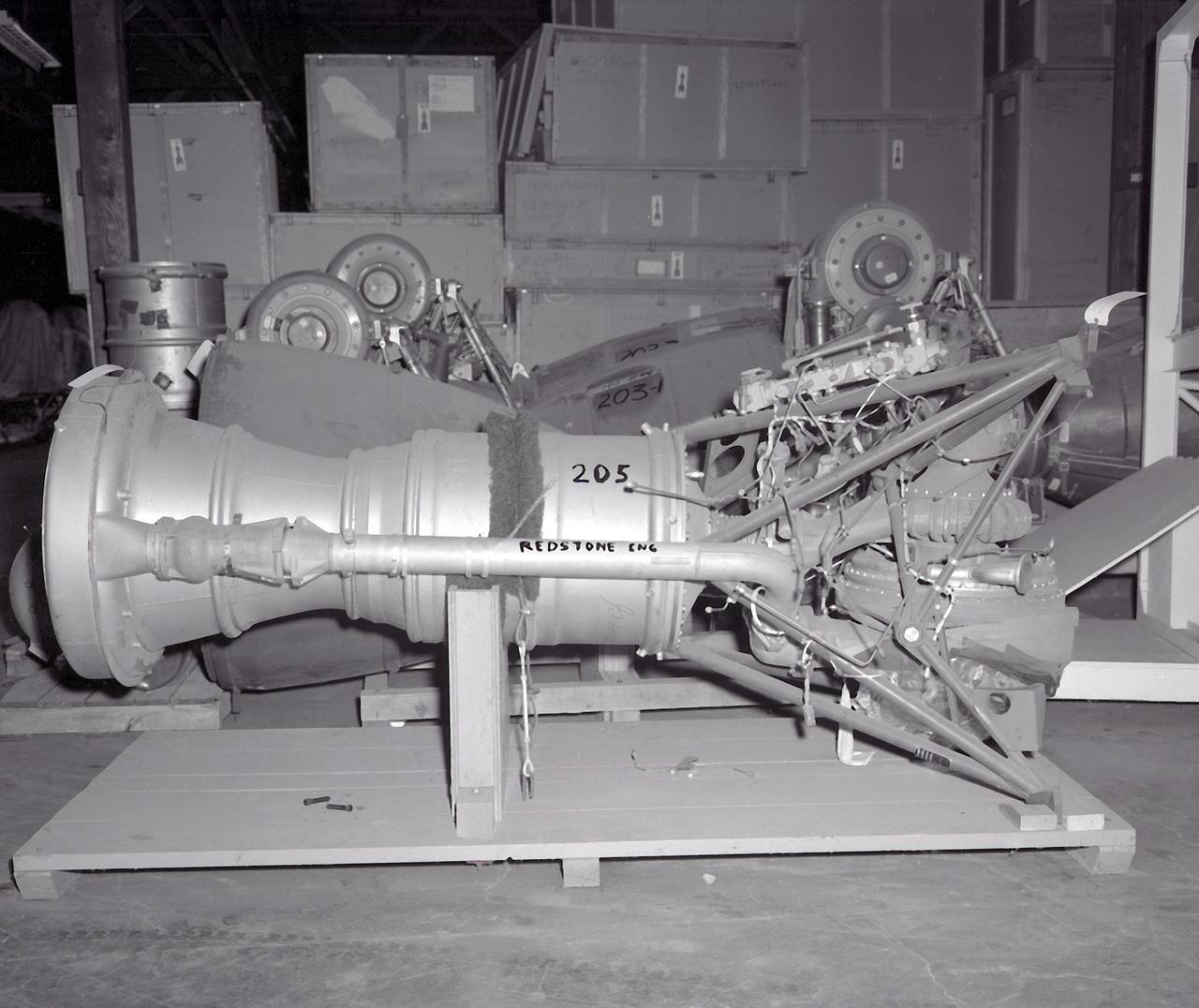
This photograph is of the engine for the Redstone rocket. The Redstone ballistic missile was a high-accuracy, liquid-propelled, surface-to-surface missile developed by the Army Ballistic Missile Agency, Redstone Arsenal, in Huntsville, Alabama, under the direction of Dr. von Braun. The Redstone engine was a modified and improved version of the Air Force's Navaho cruise missile engine of the late forties. The A-series, as this would be known, utilized a cylindrical combustion chamber as compared with the bulky, spherical V-2 chamber. By 1951, the Army was moving rapidly toward the design of the Redstone missile, and the production was begun in 1952. Redstone rockets became the "reliable workhorse" for America's early space program. As an example of its versatility, the Redstone was utilized in the booster for Explorer 1, the first American satellite, with no major changes to the engine or missile.
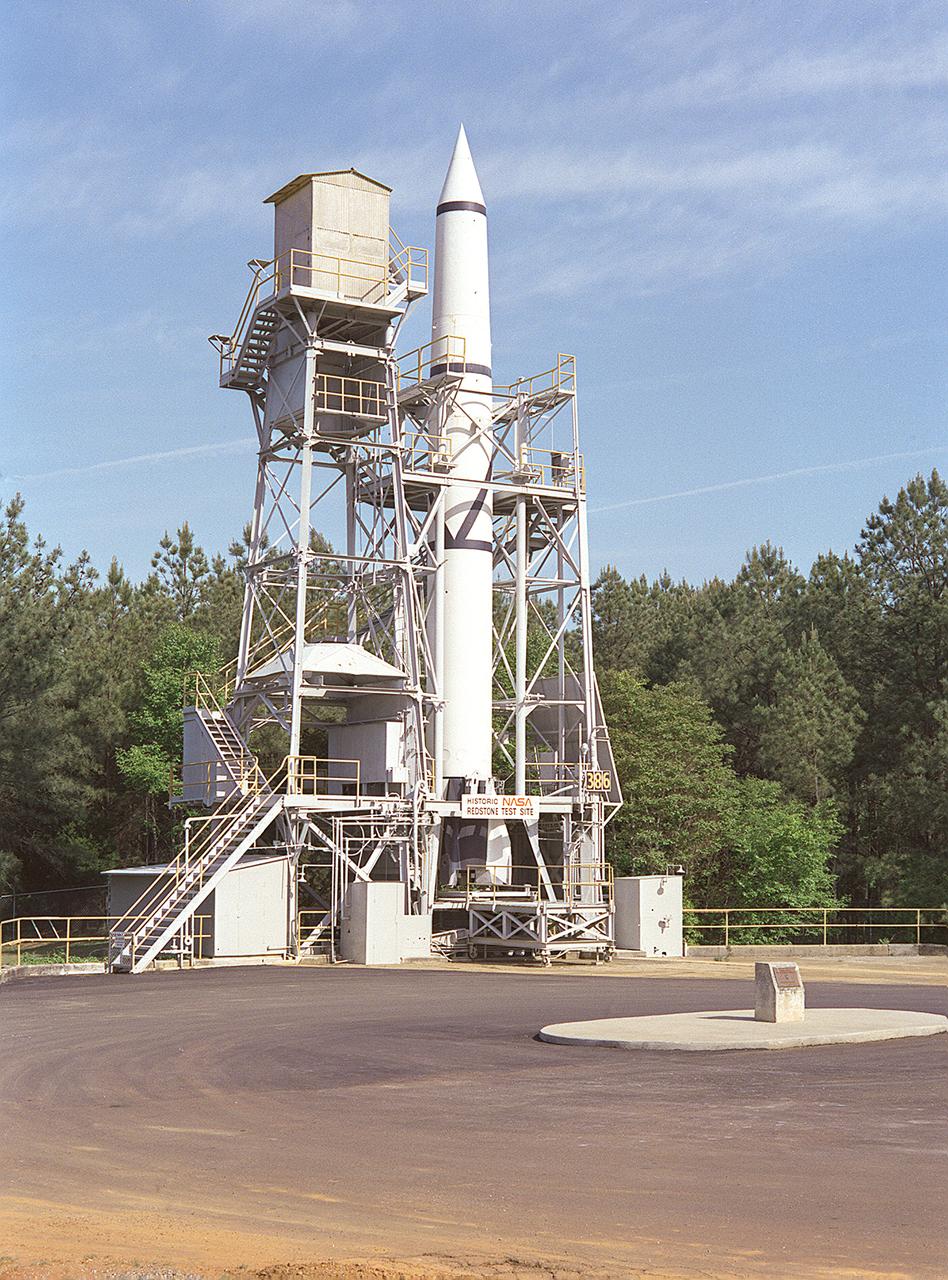
The Redstone Test Stand was used during the 1950s in early development of the Redstone missile propulsion system. This was the test stand where the modified Redstone missile that launched into space the first American, Alan Shepard, was static tested as the last step before the flight occurred.

This photograph shows the installation of a Mercury capsule and escape system on top of a booster prior to test firing of the Mercury-Redstone at Marshall Space Flight Center's (MSFC's) Redstone Test Stand. Assembled by MSFC, the Mercury-Redstone was designed to place a marned space capsule in orbital flight around the Earth and recover both safely.
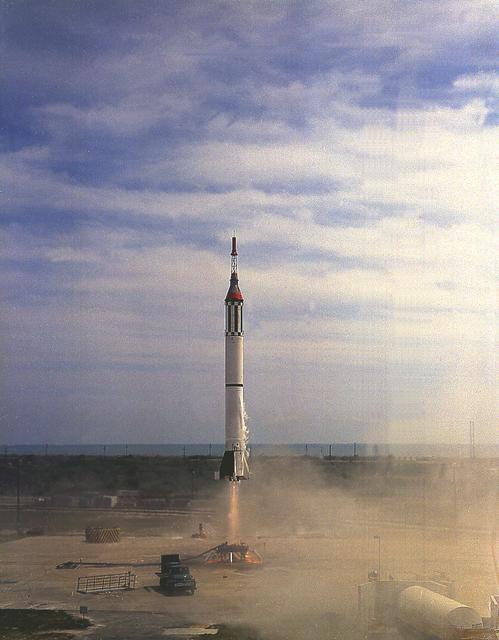
The Mercury-Redstone Booster Development vehicle (MR-BD) lifts off from Cape Canaveral March 24, 1961. This test flight evaluated changes incorporated in the booster designed to reduce vehicle oscillations and vibrations. The Mercury-Redstone launch vehicle was developed by Dr. Wernher von Braun and the rocket team in Huntsville, Alabama.
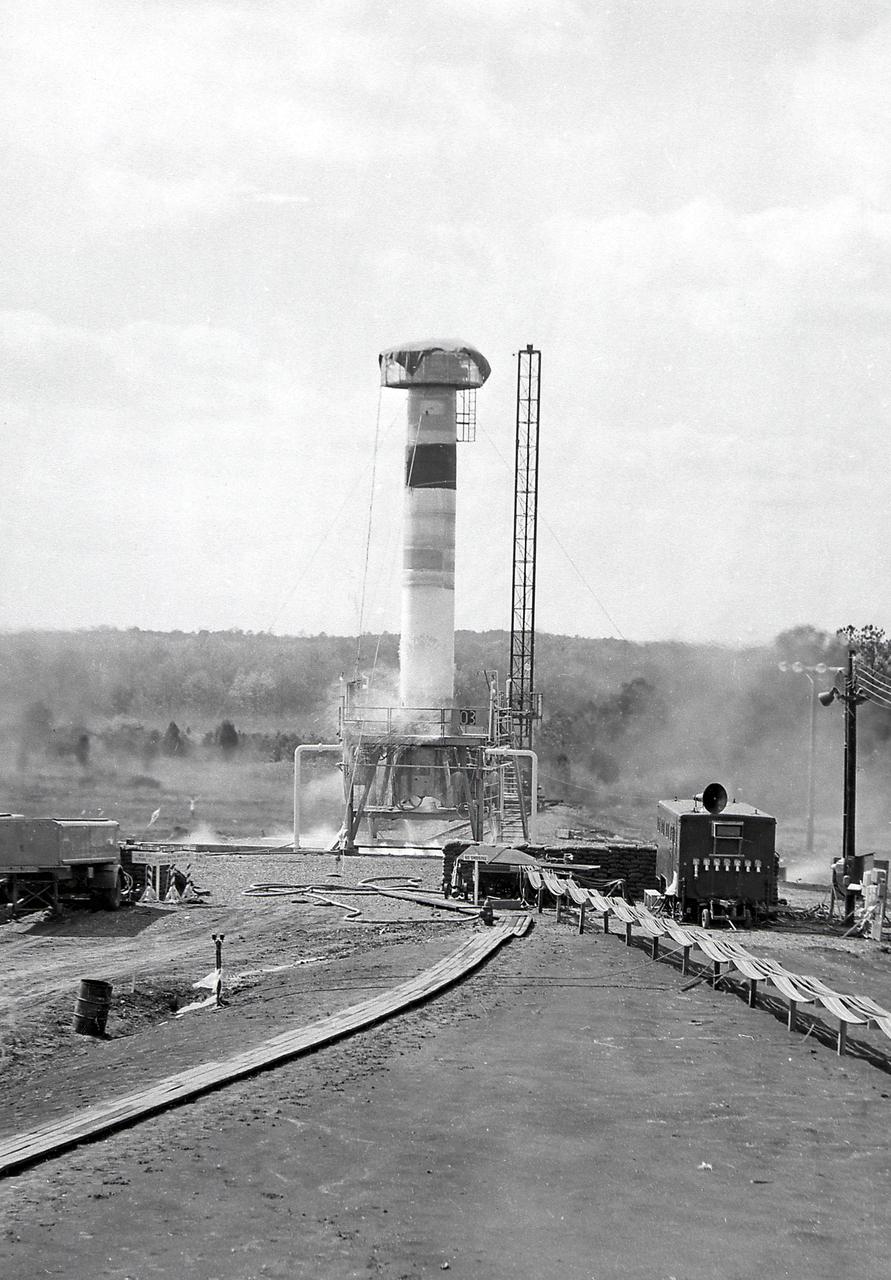
Test firing of a Redstone Missile at Redstone Test Stand in the early 1950's. The Redstone was a high-accuracy, liquid-propelled, surface-to-surface missile developed by the von Braun Team under the management of the U.S. Army. The Redstone was the first major rocket development program in the United States.
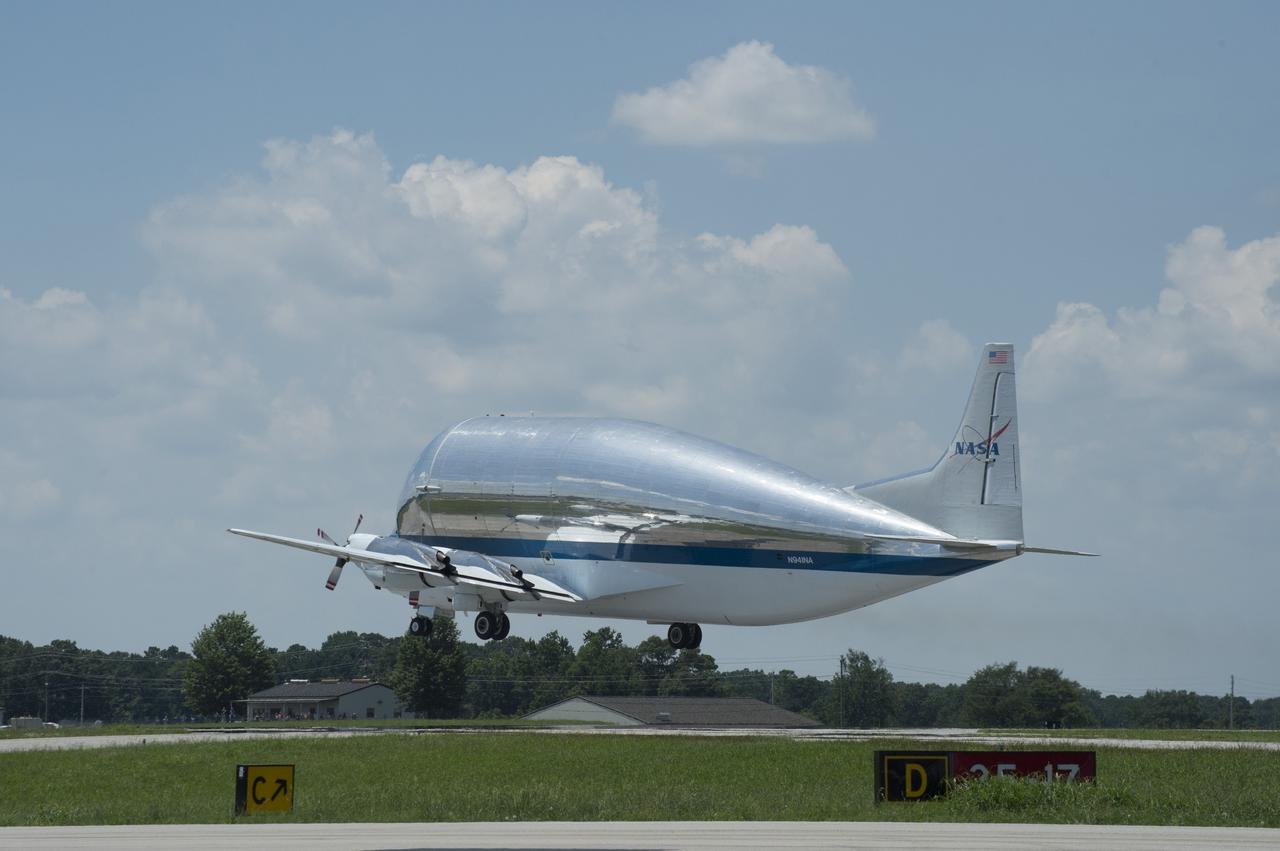
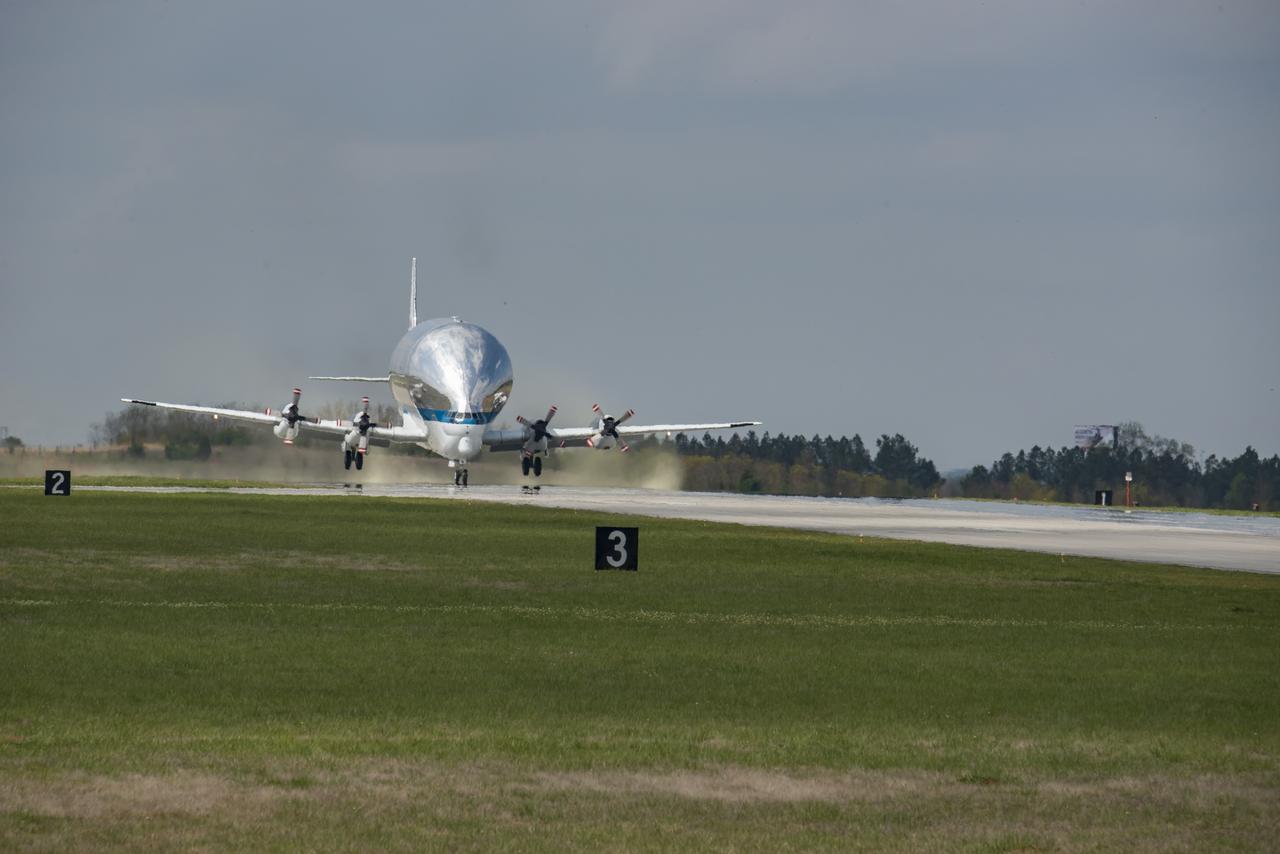
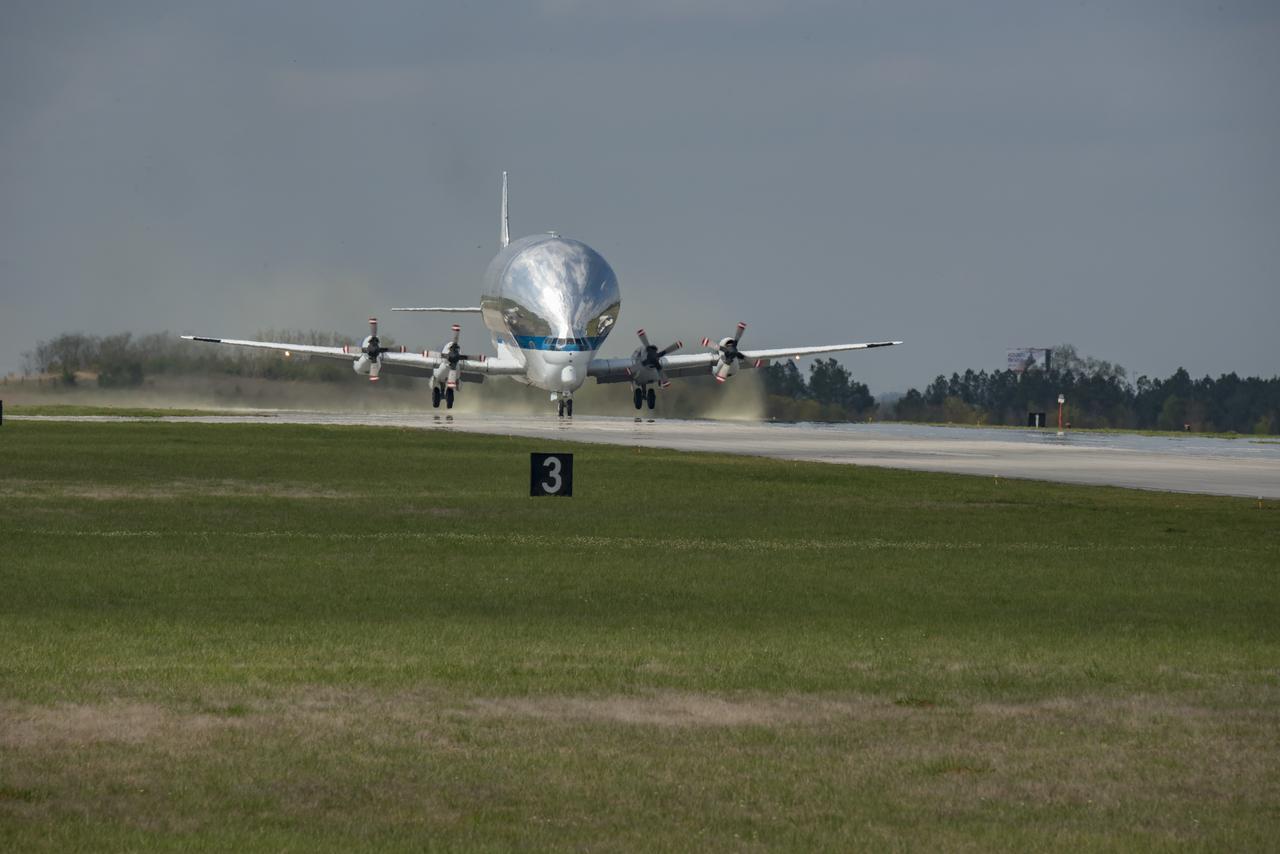
NASA's Super Guppie aircraft lifts off from Redstone Arsenal's airfield with the Orion stage adapter which will be transported to Denver, Colorado for further testing.
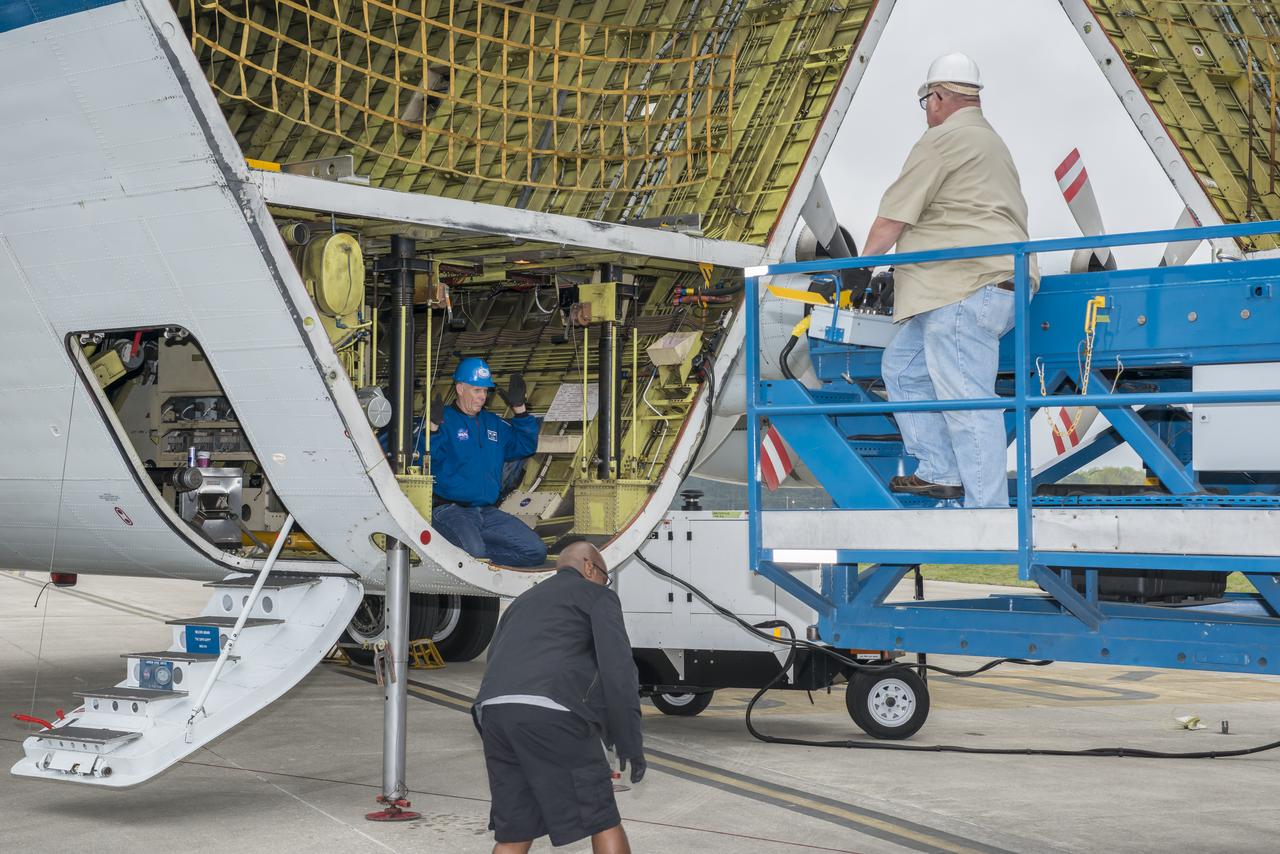
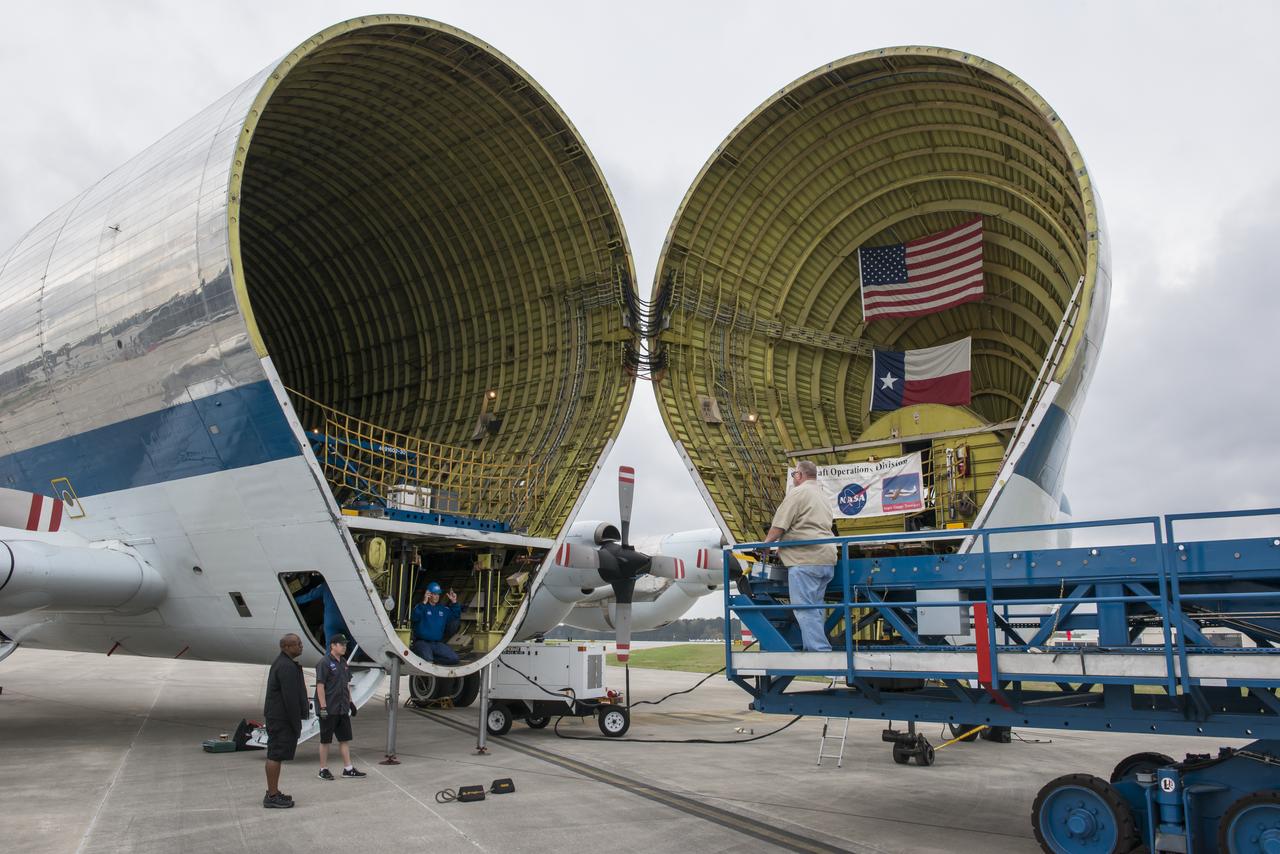
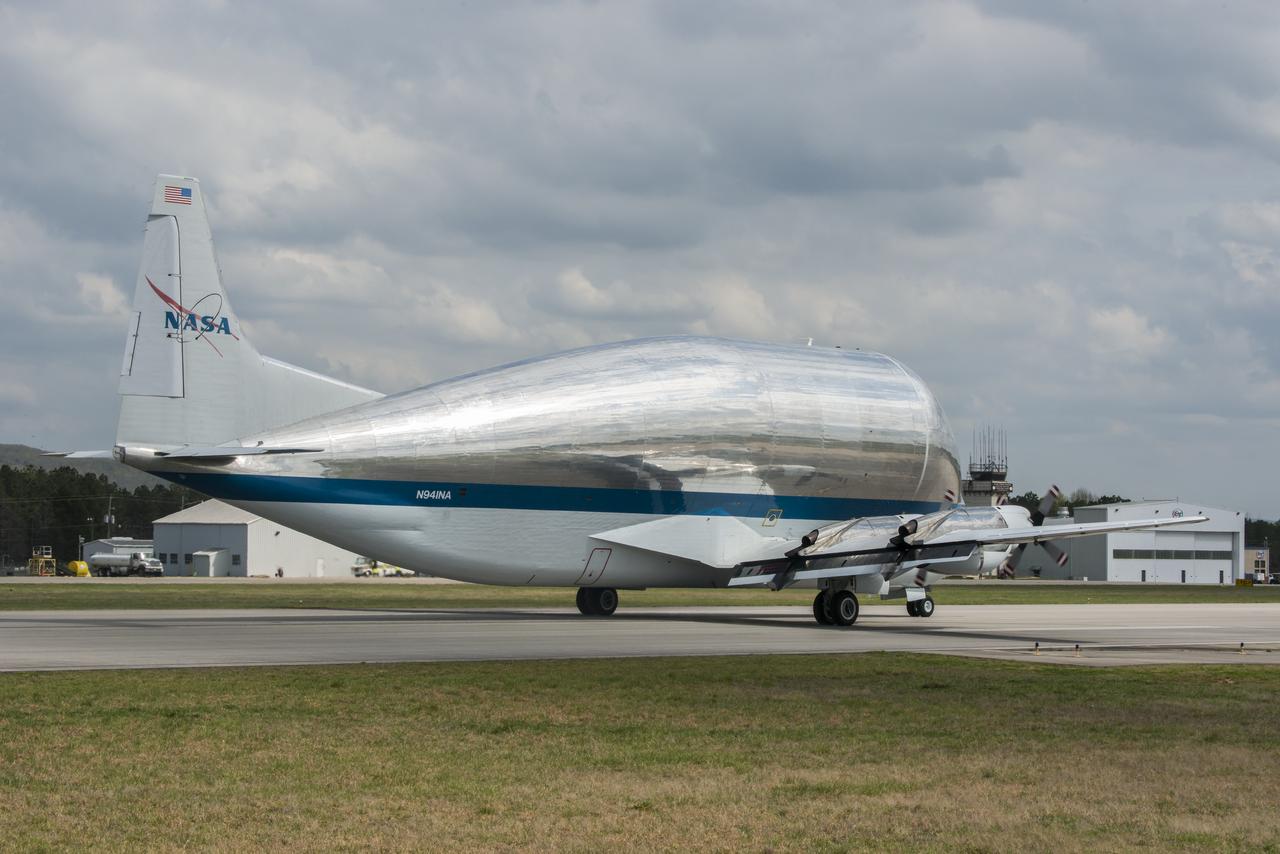
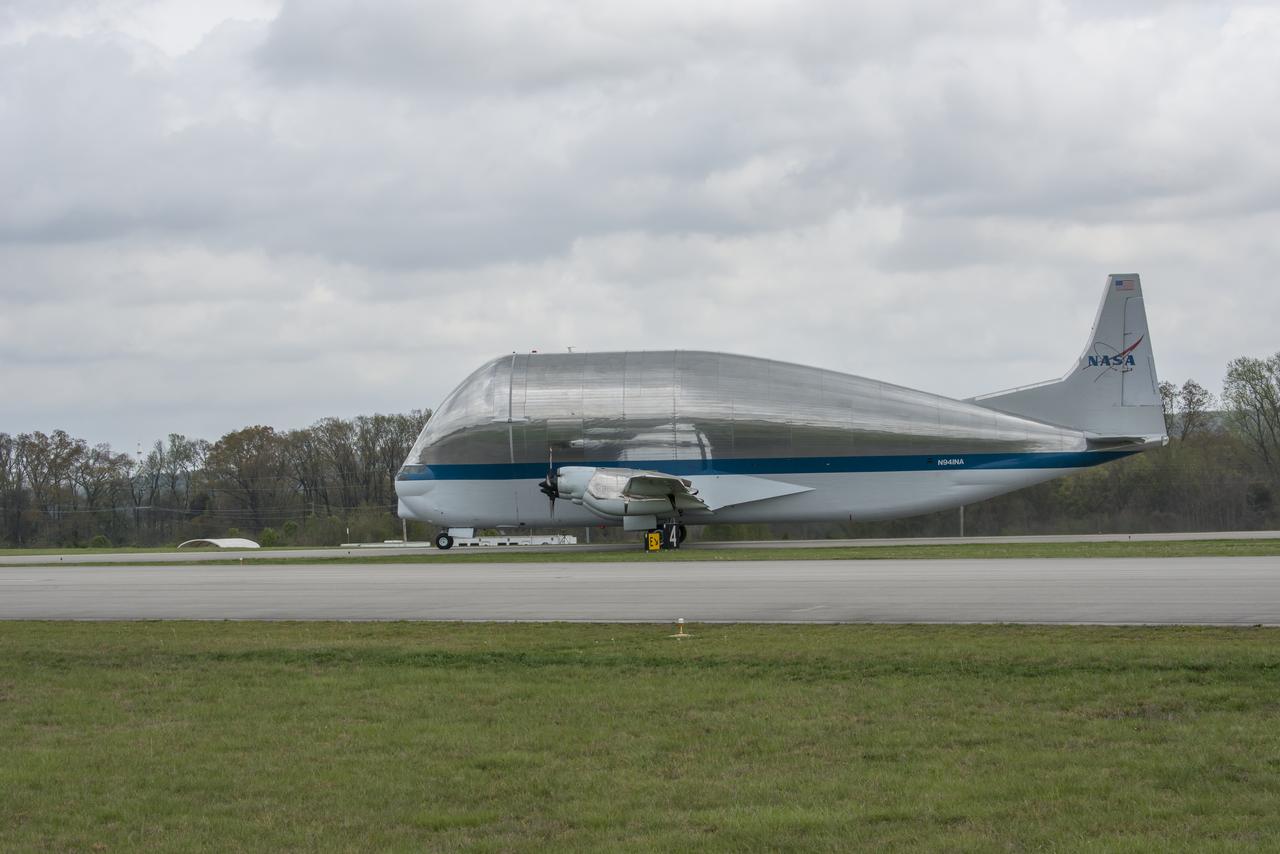
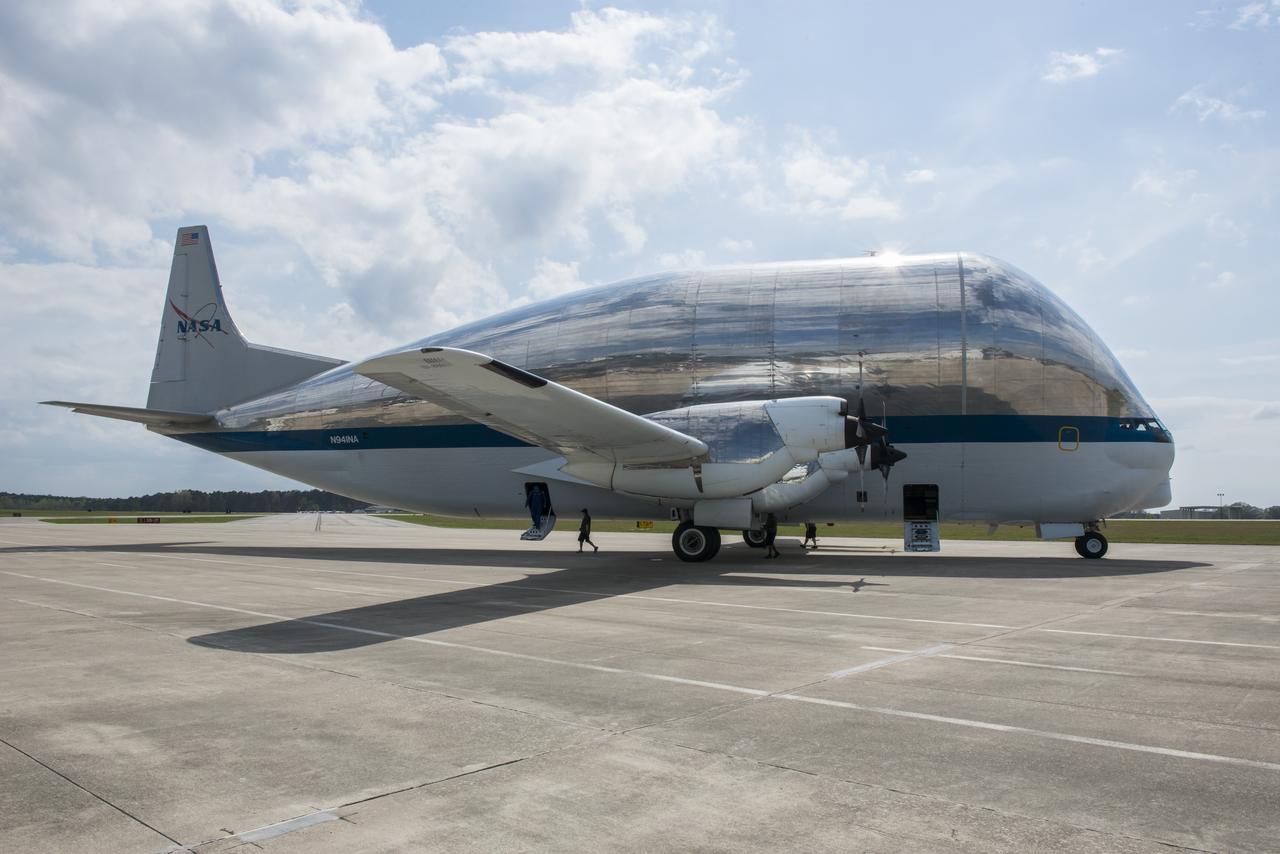
NASA's Super Guppy aircraft arrives to the U.S. Army’s Redstone Airfield in Huntsville, Alabama, April 2, to pick up flight hardware for NASA’s Space Launch System – its new, deep-space rocket that will enable astronauts to begin their journey to explore destinations far into the solar system. The Guppy will depart on Tuesday, April 3 to deliver the Orion stage adapter to NASA’s Kennedy Space Center in Florida for flight preparations. On Exploration Mission-1, the first integrated flight of the SLS and the Orion spacecraft, the adapter will connect Orion to the rocket and carry 13 CubeSats as secondary payloads.
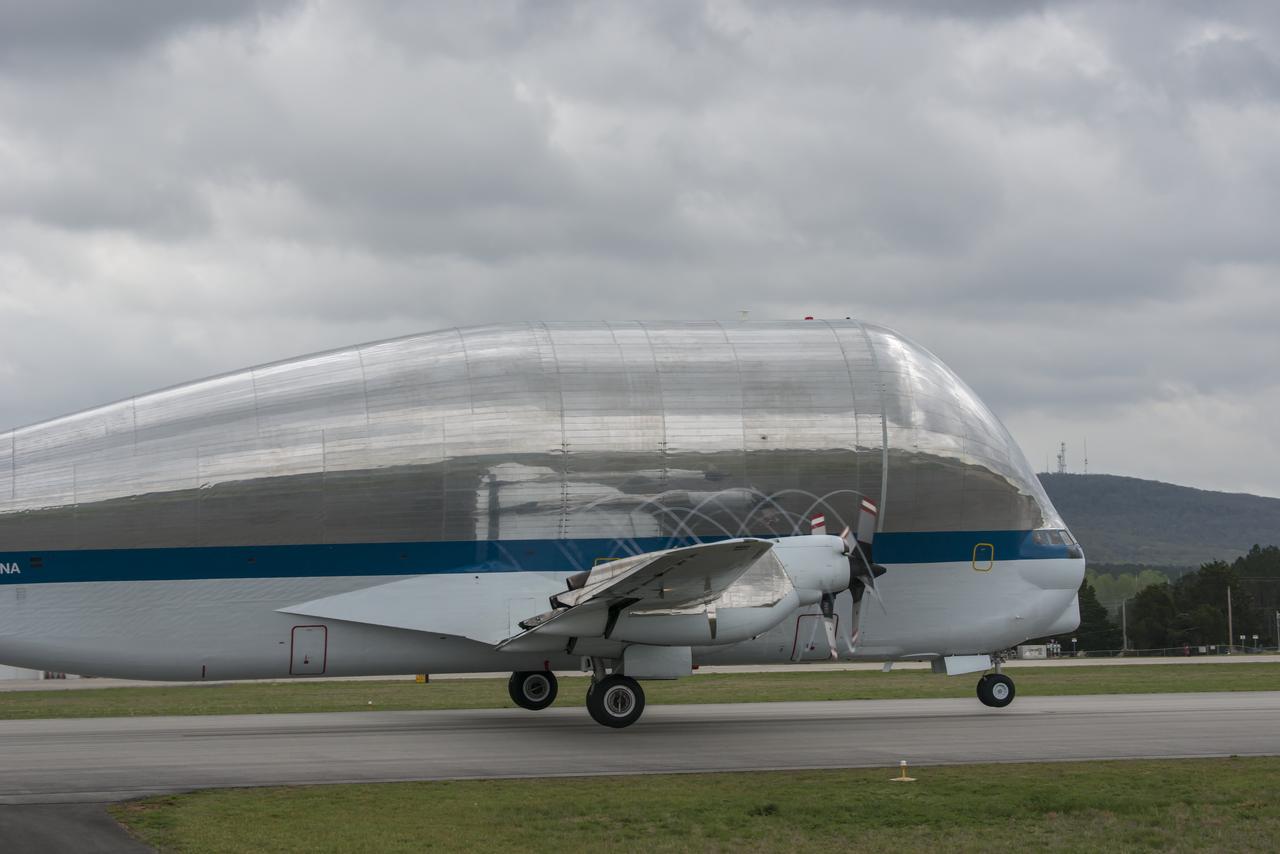
NASA's Super Guppy aircraft arrives to the U.S. Army’s Redstone Airfield in Huntsville, Alabama, April 2, to pick up flight hardware for NASA’s Space Launch System – its new, deep-space rocket that will enable astronauts to begin their journey to explore destinations far into the solar system. The Guppy will depart on Tuesday, April 3 to deliver the Orion stage adapter to NASA’s Kennedy Space Center in Florida for flight preparations. On Exploration Mission-1, the first integrated flight of the SLS and the Orion spacecraft, the adapter will connect Orion to the rocket and carry 13 CubeSats as secondary payloads.
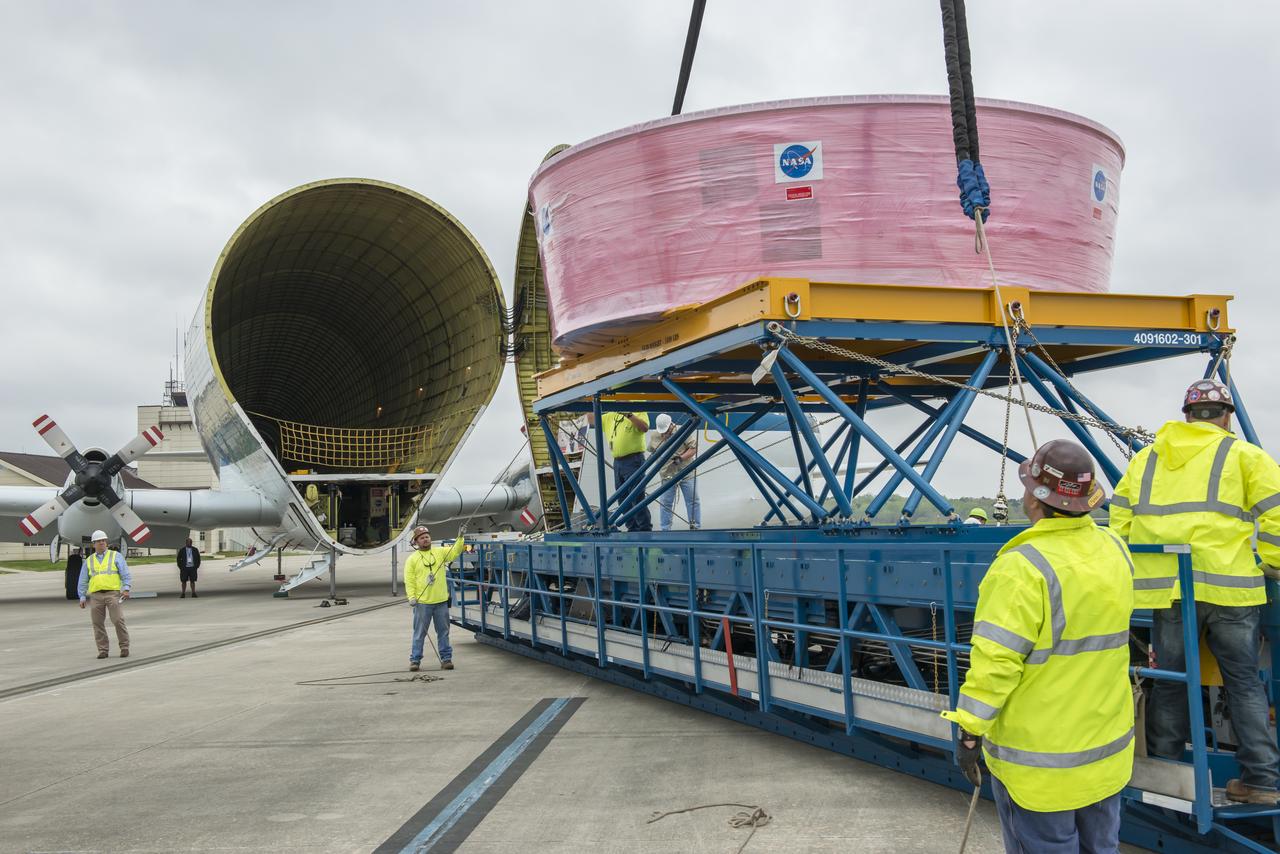
NASA's Super Guppy aircraft arrives to the U.S. Army’s Redstone Airfield in Huntsville, Alabama, April 2, to pick up flight hardware for NASA’s Space Launch System – its new, deep-space rocket that will enable astronauts to begin their journey to explore destinations far into the solar system. The Guppy will depart on Tuesday, April 3 to deliver the Orion stage adapter to NASA’s Kennedy Space Center in Florida for flight preparations. On Exploration Mission-1, the first integrated flight of the SLS and the Orion spacecraft, the adapter will connect Orion to the rocket and carry 13 CubeSats as secondary payloads.
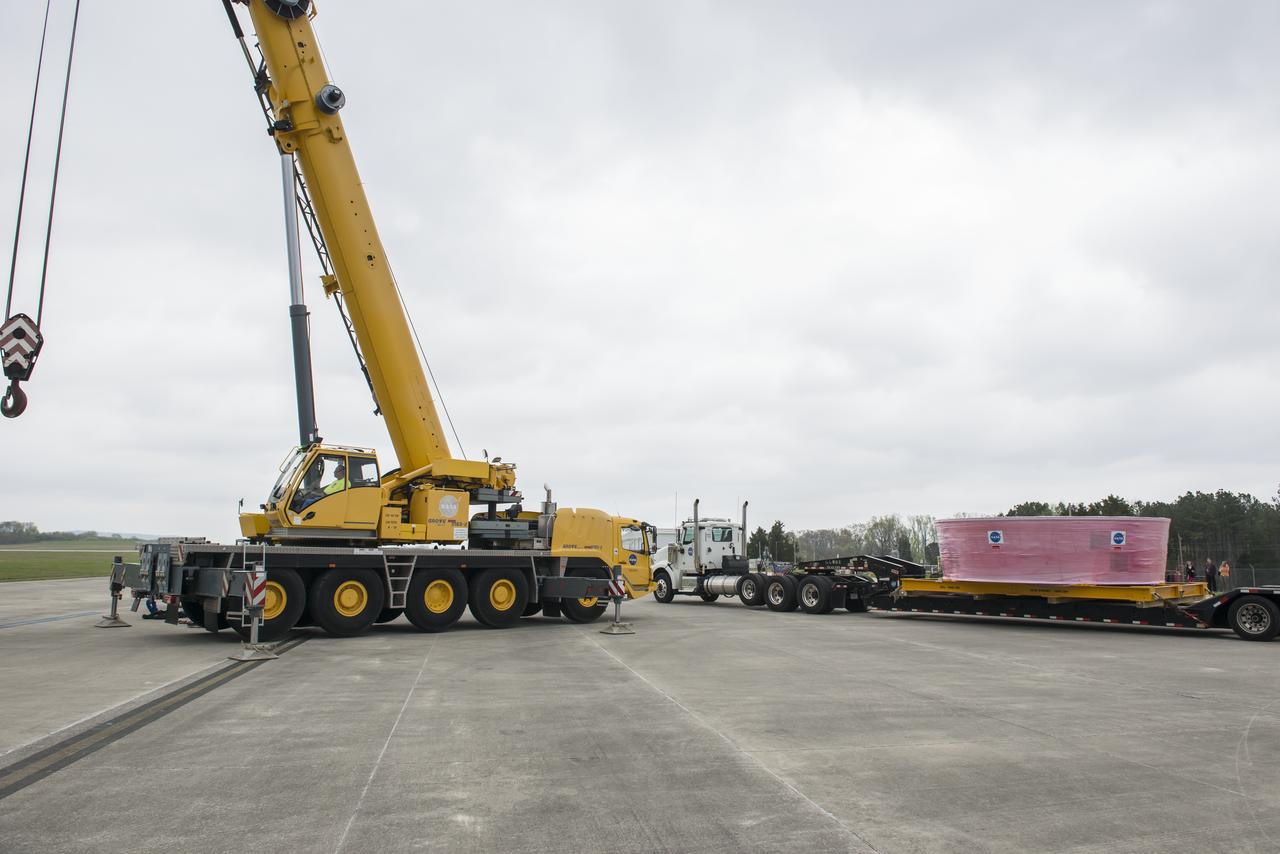
NASA's Super Guppy aircraft arrives to the U.S. Army’s Redstone Airfield in Huntsville, Alabama, April 2, to pick up flight hardware for NASA’s Space Launch System – its new, deep-space rocket that will enable astronauts to begin their journey to explore destinations far into the solar system. The Guppy will depart on Tuesday, April 3 to deliver the Orion stage adapter to NASA’s Kennedy Space Center in Florida for flight preparations. On Exploration Mission-1, the first integrated flight of the SLS and the Orion spacecraft, the adapter will connect Orion to the rocket and carry 13 CubeSats as secondary payloads.
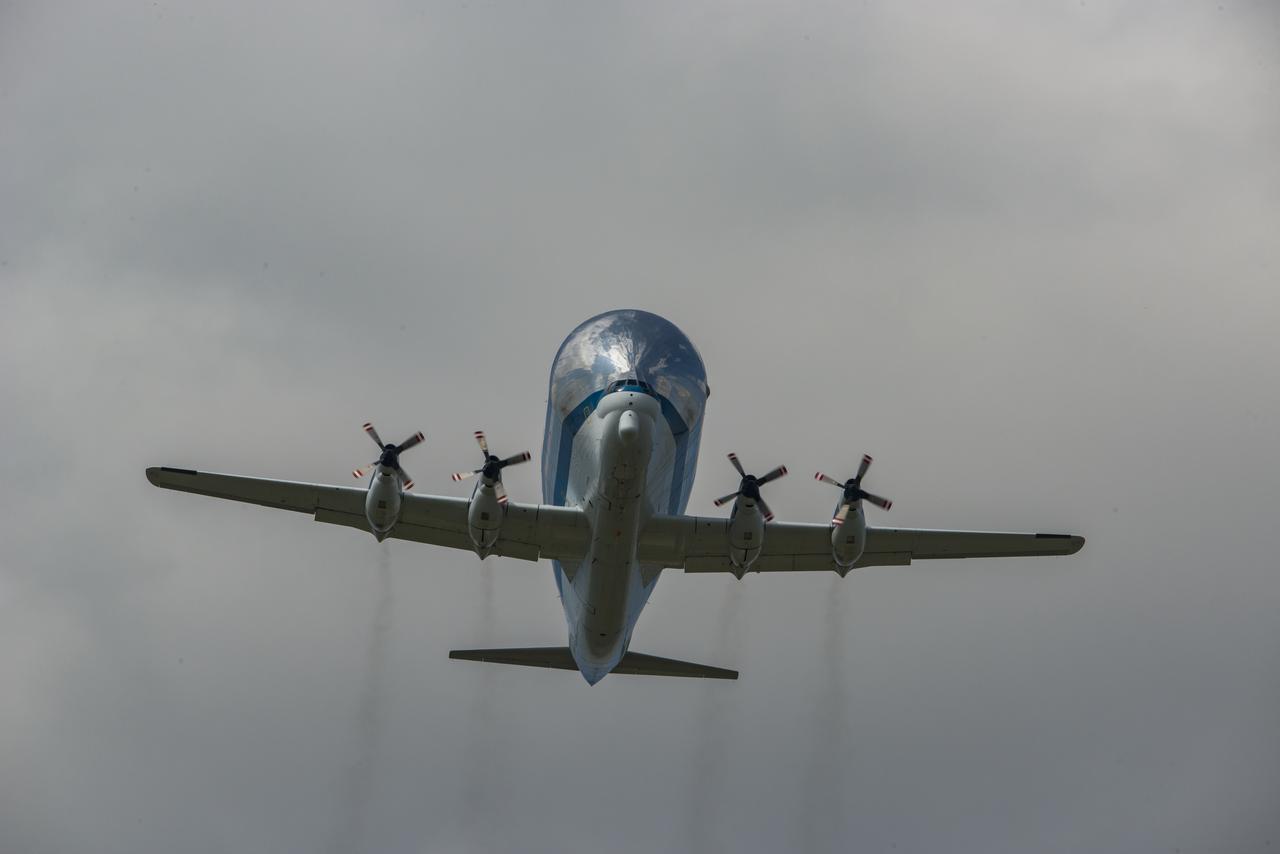
Caption: NASA's Super Guppy aircraft arrives to the U.S. Army’s Redstone Airfield in Huntsville, Alabama, April 2, to pick up flight hardware for NASA’s Space Launch System – its new, deep-space rocket that will enable astronauts to begin their journey to explore destinations far into the solar system. The Guppy will depart on Tuesday, April 3 to deliver the Orion stage adapter to NASA’s Kennedy Space Center in Florida for flight preparations. On Exploration Mission-1, the first integrated flight of the SLS and the Orion spacecraft, the adapter will connect Orion to the rocket and carry 13 CubeSats as secondary payloads.
NASA's Super Guppy aircraft arrives to the U.S. Army’s Redstone Airfield in Huntsville, Alabama, April 2, to pick up flight hardware for NASA’s Space Launch System – its new, deep-space rocket that will enable astronauts to begin their journey to explore destinations far into the solar system. The Guppy will depart on Tuesday, April 3 to deliver the Orion stage adapter to NASA’s Kennedy Space Center in Florida for flight preparations. On Exploration Mission-1, the first integrated flight of the SLS and the Orion spacecraft, the adapter will connect Orion to the rocket and carry 13 CubeSats as secondary payloads.

NASA's Super Guppy aircraft arrives to the U.S. Army’s Redstone Airfield in Huntsville, Alabama, April 2, to pick up flight hardware for NASA’s Space Launch System – its new, deep-space rocket that will enable astronauts to begin their journey to explore destinations far into the solar system. The Guppy will depart on Tuesday, April 3 to deliver the Orion stage adapter to NASA’s Kennedy Space Center in Florida for flight preparations. On Exploration Mission-1, the first integrated flight of the SLS and the Orion spacecraft, the adapter will connect Orion to the rocket and carry 13 CubeSats as secondary payloads.
Caption: NASA's Super Guppy aircraft arrives to the U.S. Army’s Redstone Airfield in Huntsville, Alabama, April 2, to pick up flight hardware for NASA’s Space Launch System – its new, deep-space rocket that will enable astronauts to begin their journey to explore destinations far into the solar system. The Guppy will depart on Tuesday, April 3 to deliver the Orion stage adapter to NASA’s Kennedy Space Center in Florida for flight preparations. On Exploration Mission-1, the first integrated flight of the SLS and the Orion spacecraft, the adapter will connect Orion to the rocket and carry 13 CubeSats as secondary payloads.
NASA's Super Guppy aircraft arrives to the U.S. Army’s Redstone Airfield in Huntsville, Alabama, April 2, to pick up flight hardware for NASA’s Space Launch System – its new, deep-space rocket that will enable astronauts to begin their journey to explore destinations far into the solar system. The Guppy will depart on Tuesday, April 3 to deliver the Orion stage adapter to NASA’s Kennedy Space Center in Florida for flight preparations. On Exploration Mission-1, the first integrated flight of the SLS and the Orion spacecraft, the adapter will connect Orion to the rocket and carry 13 CubeSats as secondary payloads.
Caption: NASA's Super Guppy aircraft arrives to the U.S. Army’s Redstone Airfield in Huntsville, Alabama, April 2, to pick up flight hardware for NASA’s Space Launch System – its new, deep-space rocket that will enable astronauts to begin their journey to explore destinations far into the solar system. The Guppy will depart on Tuesday, April 3 to deliver the Orion stage adapter to NASA’s Kennedy Space Center in Florida for flight preparations. On Exploration Mission-1, the first integrated flight of the SLS and the Orion spacecraft, the adapter will connect Orion to the rocket and carry 13 CubeSats as secondary payloads.
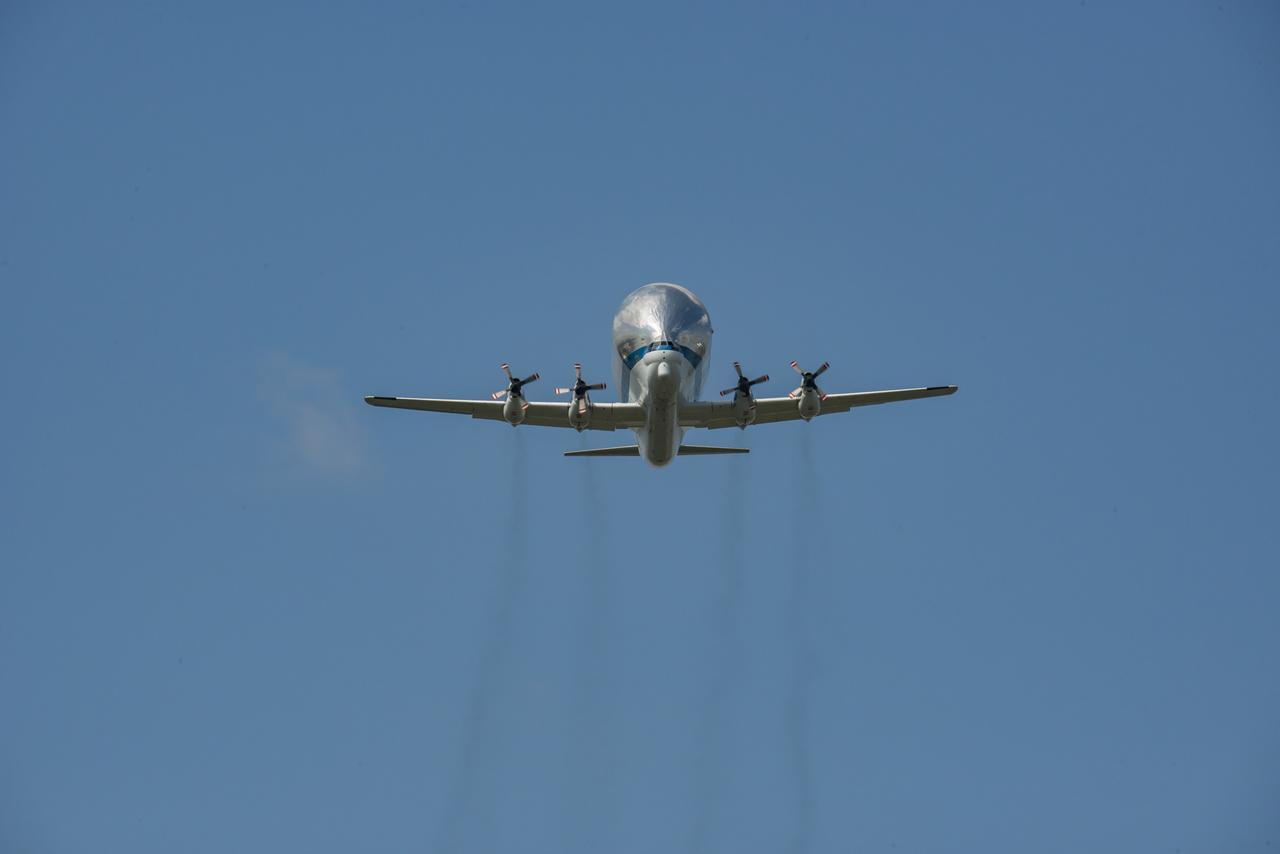
Caption: NASA's Super Guppy aircraft arrives to the U.S. Army’s Redstone Airfield in Huntsville, Alabama, April 2, to pick up flight hardware for NASA’s Space Launch System – its new, deep-space rocket that will enable astronauts to begin their journey to explore destinations far into the solar system. The Guppy will depart on Tuesday, April 3 to deliver the Orion stage adapter to NASA’s Kennedy Space Center in Florida for flight preparations. On Exploration Mission-1, the first integrated flight of the SLS and the Orion spacecraft, the adapter will connect Orion to the rocket and carry 13 CubeSats as secondary payloads.
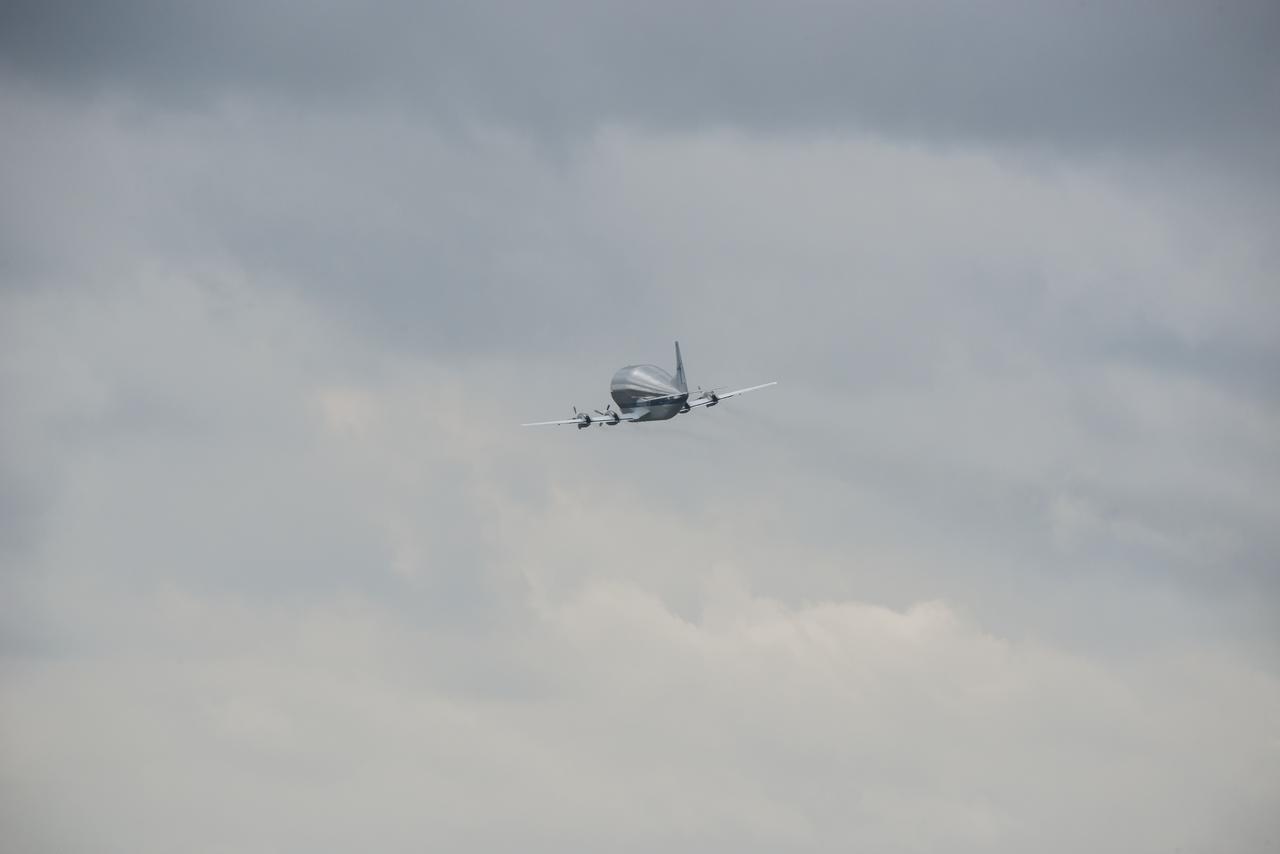
NASA's Super Guppy aircraft arrives to the U.S. Army’s Redstone Airfield in Huntsville, Alabama, April 2, to pick up flight hardware for NASA’s Space Launch System – its new, deep-space rocket that will enable astronauts to begin their journey to explore destinations far into the solar system. The Guppy will depart on Tuesday, April 3 to deliver the Orion stage adapter to NASA’s Kennedy Space Center in Florida for flight preparations. On Exploration Mission-1, the first integrated flight of the SLS and the Orion spacecraft, the adapter will connect Orion to the rocket and carry 13 CubeSats as secondary payloads.
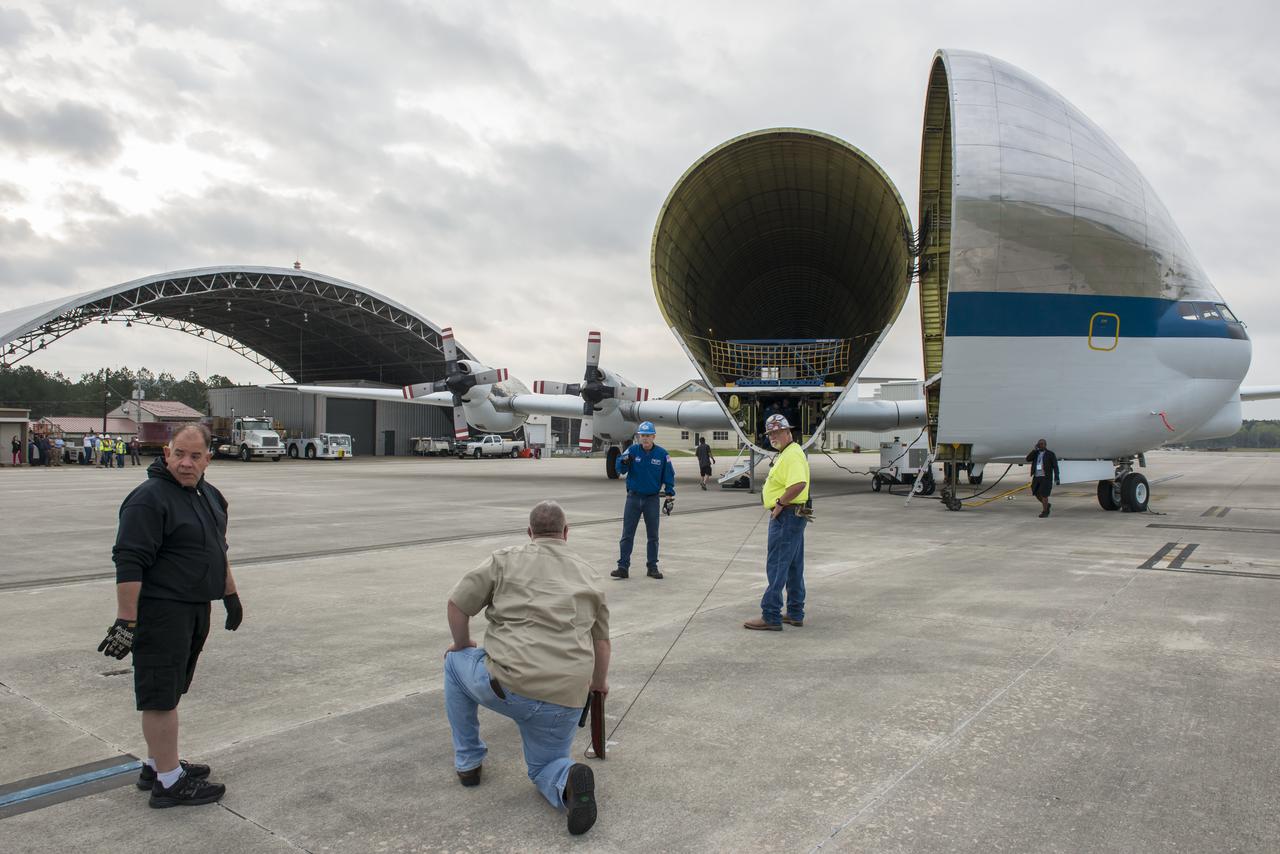
NASA's Super Guppy aircraft arrives to the U.S. Army’s Redstone Airfield in Huntsville, Alabama, April 2, to pick up flight hardware for NASA’s Space Launch System – its new, deep-space rocket that will enable astronauts to begin their journey to explore destinations far into the solar system. The Guppy will depart on Tuesday, April 3 to deliver the Orion stage adapter to NASA’s Kennedy Space Center in Florida for flight preparations. On Exploration Mission-1, the first integrated flight of the SLS and the Orion spacecraft, the adapter will connect Orion to the rocket and carry 13 CubeSats as secondary payloads.
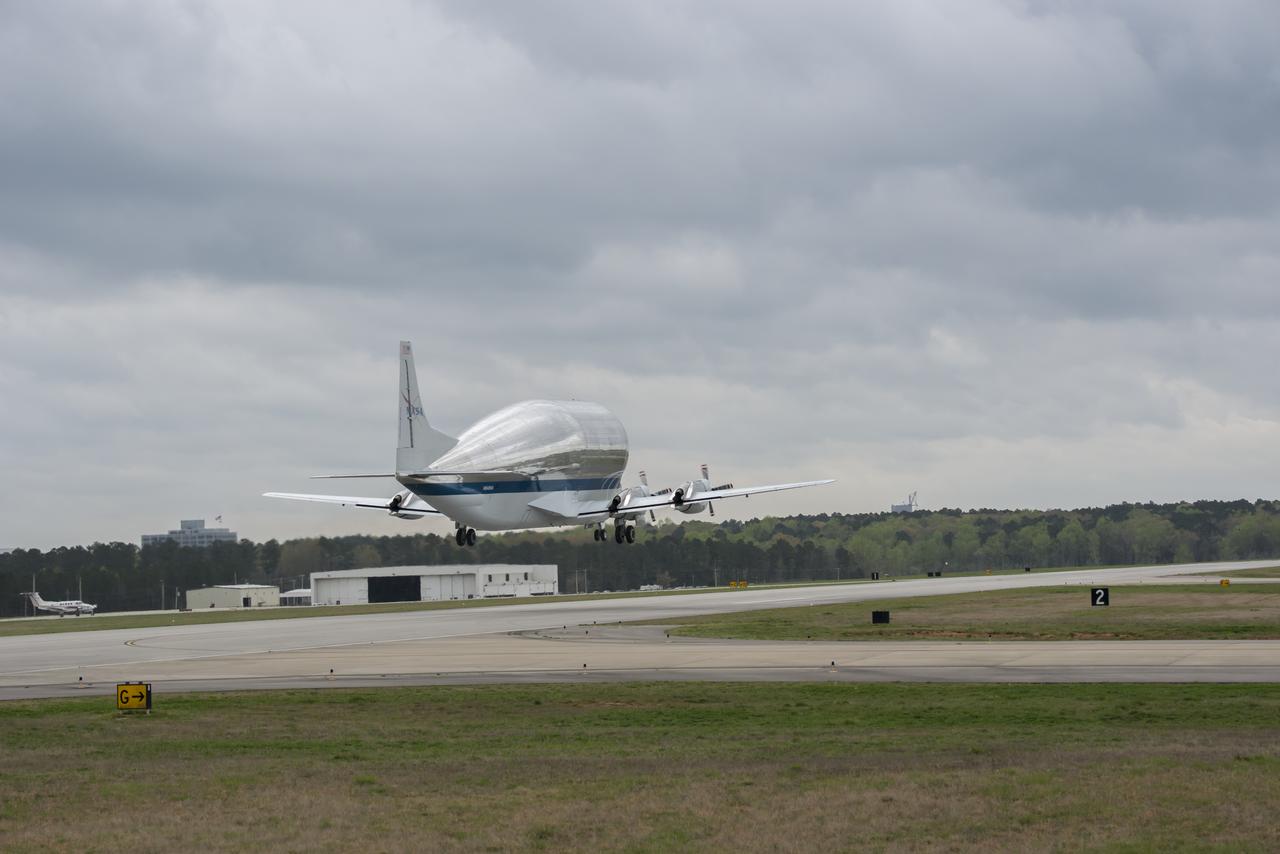
NASA's Super Guppy aircraft arrives to the U.S. Army’s Redstone Airfield in Huntsville, Alabama, April 2, to pick up flight hardware for NASA’s Space Launch System – its new, deep-space rocket that will enable astronauts to begin their journey to explore destinations far into the solar system. The Guppy will depart on Tuesday, April 3 to deliver the Orion stage adapter to NASA’s Kennedy Space Center in Florida for flight preparations. On Exploration Mission-1, the first integrated flight of the SLS and the Orion spacecraft, the adapter will connect Orion to the rocket and carry 13 CubeSats as secondary payloads.
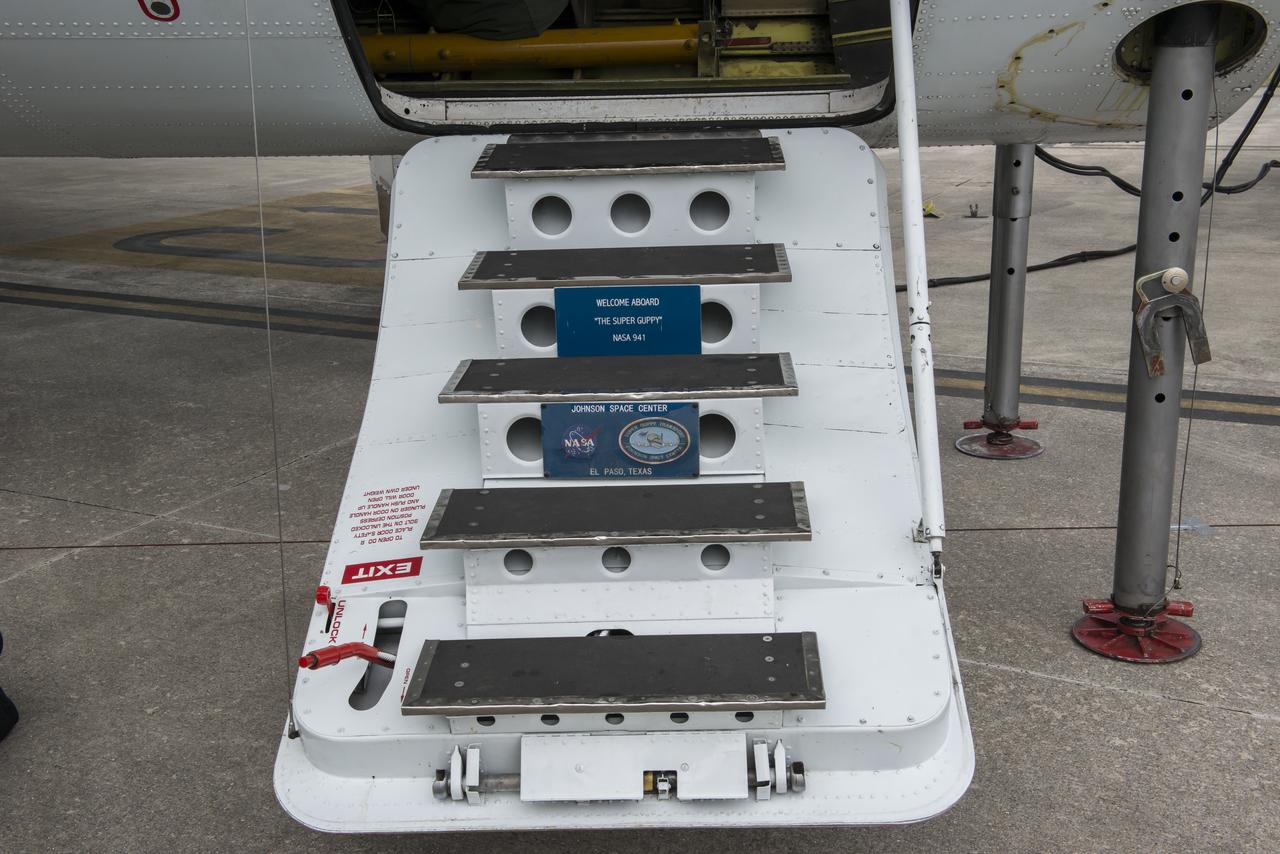
NASA's Super Guppy aircraft arrives to the U.S. Army’s Redstone Airfield in Huntsville, Alabama, April 2, to pick up flight hardware for NASA’s Space Launch System – its new, deep-space rocket that will enable astronauts to begin their journey to explore destinations far into the solar system. The Guppy will depart on Tuesday, April 3 to deliver the Orion stage adapter to NASA’s Kennedy Space Center in Florida for flight preparations. On Exploration Mission-1, the first integrated flight of the SLS and the Orion spacecraft, the adapter will connect Orion to the rocket and carry 13 CubeSats as secondary payloads.
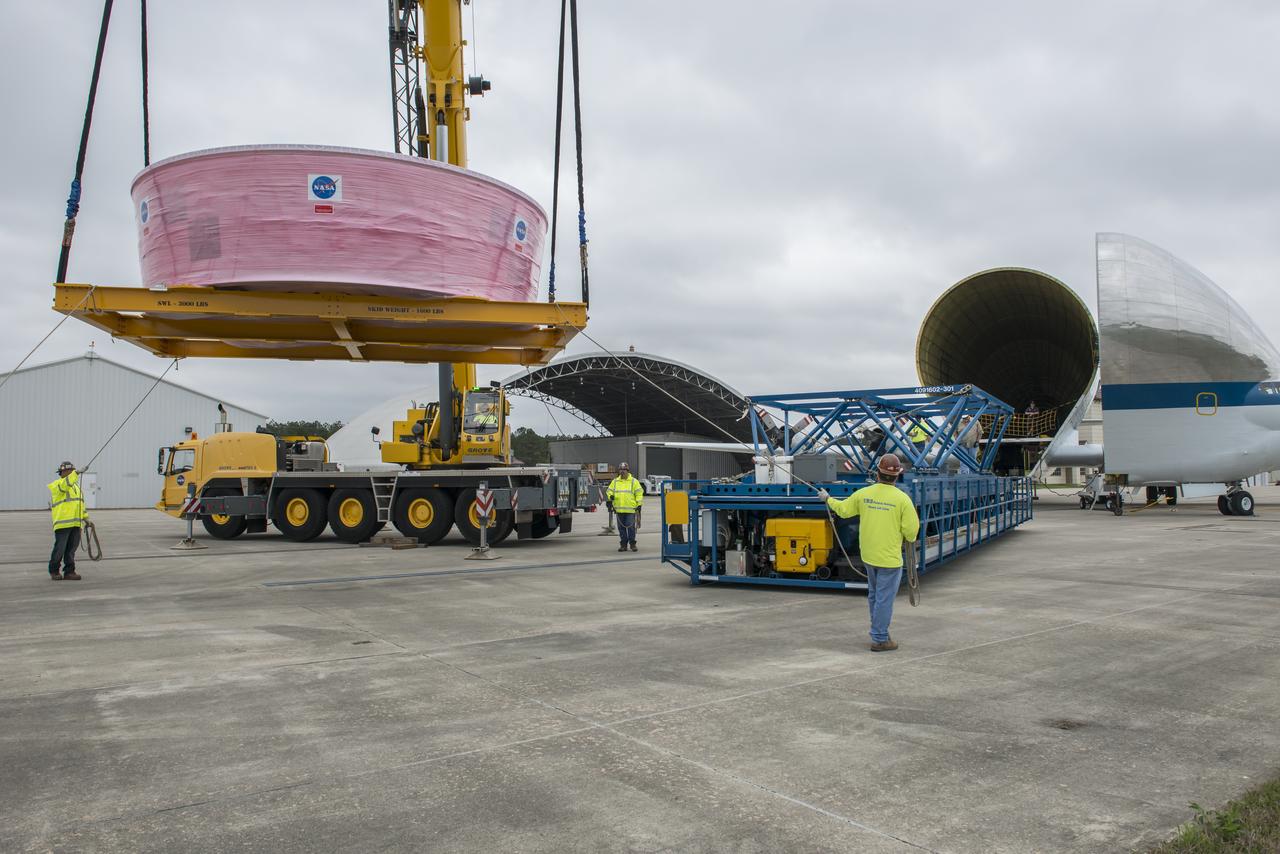
NASA's Super Guppy aircraft arrives to the U.S. Army’s Redstone Airfield in Huntsville, Alabama, April 2, to pick up flight hardware for NASA’s Space Launch System – its new, deep-space rocket that will enable astronauts to begin their journey to explore destinations far into the solar system. The Guppy will depart on Tuesday, April 3 to deliver the Orion stage adapter to NASA’s Kennedy Space Center in Florida for flight preparations. On Exploration Mission-1, the first integrated flight of the SLS and the Orion spacecraft, the adapter will connect Orion to the rocket and carry 13 CubeSats as secondary payloads.
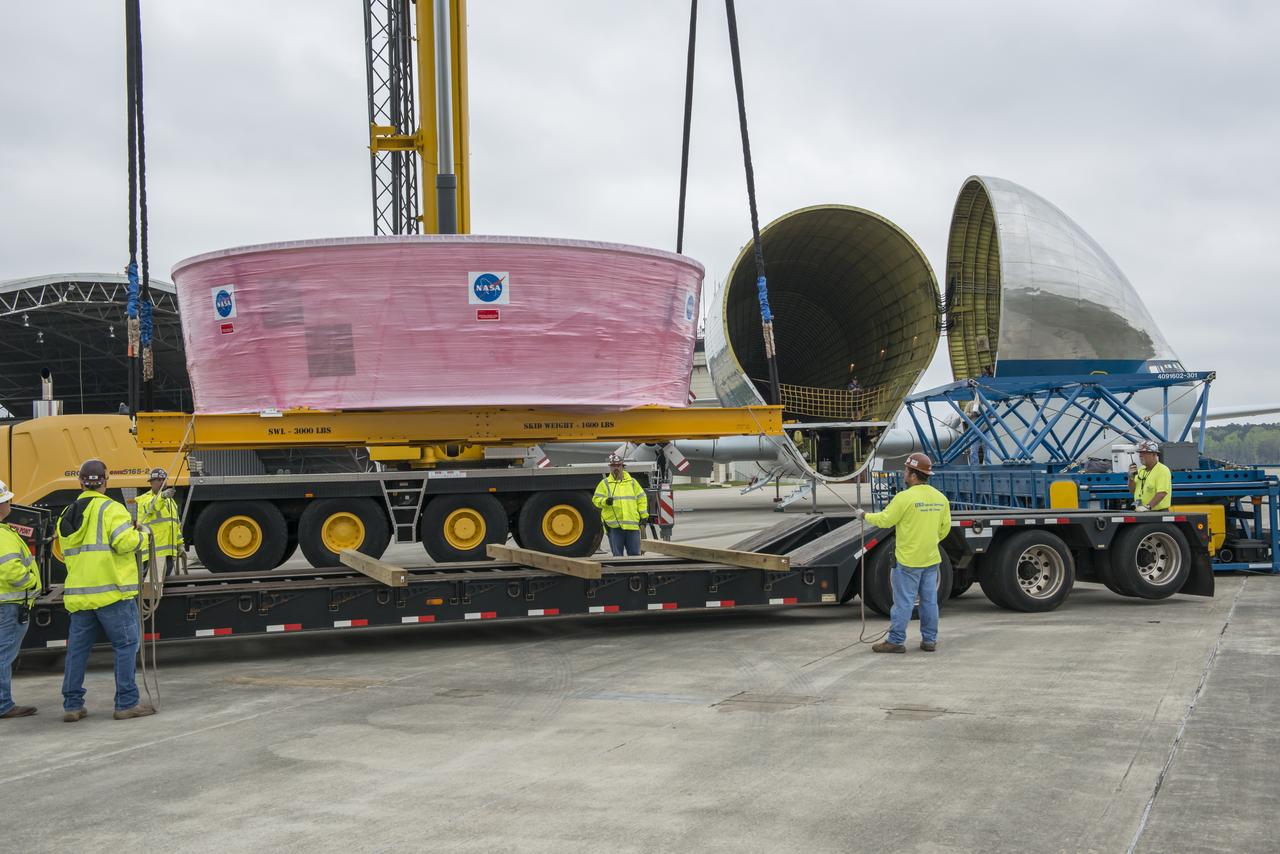
NASA's Super Guppy aircraft arrives to the U.S. Army’s Redstone Airfield in Huntsville, Alabama, April 2, to pick up flight hardware for NASA’s Space Launch System – its new, deep-space rocket that will enable astronauts to begin their journey to explore destinations far into the solar system. The Guppy will depart on Tuesday, April 3 to deliver the Orion stage adapter to NASA’s Kennedy Space Center in Florida for flight preparations. On Exploration Mission-1, the first integrated flight of the SLS and the Orion spacecraft, the adapter will connect Orion to the rocket and carry 13 CubeSats as secondary payloads.
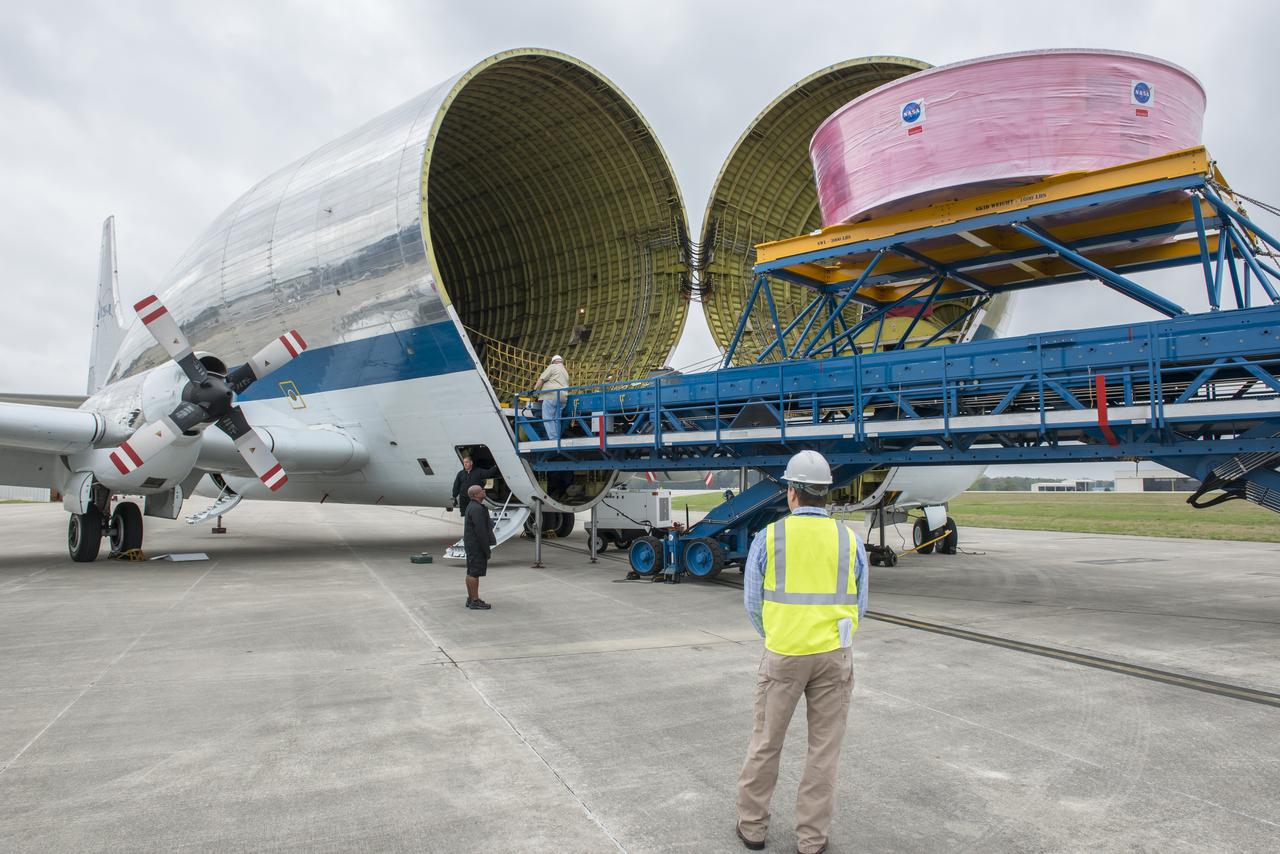
NASA's Super Guppy aircraft arrives to the U.S. Army’s Redstone Airfield in Huntsville, Alabama, April 2, to pick up flight hardware for NASA’s Space Launch System – its new, deep-space rocket that will enable astronauts to begin their journey to explore destinations far into the solar system. The Guppy will depart on Tuesday, April 3 to deliver the Orion stage adapter to NASA’s Kennedy Space Center in Florida for flight preparations. On Exploration Mission-1, the first integrated flight of the SLS and the Orion spacecraft, the adapter will connect Orion to the rocket and carry 13 CubeSats as secondary payloads.
Caption: NASA's Super Guppy aircraft arrives to the U.S. Army’s Redstone Airfield in Huntsville, Alabama, April 2, to pick up flight hardware for NASA’s Space Launch System – its new, deep-space rocket that will enable astronauts to begin their journey to explore destinations far into the solar system. The Guppy will depart on Tuesday, April 3 to deliver the Orion stage adapter to NASA’s Kennedy Space Center in Florida for flight preparations. On Exploration Mission-1, the first integrated flight of the SLS and the Orion spacecraft, the adapter will connect Orion to the rocket and carry 13 CubeSats as secondary payloads.
NASA's Super Guppy aircraft arrives to the U.S. Army’s Redstone Airfield in Huntsville, Alabama, April 2, to pick up flight hardware for NASA’s Space Launch System – its new, deep-space rocket that will enable astronauts to begin their journey to explore destinations far into the solar system. The Guppy will depart on Tuesday, April 3 to deliver the Orion stage adapter to NASA’s Kennedy Space Center in Florida for flight preparations. On Exploration Mission-1, the first integrated flight of the SLS and the Orion spacecraft, the adapter will connect Orion to the rocket and carry 13 CubeSats as secondary payloads.
Caption: NASA's Super Guppy aircraft arrives to the U.S. Army’s Redstone Airfield in Huntsville, Alabama, April 2, to pick up flight hardware for NASA’s Space Launch System – its new, deep-space rocket that will enable astronauts to begin their journey to explore destinations far into the solar system. The Guppy will depart on Tuesday, April 3 to deliver the Orion stage adapter to NASA’s Kennedy Space Center in Florida for flight preparations. On Exploration Mission-1, the first integrated flight of the SLS and the Orion spacecraft, the adapter will connect Orion to the rocket and carry 13 CubeSats as secondary payloads.
NASA's Super Guppy aircraft arrives to the U.S. Army’s Redstone Airfield in Huntsville, Alabama, April 2, to pick up flight hardware for NASA’s Space Launch System – its new, deep-space rocket that will enable astronauts to begin their journey to explore destinations far into the solar system. The Guppy will depart on Tuesday, April 3 to deliver the Orion stage adapter to NASA’s Kennedy Space Center in Florida for flight preparations. On Exploration Mission-1, the first integrated flight of the SLS and the Orion spacecraft, the adapter will connect Orion to the rocket and carry 13 CubeSats as secondary payloads.
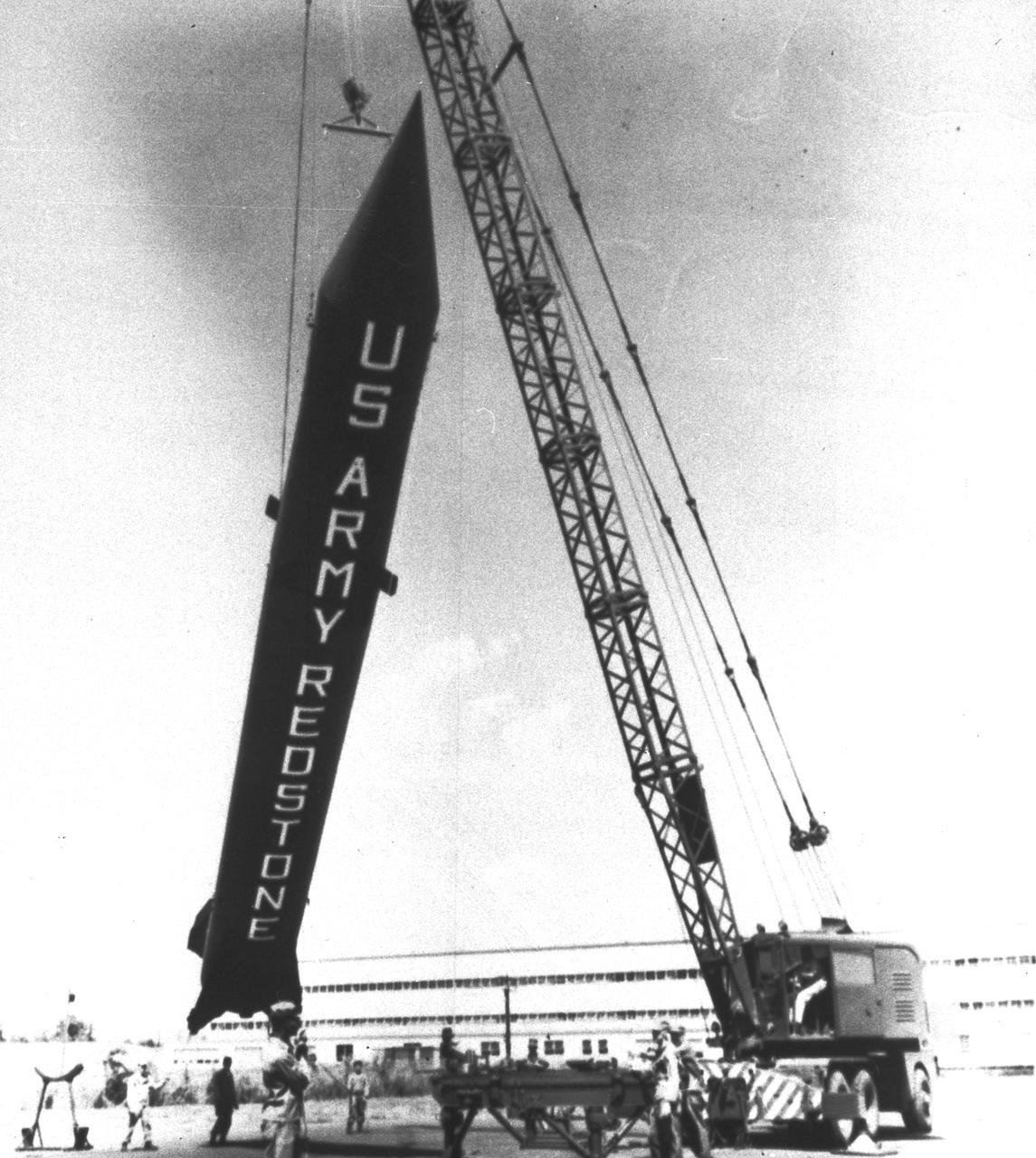
U.S. Army Redstone Rocket: The Redstone ballistic missile was a high-accuracy, liquid-propelled, surface-to-surface missile developed by the Army Ballistic Missile Agency, Redstone Arsenal, in Huntsville, Alabama, under the direction of Dr. von Braun. The Redstone rocket was also known as "Old Reliable" because of its many diverse missions. The first Redstone Missile was launched from Cape Canaveral, Florida on August 30, 1953.
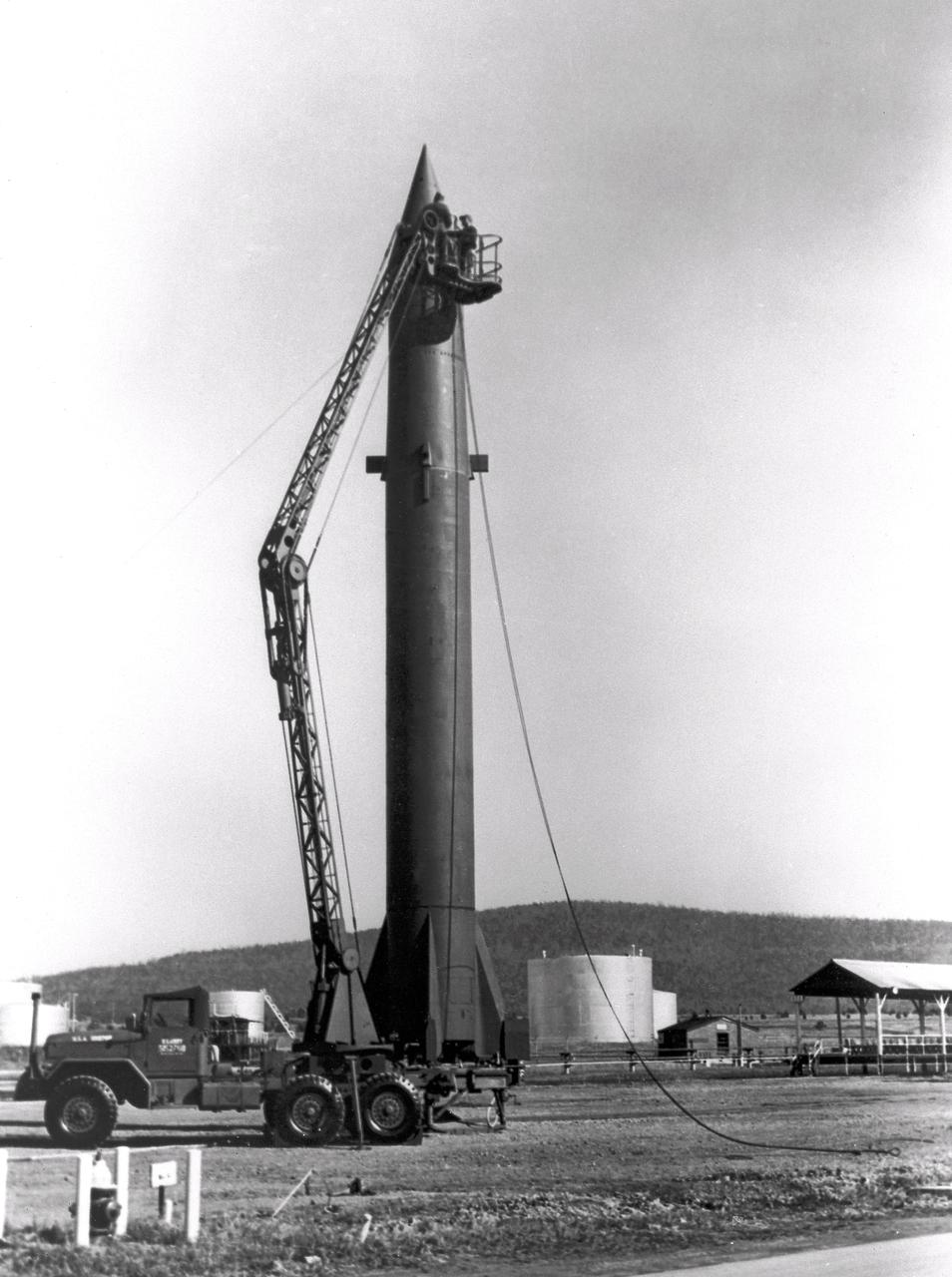
The image depicts Redstone missile being erected. The Redstone ballistic missile was a high-accuracy, liquid-propelled, surface-to-surface missile developed by Army Ballistic Missile Agency, Redstone Arsenal, in Huntsville, Alabama, under the direction of Dr. von Braun. The Redstone engine was a modified and improved version of the Air Force's Navaho cruise missile engine of the late forties. The A-series, as this would be known, utilized a cylindrical combustion chamber as compared with the bulky, spherical V-2 chamber. By 1951, the Army was moving rapidly toward the design of the Redstone missile, and the production was begun in 1952. Redstone rockets became the "reliable workhorse" for America's early space program. As an example of the versatility, Redstone was utilized in the booster for Explorer 1, the first American satellite, with no major changes to the engine or missile
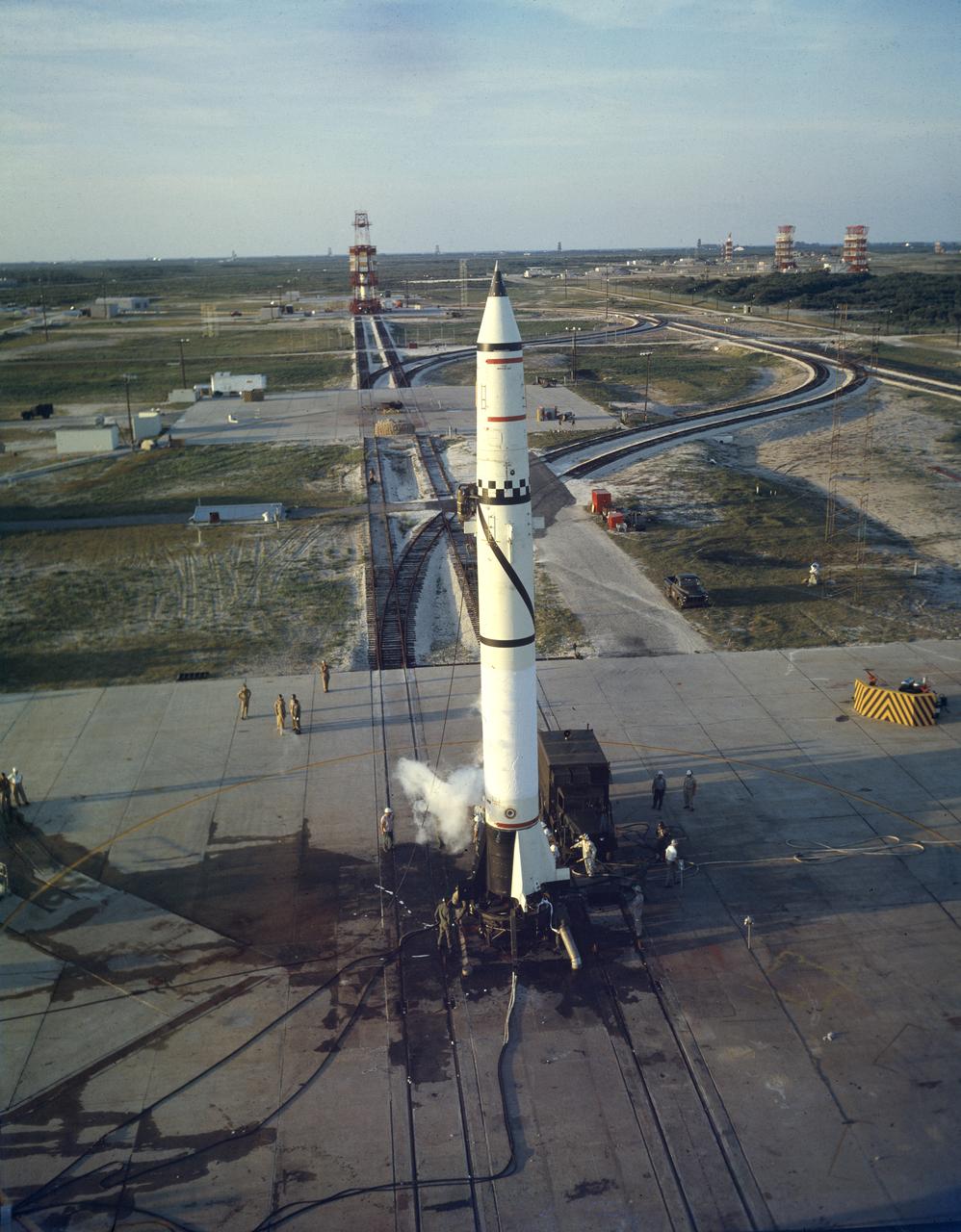
Redstone missile No. 1002 on the launch pad at Cape Canaveral, Florida, on May 16, 1958. The Redstone ballistic missile was a high-accuracy, liquid-propelled, surface-to-surface missile developed by the Army Ballistic Missile Agency, Redstone Arsenal, in Huntsville, Alabama, under the direction of Dr. von Braun. The Redstone engine was a modified and improved version of the Air Force's Navaho cruise missile engine of the late forties. The A-series, as this would be known, utilized a cylindrical combustion chamber as compared with the bulky, spherical V-2 chamber. By 1951, the Army was moving rapidly toward the design of the Redstone missile, and production was begun in 1952. Redstone rockets became the "reliable workhorse" for America's early space program. As an example of the versatility, Redstone was utilized in the booster for Explorer 1, the first American satellite, with no major changes to the engine or missile
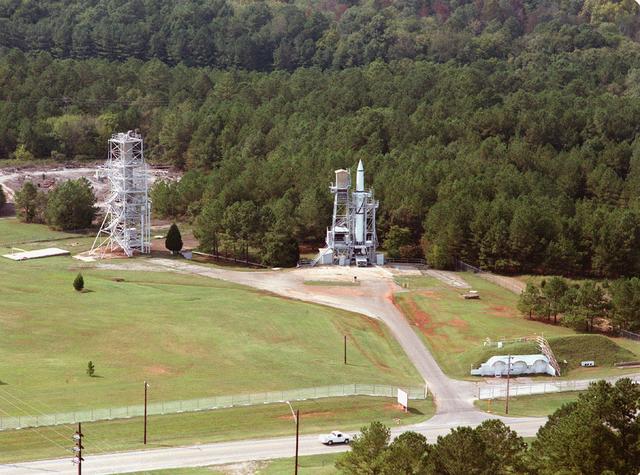
The Redstone Test Stand, shown here, was used throughout the 1950s to test the Redstone missionile, including the modified Redstone that launched America's first astronaut, Alan Shepard. The U. S. Department of the Interior's Park Services designated the Test Stand as a National Historic Landmark January 22, 1986.
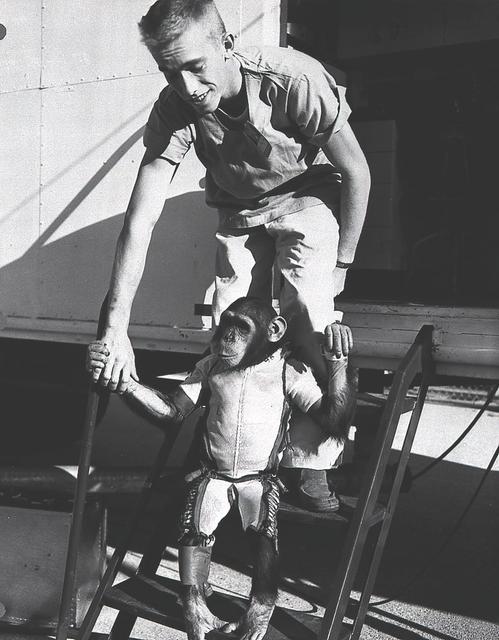
Ham, a three-year-old chimpanzee, in the spacesuit he would wear for the second Mercury- Redstone (MR-2) suborbital test flight in January, 1961. NASA used chimpanzees and other primates to test the Mercury capsule before launching the fisrt American astronaut, Alan Shepard, in May 1961. The Mercury capsule rode atop a modified Redstone rocket, developed by Dr. Wernher von Braun and the German Rocket Team in Huntsville, Alabama.
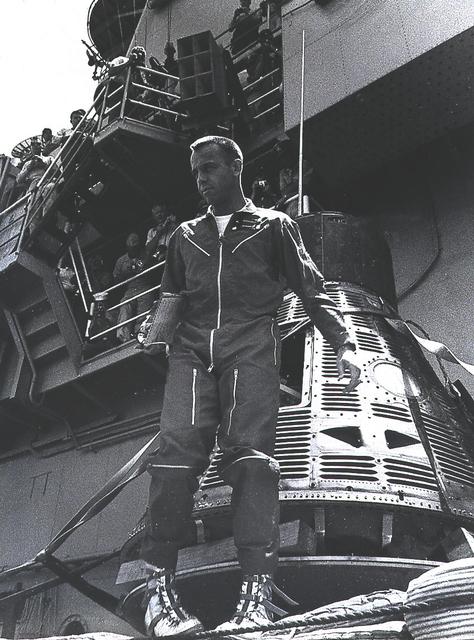
Alan B. Shepard, Jr., America's first astronaut, stands in front of the Freedom 7 spacecraft shortly after completion of the third flight of the Mercury-Redstone (MR-3) vehicle, May 5, 1961. During the 15-minute suborbital flight, the Freedom 7 Mercury spacecraft, launched atop a modified Redstone rocket developed by Dr. Wernher von Braun and the rocket team in Huntsville, Alabama, reached an altitude of 115 miles and traveled 302 miles downrange.
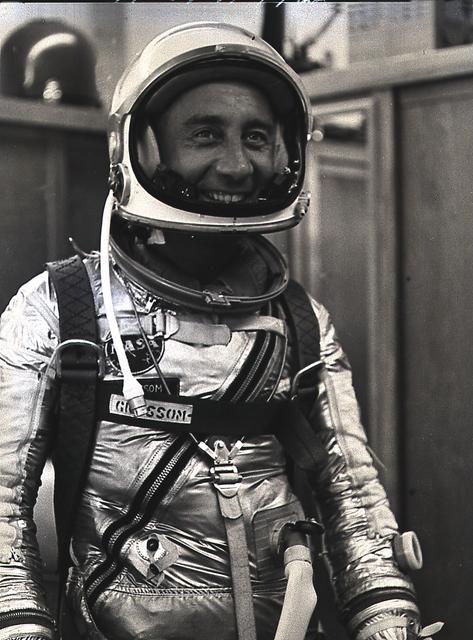
Astronaut Virgil Gus Grissom awaits America's second marned space mission, Mercury-Redstone 4 (MR-4) on July 21, 1961. During the 15-minute suborbital flight, the Liberty Bell 7 Mercury spacecraft reached an altitude of 118 miles and traveled 303 miles downrange. It was the fourth flight of the Mercury-Redstone launch vehicle (MR-4), developed by Dr. Wernher von Braun and the rocket team in Huntsville, Alabama.
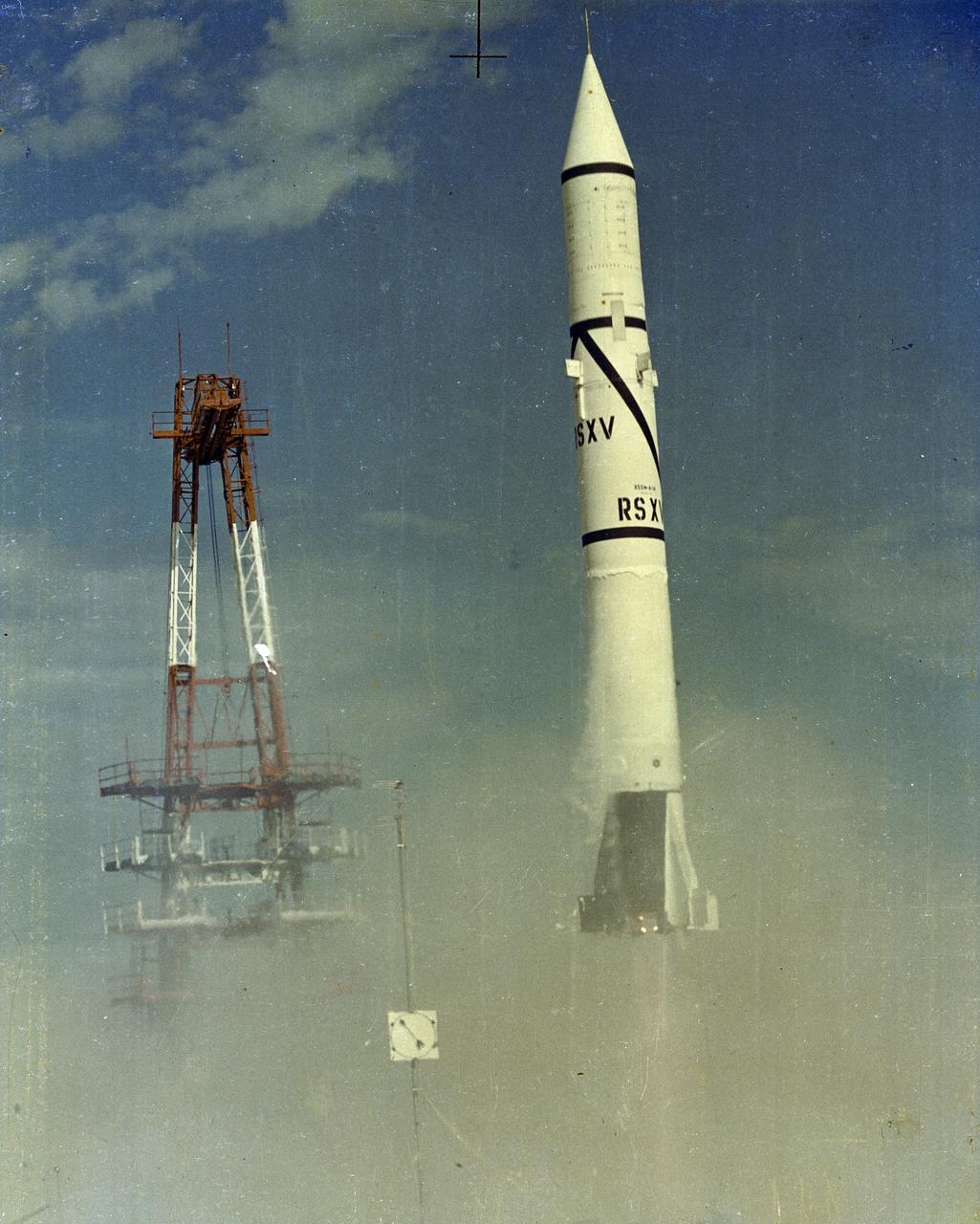
The first Redstone was fired at Cape Canaveral, Florida on August 20, 1953. Redstone was the first major rocket development program for United States by the Peenemuende group led by Dr. Wernher von Braun. The Redstone launch photographed here, from November 17, 1954, was the fifth launch of a Redstone rocket.
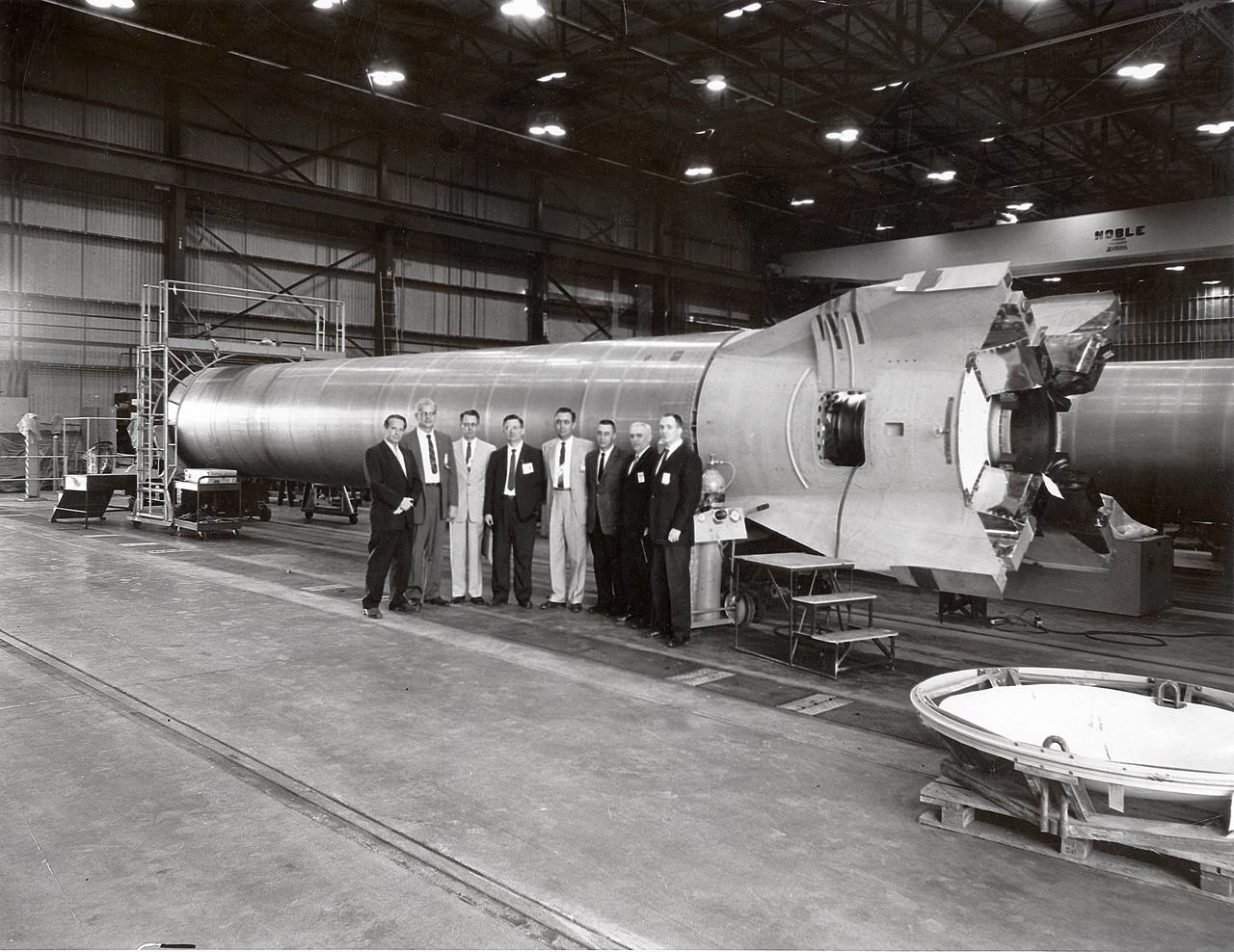
This photograph shows a group of officials standing before a Mercury-Redstone booster at the Marshall Space Flight Center (MSFC). Among those in the photograph are astronauts James Lovell, Walter Schirra, and Gus Grissom. Also pictured is Joachim Kuettner who managed responsibilities of MSFC's Mercury-Redstone program.
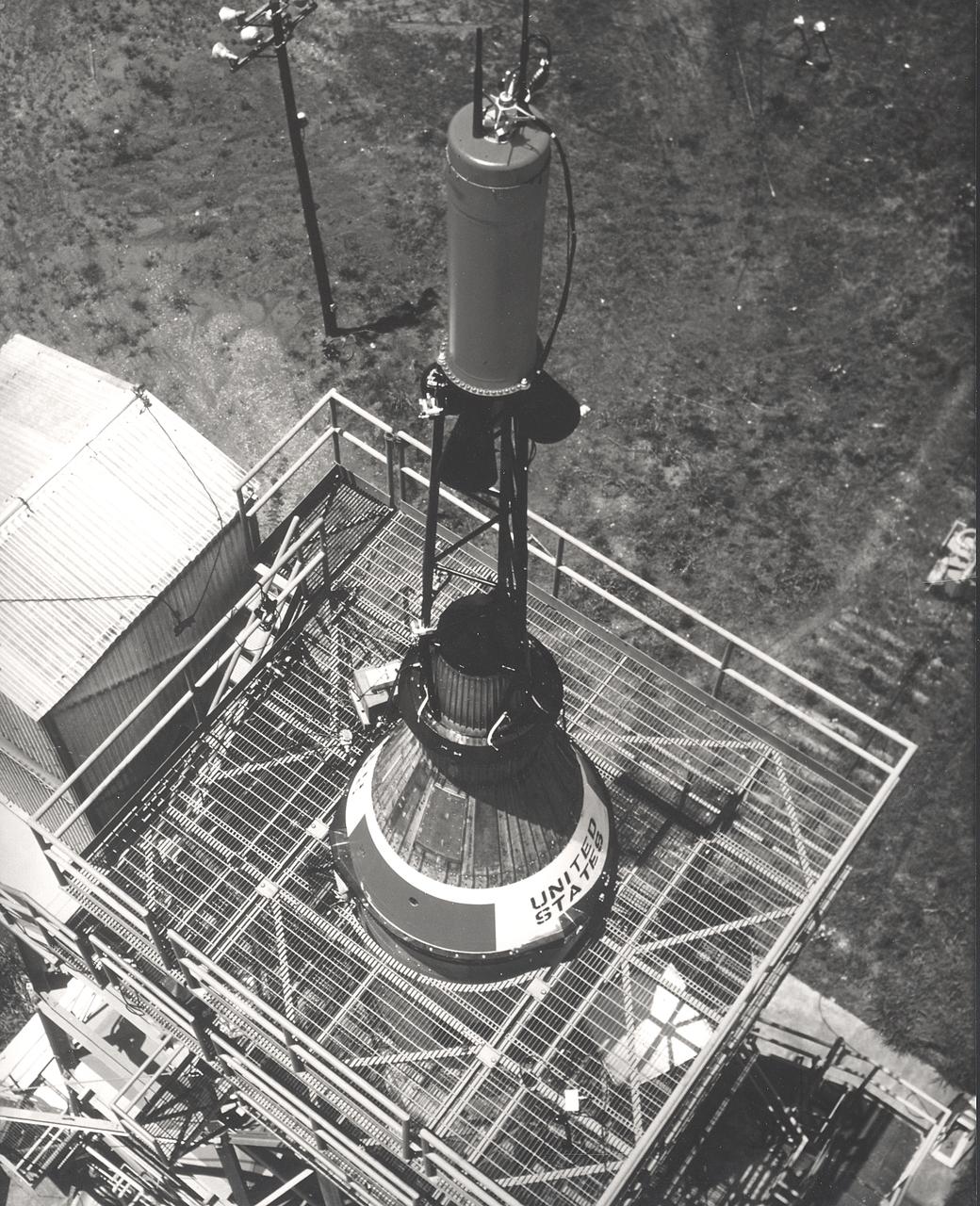
This photograph depicts installation of the Mercury capsule and escape system on top of a booster prior to test firing of the Mercury-Redstone launch vehicle at the Marshall Space Flight Center.

In the years following World War II, the Army directed that the Huntsville, Alabama Arsenal be advertised for sale. The decision was reversed because the Army found it needed this land for the new missile work that would occur at Redstone Arsenal.
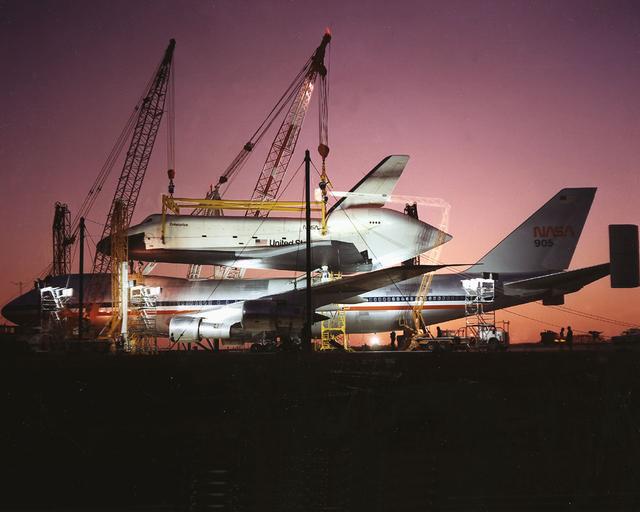
The Shuttle Orbiter Enterprise is off-loaded at Redstone Arsenal Airfield for later Mated Vertical Ground Vibration tests (MVGVT) at Marshall Space Flight Center's Dynamic Test Stand. The tests marked the first time ever that the entire shuttle complement (including orbiter, external tank, and solid rocket boosters) were mated vertically.
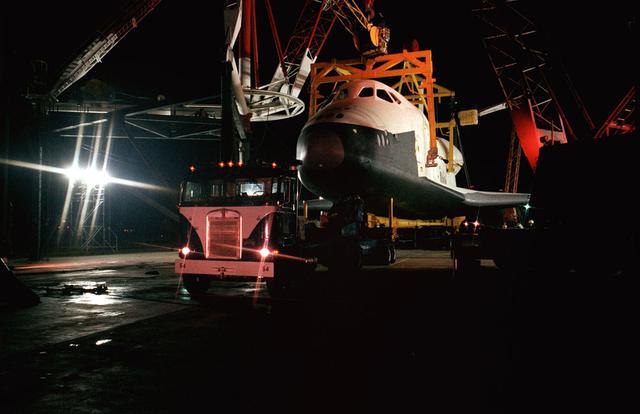
The Shuttle Orbiter Enterprise is off-loaded at Redstone Arsenal Airfield for later Mated Vertical Ground Vibration tests (MVGVT) at Marshall Space Flight Center's Dynamic Test Stand. The tests marked the first time ever that the entire shuttle complement including orbiter, external tank, and solid rocket boosters were vertically mated.
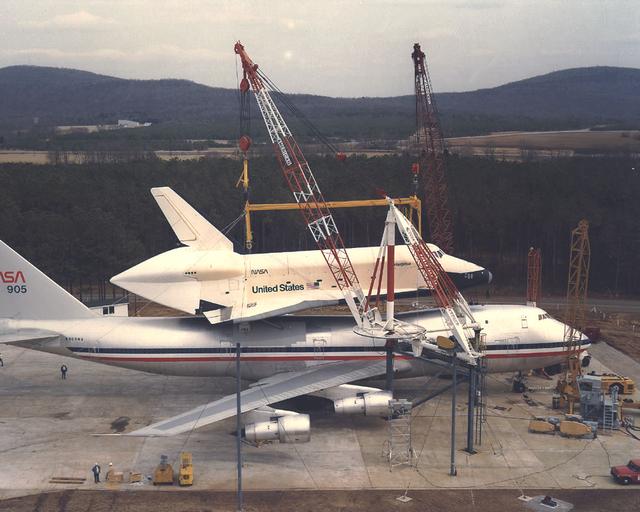
The Shuttle Orbiter Enterprise is off-loaded at Redstone Arsenal Airfield for later Mated Vertical Ground Vibration tests (MVGVT) at Marshall Space Flight Center's Dynamic Test Stand. The tests marked the first time ever that the entire shuttle complement (including orbiter, external tank, and solid rocket boosters) were mated vertically.
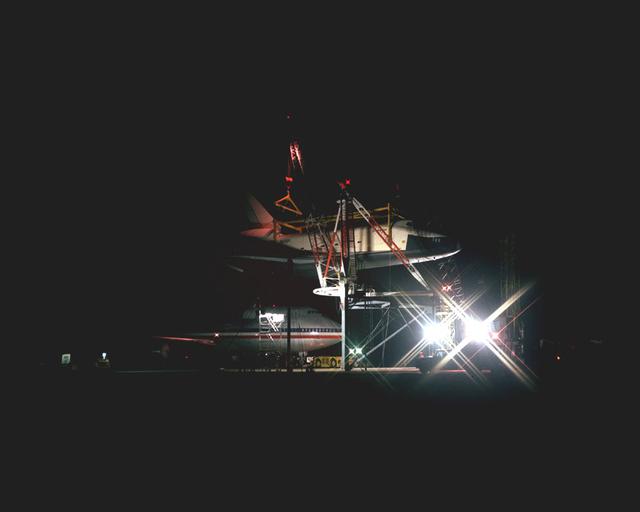
The Shuttle Orbiter Enterprise is off-loaded Redstone Arsenal Airfield for later Mated Vertical Ground Vibration tests (MVGVT) at Marshall Space Flight Center's Dynamic Test Stand. The tests marked the first time ever that the entire shuttle complement (including orbiter, external tank, and solid rocket boosters) were mated vertically.
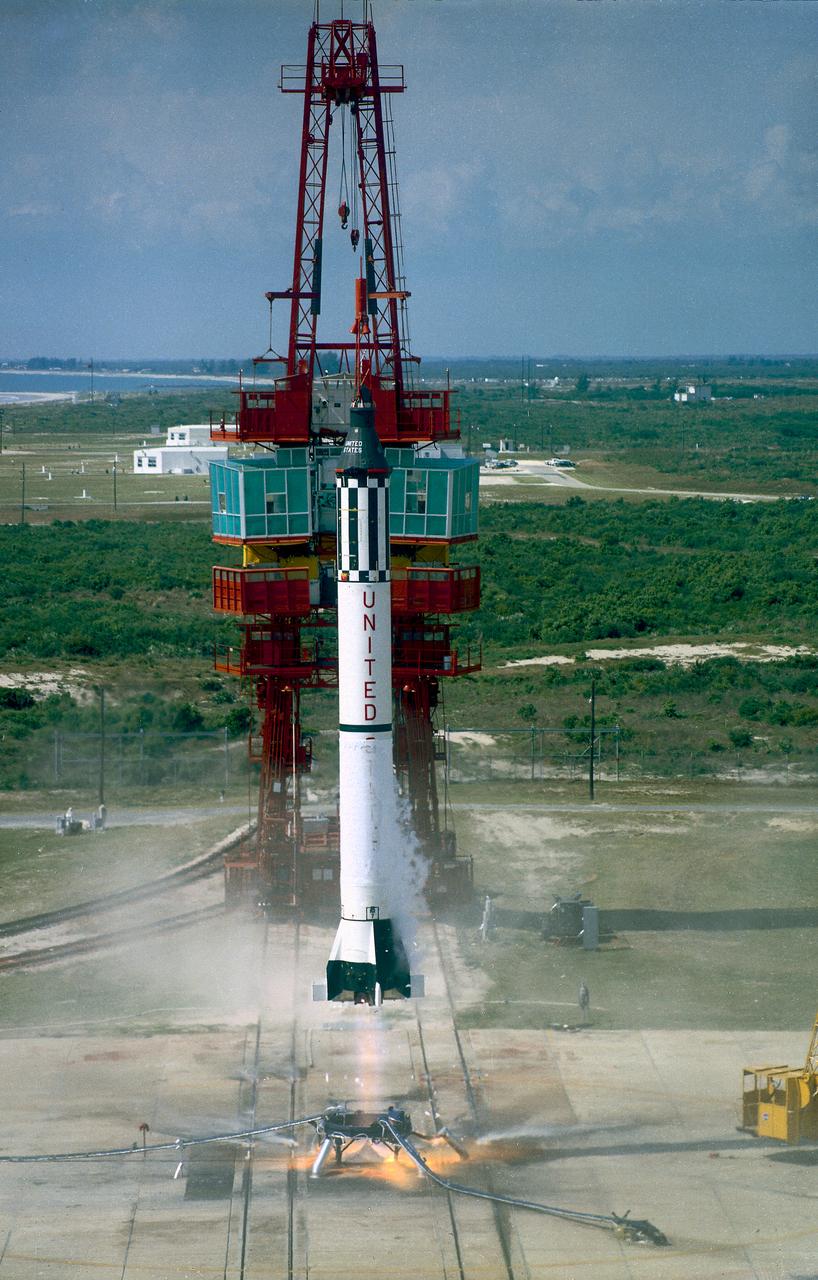
The launch of the Mercury-Redstone (MR-3), Freedom 7. MR-3 placed the first American astronaut, Alan Shepard, in suborbit on May 5, 1961.
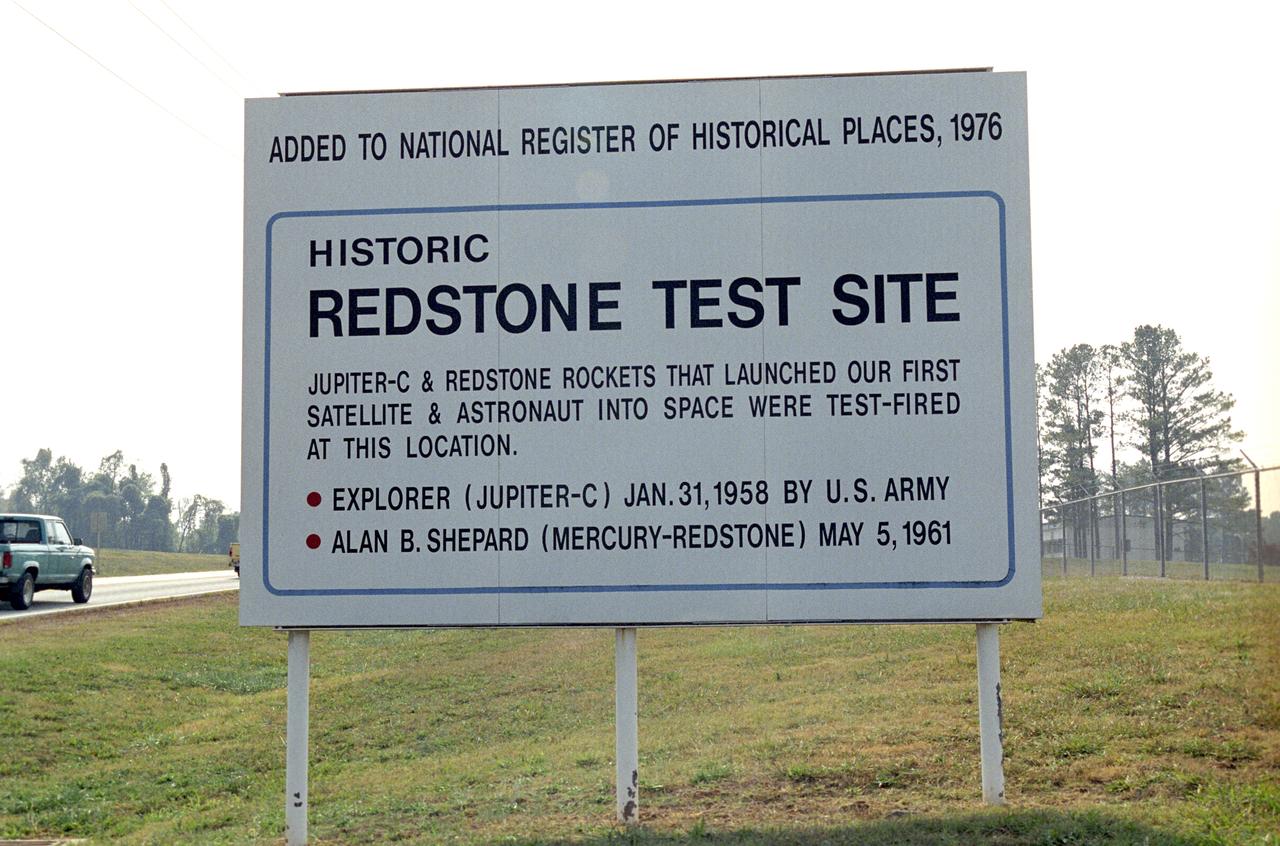
This sign, displayed on the grounds of Marshall Space Flight Center in Huntsville, Alabama, commemorates the designation of the Redstone Test Site as a National Historic Landmark. The site was inducted into the National Register of Historical Places in 1976.
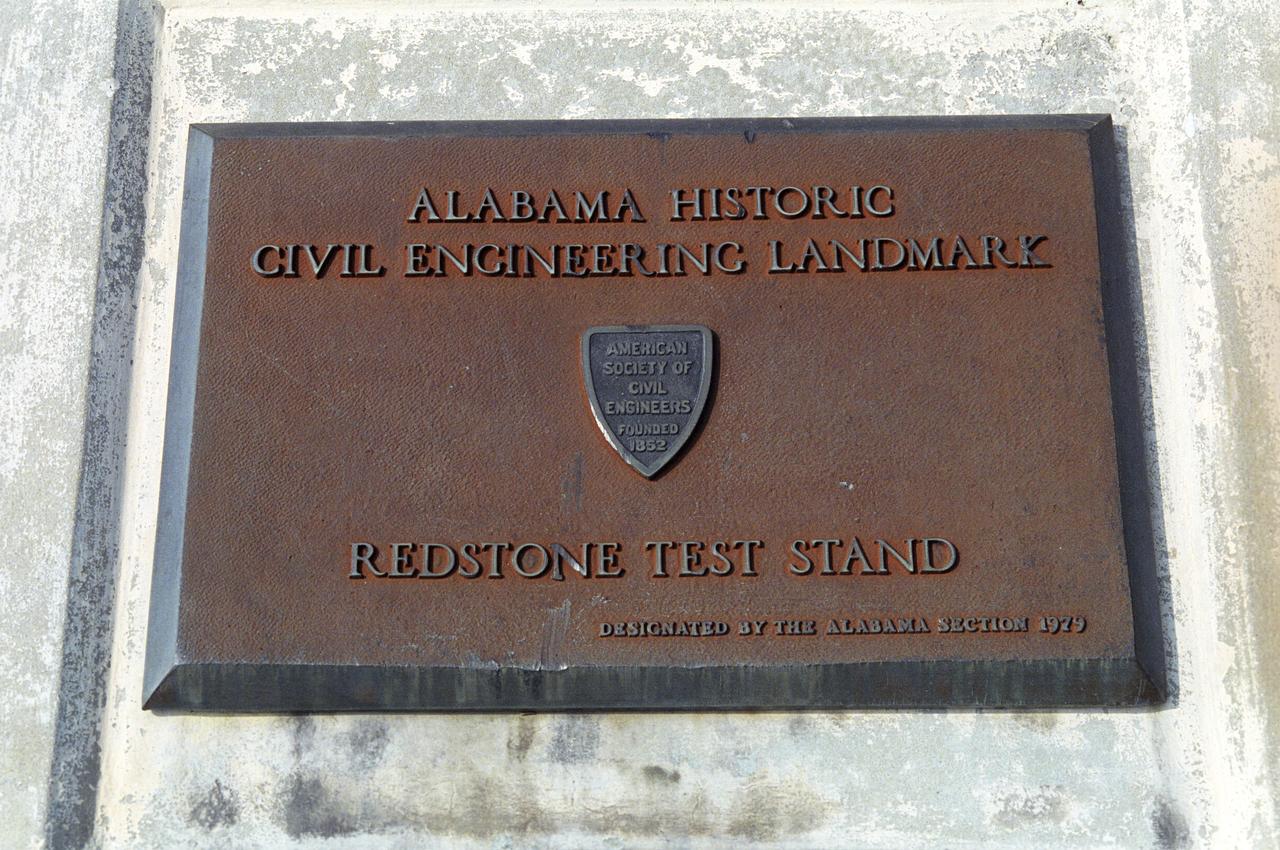
This plaque, displayed on the grounds of Marshall Space Flight Center in Huntsville, Alabama, commemorates the Redstone Test Stand as an Alabama Historic Civil Engineering Landmark. The site was desinated as such in 1979.
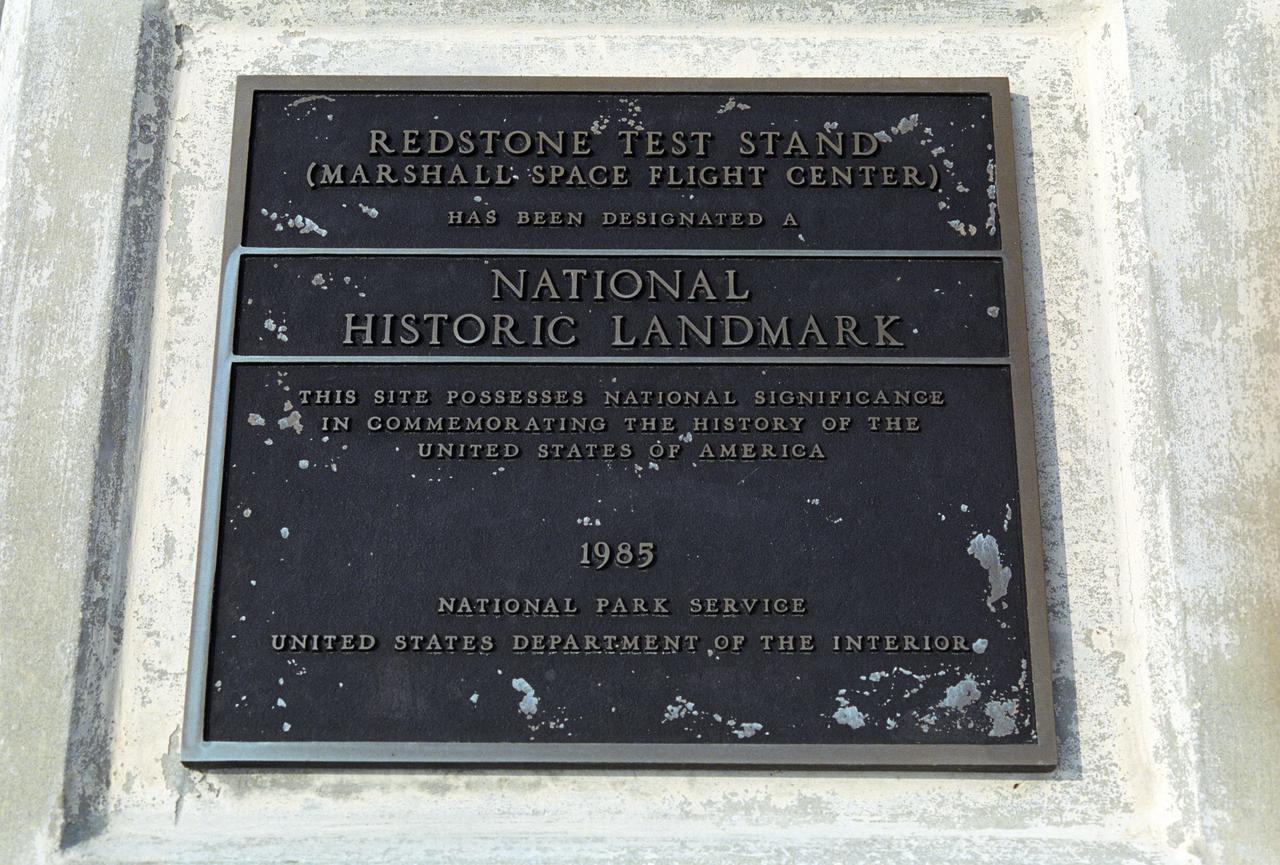
This plaque, displayed on the grounds of Marshall Space Flight Center in Huntsville, Alabama, commemorates the Redstone Test Stand as a National Historic Landmark. The site was designated as such in 1985 by the National Park Service of the United States Department of the Interior.
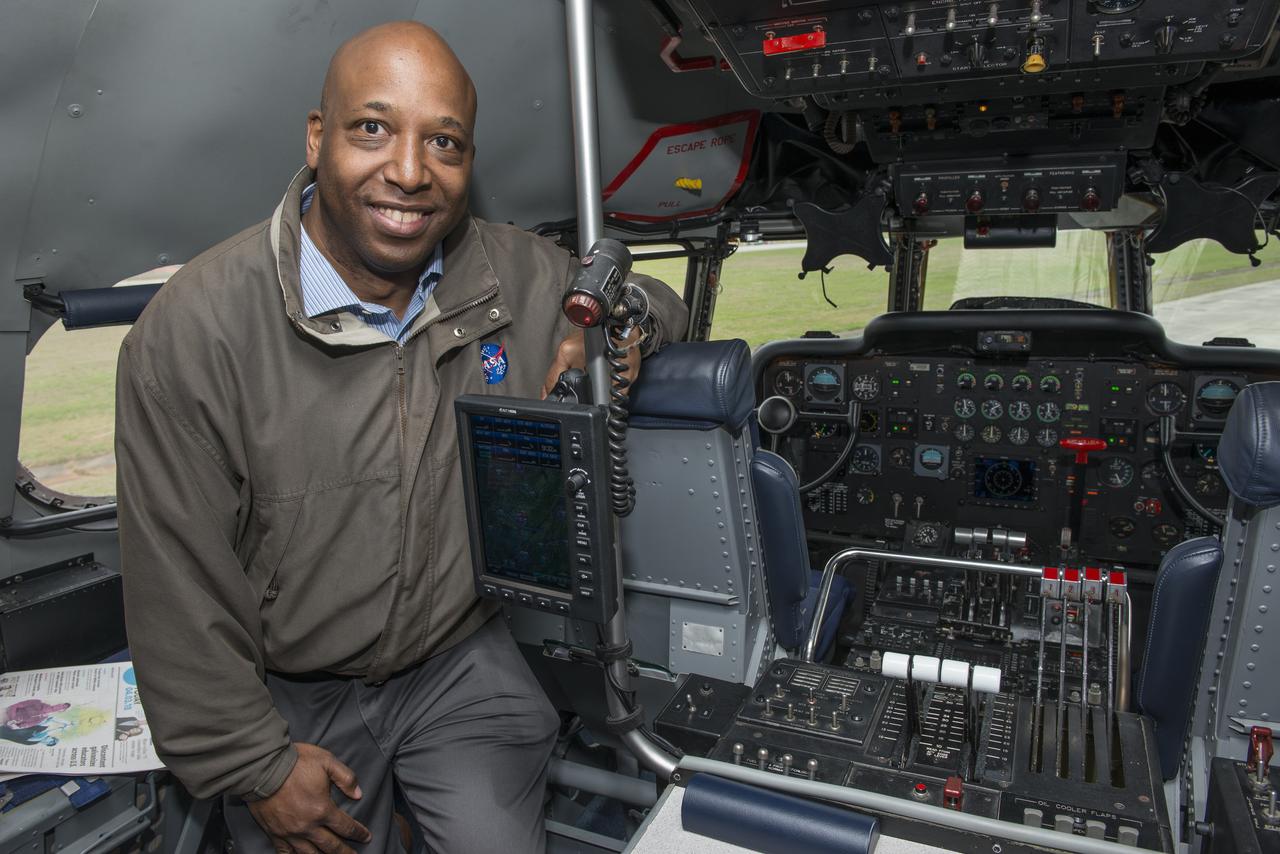
NASA's Super Guppy aircraft arrives to the U.S. Army’s Redstone Airfield in Huntsville, Alabama, April 2, to pick up flight hardware for NASA’s Space Launch System – its new, deep-space rocket that will enable astronauts to begin their journey to explore destinations far into the solar system. The Guppy will depart on Tuesday, April 3 to deliver the Orion stage adapter to NASA’s Kennedy Space Center in Florida for flight preparations. On Exploration Mission-1, the first integrated flight of the SLS and the Orion spacecraft, the adapter will connect Orion to the rocket and carry 13 CubeSats as secondary payloads. Rumaasha Maasha, an aerospace engineer in Marshall's Spacecraft & Vehicle Systems Department, tours the cockpit of NASA's Super Guppy aircraft April 3 when it landed at Marshall to pick up the Orion stage adapter for transportation to NASA's Kennedy Space Center. Maasha holds a master's degree in aerospace engineering, is a certified aviation maintenance tech and pilot and previously worked as a 747 loadmaster and airline refueler.
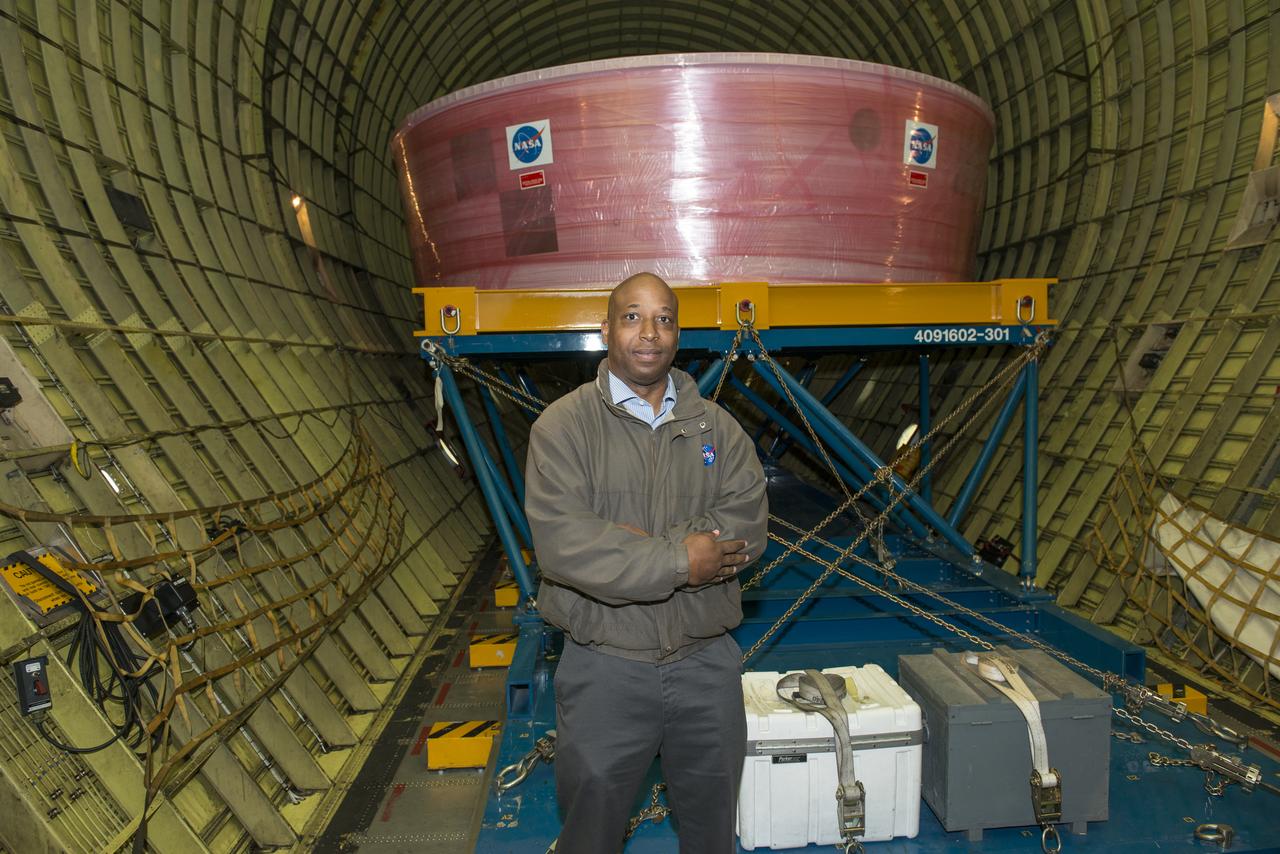
NASA's Super Guppy aircraft arrives to the U.S. Army’s Redstone Airfield in Huntsville, Alabama, April 2, to pick up flight hardware for NASA’s Space Launch System – its new, deep-space rocket that will enable astronauts to begin their journey to explore destinations far into the solar system. The Guppy will depart on Tuesday, April 3 to deliver the Orion stage adapter to NASA’s Kennedy Space Center in Florida for flight preparations. On Exploration Mission-1, the first integrated flight of the SLS and the Orion spacecraft, the adapter will connect Orion to the rocket and carry 13 CubeSats as secondary payloads. Rumaasha Maasha stands in front of the Orion stage adapter in the cargo hold of NASA's Super Guppy aircraft. The Orion stage adapter, the top of the rocket that connects the Space Lauch System to Orion, will carry 13 CubeSats as secondary payloads on Exploration Mission-1, the first integrated flight of SLS and the Orion spacecraft. Guppy transported the adapter to Kennedy Space Center April 3.
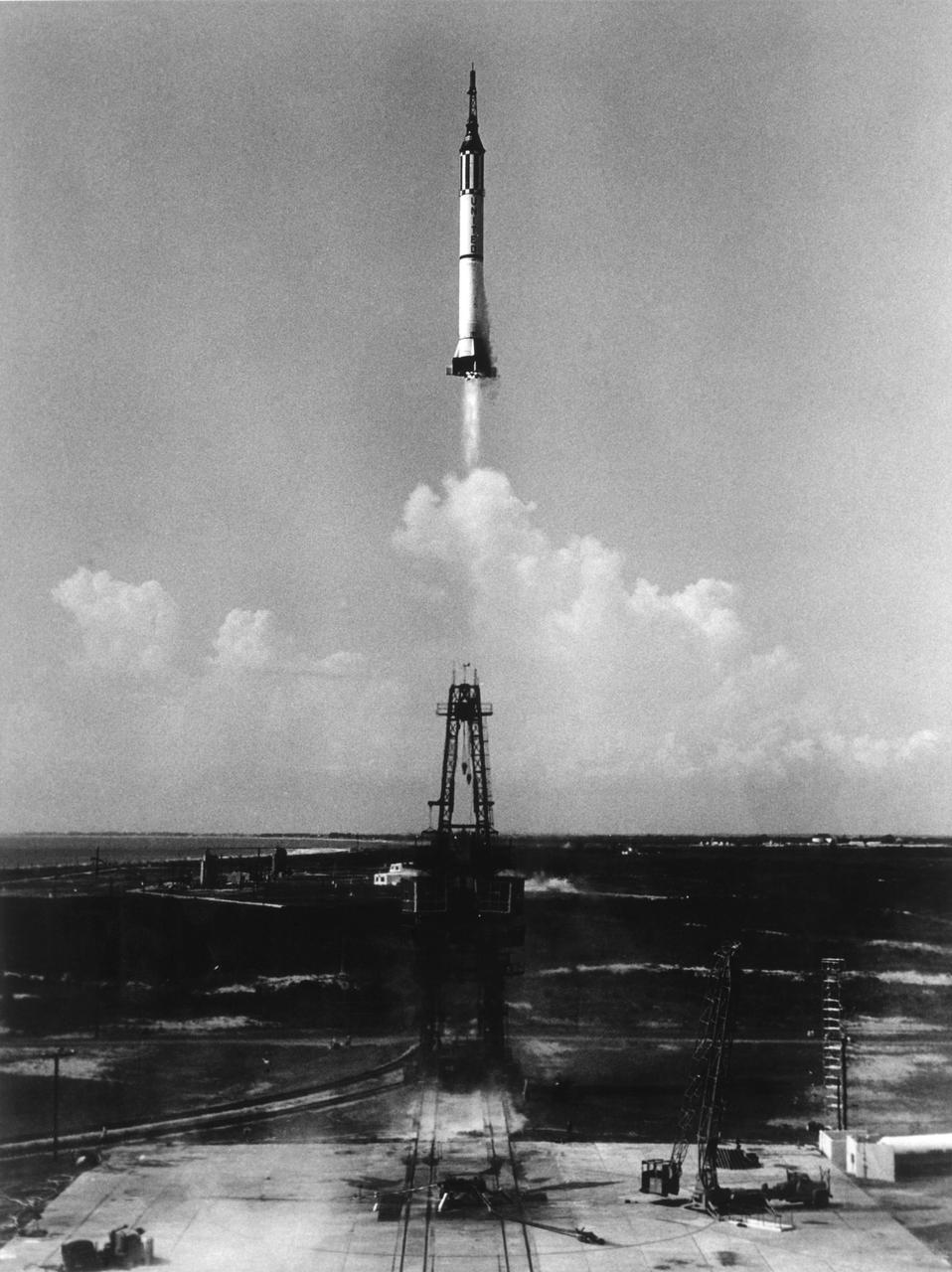
JSC2007-E-046477 (5 May 1961) --- Launching of the Mercury-Redstone 3 (MR-3) spacecraft from Cape Canaveral on a suborbital mission -- the first U.S. manned spaceflight. Original image number was 61-MR3-74. Photo credit: NASA or National Aeronautics and Space Administration
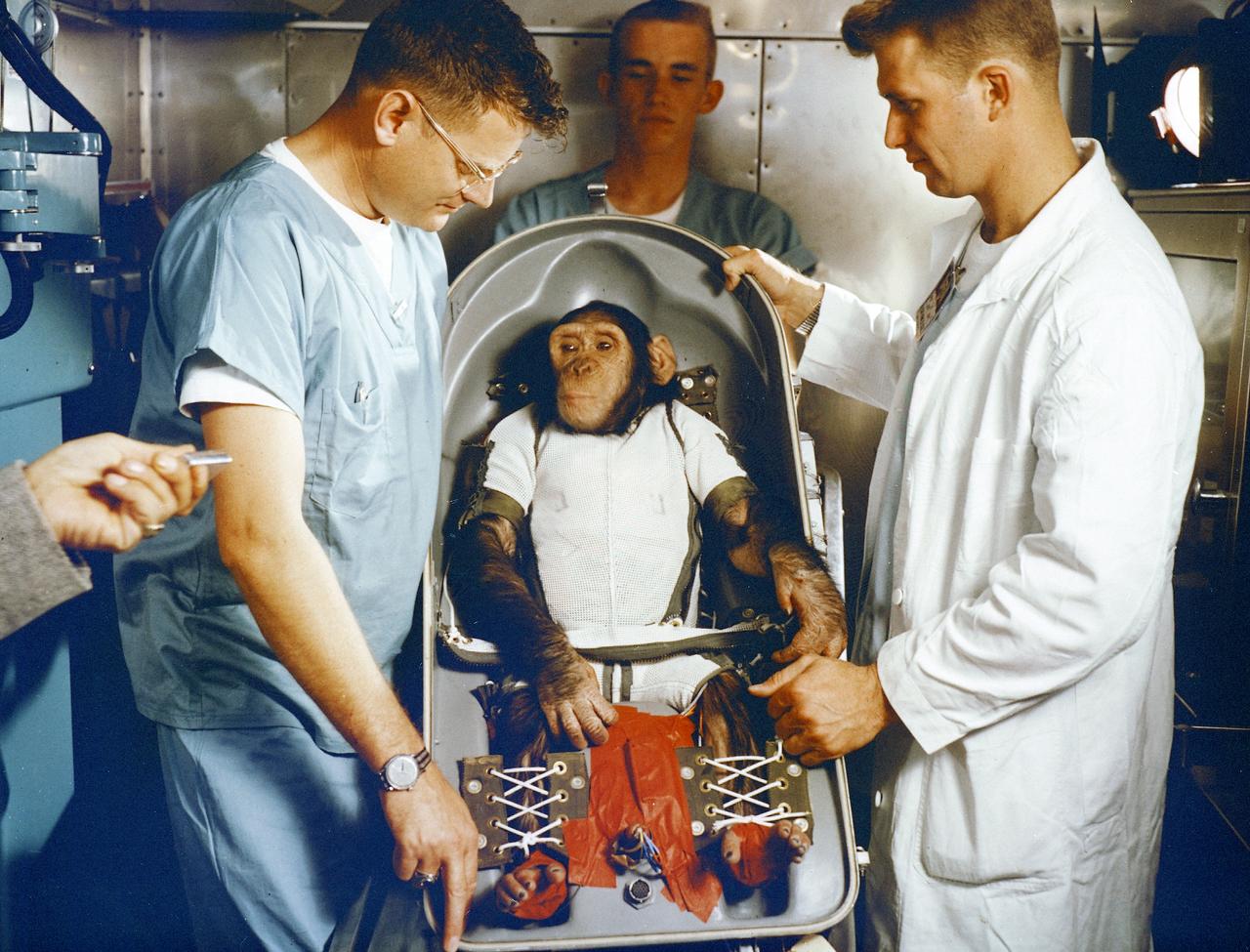
A three-year-old chimpanzee, named Ham, in the biopack couch for the MR-2 suborbital test flight. On January 31, 1961, a Mercury-Redstone launch from Cape Canaveral carried the chimpanzee "Ham" over 640 kilometers down range in an arching trajectory that reached a peak of 254 kilometers above the Earth. The mission was successful and Ham performed his lever-pulling task well in response to the flashing light. NASA used chimpanzees and other primates to test the Mercury Capsule before launching the first American astronaut Alan Shepard in May 1961. The successful flight and recovery confirmed the soundness of the Mercury-Redstone systems.
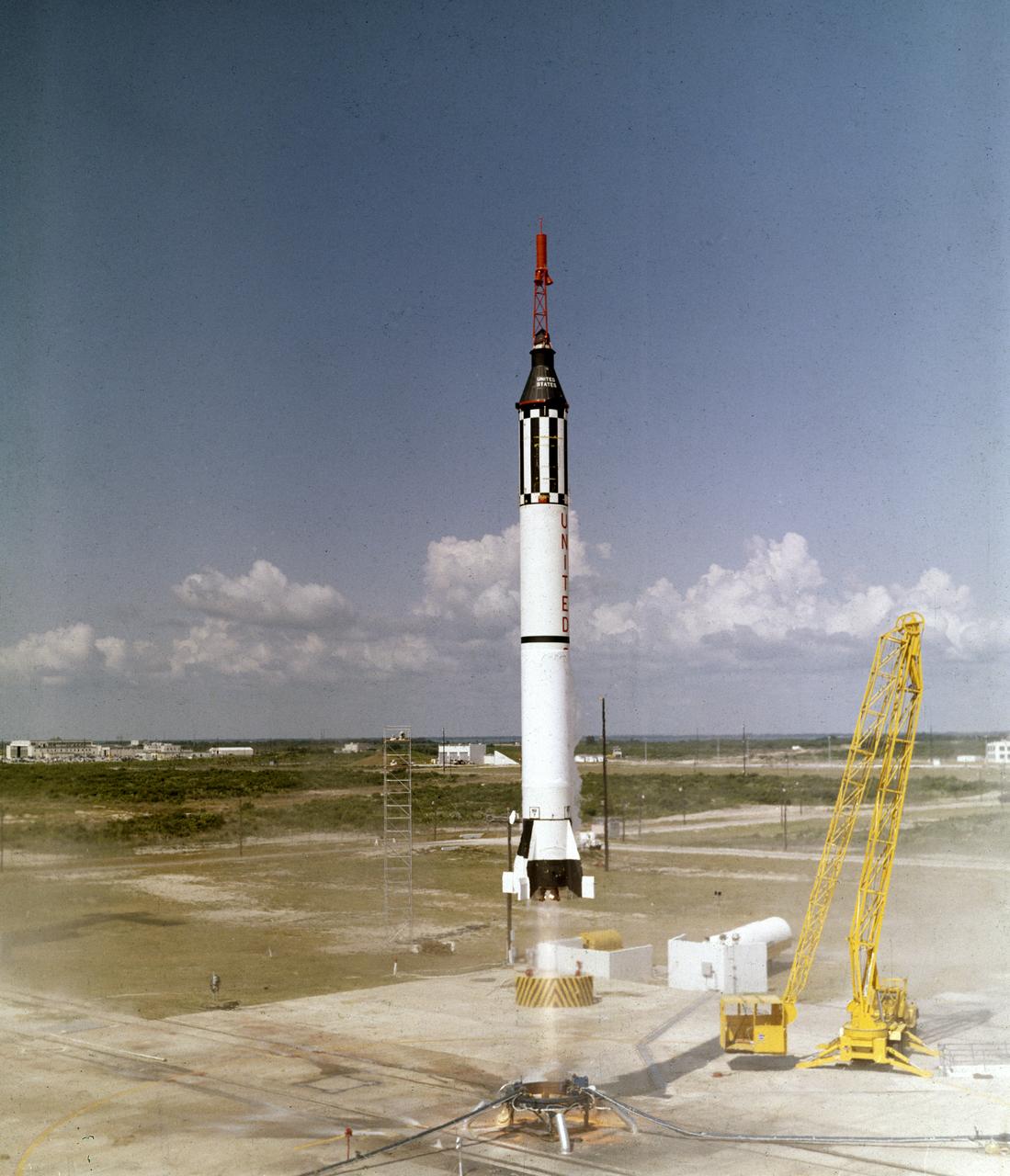
Astronaut Alan B. Shepard, Jr. lifts off in the Freedom 7 Mercury spacecraft on May 5, 1961. This third flight of the Mercury-Redstone (MR-3) vehicle, developed by Dr. Wernher von Braun and the rocket team in Huntsille, Alabama, was the first marned space mission for the United States. During the 15-minute suborbital flight, Shepard reached an altitude of 115 miles and traveled 302 miles downrange.
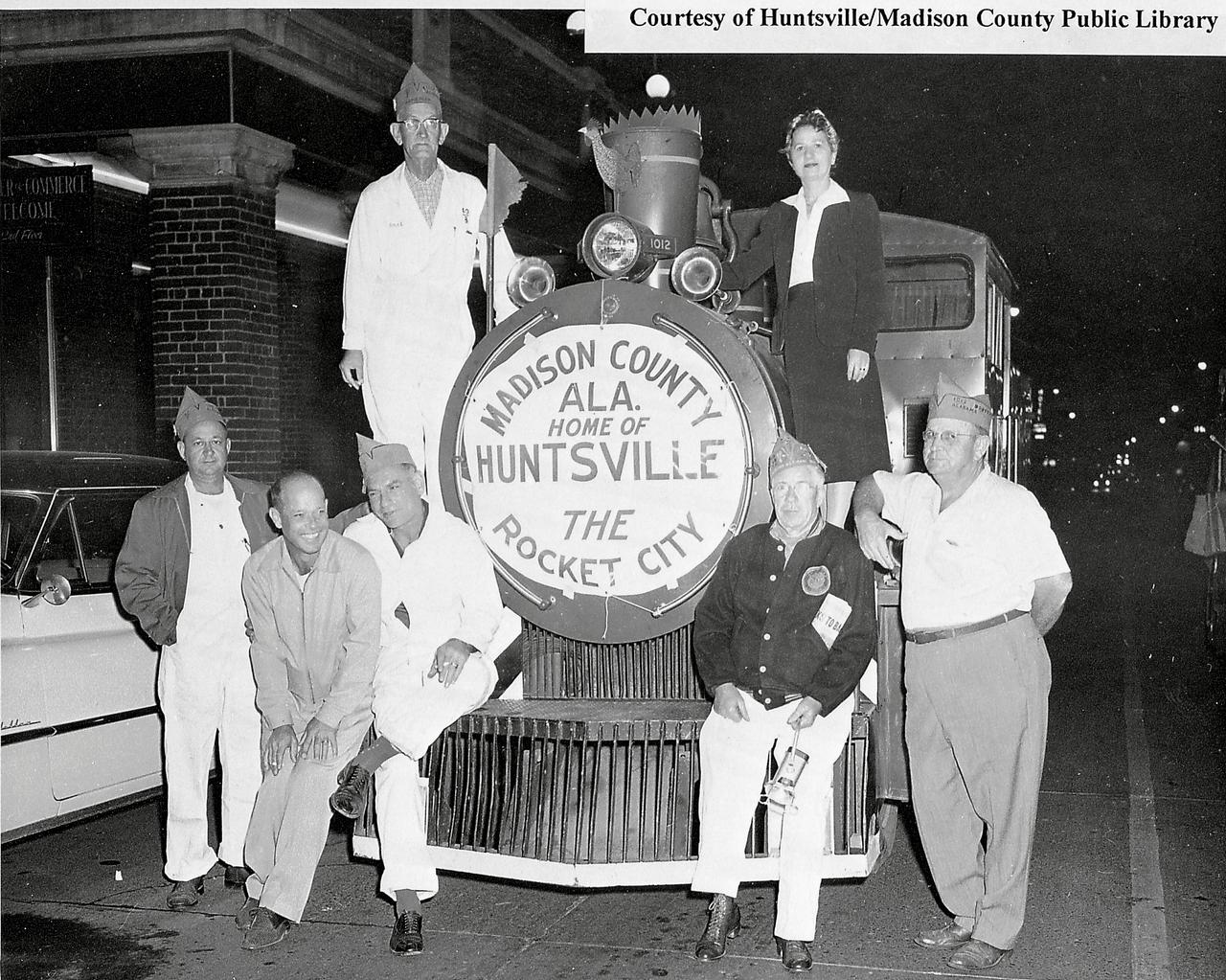
As the nations missile and rocket program began to expand in the 50's, Huntsville, Alabama was the home to Redstone Arsenal and the famous team of rocket experts led by Dr. Wernher Von Braun. Soon Huntsville was called the "Rocket City" as depicted in this photo believed to have been taken in the 1950's in Huntsville, Alabama. (Courtesy of Huntsville/Madison County Public Library)

The Shuttle Orbiter Enterprise atop a 747 landing at Redstone Arsenal Airfield for later Mated Vertical Ground Vibration tests (MVGVT) at Marshall Space Flight Center's Dynamic Test Stand. The tests marked the first time ever that the entire shuttle complement (including orbiter, external tank, and solid rocket boosters) were mated vertically.
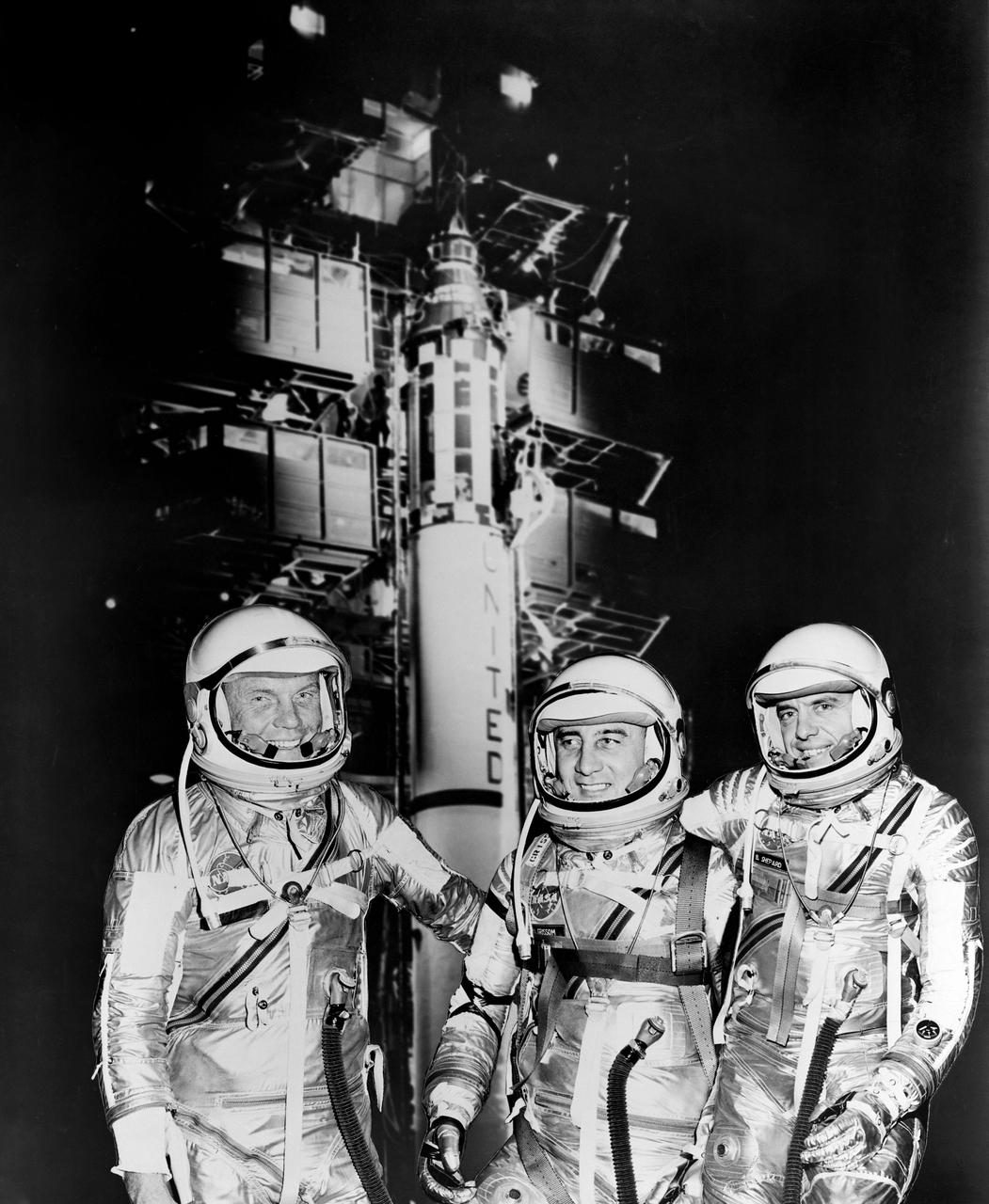
S61-00239 (1961) --- Mercury astronauts John H. Glenn Jr., Virgil I. Grissom and Alan B. Shepard Jr. standing by Redstone rocket in their spacesuits. Photo credit: NASA
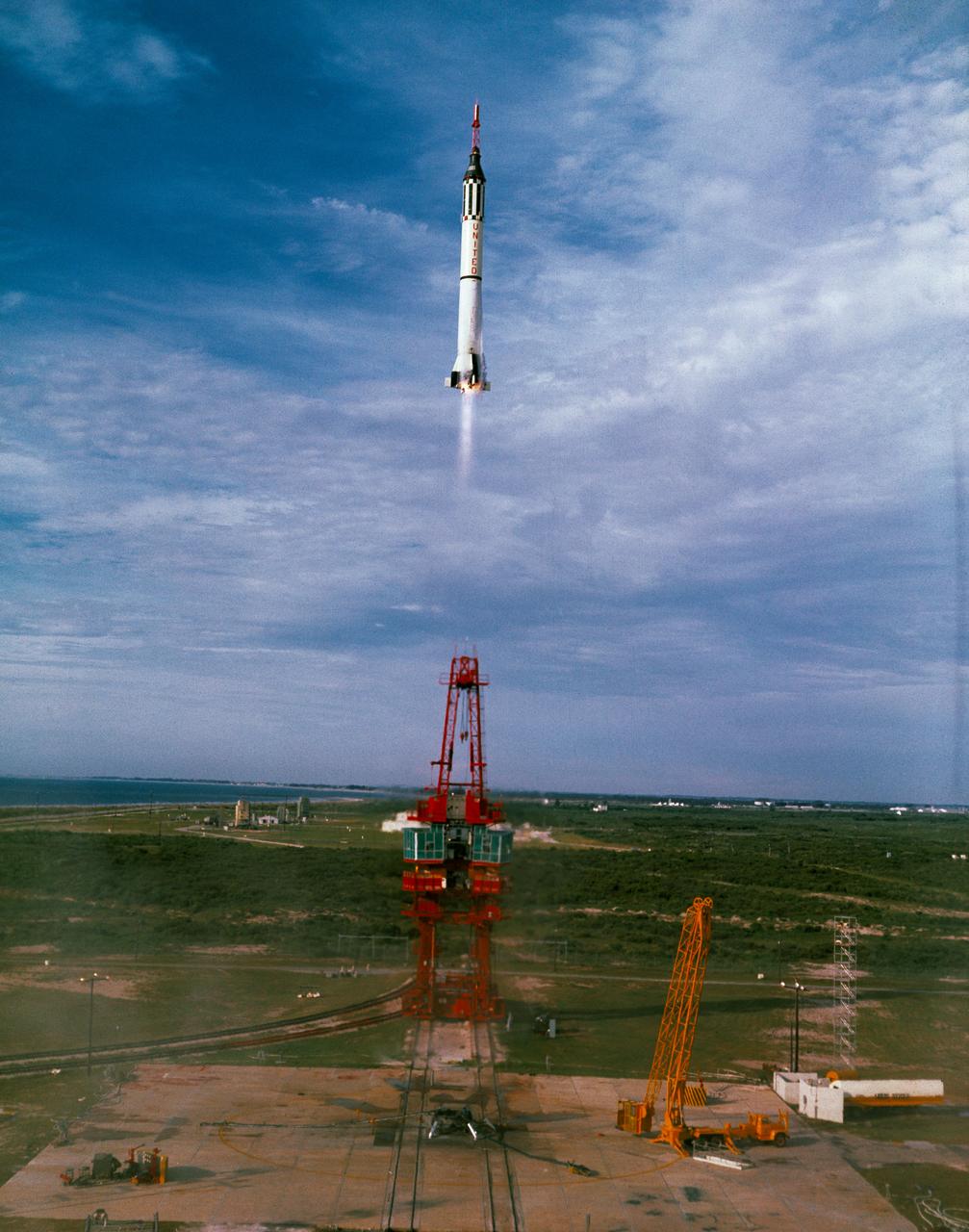
S61-03248 (21 July 1961) --- Mercury-Redstone 4 (MR-4) launch of Virgil I. Grissom on July 21, 1961, from Cape Canaveral, Florida. Photo credit: NASA
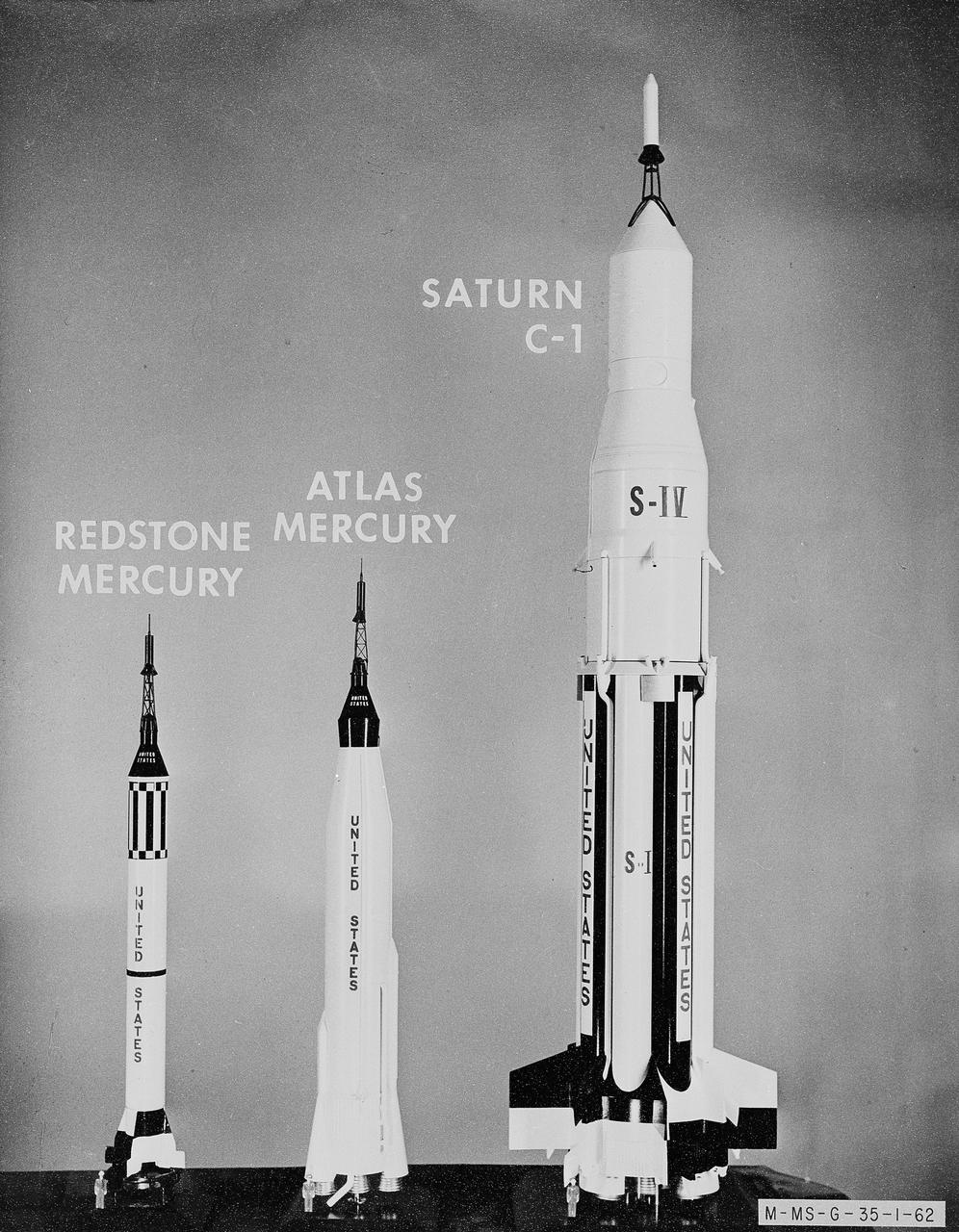
Photographed are models of early rocketry: The Atlas Mercury, Redstone Mercury; and Saturn C-1.
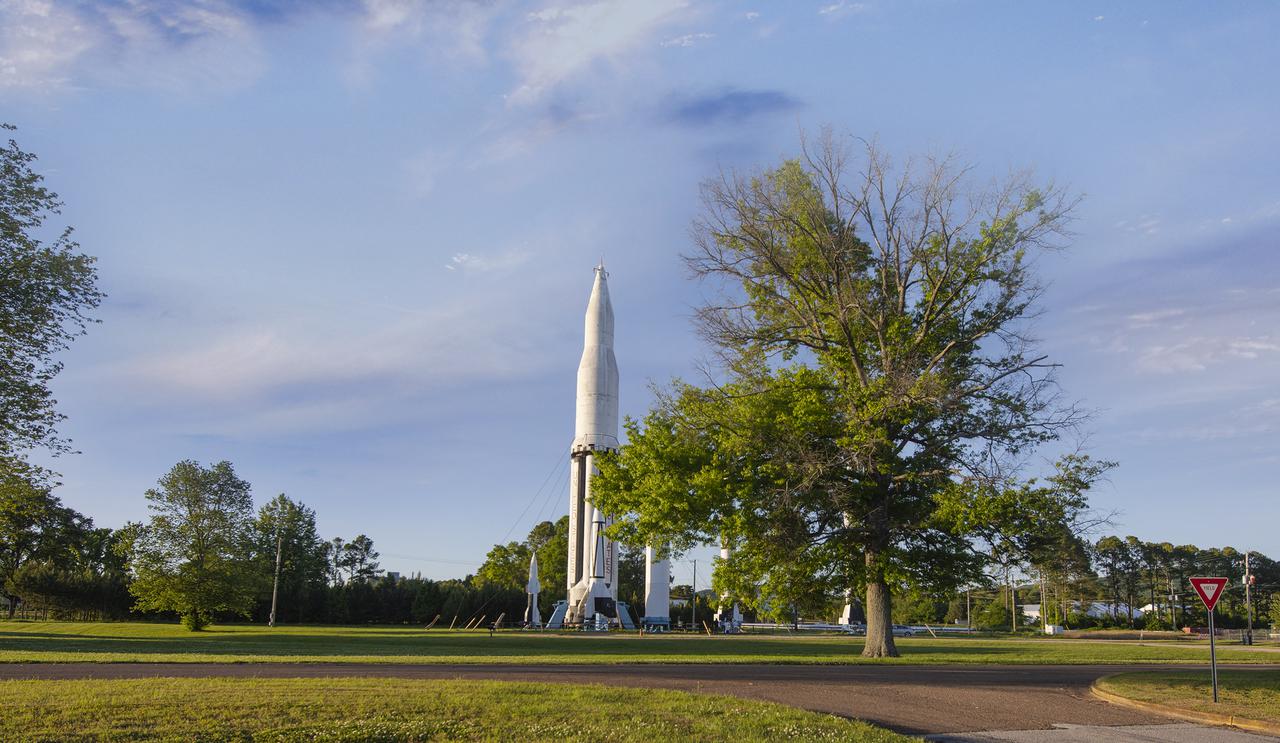
Marshall Space Flight Center’s Rocket Park, located on Redstone Arsenal, stands as a living testament to the spirit of cooperation that continues between the U.S. Army and NASA.
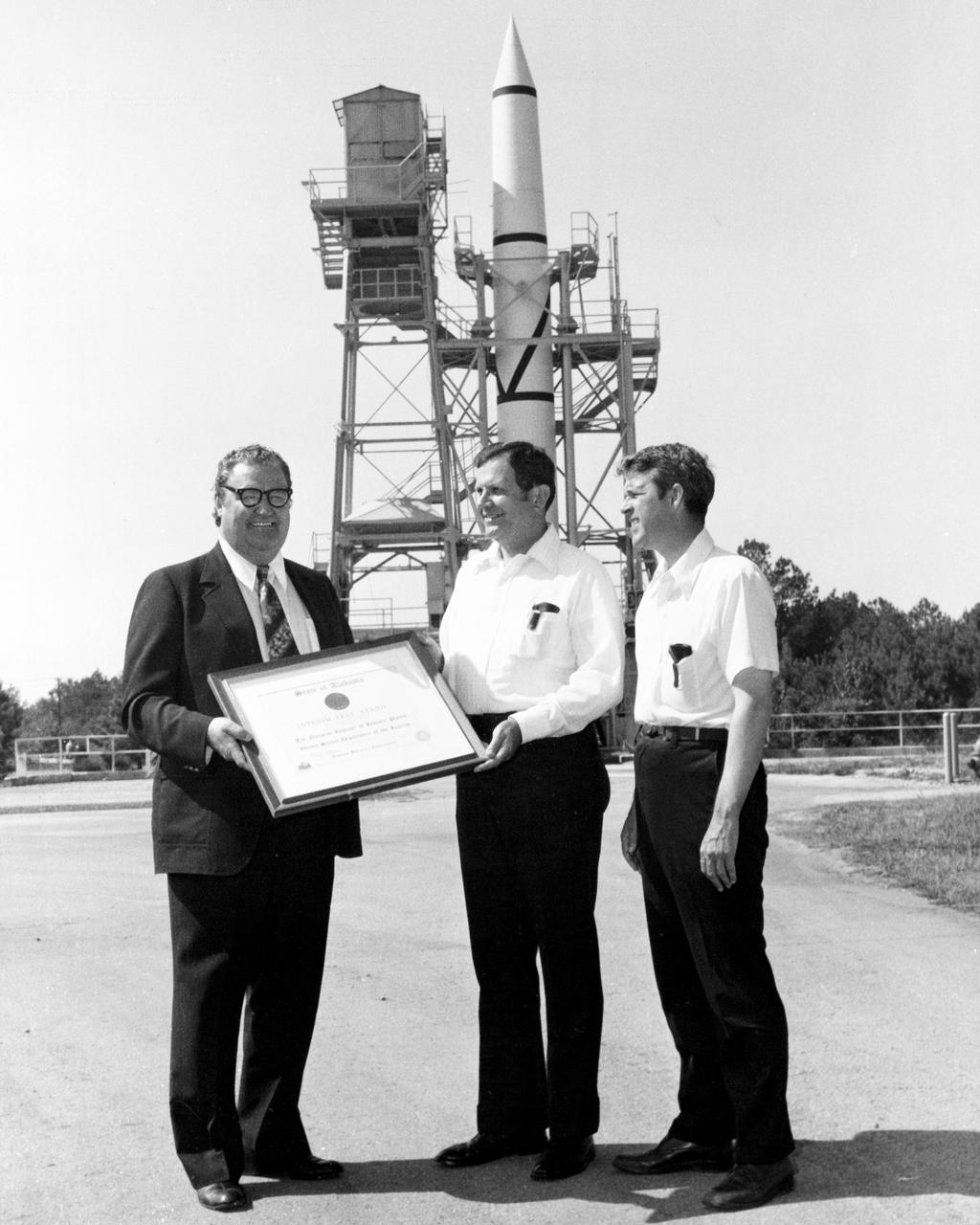
On October 02, 1976, Marshall Space Flight Center’s (MSFC) Redstone test stand was received into the National Registry of Historical Places. Photographed in front of the Redstone test stand are Dr. William R. Lucas, MSFC Center Director from June 15, 1974 until July 3, 1986, as he is accepting a certificate of registration from Madison County Commission Chairman James Record, and Huntsville architect Harvie Jones.
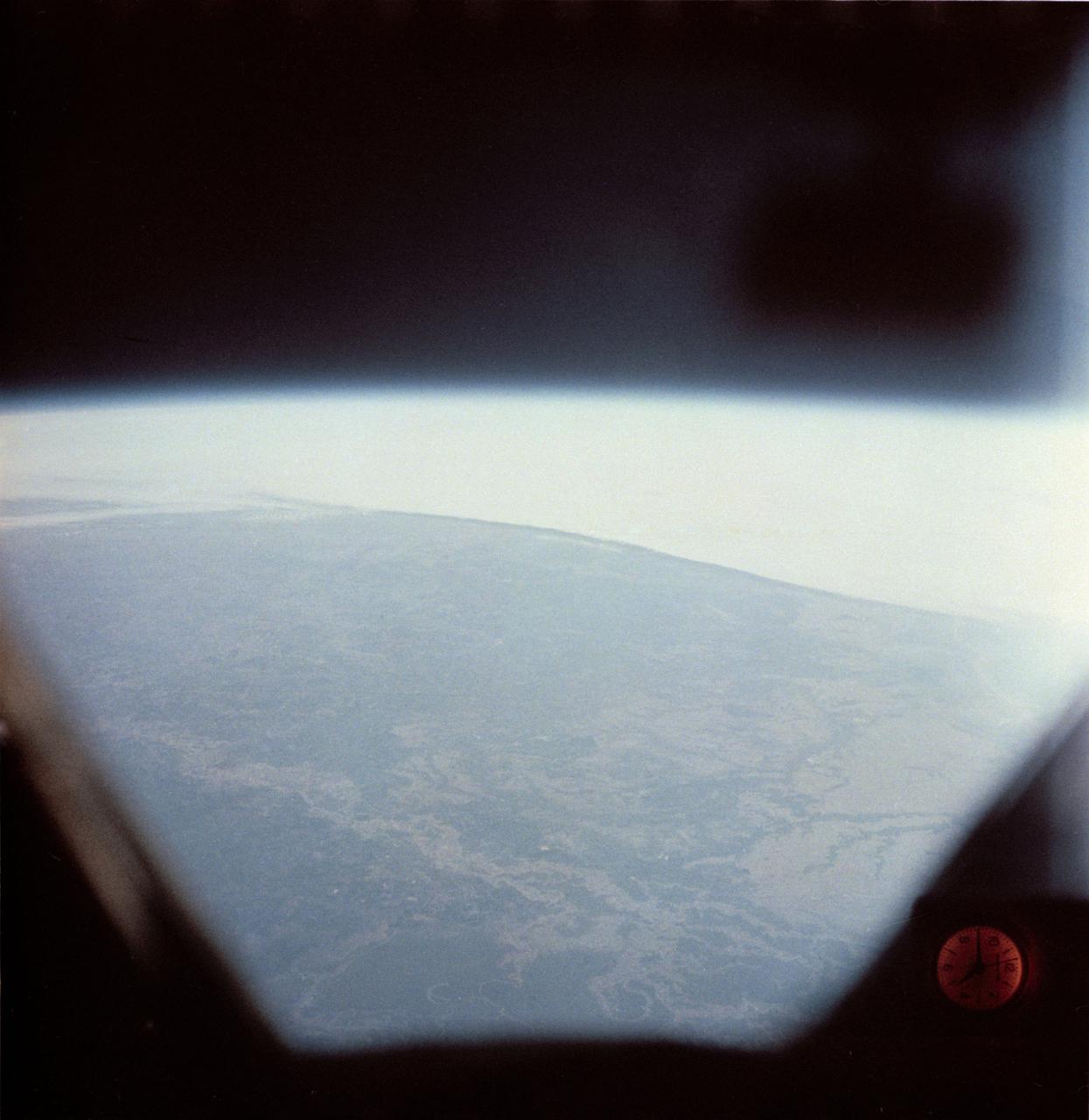
S62-01287 (21 July 1961) --- Earth observation take during the Mercury-Redstone 4 (MR-4) spaceflight. Photo credit: NASA
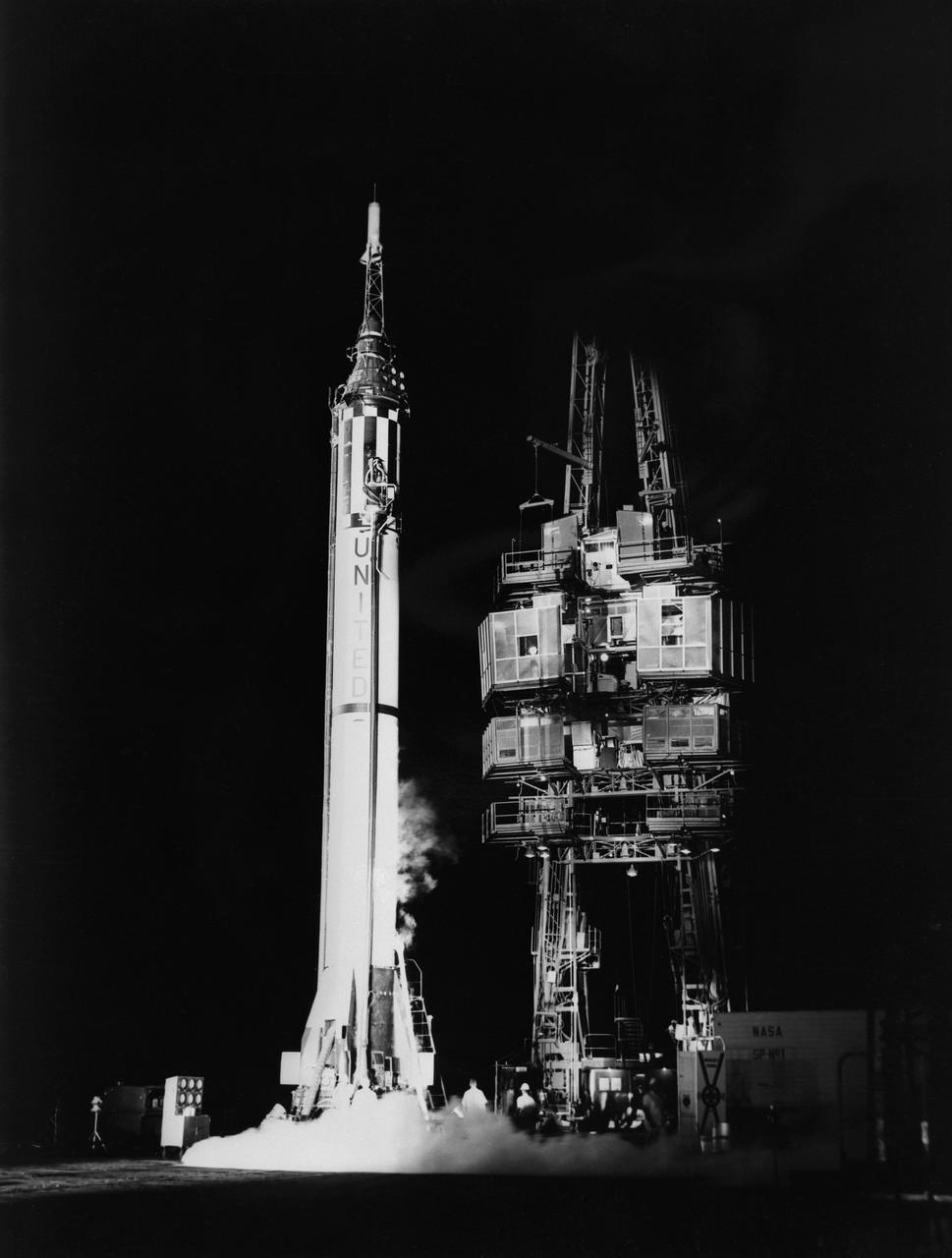
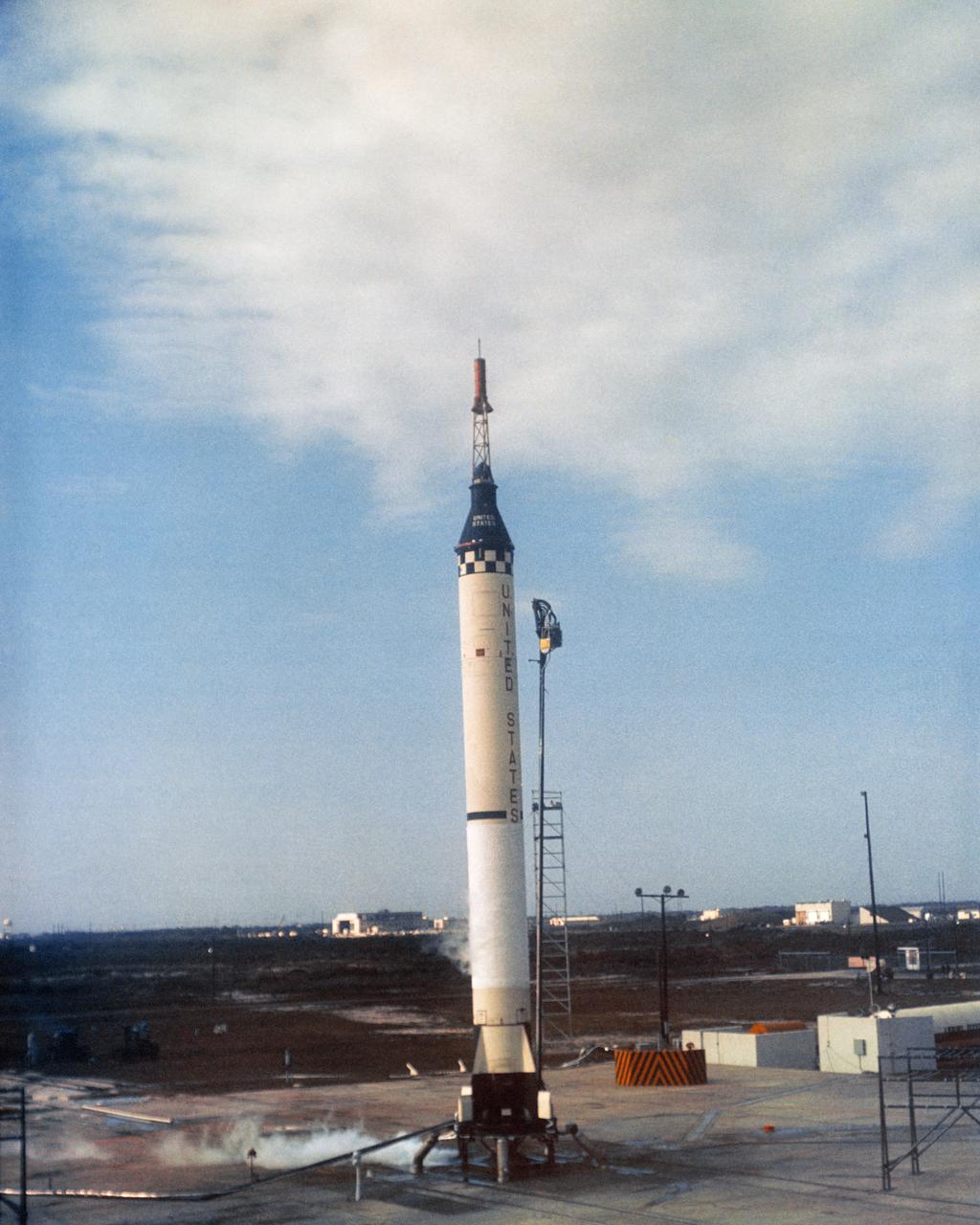
S61-03158 (1961) --- Mercury-Redstone 3 (MR-3) missile standing alone on launch pad. Photo credit: NASA or National Aeronautics and Space Administration
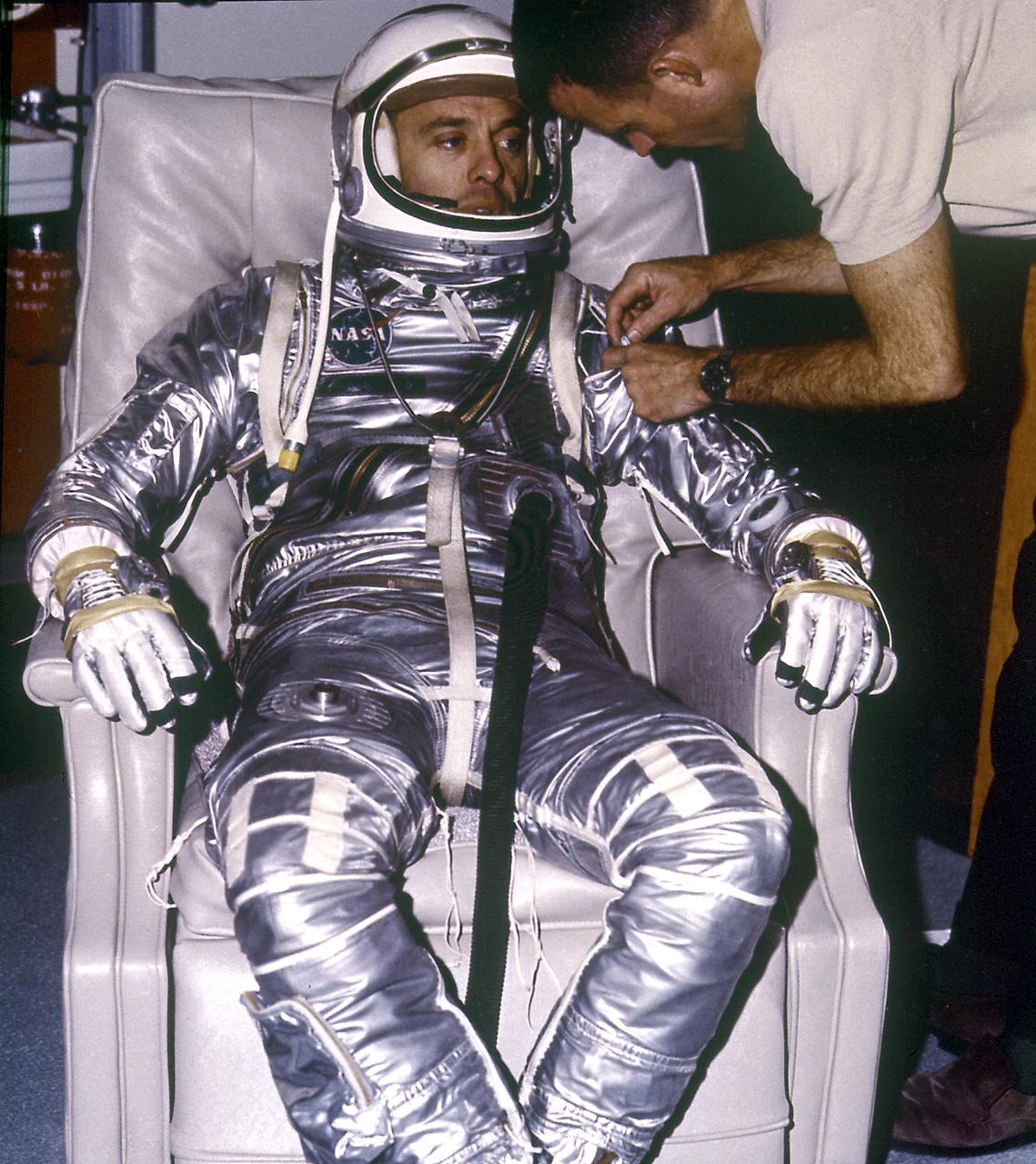
Astronaut Alan B. Shepard, Jr. during suiting for the first manned suborbital flight, MR-3 mission. The Freedom 7 spacecraft, carrying the first American, Astronaut Shepard and boosted by the Mercury-Redstone launch vehicle, lifted off on May 5, 1961.
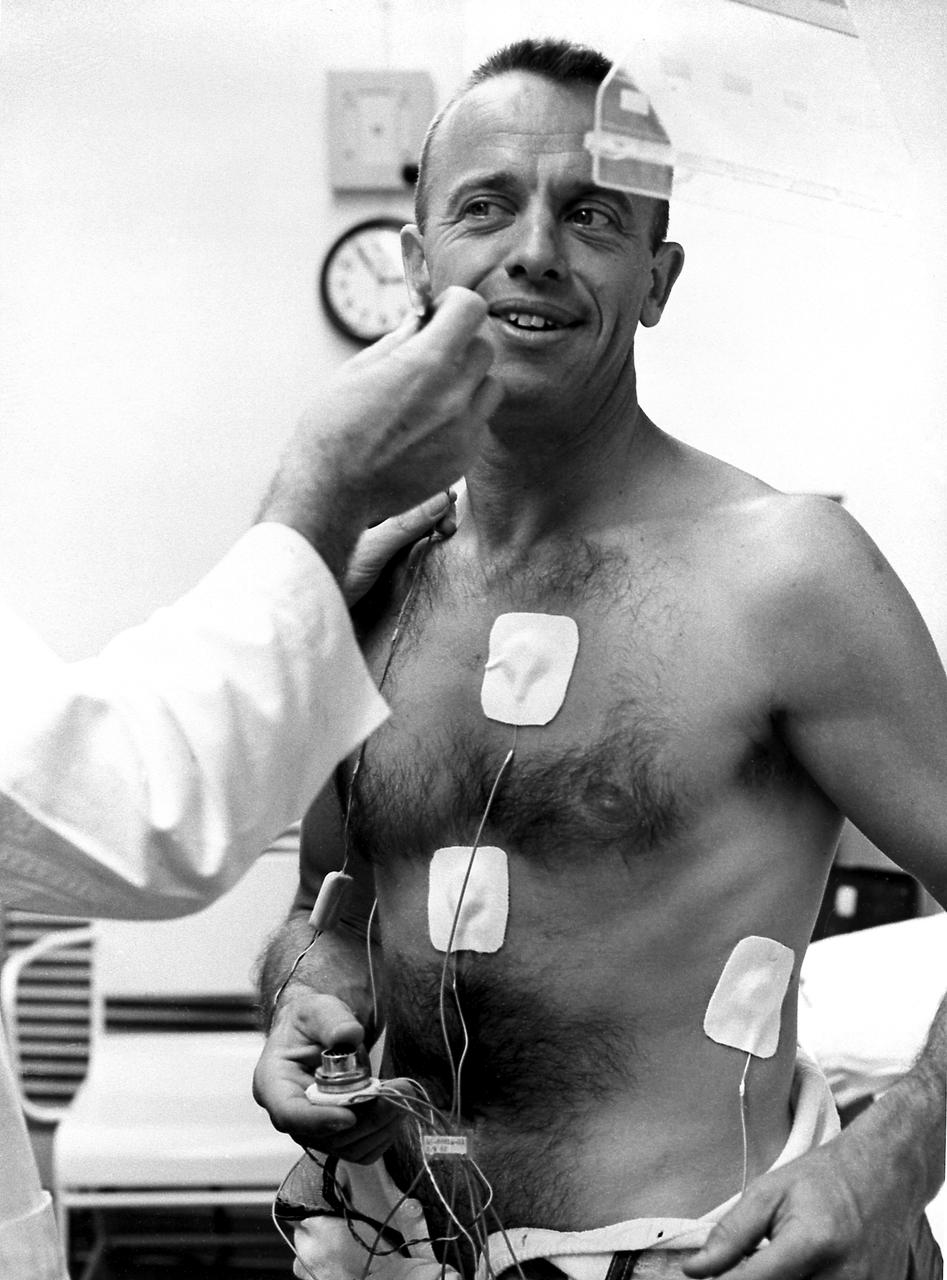
Astronaut Alan Shepard underwent a physical examination prior to the first marned suborbital flight. Freedom 7 carrying Astronaut Alan Shepard, boosted by the Mercury-Redstone launch vehicle, lifted off on May 5, 1961. Astronaut Shepard became the first American in space.
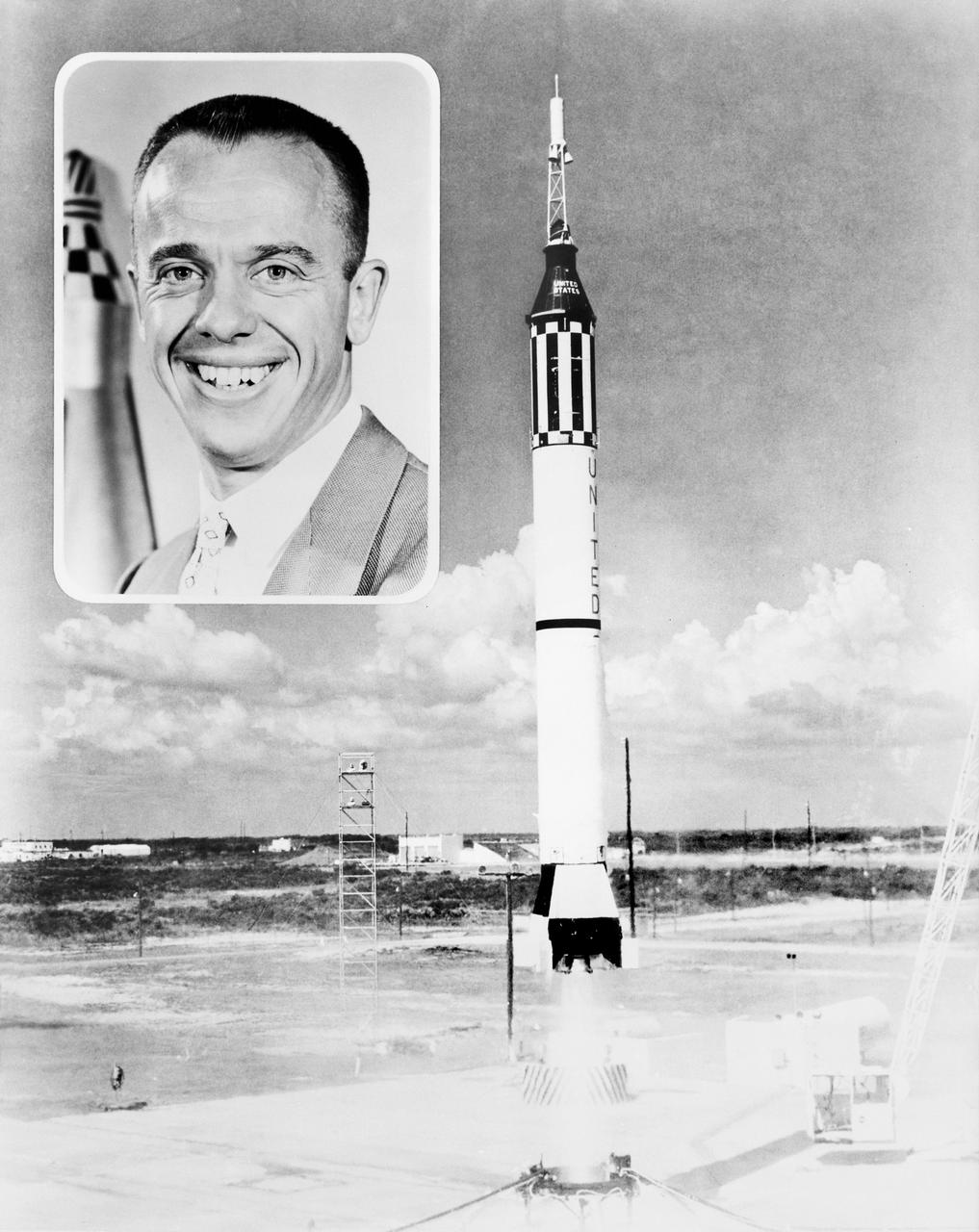
S62-01151 (5 May 1961) --- The liftoff of the Mercury-Redstone 3 (MR-3) on May 5, 1961, piloted by astronaut Alan B. Shepard, Jr., whose portrait is in inset. Shepard went on a 15-minute sub-orbital flight. The spacecraft was designated the ?Freedom? 7.
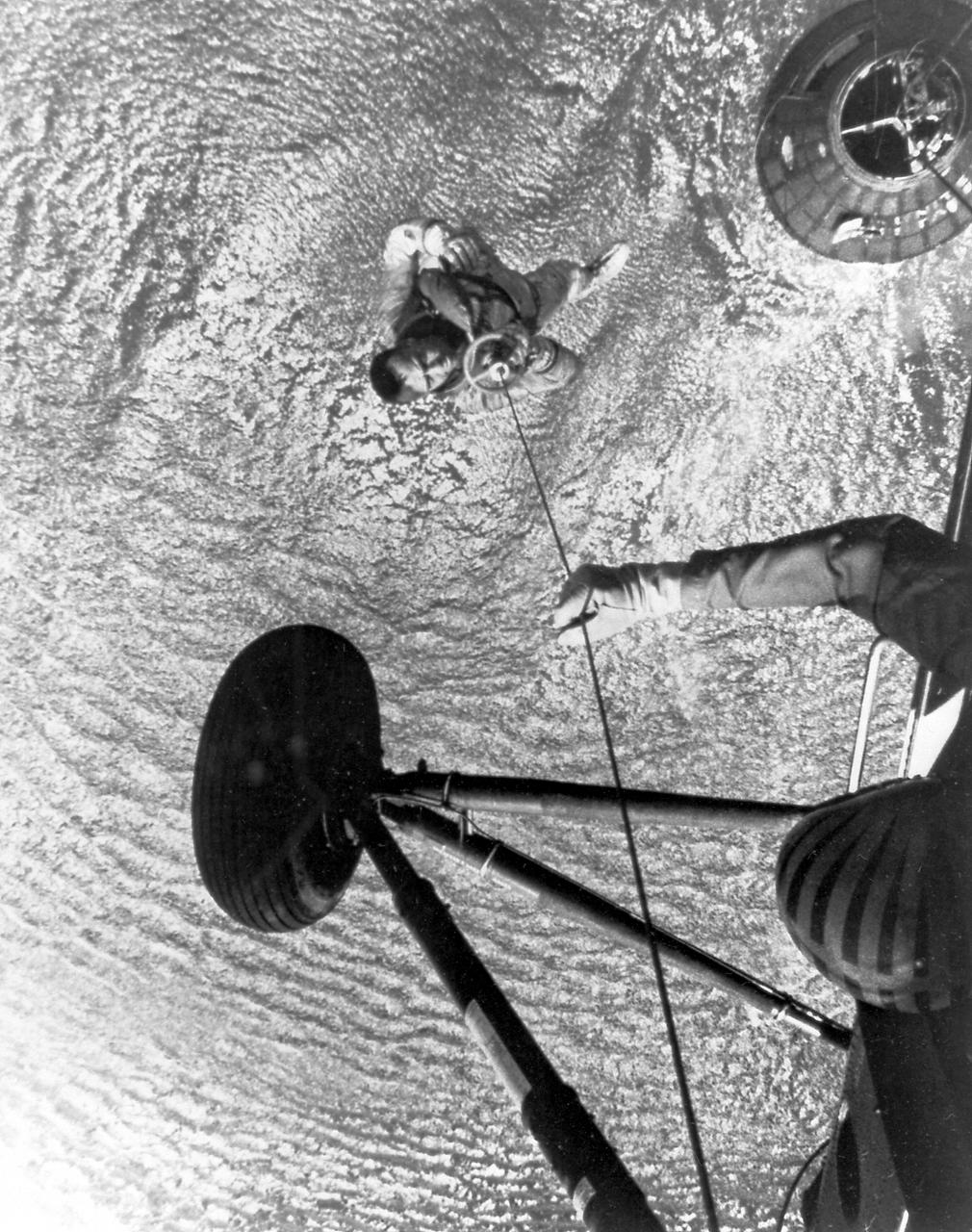
This photo depicts the recovery operations of the MR-3 mission. Astronaut Alan Shepard was picked up by a U.S. Marine helicopter after the completion of the first marned suborbital flight by MR-3 (Mercury-Redstone) with the Freedom 7 capsule.
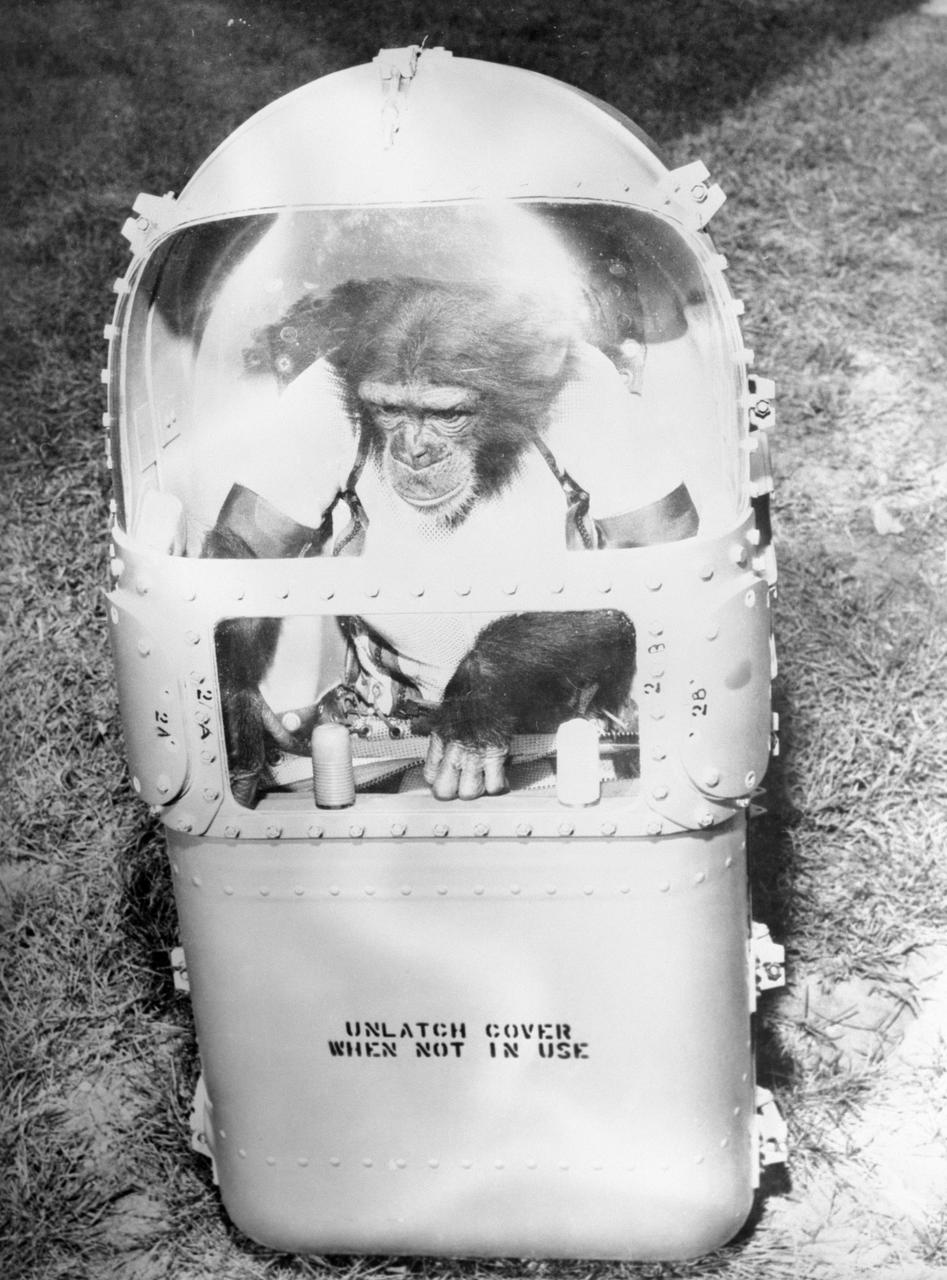
S62-01698 (31 Jan. 1961) --- Chimpanzee "Ham" in his flight couch, after his trip in the Mercury-Redstone 2 (MR-2) on Jan. 31, 1961. Photo credit: NASA
S63-02651 (21 July 1961) --- This is a ground-level view of the Mercury-Redstone (MR-4) launch of Virgil I. Grissom on July 21, 1961, from Cape Canaveral, Florida. Photo credit: NASA
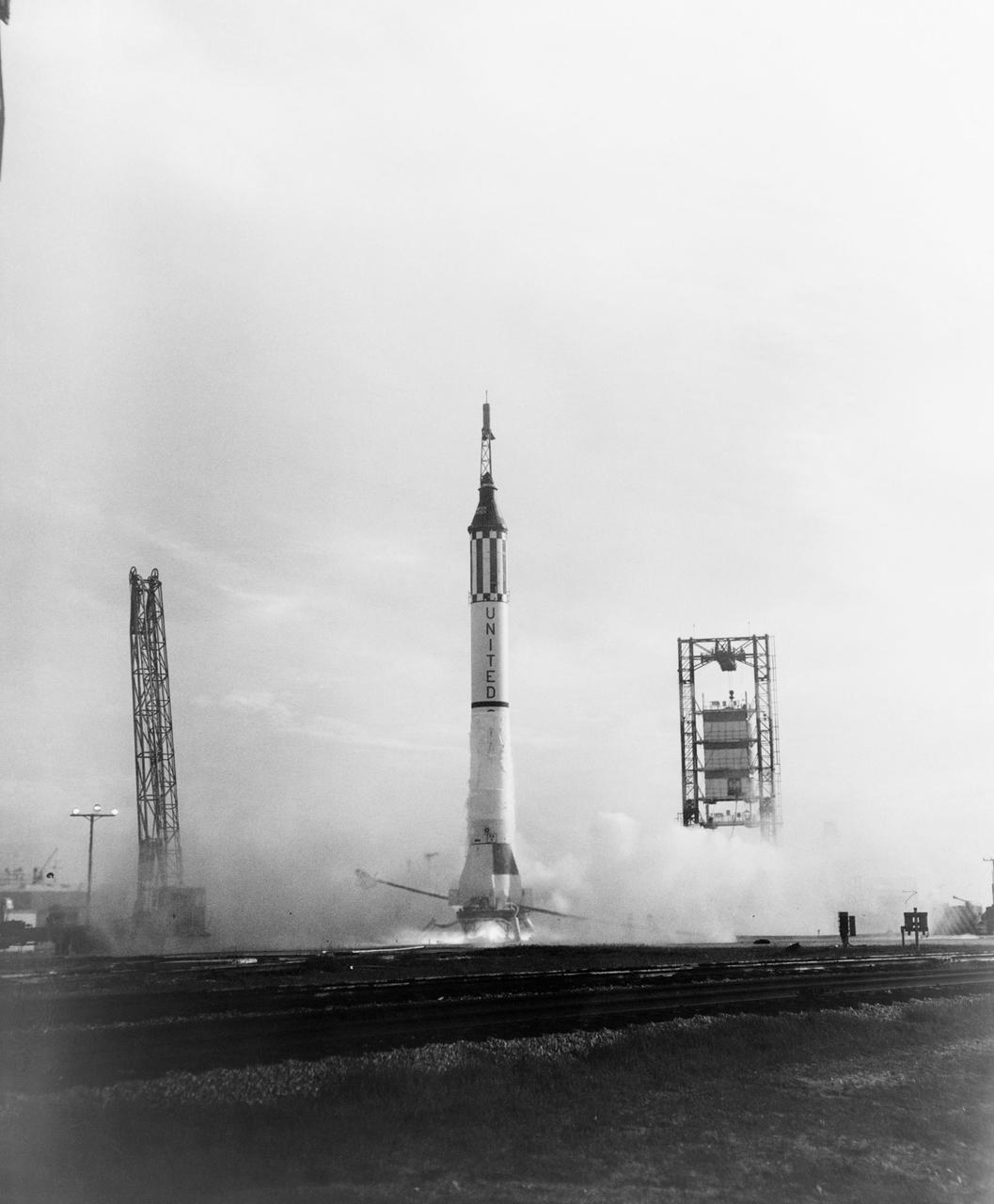
S61-03121 (21 July 1961) --- Mercury-Redstone 4 (MR-4) launch of Virgil I. Grissom on July 21, 1961, from Cape Canaveral, Florida. Photo credit: NASA
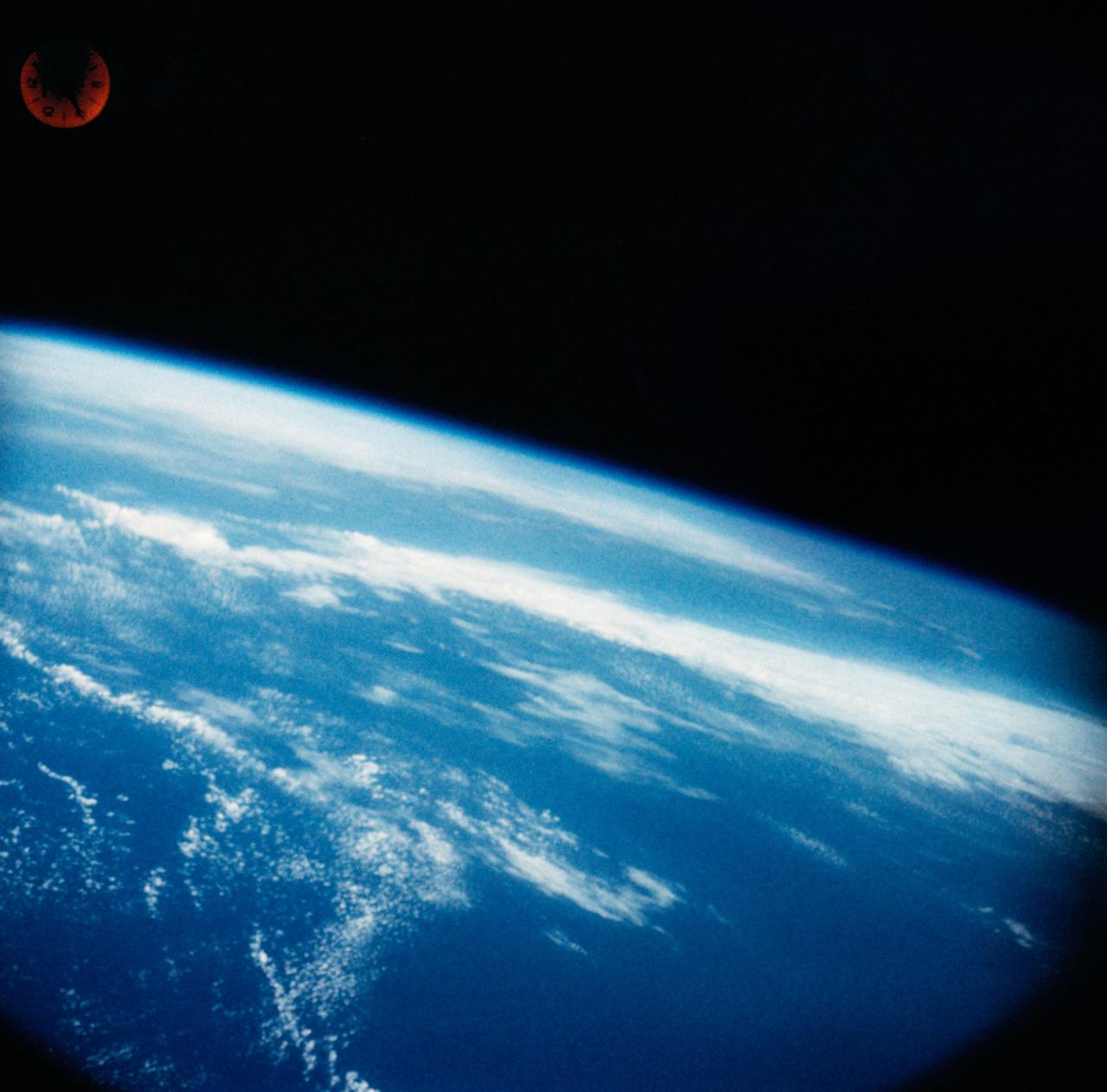
S61-01918 (5 May 1961) --- Mercury-Redstone 3 (MR-3) spaceflight Earth observations of a cloudy Earth surface. Photo credit: NASA or National Aeronautics and Space Administration
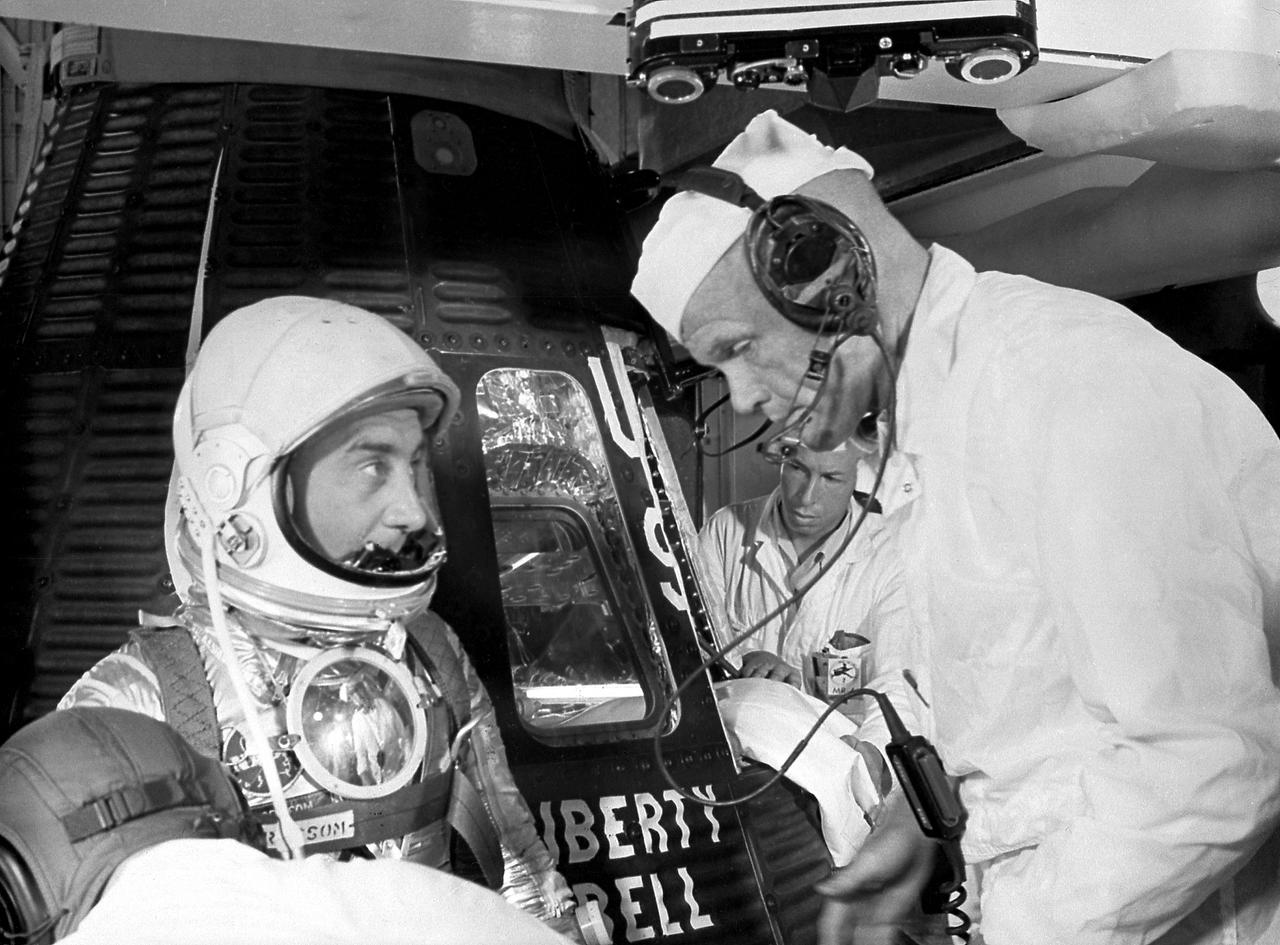
Astronaut Virgil Grissom chats with Astronaut John Glenn prior to entering the Liberty Bell 7 capsule for the MR-4 Mission. The MR-4 mission was the second manned suborbital flight using the Mercury-Redstone booster, which was developed by the Marshall Space Flight Center.
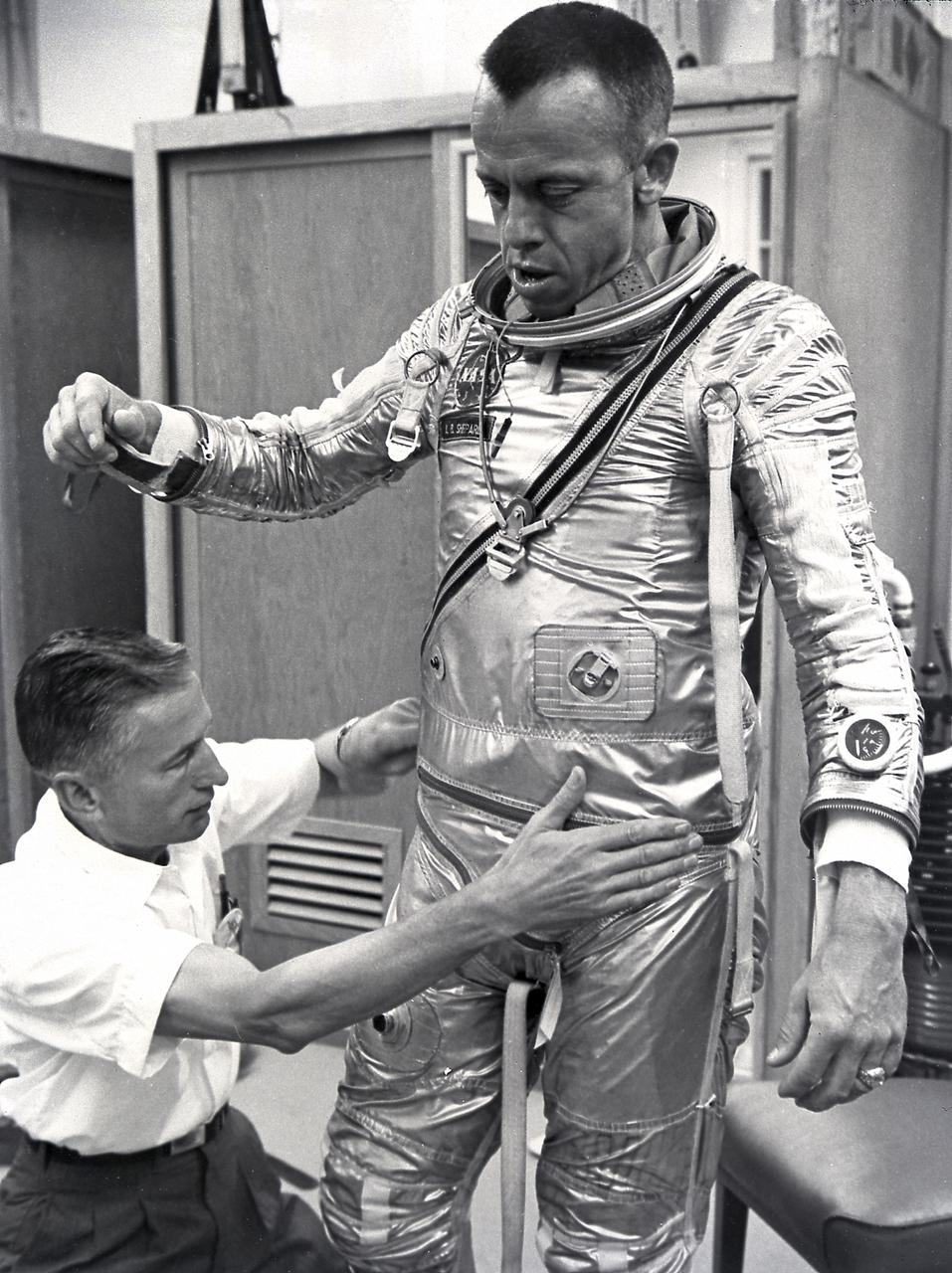
Astronaut Alan Shepard fitted with space suit prior to the first marned suborbital flight. Freedom 7, carrying Astronaut Alan Shepard, boosted by the Mercury-Redstone launch vehicle, lifted off on May 5, 1961. Astronaut Shepard became the first American in space.
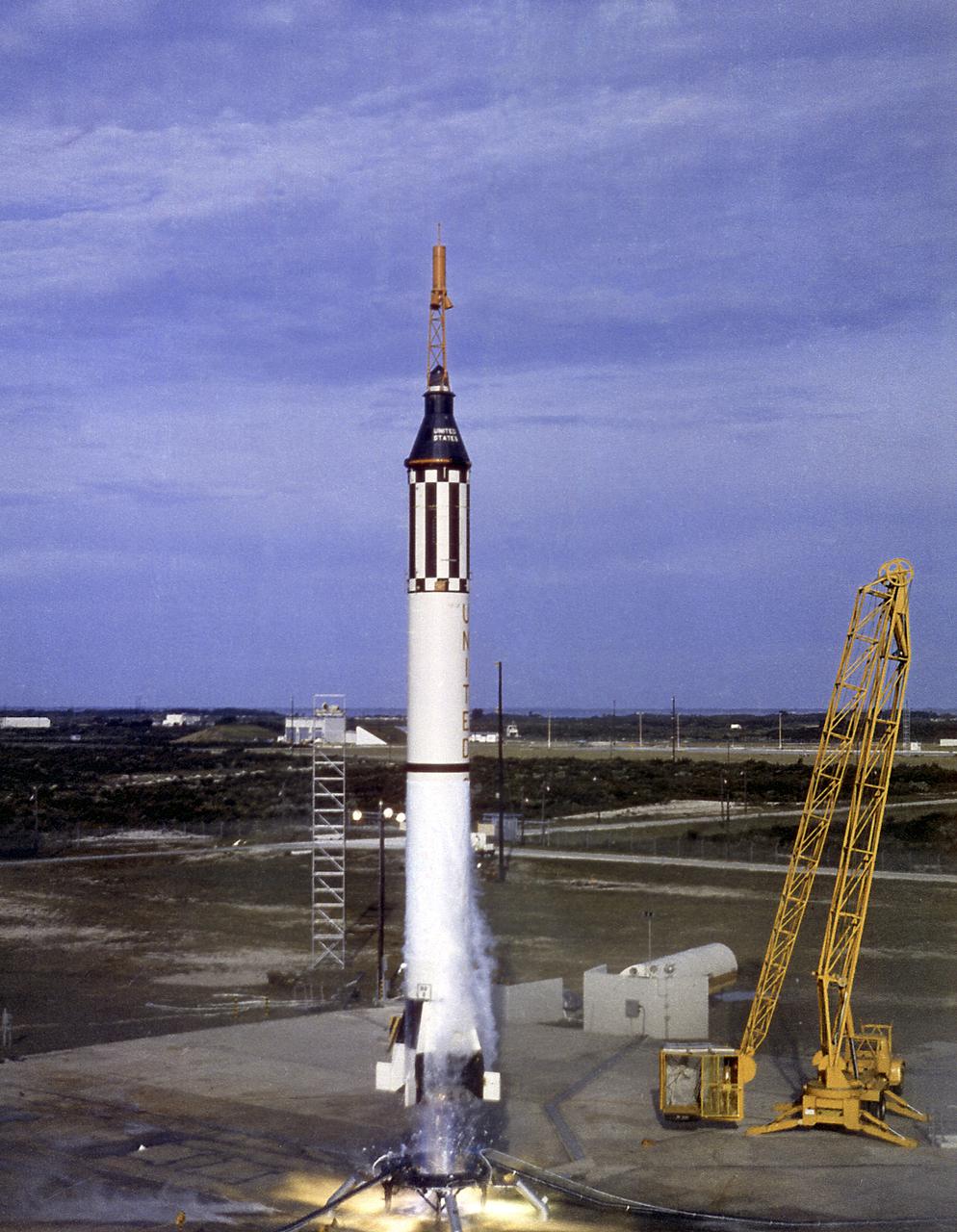
Liftoff of MR-4 (Mercury-Redstone), Liberty Bell 7, on July 21, 1961. MR-4 mission was the second marned suborbital flight and carried Astronaut Virgil Grissom aboard the Liberty Bell 7 spacecraft in space for a duration of 15-1/2 minutes.
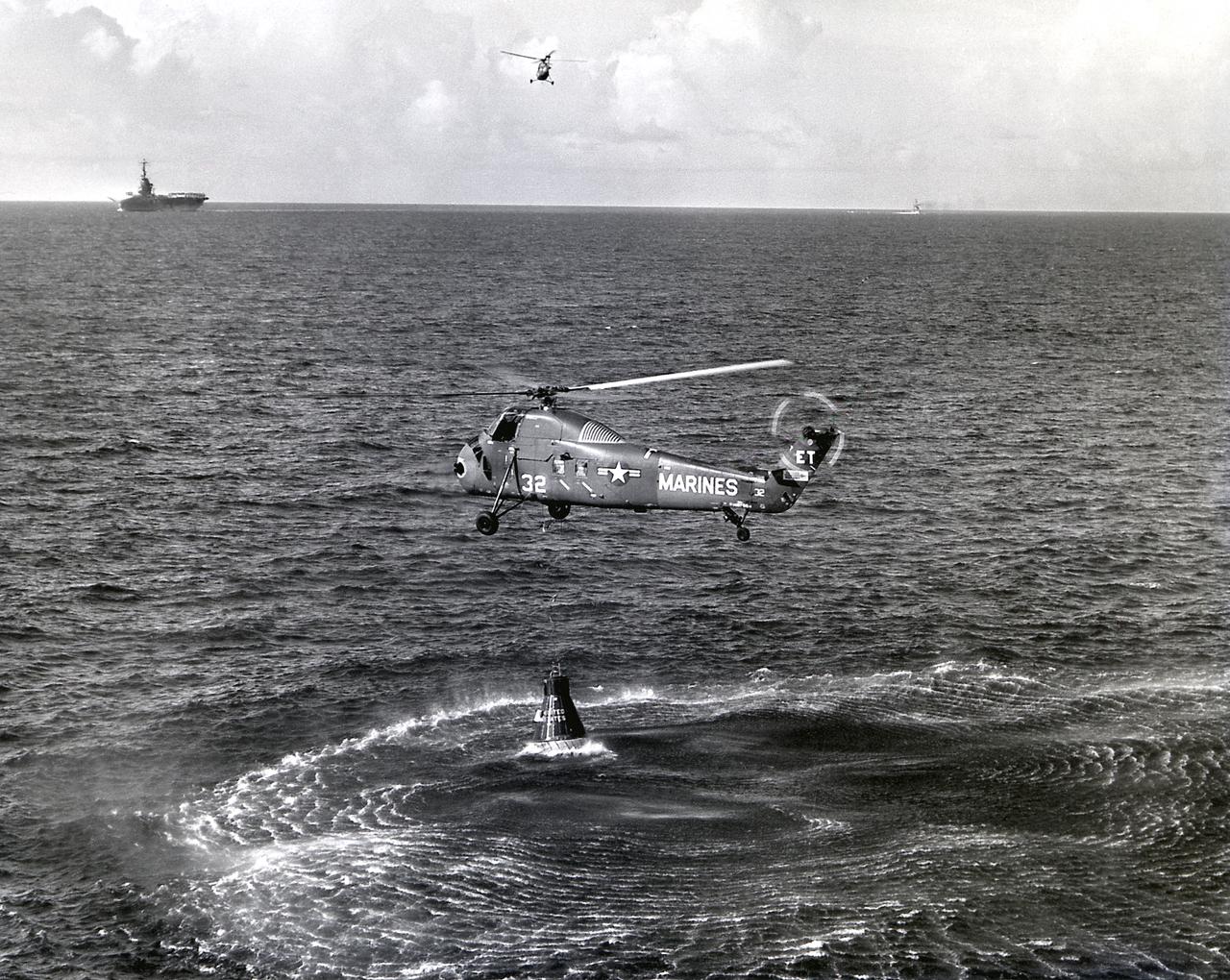
A U.S. Marine helicopter attempts to retrieve the sinking capsule, Liberty Bell 7, of the MR-4 mission. The attempt failed and the capsule sank. The MR-4 mission marned by Astronaut Virgil Grissom was the second manned orbital flight boosted by the Mercury-Redstone vehicle. The Recovery ship is in the background.
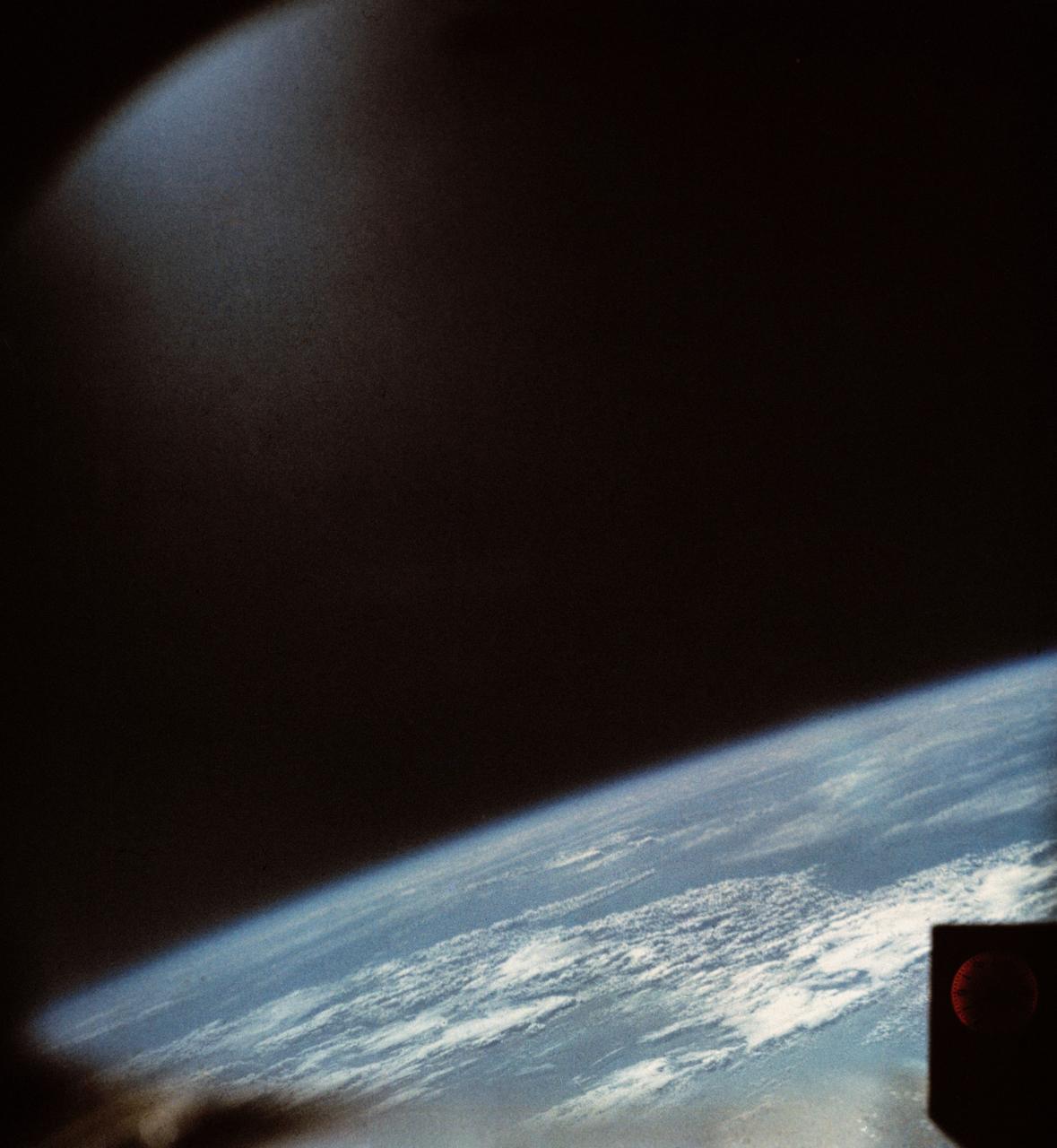
S61-04692 (31 Jan. 1961) --- Earth view from the Mercury Redstone 2 (MR-2) spacecraft. Photo credit: NASA
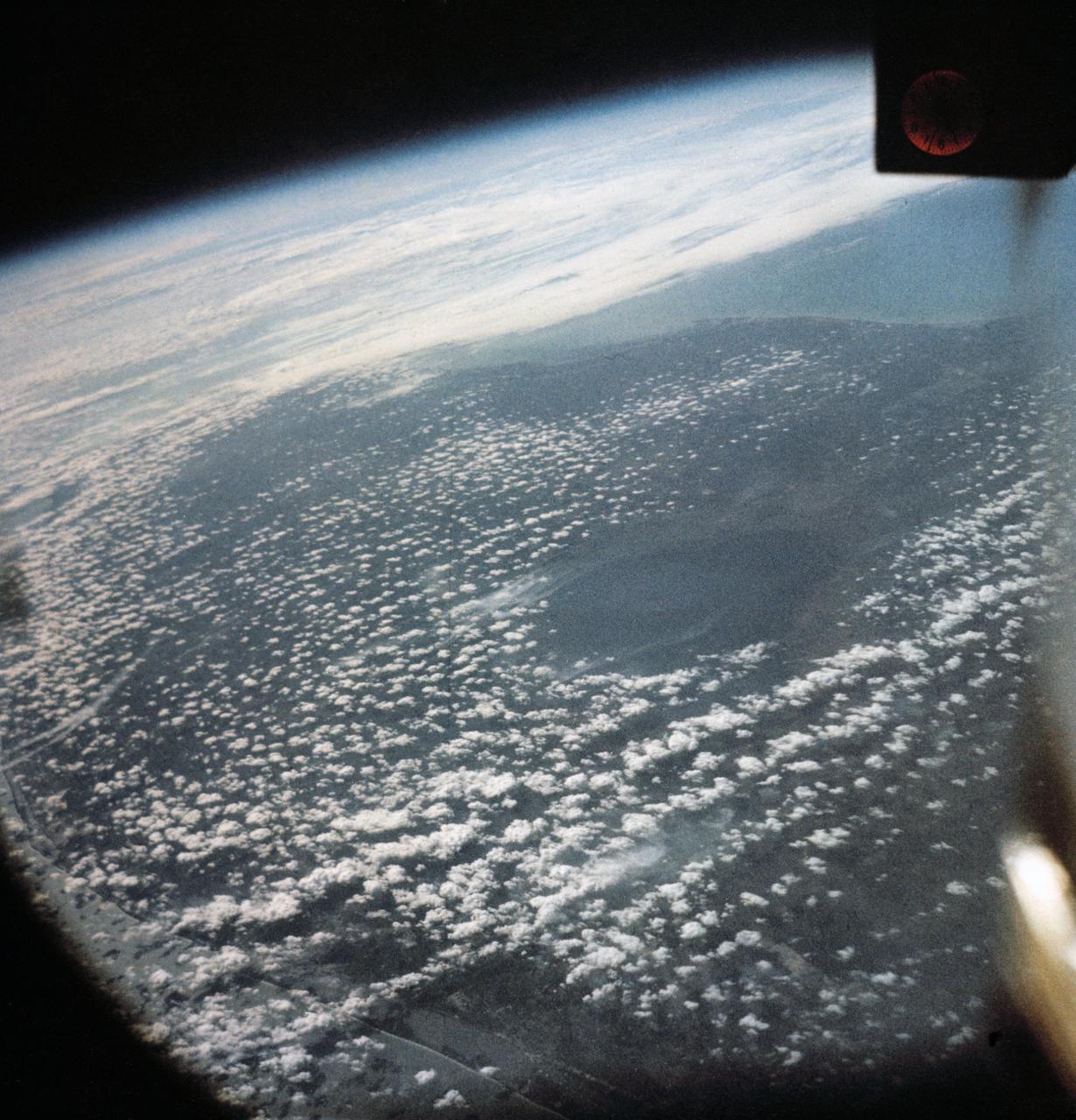
S61-04674 (31 Jan. 1961) --- Earth view from the Mercury Redstone 2 (MR-2) spacecraft. Photo credit: NASA
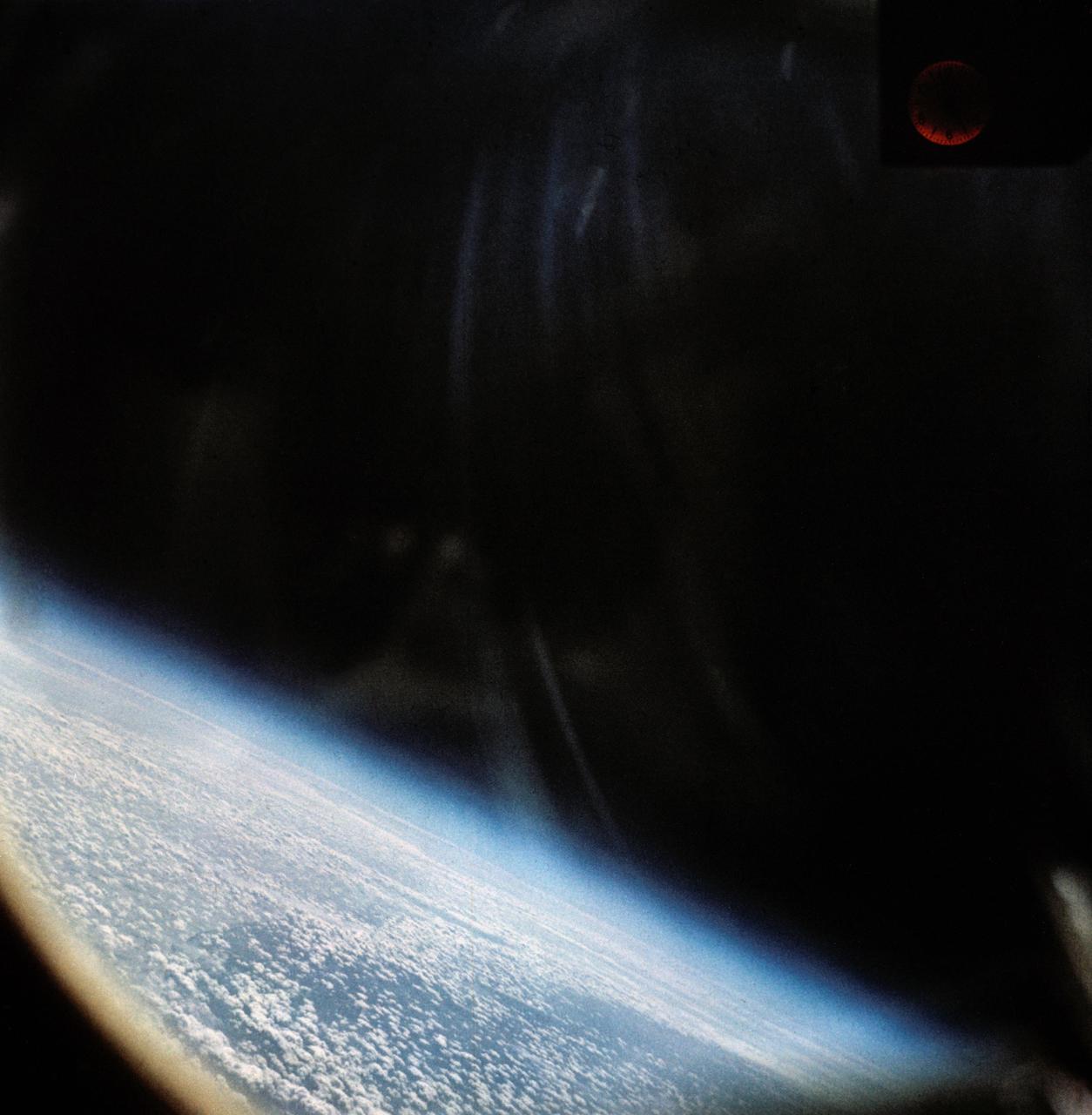
S61-04669 (31 Jan. 1961) --- Earth view from the Mercury Redstone 2 (MR-2) spacecraft. Photo credit: NASA
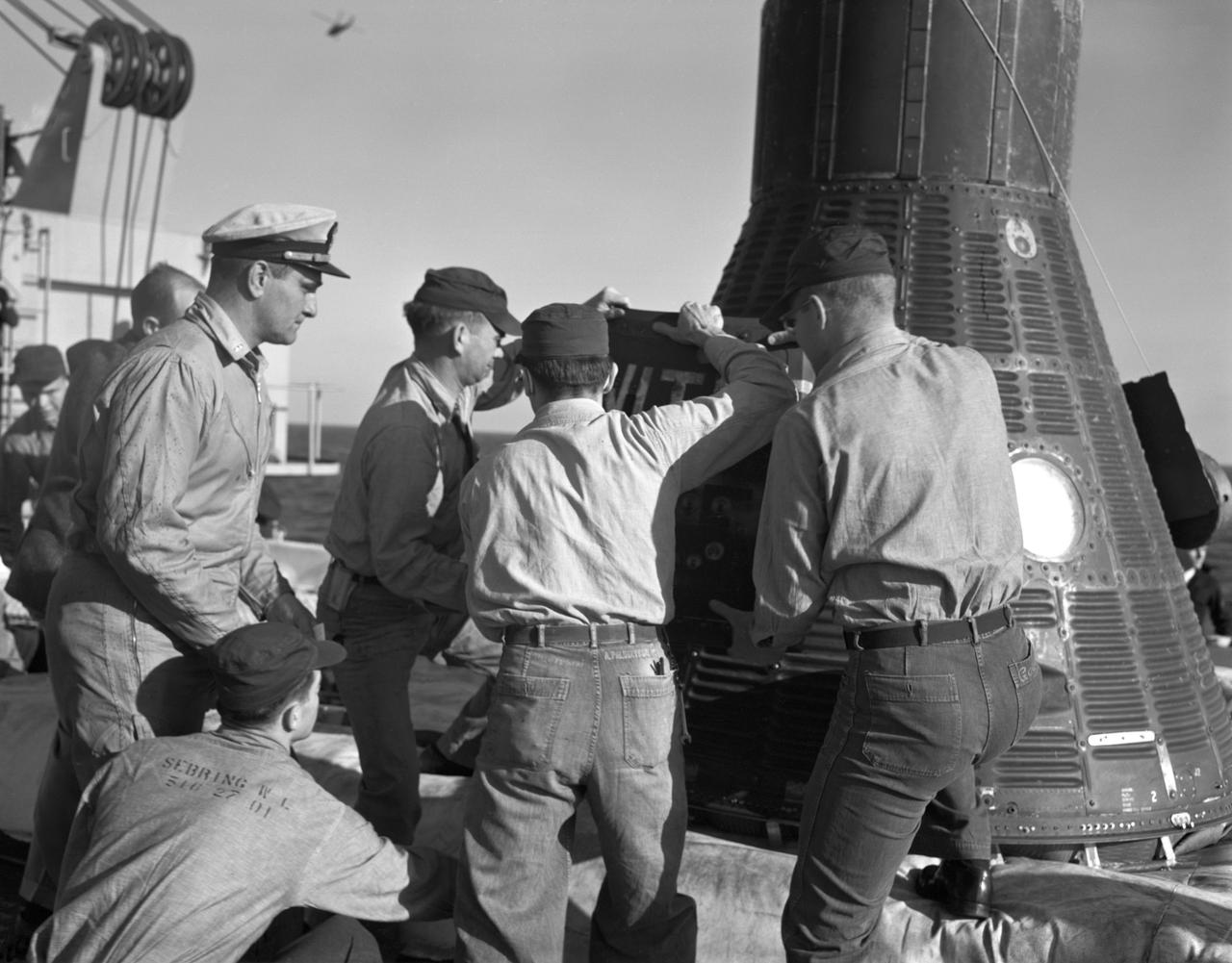
S61-00199 (31 Jan. 1961) --- Recovery personnel aboard the USS Donner remove ?Ham?, a 37-pound chimpanzee, from a Mercury-Redstone spacecraft following the successful Mercury-Redstone 2 (MR-2) suborbital flight from Cape Canaveral, Florida. The primate's 420-statute mile MR-2 flight was a significant accomplishment on the American route toward manned spaceflight. Photo credit: NASA
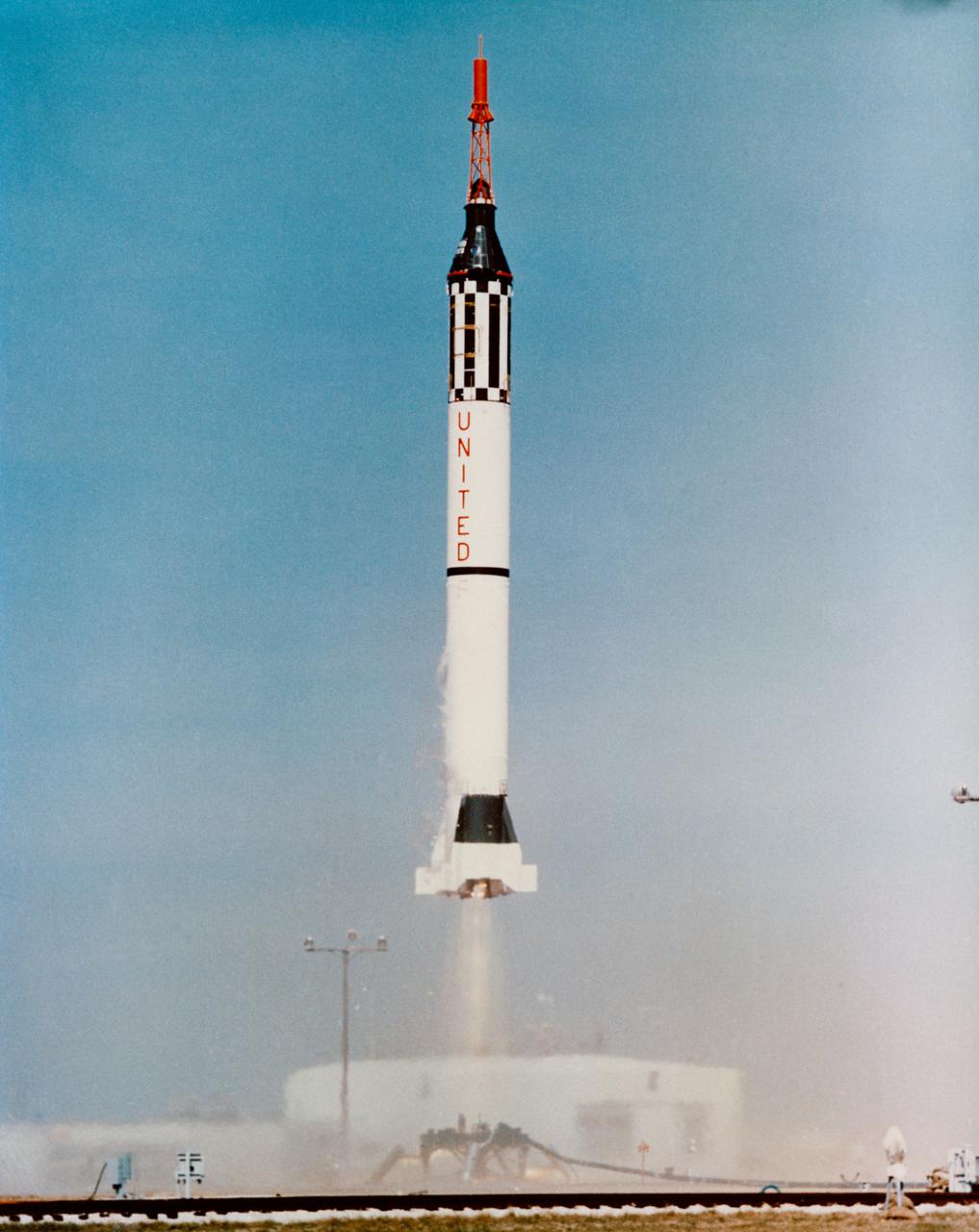
S62-08106 (19 Dec. 1960) --- Launch of the unmanned Mercury Redstone 1A (MR-1A) from Cape Canaveral on Dec. 19, 1960. Successful flight to peak altitude of 135 statue miles. Horizontal distance of 235 statue miles. Photo credit: NASA
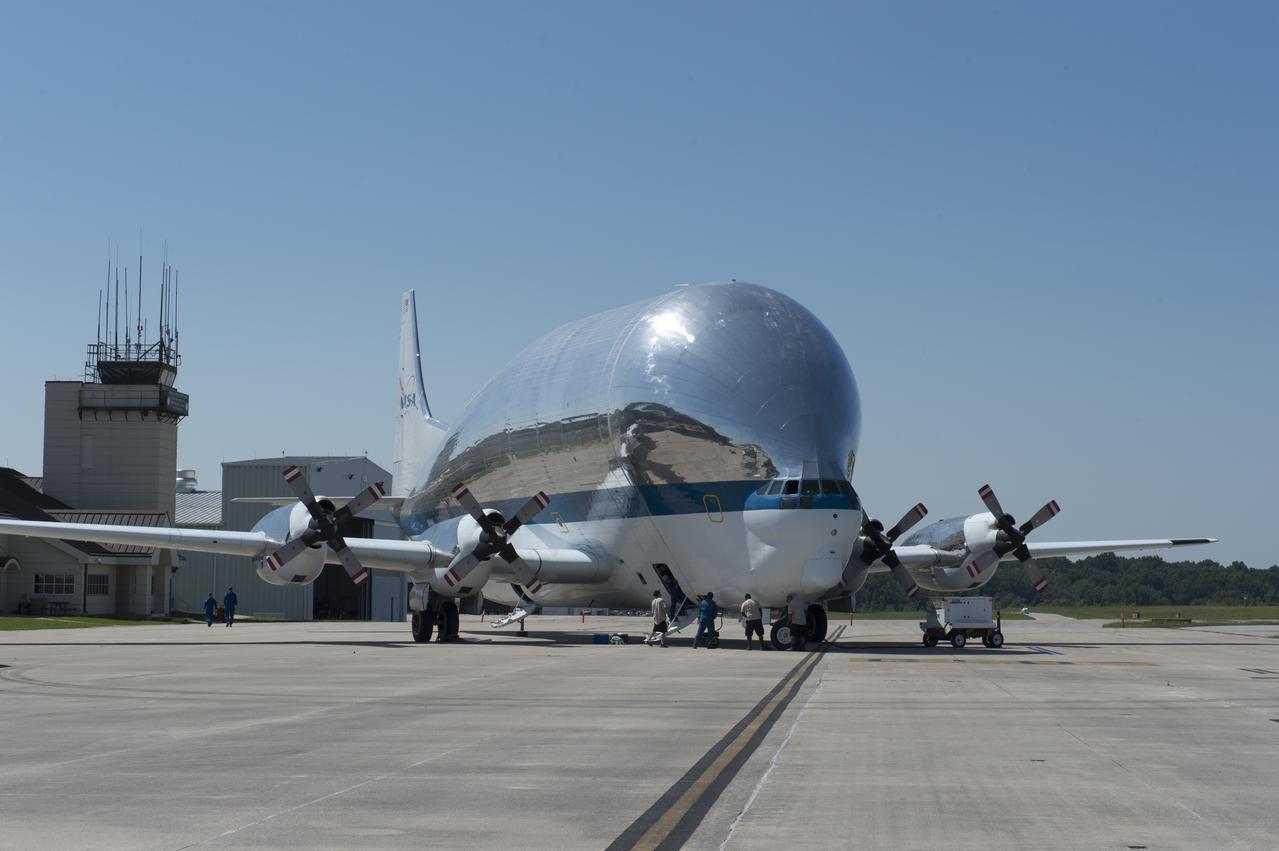
NASA's Super Guppie aircraft on to tarmac of Redstone Arsenal airfield prior to liftoff with the Orion stage adapter which will be transported to Denver, Colorado for further testing.
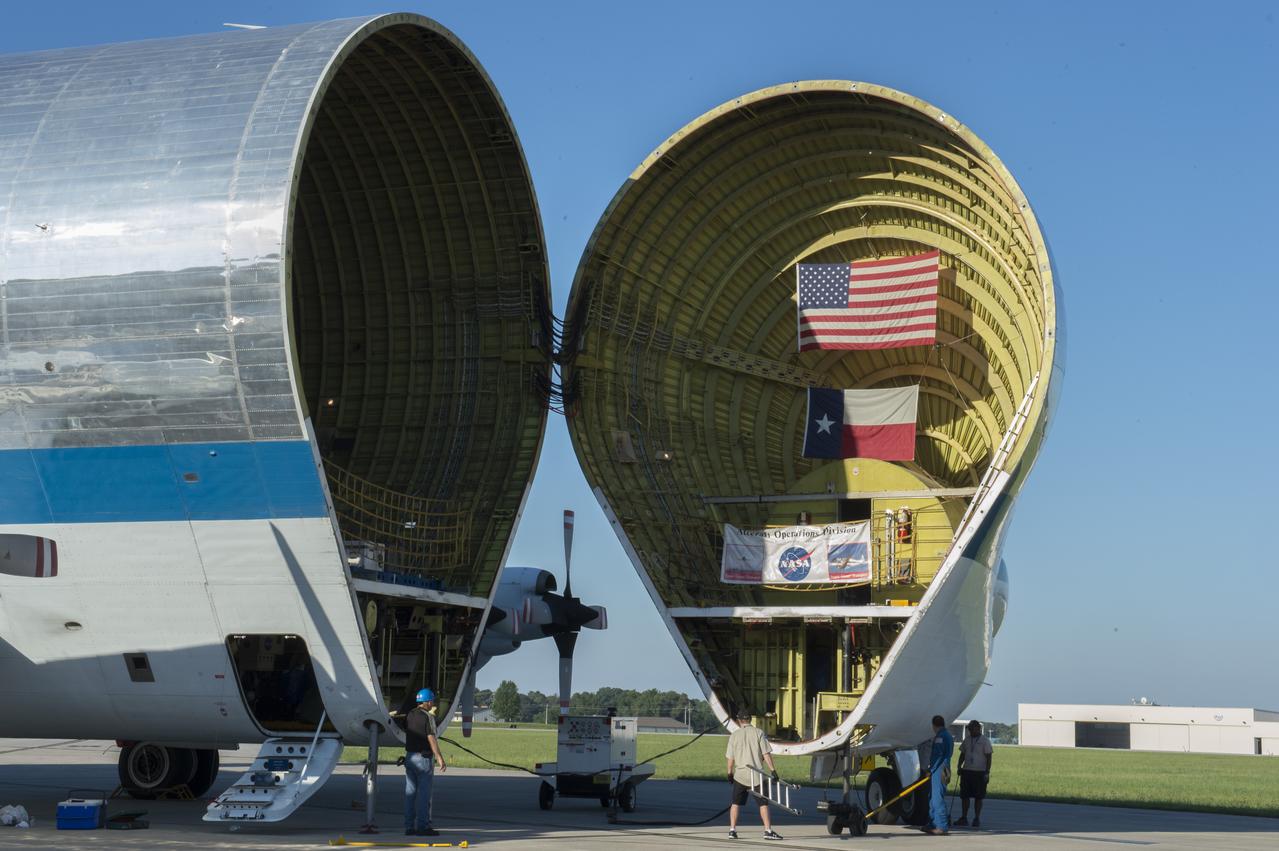
NASA's Super Guppie arrives at Redstone Arsenal airfield to transport the Orion stage adapter to Denver Colorado for further testing. The nose is open exposing the cargo bay.
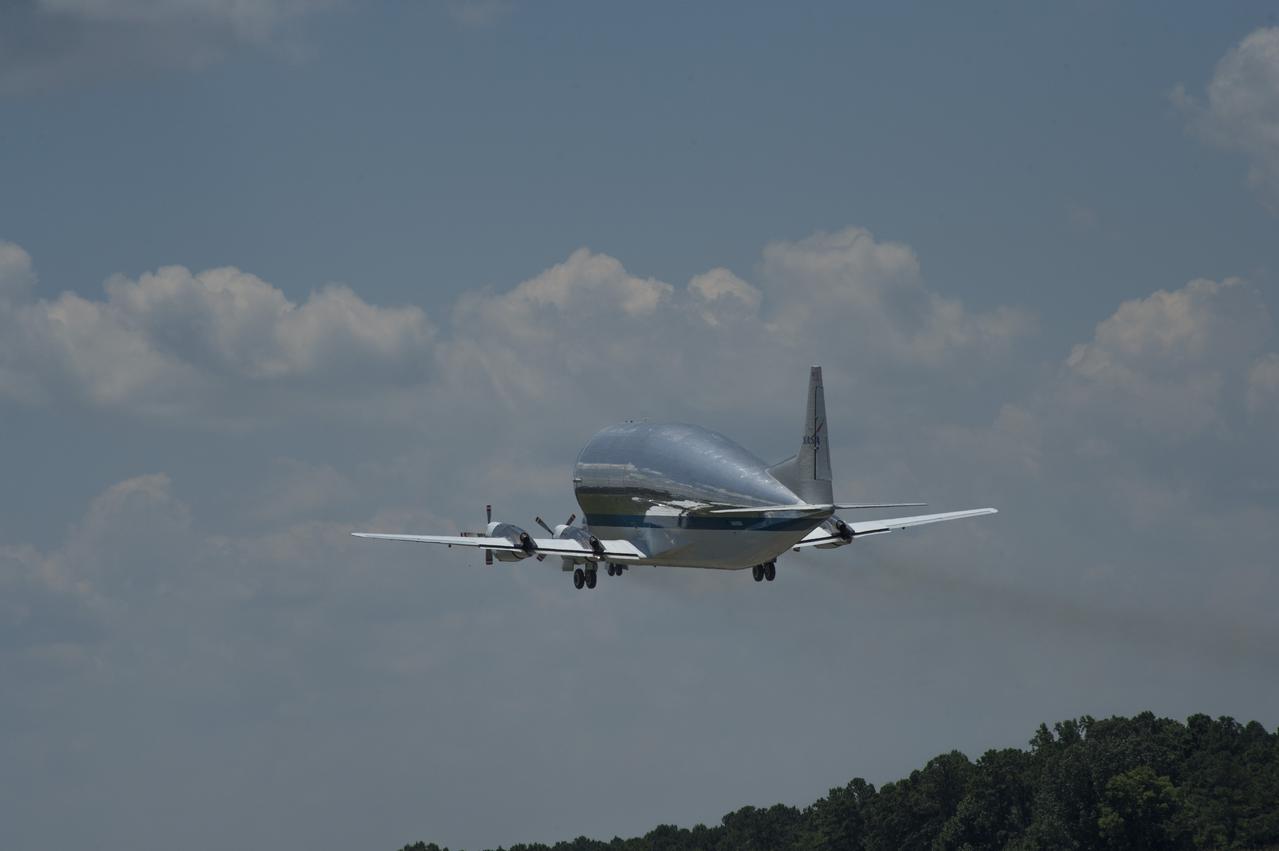
NASA's Super Guppie aircraft lifts off from Redstone Arsenal's airfield with the Orion stage adapter which will be transported to Denver, Colorado for further testing.