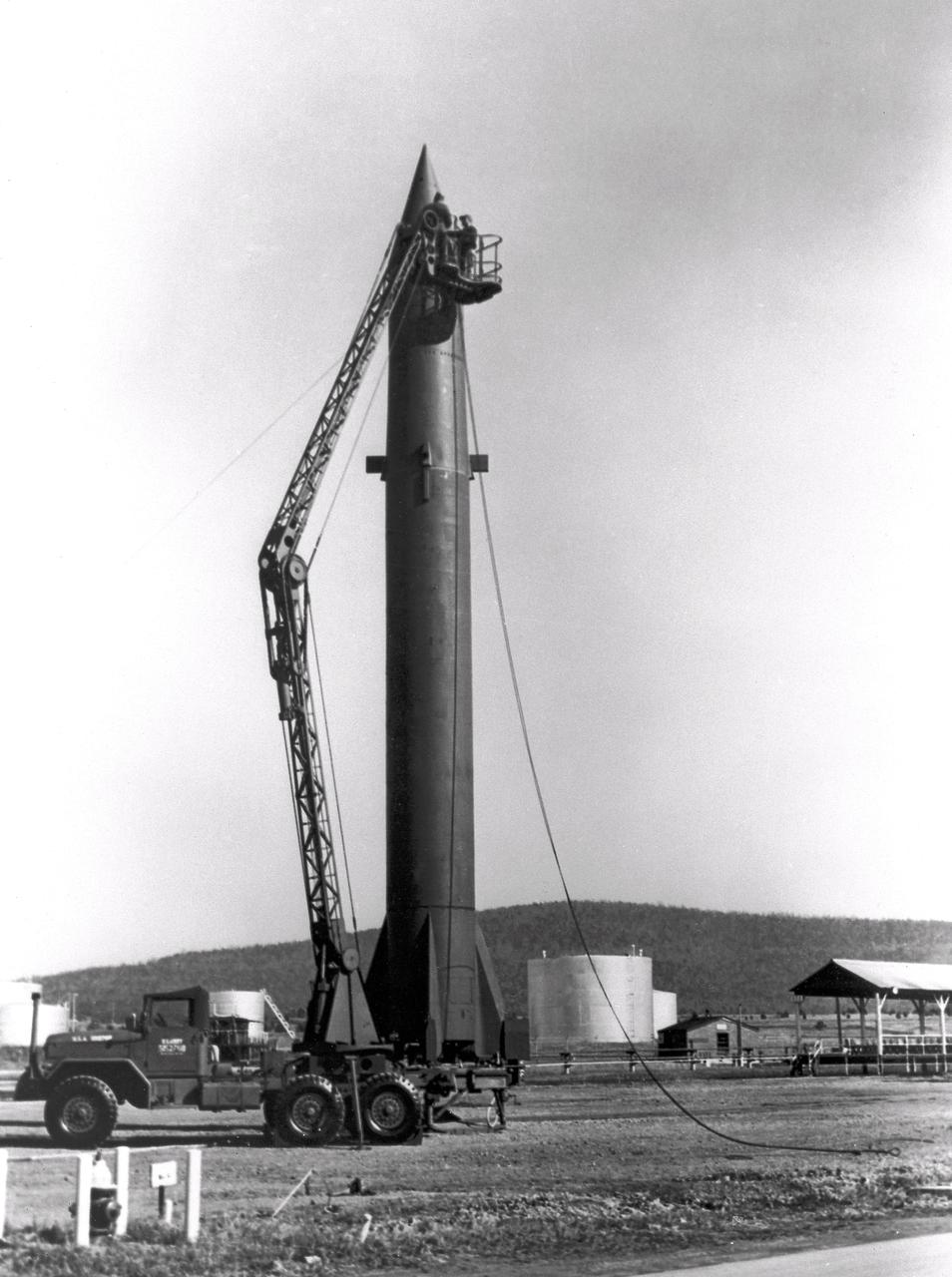
The image depicts Redstone missile being erected. The Redstone ballistic missile was a high-accuracy, liquid-propelled, surface-to-surface missile developed by Army Ballistic Missile Agency, Redstone Arsenal, in Huntsville, Alabama, under the direction of Dr. von Braun. The Redstone engine was a modified and improved version of the Air Force's Navaho cruise missile engine of the late forties. The A-series, as this would be known, utilized a cylindrical combustion chamber as compared with the bulky, spherical V-2 chamber. By 1951, the Army was moving rapidly toward the design of the Redstone missile, and the production was begun in 1952. Redstone rockets became the "reliable workhorse" for America's early space program. As an example of the versatility, Redstone was utilized in the booster for Explorer 1, the first American satellite, with no major changes to the engine or missile
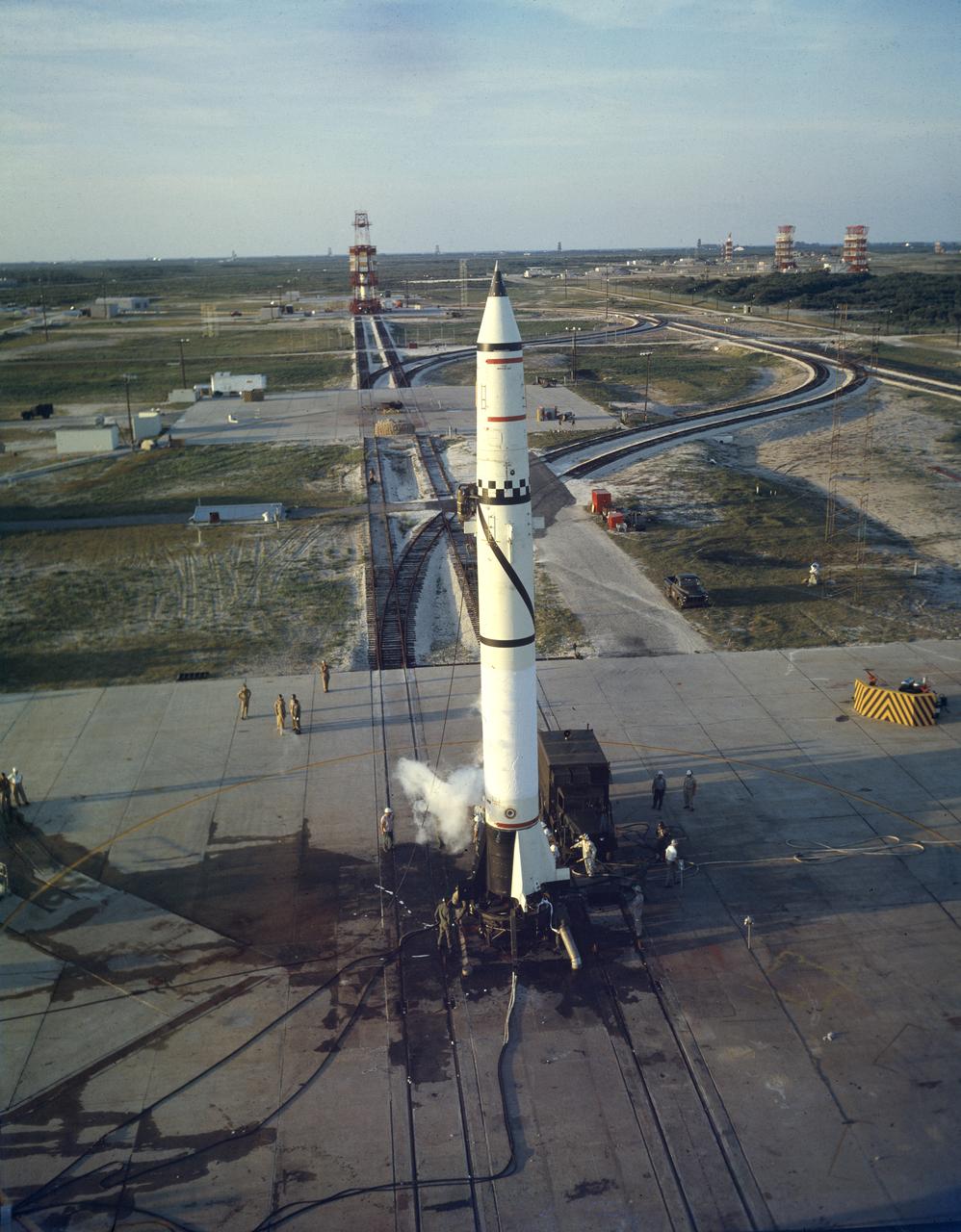
Redstone missile No. 1002 on the launch pad at Cape Canaveral, Florida, on May 16, 1958. The Redstone ballistic missile was a high-accuracy, liquid-propelled, surface-to-surface missile developed by the Army Ballistic Missile Agency, Redstone Arsenal, in Huntsville, Alabama, under the direction of Dr. von Braun. The Redstone engine was a modified and improved version of the Air Force's Navaho cruise missile engine of the late forties. The A-series, as this would be known, utilized a cylindrical combustion chamber as compared with the bulky, spherical V-2 chamber. By 1951, the Army was moving rapidly toward the design of the Redstone missile, and production was begun in 1952. Redstone rockets became the "reliable workhorse" for America's early space program. As an example of the versatility, Redstone was utilized in the booster for Explorer 1, the first American satellite, with no major changes to the engine or missile
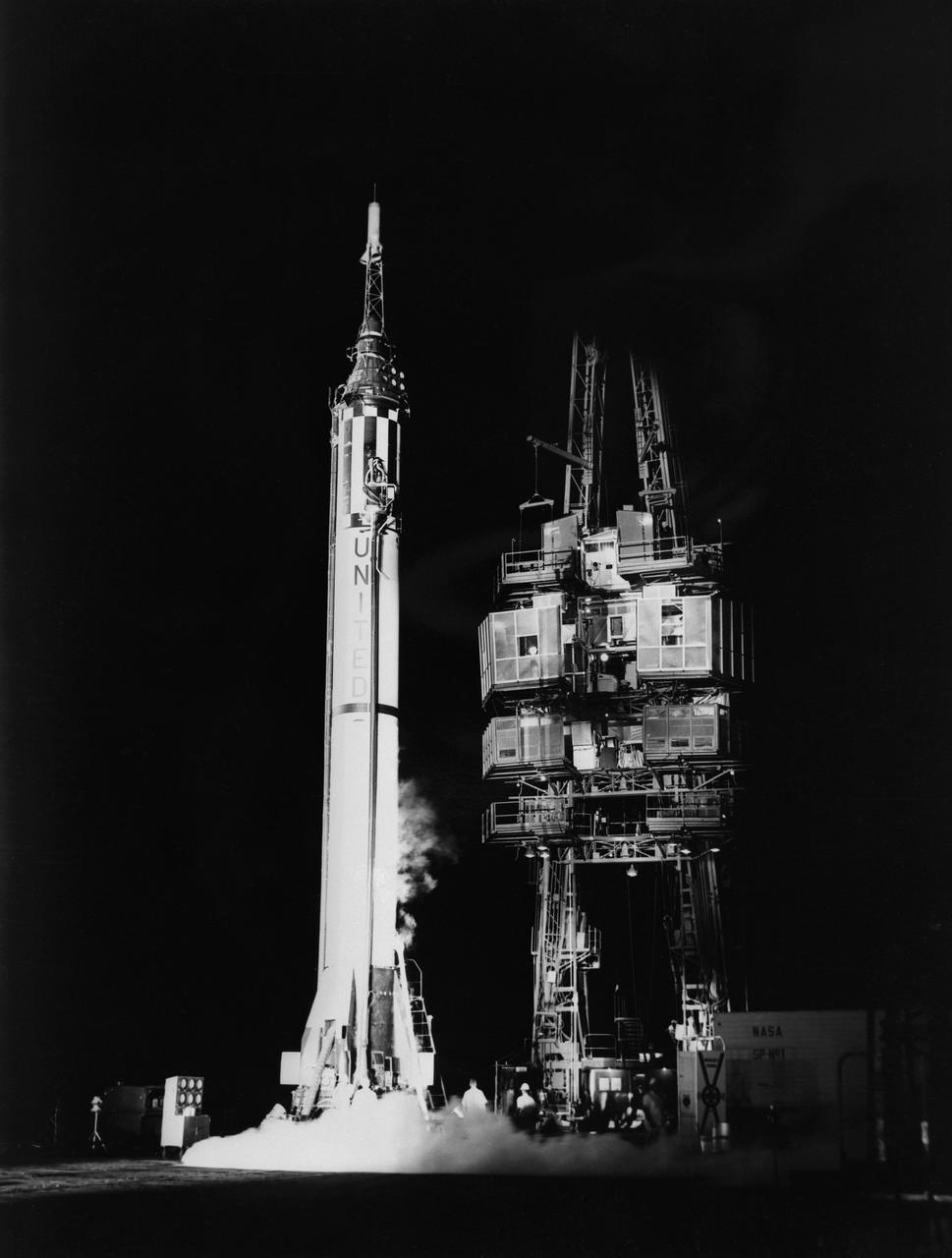
S61-03158 (1961) --- Mercury-Redstone 3 (MR-3) missile standing alone on launch pad. Photo credit: NASA or National Aeronautics and Space Administration
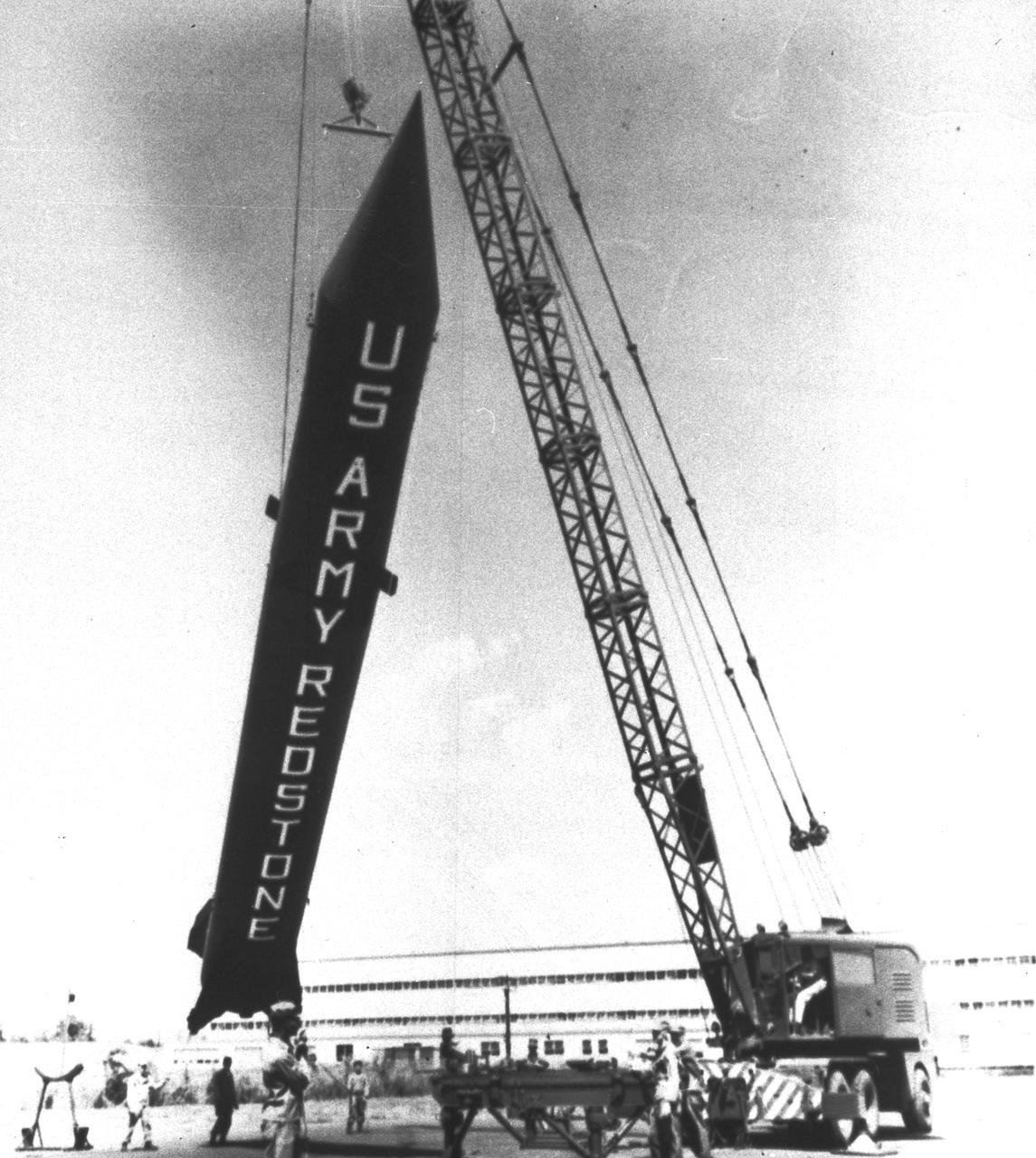
U.S. Army Redstone Rocket: The Redstone ballistic missile was a high-accuracy, liquid-propelled, surface-to-surface missile developed by the Army Ballistic Missile Agency, Redstone Arsenal, in Huntsville, Alabama, under the direction of Dr. von Braun. The Redstone rocket was also known as "Old Reliable" because of its many diverse missions. The first Redstone Missile was launched from Cape Canaveral, Florida on August 30, 1953.
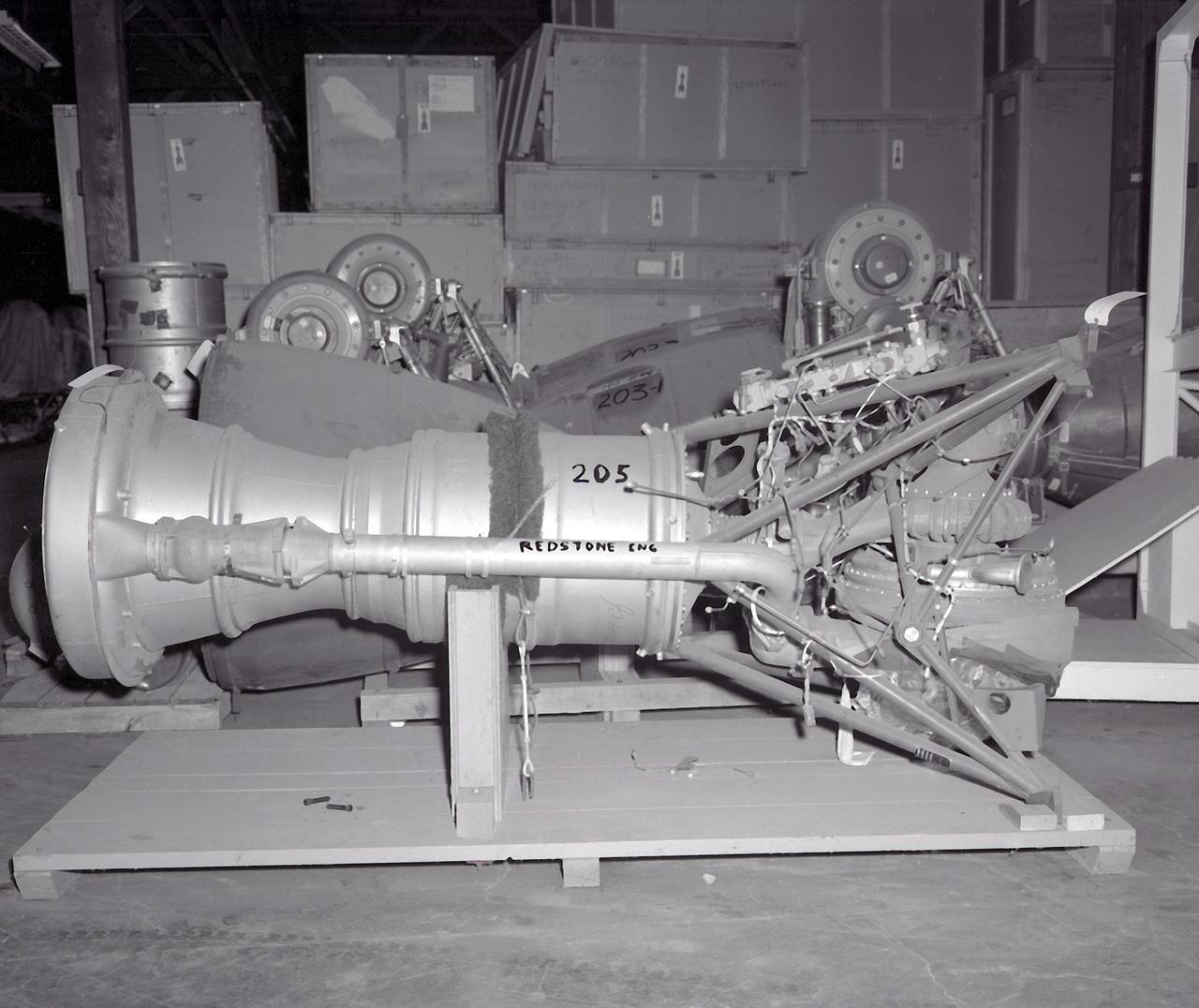
This photograph is of the engine for the Redstone rocket. The Redstone ballistic missile was a high-accuracy, liquid-propelled, surface-to-surface missile developed by the Army Ballistic Missile Agency, Redstone Arsenal, in Huntsville, Alabama, under the direction of Dr. von Braun. The Redstone engine was a modified and improved version of the Air Force's Navaho cruise missile engine of the late forties. The A-series, as this would be known, utilized a cylindrical combustion chamber as compared with the bulky, spherical V-2 chamber. By 1951, the Army was moving rapidly toward the design of the Redstone missile, and the production was begun in 1952. Redstone rockets became the "reliable workhorse" for America's early space program. As an example of its versatility, the Redstone was utilized in the booster for Explorer 1, the first American satellite, with no major changes to the engine or missile.
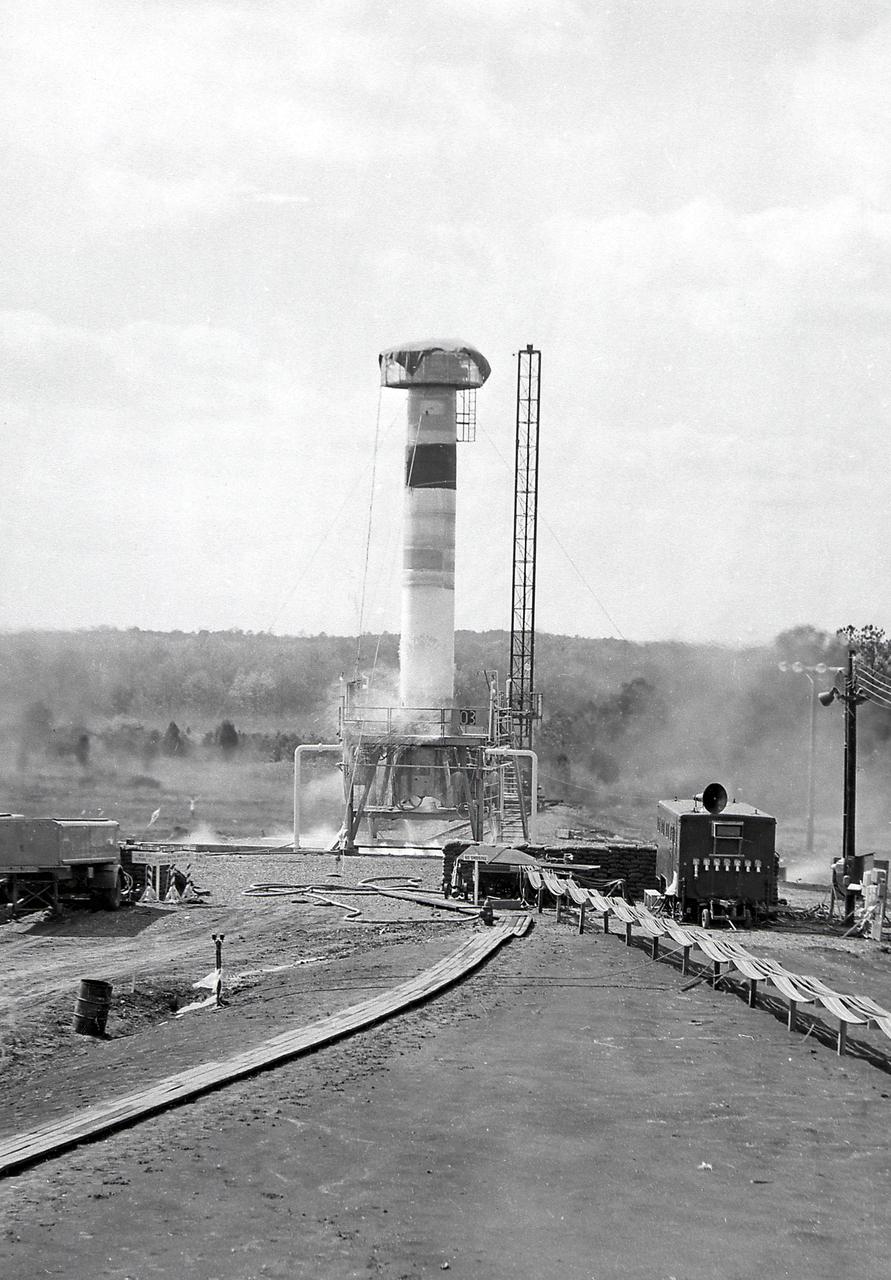
Test firing of a Redstone Missile at Redstone Test Stand in the early 1950's. The Redstone was a high-accuracy, liquid-propelled, surface-to-surface missile developed by the von Braun Team under the management of the U.S. Army. The Redstone was the first major rocket development program in the United States.
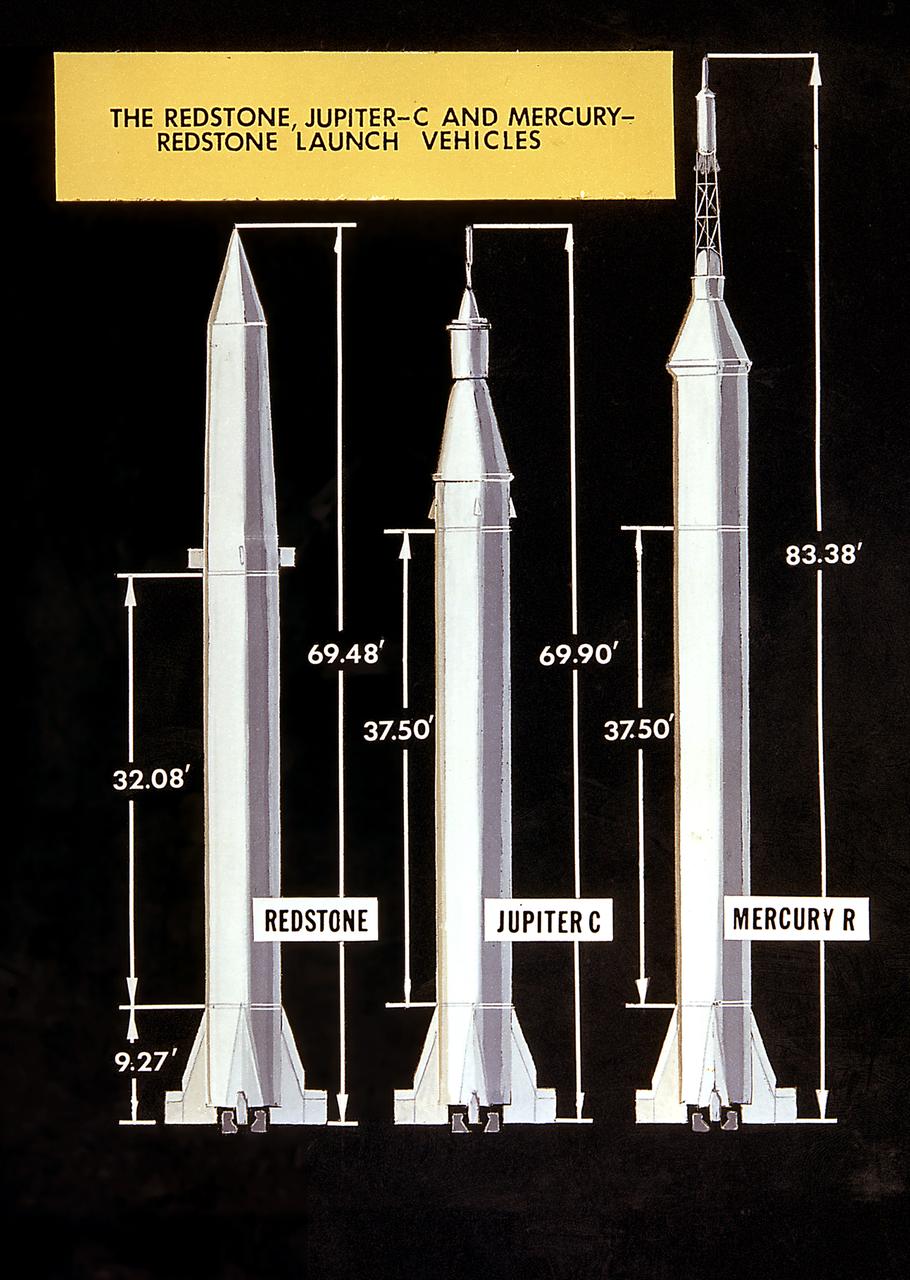
This is a comparison illustration of the Redstone, Jupiter-C, and Mercury Redstone launch vehicles. The Redstone ballistic missile was a high-accuracy, liquid-propelled, surface-to-surface missile. Originally developed as a nose cone re-entry test vehicle for the Jupiter intermediate range ballistic missile, the Jupiter-C was a modification of the Redstone missile and successfully launched the first American Satellite, Explorer-1, in orbit on January 31, 1958. The Mercury Redstone lifted off carrying the first American, astronaut Alan Shepard, in his Mercury spacecraft Freedom 7, on May 5, 1961.
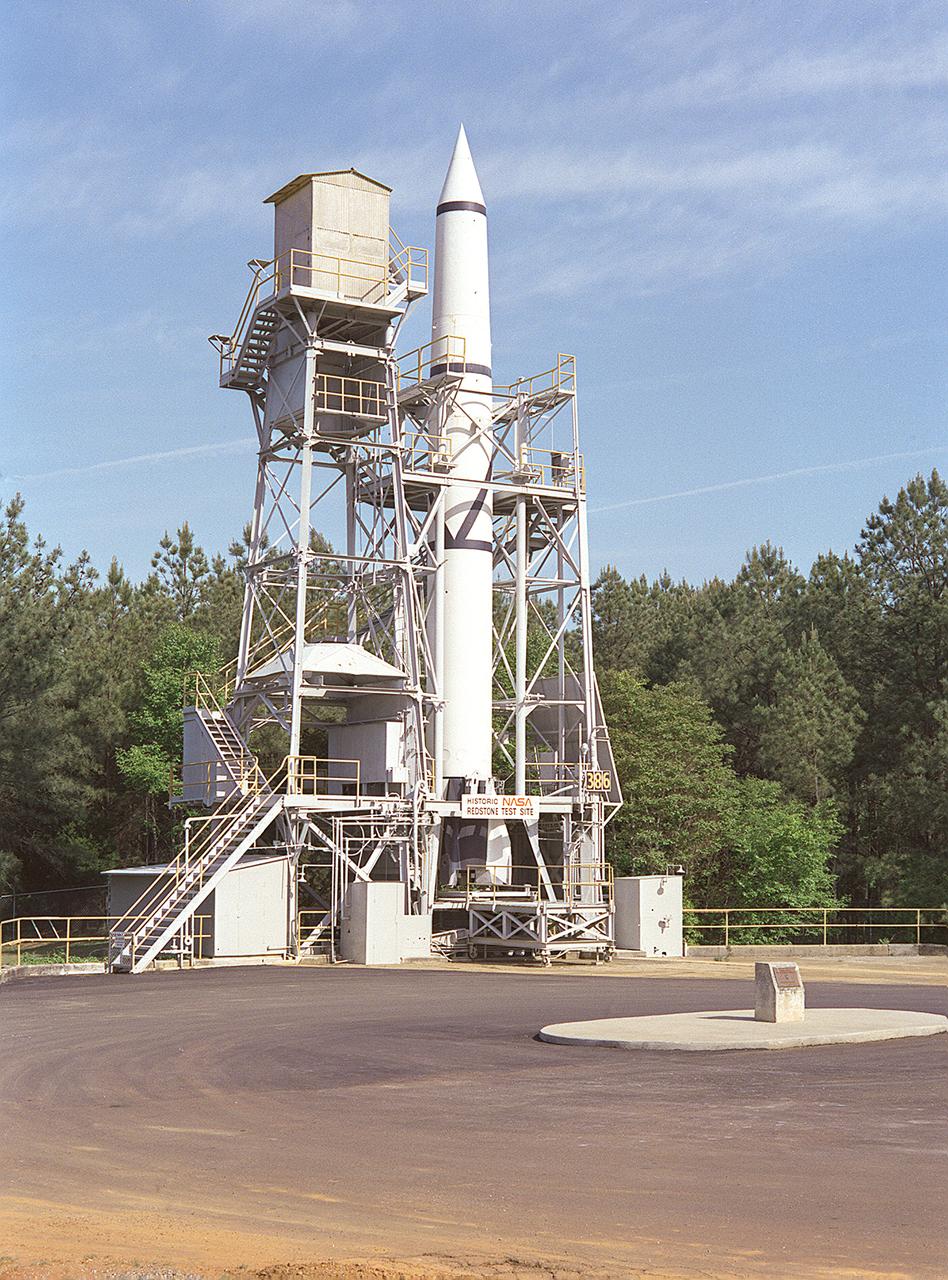
The Redstone Test Stand was used during the 1950s in early development of the Redstone missile propulsion system. This was the test stand where the modified Redstone missile that launched into space the first American, Alan Shepard, was static tested as the last step before the flight occurred.
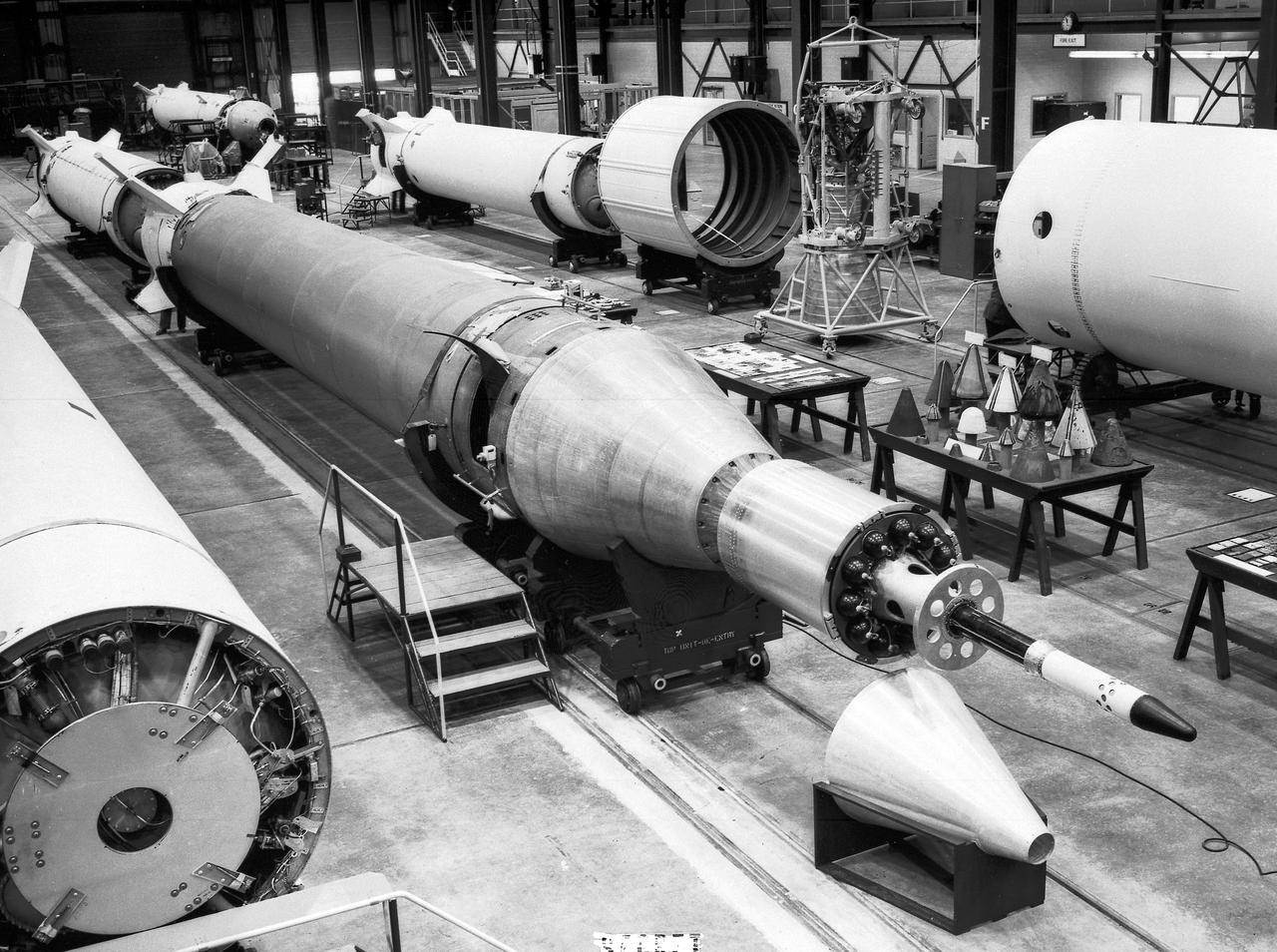
Jupiter-C Missile No. 27 assembly at the Army Ballistic Missile Agency (ABMA), Redstone Arsenal, in Huntsville, Aalabama. The Jupiter-C was a modification of the Redstone Missile, and originally developed as a nose cone re-entry test vehicle for the Jupiter Intermediate Range Ballistic Missile (IRBM). Jupiter-C successfully launched the first American Satellite, Explorer 1, in orbit on January 31, 1958.
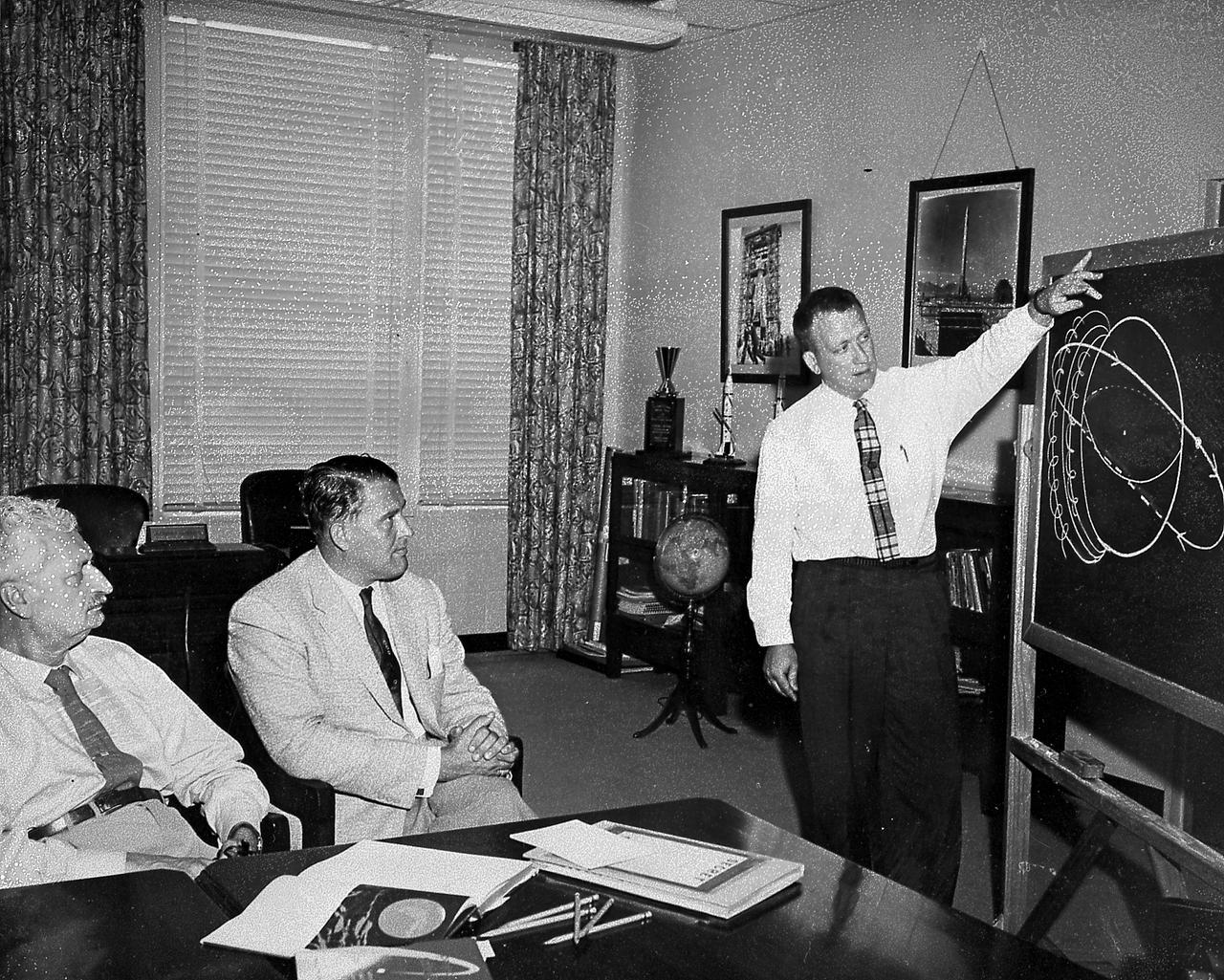
Professor Hermann Oberth and Dr. von Braun are briefed on satellite orbits by Dr. Charles A. Lundquist at Army Ballistic Missile Agency, Redstone Arsenal, Huntsville, Alabama.
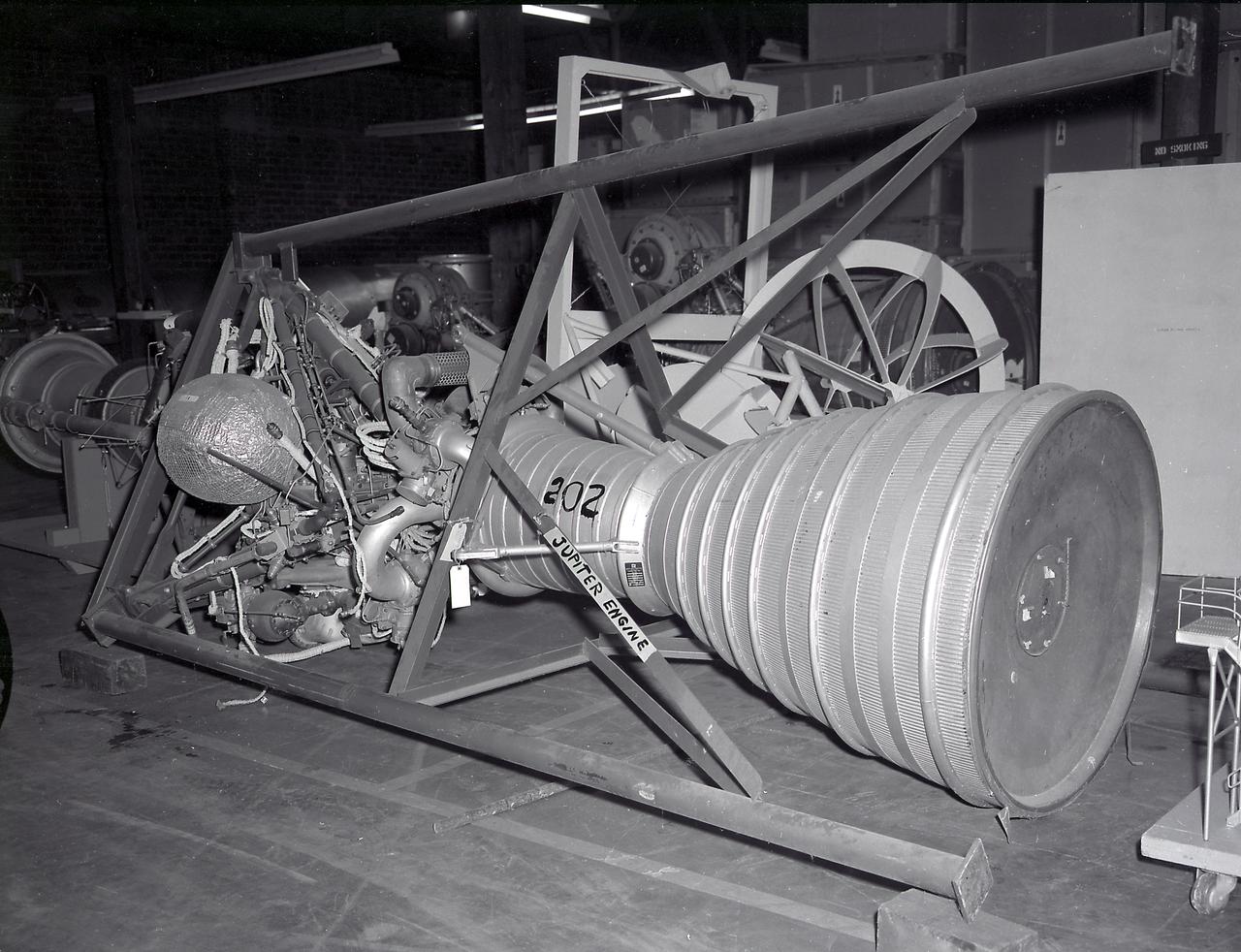
Engine for the Jupiter rocket. The Jupiter vehicle was a direct derivative of the Redstone. The Army Ballistic Missile Agency (ABMA) at Redstone Arsenal, Alabama, continued Jupiter development into a successful intermediate ballistic missile, even though the Department of Defense directed its operational development to the Air Force. ABMA maintained a role in Jupiter RD, including high-altitude launches that added to ABMA's understanding of rocket vehicle operations in the near-Earth space environment. It was knowledge that paid handsome dividends later.
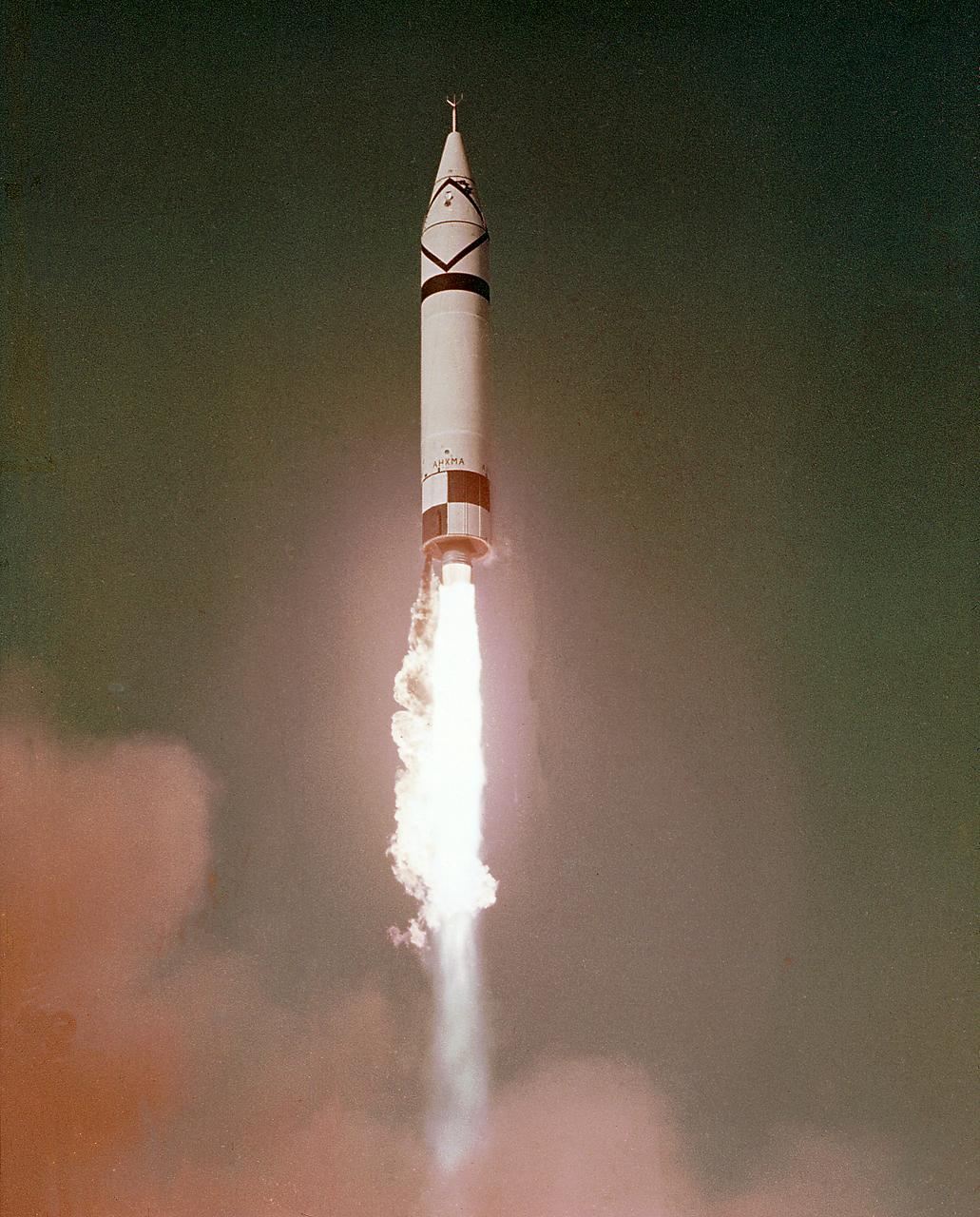
The Jupiter rocket was designed and developed by the Army Ballistic Missile Agency (ABMA). ABMA launched the Jupiter-A at Cape Canaveral, Florida, on March 1, 1957. The Jupiter vehicle was a direct derivative of the Redstone. The Army Ballistic Missile Agency (ABMA) at Redstone Arsenal, Alabama, continued Jupiter development into a successful intermediate ballistic missile, even though the Department of Defense directed its operational development to the Air Force. ABMA maintained a role in Jupiter RD, including high-altitude launches that added to ABMA's understanding of rocket vehicle operations in the near-Earth space environment. It was knowledge that paid handsome dividends later.
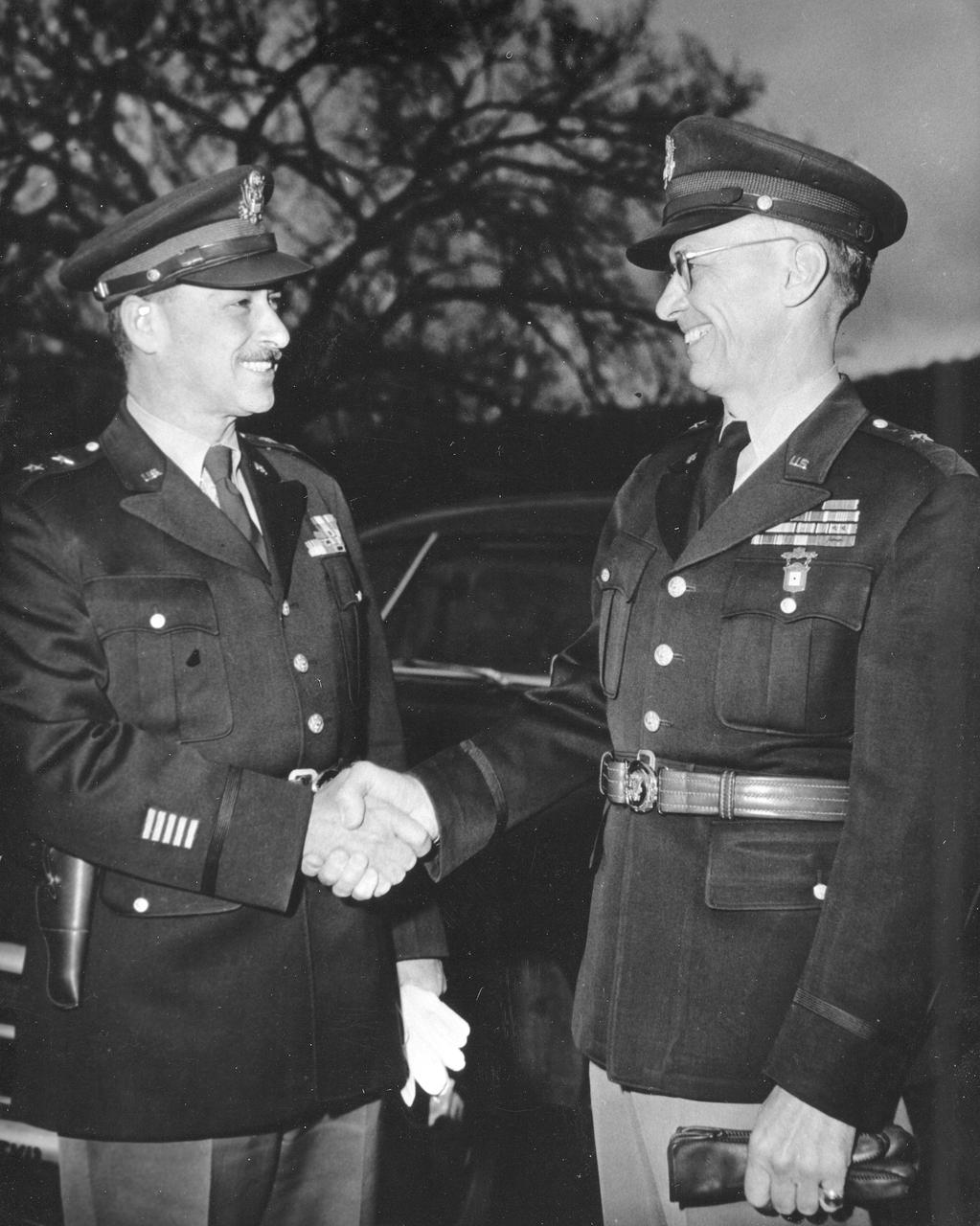
General Medaris, (left) who was a Commander of the Army Ballistic Missile Agency (ABMA) in Redstone Arsenal, Alabama, during 1955 to 1958, shakes hands with Major General Holger Toftoy (right), who consolidated U.S. missile and rocketry development.
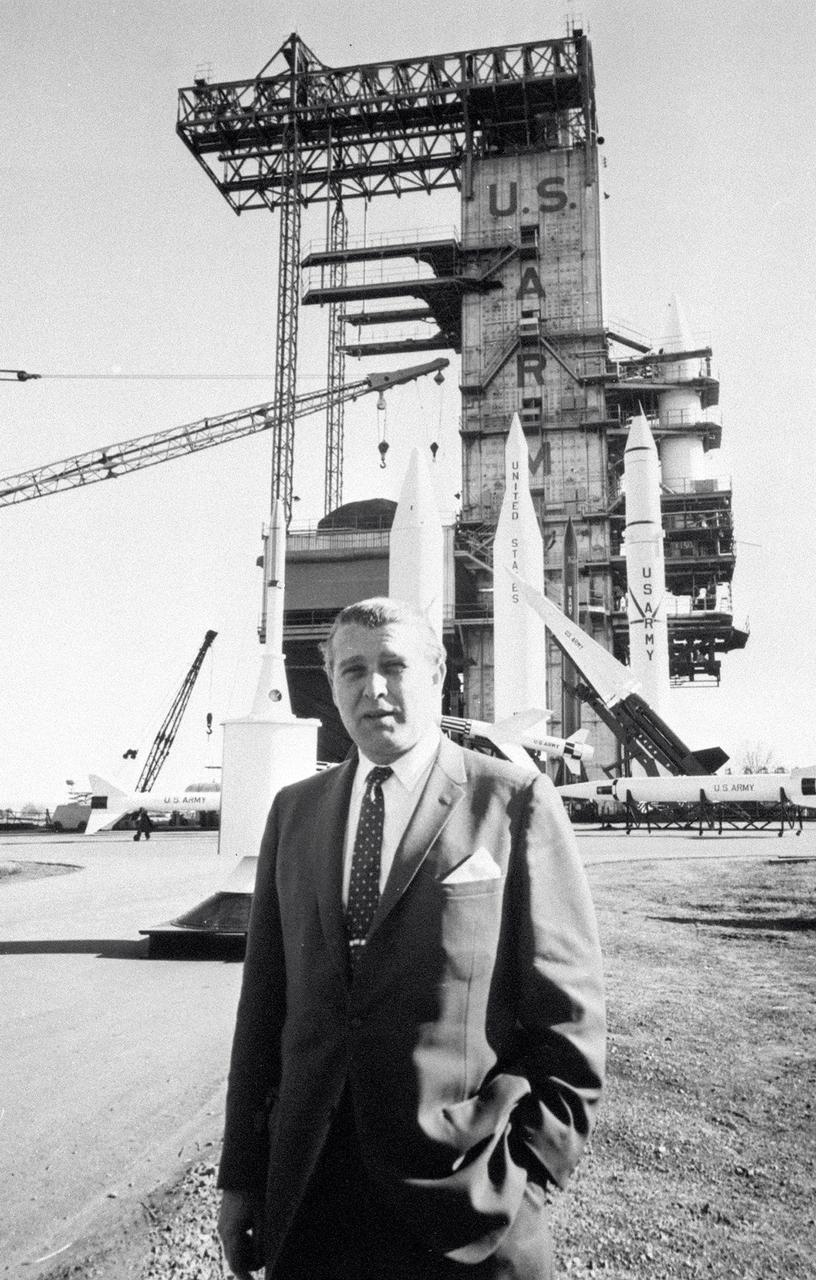
In this photo, Director of the US Army Ballistic Missile Agency (ABMA) Development Operations Division, Dr. Wernher von Braun, is standing before a display of Army missiles celebrating ABMA's Fourth Open House. The missiles in the background include (left to right) a satellite on a Juno II shroud with a Nike Ajax pointing left in front of a Jupiter missile. The Lacrosse is in front of the Juno II. The Nike Hercules points skyward in front of the Juno II and the Redstone.
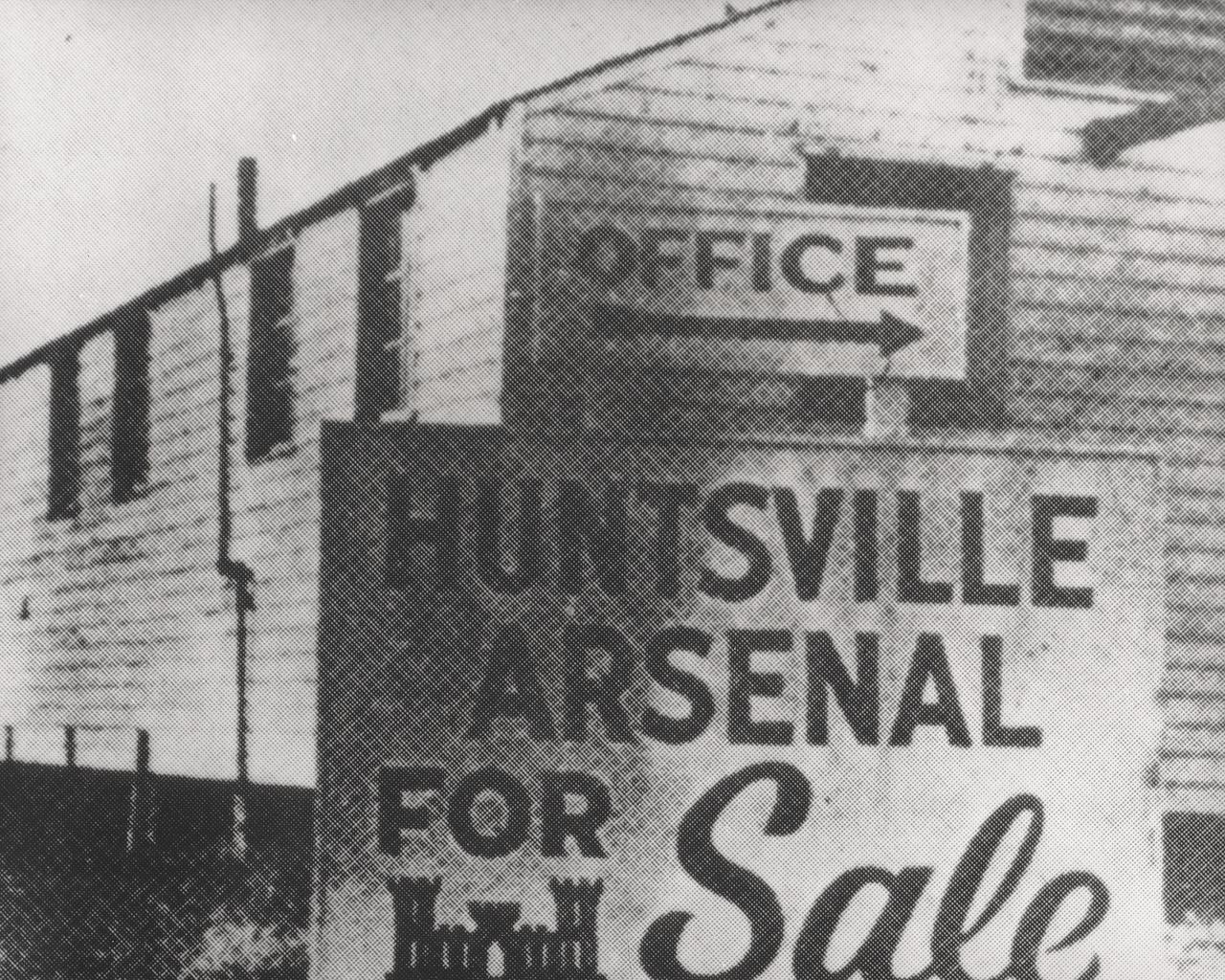
In the years following World War II, the Army directed that the Huntsville, Alabama Arsenal be advertised for sale. The decision was reversed because the Army found it needed this land for the new missile work that would occur at Redstone Arsenal.
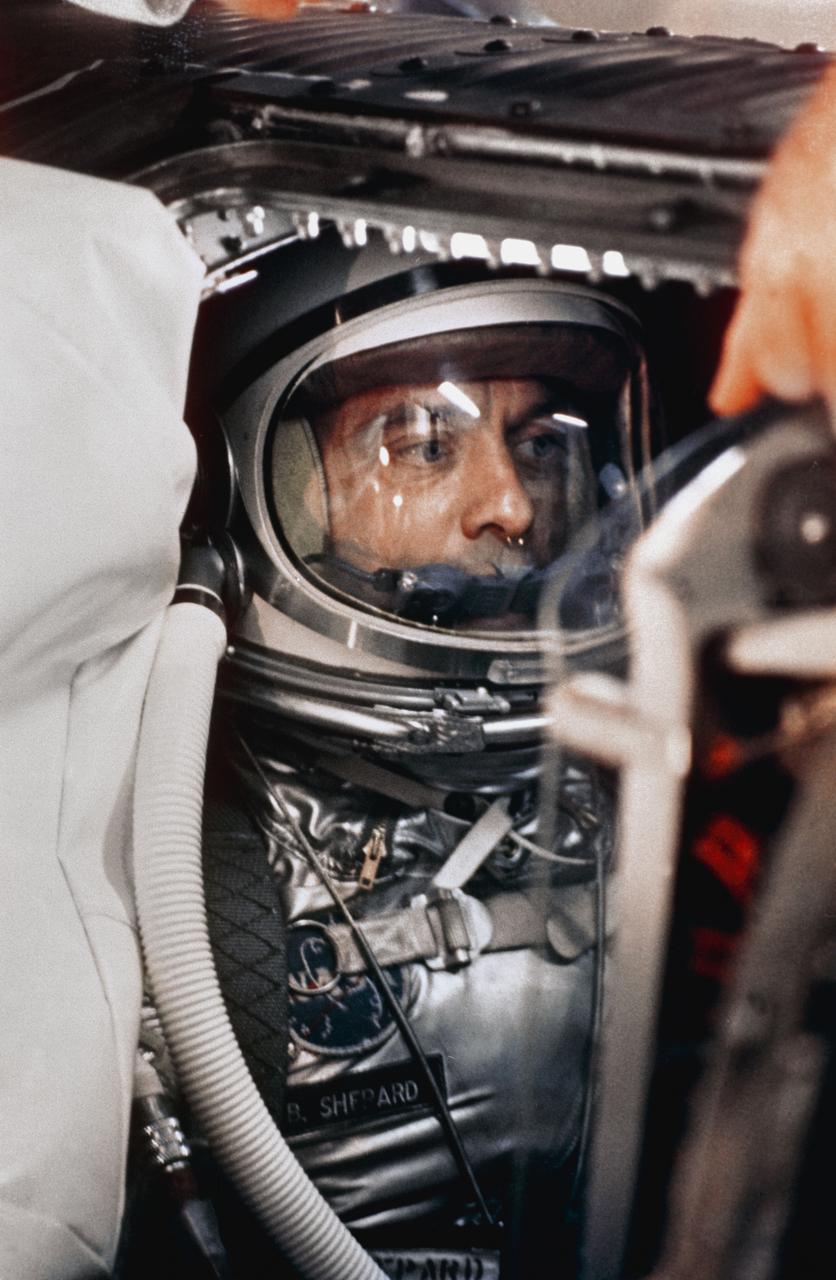
S88-31374 (29 April 1961) --- A close-up of astronaut Alan B. Shepard Jr. in his space suit with his helmet on inside the Mercury capsule. He is undergoing a flight simulation test with the capsule mated to the Redstone booster. This will be the first attempt to put a man into space by the U.S. aboard a Mercury spacecraft, launched atop a Redstone rocket. The suborbital trajectory will be down the Atlantic Missile Range. Photo credit: NASA or National Aeronautics and Space Administration
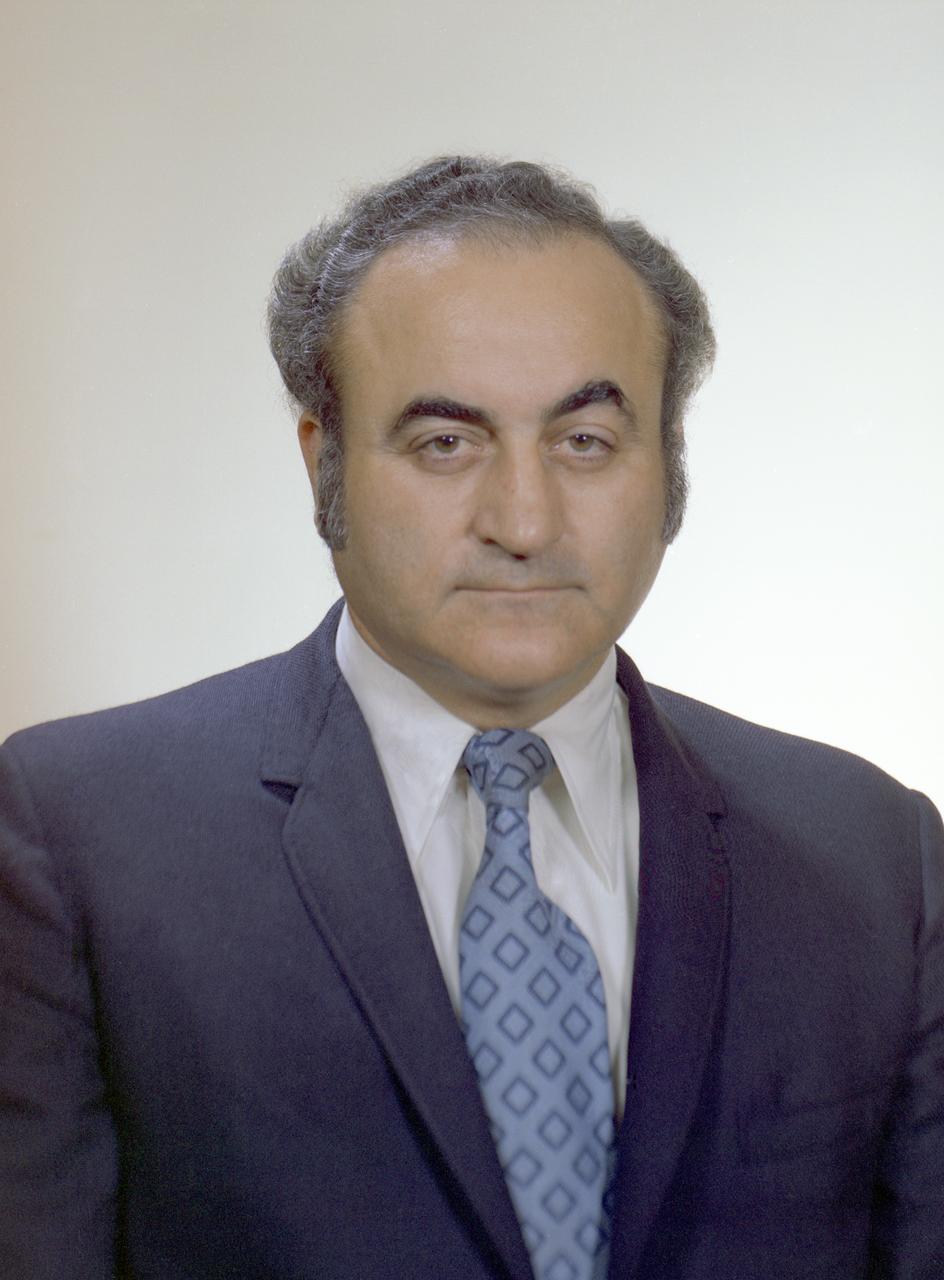
Dr. Rocco A. Petrone served at director of the Marshall Space Flight Center from January 26, 1973 to March 15, 1974. Prior to his tenure at Marshall, Petrone served as director of the Apollo program and director of launch operations at Kennedy Space Center. His career in rocket development and space programs began with his participation in the development of the Redstone missiles at the Army's Redstone Arsenal in Huntsville, Alabama. Upon his departure from Marshall, Petrone served as NASA Associate Administrator for Center Operations.
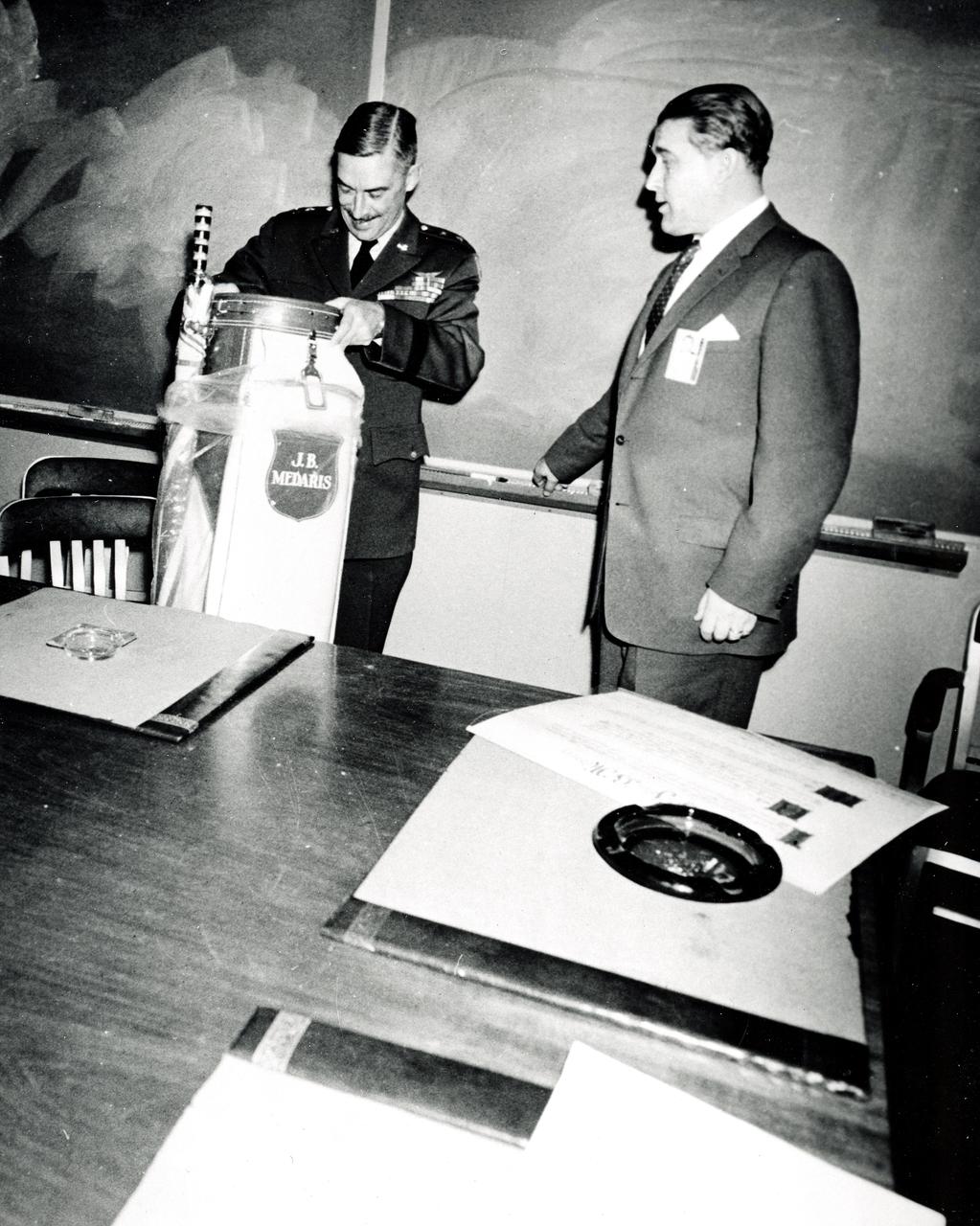
Marshall Space Flight Center Director Wernher von Braun presents General J.B. Medaris with a new golf bag. General Medaris, (left) was a Commander of the Army Ballistic Missile Agency (ABMA) in Redstone Arsenal, Alabama during 1955 to 1958.
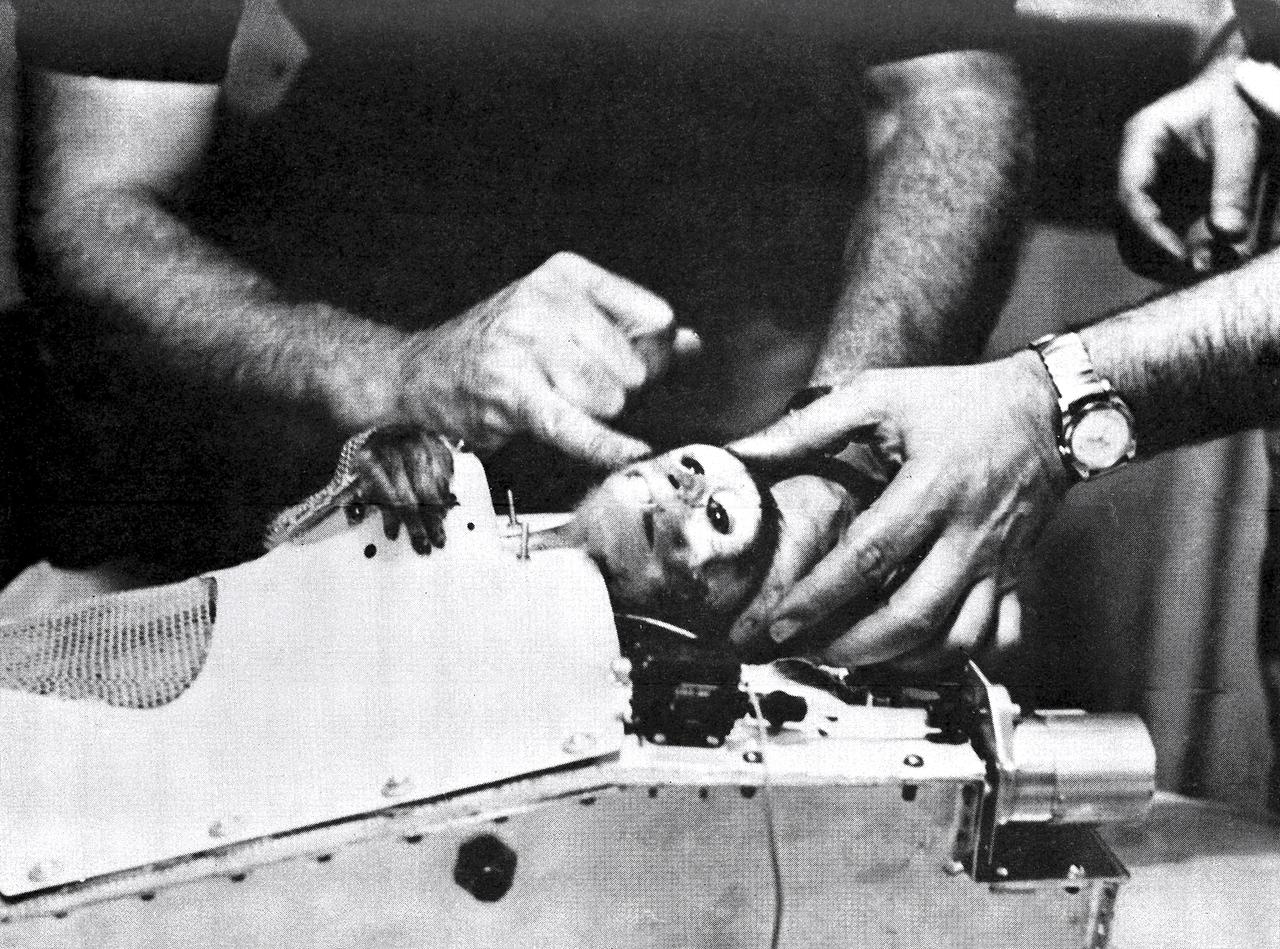
On May 28, 1959, a Jupiter Intermediate Range Ballistic Missile provided by a U.S. Army team in Redstone Arsenal, Alabama, launched a nose cone carrying Baker, A South American squirrel monkey and Able, An American-born rhesus monkey. This photograph shows Able after recovery of the nose cone of the Jupiter rocket by U.S.S. Kiowa.
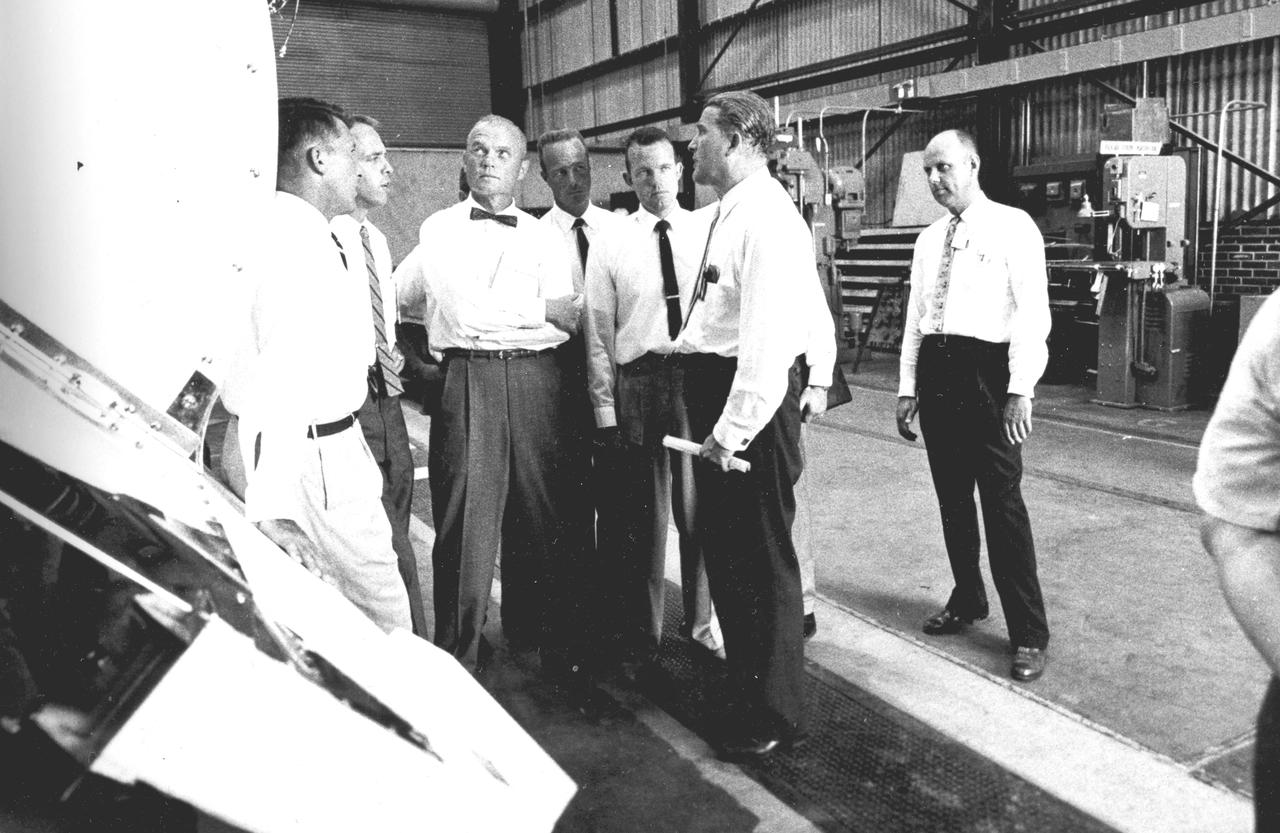
Five of the seven original astronauts are seen with Dr. von Braun inspecting the Mercury-Redstone hardware in the Fabrication Laboratory of Army Ballistic Missile Agency (ABMA) in 1959. Left to right: Astronauts Walter Schirra, Alan Shepard, John Glenn, Scott Carpenter, Gordon Cooper, and Dr. von Braun.
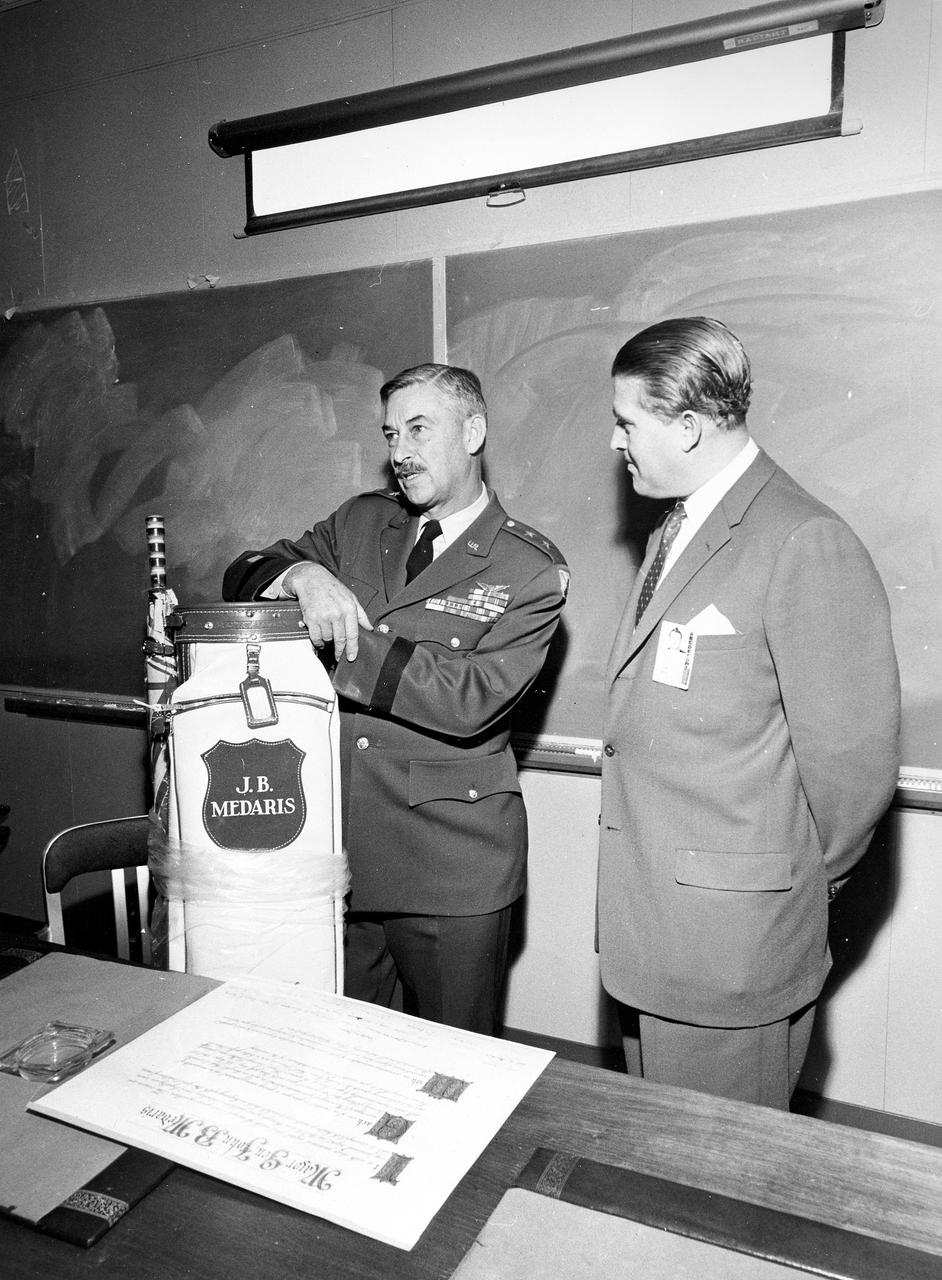
Marshall Space Flight Center Director Wernher von Braun presents General J.B. Medaris with a new golf bag. General Medaris, (left) was a Commander of the Army Ballistic Missile Agency (ABMA) in Redstone Arsenal, Alabama during 1955 to 1958.
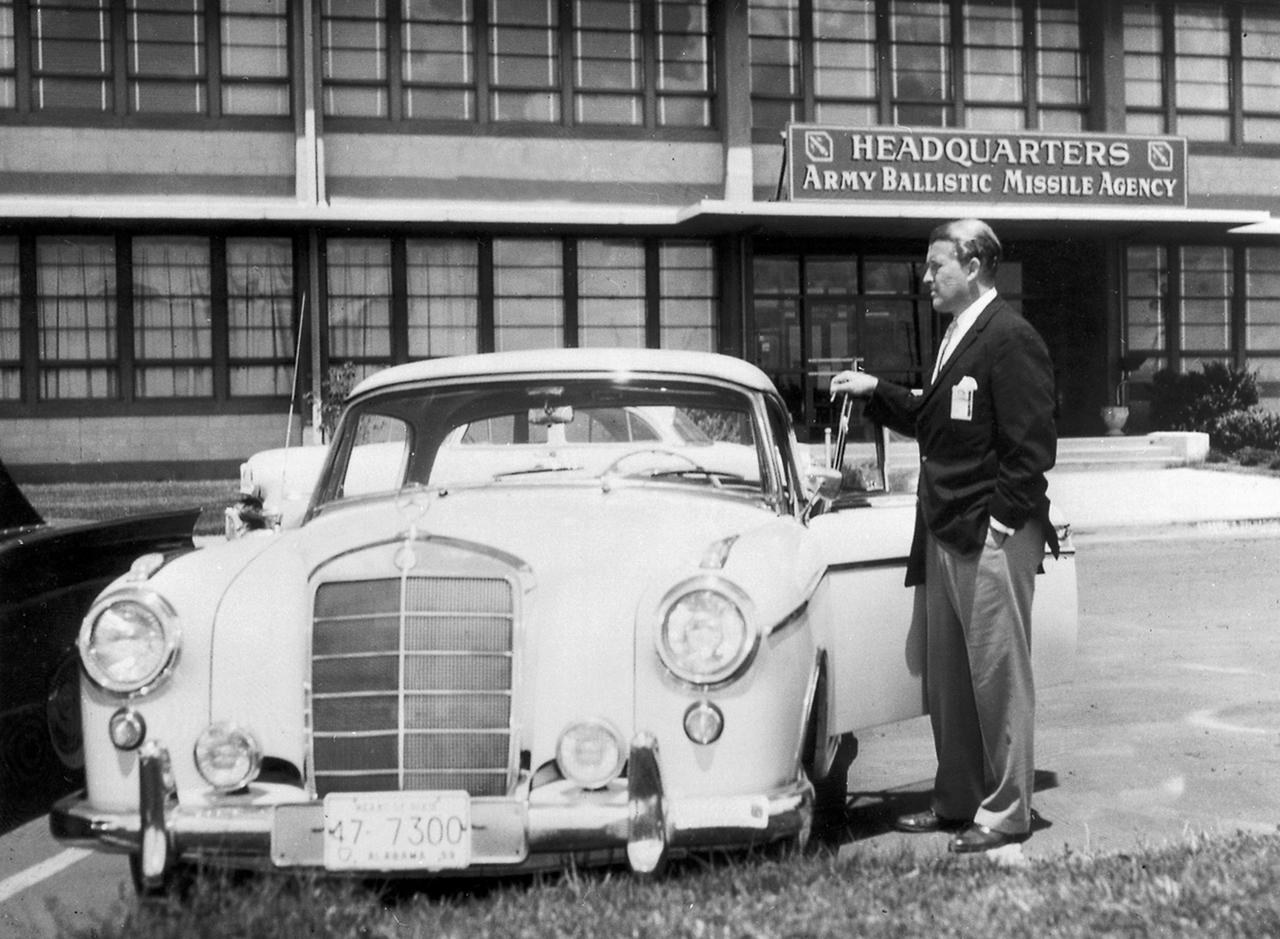
In this picture, Dr. Wernher von Braun, who was serving as Director of the Army Ballistic Missile Agency's (ABMA) Development Operations Division, is shown posed with his Mercedes 220SE automobile in front of Redstone Building 4488, which houses the ABMA.
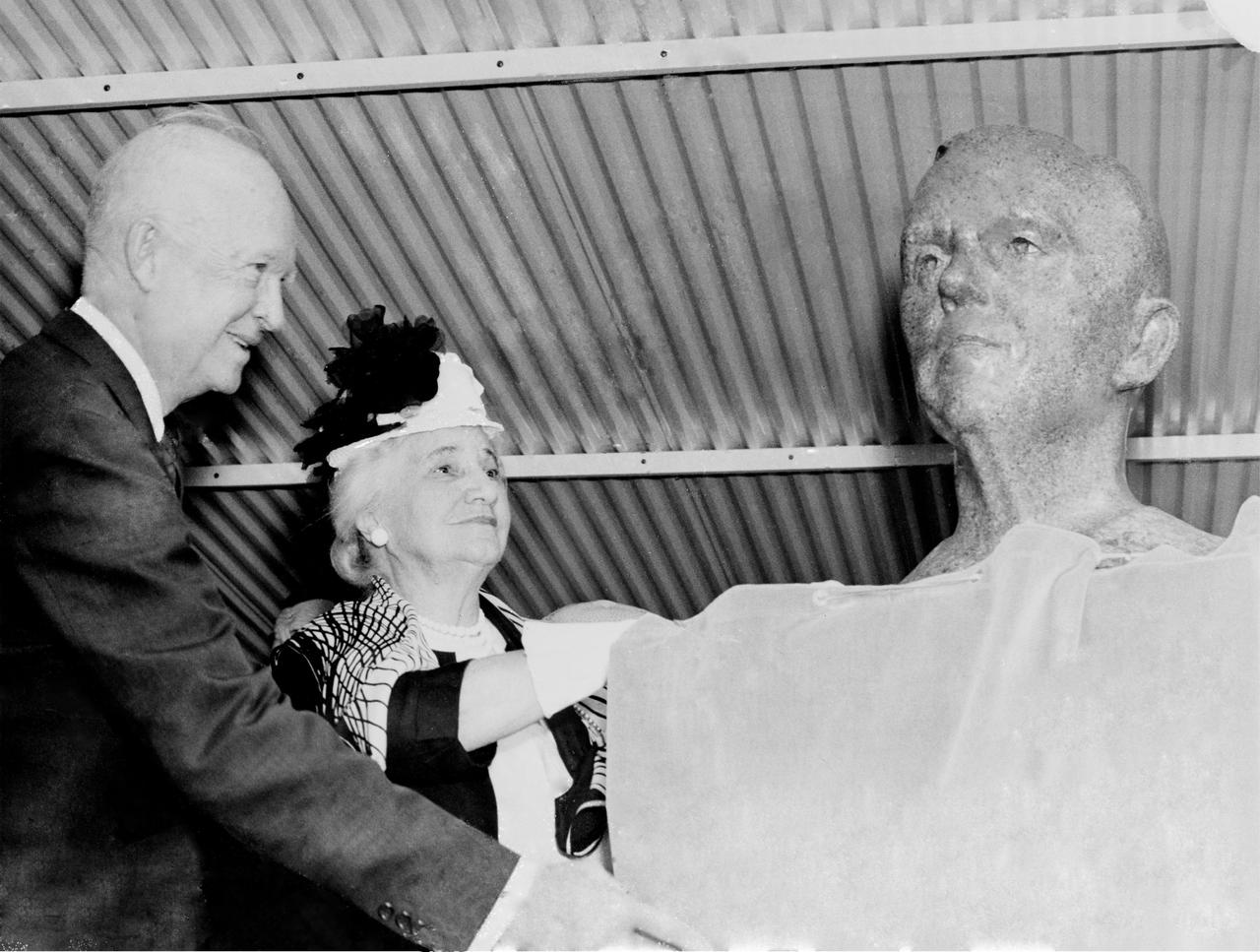
President Dwight D. Eisenhower and Mrs. George C. Marshall unveil the bronze bust of General George C. Marshall during the dedication of the Marshall Space Flight Center. Eisenhower signed an Executive Order on October 21, 1959 directing the transfer of persornel from the Redstone Arsenal's Army Ballistic Missile Agency Development Operations Division to NASA. On March 15, 1960, another Executive Order announced that the space complex formed within the boundaries of Redstone Arsenal would become the George C. Marshall Space Flight Center. The Center was activated on July 1, 1960, with dedication ceremonies taking place September 8, 1960.
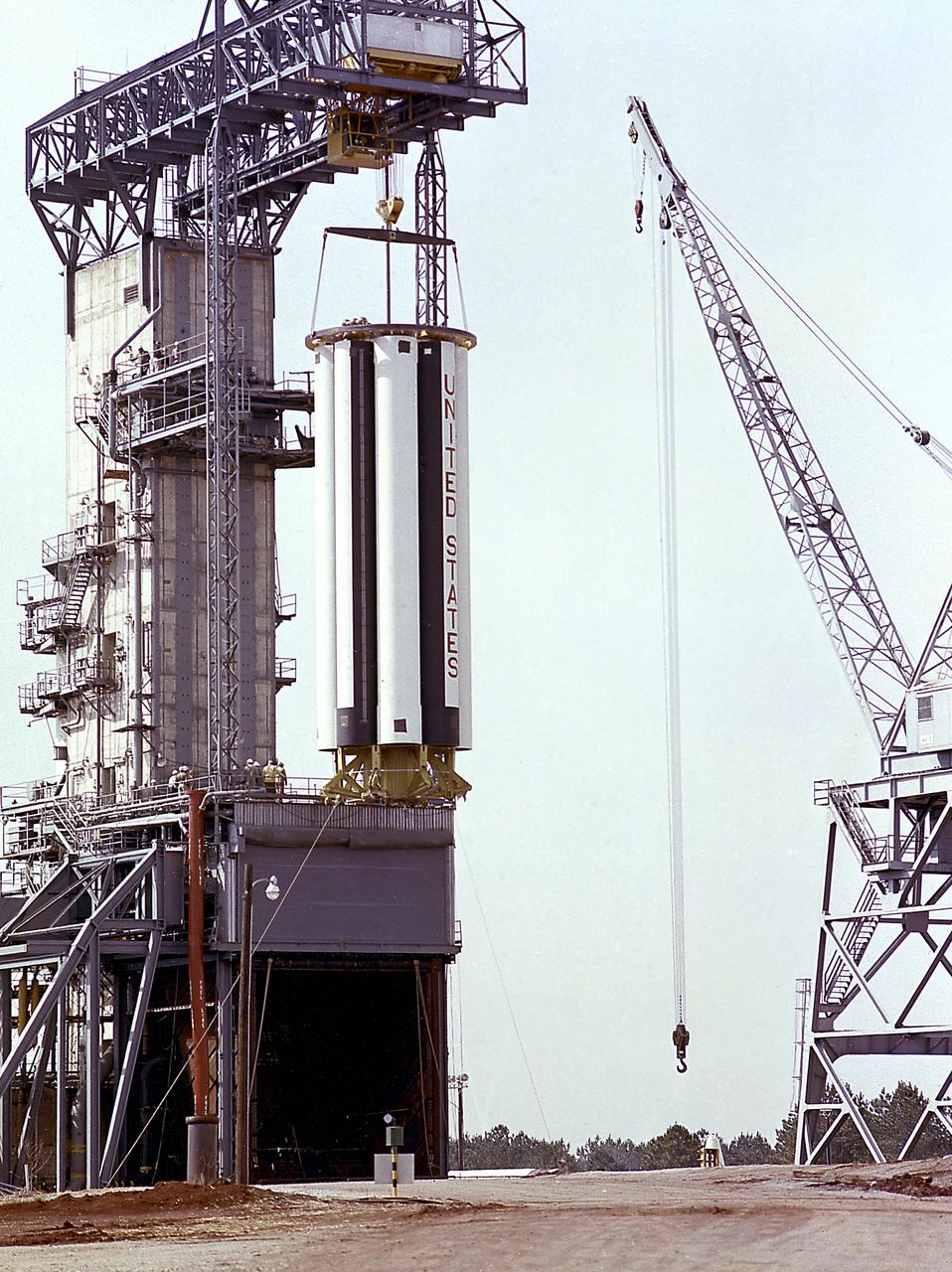
The Saturn Project was approved on January 18, 1960, as a program of the highest national priority. The formal test program to prove out the clustered-booster concept was well underway at Redstone Arsenal. This photograph depicts a mockup of the Saturn booster (S-I stage) being installed in the Army Ballistic Missile Agency (ABMA) test stand, on January 19, 1960, to check mating of the booster and stand and servicing methods.
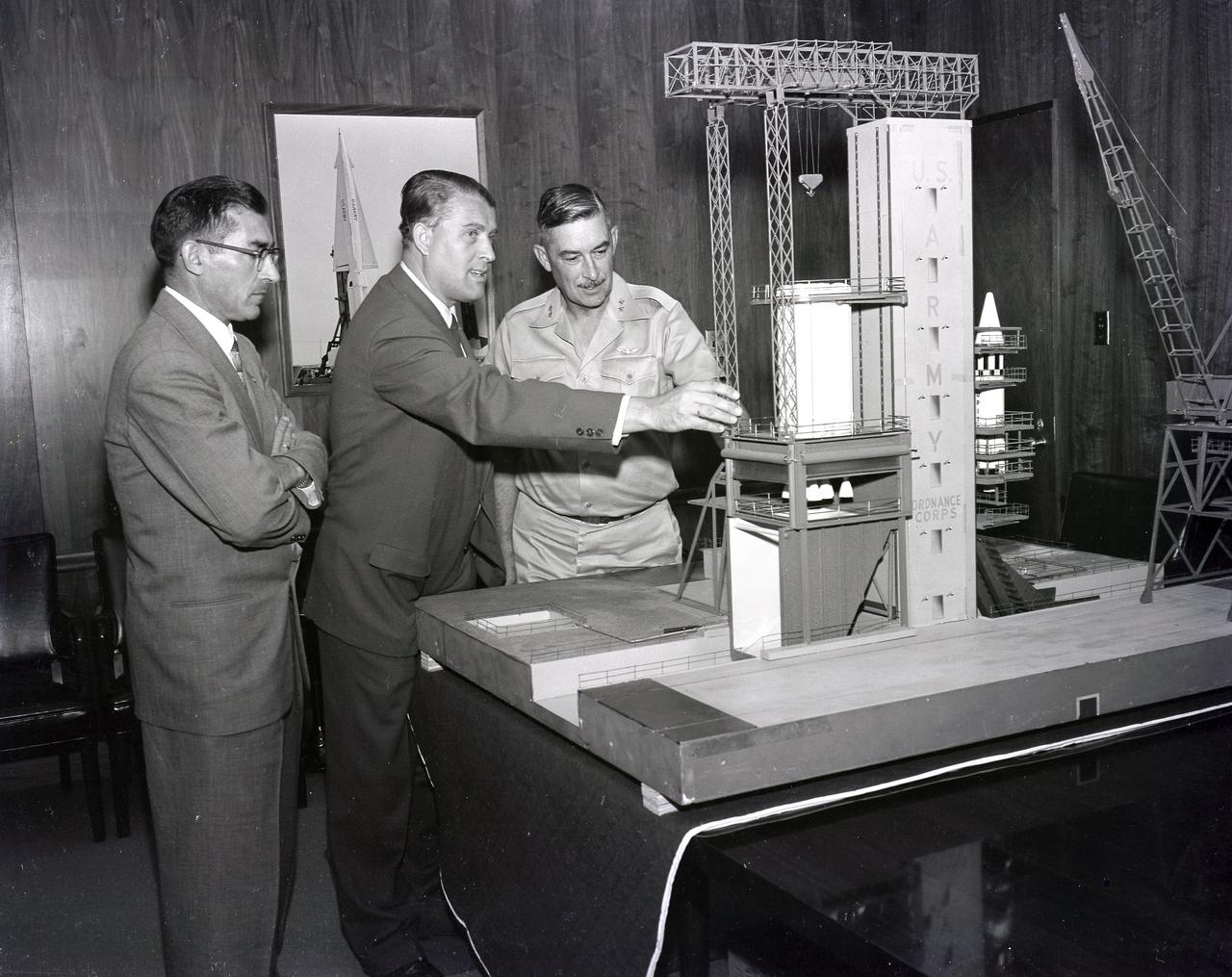
(From left to right) Karl L. Heimburg, Director of the Test Laboratory; Dr. Wernher von Braun, Director of the Development Operation Division; and Major General John B. Medaris with the model of S-1B Test Stand. Gen. Medaris was a Commander of the Army Ballistic Missile Agency (ABMA) in Redstone Arsenal, Alabama, during 1955 to 1958.

Thomas Jack Lee served as the sixth director of the Marshall Space Flight Center from July 6, 1989 to January 6, 1994. Prior to the appointment, Lee held positions as Center Deputy Director (1980 - 1989) and Spacelab Program Manager (1973 - 1980). Lee began his NASA career in July 1960 when he transferred to the newly formed MSFC from Redstone Arsenal's Army Ballistic Missile Agency.
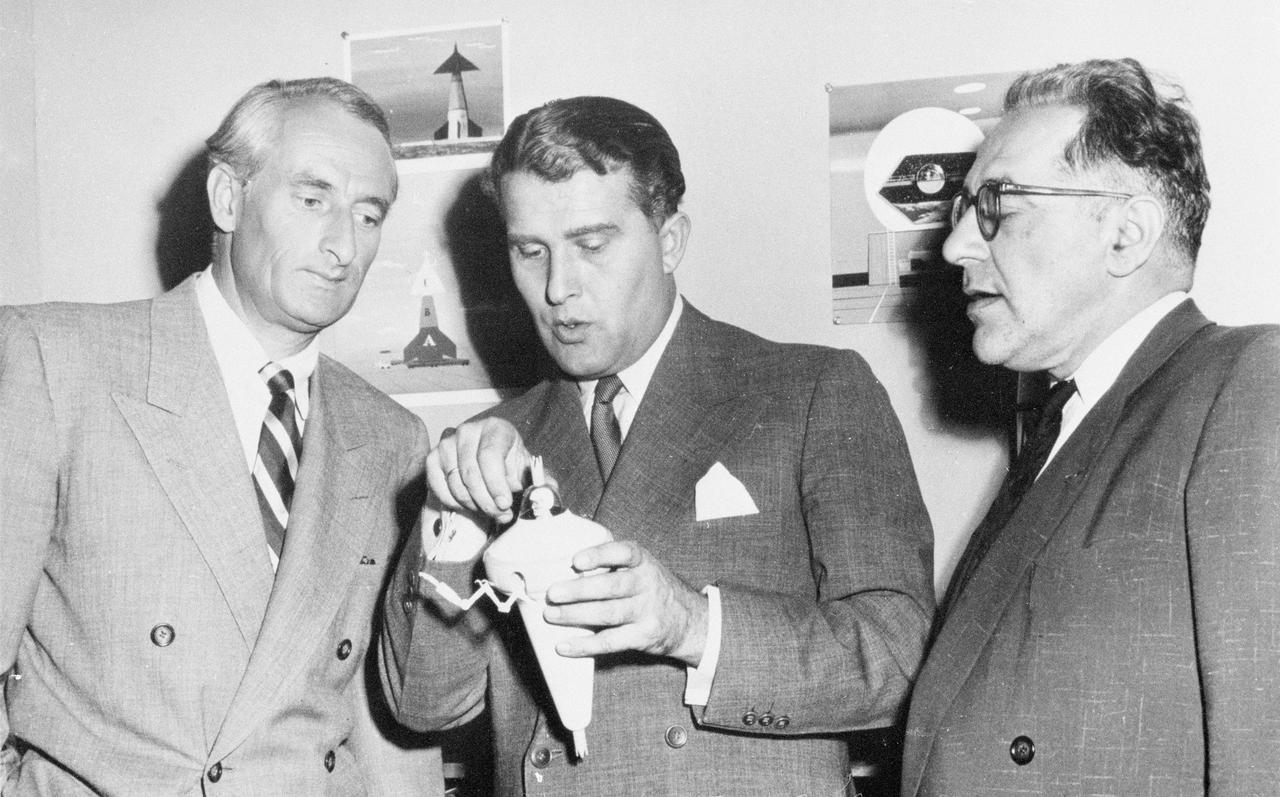
Dr. Wernher von Braun (center), then Chief of the Guided Missile Development Division at Redstone Arsenal, Alabama, discusses a "bottle suit" model with Dr. Heinz Haber (left), an expert on aviation medicine, and Willey Ley, a science writer on rocketry and space exploration. The three men were at the Disney studios appearing in the motion picture, entitled "Man in Space."
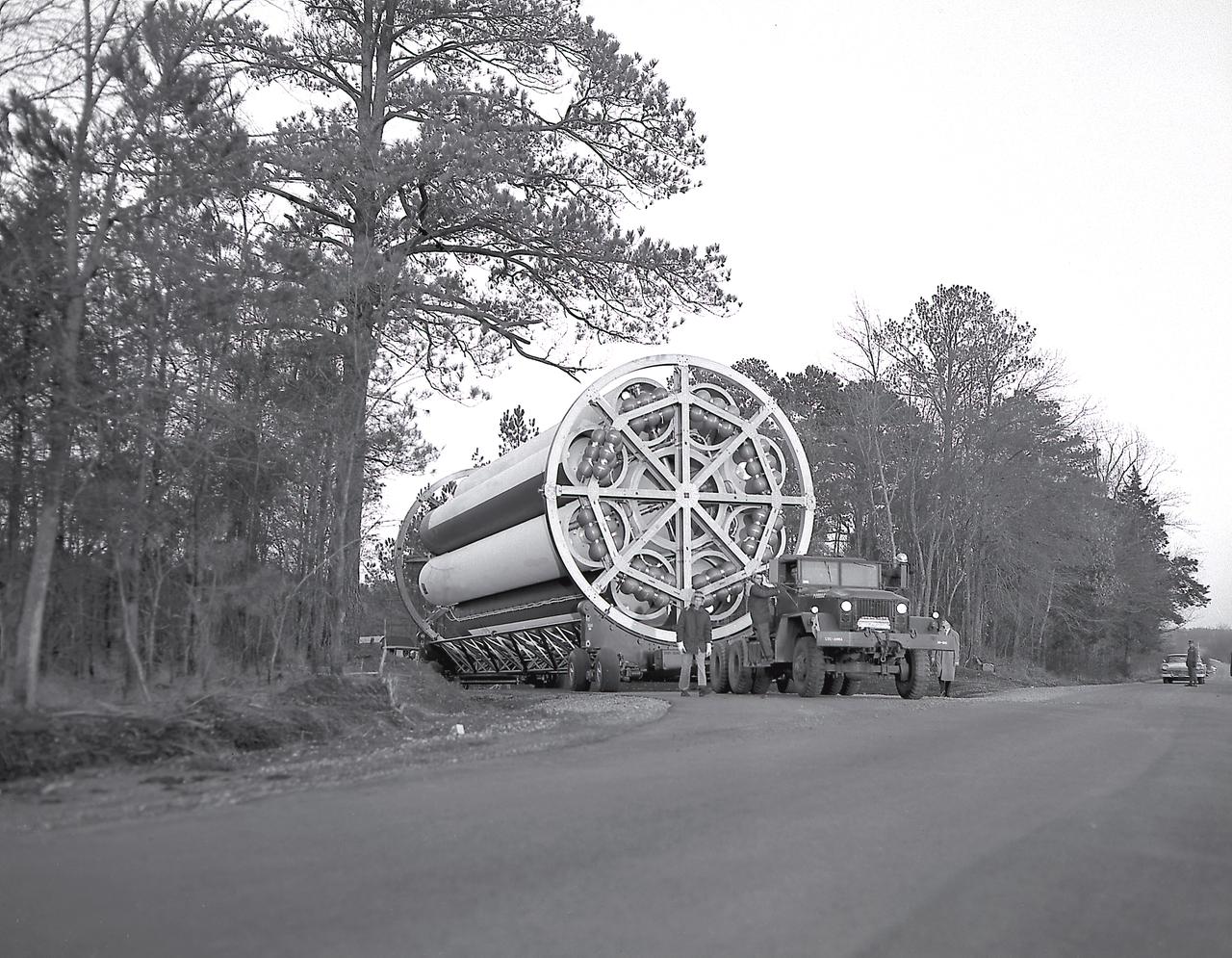
The Saturn Project was approved on January 18, 1960 as a program of the highest national priority. The formal test program to prove out the clustered-booster concept was well underway at Redstone Arsenal. This photograph depicts a mockup of the Saturn booster (S-I stage) being transported to the Army Ballistic Missile Agency (ABMA) test stand, to check mating of the booster and stand and servicing methods.
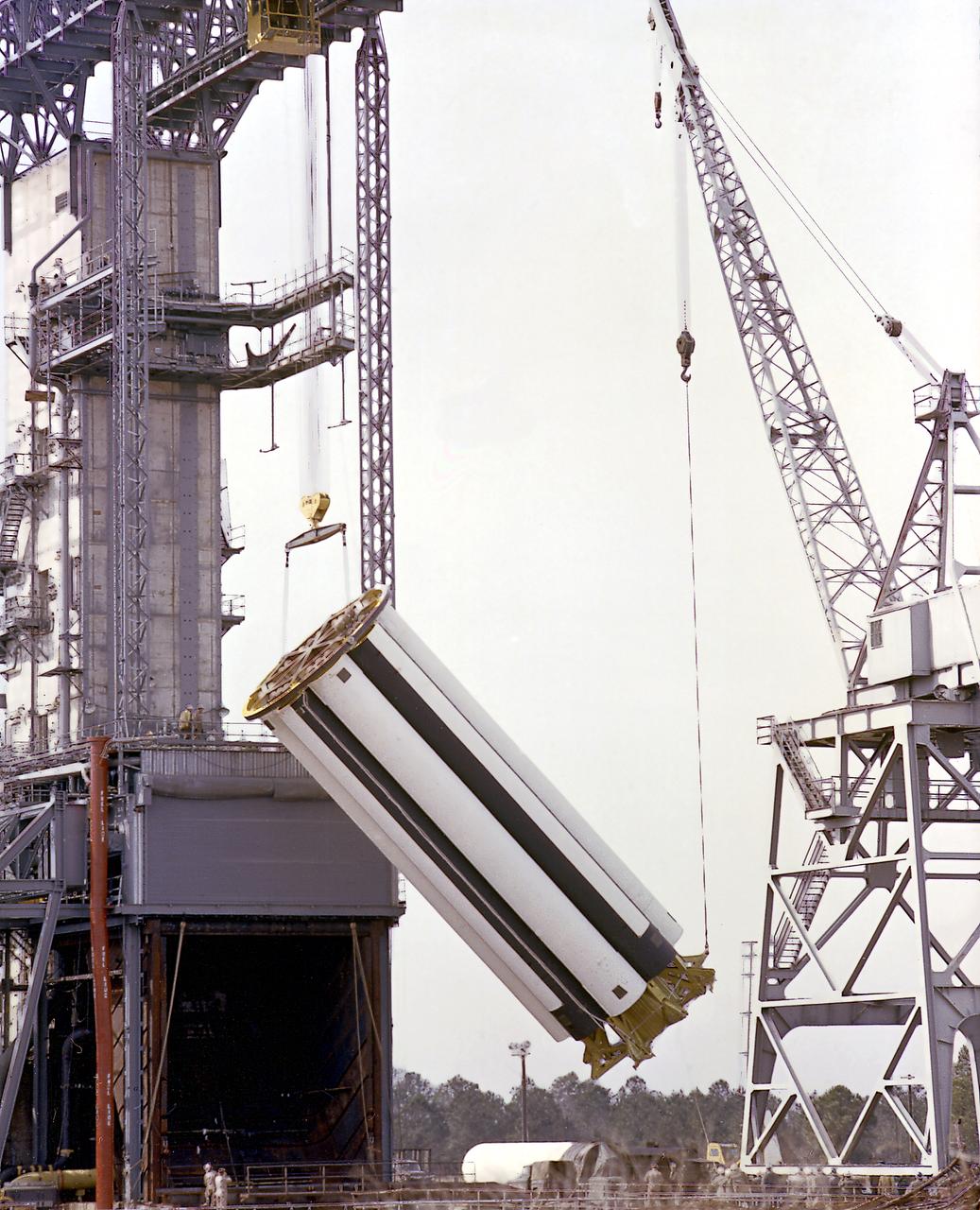
The Saturn Project was approved on January 18, 1960 as a program of the highest national priority. The formal test program, to prove out the clustered-booster concept, was well underway at Redstone Arsenal. This photograph depicts a mockup of the Saturn booster (S-I stage) being installed in the Army Ballistic Missile Agency (ABMA) test stand, on January 19, 1960, to check mating of the booster and stand and servicing methods.
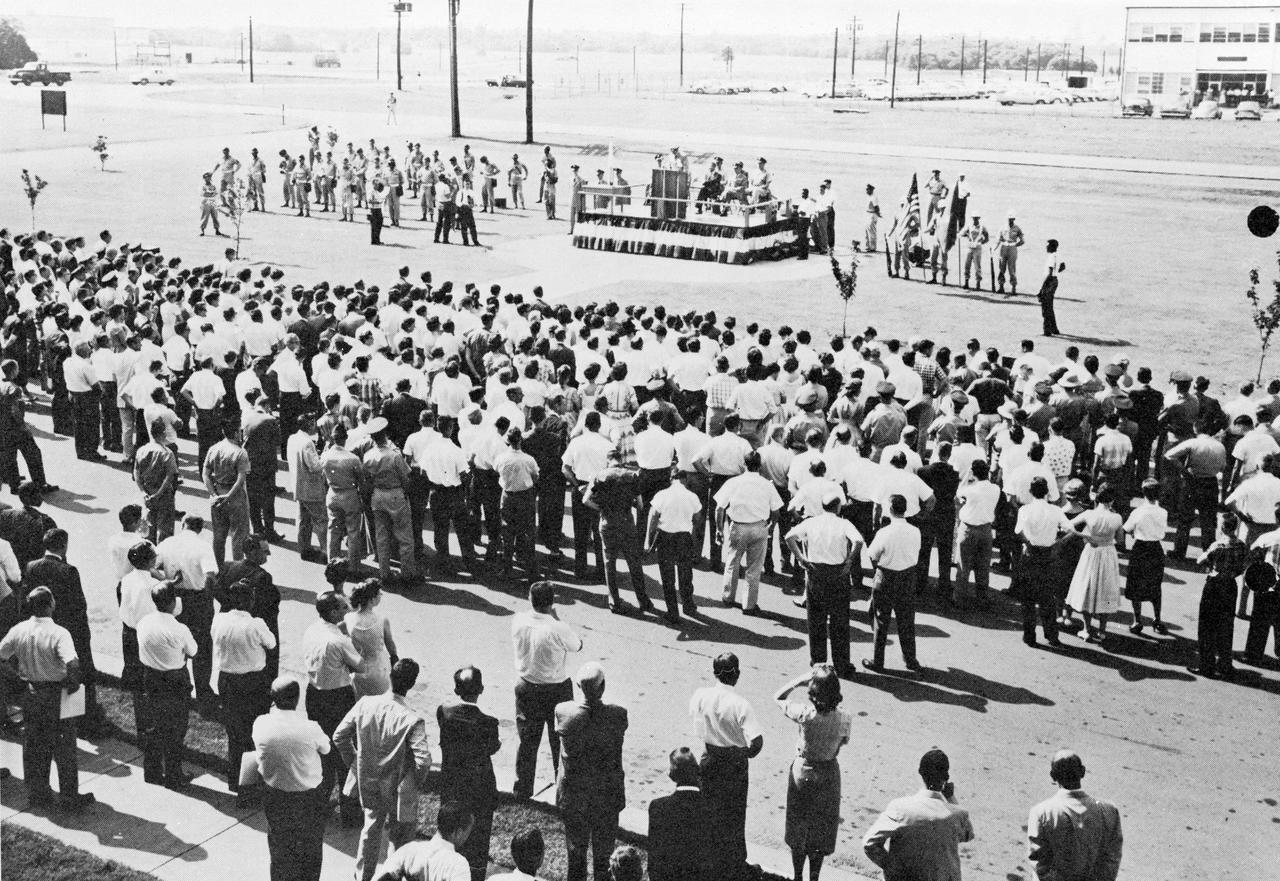
Dr. Wernher von Braun and Maj. Gen. August Schomburg officiate the official transfer of the Army Ballistic Missile Agency (ABMA) to the NASA George C. Marshall Space Flight Center (MSFC) on July 1, 1960. The Official transfer ceremony took place in the front of the ABMA-MSFC joint headquarters, building 4488, Redstone Arsenal, Alabama.
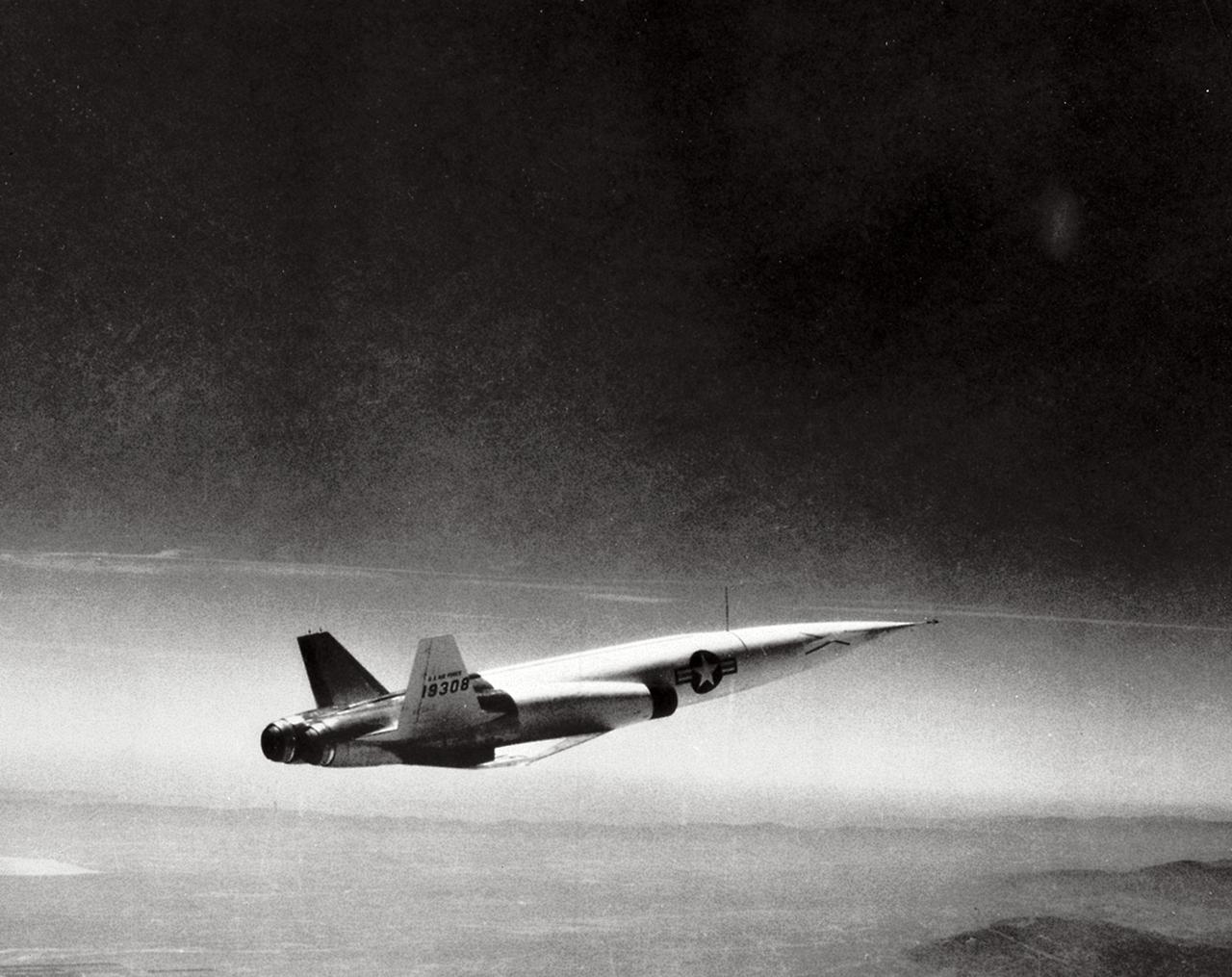
Navaho in flight, 1957. Navaho is a surface-to-surface missile developed by North American Aviation under the U.S. Air Force Navaho Program. The Navaho engine was an improvement of the V-2 engine. Though program began in March 1946 and was cancelled in July 1957, the research to develop the Navaho engine contributed to the development of the Redstone, Jupiter, Thor, and ATLAS engines.
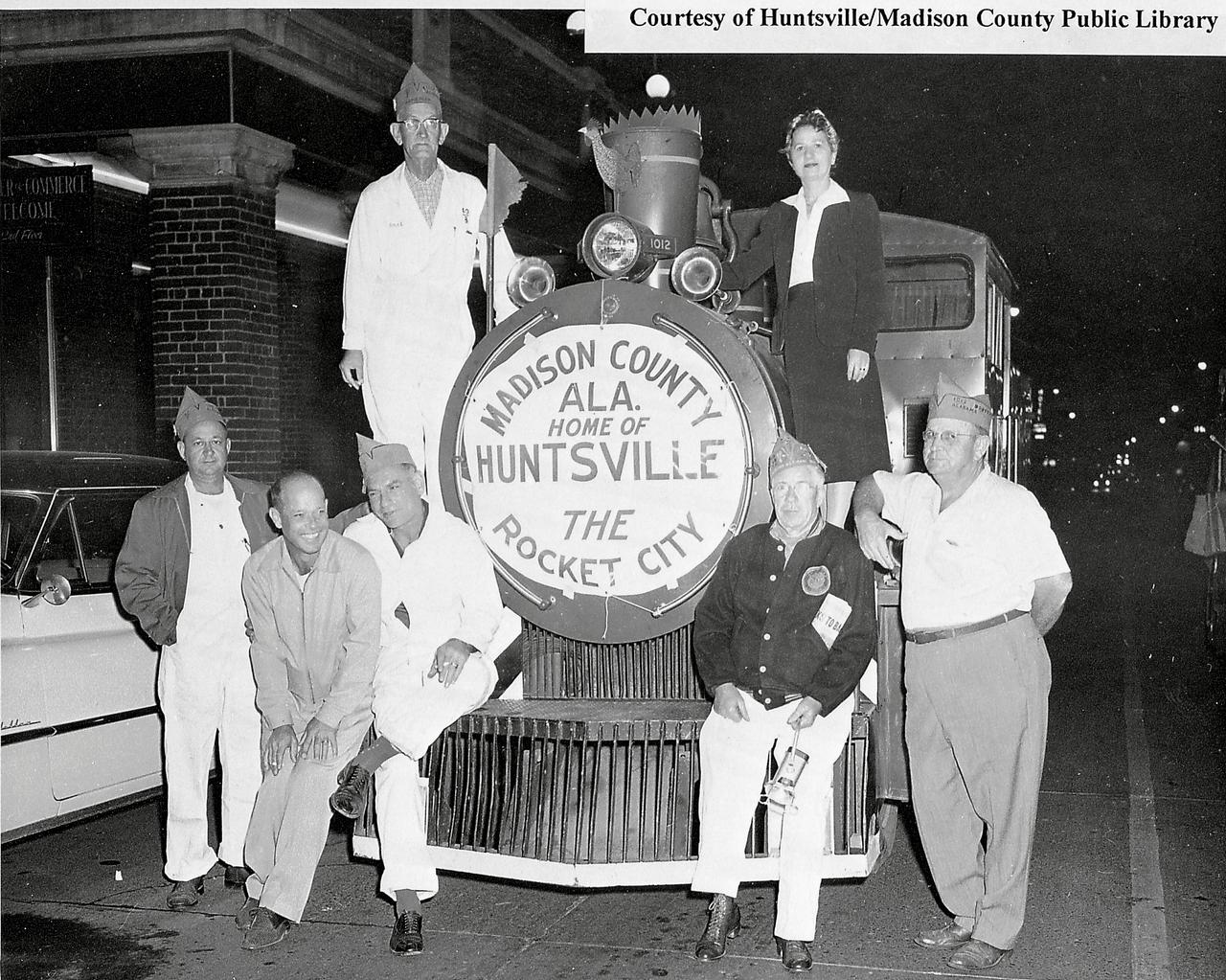
As the nations missile and rocket program began to expand in the 50's, Huntsville, Alabama was the home to Redstone Arsenal and the famous team of rocket experts led by Dr. Wernher Von Braun. Soon Huntsville was called the "Rocket City" as depicted in this photo believed to have been taken in the 1950's in Huntsville, Alabama. (Courtesy of Huntsville/Madison County Public Library)
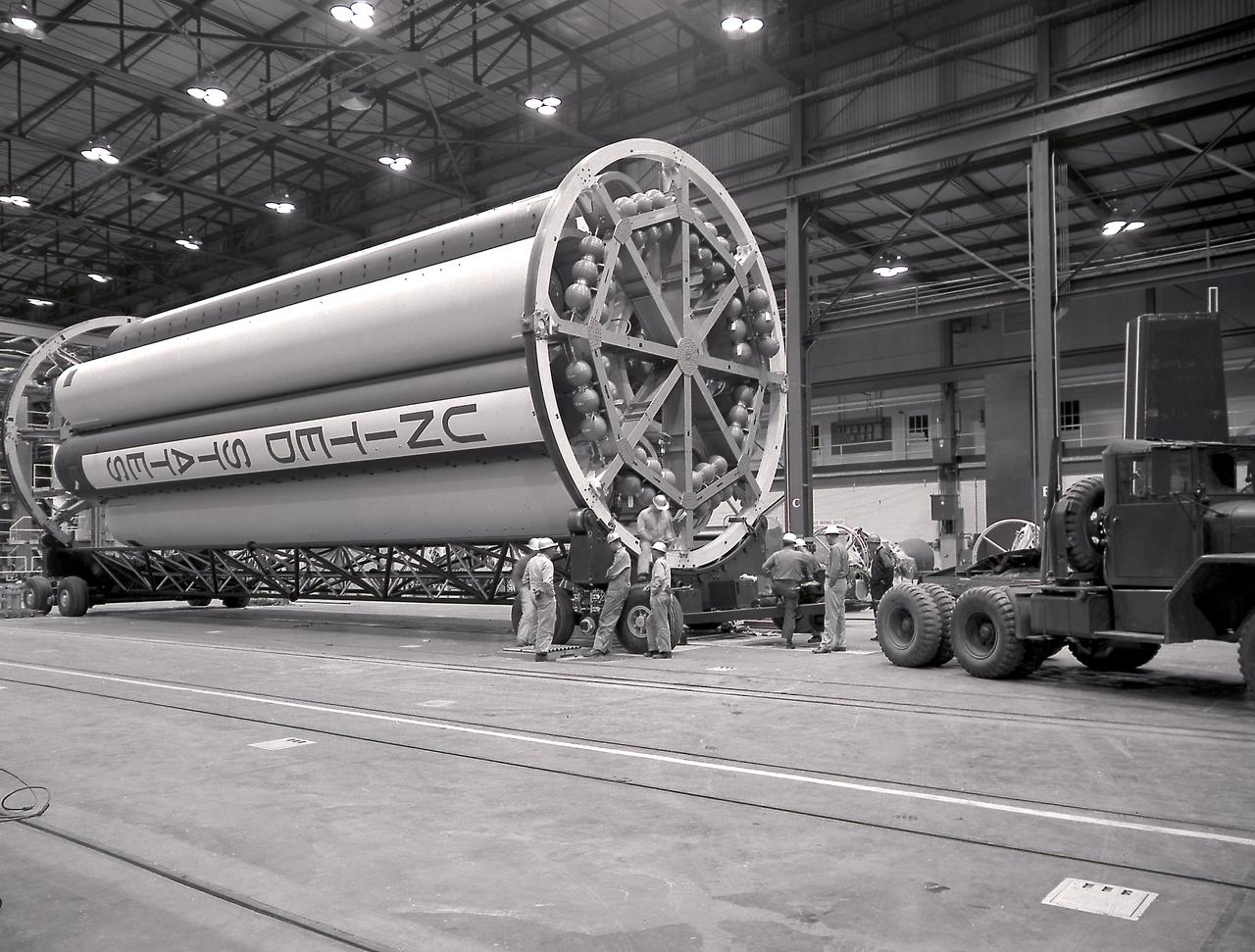
The Saturn Project was approved on January 18, 1960 as a program of the highest national priority. The formal test program to prove out the clustered-booster concept was well underway at Redstone Arsenal. This photograph depicts a mockup of the Saturn booster (S-I stage) being placed on a transporter and later being installed in the Army Ballistic Missile Agency (ABMA) test stand, on January 19, 1960, to check mating of the booster and stand and servicing methods.
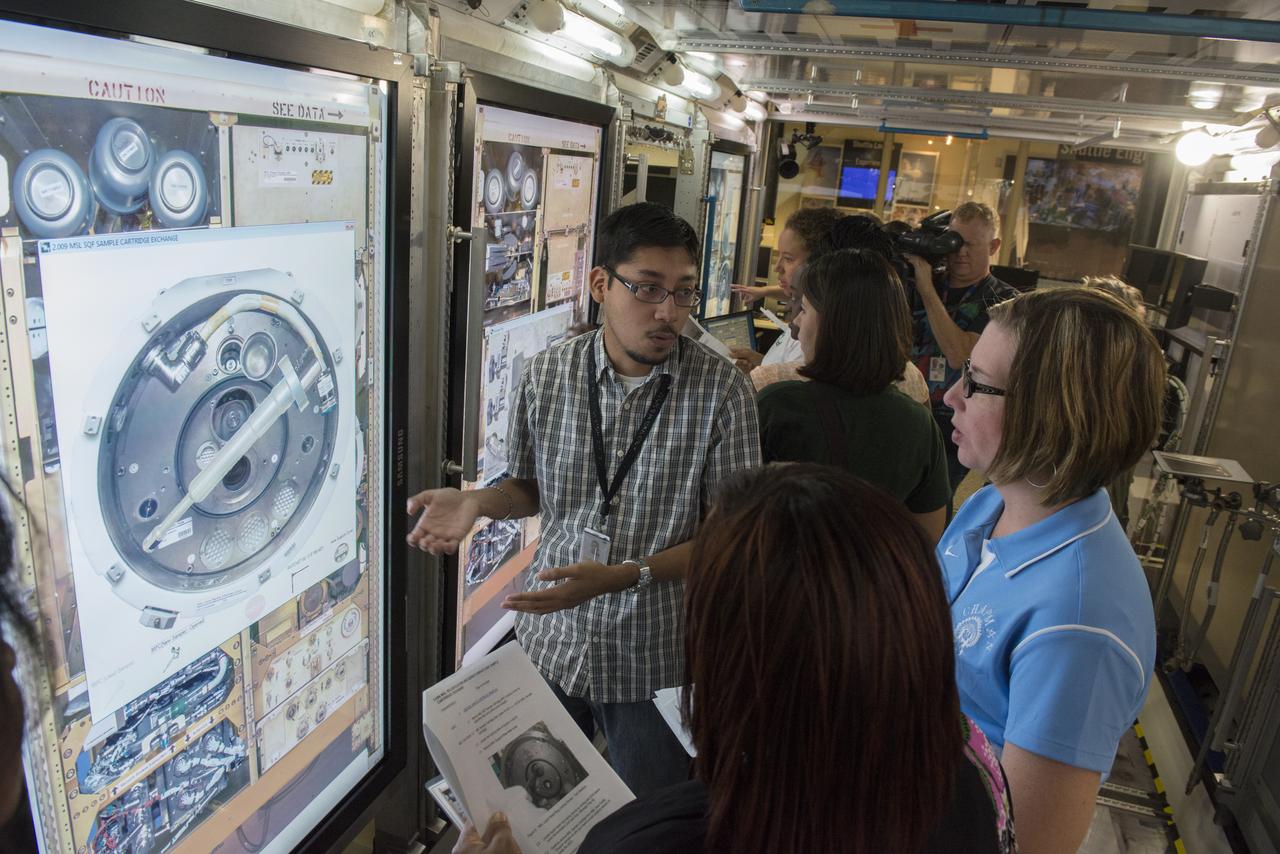
VINCENT VIDAURRI, CENTER, A TECHNICAL SPECIALIST WITH TELEDYNE BROWN ENGINEERING SUPPORTING MISSION OPERATIONS AT THE MARSHALL SPACE FLIGHT CENTER, PROVIDES DETAILS ABOUT A MOCK-UP OF THE INTERNATIONAL SPACE STATION SCIENCE LAB TO A GROUP OF AREA TEACHERS AS PART OF "BACK-2-SCHOOL DAY." TEAM REDSTONE -- WHICH INCLUDES THE MARSHALL SPACE FLIGHT CENTER AND U.S. ARMY ORGANIZATIONS ON REDSTONE ARSENAL -- INVITED 50 TEACHERS TO TOUR REDSTONE ARSENAL AUG. 15, GIVING THEM AN OPPORTUNITY TO LEARN OF AND SEE RESOURCES AVAILABLE TO THEM AND THEIR STUDENTS. THE TOUR FOCUSED ON SITES AVAILABLE FOR FIELD TRIPS FOR STUDENTS STUDYING MATH, SCIENCE, TECHNOLOGY AND ENGINEERING. STOPS INCLUDED MARSHALL'S PAYLOAD OPERATIONS INTEGRATION CENTER AND THE HIGH SCHOOLS UNITED WITH NASA TO CREATE HARDWARE LAB, OR HUNCH, BOTH LOCATED IN BUILDING 4663. THE PROGRAM GIVES HIGH SCHOOL STUDENTS THE CHANCE TO WORK WITH NASA ENGINEERS TO DESIGN AND BUILD HARDWARE FOR USE ON THE INTERNATIONAL SPACE STATION. THE TEACHERS ALSO VISITED THE ARMY AVIATION & MISSILE RESEARCH DEVELOPMENT & ENGINEERING CENTER AND THE REDSTONE TEST CENTER

Launch of Jupiter-C/Explorer 1 at Cape Canaveral, Florida on January 31, 1958. After the Russian Sputnik 1 was launched in October 1957, the launching of an American satellite assumed much greater importance. After the Vanguard rocket exploded on the pad in December 1957, the ability to orbit a satellite became a matter of national prestige. On January 31, 1958, slightly more than four weeks after the launch of Sputnik.The ABMA (Army Ballistic Missile Agency) in Redstone Arsenal, Huntsville, Alabama, in cooperation with the Jet Propulsion Laboratory, launched a Jupiter from Cape Canaveral, Florida. The rocket consisted of a modified version of the Redstone rocket's first stage and two upper stages of clustered Baby Sergeant rockets developed by the Jet Propulsion Laboratory and later designated as Juno boosters for space launches
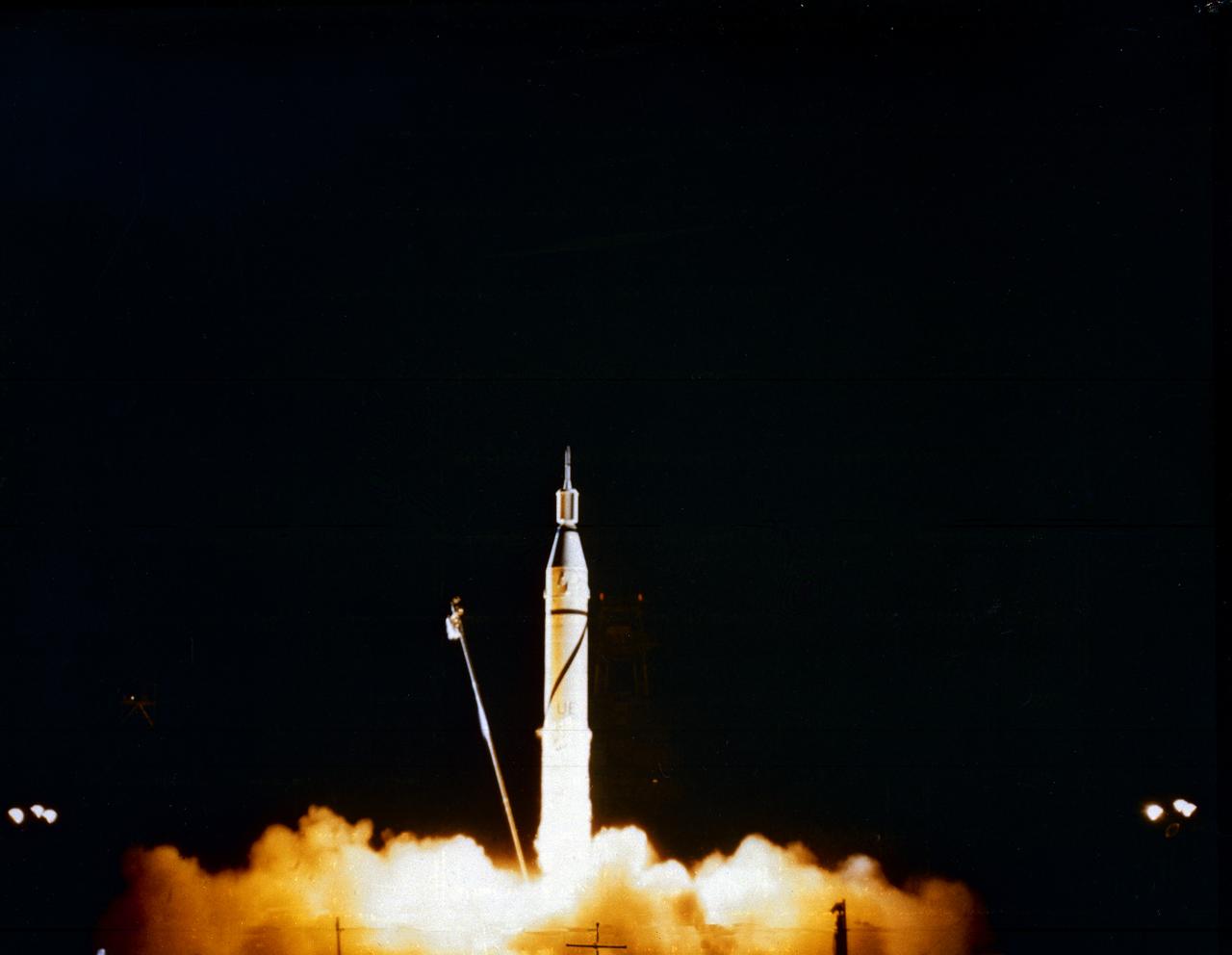
Launch of Jupiter-C/Explorer 1 at Cape Canaveral, Florida on January 31, 1958. After the Russian Sputnik 1 was launched in October 1957, the launching of an American satellite assumed much greater importance. After the Vanguard rocket exploded on the pad in December 1957, the ability to orbit a satellite became a matter of national prestige. On January 31, 1958, slightly more than four weeks after the launch of Sputnik.The ABMA (Army Ballistic Missile Agency) in Redstone Arsenal, Huntsville, Alabama, in cooperation with the Jet Propulsion Laboratory, launched a Jupiter from Cape Canaveral, Florida. The rocket consisted of a modified version of the Redstone rocket's first stage and two upper stages of clustered Baby Sergeant rockets developed by the Jet Propulsion Laboratory and later designated as Juno boosters for space launches
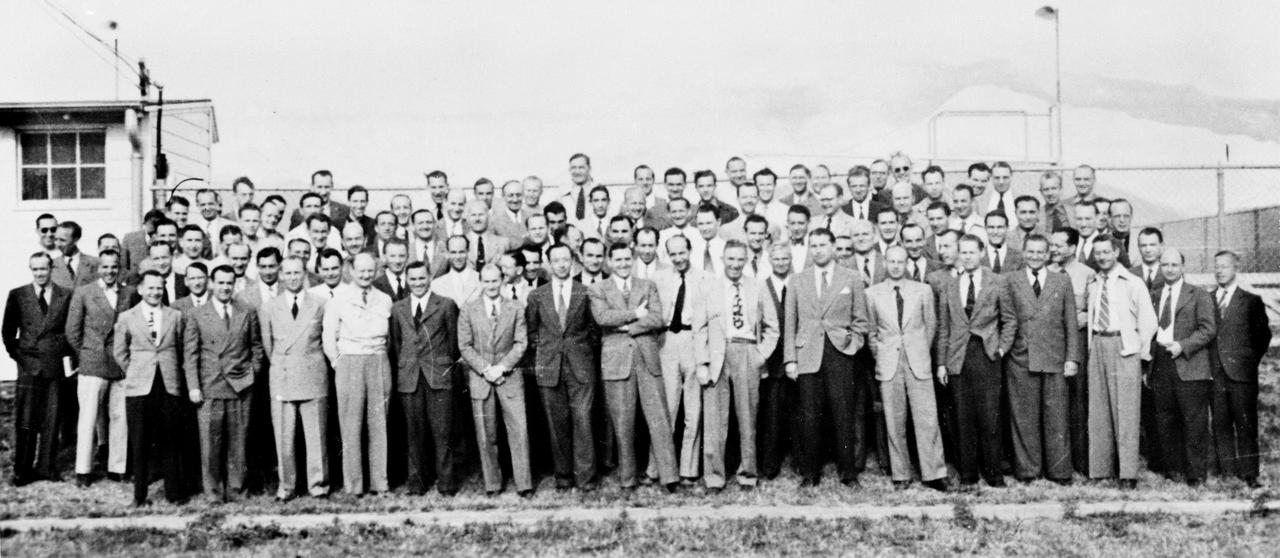
The German Rocket Team, also known as the Von Braun Rocket Team, poses for a group photograph at Fort Bliss, Texas. After World War II ended in 1945, Dr. Wernher von Braun led some 120 of his Peenemuende Colleagues, who developed the V-2 rocket for the German military during the War, to the United Sttes under a contract to the U.S. Army Corps as part of Operation Paperclip. During the following five years the team worked on high altitude firings of the captured V-2 rockets at the White Sands Missile Range in New Mexico, and a guided missile development unit at Fort Bliss, Texas. In April 1950, the group was transferred to the Army Ballistic Missile Agency (ABMA) at Redstone Arsenal in Huntsville, Alabama, and continued to work on the development of the guided missiles for the U.S. Army until transferring to a newly established field center of the National Aeronautic and Space Administration (NASA), George C. Marshall Space Flight Center (MSFC).
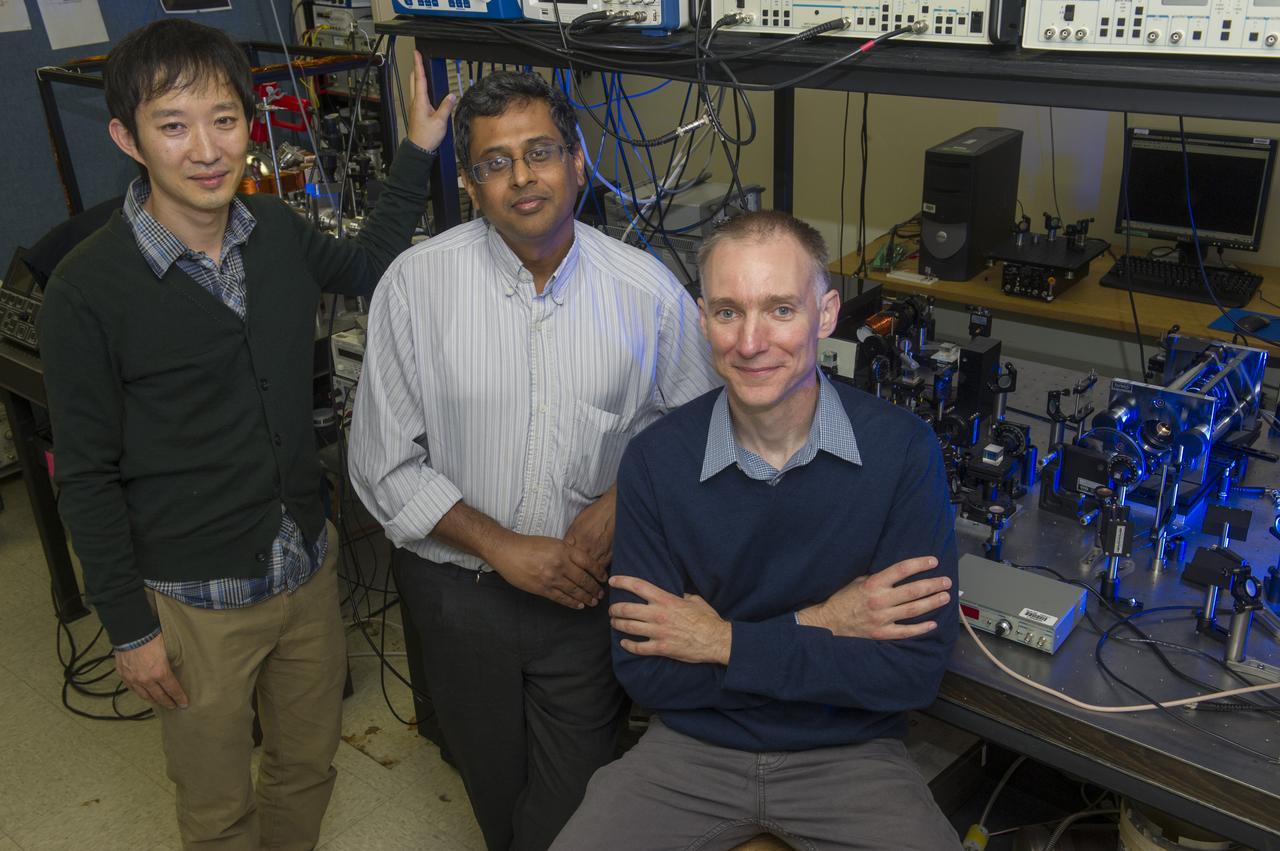
FROM RIGHT, MARSHALL RESEARCHER DR. DAVID SMITH, U.S. ARMY RESEARCHER KRISHNA MYNENI AND ARMY CONTRACTOR HONGROK CHANG HAVE BEGUN A THREE-YEAR NASA PROJECT TO DEVELOP INNOVATIVE NEW GYROSCOPES THAT COULD DRAMATICALLY IMPROVE IN-FLIGHT NAVIGATION CAPABILITIES FOR SPACE VEHICLES, MILITARY AIR AND SEA ASSETS AND COMMERCIAL VEHICLES. THE “FAST LIGHT OPTICAL GYROSCOPES FOR PRECISE INERTIAL NAVIGATION” PROJECT INCLUDES RESEARCHERS AT NASA’S MARSHALL SPACE FLIGHT CENTER IN HUNTSVILLE, ALA.; THE U.S. ARMY AVIATION AND MISSILE RESEARCH, DEVELOPMENT AND ENGINEERING CENTER (AMRDEC) AT REDSTONE ARSENAL IN HUNTSVILLE; AND NORTHWESTERN UNIVERSITY IN EVANSTON, ILL.
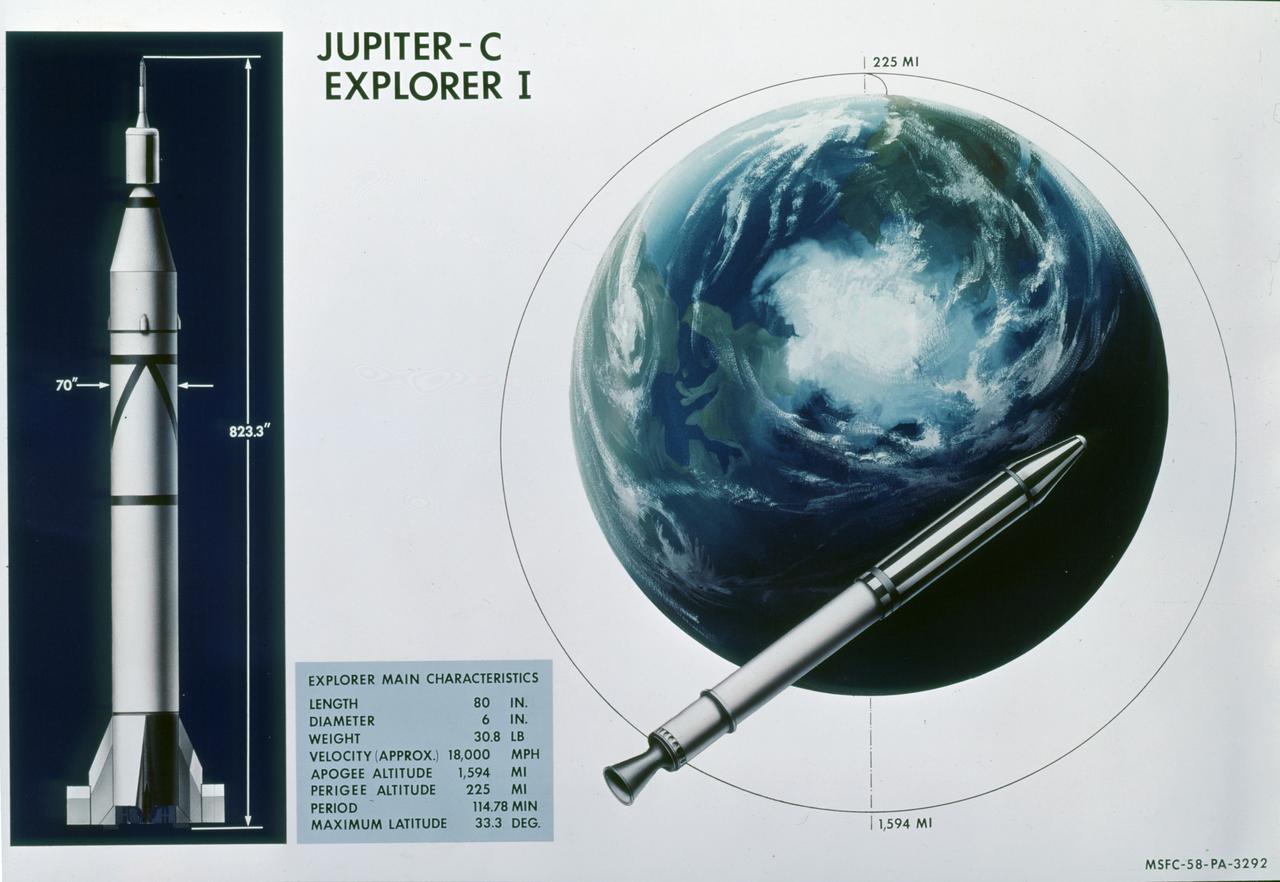
This illustration shows the main characteristics of the Jupiter C launch vehicle and its payload, the Explorer I satellite. The Jupiter C, America's first successful space vehicle, launched the free world's first scientific satellite, Explorer 1, on January 31, 1958. The four-stage Jupiter C measured almost 69 feet in length. The first stage was a modified liquid fueled Redstone missile. This main stage was about 57 feet in length and 70 inches in diameter. Fifteen scaled down SERGENT solid propellant motors were used in the upper stages. A "tub" configuration mounted on top of the modified Redstone held the second and third stages. The second stage consisted of 11 rockets placed in a ring formation within the tub. Inserted into the ring of second stage rockets was a cluster of 3 rockets making up the third stage. A fourth stage single rocket and the satellite were mounted atop the third stage. This "tub", all upper stages, and the satellite were set spirning prior to launching. The complete upper assembly measured 12.5 feet in length. The Explorer I carried the radiation detection experiment designed by Dr. James Van Allen and discovered the Van Allen Radiation Belt.
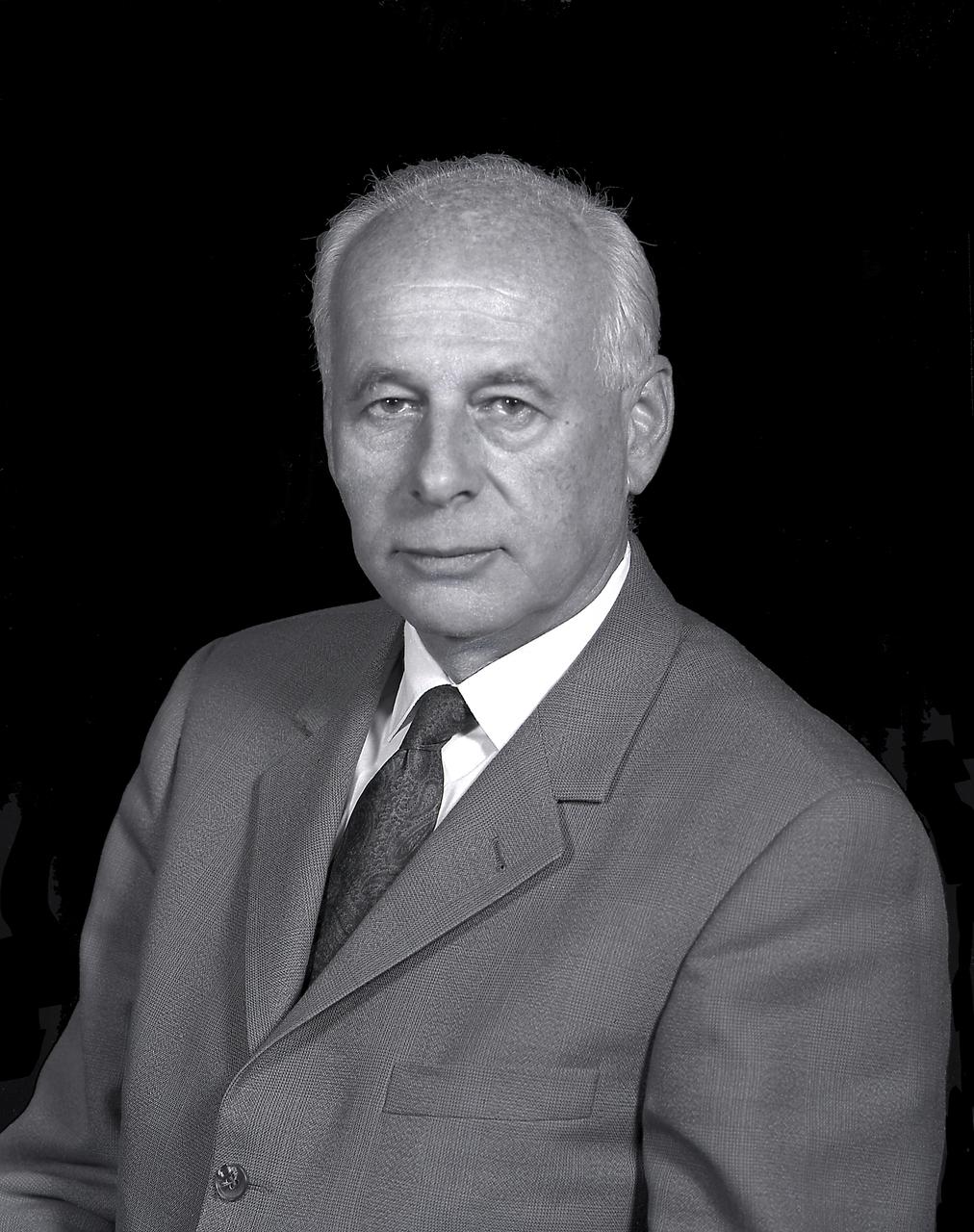
Dr. Eberhard Rees served as director of the Marshall Space Flight Center from March 1, 1970 until January 19, 1973 when he retired from NASA. Prior to his appointment as Director, Rees served as the Center's deputy director under Dr. Wernher von Braun, 1960-1970. Rees came to the United States as part of the Dr. Wernher von Braun's German Rocket team following World War II. He transferred to Huntsville, Alabama from Fort Bliss, Texas in 1950 to work for the Army's rocket program at Redstone Arsenal. From 1956 to 1960 he served as deputy director of development operations at the Army Ballistic Missile Agency under von Braun. In 1960 Rees was transferred to NASA's Marshall Center.
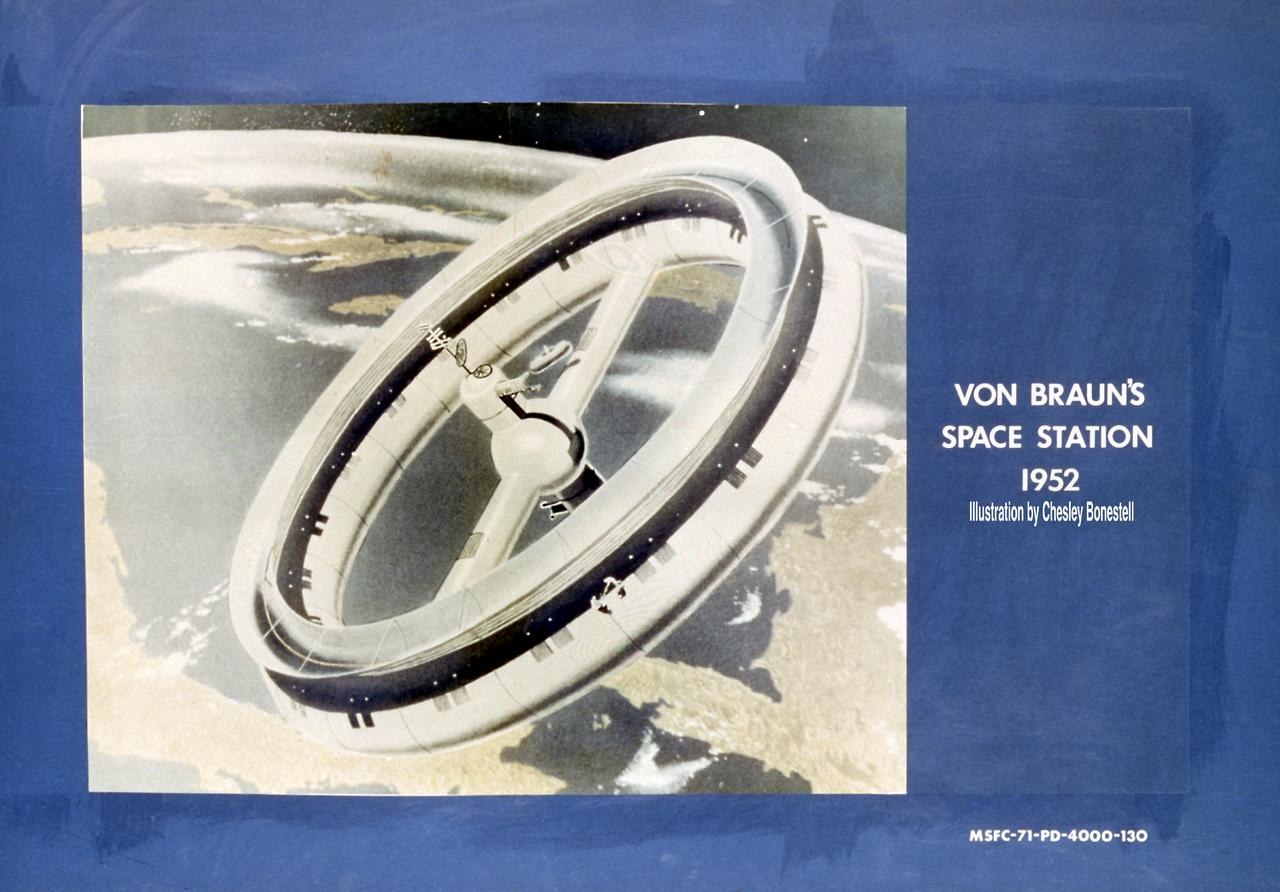
This is a von Braun 1952 space station concept. In a 1952 series of articles written in Collier's, Dr. Wernher von Braun, then Technical Director of the Army Ordnance Guided Missiles Development Group at Redstone Arsenal, wrote of a large wheel-like space station in a 1,075-mile orbit. This station, made of flexible nylon, would be carried into space by a fully reusable three-stage launch vehicle. Once in space, the station's collapsible nylon body would be inflated much like an automobile tire. The 250-foot-wide wheel would rotate to provide artificial gravity, an important consideration at the time because little was known about the effects of prolonged zero-gravity on humans. Von Braun's wheel was slated for a number of important missions: a way station for space exploration, a meteorological observatory and a navigation aid. This concept was illustrated by artist Chesley Bonestell.
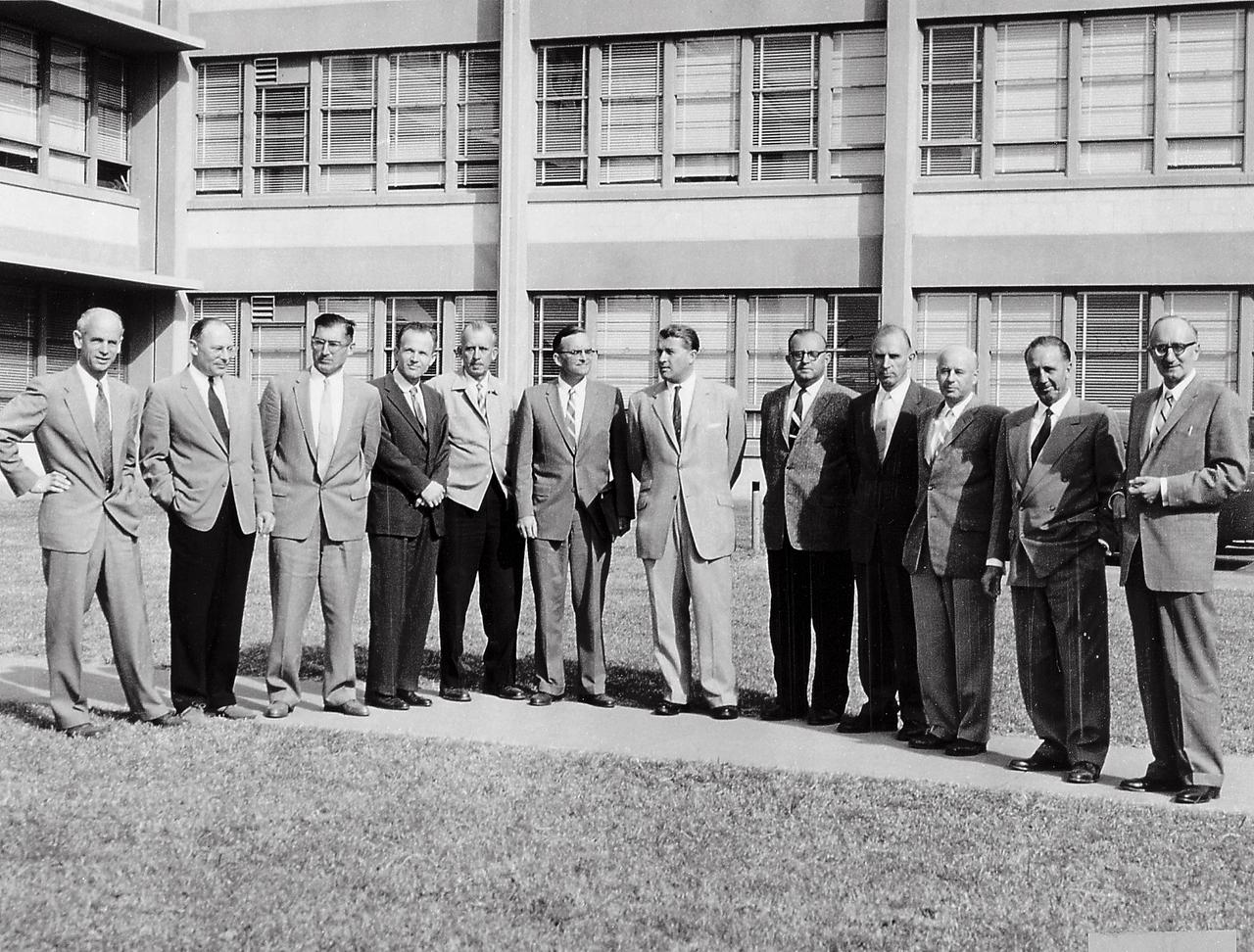
Twelve scientific specialists of the Peenemuende team at the front of Building 4488, Redstone Arsenal, Huntsville, Alabama. They led the Army's space efforts at ABMA before transfer of the team to National Aeronautic and Space Administration (NASA), George C. Marshall Space Flight Center (MSFC). (Left to right) Dr. Ernst Stuhlinger, Director, Research Projects Office; Dr. Helmut Hoelzer, Director, Computation Laboratory: Karl L. Heimburg, Director, Test Laboratory; Dr. Ernst Geissler, Director, Aeroballistics Laboratory; Erich W. Neubert, Director, Systems Analysis Reliability Laboratory; Dr. Walter Haeussermarn, Director, Guidance and Control Laboratory; Dr. Wernher von Braun, Director Development Operations Division; William A. Mrazek, Director, Structures and Mechanics Laboratory; Hans Hueter, Director, System Support Equipment Laboratory;Eberhard Rees, Deputy Director, Development Operations Division; Dr. Kurt Debus, Director Missile Firing Laboratory; Hans H. Maus, Director, Fabrication and Assembly Engineering Laboratory
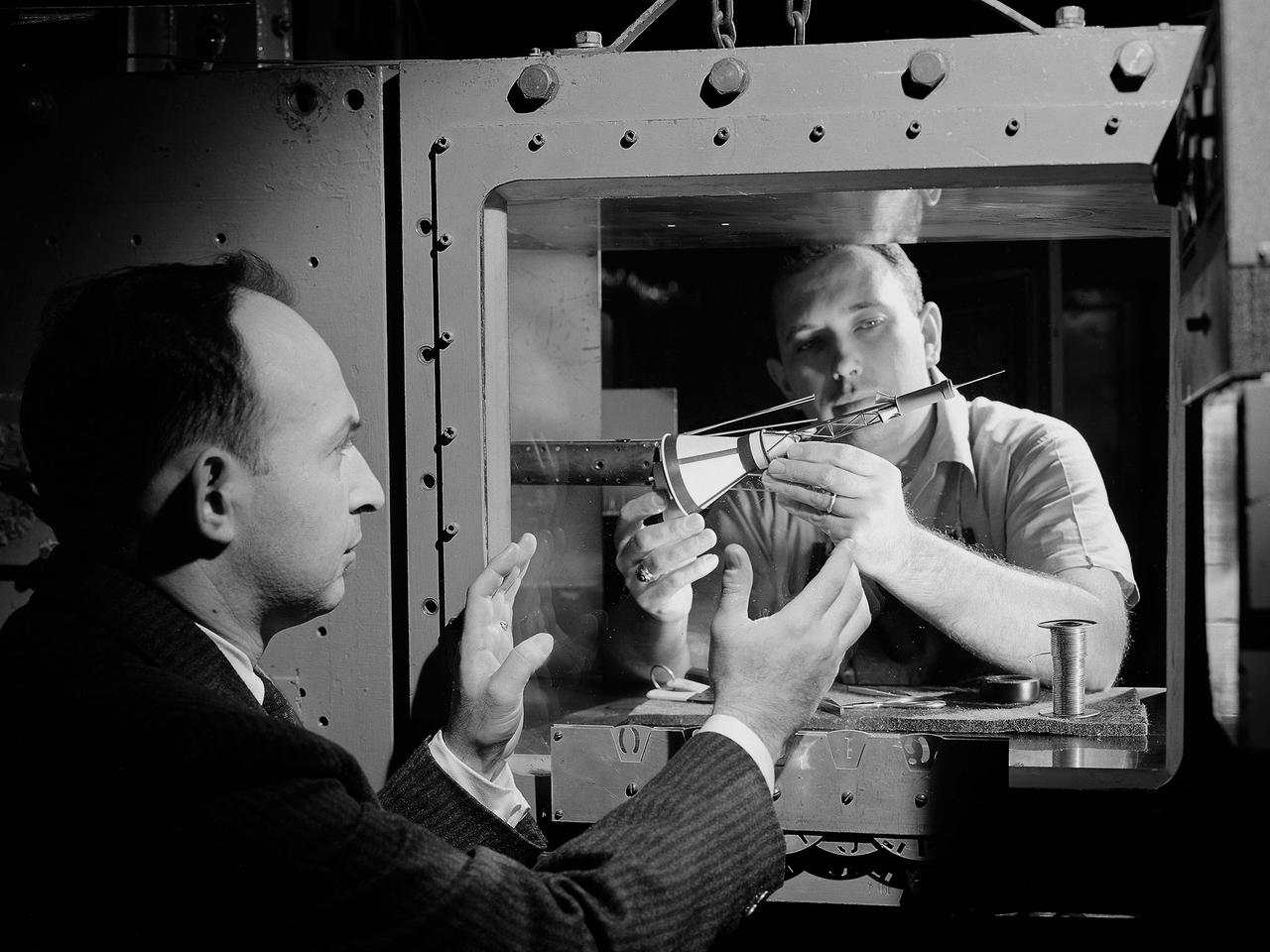
National Aeronautics and Space Administration (NASA) researchers install a small-scale model of the capsule for Project Mercury in the 1- by 1-Foot Supersonic Wind Tunnel at the Lewis Research Center. NASA Lewis conducted a variety of tests for Project Mercury, including retrorocket calibration, escape tower engine performance, and separation of the capsule from simulated Atlas and Redstone boosters. The test of this capsule and escape tower model in the 1- by 1-foot tunnel were run in January and February 1960. The 1-by 1-Foot Supersonic Wind Tunnel had a 15-inch long test section, seen here, that was one foot wide and one foot high. The sides were made of glass to allow cameras to capture the supersonic air flow over the models. The tunnel could generate air flows from Mach 1.3 to 3.0. At the time, it was one of nine small supersonic wind tunnels at Lewis. These tunnels used the exhauster and compressor equipment of the larger facilities. The 1- by 1 tunnel, which began operating in the early 1950s, was built inside a test cell in the expansive Engine Research Building. During the 1950s the 1- by 1 was used to study a variety of inlets, nozzles, and cones for missiles and scramjets. The Mercury capsule tests were among the last at the facility for many years. The tunnel was mothballed in 1960. The 1- by 1 was briefly restored in 1972, then brought back online for good in 1979. The facility has maintained a brisk operating schedule ever since.