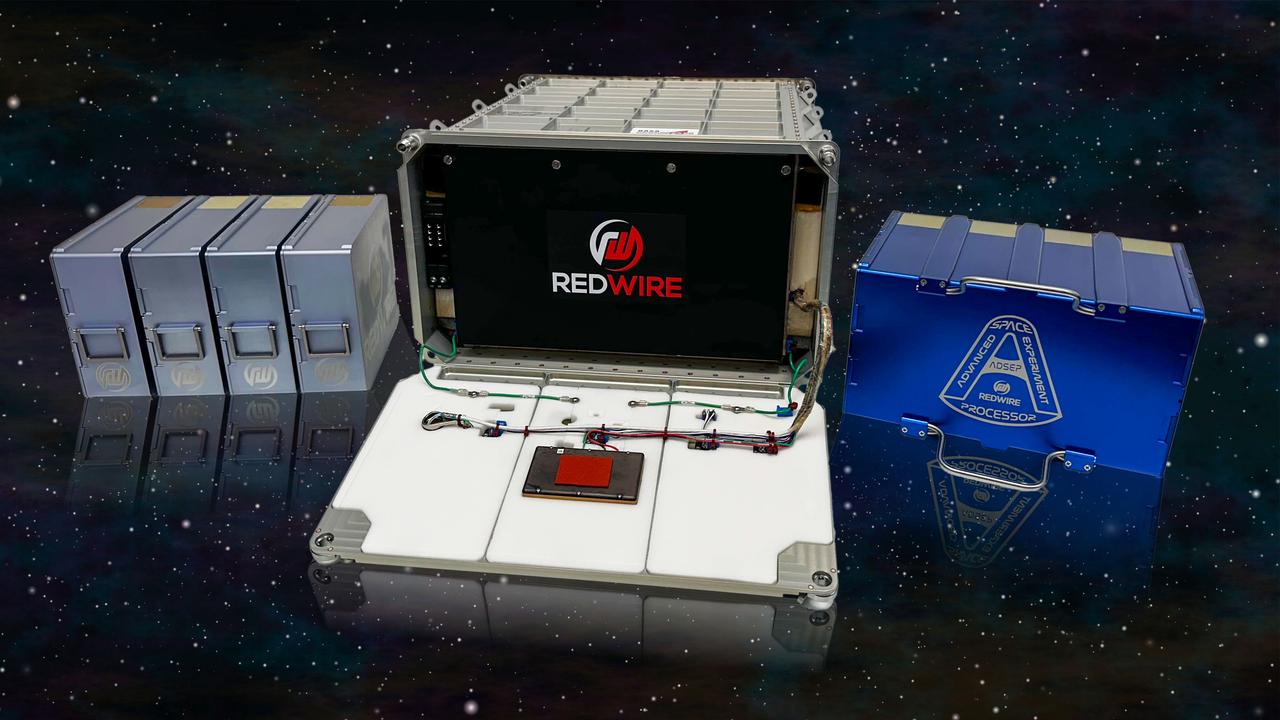
jsc2025e036384 (4/4/2025) --- A lineup of Redwire hardware. Left: Redwire’s in-space pharmaceutical manufacturing system (PIL-BOX) system are chambers that allow crystal growth in small batches. Middle: The Redwire Advanced Space Experiment Processor (ADSEP) in a close configuration onto which either the PIL-BOX or ICC can be installed. Right: The Redwire Industrial Crystallization Cassette (ICC), a facility capable of larger quantities of crystal growth than the PIL-BOX. The ADSEP Industrial Crystallization Cassette Technology Demonstration (ADSEP-ICC) investigation validates the ICC’s capability to grow large quantities of crystals in its high-volume crystal growth chambers aboard the International Space Station. Image courtesy of Redwire.
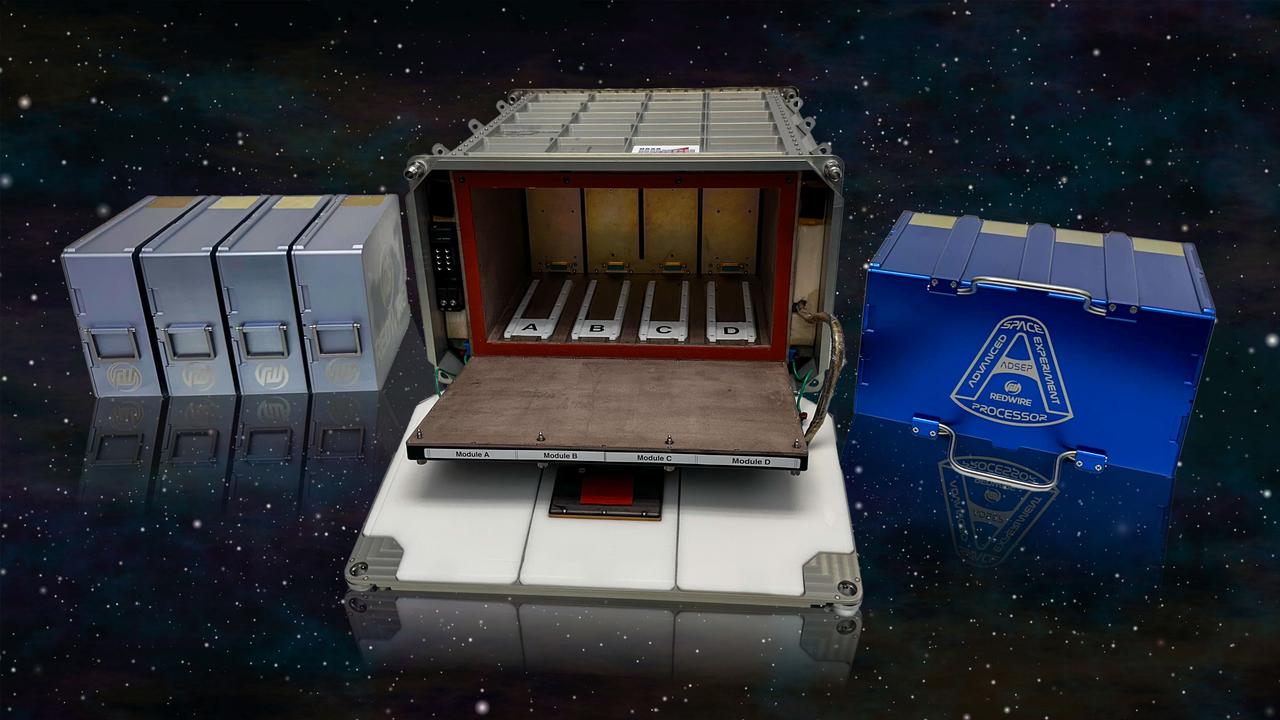
jsc2025e036385 (4/4/2025) --- A lineup of Redwire hardware. Left: Redwire’s in-space pharmaceutical manufacturing system (PIL-BOX) system are chambers that allow crystal growth in small batches. Middle: The Redwire Advanced Space Experiment Processor (ADSEP) in an open configuration onto which either the PIL-BOX or ICC can be installed. Right: The Redwire Industrial Crystallization Cassette (ICC), a facility capable of larger quantities of crystal growth than the PIL-BOX. The ADSEP Industrial Crystallization Cassette Technology Demonstration (ADSEP-ICC) investigation validates the ICC’s capability to grow large quantities of crystals in its high-volume crystal growth chambers aboard the International Space Station. Image courtesy of Redwire.
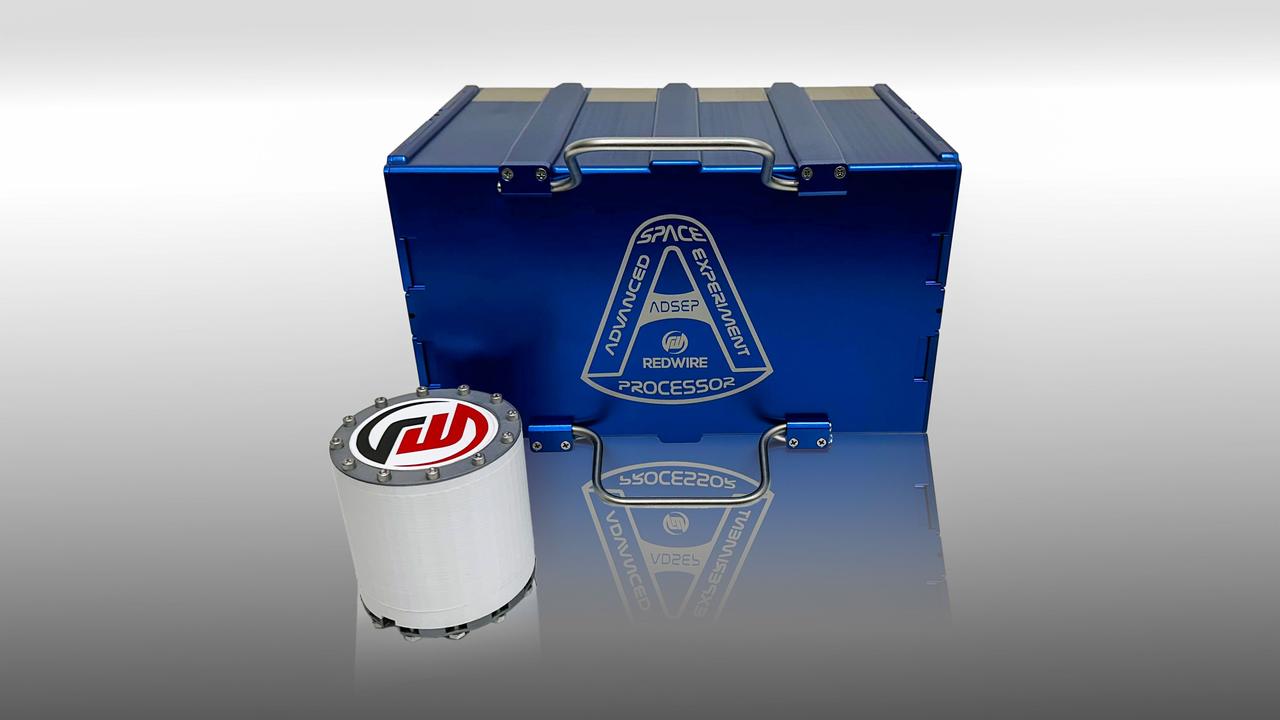
jsc2025e036383 (4/4/2025) --- The blue box is The Redwire Industrial Crystallization Cassette (ICC), a facility capable of large quantities of crystal growth. The white cylindrical growth chamber below the ICC is capable of holding 200mL in volume, compared to <1mL held by the PIL-BOX cassettes. The ADSEP Industrial Crystallization Cassette Technology Demonstration (ADSEP-ICC) investigation validates the ICC’s capability to grow large quantities of crystals in its high-volume crystal growth chambers aboard the International Space Station. Image courtesy of Redwire.
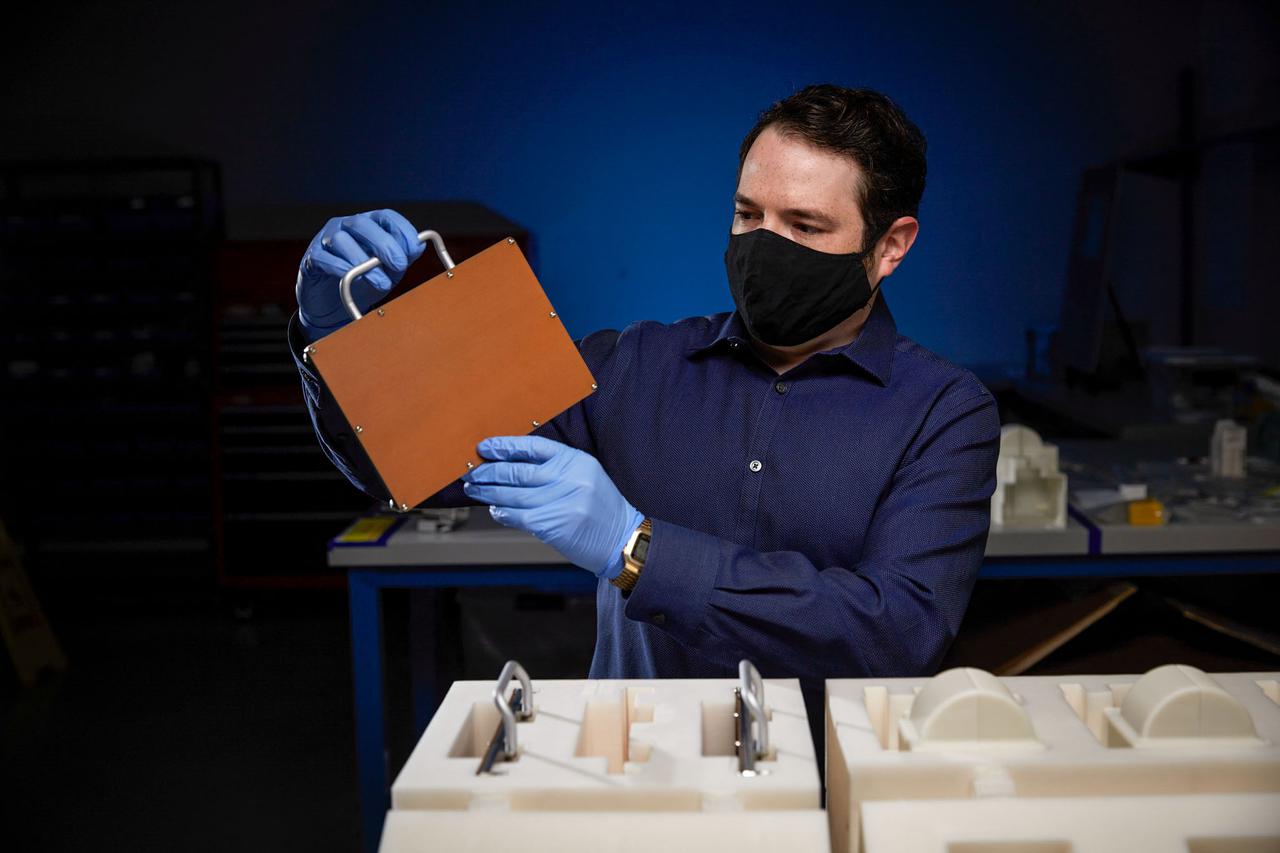
jsc2021e031162 (7/22/2021) --- Redwire’s Howie Schulman, project lead, packs the Redwire Regolith Print printing plate ahead of delivery to NASA for launch. Photo courtesy of Redwire Space.
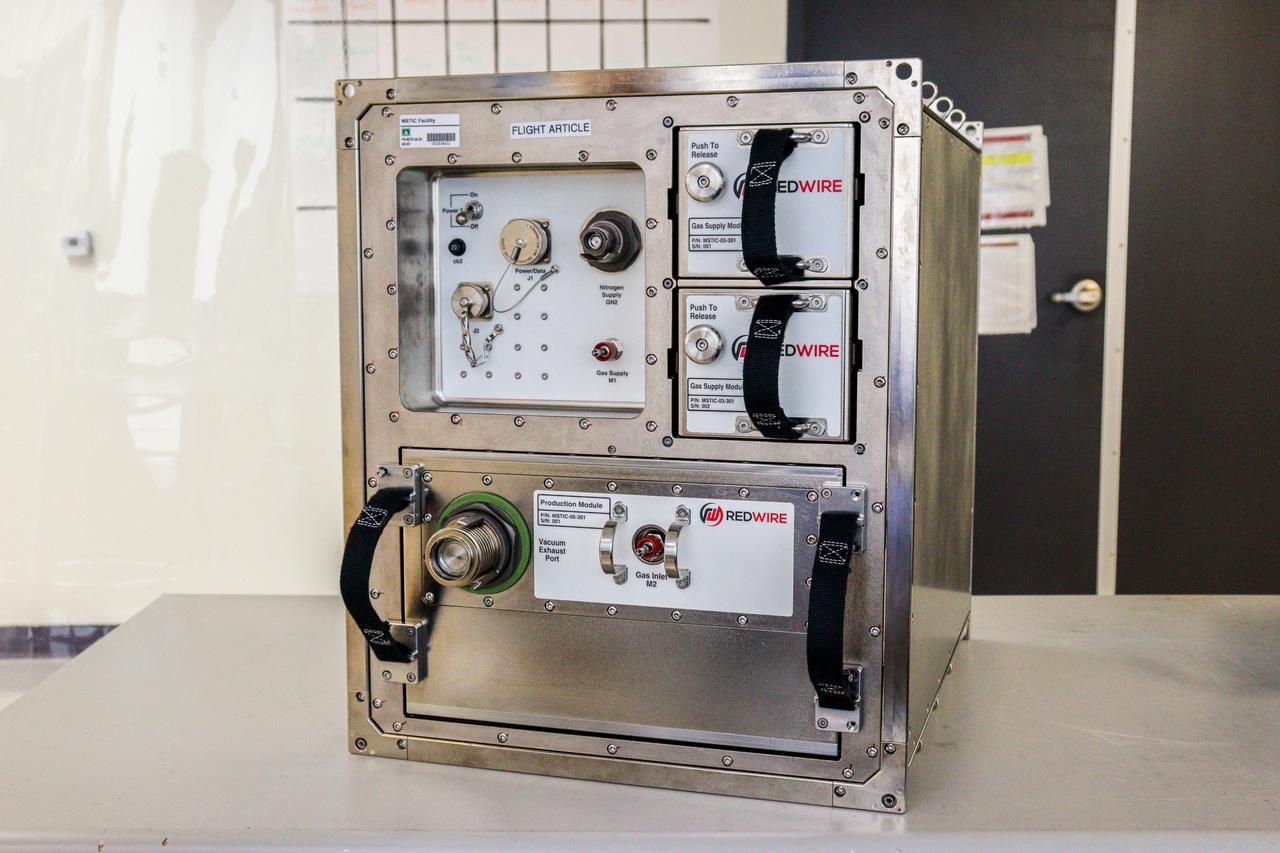
jsc2024e005973 (10/3/2023) --- The gas supply modules and production module for Redwire's Manufacturing of Semiconductors and Thin-film Integrated Coating (MSTIC) facility are pictured on the ground. Redwire's MSTIC facility is an innovative pilot program aimed at advancing the production of semiconductors, metallic films, and crystals aboard the International Space Station. Image courtesy of Redwire.
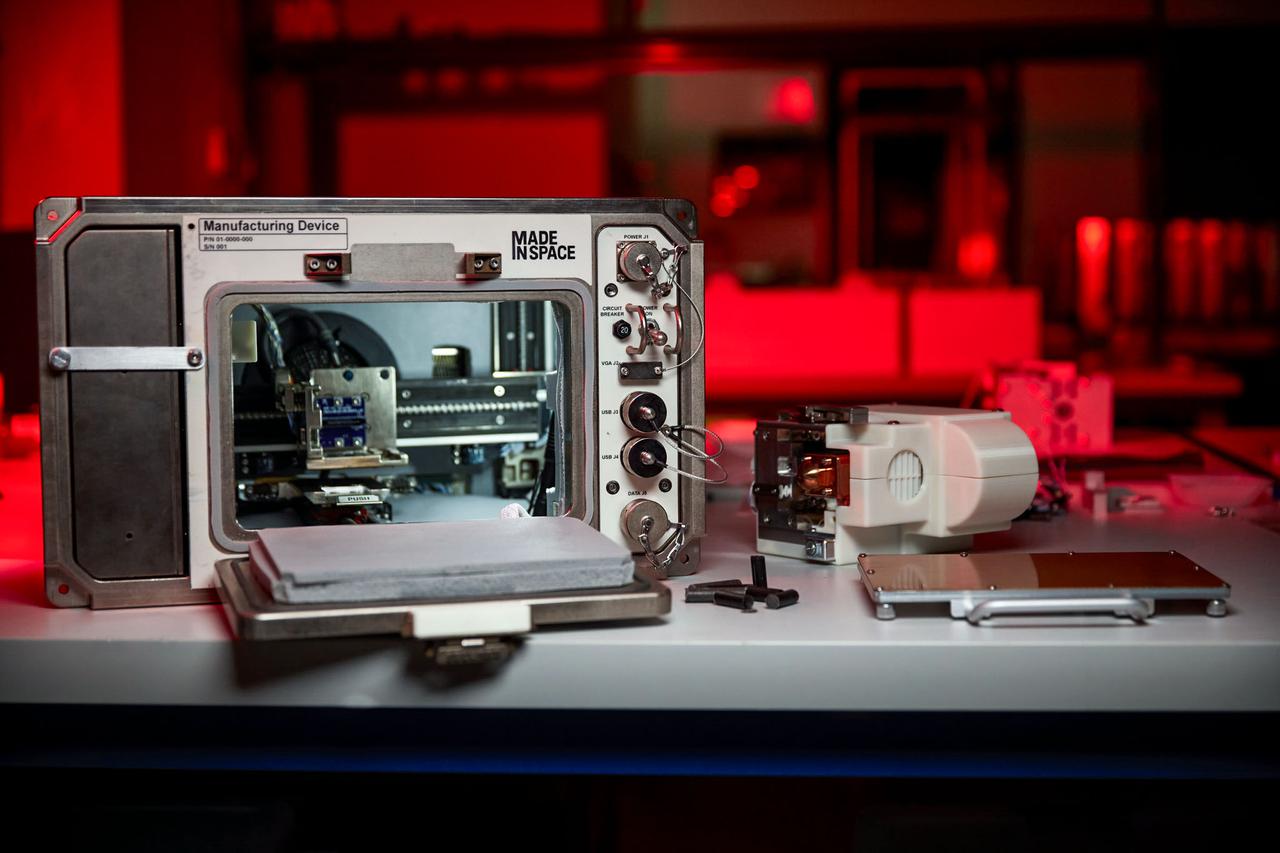
jsc2021e031160 (7/22/2021) --- The Redwire Regolith Print facility suite, consisting of Redwire's Additive Manufacturing Facility, and the print heads, plates and lunar regolith simulant feedstock that will be launching to the International Space Station. Photo courtesy of Redwire Space.

jsc2024e005974 (10/3/2023) --- The production module for Redwire's Manufacturing of Semiconductors and Thin-film Integrated Coating (MSTIC) facility is pictured on the ground. MSTIC produces semiconductors, metallic films, and crystals using advanced techniques in 3D printing. Image courtesy of Redwire.
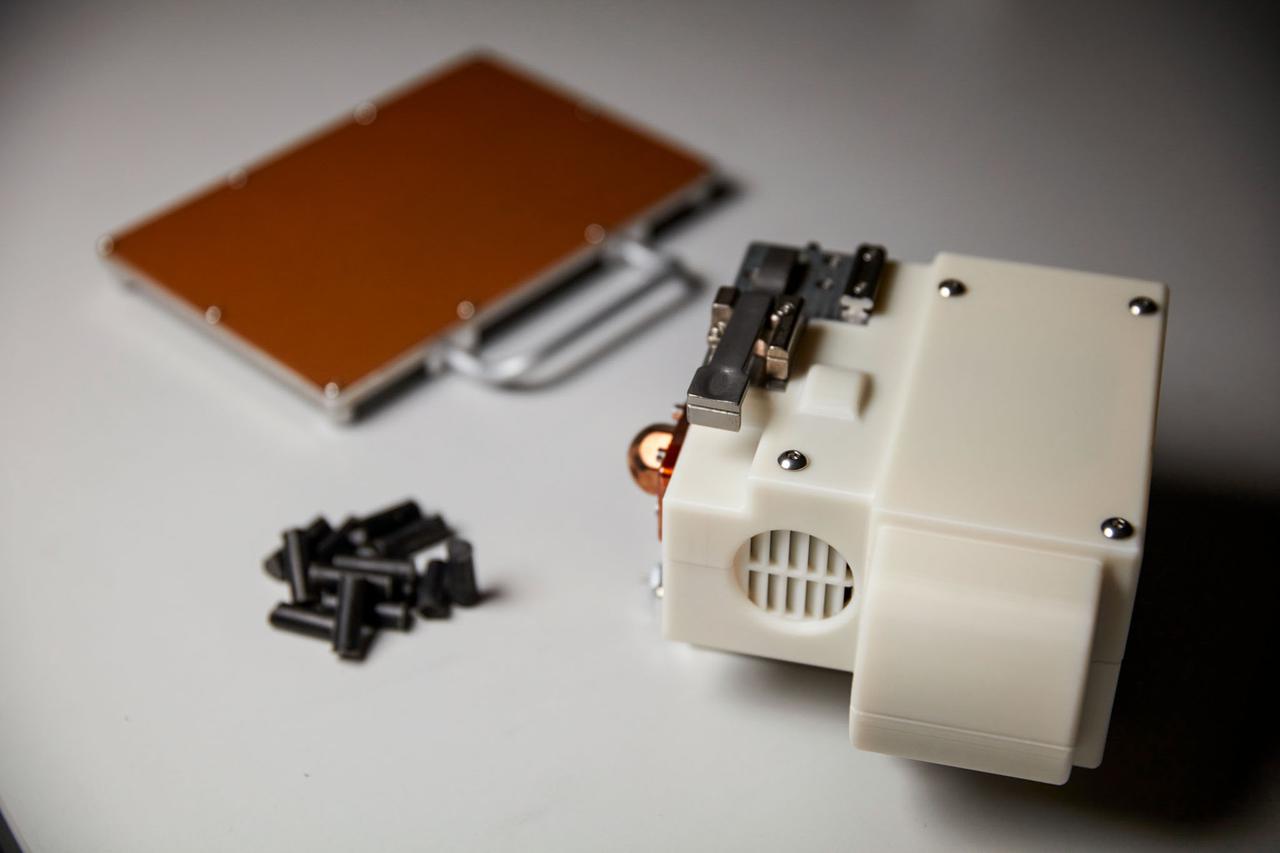
jsc2021e031161 (7/22/2021) --- A preflight view of the Redwire Regolith Print (RRP) facility suite launching aboard NG-16, including the RRP print heads, plates and lunar regolith simulant feedstock Photo courtesy of Redwire Space.
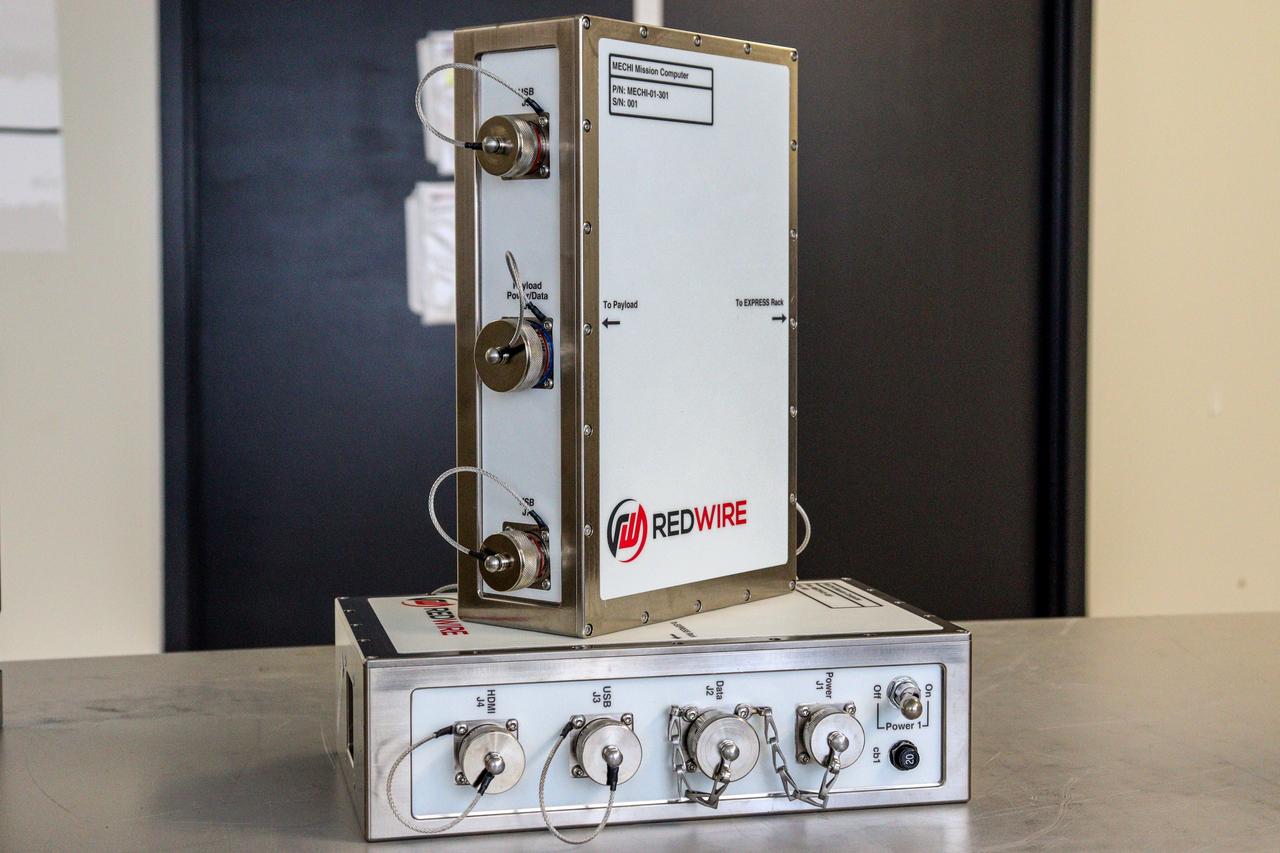
jsc2024e005975 (10/3/2023) --- Pictured is the Modular External Computer Hybrid Interface for Manufacturing of Semiconductors and Thin-film Integrated Coating (MSTIC) investigation. MSTIC is equipped with an external computer that is designed to be crew serviceable and can be used for other space station payloads. Image courtesy of Redwire.

jsc2024e005972 (10/3/2023) --- The entire Manufacturing of Semiconductors and Thin-film Integrated Coating (MSTIC) facility is pictured on the ground. This facility could enable technology that is crucial for producing electrical components and devices in space, reducing the need for resupply missions from Earth. Image courtesy of Redwire.

jsc2024e005976 (10/32023) --- Pictured is the Gas Supply Module for the Manufacturing of Semiconductors and Thin-film Integrated Coating (MSTIC) investigation. The MSTIC facility uses advanced vapor deposition systems that enable precise control over material production. This program is designed to produce samples for comparative analysis between Earth-produced and space-produced thin films. Image courtesy of Redwire.
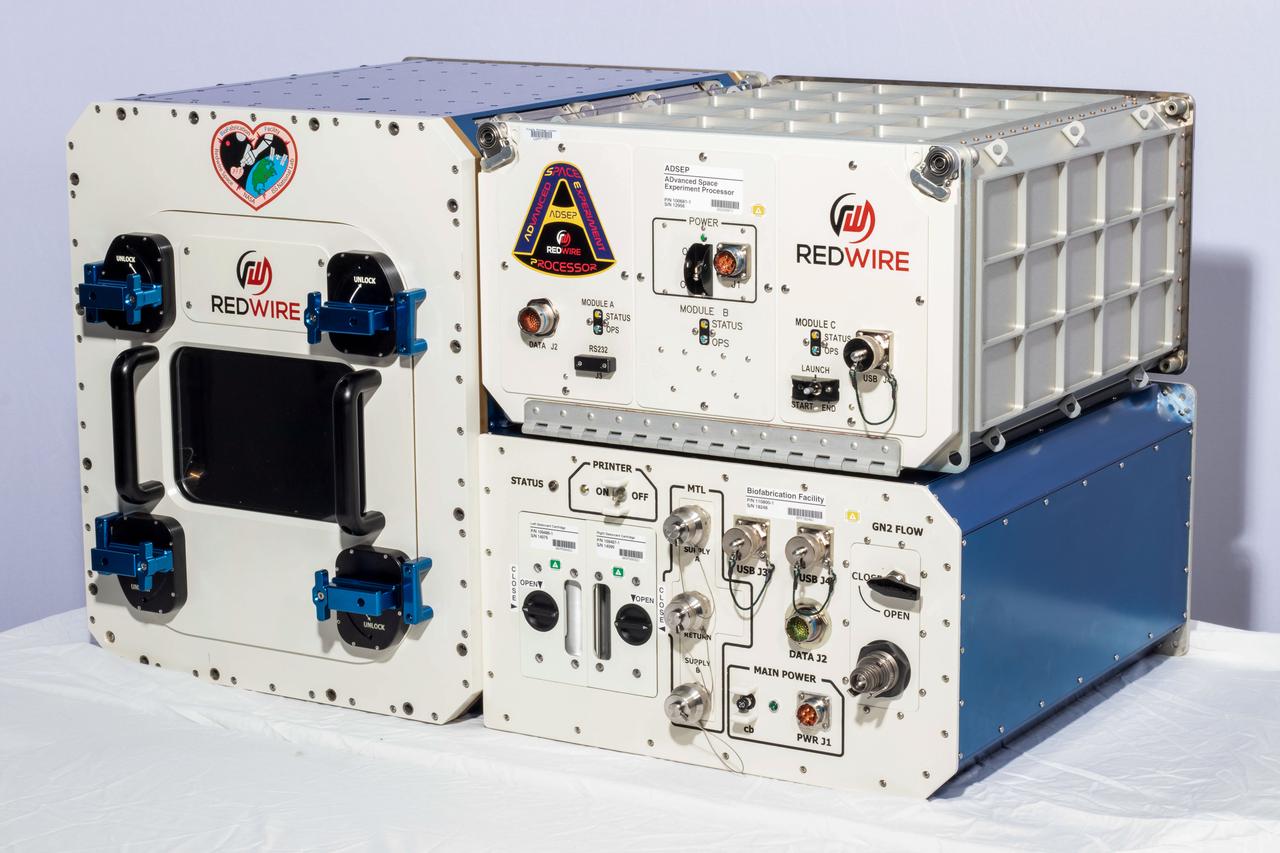
jsc2022e072969 (8/12/2022) --- The BioFabrication Facility (BFF) and the ADvanced Space Experiment Processor (ADSEP) together comprise a system capable of manufacturing human tissue in the microgravity environment of space. BFF is returning to the International Space Station after coming back to Earth for upgrades in 2020. The first investigation to be conducted in the upgraded facility is BioFabrication Facility Assembled Next-gen Development of Collagenous Allograft Meniscal Prosthetics aboard the International Space Station (BFF-Meniscus-2). The study attempts to 3D print a meniscus, also known as knee cartilage tissue, using only bioinks and cells. Image courtesy of Redwire.
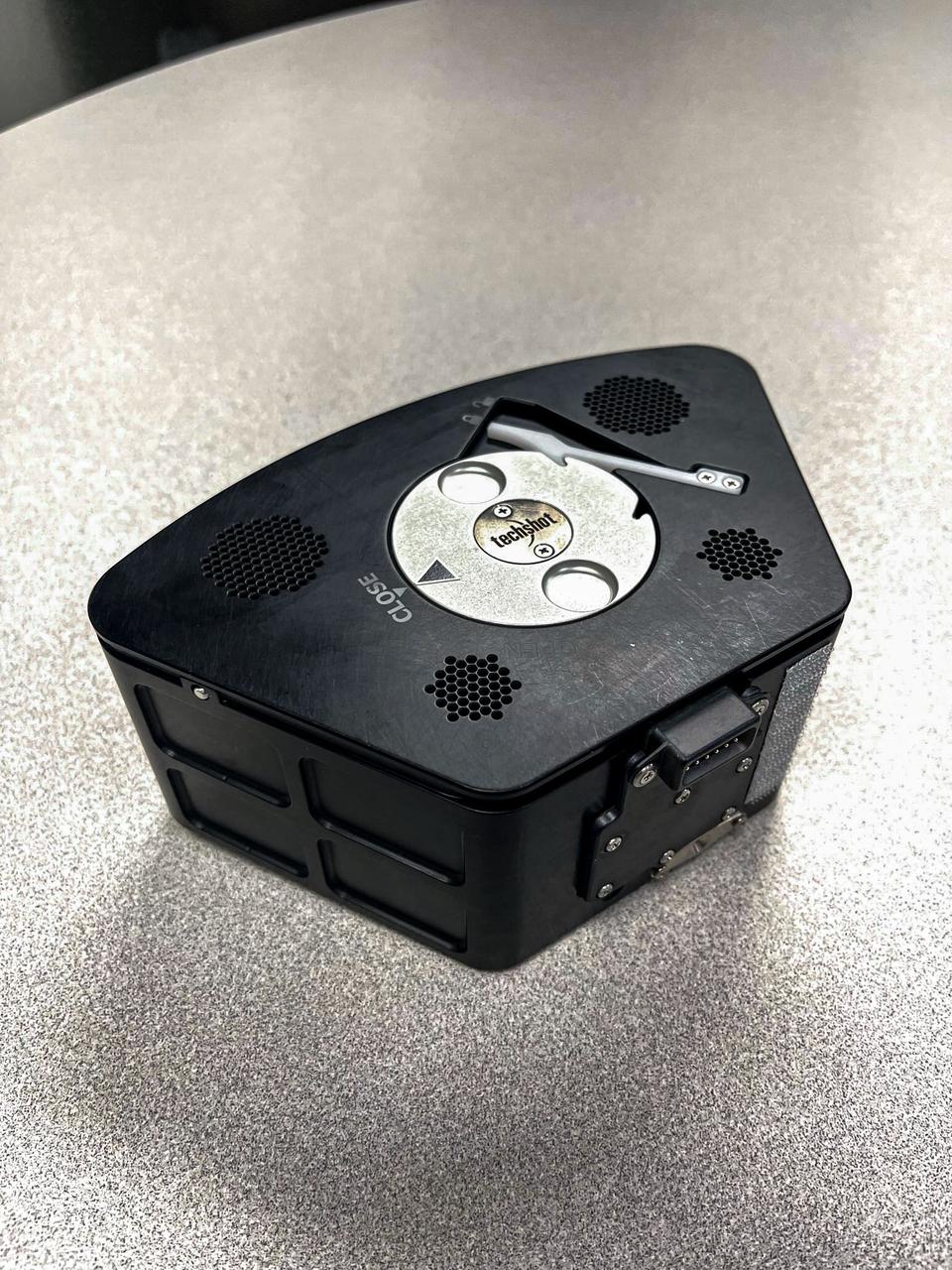
jsc2024e036956 (3/9/2023) --- The Multi-use Variable-g Platform (MVP) Cell Experiment Module is shown. Twelve of these modules run with each housing three sample conditions for the Maturation of Vascularized Liver Tissue Construct in Zero Gravity (MVP Cell-07) investigation. Image courtesy of Grant Vellinger, Redwire.
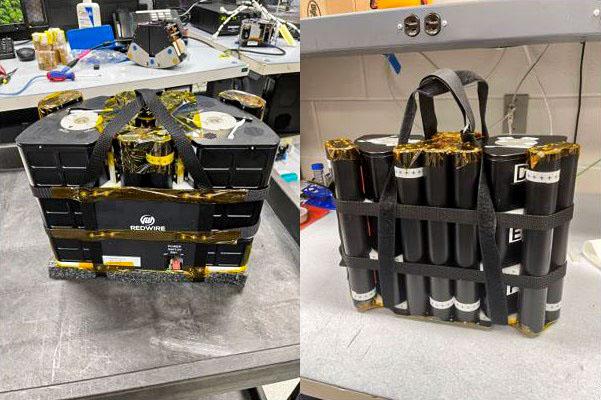
jsc2024e036957 (5/24/2024) --- Six modules configured in their Powered Carrier for ascent. The carrier helps perfuse media through the tissue while launched in a cold bag, maintaining approximately 37°C for the Maturation of Vascularized Liver Tissue Construct in Zero Gravity (MVP Cell-07) investigation. Image courtesy of Grant Vellinger, Redwire.
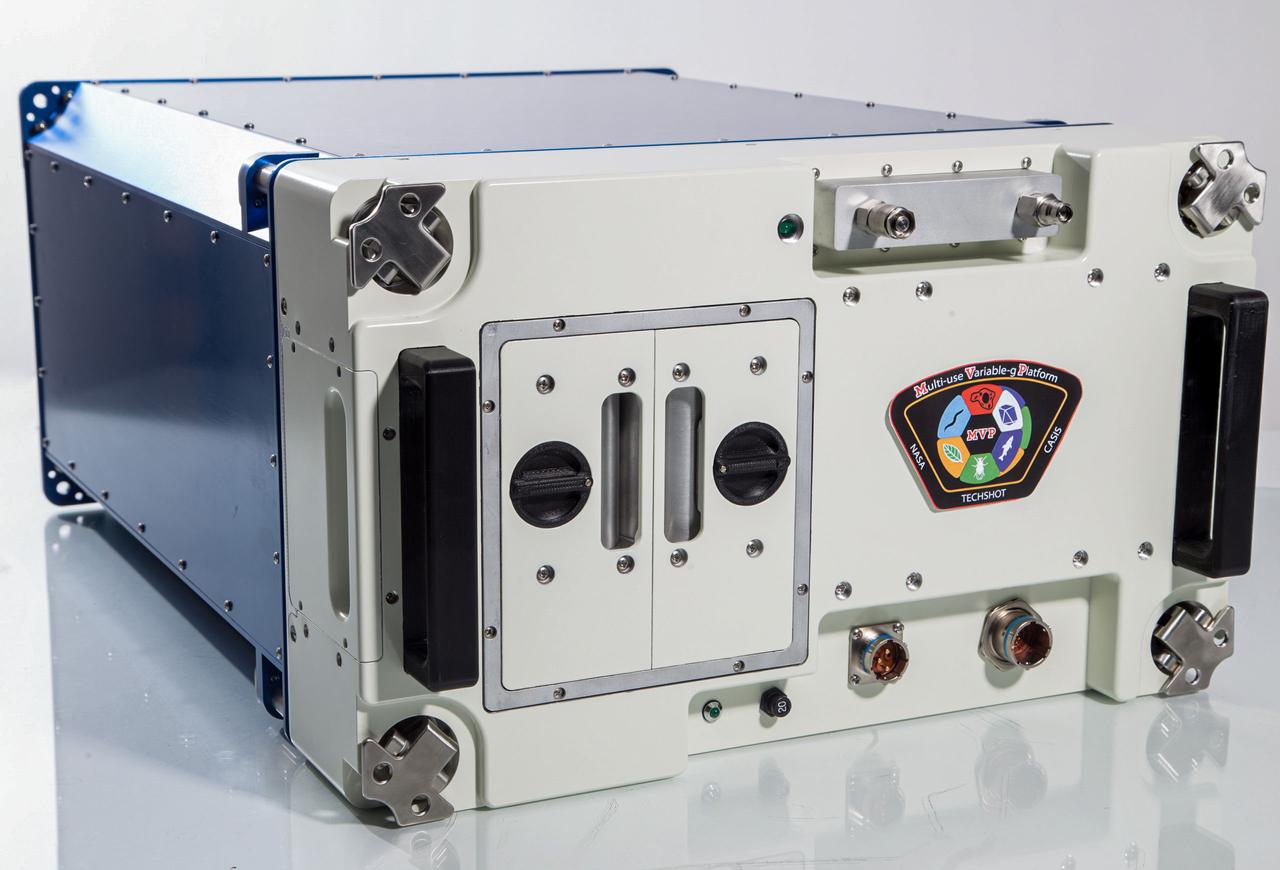
jsc2024e036958 (7/26/2016) --- The Multi-use Variable-g Platform (MVP) facility houses up to 12 modules of science. Pictured in this front view are two installed consumable modules that are used for minor environmental control, such as desiccation, CO2control, and ethylene scrubbing. Power and data connectors are also visible to provide the ground control team with health and status of the unit. Image courtesy of Grant Vellinger, Redwire.
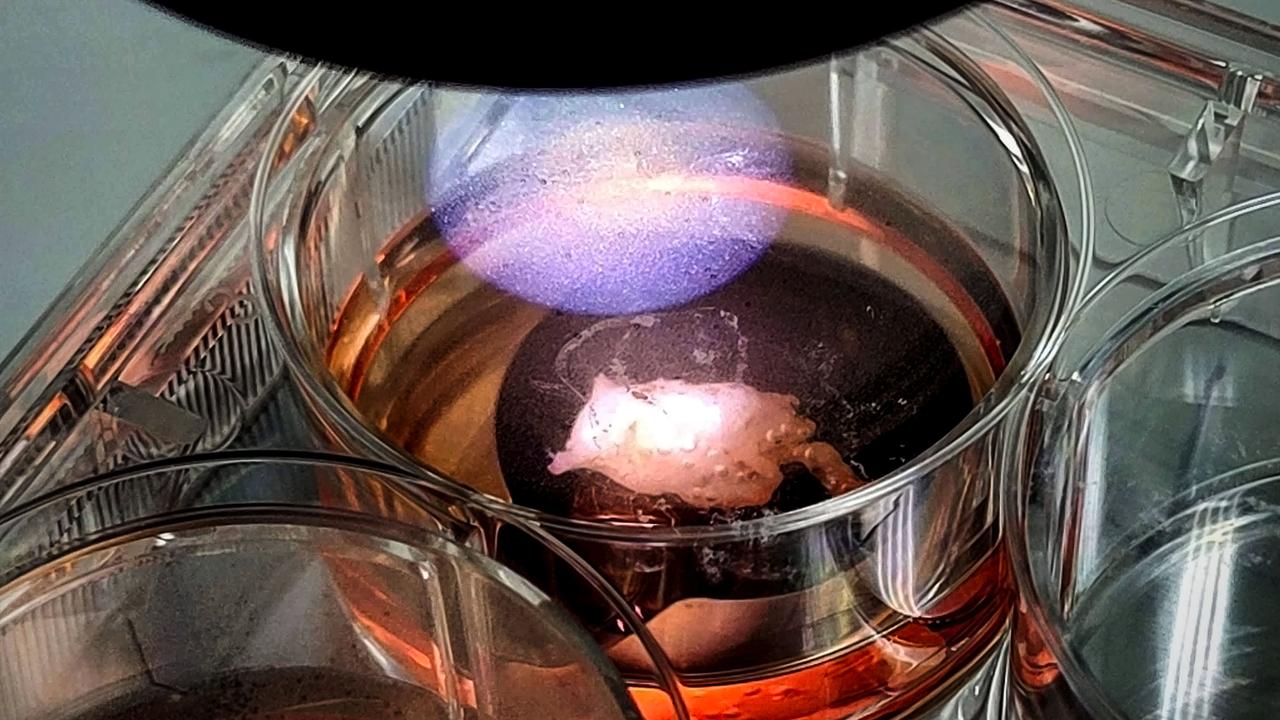
jsc2024e038395 (6/5/2024) --- Live human heart tissue bioprinted with Redwire's BioFabrication Facility aboard the International Space Station. The tissue was successfully returned to Earth in April 2024. Results of the Redwire Cardiac Bioprinting Investigation (BFF-Cardiac) could advance technologies for producing organs and tissues in lieu of donated organs for transplant. The investigation also improves 3D printing, with the goal of giving the crew the ability to print material like foods and medicines on demand for future long-duration space missions. Image courtesy of Redwire.
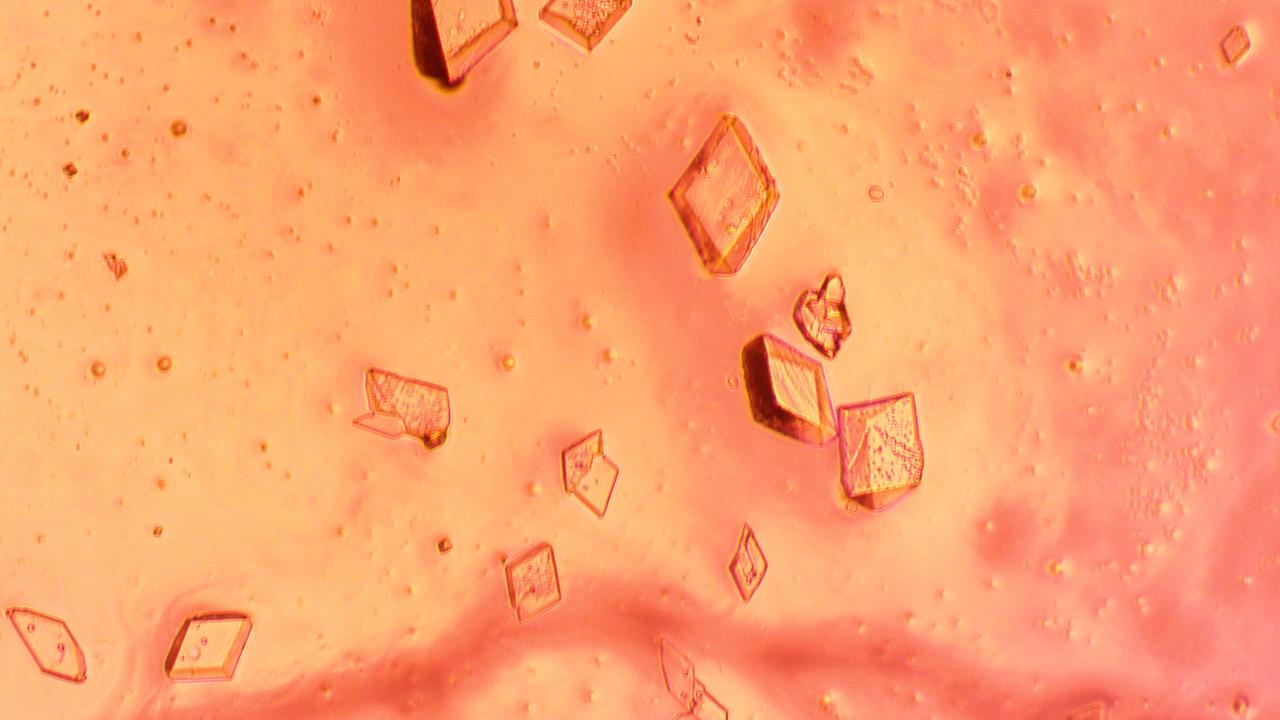
jsc2024e038396 (6/5/2024) --- Insulin crystals grown with Redwire's PIL-BOX aboard the International Space Station. This image was taken after the crystals returned to Earth in April 2024. This control compound helps the body convert food into energy and store it for later use. The ADSEP-PIL-02 investigation aims to study the effect of microgramInsulin crystals grown with Redwire's PIL-BOX aboard the International Space Station. This image was taken after the crystals returned to Earth in April 2024. This control compound helps the body convert food into energy and store it for later use. The In-Space Production Application – Pharmaceutical In-space Laboratory – 02 (InSPA-PIL-02) (ADSEP-PIL-02) investigation aims to study the effect of microgravity on the production of various types of crystals. Image courtesy of Redwire. on the production of various types of crystals. Image courtesy of Redwire.
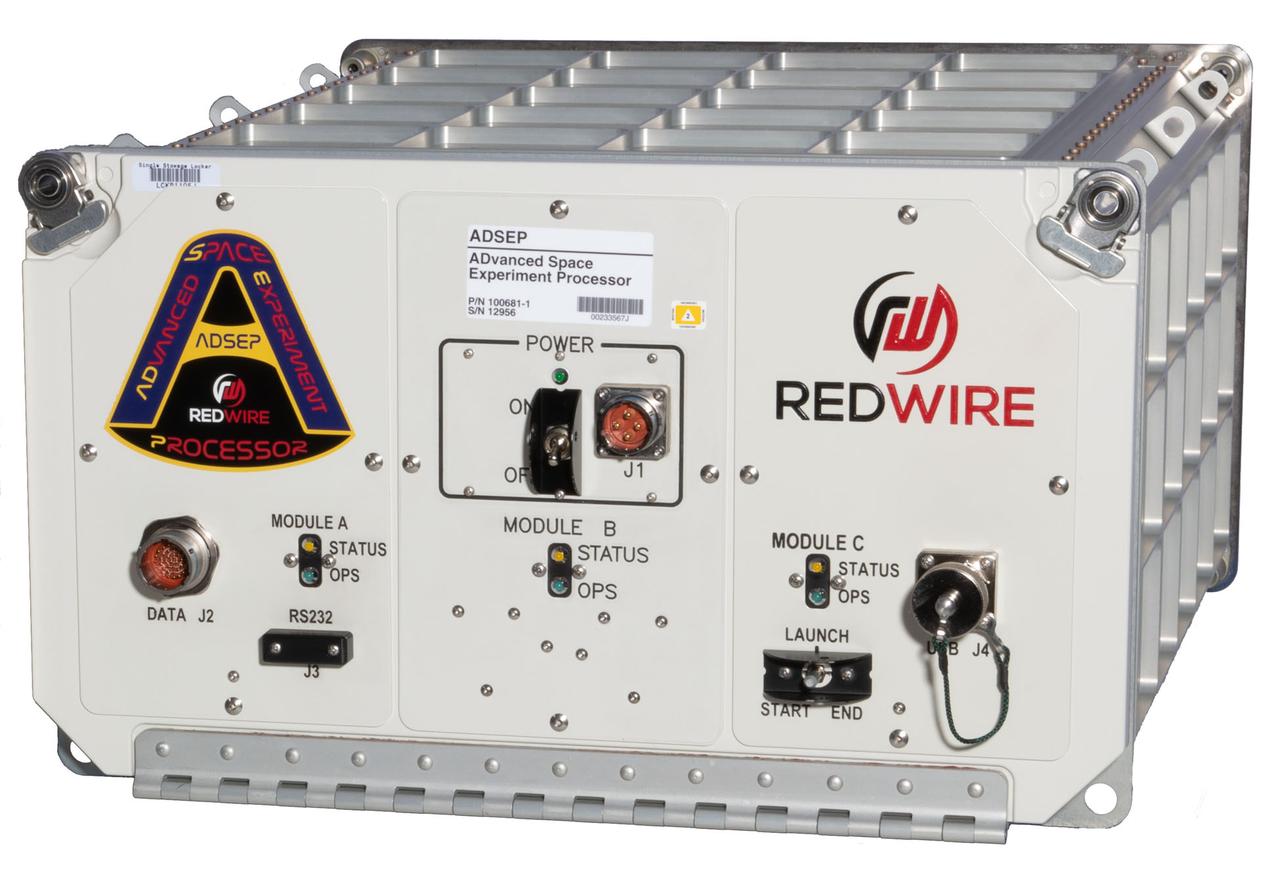
jsc2024e043200 (10/9/2020) --- The Redwire Space ADvanced Space Experiment Processor (ADSEP) is a fully automated, multi-use single middeck locker processing facility used to conduct a variety of life and physical-science research as well as small-batch production. The ADSEP facility contains three independent thermal zones, each accommodates one “mini-laboratory” cassette and an internal computer that controls the processing of all three cassettes. Image courtesy of Redwire. Original Filename
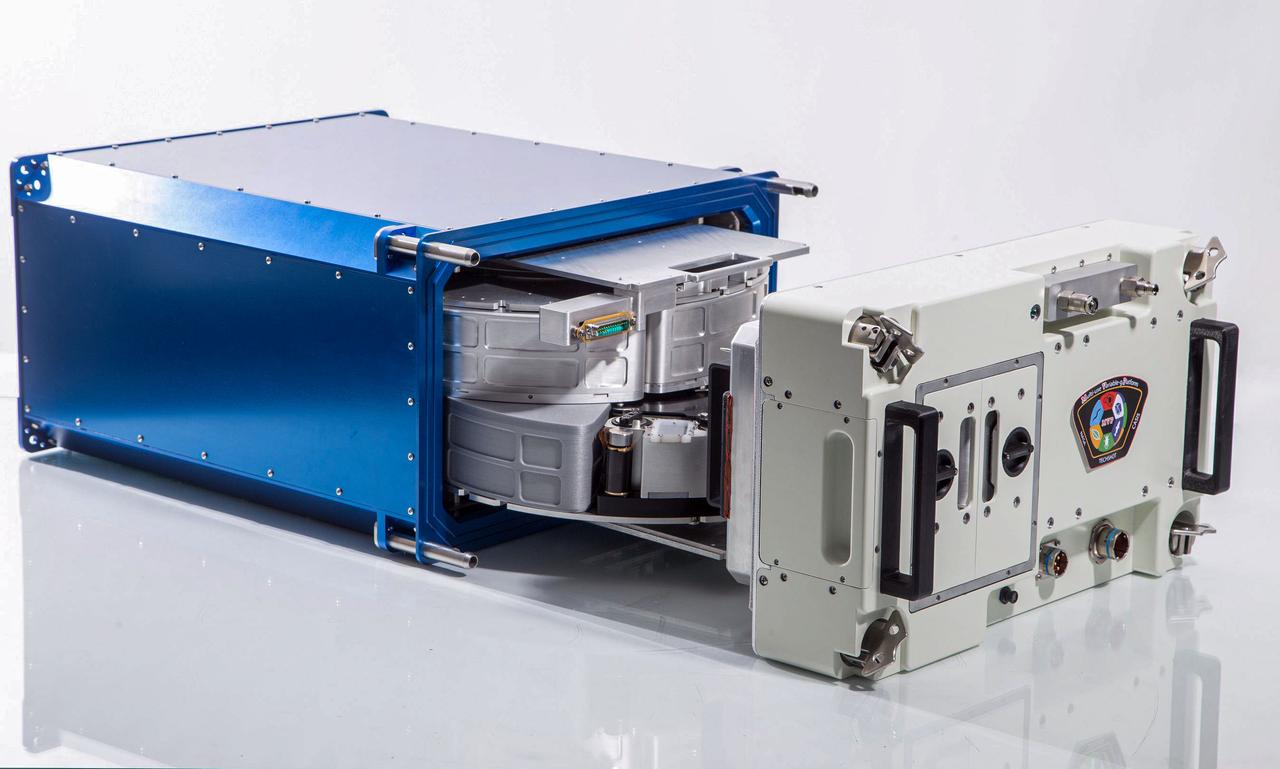
jsc2024e036959 (8/13/2018) --- The Multi-use Variable-g Platform (MVP) can run with two different gravity conditions that range from microgravity to 2g Image courtesy of Grant Vellinger, Redwire.
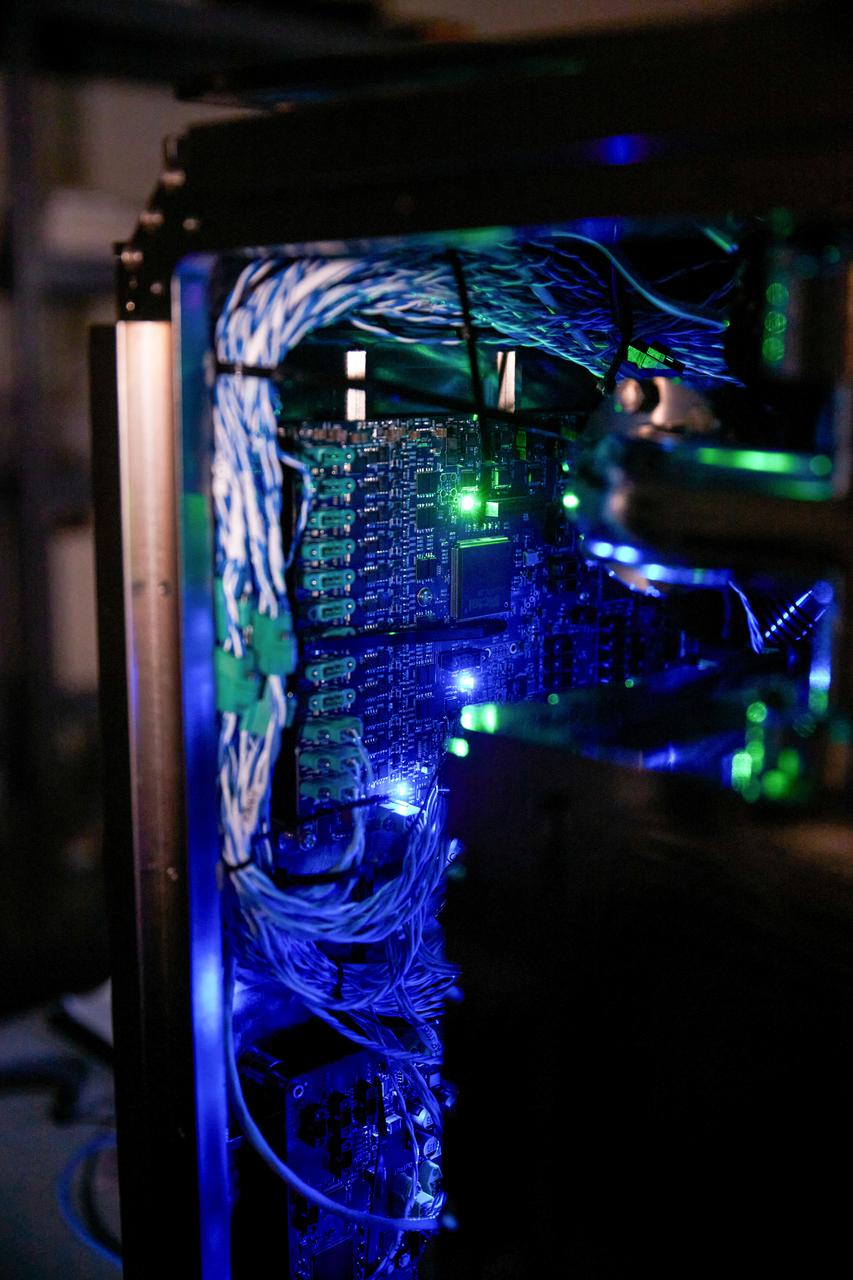
jsc2021e063286 (3/5/2021) --- The Turbine Superalloy Casting Module (Turbine SCM) is a commercial in-space manufacturing device designed to provide proof-of-principle for polycrystal superalloy part manufacturing in microgravity for terrestrial use. Image courtesy of Redwire.
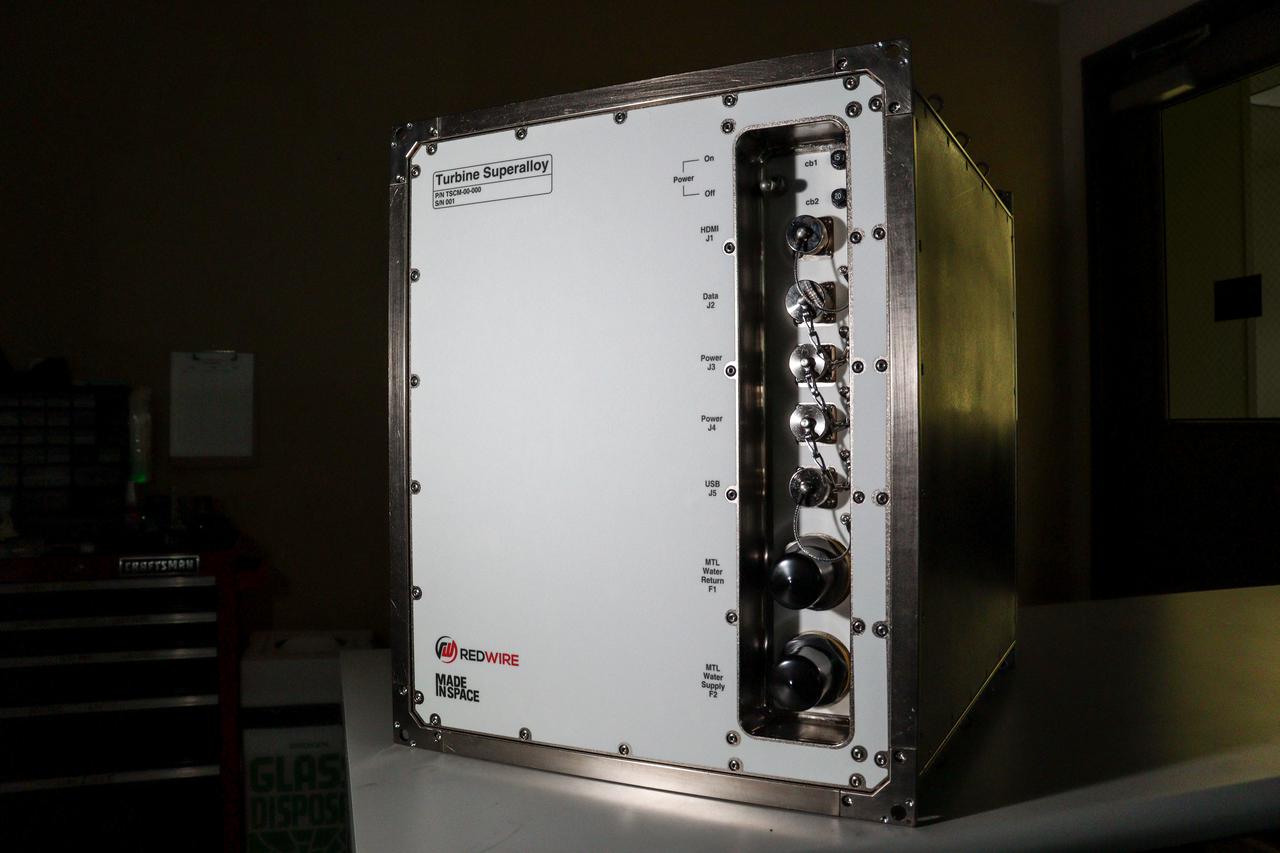
jsc2021e063285 (12/10/2021) --- The Turbine Superalloy Casting Module (Turbine SCM) is a commercial in-space manufacturing device designed to provide proof-of-principle for polycrystal superalloy part manufacturing in microgravity for terrestrial use. Image courtesy of Redwire.
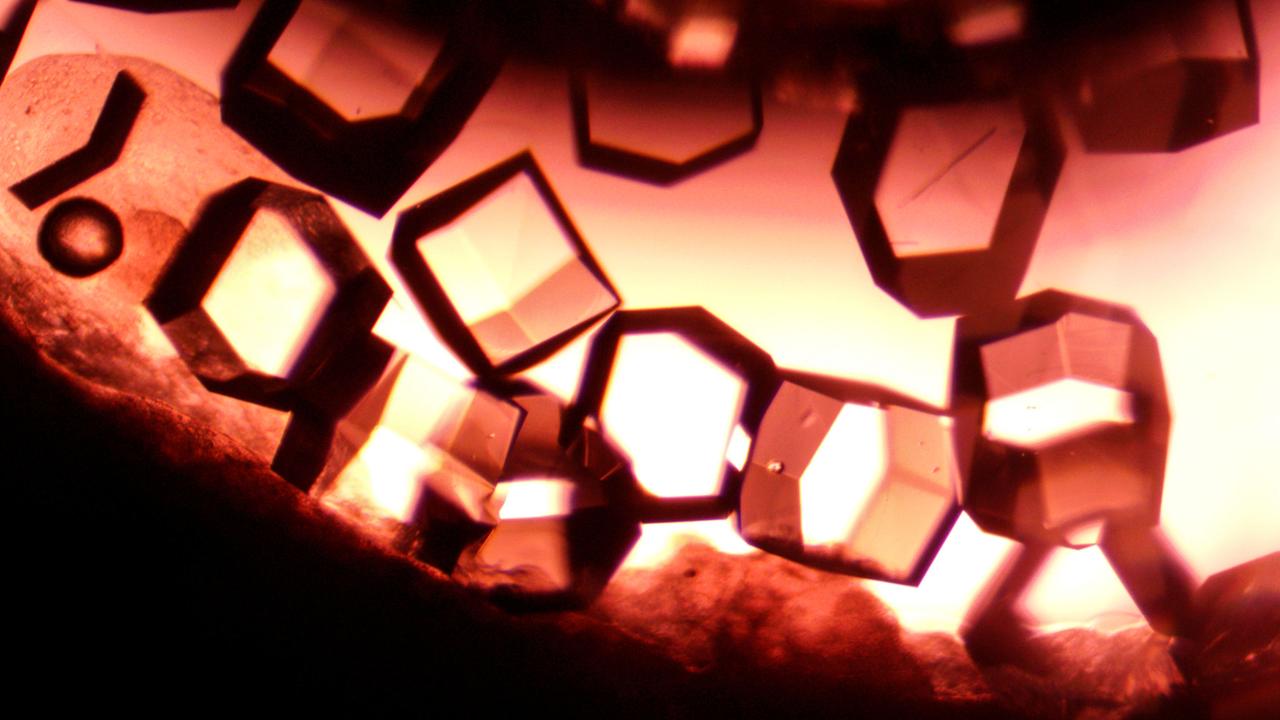
jsc2024e038397 (6/5/2024) --- Lysozyme crystals grown with Redwire’s PIL-BOX aboard the International Space Station. This image was taken after the crystals returned to Earth in April 2024. This protein, found in bodily fluids like tears, saliva, and milk, is used as a control compound to demonstrate well-formed crystals. Lysozyme plays a vital role in innate immunity, protecting against bacteria, viruses, and fungi. The In-Space Production Application – Pharmaceutical In-space Laboratory – 02 (InSPA-PIL-02) (ADSEP-PIL-02) investigation aims to study the effect of microgravity on various types of crystals production. Image courtesy of Redwire.
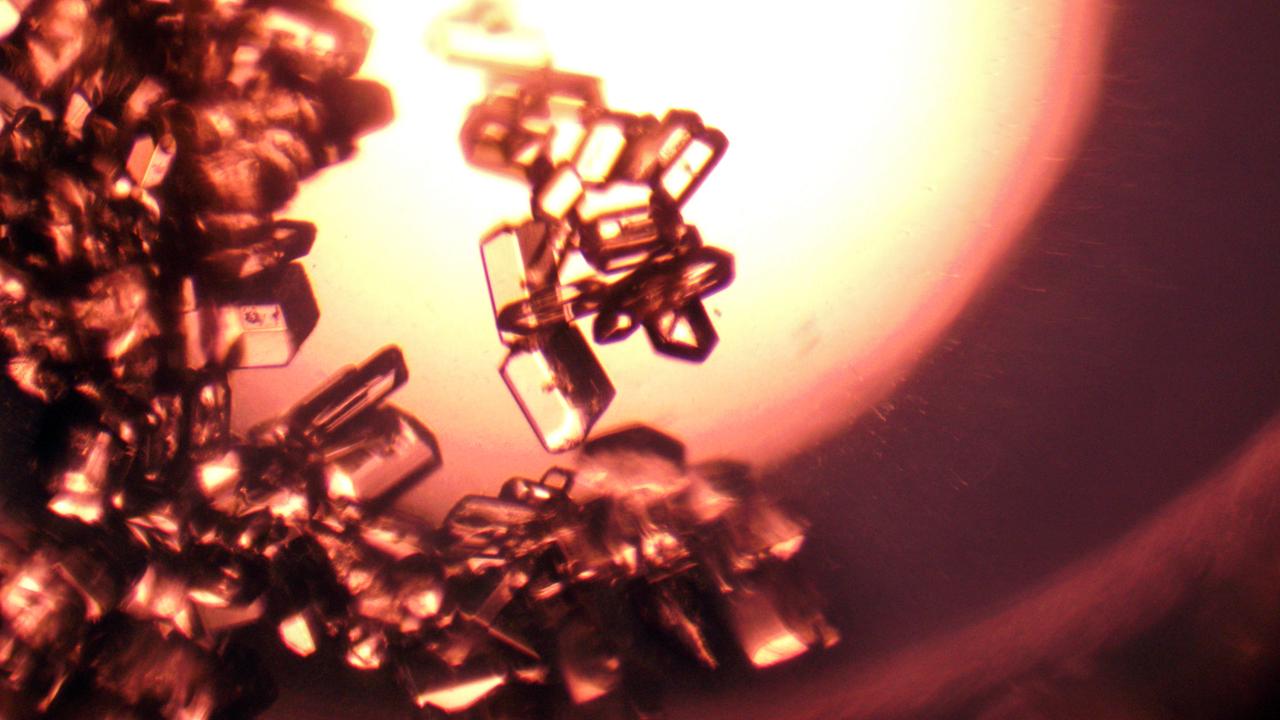
jsc2024e038399 (6/5/2024) --- Glycine crystals grown with Redwire's PIL-BOX aboard the International Space Station. This image was taken after the crystals returned to Earth in April 2024. Glycine is an amino acid which serves many functions in the human body such as a neurotransmitter, a component in collagen, and a building block for other important molecules. The Pharmaceutical In-space Laboratory-03 (ADSEP-PIL-03) investigation grows crystals of several commercially relevant small molecules, each having various structures that may be altered by a microgravity environment. Image courtesy of Redwire.
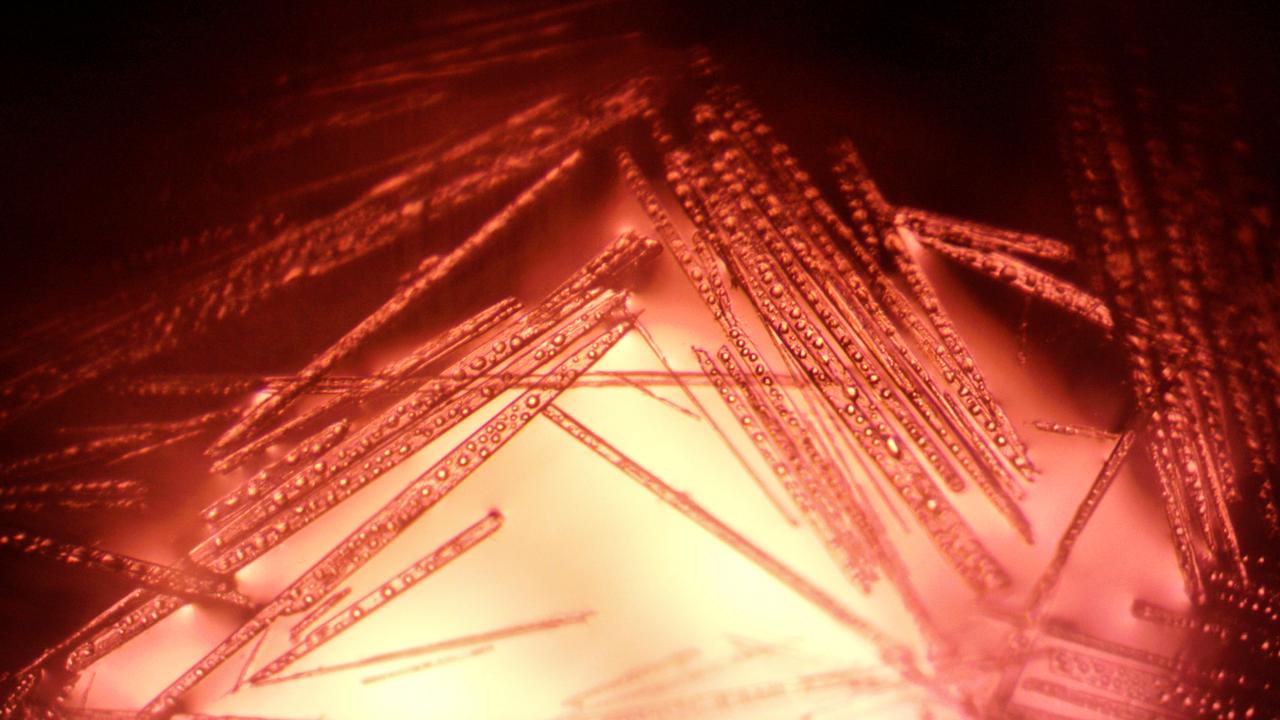
jsc2024e038398 (6/5/2024) --- Famoxadone crystals grown with Redwire's PIL-BOX aboard the International Space Station. This image was taken after the crystals returned to Earth in April 2024. This small-molecule antifungal agent protects crops against fungal diseases like downy mildew and blights on potatoes, lettuce, grapes, and vegetables. The Pharmaceutical In-space Laboratory-03 (ADSEP-PIL-03) investigation grows crystals of several commercially relevant small molecules, each having various structures that may be altered by a microgravity environment. Image courtesy of Redwire.
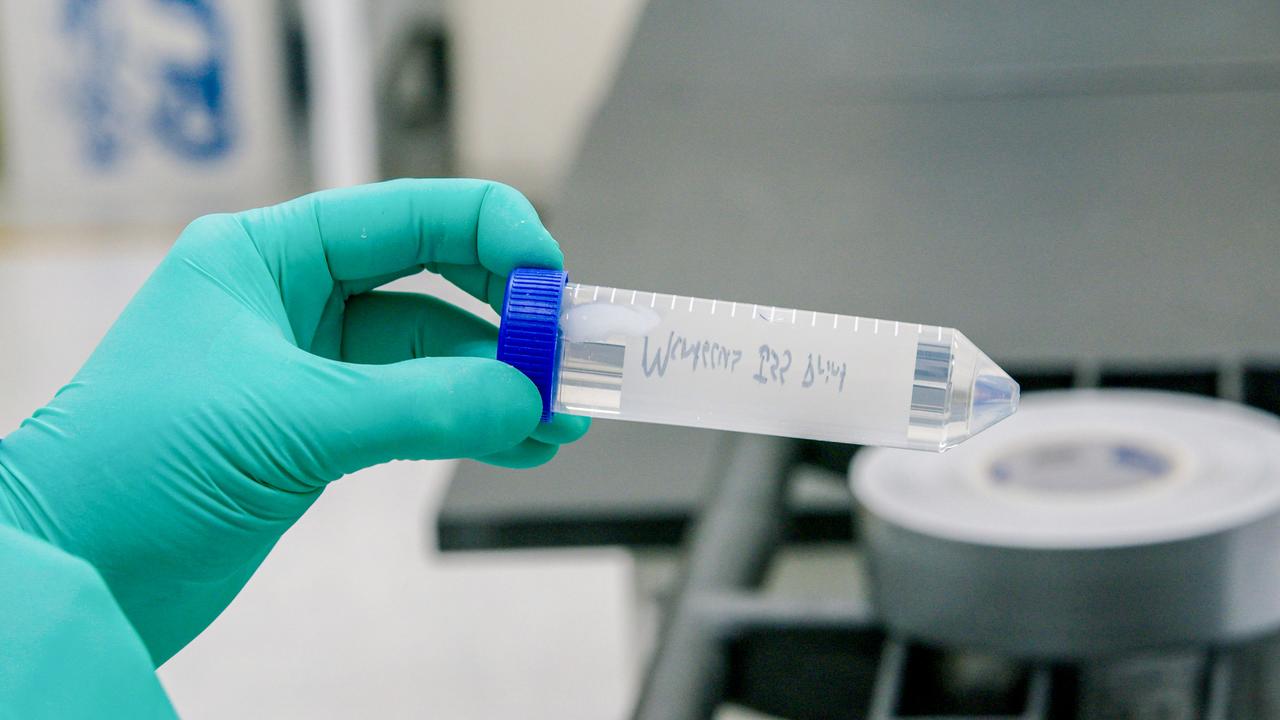
jsc2023e052856 (9/6/2023) --- The first human knee meniscus has been successfully 3D bioprinted in orbit using the International Space Station’s BioFabrication Facility. This is a significant step towards developing solutions to promote recovery from musculoskeletal injuries. Image courtesy of Redwire.
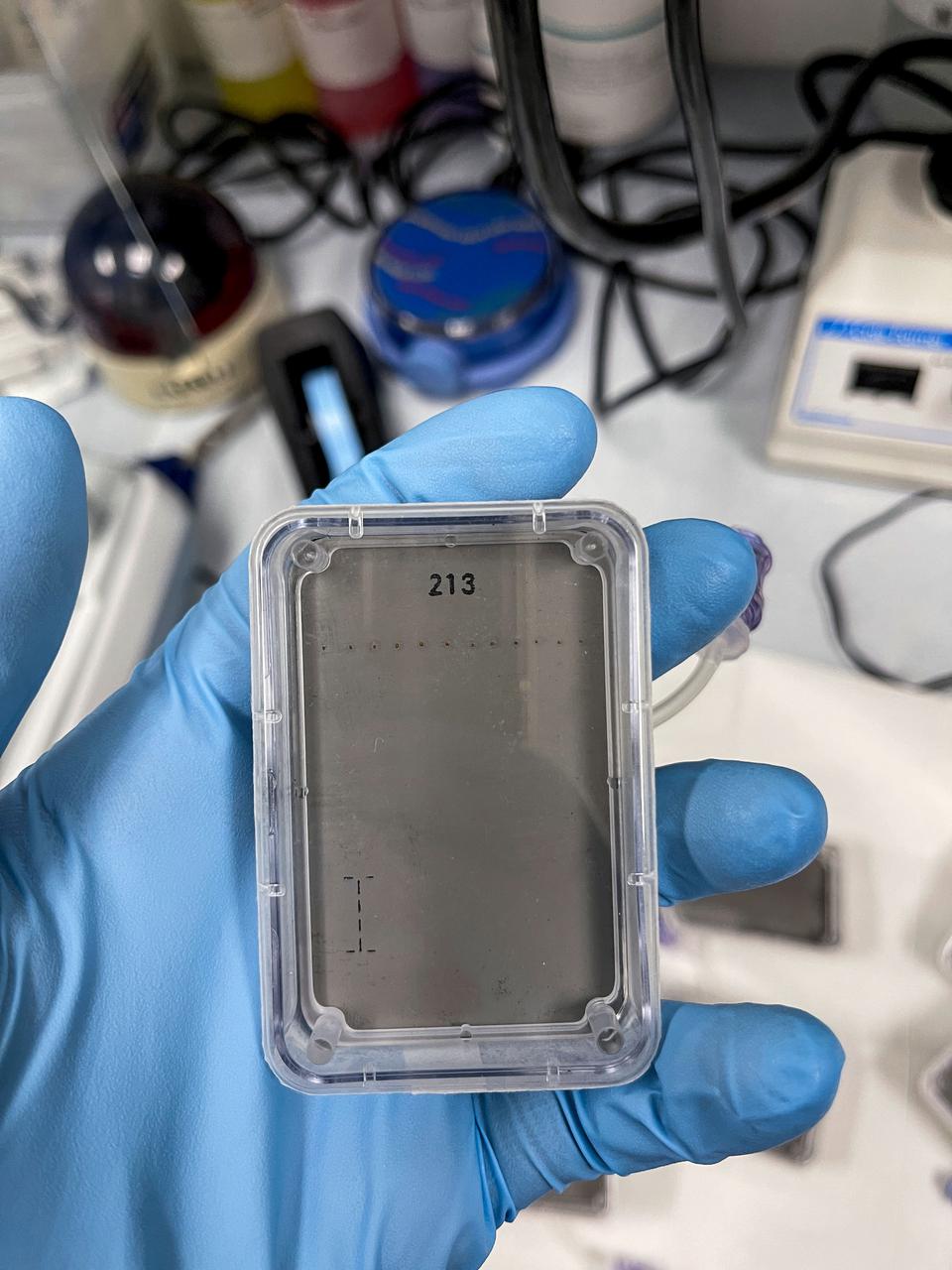
jsc2021e063284--For the Plant RNA Regulation Redux in Multi Variable Platform (MVP) (MVP-Plant-01) investigation, seeds are mounted to a membrane and assembled into a plate with wicking material. The investigation is started by hydrating the membrane via the port (shown in blue). Image courtesy of Grant Vellinger (Techshot/Redwire).
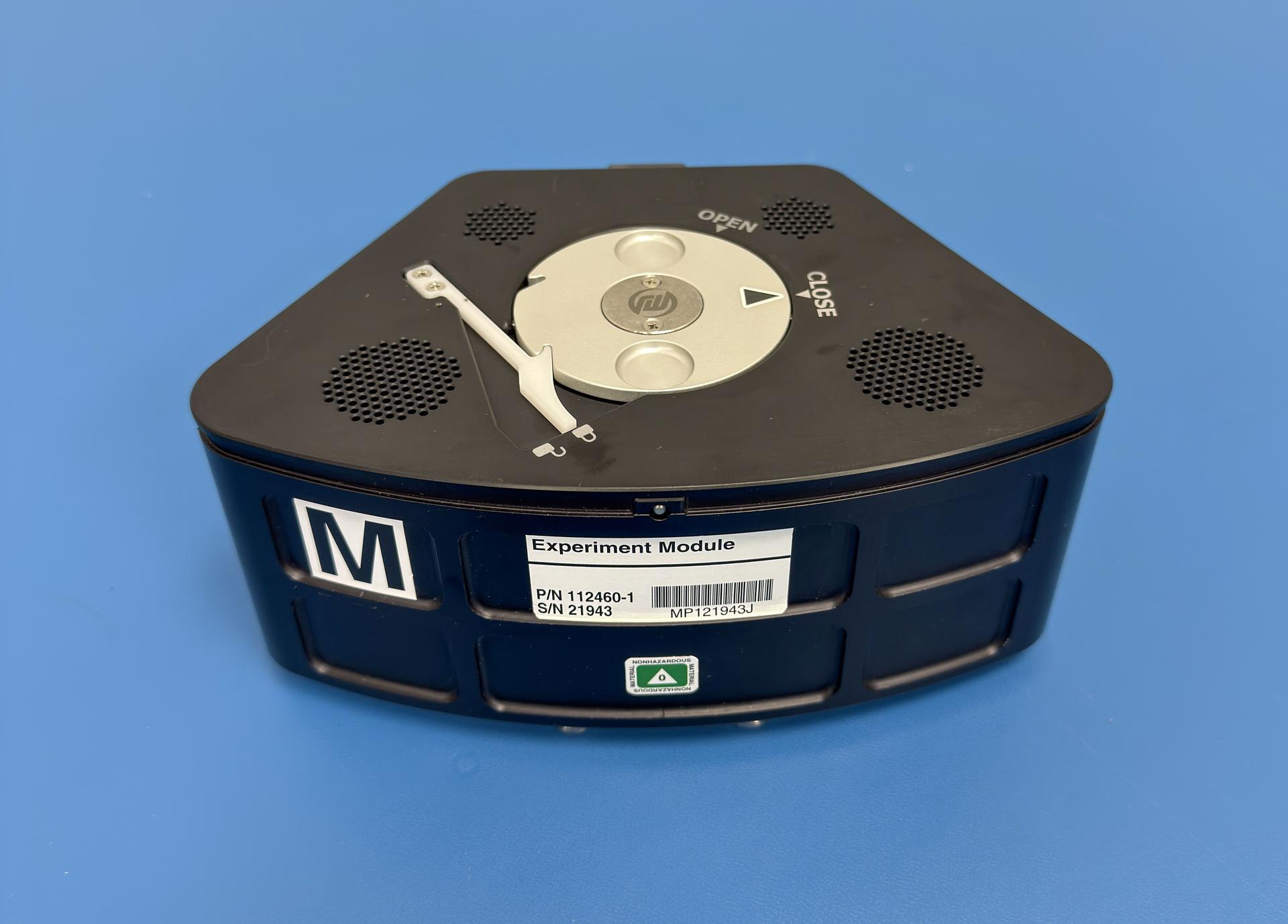
jsc2026e005496 (February 04, 2026) -- The Multi-use Variable-g Platform (MVP) Cell Experiment Module. Six of these modules run for the Streptococcus pneumoniae (Spn) Infection of Cardiac Tissue (MVP-Cell-09) investigation, each houses three sample conditions. Credit: Grant Vellinger, Redwire.
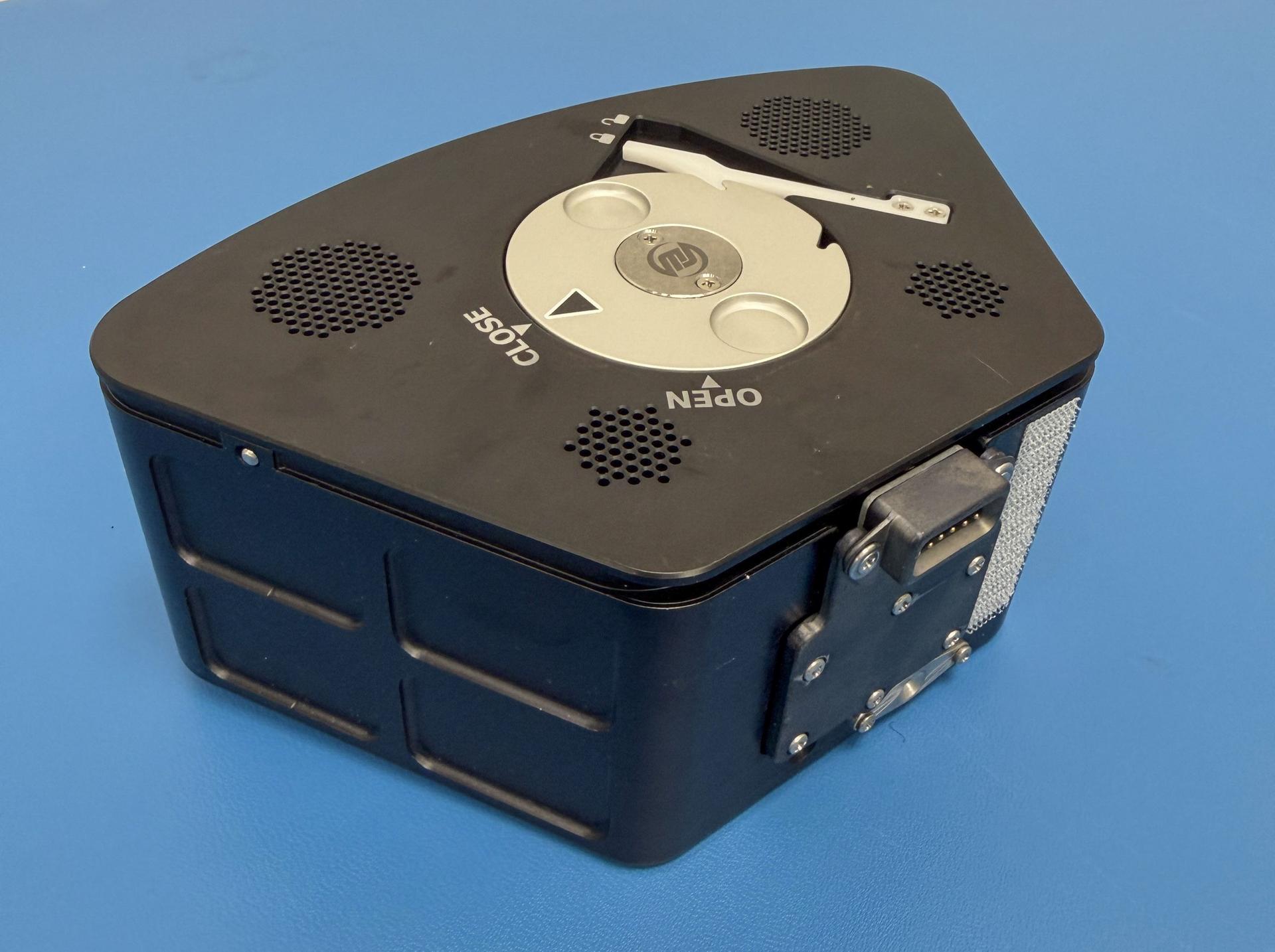
jsc2026e005497 (February 04, 2026) -- The Multi-use Variable-g Platform (MVP) Cell Experiment Module. Six of these modules run for the Streptococcus pneumoniae (Spn) Infection of Cardiac Tissue (MVP-Cell-09) investigation, each houses three sample conditions. Credit: Grant Vellinger, Redwire.

jsc2026e005499 (February 04, 2026) -- Multi-use Variable-g Platform (MVP) is able to run with two different gravity conditions, ranging from microgravity to 2g, allowing for control groups or data for space applications outside of low Earth orbit. Credit: Grant Vellinger, Redwire.
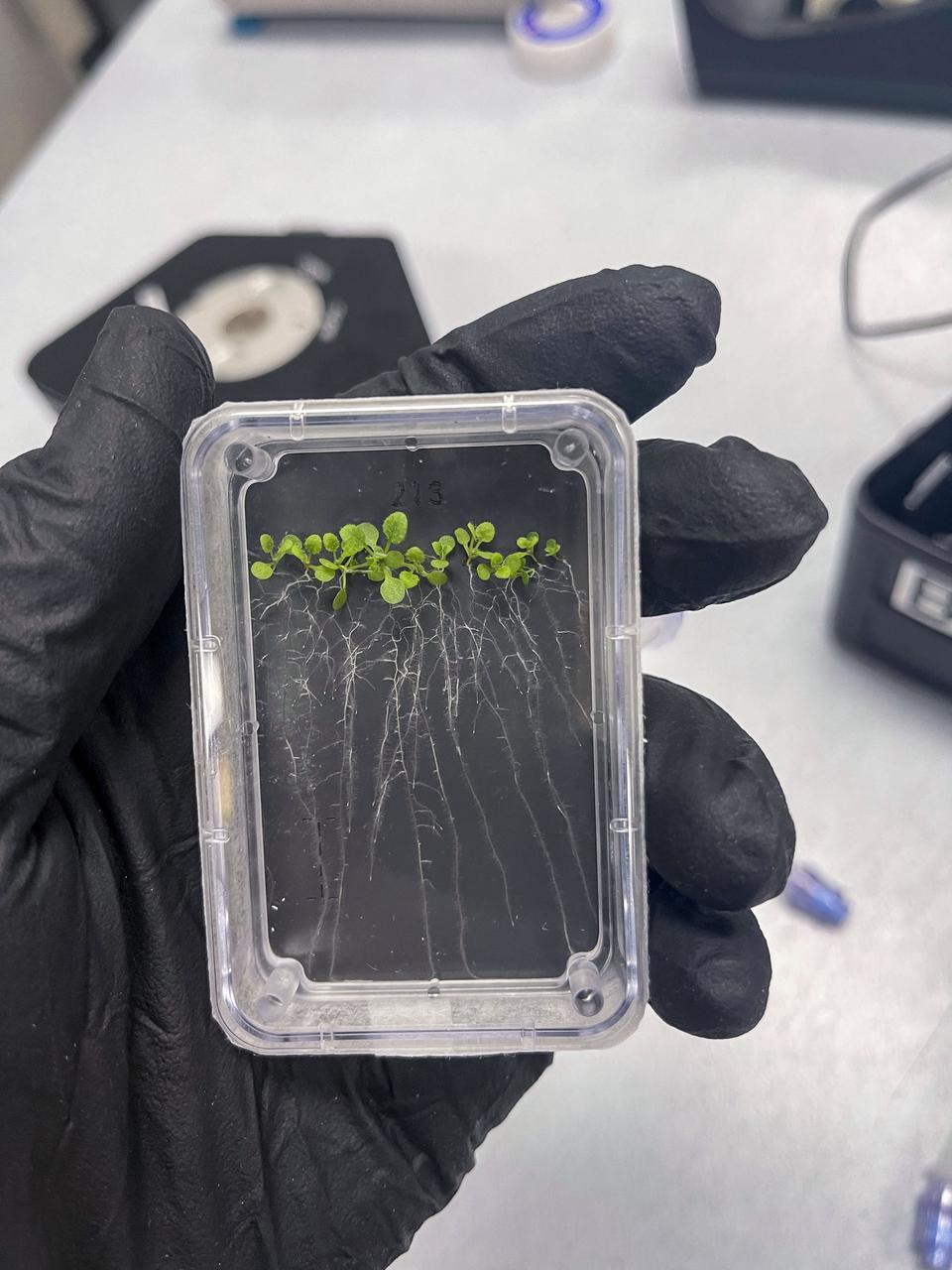
jsc2021e063283--Representative image of plate with Arabidopsis seedlings after 10 days of growth for the Plant RNA Regulation Redux in Multi Variable Platform (MVP) (MVP-Plant-01) investigation. Taken after the experiment verification test. Image courtesy of Grant Vellinger (Techshot/Redwire).
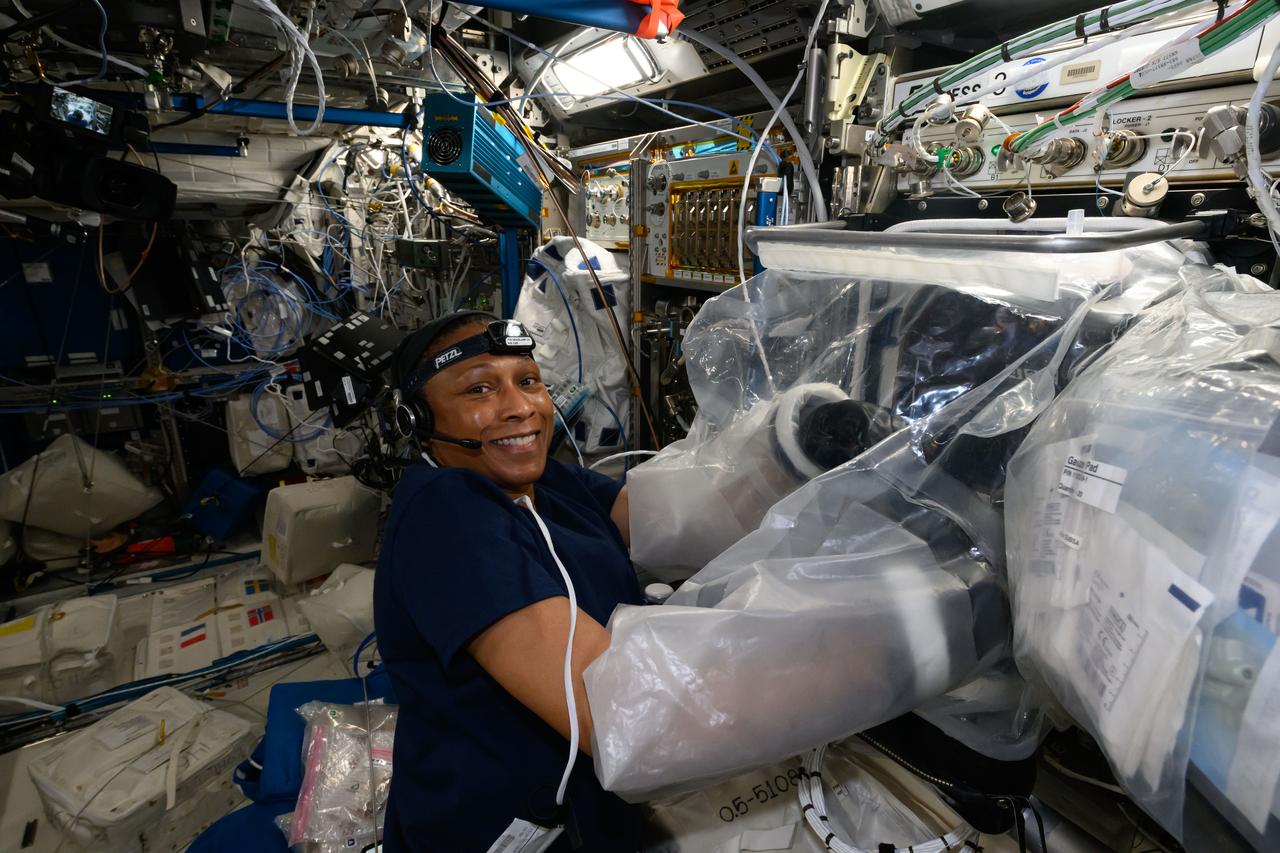
iss071e000901 (April 6, 2024) --- Expedition 71 Flight Engineer and NASA astronaut Jeanette Epps works in the BioFabrication Facility portable glovebag located in the International Space Station's Columbus laboratory module. She was working on the Redwire Cardiac Bioprinting Investigation that may offer the ability to print food and medicines for future space crews. Results may also enable the bioprinting of replacement organs and tissues potentially alleviating the shortage of donor organs on Earth.
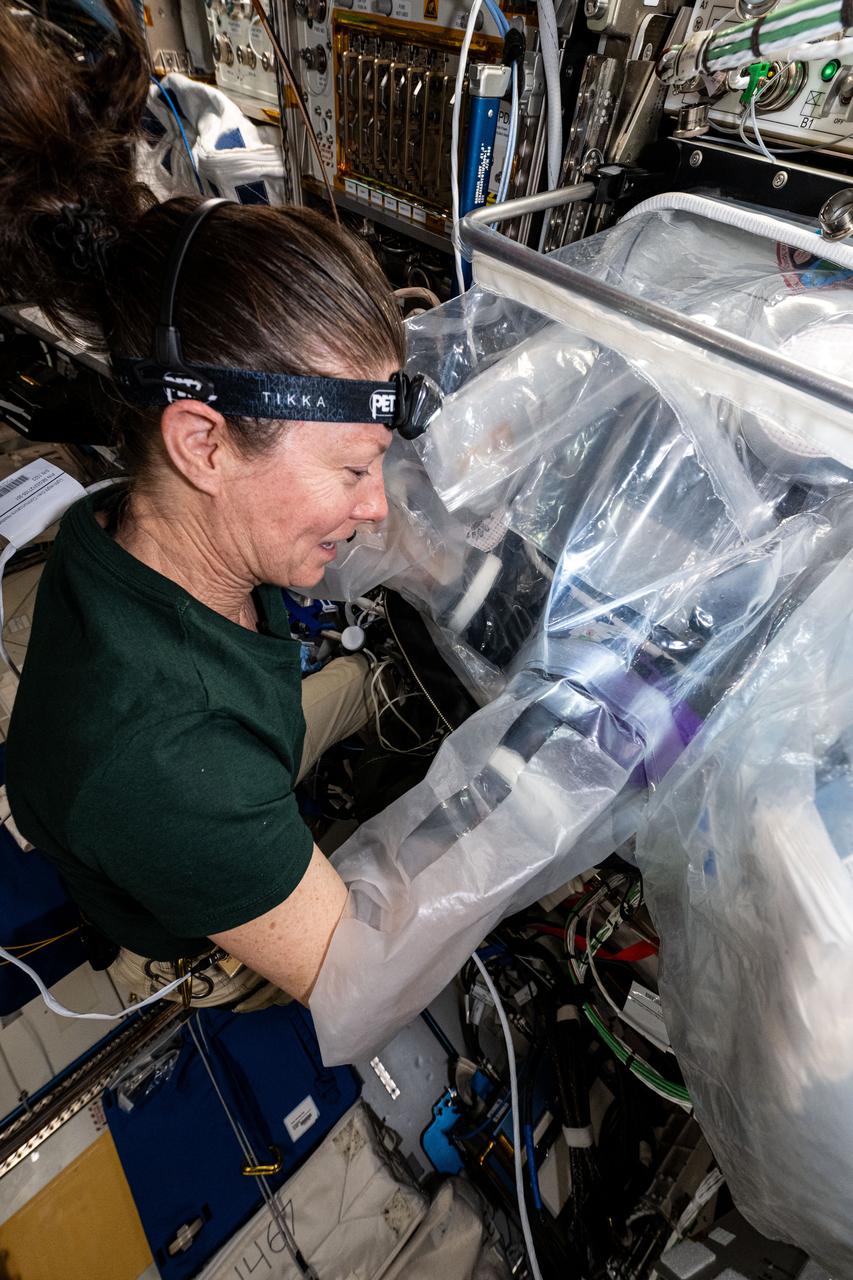
iss071e007507 (April 12, 2024) --- Expedition 70 Flight Engineer and NASA astronaut Tracy C. Dyson works inside the BioFabrication Facility using the portable glovebag aboard the International Space Station's Columbus laboratory module. She was working on the Redwire Cardiac Bioprinting Investigation that may offer the ability to print food and medicines for future space crews. Results may also enable the bioprinting of replacement organs and tissues potentially alleviating the shortage of donor organs on Earth.
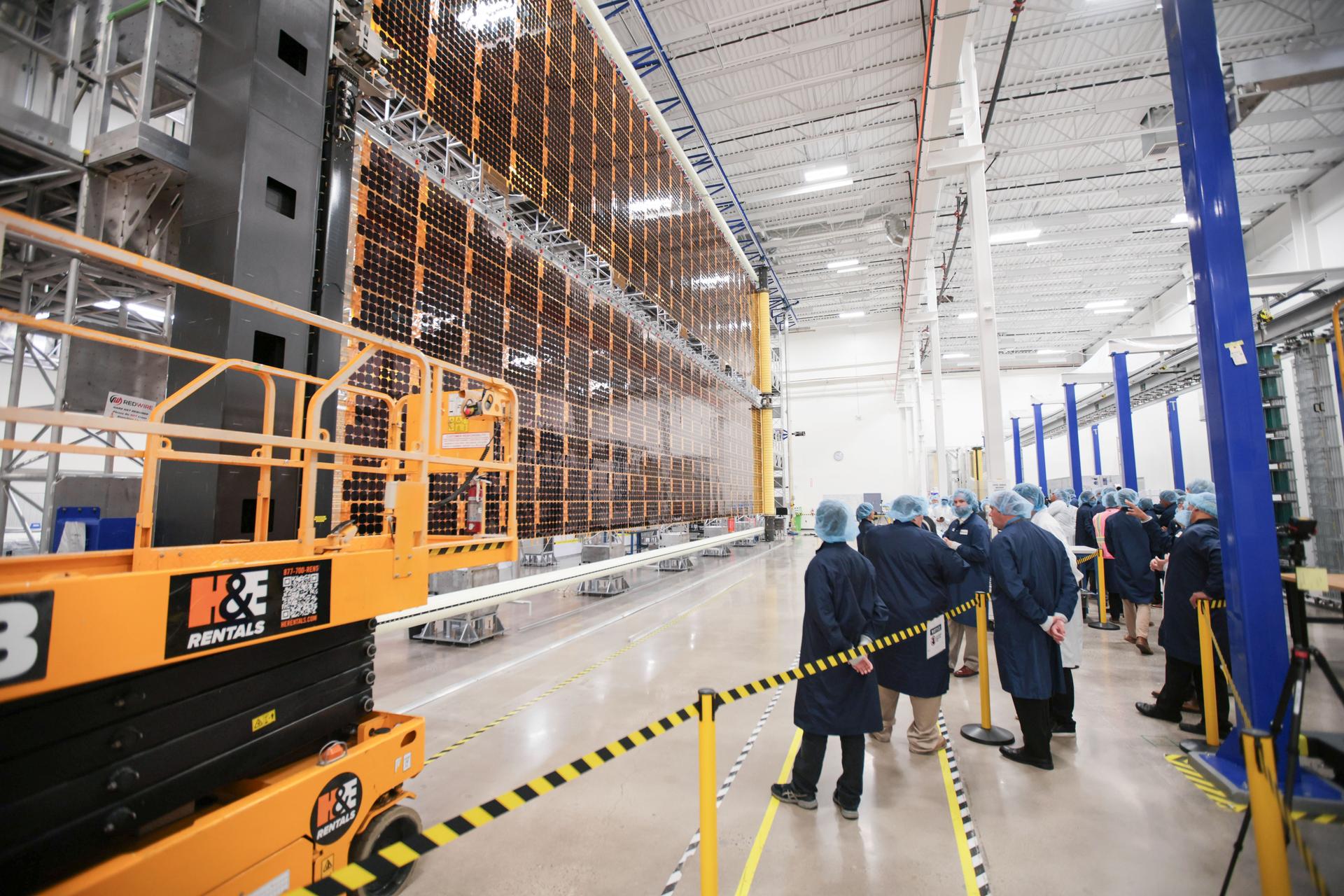
A Roll-Out Solar Array (ROSA) wing for Gateway stands fully deployed inside Redwire’s high-bay facility in Goleta, California, following a successful deployment test on June 30, 2025. The image shows the extended solar array structure as NASA’s Gateway Program leadership and representatives from industry and international partners observe the test from the facility floor. Credit: NASA
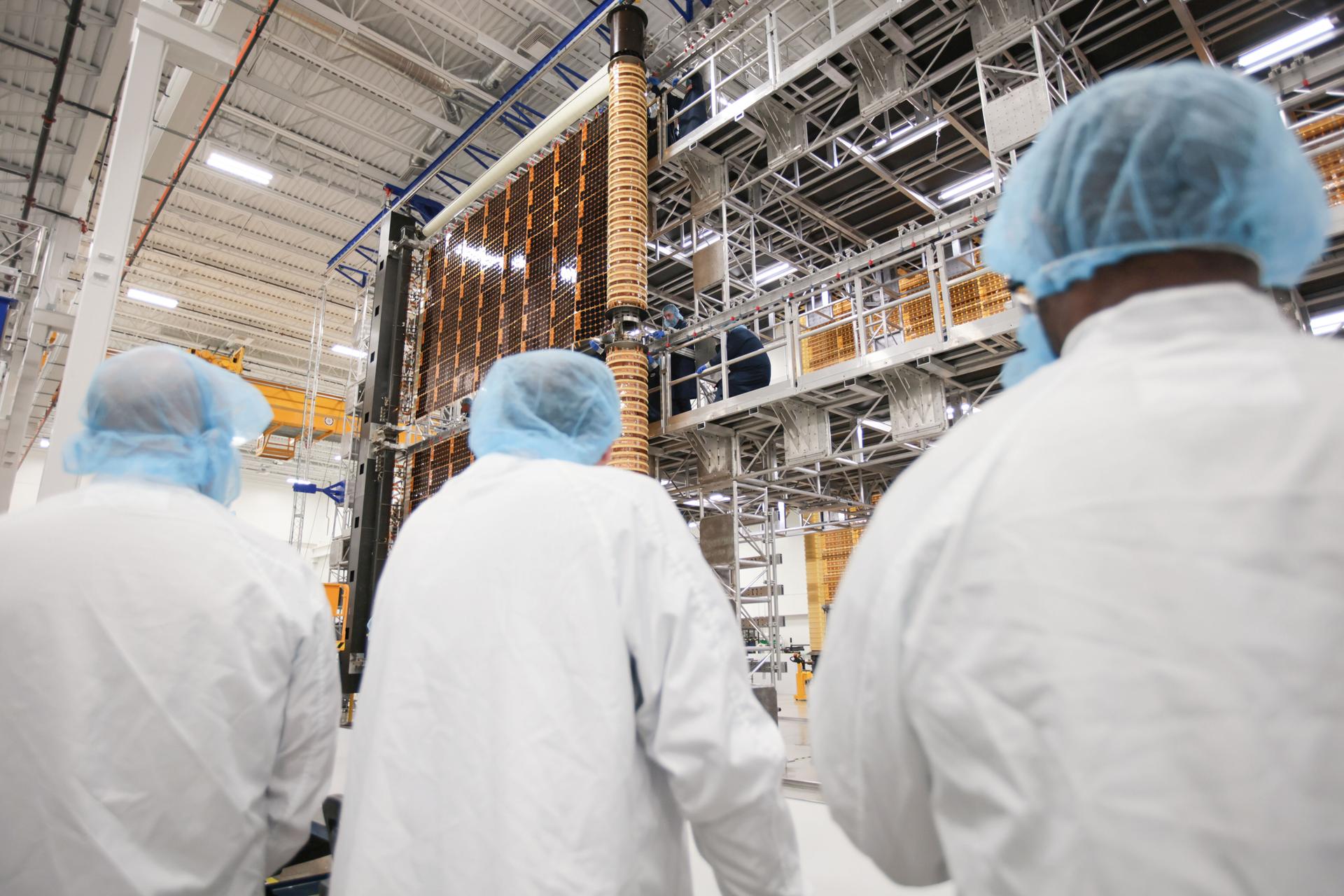
NASA and industry team members observe a Roll-Out Solar Array (ROSA) wing for Gateway as it deploys inside Redwire’s high-bay facility in Goleta, California, during a test on June 30, 2025. The image shows the solar array partially extended as technicians monitor the process from the facility floor and elevated work platforms. Credit: Lanteris Space Systems
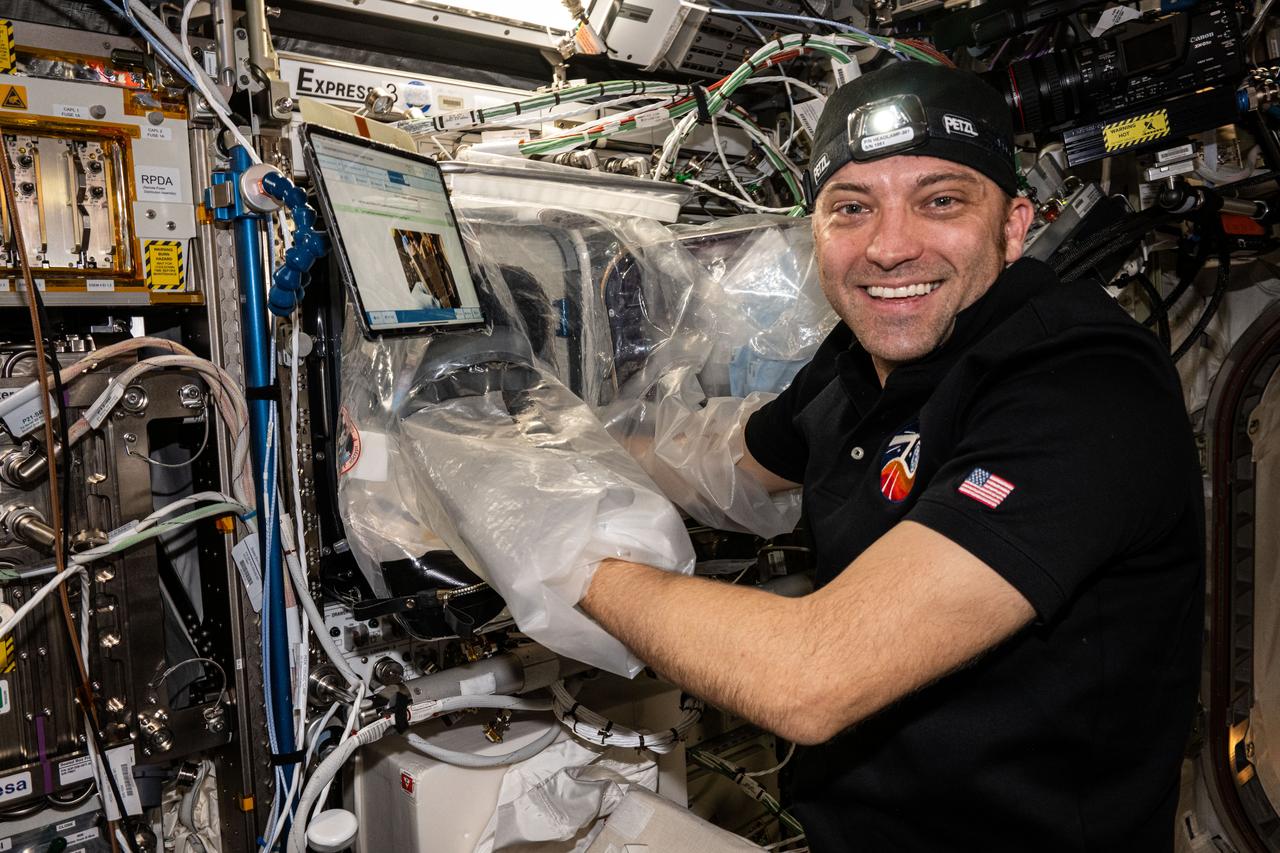
iss071e006125 (April 9, 2024) --- Expedition 70 Flight Engineer and NASA astronaut Matthew Dominick works inside the BioFabrication Facility using the portable glovebag aboard the International Space Station's Columbus laboratory module. He was working on the Redwire Cardiac Bioprinting Investigation that may offer the ability to print food and medicines for future space crews. Results may also enable the bioprinting of replacement organs and tissues potentially alleviating the shortage of donor organs on Earth.
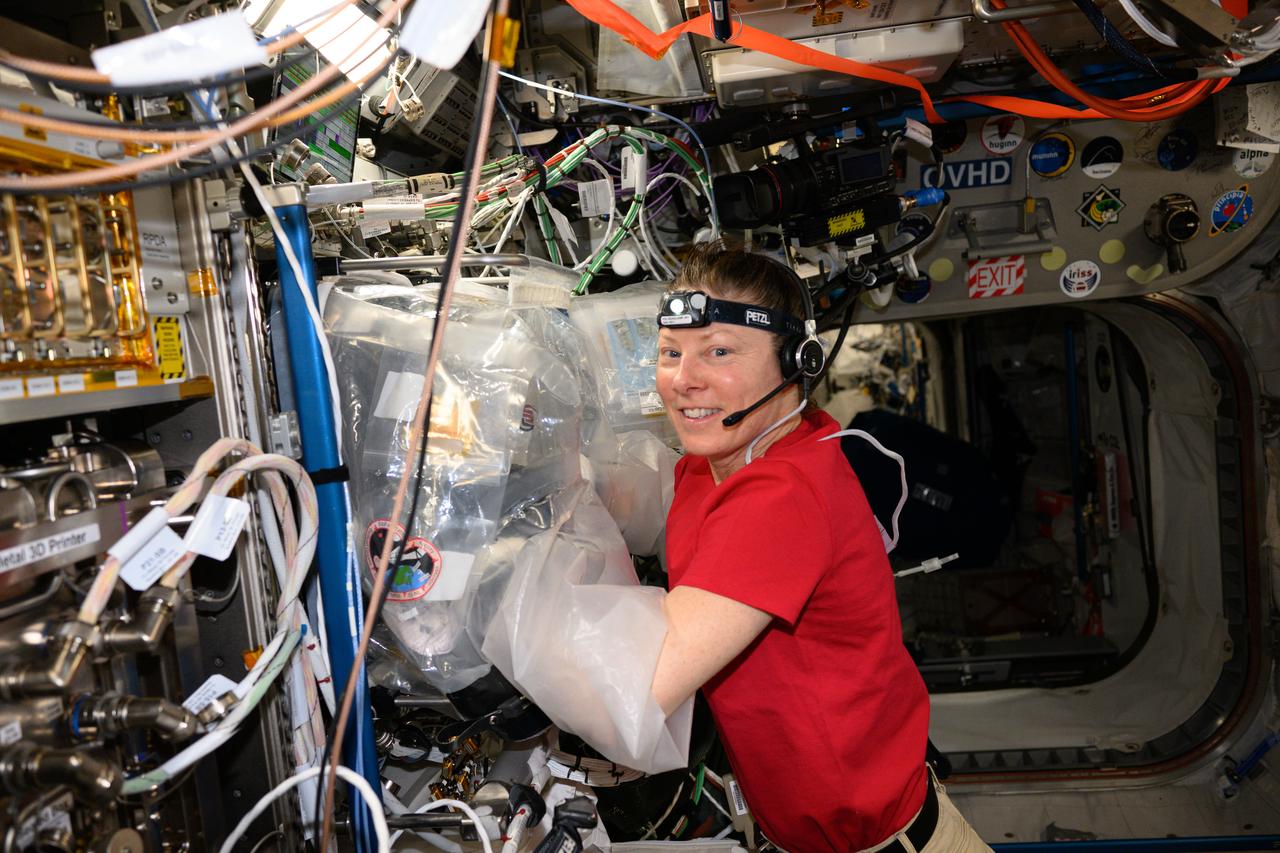
iss071e003194 (April 9, 2024) --- Expedition 71 Flight Engineer and NASA astronaut Tracy C. Dyson works in the BioFabrication Facility's portable glovebag located in the International Space Station's Columbus laboratory module. She was working on the Redwire Cardiac Bioprinting Investigation that may offer the ability to print food and medicines for future space crews. Results may also enable the bioprinting of replacement organs and tissues potentially alleviating the shortage of donor organs on Earth.

jsc2023e052853 (9/6/2023) --- Dr. Aaron Rodgers unboxes the BFF-Meniscus-2 investigation after its return from the International Space Station. The first human knee meniscus has been successfully 3D bioprinted in orbit using the BioFabrication Facility. This is a significant step towards developing solutions to promote recovery from musculoskeletal injuries. Image courtesy of Redwire.
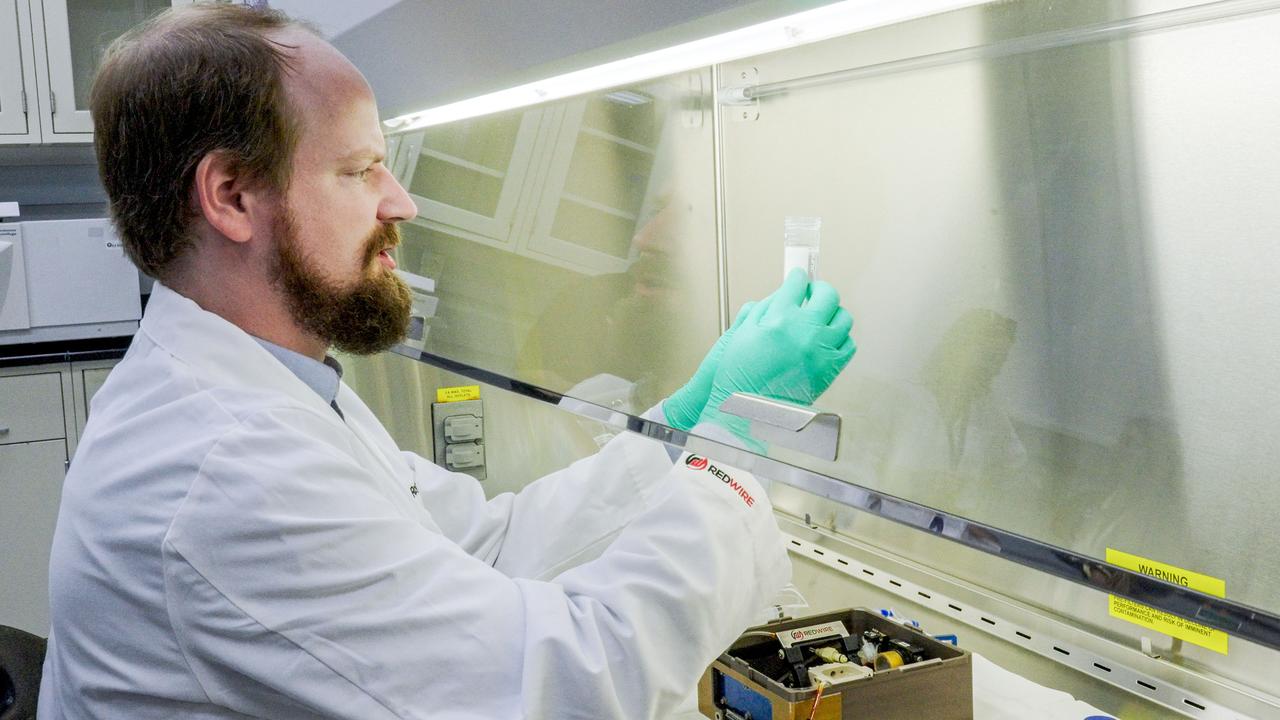
jsc2023e052854 (9/6/2023) --- Dr. Aaron Rodgers unboxes the BFF-Meniscus-2 investigation after its return from the International Space Station. The first human knee meniscus has been successfully 3D bioprinted in orbit using the BioFabrication Facility. This is a significant step towards developing solutions to promote recovery from musculoskeletal injuries. Image courtesy of Redwire.
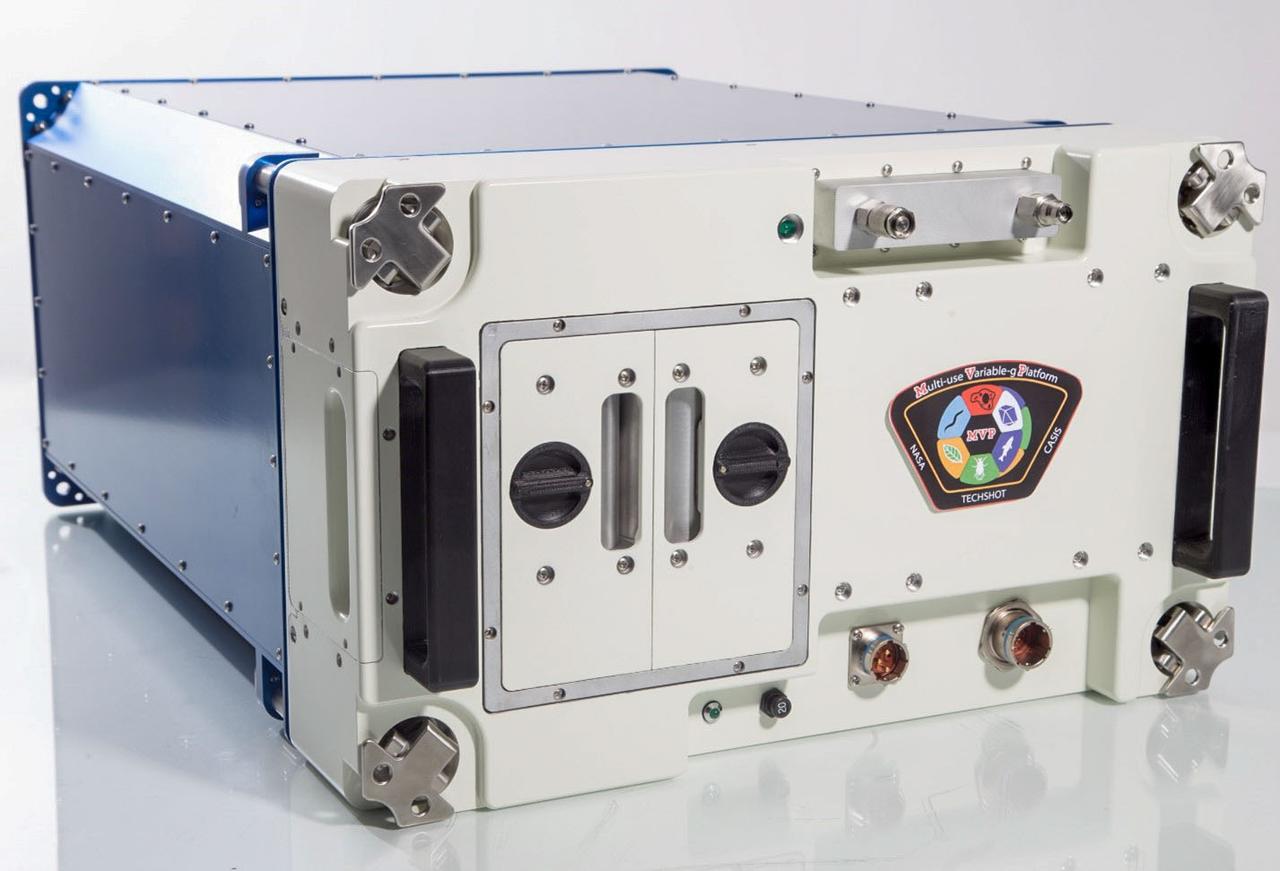
jsc2026e005498 (February 04, 2026) -- The Multi-use Variable-g Platform (MVP) facility is shown which houses up to 12 science modules. Pictured are two installed consumable modules that may be used for minor environmental control, such as desiccation, carbon dioxide control, and ethylene scrubbing. Power and data connectors allow ground control to monitor the health and status of the unit. Credit: Grant Vellinger, Redwire.
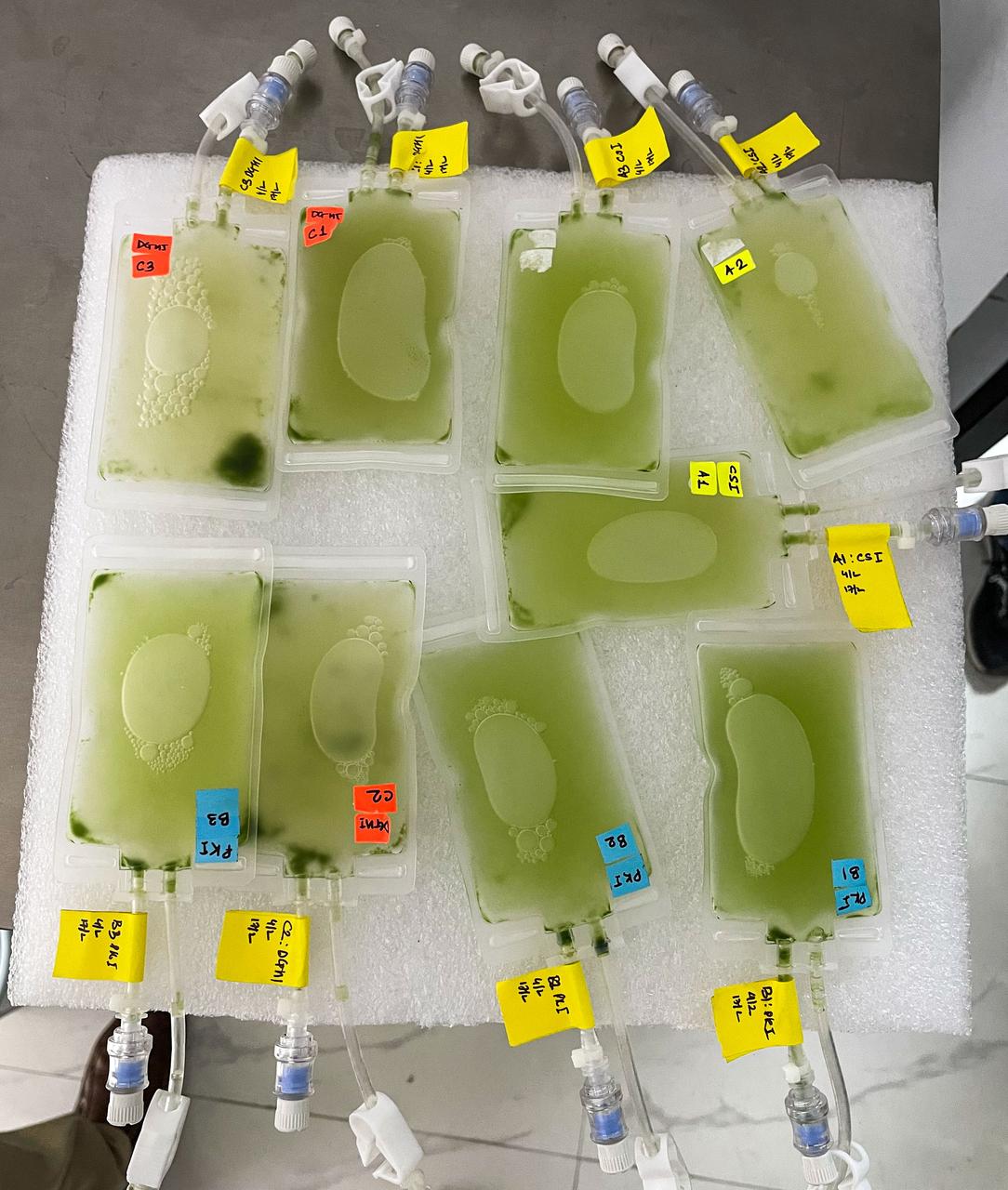
jsc2025e037099 (2/27/2025) --- Cell culture bags are shown filled with microalgae and growth media at the International Centre for Genetic Engineering and Biotechnology (ICGEB). Impact of Microgravity in the ISS on Edible Microalgae (Space Microalgae - ISRO) studies how the environment, microgravity, and increased radiation on the International Space Station affect algae growth and production. Image courtesy of Redwire.Cell culture bags are shown filled with microalgae and growth media at the International Centre for Genetic Engineering and Biotechnology (ICGEB). Impact of Microgravity in the ISS on Edible Microalgae (Space Microalgae - ISRO) studies how the environment, microgravity, and increased radiation on the International Space Station affect algae growth and production. Image courtesy of Redwire.
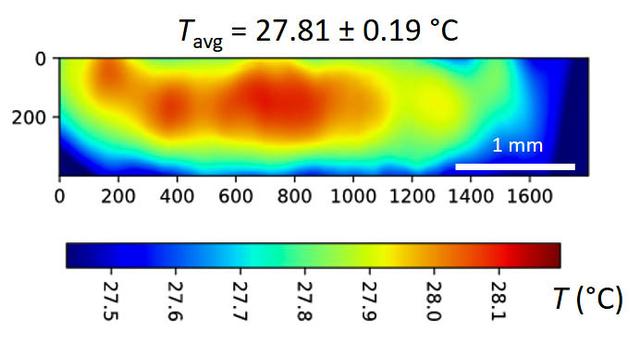
jsc2024e065172 (10/3/2024) --- A temperature map is seen within a microgel suspension illuminated by the Colloidal Solids (COLIS) near infrared laser (NIR). Reference ground tests for the Colloidal Solids (COLIS) investigation show spatial variation of the sample temperature while illuminating an aqueous, dense suspension of thermosensitive microgels with a 0.5 s pulse of NIR laser light. The NIR beam propagates from left to right. The sample temperature with no NIR laser is uniform and set to 27°C. The temperature values are inferred from the change in scattered intensity at a scattering angle of 90°, as recorded by one of the complementary metal-oxide-semiconductor (CMOS) cameras of COLIS. Results from this investigation are expected to provide a deeper understanding of soft solid interactions with gravity and microgravity, paving the way for the design of new materials. Image courtesy of Redwire Space Laboratories, Kruibeke – Belgium.
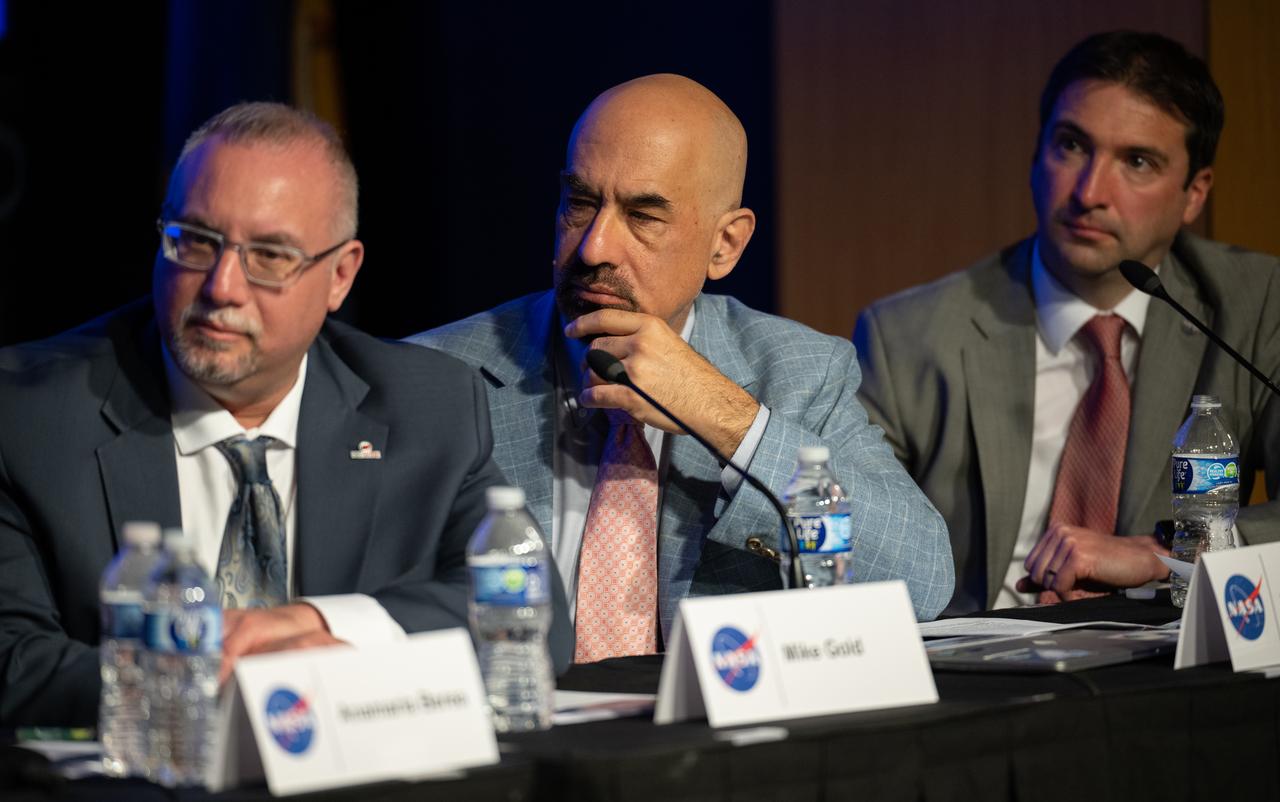
Mike Gold, chief growth officer at Redwire, left, David Spergel, chair of NASA's independent study on unidentified anomalous phenomena and President of the Simons Foundation, center, and Daniel Evans, assistant deputy associate administrator for Research in NASA's Science Mission Directorate, right, are seen during a public meeting of NASA’s unidentified anomalous phenomena (UAP) independent study team, Wednesday, May 31, 2023 at the Mary W. Jackson NASA Headquarters building in Washington. The UAP independent study team is a counsel of 16 community experts across diverse areas on matters relevant to potential methods of study for unidentified anomalous phenomena. NASA commissioned the nine-month study to examine UAP from a scientific perspective and create a roadmap for how to use data and the tools of science to move our understanding of UAP forward. Photo Credit: (NASA/Joel Kowsky)
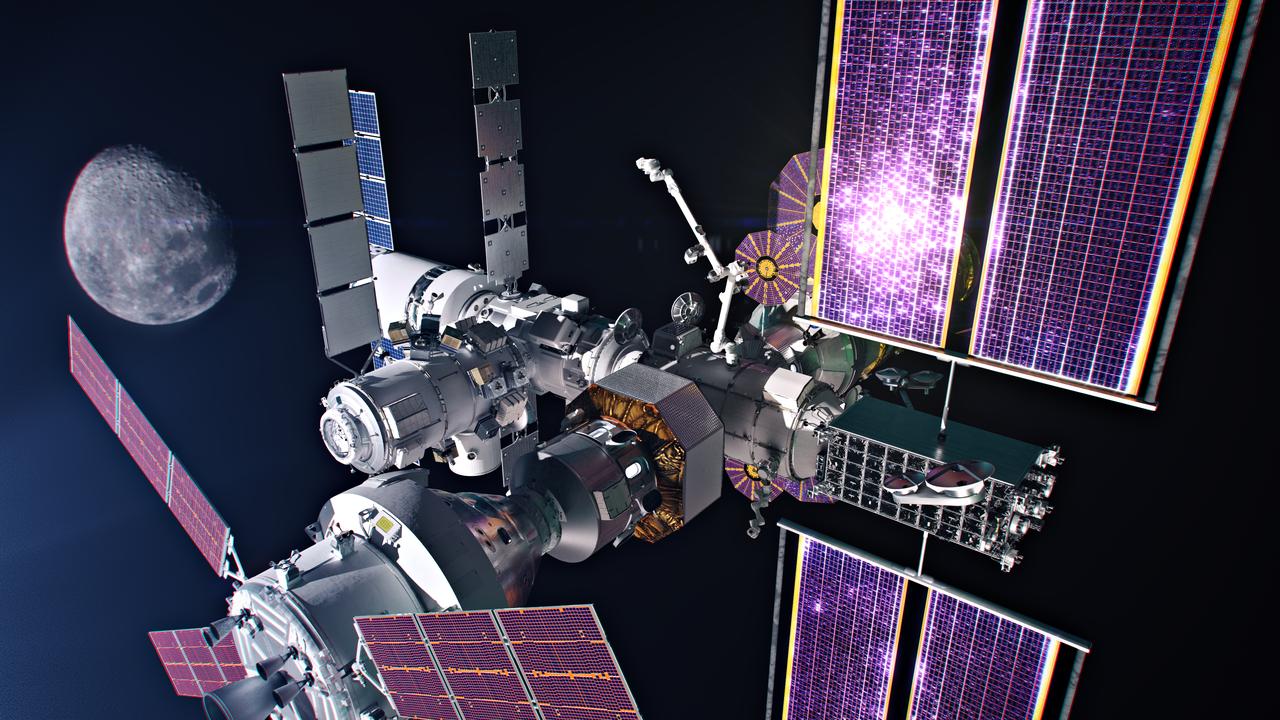
The Gateway space station will be humanity's first space station around the Moon as a vital component of the Artemis missions to return humans to the lunar surface for scientific discovery and chart the path for the first human missions to Mars. Astronauts on Gateway will be the first humans to call deep space home during missions where they will use Gateway to conduct science and prepare for lunar surface missions.