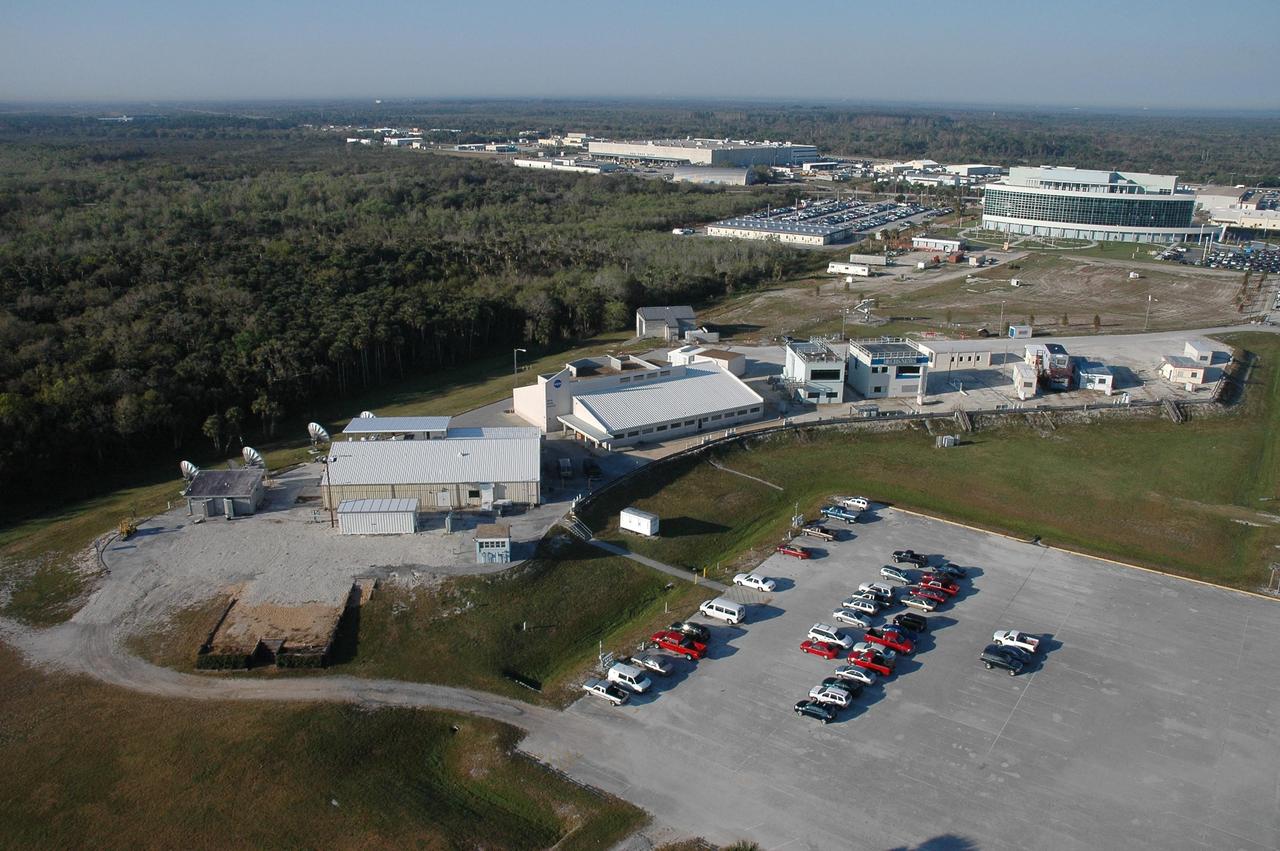
KENNEDY SPACE CENTER, FLA. - This aerial view shows the Press Site (in the foreground) comprising the NASA TV studio, the NASA News Center behind it, buildings used by local NBC and CBS television stations, and newly erected prefabricated buildings for local newspapers and correspondents for CNN, AP and others. A year-long project removed and replaced hurricane-damaged trailers and grandstands from the site. In the background, at right, is the newly built Operations Support Building II, which replaced modular housing and trailers in the Launch Complex 39 area. Photo credit: Cory Huston
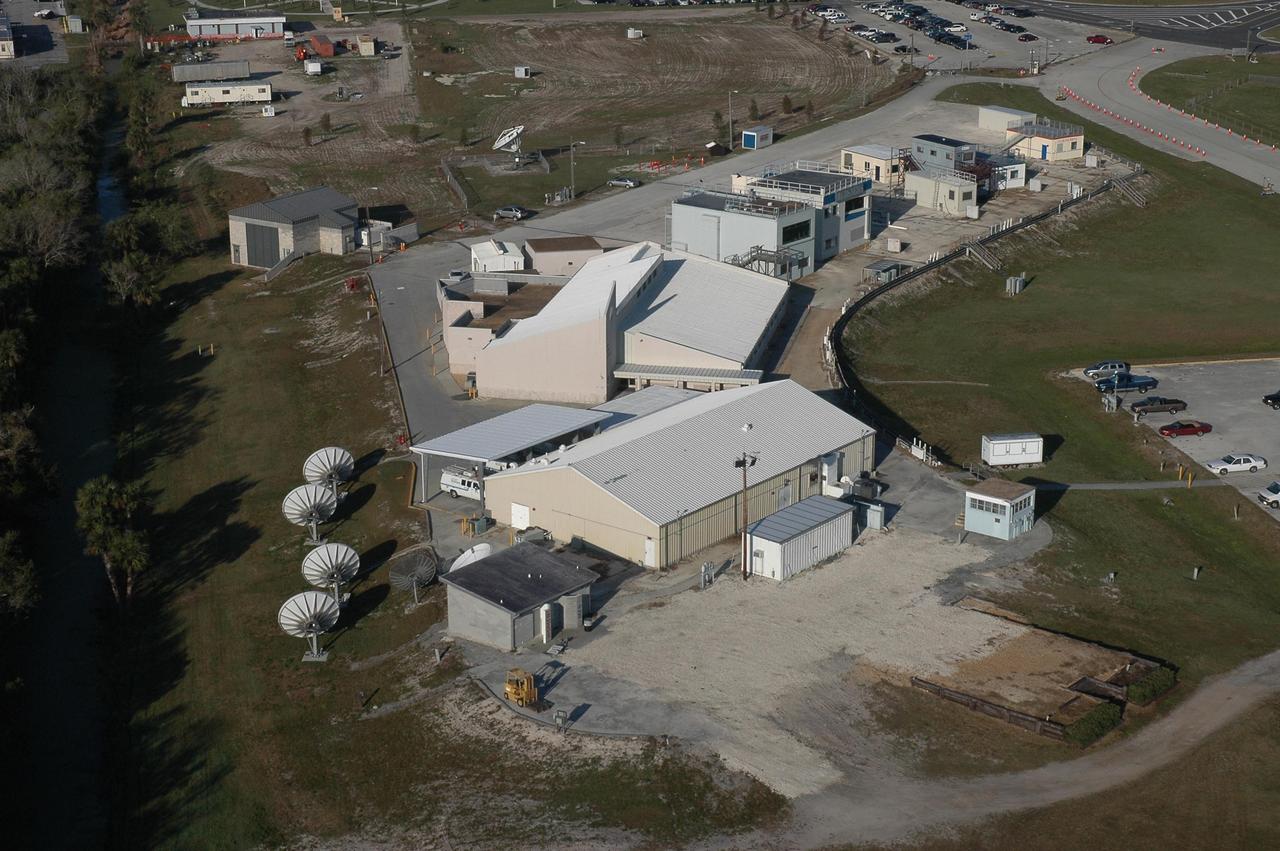
KENNEDY SPACE CENTER, FLA. - This aerial view of the Press Site shows the NASA TV studio (foreground), the NASA News Center behind it, buildings used by local NBC and CBS television stations, and newly erected prefabricated buildings for local newspapers and correspondents for CNN, AP and others. A year-long project removed and replaced hurricane-damaged trailers and grandstands from the site. Photo credit: Cory Huston

CAPE CANAVERAL, Fla. – Kennedy Space Center in Florida, the orbiter access arm, with the White Room on the end, is placed on a trailer. The arm was removed from the fixed service structure for the pad's conversion as launch site for the Constellation Program's Ares I-X. The launch of the Ares I-X flight test is targeted for August 2009. Photo credit: NASA/Kim Shiflett
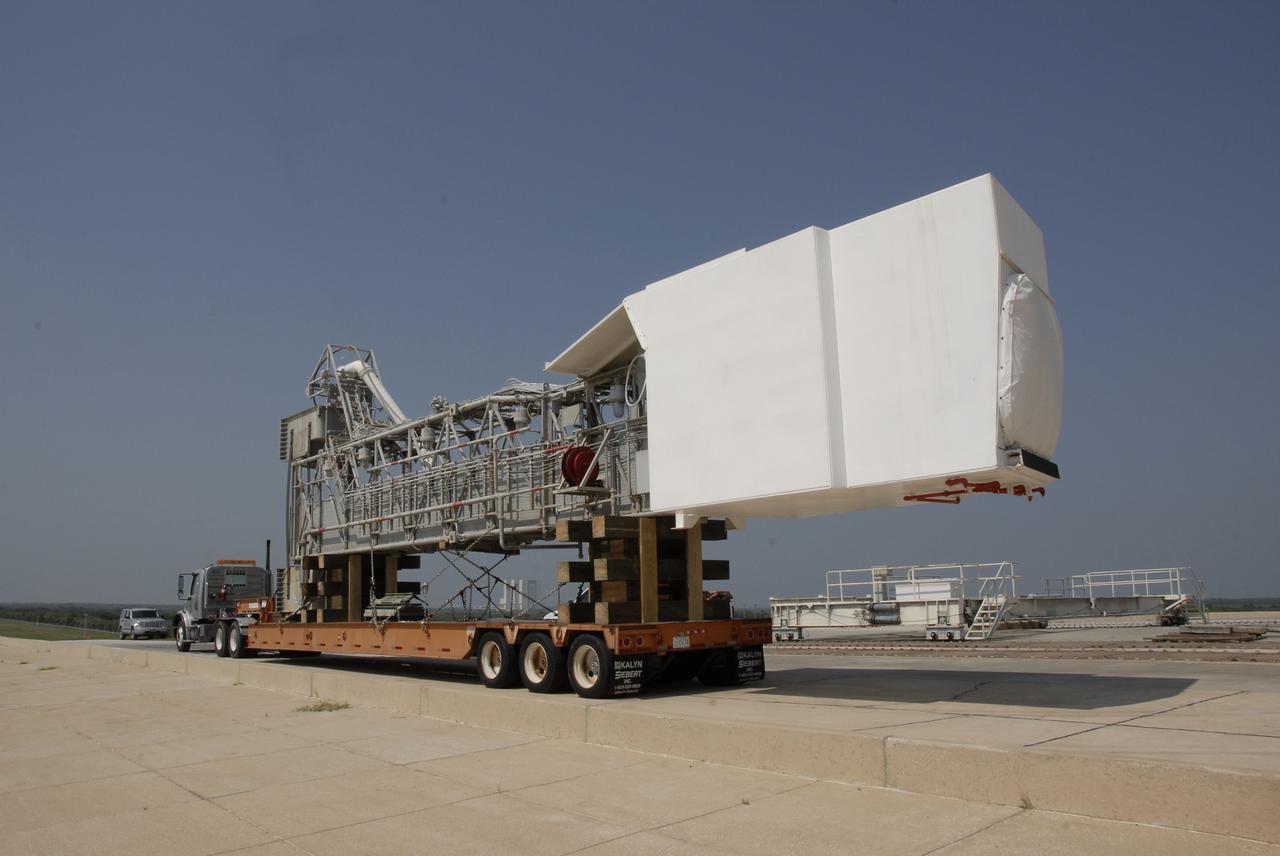
CAPE CANAVERAL, Fla. – The orbiter access arm, with the White Room on the end, leaves Launch Pad 39B on a trailer at NASA's Kennedy Space Center in Florida. The arm was removed from the fixed service structure for the pad's conversion as launch site for the Constellation Program's Ares I-X. The launch of the Ares I-X flight test is targeted for August 2009. Photo credit: NASA/Kim Shiflett
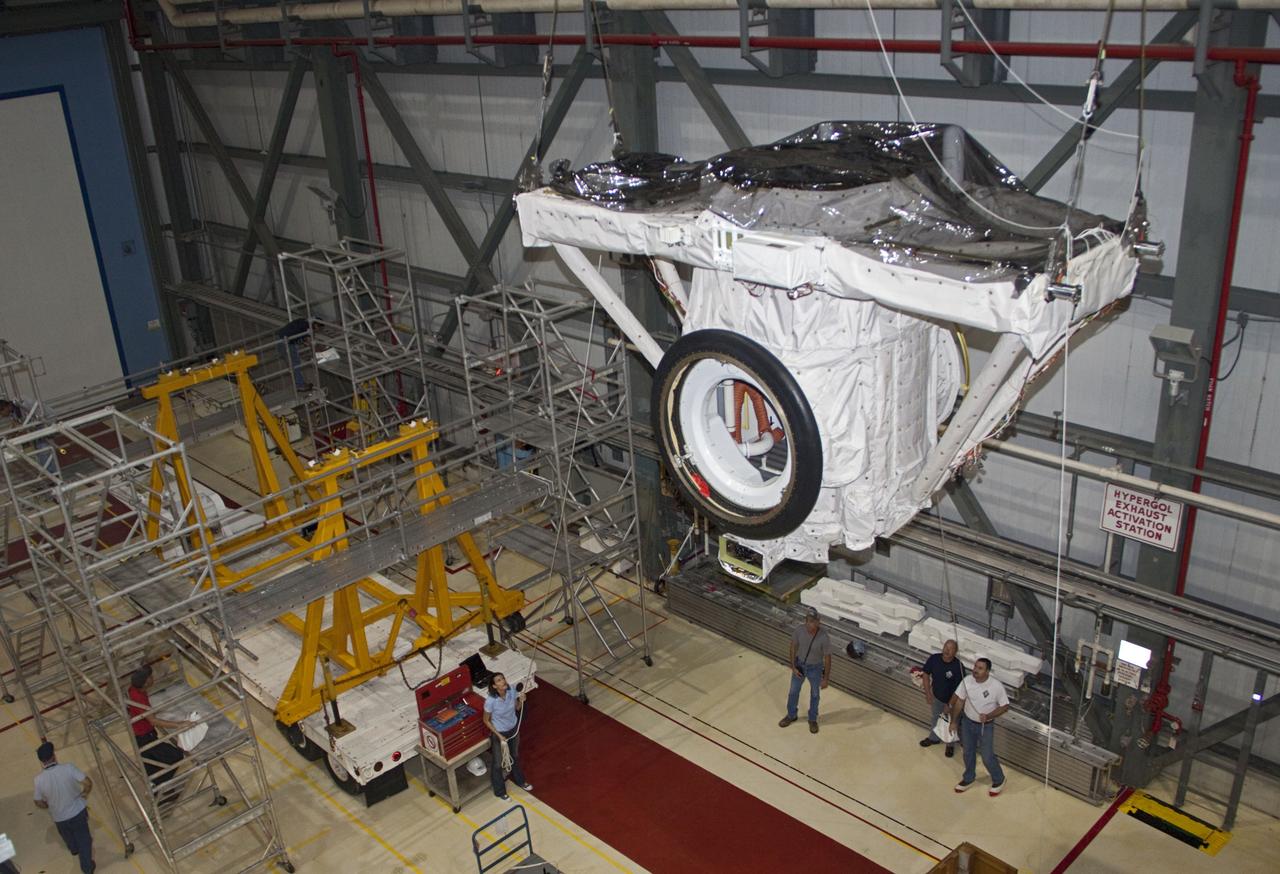
CAPE CANAVERAL, Fla. – A crane moves the airlock from the cargo bay of space shuttle Atlantis to a waiting trailer in Orbiter Processing Facility-2 at NASA's Kennedy Space Center in Florida. The airlock was the connecting point between the shuttle and International Space Station. It was removed as part of the ongoing work to prepare the shuttles for public display. The shuttle is being prepared for display at the Kennedy Space Center Visitor Complex. Photo credit: NASA/Jim Grossmann
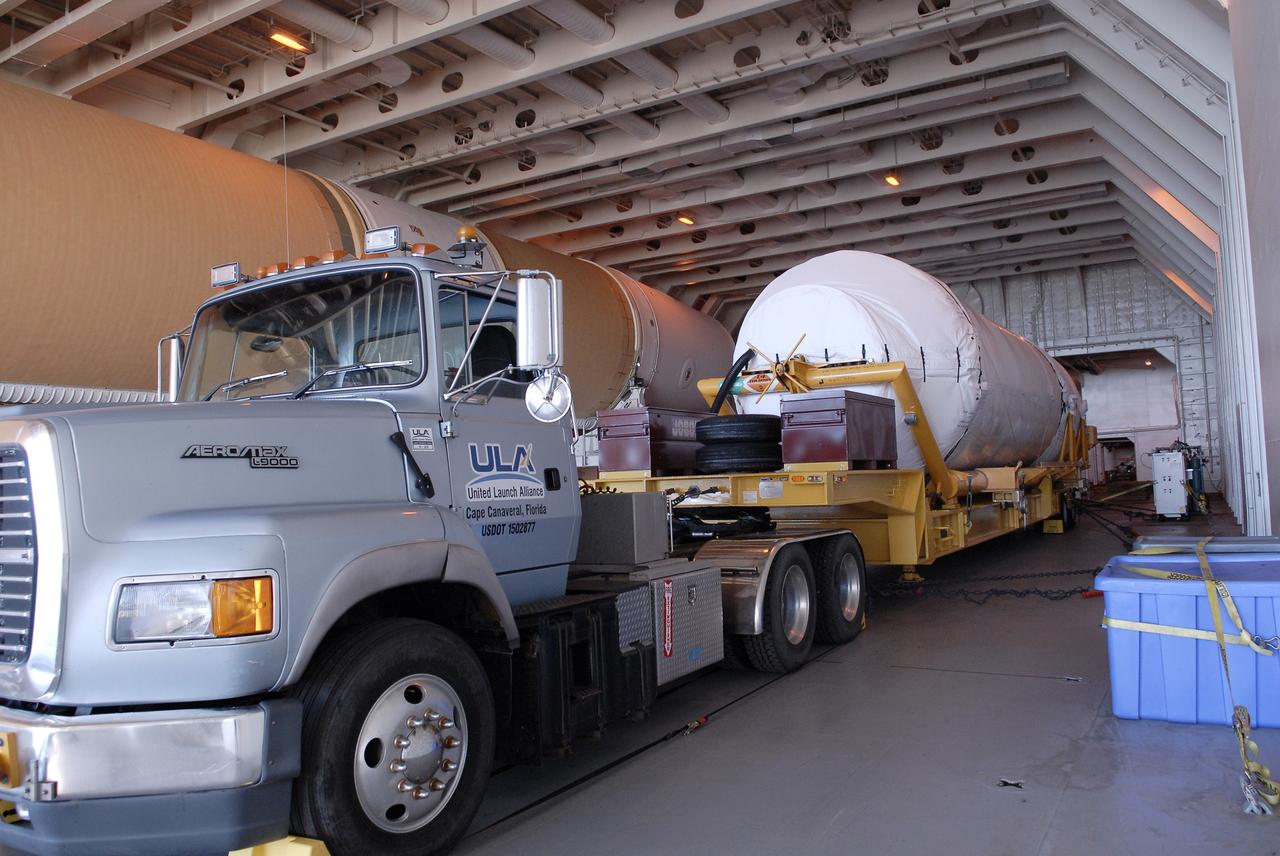
CAPE CANAVERAL, Fla. – The Centaur upper stage sits on its transport trailer inside the Delta Mariner at Port Canaveral. The upper stage is destined to help launch the Radiation Belt Storm Probes, or RBSP, mission. It was removed from the ship and taken to the Atlas Spaceflight Operations Center, or ASOC, to begin checkout for the launch. Photo credit: NASA/Charisse Nahser
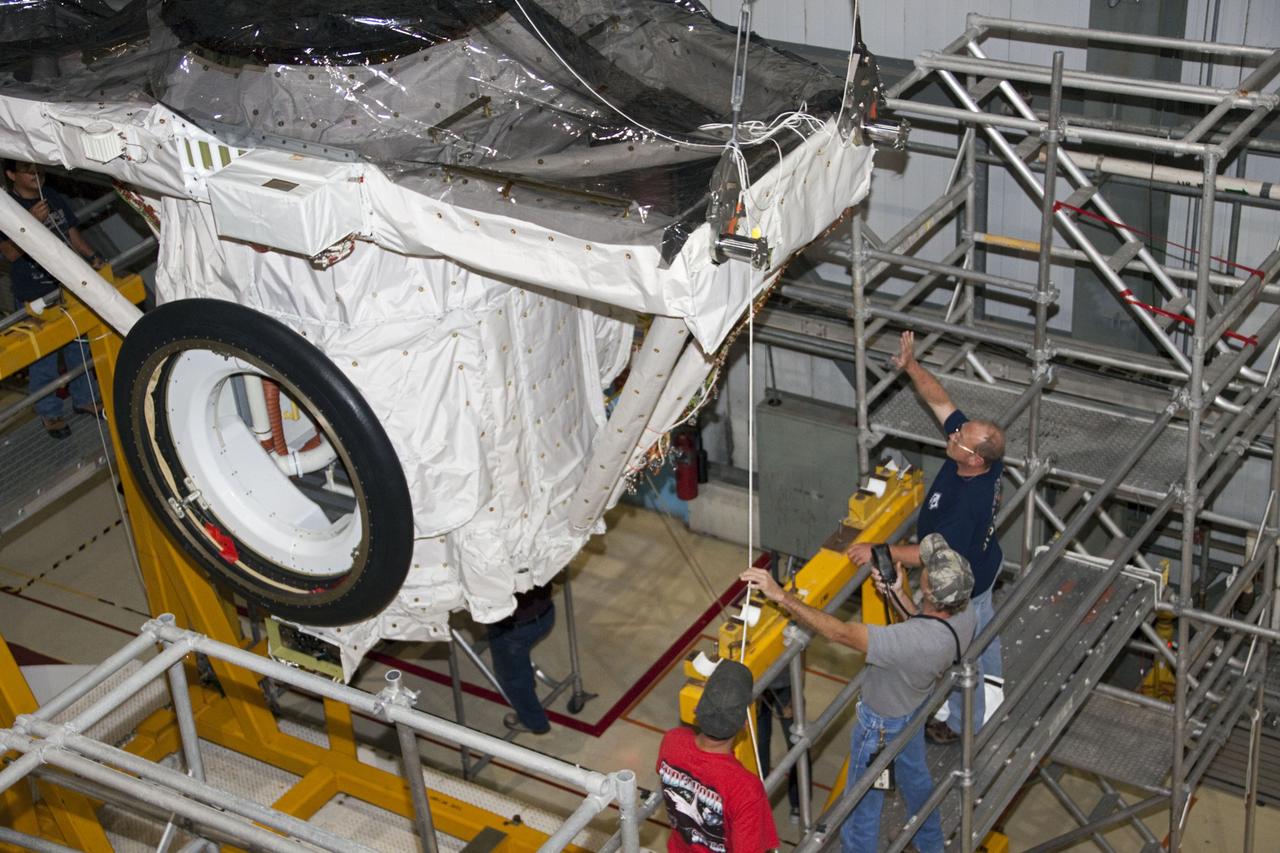
CAPE CANAVERAL, Fla. – A crane moves the airlock from the cargo bay of space shuttle Atlantis to a waiting trailer in Orbiter Processing Facility-2 at NASA's Kennedy Space Center in Florida. The airlock was the connecting point between the shuttle and International Space Station. It was removed as part of the ongoing work to prepare the shuttles for public display. The shuttle is being prepared for display at the Kennedy Space Center Visitor Complex. Photo credit: NASA/Jim Grossmann
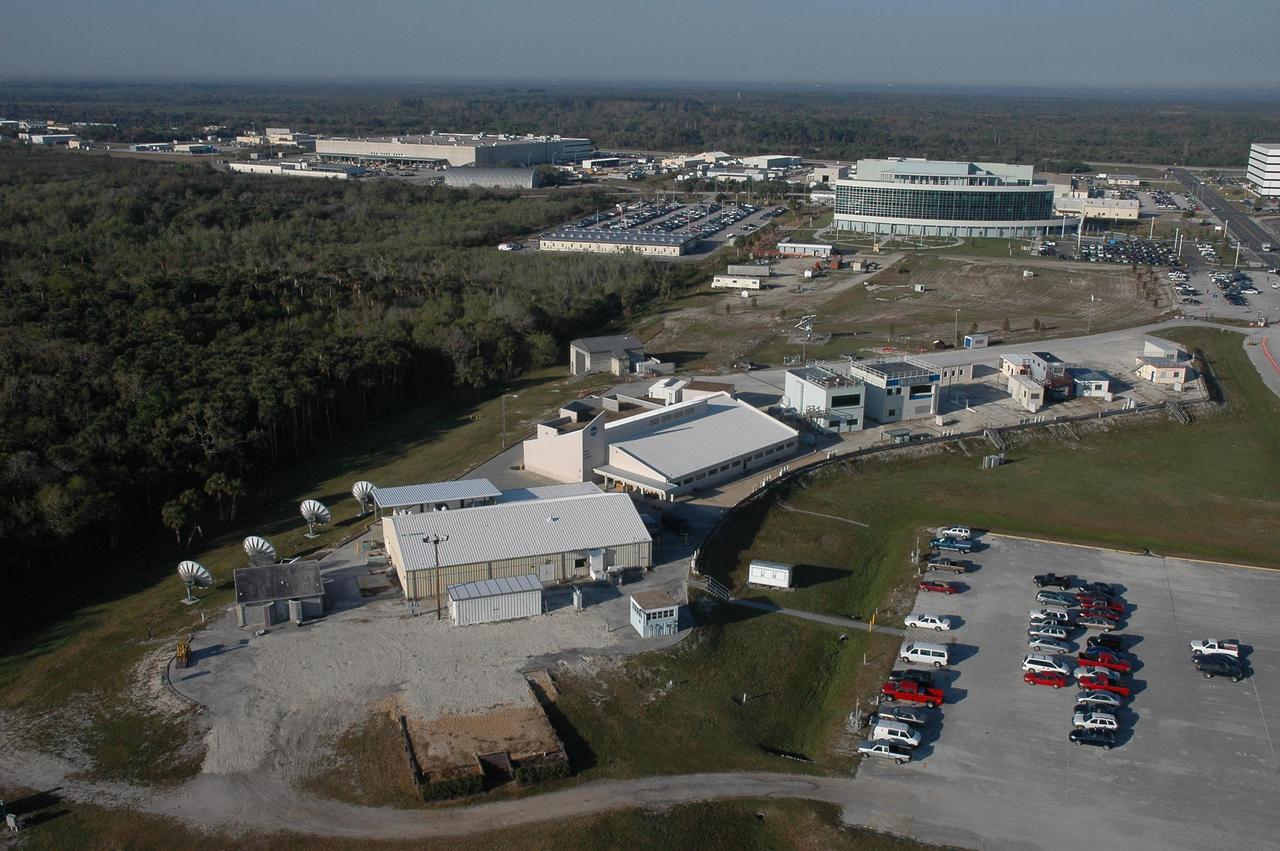
KENNEDY SPACE CENTER, FLA. - This aerial view shows the Press Site (in the foreground) comprising the NASA TV studio, the NASA News Center behind it, buildings used by local NBC and CBS television stations, and newly erected prefabricated buildings for local newspapers and correspondents for CNN, AP and others. A year-long project removed and replaced hurricane-hazardous trailers and bleachers from the site. In the background, at right, is the newly build Operations Support Building II. Photo credit: Cory Huston
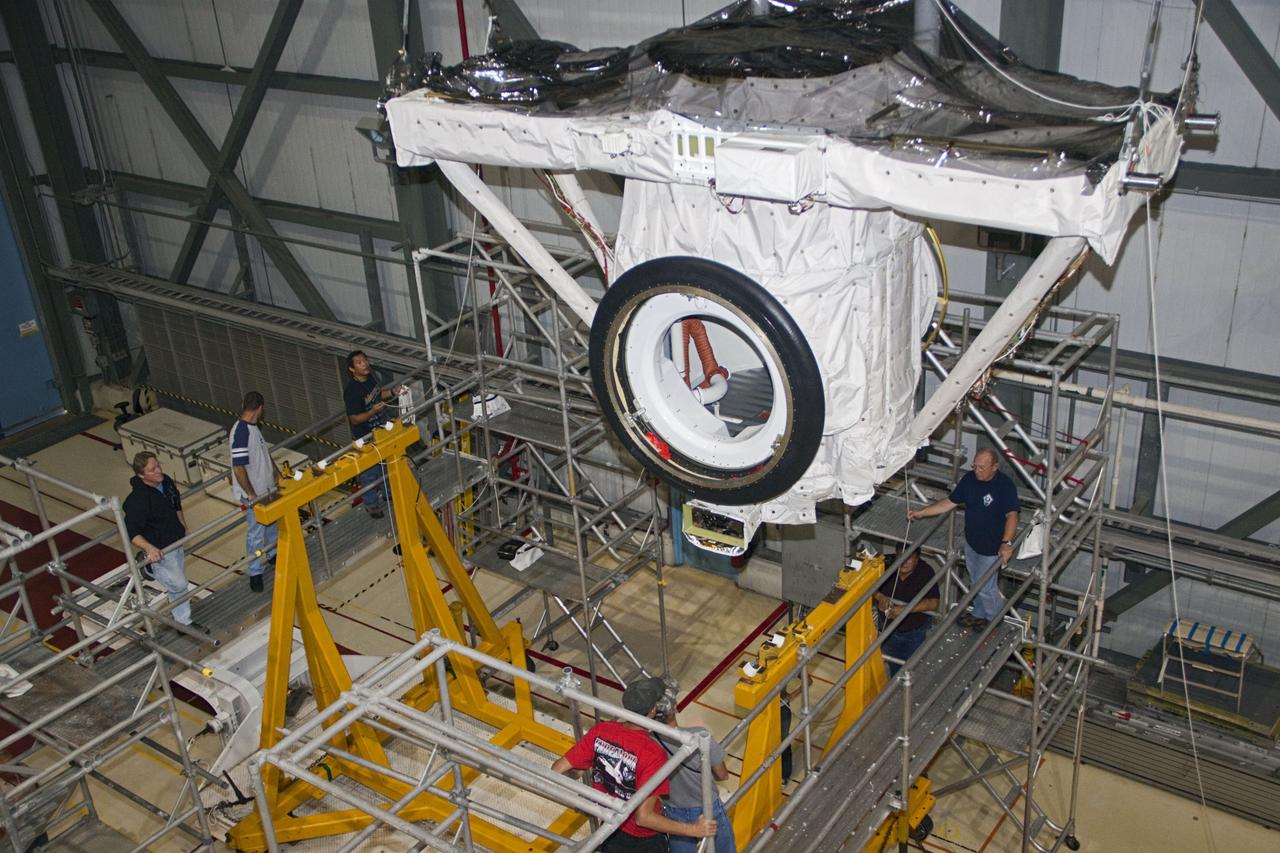
CAPE CANAVERAL, Fla. – A crane moves the airlock from the cargo bay of space shuttle Atlantis to a waiting trailer in Orbiter Processing Facility-2 at NASA's Kennedy Space Center in Florida. The airlock was the connecting point between the shuttle and International Space Station. It was removed as part of the ongoing work to prepare the shuttles for public display. The shuttle is being prepared for display at the Kennedy Space Center Visitor Complex. Photo credit: NASA/Jim Grossmann
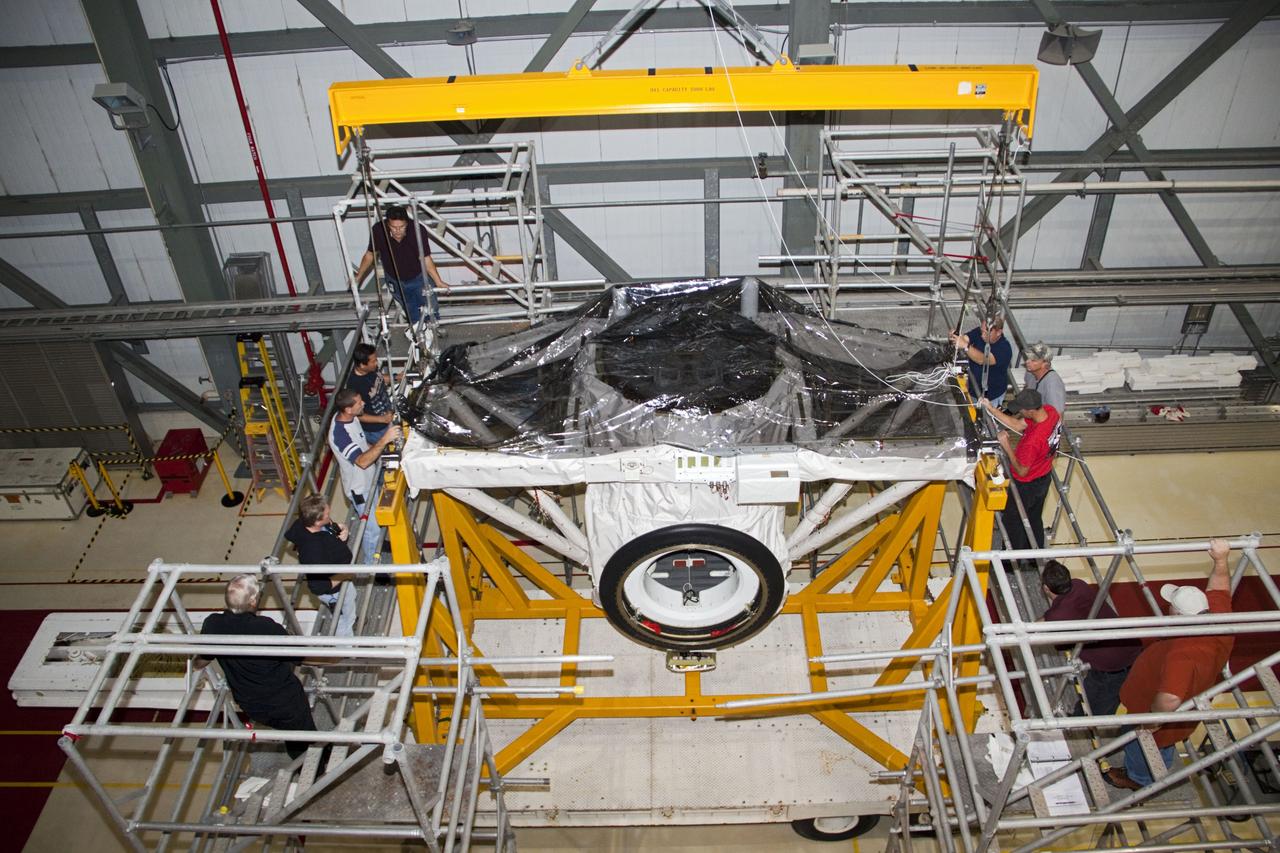
CAPE CANAVERAL, Fla. – A crane moves the airlock from the cargo bay of space shuttle Atlantis to a waiting trailer in Orbiter Processing Facility-2 at NASA's Kennedy Space Center in Florida. The airlock was the connecting point between the shuttle and International Space Station. It was removed as part of the ongoing work to prepare the shuttles for public display. The shuttle is being prepared for display at the Kennedy Space Center Visitor Complex. Photo credit: NASA/Jim Grossmann
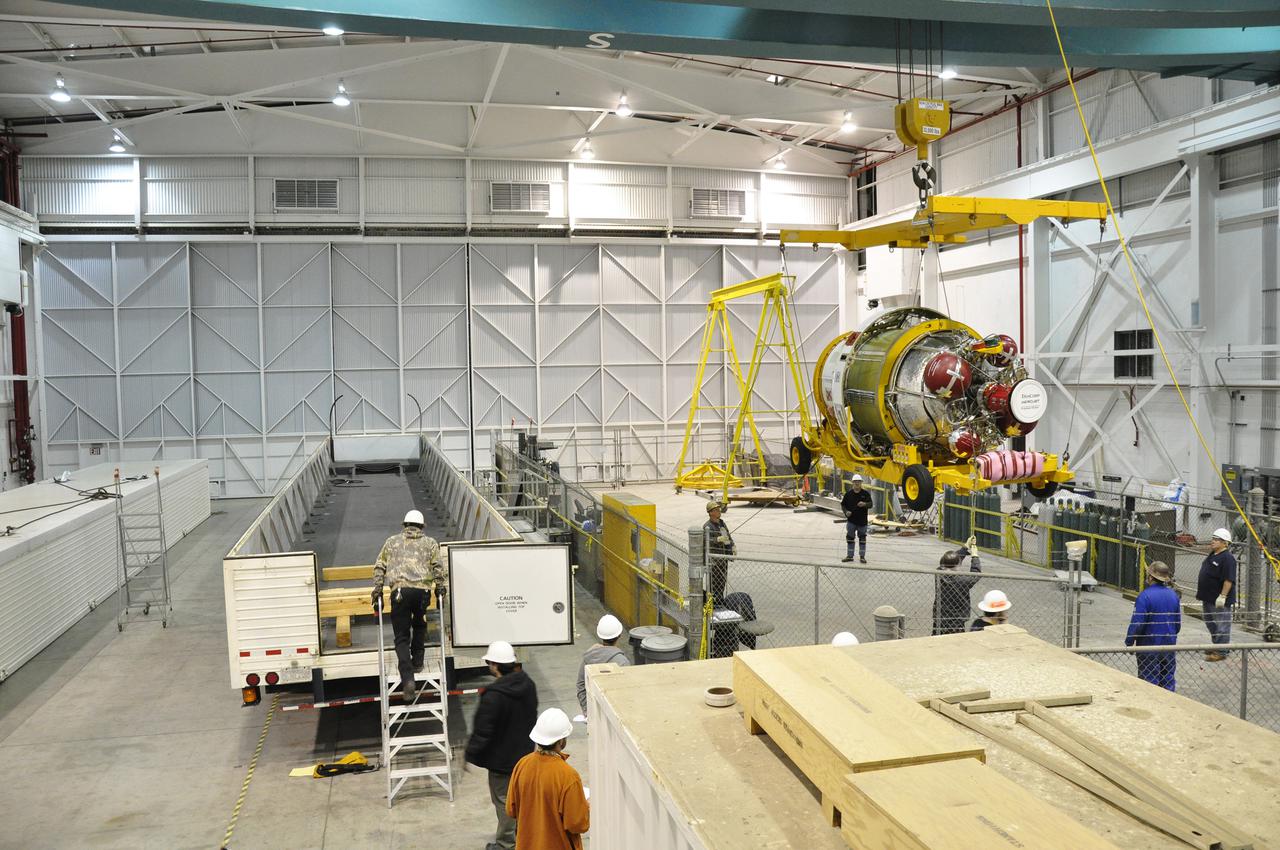
VANDENBERG AIR FORCE BASE, Calif. – The second stage for NASA's Orbiting Carbon Observatory-2 mission, or OCO-2, is suspended from the ceiling of the high bay of the Building 836 hangar on Vandenberg Air Force Base in California following its removal from the transportation trailer in which it arrived. OCO-2 is scheduled to launch aboard a United Launch Alliance Delta II rocket from Space Launch Complex 2 in July. The rocket's second stage will insert OCO-2 into a polar Earth orbit. OCO-2 will collect precise global measurements of carbon dioxide in the Earth's atmosphere and provide scientists with a better idea of the chemical compound's impacts on climate change. Scientists will analyze this data to improve our understanding of the natural processes and human activities that regulate the abundance and distribution of this important atmospheric gas. To learn more about OCO-2, visit http:__oco.jpl.nasa.gov. Photo credit: NASA_Randy Beaudoin
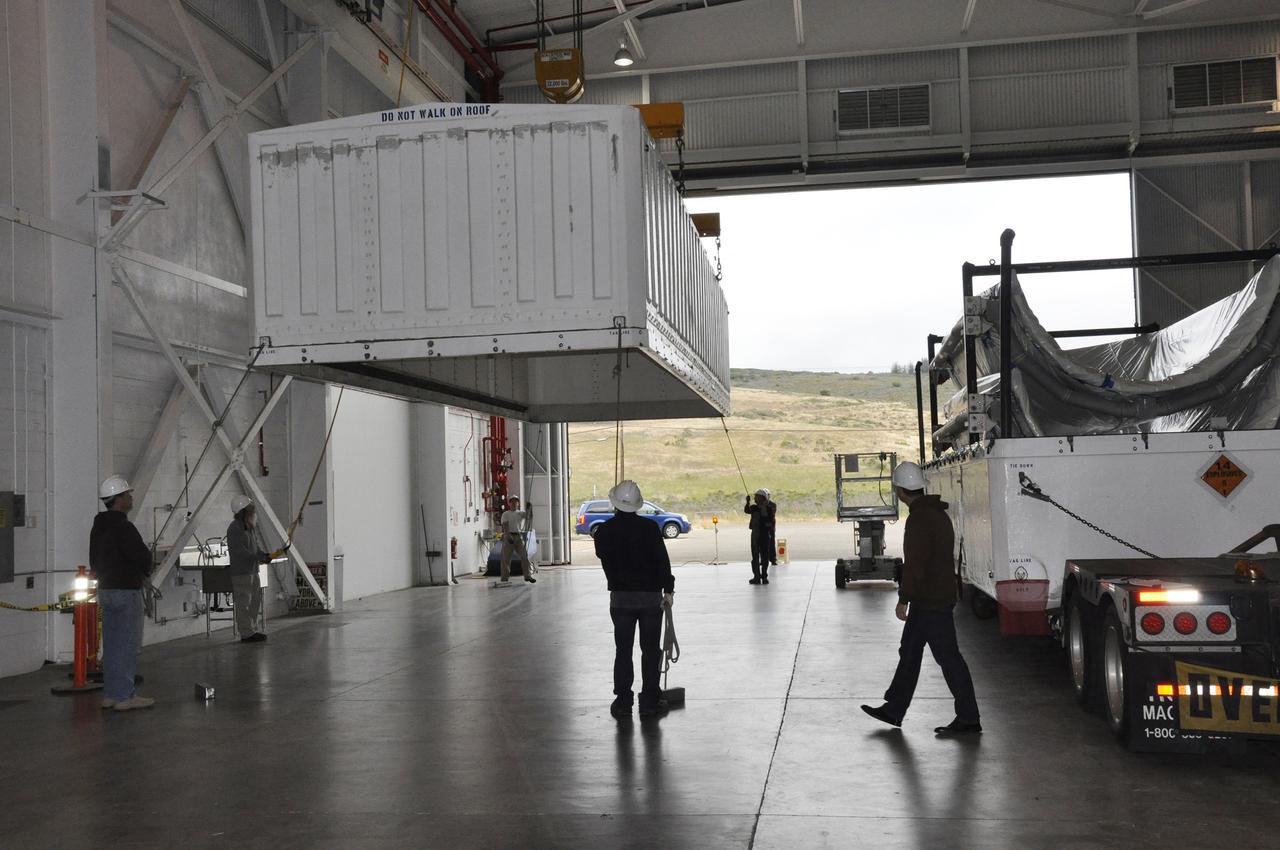
VANDENBERG AIR FORCE BASE, Calif. – The lid is removed from the transportation trailer containing the fairing for NASA's Soil Moisture Active Passive mission, or SMAP, in the Building 836 high bay on Vandenberg Air Force Base in California. The fairing will protect the SMAP spacecraft from the heat and aerodynamic pressure generated during its ascent to orbit aboard a United Launch Alliance Delta II rocket from Space Launch Complex 2. SMAP will provide global measurements of soil moisture and its freeze/thaw state. These measurements will be used to enhance understanding of processes that link the water, energy and carbon cycles, and to extend the capabilities of weather and climate prediction models. SMAP data will also be used to quantify net carbon flux in boreal landscapes and to develop improved flood prediction and drought monitoring capabilities. Launch is scheduled for November 2014. To learn more about SMAP, visit http://smap.jpl.nasa.gov. Photo credit: NASA/Randy Beaudoin
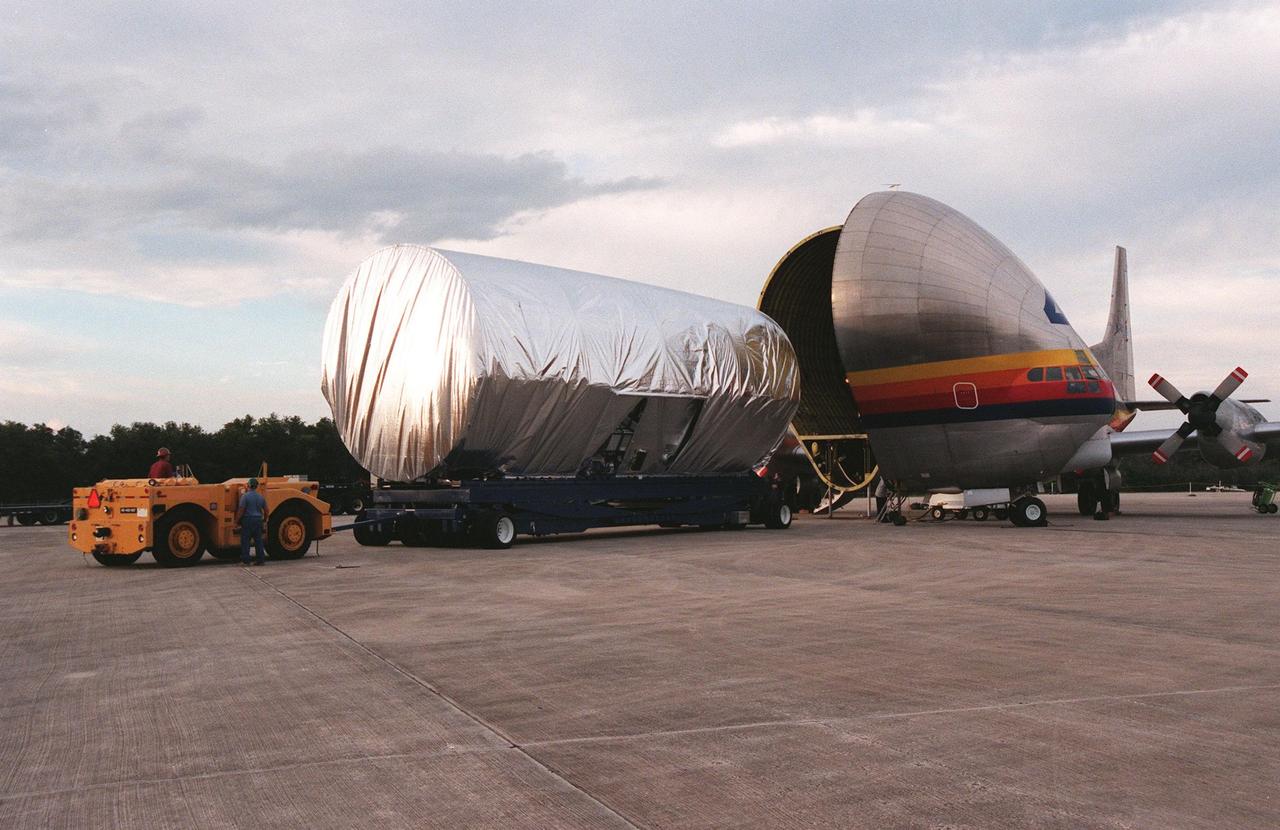
KENNEDY SPACE CENTER, FLA. -- The canister containing the U.S. laboratory module, intended for the International Space Station, sits on a flatbed trailer after being removed from NASA's "Super Guppy" aircraft that brought it from Marshall Space Flight Center, Huntsville. The lab is being transferred to the Space Station Processing Facility for pre-launch preparations. Scheduled for launch aboard the Shuttle Endeavour on mission STS-98, the laboratory comprises three cylindrical sections with two end cones. Each end-cone contains a hatch opening for entering and exiting the lab. The lab will provide a shirtsleeve environment for research in the areas of life science, microgravity science, Earth science and space science. Designated Flight 5A, this mission is targeted for launch in early 2000
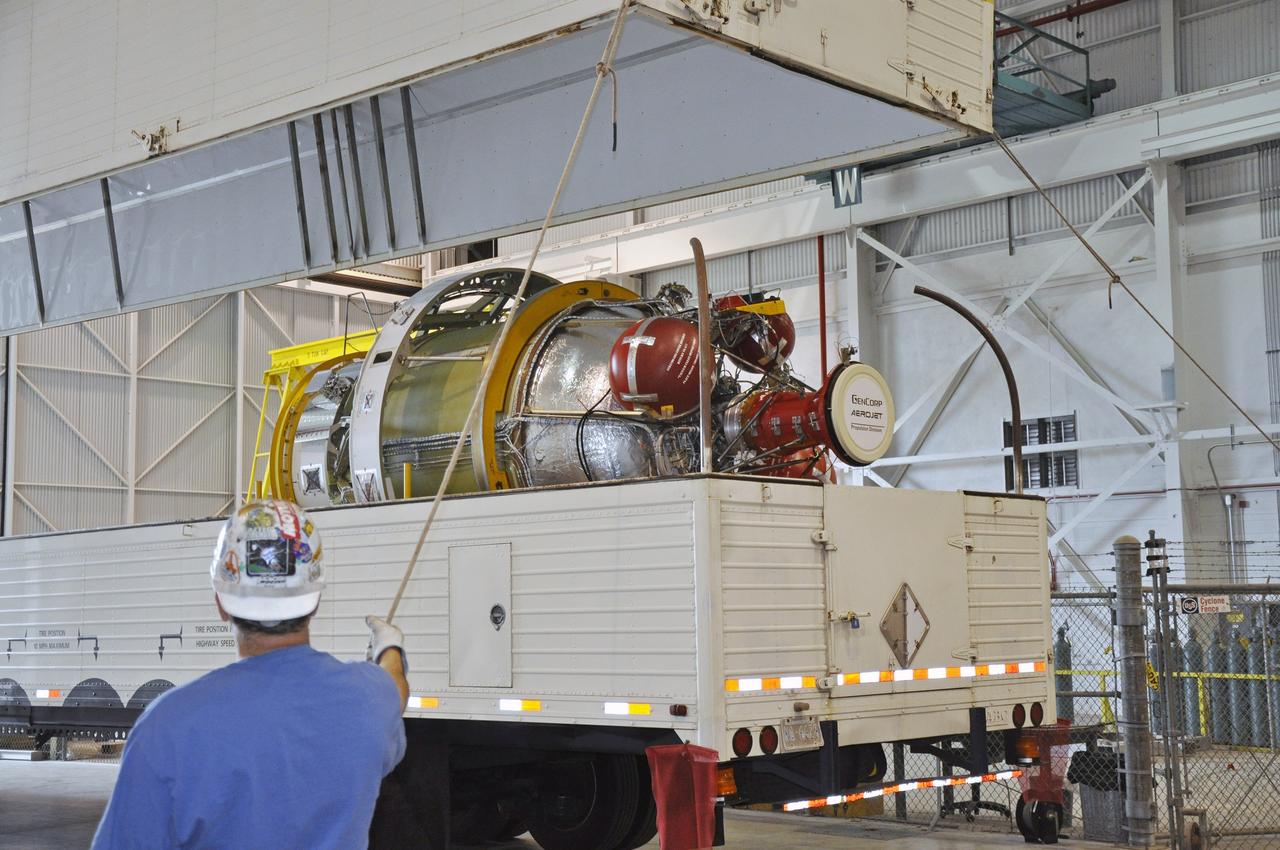
VANDENBERG AIR FORCE BASE, Calif. – The lid is removed from the transportation trailer containing the second stage, or upper stage, of a United Launch Alliance Delta II rocket in the Building 836 hangar on south Vandenberg Air Force Base in California. The Delta II rocket will be used to deliver NASA's Soil Moisture Active Passive mission, or SMAP, into orbit from Vandenberg's Space Launch Complex 2. SMAP will provide global measurements of soil moisture and its freeze/thaw state. These measurements will be used to enhance understanding of processes that link the water, energy and carbon cycles, and to extend the capabilities of weather and climate prediction models. SMAP data also will be used to quantify net carbon flux in boreal landscapes and to develop improved flood prediction and drought monitoring capabilities. Launch is scheduled for November 2014. To learn more about SMAP, visit http://smap.jpl.nasa.gov. Photo credit: NASA/Randy Beaudoin
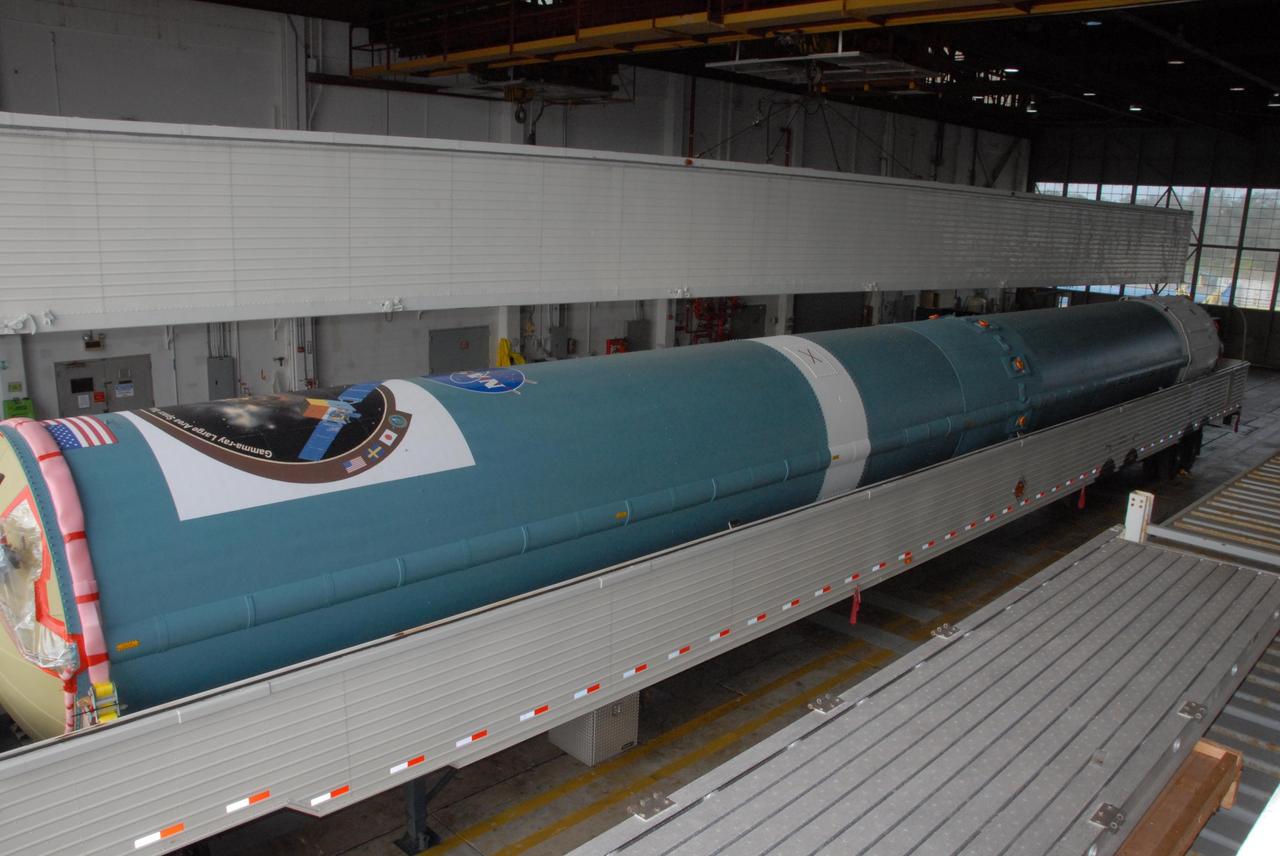
KENNEDY SPACE CENTER, FLA. -- In Hangar M on Cape Canaveral Air Force Station in Florida, the United Launch Alliance Delta II first stage is revealed after the cover was removed from the truck trailer that delivered it. The Delta rocket will be used to launch the Gamma-Ray Large Area Space Telescope, or GLAST, in May from Launch Pad 17-B on CCAFS. The GLAST is a powerful space observatory that will explore the Universe's ultimate frontier, where nature harnesses forces and energies far beyond anything possible on Earth; probe some of science's deepest questions, such as what our Universe is made of, and search for new laws of physics; explain how black holes accelerate jets of material to nearly light speed; and help crack the mystery of stupendously powerful explosions known as gamma-ray bursts. Photo credit: NASA/George Shelton
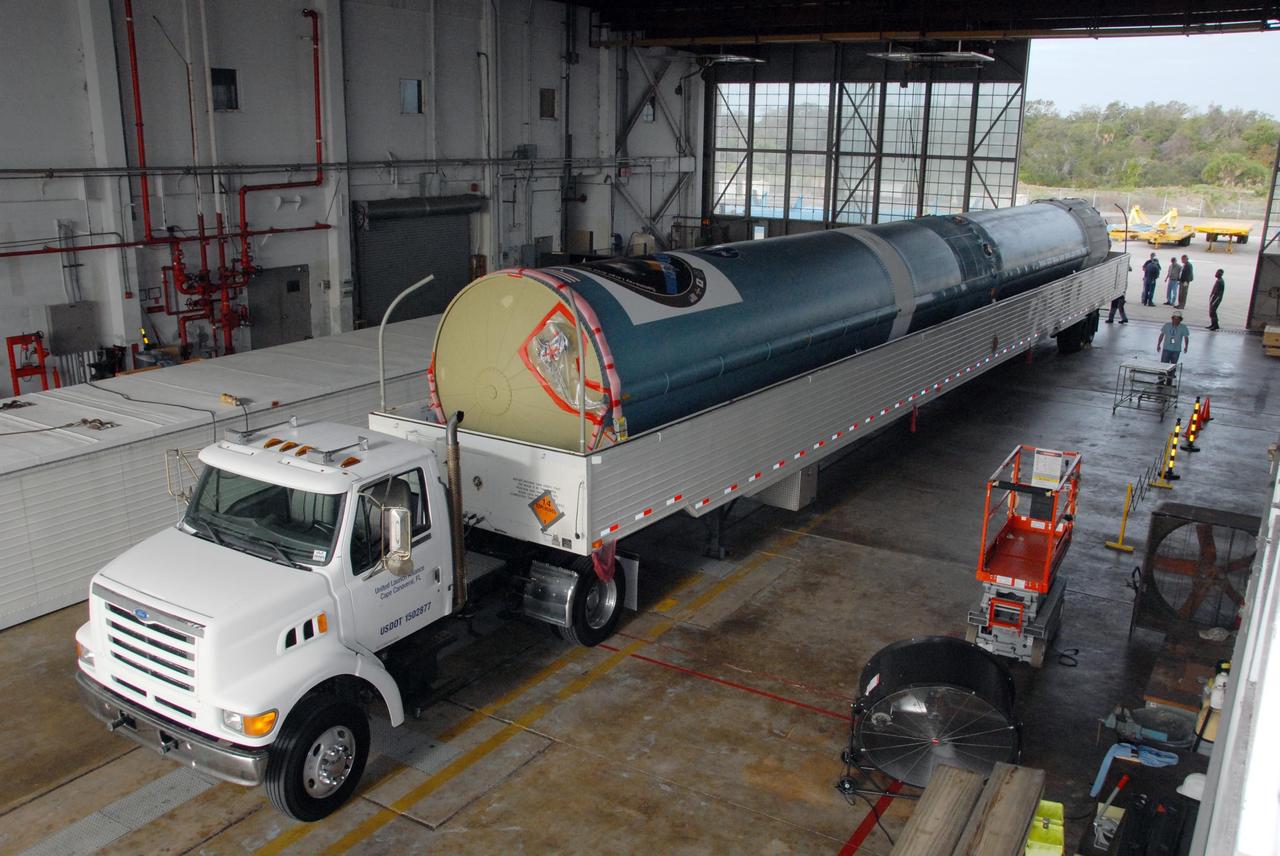
KENNEDY SPACE CENTER, FLA. -- In Hangar M on Cape Canaveral Air Force Station in Florida, the United Launch Alliance Delta II first stage is revealed after the cover was removed from the truck trailer that delivered it. The Delta rocket will be used to launch the Gamma-Ray Large Area Space Telescope, or GLAST, in May from Launch Pad 17-B on CCAFS. The GLAST is a powerful space observatory that will explore the Universe's ultimate frontier, where nature harnesses forces and energies far beyond anything possible on Earth; probe some of science's deepest questions, such as what our Universe is made of, and search for new laws of physics; explain how black holes accelerate jets of material to nearly light speed; and help crack the mystery of stupendously powerful explosions known as gamma-ray bursts. Photo credit: NASA/George Shelton
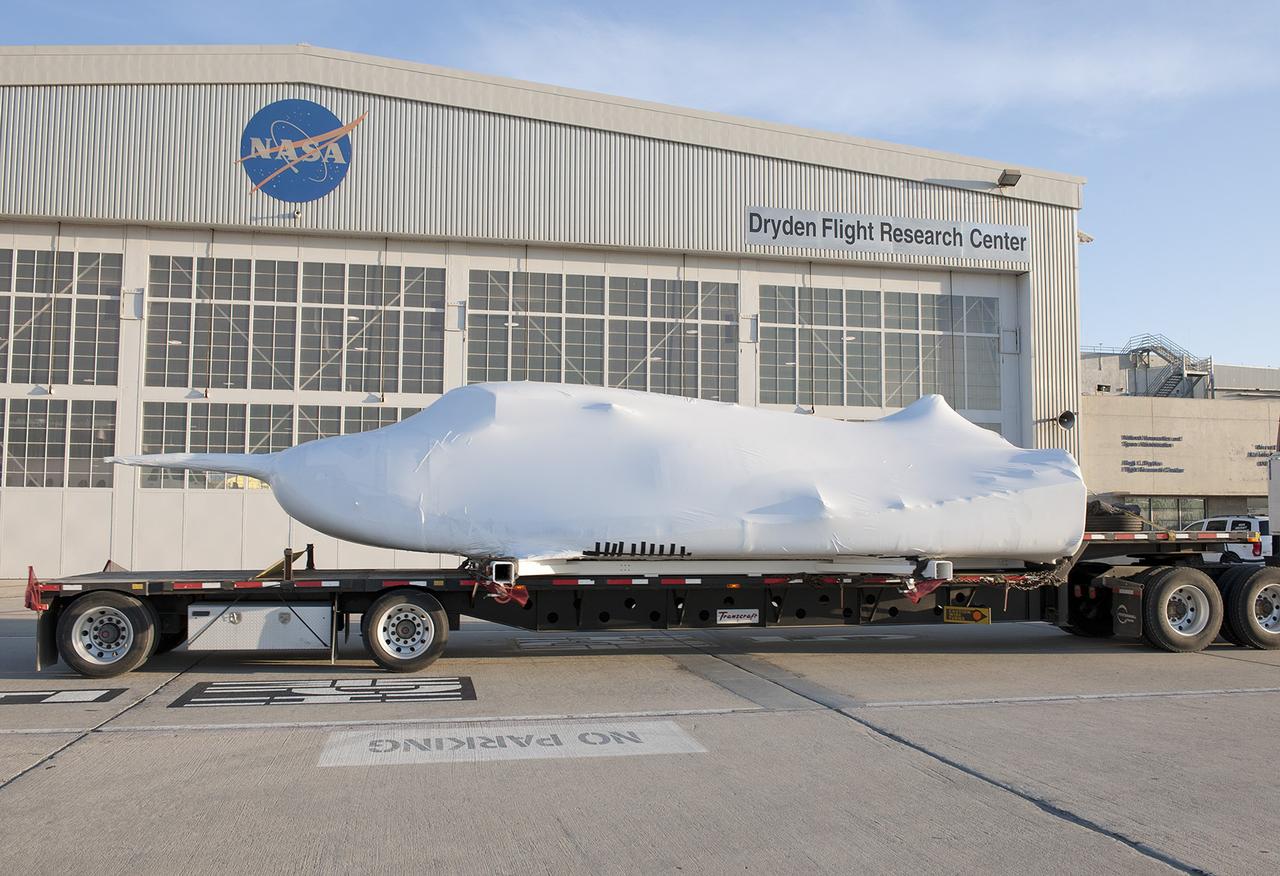
EDWARDS, Calif. – ED13-0142-08: The flatbed truck and trailer that transported Sierra Nevada Corporation, or SNC, Space Systems' Dream Chaser engineering test article pauses behind Hangar 4802 on the aircraft ramp at NASA's Dryden Flight Research Center on Edwards Air Force Base, Calif., upon arrival at the center. The vehicle was shrouded in protective plastic wrap with its wings and tail structure removed for its four-day overland transport from Sierra Nevada's facility in Louisville, Colo., to NASA Dryden. SNC is one of three companies working with NASA's Commercial Crew Program, or CCP, during the agency's Commercial Crew Integrated Capability, or CCiCap, initiative, which is intended to lead to the availability of commercial human spaceflight services for government and commercial customers. To learn more about CCP and its industry partners, visit www.nasa.gov/commercialcrew. Image credit: NASA/Tom Tschida
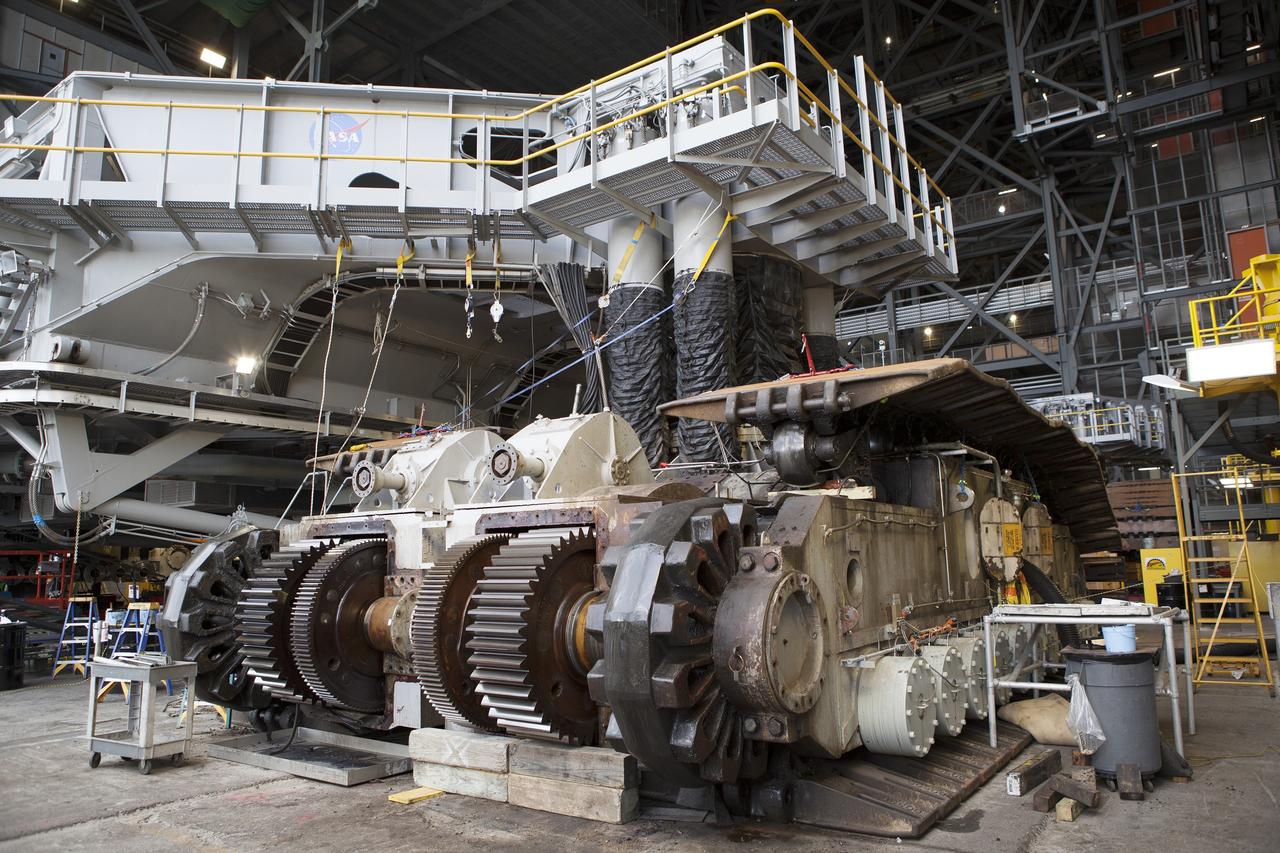
CAPE CANAVERAL, Fla. - Inside the Vehicle Assembly Building at NASA’s Kennedy Space Center in Florida, work continues to remove the sprocket shaft assembly from the C truck of crawler-transporter 2, or CT-2. The sprocket assemblies will be placed into shipping cradles on pallets and positioned on a flatbed trailer. They will be sent to a vendor for inspections and refurbishment. Work continues in high bay 2 to upgrade CT-2. The modifications are designed to ensure CT-2’s ability to transport launch vehicles currently in development, such as the agency’s Space Launch System, to the launch pad. The Ground Systems Development and Operations Program office at Kennedy is overseeing the upgrades. For more than 45 years the crawler-transporters were used to transport the mobile launcher platform and the Apollo-Saturn V rockets and, later, space shuttles to Launch Pads 39A and B. For more information, visit: http://www.nasa.gov/exploration/systems/ground/crawler-transporter. Photo credit: NASA/Dimitri Gerondidakis
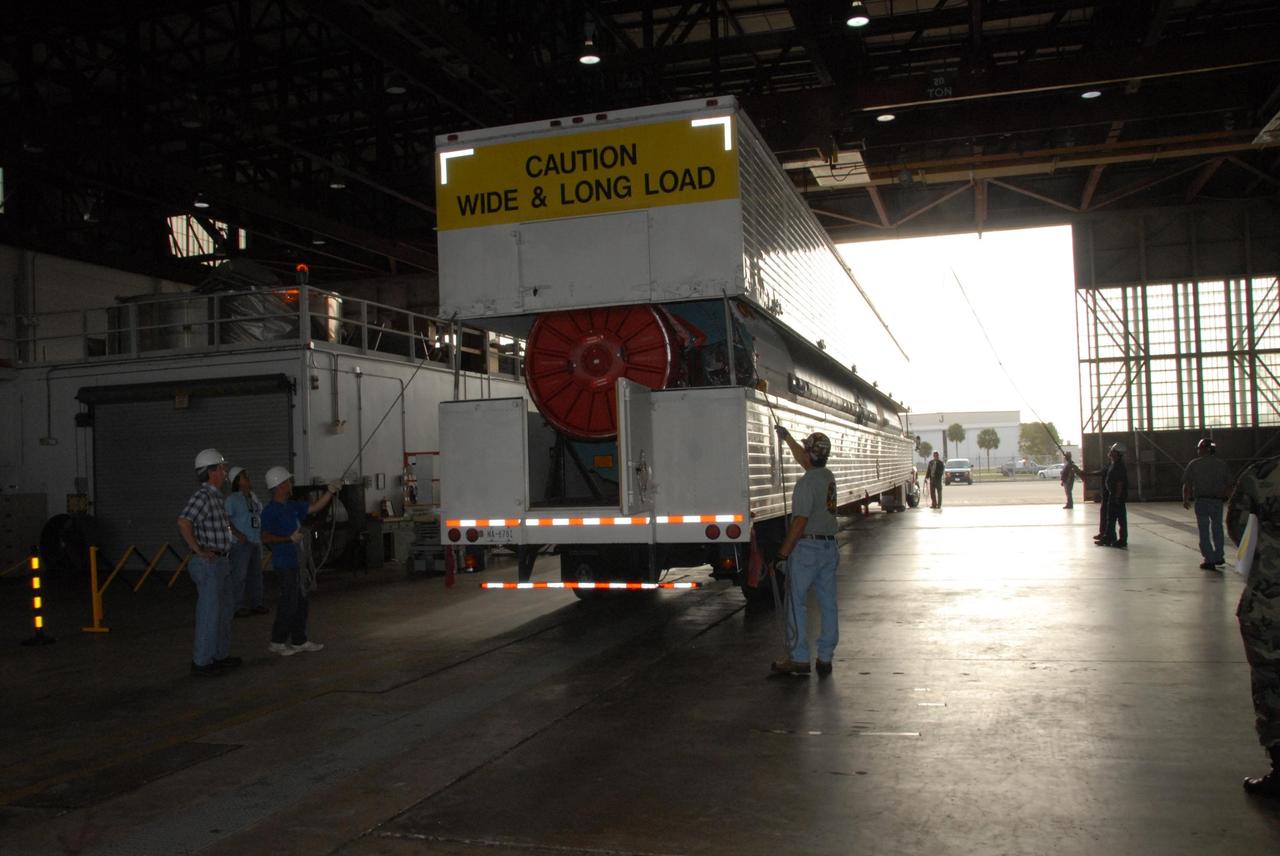
KENNEDY SPACE CENTER, FLA. -- Workers in Hangar M on Cape Canaveral Air Force Station in Florida get ready to remove the lid on the truck trailer to offload the United Launch Alliance Delta II first stage. Visible is the engine of the first stage. The Delta rocket will be used to launch the Gamma-Ray Large Area Space Telescope, or GLAST, in May from Launch Pad 17-B on CCAFS. The GLAST is a powerful space observatory that will explore the Universe's ultimate frontier, where nature harnesses forces and energies far beyond anything possible on Earth; probe some of science's deepest questions, such as what our Universe is made of, and search for new laws of physics; explain how black holes accelerate jets of material to nearly light speed; and help crack the mystery of stupendously powerful explosions known as gamma-ray bursts. Photo credit: NASA/George Shelton
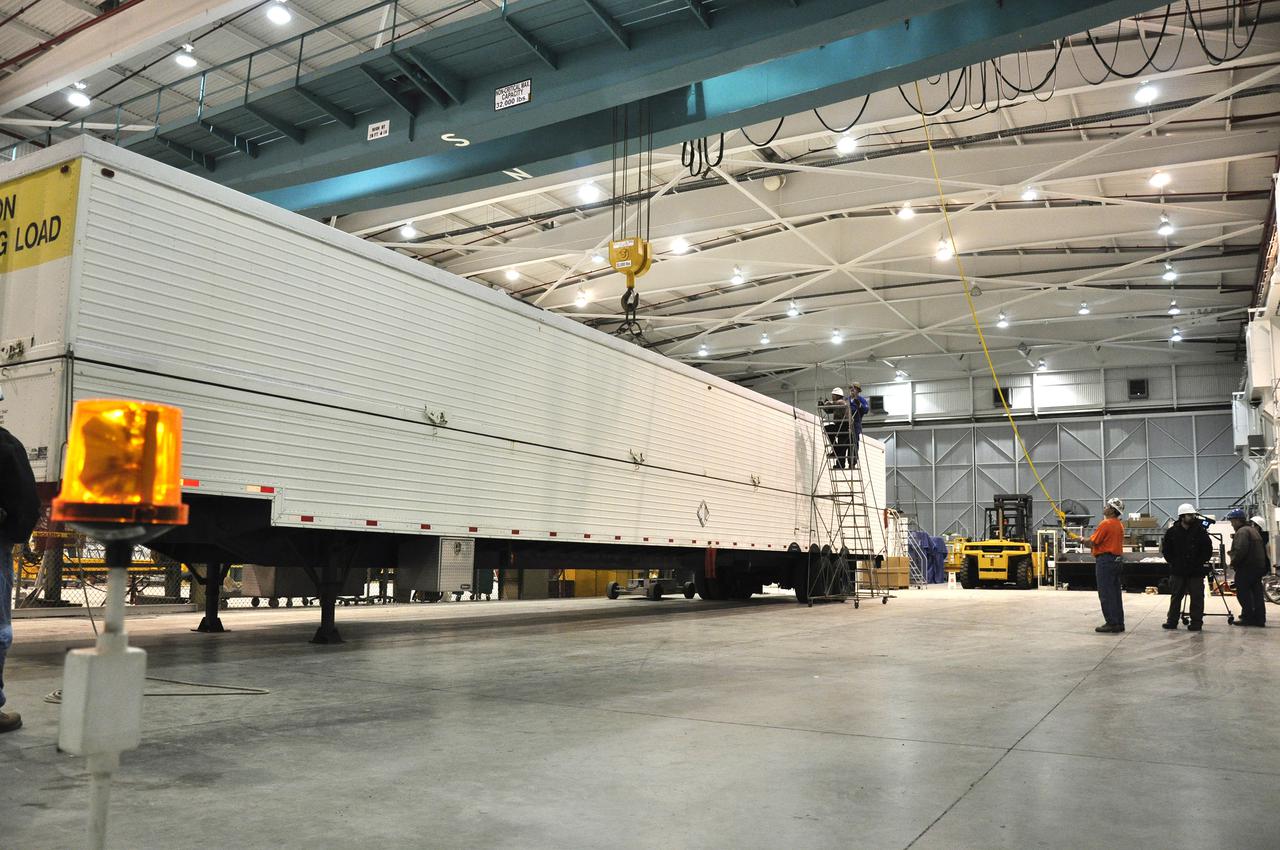
VANDENBERG AIR FORCE BASE, Calif. – Workers prepare to remove the cover of the transportation trailer protecting the second stage for NASA's Orbiting Carbon Observatory-2 mission, or OCO-2, in the high bay of the Building 836 hangar on Vandenberg Air Force Base in California. OCO-2 is scheduled to launch aboard a United Launch Alliance Delta II rocket from Space Launch Complex 2 in July. The rocket's second stage will insert OCO-2 into a polar Earth orbit. OCO-2 will collect precise global measurements of carbon dioxide in the Earth's atmosphere and provide scientists with a better idea of the chemical compound's impacts on climate change. Scientists will analyze this data to improve our understanding of the natural processes and human activities that regulate the abundance and distribution of this important atmospheric gas. To learn more about OCO-2, visit http:__oco.jpl.nasa.gov. Photo credit: NASA_Randy Beaudoin
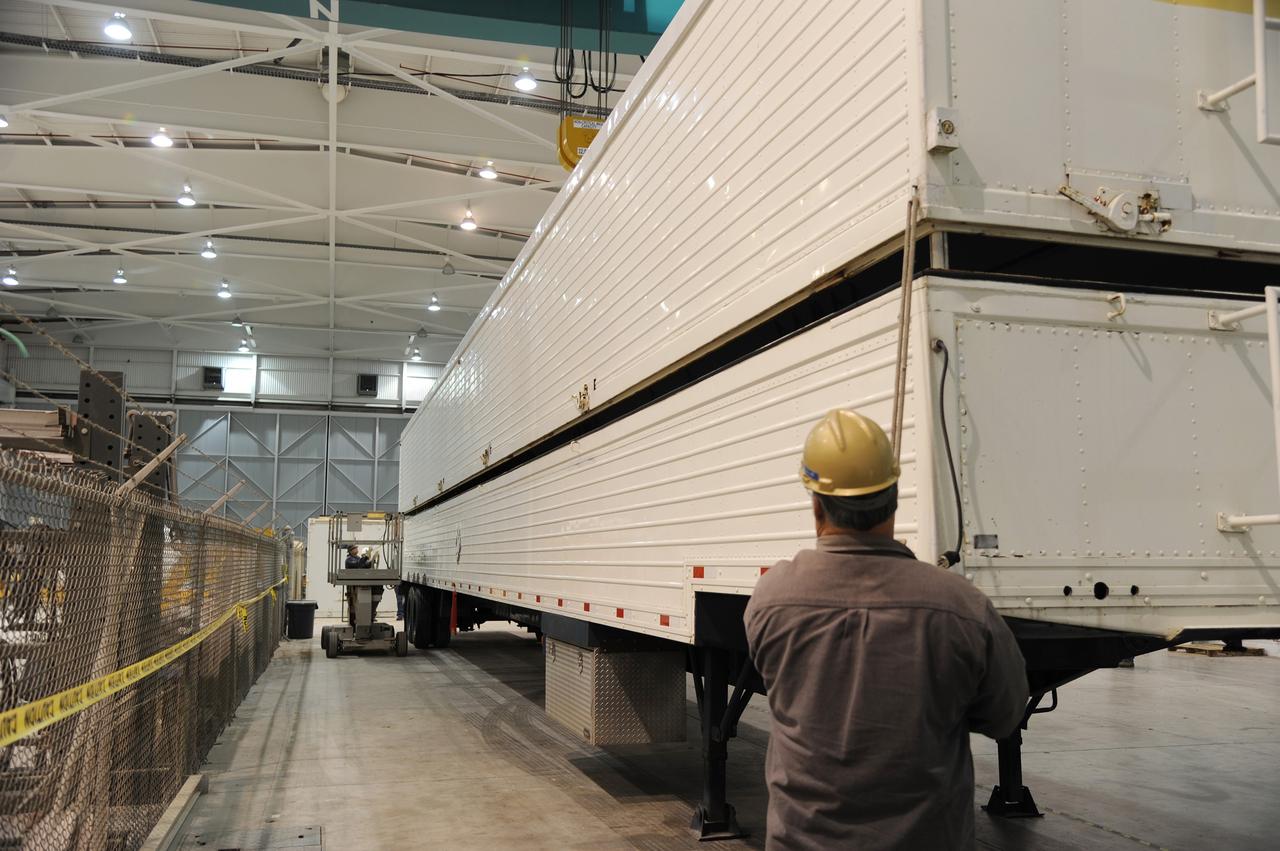
VANDENBERG AIR FORCE BASE, Calif. – Workers prepare to remove the cover of the transportation trailer protecting the second stage for NASA's Orbiting Carbon Observatory-2 mission, or OCO-2, in the high bay of the Building 836 hangar on Vandenberg Air Force Base in California. OCO-2 is scheduled to launch aboard a United Launch Alliance Delta II rocket from Space Launch Complex 2 in July. The rocket's second stage will insert OCO-2 into a polar Earth orbit. OCO-2 will collect precise global measurements of carbon dioxide in the Earth's atmosphere and provide scientists with a better idea of the chemical compound's impacts on climate change. Scientists will analyze this data to improve our understanding of the natural processes and human activities that regulate the abundance and distribution of this important atmospheric gas. To learn more about OCO-2, visit http://oco.jpl.nasa.gov. Photo credit: NASA/Arron Tauman, 30th Space Wing, VAFB
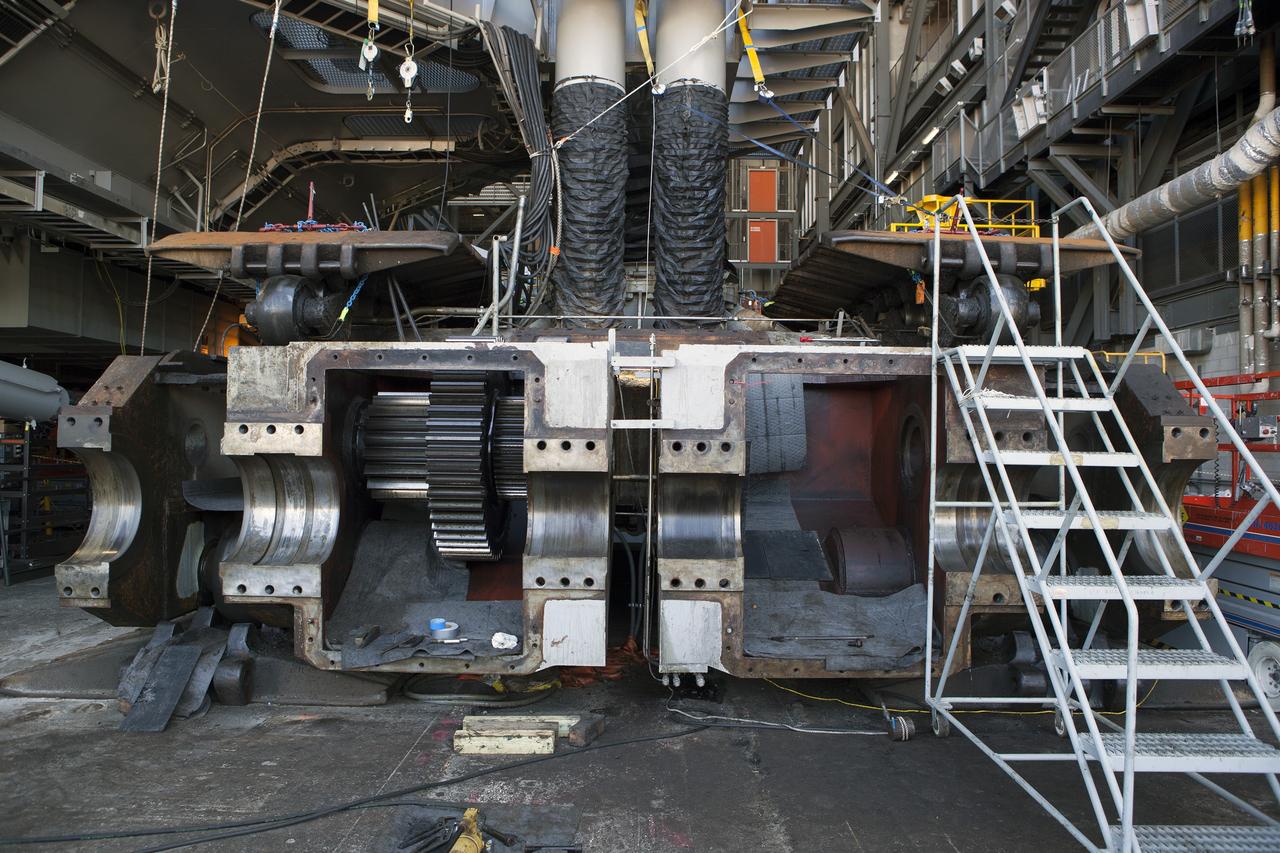
CAPE CANAVERAL, Fla. -- Inside the Vehicle Assembly Building at NASA’s Kennedy Space Center in Florida, several of the sprocket shaft assemblies have been removed from the C truck of crawler-transporter 2, or CT-2. Preparations are underway to remove the remaining sprocket. The sprocket assemblies will be placed into shipping cradles on pallets and positioned on a flatbed trailer. They will be sent to a vendor for inspections and refurbishment. Work continues in high bay 2 to upgrade CT-2. The modifications are designed to ensure CT-2’s ability to transport launch vehicles currently in development, such as the agency’s Space Launch System, to the launch pad. The Ground Systems Development and Operations Program office at Kennedy is overseeing the upgrades. For more than 45 years the crawler-transporters were used to transport the mobile launcher platform and the Apollo-Saturn V rockets and, later, space shuttles to Launch Pads 39A and B. For more information, visit: http://www.nasa.gov/exploration/systems/ground/crawler-transporter. Photo credit: NASA/Dimitri Gerondidakis
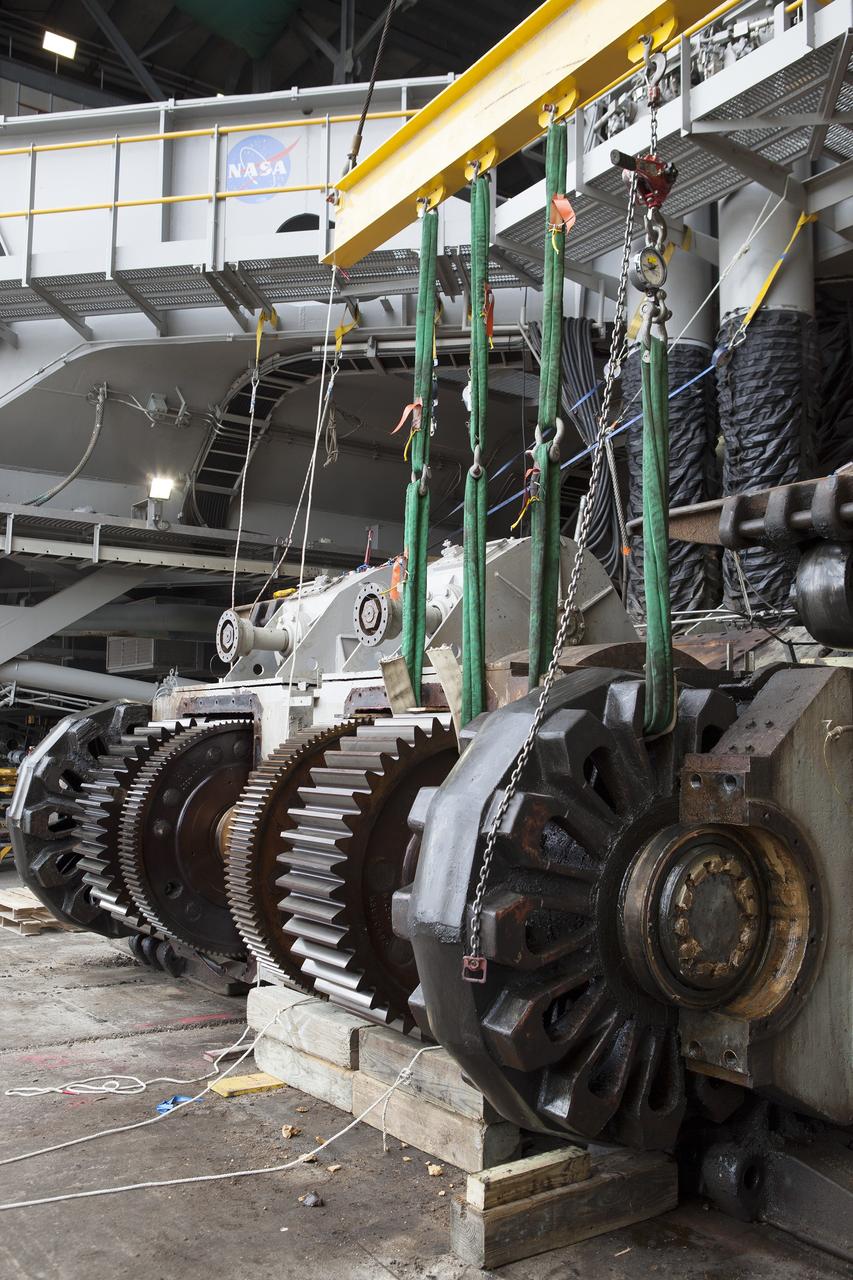
CAPE CANAVERAL, Fla. - Inside the Vehicle Assembly Building at NASA’s Kennedy Space Center in Florida, an overhead crane has been attached to a sprocket shaft assembly to remove it from the C truck of crawler-transporter 2, or CT-2. A section of the treads on the C truck were removed to allow access to the sprocket assemblies. The sprocket assemblies will be placed into shipping cradles on pallets and positioned on a flatbed trailer. The assemblies will be sent to a vendor for inspections and refurbishment. Work continues in high bay 2 to upgrade CT-2. The modifications are designed to ensure CT-2’s ability to transport launch vehicles currently in development, such as the agency’s Space Launch System, to the launch pad. The Ground Systems Development and Operations Program office at Kennedy is overseeing the upgrades. For more than 45 years the crawler-transporters were used to transport the mobile launcher platform and the Apollo-Saturn V rockets and, later, space shuttles to Launch Pads 39A and B. For more information, visit: http://www.nasa.gov/exploration/systems/ground/crawler-transporter. Photo credit: NASA/Dimitri Gerondidakis
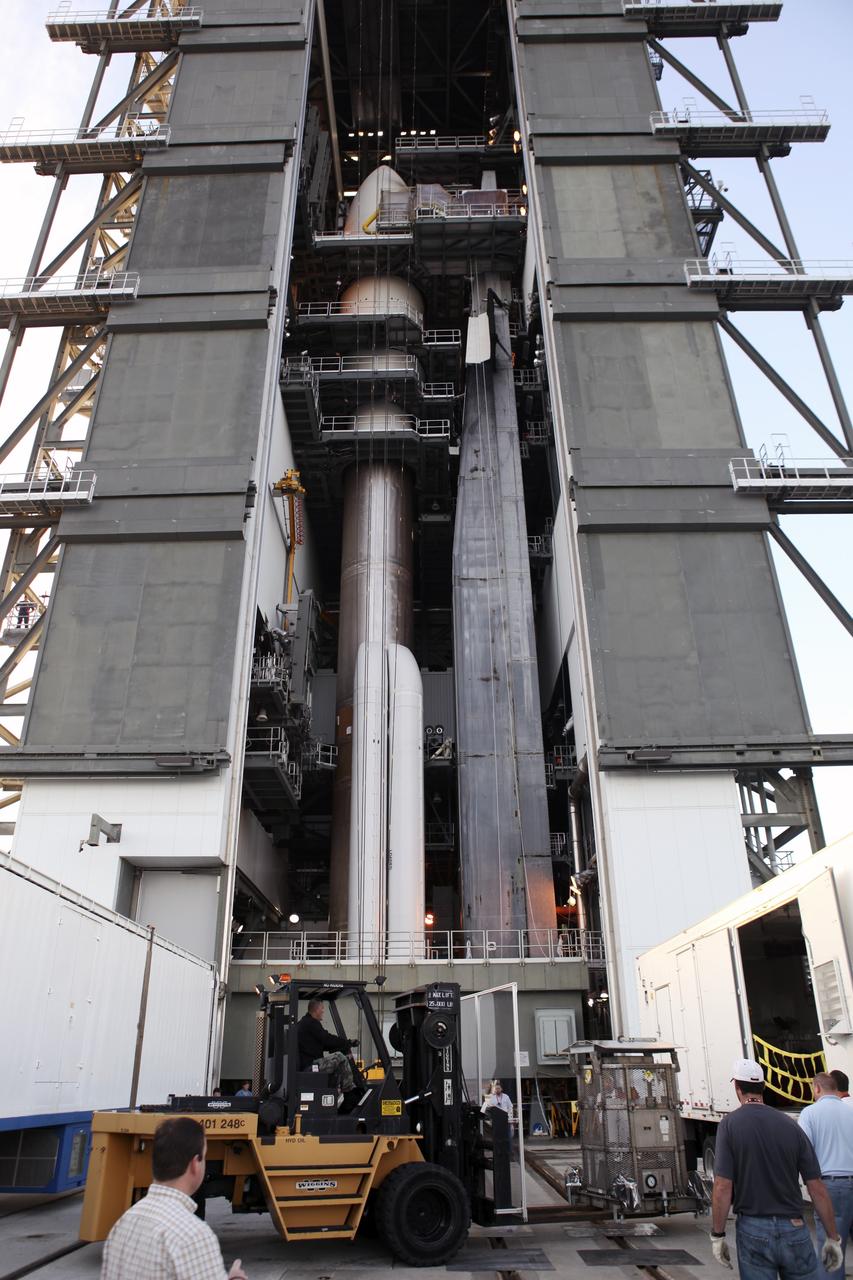
CAPE CANAVERAL, Fla. -- Backdropped by the Atlas V rocket standing inside the Vertical Integration Facility at Space Launch Complex 41, the multi-mission radioisotope thermoelectric generator (MMRTG) for NASA's Mars Science Laboratory (MSL) mission, enclosed in the mesh container known as the "gorilla cage," is removed from its trailer. The generator will be lifted up to the top of the rocket and installed on the MSL spacecraft, encapsulated within the payload fairing. The MMRTG will generate the power needed for the mission from the natural decay of plutonium-238, a non-weapons-grade form of the radioisotope. Heat produced by this natural decay will provide constant power through the day and night during all seasons. MSL's components include a car-sized rover, Curiosity, which has 10 science instruments designed to search for signs of life, including methane, and help determine if the gas is from a biological or geological source. Heat emitted by the MMRTG will be circulated throughout the rover system to keep instruments, computers, mechanical devices and communications systems within their operating temperature ranges. Launch of MSL aboard a United Launch Alliance Atlas V rocket is targeted for Nov. 25 from Space Launch Complex 41 on Cape Canaveral Air Force Station. For more information, visit http://www.nasa.gov/msl. Photo credit: NASA/Dimitri Gerondidakis
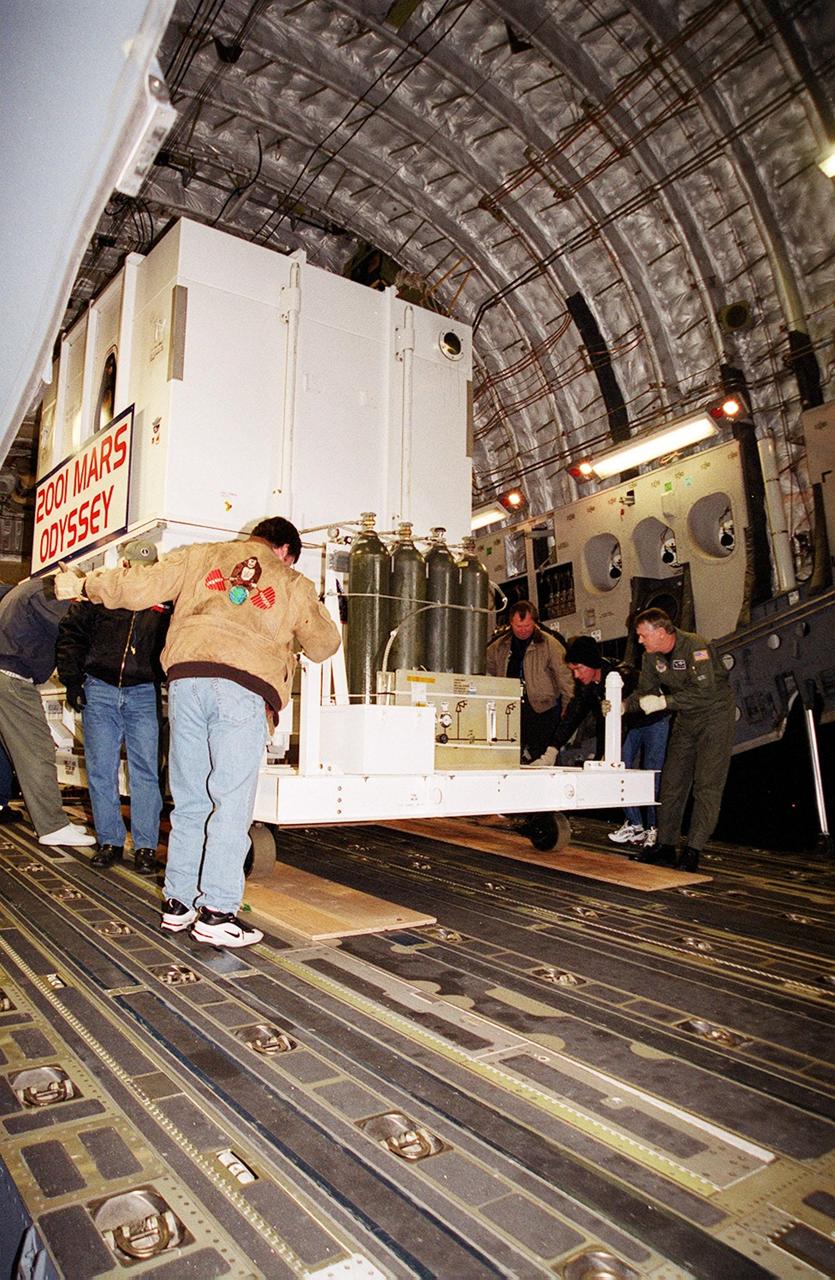
The Mars Odyssey spacecraft is maneuvered for removal from the Air Force C-17 cargo airplane that brought it from Denver, Colo.., location of the Lockheed Martin plant where the spacecraft was built. Mars Odyssey will be moved on a transport trailer from KSC's Shuttle Landing Facility to the Spacecraft Assembly and Encapsulation Facility 2 (SAEF-2) located in the KSC Industrial Area. In the SAEF it will undergo final assembly and checkout. This includes installation of two of the three science instruments, integration of the three-panel solar array, and a spacecraft functional test. It will be fueled and then mated to an upper stage booster, the final activities before going to the launch pad. Launch is planned for April 7, 2001 the first day of a 21-day planetary window. Mars Odyssey will be inserted into an interplanetary trajectory by a Boeing Delta II launch vehicle from Pad A at Complex 17 at the Cape Canaveral Air Force Station, Fla. The spacecraft will arrive at Mars on Oct. 20, 2001, for insertion into an initial elliptical capture orbit. Its final operational altitude will be a 250-mile-high, Sun-synchronous polar orbit. Mars Odyssey will spend two years mapping the planet's surface and measuring its environment
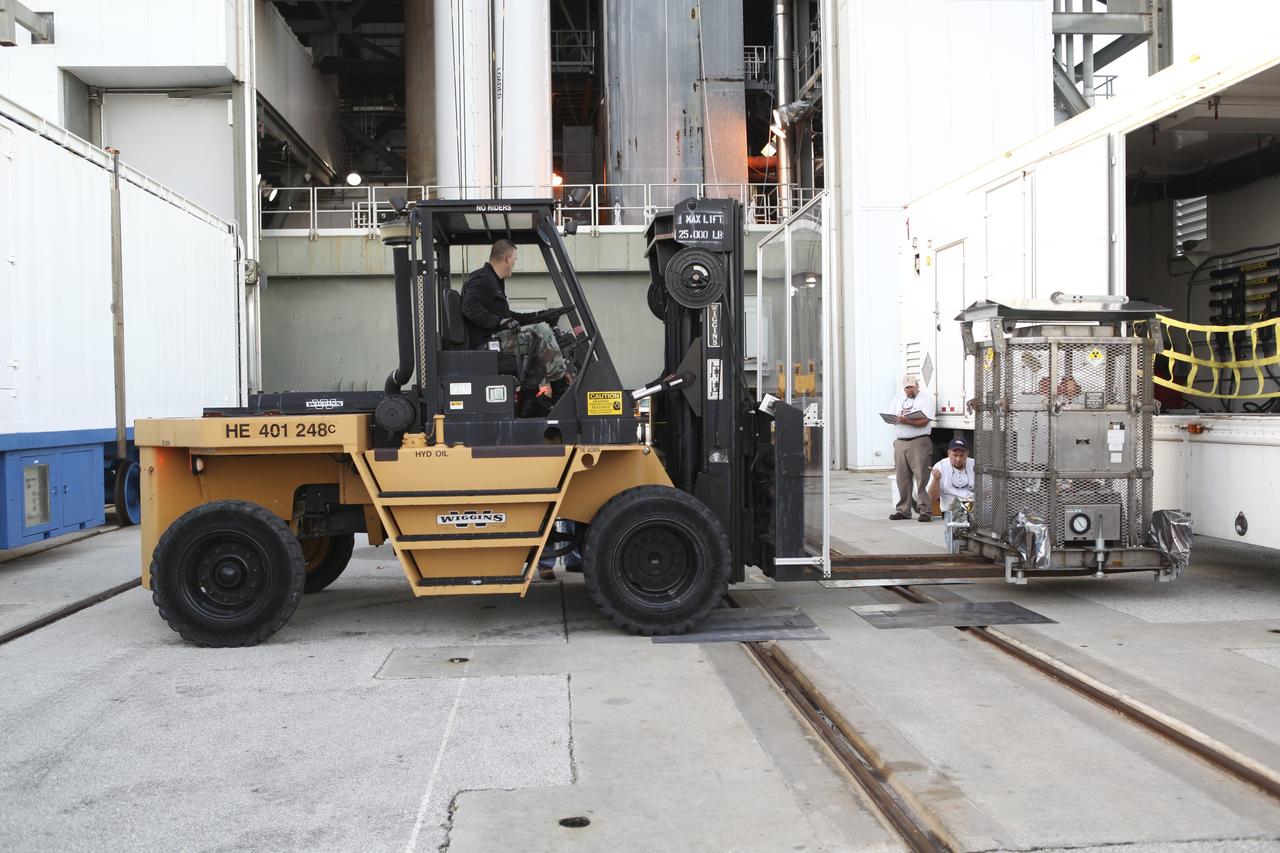
CAPE CANAVERAL, Fla. -- The multi-mission radioisotope thermoelectric generator (MMRTG) for NASA's Mars Science Laboratory (MSL) mission, enclosed in the mesh container known as the "gorilla cage," is removed from its trailer outside the Vertical Integration Facility at Space Launch Complex 41. The generator will be lifted up to the top of the rocket and installed on the MSL spacecraft, encapsulated within the payload fairing. The MMRTG will generate the power needed for the mission from the natural decay of plutonium-238, a non-weapons-grade form of the radioisotope. Heat produced by this natural decay will provide constant power through the day and night during all seasons. MSL's components include a car-sized rover, Curiosity, which has 10 science instruments designed to search for signs of life, including methane, and help determine if the gas is from a biological or geological source. Heat emitted by the MMRTG will be circulated throughout the rover system to keep instruments, computers, mechanical devices and communications systems within their operating temperature ranges. Launch of MSL aboard a United Launch Alliance Atlas V rocket is targeted for Nov. 25 from Space Launch Complex 41 on Cape Canaveral Air Force Station. For more information, visit http://www.nasa.gov/msl. Photo credit: NASA/Dimitri Gerondidakis
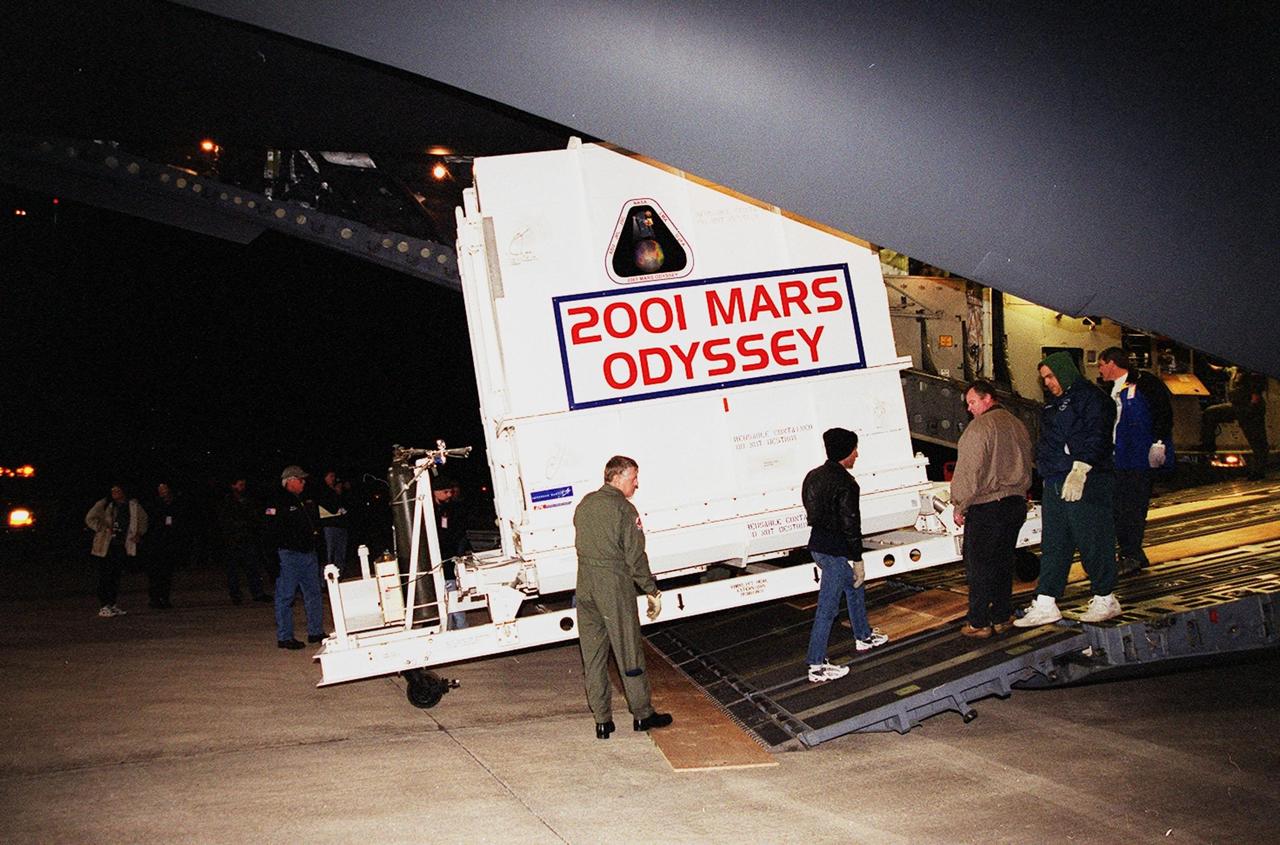
The Mars Odyssey spacecraft is removed from the Air Force C-17 cargo airplane that brought it from Denver, Colo.., location of the Lockheed Martin plant where the spacecraft was built. Mars Odyssey will be moved on a transport trailer from KSC’s Shuttle Landing Facility to the Spacecraft Assembly and Encapsulation Facility 2 (SAEF-2) located in the KSC Industrial Area. In the SAEF it will undergo final assembly and checkout. This includes installation of two of the three science instruments, integration of the three-panel solar array, and a spacecraft functional test. It will be fueled and then mated to an upper stage booster, the final activities before going to the launch pad. Launch is planned for April 7, 2001 the first day of a 21-day planetary window. Mars Odyssey will be inserted into an interplanetary trajectory by a Boeing Delta II launch vehicle from Pad A at Complex 17 at the Cape Canaveral Air Force Station, Fla. The spacecraft will arrive at Mars on Oct. 20, 2001, for insertion into an initial elliptical capture orbit. Its final operational altitude will be a 250-mile-high, Sun-synchronous polar orbit. Mars Odyssey will spend two years mapping the planet's surface and measuring its environment
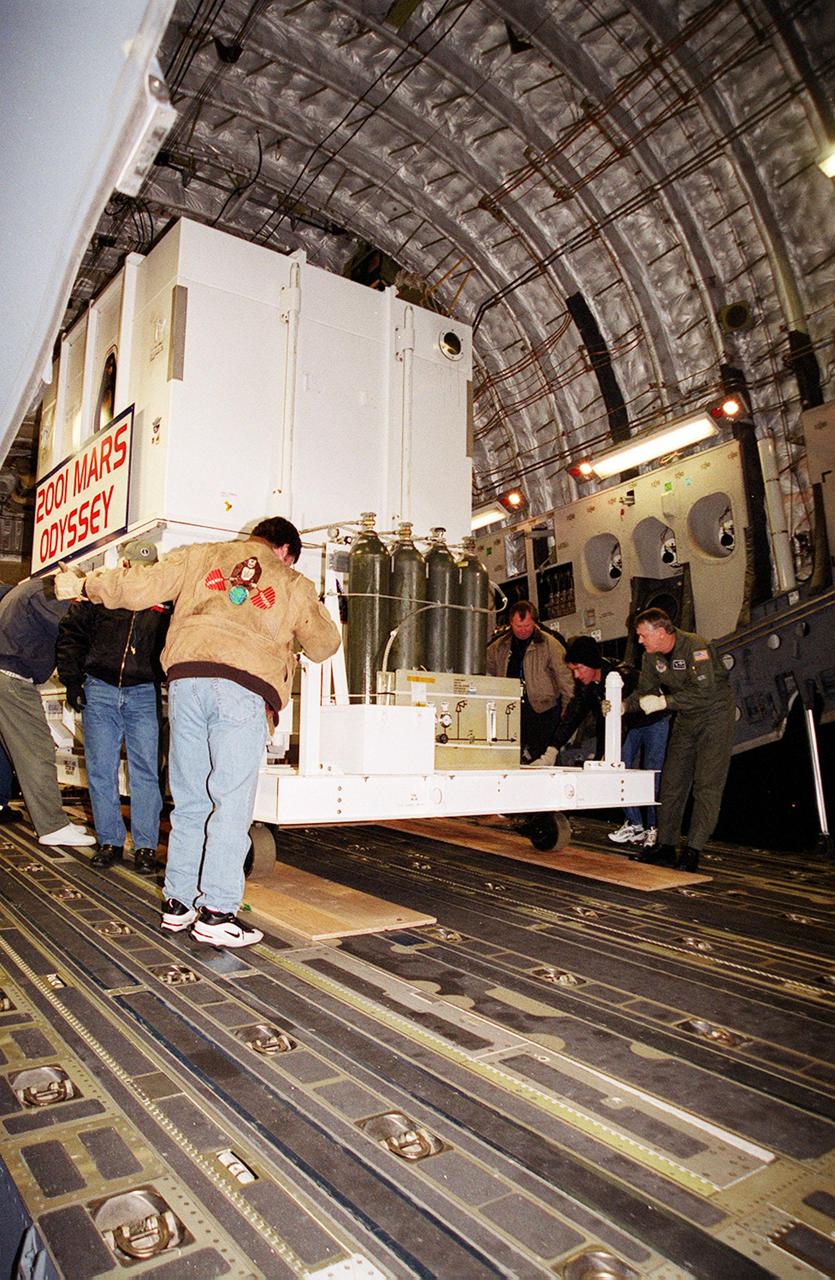
The Mars Odyssey spacecraft is maneuvered for removal from the Air Force C-17 cargo airplane that brought it from Denver, Colo.., location of the Lockheed Martin plant where the spacecraft was built. Mars Odyssey will be moved on a transport trailer from KSC's Shuttle Landing Facility to the Spacecraft Assembly and Encapsulation Facility 2 (SAEF-2) located in the KSC Industrial Area. In the SAEF it will undergo final assembly and checkout. This includes installation of two of the three science instruments, integration of the three-panel solar array, and a spacecraft functional test. It will be fueled and then mated to an upper stage booster, the final activities before going to the launch pad. Launch is planned for April 7, 2001 the first day of a 21-day planetary window. Mars Odyssey will be inserted into an interplanetary trajectory by a Boeing Delta II launch vehicle from Pad A at Complex 17 at the Cape Canaveral Air Force Station, Fla. The spacecraft will arrive at Mars on Oct. 20, 2001, for insertion into an initial elliptical capture orbit. Its final operational altitude will be a 250-mile-high, Sun-synchronous polar orbit. Mars Odyssey will spend two years mapping the planet's surface and measuring its environment
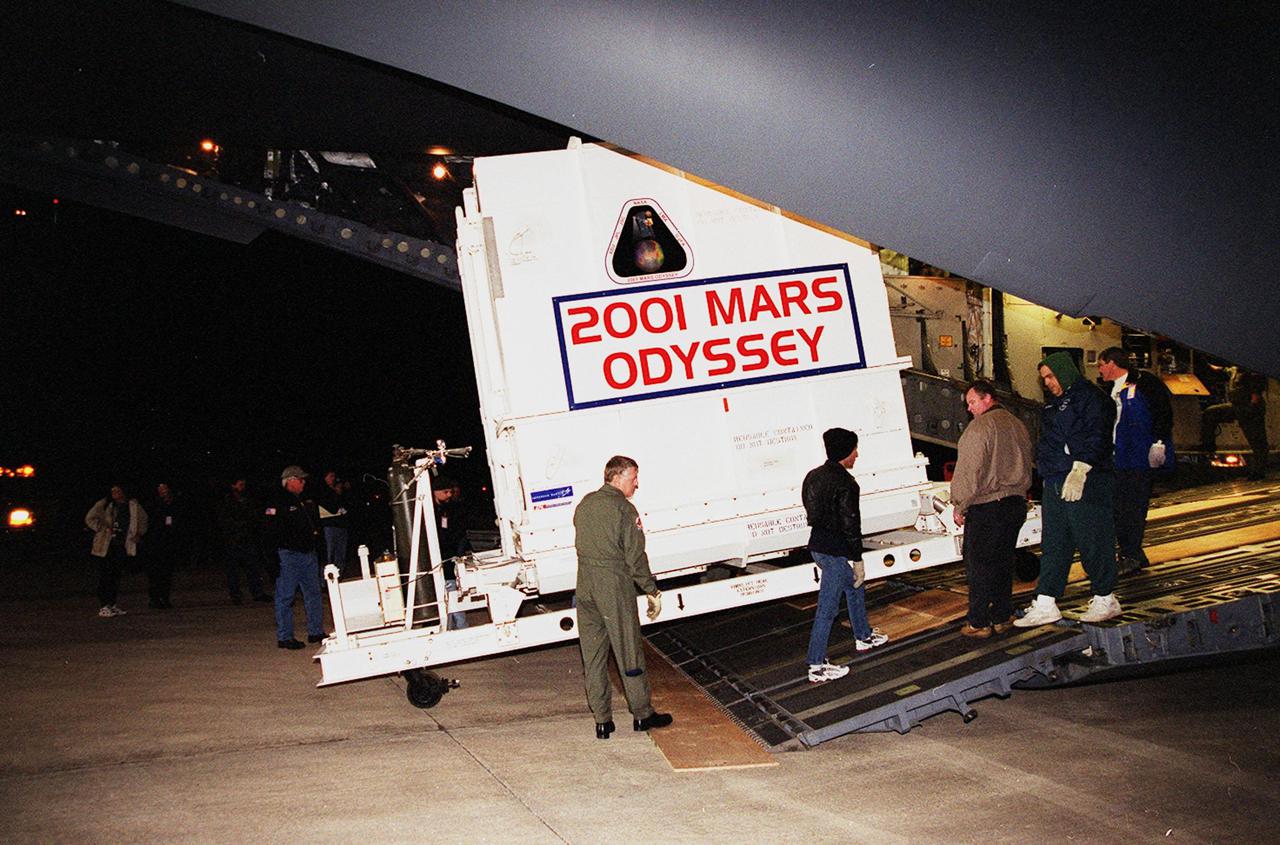
The Mars Odyssey spacecraft is removed from the Air Force C-17 cargo airplane that brought it from Denver, Colo.., location of the Lockheed Martin plant where the spacecraft was built. Mars Odyssey will be moved on a transport trailer from KSC’s Shuttle Landing Facility to the Spacecraft Assembly and Encapsulation Facility 2 (SAEF-2) located in the KSC Industrial Area. In the SAEF it will undergo final assembly and checkout. This includes installation of two of the three science instruments, integration of the three-panel solar array, and a spacecraft functional test. It will be fueled and then mated to an upper stage booster, the final activities before going to the launch pad. Launch is planned for April 7, 2001 the first day of a 21-day planetary window. Mars Odyssey will be inserted into an interplanetary trajectory by a Boeing Delta II launch vehicle from Pad A at Complex 17 at the Cape Canaveral Air Force Station, Fla. The spacecraft will arrive at Mars on Oct. 20, 2001, for insertion into an initial elliptical capture orbit. Its final operational altitude will be a 250-mile-high, Sun-synchronous polar orbit. Mars Odyssey will spend two years mapping the planet's surface and measuring its environment
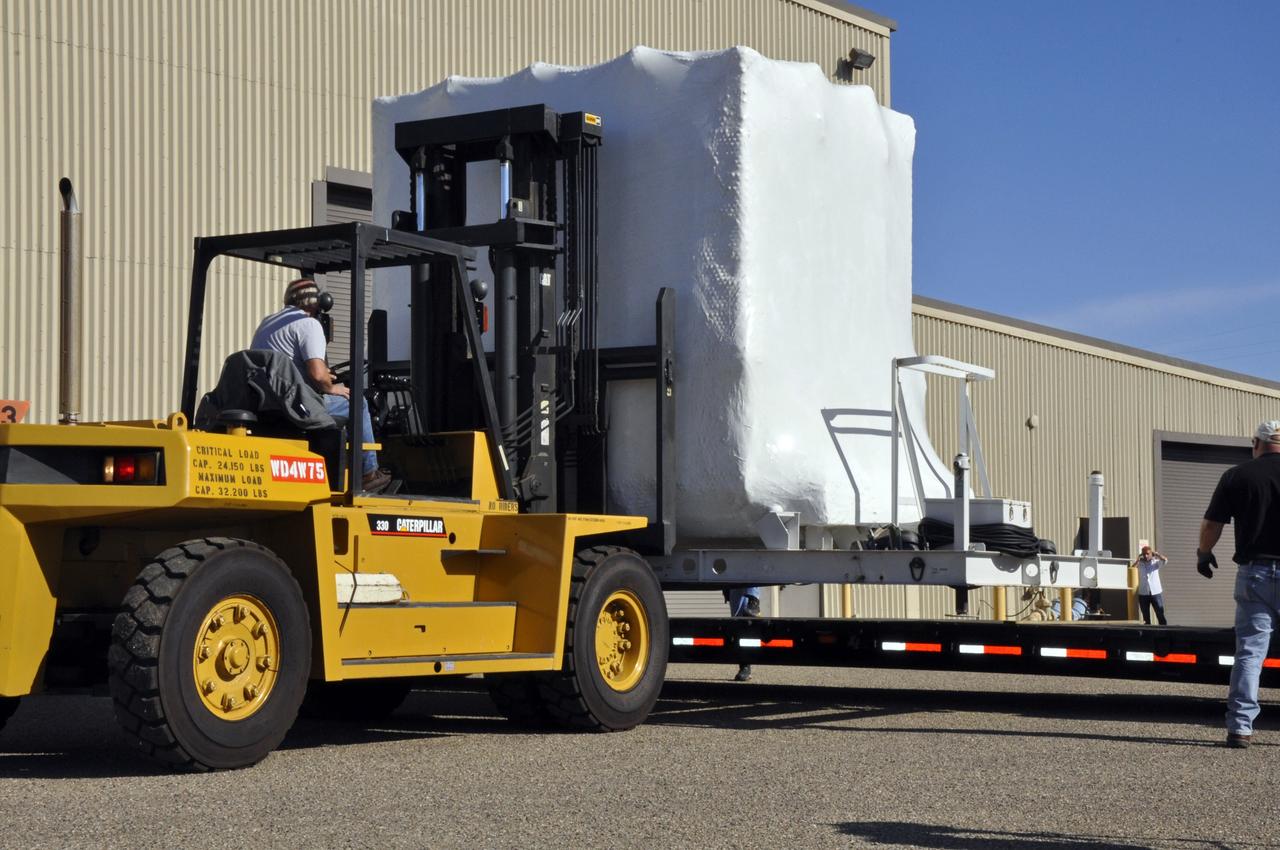
VANDENBERG AIR FORCE BASE, Calif. -- A forklift is enlisted to transfer NASA's Nuclear Spectroscopic Telescope Array (NuSTAR), enclosed in an environmentally controlled shipping container, from the tractor-trailer on which it arrived into the airlock of processing facility 1555 at Vandenberg Air Force Base (VAFB) in California. The spacecraft arrived at 7:52 a.m. PST after a cross-country trip from Orbital Sciences' manufacturing plant in Dulles, Va., which began Jan. 24. The spacecraft will be offloaded into the processing hangar, joining the Pegasus XL rocket that is set to carry it to space. After NuSTAR is removed from its shipping container, checkout and other processing activity will begin. The spacecraft will be integrated with the Pegasus in mid-February and encapsulation in the vehicle fairing will follow. After processing is completed, the rocket and spacecraft will be flown on Orbital's L-1011 carrier aircraft to the Ronald Reagan Ballistic Missile Defense Test Site at the Pacific Ocean's Kwajalein Atoll for launch in March. The high-energy x-ray telescope will conduct a census for black holes, map radioactive material in young supernovae remnants, and study the origins of cosmic rays and the extreme physics around collapsed stars. For more information, visit http://www.nasa.gov/nustar. Photo credit: NASA/Randy Beaudoin, VAFB

VANDENBERG AIR FORCE BASE, Calif. – The lid is removed from the transportation trailer containing a half section of the 10-foot-diameter fairing for NASA's Soil Moisture Active Passive mission, or SMAP, in the Building 836 high bay on south Vandenberg Air Force Base in California. The fairing will protect the SMAP spacecraft from the heat and aerodynamic pressure generated during its ascent to orbit aboard a United Launch Alliance Delta II rocket from Space Launch Complex 2. SMAP will provide global measurements of soil moisture and its freeze/thaw state. These measurements will be used to enhance understanding of processes that link the water, energy and carbon cycles, and to extend the capabilities of weather and climate prediction models. SMAP data will also be used to quantify net carbon flux in boreal landscapes and to develop improved flood prediction and drought monitoring capabilities. Launch is scheduled for November 2014. To learn more about SMAP, visit http://smap.jpl.nasa.gov. Photo credit: NASA/U.S. Air Force 30th Space Wing
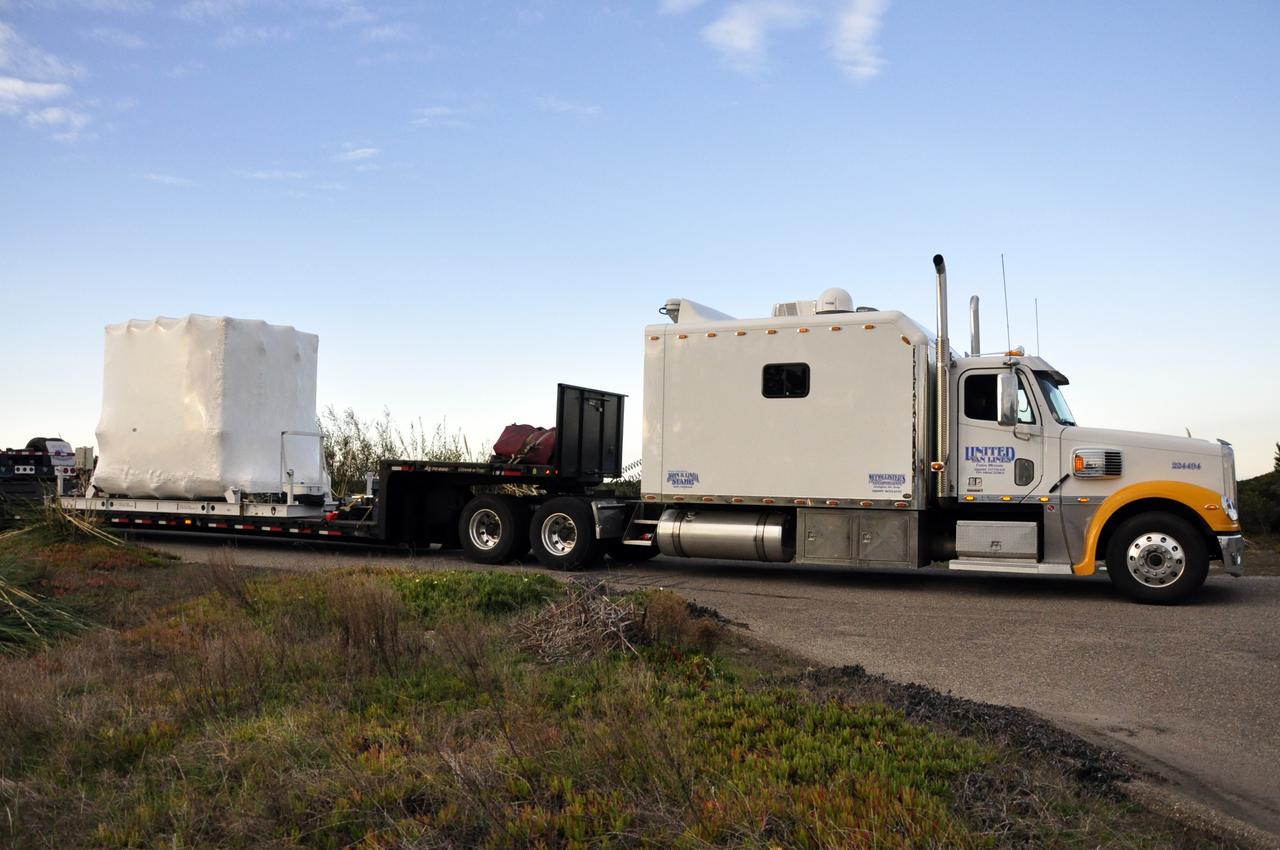
VANDENBERG AIR FORCE BASE, Calif. -- NASA's Nuclear Spectroscopic Telescope Array (NuSTAR), enclosed in an environmentally controlled shipping container, is delivered by tractor-trailer to processing facility 1555 at Vandenberg Air Force Base (VAFB) in California. The spacecraft arrived at 7:52 a.m. PST after a cross-country trip from Orbital Sciences' manufacturing plant in Dulles, Va., which began Jan. 24. The spacecraft will be offloaded into the processing hangar, joining the Pegasus XL rocket that is set to carry it to space. After NuSTAR is removed from its shipping container, checkout and other processing activity will begin. The spacecraft will be integrated with the Pegasus in mid-February and encapsulation in the vehicle fairing will follow. After processing is completed, the rocket and spacecraft will be flown on Orbital's L-1011 carrier aircraft to the Ronald Reagan Ballistic Missile Defense Test Site at the Pacific Ocean's Kwajalein Atoll for launch in March. The high-energy x-ray telescope will conduct a census for black holes, map radioactive material in young supernovae remnants, and study the origins of cosmic rays and the extreme physics around collapsed stars. For more information, visit http://www.nasa.gov/nustar. Photo credit: NASA/Randy Beaudoin, VAFB
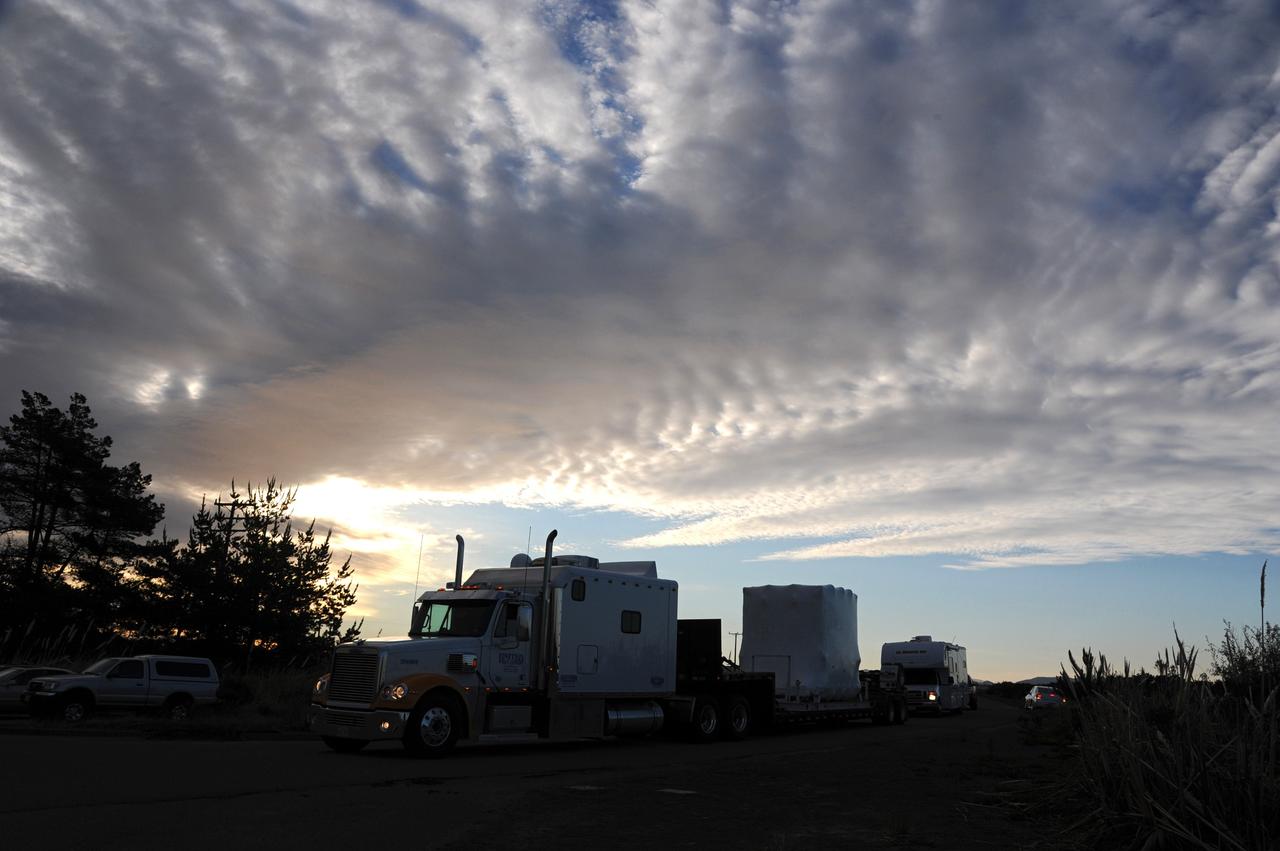
VANDENBERG AIR FORCE BASE, Calif. -- NASA's Nuclear Spectroscopic Telescope Array (NuSTAR), enclosed in an environmentally controlled shipping container, is trucked by trailer to processing facility 1555 at Vandenberg Air Force Base (VAFB) in California. The spacecraft arrived at 7:52 a.m. PST after a cross-country trip from Orbital Sciences' manufacturing plant in Dulles, Va., which began Jan. 24. The spacecraft will be offloaded into the processing hangar, joining the Pegasus XL rocket that is set to carry it to space. After NuSTAR is removed from its shipping container, checkout and other processing activity will begin. The spacecraft will be integrated with the Pegasus in mid-February and encapsulation in the vehicle fairing will follow. After processing is completed, the rocket and spacecraft will be flown on Orbital's L-1011 carrier aircraft to the Ronald Reagan Ballistic Missile Defense Test Site at the Pacific Ocean's Kwajalein Atoll for launch in March. The high-energy x-ray telescope will conduct a census for black holes, map radioactive material in young supernovae remnants, and study the origins of cosmic rays and the extreme physics around collapsed stars. For more information, visit http://www.nasa.gov/nustar. Photo credit: NASA/Randy Beaudoin, VAFB
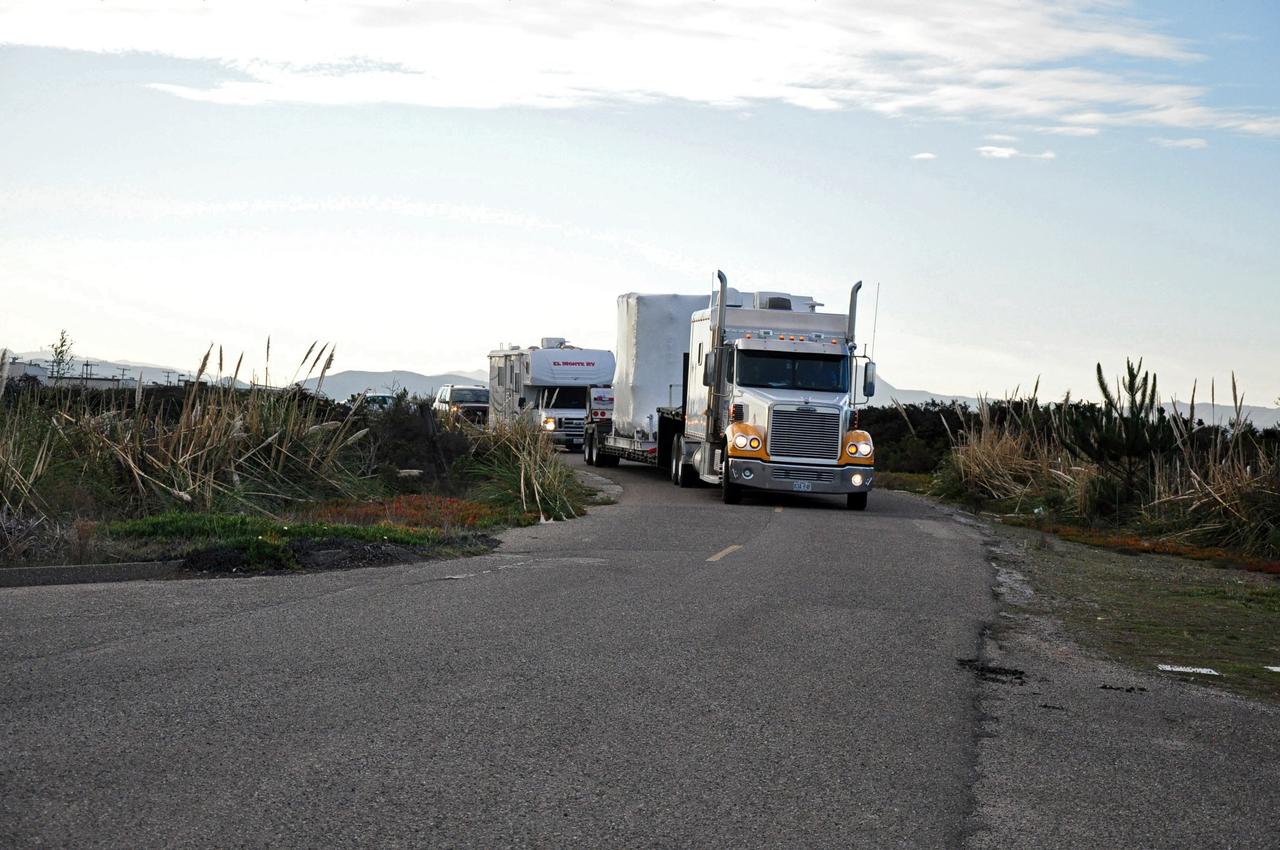
VANDENBERG AIR FORCE BASE, Calif. -- A tractor-trailer delivers NASA's Nuclear Spectroscopic Telescope Array (NuSTAR), enclosed in an environmentally controlled shipping container, to processing facility 1555 at Vandenberg Air Force Base (VAFB) in California. The spacecraft arrived at 7:52 a.m. PST after a cross-country trip which began Jan. 24 from Orbital Sciences' manufacturing plant in Dulles, Va. The spacecraft will be removed from the shipping container in the airlock and transferred into the processing hangar, joining the Pegasus XL rocket that is set to carry it to space. After checkout and other processing activities are complete, the spacecraft will be integrated with the Pegasus in mid-February and encapsulation in the vehicle fairing will follow. The rocket and spacecraft then will be flown on Orbital's L-1011 carrier aircraft to the Ronald Reagan Ballistic Missile Defense Test Site at the Pacific Ocean's Kwajalein Atoll for launch in March. The high-energy x-ray telescope will conduct a census for black holes, map radioactive material in young supernovae remnants, and study the origins of cosmic rays and the extreme physics around collapsed stars. For more information, visit http://www.nasa.gov/nustar. Photo credit: NASA/Randy Beaudoin, VAFB
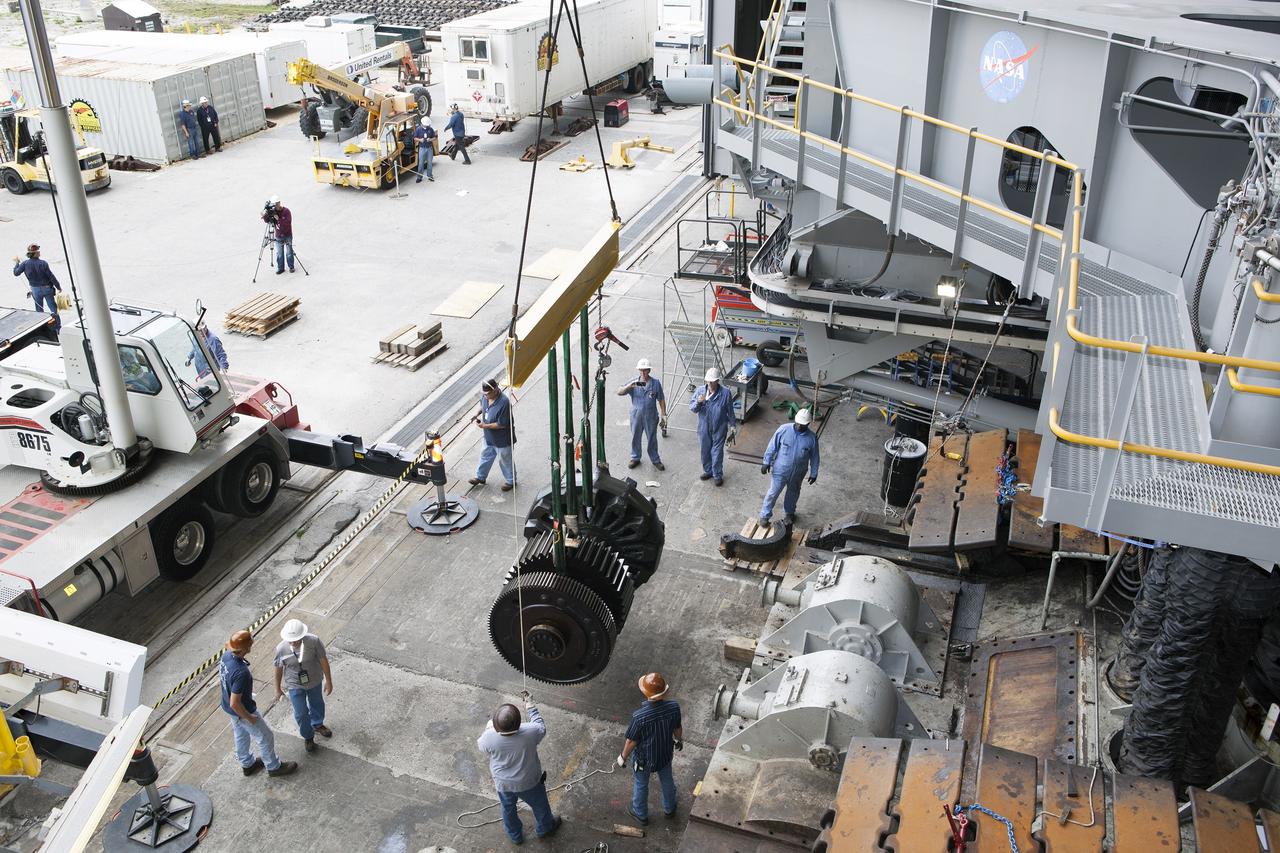
CAPE CANAVERAL, Fla. - Inside the Vehicle Assembly Building at NASA’s Kennedy Space Center in Florida, ground support technicians monitor the progress as an overhead crane lifts a sprocket shaft assembly away from the C truck of crawler-transporter 2, or CT-2. A section of the treads on the C truck were removed to allow access to the sprocket assemblies. The sprocket assemblies will be placed into shipping cradles on pallets and positioned on a flatbed trailer. The assemblies will be sent to a vendor for inspections and refurbishment. Work continues in high bay 2 to upgrade CT-2. The modifications are designed to ensure CT-2’s ability to transport launch vehicles currently in development, such as the agency’s Space Launch System, to the launch pad. The Ground Systems Development and Operations Program office at Kennedy is overseeing the upgrades. For more than 45 years the crawler-transporters were used to transport the mobile launcher platform and the Apollo-Saturn V rockets and, later, space shuttles to Launch Pads 39A and B. For more information, visit: http://www.nasa.gov/exploration/systems/ground/crawler-transporter. Photo credit: NASA/Dimitri Gerondidakis
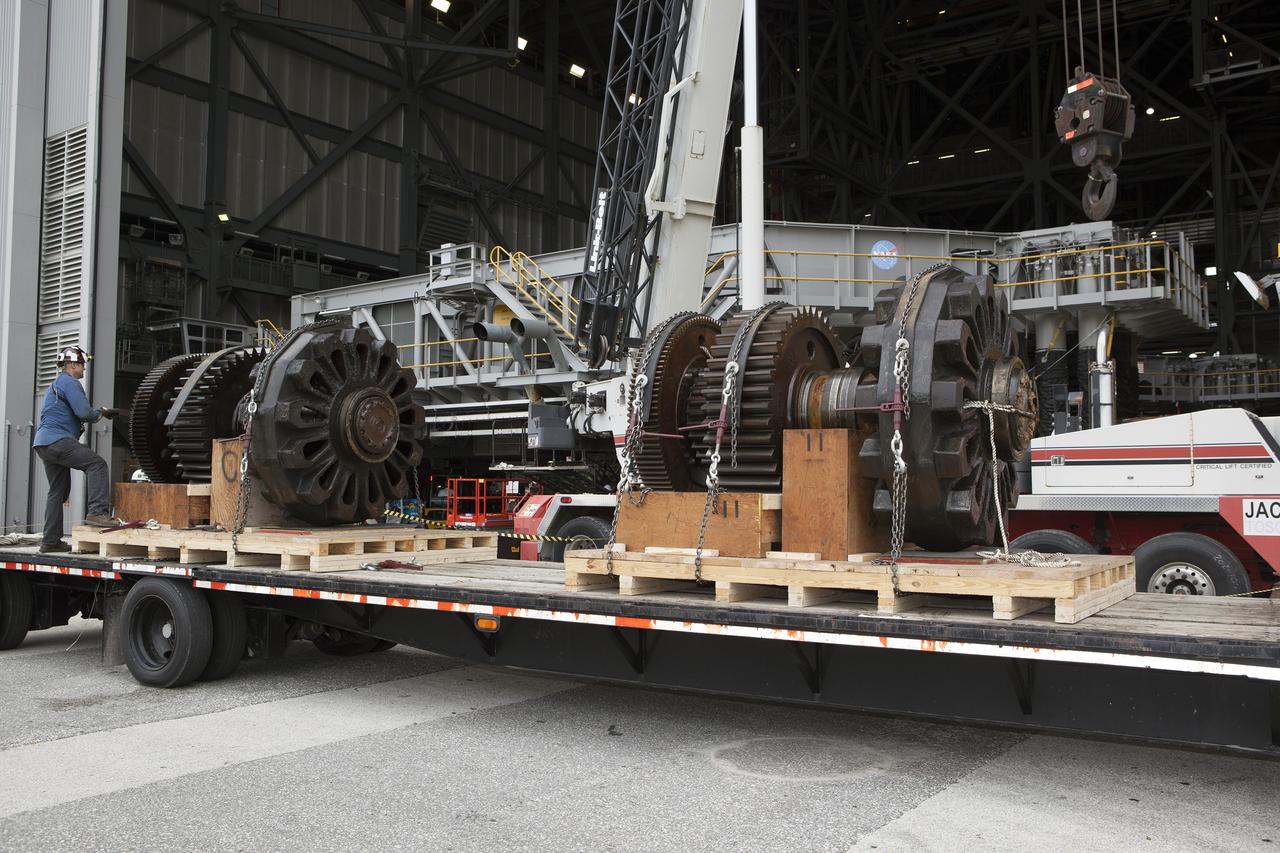
CAPE CANAVERAL, Fla. - Inside the Vehicle Assembly Building at NASA’s Kennedy Space Center in Florida, the inboard and outboard sprocket shaft assemblies have been removed from the C truck of crawler-transporter 2, or CT-2. The sprocket assemblies were placed into shipping cradles on pallets and positioned on a flatbed trailer. The assemblies will be sent to a vendor for inspections and refurbishment. Work continues in high bay 2 to upgrade CT-2. The modifications are designed to ensure CT-2’s ability to transport launch vehicles currently in development, such as the agency’s Space Launch System, to the launch pad. The Ground Systems Development and Operations Program office at Kennedy is overseeing the upgrades. For more than 45 years the crawler-transporters were used to transport the mobile launcher platform and the Apollo-Saturn V rockets and, later, space shuttles to Launch Pads 39A and B. For more information, visit: http://www.nasa.gov/exploration/systems/ground/crawler-transporter. Photo credit: NASA/Dimitri Gerondidakis
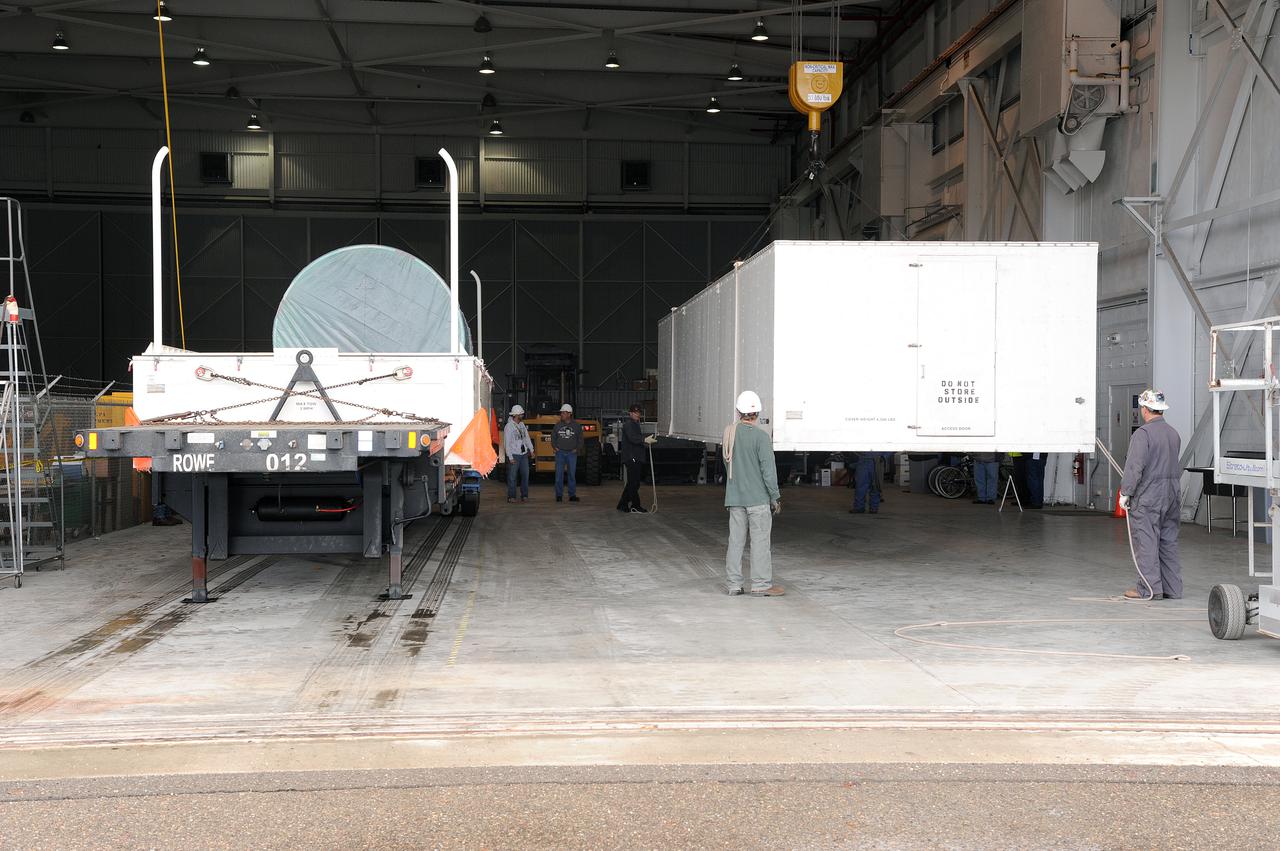
VANDENBERG AIR FORCE BASE, Calif. – Workers remove the cover of the transportation trailer protecting the interstage adapter, or ISA, for NASA's Orbiting Carbon Observatory-2 mission, or OCO-2, in the high bay of the Building 836 hangar on Vandenberg Air Force Base in California. OCO-2 is scheduled to launch aboard a United Launch Alliance Delta II rocket from Space Launch Complex 2 in July. The ISA is the interface between the Delta II first and second stages. The second stage engine fits within the ISA. OCO-2 will collect precise global measurements of carbon dioxide in the Earth's atmosphere and provide scientists with a better idea of the chemical compound's impacts on climate change. Scientists will analyze this data to improve our understanding of the natural processes and human activities that regulate the abundance and distribution of this important atmospheric gas. To learn more about OCO-2, visit http:__oco.jpl.nasa.gov. Photo credit: NASA_Jeremy Moore, 30th Space Wing, VAFB
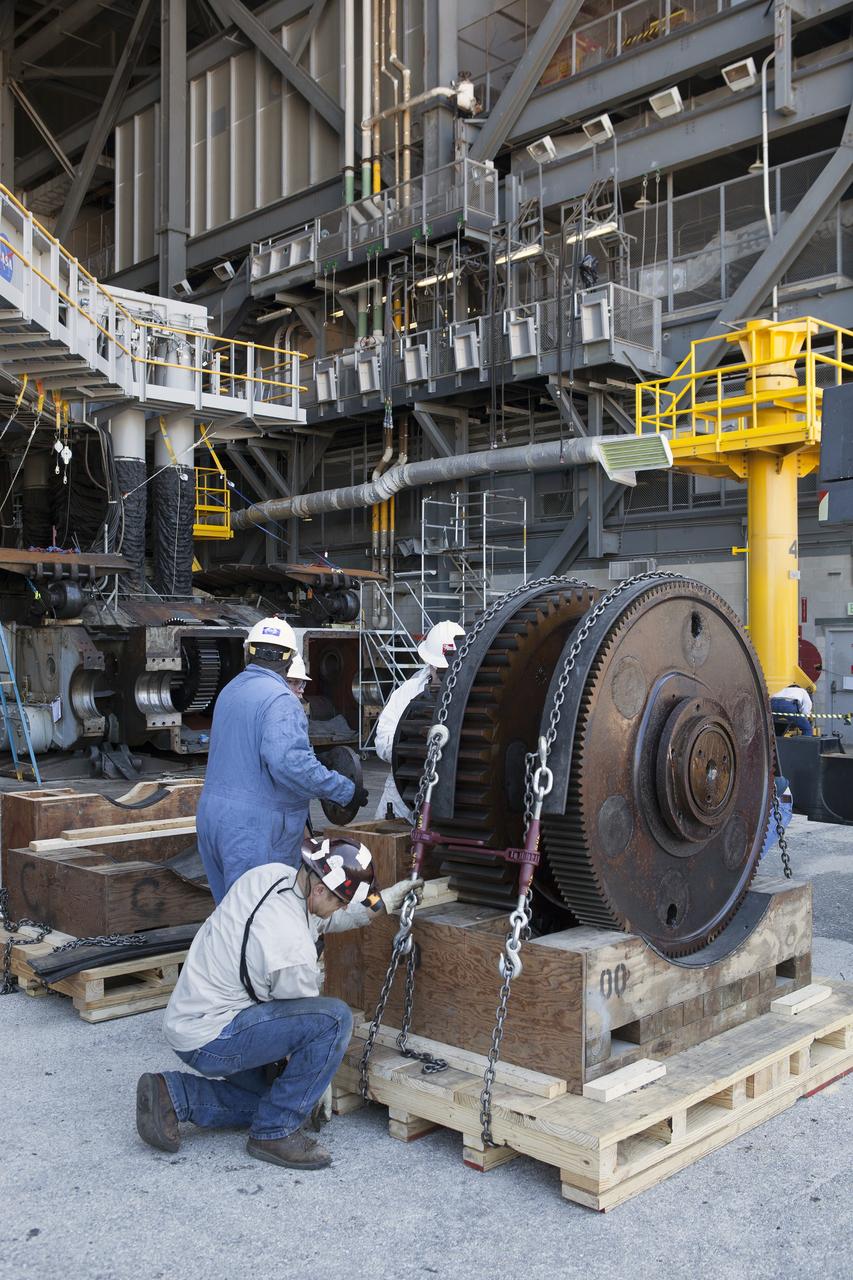
CAPE CANAVERAL, Fla. -- Inside the Vehicle Assembly Building at NASA’s Kennedy Space Center in Florida, ground support technicians help secure one of the sprocket shaft assemblies onto a cradle. All of the sprocket assemblies removed from the C truck of crawler-transporter 2, or CT-2, will be placed into shipping cradles on pallets and positioned on a flatbed trailer. They will be sent to a vendor for inspections and refurbishment. Work continues in high bay 2 to upgrade CT-2. The modifications are designed to ensure CT-2’s ability to transport launch vehicles currently in development, such as the agency’s Space Launch System, to the launch pad. The Ground Systems Development and Operations Program office at Kennedy is overseeing the upgrades. For more than 45 years the crawler-transporters were used to transport the mobile launcher platform and the Apollo-Saturn V rockets and, later, space shuttles to Launch Pads 39A and B. For more information, visit: http://www.nasa.gov/exploration/systems/ground/crawler-transporter. Photo credit: NASA/Dimitri Gerondidakis
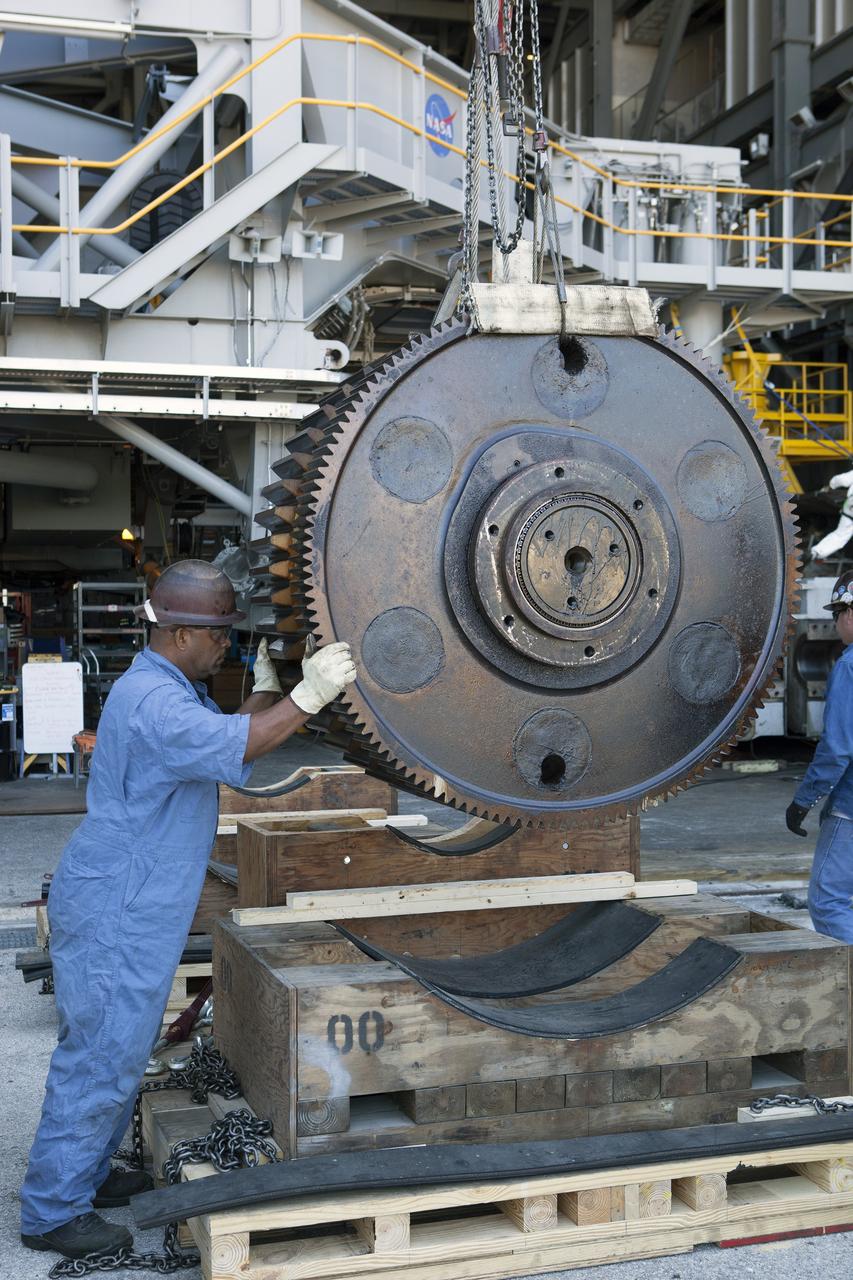
CAPE CANAVERAL, Fla. -- Inside the Vehicle Assembly Building at NASA’s Kennedy Space Center in Florida, a ground support technician helps position one of the sprocket shaft assemblies onto a cradle as an overhead crane lowers it down. The sprocket assembly was removed from the C truck of crawler-transporter 2, or CT-2. They will be placed into shipping cradles on pallets and positioned on a flatbed trailer. They will be sent to a vendor for inspections and refurbishment. Work continues in high bay 2 to upgrade CT-2. The modifications are designed to ensure CT-2’s ability to transport launch vehicles currently in development, such as the agency’s Space Launch System, to the launch pad. The Ground Systems Development and Operations Program office at Kennedy is overseeing the upgrades. For more than 45 years the crawler-transporters were used to transport the mobile launcher platform and the Apollo-Saturn V rockets and, later, space shuttles to Launch Pads 39A and B. For more information, visit: http://www.nasa.gov/exploration/systems/ground/crawler-transporter. Photo credit: NASA/Dimitri Gerondidakis
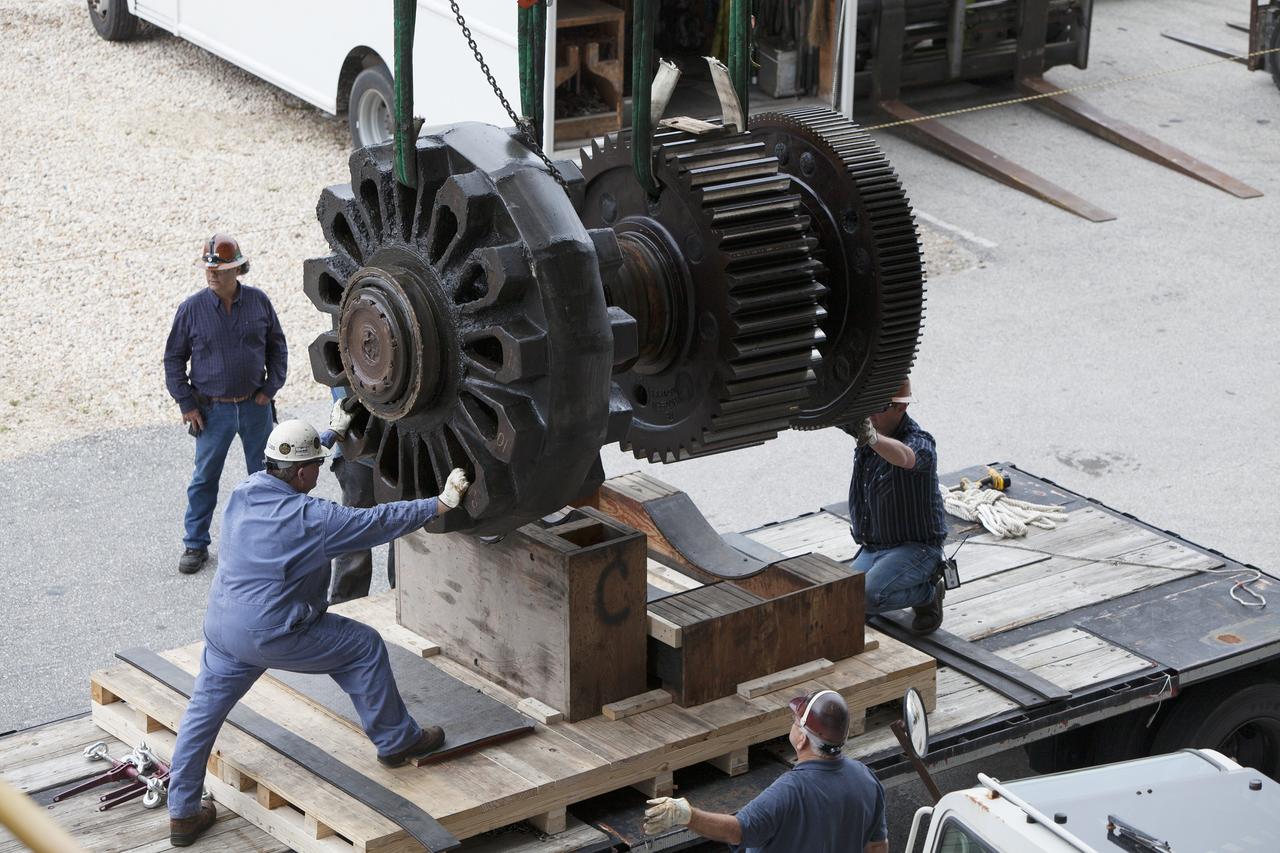
CAPE CANAVERAL, Fla. - Inside the Vehicle Assembly Building at NASA’s Kennedy Space Center in Florida, ground support technicians help position a sprocket shaft assembly onto a cradle as an overhead crane lowers it down. The sprocket assembly was removed from the C truck of crawler-transporter 2, or CT-2. They will be placed into shipping cradles on pallets and positioned on a flatbed trailer. The assemblies will be sent to a vendor for inspections and refurbishment. Work continues in high bay 2 to upgrade CT-2. The modifications are designed to ensure CT-2’s ability to transport launch vehicles currently in development, such as the agency’s Space Launch System, to the launch pad. The Ground Systems Development and Operations Program office at Kennedy is overseeing the upgrades. For more than 45 years the crawler-transporters were used to transport the mobile launcher platform and the Apollo-Saturn V rockets and, later, space shuttles to Launch Pads 39A and B. For more information, visit: http://www.nasa.gov/exploration/systems/ground/crawler-transporter. Photo credit: NASA/Dimitri Gerondidakis
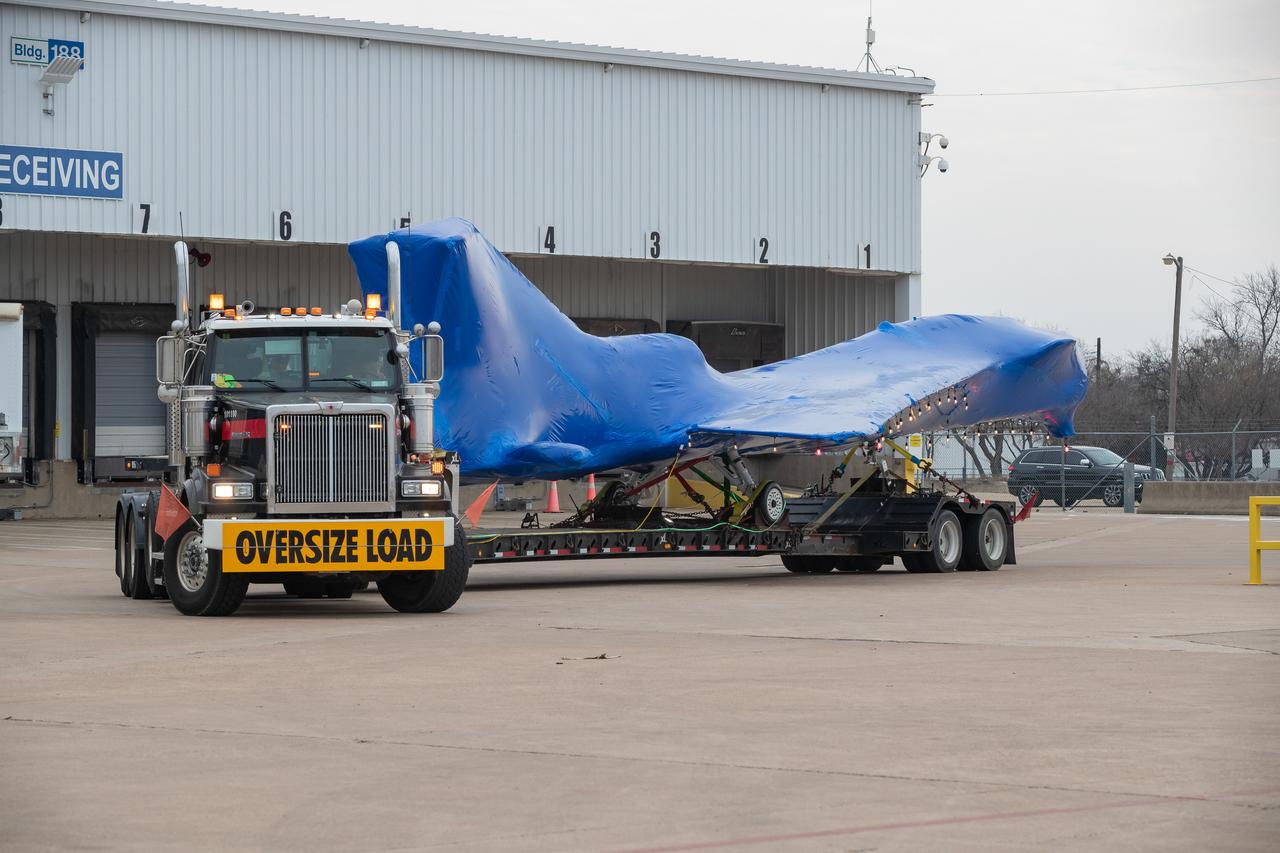
The X-59 arrives in Fort Worth, Texas from Palmdale, California, ready to undergo some important structural and fuel tests at the Lockheed Martin facility. The bright blue wrap around the X-plane is a precautionary measure to keep the exterior of the X-59 safe as it traveled through multiple states on its way to Texas.
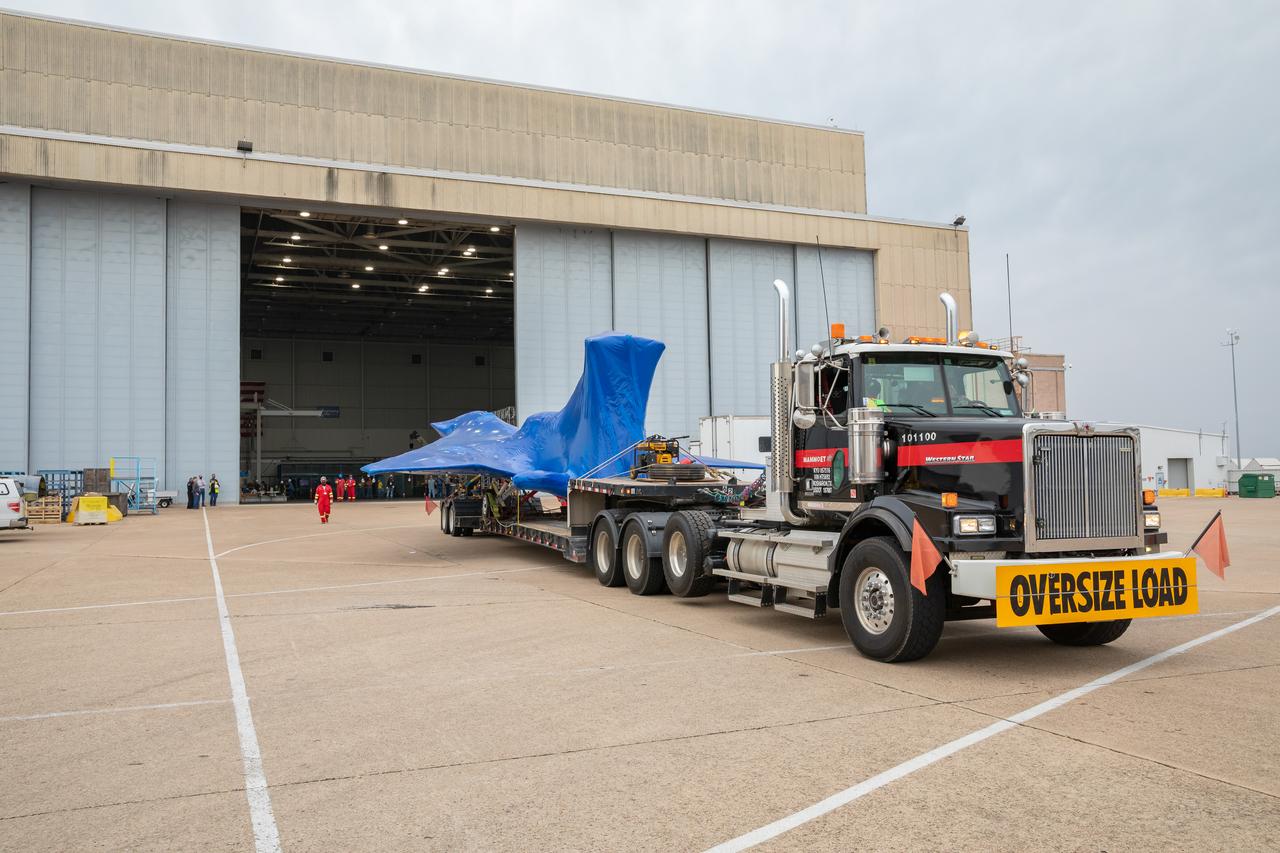
The X-59 arrives in Fort Worth, Texas from Palmdale, California, ready to undergo some important structural and fuel tests at the Lockheed Martin facility. The bright blue wrap around the X-plane is a precautionary measure to keep the exterior of the X-59 safe as it traveled through multiple states on its way to Texas.