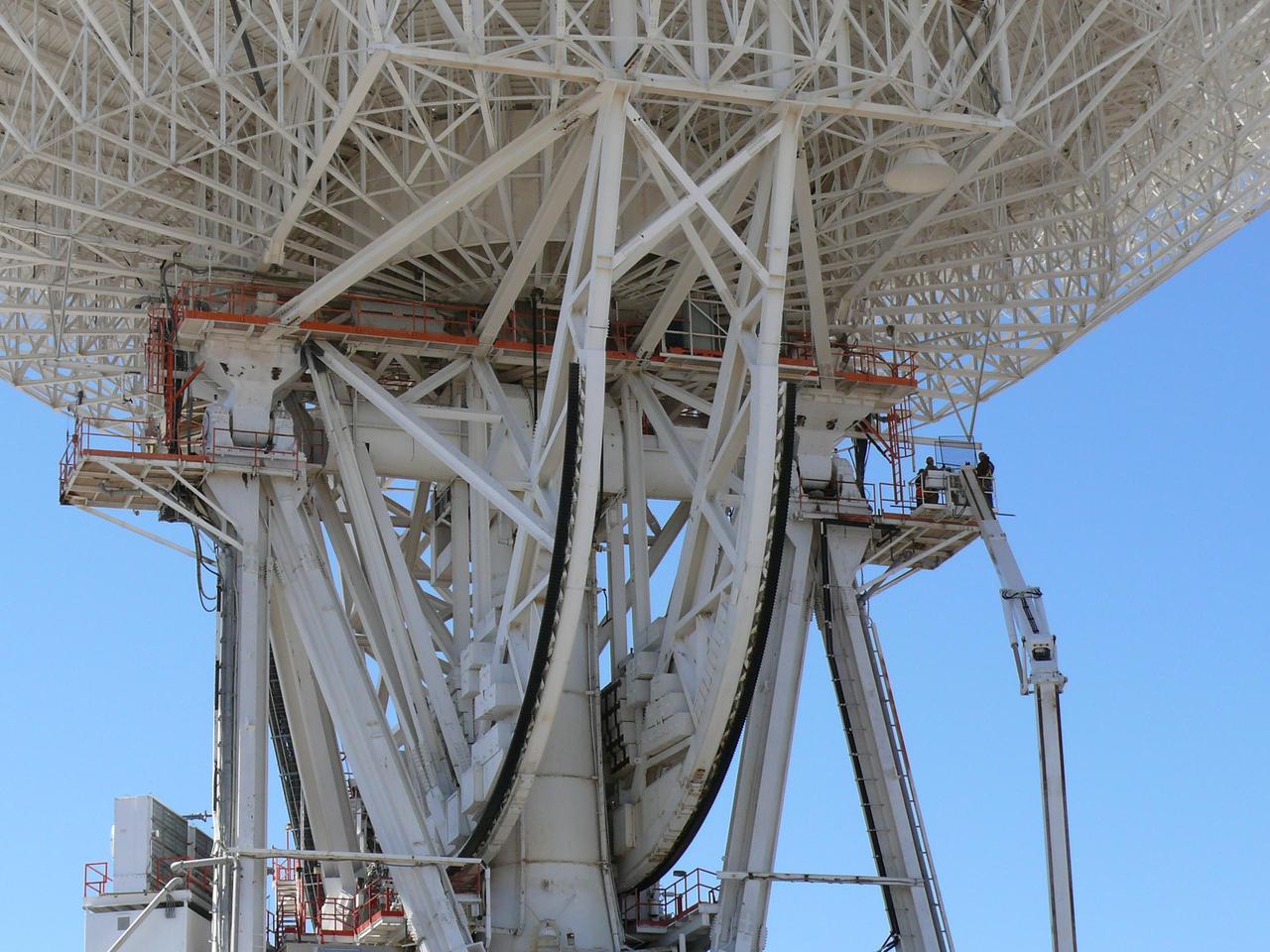
Work began on March 11, 2010 to replace a set of elevation bearings on the giant Mars antenna at NASA Deep Space Network complex in Goldstone, Calif.
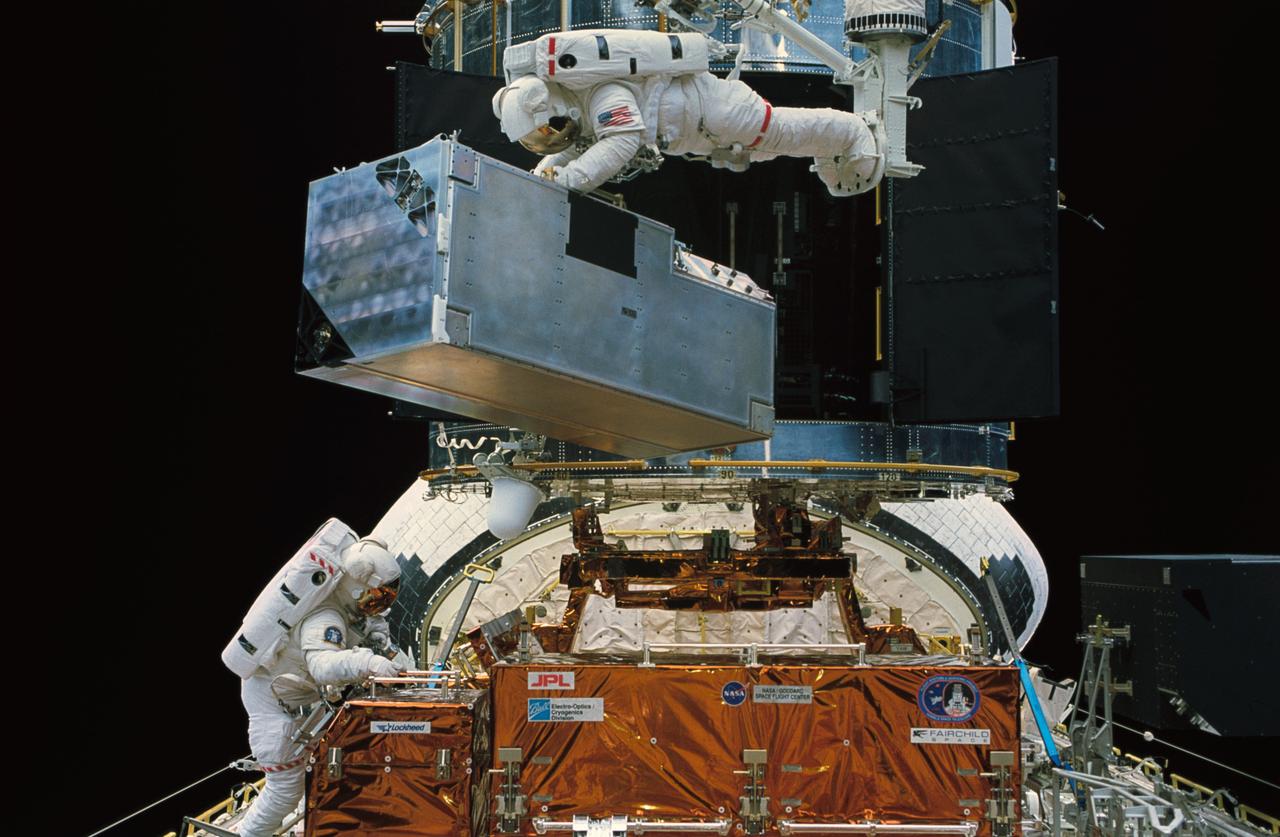
STS061-47-014 (8 Dec 1993) --- Astronaut Kathryn C. Thornton lifts the Corrective Optics Space Telescope Axial Replacement (COSTAR) prior to its installation on the Hubble Space Telescope (HST). Thornton is anchored to a foot restraint on the end of the Remote Manipulator System (RMS) arm. Astronaut Thomas D. Akers, who assisted in the COSTAR installation, is at lower left.
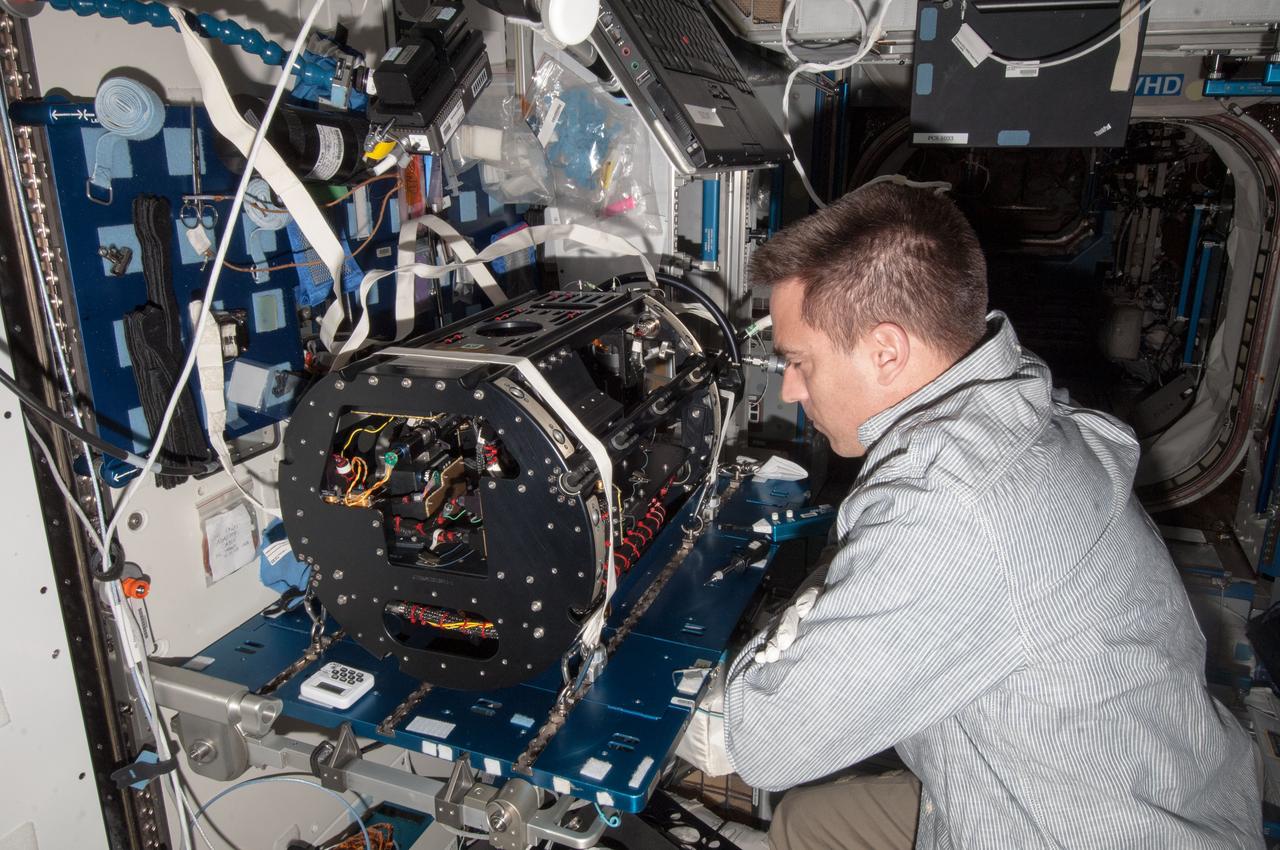
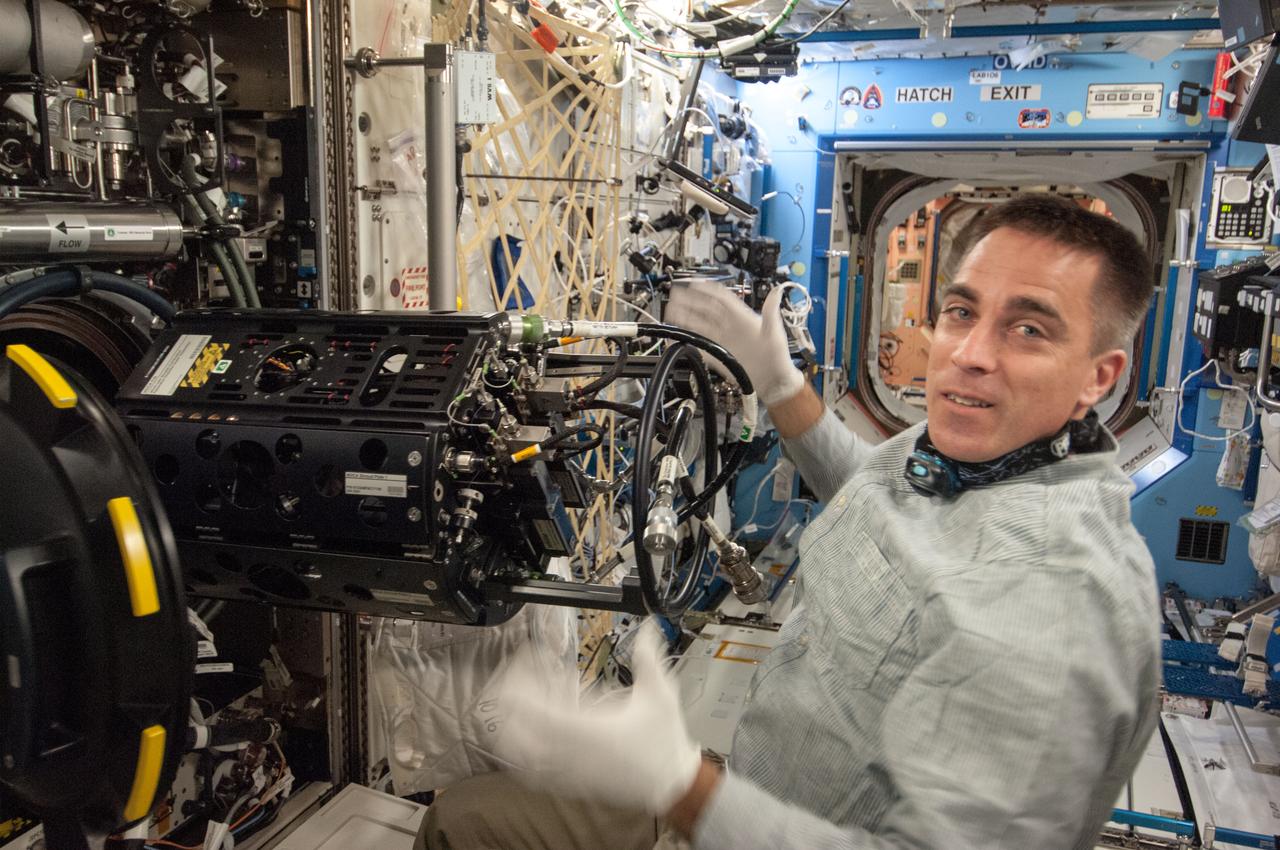
ISS035-E-025557(22 April 2013) ---Multi-user Droplet Combustion Apparatus (MDCA) Hardware Replacement: Cassidy accessed the Combustion Integration Rack (CIR) Combustion Chamber and removed the MDCA Chamber Insert Assembly (CIA). He then replaced the MDCA Needle 1 due to a fuel line that was damaged during previous activities when the MDCA CIA was being removed from the Combustion Chamber.
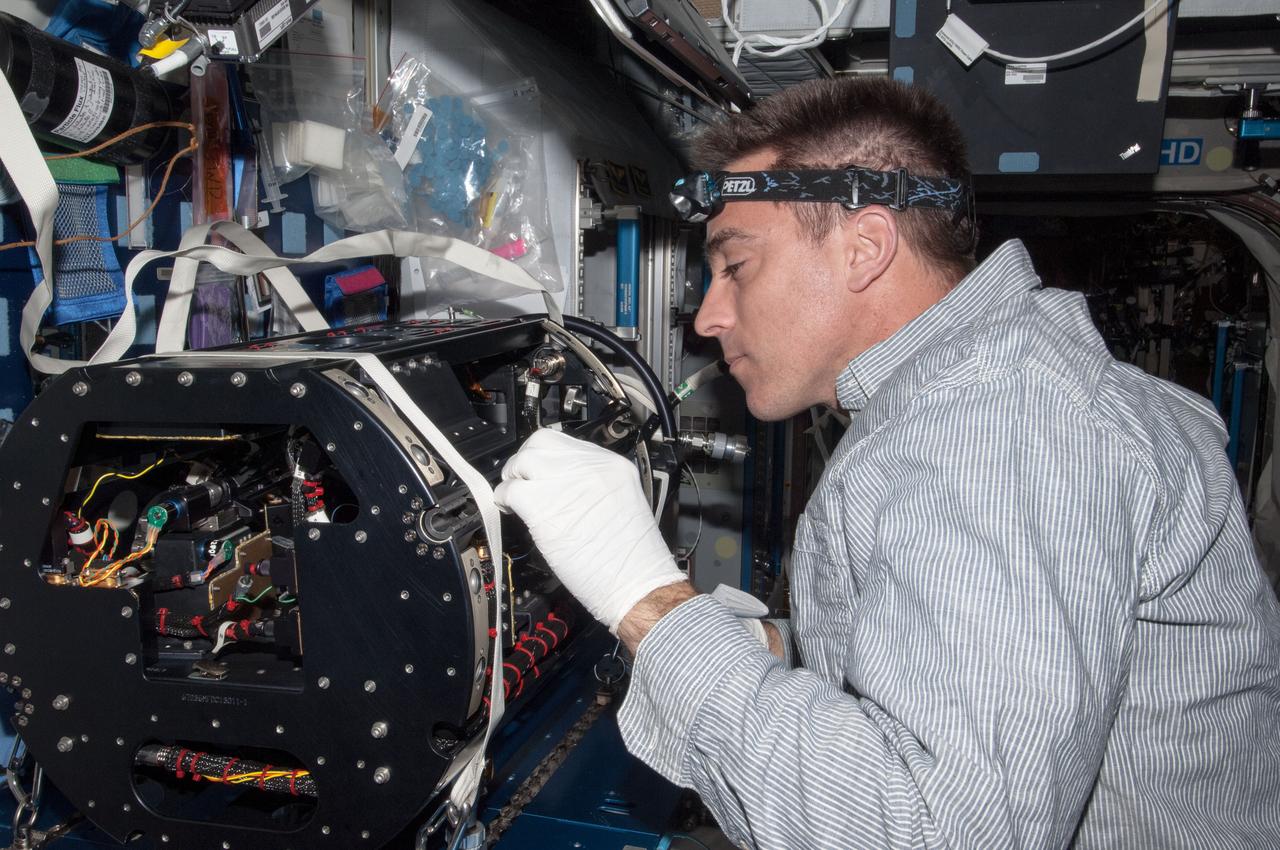
ISS035-E-025557(22 April 2013) ---Multi-user Droplet Combustion Apparatus (MDCA) Hardware Replacement: Cassidy accessed the Combustion Integration Rack (CIR) Combustion Chamber and removed the MDCA Chamber Insert Assembly (CIA). He then replaced the MDCA Needle 1 due to a fuel line that was damaged during previous activities when the MDCA CIA was being removed from the Combustion Chamber.
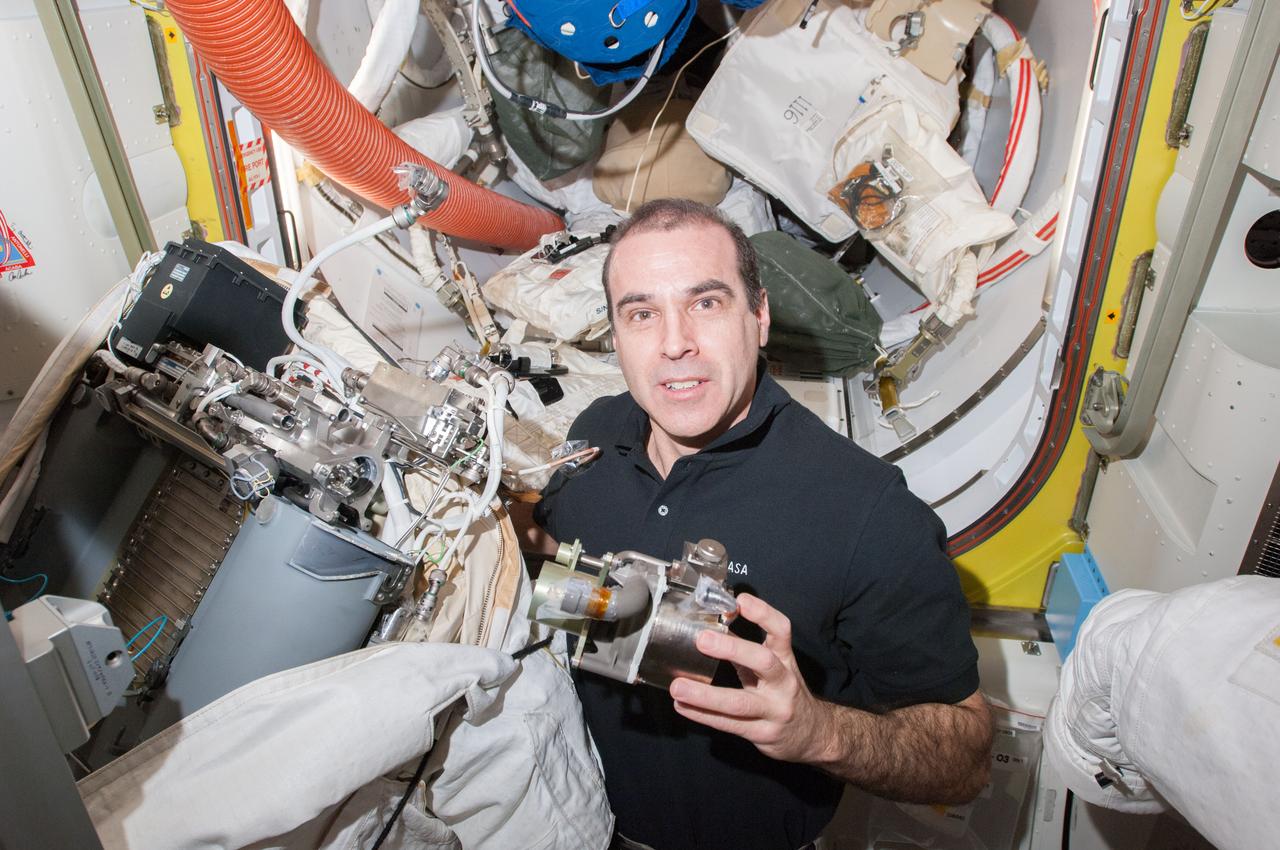
Expedition 39 flight engineer Rick Mastracchio poses for a photo with the replacement Fan Pump Separator (FPS) and Extravehicular Mobility Unit (EMU) 3005. Image was taken in the Quest Airlock (A/L) during FPS remove and replace operations.
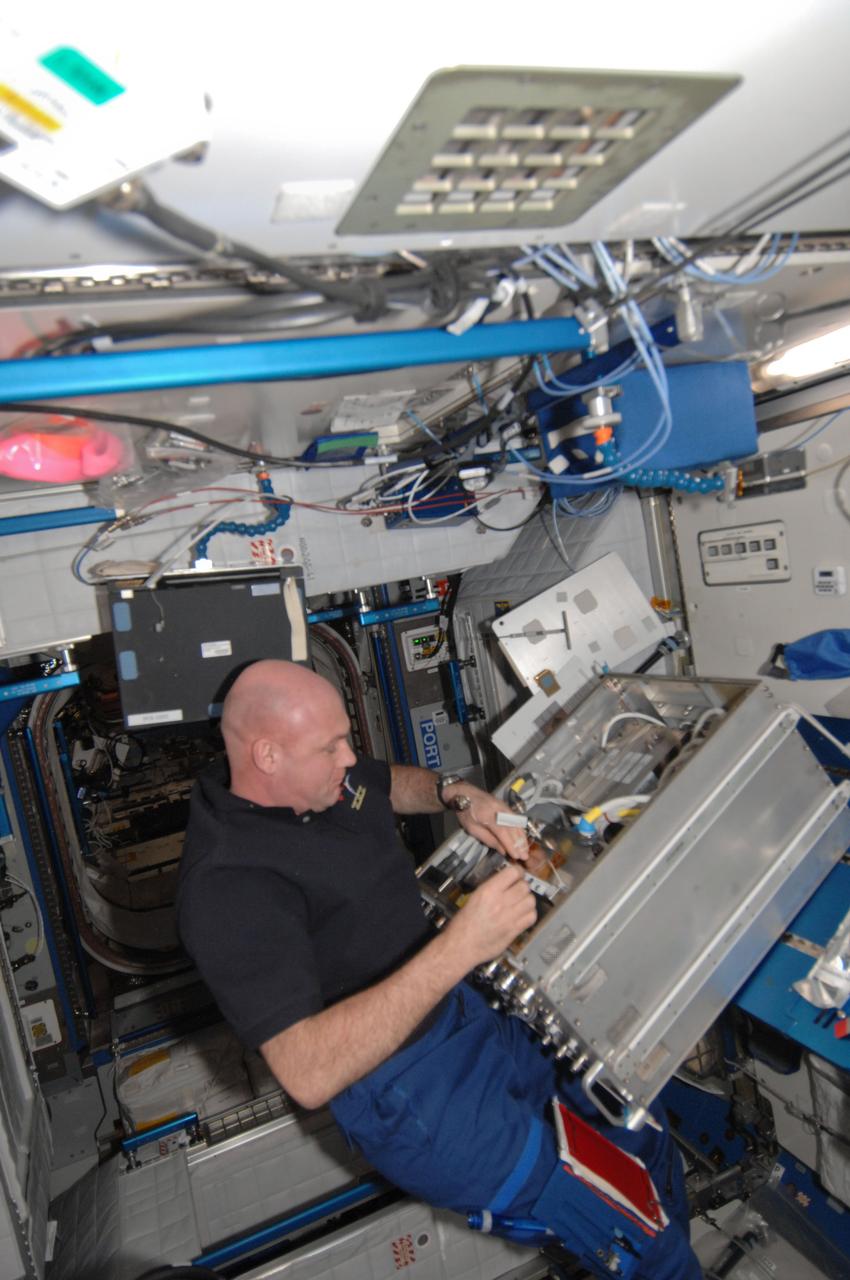
ISS030-E-117367 (31 Jan. 2012) --- European Space Agency astronaut Andre Kuipers, Expedition 30 flight engineer, removes and replaces the Photoacoustic Analyzer Module (PAM) Orbit Replaceable Unit (ORU) of the Pulmonary Function System (PFS) in the Harmony node of the International Space Station.
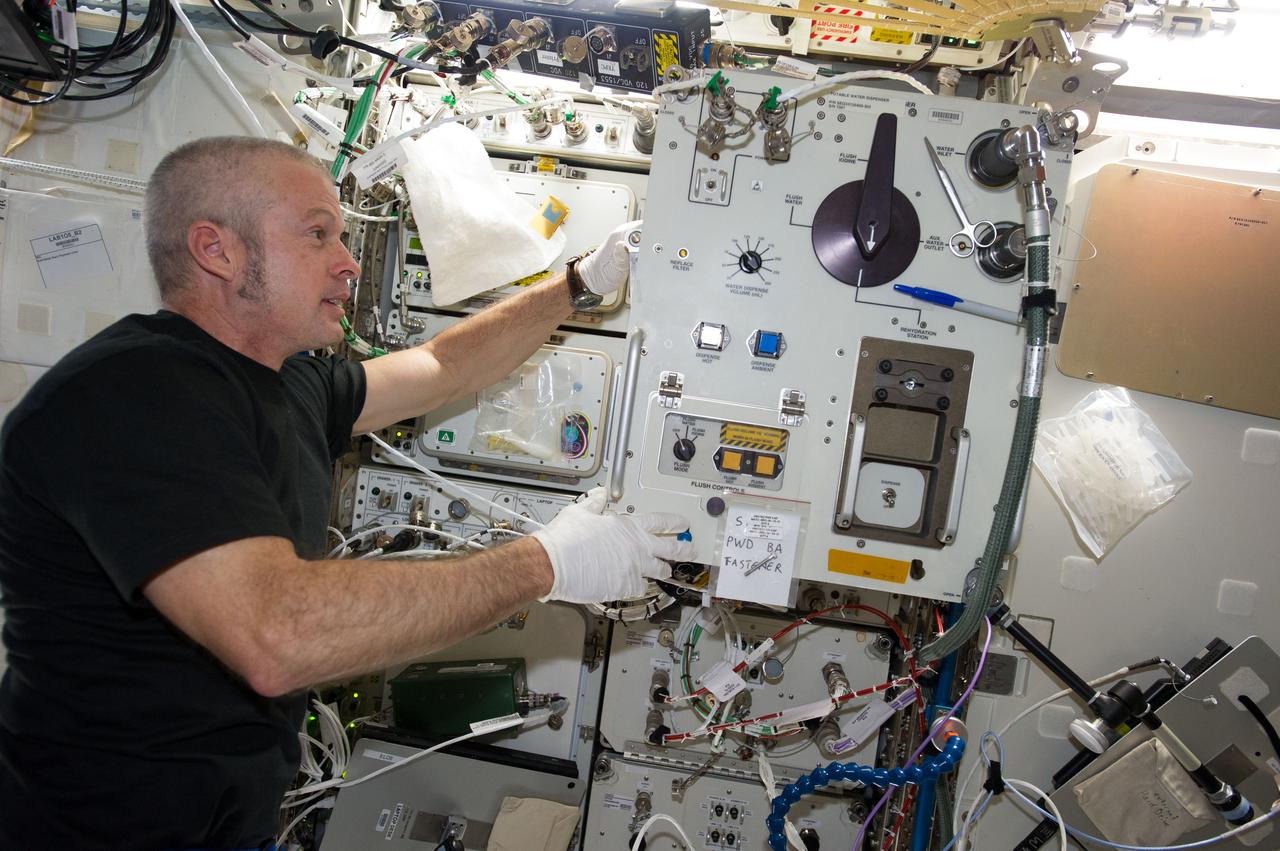
ISS040-E-064628 (15 July 2014) --- NASA astronaut Steve Swanson, Expedition 40 commander, replaces filters in the Potable Water Dispenser (PWD) in the Destiny laboratory of the International Space Station.
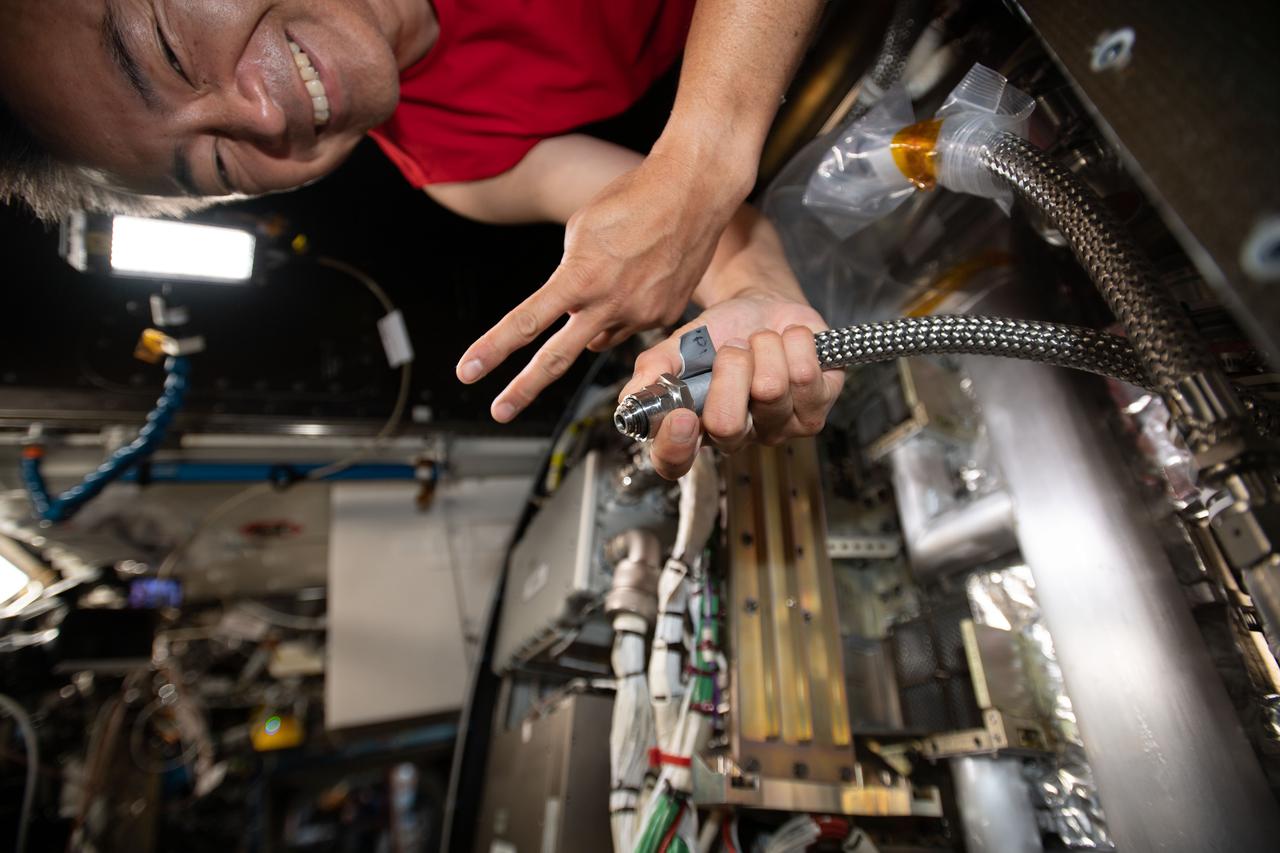
iss065e032225 (May 11, 2021) --- Expedition 65 Commander Akihiko Hoshide of the Japan Aerospace Exploration Agency replaces a science rack fan inside the International Space Station's U.S. Destiny laboratory.
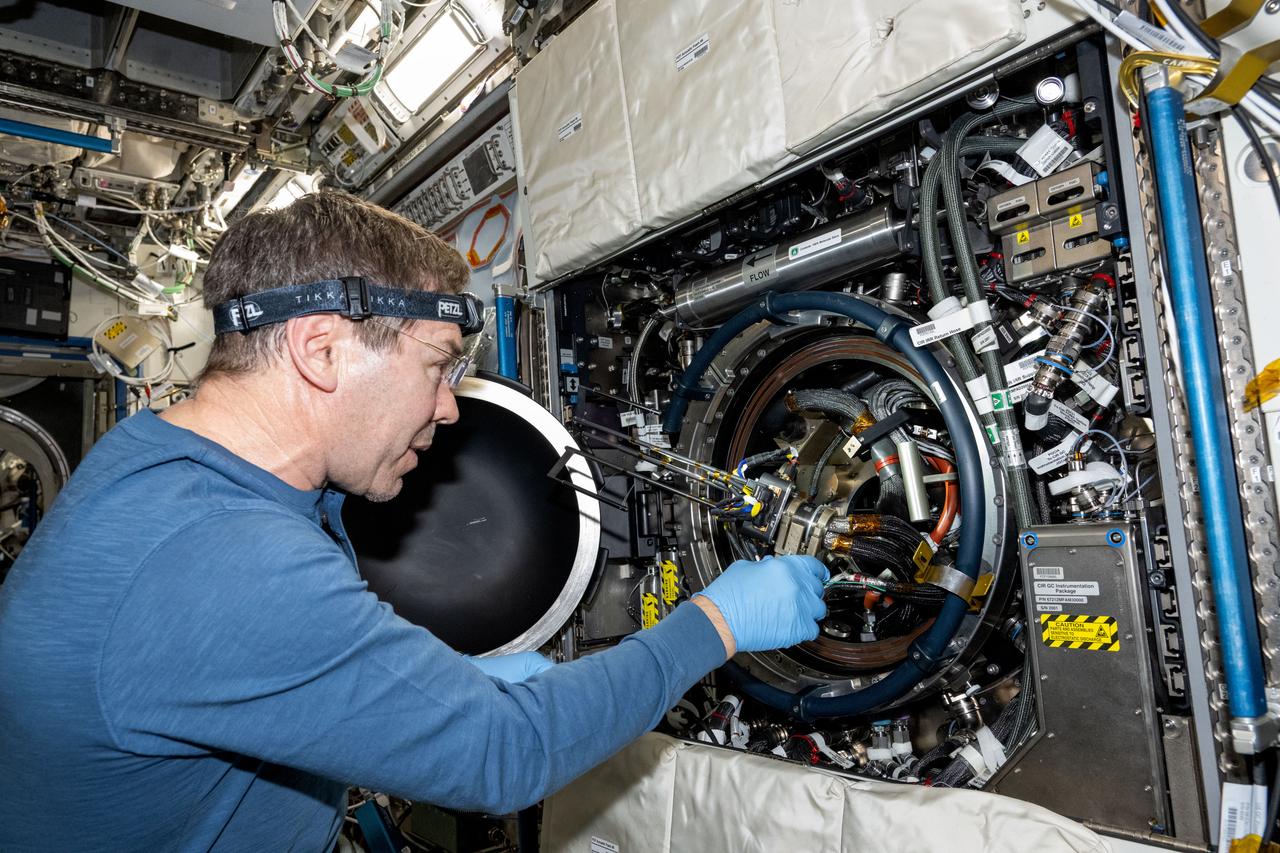
iss071e439784 (Aug. 5, 2024) --- NASA astronaut and Expedition 71 Flight Engineer Mike Barratt replaces fuel bottles and other components inside the Combustion Integrated Rack located inside the Intenational Space Station's Destiny laboratory.
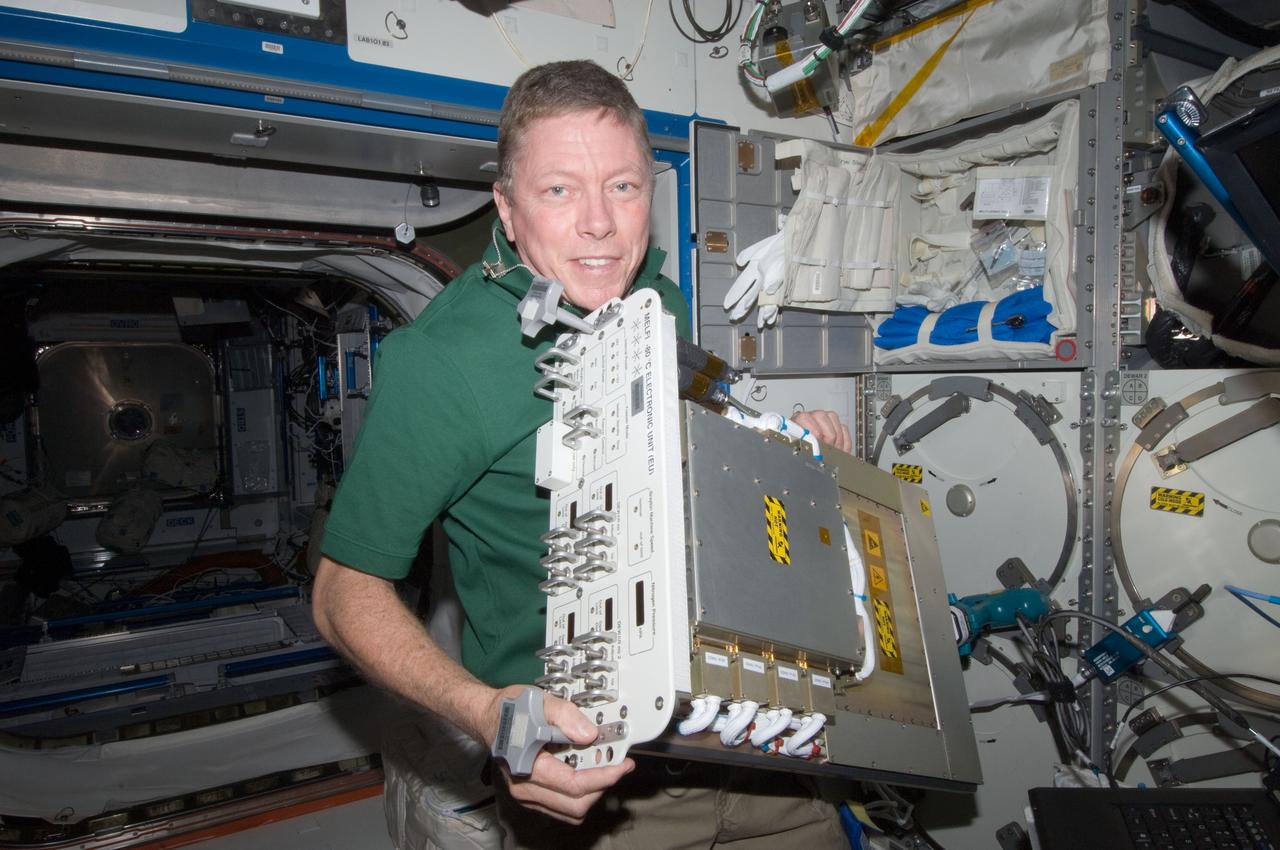
ISS028-E-013797 (1 July 2011) --- NASA astronaut Mike Fossum, Expedition 28 flight engineer, replaces a failed electronic unit for the Minus Eighty Laboratory Freezer for ISS 3 (MELFI-3) with a spare unit in the Kibo laboratory of the International Space Station.
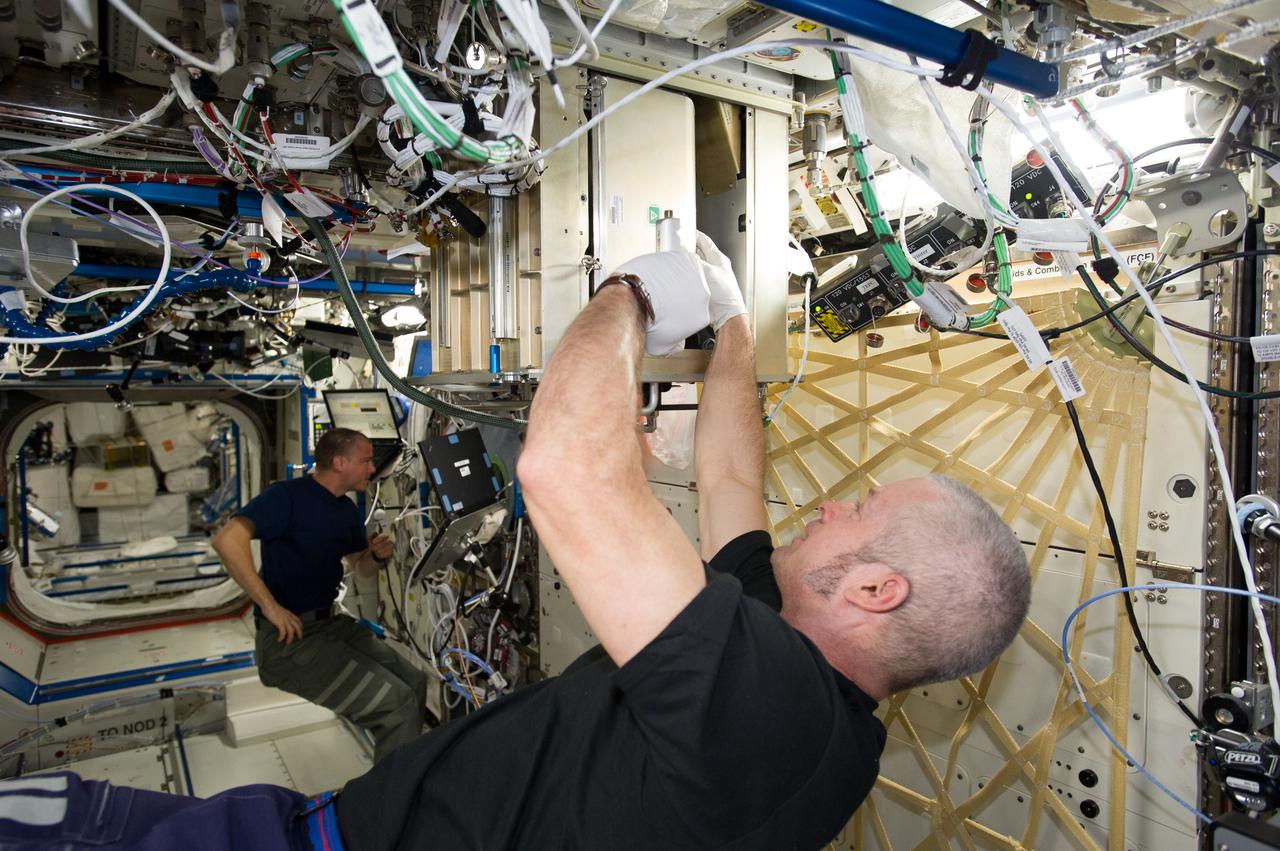
ISS040-E-064624 (15 July 2014) --- NASA astronaut Steve Swanson, Expedition 40 commander, replaces filters in the Potable Water Dispenser (PWD) in the Destiny laboratory of the International Space Station. NASA astronaut Reid Wiseman, flight engineer, works in the background.
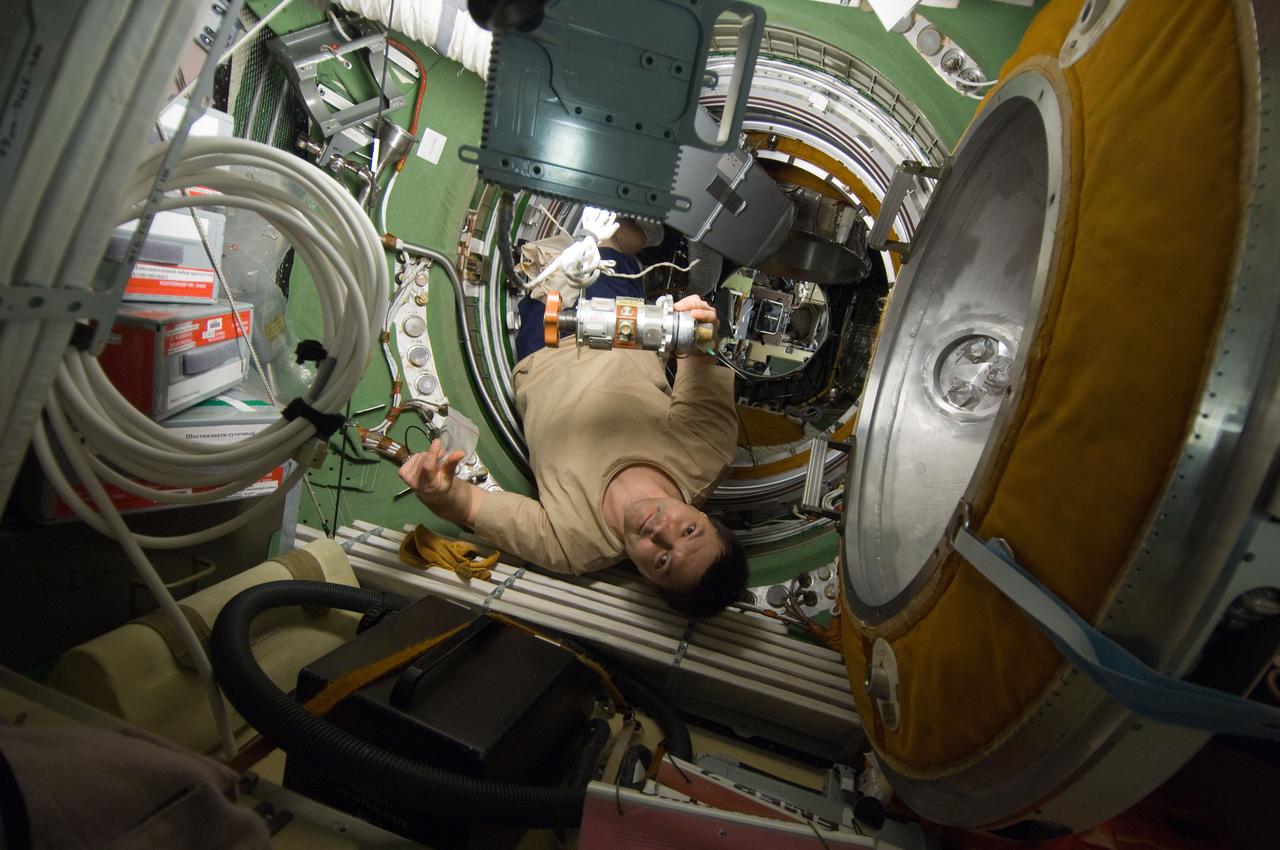
ISS030-E-177117 (12 March 2012) --- Russian cosmonaut Oleg Kononenko, Expedition 30 flight engineer, performs removal and replacement of the KVD Pressure Equalization Valve (PEV) in the transfer compartment between the Zarya Functional Cargo Block (FGB) and the Zvezda Service Module of the International Space Station.
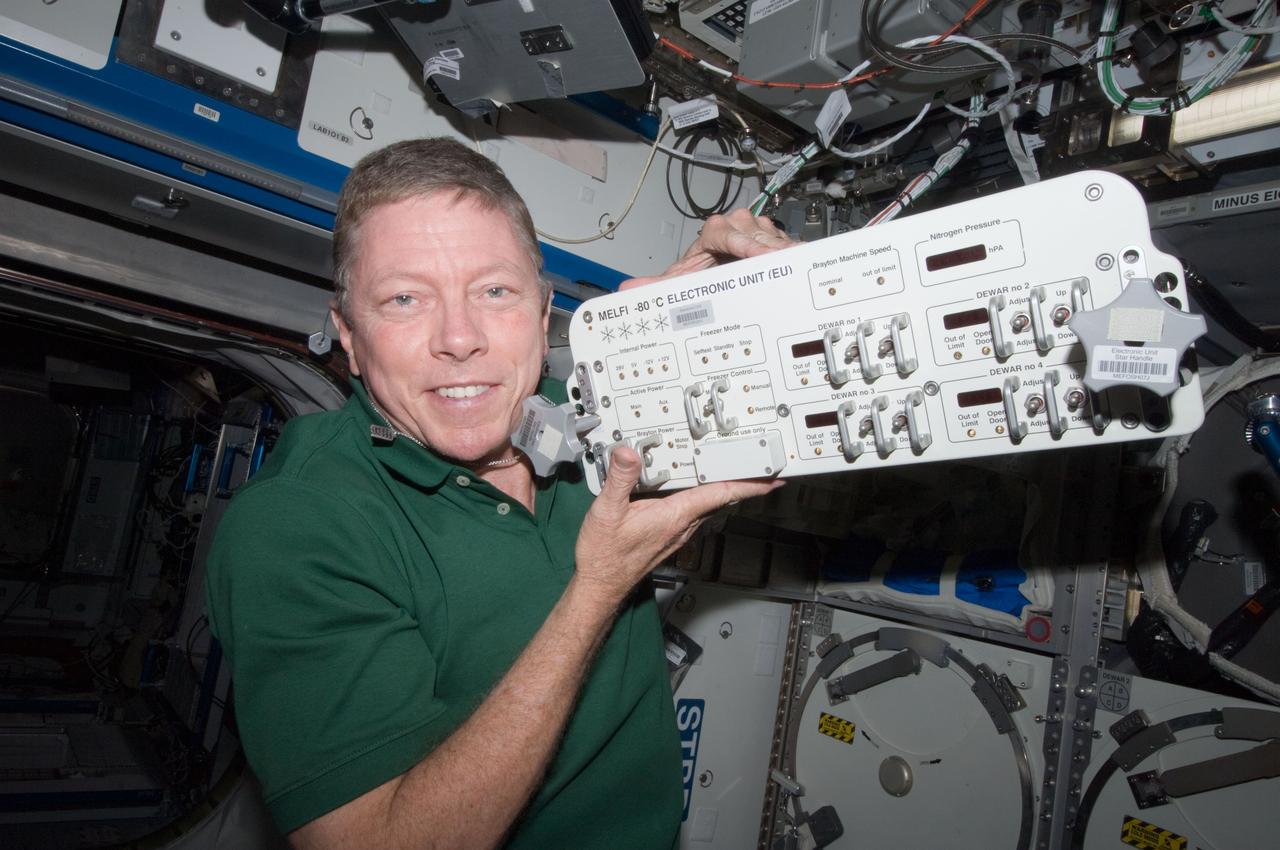
ISS028-E-013799 (1 July 2011) --- NASA astronaut Mike Fossum, Expedition 28 flight engineer, replaces a failed electronic unit for the Minus Eighty Laboratory Freezer for ISS 3 (MELFI-3) with a spare unit in the Kibo laboratory of the International Space Station.
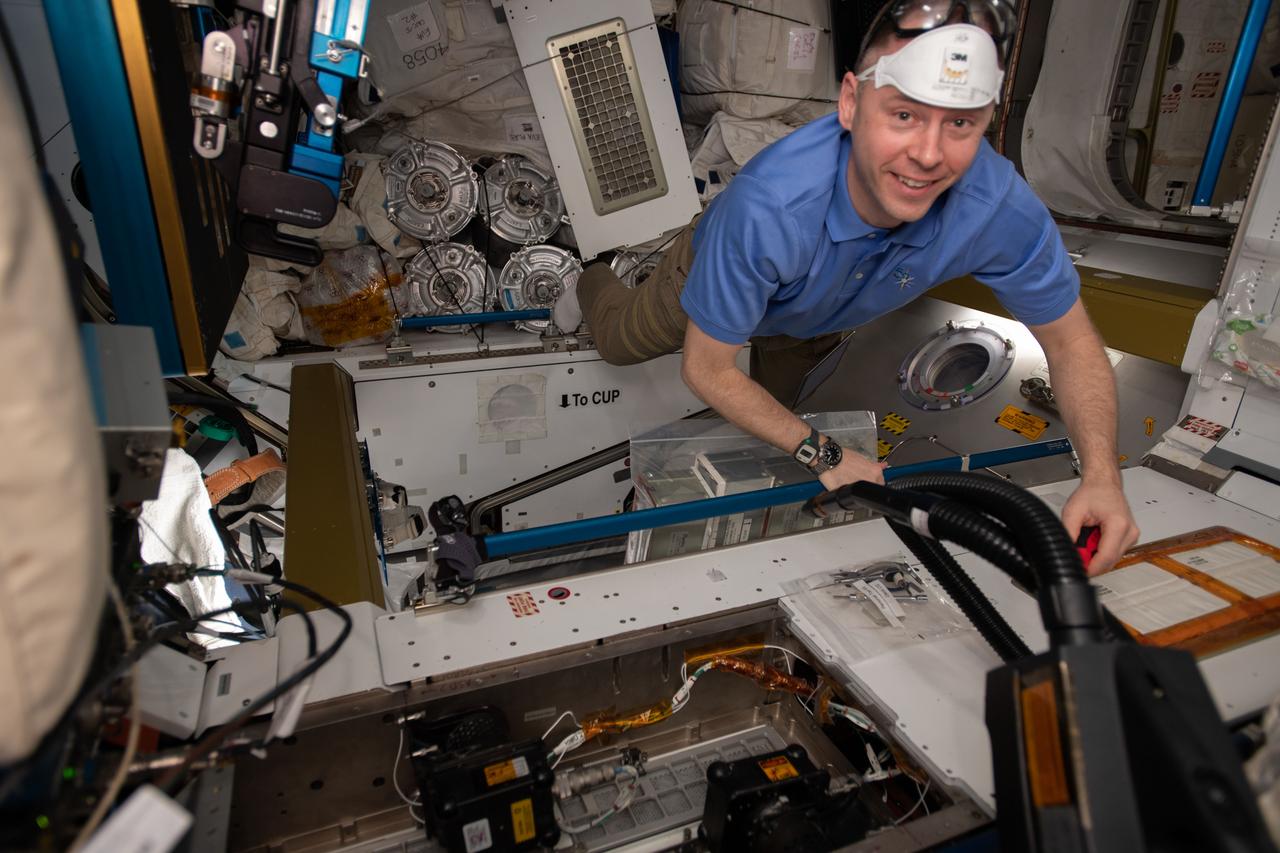
iss059e036143 (April 29, 2019) --- Expedition 59 Flight Engineer and NASA astronaut Nick Hague wears personal protection gear while working to remove bacteria filters and replacing them with charcoal filters inside the International Space Station's Tranquility module.
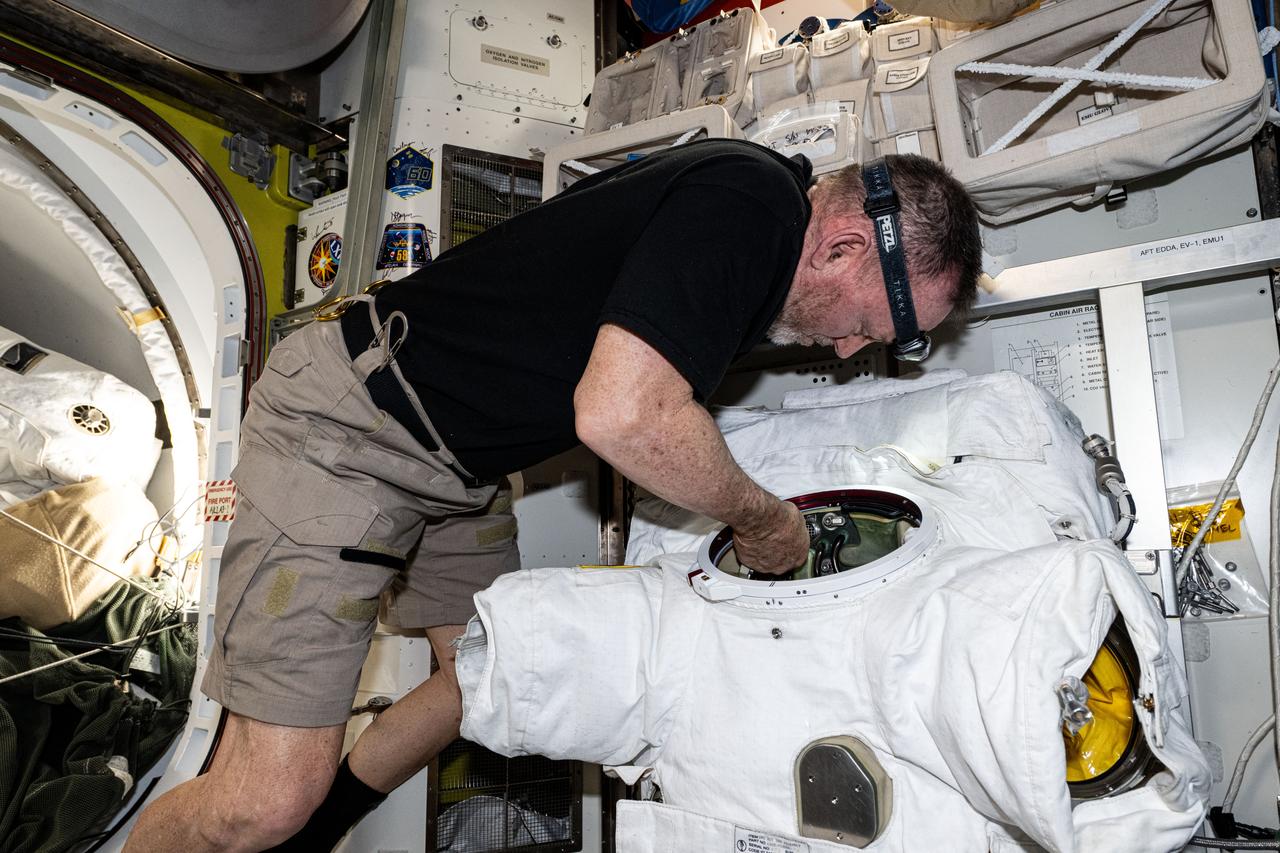
iss072e629219 (Feb. 19, 2025) --- NASA astronaut and Expedition Flight Engineer Butch Wilmore replaces components on a spacesuit inside the International Space Station's Quest airlock.
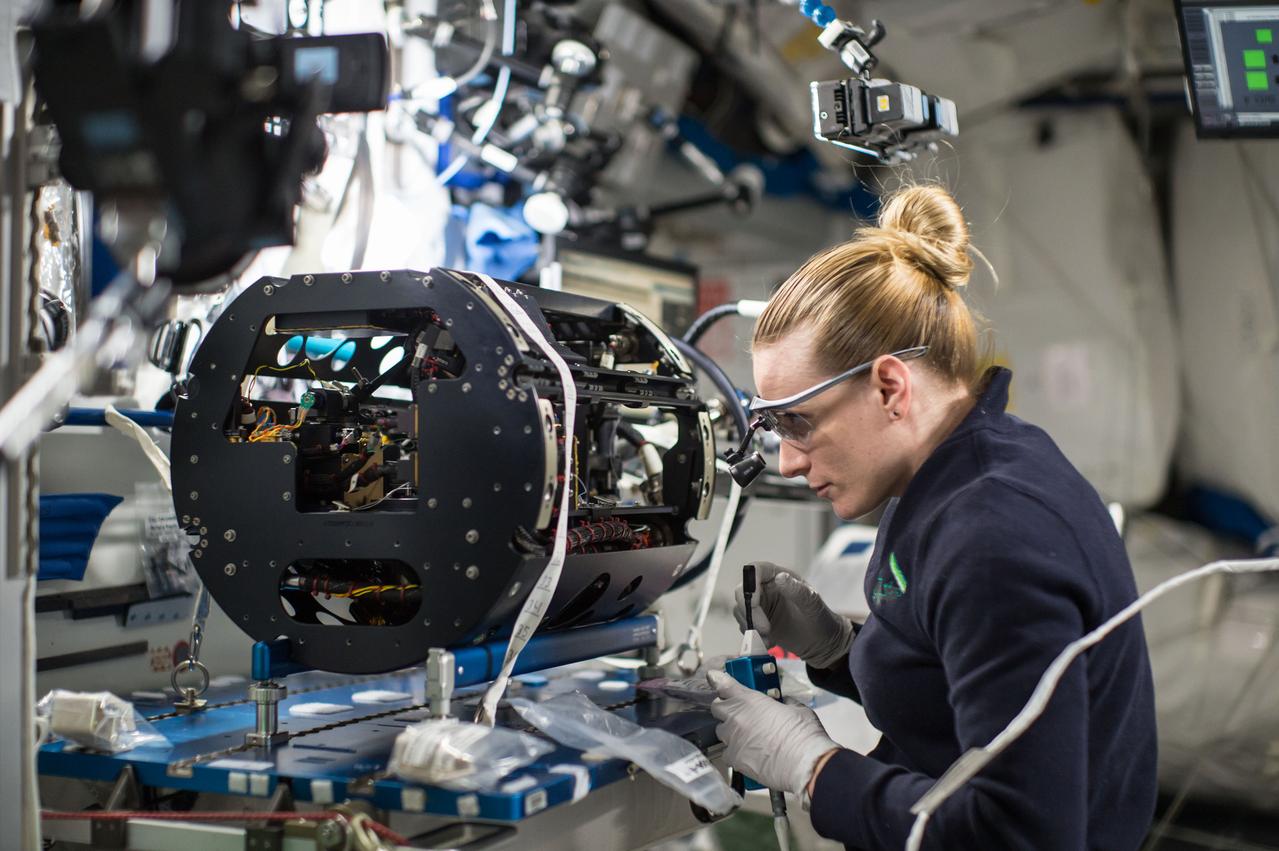
iss049e003808 (9/15/2016) --- NASA astronaut Kate Rubins is photographed replacing two Multi-user Droplet Combustion Apparatus (MDCA) Igniter Tips as part of the Combustion Integration Rack (CIR) Igniter Replacement operations. The CIR is used to perform combustion experiments in microgravity. The CIR can be reconfigured easily on orbit to accommodate a variety of combustion experiments. It consists of an optics bench, a combustion chamber, a fuel and oxidizer management system, environmental management systems, and interfaces for science diagnostics and experiment specific equipment.
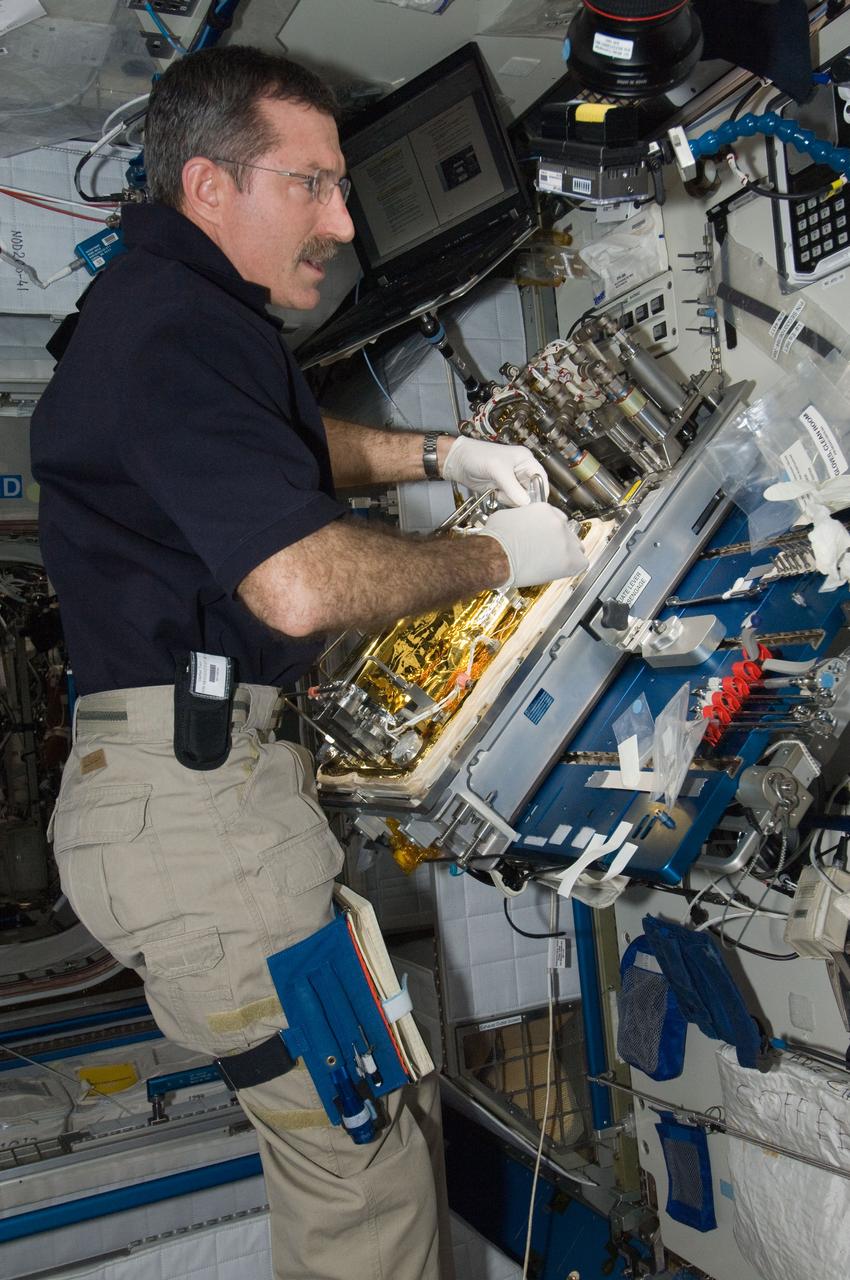
ISS030-E-128877 (9 March 2012) --- At a workstation in the International Space Station?s Harmony node, NASA astronaut Dan Burbank, Expedition 30 commander, replaces a Catalytic Reactor in the Water Recovery System.
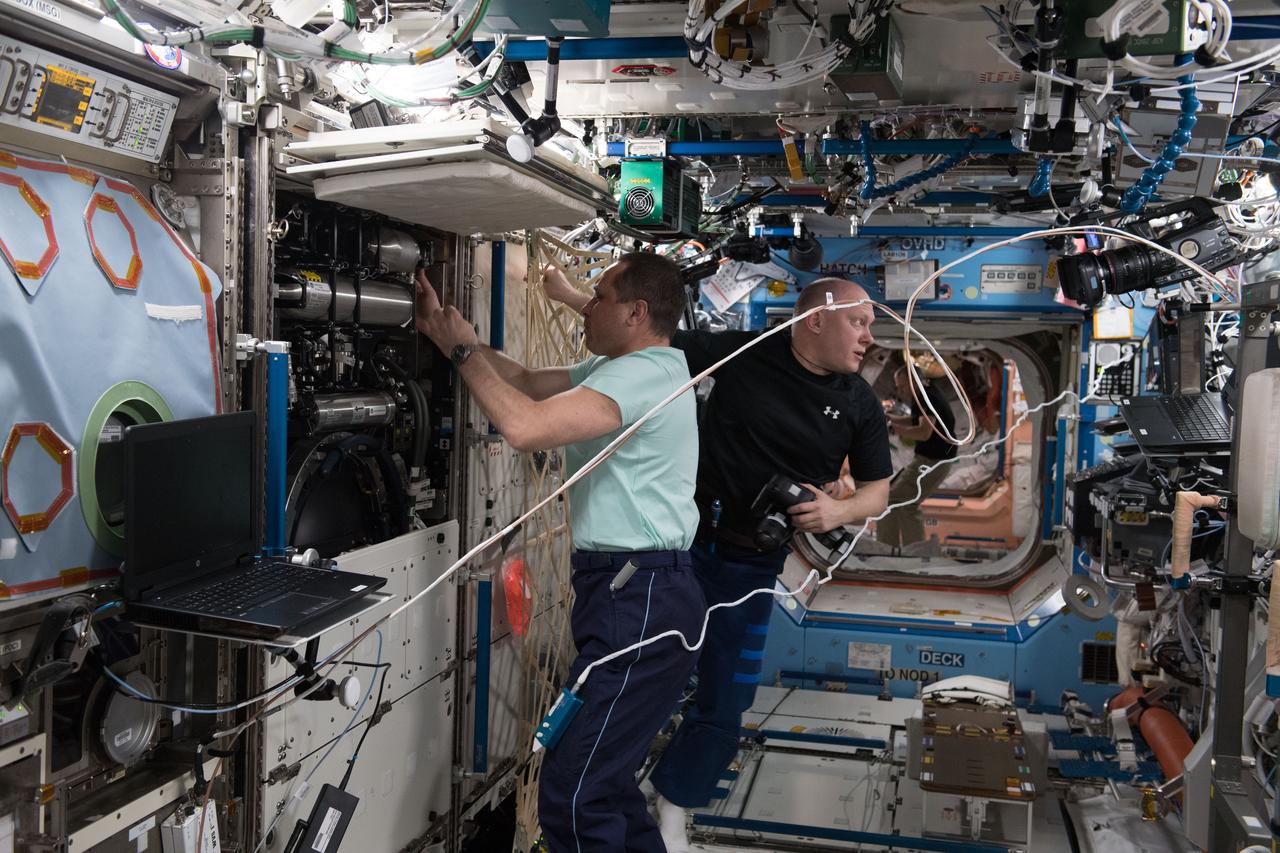
iss055e005587 (March 26, 2018) --- Expedition 55 Commander Anton Shkaplerov (foreground) and Flight Engineer Oleg Artemyev, both cosmonauts representing Roscosmos, replace manifold bottles inside the the Destiny lab module's Combustion Integrated Rack.
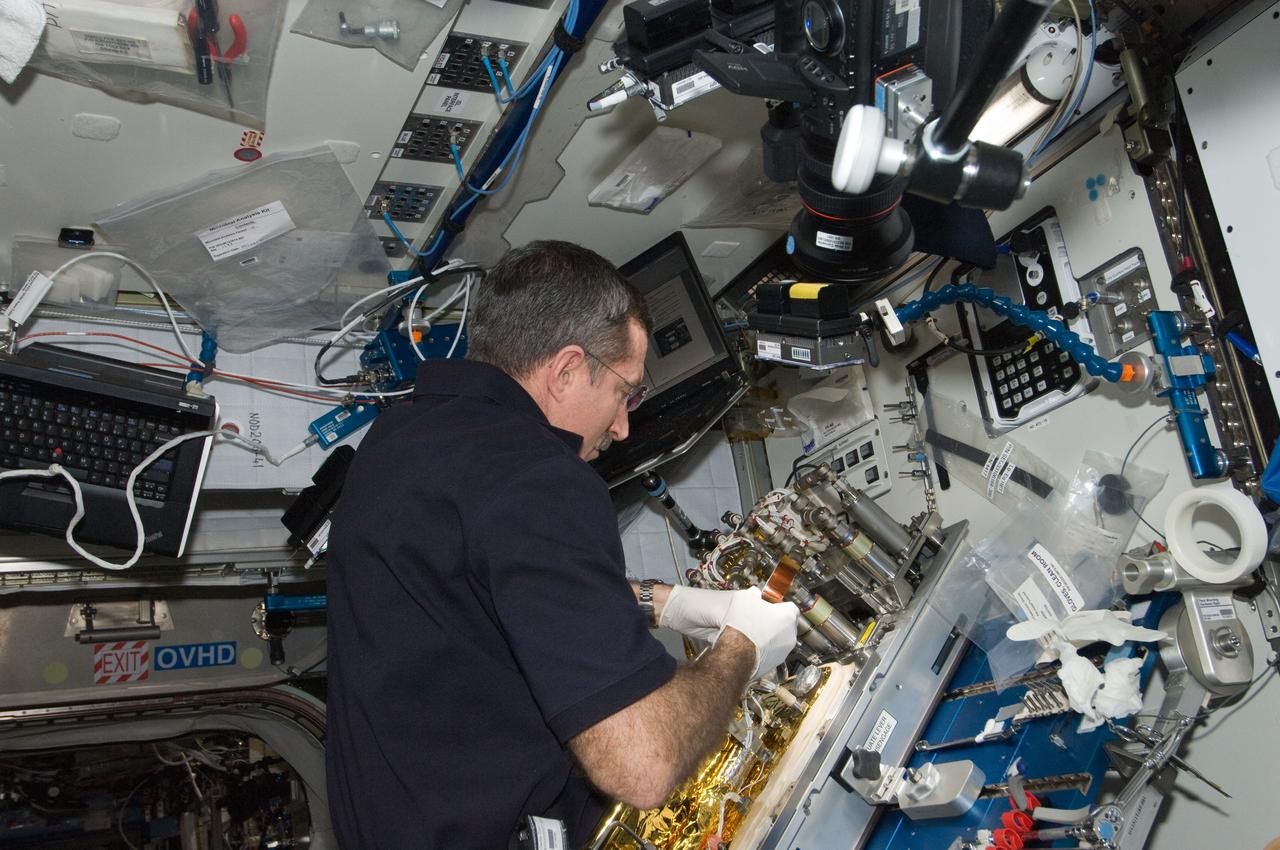
ISS030-E-128878 (9 March 2012) --- At a workstation in the International Space Station?s Harmony node, NASA astronaut Dan Burbank, Expedition 30 commander, replaces a Catalytic Reactor in the Water Recovery System.
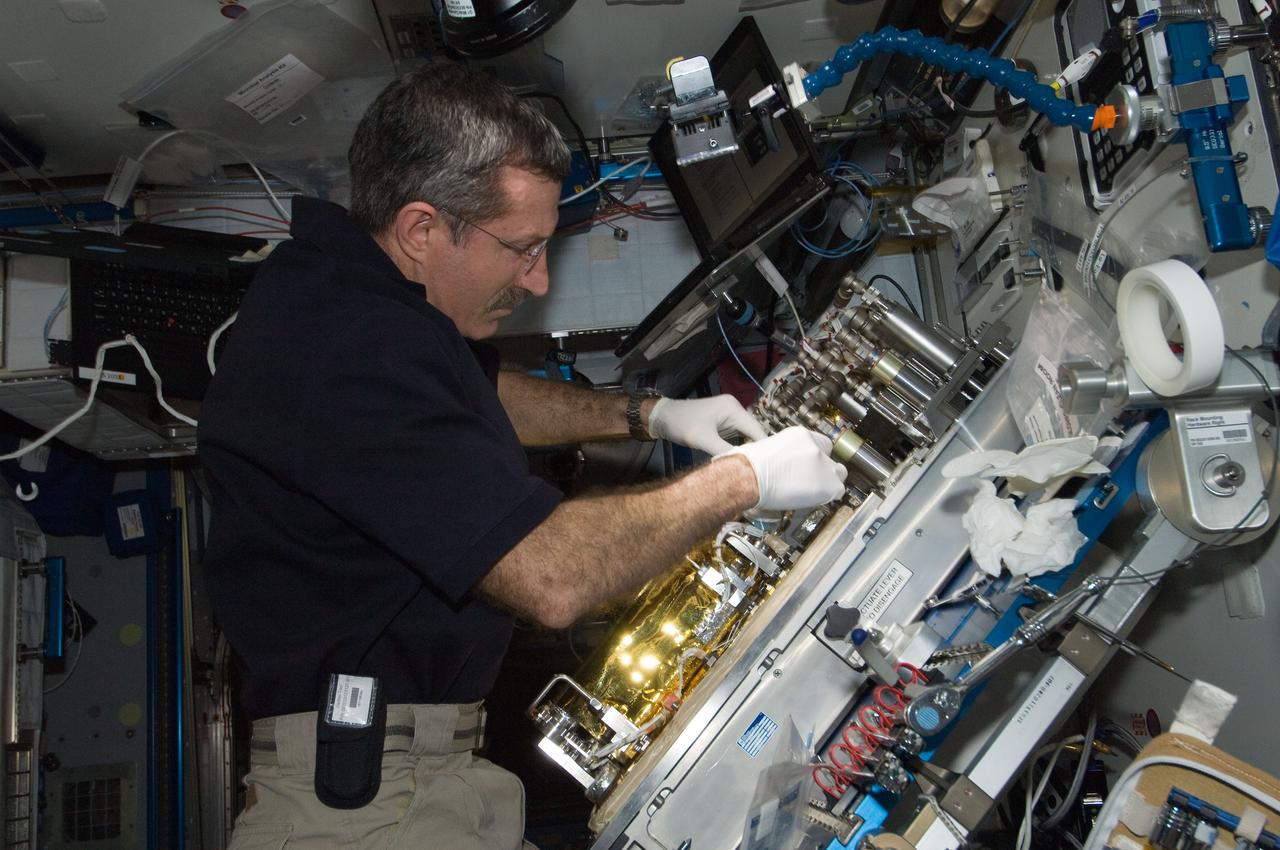
ISS030-E-128879 (9 March 2012) --- At a workstation in the International Space Station?s Harmony node, NASA astronaut Dan Burbank, Expedition 30 commander, replaces a Catalytic Reactor in the Water Recovery System.
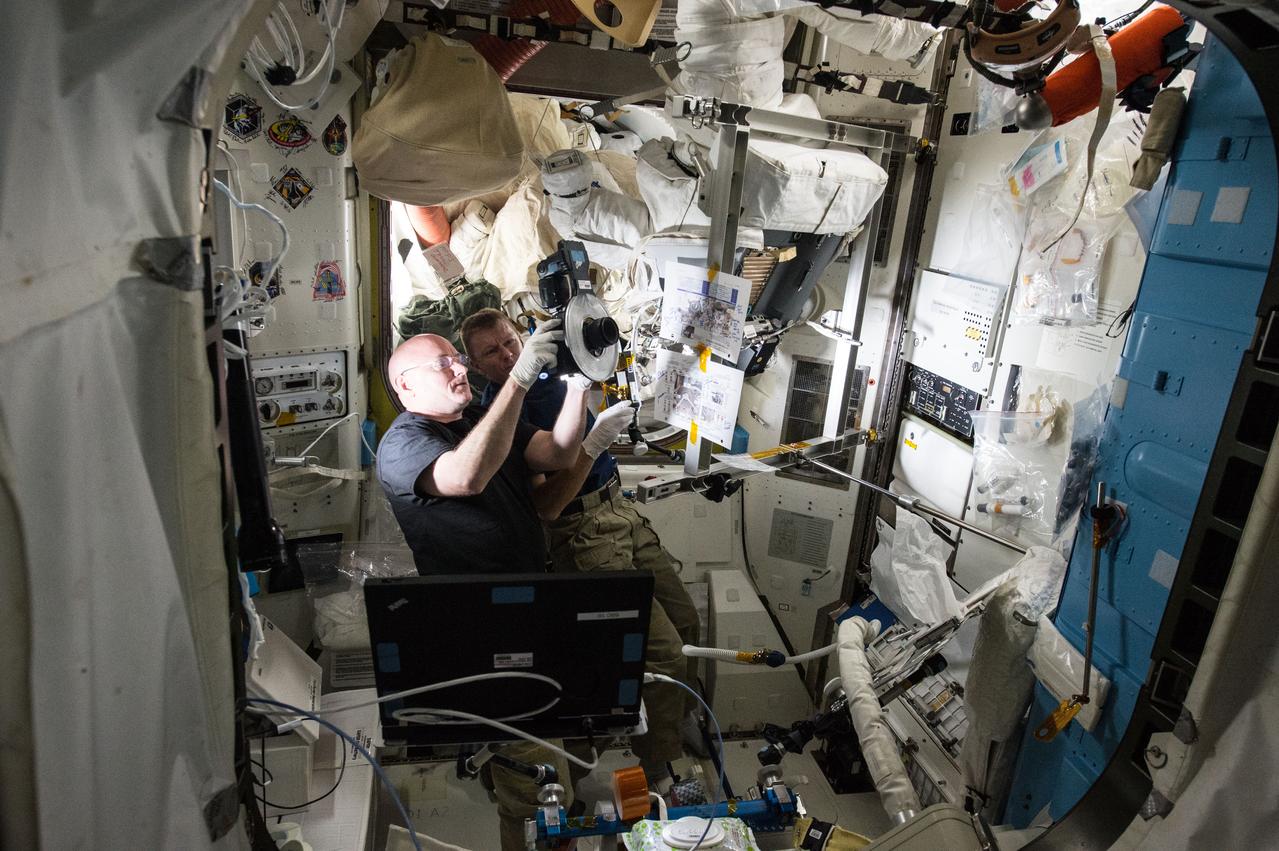
ISS046e038911 (01/10/2016) --- NASA astronaut Scott Kelly (left) and ESA (European Space Agency) astronaut Timothy Peake (right) review images during a procedure to replace a fan pump separator inside one of the U.S. spacesuits aboard the International Space Station. The activity took place inside the Quest airlock where all U.S. based spacewalks begin and end.
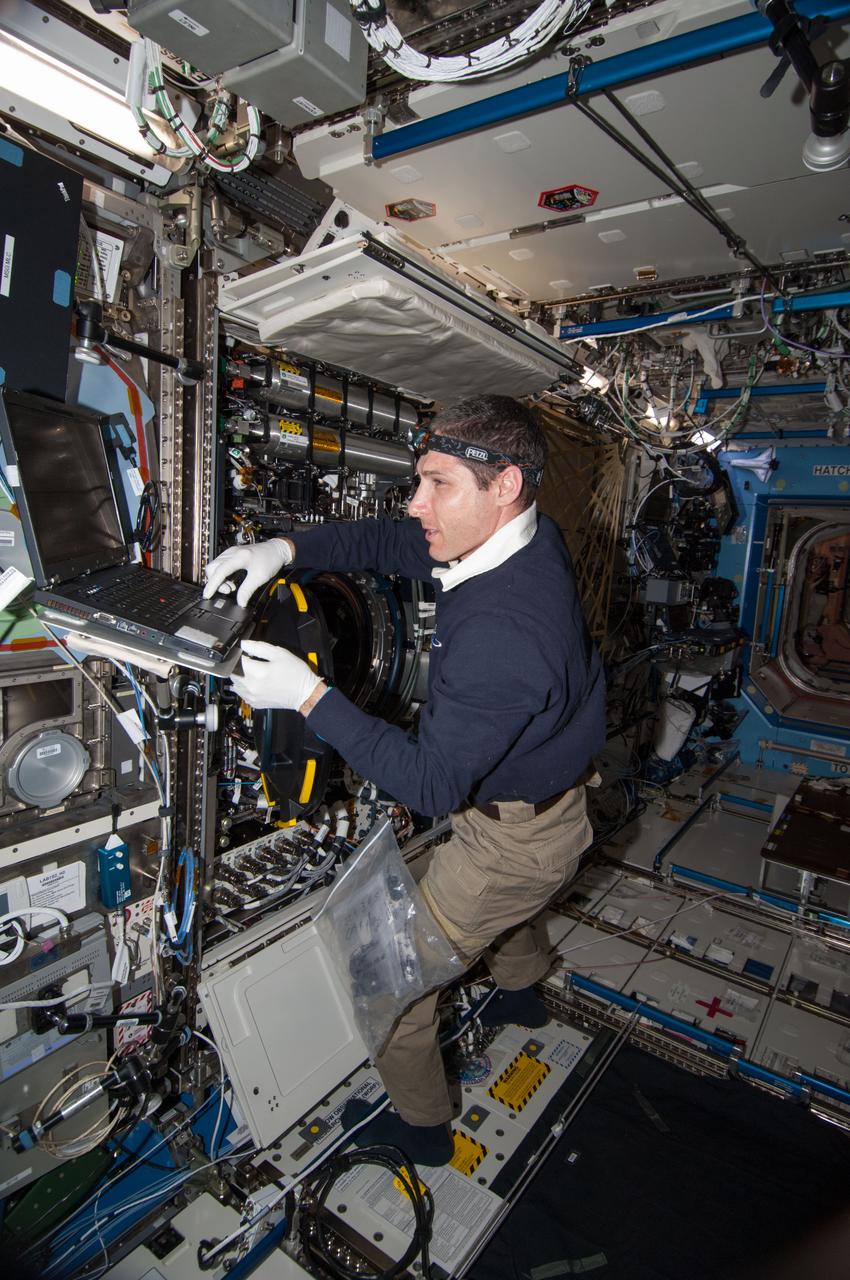
ISS038-E-024145 (30 Dec. 2013) --- NASA astronaut Mike Hopkins, Expedition 38 flight engineer, performs in-flight maintenance on combustion research hardware in the Destiny laboratory of the International Space Station. Hopkins replaced a Multi-user Droplet Combustion Apparatus (MDCA) fuel reservoir inside the Combustion Integrated Rack (CIR).
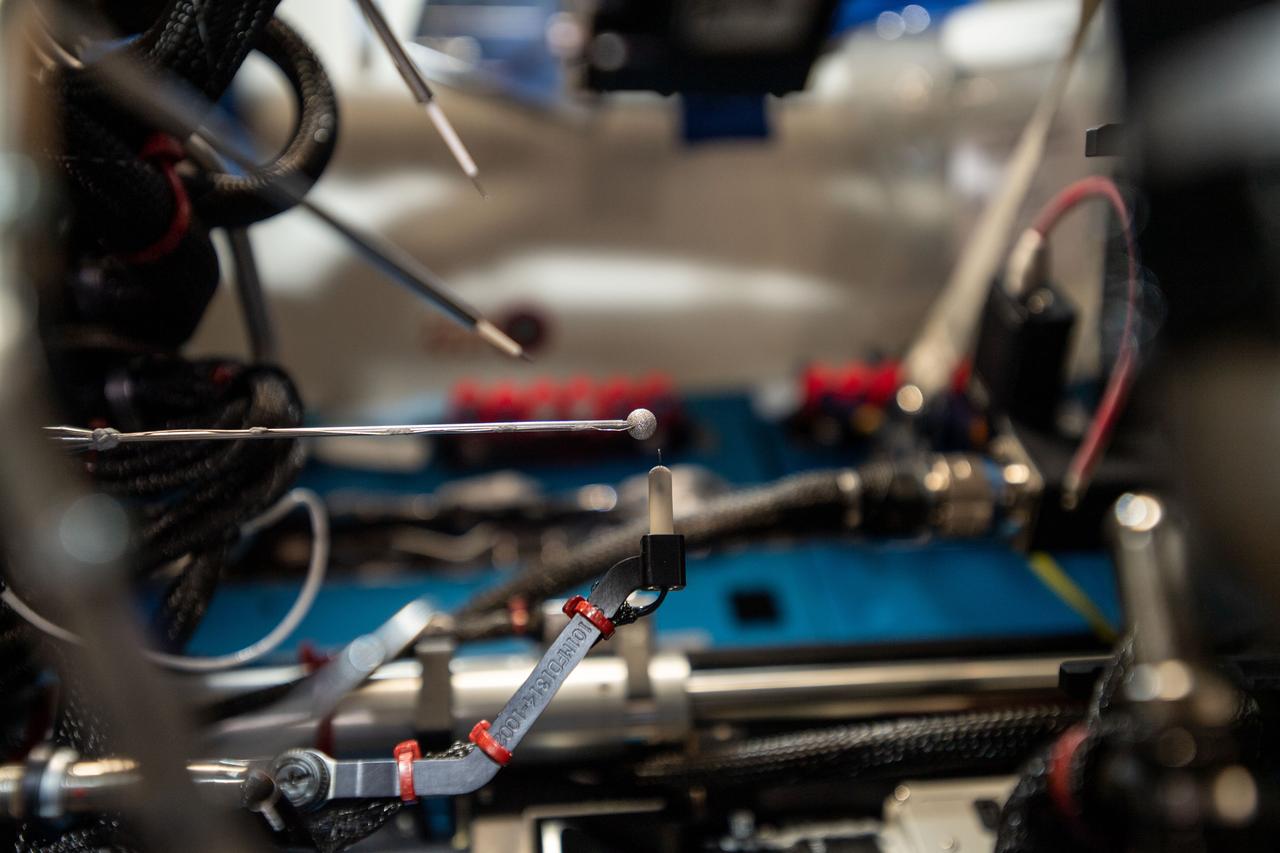
iss059e103188 (6/14/2019) --- Photo documentation taken aboard the International Space Station (ISS) during the Fluids and Combustion Facility (FCF) Combustion Integration Rack (CIR) / Advanced Combustion via Microgravity Experiments (ACME) / Flame Design hardware replacement.
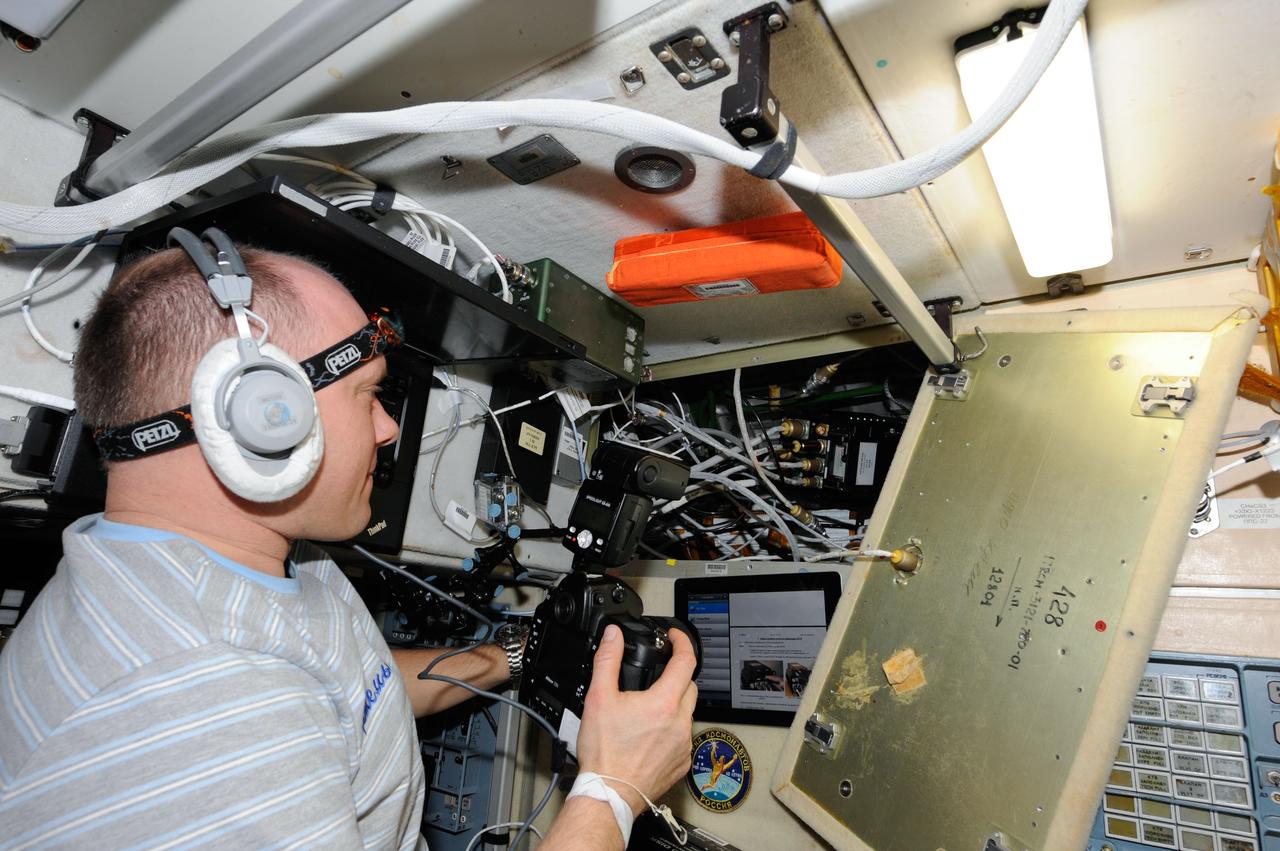
ISS039-E-014665 (23 April 2014) --- Cosmonaut Artemyev, Expedition 39 flight engineer representing Russia's Federal Space Agency (Roscosmos) replaces the telemetry storage unit in a Russian experiment inside the Zvezda service module of the International Space Station.
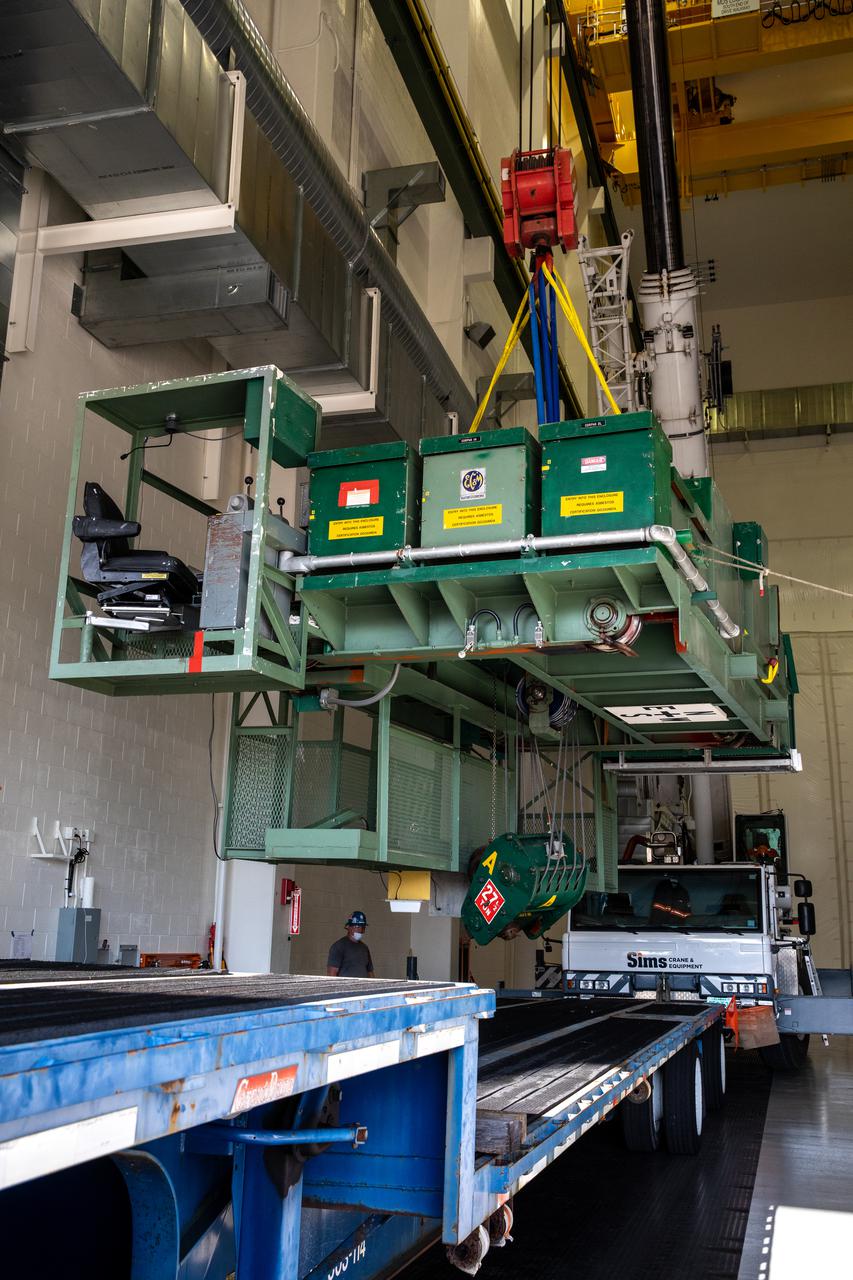
Inside the Neil Armstrong Operations and Checkout Building high bay at NASA’s Kennedy Space Center in Florida, a new overhead crane was installed, while the old Lypta 2.5-ton crane is lowered by crane on March 15, 2021. The new overhead crane will be used to process Orion for the agency’s first crewed mission, Artemis II. Teams from American Crane and Equipment Corp. are replacing the Lypta crane with the new Artemis-rated 30-ton crane. The new crane has enhanced controls and additional safety features that will allow for micro movements to within 1/100th of an inch. Operators will use the crane to lift Orion once the crew and service modules are mated.
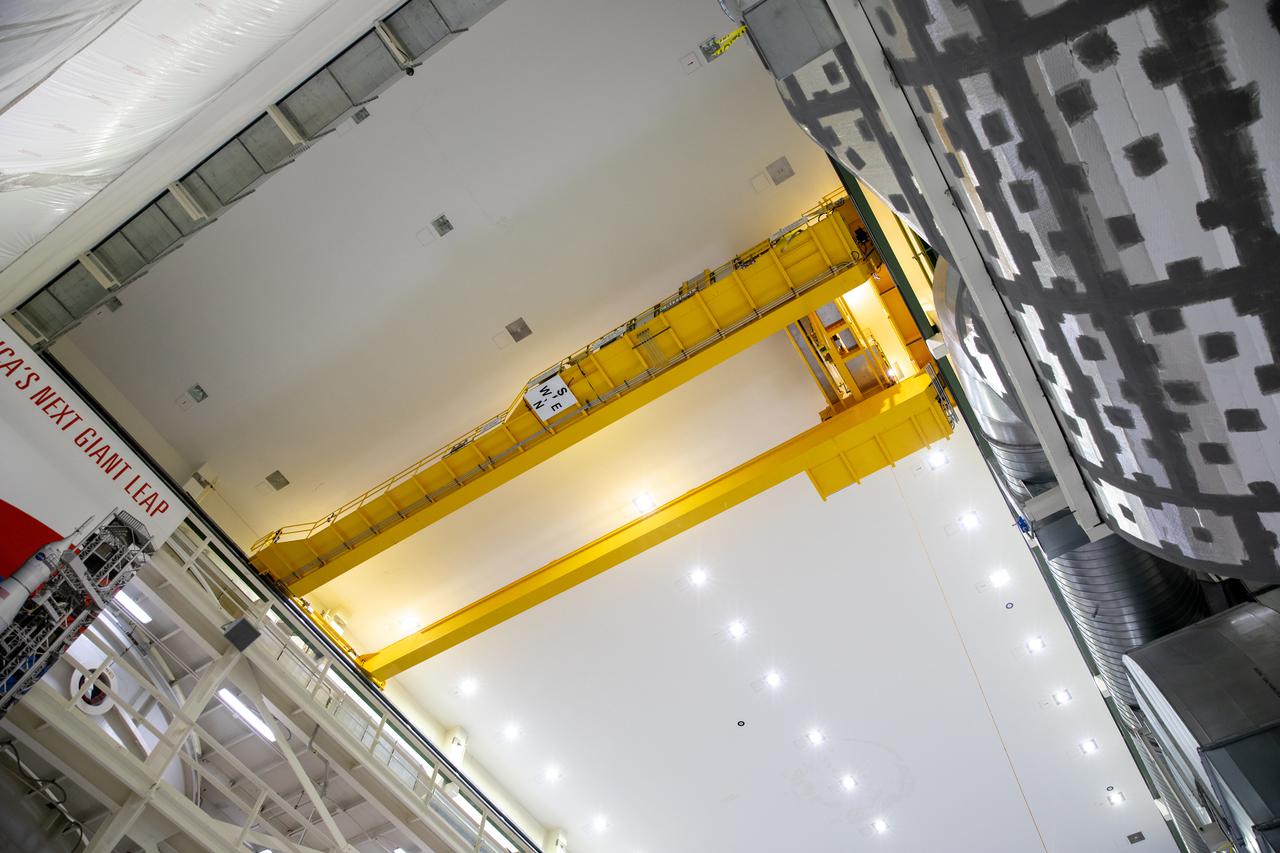
Inside the Neil Armstrong Operations and Checkout Building high bay at NASA’s Kennedy Space Center in Florida, installation of a new overhead crane is completed on March 17, 2021. The new hardware will be used to process Orion beginning with the agency’s first crewed mission, Artemis II. Teams from American Crane and Equipment Corp. replaced the Lypta 27.5-ton crane with the new Artemis-rated 30-ton crane. The new crane has enhanced controls and additional safety features that will allow for micro movements to within 1/100th of an inch. Operators will use the crane to lift Orion once the crew and service modules are mated.
Inside the Neil Armstrong Operations and Checkout Building high bay at NASA’s Kennedy Space Center in Florida, installation of a new overhead crane is in progress on March 15, 2021. The previous Lypta 2.5-ton crane is lowered by crane to the floor. It will be used to process Orion beginning with the agency’s first crewed mission, Artemis II. Teams from American Crane and Equipment Corp. are replacing the Lypta crane with the new Artemis-rated 30-ton crane. The hardware has enhanced controls and additional safety features that will allow for micro movements to within 1/100th of an inch. Operators will use the crane to lift Orion once the crew and service modules are mated.
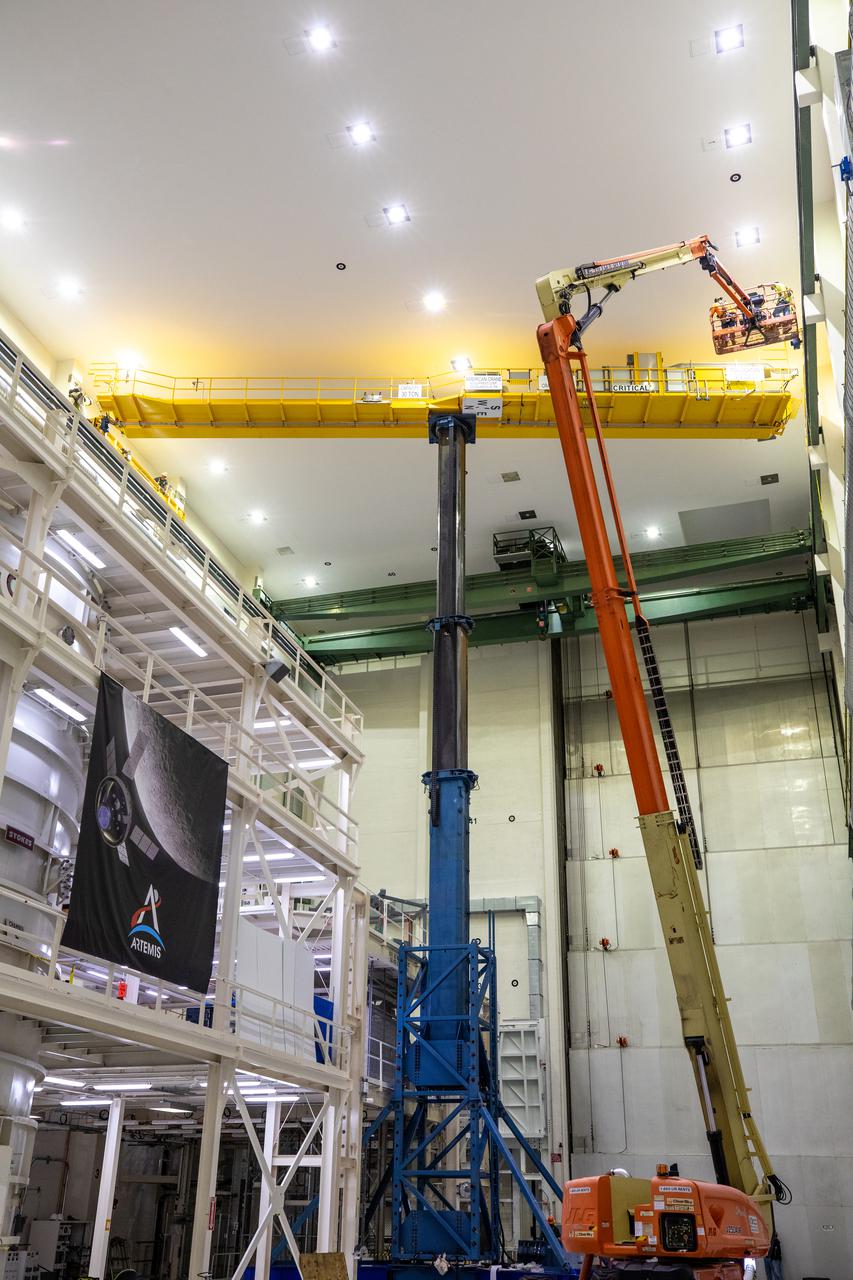
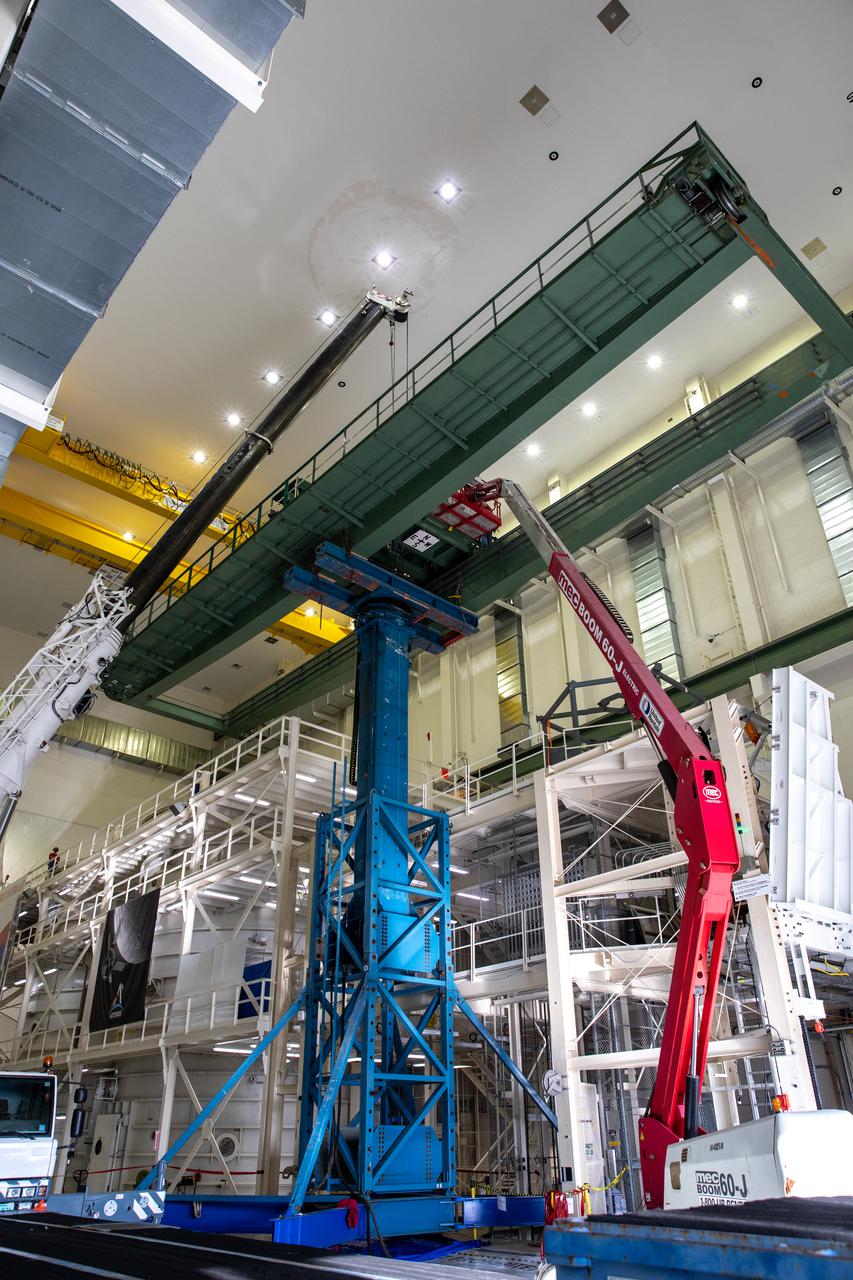
Inside the Neil Armstrong Operations and Checkout Building high bay at NASA’s Kennedy Space Center in Florida, a new overhead crane is being installed on March 10, 2021. The new hardware will be used to process Orion beginning with the agency’s first crewed mission, Artemis II. Teams from American Crane and Equipment Corp. are replacing the Lypta 27.5-ton crane with the new Artemis-rated 30-ton crane. The new crane has enhanced controls and additional safety features that will allow for micro movements to within 1/100th of an inch. Operators will use the crane to lift Orion once the crew and service modules are mated.
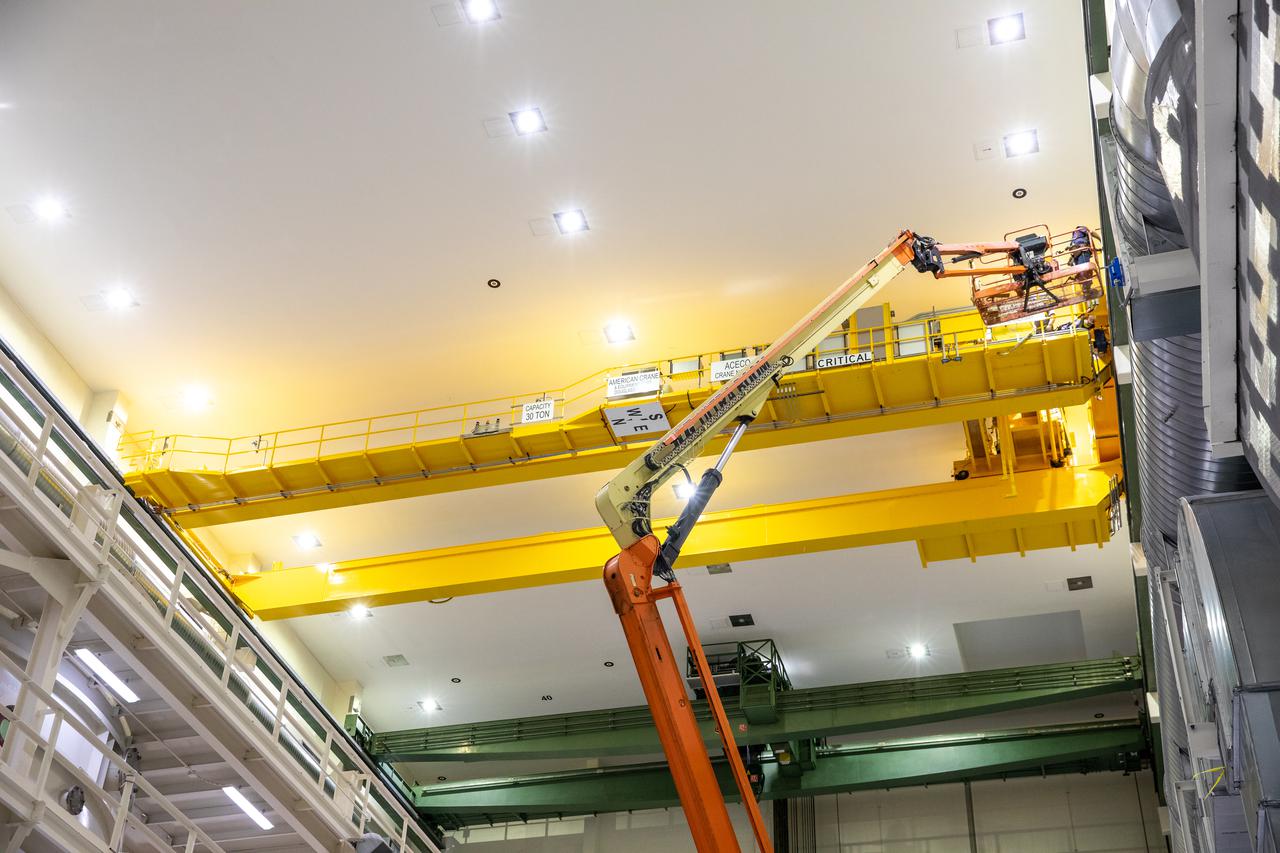
Inside the Neil Armstrong Operations and Checkout Building high bay at NASA’s Kennedy Space Center in Florida, a new overhead crane is being installed on March 10, 2021. The new hardware will be used to process Orion beginning with the agency’s first crewed mission, Artemis II. Teams from American Crane and Equipment Corp. are replacing the Lypta 27.5-ton crane with the new Artemis-rated 30-ton crane. The new crane has enhanced controls and additional safety features that will allow for micro movements to within 1/100th of an inch. Operators will use the crane to lift Orion once the crew and service modules are mated.
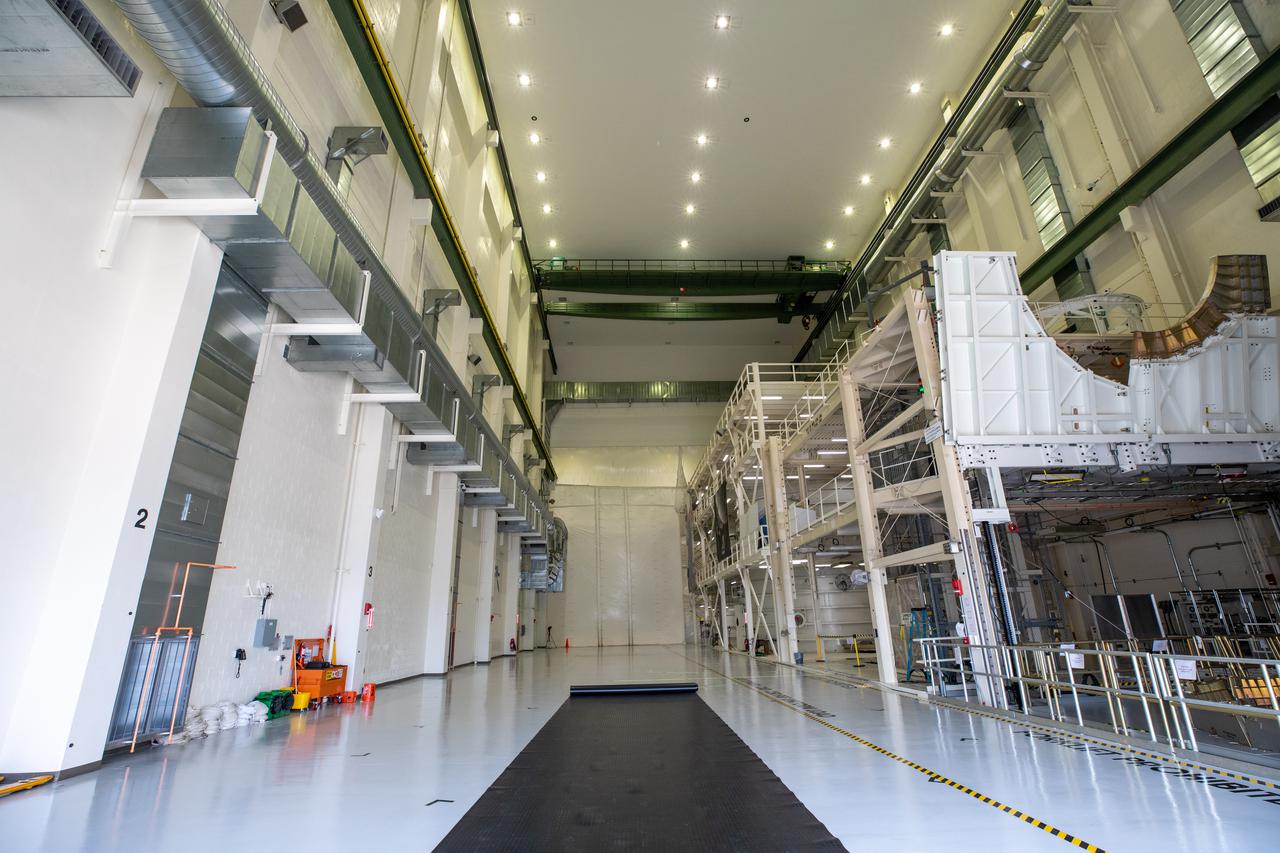
The high bay inside the Neil Armstrong Operations and Checkout Building at NASA’s Kennedy Space Center in Florida, is being readied on March 3, 2021, for installation of a new crane. The new overhead crane will be used to process Orion beginning with the agency’s first crewed mission, Artemis II. Teams from American Crane and Equipment Corp. replaced the Lypta 27.5-ton crane (pictured) with the new Artemis-rated 30-ton crane. The new crane will have enhanced controls and additional safety features that will allow for micro movements to within 1/100th of an inch. Operators will use the crane to lift Orion once the crew and service modules are mated.
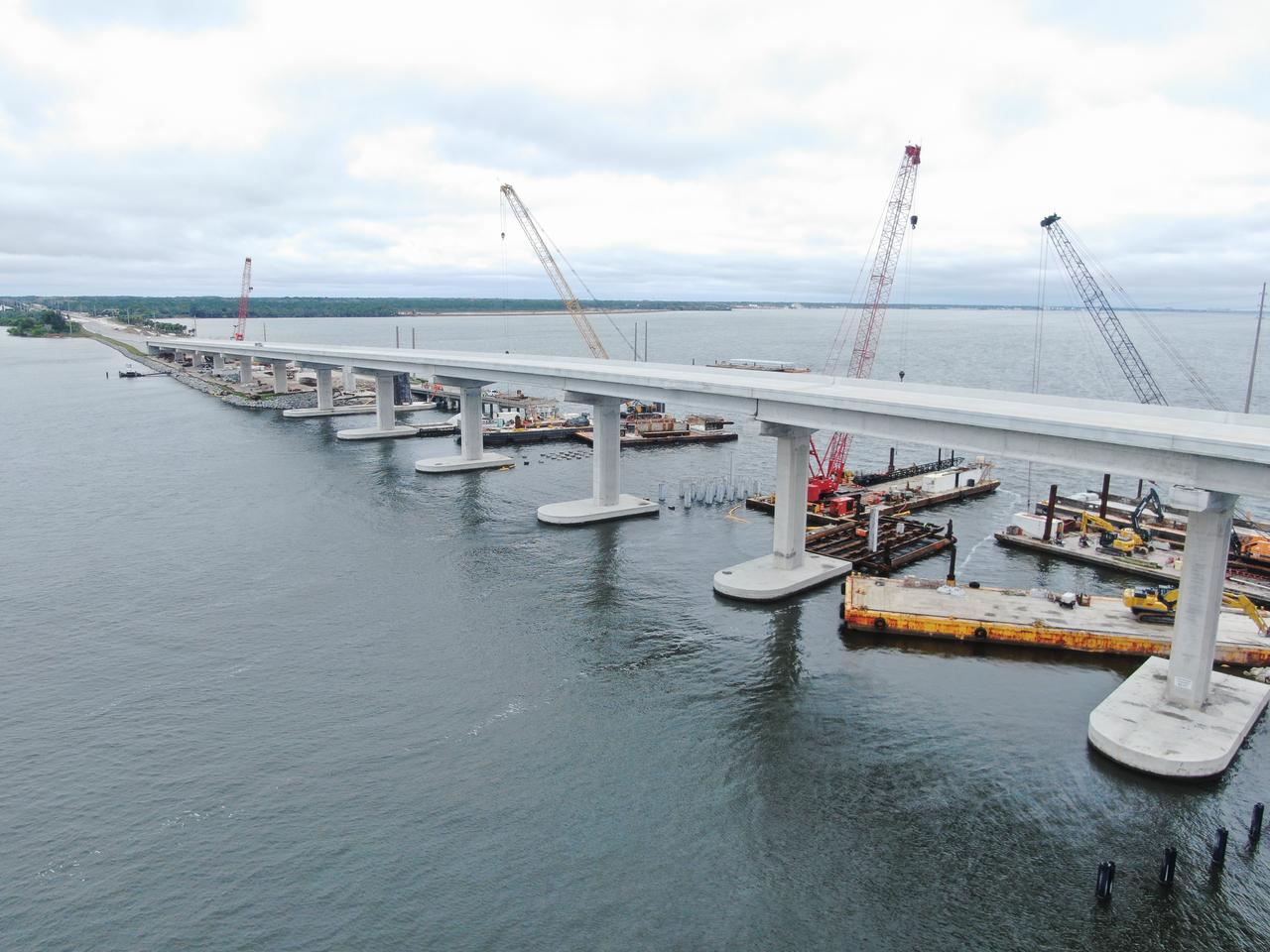
In this aerial view, crews with Orion Marine Construction work to complete the westbound span of the Indian River Bridge while daily traffic moves along the upgraded eastbound lanes of the bridge leading to NASA’s Kennedy Space Center in Florida on Monday, Nov. 27, 2023. The bridge crosses the Indian River Lagoon and connects Kennedy and the Cape Canaveral Space Force Station to the mainland via State Road 405/NASA Causeway in nearby Titusville. The new high-rise bridge serves as the primary entrance and exit to the space center for employees and visitors. The new bridge spans replace a pair of two-lane drawbridges built in the mid-1960s to support NASA’s Apollo program. The first of the two new spans opened to the public ahead of schedule on June 9, 2023. In development for well over a decade, the load capacity, width, and grade of the bridge were designed to support the largest future payloads and vehicles at the spaceport while simultaneously supporting increased public traffic to and from Kennedy.
In this aerial view, crews with Orion Marine Construction work to complete the westbound span of the Indian River Bridge while daily traffic moves along the upgraded eastbound lanes of the bridge leading to NASA’s Kennedy Space Center in Florida on Monday, Nov. 27, 2023. The bridge crosses the Indian River Lagoon and connects Kennedy and the Cape Canaveral Space Force Station to the mainland via State Road 405/NASA Causeway in nearby Titusville. The new high-rise bridge serves as the primary entrance and exit to the space center for employees and visitors. The new bridge spans replace a pair of two-lane drawbridges built in the mid-1960s to support NASA’s Apollo program. The first of the two new spans opened to the public ahead of schedule on June 9, 2023. In development for well over a decade, the load capacity, width, and grade of the bridge were designed to support the largest future payloads and vehicles at the spaceport while simultaneously supporting increased public traffic to and from Kennedy.
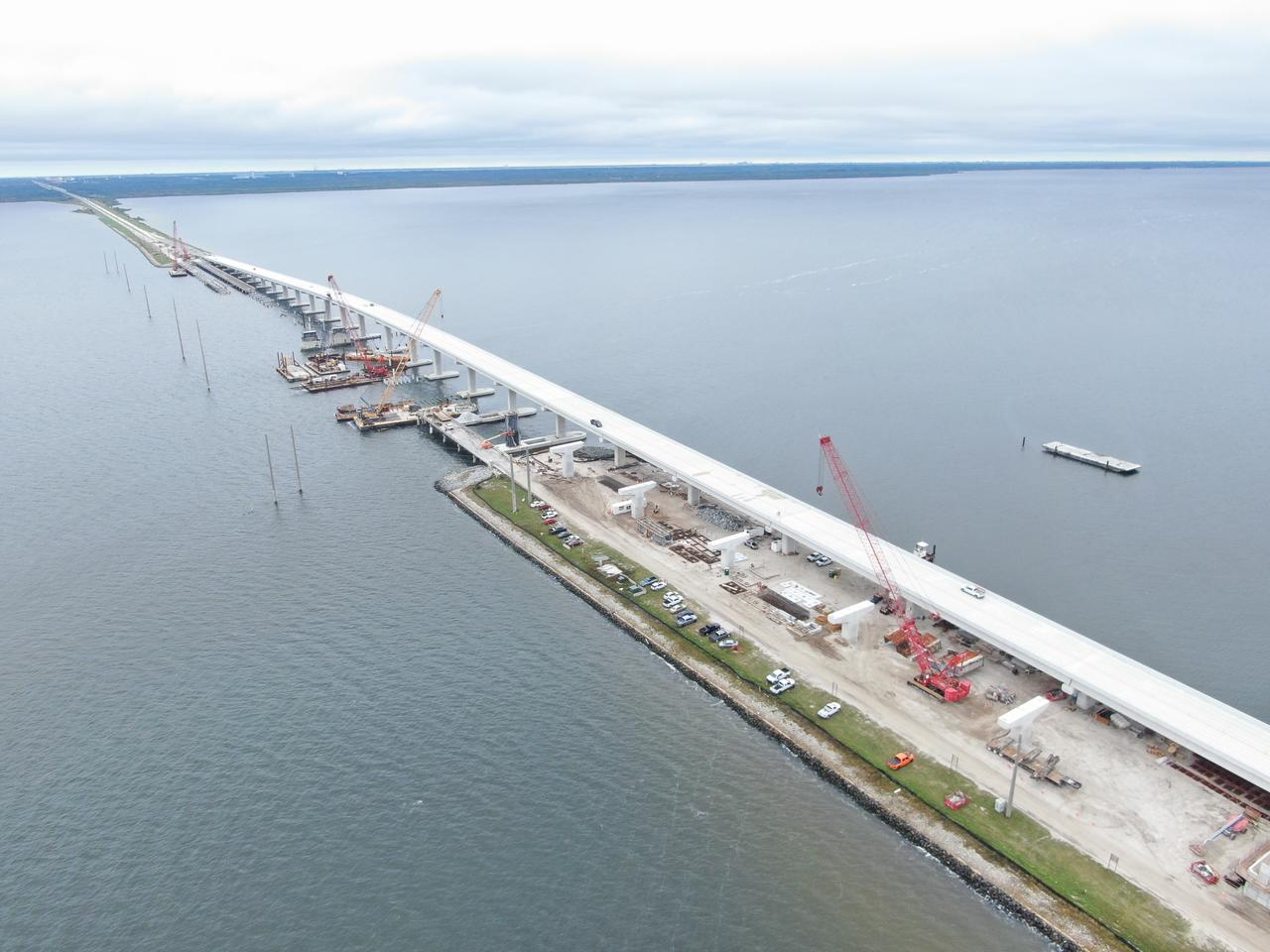
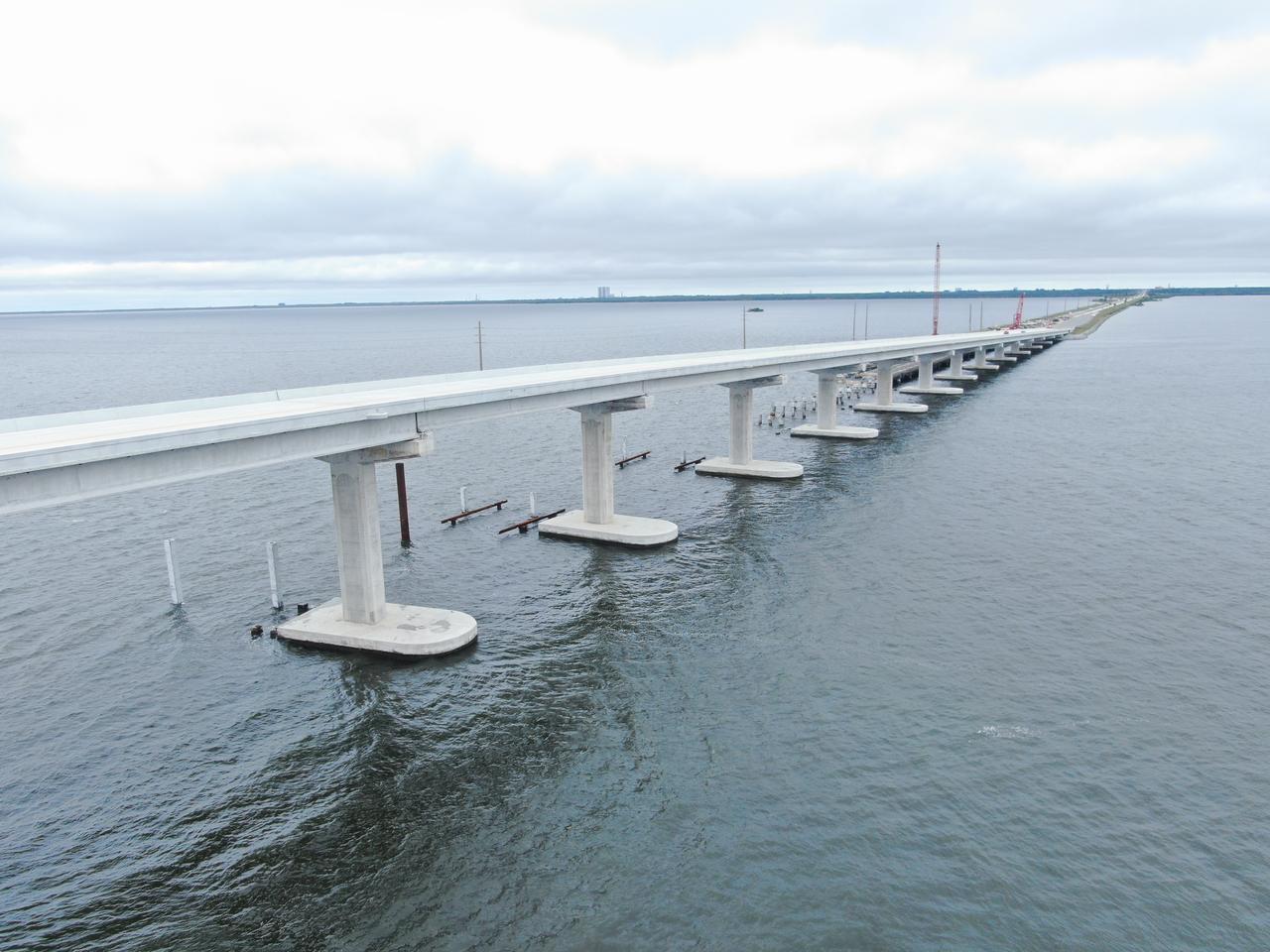
In this aerial view, crews with Orion Marine Construction work to complete the westbound span of the Indian River Bridge while daily traffic moves along the upgraded eastbound lanes of the bridge leading to NASA’s Kennedy Space Center in Florida on Monday, Nov. 27, 2023. The bridge crosses the Indian River Lagoon and connects Kennedy and the Cape Canaveral Space Force Station to the mainland via State Road 405/NASA Causeway in nearby Titusville. The new high-rise bridge serves as the primary entrance and exit to the space center for employees and visitors. The new bridge spans replace a pair of two-lane drawbridges built in the mid-1960s to support NASA’s Apollo program. The first of the two new spans opened to the public ahead of schedule on June 9, 2023. In development for well over a decade, the load capacity, width, and grade of the bridge were designed to support the largest future payloads and vehicles at the spaceport while simultaneously supporting increased public traffic to and from Kennedy.
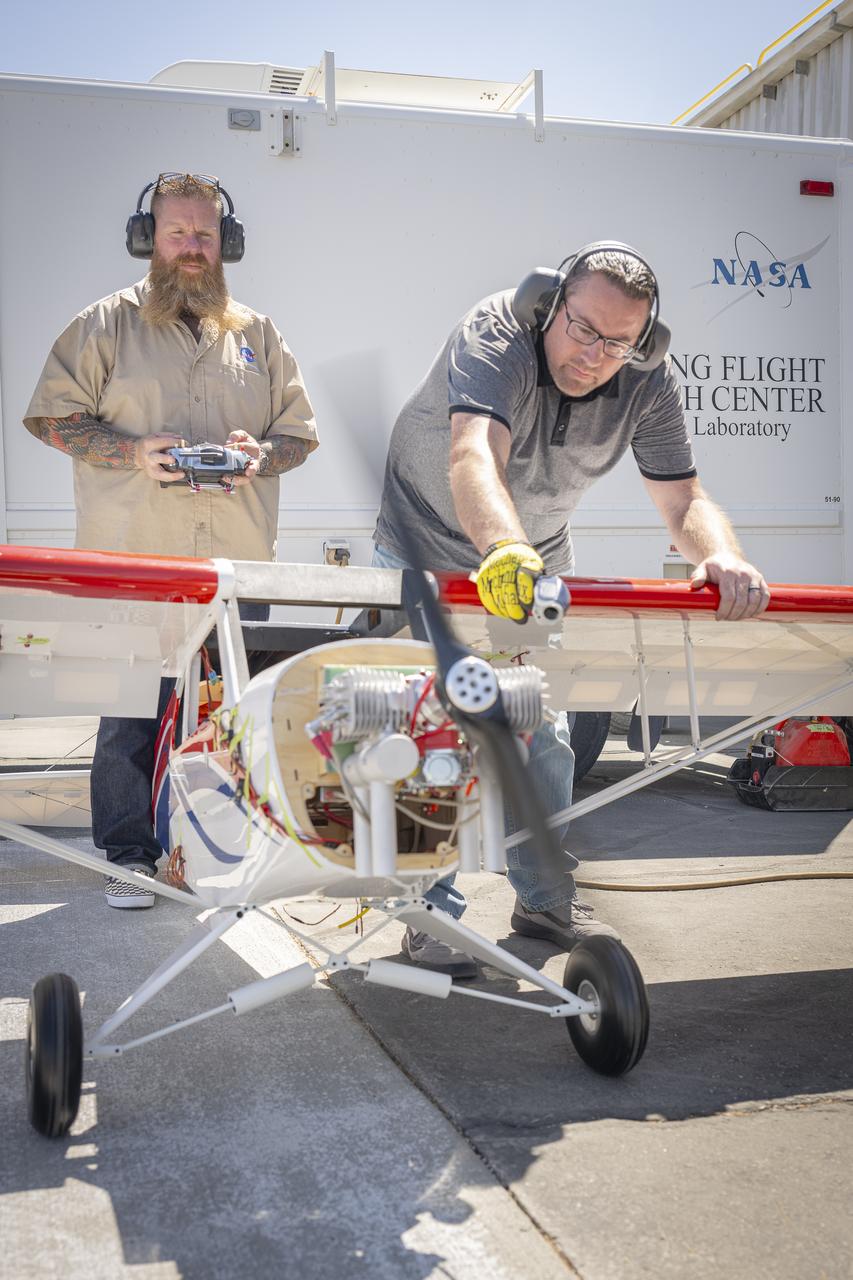
Justin Hall, left, controls a subscale aircraft as Justin Link holds the aircraft in place during preliminary engine tests on Friday, Sept. 12, 2025, at NASA’s Armstong Flight Research Center in Edwards, California. Hall is chief pilot at the center’s Dale Reed Subscale Flight Research Laboratory and Link is a pilot for small uncrewed aircraft systems.
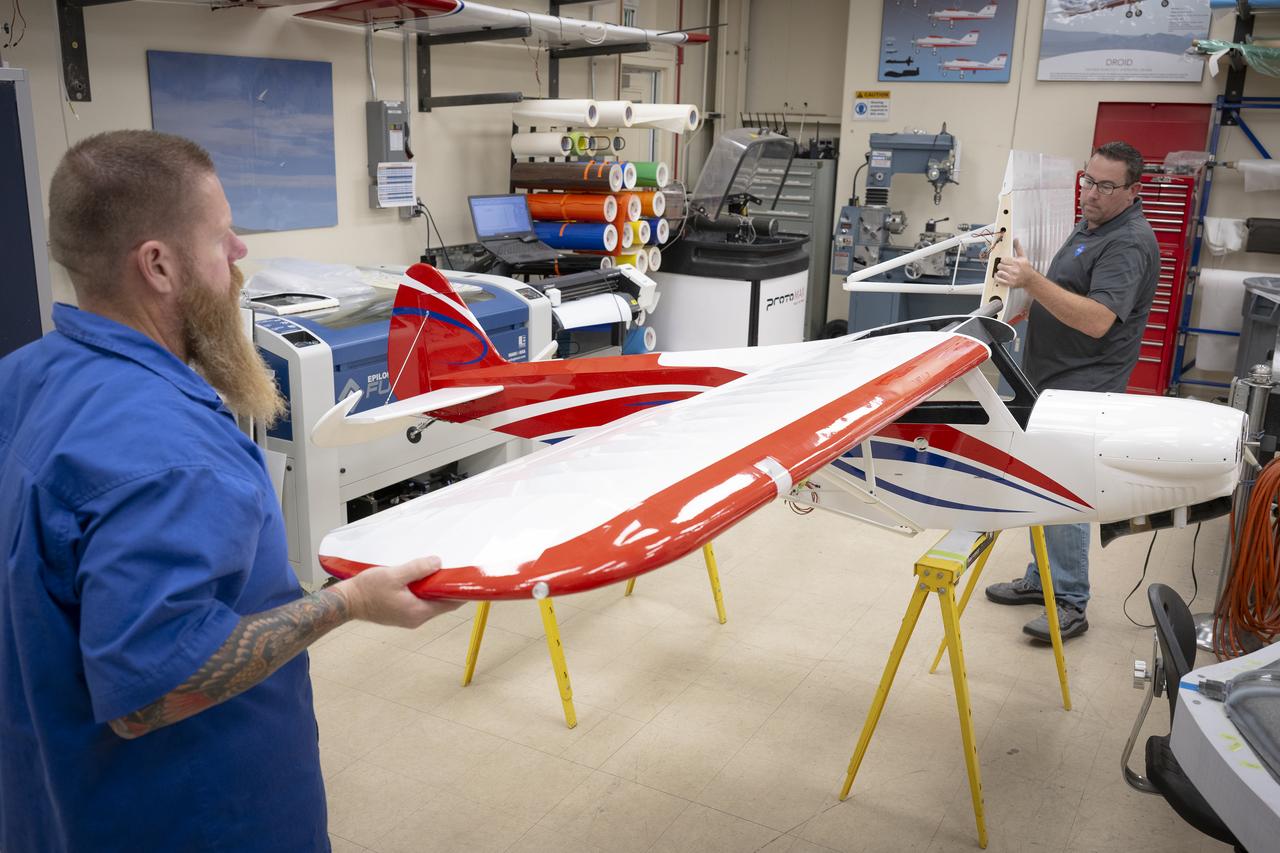
Justin Hall, left, and Justin Link attach the wings onto a subscale aircraft on Wednesday, Sept. 3, 2025, at NASA’s Armstong Flight Research Center in Edwards, California. Hall is chief pilot at the center’s Dale Reed Subscale Flight Research Laboratory and Link is a pilot for small uncrewed aircraft systems.
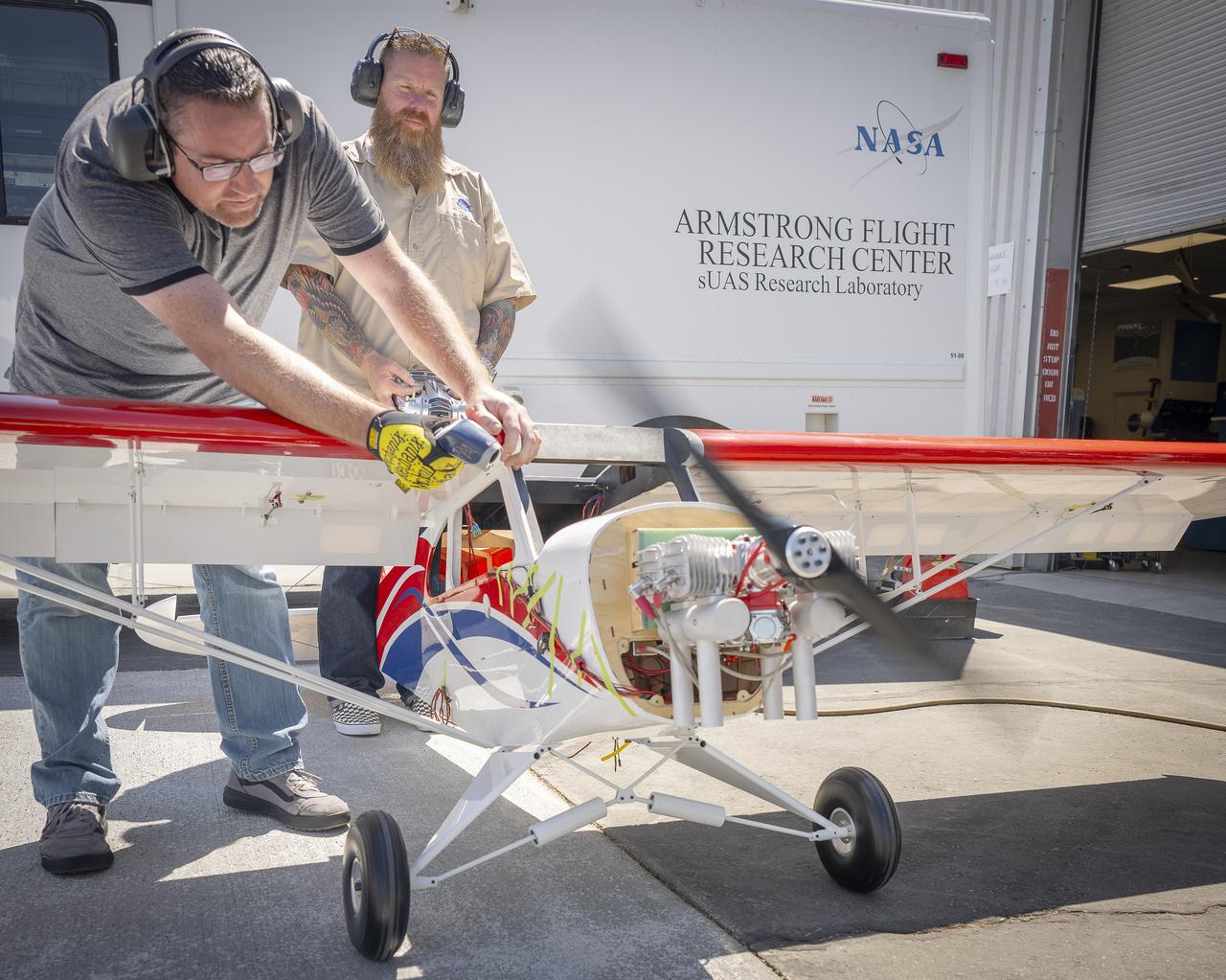
Justin Link, left, holds the subscale aircraft in place, while Justin Hall manages engine speed during preliminary engine tests on Friday, Sept. 12, 2025, at NASA’s Armstong Flight Research Center in Edwards, California. Link is a pilot for small uncrewed aircraft systems at the center’s Dale Reed Subscale Flight Research Laboratory and Hall is the chief pilot.
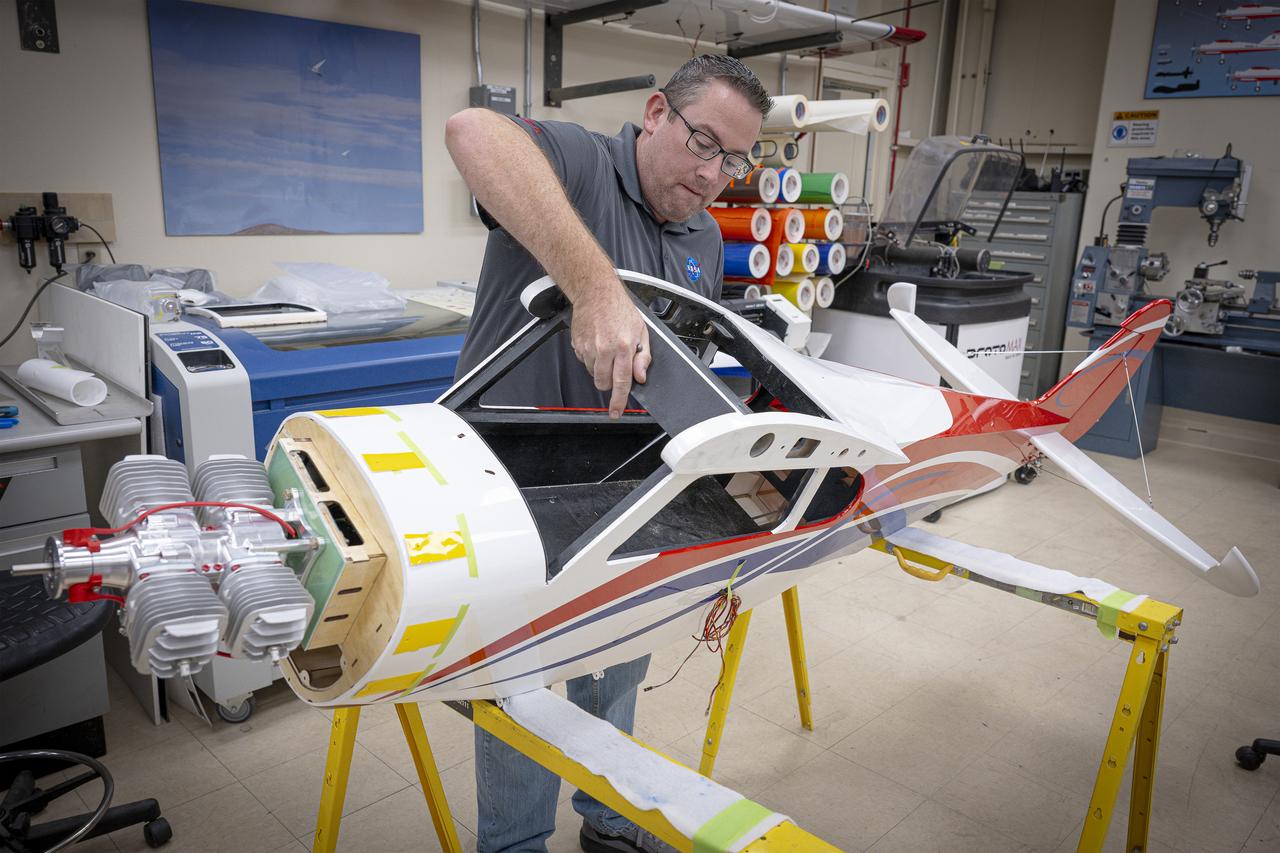
Justin Link turns a subscale aircraft on its side to continue work to mark where the engine cowl will go and where to line it up for attachment on Wednesday, Sept. 3, 2025, at NASA’s Armstong Flight Research Center in Edwards, California. Link is a pilot for small uncrewed aircraft systems at the center’s Dale Reed Subscale Flight Research Laboratory.
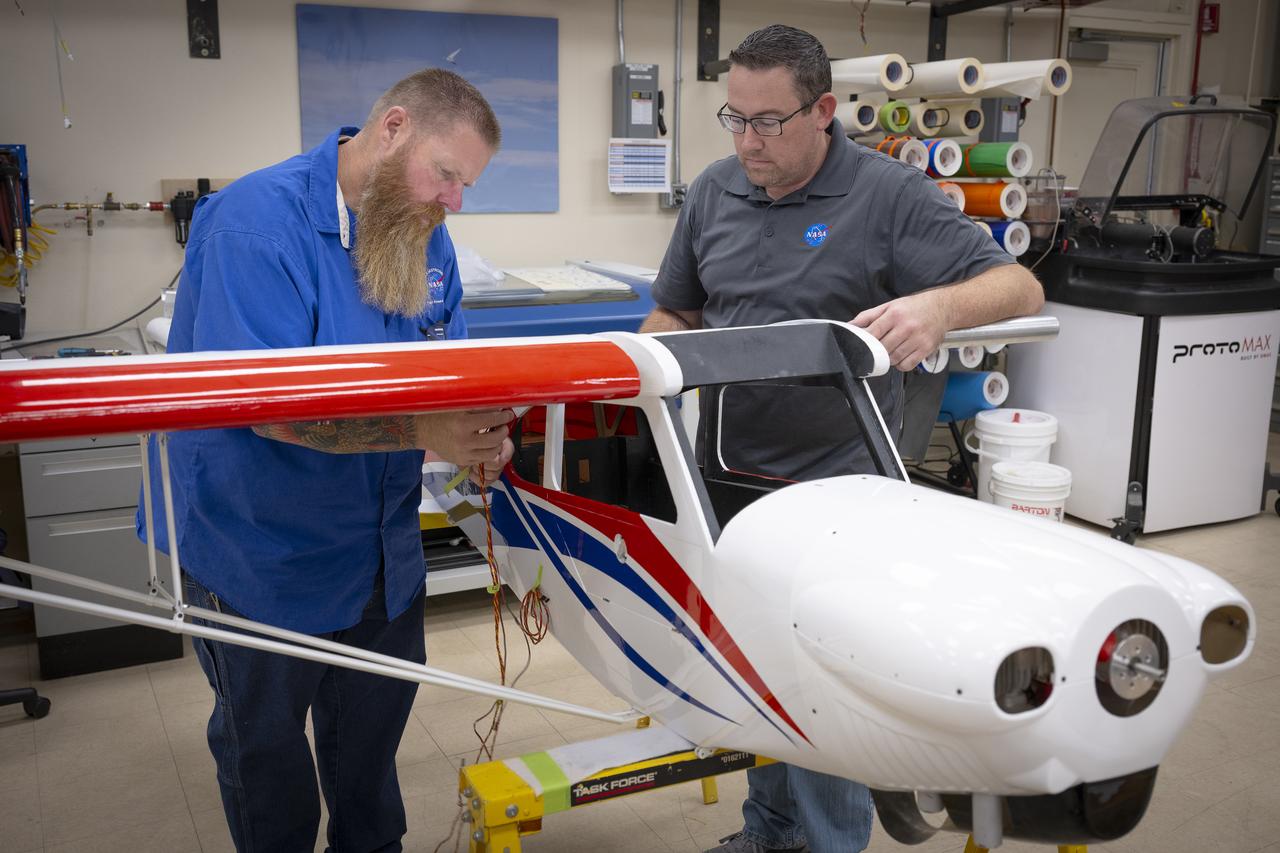
Justin Hall, left, and Justin Link secure a wing onto a subscale aircraft on Wednesday, Sept. 3, 2025, at NASA’s Armstong Flight Research Center in Edwards, California. Hall is chief pilot at the center’s Dale Reed Subscale Flight Research Laboratory and Link is a pilot for small uncrewed aircraft systems.
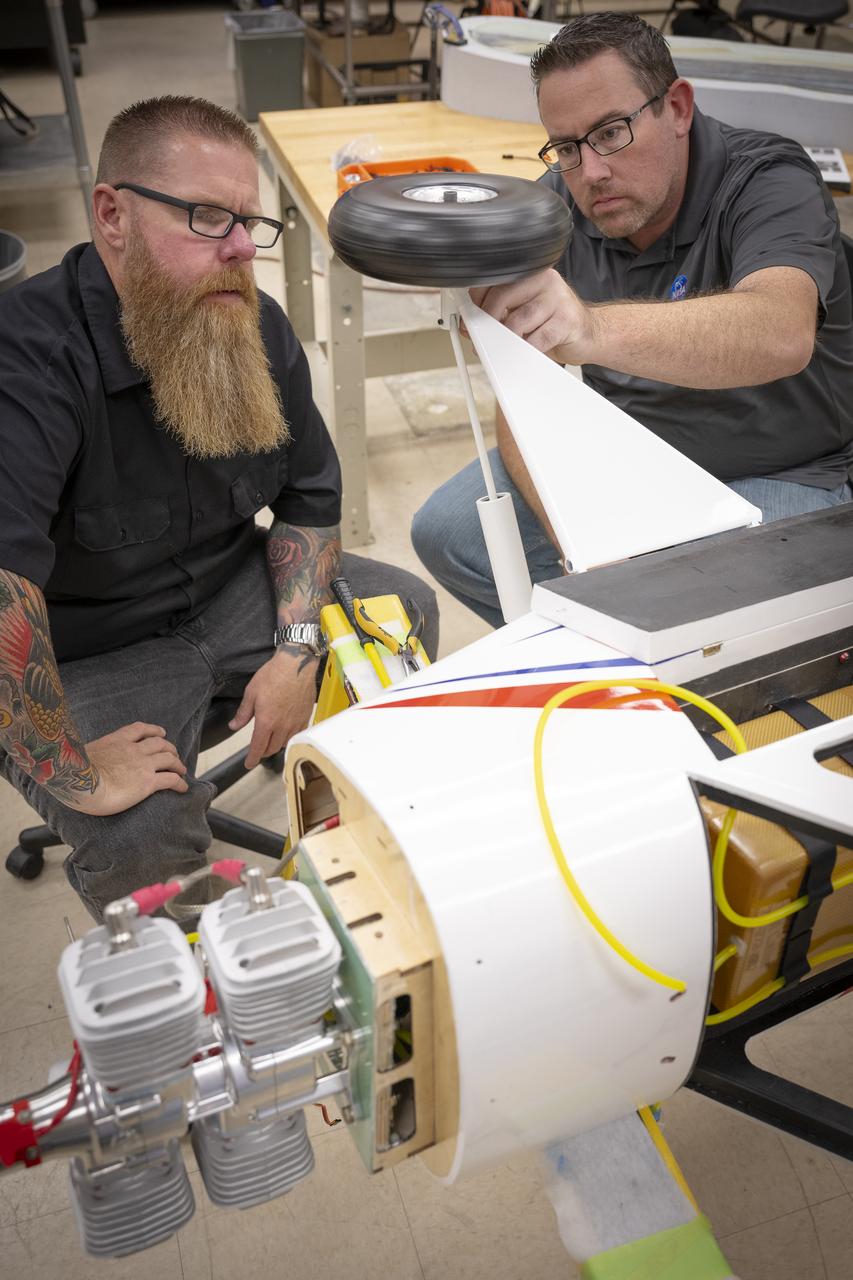
Justin Hall, left, and Justin Link attach a section of landing gear onto a subscale aircraft on Friday, Sept. 12, 2025, at NASA’s Armstong Flight Research Center in Edwards, California. Hall is chief pilot at the center’s Dale Reed Subscale Flight Research Laboratory and Link is a pilot for small uncrewed aircraft systems.
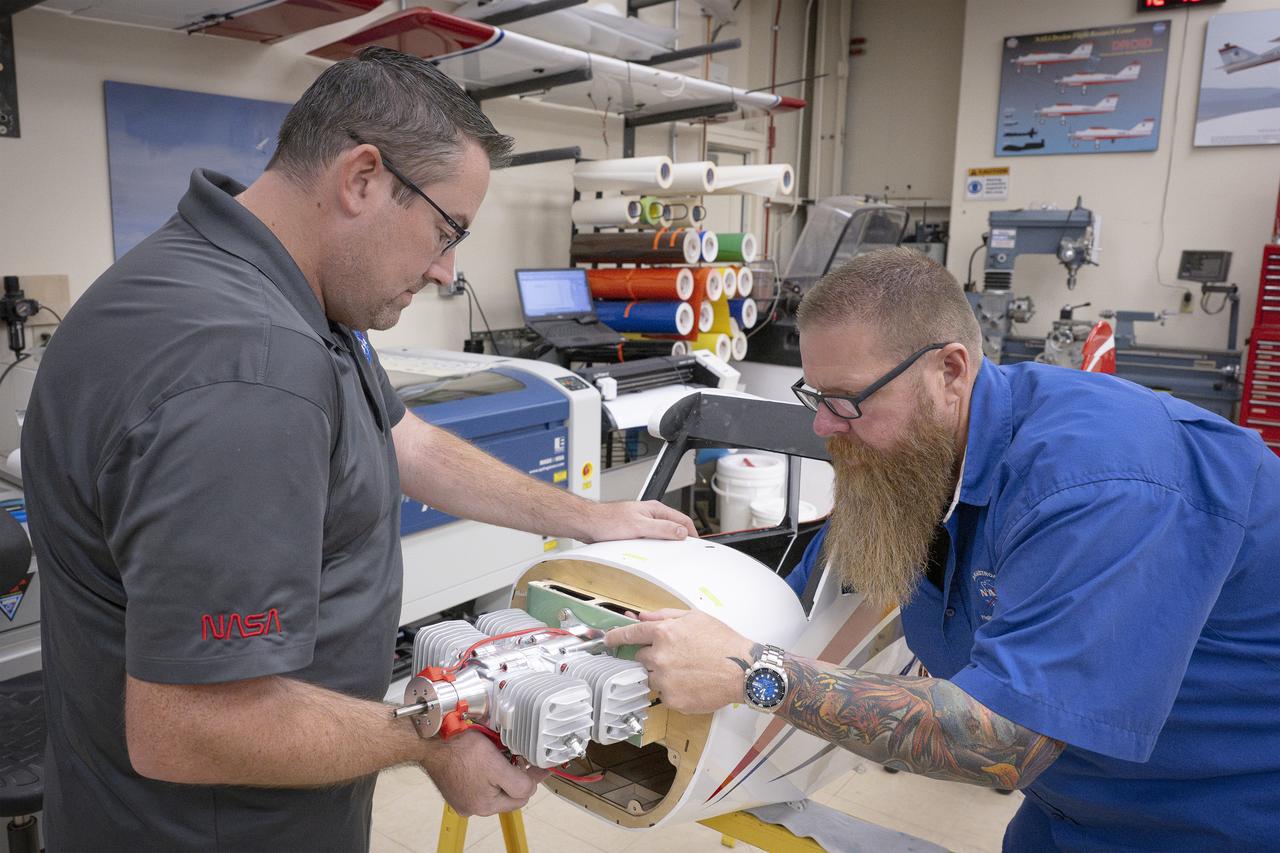
Justin Link, left, and Justin Hall attach an engine onto a subscale aircraft on Wednesday, Sept. 3, 2025, at NASA’s Armstong Flight Research Center in Edwards, California. Link is a pilot for small uncrewed aircraft systems at the center’s Dale Reed Subscale Flight Research Laboratory and Hall is the lab’s chief pilot.
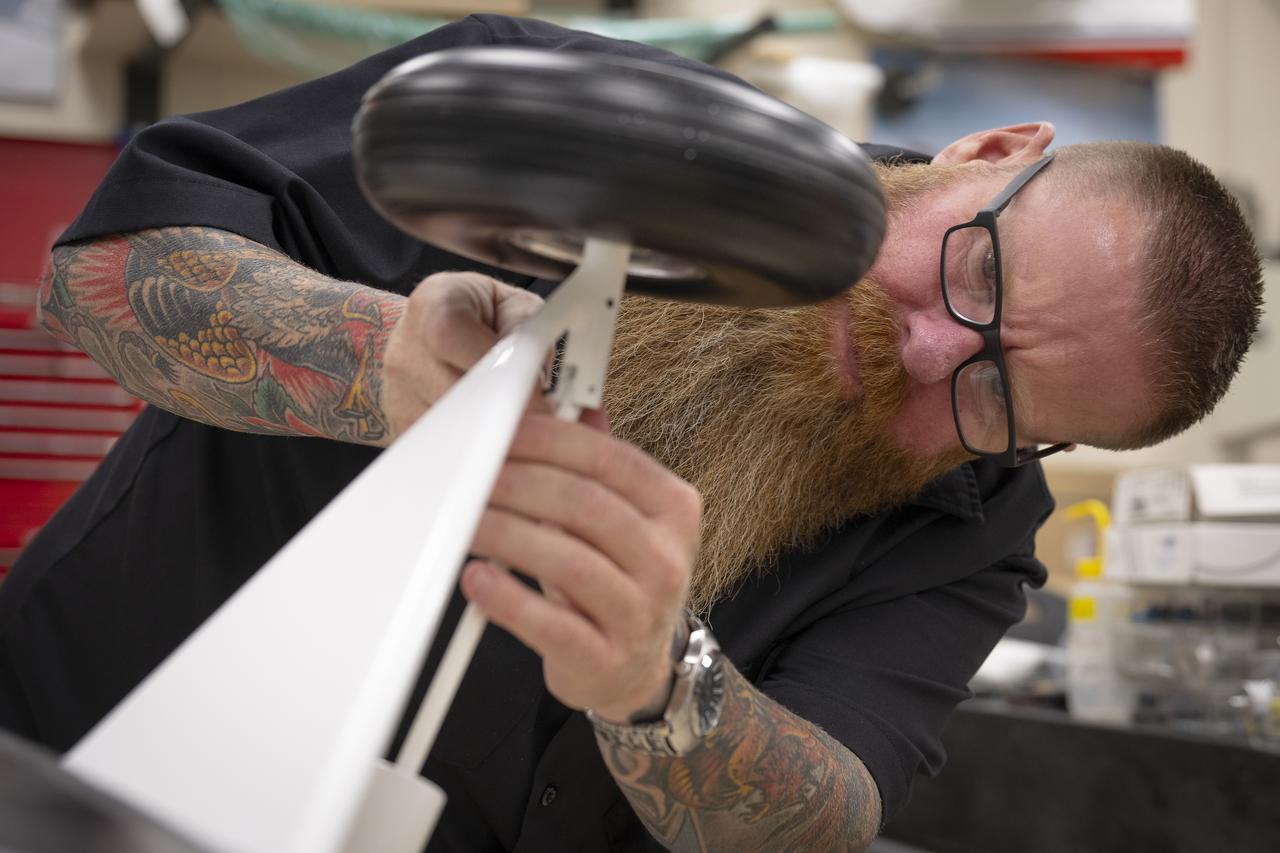
Justin Hall attaches part of the landing gear of a subscale aircraft on Friday, Sept. 12, 2025, at NASA’s Armstong Flight Research Center in Edwards, California. Hall is the chief pilot at the center’s Dale Reed Subscale Flight Research Laboratory.
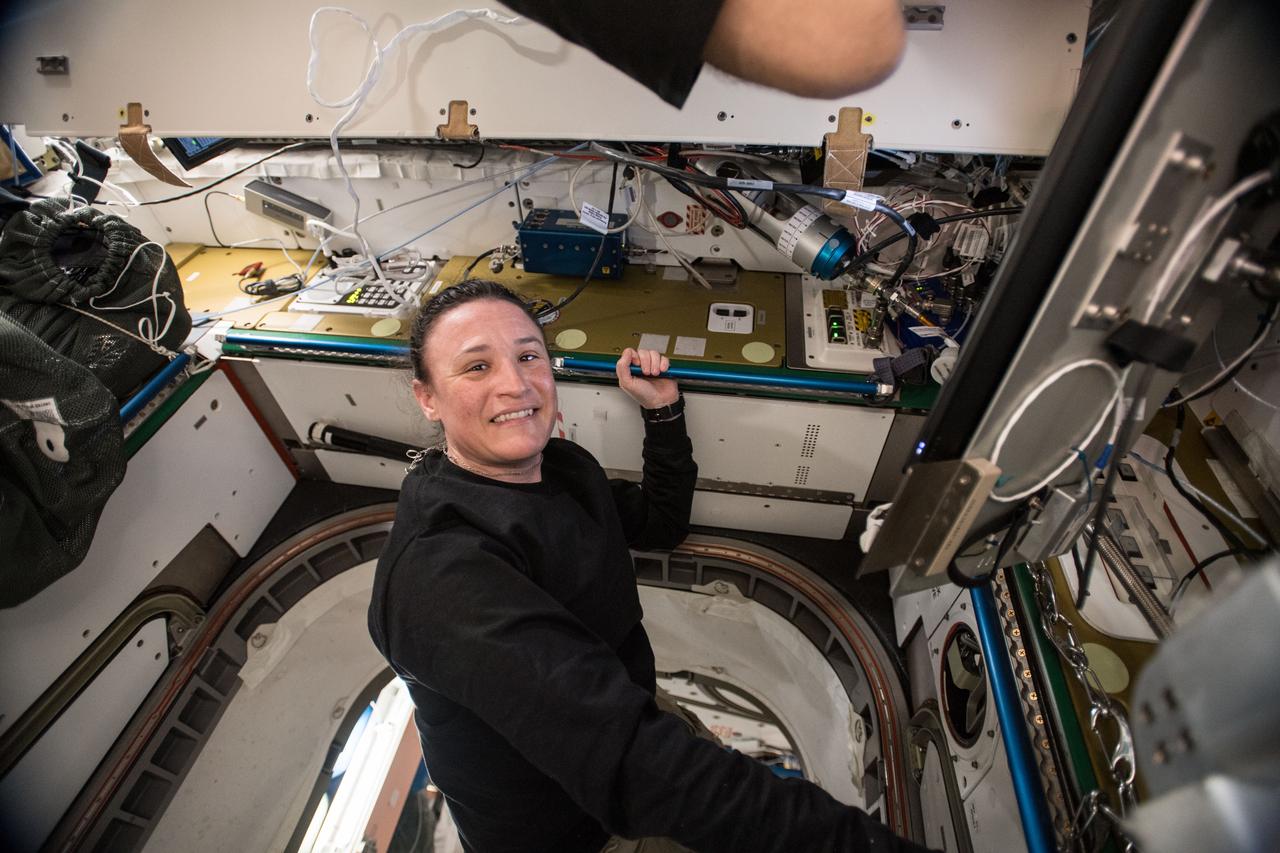
iss056e014502 (June 18, 2018) --- Expedition 56 Flight Engineer Serena Auñón-Chancellor of NASA is pictured in the Unity module during life support maintenance work to remove and replace an Oxygen Generation System Hydrogen Sensor.
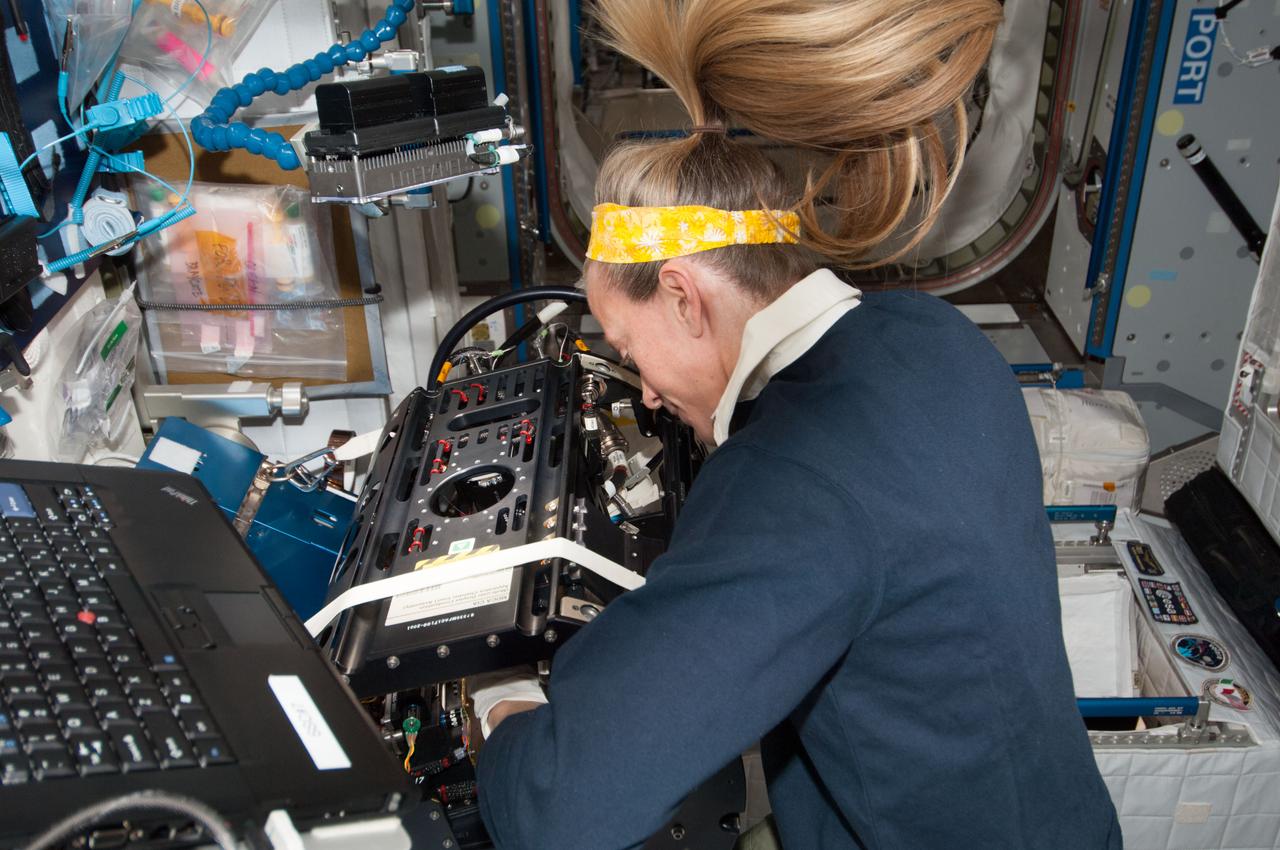
ISS037-E-004956 (2 Oct. 2013) --- NASA astronaut Karen Nyberg, Expedition 37 flight engineer, performs the Multi-user Droplet Combustion Apparatus (MDCA) hardware replacement in the Harmony node of the International Space Station.
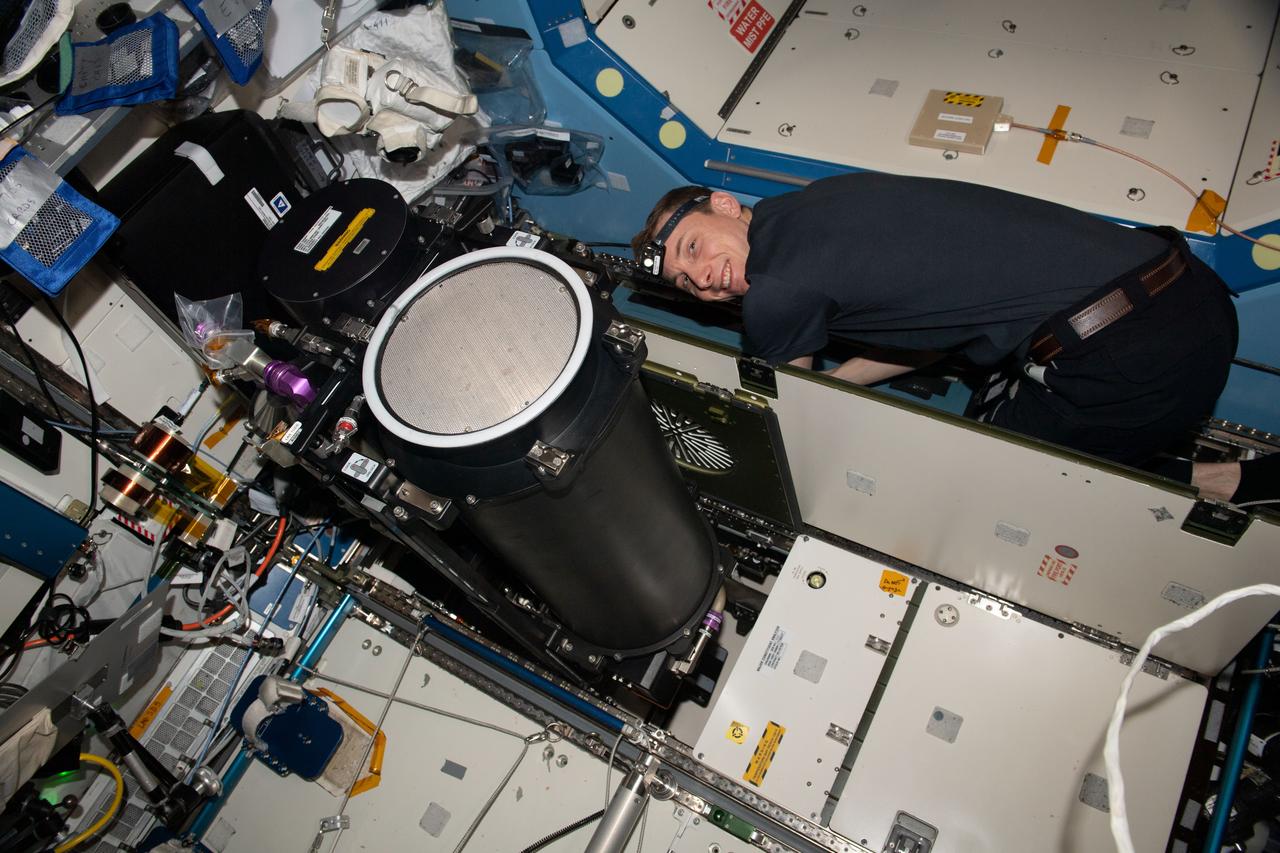
iss069e009909 (May 9, 2023) --- NASA astronaut and Expedition 69 Flight Engineer Woody Hoburg works inside the International Space Station's Destiny laboratory module and replaces life support system components.
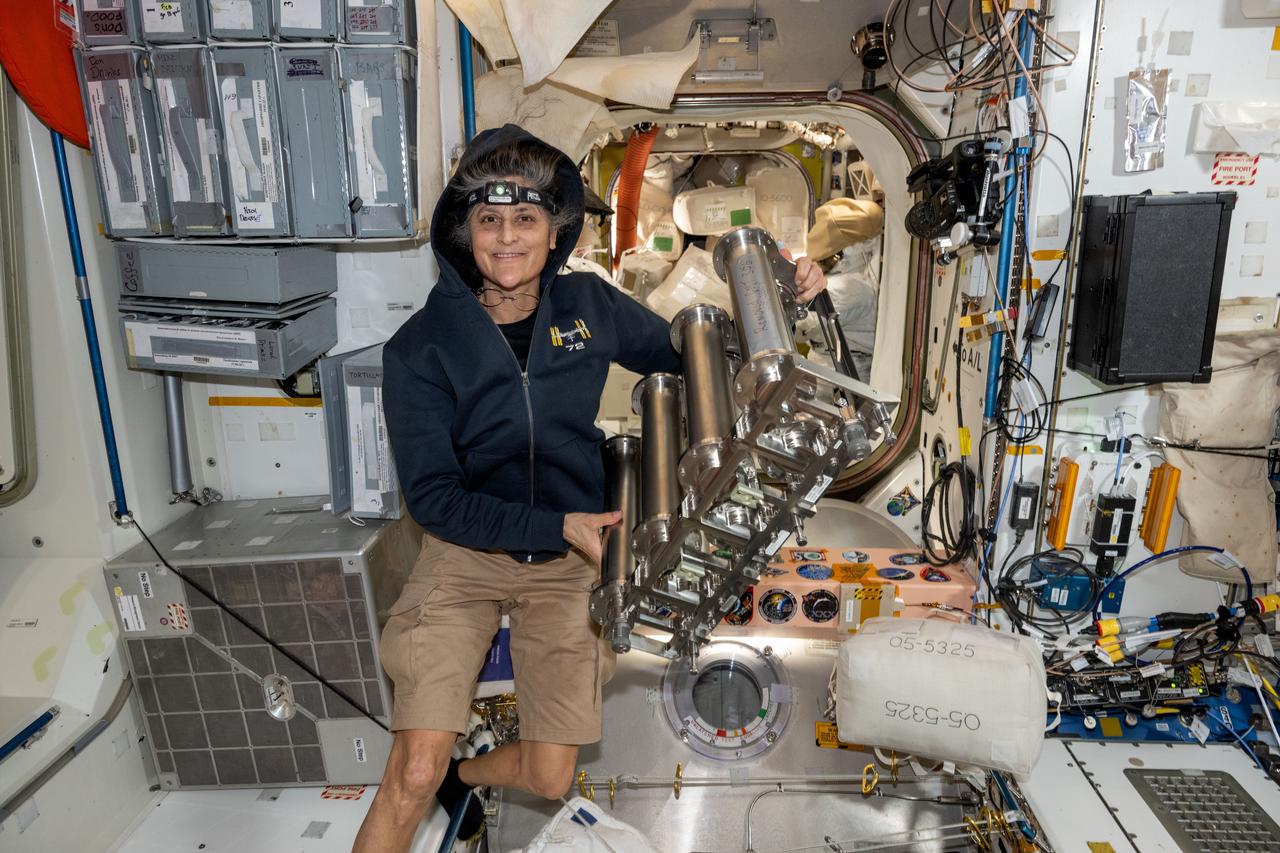
iss072e143163 (Nov. 1, 2024) --- NASA astronaut and Expedition 72 Commander Suni Williams replaces particulate filters on the water recovery system, a component of the Tranquility module's waste and hygiene compartment, the International Space Station's bathroom.
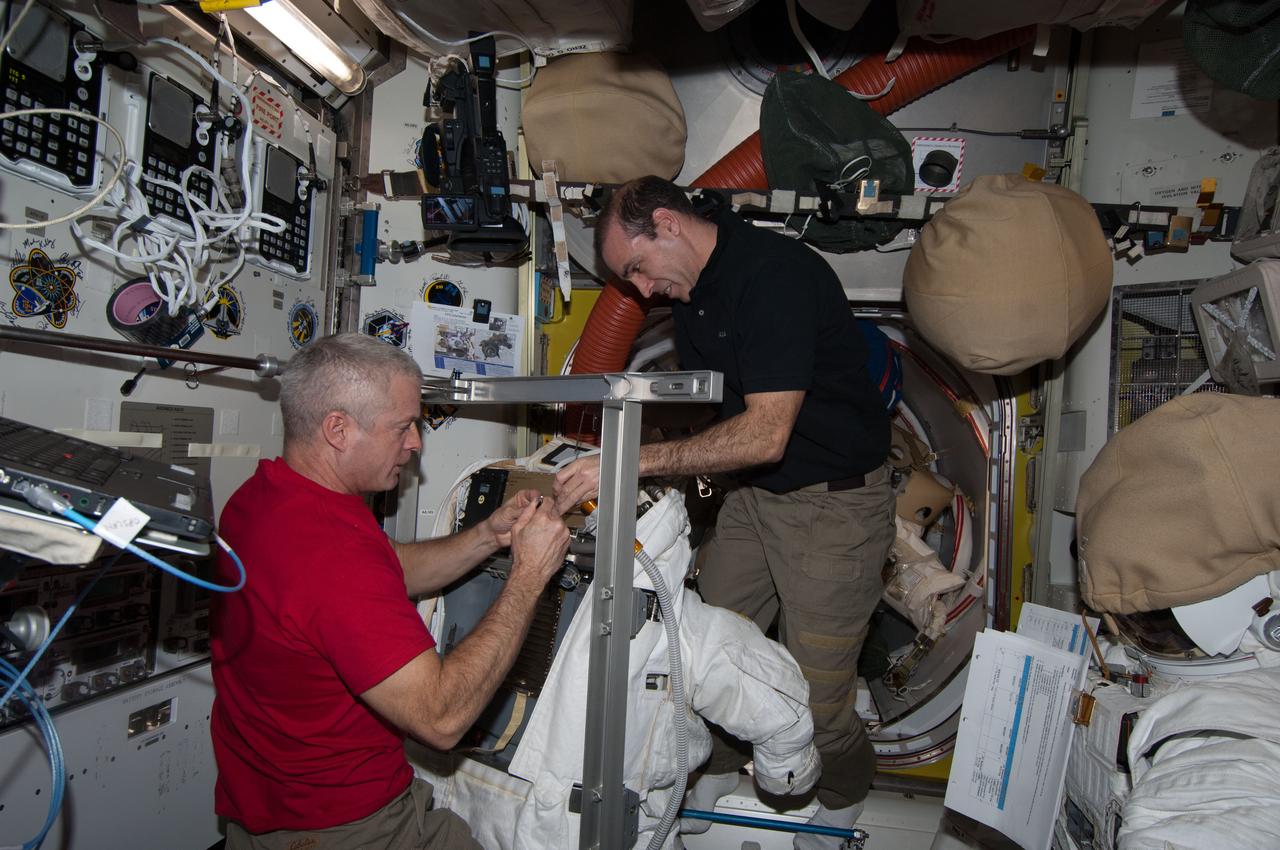
Expedition 39 flight engineers Steve Swanson and Rick Mastracchio work to remove and replace the Fan Pump Separator (FPS) on Extravehicular Mobility Unit (EMU) 3005. Image was taken in the Quest Airlock (A/L) and was released by Swanson on Instagram.
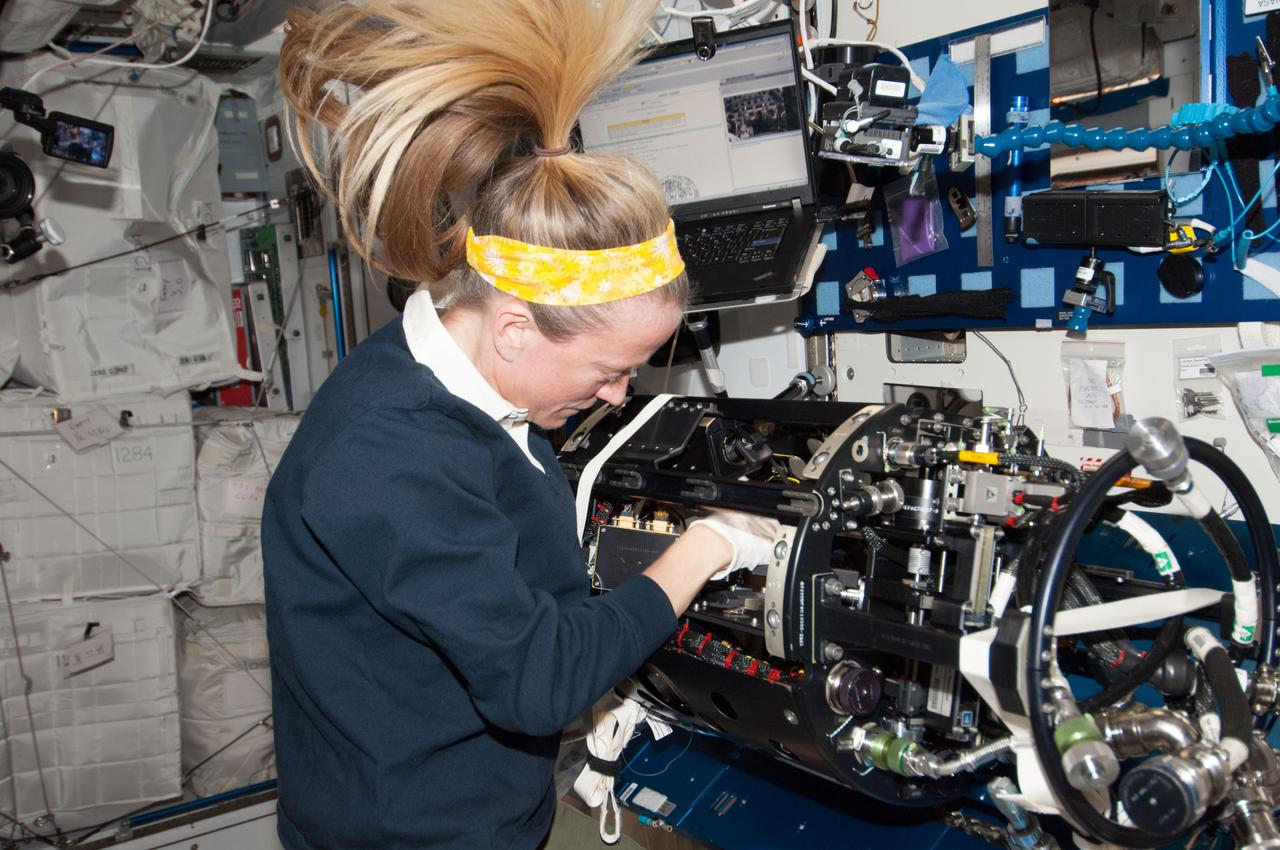
ISS037-E-004959 (2 Oct. 2013) --- NASA astronaut Karen Nyberg, Expedition 37 flight engineer, performs the Multi-user Droplet Combustion Apparatus (MDCA) hardware replacement in the Harmony node of the International Space Station.
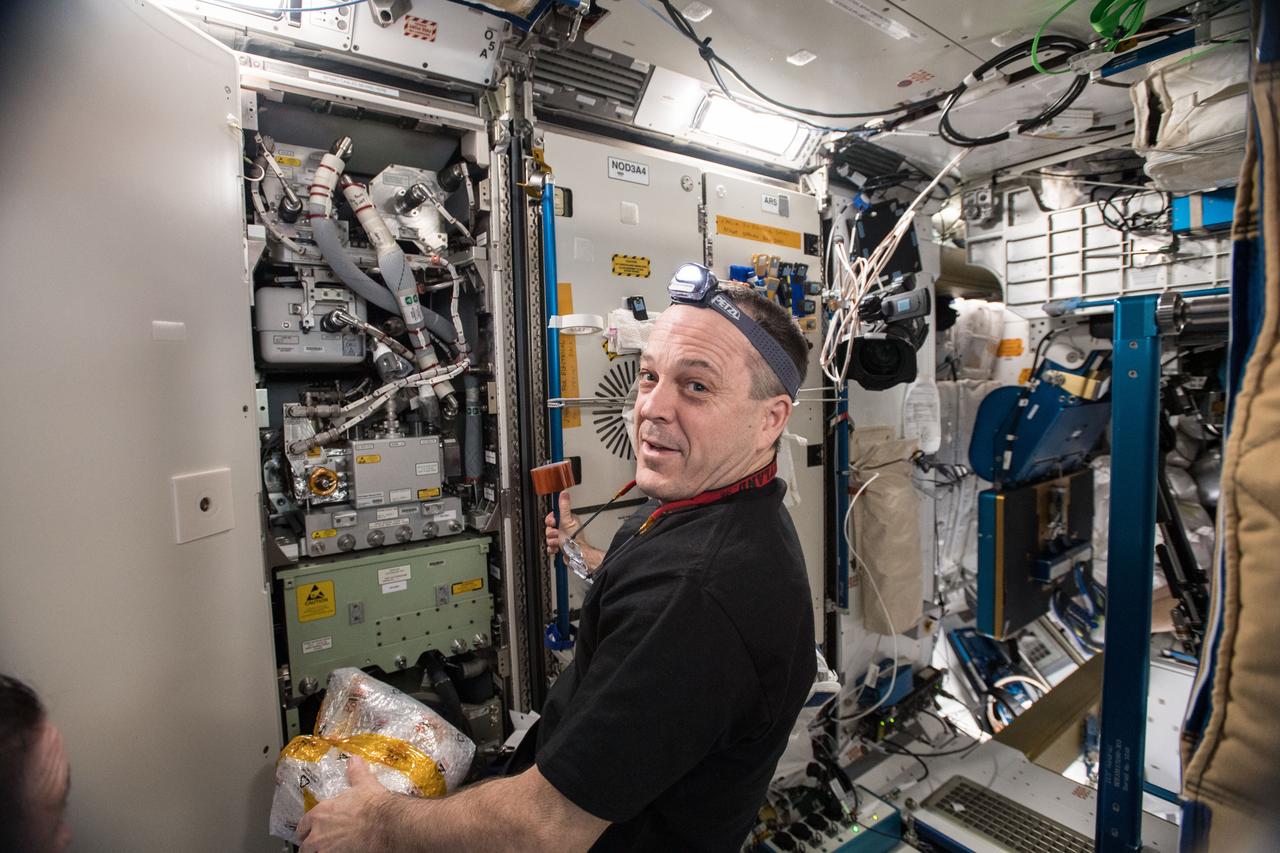
iss056e014487 (June 18, 2018) --- Expedition 56 Flight Engineer Ricky Arnold of NASA is pictured in the Unity module during life support maintenance work to remove and replace an Oxygen Generation System Hydrogen Sensor.
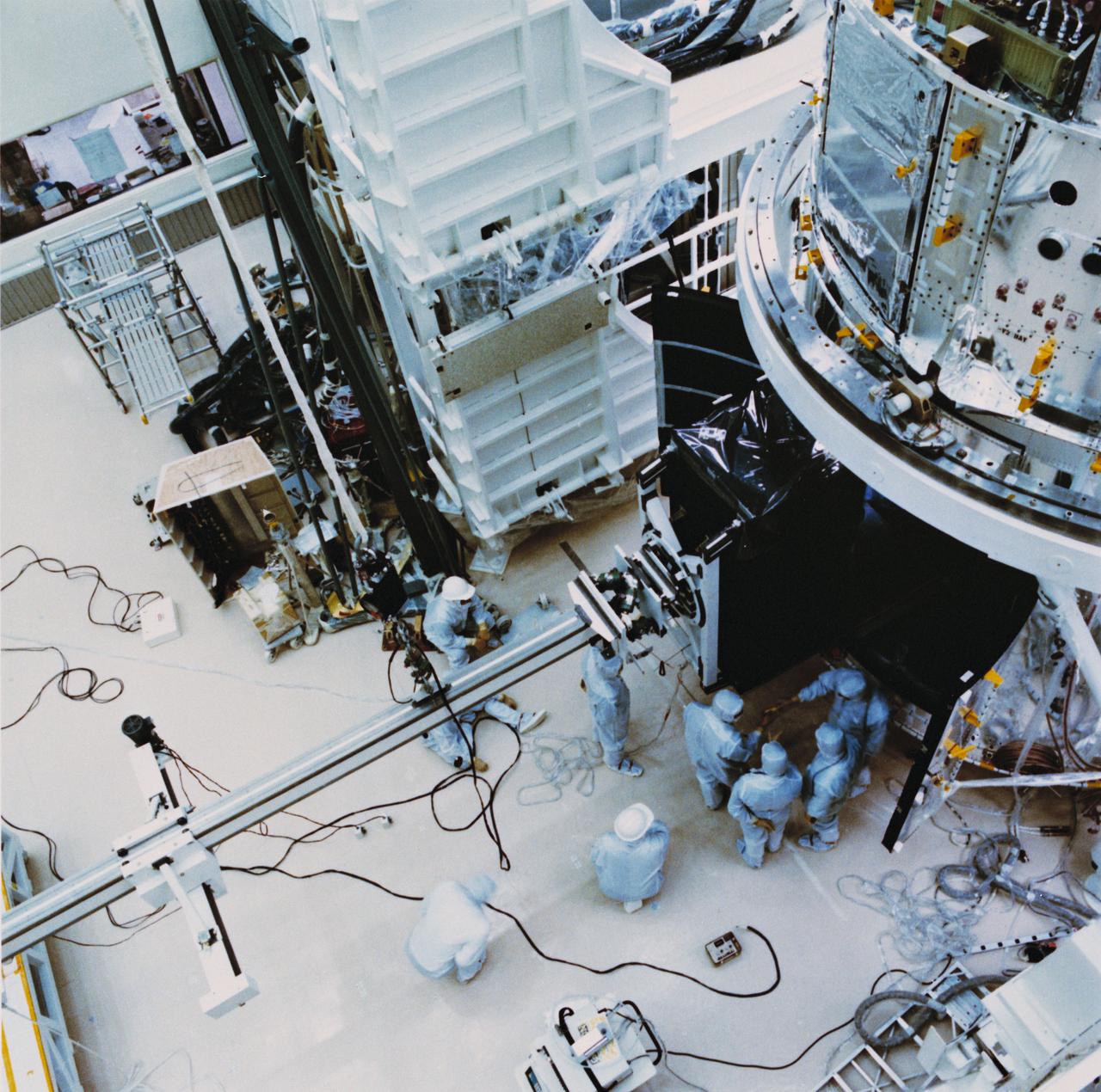
A mechanical arm positions the axial scientific instrument (SI) module (orbital replacement unit (ORU)) just outside the open doors of the Hubble Space Telescope (HST) Support System Module (SSM) as clean-suited technicians oversee the process. HST assembly is being completed at the Lockheed Facility in Sunnyvale, California.
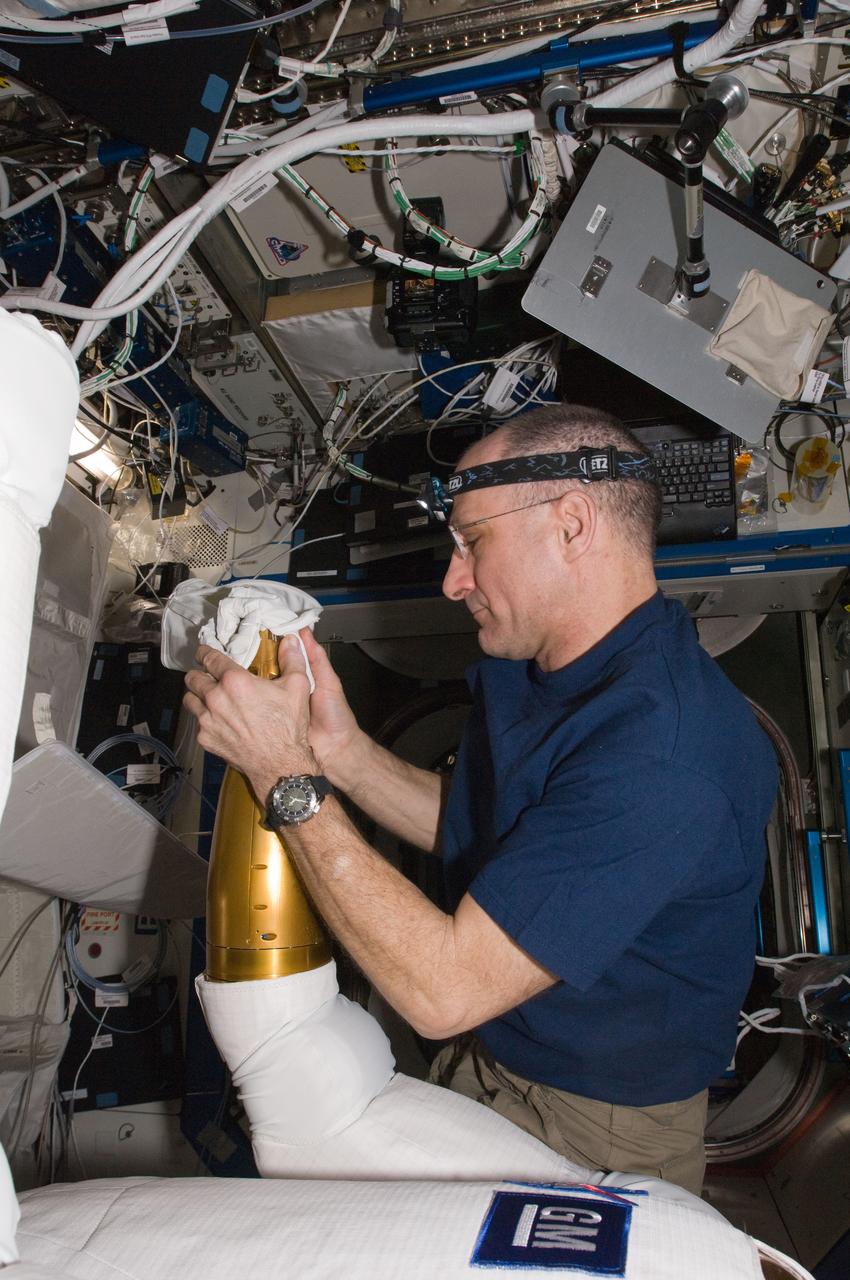
ISS030-E-135119 (13 March 2012) --- In the International Space Station?s Destiny laboratory, NASA astronaut Don Pettit, Expedition 30 flight engineer, replaces the cover on an arm of Robonaut 2 after an upgrade to its systems. A heat sink was installed into both of the robot?s forearms to allow it to better dissipate heat and run for longer periods of time.
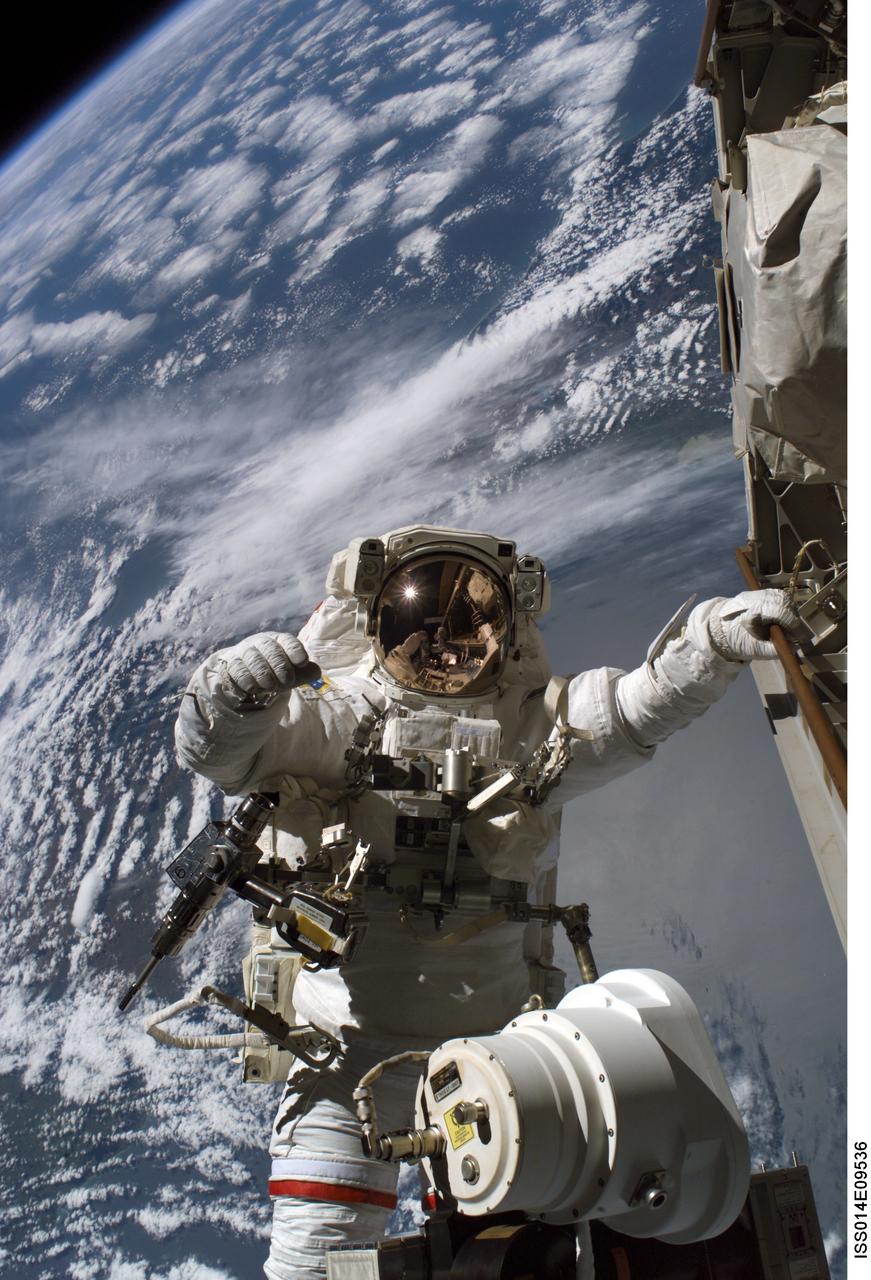
ISS014-E-09536 (12 Dec. 2006) --- Astronaut Robert L. Curbeam, Jr., STS-116 mission specialist, prepares to replace a faulty TV camera on the exterior of the International Space Station during the mission's first of three planned sessions of extravehicular activity (EVA). Astronaut Christer Fuglesang (out of frame), mission specialist representing the European Space Agency (ESA), also participated in the 6-hour, 36-minute spacewalk.
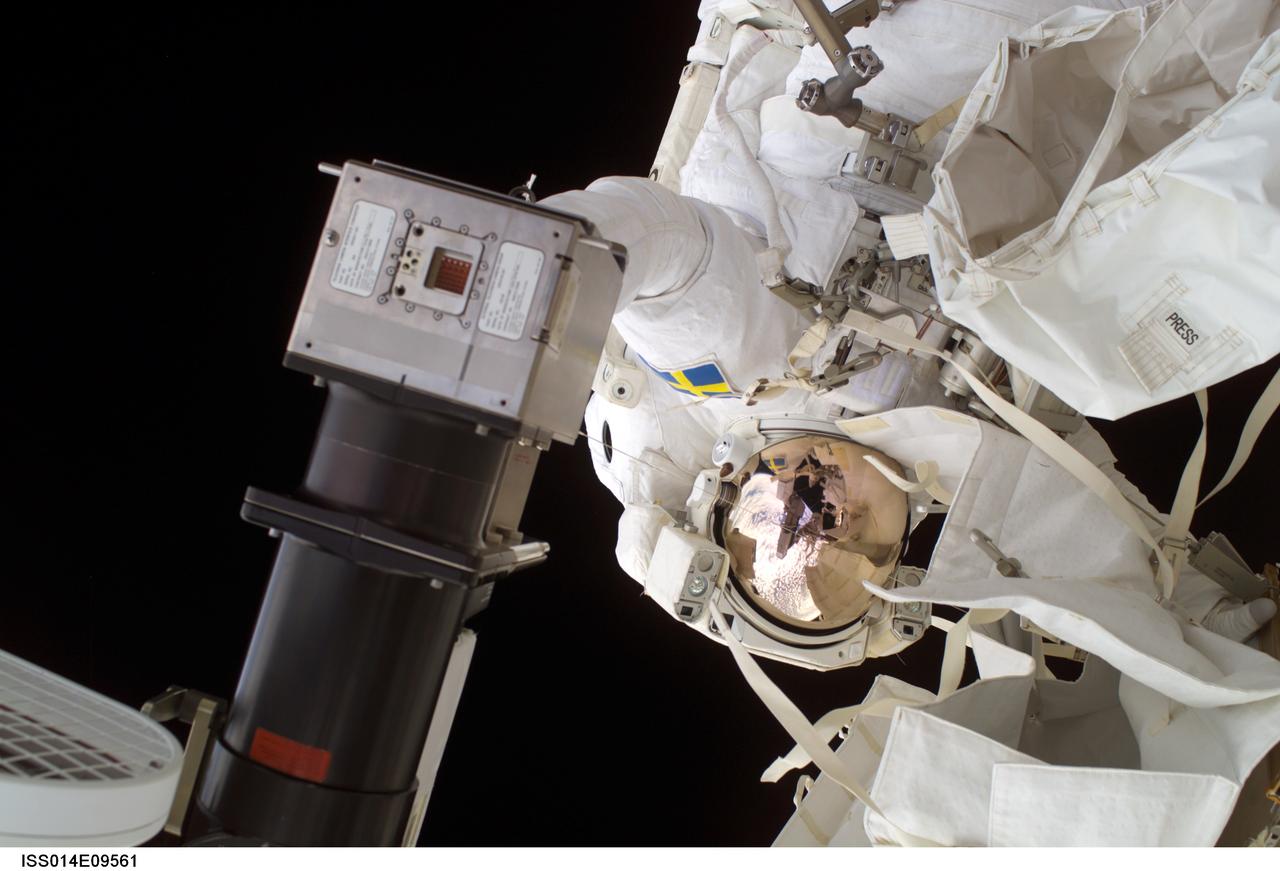
ISS014-E-09561 (12 Dec. 2006) --- European Space Agency (ESA) astronaut Christer Fuglesang, STS-116 mission specialist, replaces a faulty TV camera on the exterior of the International Space Station during the mission's first of three planned sessions of extravehicular activity (EVA). Astronaut Robert L. Curbeam, Jr. (out of frame), mission specialist, also participated in the 6-hour, 36-minute spacewalk.
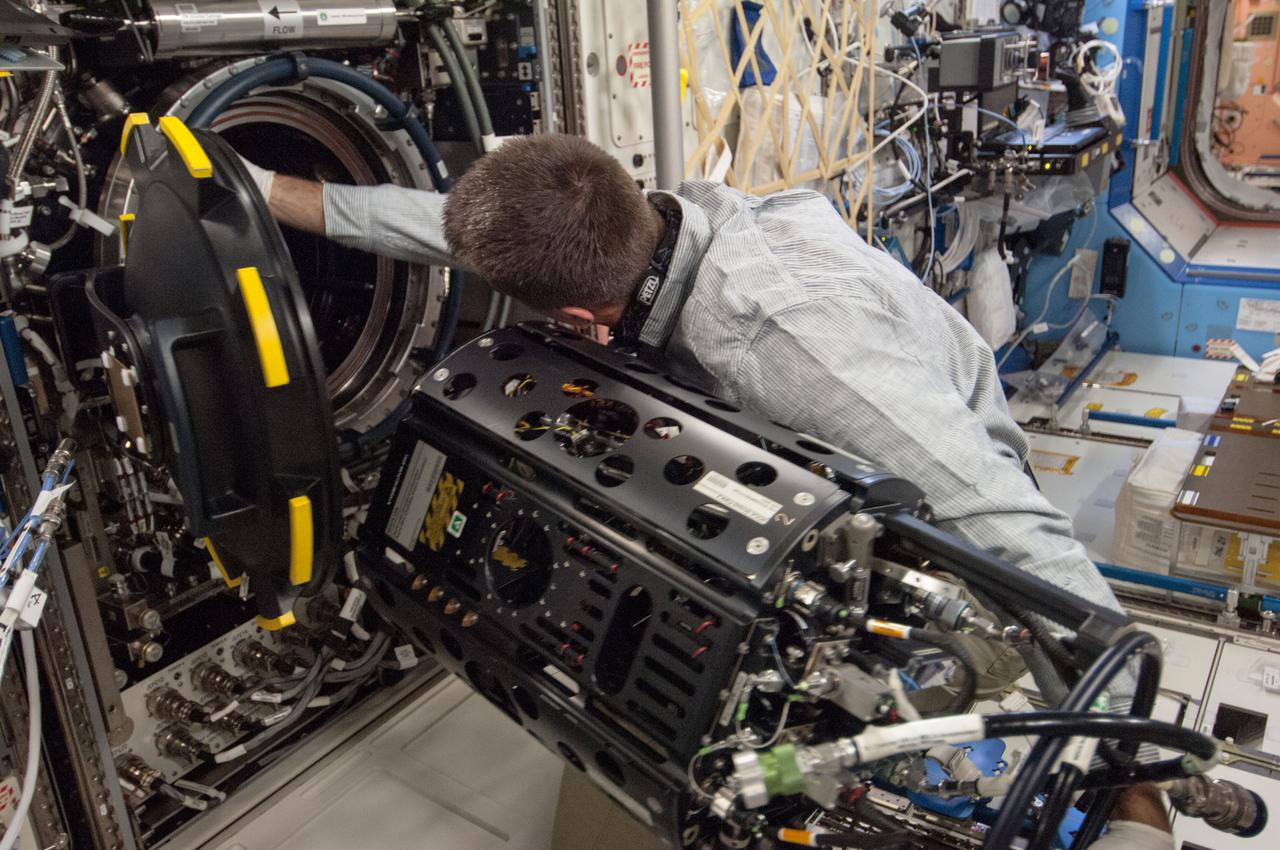
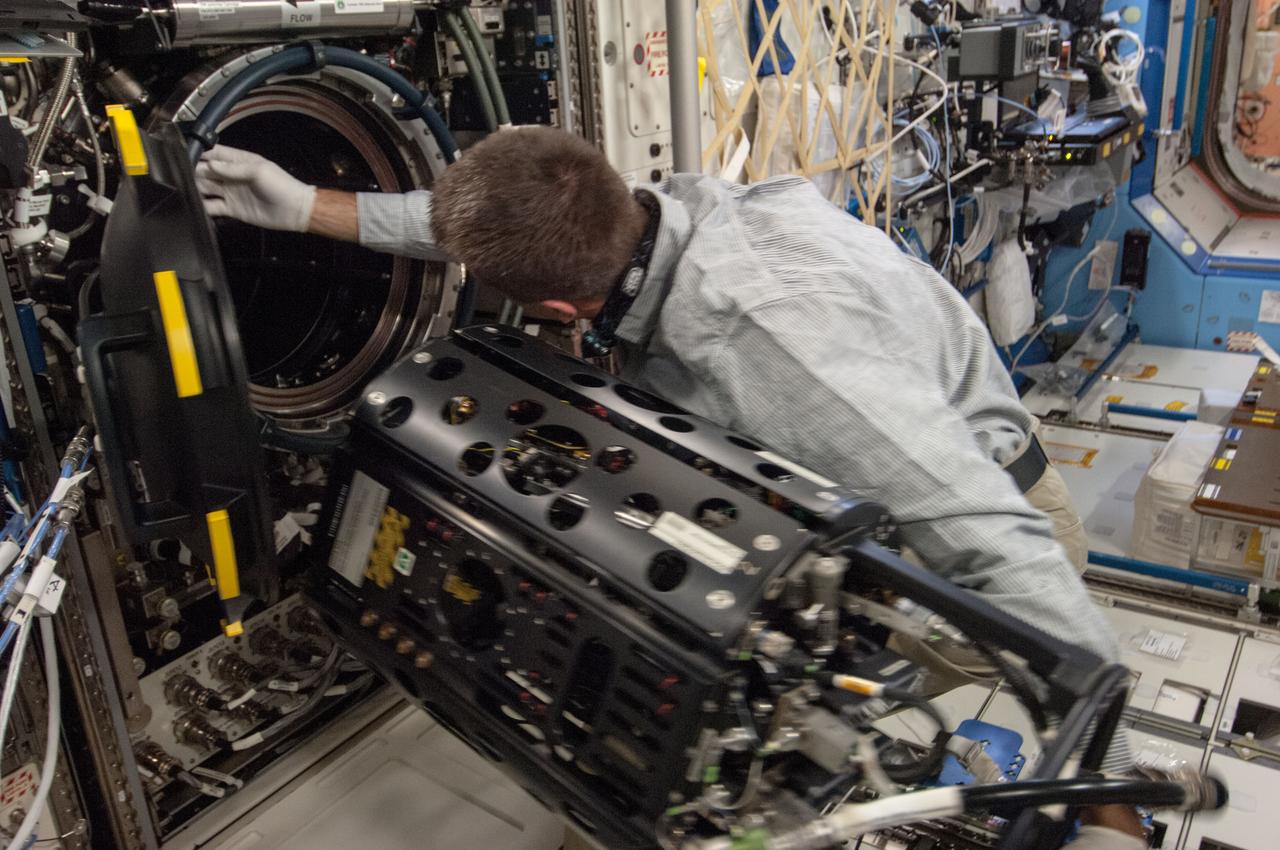
ISS035-E-017699 (10 April 2013) --- This is one of several photos documenting the Multi-user Droplet Combustion Apparatus (MDCA) Fuel Reservoir replacement. Here, Expedition 35 Flight Engineer Chris Cassidy removes and replaces one of the Fuel Reservoirs with the MDCA Chamber Insert Assembly (CIA) pulled partially out of the Combustion Chamber. The MDCA Fuel Reservoirs contain the liquid fuel used during droplet combustion experiments. This reservoir change-out was in support of the FLame EXtinguishment (FLEX)-2 experiment, scheduled to be executed by ground controllers.
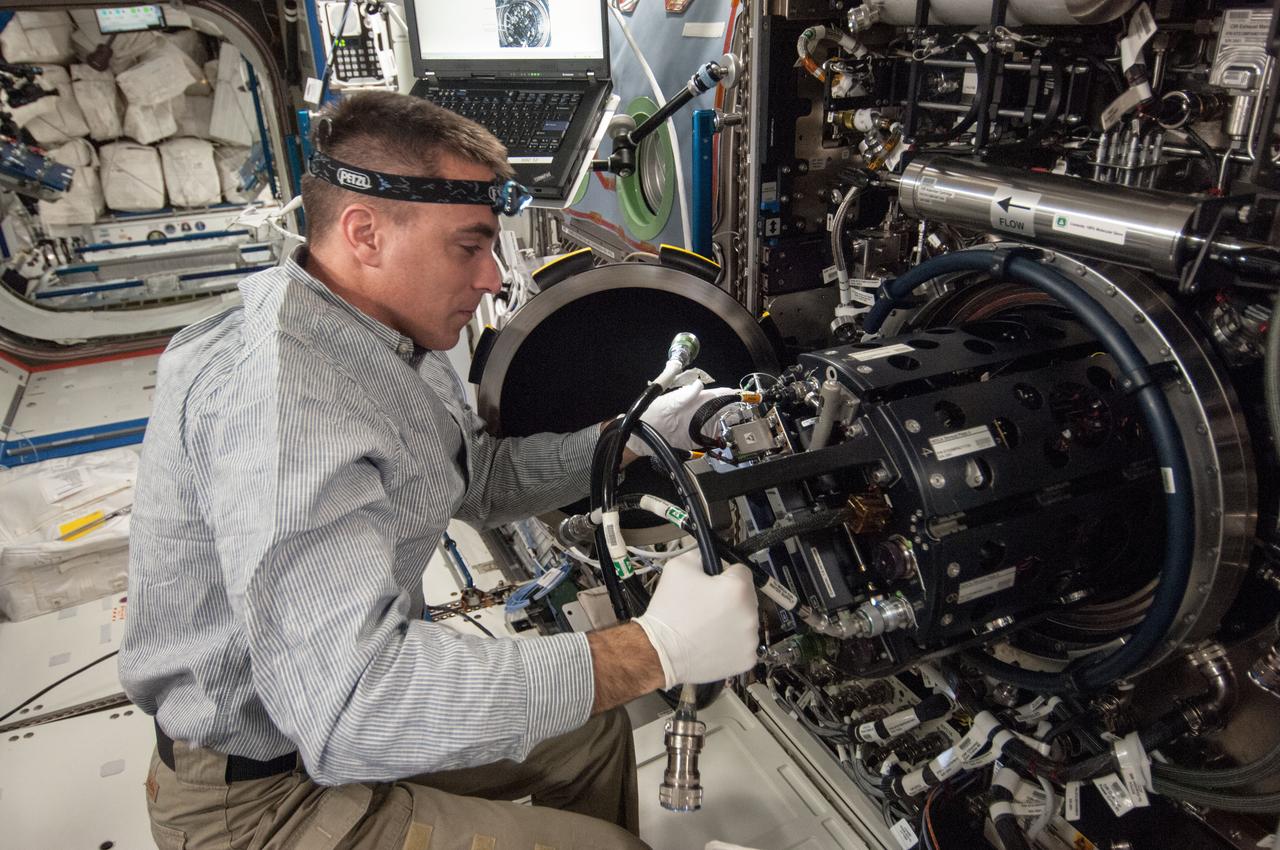
ISS035-E-017712 (10 April 2013)?-- This is one of several photos documenting the Multi-user Droplet Combustion Apparatus (MDCA) Fuel Reservoir replacement in the U.S. lab Destiny. Here, Expedition 35 Flight Engineer Chris Cassidy removes and replaces one of the Fuel Reservoirs with the MDCA Chamber Insert Assembly (CIA) pulled partially out of the Combustion Chamber. The MDCA Fuel Reservoirs contain the liquid fuel used during droplet combustion experiments. This reservoir change-out was in support of the FLame EXtinguishment (FLEX)-2 experiment, scheduled to be executed by ground controllers.
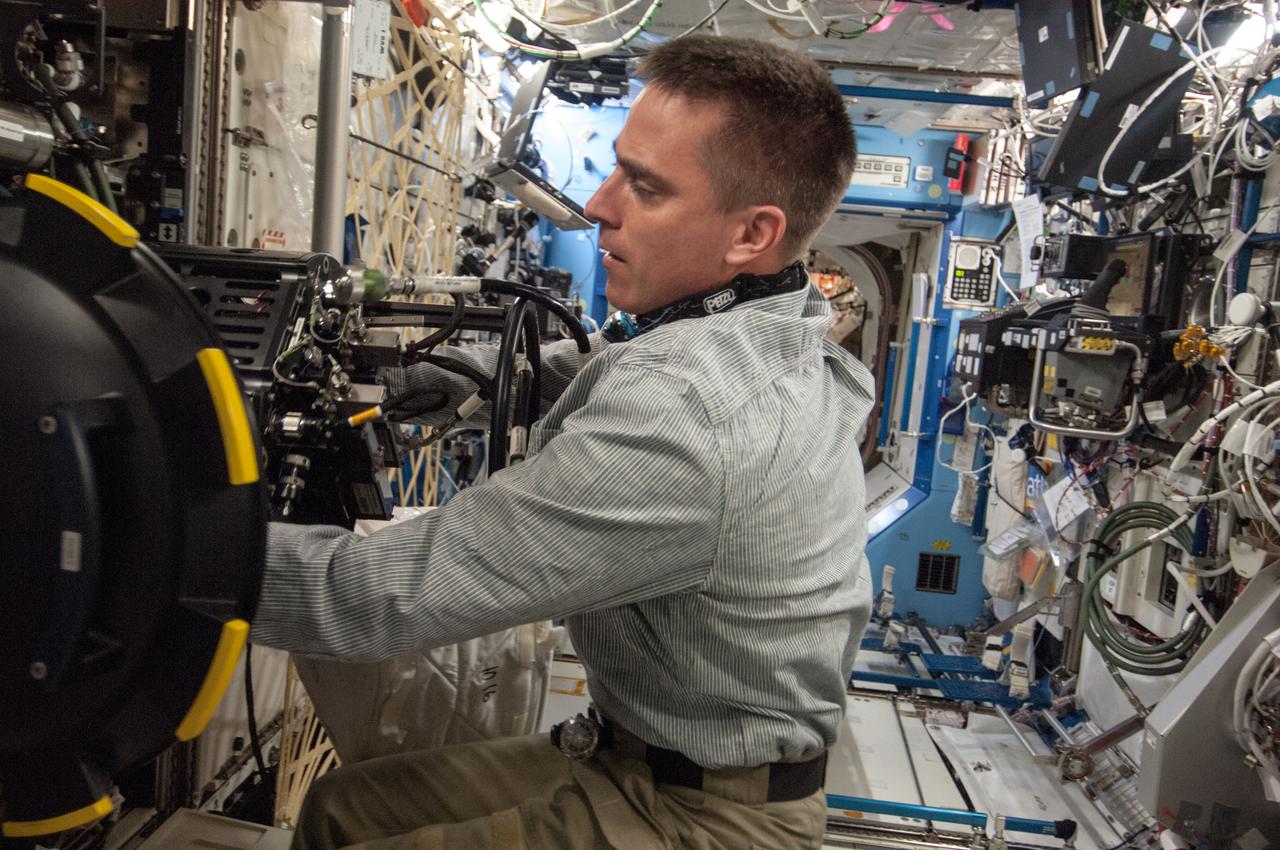
ISS035-E-017699 (10 April 2013) --- This is one of several photos documenting the Multi-user Droplet Combustion Apparatus (MDCA) Fuel Reservoir replacement. Here, Expedition 35 Flight Engineer Chris Cassidy removes and replaces one of the Fuel Reservoirs with the MDCA Chamber Insert Assembly (CIA) pulled partially out of the Combustion Chamber. The MDCA Fuel Reservoirs contain the liquid fuel used during droplet combustion experiments. This reservoir change-out was in support of the FLame EXtinguishment (FLEX)-2 experiment, scheduled to be executed by ground controllers.
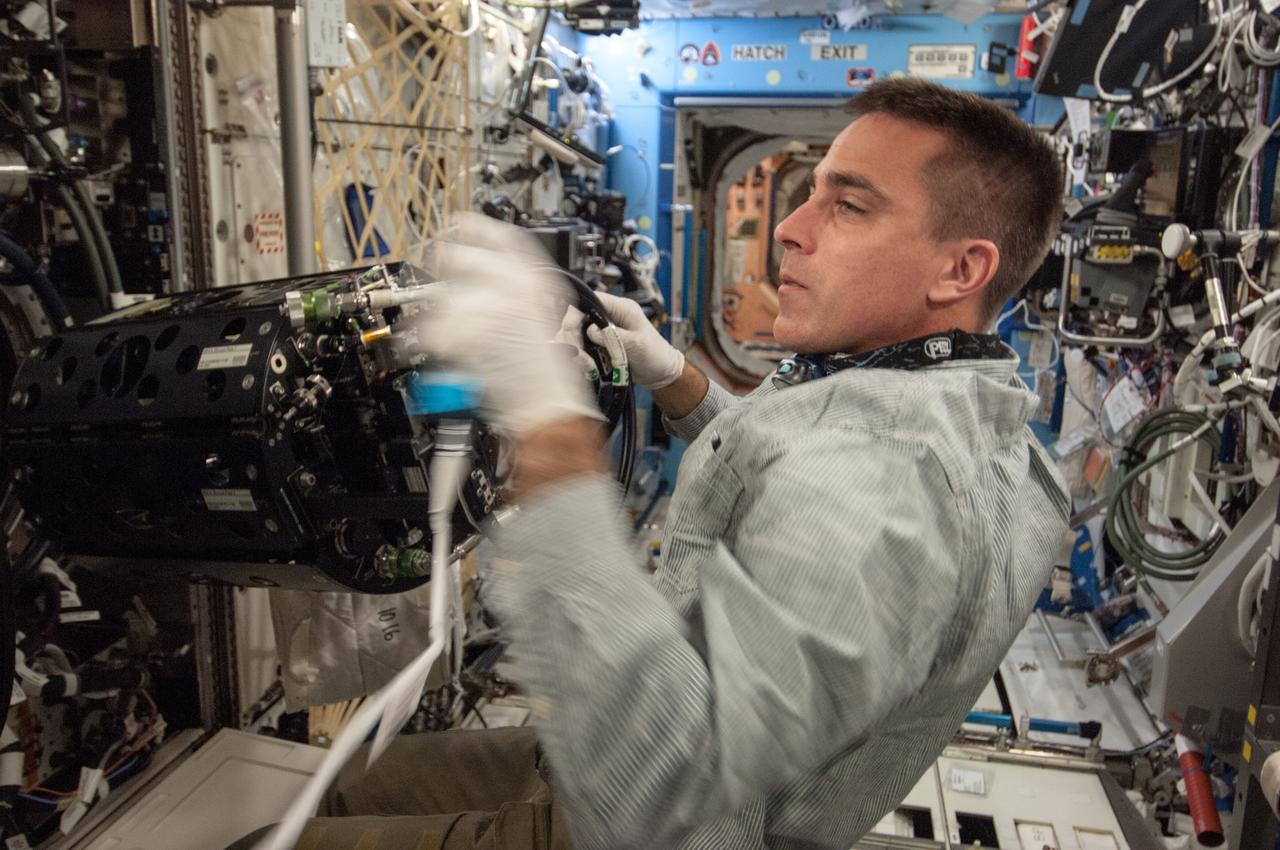
ISS035-E-017699 (10 April 2013) --- This is one of several photos documenting the Multi-user Droplet Combustion Apparatus (MDCA) Fuel Reservoir replacement. Here, Expedition 35 Flight Engineer Chris Cassidy removes and replaces one of the Fuel Reservoirs with the MDCA Chamber Insert Assembly (CIA) pulled partially out of the Combustion Chamber. The MDCA Fuel Reservoirs contain the liquid fuel used during droplet combustion experiments. This reservoir change-out was in support of the FLame EXtinguishment (FLEX)-2 experiment, scheduled to be executed by ground controllers.
ISS035-E-017699 (10 April 2013) --- This is one of several photos documenting the Multi-user Droplet Combustion Apparatus (MDCA) Fuel Reservoir replacement. Here, Expedition 35 Flight Engineer Chris Cassidy removes and replaces one of the Fuel Reservoirs with the MDCA Chamber Insert Assembly (CIA) pulled partially out of the Combustion Chamber. The MDCA Fuel Reservoirs contain the liquid fuel used during droplet combustion experiments. This reservoir change-out was in support of the FLame EXtinguishment (FLEX)-2 experiment, scheduled to be executed by ground controllers.
ISS035-E-017699 (10 April 2013) --- This is one of several photos documenting the Multi-user Droplet Combustion Apparatus (MDCA) Fuel Reservoir replacement. Here, Expedition 35 Flight Engineer Chris Cassidy removes and replaces one of the Fuel Reservoirs with the MDCA Chamber Insert Assembly (CIA) pulled partially out of the Combustion Chamber. The MDCA Fuel Reservoirs contain the liquid fuel used during droplet combustion experiments. This reservoir change-out was in support of the FLame EXtinguishment (FLEX)-2 experiment, scheduled to be executed by ground controllers.
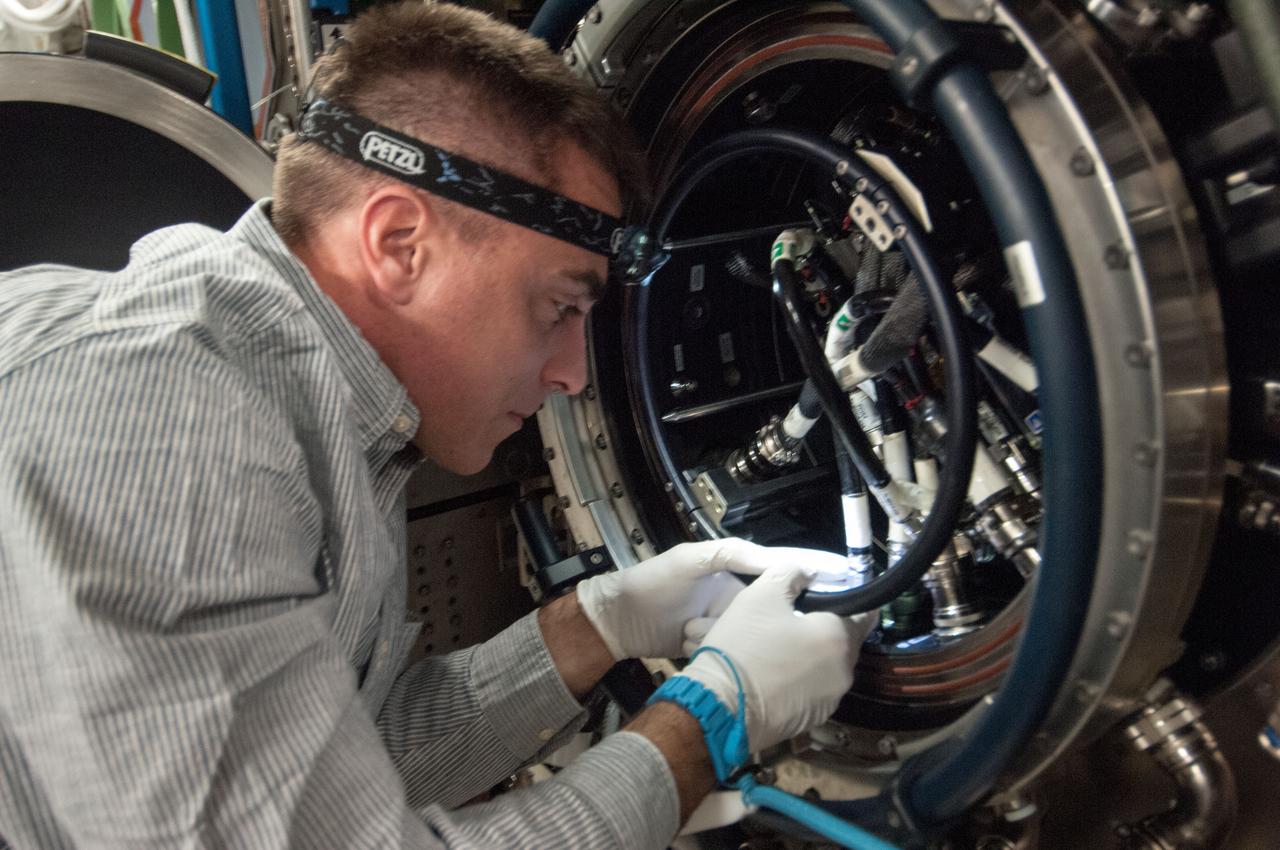
ISS035-E-017699 (10 April 2013) --- This is one of several photos documenting the Multi-user Droplet Combustion Apparatus (MDCA) Fuel Reservoir replacement. Here, Expedition 35 Flight Engineer Chris Cassidy removes and replaces one of the Fuel Reservoirs with the MDCA Chamber Insert Assembly (CIA) pulled partially out of the Combustion Chamber. The MDCA Fuel Reservoirs contain the liquid fuel used during droplet combustion experiments. This reservoir change-out was in support of the FLame EXtinguishment (FLEX)-2 experiment, scheduled to be executed by ground controllers.
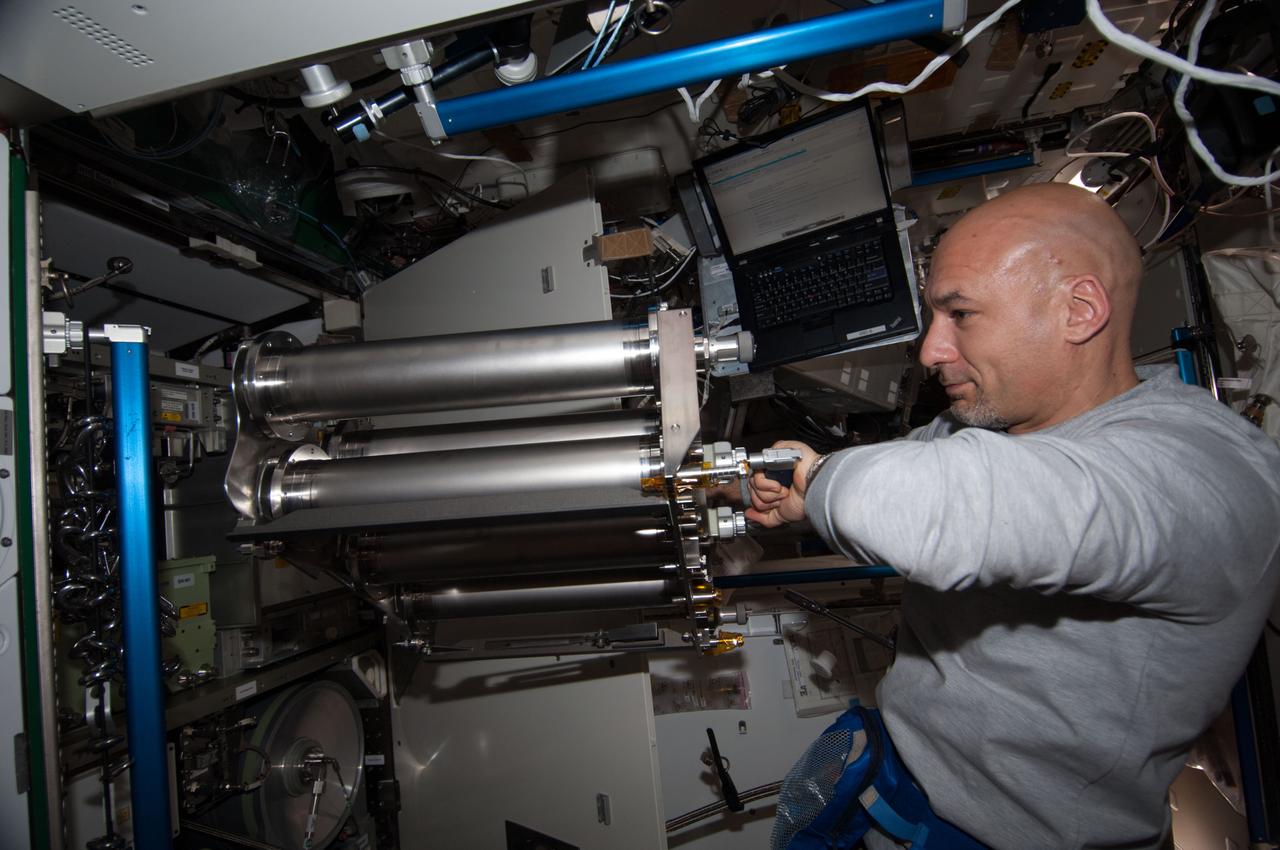
ISS036-E-018008 (12 July 2013) --- European Space Agency astronaut Luca Parmitano, Expedition 36 flight engineer, removes and replaces the particulate filter for the Water Pump Assembly 2 (WPA2) in Tranquility (also called Node 3) on the International Space Station.
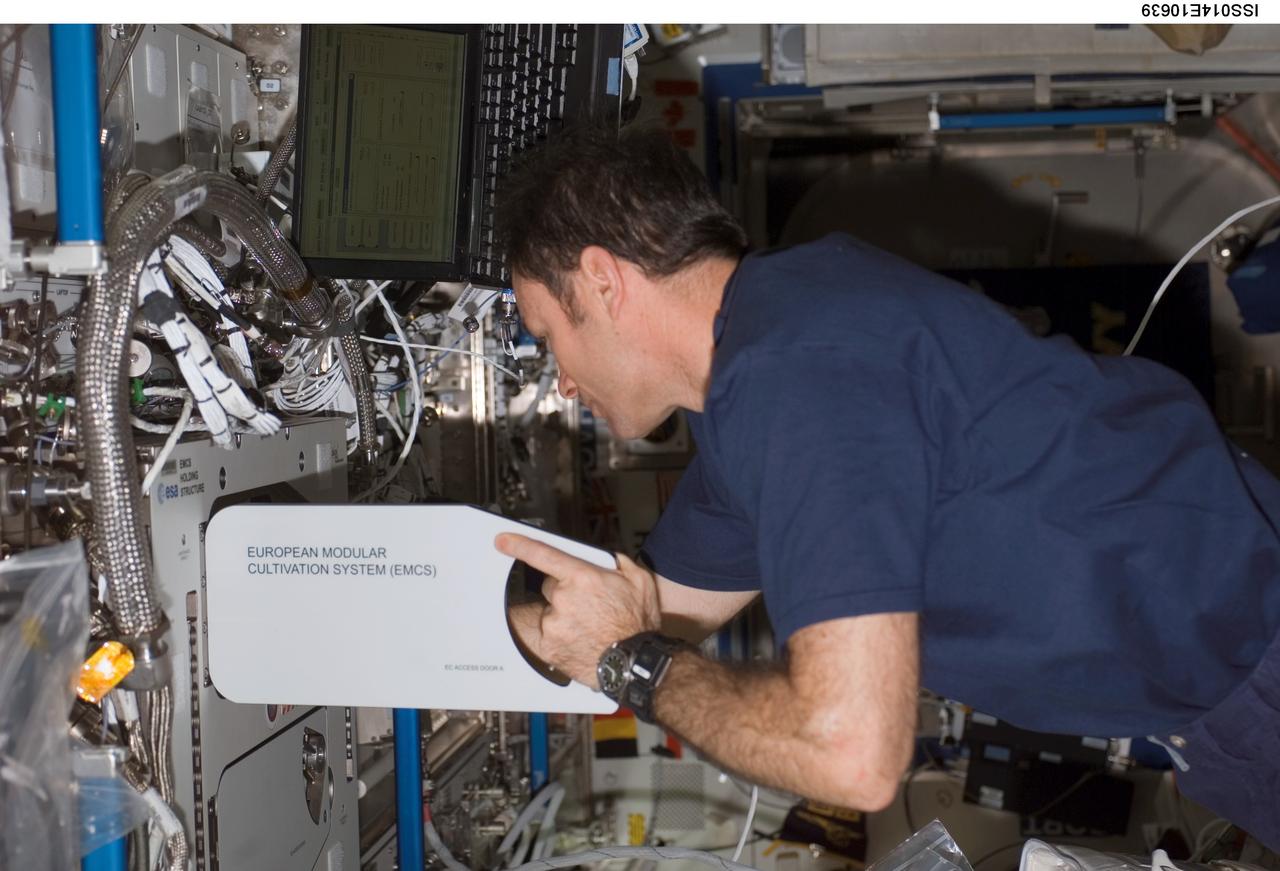
ISS014-E-10639 (29 Dec. 2006) --- Astronaut Michael E. Lopez-Alegria, Expedition 14 commander and NASA space station science officer, performs the European Modular Cultivation System (EMSC) -- Experiment Container (EC) replacement in the Destiny laboratory of the International Space Station.
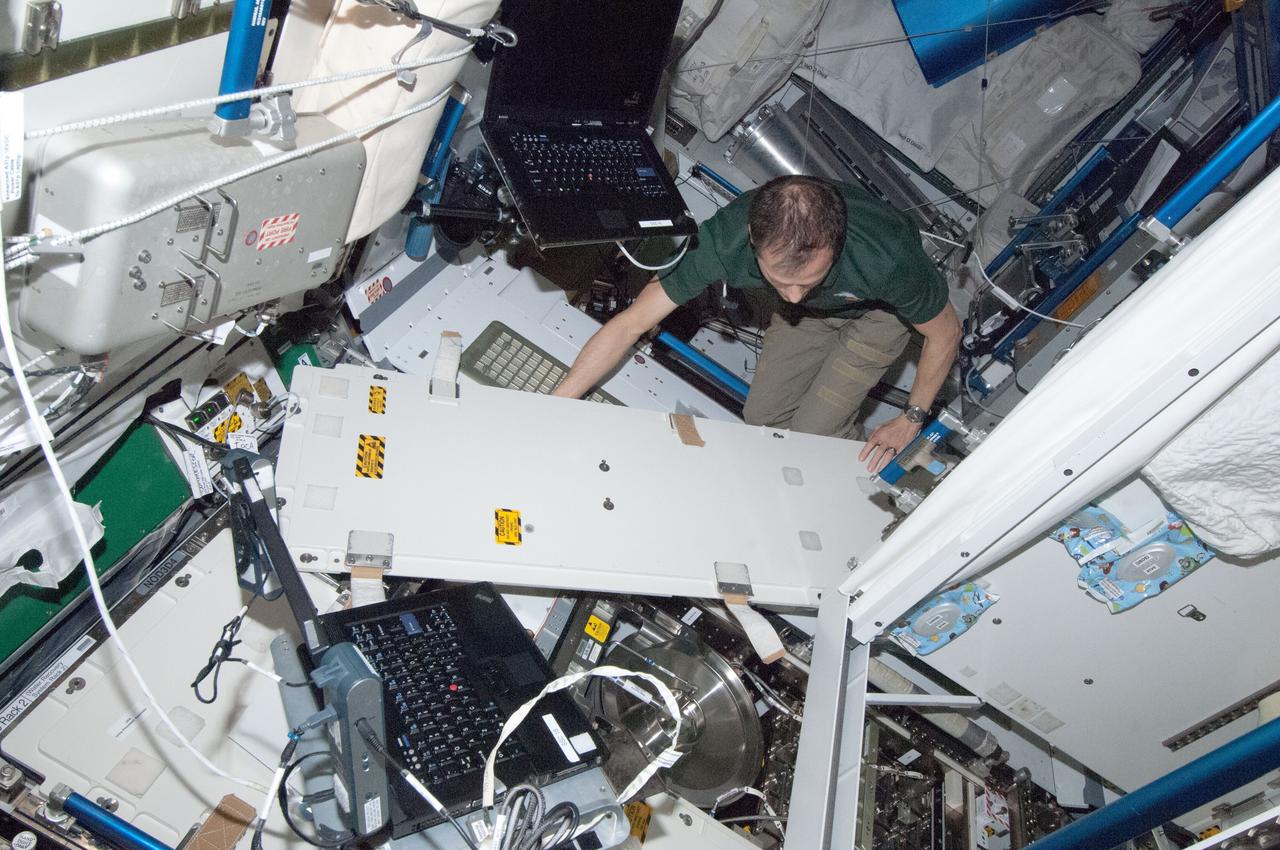
ISS034-E-045742 (11 Feb. 2013) --- NASA astronaut Tom Marshburn, Expedition 34 flight engineer, removes and replaces the Waste and Hygiene Compartment (WHC) pretreat tank as part of routine in-flight maintenance in the Tranquility node of the International Space Station.
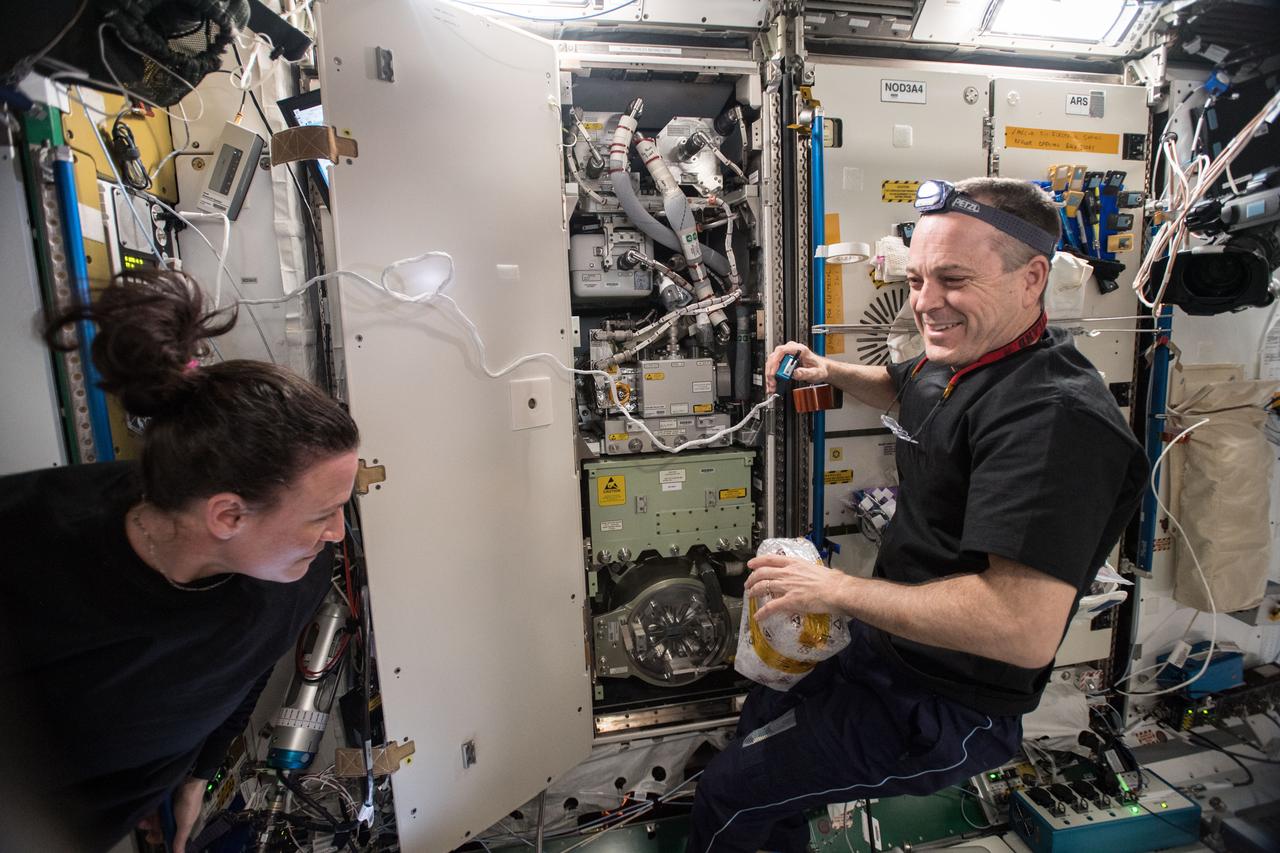
iss056e014488 (June 18, 2018) --- Expedition 56 Flight Engineers Serena Auñón-Chancellor (right) and Ricky Arnold of NASA are pictured in the Unity module during life support maintenance work to remove and replace an Oxygen Generation System Hydrogen Sensor.
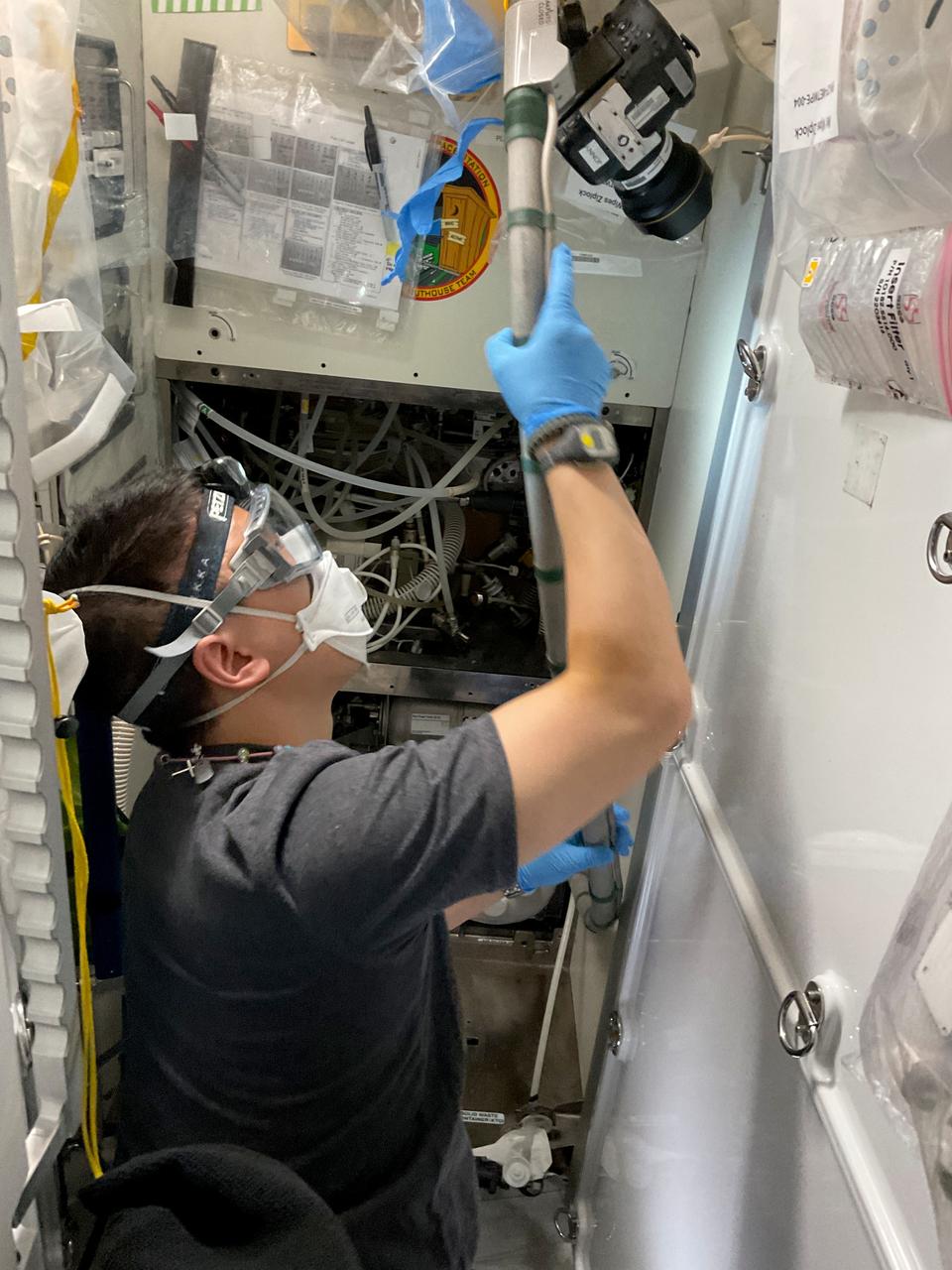
iss073e0136234 (June 9, 2025) --- NASA astronaut and Expedition 73 Flight Engineer Jonny Kim replaces orbital plumbing components inside the International Space Station's restroom, also called the waste and hygiene compartment, located in the Tranquility module.
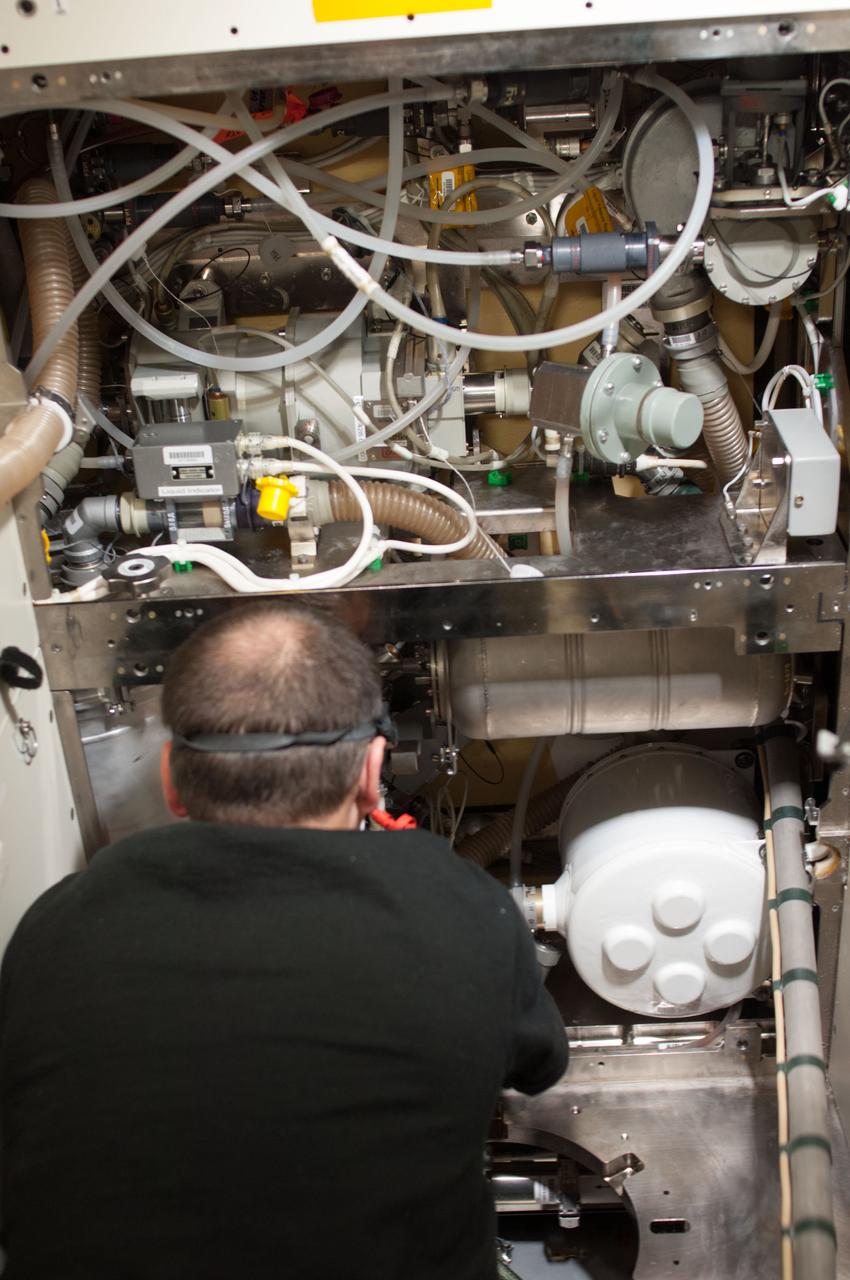
ISS034-E-031142 (3 Jan. 2013) --- NASA astronaut Tom Marshburn, Expedition 34 flight engineer, removes and replaces the Waste and Hygiene Compartment (WHC) piping during routine in-flight maintenance in the Tranquility node of the International Space Station.
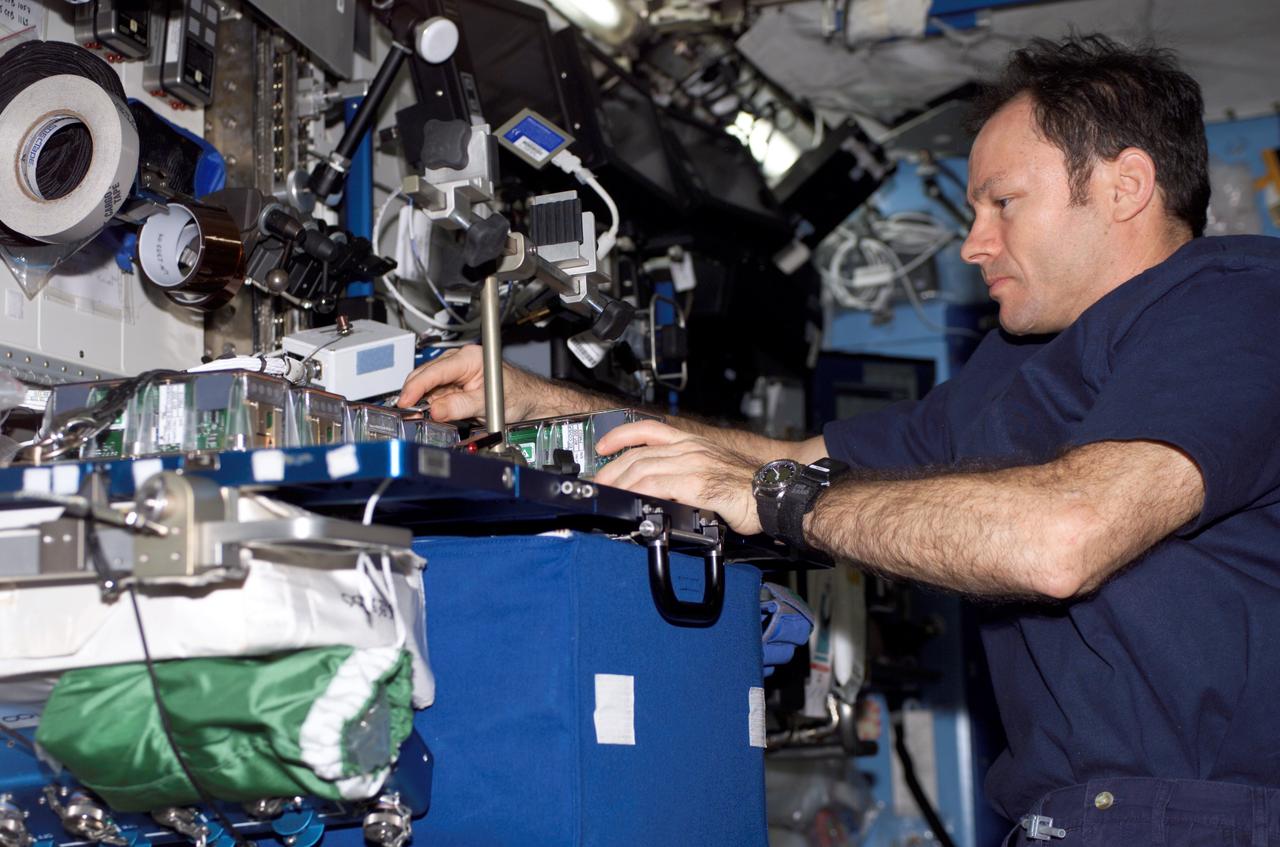
ISS014-E-10647 (29 Dec. 2006) --- Astronaut Michael E. Lopez-Alegria, Expedition 14 commander and NASA space station science officer, performs the European Modular Cultivation System (EMSC) -- Experiment Container (EC) replacement in the Destiny laboratory of the International Space Station.
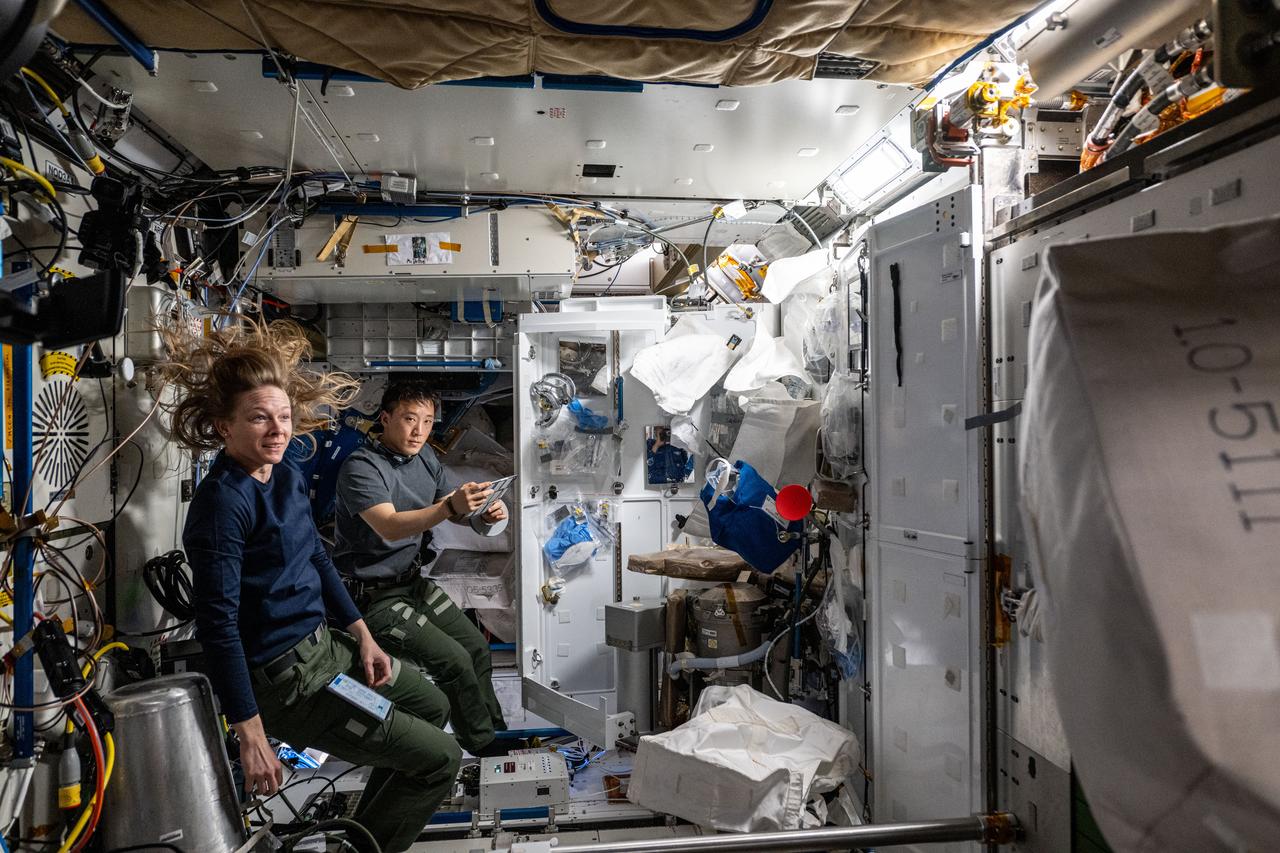
iss073e0379799 (July 21, 2025) --- Expedition 73 Flight Engineers Nichole Ayers and Jonny Kim, both NASA astronauts, work together inside the International Space Station's Tranquility module replacing electrical hardware that controls the distribution of power throughout the orbital outpost.
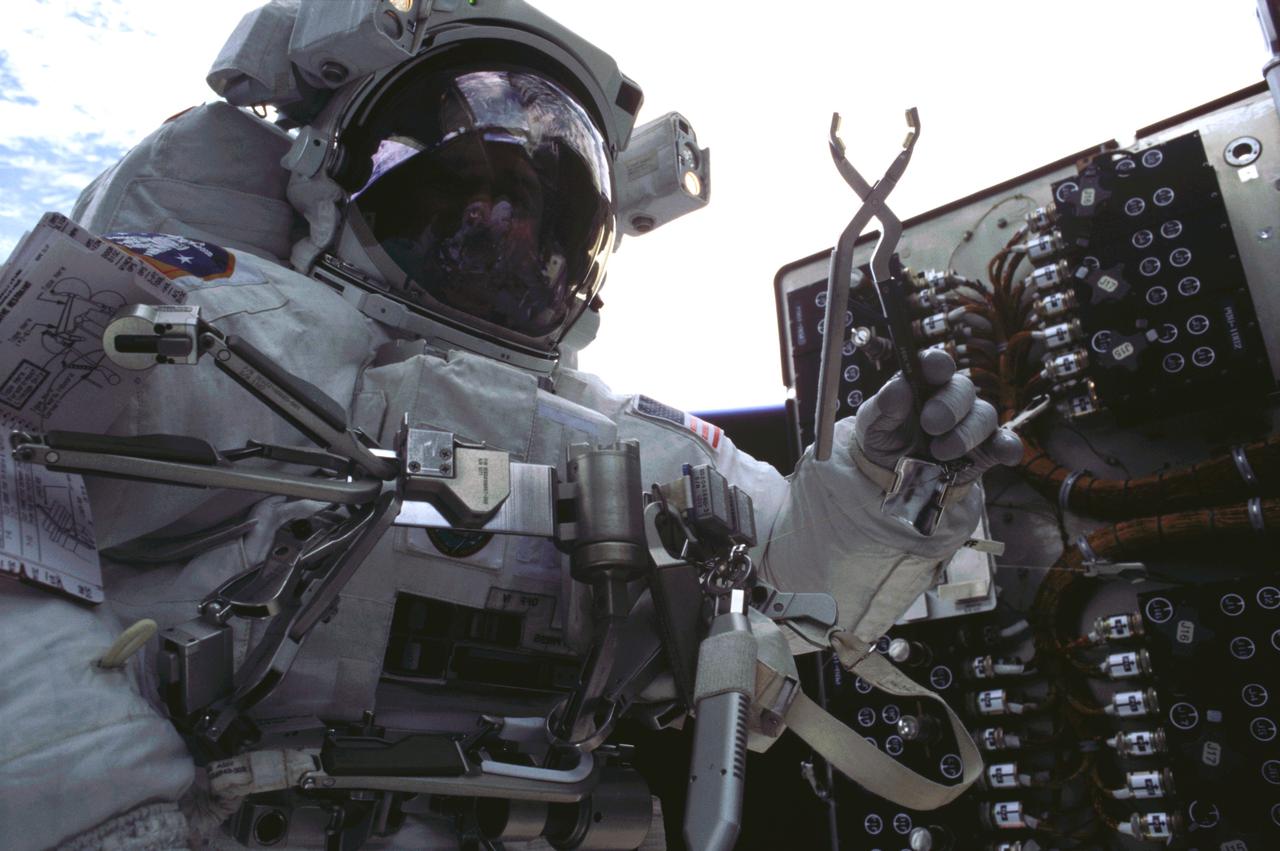
STS109-322-029 (6 March 2002) --- Astronaut John M. Grunsfeld, STS-109 payload commander, participates in the third of five space walks to perform work on the Hubble Space Telescope (HST). The third overall STS-109 extravehicular activity (EVA) marked the second of three for Grunsfeld, who was joined by astronaut Richard M. Linnehan on them all. On this particular walk, astronauts Grunsfeld and Linnehan turned off the telescope in order to replace its power control unit or PCU, the heart of the HST’s power system.
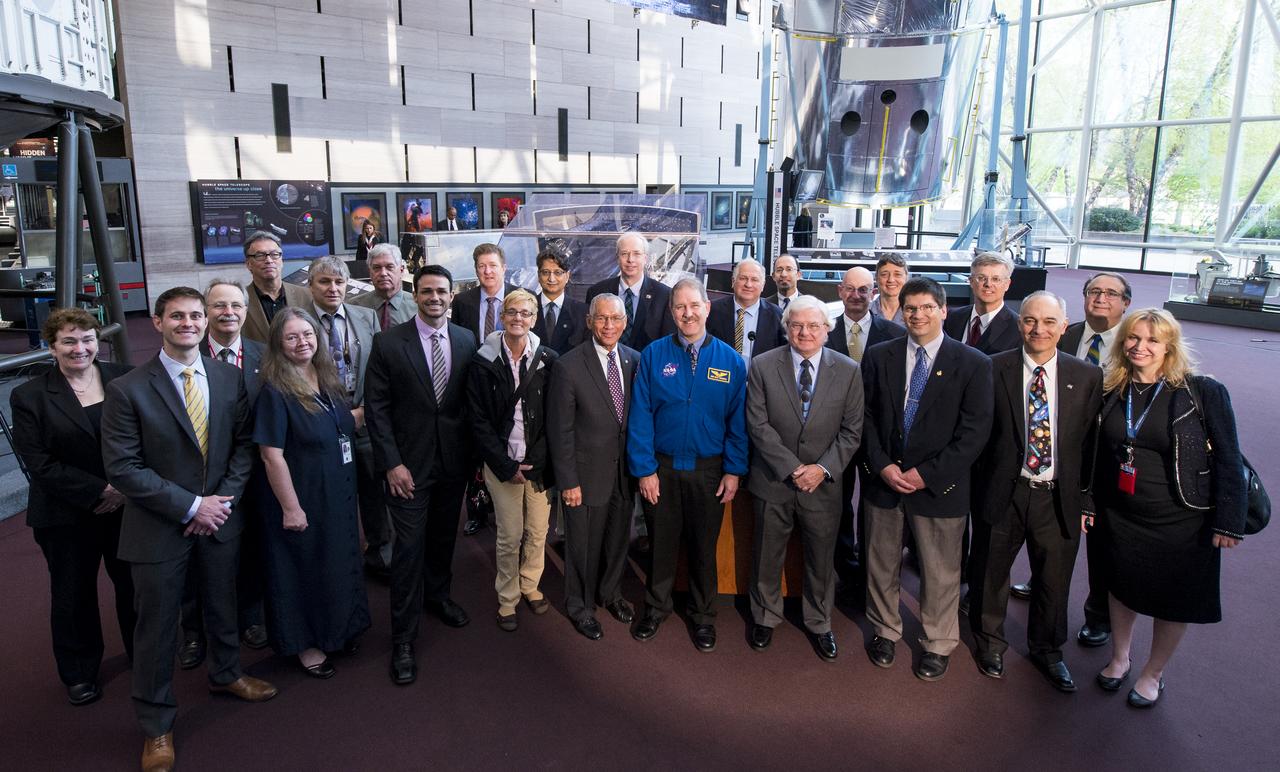
Individuals in attendance who had a hand in the development or servicing of the Hubble Space Telescope pose for a group photo at an event unveiling a new exhibit featuring Hubble's Corrective Optics Space Telescope Axial Replacement (COSTAR) and the WFPC2 on Wednesday, April 23, 2014 at the Smithsonian National Air and Space Museum in Washington, DC. COSTAR and WFPC2 were installed in Hubble during the first space shuttle servicing mission in 1993 and returned to Earth on the fifth and final servicing mission in 2009. Photo Credit: (NASA/Joel Kowsky)
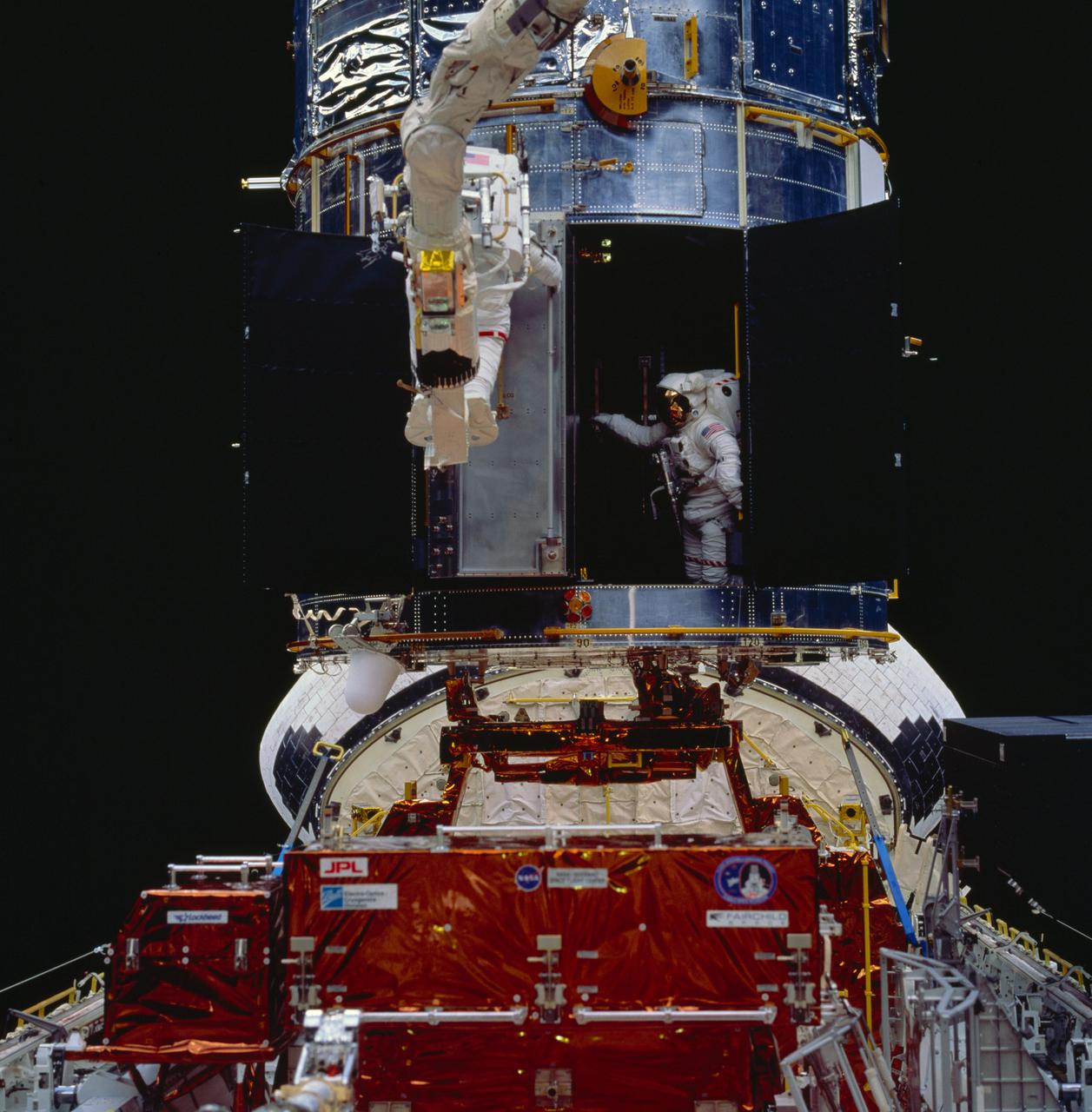
STS061-94-050 (8 Dec 1993) --- Astronaut Thomas D. Akers maneuvers inside the bay which will house the Corrective Optics Space Telescope Axial Replacement (COSTAR) while assisting astronaut Kathryn C. Thornton with the installation of the 640-pound instrument. Thornton, anchored on the end of the Remote Manipulator System (RMS) arm, is partially visible as she prepares to install the COSTAR, during their extravehicular activity (EVA).
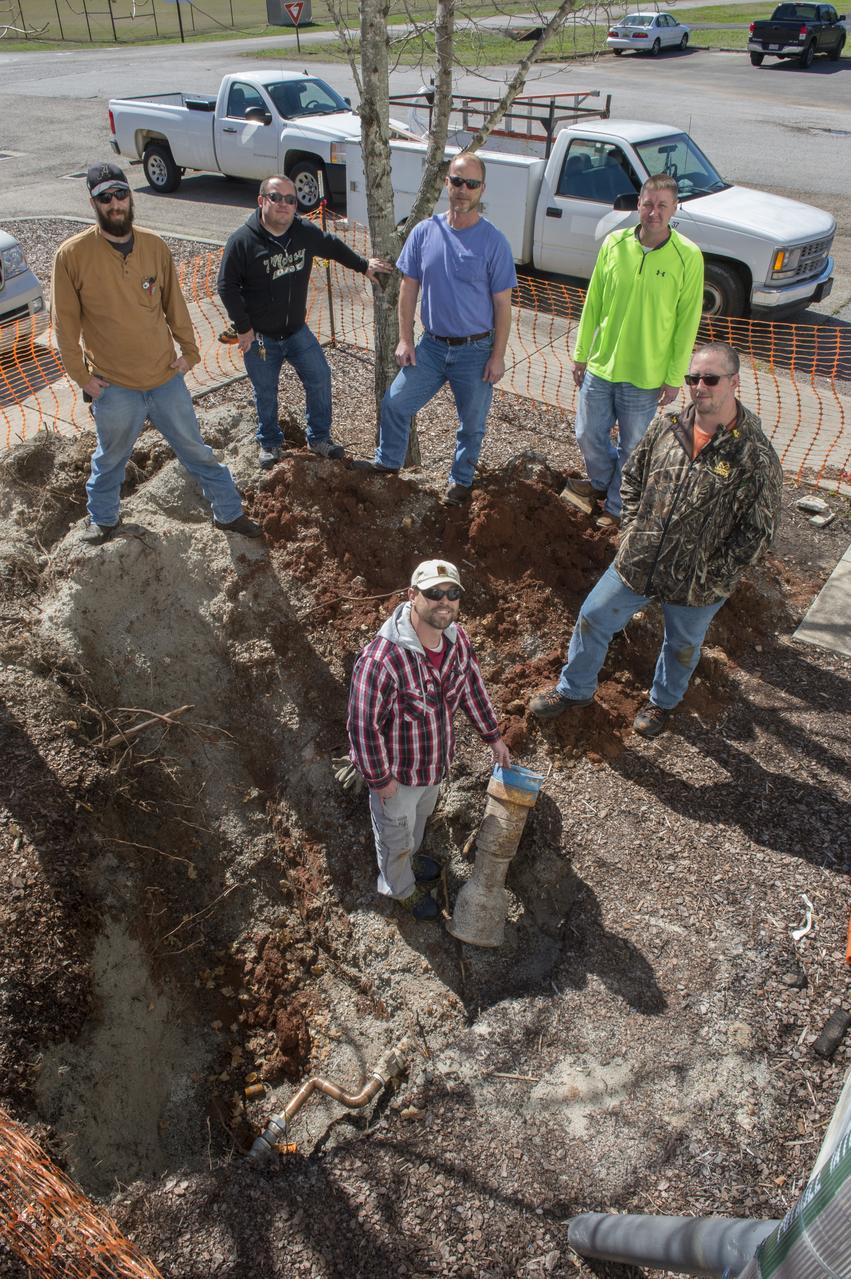
Members of Marshall's Facilities Operations and Maintenance Office team, including, clockwise from left, Robert Drane, Jeremy Holmes, Don Davis, team foreman Dusty Crouch, Wesley Brook and Lucas Broadway, gather to inspect and replace a pipe fitting.
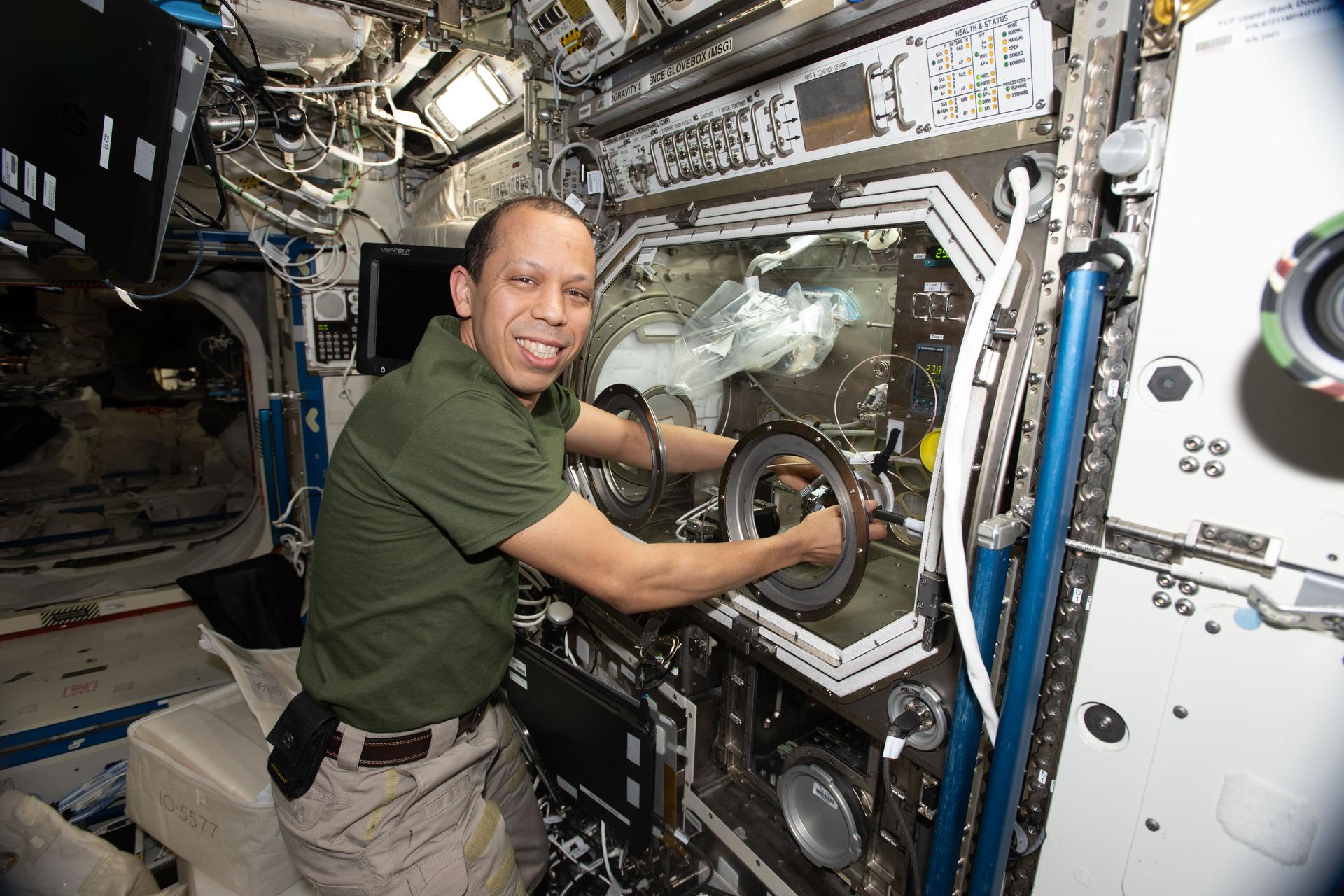
iss074e0620142 (May 28, 2026) --- NASA astronaut and Expedition 74 Flight Engineer Chris Williams replaces sample hardware inside the Destiny laboratory module’s Microgravity Science Glovebox aboard the International Space Station to support semiconductor crystal research. Growing crystals in weightlessness may enable future large-scale semiconductor manufacturing, advancing the commercial space economy and supporting Earth-based industries. Credit: NASA/Jack Hathaway
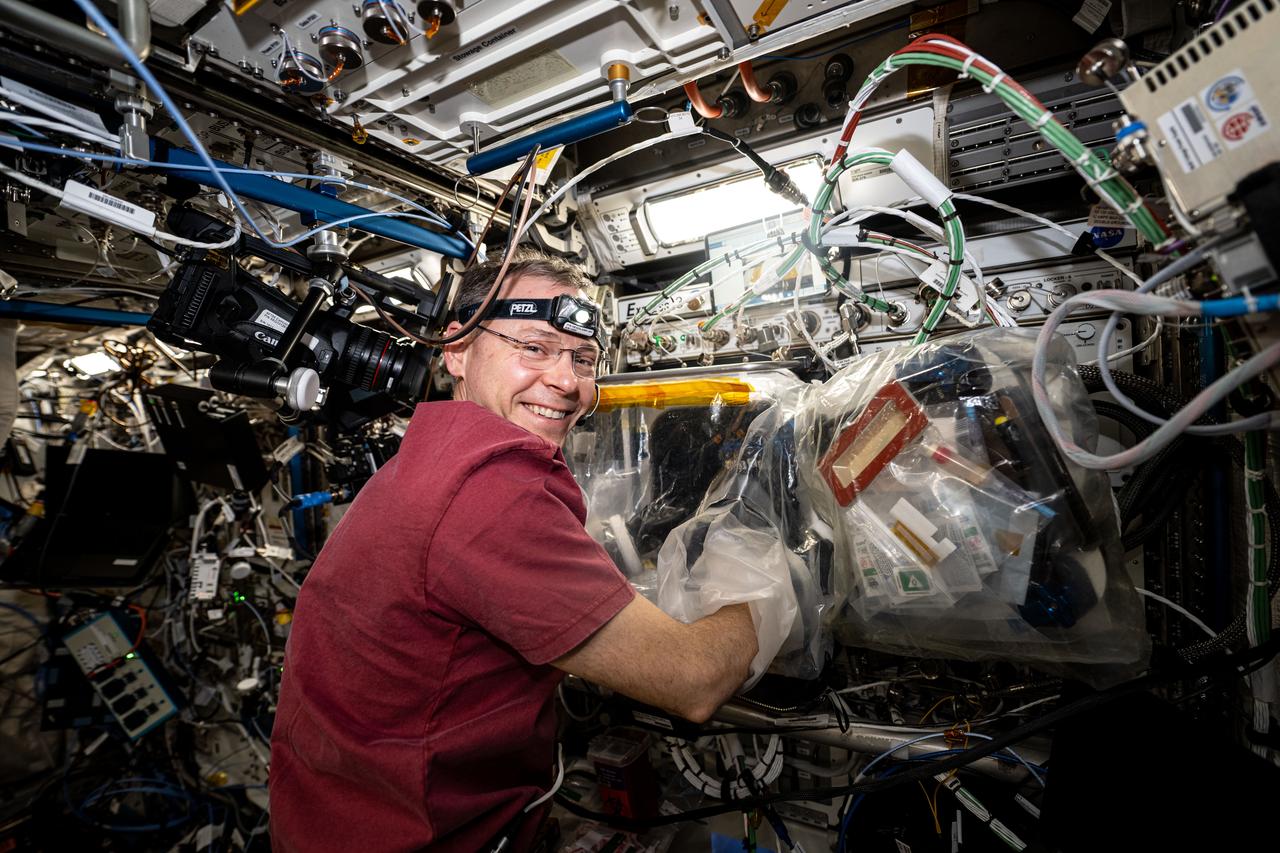
iss072e629194 (Feb. 18, 2025) --- NASA astronaut and Expedition 72 Flight Engineer Nick Hague works in a portable glovebag and cleans pumps, replaces components, and installs bio-ink syringes inside the BioFabrication Facility being tested for its capability to print biological, or organ-like, tissues in space and learn how to eventually fabricate human organs off the Earth.
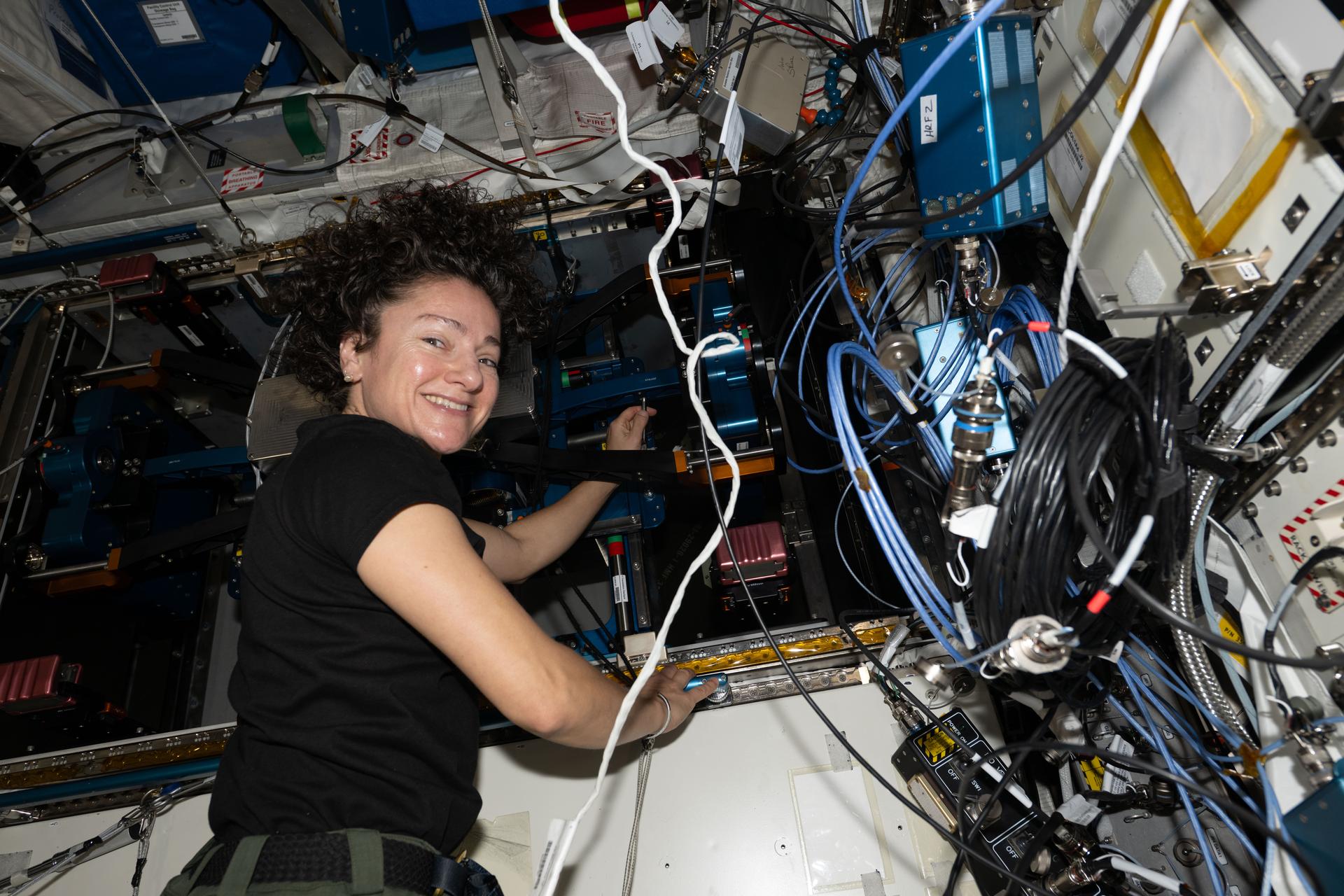
iss074e0490818 (April 15, 2026) --- NASA astronaut and Expedition 74 flight engineer Jessica Meir works inside the International Space Station's Columbus laboratory module replacing components on the new European Enhanced Exploration Exercise Device, or E4D, to ensure its accurate motion, alignment, and system longevity. The E4D was delivered on Northrop Grumman's second Cygnus XL cargo mission and will be evaluated for its ability to support crew workouts on missions to the Moon, Mars, and beyond. Credit: NASA/Jessica Meir
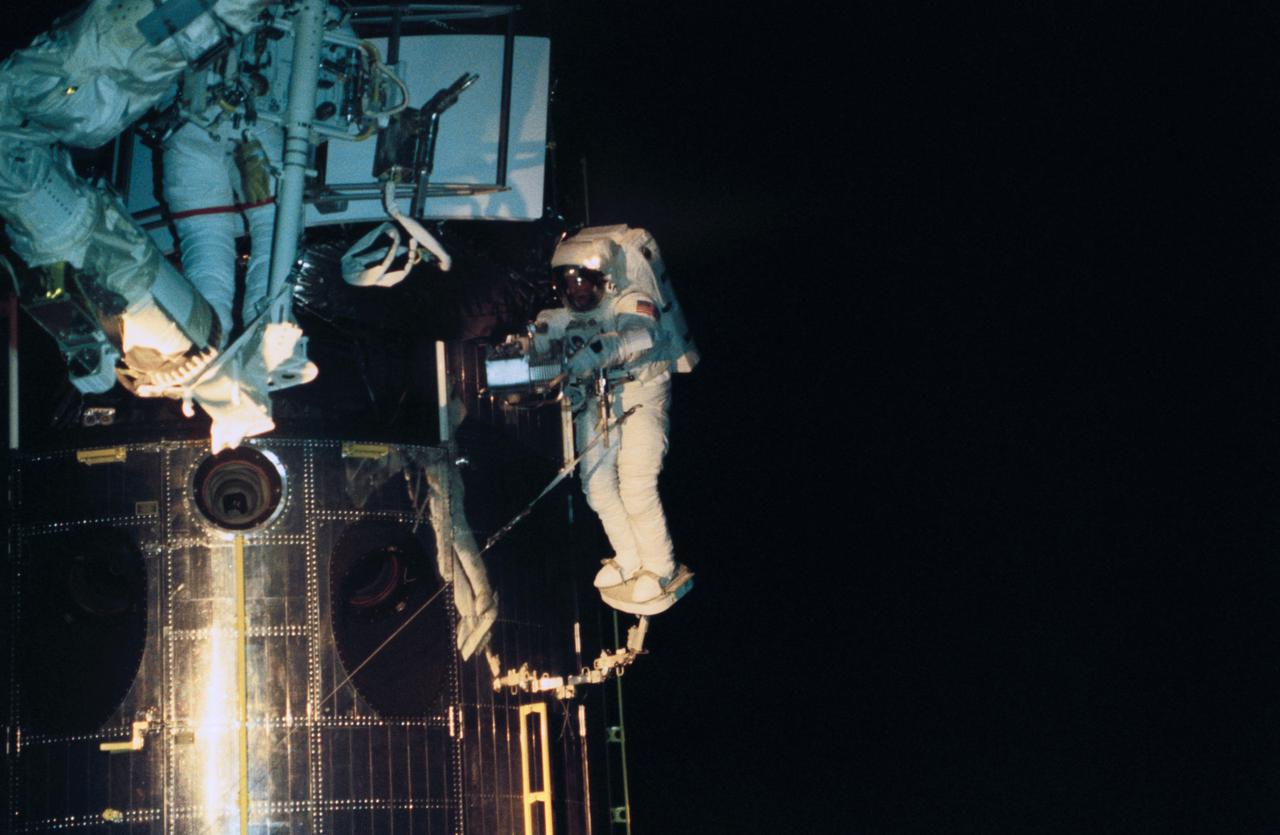
STS061-58-033 (7 Dec 1993) --- Anchored to the Space Shuttle Endeavour's Remote Manipulator System (RMS) arm, astronaut Jeffrey A. Hoffman works with the replacement Wide Field/Planetary Camera (WF/PC II) for the Hubble Space Telescope (HST) during the third of five space walks. Astronaut F. Story Musgrave, who joined Hoffman for three of the five space walks, helps with alignment at center frame.
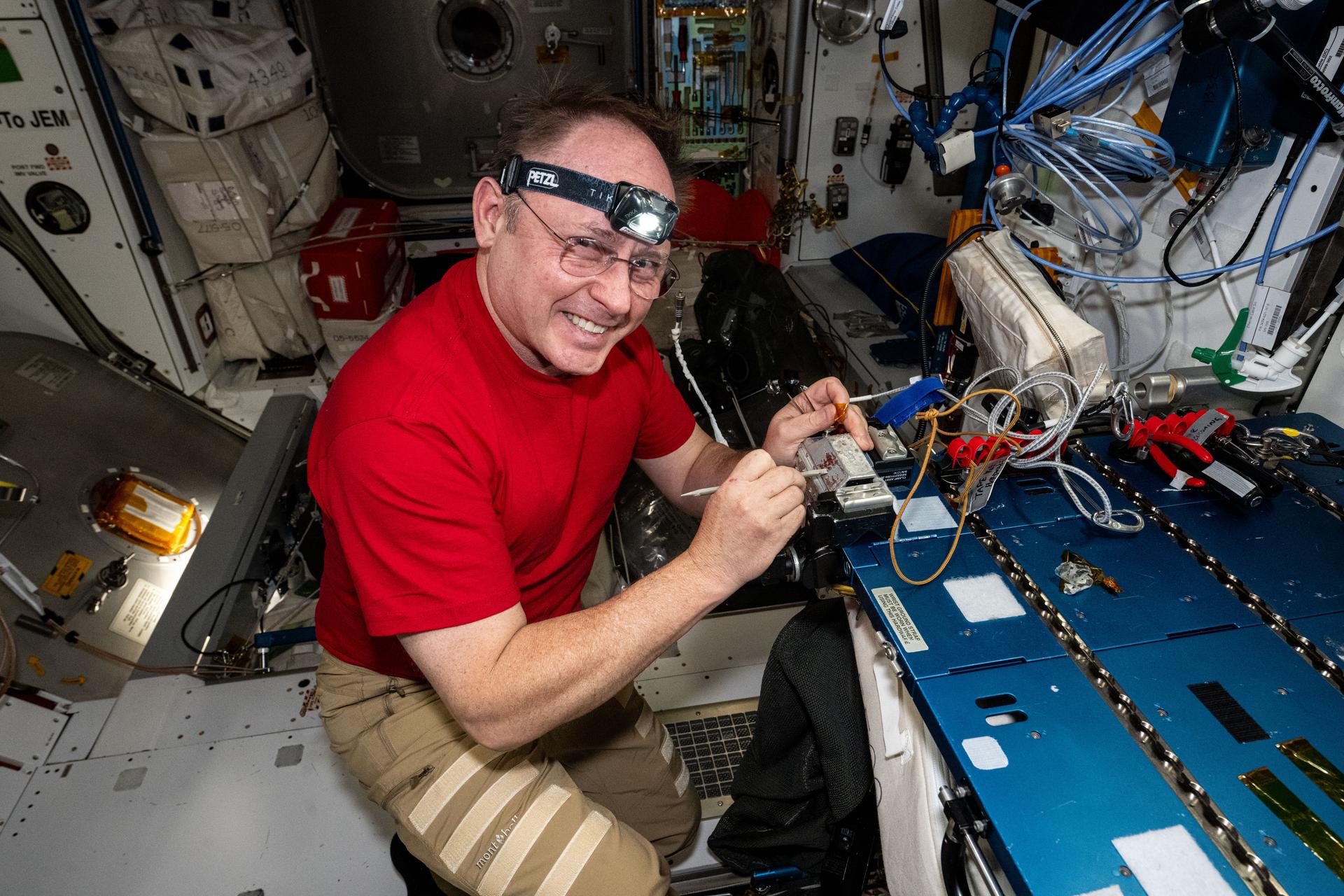
iss073e0510683 (Aug. 18, 2025) --- NASA astronaut and Expedition 73 Flight Engineer Mike Fincke replaces thermal tape on a High Definition Extravehicular Mobility Unit Camera, or HECA. The spacesuit helmet-mounted camera streams real-time, high-definition video of spacewalk activities to mission controllers on the ground, while the thermal tape shields the HECA from the harsh environment of space.
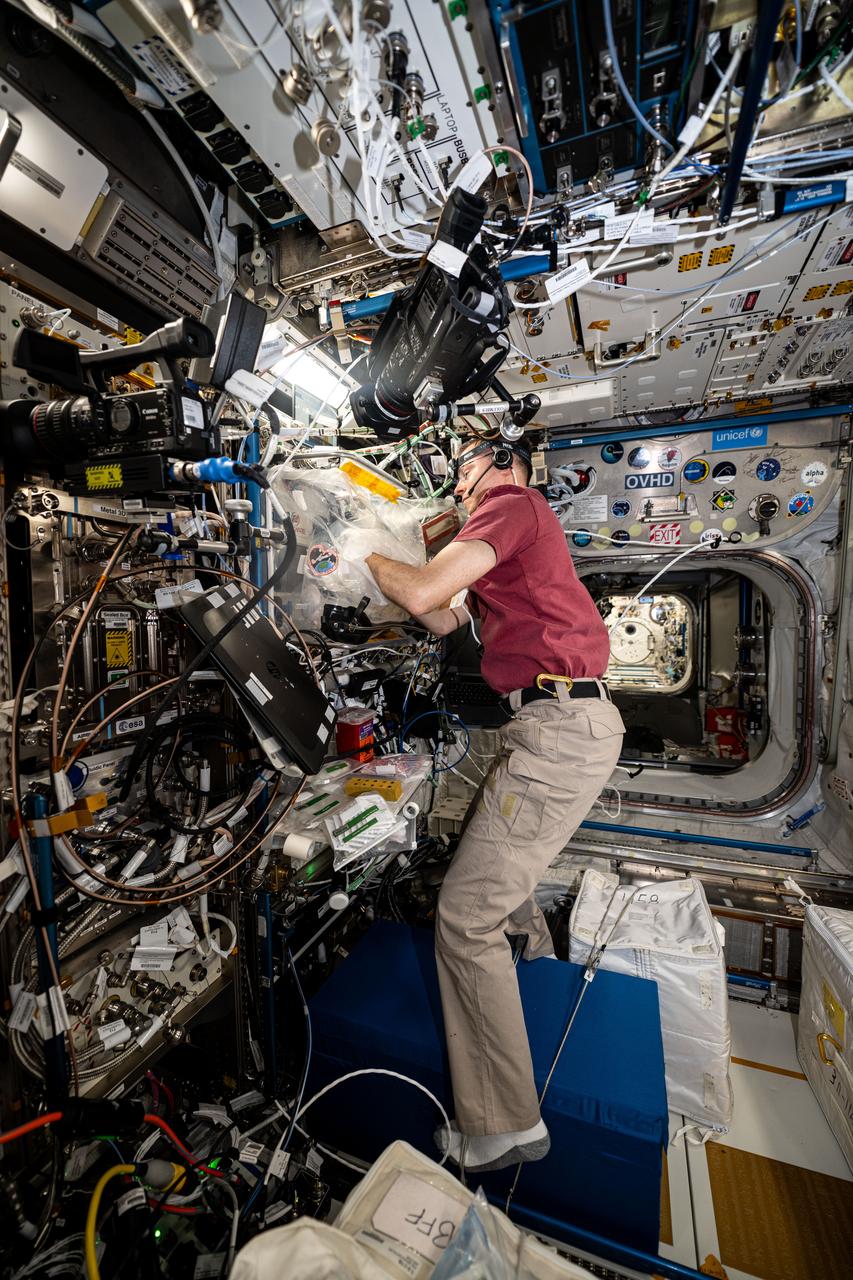
iss072e629184 (Feb. 18, 2025) --- NASA astronaut and Expedition 72 Flight Engineer Nick Hague works in a portable glovebag and cleans pumps, replaces components, and installs bio-ink syringes inside the BioFabrication Facility being tested for its capability to print biological, or organ-like, tissues in space and learn how to eventually fabricate human organs off the Earth.
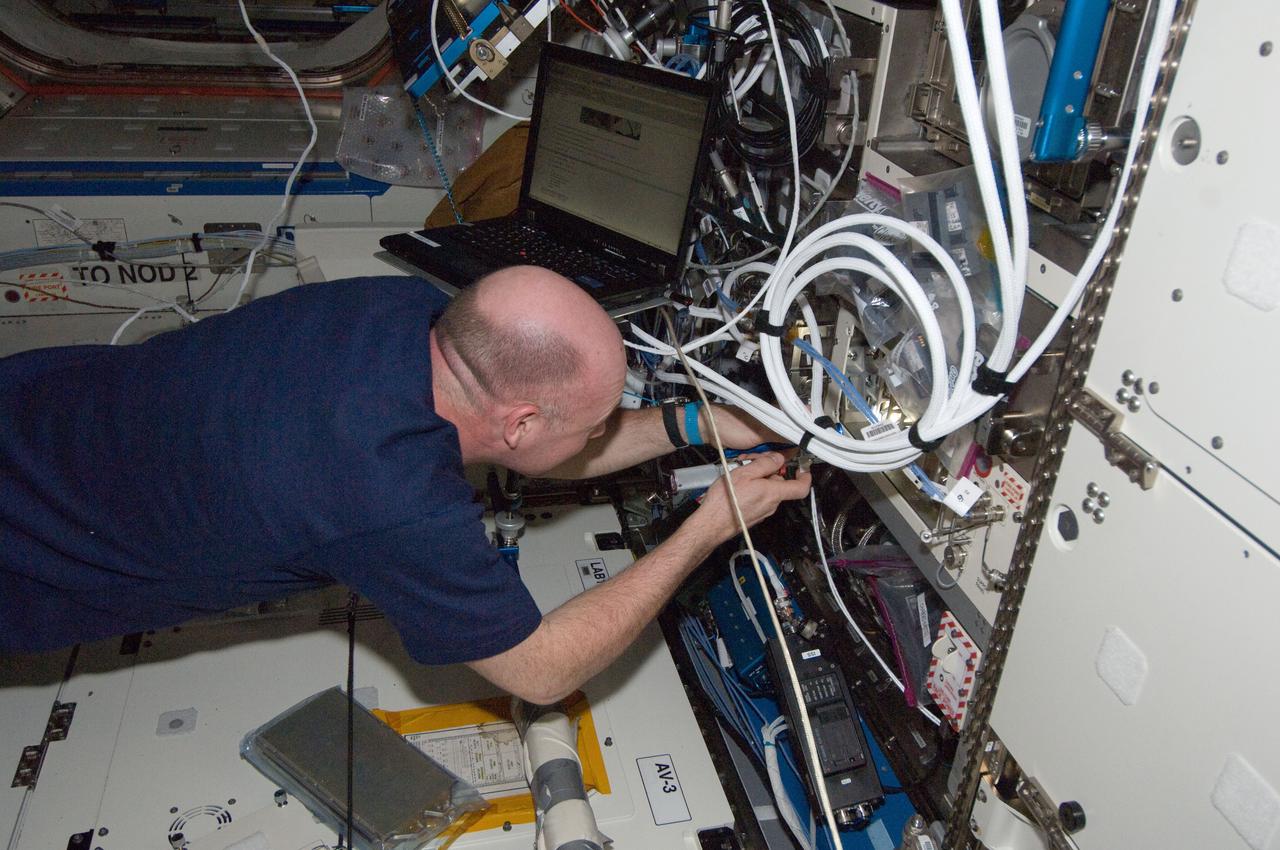
ISS030-E-033367 (28 Dec. 2011) --- In the International Space Station?s Destiny laboratory, European Space Agency astronaut Andre Kuipers, Expedition 30 flight engineer, replaces the faulty Exchangeable Standard Electronic Module 1 (ESEM-1) behind the front panel of the Microgravity Science Glovebox Remote Power Distribution Assembly (MSG RPDA) with the new spare. The ESEM is used to distribute station main power to the entire MSG facility.
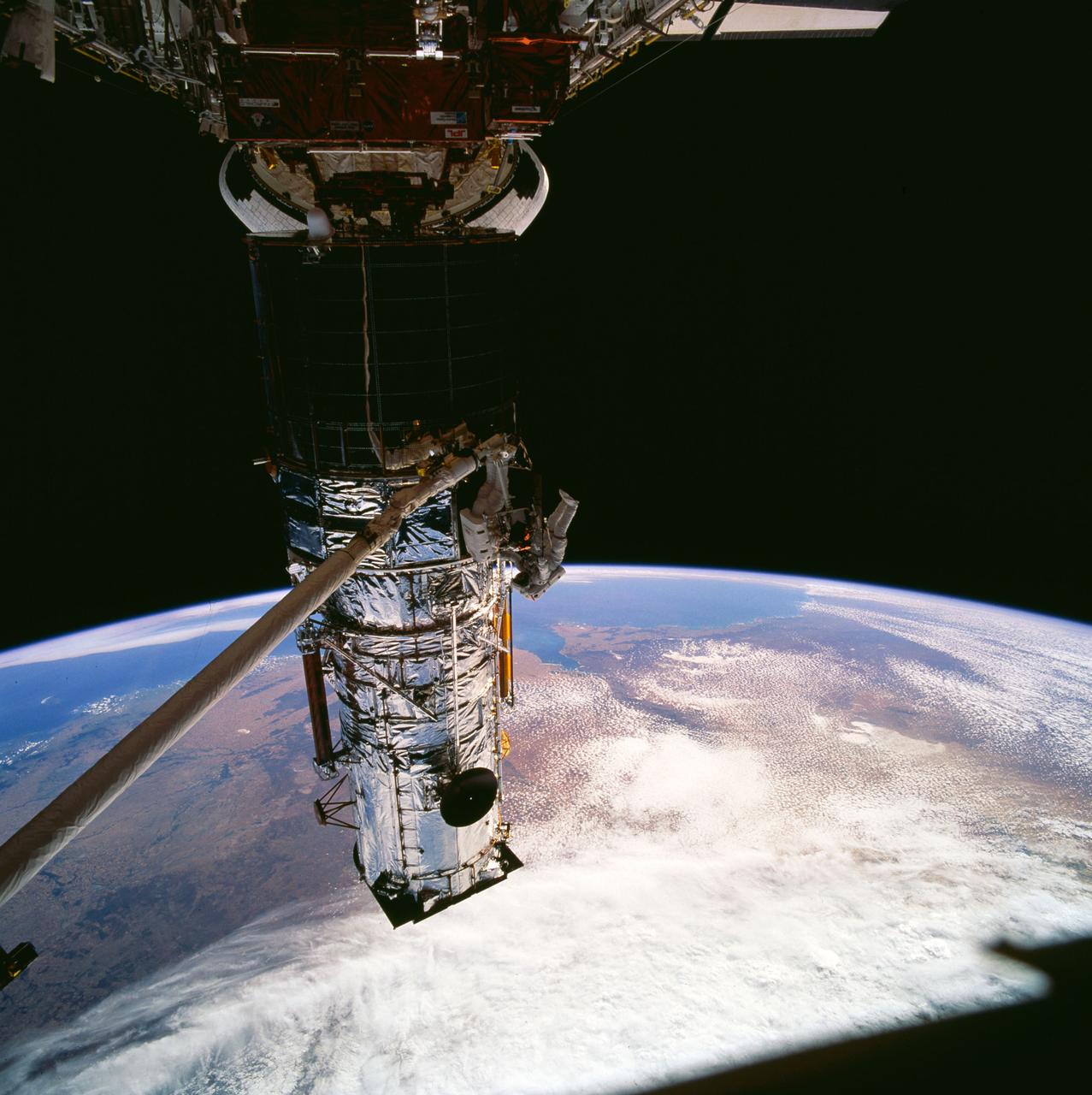
STS061-102-010 (9 Dec 1993) --- Astronauts Jeffrey A. Hoffman (left) and F. Story Musgrave team to replace one of two Solar Array Drive Electronics (SADE) units on the Hubble Space Telescope (HST). Musgrave is standing on a foot restraint mounted on the end of the Space Shuttle Endeavour's Remote Manipulator System (RMS) arm. The black object, in upper left corner, is part of the window frame, through which this 70mm frame was exposed, inside Endeavour's cabin.
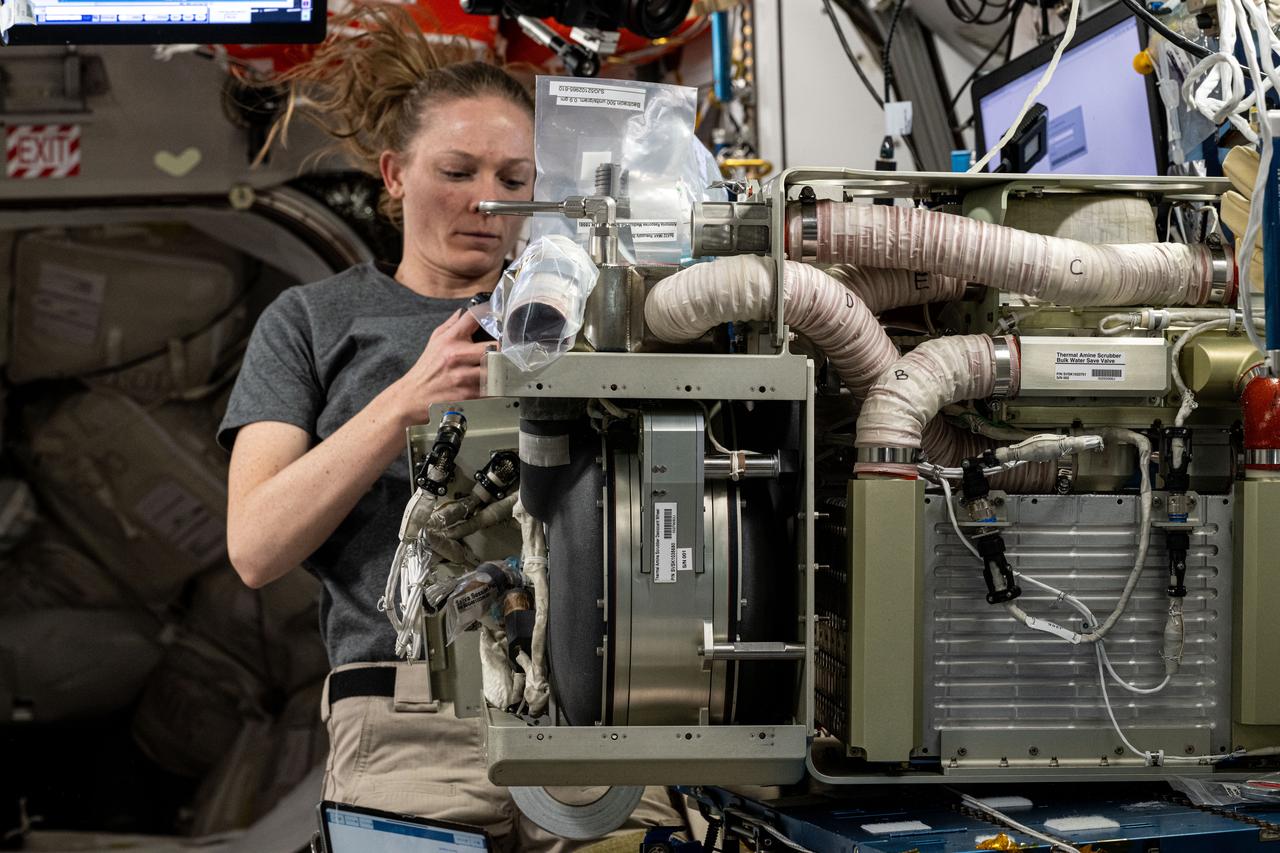
iss073e0118580 (May 27, 2025) --- NASA astronaut and Expedition 73 Flight Engineer Nichole Ayers replaces components on an experimental carbon dioxide removal device aboard the International Space Station. Also called the Thermal Amine Scrubber, the advanced life support mechanism is testing a new method that removes carbon dioxide from the station’s atmosphere and recovers water for oxygen generation.
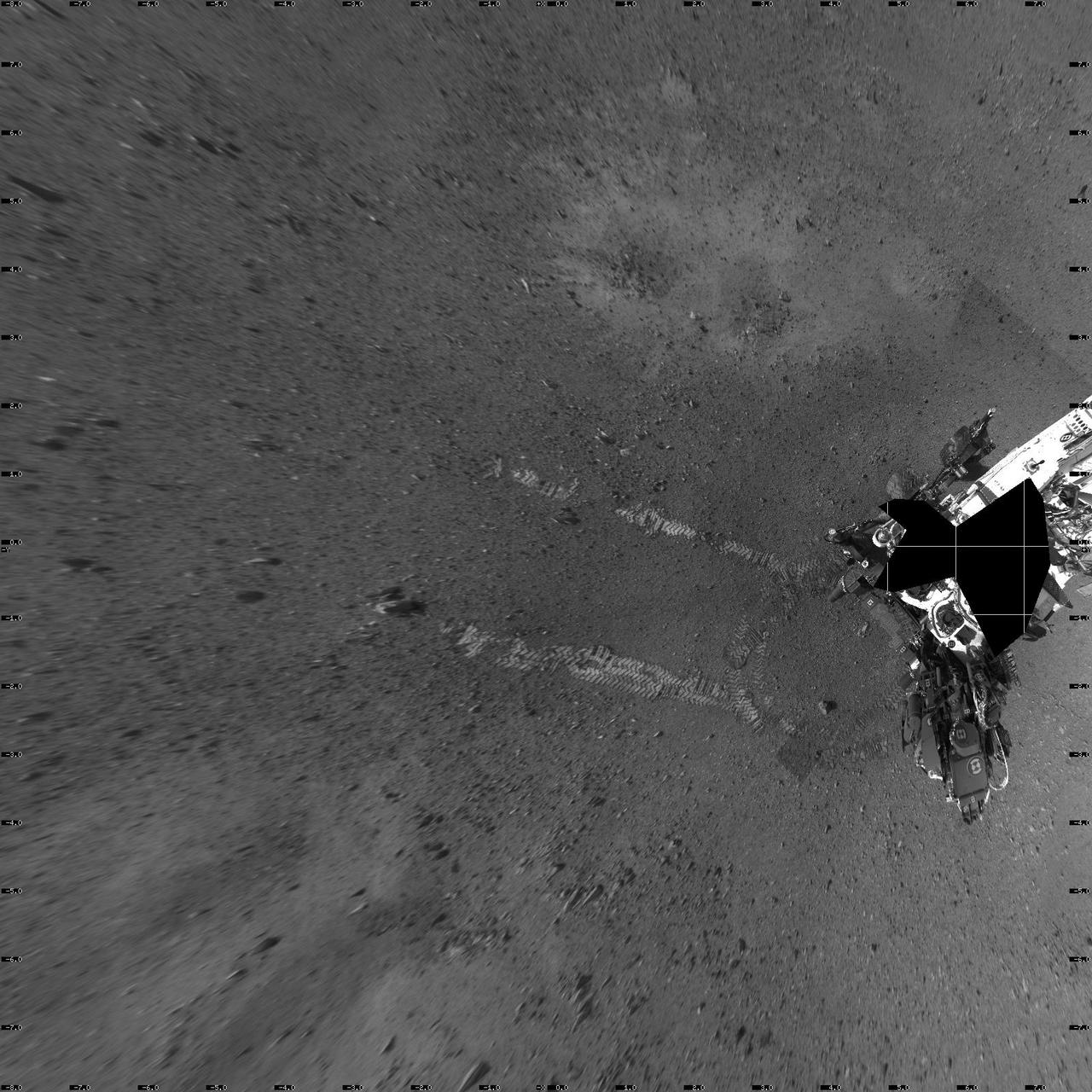
This imagery is being released in association with NASA Mars Science Laboratory mission. This is a temporary caption to be replaced as soon as more information is available.
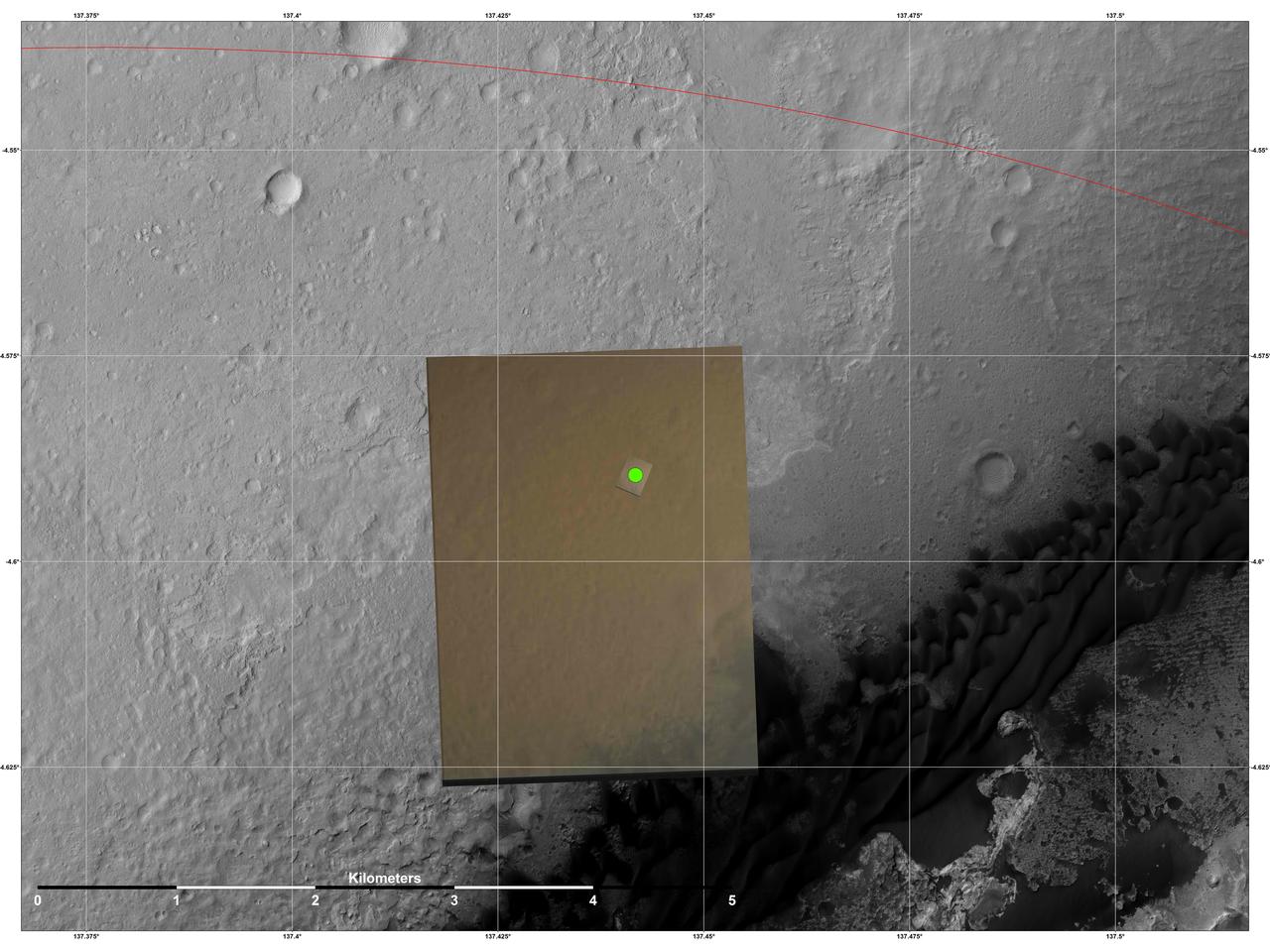
This imagery is being released in association with NASA Mars Science Laboratory mission. This is a temporary caption to be replaced as soon as more information is available.
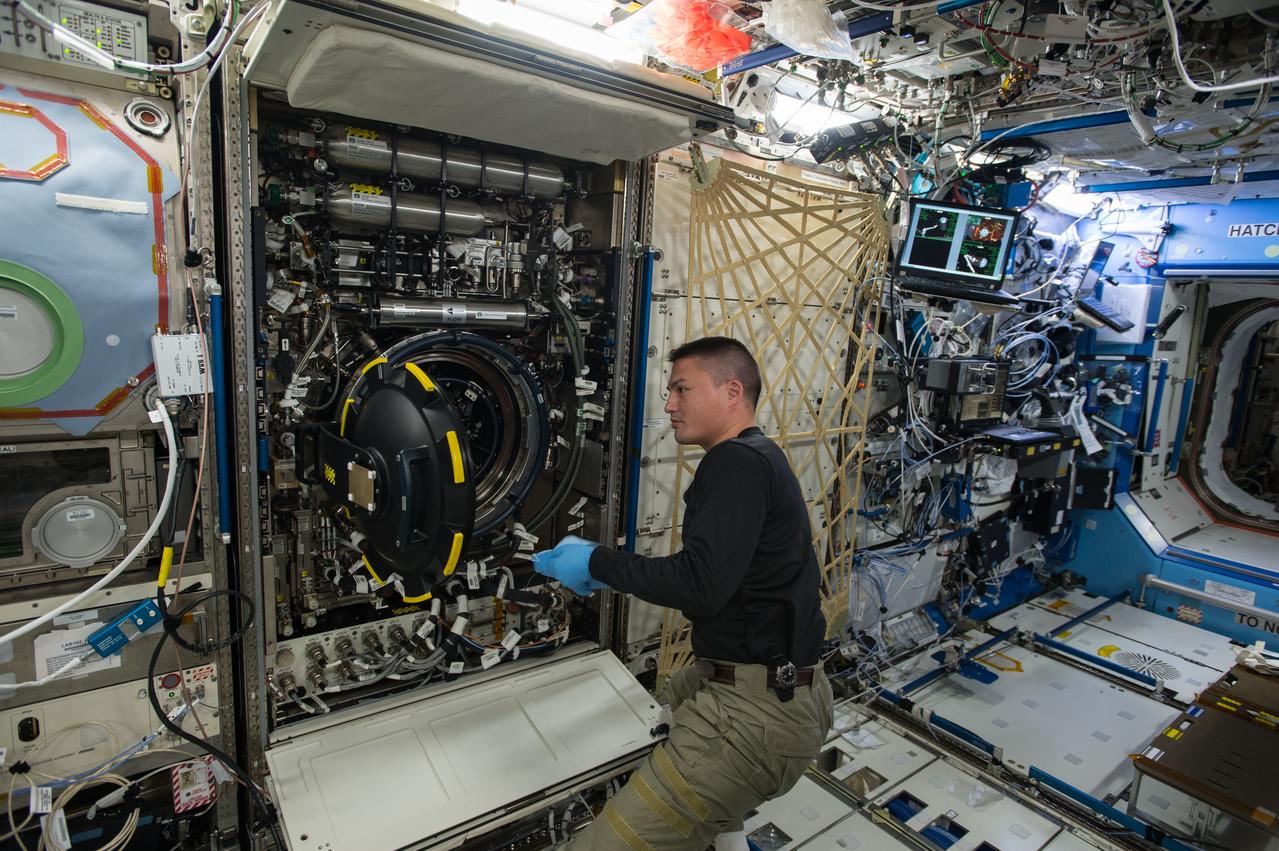
ISS044E064666 (08/20/2015) --- NASA astronaut Kjell Lindgren replaces items inside the Multi-user Droplet Combustion Apparatus found inside the station’s Combustion Integrated Rack (CIR.) The CIR houses hardware capable of performing combustion experiments to further research of combustion in microgravity.
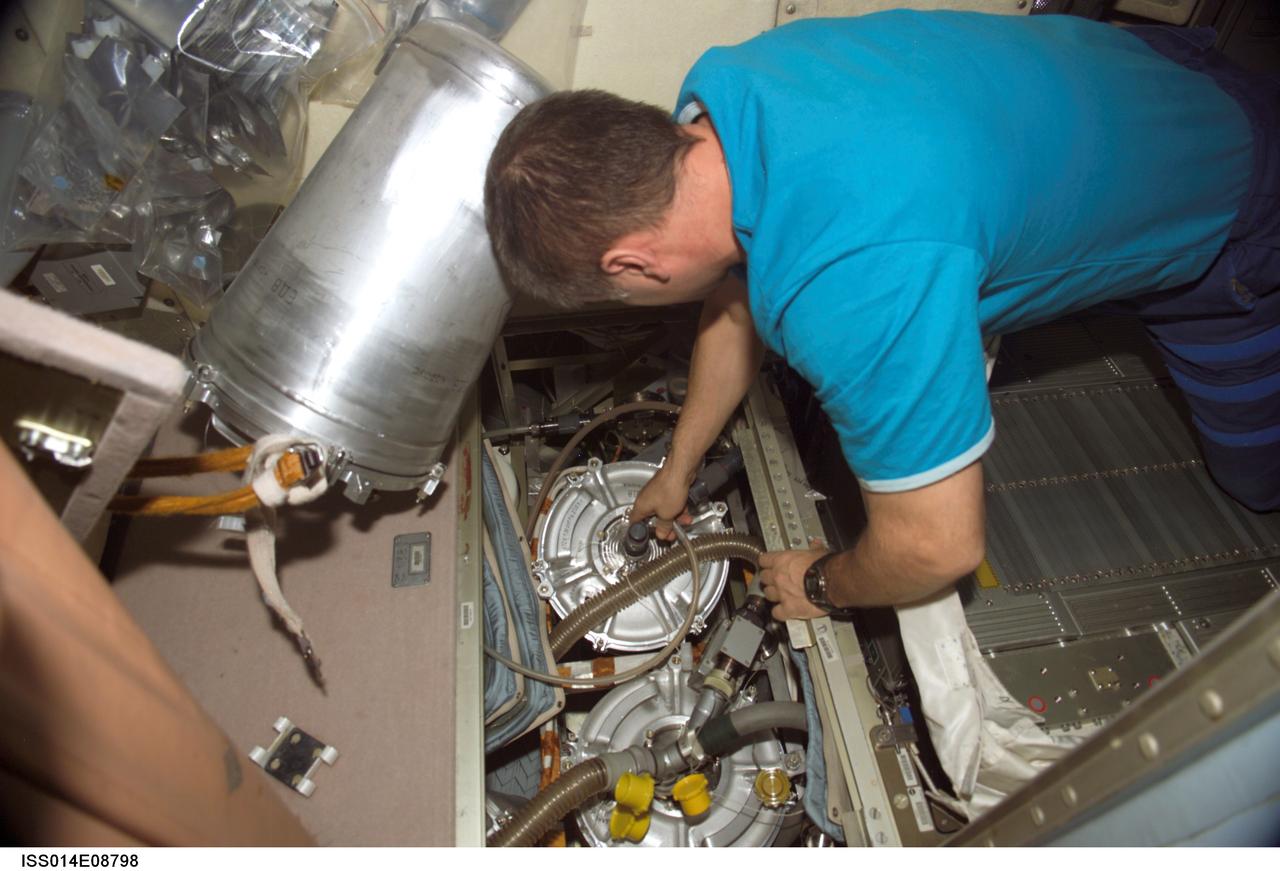
ISS014-E-08798 (29 Nov. 2006) --- Cosmonaut Mikhail Tyurin, Expedition 14 flight engineer, replaces the E-K pre-treat container and hose in the waste management system in the Zvezda Service Module of the International Space Station.
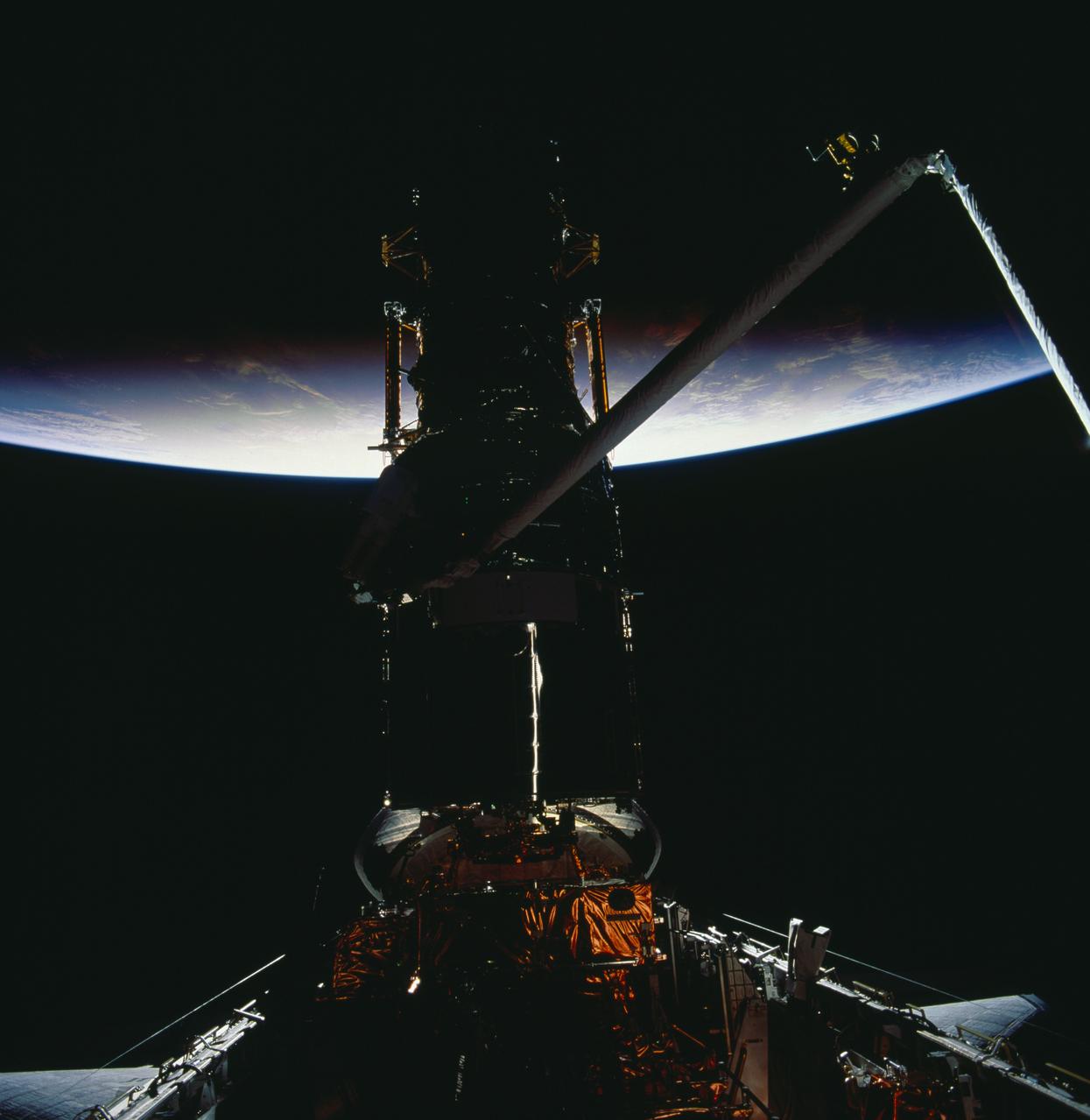
STS061-98-0AR (8 Dec 1993) --- Earth is partially illuminated but the Hubble Space Telescope (HST) and the Space Shuttle Endeavour are still mostly in darkness, in this 70mm frame photographed during the fourth of five space walks. Astronaut Kathryn C. Thornton, barely visible above left center in the frame, works to install the Corrective Optics Space Telescope Axial Replacement (COSTAR).
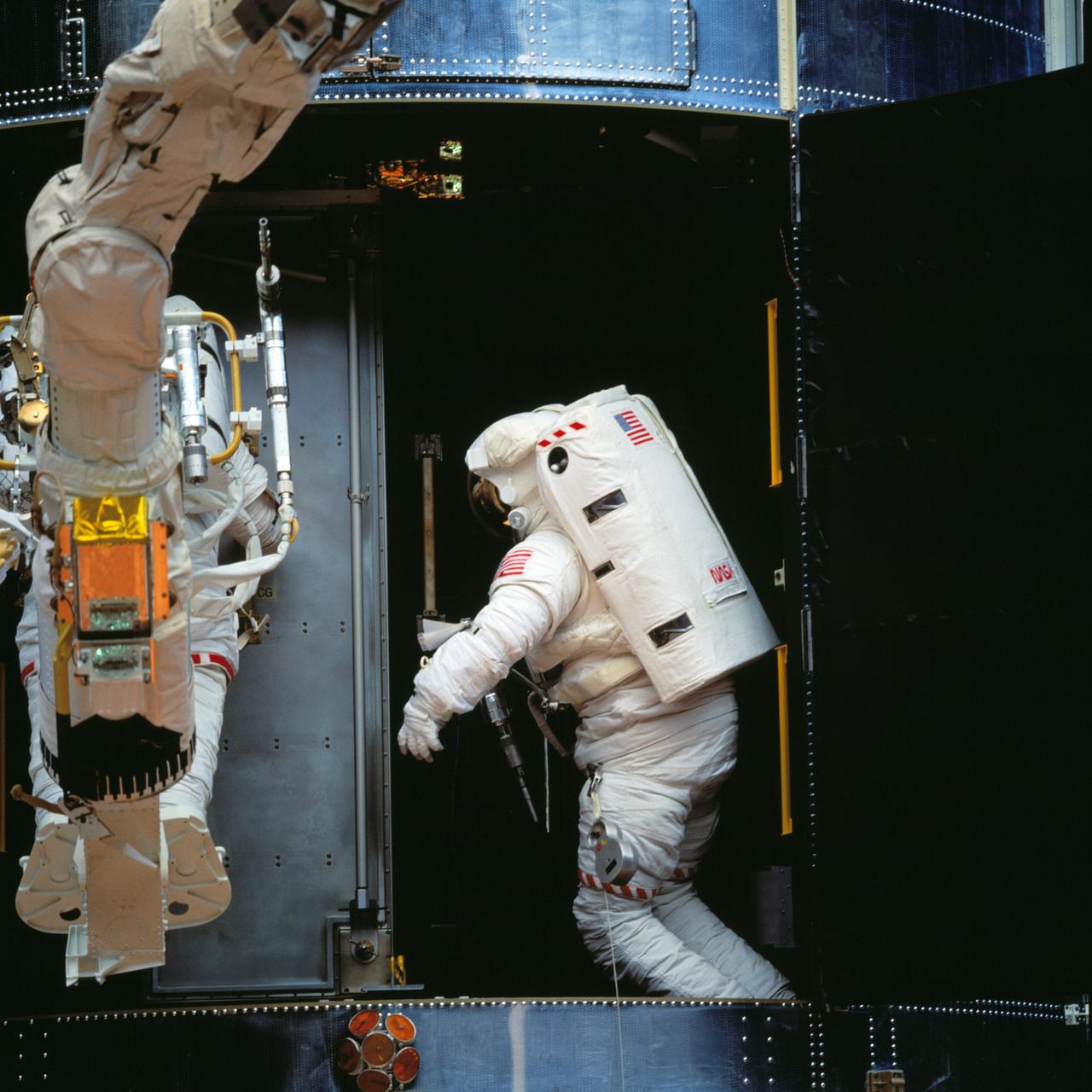
STS061-94-059 (8 Dec. 1993) --- Astronaut Thomas D. Akers maneuvers inside the bay which will house the Corrective Optics Space Telescope Axial Replacement (COSTAR) while assisting astronaut Kathryn C. Thornton with the installation of the 640-pound instrument. Thornton, anchored on the end of the Remote Manipulator System (RMS) arm, is partially visible as she prepares to install the COSTAR.
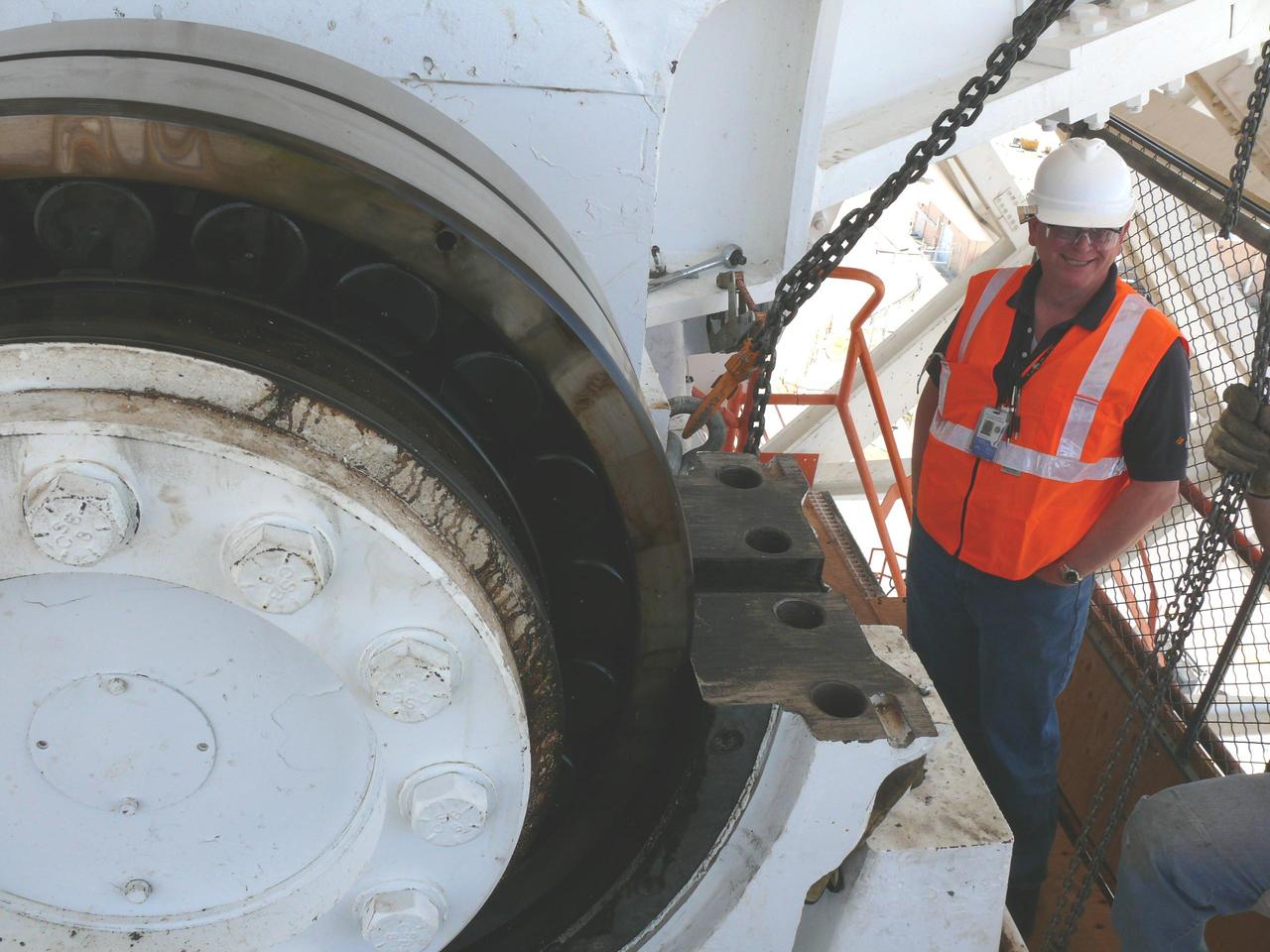
The giant Mars antenna at NASA Deep Space Network Goldstone Deep Space Communications Complex replaced four elevation bearings as part of a major refurbishment.
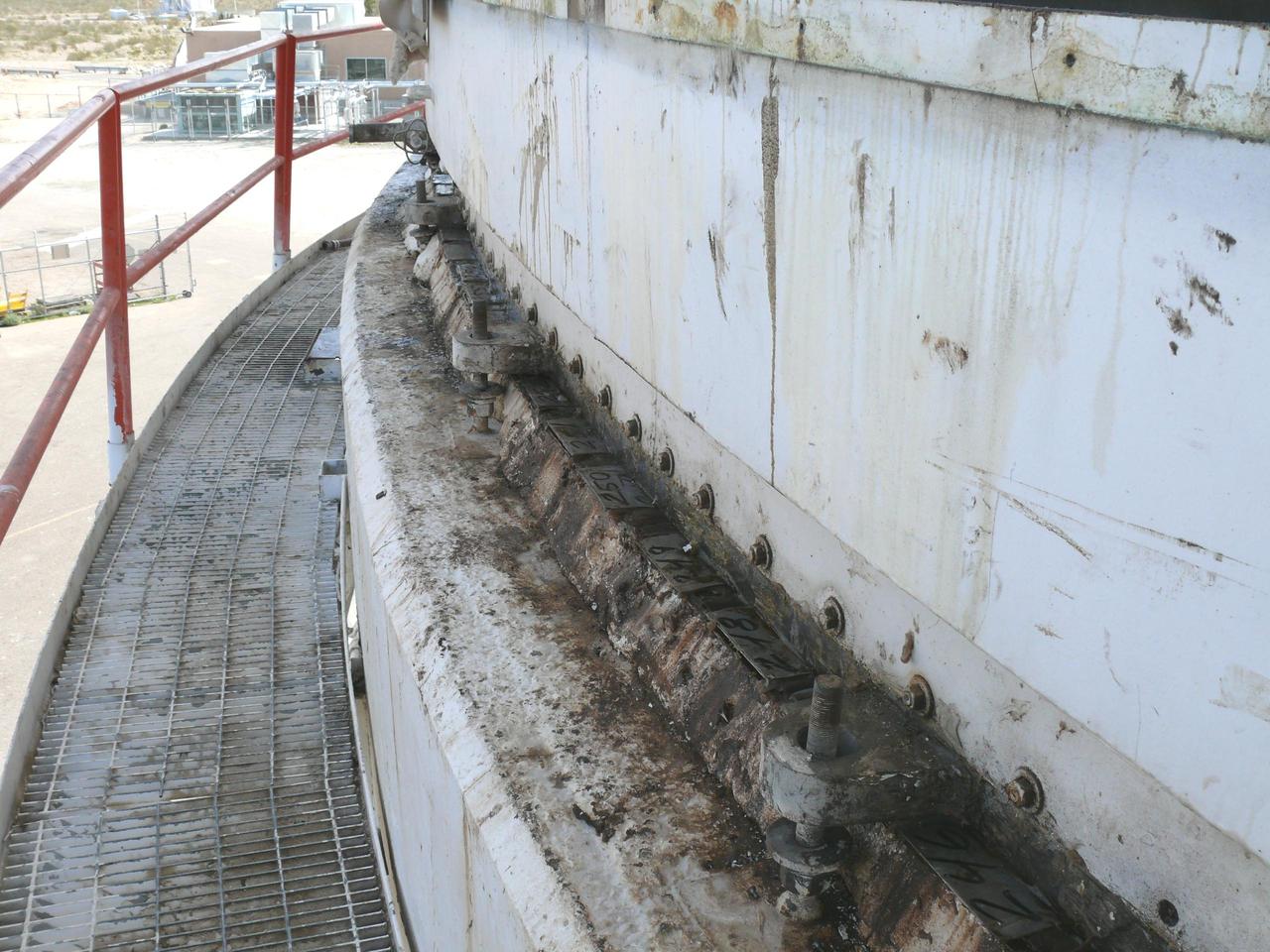
This image, taken on March 22, 2010, shows the condition of grout that was replaced in the giant Mars antenna at NASA Deep Space Network Goldstone, Calif. complex.

AS16-110-17960 (22 April 1972) --- Astronaut John W. Young, commander, replaces tools in the Apollo Lunar Hand Tool (ALHT) carrier at the aft end of the Lunar Roving Vehicle (LRV) during the second Apollo 16 extravehicular activity (EVA) on the high side of Stone Mountain at the Descartes landing site. Astronaut Charles M. Duke Jr., lunar module pilot, took this photograph near the conclusion of Station 4 activities. Smoky Mountain, with the large Ravine Crater on its flank, is in the left background. This view is looking northeast. While astronauts Young and Duke descended in the Apollo 16 Lunar Module (LM) "Orion" to explore the Descartes highlands landing site on the moon, astronaut Thomas K. Mattingly II, command module pilot, remained with the Command and Service Modules (CSM) "Casper" in lunar orbit.
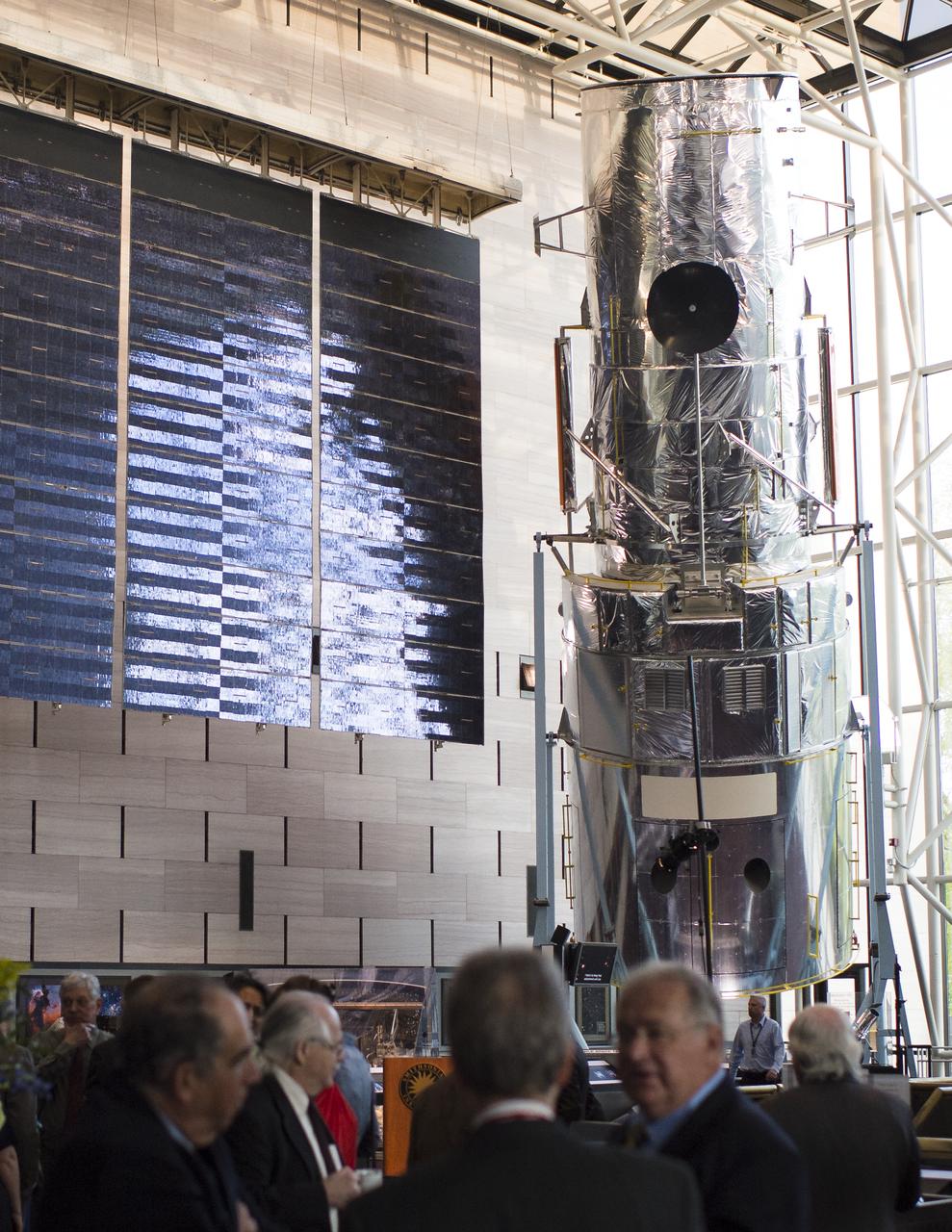
The Hubble Space Telescope Structural Dynamic Test Vehicle is seen inside the Space Hall at the Smithsonian National Air and Space Museum during an event unveiling a new exhibit featuring Hubble's Corrective Optics Space Telescope Axial Replacement (COSTAR) and the Wide Field and Planetary Camera 2 (WFPC2) on Wednesday, April 23, 2014 in Washington, DC. COSTAR and WFPC2 were were installed in Hubble during the first space shuttle servicing mission in 1993 and returned to Earth on the fifth and final servicing mission in 2009. Photo Credit: (NASA/Joel Kowsky)
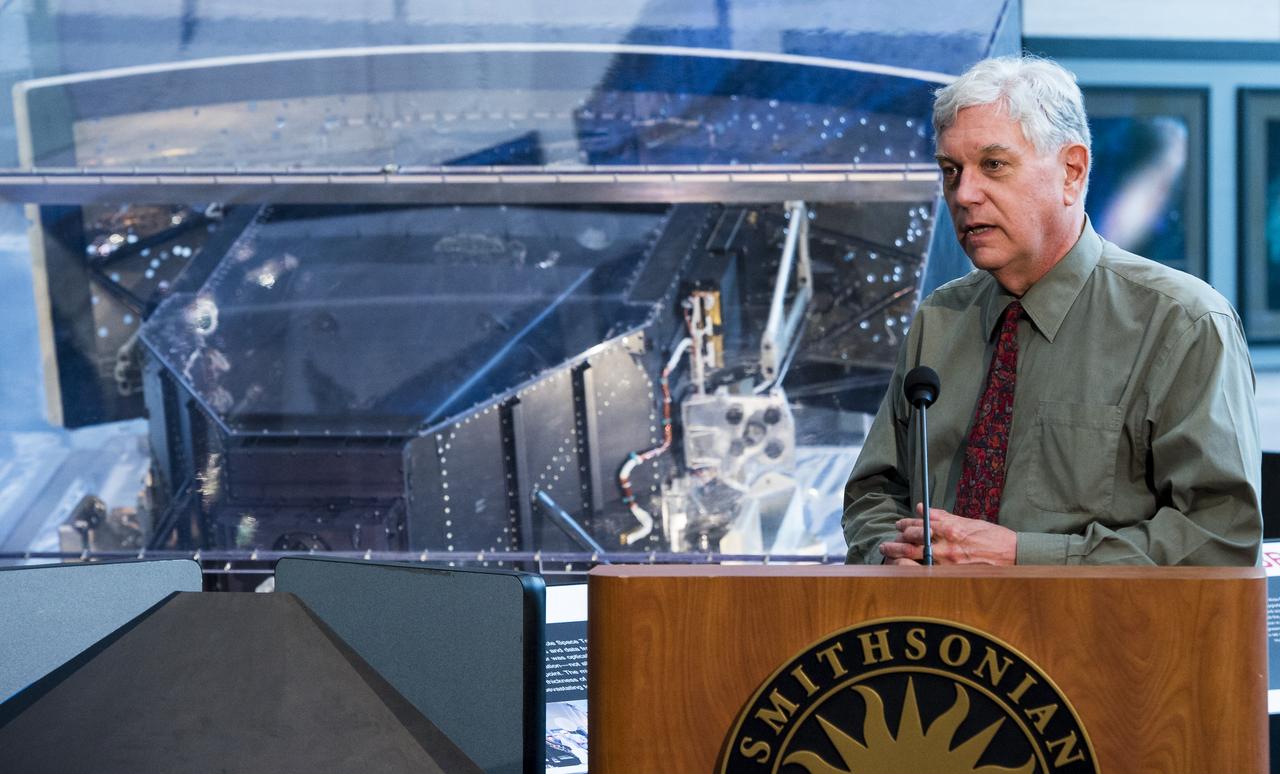
John Trauger, former principal investigator for the Wide Field Planetary Camera 2 (WFPC2) at NASA's Jet Propultion Laboratory (JPL), speaks at an event unveiling a new exhibit featuring Hubble's Corrective Optics Space Telescope Axial Replacement (COSTAR) and the WFPC2 on Wednesday, April 23, 2014 at the Smithsonian National Air and Space Museum in Washington, DC. COSTAR and WFPC2 were installed in Hubble during the first space shuttle servicing mission in 1993 and returned to Earth on the fifth and final servicing mission in 2009. Photo Credit: (NASA/Joel Kowsky)
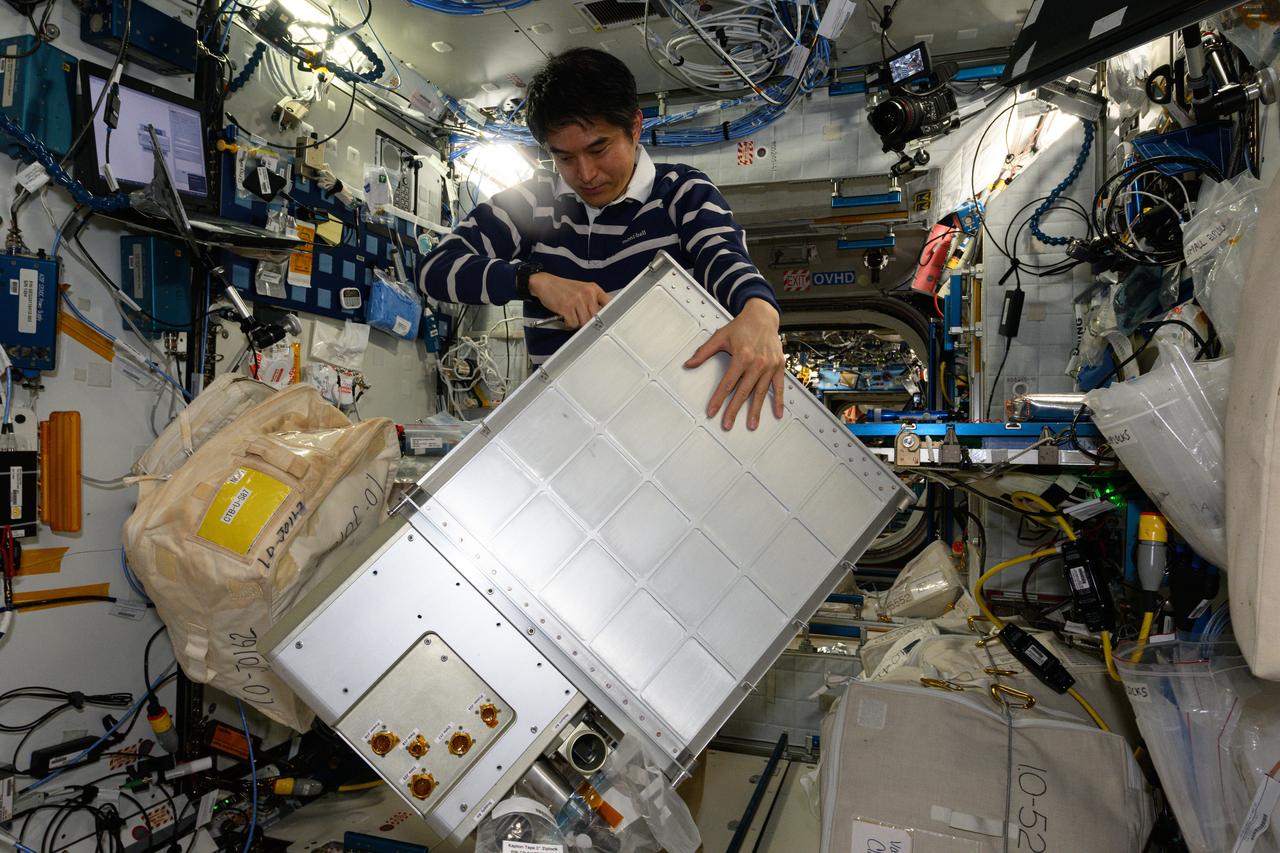
iss073e0118813 (May 28, 2025) --- JAXA (Japan Aerospace Exploration Agency) astronaut and Expedition 73 Commander Takuya Onishi replaces components on an experimental carbon dioxide removal device aboard the International Space Station. Also called the Thermal Amine Scrubber, the advanced life support mechanism is testing a new method that removes carbon dioxide from the station’s atmosphere and recovers water for oxygen generation.
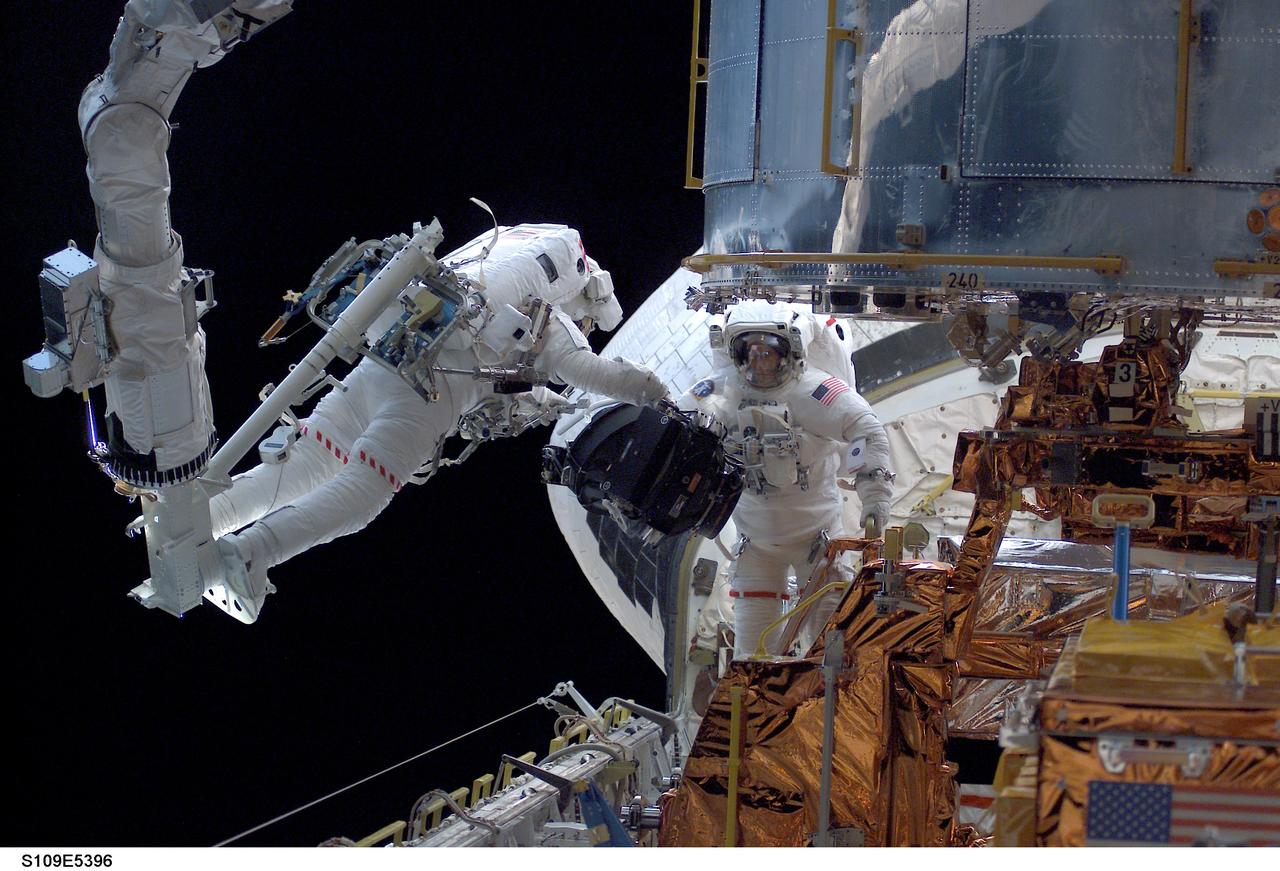
With his feet secured on a platform connected to the remote manipulator system (RMS) robotic arm of the Space Shuttle Columbia, astronaut Michael J. Massimino, mission specialist, hovers over the shuttle's cargo bay while working in tandem with astronaut James H. Newman, mission specialist, to replace the Reaction Wheel Assembly in the Hubble Space Telescope (HST) during the STS-109 mission's second day of extravehicular activity (EVA).
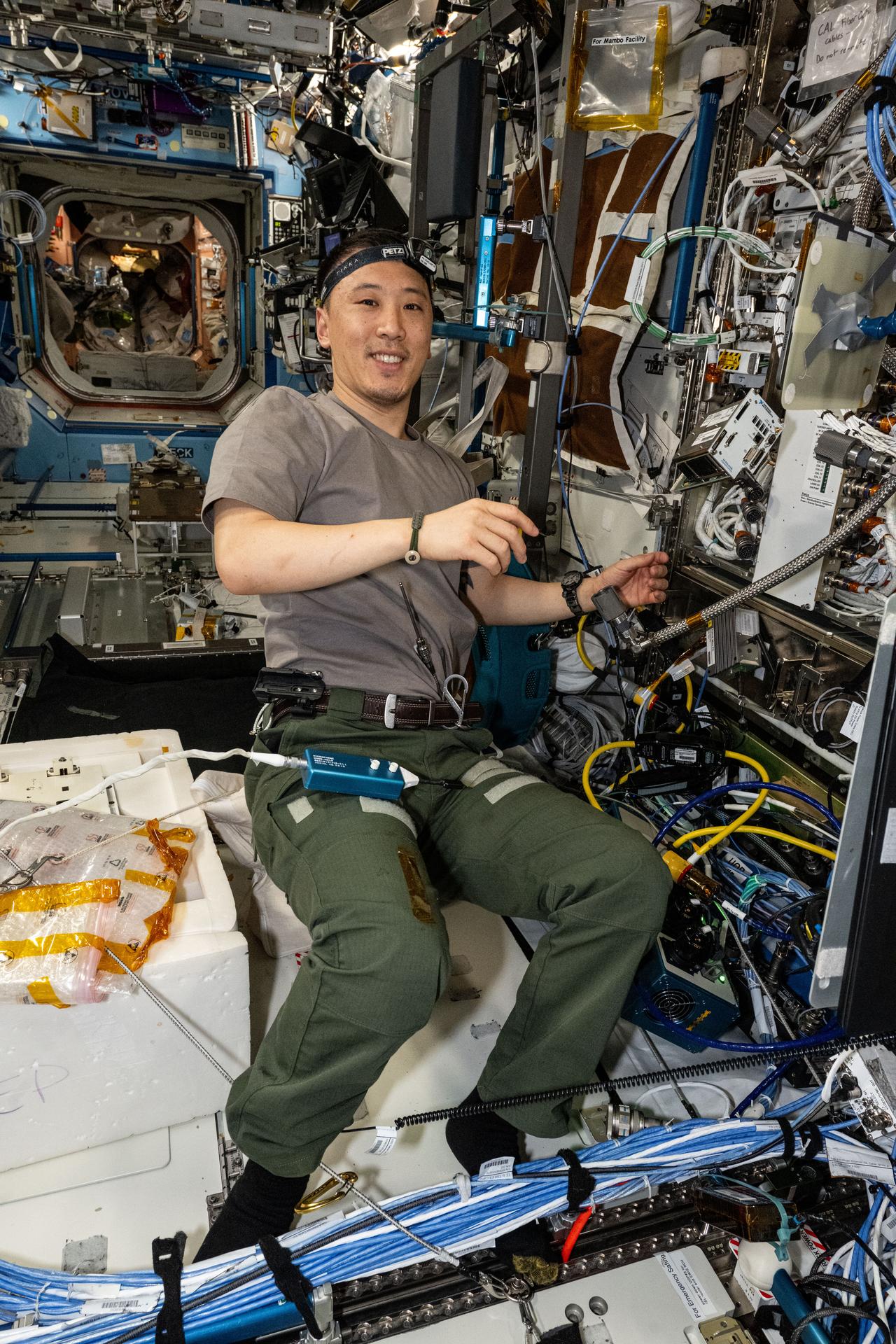
iss073e0817671 (Oct. 2, 2025) --- NASA astronaut and Expedition 73 Flight Engineer Jonny Kim replaces computer hardware inside the Cold Atom Lab aboard the International Space Station’s Destiny laboratory module. The Cold Atom Lab produces clouds of atoms chilled to about one ten-billionth of a degree above absolute zero—far colder than the average temperature of deep space. This extreme cold allows scientists to study fundamental behaviors and quantum characteristics that are difficult or impossible to observe on Earth.
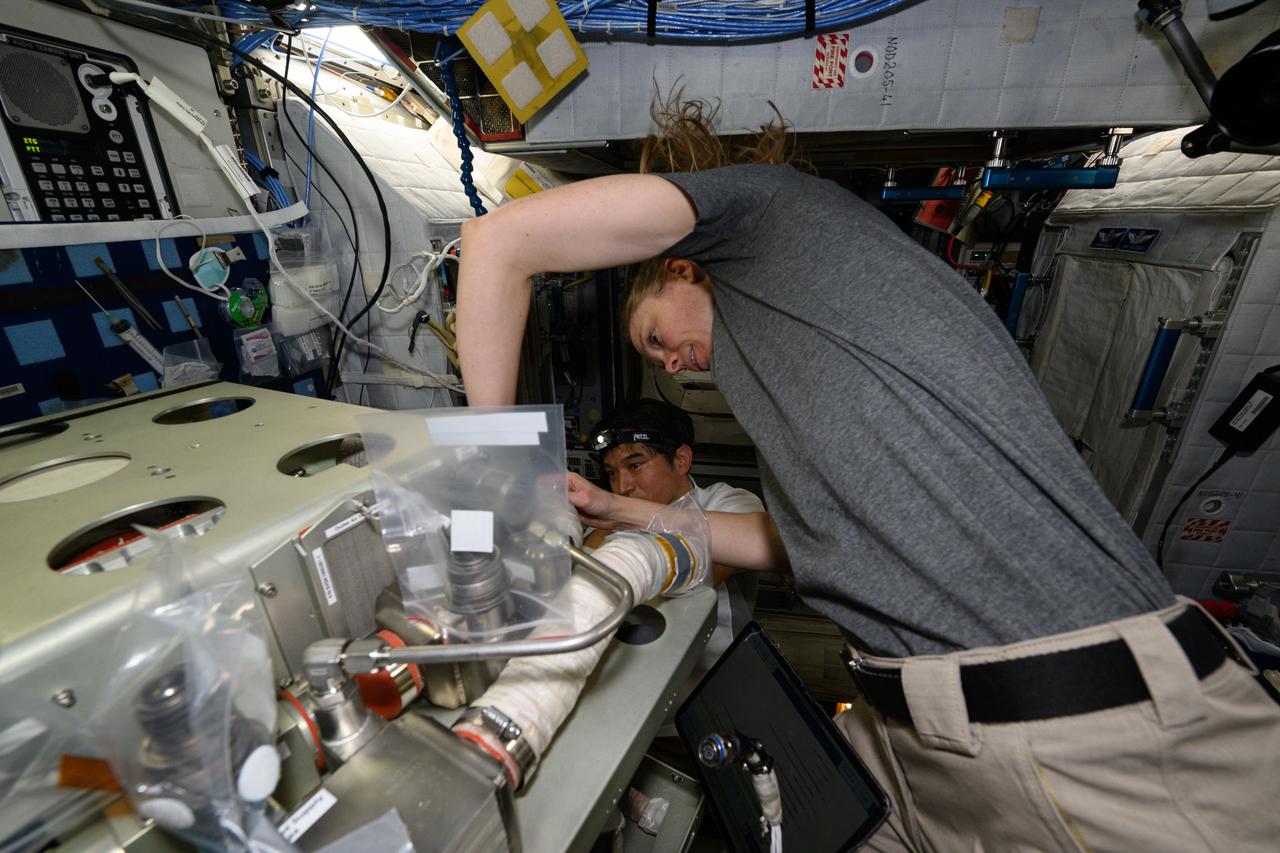
iss073e0118793 (May 27, 2025) --- Astronauts Takuya Onishi of JAXA (Japan Aerospace Exploration Agency) and Nichole Ayers of NASA, Expedition 73 Commander and Flight Engineer respectively, replace components on an experimental carbon dioxide removal device aboard the International Space Station. Also called the Thermal Amine Scrubber, the advanced life support mechanism is testing a new method that removes carbon dioxide from the station’s atmosphere and recovers water for oxygen generation.
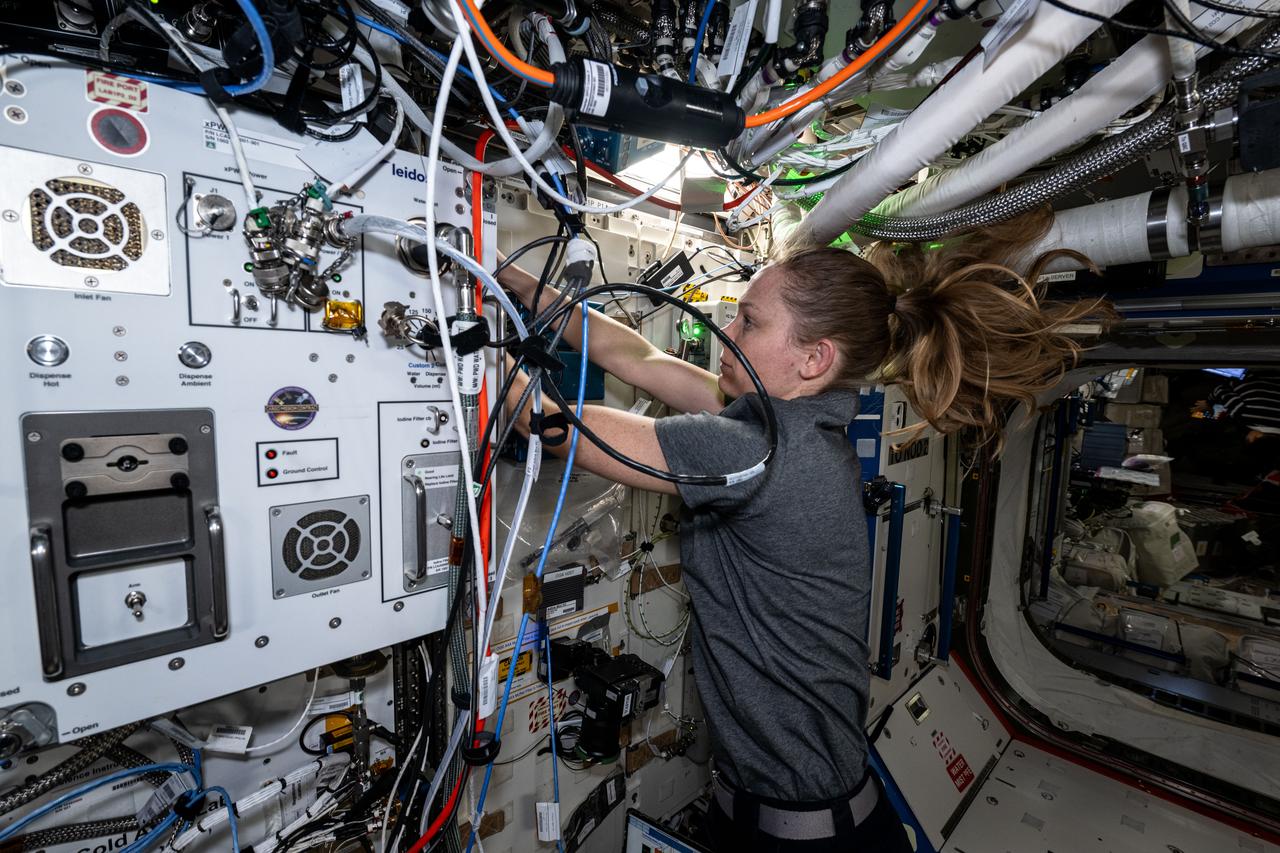
iss073e0071548 (May 16, 2025) --- NASA astronaut and Expedition 73 Flight Engineer Nichole Ayers verifies the functionality and replaces hardware on the Exploration Potable Water Dispenser (xPWD). The xPWD is located in the International Space Station's Destiny laboratory module and is demonstrating advanced water sanitization methods, microbial growth reduction, and a heater to dispense hot water for use aboard the orbital outpost and future spacecraft.
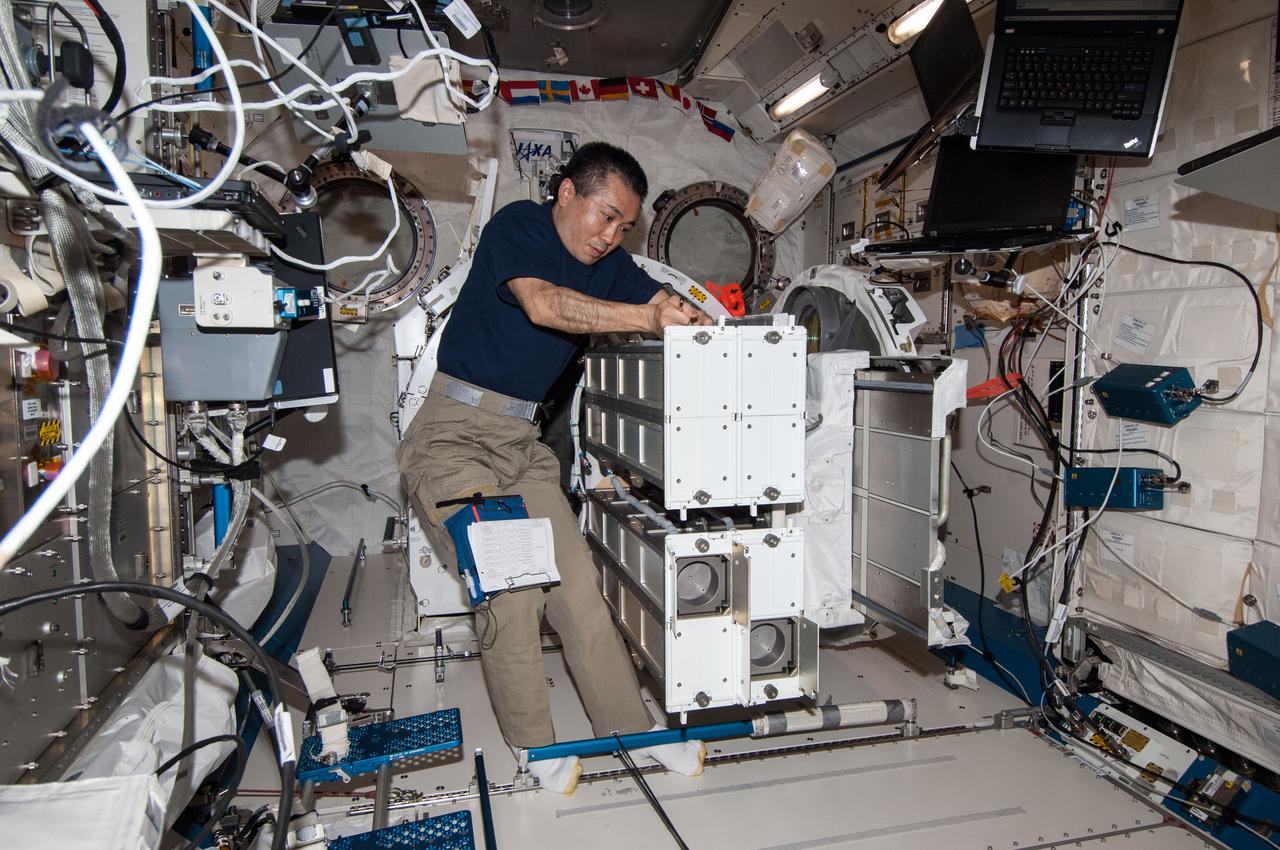
ISS038-E-053269 (19 Feb. 2014) --- In the International Space Station's Kibo laboratory, Japan Aerospace Exploration Agency astronaut Koichi Wakata, Expedition 38 flight engineer, prepares a second batch of NanoRacks CubeSats for deployment.
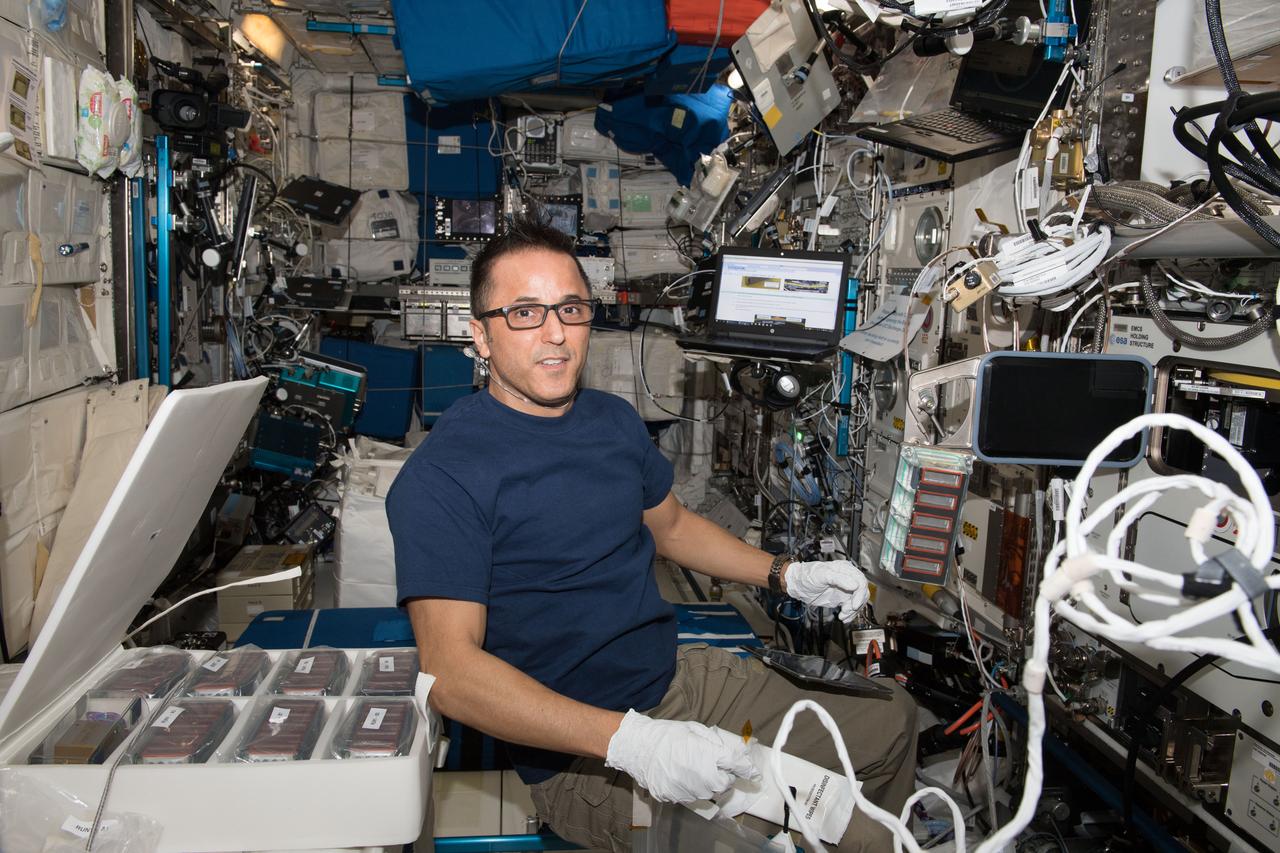
iss054e023797 (Jan. 26, 2018) --- NASA astronaut Joe Acaba with an Experiment Container (EC) to begin the Plant Gravity Perception experiment, testing the gravity-sensing ability of plants in microgravity.
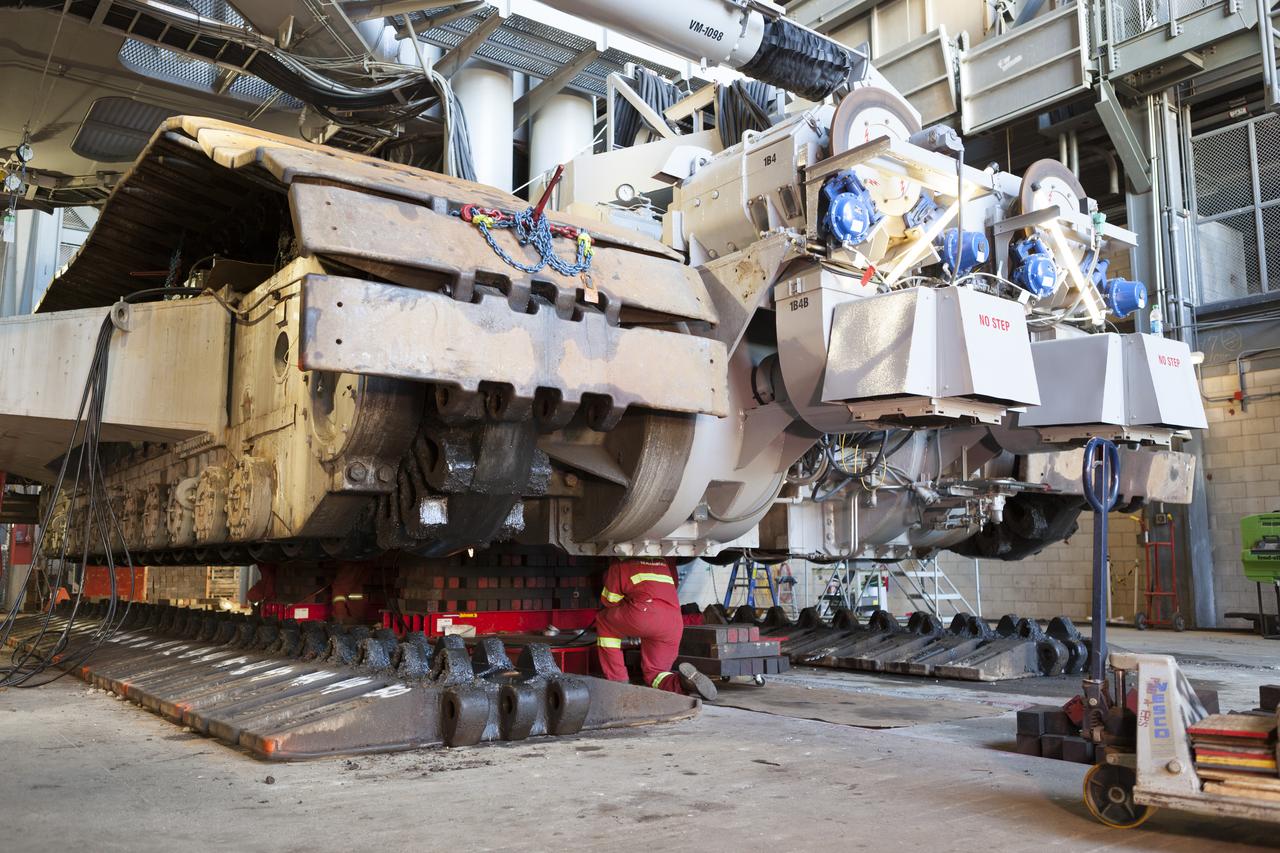
CAPE CANAVERAL, Fla. – Inside the Vehicle Assembly Building at NASA’s Kennedy Space Center in Florida, a technician monitors the progress as the B and D truck sections of crawler-transporter 2, or CT-2, are raised up to prepare for installation of new roller bearing assemblies. Sections of the crawler’s large metal tracks have been removed. Work continues in high bay 2 to upgrade CT-2. The modifications are designed to ensure CT-2’s ability to transport launch vehicles currently in development, such as the agency’s Space Launch System, to the launch pad. The Ground Systems Development and Operations Program office at Kennedy is overseeing the upgrades. For more than 45 years the crawler-transporters were used to transport the mobile launcher platform and the Apollo-Saturn V rockets and, later, space shuttles to Launch Pads 39A and B. For more information, visit: http://www.nasa.gov/exploration/systems/ground/crawler-transporter. Photo credit: NASA/Dimitri Gerondidakis
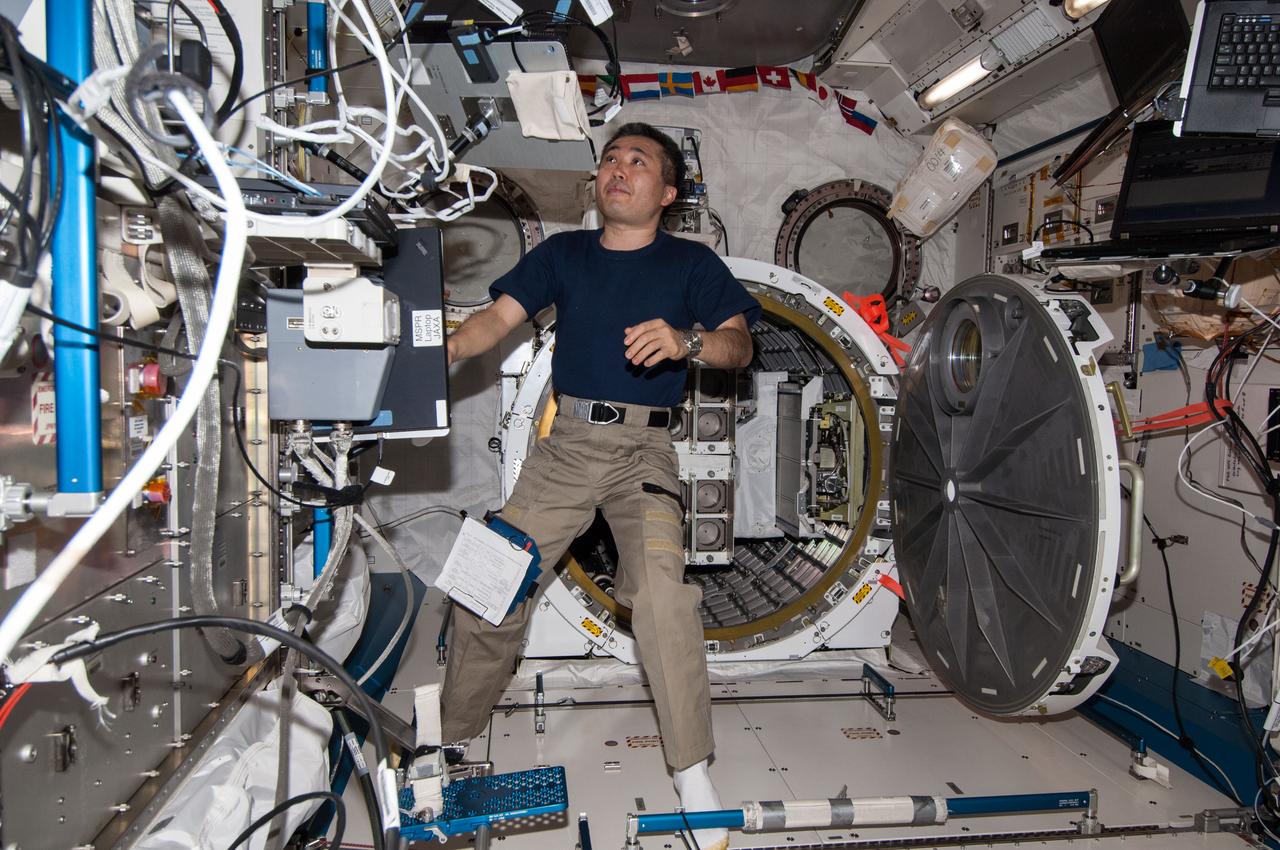
ISS038-E-053257 (19 Feb. 2014) --- In the International Space Station's Kibo laboratory, Japan Aerospace Exploration Agency astronaut Koichi Wakata, Expedition 38 flight engineer, prepares for the deployment of a second batch of NanoRacks CubeSats.