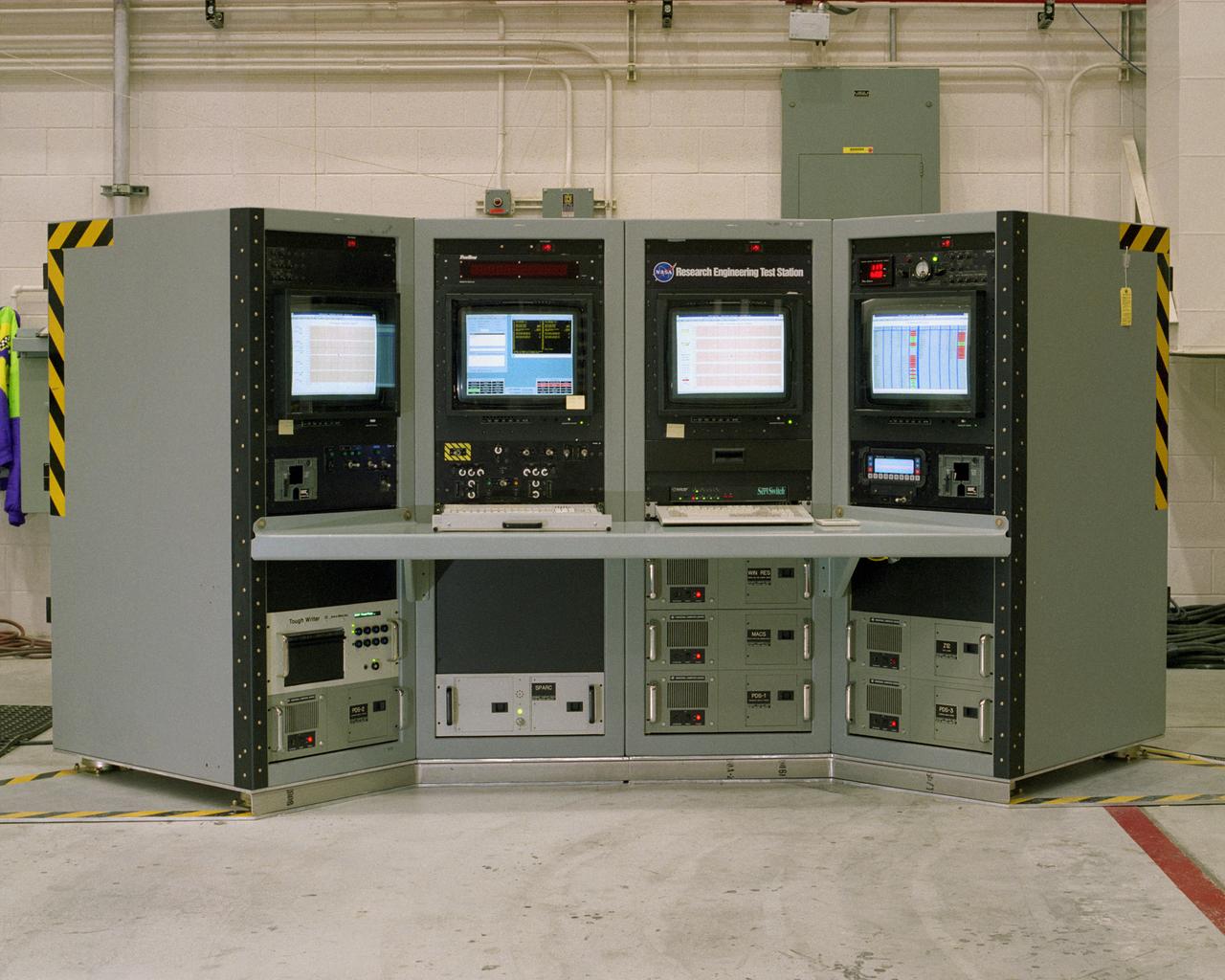
This console and its compliment of computers, monitors and commmunications equipment make up the Research Engineering Test Station, the nerve center for an aerodynamics experiment conducted by NASA's Dryden Flight Research Center, Edwards, California. The equipment was installed on a modified Lockheed L-1011 Tristar jetliner operated by Orbital Sciences Corp., of Dulles, Va., for Dryden's Adaptive Performance Optimization project. The experiment sought to improve the efficiency of long-range jetliners by using small movements of the ailerons to improve the aerodynamics of the wing at cruise conditions.
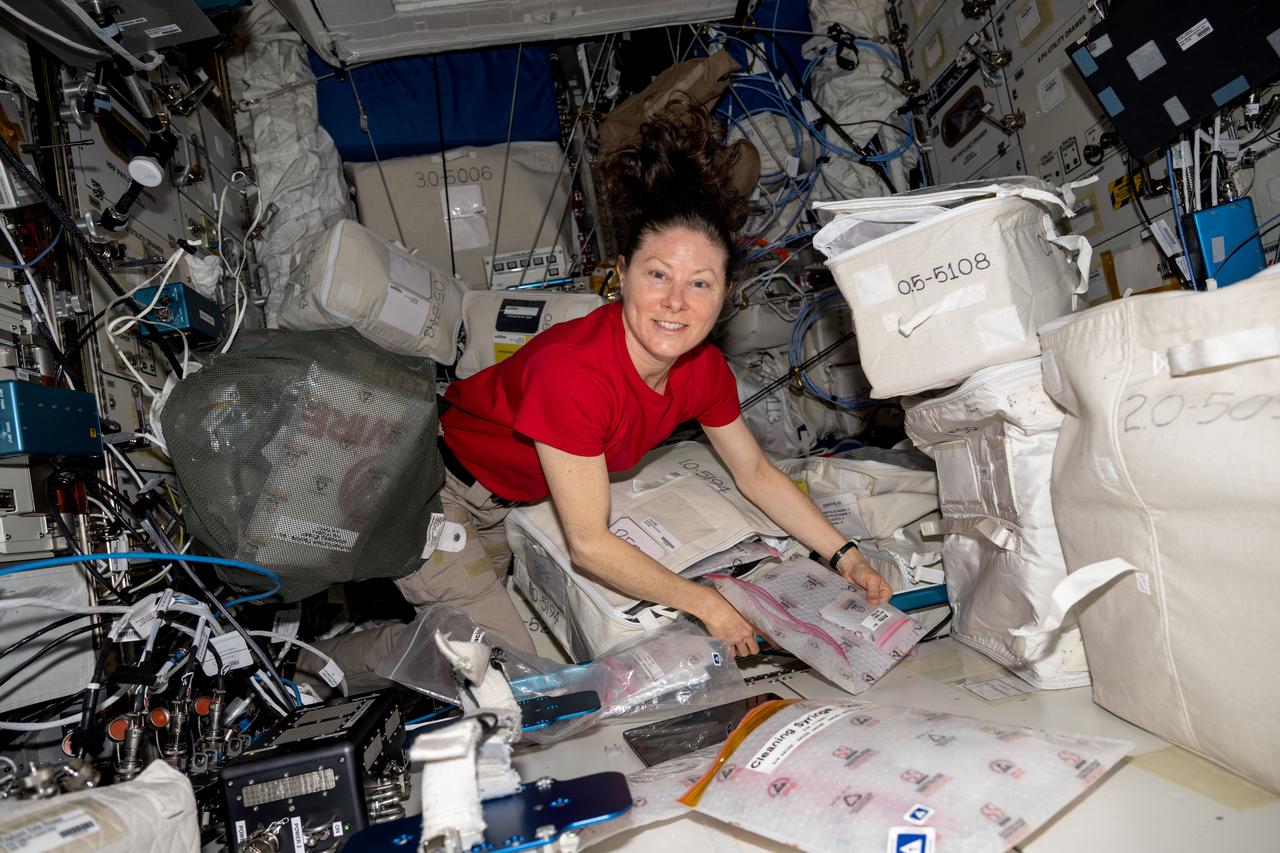
iss071e403579 (July 23, 2024) --- NASA astronaut and Expedition 71 Flight Engineer Tracy C. Dyson unpacks and examines research gear that is part of the BioFabrication Facility (BFF) located inside the International Space Station's Columbus laboratory module. The BFF is a research device being tested for its ability to print organ-like tissues in microgravity.

ISS041-E-042451 (30 Sept. 2014) --- Russian cosmonaut Alexander Samokutyaev, Expedition 41 flight engineer, works with test samples in a glovebox in the Poisk Mini-Research Module 2 (MRM2) of the International Space Station.
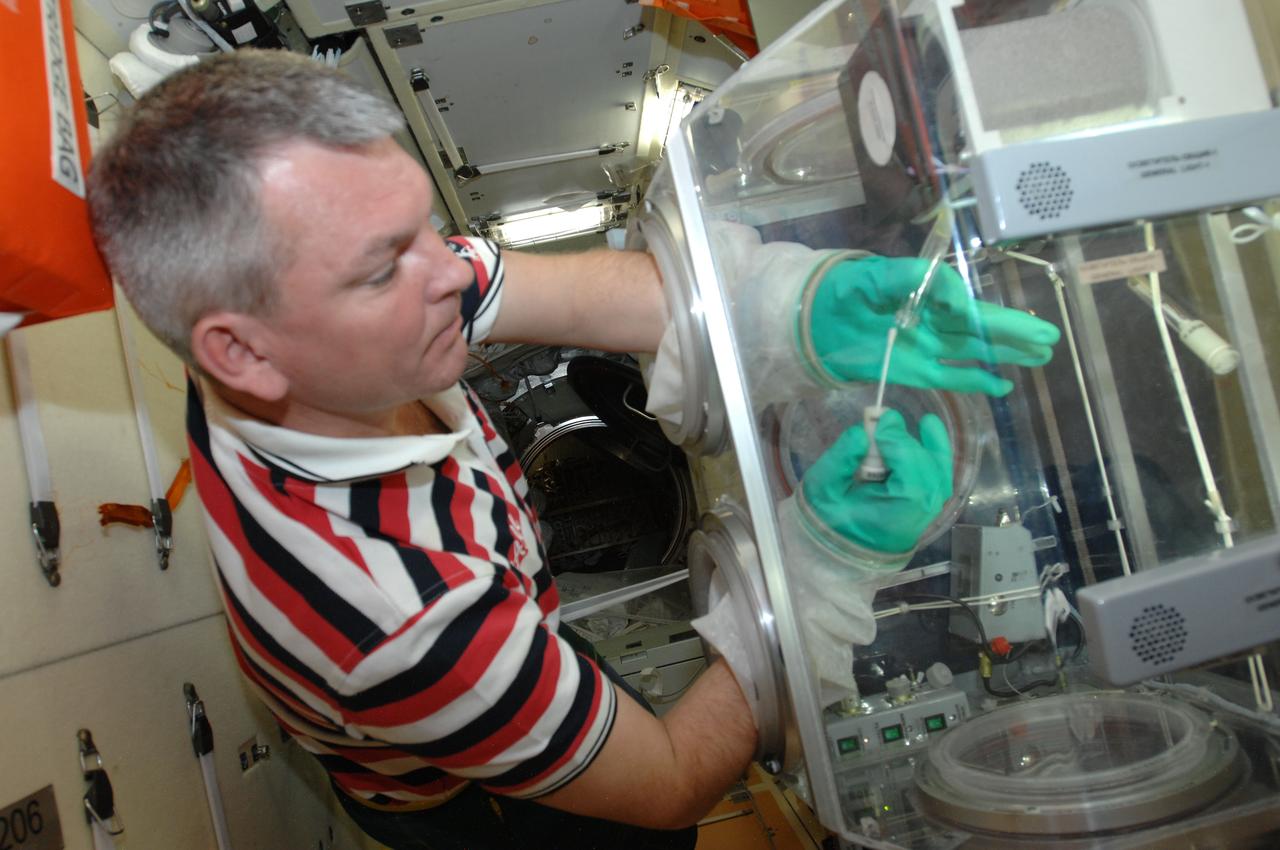
ISS041-E-042459 (30 Sept. 2014) --- Russian cosmonaut Alexander Samokutyaev, Expedition 41 flight engineer, works with test samples in a glovebox in the Poisk Mini-Research Module 2 (MRM2) of the International Space Station.
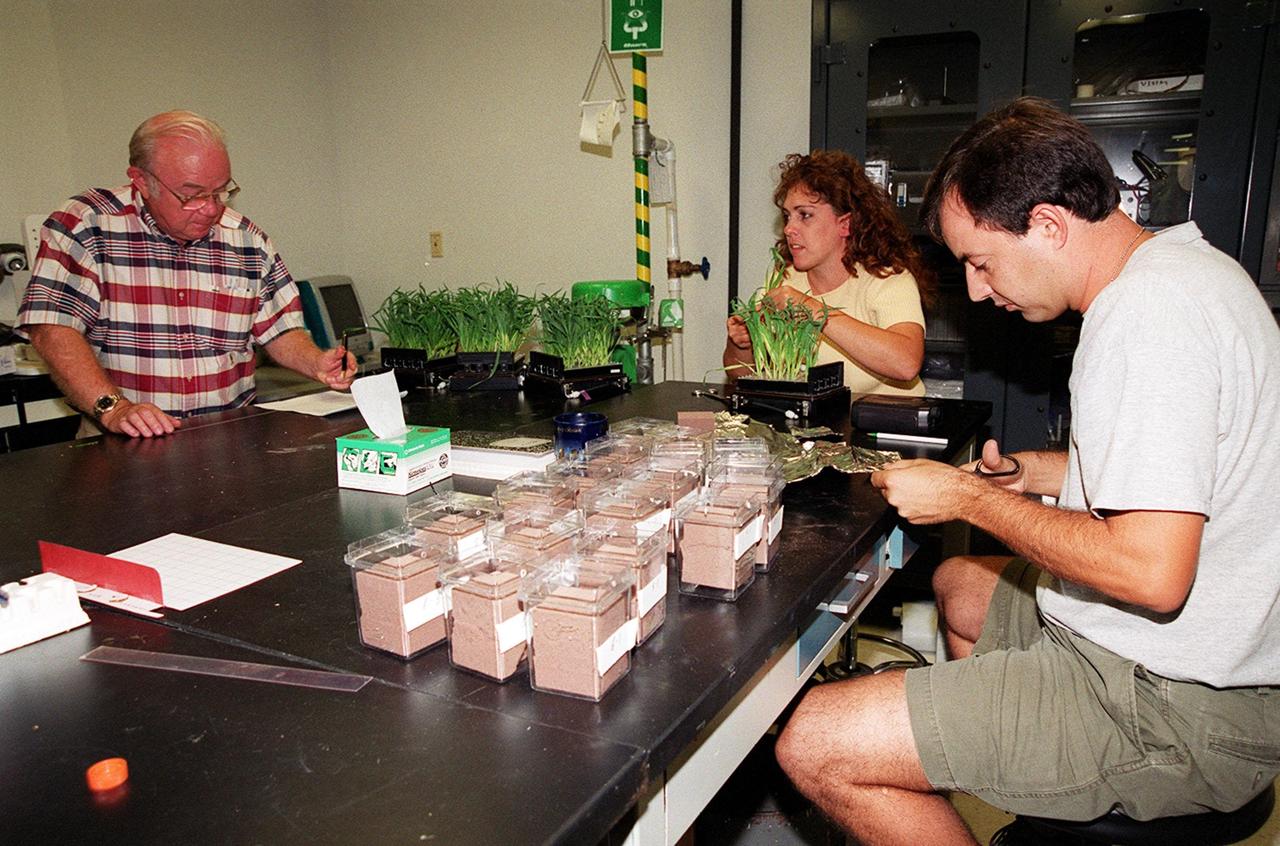
Researchers work with wheat samples that are part of ground testing for the first International Space Station plant experiment, scheduled to fly in October 2001. From left are research scientist Oscar Monje and research technicians Lisa Ruffa and Ignacio Eraso. The payload process testing they are performing is one of many studies at the Biological Sciences Branch in the Spaceport Engineering and Technology Directorate at Kennedy Space Center. The branch's operations and research areas include life sciences Space Shuttle payloads, bioregenerative life-support for long-duration spaceflight and environmental/ecological stewardship
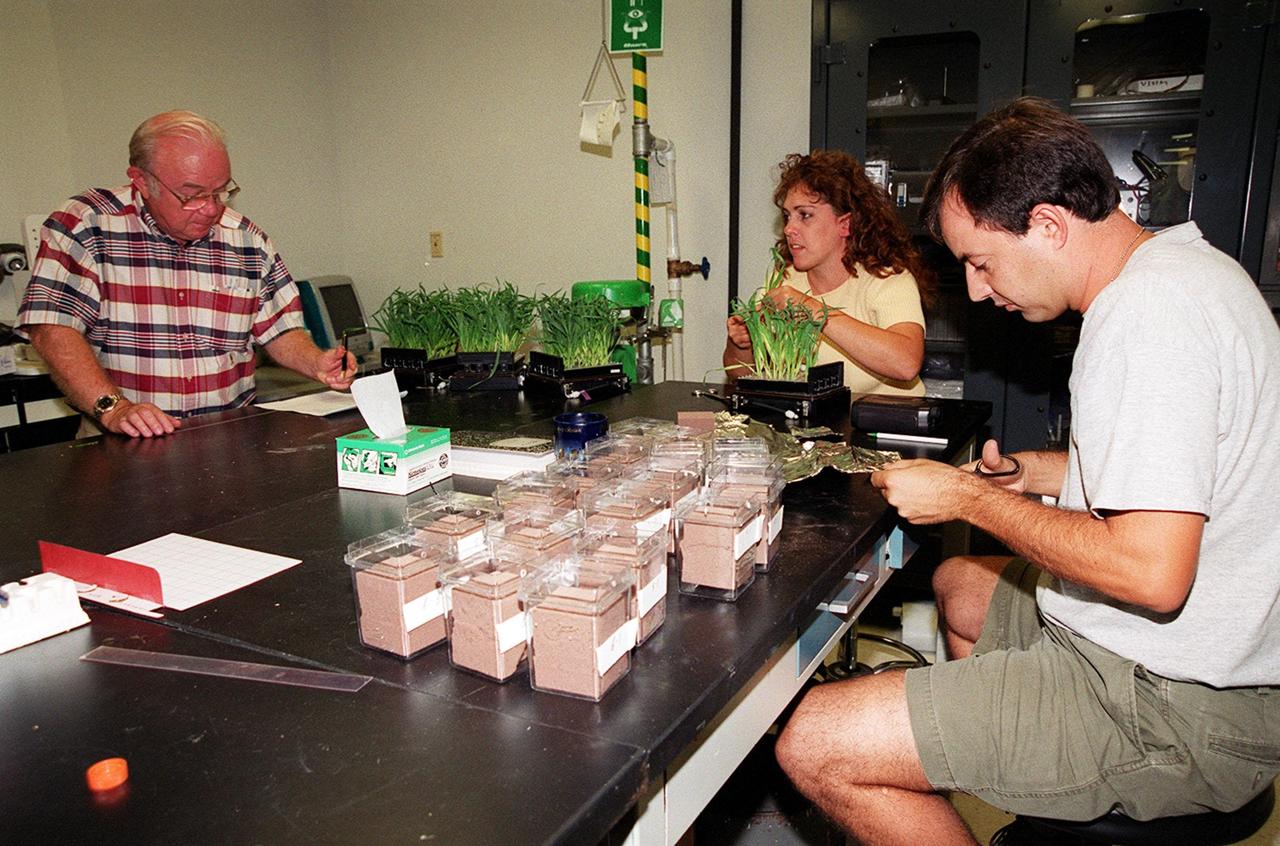
Researchers work with wheat samples that are part of ground testing for the first International Space Station plant experiment, scheduled to fly in October 2001. From left are research scientist Oscar Monje and research technicians Lisa Ruffa and Ignacio Eraso. The payload process testing they are performing is one of many studies at the Biological Sciences Branch in the Spaceport Engineering and Technology Directorate at Kennedy Space Center. The branch's operations and research areas include life sciences Space Shuttle payloads, bioregenerative life-support for long-duration spaceflight and environmental/ecological stewardship
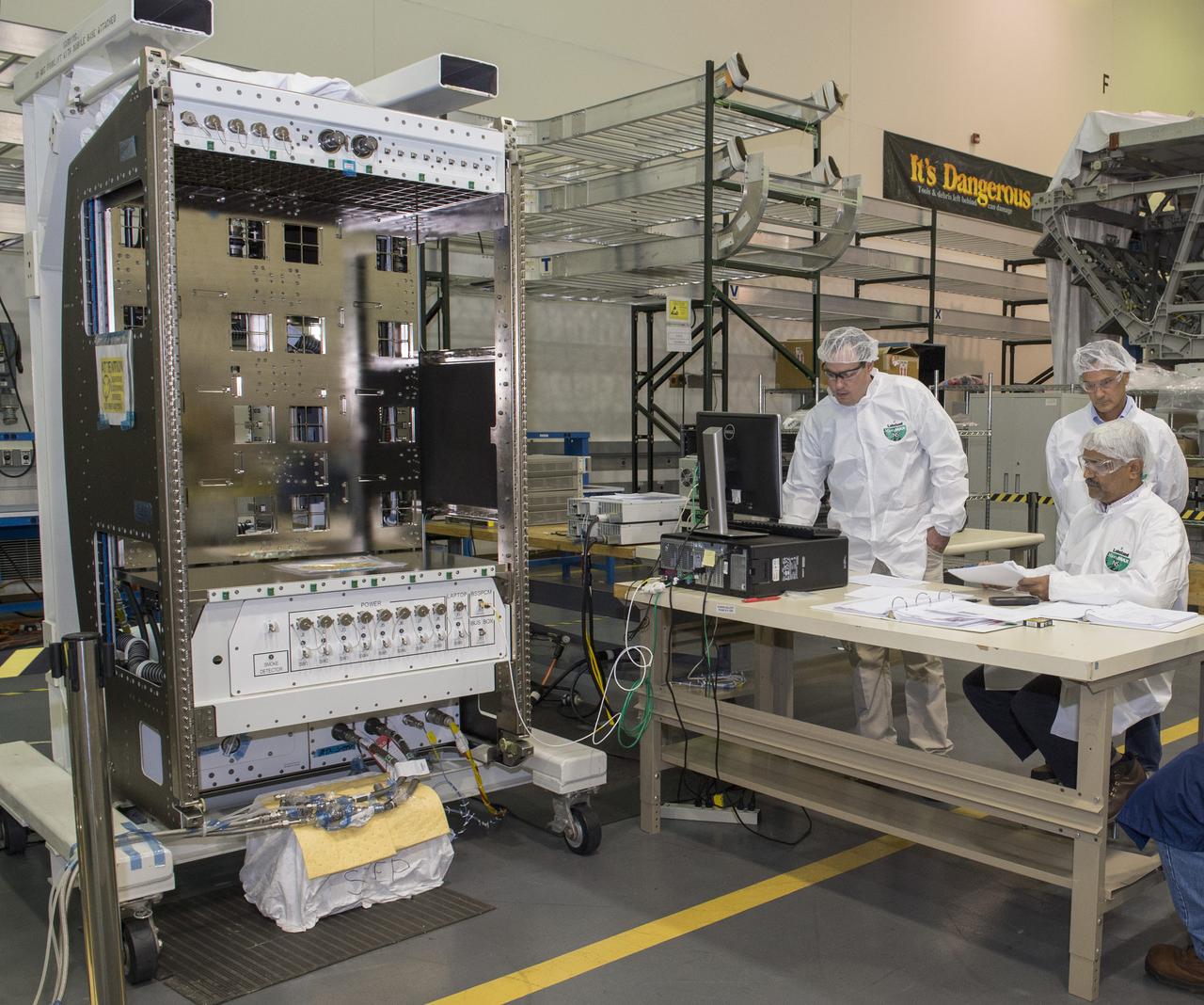
Boeing engineers, Chris Chapman, left, Greg Clark, center, and Ashesh Patel, right, perform air flow balance testing on NASA's new Basic Express Racks. The racks, developed at Marshall, will expand the capabilities for science research aboard the International Space Station. Delivery to the station is scheduled for late 2018.
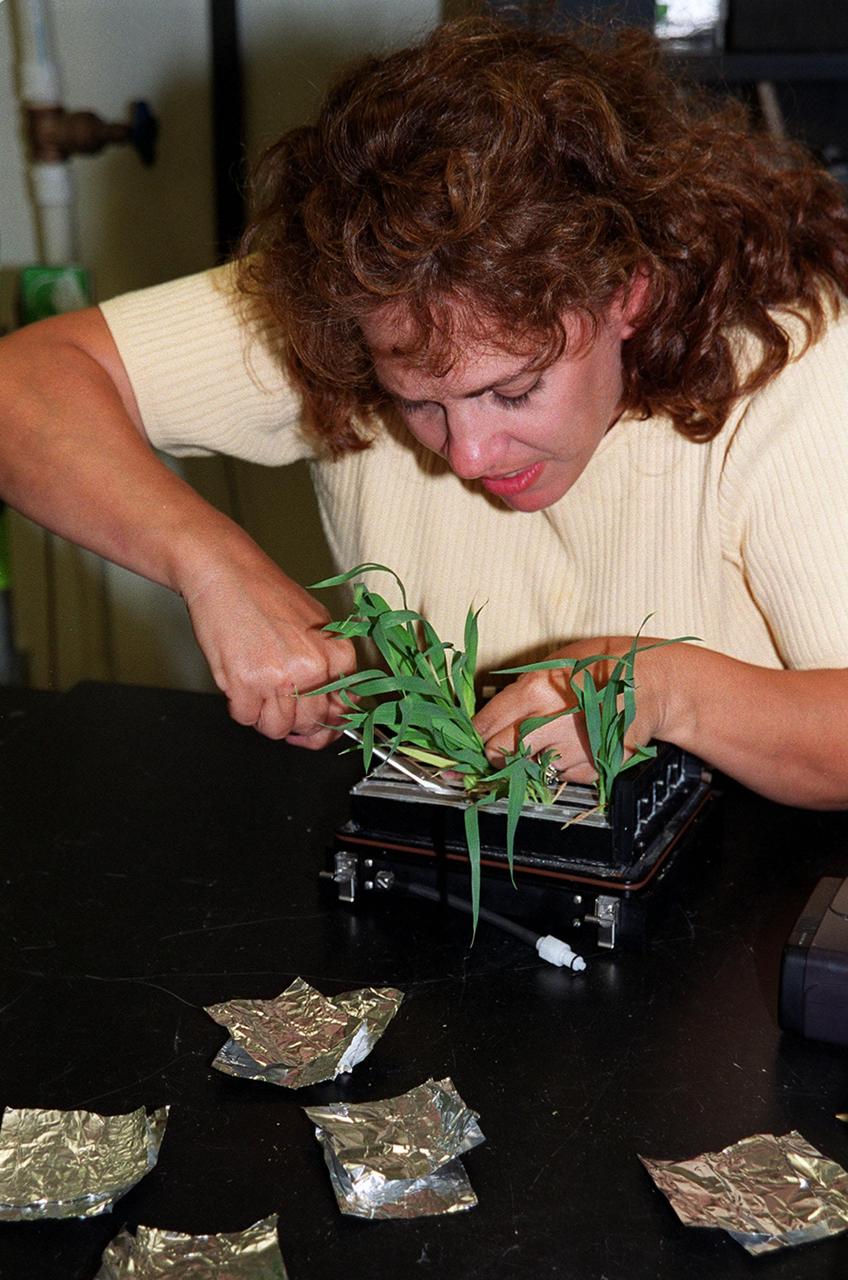
Research technician Lisa Ruffa works with a wheat sample that is part of ground testing for the first International Space Station plant experiment, scheduled to fly in October 2001. The payload process testing is one of many studies being performed at the Biological Sciences Branch in the Spaceport Engineering and Technology Directorate at Kennedy Space Center. The branch's operations and research areas include life sciences Space Shuttle payloads, bioregenerative life-support for long-duration spaceflight and environmental/ecological stewardship
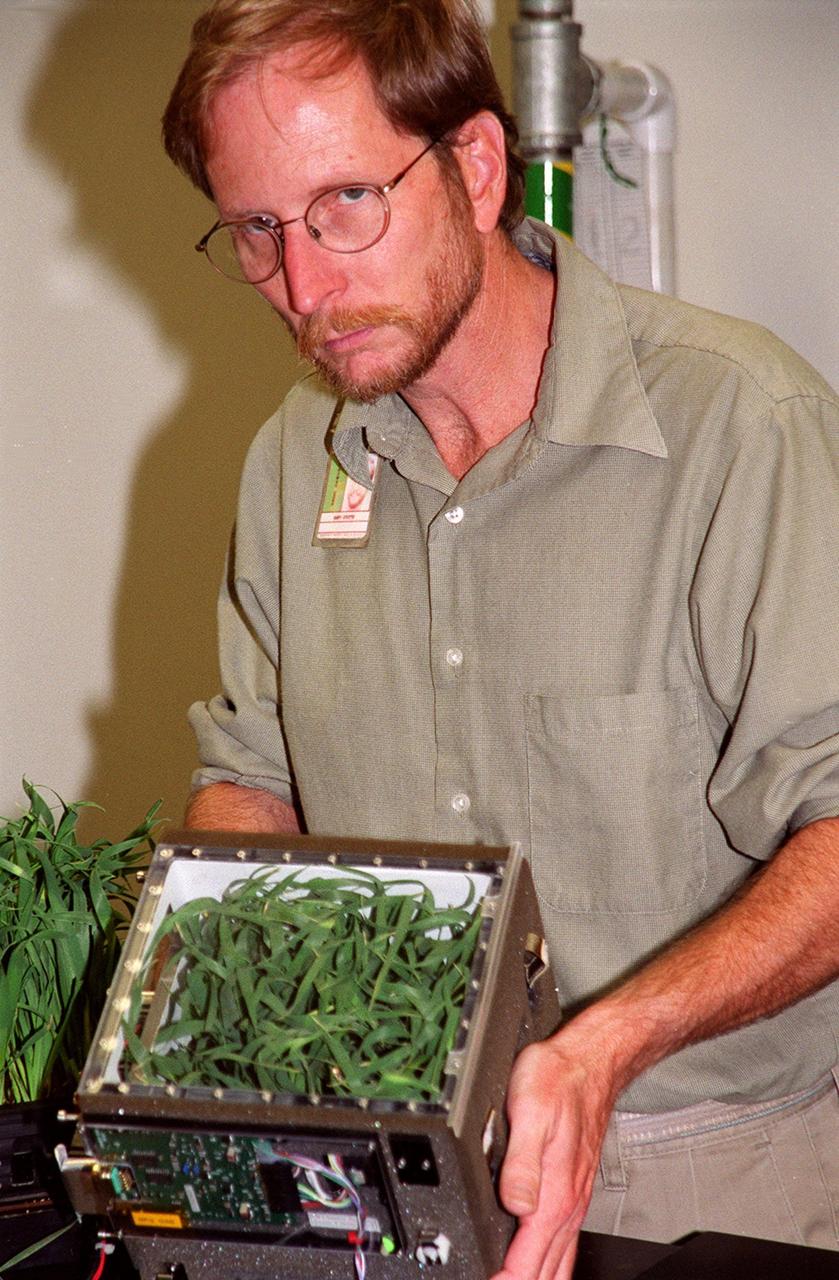
Research scientist Gary Stutte displays a wheat sample that is part of ground testing for the first International Space Station plant experiment, scheduled to fly in October 2001. The payload process testing is one of many studies being performed at the Biological Sciences Branch in the Spaceport Engineering and Technology Directorate at Kennedy Space Center. The branch's operations and research areas include life sciences Space Shuttle payloads, bioregenerative life-support for long-duration spaceflight and environmental/ecological stewardship
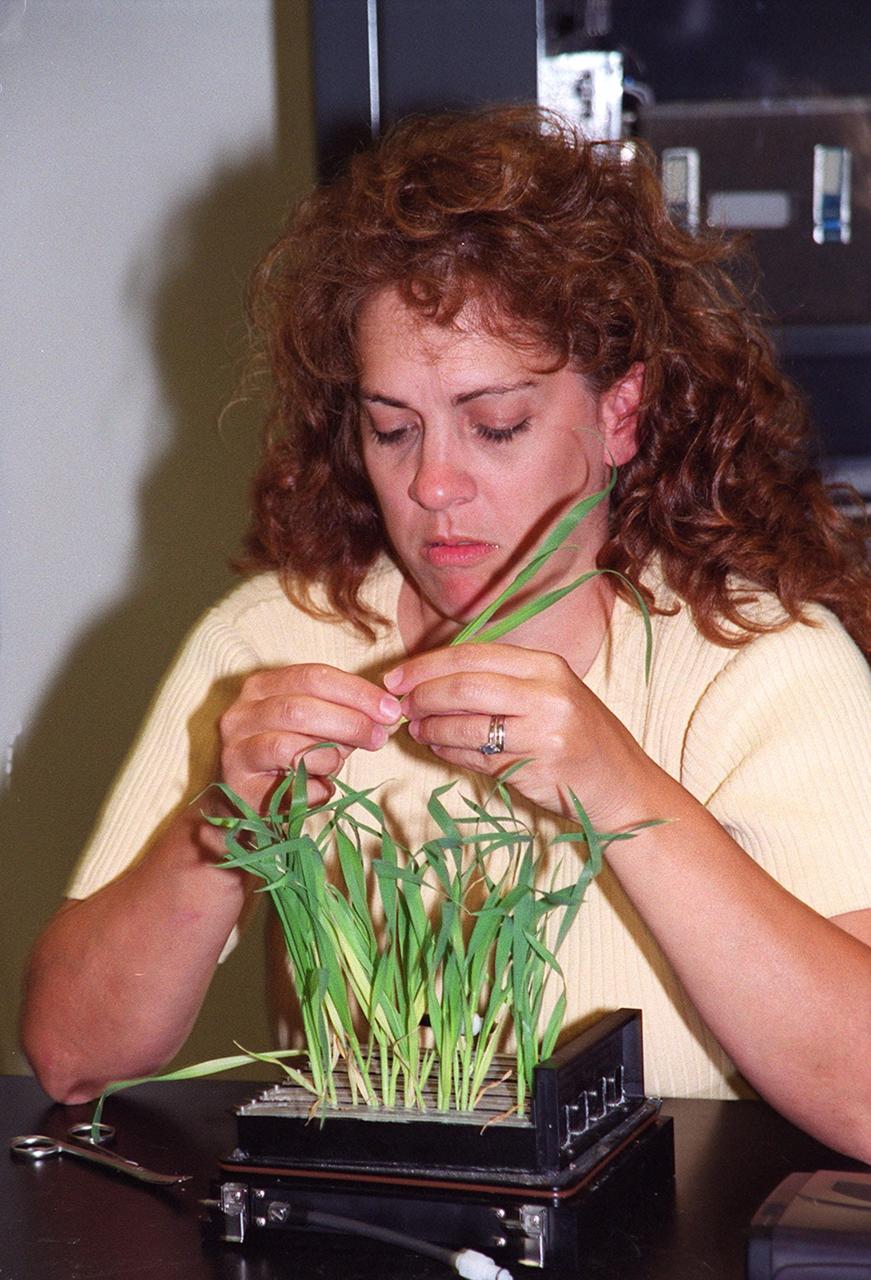
Research technician Lisa Ruffa works with a wheat sample that is part of ground testing for the first International Space Station plant experiment, scheduled to fly in October 2001. The payload process testing is one of many studies being performed at the Biological Sciences Branch in the Spaceport Engineering and Technology Directorate at Kennedy Space Center. The branch's operations and research areas include life sciences Space Shuttle payloads, bioregenerative life-support for long-duration spaceflight and environmental/ecological stewardship
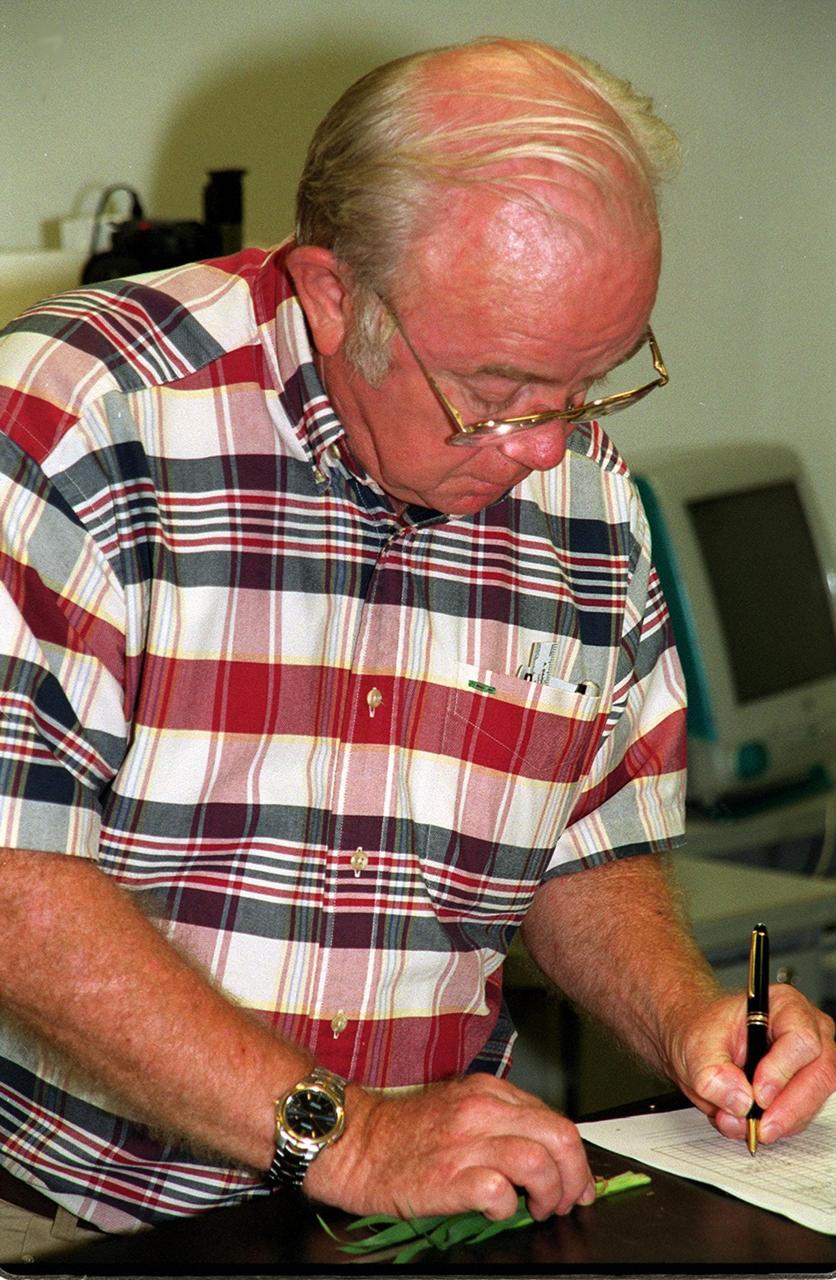
Research scientist Oscar Monje records data associated with ground testing for the first International Space Station plant experiment, scheduled to fly in October 2001. The payload process testing is one of many studies being performed at the Biological Sciences Branch in the Spaceport Engineering and Technology Directorate at Kennedy Space Center. The branch's operations and research areas include life sciences Space Shuttle payloads, bioregenerative life-support for long-duration spaceflight and environmental/ecological stewardship
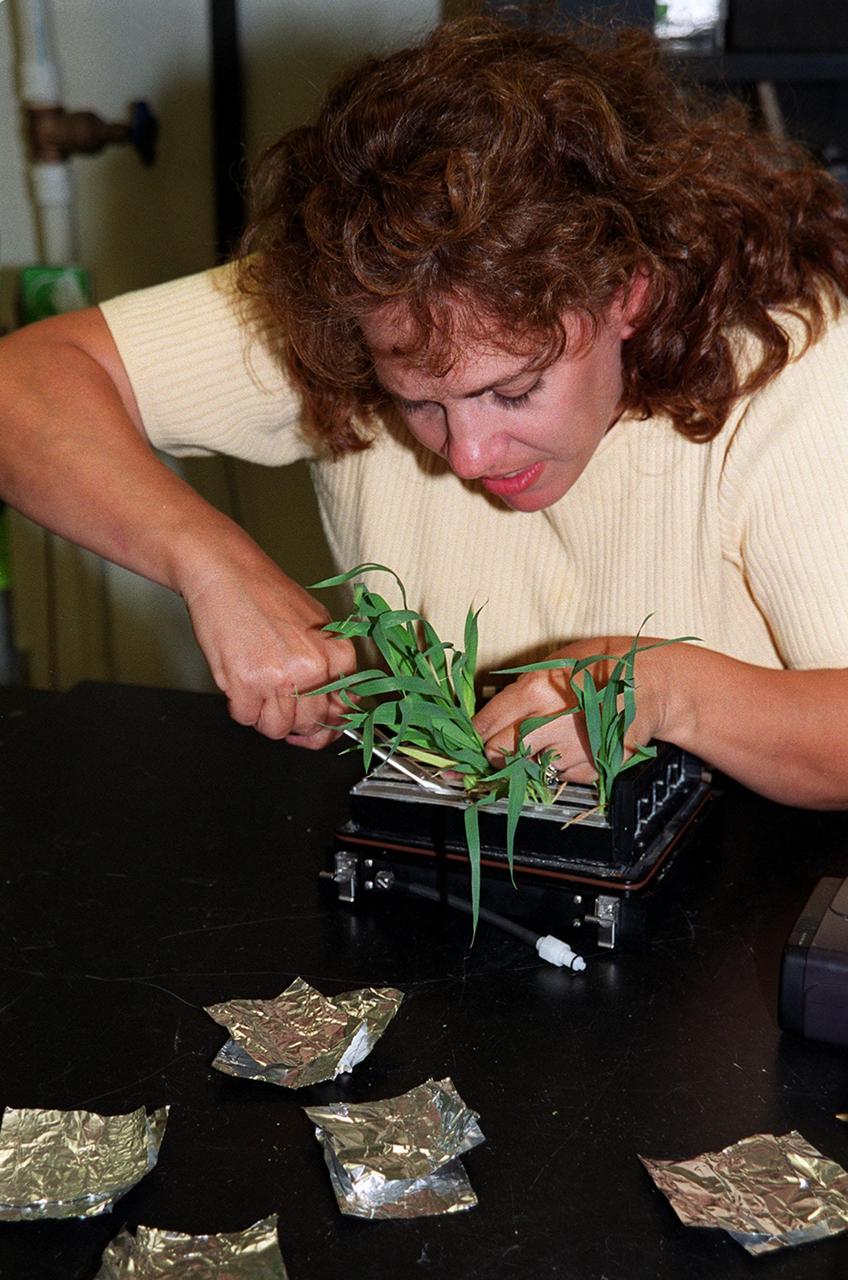
Research technician Lisa Ruffa works with a wheat sample that is part of ground testing for the first International Space Station plant experiment, scheduled to fly in October 2001. The payload process testing is one of many studies being performed at the Biological Sciences Branch in the Spaceport Engineering and Technology Directorate at Kennedy Space Center. The branch's operations and research areas include life sciences Space Shuttle payloads, bioregenerative life-support for long-duration spaceflight and environmental/ecological stewardship
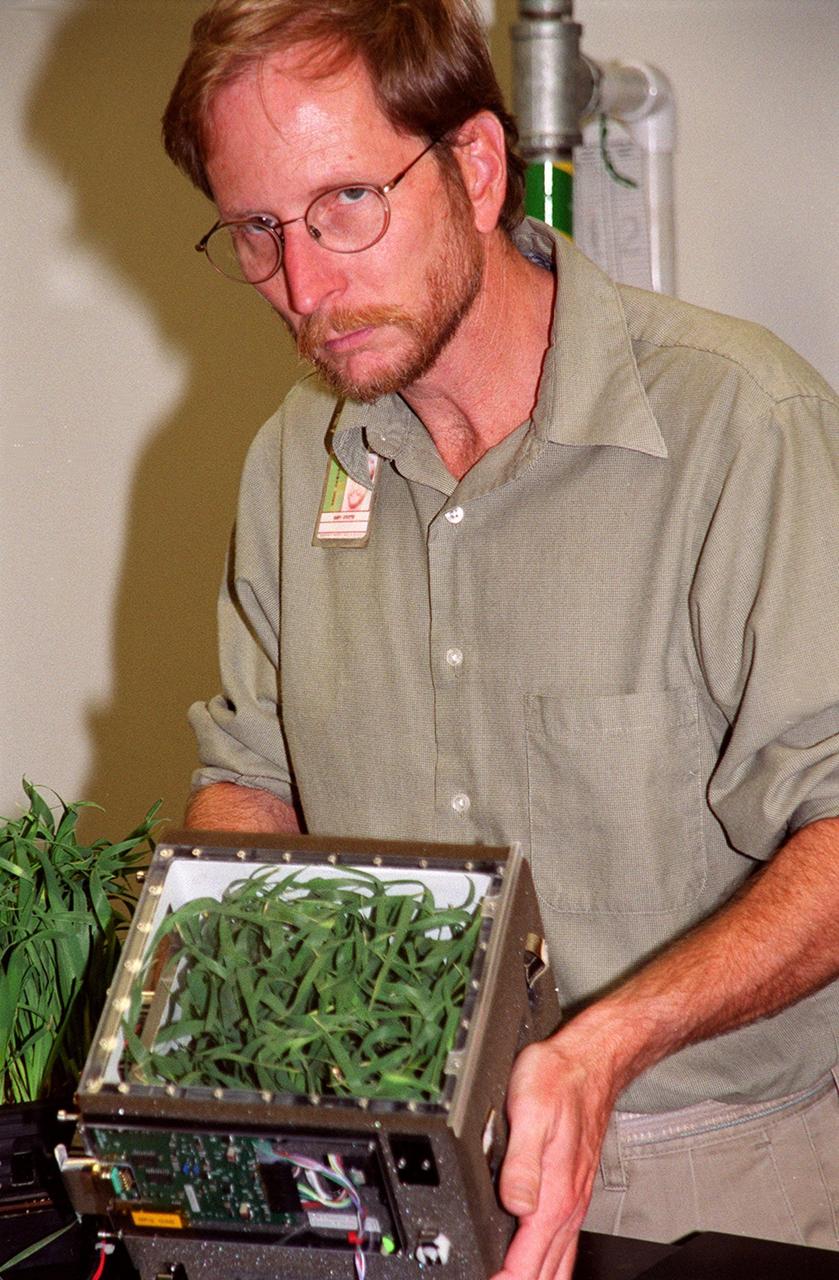
Research scientist Gary Stutte displays a wheat sample that is part of ground testing for the first International Space Station plant experiment, scheduled to fly in October 2001. The payload process testing is one of many studies being performed at the Biological Sciences Branch in the Spaceport Engineering and Technology Directorate at Kennedy Space Center. The branch's operations and research areas include life sciences Space Shuttle payloads, bioregenerative life-support for long-duration spaceflight and environmental/ecological stewardship
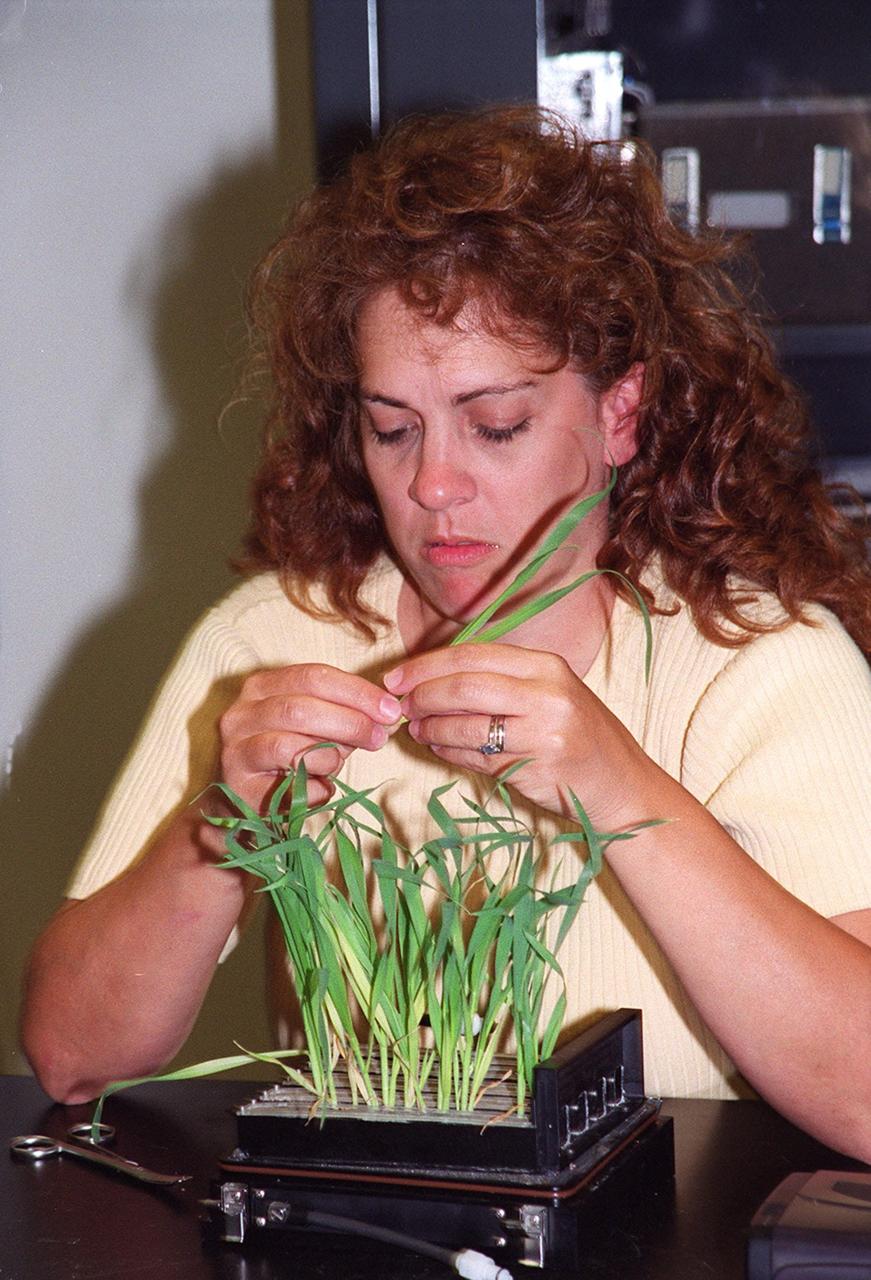
Research technician Lisa Ruffa works with a wheat sample that is part of ground testing for the first International Space Station plant experiment, scheduled to fly in October 2001. The payload process testing is one of many studies being performed at the Biological Sciences Branch in the Spaceport Engineering and Technology Directorate at Kennedy Space Center. The branch's operations and research areas include life sciences Space Shuttle payloads, bioregenerative life-support for long-duration spaceflight and environmental/ecological stewardship
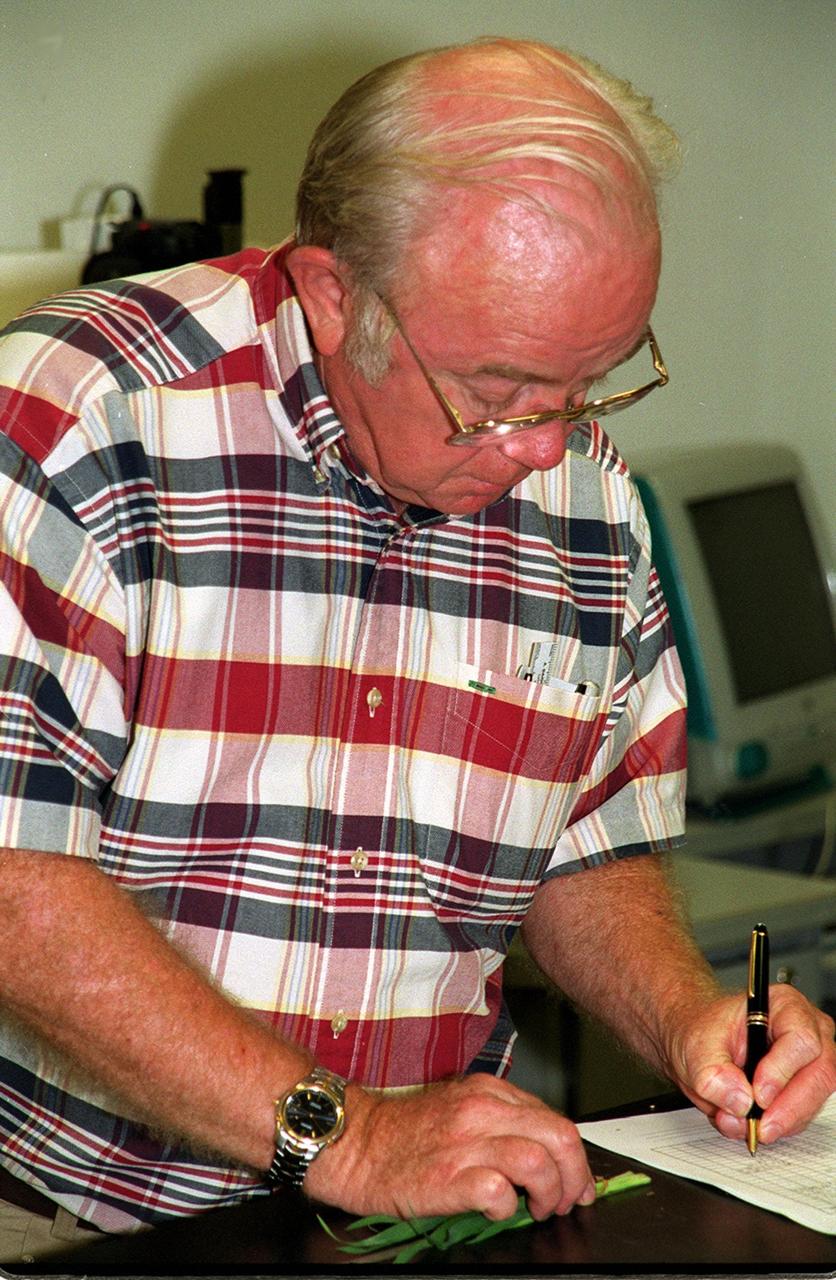
Research scientist Oscar Monje records data associated with ground testing for the first International Space Station plant experiment, scheduled to fly in October 2001. The payload process testing is one of many studies being performed at the Biological Sciences Branch in the Spaceport Engineering and Technology Directorate at Kennedy Space Center. The branch's operations and research areas include life sciences Space Shuttle payloads, bioregenerative life-support for long-duration spaceflight and environmental/ecological stewardship
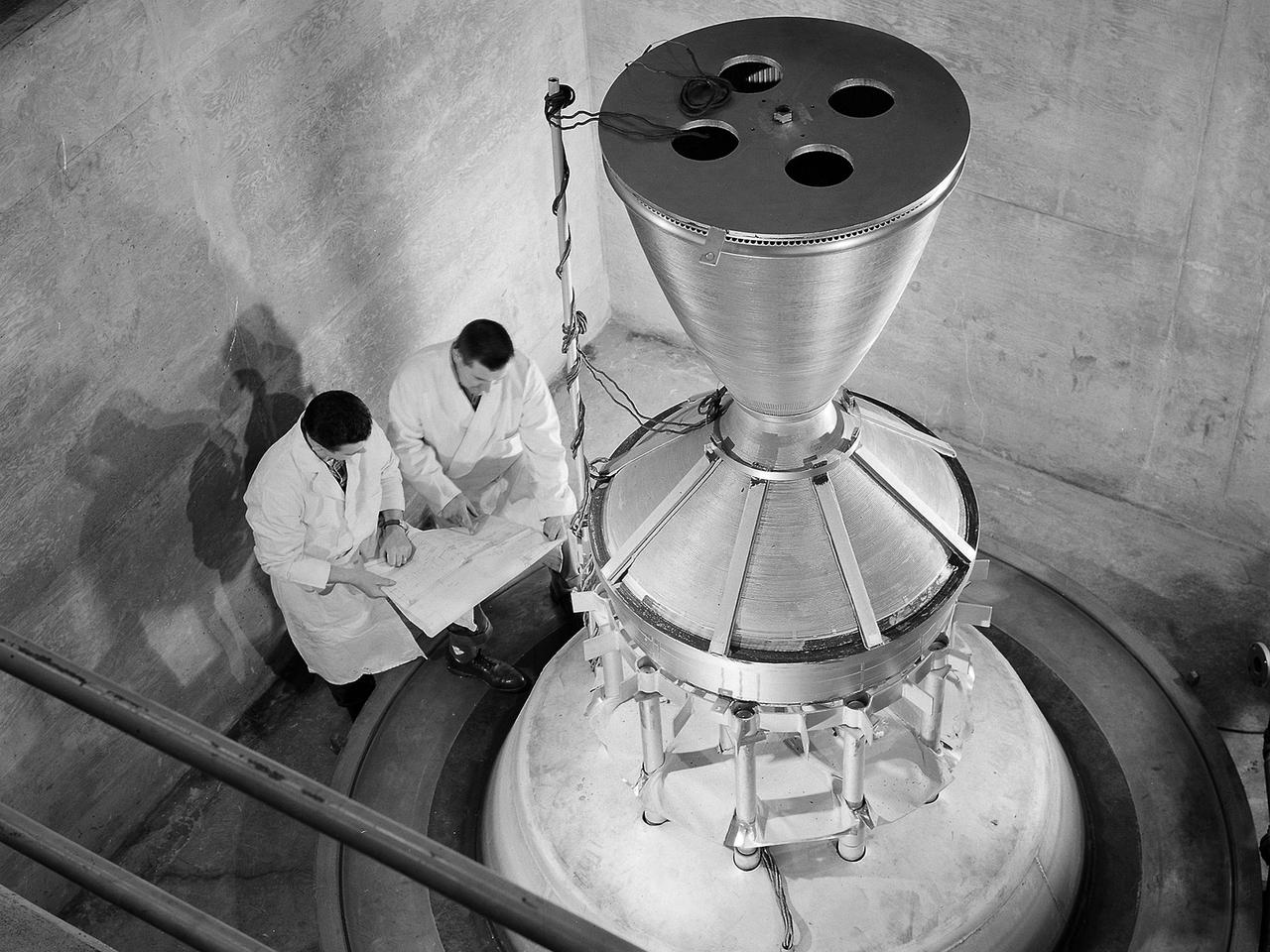
Technicians manufacture a nozzle for the Kiwi B-1-B nuclear rocket engine in the Fabrication Shop’s vacuum oven at the National Aeronautics and Space Administration (NASA) Lewis Research Center. The Nuclear Engine for Rocket Vehicle Applications (NERVA) was a joint NASA and Atomic Energy Commission (AEC) endeavor to develop a nuclear-powered rocket for both long-range missions to Mars and as a possible upper-stage for the Apollo Program. The early portion of the program consisted of basic reactor and fuel system research. This was followed by a series of Kiwi reactors built to test basic nuclear rocket principles in a non-flying nuclear engine. The next phase, NERVA, would create an entire flyable engine. The final phase of the program, called Reactor-In-Flight-Test, would be an actual launch test. The AEC was responsible for designing the nuclear reactor and overall engine. NASA Lewis was responsible for developing the liquid-hydrogen fuel system. The turbopump, which pumped the fuels from the storage tanks to the engine, was the primary tool for restarting the engine. The NERVA had to be able to restart in space on its own using a safe preprogrammed startup system. Lewis researchers endeavored to design and test this system. This non-nuclear Kiwi engine, seen here, was being prepared for tests at Lewis’ High Energy Rocket Engine Research Facility (B-1) located at Plum Brook Station. The tests were designed to start an unfueled Kiwi B-1-B reactor and its Aerojet Mark IX turbopump without any external power.
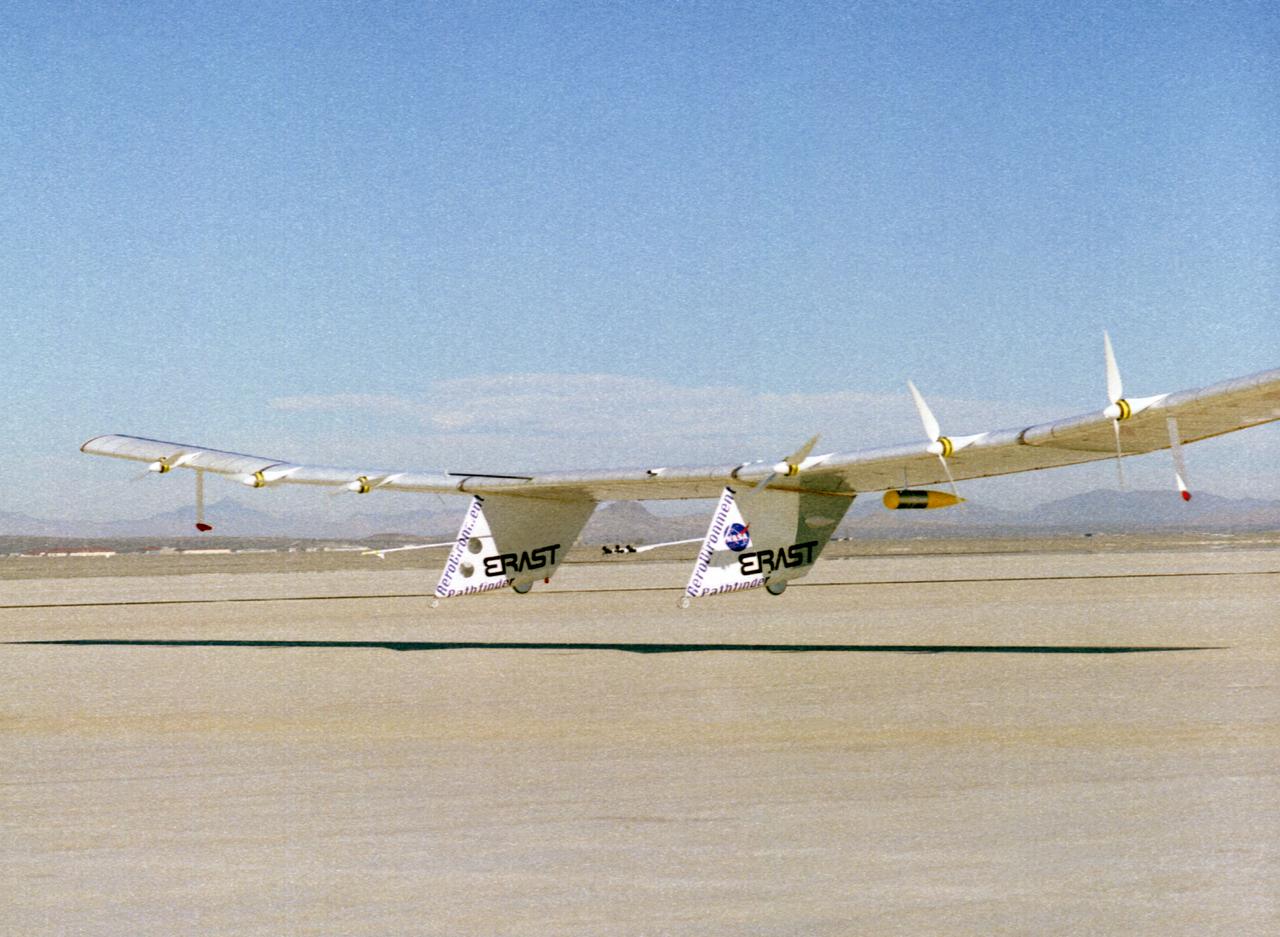
The Pathfinder solar-powered research aircraft settles in for landing on the bed of Rogers Dry Lake at the Dryden Flight Research Center, Edwards, California, after a successful test flight Nov. 19, 1996. The ultra-light craft flew a racetrack pattern at low altitudes over the flight test area for two hours while project engineers checked out various systems and sensors on the uninhabited aircraft. The Pathfinder was controlled by two pilots, one in a mobile control unit which followed the craft, the other in a stationary control station. Pathfinder, developed by AeroVironment, Inc., is one of several designs being evaluated under NASA's Environmental Research Aircraft and Sensor Technology (ERAST) program.
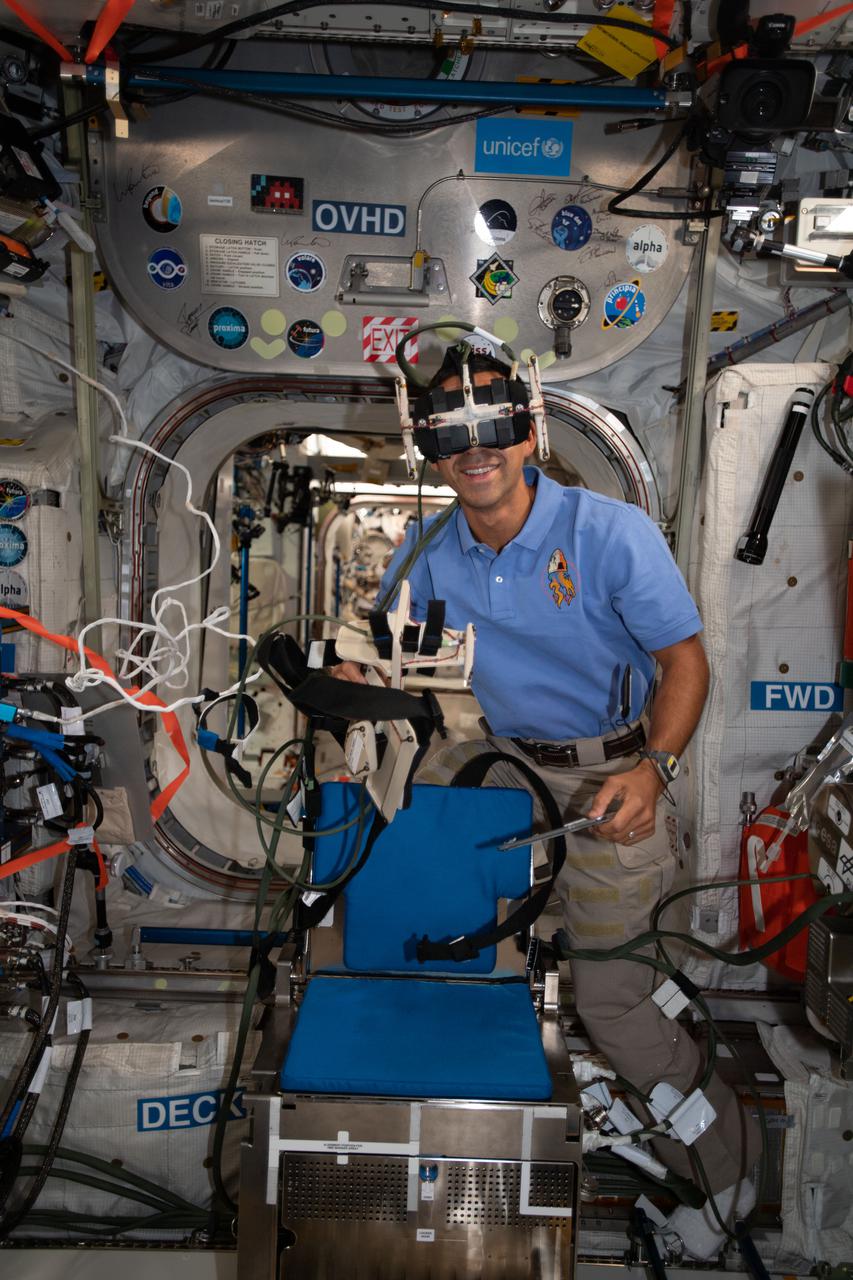
iss066e079006 (Nov. 22, 2021) --- NASA astronaut and Expedition 66 Flight Engineer Raja Chari wears virtual reality goggles inside the International Space Station's Columbus laboratory module. Chari was participating in the GRASP human research experiment that tests how astronauts perceive up and down movements and grip and manipulate objects in microgravity.
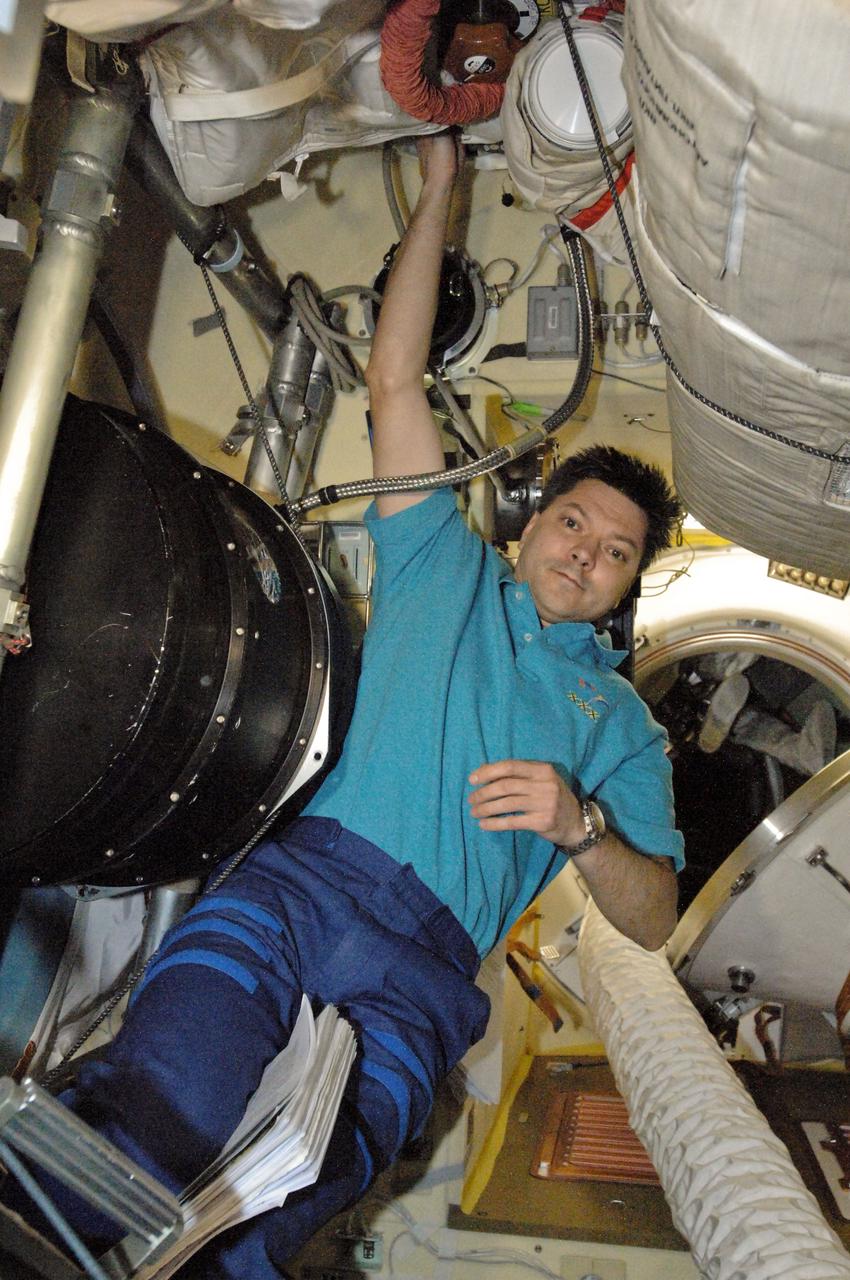
ISS030-E-016793 (28 Dec. 2011) --- Cosmonaut Oleg Kononenko, Expedition 30 flight engineer, installs and prepares equipment for a test run of a new science payload in the Mini Research Module 2 or Poisk aboard the International Space Station.
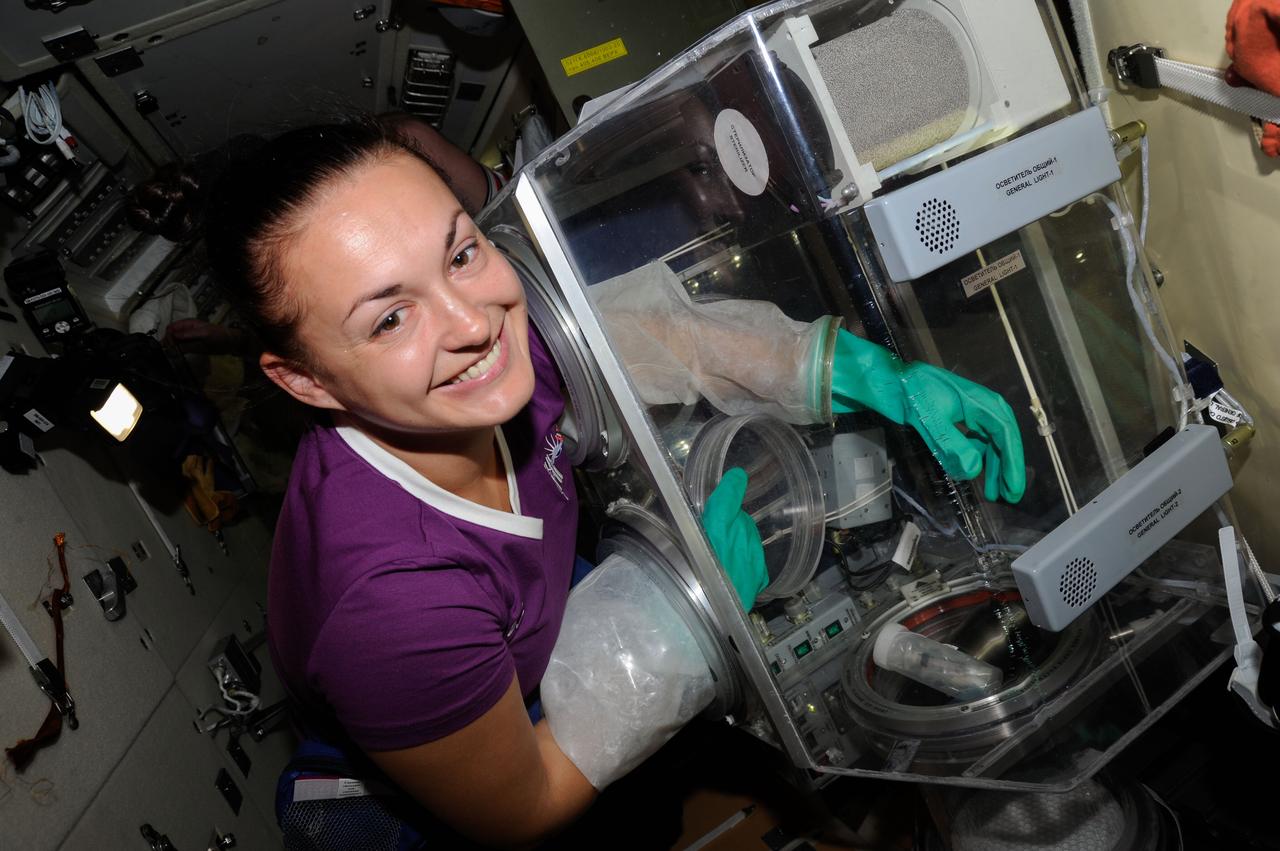
ISS041-E-037551 (29 Sept. 2014) --- Russian cosmonaut Elena Serova, Expedition 41 flight engineer, works with test samples from the Kaskad cell cultivation experiment in a glovebox in the Poisk Mini-Research Module 2 (MRM2) of the International Space Station.
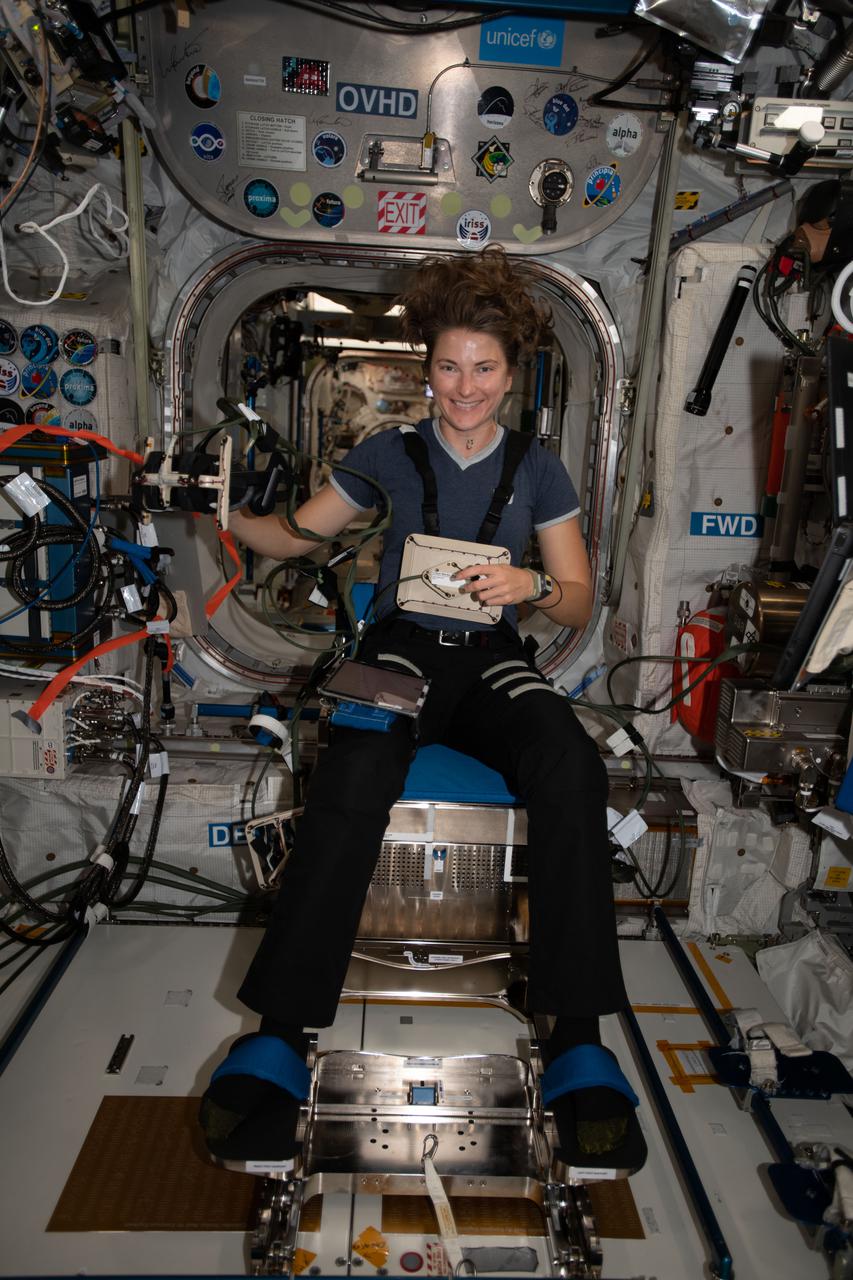
iss066e079027 (Nov. 22, 2021) --- NASA astronaut and Expedition 66 Flight Engineer Kayla Barron is seated in a specialized chair inside the International Space Station's Columbus laboratory module. Barron was participating in the GRASP human research experiment that tests how astronauts perceive up and down movements and grip and manipulate objects in microgravity.
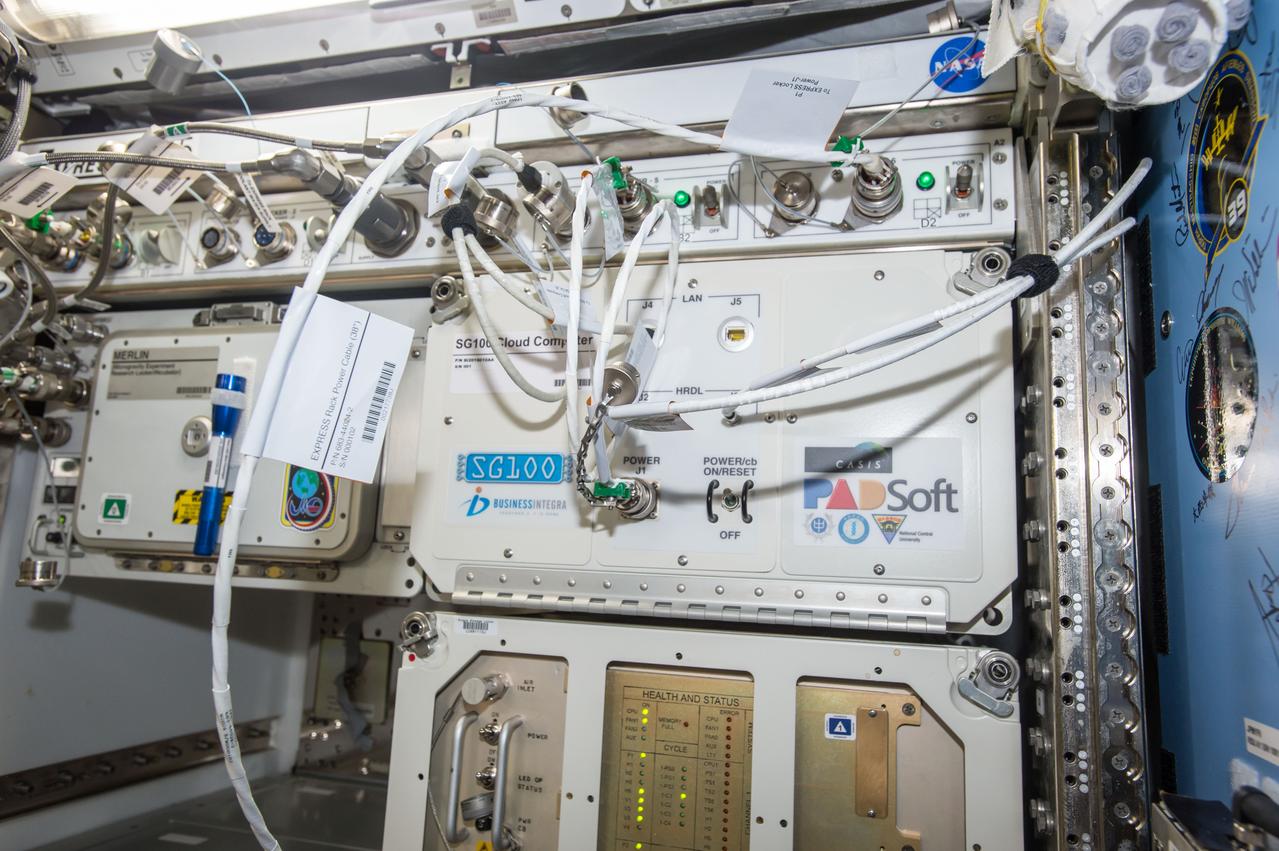
iss051e045046 (5/17/2017) --- The SG100 Cloud Computing Payload, shown here installed in the Kibo Japanese Pressurized Module (JPM) aboard the International Space Station (ISS), tests a space-rated, single-board computer designed to allow engineers, scientists and researchers to perform significant amounts of onboard analysis prior to downlink to the ground.
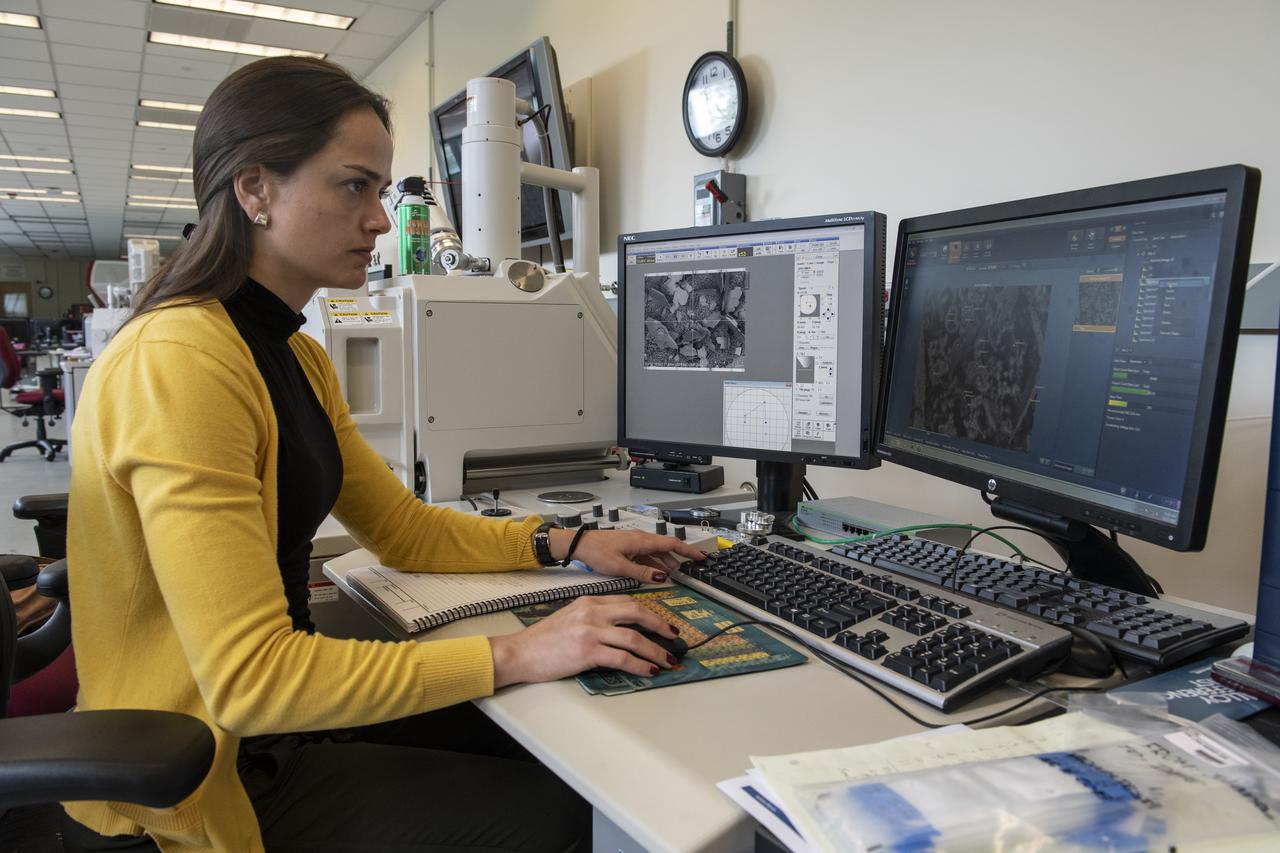
Marshall graduate student researcher Juliana Neves, who is pursuing her doctorate in civil engineering at Pennsylvania State University, monitors cement paste samples returned from space as part of the Microgravity Investigation of Cement Solidification. Neves, investigators at Penn State and Marshall researchers led by NASA materials scientist Richard Grugel mirrored each sample experiment conducted on the International Space Station -- 120 tests on the ground, 120 in orbit -- and will continue to assess their findings in months to come.
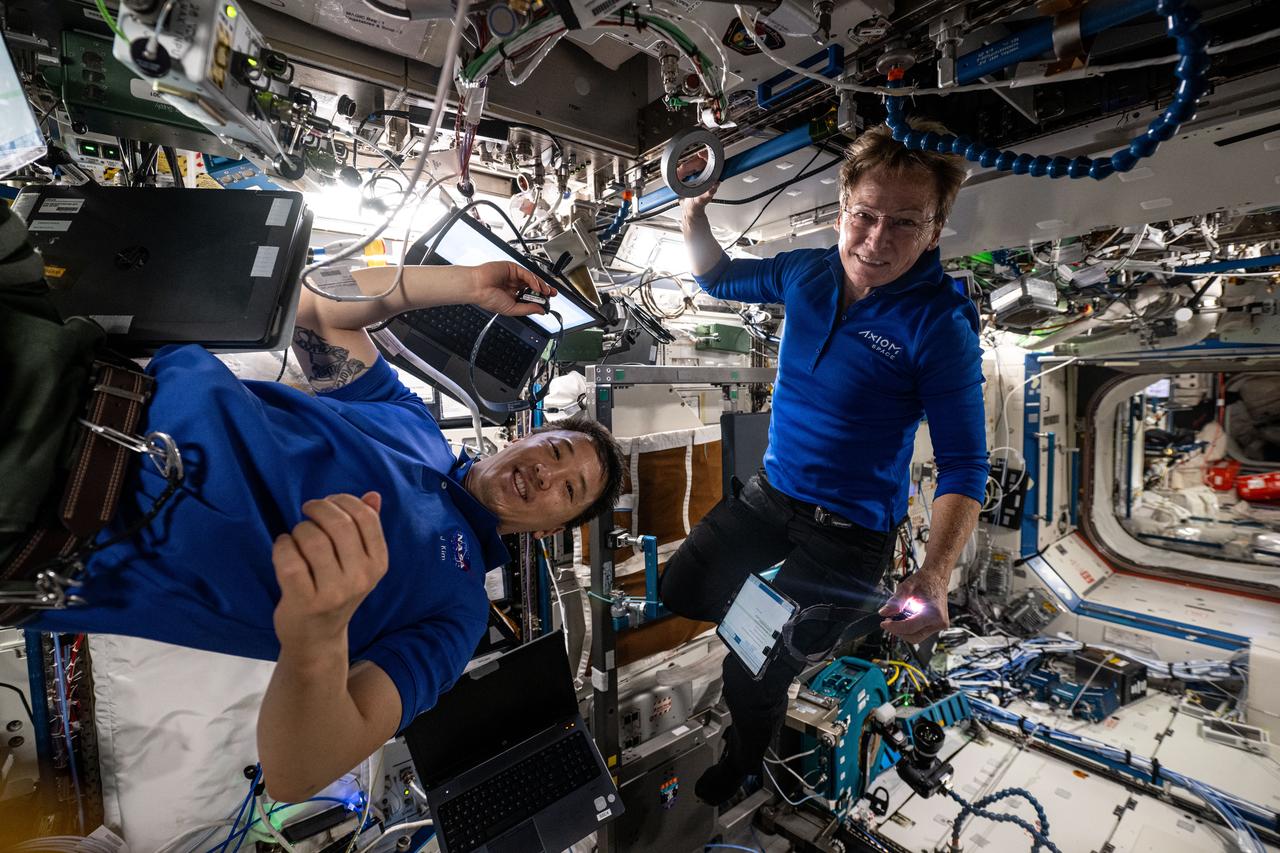
iss073e0252485 (June 28, 2025) --- Expedition 73 Flight Engineer Jonny Kim from NASA and Axiom Mission 4 Commander Peggy Whitson work together inside the International Space Station's Destiny laboratory module setting up research hardware to culture patient-derived cancer cells, model their growth in microgravity, and test a state-of-the-art fluorescence microscope. Results may lead to earlier cancer detection methods, development of advanced cancer treatments, and promote future stem cell research in space.

Mark Pestana is a research pilot and project manager at the NASA Dryden Flight Research Center, Edwards, Calif. He is a pilot for the Beech B200 King Air, the T-34C and the Predator B. He flies the F-18 Hornet as a co-pilot and flight test engineer. Pestana has accumulated more than 4,000 hours of military and civilian flight experience. He was also a flight engineer on the NASA DC-8 flying laboratory. Pestana was the project manager and pilot for the Hi–rate Wireless Airborne Network Demonstration flown on the NASA B200 research aircraft. He flew B200 research missions for the X-38 Space Integrated Inertial Navigation Global Positioning System experiment. Pestana also participated in several deployments of the DC-8, including Earth science expeditions ranging from hurricane research over the Caribbean Sea to ozone studies over the North Pole, atmospheric chemistry over the South Pacific, rain forest health in Central America, Rocky Mountain ice pack assessment, and volcanic and tectonic activity around the Pacific Rim. He came to Dryden as a DC-8 mission manager in June 1998 from NASA Johnson Space Center, Houston, where he served as the Earth and Space Science discipline manager for the International Space Station Program at Johnson. Pestana also served as a flight crew operations engineer in the Astronaut Office, developing the controls, displays, tools, crew accommodations and procedures for on-orbit assembly, test, and checkout of the International Space Station. He led the analysis and technical negotiations for modification of the Russian Soyuz spacecraft as an emergency crew return vehicle for space station crews. He joined the U.S. Air Force Reserve in 1991 and held various positions as a research and development engineer, intelligence analyst, and Delta II launch vehicle systems engineer. He retired from the U.S. Air Force Reserve with the rank of colonel in 2005. Prior to 1990, Pestana was on active duty with the U.S. Air Force as the director of mi
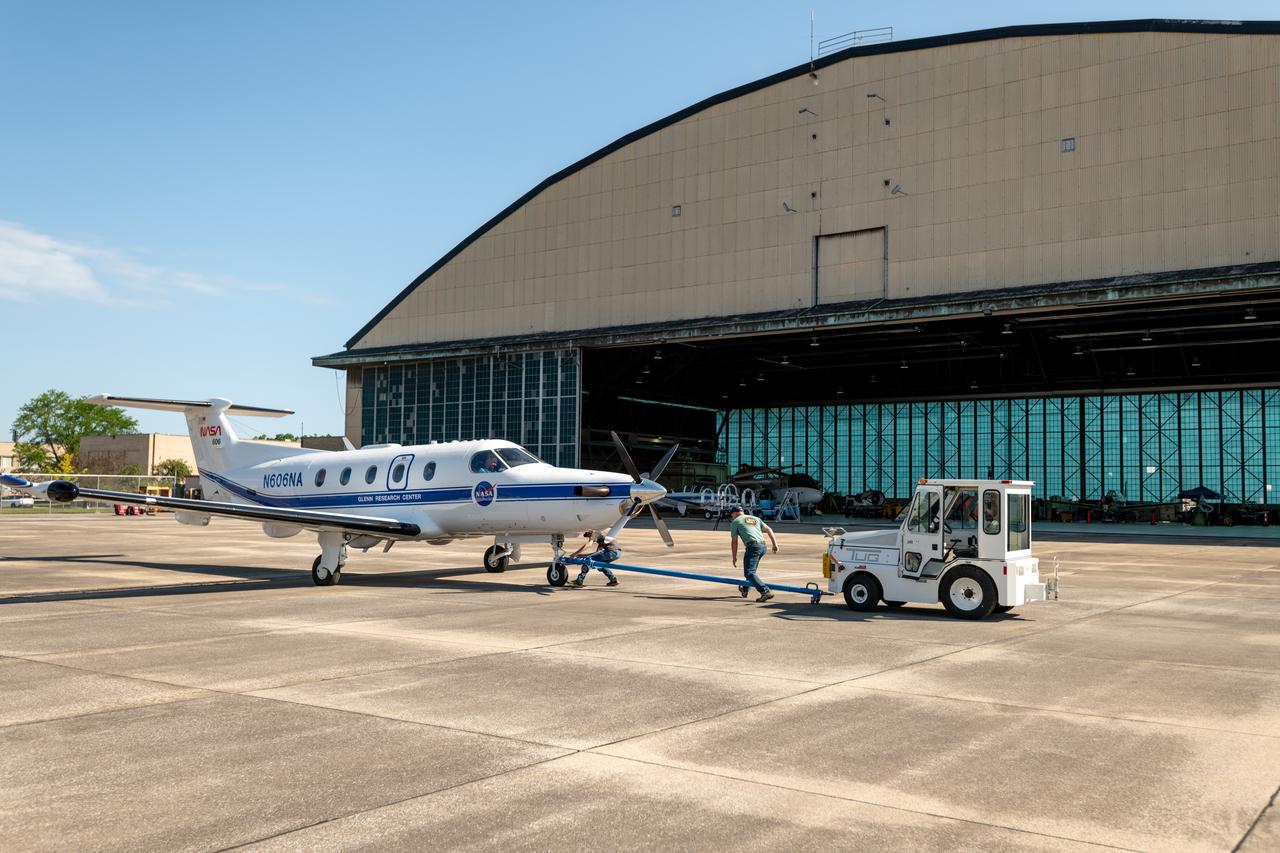
A team at NASA’s Glenn Research Center in Cleveland streamed 4K video footage from an aircraft to the International Space Station and back for the first time using optical, or laser, communications. The feat was part of a series of tests on new technology that could provide live video coverage of astronauts on the Moon during the Artemis missions. Working with the Air Force Research Laboratory and NASA’s Small Business Innovation Research program, Glenn engineers temporarily installed a portable laser terminal on the belly of a Pilatus PC-12 aircraft. They then flew over Lake Erie sending data from the aircraft to an optical ground station in Cleveland. From there, it was sent over an Earth-based network to NASA’s White Sands Test Facility in Las Cruces, New Mexico, where scientists used infrared light signals to send the data.

A team at NASA’s Glenn Research Center in Cleveland streamed 4K video footage from an aircraft to the International Space Station and back for the first time using optical, or laser, communications. The feat was part of a series of tests on new technology that could provide live video coverage of astronauts on the Moon during the Artemis missions. Working with the Air Force Research Laboratory and NASA’s Small Business Innovation Research program, Glenn engineers temporarily installed a portable laser terminal on the belly of a Pilatus PC-12 aircraft. They then flew over Lake Erie sending data from the aircraft to an optical ground station in Cleveland. From there, it was sent over an Earth-based network to NASA’s White Sands Test Facility in Las Cruces, New Mexico, where scientists used infrared light signals to send the data. Photo Credit: (NASA/Sara Lowthian-Hanna)
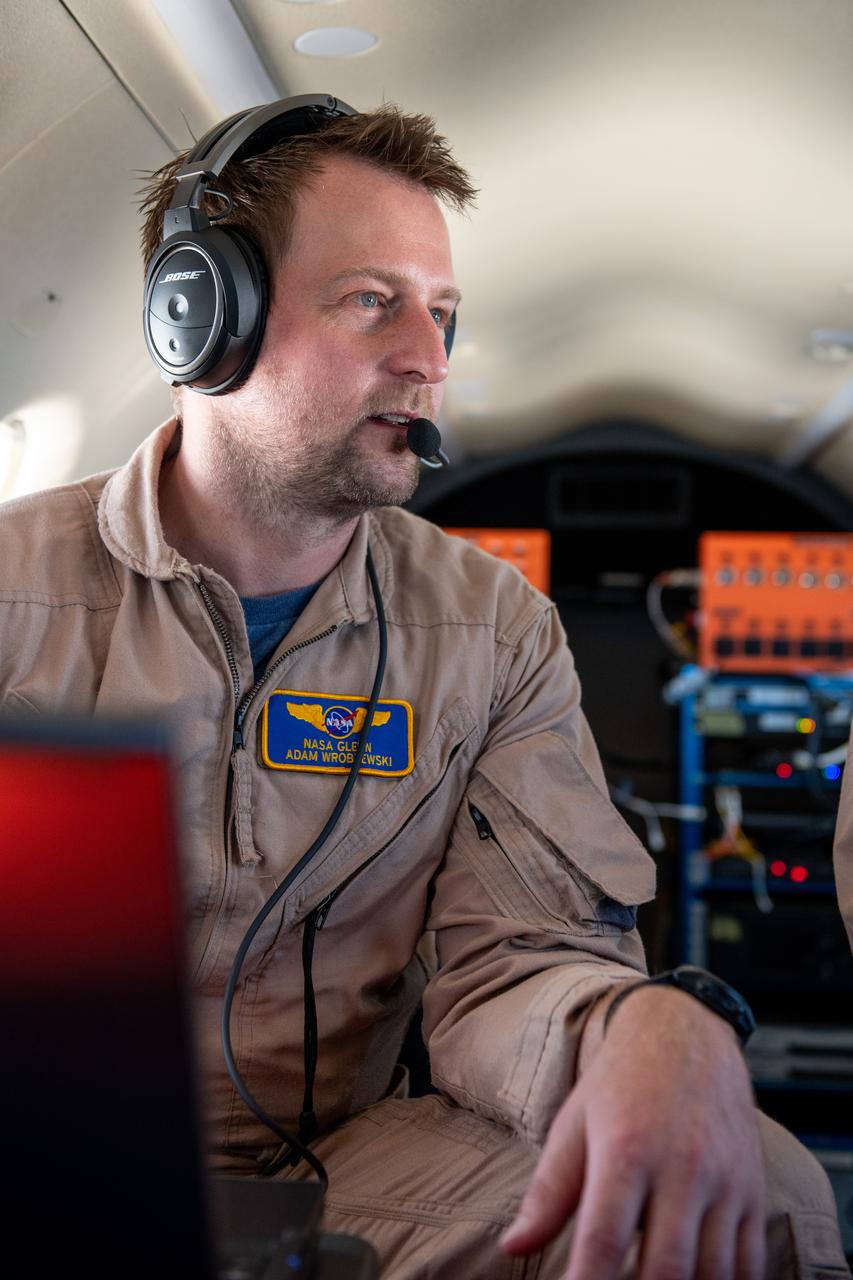
Adam Wroblewski p A team at NASA’s Glenn Research Center in Cleveland streamed 4K video footage from an aircraft to the International Space Station and back for the first time using optical, or laser, communications. The feat was part of a series of tests on new technology that could provide live video coverage of astronauts on the Moon during the Artemis missions. Working with the Air Force Research Laboratory and NASA’s Small Business Innovation Research program, Glenn engineers temporarily installed a portable laser terminal on the belly of a Pilatus PC-12 aircraft. Adam Wroblewski in the PC-12 over Lake Erie on June 13, 2024 sending data from the aircraft to an optical ground station in Cleveland. From there, it was sent over an Earth-based network to NASA’s White Sands Test Facility in Las Cruces, New Mexico, where scientists used infrared light signals to send the data. Photo Credit: (NASA/Sara Lowthian-Hanna)
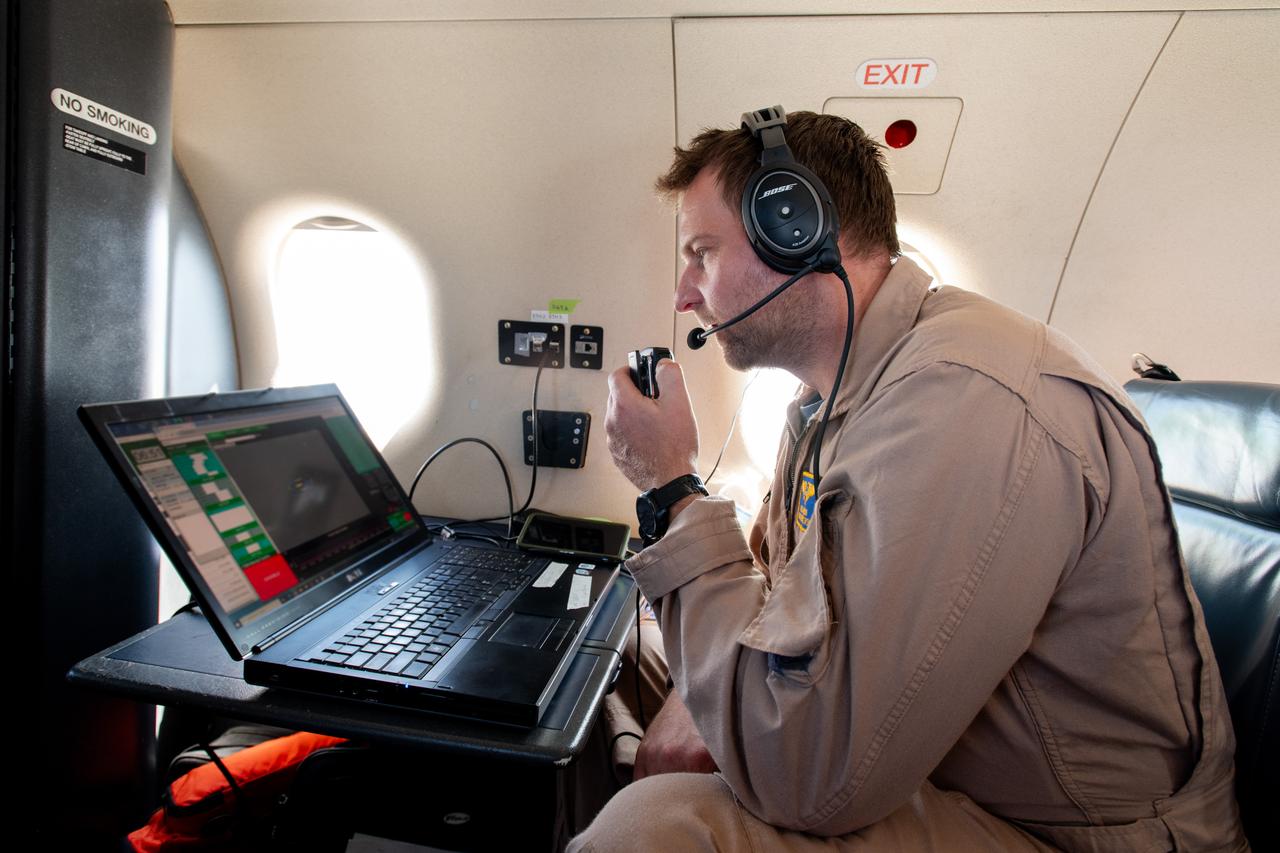
A team at NASA’s Glenn Research Center in Cleveland streamed 4K video footage from an aircraft to the International Space Station and back for the first time using optical, or laser, communications. The feat was part of a series of tests on new technology that could provide live video coverage of astronauts on the Moon during the Artemis missions. Working with the Air Force Research Laboratory and NASA’s Small Business Innovation Research program, Glenn engineers temporarily installed a portable laser terminal on the belly of a Pilatus PC-12 aircraft. They then flew over Lake Erie sending data from the aircraft to an optical ground station in Cleveland. From there, it was sent over an Earth-based network to NASA’s White Sands Test Facility in Las Cruces, New Mexico, where scientists used infrared light signals to send the data. Photo Credit: (NASA/Sara Lowthian-Hanna)
A team at NASA’s Glenn Research Center in Cleveland streamed 4K video footage from an aircraft to the International Space Station and back for the first time using optical, or laser, communications. The feat was part of a series of tests on new technology that could provide live video coverage of astronauts on the Moon during the Artemis missions. Working with the Air Force Research Laboratory and NASA’s Small Business Innovation Research program, Glenn engineers temporarily installed a portable laser terminal on the belly of a Pilatus PC-12 aircraft. They then flew over Lake Erie sending data from the aircraft to an optical ground station in Cleveland. From there, it was sent over an Earth-based network to NASA’s White Sands Test Facility in Las Cruces, New Mexico, where scientists used infrared light signals to send the data.
A team at NASA’s Glenn Research Center in Cleveland streamed 4K video footage from an aircraft to the International Space Station and back for the first time using optical, or laser, communications. The feat was part of a series of tests on new technology that could provide live video coverage of astronauts on the Moon during the Artemis missions. Working with the Air Force Research Laboratory and NASA’s Small Business Innovation Research program, Glenn engineers temporarily installed a portable laser terminal on the belly of a Pilatus PC-12 aircraft. They then flew over Lake Erie sending data from the aircraft to an optical ground station in Cleveland. From there, it was sent over an Earth-based network to NASA’s White Sands Test Facility in Las Cruces, New Mexico, where scientists used infrared light signals to send the data.
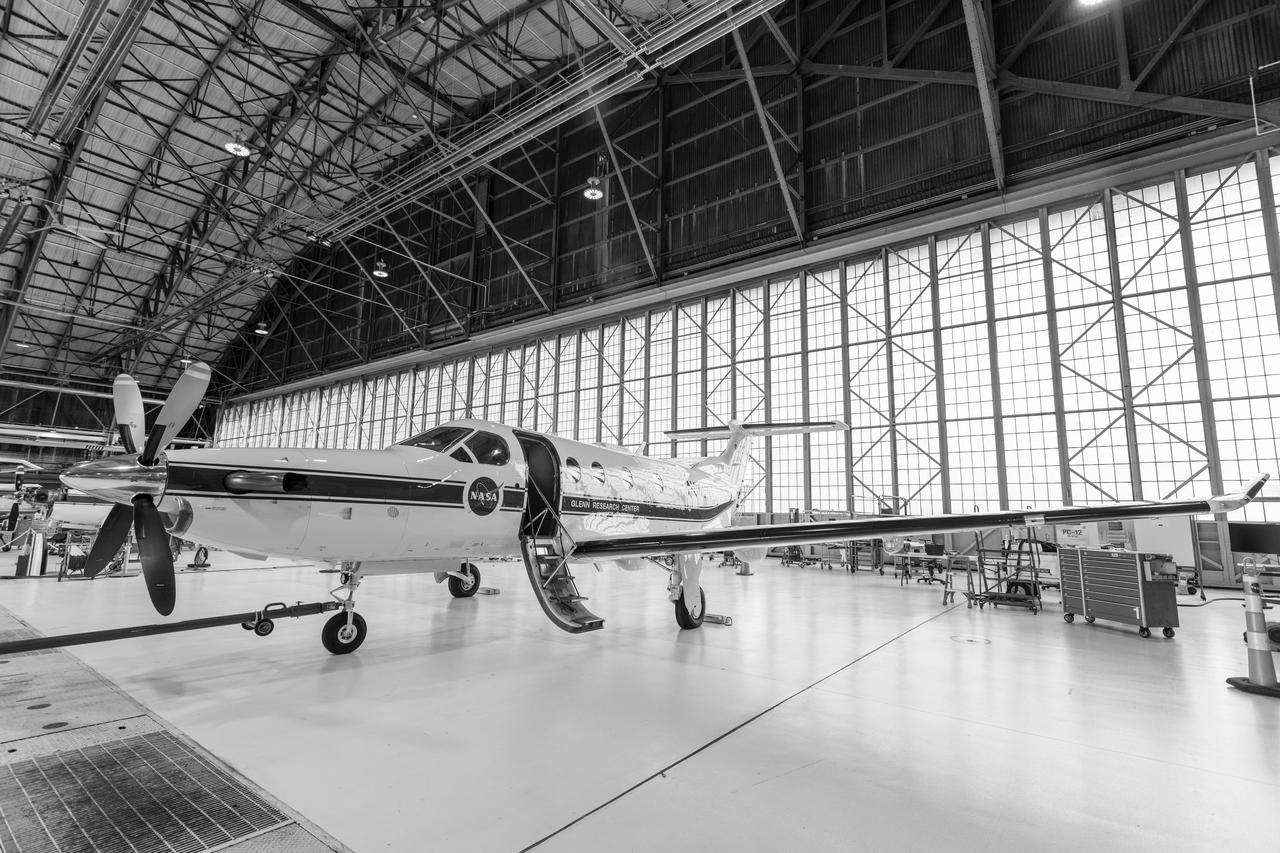
A team at NASA’s Glenn Research Center in Cleveland streamed 4K video footage from an aircraft to the International Space Station and back for the first time using optical, or laser, communications. The feat was part of a series of tests on new technology that could provide live video coverage of astronauts on the Moon during the Artemis missions. Working with the Air Force Research Laboratory and NASA’s Small Business Innovation Research program, Glenn engineers temporarily installed a portable laser terminal on the belly of a Pilatus PC-12 aircraft. They then flew over Lake Erie sending data from the aircraft to an optical ground station in Cleveland. From there, it was sent over an Earth-based network to NASA’s White Sands Test Facility in Las Cruces, New Mexico, where scientists used infrared light signals to send the data.
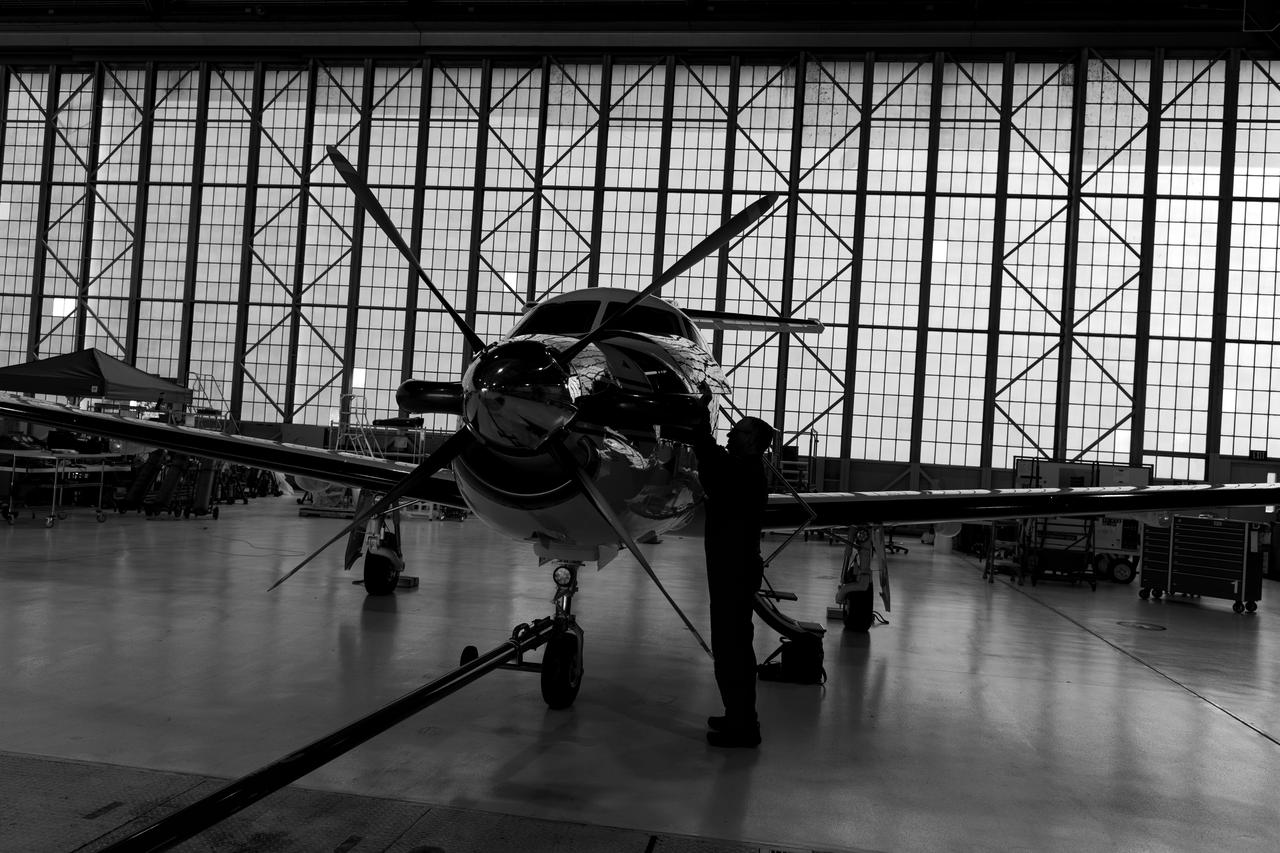
Pilatus PC-12 Aircraft Being Prepped for Takeoff on June 12, 2024. A team at NASA’s Glenn Research Center in Cleveland streamed 4K video footage from an aircraft to the International Space Station and back for the first time using optical, or laser, communications. The feat was part of a series of tests on new technology that could provide live video coverage of astronauts on the Moon during the Artemis missions. Working with the Air Force Research Laboratory and NASA’s Small Business Innovation Research program, Glenn engineers temporarily installed a portable laser terminal on the belly of a Pilatus PC-12 aircraft. They then flew over Lake Erie sending data from the aircraft to an optical ground station in Cleveland. From there, it was sent over an Earth-based network to NASA’s White Sands Test Facility in Las Cruces, New Mexico, where scientists used infrared light signals to send the data. Photo Credit: (NASA/Sara Lowthian-Hanna)

A team at NASA’s Glenn Research Center in Cleveland streamed 4K video footage from an aircraft to the International Space Station and back for the first time using optical, or laser, communications. The feat was part of a series of tests on new technology that could provide live video coverage of astronauts on the Moon during the Artemis missions. Working with the Air Force Research Laboratory and NASA’s Small Business Innovation Research program, Glenn engineers temporarily installed a portable laser terminal on the belly of a Pilatus PC-12 aircraft. They then flew over Lake Erie sending data from the aircraft to an optical ground station in Cleveland. From there, it was sent over an Earth-based network to NASA’s White Sands Test Facility in Las Cruces, New Mexico, where scientists used infrared light signals to send the data.

A team at NASA’s Glenn Research Center in Cleveland streamed 4K video footage from an aircraft to the International Space Station and back for the first time using optical, or laser, communications. The feat was part of a series of tests on new technology that could provide live video coverage of astronauts on the Moon during the Artemis missions. Pictured from Left to Right: James Demers, Adam Wroblewski, Shaun McKeehan, Kurt Blankenship. Working with the Air Force Research Laboratory and NASA’s Small Business Innovation Research program, Glenn engineers temporarily installed a portable laser terminal on the belly of a Pilatus PC-12 aircraft. They then flew over Lake Erie sending data from the aircraft to an optical ground station in Cleveland. From there, it was sent over an Earth-based network to NASA’s White Sands Test Facility in Las Cruces, New Mexico, where scientists used infrared light signals to send the data.
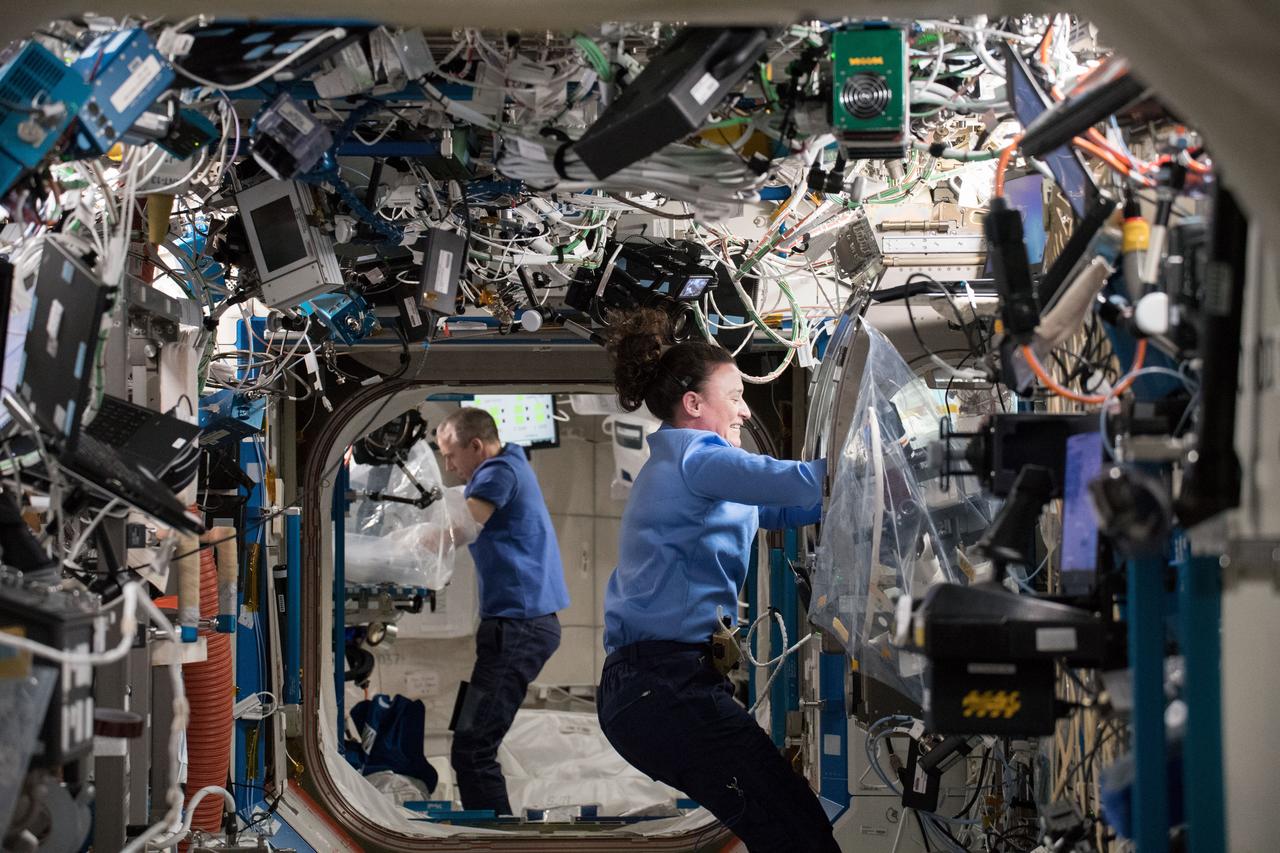
iss056e131403 (7/31/2018) --- NASA astronaut Serena Auñón-Chancellor conducts research operations for the AngieX Cancer Therapy study inside the Microgravity Science Glovebox. The new cancer research seeks to test a safer, more effective treatment that targets tumor cells and blood vessels. In the background, NASA astronaut Drew Feustel can be seen working on the Microgravity Investigation of Cement Solidification (MICS) 2 experiment aboard the International Space Station. MICS 2 is researching how cement reacts in space during the hardening process and may help engineers better understand its microstructure and material properties.
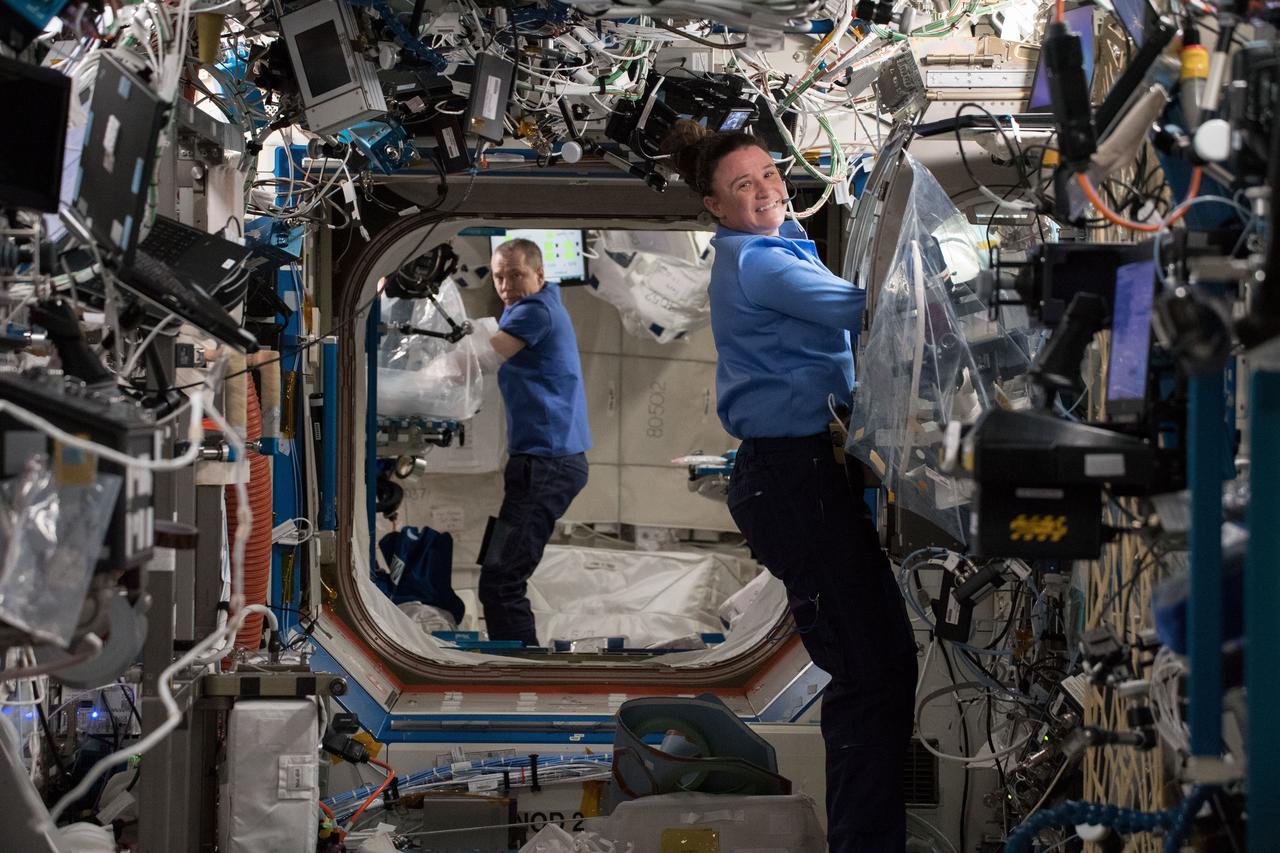
iss056e131400 (7/31/2018) --- NASA astronaut Serena Auñón-Chancellor conducts research operations for the AngieX Cancer Therapy study inside the Microgravity Science Glovebox. The new cancer research seeks to test a safer, more effective treatment that targets tumor cells and blood vessels. In the background, NASA astronaut Drew Feustel can be seen working on the Microgravity Investigation of Cement Solidification (MICS) 2 experiment aboard the International Space Station. MICS 2 is researching how cement reacts in space during the hardening process and may help engineers better understand its microstructure and material properties.

This artist's concept depicts the completely assembled International Space Station (ISS) passing over Florida and the Bahamas. As a gateway to permanent human presence in space, the Space Station Program is to expand knowledge benefiting all people and nations. The ISS is a multidisciplinary laboratory, technology test bed, and observatory that will provide unprecedented undertakings in scientific, technological, and international experimentation. Experiments to be conducted in the ISS include: microgravity research, Earth science, space science, life sciences, space product development, and engineering research and technology. The sixteen countries participating in the ISS are: United States, Russian Federation, Canada, Japan, United Kingdom, Germany, Italy, France, Norway, Netherlands, Belgium, Spain, Denmark, Sweden, Switzerland, and Brazil.

This artist's digital concept depicts the completely assembled International Space Station (ISS) passing over Florida. As a gateway to permanent human presence in space, the Space Station Program is to expand knowledge benefiting all people and nations. The ISS is a multidisciplinary laboratory, technology test bed, and observatory that will provide unprecedented undertakings in scientific, technological, and international experimentation. Experiments to be conducted in the ISS include: microgravity research, Earth science, space science, life sciences, space product development, and engineering research and technology. The sixteen countries participating the ISS are: United States, Russian Federation, Canada, Japan, United Kingdom, Germany, Italy, France, Norway, Netherlands, Belgium, Spain, Denmark, Sweden, Switzerland, and Brazil.
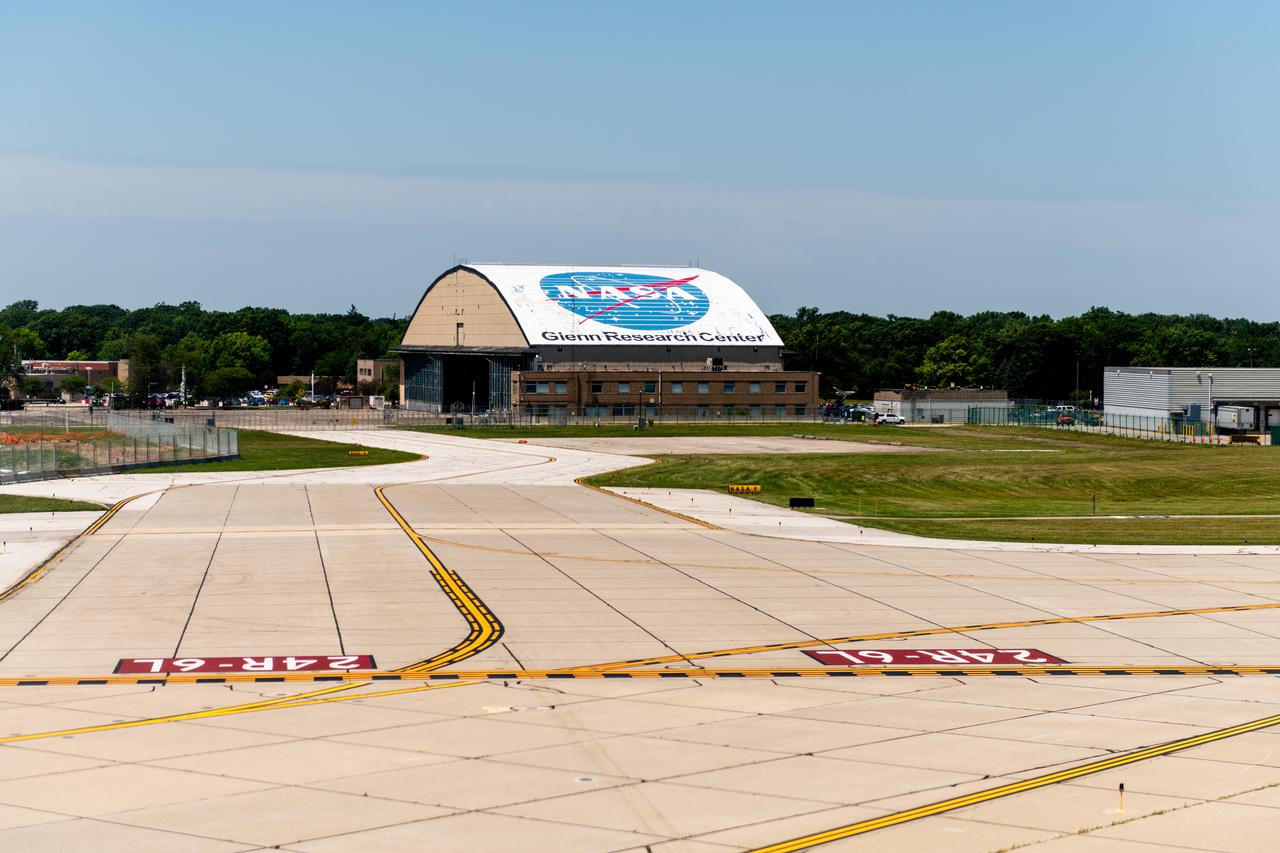
View of the Glenn Research Center Hangar from the Cleveland Hopkins Airport Runway during a testing flight on June 13, 2024. A team at NASA’s Glenn Research Center in Cleveland streamed 4K video footage from an aircraft to the International Space Station and back for the first time using optical, or laser, communications. The feat was part of a series of tests on new technology that could provide live video coverage of astronauts on the Moon during the Artemis missions. Working with the Air Force Research Laboratory and NASA’s Small Business Innovation Research program, Glenn engineers temporarily installed a portable laser terminal on the belly of a Pilatus PC-12 aircraft. They then flew over Lake Erie sending data from the aircraft to an optical ground station in Cleveland. From there, it was sent over an Earth-based network to NASA’s White Sands Test Facility in Las Cruces, New Mexico, where scientists used infrared light signals to send the data. Photo Credit: (NASA/Sara Lowthian-Hanna)

An engineer monitors a Boeing CST-100 Starliner spacecraft inside Boeing's Commercial Crew and Cargo Processing Facility at NASA's Kennedy Space Center in Florida. This was the first time "Spacecraft 1," as the individual Starliner is known, was powered up. It is being assembled for use during a pad abort test that will demonstrate the Starliners' ability to lift astronauts out of danger in the unlikely event of an emergency. Later flight tests will demonstrate Starliners in orbital missions to the station without a crew, and then with astronauts aboard. The flight tests will preview the crew rotation missions future Starliners will perform as they take up to four astronauts at a time to the orbiting laboratory in order to enhance the research taking place there

SpaceX’s Crew Dragon is at NASA’s Glenn Research Center, Plum Brook Station in Ohio, ready to undergo testing in the In-Space Propulsion Facility — the world’s only facility capable of testing full-scale upper-stage launch vehicles and rocket engines under simulated high-altitude conditions. The chamber will allow SpaceX and NASA to verify Crew Dragon’s ability to withstand the extreme temperatures and vacuum of space. This is the spacecraft that SpaceX will fly during its Demonstration Mission 1 flight test under NASA’s Commercial Crew Transportation Capability contract with the goal of returning human spaceflight launch capabilities to the U.S.
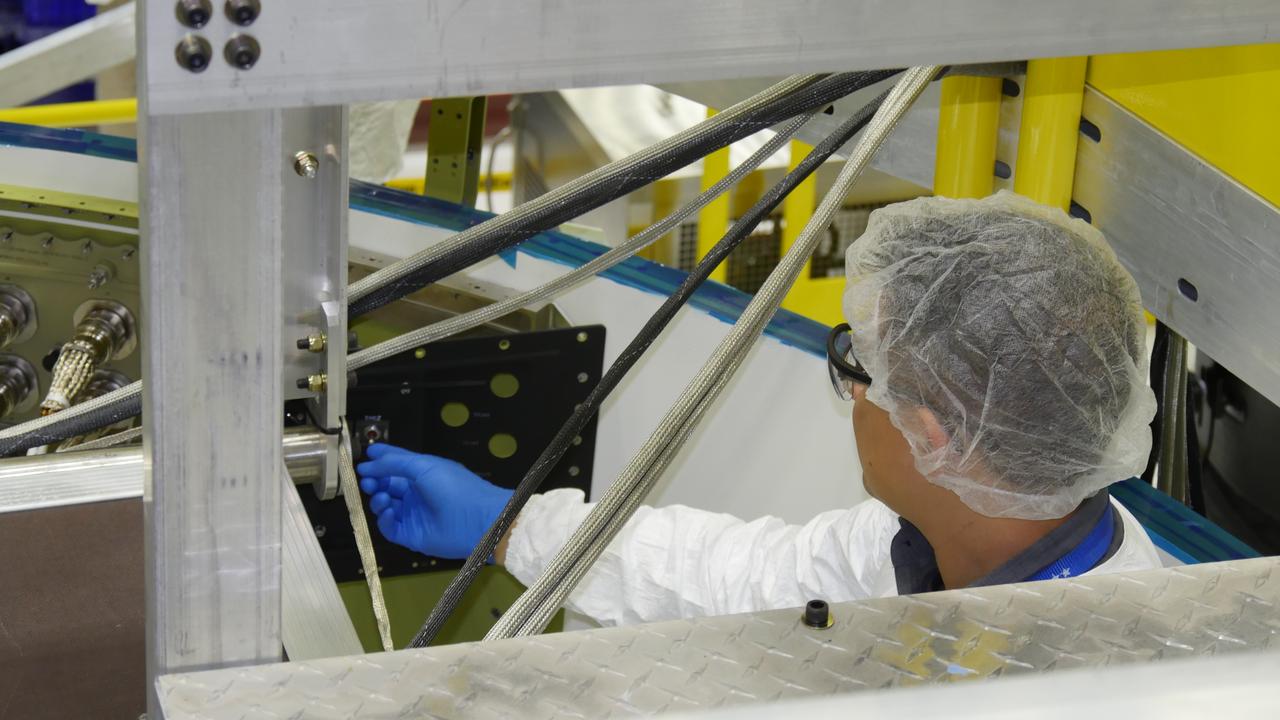
An engineer works the switch to power on a Boeing CST-100 Starliner spacecraft inside Boeing's Commercial Crew and Cargo Processing Facility at NASA's Kennedy Space Center in Florida. This was the first time "Spacecraft 1," as the individual Starliner is known, was powered up. It is being assembled for use during a pad abort test that will demonstrate the Starliners' ability to lift astronauts out of danger in the unlikely event of an emergency. Later flight tests will demonstrate Starliners in orbital missions to the station without a crew, and then with astronauts aboard. The flight tests will preview the crew rotation missions future Starliners will perform as they take up to four astronauts at a time to the orbiting laboratory in order to enhance the research taking place there.
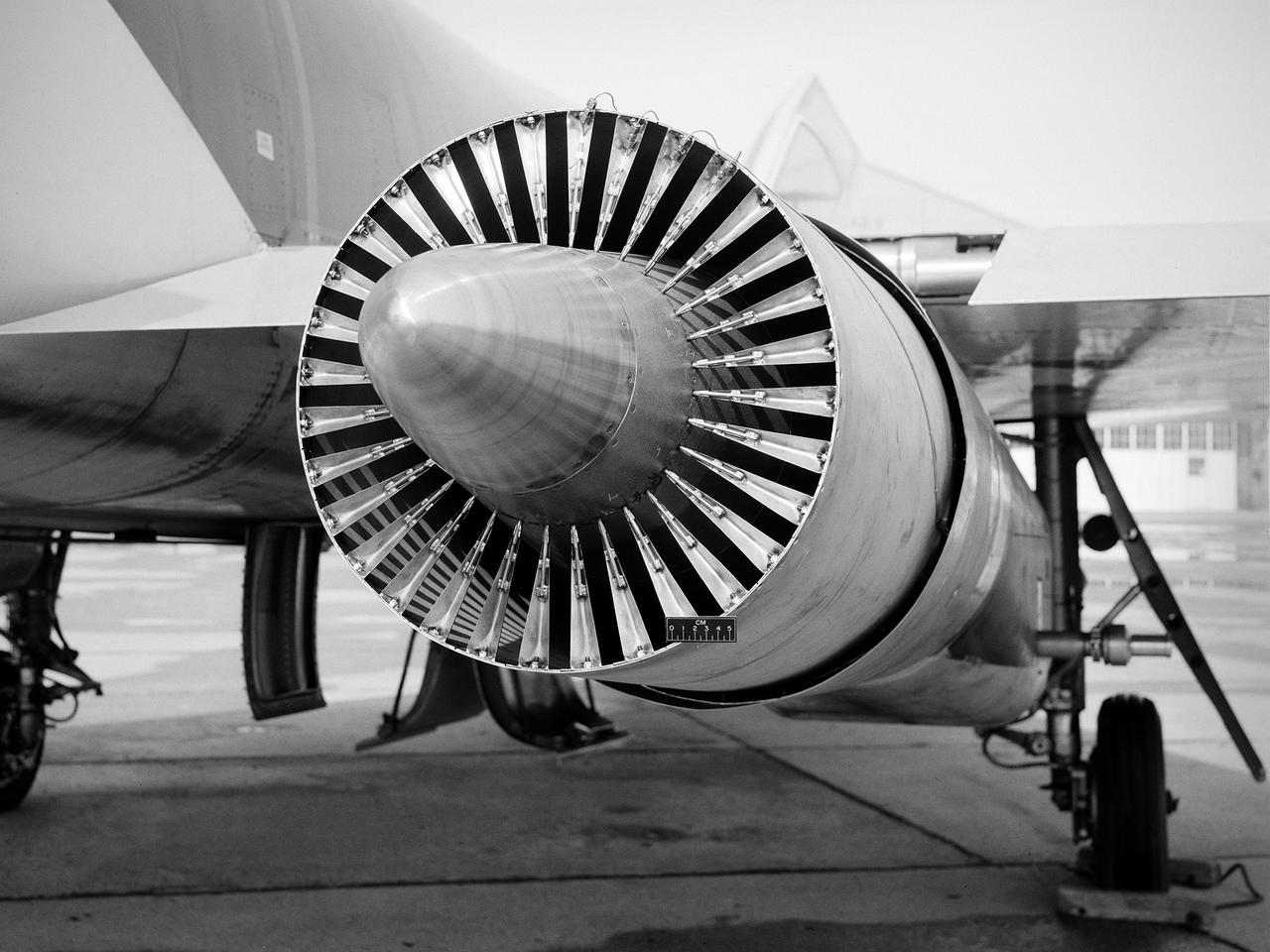
National Aeronautics and Space Administration (NASA) Convair F-106B Delta Dart with a 32-spoke nozzle installed on its General Electric J85 test engine. Lewis acquired a Delta Dart fighter in 1966 to study the components for propulsion systems that could be applied to supersonic transport aircraft at transonic speeds. The F-106B was modified with two General Electric J85-13 engines under its wings to study these components. The original test plan was expanded to include the study of boattail drag, noise reduction, and inlets. From February to July 1971 the modified F-106B was used to study different ejector nozzles. Researchers conducted both acoustic and aerodynamic tests on the ground and in flight. Several models were created to test different suppression methods. NASA Lewis’ conical nozzle was used as the baseline configuration. Flightline and sideline microphones were set up on the ground. The F-106B would idle its own engine and buzz the recording station from an altitude of 300 feet at Mach 0.4 with the test engines firing. Researchers found that the suppression of the perceived noise level was usually lower during flight than the researchers had statistically predicted. The 64 and 32-spoke nozzles performed well in actual flight, but the others nozzles tended to negatively affect the engine’s performance. Different speeds or angles- -of-attack sometimes changed the noise levels. In the end, no general conclusions could be applied to all the nozzles.
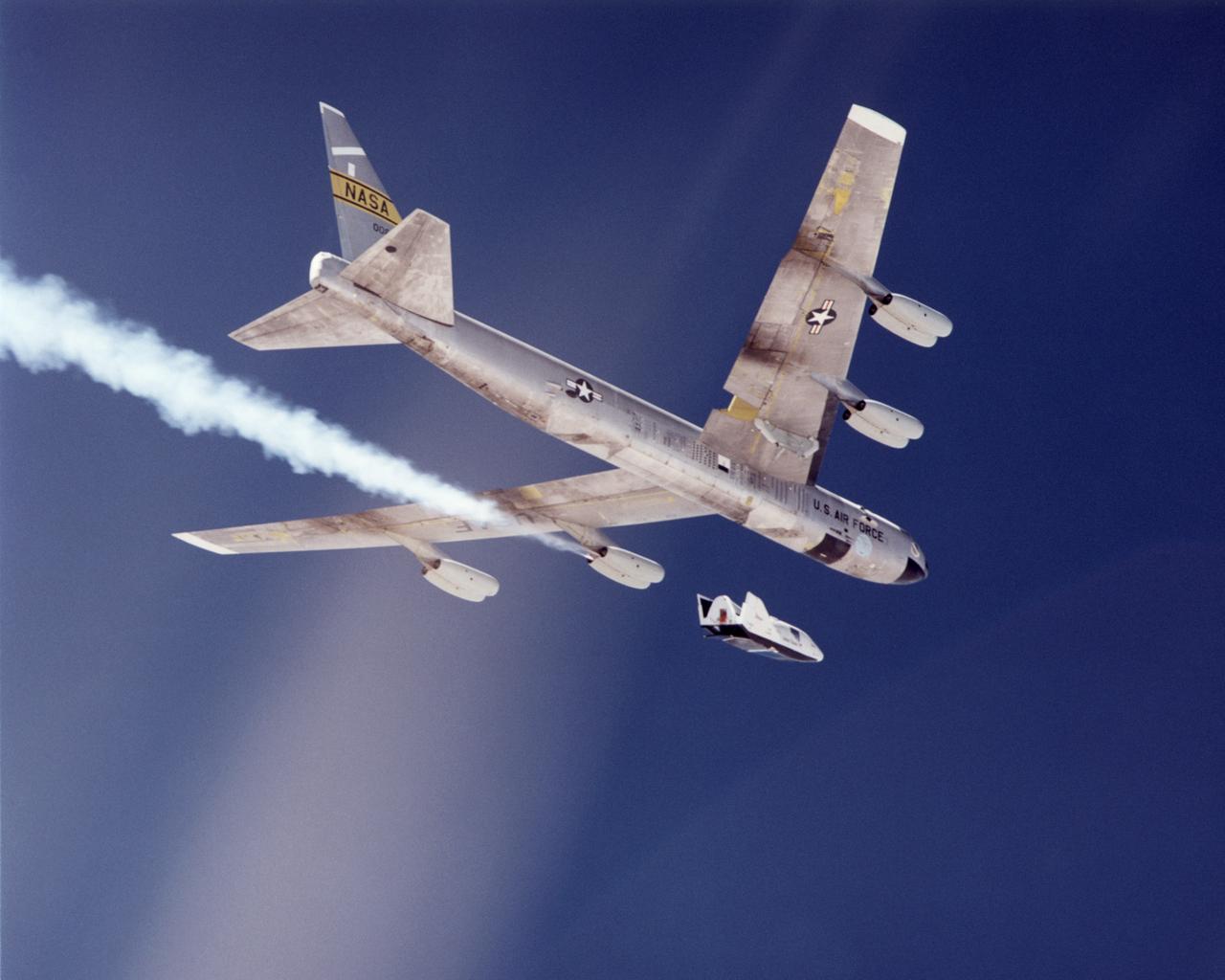
The second free-flight test of an evolving series of X-38 prototypes took place July 10, 2001 when the X-38 was released from NASA's B-52 mothership over the Edwards Air Force Base range in California's Mojave Desert. Shortly after the photo was taken, a sequenced deployment of a drogue parachute followed by a large parafoil fabric wing slowed the X-38 to enable it to land safely on Rogers Dry Lake at Edwards. NASA engineers from the Dryden Flight Research Center at Edwards, and the Johnson Space Center, Houston, Texas, are developing a "lifeboat" for the International Space Station based on X-38 research.
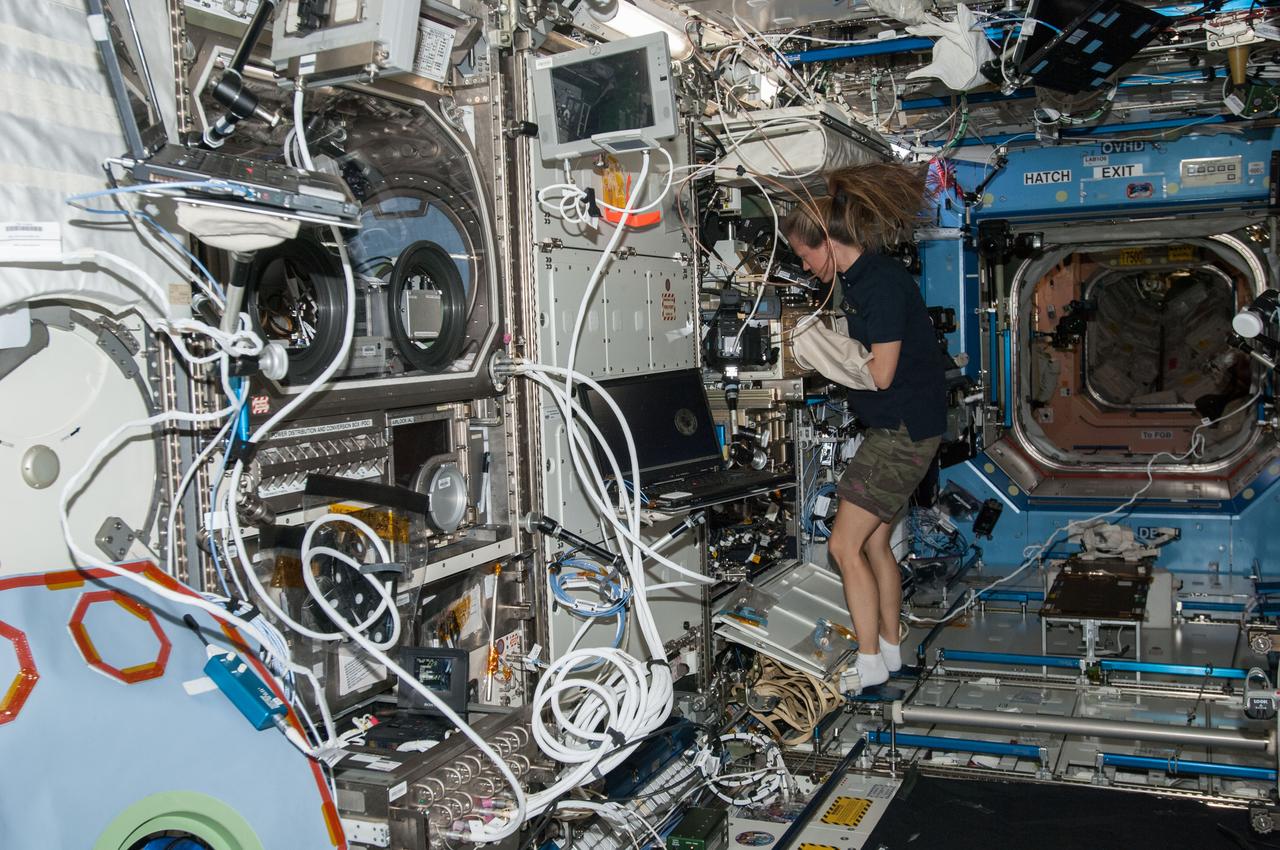
ISS036-E-033948 (18 Aug. 2013) --- NASA astronaut Karen Nyberg, Expedition 36 flight engineer, works with new test samples for the Advanced Colloids Experiment, or ACE, housed in the Light Microscopy Module (LMM) inside the Fluids Integrated Rack of the International Space Station?s Destiny laboratory. Results from ACE will help researchers understand how to optimize stabilizers to extend the shelf life of products like laundry detergent, paint, ketchup and even salad dressing.
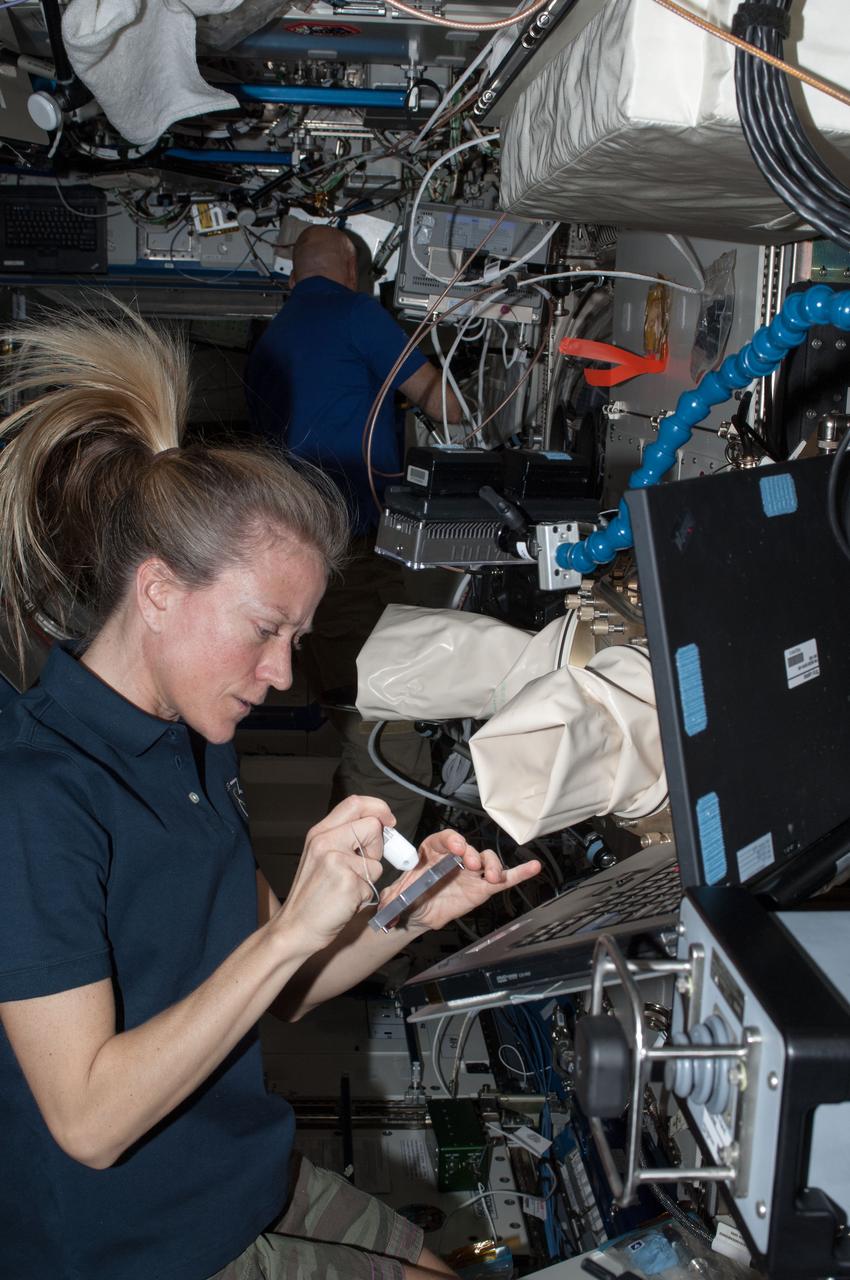
ISS036-E-035770 (18 Aug. 2013) --- NASA astronaut Karen Nyberg, Expedition 36 flight engineer, works with new test samples for the Advanced Colloids Experiment, or ACE, housed in the Light Microscopy Module (LMM) inside the Fluids Integrated Rack of the International Space Station?s Destiny laboratory. Results from ACE will help researchers understand how to optimize stabilizers to extend the shelf life of products like laundry detergent, paint, ketchup and even salad dressing.
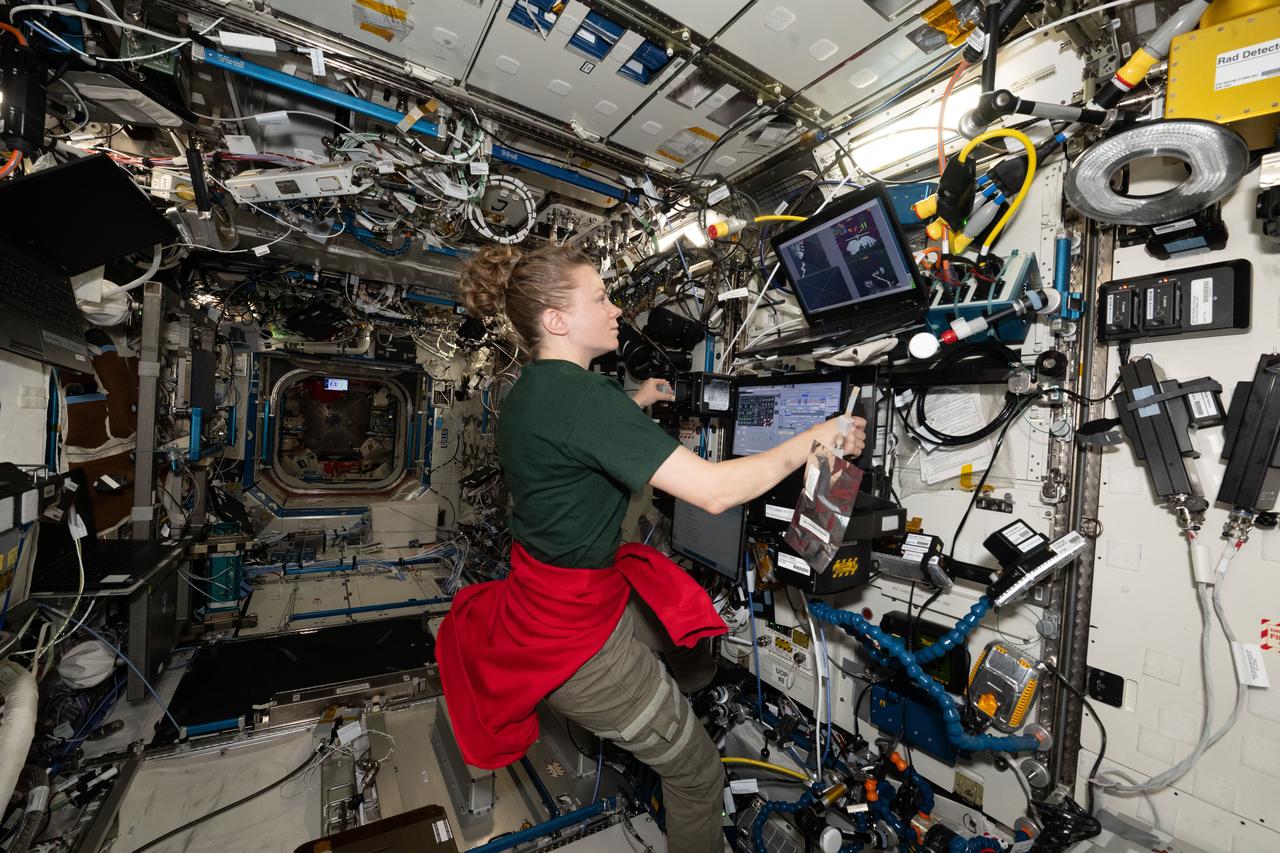
iss073e0505925 (Aug. 15, 2025) --- NASA astronaut and Expedition 73 Flight Engineer Zena Cardman operates the robotics workstation in the International Space Station’s Destiny laboratory module during a computerized test tracking space-related effects on her brain function. Part of the CIPHER suite of 14 human research investigations, the cognition study could lead to advanced tools like brain scans and task simulations for future long-duration missions.
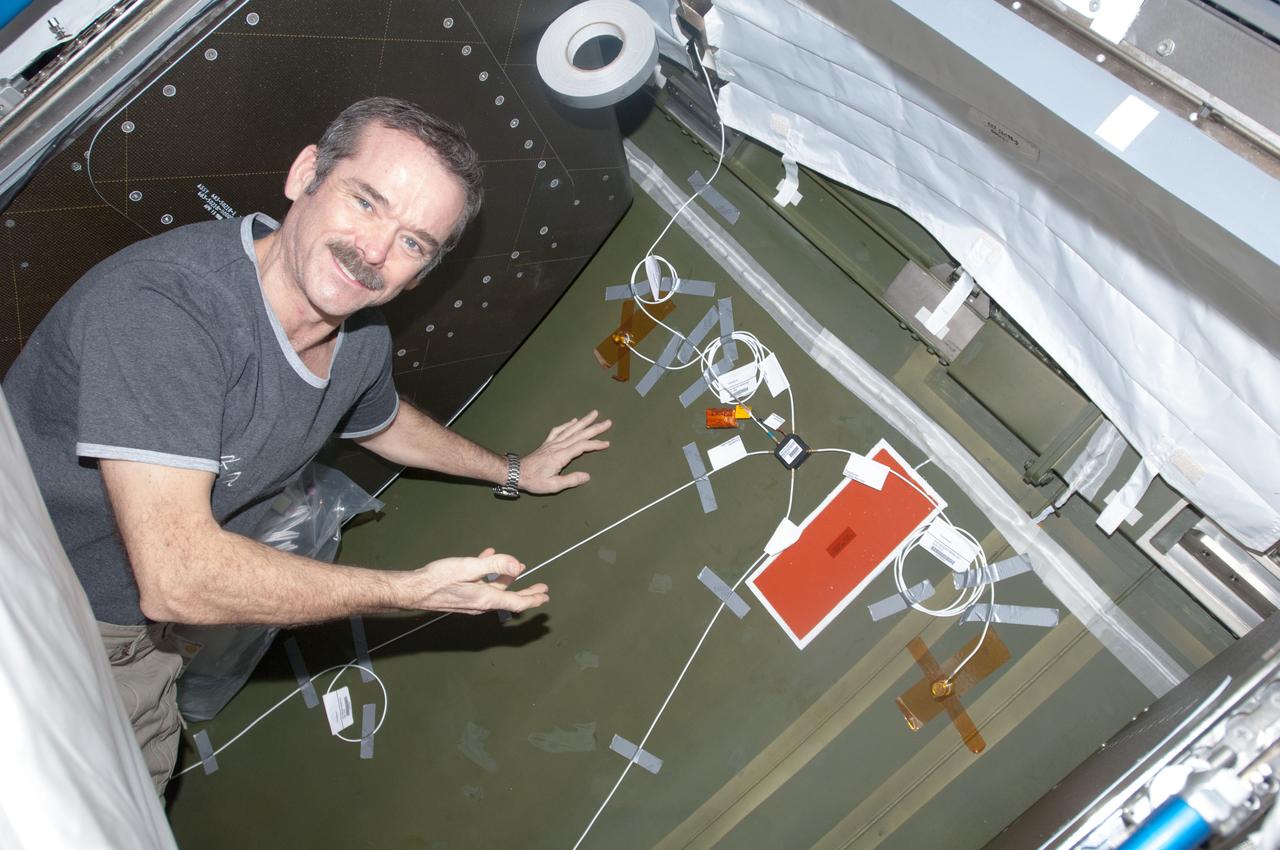
View of Canadian Space Agency (CSA) Chris Hadfield,Expedition 34 Flight Engineer (FE),installing Ultra-Sonic Background Noise Tests (UBNT) sensors behind rack in the U.S. Laboratory using the International Space Station (ISS) as Testbed for Analog Research (ISTAR) procedures. These sensors detect high frequency noise levels generated by ISS hardware and equipment operating within the U.S. Laboratory. Photo was taken during Expedition 34.
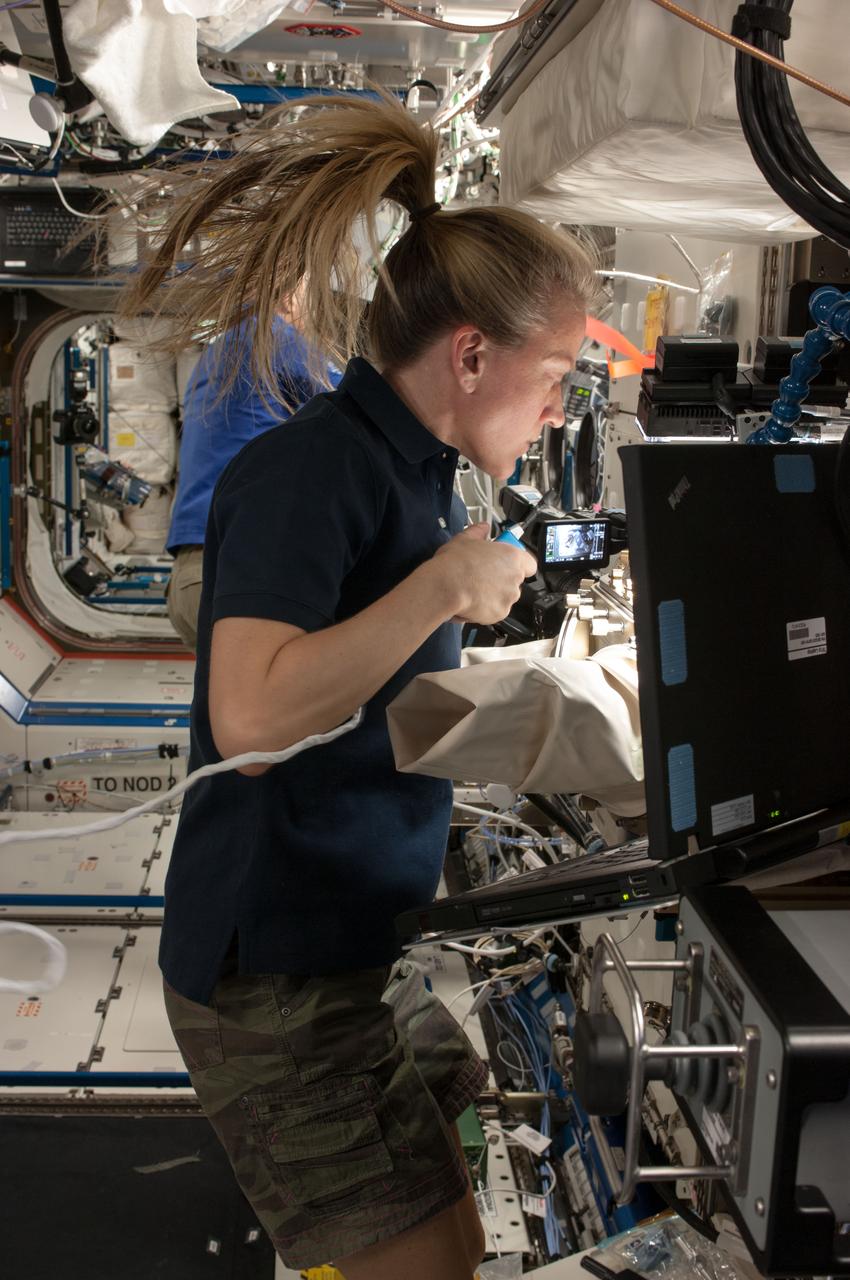
ISS036-E-035780 (18 Aug. 2013) --- NASA astronaut Karen Nyberg, Expedition 36 flight engineer, works with new test samples for the Advanced Colloids Experiment, or ACE, housed in the Light Microscopy Module (LMM) inside the Fluids Integrated Rack of the International Space Station?s Destiny laboratory. Results from ACE will help researchers understand how to optimize stabilizers to extend the shelf life of products like laundry detergent, paint, ketchup and even salad dressing.
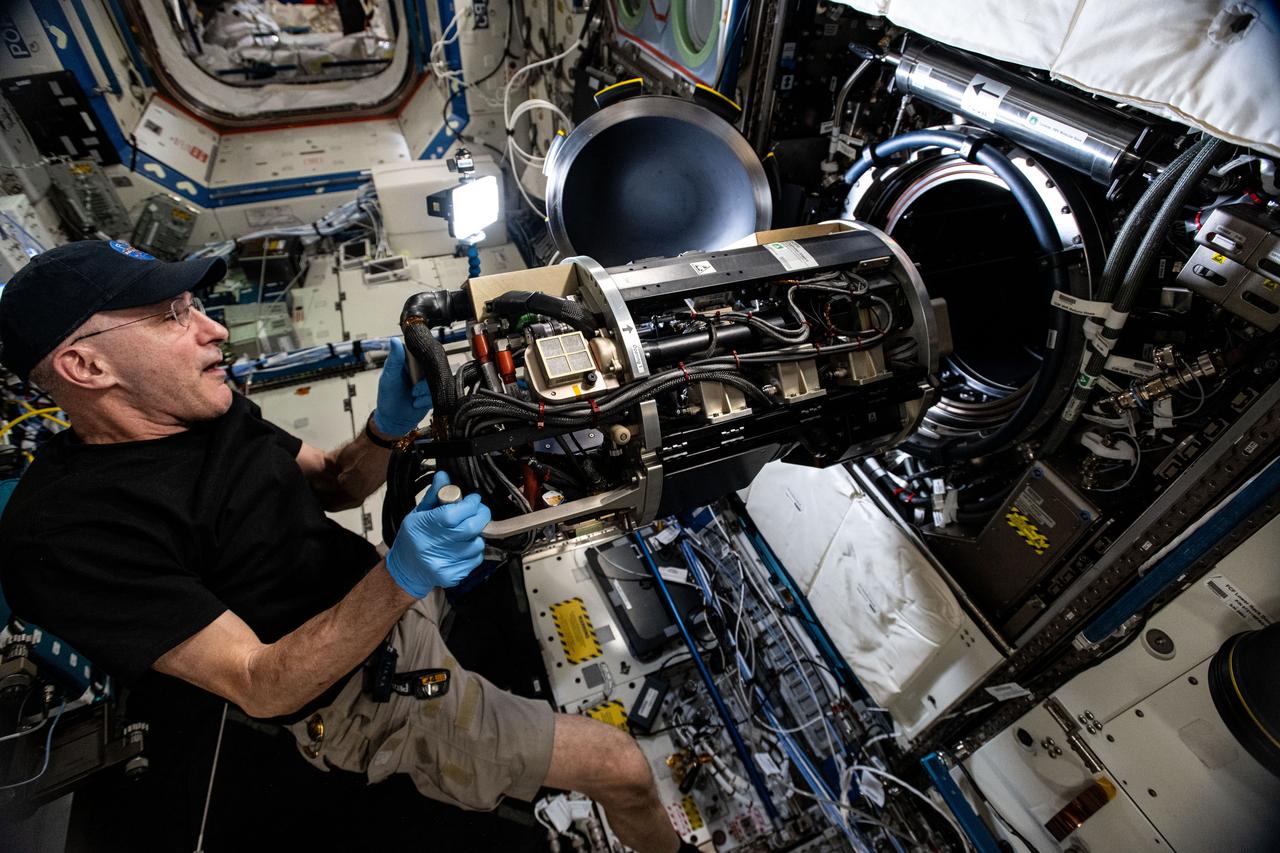
iss072e747154 (March 18, 2025) --- NASA astronaut and Expedition 72 Flight Engineer Don Pettit inserts research hardware into the Combustion Integrated Rack located inside the International Space Station's Destiny laboratory module. Pettit was configuring the SoFIE-MIST, or the Solid Fuel Ignition and Extinction - Material Ignition and Suppression Test, investigation that is exploring the flammability of materials in microgravity to improve spacecraft fire safety.
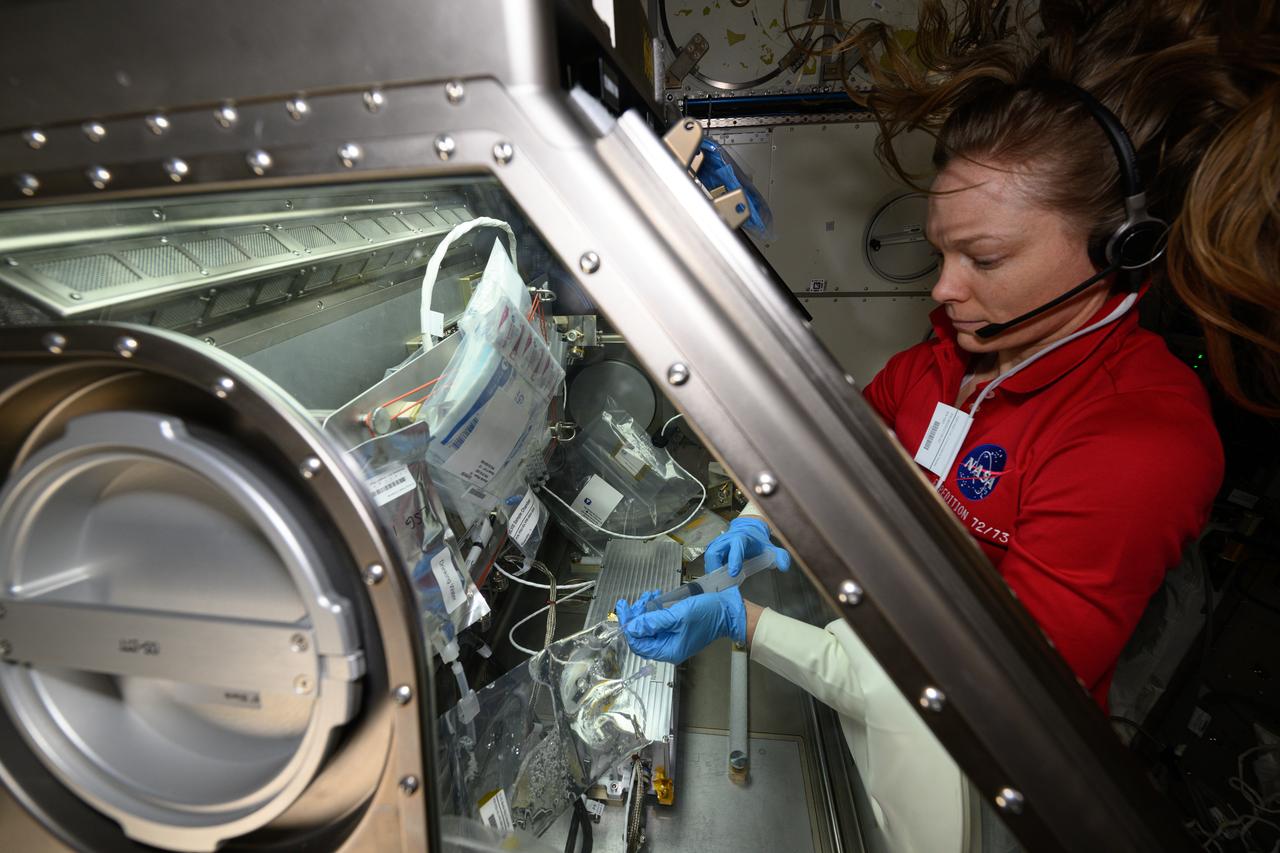
iss073e0118830 (May 30, 2025) --- NASA astronaut and Expedition 73 Flight Engineer Nichole Ayers conducts research operations inside the Kibo laboratory module's Life Science Glovebox aboard the International Space Station. Ayers was processing samples of deep-sea bacteria to test a specialized 3D microscope for its ability to monitor water quality, detect potentially infectious organisms, and study liquid mixtures and microorganisms in space and on Earth.
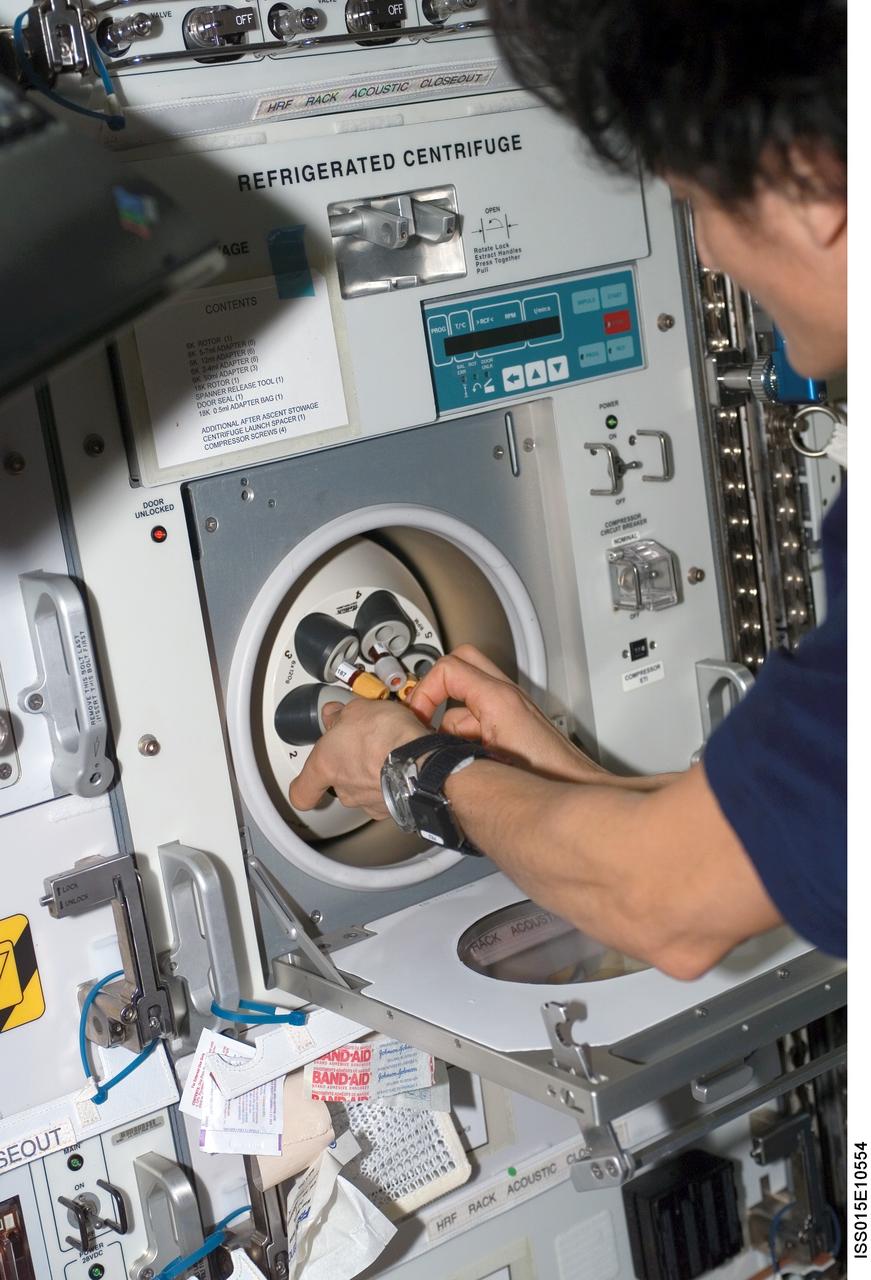
ISS015-E-10554 (1 June 2007) --- Astronaut Sunita L. Williams, Expedition 15 flight engineer, loads test samples in the Human Research Facility 2 (HRF-2) Refrigerated Centrifuge as a part of the Nutritional Status Assessment (Nutrition) experiment in the Destiny laboratory of the International Space Station. The results of the Nutrition experiment will be used to better understand the time course effects of space flight on human physiology.
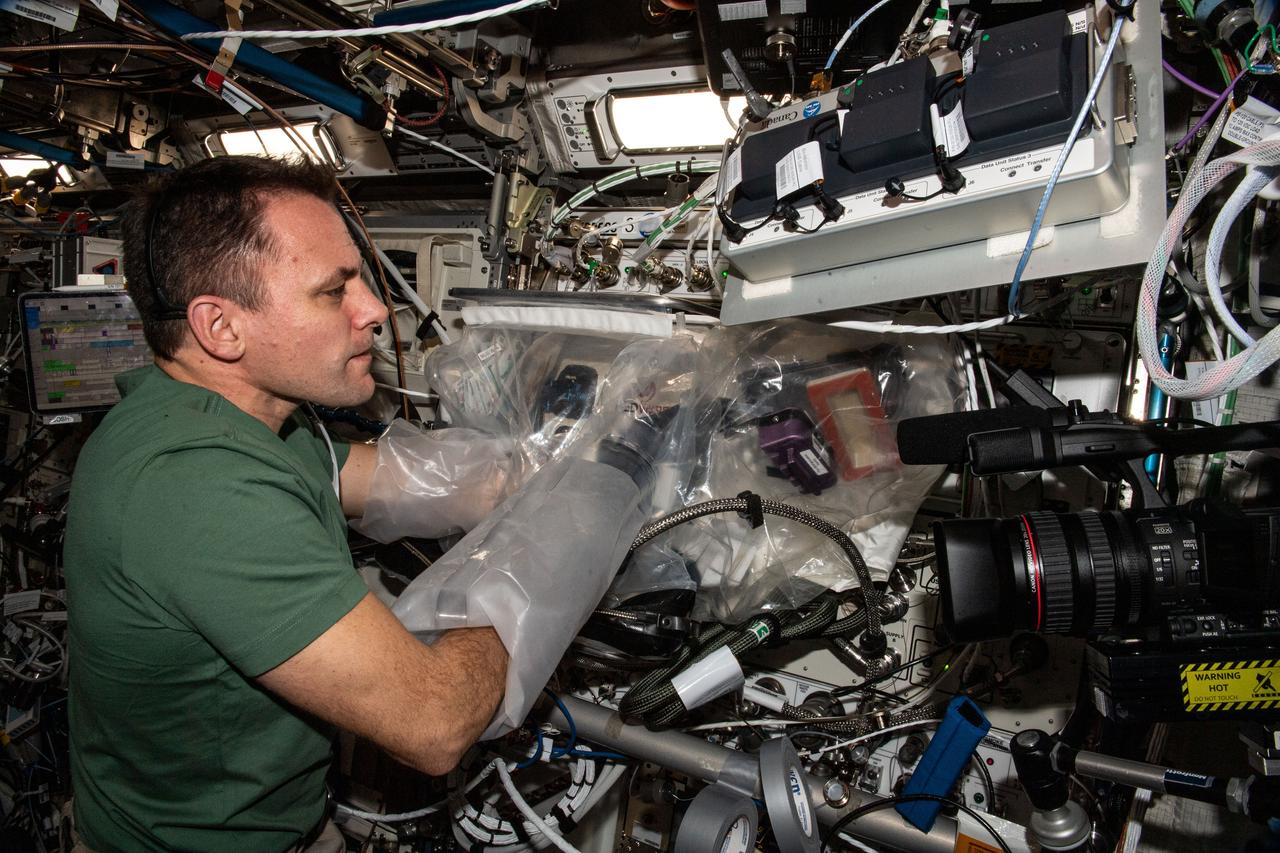
iss068e053964 (Feb. 14, 2023) --- NASA astronaut and Expedition 68 Flight Engineer Josh Cassada uses a plastic glovebox attached to the BioFabrication Facility (BFF) and tests the research device's performance. The BFF is located in the International Space Station's Columbus laboratory module and seeks to take advantage of the microgravity environment and demonstrate the printing of organ-like tissues in space which may lead to the future manufacturing of human organs.
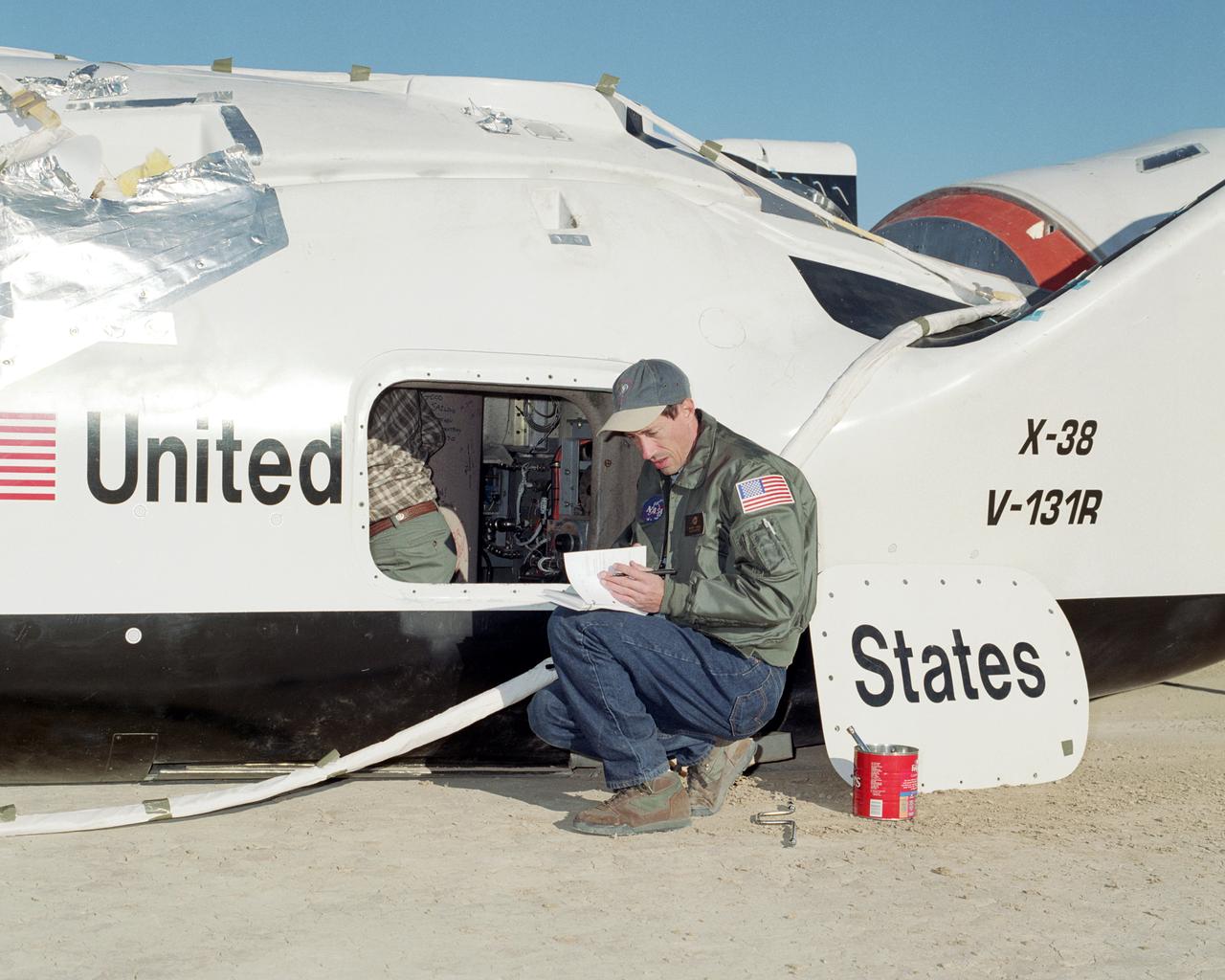
NASA engineer Wayne Peterson from the Johnson Space Center reviews postflight checklists following a spectacular flight of the X-38 prototype for a crew recovery vehicle that may be built for the International Space Station. The X-38 tested atmospheric flight characteristics on December 13, 2001, in a descent from 45,000 feet to Rogers Dry Lake at the NASA Dryden Flight Research Center/Edwards Air Force Base complex in California.
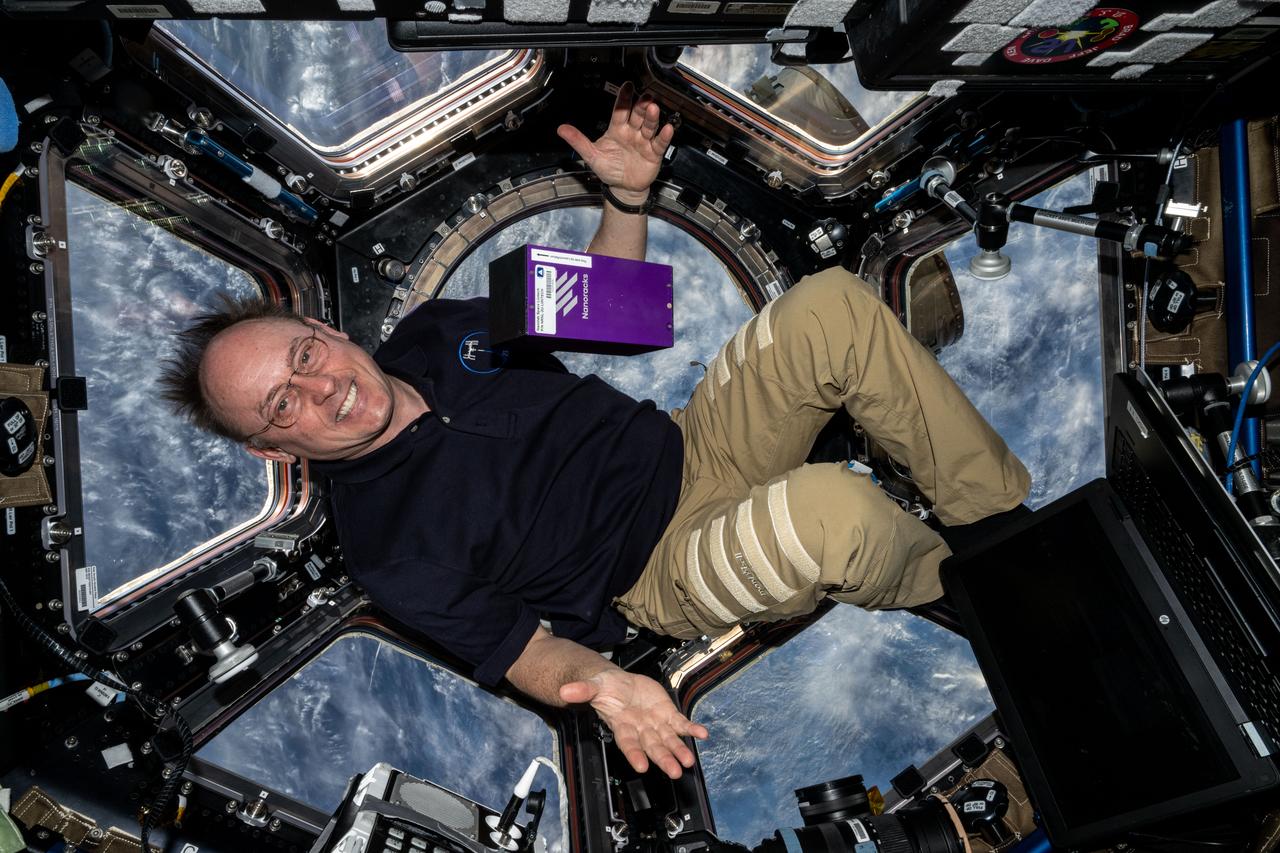
iss073e0548503 (Aug. 28, 2025) --- NASA astronaut and Expedtion 73 Flight Engineer Mike Fincke displays the Nanoracks' Nanolab Space Liintech research hardware inside the International Space Station's cupola while orbiting 262 miles above a cloudy United States. Nanolab Space LiinTech tests a platform that uses optical technology to monitor the process of producing protein crystals in microgravity. This investigation could lead to the development of technology for crystallizing proteins in microgravity to produce pharmaceuticals for use in space and Earth.
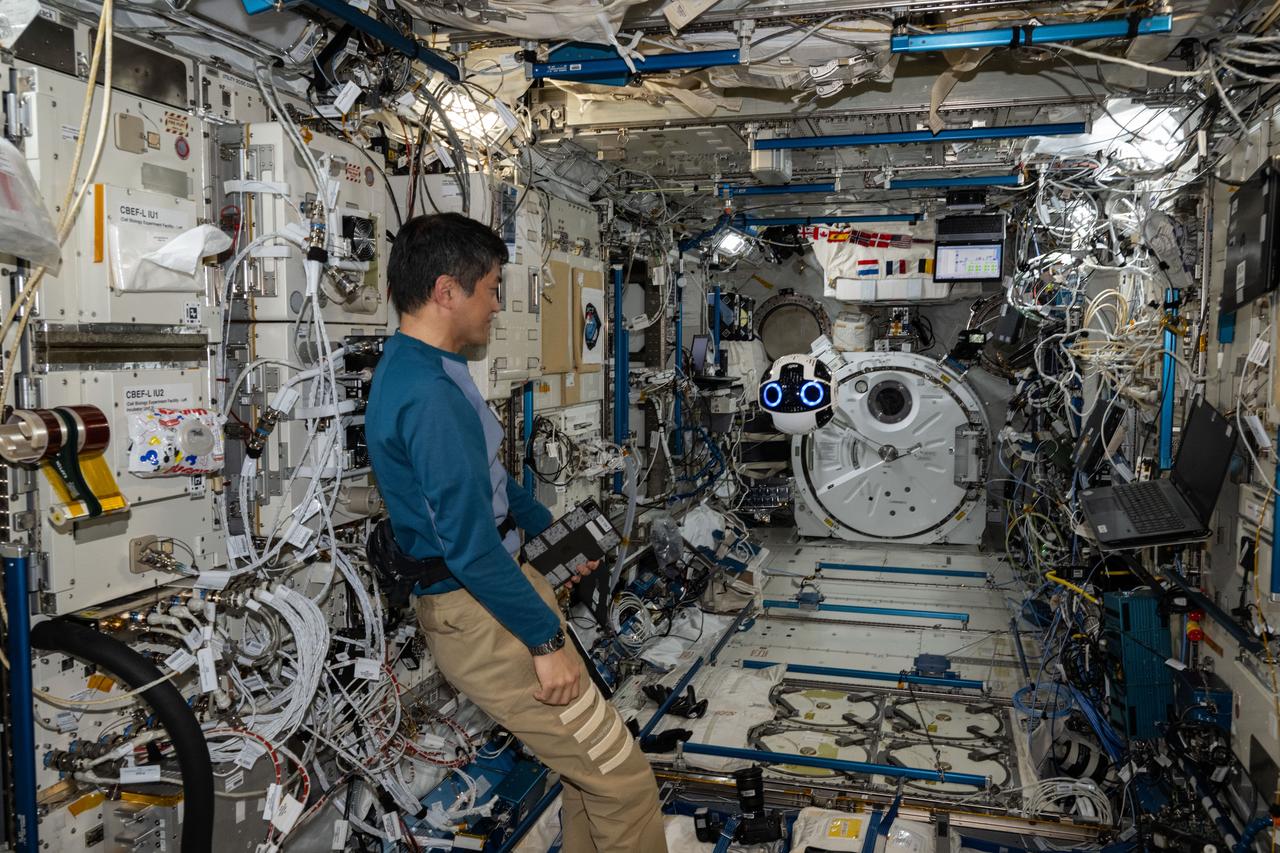
iss072e859359 (March 26, 2025) --- JAXA (Japan Aerospace Exploration Agency) astronaut and Expediion 72 Flight Engineer Takuya Onishi monitors the Japanese Experiment Module Internal Ball Camera 2 aboard the International Space Station's Kibo laboratory module. The spherical, free-flying robotic camera tests the automation of capturing video and imagery enabling more crew time for important duties such as microgravity research.
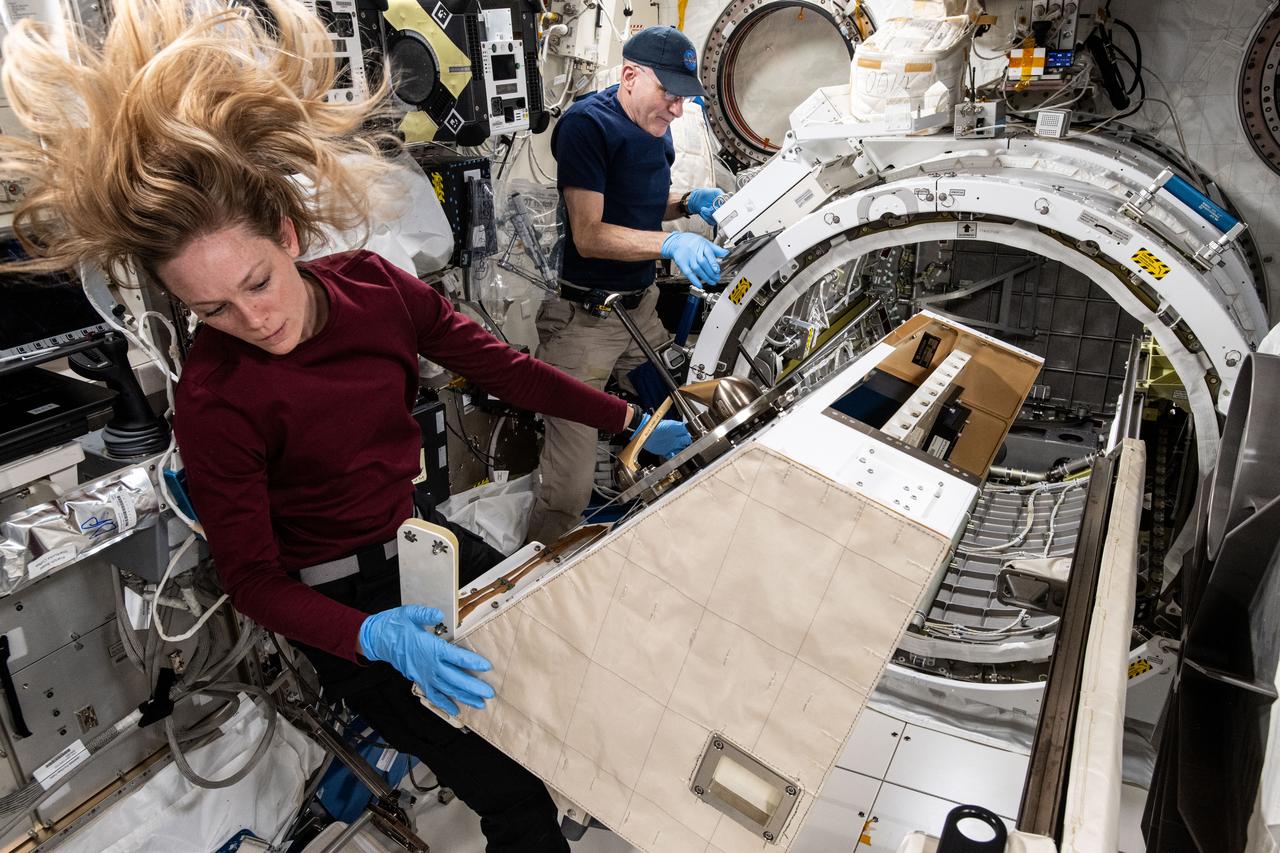
iss072e861721 (March 28, 2025) --- NASA astronauts Nichole Ayers and Don Pettit, both Expedition 72 Flight Engineers, extract the NanoRacks External Platform from the Kibo laboratory module's airlock aboard the International Space Station. The commercial research platform housed three different electrical and optical experiments that tested operations while exposed to the vacuum of space.
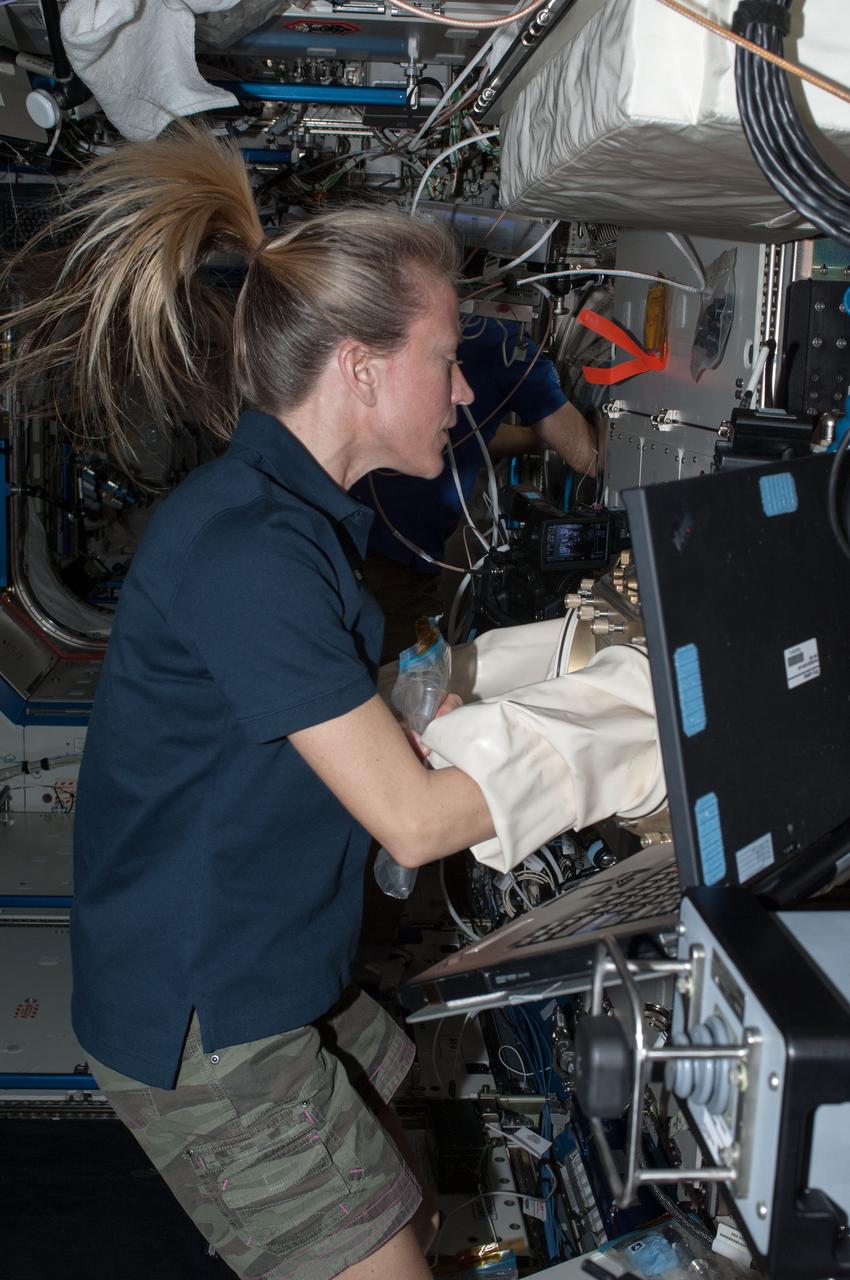
ISS036-E-035767 (18 Aug. 2013) --- NASA astronaut Karen Nyberg, Expedition 36 flight engineer, works with new test samples for the Advanced Colloids Experiment, or ACE, housed in the Light Microscopy Module (LMM) inside the Fluids Integrated Rack of the International Space Station?s Destiny laboratory. Results from ACE will help researchers understand how to optimize stabilizers to extend the shelf life of products like laundry detergent, paint, ketchup and even salad dressing.
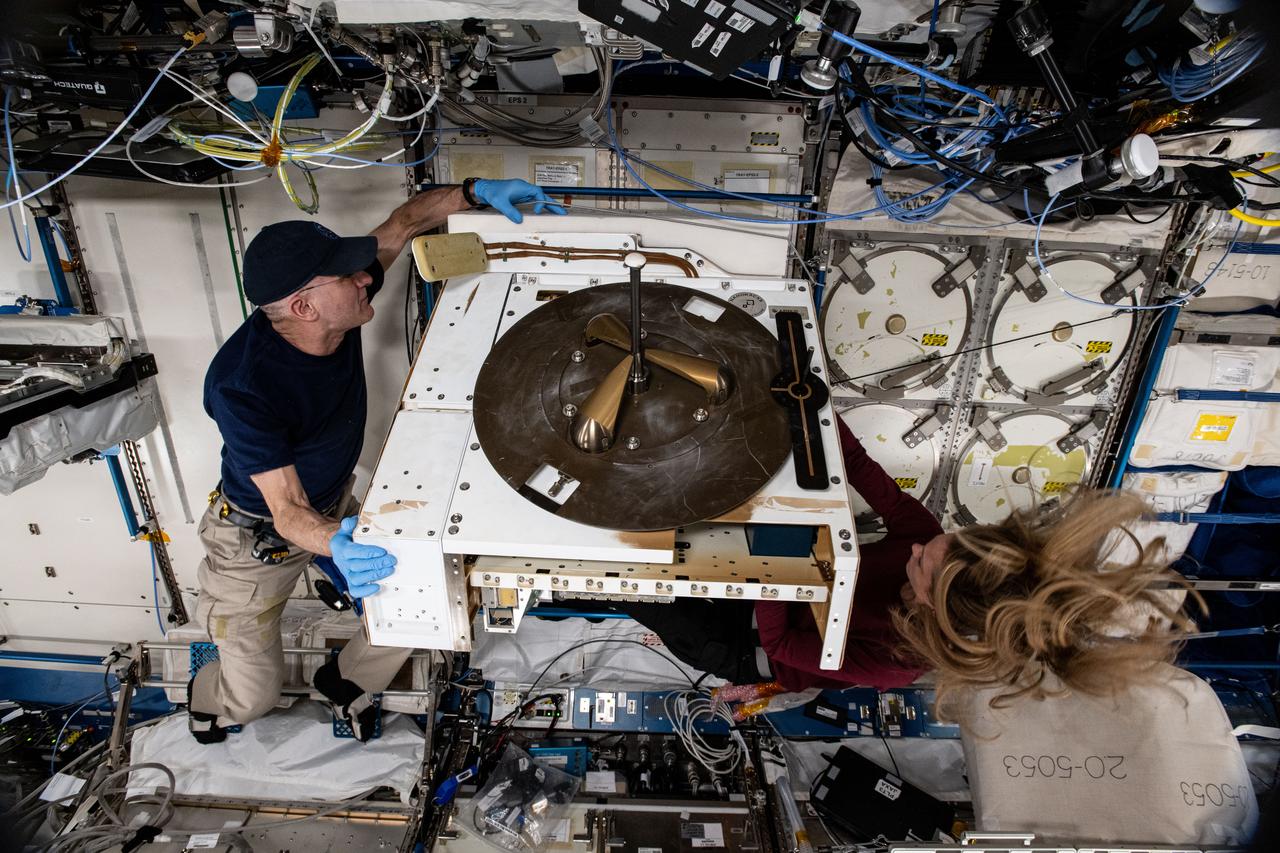
iss072e861726 (March 28, 2025) --- NASA astronauts Don Pettit and Nichole Ayers, both Expedition 72 Flight Engineers, prepare the NanoRacks External Platform with its grapple fixture attached for stowage aboard the International Space Station's Kibo laboratory module. The commercial research platform housed three different electrical and optical experiments that tested operations while exposed to the vacuum of space.
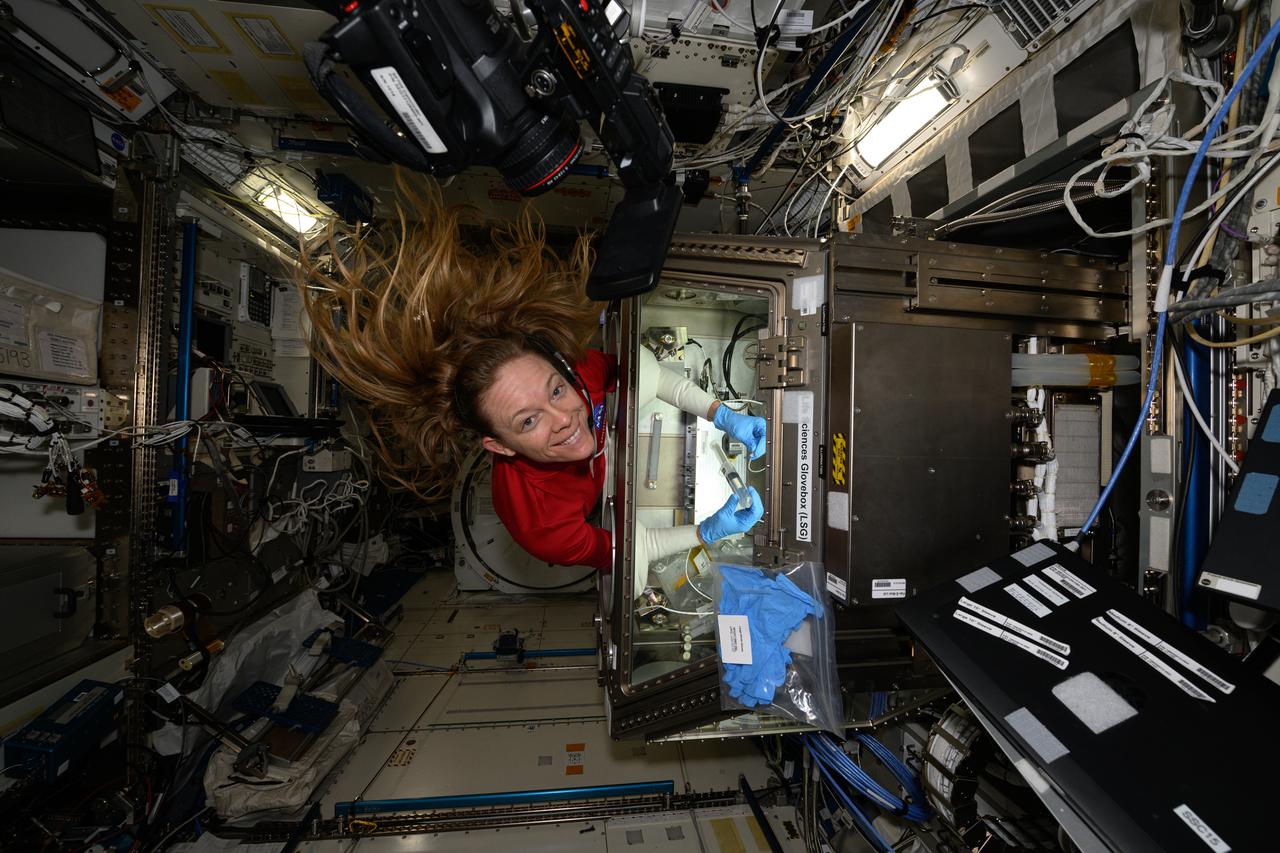
iss073e0118821 (May 30, 2025) --- NASA astronaut and Expedition 73 Flight Engineer Nichole Ayers conducts research operations inside the Kibo laboratory module's Life Science Glovebox aboard the International Space Station. Ayers was processing samples of deep-sea bacteria to test a specialized 3D microscope for its ability to monitor water quality, detect potentially infectious organisms, and study liquid mixtures and microorganisms in space and on Earth.

iss073e0071009 (May 11, 2025) --- NASA astronaut and Expedition 73 Flight Engineer Jonny Kim photographs genetically modified, extemely dwarf tomato plants growing inside specialized research hardware, called Rhodium BioCuvettes, aboard the International Space Station's Destiny laboratory module. The space botany experiment tests the plants ability to grow without photosynthesis and survive in confined environments in weightlessness potentially supporting crop production on spacecraft.
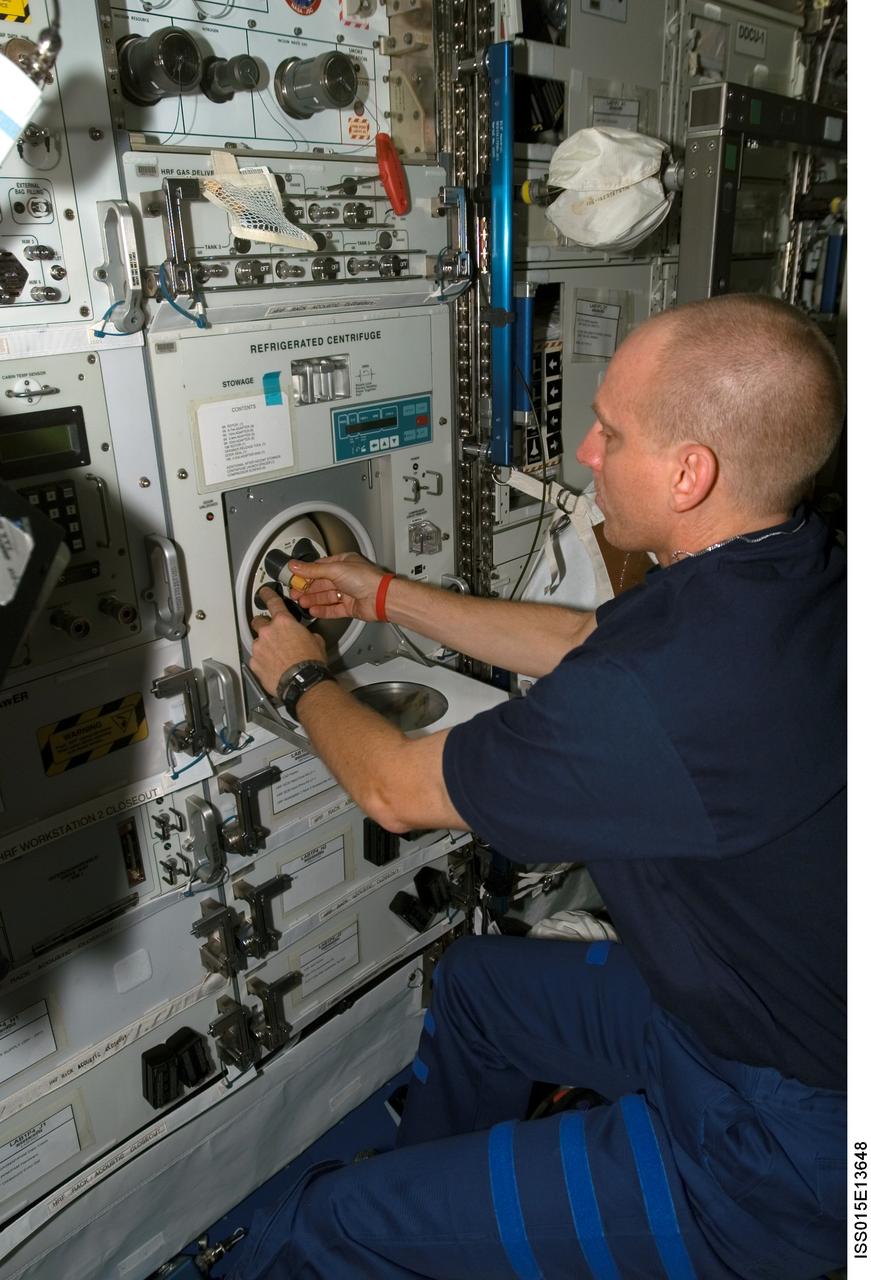
ISS015-E-13648 (25 June 2007) --- Astronaut Clayton Anderson, Expedition 15 flight engineer, works with test samples in the Human Research Facility 2 (HRF-2) Refrigerated Centrifuge as a part of the Nutritional Status Assessment (Nutrition) experiment in the Destiny laboratory of the International Space Station. The results of the Nutrition experiment will be used to better understand the time course effects of space flight on human physiology.
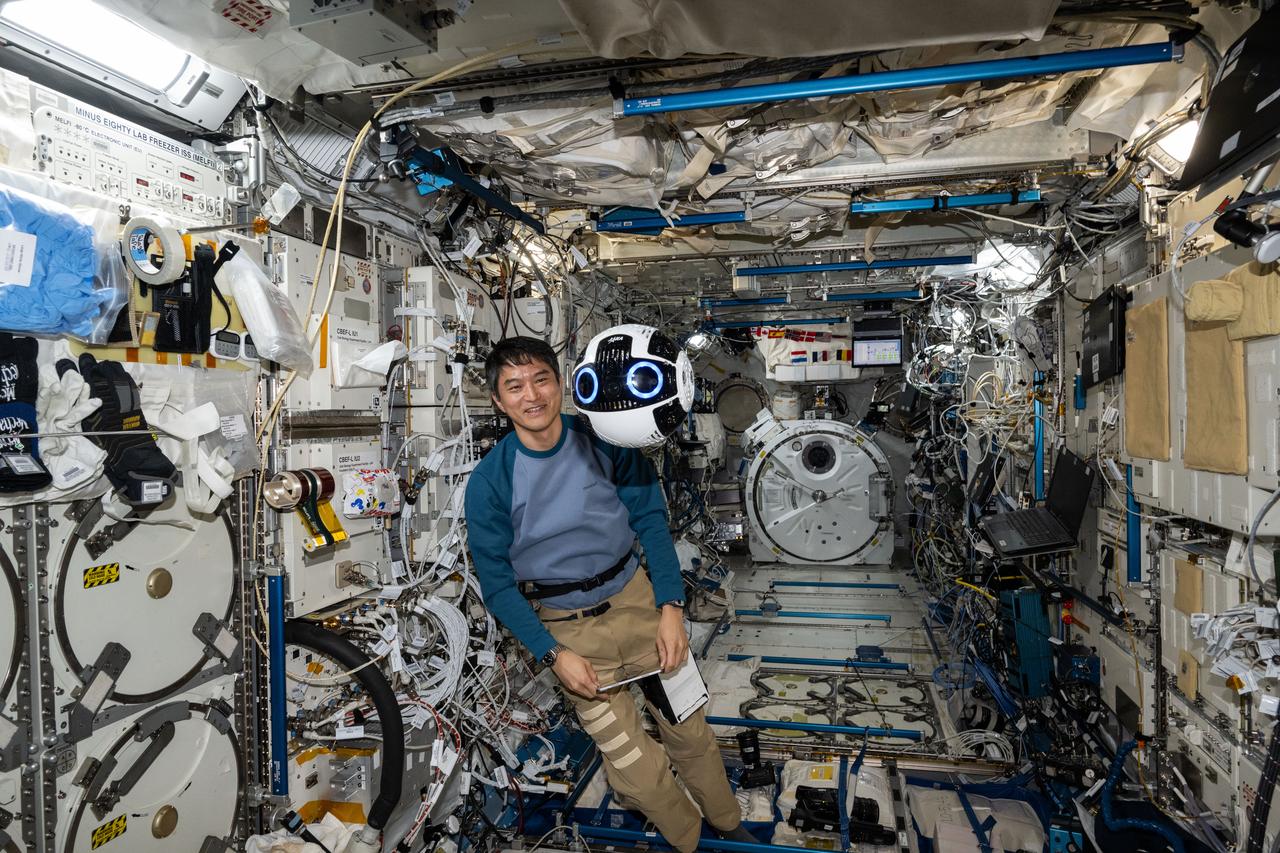
iss072e859364 (March 26, 2025) --- JAXA (Japan Aerospace Exploration Agency) astronaut and Expediion 72 Flight Engineer Takuya Onishi monitors the Japanese Experiment Module Internal Ball Camera 2 aboard the International Space Station's Kibo laboratory module. The spherical, free-flying robotic camera tests the automation of capturing video and imagery enabling more crew time for important duties such as microgravity research.
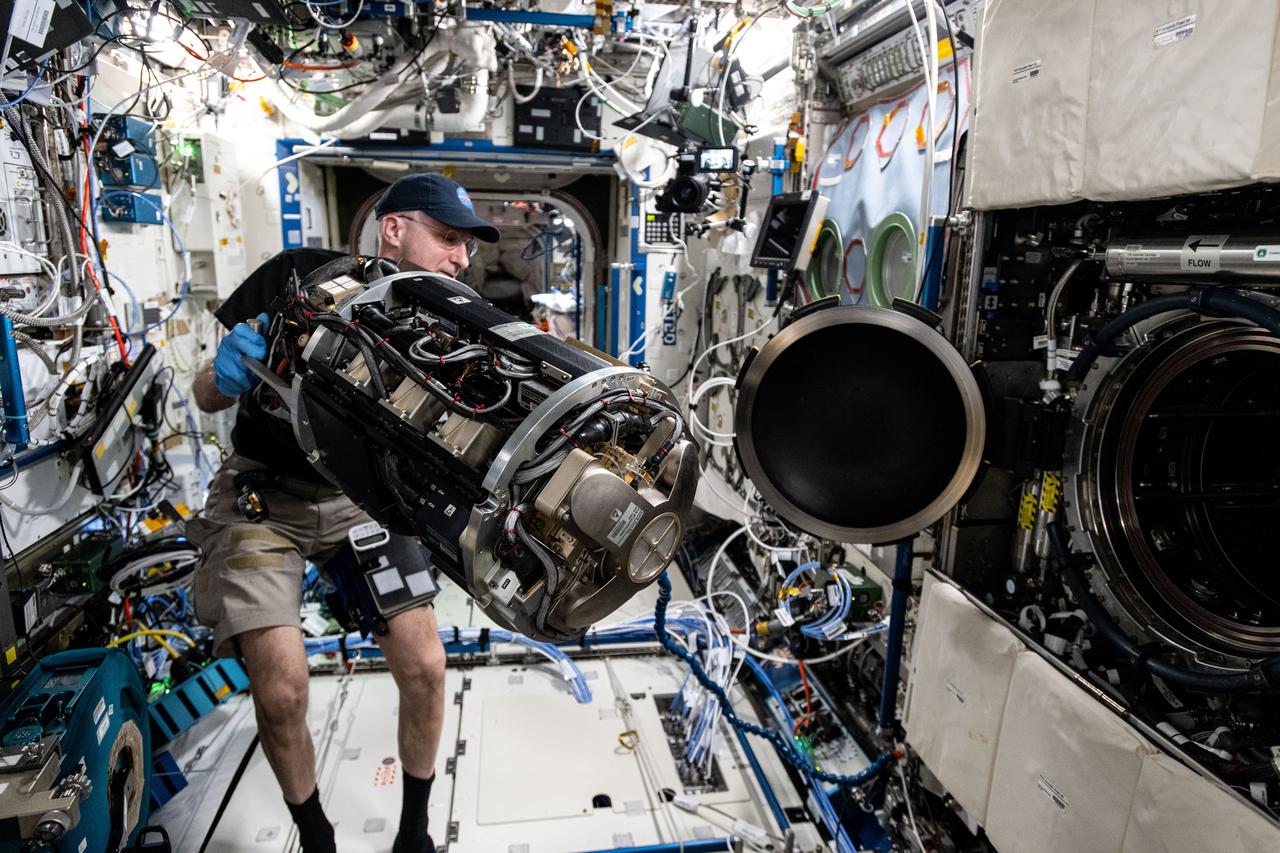
iss072e747148 (March 18, 2025) --- NASA astronaut and Expedition 72 Flight Engineer Don Pettit inserts research hardware into the Combustion Integrated Rack located inside the International Space Station's Destiny laboratory module. Pettit was configuring the SoFIE-MIST, or the Solid Fuel Ignition and Extinction - Material Ignition and Suppression Test, investigation that is exploring the flammability of materials in microgravity to improve spacecraft fire safety.
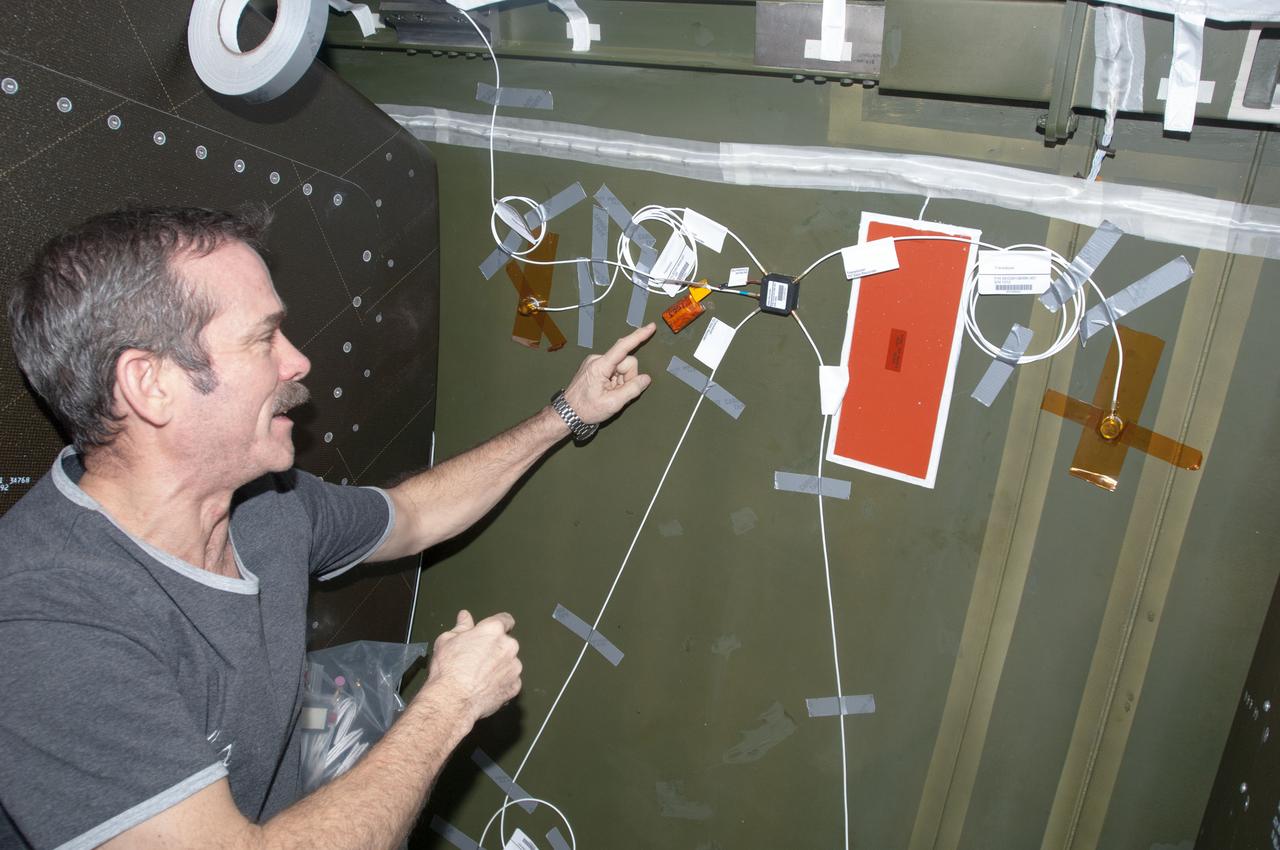
ISS034-E-038211 (1 Feb. 2013) --- Canadian Space Agency astronaut Chris Hadfield, Expedition 34 flight engineer, installs Ultra-Sonic Background Noise Tests (UBNT) sensors behind a rack in the Destiny laboratory, using the International Space Station (ISS) as Testbed for Analog Research (ISTAR) procedures. These sensors detect high frequency noise levels generated by ISS hardware and equipment operating within Destiny.
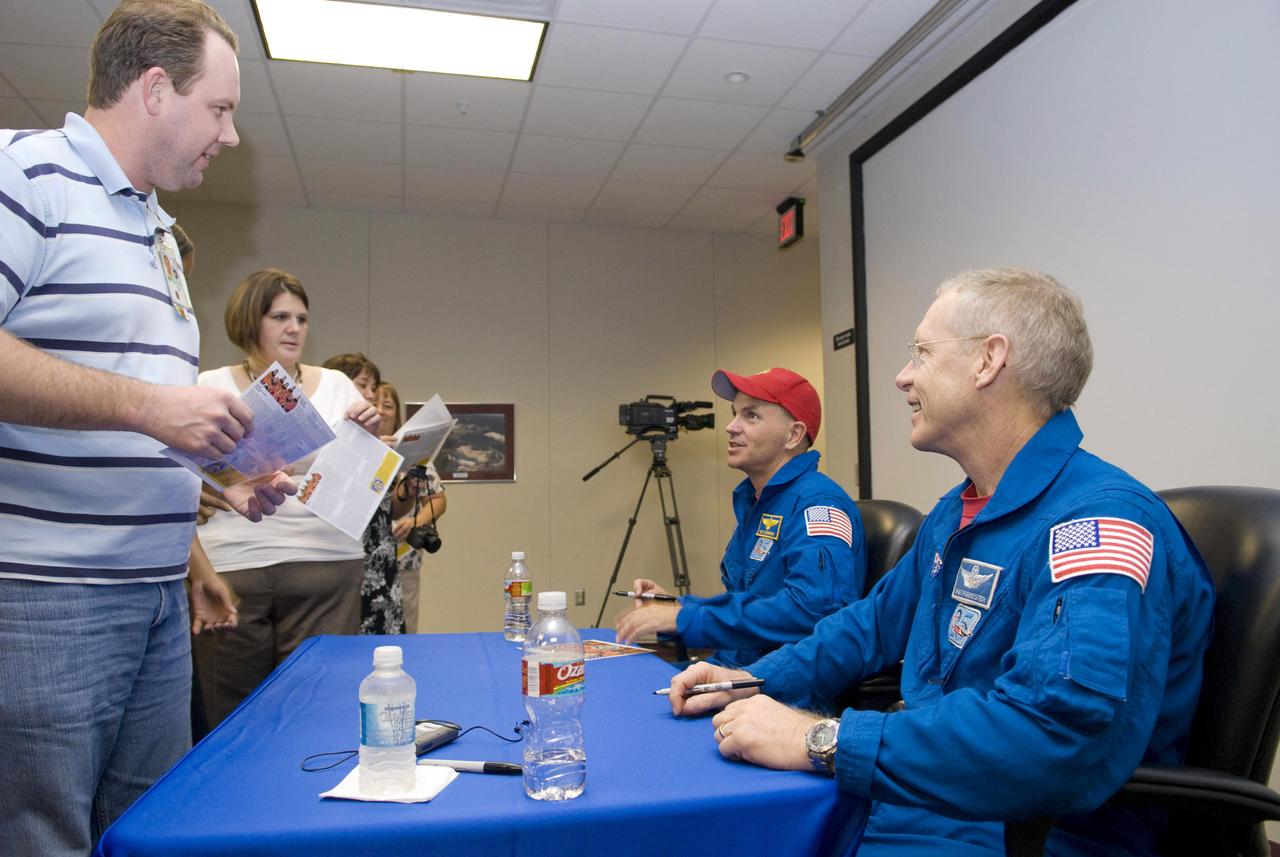
Astronauts C.J. Sturckow (seated, left) and Pat Forrester (seated, right) sign autographs during their Oct. 7 visit to Stennis Space Center. The astronauts visited the rocket engine testing facility to thank Stennis employees for contributions to their recent STS-128 space shuttle mission. All three of the main engines used on the mission were tested at Stennis. Sturckow served as commander for the STS-128 flight; Forrester was a mission specialist. During a 14-day mission aboard space shuttle discovery, the STS-128 crew delivered equipment and supplies to the International Space Station, including science and storage racks, a freezer to store research samples, a new sleeping compartment and an exercise treadmill. The mission featured three spacewalks to replace experiments and install new equipment at the space station.
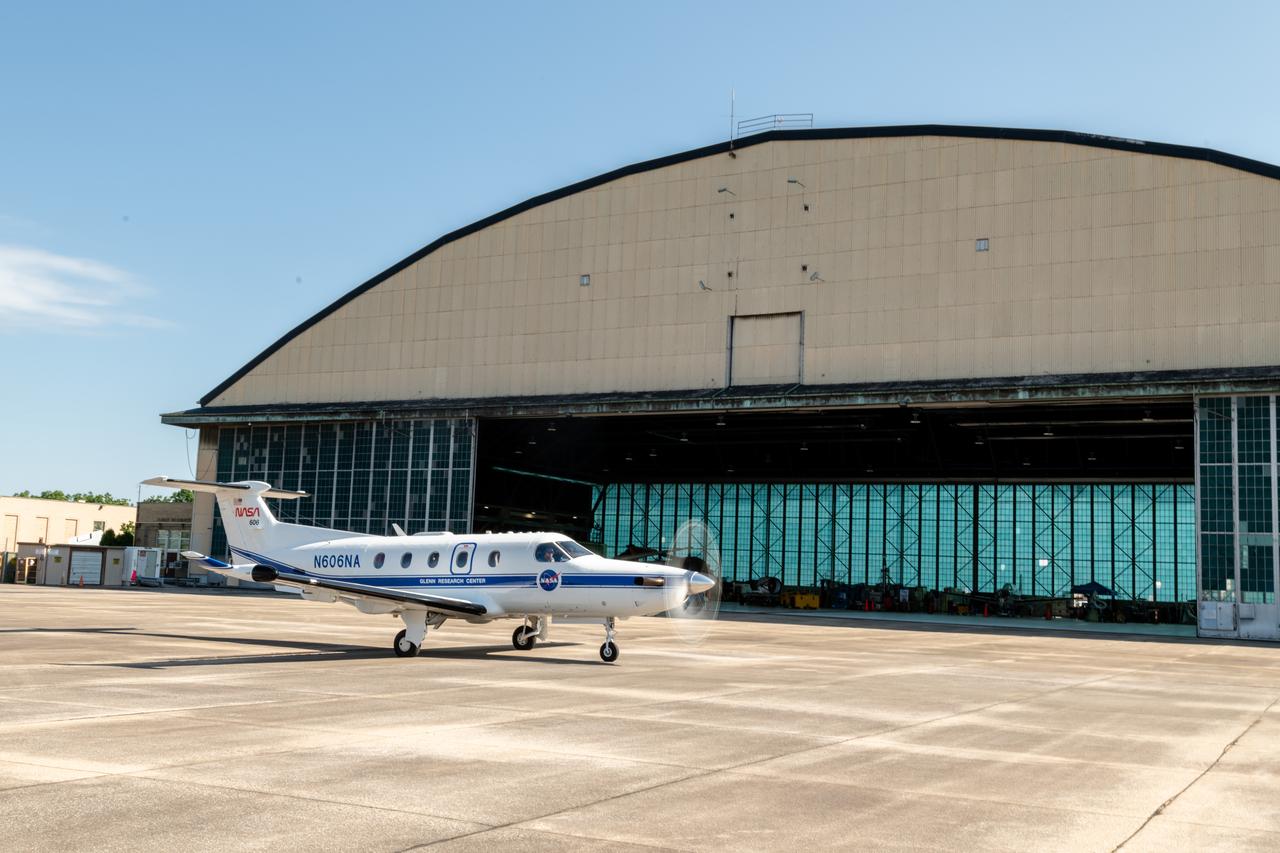
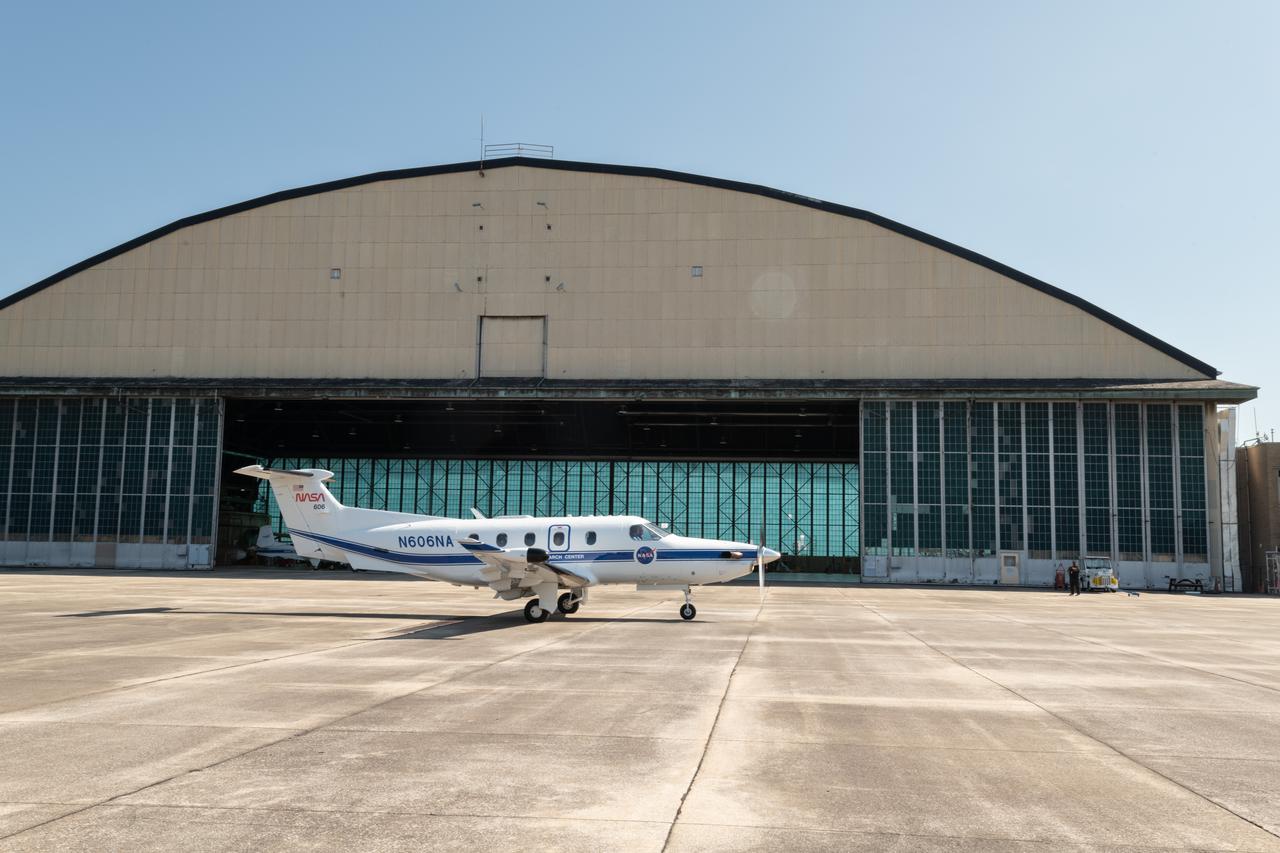
At Glenn Research Center, the PC-12 is Prepped for a flight and ready to takeoff on June 12, 2024. A team at NASA’s Glenn Research Center in Cleveland streamed 4K video footage from an aircraft to the International Space Station and back for the first time using optical, or laser, communications. The feat was part of a series of tests on new technology that could provide live video coverage of astronauts on the Moon during the Artemis missions. Working with the Air Force Research Laboratory and NASA’s Small Business Innovation Research program, Glenn engineers temporarily installed a portable laser terminal on the belly of a Pilatus PC-12 aircraft. They then flew over Lake Erie sending data from the aircraft to an optical ground station in Cleveland. From there, it was sent over an Earth-based network to NASA’s White Sands Test Facility in Las Cruces, New Mexico, where scientists used infrared light signals to send the data. Photo Credit: (NASA/Sara Lowthian-Hanna)
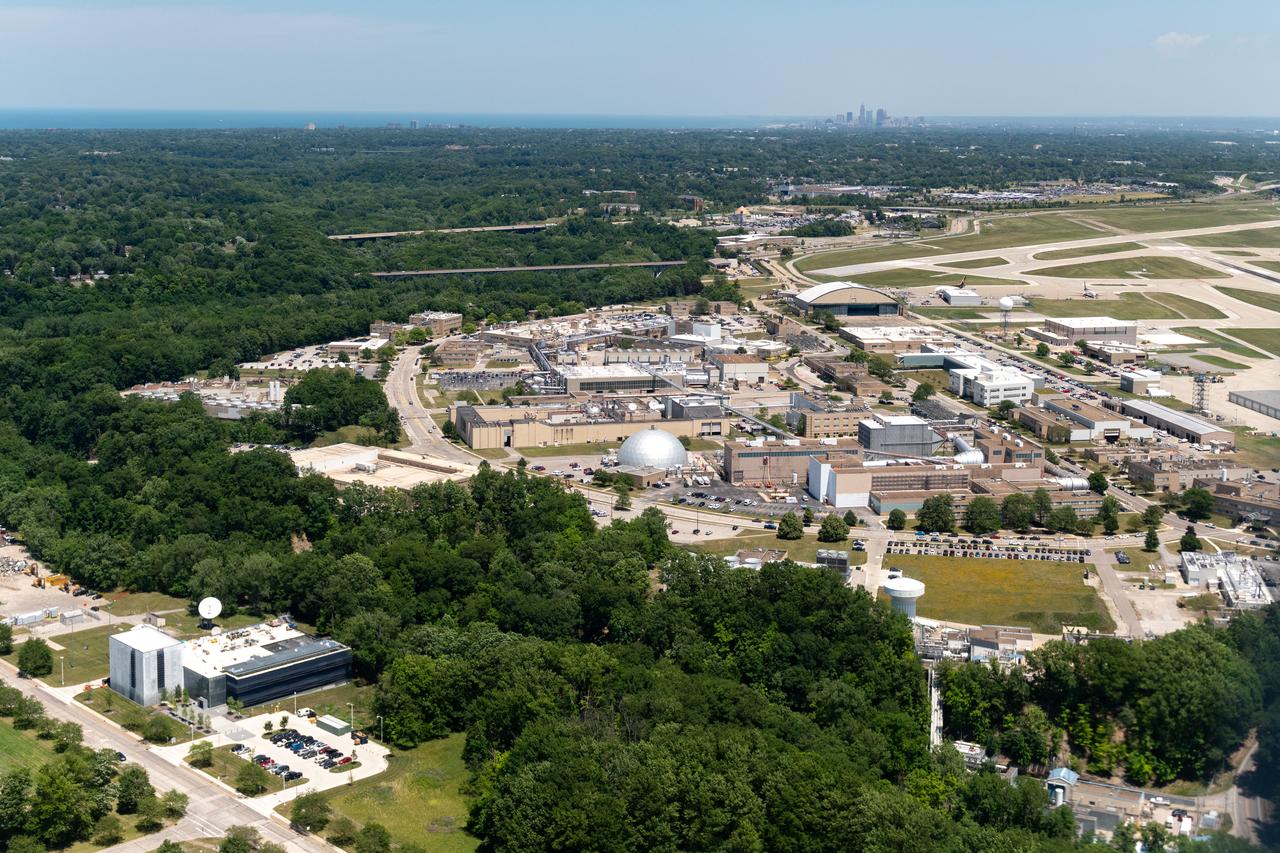
Aerial Photograph of Glenn Research Center With Downtown Cleveland in the Distance taken from the PC-12 on June 13, 2024. A team at NASA’s Glenn Research Center in Cleveland streamed 4K video footage from an aircraft to the International Space Station and back for the first time using optical, or laser, communications. The feat was part of a series of tests on new technology that could provide live video coverage of astronauts on the Moon during the Artemis missions. Working with the Air Force Research Laboratory and NASA’s Small Business Innovation Research program, Glenn engineers temporarily installed a portable laser terminal on the belly of a Pilatus PC-12 aircraft. They then flew over Lake Erie sending data from the aircraft to an optical ground station in Cleveland. From there, it was sent over an Earth-based network to NASA’s White Sands Test Facility in Las Cruces, New Mexico, where scientists used infrared light signals to send the data. Photo Credit: (NASA/Sara Lowthian-Hanna)
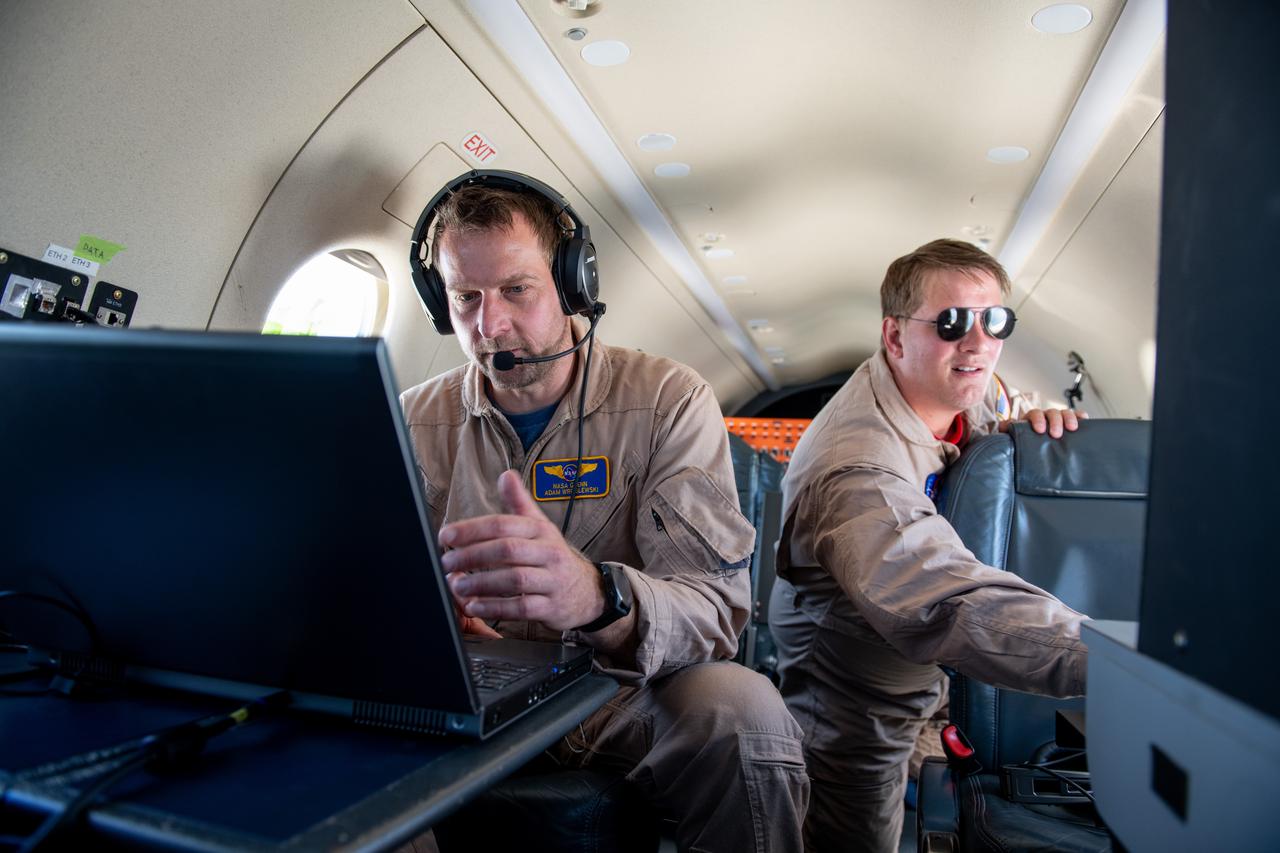
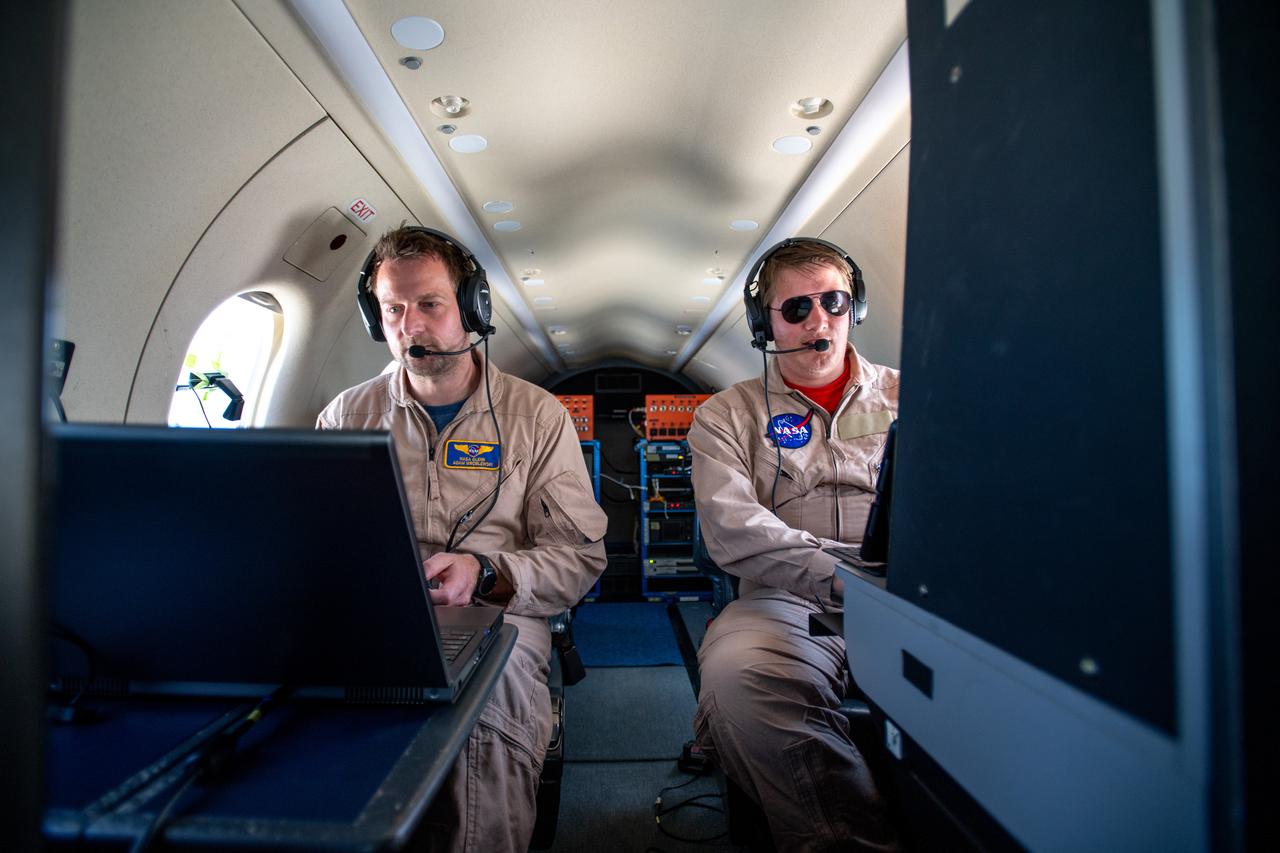
Adam Wroblewski and Shaun McKeehan Working In PC-12 Aircraft during in flight testing on June 13, 2024. A team at NASA’s Glenn Research Center in Cleveland streamed 4K video footage from an aircraft to the International Space Station and back for the first time using optical, or laser, communications. The feat was part of a series of tests on new technology that could provide live video coverage of astronauts on the Moon during the Artemis missions. Working with the Air Force Research Laboratory and NASA’s Small Business Innovation Research program, Glenn engineers temporarily installed a portable laser terminal on the belly of a Pilatus PC-12 aircraft. They then flew over Lake Erie sending data from the aircraft to an optical ground station in Cleveland. From there, it was sent over an Earth-based network to NASA’s White Sands Test Facility in Las Cruces, New Mexico, where scientists used infrared light signals to send the data. Photo Credit: (NASA/Sara Lowthian-Hanna)
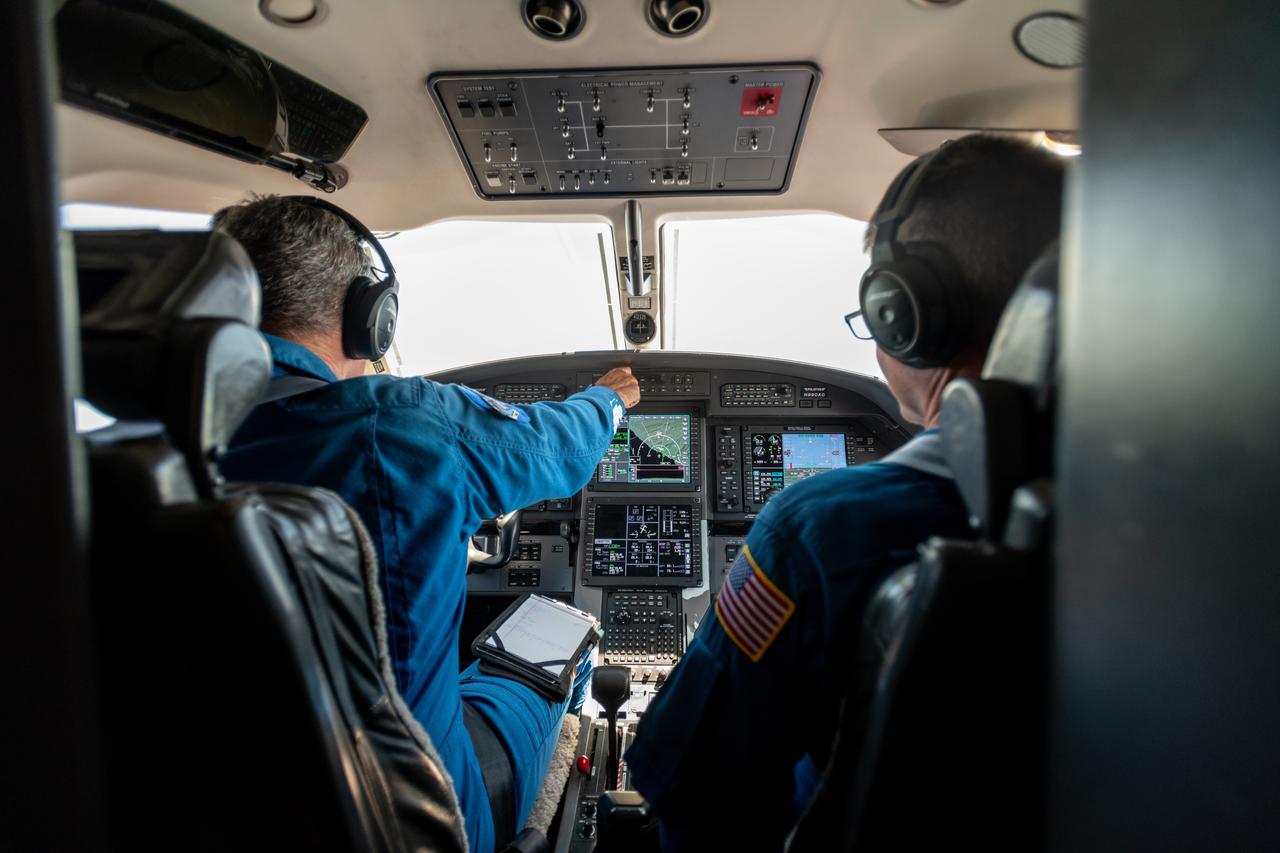
Kurt Blankenship and James Demers Fly PC-12 Aircraft During Testing on June 13, 2024. A team at NASA’s Glenn Research Center in Cleveland streamed 4K video footage from an aircraft to the International Space Station and back for the first time using optical, or laser, communications. The feat was part of a series of tests on new technology that could provide live video coverage of astronauts on the Moon during the Artemis missions. Working with the Air Force Research Laboratory and NASA’s Small Business Innovation Research program, Glenn engineers temporarily installed a portable laser terminal on the belly of a Pilatus PC-12 aircraft. They then flew over Lake Erie sending data from the aircraft to an optical ground station in Cleveland. From there, it was sent over an Earth-based network to NASA’s White Sands Test Facility in Las Cruces, New Mexico, where scientists used infrared light signals to send the data. Photo Credit: (NASA/Sara Lowthian-Hanna)
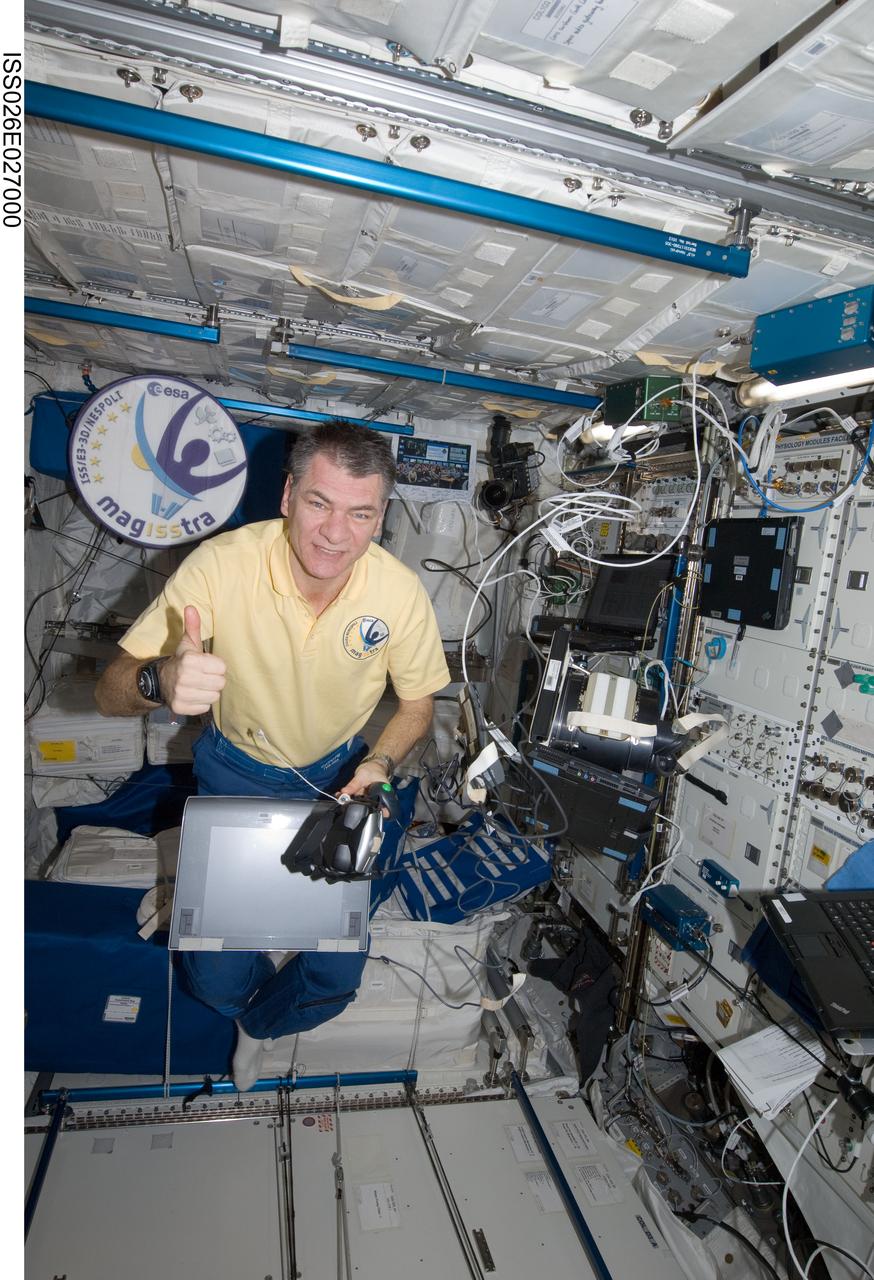
ISS026-E-027000 (12 Feb. 2011) --- European Space Agency (ESA) astronaut Paolo Nespoli, Expedition 26 flight engineer, conducts a test run with the French/CNES neuroscientific research experiment ?3D-Space? (SAP) in the Columbus laboratory of the International Space Station. While floating freely, Nespoli used the ESA multipurpose laptop with a prepared hard disk drive, data storage on a memory card, and an electronic pen table connected to it. 3D-Space, which involves distance, writing and illusion exercises, is designed to test the hypothesis that altered visual perception affects motor control.
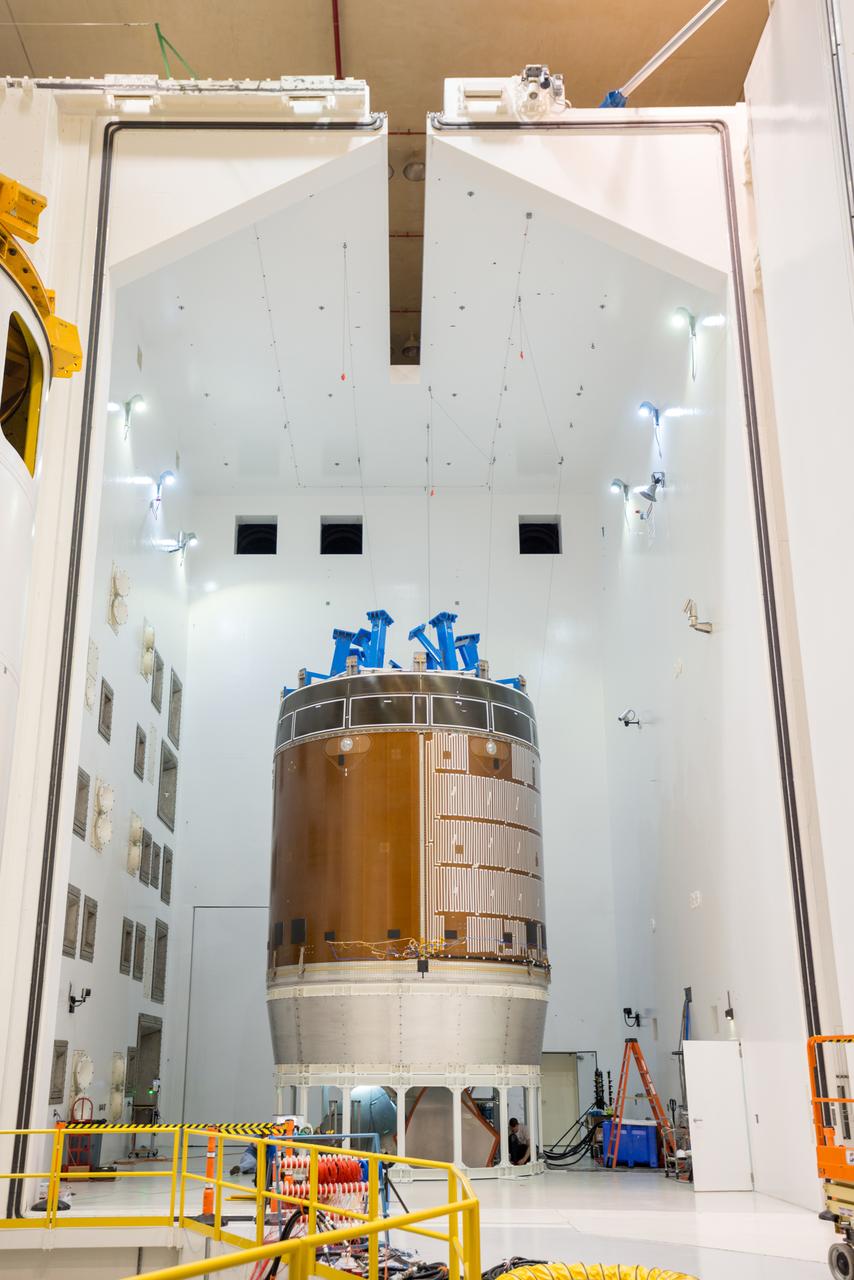
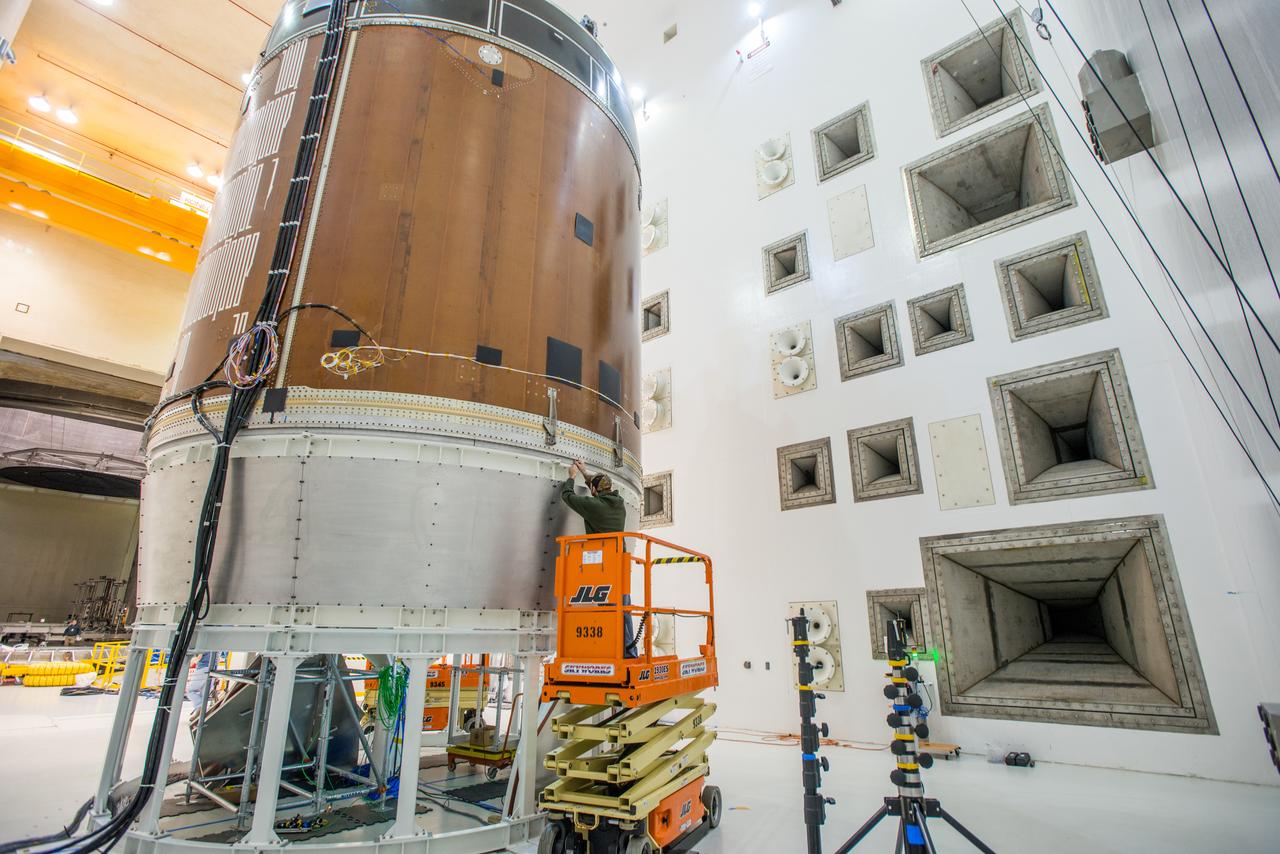
Engineers and technicians moved the Orion service module test article into the Reverberant Acoustic Test Facility at NASA Glenn Research Center’s Plum Brook Station in Sandusky, Ohio on April 8, 2016. Acoustic testing is scheduled to begin April 18. The blue structure sitting on top of the test article is a mass simulator that represents the Orion crew module...The test article will be blasted with at least 152 decibels and 20-10,000 hertz of sound pressure and vibration to simulate the intense sounds the Orion service module will be subjected to during launch and ascent into space atop the agency’s Space Launch System (SLS) rocket. This is part of a series of tests to verify the structural integrity of Orion’s service module for Exploration Mission-1, the spacecraft’s first flight atop SLS...Provided by ESA (European Space Agency) and built by Airbus Defence and Space, the service module will power, propel and cool the vehicle and also supply it with air and water.

Engineers and technicians moved the Orion service module test article into the Reverberant Acoustic Test Facility at NASA Glenn Research Center’s Plum Brook Station in Sandusky, Ohio on April 8, 2016. Acoustic testing is scheduled to begin April 18. The blue structure sitting on top of the test article is a mass simulator that represents the Orion crew module...The test article will be blasted with at least 152 decibels and 20-10,000 hertz of sound pressure and vibration to simulate the intense sounds the Orion service module will be subjected to during launch and ascent into space atop the agency’s Space Launch System (SLS) rocket. This is part of a series of tests to verify the structural integrity of Orion’s service module for Exploration Mission-1, the spacecraft’s first flight atop SLS...Provided by ESA (European Space Agency) and built by Airbus Defence and Space, the service module will power, propel and cool the vehicle and also supply it with air and water.
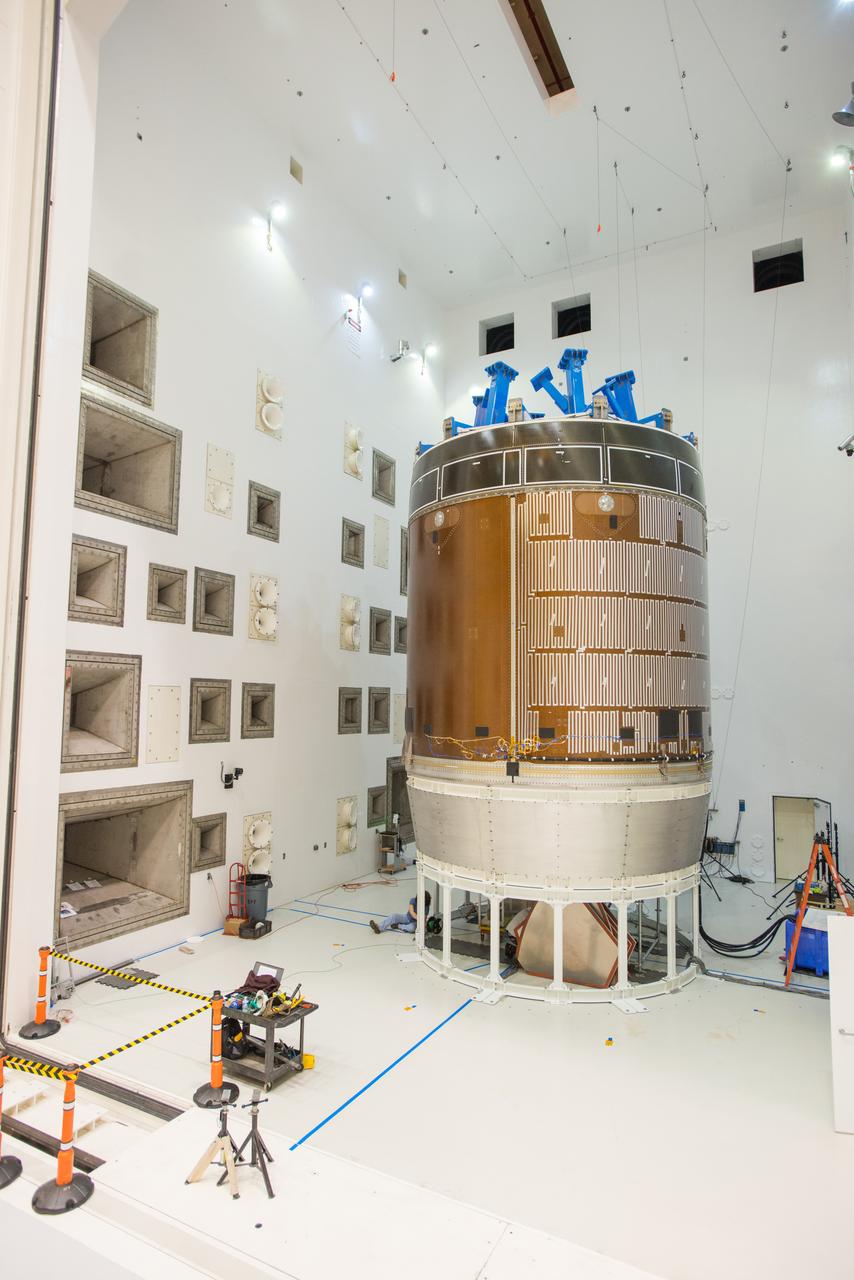
Engineers and technicians moved the Orion service module test article into the Reverberant Acoustic Test Facility at NASA Glenn Research Center’s Plum Brook Station in Sandusky, Ohio on April 8, 2016. Acoustic testing is scheduled to begin April 18. The blue structure sitting on top of the test article is a mass simulator that represents the Orion crew module...The test article will be blasted with at least 152 decibels and 20-10,000 hertz of sound pressure and vibration to simulate the intense sounds the Orion service module will be subjected to during launch and ascent into space atop the agency’s Space Launch System (SLS) rocket. This is part of a series of tests to verify the structural integrity of Orion’s service module for Exploration Mission-1, the spacecraft’s first flight atop SLS...Provided by ESA (European Space Agency) and built by Airbus Defence and Space, the service module will power, propel and cool the vehicle and also supply it with air and water.
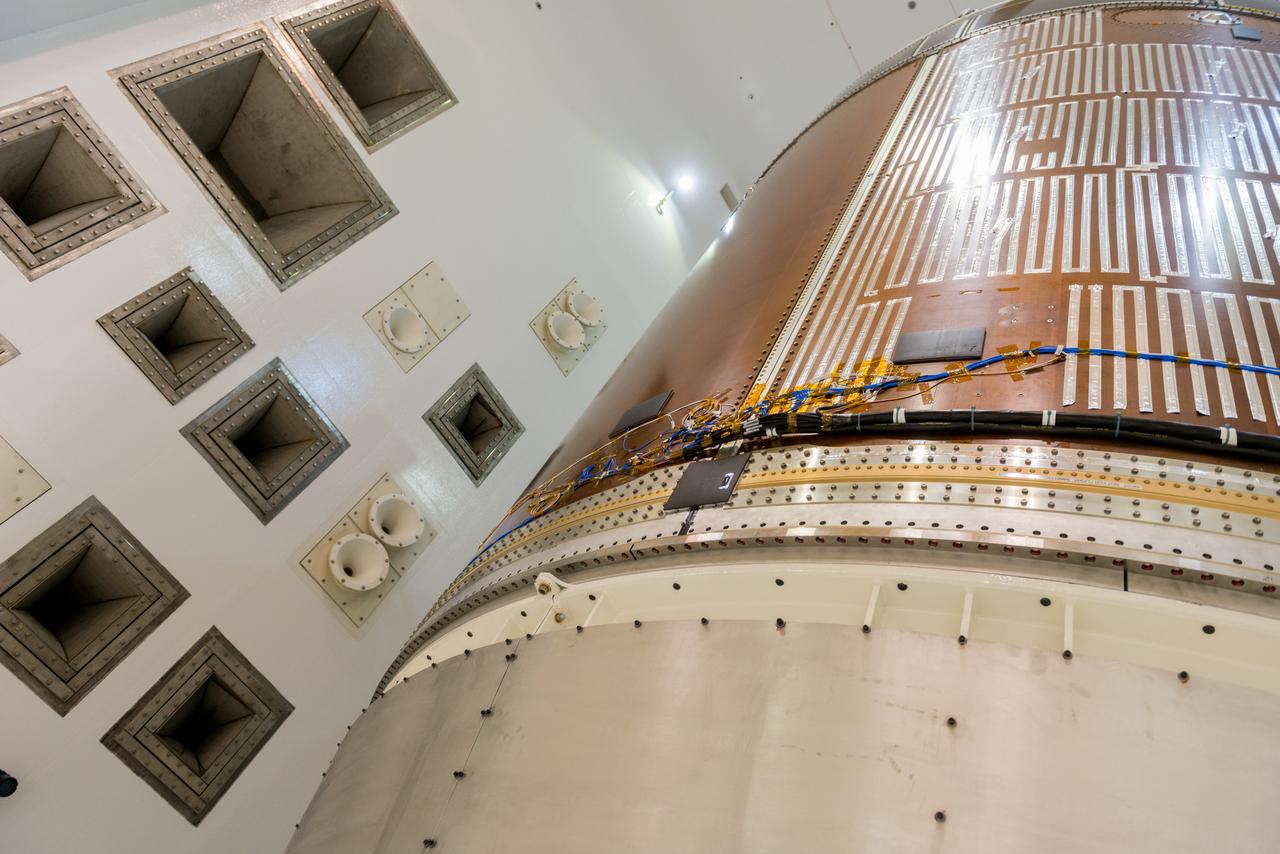
Engineers and technicians moved the Orion service module test article into the Reverberant Acoustic Test Facility at NASA Glenn Research Center’s Plum Brook Station in Sandusky, Ohio on April 8, 2016. Acoustic testing is scheduled to begin April 18. The blue structure sitting on top of the test article is a mass simulator that represents the Orion crew module...The test article will be blasted with at least 152 decibels and 20-10,000 hertz of sound pressure and vibration to simulate the intense sounds the Orion service module will be subjected to during launch and ascent into space atop the agency’s Space Launch System (SLS) rocket. This is part of a series of tests to verify the structural integrity of Orion’s service module for Exploration Mission-1, the spacecraft’s first flight atop SLS...Provided by ESA (European Space Agency) and built by Airbus Defence and Space, the service module will power, propel and cool the vehicle and also supply it with air and water.
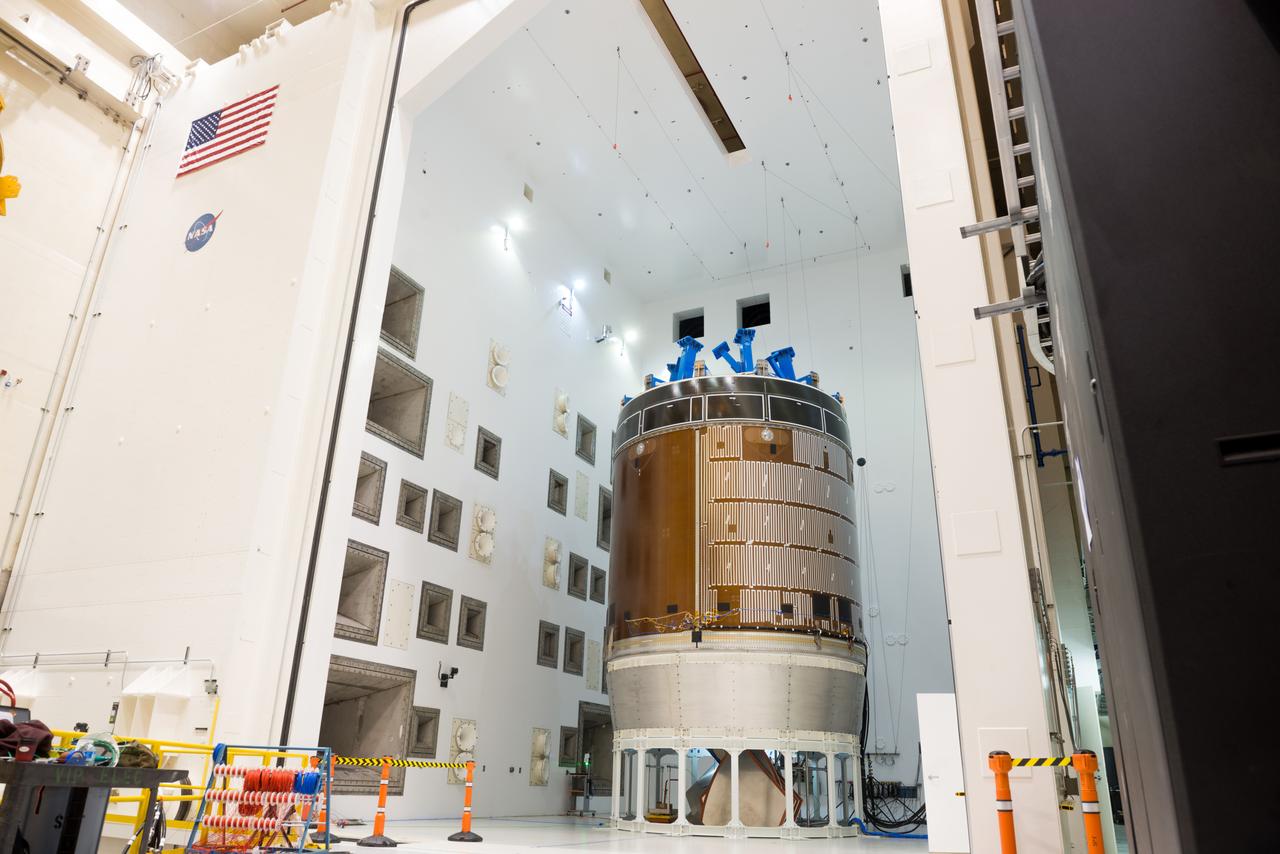
Engineers and technicians moved the Orion service module test article into the Reverberant Acoustic Test Facility at NASA Glenn Research Center’s Plum Brook Station in Sandusky, Ohio on April 8, 2016. Acoustic testing is scheduled to begin April 18. The blue structure sitting on top of the test article is a mass simulator that represents the Orion crew module...The test article will be blasted with at least 152 decibels and 20-10,000 hertz of sound pressure and vibration to simulate the intense sounds the Orion service module will be subjected to during launch and ascent into space atop the agency’s Space Launch System (SLS) rocket. This is part of a series of tests to verify the structural integrity of Orion’s service module for Exploration Mission-1, the spacecraft’s first flight atop SLS...Provided by ESA (European Space Agency) and built by Airbus Defence and Space, the service module will power, propel and cool the vehicle and also supply it with air and water.
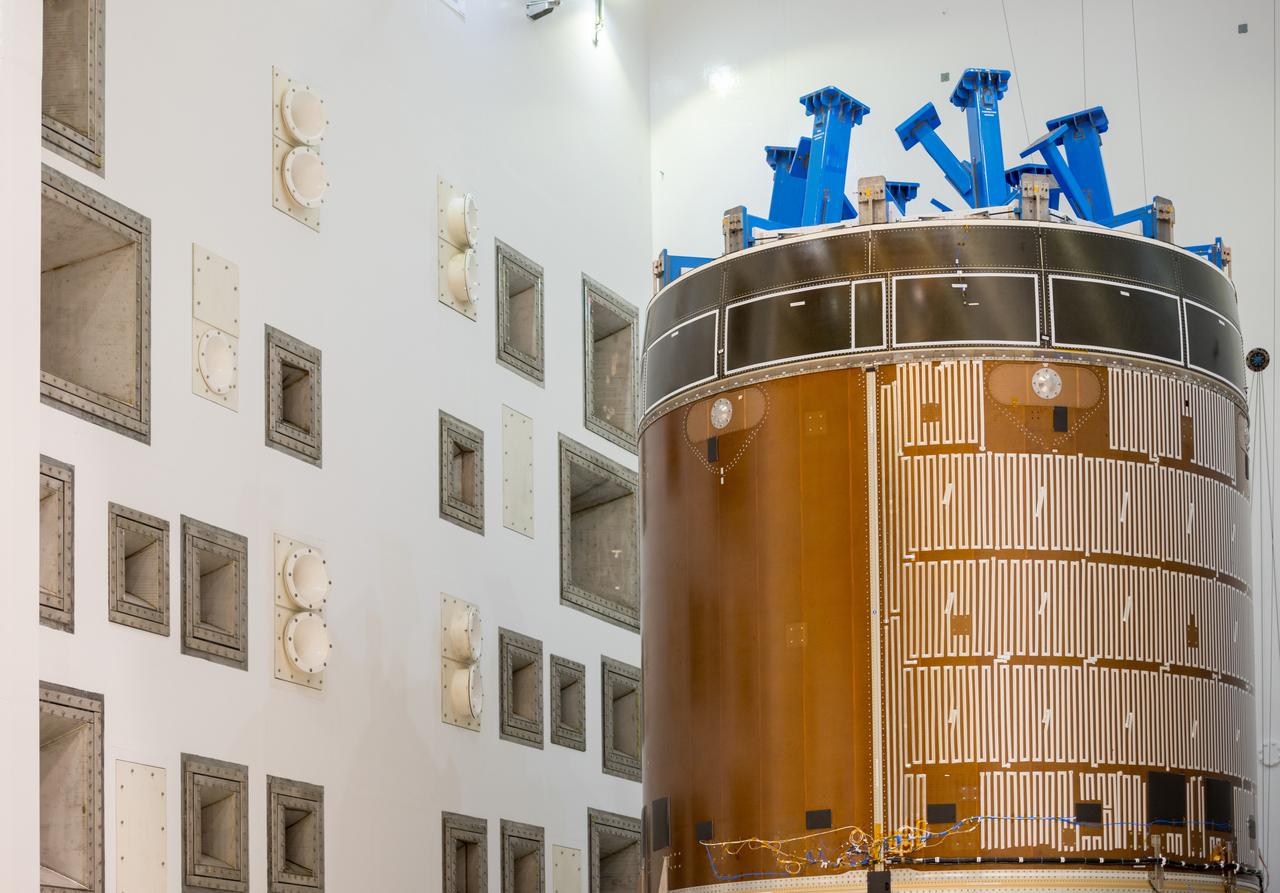
Engineers and technicians moved the Orion service module test article into the Reverberant Acoustic Test Facility at NASA Glenn Research Center’s Plum Brook Station in Sandusky, Ohio on April 8, 2016. Acoustic testing is scheduled to begin April 18. The blue structure sitting on top of the test article is a mass simulator that represents the Orion crew module...The test article will be blasted with at least 152 decibels and 20-10,000 hertz of sound pressure and vibration to simulate the intense sounds the Orion service module will be subjected to during launch and ascent into space atop the agency’s Space Launch System (SLS) rocket. This is part of a series of tests to verify the structural integrity of Orion’s service module for Exploration Mission-1, the spacecraft’s first flight atop SLS...Provided by ESA (European Space Agency) and built by Airbus Defence and Space, the service module will power, propel and cool the vehicle and also supply it with air and water.
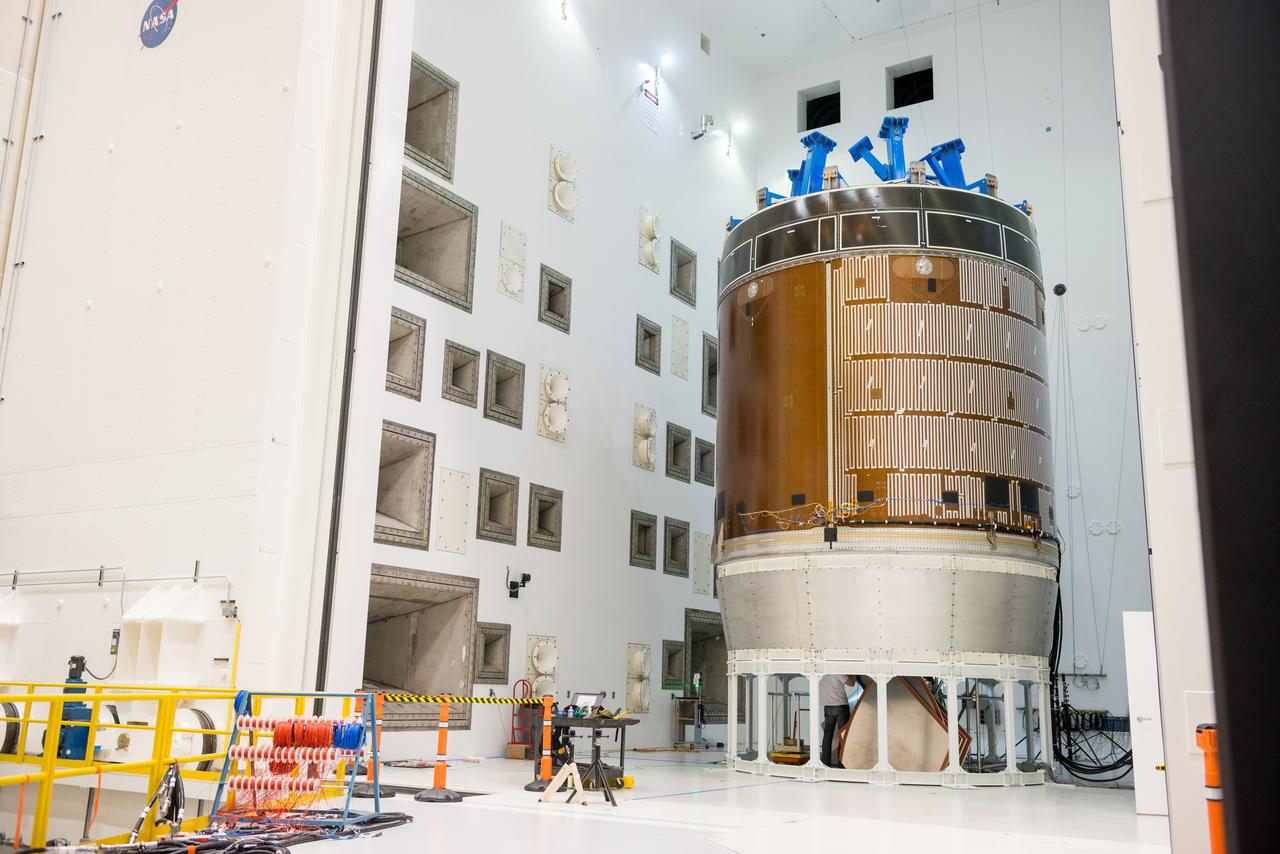
Engineers and technicians moved the Orion service module test article into the Reverberant Acoustic Test Facility at NASA Glenn Research Center’s Plum Brook Station in Sandusky, Ohio on April 8, 2016. Acoustic testing is scheduled to begin April 18. The blue structure sitting on top of the test article is a mass simulator that represents the Orion crew module...The test article will be blasted with at least 152 decibels and 20-10,000 hertz of sound pressure and vibration to simulate the intense sounds the Orion service module will be subjected to during launch and ascent into space atop the agency’s Space Launch System (SLS) rocket. This is part of a series of tests to verify the structural integrity of Orion’s service module for Exploration Mission-1, the spacecraft’s first flight atop SLS...Provided by ESA (European Space Agency) and built by Airbus Defence and Space, the service module will power, propel and cool the vehicle and also supply it with air and water.
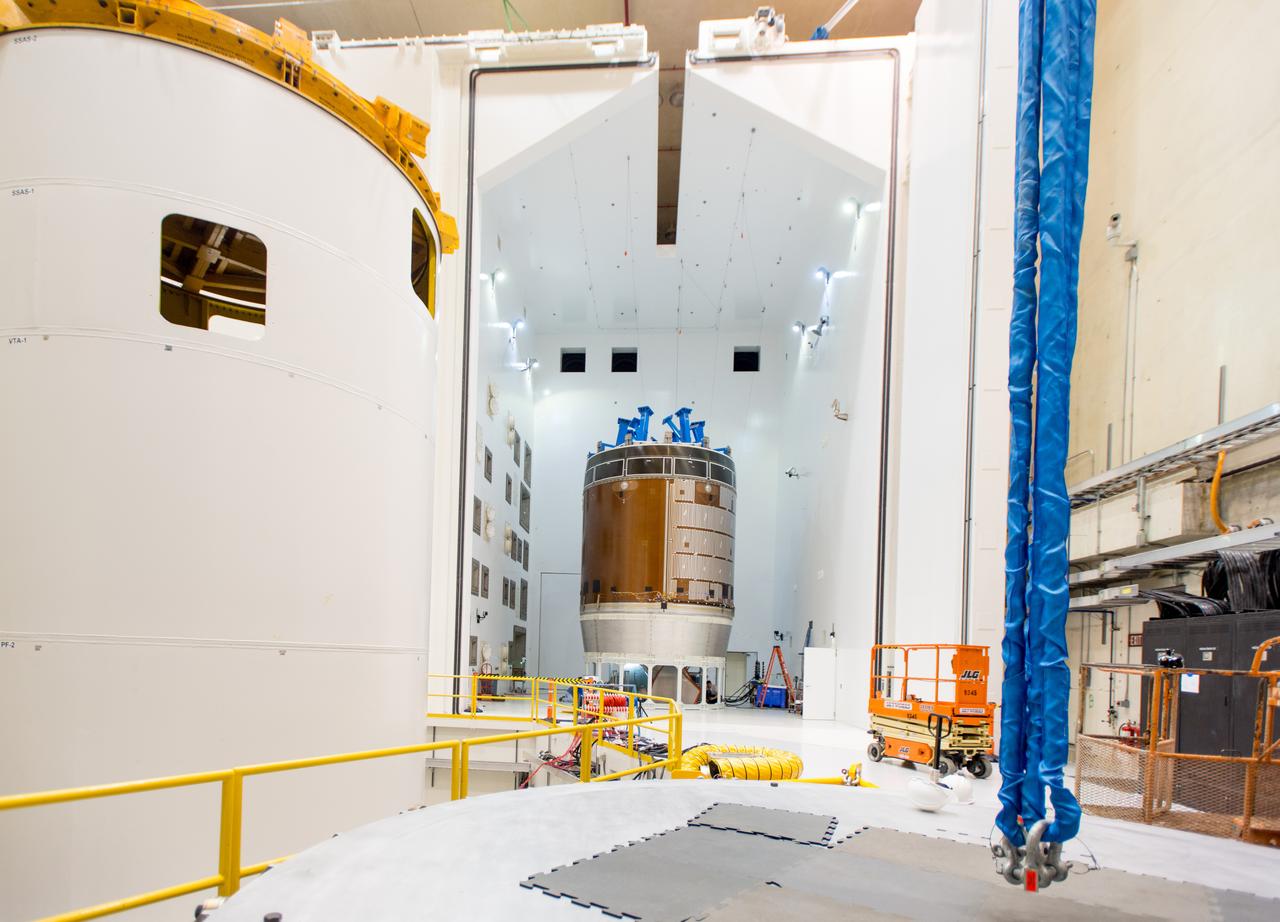
Engineers and technicians moved the Orion service module test article into the Reverberant Acoustic Test Facility at NASA Glenn Research Center’s Plum Brook Station in Sandusky, Ohio on April 8, 2016. Acoustic testing is scheduled to begin April 18. The blue structure sitting on top of the test article is a mass simulator that represents the Orion crew module...The test article will be blasted with at least 152 decibels and 20-10,000 hertz of sound pressure and vibration to simulate the intense sounds the Orion service module will be subjected to during launch and ascent into space atop the agency’s Space Launch System (SLS) rocket. This is part of a series of tests to verify the structural integrity of Orion’s service module for Exploration Mission-1, the spacecraft’s first flight atop SLS...Provided by ESA (European Space Agency) and built by Airbus Defence and Space, the service module will power, propel and cool the vehicle and also supply it with air and water.
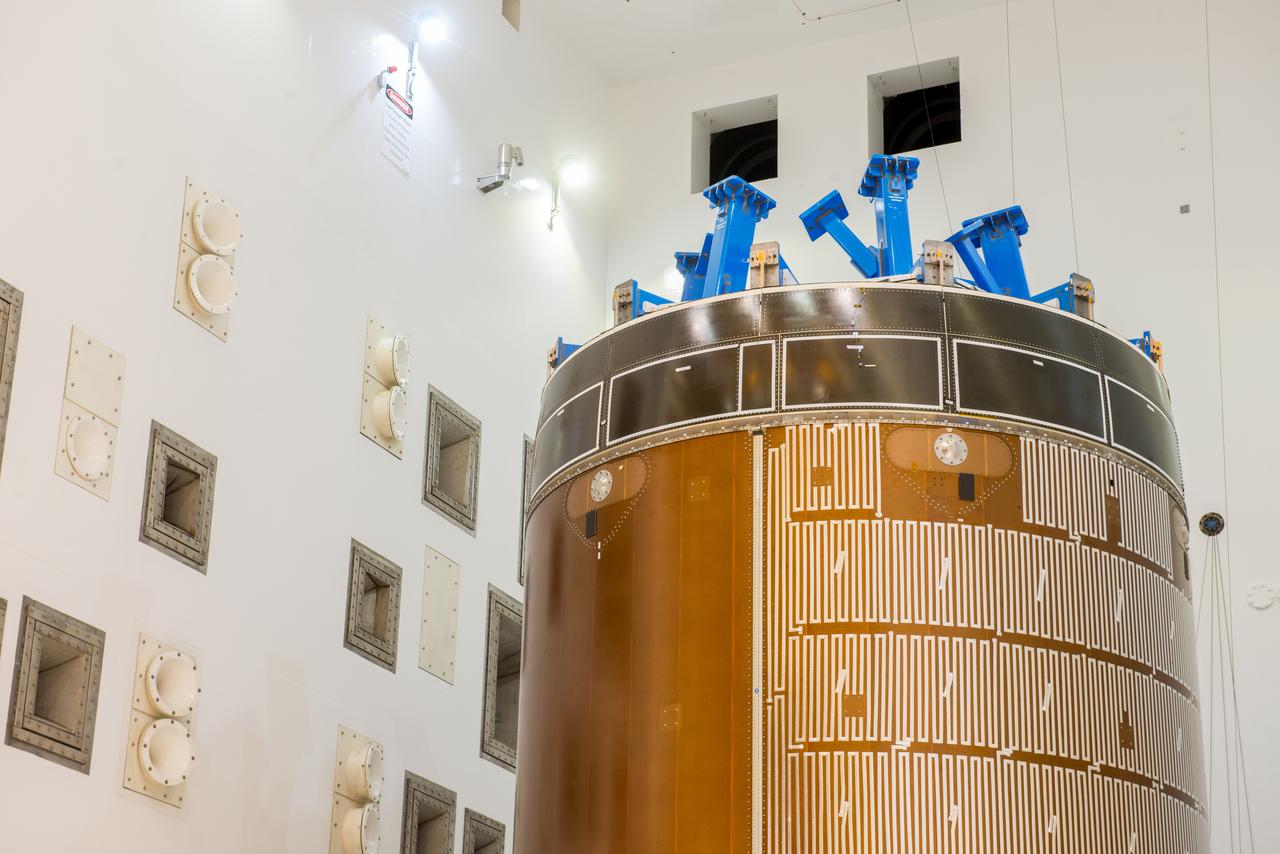
Engineers and technicians moved the Orion service module test article into the Reverberant Acoustic Test Facility at NASA Glenn Research Center’s Plum Brook Station in Sandusky, Ohio on April 8, 2016. Acoustic testing is scheduled to begin April 18. The blue structure sitting on top of the test article is a mass simulator that represents the Orion crew module...The test article will be blasted with at least 152 decibels and 20-10,000 hertz of sound pressure and vibration to simulate the intense sounds the Orion service module will be subjected to during launch and ascent into space atop the agency’s Space Launch System (SLS) rocket. This is part of a series of tests to verify the structural integrity of Orion’s service module for Exploration Mission-1, the spacecraft’s first flight atop SLS...Provided by ESA (European Space Agency) and built by Airbus Defence and Space, the service module will power, propel and cool the vehicle and also supply it with air and water.

Engineers and technicians moved the Orion service module test article into the Reverberant Acoustic Test Facility at NASA Glenn Research Center’s Plum Brook Station in Sandusky, Ohio on April 8, 2016. Acoustic testing is scheduled to begin April 18. The blue structure sitting on top of the test article is a mass simulator that represents the Orion crew module...The test article will be blasted with at least 152 decibels and 20-10,000 hertz of sound pressure and vibration to simulate the intense sounds the Orion service module will be subjected to during launch and ascent into space atop the agency’s Space Launch System (SLS) rocket. This is part of a series of tests to verify the structural integrity of Orion’s service module for Exploration Mission-1, the spacecraft’s first flight atop SLS...Provided by ESA (European Space Agency) and built by Airbus Defence and Space, the service module will power, propel and cool the vehicle and also supply it with air and water.
Engineers and technicians moved the Orion service module test article into the Reverberant Acoustic Test Facility at NASA Glenn Research Center’s Plum Brook Station in Sandusky, Ohio on April 8, 2016. Acoustic testing is scheduled to begin April 18. The blue structure sitting on top of the test article is a mass simulator that represents the Orion crew module...The test article will be blasted with at least 152 decibels and 20-10,000 hertz of sound pressure and vibration to simulate the intense sounds the Orion service module will be subjected to during launch and ascent into space atop the agency’s Space Launch System (SLS) rocket. This is part of a series of tests to verify the structural integrity of Orion’s service module for Exploration Mission-1, the spacecraft’s first flight atop SLS...Provided by ESA (European Space Agency) and built by Airbus Defence and Space, the service module will power, propel and cool the vehicle and also supply it with air and water.
Engineers and technicians moved the Orion service module test article into the Reverberant Acoustic Test Facility at NASA Glenn Research Center’s Plum Brook Station in Sandusky, Ohio on April 8, 2016. Acoustic testing is scheduled to begin April 18. The blue structure sitting on top of the test article is a mass simulator that represents the Orion crew module...The test article will be blasted with at least 152 decibels and 20-10,000 hertz of sound pressure and vibration to simulate the intense sounds the Orion service module will be subjected to during launch and ascent into space atop the agency’s Space Launch System (SLS) rocket. This is part of a series of tests to verify the structural integrity of Orion’s service module for Exploration Mission-1, the spacecraft’s first flight atop SLS...Provided by ESA (European Space Agency) and built by Airbus Defence and Space, the service module will power, propel and cool the vehicle and also supply it with air and water.
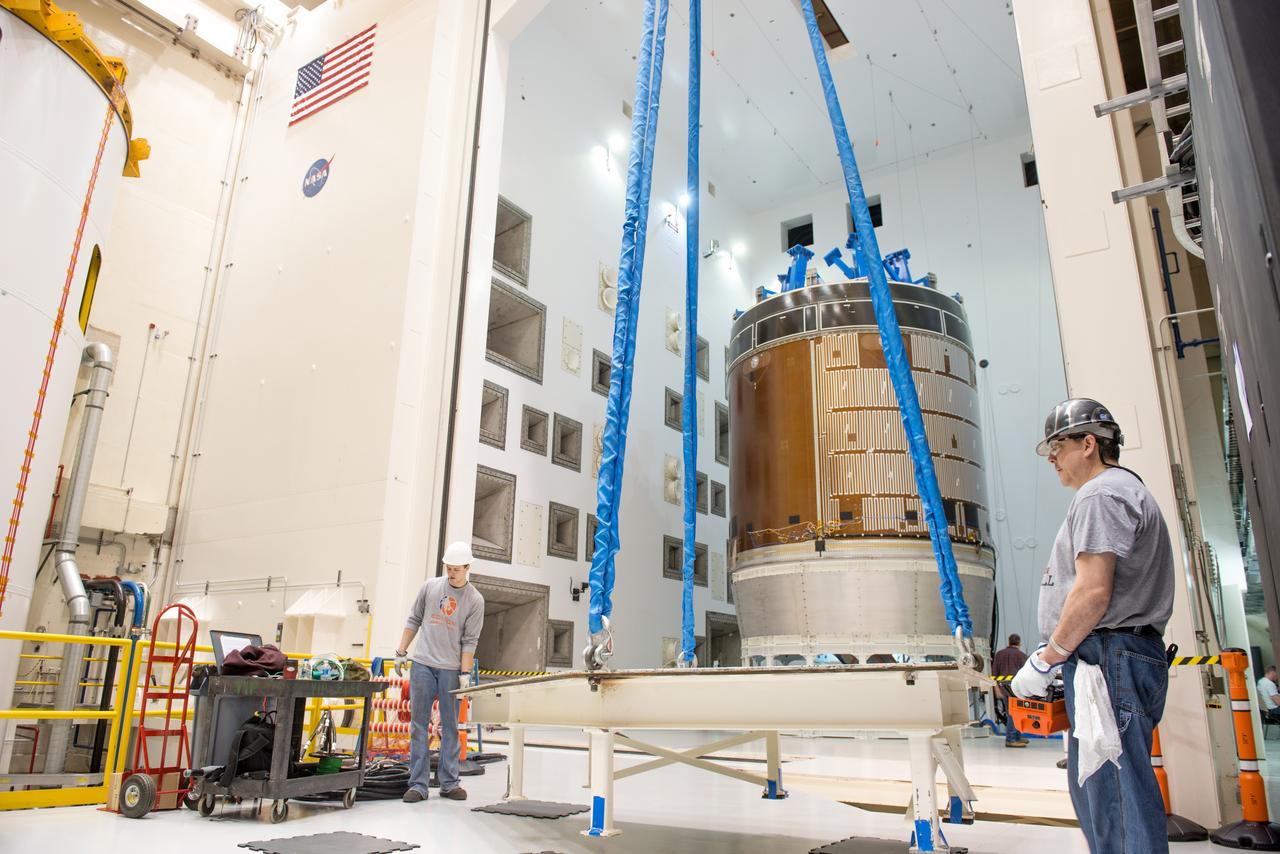
Engineers and technicians moved the Orion service module test article into the Reverberant Acoustic Test Facility at NASA Glenn Research Center’s Plum Brook Station in Sandusky, Ohio on April 8, 2016. Acoustic testing is scheduled to begin April 18. The blue structure sitting on top of the test article is a mass simulator that represents the Orion crew module...The test article will be blasted with at least 152 decibels and 20-10,000 hertz of sound pressure and vibration to simulate the intense sounds the Orion service module will be subjected to during launch and ascent into space atop the agency’s Space Launch System (SLS) rocket. This is part of a series of tests to verify the structural integrity of Orion’s service module for Exploration Mission-1, the spacecraft’s first flight atop SLS...Provided by ESA (European Space Agency) and built by Airbus Defence and Space, the service module will power, propel and cool the vehicle and also supply it with air and water.
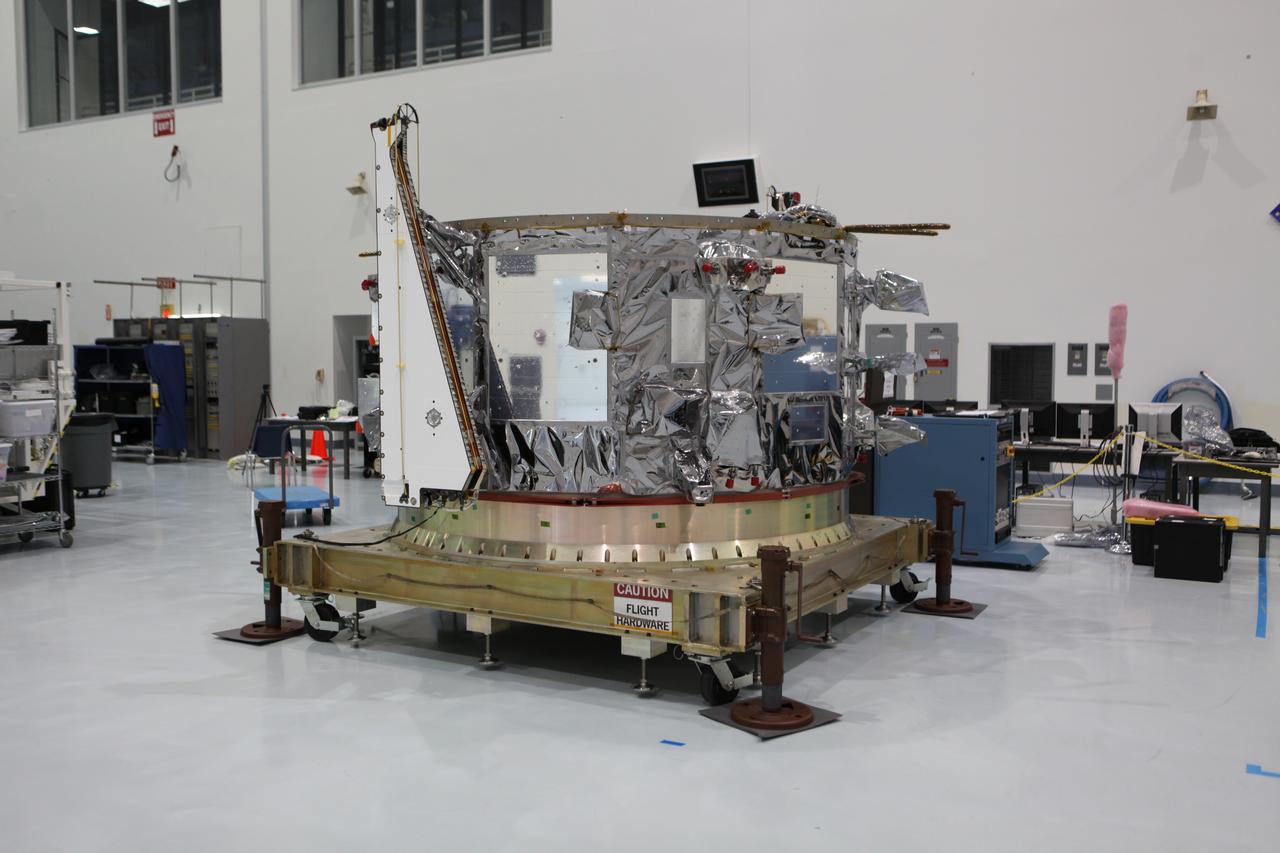
Inside the Space Station Processing Facility at NASA's Kennedy Space Center in Florida, engineers and technicians placed the Orbital ATK OA-7 Cygnus spacecraft's service module on a test stand. Scheduled to launch on March 19, 2017, the Orbital ATK OA-7 mission will lift off atop a United Launch Alliance Atlas V rocket from Space launch Complex 41 at Cape Canaveral Air Force Station. The commercial resupply services mission to the International Space Station will deliver thousands of pounds of supplies, equipment and scientific research materials that improve life on Earth and drive progress toward future space exploration.
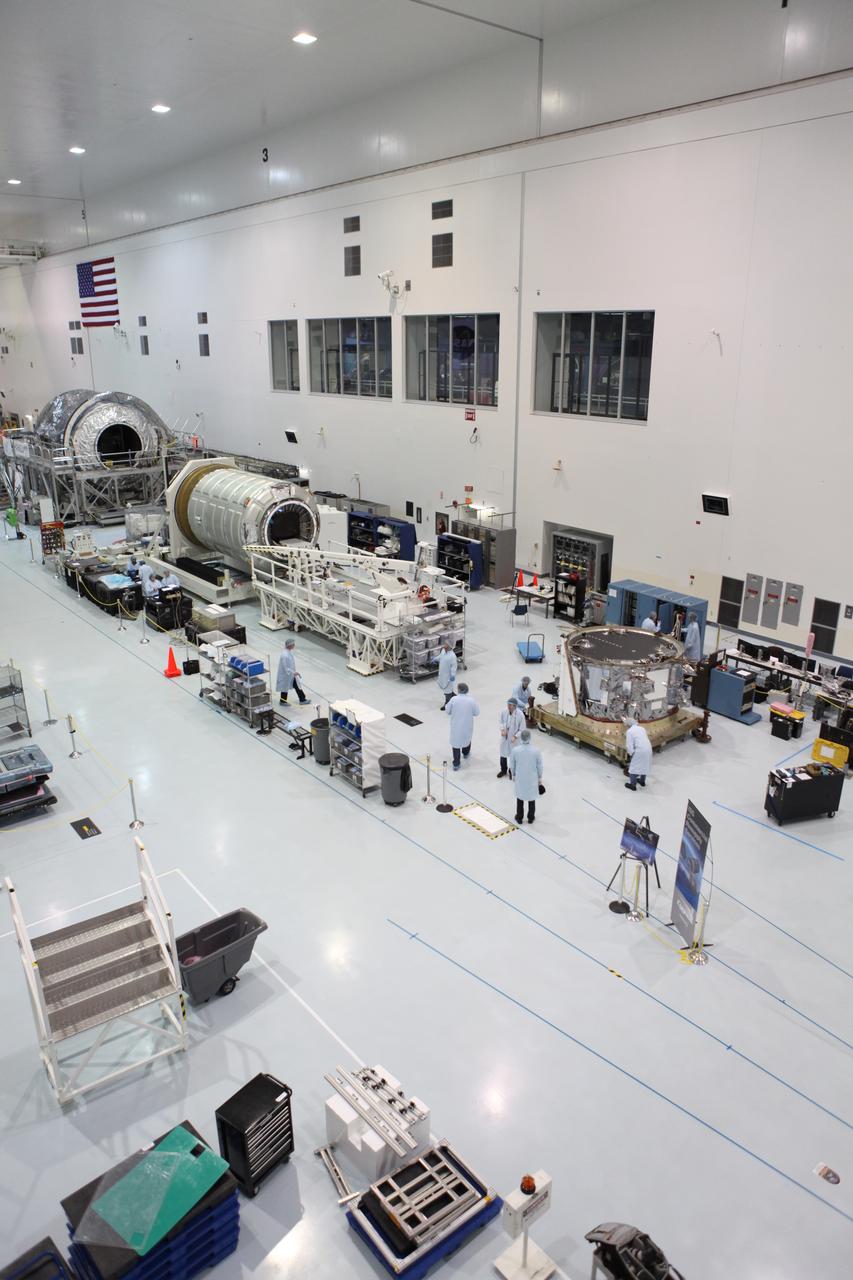
Inside the Space Station Processing Facility at NASA's Kennedy Space Center in Florida, engineers and technicians use a crane to place the Orbital ATK OA-7 Cygnus spacecraft's service module on a test stand. Scheduled to launch on March 19, 2017, the Orbital ATK OA-7 mission will lift off atop a United Launch Alliance Atlas V rocket from Space launch Complex 41 at Cape Canaveral Air Force Station. The commercial resupply services mission to the International Space Station will deliver thousands of pounds of supplies, equipment and scientific research materials that improve life on Earth and drive progress toward future space exploration.
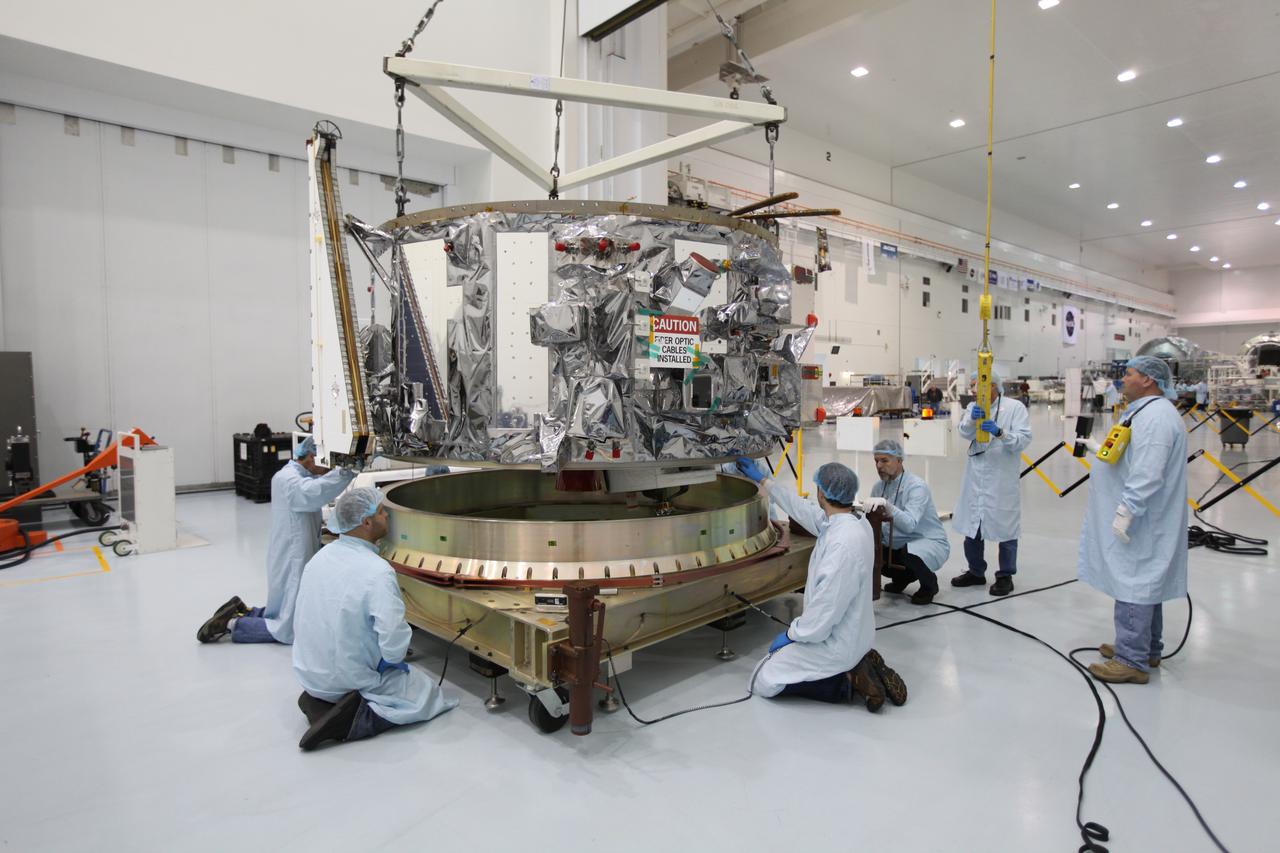
Inside the Space Station Processing Facility at NASA's Kennedy Space Center in Florida, engineers and technicians use a crane to place the Orbital ATK OA-7 Cygnus spacecraft's service module on a test stand. Scheduled to launch on March 19, 2017, the Orbital ATK OA-7 mission will lift off atop a United Launch Alliance Atlas V rocket from Space launch Complex 41 at Cape Canaveral Air Force Station. The commercial resupply services mission to the International Space Station will deliver thousands of pounds of supplies, equipment and scientific research materials that improve life on Earth and drive progress toward future space exploration.
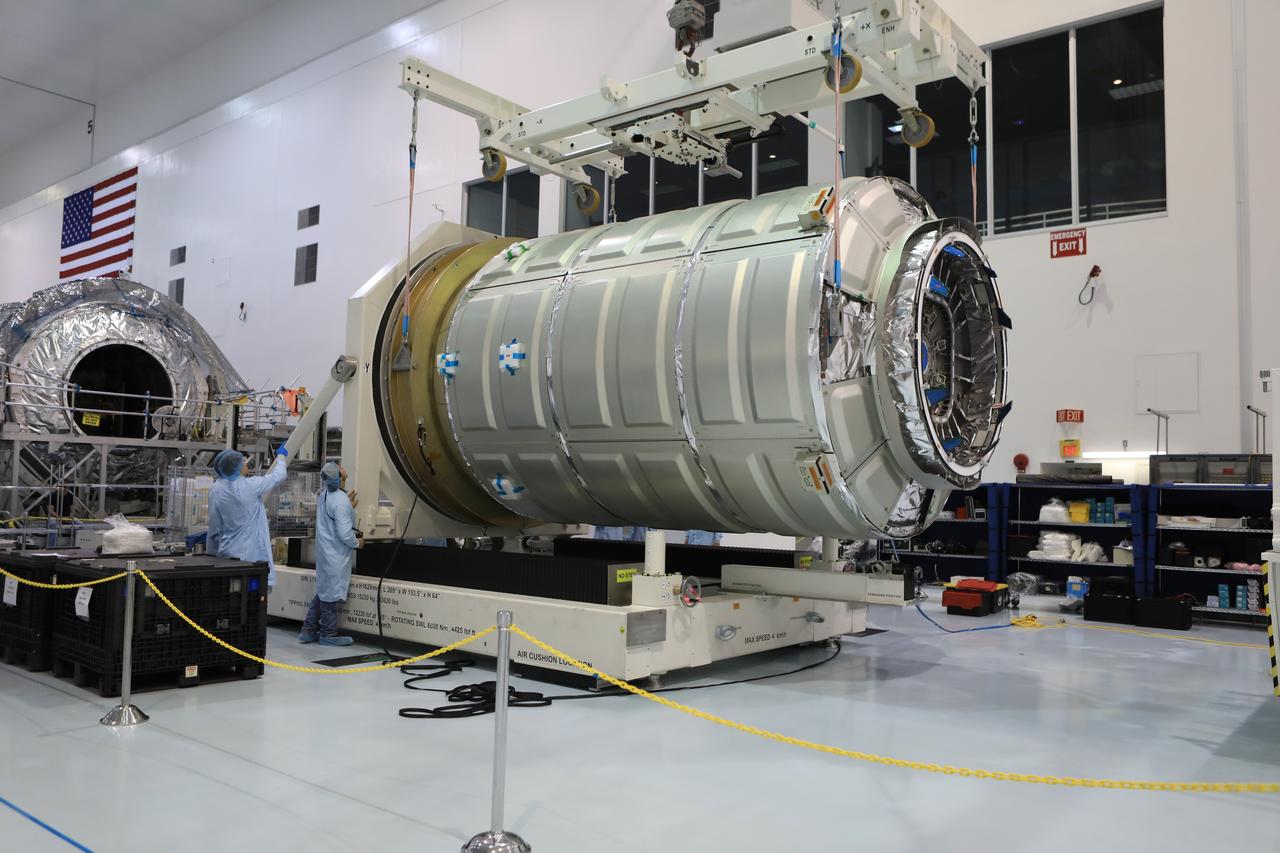
Engineers and technicians at NASA's Kennedy Space Center in Florida move the Orbital ATK OA-7 Cygnus spacecraft's pressurized cargo module (PCM) to a test stand inside the high bay of the Space Station Processing Facility. Scheduled to launch on March 19, 2017, the Orbital ATK OA-7 mission will lift off atop a United Launch Alliance Atlas V rocket from Space launch Complex 41 at Cape Canaveral Air Force Station. The commercial resupply services mission to the International Space Station will deliver thousands of pounds of supplies, equipment and scientific research materials that improve life on Earth and drive progress toward future space exploration.
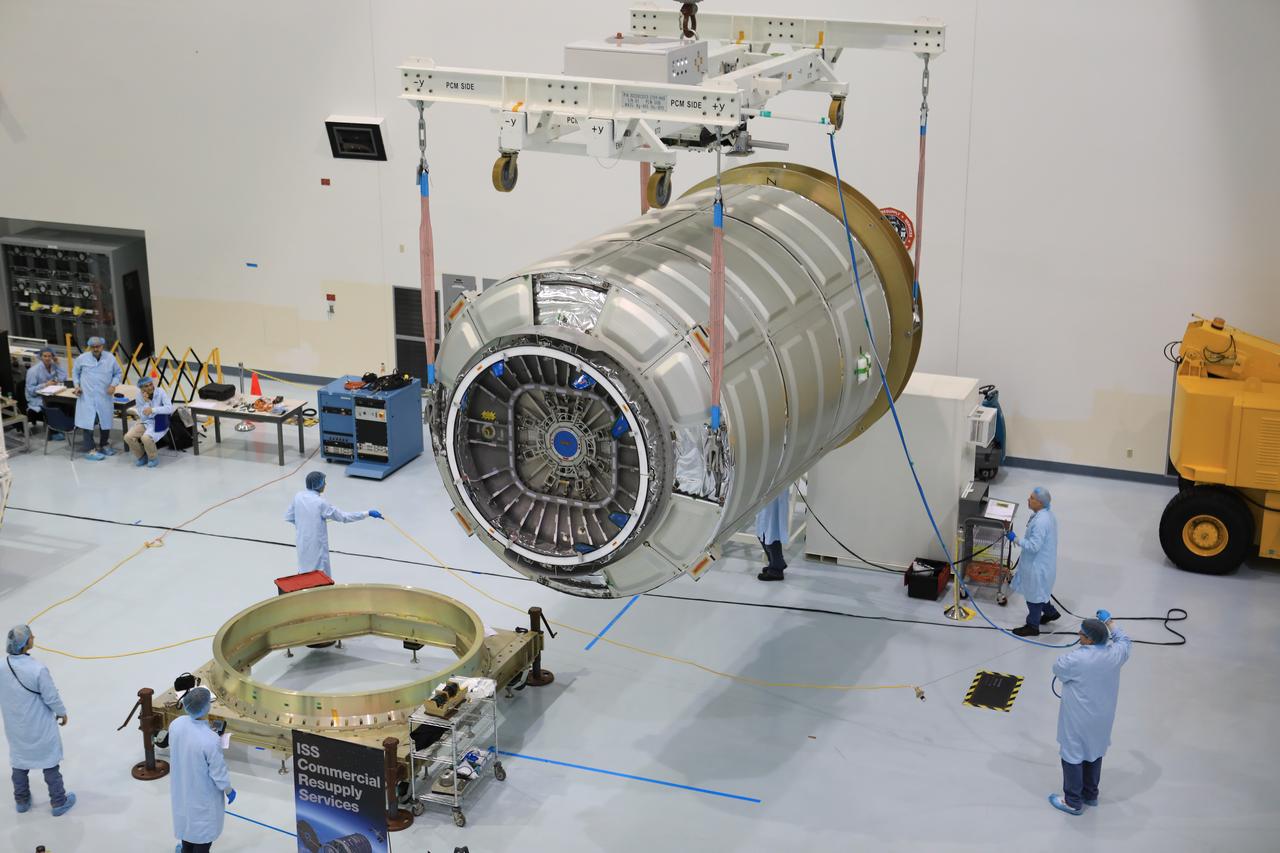
Engineers and technicians at NASA's Kennedy Space Center in Florida move the Orbital ATK OA-7 Cygnus spacecraft's pressurized cargo module (PCM) to a test stand inside the high bay of the Space Station Processing Facility. Scheduled to launch on March 19, 2017, the Orbital ATK OA-7 mission will lift off atop a United Launch Alliance Atlas V rocket from Space launch Complex 41 at Cape Canaveral Air Force Station. The commercial resupply services mission to the International Space Station will deliver thousands of pounds of supplies, equipment and scientific research materials that improve life on Earth and drive progress toward future space exploration.
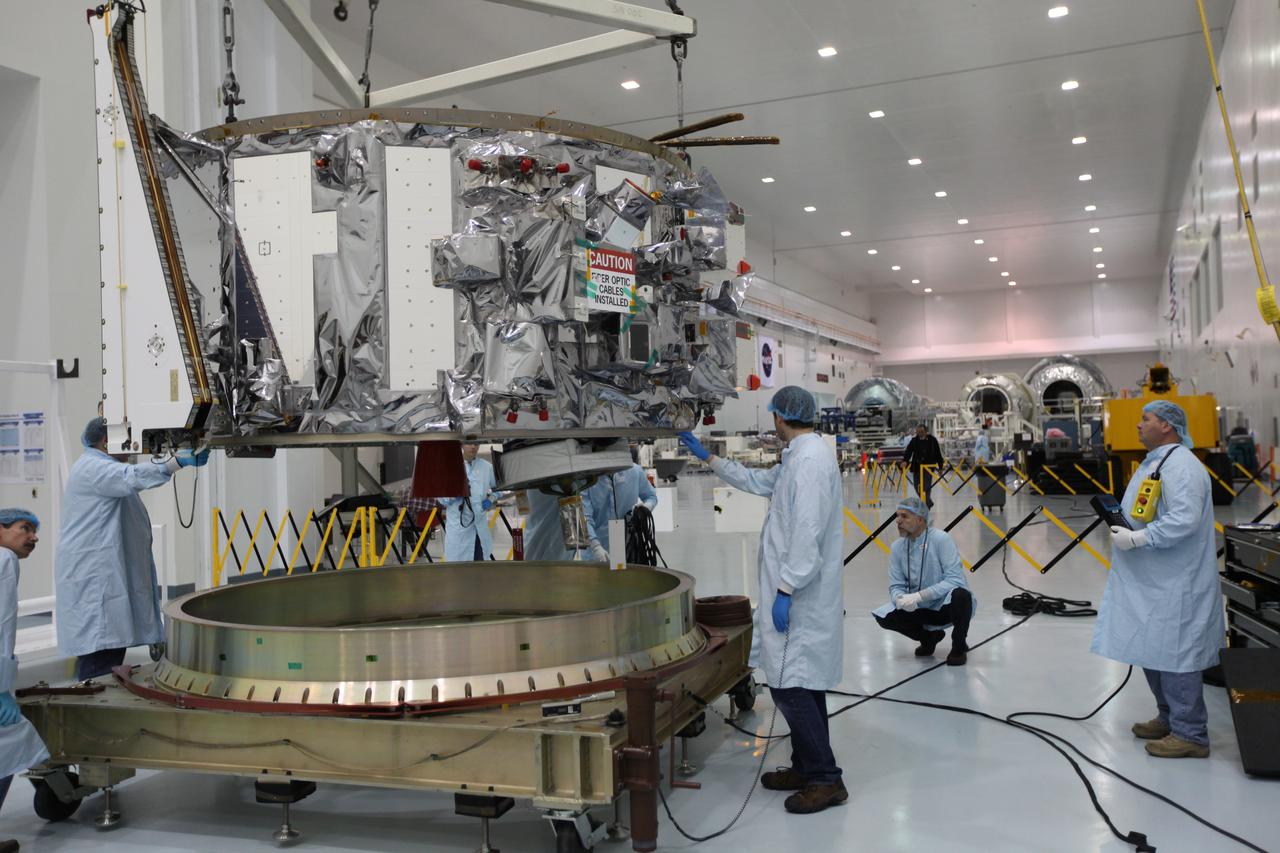
Inside the Space Station Processing Facility at NASA's Kennedy Space Center in Florida, Engineers and technicians use a crane to move the Orbital ATK OA-7 Cygnus spacecraft's service module to a test stand. Scheduled to launch on March 19, 2017, the Orbital ATK OA-7 mission will lift off atop a United Launch Alliance Atlas V rocket from Space launch Complex 41 at Cape Canaveral Air Force Station. The commercial resupply services mission to the International Space Station will deliver thousands of pounds of supplies, equipment and scientific research materials that improve life on Earth and drive progress toward future space exploration.
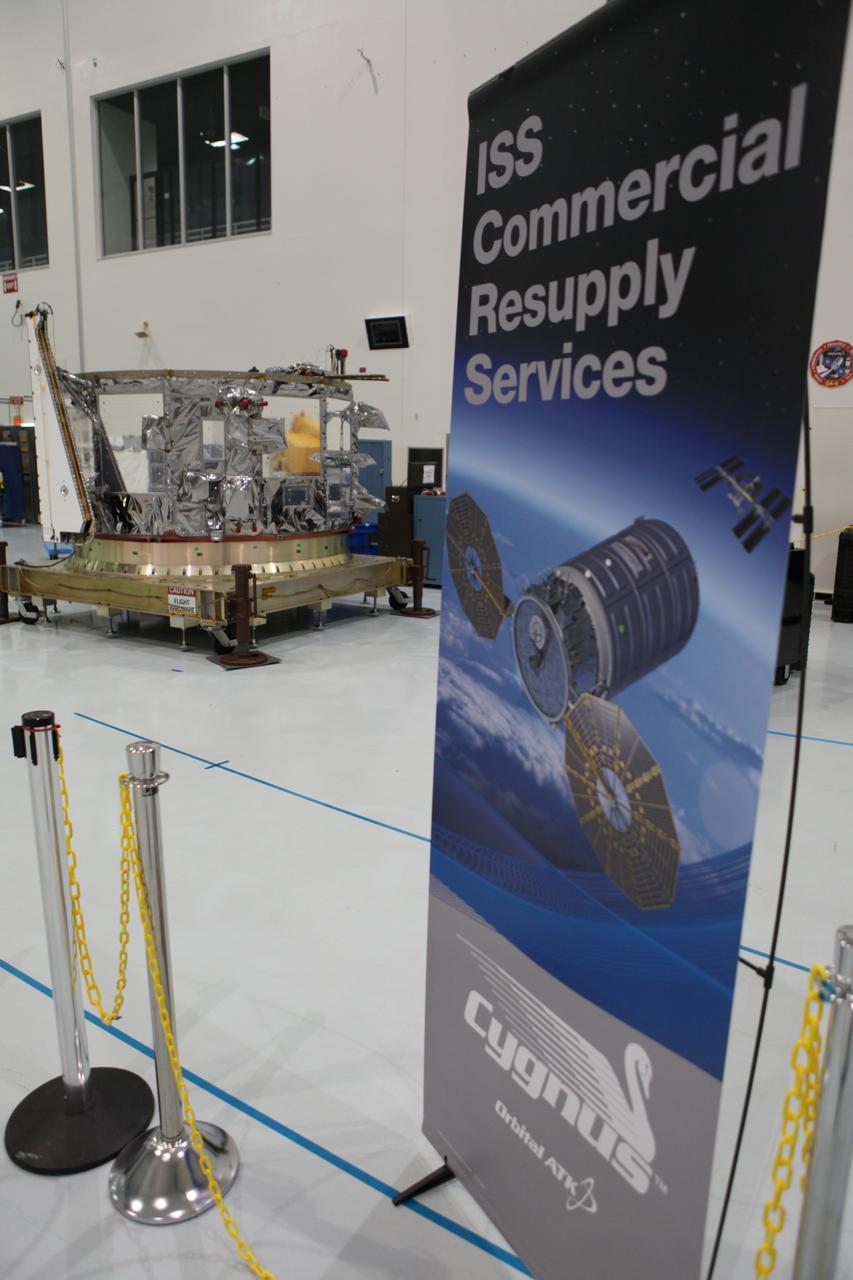
Inside the Space Station Processing Facility at NASA's Kennedy Space Center in Florida, engineers and technicians placed the Orbital ATK OA-7 Cygnus spacecraft's service module on a test stand. Scheduled to launch on March 19, 2017, the Orbital ATK OA-7 mission will lift off atop a United Launch Alliance Atlas V rocket from Space launch Complex 41 at Cape Canaveral Air Force Station. The commercial resupply services mission to the International Space Station will deliver thousands of pounds of supplies, equipment and scientific research materials that improve life on Earth and drive progress toward future space exploration.
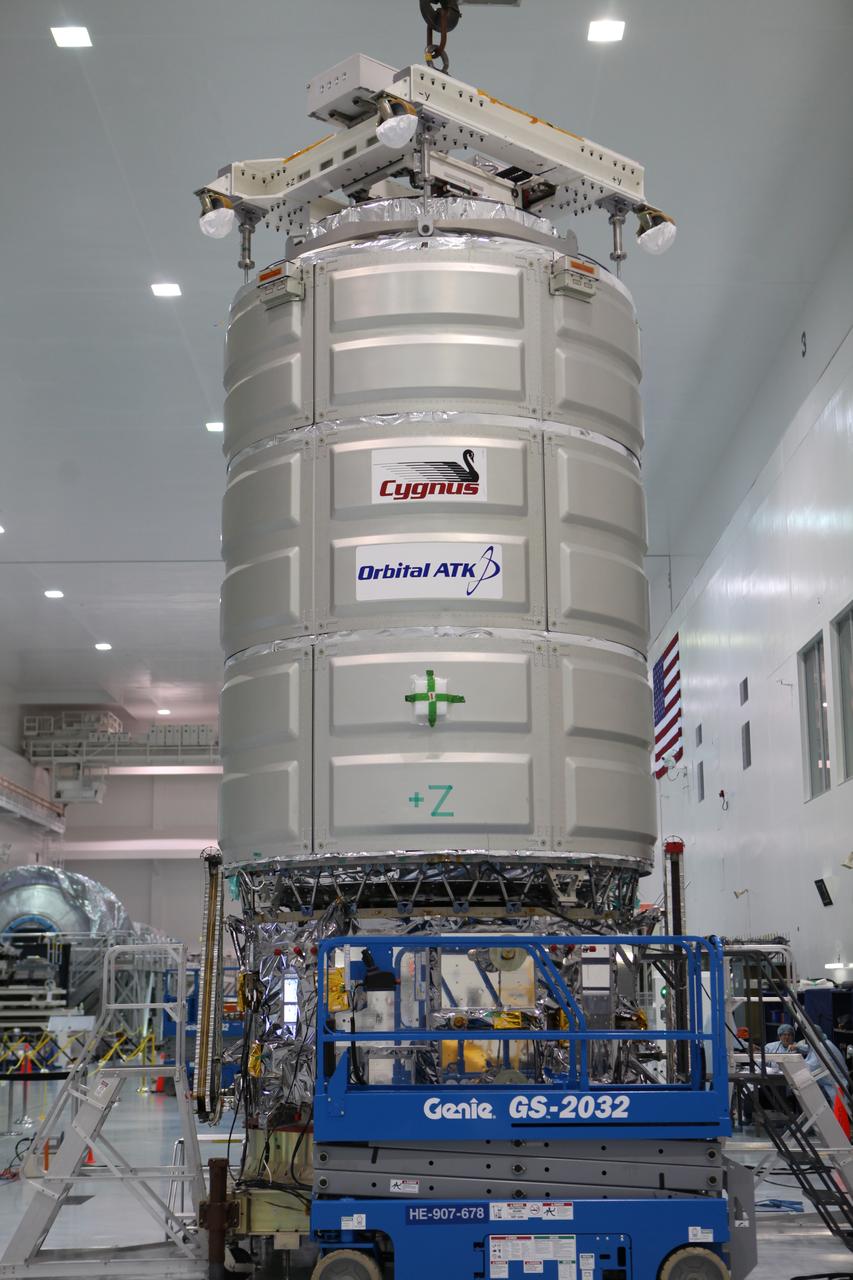
In the Space Station Processing Facility at NASA's Kennedy Space Center in Florida, technicians and engineers test a Cygnus spacecraft after its pressurized cargo module was mated to its service module. Cygnus is being prepared to deliver thousands of pounds of supplies, equipment and scientific research materials on the Orbital ATK CRS-7 mission to the International Space Station. Scheduled to launch on March 19, 2017, the commercial resupply services mission will lift off atop a United Launch Alliance Atlas V rocket from Space launch Complex 41 at Cape Canaveral Air Force Station.
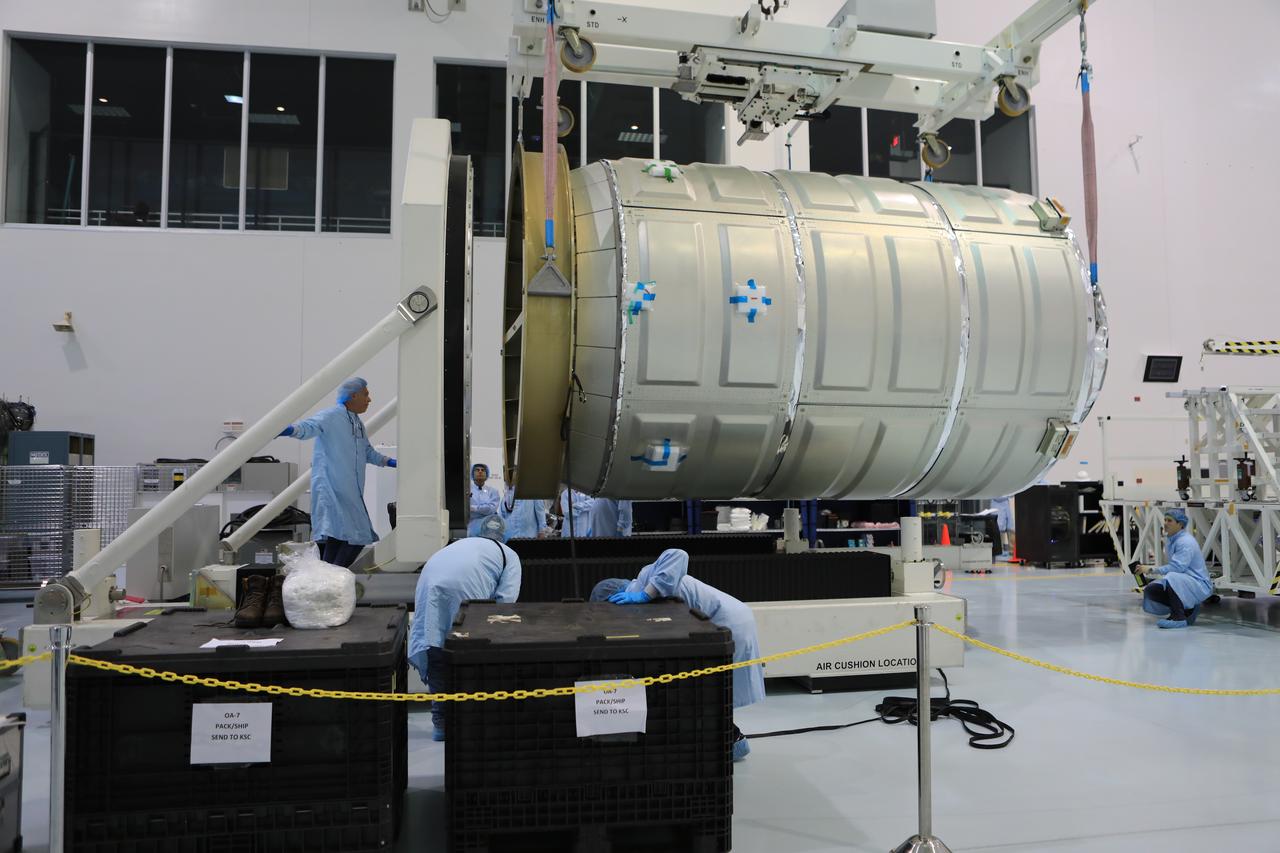
Engineers and technicians at NASA's Kennedy Space Center in Florida move the Orbital ATK OA-7 Cygnus spacecraft's pressurized cargo module (PCM) to a test stand inside the high bay of the Space Station Processing Facility. Scheduled to launch on March 19, 2017, the Orbital ATK OA-7 mission will lift off atop a United Launch Alliance Atlas V rocket from Space launch Complex 41 at Cape Canaveral Air Force Station. The commercial resupply services mission to the International Space Station will deliver thousands of pounds of supplies, equipment and scientific research materials that improve life on Earth and drive progress toward future space exploration.
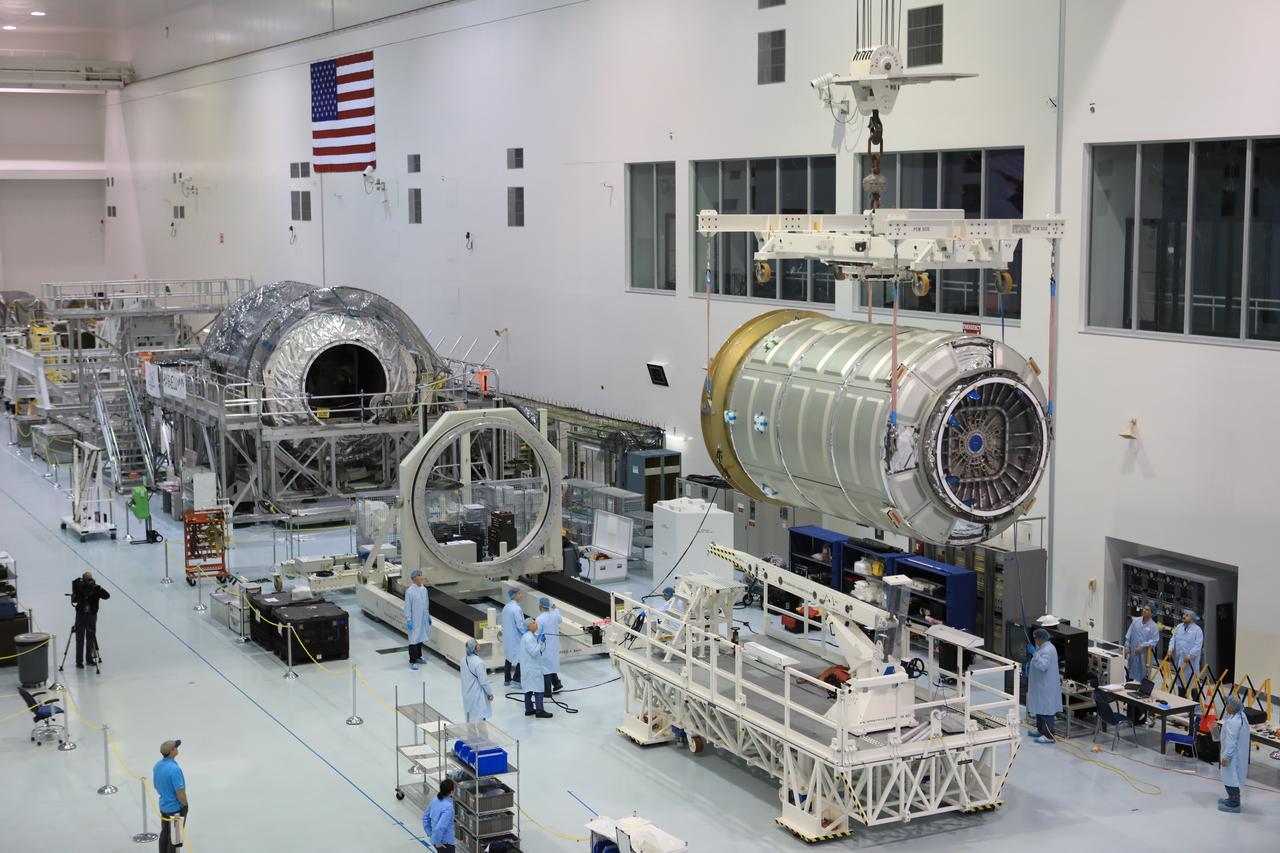
Engineers and technicians at NASA's Kennedy Space Center in Florida move the Orbital ATK OA-7 Cygnus spacecraft's pressurized cargo module (PCM) to a test stand inside the high bay of the Space Station Processing Facility. Scheduled to launch on March 19, 2017, the Orbital ATK OA-7 mission will lift off atop a United Launch Alliance Atlas V rocket from Space launch Complex 41 at Cape Canaveral Air Force Station. The commercial resupply services mission to the International Space Station will deliver thousands of pounds of supplies, equipment and scientific research materials that improve life on Earth and drive progress toward future space exploration.
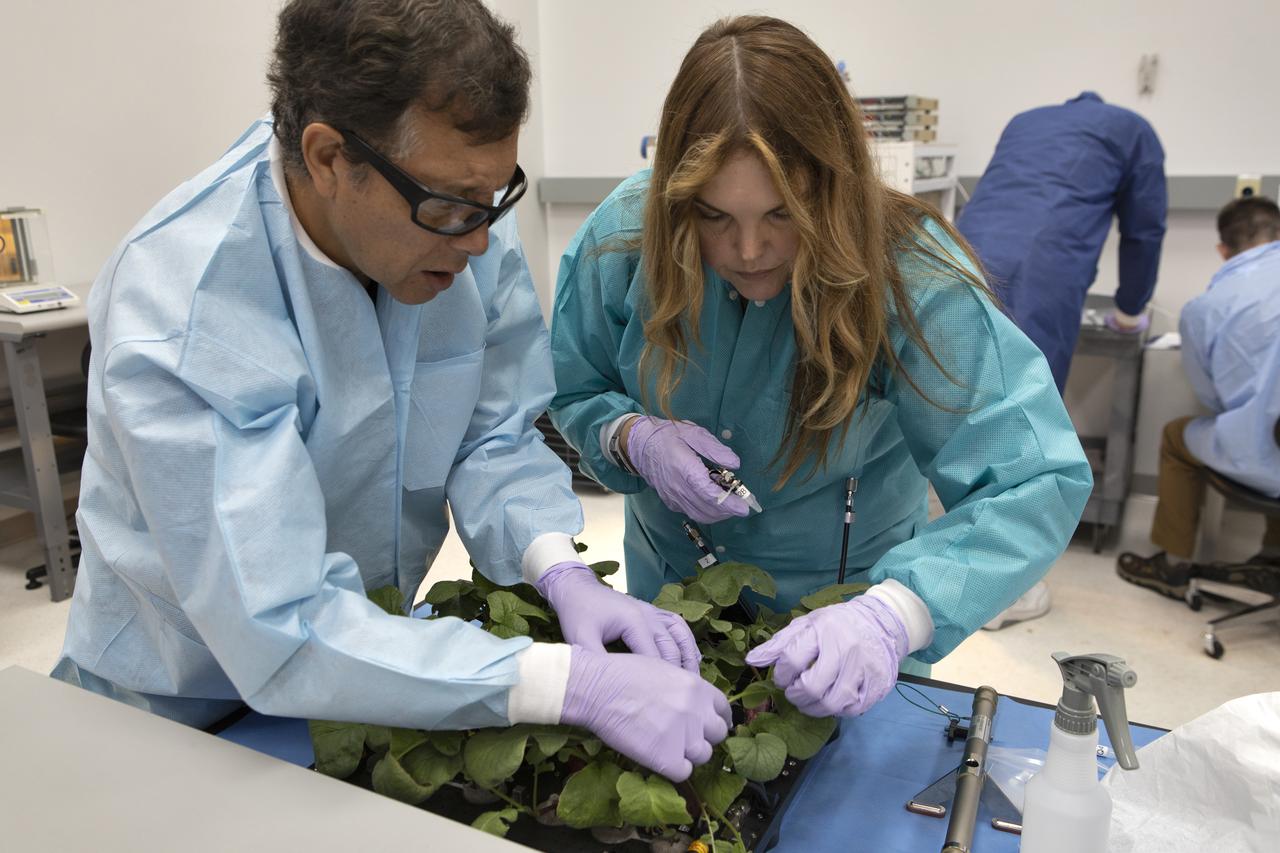
From left, Oscar Monje, Ph.D., a plant physiologist with AECOM Management Services; and Alora Mazarakis, an electrical engineer with Techshot, prepare to harvest radish plants from the base of the Advanced Plant Habitat ground unit inside a laboratory in the Space Station Processing Facility at NASA’s Kennedy Space Center in Florida on June 13, 2019. The radishes are being harvested as part of a science verification test. The APH is currently the largest plant chamber built for the agency in use on the International Space Station. It is an autonomous plant growth facility that is being used to conduct bioscience research on the space station with the goal of enabling astronauts to be sustainable on long duration missions to the Moon, Mars and beyond.
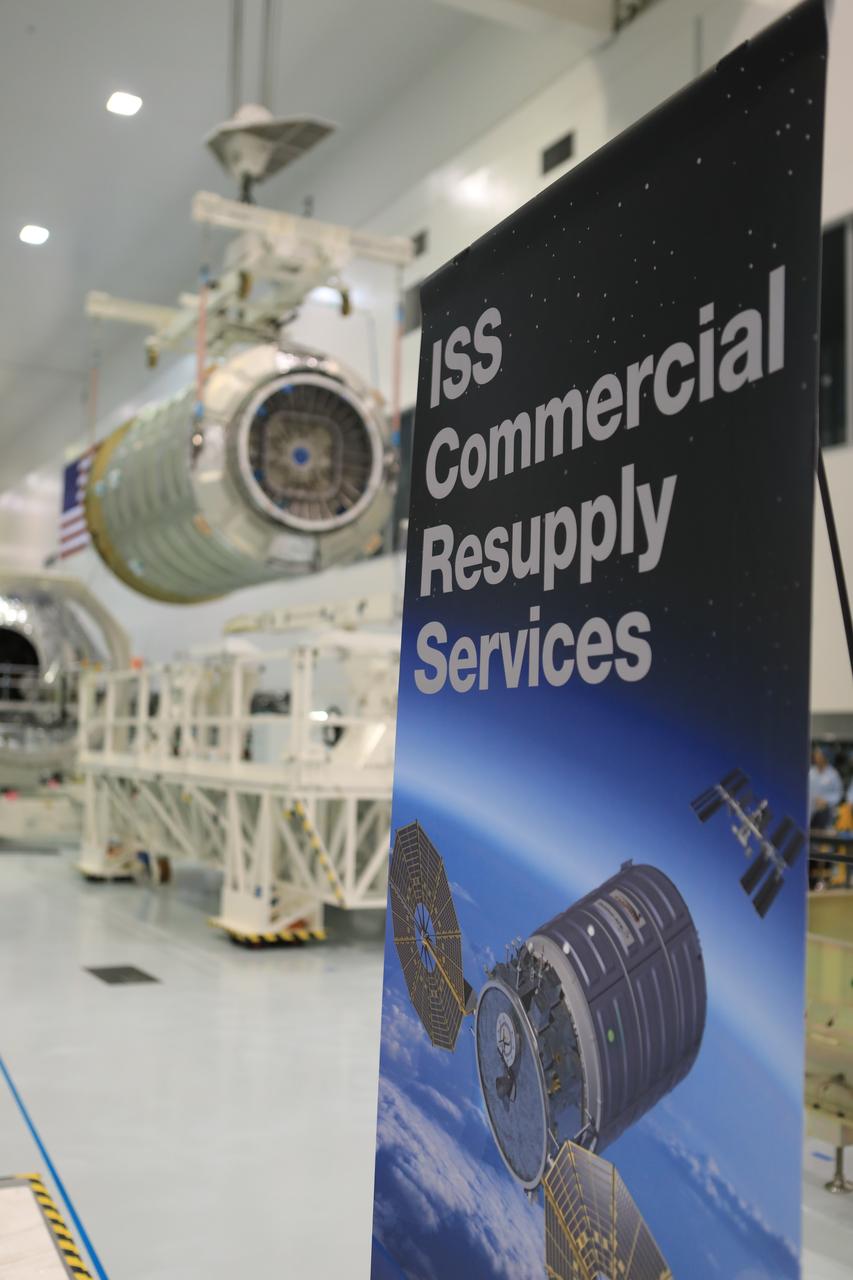
Engineers and technicians at NASA's Kennedy Space Center in Florida move the Orbital ATK OA-7 Cygnus spacecraft's pressurized cargo module (PCM) to a test stand inside the high bay of the Space Station Processing Facility. Scheduled to launch on March 19, 2017, the Orbital ATK OA-7 mission will lift off atop a United Launch Alliance Atlas V rocket from Space launch Complex 41 at Cape Canaveral Air Force Station. The commercial resupply services mission to the International Space Station will deliver thousands of pounds of supplies, equipment and scientific research materials that improve life on Earth and drive progress toward future space exploration.
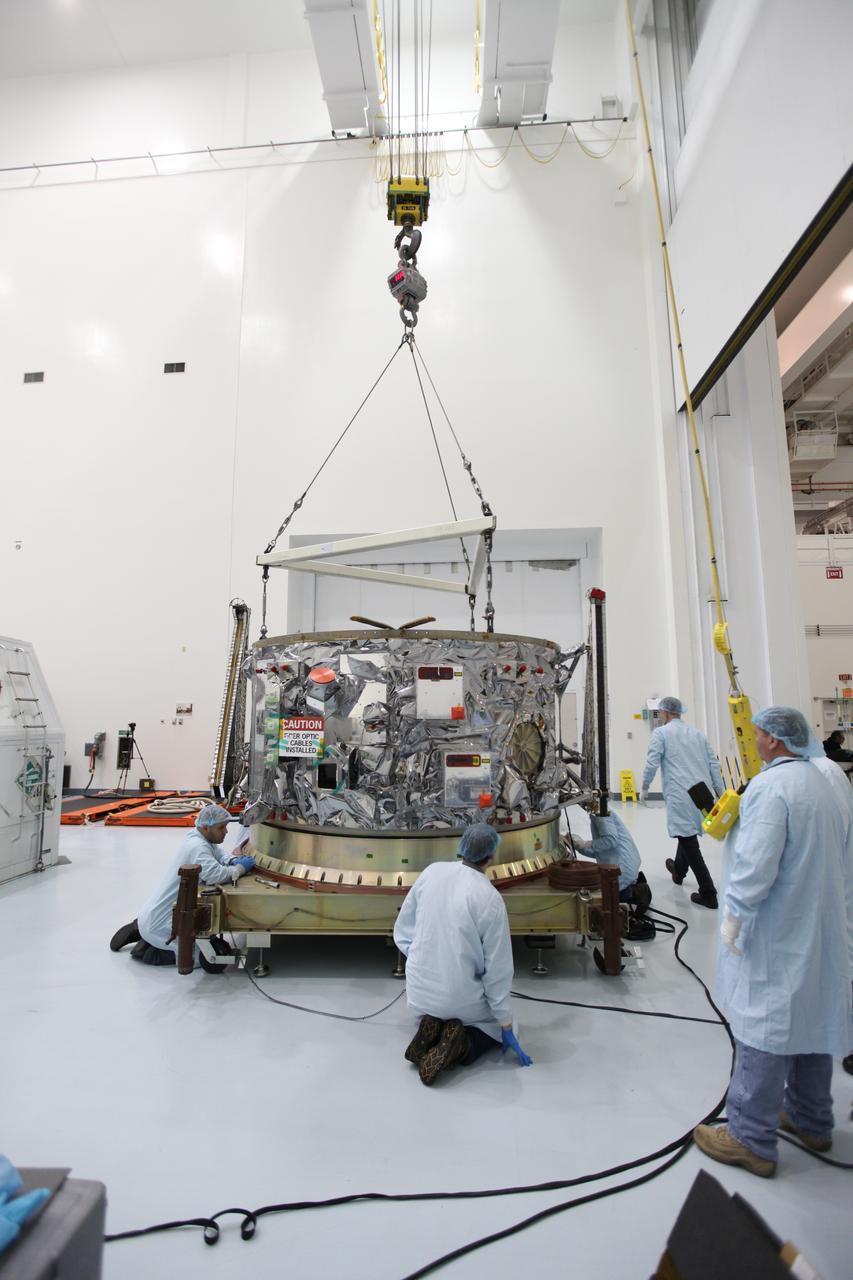
Inside the Space Station Processing Facility at NASA's Kennedy Space Center in Florida, engineers and technicians use a crane to place the Orbital ATK OA-7 Cygnus spacecraft's service module on a test stand. Scheduled to launch on March 19, 2017, the Orbital ATK OA-7 mission will lift off atop a United Launch Alliance Atlas V rocket from Space launch Complex 41 at Cape Canaveral Air Force Station. The commercial resupply services mission to the International Space Station will deliver thousands of pounds of supplies, equipment and scientific research materials that improve life on Earth and drive progress toward future space exploration.
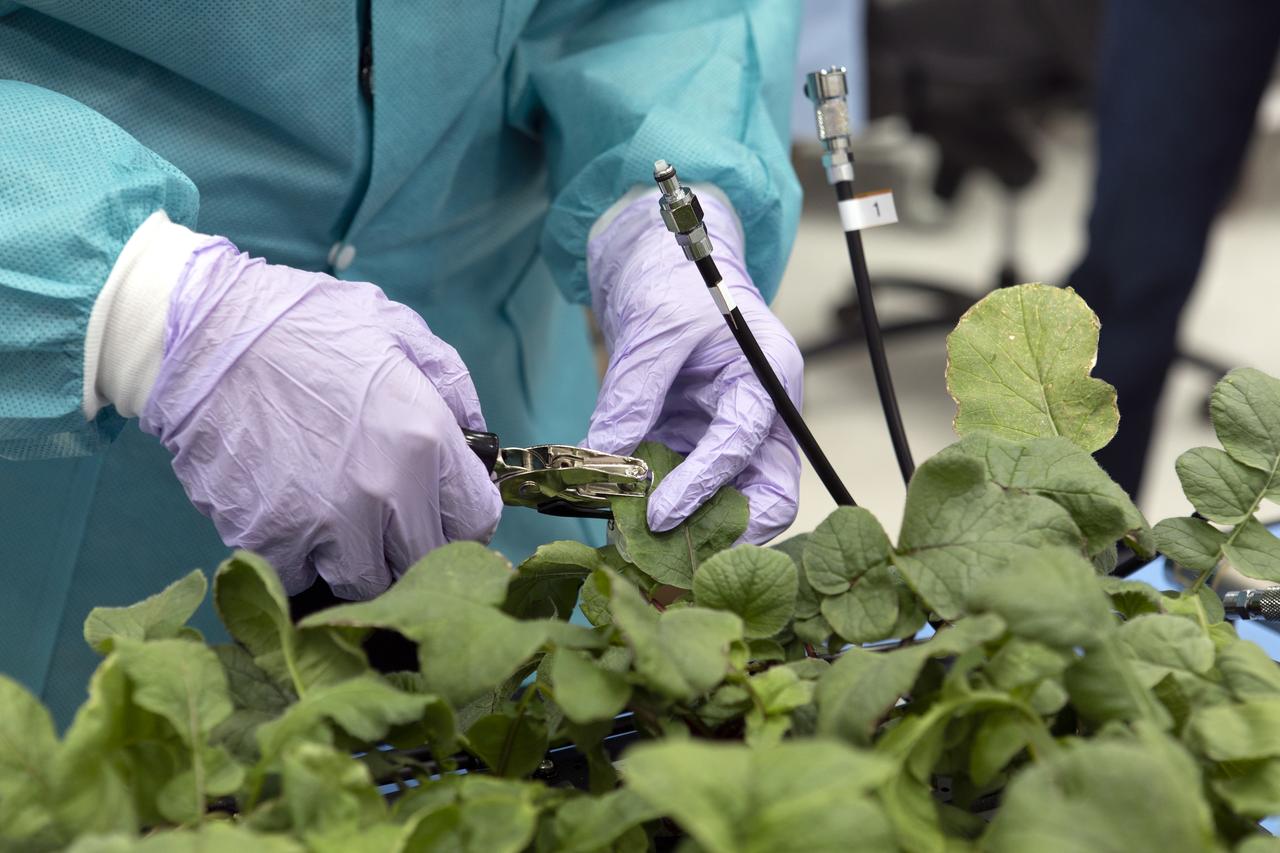
Clayton Grosse, a mechanical engineer with Techshot, uses a punch to take a sample of the leaf of a radish plant growing in the base of the Advanced Plant Habitat (APH) ground unit, inside a laboratory in the Space Station Processing Facility at NASA’s Kennedy Space Center in Florida on June 13, 2019. The radishes are being harvested as part of a science verification test. The APH is currently the largest plant chamber built for the agency in use on the International Space Station. It is an autonomous plant growth facility that is being used to conduct bioscience research on the space station with the goal of enabling astronauts to be sustainable on long duration missions to the Moon, Mars and beyond.
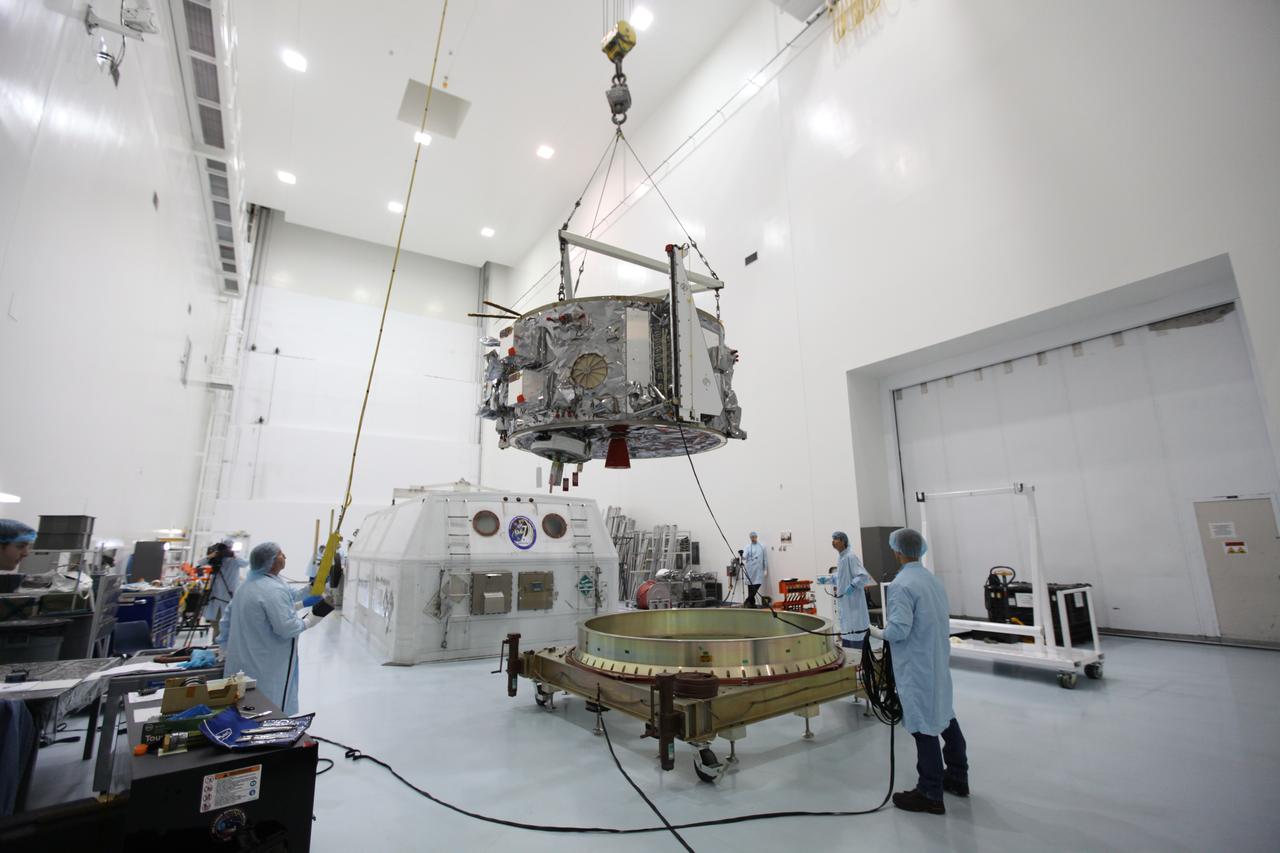
Inside the Space Station Processing Facility at NASA's Kennedy Space Center in Florida, Engineers and technicians use a crane to lift the Orbital ATK OA-7 Cygnus spacecraft's service module from its shipping container and move it to a test stand. Scheduled to launch on March 19, 2017, the Orbital ATK OA-7 mission will lift off atop a United Launch Alliance Atlas V rocket from Space launch Complex 41 at Cape Canaveral Air Force Station. The commercial resupply services mission to the International Space Station will deliver thousands of pounds of supplies, equipment and scientific research materials that improve life on Earth and drive progress toward future space exploration.