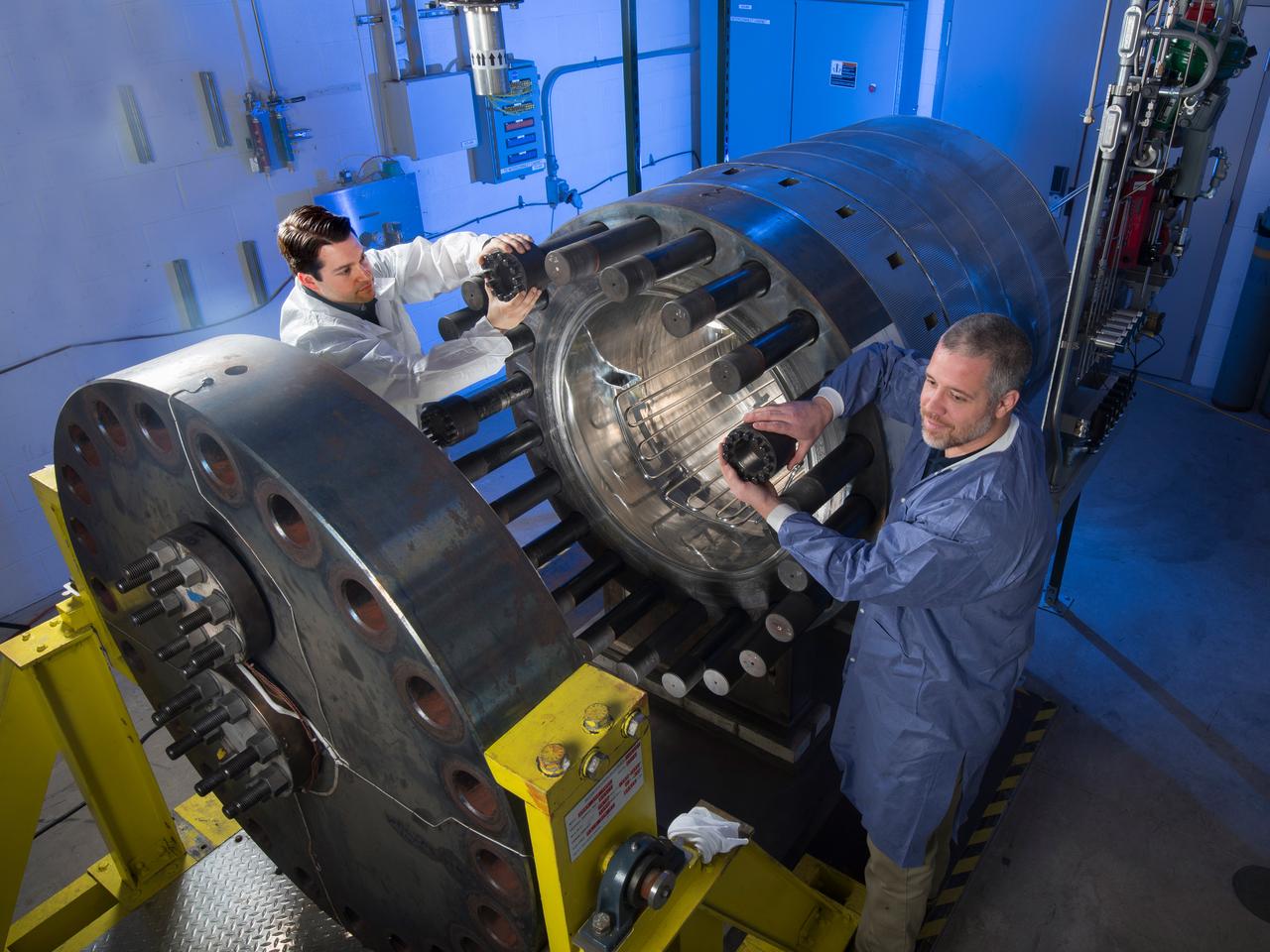
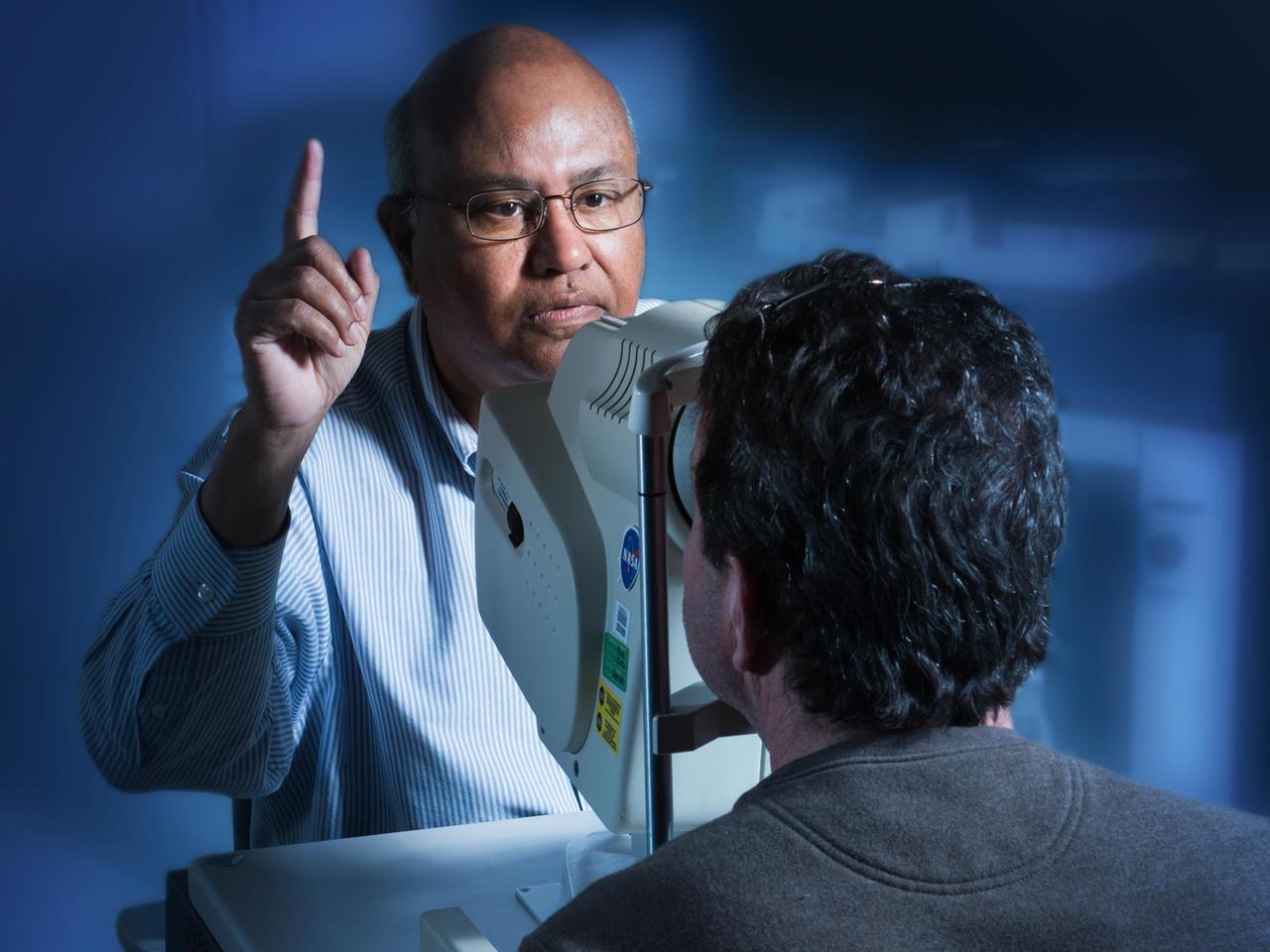
Dr. Rafat Ansari and James King testing their dynamic light scattering clinical device in NASA's Vision Research Laboratory at NASA Glenn. The objective is to diagnose eye diseases non-invasively long before the clinical symptoms appear and help find non-surgical medical treatments. The device shown was recently used in humans by ophthalmologists and scientists for the study of early onset of cataracts.
Cataract Research Testing
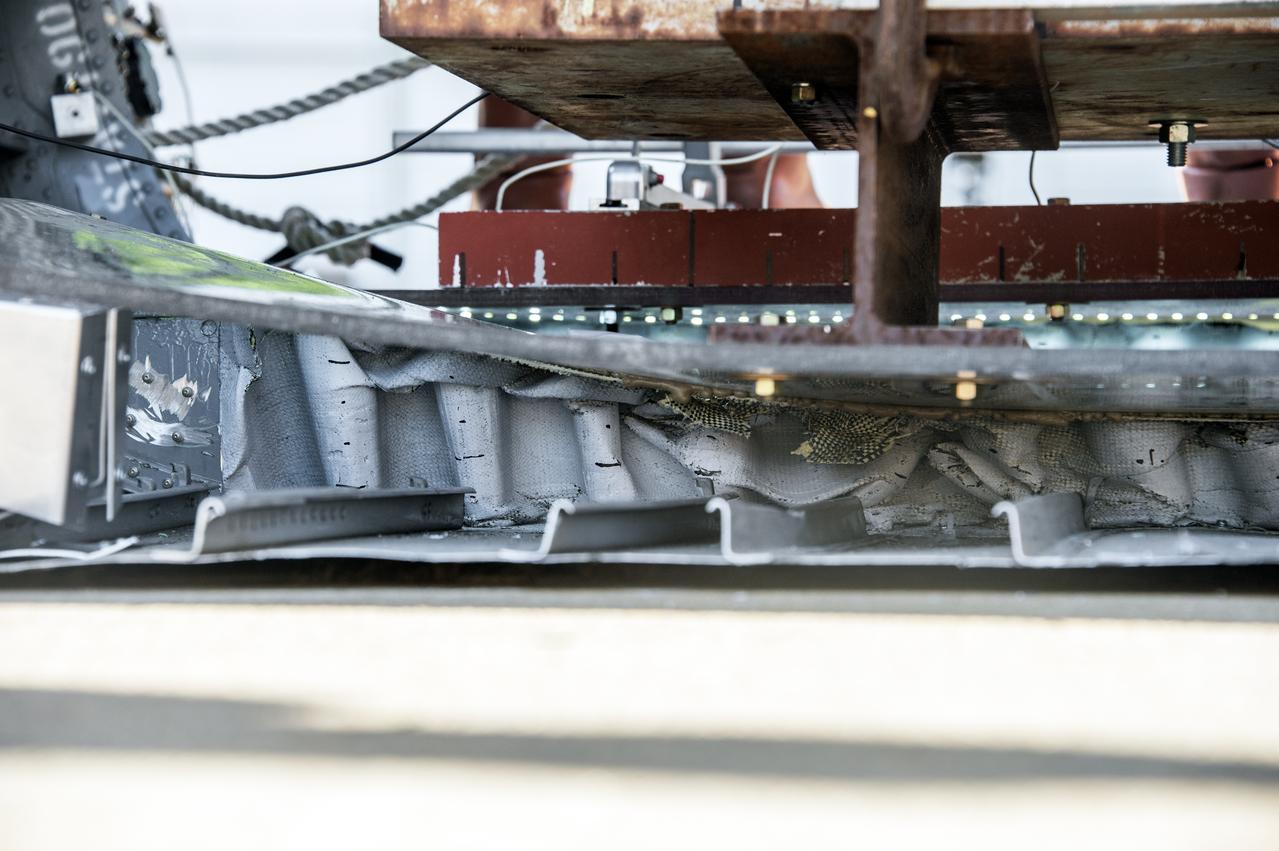
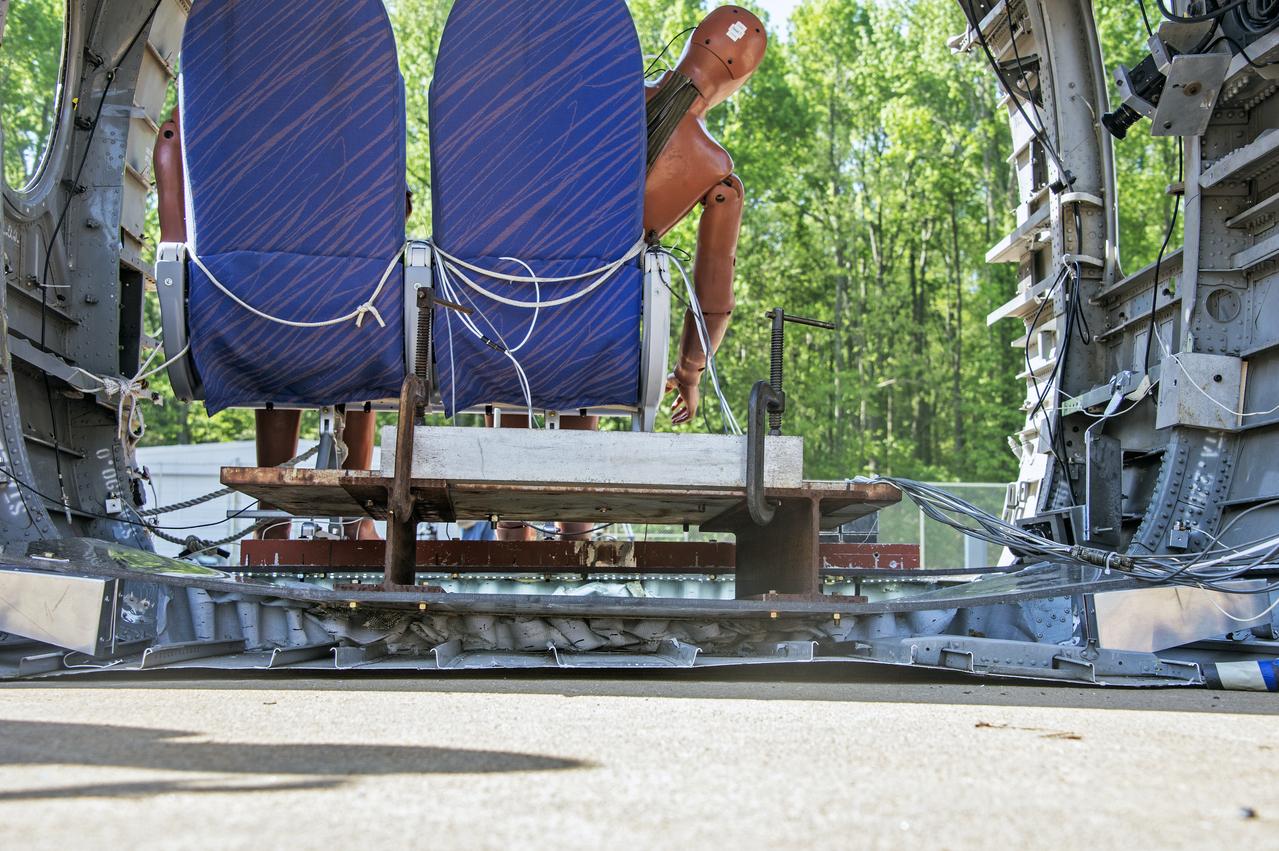
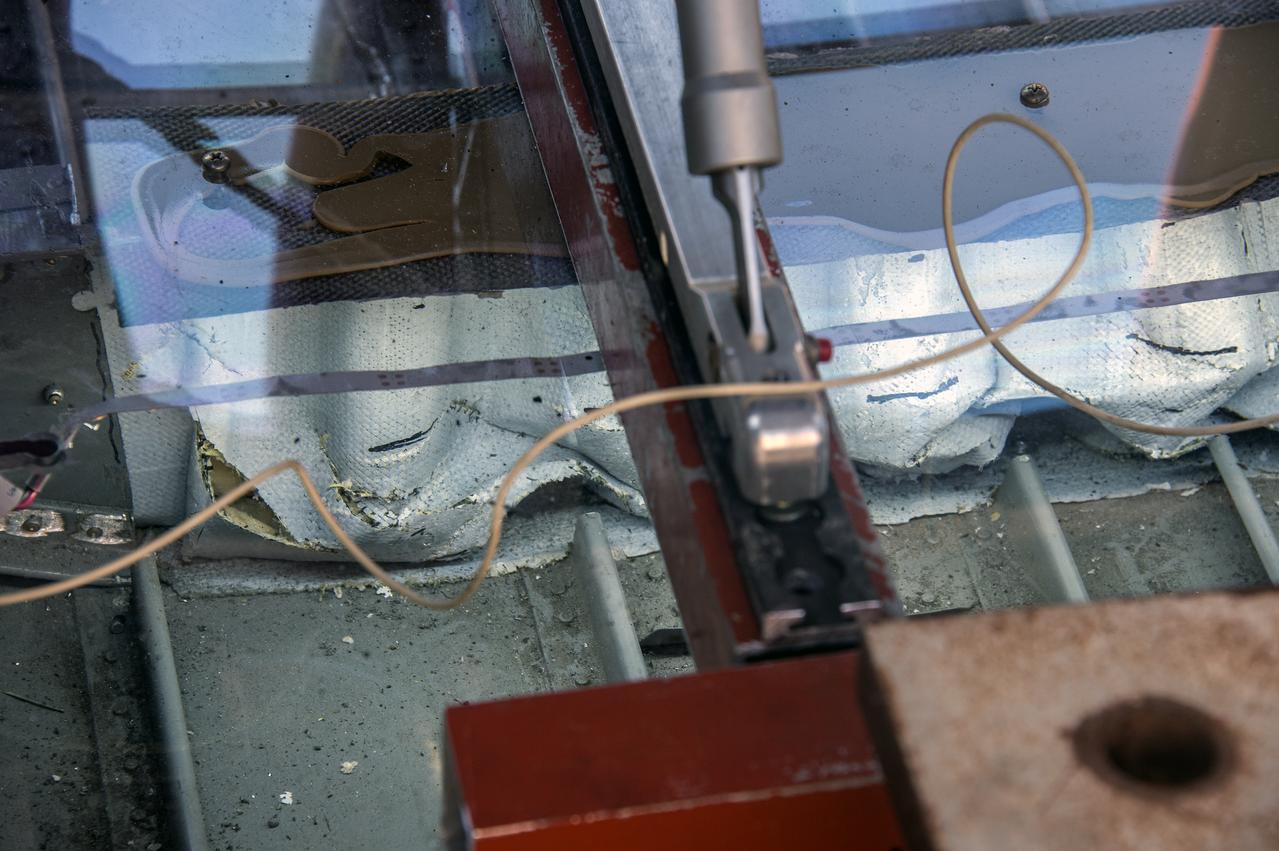
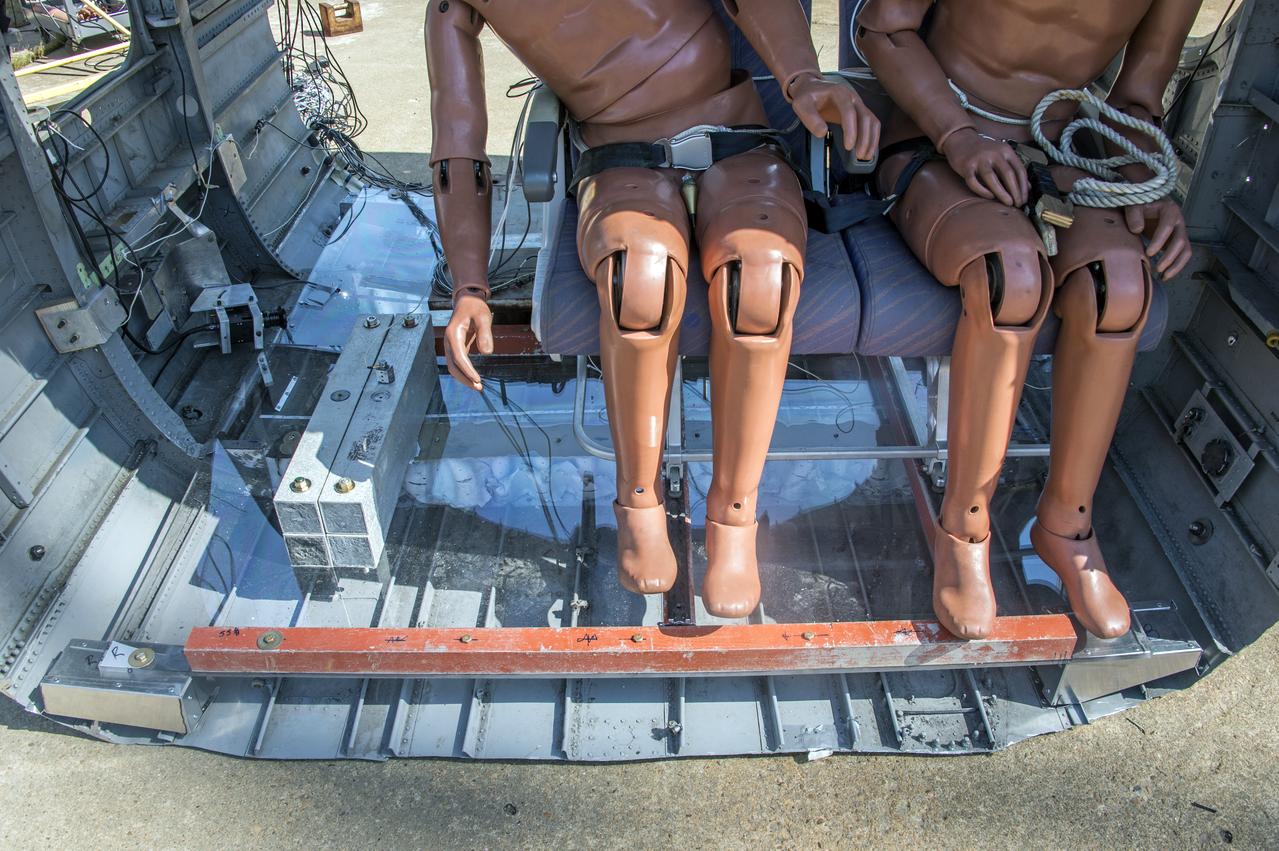
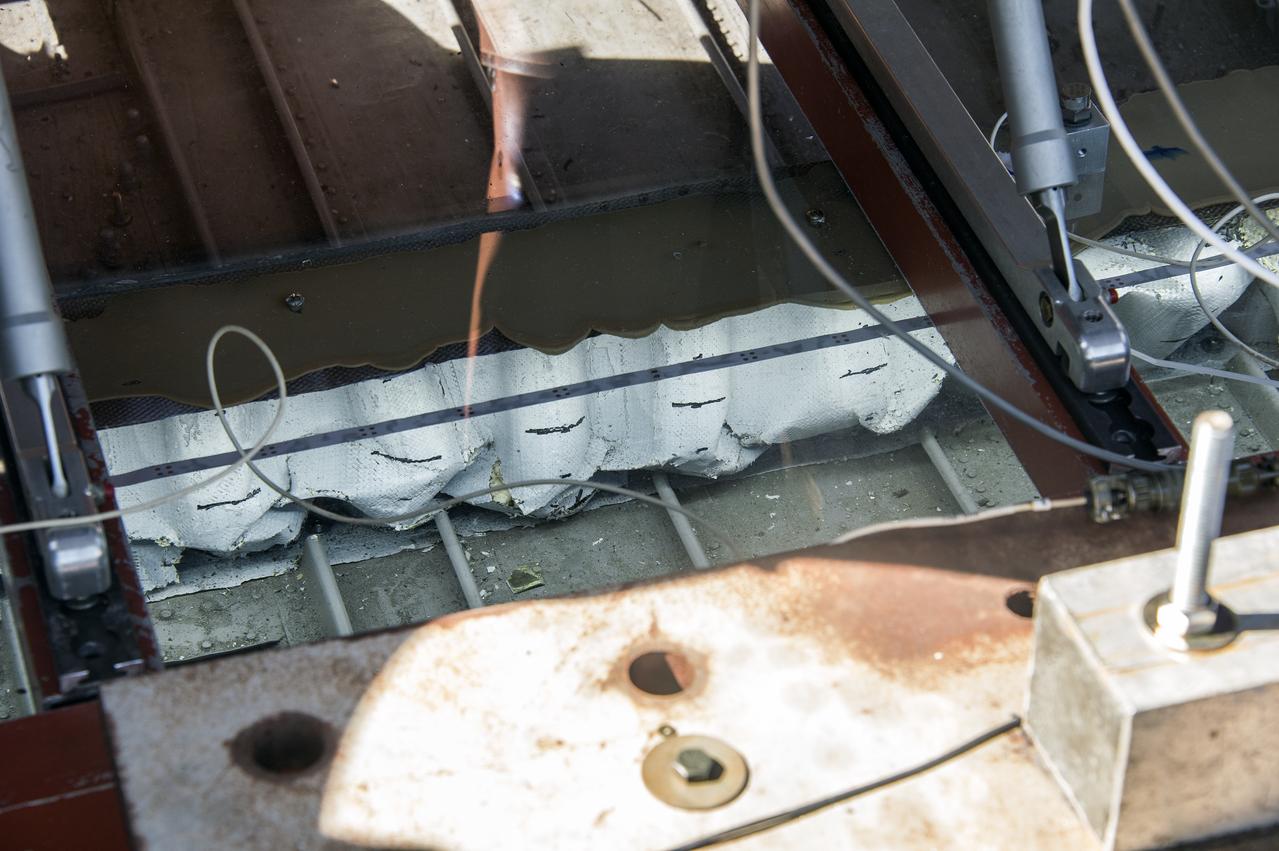
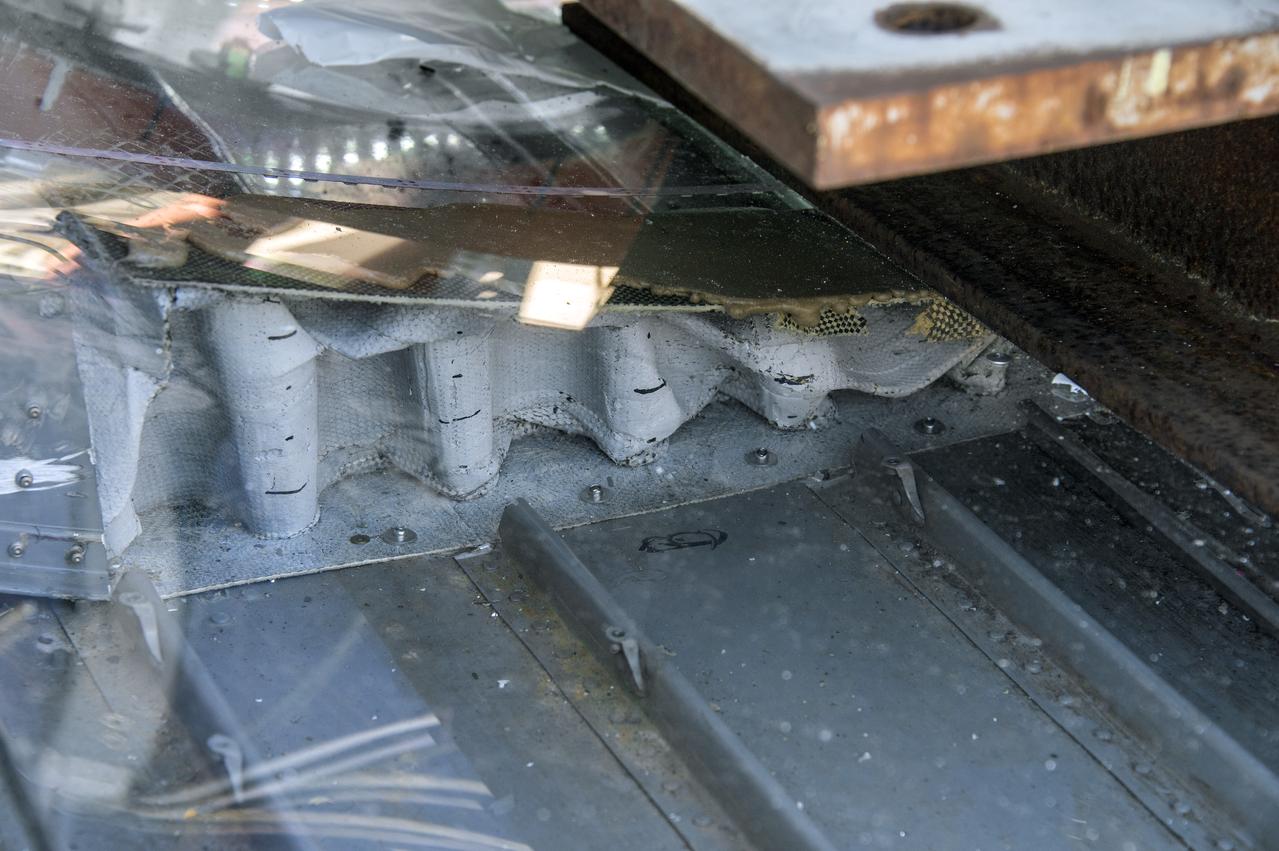
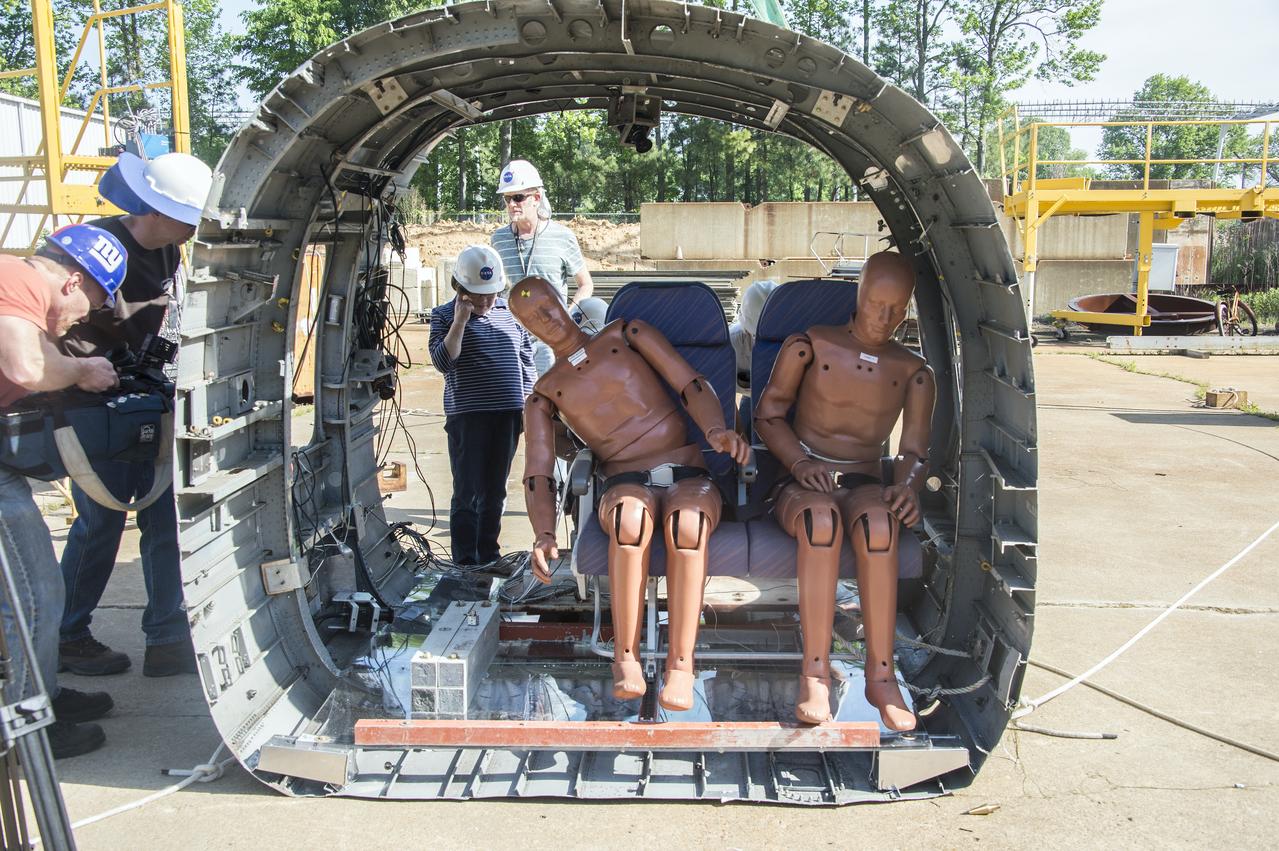
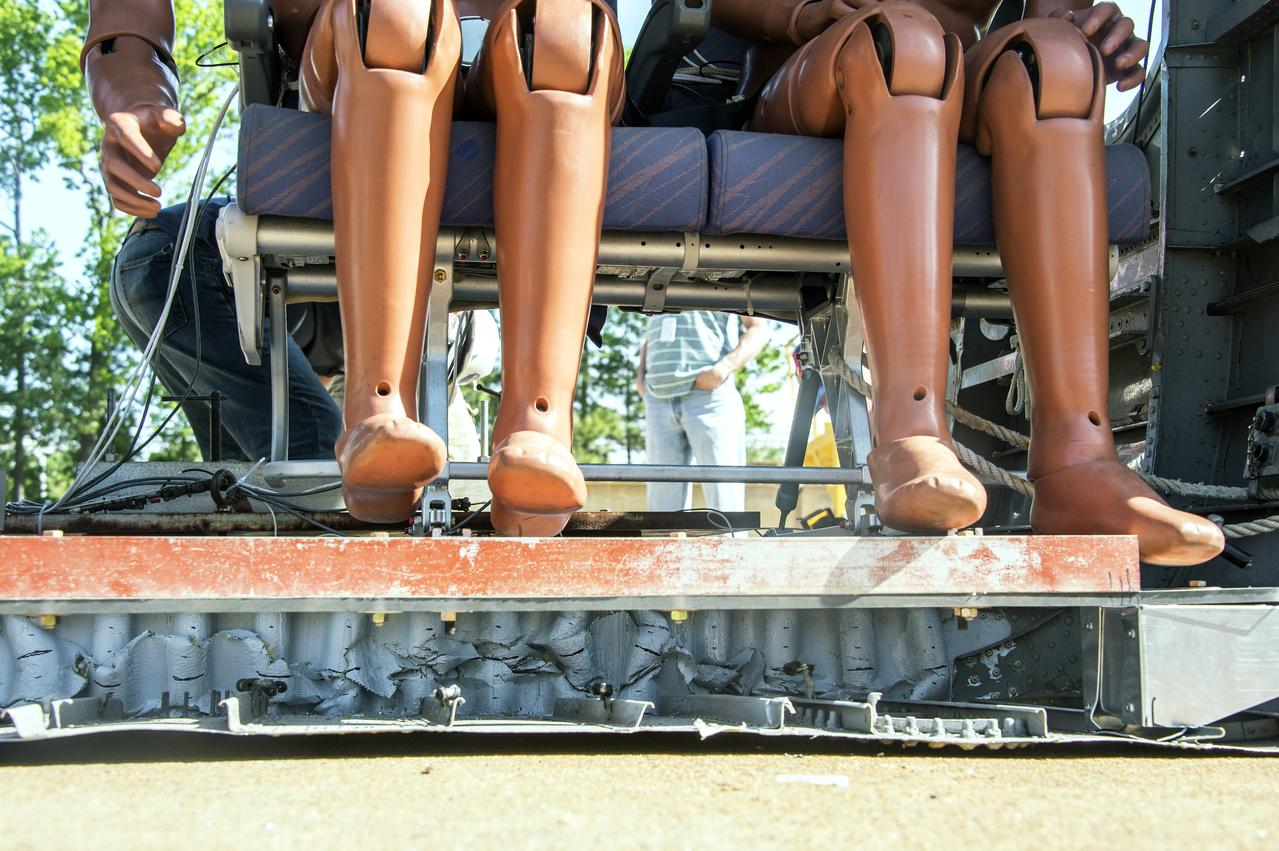
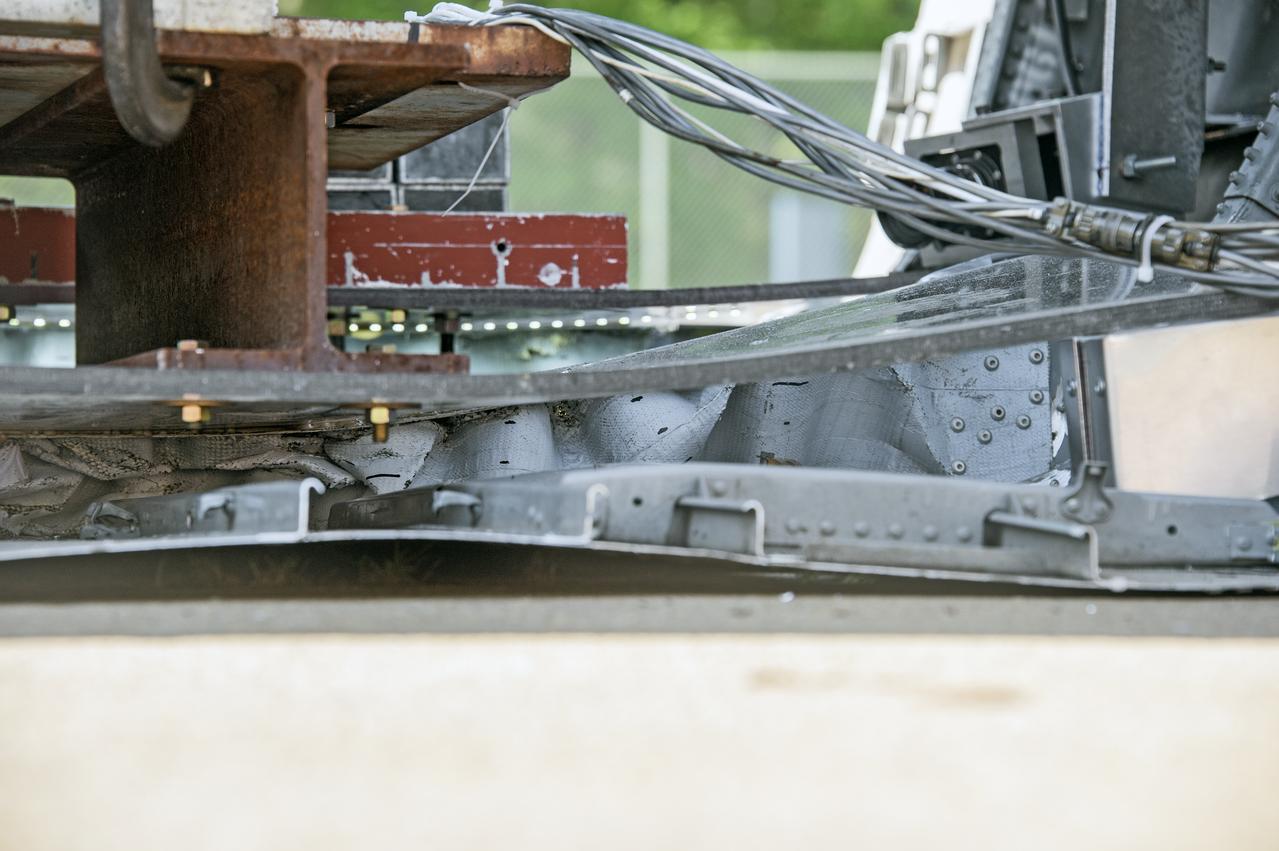
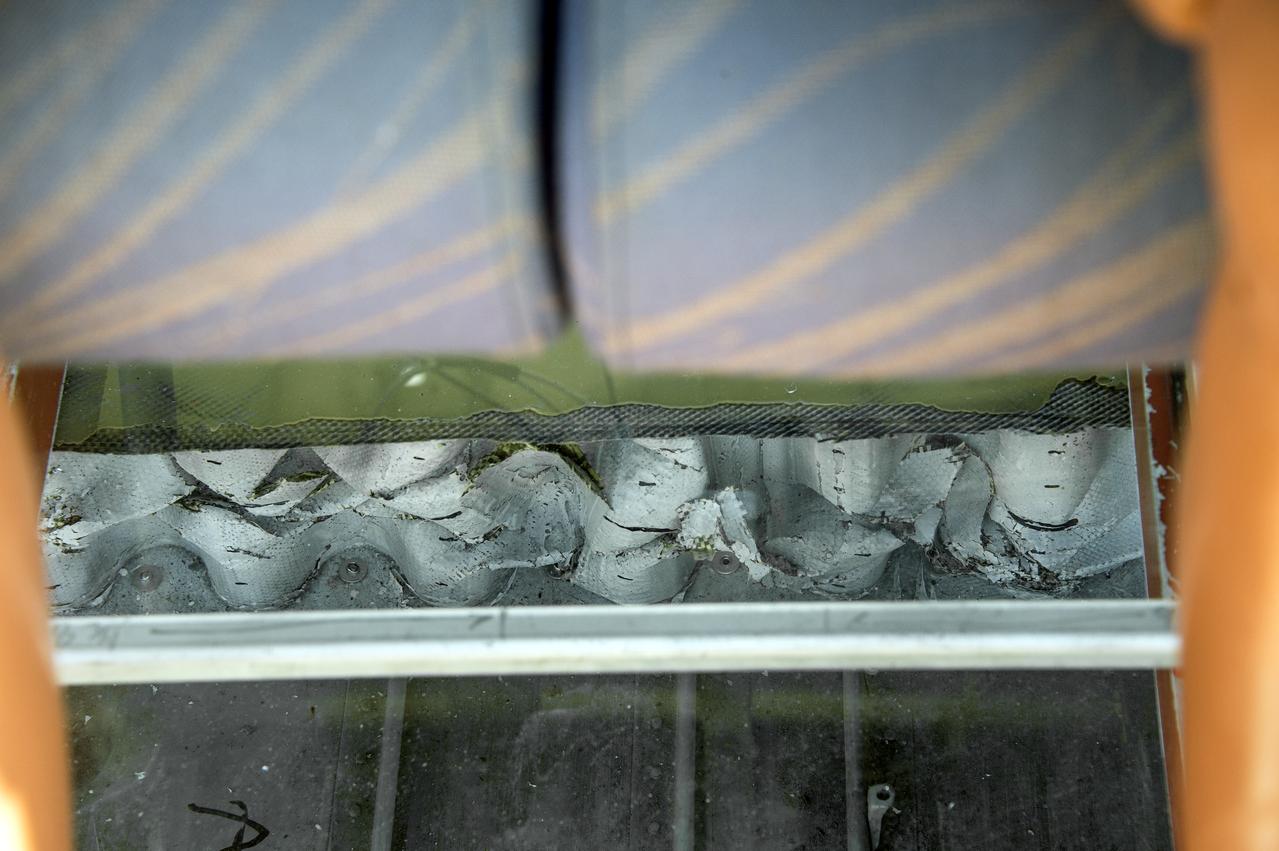
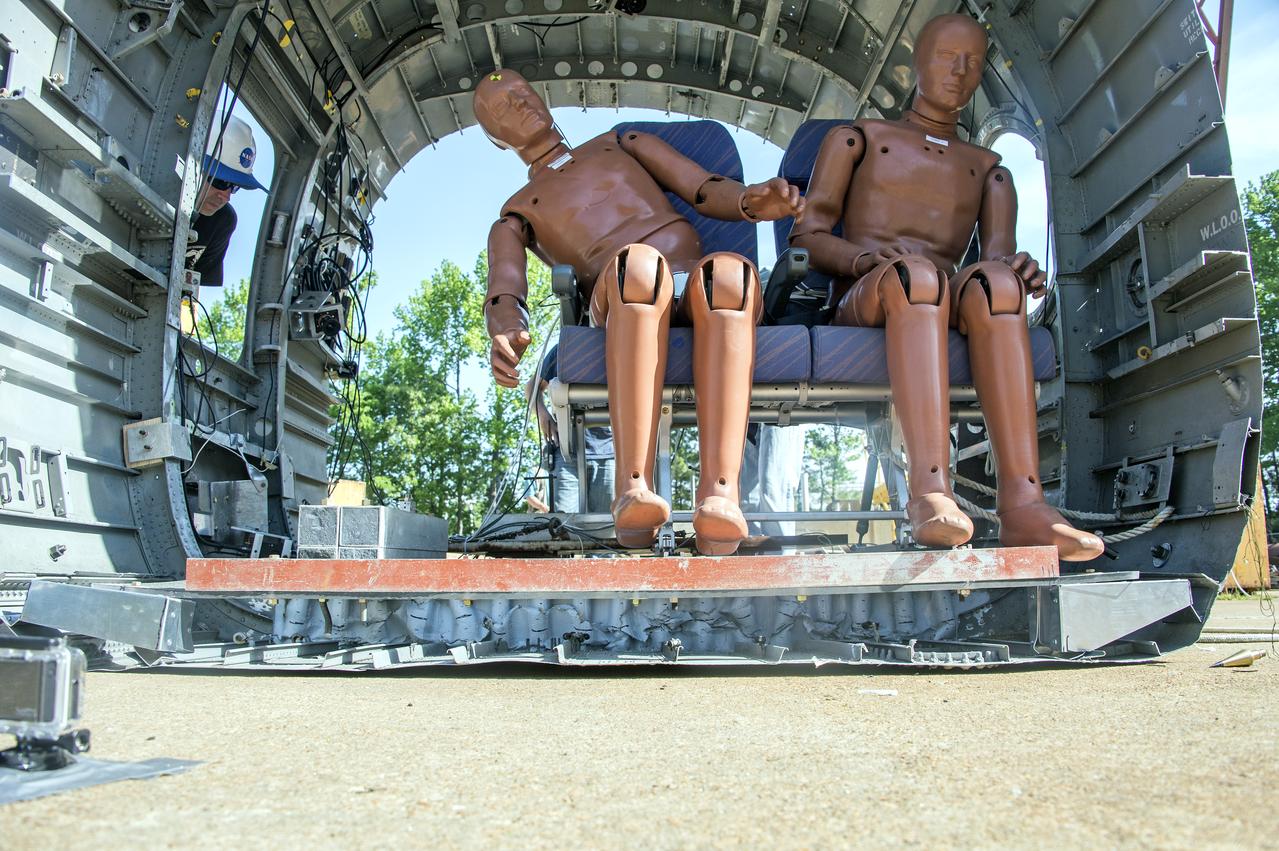
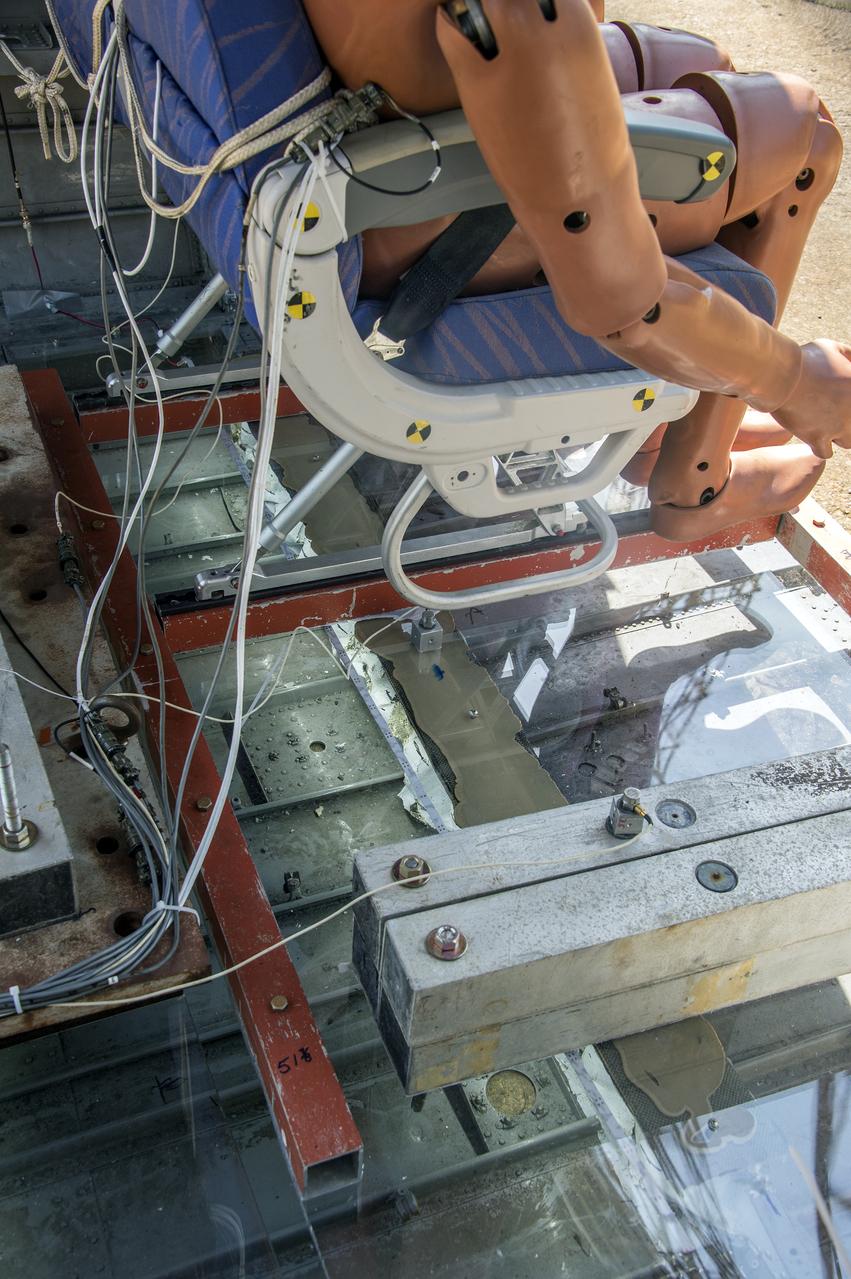
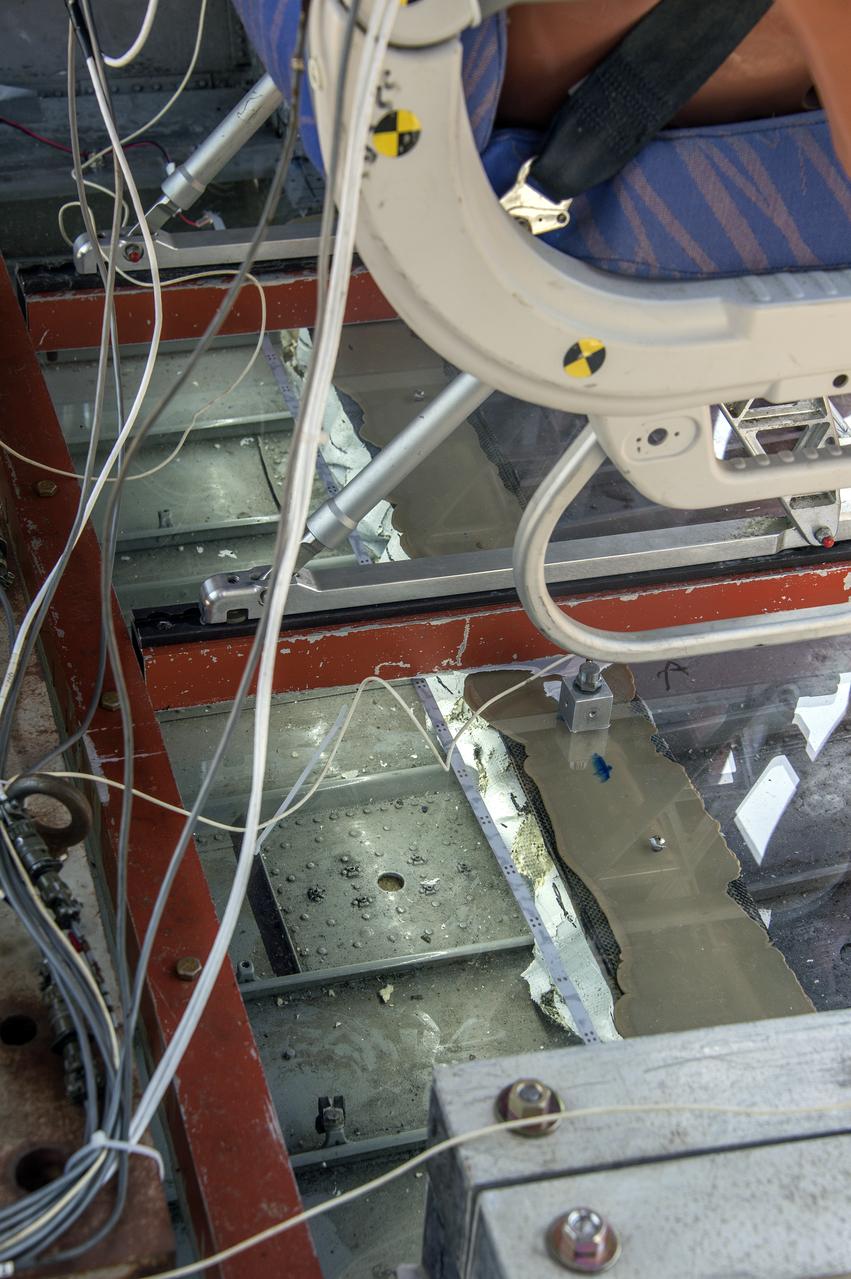
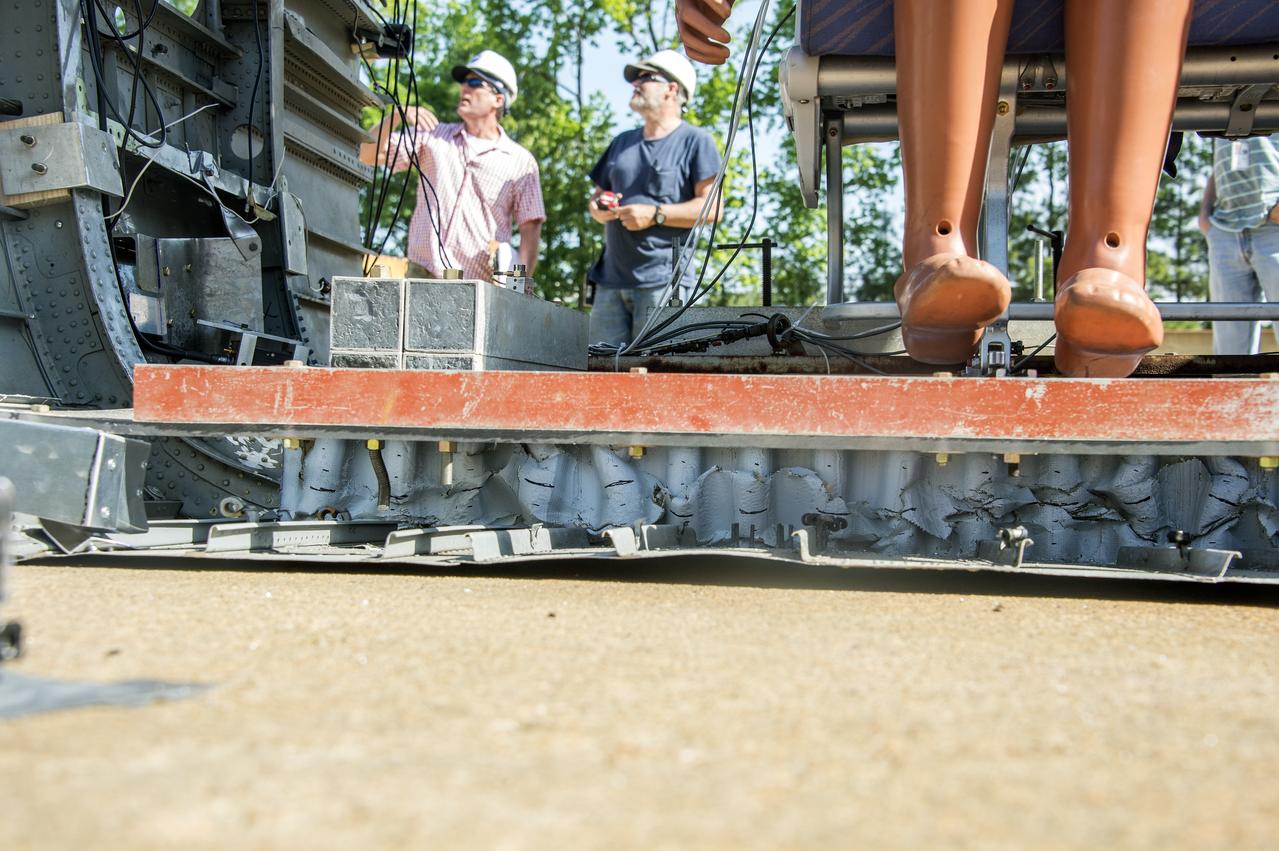
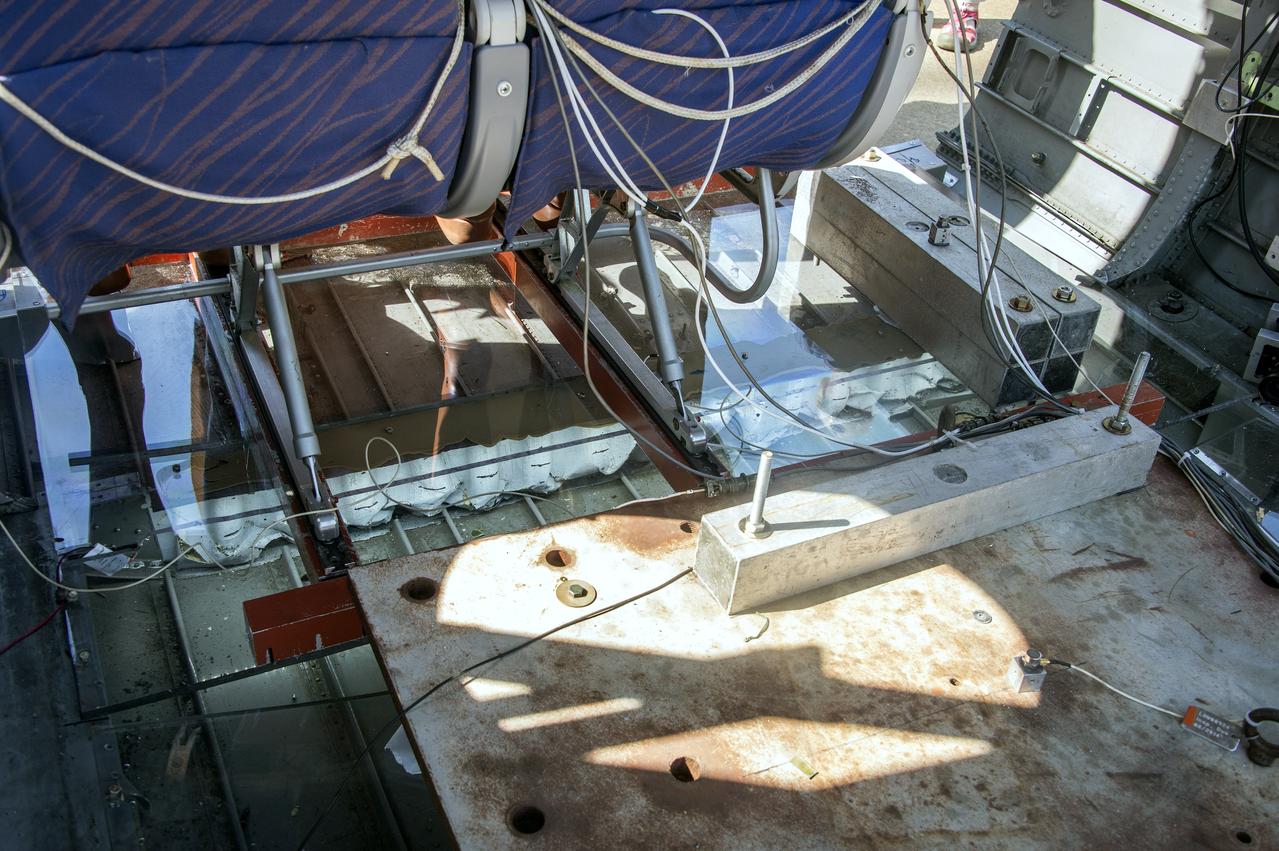
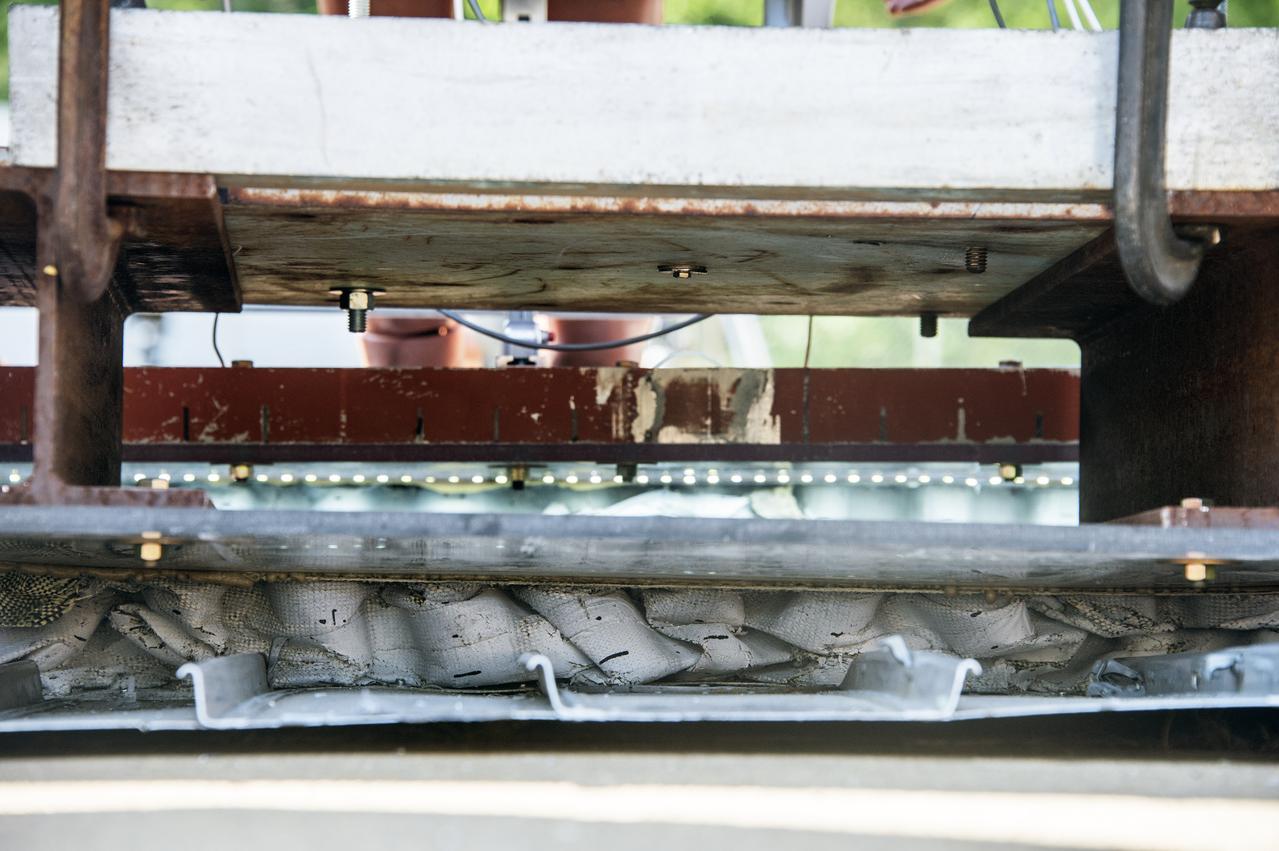
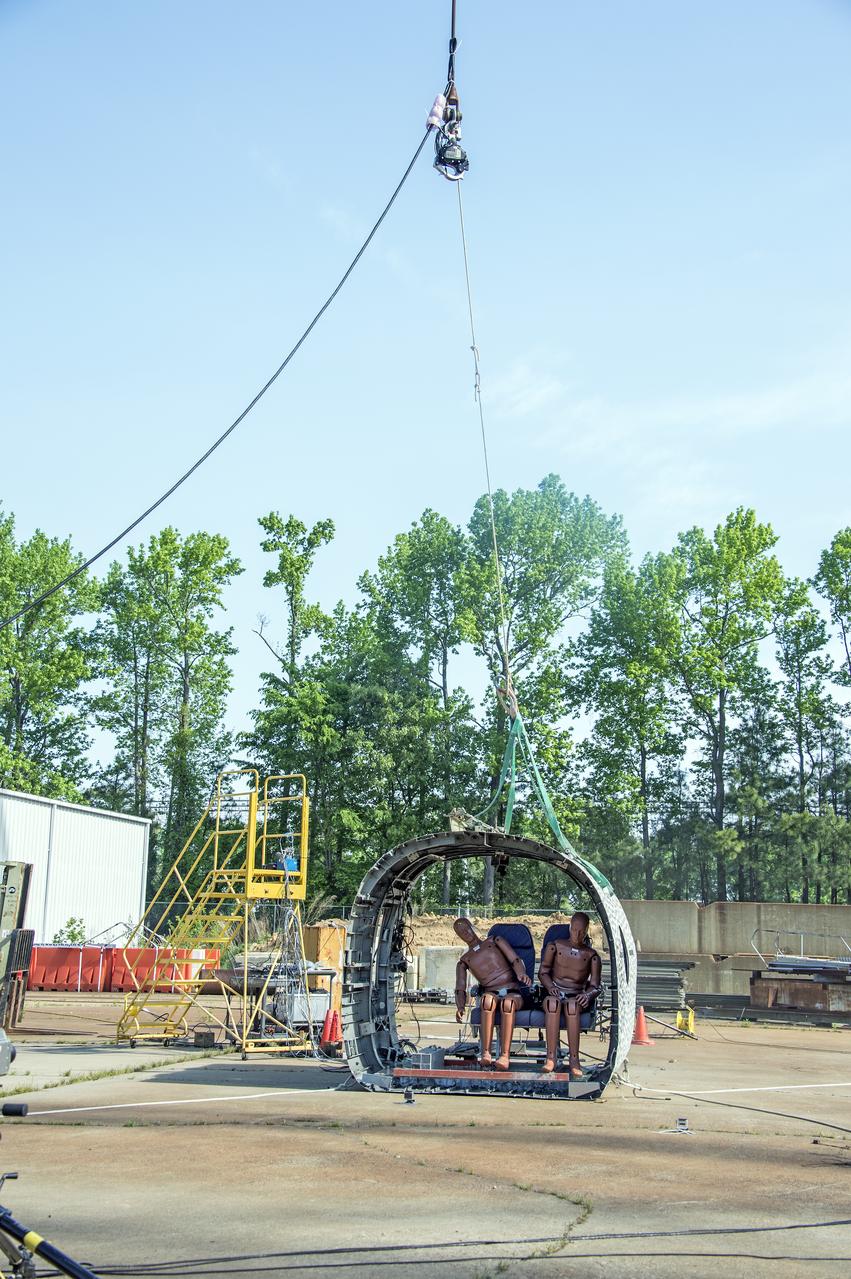
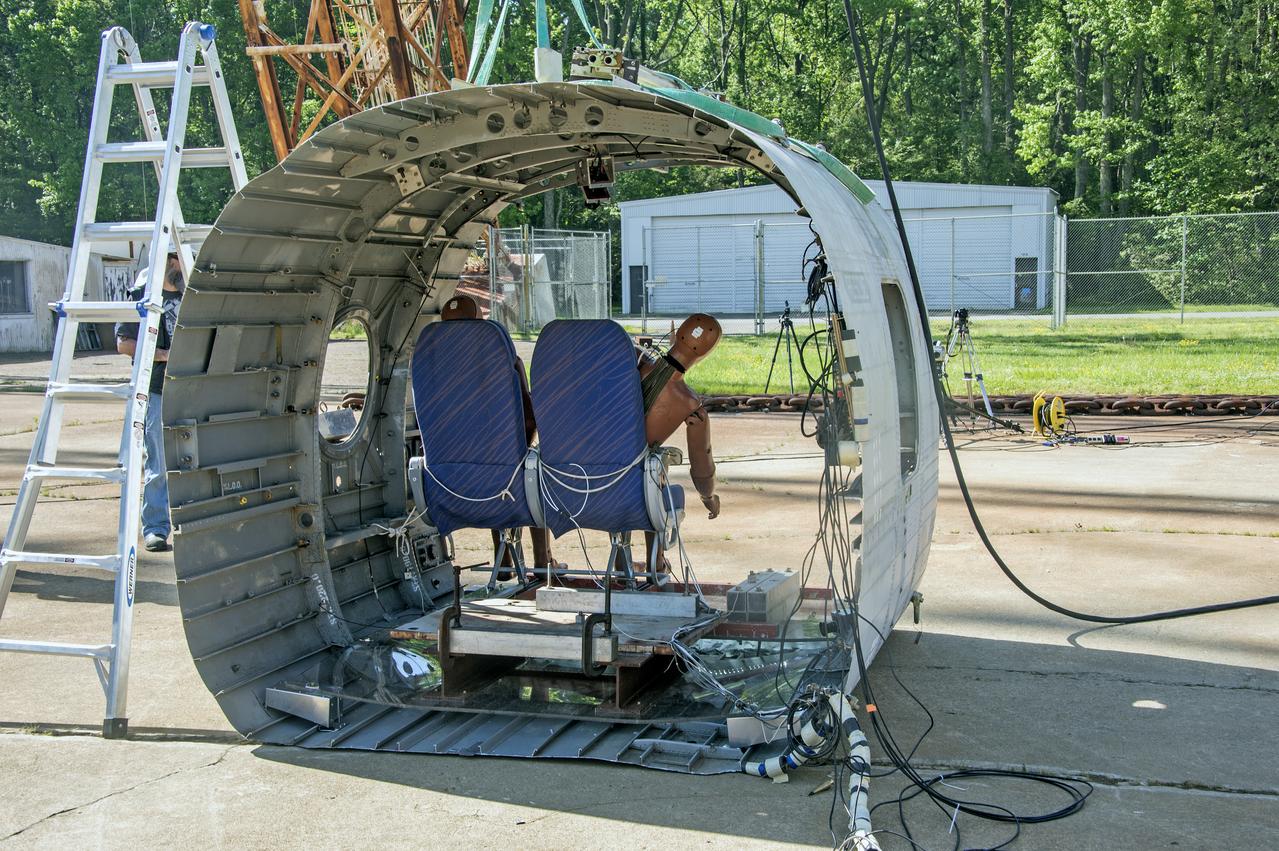
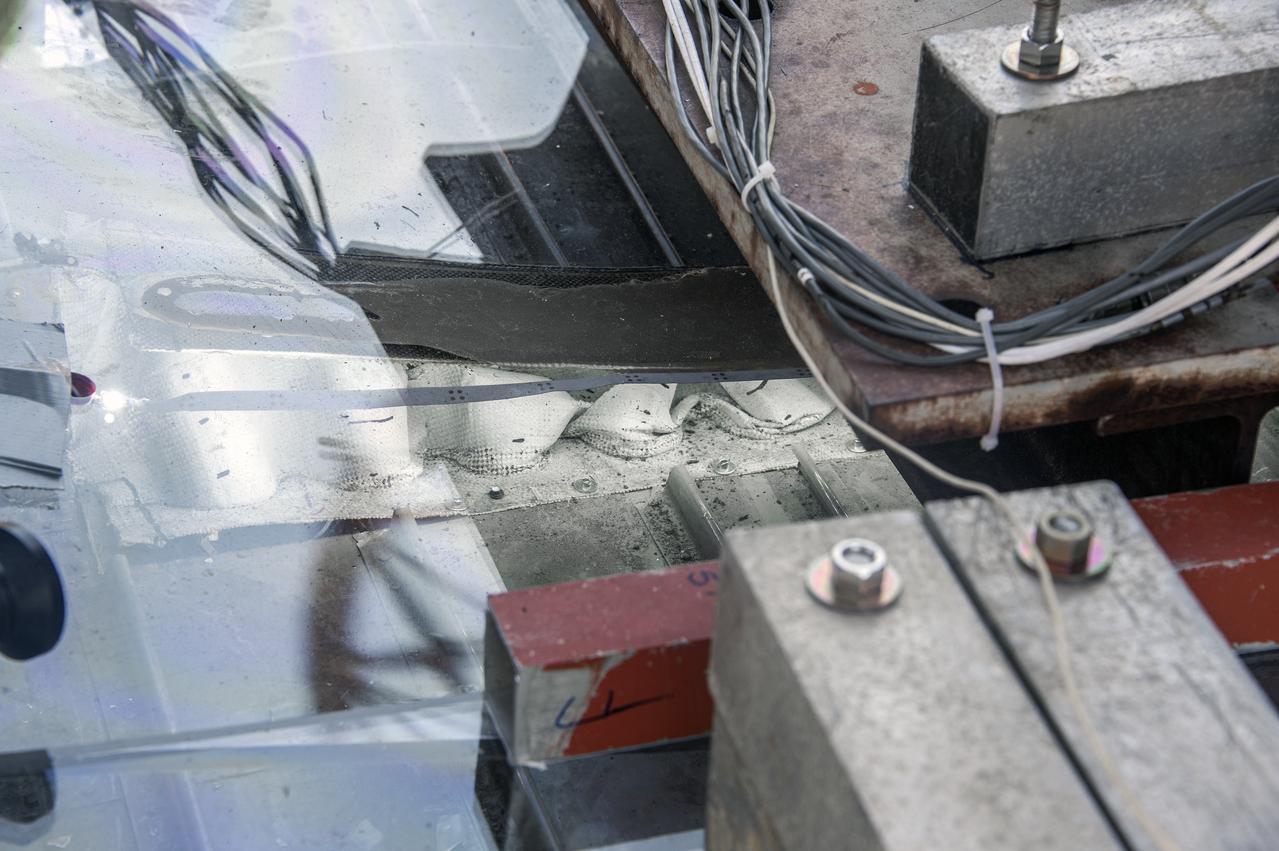
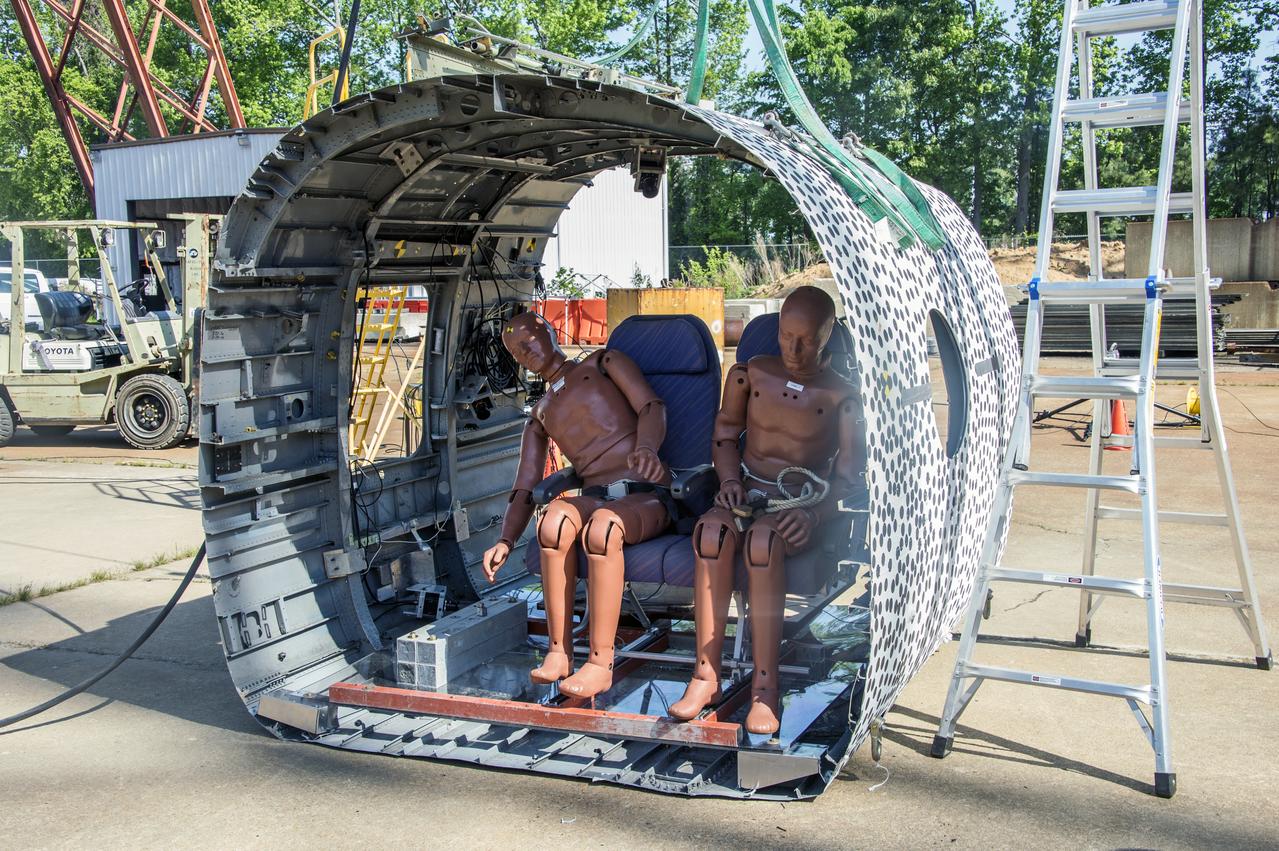
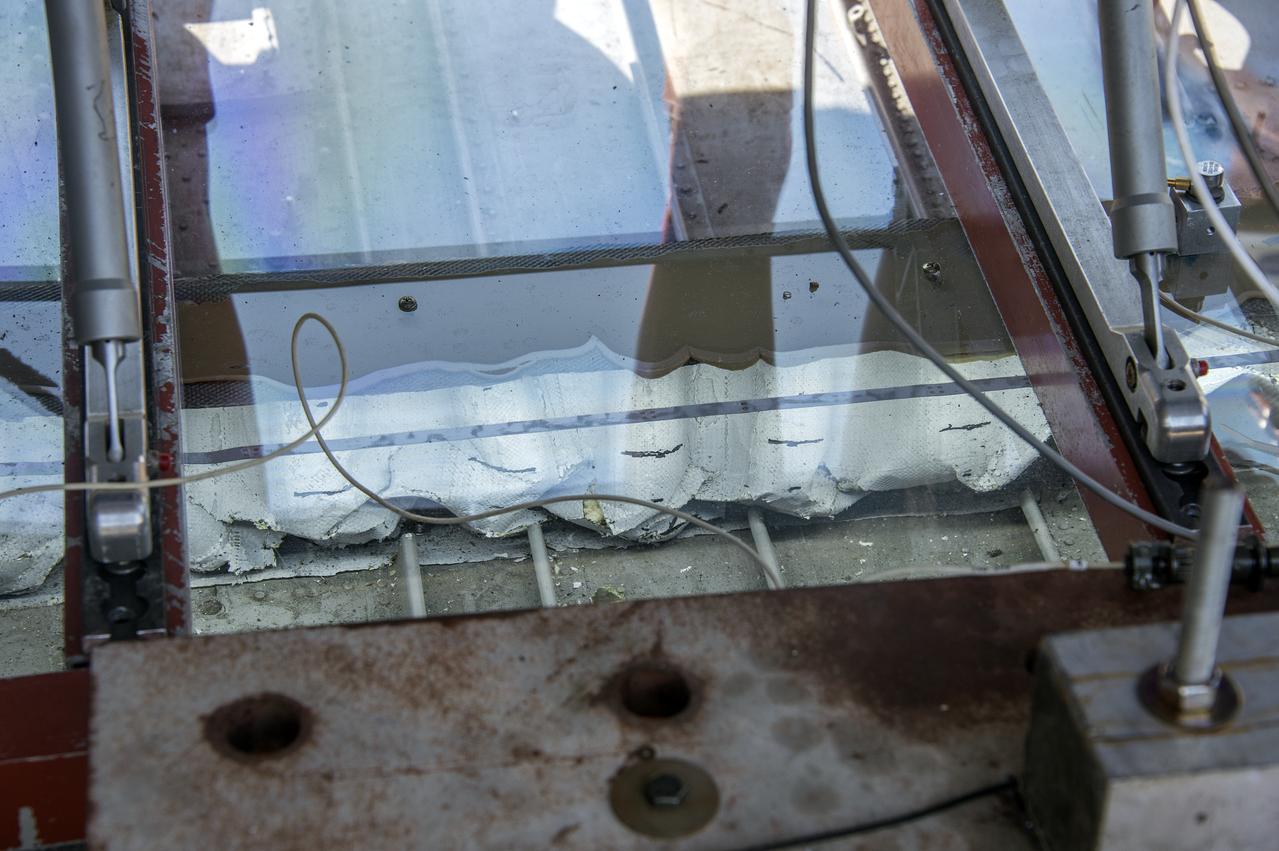
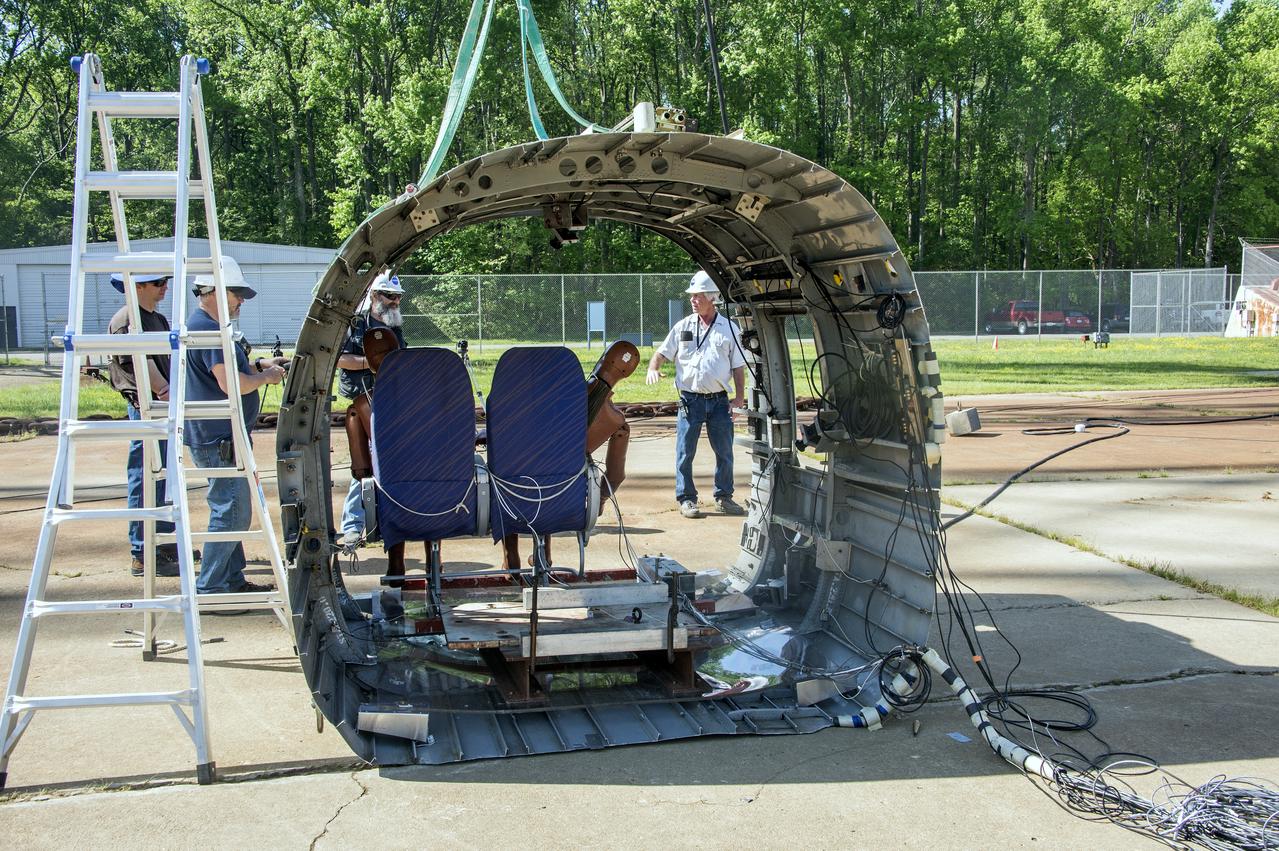
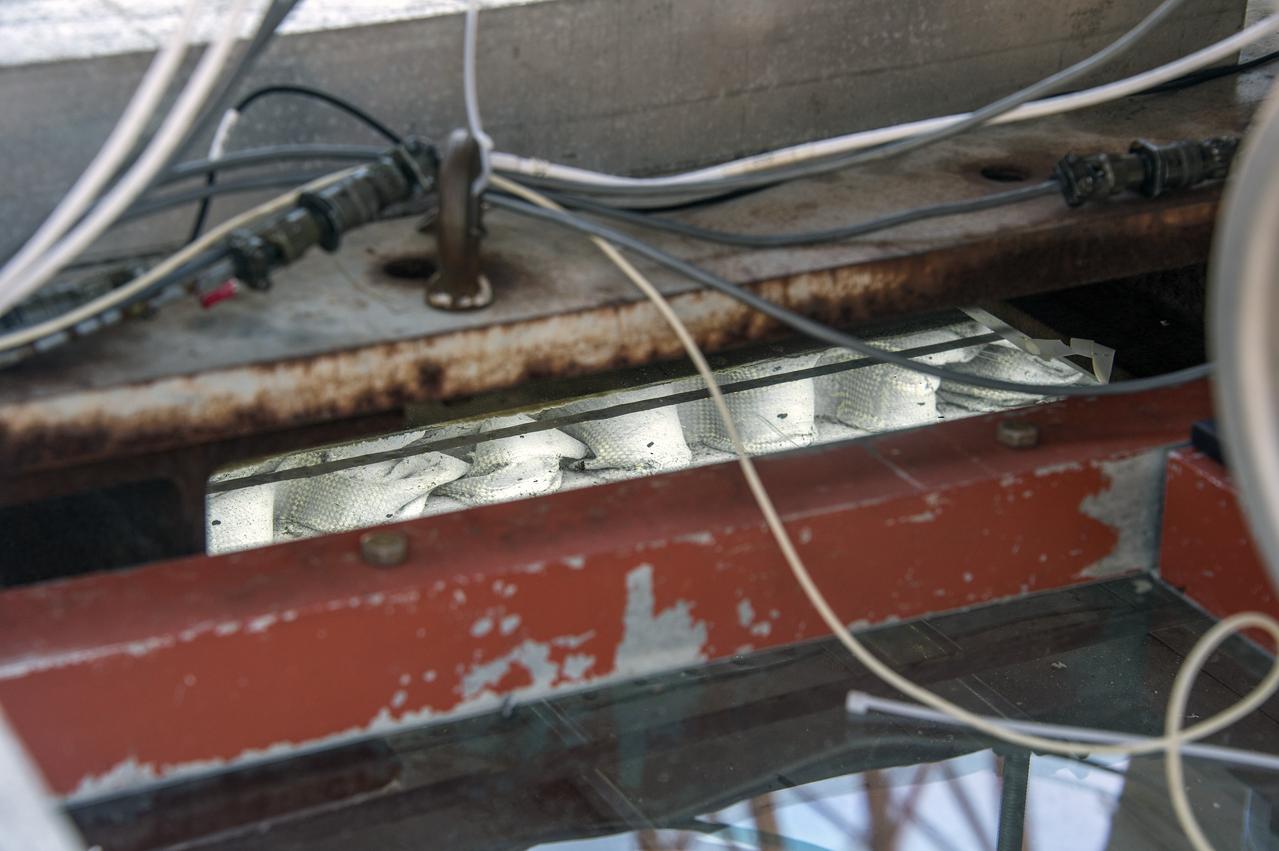
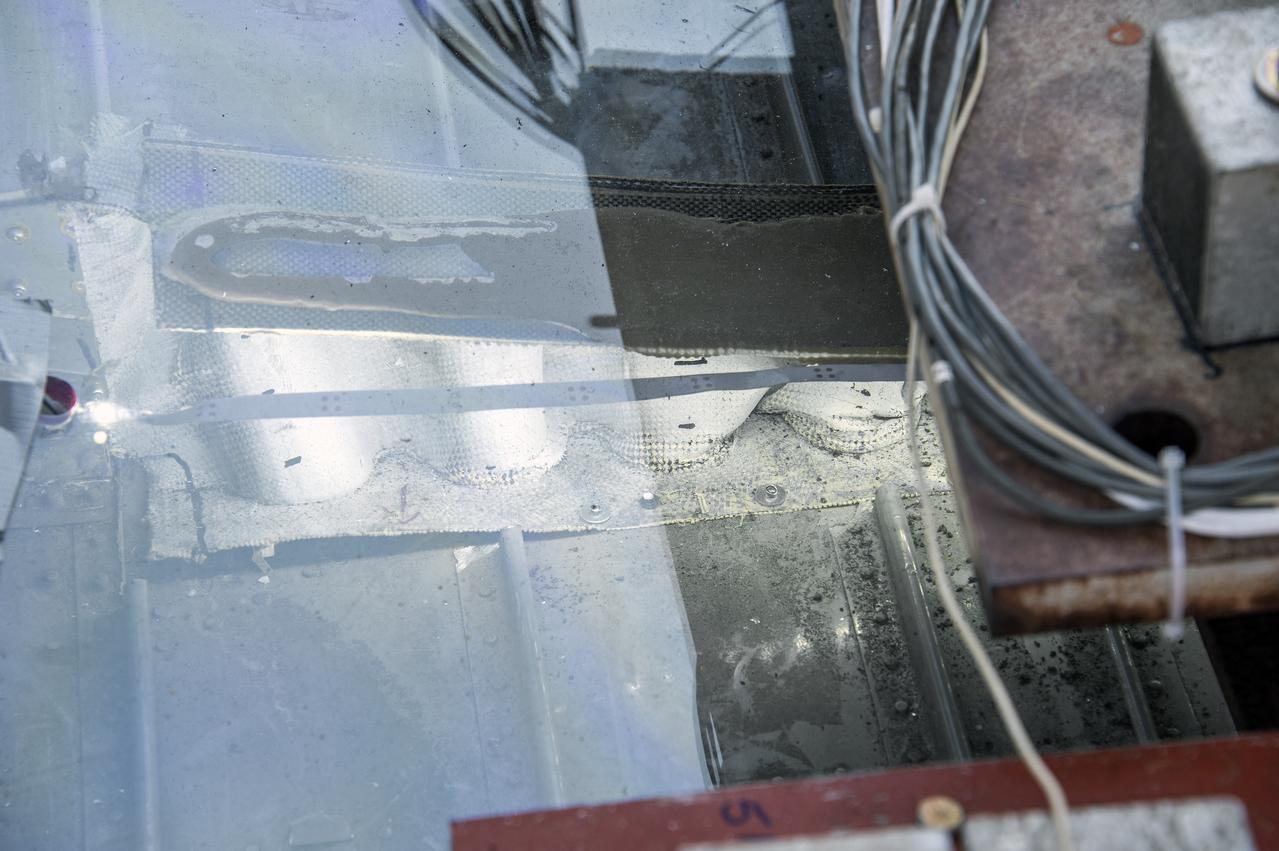
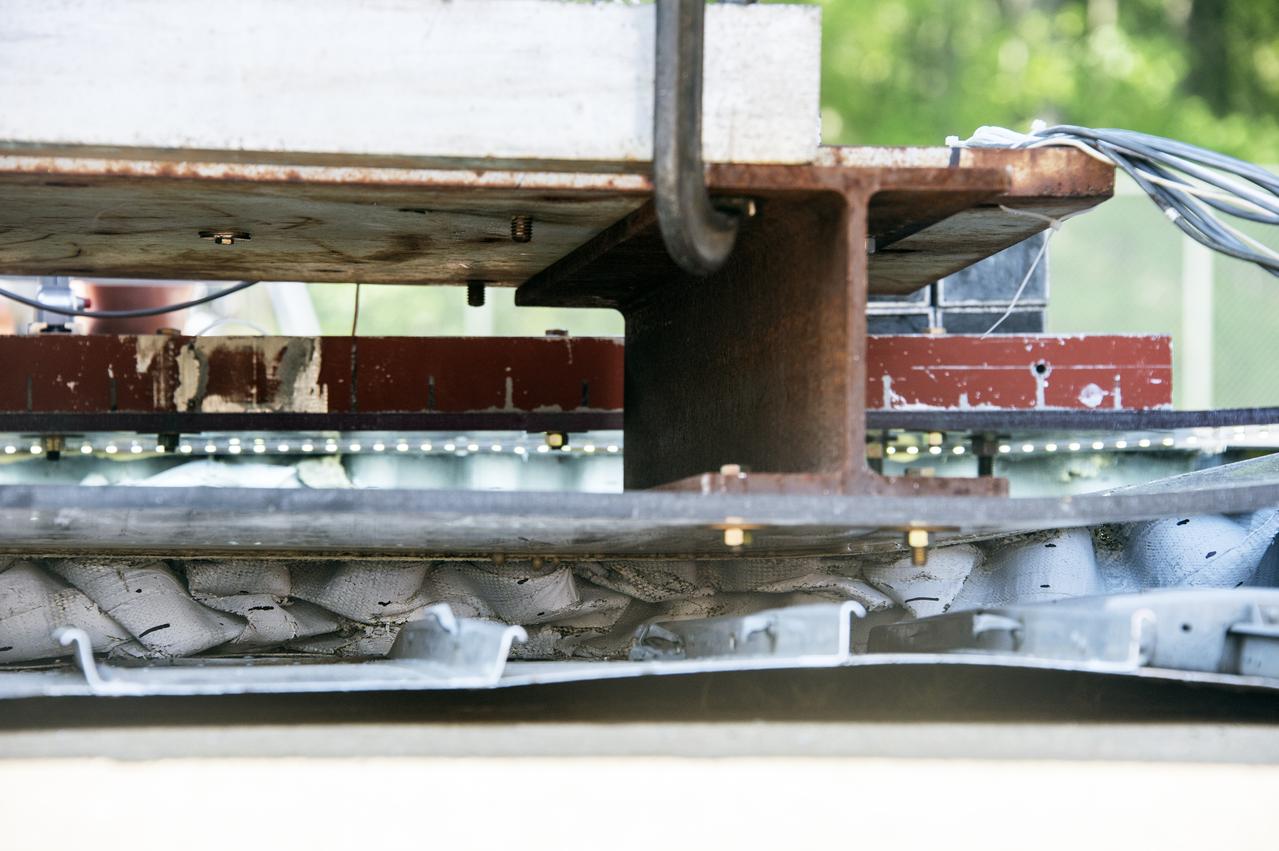
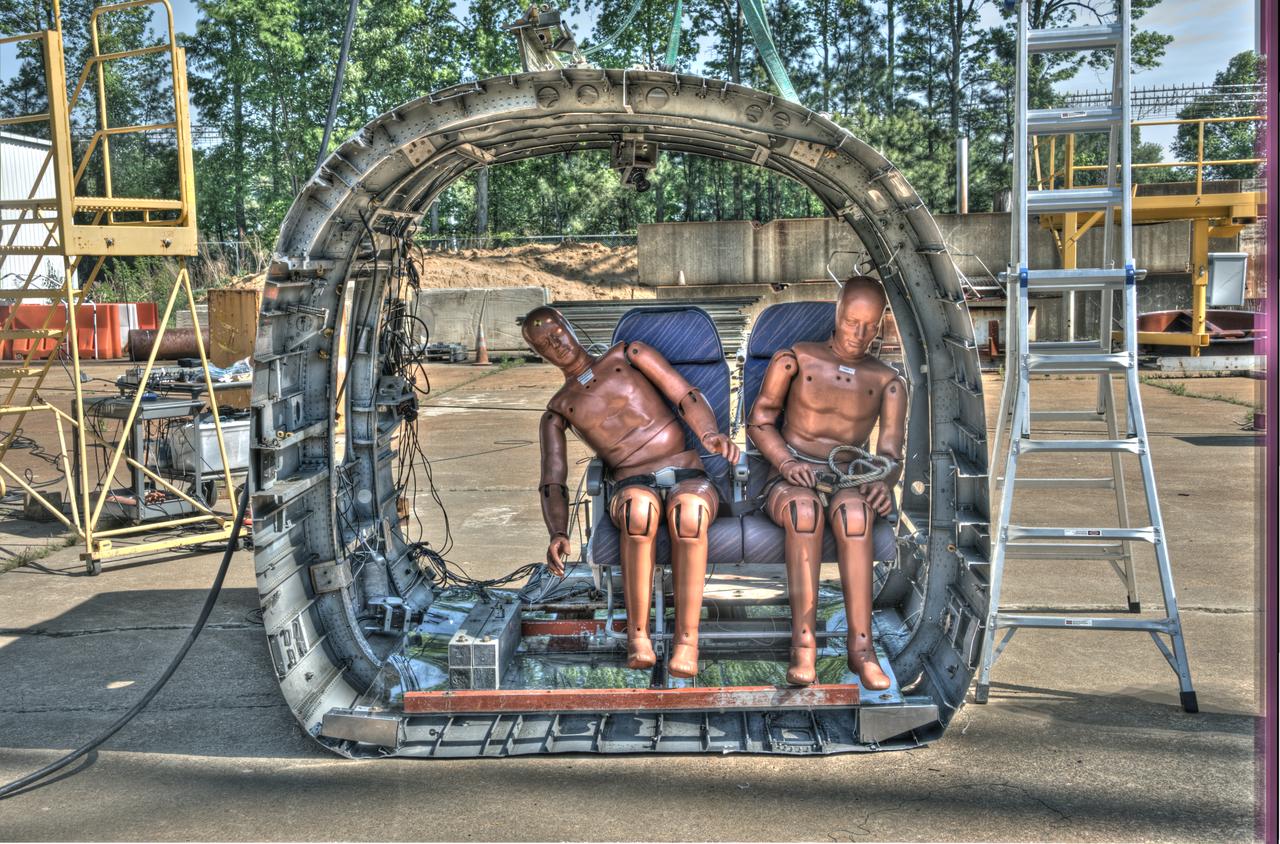
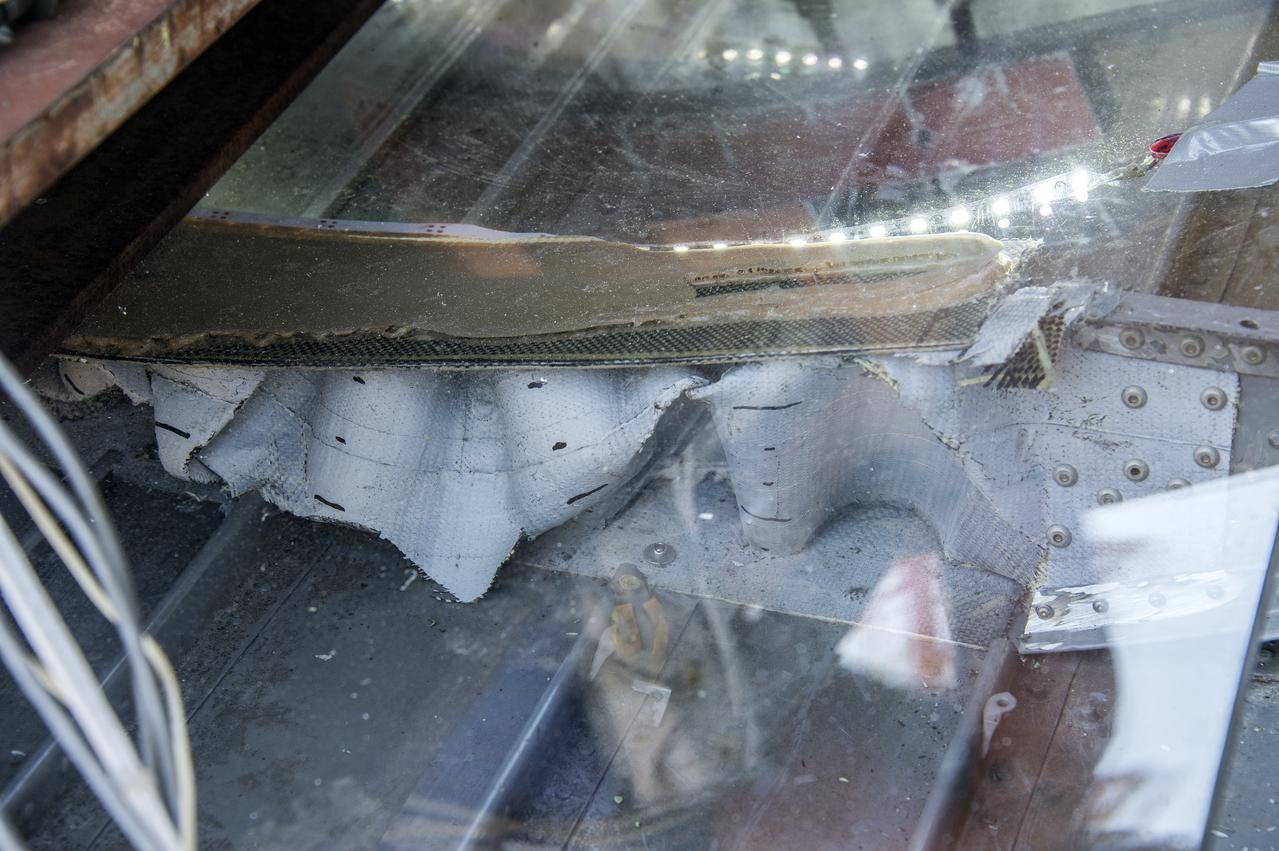
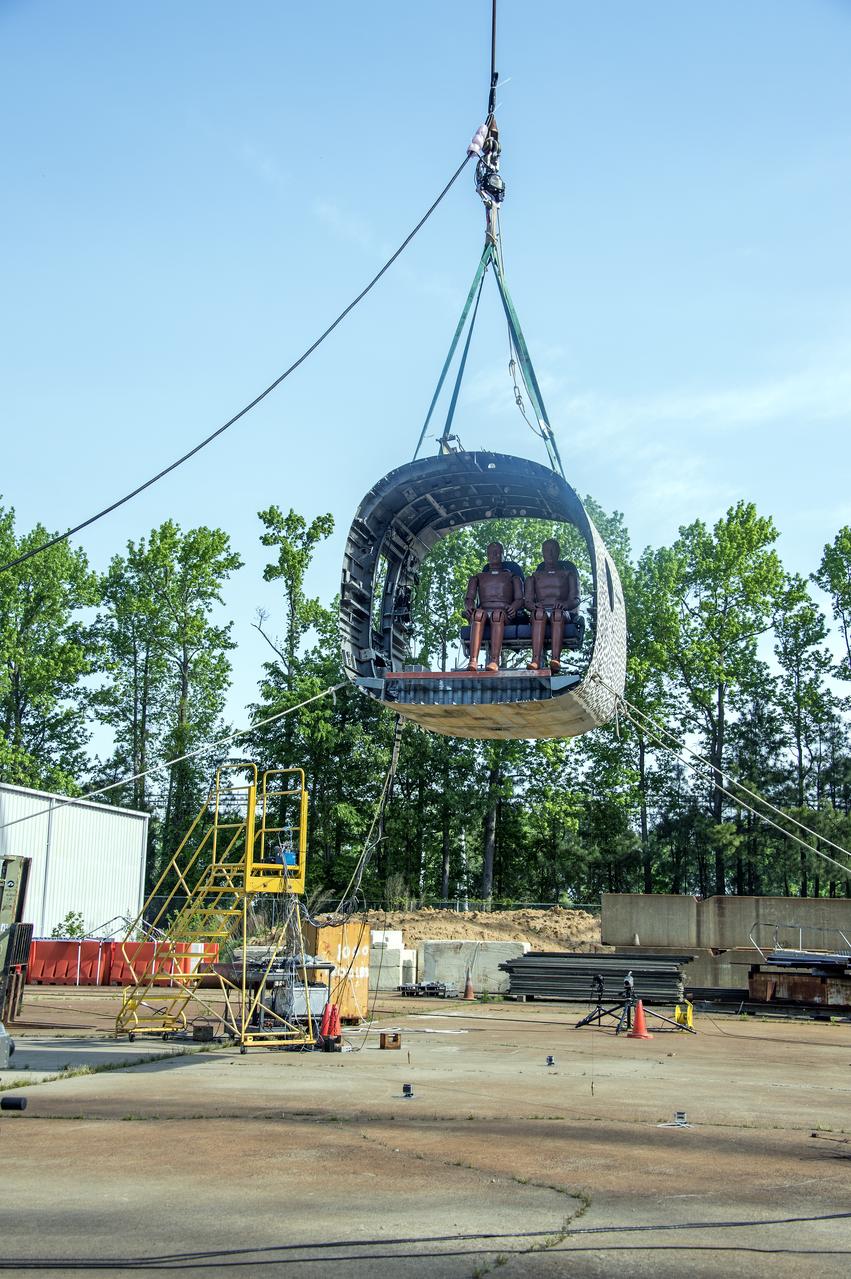
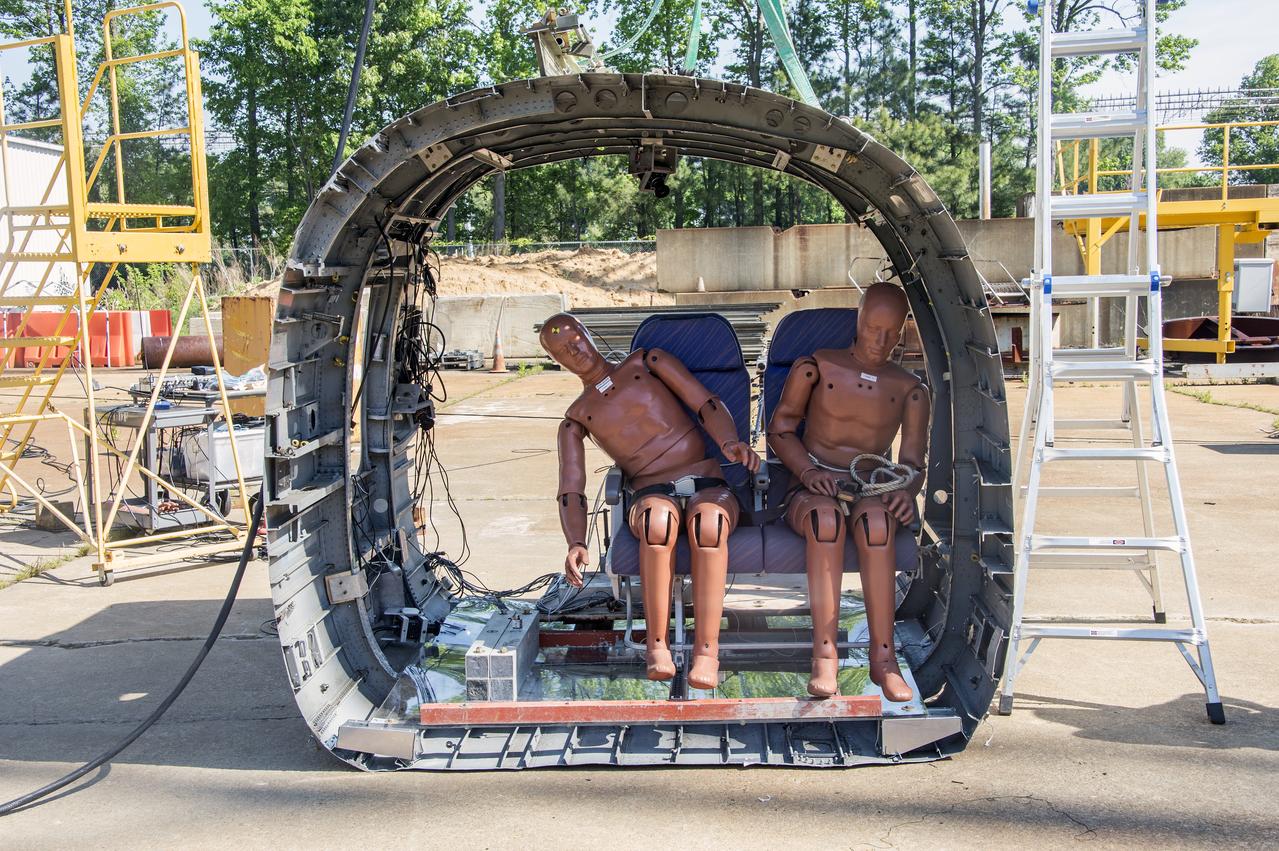
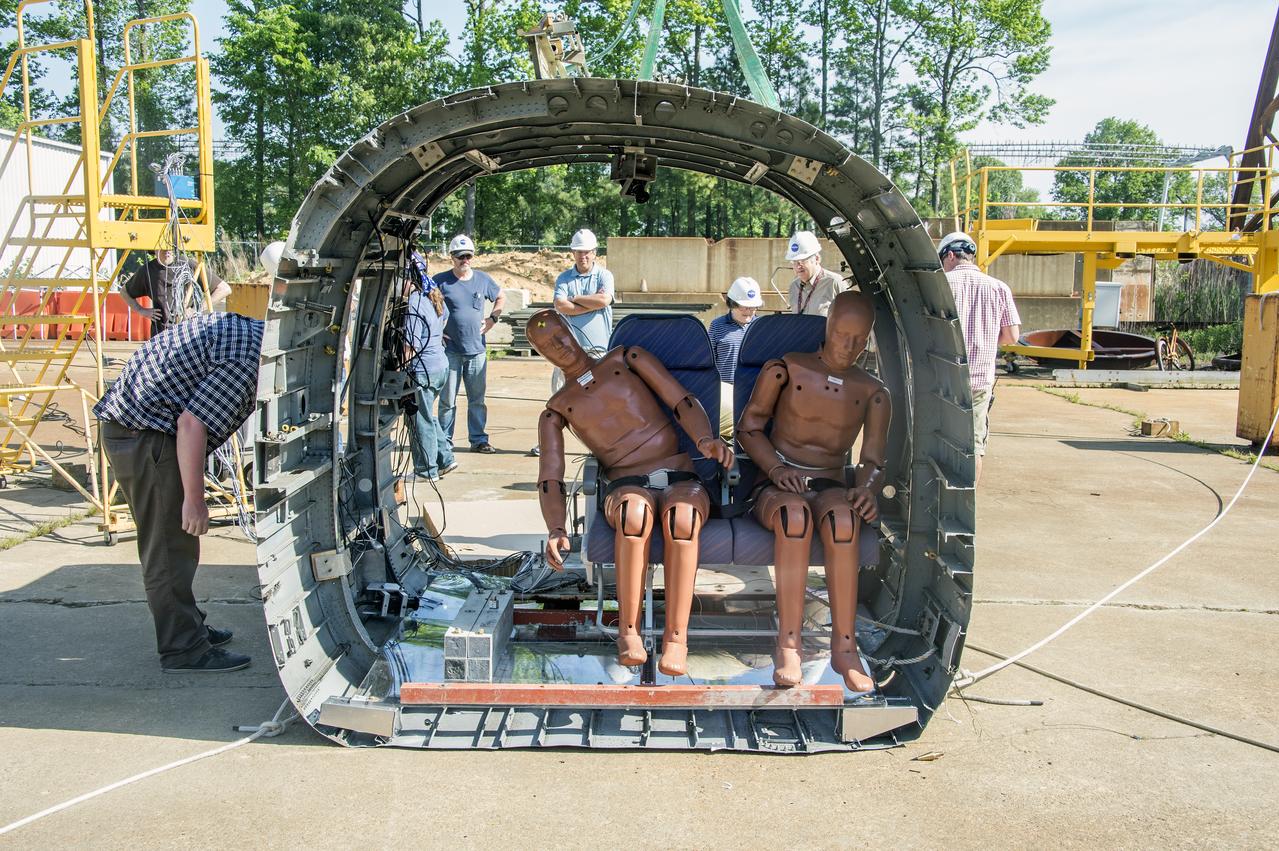
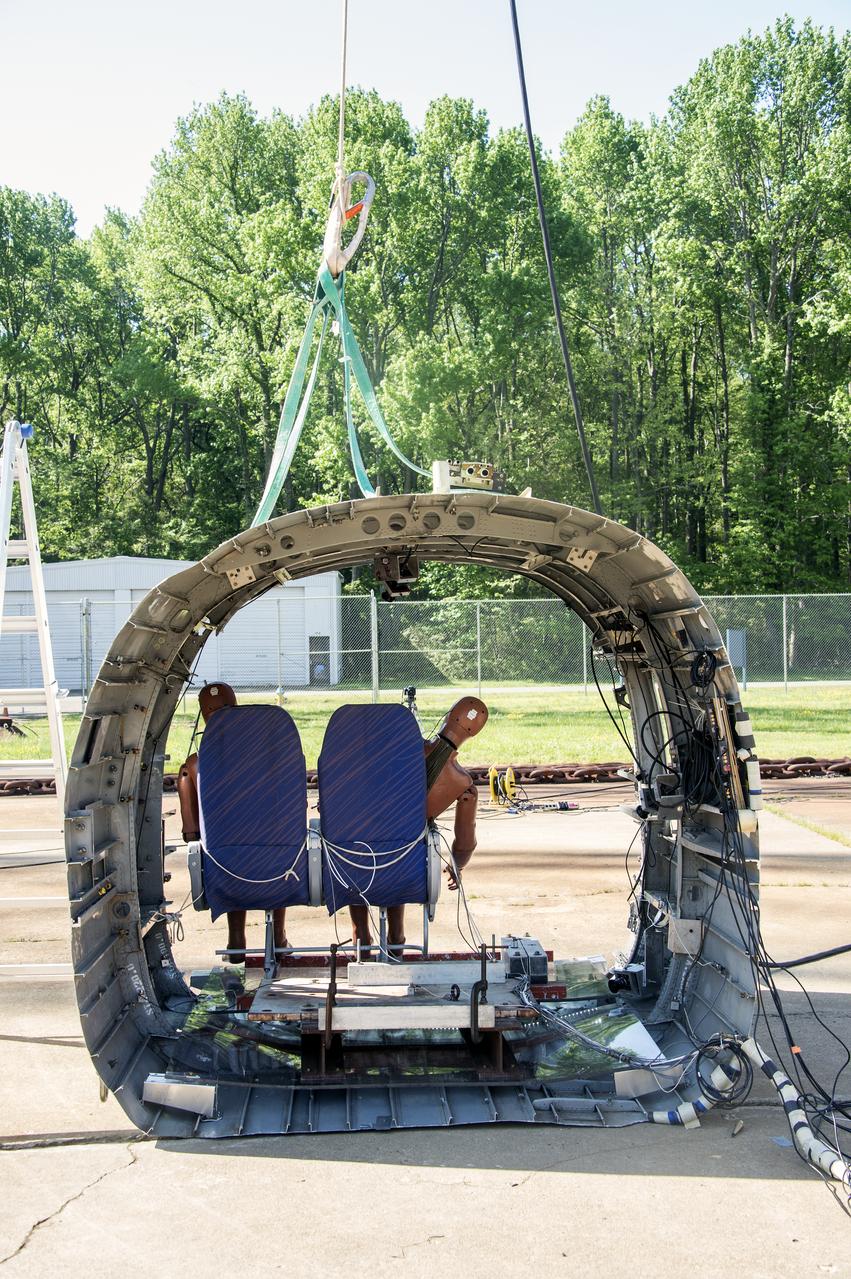
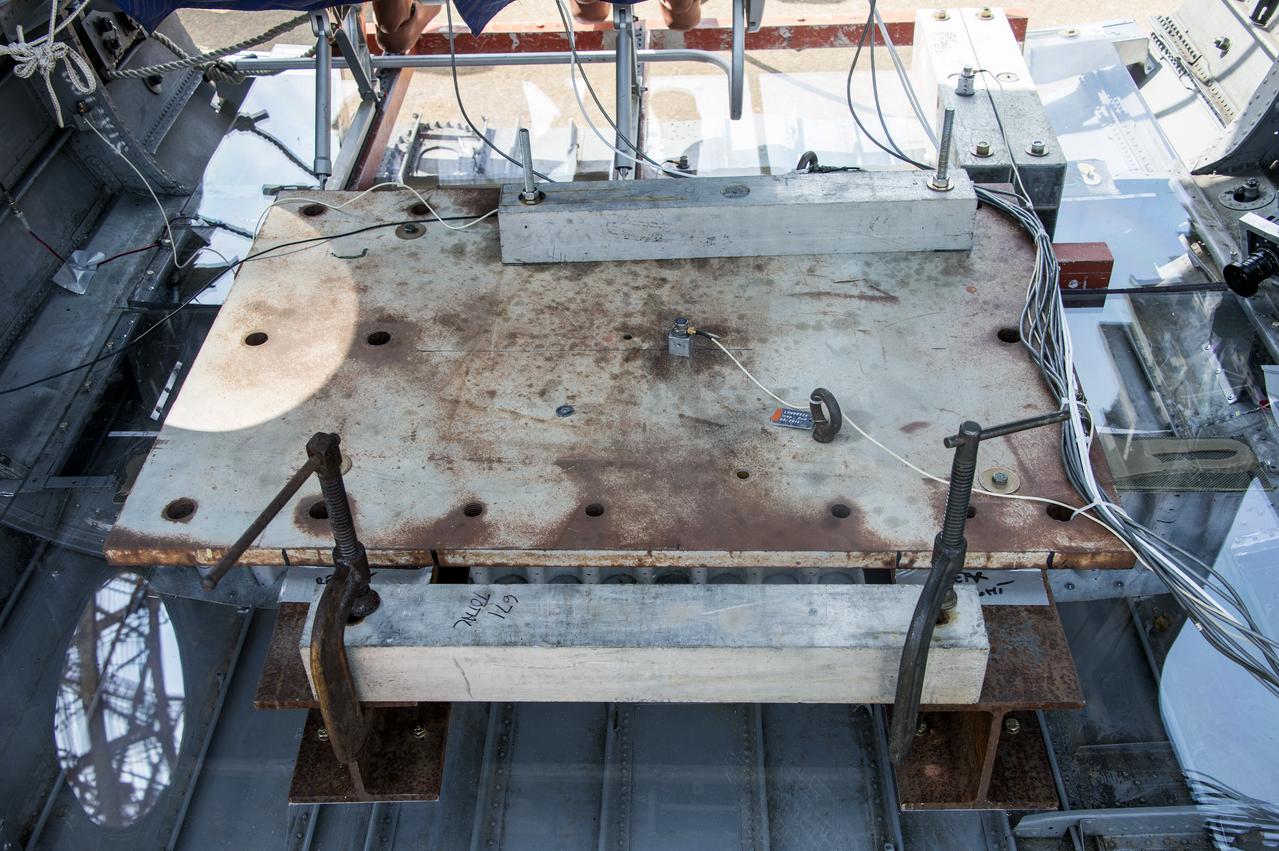
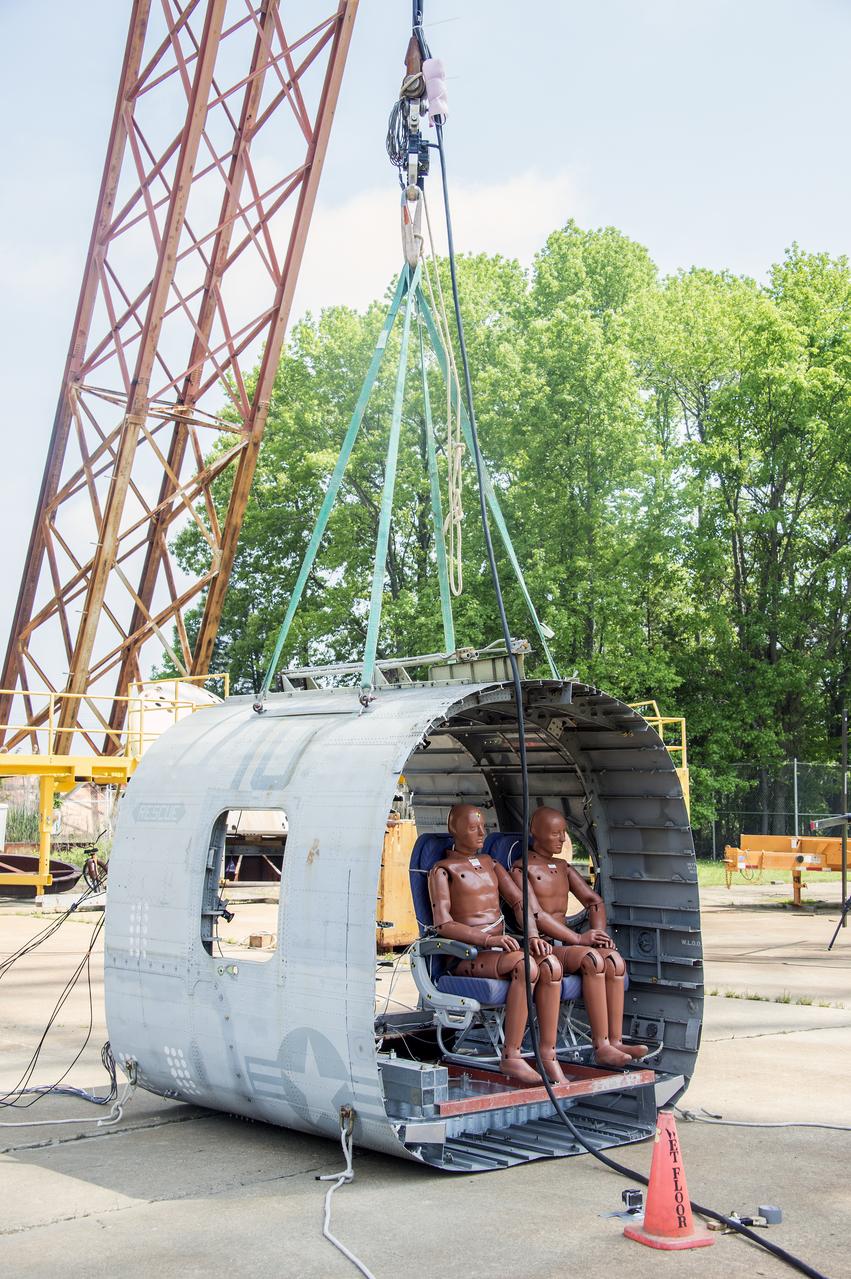
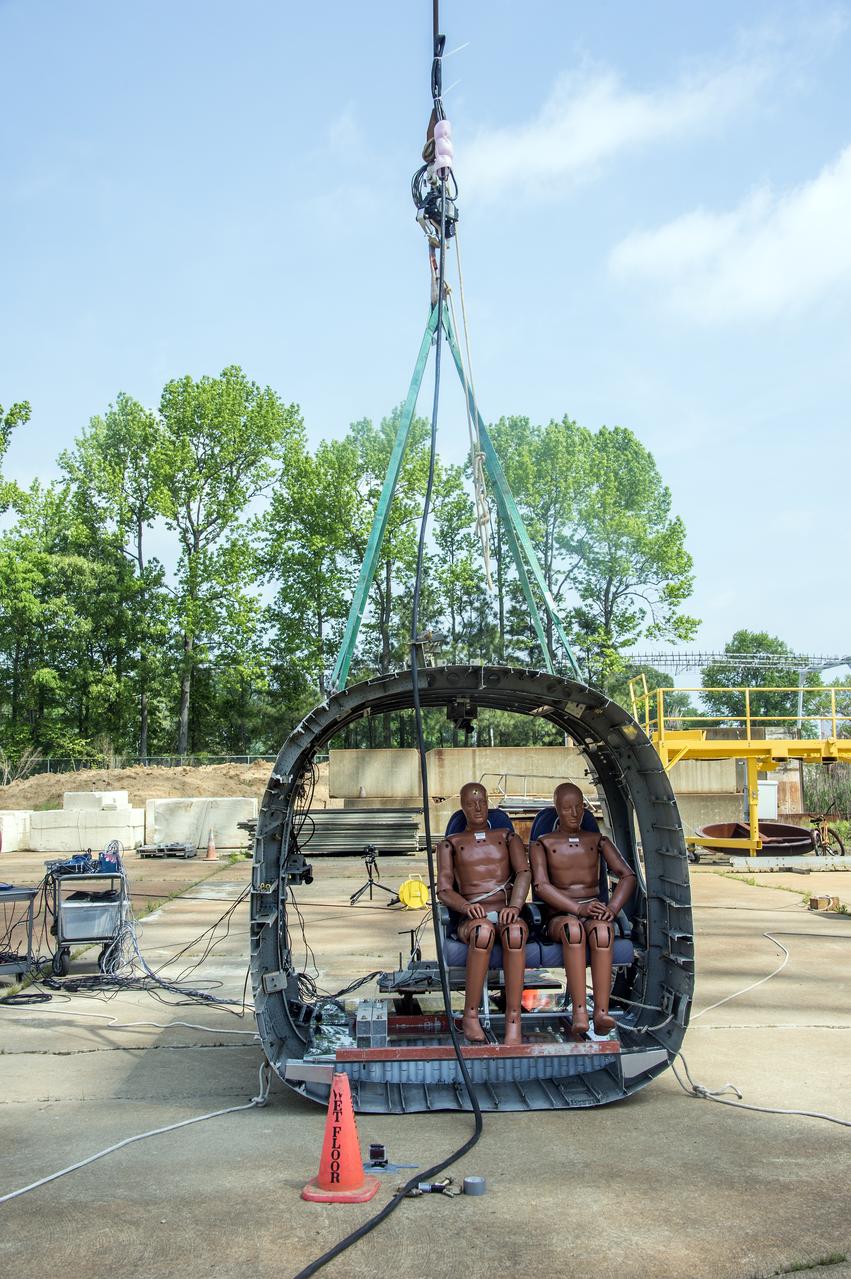
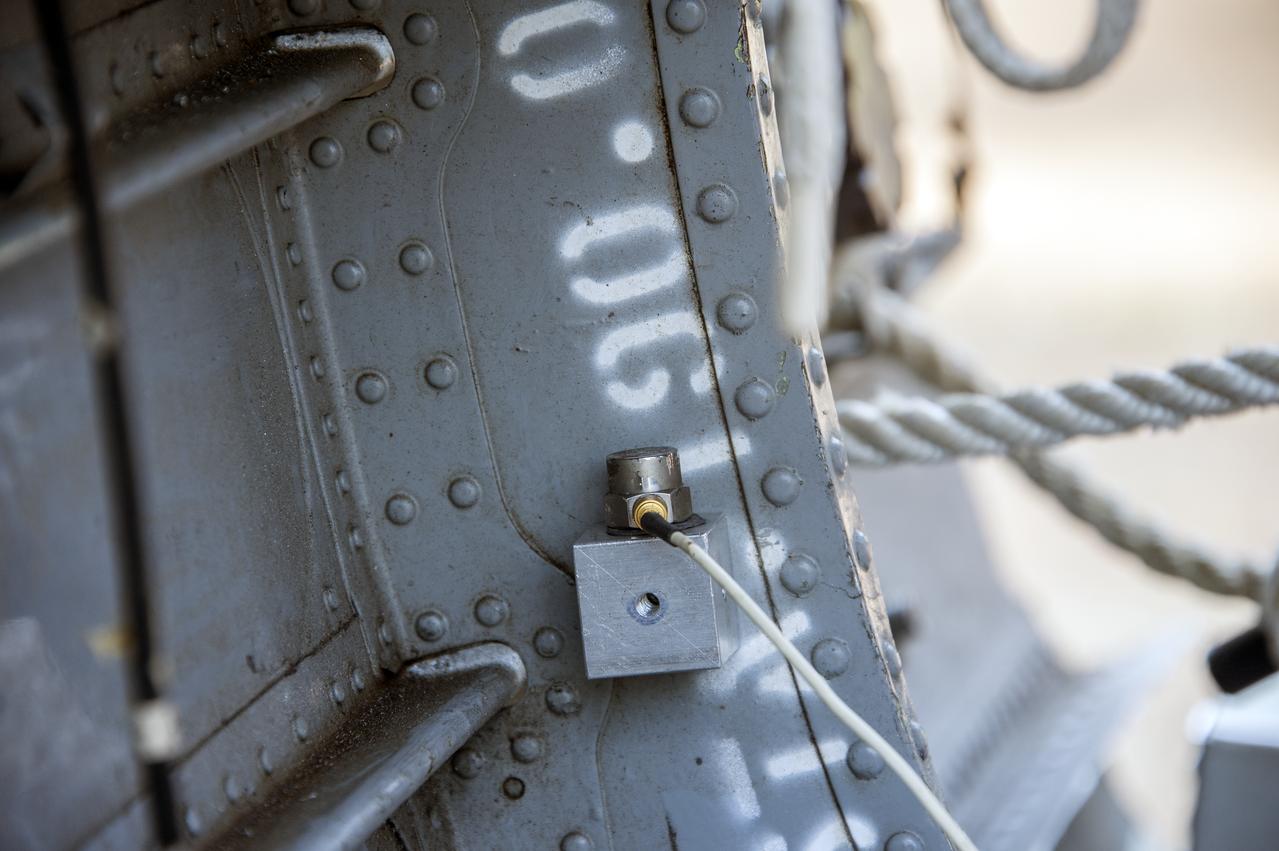
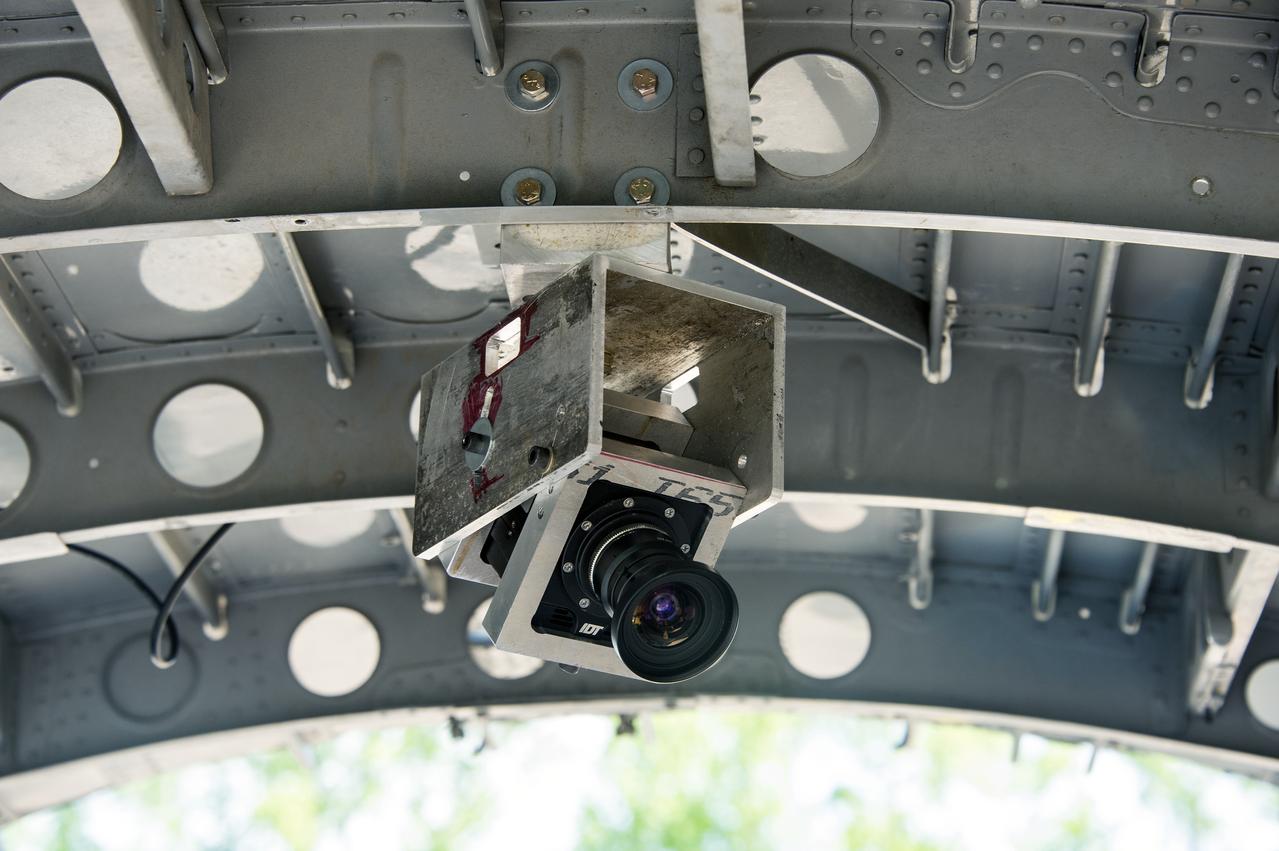
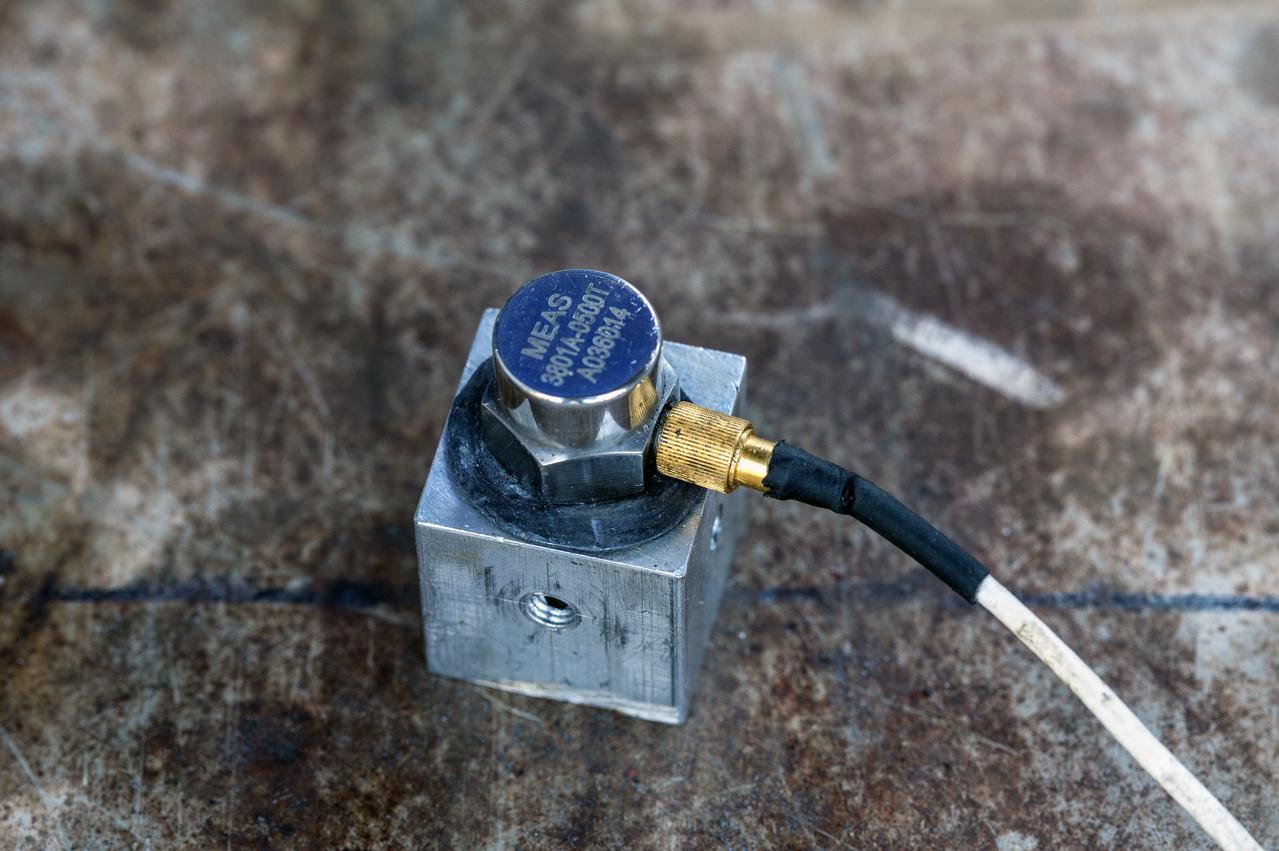
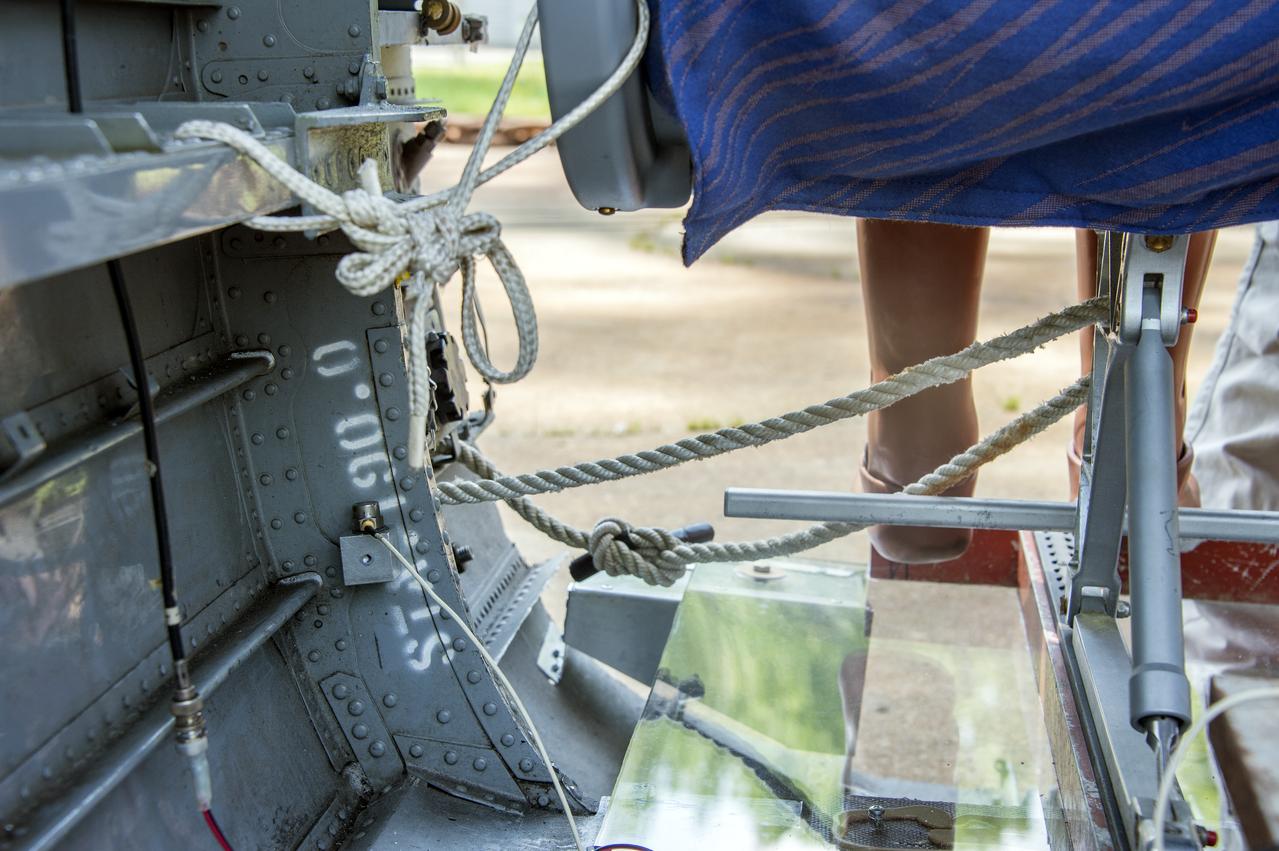
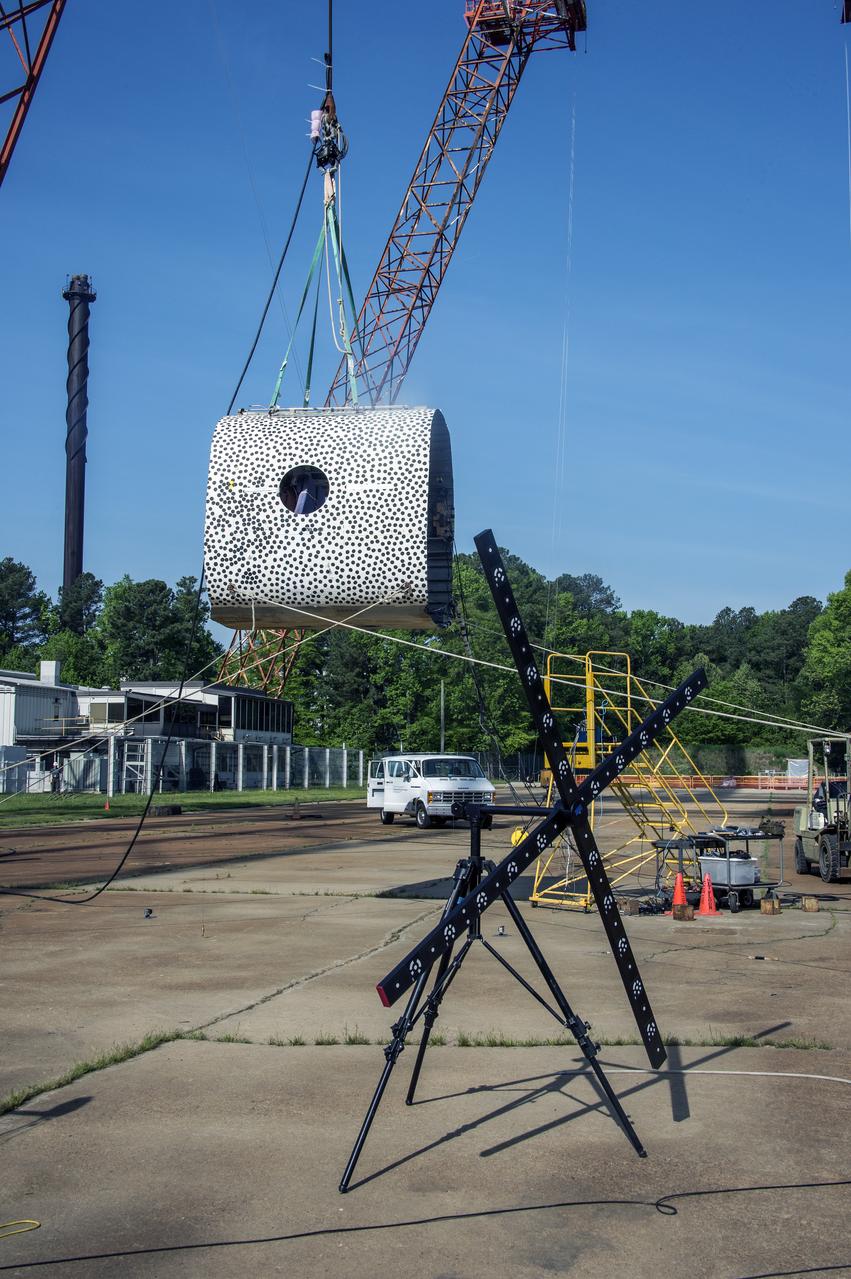
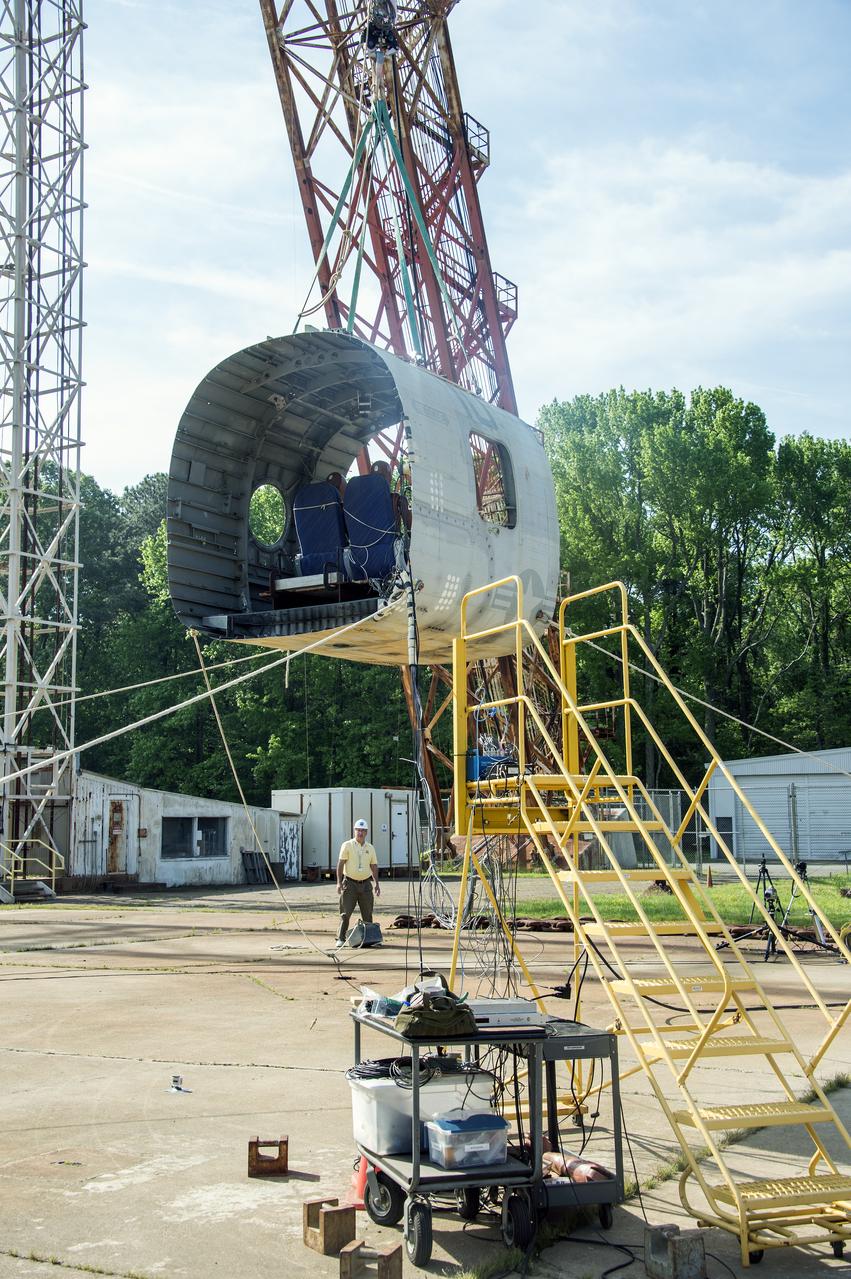
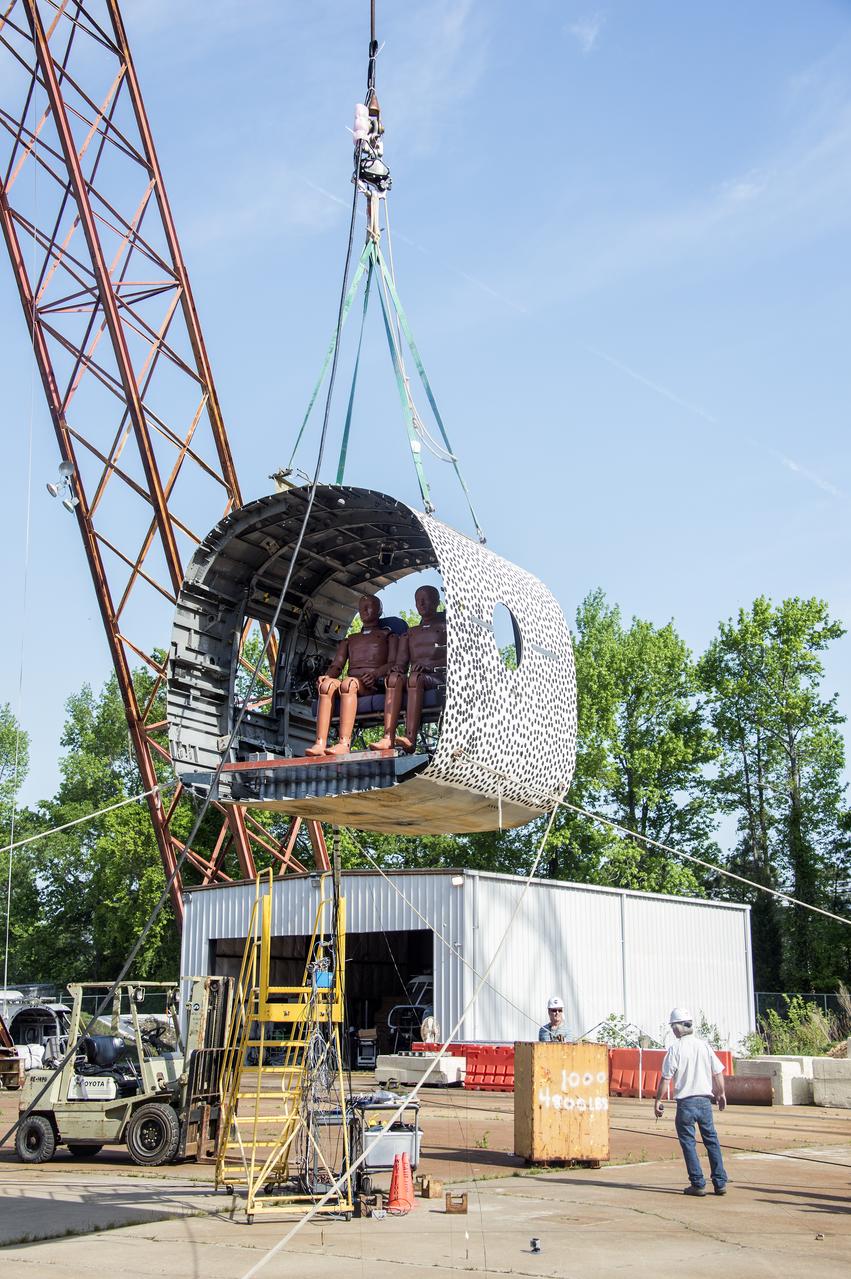
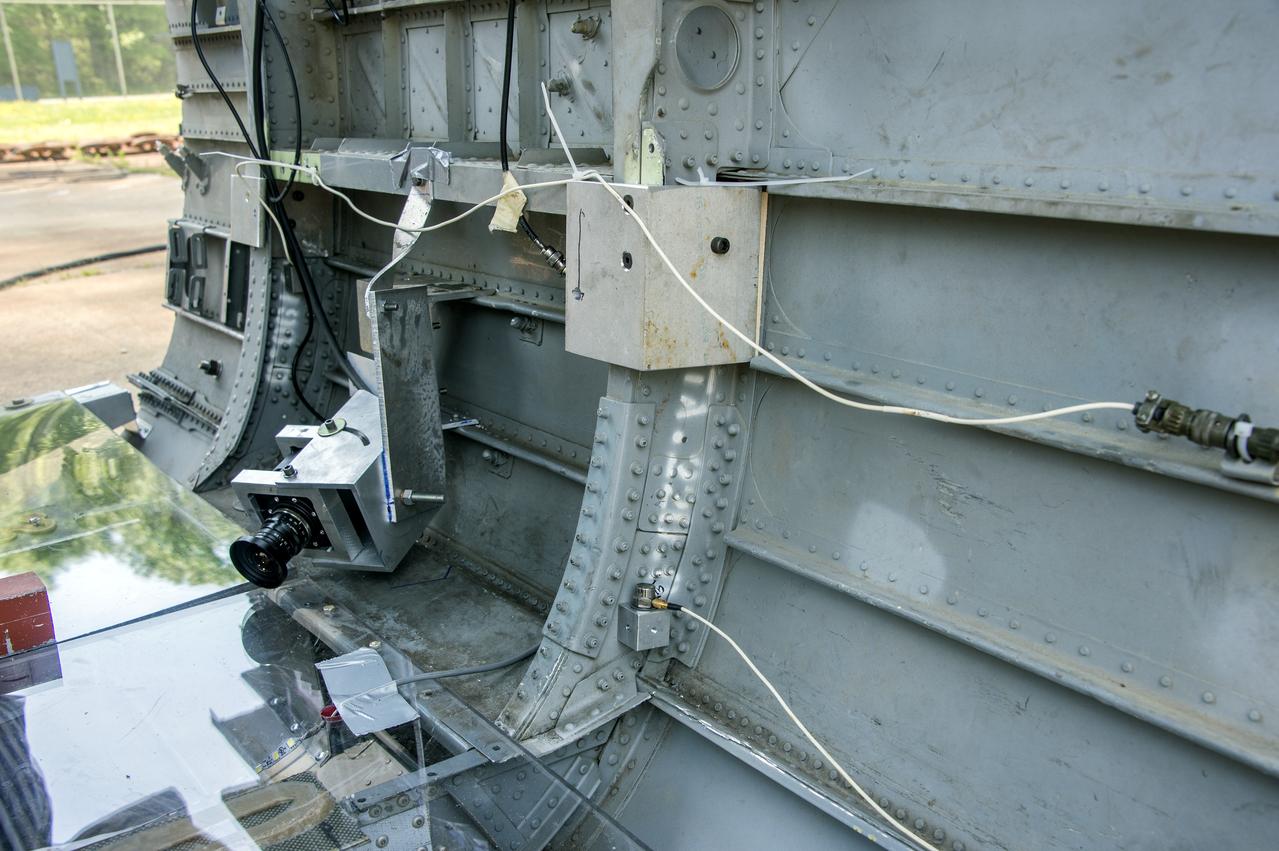
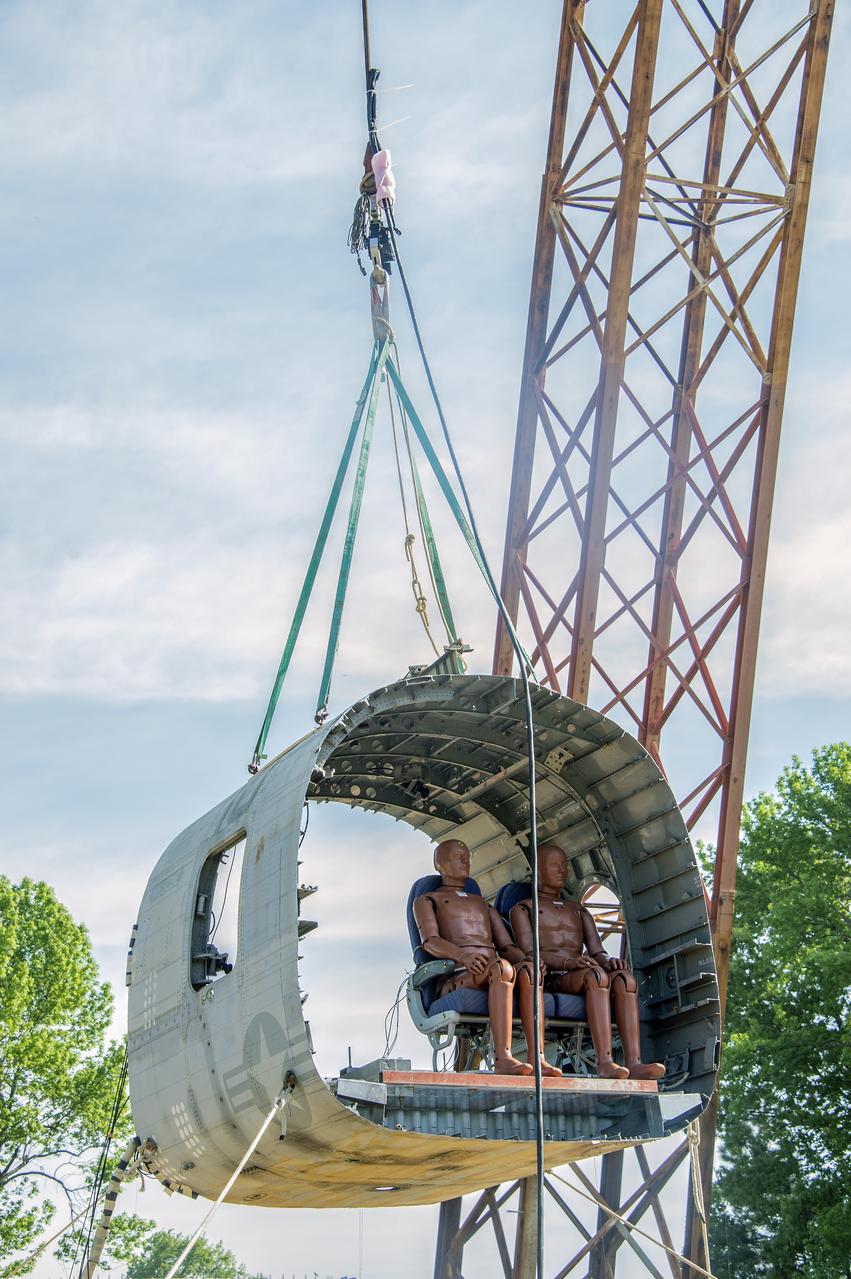
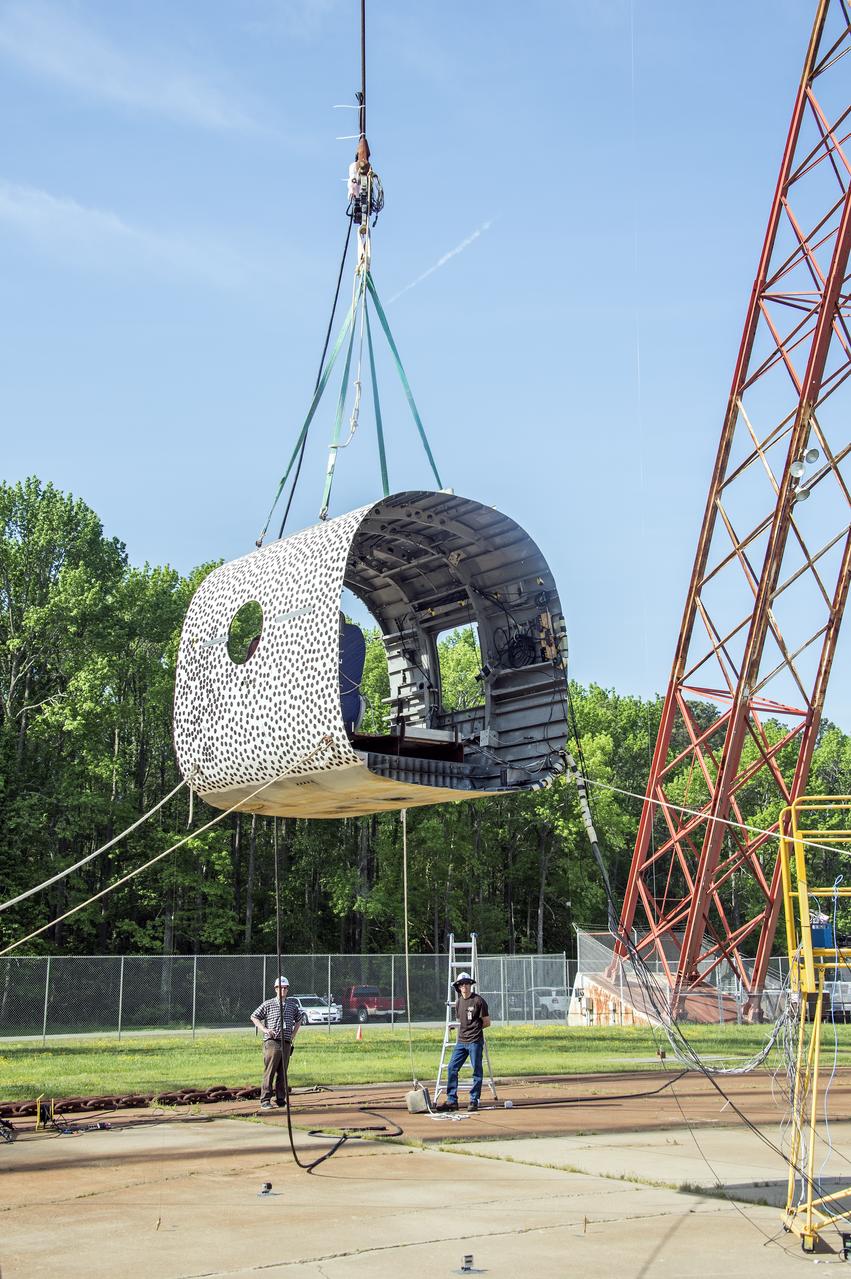
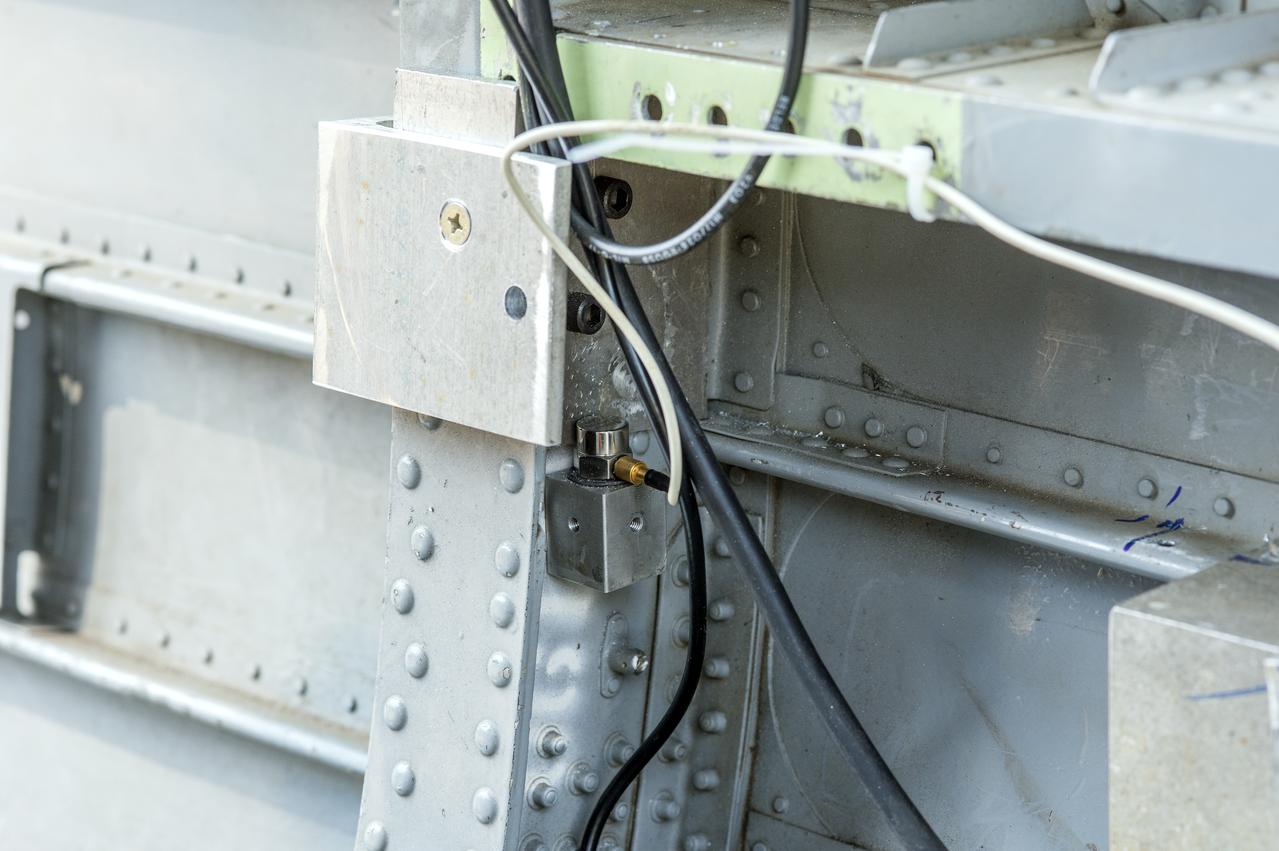
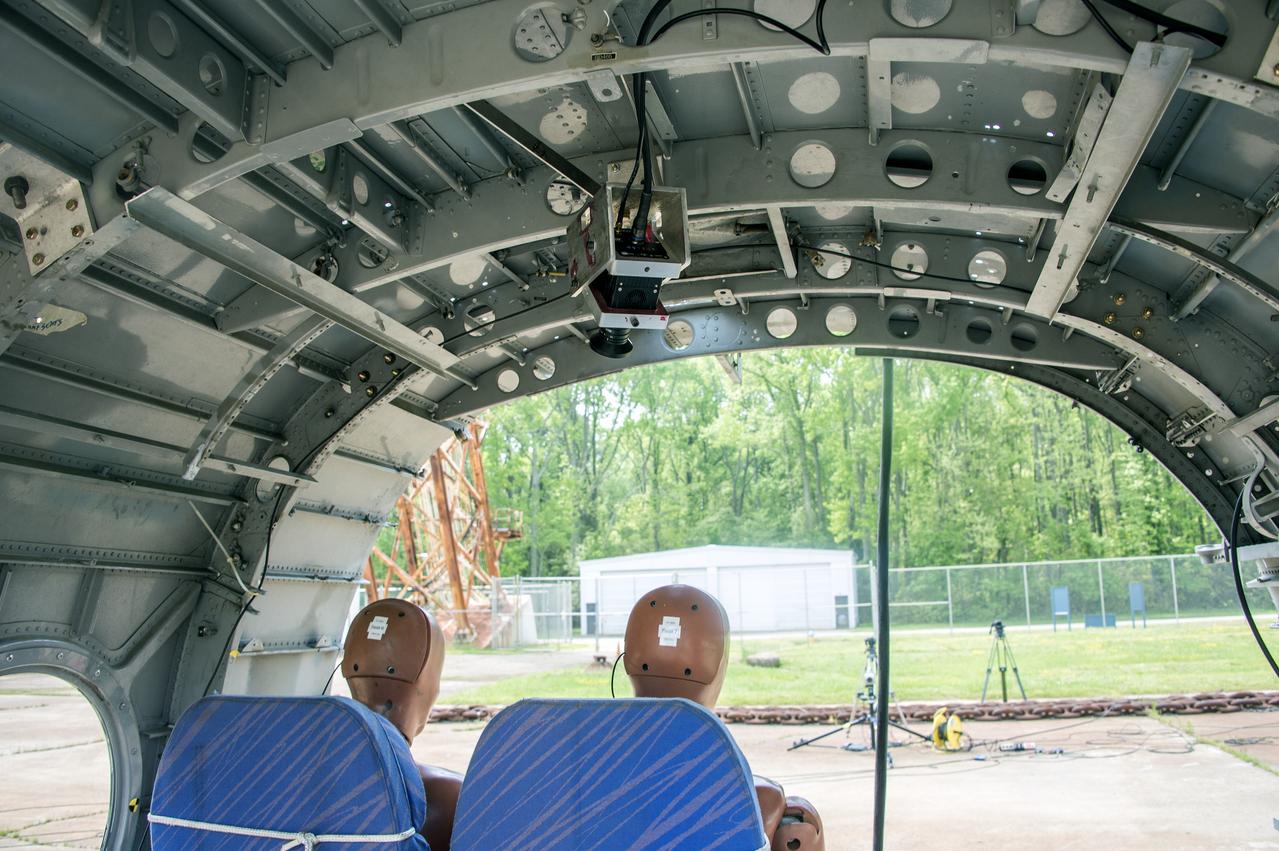
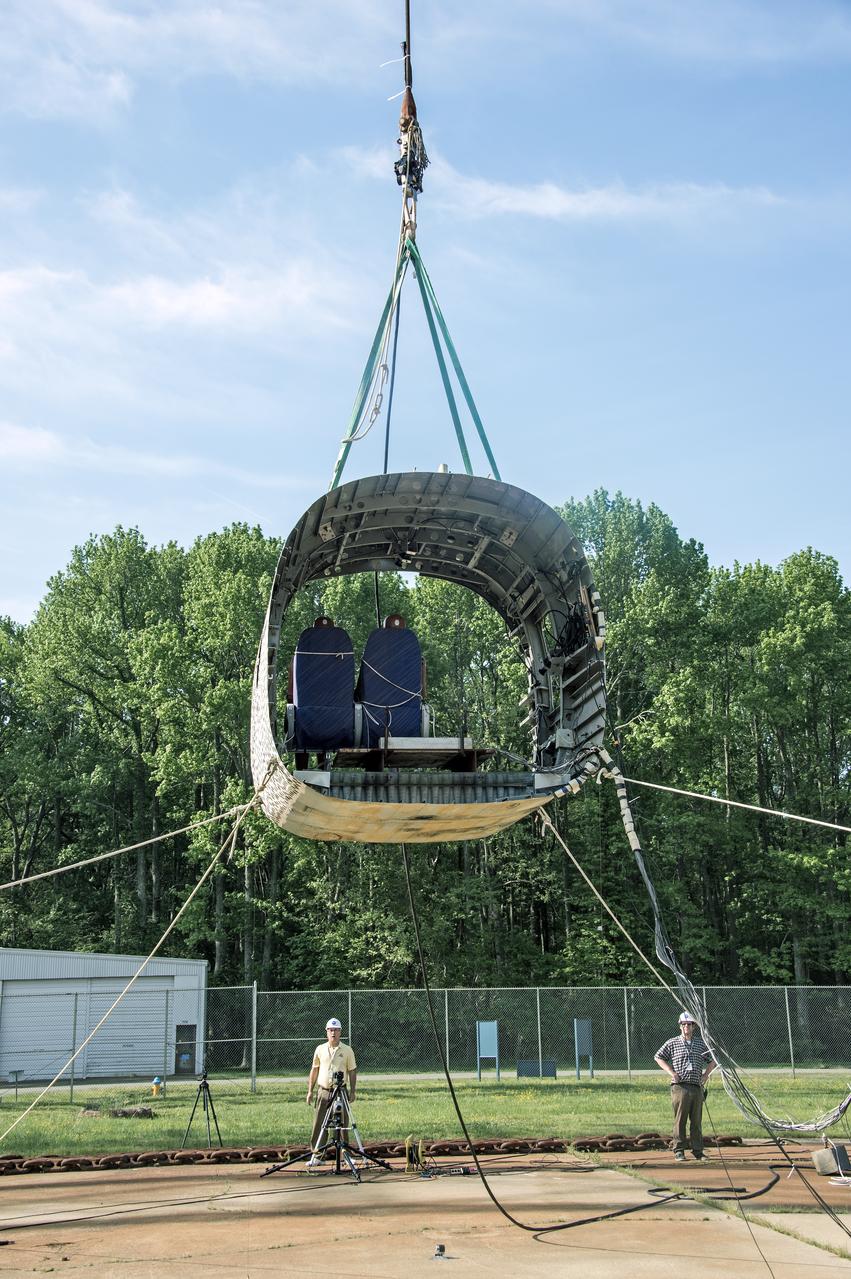
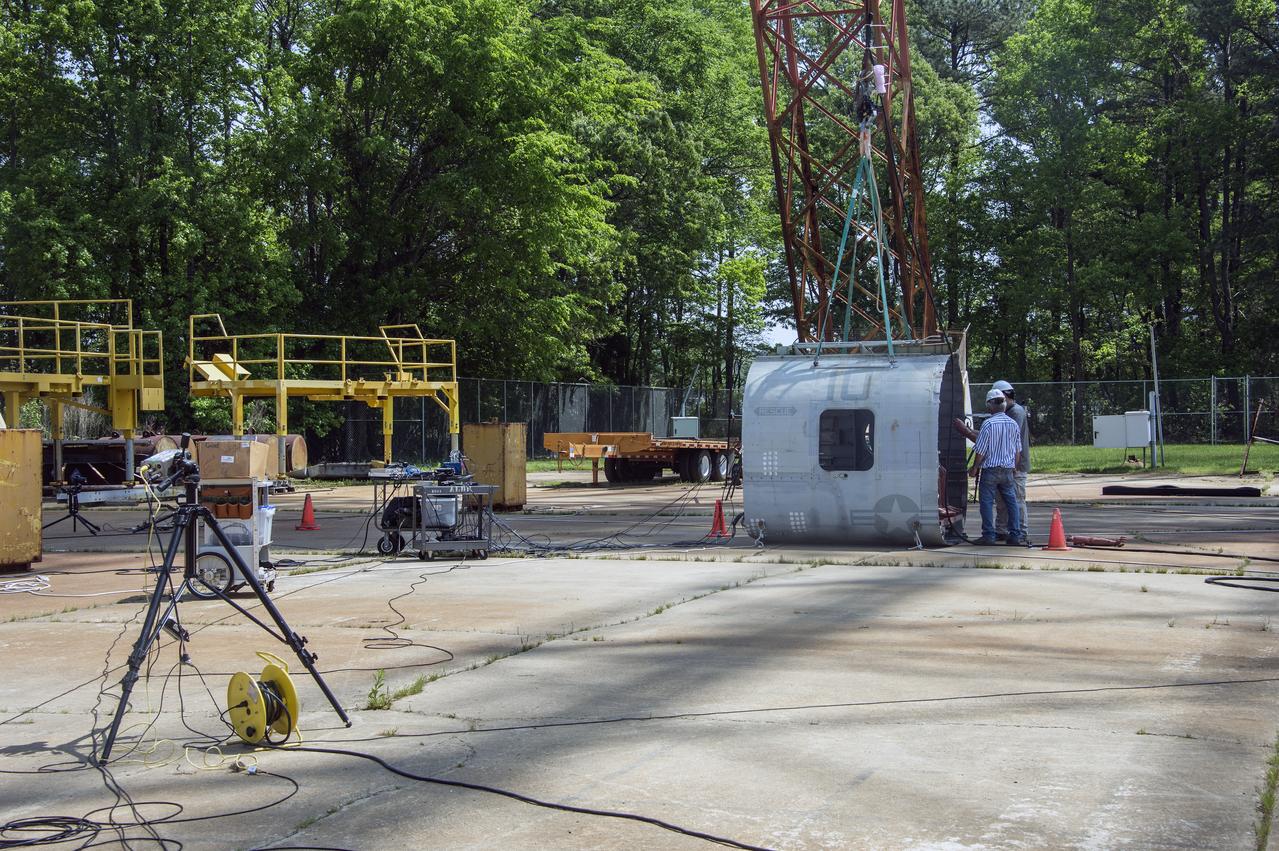
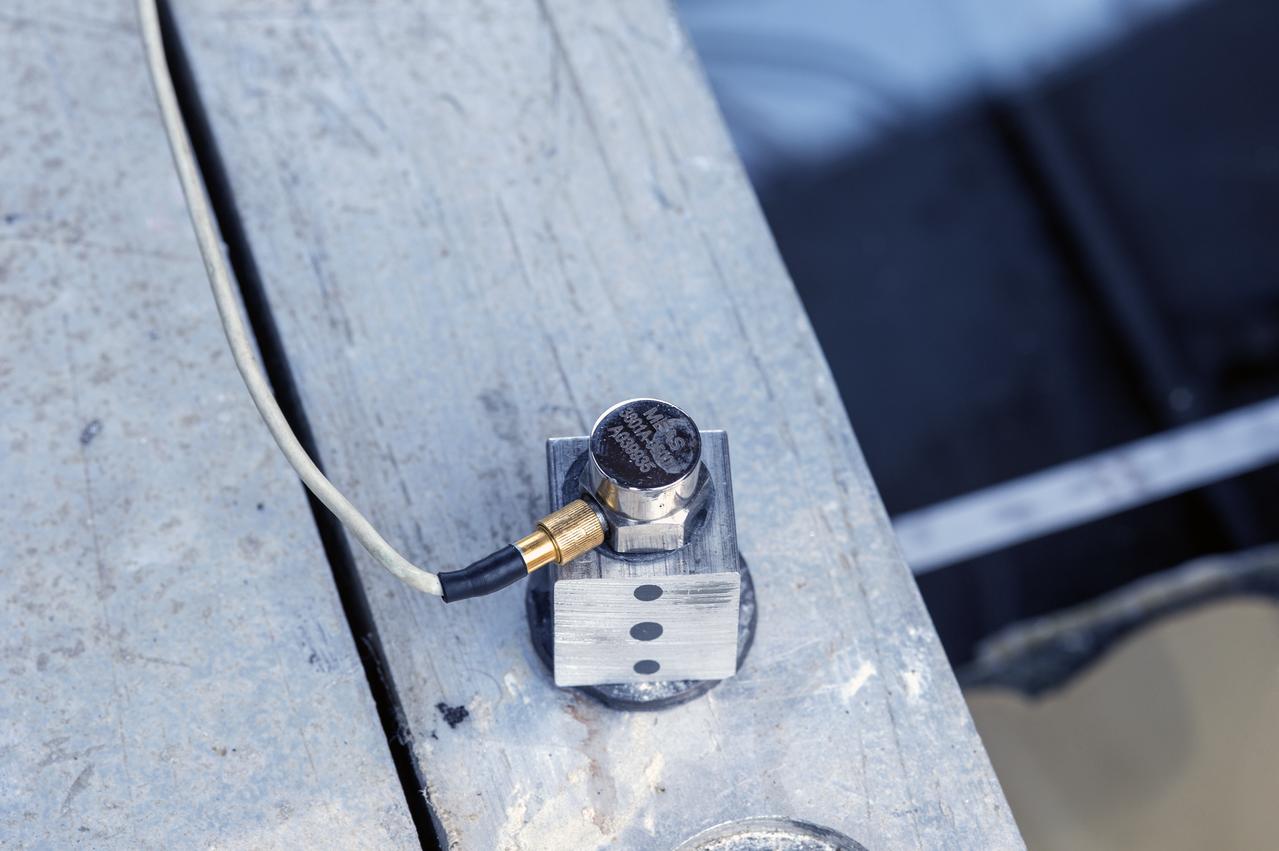
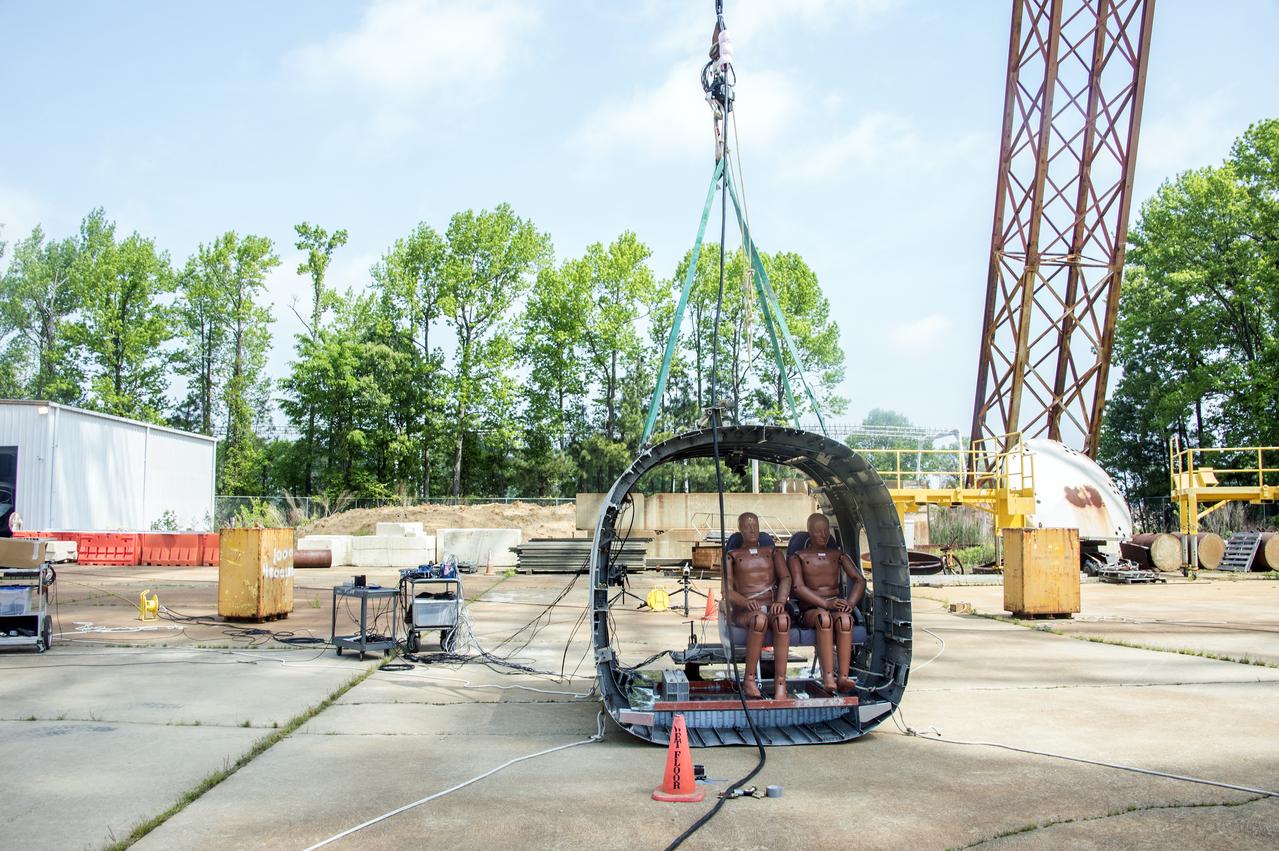
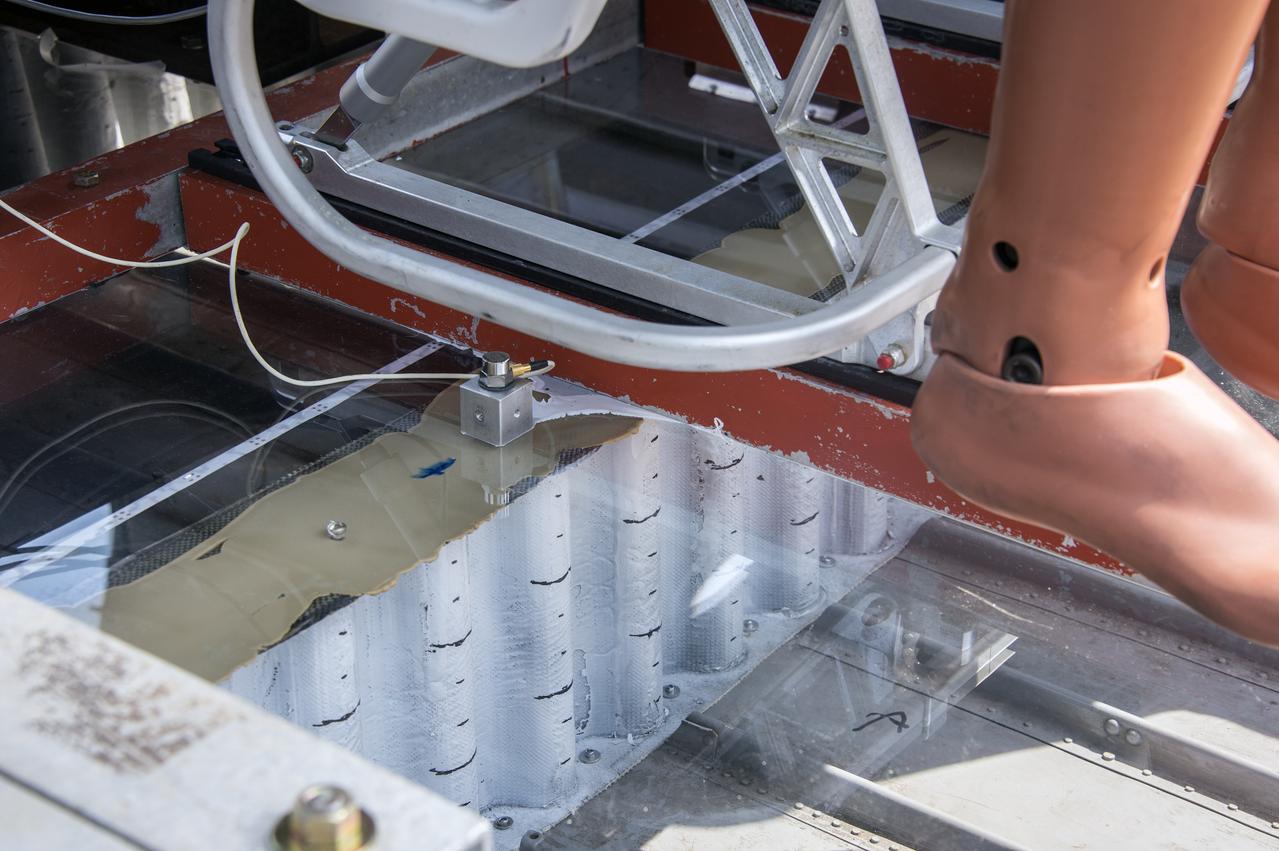
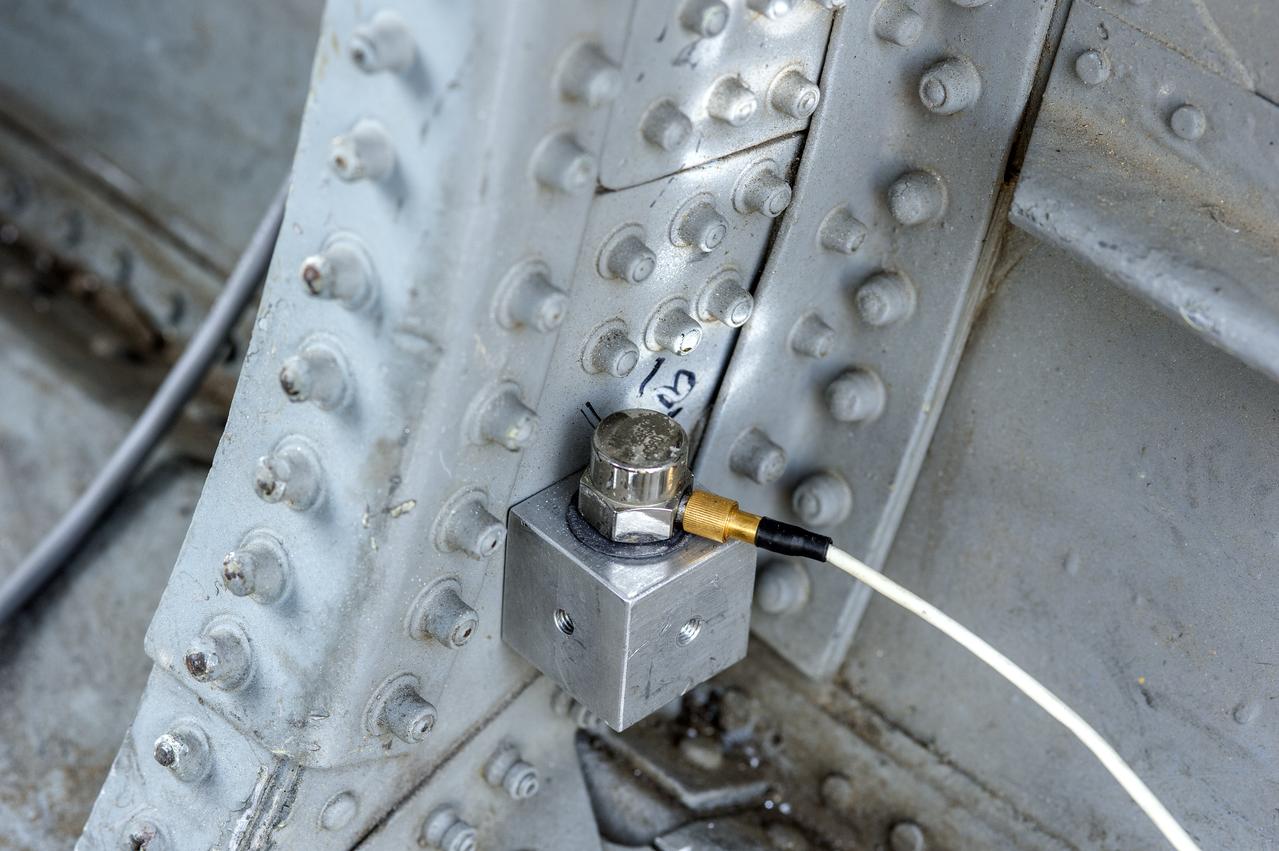
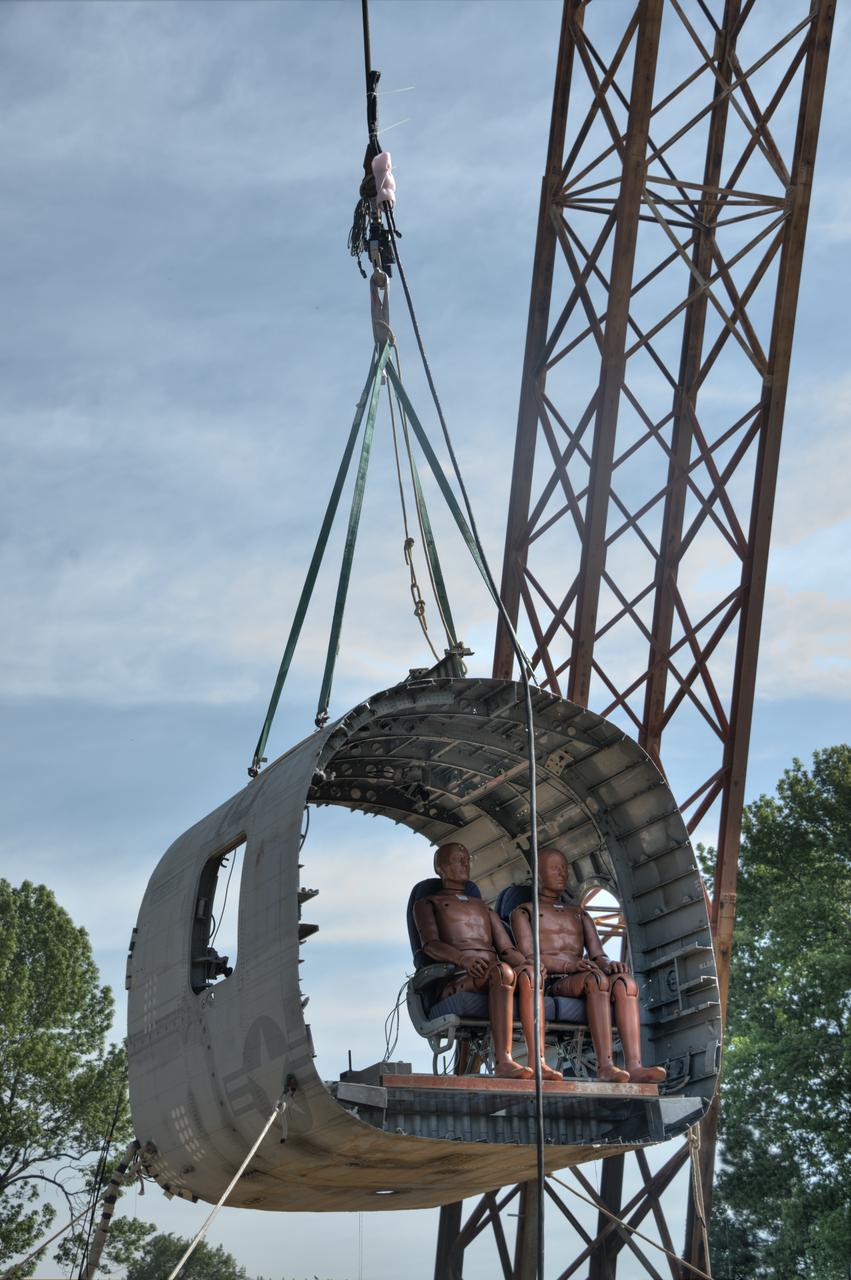
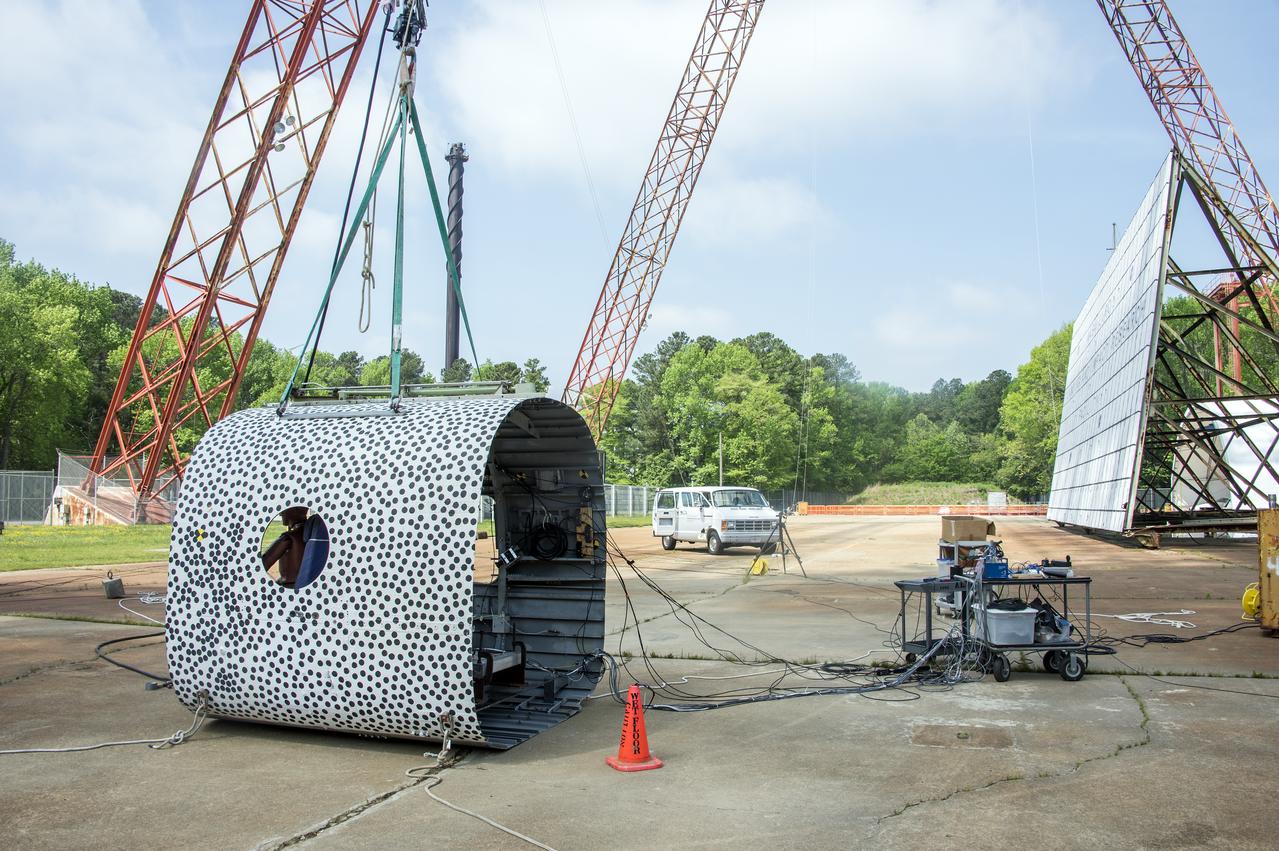
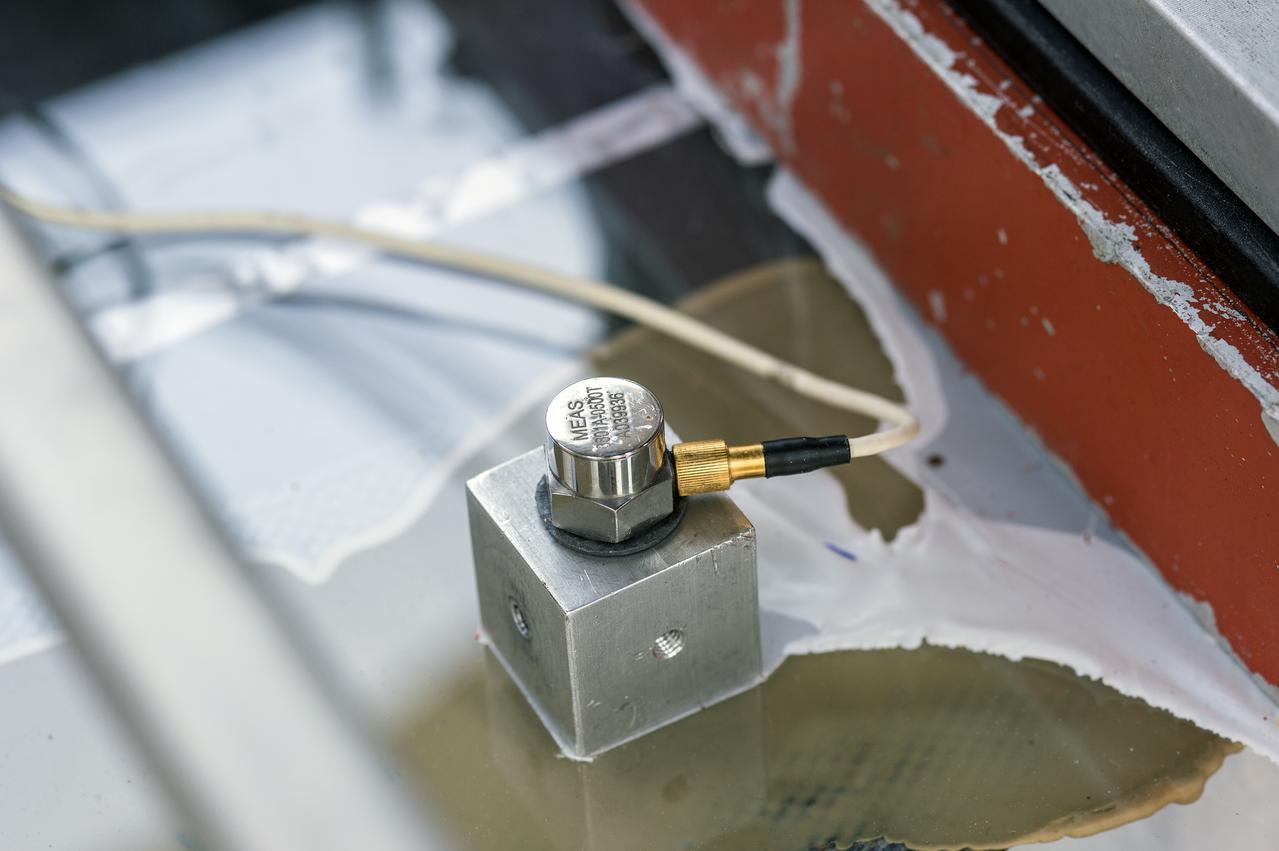
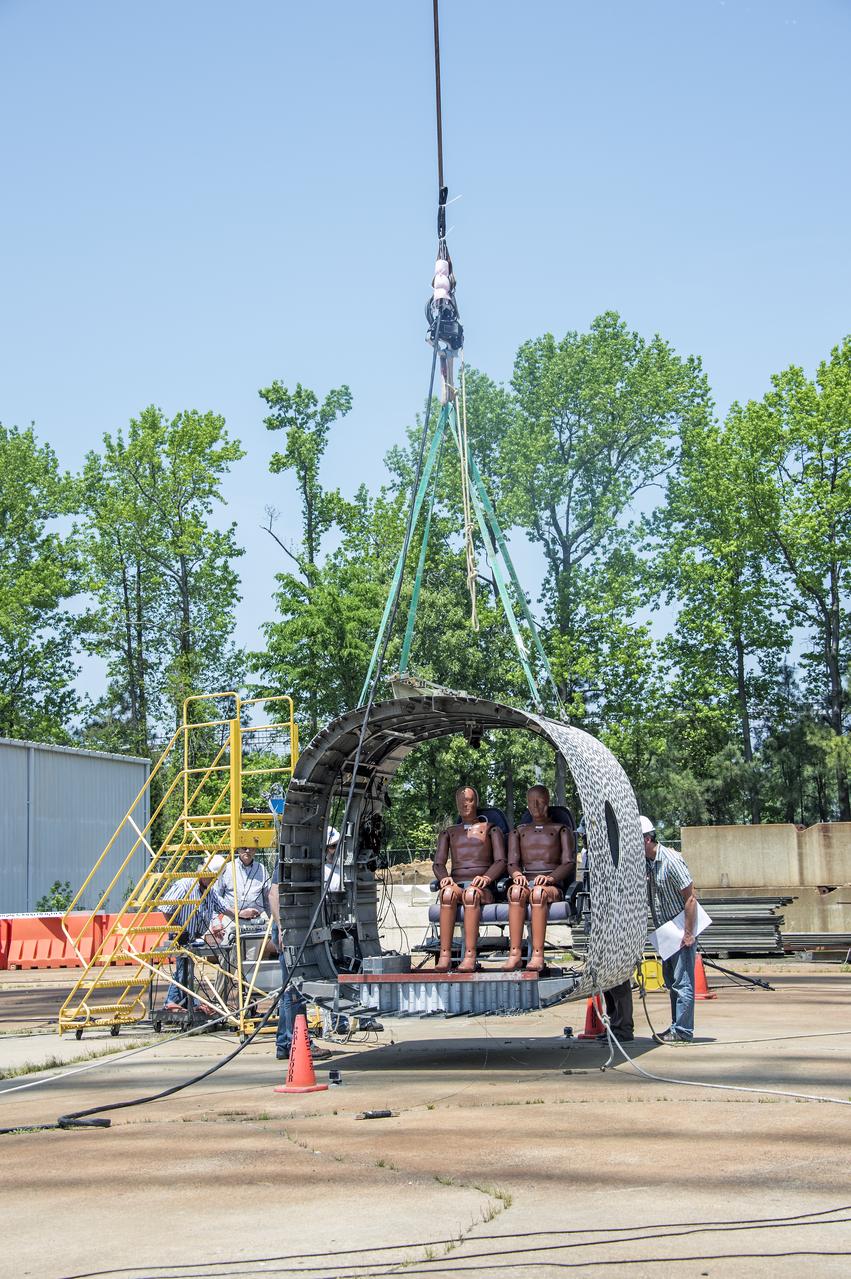
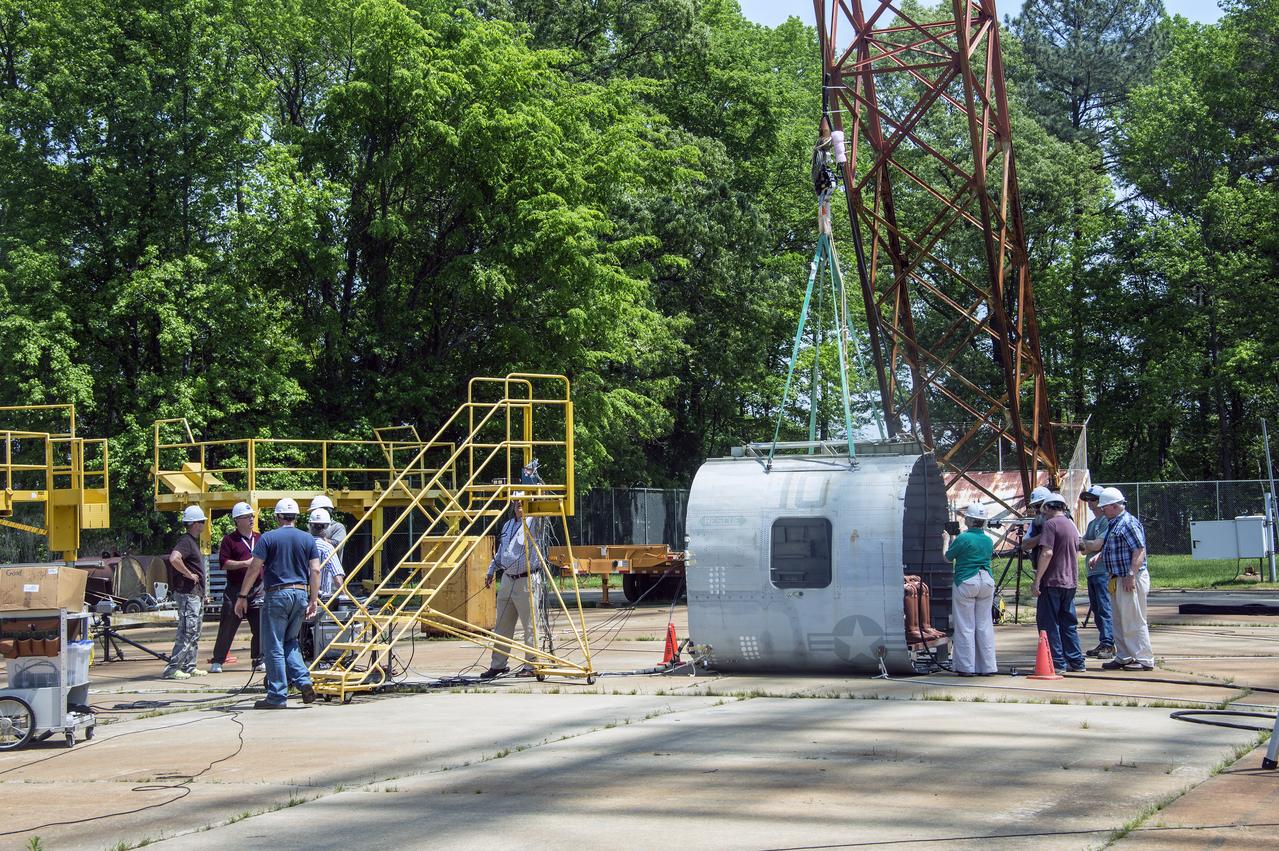
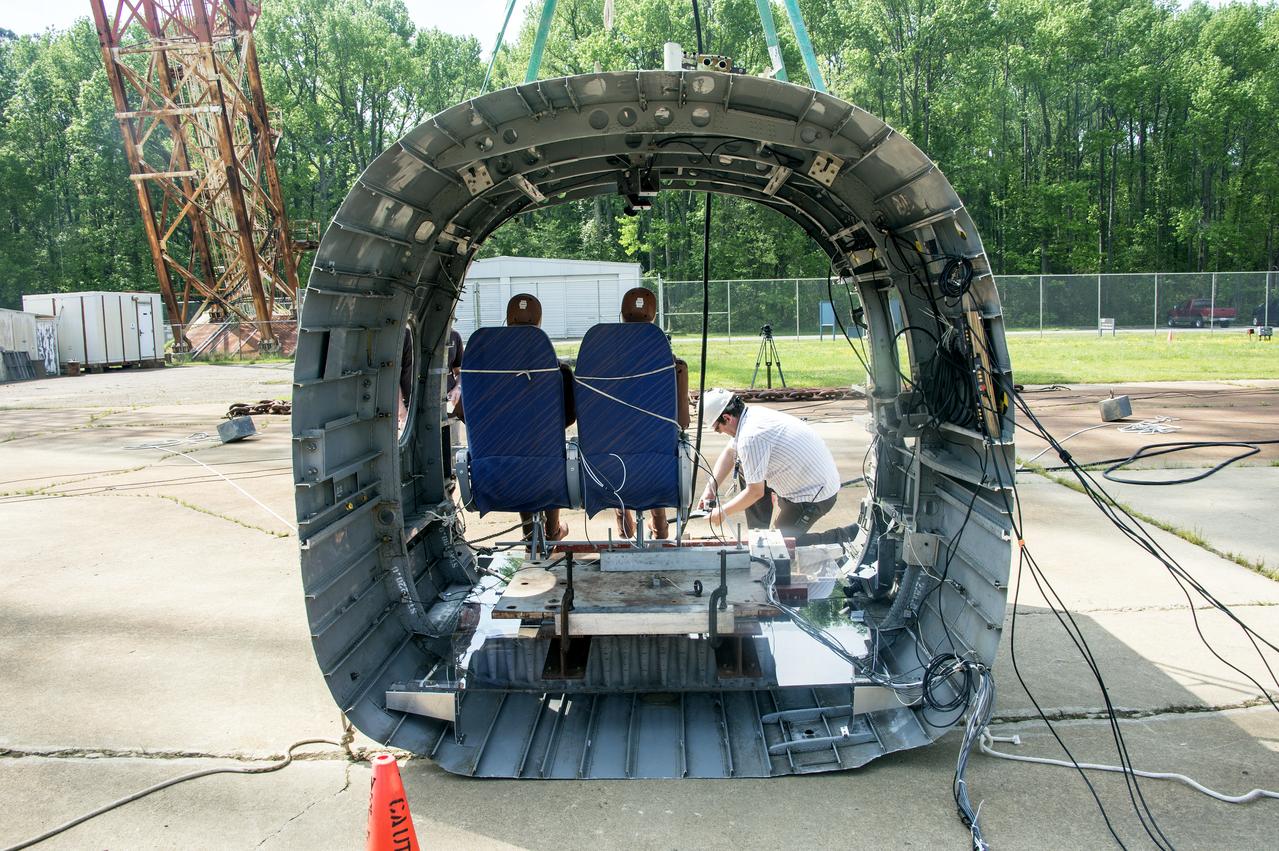
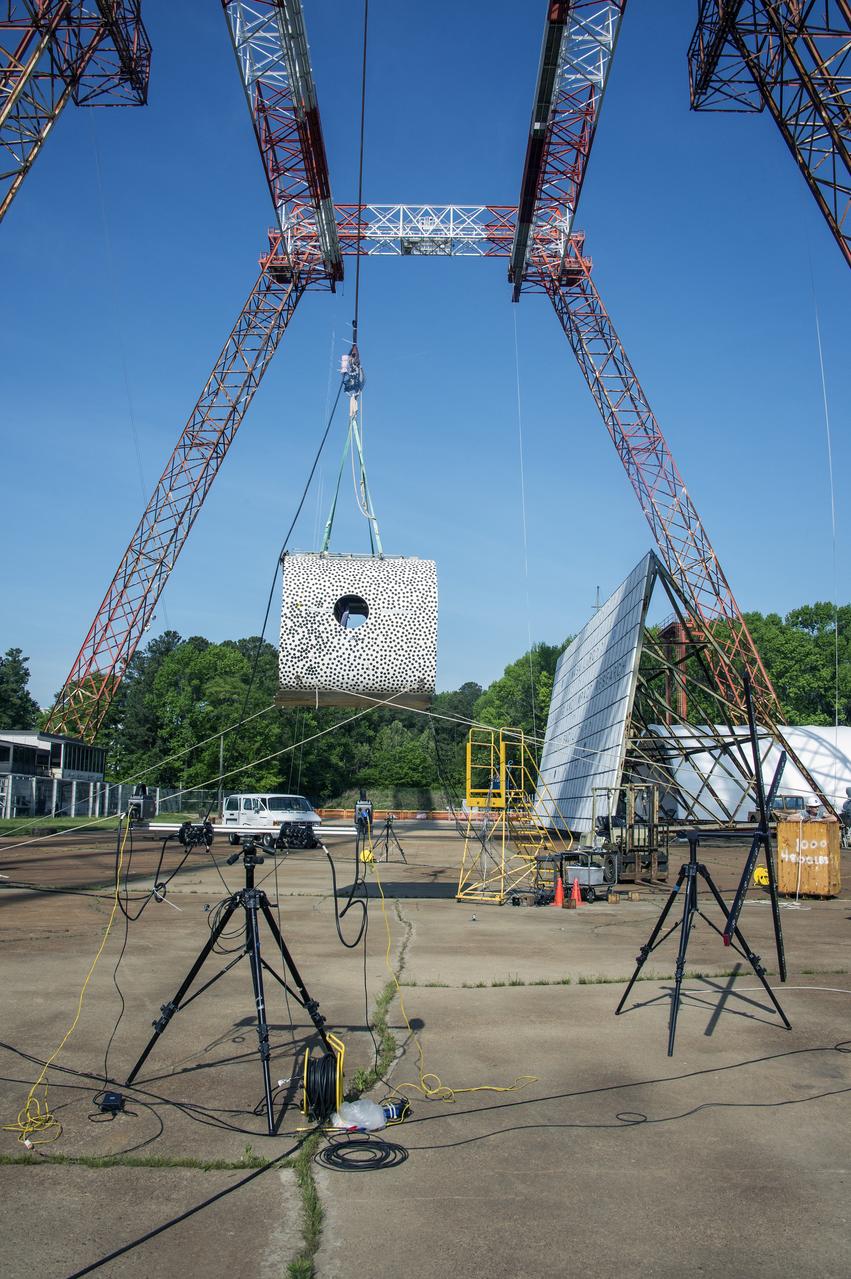
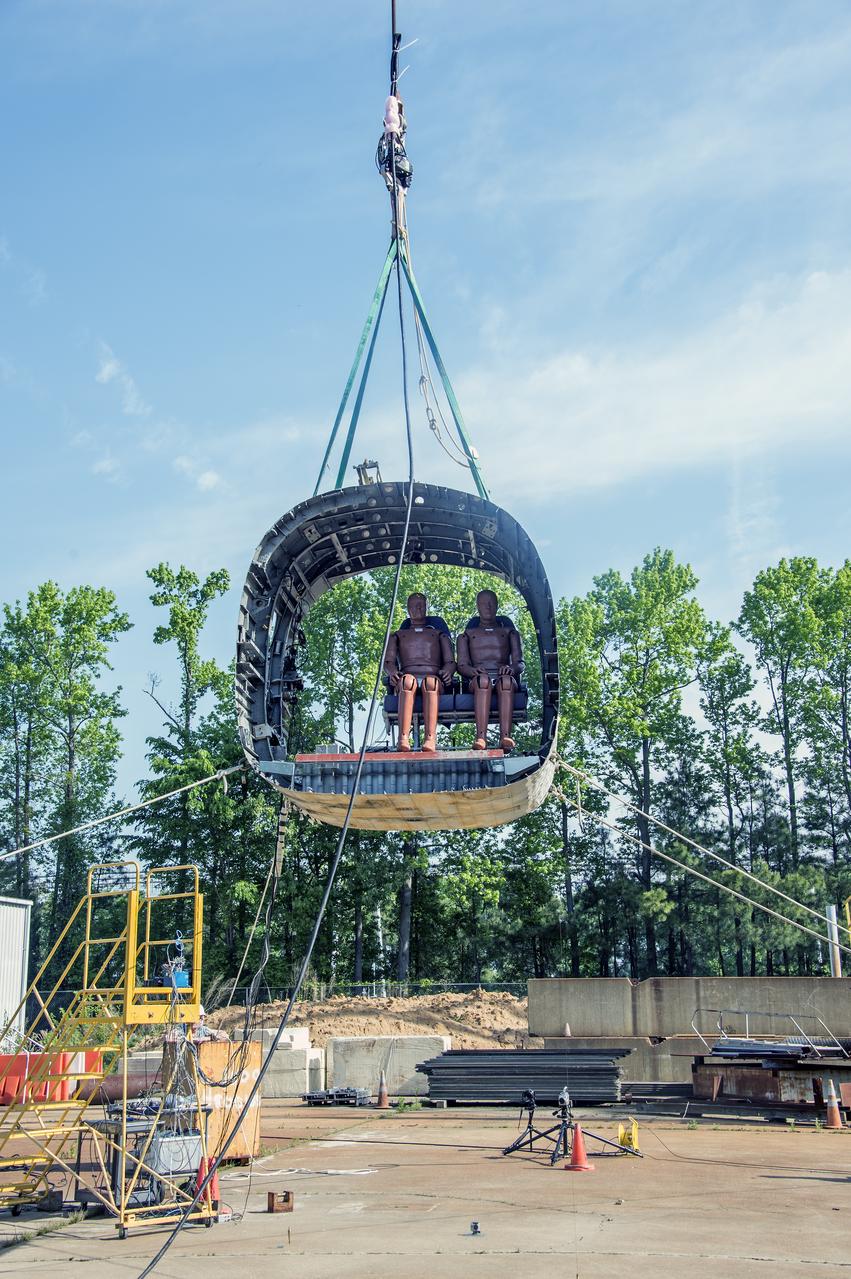
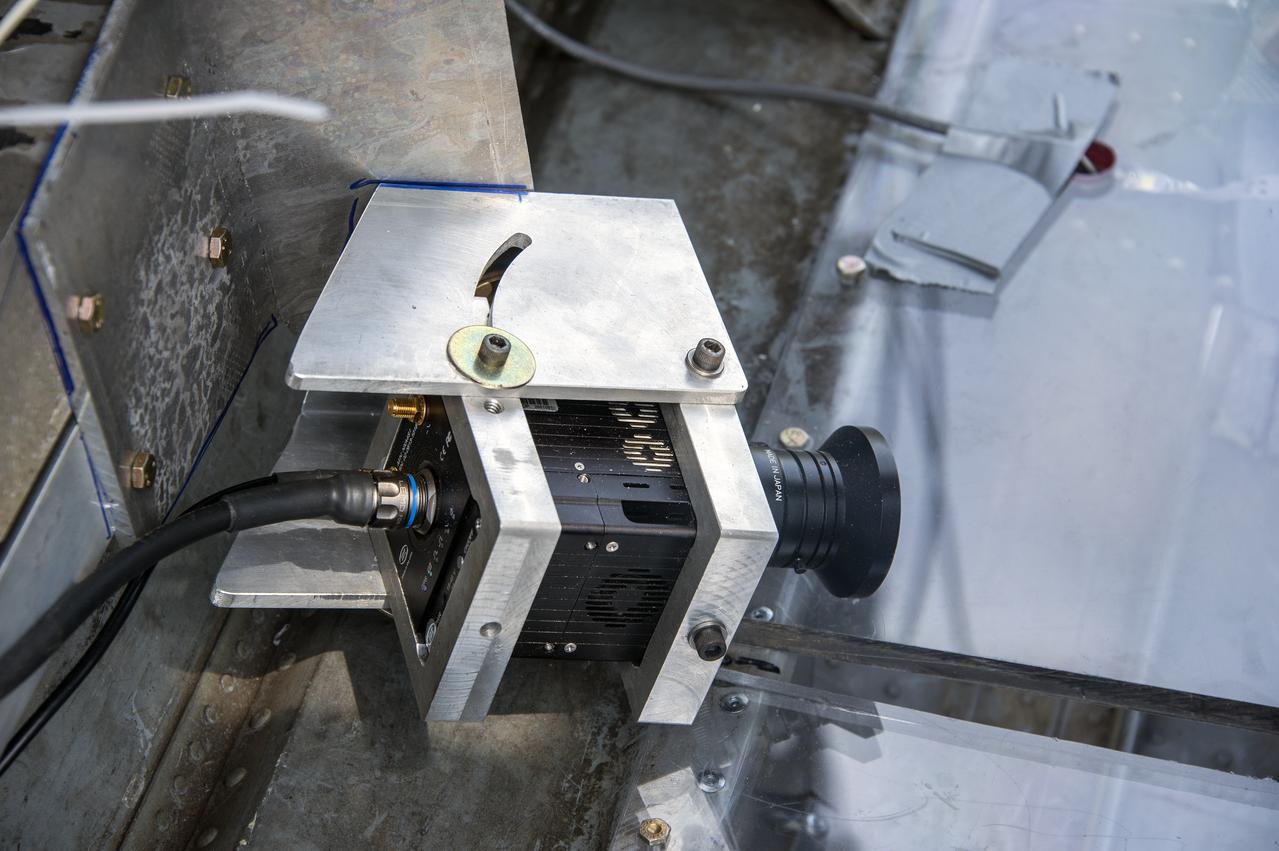
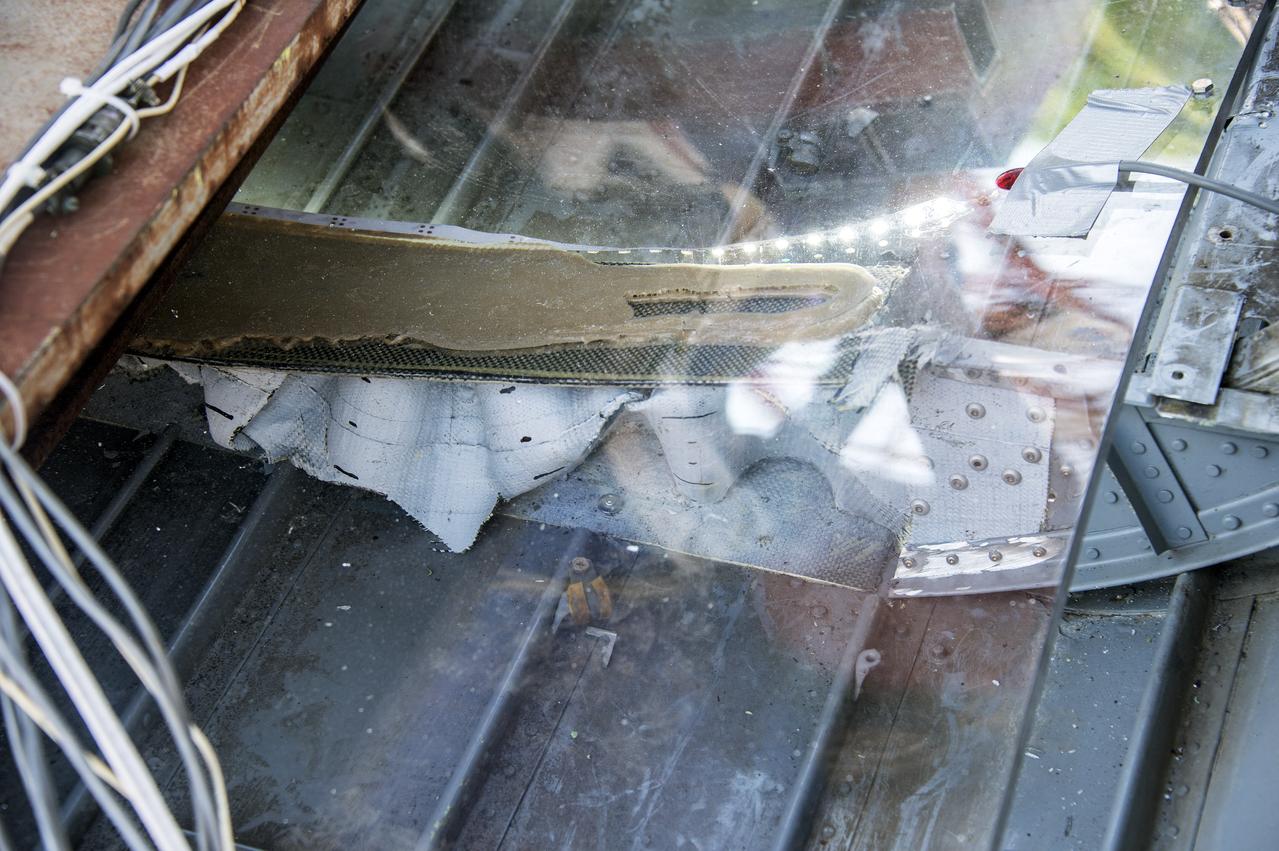
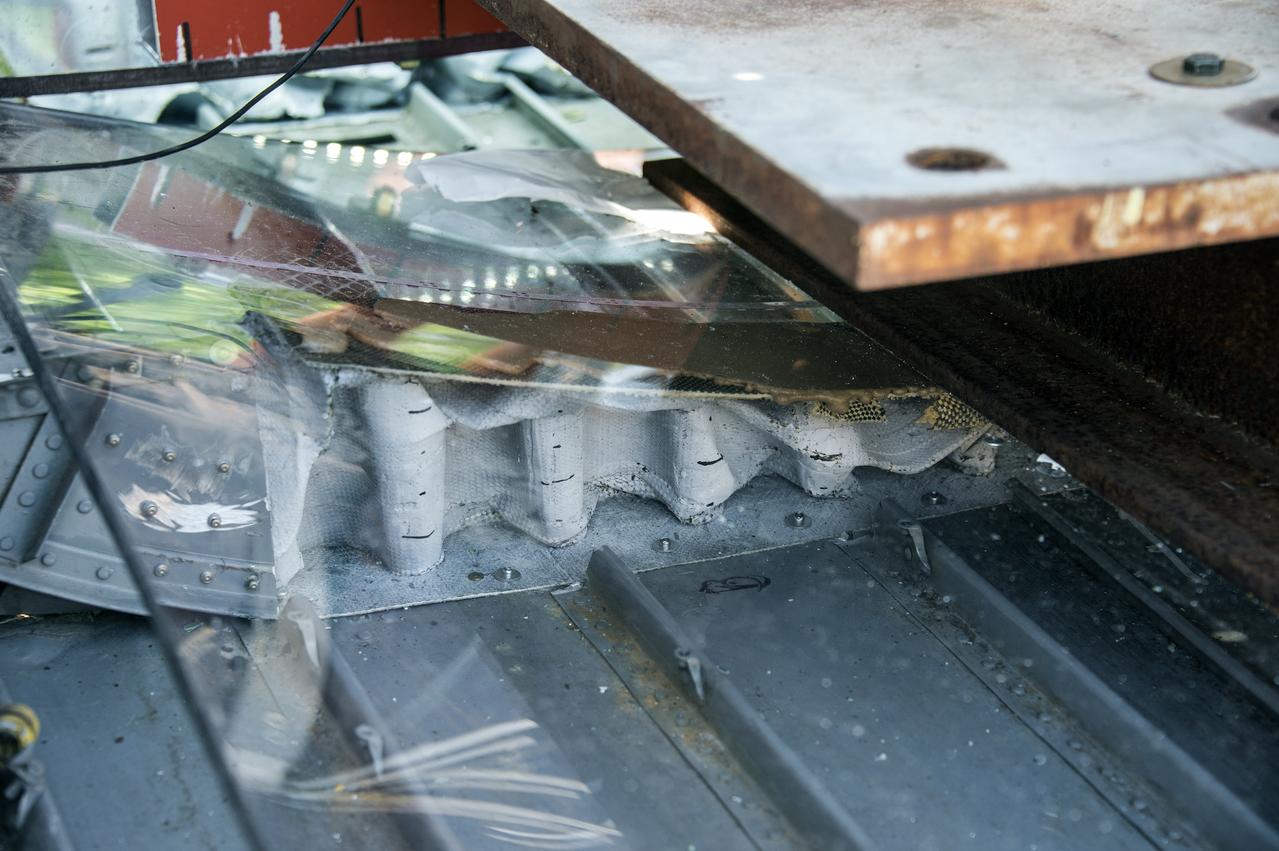
(Tract)2 Transport Rotorcraft Airframe Crash Testbed; Full Frame Drop Test: rotary wing crash worthiness, impact research at NASA Langley Research Center's Landing and Impact Research (LandIR) Facility   Building 1297
TRACT 2 Frame Drop Test AT NASA Langley Research Center's Landin
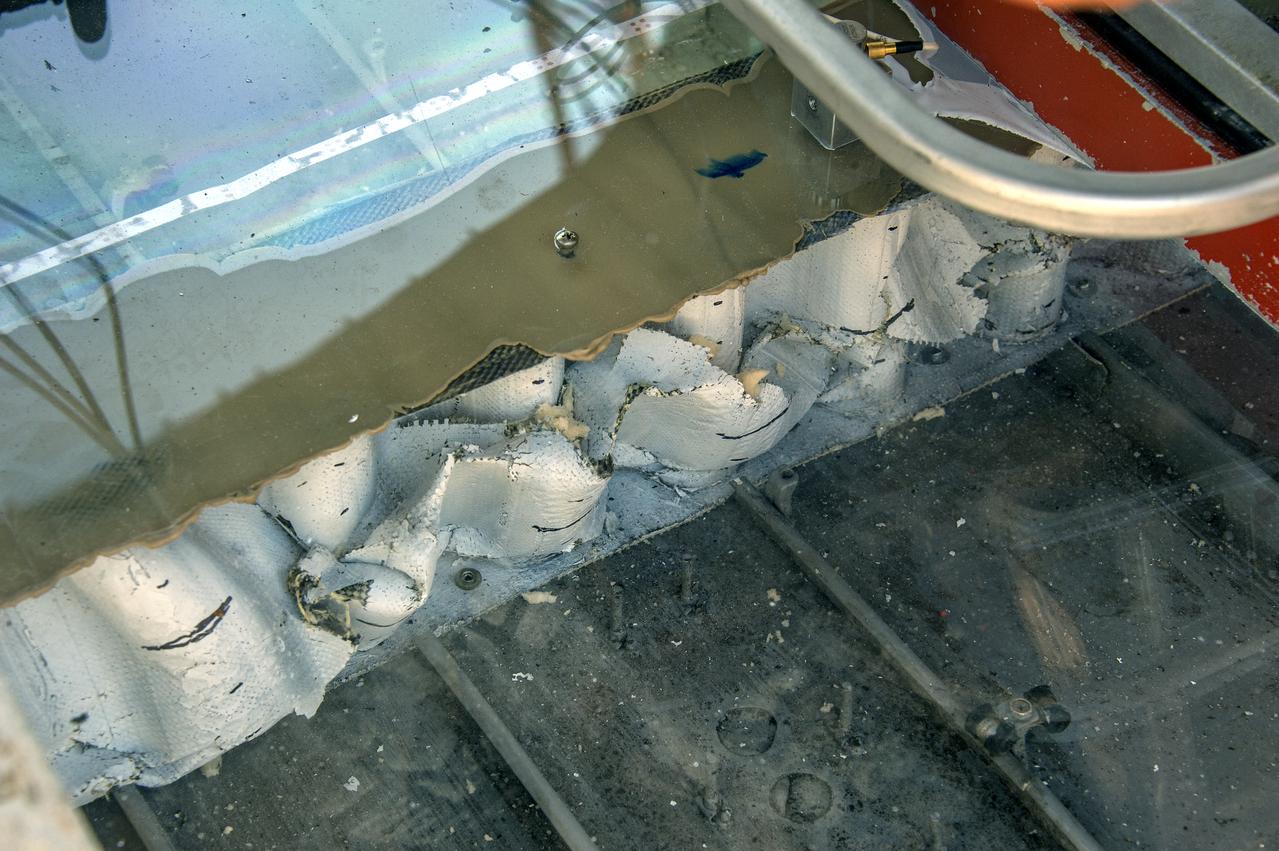
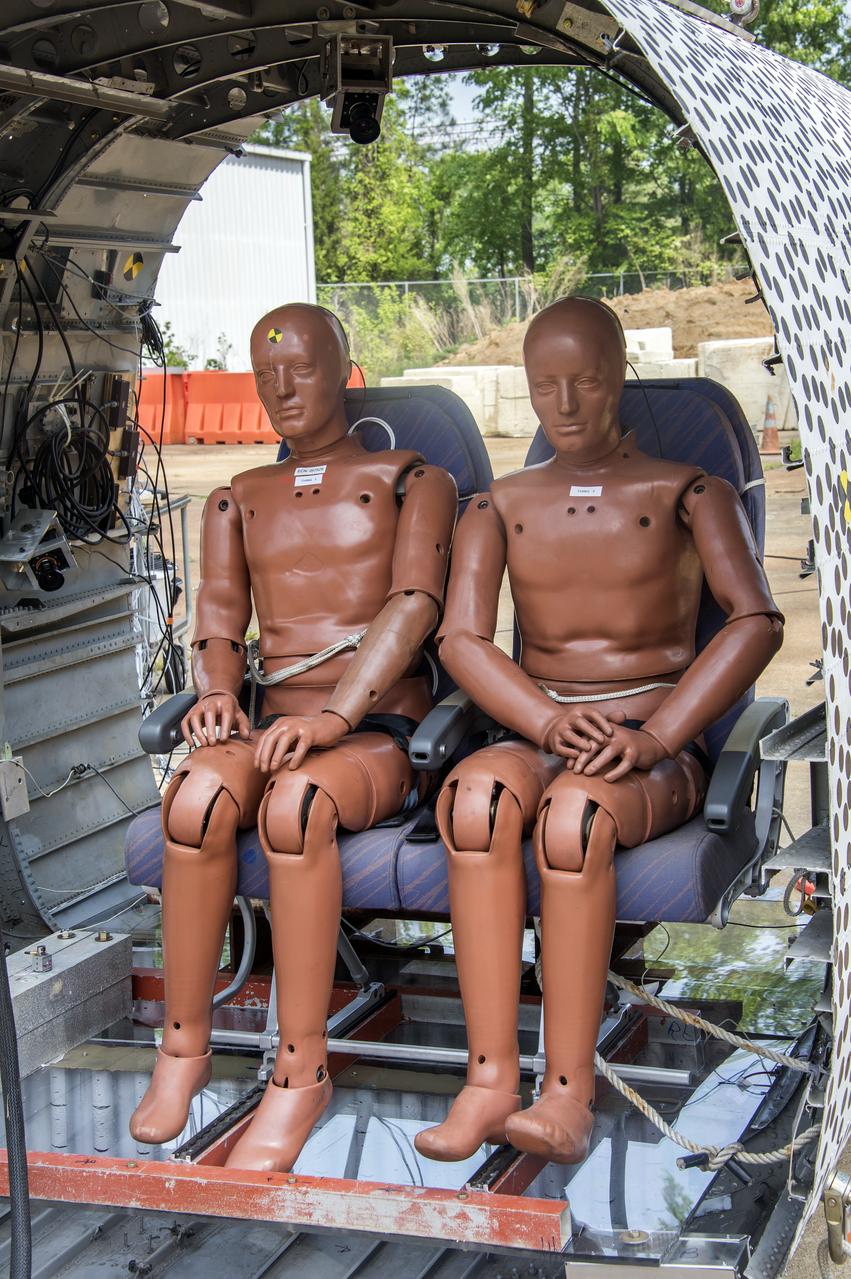
(Tract)2 Transport Rotorcraft Airframe Crash Testbed; Full Frame Drop Test: rotary wing crash worthiness, impact research at NASA Langley Research Center's Landing and Impact Research (LandIR) Facility   Building 1297
TRACT 2 Frame Drop Test AT NASA Langley Research Center's Landin
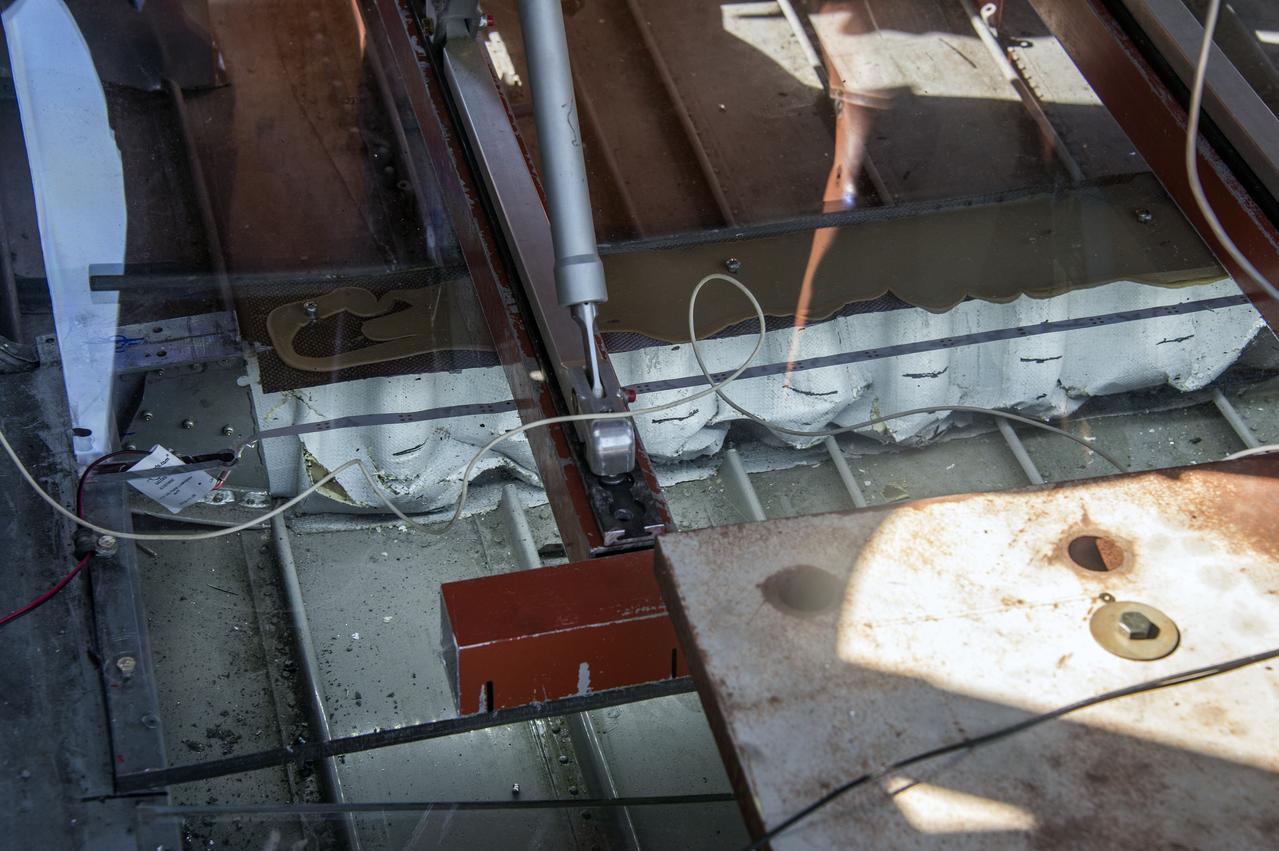
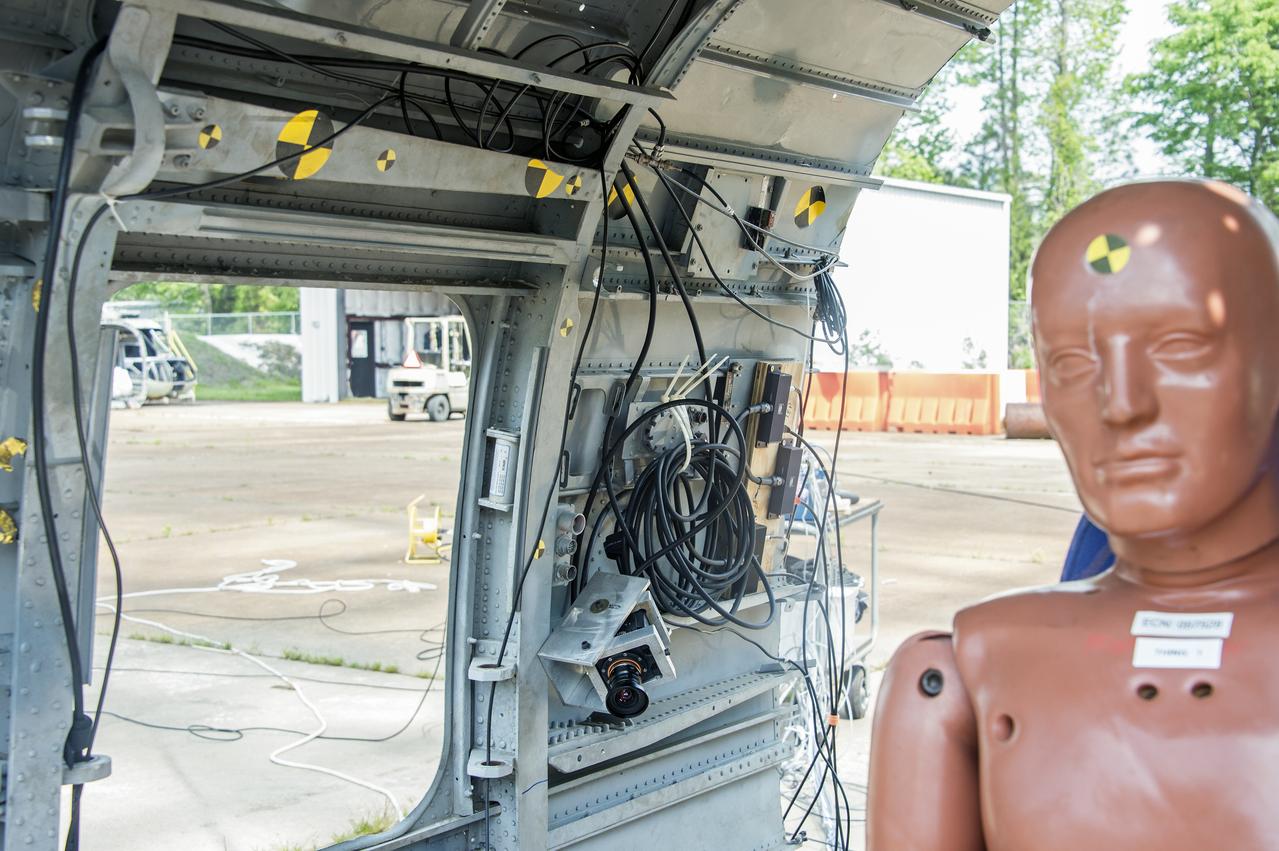
(Tract)2 Transport Rotorcraft Airframe Crash Testbed; Full Frame Drop Test: rotary wing crash worthiness, impact research at NASA Langley Research Center's Landing and Impact Research (LandIR) Facility   Building 1297
TRACT 2 Frame Drop Test AT NASA Langley Research Center's Landin
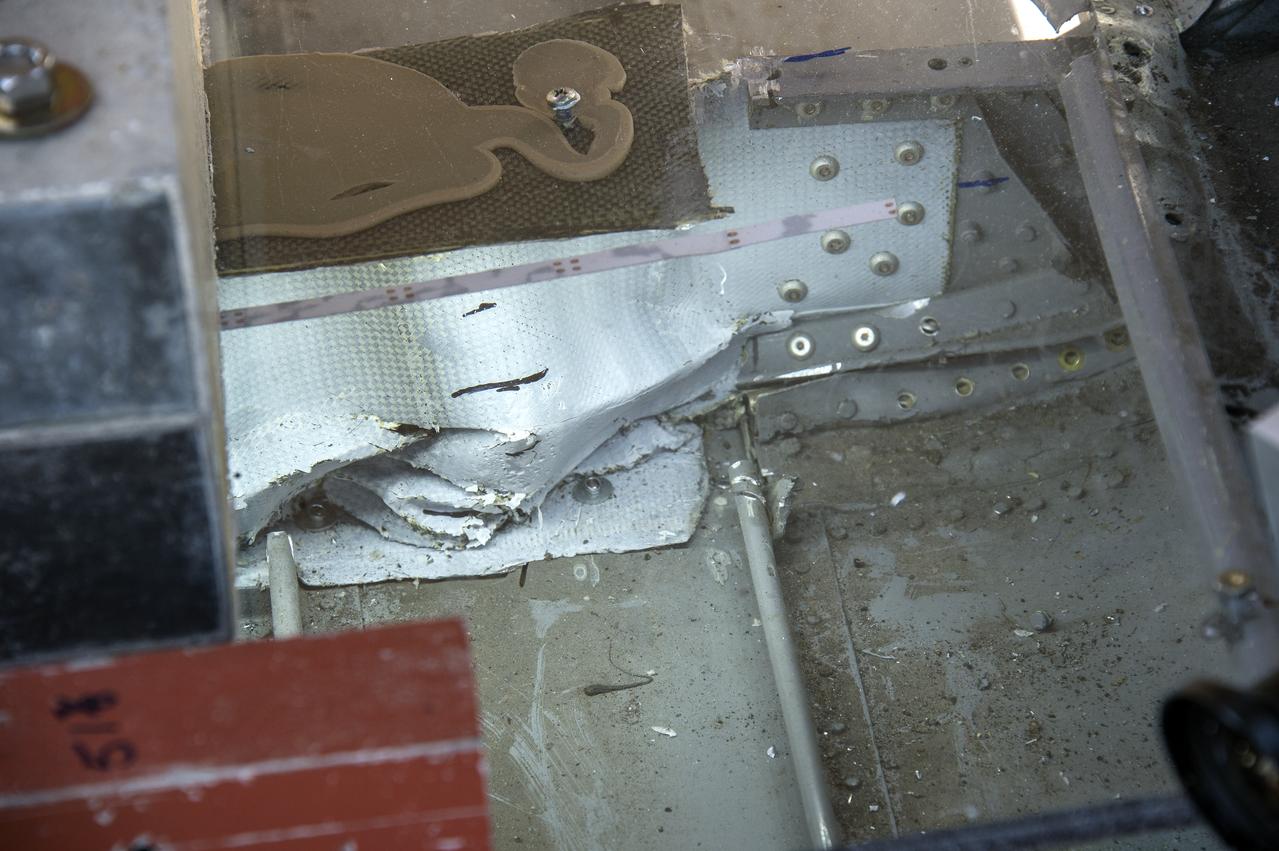
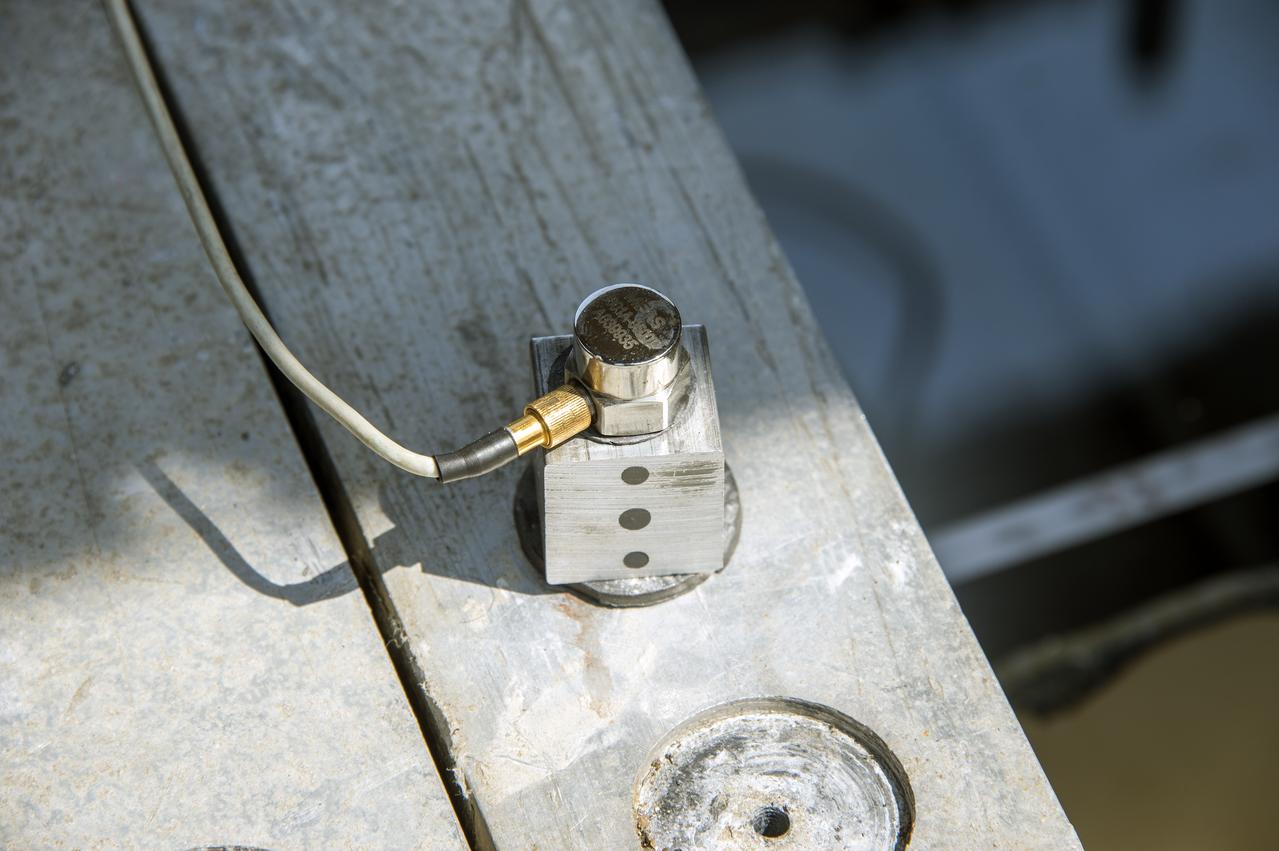
(Tract)2 Transport Rotorcraft Airframe Crash Testbed; Full Frame Drop Test: rotary wing crash worthiness, impact research at NASA Langley Research Center's Landing and Impact Research (LandIR) Facility   Building 1297
TRACT 2 Frame Drop Test AT NASA Langley Research Center's Landin
(Tract)2 Transport Rotorcraft Airframe Crash Testbed; Full Frame Drop Test: rotary wing crash worthiness, impact research at NASA Langley Research Center's Landing and Impact Research (LandIR) Facility   Building 1297
TRACT 2 Frame Drop Test AT NASA Langley Research Center's Landin
(Tract)2 Transport Rotorcraft Airframe Crash Testbed; Full Frame Drop Test: rotary wing crash worthiness, impact research at NASA Langley Research Center's Landing and Impact Research (LandIR) Facility   Building 1297
TRACT 2 Frame Drop Test AT NASA Langley Research Center's Landin
(Tract)2 Transport Rotorcraft Airframe Crash Testbed; Full Frame Drop Test: rotary wing crash worthiness, impact research at NASA Langley Research Center's Landing and Impact Research (LandIR) Facility   Building 1297
TRACT 2 Frame Drop Test AT NASA Langley Research Center's Landin
(Tract)2 Transport Rotorcraft Airframe Crash Testbed; Full Frame Drop Test: rotary wing crash worthiness, impact research at NASA Langley Research Center's Landing and Impact Research (LandIR) Facility   Building 1297
TRACT 2 Frame Drop Test AT NASA Langley Research Center's Landin
(Tract)2 Transport Rotorcraft Airframe Crash Testbed; Full Frame Drop Test: rotary wing crash worthiness, impact research at NASA Langley Research Center's Landing and Impact Research (LandIR) Facility   Building 1297
TRACT 2 Frame Drop Test AT NASA Langley Research Center's Landin
(Tract)2 Transport Rotorcraft Airframe Crash Testbed; Full Frame Drop Test: rotary wing crash worthiness, impact research at NASA Langley Research Center's Landing and Impact Research (LandIR) Facility   Building 1297
TRACT 2 Frame Drop Test AT NASA Langley Research Center's Landin
(Tract)2 Transport Rotorcraft Airframe Crash Testbed; Full Frame Drop Test: rotary wing crash worthiness, impact research at NASA Langley Research Center's Landing and Impact Research (LandIR) Facility   Building 1297
TRACT 2 Frame Drop Test AT NASA Langley Research Center's Landin
(Tract)2 Transport Rotorcraft Airframe Crash Testbed; Full Frame Drop Test: rotary wing crash worthiness, impact research at NASA Langley Research Center's Landing and Impact Research (LandIR) Facility   Building 1297
TRACT 2 Frame Drop Test AT NASA Langley Research Center's Landin
(Tract)2 Transport Rotorcraft Airframe Crash Testbed; Full Frame Drop Test: rotary wing crash worthiness, impact research at NASA Langley Research Center's Landing and Impact Research (LandIR) Facility   Building 1297
TRACT 2 Frame Drop Test AT NASA Langley Research Center's Landin
(Tract)2 Transport Rotorcraft Airframe Crash Testbed; Full Frame Drop Test: rotary wing crash worthiness, impact research at NASA Langley Research Center's Landing and Impact Research (LandIR) Facility   Building 1297
TRACT 2 Frame Drop Test AT NASA Langley Research Center's Landin
(Tract)2 Transport Rotorcraft Airframe Crash Testbed; Full Frame Drop Test: rotary wing crash worthiness, impact research at NASA Langley Research Center's Landing and Impact Research (LandIR) Facility   Building 1297
TRACT 2 Frame Drop Test AT NASA Langley Research Center's Landin
(Tract)2 Transport Rotorcraft Airframe Crash Testbed; Full Frame Drop Test: rotary wing crash worthiness, impact research at NASA Langley Research Center's Landing and Impact Research (LandIR) Facility   Building 1297
TRACT 2 Frame Drop Test AT NASA Langley Research Center's Landin
(Tract)2 Transport Rotorcraft Airframe Crash Testbed; Full Frame Drop Test: rotary wing crash worthiness, impact research at NASA Langley Research Center's Landing and Impact Research (LandIR) Facility   Building 1297
TRACT 2 Frame Drop Test AT NASA Langley Research Center's Landin
(Tract)2 Transport Rotorcraft Airframe Crash Testbed; Full Frame Drop Test: rotary wing crash worthiness, impact research at NASA Langley Research Center's Landing and Impact Research (LandIR) Facility   Building 1297
TRACT 2 Frame Drop Test AT NASA Langley Research Center's Landin
(Tract)2 Transport Rotorcraft Airframe Crash Testbed; Full Frame Drop Test: rotary wing crash worthiness, impact research at NASA Langley Research Center's Landing and Impact Research (LandIR) Facility   Building 1297
TRACT 2 Frame Drop Test AT NASA Langley Research Center's Landin
(Tract)2 Transport Rotorcraft Airframe Crash Testbed; Full Frame Drop Test: rotary wing crash worthiness, impact research at NASA Langley Research Center's Landing and Impact Research (LandIR) Facility   Building 1297
TRACT 2 Frame Drop Test AT NASA Langley Research Center's Landin
(Tract)2 Transport Rotorcraft Airframe Crash Testbed; Full Frame Drop Test: rotary wing crash worthiness, impact research at NASA Langley Research Center's Landing and Impact Research (LandIR) Facility   Building 1297
TRACT 2 Frame Drop Test AT NASA Langley Research Center's Landin
(Tract)2 Transport Rotorcraft Airframe Crash Testbed; Full Frame Drop Test: rotary wing crash worthiness, impact research at NASA Langley Research Center's Landing and Impact Research (LandIR) Facility   Building 1297
TRACT 2 Frame Drop Test AT NASA Langley Research Center's Landin
(Tract)2 Transport Rotorcraft Airframe Crash Testbed; Full Frame Drop Test: rotary wing crash worthiness, impact research at NASA Langley Research Center's Landing and Impact Research (LandIR) Facility   Building 1297
TRACT 2 Frame Drop Test AT NASA Langley Research Center's Landin
(Tract)2 Transport Rotorcraft Airframe Crash Testbed; Full Frame Drop Test: rotary wing crash worthiness, impact research at NASA Langley Research Center's Landing and Impact Research (LandIR) Facility   Building 1297
TRACT 2 Frame Drop Test AT NASA Langley Research Center's Landin
(Tract)2 Transport Rotorcraft Airframe Crash Testbed; Full Frame Drop Test: rotary wing crash worthiness, impact research at NASA Langley Research Center's Landing and Impact Research (LandIR) Facility   Building 1297
TRACT 2 Frame Drop Test AT NASA Langley Research Center's Landin
(Tract)2 Transport Rotorcraft Airframe Crash Testbed; Full Frame Drop Test: rotary wing crash worthiness, impact research at NASA Langley Research Center's Landing and Impact Research (LandIR) Facility   Building 1297
TRACT 2 Frame Drop Test AT NASA Langley Research Center's Landin
(Tract)2 Transport Rotorcraft Airframe Crash Testbed; Full Frame Drop Test: rotary wing crash worthiness, impact research at NASA Langley Research Center's Landing and Impact Research (LandIR) Facility   Building 1297
TRACT 2 Frame Drop Test AT NASA Langley Research Center's Landin
(Tract)2 Transport Rotorcraft Airframe Crash Testbed; Full Frame Drop Test: rotary wing crash worthiness, impact research at NASA Langley Research Center's Landing and Impact Research (LandIR) Facility   Building 1297
TRACT 2 Frame Drop Test AT NASA Langley Research Center's Landin
(Tract)2 Transport Rotorcraft Airframe Crash Testbed; Full Frame Drop Test: rotary wing crash worthiness, impact research at NASA Langley Research Center's Landing and Impact Research (LandIR) Facility   Building 1297
TRACT 2 Frame Drop Test AT NASA Langley Research Center's Landin
(Tract)2 Transport Rotorcraft Airframe Crash Testbed; Full Frame Drop Test: rotary wing crash worthiness, impact research at NASA Langley Research Center's Landing and Impact Research (LandIR) Facility   Building 1297
TRACT 2 Frame Drop Test AT NASA Langley Research Center's Landin
(Tract)2 Transport Rotorcraft Airframe Crash Testbed; Full Frame Drop Test: rotary wing crash worthiness, impact research at NASA Langley Research Center's Landing and Impact Research (LandIR) Facility   Building 1297
TRACT 2 Frame Drop Test AT NASA Langley Research Center's Landin
(Tract)2 Transport Rotorcraft Airframe Crash Testbed; Full Frame Drop Test: rotary wing crash worthiness, impact research at NASA Langley Research Center's Landing and Impact Research (LandIR) Facility   Building 1297
TRACT 2 Frame Drop Test AT NASA Langley Research Center's Landin
(Tract)2 Transport Rotorcraft Airframe Crash Testbed; Full Frame Drop Test: rotary wing crash worthiness, impact research at NASA Langley Research Center's Landing and Impact Research (LandIR) Facility   Building 1297
TRACT 2 Frame Drop Test AT NASA Langley Research Center's Landin
(Tract)2 Transport Rotorcraft Airframe Crash Testbed; Full Frame Drop Test: rotary wing crash worthiness, impact research at NASA Langley Research Center's Landing and Impact Research (LandIR) Facility   Building 1297
TRACT 2 Frame Drop Test AT NASA Langley Research Center's Landin
(Tract)2 Transport Rotorcraft Airframe Crash Testbed; Full Frame Drop Test: rotary wing crash worthiness, impact research at NASA Langley Research Center's Landing and Impact Research (LandIR) Facility   Building 1297
TRACT 2 Frame Drop Test AT NASA Langley Research Center's Landin
(Tract)2 Transport Rotorcraft Airframe Crash Testbed; Full Frame Drop Test: rotary wing crash worthiness, impact research at NASA Langley Research Center's Landing and Impact Research (LandIR) Facility   Building 1297
TRACT 2 Frame Drop Test AT NASA Langley Research Center's Landin
(Tract)2 Transport Rotorcraft Airframe Crash Testbed; Full Frame Drop Test: rotary wing crash worthiness, impact research at NASA Langley Research Center's Landing and Impact Research (LandIR) Facility   Building 1297
TRACT 2 Frame Drop Test AT NASA Langley Research Center's Landin
(Tract)2 Transport Rotorcraft Airframe Crash Testbed; Full Frame Drop Test: rotary wing crash worthiness, impact research at NASA Langley Research Center's Landing and Impact Research (LandIR) Facility   Building 1297
TRACT 2 Frame Drop Test AT NASA Langley Research Center's Landin
(Tract)2 Transport Rotorcraft Airframe Crash Testbed; Full Frame Drop Test: rotary wing crash worthiness, impact research at NASA Langley Research Center's Landing and Impact Research (LandIR) Facility   Building 1297
TRACT 2 Frame Drop Test AT NASA Langley Research Center's Landin
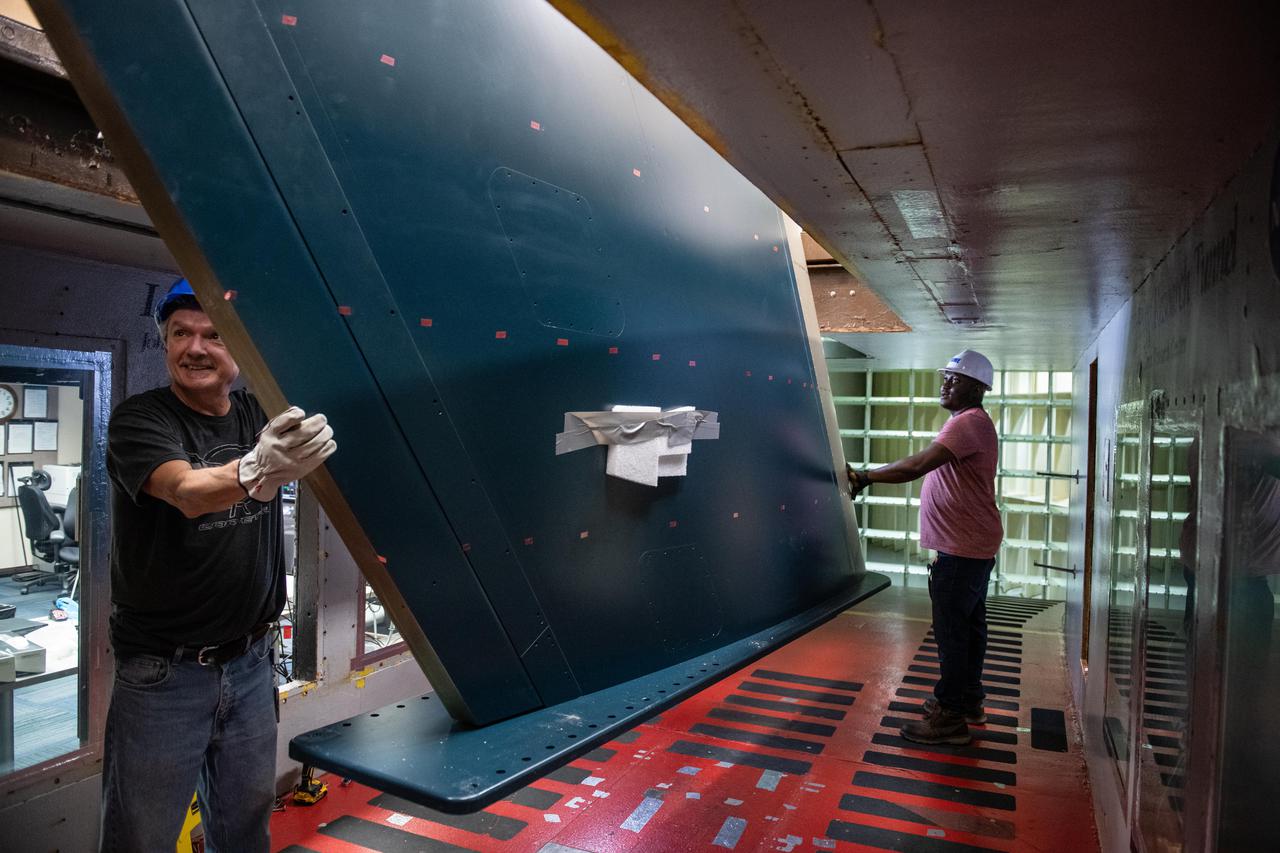
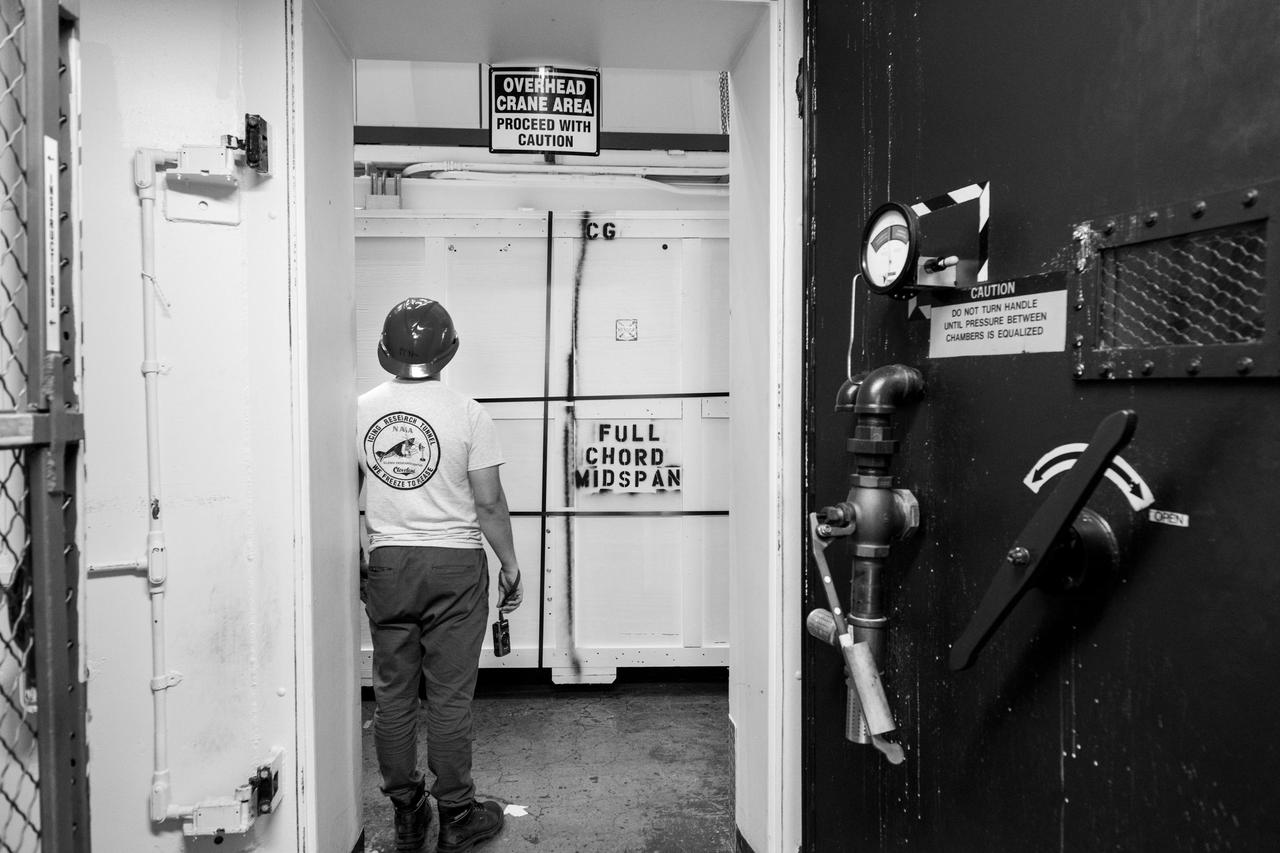
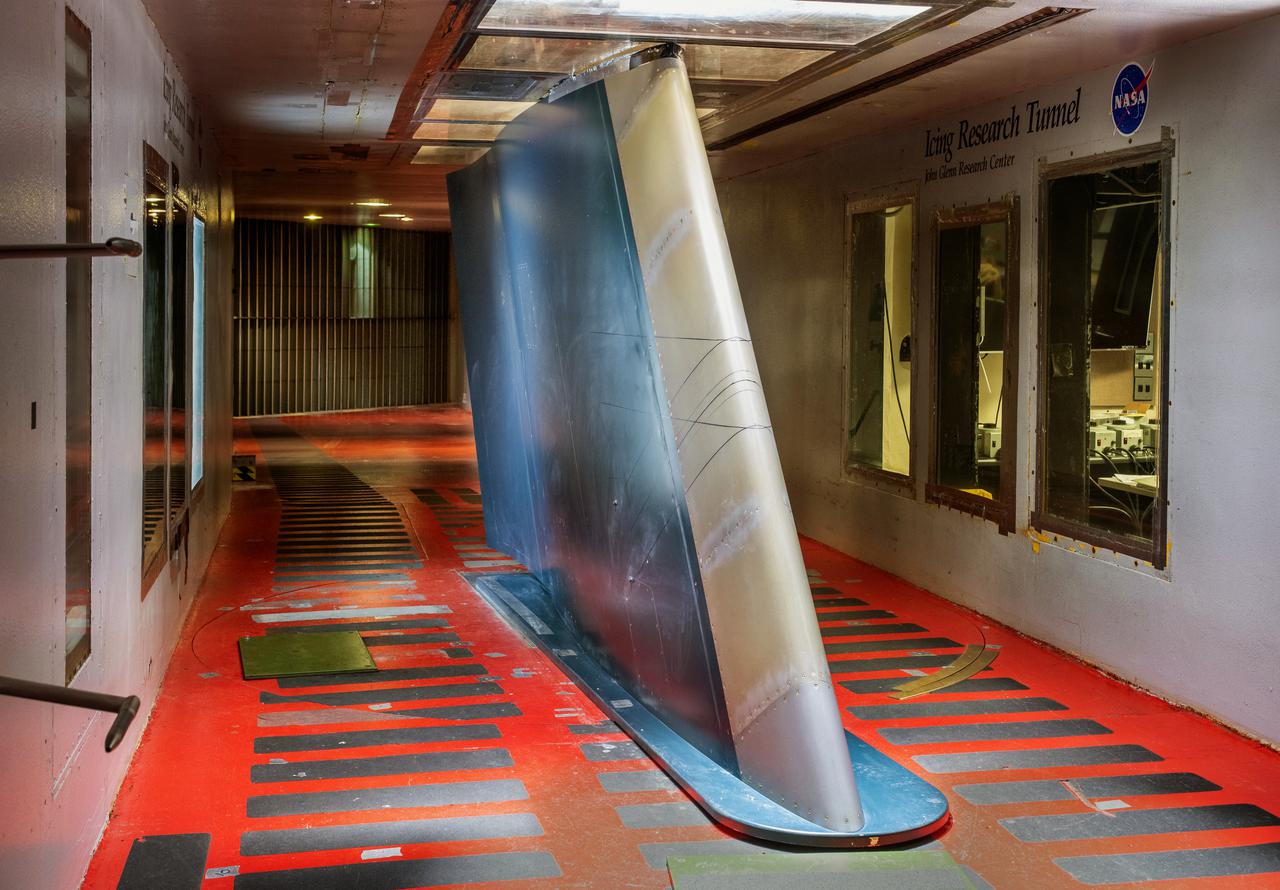
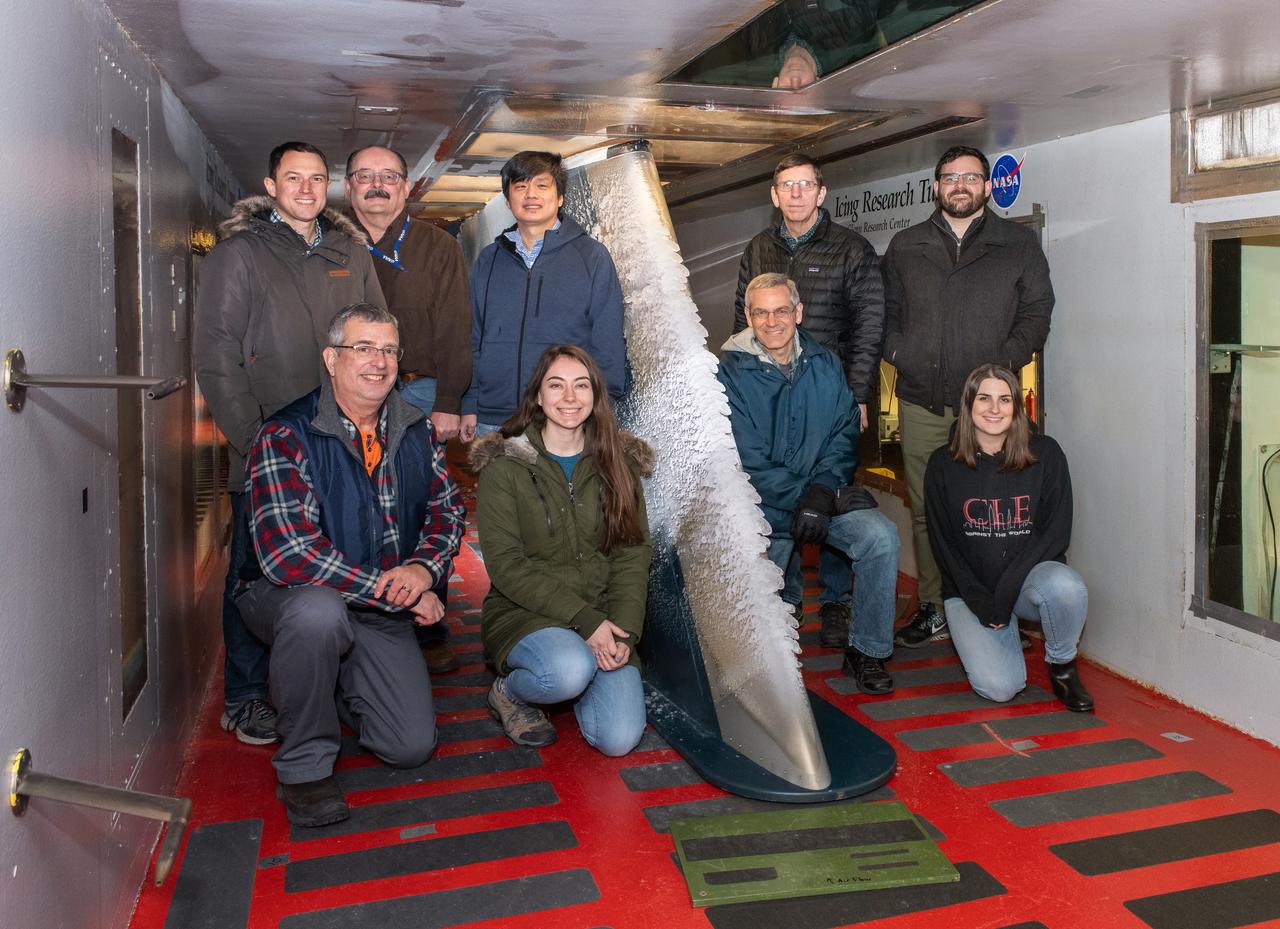
Common Research Model, CRM Full Chord and Midspan Test in the Icing Research Tunnel, IRT
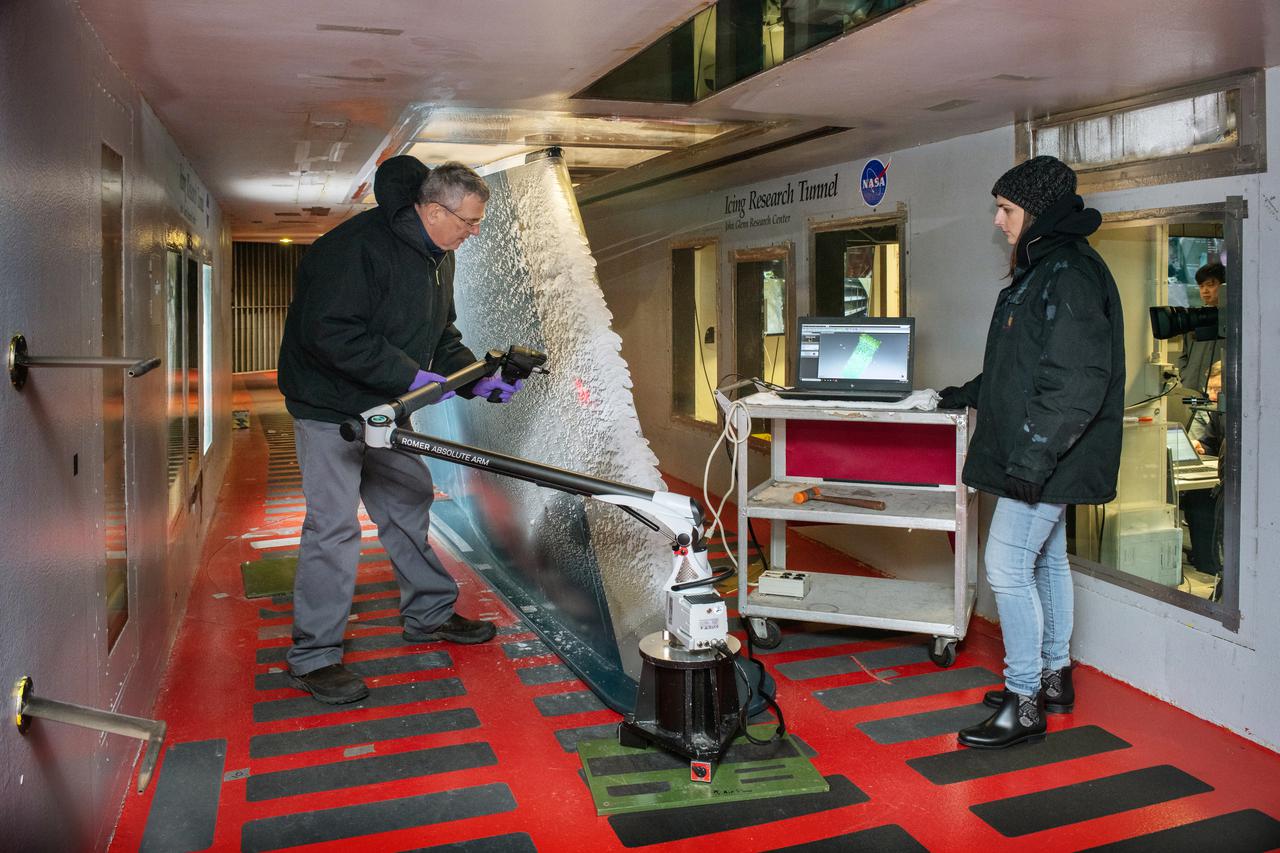
CRM Full Chord and Midspan Test Documentation Photos Icing Research Tunnel
CRM Full Chord Installation and Test Documentation Photos, Icing Research Tunnel
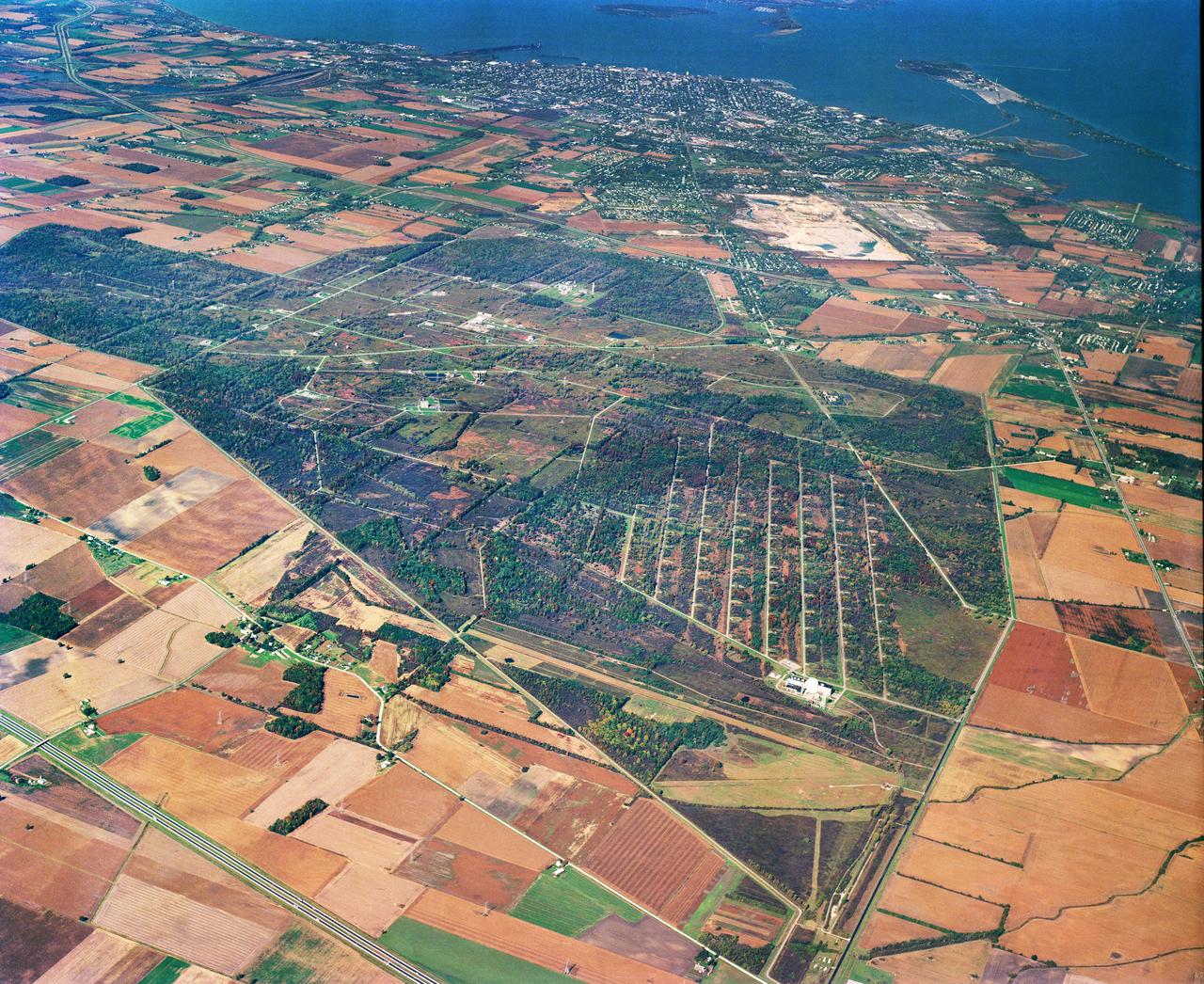
Aerial Vies of NASA Glenn Research Center, Neil A. Armstrong Test Facility.  At the time this photograph was taken, the site was known as Plum Brook Station.
Aerial View of Glenn Research Center, Neil A. Armstrong Test Facility
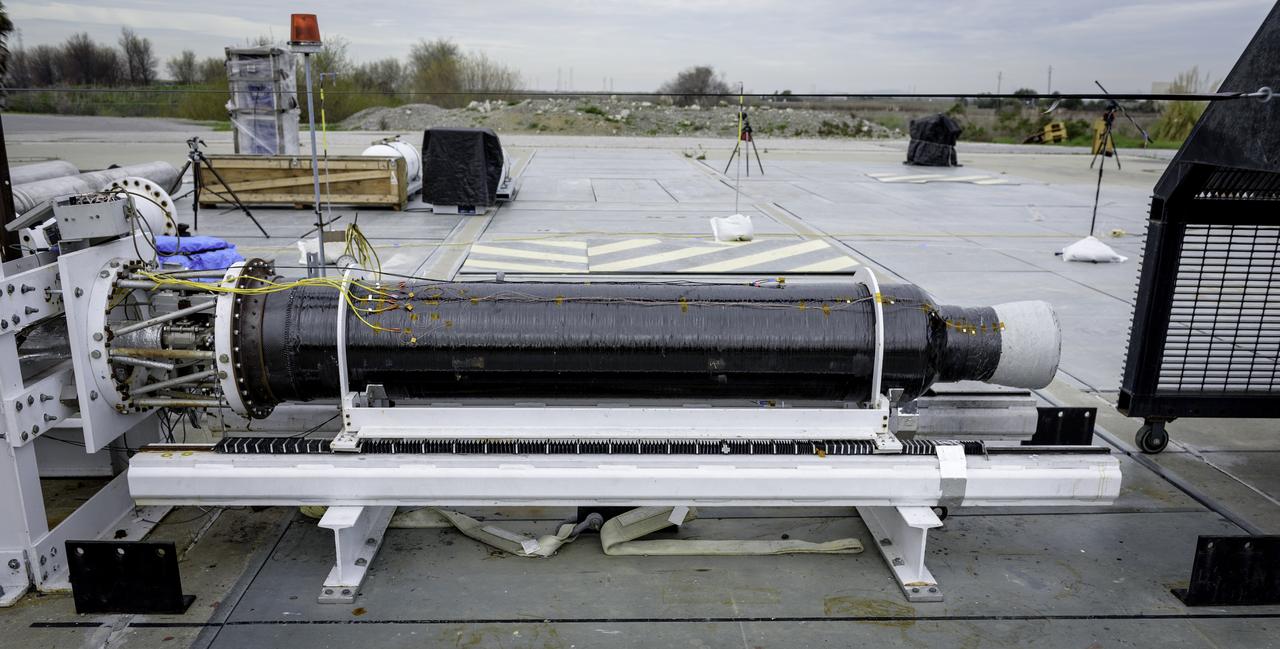
The Peregrine Hybrid Rocket Engine, profile view, prior to the test at the Outdoor Aerodynamic Research Facility (OARF, N-249) at Ames Research Center.
Peregrine Rocket Motor Test at the Ames Outdoor Aerodynamic Research Facility (OARF).
CRM Full Chord Installation and Test Documentation Photos, Icing Research Tunnel
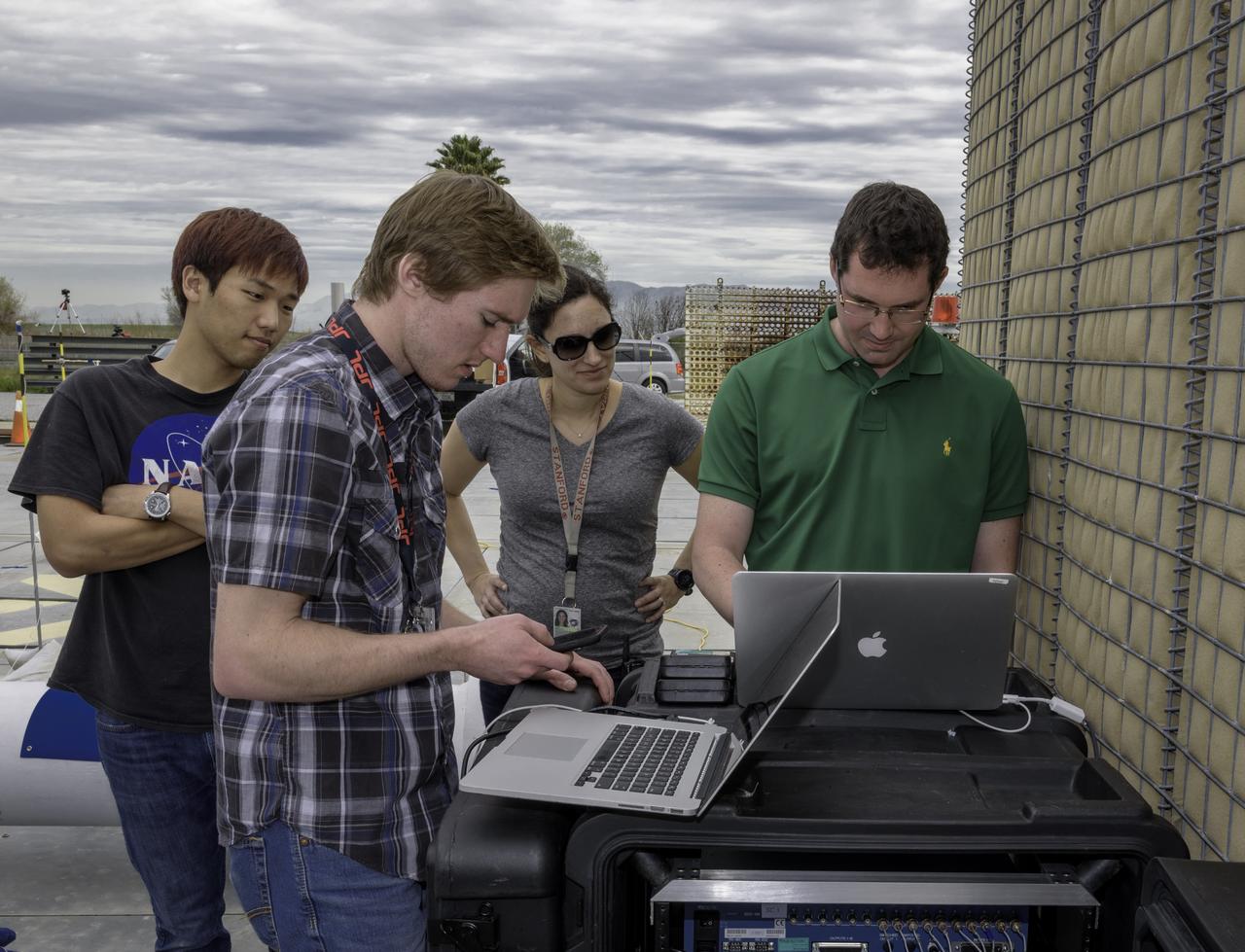
From Left to Right:  1.       Hunjoo Kim (NASA JPL) 2.       Kyle Botteon (NASA JPL) 3.       Ashley Karp (NASA JPL) 4.       Brian Schratz (NASA JPL) Testing the Peregrine Hybrid Rocket Engine at the Outdoor Aerodynamic Research Facility (building N249, OARF) at Ames Research Center.
Peregrine Rocket Motor Test at the Ames Outdoor Aerodynamic Research Facility (OARF).
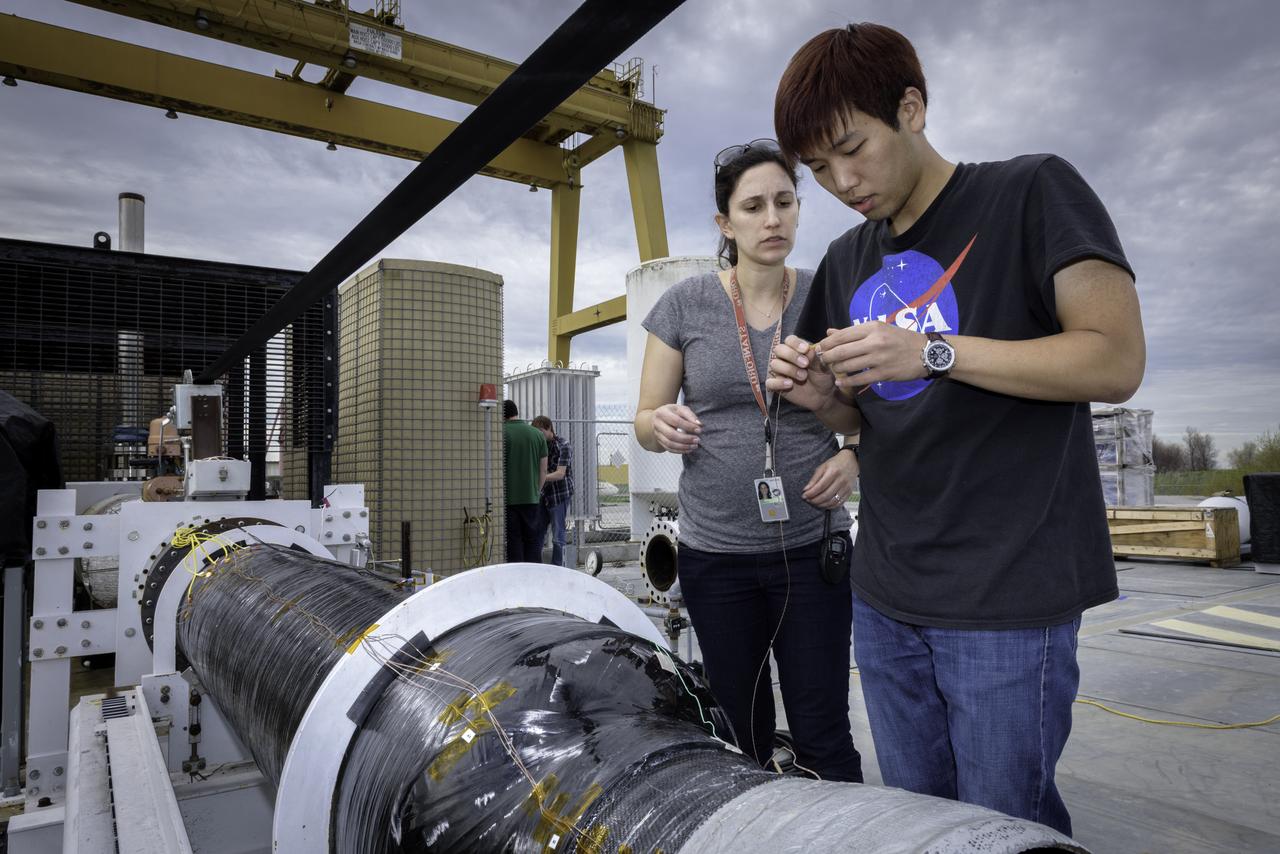
Hunjoo Kim, NASA JPL (Left) and Ashley Karp, NASA JPL (Right) attaching heat sensors the Peregrine Hybrid Rocket Engine prior to its test at the Outdoor Aerodynamic Research Facility (OARF, N-249) at NASA’s Ames Research Center.
Peregrine Rocket Motor Test at the Ames Outdoor Aerodynamic Research Facility (OARF).
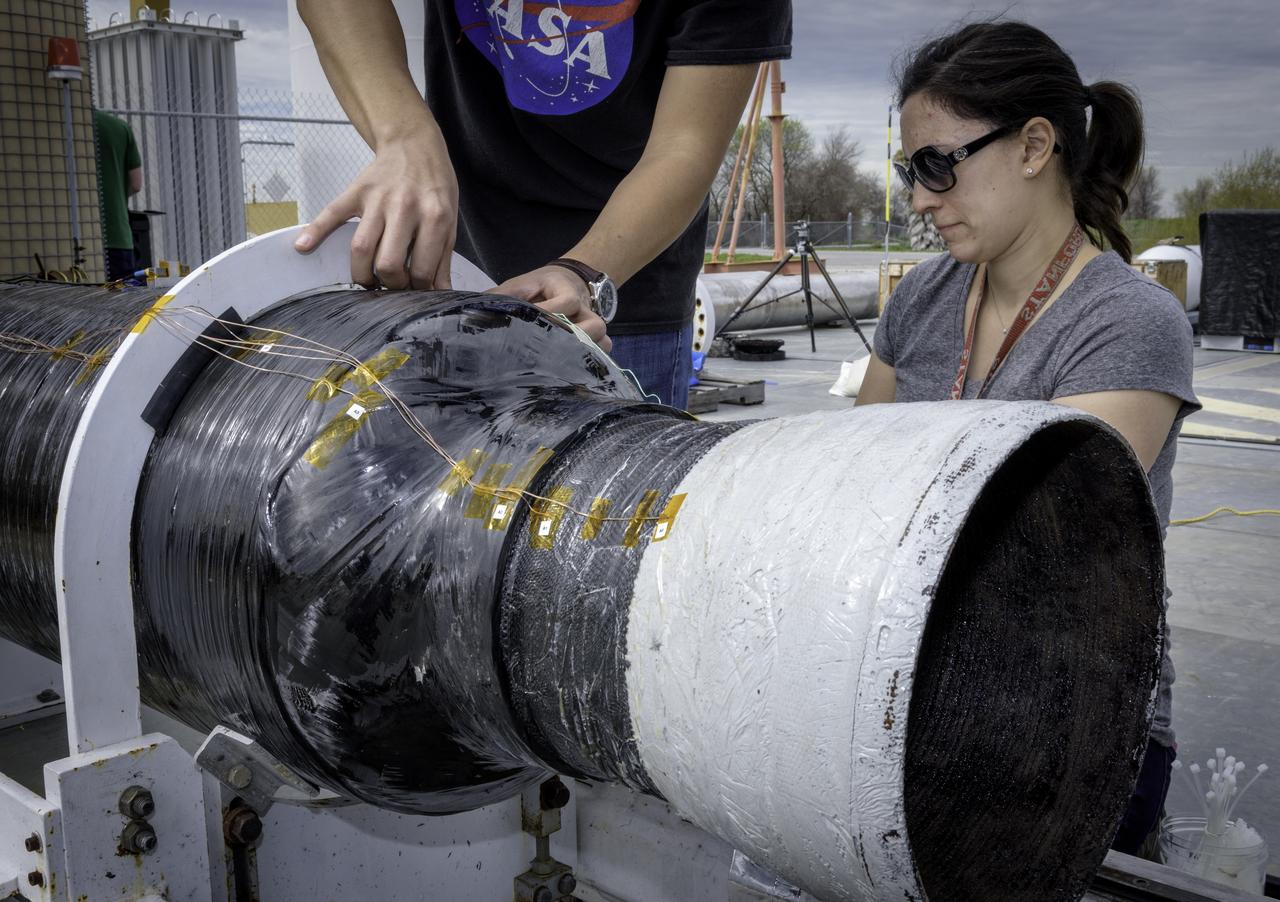
Ashley Karp, NASA JPL (Left) and Hunjoo Kim, NASA JPL (Right) attaching heat sensors the Peregrine Hybrid Rocket Engine prior to its test at the Outdoor Aerodynamic Research Facility (OARF, N-249) at NASA's Ames Research Center.
Peregrine Rocket Motor Test at the Ames Outdoor Aerodynamic Research Facility (OARF).
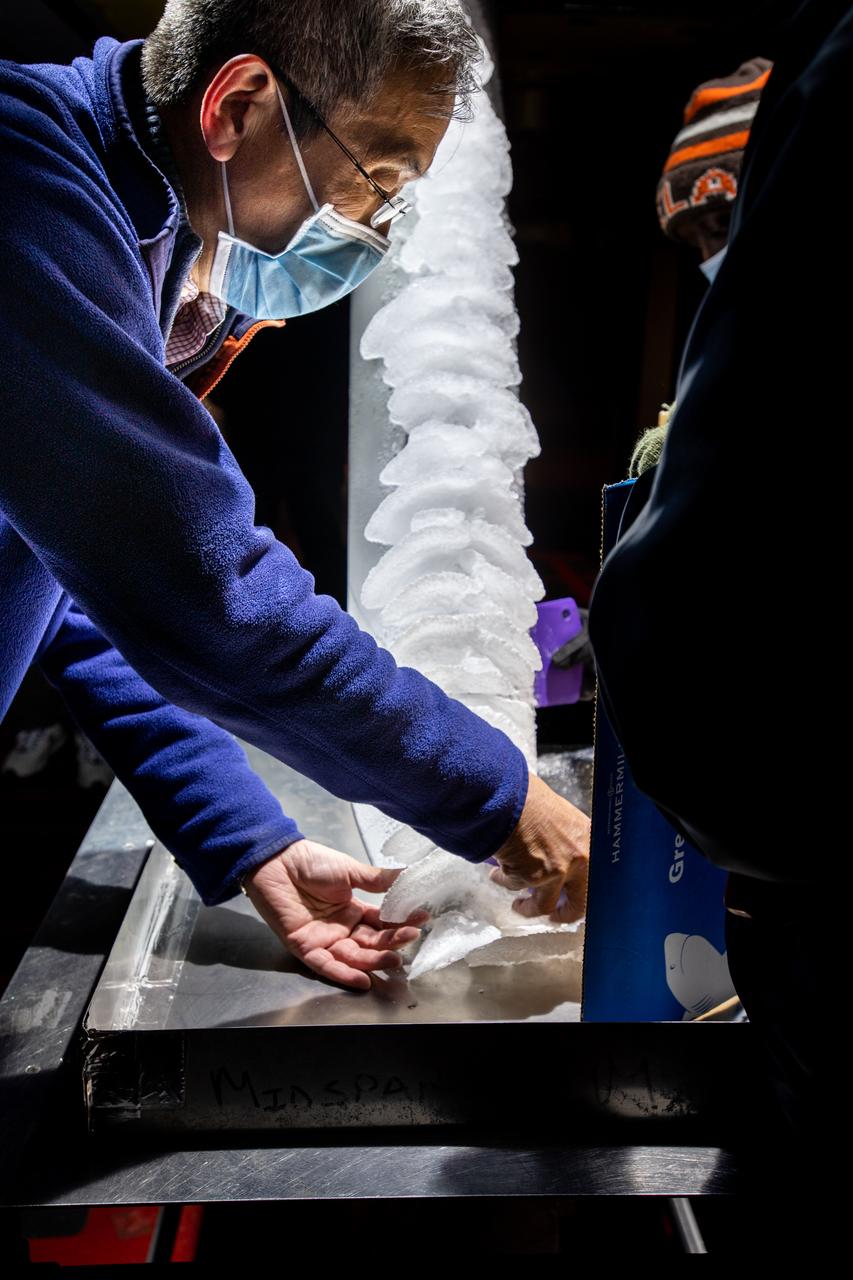
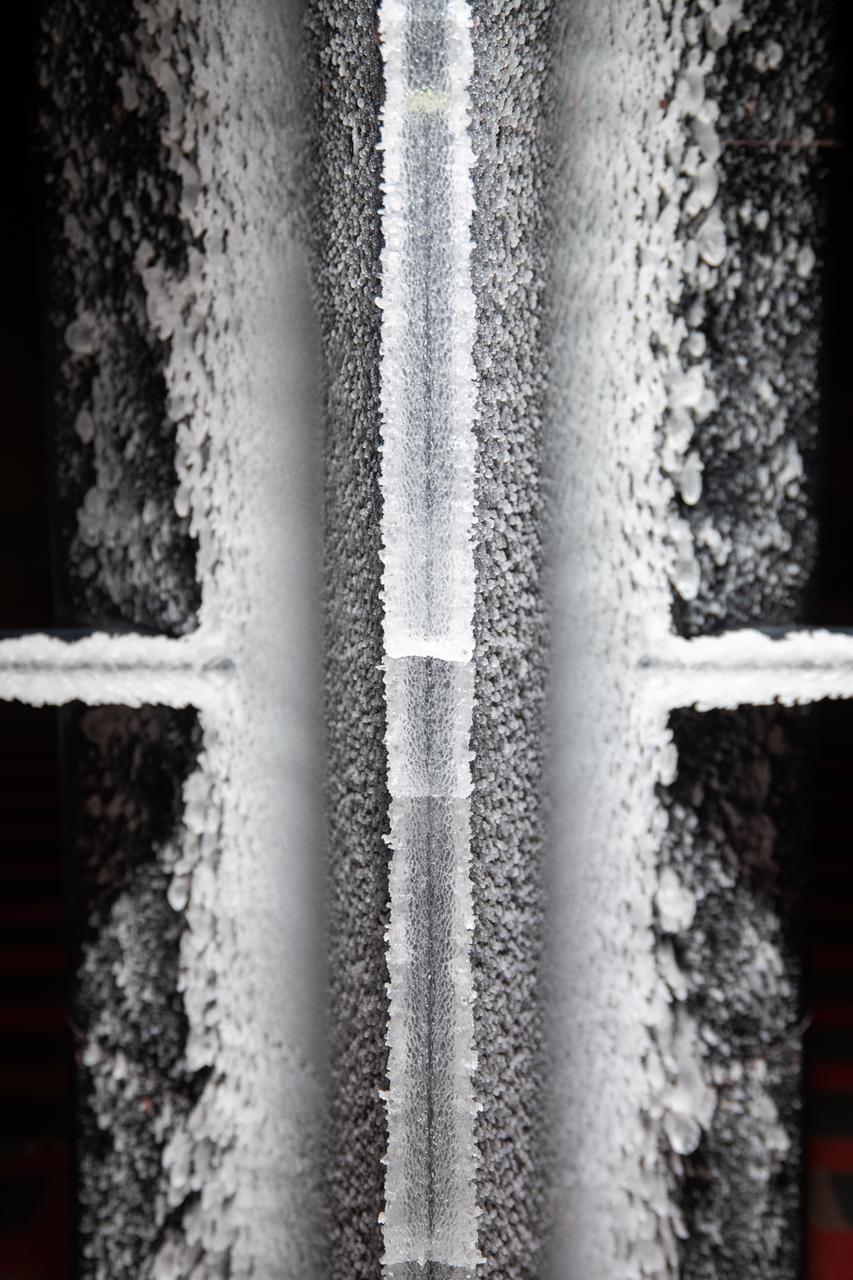
Ice built up on a test article at the at the Icing Research Tunnel as researchers study the icing physics that occur when aircraft fly through freezing weather conditions.
SIDRM Test at Icing Research Tunnel
CRM Full Chord Installation and Test Documentation Photos, Icing Research Tunnel
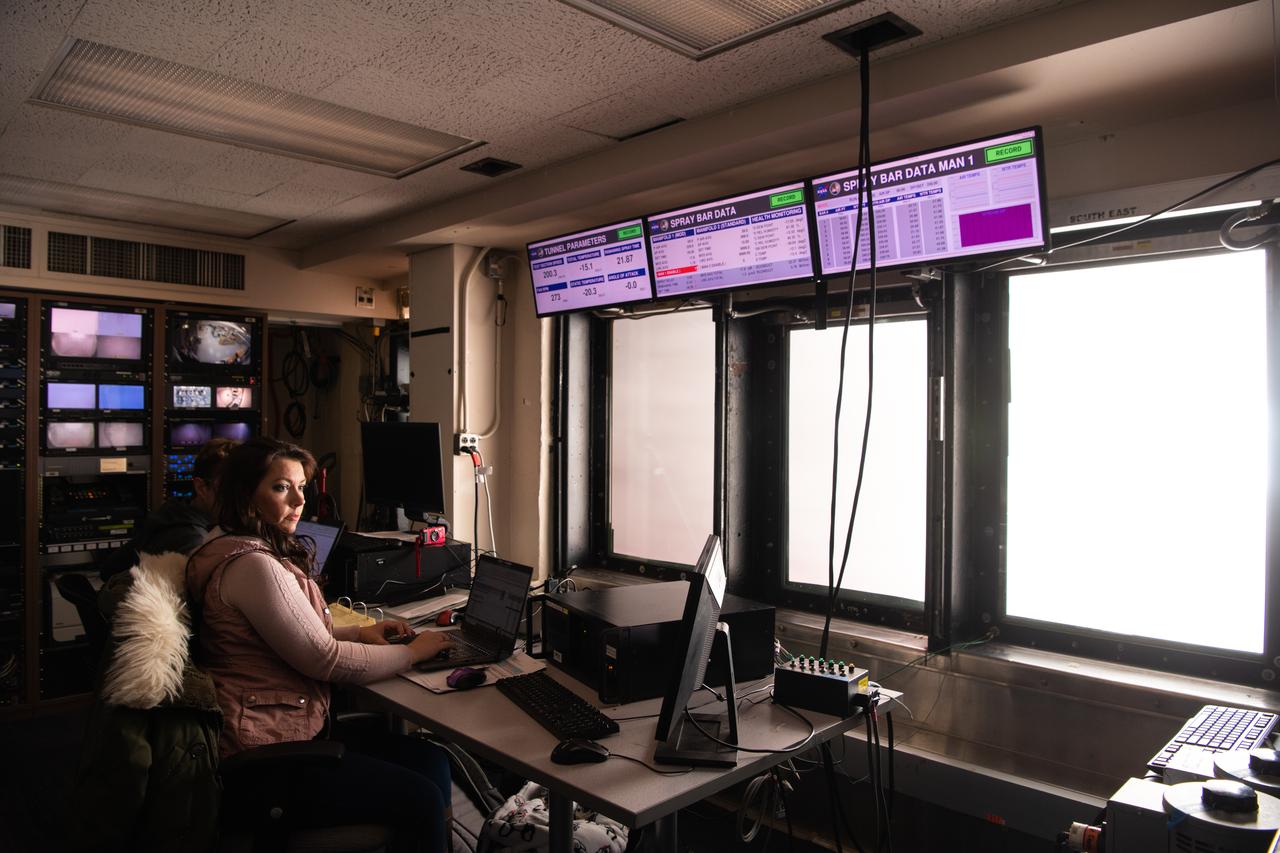
The Icing Research Tunnel (IRT) is the longest running, icing facility in the world and has been in operation since 1944. Most ice protection technologies in use today were largely developed at this facility. In this facility, natural icing conditions, such as the clouds being created here, are produced to test the effects of icing conditions on aircraft components such as wings tails and engine inlets.
Mechanical Test Engineer in the Icing Research Tunnel, IRT Co...
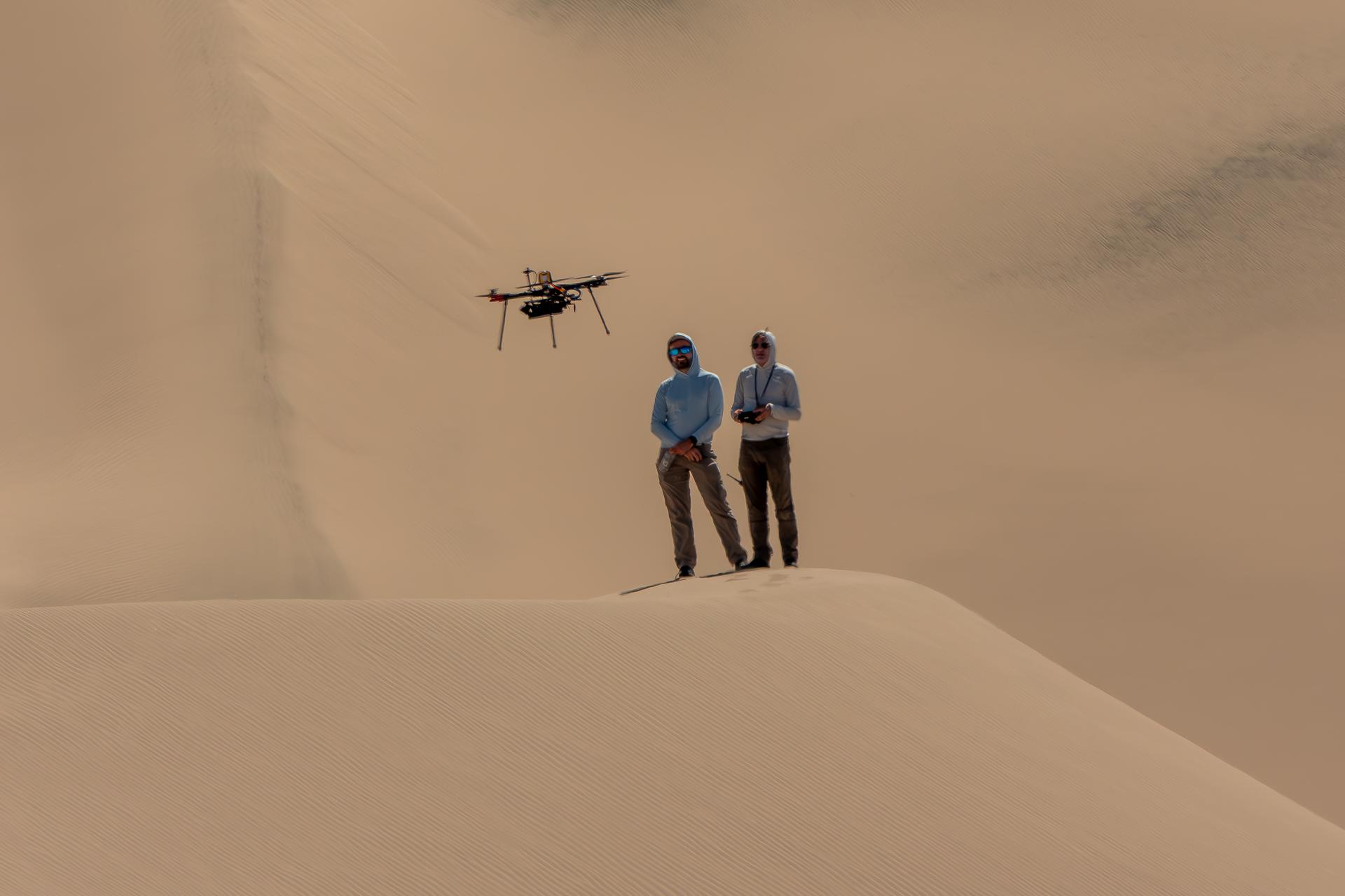
The work was among 25 projects funded by NASA’s Mars Exploration Program this past year to push the limits of future technologies. Sand dunes confused the navigation algorithm of the Ingenuity Mars helicopter during several of its last flights, including its 72nd and final flight on the Red Planet in January 2024. The navigation software in development would help future rotorcraft track the surface of especially bland, featureless terrain similar to the barren Dumont Dunes. Tests also included flights over a region in Death Valley called Mars Hill, which is littered with rubbly volcanic rocks and has been used by NASA’s Mars researchers since the 1970s, during preparations for the Viking lander missions.
Researchers Test Mars Drone Software in Death Valley
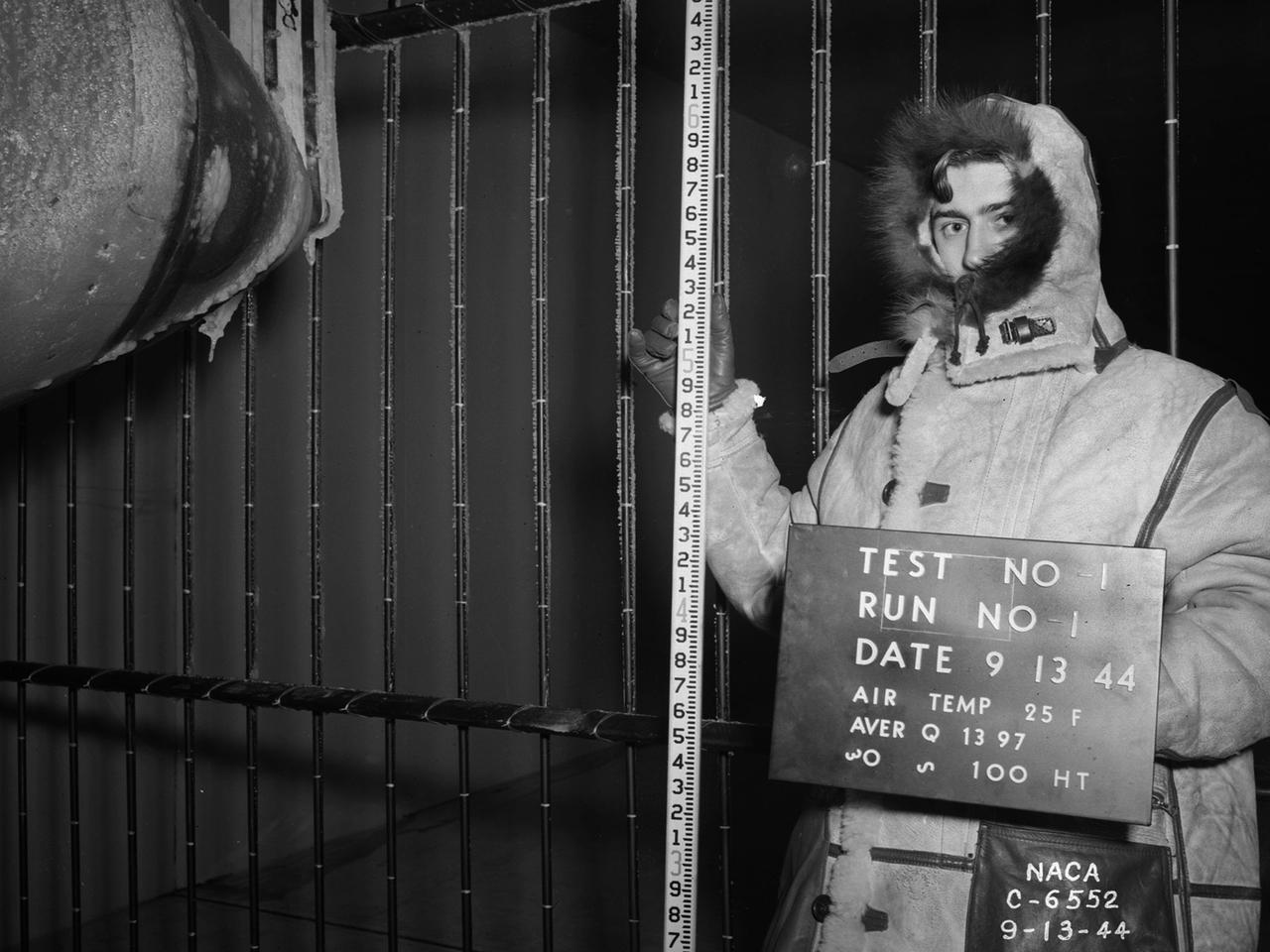
National Advisory Committee for Aeronautics (NACA) design engineers added the Icing Research Tunnel to the new Aircraft Engine Research Laboratory’s original layout to take advantage of the massive refrigeration system being constructed for the Altitude Wind Tunnel. The Icing Research Tunnel was built to study the formation of ice on aircraft surfaces and methods of preventing or eradicating that ice. Ice buildup adds extra weight, effects aerodynamics, and sometimes blocks airflow through engines.         The Icing Research Tunnel is a closed-loop atmospheric wind tunnel with a 6- by 9-foot test section. The tunnel can produce speeds up to 300 miles per hour and temperatures from about 30 to –45⁰ F. Initially the tunnel used a spray bar system to introduce moisture into the airstream. NACA engineers struggled for nearly 10 years to perfect the spray system.    The Icing Research Tunnel began testing in June of 1944. Initial testing, seen in this photograph, studied ice accumulation on propellers of a military aircraft. NACA reserach also produced a protected air scoop for the C–46 transport aircraft. A large number of C–46 aircraft were lost due to icing while flying supply runs over the Himalayas during World War II.
Early Testing in the Icing Research Tunnel
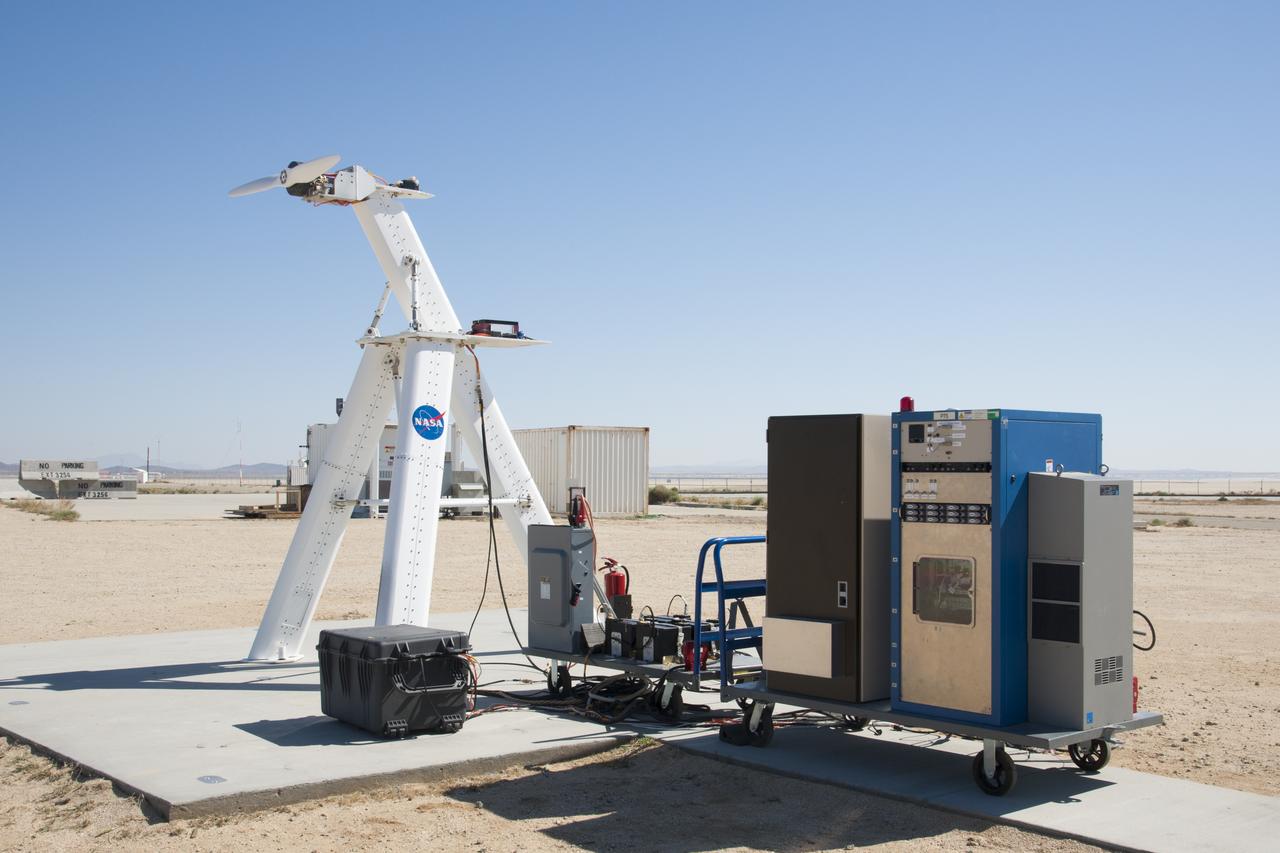
The equipment required for an electric propulsion test is ready for research.
Electric Motor Test Stand Will Help With Future X-planes
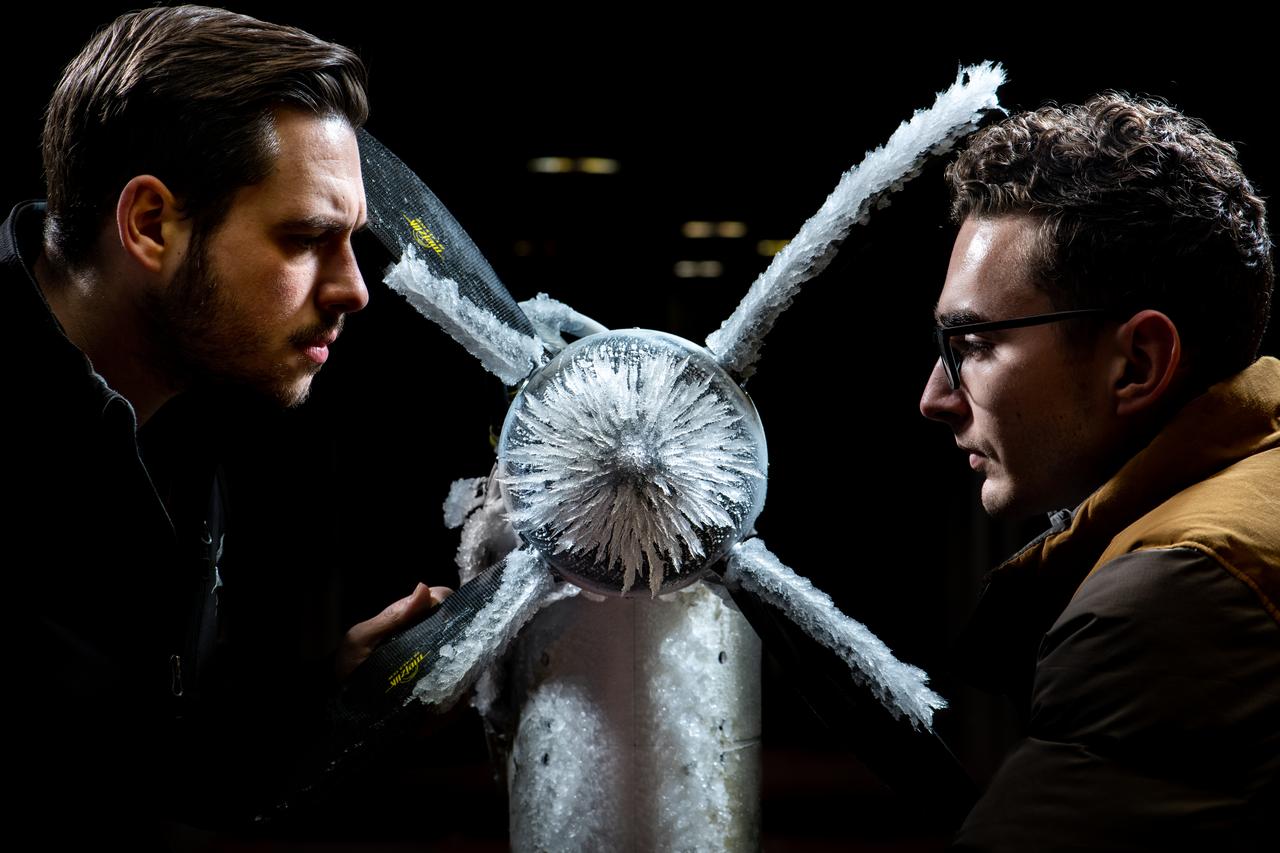
Curtis Flack (left) and Paul von Hardenberg (right) inspect the ice formation on the spinner of an Advanced Air Mobility proprotor model tested in the Icing Research Tunnel. The data from the test will be used by icing researchers to better understand the risks of icing on electric vertical takeoff and landing vehicles which will assist with the design and certification of new aircraft.
AAM Rotor Icing Evaluation Studies (AIRES) I Test Documentation Photos at the Icing Research Tunnel (IRT)
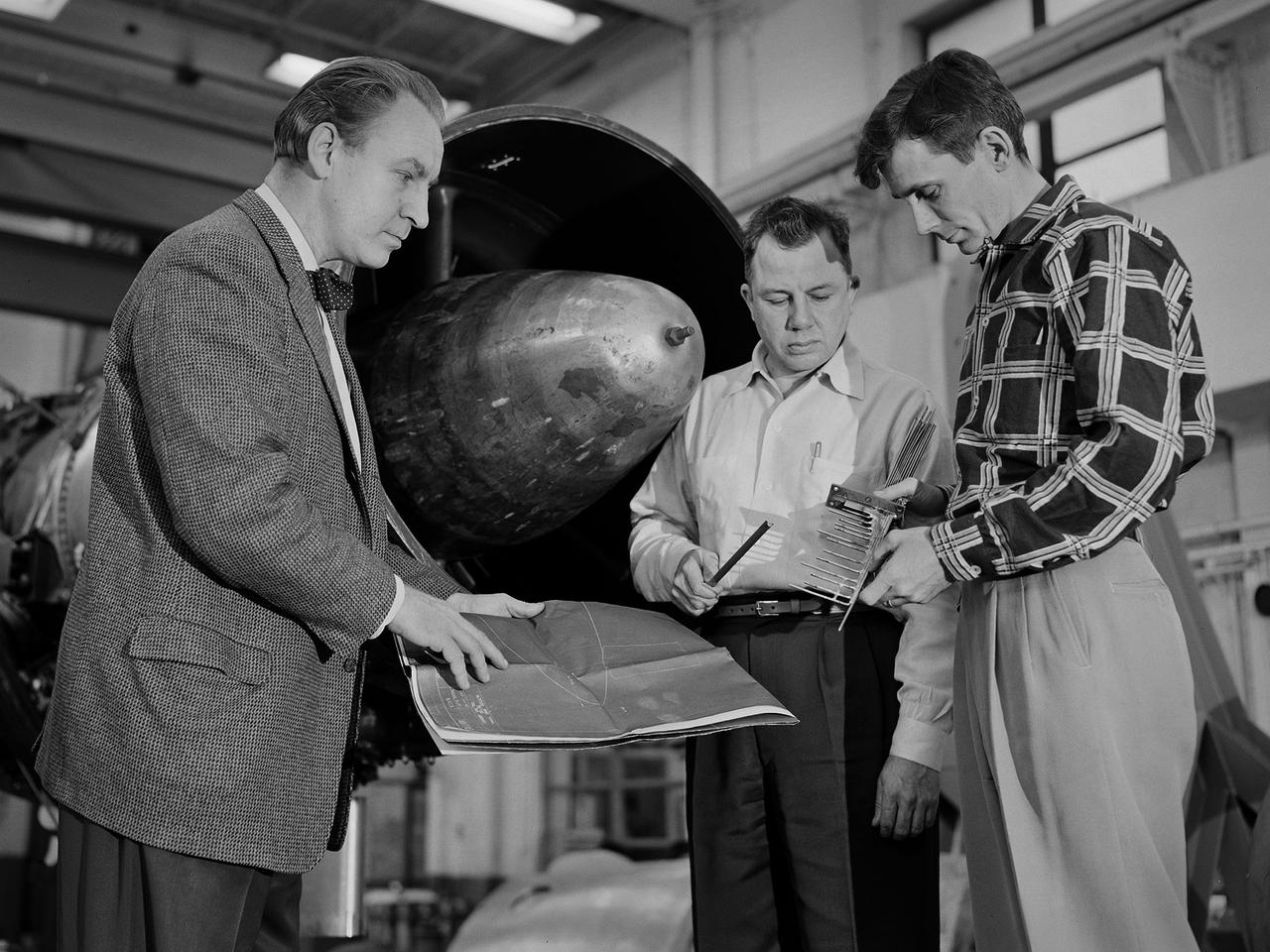
Researcher Bill Reiwaldt discusses the preparations for a test in the Altitude Wind Tunnel with technicians Jack Wagner and Dick Golladay at the National Advisory Committee for Aeronautics (NACA) Lewis Flight Propulsion Laboratory. Research engineers developed ideas for tests that were often in response to requests from the military or aircraft industry. Arrangements were made to obtain an engine for the study and to transport it to the Cleveland laboratory. The engine was brought into the facility’s shop area, where it was readied for investigation. It was common for several different engines to be worked on simultaneously in the shop.    The researcher would discuss the engine and the test objectives with the Test Installation Division and the facility’s technicians. The operations team would handle the installation of the instrumentation and fitting the test into the facility’s schedule. Upon completion of the previous test, the engine was removed. The next engine was lifted by an overhead crane and transported from the shop to the test section. The engine was connected to the measurement devices and fuel and oil supply lines. Engines were tested over numerous runs under varying conditions and with variations on the configuration. The findings and test procedure were then described in research or technical memorandums and distributed to industry.
NACA Lewis Researcher and Technicians Discuss a Test Setup
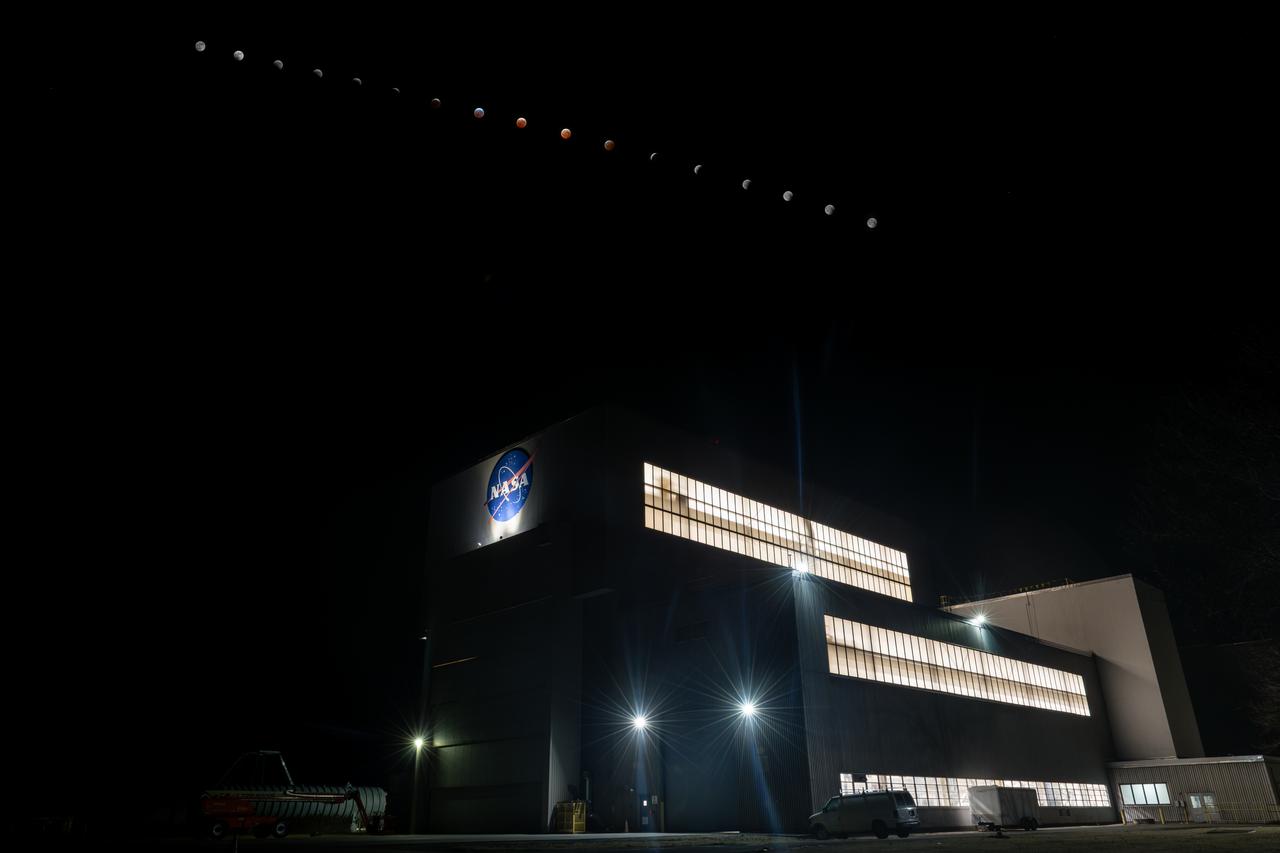
 A composite photo made from 18 images of the lunar eclipse above the Space Environments Complex at NASA’s Glenn Research Center at Neil Armstrong Test Facility in Sandusky, Ohio, during the early hours of March 14, 2025. Photo Credit: (NASA/Sara Lowthian-Hanna)
Total Lunar Eclipse and Blood Moon
Technicians set up test hardware inside the test section of the Icing Research Tunnel at the National Aeronautics and Space Administration (NASA) Lewis Research Center. The Icing Research Tunnel was built in the early 1940s to study the formation of ice on aircraft surfaces and develop methods of preventing or eradicating that ice. Ice buildup is dangerous because it adds extra weight, effects aerodynamics, and sometimes blocks air flow through engines.  The Icing Research Tunnel is a closed-loop atmospheric wind tunnel with a 6- by 9-foot test section. The tunnel can produce speeds up to 300 miles per hour and temperatures from 30 to -45 °F. NACA engineers struggled initially to perfect a spray bar system to introduce moisture into the airstream.    The tunnel was shut down in the late 1950s as the center focused its energy exclusively on space. Industrial customers began using the tunnel sporadically, then steadily, in the 1960s. Boeing, Aerojet, Lockheed, Sikorsky, Beech and others ran tests during the 1960s. Boeing analyzed engine inlets for the CH-47 Chinook, CH-46 (Sea Knight) and CH-113. This photograph was taken during a series of 100 ice-phobic coatings for the Federal Aviation Administration. They found that many of the coatings reduced ice adhesion to the test sample, but they could not be used for aircraft applications.
Setup in the Icing Research Tunnel Test Section
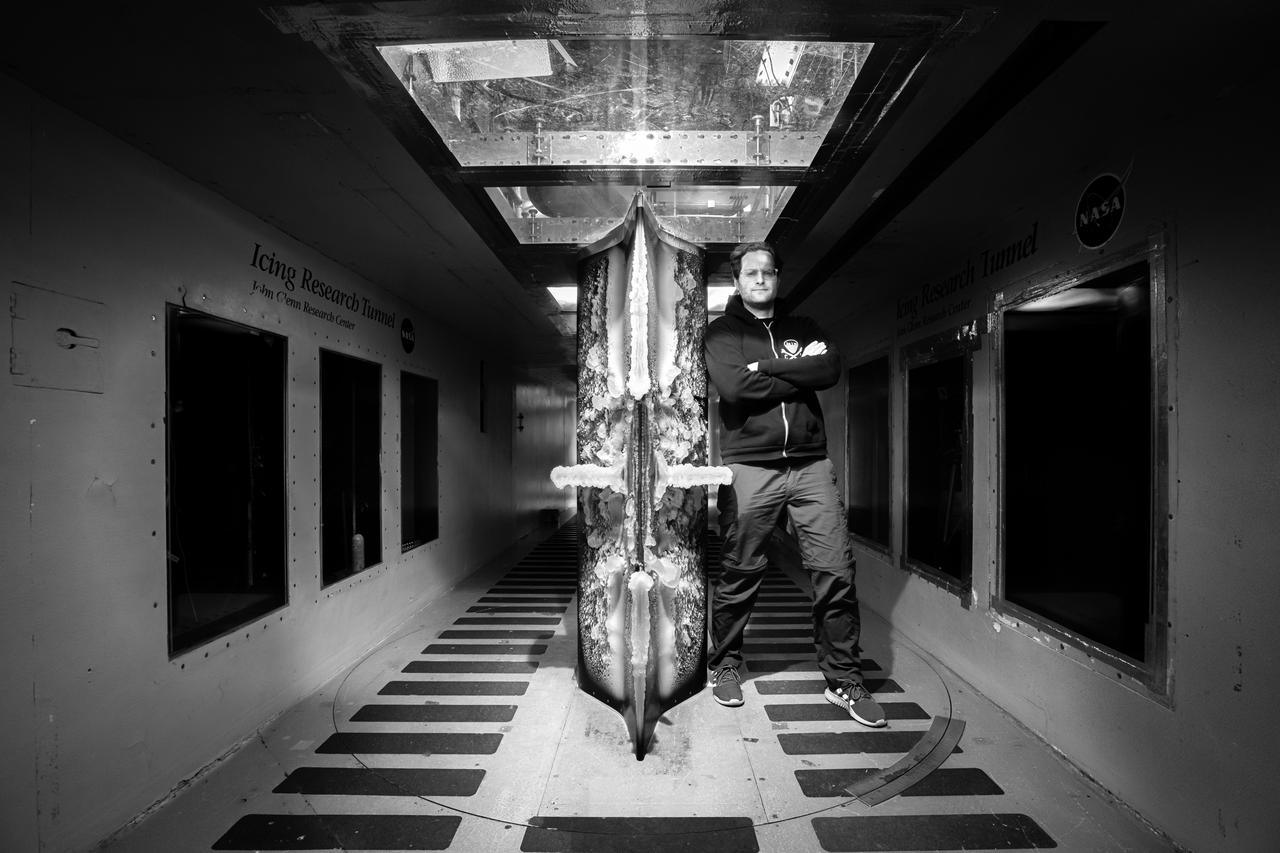
Lead researcher Tadas Bartkus poses after a run of his test with significant ice build-up on the Simulated Inter-compressor Duct Research Model (SIDRM) at the Icing Research Tunnel. Photo Credit: (NASA/Jordan Salkin)
Tadas Bartkus posing with SIDRM Ice Build-up
NASA Glenn research engineers prepare our extreme environments chamber (GEER) for a test. GEER, which simulates the extreme conditions found in space, tests many devices that will explore Venus to see if they can withstand the punishing environment and temperatures over 800˚F.
Glenn Extreme Environment Rig (GEER)
National Aeronautics and Space Administration (NASA) Lewis Research Center. Lewis researchers had been studying the behavior of liquid in microgravity for several years using ballistic rocket flights, aircraft flying series of parabolas, and in the 2.2-Second Drop Tower. It was easier to control experiments and repeat tests based on almost instantaneous test results in the Zero Gravity Research Facility than missiles or aircraft. It also more than doubled the microgravity time of the original drop tower.    The experiments were enclosed in a large experiment package that was suspended inside the chamber. A vacuum was introduced to the chamber before the package was released. The test equipment allowed researchers to film and take measurements of the experiment as it was falling. The 2500‐pound package was slowed by special Styrofoam‐like pellets in a decelerator cart. An experiment, traveling 176 feet per second, was stopped in about 15 feet of deceleration material.    The facility’s designers struggled to determine the correct type of deceleration pellets to use. For several years Lewis engineers tested various samples from manufacturers. The final selection was not made until the facility’s completion in May 1966, just before the facility made its public debut at the 1966 Inspection of the Center.
Test Package Plummets in the Zero Gravity Research Facility
 TRACT 2 Frame Drop Test AT NASA Langley Research Center's Landing and Impact Research (LandIR) Facility
TRACT 2 Frame Drop Test AT NASA Langley Research Center's Landin
 TRACT 2 Frame Drop Test AT NASA Langley Research Center's Landing and Impact Research (LandIR) Facility
TRACT 2 Frame Drop Test AT NASA Langley Research Center's Landin
 TRACT 2 Frame Drop Test AT NASA Langley Research Center's Landing and Impact Research (LandIR) Facility
TRACT 2 Frame Drop Test AT NASA Langley Research Center's Landin
 TRACT 2 Frame Drop Test AT NASA Langley Research Center's Landing and Impact Research (LandIR) Facility
TRACT 2 Frame Drop Test AT NASA Langley Research Center's Landin
 TRACT 2 Frame Drop Test AT NASA Langley Research Center's Landing and Impact Research (LandIR) Facility
TRACT 2 Frame Drop Test AT NASA Langley Research Center's Landin
 TRACT 2 Frame Drop Test AT NASA Langley Research Center's Landing and Impact Research (LandIR) Facility
TRACT 2 Frame Drop Test AT NASA Langley Research Center's Landin
 TRACT 2 Frame Drop Test AT NASA Langley Research Center's Landing and Impact Research (LandIR) Facility
TRACT 2 Frame Drop Test AT NASA Langley Research Center's Landin
 TRACT 2 Frame Drop Test AT NASA Langley Research Center's Landing and Impact Research (LandIR) Facility
TRACT 2 Frame Drop Test AT NASA Langley Research Center's Landin
 TRACT 2 Frame Drop Test AT NASA Langley Research Center's Landing and Impact Research (LandIR) Facility
TRACT 2 Frame Drop Test AT NASA Langley Research Center's Landin
 TRACT 2 Frame Drop Test AT NASA Langley Research Center's Landing and Impact Research (LandIR) Facility
TRACT 2 Frame Drop Test AT NASA Langley Research Center's Landin
 TRACT 2 Frame Drop Test AT NASA Langley Research Center's Landing and Impact Research (LandIR) Facility
TRACT 2 Frame Drop Test AT NASA Langley Research Center's Landin
 TRACT 2 Frame Drop Test AT NASA Langley Research Center's Landing and Impact Research (LandIR) Facility
TRACT 2 Frame Drop Test AT NASA Langley Research Center's Landin
 TRACT 2 Frame Drop Test AT NASA Langley Research Center's Landing and Impact Research (LandIR) Facility
TRACT 2 Frame Drop Test AT NASA Langley Research Center's Landin
 TRACT 2 Frame Drop Test AT NASA Langley Research Center's Landing and Impact Research (LandIR) Facility
TRACT 2 Frame Drop Test AT NASA Langley Research Center's Landin
 TRACT 2 Frame Drop Test AT NASA Langley Research Center's Landing and Impact Research (LandIR) Facility
TRACT 2 Frame Drop Test AT NASA Langley Research Center's Landin
 TRACT 2 Frame Drop Test AT NASA Langley Research Center's Landing and Impact Research (LandIR) Facility
TRACT 2 Frame Drop Test AT NASA Langley Research Center's Landin
 TRACT 2 Frame Drop Test AT NASA Langley Research Center's Landing and Impact Research (LandIR) Facility
TRACT 2 Frame Drop Test AT NASA Langley Research Center's Landin
 TRACT 2 Frame Drop Test AT NASA Langley Research Center's Landing and Impact Research (LandIR) Facility
TRACT 2 Frame Drop Test AT NASA Langley Research Center's Landin
 TRACT 2 Frame Drop Test AT NASA Langley Research Center's Landing and Impact Research (LandIR) Facility
TRACT 2 Frame Drop Test AT NASA Langley Research Center's Landin
 TRACT 2 Frame Drop Test AT NASA Langley Research Center's Landing and Impact Research (LandIR) Facility
TRACT 2 Frame Drop Test AT NASA Langley Research Center's Landin
 TRACT 2 Frame Drop Test AT NASA Langley Research Center's Landing and Impact Research (LandIR) Facility
TRACT 2 Frame Drop Test AT NASA Langley Research Center's Landin
 TRACT 2 Frame Drop Test AT NASA Langley Research Center's Landing and Impact Research (LandIR) Facility
TRACT 2 Frame Drop Test AT NASA Langley Research Center's Landin
 TRACT 2 Frame Drop Test AT NASA Langley Research Center's Landing and Impact Research (LandIR) Facility
TRACT 2 Frame Drop Test AT NASA Langley Research Center's Landin
 TRACT 2 Frame Drop Test AT NASA Langley Research Center's Landing and Impact Research (LandIR) Facility
TRACT 2 Frame Drop Test AT NASA Langley Research Center's Landin
 TRACT 2 Frame Drop Test AT NASA Langley Research Center's Landing and Impact Research (LandIR) Facility
TRACT 2 Frame Drop Test AT NASA Langley Research Center's Landin
 TRACT 2 Frame Drop Test AT NASA Langley Research Center's Landing and Impact Research (LandIR) Facility
TRACT 2 Frame Drop Test AT NASA Langley Research Center's Landin
 TRACT 2 Frame Drop Test AT NASA Langley Research Center's Landing and Impact Research (LandIR) Facility
TRACT 2 Frame Drop Test AT NASA Langley Research Center's Landin
 TRACT 2 Frame Drop Test AT NASA Langley Research Center's Landing and Impact Research (LandIR) Facility
TRACT 2 Frame Drop Test AT NASA Langley Research Center's Landin
 TRACT 2 Frame Drop Test AT NASA Langley Research Center's Landing and Impact Research (LandIR) Facility
TRACT 2 Frame Drop Test AT NASA Langley Research Center's Landin
 TRACT 2 Frame Drop Test AT NASA Langley Research Center's Landing and Impact Research (LandIR) Facility
TRACT 2 Frame Drop Test AT NASA Langley Research Center's Landin
 TRACT 2 Frame Drop Test AT NASA Langley Research Center's Landing and Impact Research (LandIR) Facility
TRACT 2 Frame Drop Test AT NASA Langley Research Center's Landin
 TRACT 2 Frame Drop Test AT NASA Langley Research Center's Landing and Impact Research (LandIR) Facility
TRACT 2 Frame Drop Test AT NASA Langley Research Center's Landin
 TRACT 2 Frame Drop Test AT NASA Langley Research Center's Landing and Impact Research (LandIR) Facility
TRACT 2 Frame Drop Test AT NASA Langley Research Center's Landin
 TRACT 2 Frame Drop Test AT NASA Langley Research Center's Landing and Impact Research (LandIR) Facility
TRACT 2 Frame Drop Test AT NASA Langley Research Center's Landin
 TRACT 2 Frame Drop Test AT NASA Langley Research Center's Landing and Impact Research (LandIR) Facility
TRACT 2 Frame Drop Test AT NASA Langley Research Center's Landin
 TRACT 2 Frame Drop Test AT NASA Langley Research Center's Landing and Impact Research (LandIR) Facility
TRACT 2 Frame Drop Test AT NASA Langley Research Center's Landin