
A lightweight simulator version of NASA's Resource Prospector undergoes a mobility test in a regolith bin at the agency's Kennedy Space center in Florida. The Resource Prospector mission aims to be the first mining expedition on another world. Operating on the moon’s poles, the robot is designed to use instruments to locate elements at a lunar polar regions, then excavate and sample resources such as hydrogen, oxygen and water. These resources could support human explores on their way to destinations such as farther into the solar system.
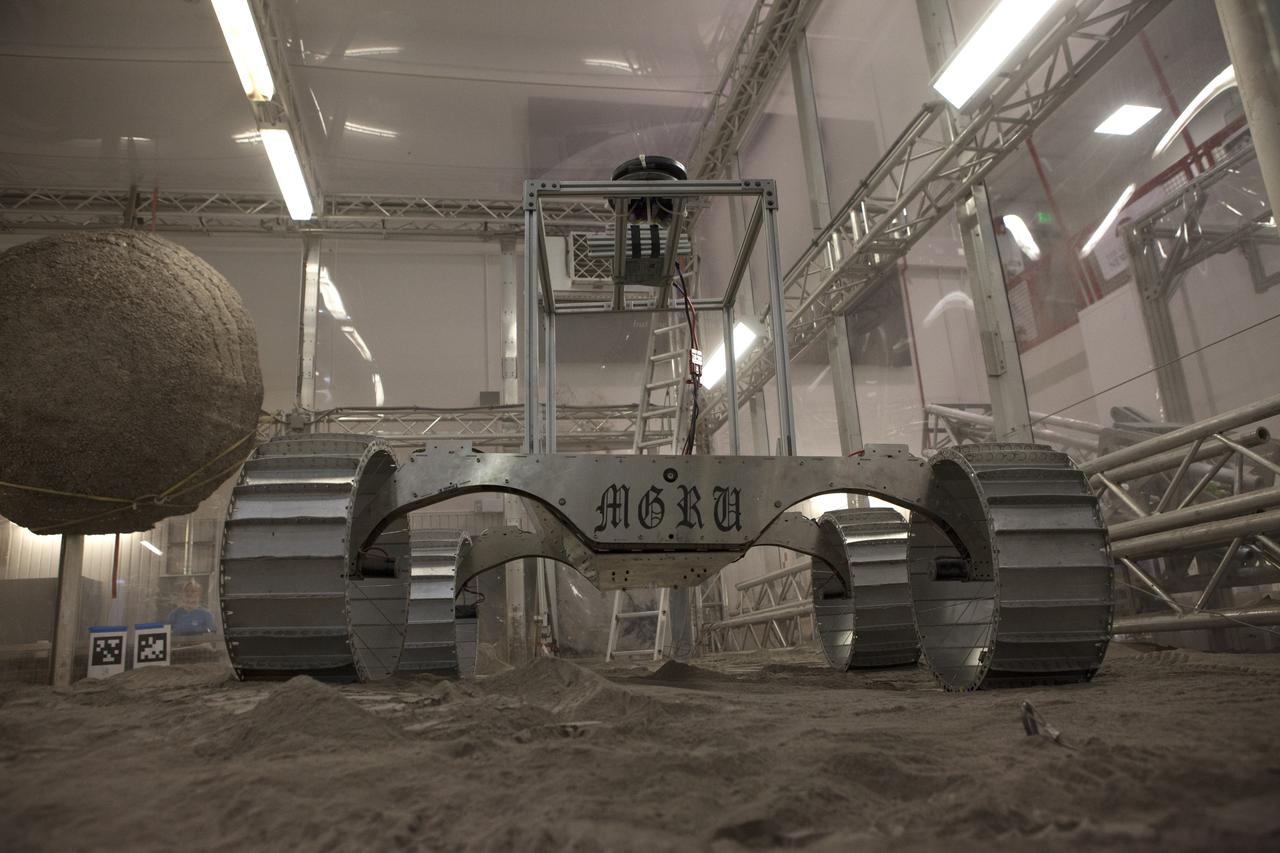
A lightweight simulator version of NASA's Resource Prospector undergoes a mobility test in a regolith bin at the agency's Kennedy Space center in Florida. The Resource Prospector mission aims to be the first mining expedition on another world. Operating on the moon’s poles, the robot is designed to use instruments to locate elements at a lunar polar regions, then excavate and sample resources such as hydrogen, oxygen and water. These resources could support human explores on their way to destinations such as farther into the solar system.
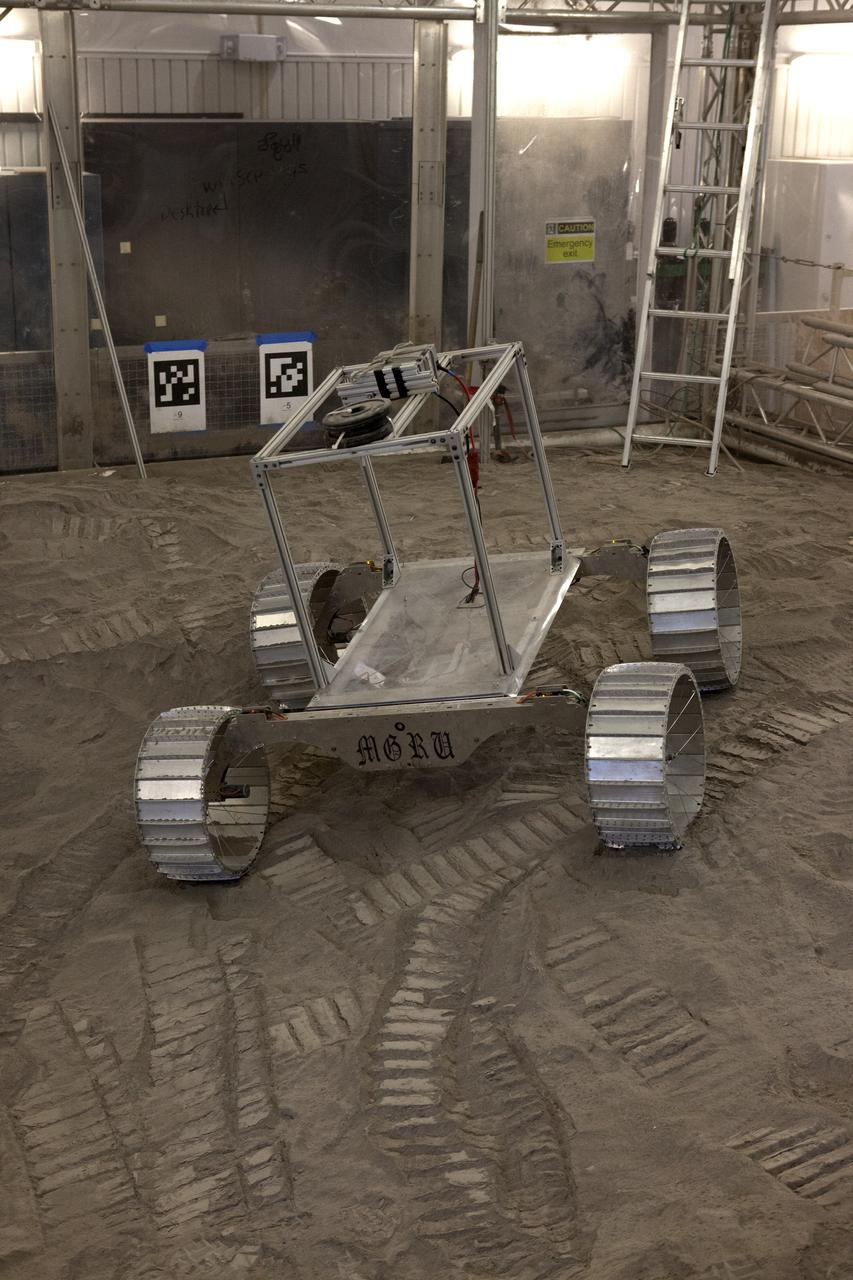
A lightweight simulator version of NASA's Resource Prospector undergoes a mobility test in a regolith bin at the agency's Kennedy Space center in Florida. The Resource Prospector mission aims to be the first mining expedition on another world. Operating on the moon’s poles, the robot is designed to use instruments to locate elements at a lunar polar regions, then excavate and sample resources such as hydrogen, oxygen and water. These resources could support human explores on their way to destinations such as farther into the solar system.
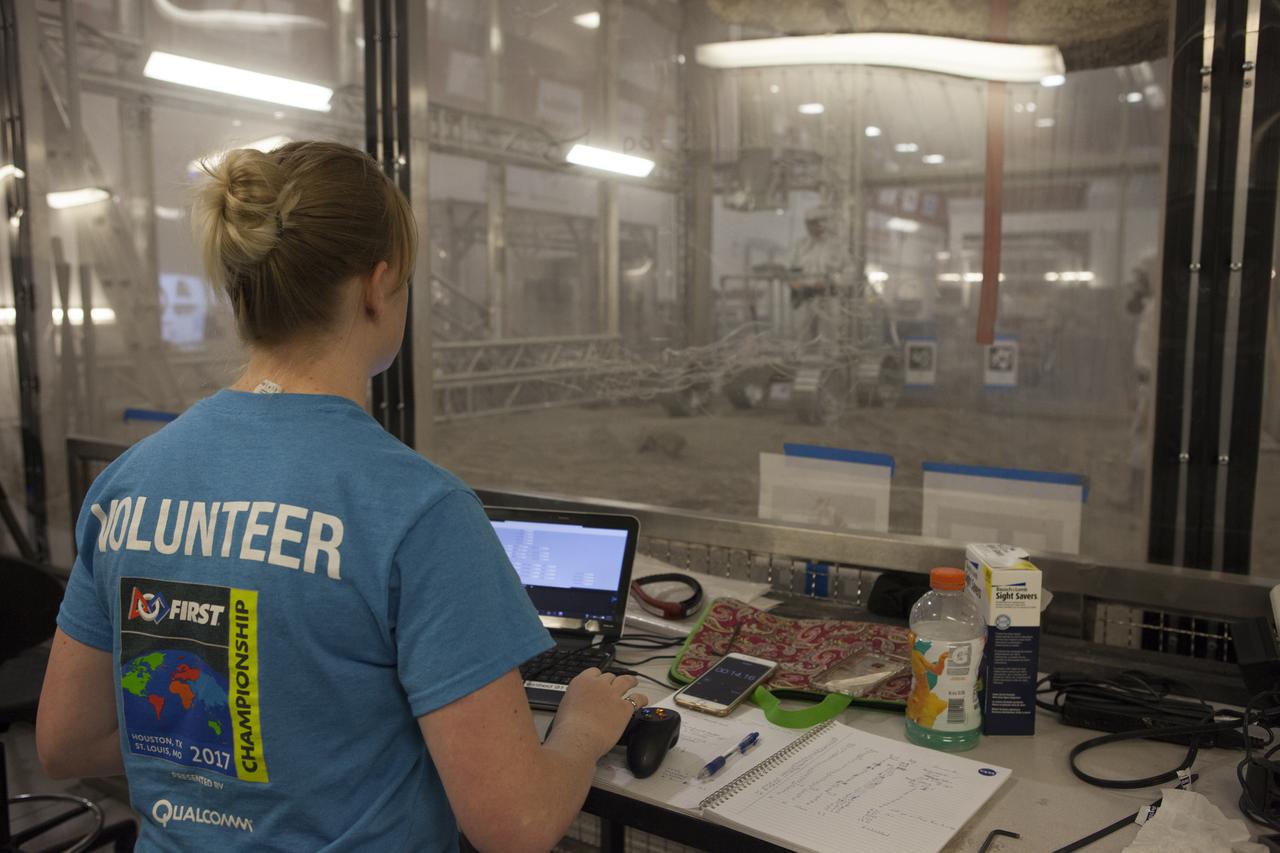
Outside a regolith bin at the agency's Kennedy Space center in Florida, an engineer operates controls for a lightweight simulator version of NASA's Resource Prospector during a mobility test. The Resource Prospector mission aims to be the first mining expedition on another world. Operating on the moon’s poles, the robot is designed to use instruments to locate elements at a lunar polar regions, then excavate and sample resources such as hydrogen, oxygen and water. These resources could support human explores on their way to destinations such as farther into the solar system.
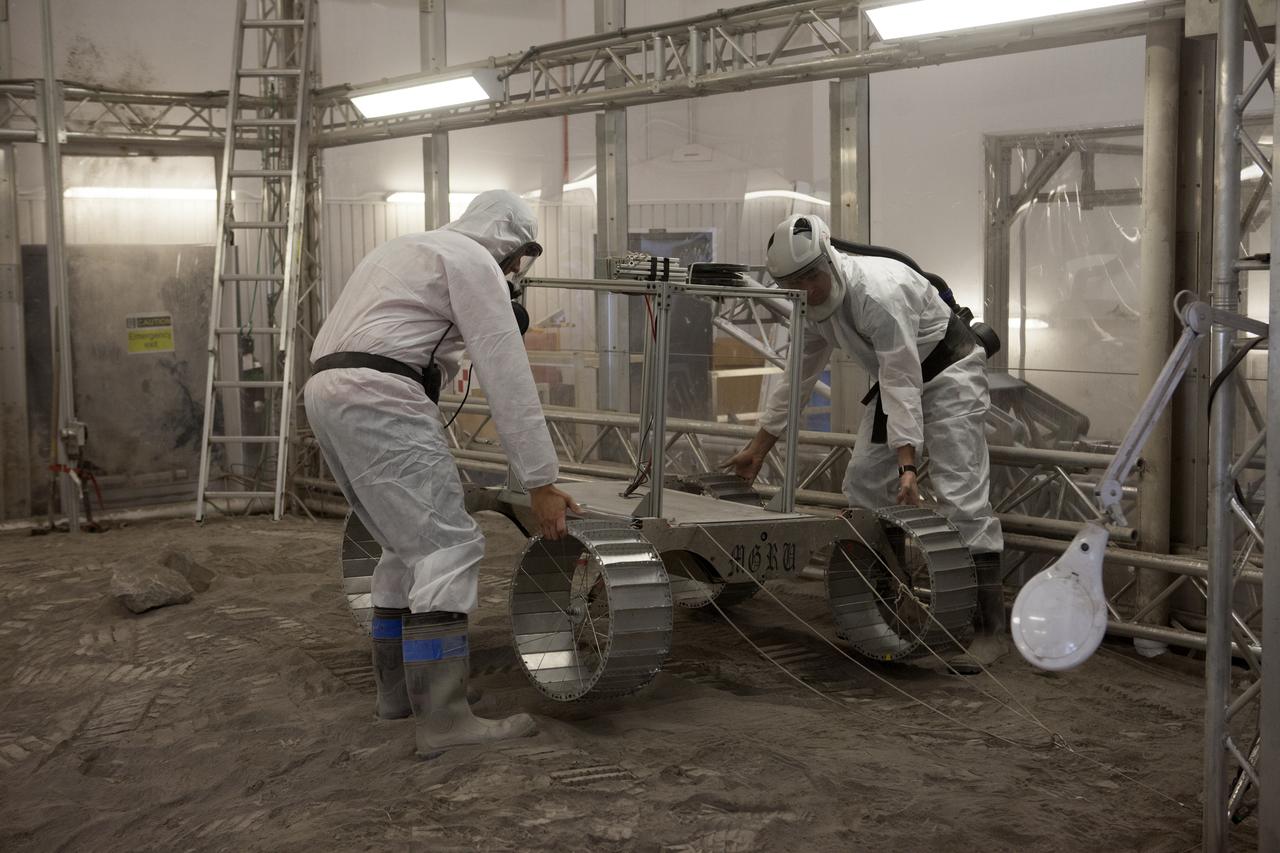
Engineers wearing protecting garb, make adjustments to a lightweight simulator version of NASA's Resource Prospector undergoes a mobility test in a regolith bin at the agency's Kennedy Space center in Florida. The Resource Prospector mission aims to be the first mining expedition on another world. Operating on the moon’s poles, the robot is designed to use instruments to locate elements at a lunar polar regions, then excavate and sample resources such as hydrogen, oxygen and water. These resources could support human explores on their way to destinations such as farther into the solar system.
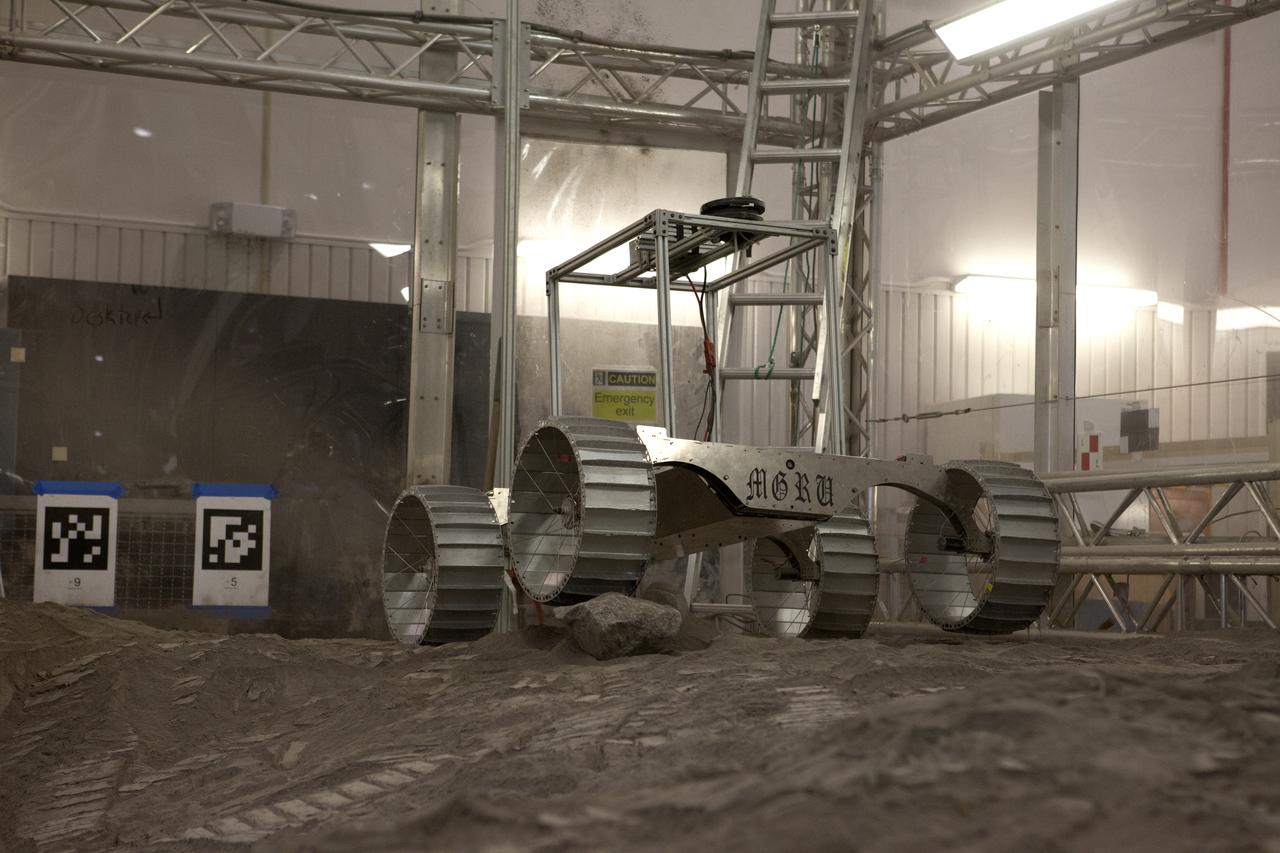
A lightweight simulator version of NASA's Resource Prospector undergoes a mobility test in a regolith bin at the agency's Kennedy Space center in Florida. The Resource Prospector mission aims to be the first mining expedition on another world. Operating on the moon’s poles, the robot is designed to use instruments to locate elements at a lunar polar regions, then excavate and sample resources such as hydrogen, oxygen and water. These resources could support human explores on their way to destinations such as farther into the solar system.
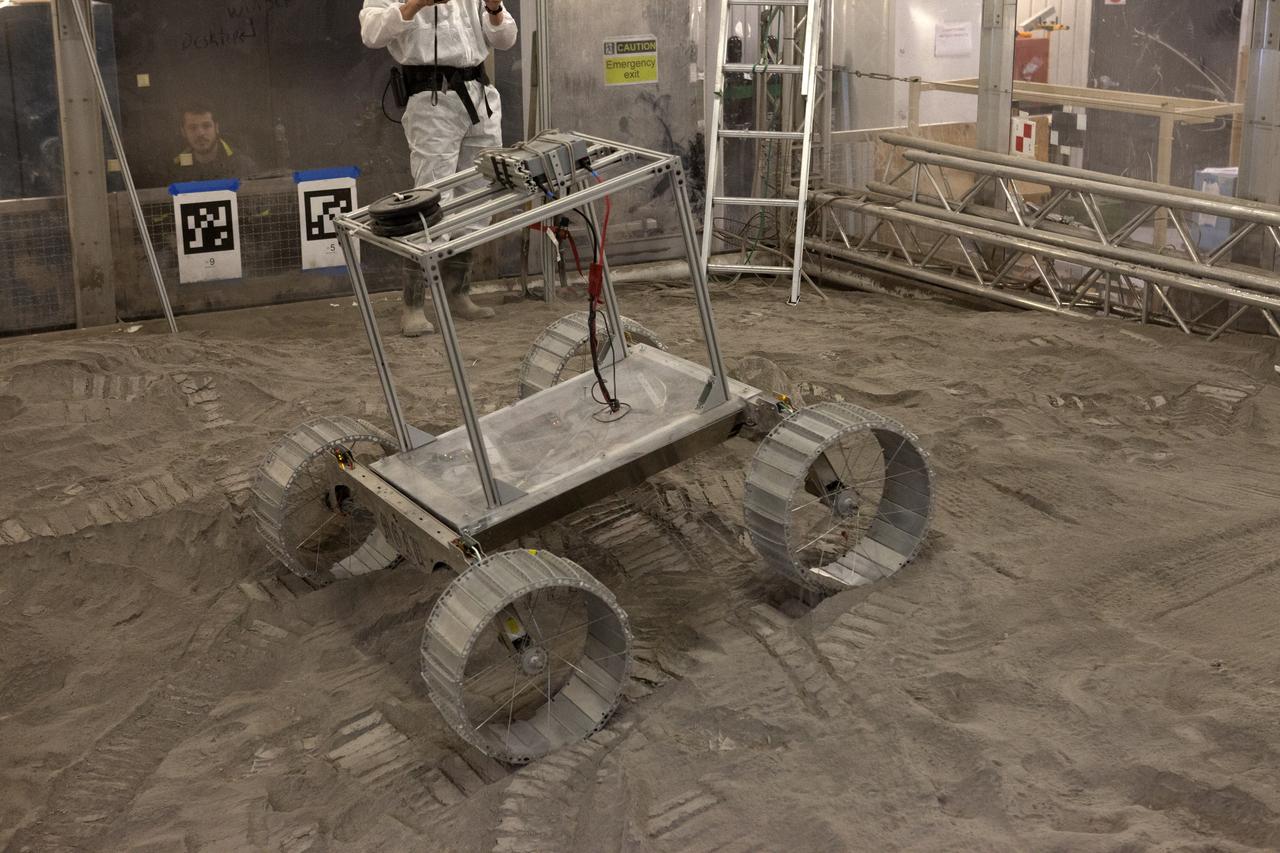
A lightweight simulator version of NASA's Resource Prospector undergoes a mobility test in a regolith bin at the agency's Kennedy Space center in Florida. The Resource Prospector mission aims to be the first mining expedition on another world. Operating on the moon’s poles, the robot is designed to use instruments to locate elements at a lunar polar regions, then excavate and sample resources such as hydrogen, oxygen and water. These resources could support human explores on their way to destinations such as farther into the solar system.
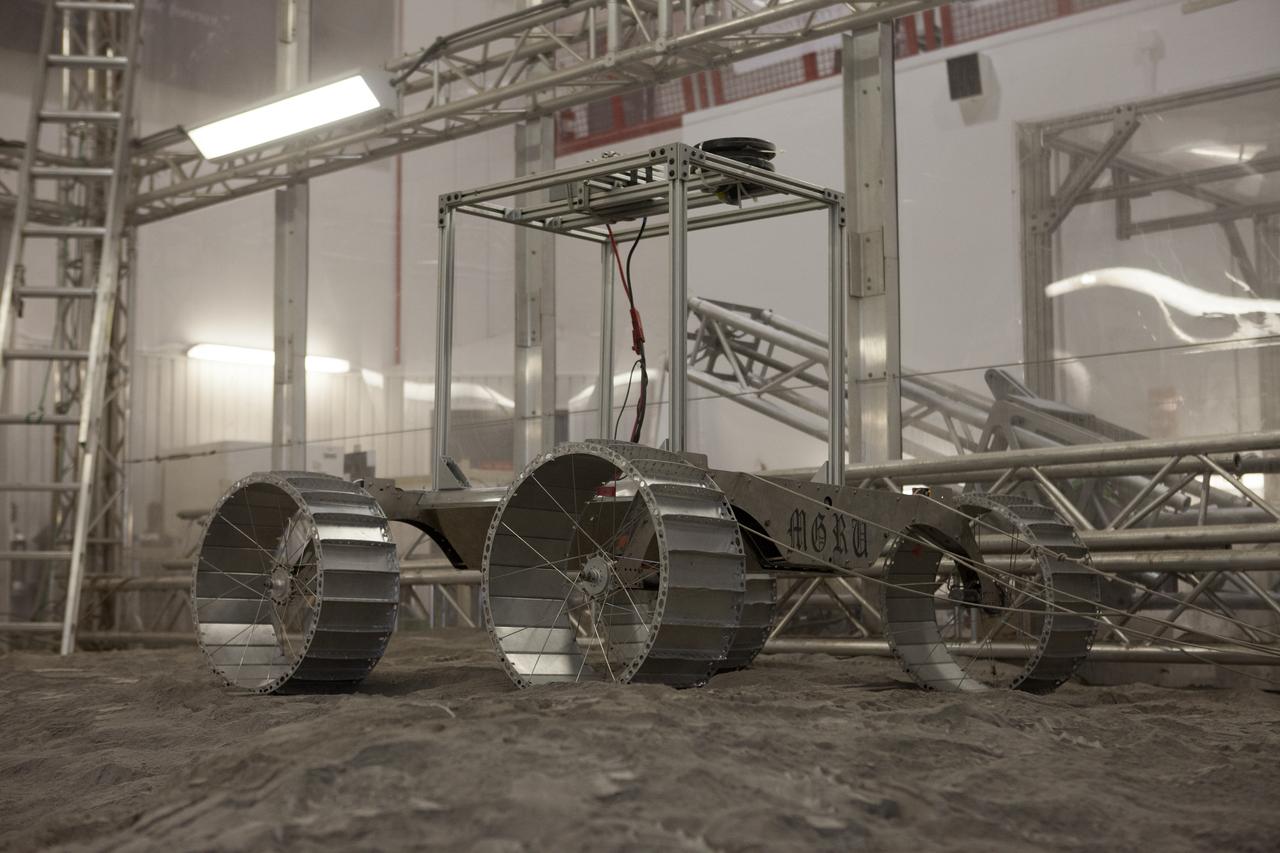
A lightweight simulator version of NASA's Resource Prospector undergoes a mobility test in a regolith bin at the agency's Kennedy Space center in Florida. The Resource Prospector mission aims to be the first mining expedition on another world. Operating on the moon’s poles, the robot is designed to use instruments to locate elements at a lunar polar regions, then excavate and sample resources such as hydrogen, oxygen and water. These resources could support human explores on their way to destinations such as farther into the solar system.
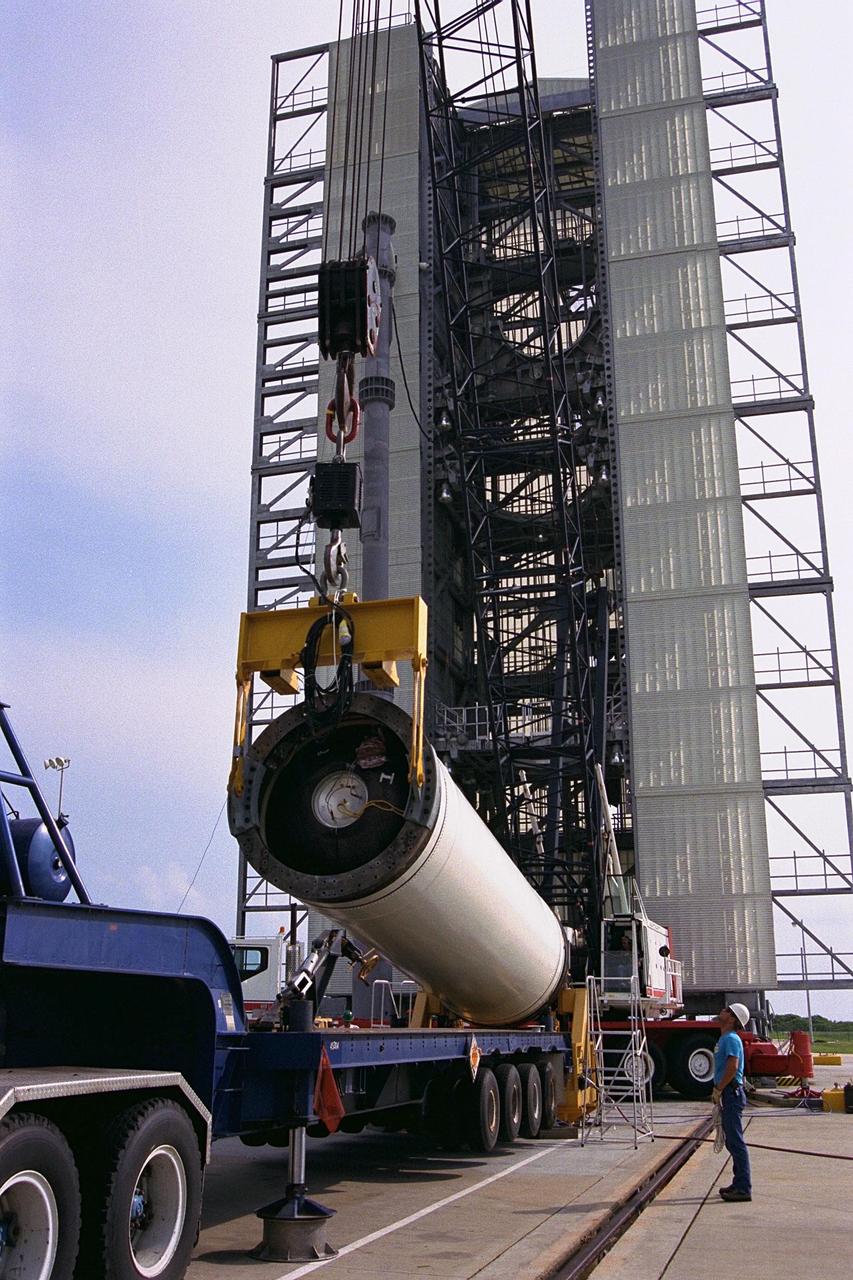
Workers hoist the first stage of a Lockheed Martin Launch Vehicle-2 (LMLV-2) for placement at Launch Complex 46 at Cape Canaveral Air Station (CCAS), Fla. The Lunar Prospector spacecraft is scheduled to launch aboard the LMLV-2 from CCAS in October for an 18-month mission that will orbit the Earth’s Moon to collect data from the lunar surface. Information gathered during the mission will allow construction of a detailed map of the surface composition of the Moon and will improve our understanding of its origin, evolution, current state, and resources
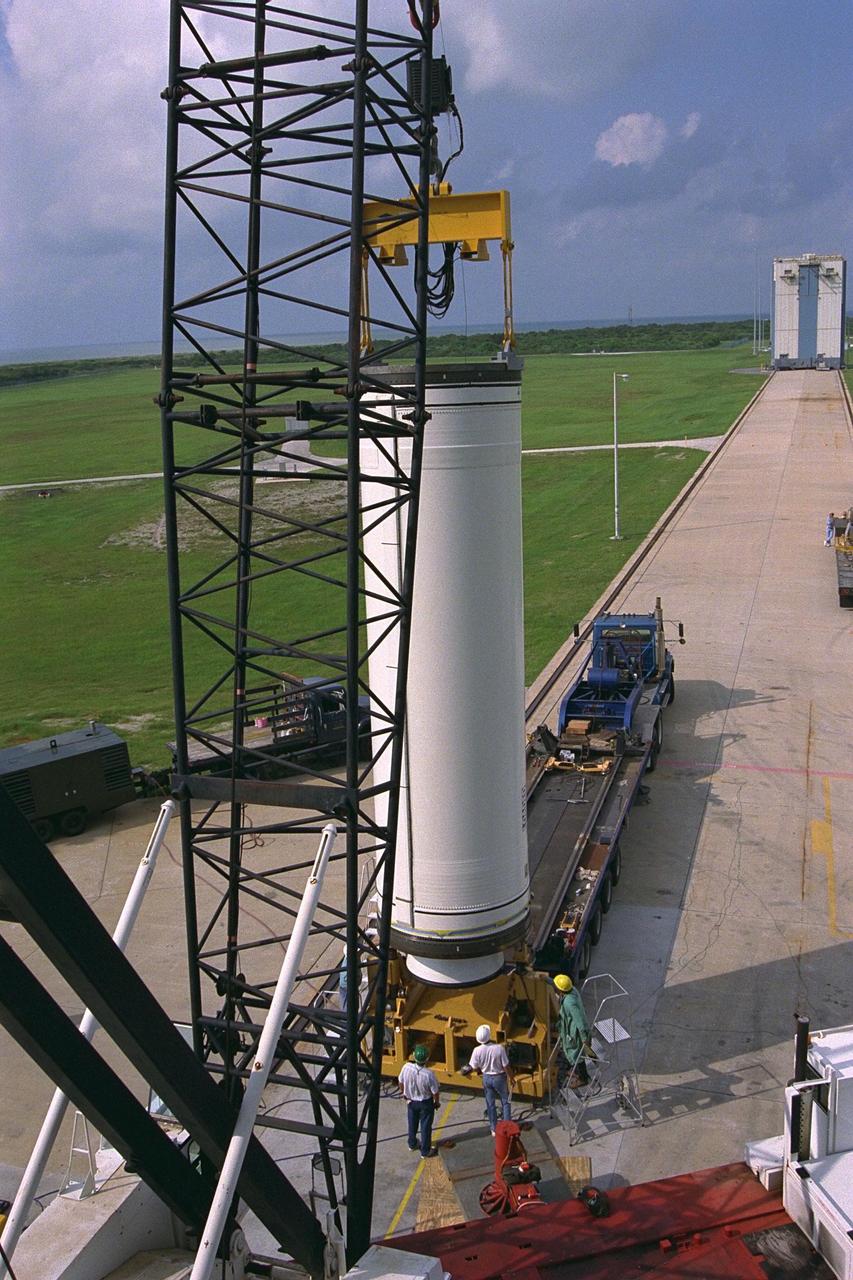
Workers hoist the first stage of a Lockheed Martin Launch Vehicle-2 (LMLV-2) for placement at Launch Complex 46 at Cape Canaveral Air Station (CCAS), Fla. The Lunar Prospector spacecraft is scheduled to launch aboard the LMLV-2 from CCAS in October for an 18-month mission that will orbit the Earth’s Moon to collect data from the lunar surface. Information gathered during the mission will allow construction of a detailed map of the surface composition of the Moon and will improve our understanding of its origin, evolution, current state, and resources
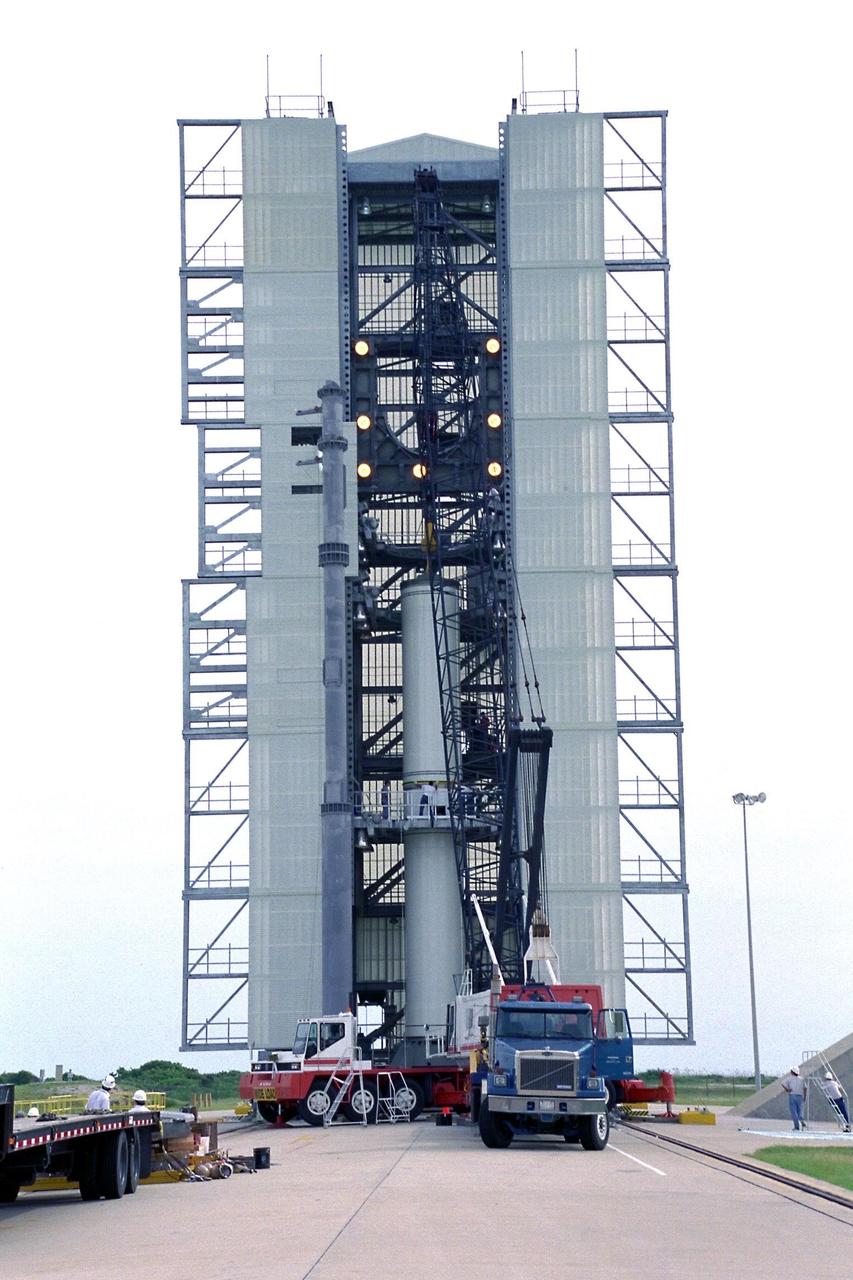
The second stage of the Lockheed Martin Launch Vehicle-2 (LMLV-2) is mated to its first stage at Launch Complex 46 at Cape Canaveral Air Station. The LMLV-2 will carry the Lunar Prospector spacecraft, scheduled to launch in October for an 18-month mission that will orbit the Earth’s moon to collect data from the lunar surface. Information gathered during the mission will allow construction of a detailed map of the surface composition of the moon and will improve our understanding of its origin, evolution, current state, and resources
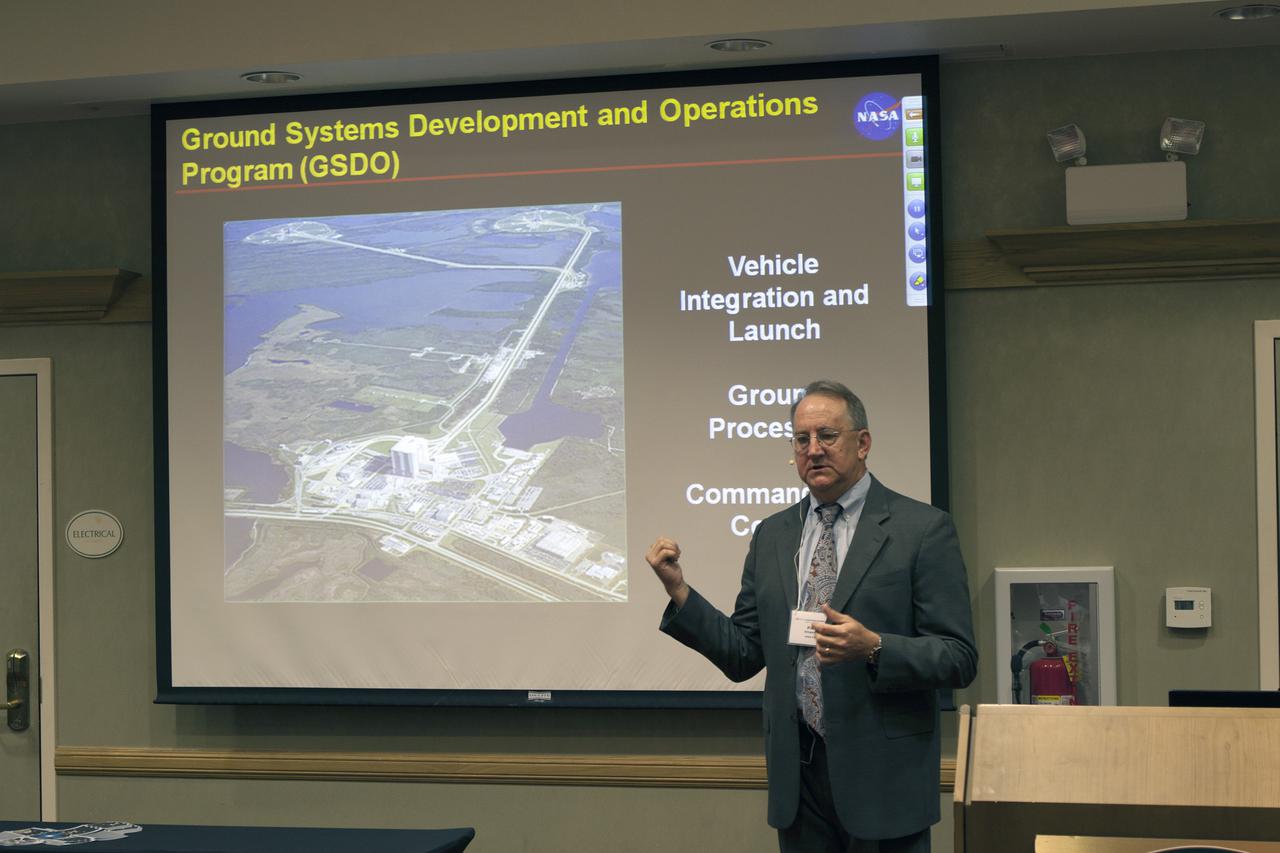
CAPE CANAVERAL, Fla. – At the Courtyard by Marriott hotel in Cocoa Beach, Fla., Pat Simpkins, director of Engineering and Technology at Kennedy Space Center talks to participants in the room and those participating online during the Third International Workshop on Lunar Superconductor Applications. The workshop included presentations from several engineers and researchers at Kennedy Space Center. The three-day workshop included presentations from speakers throughout the country and focused on Lunar in-situ resource utilization, NASA’s Lunar Ice Prospector called RESOLVE, CubeSats, cryogenic storage and many other topics related to lunar exploration. Photo credit: NASA_Jim Grossmann
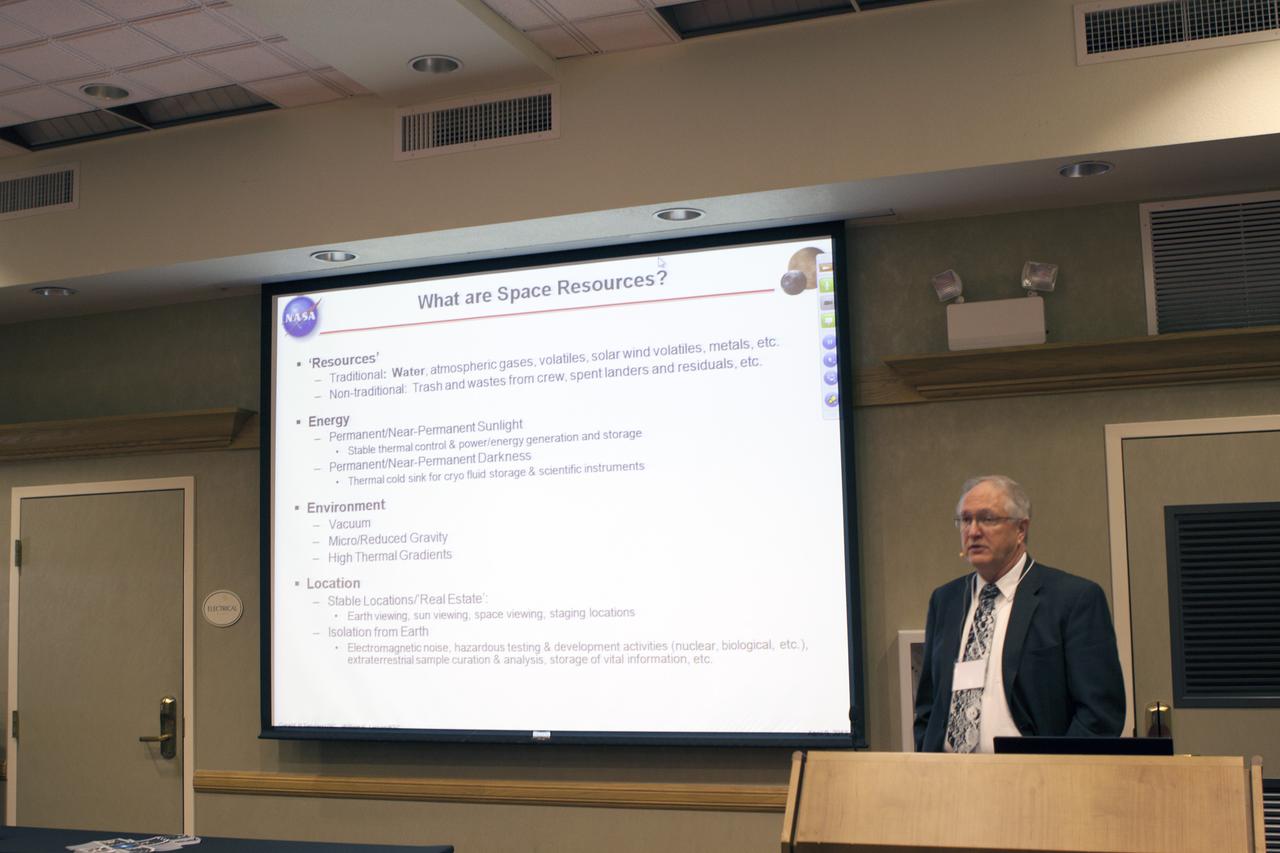
CAPE CANAVERAL, Fla. – At the Courtyard by Marriott hotel in Cocoa Beach, Fla., William Larson, retired NASA ISRU project manager, talks to participants in the room and those participating online during the Third International Workshop on Lunar Superconductor Applications. The workshop included presentations from several engineers and researchers at Kennedy Space Center. The three-day workshop included presentations from speakers throughout the country and focused on Lunar in-situ resource utilization, NASA’s Lunar Ice Prospector called RESOLVE, CubeSats, cryogenic storage and many other topics related to lunar exploration. Photo credit: NASA_Jim Grossmann
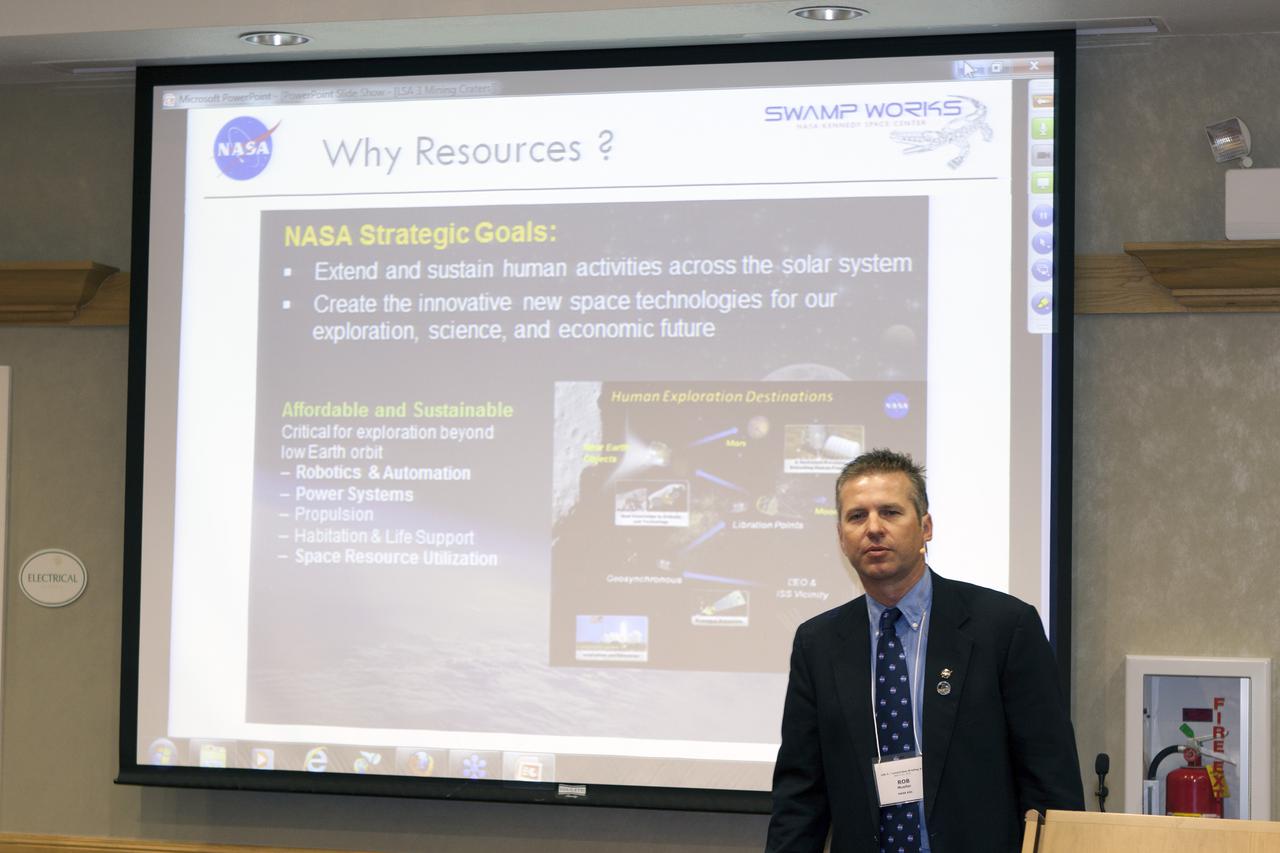
CAPE CANAVERAL, Fla. – At the Courtyard by Marriott hotel in Cocoa Beach, Fla., Rob Mueller, senior technologist in the Surface Systems Office of the Engineering and Technology Directorate at Kennedy Space Center, talks to participants in the room and those participating online during the Third International Workshop on Lunar Superconductor Applications. The workshop included presentations from several engineers and researchers at Kennedy Space Center. The three-day workshop included presentations from speakers throughout the country and focused on Lunar in-situ resource utilization, NASA’s Lunar Ice Prospector called RESOLVE, CubeSats, cryogenic storage and many other topics related to lunar exploration. Photo credit: NASA_Jim Grossmann
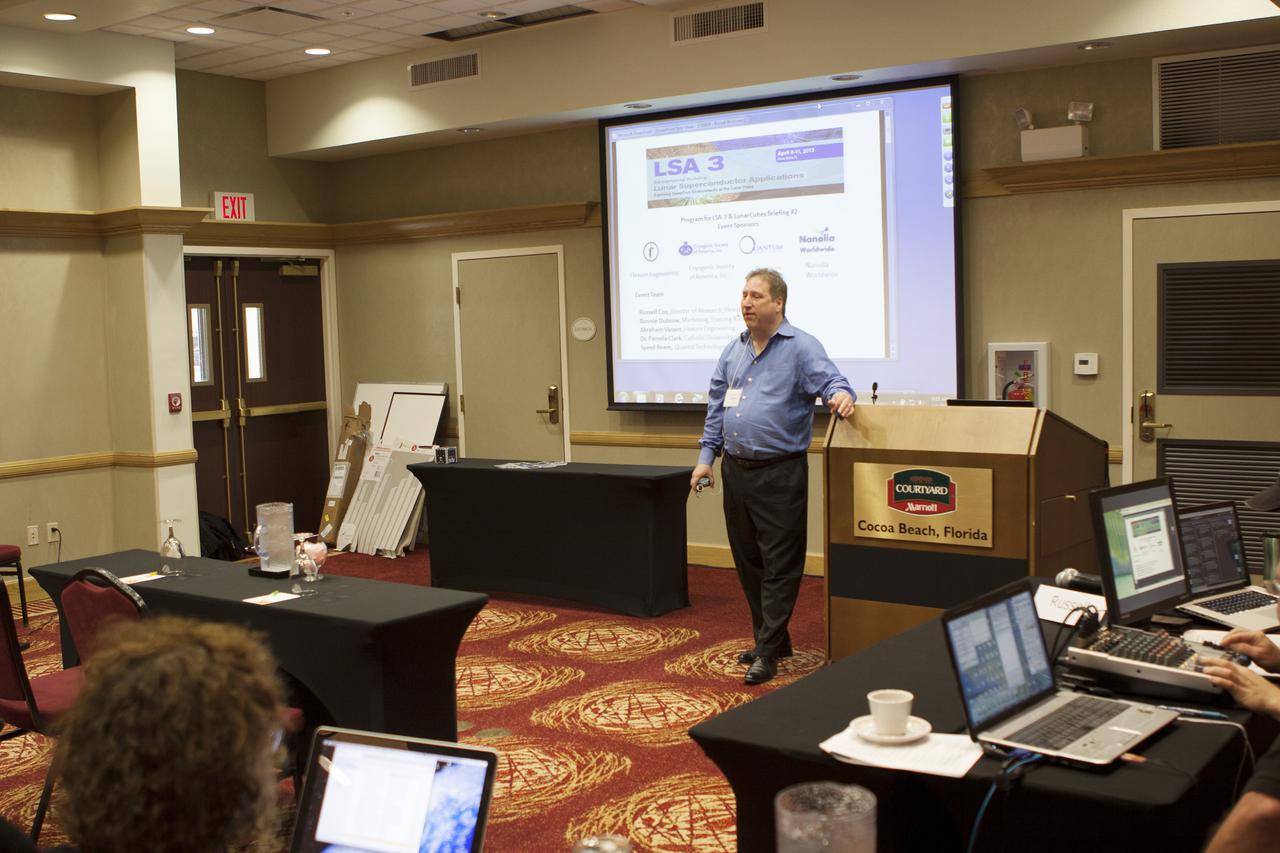
CAPE CANAVERAL, Fla. – At the Courtyard by Marriott hotel in Cocoa Beach, Fla., Russell Cox, director of research with Flexure Engineering, welcomes participants in the room and those participating online to the Third International Workshop on Lunar Superconductor Applications. The workshop included presentations from several engineers and researchers at Kennedy Space Center. The three-day workshop included presentations from speakers throughout the country and focused on Lunar in-situ resource utilization, NASA’s Lunar Ice Prospector called RESOLVE, CubeSats, cryogenic storage and many other topics related to lunar exploration. Photo credit: NASA_Jim Grossmann
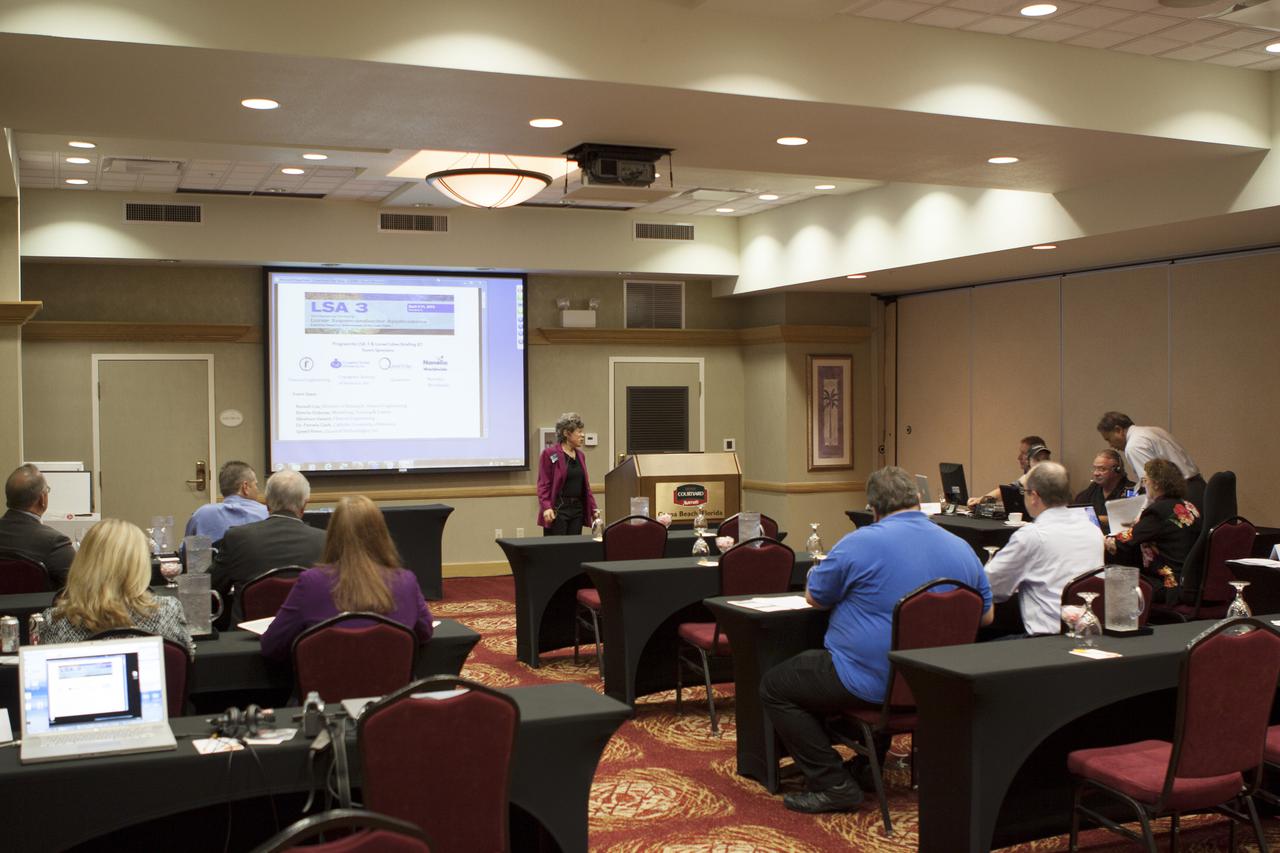
CAPE CANAVERAL, Fla. – At the Courtyard by Marriott hotel in Cocoa Beach, Fla., Bonnie Dubrow, business development manager with Flexure Engineering, welcomes participants in the room and those participating online to the Third International Workshop on Lunar Superconductor Applications. The workshop included presentations from several engineers and researchers at Kennedy Space Center. The three-day workshop included presentations from speakers throughout the country and focused on Lunar in-situ resource utilization, NASA’s Lunar Ice Prospector called RESOLVE, CubeSats, cryogenic storage and many other topics related to lunar exploration. Photo credit: NASA_Jim Grossmann
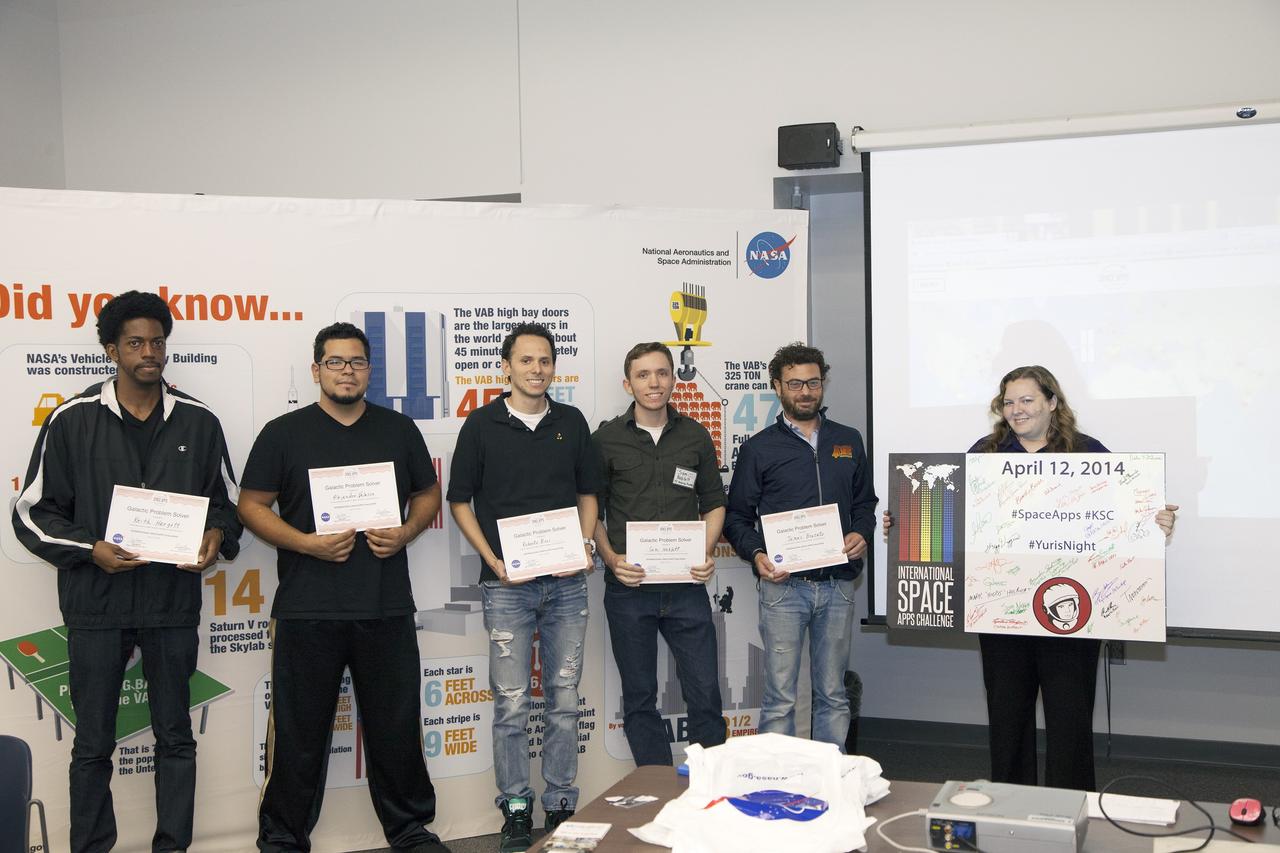
CAPE CANAVERAL, Fla. - Members of the winning teams in the International Space Apps Challenge display their Galactic Problem Solver certificates. From left are SpaceWear team members Keith Hargett and Alejandro Velasco, and Astronaut Resource Managing System team members Roberto Ricci, Sam Neblett, and James Brucato. Caley Burke, the NASA event organizer lead, is at right. Kennedy Space Center hosted one of the over 90 locations around the world where participants congregated for the attempt to design innovative solutions for global challenges over a 48-hour period. This year's development marathon focused on five NASA mission areas: Asteroids, Earth Watch, Human Spaceflight, Robotics, and Technology in Space. Three of this year’s challenges were developed by KSC employees: Space Wearables: Fashion Designer to Astronauts, Growing Food for a Martian Table, and Asteroid Prospector. The winners selected in 2014 at Kennedy were Astronaut Resource Managing System, or ARMS, for Best Use of Data and SpaceWear for Best Use of Hardware. ARMS also took the People's Choice Award. For more information, visit https://2014.spaceappschallenge.org. Photo credit: NASA/Daniel Casper
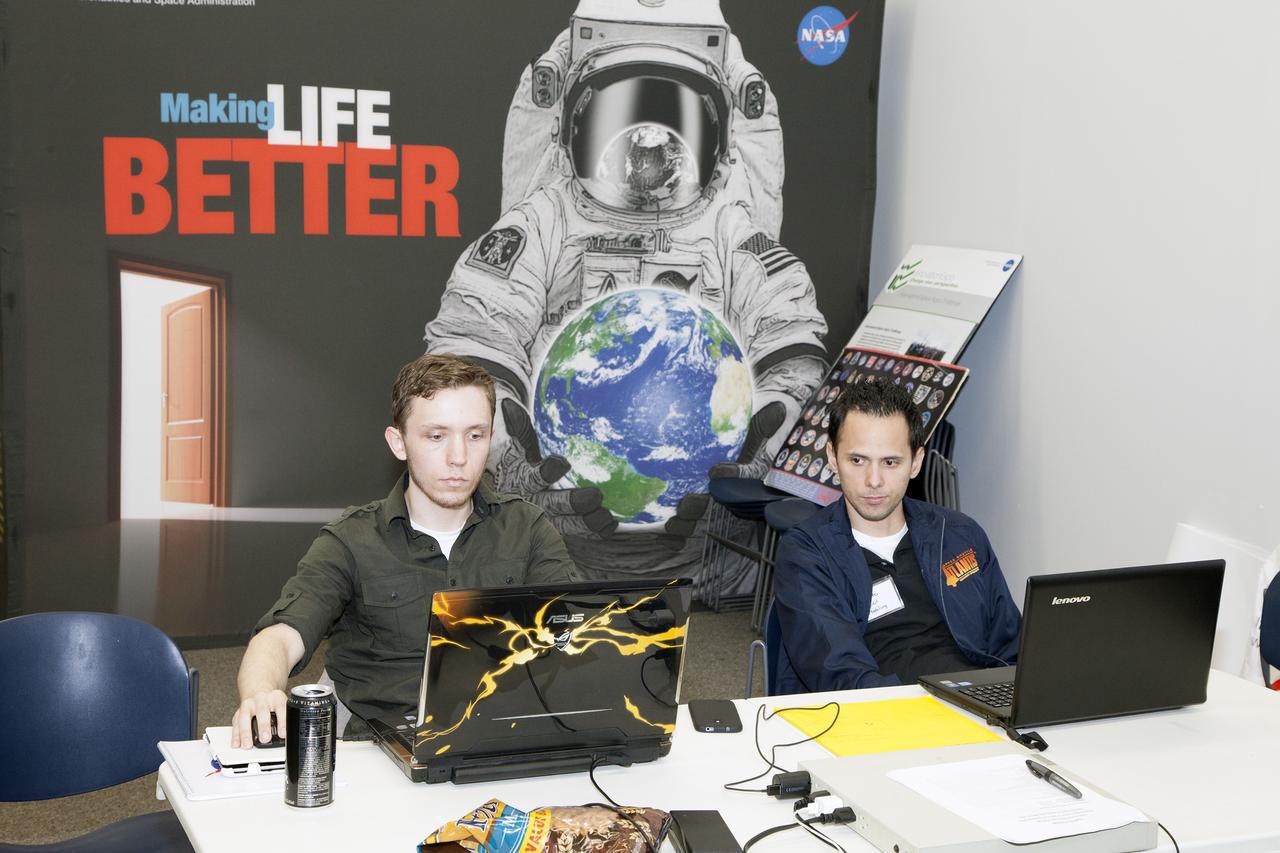
CAPE CANAVERAL, Fla. - Astronaut Resource Managing System team members Sam Neblett of KSC Technik Inc., left, and Roberto Ricci participate in the International Space Apps Challenge in the Center for Space Education at the Kennedy Space Center Visitor Complex in Florida. Kennedy Space Center hosted one of the over 90 locations around the world where participants congregated for the attempt to design innovative solutions for global challenges over a 48-hour period. This year's development marathon focused on five NASA mission areas: Asteroids, Earth Watch, Human Spaceflight, Robotics, and Technology in Space. Three of this year’s challenges were developed by KSC employees: Space Wearables: Fashion Designer to Astronauts, Growing Food for a Martian Table, and Asteroid Prospector. The winners selected in 2014 at Kennedy were Astronaut Resource Managing System, or ARMS, for Best Use of Data and SpaceWear for Best Use of Hardware. ARMS also took the People's Choice Award. For more information, visit https://2014.spaceappschallenge.org. Photo credit: NASA/Daniel Casper
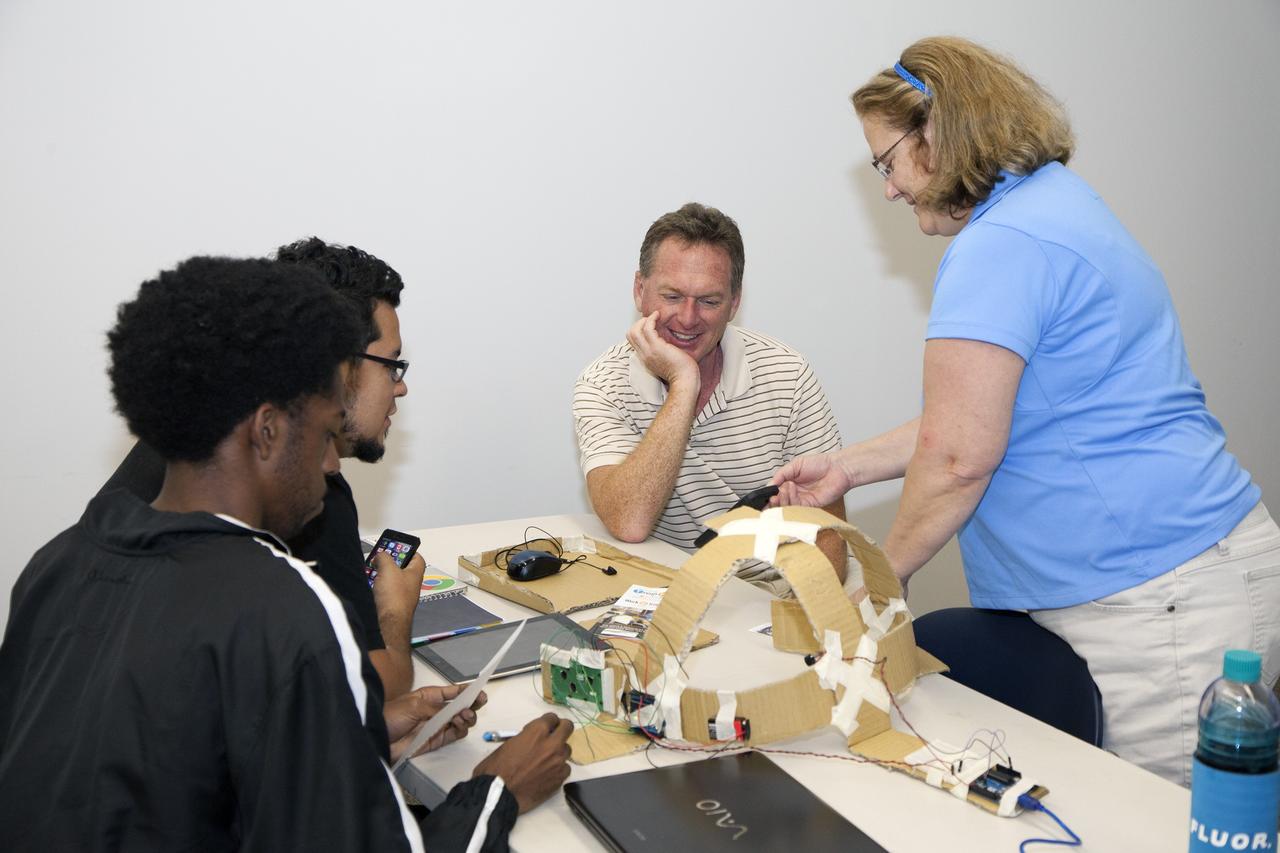
CAPE CANAVERAL, Fla. - SpaceWear team members Keith Hargett, left, and Alejandro Velasco demonstrate their entry in the International Space Apps Challenge to NASA Ground Systems Development and Operation Program Manager Michael Bolger and NASA's Lisa Singleton in the Center for Space Education at the Kennedy Space Center Visitor Complex in Florida. Kennedy Space Center hosted one of the over 90 locations around the world where participants congregated for the attempt to design innovative solutions for global challenges over a 48-hour period. This year's development marathon focused on five NASA mission areas: Asteroids, Earth Watch, Human Spaceflight, Robotics, and Technology in Space. Three of this year’s challenges were developed by KSC employees: Space Wearables: Fashion Designer to Astronauts, Growing Food for a Martian Table, and Asteroid Prospector. The winners selected in 2014 at Kennedy were Astronaut Resource Managing System, or ARMS, for Best Use of Data and SpaceWear for Best Use of Hardware. ARMS also took the People's Choice Award. For more information, visit https://2014.spaceappschallenge.org. Photo credit: NASA/Daniel Casper
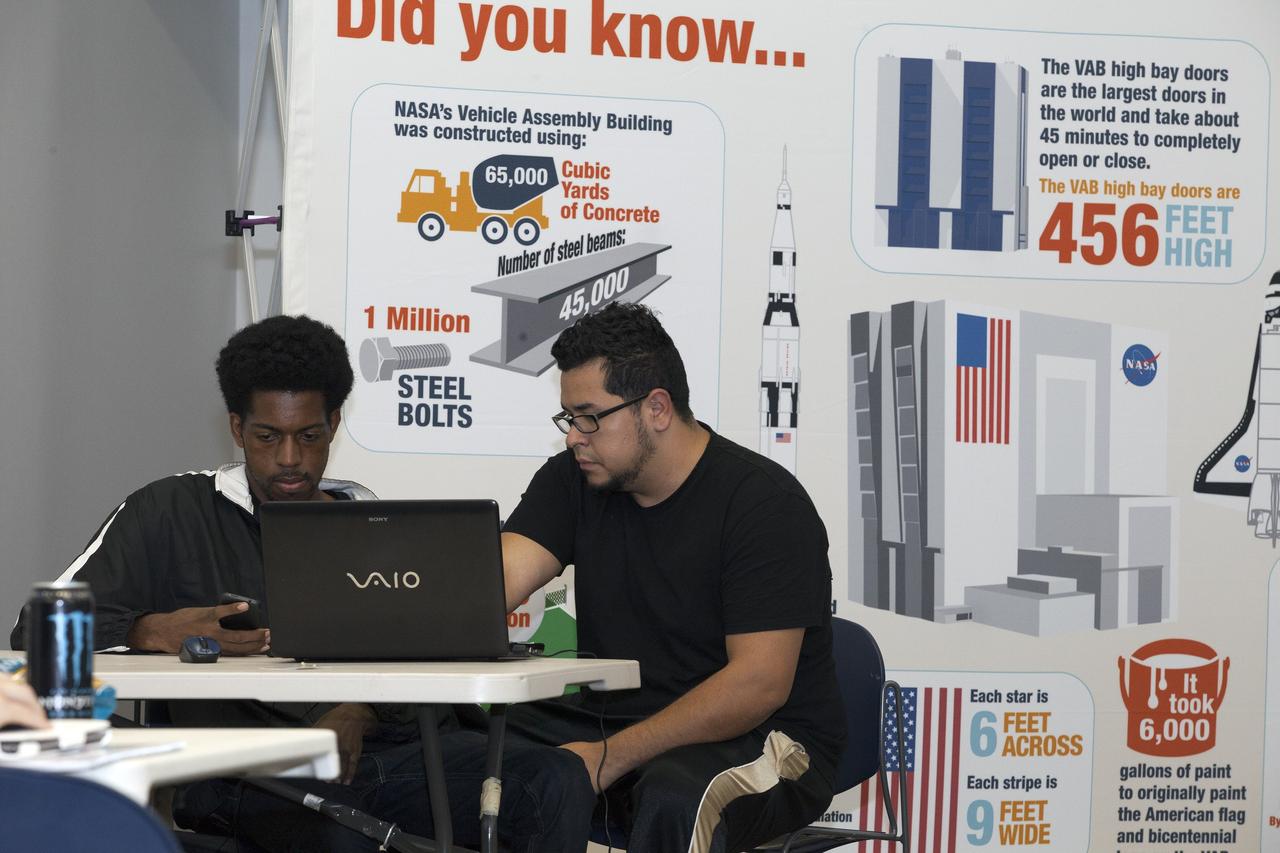
CAPE CANAVERAL, Fla. - SpaceWear team members Keith Hargett, left, and Alejandro Velasco participate in the International Space Apps Challenge in the Center for Space Education at the Kennedy Space Center Visitor Complex in Florida. Kennedy Space Center hosted one of the over 90 locations around the world where participants congregated for the attempt to design innovative solutions for global challenges over a 48-hour period. This year's development marathon focused on five NASA mission areas: Asteroids, Earth Watch, Human Spaceflight, Robotics, and Technology in Space. Three of this year’s challenges were developed by KSC employees: Space Wearables: Fashion Designer to Astronauts, Growing Food for a Martian Table, and Asteroid Prospector. The winners selected in 2014 at Kennedy were Astronaut Resource Managing System, or ARMS, for Best Use of Data and SpaceWear for Best Use of Hardware. ARMS also took the People's Choice Award. For more information, visit https://2014.spaceappschallenge.org. Photo credit: NASA/Daniel Casper
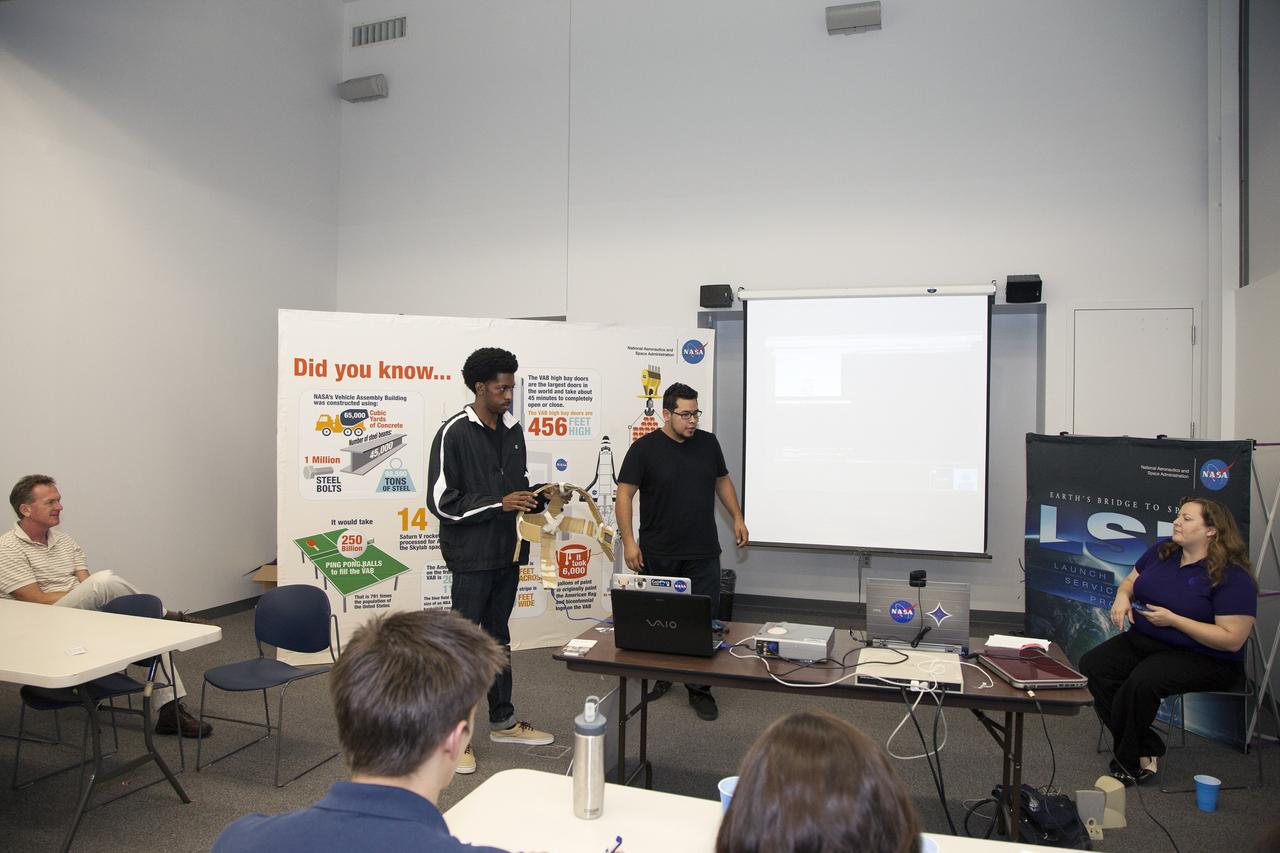
CAPE CANAVERAL, Fla. - SpaceWear team members Keith Hargett, left, and Alejandro Velasco explain their entry in the International Space Apps Challenge to an audience in the Center for Space Education at the Kennedy Space Center Visitor Complex in Florida. In the audience at left is NASA Ground Systems Development and Operations Program Manager Michael Bolger. Caley Burke, the NASA event organizer lead, is at right. Kennedy Space Center hosted one of the over 90 locations around the world where participants congregated for the attempt to design innovative solutions for global challenges over a 48-hour period. This year's development marathon focused on five NASA mission areas: Asteroids, Earth Watch, Human Spaceflight, Robotics, and Technology in Space. Three of this year’s challenges were developed by KSC employees: Space Wearables: Fashion Designer to Astronauts, Growing Food for a Martian Table, and Asteroid Prospector. The winners selected in 2014 at Kennedy were Astronaut Resource Managing System, or ARMS, for Best Use of Data and SpaceWear for Best Use of Hardware. ARMS also took the People's Choice Award. For more information, visit https://2014.spaceappschallenge.org. Photo credit: NASA/Daniel Casper
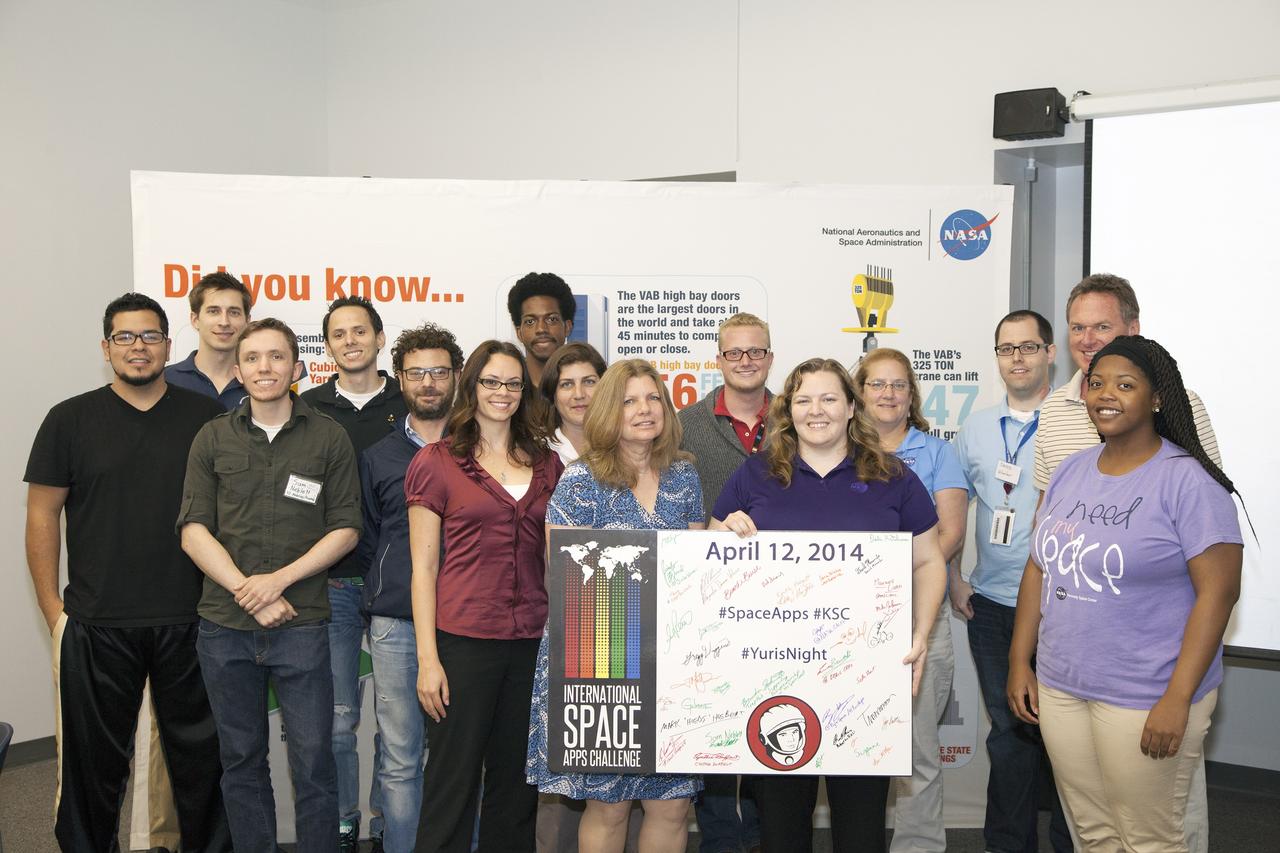
CAPE CANAVERAL, Fla. - Members of the winning Astronaut Resource Managing System and SpaceWear teams in the International Space Apps Challenge pose for a group portrait with the NASA volunteers, judges and event organizers. From left are Alejandro Velasco, NASA's Justin Treptow, Sam Neblett, Roberto Ricci, James Brucato, NASA's Suzanne Plantec, Keith Hargett, NASA's Cynthia Duffaut, NASA's Launa Maier, event organizer James Wood, event organizer lead Caley Burke, NASA's Lisa Singleton, event organizer David Miranda, NASA Ground Systems Development and Operation Program Manager Michael Bolger and NASA intern Brandi Burse. Kennedy Space Center hosted one of the over 90 locations around the world where participants congregated for the attempt to design innovative solutions for global challenges over a 48-hour period. This year's development marathon focused on five NASA mission areas: Asteroids, Earth Watch, Human Spaceflight, Robotics, and Technology in Space. Three of this year’s challenges were developed by KSC employees: Space Wearables: Fashion Designer to Astronauts, Growing Food for a Martian Table, and Asteroid Prospector. The winners selected in 2014 at Kennedy were Astronaut Resource Managing System, or ARMS, for Best Use of Data and SpaceWear for Best Use of Hardware. ARMS also took the People's Choice Award. For more information, visit https://2014.spaceappschallenge.org. Photo credit: NASA/Daniel Casper