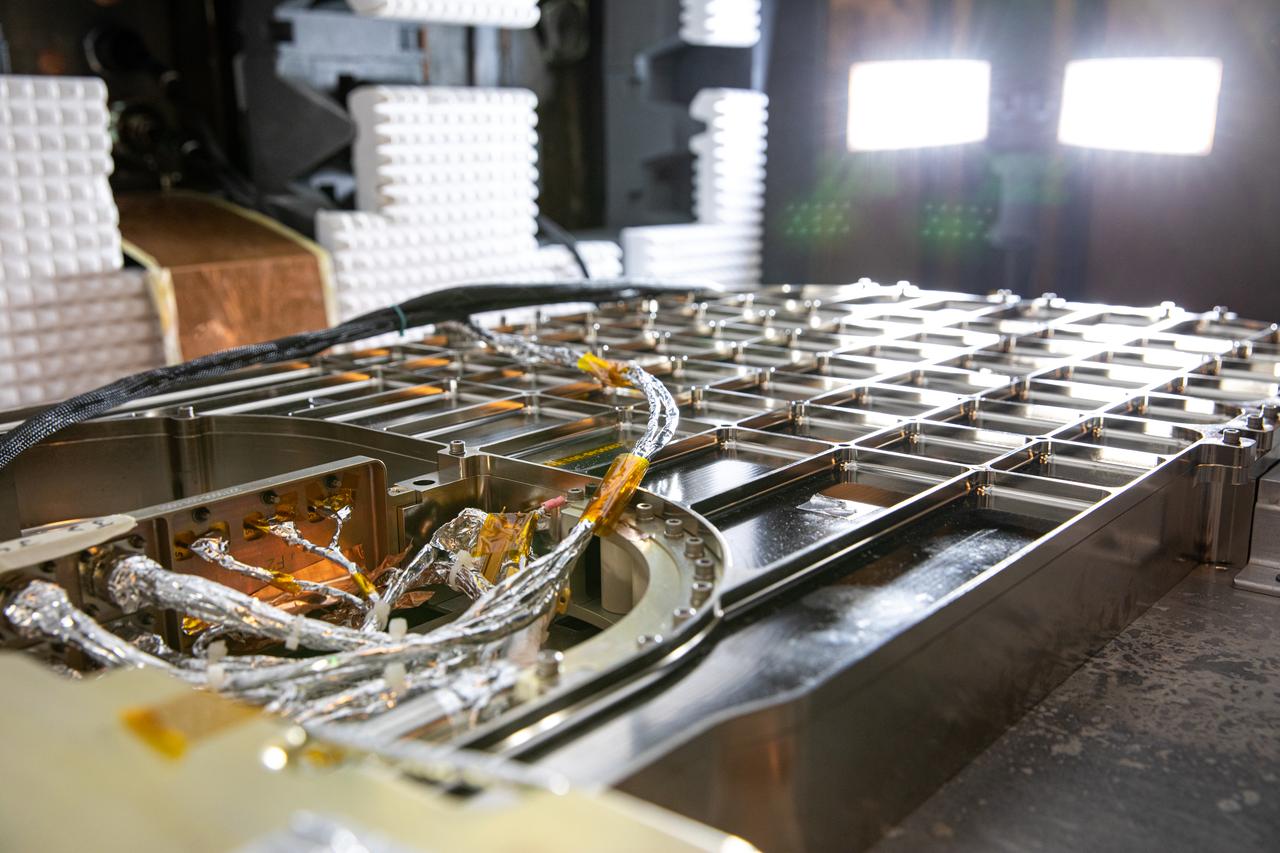
The Restore-L hose management assembly (HMA) test unit undergoes electromagnetic interference testing in the Electromagnetic Lab at NASA's Kennedy Space Center in Florida on Feb. 19, 2020. The HMA is able to extend and retract the hose, somewhat similar to the function of a tape measure. Managed by the agency's Goddard Space Flight Center in Greenbelt, Maryland, Restore-L is an inflight robotic satellite servicer spacecraft.
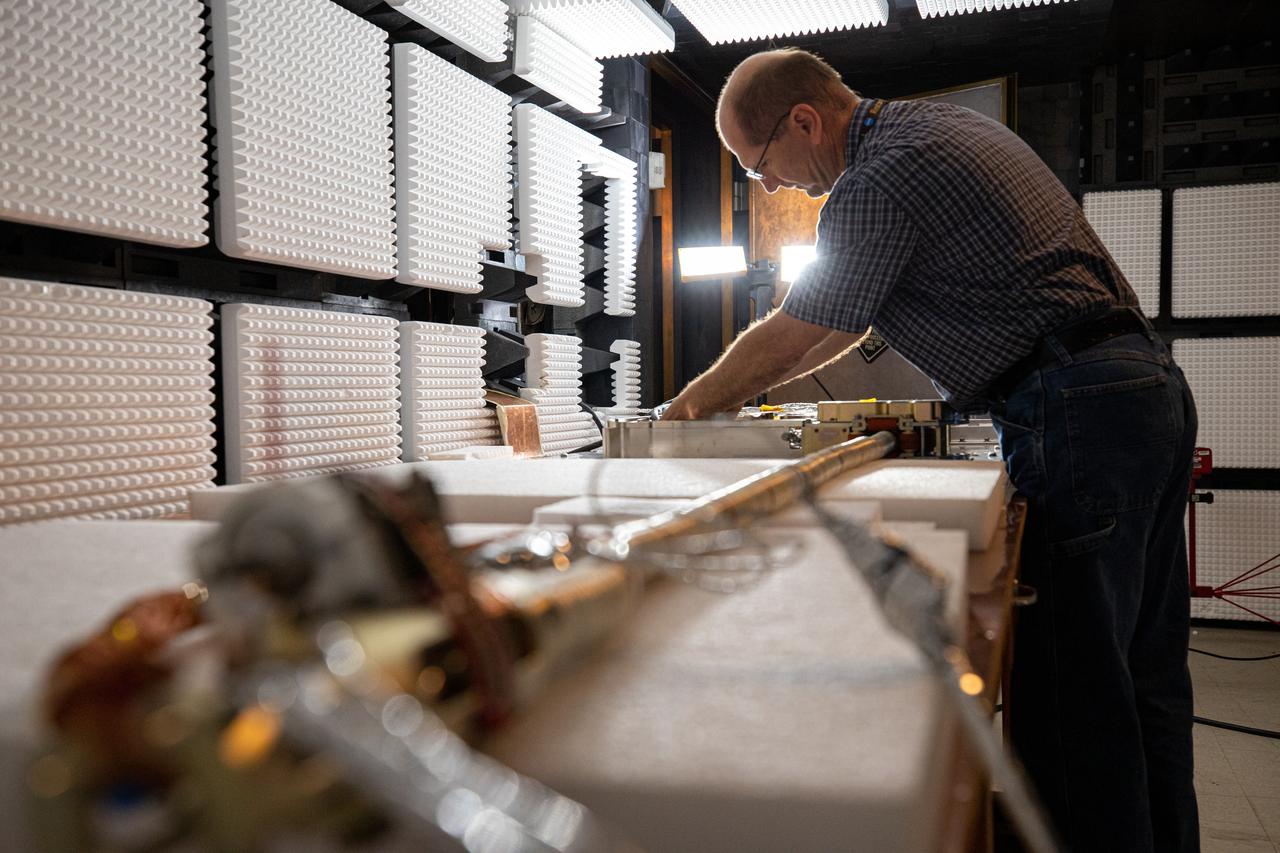
Inside the Electromagnetic Lab at NASA's Kennedy Space Center in Florida, Gabor Tamasy, Hose Management Assembly (HMA) system lead for Restore-L, prepares the HMA test unit for electromagnetic interference testing on Feb. 19, 2020. The HMA is able to extend and retract the hose, somewhat similar to the function of a tape measure. Managed by the agency's Goddard Space Flight Center in Greenbelt, Maryland, Restore-L is an inflight robotic satellite servicer spacecraft.
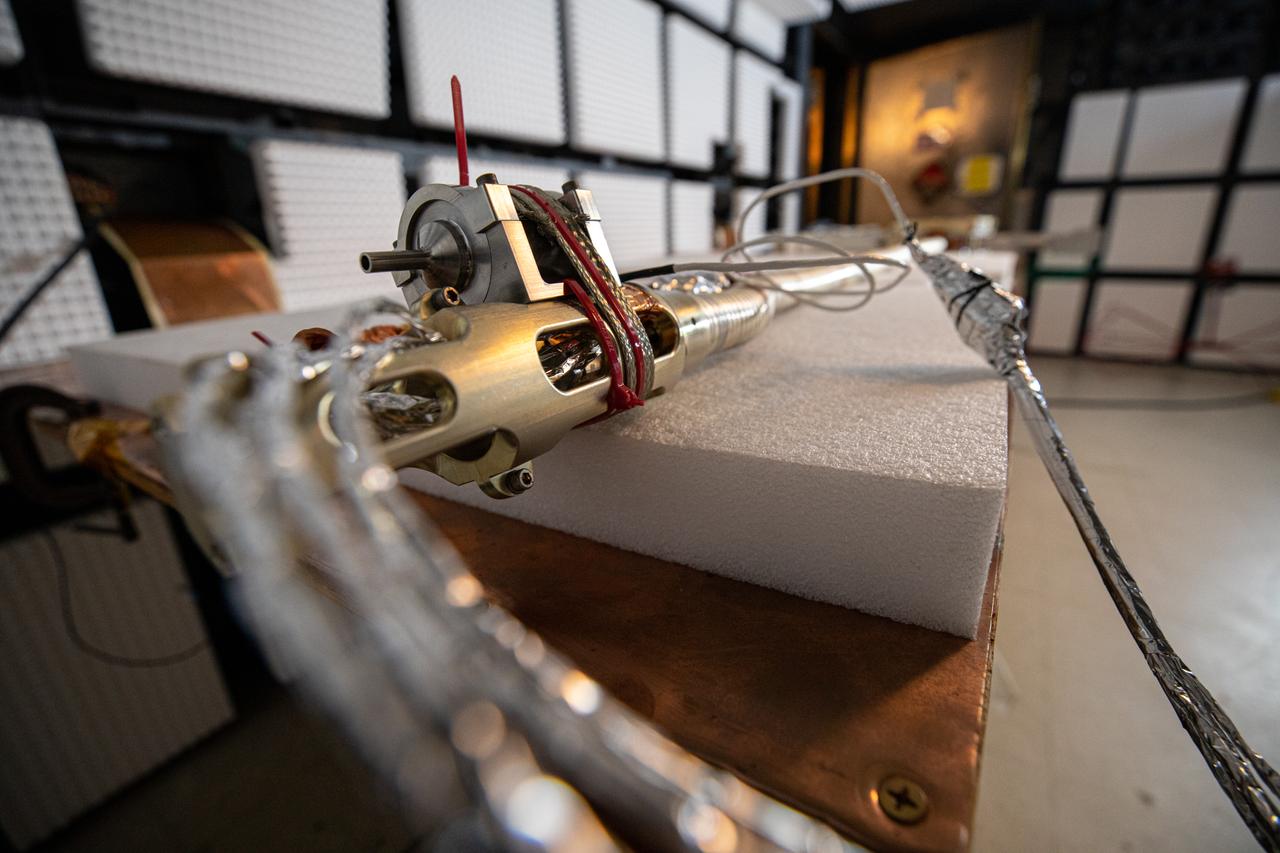
The Restore-L hose management assembly (HMA) test unit undergoes electromagnetic interference testing in the Electromagnetic Lab at NASA's Kennedy Space Center in Florida on Feb. 19, 2020. The HMA is able to extend and retract the hose, somewhat similar to the function of a tape measure. Managed by the agency's Goddard Space Flight Center in Greenbelt, Maryland, Restore-L is an inflight robotic satellite servicer spacecraft.
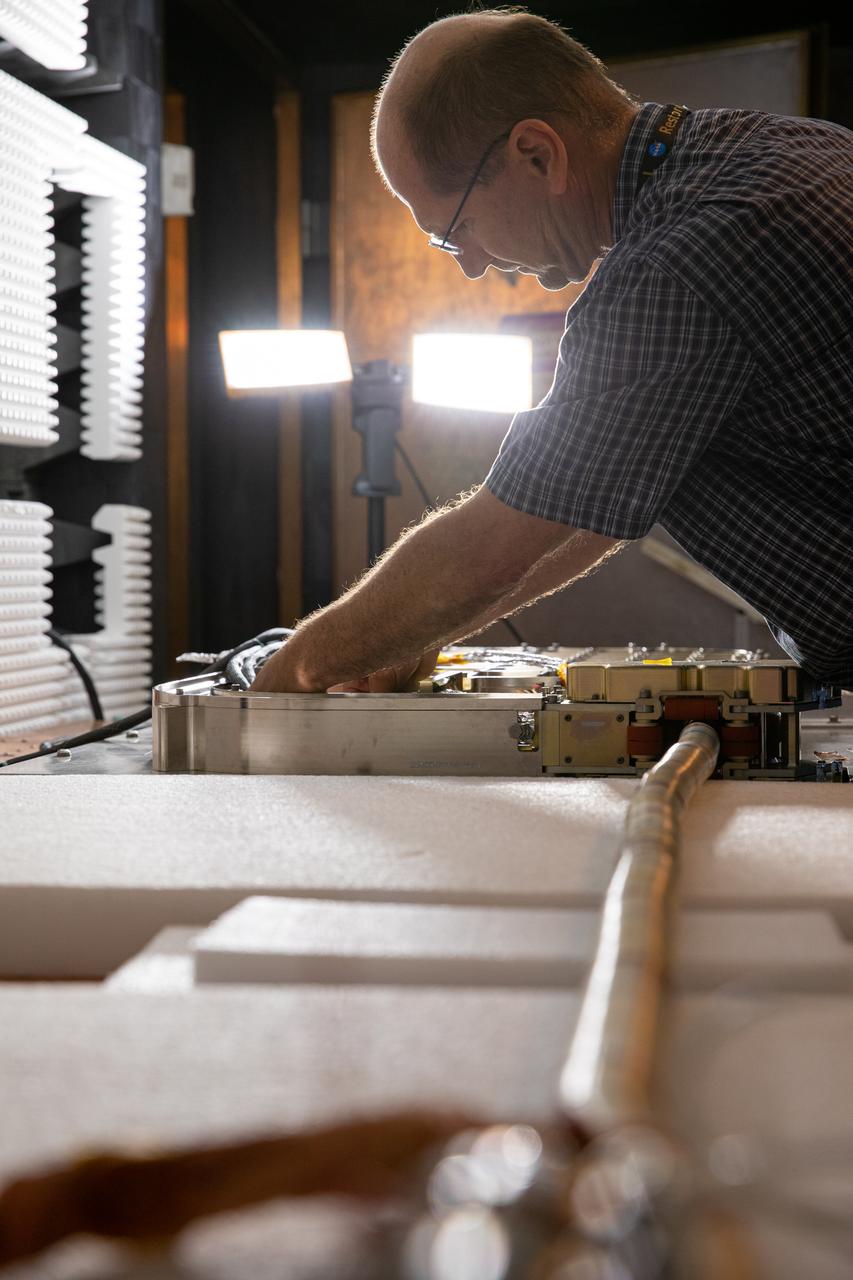
Inside the Electromagnetic Lab at NASA's Kennedy Space Center in Florida, Gabor Tamasy, Hose Management Assembly (HMA) system lead for Restore-L, prepares the HMA test unit for electromagnetic interference testing on Feb. 19, 2020. The HMA is able to extend and retract the hose, somewhat similar to the function of a tape measure. Managed by the agency's Goddard Space Flight Center in Greenbelt, Maryland, Restore-L is an inflight robotic satellite servicer spacecraft.
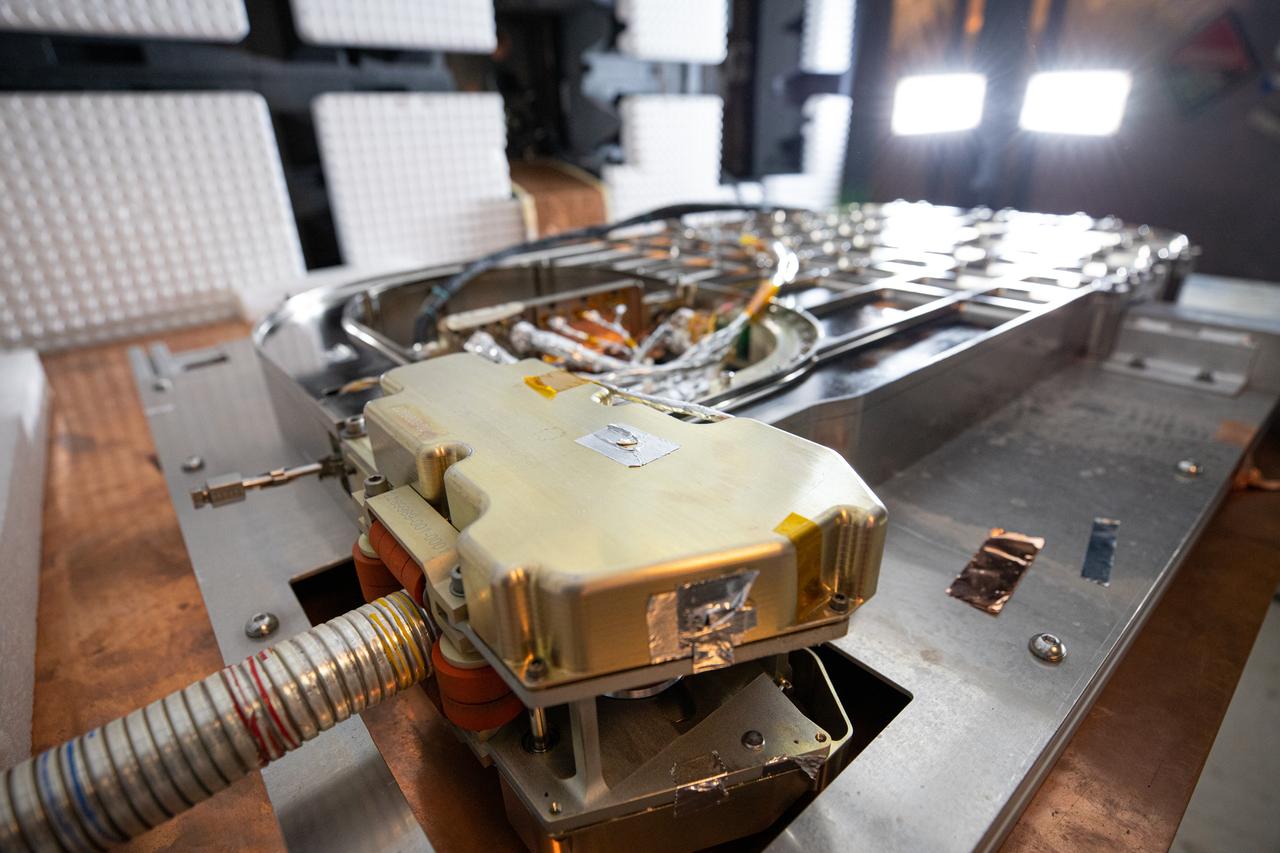
The Restore-L hose management assembly (HMA) test unit undergoes electromagnetic interference testing in the Electromagnetic Lab at NASA's Kennedy Space Center in Florida on Feb. 19, 2020. The HMA is able to extend and retract the hose, somewhat similar to the function of a tape measure. Managed by the agency's Goddard Space Flight Center in Greenbelt, Maryland, Restore-L is an inflight robotic satellite servicer spacecraft.
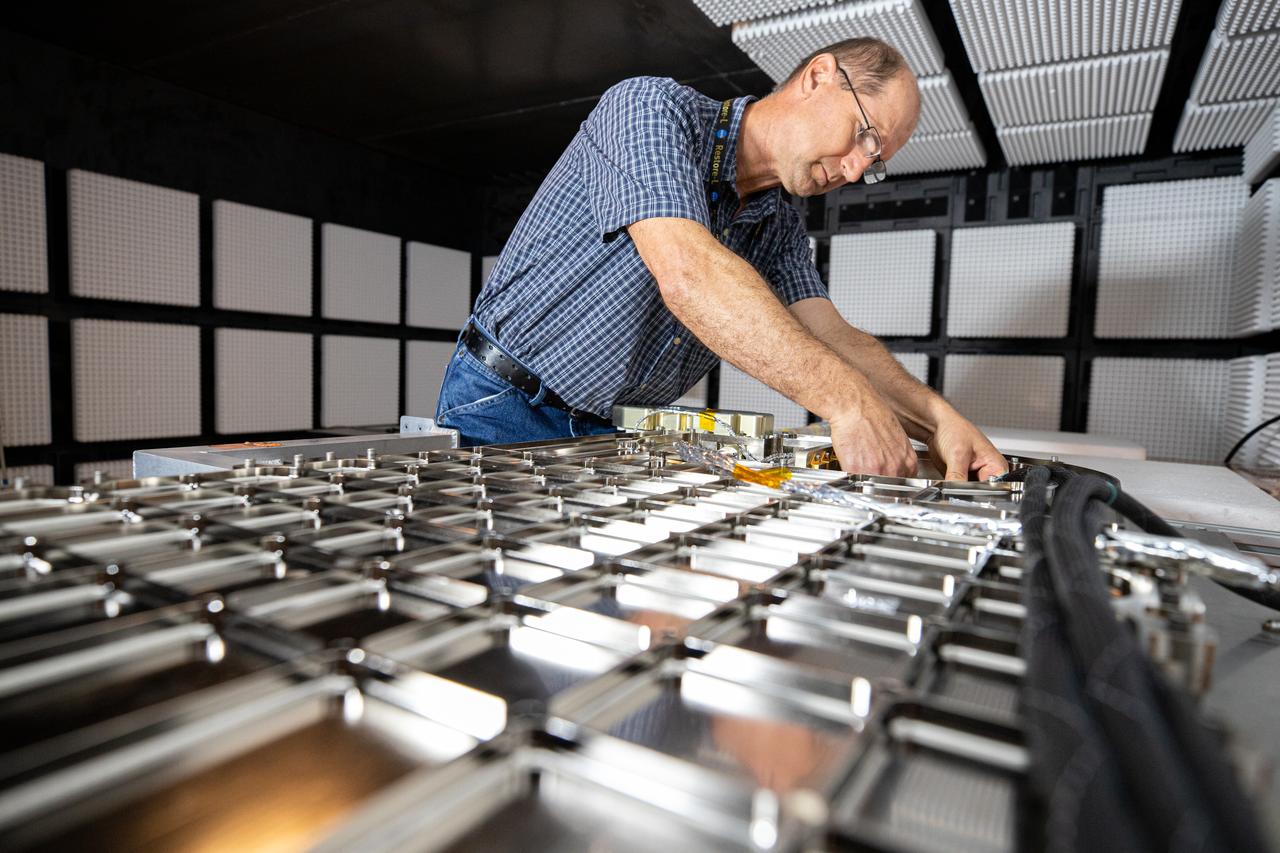
Inside the Electromagnetic Lab at NASA's Kennedy Space Center in Florida, Gabor Tamasy, Hose Management Assembly (HMA) system lead for Restore-L, prepares the HMA test unit for electromagnetic interference testing on Feb. 19, 2020. The HMA is able to extend and retract the hose, somewhat similar to the function of a tape measure. Managed by the agency's Goddard Space Flight Center in Greenbelt, Maryland, Restore-L is an inflight robotic satellite servicer spacecraft.

NASA engineers work on the Restore-L payload in the high bay inside the Space Station Processing Facility (SSPF) at NASA's Kennedy Space Center in Florida, on May 16, 2019. Restore-L, managed by the agency’s Goddard Space Flight Center in Greenbelt, Maryland, is an in-flight robotic satellite servicer spacecraft. The center is celebrating the SSPF’s 25th anniversary. The SSPF was built to process elements for the International Space Station. Now it is providing support for current and future NASA and commercial provider programs, including Commercial Resupply Services, Artemis 1, sending the first woman and next man to the Moon, and deep space destinations including Mars.
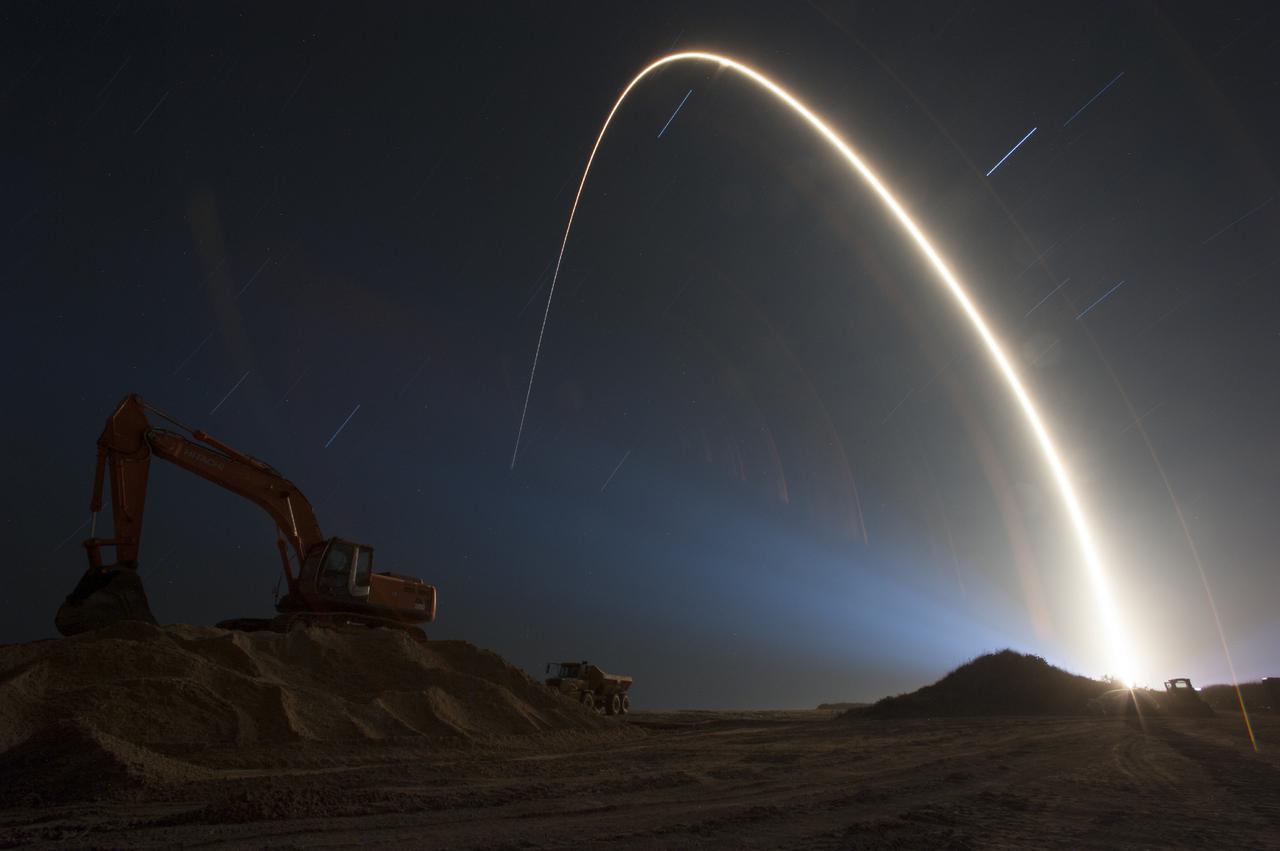
CAPE CANAVERAL, Fla. – In this time lapse photograph, a United Launch Alliance Atlas V rocket lifts off from Space Launch Complex 41 illuminating a beach restoration site at NASA's Kennedy Space Center in Florida. Liftoff was at 9:33 p.m. EST boosting the agency's Tracking and Data Relay Satellite, or TDRS-L, spacecraft to Earth orbit. The TDRS-L spacecraft is the second of three new satellites designed to ensure vital operational continuity for NASA by expanding the lifespan of the Tracking and Data Relay Satellite System TDRSS fleet, which consists of eight satellites in geosynchronous orbit. The spacecraft provide tracking, telemetry, command and high bandwidth data return services for numerous science and human exploration missions orbiting Earth. These include NASA's Hubble Space Telescope and the International Space Station. TDRS-L has a high-performance solar panel designed for more spacecraft power to meet the growing S-band communications requirements. TDRSS is one of NASA Space Communication and Navigation’s SCaN three networks providing space communications to NASA’s missions. For more information more about TDRS-L, visit: http:__www.nasa.gov_tdrs To learn more about SCaN, visit: www.nasa.gov_scan For more on beach restoration at Kennedy visit: http:__www.nasa.gov_centers_kennedy_about_sustainability_beach_erosion.html Photo credit: NASA_Tony Gray
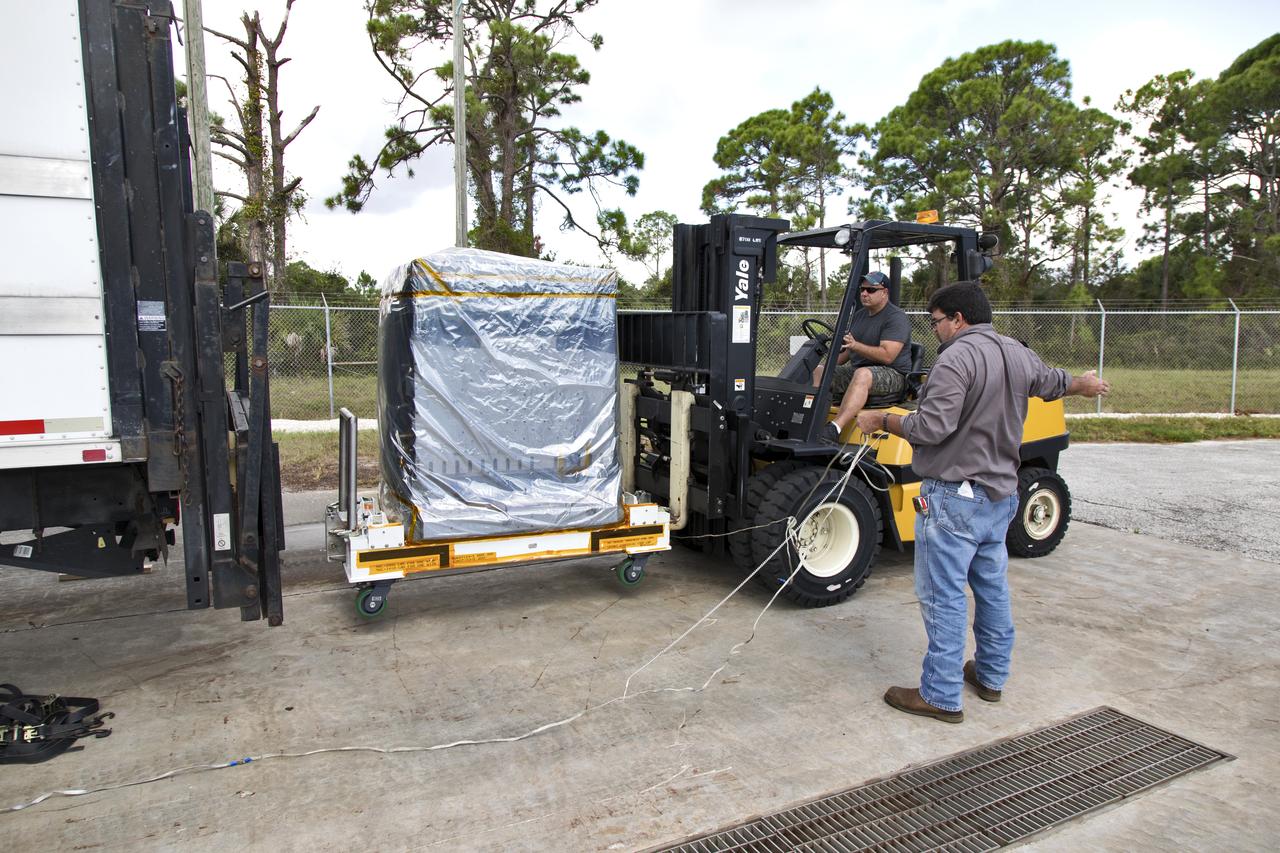
A worker uses a forklift to unload the Robotic Refueling Mission-3 (RRM3) payload from a truck at the Payload Hazardous Servicing Facility on Oct. 3, 2018, at NASA's Kennedy Space Center in Florida. The payload will be carried to the International Space Station on SpaceX's 16th Commercial Resupply Services mission. RRM3 demonstrates the transfer of xenon gas and liquid methane in microgravity, and advances technologies for storing and manipulating these cryogenic fuels robotically. RRM3 also supports development of technology for the Restore-L mission, a robotic spacecraft equipped to service satellites in-orbit.
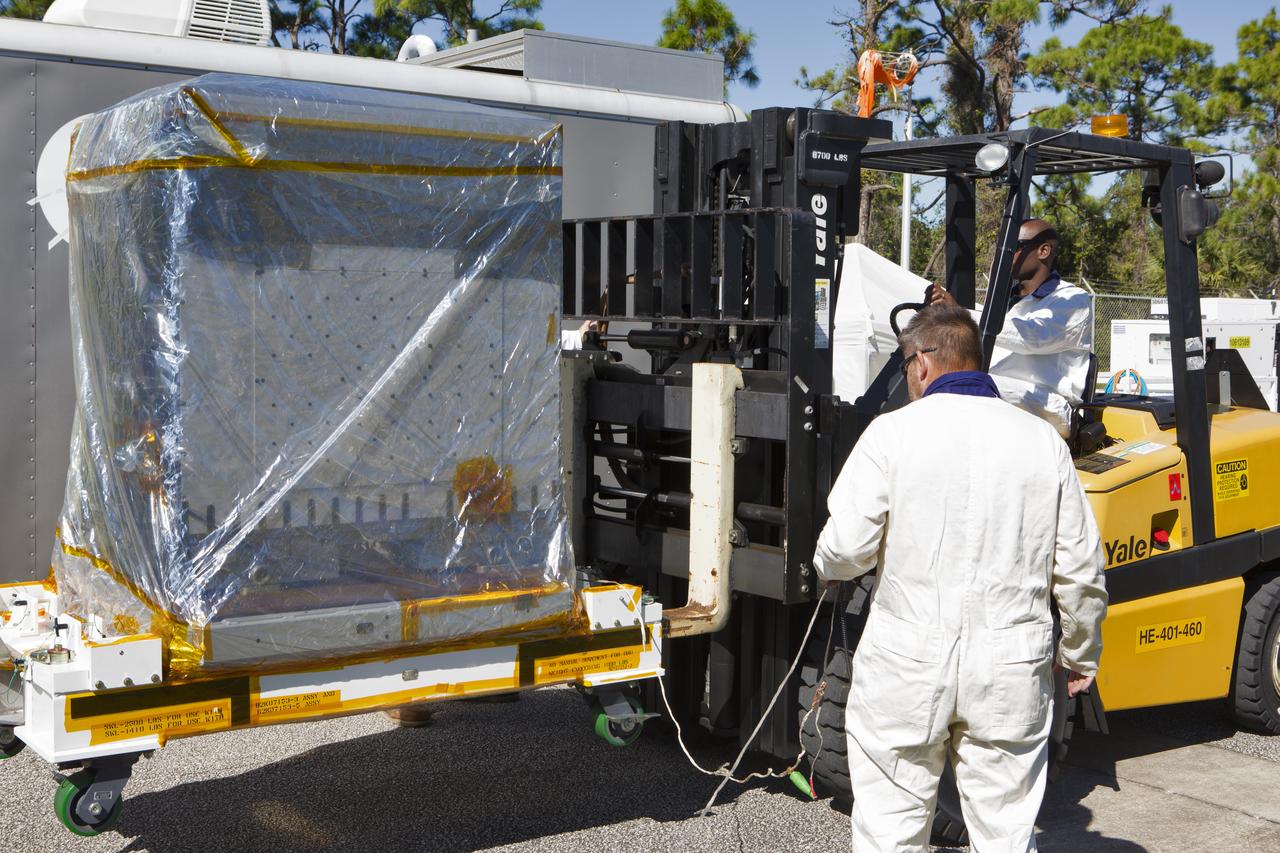
Workers prepare the Robotic Refueling Mission-3 (RRM3) payload for transport from the Fuel Transfer Building to the SpaceX facility on Oct. 30, 2018, at NASA's Kennedy Space Center in Florida. The payload will be carried to the International Space Station on SpaceX's 16th Commercial Resupply Services mission. RRM3 demonstrates the transfer of xenon gas and liquid methane in microgravity, and advances technologies for storing and manipulating these cryogenic fuels robotically. RRM3 also supports development of technology for the Restore-L mission, a robotic spacecraft equipped to service satellites in-orbit.
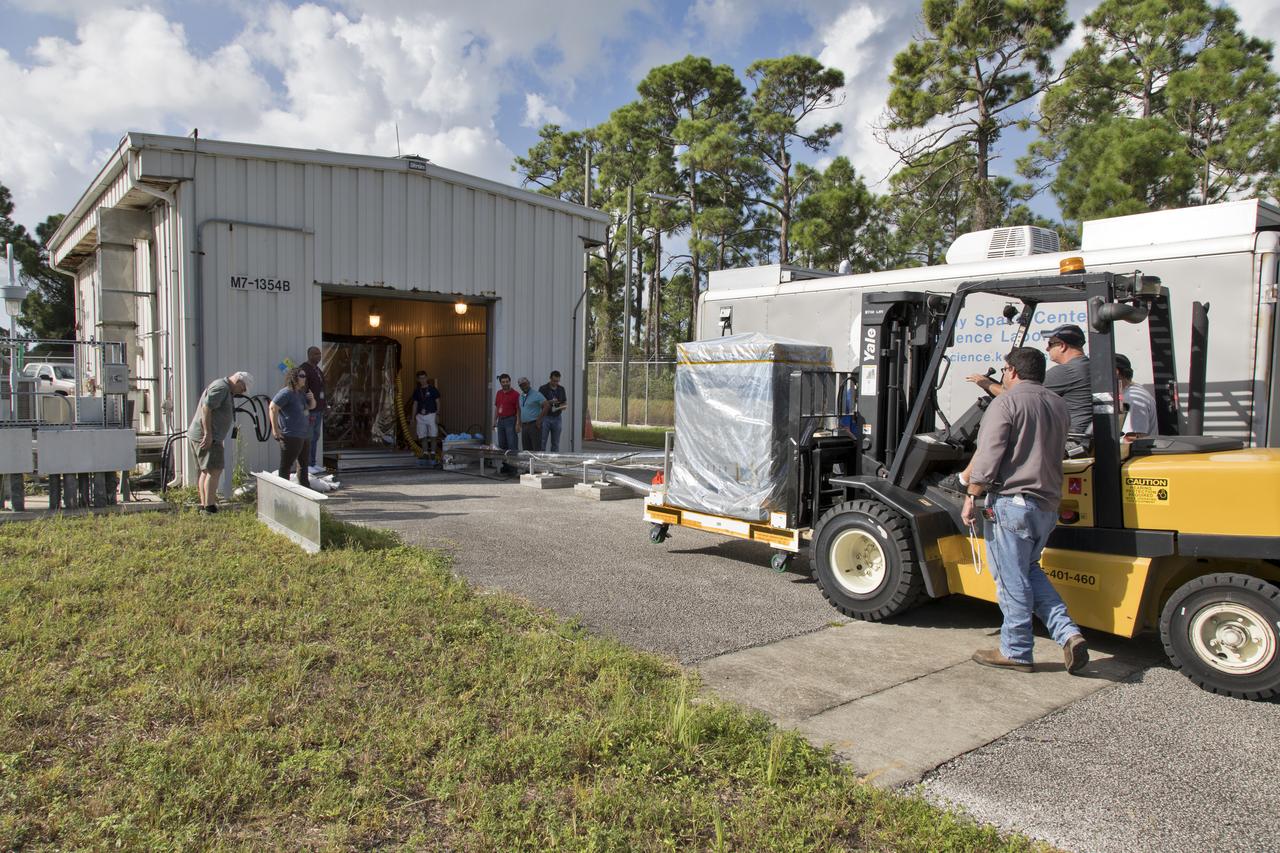
A worker uses a forklift to carry the Robotic Refueling Mission-3 (RRM3) payload to the entrance of the Payload Hazardous Servicing Facility on Oct. 3, 2018, at NASA's Kennedy Space Center in Florida. The payload will be carried to the International Space Station on SpaceX's 16th Commercial Resupply Services mission. RRM3 demonstrates the transfer of xenon gas and liquid methane in microgravity, and advances technologies for storing and manipulating these cryogenic fuels robotically. RRM3 also supports development of technology for the Restore-L mission, a robotic spacecraft equipped to service satellites in-orbit.
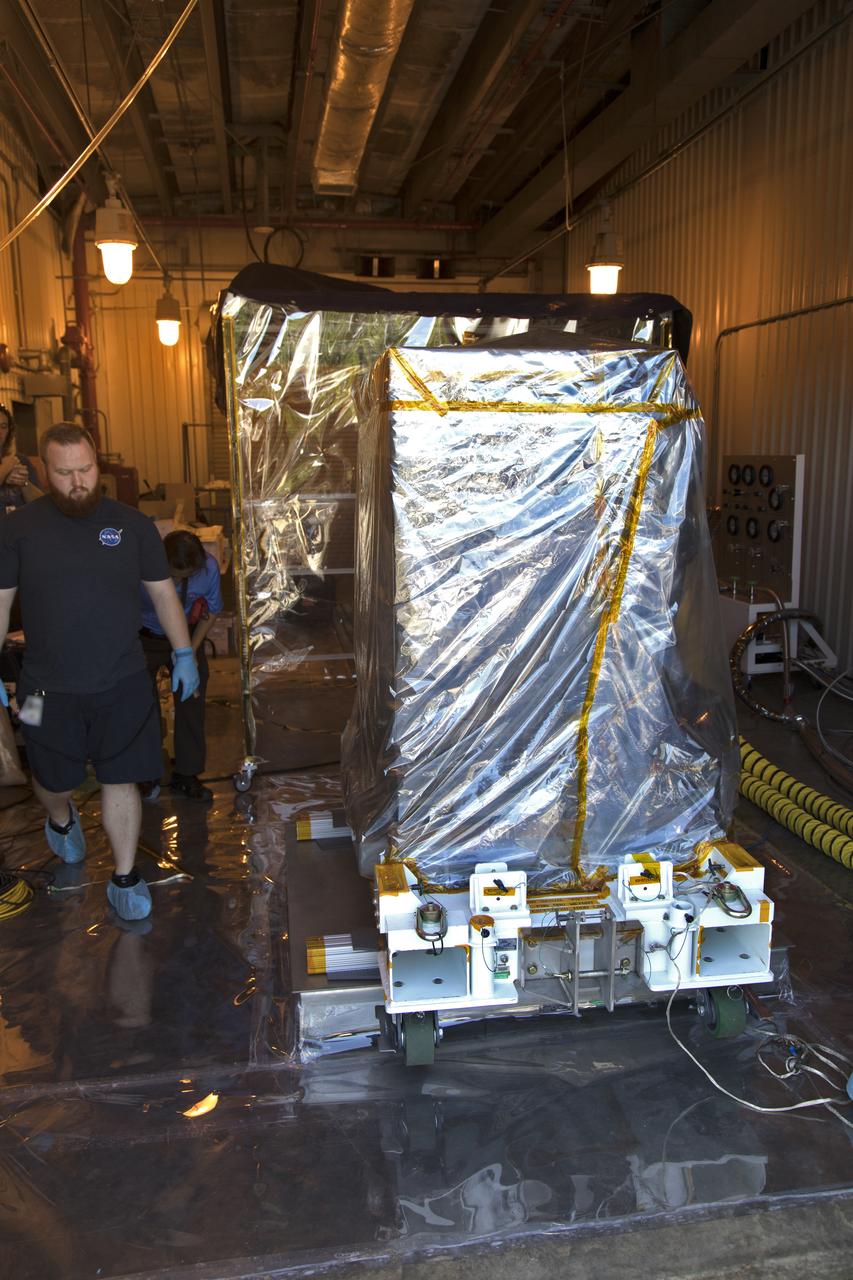
The Robotic Refueling Mission-3 (RRM3) payload is inside the Payload Hazardous Servicing Facility on Oct. 3, 2018, at NASA's Kennedy Space Center in Florida. The payload will be carried to the International Space Station on SpaceX's 16th Commercial Resupply Services mission. RRM3 demonstrates the transfer of xenon gas and liquid methane in microgravity, and advances technologies for storing and manipulating these cryogenic fuels robotically. RRM3 also supports development of technology for the Restore-L mission, a robotic spacecraft equipped to service satellites in-orbit.
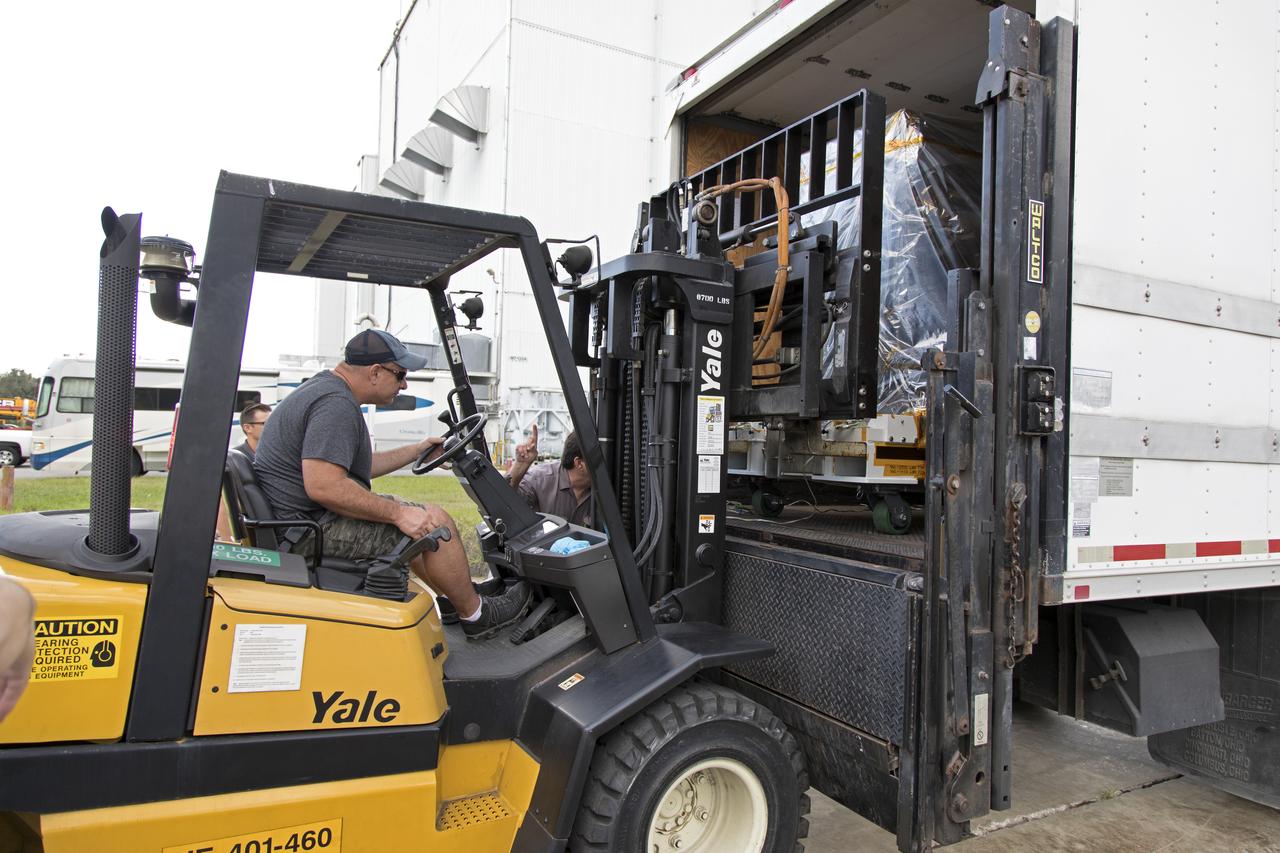
A worker uses a forklift to unload the Robotic Refueling Mission-3 (RRM3) payload from a truck at the Payload Hazardous Servicing Facility on Oct. 3, 2018, at NASA's Kennedy Space Center in Florida. The payload will be carried to the International Space Station on SpaceX's 16th Commercial Resupply Services mission. RRM3 demonstrates the transfer of xenon gas and liquid methane in microgravity, and advances technologies for storing and manipulating these cryogenic fuels robotically. RRM3 also supports development of technology for the Restore-L mission, a robotic spacecraft equipped to service satellites in-orbit.
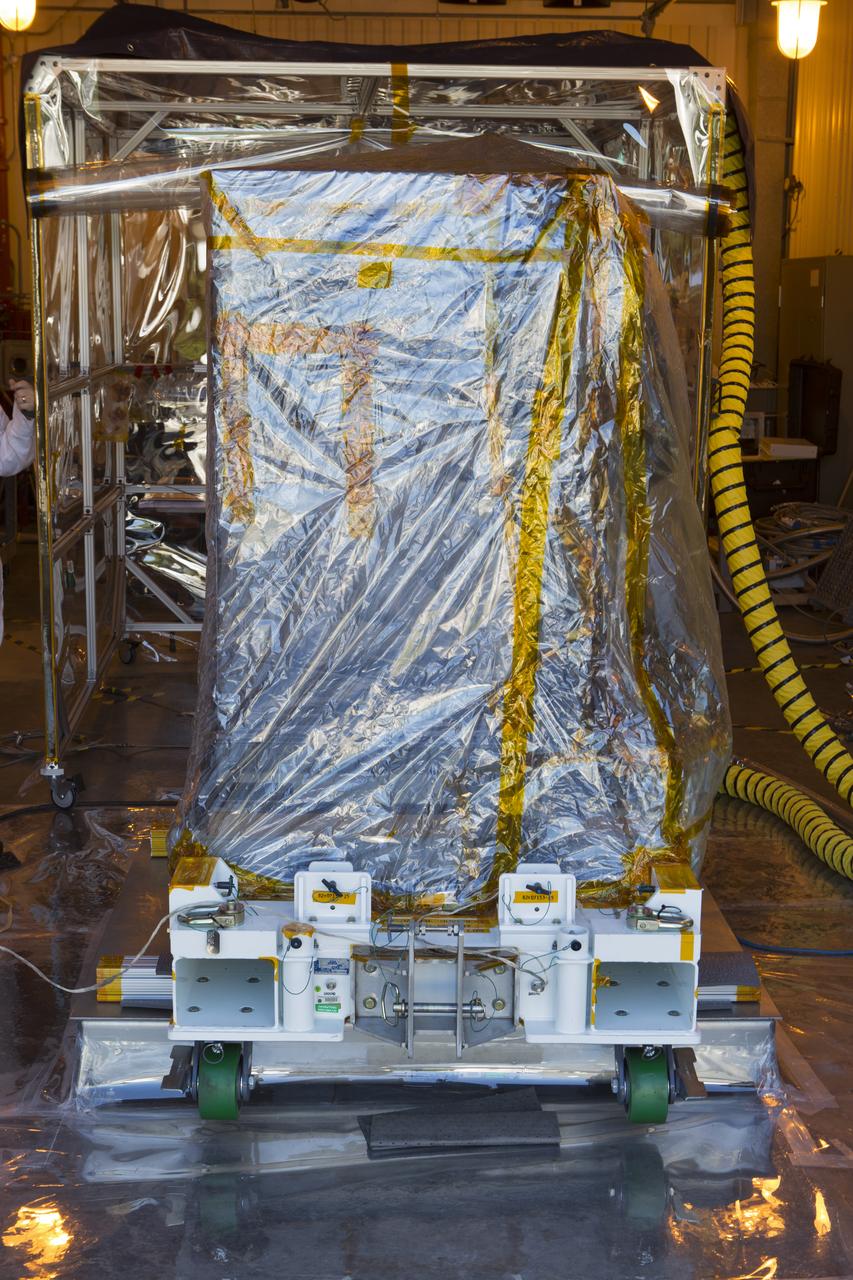
The Robotic Refueling Mission-3 (RRM3) payload is being prepared to be moved from the Fuel Transfer Building to the SpaceX facility on Oct. 30, 2018, at NASA's Kennedy Space Center in Florida. The payload will be carried to the International Space Station on SpaceX's 16th Commercial Resupply Services mission. RRM3 demonstrates the transfer of xenon gas and liquid methane in microgravity, and advances technologies for storing and manipulating these cryogenic fuels robotically. RRM3 also supports development of technology for the Restore-L mission, a robotic spacecraft equipped to service satellites in-orbit.
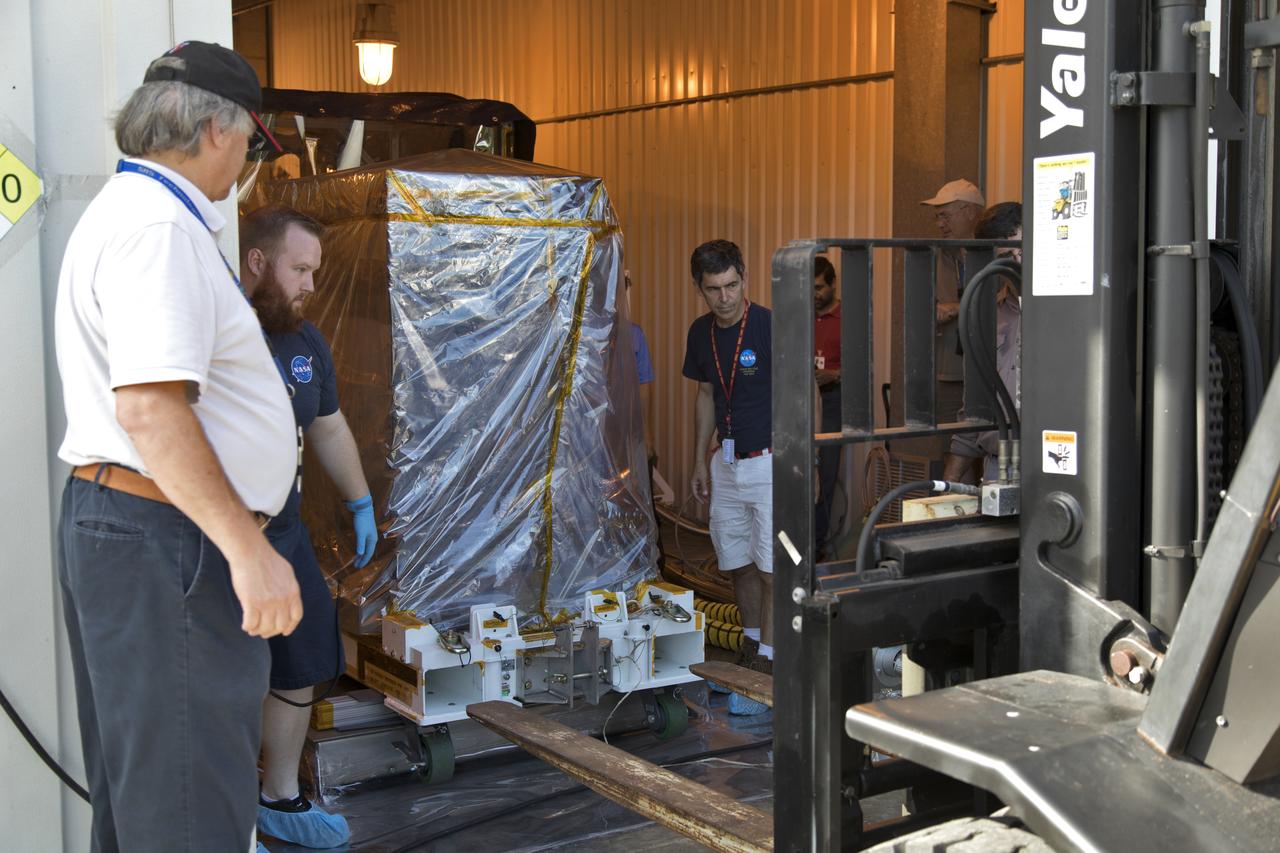
The Robotic Refueling Mission-3 (RRM3) payload is unloaded from a forklift inside the Payload Hazardous Servicing Facility on Oct. 3, 2018, at NASA's Kennedy Space Center in Florida. The payload will be carried to the International Space Station on SpaceX's 16th Commercial Resupply Services mission. RRM3 demonstrates the transfer of xenon gas and liquid methane in microgravity, and advances technologies for storing and manipulating these cryogenic fuels robotically. RRM3 also supports development of technology for the Restore-L mission, a robotic spacecraft equipped to service satellites in-orbit.
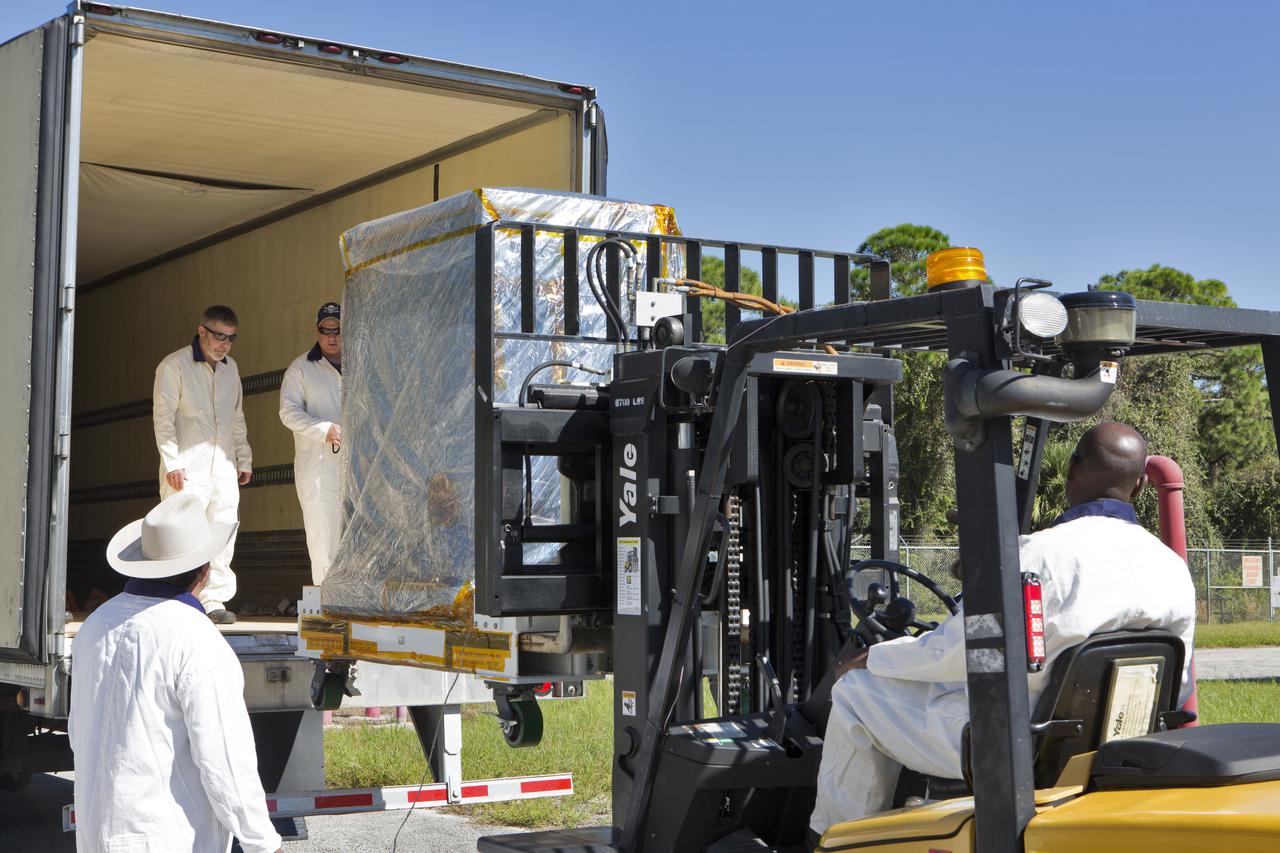
A forklift is used to load the Robotic Refueling Mission-3 (RRM3) payload onto a truck at the Fuel Transfer Building for transport to the SpaceX facility on Oct. 30, 2018, at NASA's Kennedy Space Center in Florida. The payload will be carried to the International Space Station on SpaceX's 16th Commercial Resupply Services mission. RRM3 demonstrates the transfer of xenon gas and liquid methane in microgravity, and advances technologies for storing and manipulating these cryogenic fuels robotically. RRM3 also supports development of technology for the Restore-L mission, a robotic spacecraft equipped to service satellites in-orbit.
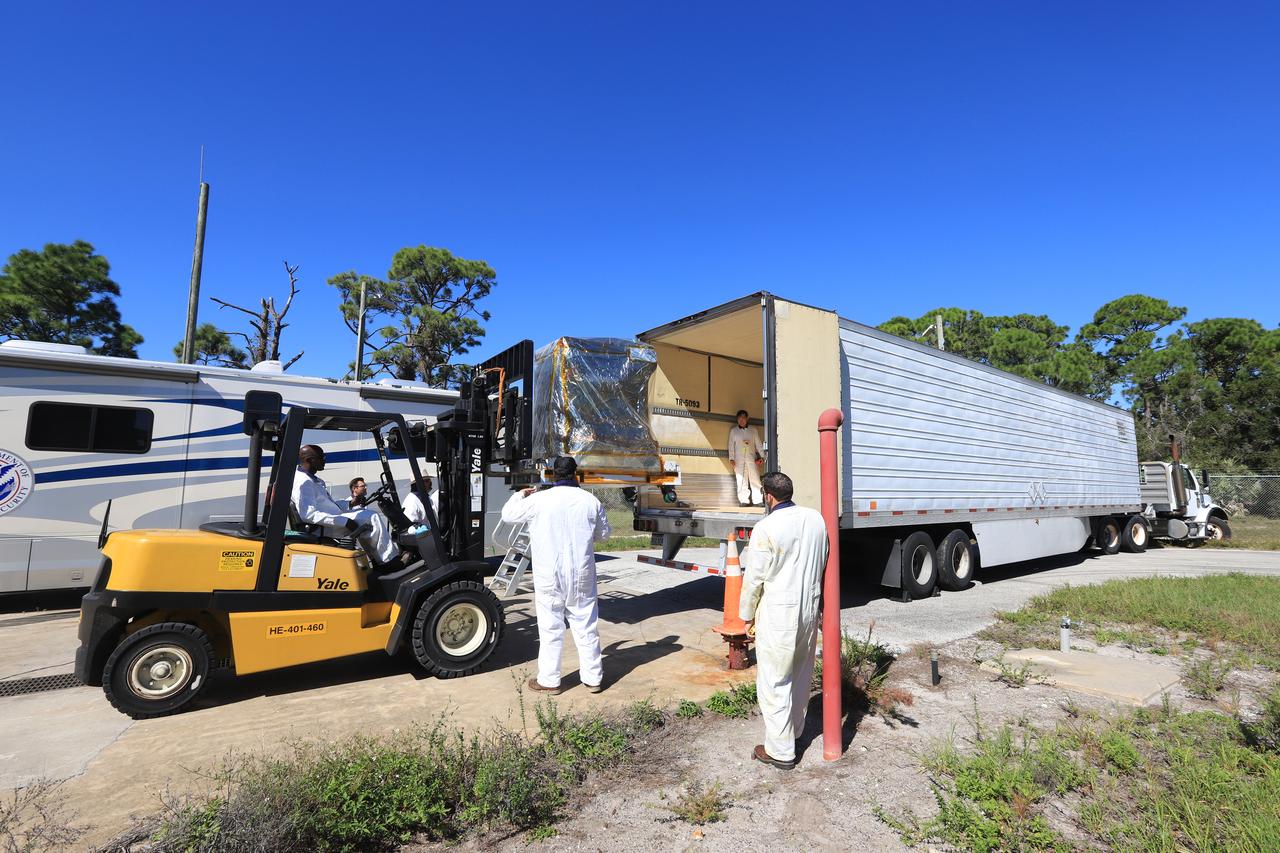
A forklift is used to load the Robotic Refueling Mission-3 (RRM3) payload onto a truck at the Fuel Transfer Building for transport to the SpaceX facility on Oct. 30, 2018, at NASA's Kennedy Space Center in Florida. The payload will be carried to the International Space Station on SpaceX's 16th Commercial Resupply Services mission. RRM3 demonstrates the transfer of xenon gas and liquid methane in microgravity, and advances technologies for storing and manipulating these cryogenic fuels robotically. RRM3 also supports development of technology for the Restore-L mission, a robotic spacecraft equipped to service satellites in-orbit.
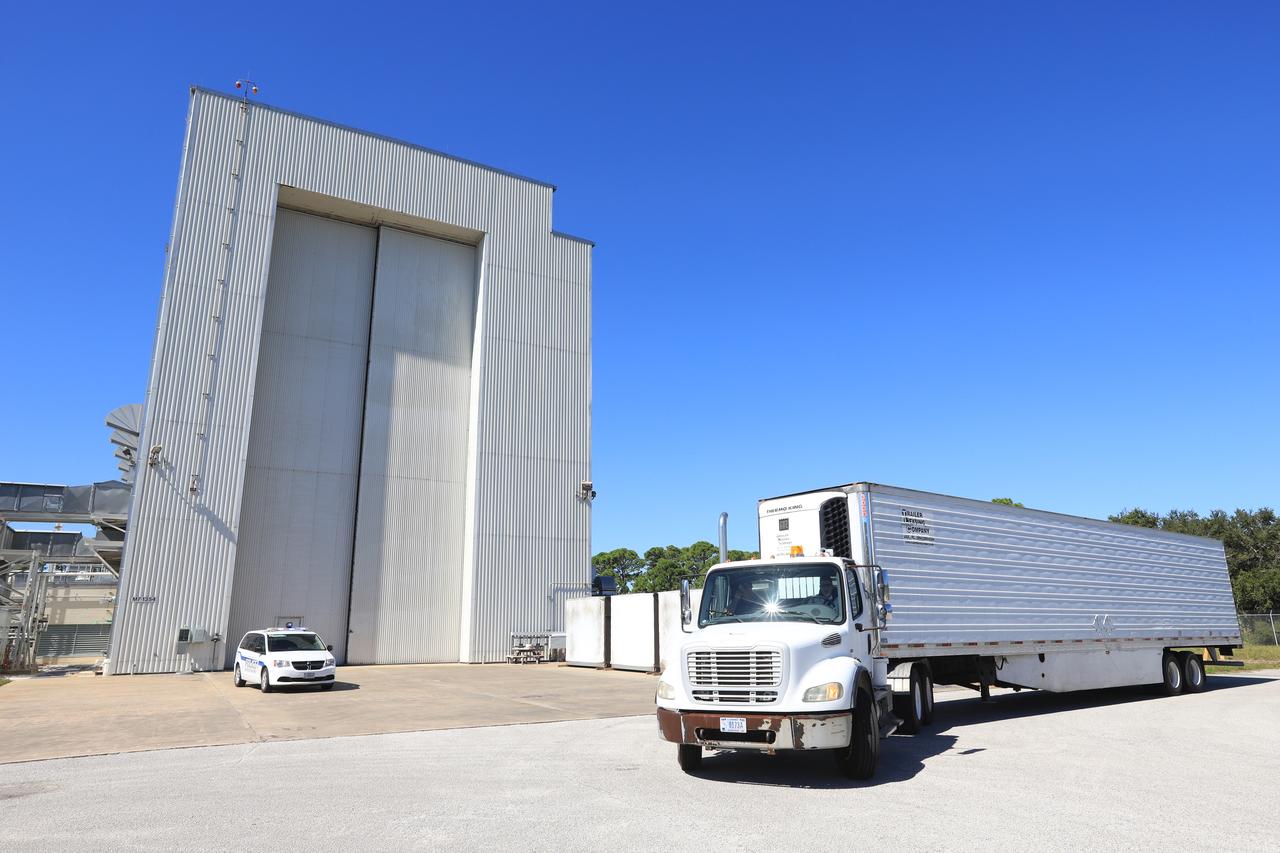
A truck containing the Robotic Refueling Mission-3 (RRM3) payload departs the Fuel Transfer Building near the Payload Hazardous Servicing Facility for transport to the SpaceX facility on Oct. 30, 2018, at NASA's Kennedy Space Center in Florida. The payload will be carried to the International Space Station on SpaceX's 16th Commercial Resupply Services mission. RRM3 demonstrates the transfer of xenon gas and liquid methane in microgravity, and advances technologies for storing and manipulating these cryogenic fuels robotically. RRM3 also supports development of technology for the Restore-L mission, a robotic spacecraft equipped to service satellites in-orbit.
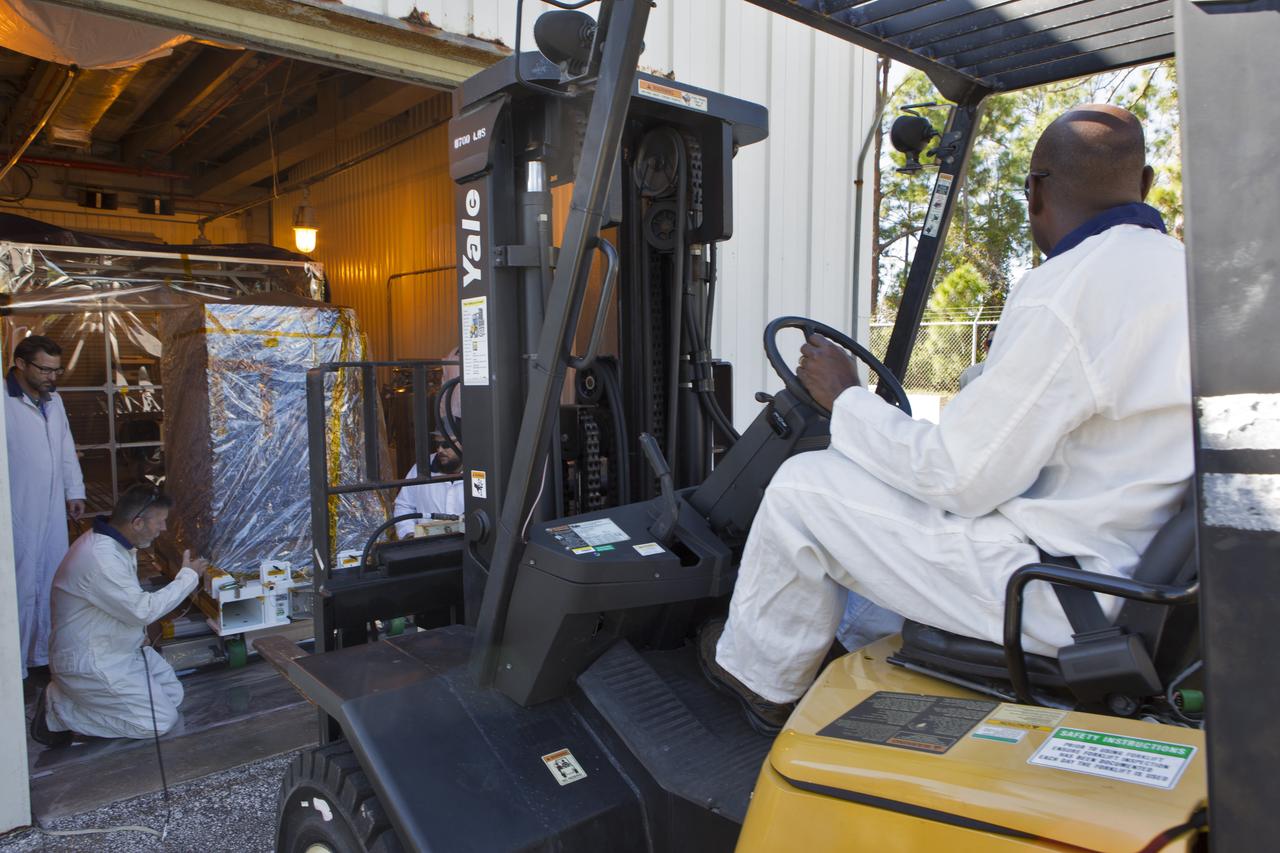
A forklift is being used to lift the Robotic Refueling Mission-3 (RRM3) payload out of the Fuel Transfer Building on Oct. 30, 2018, to be transported to the SpaceX facility at NASA's Kennedy Space Center in Florida. The payload will be carried to the International Space Station on SpaceX's 16th Commercial Resupply Services mission. RRM3 demonstrates the transfer of xenon gas and liquid methane in microgravity, and advances technologies for storing and manipulating these cryogenic fuels robotically. RRM3 also supports development of technology for the Restore-L mission, a robotic spacecraft equipped to service satellites in-orbit.
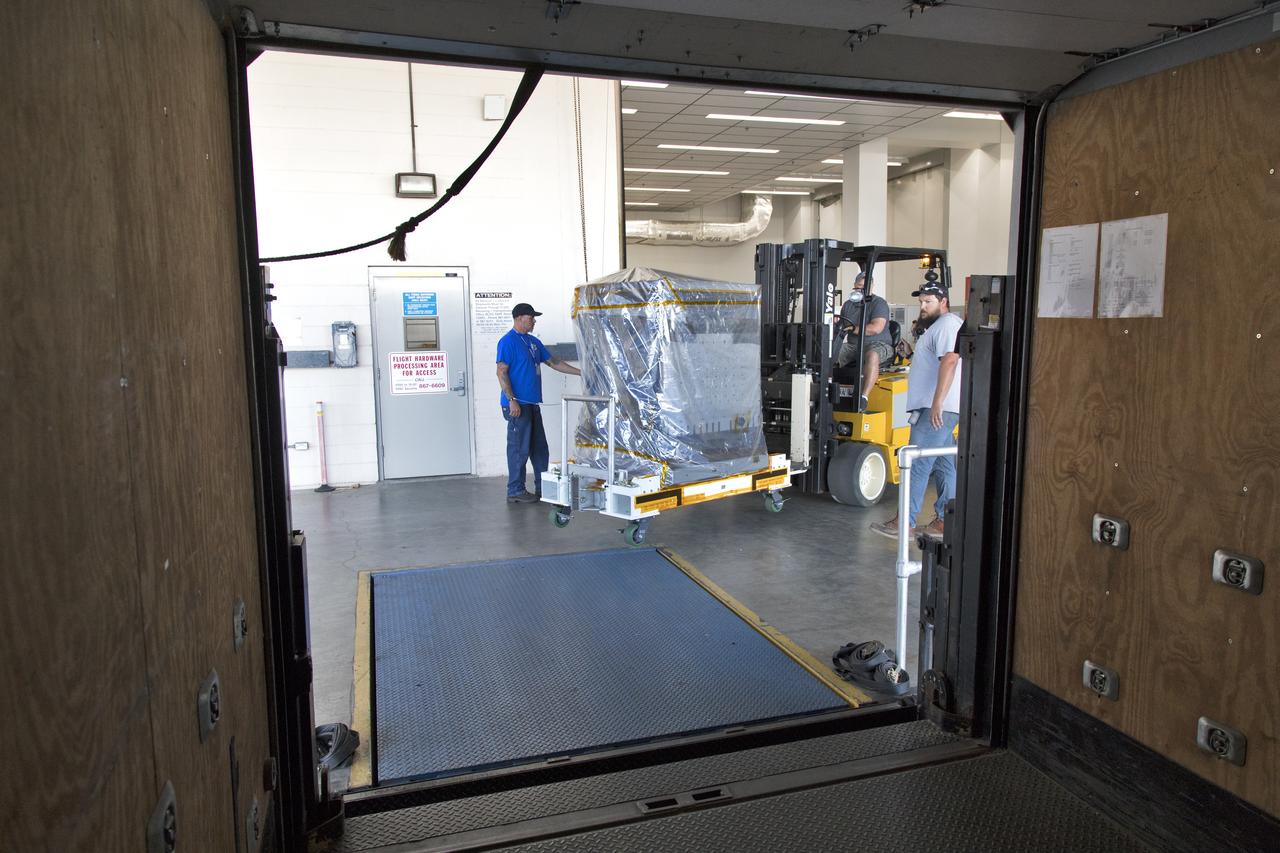
Workers prepare to transfer the Robotic Refueling Mission-3 (RRM3) payload from the Space Station Processing Facility high bay to the Payload Hazardous Servicing Facility on Oct. 3, 2018, at NASA's Kennedy Space Center in Florida. The payload will be carried to the International Space Station on SpaceX's 16th Commercial Resupply Services mission. RRM3 demonstrates the transfer of xenon gas and liquid methane in microgravity, and advances technologies for storing and manipulating these cryogenic fuels robotically. RRM3 also supports development of technology for the Restore-L mission, a robotic spacecraft equipped to service satellites in-orbit.
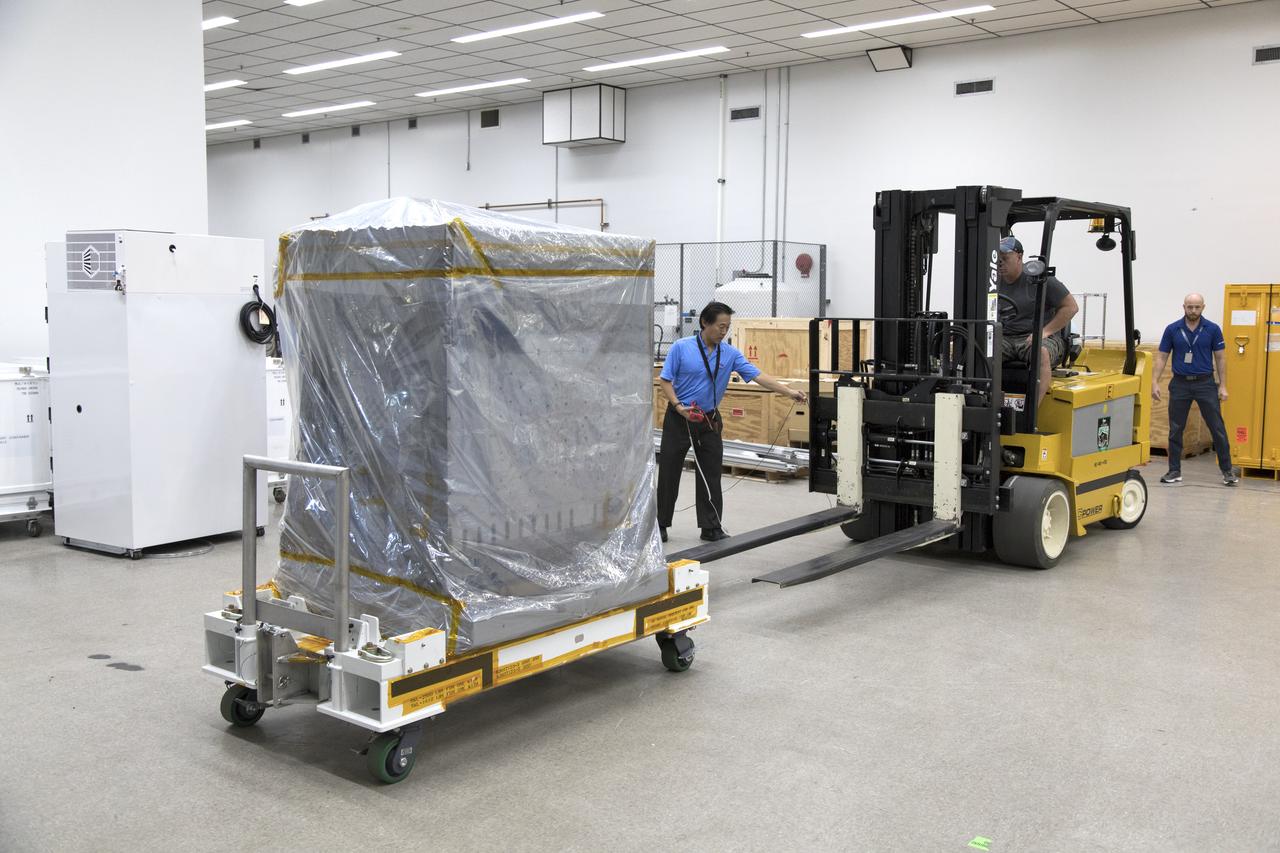
Workers prepare the Robotic Refueling Mission-3 (RRM3) payload to be transferred from the Space Station Processing Facility high bay to the Payload Hazardous Servicing Facility on Oct. 3, 2018, at NASA's Kennedy Space Center in Florida. The payload will be carried to the International Space Station on SpaceX's 16th Commercial Resupply Services mission. RRM3 demonstrates the transfer of xenon gas and liquid methane in microgravity, and advances technologies for storing and manipulating these cryogenic fuels robotically. RRM3 also supports development of technology for the Restore-L mission, a robotic spacecraft equipped to service satellites in-orbit.
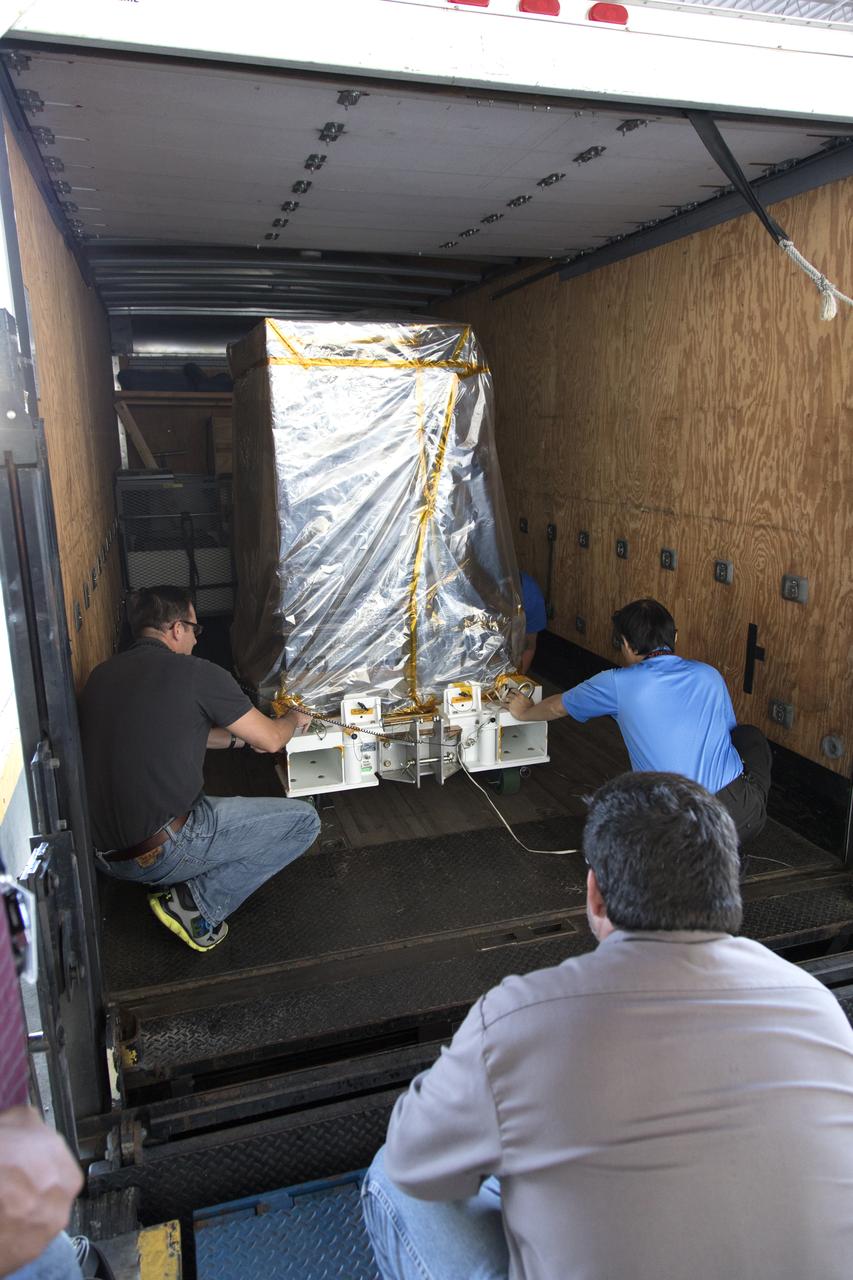
Workers load the Robotic Refueling Mission-3 (RRM3) payload onto a truck at the Space Station Processing Facility for transfer to the Payload Hazardous Servicing Facility on Oct. 3, 2018, at NASA's Kennedy Space Center in Florida. The payload will be carried to the International Space Station on SpaceX's 16th Commercial Resupply Services mission. RRM3 demonstrates the transfer of xenon gas and liquid methane in microgravity, and advances technologies for storing and manipulating these cryogenic fuels robotically. RRM3 also supports development of technology for the Restore-L mission, a robotic spacecraft equipped to service satellites in-orbit.
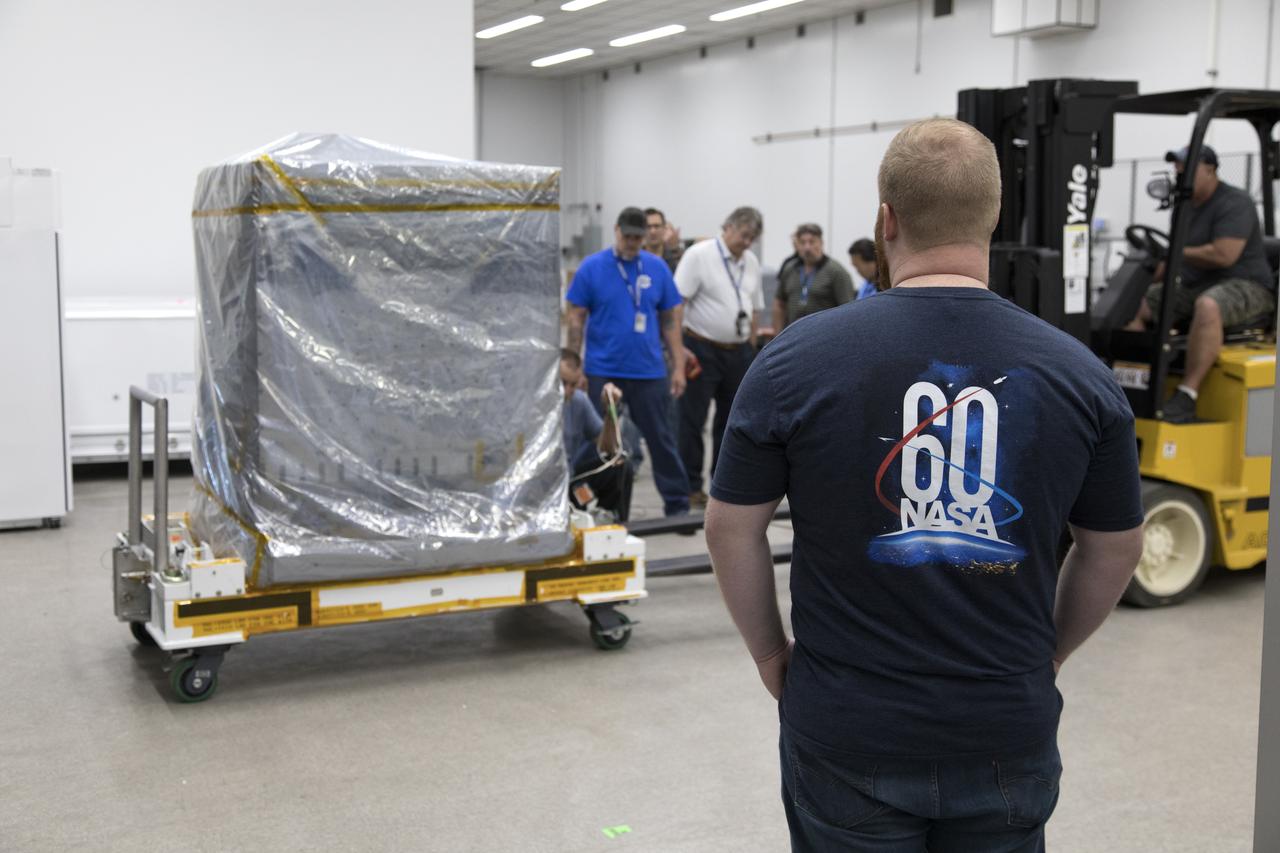
Workers prepare the Robotic Refueling Mission-3 (RRM3) payload to be transferred from the Space Station Processing Facility high bay to the Payload Hazardous Servicing Facility on Oct. 3, 2018, at NASA's Kennedy Space Center in Florida. The payload will be carried to the International Space Station on SpaceX's 16th Commercial Resupply Services mission. RRM3 demonstrates the transfer of xenon gas and liquid methane in microgravity, and advances technologies for storing and manipulating these cryogenic fuels robotically. RRM3 also supports development of technology for the Restore-L mission, a robotic spacecraft equipped to service satellites in-orbit.
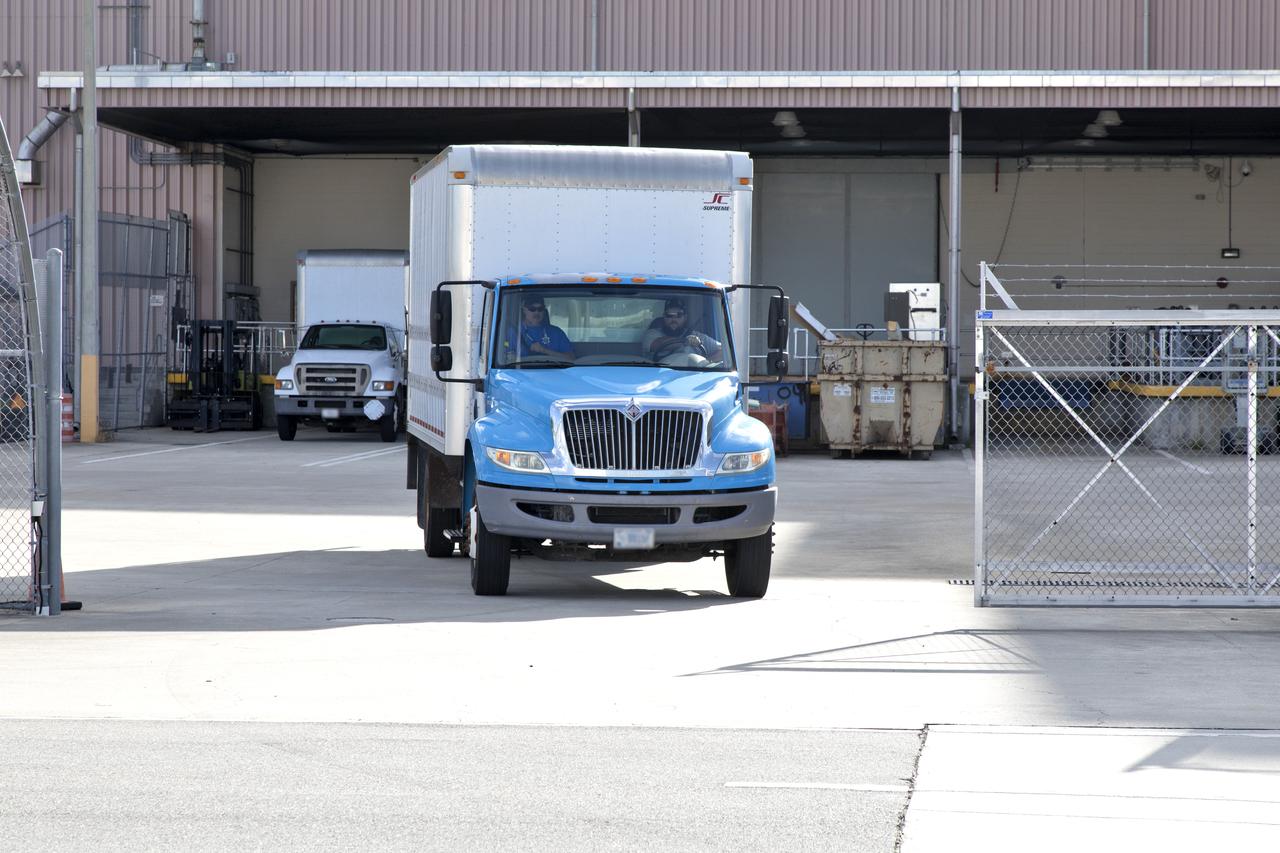
A truck carrying the Robotic Refueling Mission-3 (RRM3) payload departs from the Space Station Processing Facility on its way to the Payload Hazardous Servicing Facility on Oct. 3, 2018, at NASA's Kennedy Space Center in Florida. The payload will be carried to the International Space Station on SpaceX's 16th Commercial Resupply Services mission. RRM3 demonstrates the transfer of xenon gas and liquid methane in microgravity, and advances technologies for storing and manipulating these cryogenic fuels robotically. RRM3 also supports development of technology for the Restore-L mission, a robotic spacecraft equipped to service satellites in-orbit.
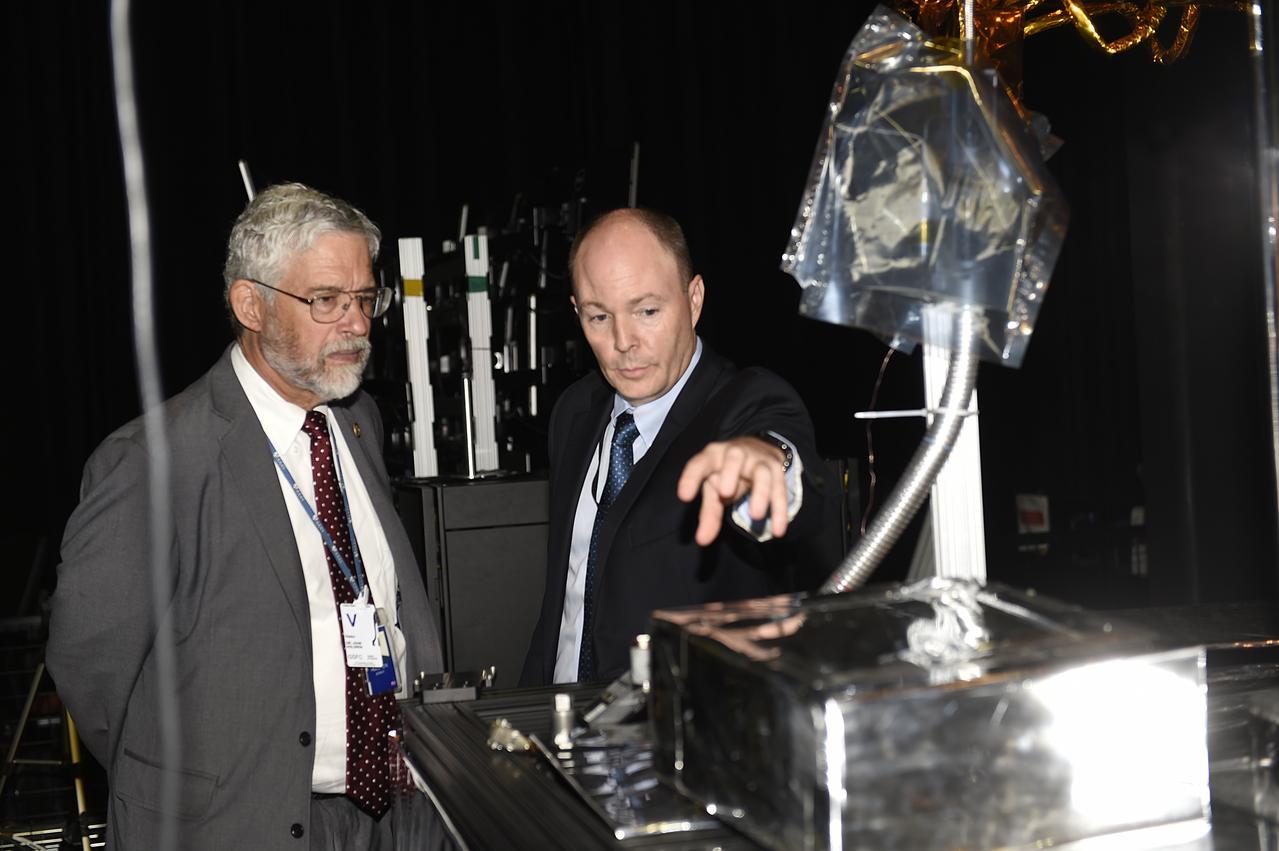
Benjamin Reed, deputy program manager of NASA’s Satellite Servicing Capabilities Office, shows Dr. Holdren the technologies that NASA is developing for the Restore-L satellite servicing mission. NASA will launch the Restore-L servicer in 2020 to refuel a live satellite and demonstrate that a suite of satellite-servicing technologies are operational. More info: Asteroid Redirect Mission Update – On Sept. 14, 2016, NASA provided an update on the Asteroid Redirect Mission (ARM) and how it contributes to the agency’s journey to Mars and protection of Earth. The presentation took place in the Robotic Operations Center at NASA’s Goddard Space Flight Center in Greenbelt, Maryland. Assistant to the President for Science and Technology Dr. John P. Holdren, NASA Administrator Charles Bolden and NASA’s ARM Program Director, Dr. Michele Gates discussed the latest update regarding the mission. They explained the mission’s scientific and technological benefits and how ARM will demonstrate technology for defending Earth from potentially hazardous asteroids. The briefing aired live on NASA TV and the agency’s website. For more information about ARM go to <a href="https://www.nasa.gov/arm" rel="nofollow">www.nasa.gov/arm</a>. Credit: NASA/Goddard/Debbie Mccallum <b><a href="http://www.nasa.gov/audience/formedia/features/MP_Photo_Guidelines.html" rel="nofollow">NASA image use policy.</a></b> <b><a href="http://www.nasa.gov/centers/goddard/home/index.html" rel="nofollow">NASA Goddard Space Flight Center</a></b> enables NASA’s mission through four scientific endeavors: Earth Science, Heliophysics, Solar System Exploration, and Astrophysics. Goddard plays a leading role in NASA’s accomplishments by contributing compelling scientific knowledge to advance the Agency’s mission. <b>Follow us on <a href="http://twitter.com/NASAGoddardPix" rel="nofollow">Twitter</a></b> <b>Like us on <a href="http://www.facebook.com/pages/Greenbelt-MD/NASA-Goddard/395013845897?ref=tsd" rel="nofollow">Facebook</a></b> <b>Find us on <a href="http://instagrid.me/nasagoddard/?vm=grid" rel="nofollow">Instagram</a></b>
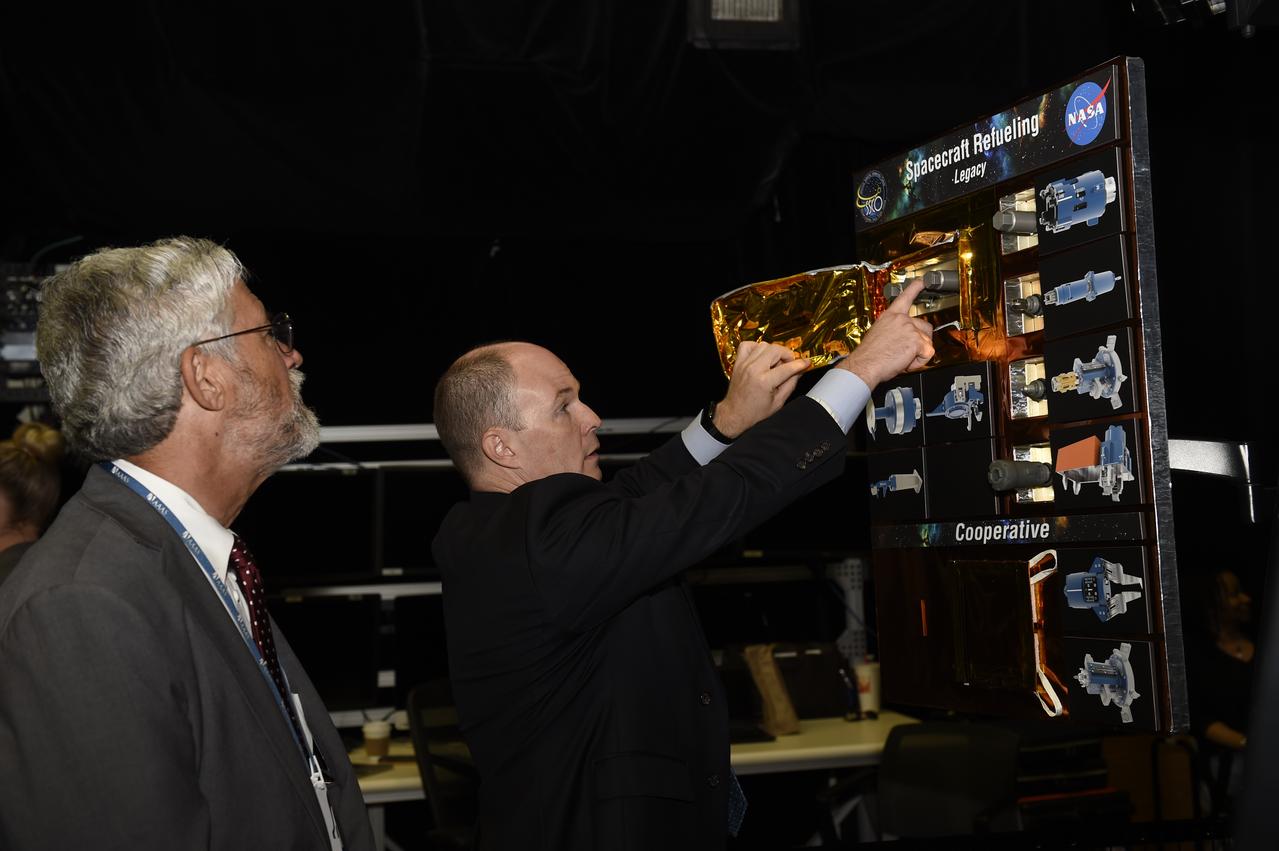
Benjamin Reed (right), deputy program manager of NASA’s Satellite Servicing Capabilities Office, shows Dr. Holdren the technologies that NASA is developing for the Restore-L satellite servicing mission. NASA will launch the Restore-L servicer in 2020 to refuel a live satellite and demonstrate that a suite of satellite-servicing technologies are operational. More info: Asteroid Redirect Mission Update – On Sept. 14, 2016, NASA provided an update on the Asteroid Redirect Mission (ARM) and how it contributes to the agency’s journey to Mars and protection of Earth. The presentation took place in the Robotic Operations Center at NASA’s Goddard Space Flight Center in Greenbelt, Maryland. Assistant to the President for Science and Technology Dr. John P. Holdren, NASA Administrator Charles Bolden and NASA’s ARM Program Director, Dr. Michele Gates discussed the latest update regarding the mission. They explained the mission’s scientific and technological benefits and how ARM will demonstrate technology for defending Earth from potentially hazardous asteroids. The briefing aired live on NASA TV and the agency’s website. For more information about ARM go to <a href="https://www.nasa.gov/arm" rel="nofollow">www.nasa.gov/arm</a>. Credit: NASA/Goddard/Debbie Mccallum <b><a href="http://www.nasa.gov/audience/formedia/features/MP_Photo_Guidelines.html" rel="nofollow">NASA image use policy.</a></b> <b><a href="http://www.nasa.gov/centers/goddard/home/index.html" rel="nofollow">NASA Goddard Space Flight Center</a></b> enables NASA’s mission through four scientific endeavors: Earth Science, Heliophysics, Solar System Exploration, and Astrophysics. Goddard plays a leading role in NASA’s accomplishments by contributing compelling scientific knowledge to advance the Agency’s mission. <b>Follow us on <a href="http://twitter.com/NASAGoddardPix" rel="nofollow">Twitter</a></b> <b>Like us on <a href="http://www.facebook.com/pages/Greenbelt-MD/NASA-Goddard/395013845897?ref=tsd" rel="nofollow">Facebook</a></b> <b>Find us on <a href="http://instagrid.me/nasagoddard/?vm=grid" rel="nofollow">Instagram</a></b>
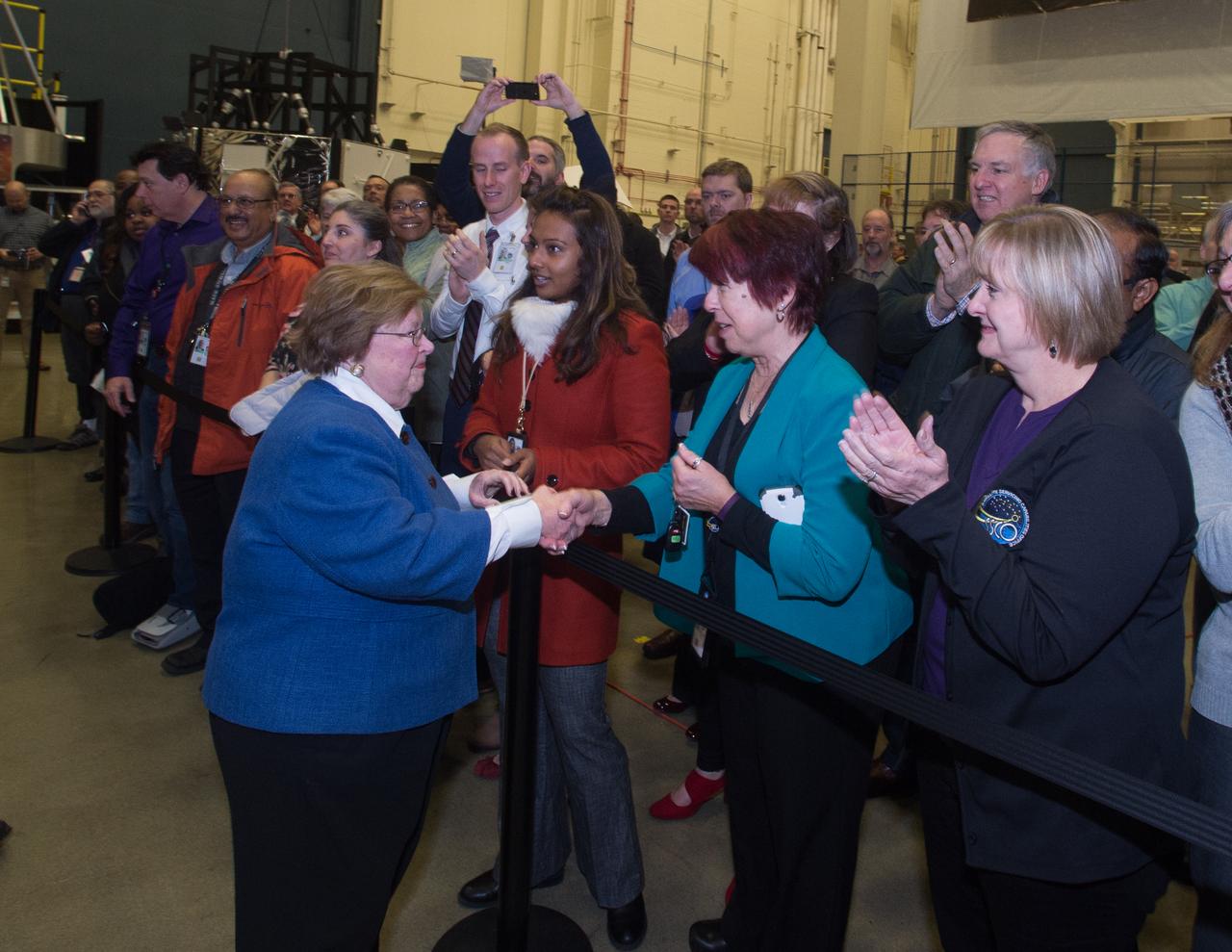
Sen. Barbara Mikulski participated in a ribbon cutting at NASA’s Goddard Space Flight Center on January 6th, 2016, to officially open the new Robotic Operations Center (ROC) developed by the Satellite Servicing Capabilities Office. Within the ROC's black walls, NASA is testing technologies and operational procedures for science and exploration missions, including the Restore-L satellite servicing mission and also the Asteroid Redirect Mission. During her tour of the ROC, Sen. Mikulski saw first-hand an early version of the NASA Servicing Arm, a 2-meter-class robot with the dexterity to grasp and refuel a satellite on orbit. She also heard a description of Raven, a payload launching to the International Space Station that will demonstrate real-time, relative space navigation technology. The robotic technologies that NASA is developing within the ROC also support the Journey to Mars. Learn more about NASA’s satellite servicing technologies at <a href="http://ssco.gsfc.nasa.gov/" rel="nofollow">ssco.gsfc.nasa.gov/</a>. Image credit: NASA/Bill Hrybyk Read more: <a href="http://www.nasa.gov/feature/goddard/2016/maryland-sen-barbara-mikulski-visits-nasa-goddard" rel="nofollow">www.nasa.gov/feature/goddard/2016/maryland-sen-barbara-mi...</a> <b><a href="http://www.nasa.gov/audience/formedia/features/MP_Photo_Guidelines.html" rel="nofollow">NASA image use policy.</a></b> <b><a href="http://www.nasa.gov/centers/goddard/home/index.html" rel="nofollow">NASA Goddard Space Flight Center</a></b> enables NASA’s mission through four scientific endeavors: Earth Science, Heliophysics, Solar System Exploration, and Astrophysics. Goddard plays a leading role in NASA’s accomplishments by contributing compelling scientific knowledge to advance the Agency’s mission. <b>Follow us on <a href="http://twitter.com/NASAGoddardPix" rel="nofollow">Twitter</a></b> <b>Like us on <a href="http://www.facebook.com/pages/Greenbelt-MD/NASA-Goddard/395013845897?ref=tsd" rel="nofollow">Facebook</a></b> <b>Find us on <a href="http://instagrid.me/nasagoddard/?vm=grid" rel="nofollow">Instagram</a></b>
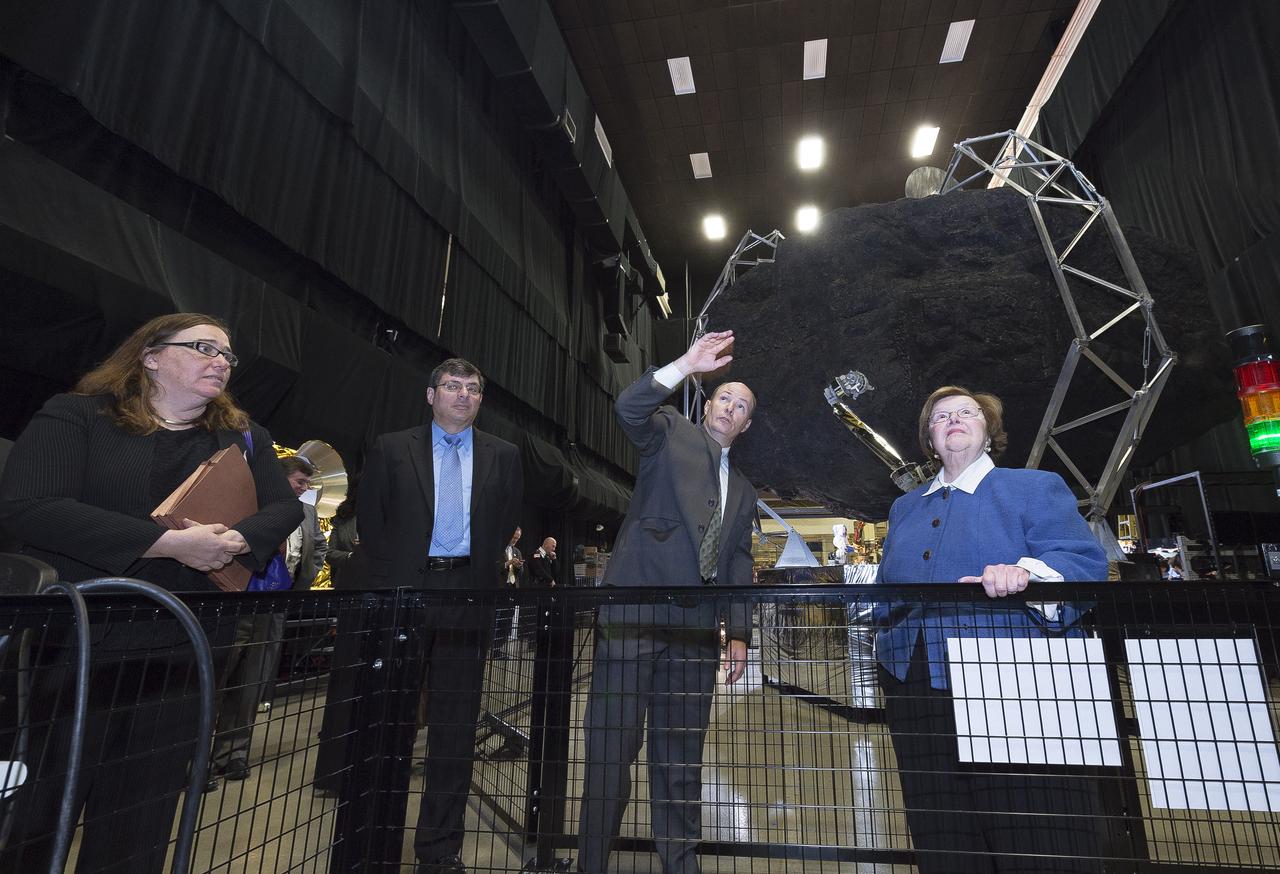
Sen. Barbara Mikulski participated in a ribbon cutting at NASA’s Goddard Space Flight Center on January 6th, 2016, to officially open the new Robotic Operations Center (ROC) developed by the Satellite Servicing Capabilities Office. Within the ROC's black walls, NASA is testing technologies and operational procedures for science and exploration missions, including the Restore-L satellite servicing mission and also the Asteroid Redirect Mission. During her tour of the ROC, Sen. Mikulski saw first-hand an early version of the NASA Servicing Arm, a 2-meter-class robot with the dexterity to grasp and refuel a satellite on orbit. She also heard a description of Raven, a payload launching to the International Space Station that will demonstrate real-time, relative space navigation technology. The robotic technologies that NASA is developing within the ROC also support the Journey to Mars. Learn more about NASA’s satellite servicing technologies at <a href="http://ssco.gsfc.nasa.gov/" rel="nofollow">ssco.gsfc.nasa.gov/</a>. Read more: <a href="http://www.nasa.gov/feature/goddard/2016/maryland-sen-barbara-mikulski-visits-nasa-goddard" rel="nofollow">www.nasa.gov/feature/goddard/2016/maryland-sen-barbara-mi...</a> Credit: NASA/Goddard/Chris Gunn <b><a href="http://www.nasa.gov/audience/formedia/features/MP_Photo_Guidelines.html" rel="nofollow">NASA image use policy.</a></b> <b><a href="http://www.nasa.gov/centers/goddard/home/index.html" rel="nofollow">NASA Goddard Space Flight Center</a></b> enables NASA’s mission through four scientific endeavors: Earth Science, Heliophysics, Solar System Exploration, and Astrophysics. Goddard plays a leading role in NASA’s accomplishments by contributing compelling scientific knowledge to advance the Agency’s mission. <b>Follow us on <a href="http://twitter.com/NASAGoddardPix" rel="nofollow">Twitter</a></b> <b>Like us on <a href="http://www.facebook.com/pages/Greenbelt-MD/NASA-Goddard/395013845897?ref=tsd" rel="nofollow">Facebook</a></b> <b>Find us on <a href="http://instagrid.me/nasagoddard/?vm=grid" rel="nofollow">Instagram</a></b>
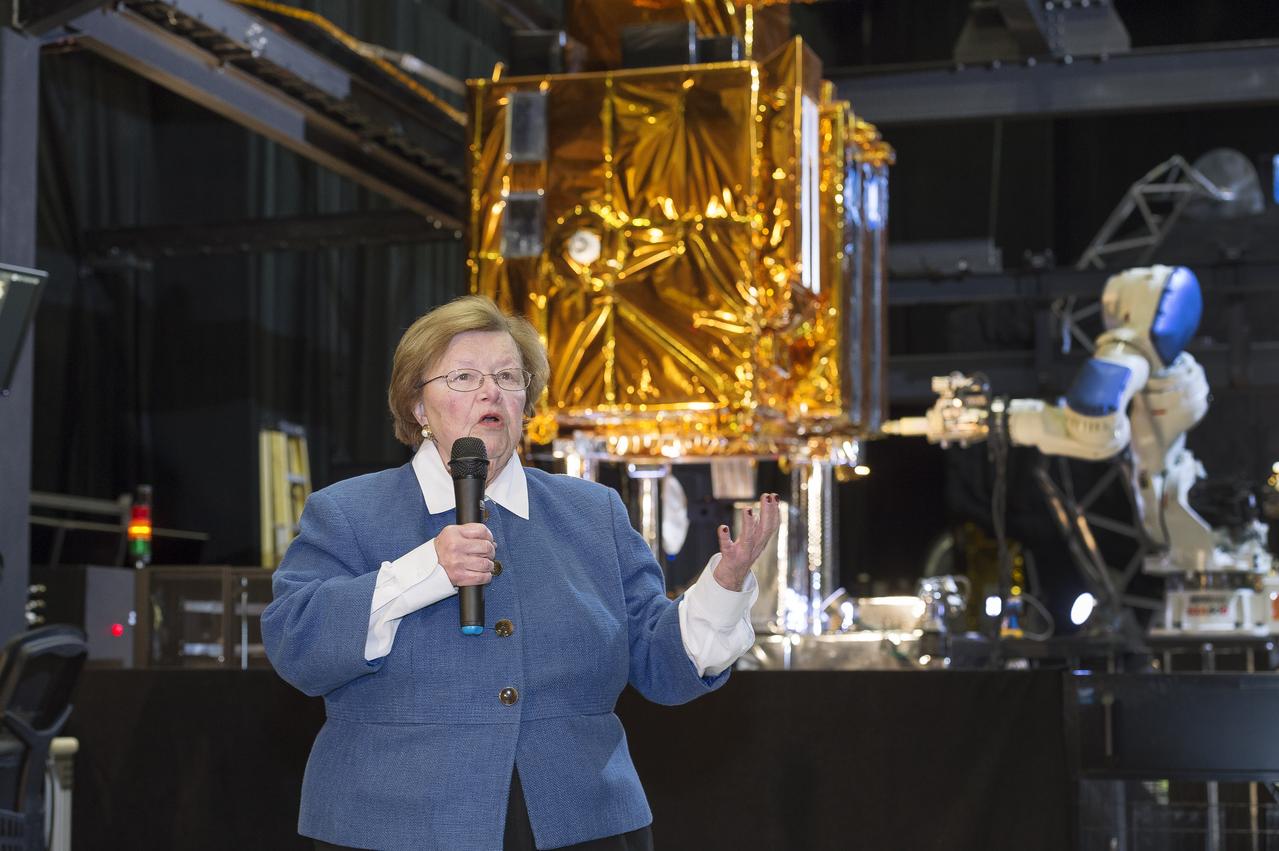
Sen. Barbara Mikulski participated in a ribbon cutting at NASA’s Goddard Space Flight Center on January 6th, 2016, to officially open the new Robotic Operations Center (ROC) developed by the Satellite Servicing Capabilities Office. Within the ROC's black walls, NASA is testing technologies and operational procedures for science and exploration missions, including the Restore-L satellite servicing mission and also the Asteroid Redirect Mission. During her tour of the ROC, Sen. Mikulski saw first-hand an early version of the NASA Servicing Arm, a 2-meter-class robot with the dexterity to grasp and refuel a satellite on orbit. She also heard a description of Raven, a payload launching to the International Space Station that will demonstrate real-time, relative space navigation technology. The robotic technologies that NASA is developing within the ROC also support the Journey to Mars. Learn more about NASA’s satellite servicing technologies at <a href="http://ssco.gsfc.nasa.gov/" rel="nofollow">ssco.gsfc.nasa.gov/</a>. Image credit: NASA/Chris Gunn Read more: <a href="http://www.nasa.gov/feature/goddard/2016/maryland-sen-barbara-mikulski-visits-nasa-goddard" rel="nofollow">www.nasa.gov/feature/goddard/2016/maryland-sen-barbara-mi...</a> <b><a href="http://www.nasa.gov/audience/formedia/features/MP_Photo_Guidelines.html" rel="nofollow">NASA image use policy.</a></b> <b><a href="http://www.nasa.gov/centers/goddard/home/index.html" rel="nofollow">NASA Goddard Space Flight Center</a></b> enables NASA’s mission through four scientific endeavors: Earth Science, Heliophysics, Solar System Exploration, and Astrophysics. Goddard plays a leading role in NASA’s accomplishments by contributing compelling scientific knowledge to advance the Agency’s mission. <b>Follow us on <a href="http://twitter.com/NASAGoddardPix" rel="nofollow">Twitter</a></b> <b>Like us on <a href="http://www.facebook.com/pages/Greenbelt-MD/NASA-Goddard/395013845897?ref=tsd" rel="nofollow">Facebook</a></b> <b>Find us on <a href="http://instagrid.me/nasagoddard/?vm=grid" rel="nofollow">Instagram</a></b>
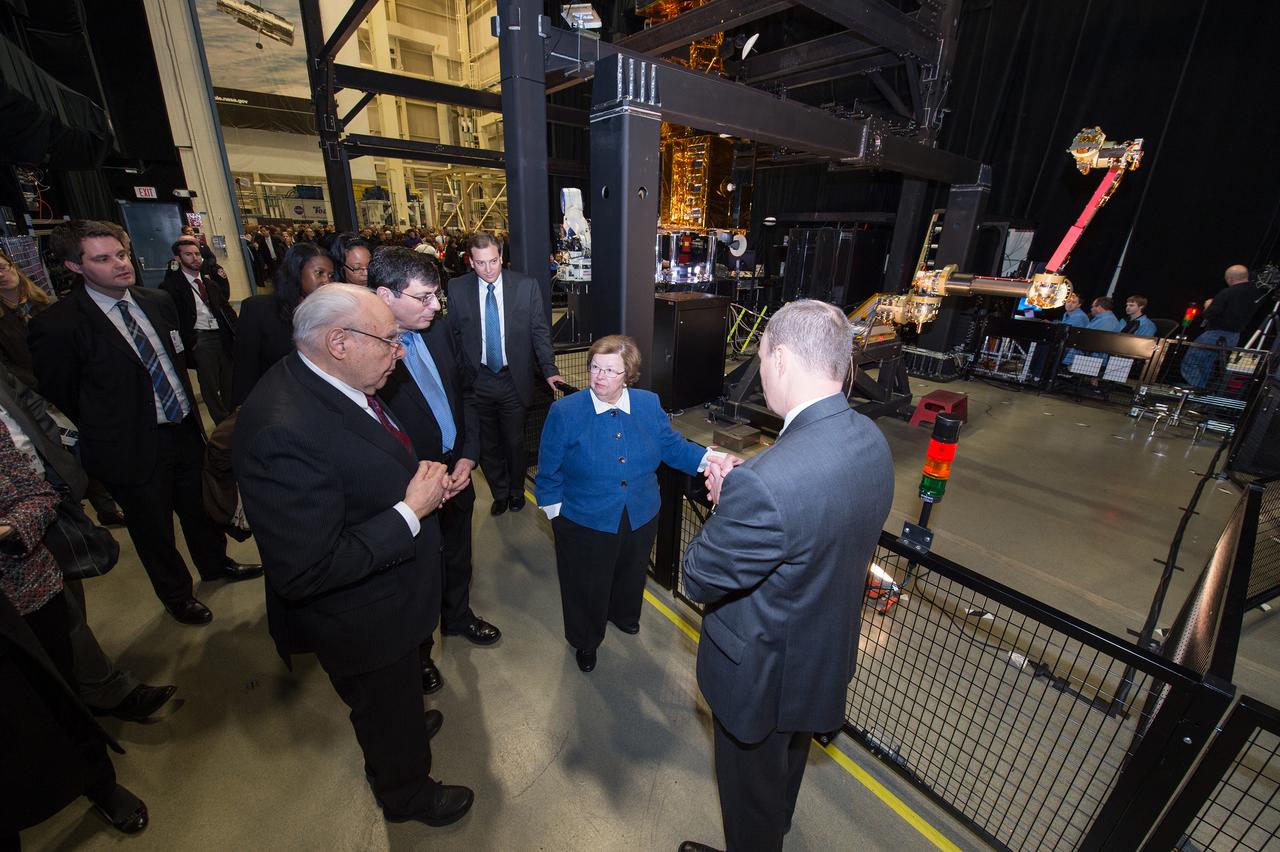
Sen. Barbara Mikulski participated in a ribbon cutting at NASA’s Goddard Space Flight Center on January 6th, 2016, to officially open the new Robotic Operations Center (ROC) developed by the Satellite Servicing Capabilities Office (SSCO). Within the ROC's black walls, NASA is testing technologies and operational procedures for science and exploration missions, including the Restore-L satellite servicing mission and also the Asteroid Redirect Mission. During her tour of the ROC, Sen. Mikulski saw first-hand an early version of the NASA Servicing Arm (visible above, at right), a 2-meter-class robot with the dexterity to grasp and refuel a satellite on orbit. She also heard a description of Raven, a payload launching to the International Space Station that will demonstrate real-time, relative space navigation technology. The robotic technologies that NASA is developing within the ROC also support the Journey to Mars. Learn more about NASA’s satellite servicing technologies at <a href="http://ssco.gsfc.nasa.gov/" rel="nofollow">ssco.gsfc.nasa.gov/</a>. Image credit: NASA/Desiree Stover Read more: <a href="http://www.nasa.gov/feature/goddard/2016/maryland-sen-barbara-mikulski-visits-nasa-goddard" rel="nofollow">www.nasa.gov/feature/goddard/2016/maryland-sen-barbara-mi...</a> <b><a href="http://www.nasa.gov/audience/formedia/features/MP_Photo_Guidelines.html" rel="nofollow">NASA image use policy.</a></b> <b><a href="http://www.nasa.gov/centers/goddard/home/index.html" rel="nofollow">NASA Goddard Space Flight Center</a></b> enables NASA’s mission through four scientific endeavors: Earth Science, Heliophysics, Solar System Exploration, and Astrophysics. Goddard plays a leading role in NASA’s accomplishments by contributing compelling scientific knowledge to advance the Agency’s mission. <b>Follow us on <a href="http://twitter.com/NASAGoddardPix" rel="nofollow">Twitter</a></b> <b>Like us on <a href="http://www.facebook.com/pages/Greenbelt-MD/NASA-Goddard/395013845897?ref=tsd" rel="nofollow">Facebook</a></b> <b>Find us on <a href="http://instagrid.me/nasagoddard/?vm=grid" rel="nofollow">Instagram</a></b>

Sen. Barbara Mikulski participated in a ribbon cutting at NASA’s Goddard Space Flight Center on January 6th, 2016, to officially open the new Robotic Operations Center (ROC) developed by the Satellite Servicing Capabilities Office. Within the ROC's black walls, NASA is testing technologies and operational procedures for science and exploration missions, including the Restore-L satellite servicing mission and also the Asteroid Redirect Mission. During her tour of the ROC, Sen. Mikulski saw first-hand an early version of the NASA Servicing Arm, a 2-meter-class robot with the dexterity to grasp and refuel a satellite on orbit. She also heard a description of Raven, a payload launching to the International Space Station that will demonstrate real-time, relative space navigation technology. The robotic technologies that NASA is developing within the ROC also support the Journey to Mars. Learn more about NASA’s satellite servicing technologies at <a href="http://ssco.gsfc.nasa.gov/" rel="nofollow">ssco.gsfc.nasa.gov/</a>. Image credit: NASA/Chris Gunn Read more: <a href="http://www.nasa.gov/feature/goddard/2016/maryland-sen-barbara-mikulski-visits-nasa-goddard" rel="nofollow">www.nasa.gov/feature/goddard/2016/maryland-sen-barbara-mi...</a> <b><a href="http://www.nasa.gov/audience/formedia/features/MP_Photo_Guidelines.html" rel="nofollow">NASA image use policy.</a></b> <b><a href="http://www.nasa.gov/centers/goddard/home/index.html" rel="nofollow">NASA Goddard Space Flight Center</a></b> enables NASA’s mission through four scientific endeavors: Earth Science, Heliophysics, Solar System Exploration, and Astrophysics. Goddard plays a leading role in NASA’s accomplishments by contributing compelling scientific knowledge to advance the Agency’s mission. <b>Follow us on <a href="http://twitter.com/NASAGoddardPix" rel="nofollow">Twitter</a></b> <b>Like us on <a href="http://www.facebook.com/pages/Greenbelt-MD/NASA-Goddard/395013845897?ref=tsd" rel="nofollow">Facebook</a></b> <b>Find us on <a href="http://instagrid.me/nasagoddard/?vm=grid" rel="nofollow">Instagram</a></b>
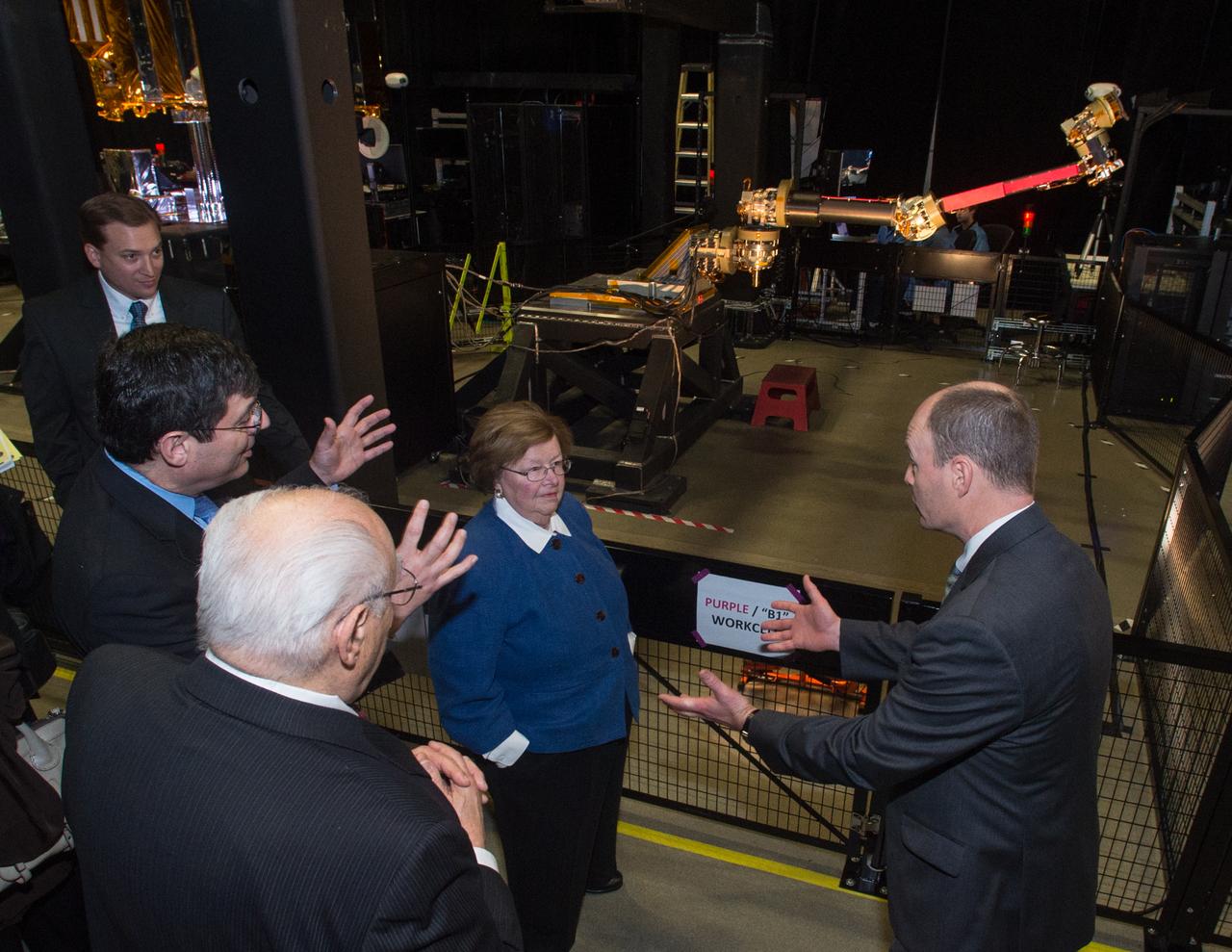
Sen. Barbara Mikulski participated in a ribbon cutting at NASA’s Goddard Space Flight Center on January 6th, 2016, to officially open the new Robotic Operations Center (ROC) developed by the Satellite Servicing Capabilities Office. Within the ROC's black walls, NASA is testing technologies and operational procedures for science and exploration missions, including the Restore-L satellite servicing mission and also the Asteroid Redirect Mission. During her tour of the ROC, Sen. Mikulski saw first-hand an early version of the NASA Servicing Arm (visible at top right), a 2-meter-class robot with the dexterity to grasp and refuel a satellite on orbit. She also heard a description of Raven, a payload launching to the International Space Station that will demonstrate real-time, relative space navigation technology. The robotic technologies that NASA is developing within the ROC also support the Journey to Mars. Learn more about NASA’s satellite servicing technologies at <a href="http://ssco.gsfc.nasa.gov/" rel="nofollow">ssco.gsfc.nasa.gov/</a>. Image credit: NASA/Bill Hrybyk Read more: <a href="http://www.nasa.gov/feature/goddard/2016/maryland-sen-barbara-mikulski-visits-nasa-goddard" rel="nofollow">www.nasa.gov/feature/goddard/2016/maryland-sen-barbara-mi...</a> <b><a href="http://www.nasa.gov/audience/formedia/features/MP_Photo_Guidelines.html" rel="nofollow">NASA image use policy.</a></b> <b><a href="http://www.nasa.gov/centers/goddard/home/index.html" rel="nofollow">NASA Goddard Space Flight Center</a></b> enables NASA’s mission through four scientific endeavors: Earth Science, Heliophysics, Solar System Exploration, and Astrophysics. Goddard plays a leading role in NASA’s accomplishments by contributing compelling scientific knowledge to advance the Agency’s mission. <b>Follow us on <a href="http://twitter.com/NASAGoddardPix" rel="nofollow">Twitter</a></b> <b>Like us on <a href="http://www.facebook.com/pages/Greenbelt-MD/NASA-Goddard/395013845897?ref=tsd" rel="nofollow">Facebook</a></b> <b>Find us on <a href="http://instagrid.me/nasagoddard/?vm=grid" rel="nofollow">Instagram</a></b>

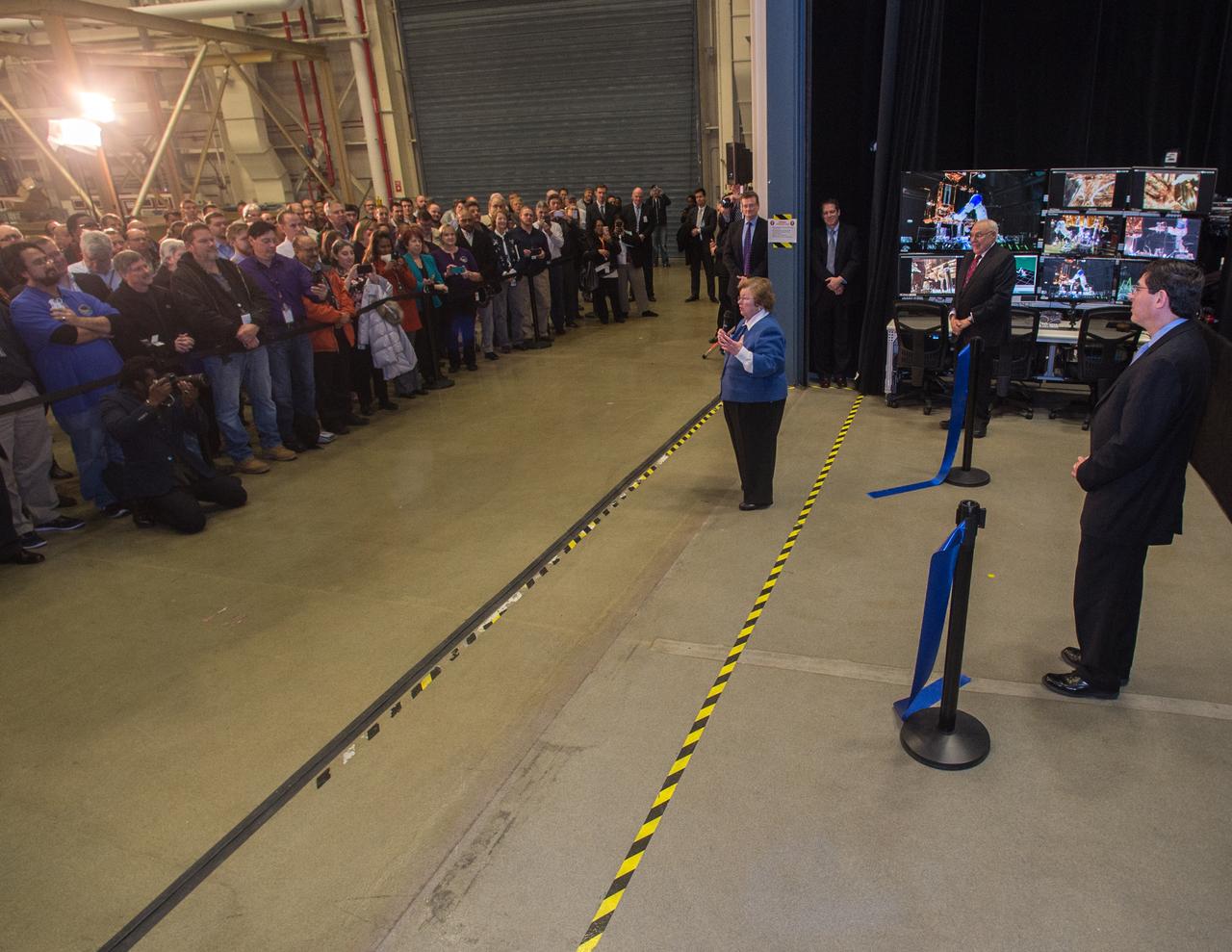
Sen. Barbara Mikulski participated in a ribbon cutting at NASA’s Goddard Space Flight Center on January 6th, 2016, to officially open the new Robotic Operations Center (ROC) developed by the Satellite Servicing Capabilities Office. Within the ROC's black walls, NASA is testing technologies and operational procedures for science and exploration missions, including the Restore-L satellite servicing mission and also the Asteroid Redirect Mission. In this image, a gathering of Goddard employees await the arrival of Sen. Mikulski to the facility. During her tour of the ROC, Sen. Mikulski saw first-hand an early version of the NASA Servicing Arm, a 2-meter-class robot with the dexterity to grasp and refuel a satellite on orbit. She also heard a description of Raven, a payload launching to the International Space Station that will demonstrate real-time, relative space navigation technology. The robotic technologies that NASA is developing within the ROC also support the Journey to Mars. Learn more about NASA’s satellite servicing technologies at <a href="http://ssco.gsfc.nasa.gov/" rel="nofollow">ssco.gsfc.nasa.gov/</a>. Image credit: NASA/Desiree Stover Read more: <a href="http://www.nasa.gov/feature/goddard/2016/maryland-sen-barbara-mikulski-visits-nasa-goddard" rel="nofollow">www.nasa.gov/feature/goddard/2016/maryland-sen-barbara-mi...</a> <b><a href="http://www.nasa.gov/audience/formedia/features/MP_Photo_Guidelines.html" rel="nofollow">NASA image use policy.</a></b> <b><a href="http://www.nasa.gov/centers/goddard/home/index.html" rel="nofollow">NASA Goddard Space Flight Center</a></b> enables NASA’s mission through four scientific endeavors: Earth Science, Heliophysics, Solar System Exploration, and Astrophysics. Goddard plays a leading role in NASA’s accomplishments by contributing compelling scientific knowledge to advance the Agency’s mission. <b>Follow us on <a href="http://twitter.com/NASAGoddardPix" rel="nofollow">Twitter</a></b> <b>Like us on <a href="http://www.facebook.com/pages/Greenbelt-MD/NASA-Goddard/395013845897?ref=tsd" rel="nofollow">Facebook</a></b> <b>Find us on <a href="http://instagrid.me/nasagoddard/?vm=grid" rel="nofollow">Instagram</a></b>
Sen. Barbara Mikulski participated in a ribbon cutting at NASA’s Goddard Space Flight Center on January 6th, 2016, to officially open the new Robotic Operations Center (ROC) developed by the Satellite Servicing Capabilities Office. Within the ROC's black walls, NASA is testing technologies and operational procedures for science and exploration missions, including the Restore-L satellite servicing mission and also the Asteroid Redirect Mission. During her tour of the ROC, Sen. Mikulski saw first-hand an early version of the NASA Servicing Arm, a 2-meter-class robot with the dexterity to grasp and refuel a satellite on orbit. She also heard a description of Raven, a payload launching to the International Space Station that will demonstrate real-time, relative space navigation technology. The robotic technologies that NASA is developing within the ROC also support the Journey to Mars. Learn more about NASA’s satellite servicing technologies at <a href="http://ssco.gsfc.nasa.gov/" rel="nofollow">ssco.gsfc.nasa.gov/</a>. Image credit: NASA/Bill Hrybyk Read more: <a href="http://www.nasa.gov/feature/goddard/2016/maryland-sen-barbara-mikulski-visits-nasa-goddard" rel="nofollow">www.nasa.gov/feature/goddard/2016/maryland-sen-barbara-mi...</a> <b><a href="http://www.nasa.gov/audience/formedia/features/MP_Photo_Guidelines.html" rel="nofollow">NASA image use policy.</a></b> <b><a href="http://www.nasa.gov/centers/goddard/home/index.html" rel="nofollow">NASA Goddard Space Flight Center</a></b> enables NASA’s mission through four scientific endeavors: Earth Science, Heliophysics, Solar System Exploration, and Astrophysics. Goddard plays a leading role in NASA’s accomplishments by contributing compelling scientific knowledge to advance the Agency’s mission. <b>Follow us on <a href="http://twitter.com/NASAGoddardPix" rel="nofollow">Twitter</a></b> <b>Like us on <a href="http://www.facebook.com/pages/Greenbelt-MD/NASA-Goddard/395013845897?ref=tsd" rel="nofollow">Facebook</a></b> <b>Find us on <a href="http://instagrid.me/nasagoddard/?vm=grid" rel="nofollow">Instagram</a></b>
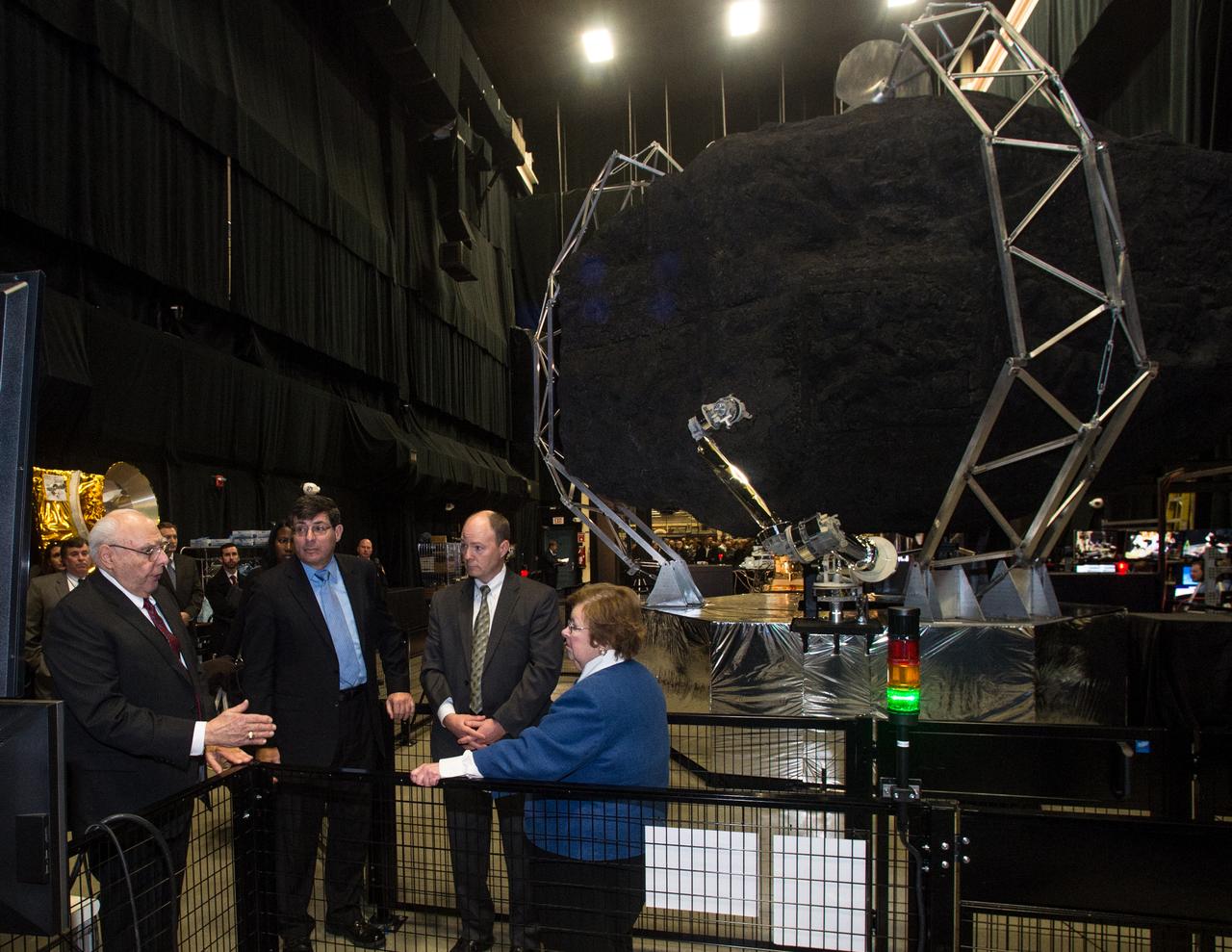
Sen. Barbara Mikulski participated in a ribbon cutting at NASA’s Goddard Space Flight Center on January 6th, 2016, to officially open the new Robotic Operations Center (ROC) developed by the Satellite Servicing Capabilities Office. Within the ROC's black walls, NASA is testing technologies and operational procedures for science and exploration missions, including the Restore-L satellite servicing mission and also the Asteroid Redirect Mission. In this image, Sen. Mikulski receives an overview of the Asteroid Redirect Mission in front of mockups of the asteroid and capture vehicle. During her tour of the ROC, Sen. Mikulski saw first-hand an early version of the NASA Servicing Arm, a 2-meter-class robot with the dexterity to grasp and refuel a satellite on orbit. She also heard a description of Raven, a payload launching to the International Space Station that will demonstrate real-time, relative space navigation technology. The robotic technologies that NASA is developing within the ROC also support the Journey to Mars. Learn more about NASA’s satellite servicing technologies at <a href="http://ssco.gsfc.nasa.gov/" rel="nofollow">ssco.gsfc.nasa.gov/</a>. Image credit: NASA/Bill Hrybyk Read more: <a href="http://www.nasa.gov/feature/goddard/2016/maryland-sen-barbara-mikulski-visits-nasa-goddard" rel="nofollow">www.nasa.gov/feature/goddard/2016/maryland-sen-barbara-mi...</a> <b><a href="http://www.nasa.gov/audience/formedia/features/MP_Photo_Guidelines.html" rel="nofollow">NASA image use policy.</a></b> <b><a href="http://www.nasa.gov/centers/goddard/home/index.html" rel="nofollow">NASA Goddard Space Flight Center</a></b> enables NASA’s mission through four scientific endeavors: Earth Science, Heliophysics, Solar System Exploration, and Astrophysics. Goddard plays a leading role in NASA’s accomplishments by contributing compelling scientific knowledge to advance the Agency’s mission. <b>Follow us on <a href="http://twitter.com/NASAGoddardPix" rel="nofollow">Twitter</a></b> <b>Like us on <a href="http://www.facebook.com/pages/Greenbelt-MD/NASA-Goddard/395013845897?ref=tsd" rel="nofollow">Facebook</a></b> <b>Find us on <a href="http://instagrid.me/nasagoddard/?vm=grid" rel="nofollow">Instagram</a></b>

Sen. Barbara Mikulski participated in a ribbon cutting at NASA’s Goddard Space Flight Center on January 6th, 2016, to officially open the new Robotic Operations Center (ROC) developed by the Satellite Servicing Capabilities Office (SSCO). Within the ROC's black walls, NASA is testing technologies and operational procedures for science and exploration missions, including the Restore-L satellite servicing mission and also the Asteroid Redirect Mission. Here, she receives an overview of a robotic console station used to practice satellite servicing activities. During her tour of the ROC, Sen. Mikulski saw first-hand an early version of the NASA Servicing Arm, a 2-meter-class robot with the dexterity to grasp and refuel a satellite on orbit. She also heard a description of Raven, a payload launching to the International Space Station that will demonstrate real-time, relative space navigation technology. The robotic technologies that NASA is developing within the ROC also support the Journey to Mars. Learn more about NASA’s satellite servicing technologies at <a href="http://ssco.gsfc.nasa.gov/" rel="nofollow">ssco.gsfc.nasa.gov/</a>. Image credit: NASA/Desiree Stover <b><a href="http://www.nasa.gov/audience/formedia/features/MP_Photo_Guidelines.html" rel="nofollow">NASA image use policy.</a></b> <b><a href="http://www.nasa.gov/centers/goddard/home/index.html" rel="nofollow">NASA Goddard Space Flight Center</a></b> enables NASA’s mission through four scientific endeavors: Earth Science, Heliophysics, Solar System Exploration, and Astrophysics. Goddard plays a leading role in NASA’s accomplishments by contributing compelling scientific knowledge to advance the Agency’s mission. <b>Follow us on <a href="http://twitter.com/NASAGoddardPix" rel="nofollow">Twitter</a></b> <b>Like us on <a href="http://www.facebook.com/pages/Greenbelt-MD/NASA-Goddard/395013845897?ref=tsd" rel="nofollow">Facebook</a></b> <b>Find us on <a href="http://instagrid.me/nasagoddard/?vm=grid" rel="nofollow">Instagram</a></b>
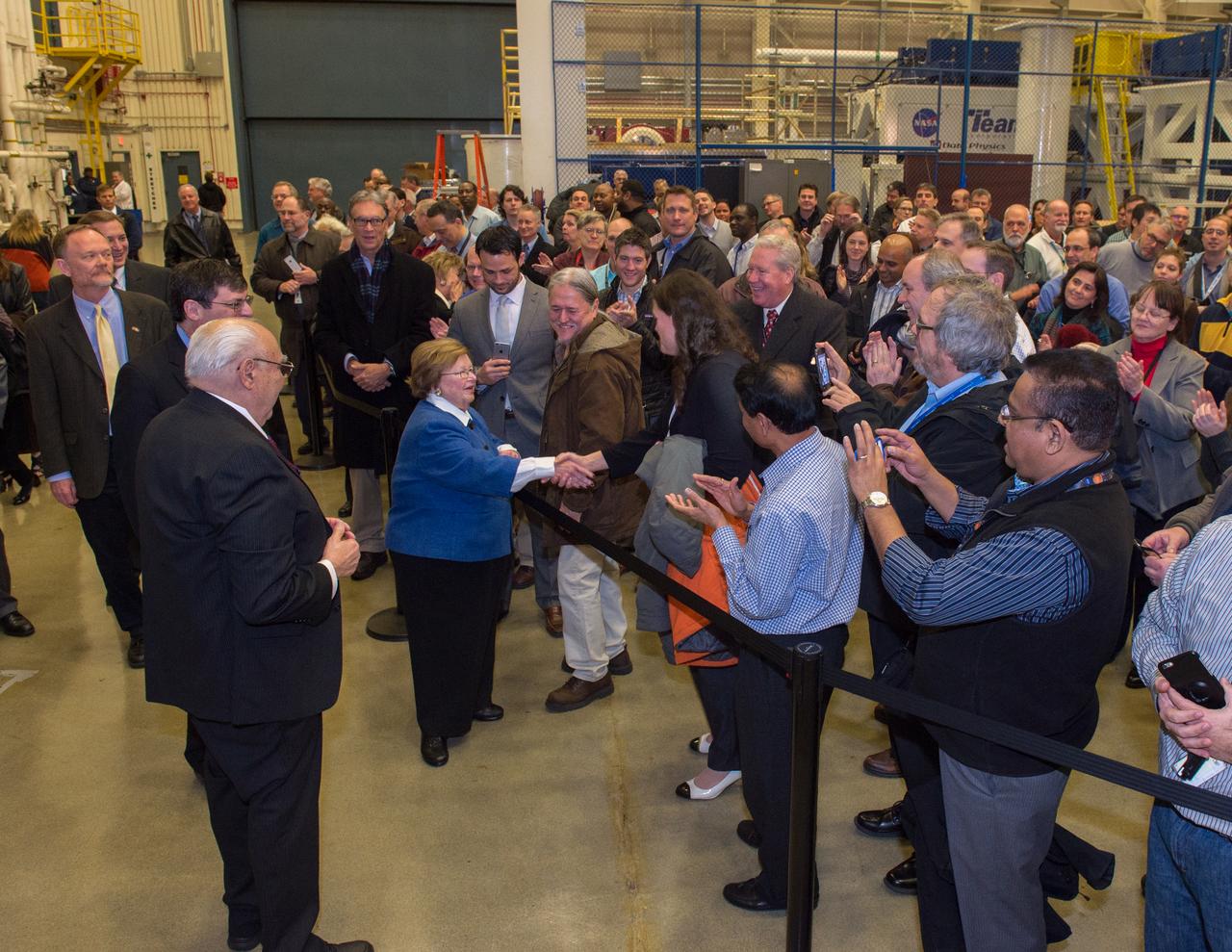
Sen. Barbara Mikulski participated in a ribbon cutting at NASA’s Goddard Space Flight Center on January 6th, 2016, to officially open the new Robotic Operations Center (ROC) developed by the Satellite Servicing Capabilities Office. Within the ROC's black walls, NASA is testing technologies and operational procedures for science and exploration missions, including the Restore-L satellite servicing mission and also the Asteroid Redirect Mission. During her tour of the ROC, Sen. Mikulski saw first-hand an early version of the NASA Servicing Arm, a 2-meter-class robot with the dexterity to grasp and refuel a satellite on orbit. She also heard a description of Raven, a payload launching to the International Space Station that will demonstrate real-time, relative space navigation technology. The robotic technologies that NASA is developing within the ROC also support the Journey to Mars. Learn more about NASA’s satellite servicing technologies at <a href="http://ssco.gsfc.nasa.gov/" rel="nofollow">ssco.gsfc.nasa.gov/</a>. Image credit: NASA/Bill Hrybyk Read more: <a href="http://www.nasa.gov/feature/goddard/2016/maryland-sen-barbara-mikulski-visits-nasa-goddard" rel="nofollow">www.nasa.gov/feature/goddard/2016/maryland-sen-barbara-mi...</a> <b><a href="http://www.nasa.gov/audience/formedia/features/MP_Photo_Guidelines.html" rel="nofollow">NASA image use policy.</a></b> <b><a href="http://www.nasa.gov/centers/goddard/home/index.html" rel="nofollow">NASA Goddard Space Flight Center</a></b> enables NASA’s mission through four scientific endeavors: Earth Science, Heliophysics, Solar System Exploration, and Astrophysics. Goddard plays a leading role in NASA’s accomplishments by contributing compelling scientific knowledge to advance the Agency’s mission. <b>Follow us on <a href="http://twitter.com/NASAGoddardPix" rel="nofollow">Twitter</a></b> <b>Like us on <a href="http://www.facebook.com/pages/Greenbelt-MD/NASA-Goddard/395013845897?ref=tsd" rel="nofollow">Facebook</a></b> <b>Find us on <a href="http://instagrid.me/nasagoddard/?vm=grid" rel="nofollow">Instagram</a></b>
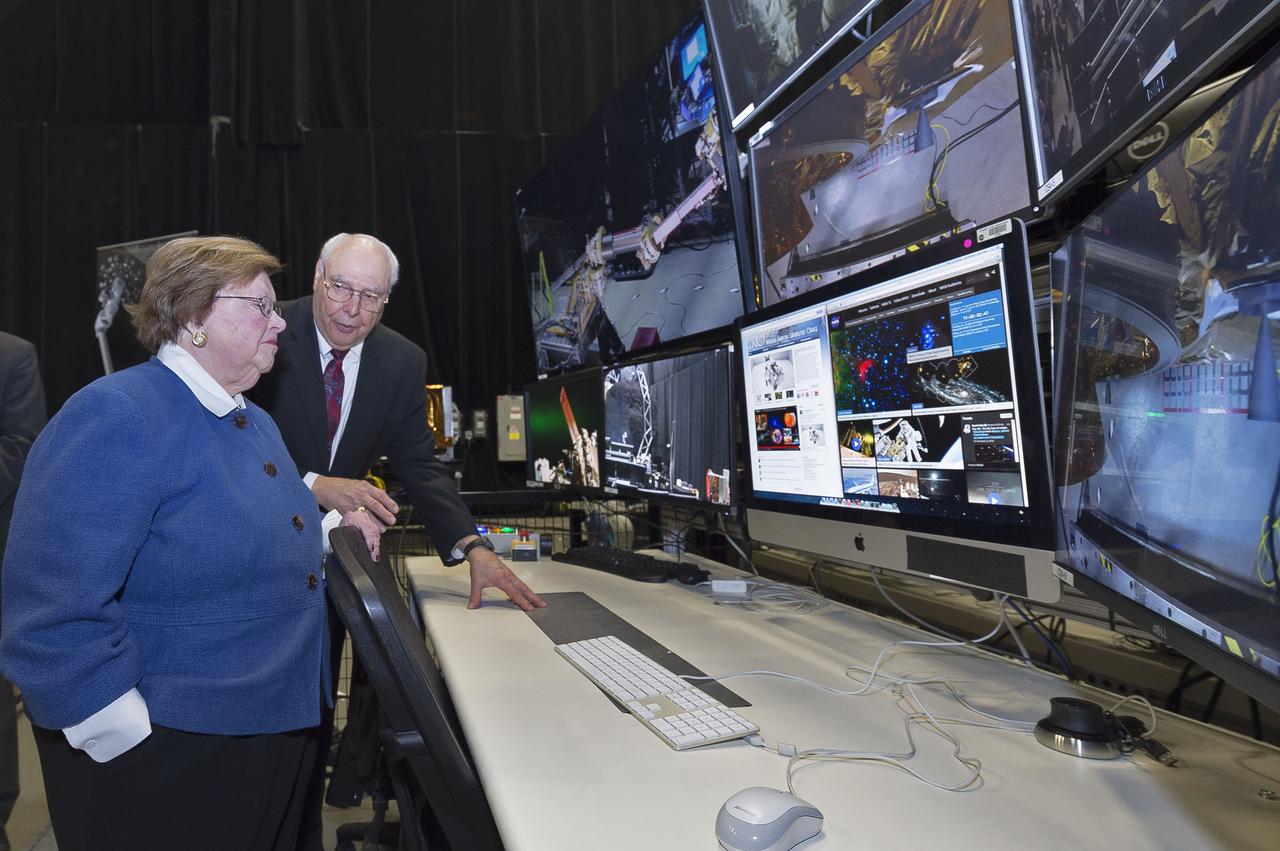
Sen. Barbara Mikulski participated in a ribbon cutting at NASA’s Goddard Space Flight Center on January 6th, 2016, to officially open the new Robotic Operations Center (ROC) developed by the Satellite Servicing Capabilities Office (SSCO). Within the ROC's black walls, NASA is testing technologies and operational procedures for science and exploration missions, including the Restore-L satellite servicing mission and also the Asteroid Redirect Mission. Here, she receives an overview of a robotic console station used to practice satellite servicing activities. During her tour of the ROC, Sen. Mikulski saw first-hand an early version of the NASA Servicing Arm, a 2-meter-class robot with the dexterity to grasp and refuel a satellite on orbit. She also heard a description of Raven, a payload launching to the International Space Station that will demonstrate real-time, relative space navigation technology. The robotic technologies that NASA is developing within the ROC also support the Journey to Mars. Learn more about NASA’s satellite servicing technologies at <a href="http://ssco.gsfc.nasa.gov/" rel="nofollow">ssco.gsfc.nasa.gov/</a>. Image credit: NASA/Chris Gunn Read more: <a href="http://www.nasa.gov/feature/goddard/2016/maryland-sen-barbara-mikulski-visits-nasa-goddard" rel="nofollow">www.nasa.gov/feature/goddard/2016/maryland-sen-barbara-mi...</a> <b><a href="http://www.nasa.gov/audience/formedia/features/MP_Photo_Guidelines.html" rel="nofollow">NASA image use policy.</a></b> <b><a href="http://www.nasa.gov/centers/goddard/home/index.html" rel="nofollow">NASA Goddard Space Flight Center</a></b> enables NASA’s mission through four scientific endeavors: Earth Science, Heliophysics, Solar System Exploration, and Astrophysics. Goddard plays a leading role in NASA’s accomplishments by contributing compelling scientific knowledge to advance the Agency’s mission. <b>Follow us on <a href="http://twitter.com/NASAGoddardPix" rel="nofollow">Twitter</a></b> <b>Like us on <a href="http://www.facebook.com/pages/Greenbelt-MD/NASA-Goddard/395013845897?ref=tsd" rel="nofollow">Facebook</a></b> <b>Find us on <a href="http://instagrid.me/nasagoddard/?vm=grid" rel="nofollow">Instagram</a></b>
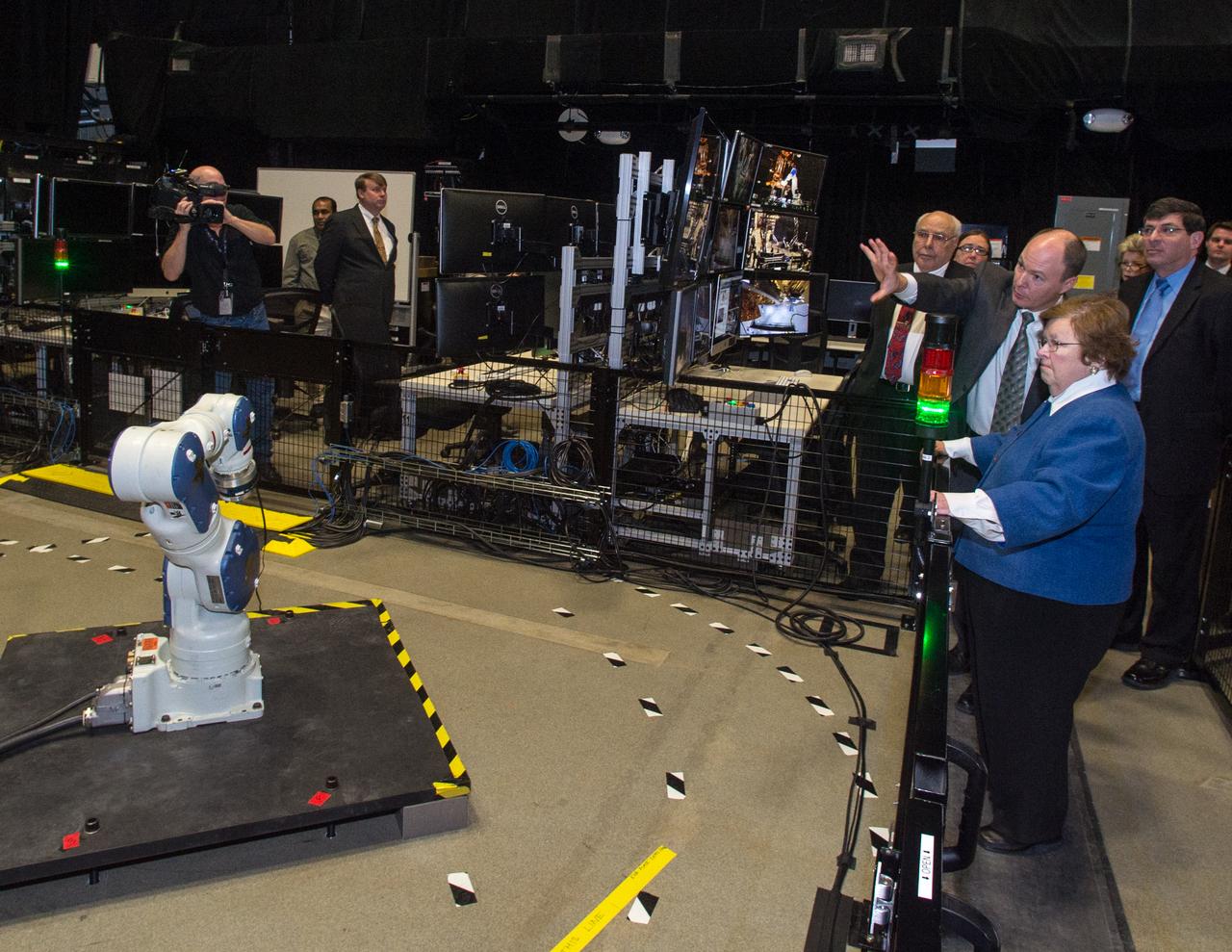
Sen. Barbara Mikulski participated in a ribbon cutting at NASA’s Goddard Space Flight Center on January 6th, 2016, to officially open the new Robotic Operations Center (ROC) developed by the Satellite Servicing Capabilities Office. Within the ROC's black walls, NASA is testing technologies and operational procedures for science and exploration missions, including the Restore-L satellite servicing mission and also the Asteroid Redirect Mission. During her tour of the ROC, Sen. Mikulski saw first-hand an early version of the NASA Servicing Arm (visible at top right), a 2-meter-class robot with the dexterity to grasp and refuel a satellite on orbit. She also heard a description of Raven, a payload launching to the International Space Station that will demonstrate real-time, relative space navigation technology. The robotic technologies that NASA is developing within the ROC also support the Journey to Mars. Learn more about NASA’s satellite servicing technologies at <a href="http://ssco.gsfc.nasa.gov/" rel="nofollow">ssco.gsfc.nasa.gov/</a>. Image credit: NASA/Bill Hrybyk Read more: <a href="http://www.nasa.gov/feature/goddard/2016/maryland-sen-barbara-mikulski-visits-nasa-goddard" rel="nofollow">www.nasa.gov/feature/goddard/2016/maryland-sen-barbara-mi...</a> <b><a href="http://www.nasa.gov/audience/formedia/features/MP_Photo_Guidelines.html" rel="nofollow">NASA image use policy.</a></b> <b><a href="http://www.nasa.gov/centers/goddard/home/index.html" rel="nofollow">NASA Goddard Space Flight Center</a></b> enables NASA’s mission through four scientific endeavors: Earth Science, Heliophysics, Solar System Exploration, and Astrophysics. Goddard plays a leading role in NASA’s accomplishments by contributing compelling scientific knowledge to advance the Agency’s mission. <b>Follow us on <a href="http://twitter.com/NASAGoddardPix" rel="nofollow">Twitter</a></b> <b>Like us on <a href="http://www.facebook.com/pages/Greenbelt-MD/NASA-Goddard/395013845897?ref=tsd" rel="nofollow">Facebook</a></b> <b>Find us on <a href="http://instagrid.me/nasagoddard/?vm=grid" rel="nofollow">Instagram</a></b>
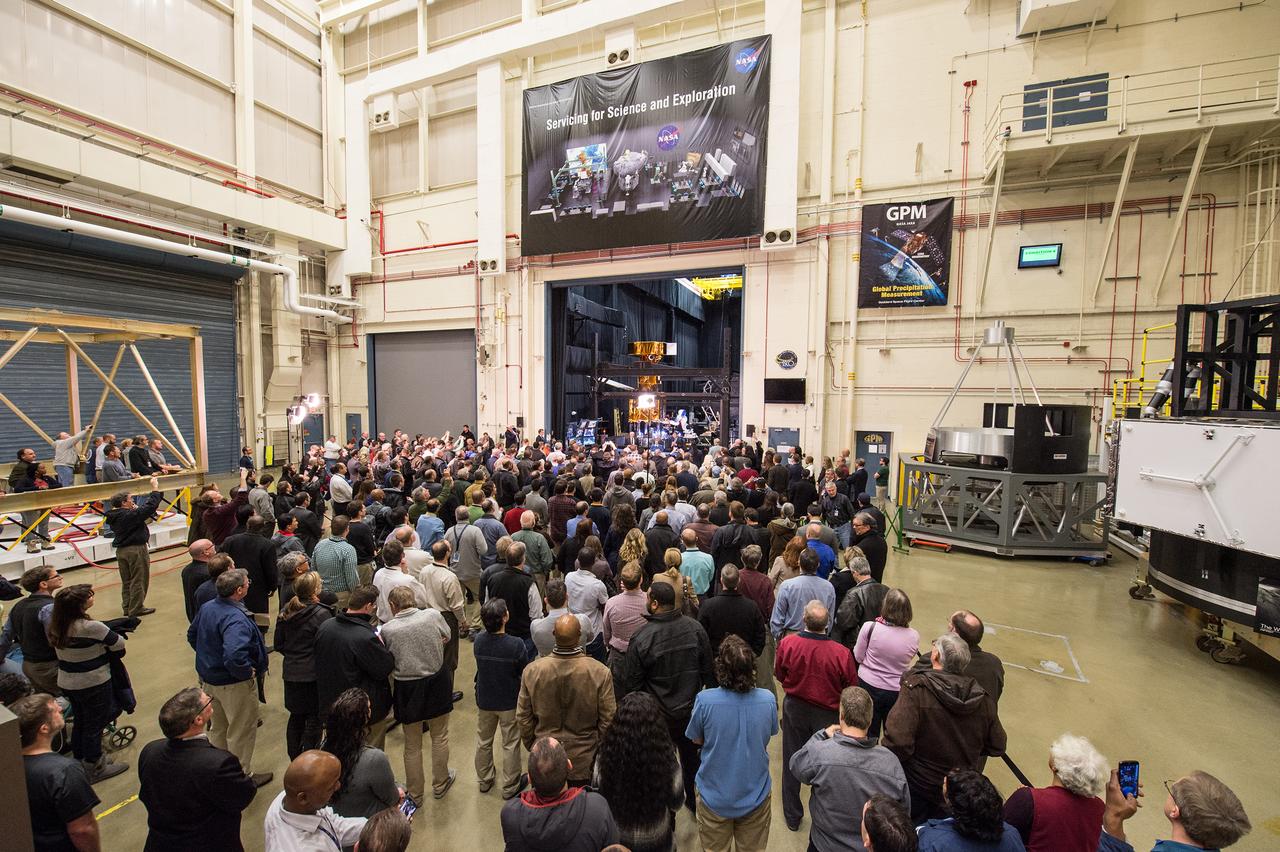
Sen. Barbara Mikulski participated in a ribbon cutting at NASA’s Goddard Space Flight Center on January 6th, 2016, to officially open the new Robotic Operations Center (ROC) developed by the Satellite Servicing Capabilities Office. Within the ROC's black walls, NASA is testing technologies and operational procedures for science and exploration missions, including the Restore-L satellite servicing mission and also the Asteroid Redirect Mission. In this image, a gathering of Goddard employees watch the ribbon cutting. During her tour of the ROC, Sen. Mikulski saw first-hand an early version of the NASA Servicing Arm, a 2-meter-class robot with the dexterity to grasp and refuel a satellite on orbit. She also heard a description of Raven, a payload launching to the International Space Station that will demonstrate real-time, relative space navigation technology. The robotic technologies that NASA is developing within the ROC also support the Journey to Mars. Learn more about NASA’s satellite servicing technologies at <a href="http://ssco.gsfc.nasa.gov/" rel="nofollow">ssco.gsfc.nasa.gov/</a>. Image credit: NASA/Desiree Stover Read more: <a href="http://www.nasa.gov/feature/goddard/2016/maryland-sen-barbara-mikulski-visits-nasa-goddard" rel="nofollow">www.nasa.gov/feature/goddard/2016/maryland-sen-barbara-mi...</a> <b><a href="http://www.nasa.gov/audience/formedia/features/MP_Photo_Guidelines.html" rel="nofollow">NASA image use policy.</a></b> <b><a href="http://www.nasa.gov/centers/goddard/home/index.html" rel="nofollow">NASA Goddard Space Flight Center</a></b> enables NASA’s mission through four scientific endeavors: Earth Science, Heliophysics, Solar System Exploration, and Astrophysics. Goddard plays a leading role in NASA’s accomplishments by contributing compelling scientific knowledge to advance the Agency’s mission. <b>Follow us on <a href="http://twitter.com/NASAGoddardPix" rel="nofollow">Twitter</a></b> <b>Like us on <a href="http://www.facebook.com/pages/Greenbelt-MD/NASA-Goddard/395013845897?ref=tsd" rel="nofollow">Facebook</a></b> <b>Find us on <a href="http://instagrid.me/nasagoddard/?vm=grid" rel="nofollow">Instagram</a></b>

Sen. Barbara Mikulski participated in a ribbon cutting at NASA’s Goddard Space Flight Center on January 6th, 2016, to officially open the new Robotic Operations Center (ROC) developed by the Satellite Servicing Capabilities Office (SSCO). Within the ROC's black walls, NASA is testing technologies and operational procedures for science and exploration missions, including the Restore-L satellite servicing mission and also the Asteroid Redirect Mission. In this image, Sen. Mikulski receives an overview of NASA’s satellite servicing efforts from Benjamin Reed, deputy program manager of SSCO. During her tour of the ROC, Sen. Mikulski saw first-hand an early version of the NASA Servicing Arm, a 2-meter-class robot with the dexterity to grasp and refuel a satellite on orbit. She also heard a description of Raven, a payload launching to the International Space Station that will demonstrate real-time, relative space navigation technology. The robotic technologies that NASA is developing within the ROC also support the Journey to Mars. Learn more about NASA’s satellite servicing technologies at <a href="http://ssco.gsfc.nasa.gov/" rel="nofollow">ssco.gsfc.nasa.gov/</a>. Image credit: NASA/Desiree Stover Read more: <a href="http://www.nasa.gov/feature/goddard/2016/maryland-sen-barbara-mikulski-visits-nasa-goddard" rel="nofollow">www.nasa.gov/feature/goddard/2016/maryland-sen-barbara-mi...</a> <b><a href="http://www.nasa.gov/audience/formedia/features/MP_Photo_Guidelines.html" rel="nofollow">NASA image use policy.</a></b> <b><a href="http://www.nasa.gov/centers/goddard/home/index.html" rel="nofollow">NASA Goddard Space Flight Center</a></b> enables NASA’s mission through four scientific endeavors: Earth Science, Heliophysics, Solar System Exploration, and Astrophysics. Goddard plays a leading role in NASA’s accomplishments by contributing compelling scientific knowledge to advance the Agency’s mission. <b>Follow us on <a href="http://twitter.com/NASAGoddardPix" rel="nofollow">Twitter</a></b> <b>Like us on <a href="http://www.facebook.com/pages/Greenbelt-MD/NASA-Goddard/395013845897?ref=tsd" rel="nofollow">Facebook</a></b> <b>Find us on <a href="http://instagrid.me/nasagoddard/?vm=grid" rel="nofollow">Instagram</a></b>
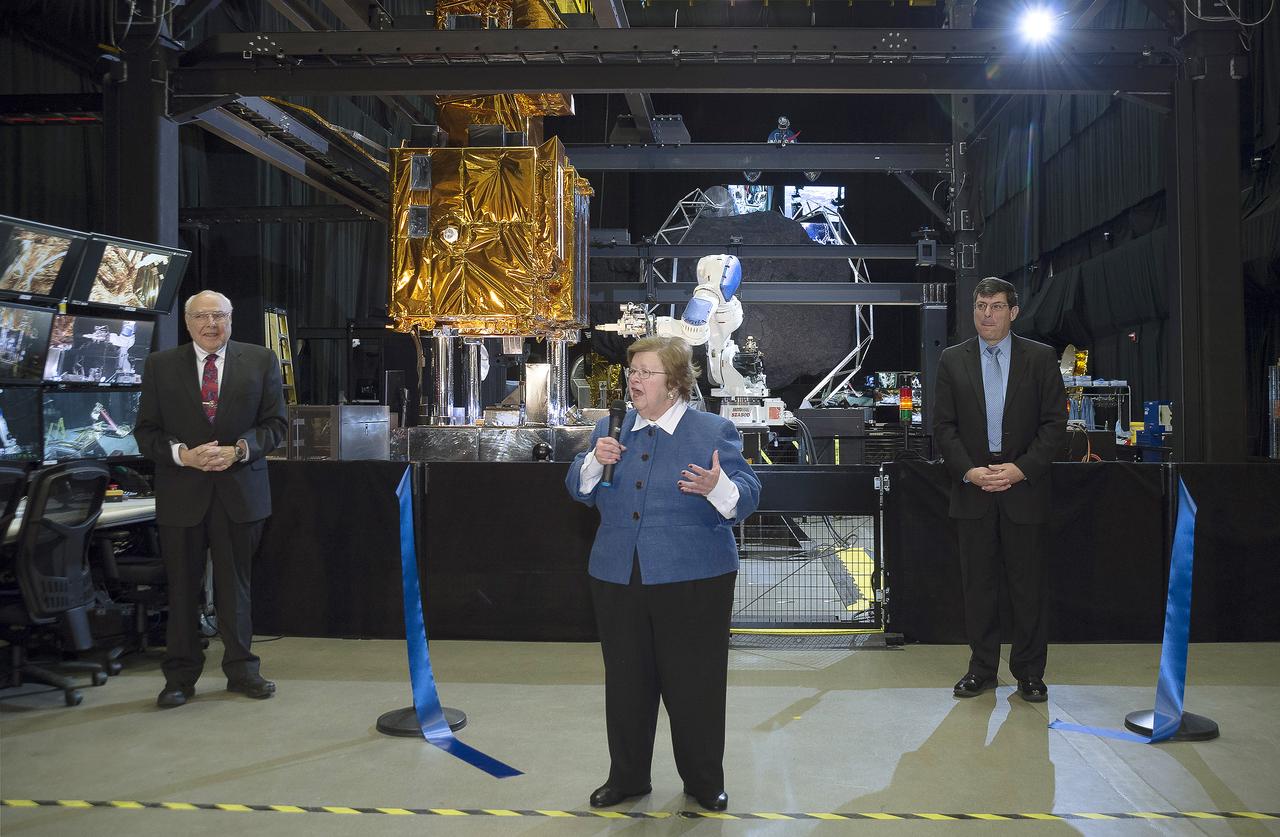
Sen. Barbara Mikulski participated in a ribbon cutting at NASA’s Goddard Space Flight Center on January 6th, 2016, to officially open the new Robotic Operations Center (ROC) developed by the Satellite Servicing Capabilities Office (SSCO). In this image, she is joined by Chris Scolese, Goddard Center Director (right) and Frank Cepollina, Associate Director of the SSCO (left). Within the ROC's black walls, NASA is testing technologies and operational procedures for science and exploration missions, including the Restore-L satellite servicing mission and also the Asteroid Redirect Mission. During her tour of the ROC, Sen. Mikulski saw first-hand an early version of the NASA Servicing Arm, a 2-meter-class robot with the dexterity to grasp and refuel a satellite on orbit. She also heard a description of Raven, a payload launching to the International Space Station that will demonstrate real-time, relative space navigation technology. The robotic technologies that NASA is developing within the ROC also support the Journey to Mars. Learn more about NASA’s satellite servicing technologies at <a href="http://ssco.gsfc.nasa.gov/" rel="nofollow">ssco.gsfc.nasa.gov/</a>. Image credit: NASA/Chris Gunn Read more: <a href="http://www.nasa.gov/feature/goddard/2016/maryland-sen-barbara-mikulski-visits-nasa-goddard" rel="nofollow">www.nasa.gov/feature/goddard/2016/maryland-sen-barbara-mi...</a> <b><a href="http://www.nasa.gov/audience/formedia/features/MP_Photo_Guidelines.html" rel="nofollow">NASA image use policy.</a></b> <b><a href="http://www.nasa.gov/centers/goddard/home/index.html" rel="nofollow">NASA Goddard Space Flight Center</a></b> enables NASA’s mission through four scientific endeavors: Earth Science, Heliophysics, Solar System Exploration, and Astrophysics. Goddard plays a leading role in NASA’s accomplishments by contributing compelling scientific knowledge to advance the Agency’s mission. <b>Follow us on <a href="http://twitter.com/NASAGoddardPix" rel="nofollow">Twitter</a></b> <b>Like us on <a href="http://www.facebook.com/pages/Greenbelt-MD/NASA-Goddard/395013845897?ref=tsd" rel="nofollow">Facebook</a></b> <b>Find us on <a href="http://instagrid.me/nasagoddard/?vm=grid" rel="nofollow">Instagram</a></b>
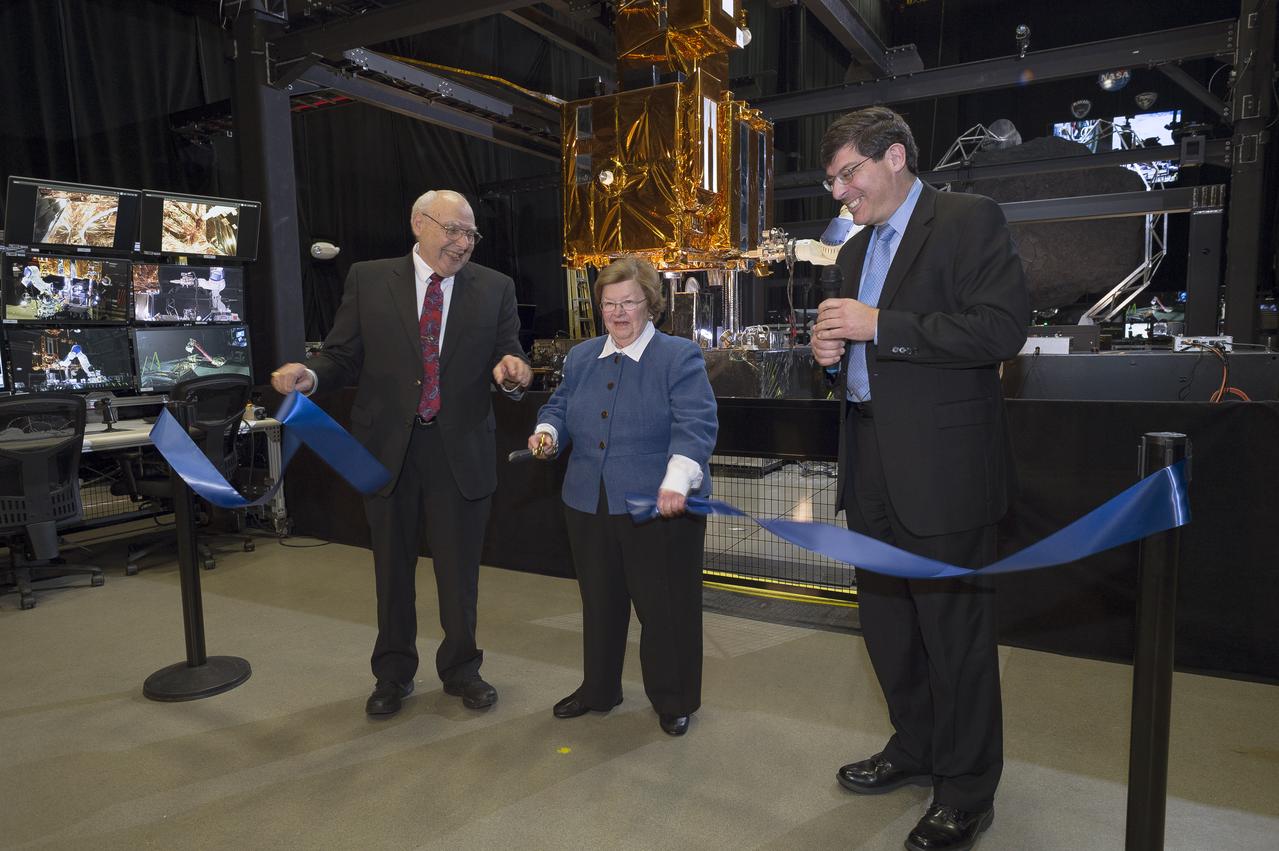
Sen. Barbara Mikulski participated in a ribbon cutting at NASA’s Goddard Space Flight Center on January 6th, 2016, to officially open the new Robotic Operations Center (ROC) developed by the Satellite Servicing Capabilities Office (SSCO). In this image, she is joined by Chris Scolese, Goddard Center Director (right) and Frank Cepollina, Associate Director of the SSCO (left). Within the ROC's black walls, NASA is testing technologies and operational procedures for science and exploration missions, including the Restore-L satellite servicing mission and also the Asteroid Redirect Mission. During her tour of the ROC, Sen. Mikulski saw first-hand an early version of the NASA Servicing Arm, a 2-meter-class robot with the dexterity to grasp and refuel a satellite on orbit. She also heard a description of Raven, a payload launching to the International Space Station that will demonstrate real-time, relative space navigation technology. The robotic technologies that NASA is developing within the ROC also support the Journey to Mars. Learn more about NASA’s satellite servicing technologies at <a href="http://ssco.gsfc.nasa.gov/" rel="nofollow">ssco.gsfc.nasa.gov/</a>. Image credit: NASA/Chris Gunn Read more: <a href="http://www.nasa.gov/feature/goddard/2016/maryland-sen-barbara-mikulski-visits-nasa-goddard" rel="nofollow">www.nasa.gov/feature/goddard/2016/maryland-sen-barbara-mi...</a> <b><a href="http://www.nasa.gov/audience/formedia/features/MP_Photo_Guidelines.html" rel="nofollow">NASA image use policy.</a></b> <b><a href="http://www.nasa.gov/centers/goddard/home/index.html" rel="nofollow">NASA Goddard Space Flight Center</a></b> enables NASA’s mission through four scientific endeavors: Earth Science, Heliophysics, Solar System Exploration, and Astrophysics. Goddard plays a leading role in NASA’s accomplishments by contributing compelling scientific knowledge to advance the Agency’s mission. <b>Follow us on <a href="http://twitter.com/NASAGoddardPix" rel="nofollow">Twitter</a></b> <b>Like us on <a href="http://www.facebook.com/pages/Greenbelt-MD/NASA-Goddard/395013845897?ref=tsd" rel="nofollow">Facebook</a></b> <b>Find us on <a href="http://instagrid.me/nasagoddard/?vm=grid" rel="nofollow">Instagram</a></b>
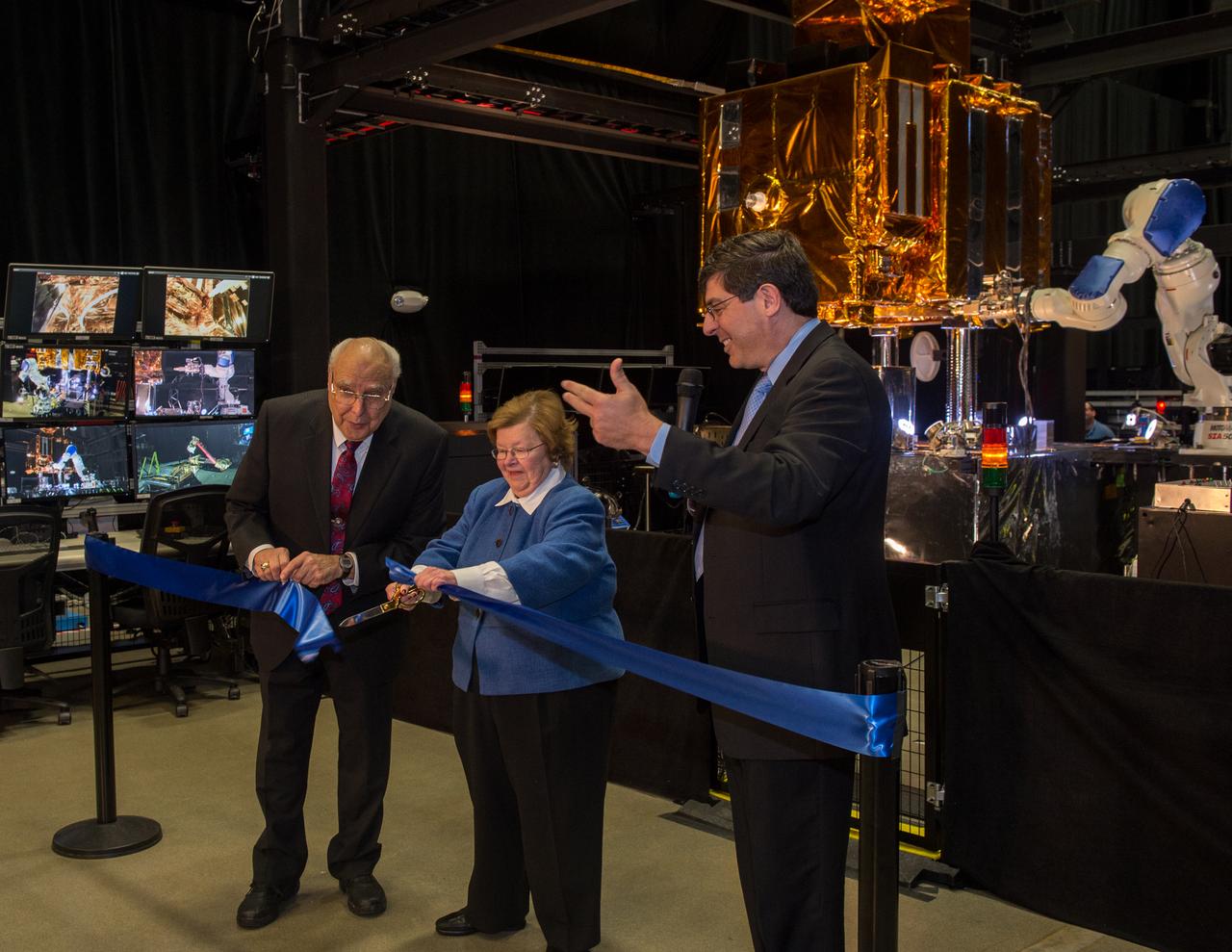
Sen. Barbara Mikulski participated in a ribbon cutting at NASA’s Goddard Space Flight Center on January 6th, 2016, to officially open the new Robotic Operations Center (ROC) developed by the Satellite Servicing Capabilities Office (SSCO). In this image, she is joined by Chris Scolese, Goddard Center Director (right) and Frank Cepollina, Associate Director of the SSCO (left). Within the ROC's black walls, NASA is testing technologies and operational procedures for science and exploration missions, including the Restore-L satellite servicing mission and also the Asteroid Redirect Mission. During her tour of the ROC, Sen. Mikulski saw first-hand an early version of the NASA Servicing Arm, a 2-meter-class robot with the dexterity to grasp and refuel a satellite on orbit. She also heard a description of Raven, a payload launching to the International Space Station that will demonstrate real-time, relative space navigation technology. The robotic technologies that NASA is developing within the ROC also support the Journey to Mars. Learn more about NASA’s satellite servicing technologies at <a href="http://ssco.gsfc.nasa.gov/" rel="nofollow">ssco.gsfc.nasa.gov/</a>. Image credit: NASA/Chris Gunn Read more: <a href="http://www.nasa.gov/feature/goddard/2016/maryland-sen-barbara-mikulski-visits-nasa-goddard" rel="nofollow">www.nasa.gov/feature/goddard/2016/maryland-sen-barbara-mi...</a> <b><a href="http://www.nasa.gov/audience/formedia/features/MP_Photo_Guidelines.html" rel="nofollow">NASA image use policy.</a></b> <b><a href="http://www.nasa.gov/centers/goddard/home/index.html" rel="nofollow">NASA Goddard Space Flight Center</a></b> enables NASA’s mission through four scientific endeavors: Earth Science, Heliophysics, Solar System Exploration, and Astrophysics. Goddard plays a leading role in NASA’s accomplishments by contributing compelling scientific knowledge to advance the Agency’s mission. <b>Follow us on <a href="http://twitter.com/NASAGoddardPix" rel="nofollow">Twitter</a></b> <b>Like us on <a href="http://www.facebook.com/pages/Greenbelt-MD/NASA-Goddard/395013845897?ref=tsd" rel="nofollow">Facebook</a></b> <b>Find us on <a href="http://instagrid.me/nasagoddard/?vm=grid" rel="nofollow">Instagram</a></b>