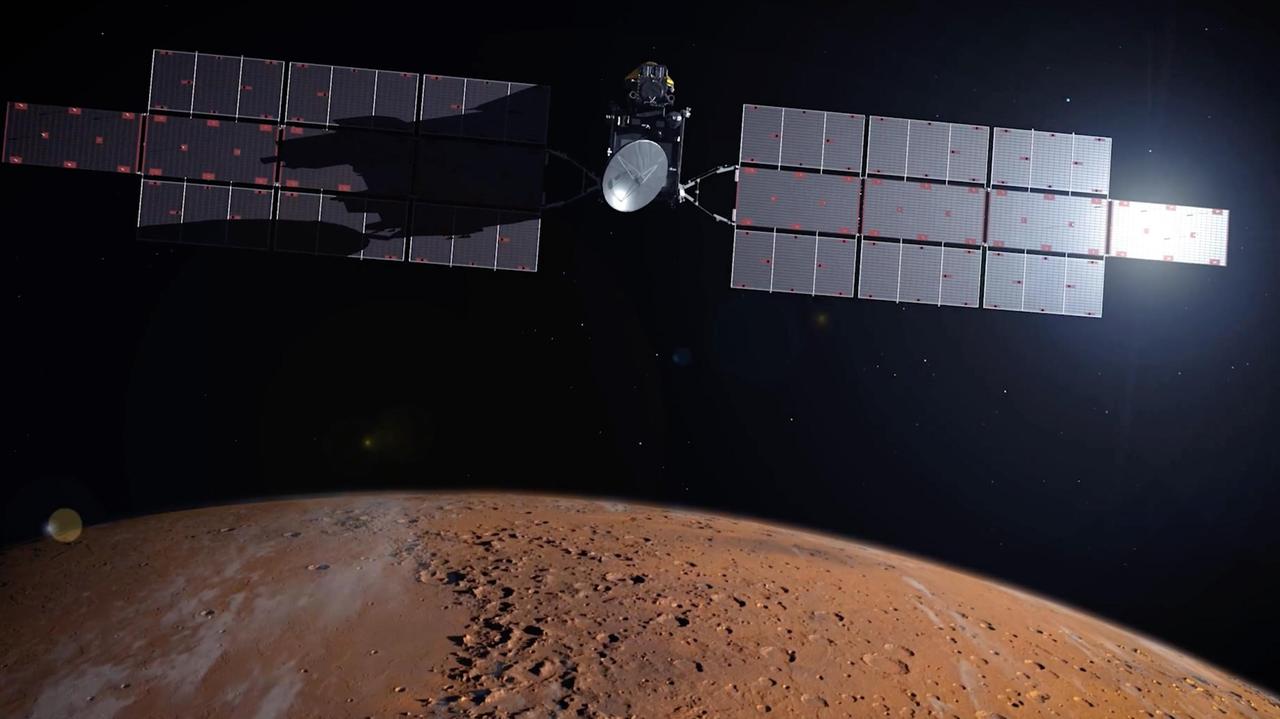
The Earth Return Orbiter (ERO) is one of the flight missions making up the Mars Sample Return campaign to bring martian rock and atmospheric samples back to Earth. This European Space Agency (ESA) orbiter would be the first interplanetary spacecraft to capture samples in orbit and make a return trip between Earth and Mars. ERO would also be the largest spacecraft to orbit the Red Planet. In addition to the rendezvous and return mission, ERO would provide critical Mars-Earth communications coverage for NASA's Perseverance rover and the Sample Retrieval Lander to deliver the martian samples. The Earth Return Orbiter is part of the multi-mission Mars Sample Return campaign being planned by NASA and the European Space Agency (ESA). https://photojournal.jpl.nasa.gov/catalog/PIA25891
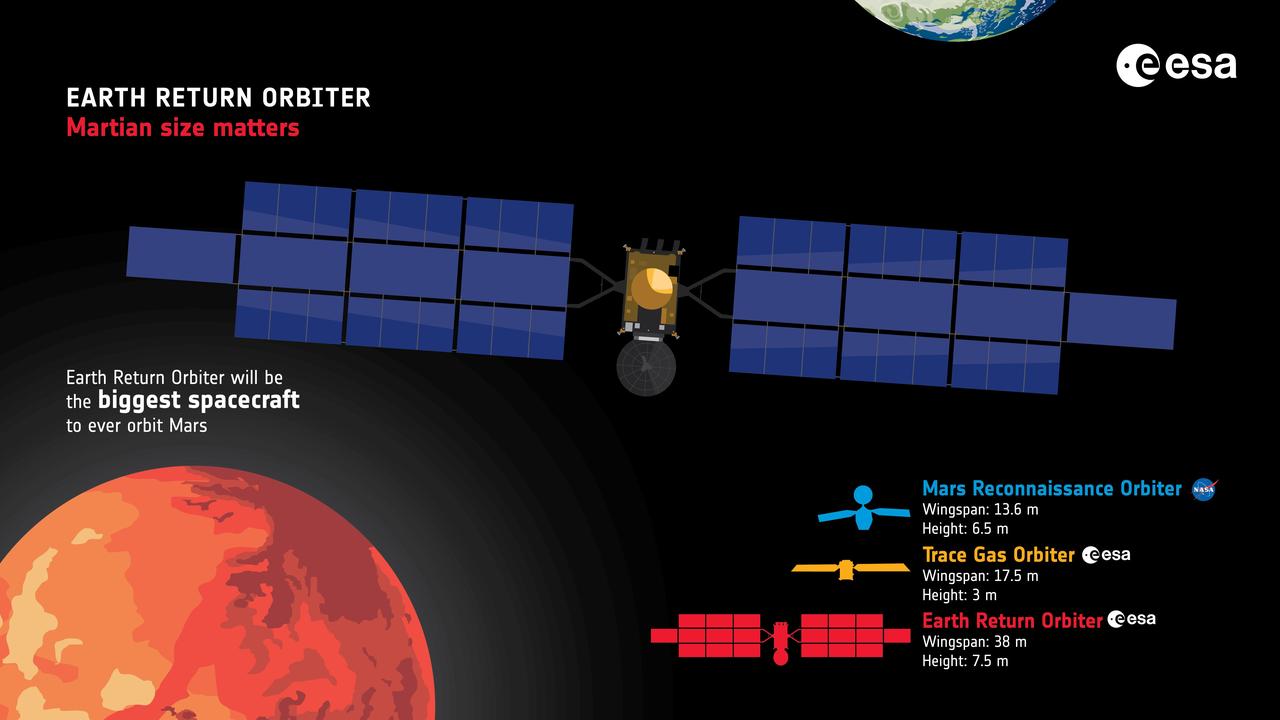
The European Space Agency's (ESA) Earth Return Orbiter (ERO) would be the biggest spacecraft to ever orbit Mars. The spacecraft would also be the first interplanetary spacecraft to rendezvous and capture hardware launched from another planet and return it to the Earth's surface, making a full round trip to Mars and back. ERO would be a multi-stage modular spacecraft equipped with both chemical and solar electric propulsion. The electric propulsion system would be the most powerful ever flown on any previous planetary mission. ERO would carry a radiation monitor to measure the total radiation dose experienced by the spacecraft throughout the entire mission, which in addition to monitoring the health of the ERO, should provide important information on how to design systems for future human explorers. Launch is planned in 2027, entering into Mars orbit in 2029. The Earth Return Orbiter is part of the multi-mission Mars Sample Return campaign being planned by NASA and the European Space Agency (ESA). https://photojournal.jpl.nasa.gov/catalog/PIA25892
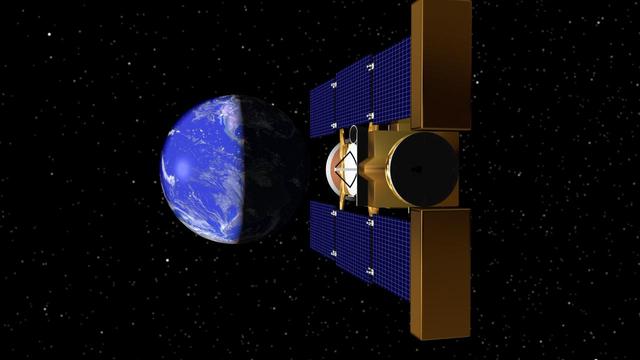
Artist rendering of NASA’s Stardust returning to Earth. Stardust is the first U.S. space mission dedicated to the exploration of a comet, and the first robotic mission designed to return extraterrestrial material from outside the orbit of the Moon.

The Earth Return Orbiter (ERO) is one of the flight missions making up the Mars Sample Return campaign to bring martian rock and atmospheric samples back to Earth. The ESA orbiter would be the first interplanetary spacecraft to capture samples in orbit and make a return trip between Earth and Mars. The primary mission of the European spacecraft would be to find, fly to, and capture a volleyball-sized capsule called the Orbiting Sample (OS) container launched from the surface of Mars by NASA's Mars Ascent System and carrying a carefully selected set of samples previously collected on the surface of Mars by NASA's Perseverance rover. Having already spent three years to reach Mars and perform its rendezvous and capture mission, ERO would take a further two years to fly from its operational orbit around Mars up to escape altitude and make its way back to Earth. When ERO is about three days from Earth, the Earth Entry System (EES) carrying the OS would separate from the spacecraft and be placed on a precision trajectory for Earth entry and landing. The Earth Return Orbiter is part of the multi-mission Mars Sample Return campaign being planned by NASA and the European Space Agency (ESA). https://photojournal.jpl.nasa.gov/catalog/PIA25893
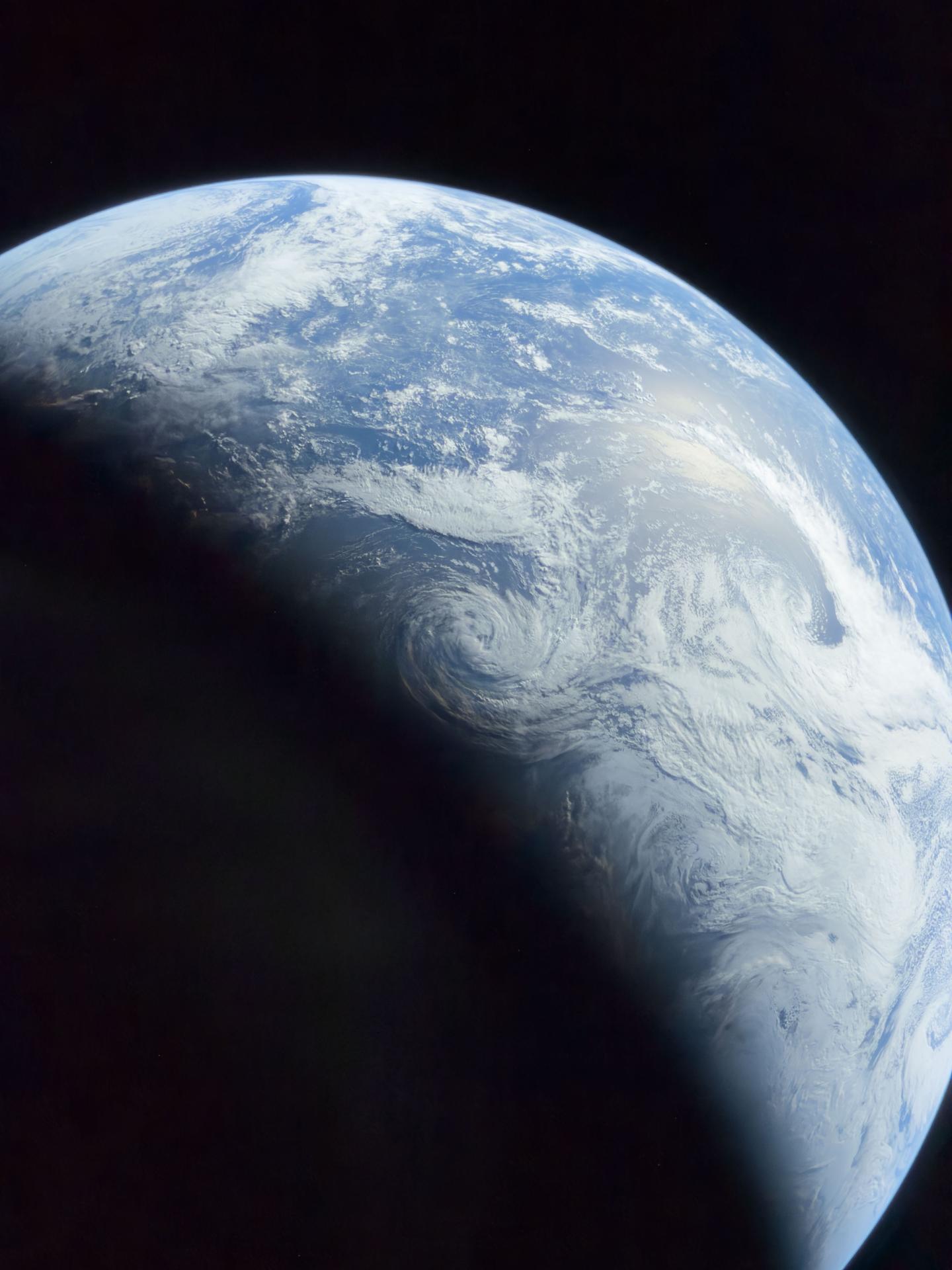
art002e042281 (April 10, 2026) - Earth captured from the Artemis II crew showing white swirling clouds above the blue Pacific Ocean, with reflected sunlight visible in the upper right and the lower left obscured in darkness behind the terminator. This image was captured a few hours before the crew returned to Earth. Credit: NASA

This artist's concept shows Mars Sample Return Earth Entry System. The vehicle would bring curated Martian samples collected by NASA's Perseverance Rover on the final leg of their journey from Mars to Earth. The illustration shows the Earth Entry System, a capsule about 4 feet (1.25 meters) in diameter, on its final approach to Earth, after being ejected from the Earth Return Orbiter. Once in Earth's atmosphere, it would take the vehicle about six minutes to land at the U.S. Air Force's Utah Test and Training Range in west-central Utah. Velocity at time of touchdown for the parachute-less capsule is expected to be about 90 mph (40 meters per second). The Earth Entry System is part of the multi-mission Mars Sample Return program being planned by NASA and ESA (European Space Agency). https://photojournal.jpl.nasa.gov/catalog/PIA25986

Artist rendering of NASA Stardust capsule returning to Earth. The Stardust spacecraft will bring back samples of interstellar dust, including recently discovered dust streaming into our Solar System from the direction of Sagittarius.
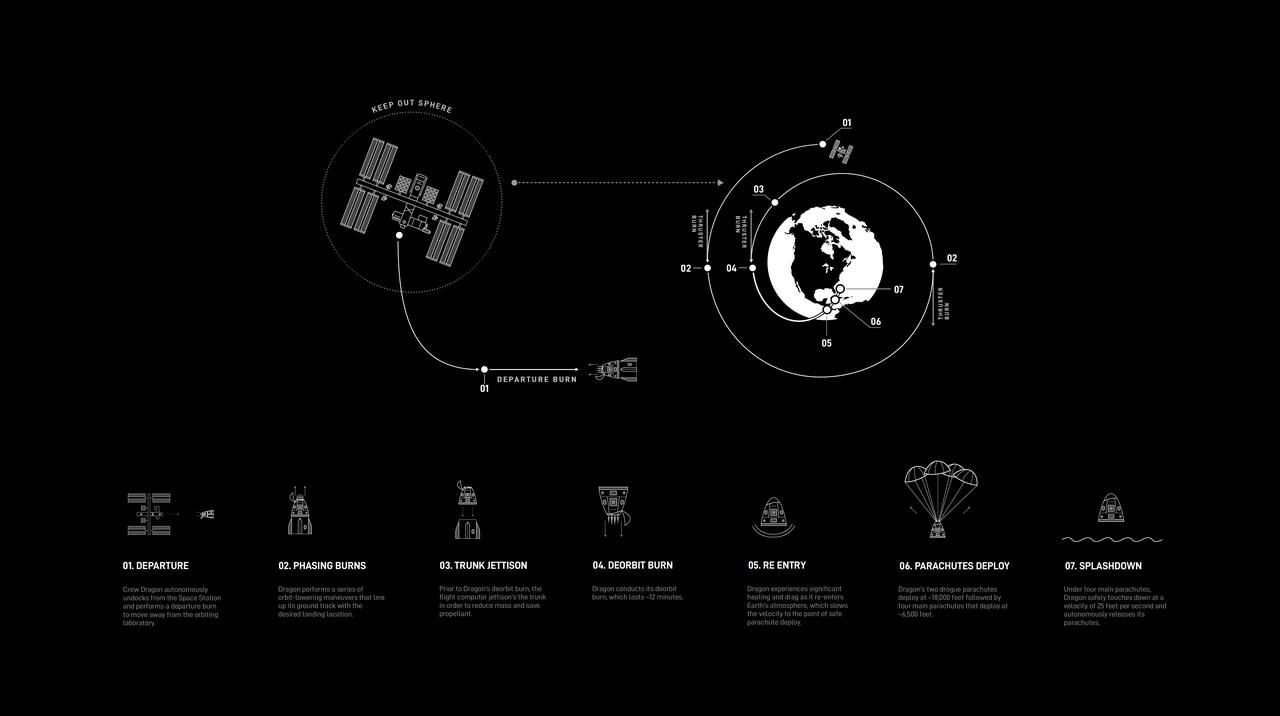
This graphic details return operations for SpaceX missions to the International Space Station. SpaceX is one of two commercial partners providing transportation to and from the space station as part of NASA’s Commercial Crew Program.
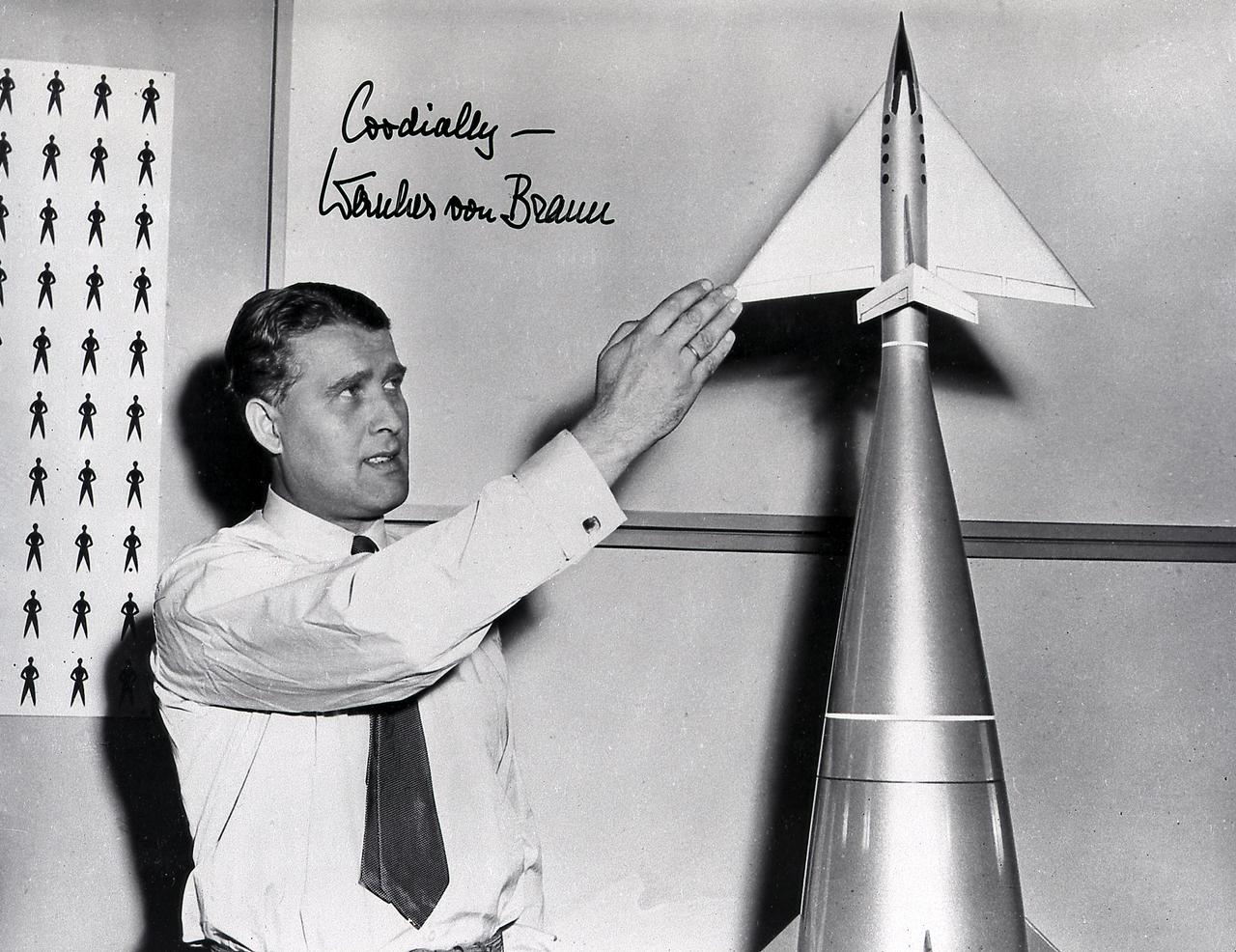
Dr. von Braun stands beside a model of the upper stage (Earth-returnable stage) of the three-stage launch vehicle built for the series of the motion picture productions of space flight produced by Walt Disney in the mid-1950's.
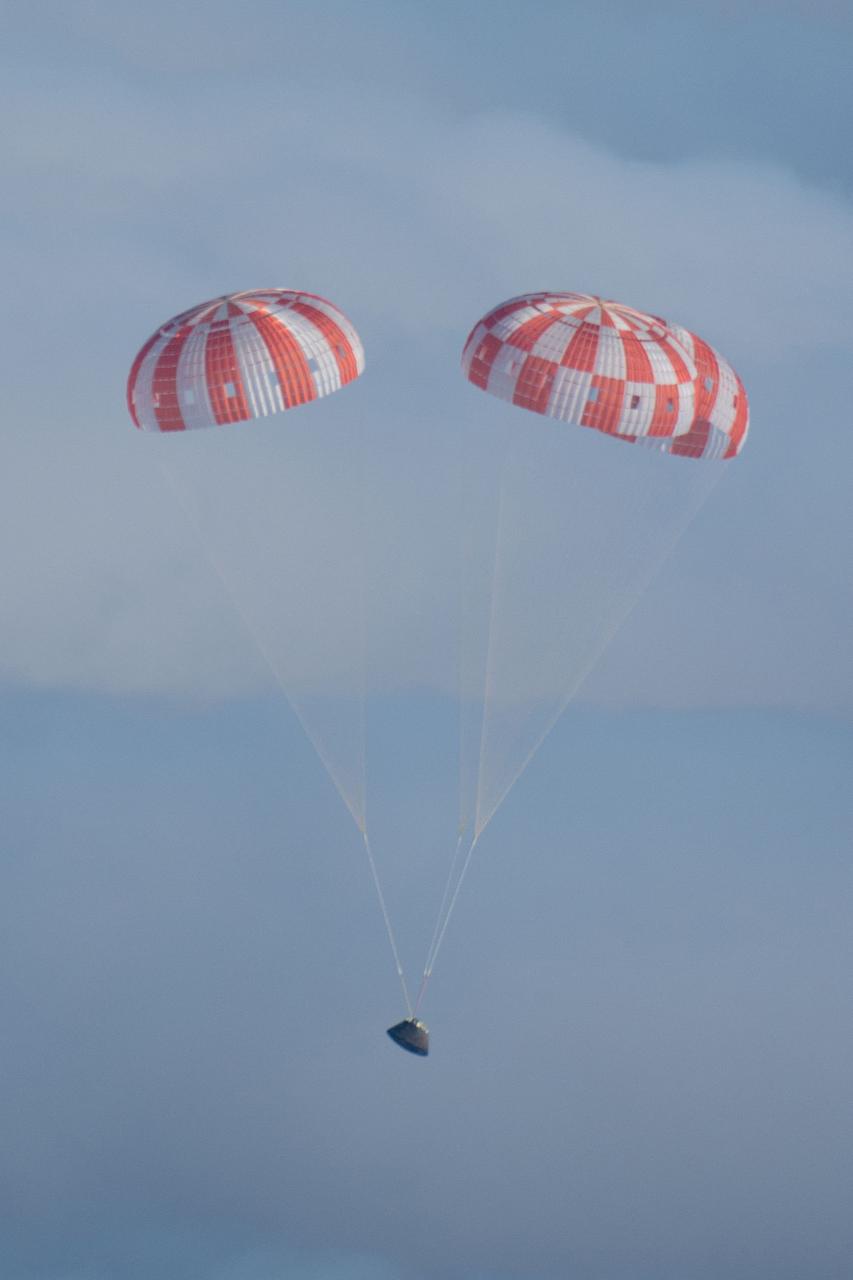
Orion's parachutes deploy as it returns to Earth after Exploration Flight Test-1 (EFT-1) on Dec. 5, 2014. Part of Batch image transfer from Flickr.
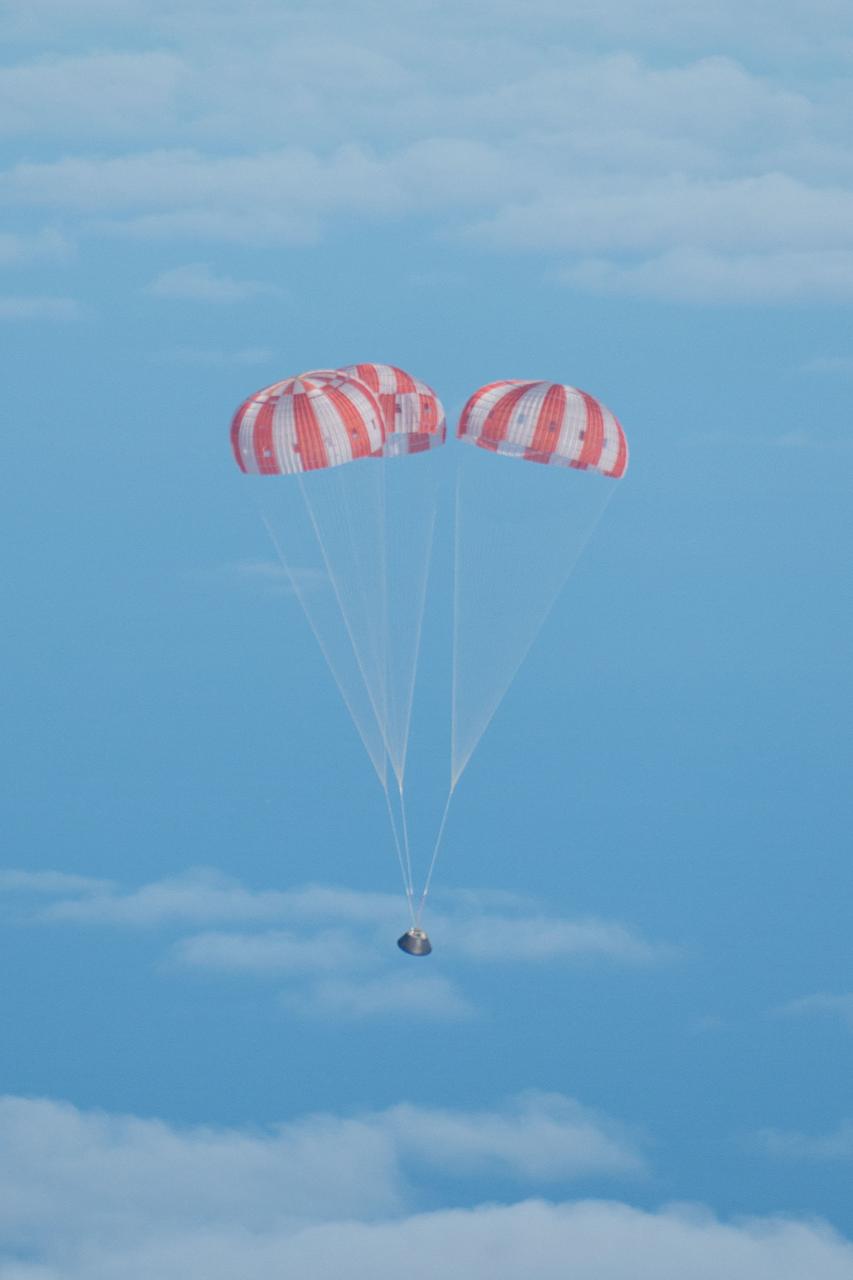
Orion's parachutes deploy as it returns to Earth after Exploration Flight Test-1 (EFT-1) on Dec. 5, 2014. Part of Batch image transfer from Flickr.
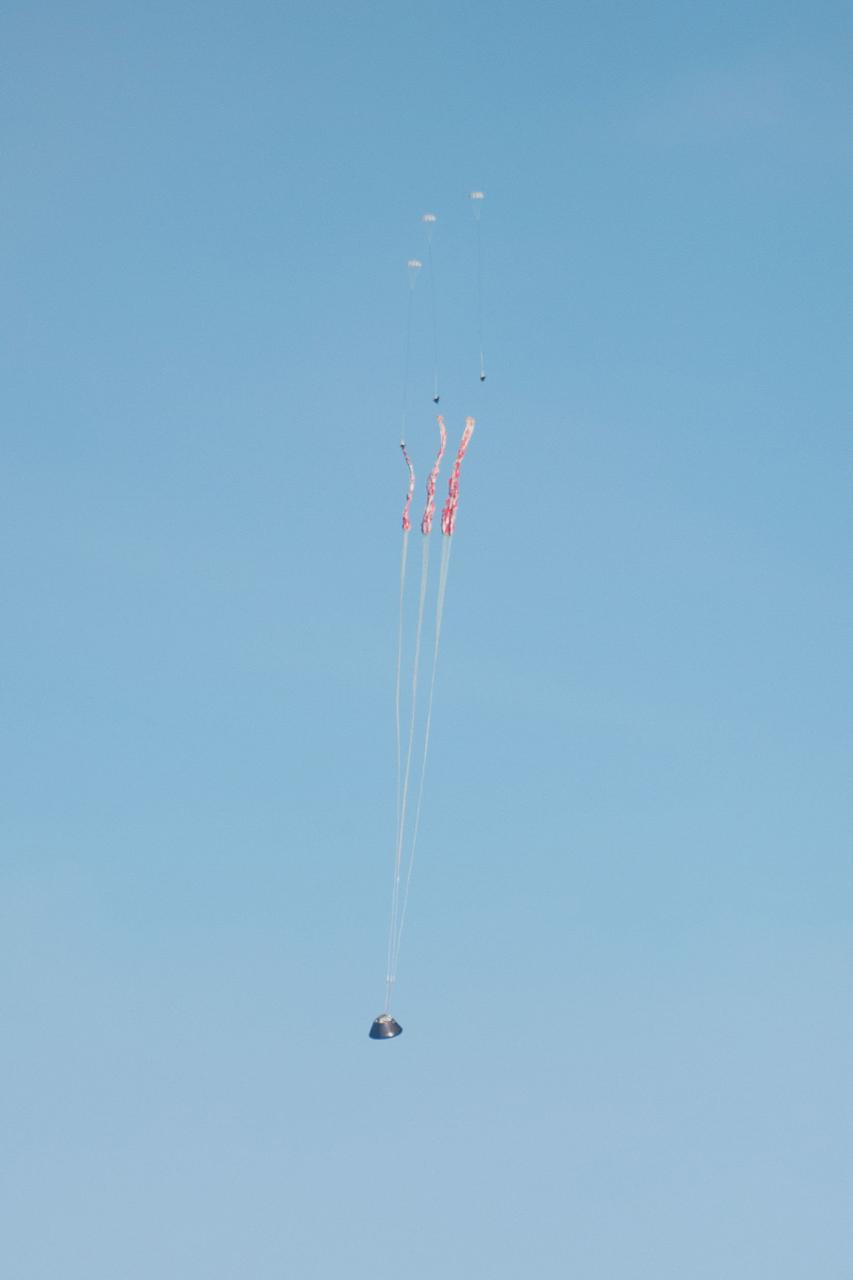
Orion's parachutes deploy as it returns to Earth after Exploration Flight Test-1 (EFT-1) on Dec. 5, 2014. Part of Batch image transfer from Flickr.
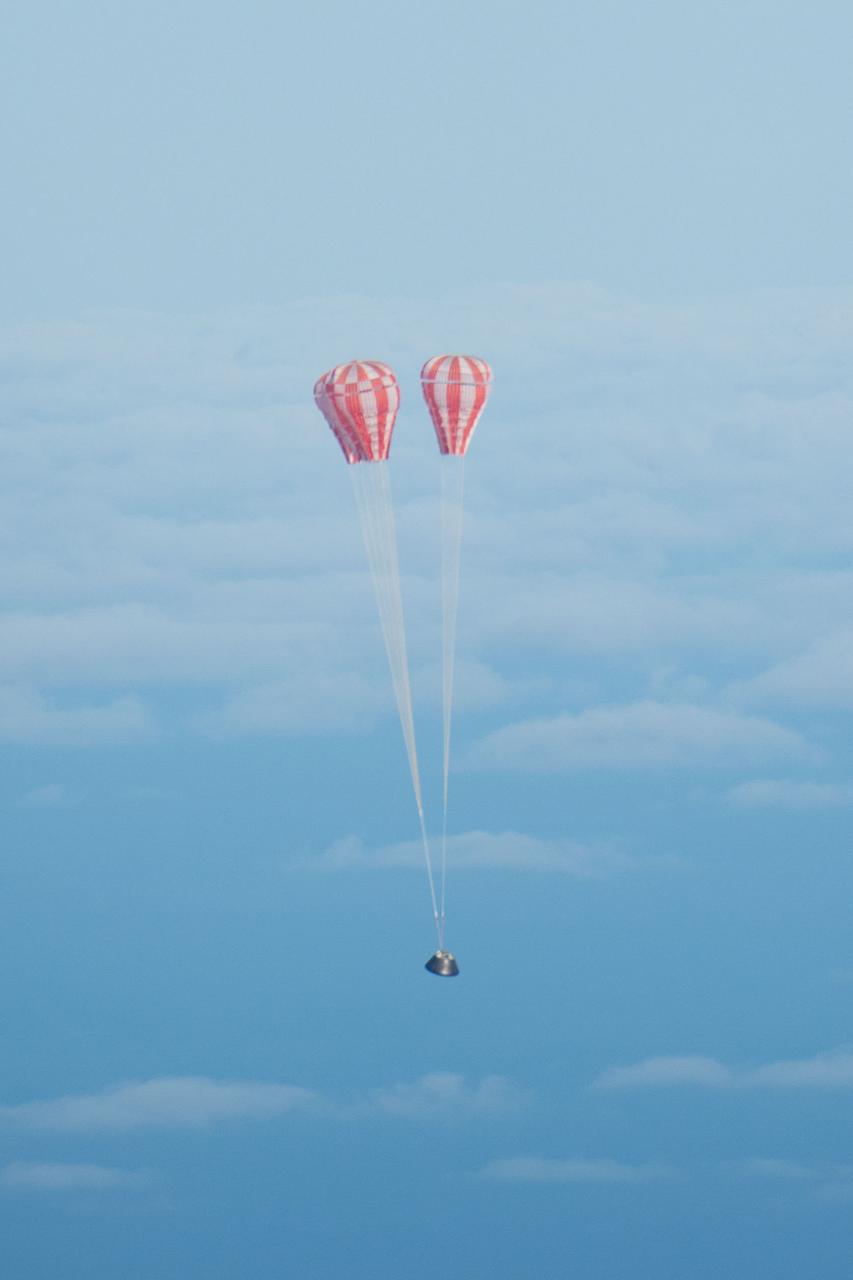
Orion's parachutes deploy as it returns to Earth after Exploration Flight Test-1 (EFT-1) on Dec. 5, 2014. Part of Batch image transfer from Flickr.
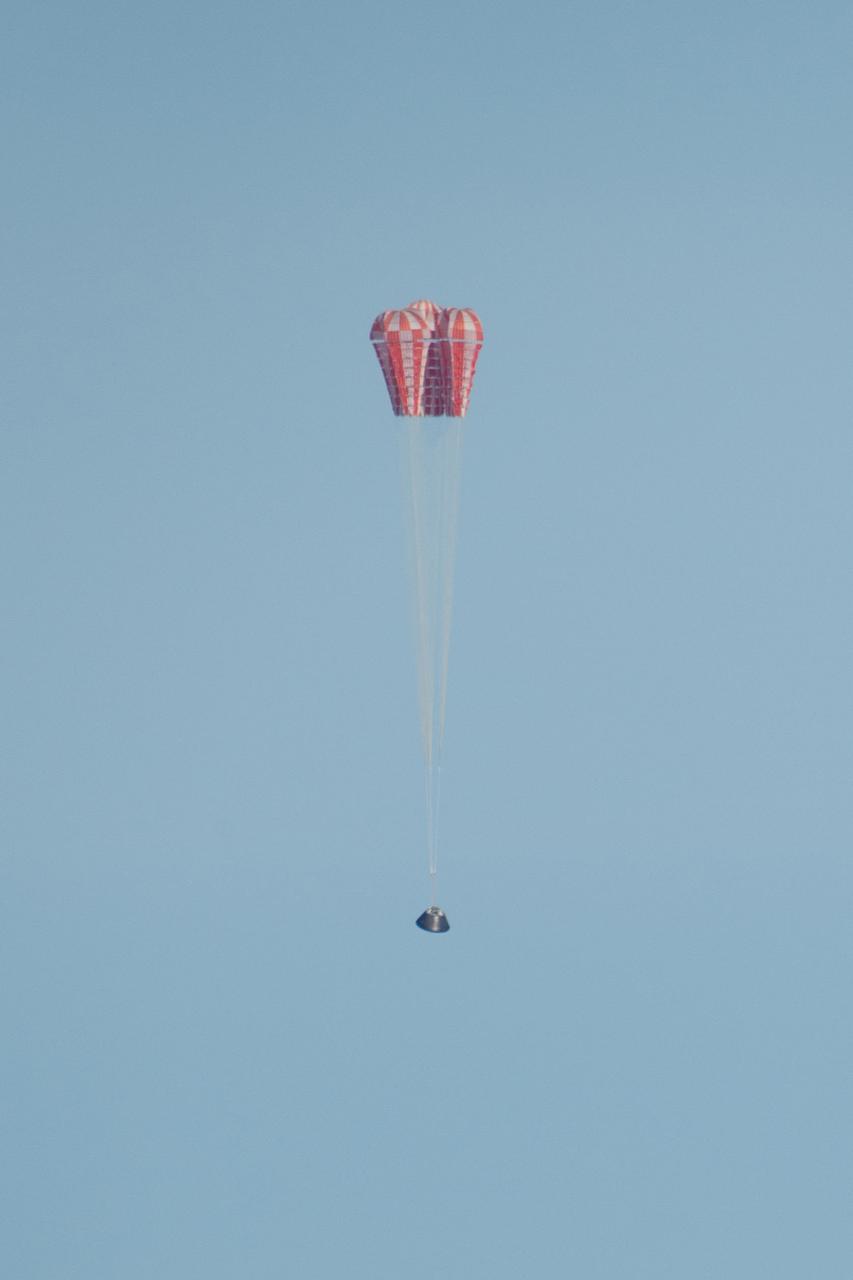
Orion's main parachutes begin to unfurl as it returns to Earth during Exploration Flight Test-1 (EFT-1) on Dec. 5, 2014. Part of Batch image transfer from Flickr.

Orion's parachutes deploy as it returns to Earth after Exploration Flight Test-1 (EFT-1) on Dec. 5, 2014. Part of Batch image transfer from Flickr.
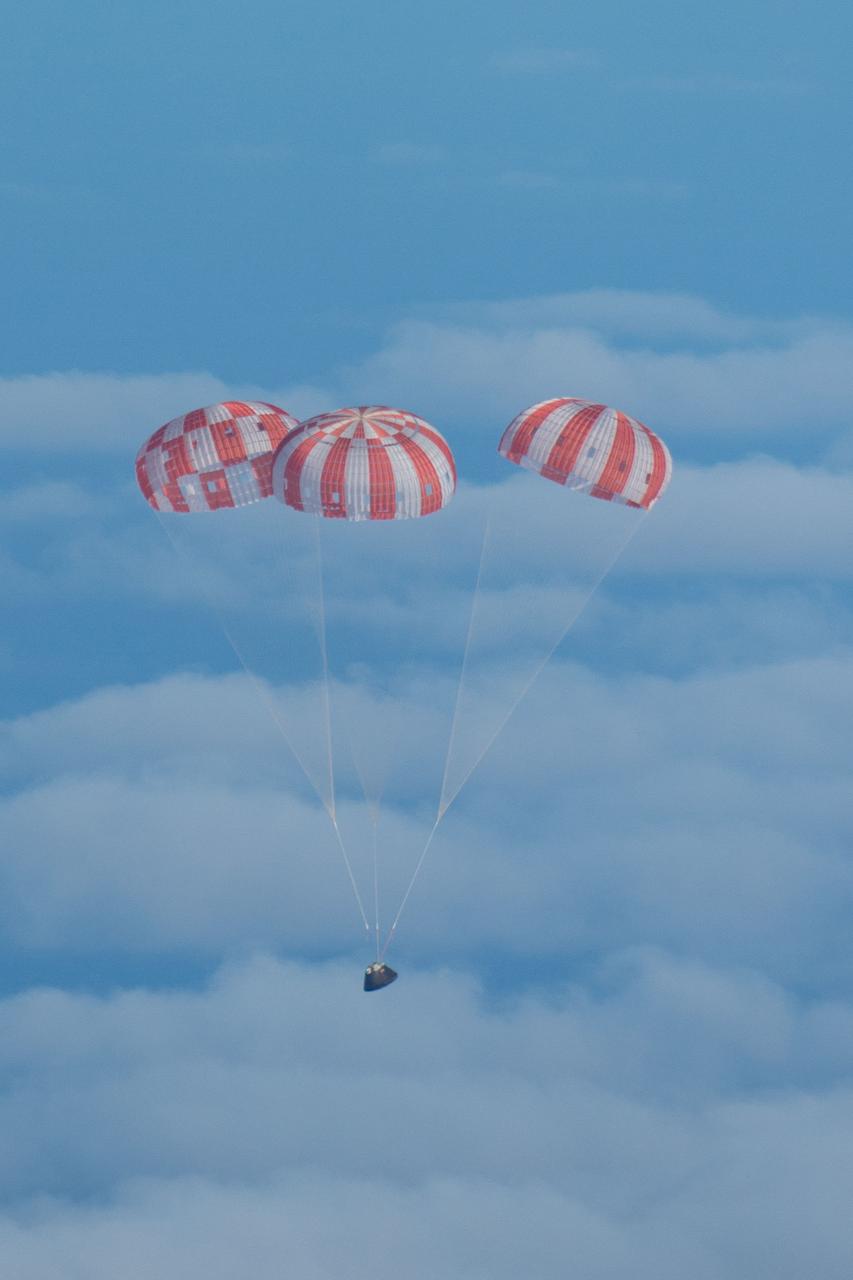
Orion's parachutes deploy as it returns to Earth after Exploration Flight Test-1 (EFT-1) on Dec. 5, 2014. Part of Batch image transfer from Flickr.
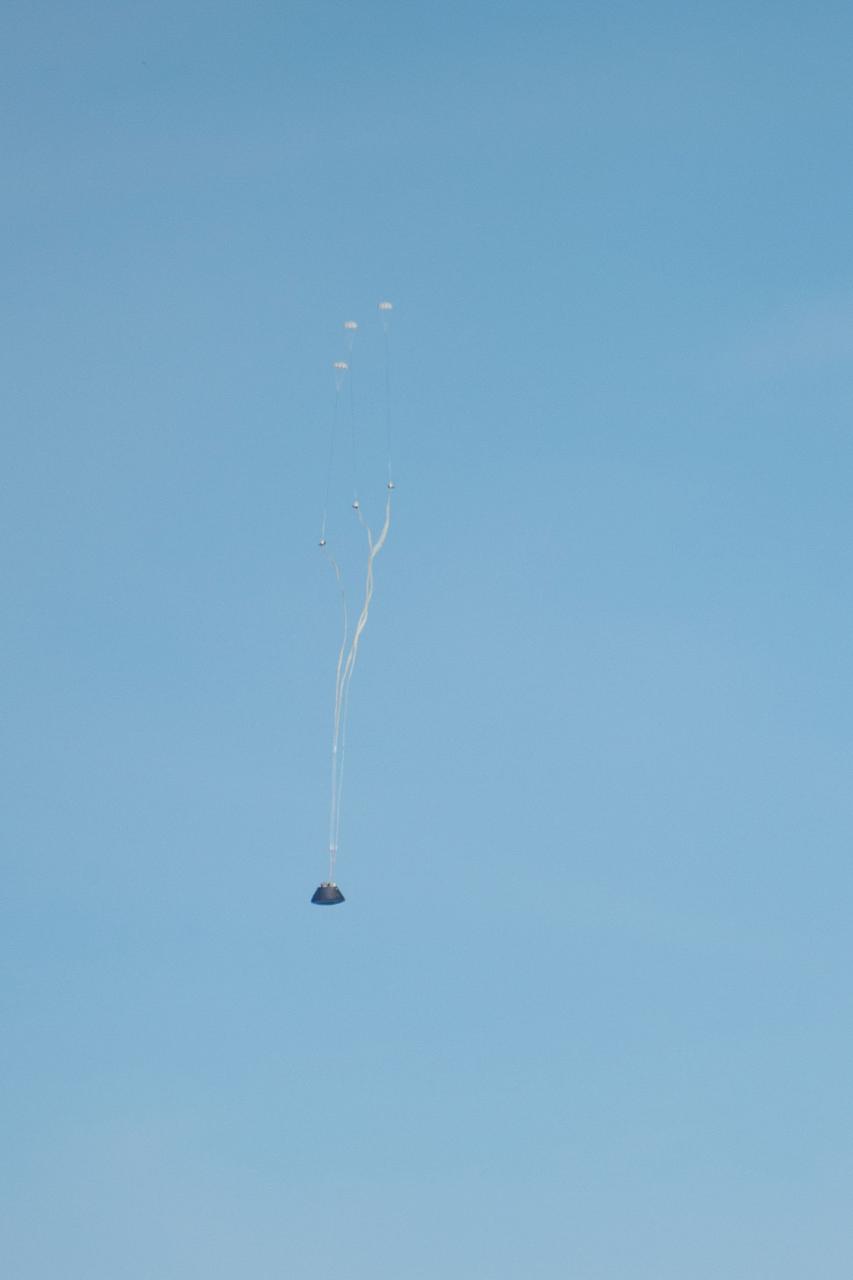
Orion's parachutes deploy as it returns to Earth after Exploration Flight Test-1 (EFT-1) on Dec. 5, 2014. Part of Batch image transfer from Flickr.
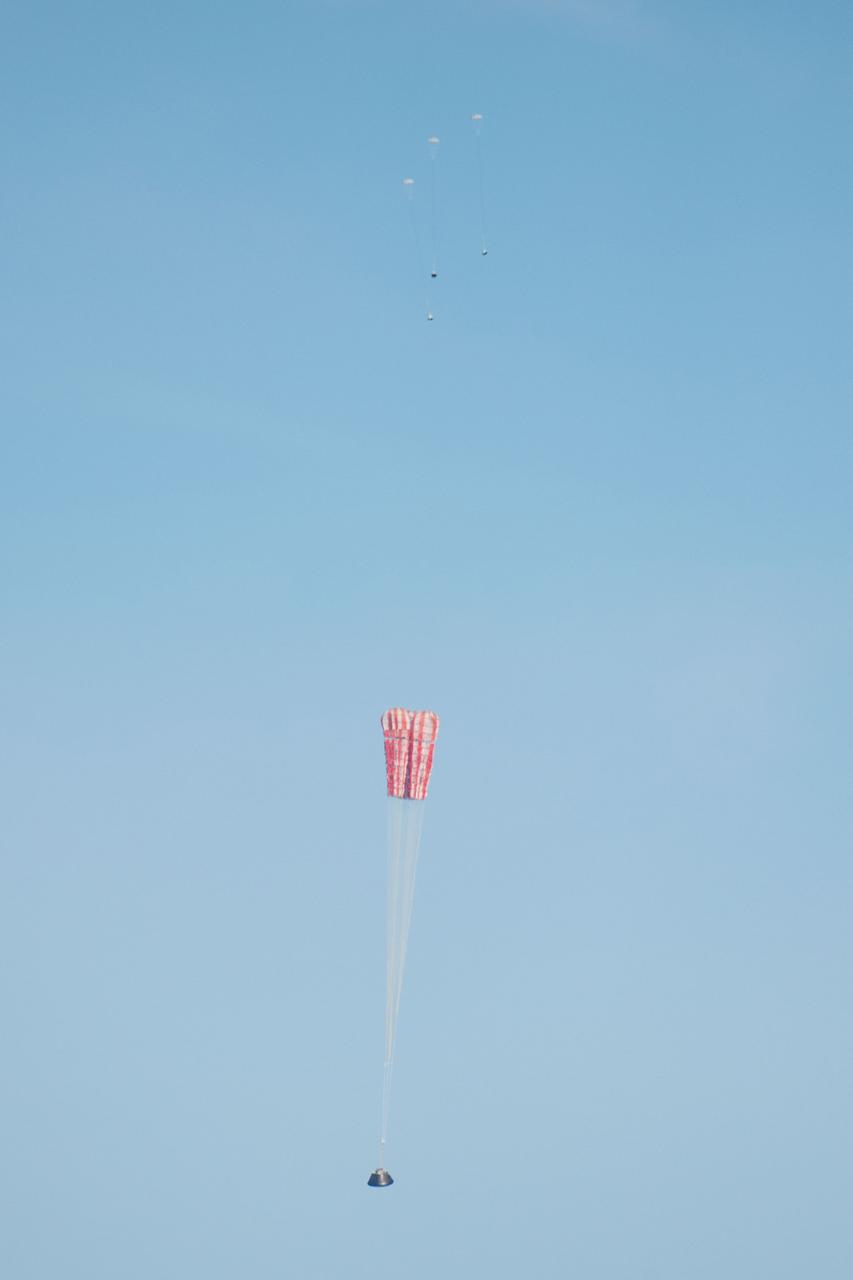
Orion's parachutes deploy as it returns to Earth after Exploration Flight Test-1 (EFT-1) on Dec. 5, 2014. Part of Batch image transfer from Flickr.
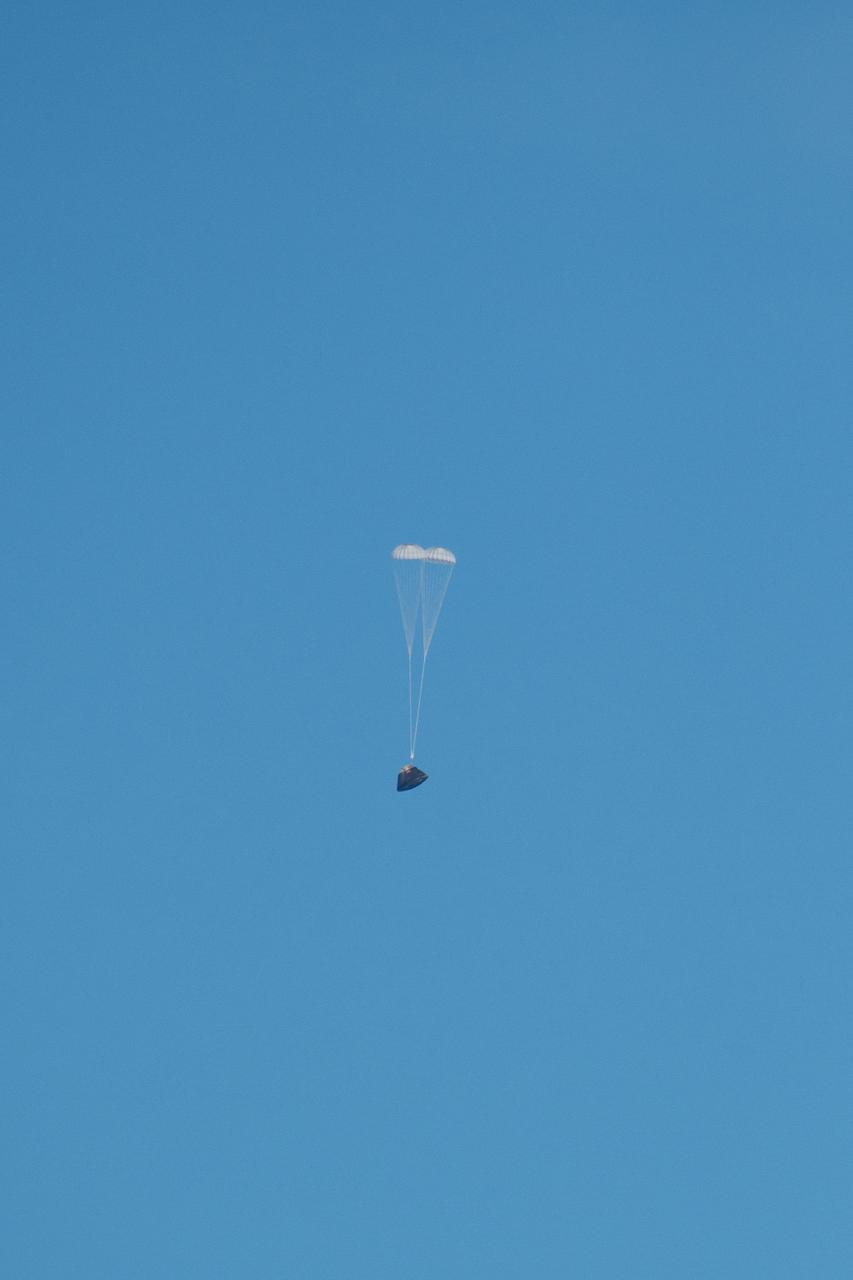
Orion's parachutes deploy as it returns to Earth after Exploration Flight Test-1 (EFT-1) on Dec. 5, 2014. Part of Batch image transfer from Flickr.
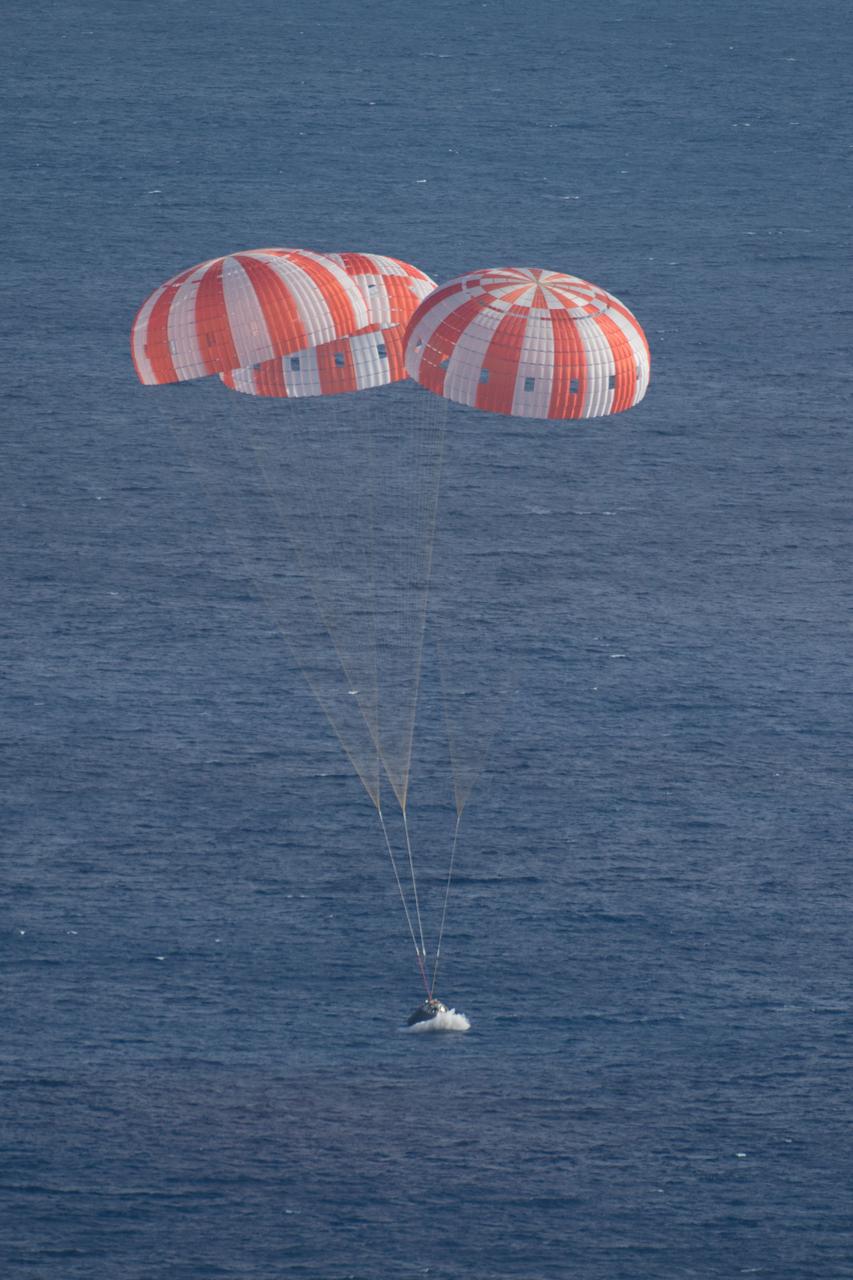
Orion's parachutes deploy as it returns to Earth after Exploration Flight Test-1 (EFT-1) on Dec. 5, 2014. Part of Batch image transfer from Flickr.
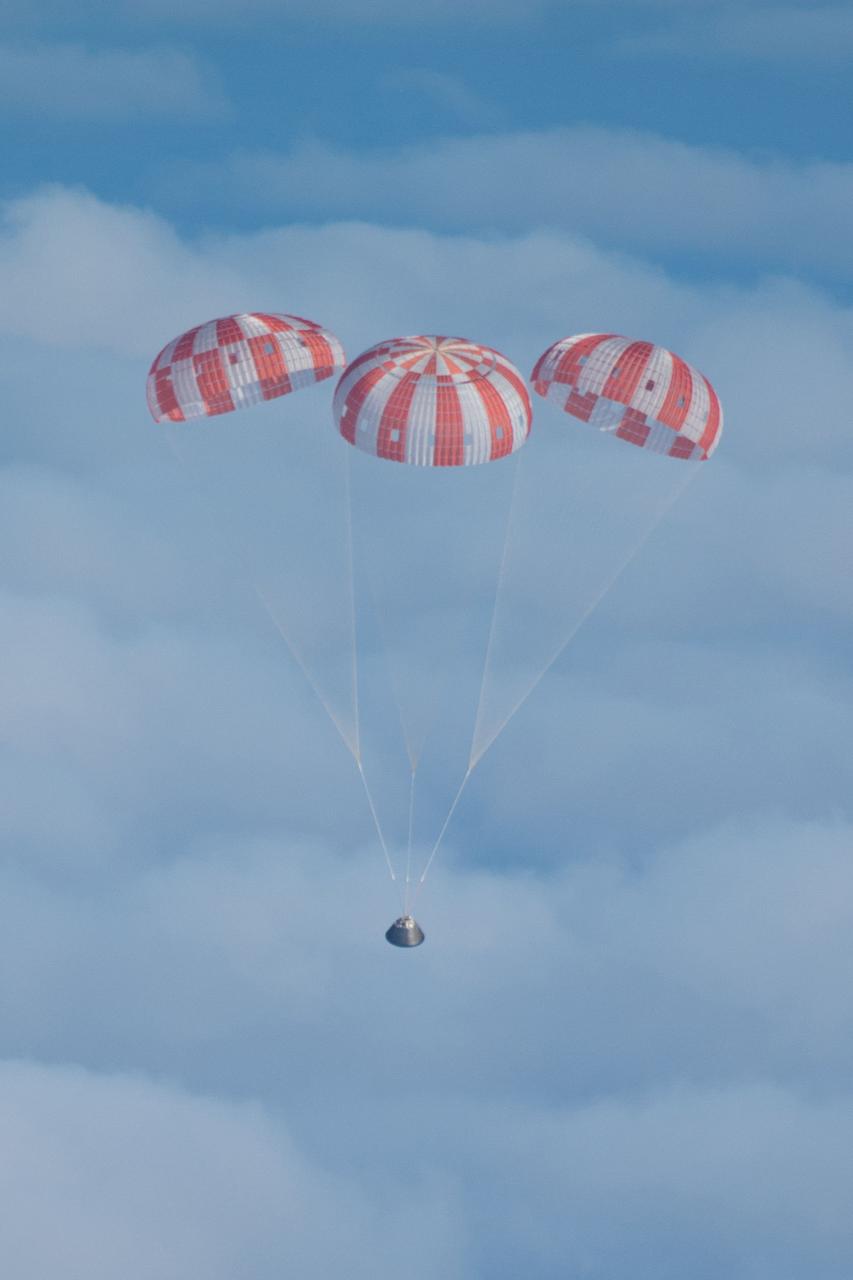
Orion's parachutes deploy as it returns to Earth after Exploration Flight Test-1 (EFT-1) on Dec. 5, 2014. Part of Batch image transfer from Flickr.
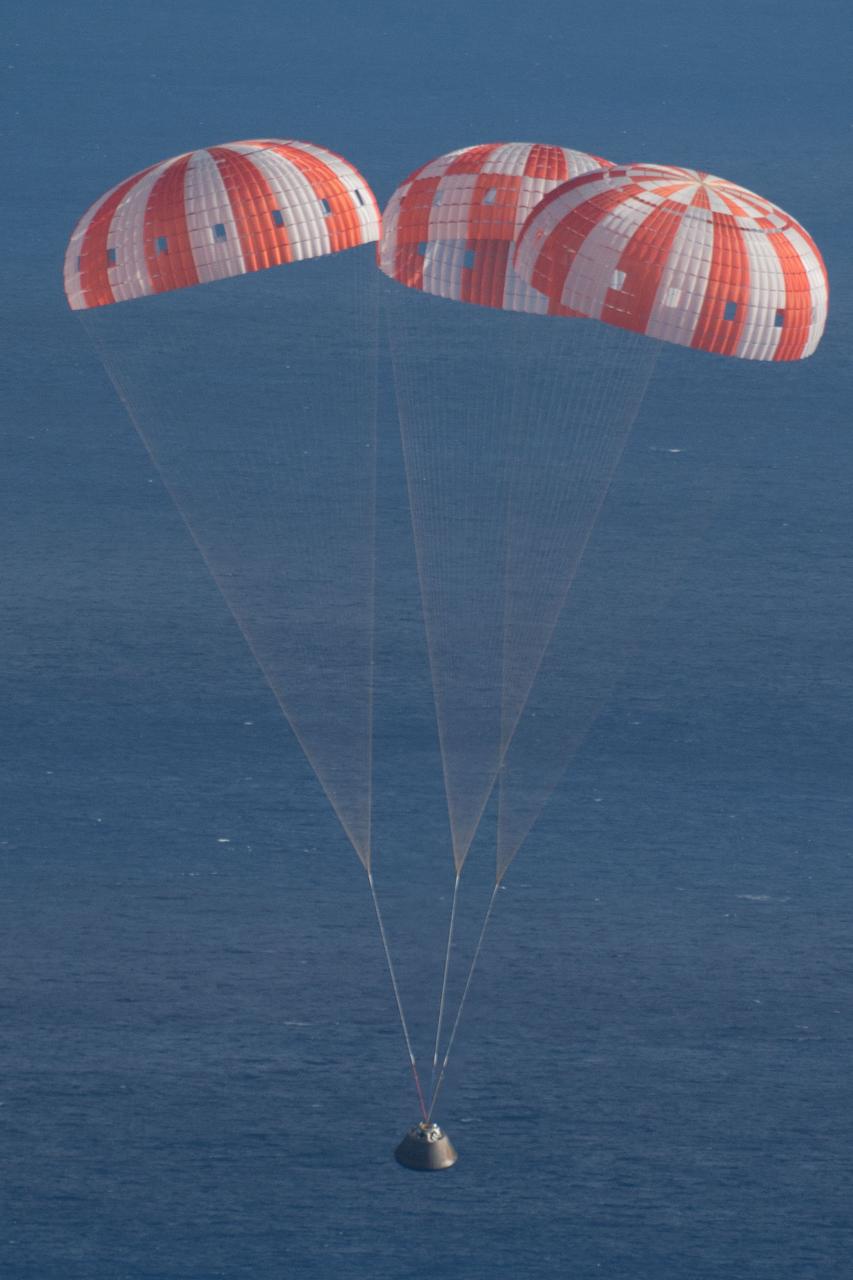
Orion's parachutes deploy as it returns to Earth after Exploration Flight Test-1 (EFT-1) on Dec. 5, 2014. Part of Batch image transfer from Flickr.
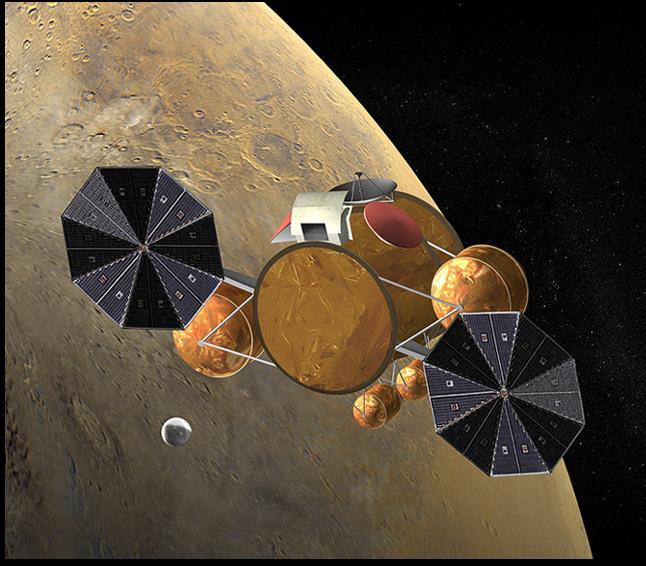
This artist concept of the proposed NASA Mars Sample Return mission shows rendezvous of the orbiting sample container with the Earth return vehicle.
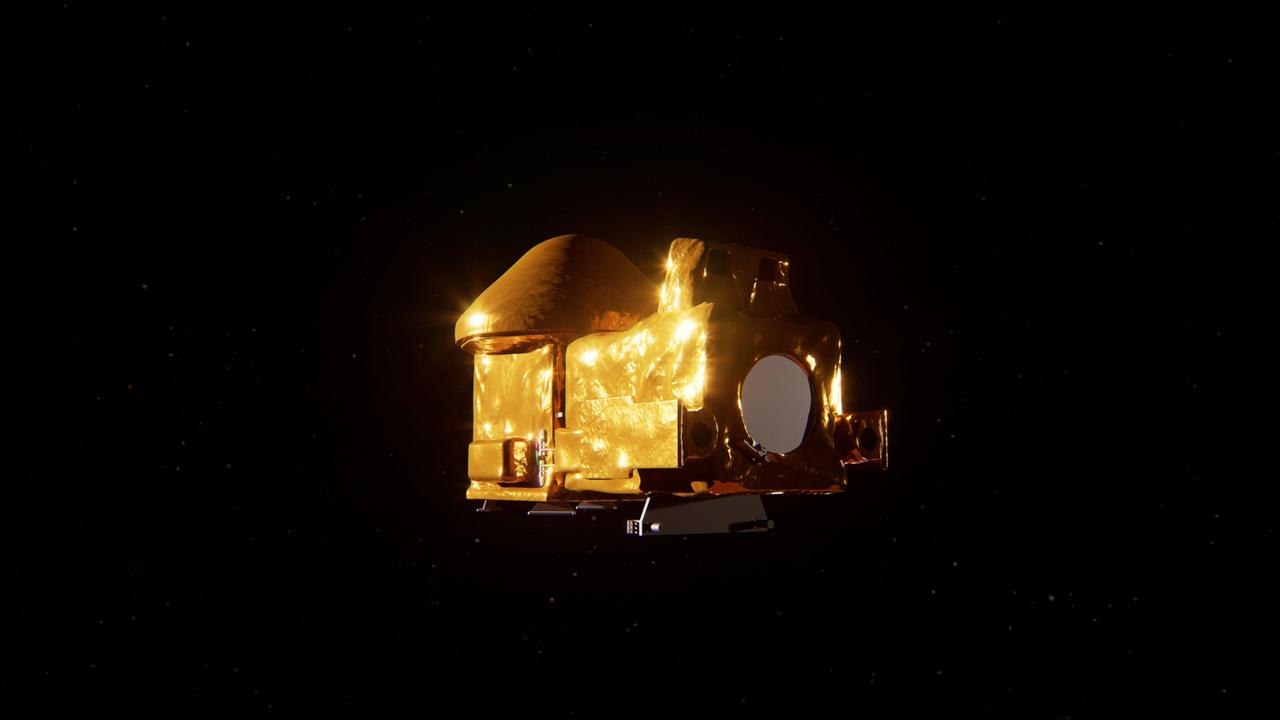
This artist's concept shows the proposed Capture, Containment, and Return System, a NASA payload on the European Space Agency's Earth Return Orbiter. The payload is tasked with capturing the Orbiting Sample container, orienting it, sterilizing its exterior, and transferring it into a clean zone for secondary containment, toward safe return to Earth. The Capture, Containment, and Return System is part of the multi-mission Mars Sample Return program being planned by NASA and European Space Agency (ESA). https://photojournal.jpl.nasa.gov/catalog/PIA25894

This illustration shows the proposed Capture, Containment, and Return System, a NASA payload on the European Space Agency's Earth Return Orbiter. As part of the Mars Sample Return Campaign, samples collected by NASA's Mars Perseverance Rover would be launched into Mars orbit within sealed tubes inside an Orbiting Sample container. The Earth Return Orbiter would then rendezvous with this container, and the Capture, Containment, and Return System would be tasked with capturing the Orbiting Sample container, orienting it, sterilizing its exterior, and transferring it into a clean zone for secondary containment, toward safe return to Earth. The Capture, Containment, and Return System is part of the multi-mission Mars Sample Return program being planned by NASA and European Space Agency (ESA). https://photojournal.jpl.nasa.gov/catalog/PIA25860

During its flight, NASA’s Galileo spacecraft returned images of the Earth and Moon. Separate images of the Earth and Moon were combined to generate this view. http://photojournal.jpl.nasa.gov/catalog/PIA00342
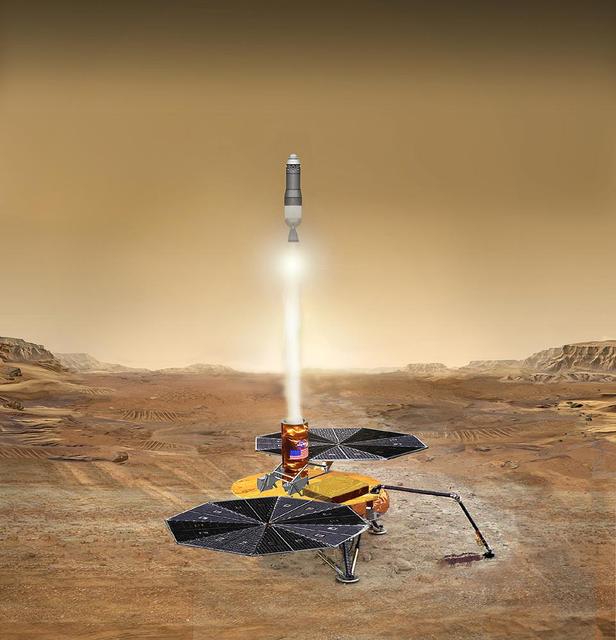
This artist concept of the proposed NASA Mars Sample Return mission shows the launch of the martian sample back toward Earth.
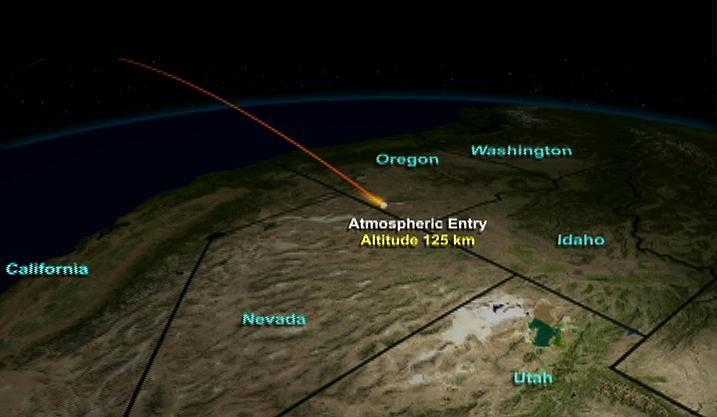
This animation illustrates the path the Stardust return capsule will follow once it enters Earth atmosphere.
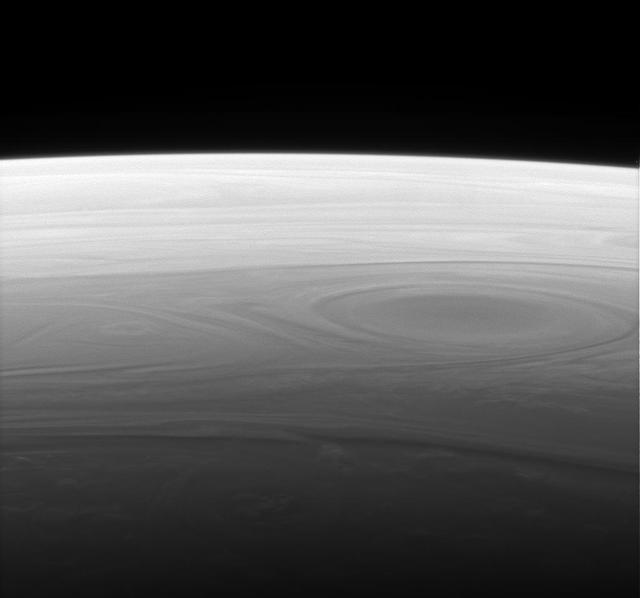
The Cassini spacecraft returns a grand and unique vista of Saturn horizon, reminiscent of the views of our own planet from Earth orbit
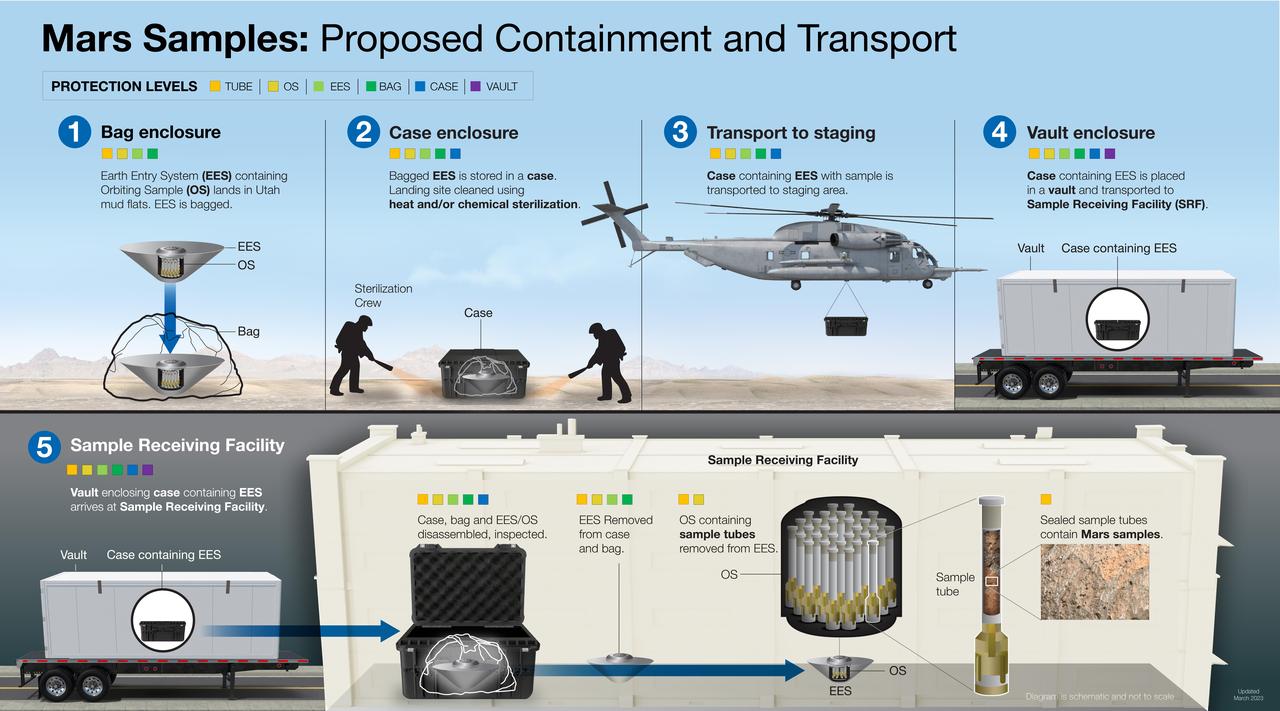
This illustration shows the proposed process for safely recovering, containing, and transporting Mars samples gathered by NASA's Perseverance Mars rover after they are returned to Earth as part of the joint NASA/ESA (European Space Agency) Mars Sample Return Campaign. The process of carefully containing and handling the samples would begin long before they arrive on Earth. Every phase of the Mars Sample Return campaign from collection and sealing to launch, transfer, and landing has been developed with a "safety first" approach. Sample handling and curation experts would be involved in planning for the round trip at each phase of the campaign. After its journey back to Earth from Mars on the ESA-provided Earth Return Orbiter, the capsule containing the samples would land at the Utah Test and Training Range in west-central Utah. NASA would securely transport the capsule and its contents to a Sample Return Facility at a location to be determined. Once at the facility, the samples would undergo a rigorous process to assess whether they are safe for release for detailed analysis by scientists from around the world. https://photojournal.jpl.nasa.gov/catalog/PIA25857
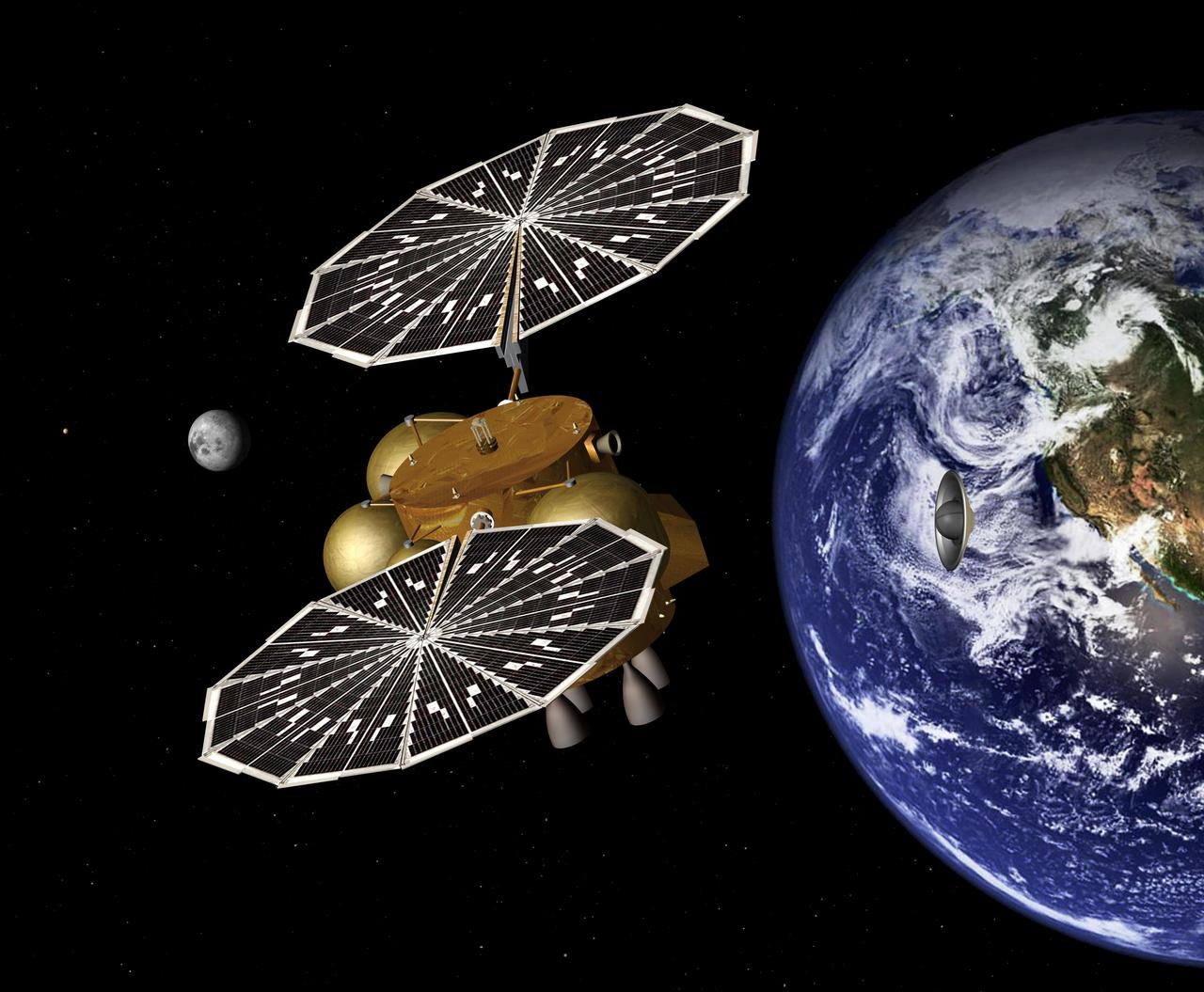
This artist concept of a proposed Mars sample return mission portrays the separation of an Earth entry vehicle, bearing a container of Martian rock samples, from the main spacecraft that would have carried it from Martian orbit nearly to Earth.
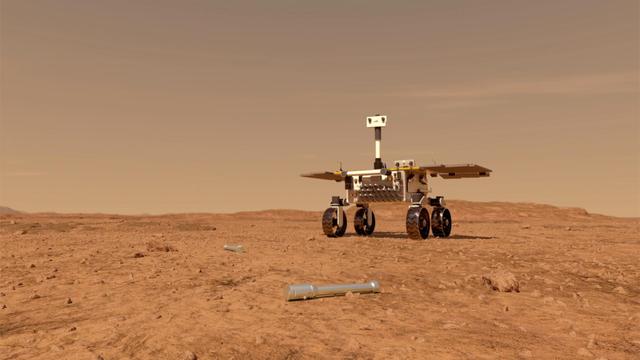
This illustration shows a concept of what a rover fetching rock and soil samples on Mars for return to Earth could look like. The sample tube in this image would have been left on the surface by a previous mission, NASA's Mars 2020 rover. NASA and the European Space Agency (ESA) are solidifying concepts for a Mars sample return mission to return Mars 2020 samples to Earth for scientific investigation. NASA will deliver a Mars lander in the vicinity of Jezero Crater, where the Mars 2020 rover will have collected and cached samples. The lander will carry a NASA rocket (the Mars Ascent Vehicle) along with ESA's Sample Fetch Rover that is roughly the size of NASA's Opportunity Mars rover. The fetch rover will gather the cached samples and carry them back to the lander for transfer to the ascent vehicle; additional samples could also be delivered directly by Mars 2020. The ascent vehicle will then launch a special container holding the samples into Mars orbit. ESA will put a spacecraft in orbit around Mars before the ascent vehicle launches. This spacecraft will rendezvous with and capture the orbiting samples before returning them to Earth. NASA will provide the payload module for the orbiter. https://photojournal.jpl.nasa.gov/catalog/PIA23493
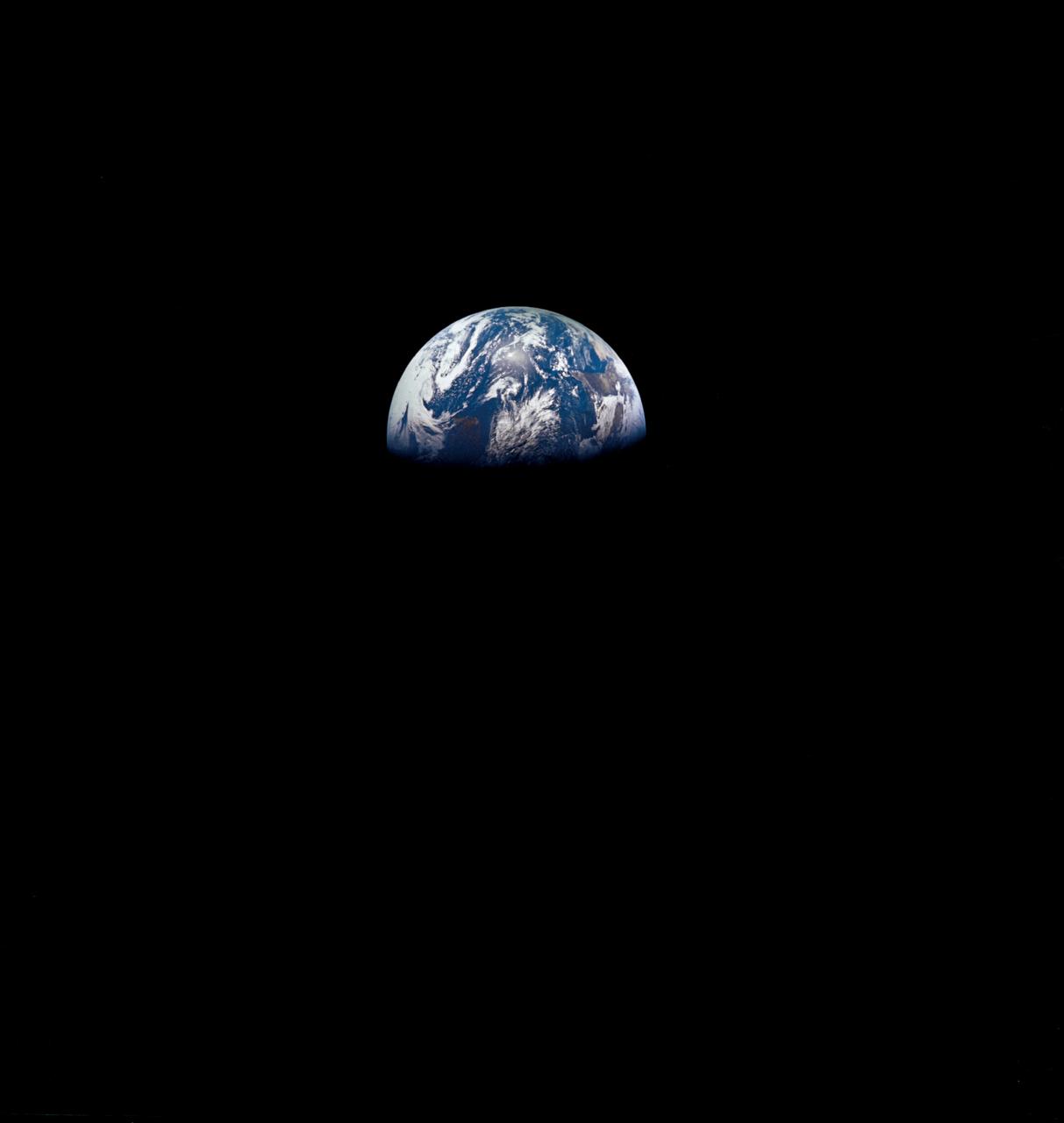
AS8-15-2561 (21-27 Dec. 1968) --- View of Earth as photographed by the Apollo 8 astronauts on their return trip from the moon. Note that the terminator is straighter than on the outbound pictures. The terminator crosses Australia. India is visible. The sun reflection is within the Indian Ocean.
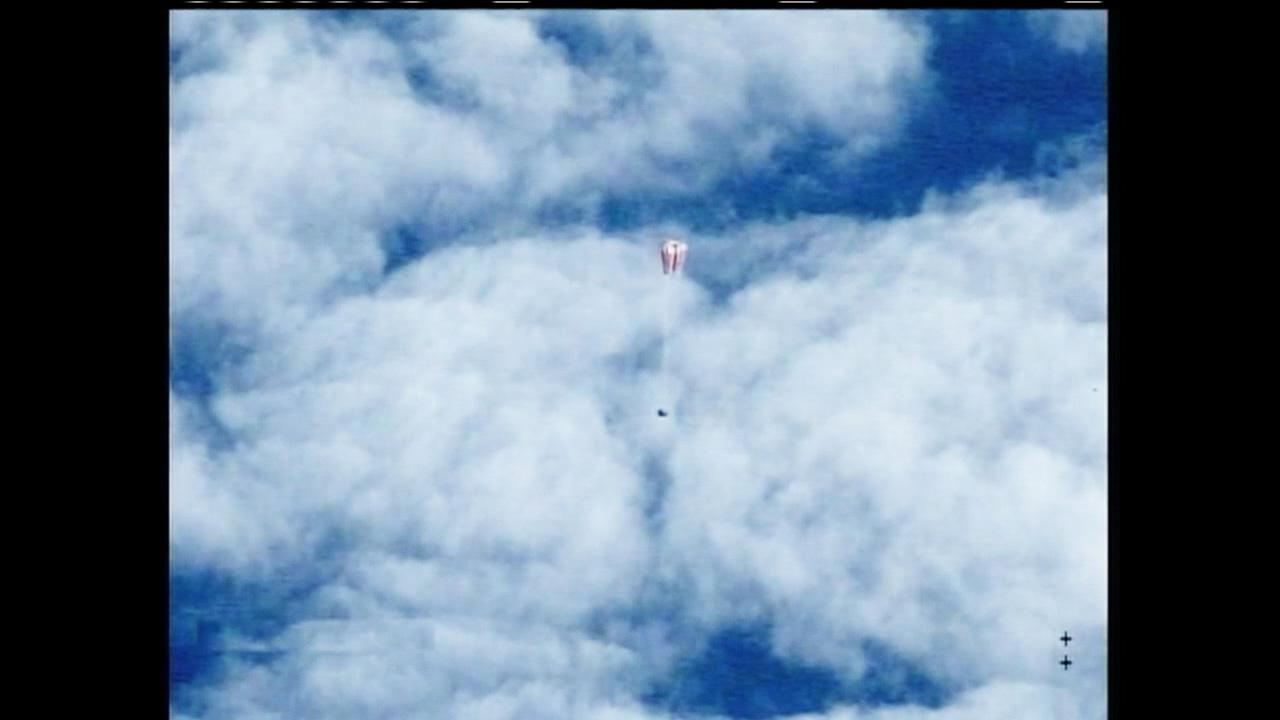
Following more than four hours in Earth orbit, NASA's Orion spacecraft is seen from an unpiloted aircraft as it descends under three massive red and white main parachutes after Exploration Flight Test-1 (EFT-1) on Dec. 5, 2014. Splashdown in the Pacific Ocean will take place at less than 20 mph. It will be recovered by the USS Anchorage, a landing platform-dock, or LPD, ship. Part of Batch image transfer from Flickr.
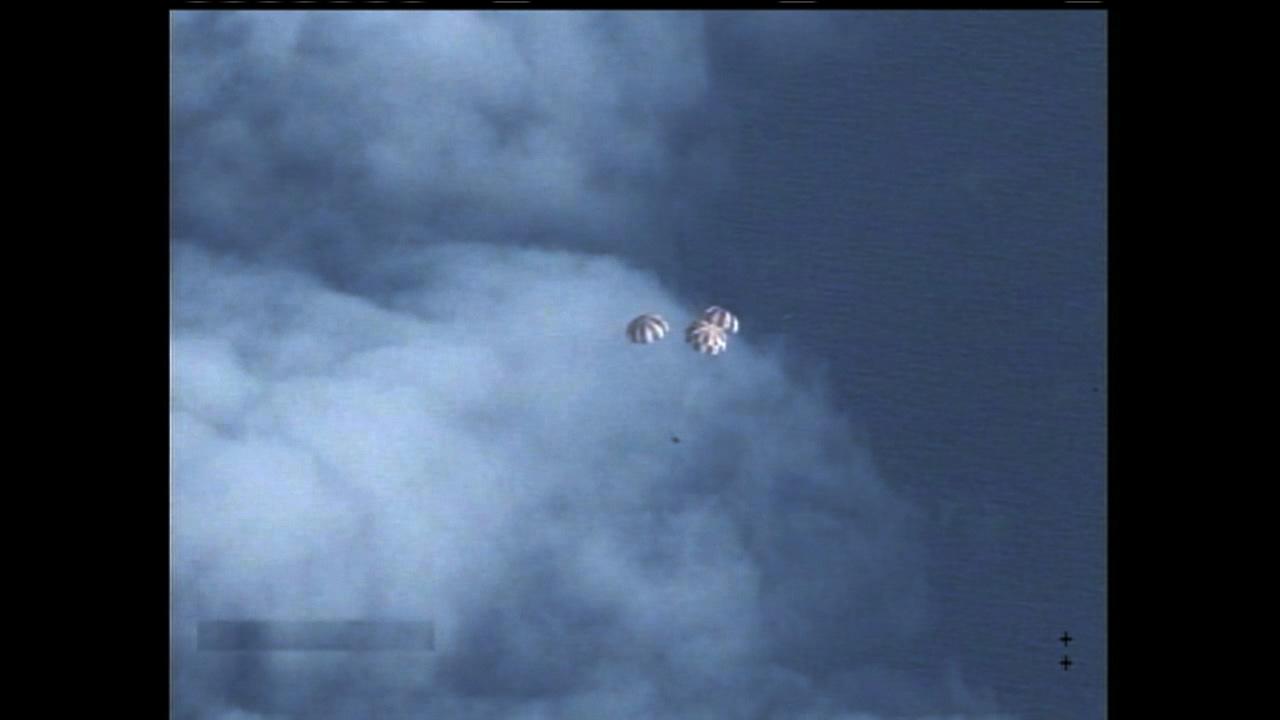
Following more than four hours in Earth orbit, NASA's Orion spacecraft is seen from an unpiloted aircraft as it descends under three massive red and white main parachutes after Exploration Flight Test-1 (EFT-1) on Dec. 5, 2014. Splashdown in the Pacific Ocean will take place at less than 20 mph. It will be recovered by the USS Anchorage, a landing platform-dock, or LPD, ship. Part of Batch image transfer from Flickr.
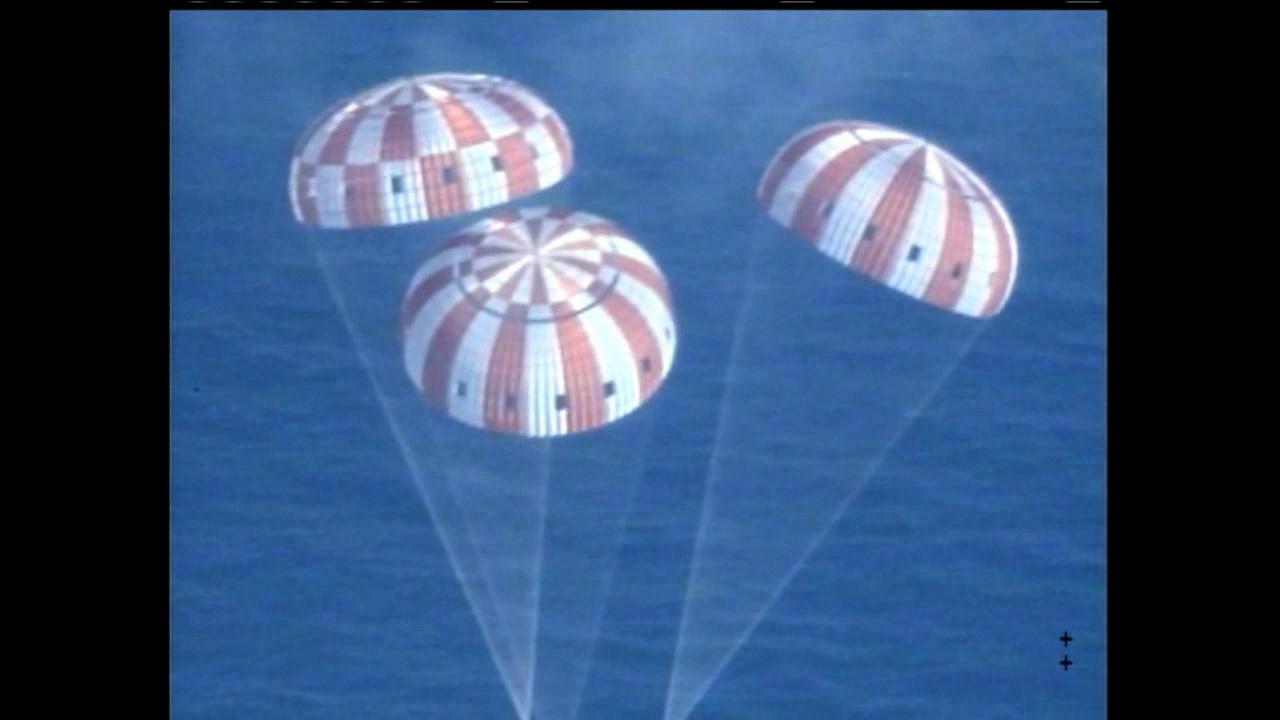
Following more than four hours in Earth orbit, NASA's Orion spacecraft is seen from an unpiloted aircraft as it descends under three massive red and white main parachutes after Exploration Flight Test-1 (EFT-1) on Dec. 5, 2014. Splashdown in the Pacific Ocean will take place at less than 20 mph. It will be recovered by the USS Anchorage, a landing platform-dock, or LPD, ship. Part of Batch image transfer from Flickr.

This illustration depicts the Mars Earth Entry System for the Mars Sample Return campaign. The system would contain the orbiting sample inside a disk-shaped vehicle with a heat shield for safe entry through the Earth's atmosphere. NASA's Mars Sample Return (MSR) will revolutionize our understanding of Mars by returning scientifically-selected samples for study using the most sophisticated instruments around the world. The mission will fulfill a solar system exploration goal as identified by the National Academy of Sciences. This strategic partnership with the European Space Agency (ESA) will be the first mission to return samples from another planet, including the first launch from the surface of another planet. These samples collected by Perseverance during its exploration of an ancient river-delta are thought to be the best opportunity to reveal the early evolution of Mars, including the potential for life. https://photojournal.jpl.nasa.gov/catalog/PIA25336

During its flight and lunar orbit, NASA’s Clementine spacecraft returned images of the planet Earth and the Moon. This collection of UVVIS camera Clementine images shows the Earth from the Moon and 3 images of the Earth. The image on the left shows the Earth as seen across the lunar north pole; the large crater in the foreground is Plaskett. The Earth actually appeared about twice as far above the lunar horizon as shown. The top right image shows the Earth as viewed by the UVVIS camera while Clementine was in transit to the Moon; swirling white cloud patterns indicate storms. The two views of southeastern Africa were acquired by the UVVIS camera while Clementine was in low Earth orbit early in the mission. http://photojournal.jpl.nasa.gov/catalog/PIA00432
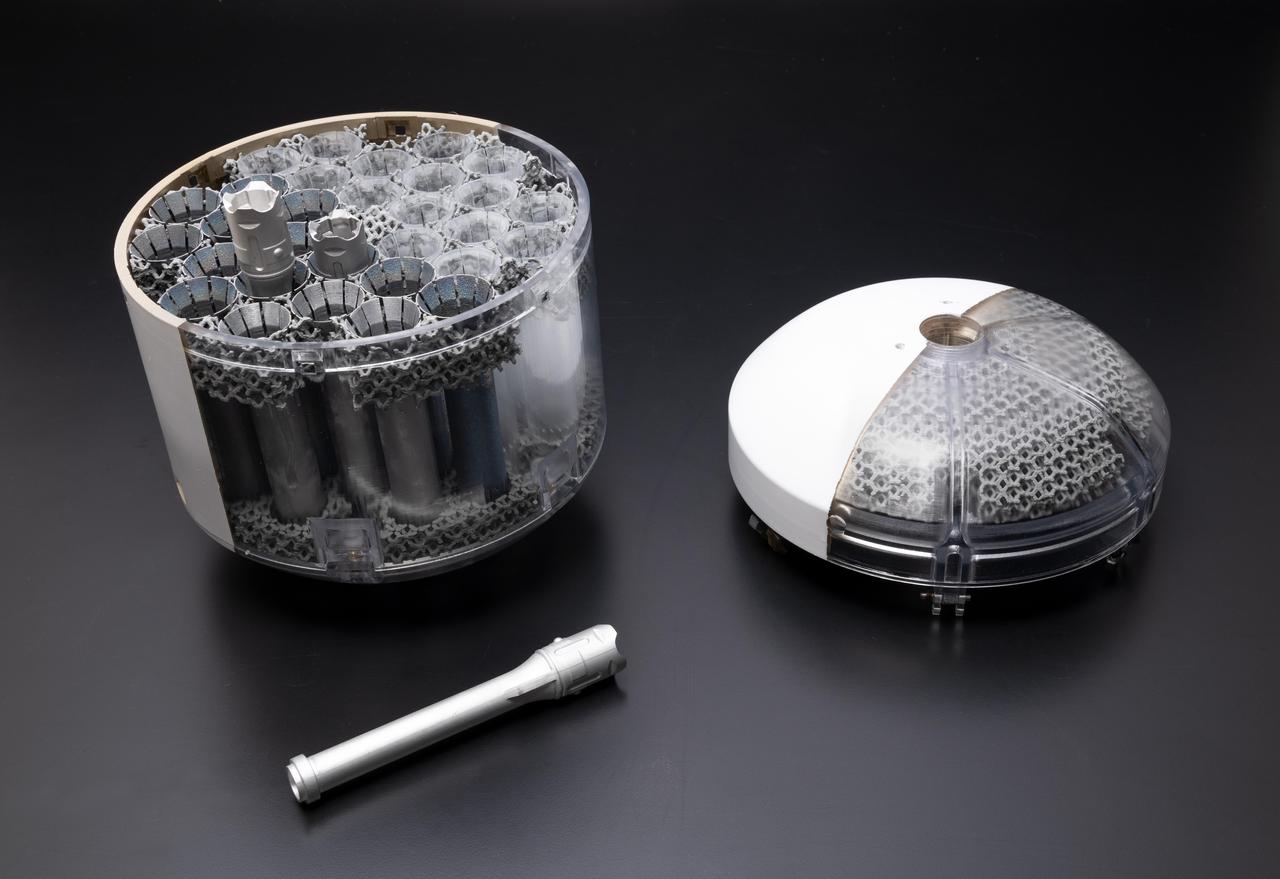
This image shows a concept model of NASA's orbiting sample container, which will hold tubes of Martian rock and soil samples that will be returned to Earth through a Mars sample return campaign. At right is the lid; bottom left sits a model of the sample-holding tube. The sample container will help keep contents at less than about 86 degrees Fahrenheit (30 degrees Celsius) to help preserve the Mars material in its most natural state. NASA and the European Space Agency (ESA) are solidifying concepts for a Mars sample return mission after NASA's Mars 2020 rover collects rock and soil samples and stores them in sealed tubes on the planet's surface for future return to Earth. In the new campaign, NASA will deliver a Mars lander in the vicinity of Jezero Crater, where Mars 2020 will have collected and cached samples. The lander will carry a NASA rocket (the Mars Ascent Vehicle) along with an ESA Sample Fetch Rover that is roughly the size of NASA's Opportunity Mars rover. The fetch rover will gather the cached samples and carry them back to the lander for transfer to an orbiting sample container embedded in the ascent vehicle; additional samples could also be delivered directly by Mars 2020. The ascent vehicle will then launch the container holding the samples into Mars orbit. ESA will put a spacecraft in orbit around Mars before the ascent vehicle launches. This spacecraft will rendezvous with the orbiting sample container and also carry a NASA payload that can capture and contain the sample container before returning the samples to Earth. https://photojournal.jpl.nasa.gov/catalog/PIA23712

Artist rendering of NASA Stardust capsule returning to Earth. The Stardust spacecraft will bring back samples of interstellar dust, including recently discovered dust streaming into our Solar System from the direction of Sagittarius.
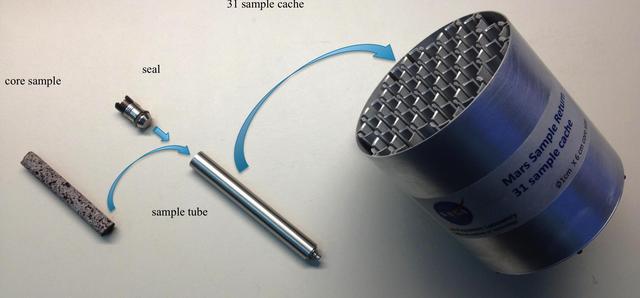
This picture shows one prototype for hardware to cache samples of cores drilled from Martian rocks for possible future return to Earth; a major objective for NASA Mars 2020 rover.
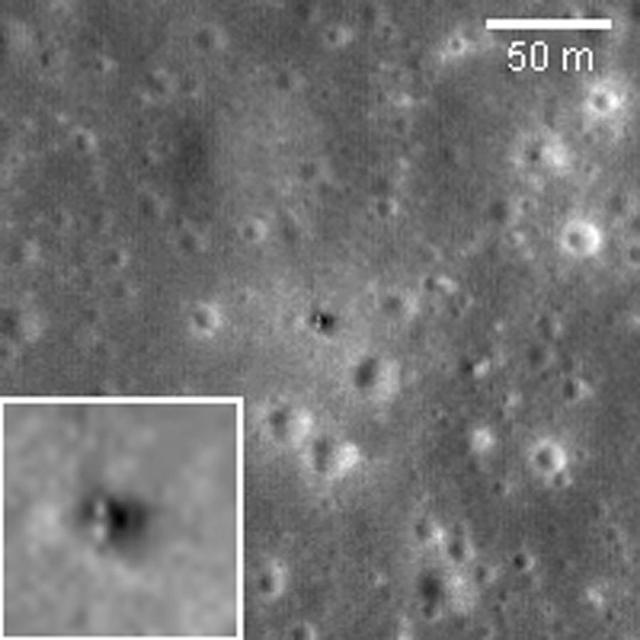
Luna 16 was the first robotic mission to land on the Moon on basaltic plains of Mare Fecunditatis and return a sample to the Earth. It was launched by the Soviet Union on 12 September 1970. This image was taken by NASA Lunar Reconnaissance Orbiter.
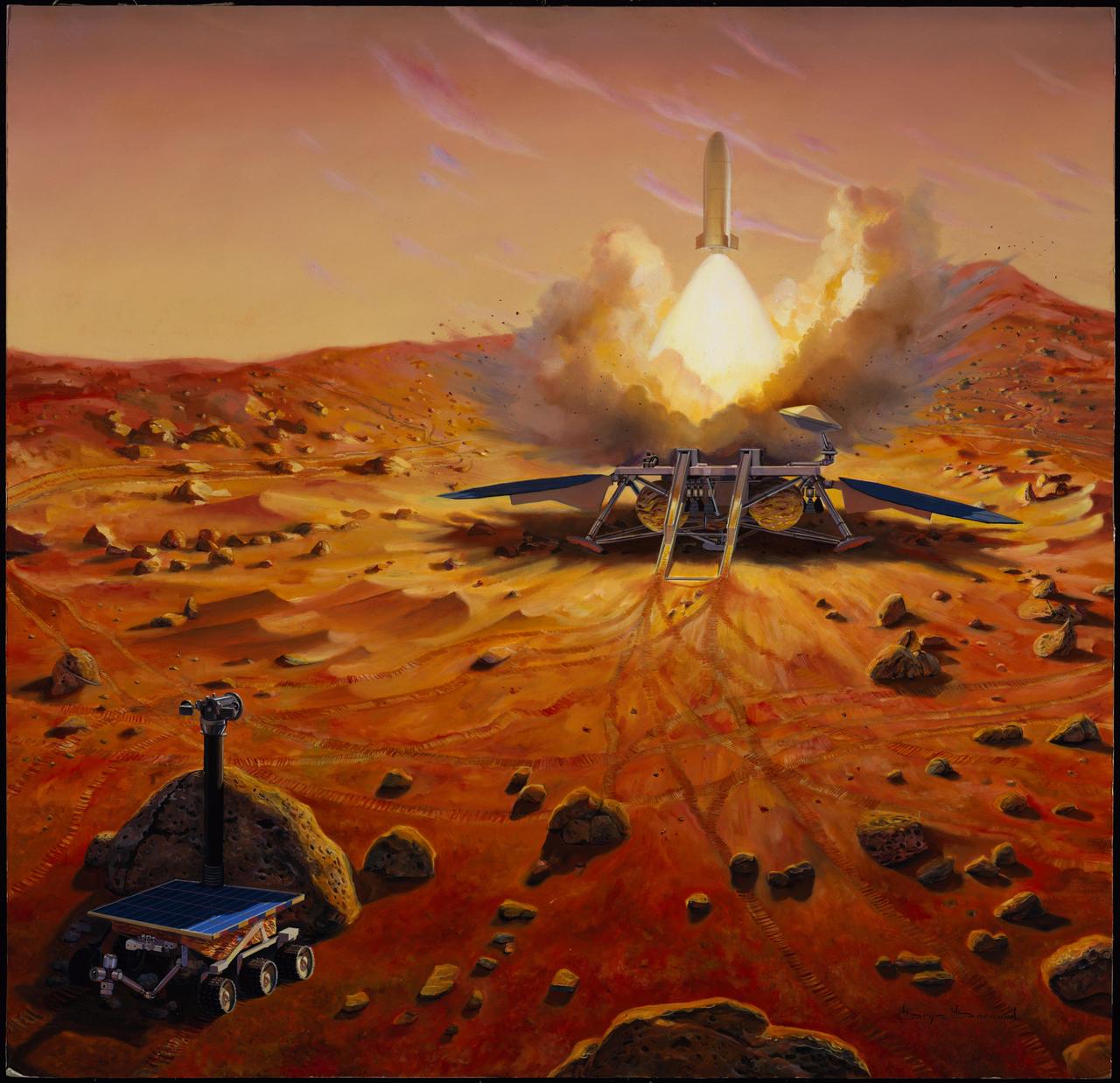
One crucial step in NASA Mars sample return mission would be to launch the collected sample away from the surface of Mars. This artist concept depicts a Mars ascent vehicle for starting a sample of Mars rocks on their trip to Earth.
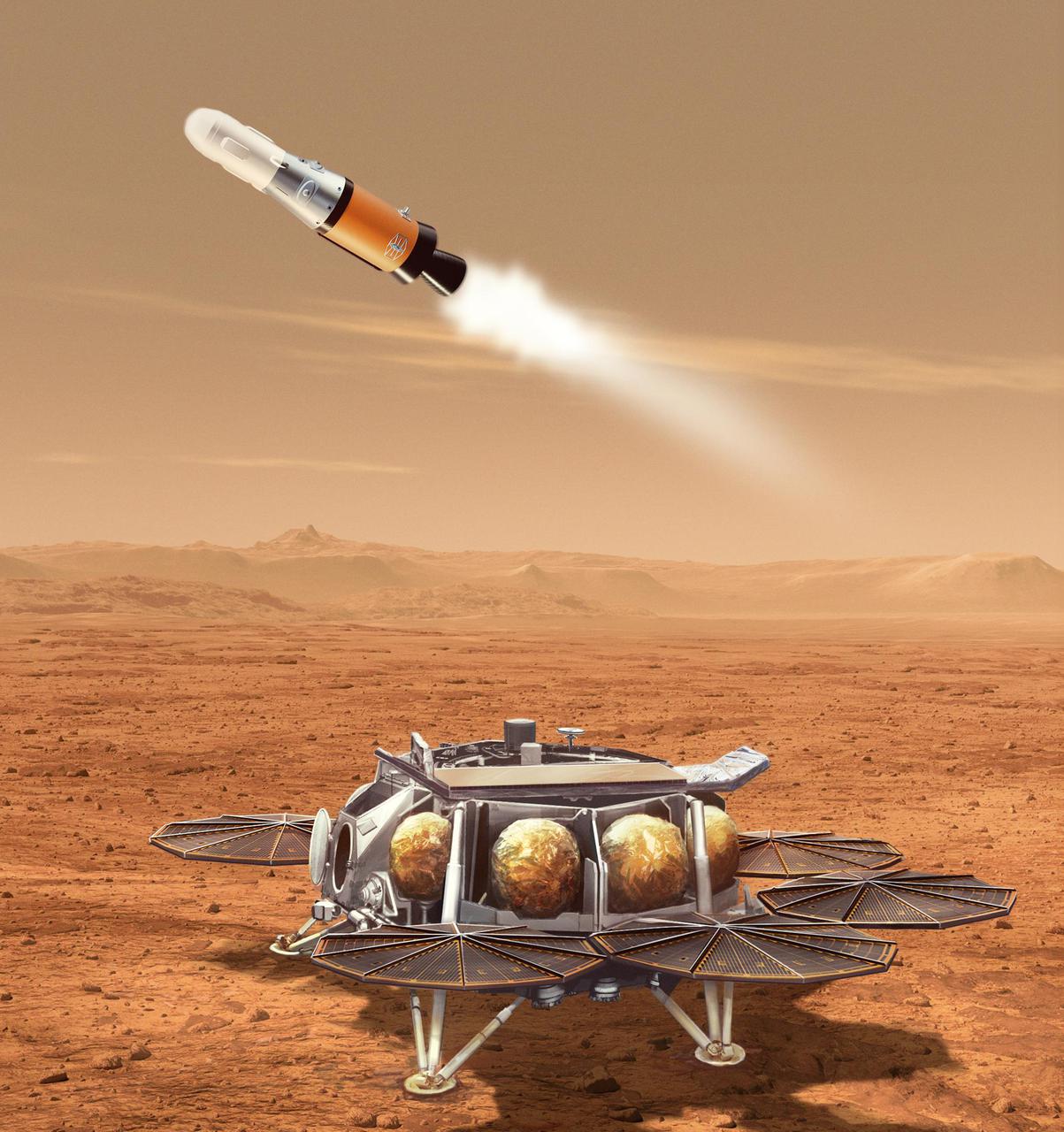
This illustration shows a concept for a proposed NASA Mars lander-and-rocket combination that would play a key role in returning to Earth samples of Mars material collected by the Perseverance rover. This Sample Retrieval Lander would carry a small rocket (about 10 feet, or 3 meters, tall) called the Mars Ascent Vehicle to the Martian surface. After using a robotic arm to load the rover's sealed sample tubes into a container in the nose cone of the rocket, the lander would launch the Mars Ascent Vehicle into orbit around the Red Planet. The lander and rocket are part of the multimission Mars Sample Return program being planned by NASA and ESA (European Space Agency). The program would use multiple robotic vehicles to pick up and ferry sealed tubes containing Mars samples already collected by NASA's Perseverance rover, for transport to laboratories on Earth. https://photojournal.jpl.nasa.gov/catalog/PIA25278
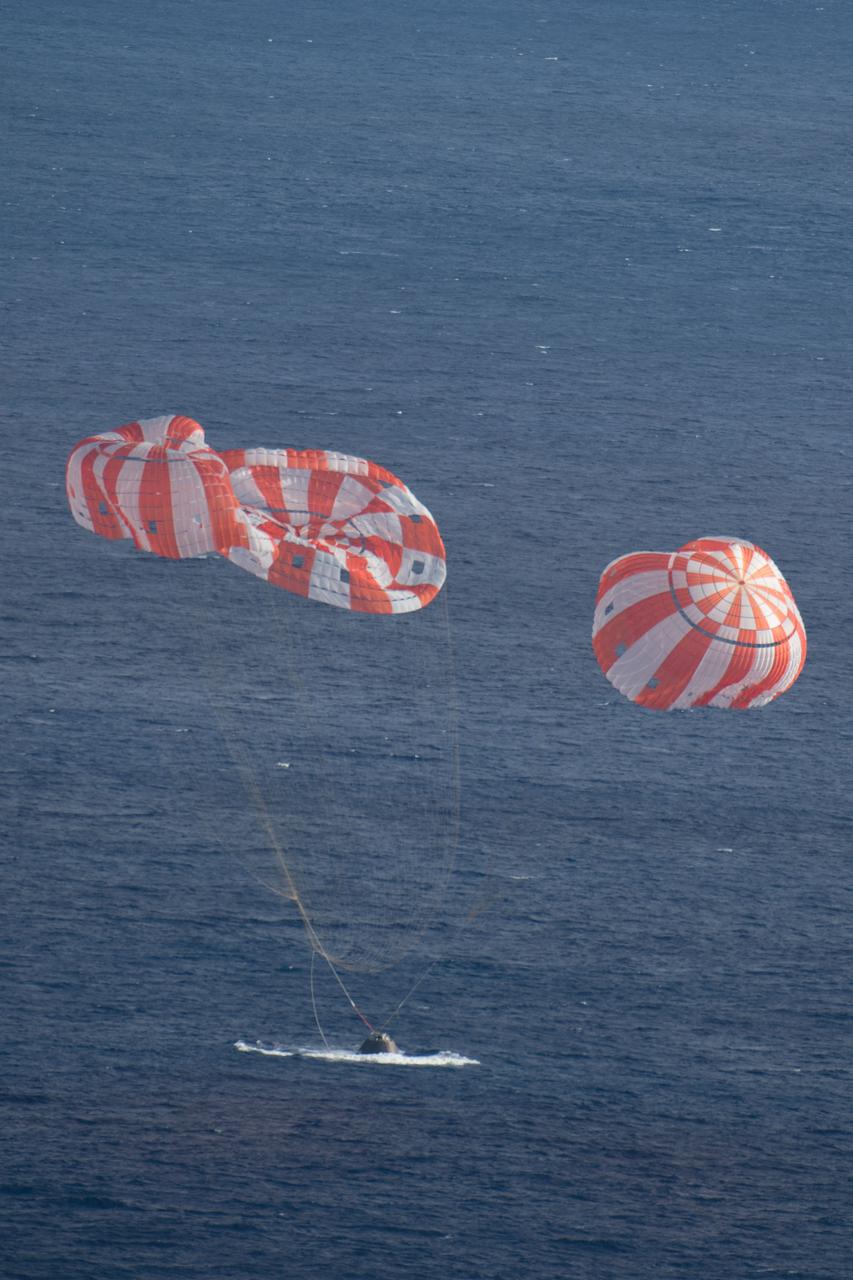
Orion splashes down in the Pacific Ocean after Exploration Flight Test-1 (EFT-1) on Dec. 5, 2014. Part of Batch image transfer from Flickr.
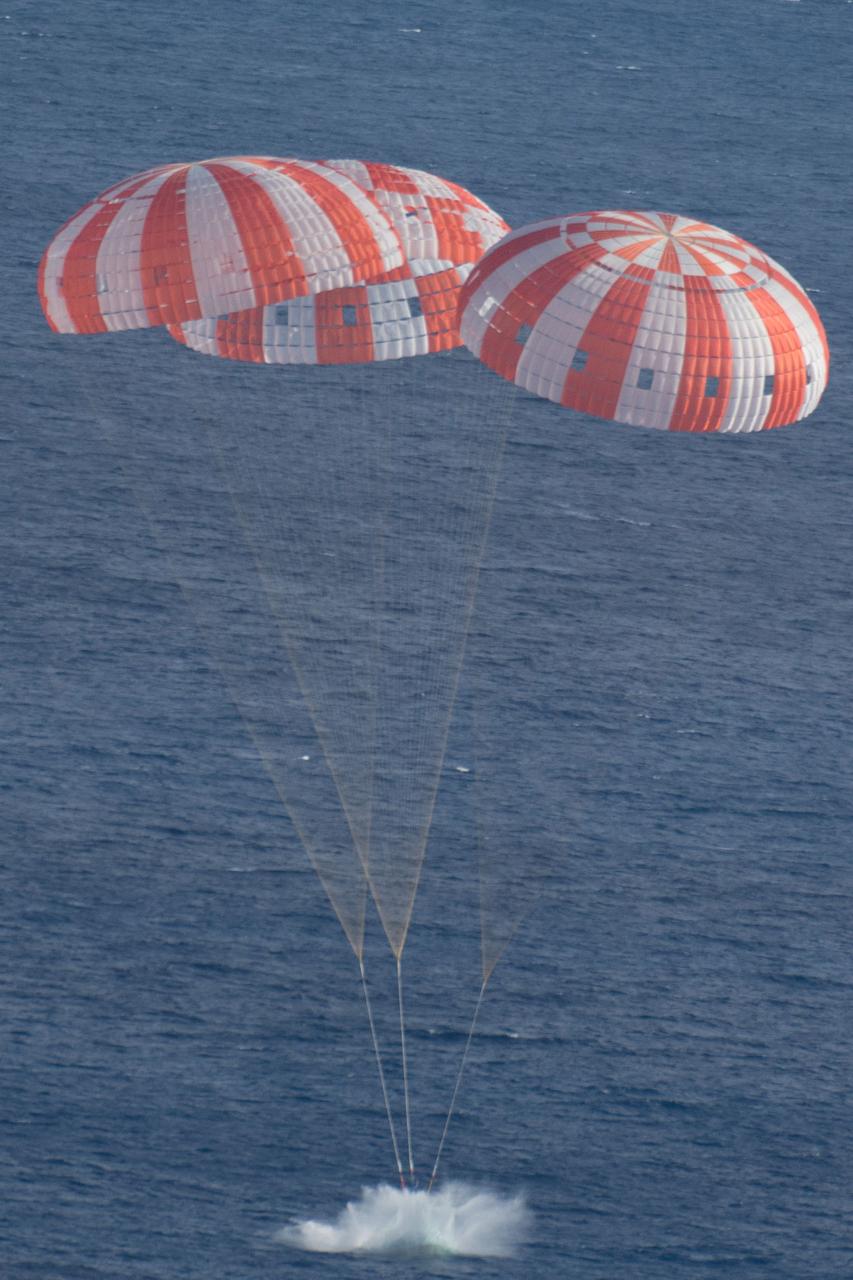
Orion splashes down in the Pacific Ocean after Exploration Flight Test-1 (EFT-1) on Dec. 5, 2014. Part of Batch image transfer from Flickr.
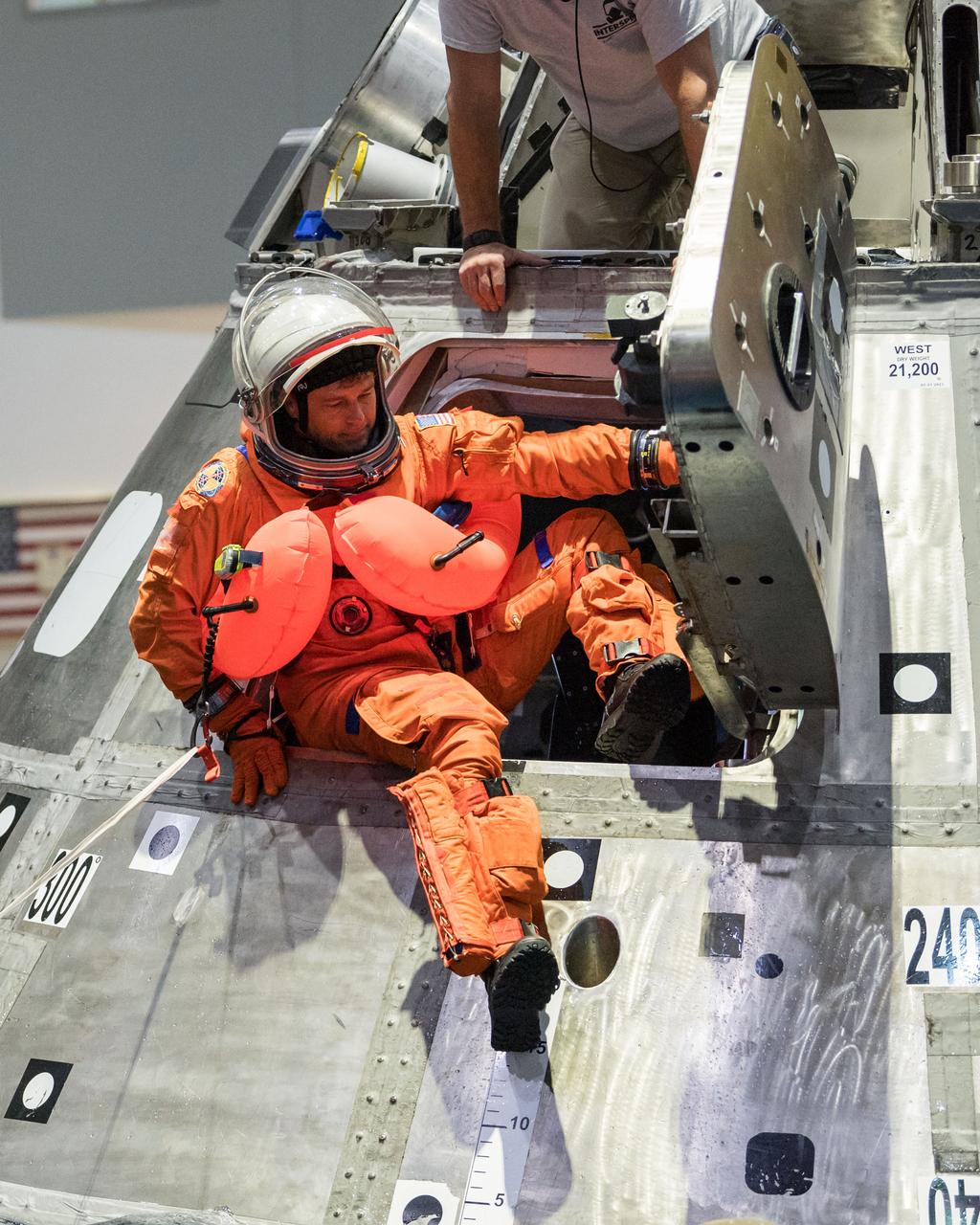
NASA astronaut and Artemis II commander Reid Wiseman exits the side of a mockup of the Orion spacecraft during a training exercise in the Neutral Buoyancy Lab at NASA’s Johnson Space Center in Houston on Jan. 23. As part of training for their mission around the Moon next year, the first crewed flight under NASA’s Artemis campaign, the crew of four astronauts practiced the recovery procedures they will use when the splash down in the Pacific Ocean. jsc2024e009648.
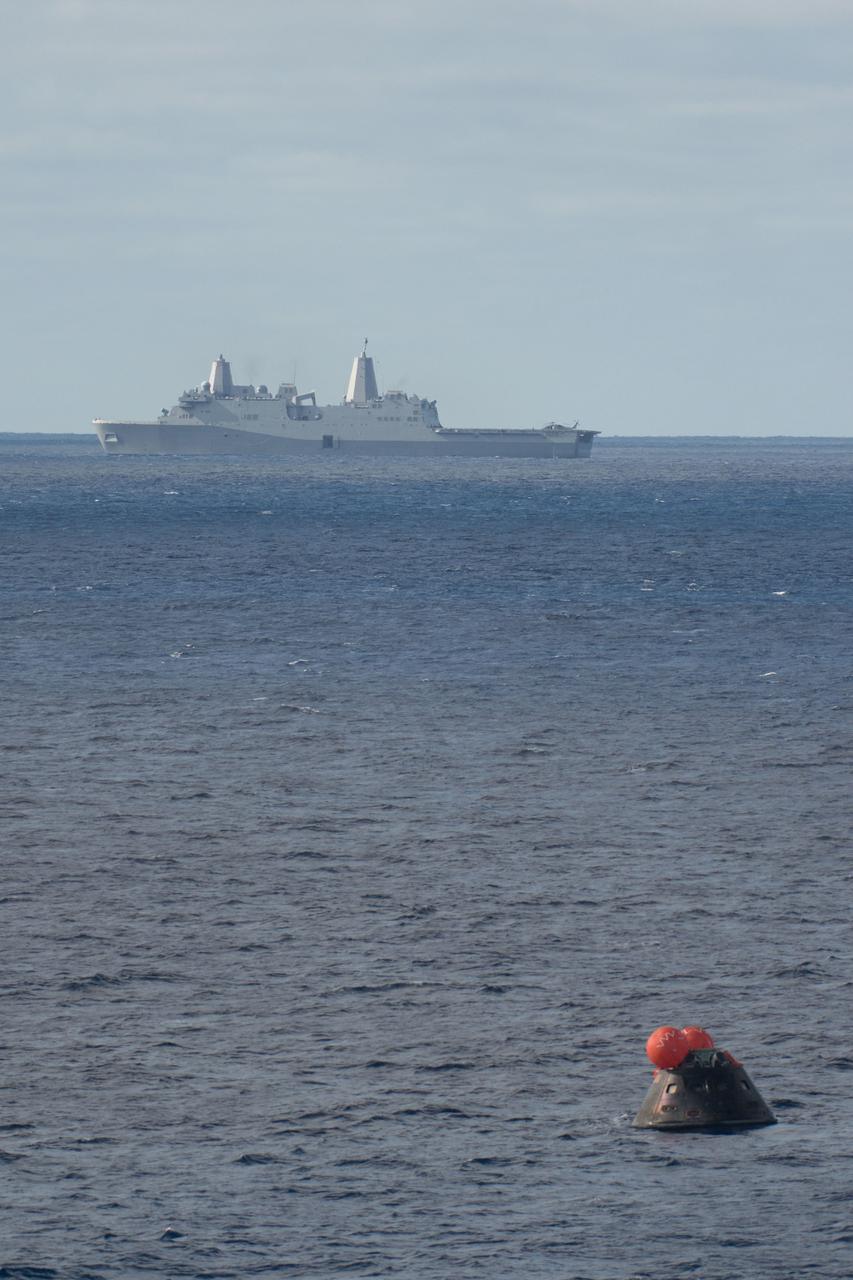
Orion splashes down in the Pacific Ocean after Exploration Flight Test-1 (EFT-1) on Dec. 5, 2014. Part of Batch image transfer from Flickr.
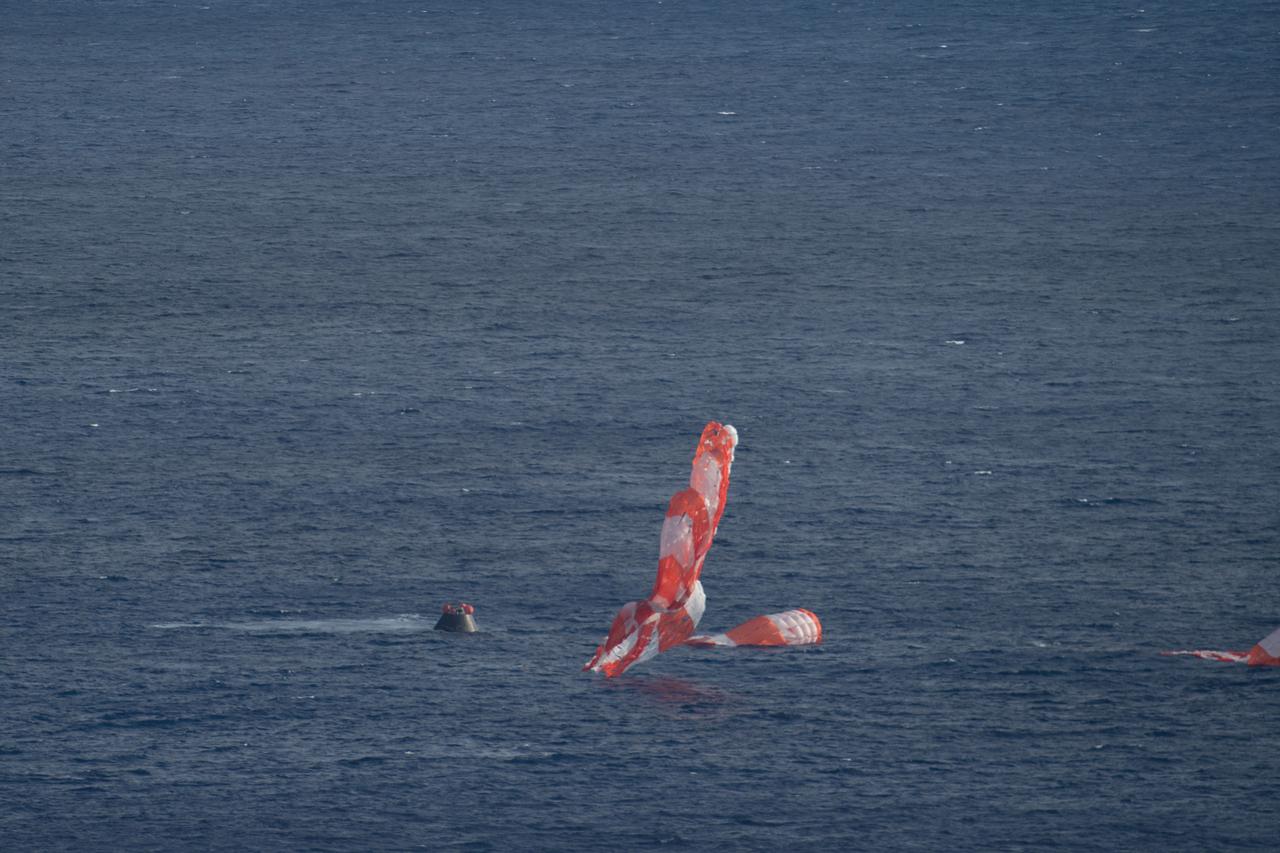
Orion splashes down in the Pacific Ocean after Exploration Flight Test-1 (EFT-1) on Dec. 5, 2014. Part of Batch image transfer from Flickr.
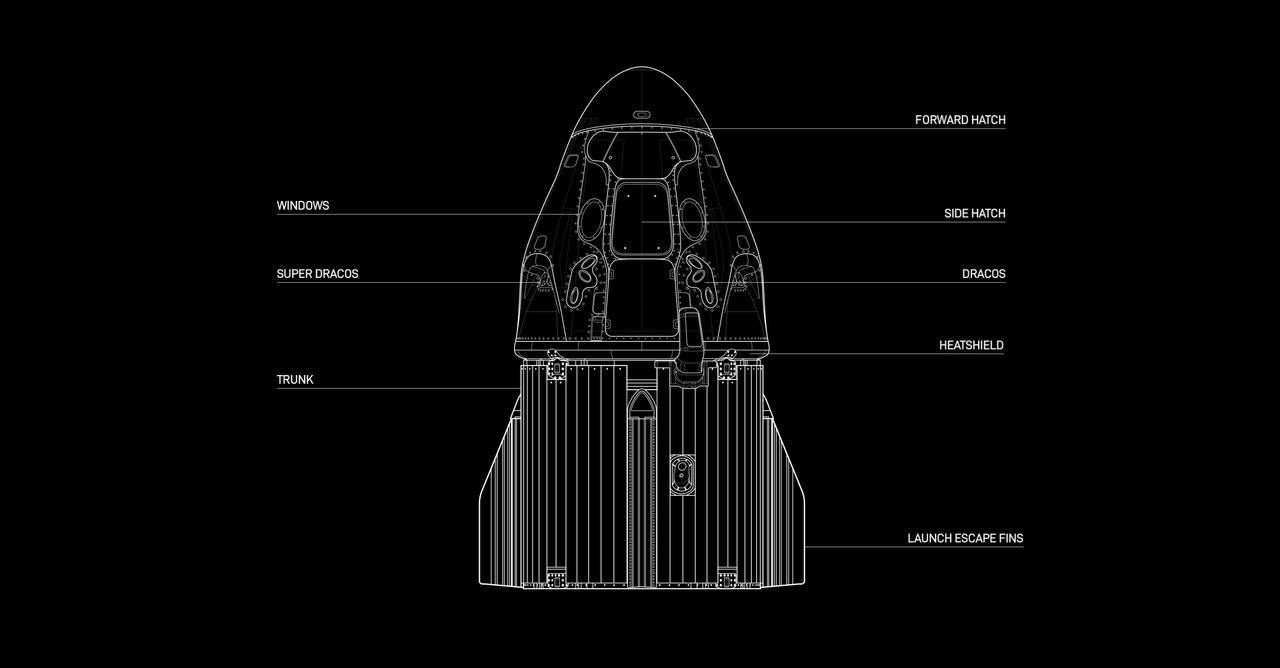
This graphic details the makeup of SpaceX’s Crew Dragon spacecraft. Crew Dragon is used for all crewed SpaceX missions to the International Space Station as part of NASA’s Commercial Crew Program.
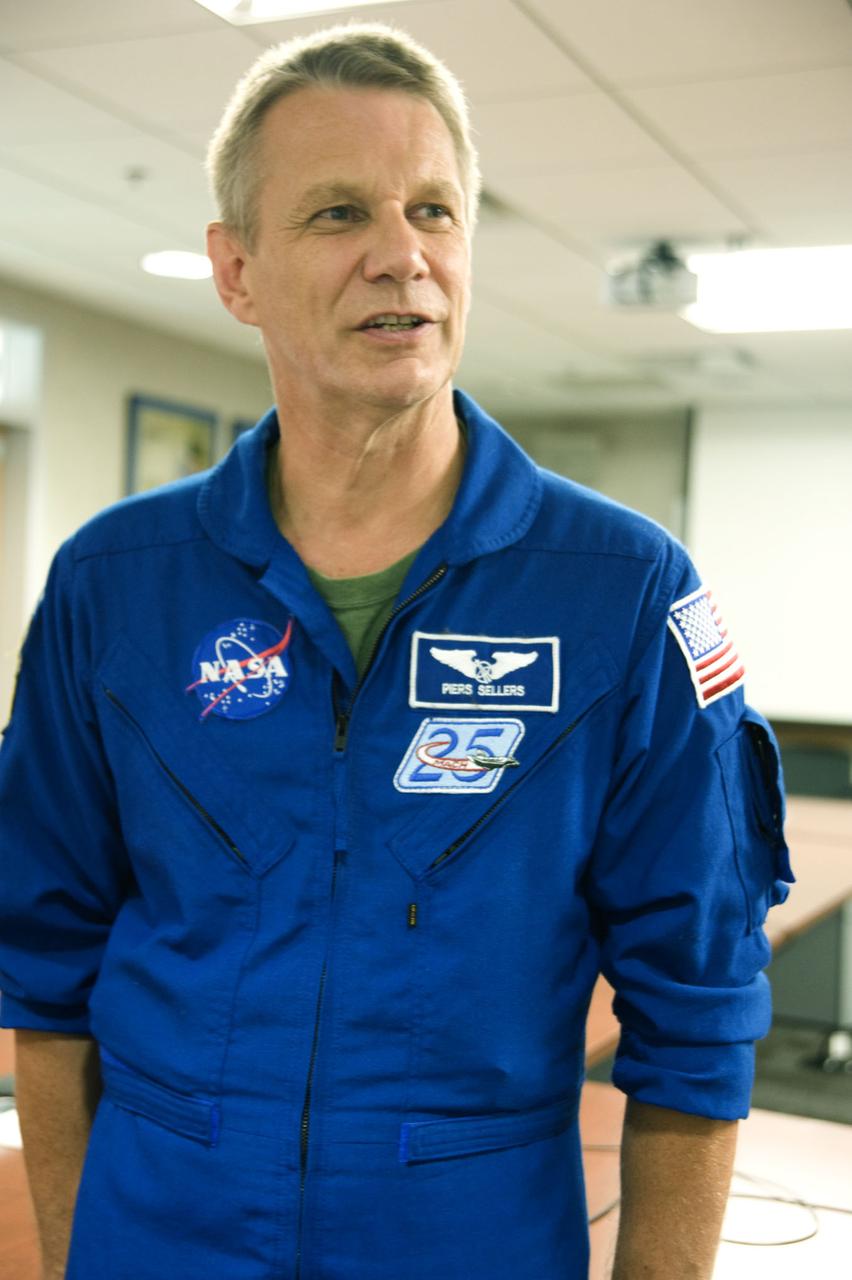
Astronaut Piers Sellers at NASA's Goddard Space Flight Center in Greenbelt, Md.
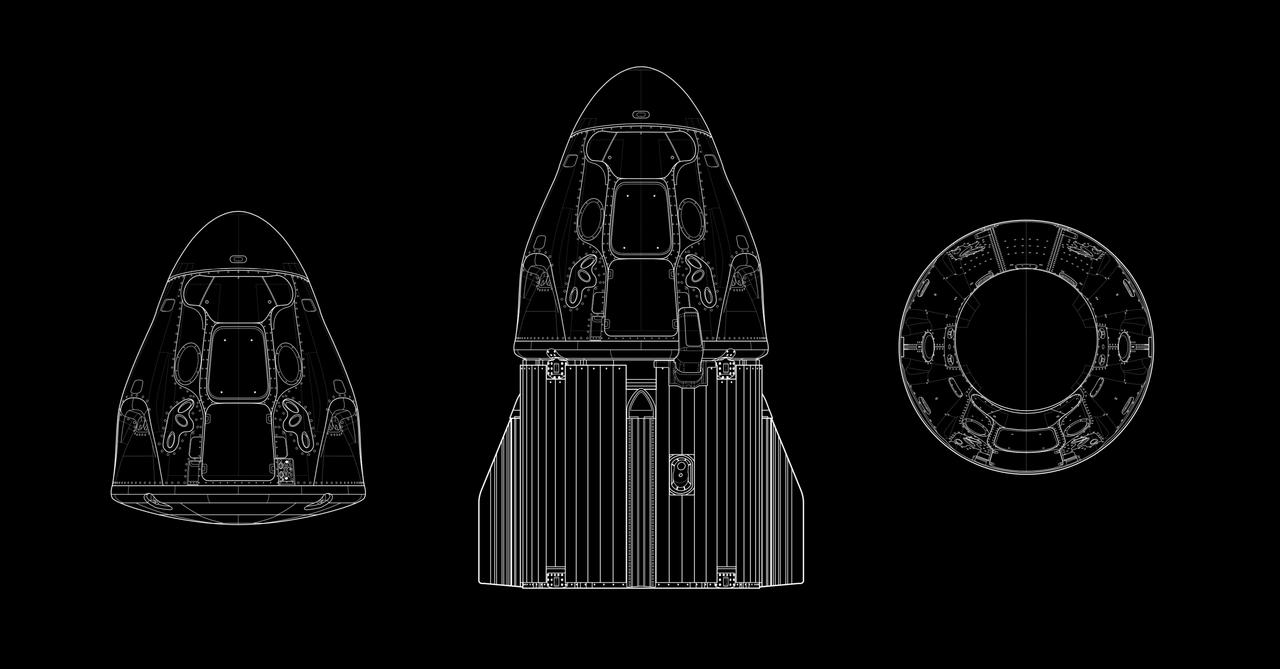
This graphic details the makeup of SpaceX’s Crew Dragon spacecraft. Crew Dragon is used for all crewed SpaceX missions to the International Space Station as part of NASA’s Commercial Crew Program.
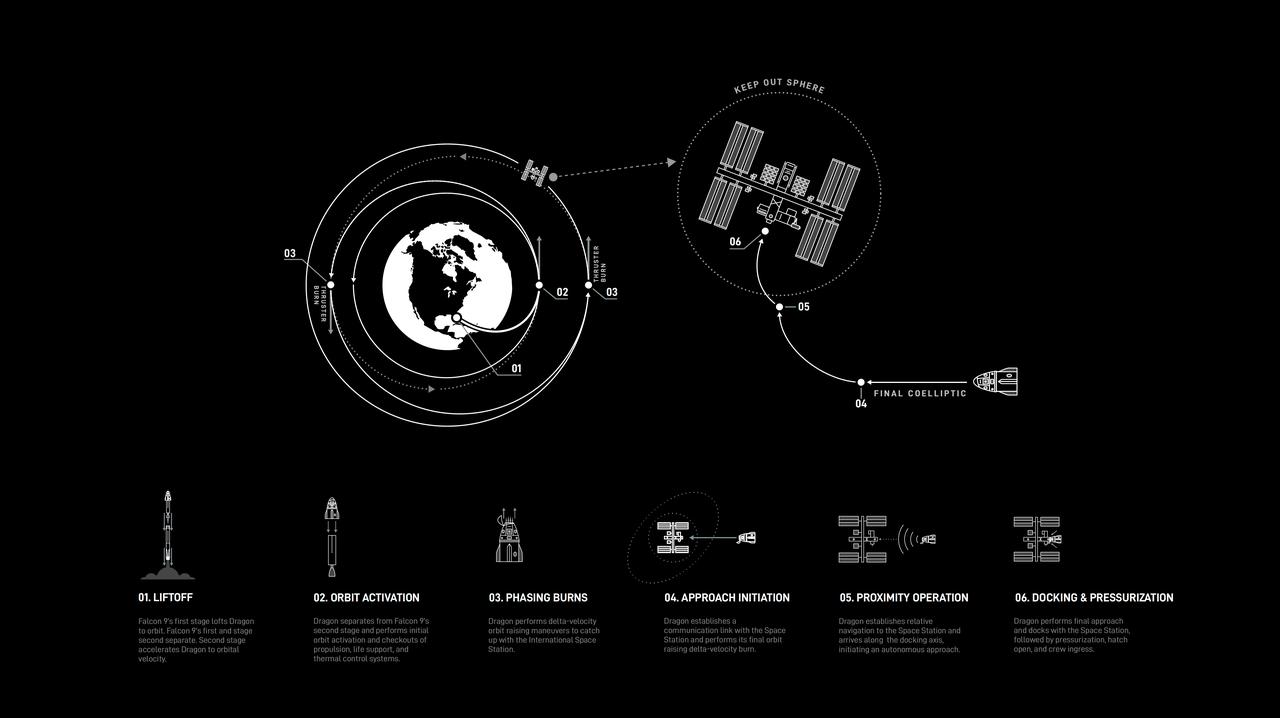
This graphic provides an overview of SpaceX mission operations. SpaceX is one of two commercial partners providing transportation to and from the International Space Station as part of NASA’s Commercial Crew Program.
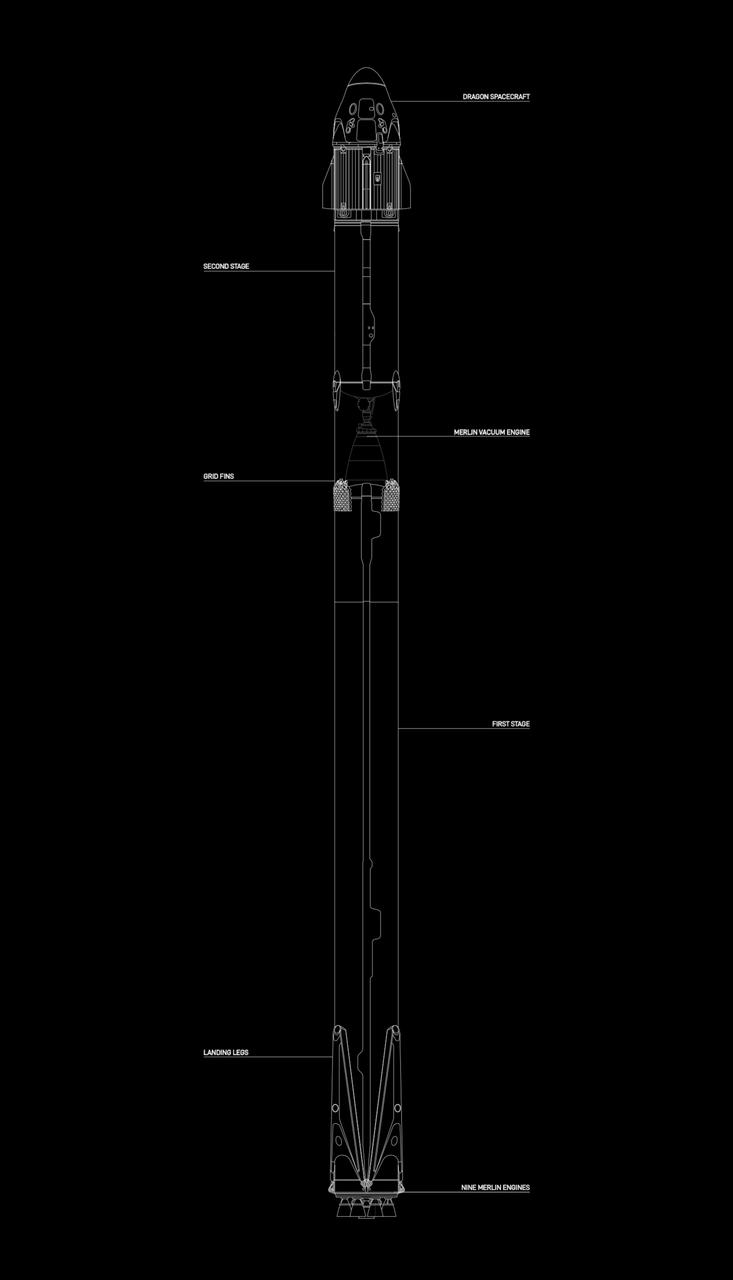
This graphic details the makeup of SpaceX’s Falcon 9 rocket. Falcon 9 is the launch vehicle SpaceX uses for all crewed missions to the International Space Station as part of NASA’s Commercial Crew Program.
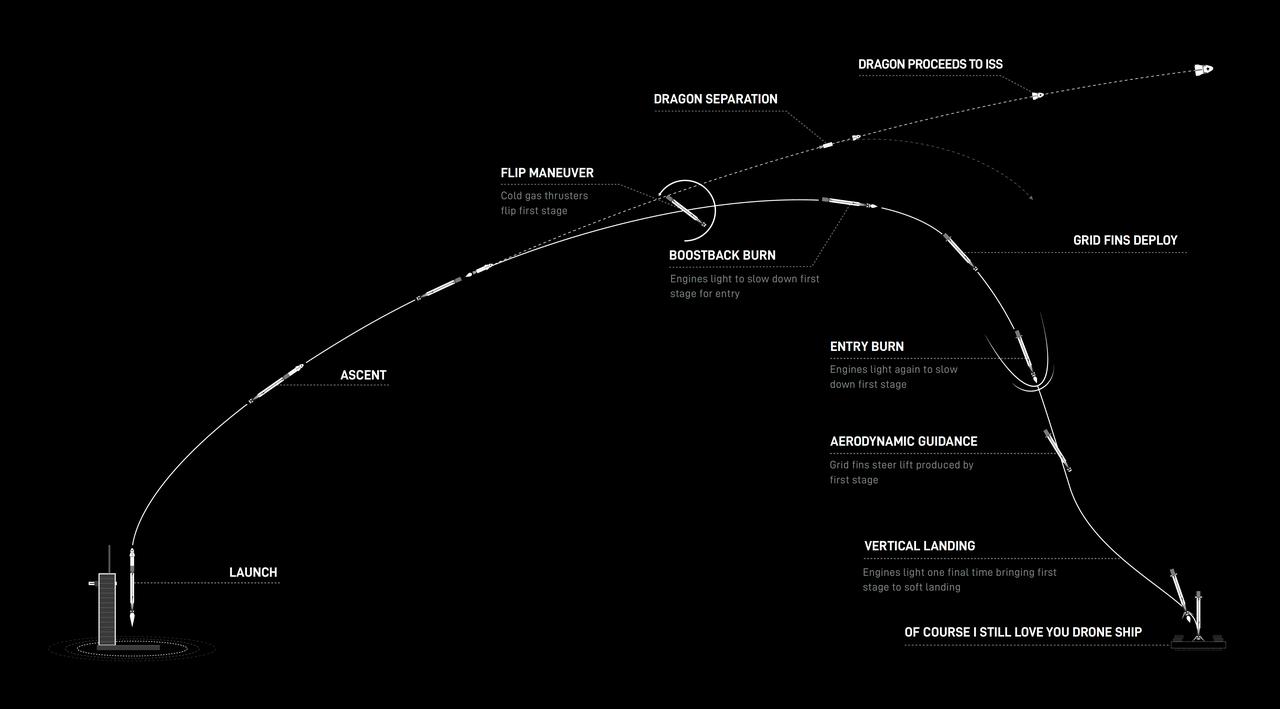
This graphic details launch operations for SpaceX missions to the International Space Station. SpaceX is one of two commercial partners providing transportation to and from the space station as part of NASA’s Commercial Crew Program.
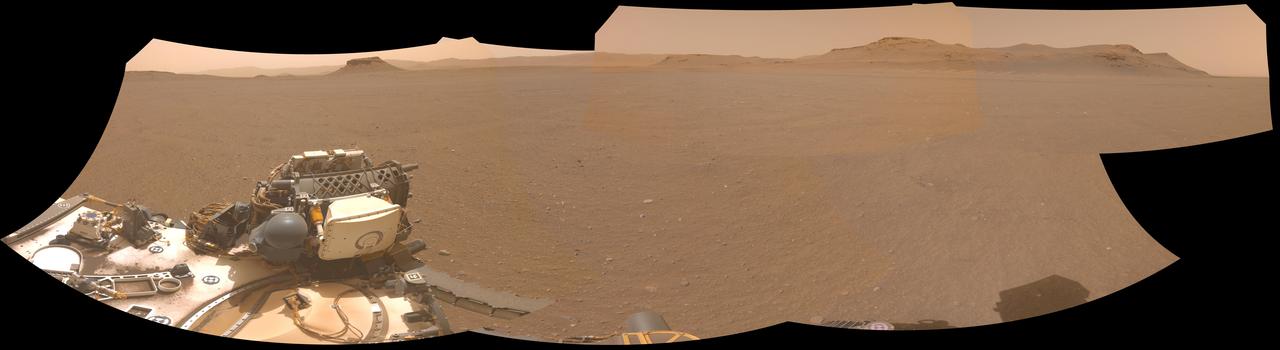
NASA's Perseverance Mars rover used one of its navigation cameras to take this panorama of a proposed landing site for the Mars Sample Return lander. The lander would collect rock and sediment samples that Perseverance has taken and would also serve as the launch platform for a Mars Ascent Vehicle that would blast off from Mars, delivering the samples to an orbiter as part of their journey to Earth for intensive study. Choosing an area that lacks large rocks (especially those over 7 1/2 inches, or 19 centimeters, in diameter), sand dunes, and steeply angled terrain would go a long way toward easing the path for an MSR recovery vehicle to efficiently grab tubes before heading to the lander. This panorama is made up of five images taken on April 14, 2022 (the 409th Martian day, or sol, of the mission) and stitched together back on Earth. The color has been adjusted to match the lighting conditions as the human eye would perceive them on Earth. A key objective for Perseverance's mission on Mars is astrobiology, including the search for signs of ancient microbial life. The rover will characterize the planet's geology and past climate, pave the way for human exploration of the Red Planet, and be the first mission to collect and cache Martian rock and regolith (broken rock and dust). Subsequent NASA missions, in cooperation with ESA (European Space Agency), would send spacecraft to Mars to collect these sealed samples from the surface and return them to Earth for in-depth analysis. The Mars 2020 Perseverance mission is part of NASA's Moon to Mars exploration approach, which includes Artemis missions to the Moon that will help prepare for human exploration of the Red Planet. https://photojournal.jpl.nasa.gov/catalog/PIA25406
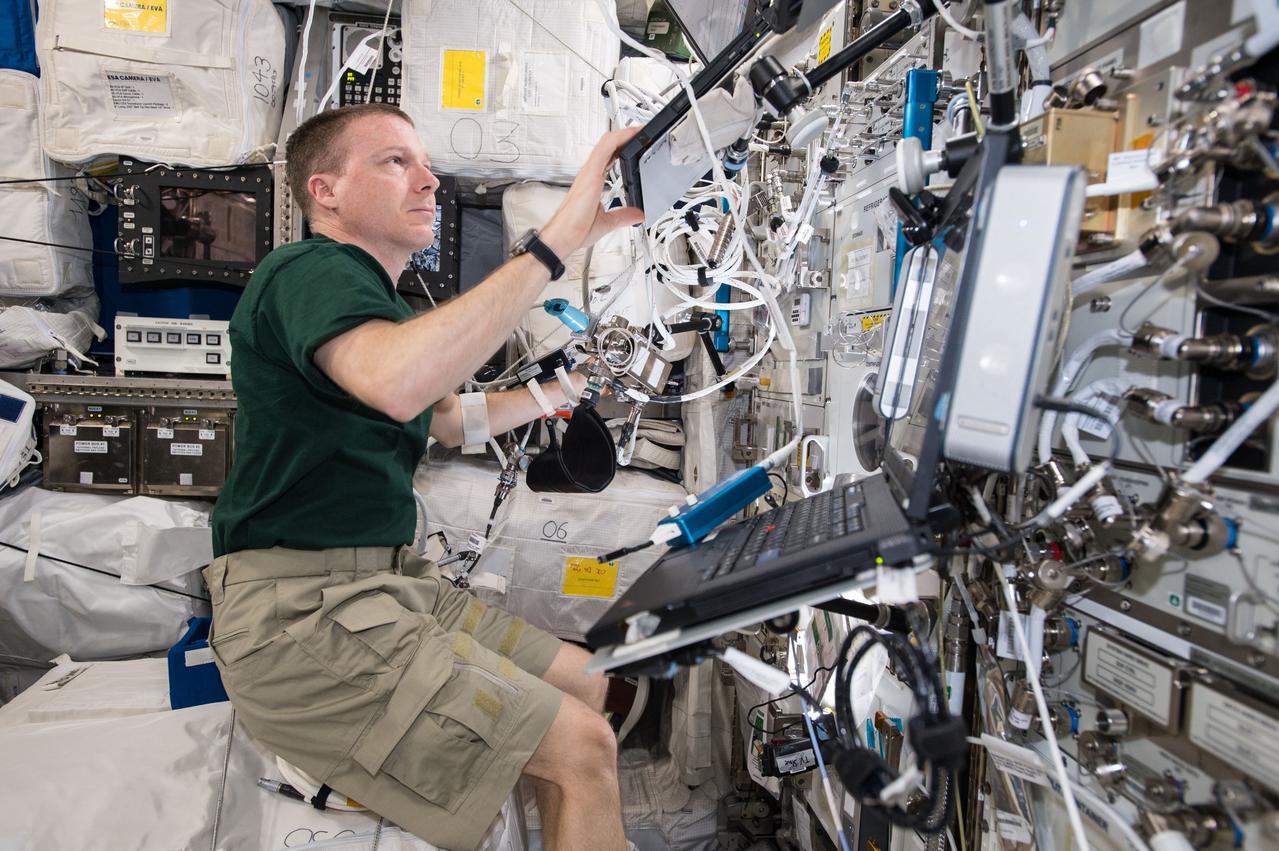
ISS043E091740 (04/07/2015) --- Expedition 43 Commander Terry Virts is seen here working inside of the Columbus laboratory on the Blood Pressure Regulation (BP Reg) experiment. Astronauts returning from long-duration space flights risk experiencing dizziness or fainting when they stand immediately after returning to Earth. This has an important health risk as it reduces the potential for astronauts to safely escape from an emergency situation. BP Reg will help researchers develop appropriate countermeasures so that astronauts returning from long-duration space flights will have very low risk of experiencing dizziness or fainting when they return to Earth.
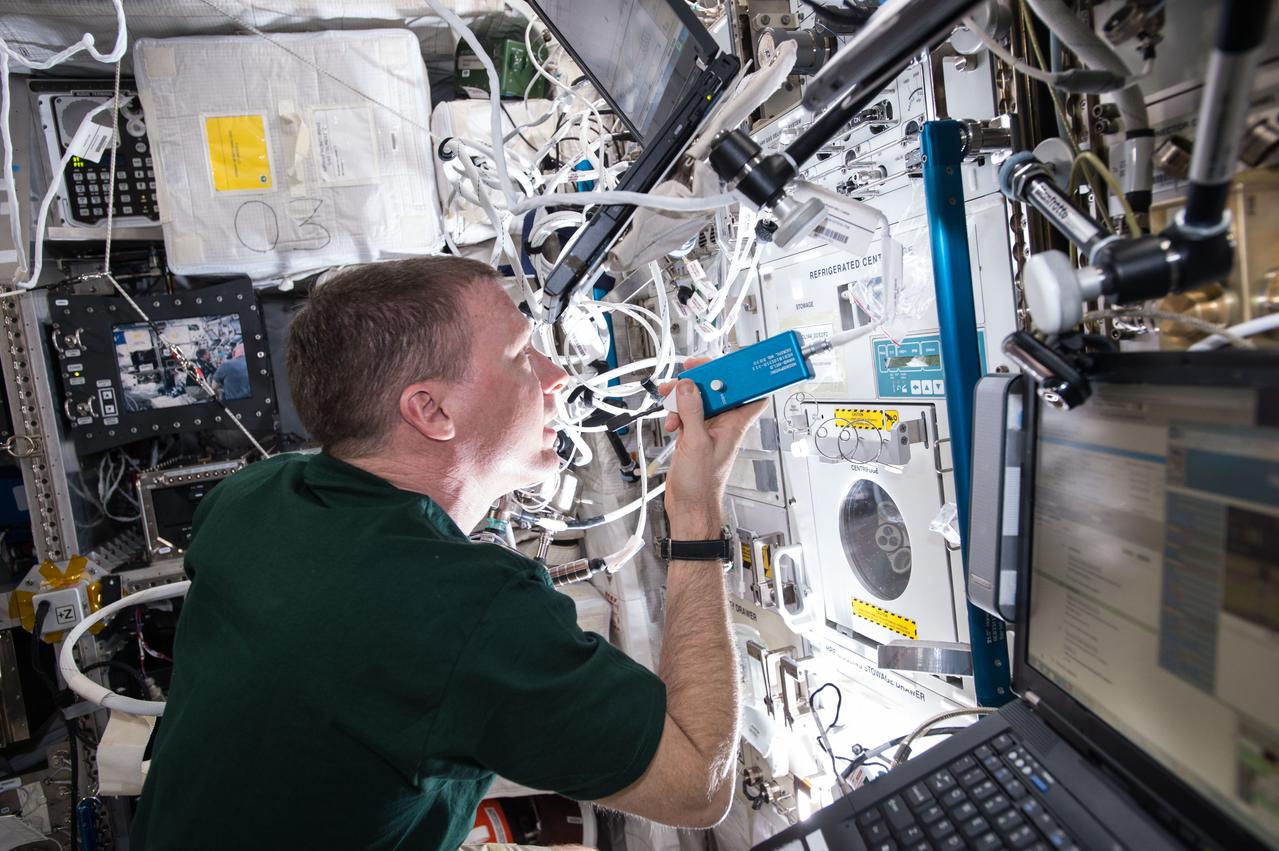
ISS043E091755 (04/07/2015) --- Expedition 43 Commander Terry Virts is seen here working inside of the Columbus laboratory on the Blood Pressure Regulation (BP Reg) experiment. Astronauts returning from long-duration space flights risk experiencing dizziness or fainting when they stand immediately after returning to Earth. This has an important health risk as it reduces the potential for astronauts to safely escape from an emergency situation. BP Reg will help researchers develop appropriate countermeasures so that astronauts returning from long-duration space flights will have very low risk of experiencing dizziness or fainting when they return to Earth.
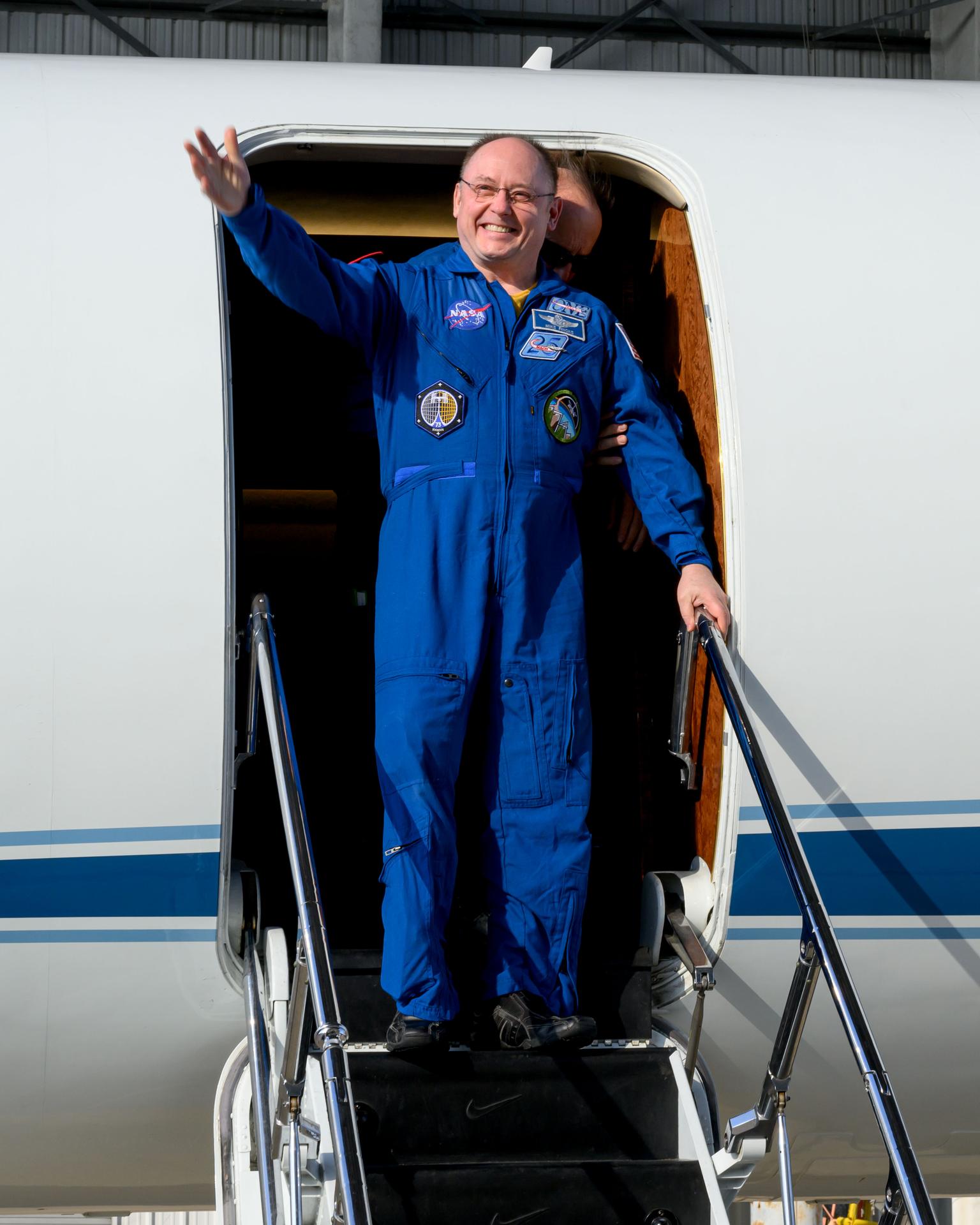
jsc2026e002116 (Jan. 16, 2025) --- NASA astronaut and SpaceX Crew-11 Pilot Mike Fincke waves to officials at Ellington Field in Houston, Texas. He departed the International Space Station and returned to Earth the day before aboard the Dragon spacecraft for a parachute-assisted splashdown off the coast of San Diego, California. Credit: NASA/Robert Markowitz
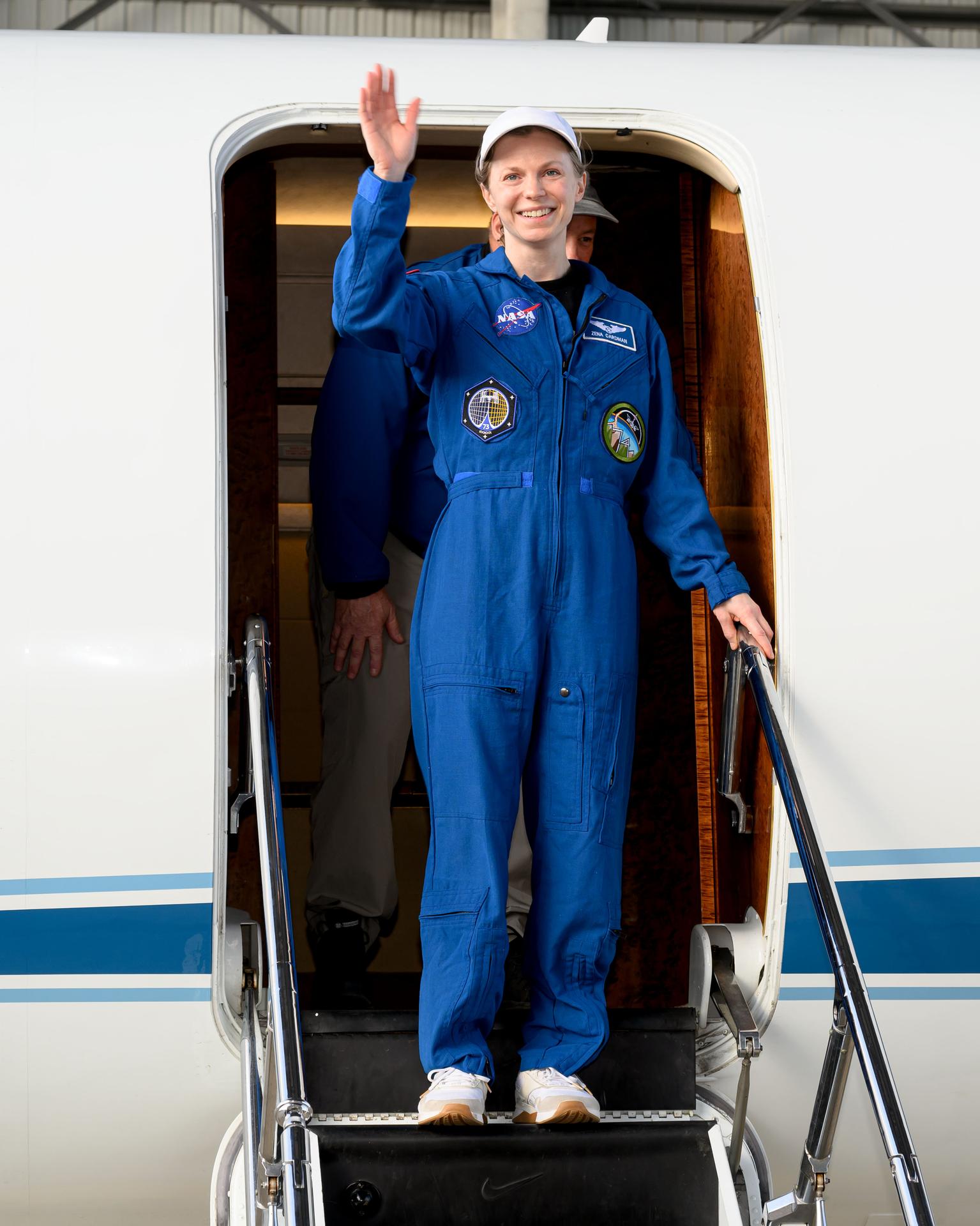
jsc2026e002117 (Jan. 16, 2025) --- NASA astronaut and SpaceX Crew-11 Commander Zena Cardman waves to officials at Ellington Field in Houston, Texas. She departed the International Space Station and returned to Earth the day before aboard the Dragon spacecraft for a parachute-assisted splashdown off the coast of San Diego, California. Credit: NASA/Robert Markowitz
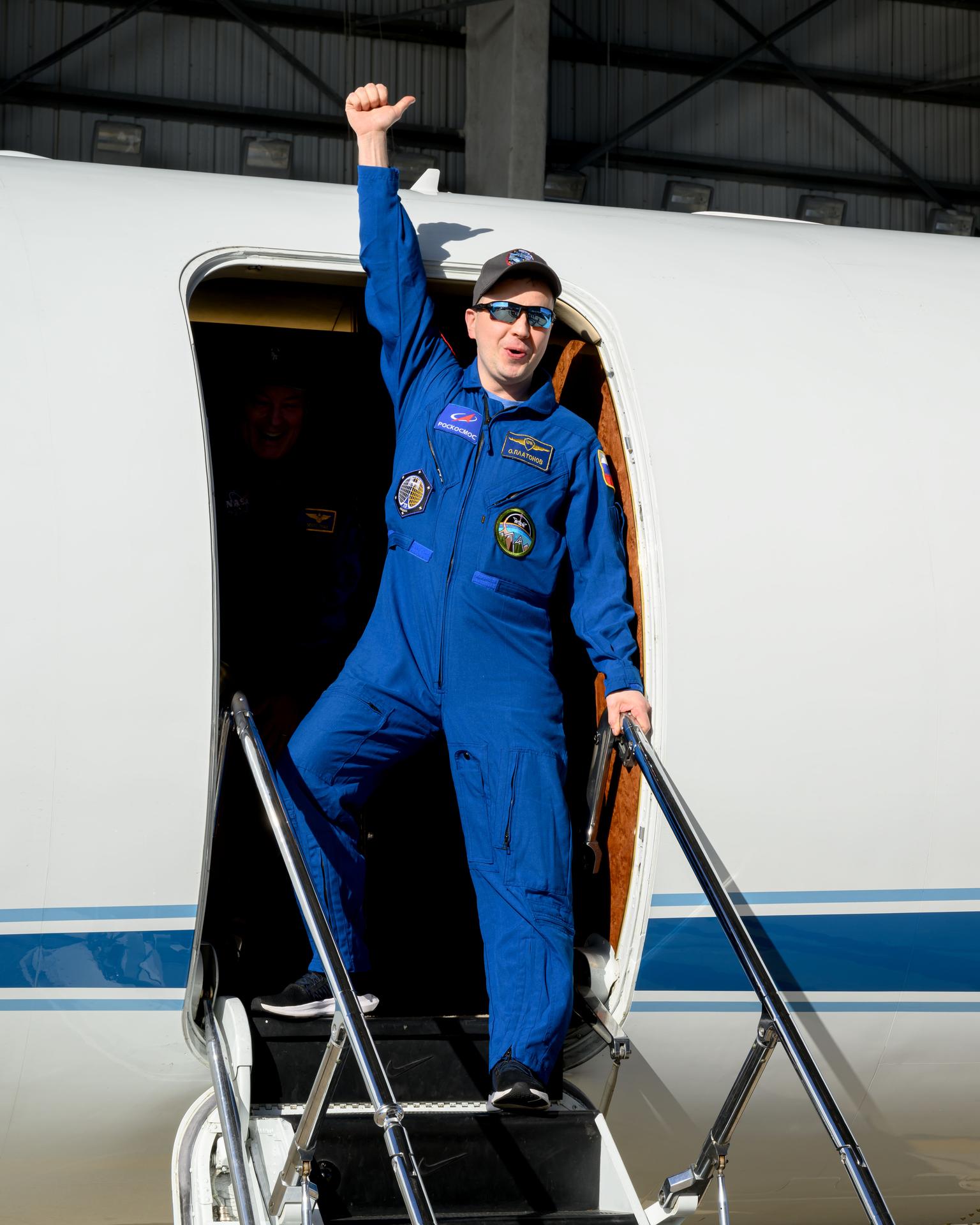
jsc2026e002114 (Jan. 16, 2025) --- Roscosmos cosmonaut and SpaceX Crew-11 Mission Specialist Oleg Platonov waves to officials at Ellington Field in Houston, Texas. He departed the International Space Station and returned to Earth the day before aboard the Dragon spacecraft for a parachute-assisted splashdown off the coast of San Diego, California. Credit: NASA/Robert Markowitz
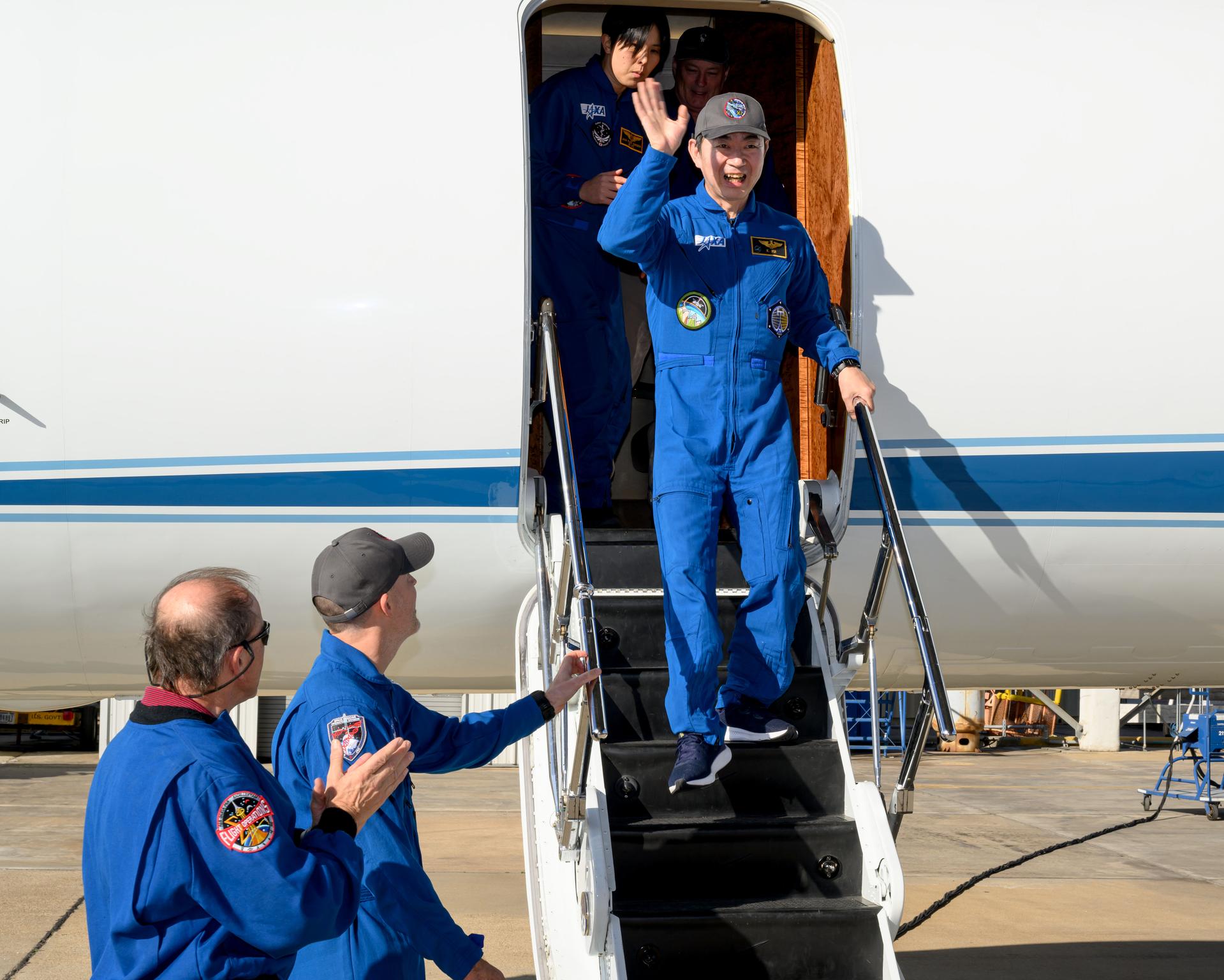
jsc2026e002115 (Jan. 16, 2025) --- JAXA (Japan Aerospace Exploration Agency) astronaut and SpaceX Crew-11 Mission Specialist Kimiya Yui waves to officials at Ellington Field in Houston, Texas. He departed the International Space Station and returned to Earth the day before aboard the Dragon spacecraft for a parachute-assisted splashdown off the coast of San Diego, California. Credit: NASA/Robert Markowitz

View of the Soyuz TMA-16M spacecraft as it departs the ISS on its return to Earth. Image was released by astronaut on social media.
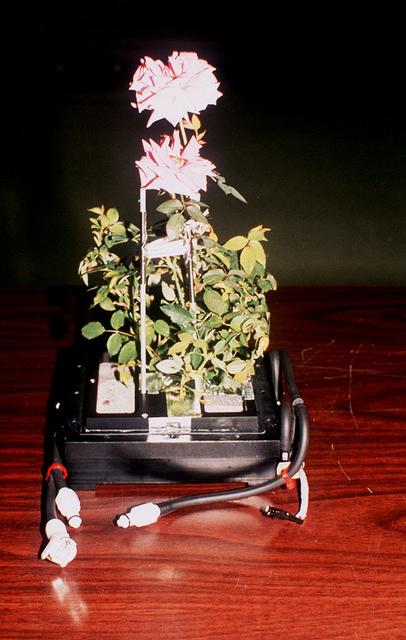
After the Overnight Scentsation rose plant's return to Earth, IFF scientists found a significant change in some of the chemical components occured while in microgravity.
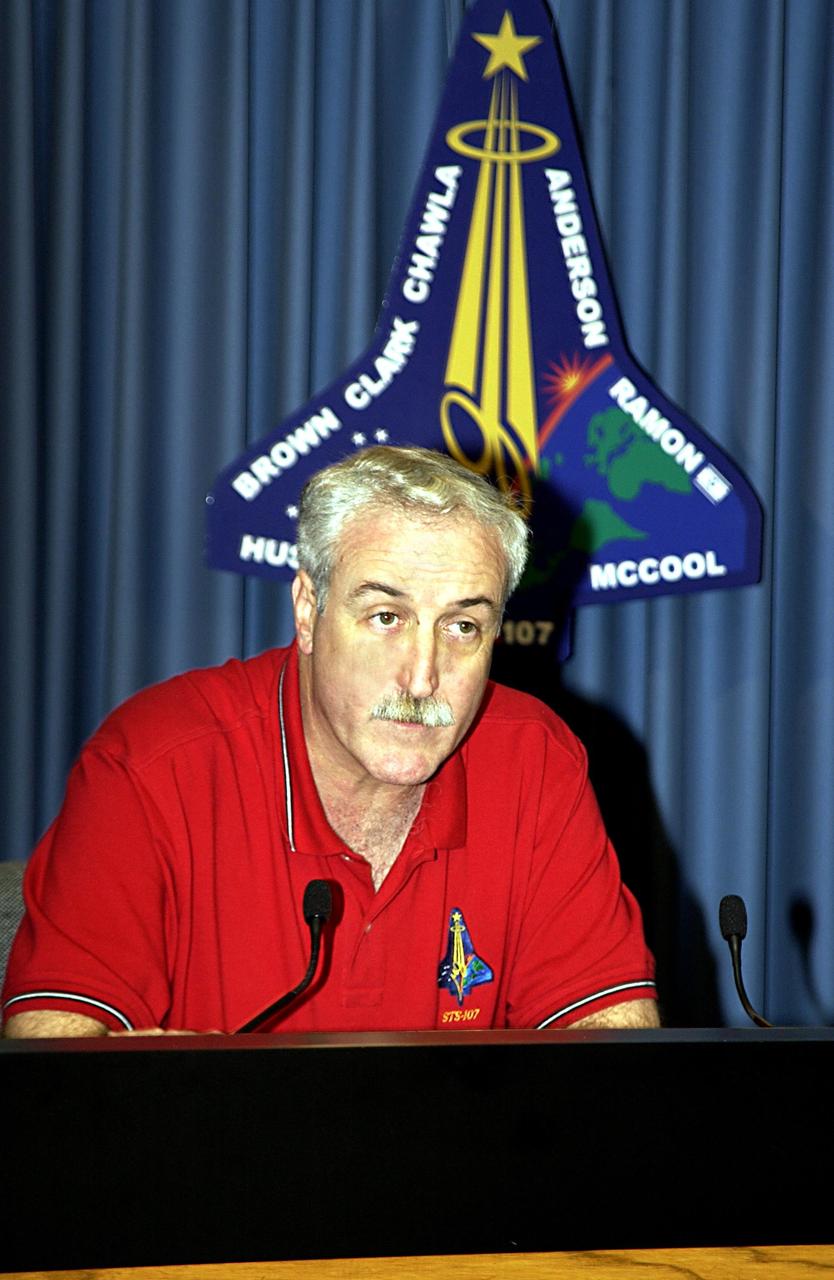
KENNEDY SPACE CENTER, FLA. - Following the loss of Columbia and crew on their return to Earth, NASA Administrator Sean O'Keefe comments on the tragedy during a press briefing at KSC.
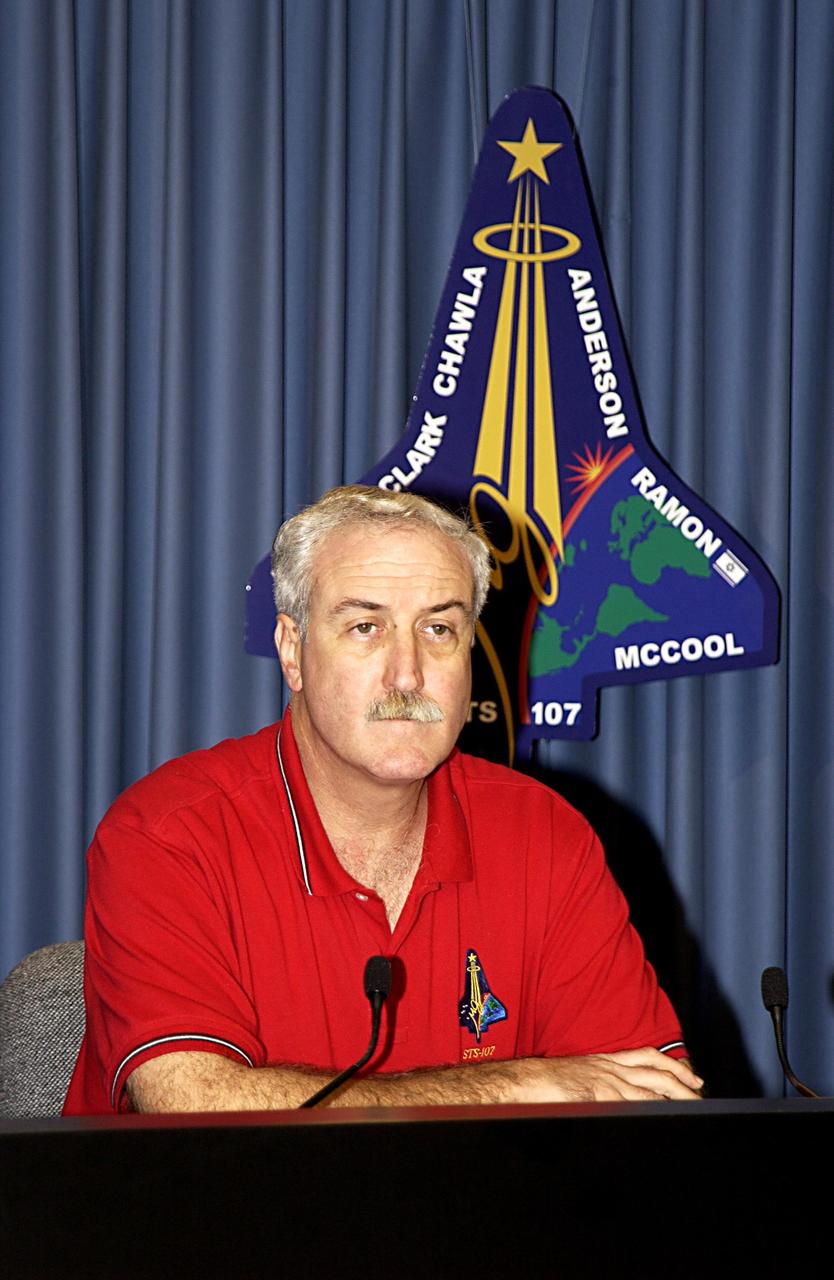
KENNEDY SPACE CENTER, FLA. - Following the loss of Columbia and crew on their return to Earth, NASA Administrator Sean O'Keefe comments on the tragedy during a press briefing at KSC.
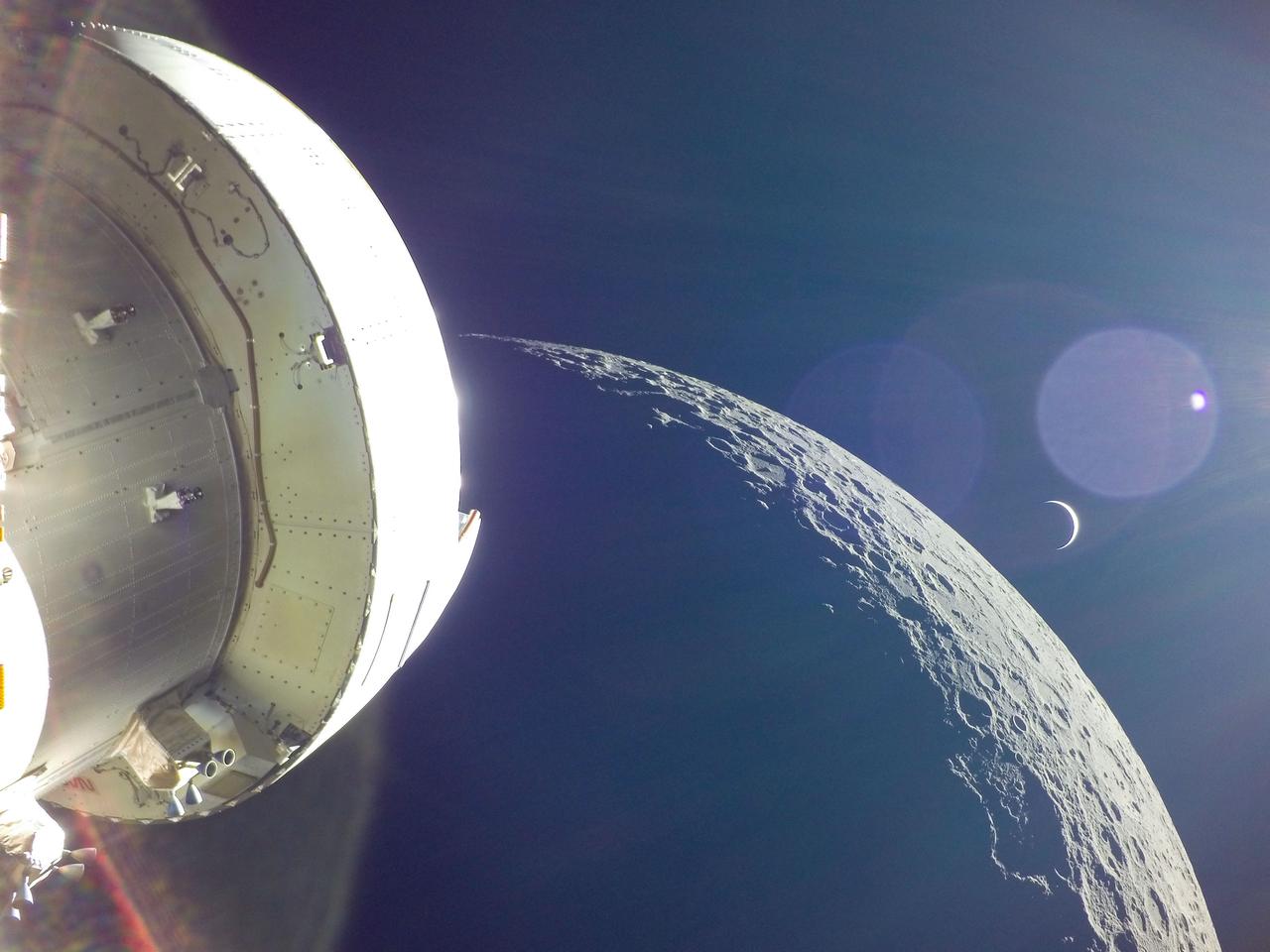
art0001e002083 (Dec. 5, 2022) On the 20th day of the Artemis I mission, Orion captured the Earth rising behind the Moon following the return powered flyby. The 3 minute, 27 second, return powered flyby burn, committed the spacecraft to a Dec. 11 splashdown in the Pacific Ocean.
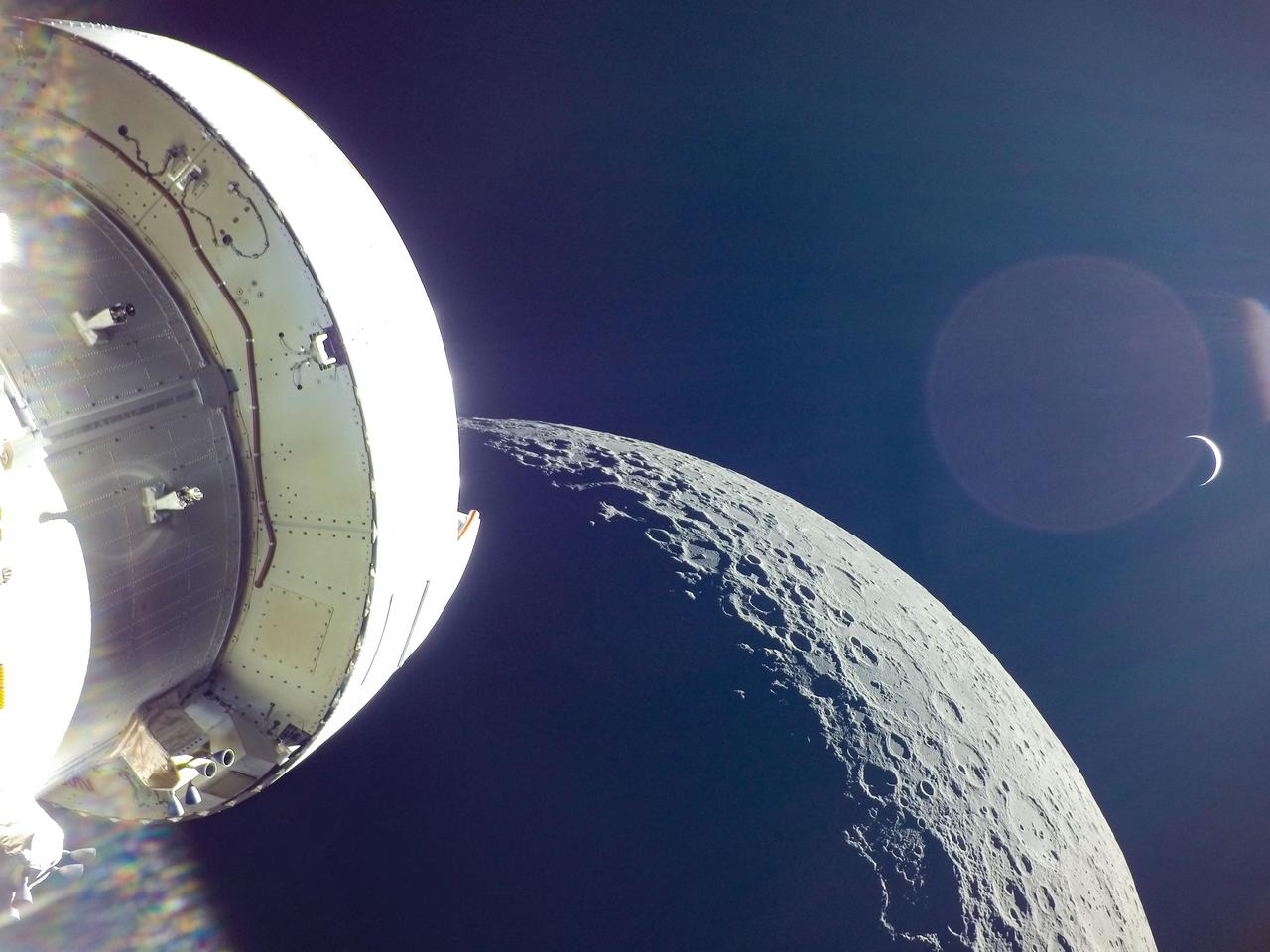
art0001e002092 (Dec. 5, 2022) On the 20th day of the Artemis I mission, Orion captured the Earth rising behind the Moon following the return powered flyby. The 3 minute, 27 second, return powered flyby burn, committed the spacecraft to a Dec. 11 splashdown in the Pacific Ocean.
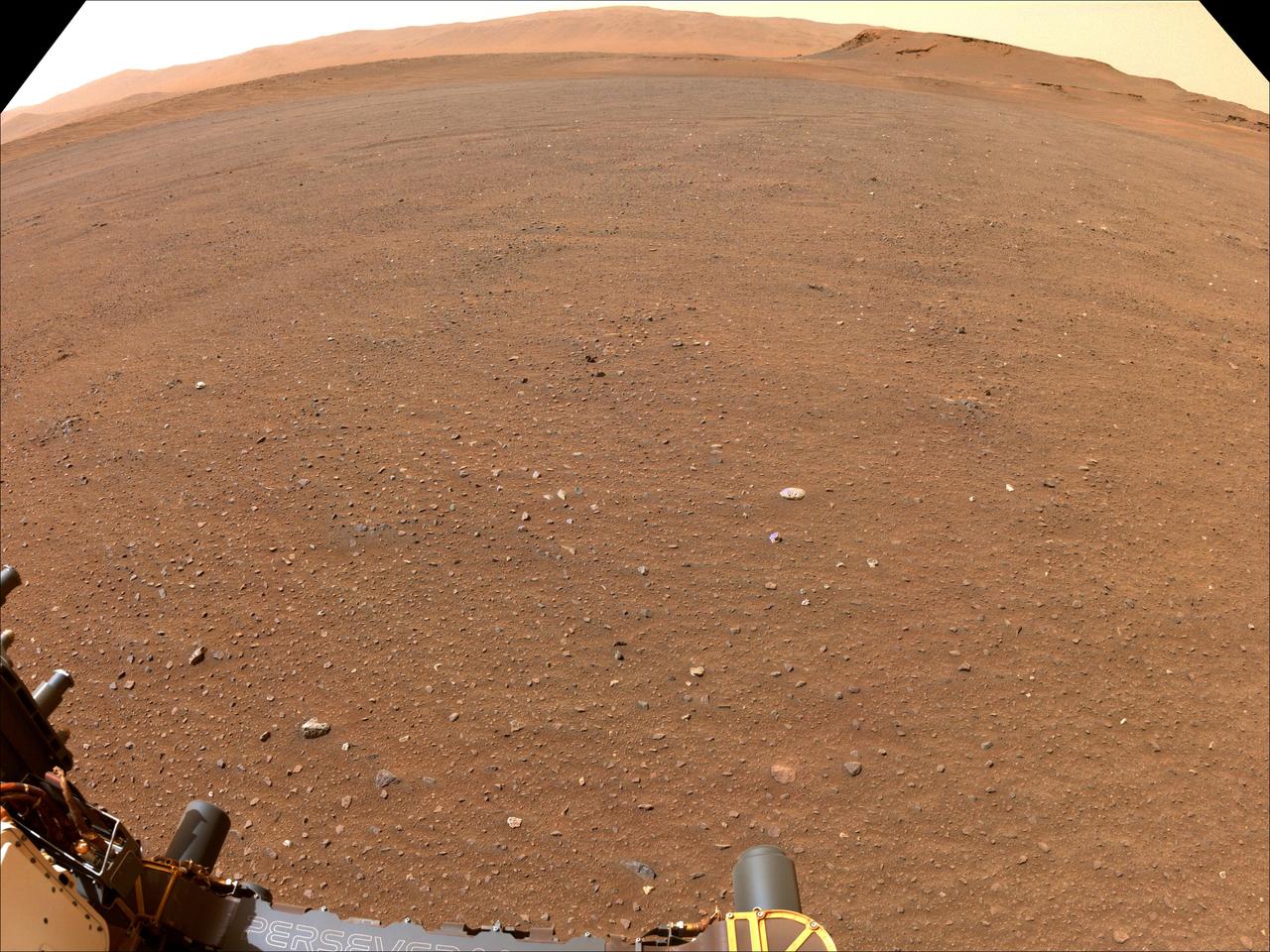
NASA's Perseverance Mars rover used one of its navigation cameras to take this image of flat terrain in Jezero Crater. This is one possible site that NASA may consider for a Mars Sample Return lander that would collect Perseverance's samples of Mars rock and sediment in the future. The lander would serve as the launch platform for a Mars Ascent Vehicle that would blast off from Mars, delivering the samples to an orbiter as part of their journey to Earth for intensive study. Choosing an area that lacks large rocks (especially those over 7 1/2 inches, or 19 centimeters, in diameter), sand dunes, and steeply angled terrain would go a long way toward easing the path for an MSR recovery vehicle to efficiently grab tubes before heading to the lander. A key objective for Perseverance's mission on Mars is astrobiology, including the search for signs of ancient microbial life. The rover will characterize the planet's geology and past climate, pave the way for human exploration of the Red Planet, and be the first mission to collect and cache Martian rock and regolith (broken rock and dust). Subsequent NASA missions, in cooperation with ESA (European Space Agency), would send spacecraft to Mars to collect these sealed samples from the surface and return them to Earth for in-depth analysis. The Mars 2020 Perseverance mission is part of NASA's Moon to Mars exploration approach, which includes Artemis missions to the Moon that will help prepare for human exploration of the Red Planet. https://photojournal.jpl.nasa.gov/catalog/PIA25370
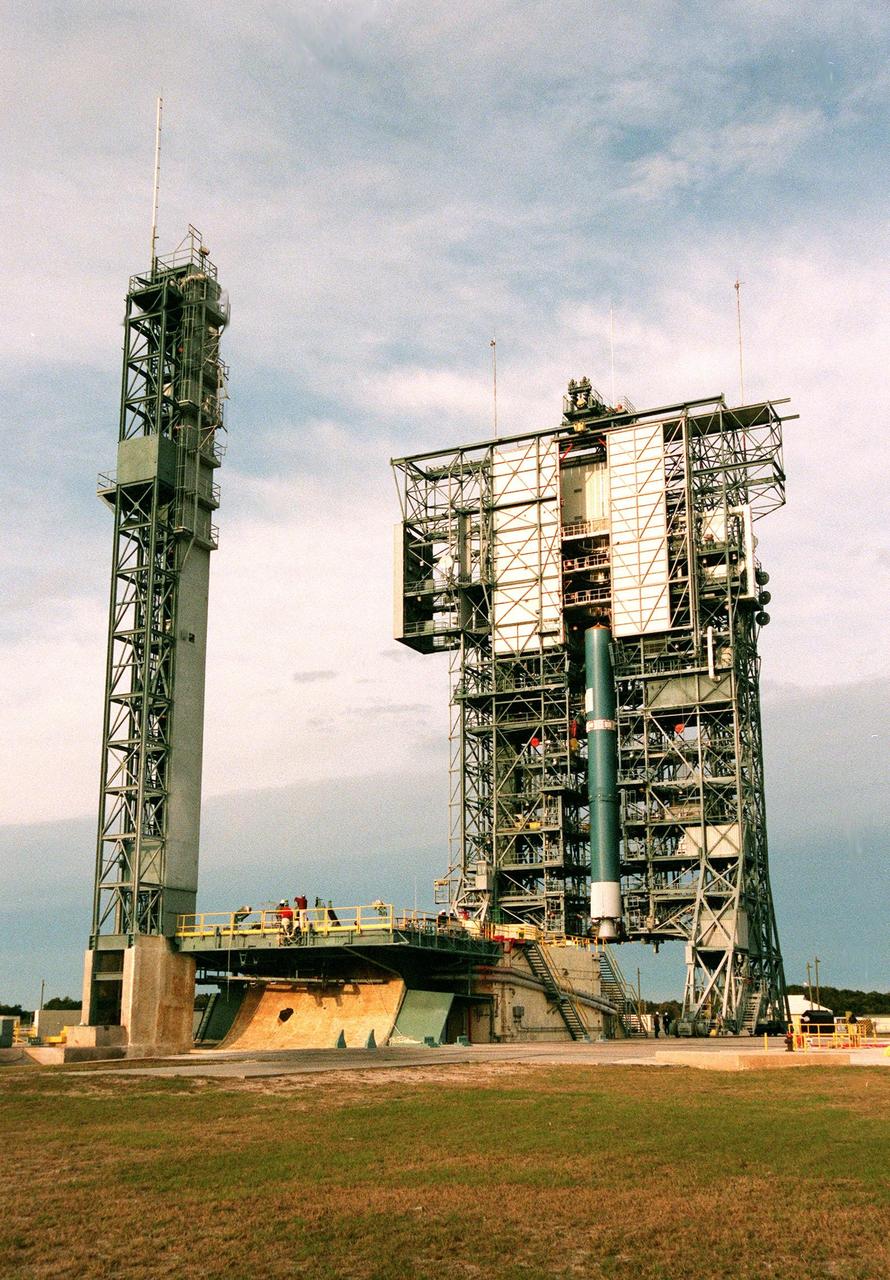
The first stage of a Boeing Delta II rocket is in position on the mobile tower (at right) at Launch Complex 17. At left is the launch tower. The rocket will carry the Stardust spacecraft into space for a close encounter with the comet Wild 2 in January 2004. Using a medium called aerogel, it will capture comet particles flying off the nucleus of the comet, plus collect interstellar dust for later analysis. The collected samples will return to Earth in a Sample Return Capsule to be jettisoned as Stardust swings by Earth in January 2006. Stardust is scheduled to be launched on Feb. 6, 1999
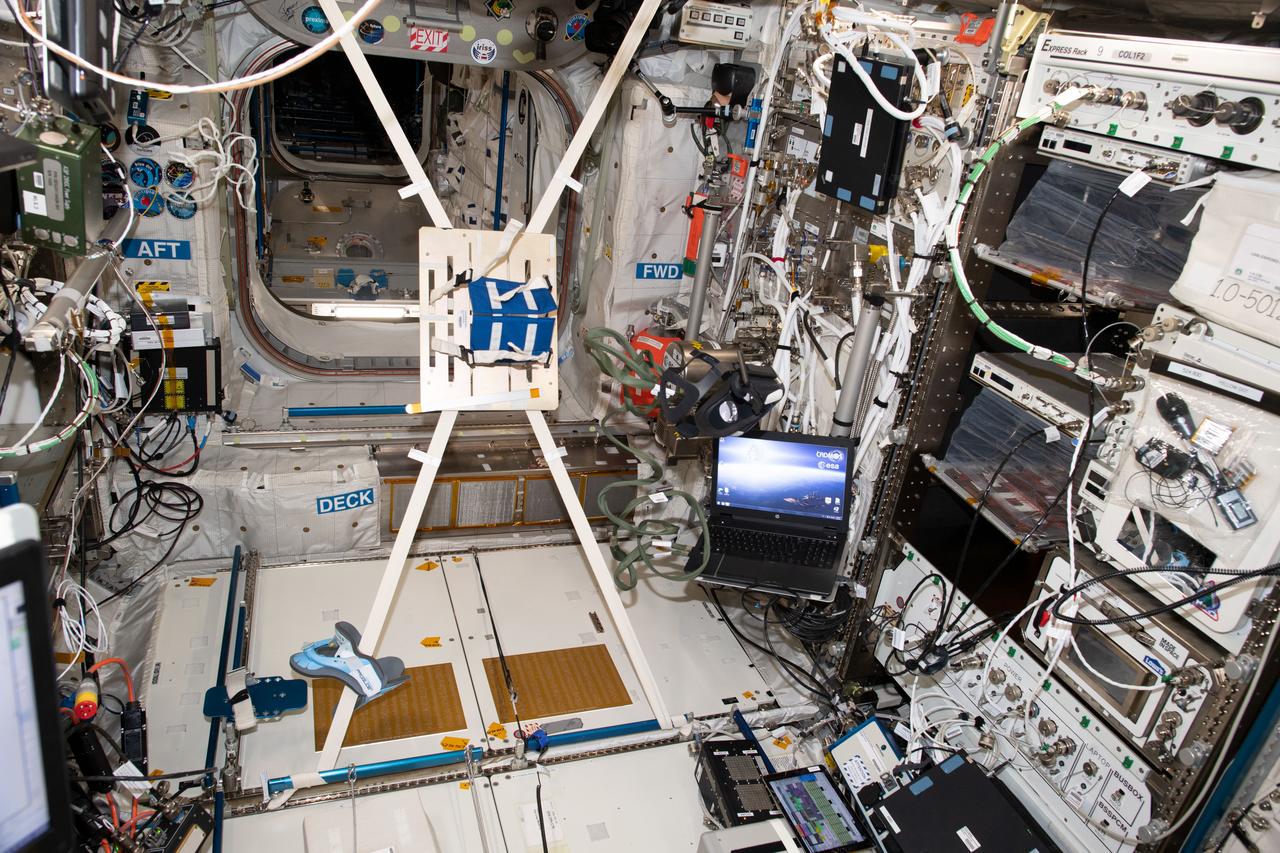
iss060e014594 (7/25/2019) ---Photo documentation during the preparation for the VECTION experiment in the Columbus module aboard the International Space Station (ISS). The objective of The Effect of Long Duration Hypogravity on the Perception of Self-Motion (VECTION) study is to determine to what extent an astronaut's ability to visually interpret motion, orientation, and distance may be disrupted in a microgravity environment, and how it may adapt, and how it may be changed upon return to Earth. Multiple experimental time points inflight and upon return to Earth allows for the adaptation and recovery process to be investigated.
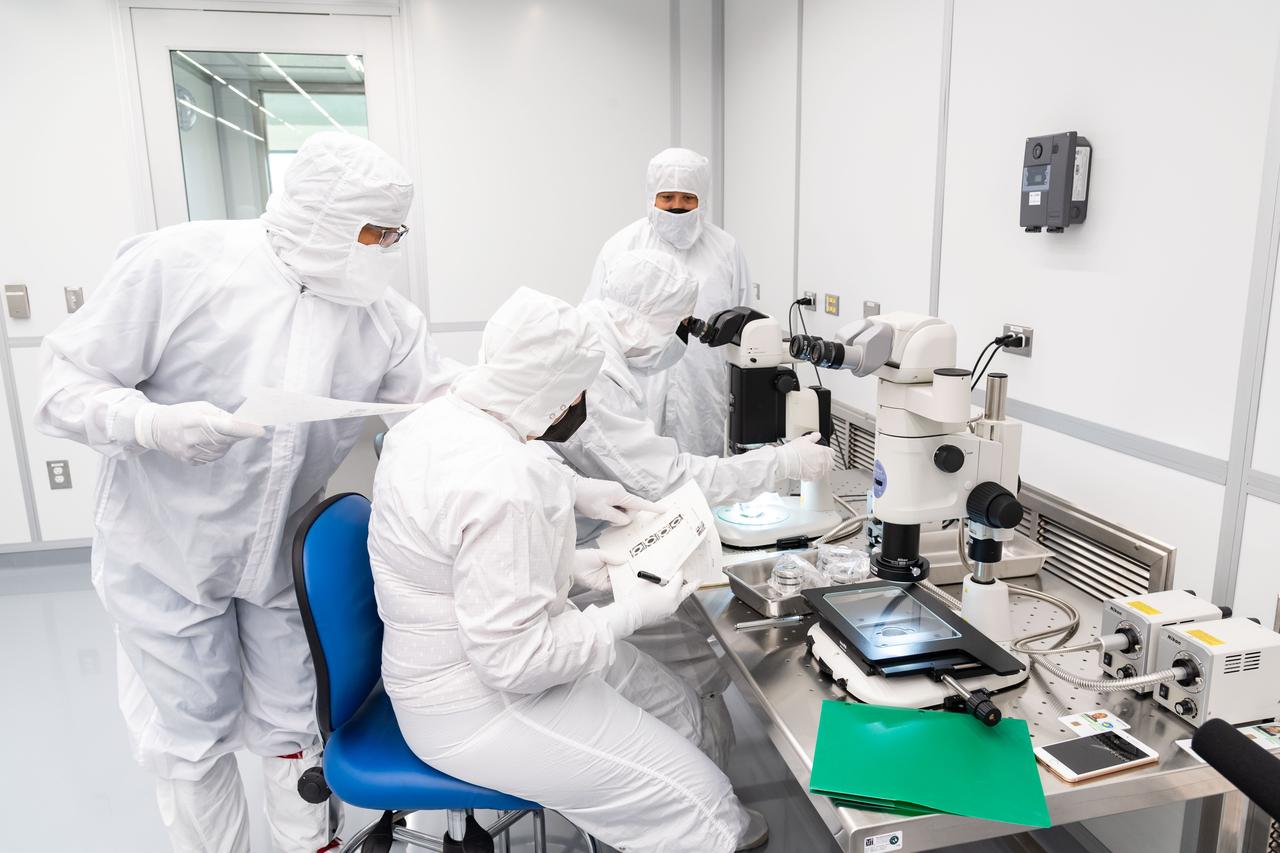
Scientists in the Astromaterials Research and Exploration Science (ARES) Division at NASA’s Johnson Space Center study samples retrieved by the Japan Aerospace Exploration Agency’s (JAXA) Hayabusa2 spacecraft and returned to Earth in late 2020. JAXA shared a portion of the samples with NASA, and in exchange, NASA will provide JAXA a percentage of a sample of asteroid Bennu, when the agency’s OSIRIS-REx spacecraft returns to Earth from the space rock in 2023. Photo Date: November 30, 2021. Location: Bldg. 31, H2 Clean Room. Photographer: Robert Markowitz
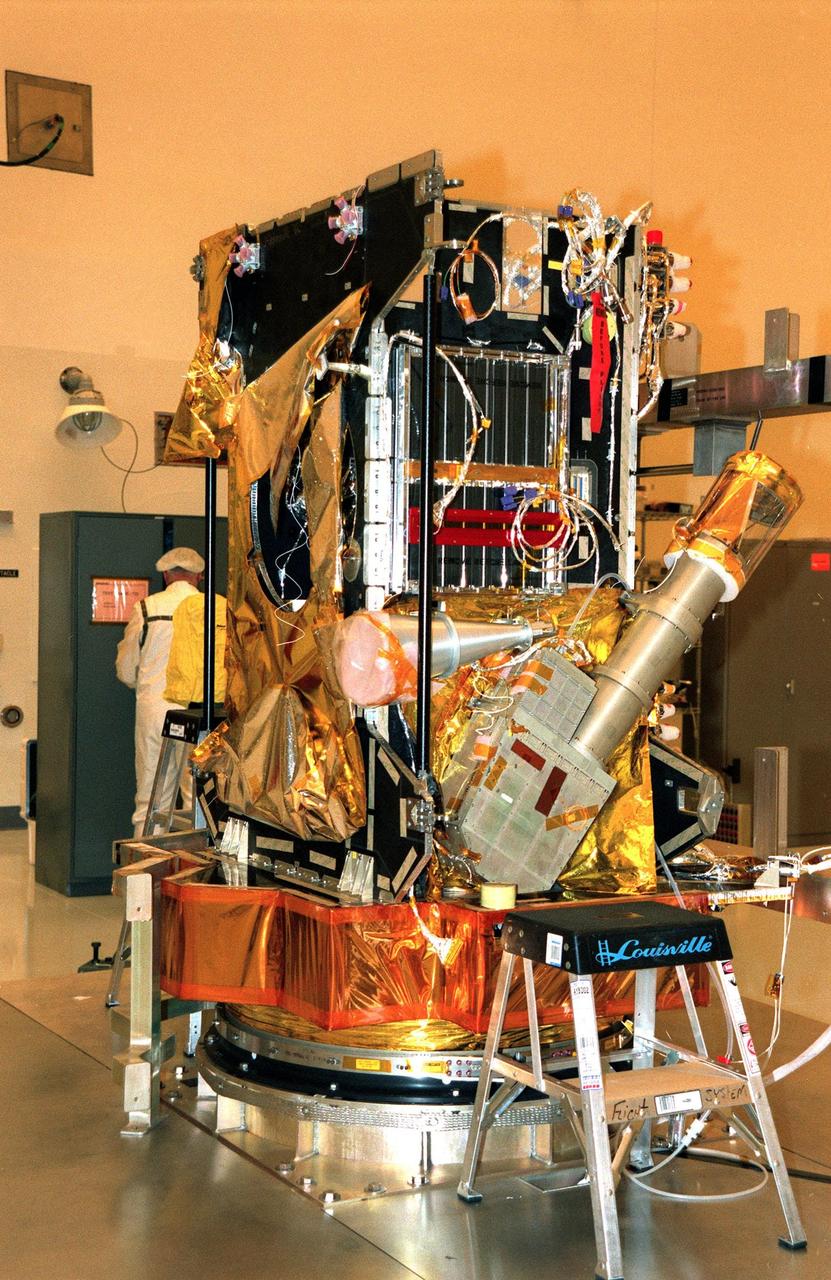
In the Payload Hazardous Servicing Facility, the Stardust spacecraft is ready for the sample return capsule to be attached. Stardust will use a unique medium called aerogel to capture comet particles flying off the nucleus of comet Wild 2 in January 2004, plus collect interstellar dust for later analysis. The collected samples will return to Earth in the re-entry capsule to be jettisoned as it swings by Earth in January 2006. Stardust is scheduled to be launched aboard a Boeing Delta 7426 rocket from Complex 17, Cape Canaveral Air Station, on Feb. 6, 1999
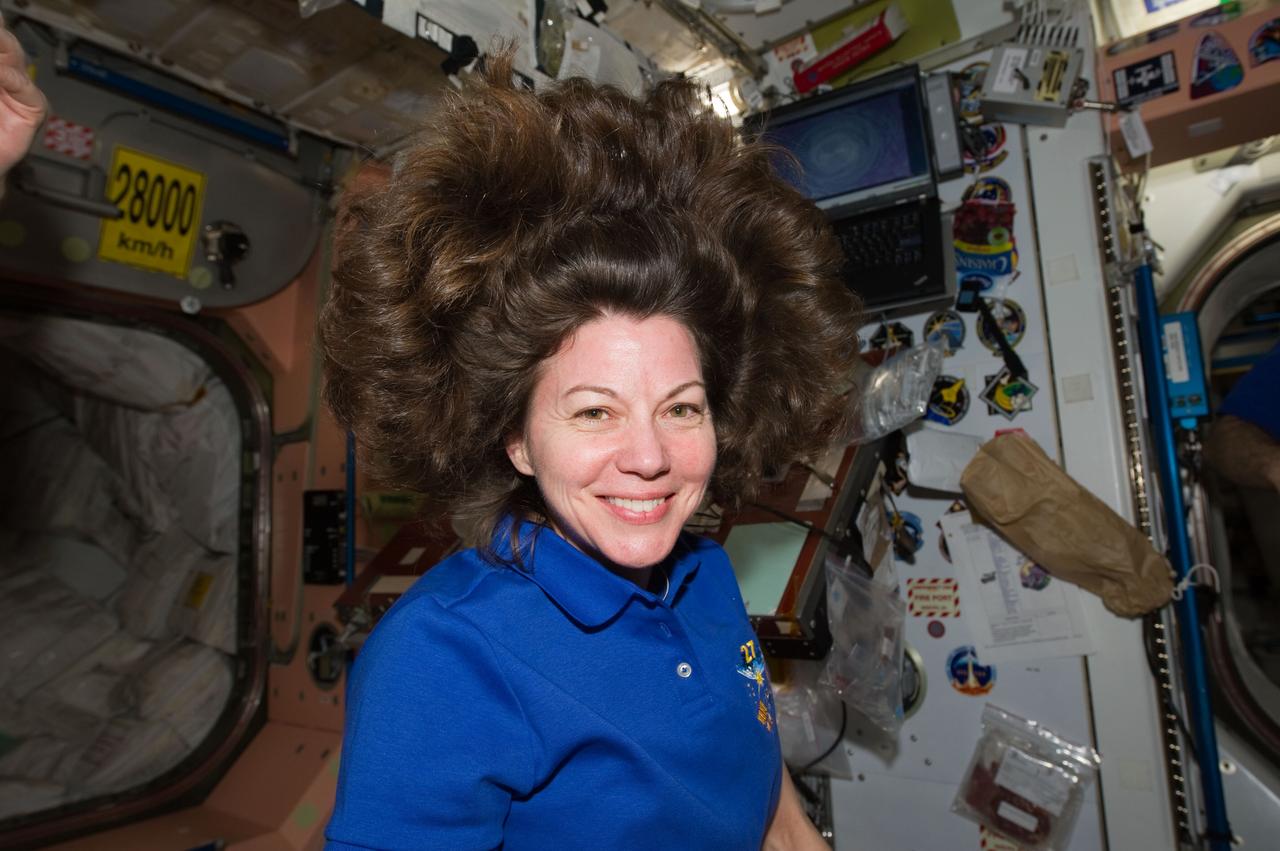
S134-E-008356 (21 May 2011)--- After more than five months of serving as a flight engineer on back-to-back International Space Station Expedition crews, NASA astronaut Cady Coleman (seen aboard the orbiting complex) is only 48 hours away from returning to Earth. She and two Expedition 27 crewmates will lessen the current population of twelve on the joint Endeavour/ISS complex to nine when they undock on May 23 in a Soyuz spacecraft and return to Earth. Photo credit: NASA
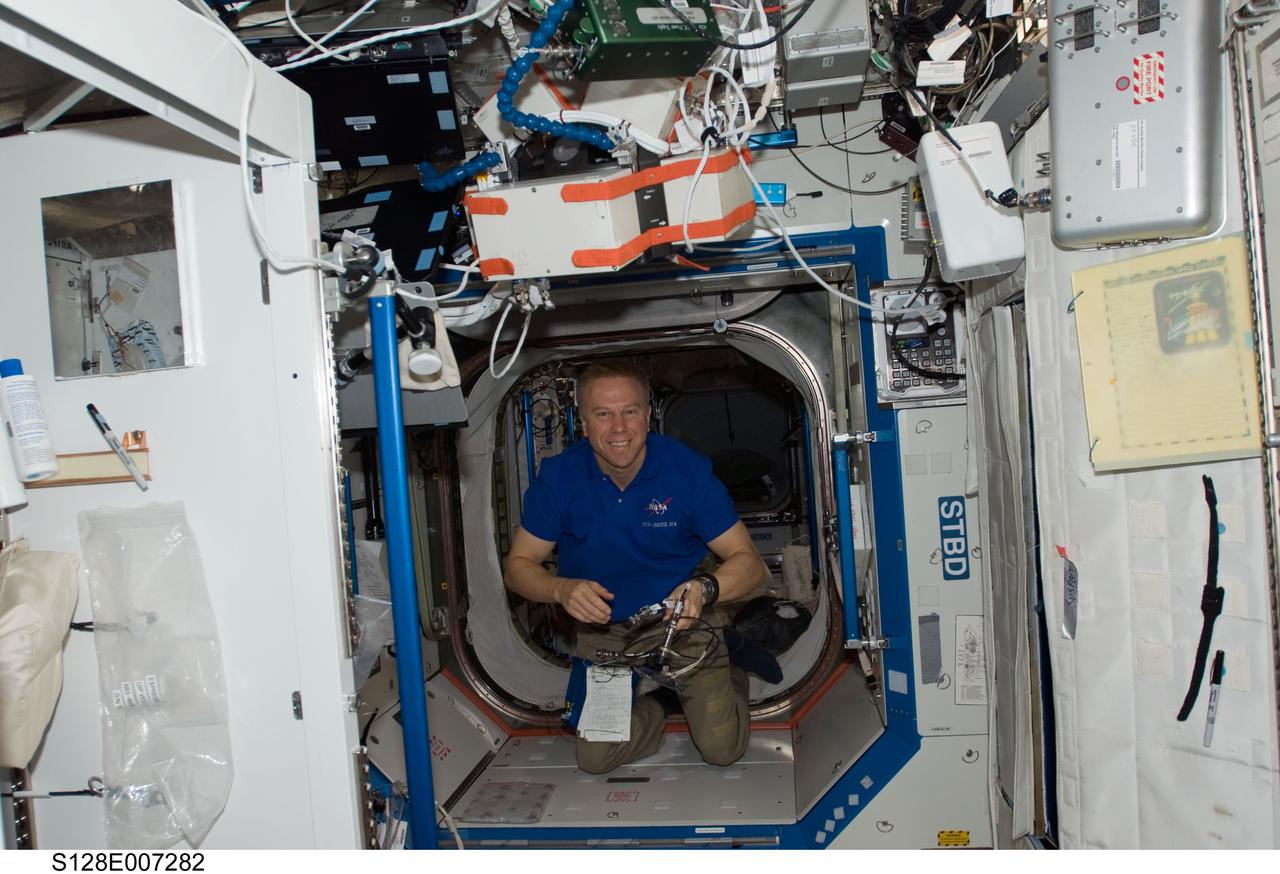
S128-E-007282 (4 Sept. 2009) --- Onboard the International Space Station since July, astronaut Tim Kopra is pictured on the orbital outpost a little less than a week before his scheduled return to Earth. Earlier this week, Kopra changed roles from Expedition 20 flight engineer to STS-128 mission specialist. Kopra came up to the station with the STS-127 crew and participated in a spacewalk on July 18. He will return to Earth aboard the Discovery on a scheduled Sept. 10 landing.
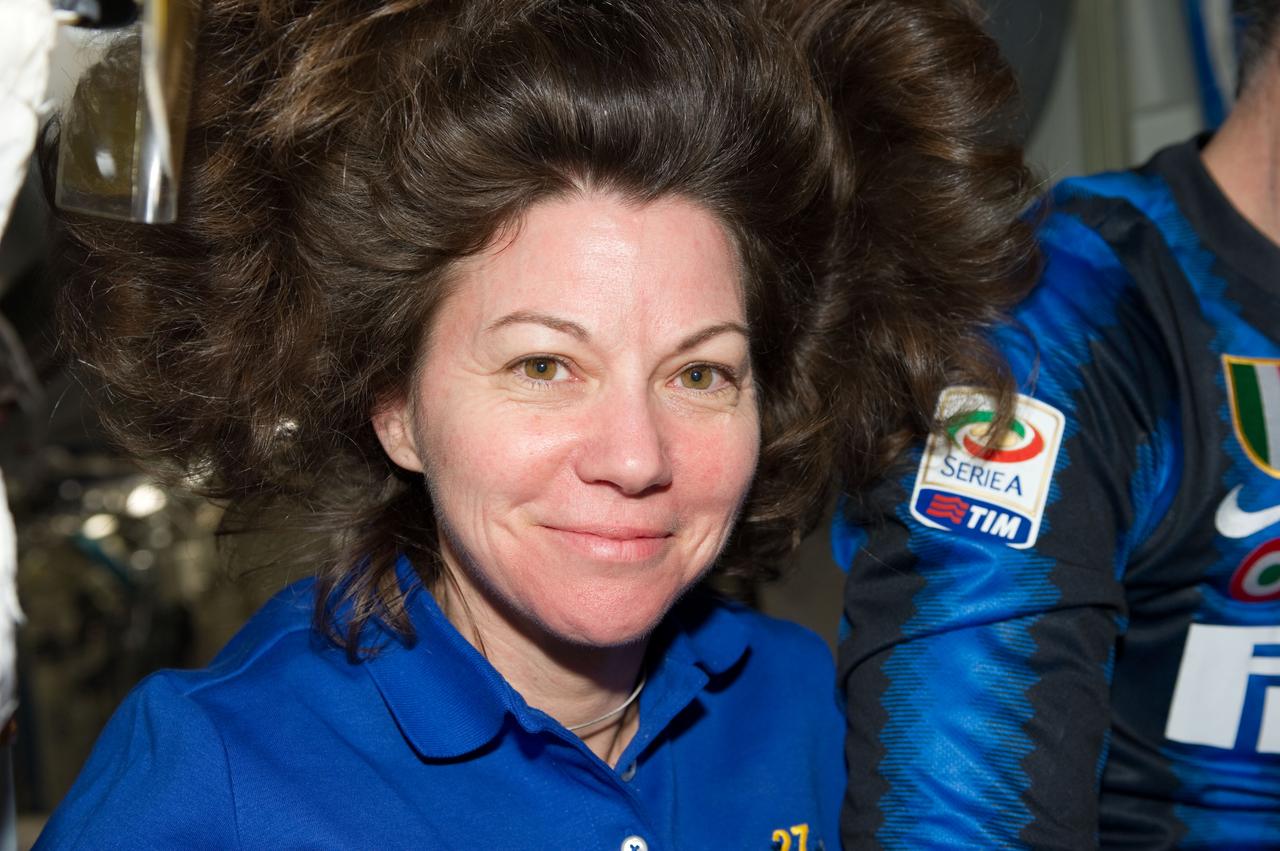
S134-E-008390 (21 May 2011)--- After more than five months of serving as a flight engineer on back-to-back International Space Station Expedition crews, NASA astronaut Cady Coleman (seen aboard the orbiting complex) is only 48 hours away from returning to Earth. She and two Expedition 27 crewmates will lessen the current population of twelve on the joint Endeavour/ISS complex to nine when they undock on May 23 in a Soyuz spacecraft and return to Earth. Photo credit: NASA

KENNEDY SPACE CENTER, FLA. - Center Director Jim Kennedy speaks to attendees at a memorial service honoring the crew of Columbia. He stands in front of the Space Memorial Mirror at the KSC Visitor Complex. Feb. 1 is the one-year anniversary of the loss of the crew and orbiter Columbia in a tragic accident as the ship returned to Earth following mission STS-107. Attended by many friends, co-workers and families, the memorial service was also open to the public.
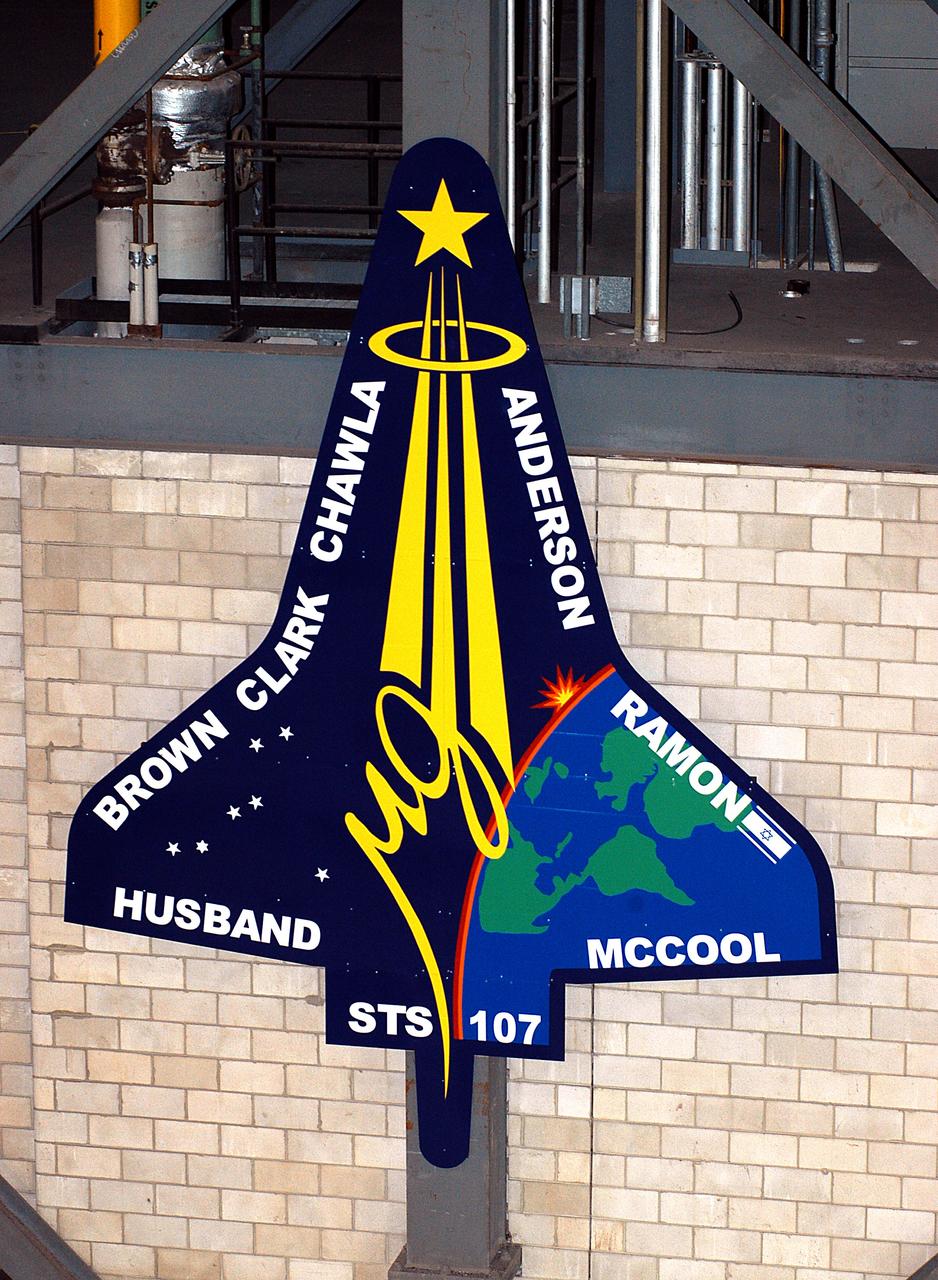
KENNEDY SPACE CENTER, FLA. - A 20-foot by 15-foot replica of the STS-107 logo has been installed above the “A” on the A tower in the transfer aisle of the Vehicle Assembly Building. The debris from the orbiter Columbia, lost in a tragic accident on its return to Earth from the STS-107 mission, is permanently stored in the tower. A dedication ceremony Jan. 29, 2004, unveiled a plaque being installed in the storage area in honor of “Columbia, the crew of STS-107, and their loved ones.”
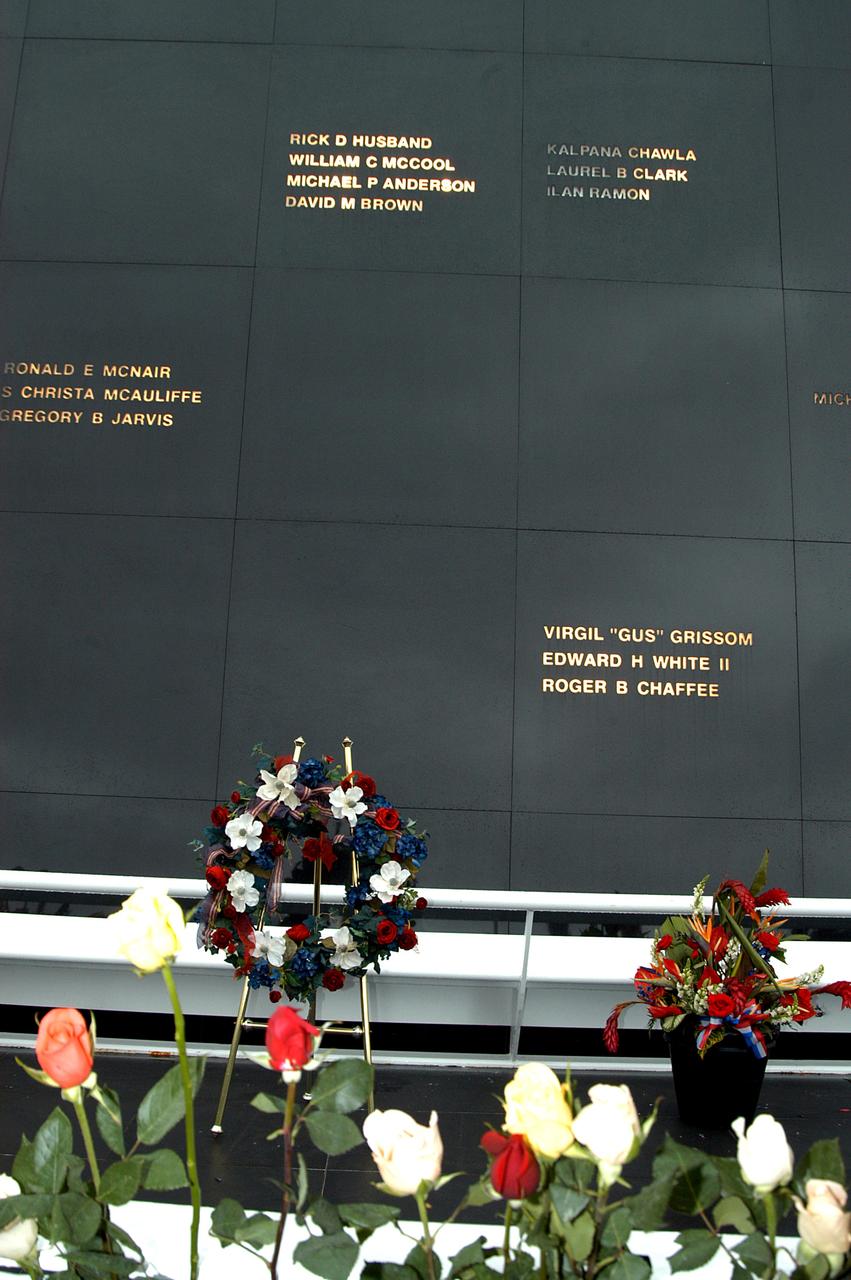
KENNEDY SPACE CENTER, FLA. - Roses and a floral wreath adorn the Space Memorial Mirror following a memorial service for the crew of Columbia. Feb. 1 is the one-year anniversary of the loss of the crew and orbiter Columbia in a tragic accident as the ship returned to Earth following mission STS-107. The public was invited to the memorial service, which included comments by Center Director Jim Kennedy and Executive Director of Florida Space Authority Winston Scott. Scott is a former astronaut who flew on Columbia in 1997.
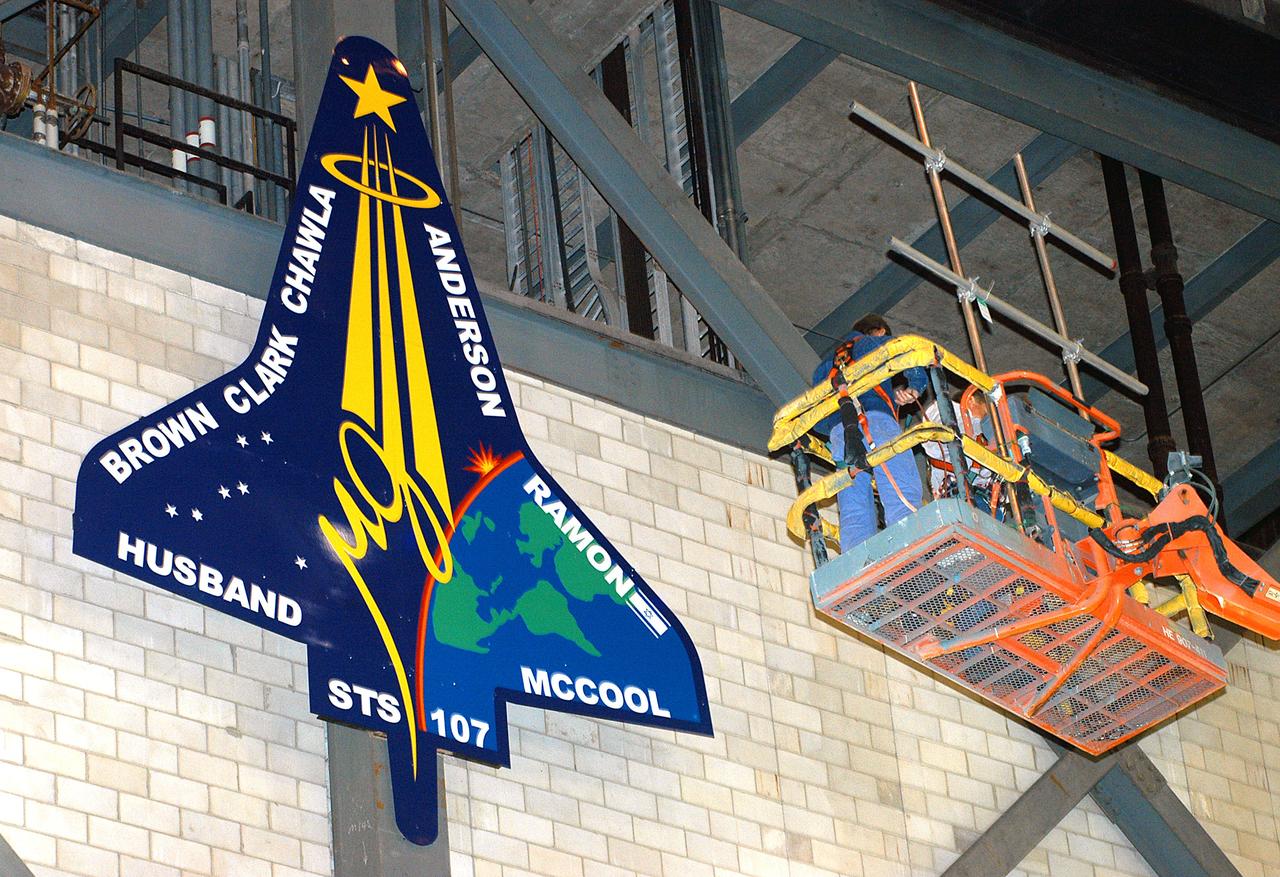
KENNEDY SPACE CENTER, FLA. - Workers install a 20-foot by 15-foot replica of the STS-107 logo above the “A” on the A tower in the transfer aisle of the Vehicle Assembly Building. The debris from the orbiter Columbia, lost in a tragic accident on its return to Earth from the STS-107 mission, is permanently stored in the tower. A dedication ceremony Jan. 29, 2004, revealed a plaque being installed in the storage area in honor of “Columbia, the crew of STS-107, and their loved ones.”
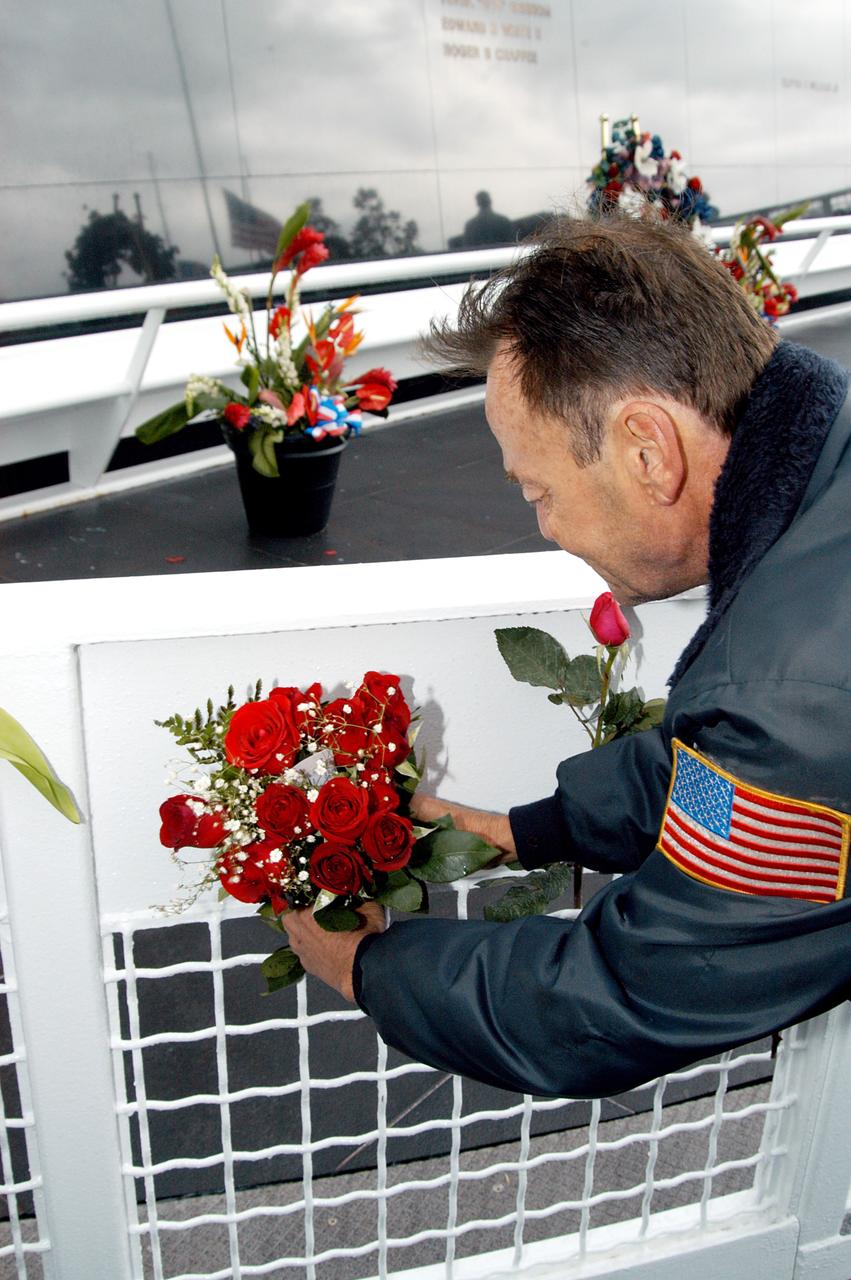
KENNEDY SPACE CENTER, FLA. - Following the memorial service for the crew of Columbia at the Space Memorial Mirror, a visitor leaves a rose bouquet behind. Feb. 1 is the one-year anniversary of the loss of the crew and orbiter Columbia in a tragic accident as the ship returned to Earth following mission STS-107. The public was invited to the memorial service, held in the KSC Visitor Complex, which included comments by Center Director Jim Kennedy and Executive Director of Florida Space Authority Winston Scott. Scott is a former astronaut who flew on Columbia in 1997.

KENNEDY SPACE CENTER, FLA. - Winston Scott, executive director of Florida Space Authority, speaks to attendees at a memorial service honoring the crew of Columbia. He stands in front of the Space Memorial Mirror at the KSC Visitor Complex. Feb. 1 is the one-year anniversary of the loss of the crew and orbiter Columbia in a tragic accident as the ship returned to Earth following mission STS-107. Scott is a former astronaut who flew on Columbia in 1997. Attended by many friends, co-workers and families, the memorial service was also open to the public.
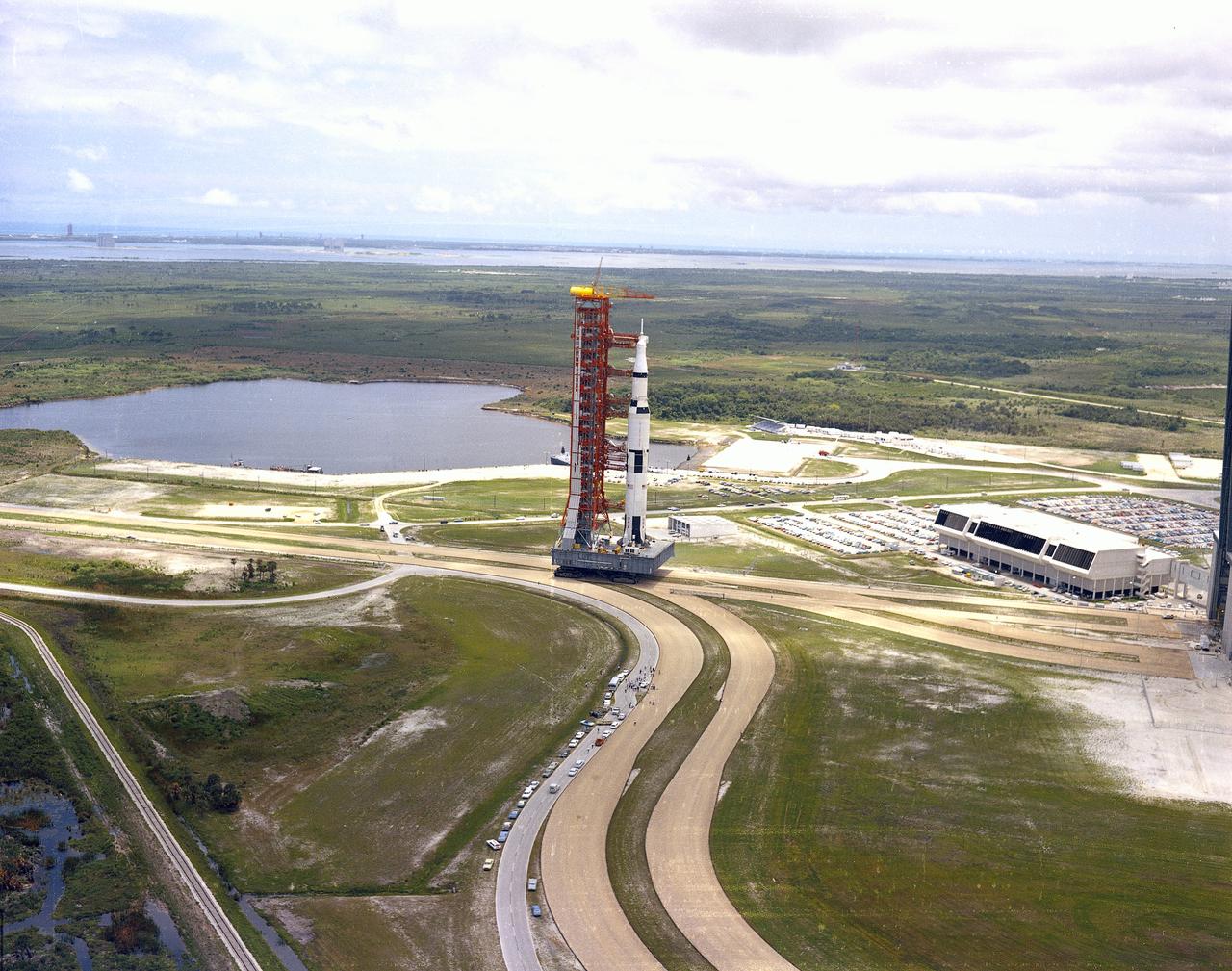
Aboard a Saturn V launch vehicle, the Apollo 11 mission launched from The Kennedy Space Center, Florida on July 16, 1969 and safely returned to Earth on July 24, 1969. The space vehicle is shown here during the rollout for launch preparation. The 3-man crew aboard the flight consisted of Neil A. Armstrong, commander; Michael Collins, Command Module pilot; and Edwin E. Aldrin Jr., Lunar Module pilot. Armstrong was the first human to ever stand on the lunar surface, followed by Edwin (Buzz) Aldrin. The crew collected 47 pounds of lunar surface material which was returned to Earth for analysis. The surface exploration was concluded in 2½ hours. With the success of Apollo 11, the national objective to land men on the Moon and return them safely to Earth had been accomplished. The Saturn V launch vehicle was developed by the Marshall Space Flight Center (MSFC) under the direction of Dr. Wernher von Braun.
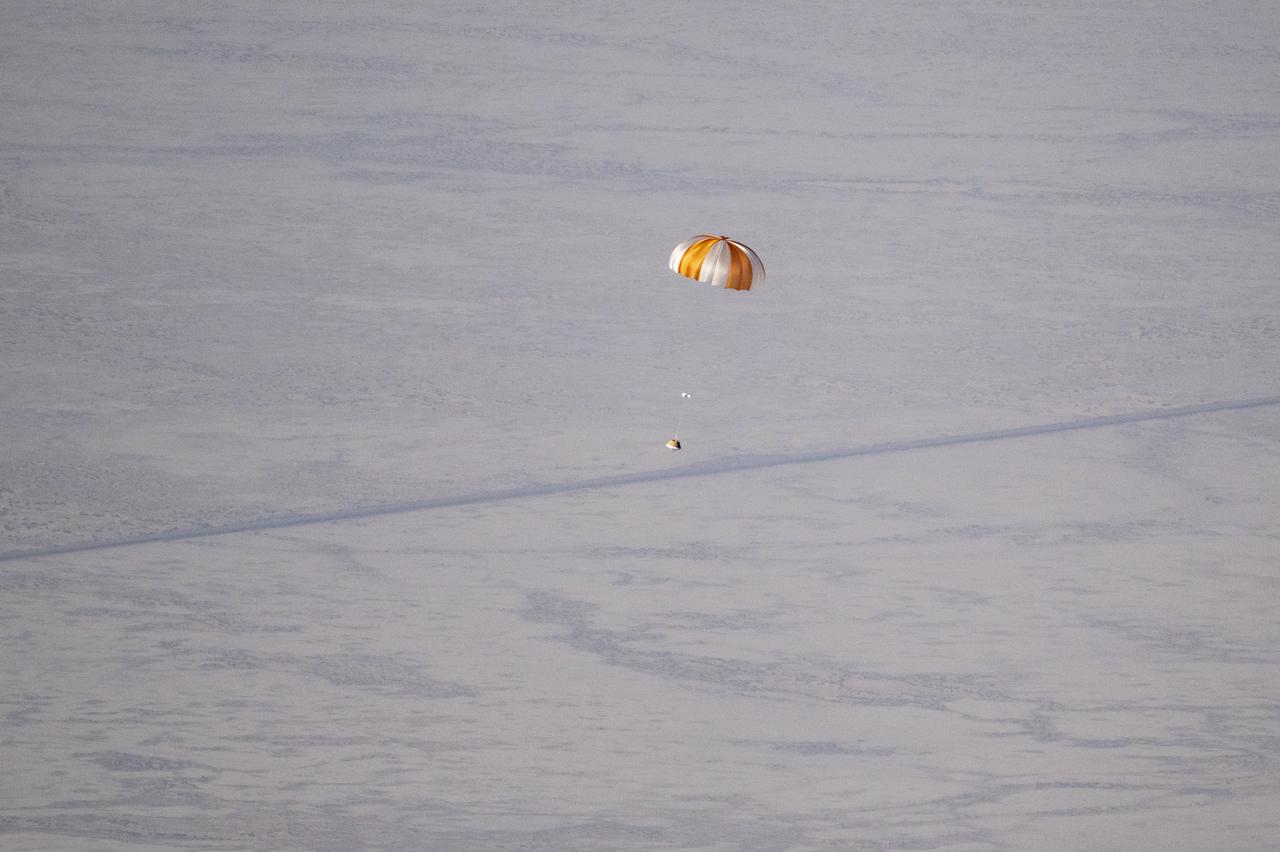
A training model of the sample return capsule is seen during a drop test in preparation for the retrieval of the sample return capsule from NASA's OSIRIS-REx mission, Wednesday, Aug. 30, 2023, at the Department of Defense's Utah Test and Training Range. The sample was collected from the asteroid Bennu in October 2020 by NASA’s OSIRIS-REx spacecraft and will return to Earth on September 24th, landing under parachute at the Utah Test and Training Range. Photo Credit: (NASA/Keegan Barber)
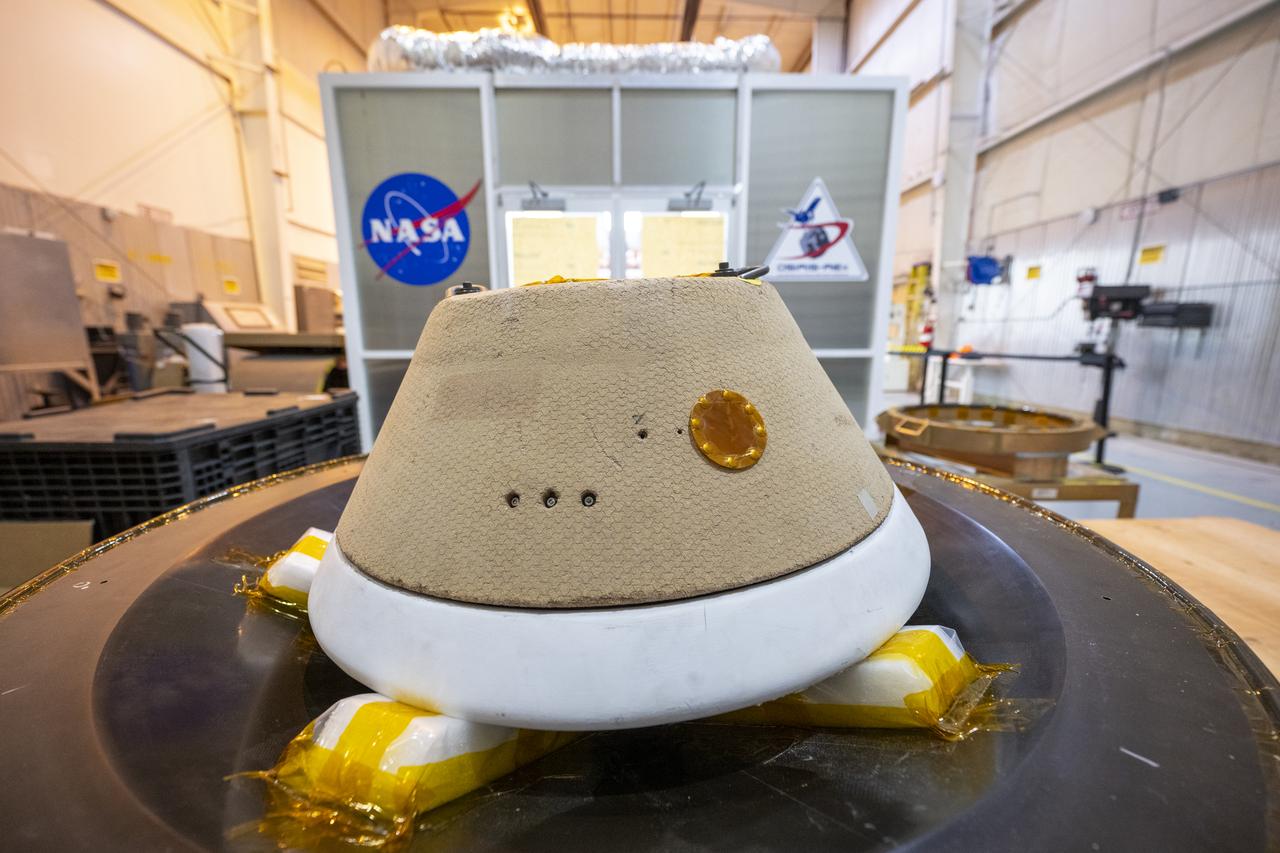
A training model of the sample return capsule is seen following rehearsals in preparation for the retrieval of the sample return capsule from NASA's OSIRIS-REx mission, Tuesday, Aug. 29, 2023, at the Department of Defense's Utah Test and Training Range. The sample was collected from the asteroid Bennu in October 2020 by NASA’s OSIRIS-REx spacecraft and will return to Earth on September 24th, landing under parachute at the Utah Test and Training Range. Photo Credit: (NASA/Keegan Barber)
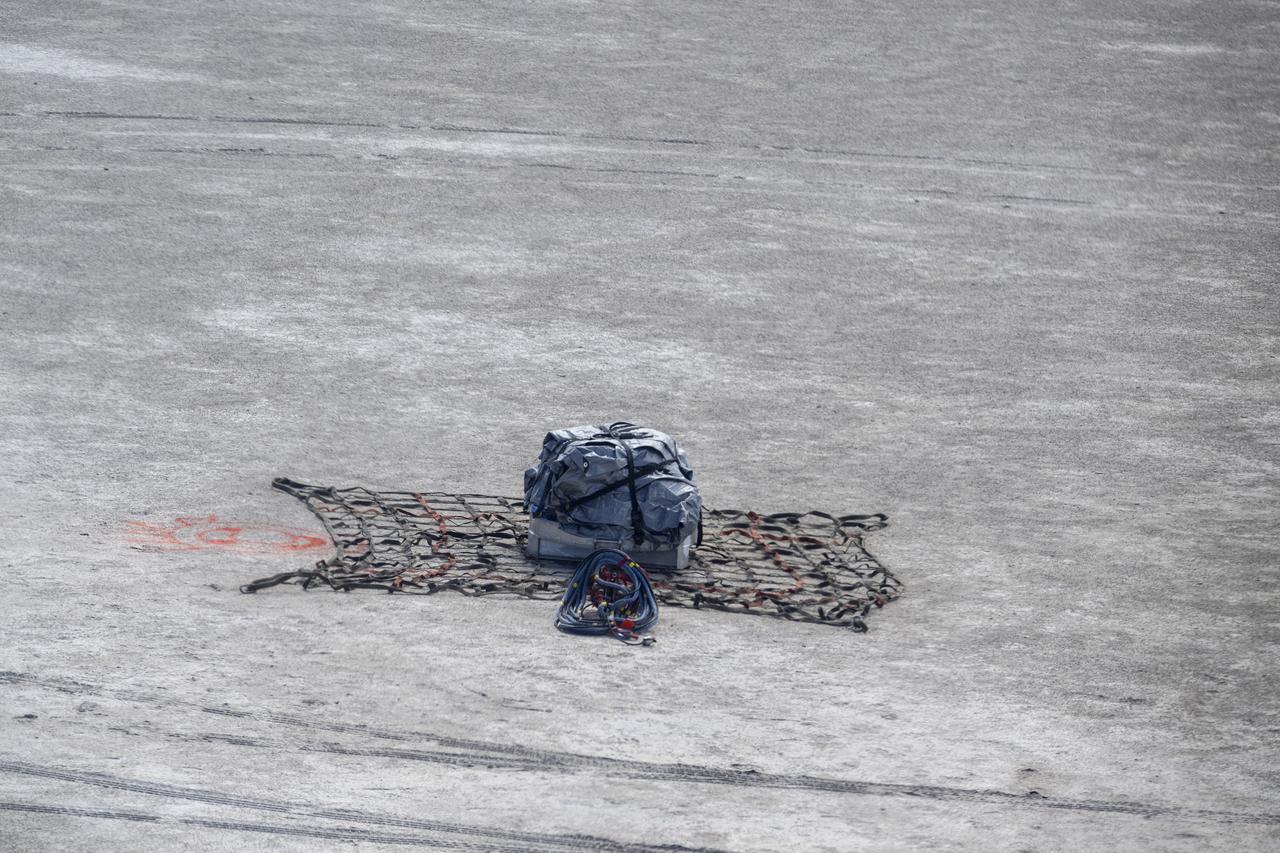
A training model of the sample return capsule is seen from the cockpit of a helicopter as recovery teams participate training in preparation for the retrieval of the sample return capsule from NASA's OSIRIS-REx mission, Wednesday, July 19, 2023, at the Department of Defense's Utah Test and Training Range. The sample was collected from the asteroid Bennu in October 2020 by NASA’s OSIRIS-REx spacecraft and will return to Earth on September 24th, landing under parachute at the Utah Test and Training Range. Photo Credit: (NASA/Keegan Barber)
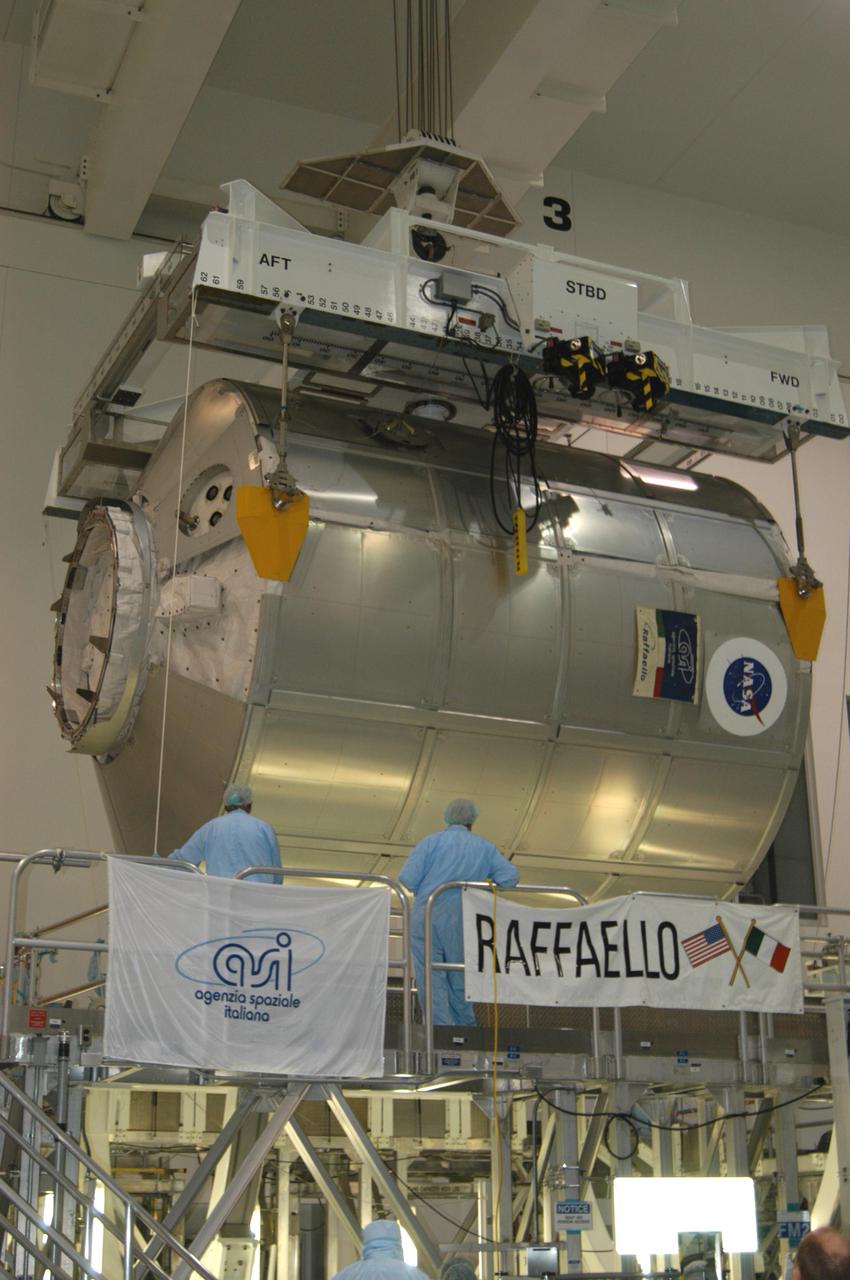
KENNEDY SPACE CENTER, FLA. -- In the Space Station Processing Facility, the suspended Multi-Purpose Logistics Module Raffaello is lowered onto a work stand. The module will be emptied of its contents, returned from the International Space Station on mission STS-114. During the Return to Flight mission STS-114, the crews of Discovery and Expedition 11 transferred more than a ton of material from the ISS to be returned to Earth.
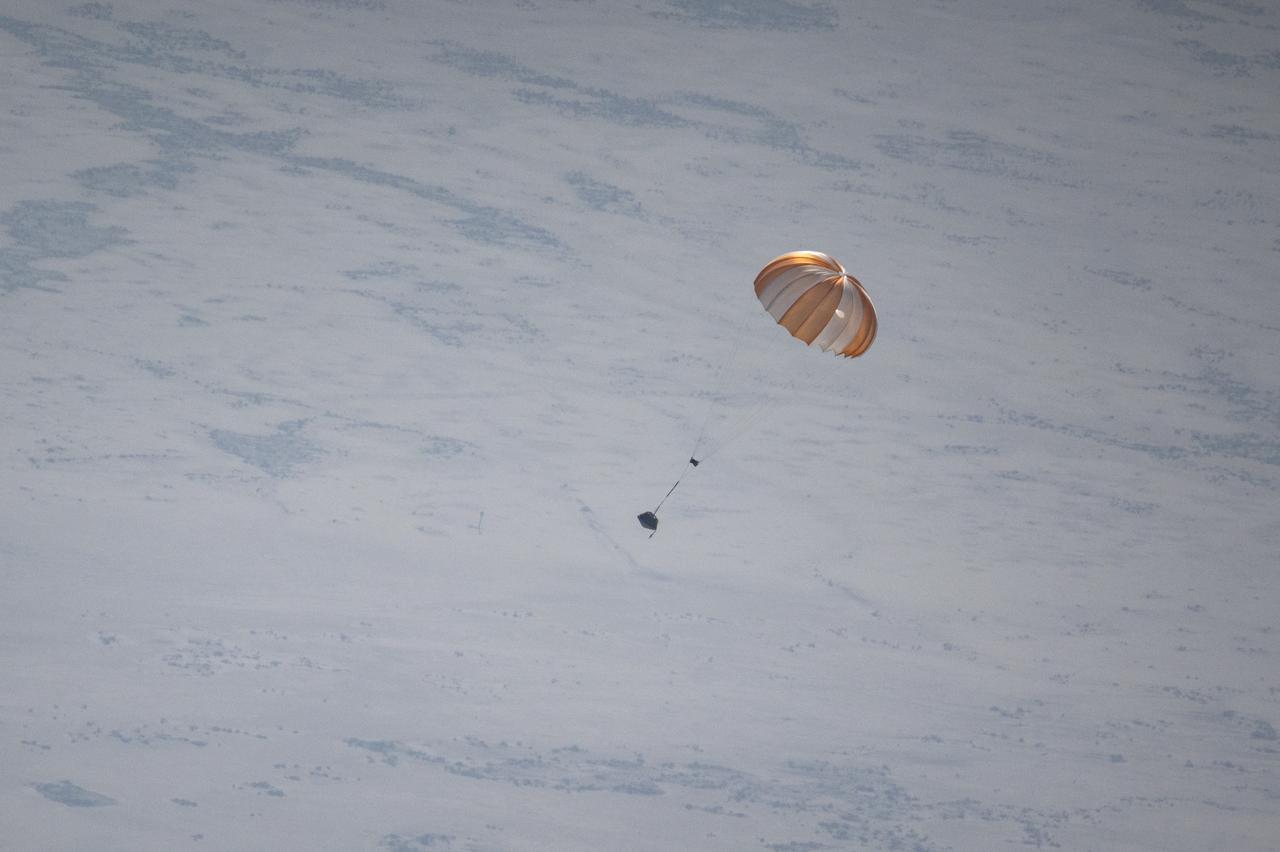
A training model of the sample return capsule is seen during a drop test in preparation for the retrieval of the sample return capsule from NASA's OSIRIS-REx mission, Wednesday, Aug. 30, 2023, at the Department of Defense's Utah Test and Training Range. The sample was collected from the asteroid Bennu in October 2020 by NASA’s OSIRIS-REx spacecraft and will return to Earth on September 24th, landing under parachute at the Utah Test and Training Range. Photo Credit: (NASA/Keegan Barber)
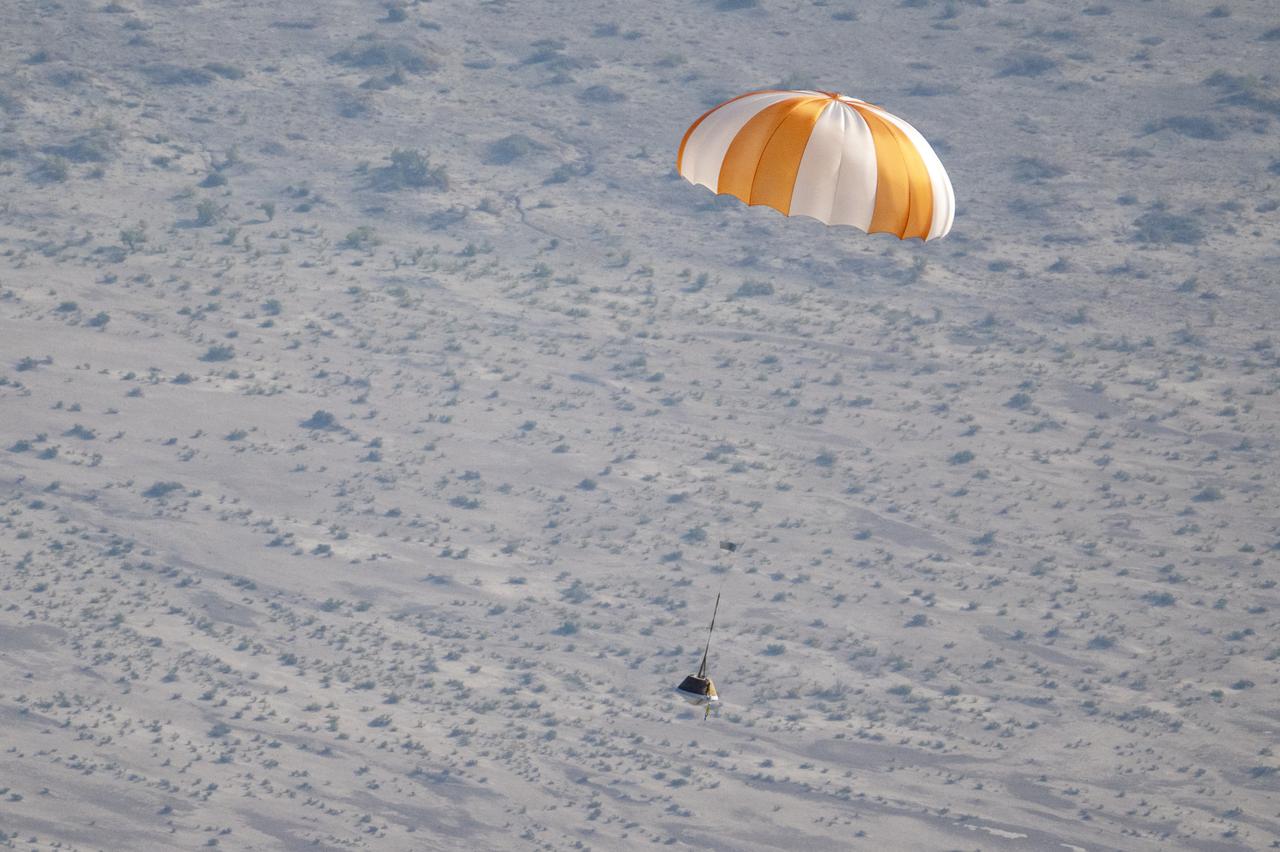
A training model of the sample return capsule is seen during a drop test in preparation for the retrieval of the sample return capsule from NASA's OSIRIS-REx mission, Wednesday, Aug. 30, 2023, at the Department of Defense's Utah Test and Training Range. The sample was collected from asteroid Bennu in October 2020 by NASA’s OSIRIS-REx spacecraft and will return to Earth on September 24th, landing under parachute at the Utah Test and Training Range. Photo Credit: (NASA/Keegan Barber)

KENNEDY SPACE CENTER, FLA. -- In the Space Station Processing Facility, the Multi-Purpose Logistics Module Raffaello is lifted out of the Payload Canister. Raffaello is being moved to a work stand where its contents, returned from the International Space Station on mission STS-114, will be unloaded. During the Return to Flight mission STS-114, the crews of Discovery and Expedition 11 transferred more than a ton of material from the ISS to be returned to Earth.

A training model of the sample return capsule is seen during a drop test in preparation for the retrieval of the sample return capsule from NASA's OSIRIS-REx mission, Wednesday, Aug. 30, 2023, at the Department of Defense's Utah Test and Training Range. The sample was collected from the asteroid Bennu in October 2020 by NASA’s OSIRIS-REx spacecraft and will return to Earth on September 24th, landing under parachute at the Utah Test and Training Range. Photo Credit: (NASA/Keegan Barber)
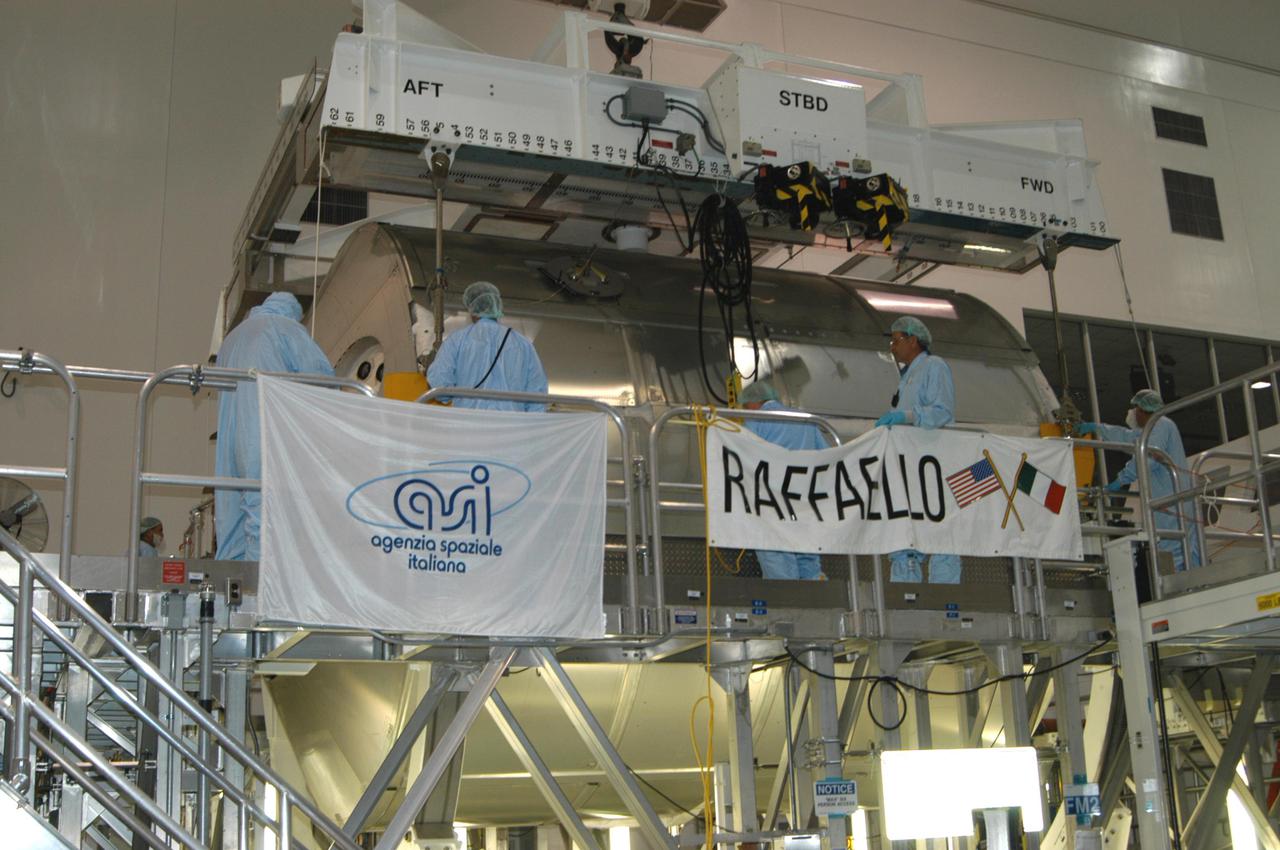
KENNEDY SPACE CENTER, FLA. -- In the Space Station Processing Facility, the suspended Multi-Purpose Logistics Module Raffaello rests on its work stand. The module will be emptied of its contents, returned from the International Space Station on mission STS-114. During the Return to Flight mission STS-114, the crews of Discovery and Expedition 11 transferred more than a ton of material from the ISS to be returned to Earth.
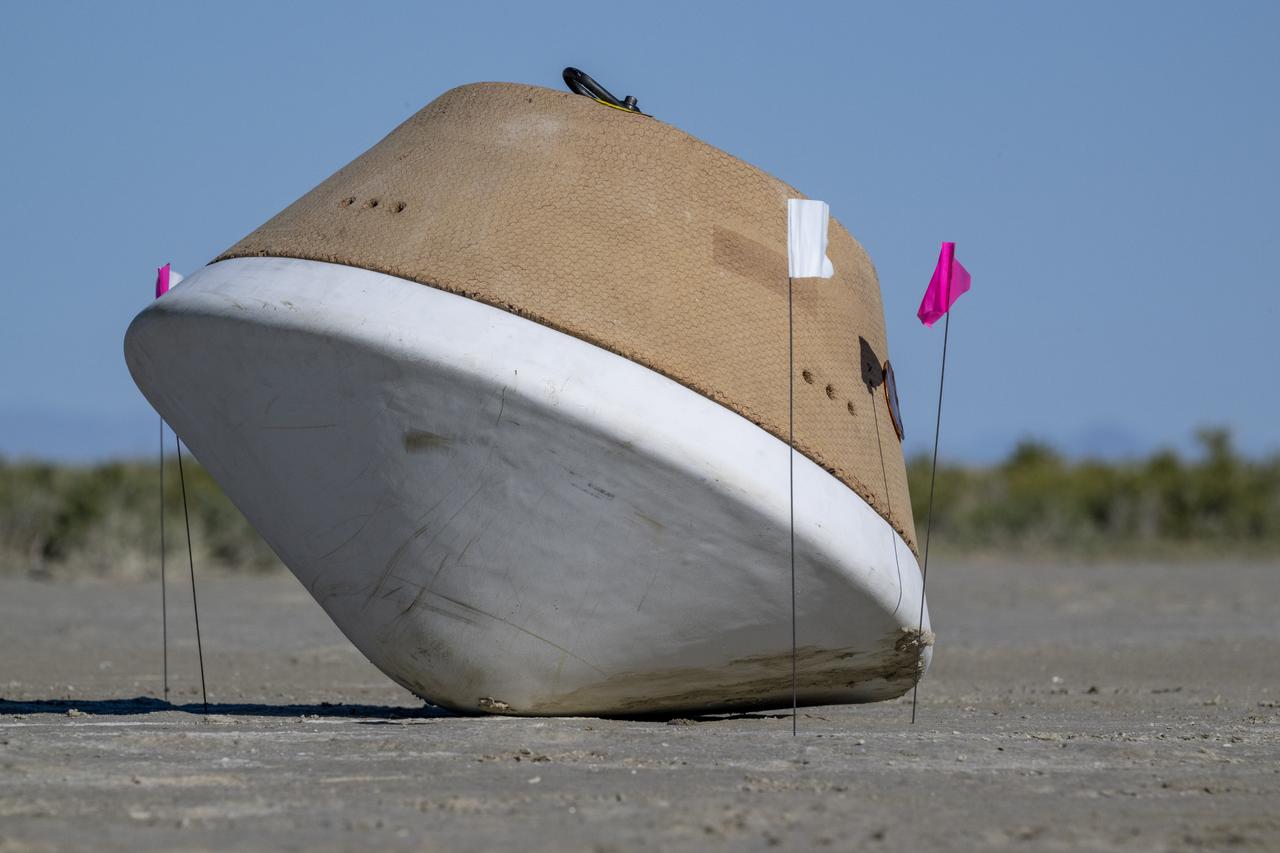
A training model of the sample return capsule is seen during field rehearsals in preparation for the retrieval of the sample return capsule from NASA's OSIRIS-REx mission, Tuesday, Aug. 29, 2023, at the Department of Defense's Utah Test and Training Range. The sample was collected from the asteroid Bennu in October 2020 by NASA’s OSIRIS-REx spacecraft and will return to Earth on September 24th, landing under parachute at the Utah Test and Training Range. Photo Credit: (NASA/Keegan Barber)
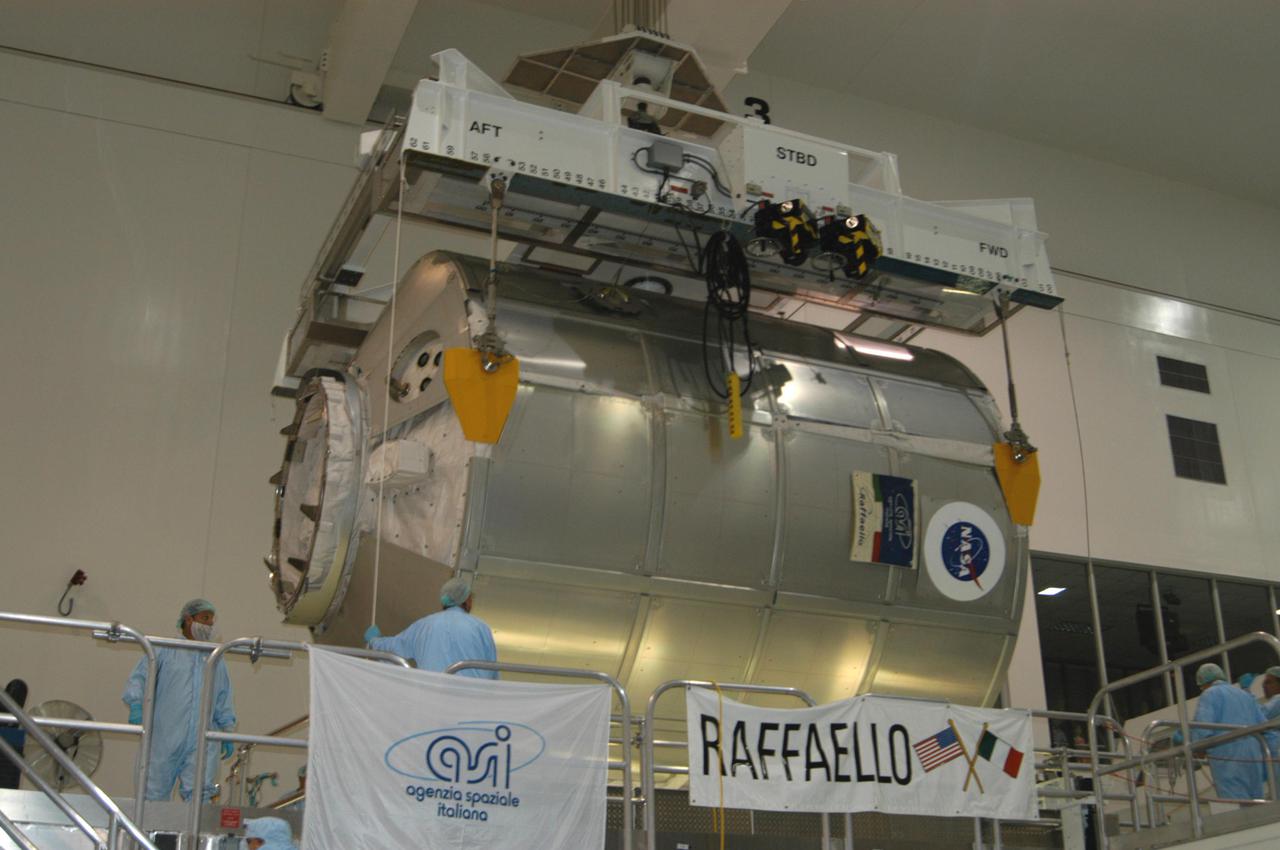
KENNEDY SPACE CENTER, FLA. --In the Space Station Processing Facility, the suspended Multi-Purpose Logistics Module Raffaello is lowered onto a work stand. The module will be emptied of its contents, returned from the International Space Station on mission STS-114. During the Return to Flight mission STS-114, the crews of Discovery and Expedition 11 transferred more than a ton of material from the ISS to be returned to Earth.
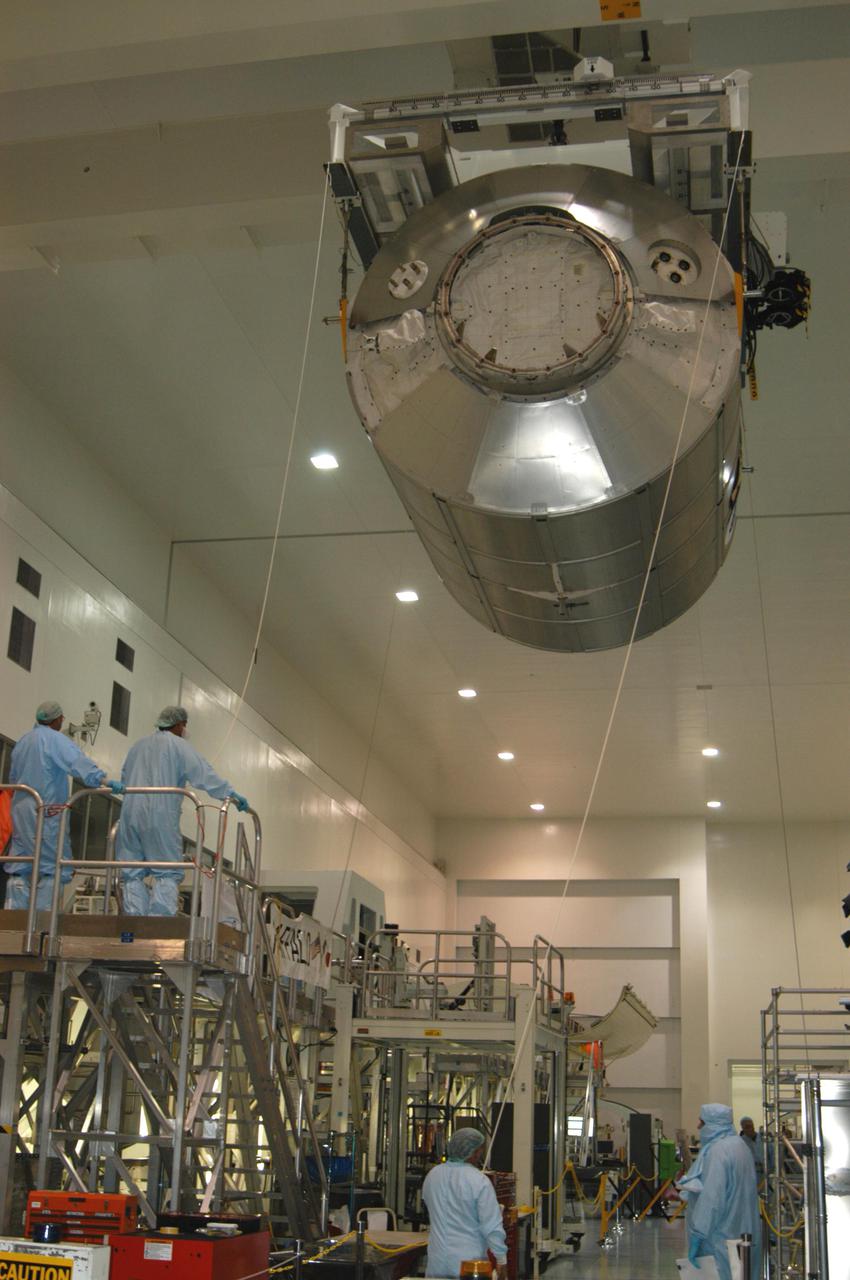
KENNEDY SPACE CENTER, FLA. -- In the Space Station Processing Facility, the suspended Multi-Purpose Logistics Module Raffaello glides above the floor to a work stand at left. The module will be emptied of its contents, returned from the International Space Station on mission STS-114. During the Return to Flight mission STS-114, the crews of Discovery and Expedition 11 transferred more than a ton of material from the ISS to be returned to Earth.
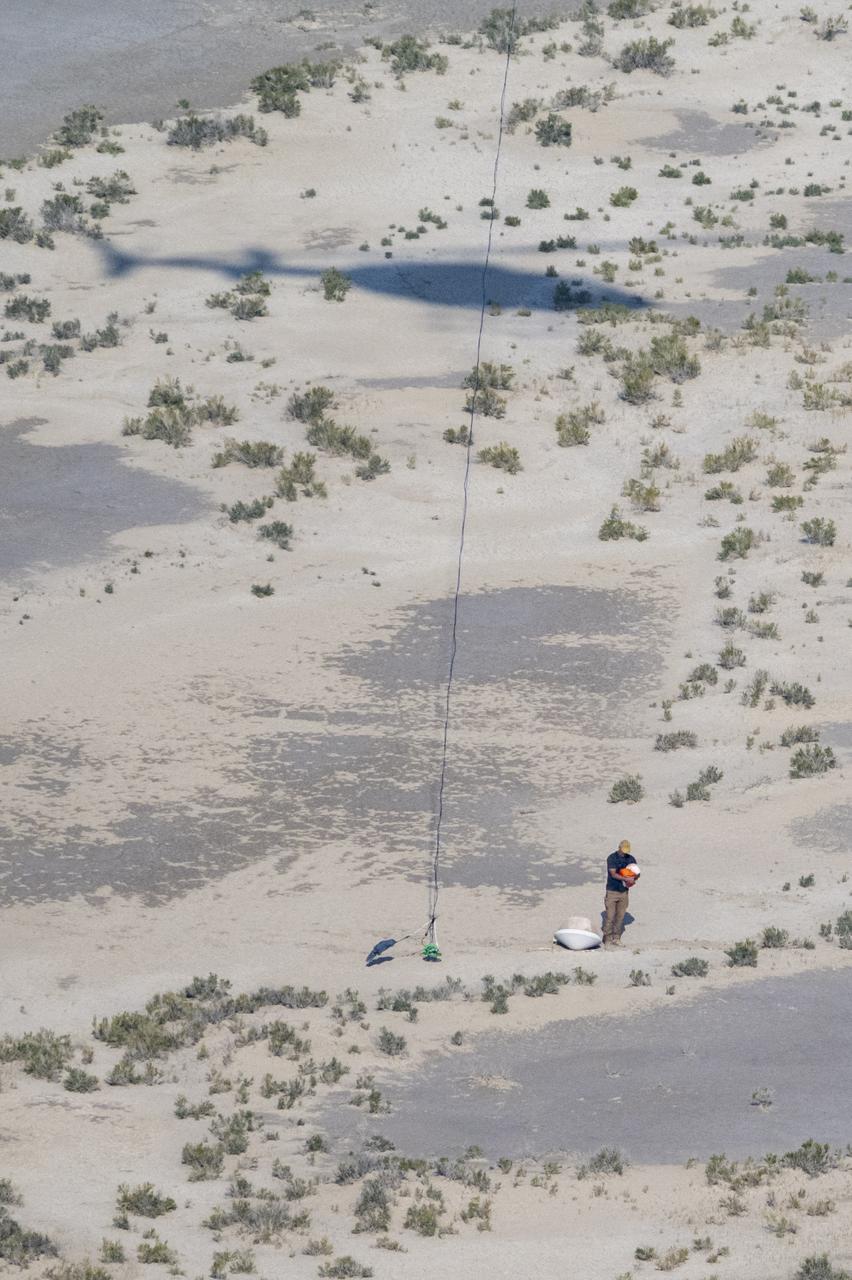
A recovery team member is seen with the training model of the sample return capsule following a drop test in preparation for the retrieval of the sample return capsule from NASA's OSIRIS-REx mission, Wednesday, Aug. 30, 2023, at the Department of Defense's Utah Test and Training Range. The sample was collected from asteroid Bennu in October 2020 by NASA’s OSIRIS-REx spacecraft and will return to Earth on September 24th, landing under parachute at the Utah Test and Training Range. Photo Credit: (NASA/Keegan Barber)
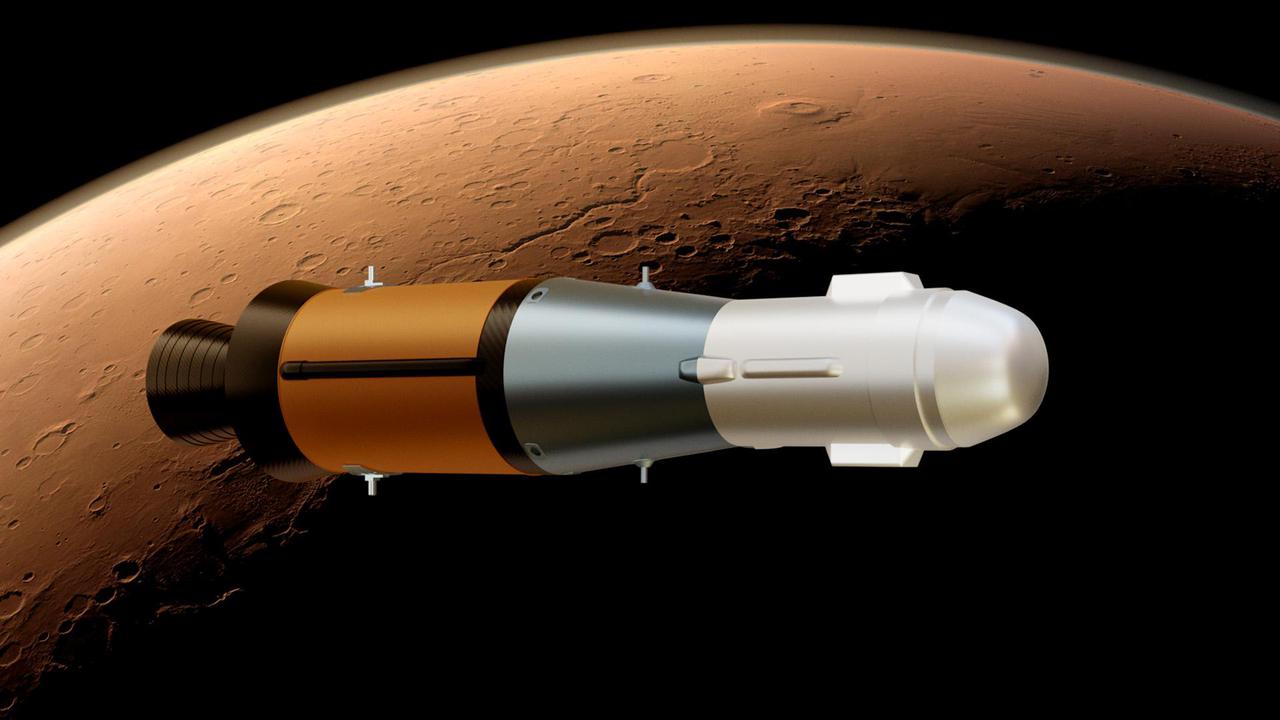
This illustration shows NASA's Mars Ascent Vehicle (MAV), which will carry tubes containing Martian rock and soil samples into orbit around Mars, where ESA's Earth Return Orbiter spacecraft will enclose them in a highly secure containment capsule and deliver them to Earth. https://photojournal.jpl.nasa.gov/catalog/PIA25078
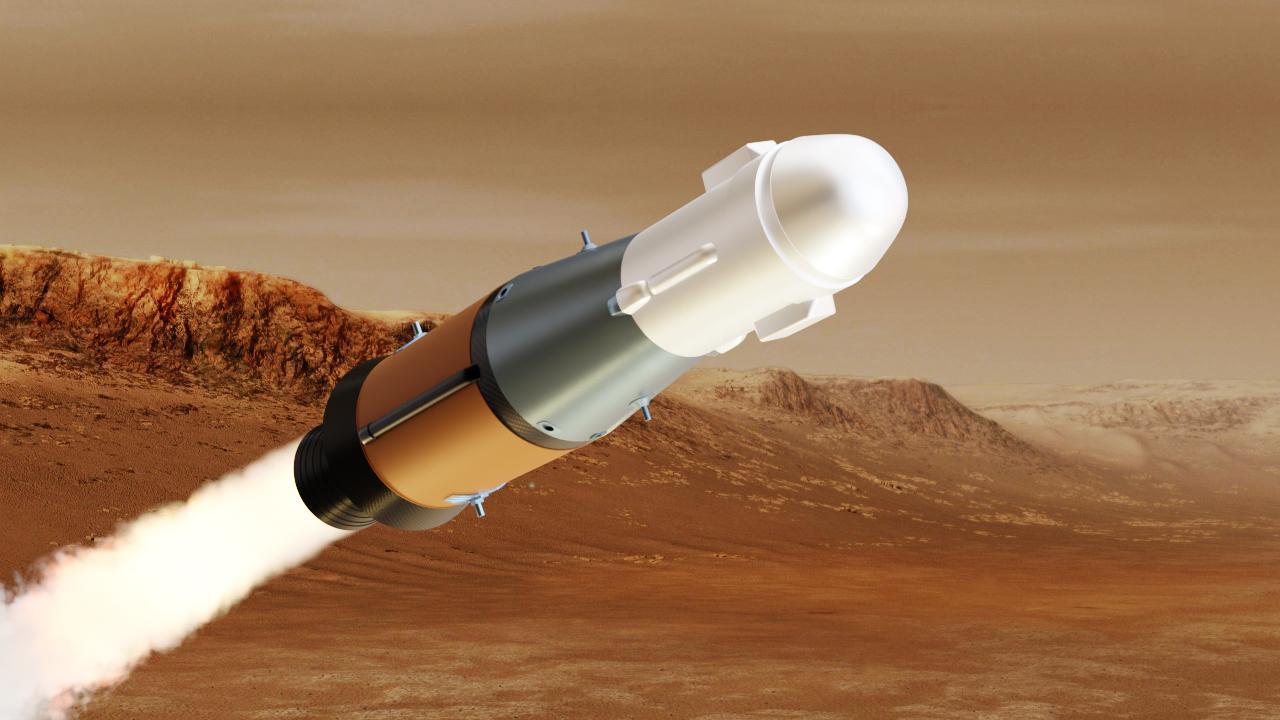
This illustration shows NASA's Mars Ascent Vehicle (MAV) in powered flight. The MAV will carry tubes containing Martian rock and soil samples into orbit around Mars, where ESA's Earth Return Orbiter spacecraft will enclose them in a highly secure containment capsule and deliver them to Earth. https://photojournal.jpl.nasa.gov/catalog/PIA25076
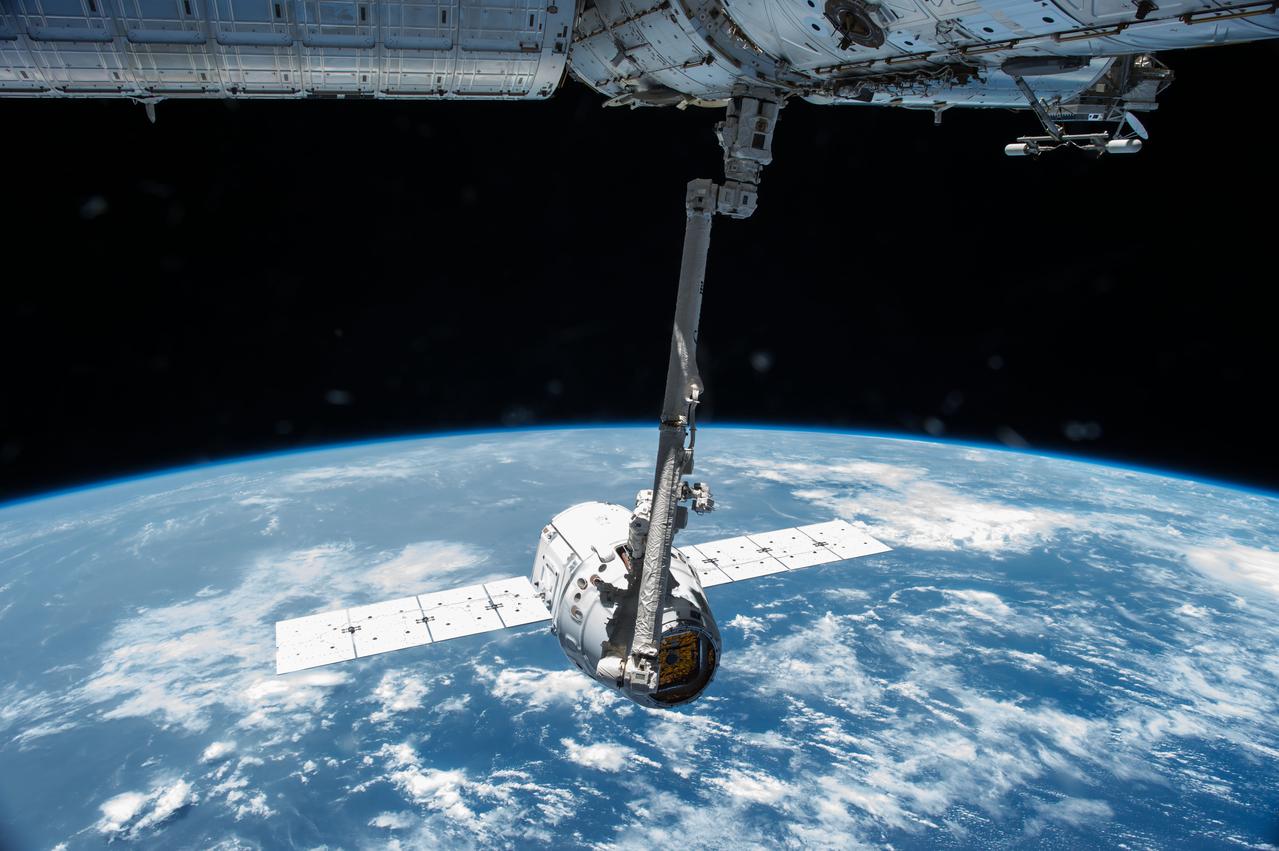
ISS043E124426 (04/17/2015) --- The Canadarm2 robotic arm grapples the SpaceX Dragon CRS-6 cargo spacecraft before attaching it to the International Space Station. Robotics officers at Mission Control Houston installed the vehicle to the Earth-facing port of the Harmony module. Emptied of its cargo Dragon is set to return to Earth on May 21.
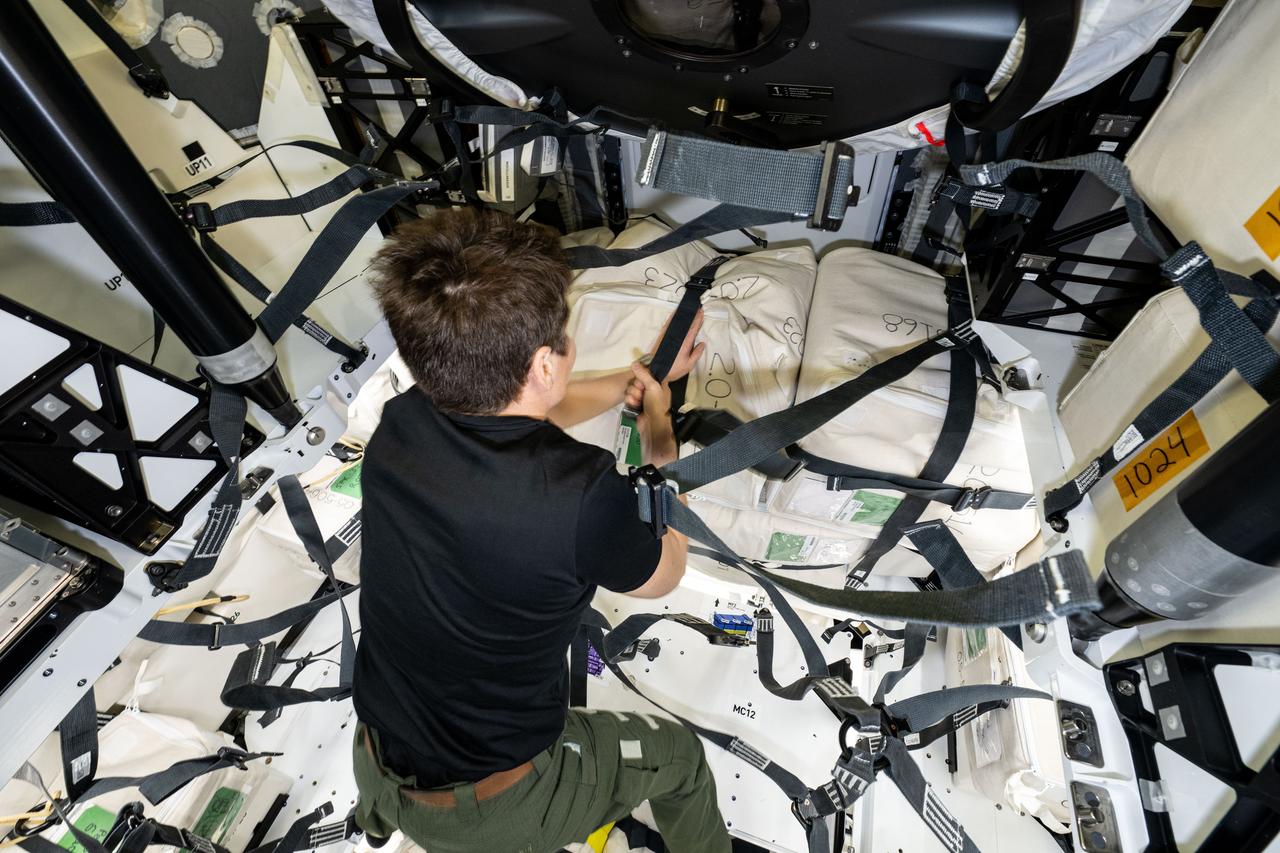
iss073e0032688 (May 16, 2025) --- NASA astronaut and Expedition 73 Flight Engineer Anne McClain works inside the SpaxeX Dragon spacecraft loading and securing cargo for the return to Earth scheduled for May 22, 2025.