Visitors to StenniSphere, the visitor center at NASA's Stennis Space Center, learn about the crew of Space Shuttle Discovery who will fly aboard NASA's Return to Flight mission, designated STS-114.
Visitors learn about Return to Flight at StenniSphere
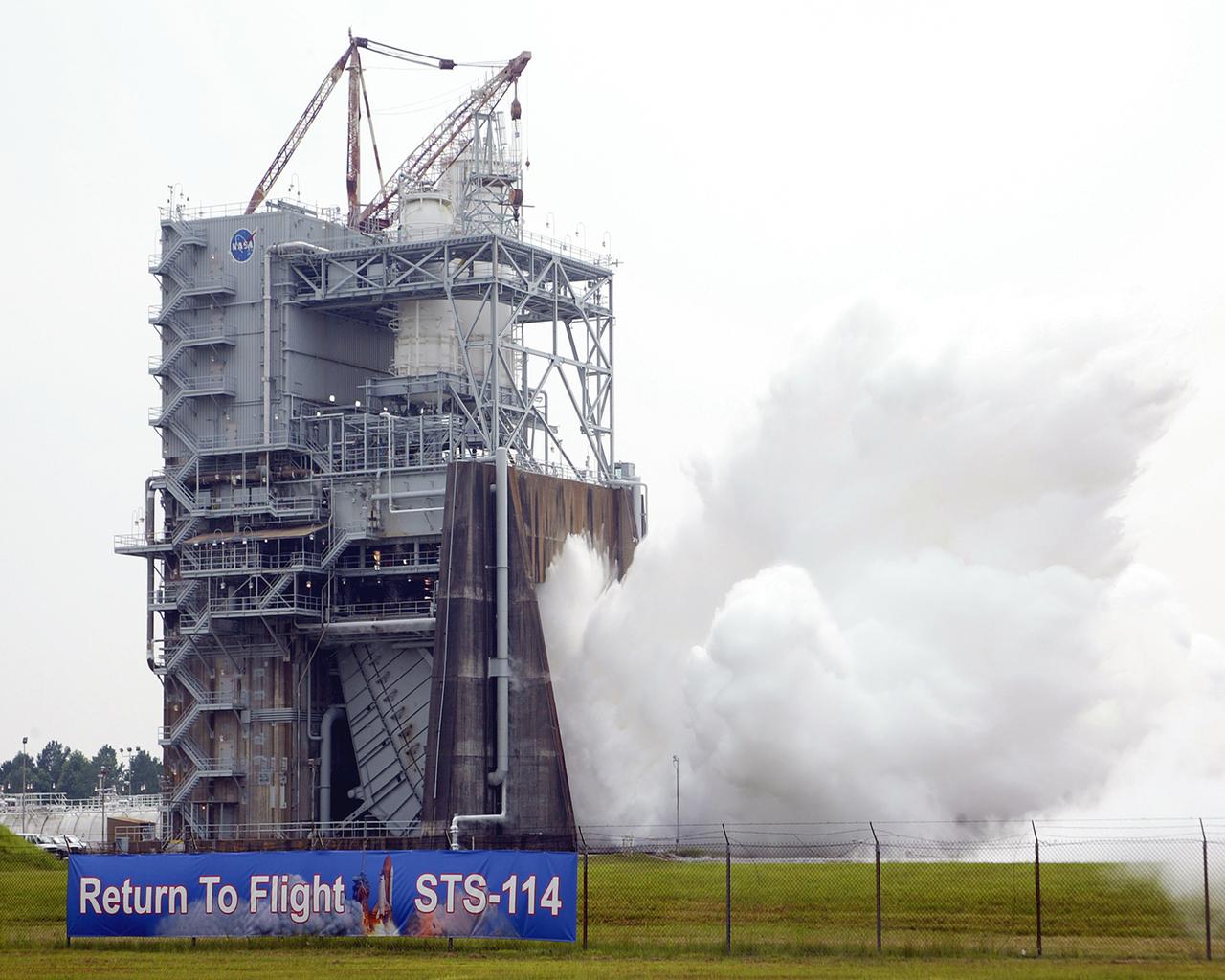
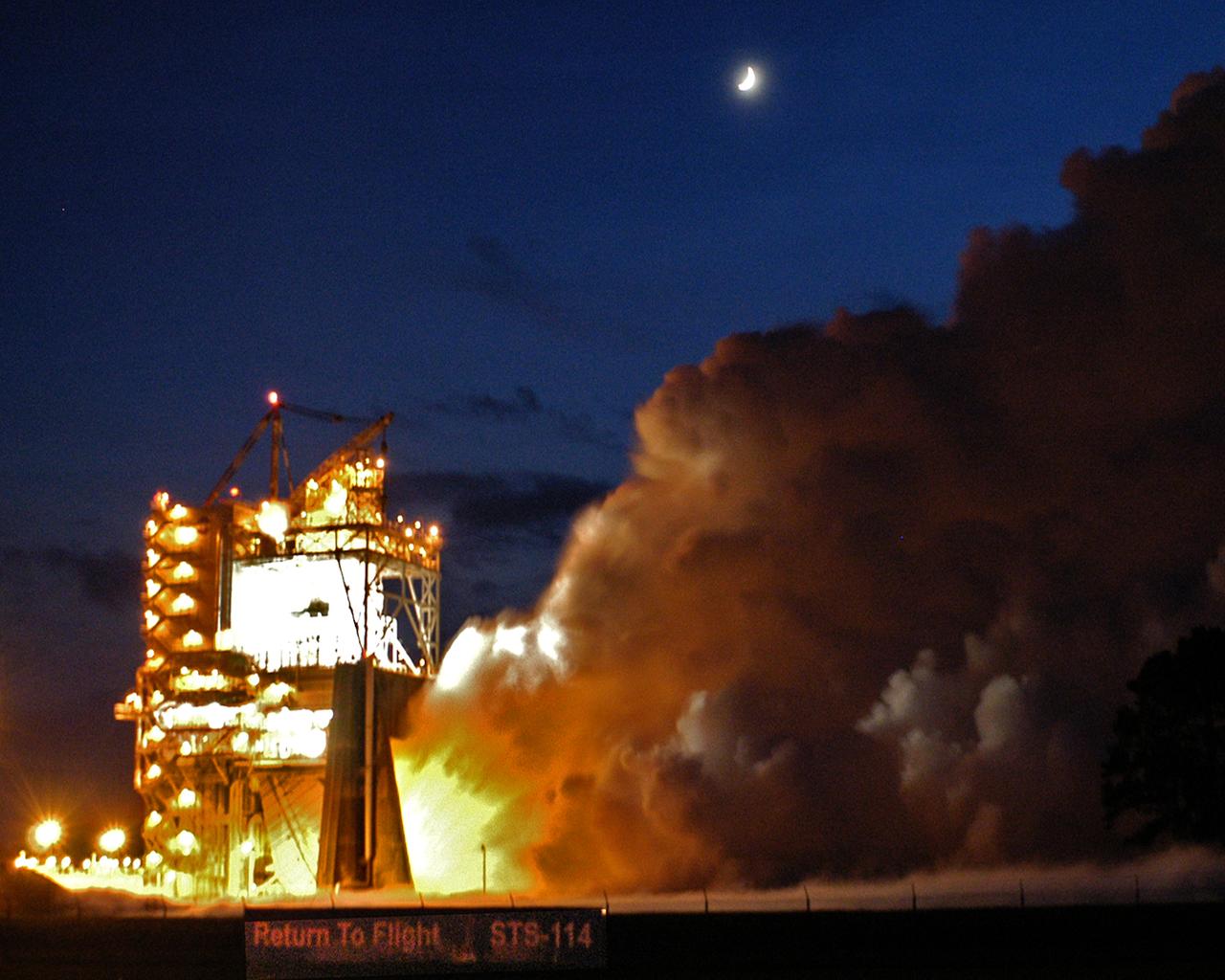
The Space Shuttle Main Engine (SSME) reached a historic milestone July 16, 2004, when a successful flight acceptance test was conducted at NASA Stennis Space Center (SSC). The engine tested today is the first complete engine to be tested and shipped in its entirety to Kennedy Space Center for installation on Space Shuttle Discovery for STS-114, NASA's Return to Flight mission. The engine test, which began about 3:59 p.m. CDT, ran for 520 seconds (8 minutes), the length of time it takes for the Space Shuttle to reach orbit.
Return to flight SSME test at A2 test stand
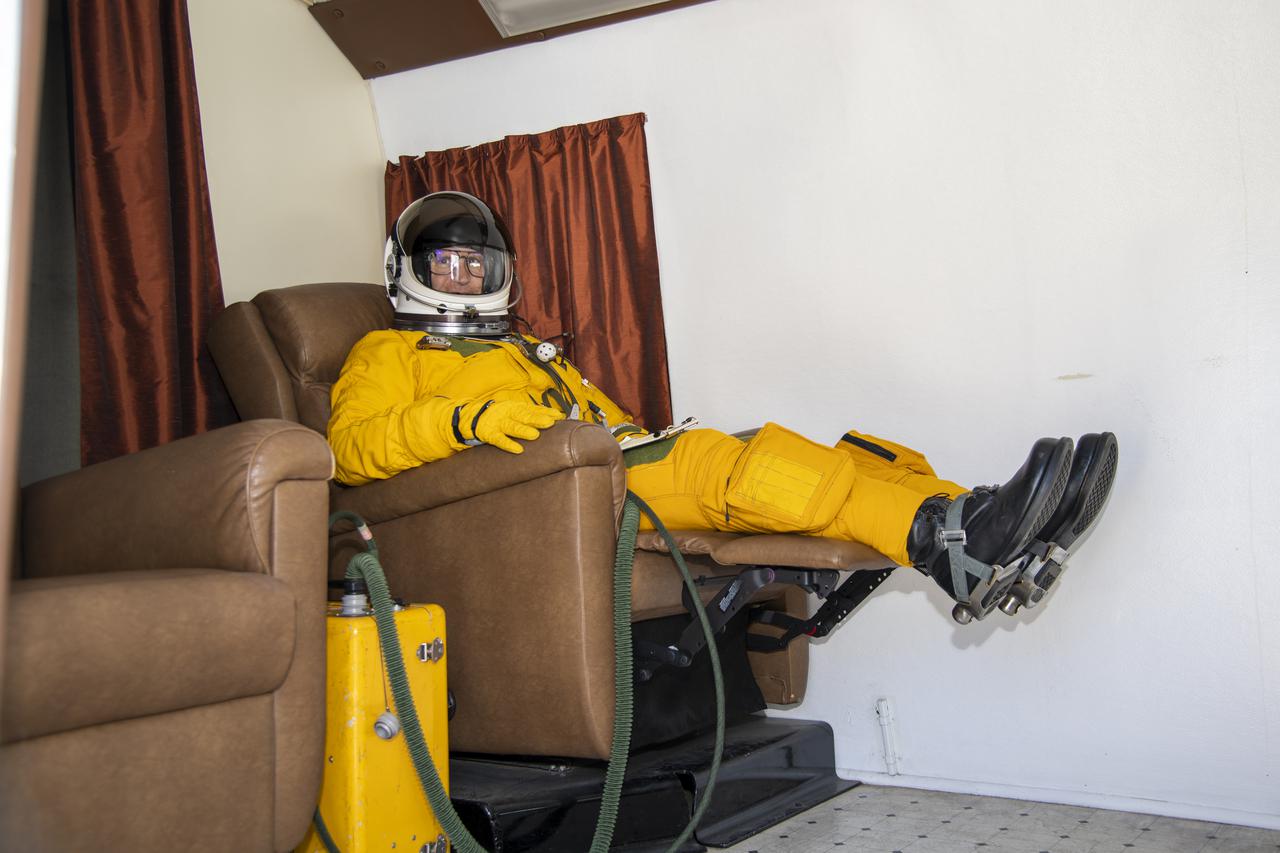
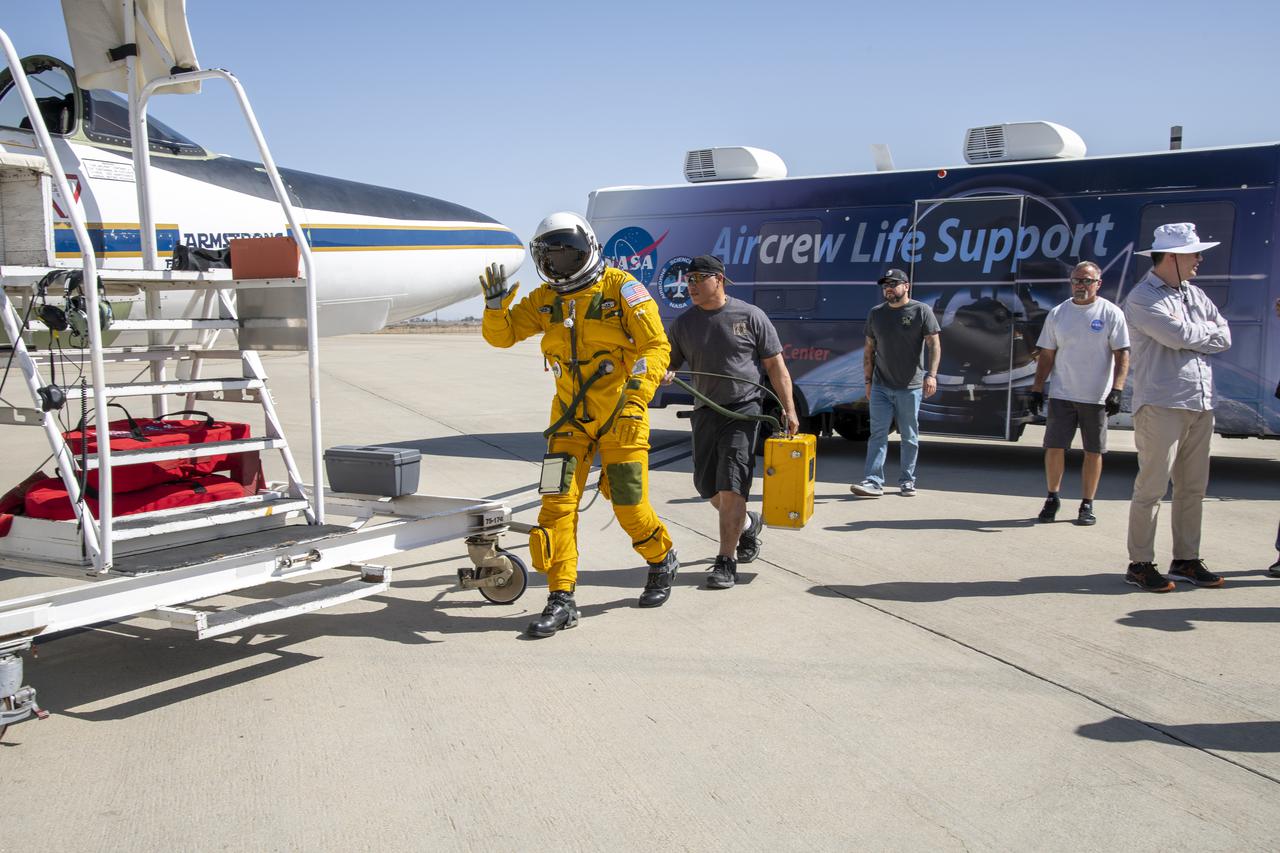
NASA pilot Greg “Coach” Nelson preparing for ER-2 No. 806 return to flight on April 7, 2022.
NASA’s ER-2 No.806 Returns to Flight
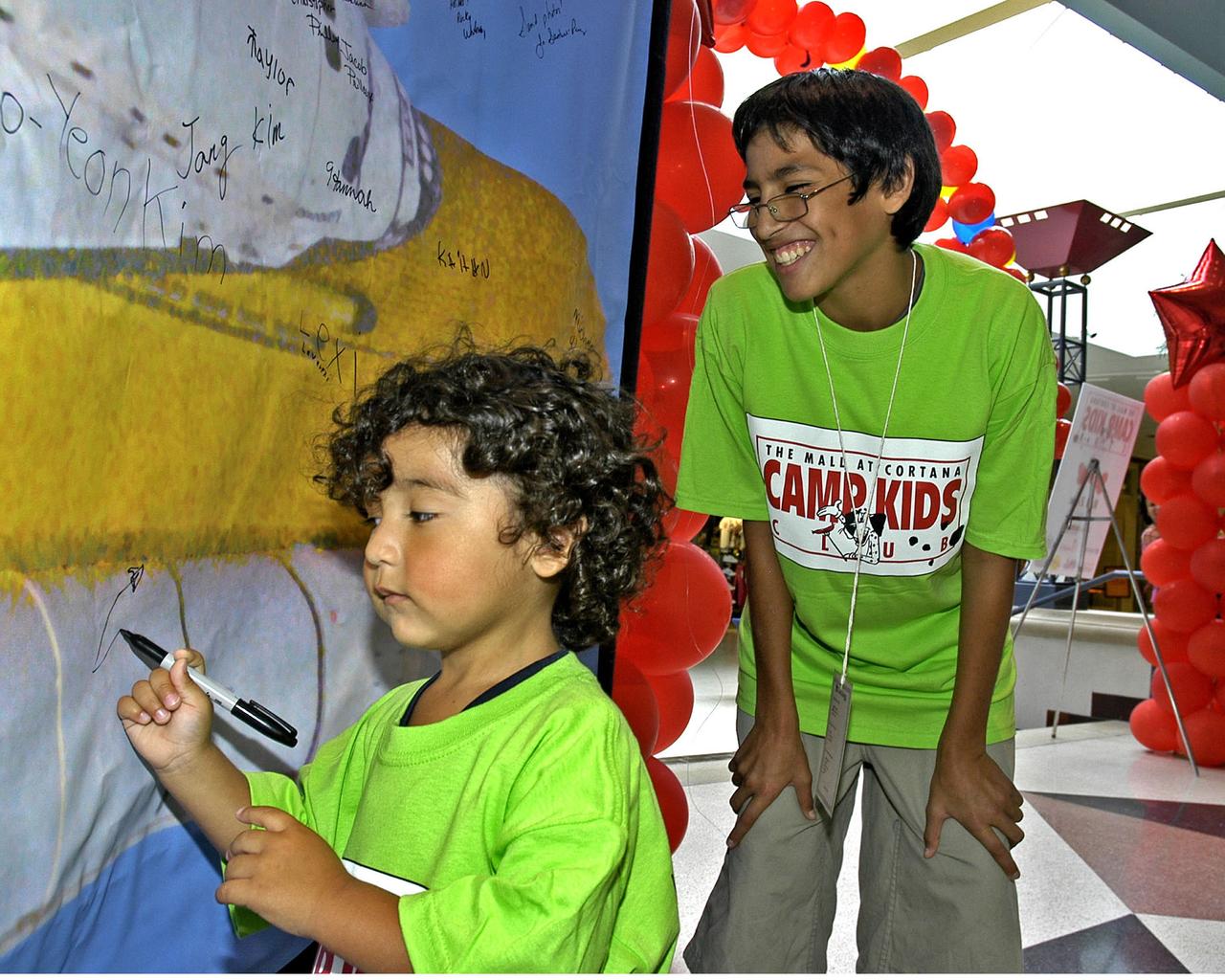
Christian Gonzales, 11 (right), watches as his little brother Walter, 2, adds his own brand of good wishes to a banner encouraging the crew of Space Shuttle Discovery on NASA's Return to Flight mission, scheduled to launch in summer 2005. The brothers, of Baton Rouge, were participating in a Camp Kids event at The Mall at Cortana, where Return to Flight activities were presented by NASA's Stennis Space Center (SSC).
Return to Flight activities at The Mall at Cortana
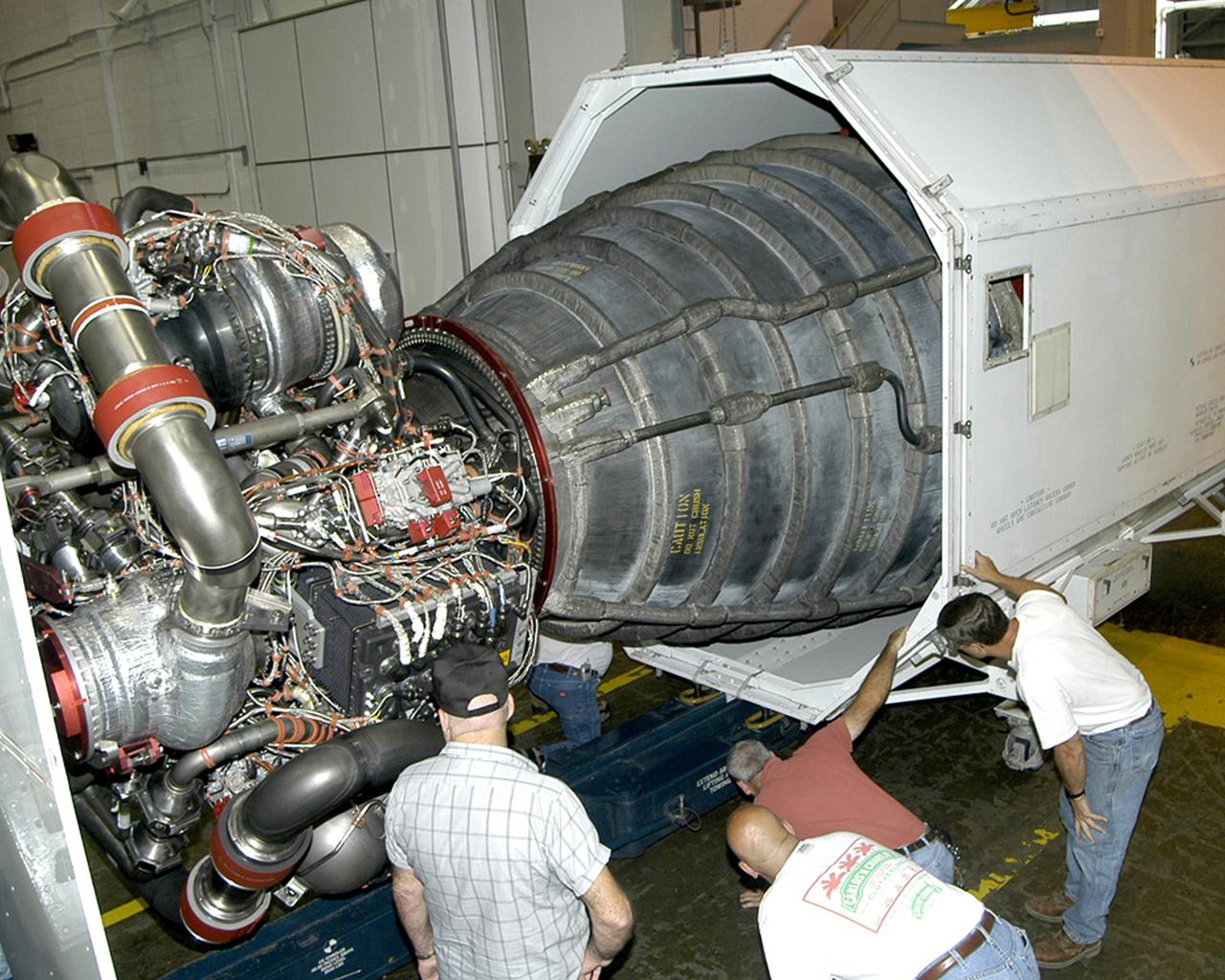
On Oct. 5, 2004, SSC shipped the last of the three Space Shuttle Main Engines to NASA's Kennedy Space Center for installation on Space Shuttle Discovery for STS-114, NASA's Return to Flight mission.
Return to Flight SSME loaded for shipping
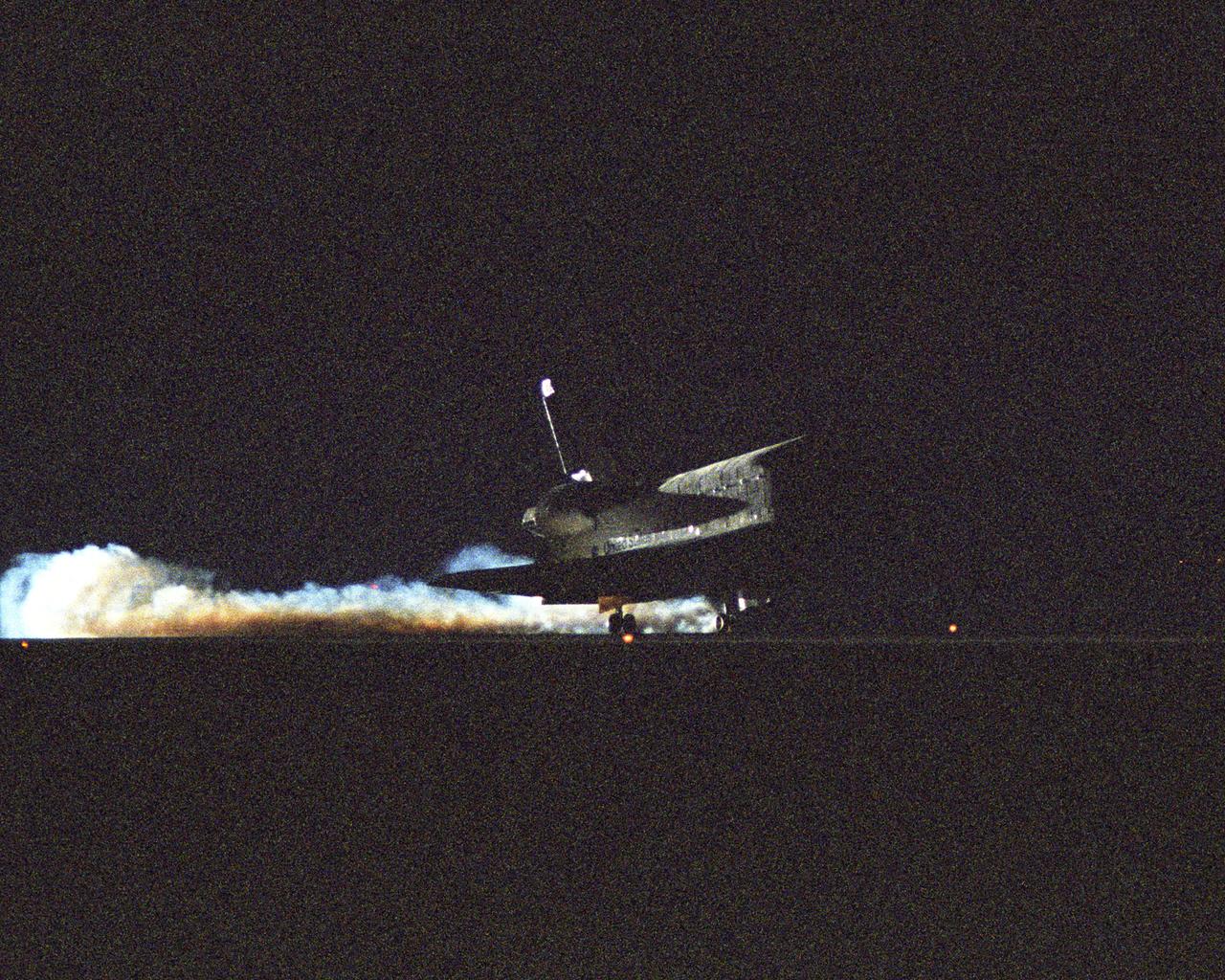
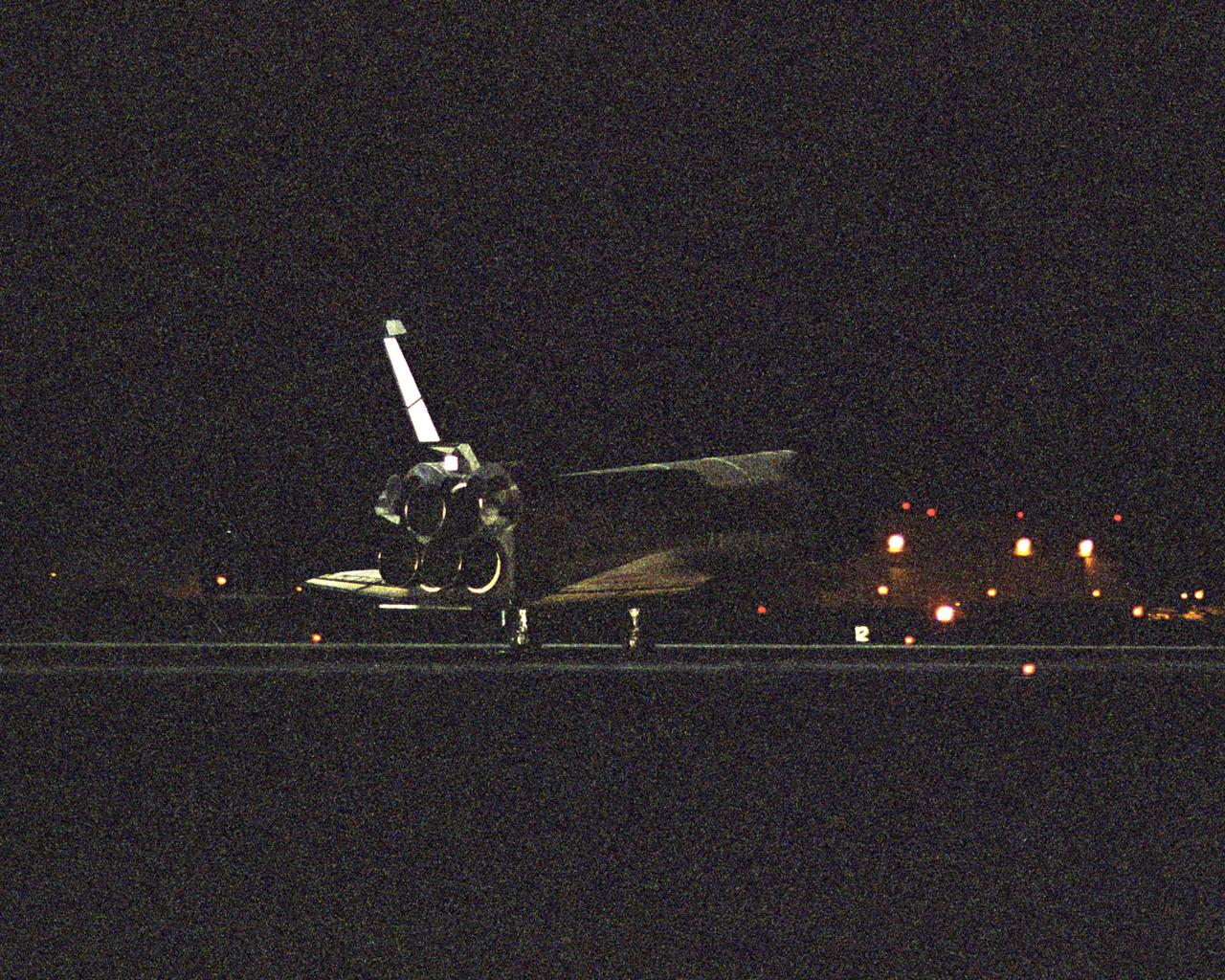
Space Shuttle Discovery landed safely at NASA's Dryden Flight Research Center at Edwards Air Force Base in Calif. at 5:11 a.m. this morning, following the very successful 14-day STS-114 return to flight mission.
Space Shuttle Discovery landed at NASA's Dryden Flight Research Center at 5:11 a.m., following the very successful 14-day STS-114 return to flight mission
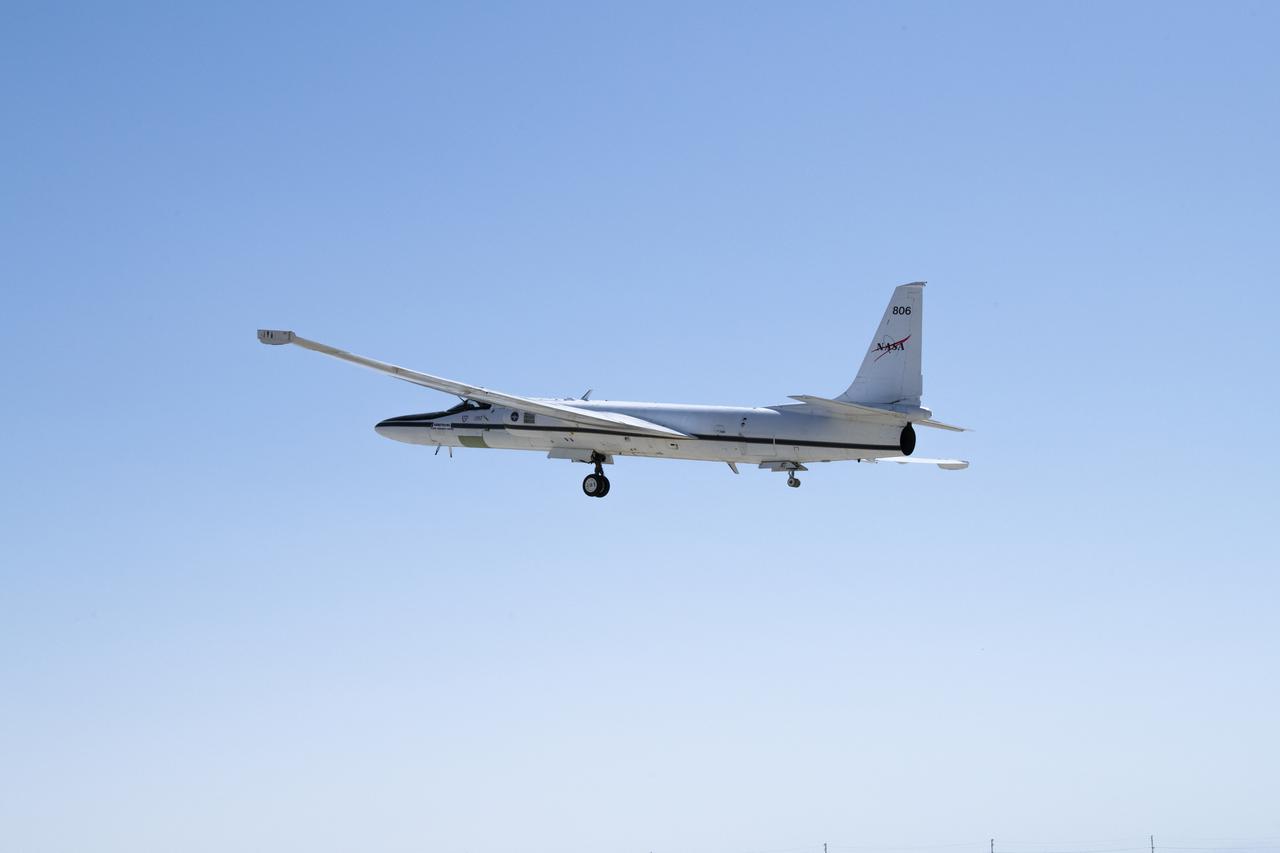
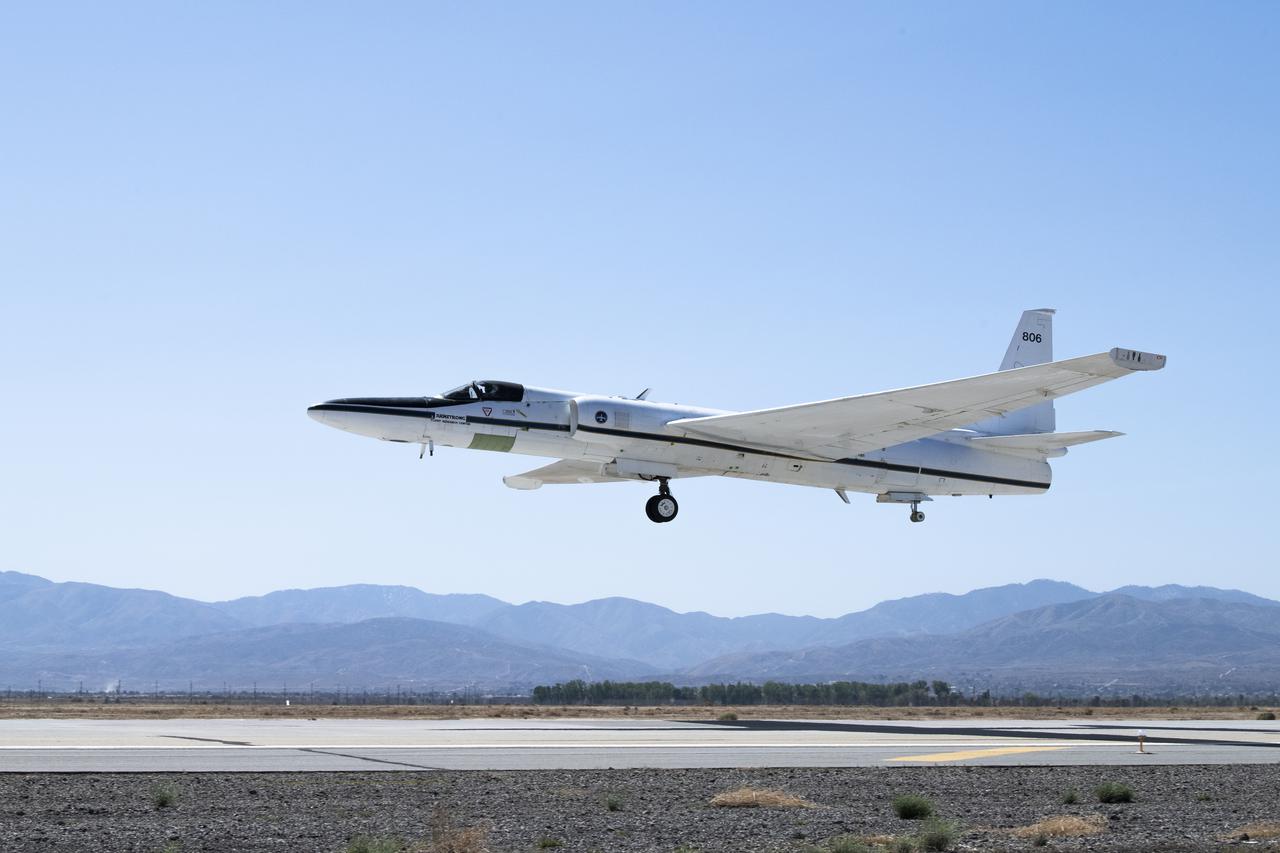
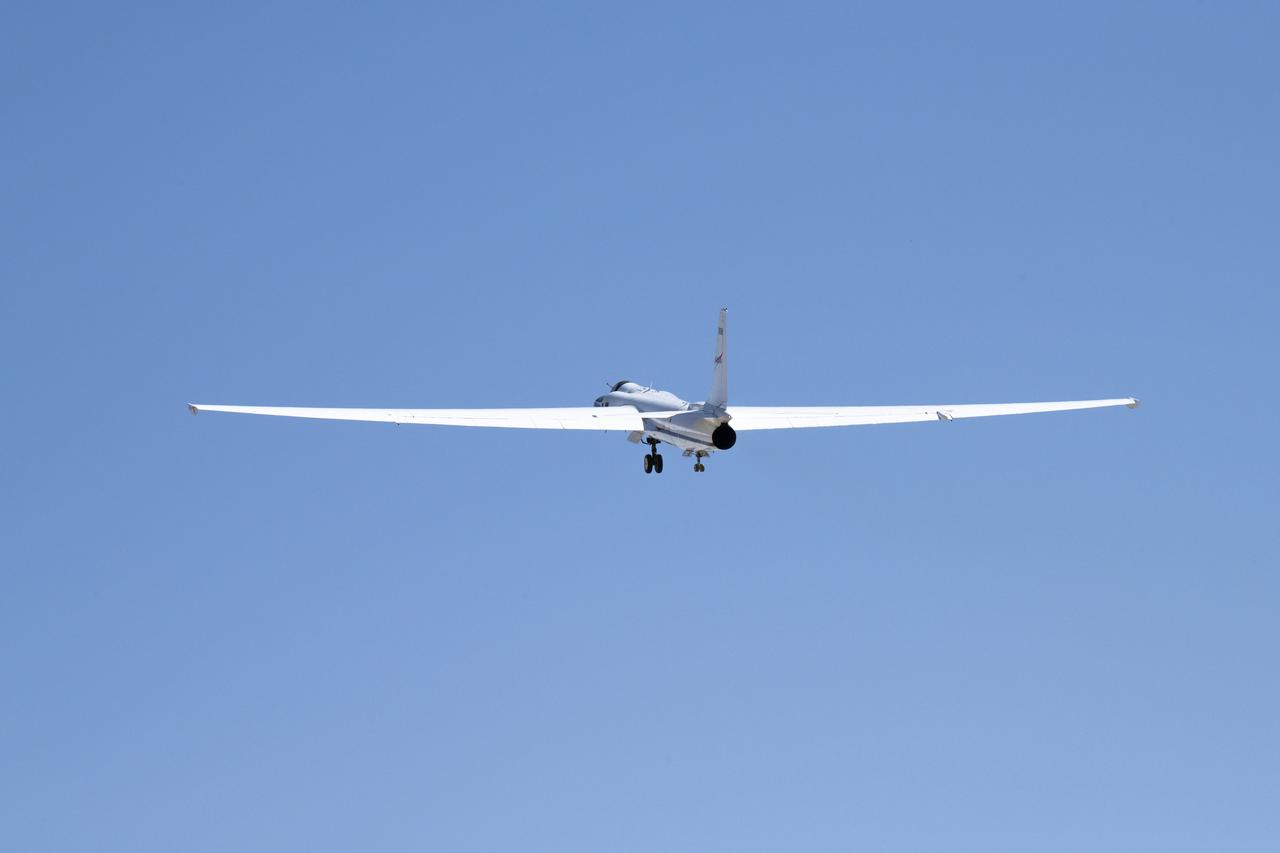
NASA’s ER-2 No. 806 returns to flying high-altitude on April 7, 2022, after three years of heavy maintenance. NASA Armstrong operates two ER-2 aircraft to collect information about Earth resources, celestial observations, atmospheric chemistry and dynamics, and oceanic processes.
NASA’s ER-2 No.806 Returns to Flight
NASA’s ER-2 No. 806 returns to flying high-altitude on April 7, 2022, after three years of heavy maintenance. NASA Armstrong operates two ER-2 aircraft to collect information about Earth resources, celestial observations, atmospheric chemistry and dynamics, and oceanic processes.
NASA’s ER-2 No.806 Returns to Flight
NASA's ER-2 No. 806 returns to flying high-altitude on April 7, 2022, after three years of heavy maintenance. NASA Armstrong operates two ER-2 aircraft to collect information about Earth resources, celestial observations, atmospheric chemistry and dynamics, and oceanic processes.
NASA's ER-2 No.806 Returns to Flight
NASA pilot Greg "Coach" Nelson prepared for flight on the ER-2 by air crew life support at Armstrong Flight Research Center on April 7, 2022.
NASA's ER-2 No.806 Returns to Flight
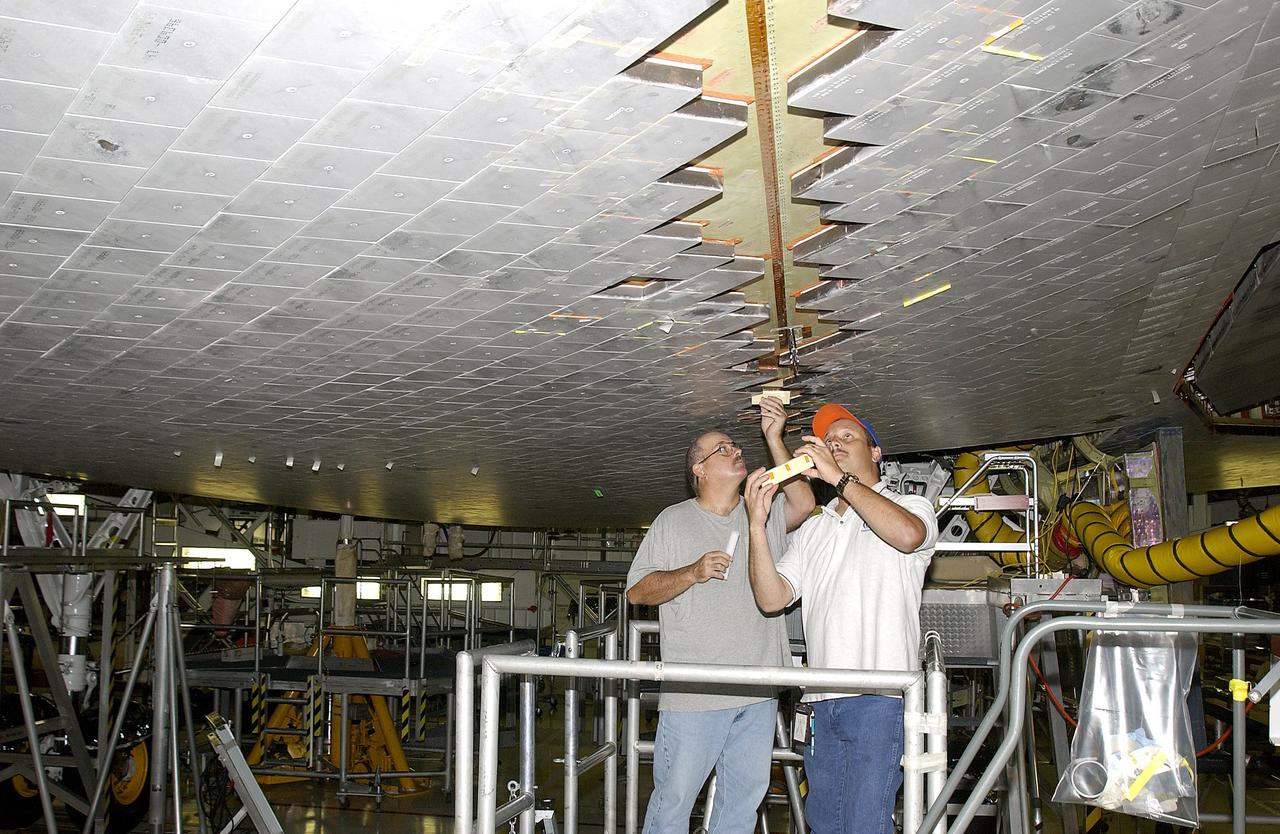
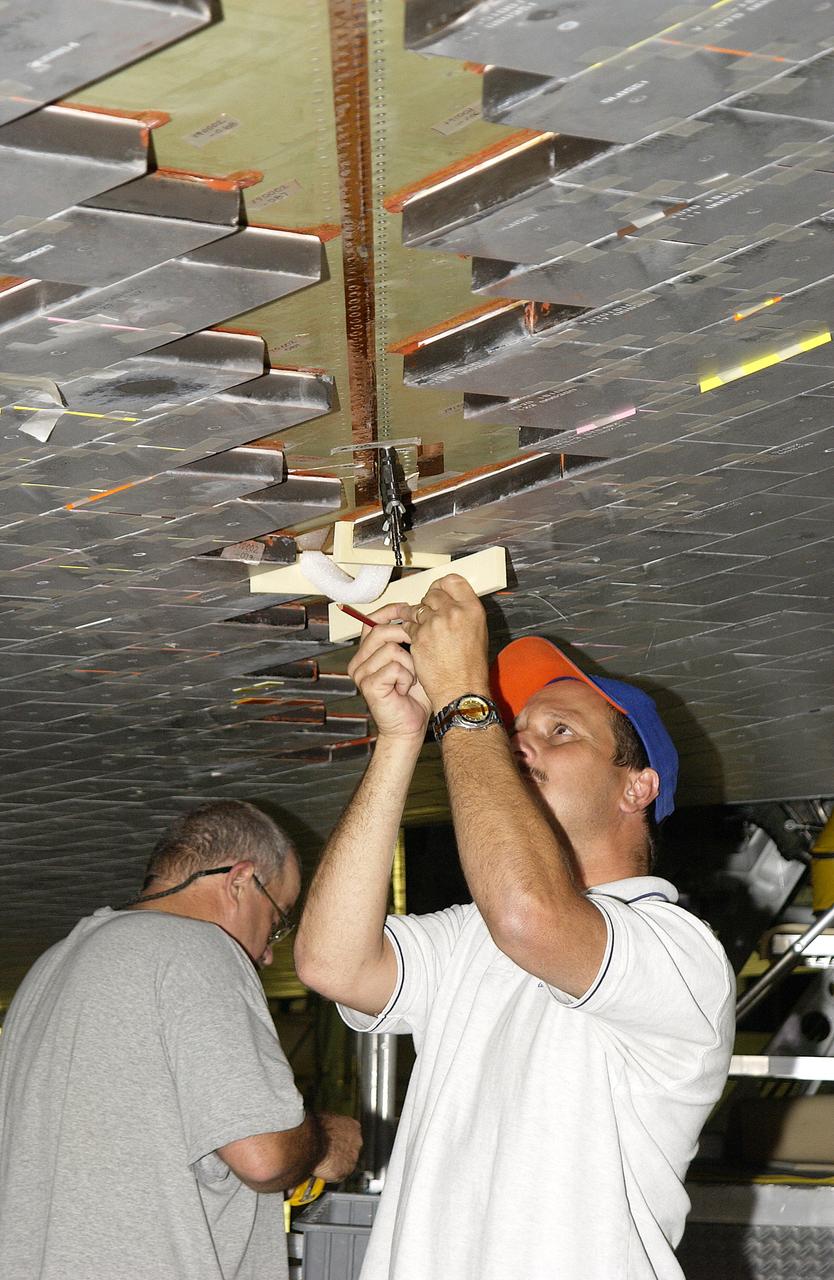
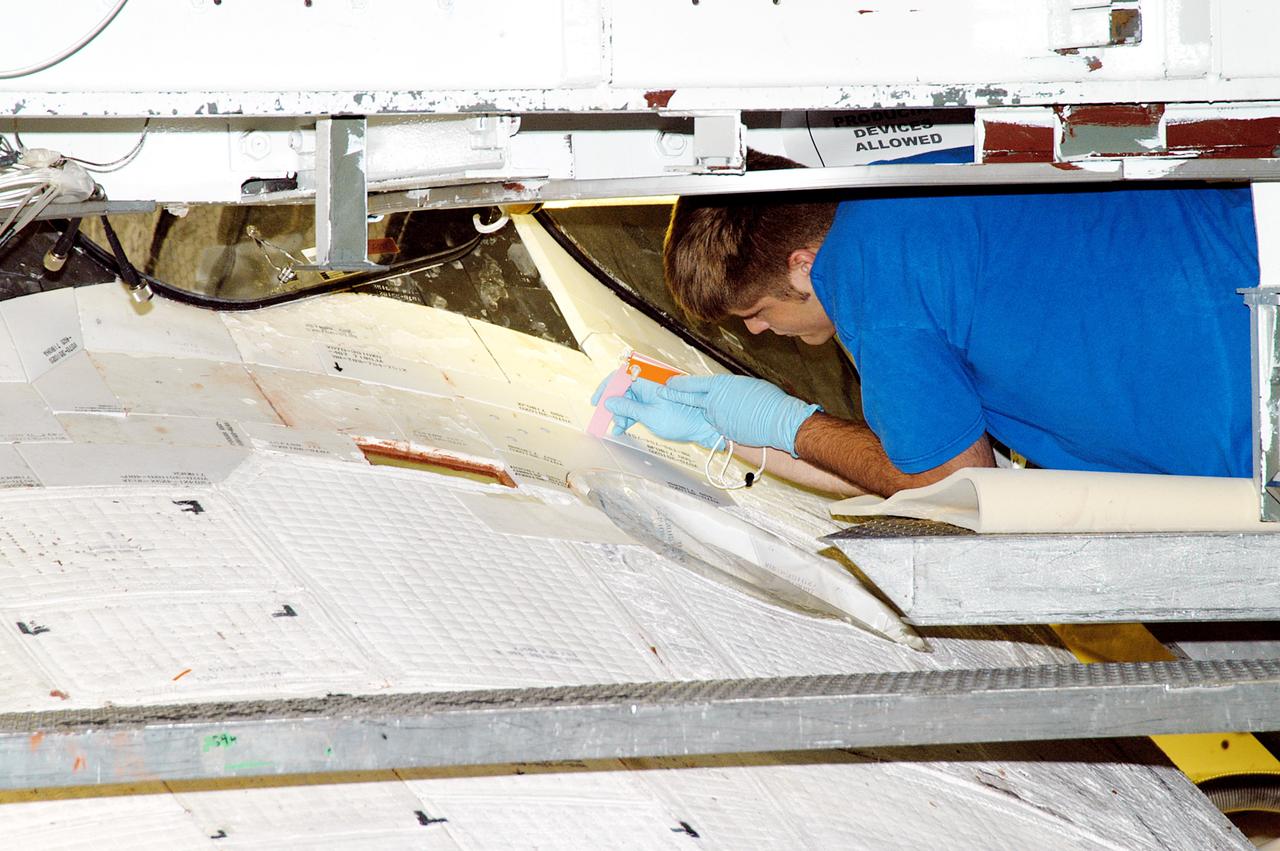
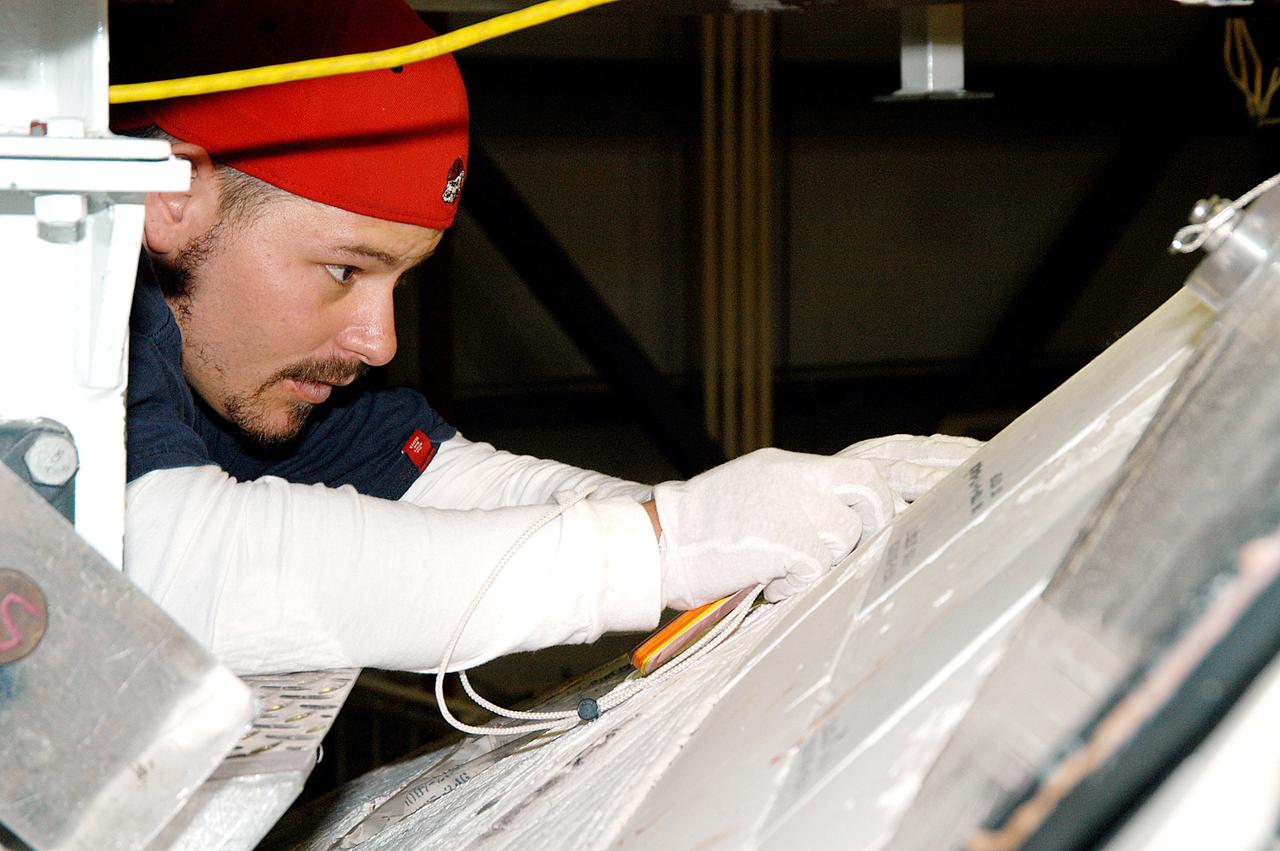
In the Orbiter Processing Facility, David Sanborn and Rick Cady, with United Space Alliance, check tiles on the underside of Endeavour. Tile check is part of routine maintenance and return to flight activities on the orbiter fleet.
Endeavour Return to Flight Maintenance
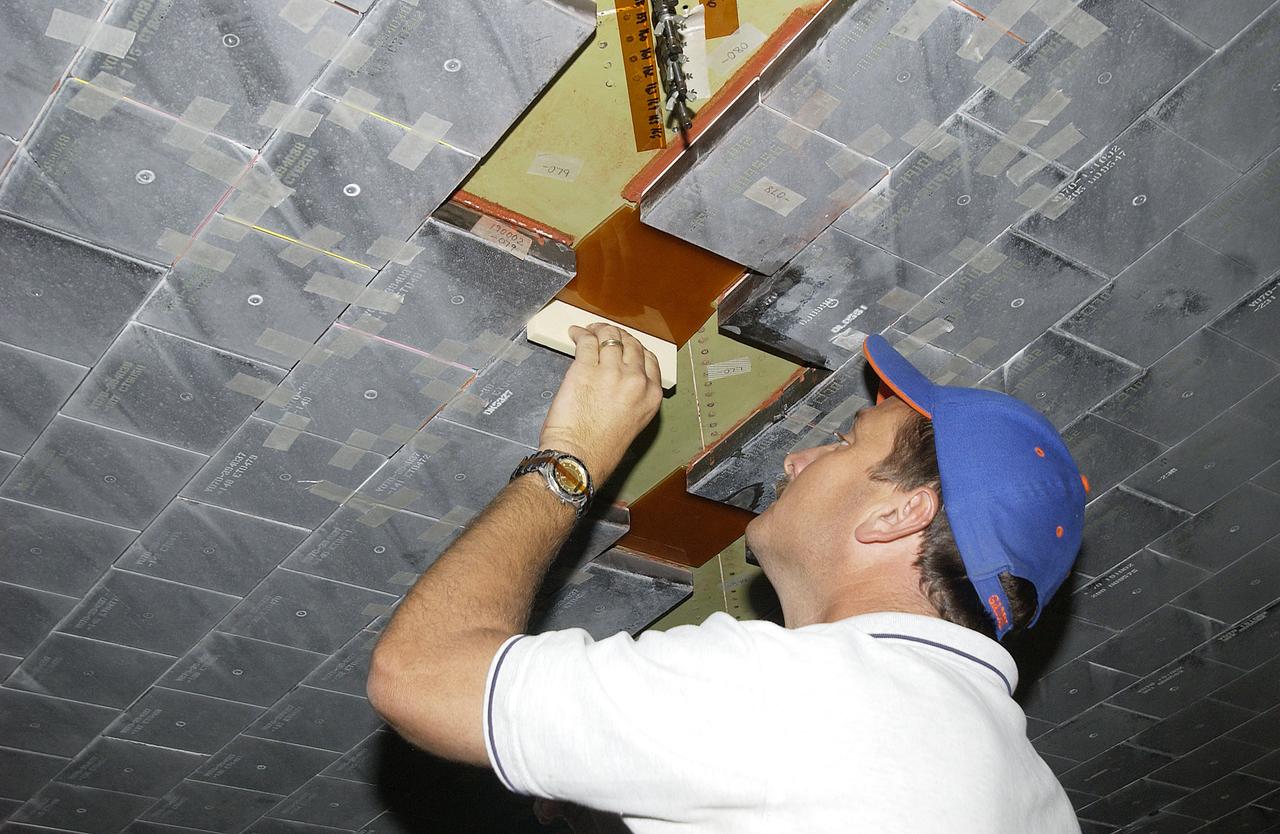
In the Orbiter Processing Facility, Rick Cady, with United Space Alliance, removes a tile from Endeavour. Tile check is part of routine maintenance and return to flight activities on the orbiter fleet.
Endeavour Return to Flight Maintenance
In the Orbiter Processing Facility, David Sanborn and Rick Cady, with United Space Alliance, check tiles on the underside of Endeavour. Tile check is part of routine maintenance and return to flight activities on the orbiter fleet.
Endeavour Return to Flight Maintenance
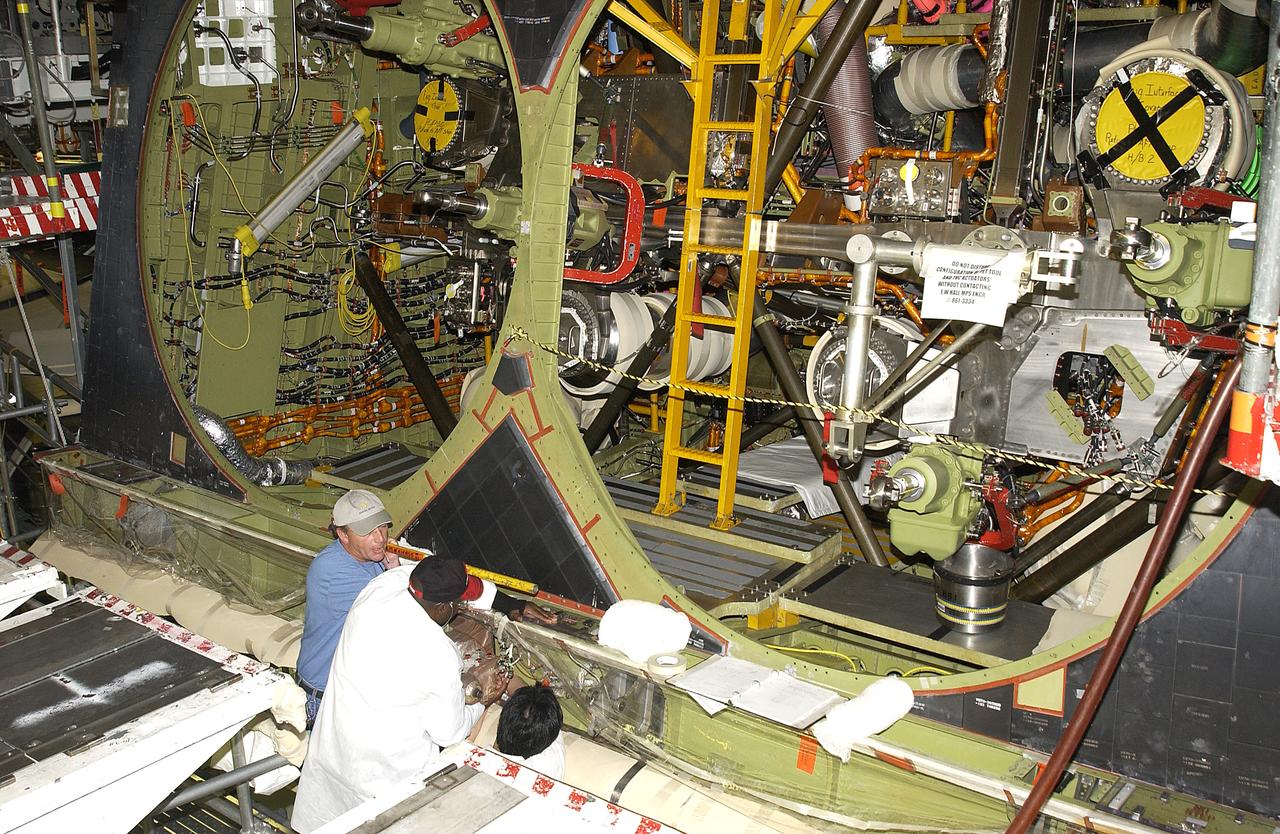
In the Orbiter Processing Facility, Tim Chastain (left) and John Peterson (right), with United Space Alliance, prepare to remove the body flap actuator from the orbiter Endeavour. The work is part of return to flight activities on the orbiter fleet.
Endeavour Return to Flight Maintenance
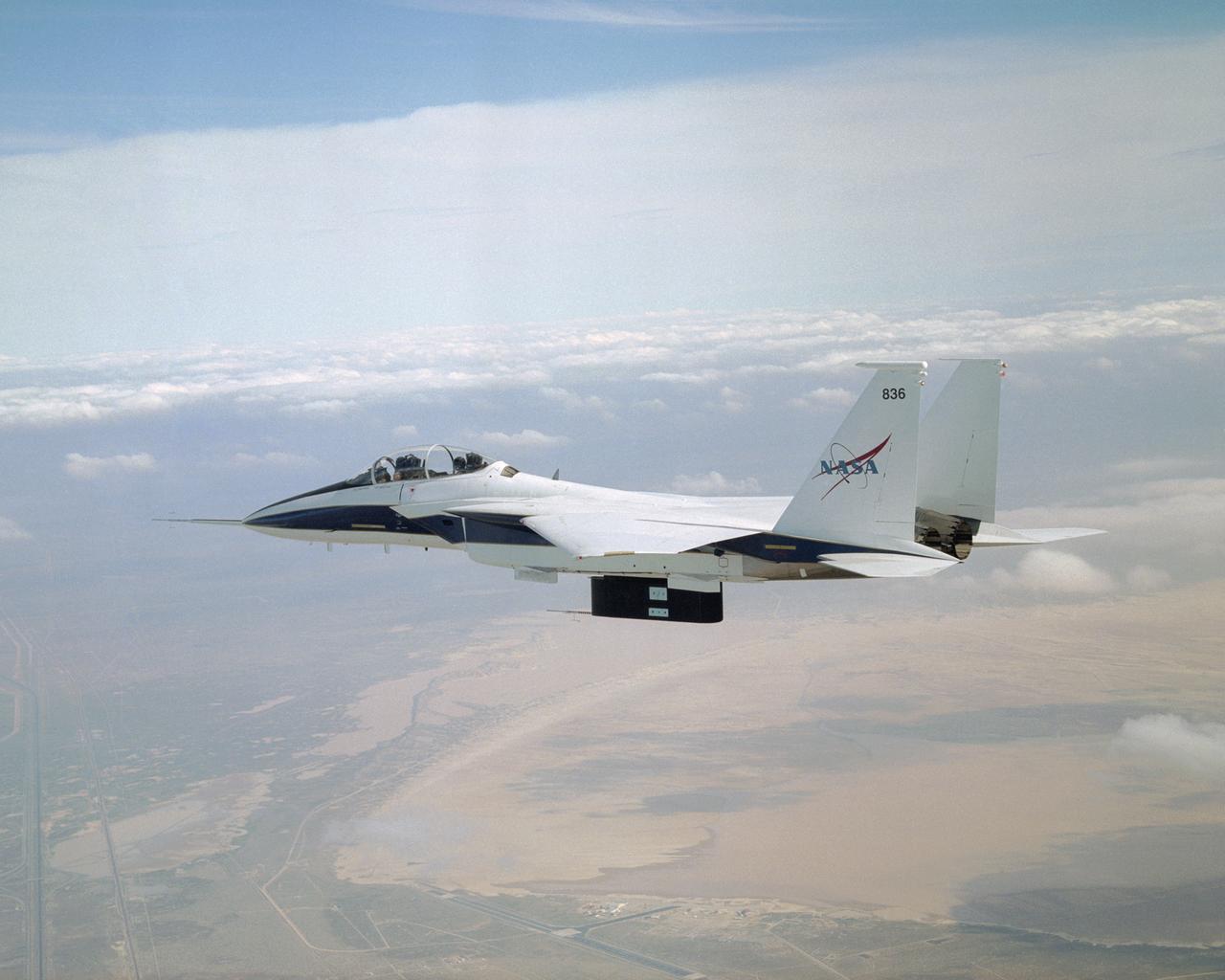
All six divots of thermal insulation foam have been ejected from the flight test fixture on NASA's F-15B testbed as it returns from a LIFT experiment flight.
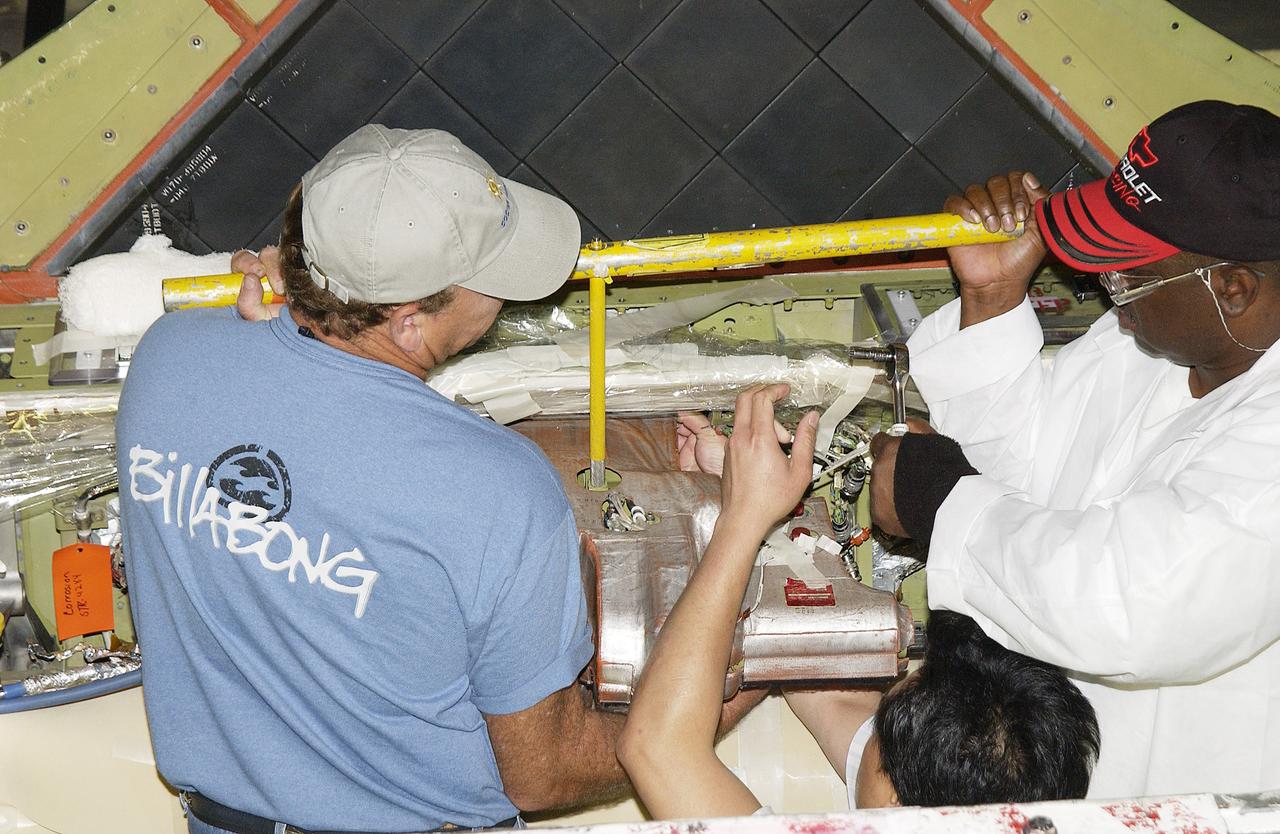
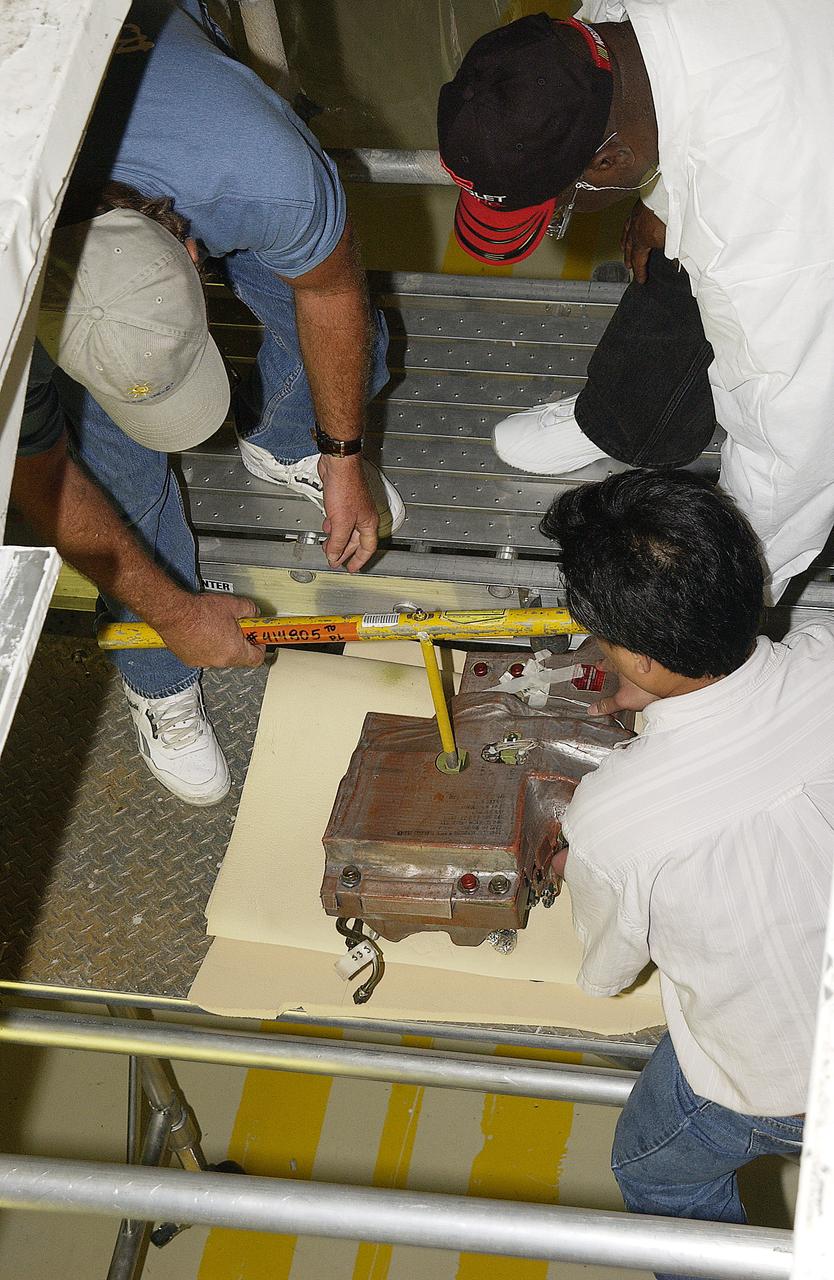
In the Orbiter Processing Facility, (from left) Tim Chastain, Sang Huynh and John Peterson, with United Space Alliance, work at removing the body flap actuator from the orbiter Endeavour. The work is part of return to flight activities on the orbiter fleet.
Endeavour Return to Flight Maintenance
(Clockwise from left), in the Orbiter Processing Facility, Tim Chastain, John Peterson and Sang Huynh, with United Space Alliance, work at removing the body flap actuator from the orbiter Endeavour. The work is part of return to flight activities on the orbiter fleet.
Endeavour Return to Flight Maintenance
Space Shuttle Discovery landed safely at NASA's Dryden Flight Research Center at Edwards Air Force Base in Calif. at 5:11:22 a.m. PDT this morning, following the very successful 14-day STS-114 return to flight mission. During their two weeks in space, Commander Eileen Collins and her six crewmates tested out new safety procedures and delivered supplies and equipment the International Space Station.  Discovery spent two weeks in space, where the crew demonstrated new methods to inspect and repair the Shuttle in orbit. The crew also delivered supplies, outfitted and performed maintenance on the International Space Station. A number of these tasks were conducted during three spacewalks.  In an unprecedented event, spacewalkers were called upon to remove protruding gap fillers from the heat shield on Discovery's underbelly. In other spacewalk activities, astronauts installed an external platform onto the Station's Quest Airlock and replaced one of the orbital outpost's Control Moment Gyroscopes.  Inside the Station, the STS-114 crew conducted joint operations with the Expedition 11 crew. They unloaded fresh supplies from the Shuttle and the Raffaello Multi-Purpose Logistics Module. Before Discovery undocked, the crews filled Raffeallo with unneeded items and returned to Shuttle payload bay.  Discovery launched on July 26 and spent almost 14 days on orbit.
Space Shuttle Discovery landed at NASA's Dryden Flight Research Center at 5:11 a.m., following the very successful 14-day STS-114 return to flight mission
Space Shuttle Discovery landed safely at NASA's Dryden Flight Research Center at Edwards Air Force Base in Calif. at 5:11:22 a.m. PDT this morning, following the very successful 14-day STS-114 return to flight mission. During their two weeks in space, Commander Eileen Collins and her six crewmates tested out new safety procedures and delivered supplies and equipment the International Space Station.  Discovery spent two weeks in space, where the crew demonstrated new methods to inspect and repair the Shuttle in orbit. The crew also delivered supplies, outfitted and performed maintenance on the International Space Station. A number of these tasks were conducted during three spacewalks.  In an unprecedented event, spacewalkers were called upon to remove protruding gap fillers from the heat shield on Discovery's underbelly. In other spacewalk activities, astronauts installed an external platform onto the Station's Quest Airlock and replaced one of the orbital outpost's Control Moment Gyroscopes.  Inside the Station, the STS-114 crew conducted joint operations with the Expedition 11 crew. They unloaded fresh supplies from the Shuttle and the Raffaello Multi-Purpose Logistics Module. Before Discovery undocked, the crews filled Raffeallo with unneeded items and returned to Shuttle payload bay.  Discovery launched on July 26 and spent almost 14 days on orbit.
Space Shuttle Discovery landed at NASA's Dryden Flight Research Center at 5:11 a.m., following the very successful 14-day STS-114 return to flight mission
Space Shuttle Discovery landed safely at NASA's Dryden Flight Research Center at Edwards Air Force Base in Calif. at 5:11:22 a.m. PDT this morning, following the very successful 14-day STS-114 return to flight mission. During their two weeks in space, Commander Eileen Collins and her six crewmates tested out new safety procedures and delivered supplies and equipment the International Space Station.  Discovery spent two weeks in space, where the crew demonstrated new methods to inspect and repair the Shuttle in orbit. The crew also delivered supplies, outfitted and performed maintenance on the International Space Station. A number of these tasks were conducted during three spacewalks.  In an unprecedented event, spacewalkers were called upon to remove protruding gap fillers from the heat shield on Discovery's underbelly. In other spacewalk activities, astronauts installed an external platform onto the Station's Quest Airlock and replaced one of the orbital outpost's Control Moment Gyroscopes.  Inside the Station, the STS-114 crew conducted joint operations with the Expedition 11 crew. They unloaded fresh supplies from the Shuttle and the Raffaello Multi-Purpose Logistics Module. Before Discovery undocked, the crews filled Raffeallo with unneeded items and returned to Shuttle payload bay.  Discovery launched on July 26 and spent almost 14 days on orbit.
Space Shuttle Discovery landed at NASA's Dryden Flight Research Center at 5:11 a.m., following the very successful 14-day STS-114 return to flight mission
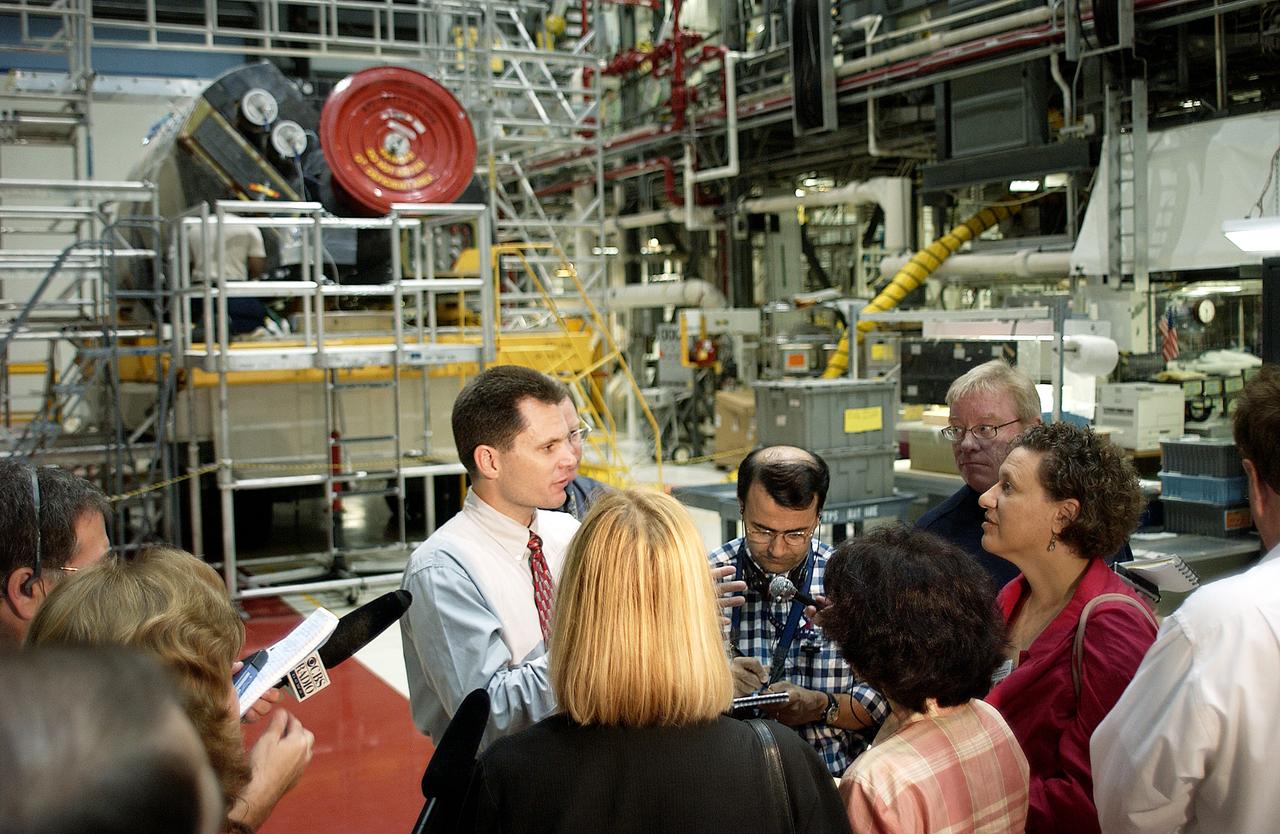
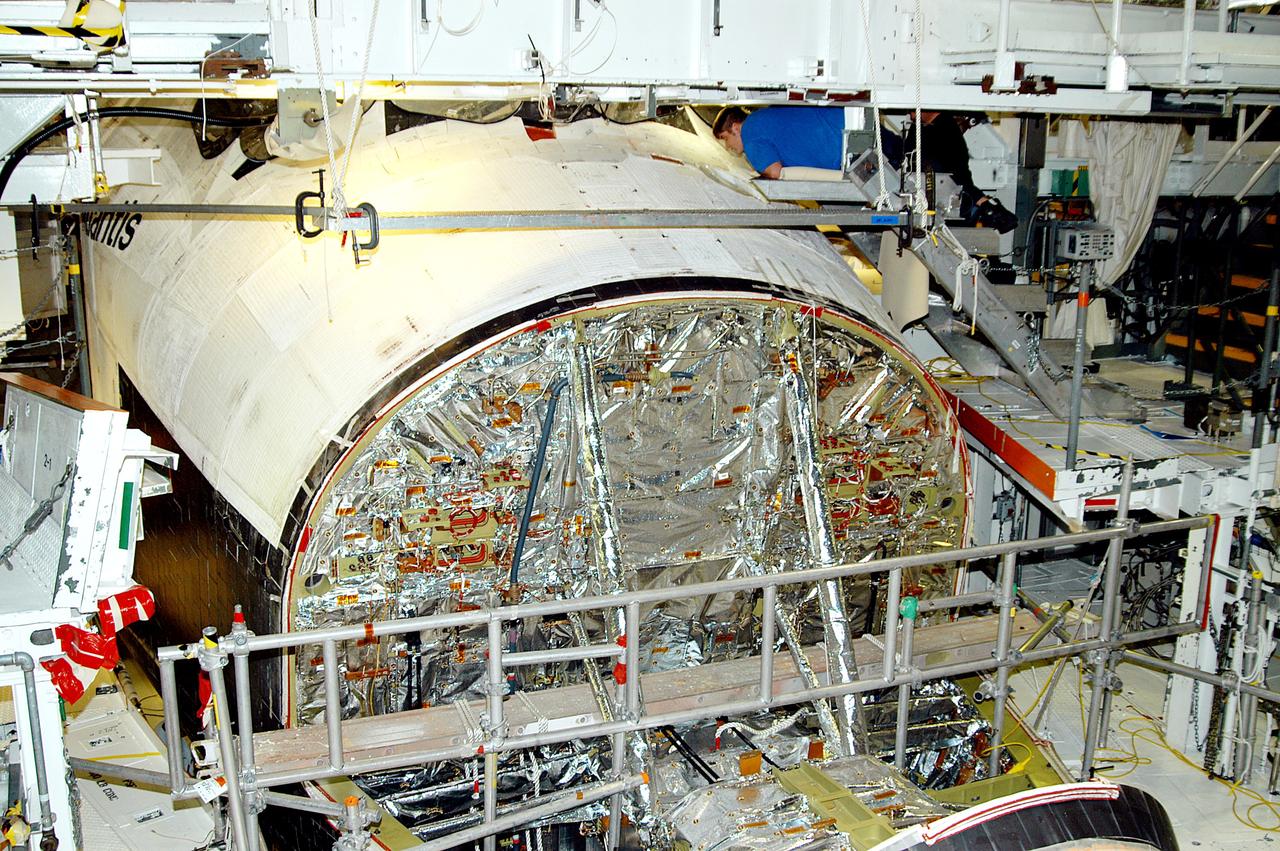
The media gather around NASA Vehicle Manager Scott Thurston (white shirt, center) who talks about some of the work being done on the orbiter Atlantis as it is being prepared for Return to Flight in the Orbiter Processing Facility. Both local and national reporters representing print and TV networks were able to see work in progress on Atlantis, including the reinstallation of the Reinforced Carbon-Carbon panels on the orbiter’s wing leading edge; wiring inspections; and checks of the engines in the Orbital Maneuvering System.
Atlantis Prepared for Return to Flight
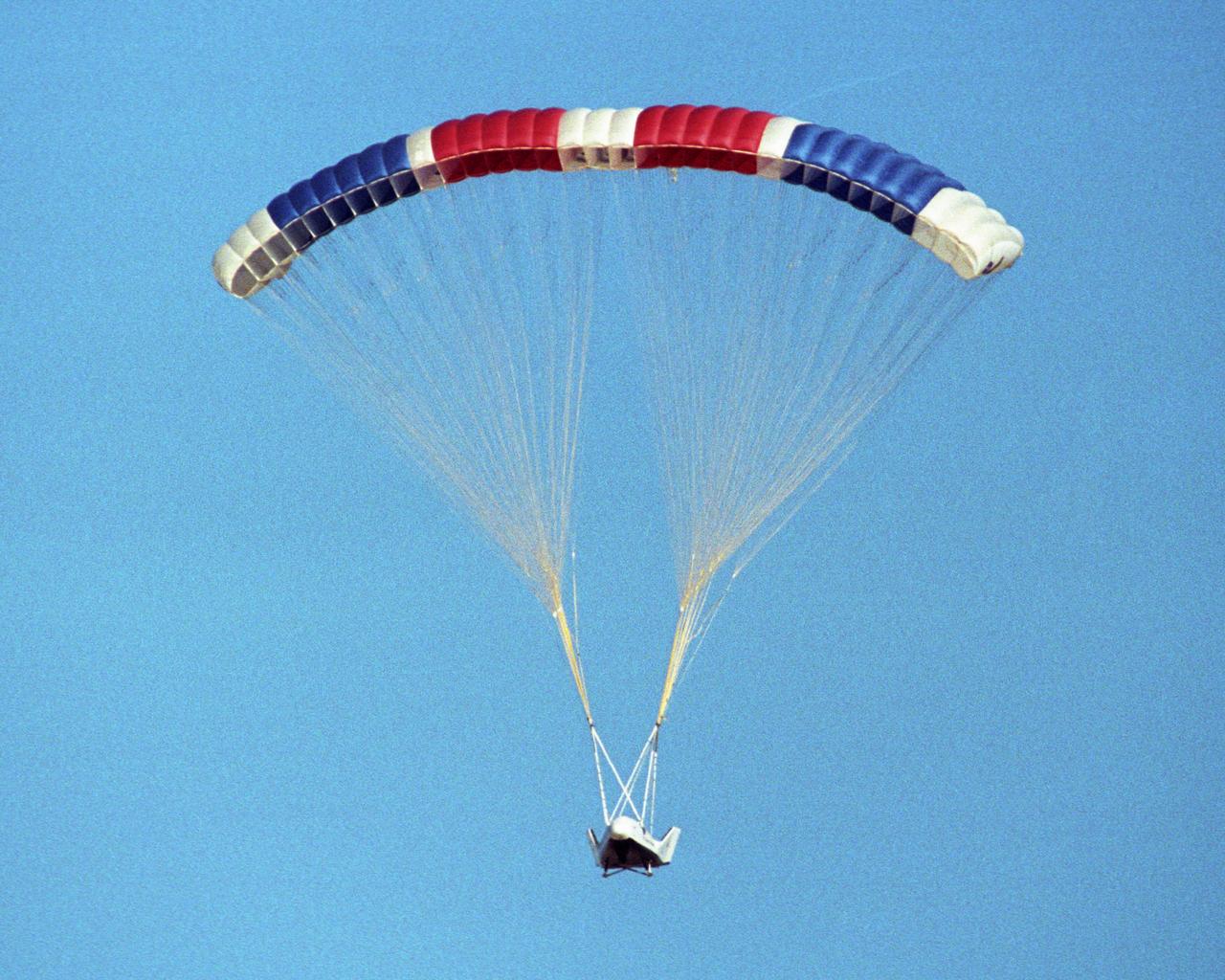
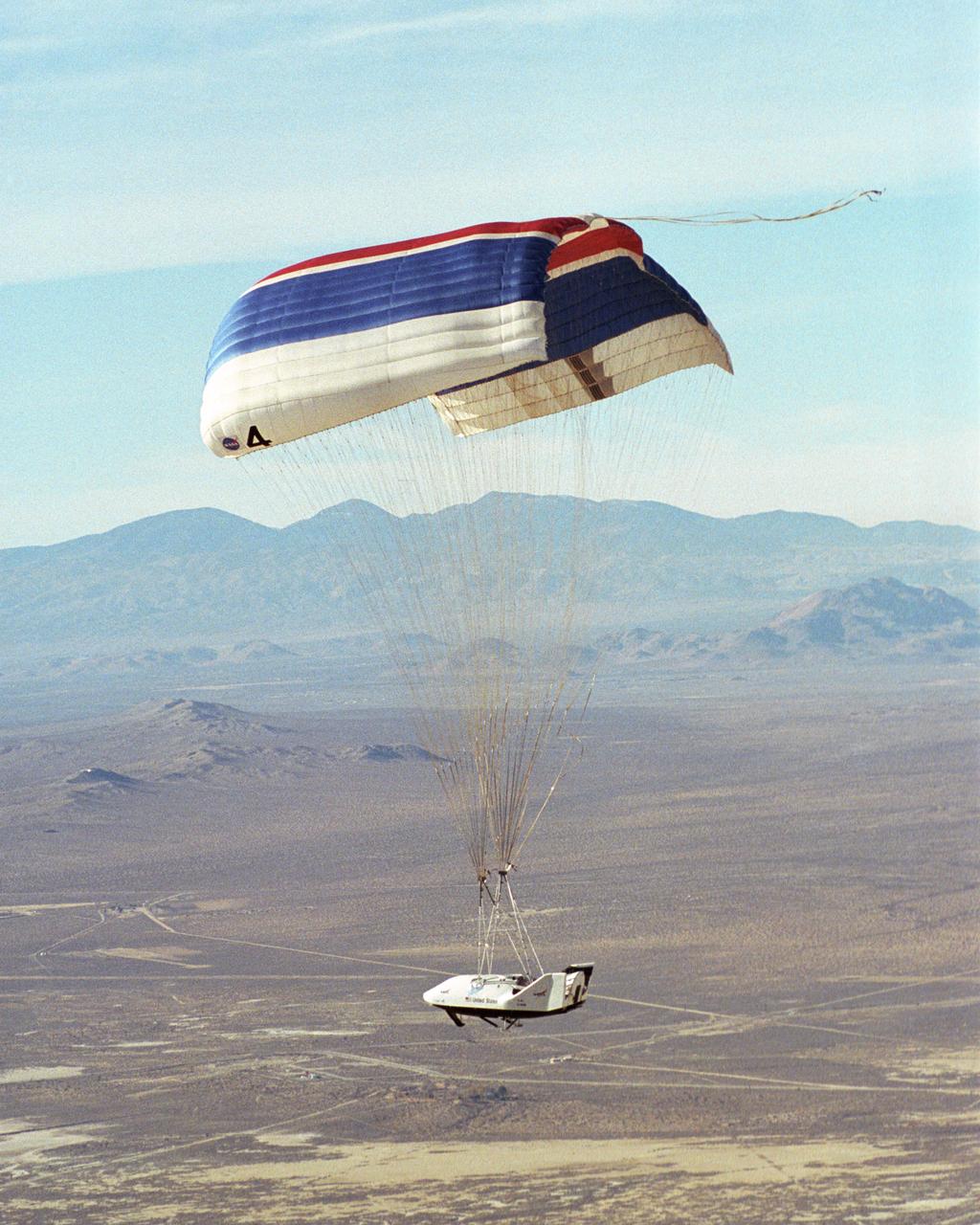
The X-38 prototype of the Crew Return Vehicle for the International Space Station is suspended under its giant 7,500-square-foot parafoil during its eighth free flight on Thursday, Dec. 13, 2001. A portion of the descent was flown by remote control by a NASA astronaut from a ground vehicle configured like the CRV's interior before the X-38 made an autonomous landing on Rogers Dry Lake.
The X-38 prototype of the Crew Return Vehicle is suspended under its giant 7,500-square-foot parafoil during its eighth free flight on Thursday, December 13, 2001
The X-38 prototype of the Crew Return Vehicle for the International Space Station is suspended under its giant 7,500-square-foot parafoil during its eighth free flight on Thursday, Dec. 13, 2001. A portion of the descent was flown by remote control by a NASA astronaut from a ground vehicle configured like the CRV's interior before the X-38 made an autonomous landing on Rogers Dry Lake.
The X-38 prototype of the Crew Return Vehicle is suspended under its giant 7,500-square-foot parafoil during its eighth free flight on Thursday, December 13, 2001
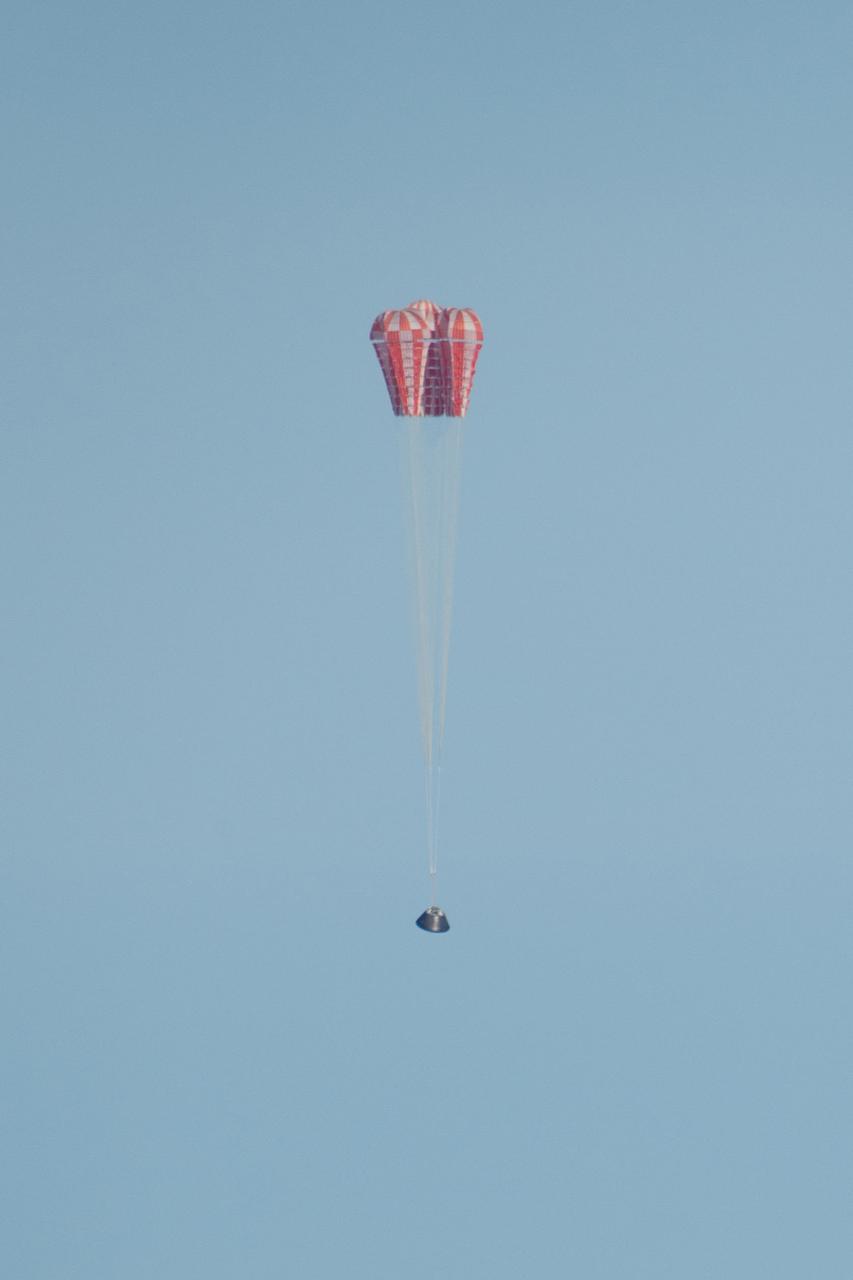
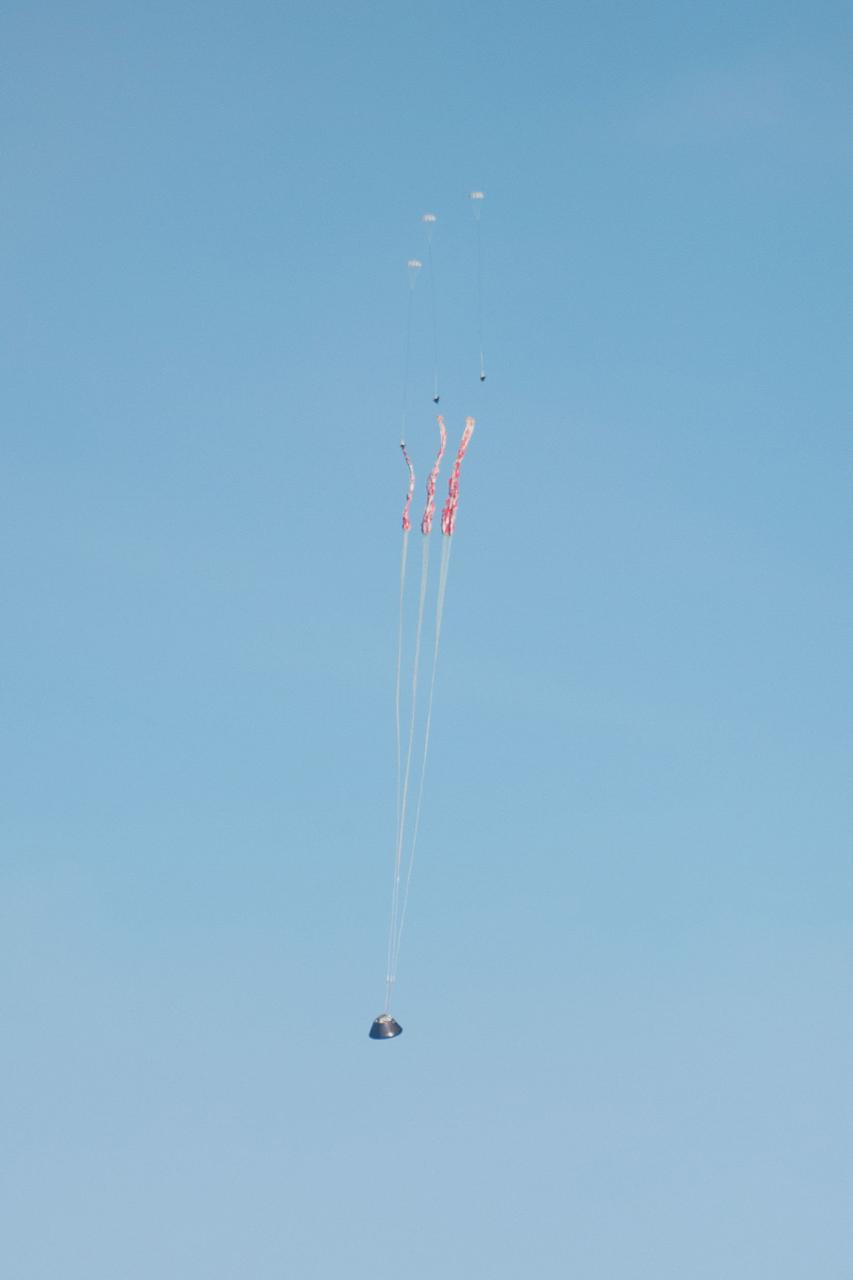
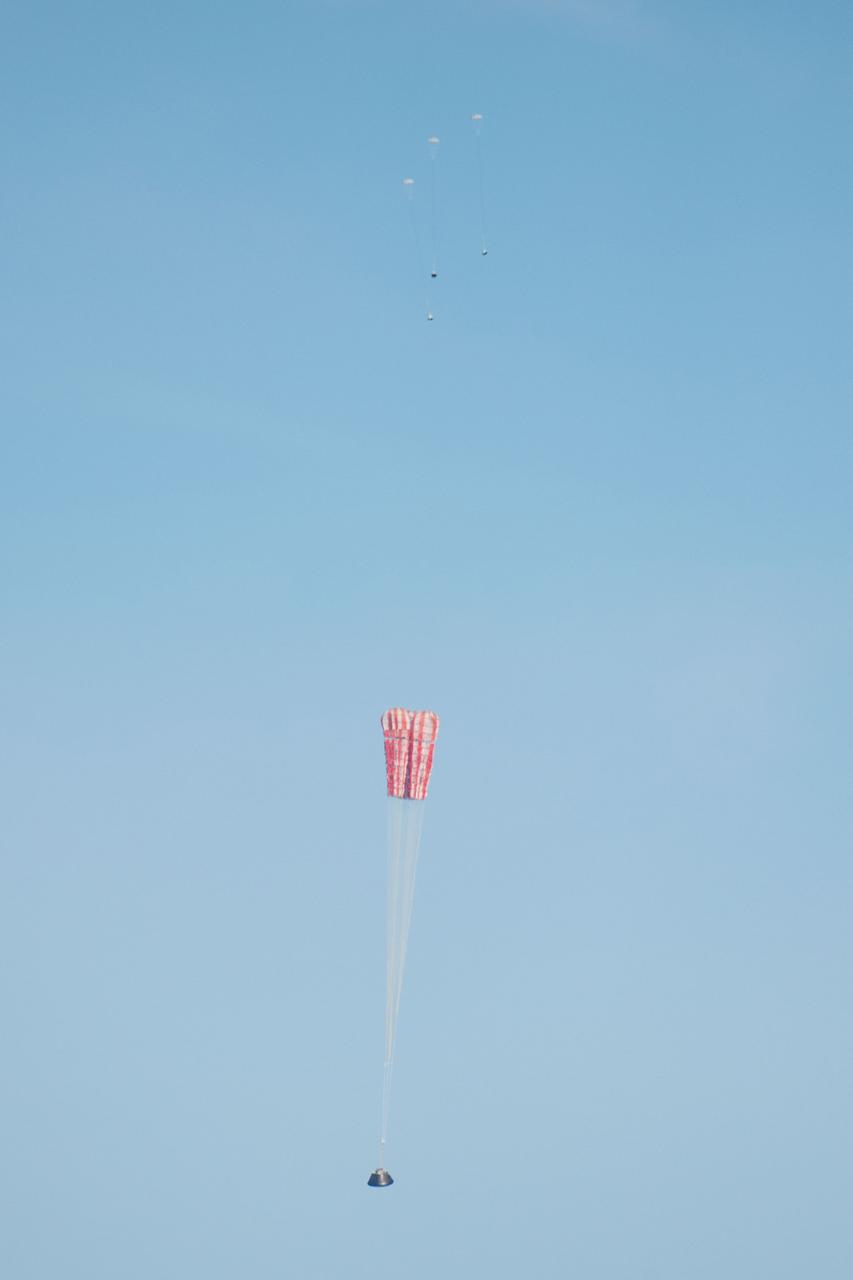
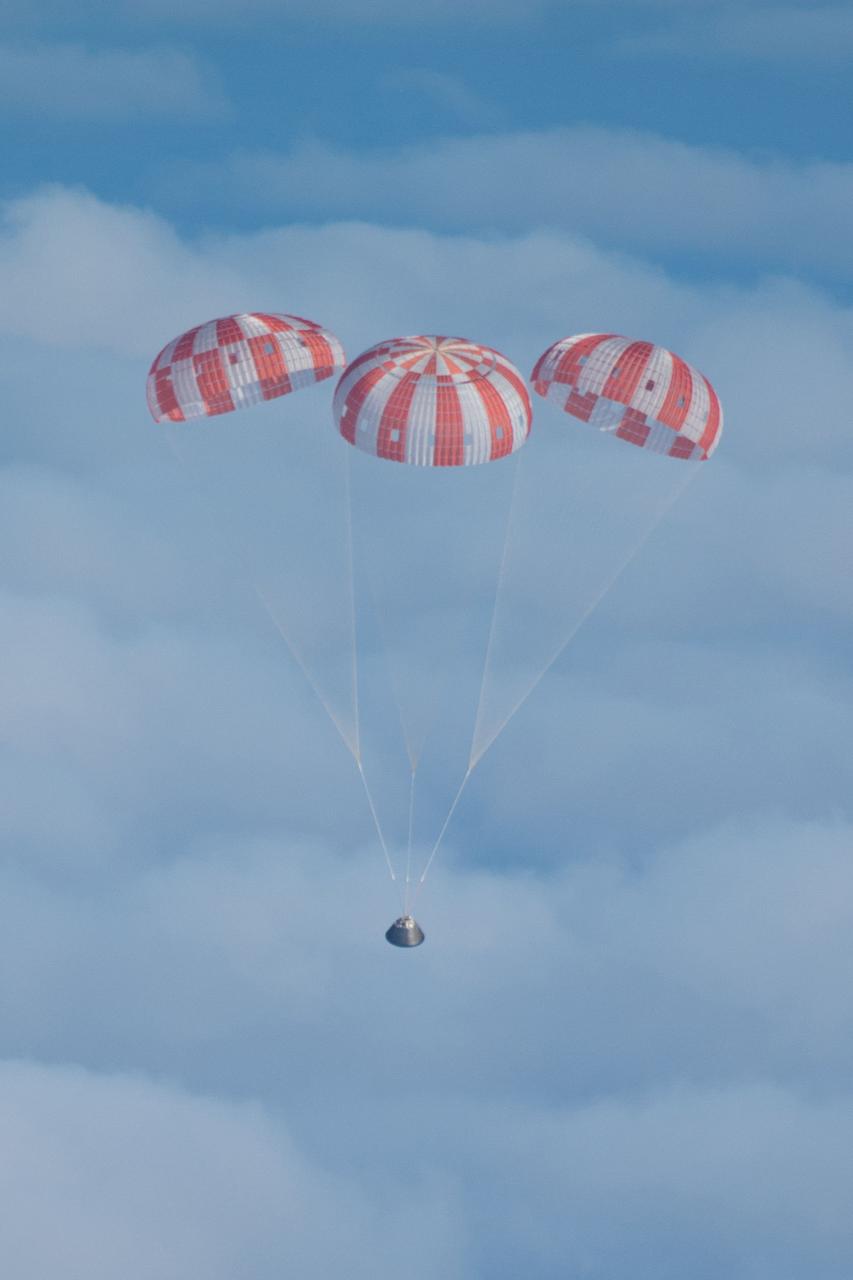
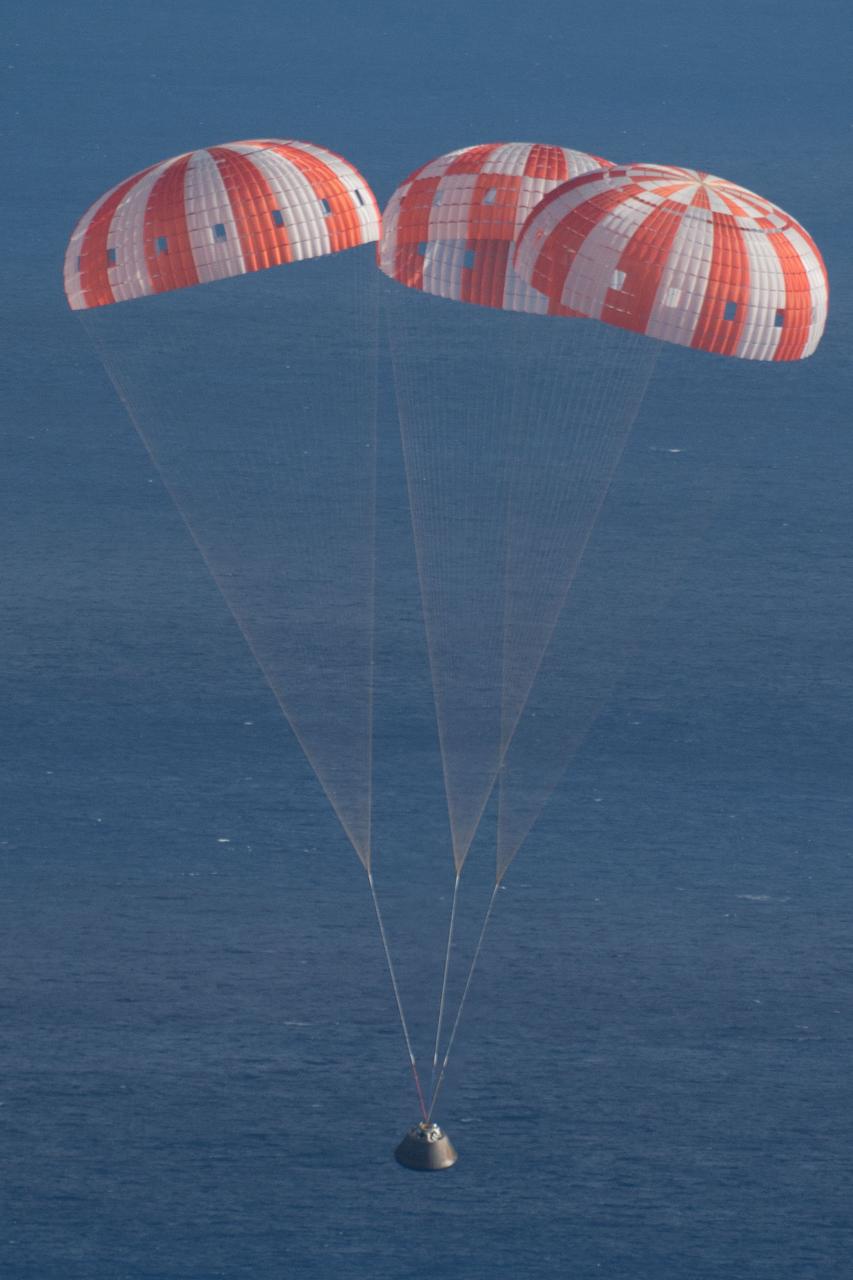
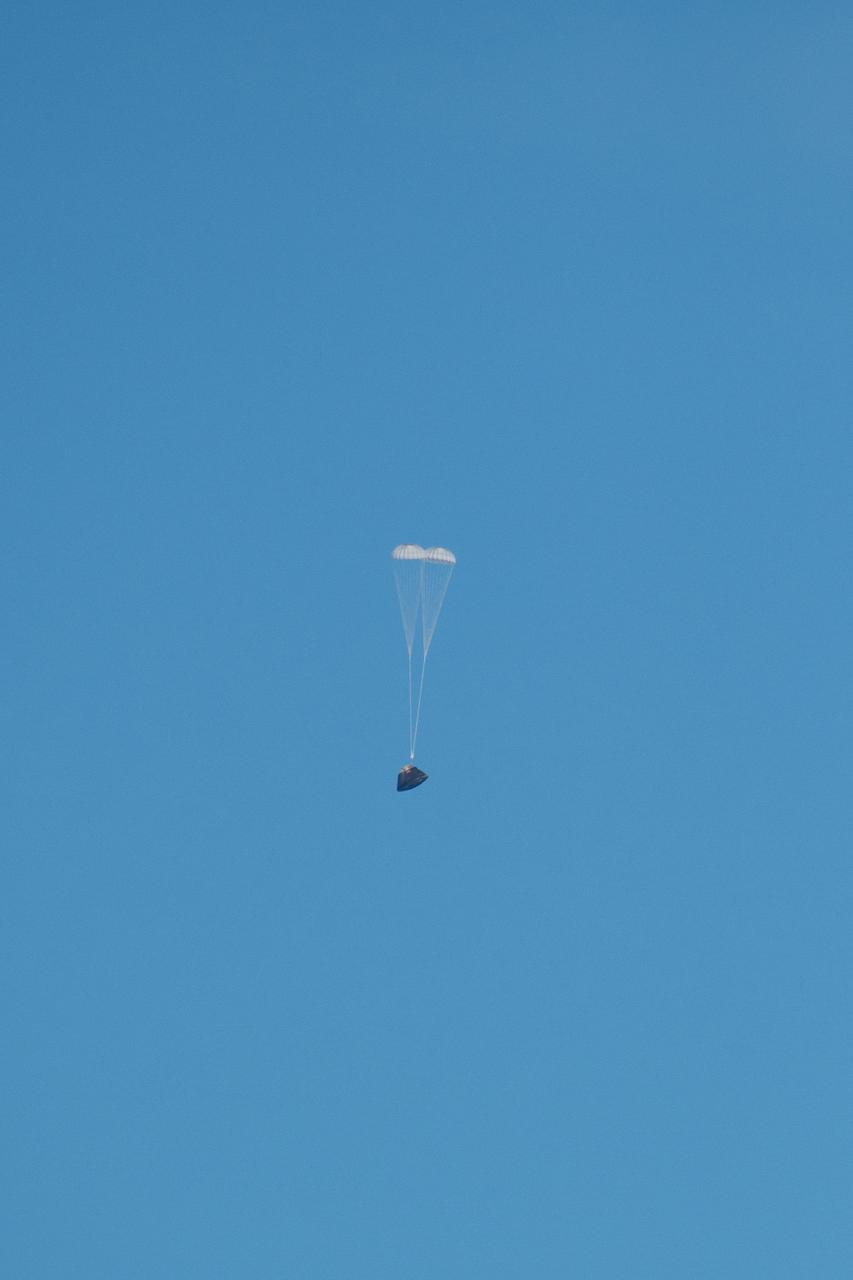
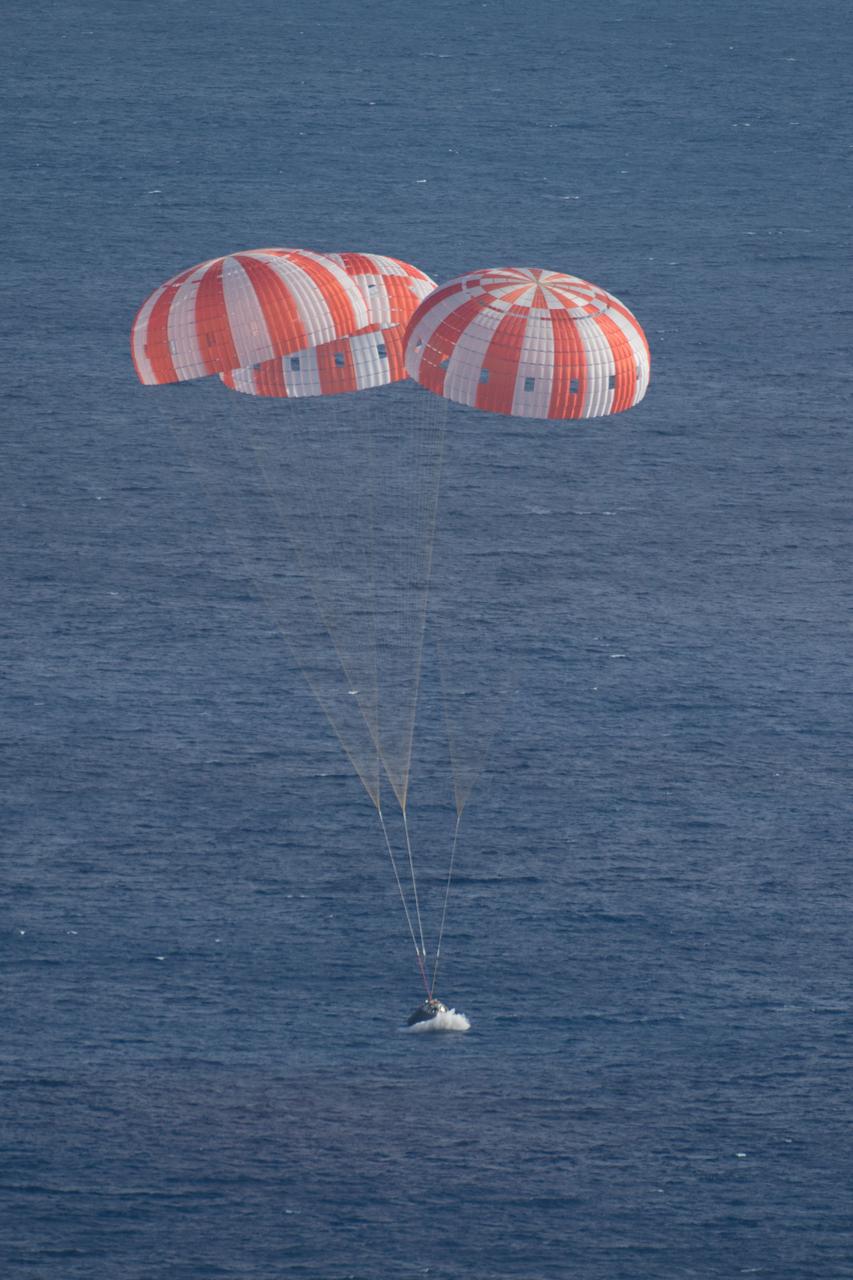
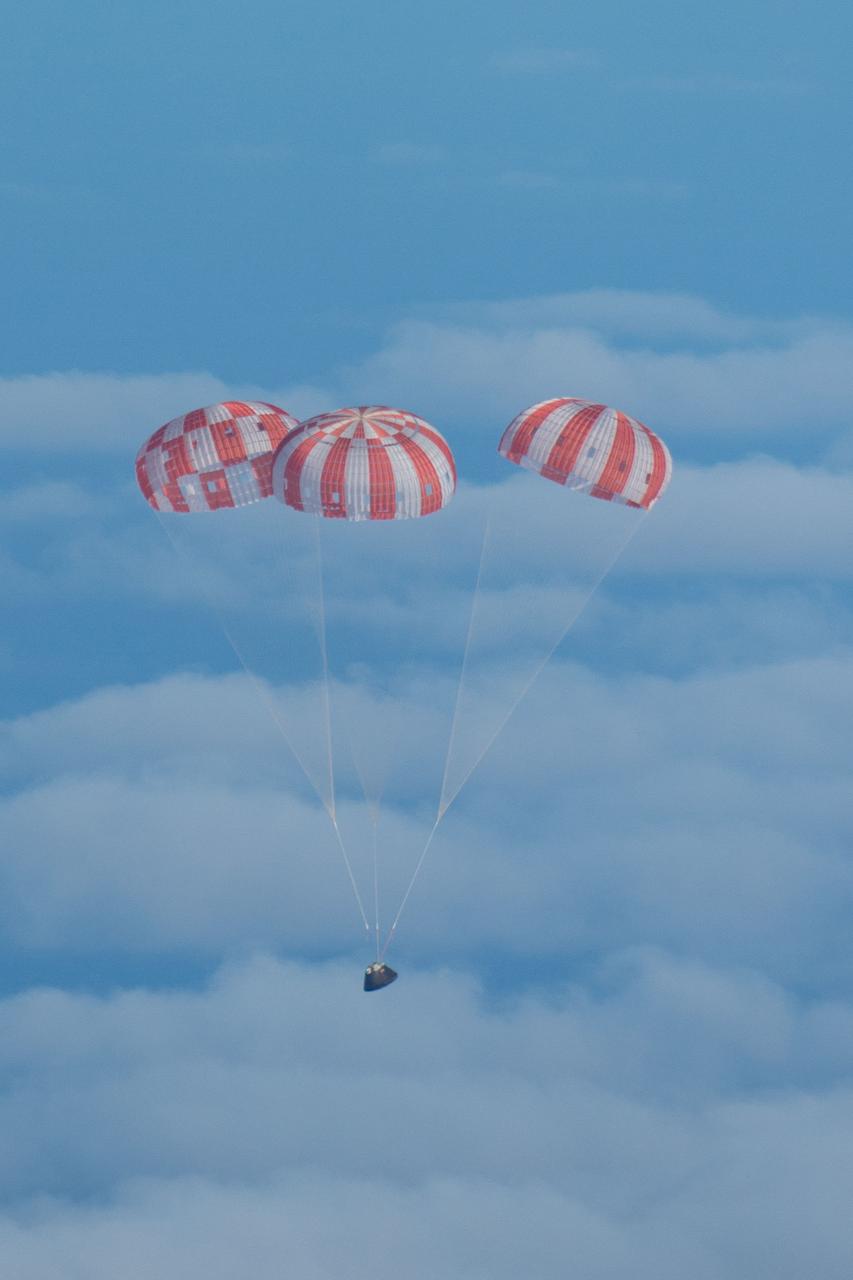
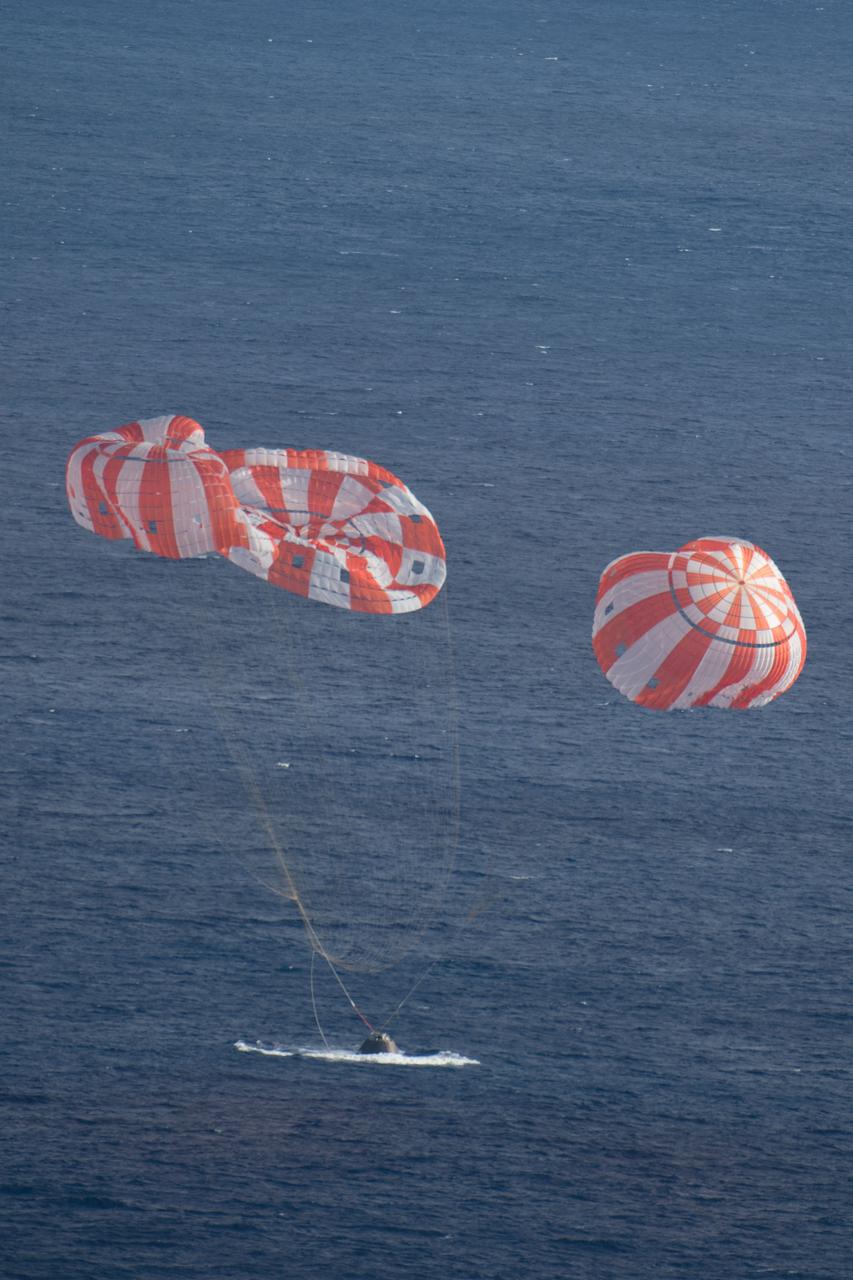
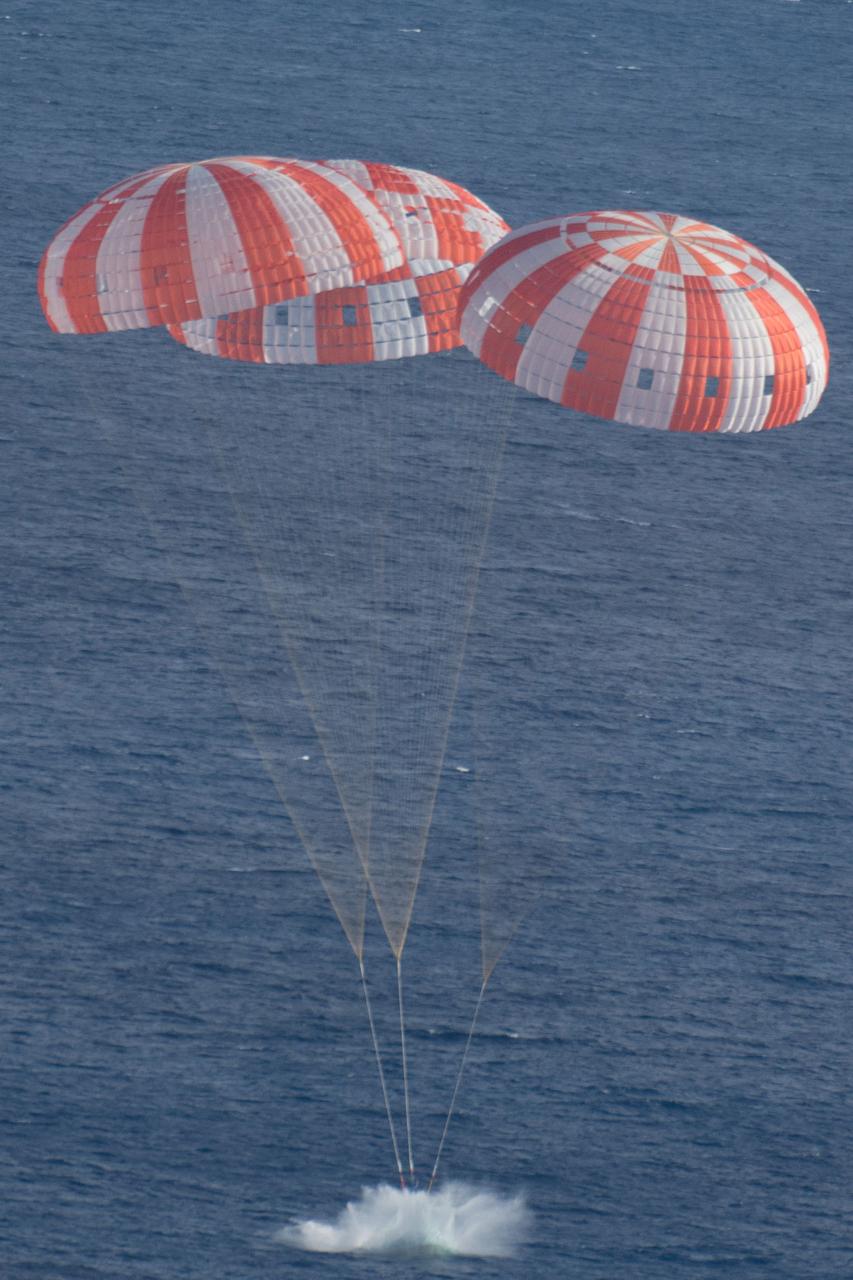
Orion's parachutes deploy as it returns to Earth after Exploration Flight Test-1 (EFT-1) on Dec. 5, 2014.  Part of Batch image transfer from Flickr.
Orion returns to Earth after a succesfull flight
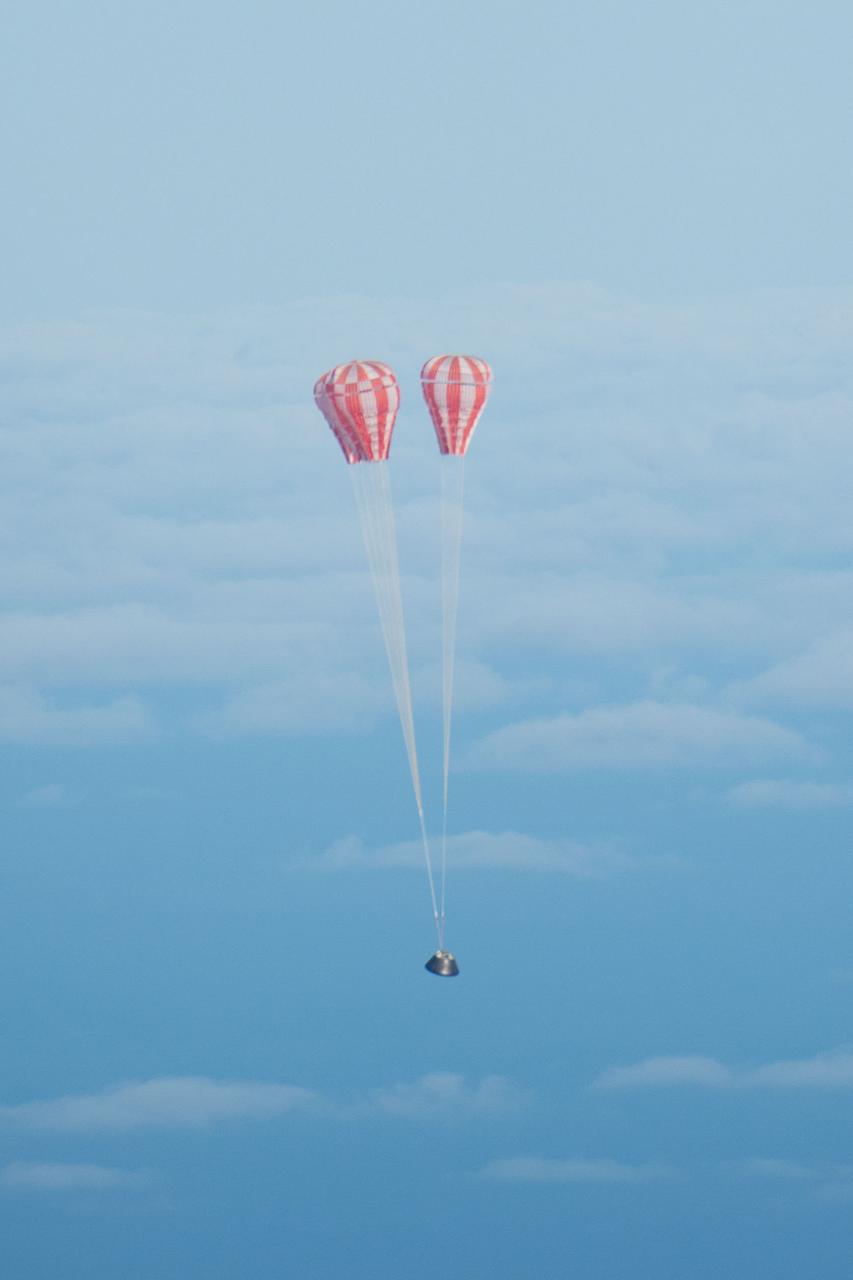
Orion's parachutes deploy as it returns to Earth after Exploration Flight Test-1 (EFT-1) on Dec. 5, 2014.  Part of Batch image transfer from Flickr.
Orion returns to Earth after a succesfull flight
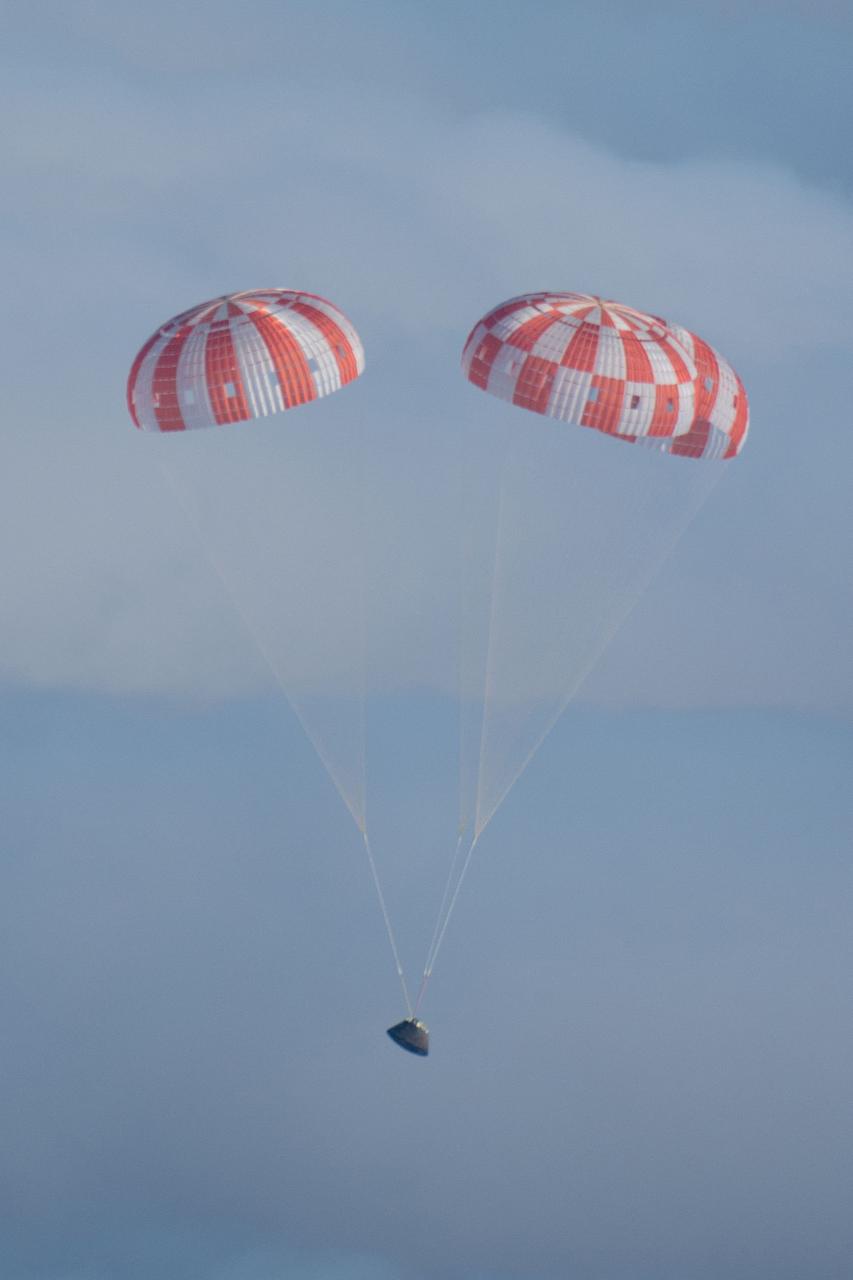
Orion's parachutes deploy as it returns to Earth after Exploration Flight Test-1 (EFT-1) on Dec. 5, 2014.   Part of Batch image transfer from Flickr.
Orion returns to Earth after a succesfull flight
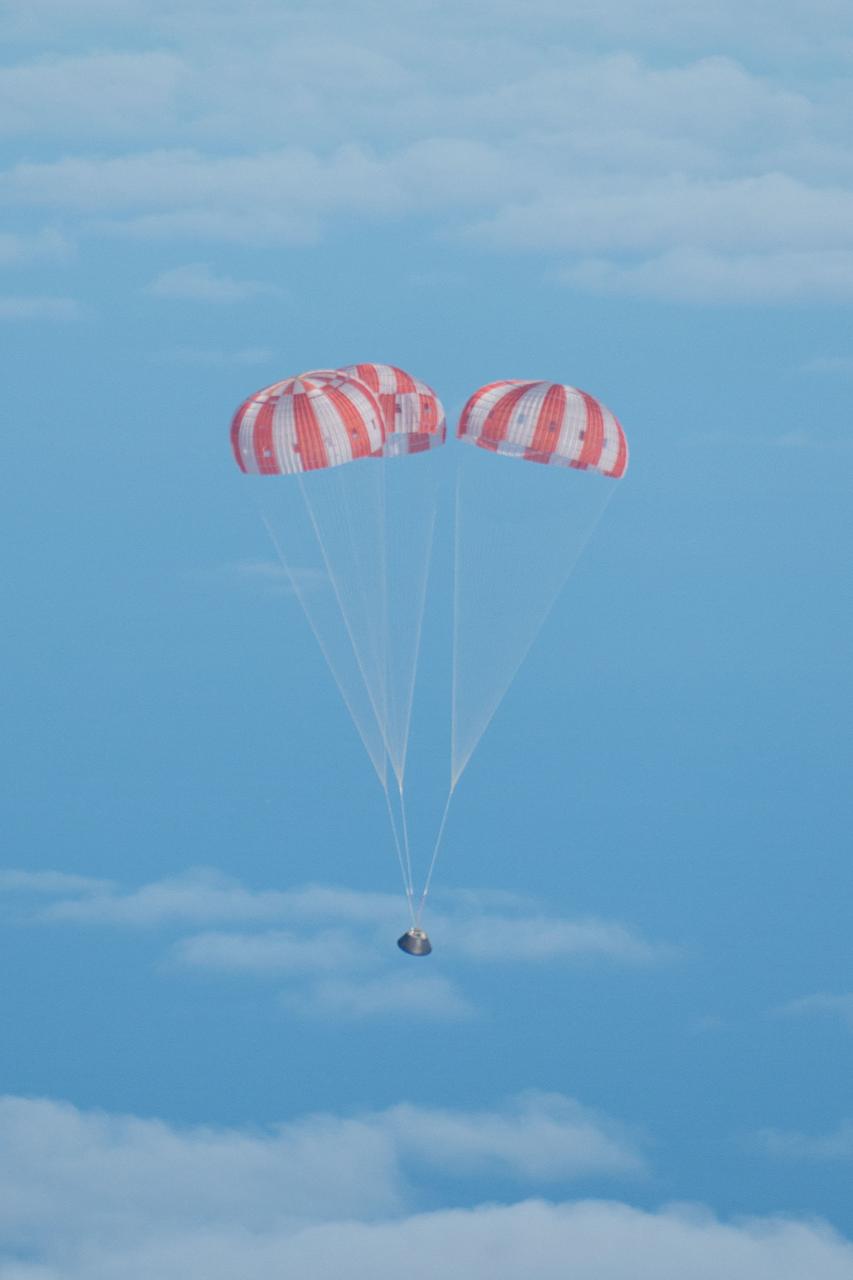
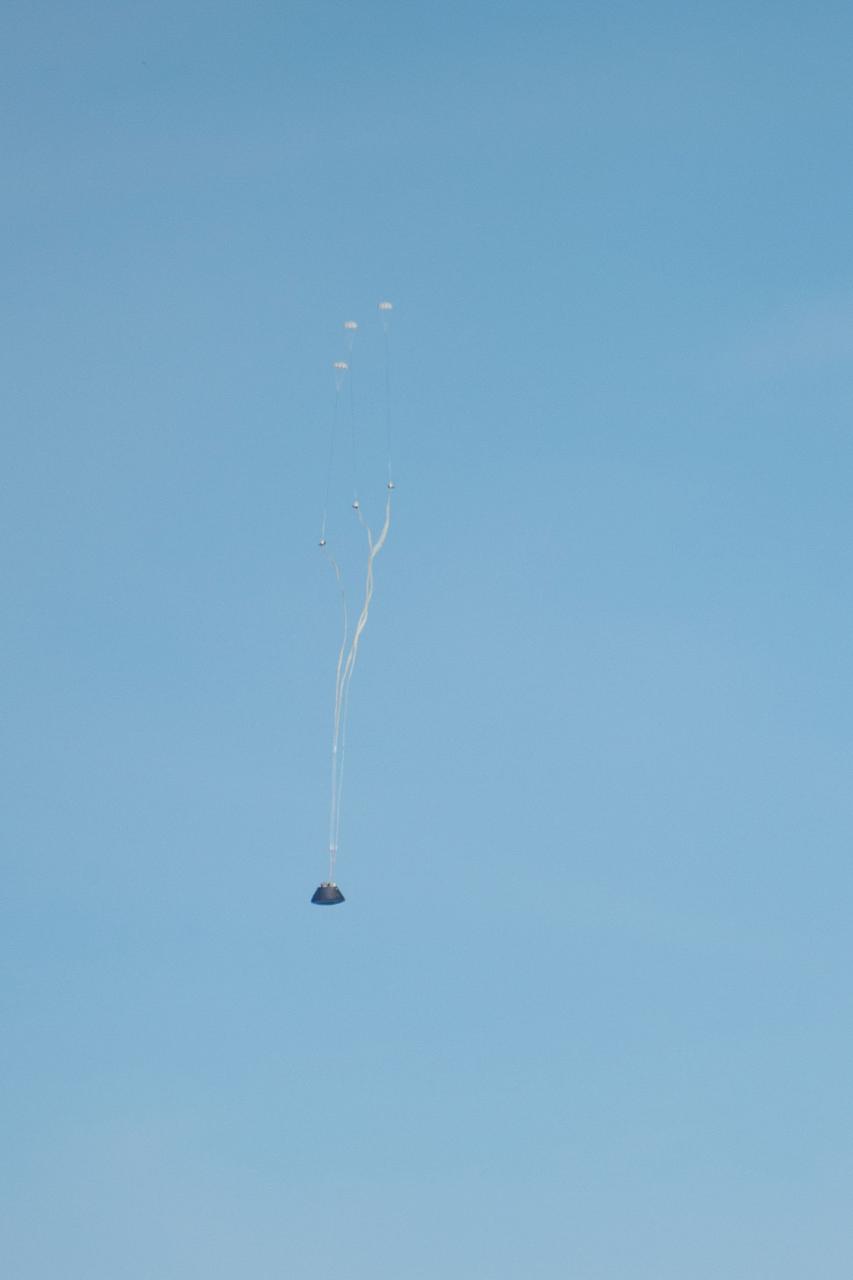
Orion's main parachutes begin to unfurl as it returns to Earth during Exploration Flight Test-1 (EFT-1) on Dec. 5, 2014.  Part of Batch image transfer from Flickr.
Orion returns to Earth after a succesful flight
Orion's parachutes deploy as it returns to Earth after Exploration Flight Test-1 (EFT-1) on Dec. 5, 2014.  Part of Batch image transfer from Flickr.
Orion returns to Earth after a succesful flight
Orion's parachutes deploy as it returns to Earth after Exploration Flight Test-1 (EFT-1) on Dec. 5, 2014. Part of Batch image transfer from Flickr.
Orion returns to Earth after a succesfull flight
Orion's parachutes deploy as it returns to Earth after Exploration Flight Test-1 (EFT-1) on Dec. 5, 2014.  Part of Batch image transfer from Flickr.
Orion returns to Earth after a succesfull flight
Orion's parachutes deploy as it returns to Earth after Exploration Flight Test-1 (EFT-1) on Dec. 5, 2014.  Part of Batch image transfer from Flickr.
Orion returns to Earth after a succesful flight
Orion's parachutes deploy as it returns to Earth after Exploration Flight Test-1 (EFT-1) on Dec. 5, 2014.  Part of Batch image transfer from Flickr.
Orion returns to Earth after a succesfull flight
Orion's parachutes deploy as it returns to Earth after Exploration Flight Test-1 (EFT-1) on Dec. 5, 2014.  Part of Batch image transfer from Flickr.
Orion returns to Earth after a succesfull flight
Orion's parachutes deploy as it returns to Earth after Exploration Flight Test-1 (EFT-1) on Dec. 5, 2014.  Part of Batch image transfer from Flickr.
Orion returns to Earth after a succesfull flight
Orion's parachutes deploy as it returns to Earth after Exploration Flight Test-1 (EFT-1) on Dec. 5, 2014.  Part of Batch image transfer from Flickr.
Orion returns to Earth after a succesfull flight
Orion's parachutes deploy as it returns to Earth after Exploration Flight Test-1 (EFT-1) on Dec. 5, 2014.  Part of Batch image transfer from Flickr.
Orion returns to Earth after a succesfull flight
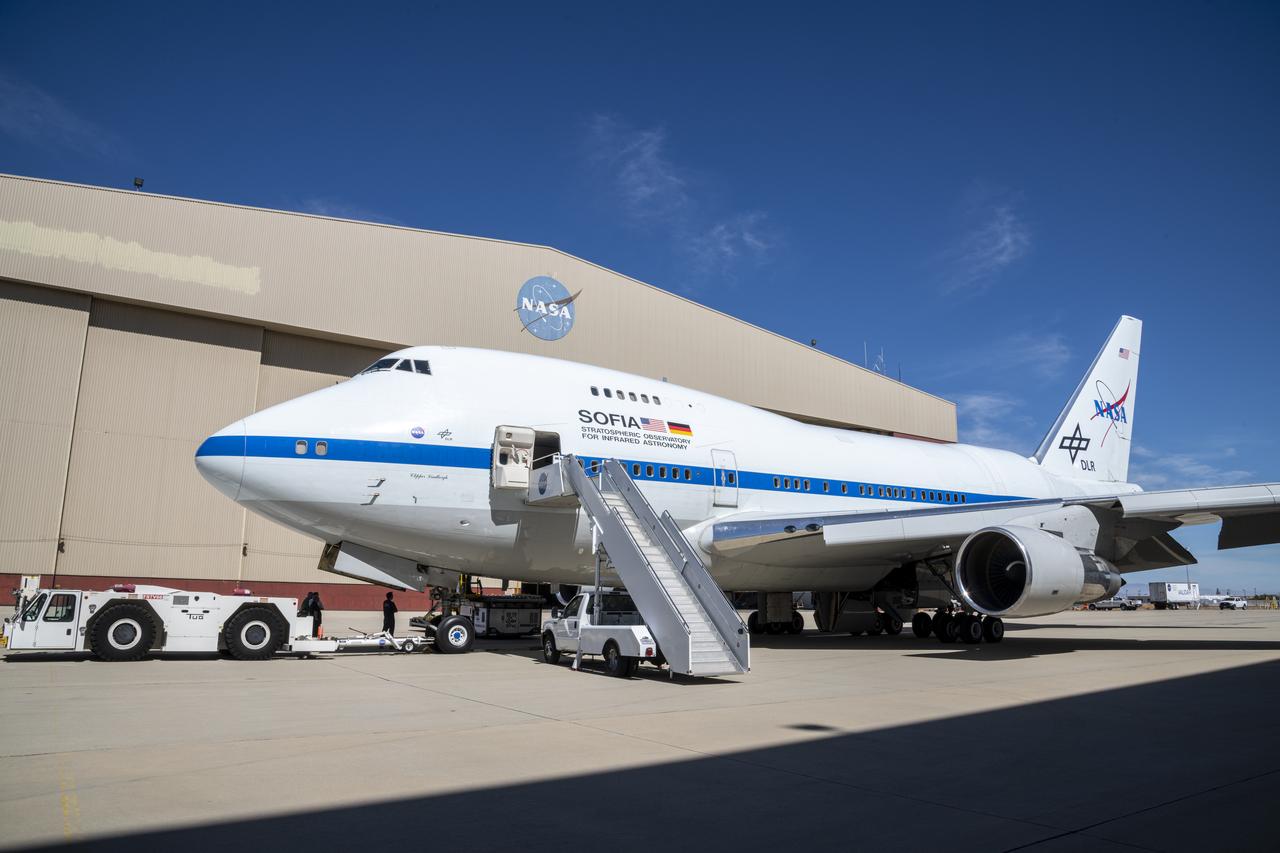
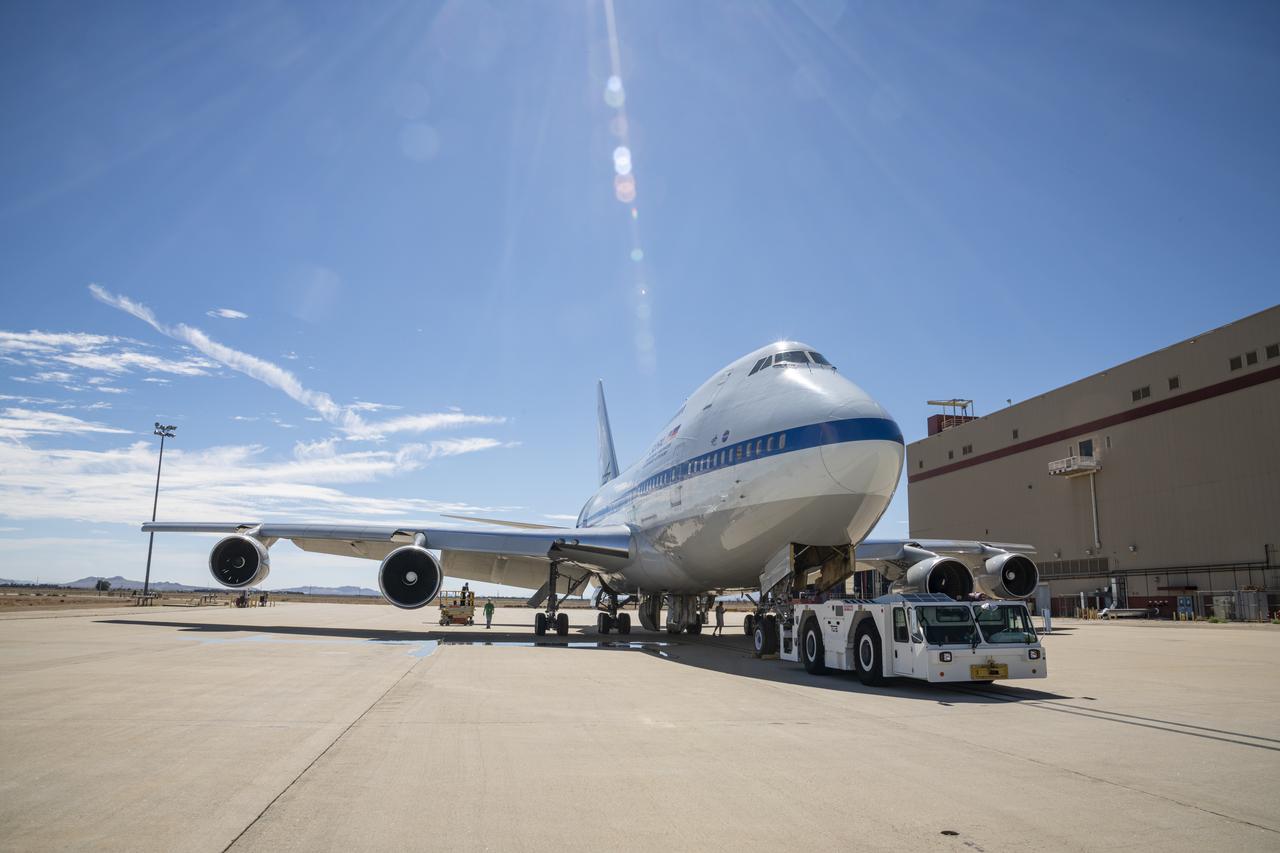
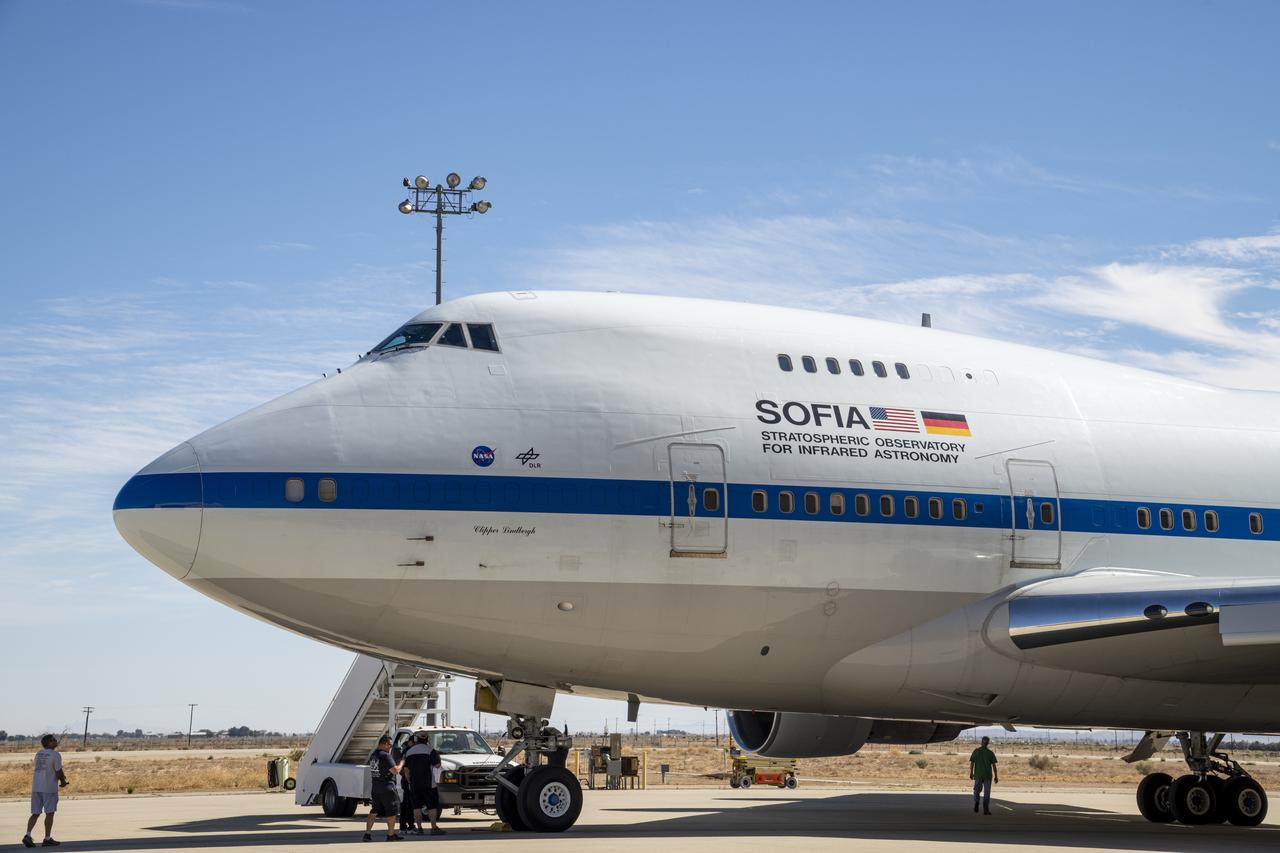
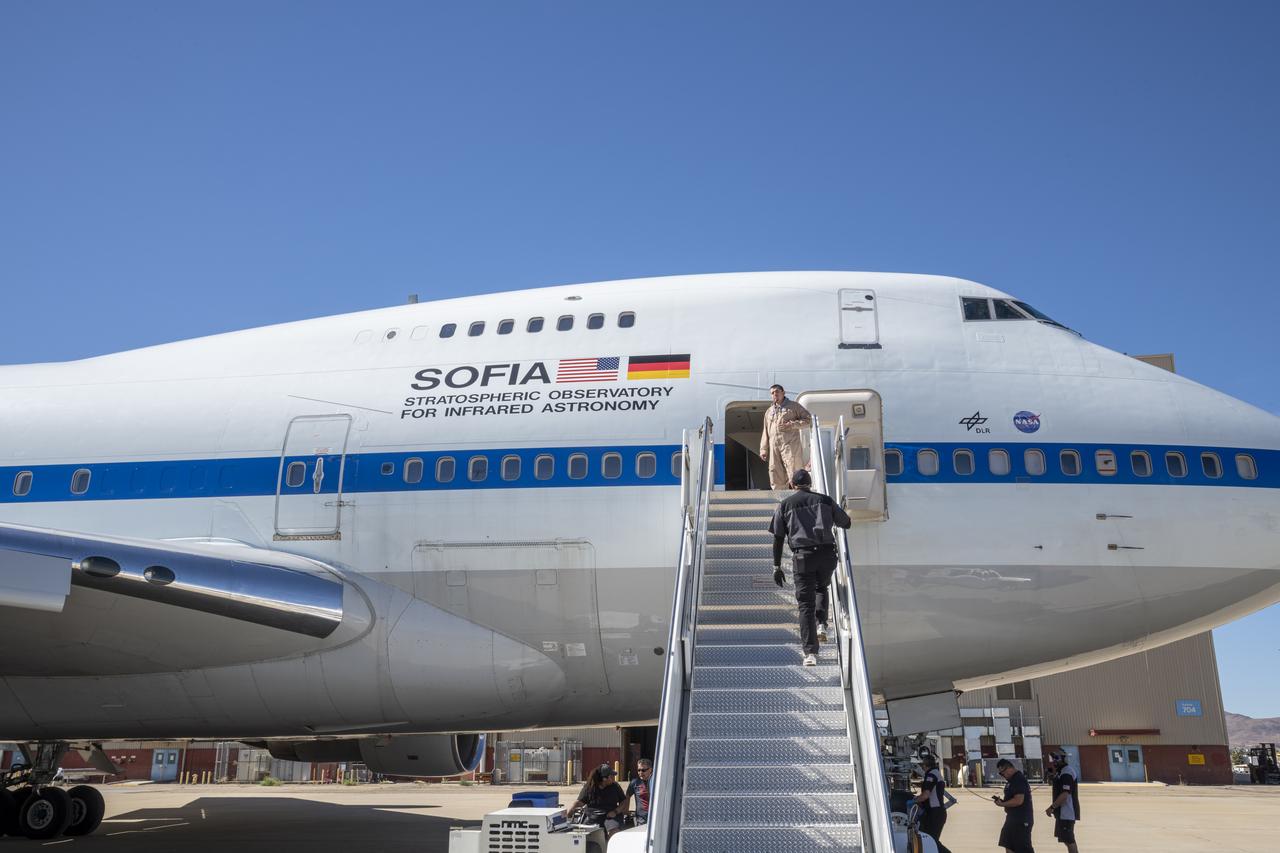
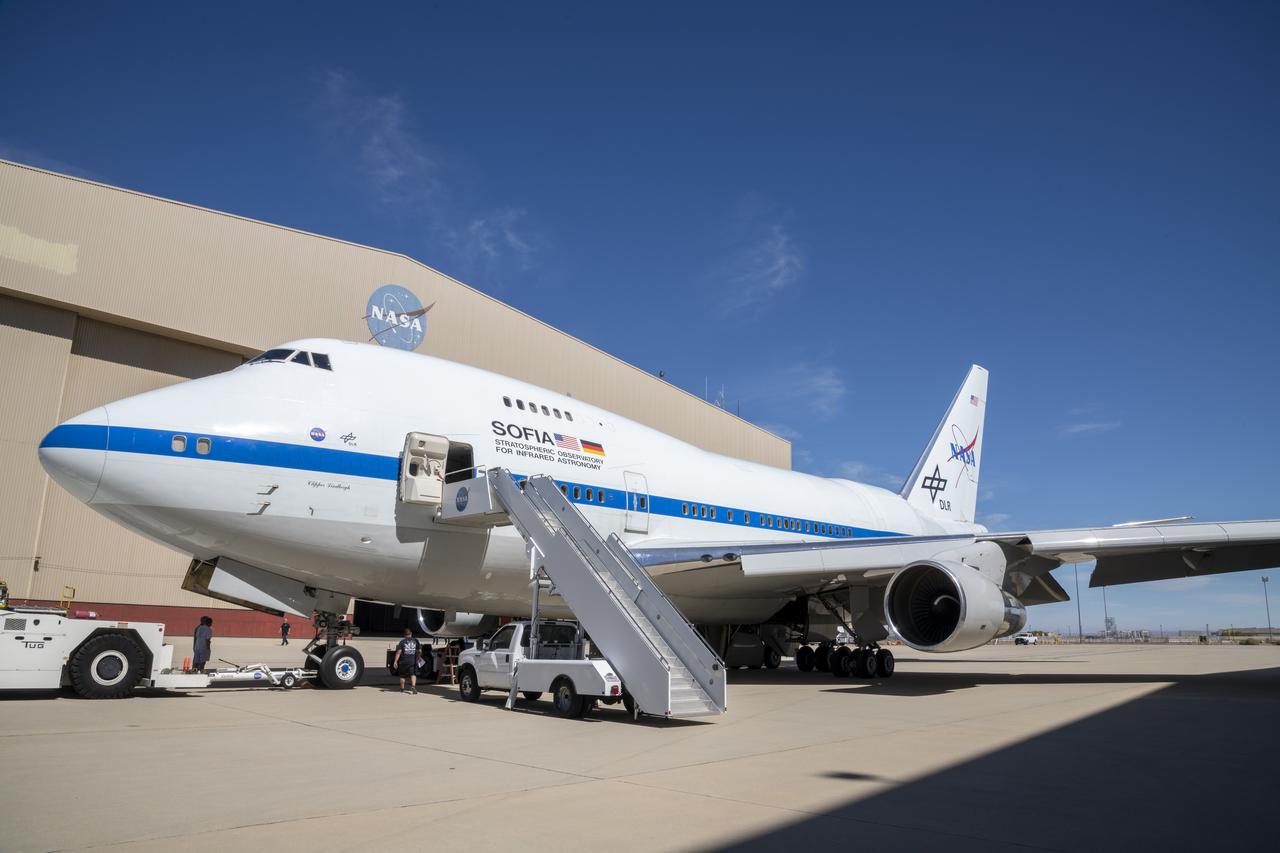
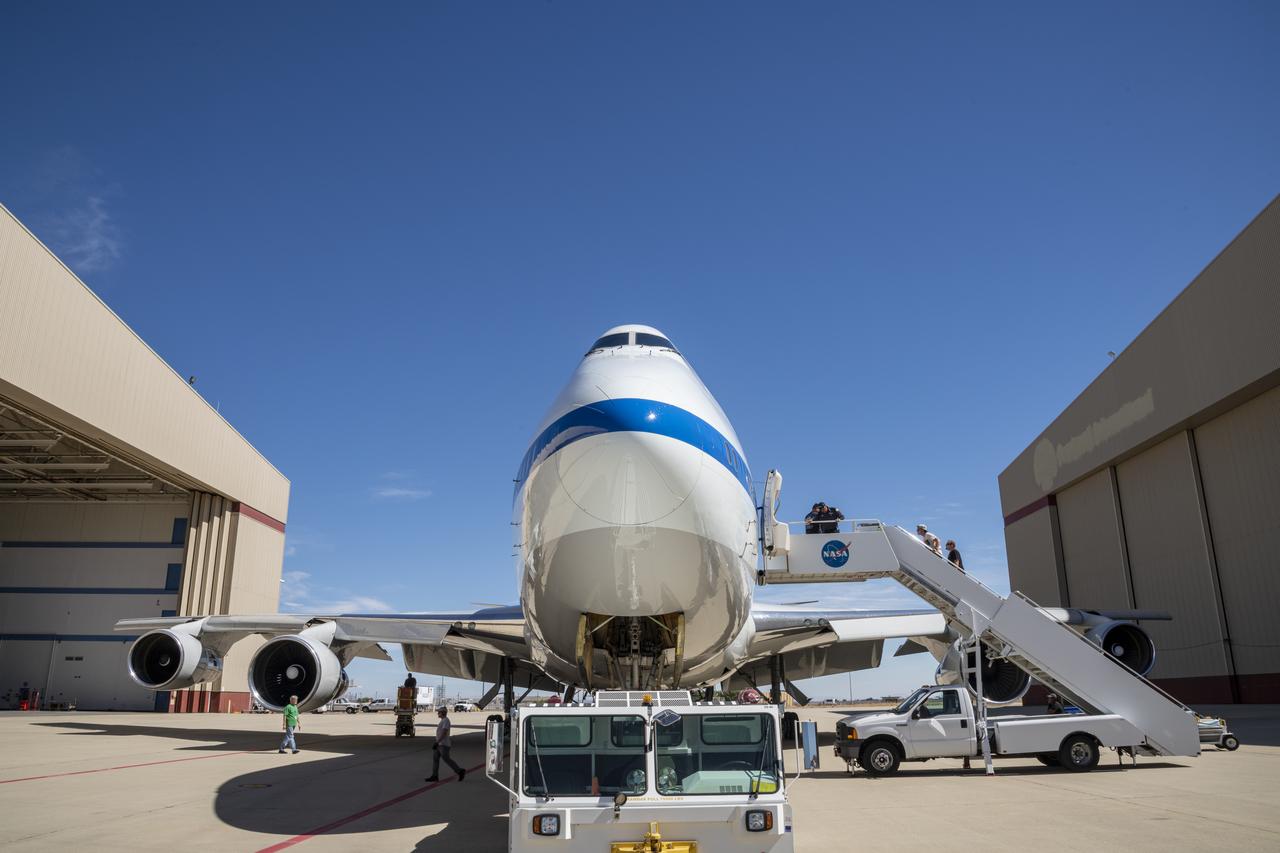
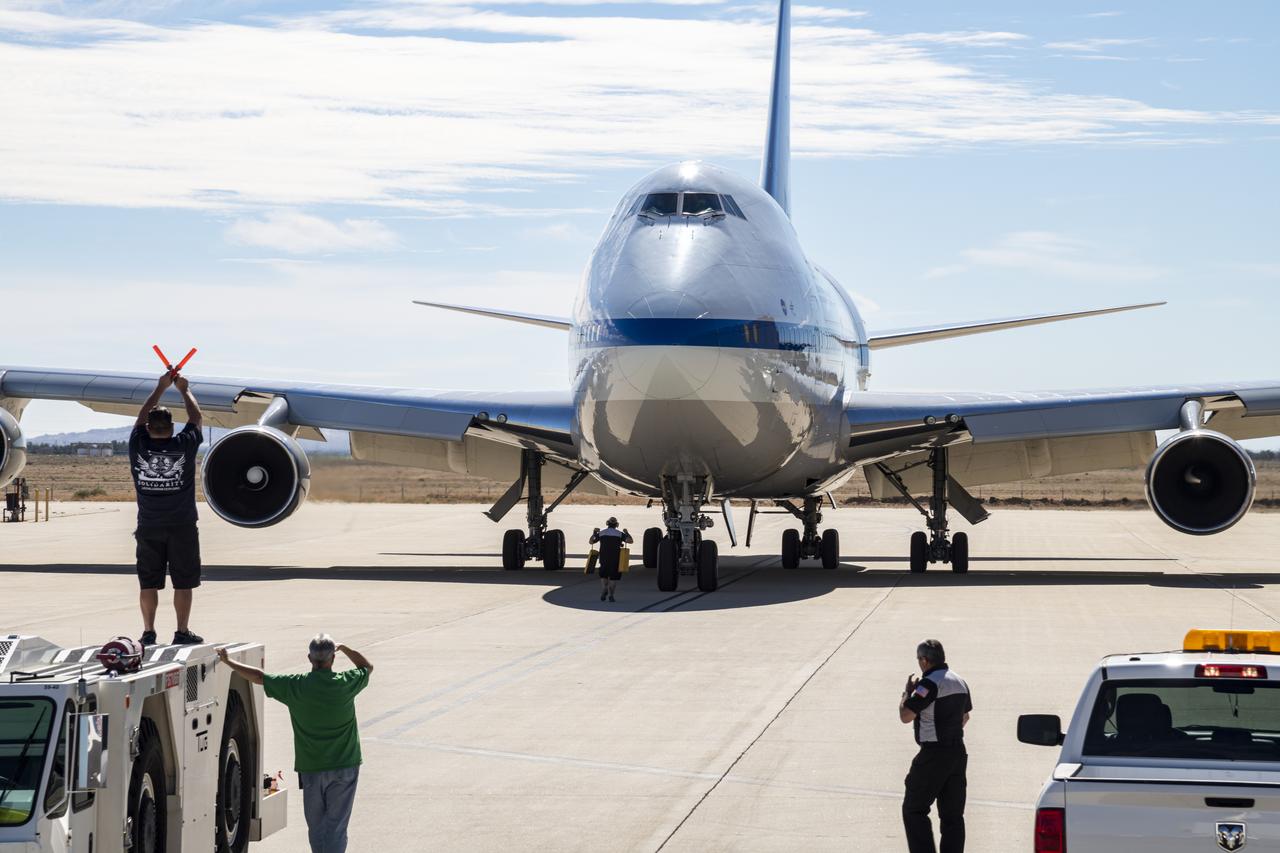
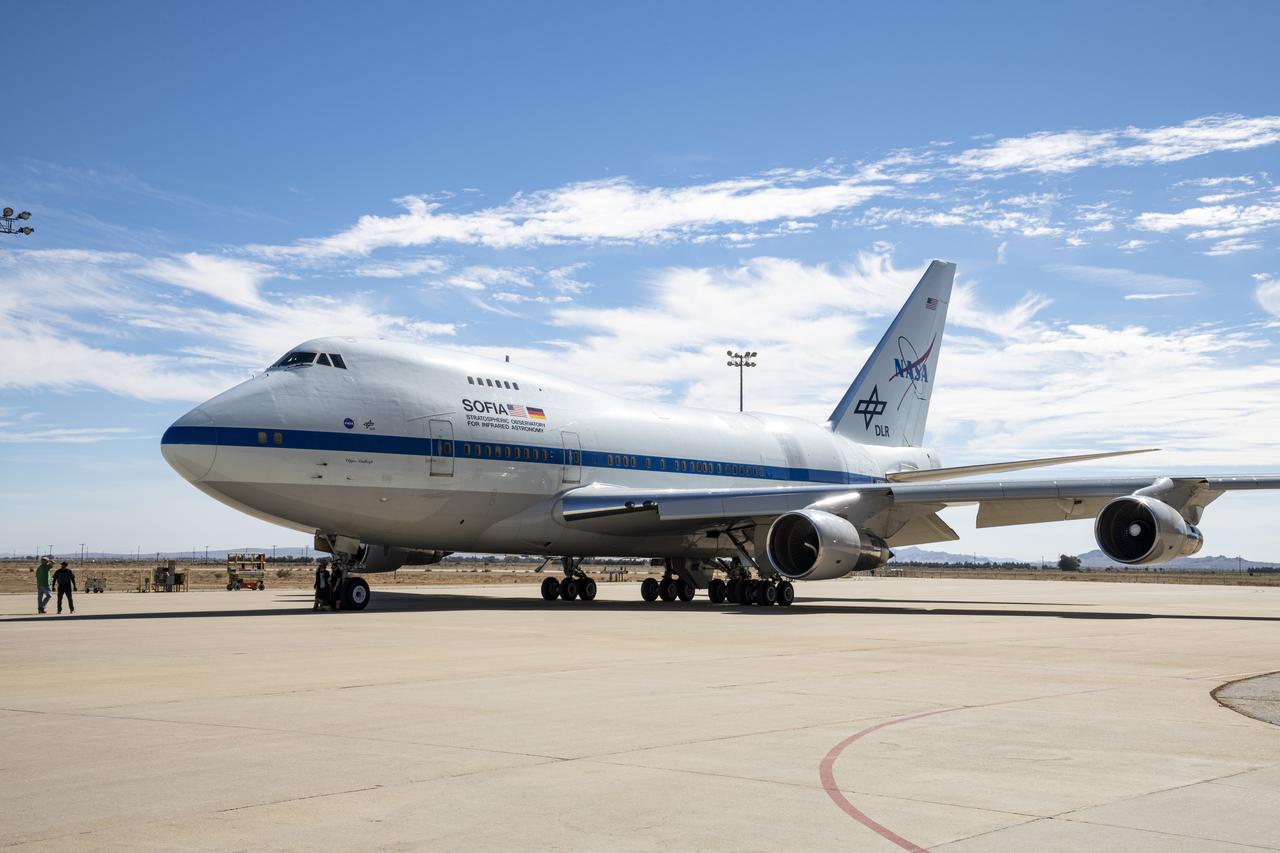
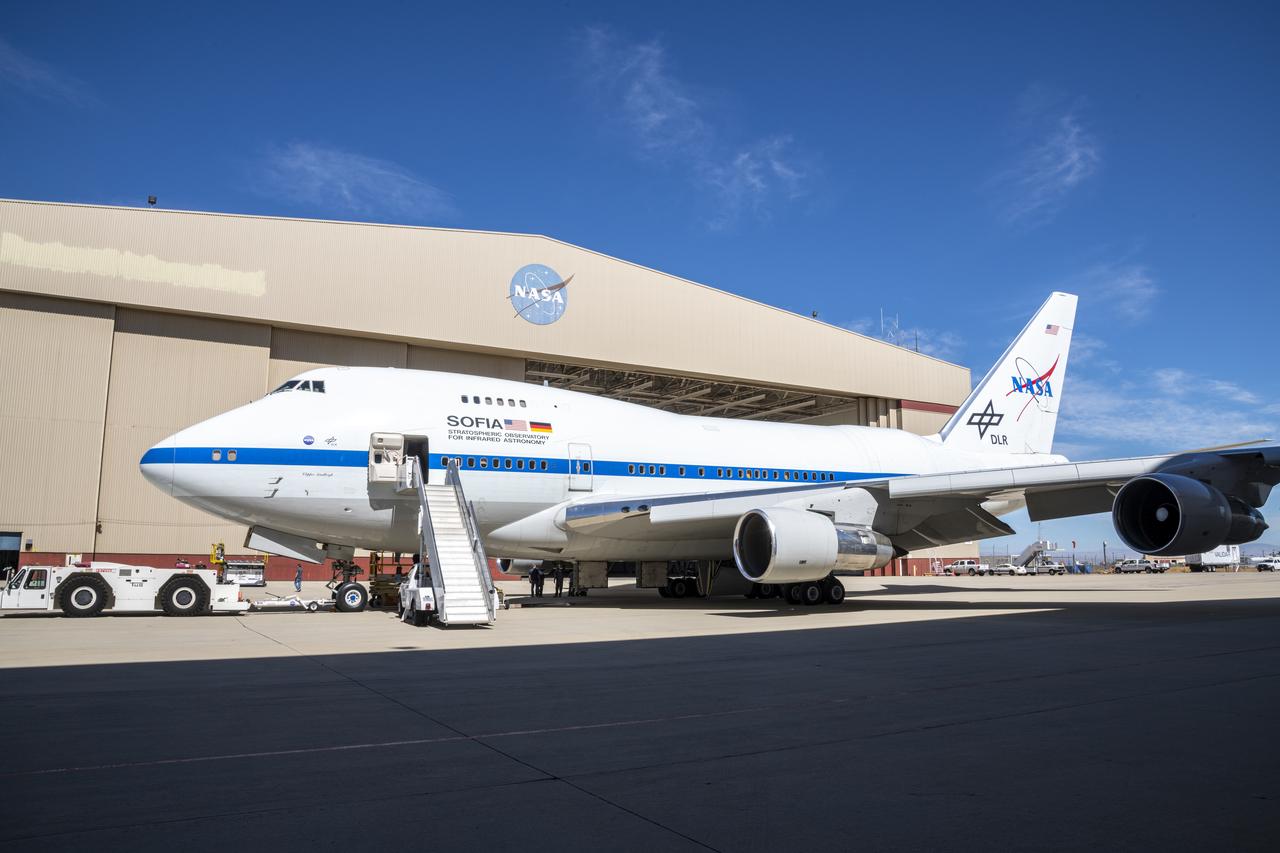
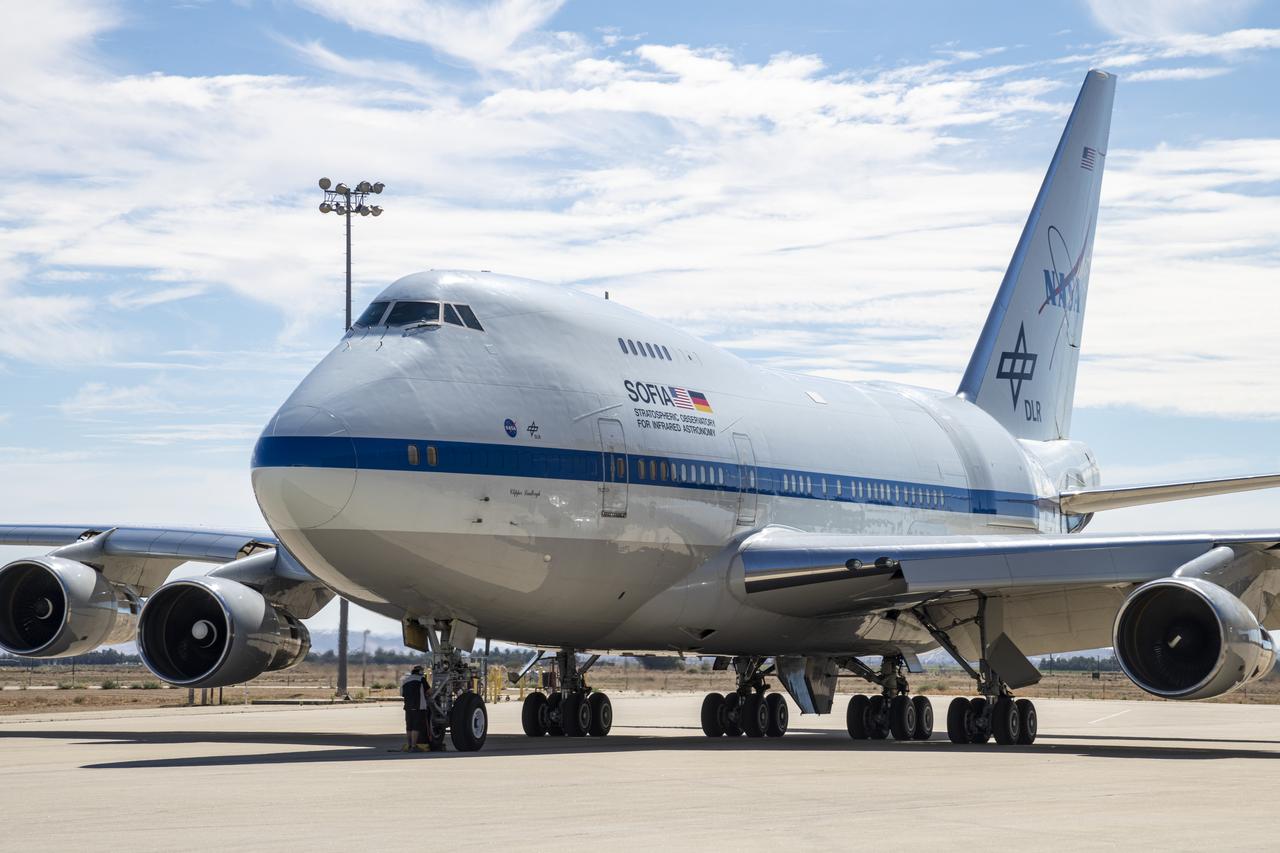
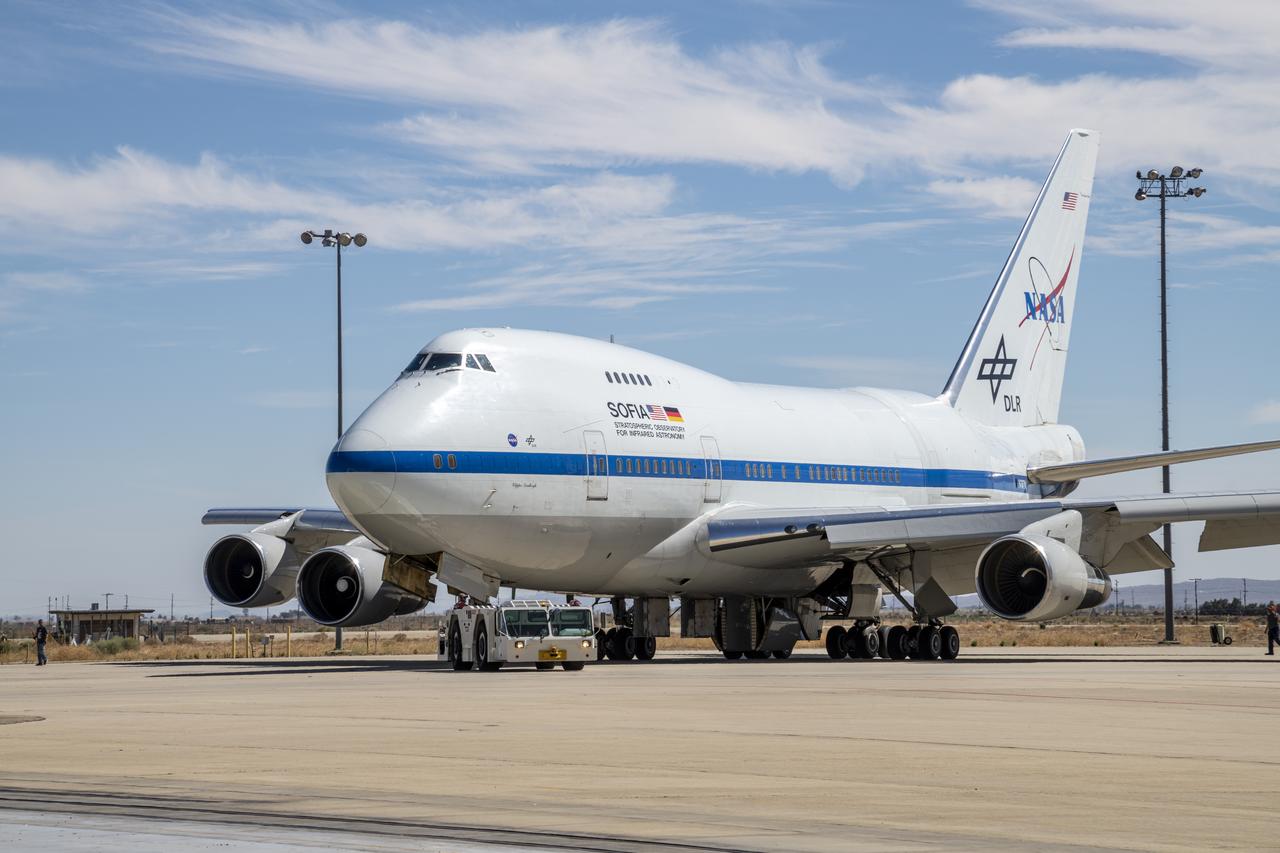
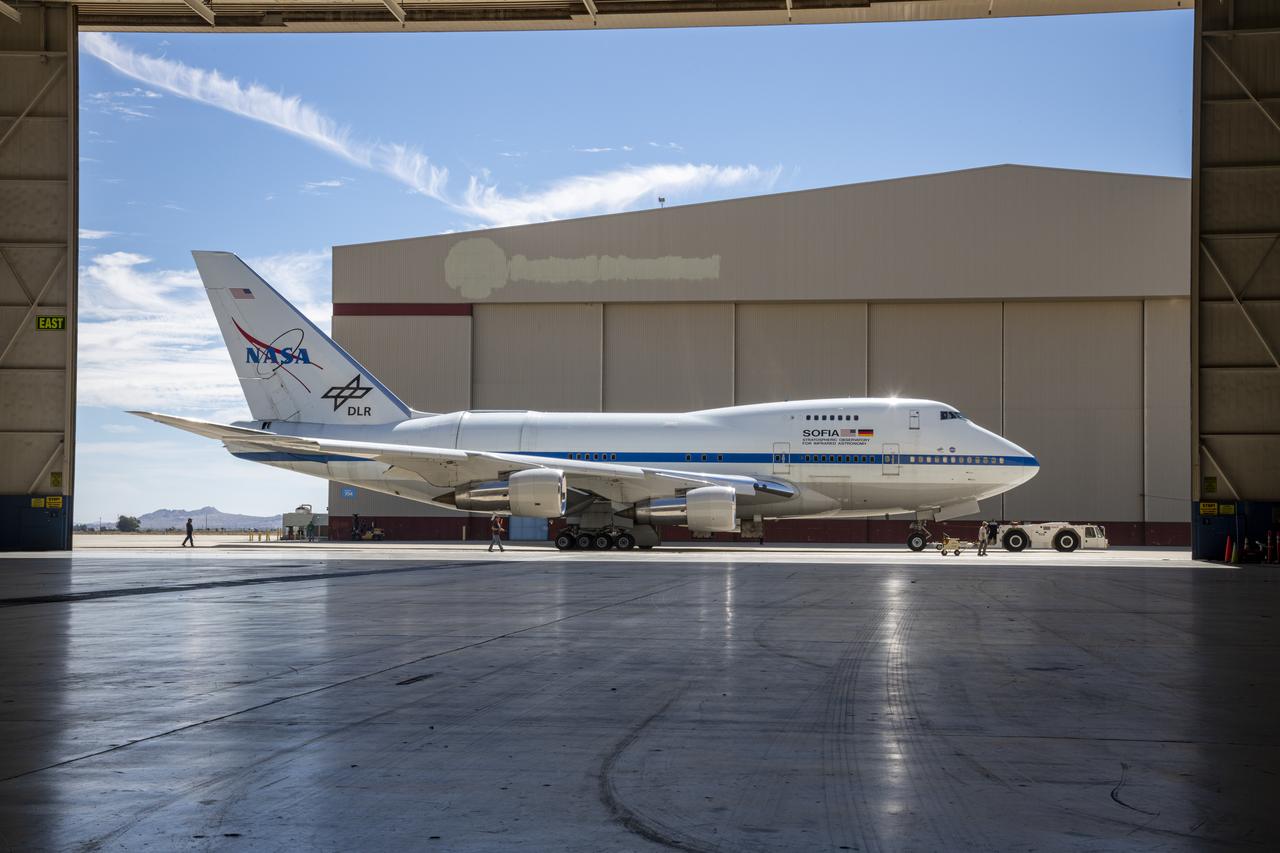
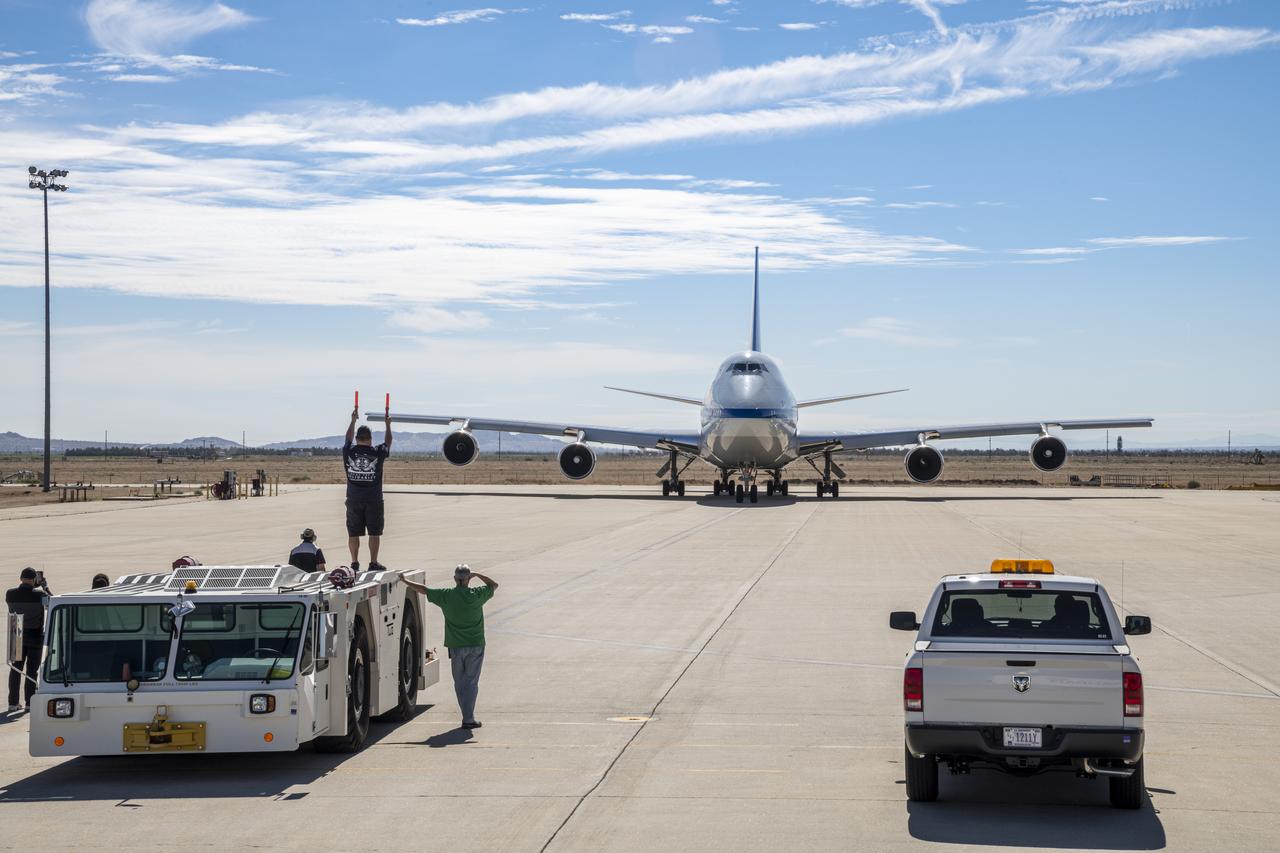
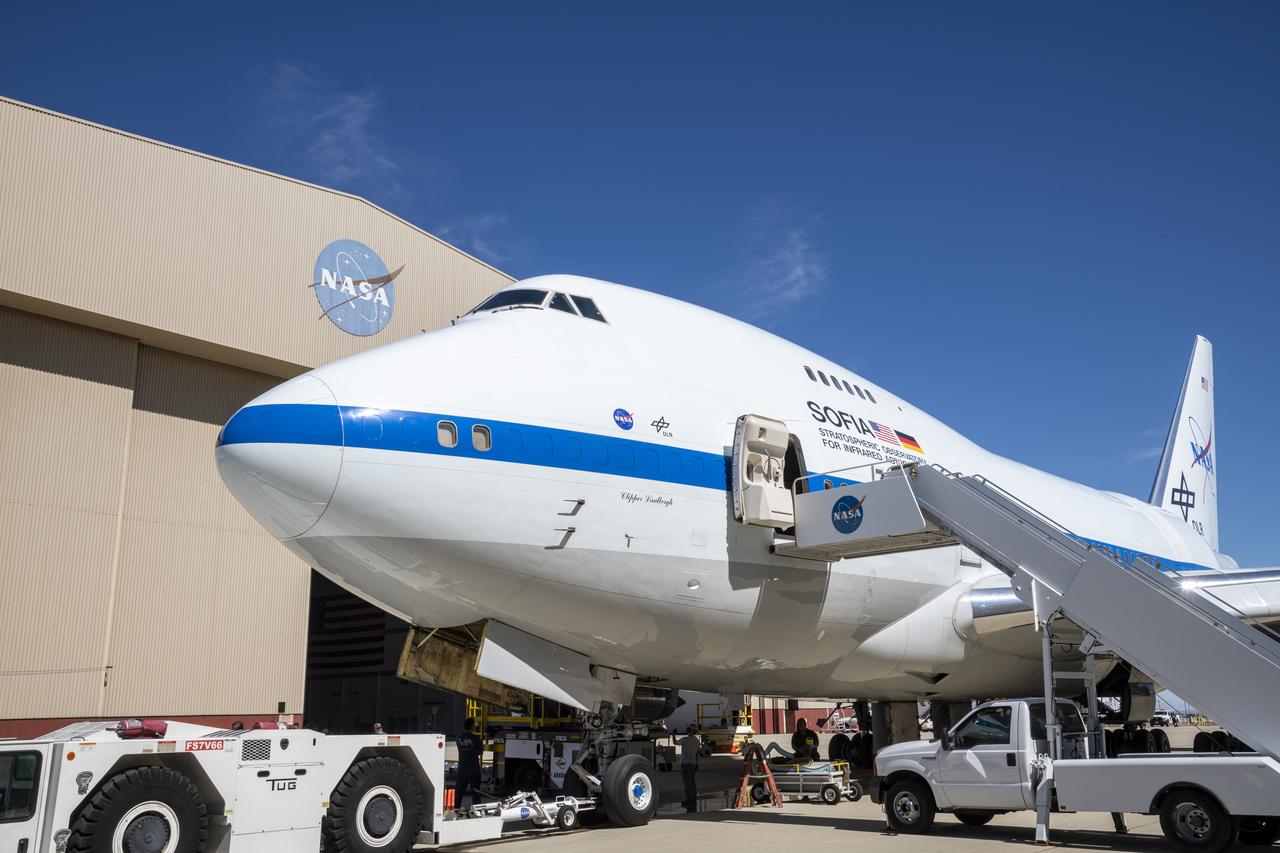
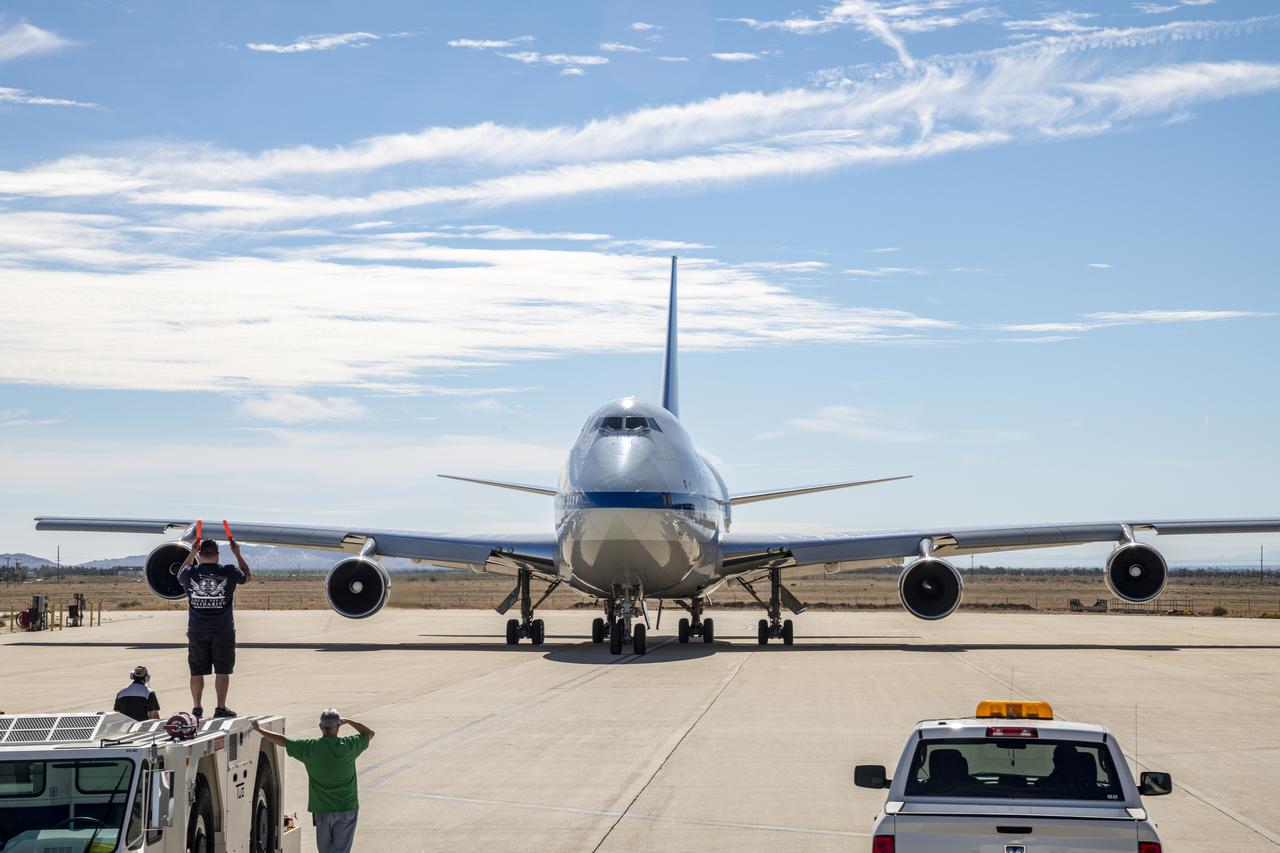
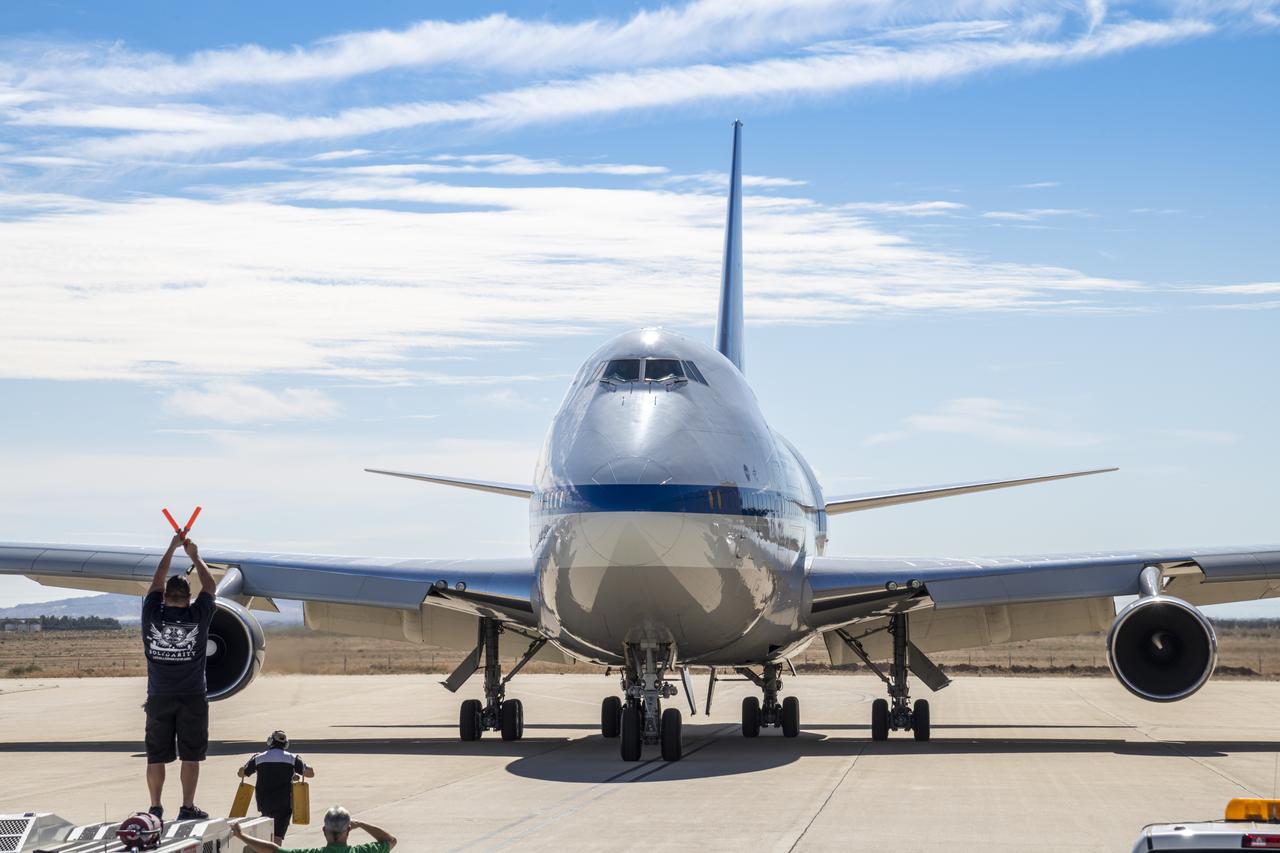
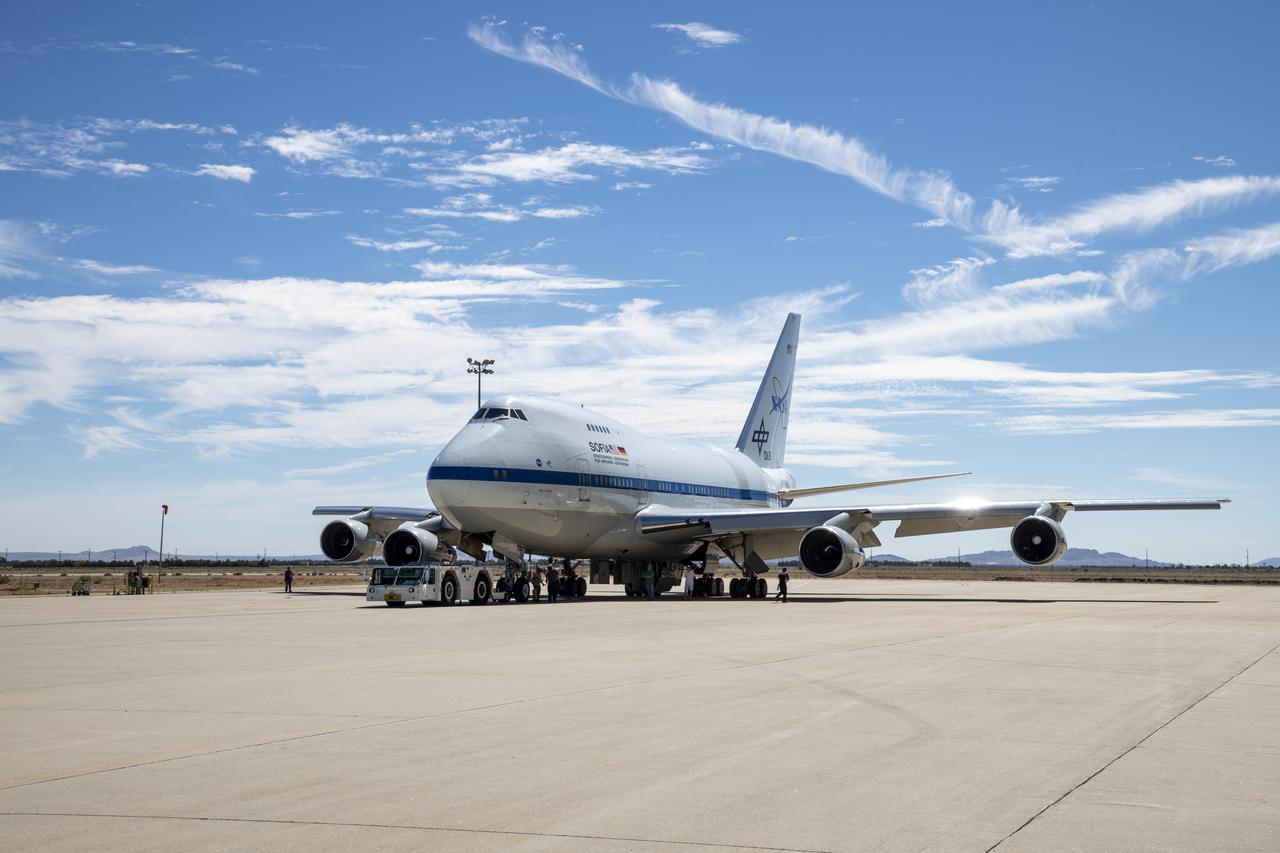
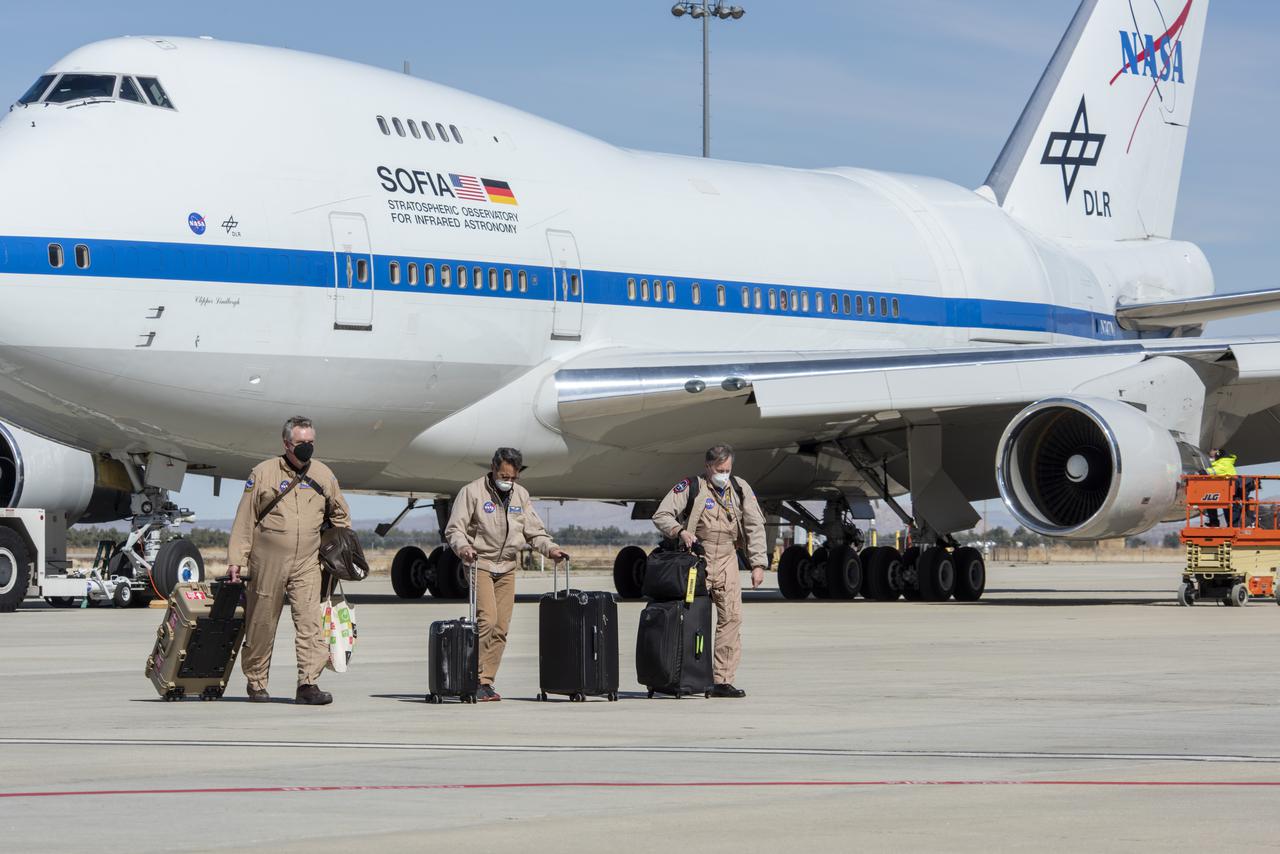
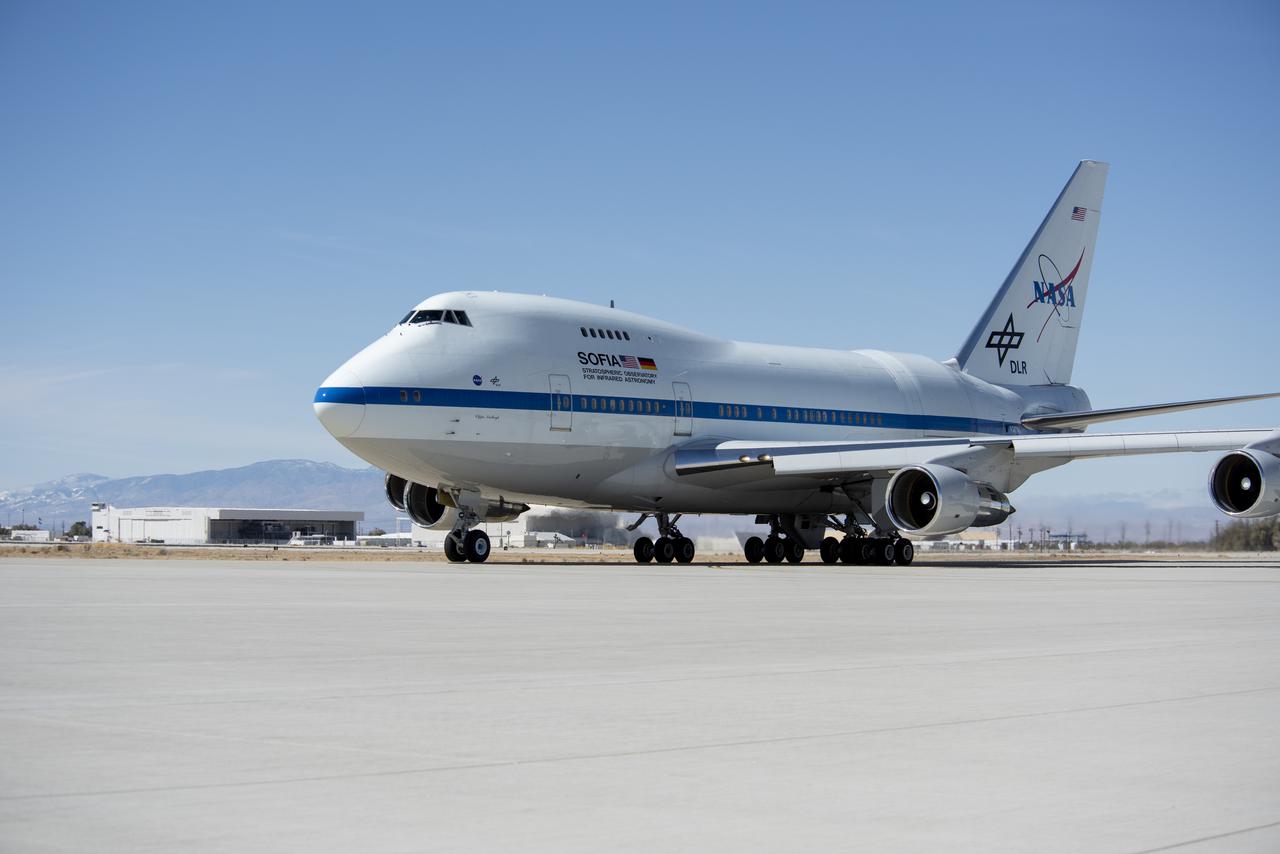
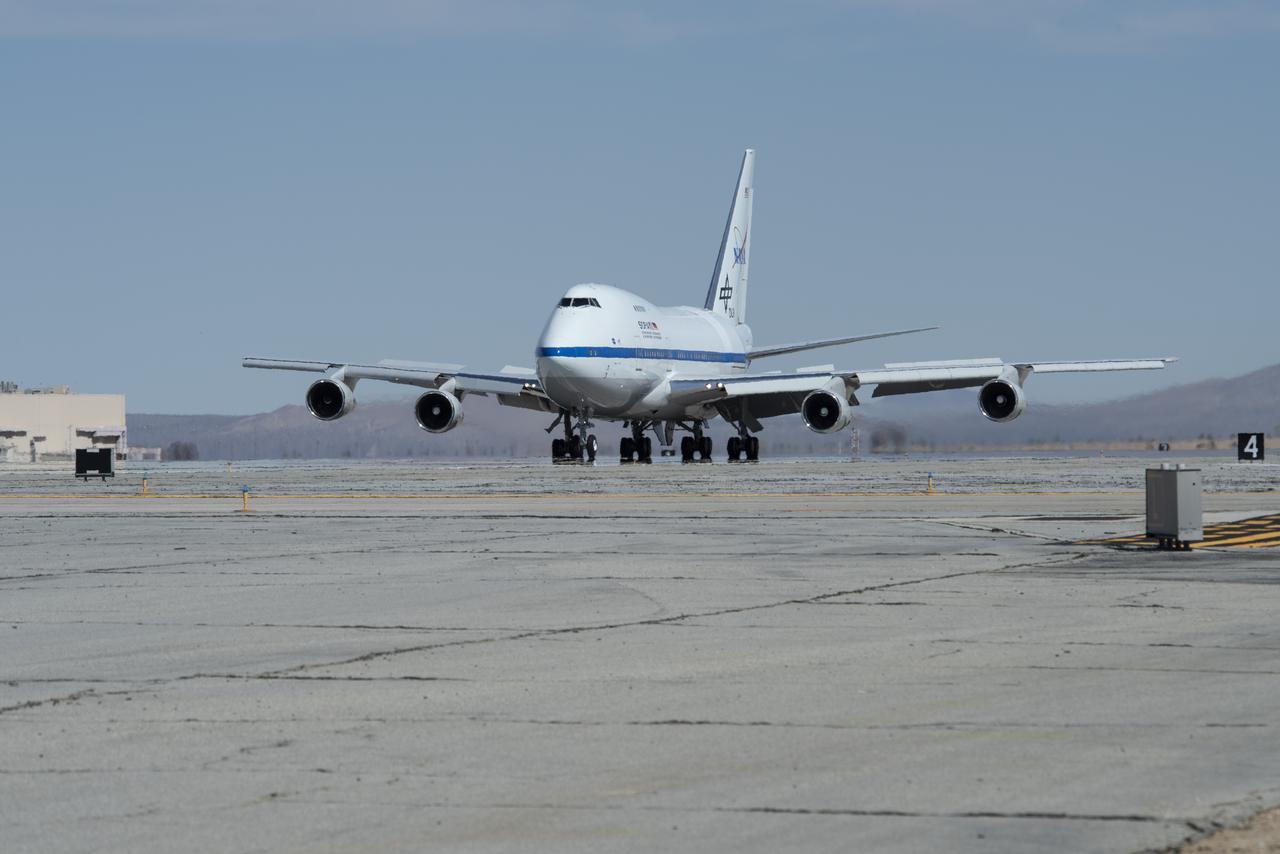
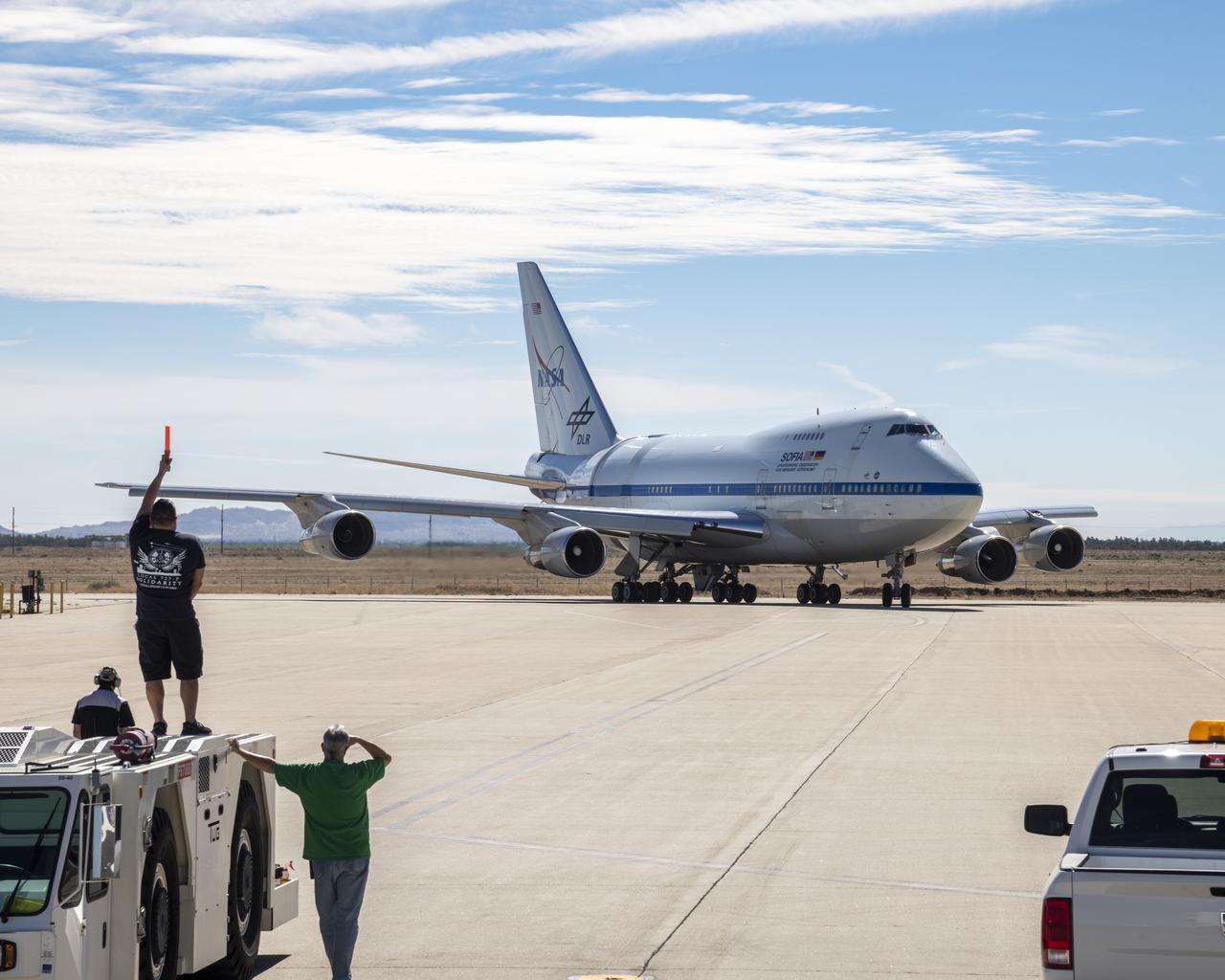
SOFIA Returns to NASA's Armstrong Flight Research Center Building 703 Caption: SOFIA returns to NASA's Armstrong Flight Research Center building 703 in Palmdale, California on March 16, 2021 after spending six months in Germany conducting science observations.
SOFIA Returns to NASA's Armstrong Flight Research Center Building 703
SOFIA Returns to NASA's Armstrong Flight Research Center Building 703 Caption: SOFIA returns to NASA's Armstrong Flight Research Center Building 703 in Palmdale, California on March 16, 2021 after spending six months in Germany conducting science observations.
SOFIA Returns to NASA's Armstrong Flight Research Center Building 703
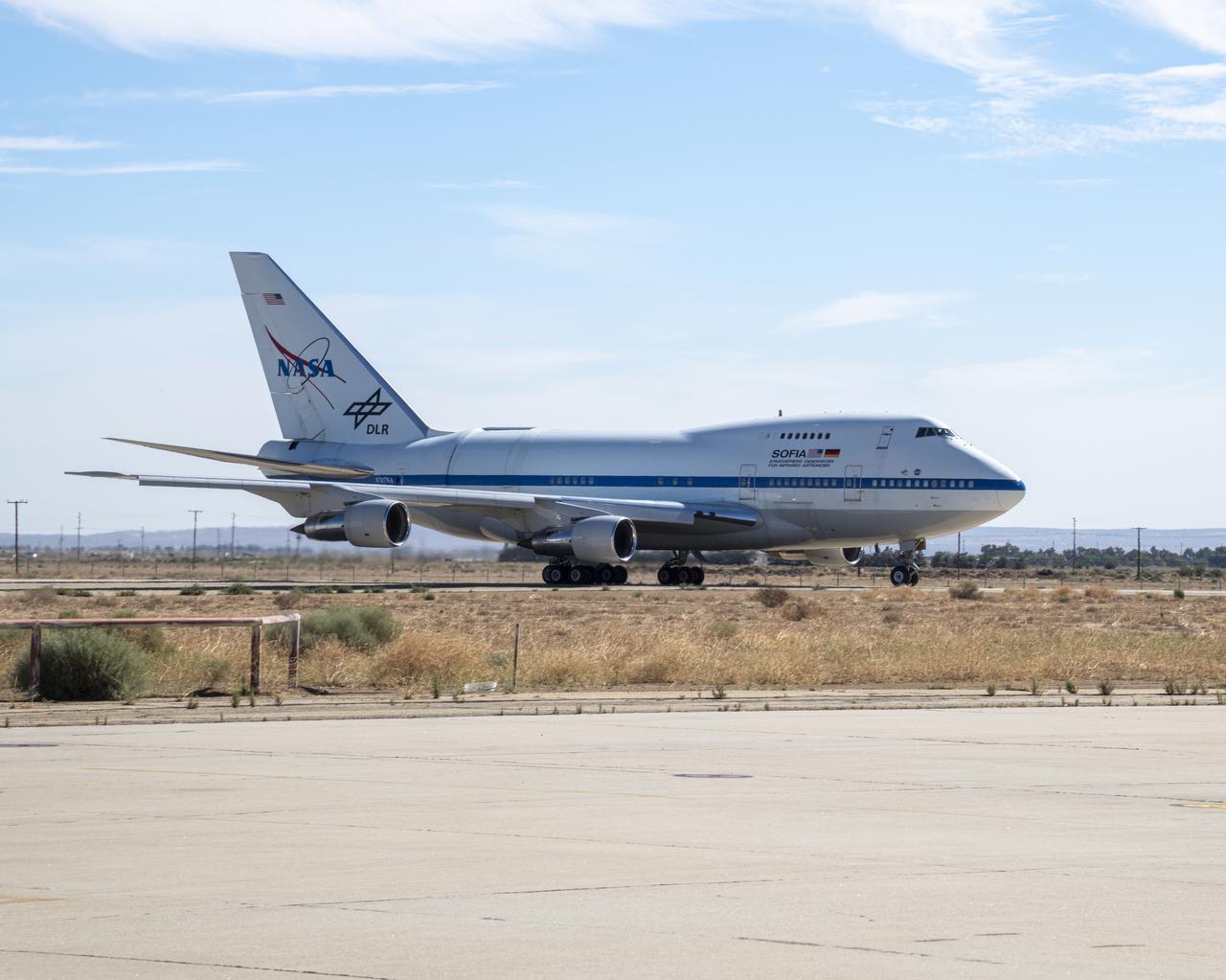
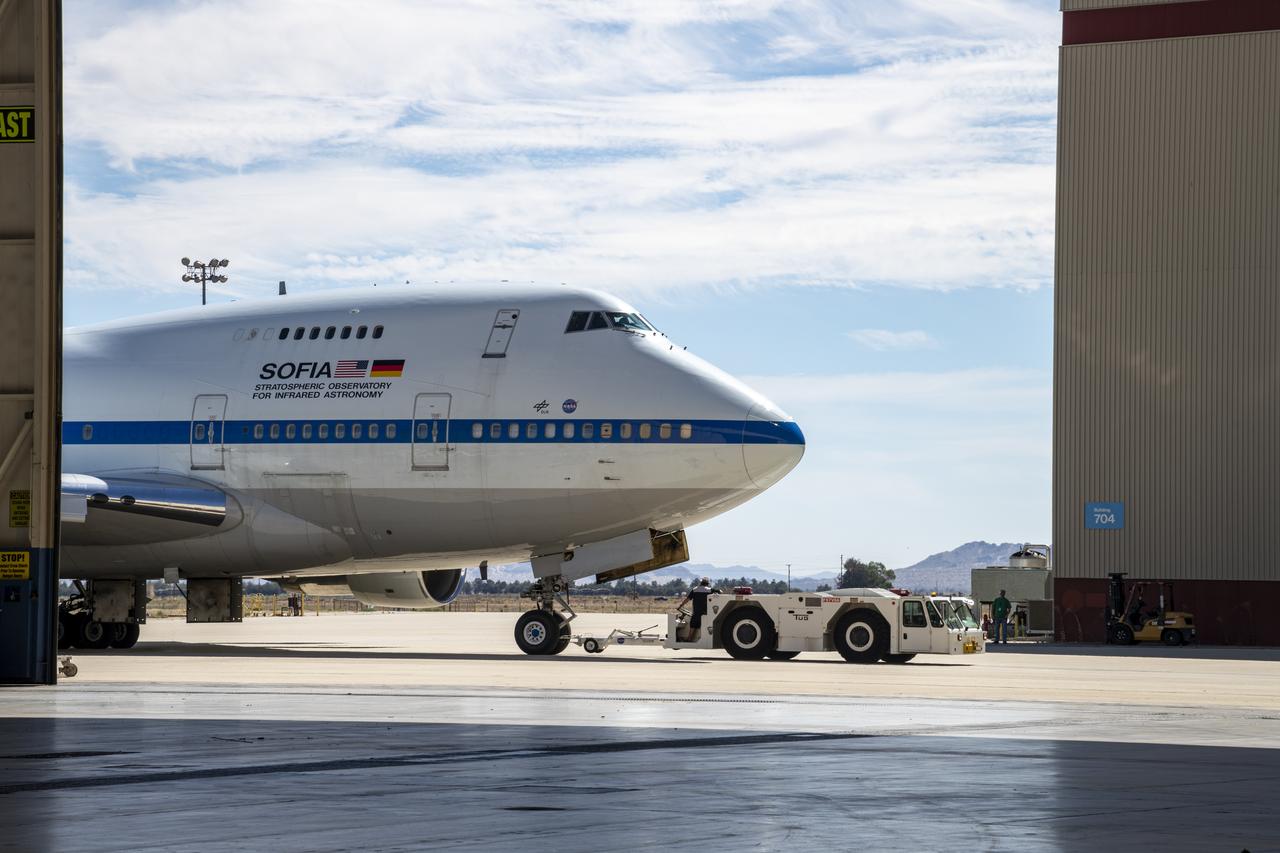
The Stratospheric Observatory for Infrared Astronomy (SOFIA) returns to NASA’s Armstrong Flight Research Center Building 703 on Aug. 11 after a productive month of science flights out of Christchurch International Airport in New Zealand.
SOFIA Returns from Southern Hemisphere Deployment
The Stratospheric Observatory for Infrared Astronomy (SOFIA) returns to NASA’s Armstrong Flight Research Center Building 703 on Aug. 11 after a productive month of science flights out of Christchurch International Airport in New Zealand.
SOFIA Returns from Southern Hemisphere Deployment
The Stratospheric Observatory for Infrared Astronomy (SOFIA) returns to NASA’s Armstrong Flight Research Center Building 703 on Aug. 11 after a productive month of science flights out of Christchurch International Airport in New Zealand.
SOFIA Returns from Southern Hemisphere Deployment
The Stratospheric Observatory for Infrared Astronomy (SOFIA) returns to NASA’s Armstrong Flight Research Center Building 703 on Aug. 11 after a productive month of science flights out of Christchurch International Airport in New Zealand.
SOFIA Returns from Southern Hemisphere Deployment
The Stratospheric Observatory for Infrared Astronomy (SOFIA) returns to NASA’s Armstrong Flight Research Center Building 703 on Aug. 11 after a productive month of science flights out of Christchurch International Airport in New Zealand.
SOFIA Returns from Southern Hemisphere Deployment
The Stratospheric Observatory for Infrared Astronomy (SOFIA) returns to NASA’s Armstrong Flight Research Center Building 703 on Aug. 11 after a productive month of science flights out of Christchurch International Airport in New Zealand.
SOFIA Returns from Southern Hemisphere Deployment
The Stratospheric Observatory for Infrared Astronomy (SOFIA) returns to NASA’s Armstrong Flight Research Center Building 703 on Aug. 11 after a productive month of science flights out of Christchurch International Airport in New Zealand.
SOFIA Returns from Southern Hemisphere Deployment
The Stratospheric Observatory for Infrared Astronomy (SOFIA) returns to NASA’s Armstrong Flight Research Center Building 703 on Aug. 11 after a productive month of science flights out of Christchurch International Airport in New Zealand.
SOFIA Returns from Southern Hemisphere Deployment
The Stratospheric Observatory for Infrared Astronomy (SOFIA) returns to NASA’s Armstrong Flight Research Center Building 703 on Aug. 11 after a productive month of science flights out of Christchurch International Airport in New Zealand.
SOFIA Returns from Southern Hemisphere Deployment
The Stratospheric Observatory for Infrared Astronomy (SOFIA) returns to NASA’s Armstrong Flight Research Center Building 703 on Aug. 11 after a productive month of science flights out of Christchurch International Airport in New Zealand.
SOFIA Returns from Southern Hemisphere Deployment
The Stratospheric Observatory for Infrared Astronomy (SOFIA) returns to NASA’s Armstrong Flight Research Center Building 703 on Aug. 11 after a productive month of science flights out of Christchurch International Airport in New Zealand.
SOFIA Returns from Southern Hemisphere Deployment
The Stratospheric Observatory for Infrared Astronomy (SOFIA) returns to NASA’s Armstrong Flight Research Center Building 703 on Aug. 11 after a productive month of science flights out of Christchurch International Airport in New Zealand.
SOFIA Returns from Southern Hemisphere Deployment
The Stratospheric Observatory for Infrared Astronomy (SOFIA) returns to NASA’s Armstrong Flight Research Center Building 703 on Aug. 11 after a productive month of science flights out of Christchurch International Airport in New Zealand.
SOFIA Returns from Southern Hemisphere Deployment
The Stratospheric Observatory for Infrared Astronomy (SOFIA) returns to NASA’s Armstrong Flight Research Center Building 703 on Aug. 11 after a productive month of science flights out of Christchurch International Airport in New Zealand.
SOFIA Returns from Southern Hemisphere Deployment
The Stratospheric Observatory for Infrared Astronomy (SOFIA) returns to NASA’s Armstrong Flight Research Center Building 703 on Aug. 11 after a productive month of science flights out of Christchurch International Airport in New Zealand.
SOFIA Returns from Southern Hemisphere Deployment
The Stratospheric Observatory for Infrared Astronomy (SOFIA) returns to NASA’s Armstrong Flight Research Center Building 703 on Aug. 11 after a productive month of science flights out of Christchurch International Airport in New Zealand.
SOFIA Returns from Southern Hemisphere Deployment
The Stratospheric Observatory for Infrared Astronomy (SOFIA) returns to NASA’s Armstrong Flight Research Center Building 703 on Aug. 11 after a productive month of science flights out of Christchurch International Airport in New Zealand.
SOFIA Returns from Southern Hemisphere Deployment
The Stratospheric Observatory for Infrared Astronomy (SOFIA) returns to NASA’s Armstrong Flight Research Center Building 703 on Aug. 11 after a productive month of science flights out of Christchurch International Airport in New Zealand.
SOFIA Returns from Southern Hemisphere Deployment
The Stratospheric Observatory for Infrared Astronomy (SOFIA) returns to NASA’s Armstrong Flight Research Center Building 703 on Aug. 11 after a productive month of science flights out of Christchurch International Airport in New Zealand.
SOFIA Returns from Southern Hemisphere Deployment
The Stratospheric Observatory for Infrared Astronomy (SOFIA) returns to NASA’s Armstrong Flight Research Center Building 703 on Aug. 11 after a productive month of science flights out of Christchurch International Airport in New Zealand.
SOFIA Returns from Southern Hemisphere Deployment
The Stratospheric Observatory for Infrared Astronomy (SOFIA) returns to NASA’s Armstrong Flight Research Center Building 703 on Aug. 11 after a productive month of science flights out of Christchurch International Airport in New Zealand.
SOFIA Returns from Southern Hemisphere Deployment
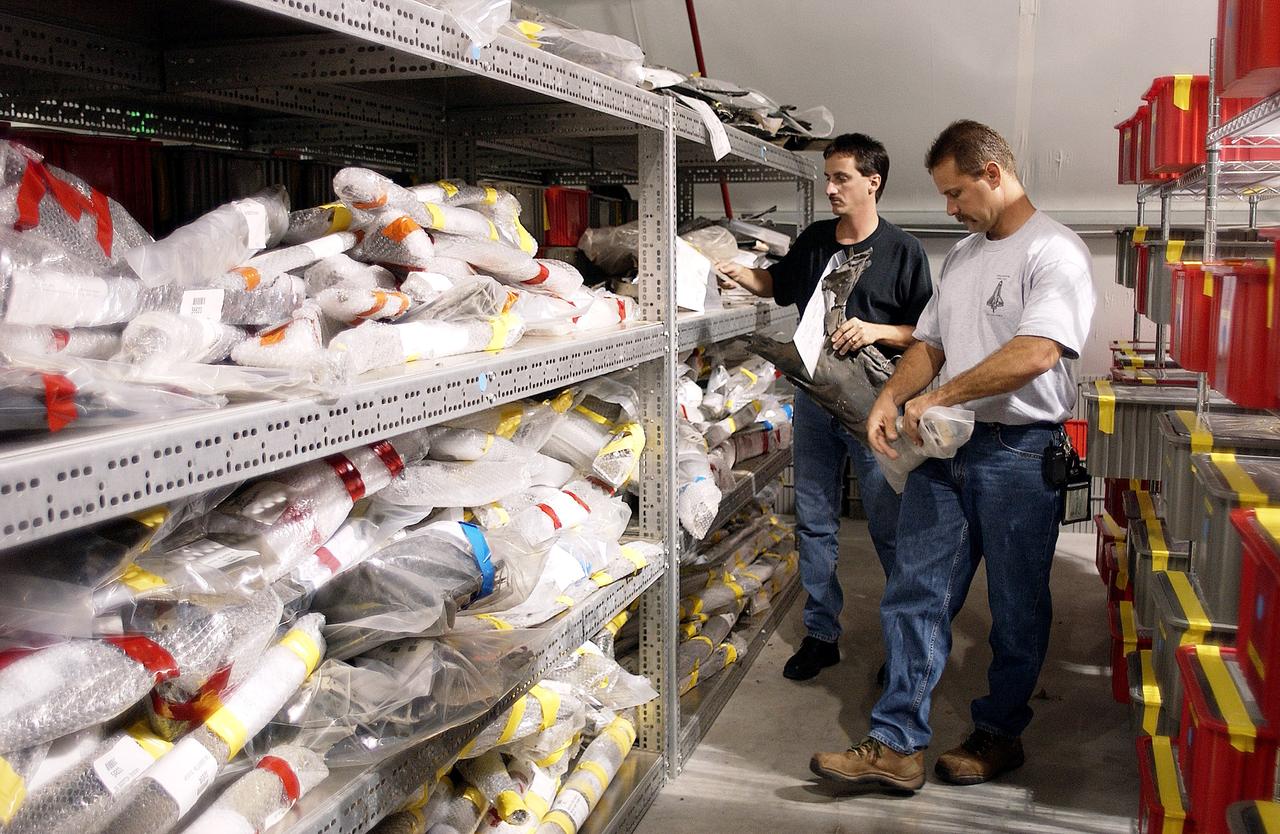
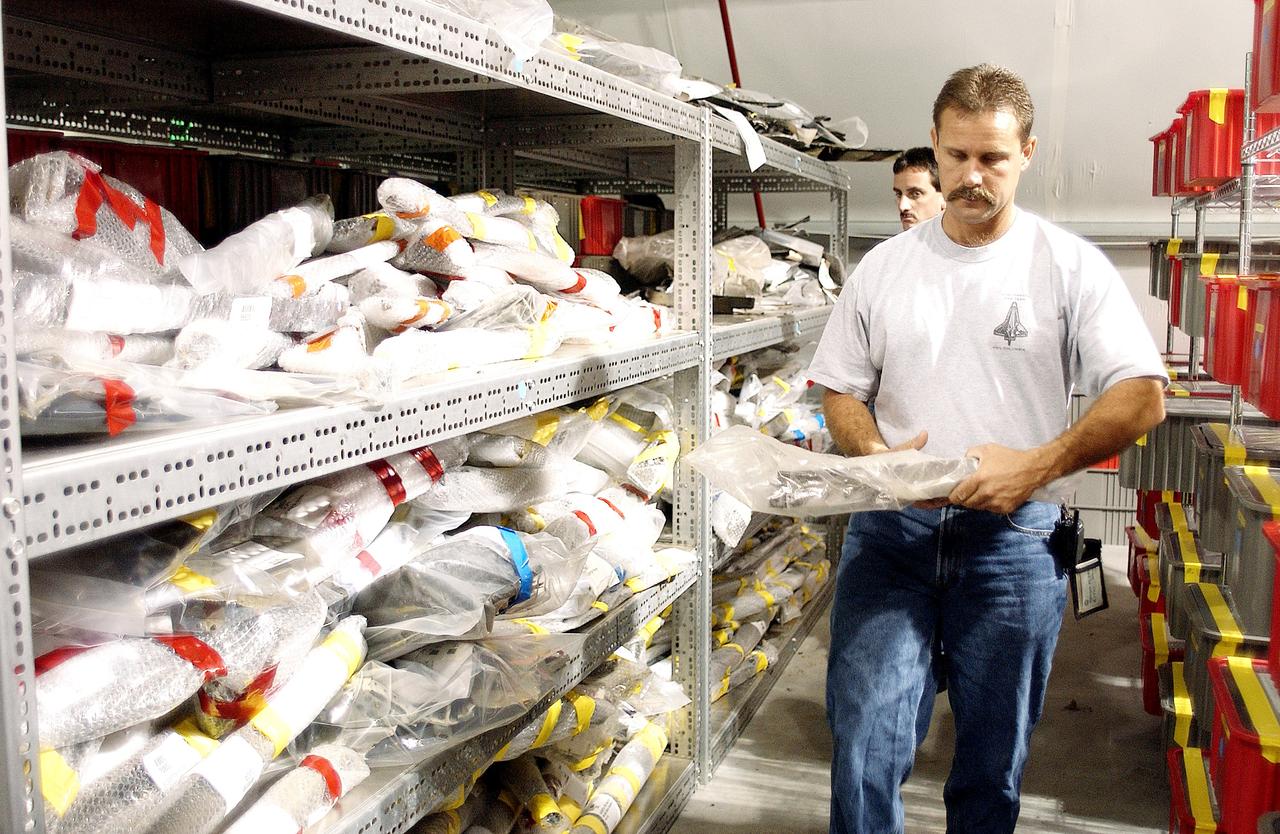
KENNEDY SPACE CENTER, FLA. - In the Columbia Debris Hangar,  Jim Delie (left) and Don Eitel select from the shelves wrapped pieces of debris to be packed into storage boxes.  About 83,000 pieces of debris were shipped to KSC during search and recovery efforts in East Texas. That represents about 38 percent of the dry weight of Columbia, equaling almost 85,000 pounds.  An area of the Vehicle Assembly Building is being prepared to store the debris.
KENNEDY SPACE CENTER, FLA. - In the Columbia Debris Hangar, Jim Delie (left) and Don Eitel select from the shelves wrapped pieces of debris to be packed into storage boxes. About 83,000 pieces of debris were shipped to KSC during search and recovery efforts in East Texas. That represents about 38 percent of the dry weight of Columbia, equaling almost 85,000 pounds. An area of the Vehicle Assembly Building is being prepared to store the debris.
KENNEDY SPACE CENTER, FLA. - In the Columbia Debris Hangar, Jack Nowling transfers bags with debris pieces into a storage box.  About 83,000 pieces of debris were shipped to KSC during search and recovery efforts in East Texas. That represents about 38 percent of the dry weight of Columbia, equaling almost 85,000 pounds.  An area of the Vehicle Assembly Building is being prepared to store the debris.
KENNEDY SPACE CENTER, FLA. - In the Columbia Debris Hangar, Jack Nowling transfers bags with debris pieces into a storage box. About 83,000 pieces of debris were shipped to KSC during search and recovery efforts in East Texas. That represents about 38 percent of the dry weight of Columbia, equaling almost 85,000 pounds. An area of the Vehicle Assembly Building is being prepared to store the debris.
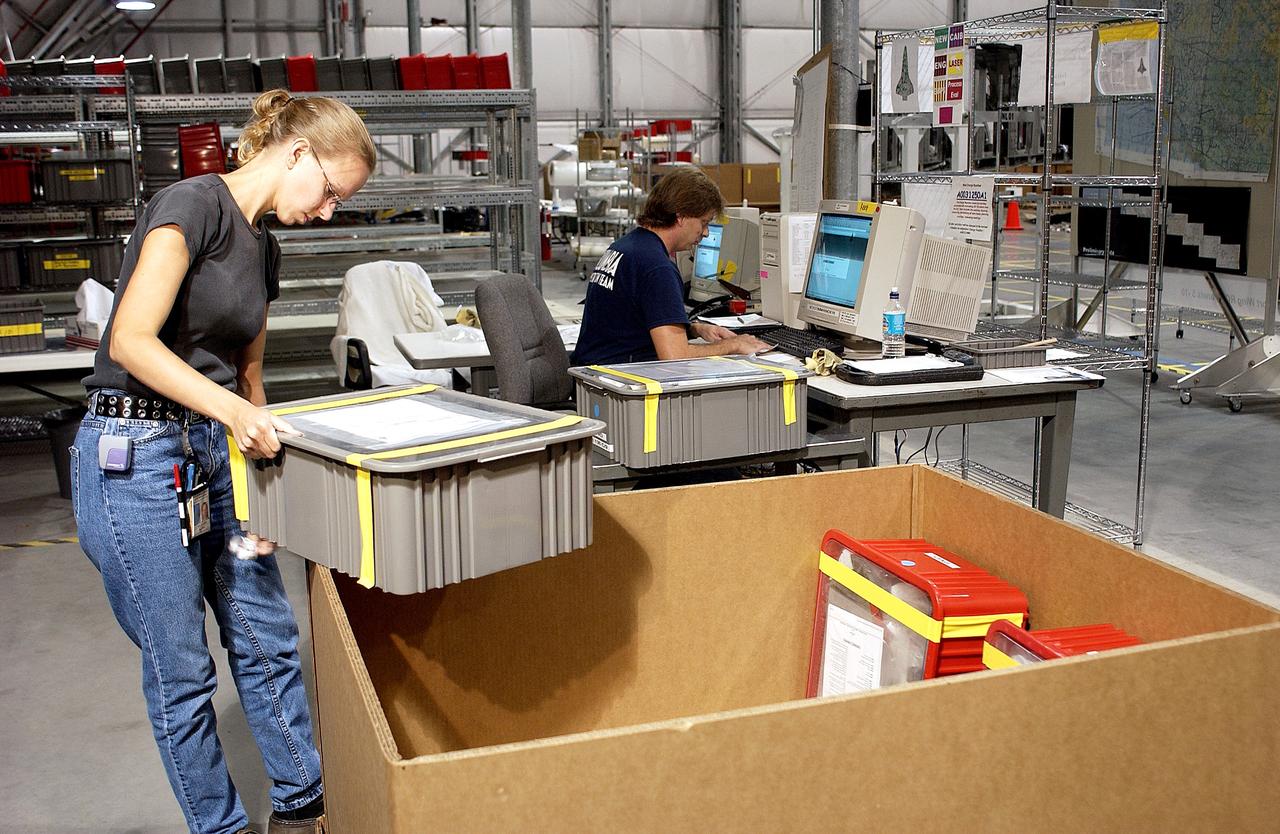
KENNEDY SPACE CENTER, FLA. -  Amy Norris (left) packs some of the debris stored in the Columbia Debris Hangar.  Jack Nowling works on the computer.  About 83,000 pieces of debris were shipped to KSC during search and recovery efforts in East Texas. That represents about 38 percent of the dry weight of Columbia, equaling almost 85,000 pounds.  An area of the Vehicle Assembly Building is being prepared to store the debris.
KENNEDY SPACE CENTER, FLA. - Amy Norris (left) packs some of the debris stored in the Columbia Debris Hangar. Jack Nowling works on the computer. About 83,000 pieces of debris were shipped to KSC during search and recovery efforts in East Texas. That represents about 38 percent of the dry weight of Columbia, equaling almost 85,000 pounds. An area of the Vehicle Assembly Building is being prepared to store the debris.
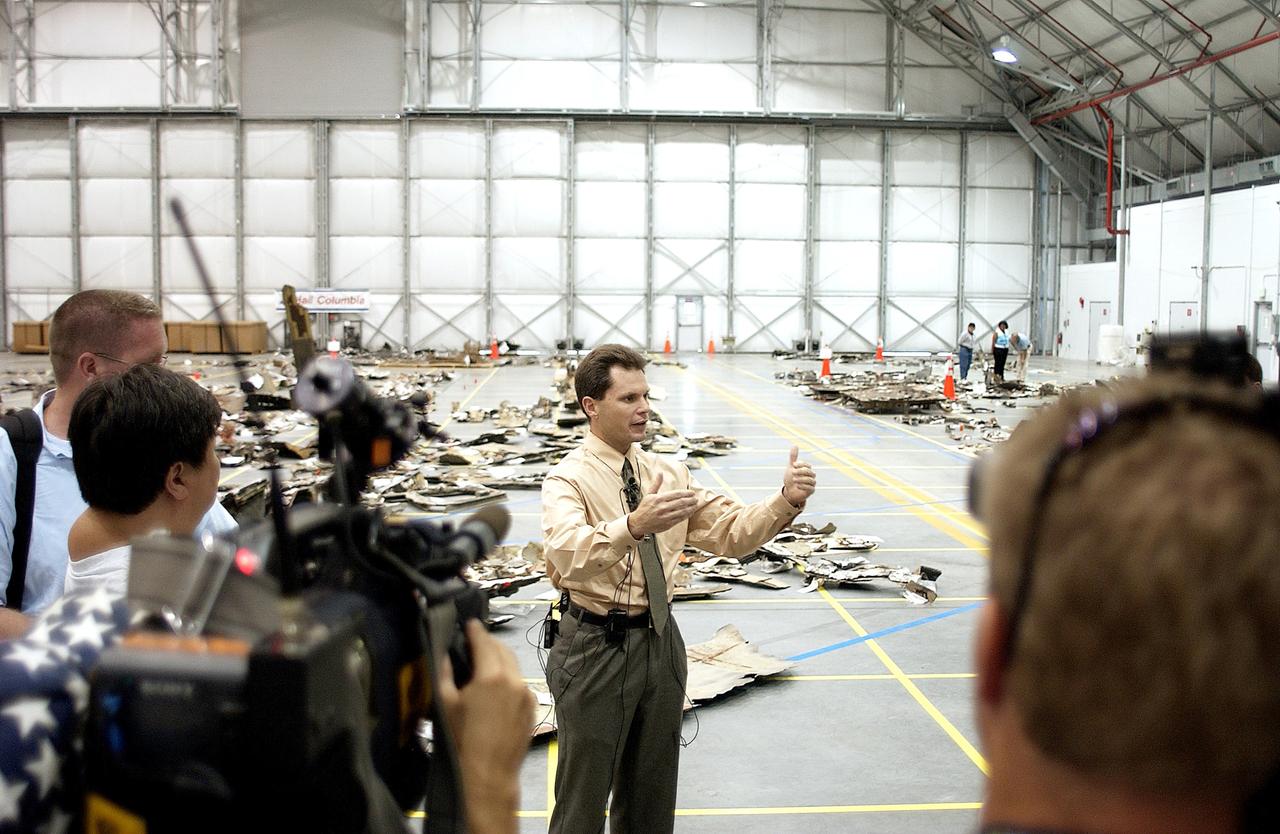
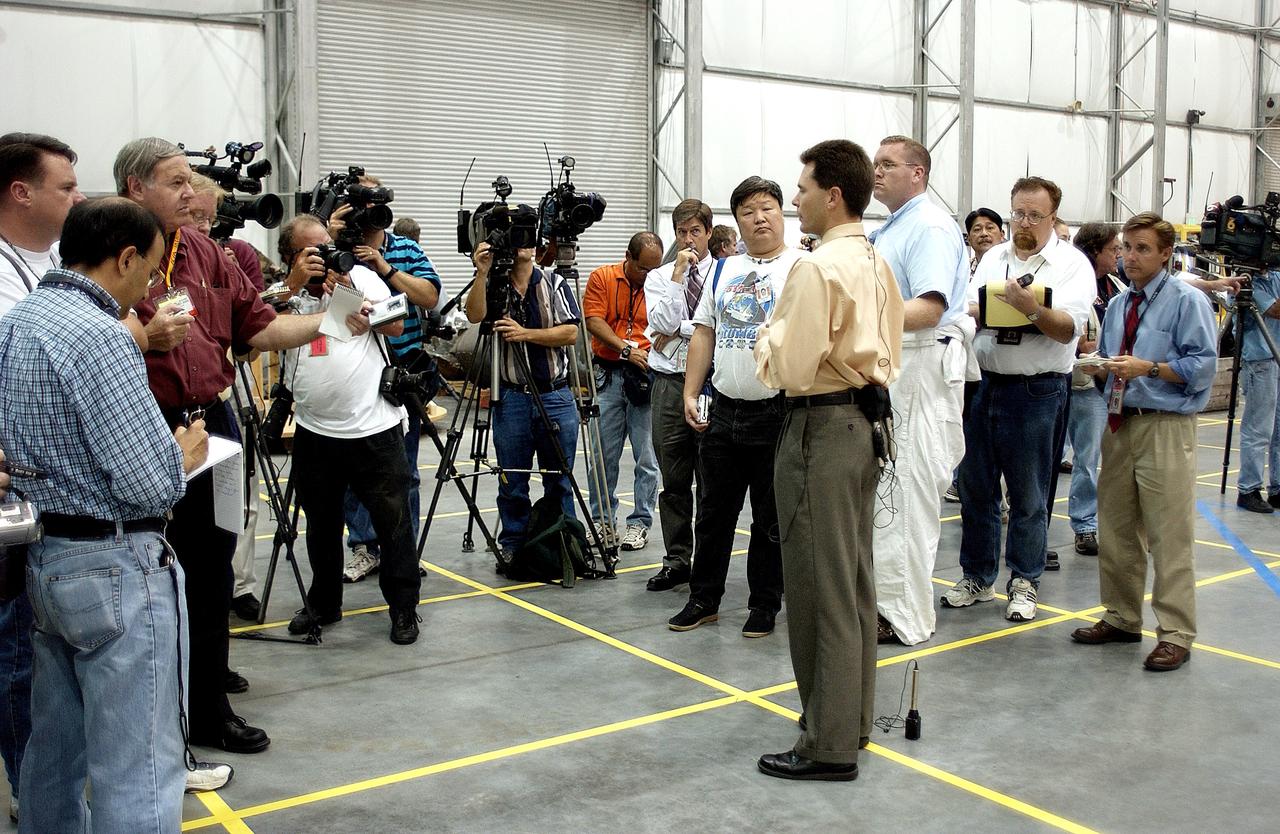
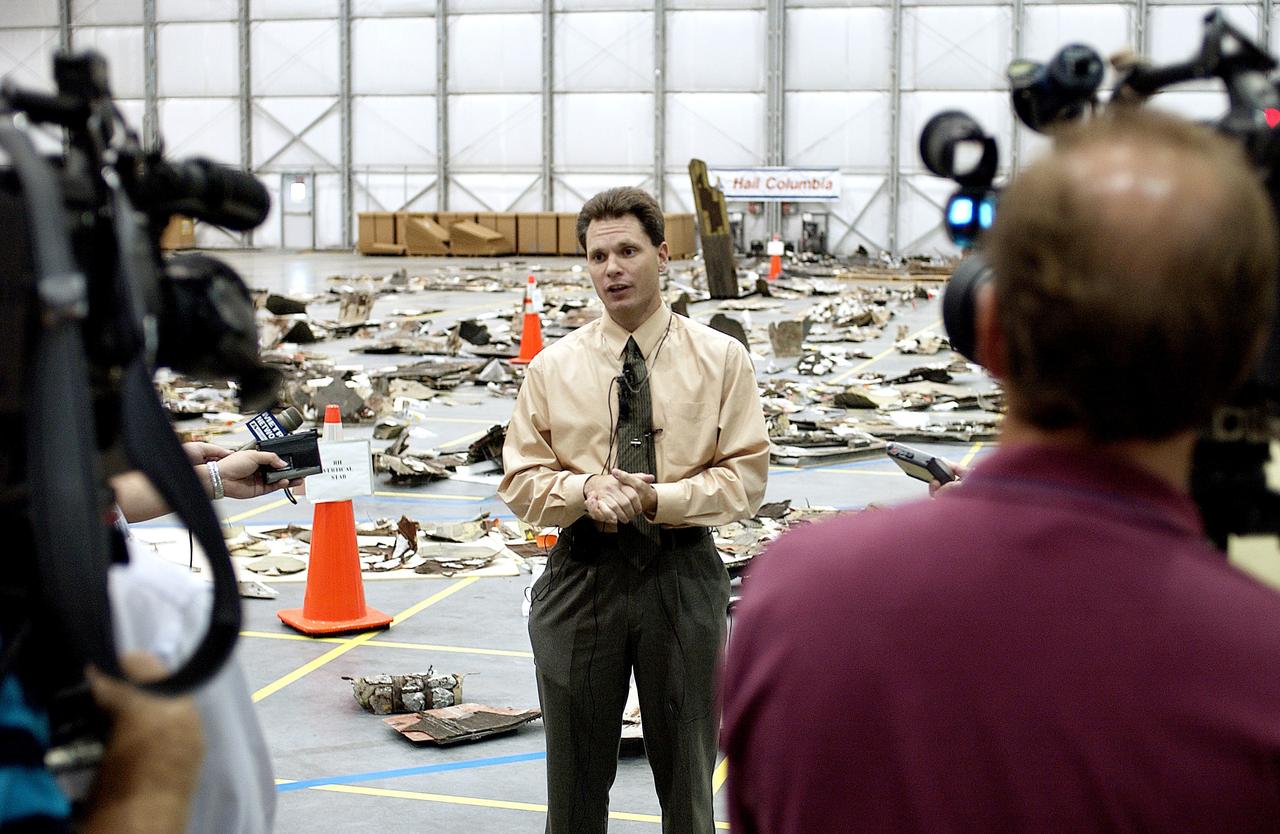
KENNEDY SPACE CENTER, FLA. - In the Columbia Debris Hangar, Scott Thurston, NASA vehicle flow manager, addresses the media about efforts to pack the debris stored in the Columbia Debris Hangar.  More than 83,000  pieces of debris were shipped to KSC during search and recovery efforts in East Texas. That represents about 38 percent of the dry weight of Columbia, equaling almost 85,000 pounds. An area of the Vehicle Assembly Building is being prepared to store the debris permanently.
KSC-03pd2571
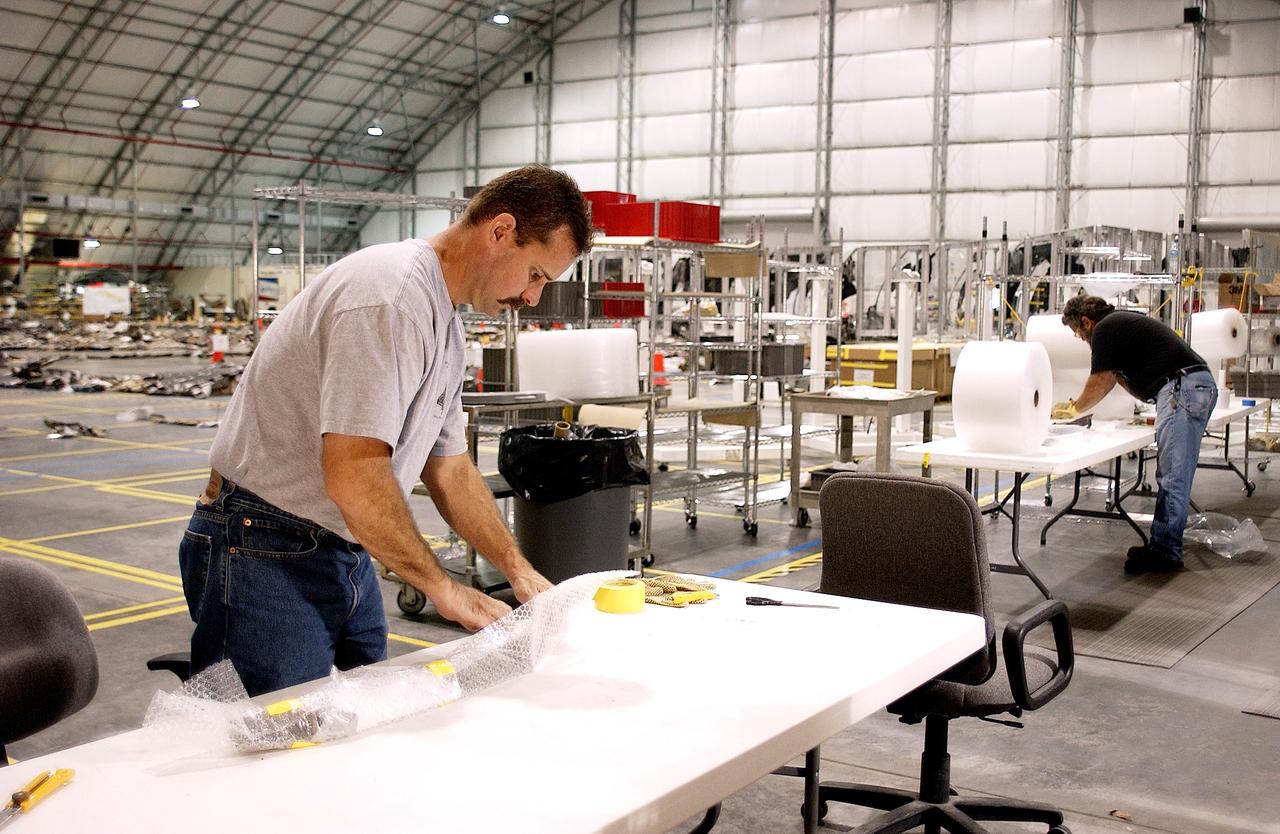
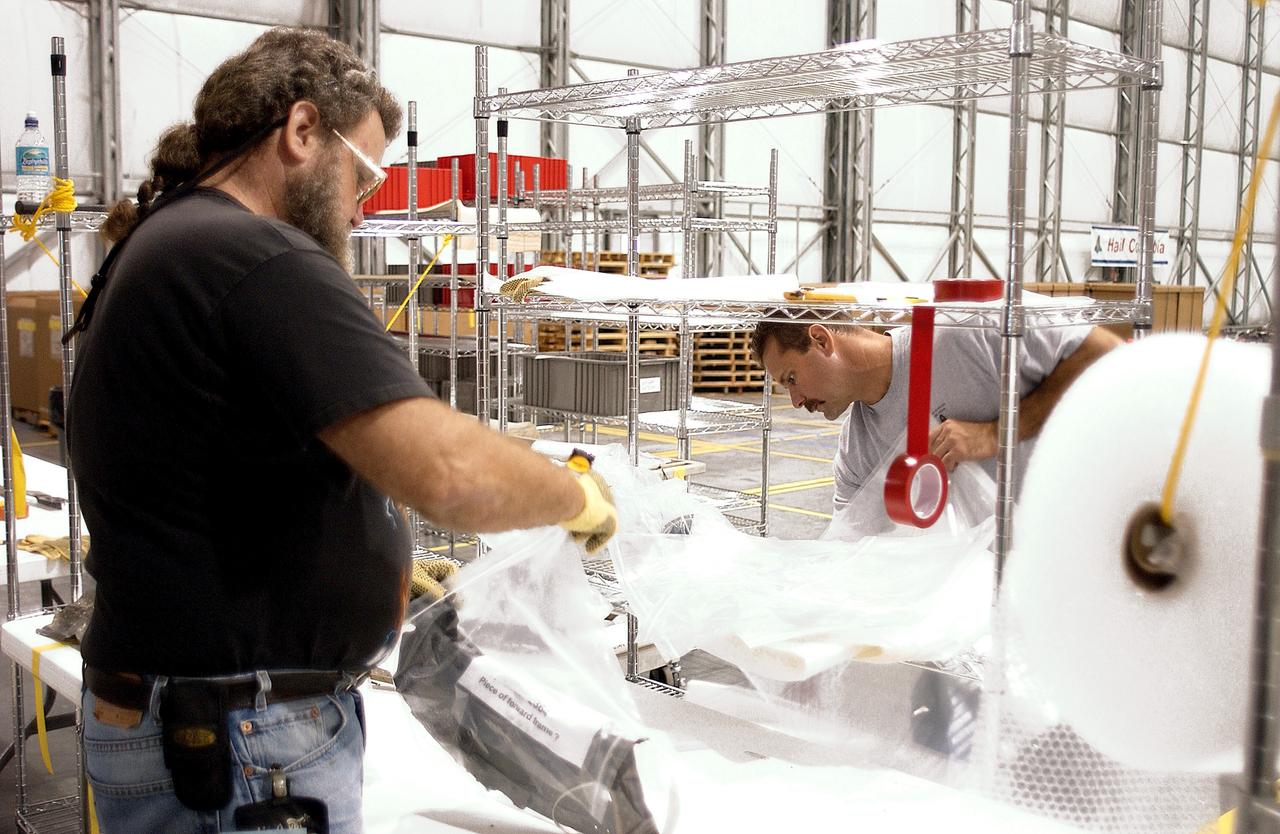
KENNEDY SPACE CENTER, FLA. -  In the Columbia Debris Hangar, Larry Tarver (left) and Don Eitel bag and wrap pieces of debris to be packed into storage boxes.  About 83,000 pieces of debris were shipped to KSC during search and recovery efforts in East Texas. That represents about 38 percent of the dry weight of Columbia, equaling almost 85,000 pounds.  An area of the Vehicle Assembly Building is being prepared to store the debris.
KENNEDY SPACE CENTER, FLA. - In the Columbia Debris Hangar, Larry Tarver (left) and Don Eitel bag and wrap pieces of debris to be packed into storage boxes. About 83,000 pieces of debris were shipped to KSC during search and recovery efforts in East Texas. That represents about 38 percent of the dry weight of Columbia, equaling almost 85,000 pounds. An area of the Vehicle Assembly Building is being prepared to store the debris.
KENNEDY SPACE CENTER, FLA. -In the Columbia Debris Hangar, Don Eitel (left) wraps pieces of Columbia debris for storage.  About 83,000 pieces of debris were shipped to KSC during search and recovery efforts in East Texas. That represents about 38 percent of the dry weight of Columbia, equaling almost 85,000 pounds.  An area of the Vehicle Assembly Building is being prepared to store the debris.
KENNEDY SPACE CENTER, FLA. -In the Columbia Debris Hangar, Don Eitel (left) wraps pieces of Columbia debris for storage. About 83,000 pieces of debris were shipped to KSC during search and recovery efforts in East Texas. That represents about 38 percent of the dry weight of Columbia, equaling almost 85,000 pounds. An area of the Vehicle Assembly Building is being prepared to store the debris.
KENNEDY SPACE CENTER, FLA. -  In the Columbia Debris Hangar,  Don Eitel (in front) and Jim Delie carry pieces of debris to be packed into storage boxes.  About 83,000 pieces of debris were shipped to KSC during search and recovery efforts in East Texas. That represents about 38 percent of the dry weight of Columbia, equaling almost 85,000 pounds.  An area of the Vehicle Assembly Building is being prepared to store the debris.
KENNEDY SPACE CENTER, FLA. - In the Columbia Debris Hangar, Don Eitel (in front) and Jim Delie carry pieces of debris to be packed into storage boxes. About 83,000 pieces of debris were shipped to KSC during search and recovery efforts in East Texas. That represents about 38 percent of the dry weight of Columbia, equaling almost 85,000 pounds. An area of the Vehicle Assembly Building is being prepared to store the debris.
KENNEDY SPACE CENTER, FLA. - In the Columbia Debris Hangar, Scott Thurston, NASA vehicle flow manager, addresses the media about efforts to pack the debris stored in the Columbia Debris Hangar.  More than 83,000  pieces of debris were shipped to KSC during search and recovery efforts in East Texas. That represents about 38 percent of the dry weight of Columbia, equaling almost 85,000 pounds. An area of the Vehicle Assembly Building is being prepared to store the debris permanently.
KENNEDY SPACE CENTER, FLA. - In the Columbia Debris Hangar, Scott Thurston, NASA vehicle flow manager, addresses the media about efforts to pack the debris stored in the Columbia Debris Hangar. More than 83,000 pieces of debris were shipped to KSC during search and recovery efforts in East Texas. That represents about 38 percent of the dry weight of Columbia, equaling almost 85,000 pounds. An area of the Vehicle Assembly Building is being prepared to store the debris permanently.
KENNEDY SPACE CENTER, FLA. - In the Columbia Debris Hangar, Scott Thurston, NASA vehicle flow manager, addresses the media about efforts to pack the debris stored in the Columbia Debris Hangar.  More than 83,000  pieces of debris were shipped to KSC during search and recovery efforts in East Texas. That represents about 38 percent of the dry weight of Columbia, equaling almost 85,000 pounds. An area of the Vehicle Assembly Building is being prepared to store the debris permanently.
KENNEDY SPACE CENTER, FLA. - In the Columbia Debris Hangar, Scott Thurston, NASA vehicle flow manager, addresses the media about efforts to pack the debris stored in the Columbia Debris Hangar. More than 83,000 pieces of debris were shipped to KSC during search and recovery efforts in East Texas. That represents about 38 percent of the dry weight of Columbia, equaling almost 85,000 pounds. An area of the Vehicle Assembly Building is being prepared to store the debris permanently.
KENNEDY SPACE CENTER, FLA. - In the Columbia Debris Hangar, Scott Thurston, NASA vehicle flow manager, addresses the media about efforts to pack the debris stored in the Columbia Debris Hangar.  More than 83,000  pieces of debris were shipped to KSC during search and recovery efforts in East Texas. That represents about 38 percent of the dry weight of Columbia, equaling almost 85,000 pounds. An area of the Vehicle Assembly Building is being prepared to store the debris permanently.
KENNEDY SPACE CENTER, FLA. - In the Columbia Debris Hangar, Scott Thurston, NASA vehicle flow manager, addresses the media about efforts to pack the debris stored in the Columbia Debris Hangar. More than 83,000 pieces of debris were shipped to KSC during search and recovery efforts in East Texas. That represents about 38 percent of the dry weight of Columbia, equaling almost 85,000 pounds. An area of the Vehicle Assembly Building is being prepared to store the debris permanently.
Student Assistant Antoinette Davis (left) of Utica; Carmella Forsythe, 13, of Clinton; Terri Henderson, 14, of Clinton; Tyra Greer, 12, of Port Gibson; and Kala Battle, 14, of Edwards, answer curriculum questions about NASA's Return to Flight mission exhibit at StenniSphere, the visitor center at NASA's Stennis Space Center (SSC) near Bay St. Louis, Miss. The girls were on a field trip to StenniSphere with fellow participants in Hinds Community College's MSEIP (Minority Science Engineering Improvement Program) summer program. MSEIP encourages students to pursue and prepare for careers in science, technology, engineering and math.
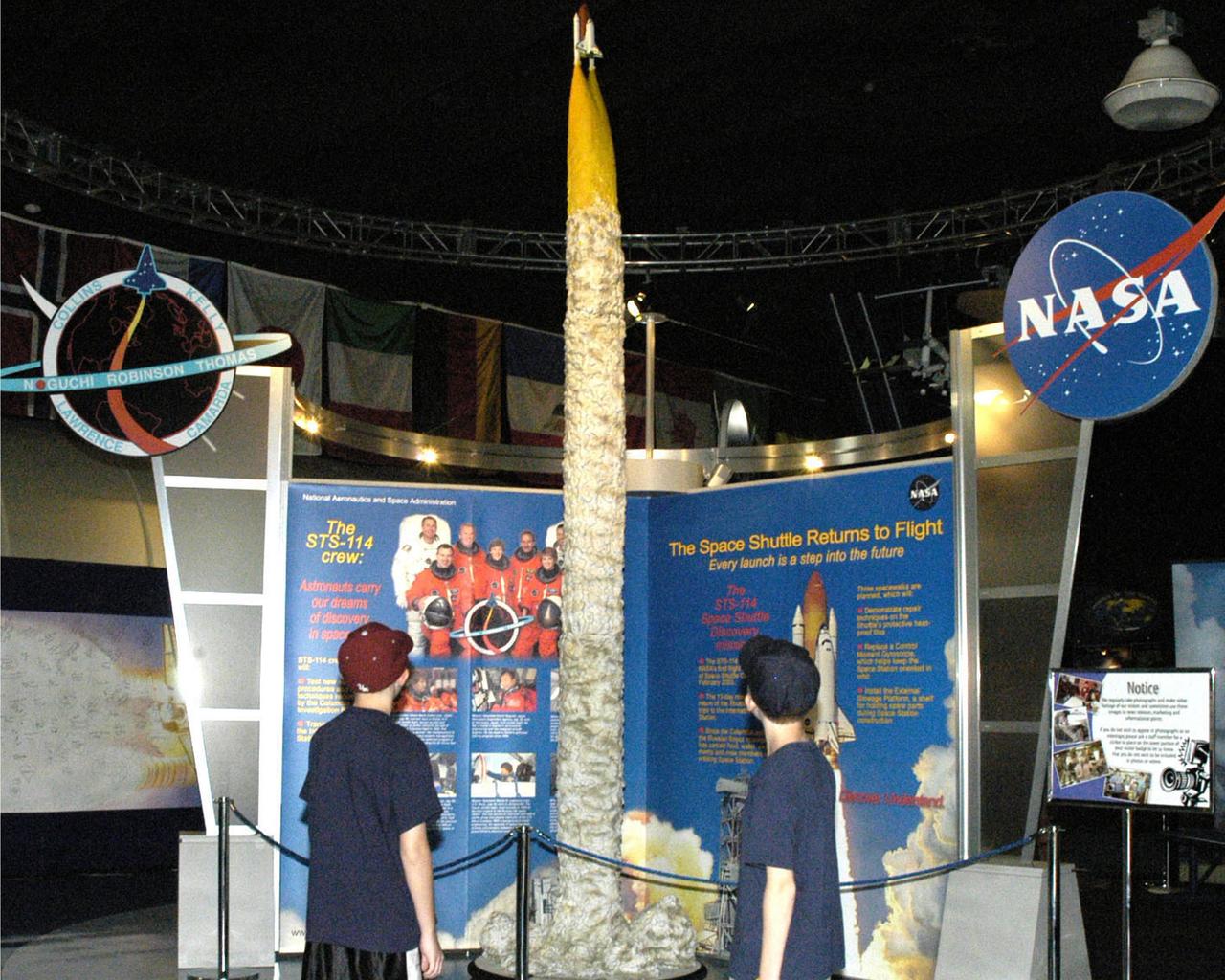
Hinds Community College MSEIP program
The Space Shuttle's Main Engine (SSME) reached another milestone Aug. 19, 2004, when a successful flight acceptance test was conducted at NASA Stennis Space Center (SSC). The engine tested was the final of three engines that will carry the next Space Shuttle into orbit. The engine will be shipped to NASA Kennedy Space Center in Florida for installation on Space Shuttle Discovery for STS-114, NASA's Return to Flight mission. The engine test, which began about 8:10 p.m. CDT, ran for 520 seconds (8 minutes), the length of time it takes for the Space Shuttle to reach orbit.
Final RTF SSME test at A2 test stand
SOFIA Returns to NASA’s Armstrong Flight Research Center Building 703 Caption: SOFIA pilots are welcomed home to NASA’s Armstrong Flight Research Center Building 703 in Palmdale, California on March 16, 2021. From left to right: Tracy Phelps, Jeff Borton and Wayne Ringelberg
SOFIA Returns to NASA’s Armstrong Flight Research Center Building 703
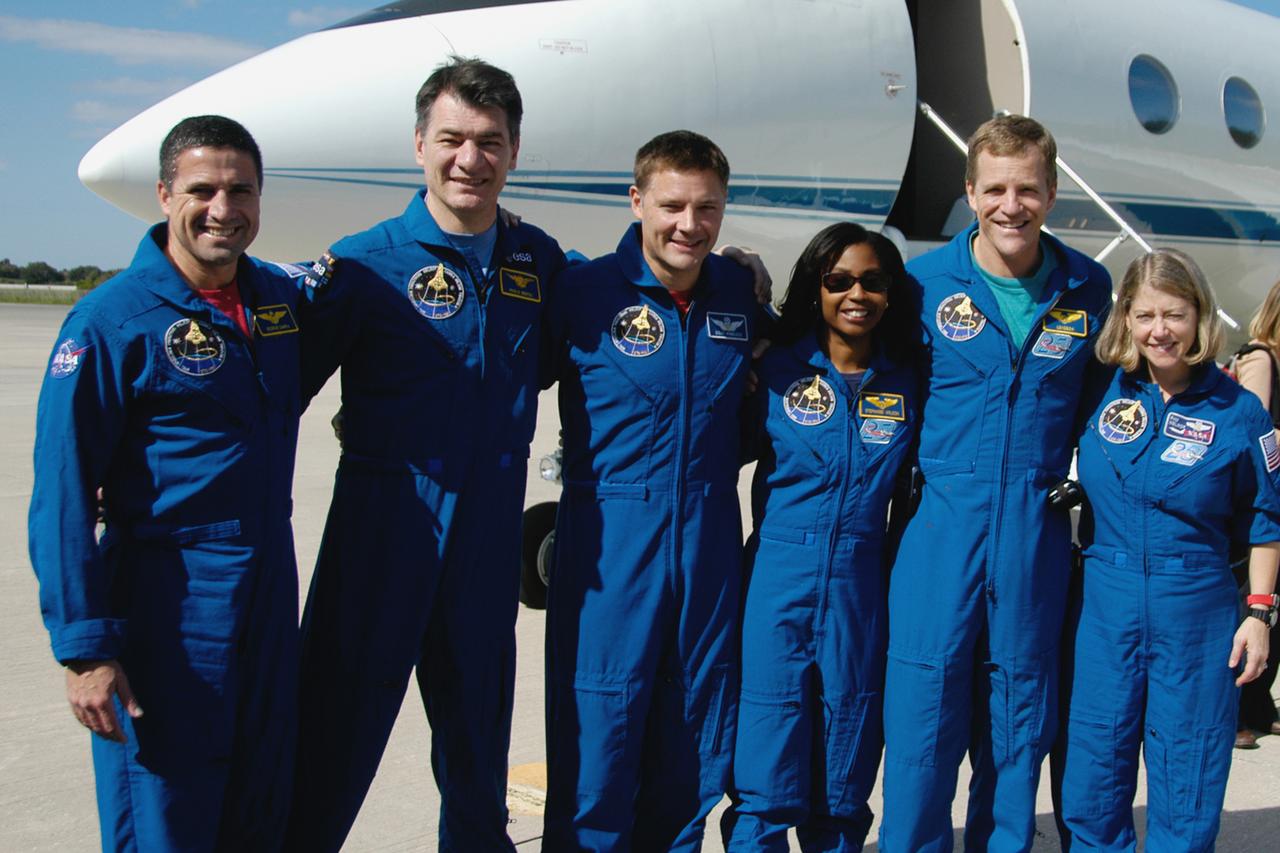
The STS-120 crew members are ready for their return to flight to Houston. From left are Pilot George Zamka, Mission Specialists Paolo Nespoli, Doug Wheelock, Stephanie Wilson and Scott Parazynski, and Commander Pamela Melroy. A welcoming ceremony for the crew is planned at NASA's Hangar 276 on the south end of Ellington Field in Texas. On the 15-day mission, the STS-120 crew continued the construction of the station with the installation of the Harmony Node 2 module and the relocation of the P6 truss. They landed Nov. 7 at NASA's Kennedy Space Center.
The STS-120 crew members are ready for their return flight to Ho
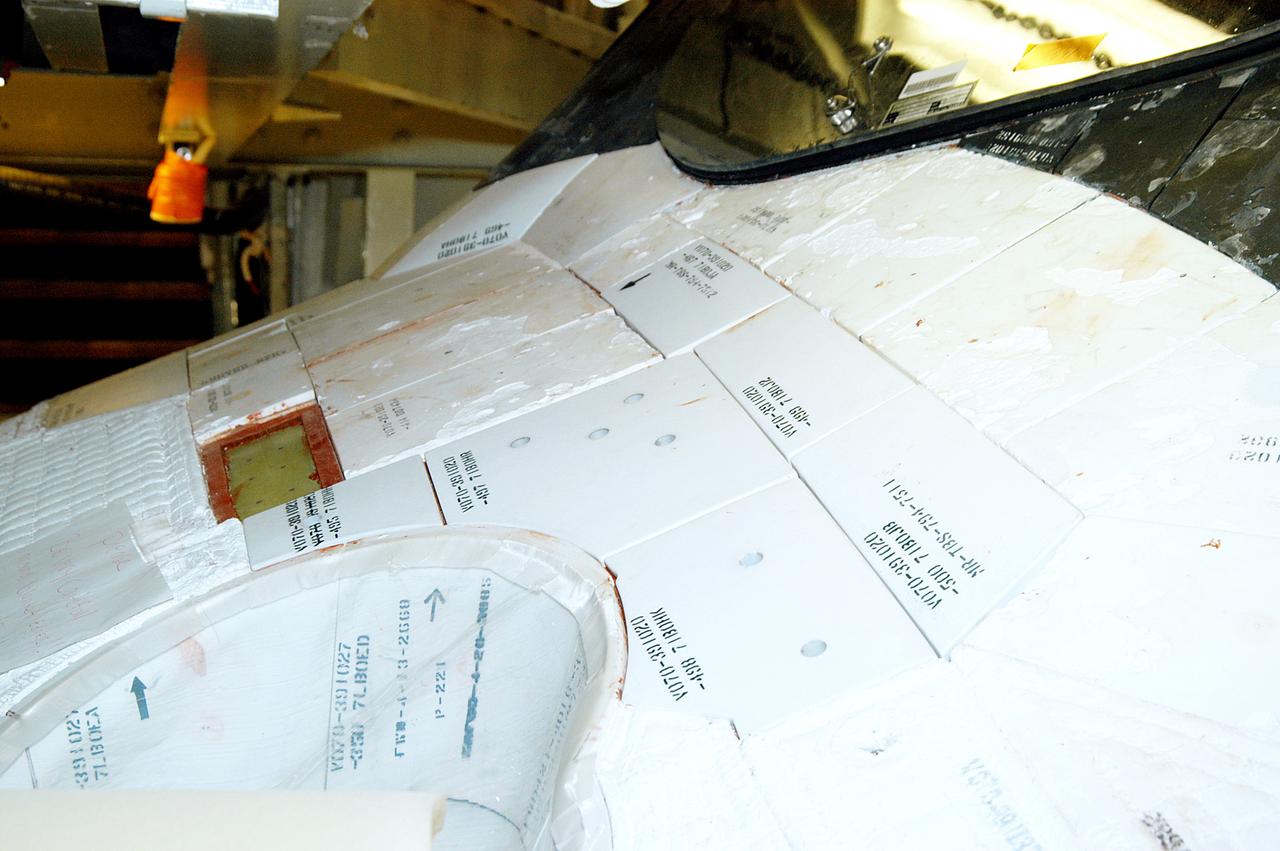
KENNEDY SPACE CENTER, FLA. - In the Orbiter Processing Facility, United Space Alliance technician Jamie Haynes does a gap test on the tiles of the nose of orbiter Atlantis as part of return-to-flight activities.  Atlantis is scheduled for mission STS-114, a return-to-flight test mission to the International Space Station.
KENNEDY SPACE CENTER, FLA. - In the Orbiter Processing Facility, United Space Alliance technician Jamie Haynes does a gap test on the tiles of the nose of orbiter Atlantis as part of return-to-flight activities. Atlantis is scheduled for mission STS-114, a return-to-flight test mission to the International Space Station.
KENNEDY SPACE CENTER, FLA. - In the Orbiter Processing Facility, United Space Alliance technician Chris Moore performs gap tests on the tiles of the nose of orbiter Atlantis as part of return-to-flight activities.  Atlantis is scheduled for mission STS-114, a return-to-flight test mission to the International Space Station.
KENNEDY SPACE CENTER, FLA. - In the Orbiter Processing Facility, United Space Alliance technician Chris Moore performs gap tests on the tiles of the nose of orbiter Atlantis as part of return-to-flight activities. Atlantis is scheduled for mission STS-114, a return-to-flight test mission to the International Space Station.
KENNEDY SPACE CENTER, FLA. - This view shows the tiles below the windshield on the orbiter Atlantis.  A gap test is being performed on the tiles as part of return-to-flight activities.  Atlantis is scheduled for mission STS-114, a return-to-flight test mission to the International Space Station.
KENNEDY SPACE CENTER, FLA. - This view shows the tiles below the windshield on the orbiter Atlantis. A gap test is being performed on the tiles as part of return-to-flight activities. Atlantis is scheduled for mission STS-114, a return-to-flight test mission to the International Space Station.
KENNEDY SPACE CENTER, FLA. -  In the Orbiter Processing Facility, United Space Alliance technician Jamie Haynes checks the tiles on the nose of orbiter Atlantis as part of return-to-flight activities.  Atlantis is scheduled for mission STS-114, a return-to-flight test mission to the International Space Station.
KENNEDY SPACE CENTER, FLA. - In the Orbiter Processing Facility, United Space Alliance technician Jamie Haynes checks the tiles on the nose of orbiter Atlantis as part of return-to-flight activities. Atlantis is scheduled for mission STS-114, a return-to-flight test mission to the International Space Station.
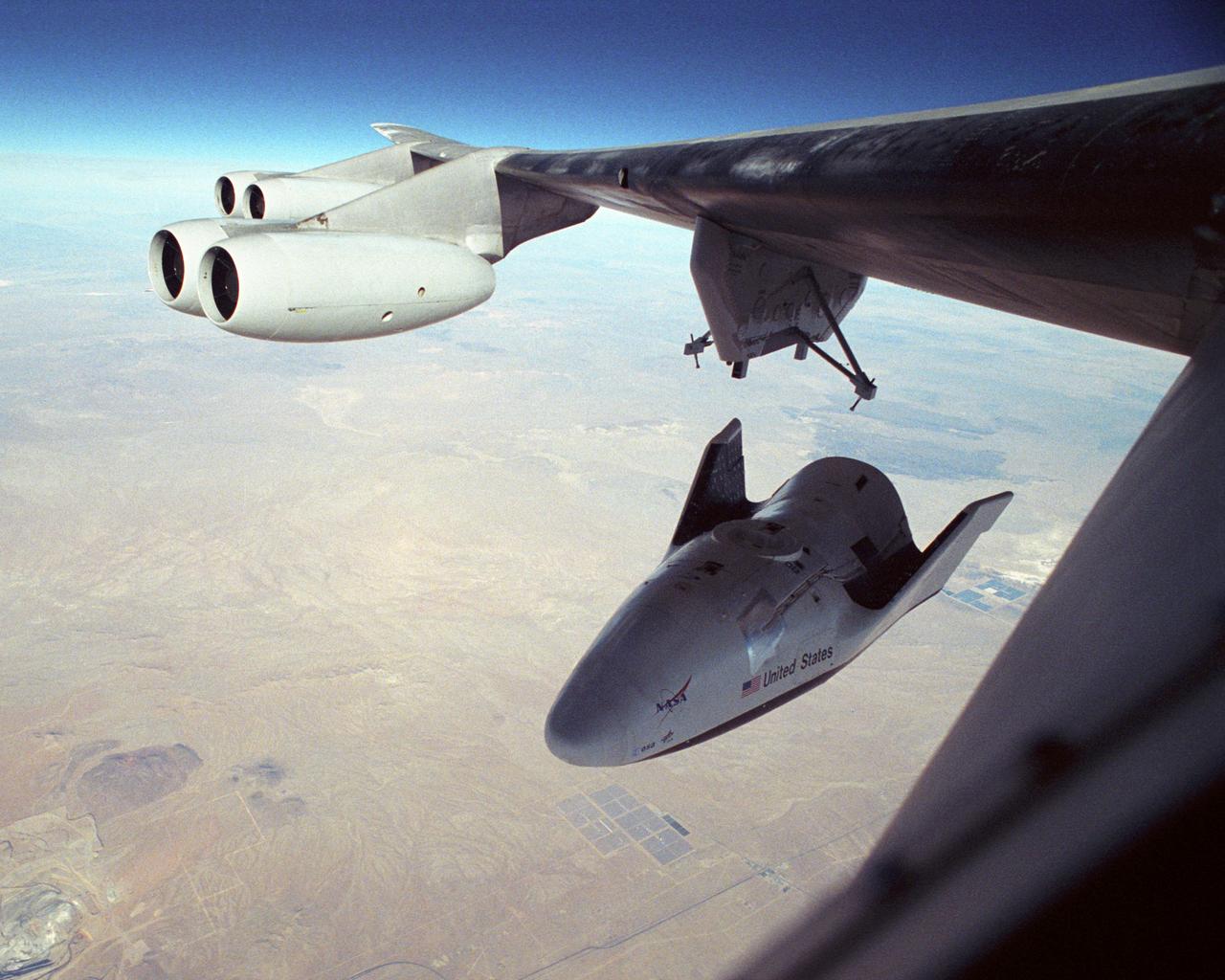
The X-38 prototype of the Crew Return Vehicle for the International Space Station drops away from its launch pylon on the wing of NASA's NB-52B mothership as it begins its eighth free flight on Thursday, Dec. 13, 2001. The 13-minute test flight of X-38 vehicle 131R was the longest and fastest and was launched from the highest altitude to date in the X-38's atmospheric flight test program. A portion of the descent was flown under remote control by a NASA astronaut from a ground vehicle configured like the CRV's interior before the X-38 made an autonomous landing on Rogers Dry Lake.
The X-38 Vehicle 131R drops away from its launch pylon on the wing of NASA's NB-52B mothership as it begins its eighth free flight on Thursday, December 13, 2001
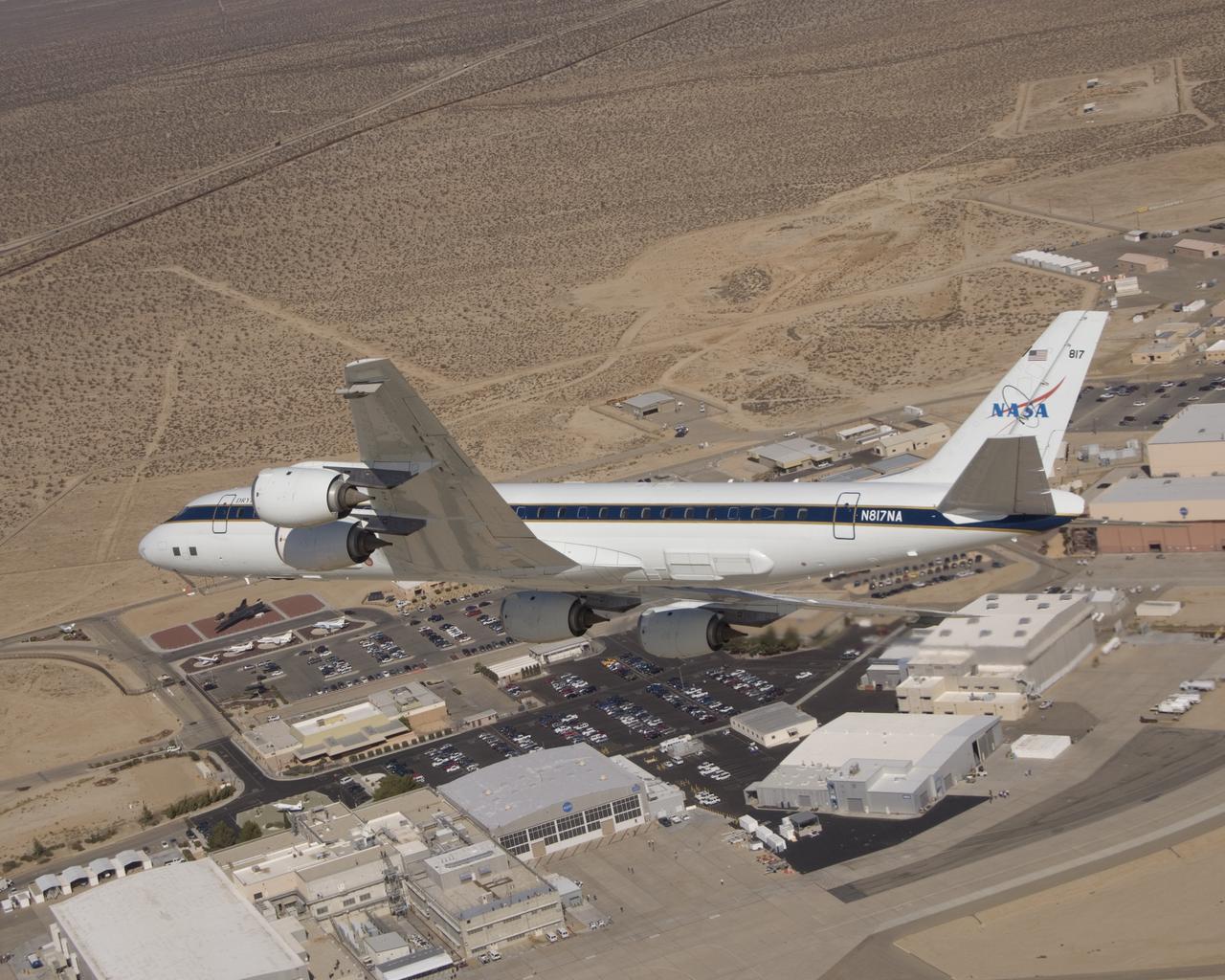
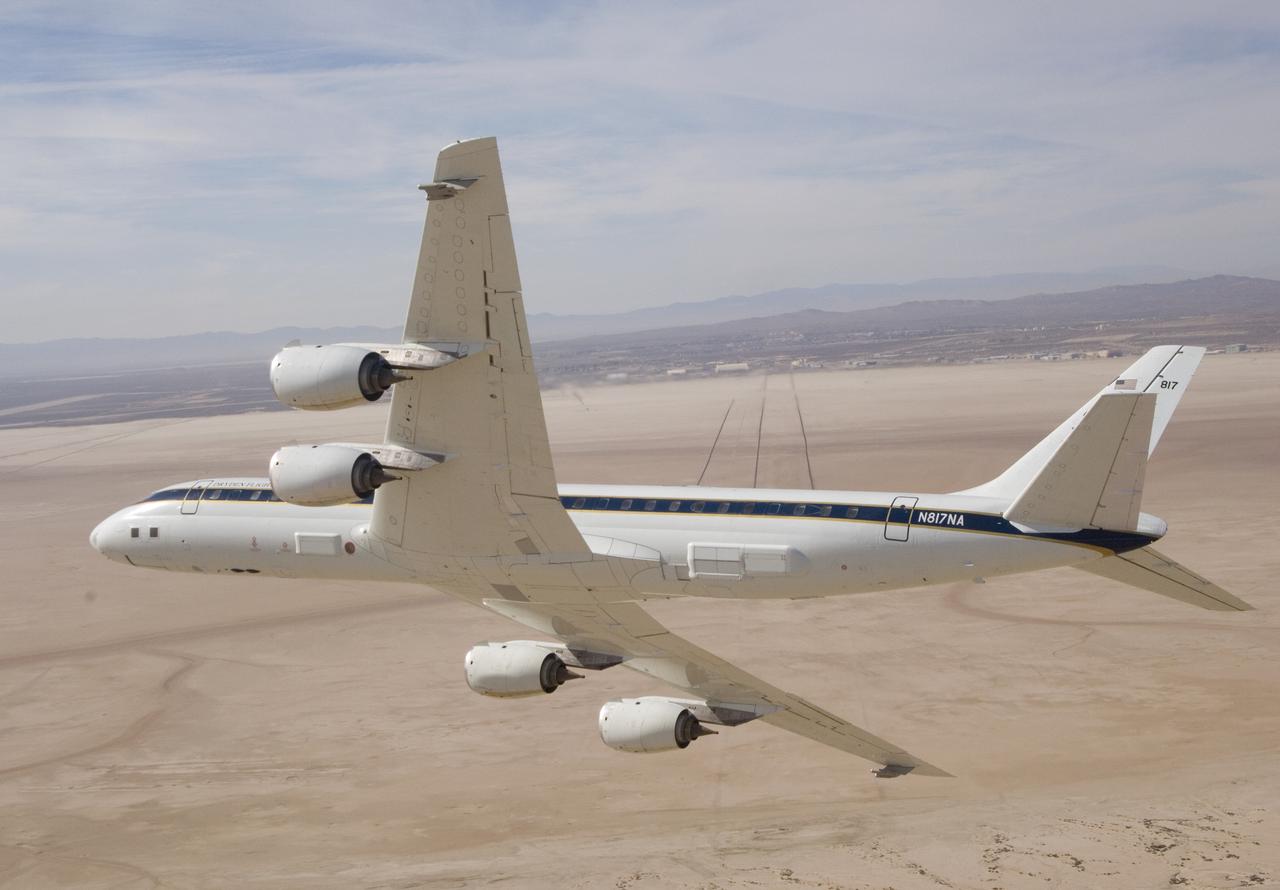
NASA's DC-8 airborne science laboratory soars over the Dryden Flight Research Center upon its return to the center on Nov. 8, 2007.
NASA's DC-8 airborne science laboratory soars over the Dryden Flight Research Center upon its return to the center on Nov. 8, 2007
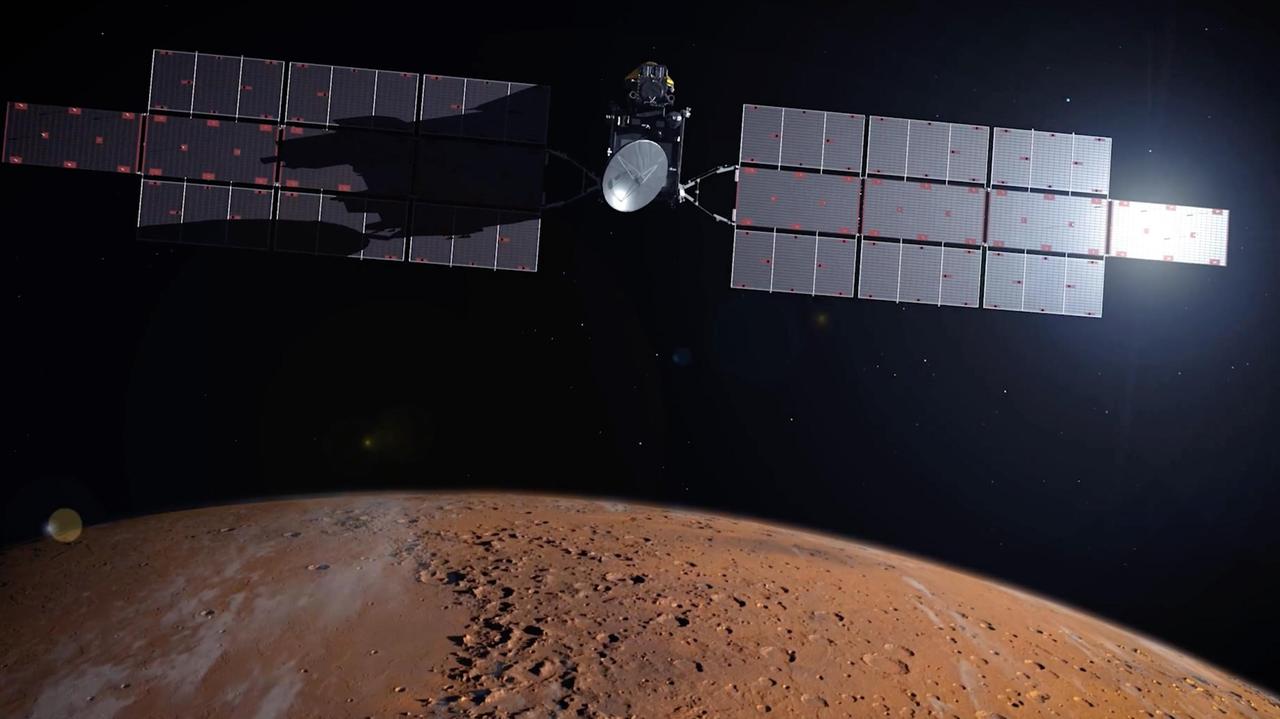
The Earth Return Orbiter (ERO) is one of the flight missions making up the Mars Sample Return campaign to bring martian rock and atmospheric samples back to Earth.  This European Space Agency (ESA) orbiter would be the first interplanetary spacecraft to capture samples in orbit and make a return trip between Earth and Mars. ERO would also be the largest spacecraft to orbit the Red Planet. In addition to the rendezvous and return mission, ERO would provide critical Mars-Earth communications coverage for NASA's Perseverance rover and the Sample Retrieval Lander to deliver the martian samples.  The Earth Return Orbiter is part of the multi-mission Mars Sample Return campaign being planned by NASA and the European Space Agency (ESA).  https://photojournal.jpl.nasa.gov/catalog/PIA25891
Artist's concept of the Earth Return Orbiter over Mars
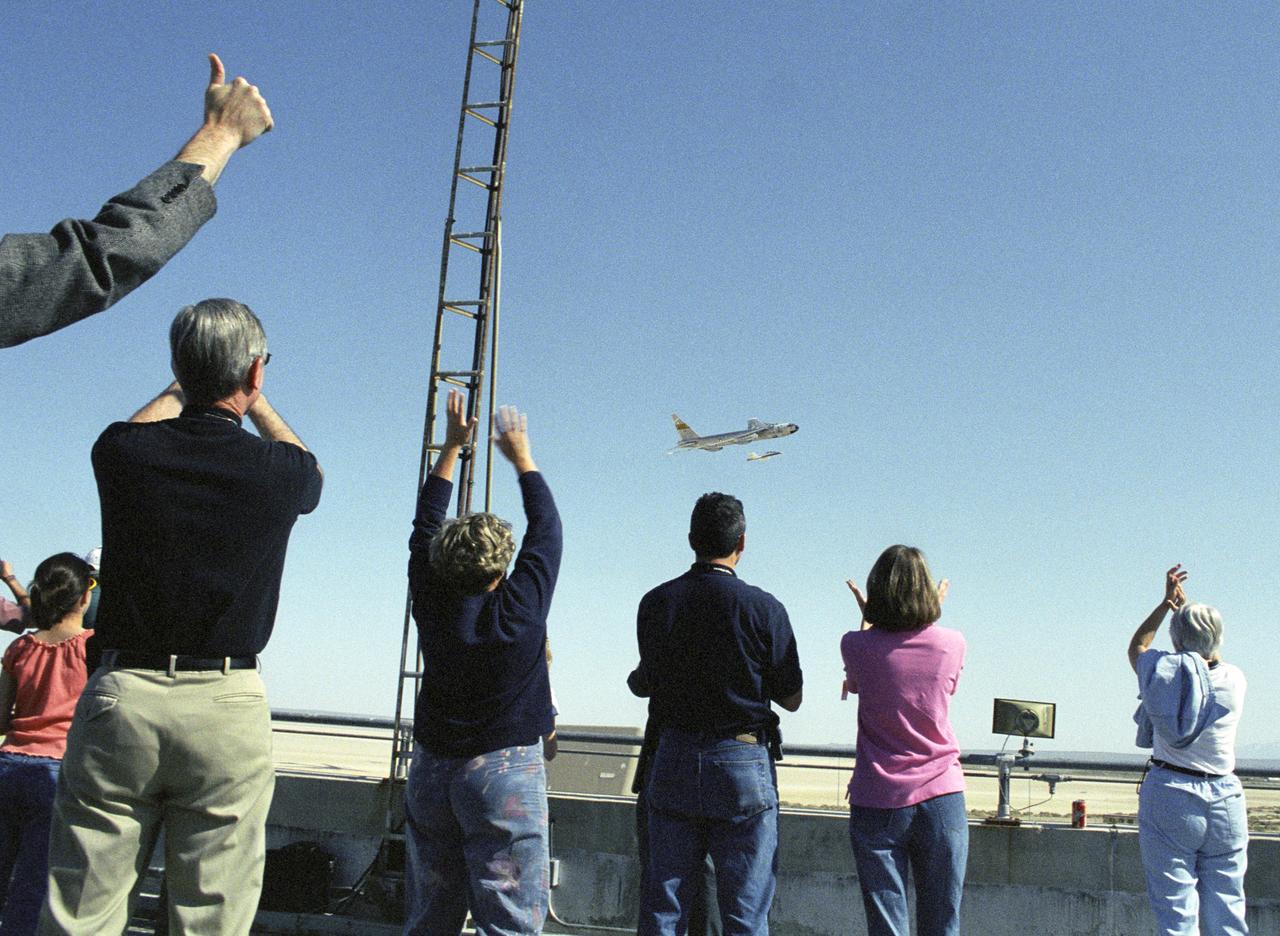
Employees atop NASA Dryden's main building celebrate the return flyby of the B-52B aircraft after it launched the second X-43A aircraft on its successful flight.
Employees atop DFRC's main building celebrate the return flyby of the B-52B aircraft after it launched the second X-43A aircraft on its successful flight
During its flight, NASA’s Galileo spacecraft returned images of the Earth and Moon. Separate images of the Earth and Moon were combined to generate this view.  http://photojournal.jpl.nasa.gov/catalog/PIA00342
The Earth & Moon
The Earth Return Orbiter (ERO) is one of the flight missions making up the Mars Sample Return campaign to bring martian rock and atmospheric samples back to Earth. The ESA orbiter would be the first interplanetary spacecraft to capture samples in orbit and make a return trip between Earth and Mars.  The primary mission of the European spacecraft would be to find, fly to, and capture a volleyball-sized capsule called the Orbiting Sample (OS) container launched from the surface of Mars by NASA's Mars Ascent System and carrying a carefully selected set of samples previously collected on the surface of Mars by NASA's Perseverance rover.  Having already spent three years to reach Mars and perform its rendezvous and capture mission, ERO would take a further two years to fly from its operational orbit around Mars up to escape altitude and make its way back to Earth. When ERO is about three days from Earth, the Earth Entry System (EES) carrying the OS would separate from the spacecraft and be placed on a precision trajectory for Earth entry and landing.  The Earth Return Orbiter is part of the multi-mission Mars Sample Return campaign being planned by NASA and the European Space Agency (ESA).  https://photojournal.jpl.nasa.gov/catalog/PIA25893
Artist's Concept of Earth Return Orbiter Releasing Capsule containing Martian Samples
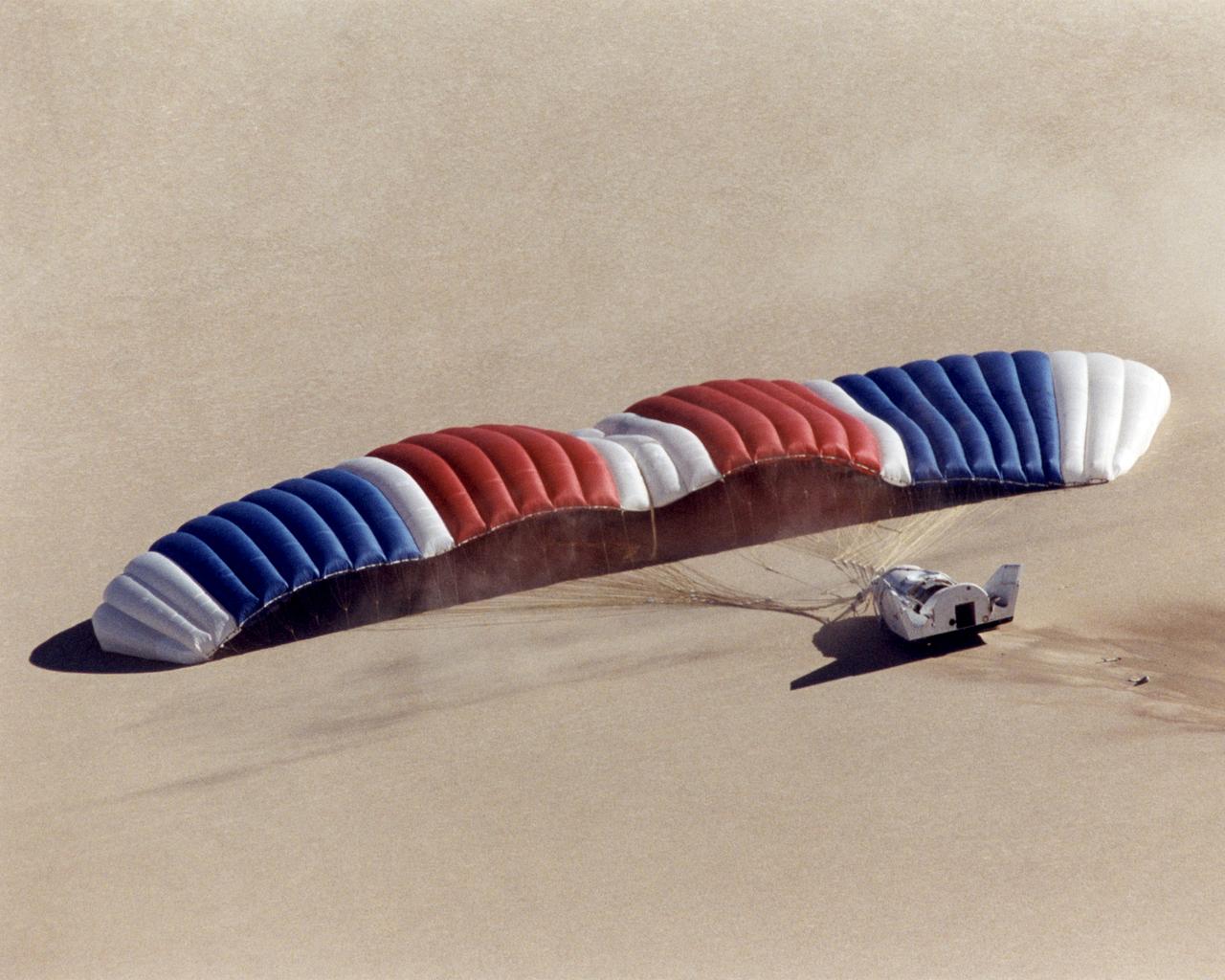
Looking like a giant air mattress, the world's largest parafoil slowly deflates seconds after it carried the latest version of the X-38, V-131R, to a landing on Rogers Dry Lake adjacent to NASAÕs Dryden Flight Research Center at Edwards, California, at the end of its first free flight, November 2, 2000. The X-38 prototypes are intended to perfect technology for a planned Crew Return Vehicle (CRV) "lifeboat" to carry a crew to safety in the event of an emergency on the International Space Station. Free-flight tests of X-38 V-131R are evaluating upgraded avionics and control systems and the aerodynamics of the modified upper body, which is more representative of the final design of the CRV than the two earlier X-38 test craft, including a simulated hatch atop the body. The huge 7,500 square-foot parafoil will enable the CRV to land in the length of a football field after returning from space. The first three X-38's are air-launched from NASA's venerable NB-52B mother ship, while the last version, V-201, will be carried into space by a Space Shuttle and make a fully autonomous re-entry and landing.
The world's largest parafoil slowly deflates after carrying the X-38, V-131R, to a safe landing
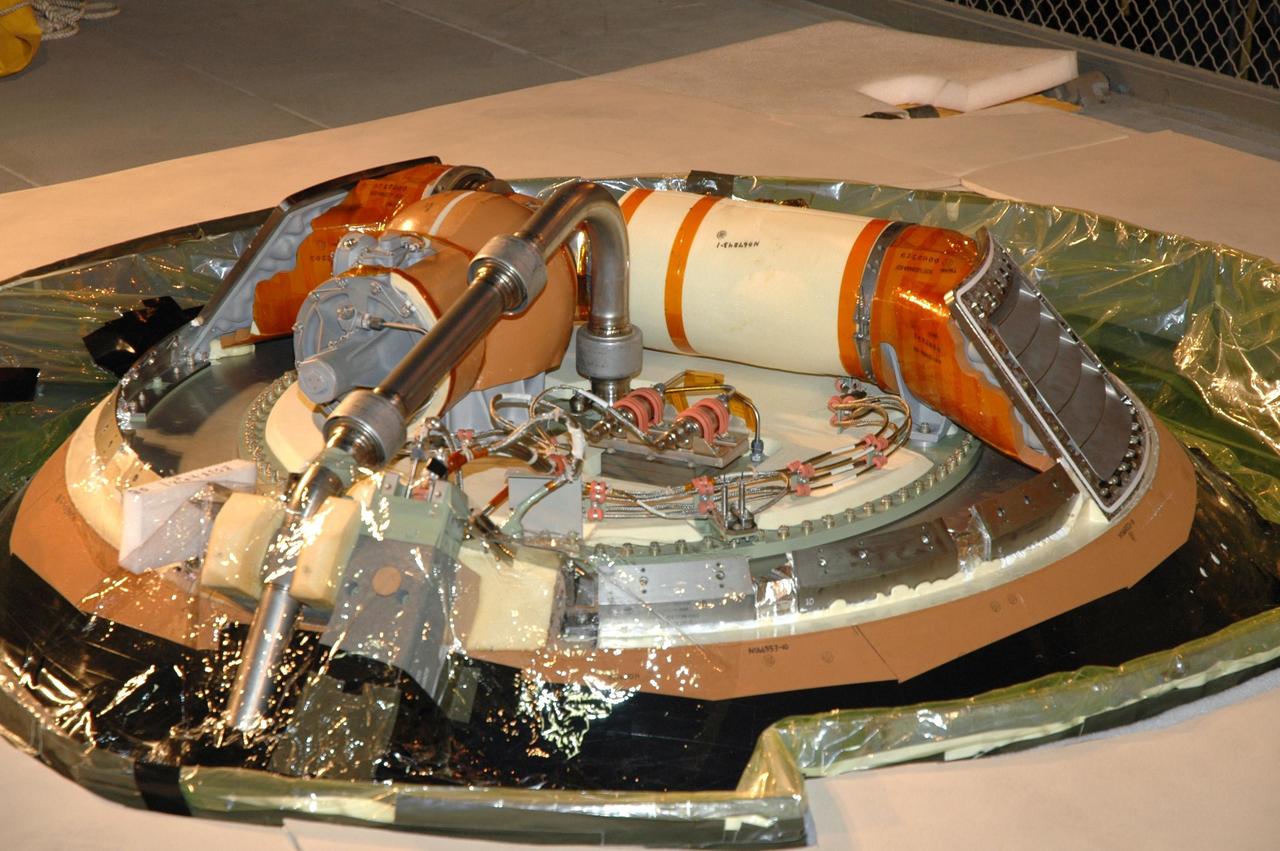
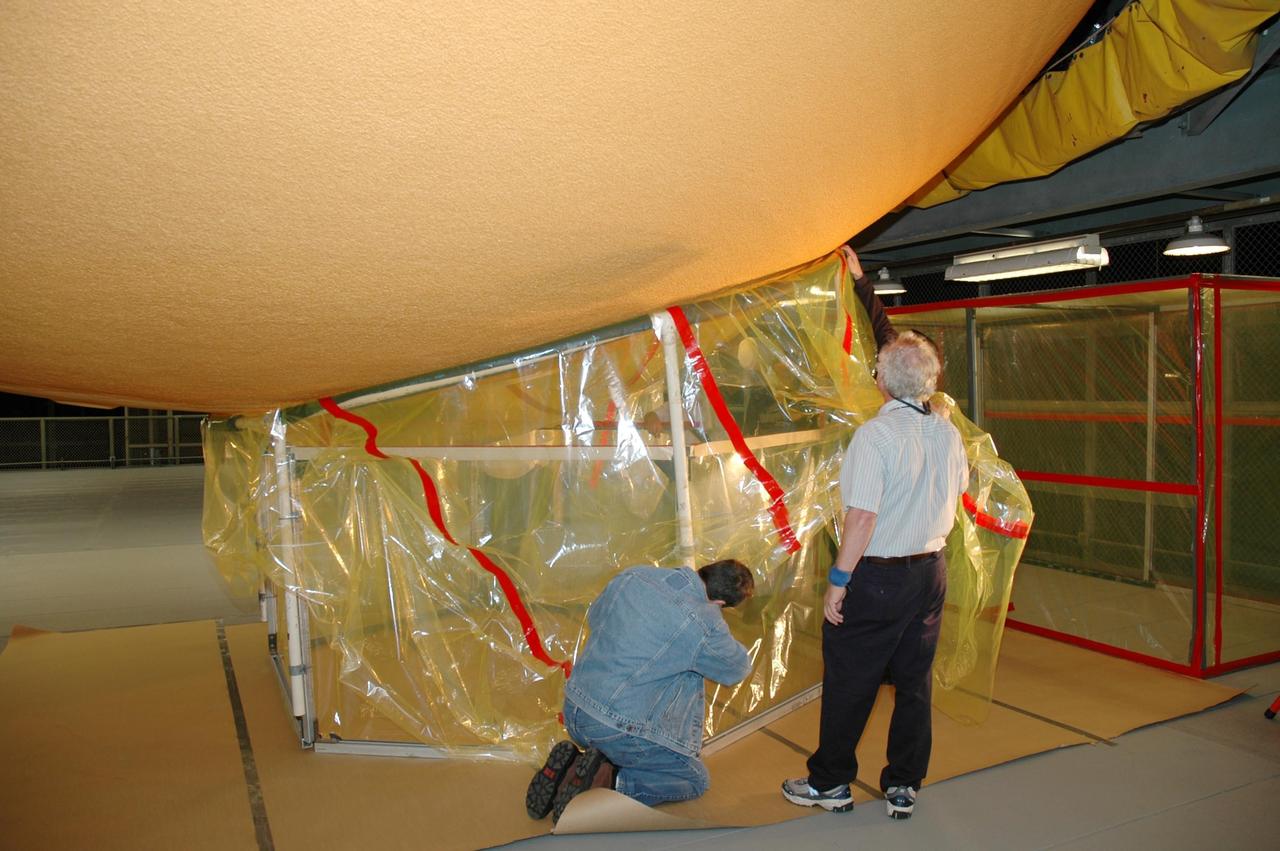
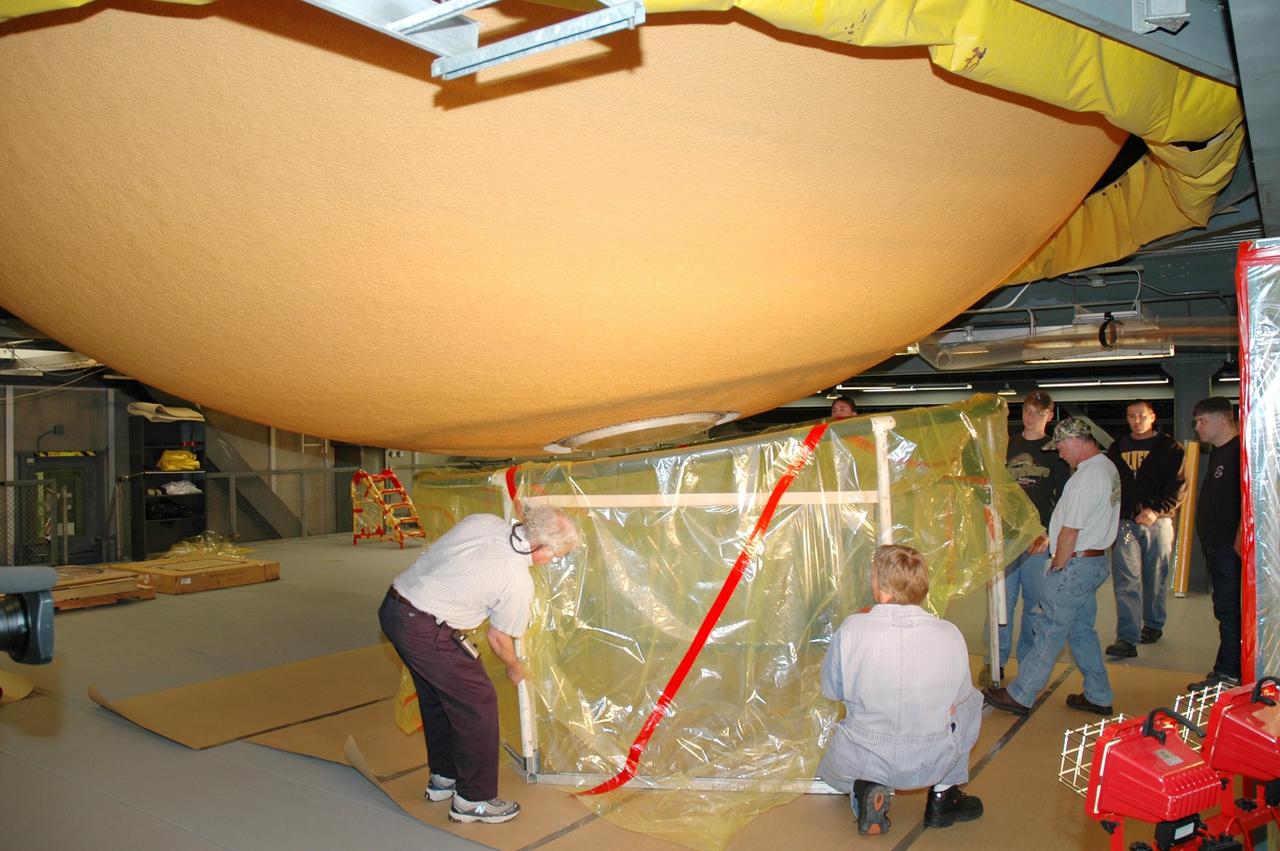
KENNEDY SPACE CENTER, FLA. - KENNEDY SPACE CENTER, FLA. - Lockheed Martin technicians from NASA's Michoud Assembly Facility in Louisiana install a clean-room working area around the "manhole" on the external tank designated for mission STS-121. The work is part of the process in removing and replacing the external tank's four liquid hydrogen main engine cutoff sensors, which indicate whether the tank still has fuel during its climb to orbit. After the cleaning, the manhole will be removed to provide access to the area of the sensors for their removal. Photo credit: NASA/Jim Grossmann
KSC-06pd0561
KENNEDY SPACE CENTER, FLA. - In the Vehicle Assembly Building at NASA's Kennedy Space Center, workers begin removal of the nose cap on top of external tank number 119, the tank designated for mission STS-121.  The cap is being removed in order to install a new gaseous oxygen vent valve under the nose cap. Vapors are created prior to launch as the liquid oxygen in the external tank boils off. At the forward end of each external tank propellant tank is a vent and relief valve that can be opened before launch for venting or by excessive tank pressure for relief. The vent function is available only before launch. Mission STS-121 to the International Space Station is scheduled for launch in July. Photo credit: NASA/Jim Grossmann
KSC-06pd0562
KENNEDY SPACE CENTER, FLA. -  In the Vehicle Assembly Building at NASA's Kennedy Space Center, the nose cap on top of external tank number 119 has been removed.  A new gaseous oxygen vent valve will be installed.  Tank 119 is designated for mission STS-121.  Vapors are created prior to launch as the liquid oxygen in the external tank boils off. At the forward end of each external tank propellant tank is a vent and relief valve that can be opened before launch for venting or by excessive tank pressure for relief. The vent function is available only before launch. Mission STS-121 to the International Space Station is scheduled for launch in July. Photo credit: NASA/Jim Grossmann
KSC-06pd0564
KENNEDY SPACE CENTER, FLA. - Lockheed Martin technicians from NASA's Michoud Assembly Facility in Louisiana create a clean-room working area around the "manhole" on the external tank designated for mission STS-121. The work is part of the process in removing and replacing the external tank's four liquid hydrogen main engine cutoff sensors, which indicate whether the tank still has fuel during its climb to orbit. After the cleaning, the manhole will be removed to provide access to the area of the sensors for their removal. Photo credit: NASA/Jim Grossmann
KSC-06pd0560
KENNEDY SPACE CENTER, FLA.  - Lockheed Martin technicians from NASA's Michoud Assembly Facility in Louisiana clean the area around the "manhole" on the external tank designated for mission STS-121. The work is part of the process in removing and replacing the external tank's four liquid hydrogen main engine cutoff sensors, which indicate whether the tank still has fuel during its climb to orbit. After the cleaning, the manhole will be removed to provide access to the area of the sensors for their removal. Photo credit: NASA/Jim Grossmann
KSC-06pd0559
KENNEDY SPACE CENTER, FLA. -  In the Vehicle Assembly Building at NASA's Kennedy Space Center, workers remove the nose cap on top of external tank number 119, the tank designated for mission STS-121.  The cap is being removed in order to install a new gaseous oxygen vent valve under the nose cap. Vapors are created prior to launch as the liquid oxygen in the external tank boils off. At the forward end of each external tank propellant tank is a vent and relief valve that can be opened before launch for venting or by excessive tank pressure for relief. The vent function is available only before launch. Mission STS-121 to the International Space Station is scheduled for launch in July. Photo credit: NASA/Jim Grossmann
KSC-06pd0563
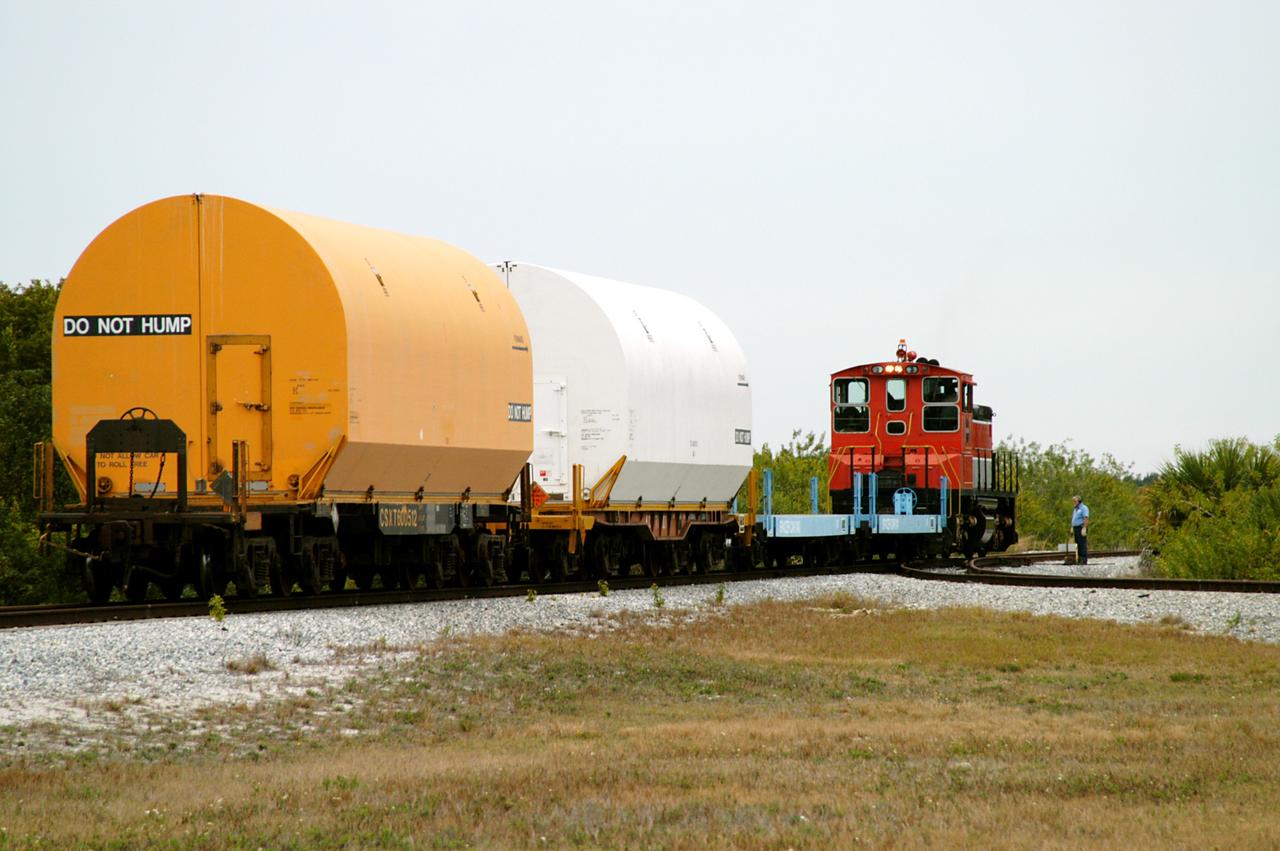
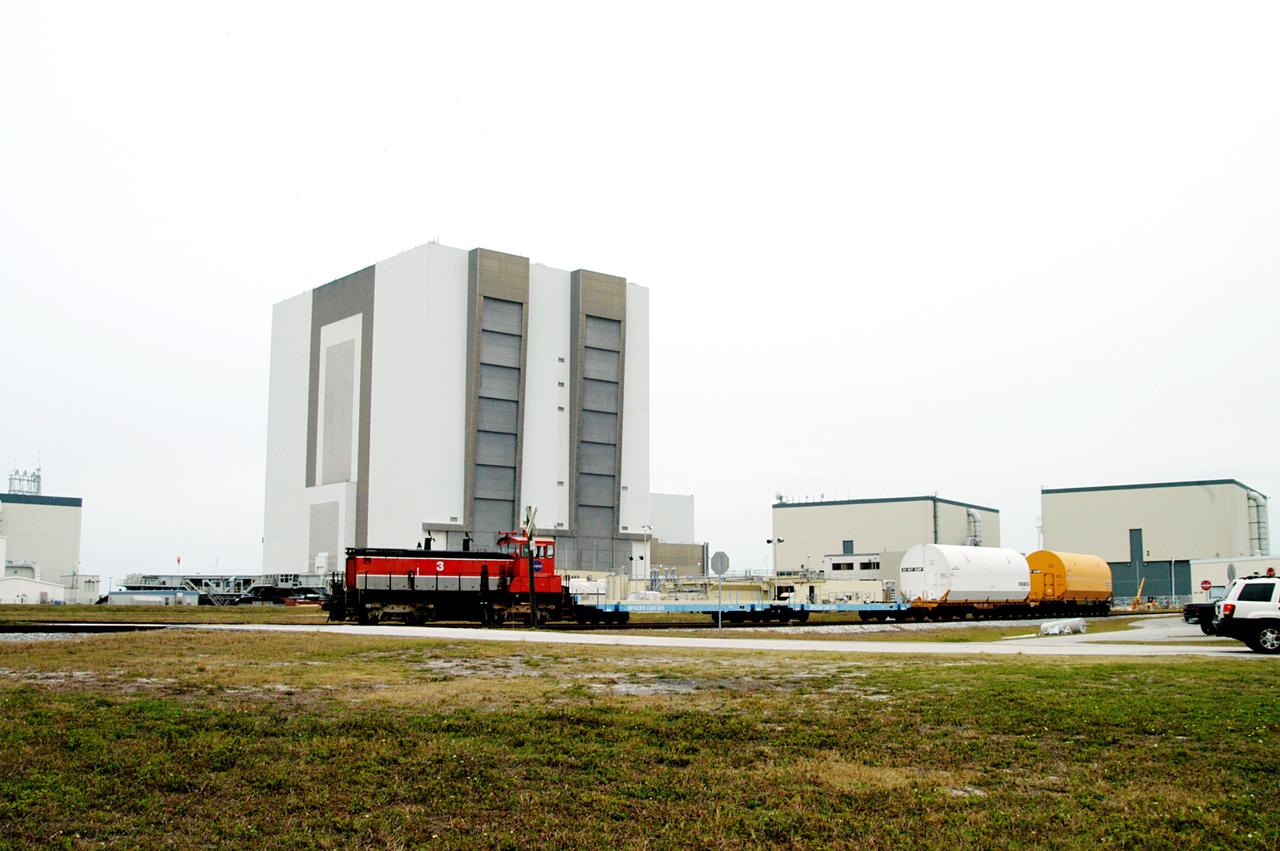
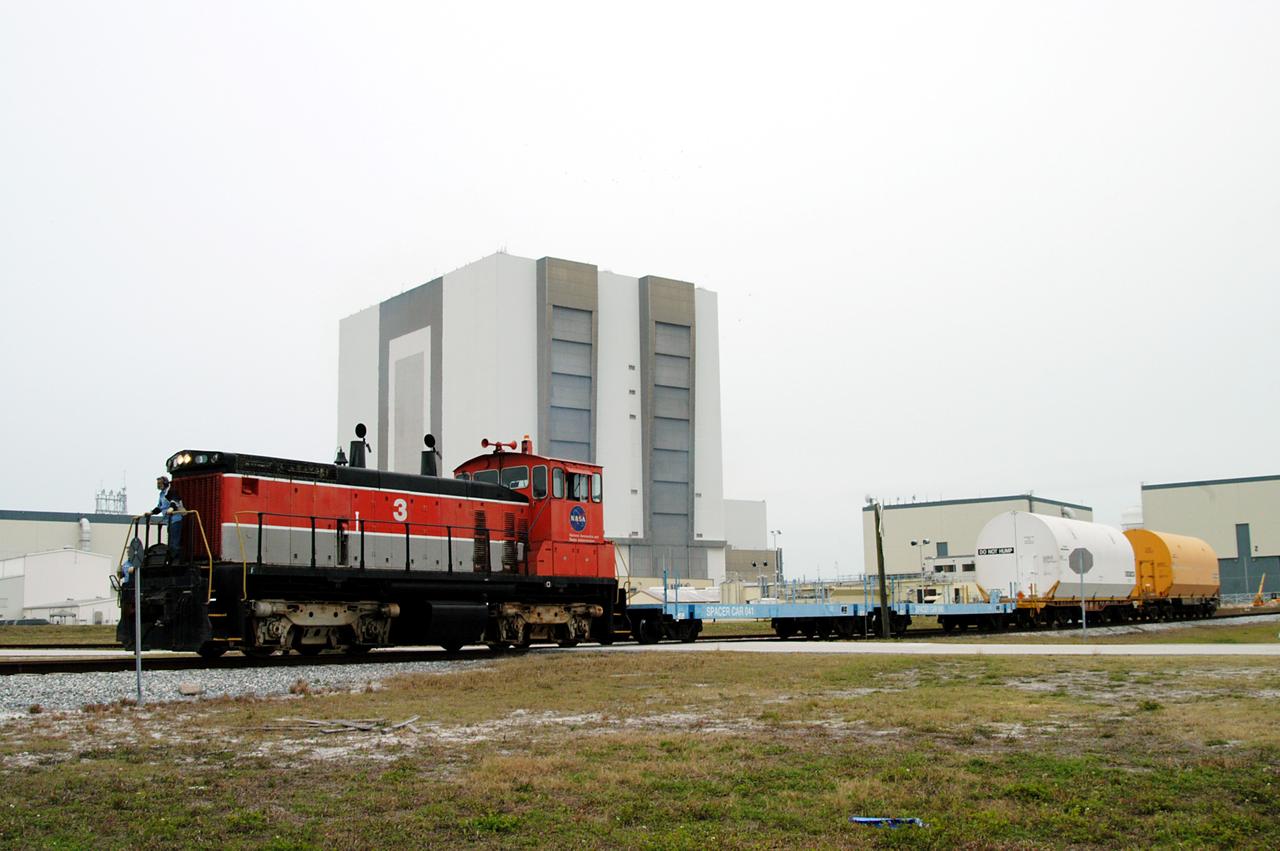
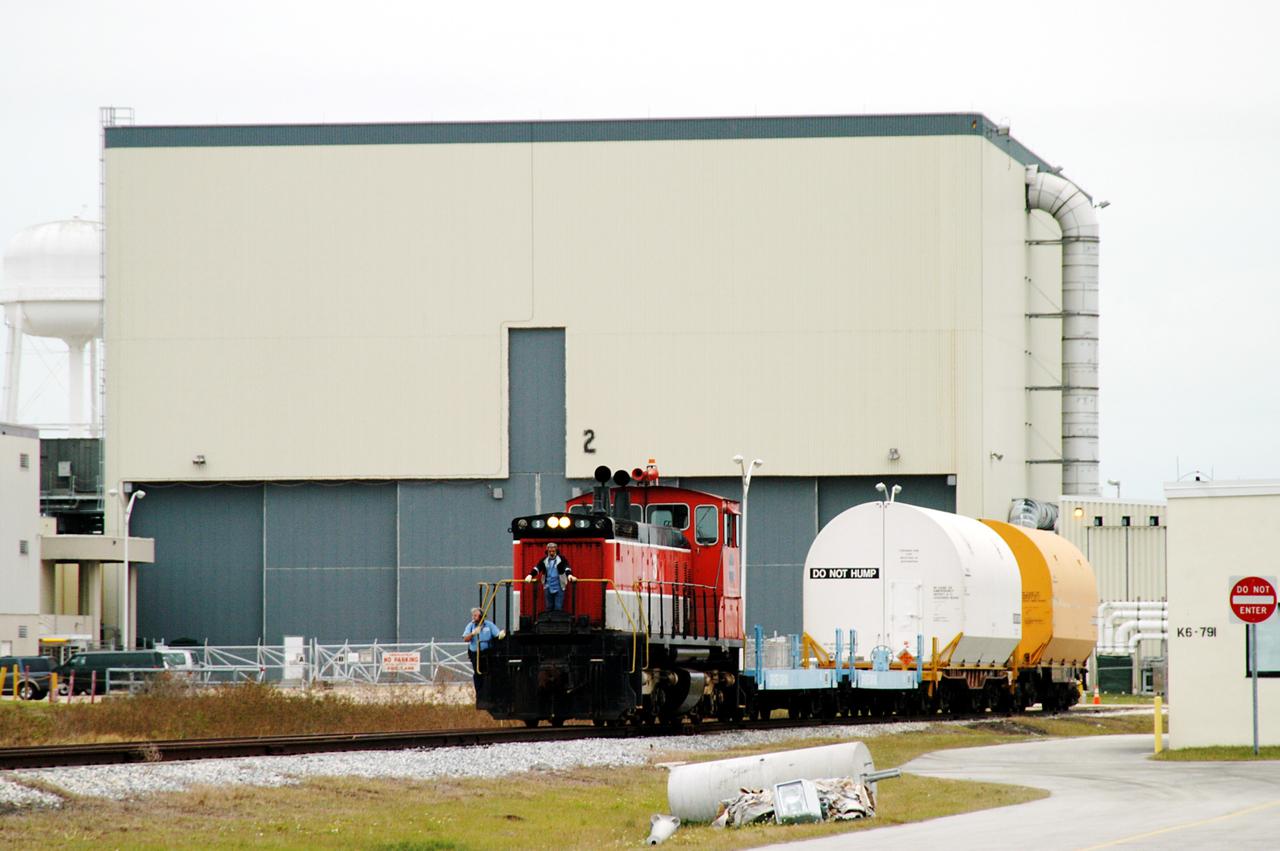
KENNEDY SPACE CENTER, FLA. - Moving past the 525-foot-high Vehicle Assembly Building, the red NASA engine pulls several containers enclosing segments of a solid rocket booster being returned to Utah for testing.  The segments were part of the STS-114 stack.  It is the first time actual flight segments that had been stacked for flight in the VAB are being returned for testing.  They will undergo firing, which will enable inspectors to check the viability of the solid and verify the life expectancy for stacked segments.
KENNEDY SPACE CENTER, FLA. - Moving past the 525-foot-high Vehicle Assembly Building, the red NASA engine pulls several containers enclosing segments of a solid rocket booster being returned to Utah for testing. The segments were part of the STS-114 stack. It is the first time actual flight segments that had been stacked for flight in the VAB are being returned for testing. They will undergo firing, which will enable inspectors to check the viability of the solid and verify the life expectancy for stacked segments.
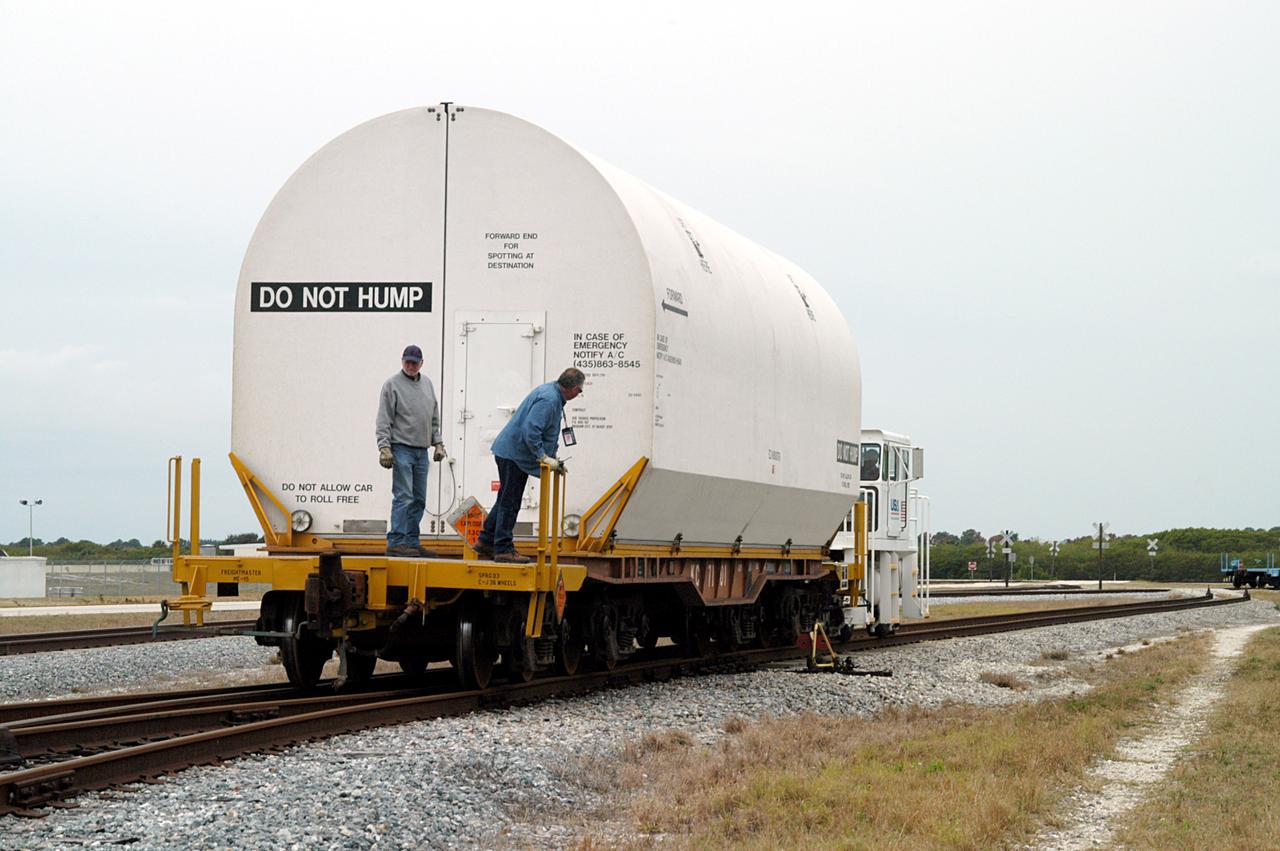
KENNEDY SPACE CENTER, FLA. - Workers ride the rails along with a container enclosing a segment of a solid rocket booster being moved to the main track.  Several segments are being returned to Utah for testing.  The segments were part of the STS-114 stack.  It is the first time actual flight segments that had been stacked for flight in the VAB are being returned for testing.  They will undergo firing, which will enable inspectors to check the viability of the solid and verify the life expectancy for stacked segments.
KENNEDY SPACE CENTER, FLA. - Workers ride the rails along with a container enclosing a segment of a solid rocket booster being moved to the main track. Several segments are being returned to Utah for testing. The segments were part of the STS-114 stack. It is the first time actual flight segments that had been stacked for flight in the VAB are being returned for testing. They will undergo firing, which will enable inspectors to check the viability of the solid and verify the life expectancy for stacked segments.
KENNEDY SPACE CENTER, FLA. - The red NASA engine backs up with its cargo of containers in order to change tracks.  The containers enclose segments of a solid rocket booster being returned to Utah for testing.  The segments were part of the STS-114 stack.  It is the first time actual flight segments that had been stacked for flight in the VAB are being returned for testing.  They will undergo firing, which will enable inspectors to check the viability of the solid and verify the life expectancy for stacked segments.
KENNEDY SPACE CENTER, FLA. - The red NASA engine backs up with its cargo of containers in order to change tracks. The containers enclose segments of a solid rocket booster being returned to Utah for testing. The segments were part of the STS-114 stack. It is the first time actual flight segments that had been stacked for flight in the VAB are being returned for testing. They will undergo firing, which will enable inspectors to check the viability of the solid and verify the life expectancy for stacked segments.
KENNEDY SPACE CENTER, FLA. - The red NASA engine moves forward past the Vehicle Assembly Building with its cargo of containers enclosing segments of a solid rocket booster being returned to Utah for testing.  The segments were part of the STS-114 stack.  It is the first time actual flight segments that had been stacked for flight in the VAB are being returned for testing.  They will undergo firing, which will enable inspectors to check the viability of the solid and verify the life expectancy for stacked segments.
KENNEDY SPACE CENTER, FLA. - The red NASA engine moves forward past the Vehicle Assembly Building with its cargo of containers enclosing segments of a solid rocket booster being returned to Utah for testing. The segments were part of the STS-114 stack. It is the first time actual flight segments that had been stacked for flight in the VAB are being returned for testing. They will undergo firing, which will enable inspectors to check the viability of the solid and verify the life expectancy for stacked segments.
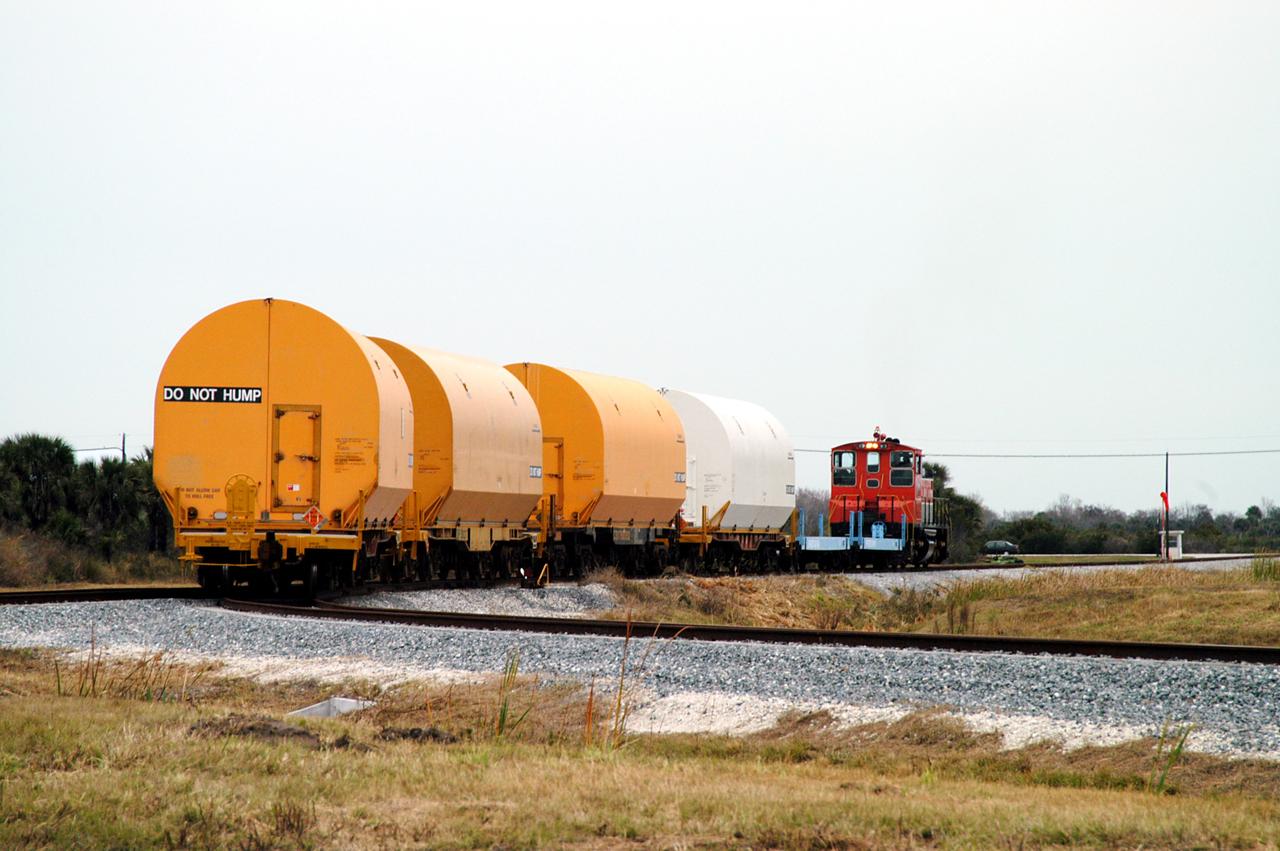
KENNEDY SPACE CENTER, FLA. - The red NASA engine hauls its cargo toward Titusville, Fla. The containers enclose segments of a solid rocket booster being returned to Utah for testing.  The segments were part of the STS-114 stack.  It is the first time actual flight segments that had been stacked for flight in the VAB are being returned for testing.  They will undergo firing, which will enable inspectors to check the viability of the solid and verify the life expectancy for stacked segments.
KENNEDY SPACE CENTER, FLA. - The red NASA engine hauls its cargo toward Titusville, Fla. The containers enclose segments of a solid rocket booster being returned to Utah for testing. The segments were part of the STS-114 stack. It is the first time actual flight segments that had been stacked for flight in the VAB are being returned for testing. They will undergo firing, which will enable inspectors to check the viability of the solid and verify the life expectancy for stacked segments.
KENNEDY SPACE CENTER, FLA. - The red NASA engine hauls its cargo toward Titusville, Fla. The containers enclose segments of a solid rocket booster being returned to Utah for testing.  The segments were part of the STS-114 stack.  It is the first time actual flight segments that had been stacked for flight in the VAB are being returned for testing.  They will undergo firing, which will enable inspectors to check the viability of the solid and verify the life expectancy for stacked segments.
KENNEDY SPACE CENTER, FLA. - The red NASA engine hauls its cargo toward Titusville, Fla. The containers enclose segments of a solid rocket booster being returned to Utah for testing. The segments were part of the STS-114 stack. It is the first time actual flight segments that had been stacked for flight in the VAB are being returned for testing. They will undergo firing, which will enable inspectors to check the viability of the solid and verify the life expectancy for stacked segments.
NASA's DC-8 airborne science laboratory banks low over Rogers Dry Lake at Edwards Air Force upon its return to NASA Dryden Flight Research Center Nov. 8, 2007.
NASA's DC-8 airborne science laboratory banks low over Rogers Dry Lake at Edwards Air Force upon its return to NASA Dryden Flight Research Center Nov. 8, 2007
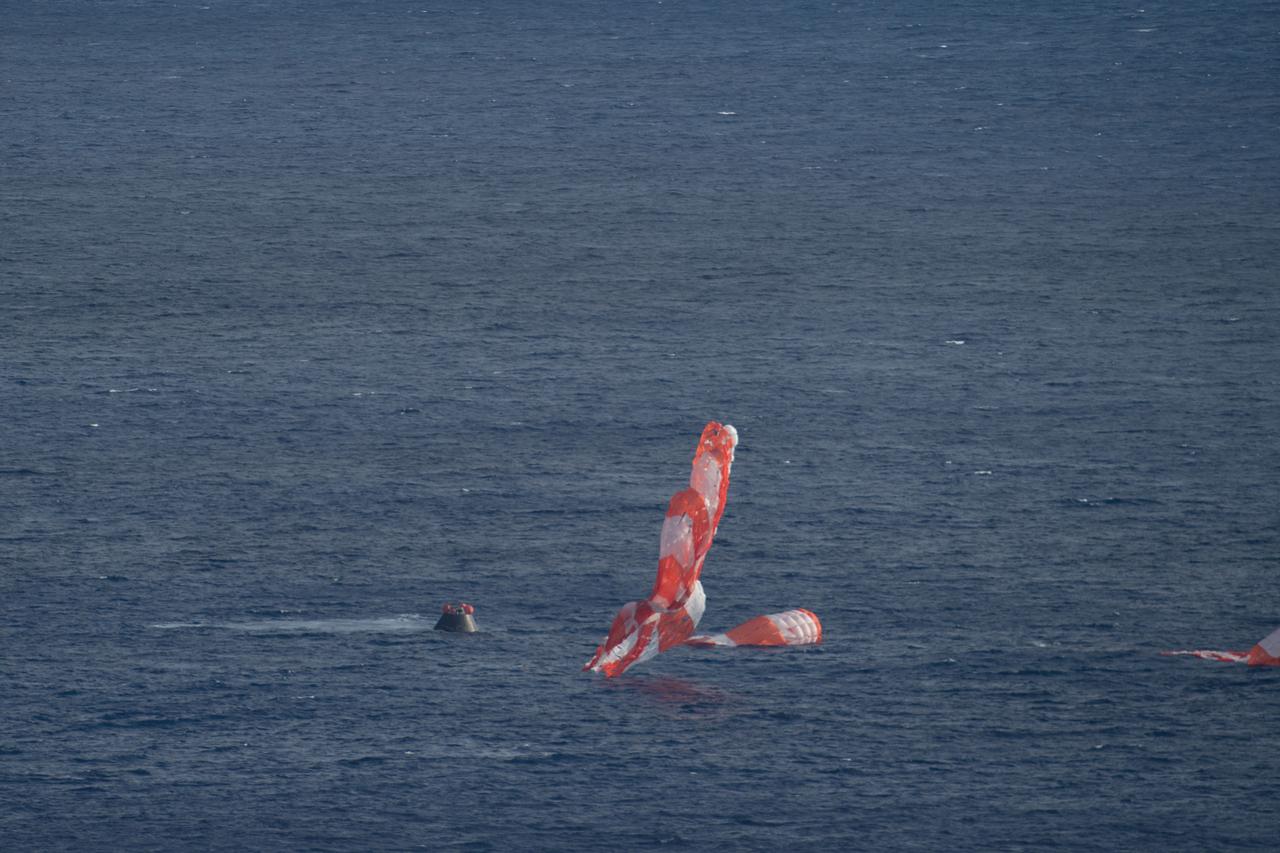
Orion splashes down in the Pacific Ocean after Exploration Flight Test-1 (EFT-1) on Dec. 5, 2014.  Part of Batch image transfer from Flickr.
Orion returns to Earth after a succesfull flight
Orion splashes down in the Pacific Ocean after Exploration Flight Test-1 (EFT-1) on Dec. 5, 2014.  Part of Batch image transfer from Flickr.
Orion returns to Earth after a succesfull flight
Orion splashes down in the Pacific Ocean after Exploration Flight Test-1 (EFT-1) on Dec. 5, 2014.  Part of Batch image transfer from Flickr.
Orion returns to Earth after a succesfull flight