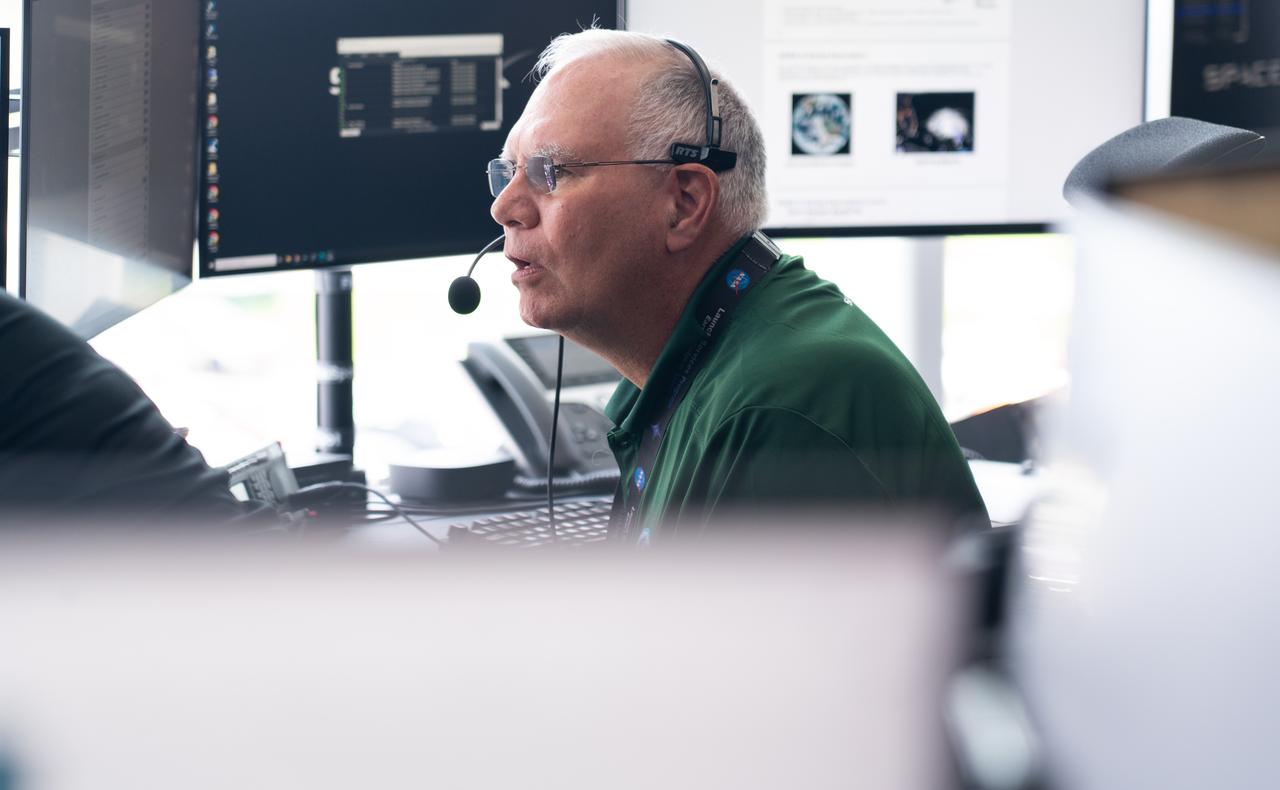
Rex Engelhardt, mission manager for NASA’s Launch Services Program, participates in rehearsal launch operations for the National Oceanic and Atmospheric Administration (NOAA) GOES-U (Geostationary Operational Environmental Satellite U) mission inside Hangar X at NASA’s Kennedy Space Center in Florida on Monday, June 17, 2024. The GOES-U satellite, the final addition to GOES-R series, serves a critical role in providing continuous coverage of the Western Hemisphere, including monitoring tropical systems in the eastern Pacific and Atlantic oceans.
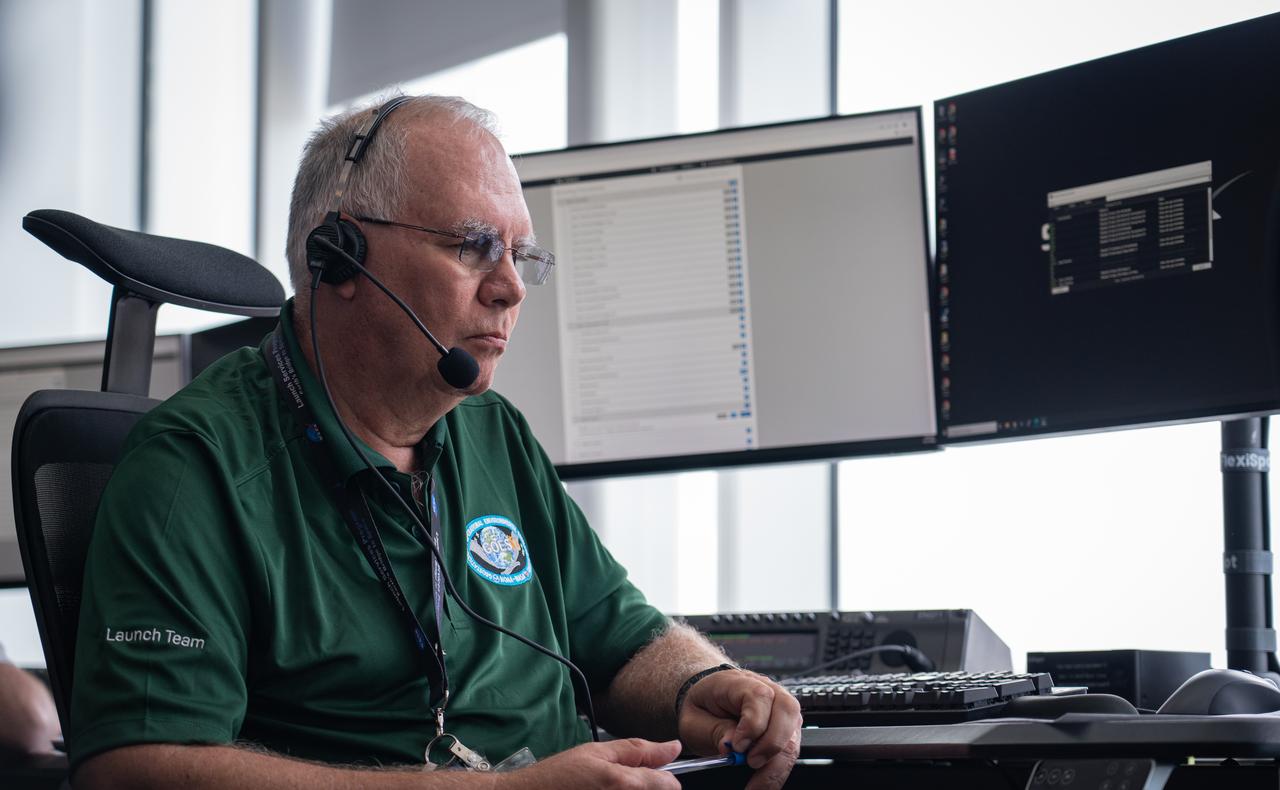
Rex Engelhardt, mission manager for NASA’s Launch Services Program, participates in rehearsal launch operations for the National Oceanic and Atmospheric Administration (NOAA) GOES-U (Geostationary Operational Environmental Satellite U) mission inside Hangar X at NASA’s Kennedy Space Center in Florida on Monday, June 17, 2024. The GOES-U satellite, the final addition to GOES-R series, serves a critical role in providing continuous coverage of the Western Hemisphere, including monitoring tropical systems in the eastern Pacific and Atlantic oceans.
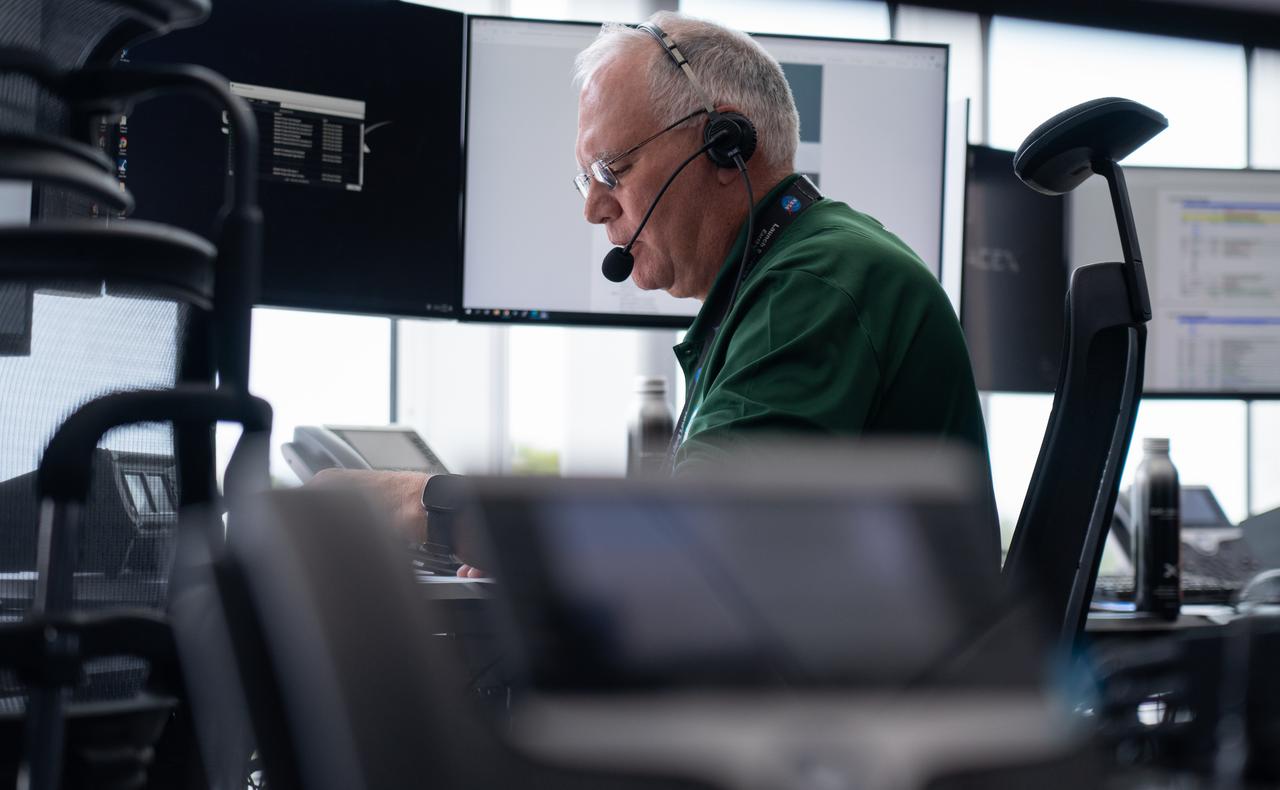
Rex Engelhardt, mission manager for NASA’s Launch Services Program, participates in rehearsal launch operations for the National Oceanic and Atmospheric Administration (NOAA) GOES-U (Geostationary Operational Environmental Satellite U) mission inside Hangar X at NASA’s Kennedy Space Center in Florida on Monday, June 17, 2024. The GOES-U satellite, the final addition to GOES-R series, serves a critical role in providing continuous coverage of the Western Hemisphere, including monitoring tropical systems in the eastern Pacific and Atlantic oceans.
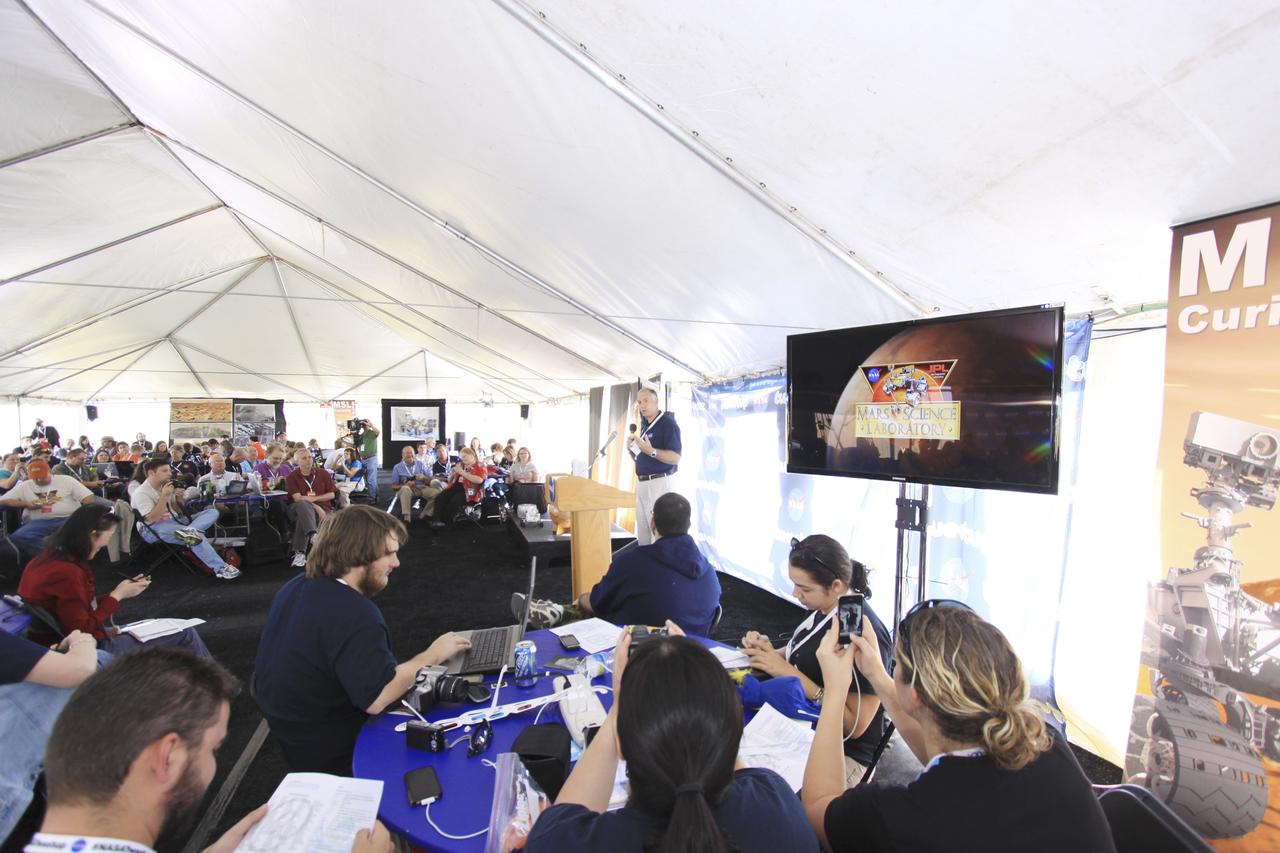
CAPE CANAVERAL, Fla. – Rex Engelhardt, mission manager in NASA's Launch Services Program at the NASA Kennedy Space Center, speaks to a group of Tweetup participants at Kennedy's Press Site in Florida during prelaunch activities for the agency’s Mars Science Laboratory (MSL) launch. Following a series of briefings, participants will tour the center and get a close-up view of Space Launch Complex-41 on Cape Canaveral Air Force Station. The tweeters will share their experiences with followers through the social networking site Twitter. MSL's components include a car-sized rover, Curiosity, which has 10 science instruments designed to search for signs of life, including methane, and help determine if the gas is from a biological or geological source. Liftoff of MSL aboard a United Launch Alliance Atlas V rocket from pad 41 is planned during a launch window which extends from 10:02 a.m. to 11:45 a.m. EST on Nov. 26. For more information, visit http://www.nasa.gov/msl. Photo credit: NASA/Jim Grossmann