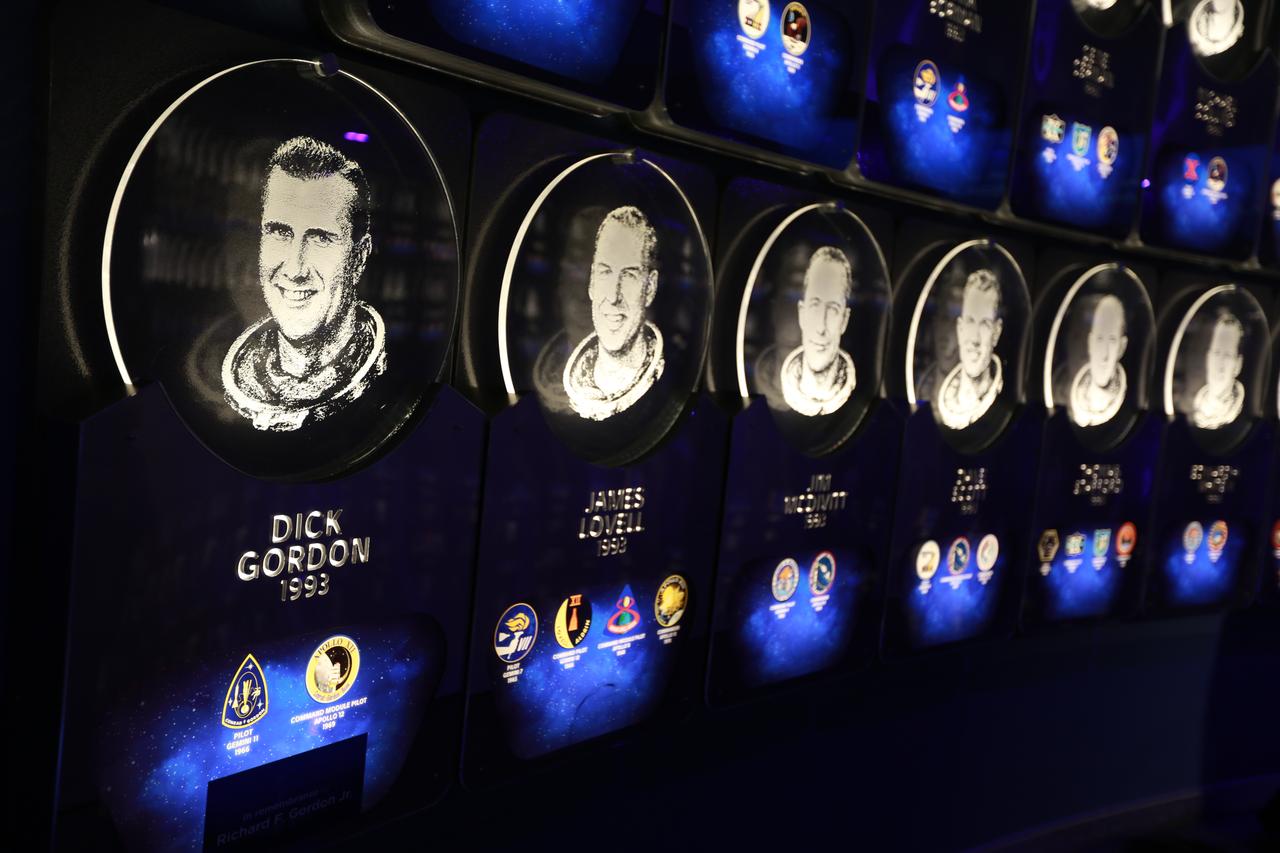
In the Heroes and Legends exhibit at the Kennedy Space Center Visitor Complex, former NASA astronaut Richard Gordon's plaque is seen among others enshrined in the U.S. Astronaut Hall of Fame. Gordon performed two spacewalks during Gemini XI in 1966 and was command module pilot on Apollo 12 in 1969. Gordon died Nov. 6, 2017, at the age of 88.
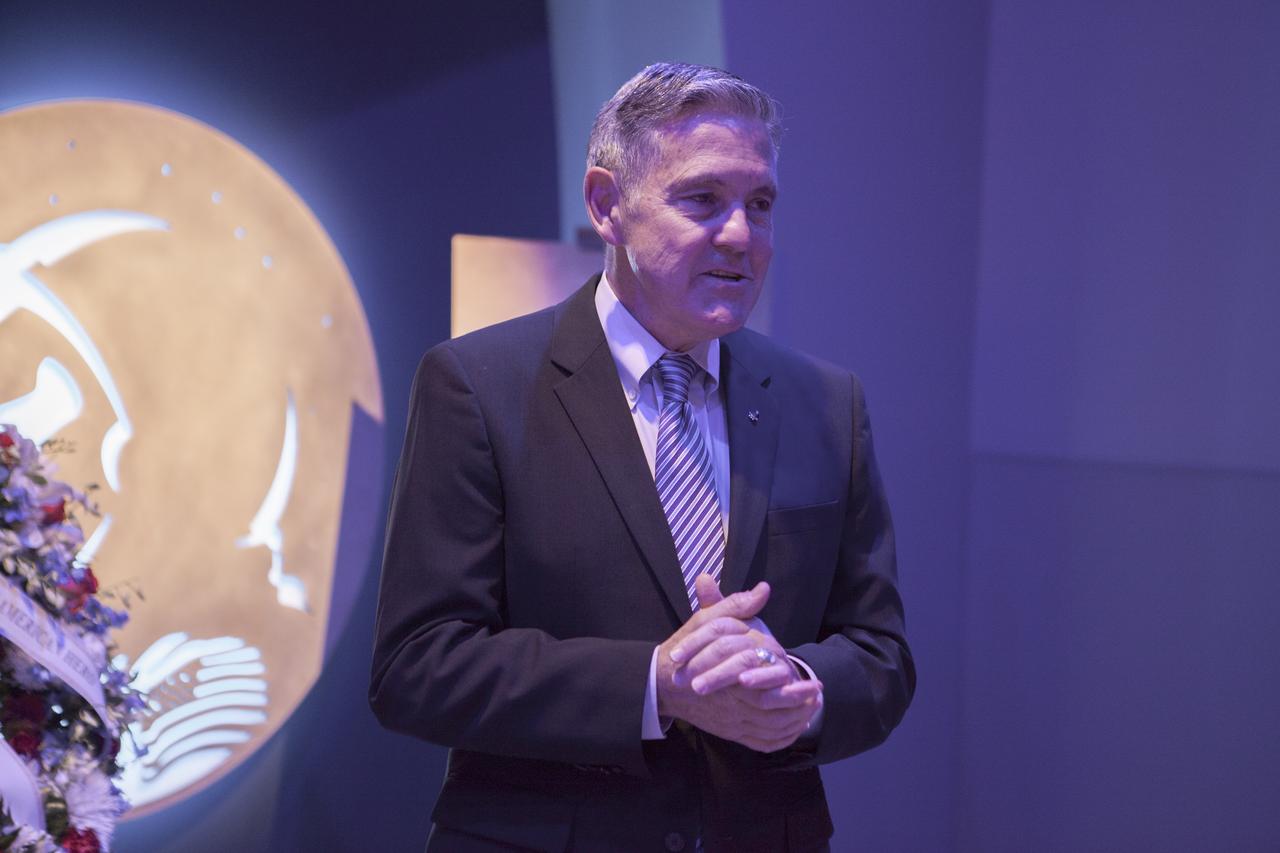
In the Heroes and Legends exhibit at the Kennedy Space Center Visitor Complex, Center Director Bob Cabana speaks during a ceremony honoring the memory of former NASA astronaut Richard Gordon. Having performed two spacewalks during Gemini XI in 1966, Gordon later served as command module pilot on Apollo 12 in 1969. Gordon died Nov. 6, 2017, at the age of 88.
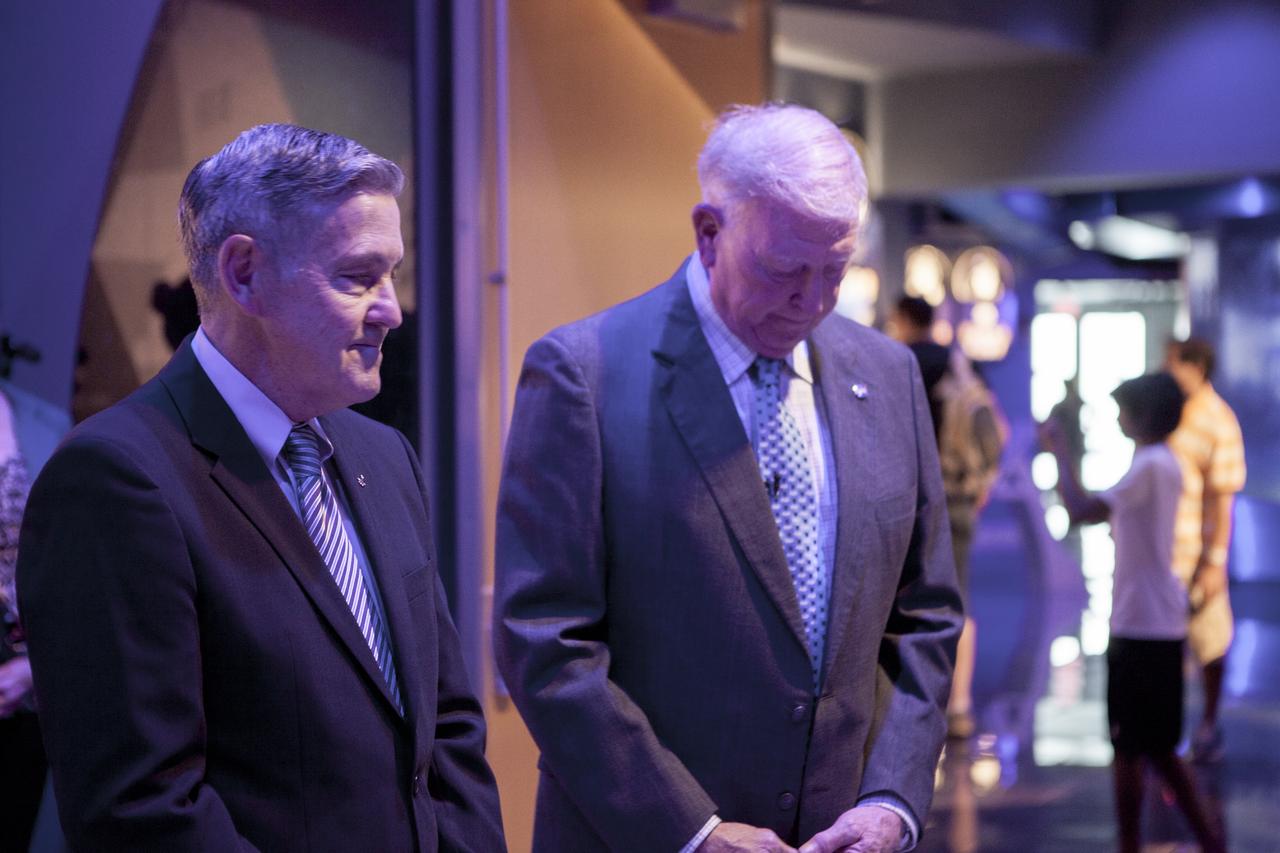
In the Heroes and Legends exhibit at the Kennedy Space Center Visitor Complex, Center Director Bob Cabana and space shuttle astronaut Jon McBride participate in a ceremony to honoring the memory of former NASA astronaut Richard Gordon. Having performed two spacewalks during Gemini XI in 1966, Gordon later served as command module pilot on Apollo 12 in 1969. Gordon died Nov. 6, 2017, at the age of 88.
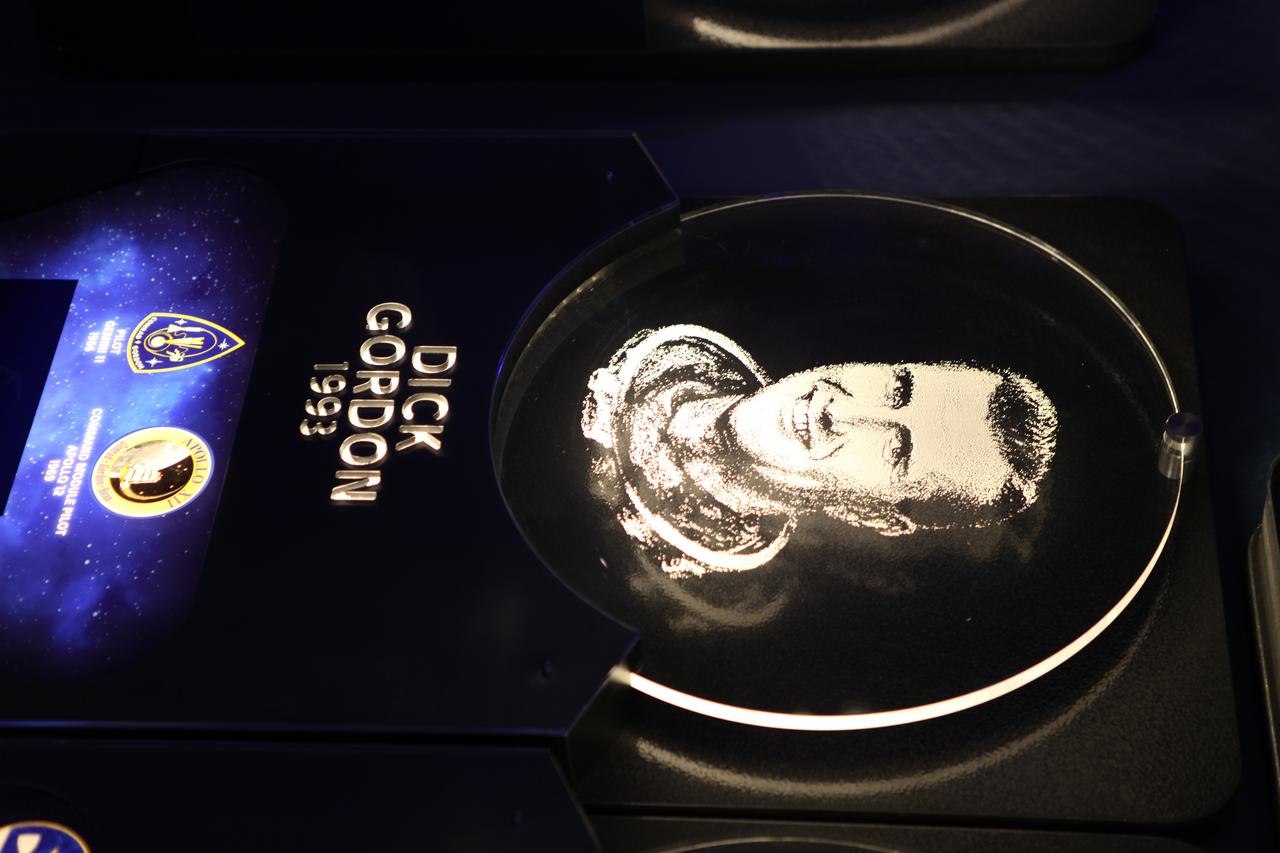
In the Heroes and Legends exhibit at the Kennedy Space Center Visitor Complex, former NASA astronaut Richard Gordon's plaque is seen among other enshrines of the U.S. Astronaut Hall of Fame. Gordon performed two spacewalks during Gemini XI in 1966 and was command module pilot on Apollo 12 in 1969. Gordon died Nov. 6, 2017, at the age of 88.
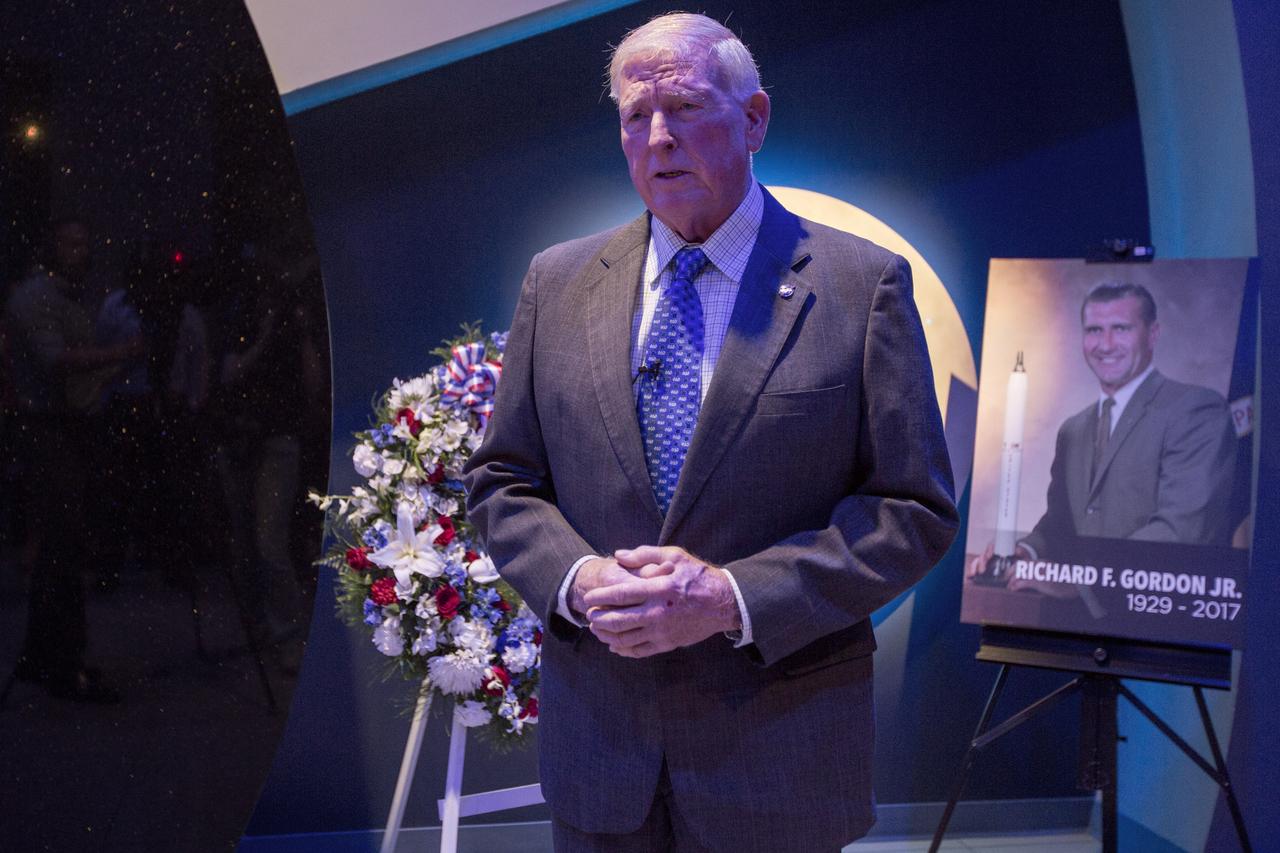
In the Heroes and Legends exhibit at the Kennedy Space Center Visitor Complex, space shuttle astronaut Jon McBride, speaks at a ceremony to honoring the memory of former NASA astronaut Richard Gordon. Having performed two spacewalks during Gemini XI in 1966, Gordon later served as command module pilot on Apollo 12 in 1969. Gordon died Nov. 6, 2017, at the age of 88.
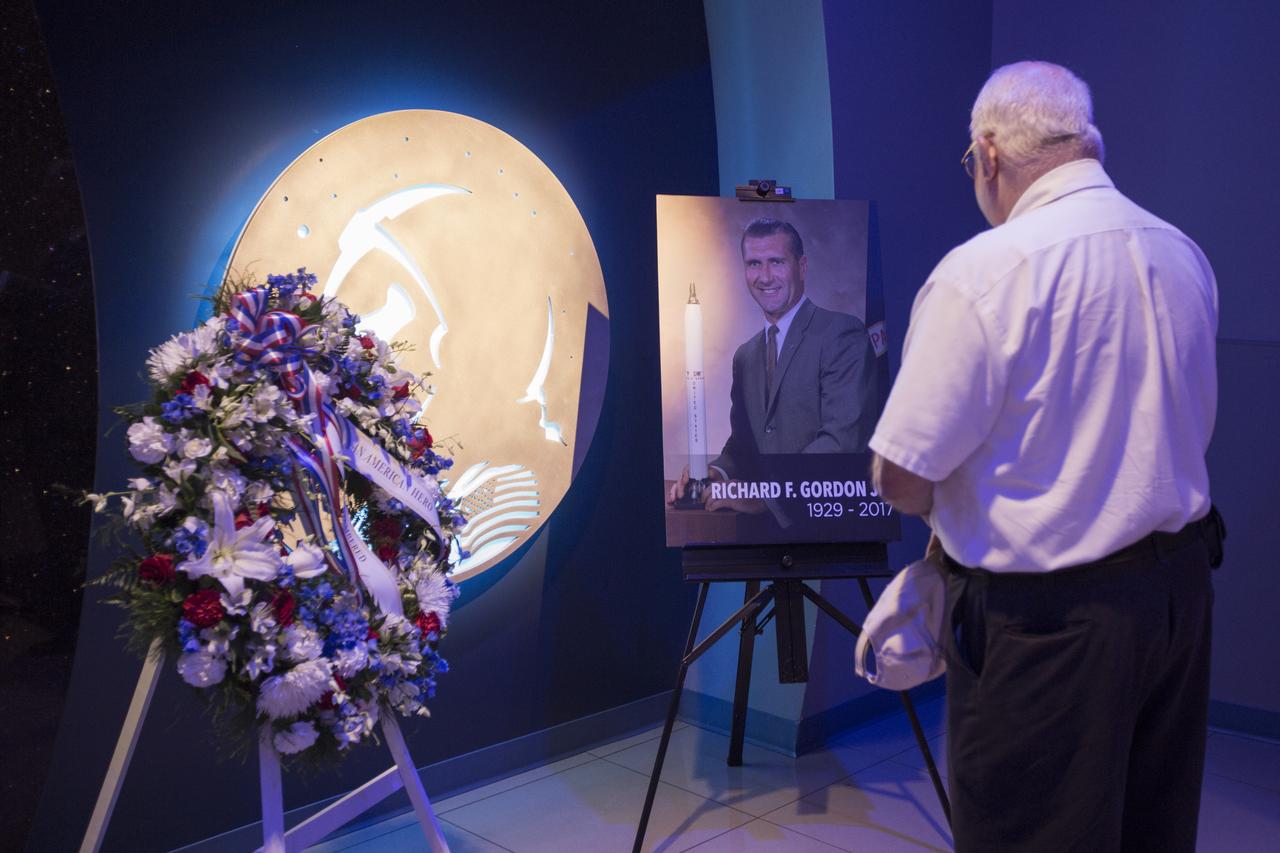
In the Heroes and Legends exhibit at the Kennedy Space Center Visitor Complex, a guest pays respect to former NASA astronaut Richard Gordon. A memorial wreath was placed following a ceremony to honor the memory of Gordon who performed two spacewalks during Gemini XI in 1966 and served as command module pilot on Apollo 12 in 1969. Gordon died Nov. 6, 2017, at the age of 88.
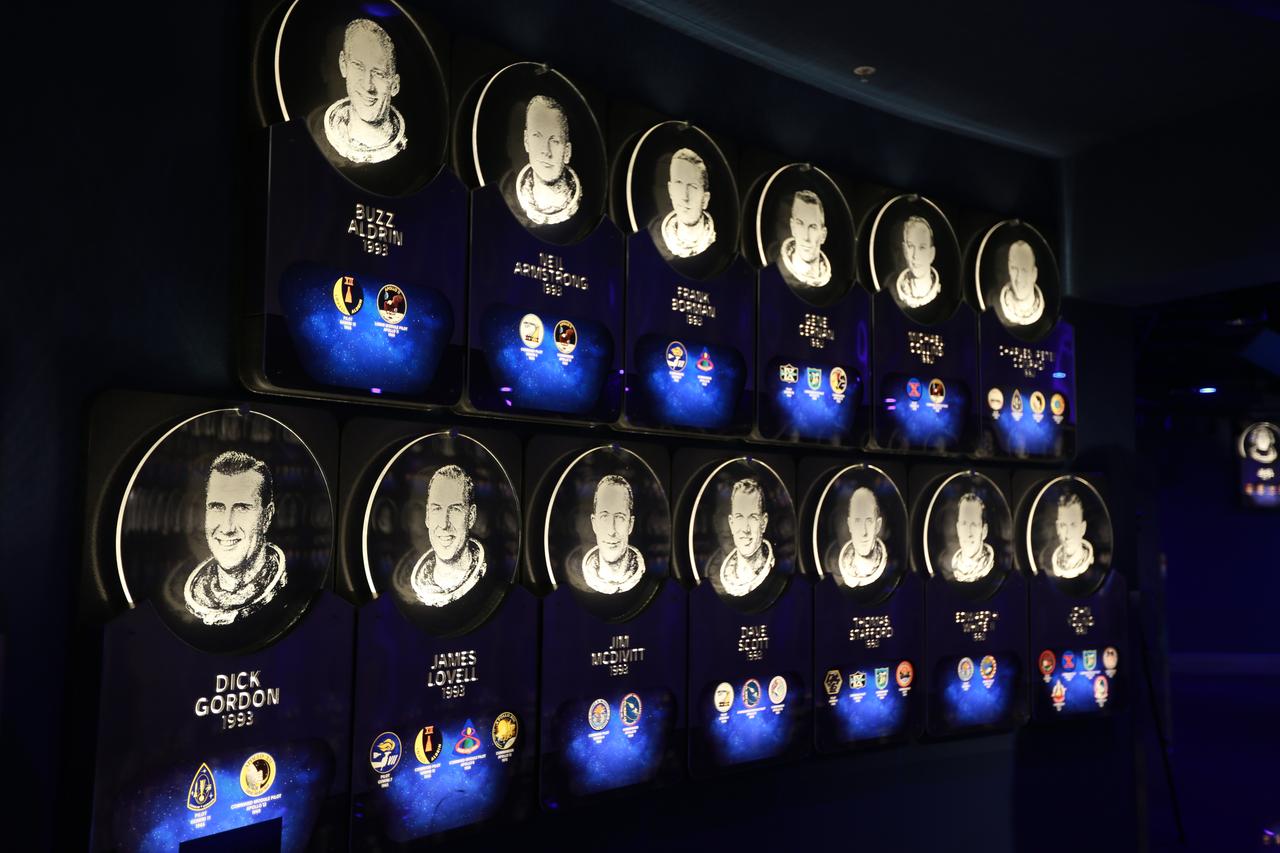
In the Heroes and Legends exhibit at the Kennedy Space Center Visitor Complex, former NASA astronaut Richard Gordon's plaque is seen among others enshrined in the U.S. Astronaut Hall of Fame. Gordon performed two spacewalks during Gemini XI in 1966 and was command module pilot on Apollo 12 in 1969. Gordon died Nov. 6, 2017, at the age of 88.
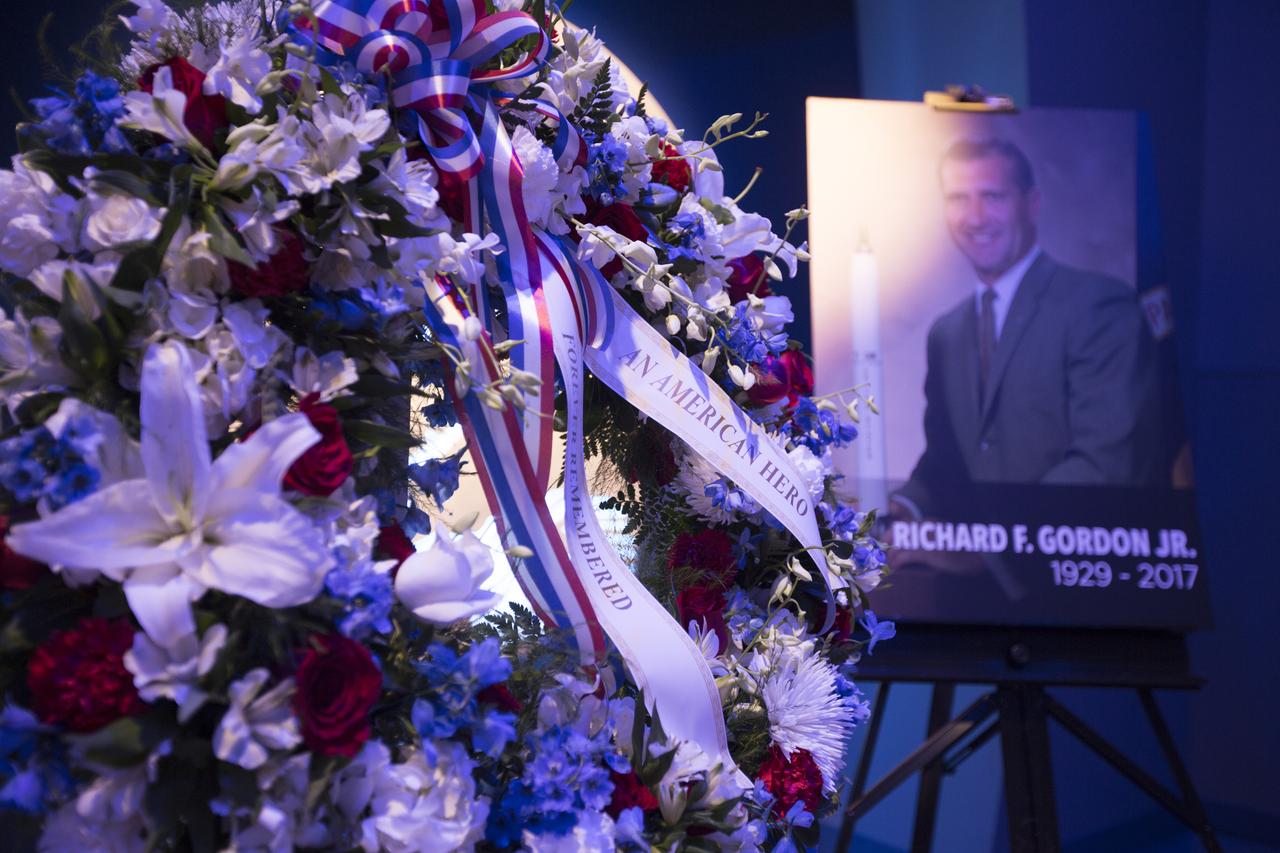
In the Heroes and Legends exhibit at the Kennedy Space Center Visitor Complex, a memorial wreath was placed following a ceremony to honor the memory of former NASA astronaut Richard Gordon. He performed two spacewalks during Gemini XI in 1966 and was command module pilot on Apollo 12 in 1969. Gordon died Nov. 6, 2017, at the age of 88.
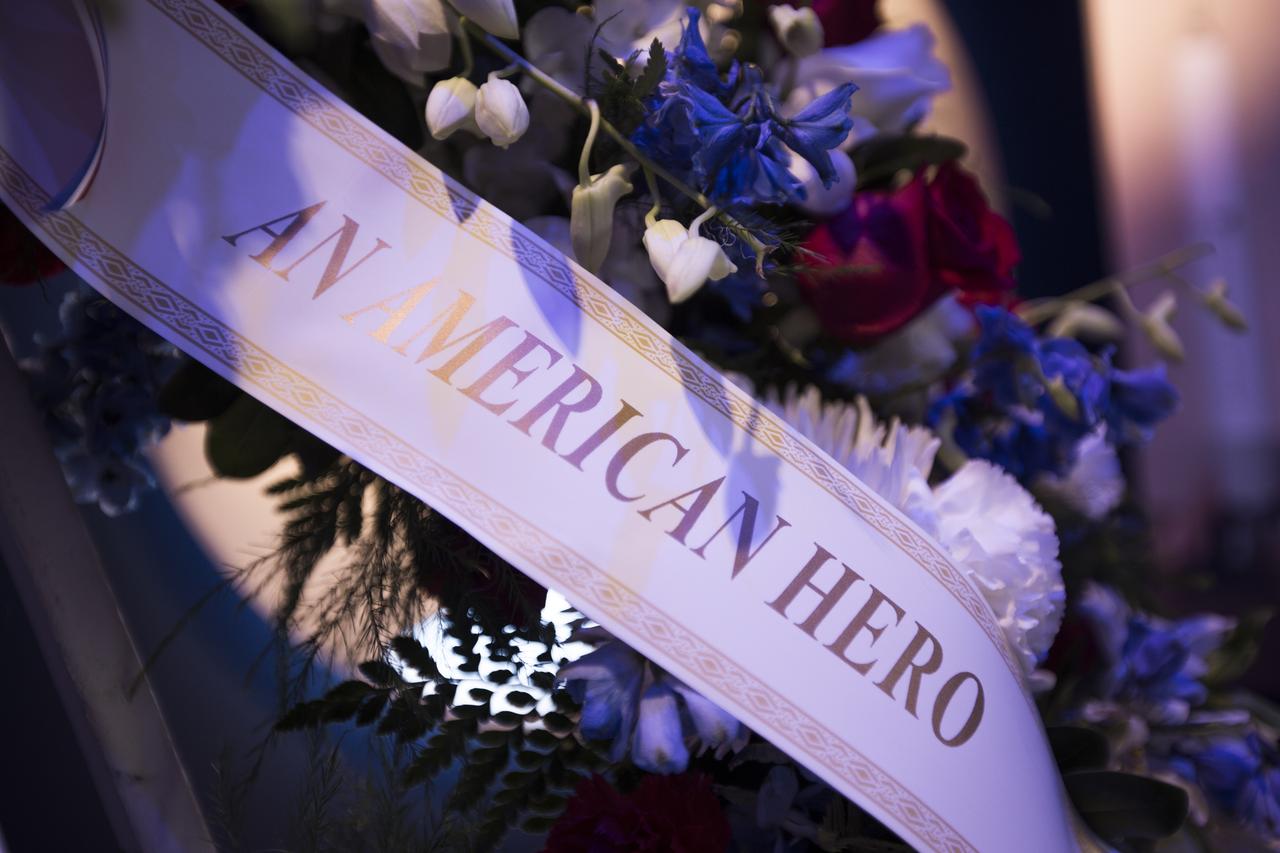
In the Heroes and Legends exhibit at the Kennedy Space Center Visitor Complex, a memorial wreath was placed following a ceremony to honor the memory of former NASA astronaut Richard Gordon. He performed two spacewalks during Gemini XI in 1966 and was command module pilot on Apollo 12 in 1969. Gordon died Nov. 6, 2017, at the age of 88.

S64-31459 (10 Sept. 1964) --- Astronaut Richard F. Gordon Jr. portrait. Photo credit: NASA

Richard F. Gordon Jr. climbing into training simulator. Astronaut Richard (Dick) Gordon, died in November 2017, at his home in California. He was 88. Gordon orbited the Moon on Apollo 12 in 1969 while two other astronauts walked on it. The Apollo 12 crew capsule can be seen at Langley's official visitor center, the Virginia Air and Space Center in Hampton VA. NASA 2017 Annual report, Celebrating 100 years.page 23 Milestones.

S66-50756 (15 Sept. 1966) --- The Gemini-11 prime crew, astronauts Charles Conrad Jr. (right) and Richard F. Gordon Jr. stand on the deck of the USS Guam after being recovered by helicopter from the splashdown area. Photo credit: NASA

S66-54590 (13 Sept. 1966) --- Astronaut Richard F. Gordon Jr., Gemini-11 pilot, prepares to open spacecraft hatch to jettison used equipment. Photo credit: NASA
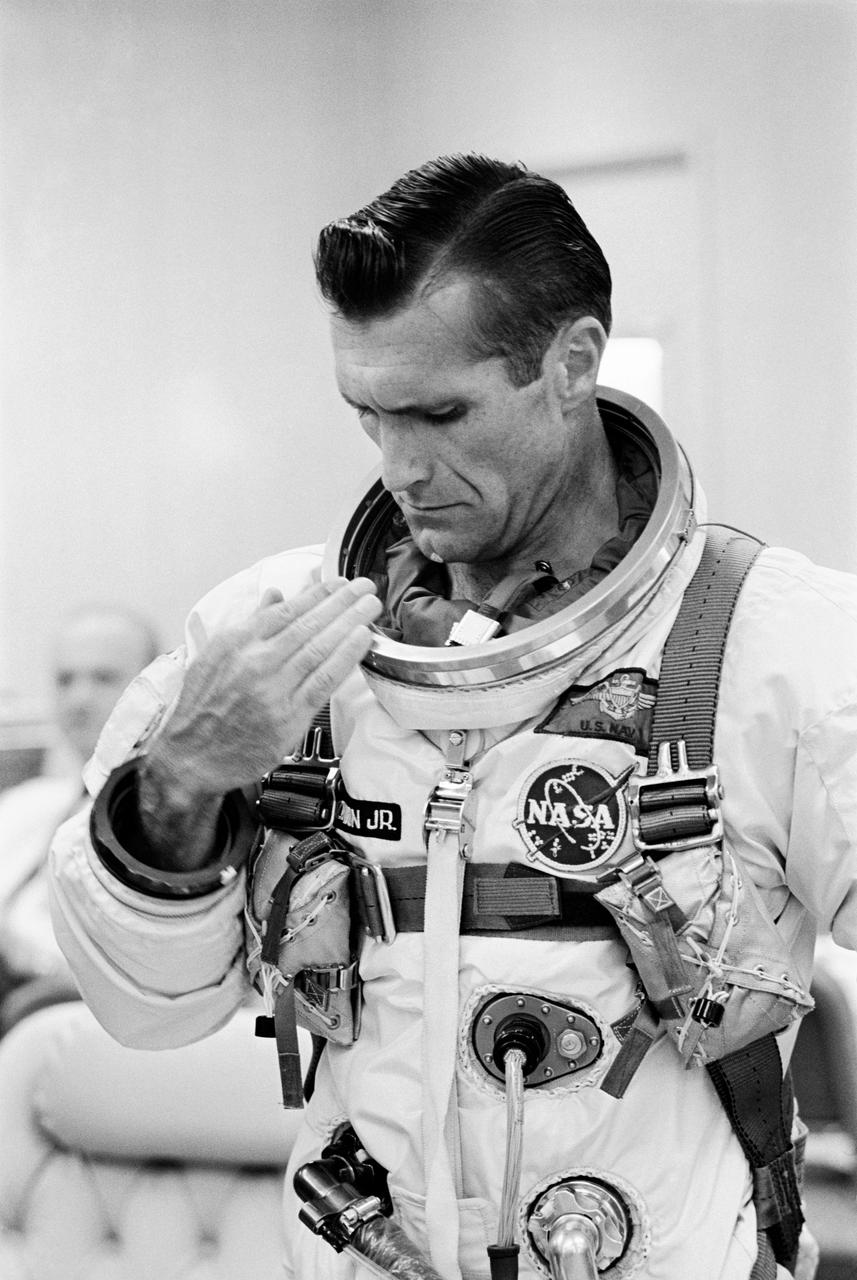
S66-50719 (12 Sept. 1966) --- Astronaut Richard F. Gordon Jr., pilot of the Gemini-11 spaceflight, suits up in the Launch Complex 16 suiting trailer during the Gemini-11 prelaunch countdown. Minutes later astronaut Gordon and Charles Conrad Jr., command pilot, were transported to Pad 19 and their waiting Gemini-11 spacecraft in preparation for their scheduled three-day mission in space. Photo credit: NASA
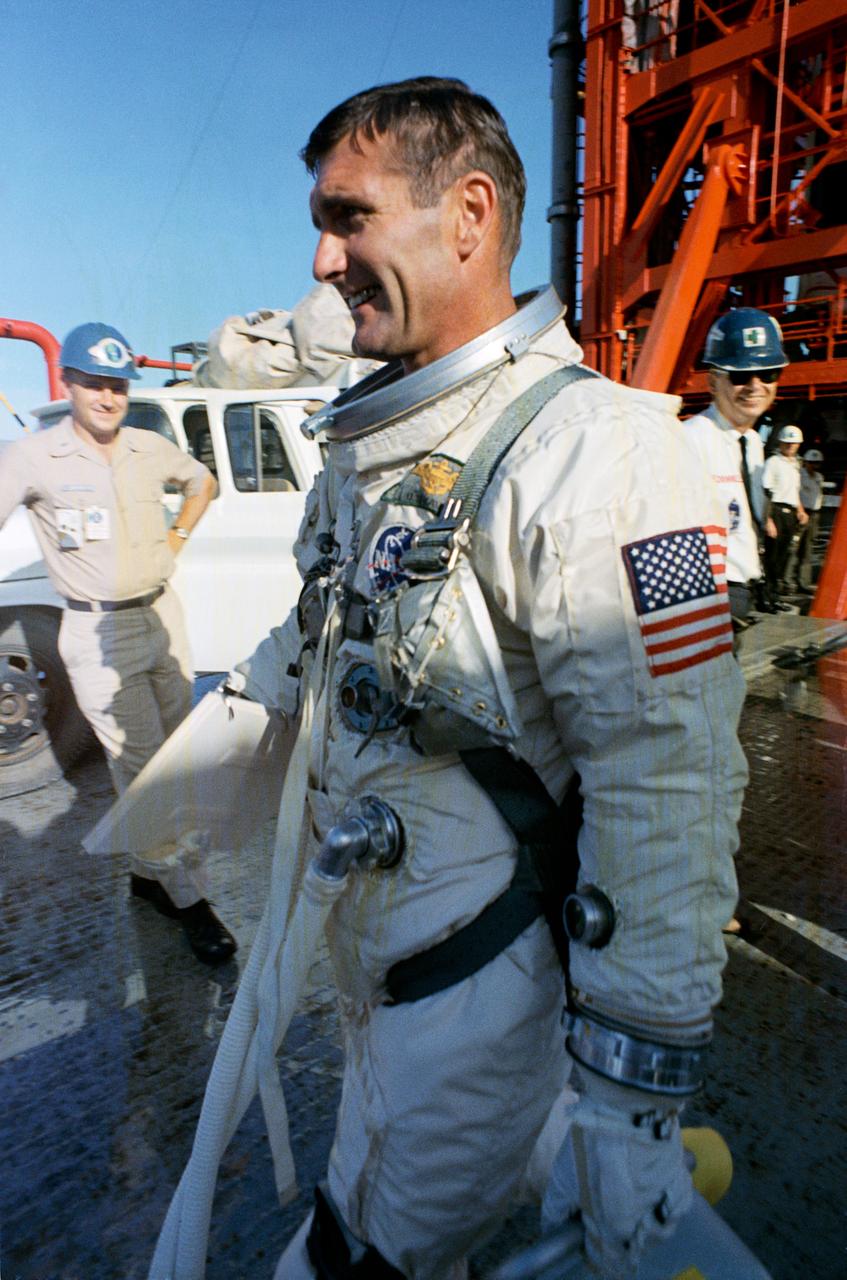
S66-50775 (10 Sept. 1966) --- Astronaut Richard F. Gordon Jr., pilot, walks away from Pad 19 following postponement of the Gemini-11 spaceflight. The mission was rescheduled for Sept. 12, 1966. Photo credit: NASA
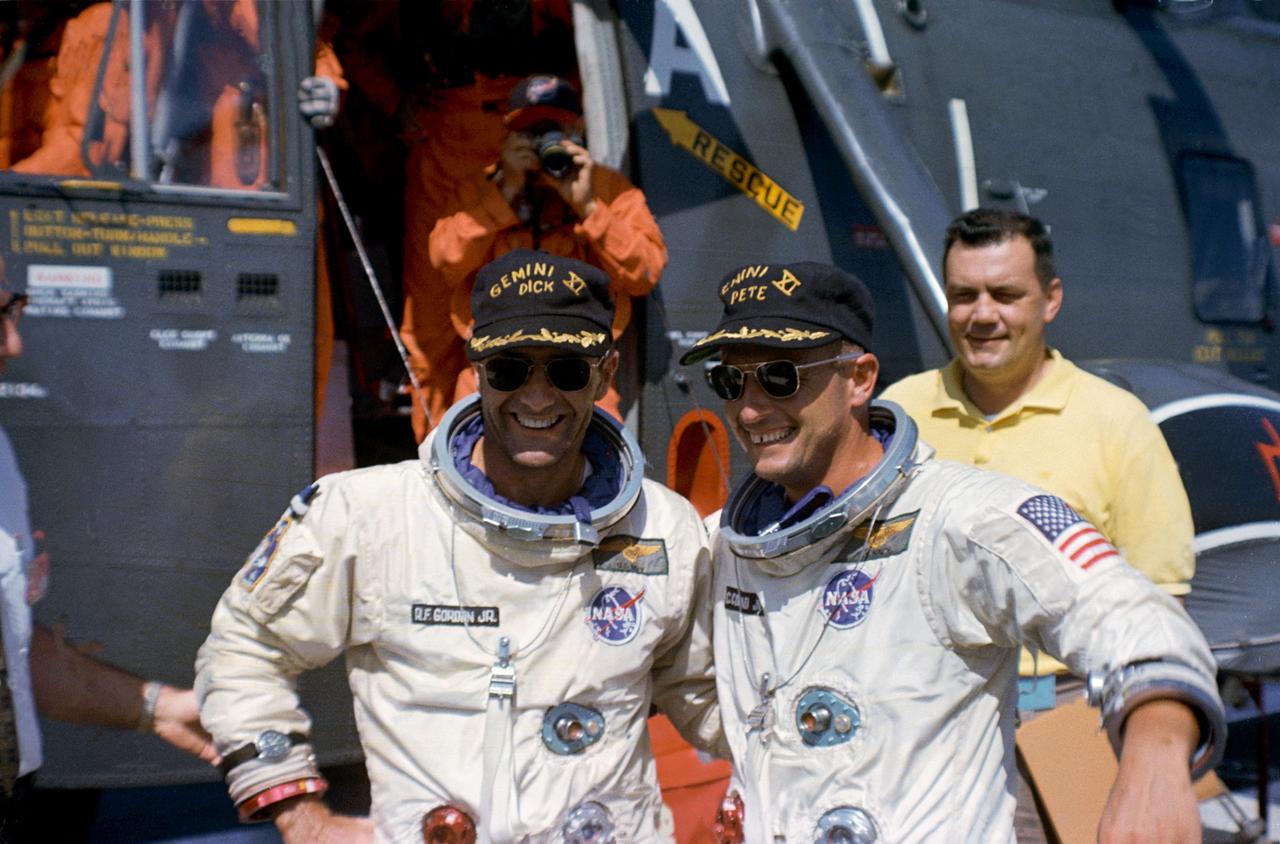
S66-50752 (15 Sept. 1966) --- The Gemini-11 prime crew, astronauts Charles Conrad Jr. (right) and Richard F. Gordon Jr. pose in front of the recovery helicopter which brought them to the USS Guam. Photo credit: NASA

Astronaut Richard F. Gordon Jr., Apollo 12 command module pilot, suits up in the Kennedy Space Center's Manned Spacecraft Operations Building during the Apollo 12 prelaunch countdown.

S66-45614 (23 Sept. 1966) --- Astronauts Charles Conrad Jr. (with pipe) and Richard F. Gordon Jr. (background) view negatives from their Gemini-11 mission. Photo credit: NASA

S66-50757 (15 Sept. 1966) --- Astronaut Charles Conrad Jr., command pilot of the Gemini-11 spaceflight, is hoisted aboard a recovery helicopter from the USS Guam. Astronaut Richard F. Gordon Jr., pilot, sits in a life raft below waiting to be picked up. Gemini-11 splashed down at 9 a.m. (EST) Sept. 15, 1966, to conclude a three-day mission in space. Photo credit: NASA
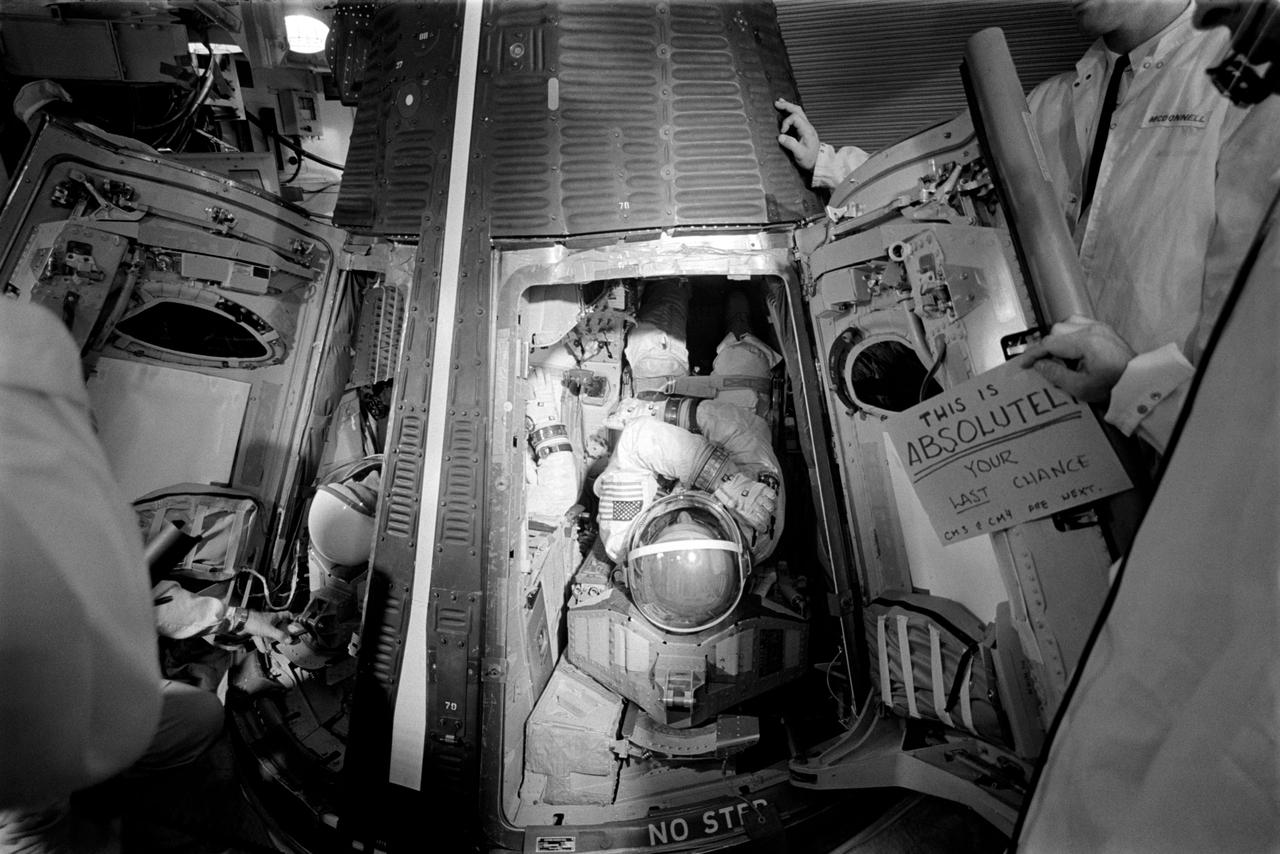
S66-50720 (12 Sept. 1966) --- Preparations are made in the white room atop Pad 19 to close the hatches on the Gemini-11 spacecraft just after insertion during the Gemini-11 prelaunch countdown. On the left is astronaut Charles Conrad Jr., command pilot; and on the right is Richard F. Gordon Jr., pilot. Photo credit: NASA
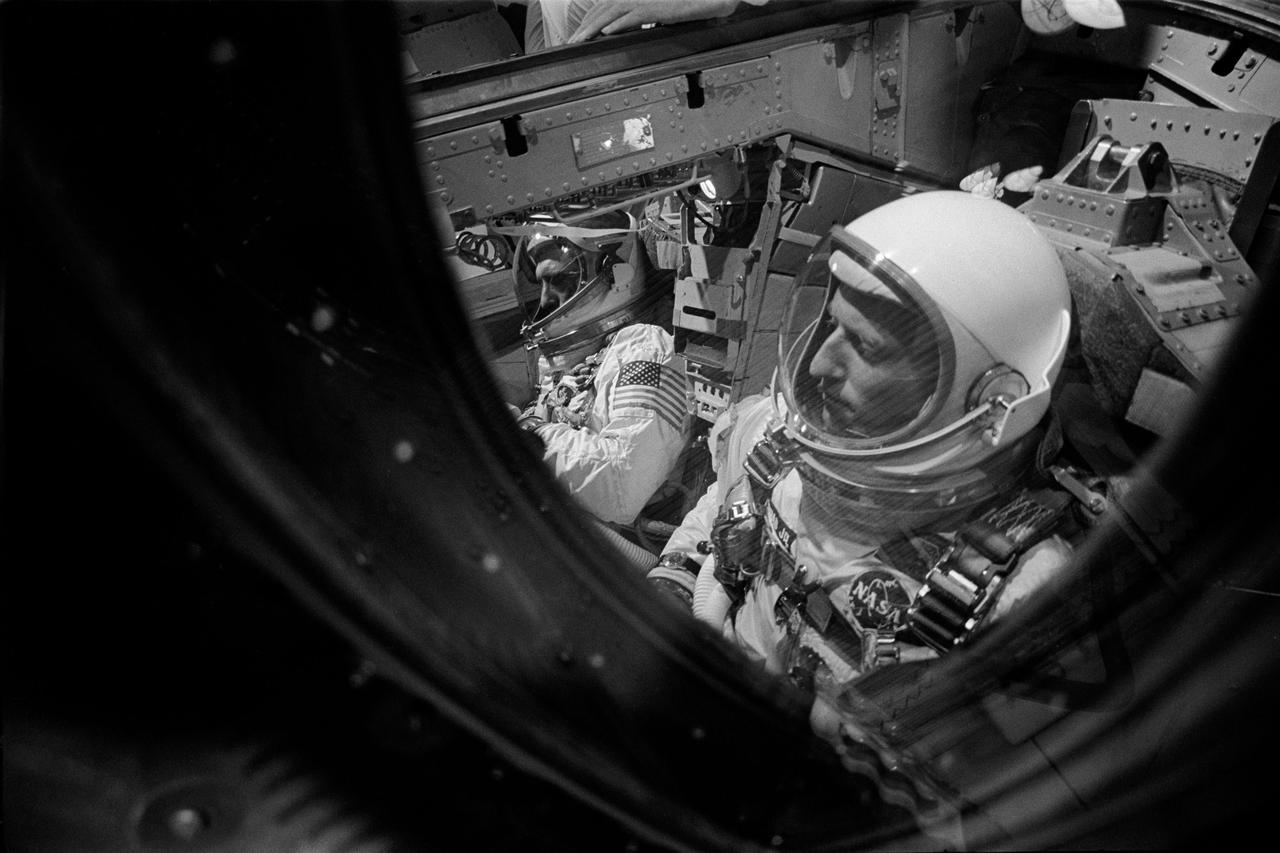
S66-50714 (12 Sept. 1966) --- Astronauts Charles Conrad Jr. (foreground), command pilot, and Richard F. Gordon Jr., pilot, are seen in the Gemini-11 spacecraft in the white room atop Pad 19 awaiting the final minutes of the prelaunch countdown. The Gemini-11 liftoff was at 9:42 a.m. (EST), Sept. 12, 1966. Photo credit: NASA

S66-44497 (23 July 1966) --- Astronauts Charles Conrad Jr. (left) and Richard F. Gordon Jr. (right), prime crew for the Gemini-11 spaceflight, practice water egress procedures in the Gulf of Mexico. Static Article 5 was used in the training exercise. A MSC swimmer is in the water assisting in the training. Photo credit: NASA
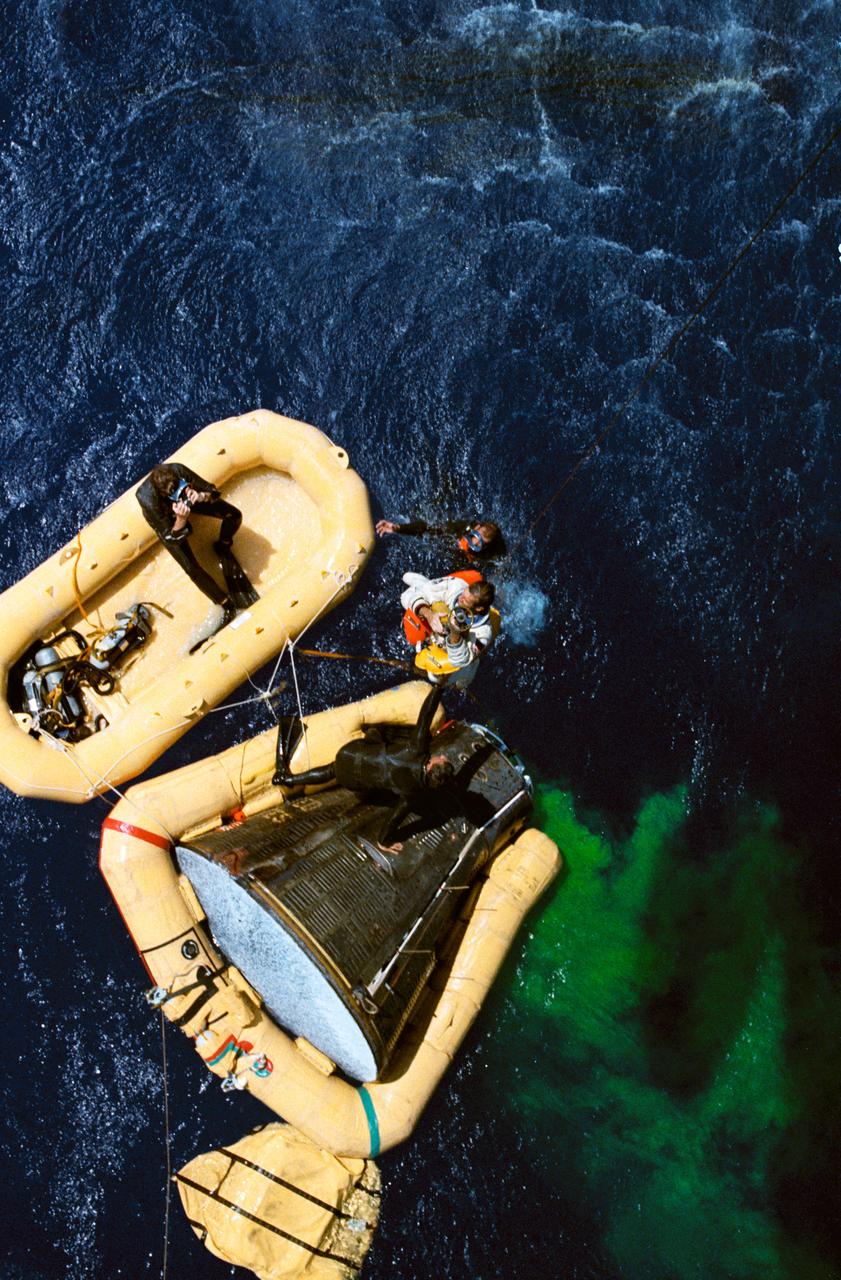
S66-50759 (15 Sept. 1966) --- Astronaut Richard F. Gordon Jr., pilot of the Gemini-11 spaceflight, is hoisted from the water by a recovery helicopter from the prime recovery ship USS Guam. Gemini-11 splashed down in the western Atlantic recovery area at 9 a.m. (EST), Sept. 15, 1966, to conclude the three-day mission in space. Astronaut Charles Conrad Jr. (out of frame) is the Gemini-11 command pilot. Photo credit: NASA
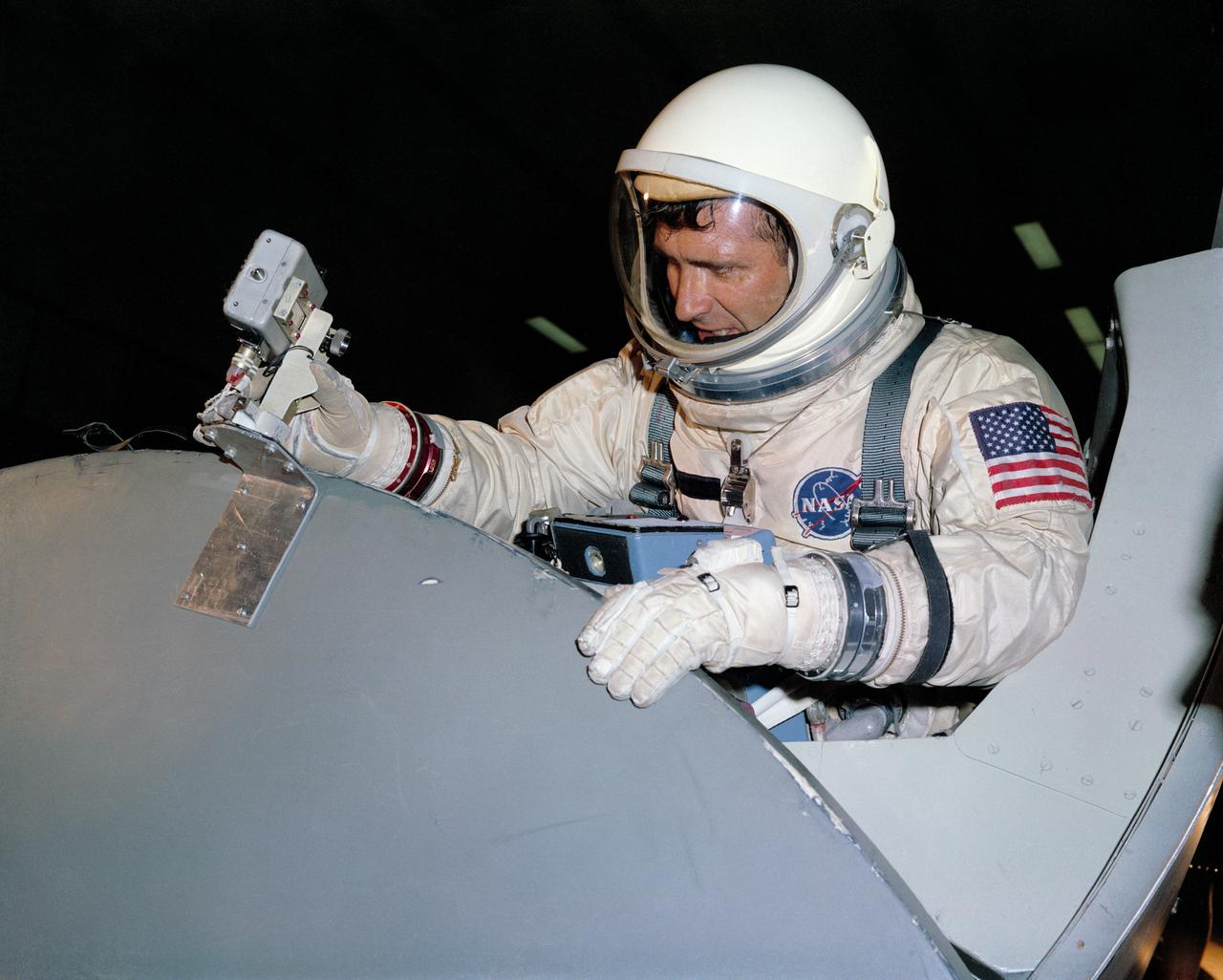
S66-50179 (10 Aug. 1966) --- Astronaut Richard F. Gordon Jr., prime crew pilot for the Gemini-11 spaceflight, practices attaching to a Gemini boilerplate a camera which will film his extravehicular activity (EVA) outside the spacecraft. The training exercise is being conducted in the Astronaut Training Building, Kennedy Space Center, Florida. Photo credit: NASA
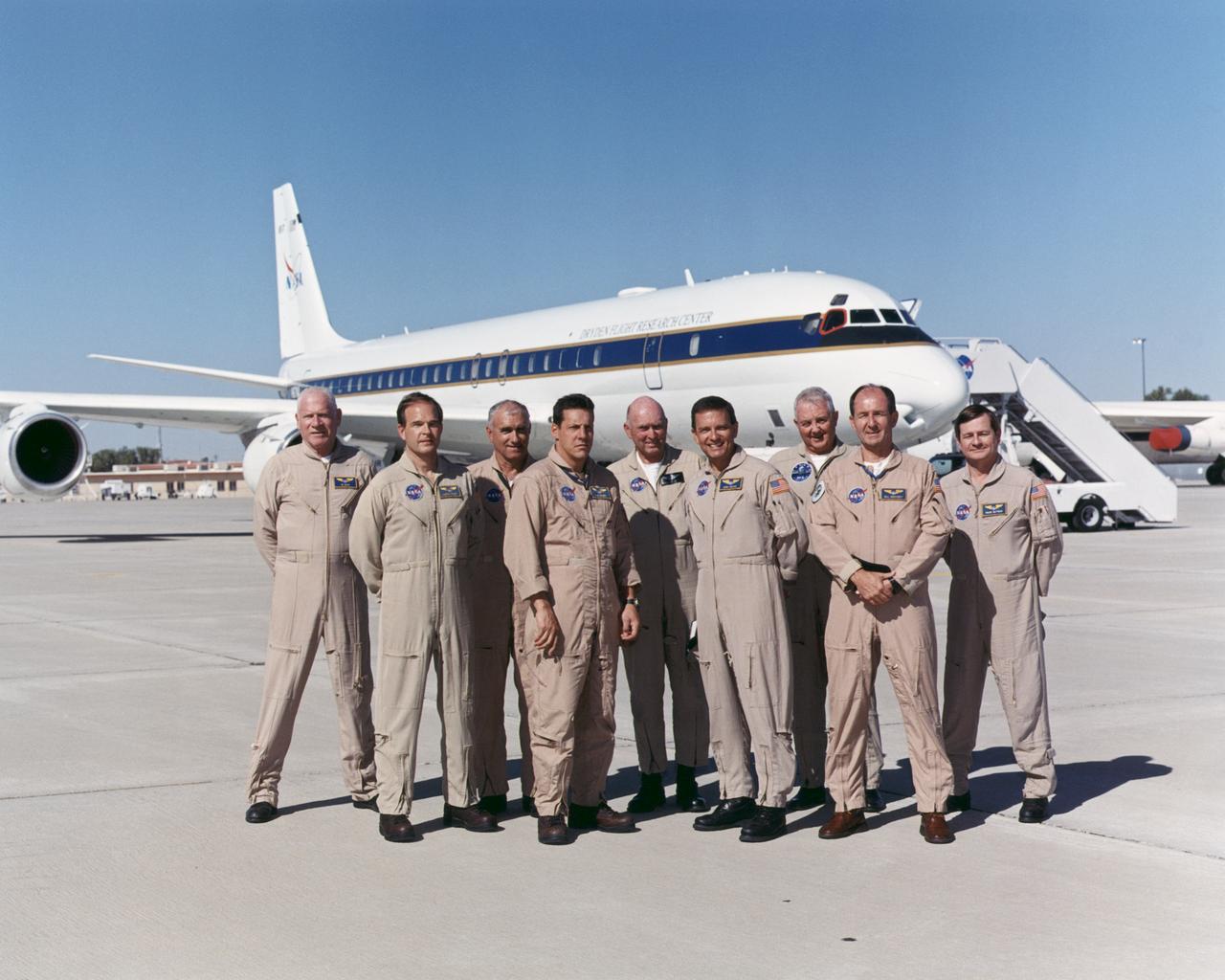
2004 NASA Dryden DC-8 flight crew. Left to Right: Edwin W. Lewis, Jr., Martin J. Trout, Richard G. Ewers, Craig R. Bomben, C. Gordon Fullerton (Chief Pilot), Mark Pestana, Douglas H. Baker, William Frederick Brockett, and Frank Batteas.

S69-38862 (September 1969) --- Astronaut Richard F. Gordon Jr., Apollo 12 command module pilot.
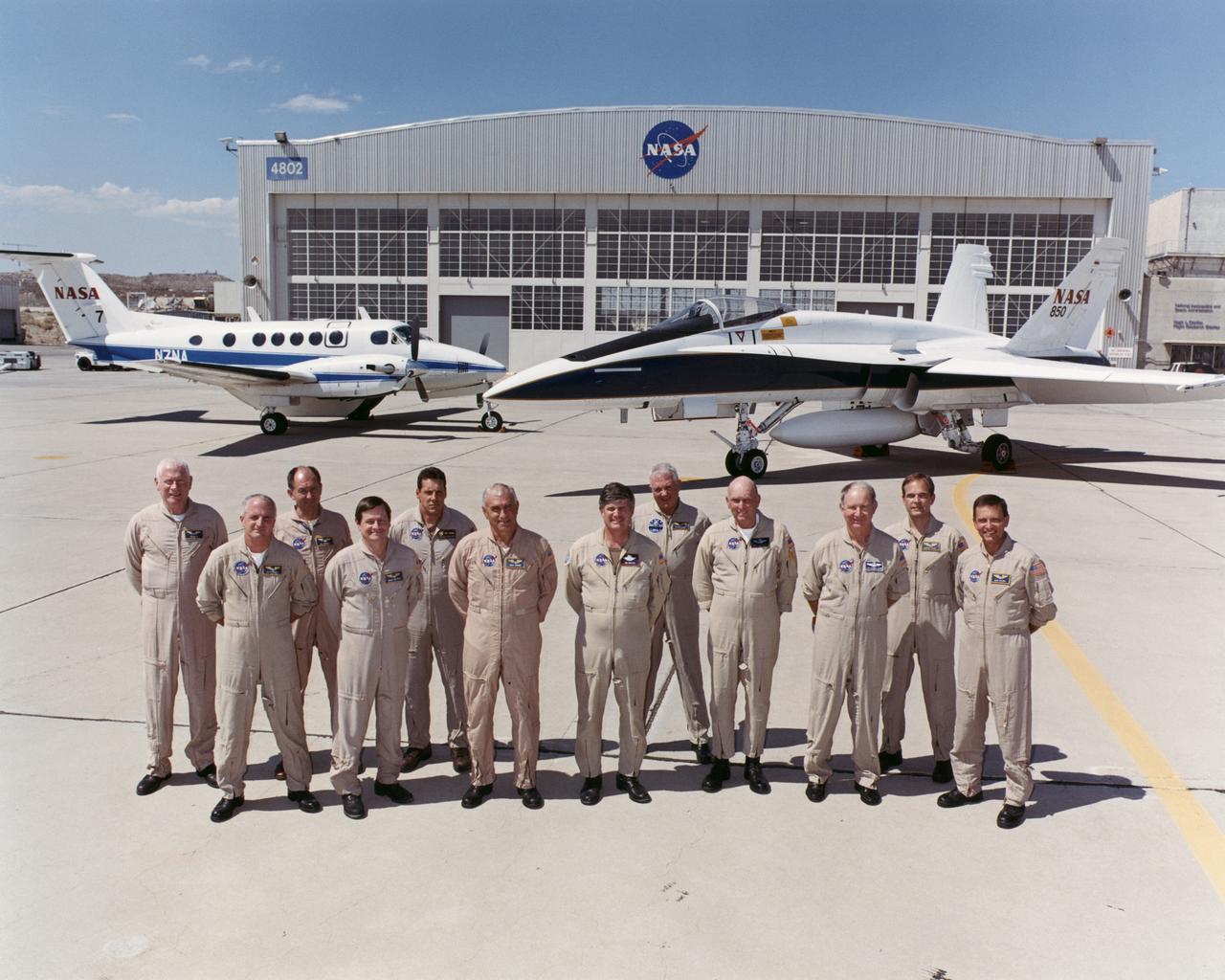
2004 NASA Dryden Research Pilots. Left to Right: Edwin W. Lewis, Jr., David A. Wright (Director of Flight Operations), William Frederick Brockett, Frank Batteas, Craig R. Bomben, Richard G. Ewers, James W. Smolka, Douglas H. Baker, C. Gordon Fullerton (Chief Pilot), James Barrilleaux, Martin J. Trout, and Mark Pestana. (not pictured: Dana Purifoy)

S66-45613 (23 Sept. 1966) --- Astronauts Charles Conrad Jr. (with pipe) and Richard F. Gordon Jr. (background) view negatives from their Gemini-11 mission. Photo credit: NASA
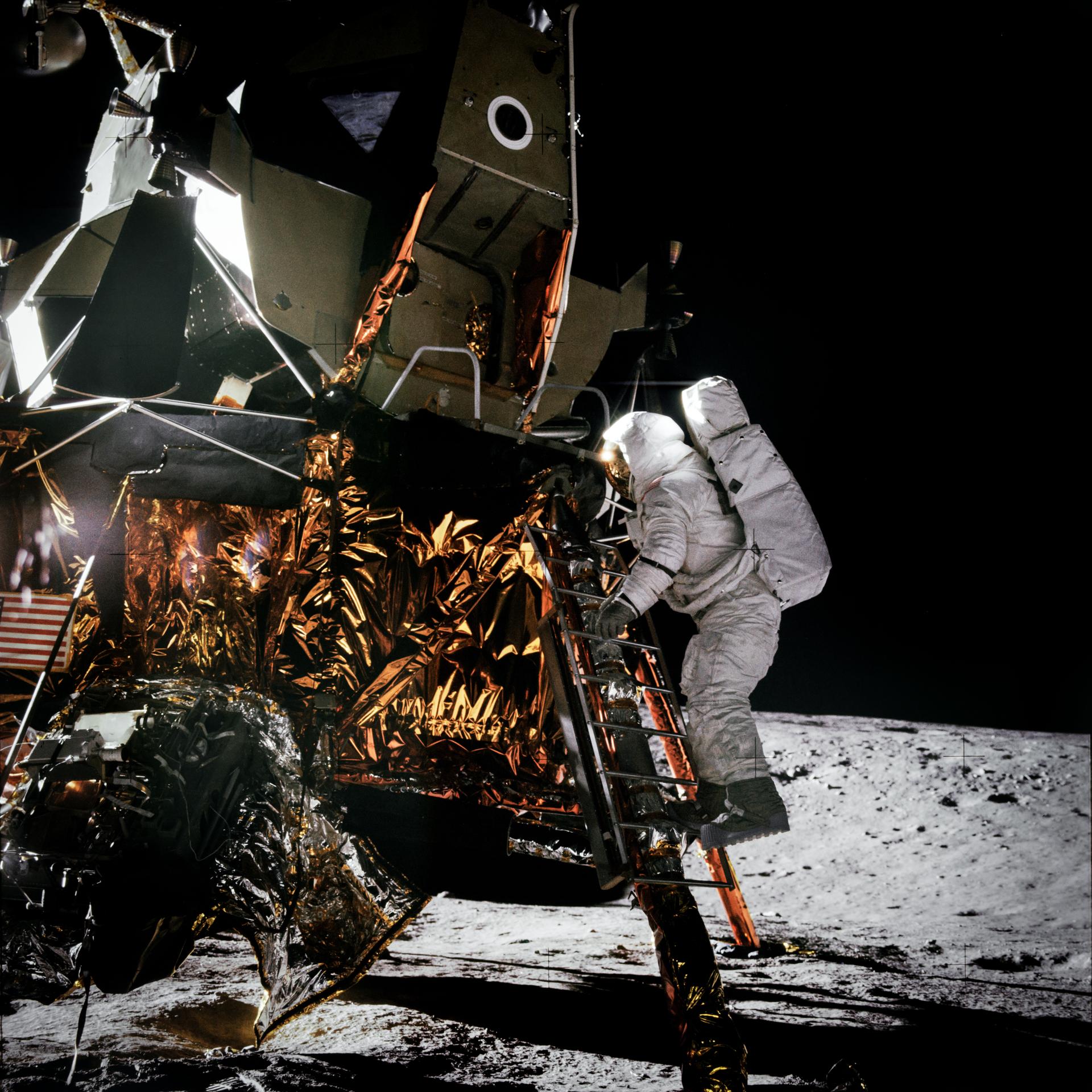
AS12-46-6728 (19 Nov. 1969) --- Astronaut Alan L. Bean, lunar module pilot for the Apollo 12 mission, is about to step off the ladder of the Lunar Module to join astronaut Charles Conrad Jr., mission commander, in extravehicular activity (EVA). Conrad and Bean descended in the Apollo 12 LM to explore the moon while astronaut Richard F. Gordon Jr., command module pilot, remained with the Command and Service Modules in lunar orbit.
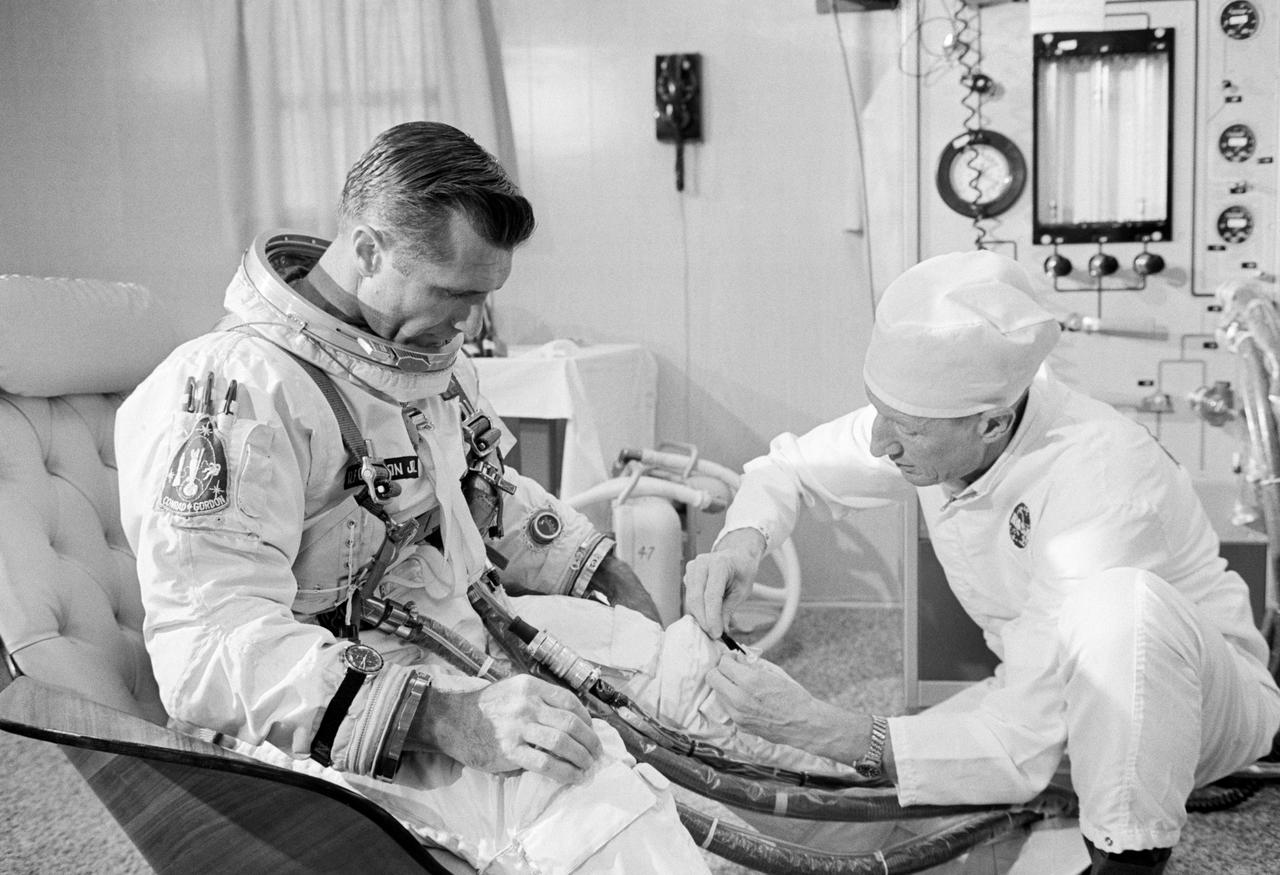
S66-50816 (12 Sept. 1966) --- Astronaut Richard F. Gordon Jr., pilot of the Gemini-11 spaceflight, undergoes suiting up operations in the Launch Complex 16 suit trailer during the Gemini-11 prelaunch countdown. At right is suit technician Clyde Teague. Later, astronaut Gordon and Charles Conrad Jr., command pilot, entered a transport van which carried them to Pad 19 and their waiting spacecraft. The liftoff was at 9:42 a.m. (EST), Sept. 12, 1966. Photo credit: NASA
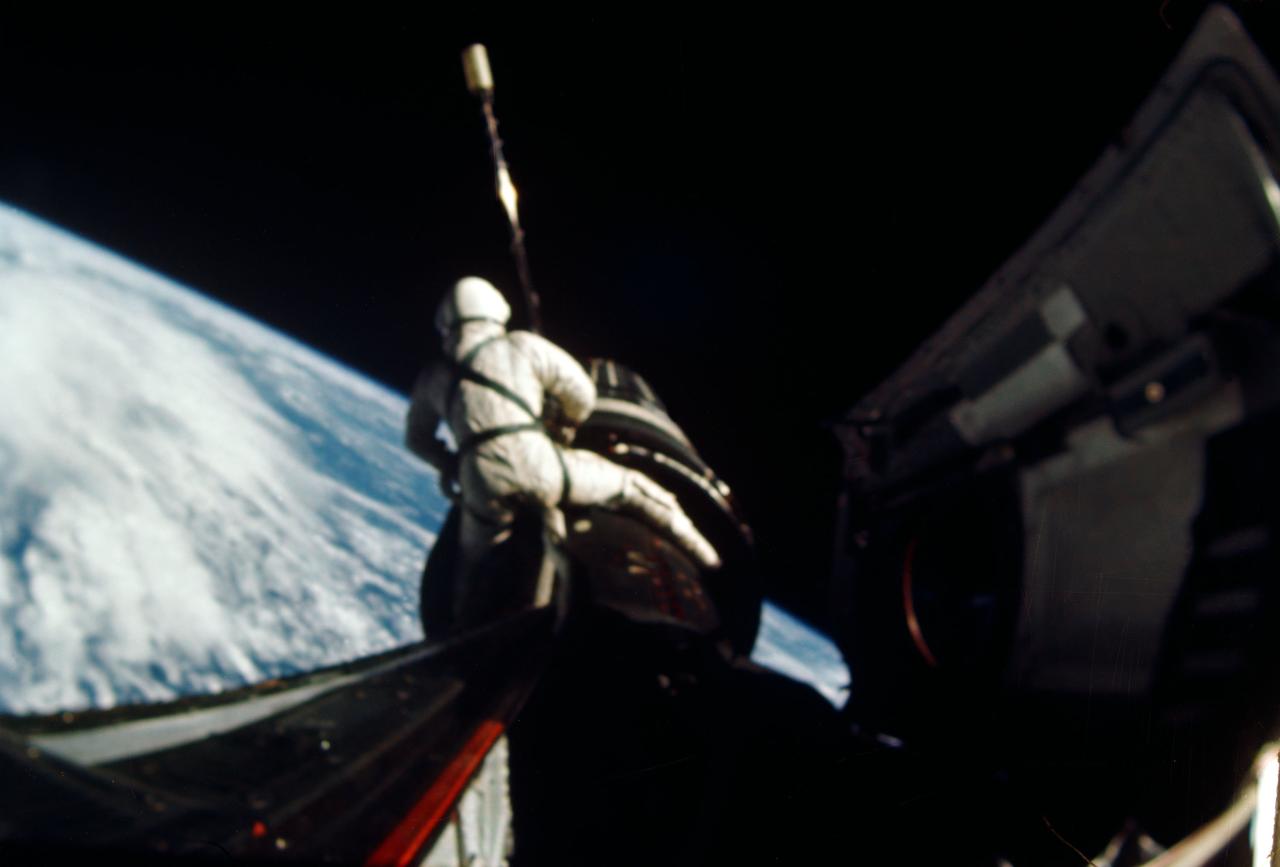
S66-54455 (13 Sept. 1966) --- Astronaut Richard F. Gordon Jr., Gemini-11 pilot, attaches a tether line from his spacecraft to the Agena Target Docking Vehicle (ATDV) during a spacewalk. This view was taken over the Atlantic Ocean at approximately 160 miles above Earth on Sept. 13, 1966. With the aid of the ATDV, Gordon and astronaut Charles (Pete) Conrad Jr., command pilot, set a new altitude record of 750 miles during the GT-11 mission. Photo credit: NASA
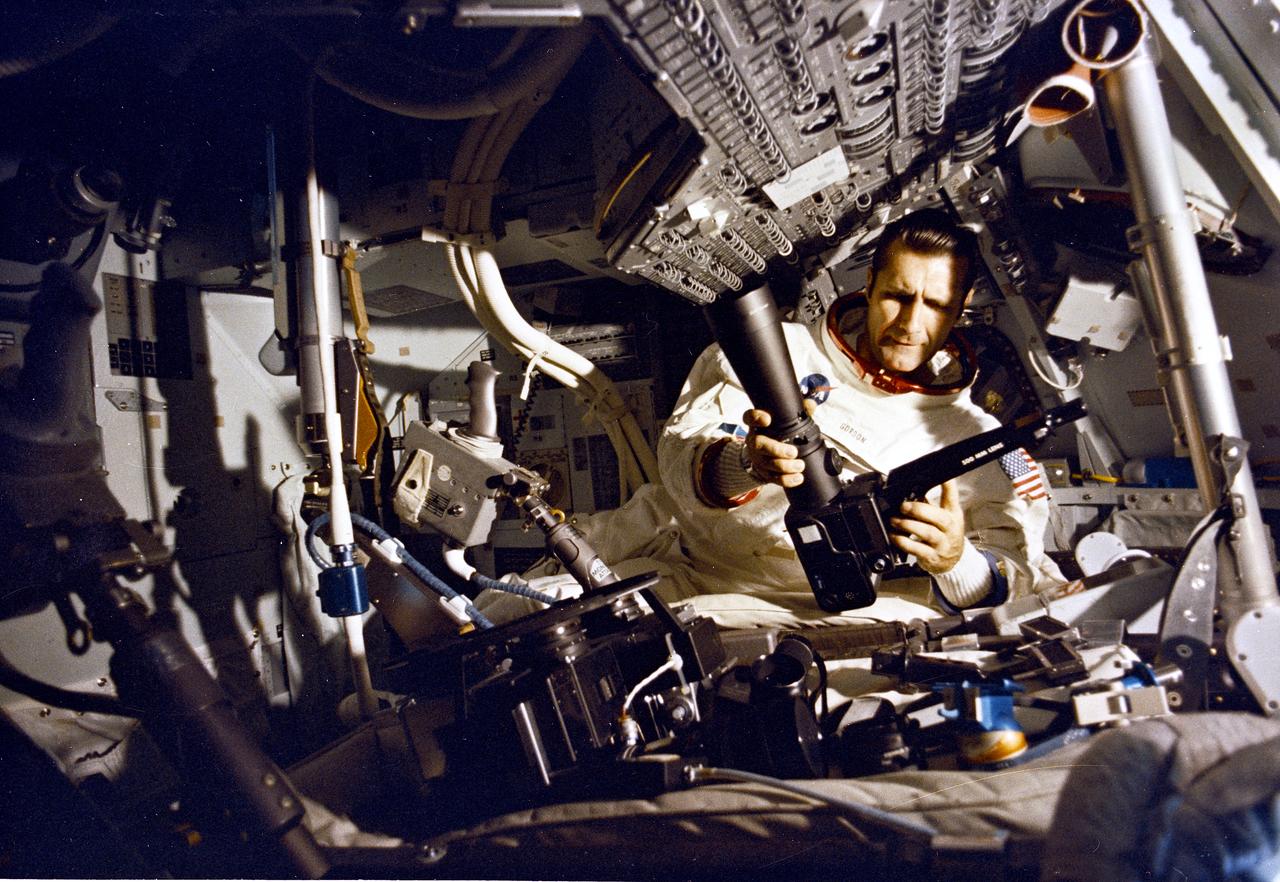
This is a view of astronaut Richard F. Gordon attaching a high resolution telephoto lens to a camera aboard the Apollo 12 Command Module (CM) Yankee Clipper. The second manned lunar landing mission, Apollo 12 launched from launch pad 39-A at Kennedy Space Center in Florida on November 14, 1969 via a Saturn V launch vehicle. The Saturn V vehicle was developed by the Marshall Space Flight Center (MSFC) under the direction of Dr. Wernher von Braun. Aboard Apollo 12 was a crew of three astronauts: Alan L. Bean, pilot of the Lunar Module (LM), Intrepid; Richard Gordon, pilot of the Command Module (CM), Yankee Clipper; and Spacecraft Commander Charles Conrad. The LM, Intrepid, landed astronauts Conrad and Bean on the lunar surface in what’s known as the Ocean of Storms. Their lunar soil activities included the deployment of the Apollo Lunar Surface Experiments Package (ALSEP), finding the unmanned Surveyor 3 that landed on the Moon on April 19, 1967, and collecting 75 pounds (34 kilograms) of rock samples. Astronaut Richard Gordon piloted the CM, Yankee Clipper, in a parking orbit around the Moon. Apollo 12 safely returned to Earth on November 24, 1969.
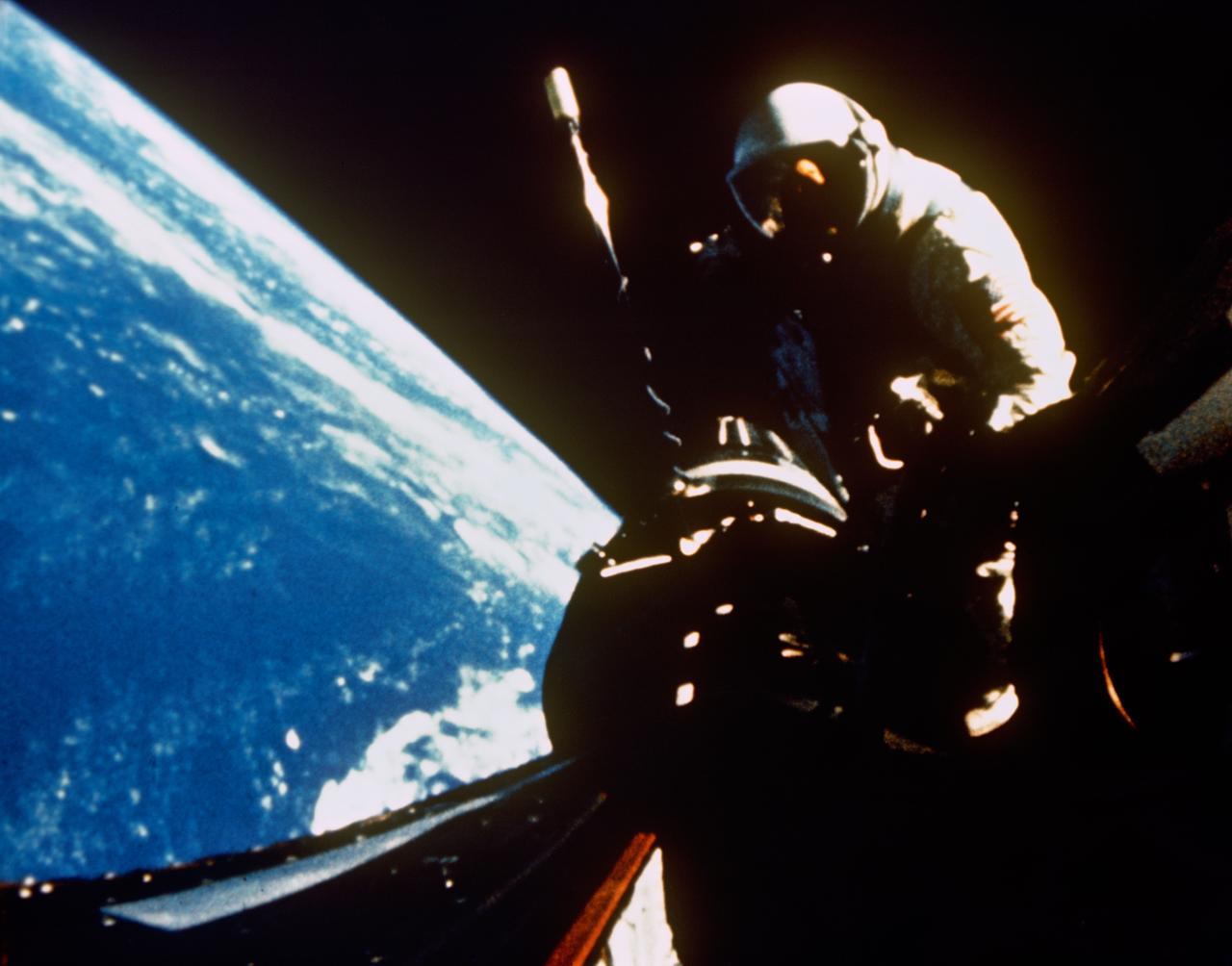
S66-54454 (13 Sept. 1966) --- Astronaut Richard F. Gordon Jr., pilot for the Gemini-11 spaceflight, returns to the hatch of the spacecraft following extravehicular activity (EVA). This picture was taken over the Atlantic Ocean at approximately 160 nautical miles above Earth's surface. Photo credit: NASA
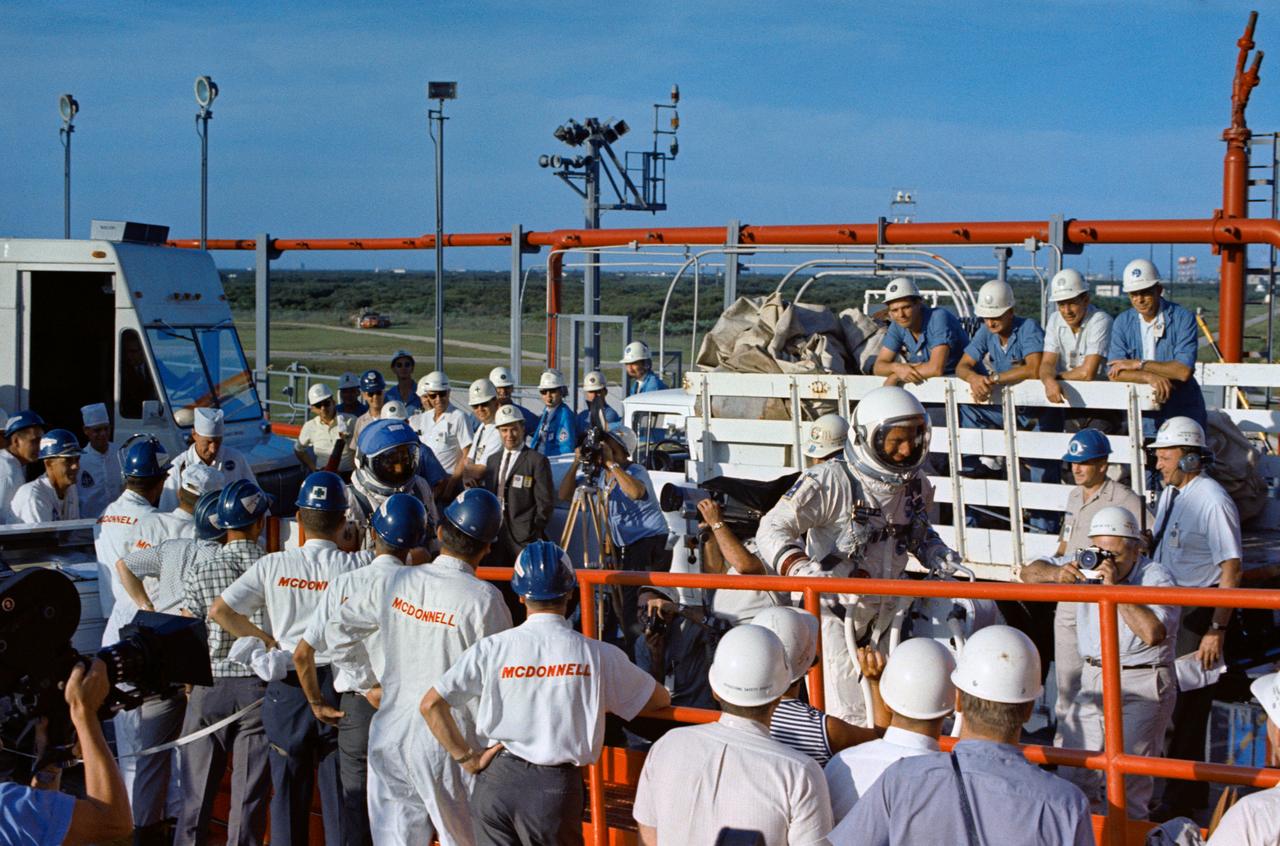
S66-50780 (10 Sept. 1966) --- Astronauts Richard F. Gordon Jr. (in front), pilot, and Charles Conrad Jr., command pilot, walk up the ramp at Pad 19 during the Gemini-11 prelaunch countdown. Photo credit: NASA

S66-54548 (12-15 Sept. 1966) --- This photograph, taken during one of the 44 orbits the Gemini-11 crew made around Earth, shows the Indian Ocean west of Australia looking northwest. The crew consisted of astronauts Charles Conrad Jr. and Richard F. Gordon Jr. Photo credit: NASA
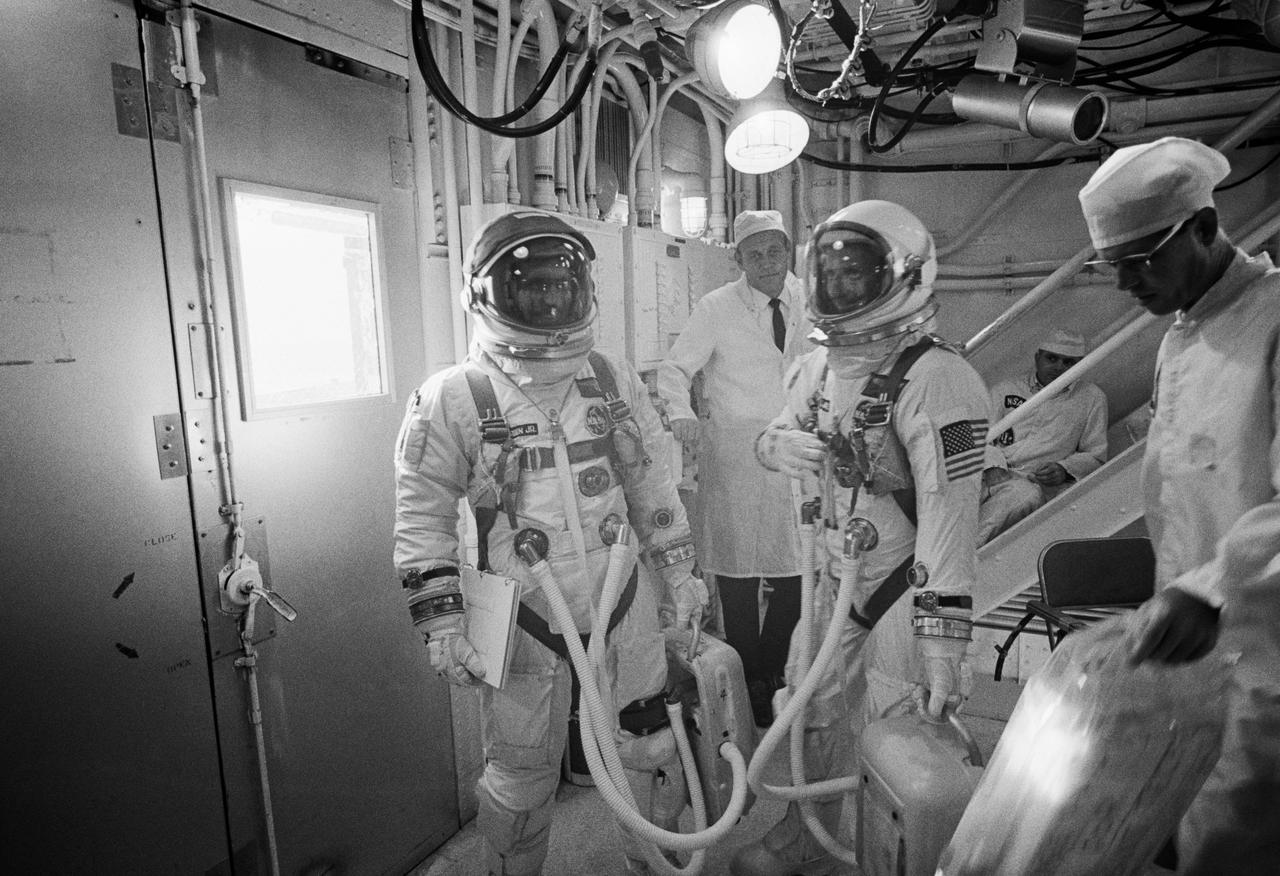
S66-57967 (10 Sept. 1966) --- Gemini-11 prime crew, astronauts Charles Conrad Jr. (right), command pilot, and Richard F. Gordon Jr. (left), pilot, prepare to enter the Gemini-11 spacecraft in the White Room atop Pad 19. Photo credit: NASA
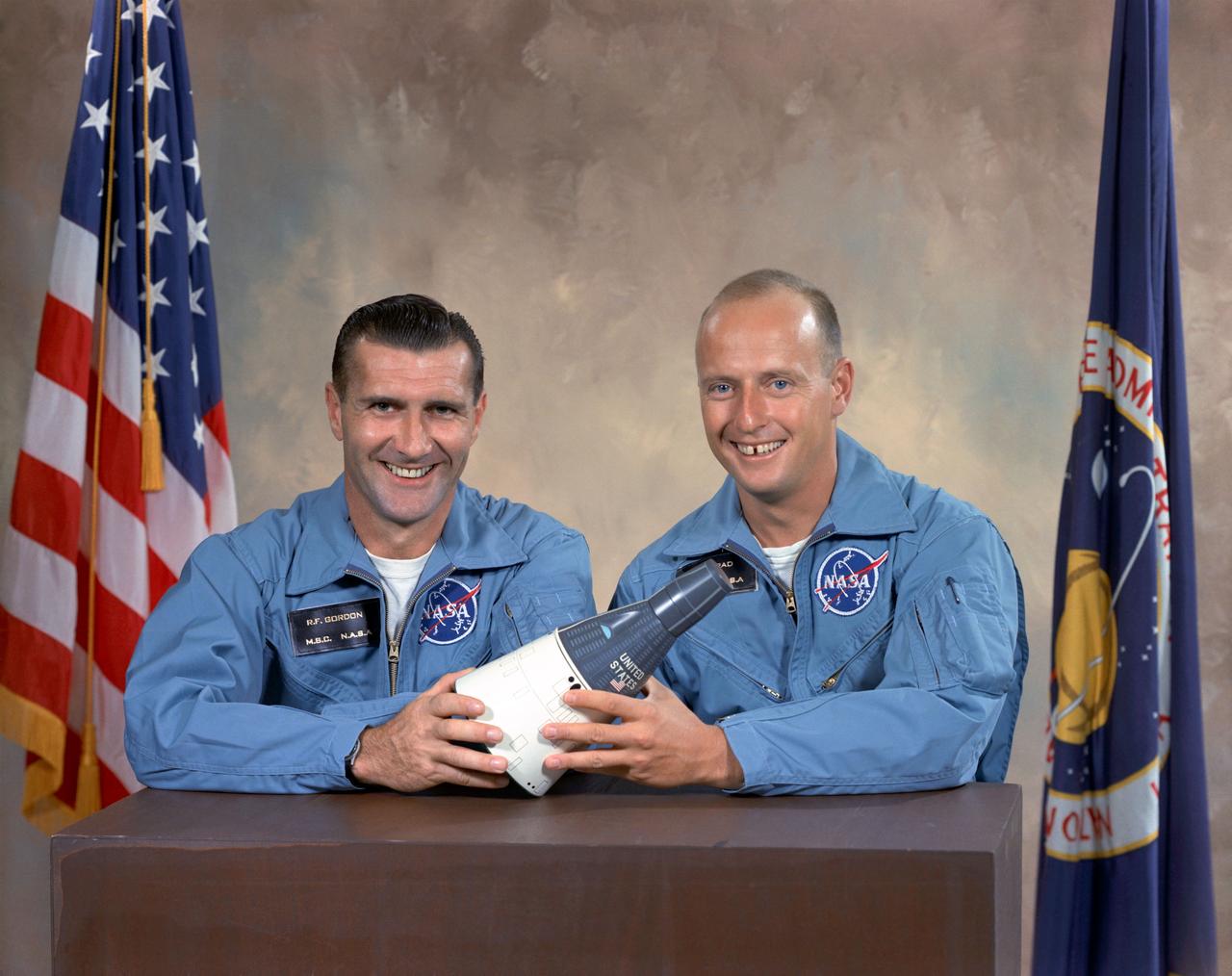
S65-58504 (4 Nov. 1965) --- Astronauts Charles Conrad Jr., (right) prime crew command pilot, and Richard F. Gordon Jr., prime crew pilot, for the Gemini-Titan XI (GT-11) Earth-orbital mission. Photo credit: NASA
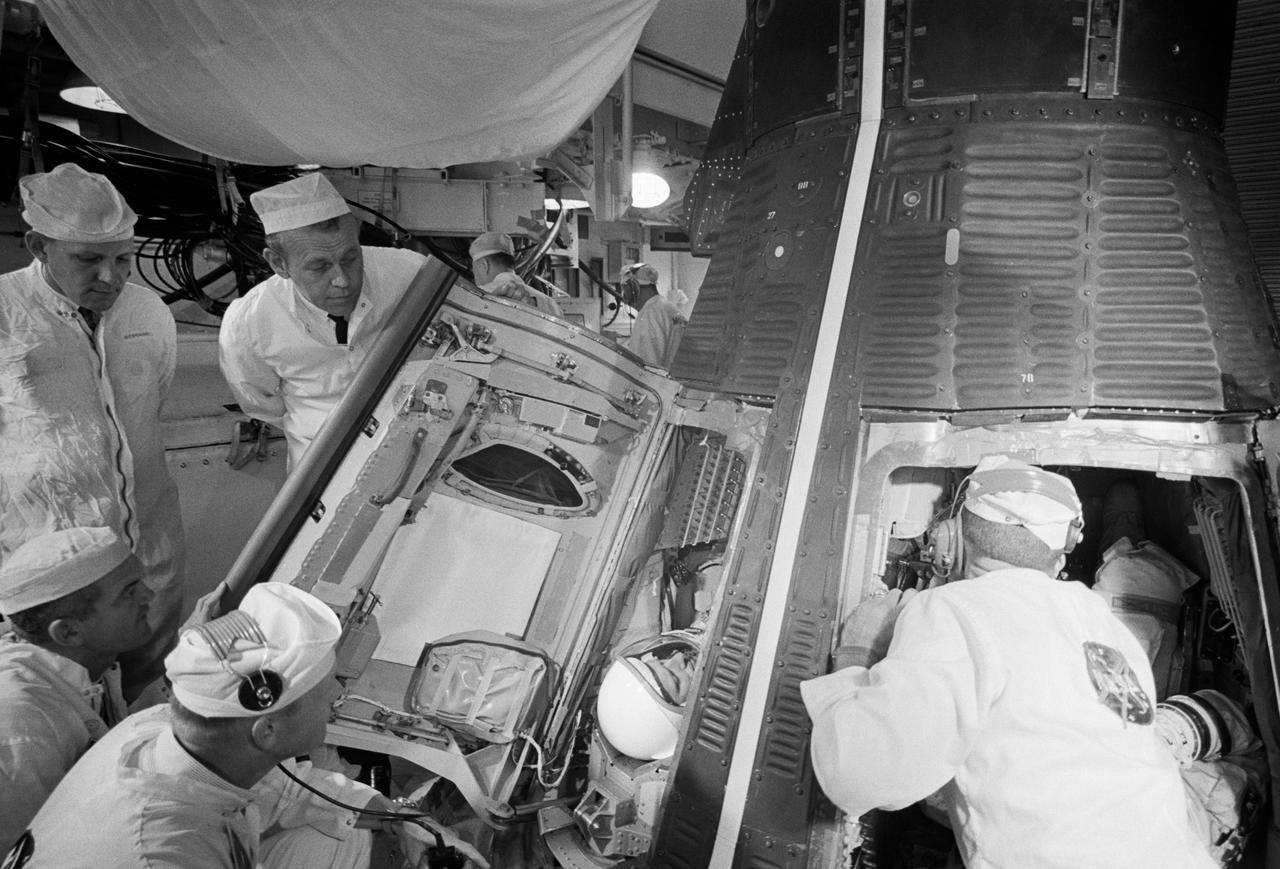
S66-56177 (10 Sept. 1966) --- Technicians in the White Room atop Pad 19 prepare to close hatches on the Gemini-11 spacecraft during prelaunch countdown. Inside the spacecraft are astronauts Charles Conrad Jr., command pilot, and Richard F. Gordon Jr., pilot. Photo credit: NASA
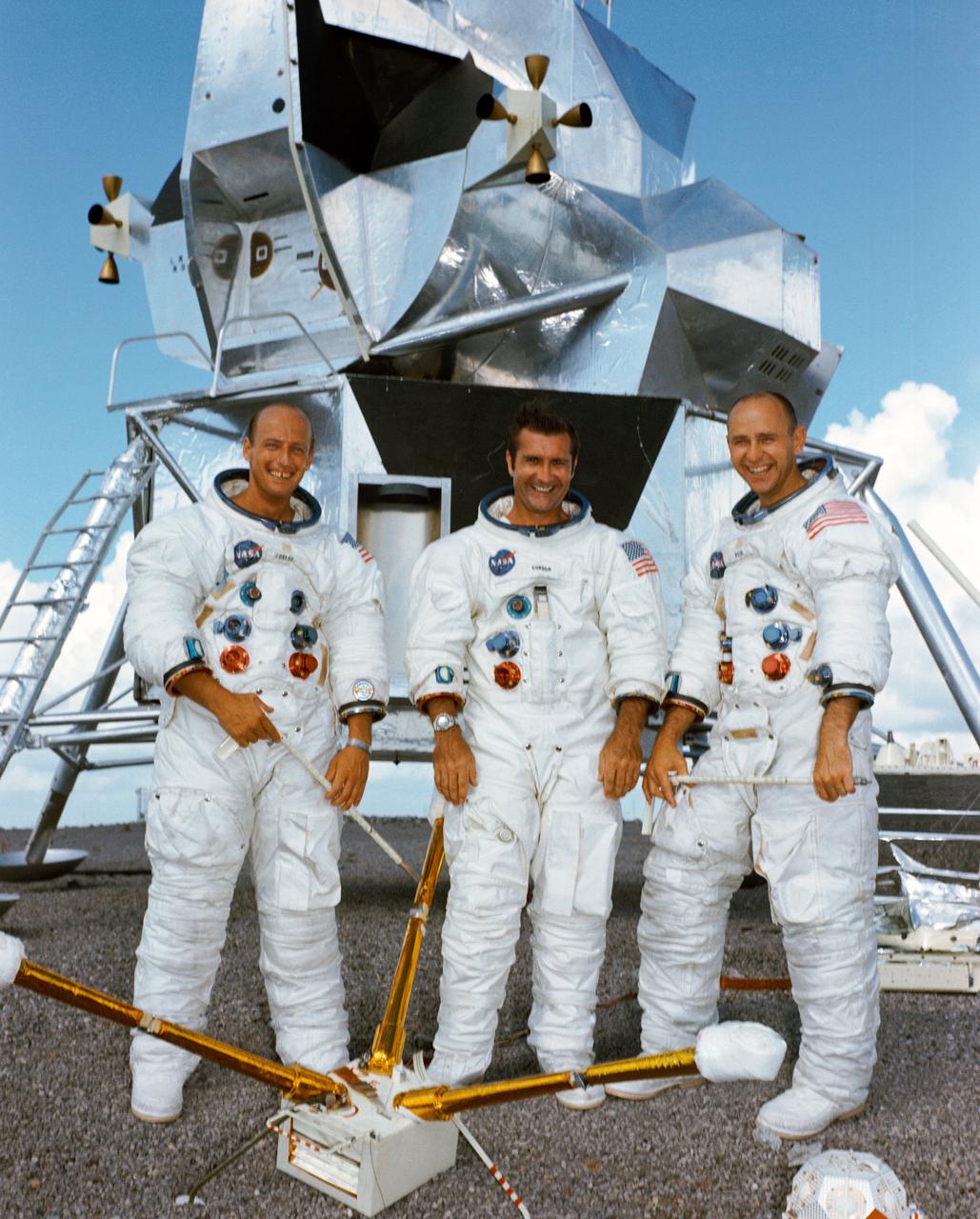
S69-38992 (September 1969) --- These three astronauts have been named by the National Aeronautics and Space Administration (NASA) as the prime crew of the Apollo 12 lunar landing mission. Left to right, are Charles Conrad Jr., Richard F. Gordon Jr., and Alan L. Bean.
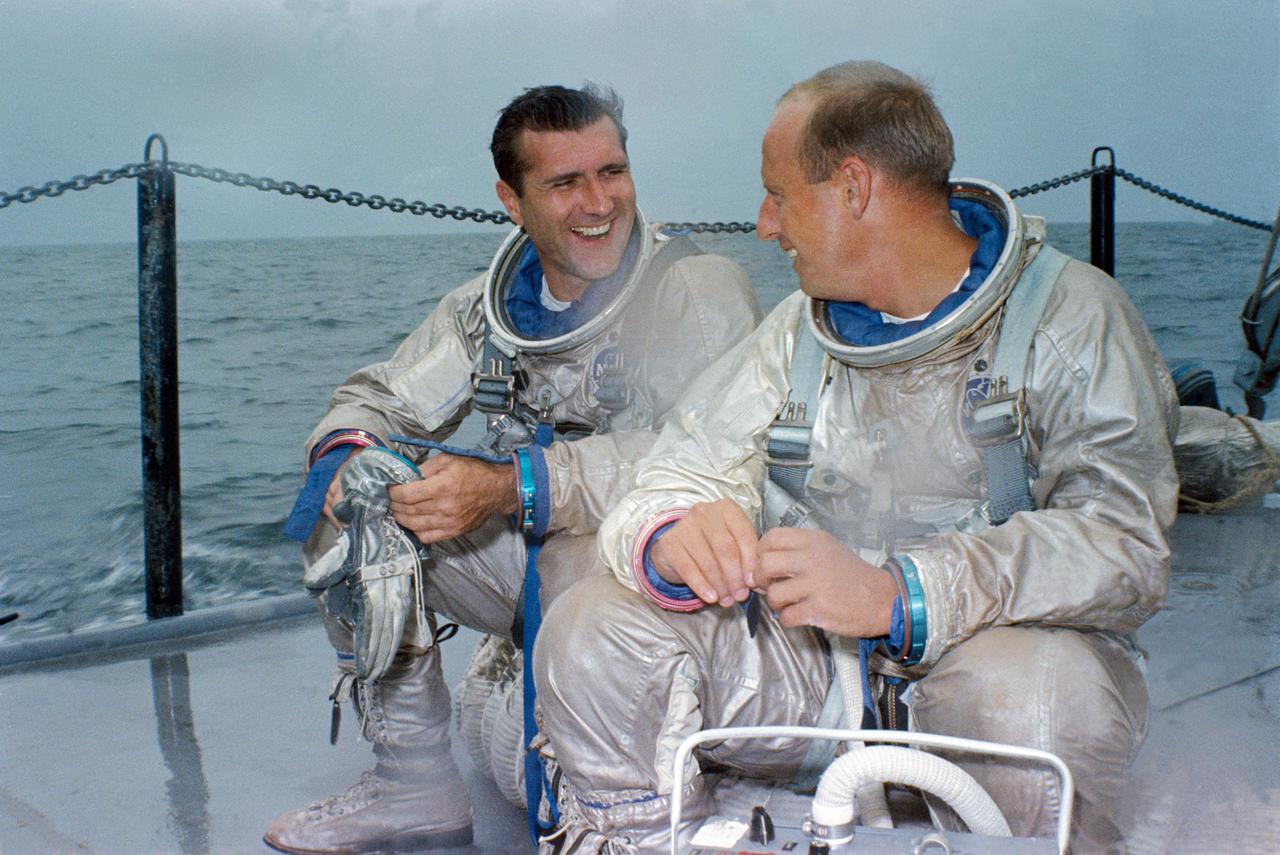
S66-44511 (13 July 1966) --- The Gemini-11 prime crew, astronauts Richard F. Gordon Jr. (left), pilot, and Charles Conrad Jr., command pilot, relax on deck of the NASA Motor Vessel Retriever after suiting up for water egress training in the Gulf of Mexico. Photo credit: NASA
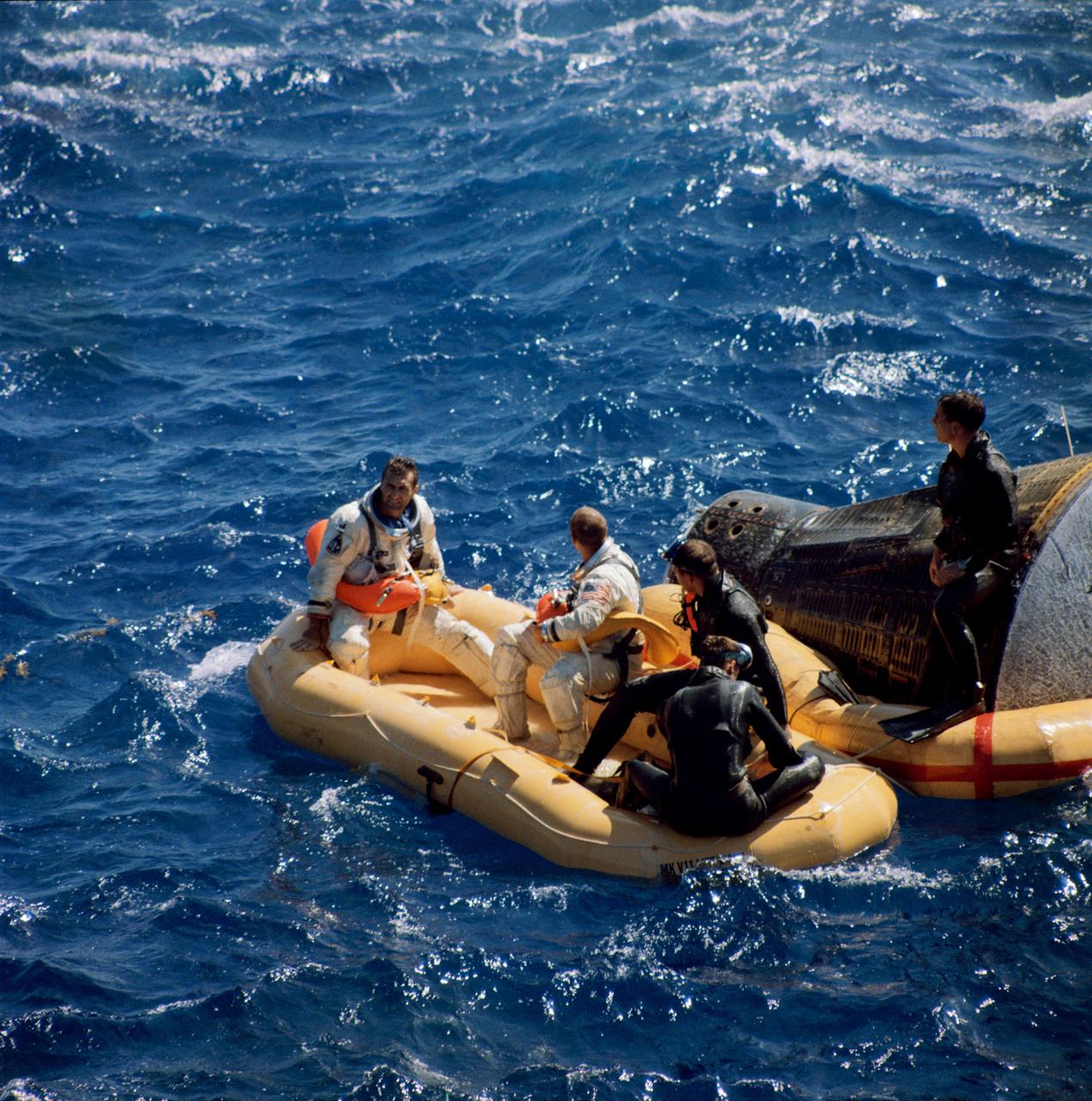
S66-50761 (15 Sept. 1966) --- Astronauts Richard F. Gordon Jr. (left), pilot of the Gemini-11 spaceflight, and Charles Conrad Jr., command pilot, sit in life raft while awaiting pickup by a helicopter from the USS Guam. Members of the Navy frogman team wait with them. Photo credit: NASA
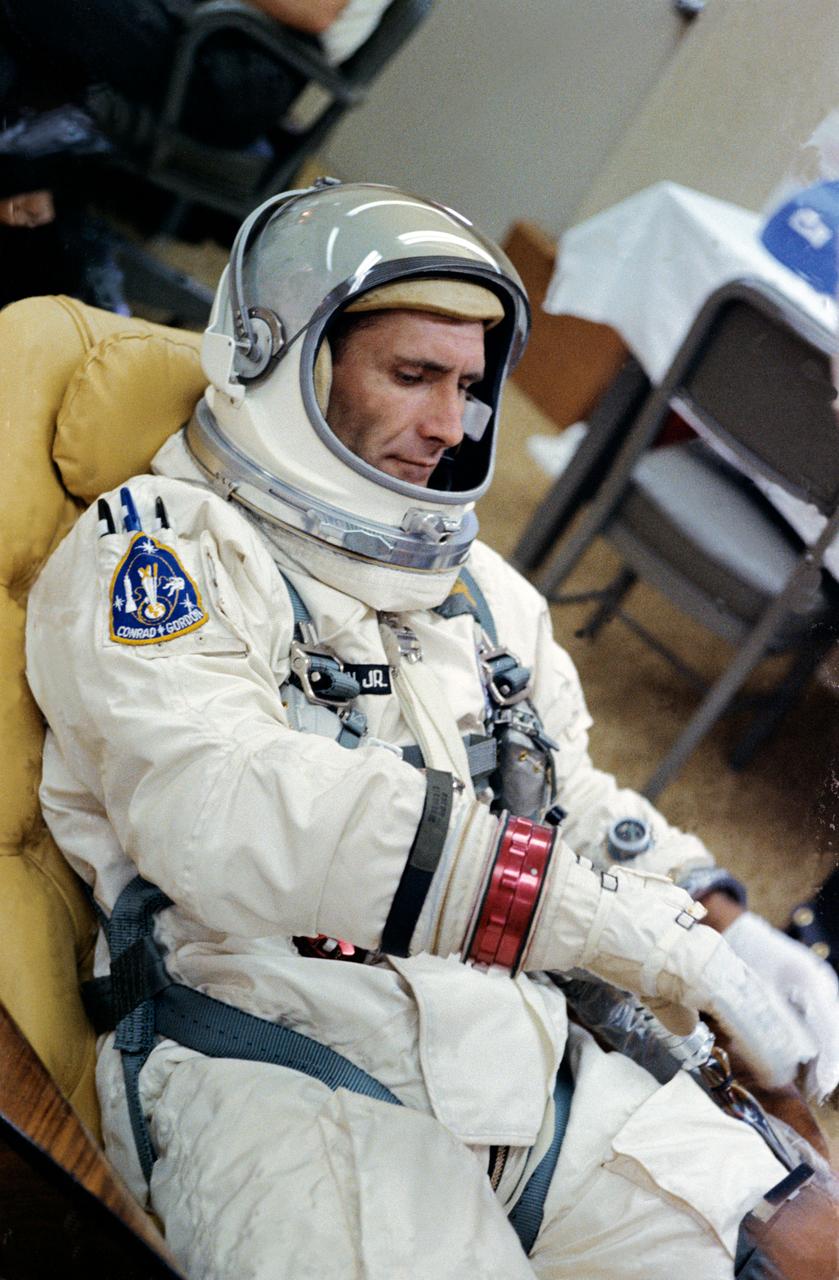
S66-50725 (12 Sept. 1966) --- Astronaut Richard F. Gordon Jr., pilot of the Gemini-11 spaceflight, reclines on a couch as he adjusts his spacesuit in the Launch Complex 16 suiting trailer during the Gemini-11 prelaunch countdown. He is already wearing the full suit and helmet. Photo credit: NASA

S69-38852 (22 Sept. 1969) --- These three astronauts have been named by the National Aeronautics and Space Administration (NASA) as the prime crew of the Apollo 12 lunar landing mission. Left to right are Charles Conrad Jr., Richard F. Gordon Jr., and Alan L. Bean.
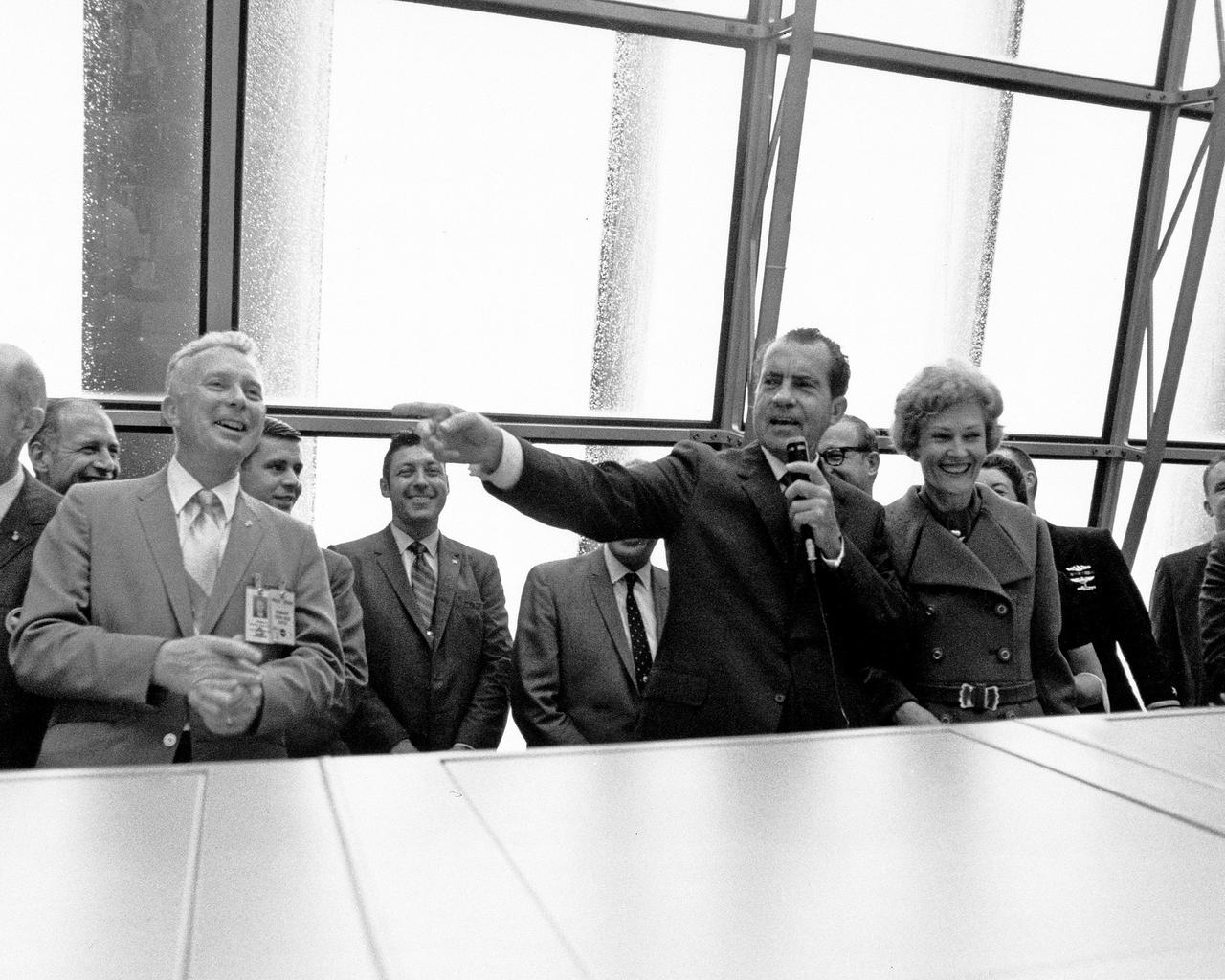
CAPE CANAVERAL, Fla. -- At the Kennedy Space Center in Florida, President Richard M. Nixon speaks in the Launch Control Center after the successful liftoff of the Apollo 12 space vehicle, which sent astronauts Charles Conrad, Jr., Richard F. Gordon and Alan Bean on the first leg of their lunar landing mission. With the President are Paul Donnelly, Launch Operations manager, on the left, and First Lady Pat Nixon, on the right. Photo Credit: NASA
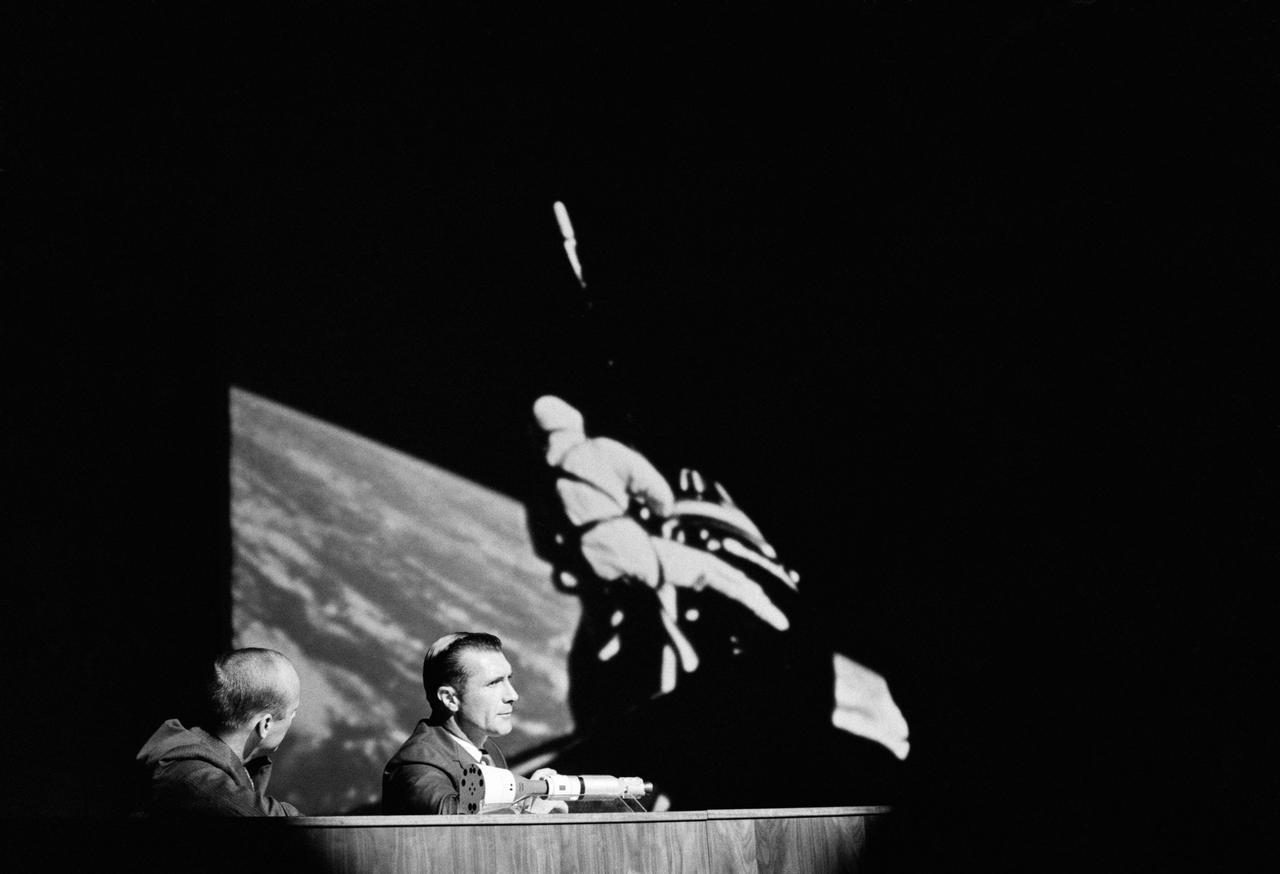
S66-45605 (26 Sept. 1966) --- Movie film of the Gemini-11 extravehicular activity and rendezvous with the Agena Target Docking Vehicle was shown at the Gemini-11 press conference in the MSC Building 1 auditorium. Astronauts Charles Conrad Jr. (left), command pilot, and Richard F. Gordon Jr., pilot, discussed the Gemini-11 EVA and rendezvous mission during the film. Picture on screen shows close-up of astronaut Gordon connecting the Agena Target Vehicle to the spacecraft with a tether line during his spacewalk. Photo credit: NASA
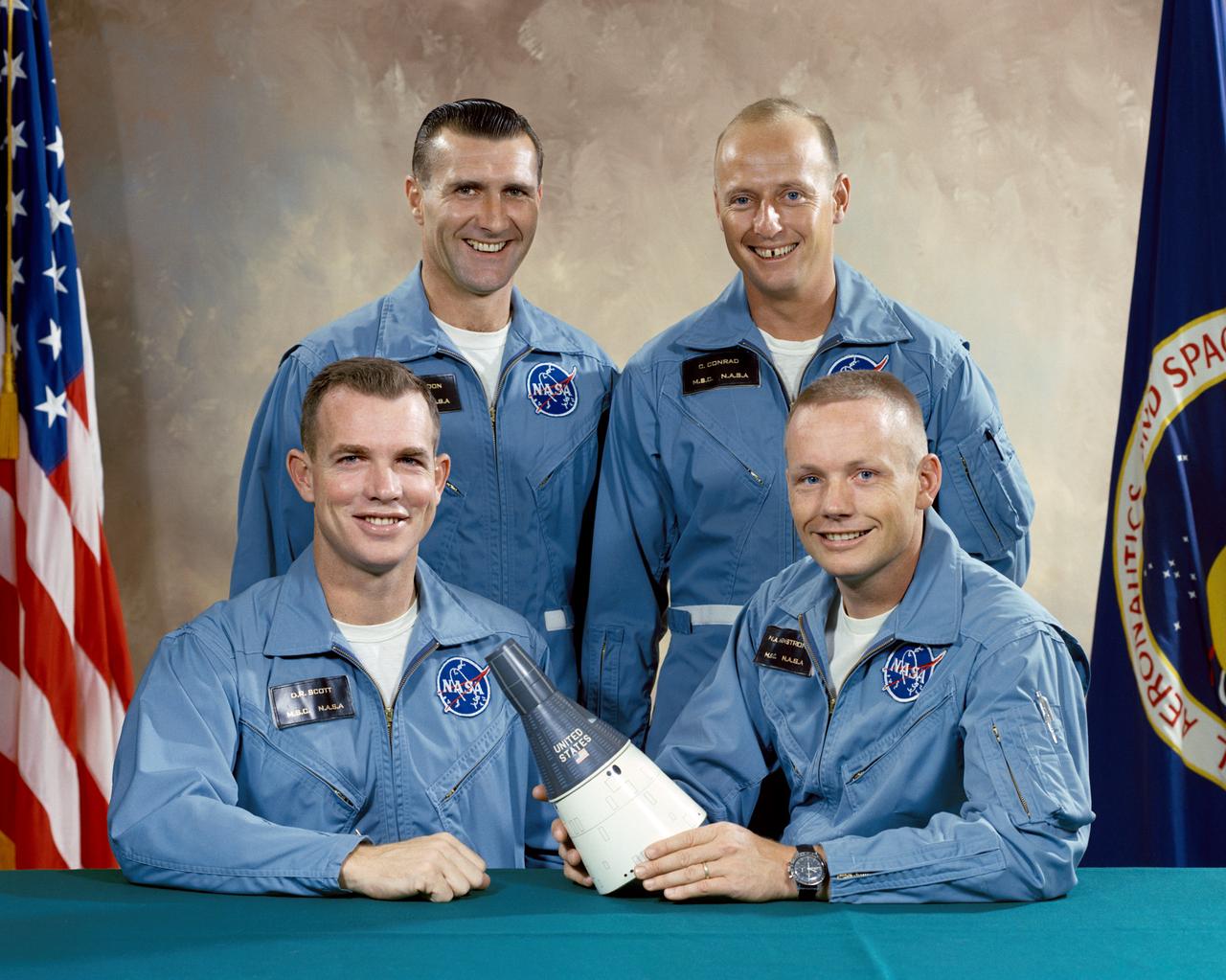
S65-58502 (4 Nov. 1965) --- This is the portrait of the prime and backup crew members of the Gemini-Titan 8 (GT-8) mission. Astronauts David R. Scott (left), pilot; and astronaut Neil A. Armstrong, command pilot, are the prime crew of the Gemini-8 mission. Backup crew (left to right, standing) are astronauts Richard F. Gordon Jr., pilot; and Charles Conrad Jr., command pilot. Photo credit: NASA
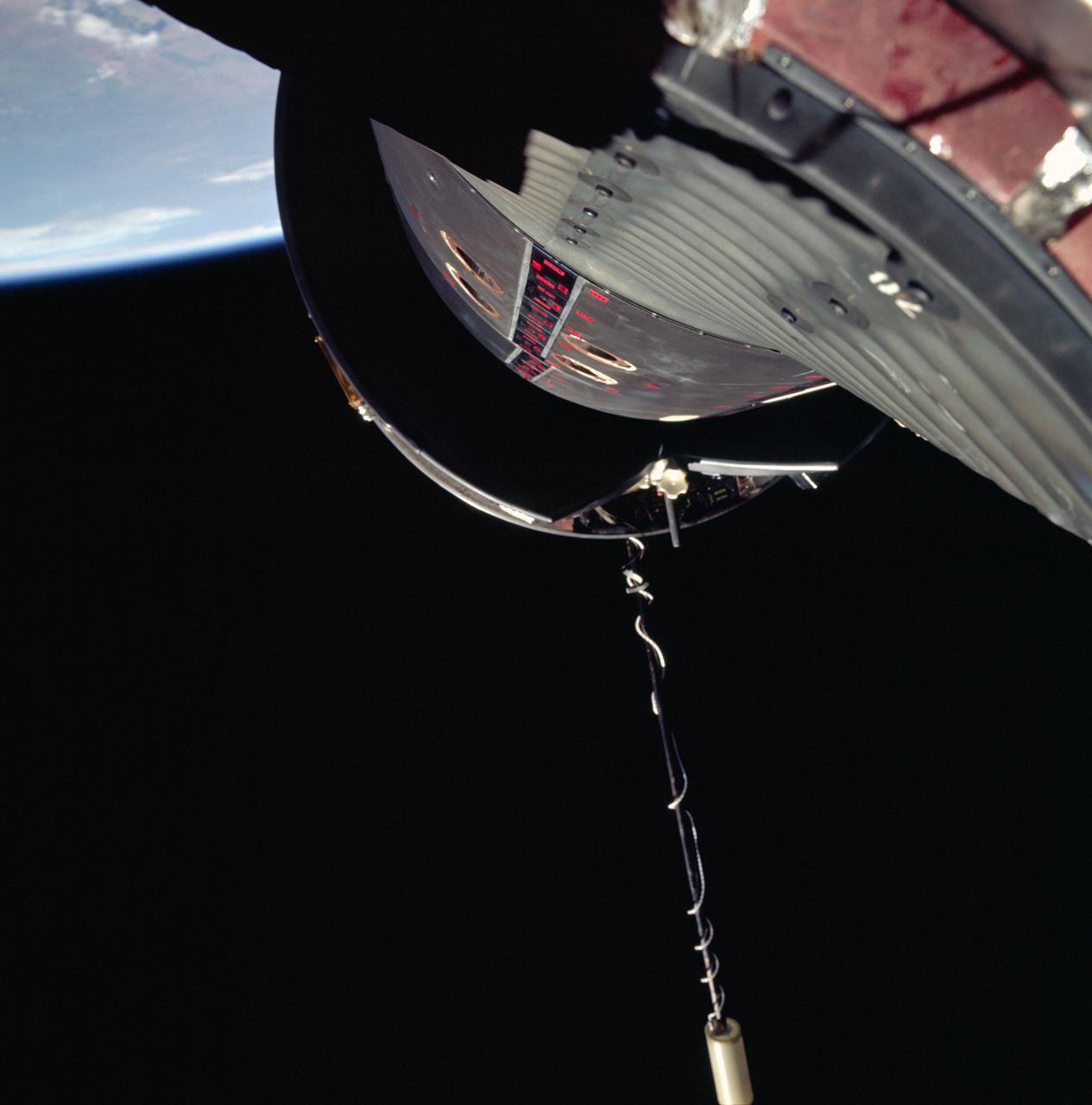
S66-54656 (13 Sept. 1966) --- Nose of Gemini-11 spacecraft and Agena Target Vehicle while docked as photographed by astronaut Richard F. Gordon Jr., pilot, during his stand-up extravehicular activity (EVA). Taken with a modified 70mm Hasselblad camera, using Eastman Kodak, Ektachrome, MS (S.O. 368) color film. Photo credit: NASA

S69-52984 (20 Sept. 1969) --- A member of the prime crew of the Apollo 12 lunar landing mission is hoisted up to a U.S. Coast Guard helicopter during water egress training in the Gulf of Mexico. Participating in the training were astronauts Charles Conrad Jr., commander; Richard F. Gordon Jr., command module pilot; and Alan L. Bean, lunar module pilot.
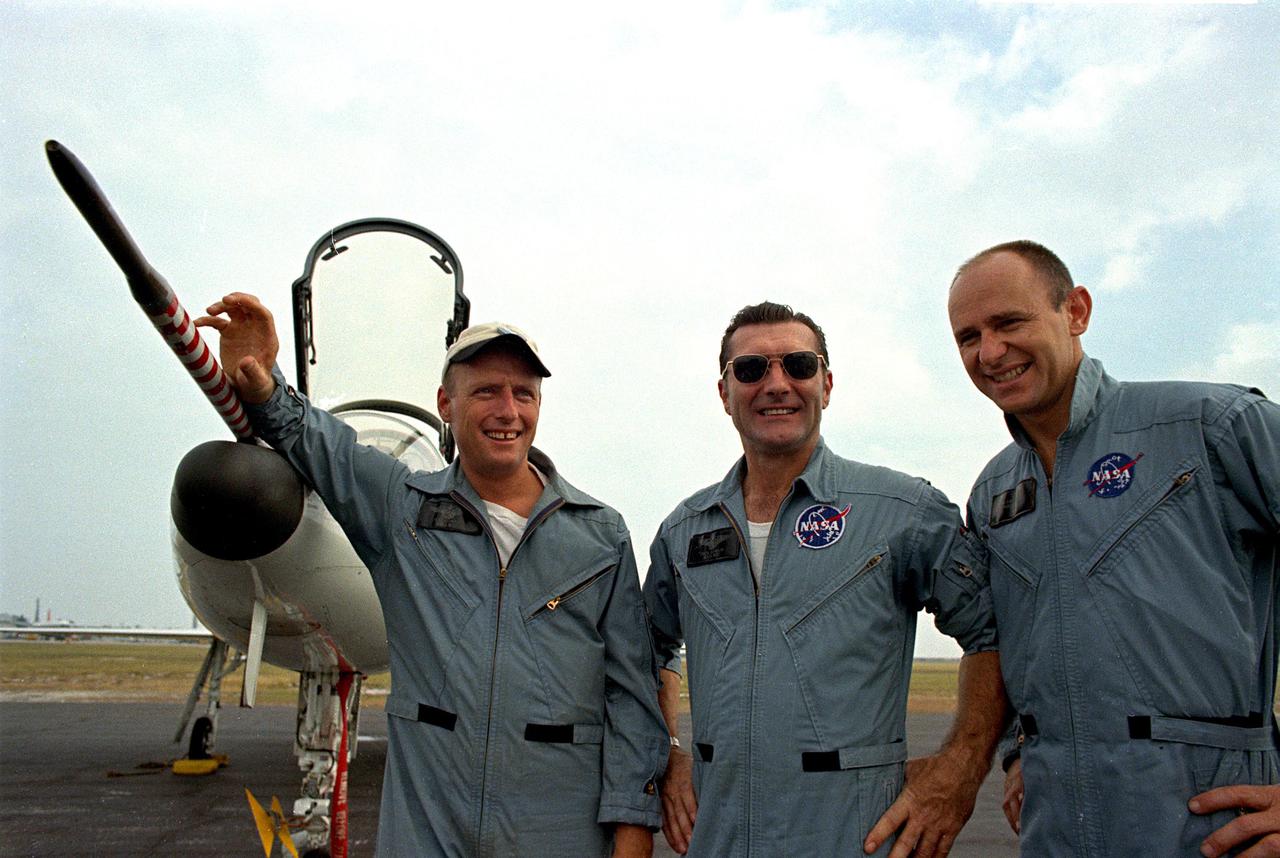
KENNEDY SPACE CENTER, FLA. - The Apollo 12 astronauts, left to right, Charles Conrad Jr., Richard F. Gordon, and Alan L. Bean, pose in front of a NASA T-38 training aircraft at Patrick Air Force Base. Eacht astronaut piloted his own T-38, performing aerobatics in preparation for their mission, the second manned lunar landing.
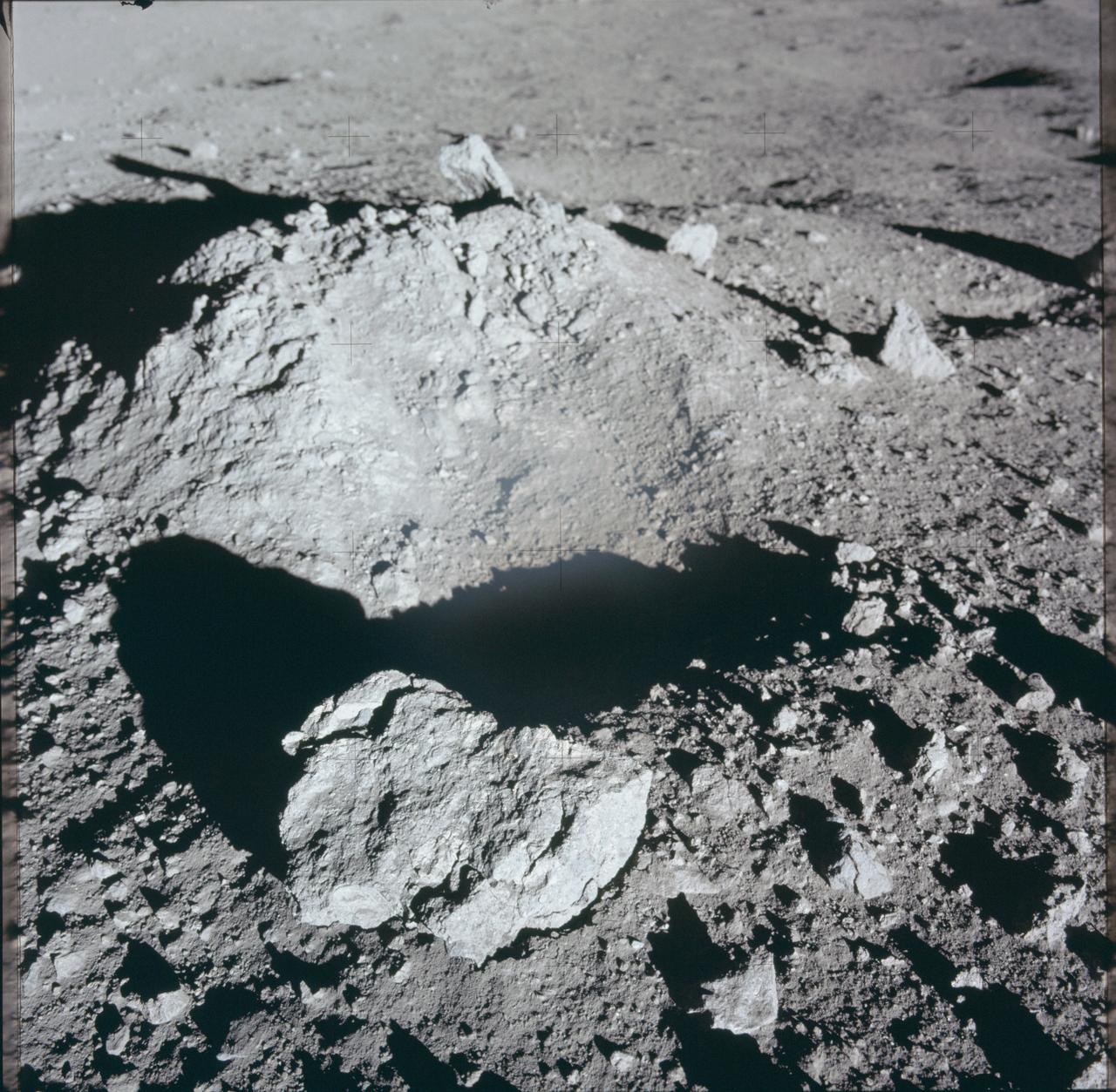
AS12-46-6825 (19 Nov. 1969) --- Close-up view of a lunar rock, small crater, and lunar mound as photographed during the Apollo 12 extravehicular activity (EVA). Astronaut Richard F. Gordon Jr., command module pilot, remained with the Apollo 12 Command and Service Modules (CSM) in lunar orbit while astronauts Charles Conrad Jr., commander, and Alan L. Bean, lunar module pilot, descended in the Lunar Module (LM) to explore the moon.
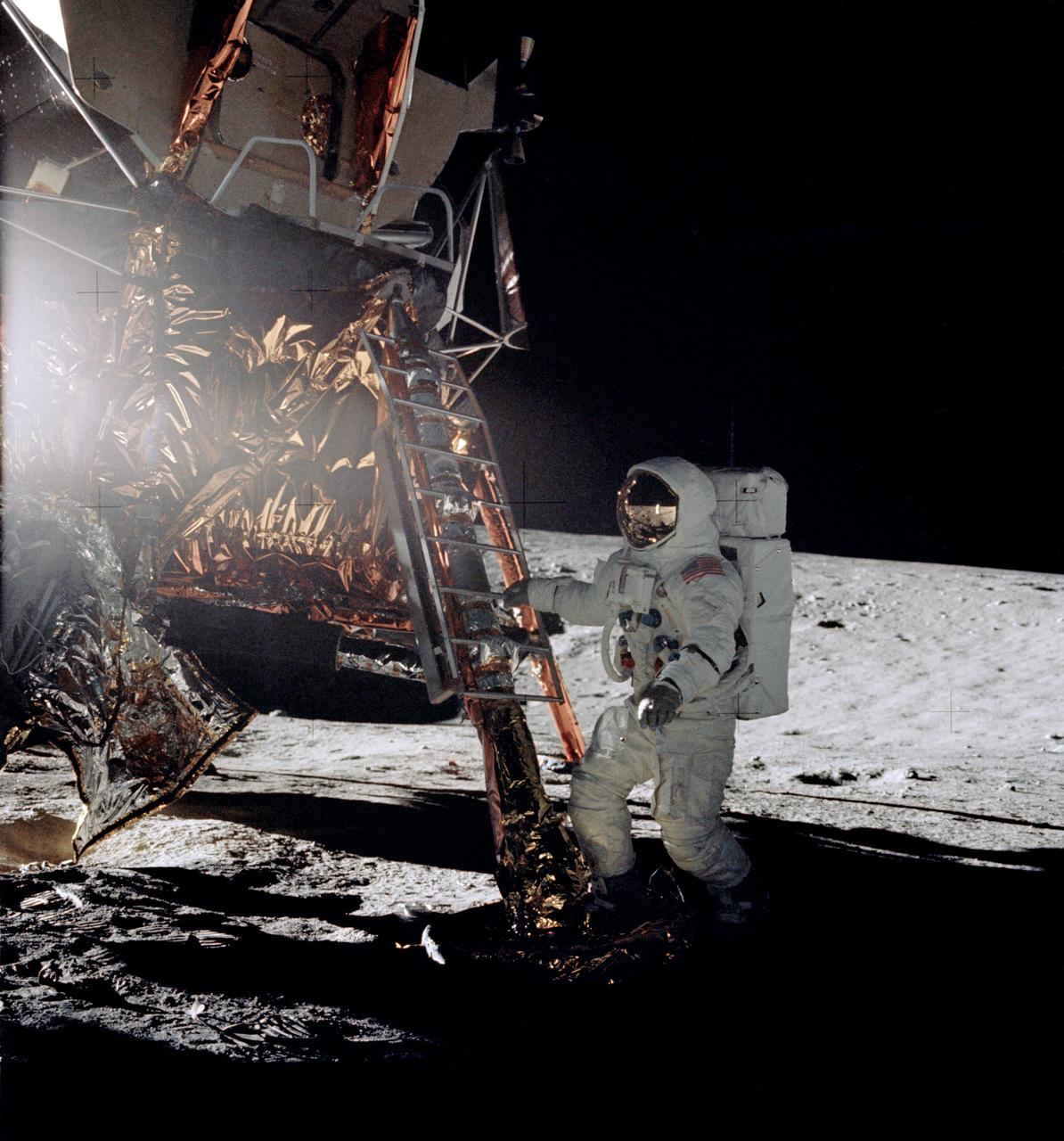
AS12-46-6729 (19 Nov. 1969) --- Astronaut Alan L. Bean, lunar module pilot for the Apollo 12 lunar landing mission, steps from the ladder of the Lunar Module to join astronaut Charles Conrad Jr., commander, in extravehicular activity on Nov. 19, 1969. Astronaut Richard F. Gordon Jr., command module pilot, remained with the Command and Service Modules in lunar orbit.
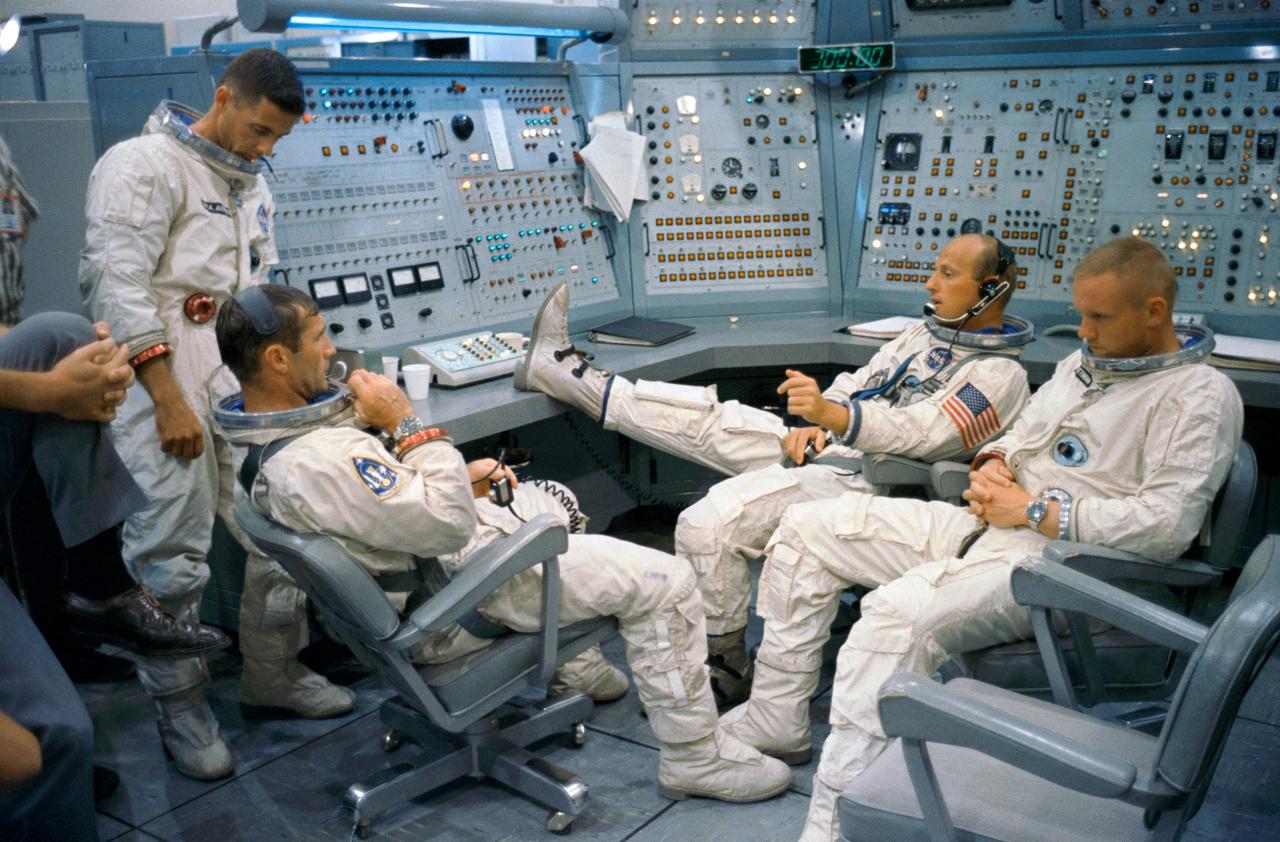
S66-50769 (8 Sept. 1966) --- Gemini-11 prime and backup crews are pictured at the Gemini Mission Simulator at Cape Kennedy, Florida. Left to right are astronauts William A. Anders, backup crew pilot; Richard F. Gordon Jr., prime crew pilot; Charles Conrad Jr. (foot on desk), prime crew command pilot; and Neil A. Armstrong, backup crew command pilot. Photo credit: NASA
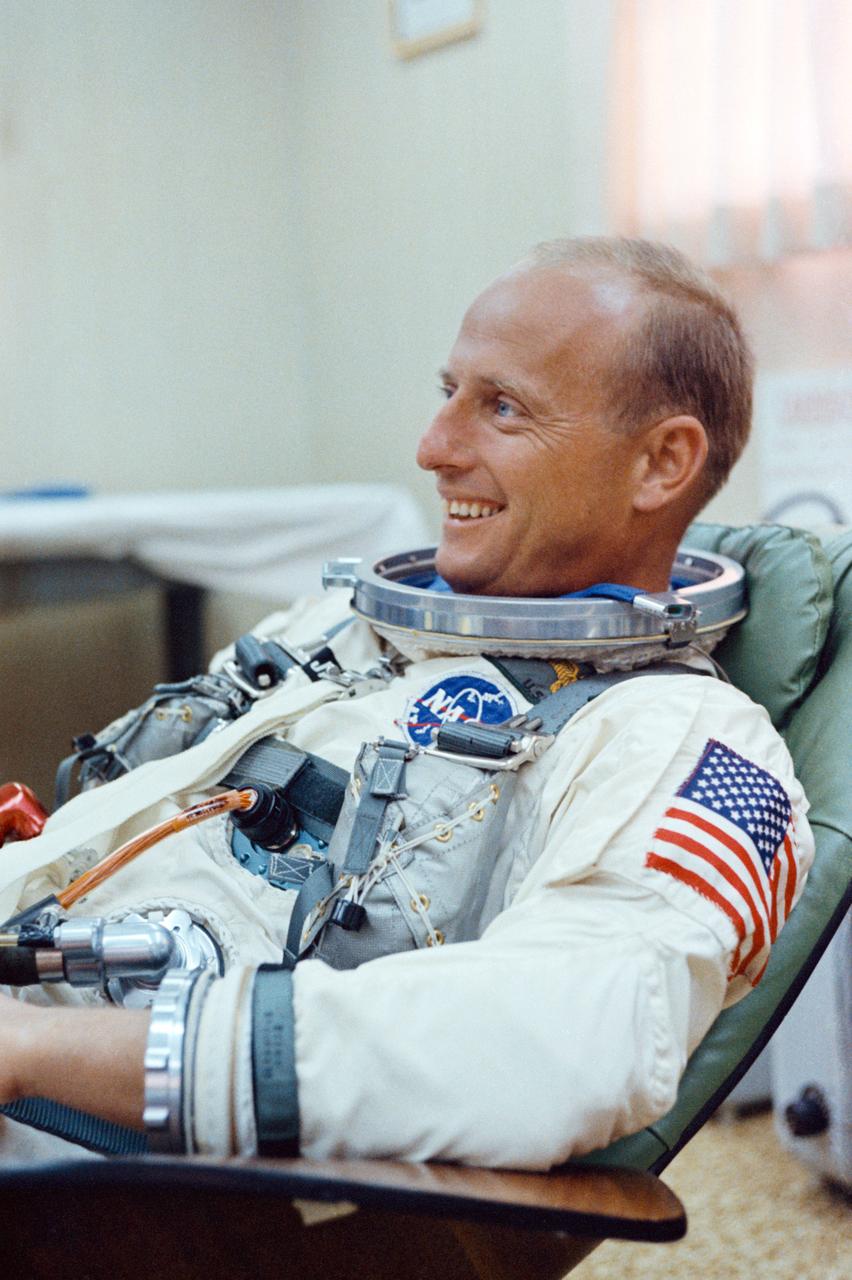
S66-50726 (12 Sept. 1966) --- Astronaut Charles Conrad Jr., command pilot of the Gemini-11 spaceflight, relaxes in Launch Complex 16 suiting trailer during the Gemini-11 prelaunch countdown. Minutes later astronauts Conrad and Richard F. Gordon Jr., pilot, were transported to Pad 19 and their waiting Gemini-11 spacecraft in preparation for their scheduled three-day mission in space. Photo credit: NASA
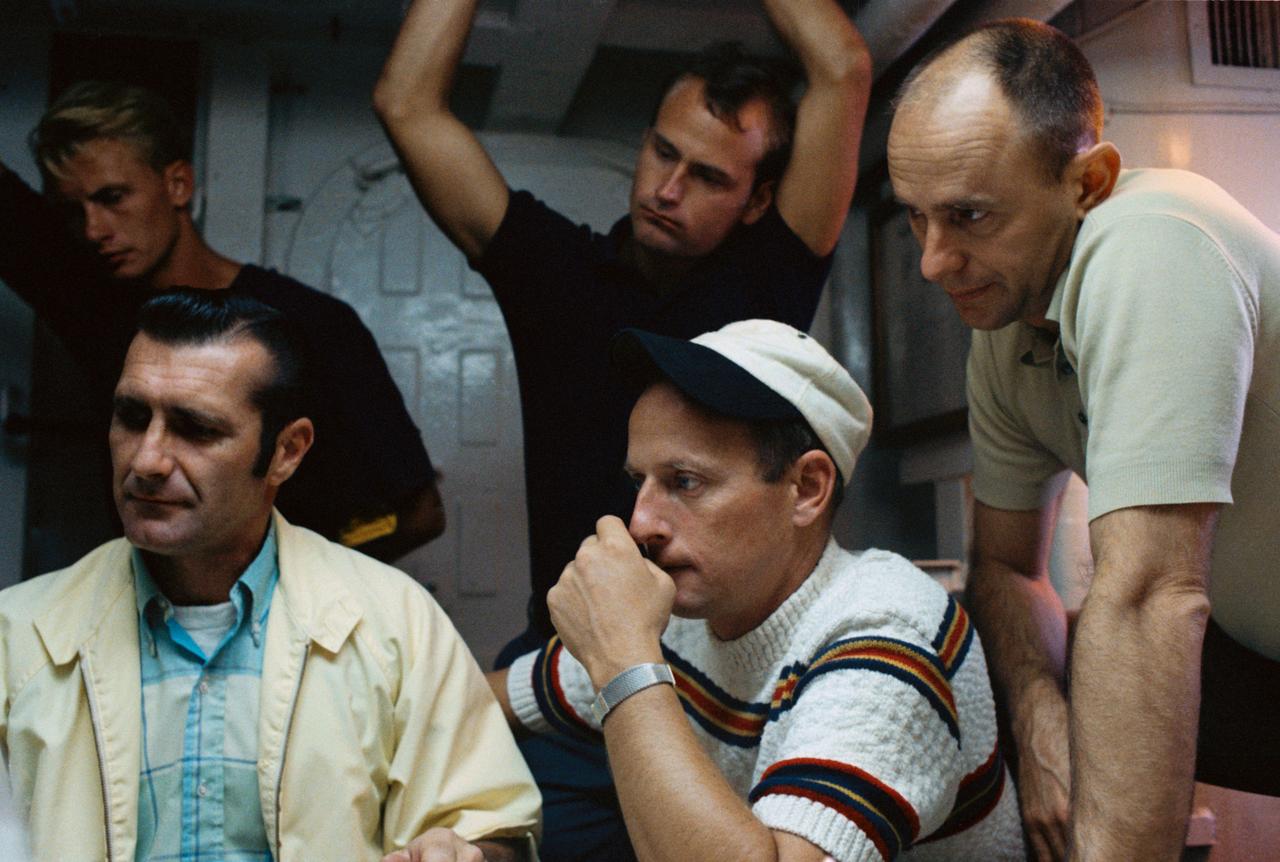
S69-52980 (1969) --- The three crewmen of the Apollo 12 lunar landing mission are briefed aboard the NASA Motor Vessel Retriever in preparation for water egress training in the Gulf of Mexico. Left to right, are astronauts Richard F. Gordon Jr., command module pilot; Charles Conrad Jr., commander; and Alan L. Bean, lunar module pilot. Two training personnel are in the background.
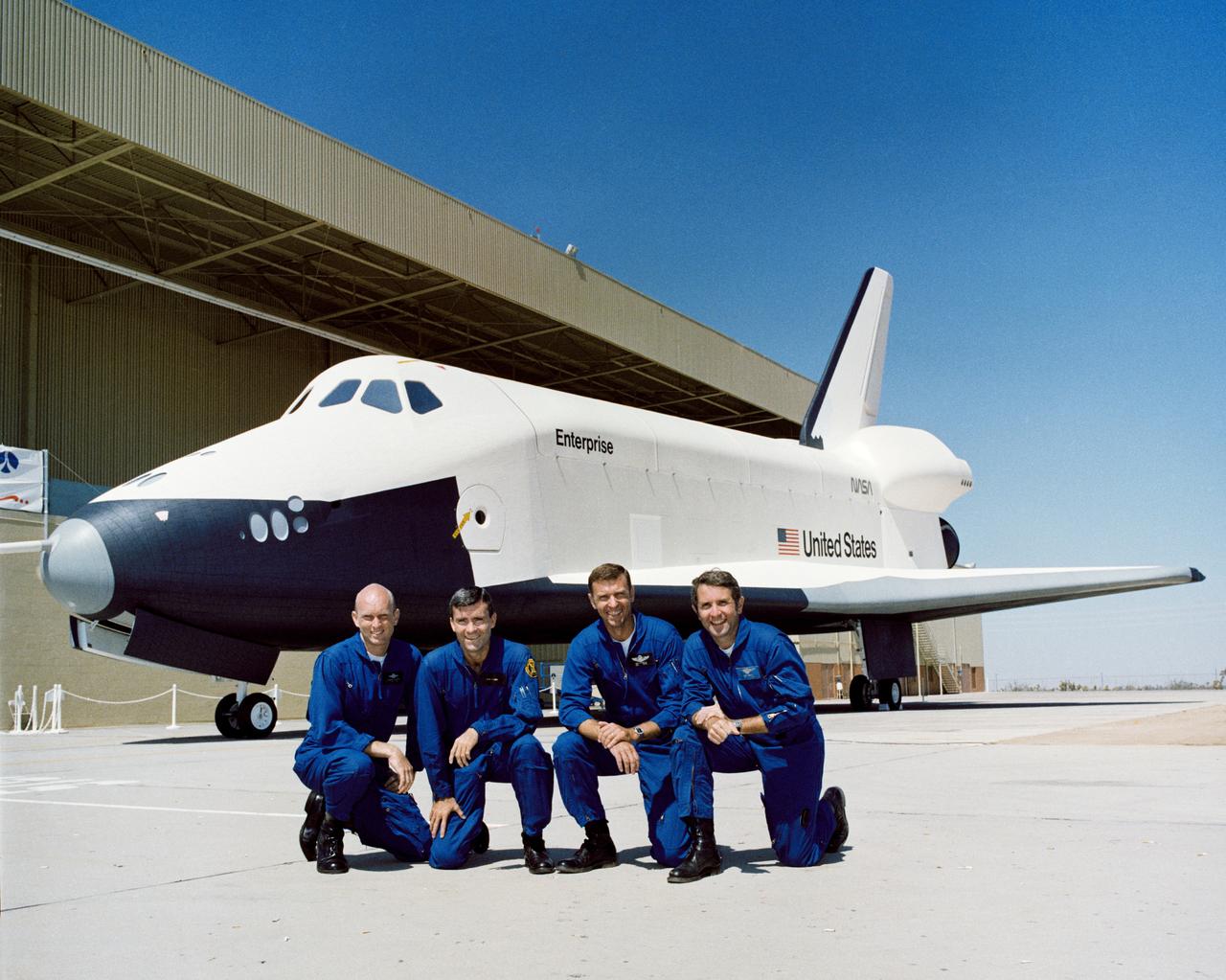
S76-29562 --- The two crews for the Space Shuttle Approach and Landing Tests (ALT) are photographed at the Rockwell International Space Division's Orbiter assembly facility at Palmdale, California on the day of the rollout of the Shuttle Orbiter 101 "Enterprise" spacecraft. They are, left to right, Astronauts C. Gordon Fullerton, pilot of the first crew; Fred W. Haise Jr., commander of the first crew; Joe H. Engle, commander of the second crew; and Richard H. Truly, pilot of the second crew. The DC-9 size airplane-like Orbiter 101 is in the background.
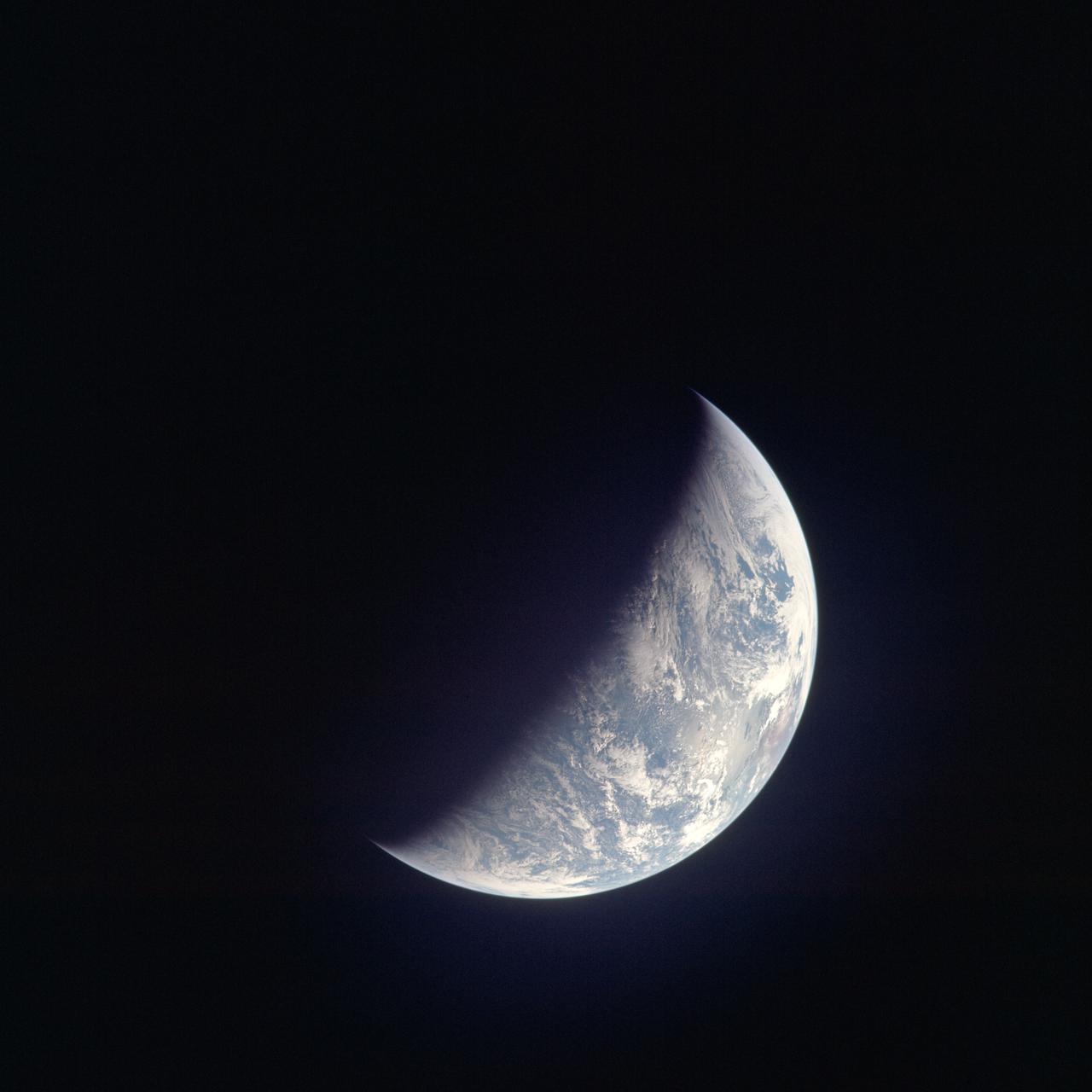
AS12-50-7362 (14 Nov. 1969) --- A view of one-third of Earth, with Australia on the horizon, as photographed by the three-man crew of Apollo 12. The Command and Service Modules, mated to the Lunar Module (yet to be removed and transpositioned for landing) were en route to the moon for man's second mission there. Onboard the spacecraft were astronauts Charles Conrad Jr., Richard F. Gordon Jr. and Alan L. Bean. Photo credit: NASA
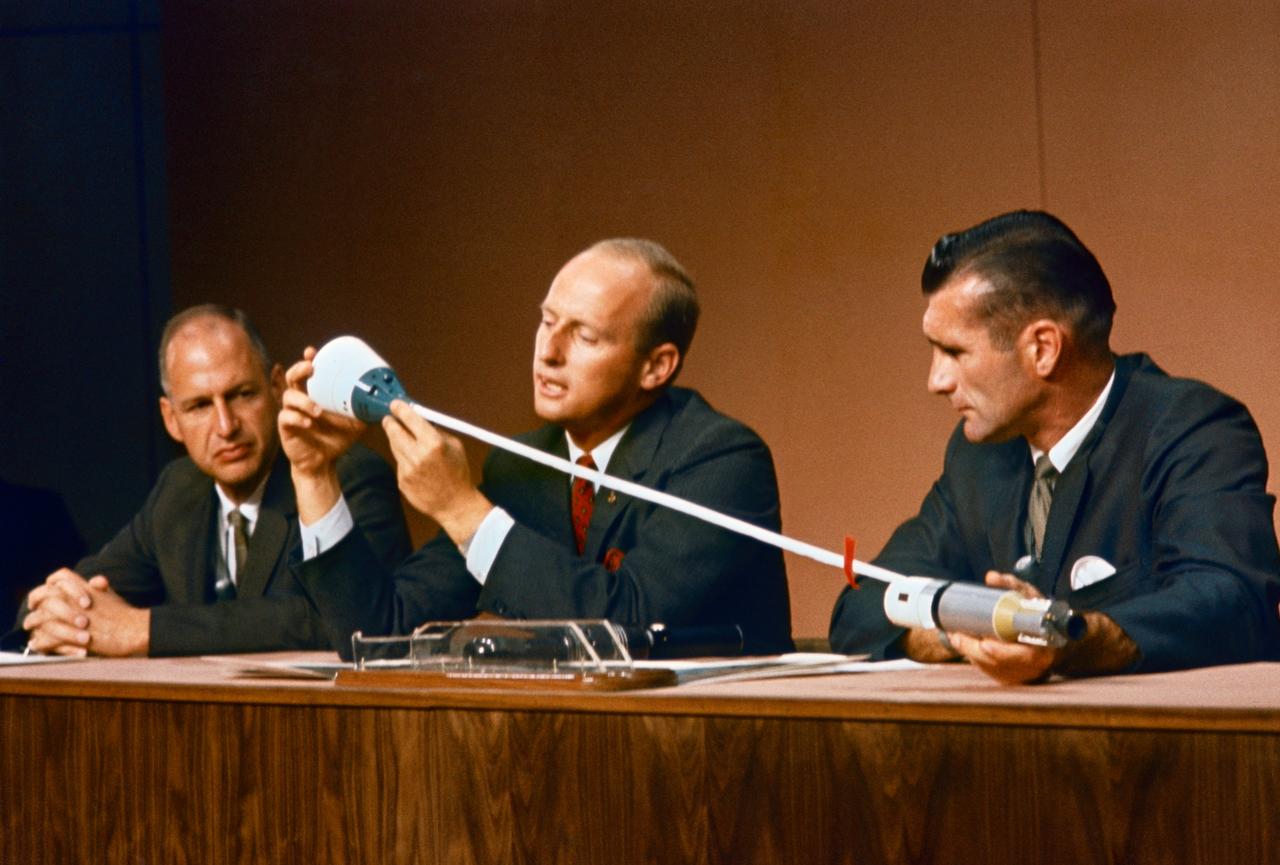
S66-45635 (26 Sept. 1966) --- Astronaut Charles Conrad Jr. (center), Gemini-11 prime crew command pilot, discusses the Gemini-11/Agena tether before a gathering of news media representatives in the MSC Building 1 auditorium. Holding an Agena model at right is astronaut Richard F. Gordon Jr., Gemini-11 pilot. Looking on at left is George M. Low, MSC Deputy Director. Photo credit: NASA
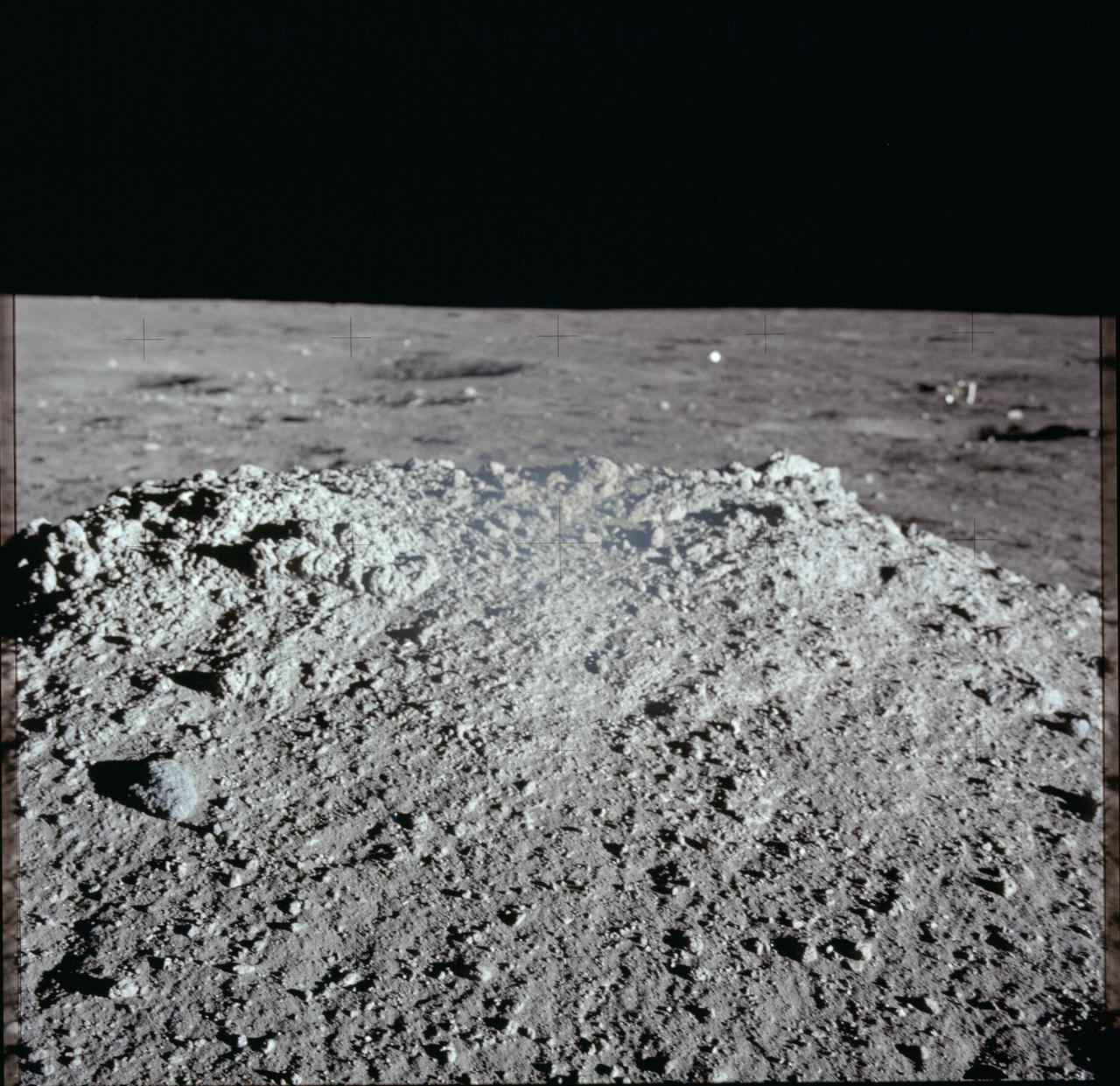
AS12-46-6832 (19 Nov. 1969) --- A close-up view of a lunar mound as photographed during the Apollo 12 extravehicular activity (EVA) on the lunar surface. Astronaut Richard F. Gordon Jr., command module pilot, remained with the Apollo 12 Command and Service Modules (CSM) in lunar orbit while astronauts Charles Conrad Jr., commander, and Alan L. Bean, lunar module pilot, descended in the Lunar Module (LM) to explore the moon.
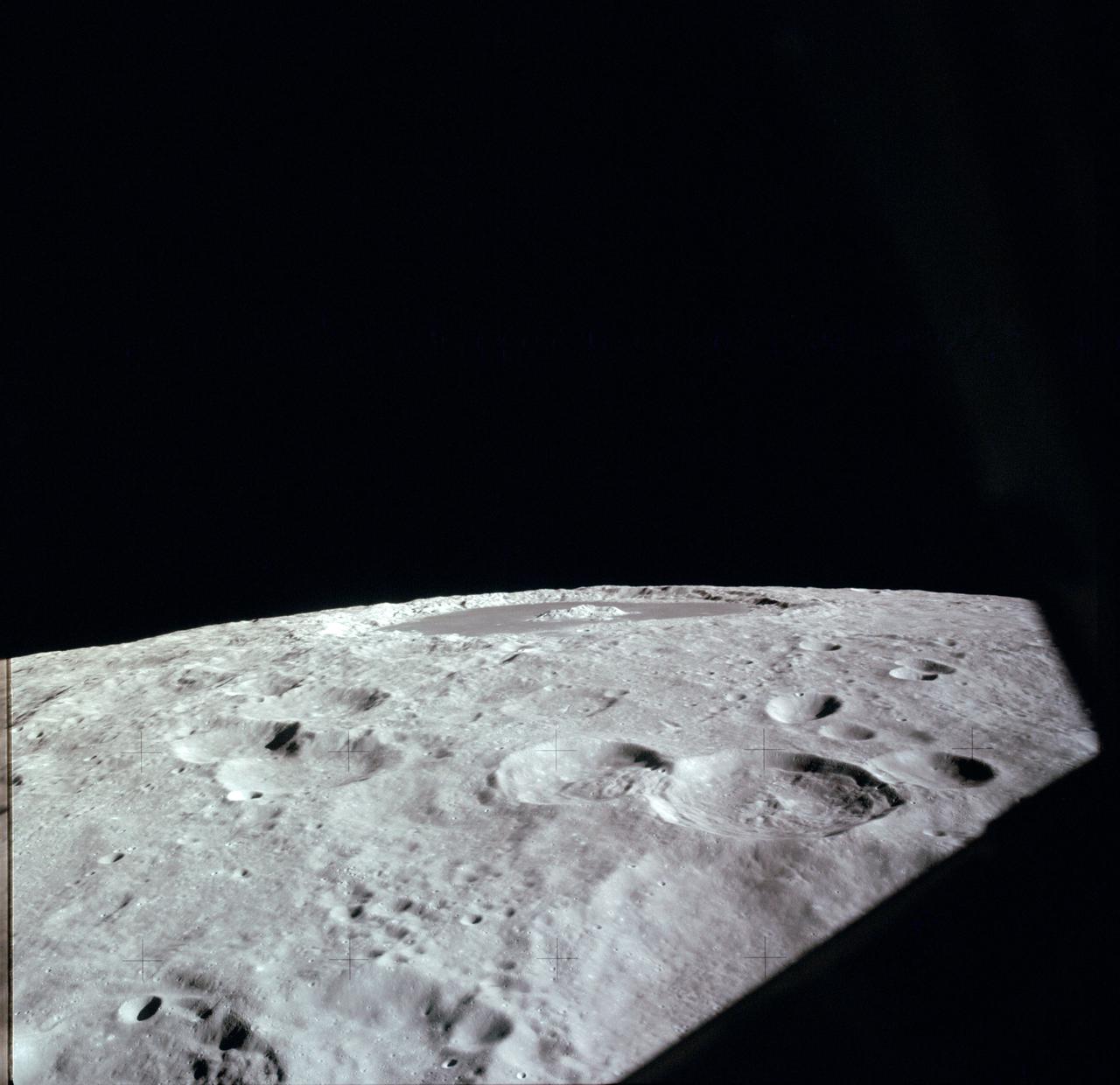
AS12-47-6870 (November 1969) --- An Apollo 12 high-oblique view of the crater Tsiolkovsky (in center of horizon) on the lunar farside, as photographed from lunar orbit. The crew men of the Apollo 12 lunar landing mission were astronauts Charles Conrad Jr., commander; Richard F. Gordon Jr., command module pilot; and Alan L. Bean, lunar module pilot. Tsiolkovsky is centered at 128.5 degrees east longitude and 20.5 degrees south latitude. This view is looking south.
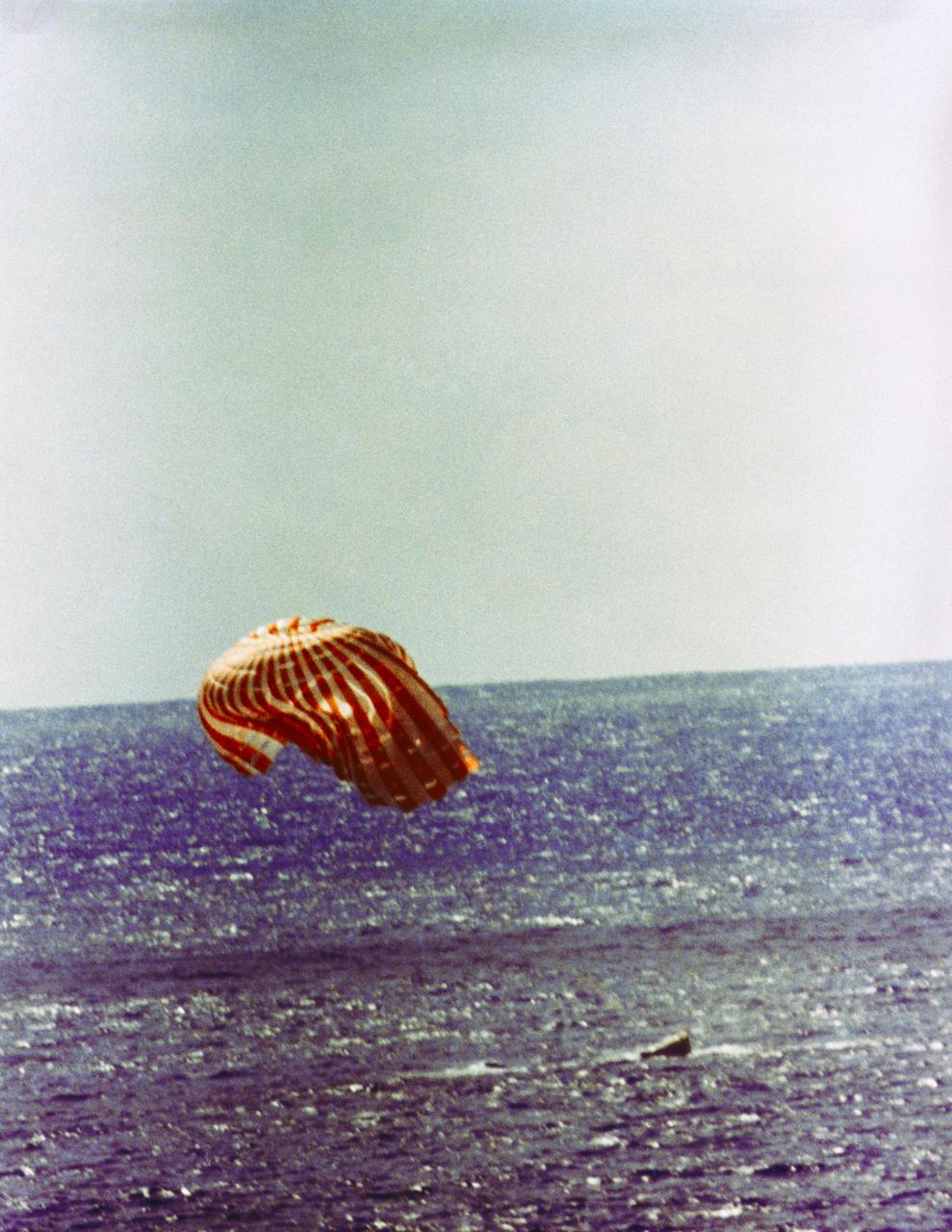
S66-50749 (15 Sept. 1966) --- The Gemini-11 spaceflight is concluded as the Gemini-11 spacecraft, with astronauts Charles Conrad Jr., command pilot, and Richard F. Gordon Jr., pilot, aboard, touches down in the Atlantic Ocean 1.5-2 statute miles from the prime recovery ship, USS Guam. Gemini-11 splashed down at 9 a.m. (EST), Sept. 15, 1966, to conclude a three-day mission in space. Photo credit: NASA
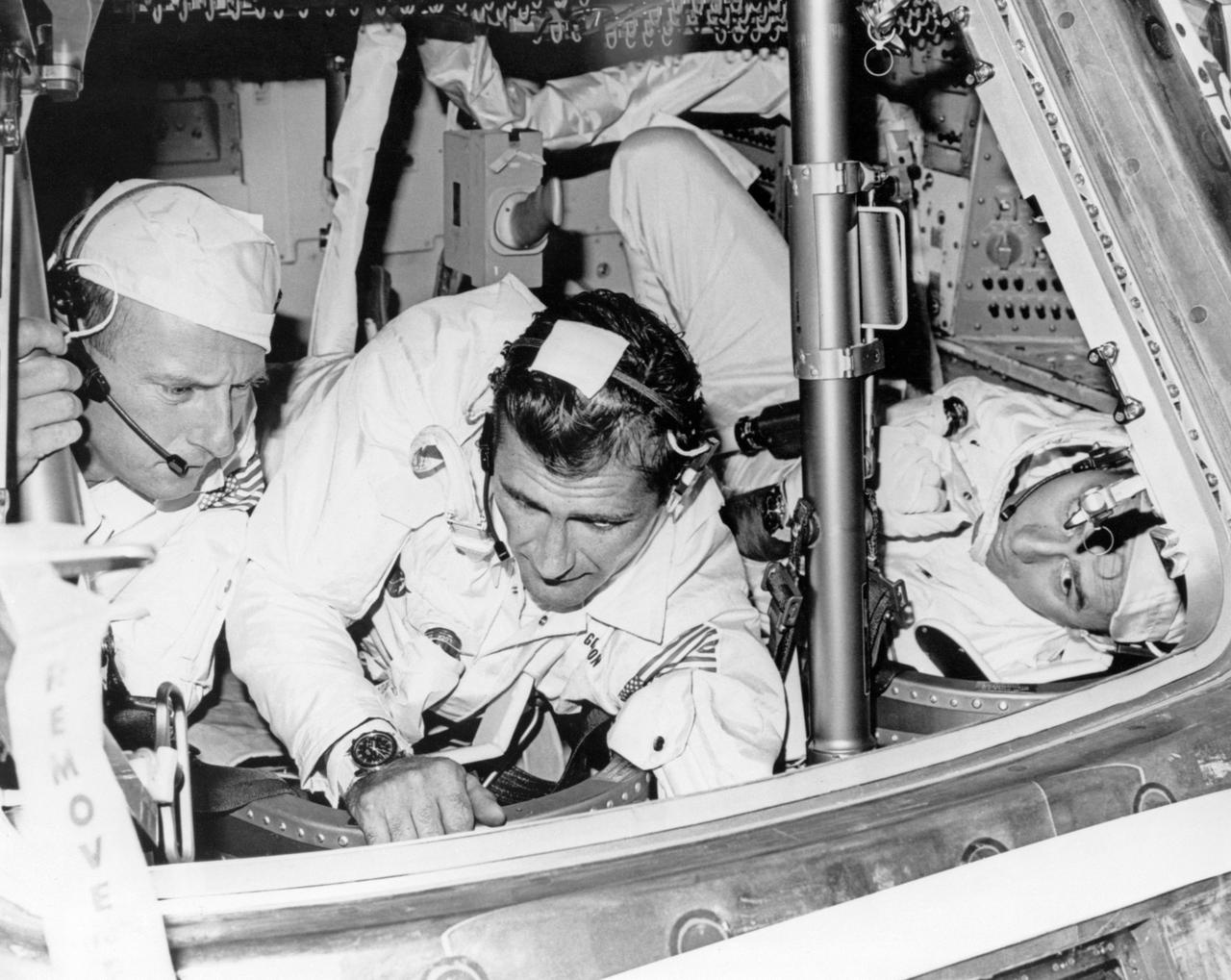
S69-53716 (1969) --- The prime crew of the Apollo 12 lunar landing mission is photographed during spacecraft checkout activity at North American Rockwell Space Division at Downey, California. Left to right, are astronauts Charles Conrad Jr., commander; Richard F. Gordon Jr., command module pilot; and Alan L. Bean, lunar module pilot.
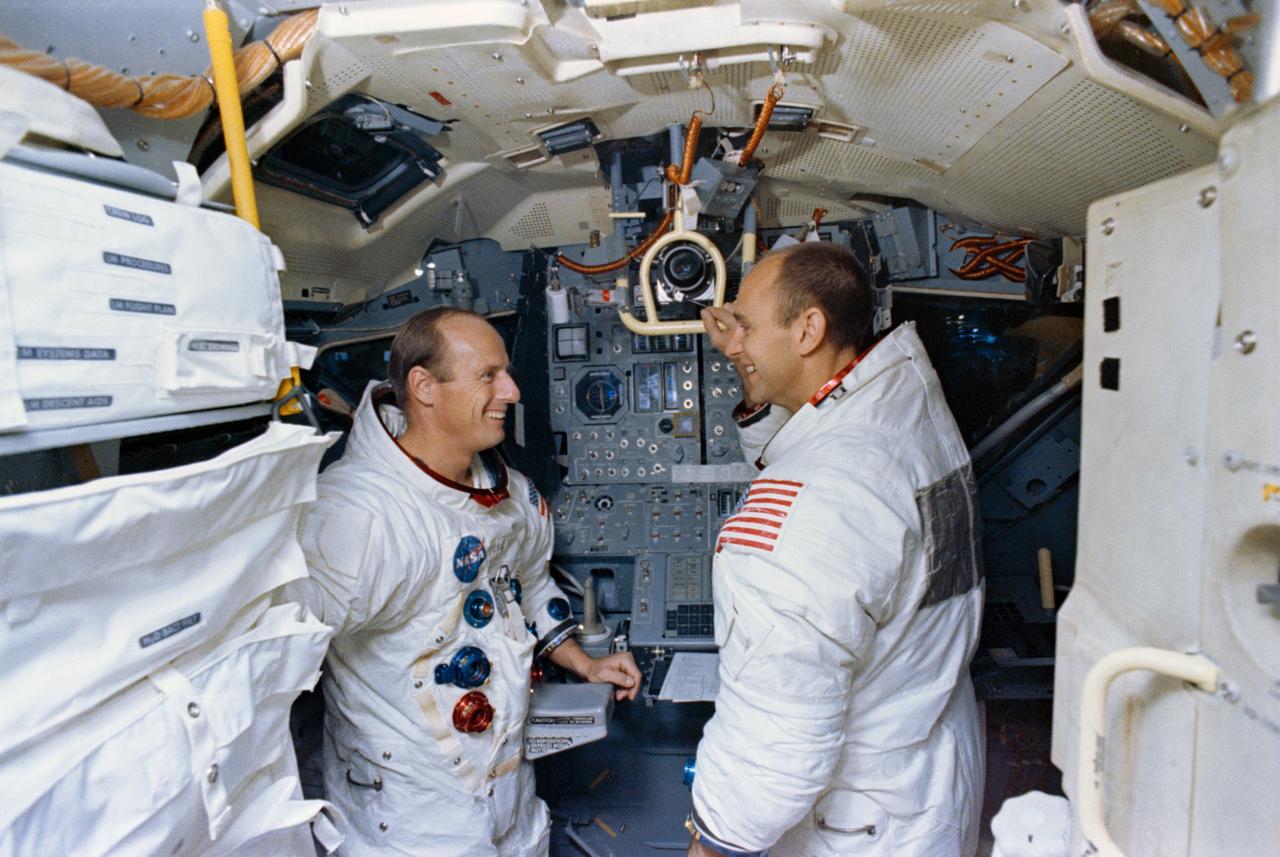
S69-56699 (22 Oct. 1969) --- Astronauts Charles Conrad Jr. (left), Apollo 12 commander; and Alan L. Bean, lunar module pilot, are shown in the Apollo Lunar Module Mission Simulator during simulator training at the Kennedy Space Center (KSC). Apollo 12 will be the National Aeronautics and Space Administration's (NASA) second lunar landing mission. The third Apollo 12 crewmember will be astronaut Richard F. Gordon Jr., command module pilot.
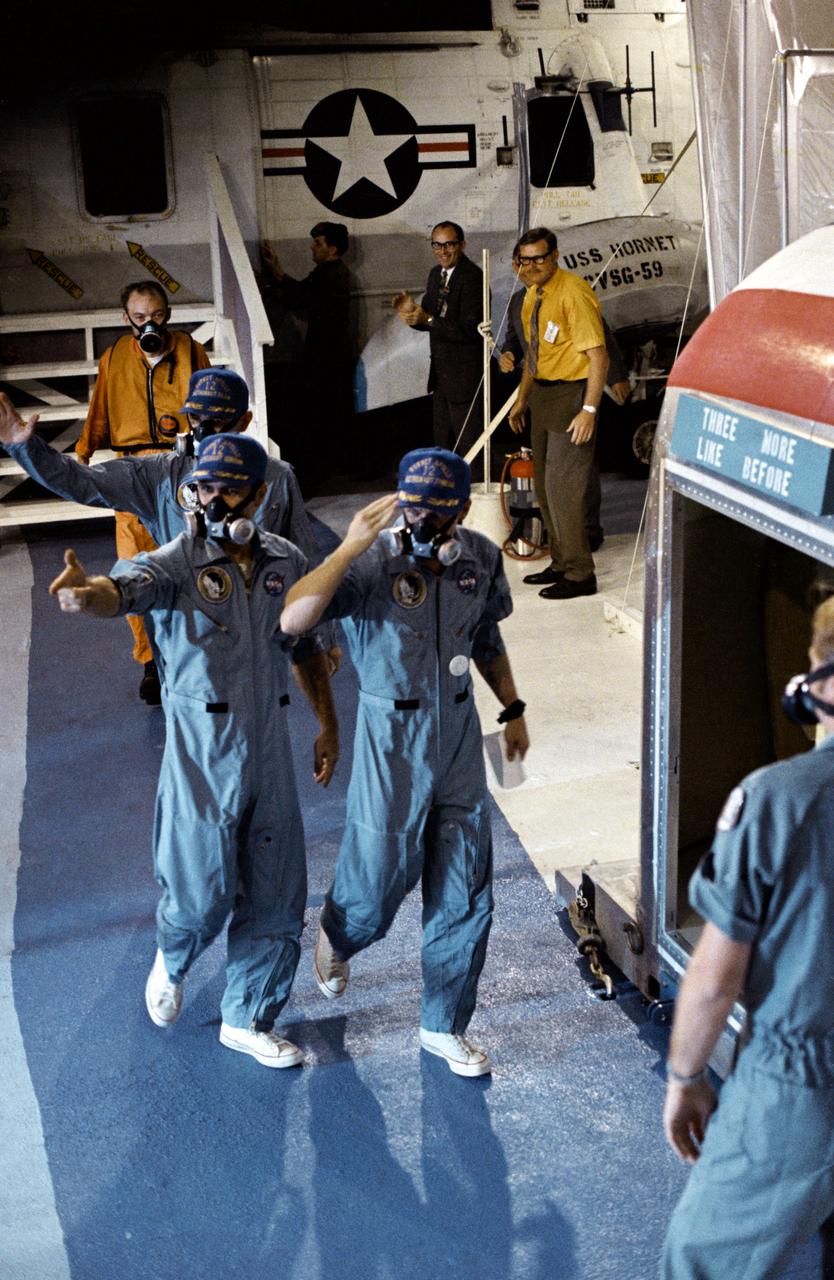
S69-22849 (24 Nov. 1969) --- USS Hornet crewmen are greeted by the crew of the Apollo 12 lunar landing mission as the three astronauts are transferred from a U.S. Navy helicopter to a Mobile Quarantine Facility (MQF) aboard the prime recovery vessel. Charles Conrad Jr., right, commander; Richard F. Gordon Jr., command module pilot, left front; and Alan L. Bean, lunar module pilot, splashed down safely at 2:58 p.m., Nov. 24, 1969.
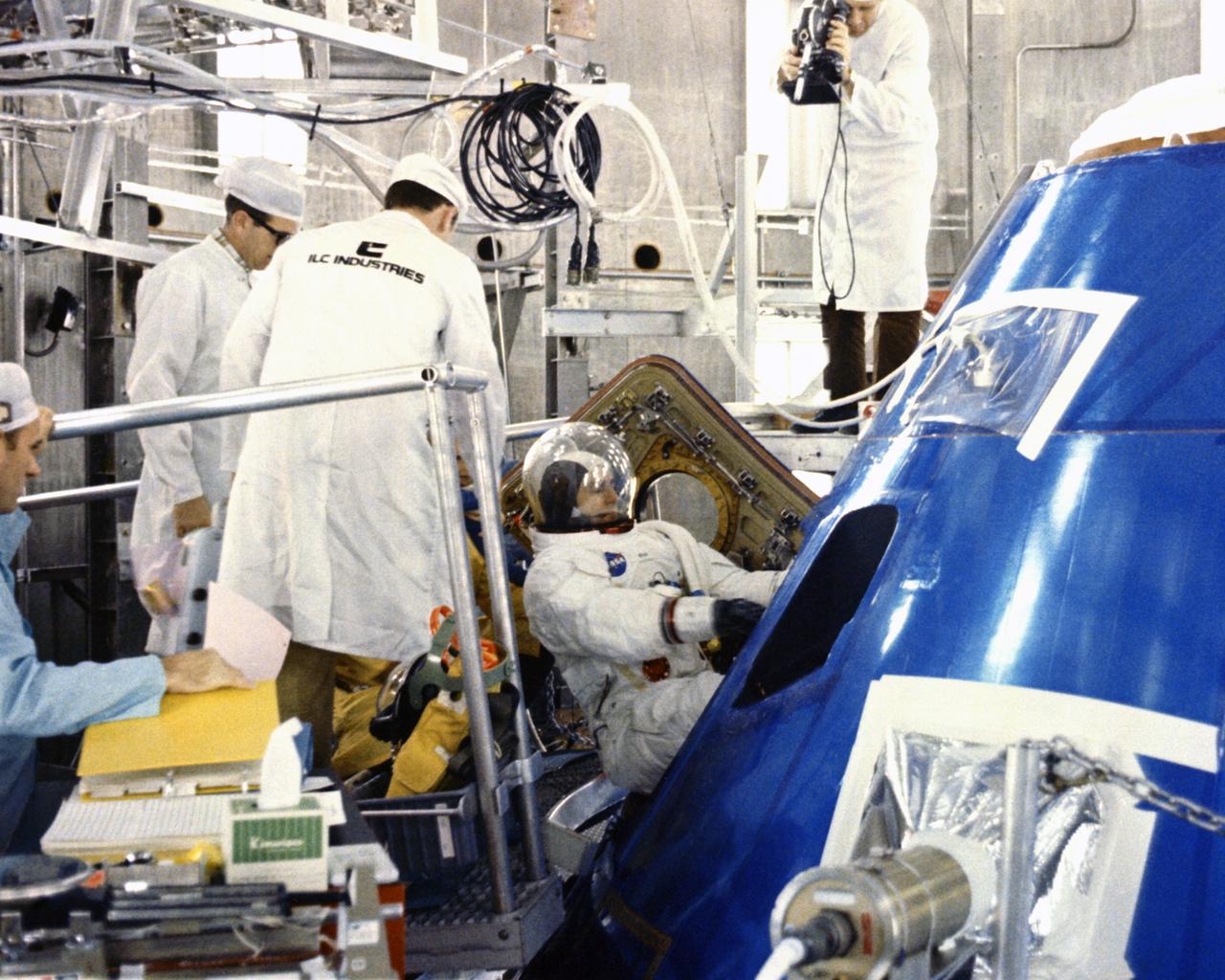
CAPE CANAVERAL, Fla. -- Apollo 12 Lunar Module pilot Alan L. Bean enters spacecraft in preparation for altitude chamber test with mission commander Charles Conrad Jr. and Richard F. Gordon Jr., command module pilot. Air was pumped out of the chamber to simulate a space environment. The Apollo 12 astronauts are scheduled to perform the nation’s second manned lunar landing. Photo credit: NASA
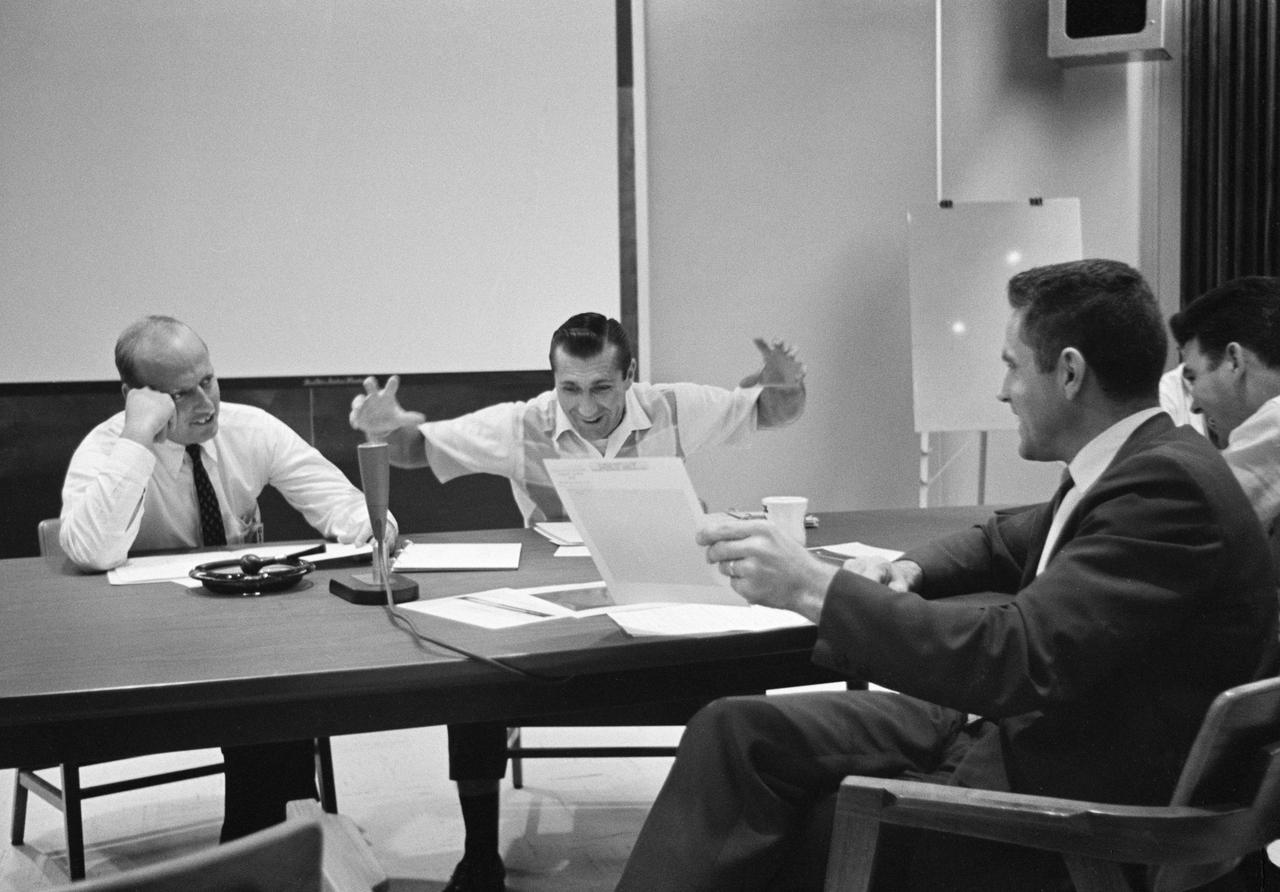
S66-45615 (23 Sept. 1966) --- Discussing the S-13, Ultraviolet Astronomical Camera Experiment, during the postflight experiments briefing at the Manned Spacecraft Center, Houston, Texas, are (left to right) astronauts Charles Conrad Jr., Gemini-11 command pilot; Richard F. Gordon Jr., Gemini-11 pilot; and Dr. Karl Henize, Dearborn Observatory, Northwestern University. Photo credit: NASA
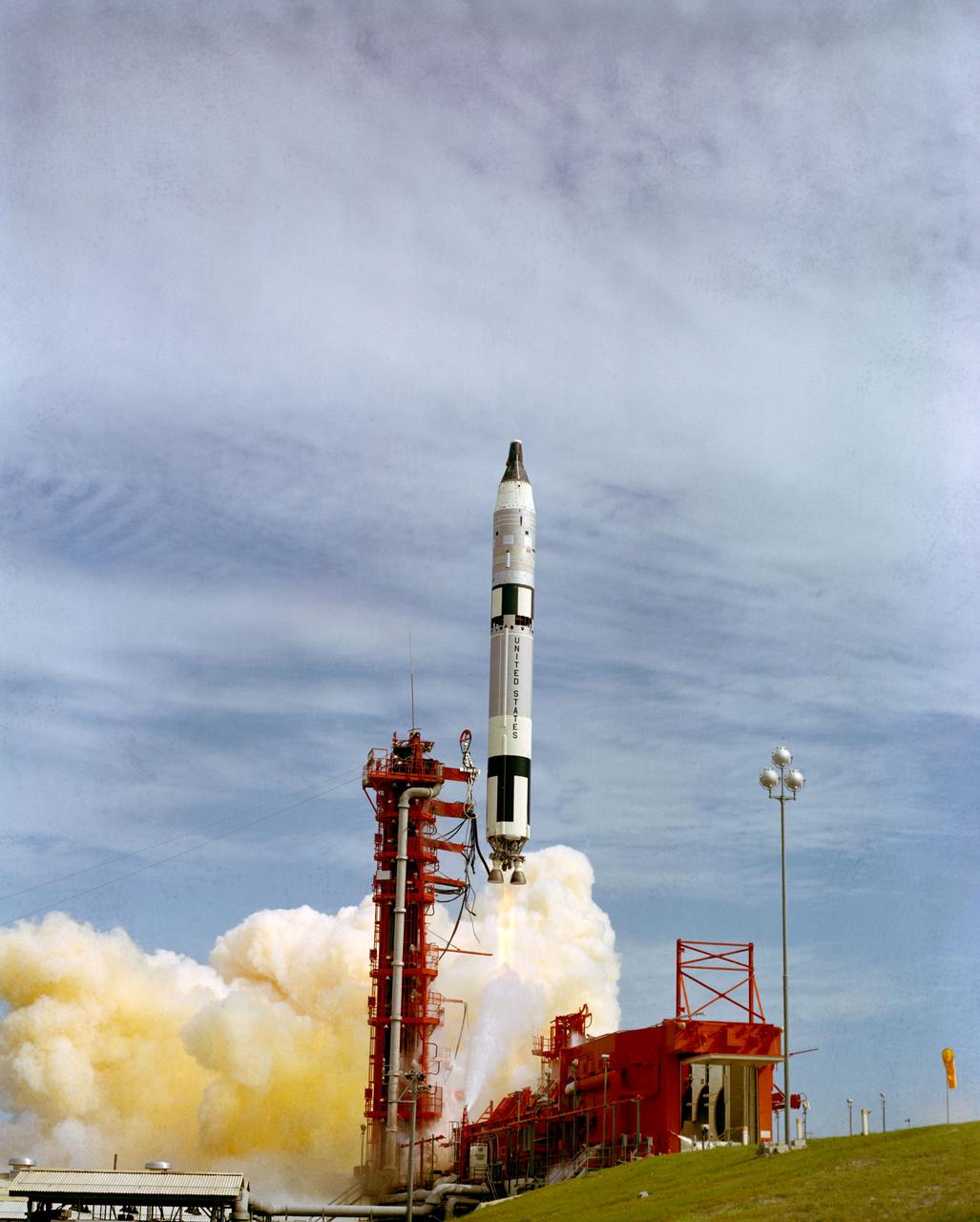
S66-53900 (12 Sept. 1966) --- The Gemini-11 spacecraft, carrying astronauts Charles Conrad Jr., command pilot, and Richard F. Gordon Jr., pilot, was successfully launched by the National Aeronautics and Space Administration from the Kennedy Space Center's Launch Complex 19 at 9:42 a.m. (EST), Sept. 12, 1966. Photo credit: NASA

S66-53547 (15 Sept. 1966) --- The Gemini-11 spacecraft, with astronauts Charles Conrad Jr. and Richard F. Gordon Jr. aboard, nears touchdown in the Atlantic Ocean approximately two statute miles from the prime recovery ship, USS Guam. Gemini-11 splashed down at 9 a.m. (EST), Sept. 15, 1966, to conclude a three-day mission in space. Photo credit: NASA
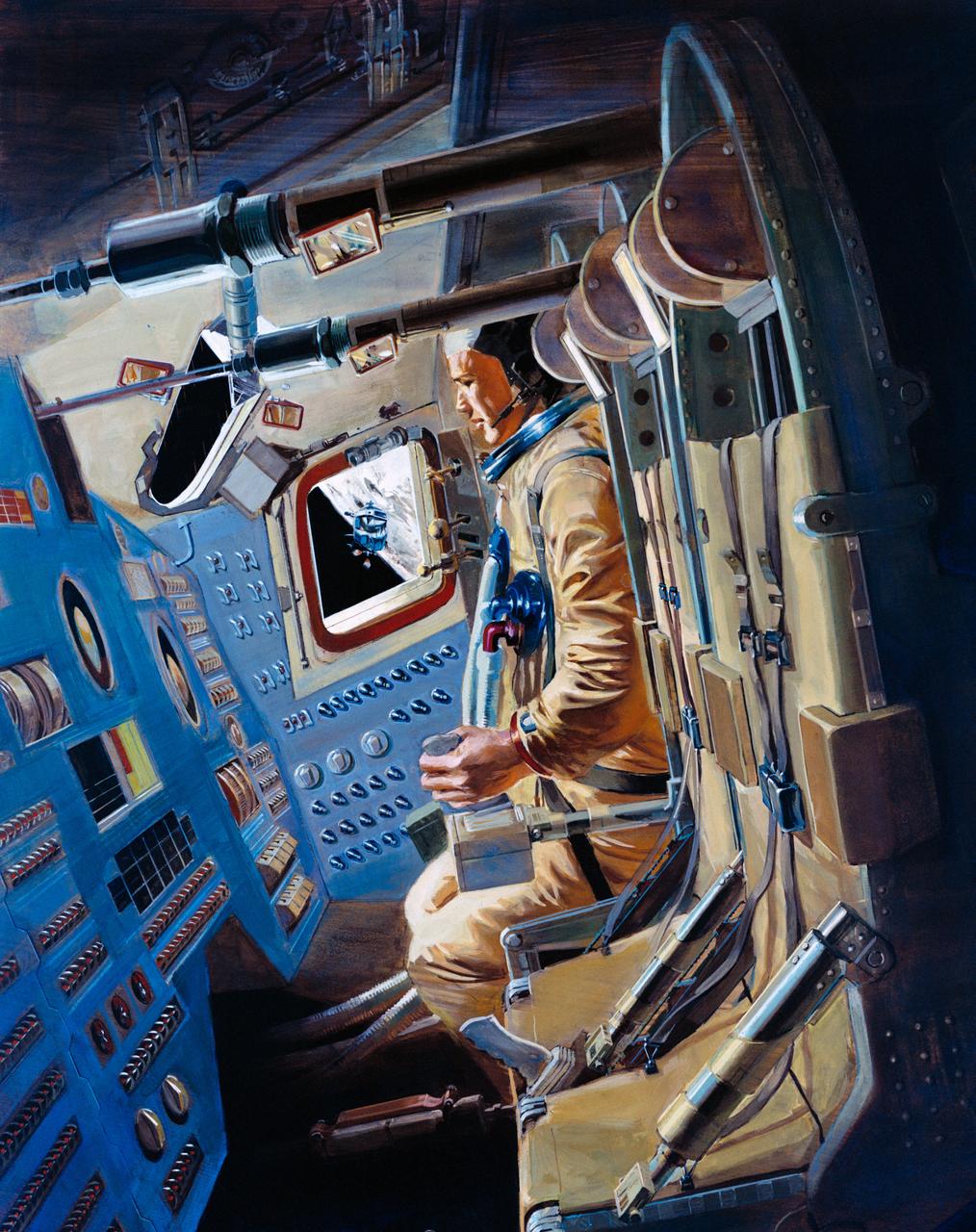
S69-58005 (10 Nov. 1969) --- An artist's concept of the Apollo 12 Command Module's (CM) interior, with the command module pilot at the controls. The Apollo 12 Lunar Module (LM) and a portion of the lunar surface are seen out of the window. Astronaut Richard F. Gordon Jr. will maneuver the Apollo 12 Command and Service Modules (CSM) in lunar orbit while astronauts Charles Conrad Jr., commander, and Alan L. Bean, lunar module pilot, explore the moon.
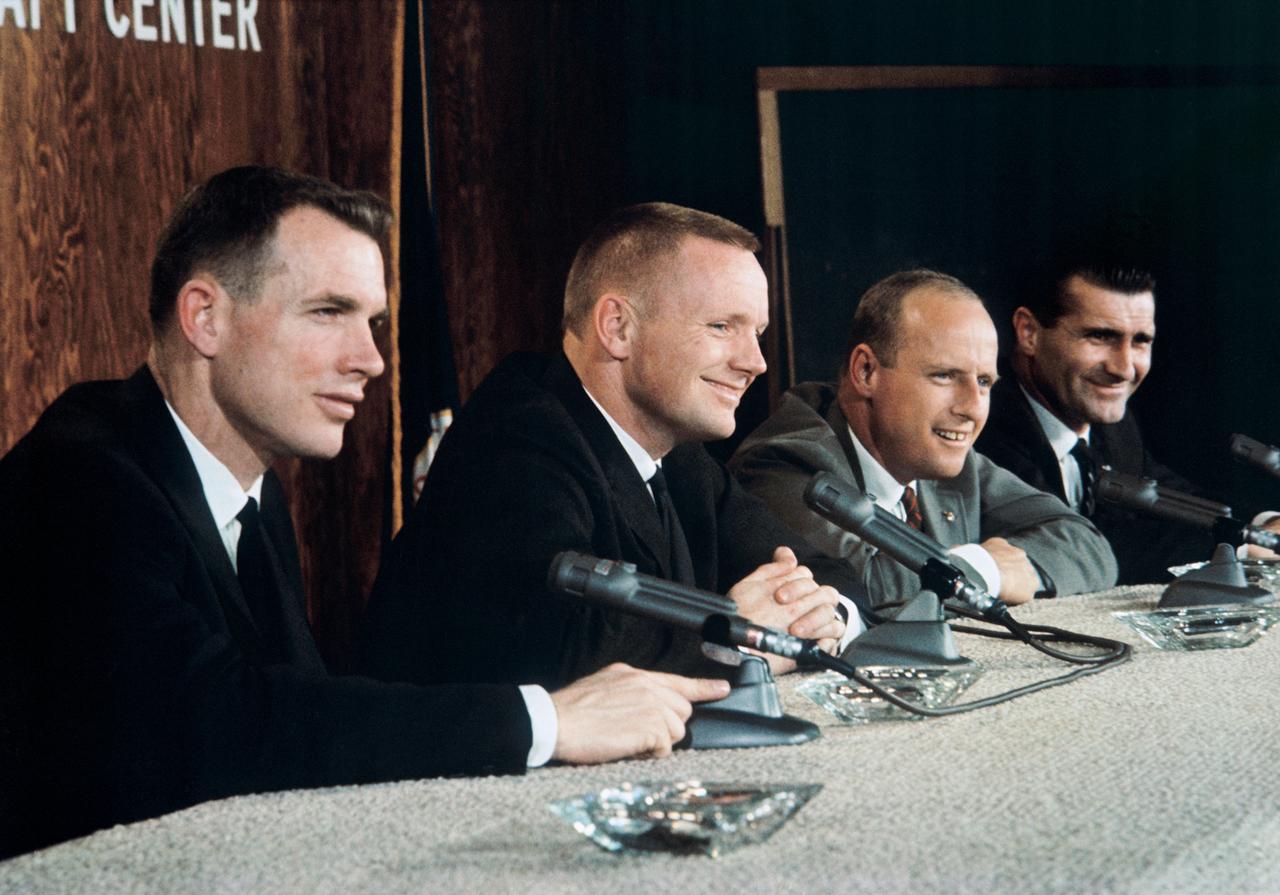
S66-24380 (26 Feb. 1966) --- Gemini-8 prime and backup crews during press conference. Left to right are astronauts David R. Scott, prime crew pilot; Neil A. Armstrong, prime crew command pilot; Charles Conrad Jr., backup crew command pilot; and Richard F. Gordon Jr., backup crew pilot. Photo credit: NASA
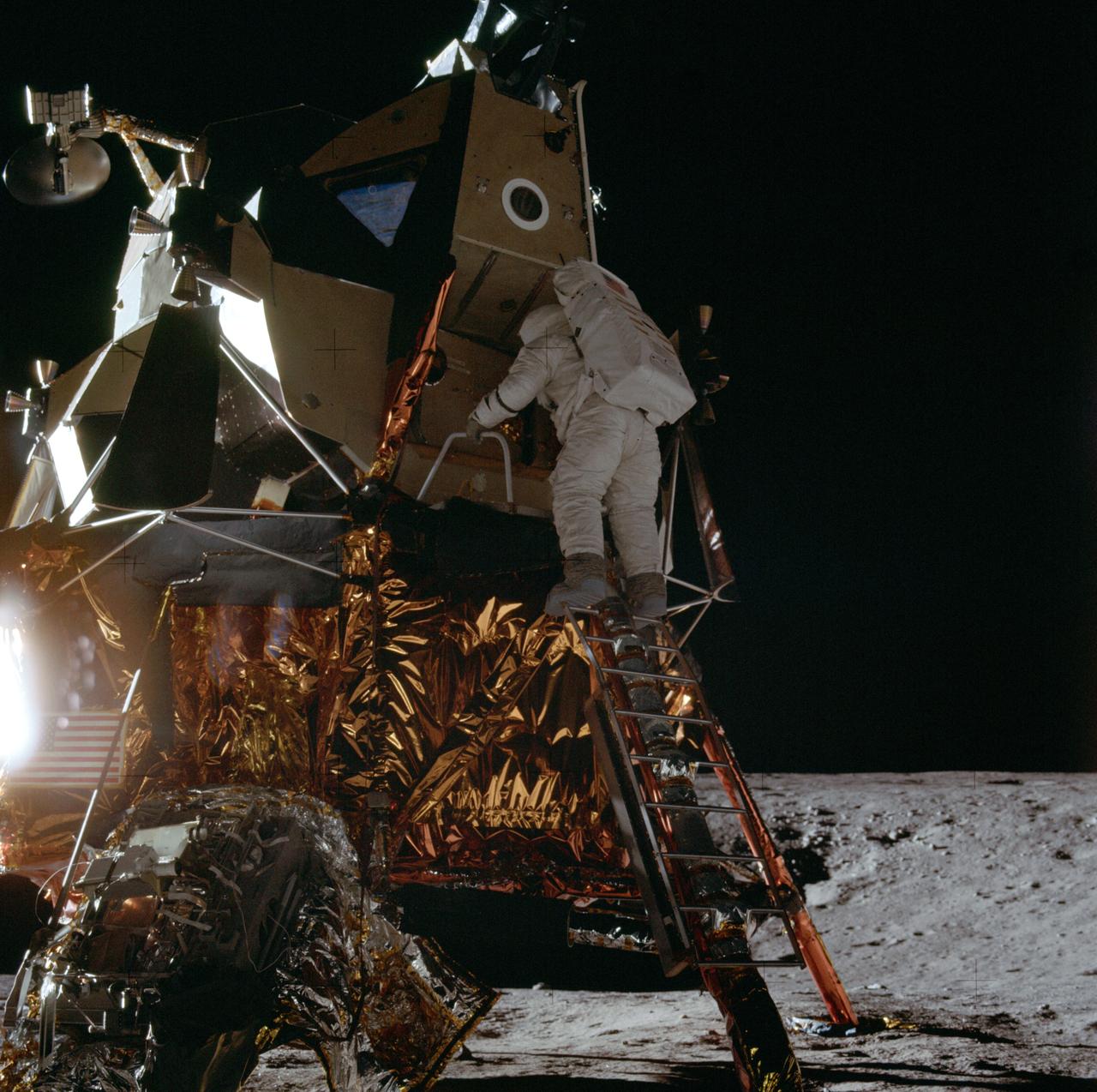
AS12-46-6726 (19 Nov. 1969) --- Astronaut Alan L. Bean, lunar module pilot for the Apollo 12 mission, starts down the ladder of the Lunar Module (LM) to join astronaut Charles Conrad Jr., mission commander, in extravehicular activity (EVA). While astronauts Conrad and Bean descended in the LM "Intrepid" to explore the Ocean of Storms region of the moon, astronaut Richard F. Gordon Jr., command module pilot, remained with the Command and Service Modules (CSM) "Yankee Clipper" in lunar orbit.
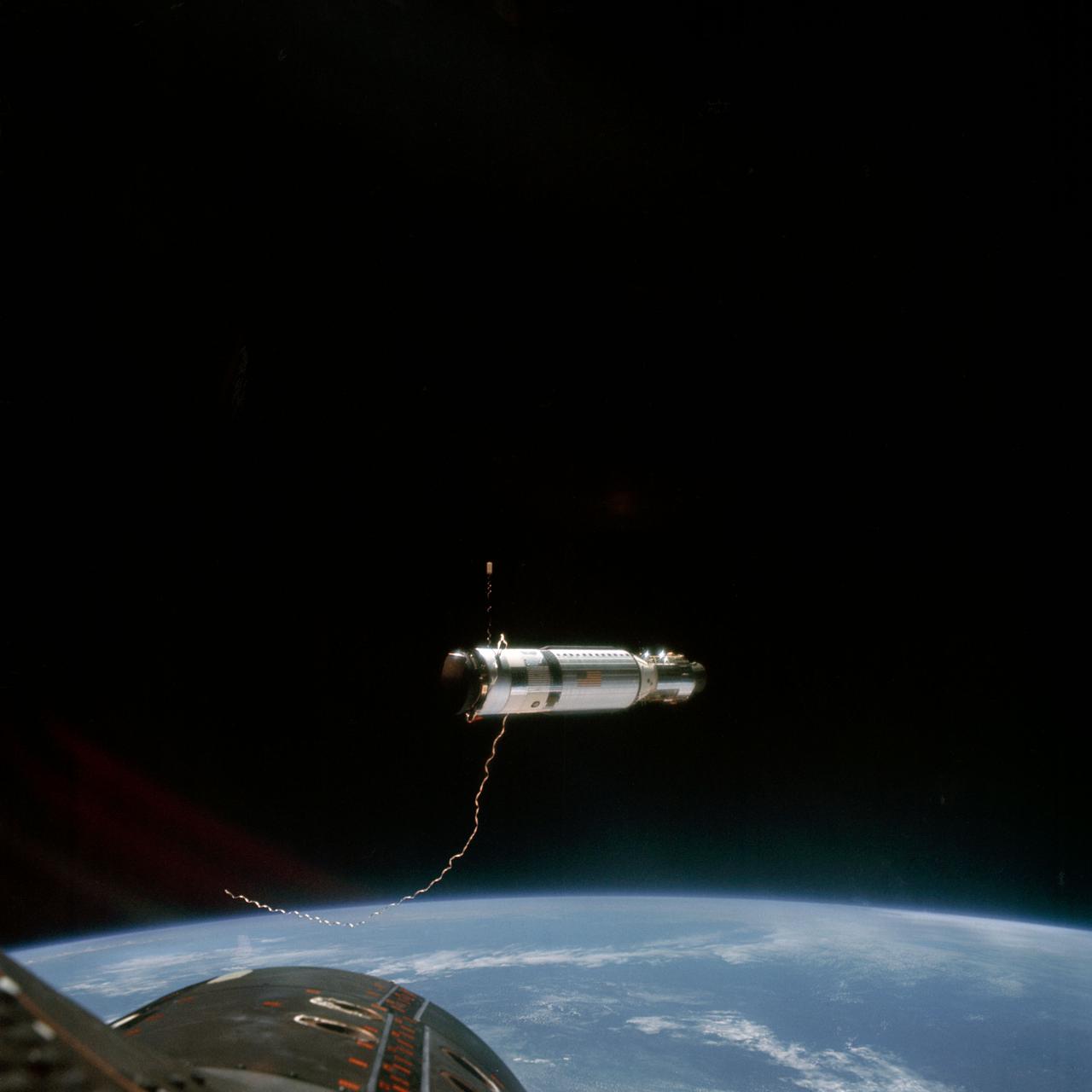
S66-54585 (12-15 Sept. 1966) --- The Agena Target Docking Vehicle at a distance of approximately 80 feet from the Gemini-11 spacecraft. This view was taken after the disconnect of the tether between the two vehicles. Crew members for the Gemini-11 mission are astronauts Charles Conrad Jr., command pilot, and Richard F. Gordon Jr., pilot. Photo credit: NASA
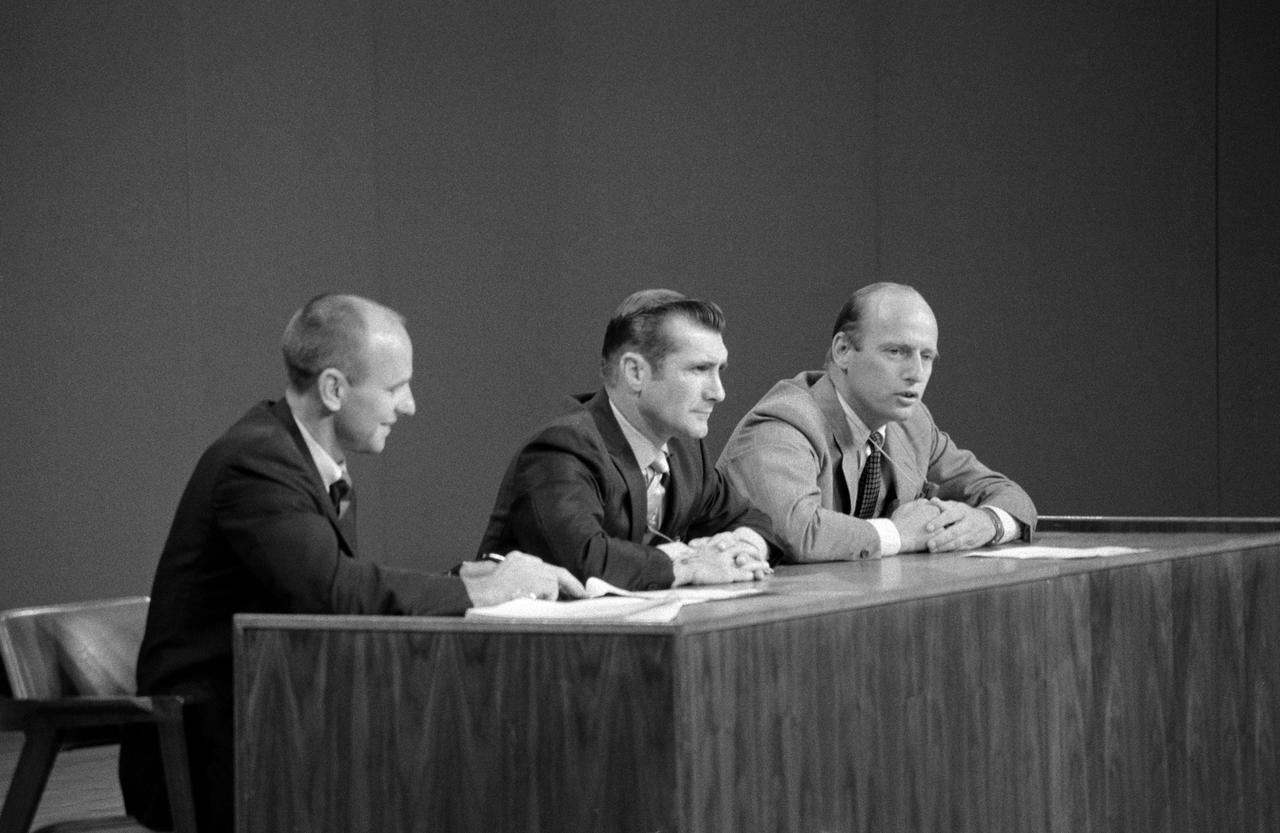
S69-54412 (11 Oct. 1969) --- The members of the Apollo 12 prime crew discuss their scheduled lunar landing mission at a preflight press conference which was held on Oct. 11, 1969, in the Manned Spacecraft Center auditorium. Left to right, are astronauts Alan L. Bean, lunar module pilot; Richard F. Gordon Jr., command module pilot; and Charles Conrad Jr., commander.
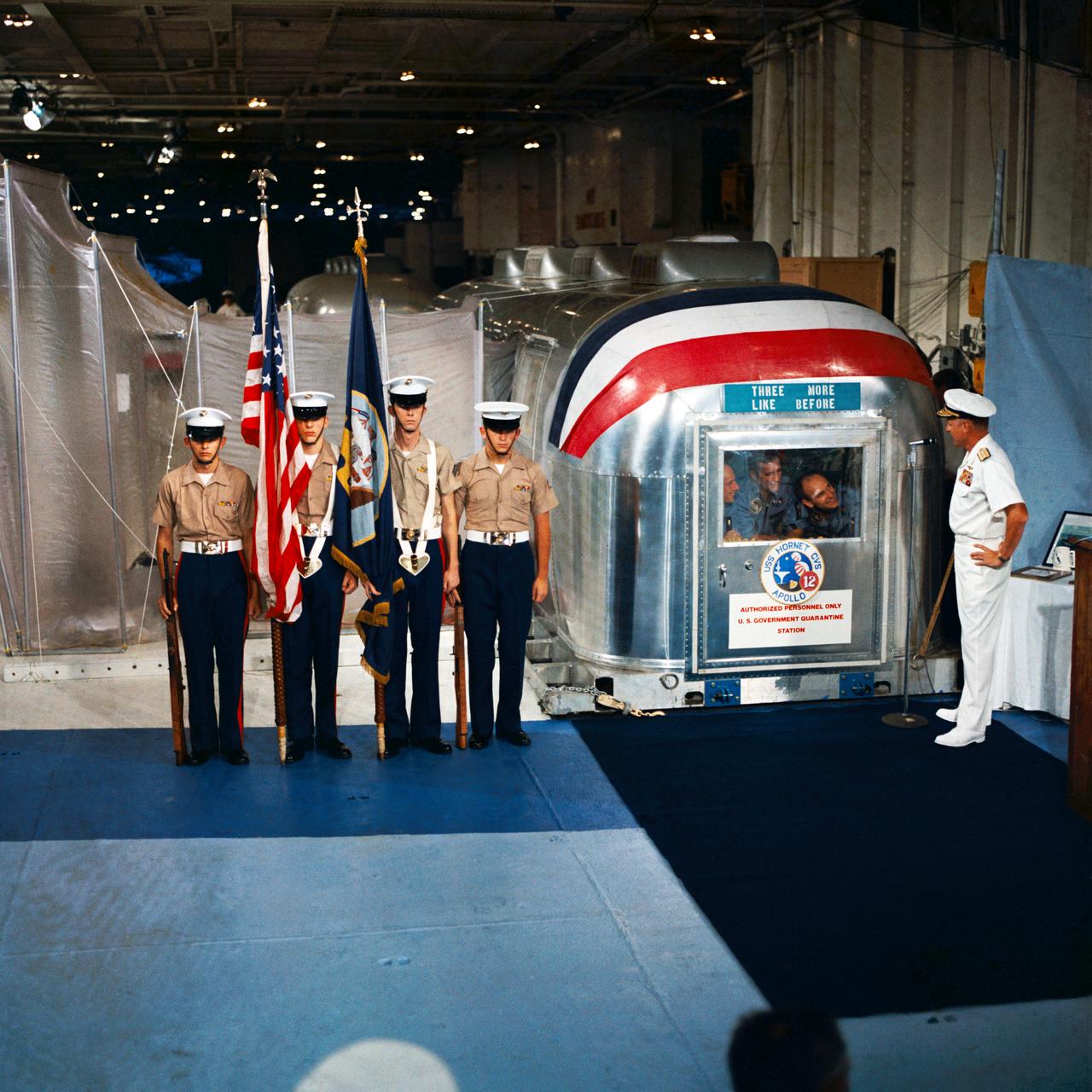
S69-22876 (24 Nov. 1969) --- Rear Admiral Donald C. David, Commander, Manned Spacecraft Recovery Force, Pacific, welcomes the crew of the Apollo 12 lunar landing mission aboard the USS Hornet, prime recovery vessel for the mission. A color guard was also on hand for the welcoming ceremonies. Inside the Mobile Quarantine Facility (MQF) are (left to right) astronauts Charles Conrad Jr., commander; Richard F. Gordon Jr., command module pilot; and Alan L. Bean, lunar module pilot.
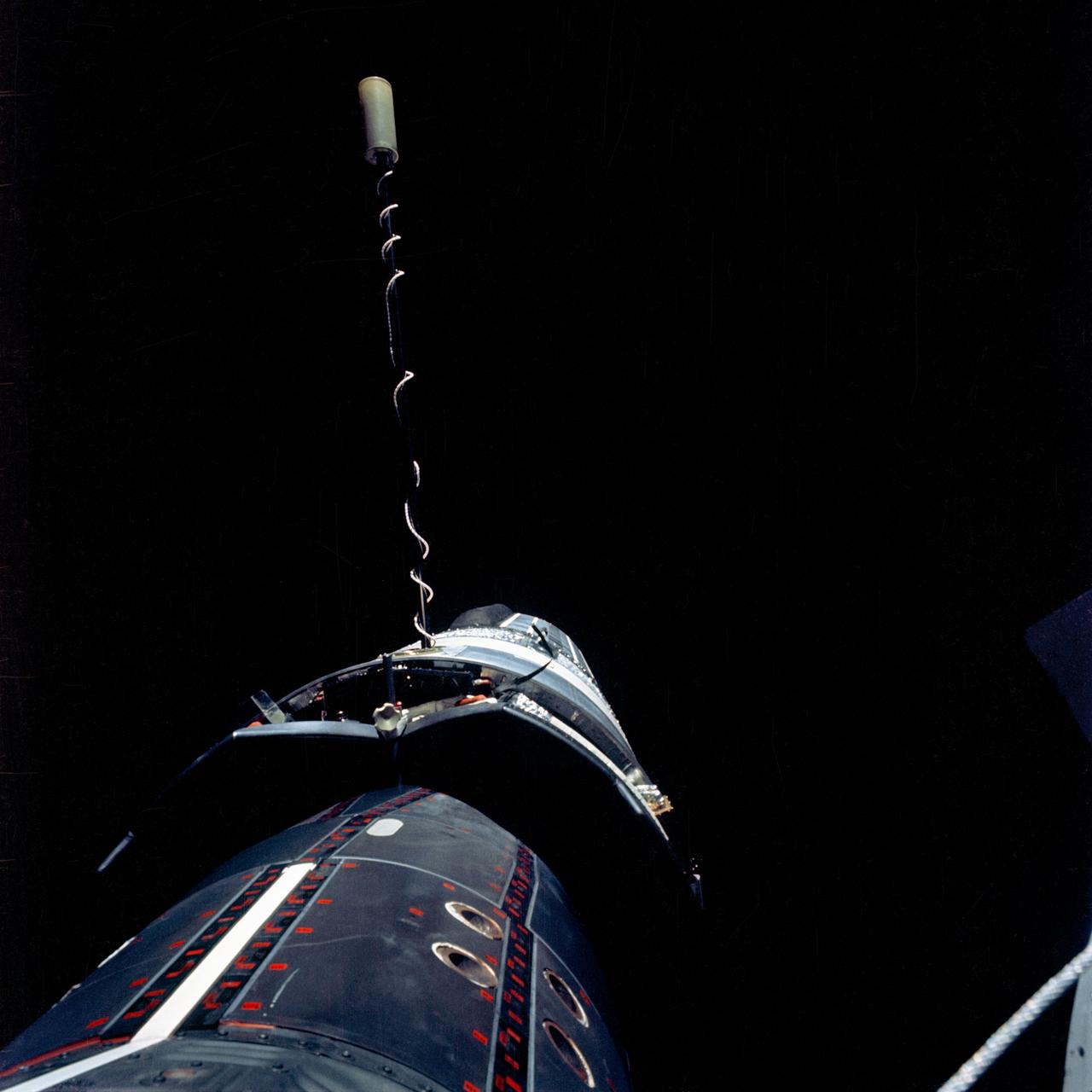
S66-54555 (14 Sept. 1966) --- The Gemini-11 spacecraft is docked to the Agena Target Vehicle in this photograph taken by astronaut Richard F. Gordon Jr., pilot, as he stood in the open hatch of the Gemini-11 spacecraft during his extravehicular activity (EVA). Note Agena's L-band antenna. Taken during Gemini-11's 29th revolution of Earth, using a modified 70mm Hasselblad camera, with Eastman Kodak, Ektachrome, MS (S.O. 368) color film. Photo credit: NASA
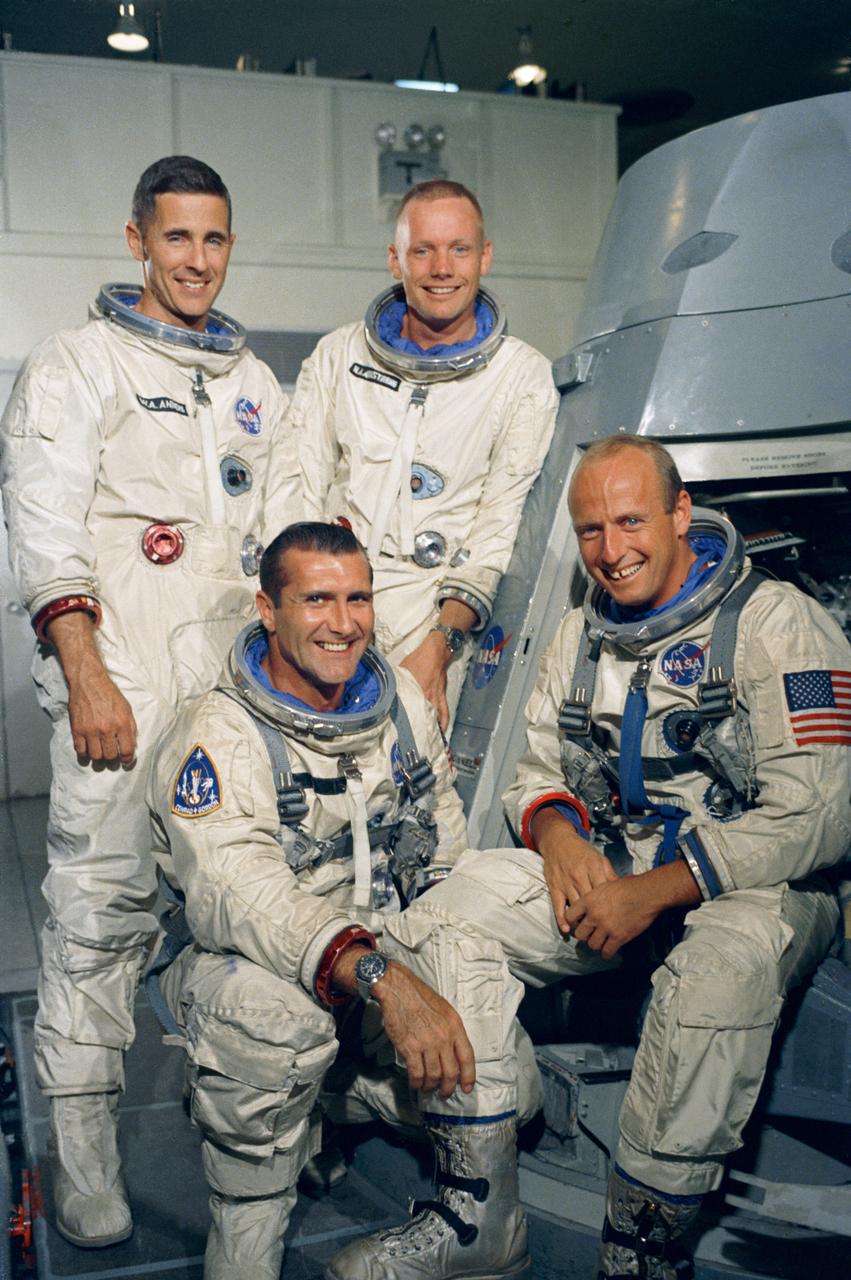
S66-50772 (7 Sept. 1966) --- The Gemini-Titan XI (GT-11) prime and backup crews pose for a group portrait. Seated is the prime crew, astronauts Charles Conrad Jr. (right), command pilot, and Richard F. Gordon Jr. (left), pilot. The backup crew (standing) is astronauts Neil A. Armstrong (right), command pilot, and William A. Anders (left), pilot. The two crews were suited up for a simulation test at the Kennedy Space Center. Photo credit: NASA
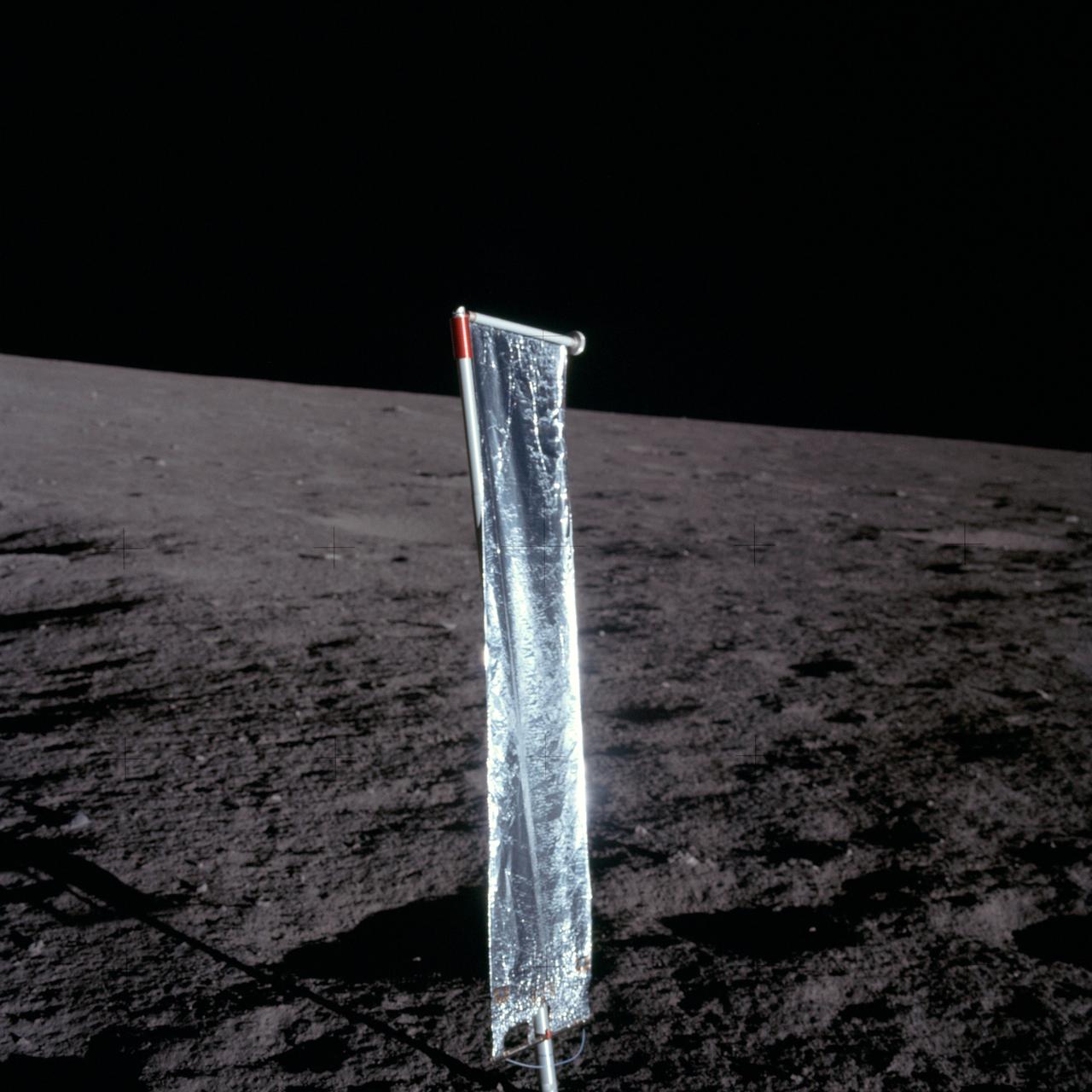
AS12-47-6898 (19 Nov. 1969) --- A close-up view of the Solar Wind Composition device. Astronaut Alan L. Bean, lunar module pilot, took this photograph, after having deployed the device. Astronauts Charles Conrad Jr., commander, and Bean descended in the Apollo 12 Lunar Module (LM) to explore the moon, while astronaut Richard F. Gordon Jr., command module pilot, remained in lunar orbit with the Command and Service Modules (CSM).
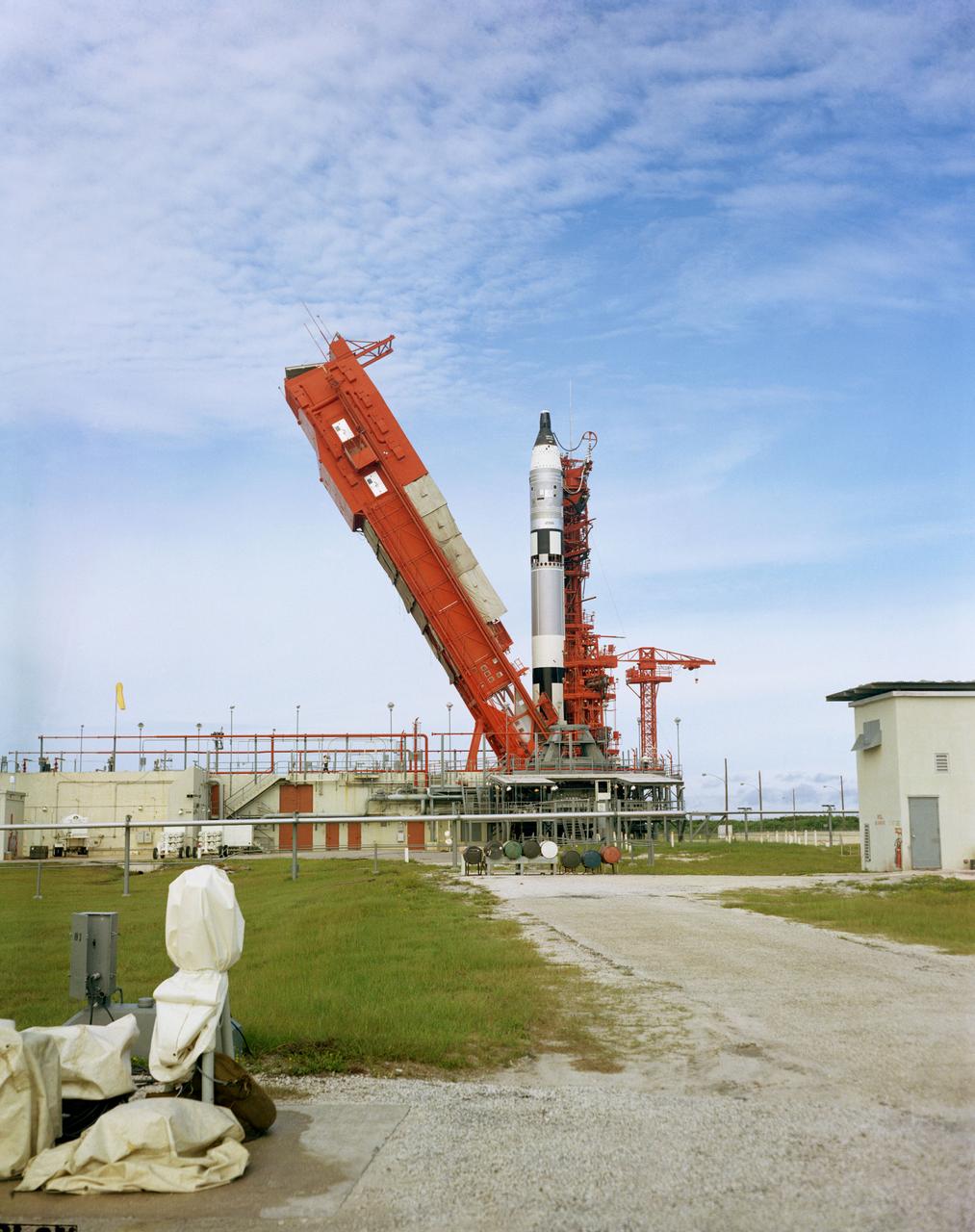
S66-50765 (12 Sept. 1966) --- The erector at Launch Complex 19 is lowered during the Gemini-11 prelaunch countdown. Awaiting the launch in the Gemini-11 spacecraft atop the Gemini Launch Vehicle-11 are astronauts Charles Conrad Jr., command pilot, and Richard F. Gordon Jr., pilot. Liftoff was at 9:42 a.m. (EST), Sept. 12, 1966. Photo credit: NASA

S66-50715 (12 Sept. 1966) --- Astronaut Charles Conrad Jr., command pilot of the Gemini-11 spaceflight, undergoes suiting up operations in the Launch Complex 16 suit trailer during the Gemini-11 prelaunch countdown. Later, astronauts Conrad and Richard F. Gordon Jr., pilot, entered a transport van which carried them to Pad 19 and their waiting spacecraft in preparation for their scheduled three-day mission in space. Suit technician James L. Garrepy assists. Photo credit: NASA
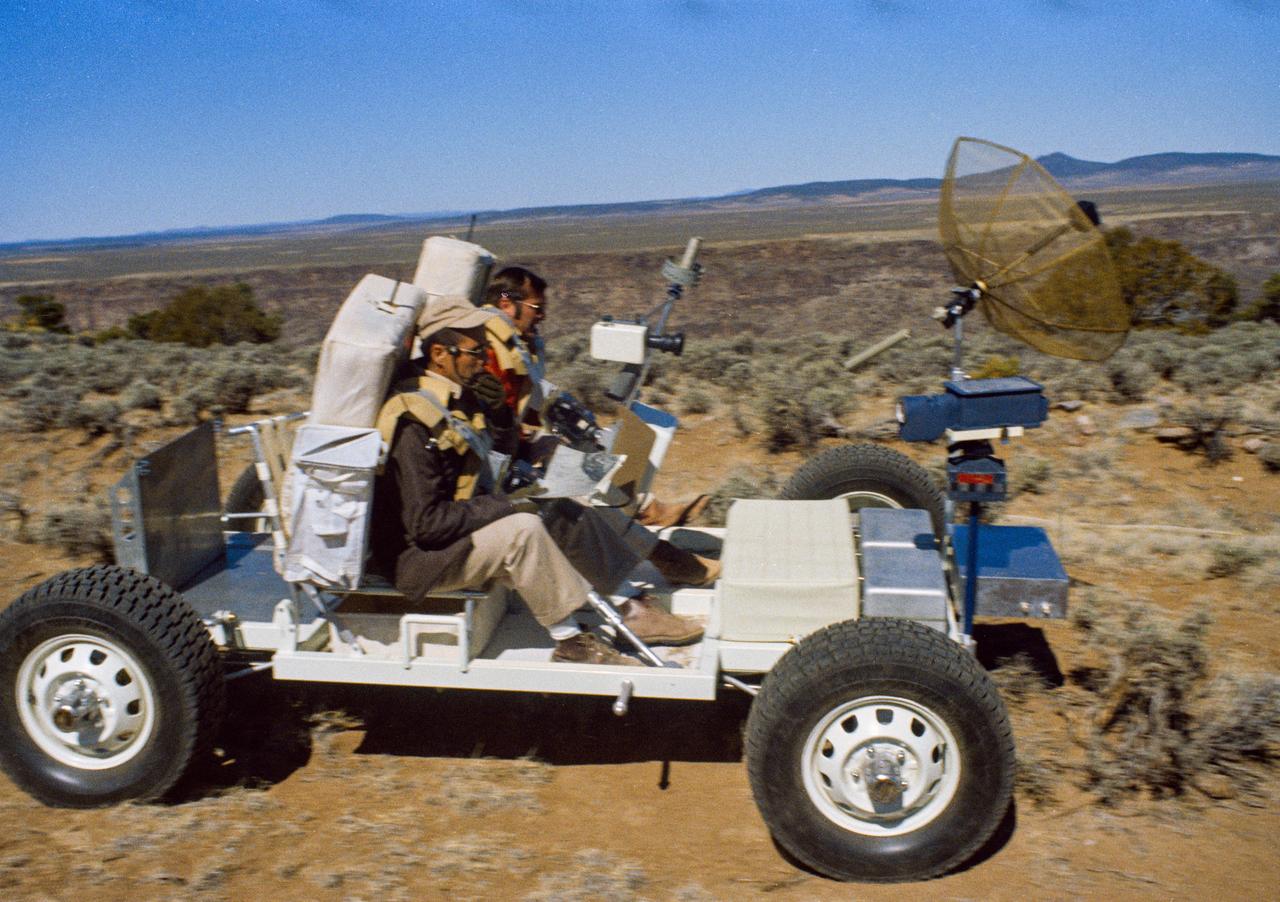
S71-24079 (1971) --- Astronauts Richard F. Gordon Jr., right, and Harrison H. Schmitt ? back-up crew members for the Apollo 15 lunar landing mission -- traverse in an Earth-bound training version of the Apollo Lunar Roving Vehicle (LRV or Rover) during geology training in Hawaii. Photo credit: NASA Note: There are elements of this description that have not been confimred. Please hold any release of descriptive information until such can be confirmed.
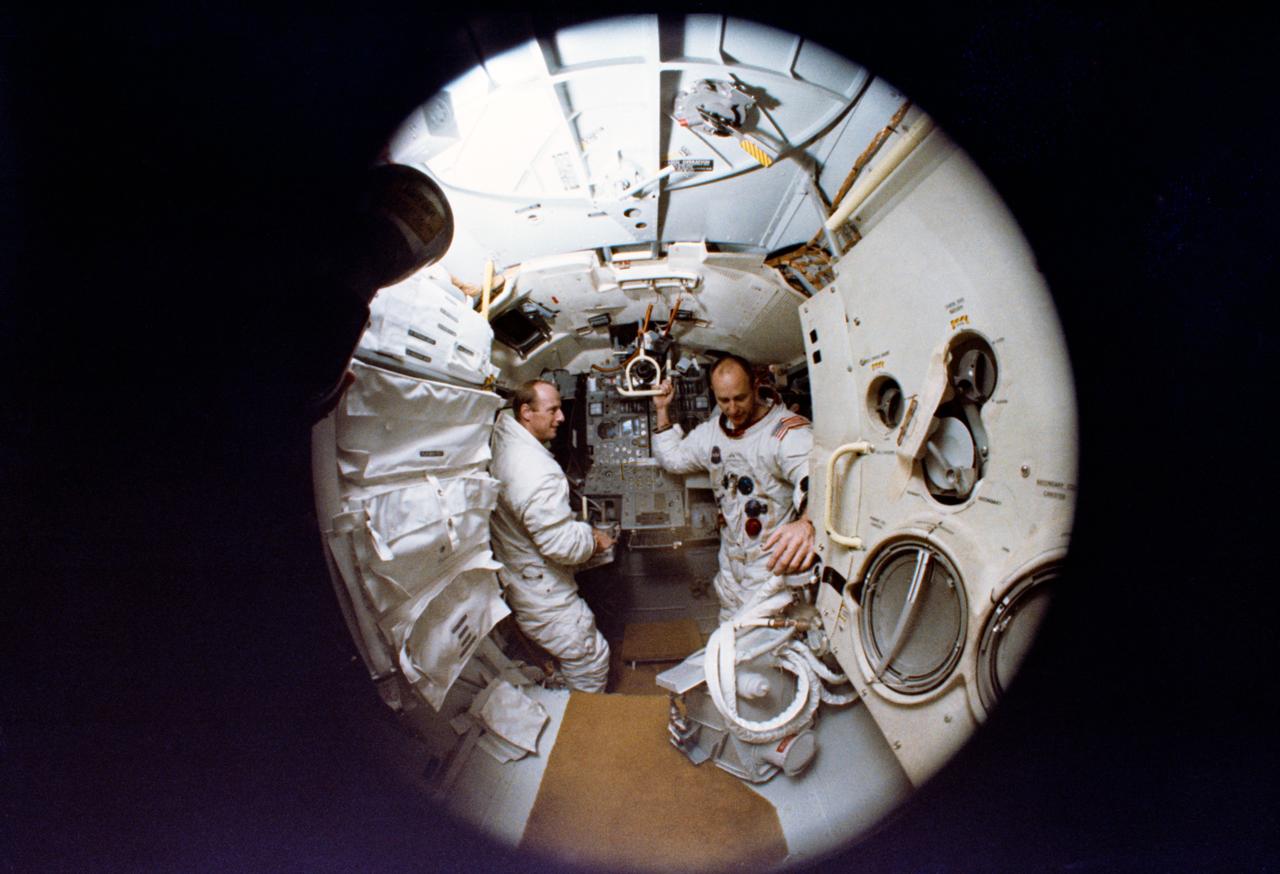
S69-56700 (22 Oct. 1969) --- A fish-eye lens view of astronauts Charles Conrad Jr. (on left), Apollo 12 commander, and Alan L. Bean, lunar module pilot, inside the Apollo Lunar Module Mission Simulator during simulator training at the Kennedy Space Center (KSC). Apollo 12 will be the National Aeronautics and Space Administration's (NASA) second lunar landing mission. The third Apollo 12 crewmember will be astronaut Richard F. Gordon Jr., command module pilot.
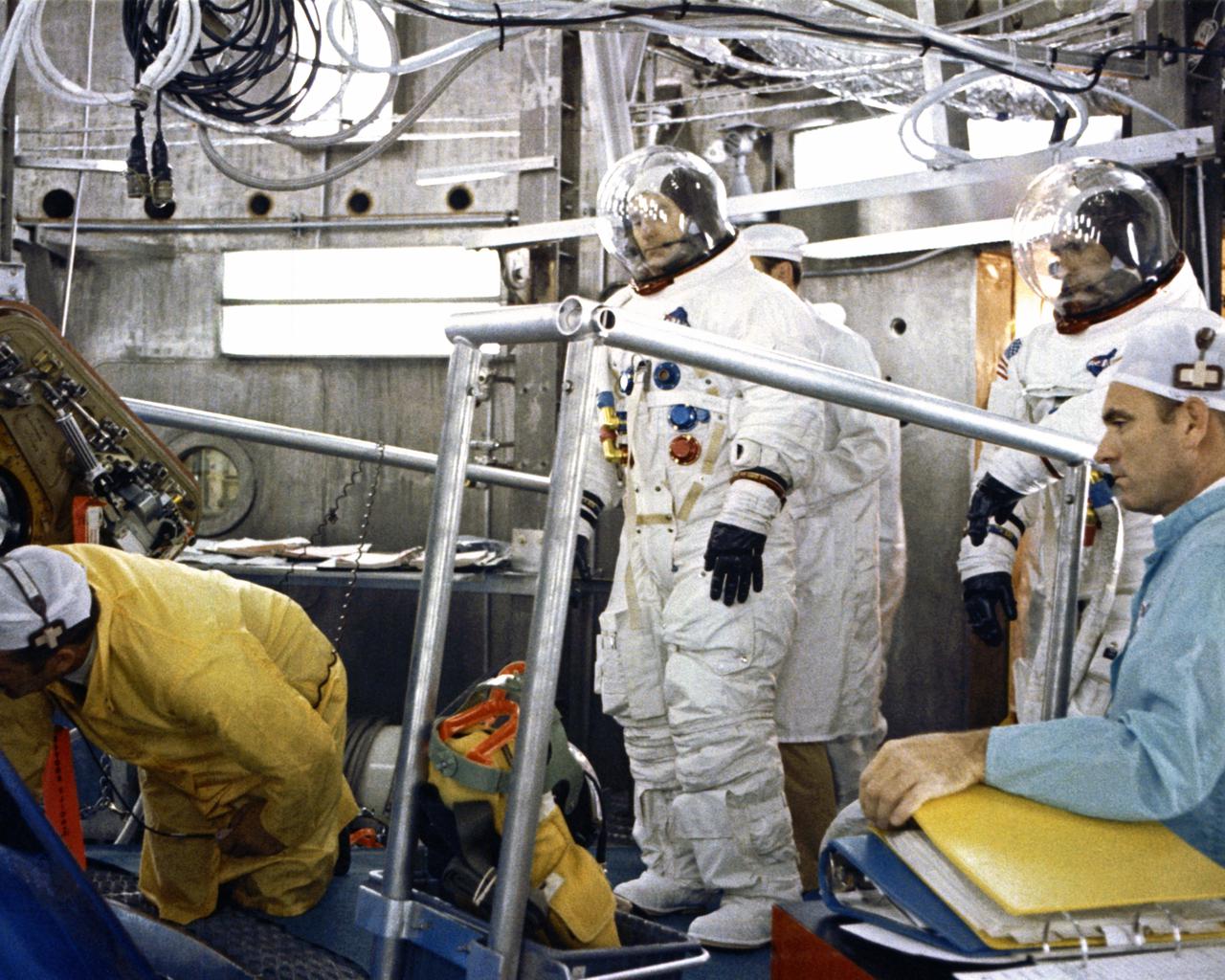
CAPE CANAVERAL, Fla. -- Apollo 12 lunar module pilot Alan L. Bean enters spacecraft in preparation for altitude chamber test with mission commander Charles Conrad Jr. and Richard F. Gordon Jr., command module pilot. Air was pumped out of the chamber to simulate a space environment. The Apollo 12 astronauts are scheduled to perform the nation’s second manned lunar landing. Photo credit: NASA
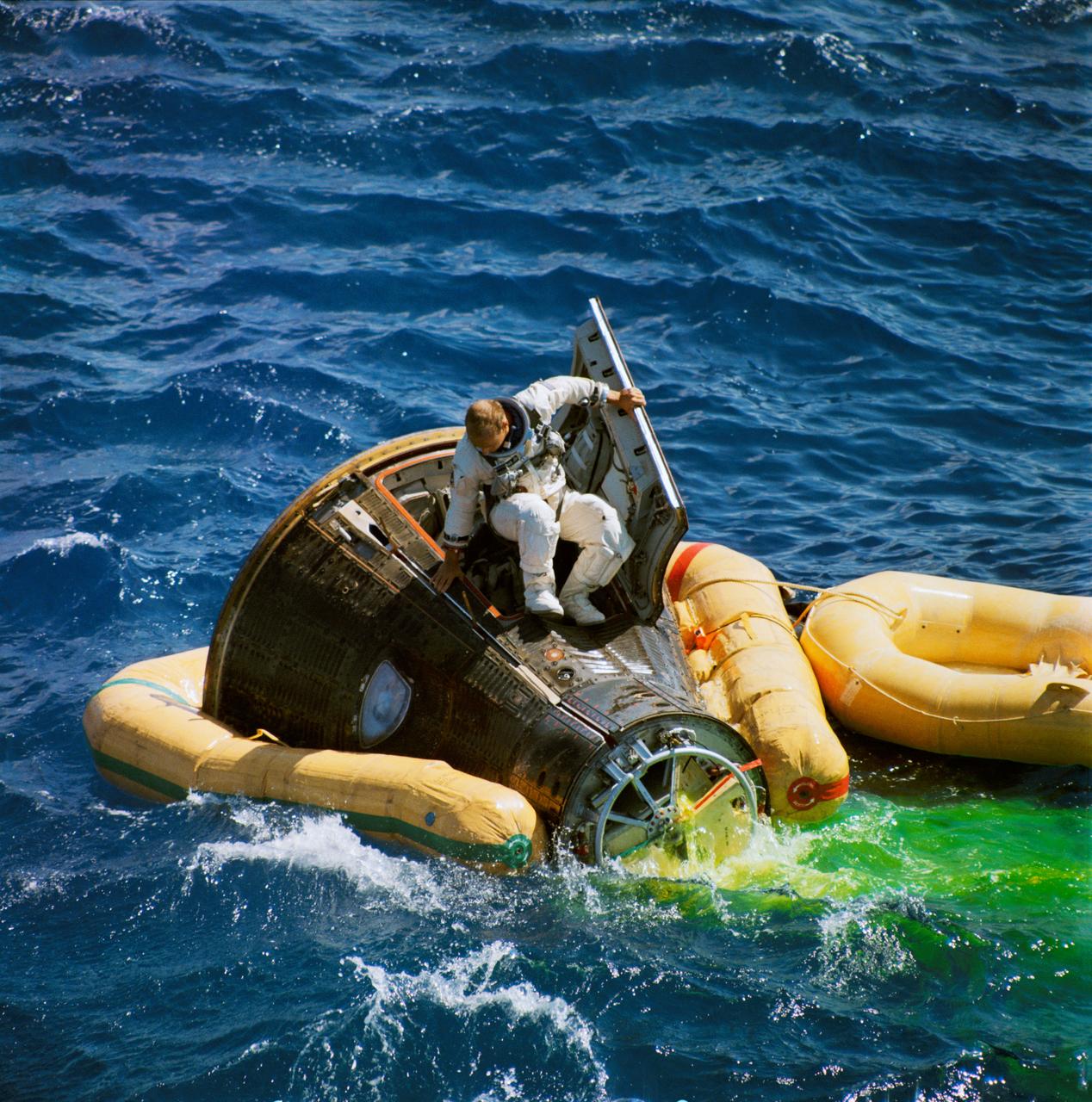
S66-50767 (15 Sept. 1966) --- Astronaut Charles Conrad Jr., command pilot of the Gemini-11 spaceflight, climbs from the spacecraft minutes after splashdown. Astronaut Richard F. Gordon Jr., pilot, still has his hatch closed. A U.S. Navy frogman team attached a flotation collar to the spacecraft. A recovery helicopter from the USS Guam picked up the two astronauts. Photo credit: NASA
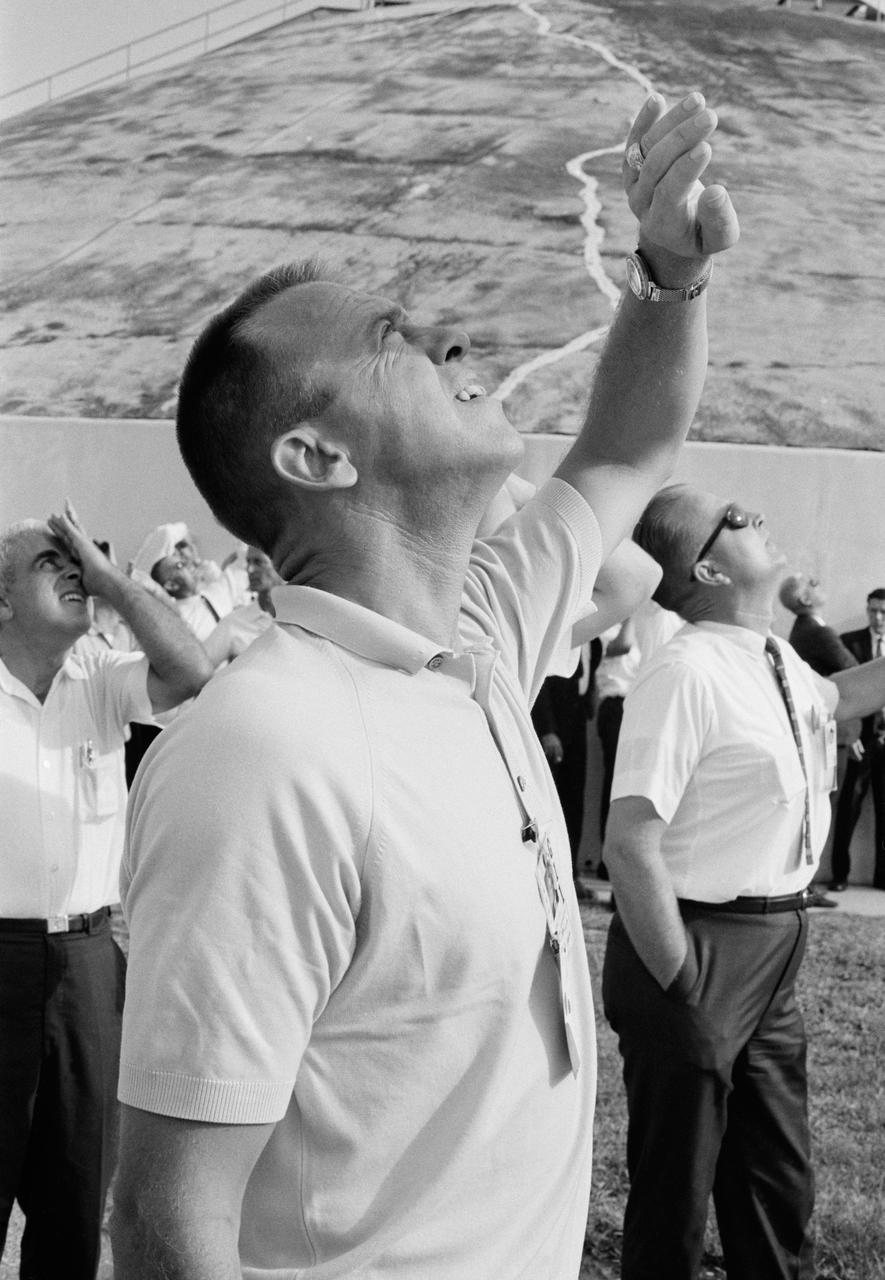
S66-50713 (12 Sept. 1966) --- Astronaut Alan B. Shepard Jr., Chief, MSC Astronaut Office, shields his eyes from the sun as he follows the Gemini-11 liftoff. Onboard were astronauts Charles Conrad Jr., command pilot, and Richard F. Gordon Jr., pilot, scheduled for a three-day mission in space. Liftoff was at 9:42 a.m. (EST), Sept. 12, 1966. Photo credit: NASA
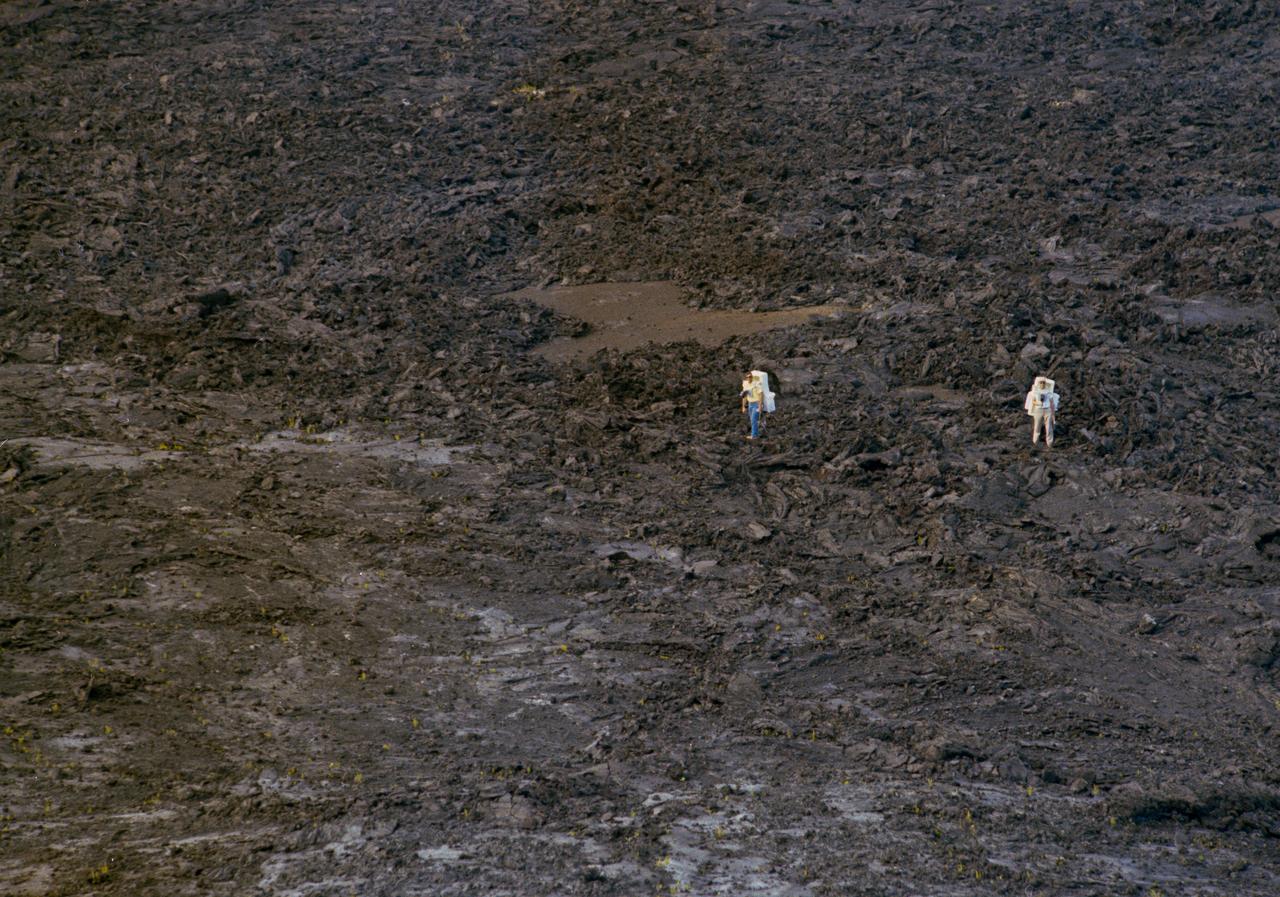
S70-56407 (December 1970) --- Astronauts Richard F. Gordon Jr., left, and Harrison H. Schmitt ? backup crew members for the Apollo 15 mission -- get ?feet-on? experience with an a'a' lava flow during geology training in Hawaii. A?a? is the most common appearance type of lava flow that cools down, to form fragmented, often spiny or rough surfaces. Photo credit: NASA
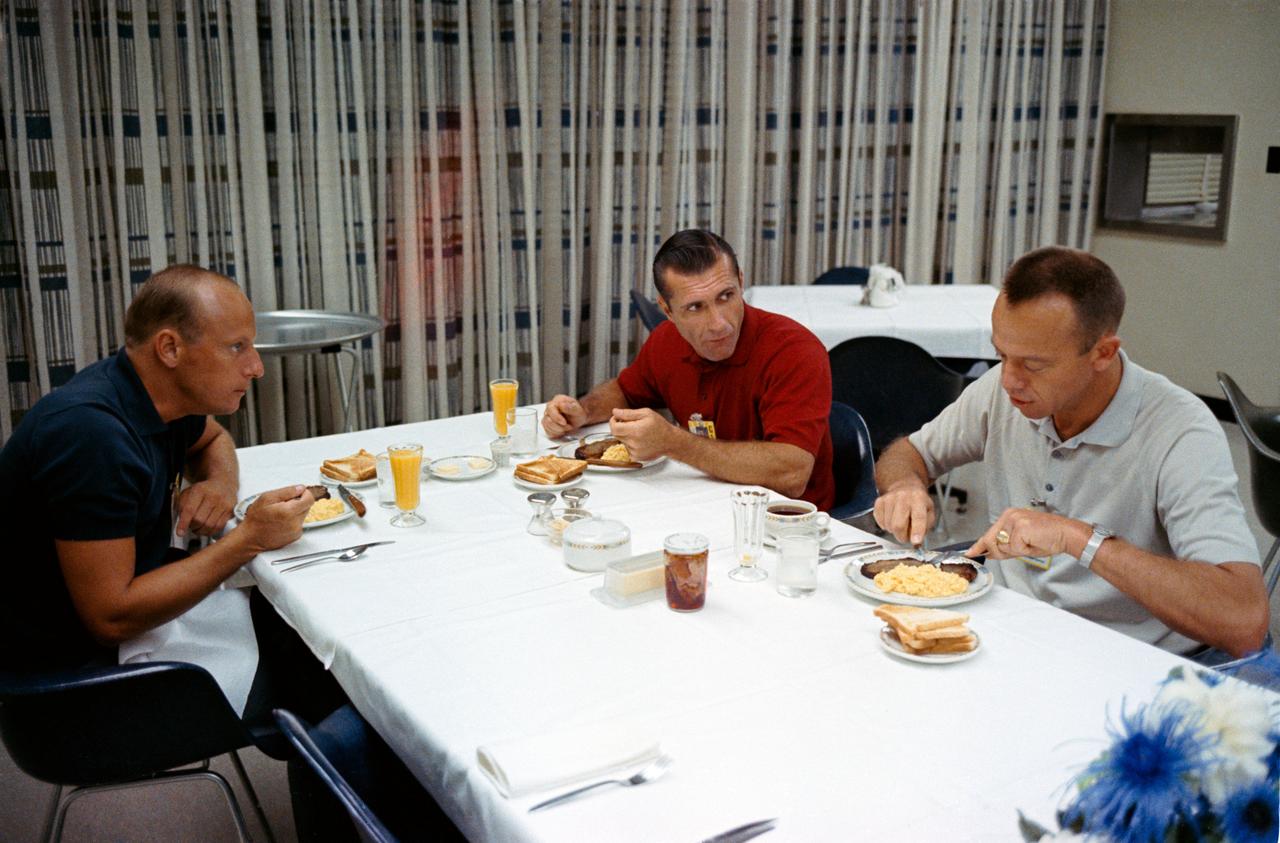
S66-50723 (12 Sept. 1966) --- The Gemini-11 prime crew enjoys a breakfast of steak and eggs with astronaut Alan B. Shepard Jr. (right), Chief, MSC Astronaut Office, on the morning of the scheduled Gemini-11 launch. On left is astronaut Charles Conrad Jr., command pilot. Astronaut Richard F. Gordon Jr. (center) is the pilot. Photo credit: NASA
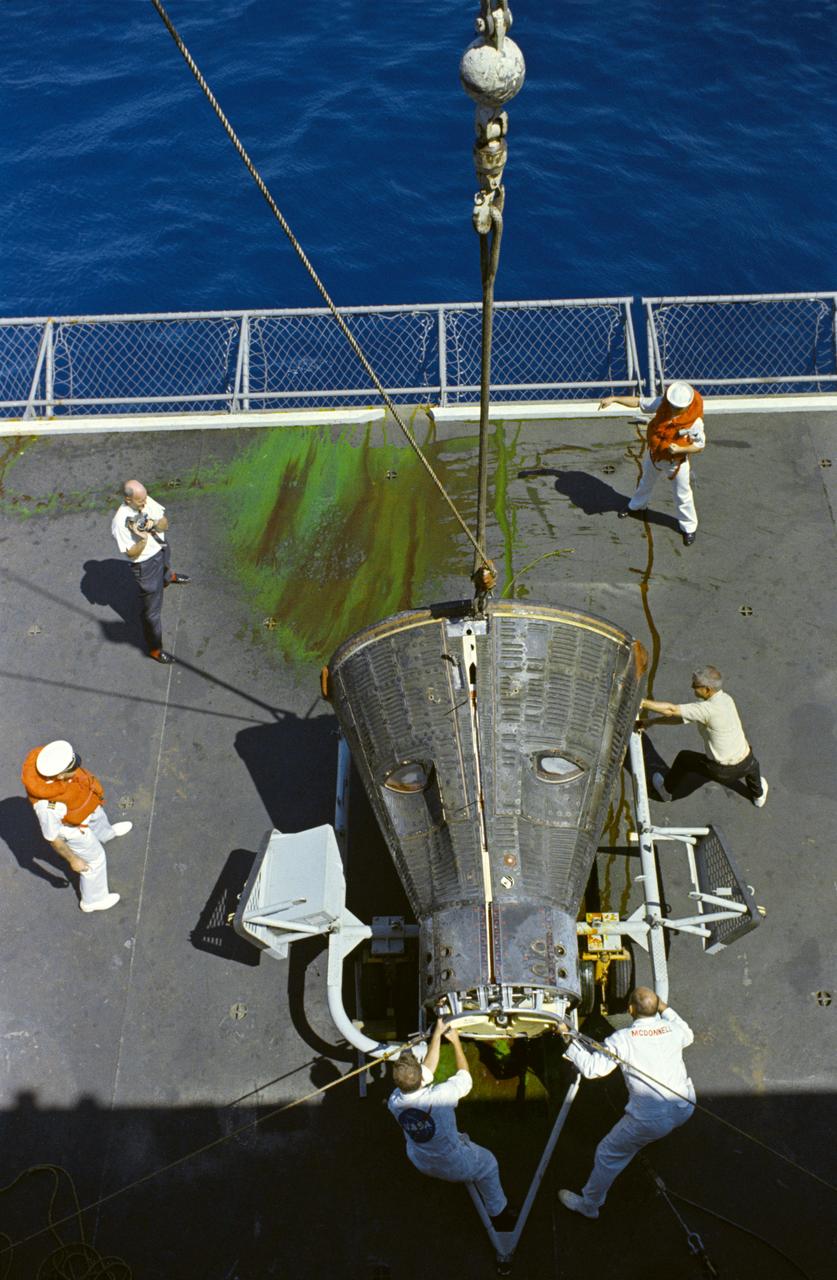
S66-50743 (15 Sept. 1966) --- The Gemini-11 spacecraft is lowered onto a dolly on the deck of the USS Guam, prime recovery vessel for the Gemini-11 mission. Astronaut Charles Conrad Jr. and Richard F. Gordon Jr. had already been picked up by helicopter from the splashdown area and brought aboard the Guam. Photo credit: NASA
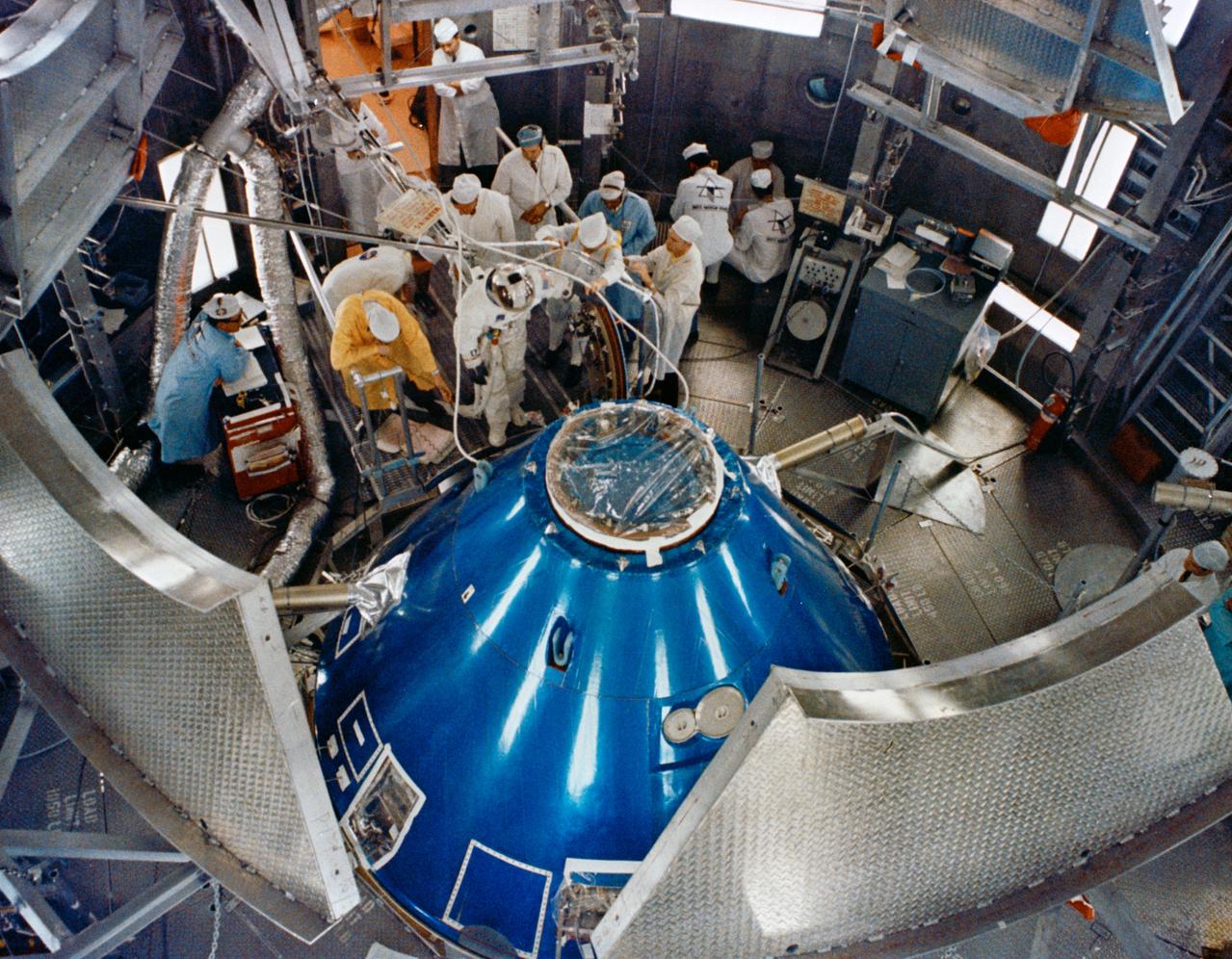
S68-55255 (6 Nov. 1968) --- Overhead view of Altitude Chamber "L" in the Kennedy Space Center's Manned Spacecraft Operations Building showing a member of the Apollo 9 backup crew preparing to ingress the Apollo 9 spacecraft for egress test and simulated altitude run. The Apollo 9 backup crew consists of astronauts Charles Conrad Jr., Richard F. Gordon Jr., and Alan L. Bean.
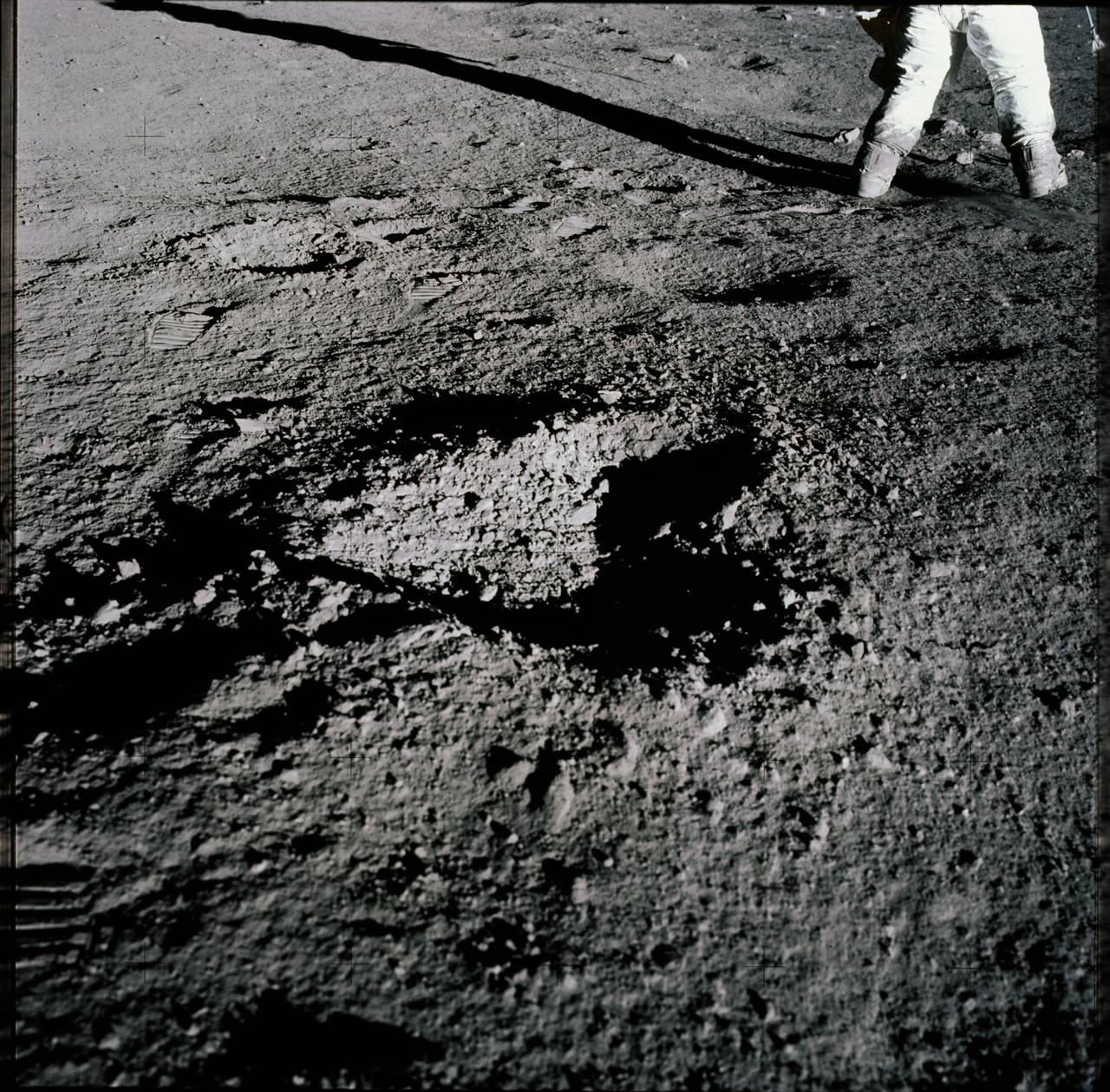
AS12-47-6938 (19 Nov. 1969) --- A close-up view of a heart-shaped depression (crater) in the lunar surface, as photographed during the Apollo 12 extravehicular activity (EVA). The legs of astronaut Charles Conrad Jr., commander, can be seen in the background. Astronaut Richard F. Gordon Jr., command module pilot, remained with the Command and Service Modules (CSM) in lunar orbit while astronauts Conrad and Alan L. Bean, lunar module pilot, descended in the Lunar Module (LM) to explore the moon.
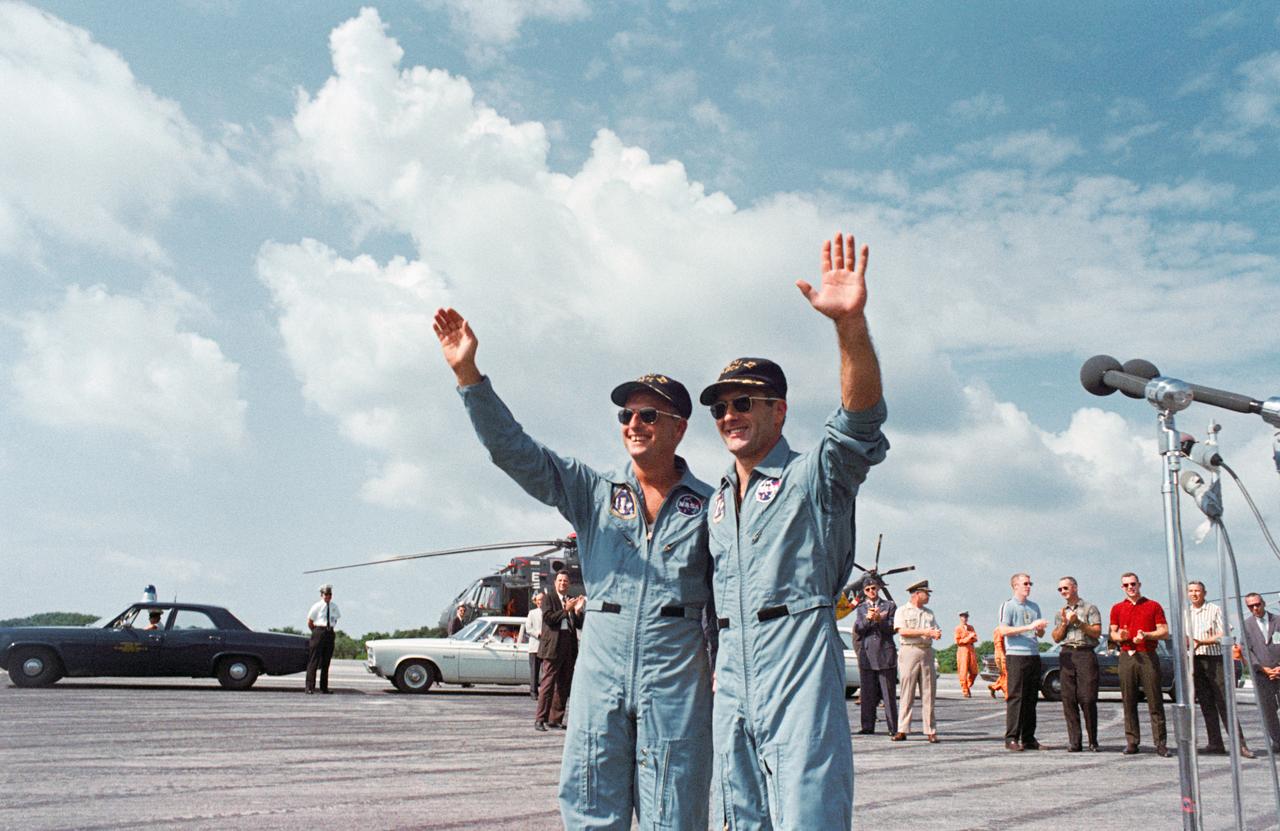
S66-50763 (16 Sept. 1966) --- Astronauts Charles Conrad Jr. (left), command pilot, and Richard F. Gordon Jr., pilot, wave to the welcome crowd at the Cape Kennedy skid strip. The Gemini-11 crew had just arrived by helicopter from the recovery ship, USS Guam. Gemini-11 splashed down in the western Atlantic, 700 miles east of Cape Kennedy, at 9 a.m. (EST), Sept. 15, 1966 to conclude a three-day mission in space. Photo credit: NASA
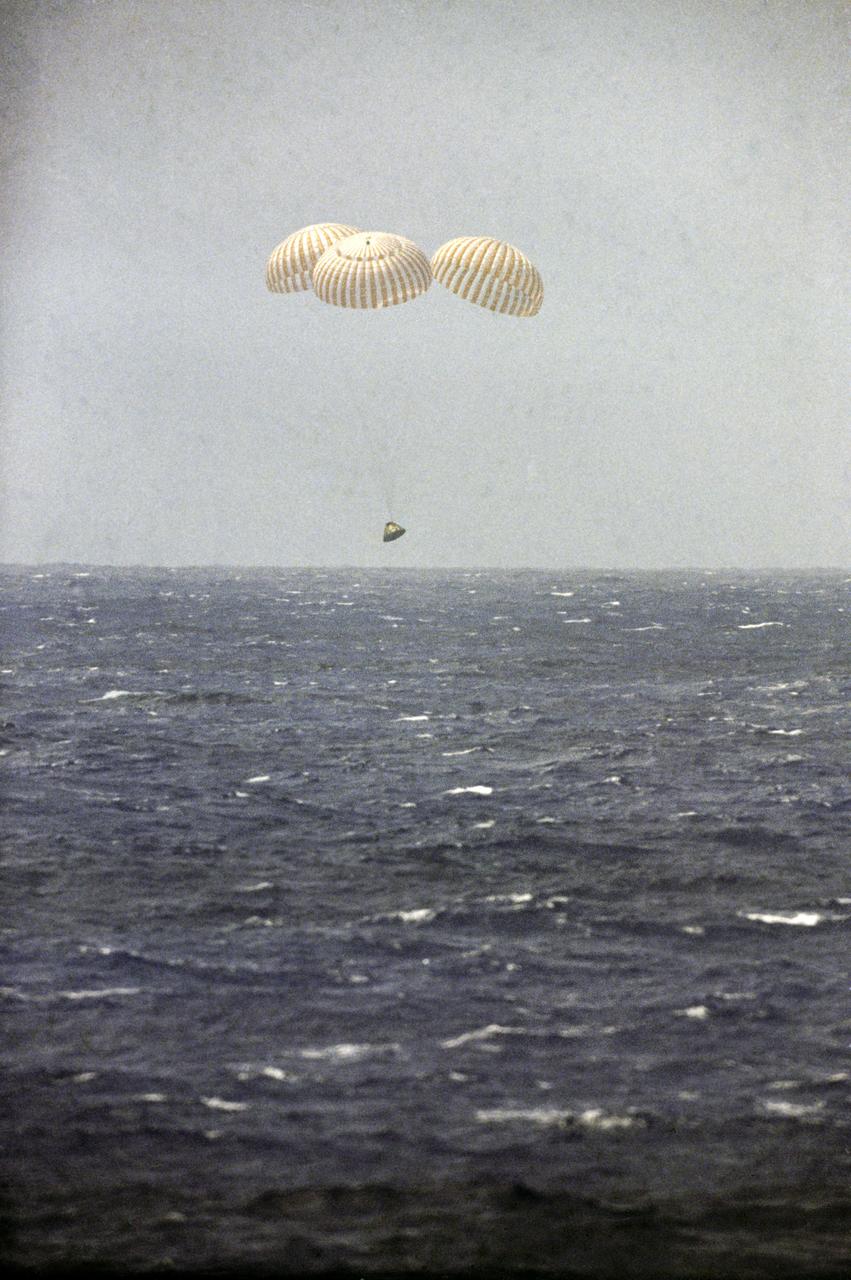
S69-22728 (24 Nov. 1969) --- The Apollo 12 Command Module, with astronauts Charles Conrad Jr., Richard F. Gordon Jr., and Alan L. Bean aboard, nears splashdown in the Pacific Ocean to conclude the second lunar landing mission. The Apollo 12 splashdown occurred at 2:58 p.m., Nov. 24, 1969, near American Samoa.
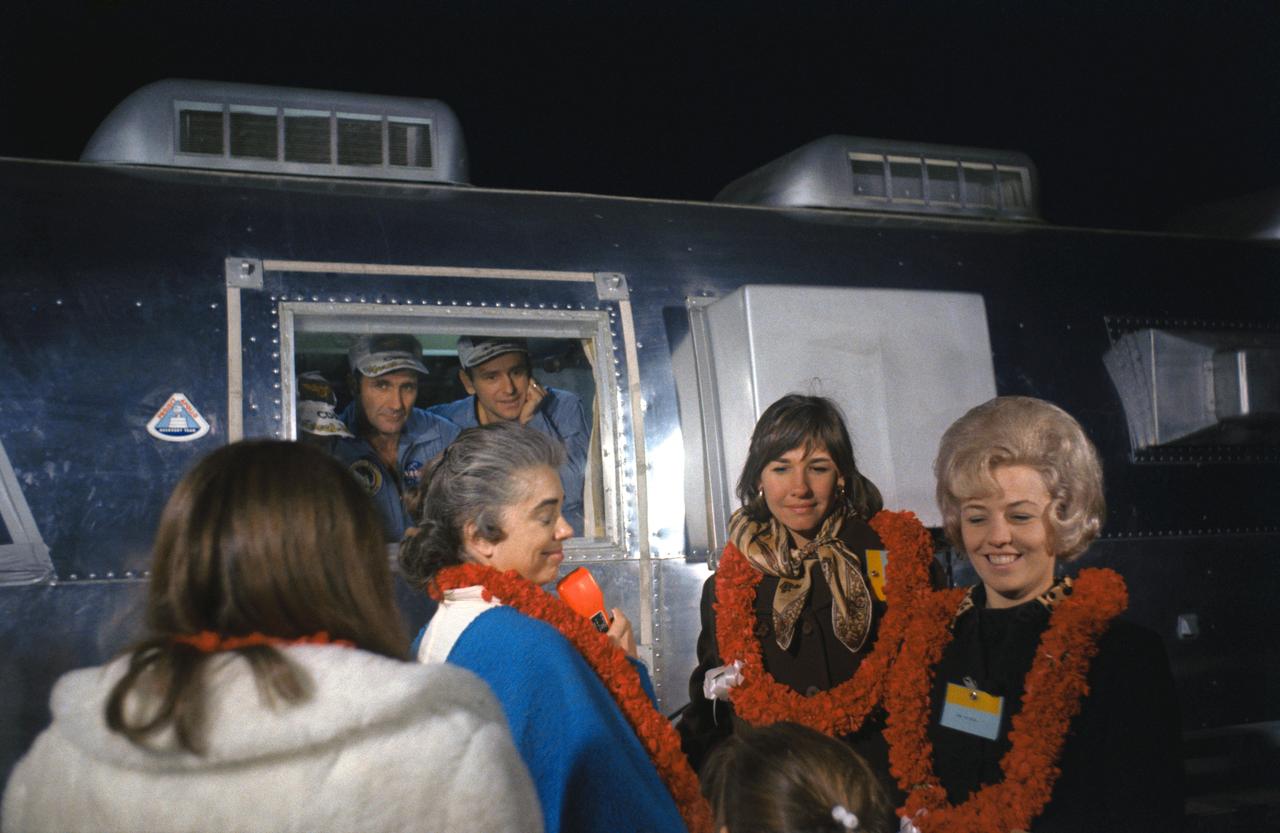
S69-60759 (29 Nov. 1969) --- Members of the Apollo 12 lunar landing mission's crew are greeted by their wives and children at the front of a large crowd on hand to welcome the three home. The Mobile Quarantine Facility (MQF), with the crew inside, arrived at Ellington Air Force Base aboard a United States Air Force C-141 transport jet in the early morning hours of Nov. 29, 1969. The crew men, looking out the MQF window at the crowd, are from left to right, astronauts Charles Conrad Jr., Richard F. Gordon Jr. and Alan L. Bean. Their wives are, from left to right, Mrs. Barbara Gordon, Mrs. Jane Conrad and Mrs. Sue Bean. The women are wearing lei's, an Hawaiian tradition. The crew members were taken to Hawaii from their Pacific Ocean recovery site aboard the USS Hornet, prime recovery vessel for the mission.
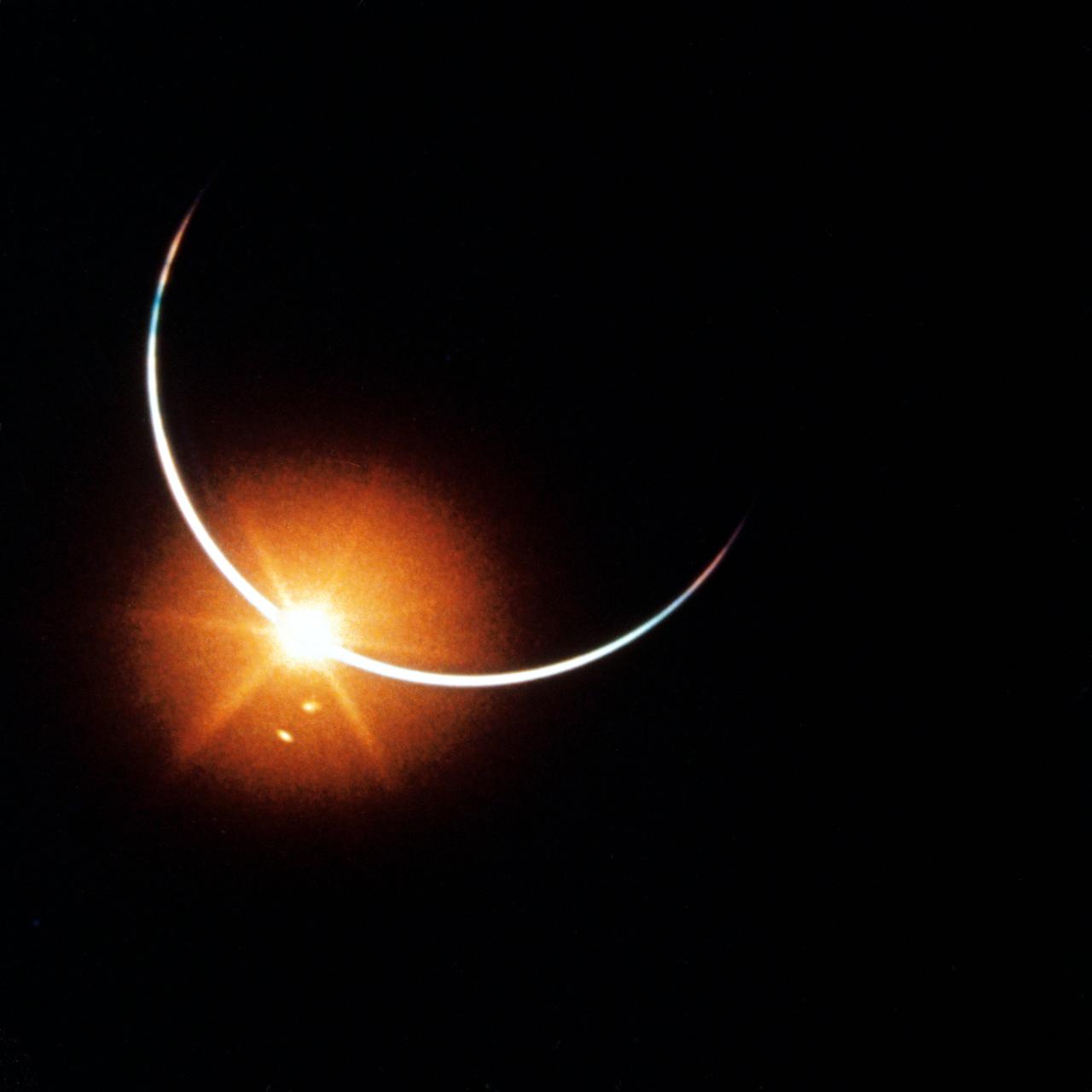
S80-37406 (14-24 Nov. 1969) --- This photograph of the eclipse of the sun was taken with a 16mm motion picture camera from the Apollo 12 spacecraft during its trans-Earth journey home from the moon. The fascinating view was created when the Earth moved directly between the sun and the Apollo 12 spacecraft. Aboard Apollo 12 were astronauts Charles Conrad Jr., commander; Richard F. Gordon Jr., command module pilot; and Alan L. Bean, lunar module pilot. While astronauts Conrad and Bean descended in the Lunar Module (LM) "Intrepid" to explore the Ocean of Storms region of the moon, astronaut Gordon remained with the Command and Service Modules (CSM) "Yankee Clipper" in lunar orbit.
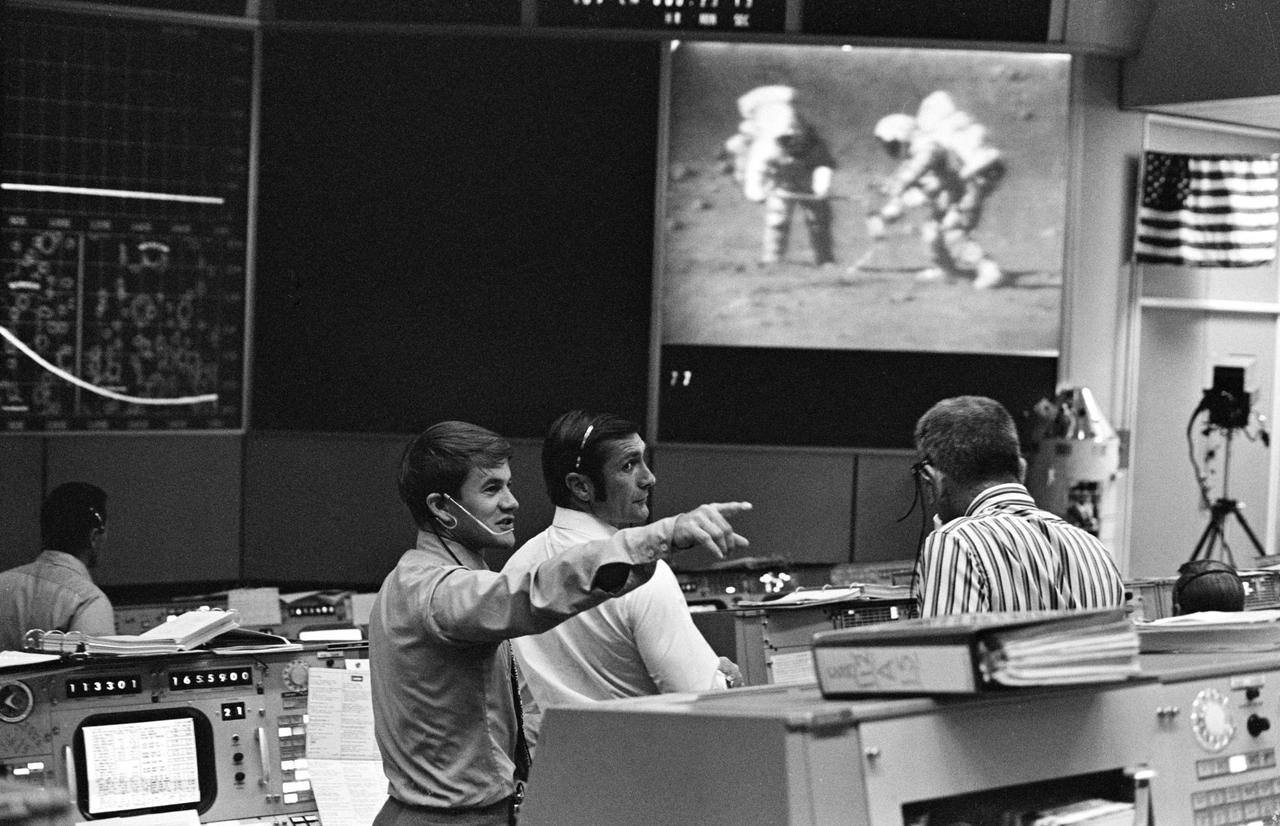
S71-41836 (2 Aug. 1971) --- Scientist-astronaut Joseph P. Allen, left, directs the attention of astronaut Richard F. Gordon Jr., to an occurrence out of view at right in the Mission Control Center's (MCC) Mission Operations Control Room (MOCR), while Dr. Donald K. (Deke) Slayton, on right with back to camera, views activity of Apollo 15 on a large screen at the front of the MOCR. Astronauts David R. Scott and James B. Irwin are seen on the screen performing tasks of the mission's third extravehicular activity (EVA), on Aug. 2, 1971. Dr. Slayton is director of Flight Crew Operations, NASA-MSC; Gordon is Apollo 15 backup commander; and Dr. Allen is an Apollo 15 spacecraft communicator.
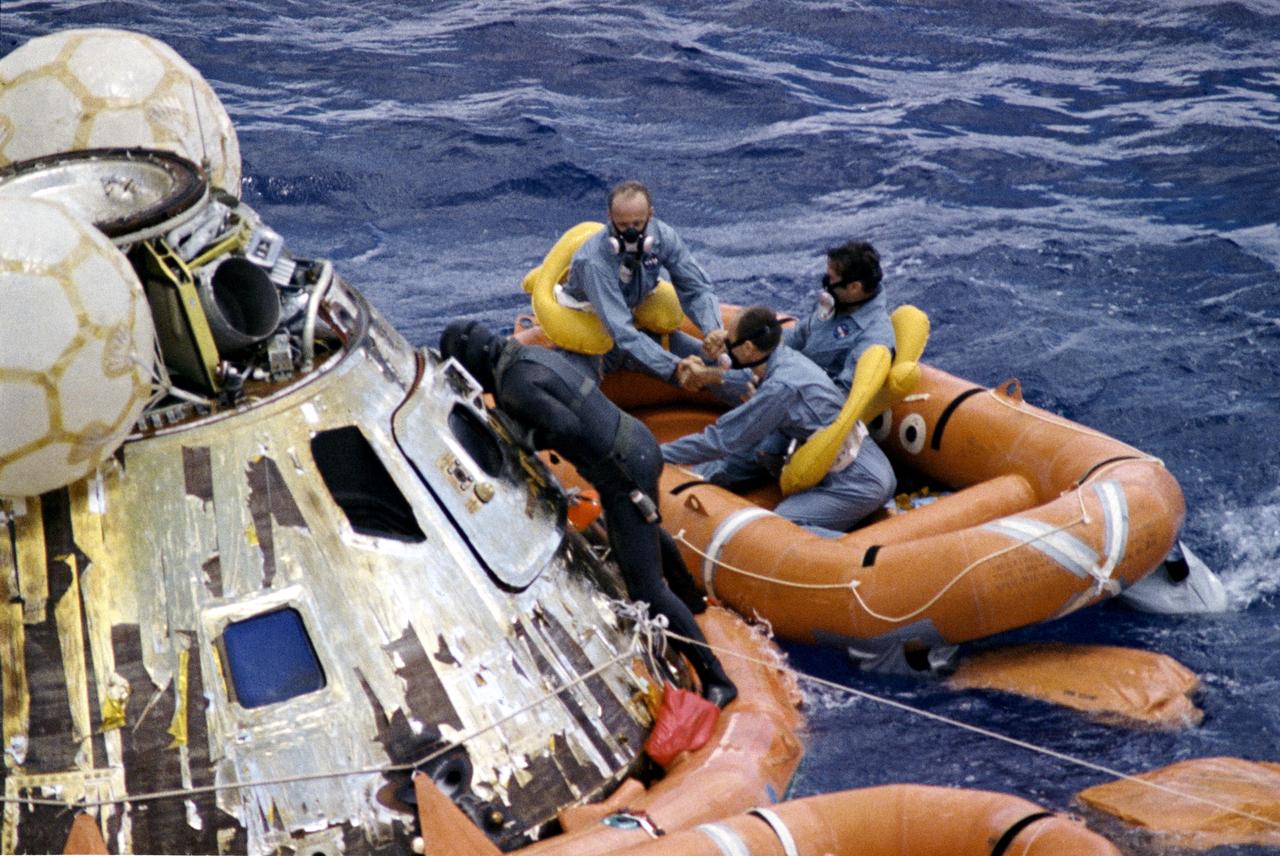
S69-22271 (24 Nov. 1969) --- A United States Navy Underwater Demolition Team swimmer assists the Apollo 12 crew during recovery operations in the Pacific Ocean. In the life raft are astronauts Charles Conrad Jr. (facing camera), commander; Richard F. Gordon Jr. (middle), command module pilot; and Alan L. Bean (nearest camera), lunar module pilot. The three crew men of the second lunar landing mission were picked up by helicopter and flown to the prime recovery ship, USS Hornet. Apollo 12 splashed down at 2:58 p.m. (CST), Nov. 24, 1969, near American Samoa. While astronauts Conrad and Bean descended in the Lunar Module (LM) "Intrepid" to explore the Ocean of Storms region of the moon, astronaut Gordon remained with the Command and Service Modules (CSM) "Yankee Clipper" in lunar orbit.
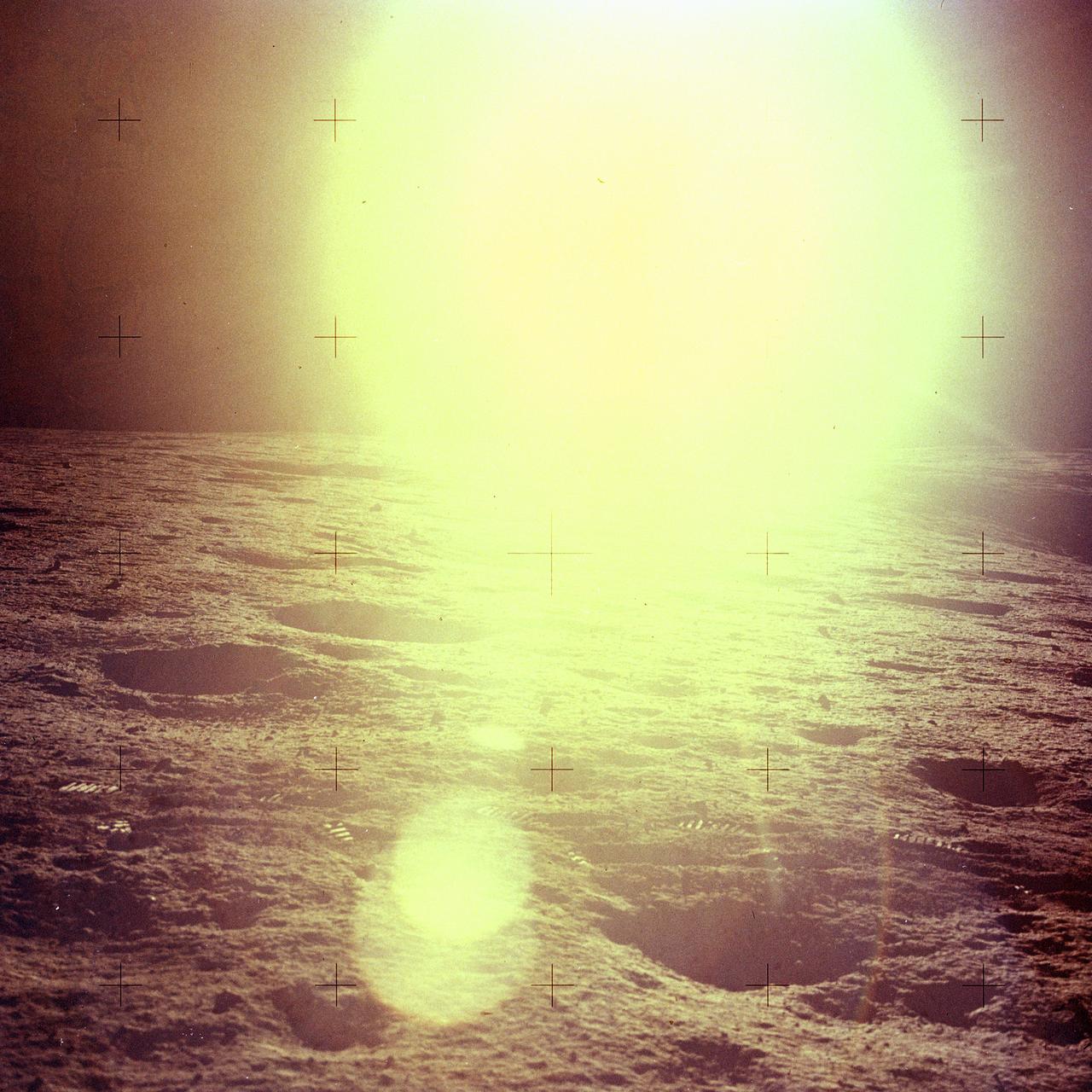
The second manned lunar landing mission, Apollo 12, launched from launch pad 39-A at Kennedy Space Center in Florida on November 14, 1969 via a Saturn V launch vehicle. The Saturn V vehicle was developed by the Marshall Space Flight Center (MSFC) under the direction of Dr. Wernher von Braun. Aboard Apollo 12 was a crew of three astronauts: Alan L. Bean, pilot of the Lunar Module (LM), Intrepid; Richard Gordon, pilot of the Command Module (CM), Yankee Clipper; and Spacecraft Commander Charles Conrad. The LM, Intrepid, landed astronauts Conrad and Bean on the lunar surface in what’s known as the Ocean of Storms while astronaut Richard Gordon piloted the CM, Yankee Clipper, in a parking orbit around the Moon. Lunar soil activities included the deployment of the Apollo Lunar Surface Experiments Package (ALSEP), finding the unmanned Surveyor 3 that landed on the Moon on April 19, 1967, and collecting 75 pounds (34 kilograms) of rock samples. This is the sixteenth of 25 images captured by the crew in attempt to provide a 360 degree Lunar surface scene. Apollo 12 safely returned to Earth on November 24, 1969.
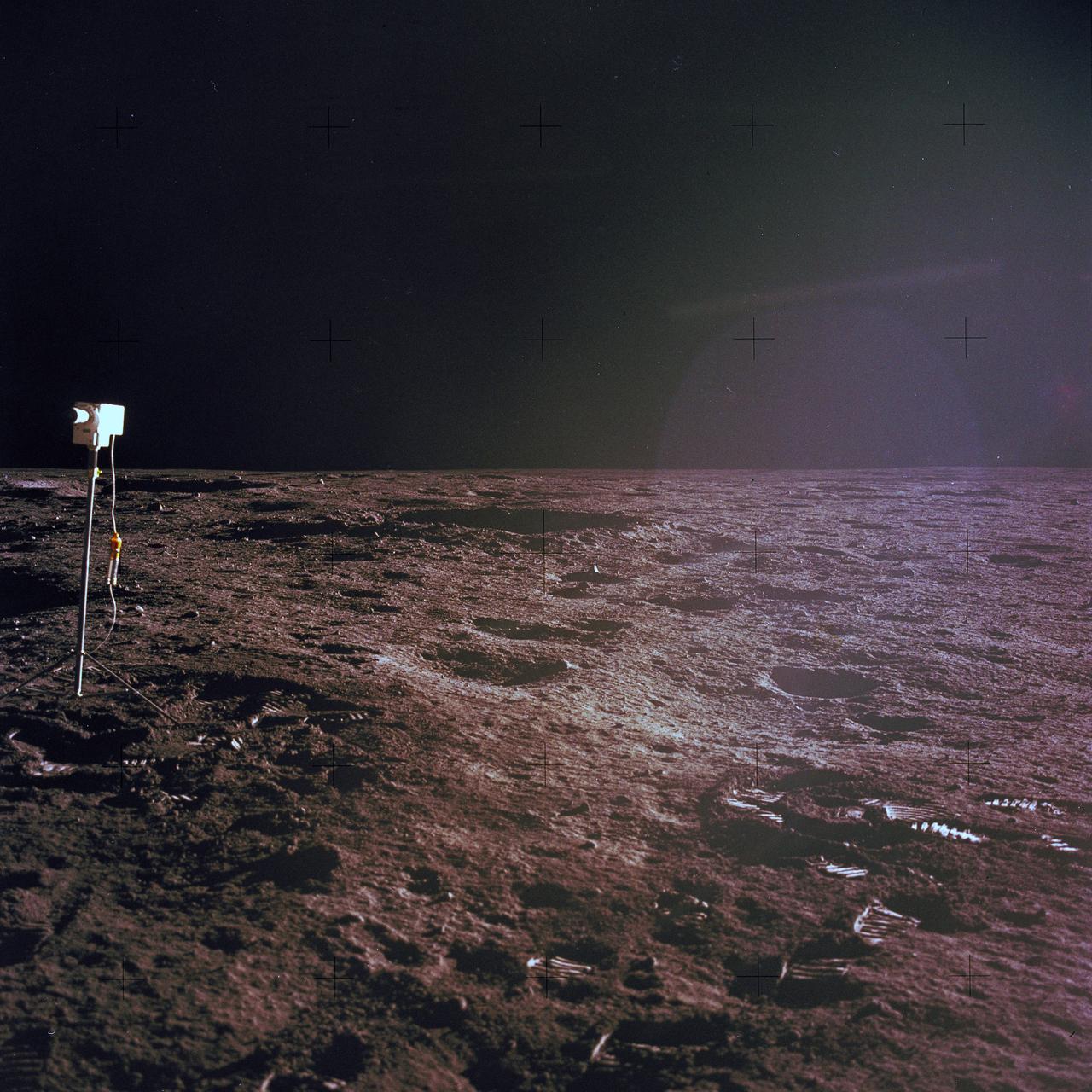
The second manned lunar landing mission, Apollo 12, launched from launch pad 39-A at Kennedy Space Center in Florida on November 14, 1969 via a Saturn V launch vehicle. The Saturn V vehicle was developed by the Marshall Space Flight Center (MSFC) under the direction of Dr. Wernher von Braun. Aboard Apollo 12 was a crew of three astronauts: Alan L. Bean, pilot of the Lunar Module (LM), Intrepid; Richard Gordon, pilot of the Command Module (CM), Yankee Clipper; and Spacecraft Commander Charles Conrad. The LM, Intrepid, landed astronauts Conrad and Bean on the lunar surface in what’s known as the Ocean of Storms while astronaut Richard Gordon piloted the CM, Yankee Clipper, in a parking orbit around the Moon. Lunar soil activities included the deployment of the Apollo Lunar Surface Experiments Package (ALSEP), finding the unmanned Surveyor 3 that landed on the Moon on April 19, 1967, and collecting 75 pounds (34 kilograms) of rock samples. This is the nineteenth of 25 images captured by the crew in attempt to provide a 360 degree Lunar surface scene. Apollo 12 safely returned to Earth on November 24, 1969.
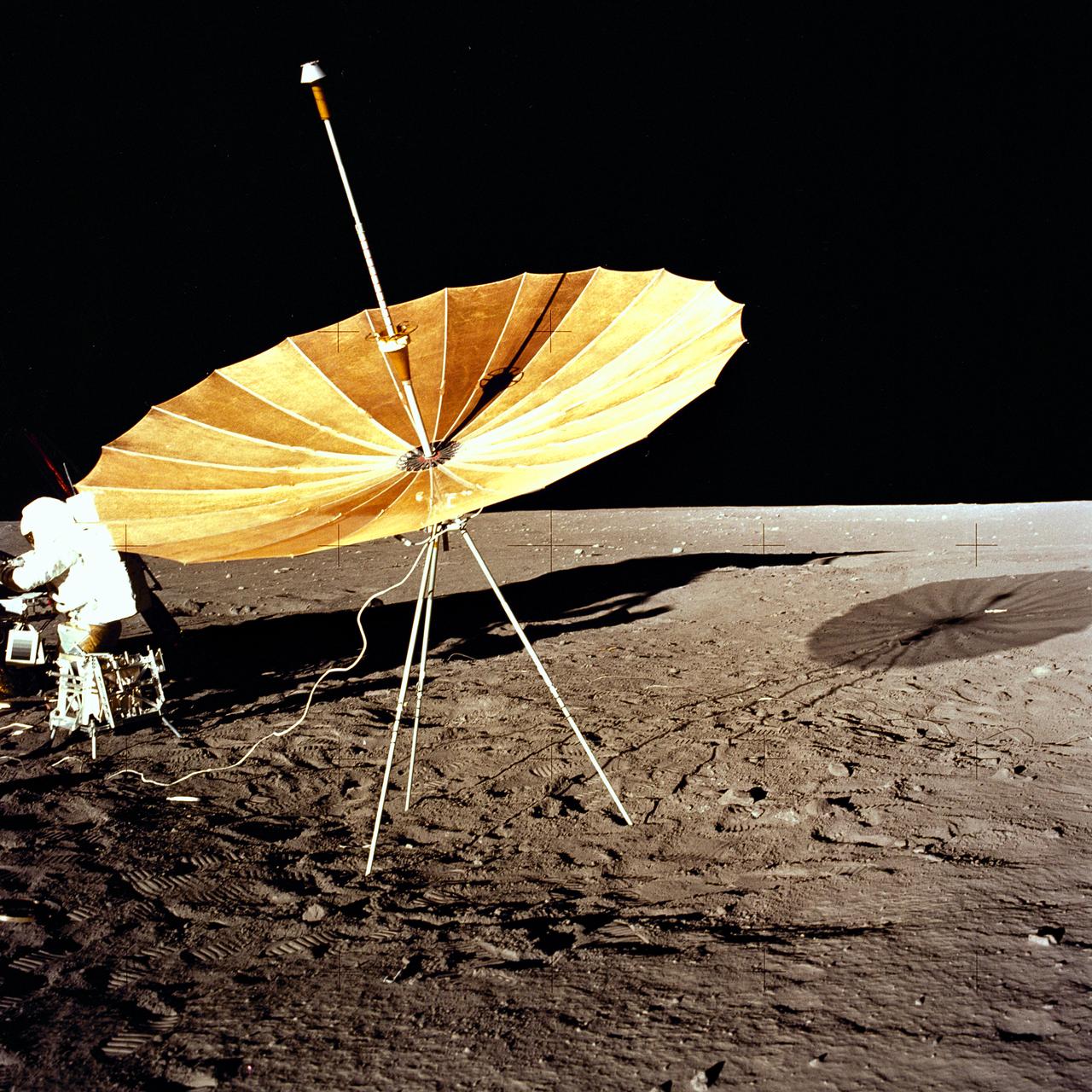
The second manned lunar landing mission, Apollo 12 launched from launch pad 39-A at Kennedy Space Center in Florida on November 14, 1969 via a Saturn V launch vehicle. The Saturn V vehicle was developed by the Marshall Space Flight Center (MSFC) under the direction of Dr. Wernher von Braun. Aboard Apollo 12 was a crew of three astronauts: Alan L. Bean, pilot of the Lunar Module (LM), Intrepid; Richard Gordon, pilot of the Command Module (CM), Yankee Clipper; and Spacecraft Commander Charles Conrad. The LM, Intrepid, landed astronauts Conrad and Bean on the lunar surface in what’s known as the Ocean of Storms while astronaut Richard Gordon piloted the CM, Yankee Clipper, in a parking orbit around the Moon. Lunar soil activities included the deployment of the Apollo Lunar Surface Experiments Package (ALSEP), finding the unmanned Surveyor 3 that landed on the Moon on April 19, 1967, and collecting 75 pounds (34 kilograms) of rock samples. This is the sixth of 25 images captured by the crew in attempt to provide a 360 degree Lunar surface scene. Apollo 12 safely returned to Earth on November 24, 1969.
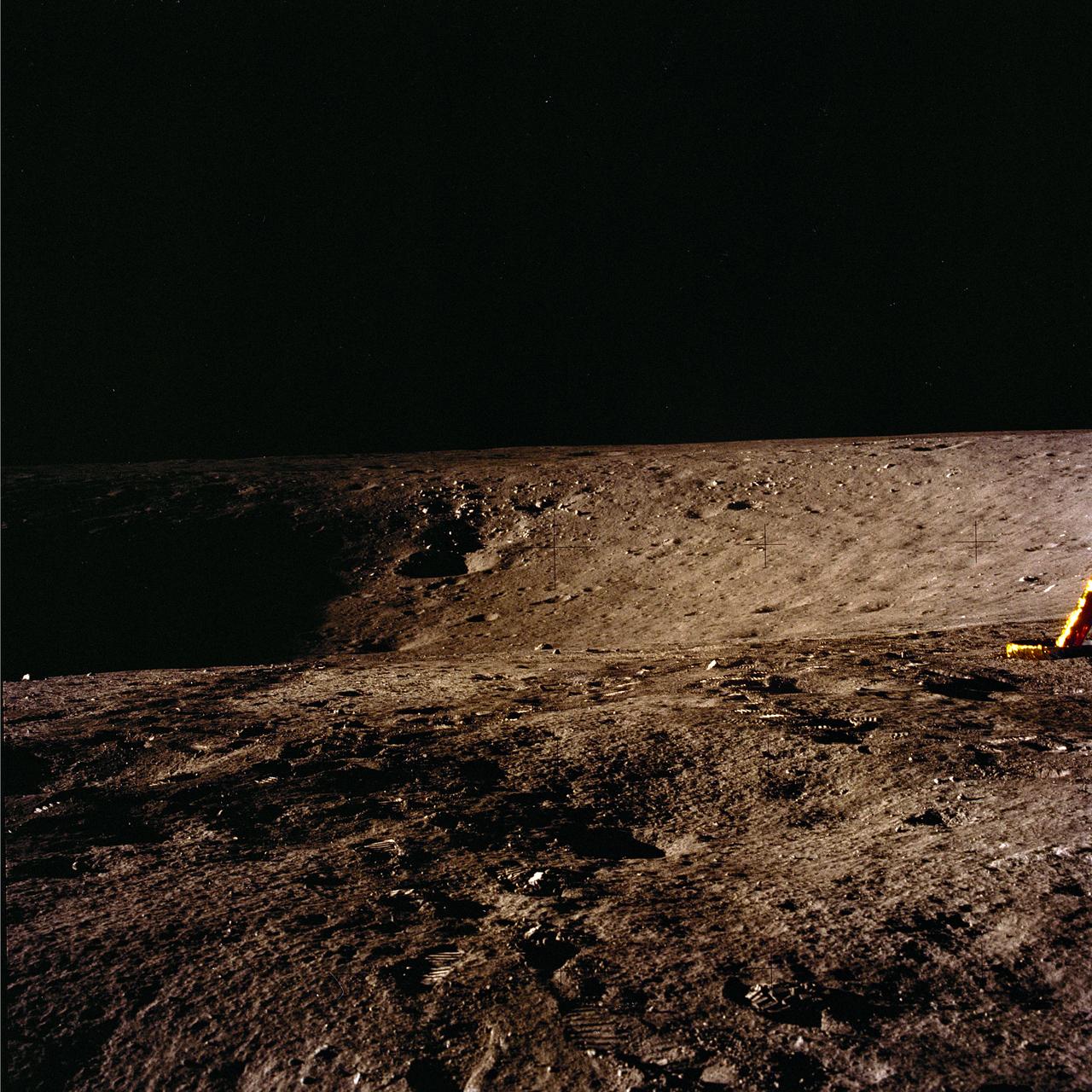
The second manned lunar landing mission, Apollo 12 launched from launch pad 39-A at Kennedy Space Center in Florida on November 14, 1969 via a Saturn V launch vehicle. The Saturn V vehicle was developed by the Marshall Space Flight Center (MSFC) under the direction of Dr. Wernher von Braun. Aboard Apollo 12 was a crew of three astronauts: Alan L. Bean, pilot of the Lunar Module (LM), Intrepid; Richard Gordon, pilot of the Command Module (CM), Yankee Clipper; and Spacecraft Commander Charles Conrad. The LM, Intrepid, landed astronauts Conrad and Bean on the lunar surface in what’s known as the Ocean of Storms while astronaut Richard Gordon piloted the CM, Yankee Clipper, in a parking orbit around the Moon. Lunar soil activities included the deployment of the Apollo Lunar Surface Experiments Package (ALSEP), finding the unmanned Surveyor 3 that landed on the Moon on April 19, 1967, and collecting 75 pounds (34 kilograms) of rock samples. This is the tenth of 25 images captured by the crew in attempt to provide a 360 degree Lunar surface scene. Apollo 12 safely returned to Earth on November 24, 1969.
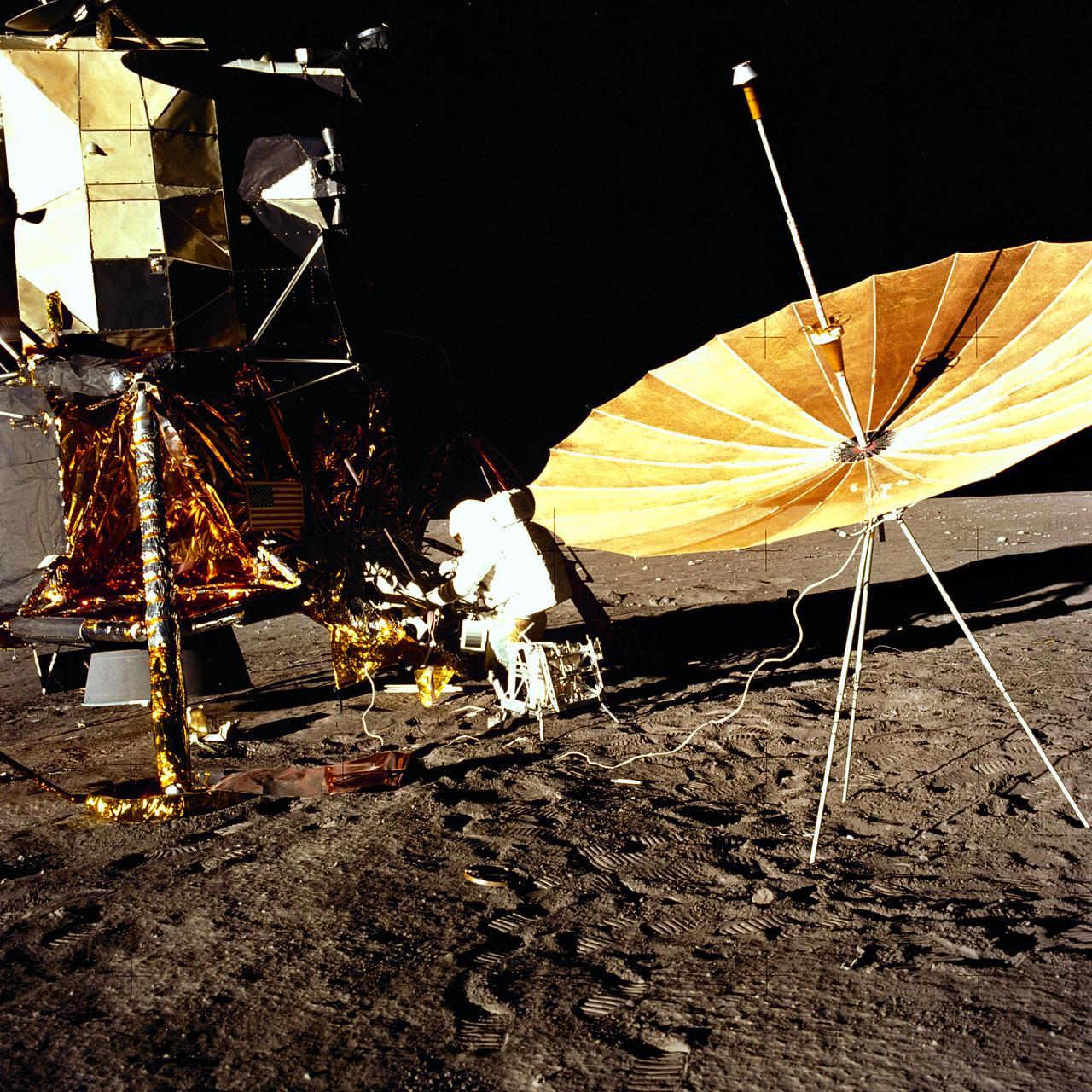
The second manned lunar landing mission, Apollo 12 launched from launch pad 39-A at Kennedy Space Center in Florida on November 14, 1969 via a Saturn V launch vehicle. The Saturn V vehicle was developed by the Marshall Space Flight Center (MSFC) under the direction of Dr. Wernher von Braun. Aboard Apollo 12 was a crew of three astronauts: Alan L. Bean, pilot of the Lunar Module (LM), Intrepid; Richard Gordon, pilot of the Command Module (CM), Yankee Clipper; and Spacecraft Commander Charles Conrad. The LM, Intrepid, landed astronauts Conrad and Bean on the lunar surface in what’s known as the Ocean of Storms while astronaut Richard Gordon piloted the CM, Yankee Clipper, in a parking orbit around the Moon. Lunar soil activities included the deployment of the Apollo Lunar Surface Experiments Package (ALSEP), finding the unmanned Surveyor 3 that landed on the Moon on April 19, 1967, and collecting 75 pounds (34 kilograms) of rock samples. This is the seventh of 25 images captured by the crew in attempt to provide a 360 degree Lunar surface scene. Apollo 12 safely returned to Earth on November 24, 1969.

The second manned lunar landing mission, Apollo 12 launched from launch pad 39-A at Kennedy Space Center in Florida on November 14, 1969 via a Saturn Five launch vehicle. The Saturn V vehicle was developed by the Marshall Space Flight Center (MSFC) under the direction of Dr. Wernher von Braun. Aboard Apollo 12 was a crew of three astronauts: Alan L. Bean, pilot of the Lunar Module (LM), Intrepid; Richard Gordon, pilot of the Command Module (CM), Yankee Clipper; and Spacecraft Commander Charles Conrad. The LM, Intrepid, landed astronauts Conrad and Bean on the lunar surface in what’s known as the Ocean of Storms while astronaut Richard Gordon piloted the CM, Yankee Clipper, in a parking orbit around the Moon. Their lunar soil activities included the deployment of the Apollo Lunar Surface Experiments Package (ALSEP), finding the unmanned Surveyor 3 that landed on the Moon on April 19, 1967, and collecting 75 pounds (34 kilograms) of rock samples. In this photograph, one of the astronauts on the Moon’s surface is holding a container of lunar soil. The other astronaut is seen reflected in his helmet. Apollo 12 safely returned to Earth on November 24, 1969.