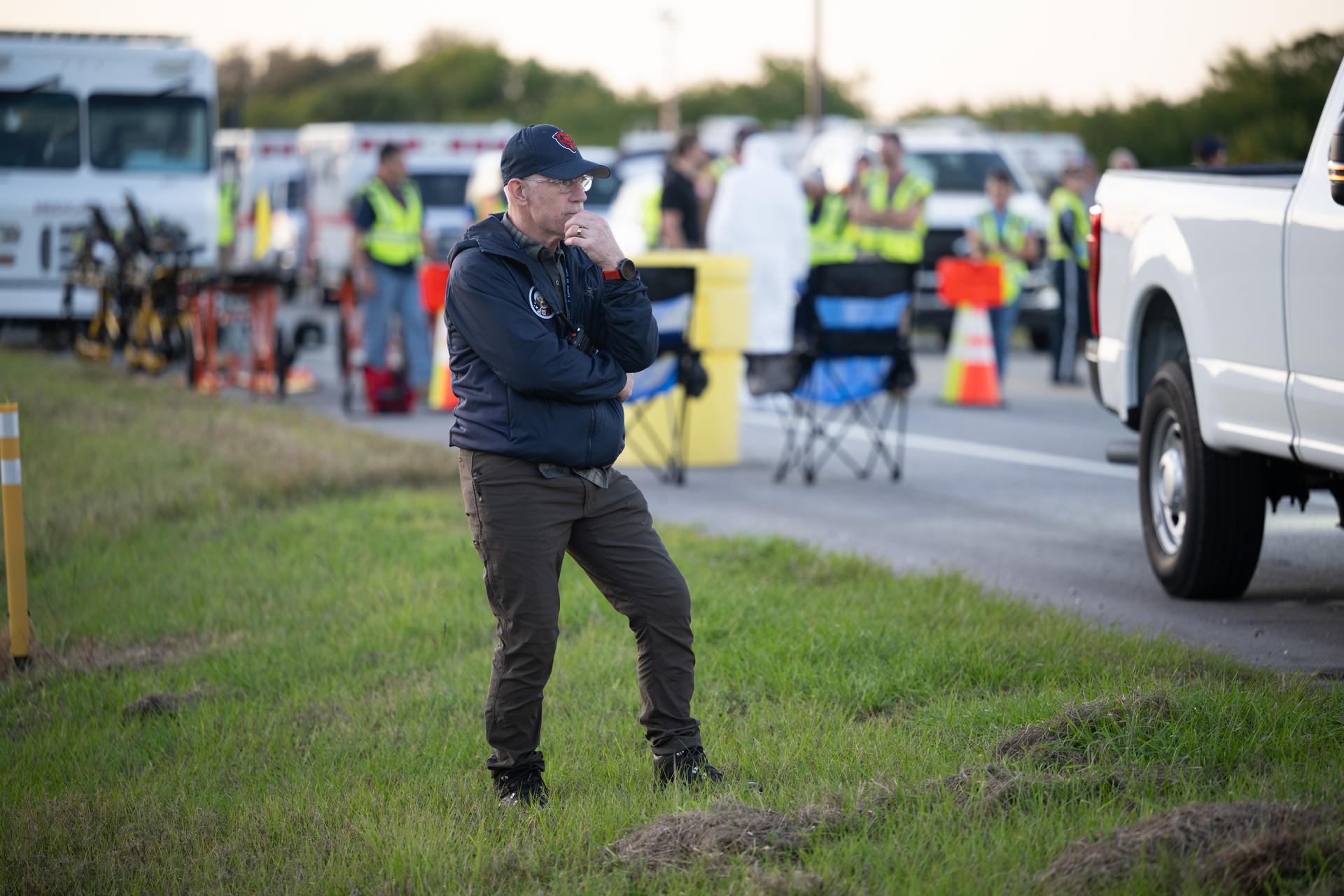
NASA Flight Surgeon Richard Scheuring watches as teams at NASA's Kennedy Space Center in Florida practiced various emergency rescue training scenarios with the Artemis II crew, Friday, Dec. 19, 2025, ahead of the Artemis II mission. In the unlikely event of an emergency during launch countdown at Launch Complex 39B, personnel will be transported in mine-resistant ambush protected vehicles, or MRAPS, from the pad and to one of the triage site locations at Kennedy. Photo Credit: (NASA/Joel Kowsky)
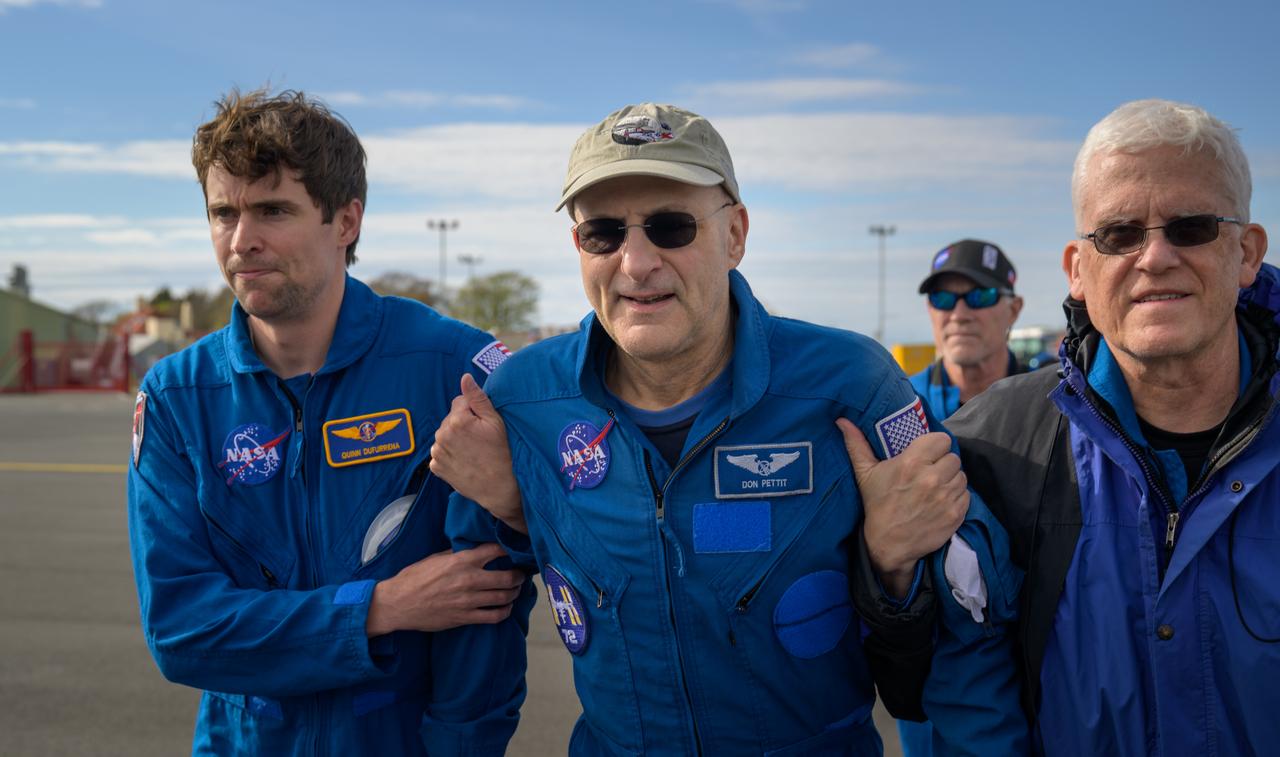
NASA astronaut Don Pettit, center, walks and smiles, while supported by NASA Flight Surgeons Quinn Dufurrena, left, Rainer Effenhauser, right, and Richard Scheuring, background, during a brief layover in Prestwick, Scotland during his return flight to Houston from Karaganda, Kazakhstan, Sunday, April 20, 2025. Pettit, along with Roscosmos cosmonauts Alexey Ovchinin, and Ivan Vagner, returned to Earth earlier in the day after logging 220 days in space as members of Expeditions 71 and 72 aboard the International Space Station. Photo Credit: (NASA/Bill Ingalls)
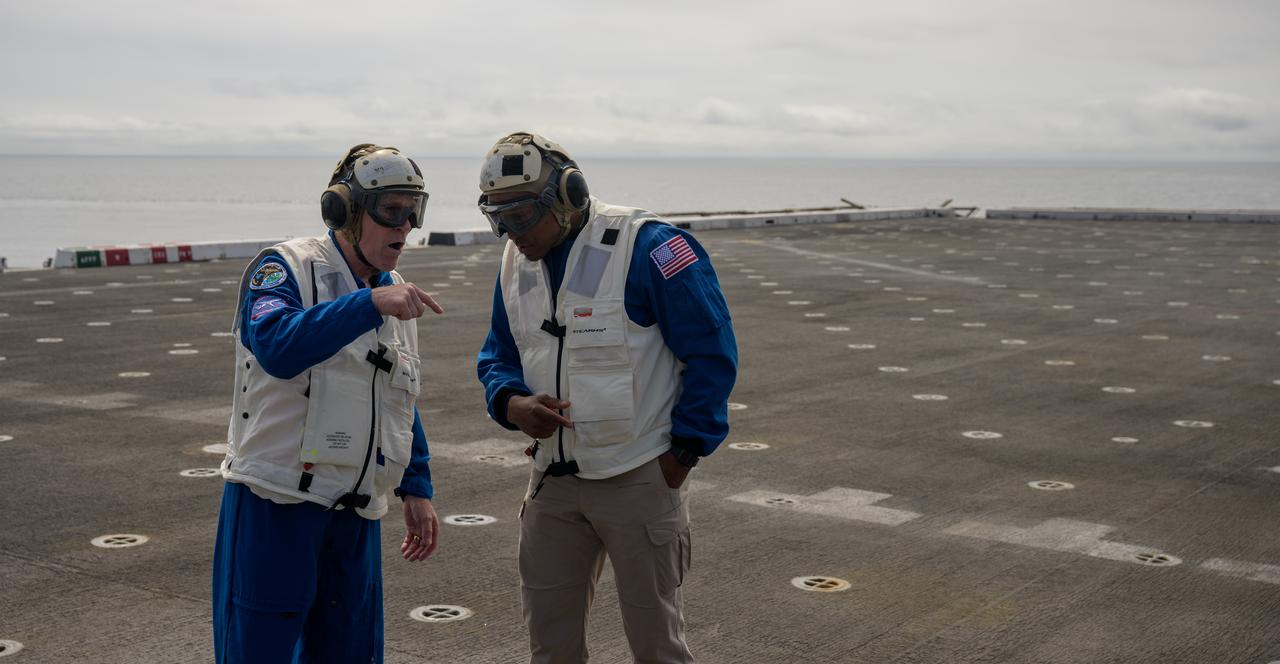
NASA astronaut Victor Glover, left, and NASA Flight Surgeon Richard Scheuring, are seen on the flight deck of USS Somerset during Underway Recovery Test-12 off the coast of California, Thursday, March 27, 2025. During the test, NASA and Department of Defense teams are practicing to ensure recovery procedures are validated as NASA plans to send Artemis II astronauts around the Moon and splashdown in the Pacific Ocean. Photo Credit: (NASA/Bill Ingalls)
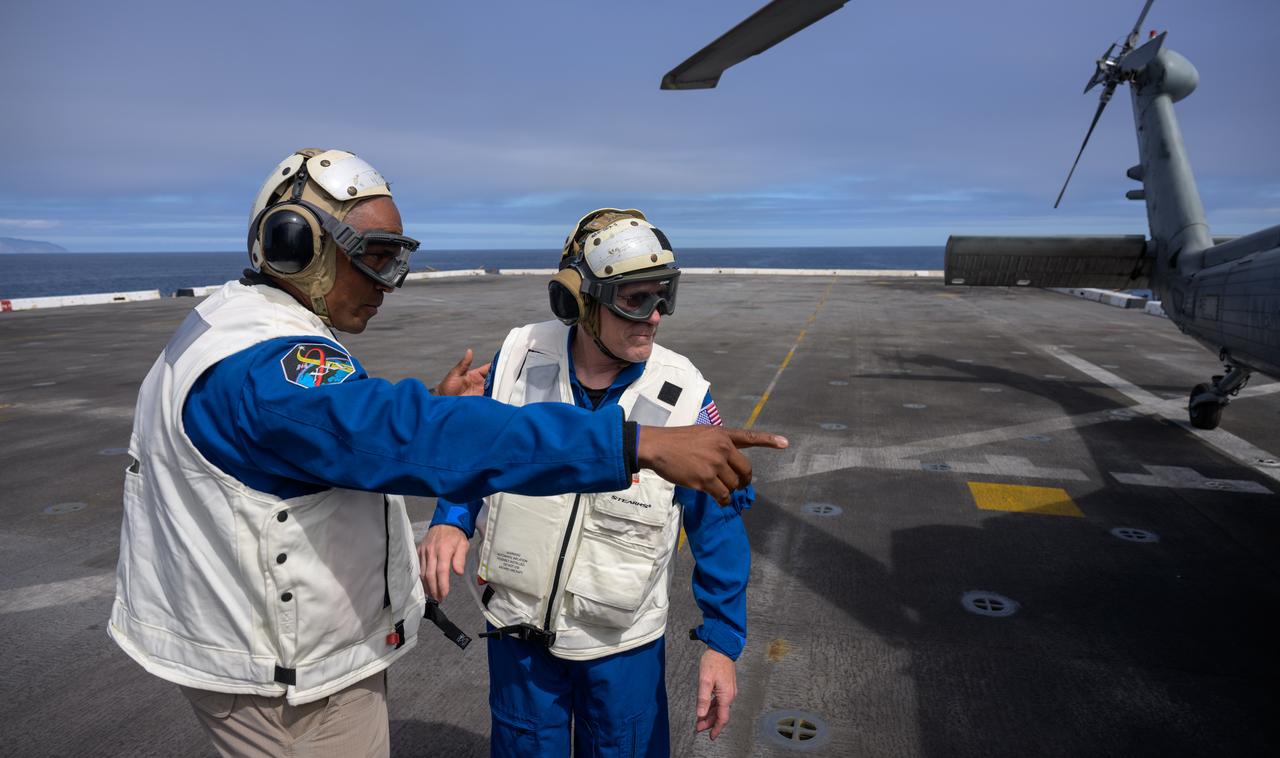
NASA astronaut Victor Glover, left, and NASA Flight Surgeon Richard Scheuring, are seen on the flight deck of USS Somerset during Underway Recovery Test-12 off the coast of California, Thursday, March 27, 2025. During the test, NASA and Department of Defense teams are practicing to ensure recovery procedures are validated as NASA plans to send Artemis II astronauts around the Moon and splashdown in the Pacific Ocean. Photo Credit: (NASA/Bill Ingalls)
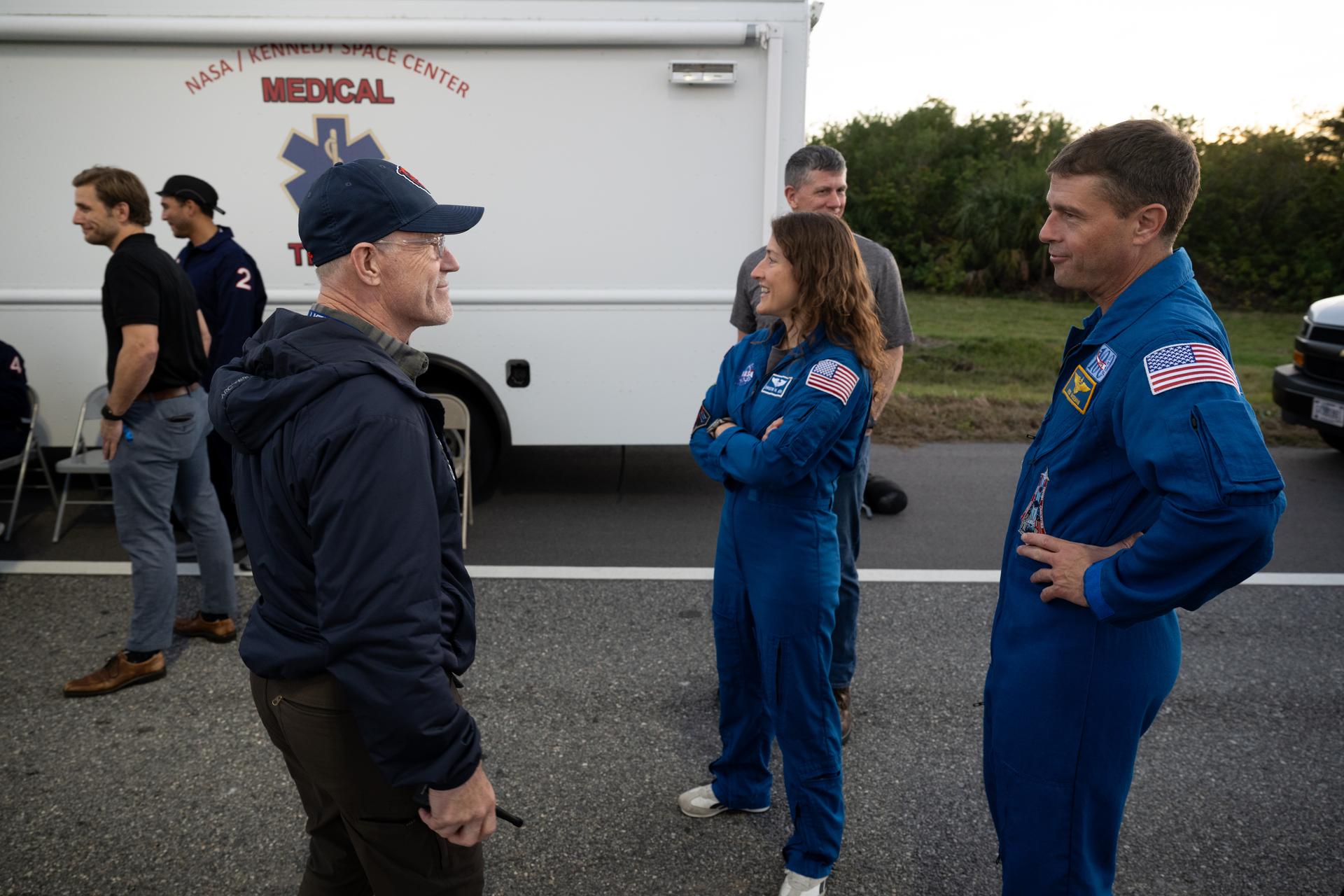
NASA Flight Surgeon Richard Scheuring, left, talks with NASA astronauts Reid Wiseman, Artemis II commander, right, and Christina Koch, Artemis II mission specialist, as teams at NASA's Kennedy Space Center in Florida practiced various emergency rescue training scenarios with the Artemis II crew, Friday, Dec. 19, 2025, ahead of the Artemis II mission. In the unlikely event of an emergency during launch countdown at Launch Complex 39B, personnel will be transported in mine-resistant ambush protected vehicles, or MRAPS, from the pad and to one of the triage site locations at Kennedy. Photo Credit: (NASA/Joel Kowsky)
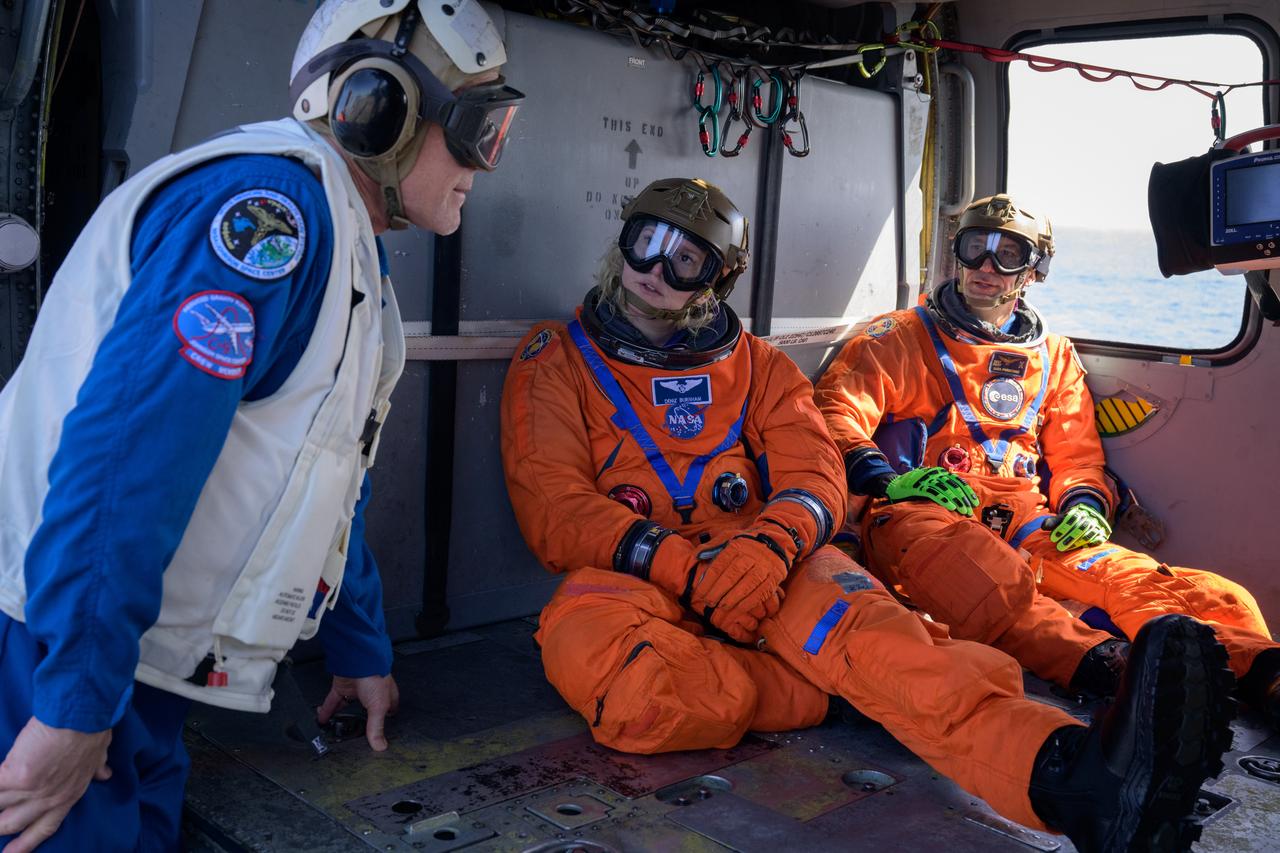
NASA astronaut Deniz Burnham, left, and ESA (European Space Agency) astronaut Luca Parmitano, are seen talking to NASA Flight Surgeon Richard Scheuring onboard a Navy helicopter after returning from the Crew Module Test Article (CMTA), a full scale mockup of the Orion spacecraft, during Underway Recovery Test-12 off the coast of California, Friday, March 28, 2025. During the test, NASA and Department of Defense teams are practicing to ensure recovery procedures are validated as NASA plans to send Artemis II astronauts around the Moon and splashdown in the Pacific Ocean. Photo Credit: (NASA/Bill Ingalls)
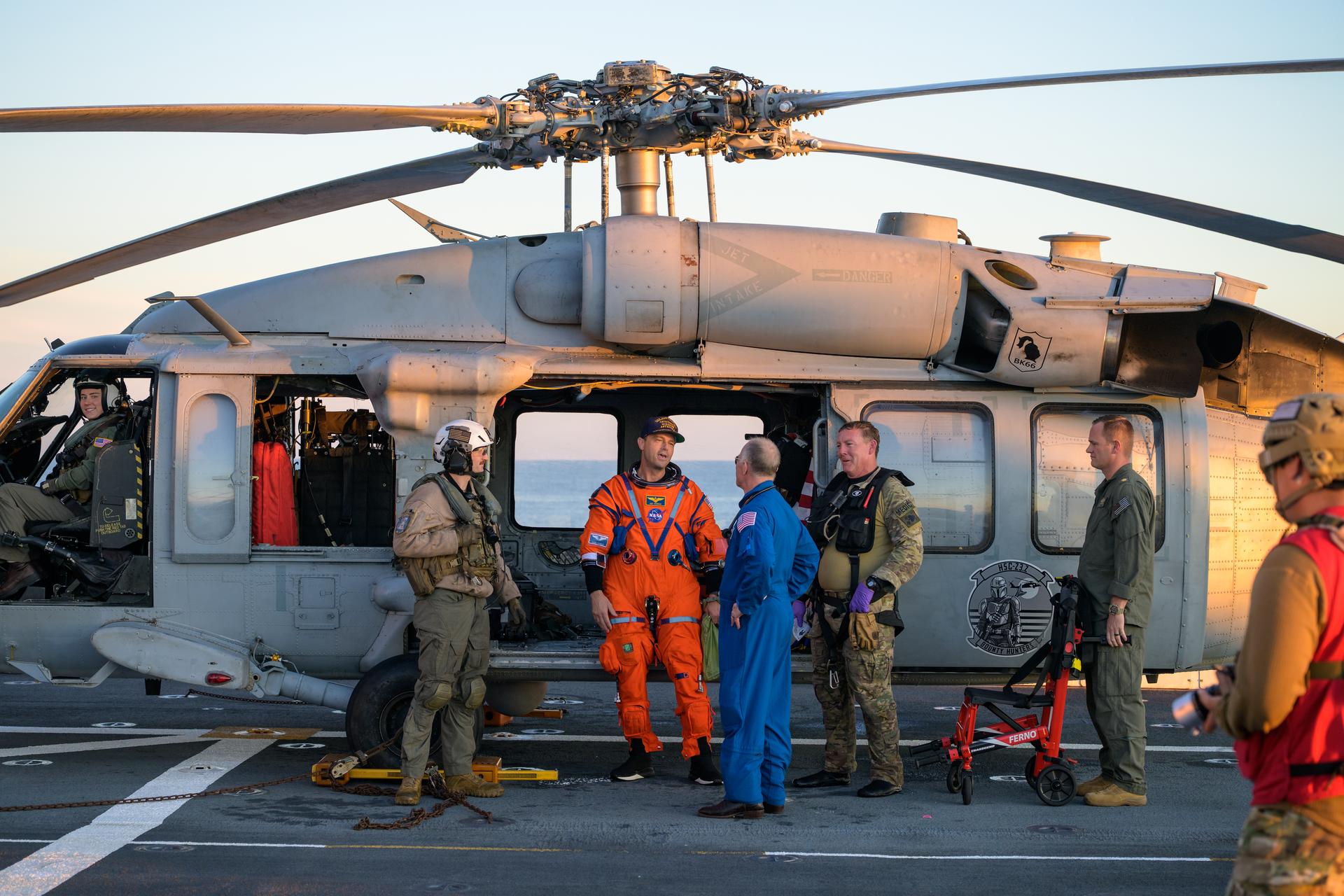
NASA astronaut Reid Wiseman, Artemis II commander is seen standing next to a Navy MH-60 Seahawk from Helicopter Sea Combat Squadron (HSC) 23 talking with NASA Flight Surgeon Richard Scheuring on the flight deck of USS John P. Murtha after he and fellow crewmates NASA Astronauts Victor Glover, Christina Koch, and CSA (Canadian Space Agency) astronaut Jeremy Hansen, were extracted from their Orion spacecraft after splashdown, Friday, April 10, 2026, in the Pacific Ocean off the coast of California. NASA’s Artemis II mission took the quartet on a nearly 10-day journey around the Moon and back to Earth. Following a splashdown at 5:07 p.m. PDT (8:07 p.m. EDT), NASA, U.S. Navy, and U.S. Air Force teams are working to bring the Orion spacecraft aboard the recovery ship. Photo Credit: (NASA/Bill Ingalls)
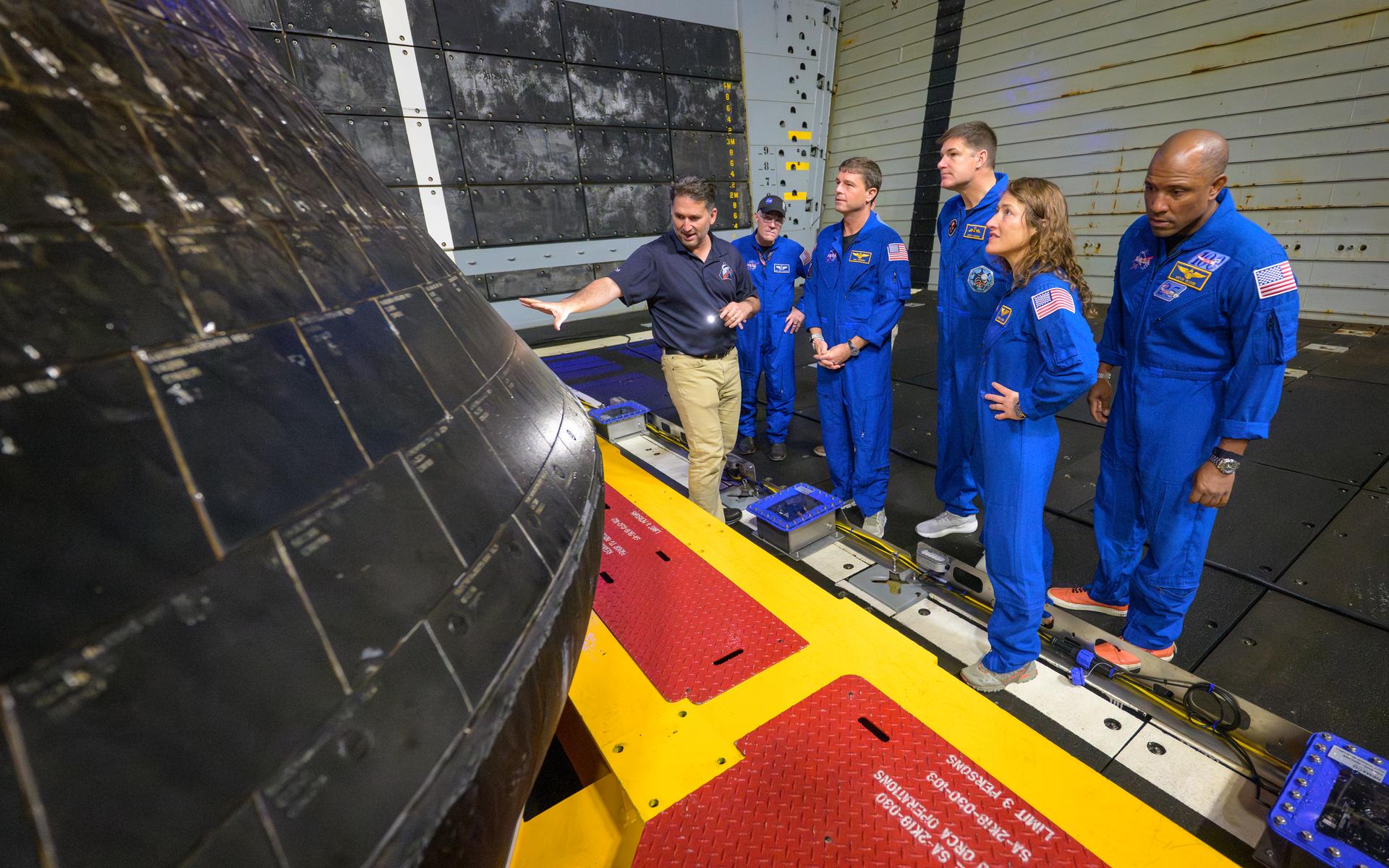
NASA Orion Vehicle Integration Manager Luis Saucedo, left, inspects the Orion spacecraft with NASA Flight Surgeon Richard Scheuring, NASA astronaut Reid Wiseman, commander; CSA (Canadian Space Agency) astronaut Jeremy Hansen, mission specialist; Christina Koch, mission specialist; and NASA astronaut Victor Glover, Artemis II pilot, right, in the well deck of USS John P. Murtha, Saturday, April 11, 2026, in the Pacific Ocean off the coast of California. The quartet splashed down in the Pacific Ocean, Friday, April 10 at 5:07 p.m. PDT (8:07p.m. EDT). Photo Credit: (NASA/Bill Ingalls)
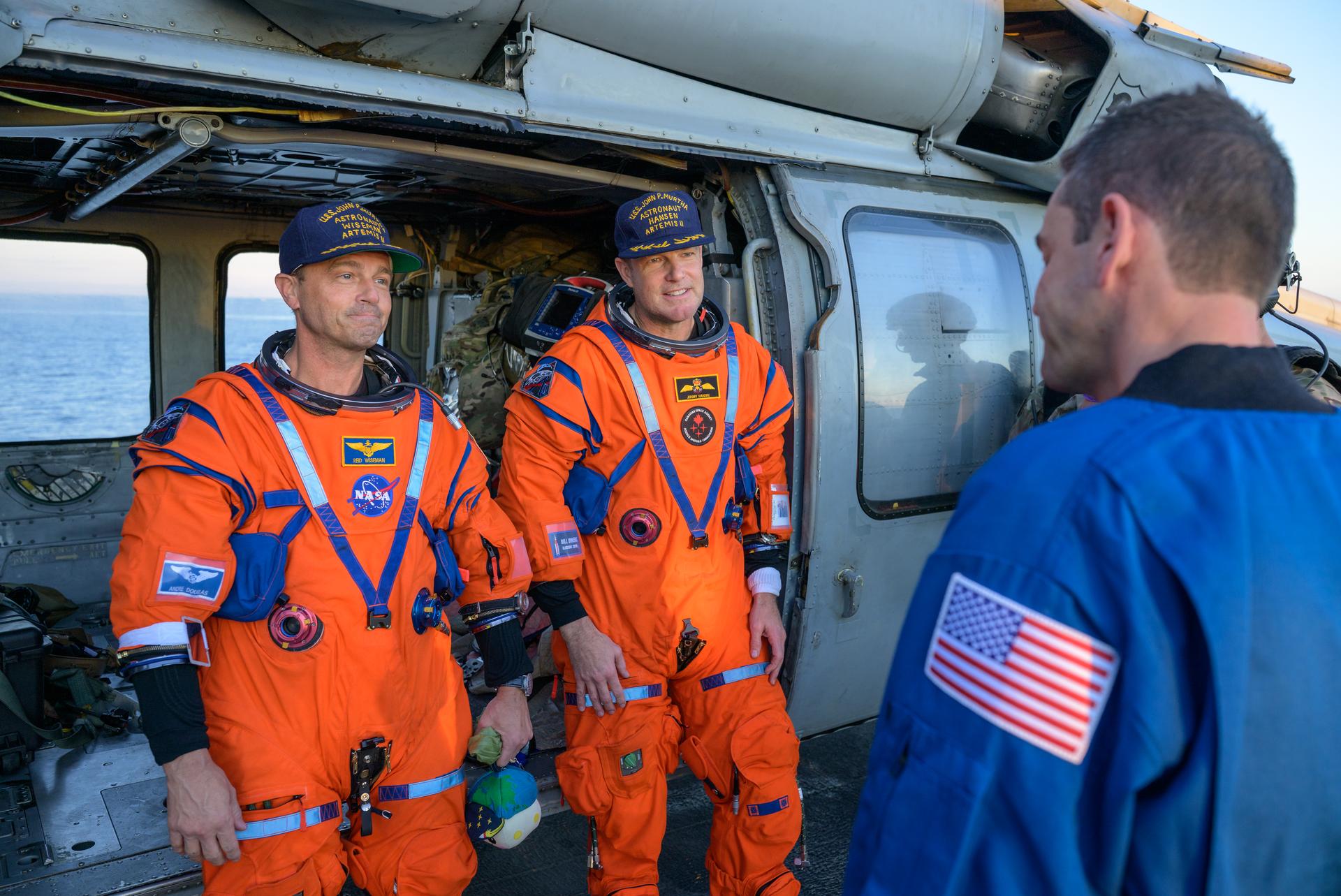
NASA astronaut Reid Wiseman, Artemis II commander, left, and CSA (Canadian Space Agency) astronaut Jeremy Hansen, Artemis II mission specialist, talk with NASA Flight Surgeon Richard Scheuring at their Navy MH-60 Seahawk from Helicopter Sea Combat Squadron (HSC) 23 on the flight deck of USS John P. Murtha after they and fellow crewmates NASA Astronauts Victor Glover, and Christina Koch were extracted from their Orion spacecraft after splashdown, Friday, April 10, 2026, in the Pacific Ocean off the coast of California. NASA’s Artemis II mission took the quartet on a nearly 10-day journey around the Moon and back to Earth. Following a splashdown at 5:07 p.m. PDT (8:07 p.m. EDT), NASA, U.S. Navy, and U.S. Air Force teams are working to bring the Orion spacecraft aboard the recovery ship. Photo Credit: (NASA/Bill Ingalls)
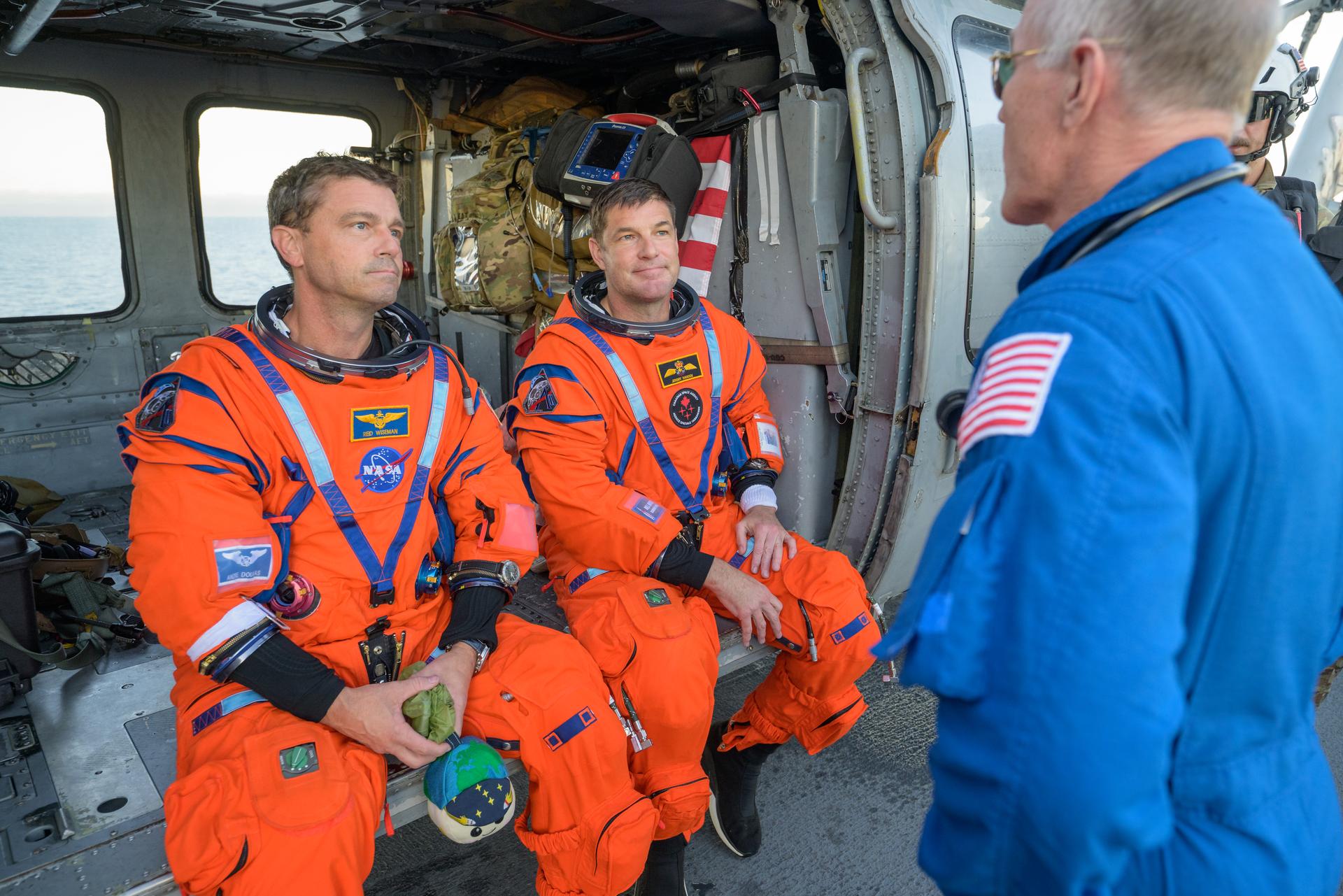
NASA astronaut Reid Wiseman, Artemis II commander, left, and CSA (Canadian Space Agency) astronaut Jeremy Hansen, Artemis II mission specialist, talk with NASA Flight Surgeon Richard Scheuring at their Navy MH-60 Seahawk from Helicopter Sea Combat Squadron (HSC) 23 on the flight deck of USS John P. Murtha after they and fellow crewmates NASA Astronauts Victor Glover, and Christina Koch were extracted from their Orion spacecraft after splashdown, Friday, April 10, 2026, in the Pacific Ocean off the coast of California. NASA’s Artemis II mission took the quartet on a nearly 10-day journey around the Moon and back to Earth. Following a splashdown at 5:07 p.m. PDT (8:07 p.m. EDT), NASA, U.S. Navy, and U.S. Air Force teams are working to bring the Orion spacecraft aboard the recovery ship. Photo Credit: (NASA/Bill Ingalls)
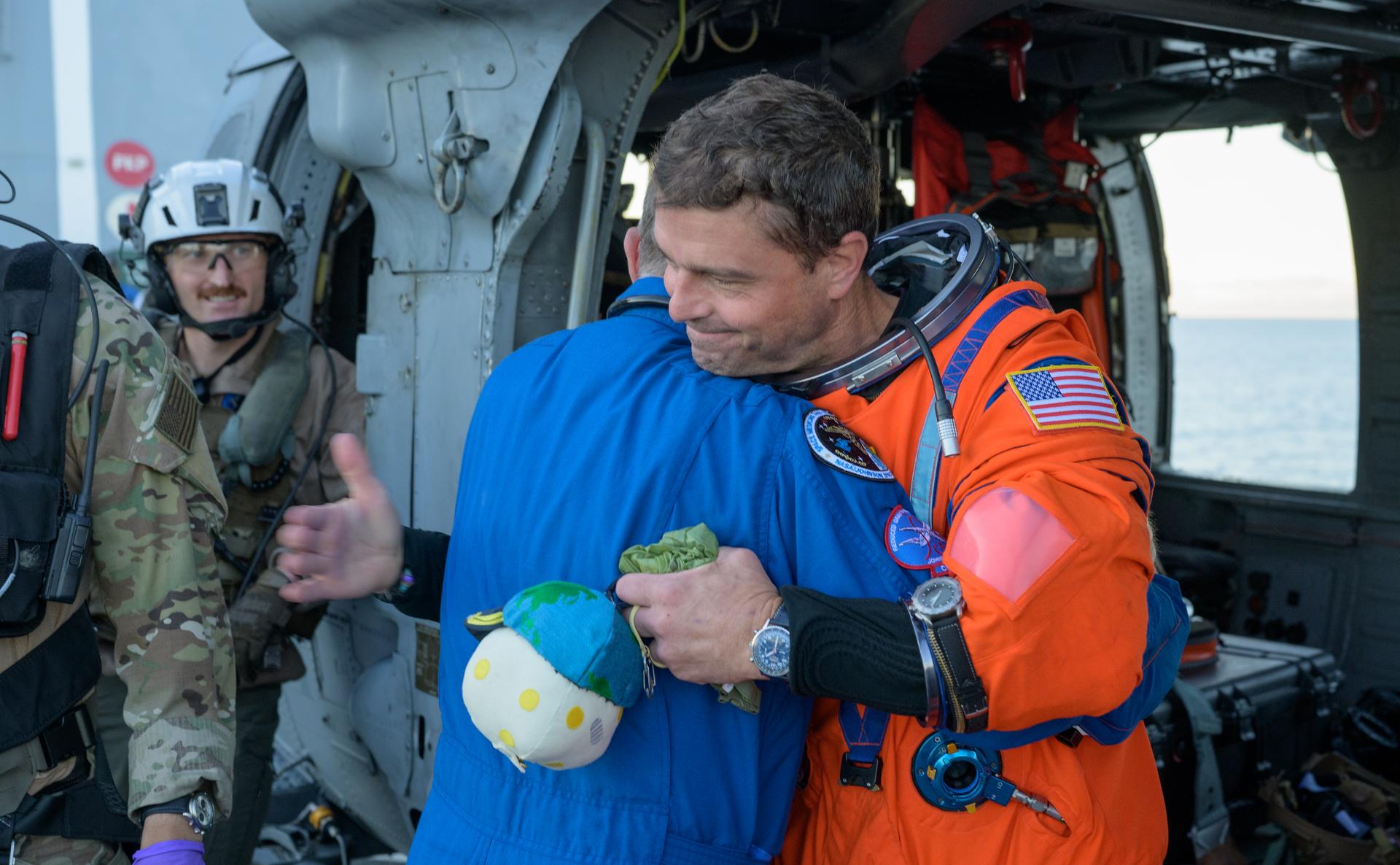
NASA astronaut Reid Wiseman, Artemis II commander, gives NASA Flight Surgeon Richard Scheuring a hug next to a Navy MH-60 Seahawk from Helicopter Sea Combat Squadron (HSC) 23 on the flight deck of USS John P. Murtha after he and fellow crewmates NASA Astronauts Victor Glover, Christina Koch, and CSA (Canadian Space Agency) astronaut Jeremy Hansen, were extracted from their Orion spacecraft after splashdown, Friday, April 10, 2026, in the Pacific Ocean off the coast of California. NASA’s Artemis II mission took the quartet on a nearly 10-day journey around the Moon and back to Earth. Following a splashdown at 5:07 p.m. PDT (8:07 p.m. EDT), NASA, U.S. Navy, and U.S. Air Force teams are working to bring the Orion spacecraft aboard the recovery ship. Photo Credit: (NASA/Bill Ingalls)
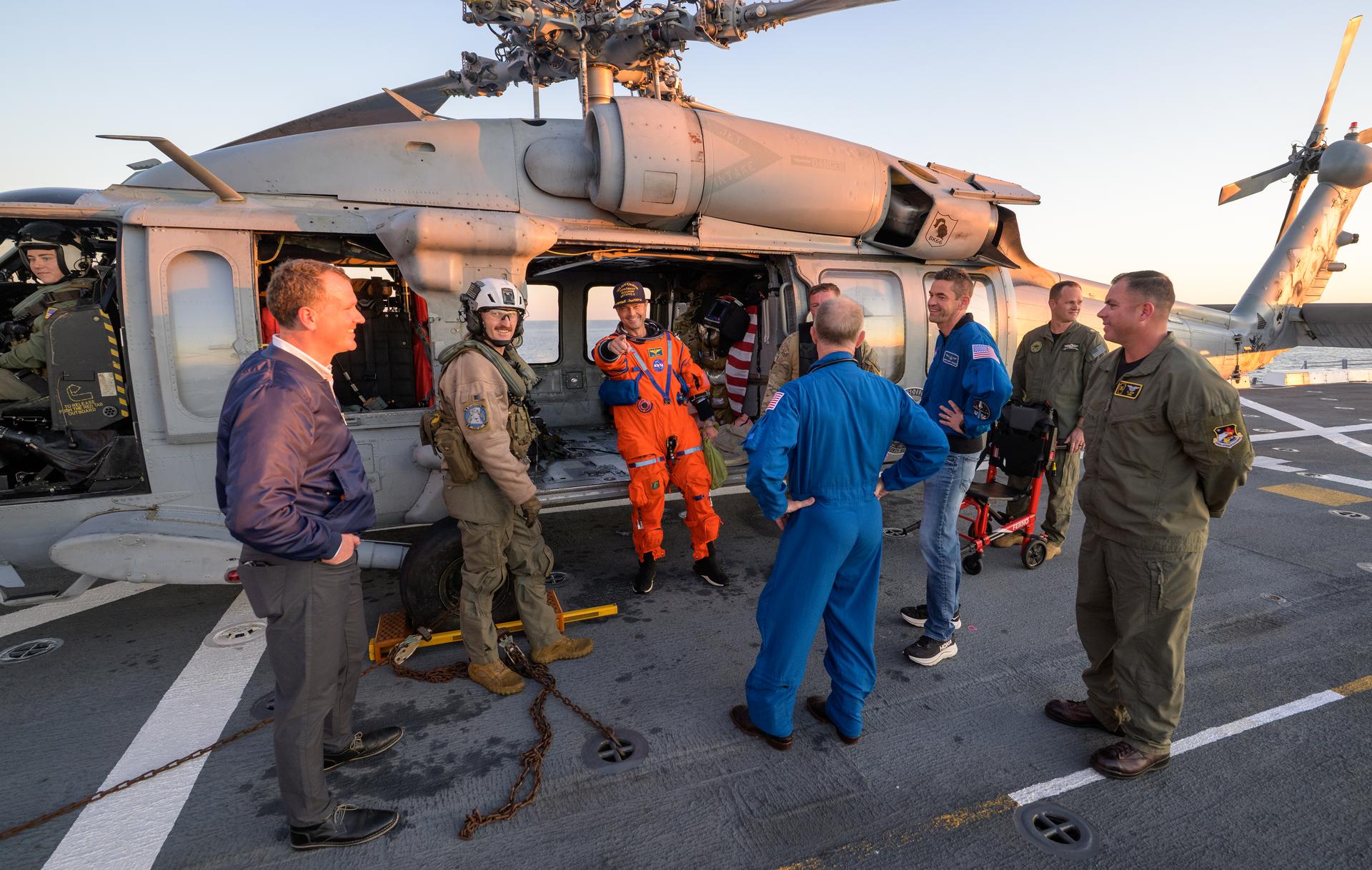
NASA astronaut Reid Wiseman, Artemis II commander is seen sitting in a Navy MH-60 Seahawk from Helicopter Sea Combat Squadron (HSC) 23 on the flight deck of USS John P. Murtha after he and fellow crewmates NASA Astronauts Victor Glover, Christina Koch, and CSA (Canadian Space Agency) astronaut Jeremy Hansen, were extracted from their Orion spacecraft after splashdown, Friday, April 10, 2026, in the Pacific Ocean off the coast of California. NASA’s Artemis II mission took the quartet on a nearly 10-day journey around the Moon and back to Earth. Following a splashdown at 5:07 p.m. PDT (8:07 p.m. EDT), NASA, U.S. Navy, and U.S. Air Force teams are working to bring the Orion spacecraft aboard the recovery ship. Photo Credit: (NASA/Bill Ingalls)