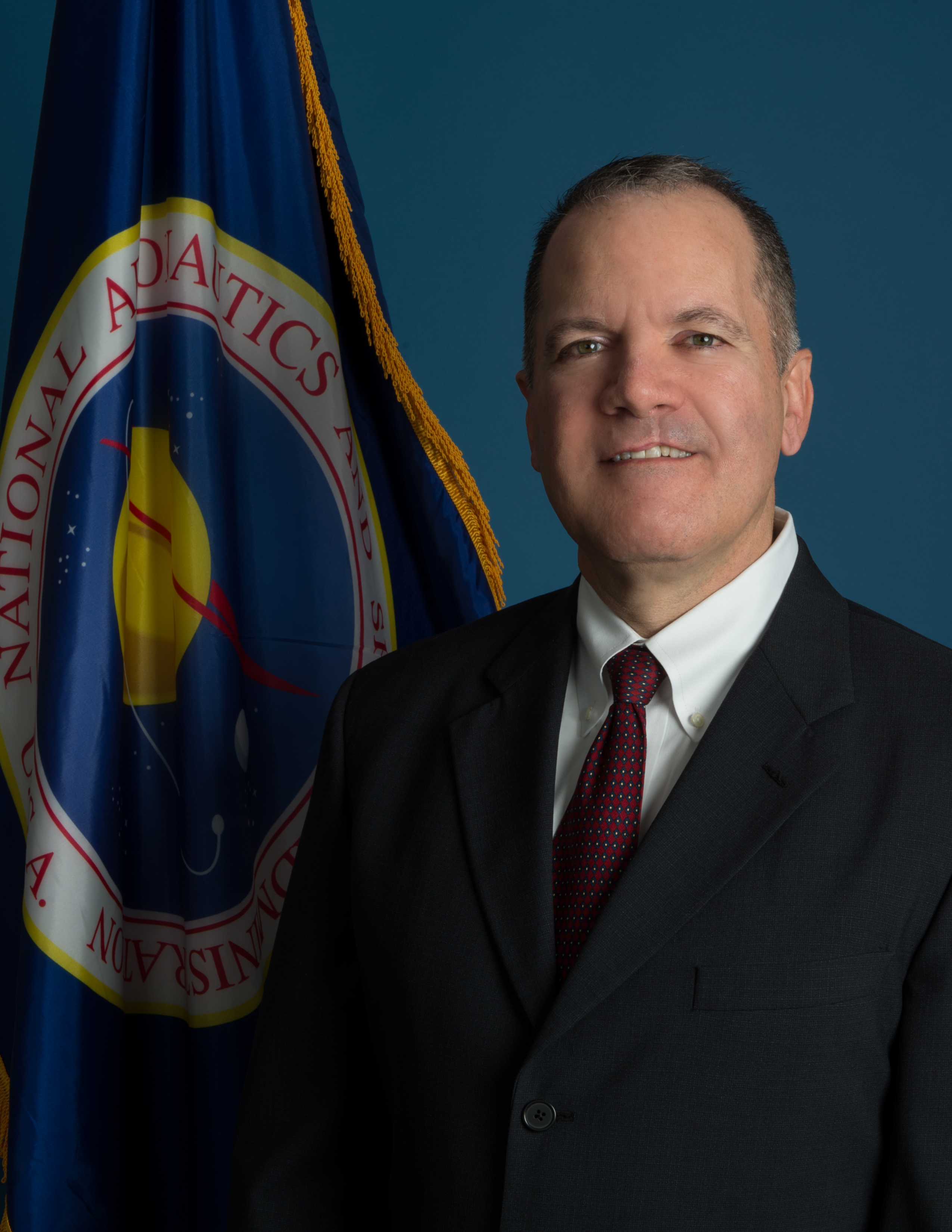
Paul Richards
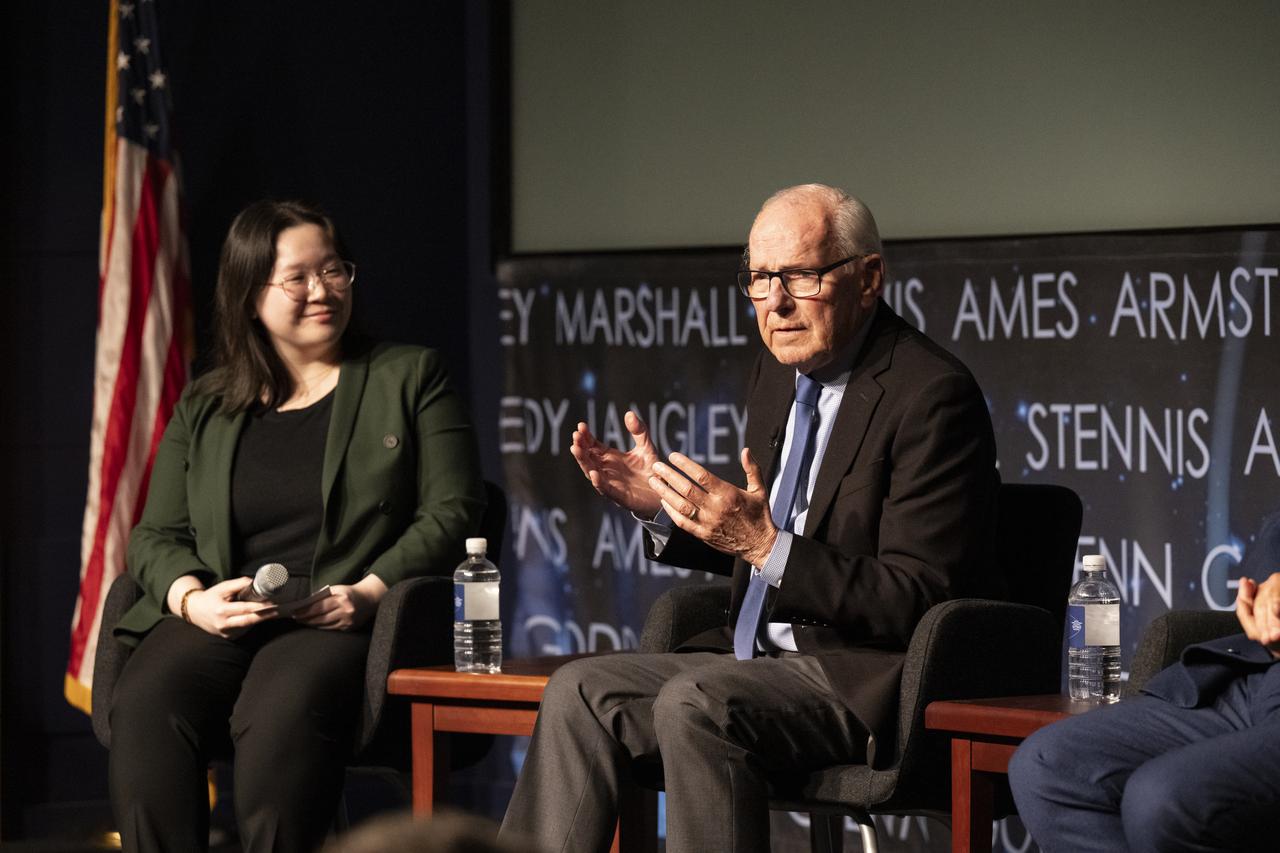
Richard Danne, creator of the NASA worm logotype, right, answers questions during a dedication event, Monday, Nov. 6, 2023, at the Mary W. Jackson NASA Headquarters building in Washington. Photo Credit: (NASA/Keegan Barber)
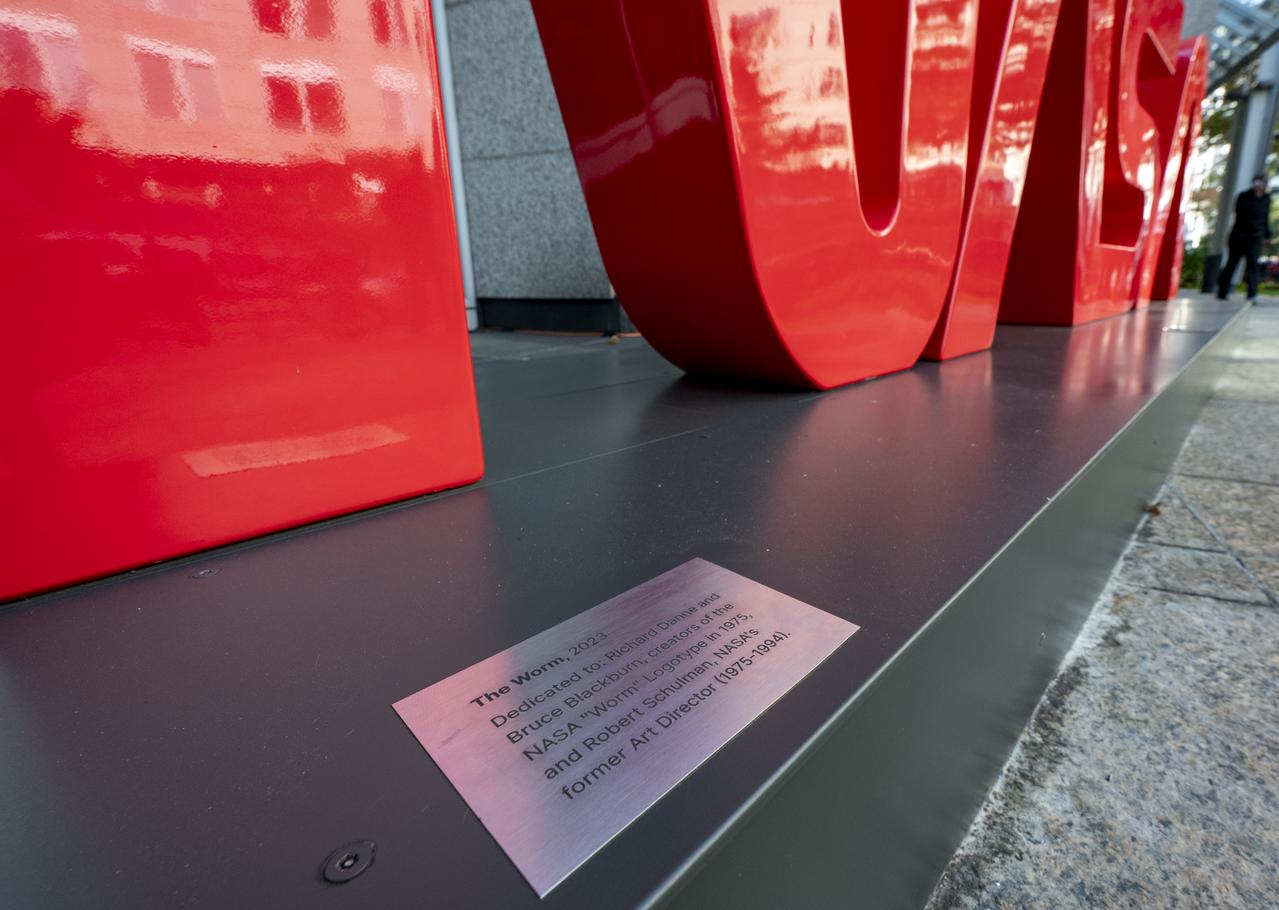
A plaque is seen at the base of the NASA Worm Logo sign during a Richard Danne dedication event, Monday, Nov. 6, 2023, at the Mary W. Jackson NASA Headquarters building in Washington. Photo Credit: (NASA/Keegan Barber)
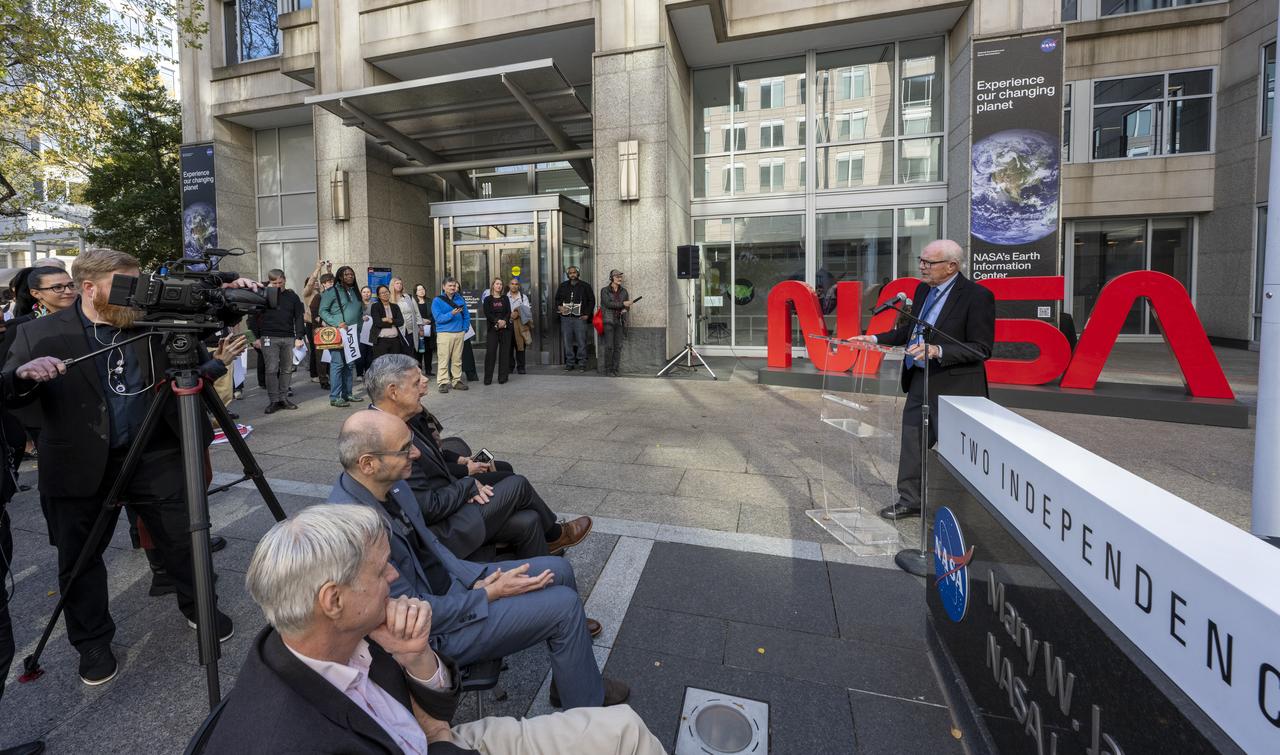
Richard Danne, creator of the NASA worm logotype, delivers remarks during a dedication event, Monday, Nov. 6, 2023, at the Mary W. Jackson NASA Headquarters building in Washington. Photo Credit: (NASA/Keegan Barber)
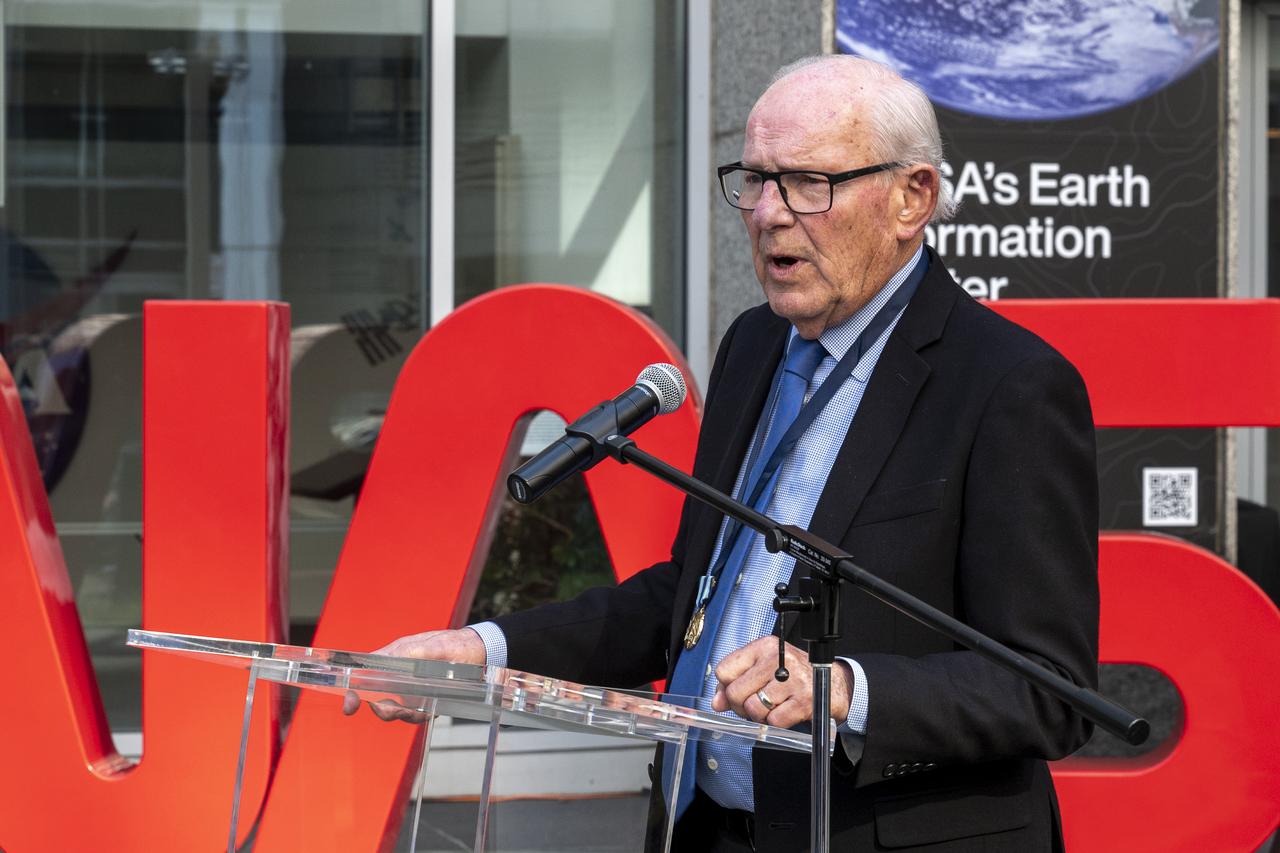
Richard Danne, creator of the NASA worm logotype, delivers remarks during a dedication event, Monday, Nov. 6, 2023, at the Mary W. Jackson NASA Headquarters building in Washington. Photo Credit: (NASA/Keegan Barber)
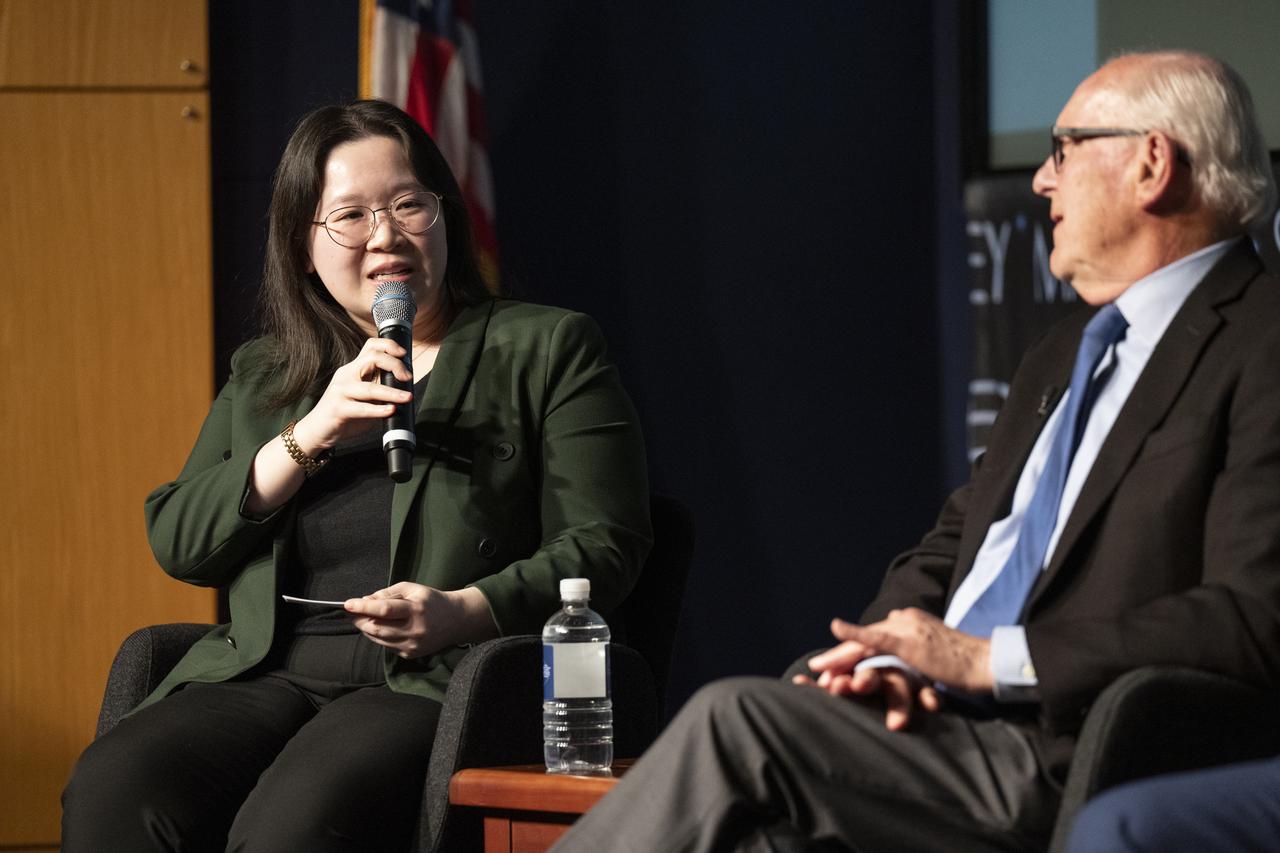
Moderator and Washington Post design reporter Shelly Tan, left, and creator of the NASA worm logotype Richard Danne, right, participate in a panel discussion during a Richard Danne dedication event, Monday, Nov. 6, 2023, at the Mary W. Jackson NASA Headquarters building in Washington. Photo Credit: (NASA/Keegan Barber)
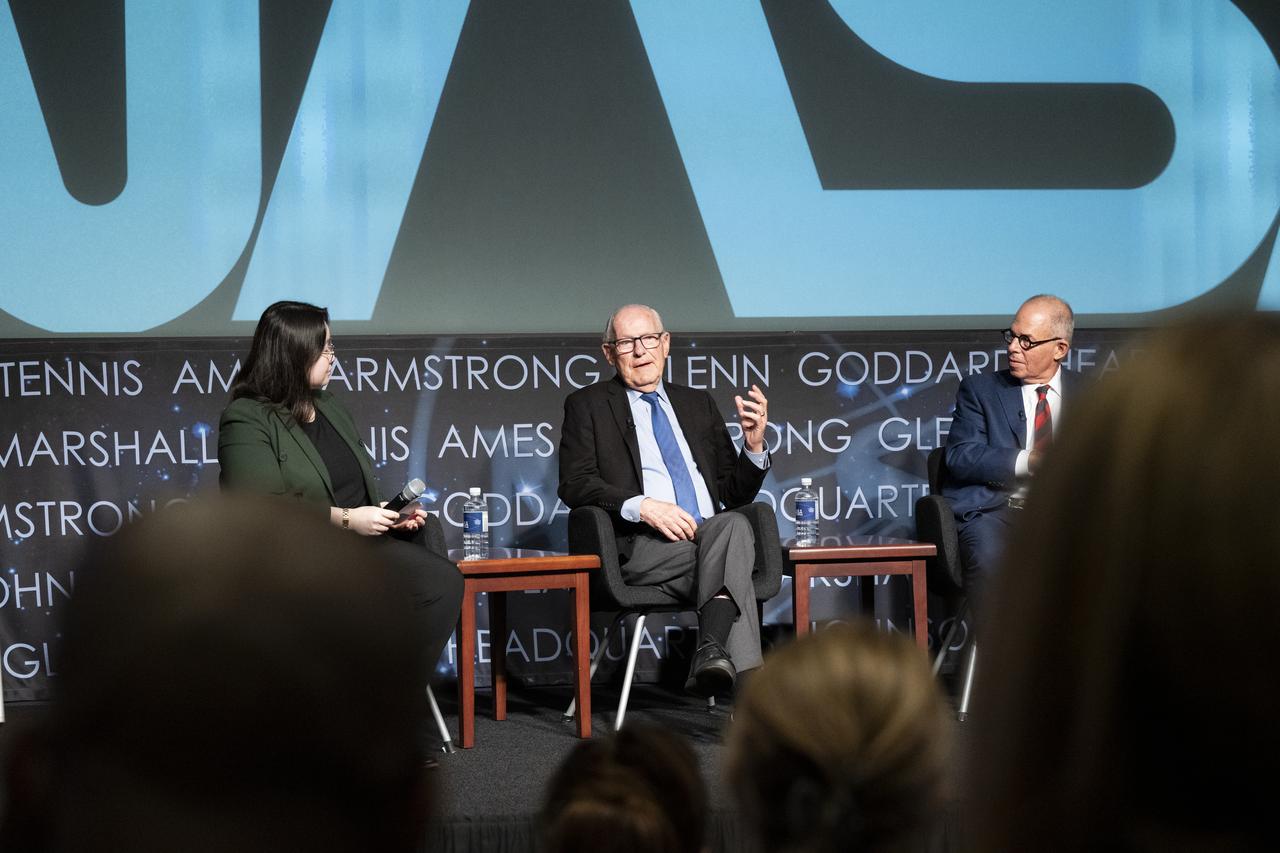
From left to right, moderator and Washington Post design reporter Shelly Tan, creator of the NASA worm logotype Richard Danne, and Pentagram designer Michael Bierut, participate in a panel discussion during a Richard Danne dedication event, Monday, Nov. 6, 2023, at the Mary W. Jackson NASA Headquarters building in Washington. Photo Credit: (NASA/Keegan Barber)
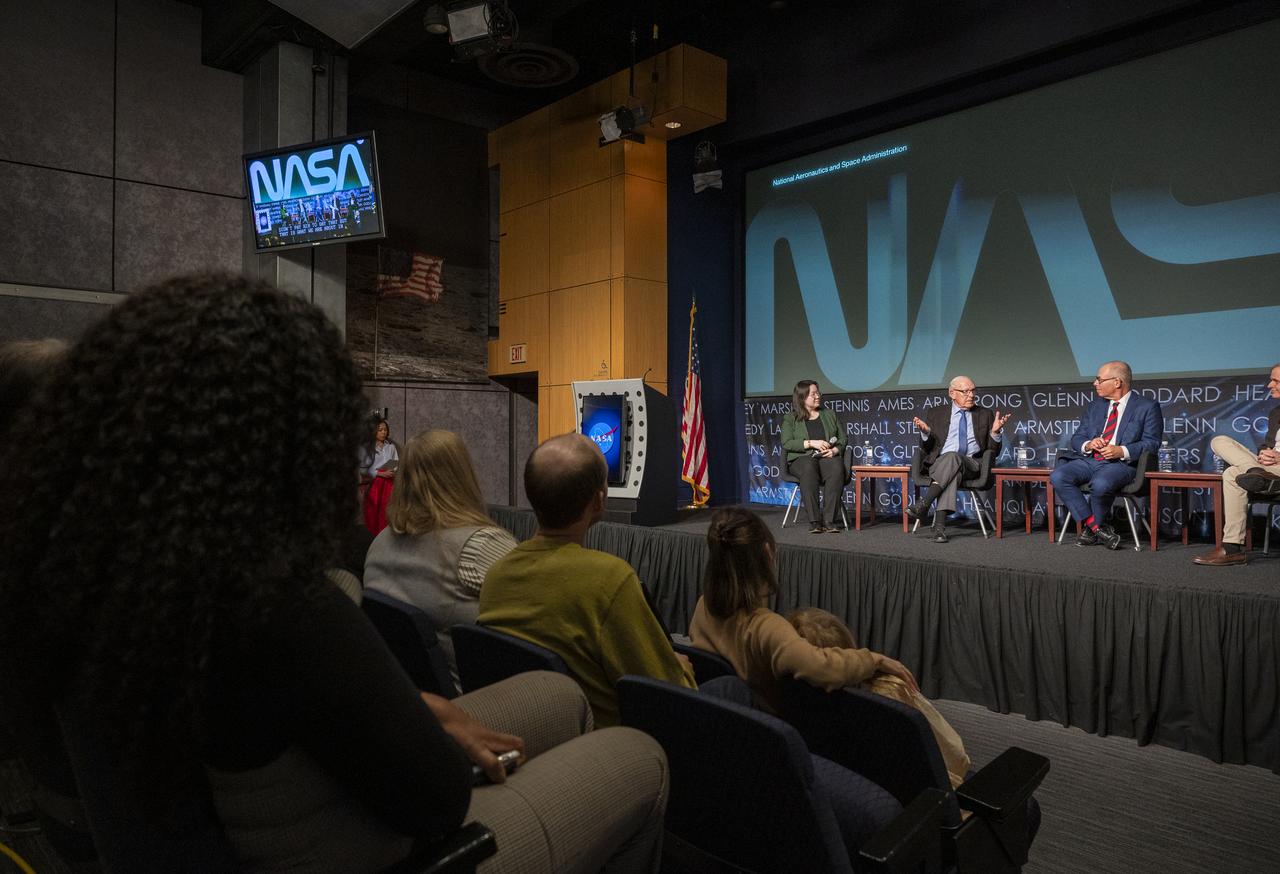
From left to right, moderator and Washington Post design reporter Shelly Tan, creator of the NASA worm logotype Richard Danne, and Pentagram designer Michael Bierut, participate in a panel discussion during a Richard Danne dedication event, Monday, Nov. 6, 2023, at the Mary W. Jackson NASA Headquarters building in Washington. Photo Credit: (NASA/Keegan Barber)
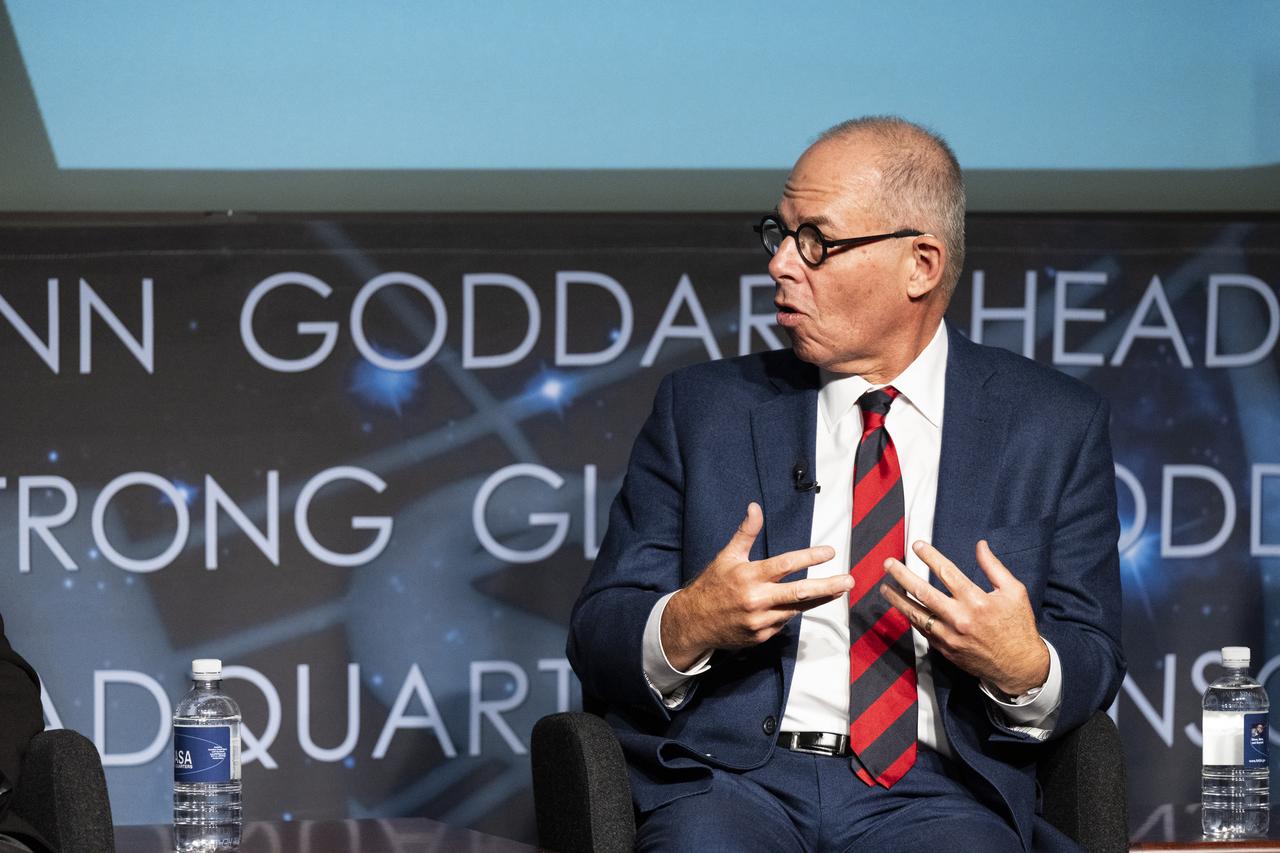
Pentagram designer Michael Bierut participates in a panel discussion during a Richard Danne dedication event, Monday, Nov. 6, 2023, at the Mary W. Jackson NASA Headquarters building in Washington. Photo Credit: (NASA/Keegan Barber)
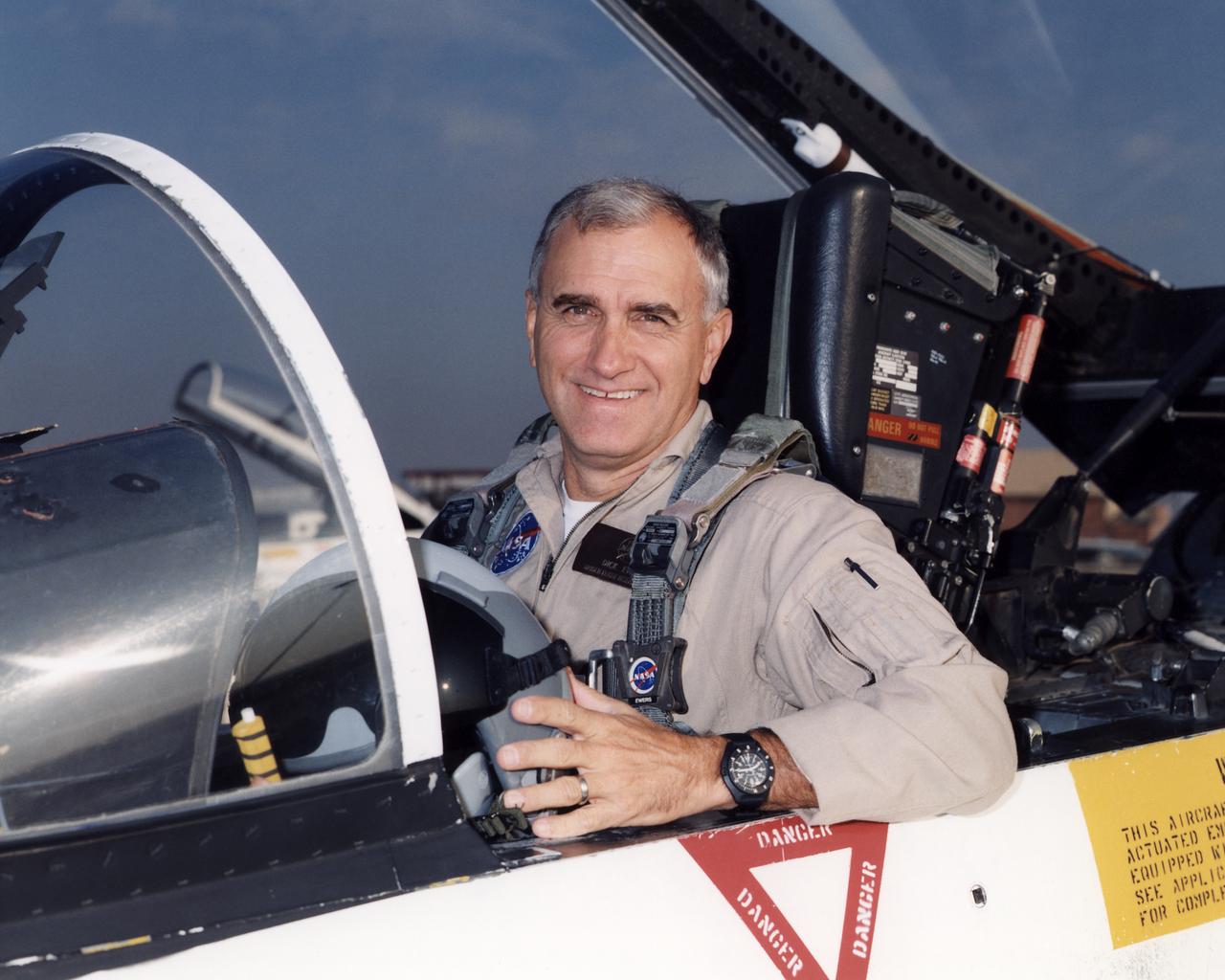
Richard G. (Dick) Ewers became a pilot in the Flight Crew Branch of NASA's Dryden Flight Research Center, Edwards, California, in May 1998. His flying duties focus on operation of the Airborne Science DC-8 and Systems Research F/A-18 aircraft, but he also maintains qualifications in the King Air and T-34C. He has more than 32 years and nearly 9,000 hours of military and civilian flight experience in all types of aircraft from jet fighters to blimps. Ewers came to NASA Dryden from a position as an engineering test pilot with Northrop Grumman's Electronic Sensors and Systems Division (formerly Westinghouse's Electronic Systems Group). He spent eight and a half years with Westinghouse flight testing radar and forward looking infrared systems under development for military and civilian use. Before going to work for Westinghouse, Ewers served for more than 21 years as a U.S. Marine Corps fighter and test pilot, flying F-4, A-4, and F/A-18 aircraft. He underwent flight training at Naval Air Station Pensacola, Fla., in 1969-70. He was subsequently assigned to both fighter/attack and reconnaissance squadrons before ultimately commanding an F-4S squadron for two years. Additionally, his flying included combat service in Vietnam and operational exchange tours with both U.S. Navy and U.S. Air Force squadrons flying F-4s around the world, including off aircraft carriers. Ewers graduated from the U.S. Naval Test Pilot School in 1981 and subsequently served two tours as a test pilot at the Naval Air Test Center, Patuxent River, Md. Most of his flight test experience was with the F/A-18 Hornet. He retired from the Marine Corps in 1989 with the rank of lieutenant colonel. Ewers graduated from the U.S. Air Force Academy in 1968 with a bachelor of science degree in engineering mechanics. He earned a master of science degree in aeronautical systems from the University of West Florida in 1970.
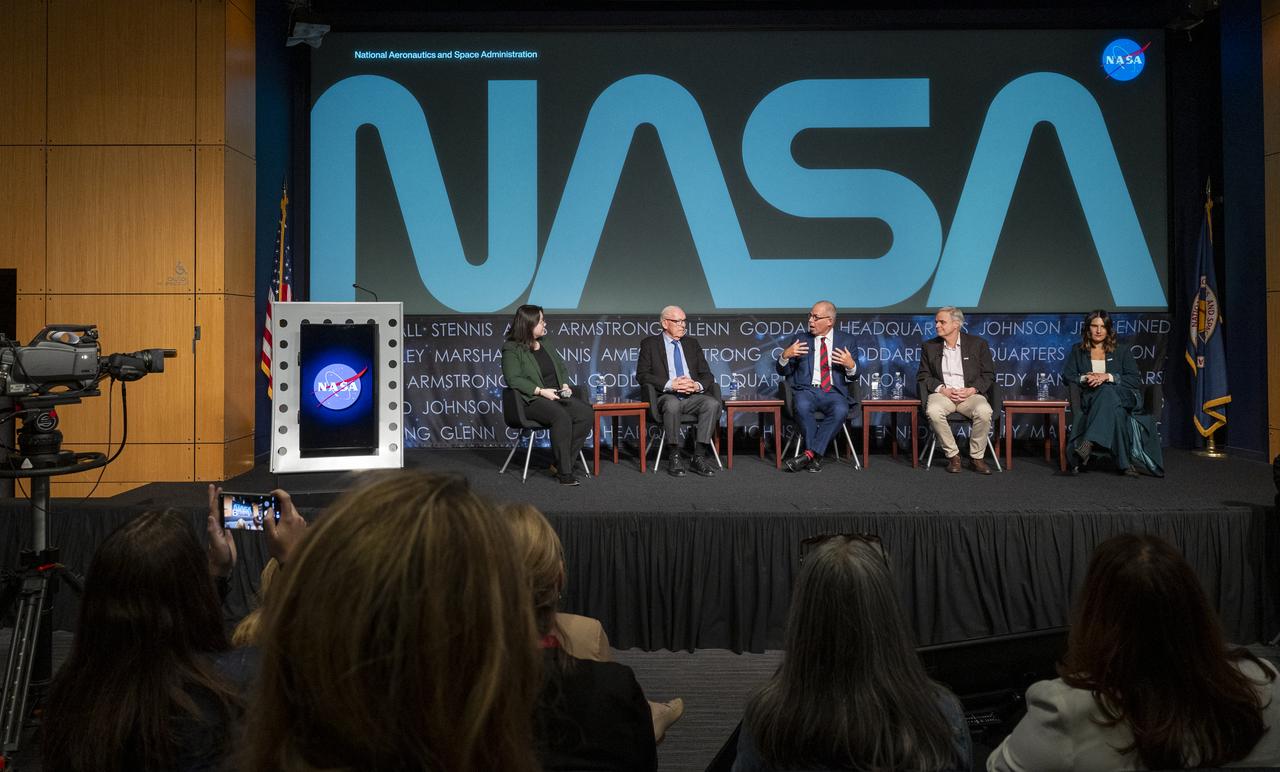
From left to right, moderator and Washington Post design reporter Shelly Tan, creator of the NASA worm logotype Richard Danne, Pentagram designer Michael Bierut, NASA entertainment and branding liaison Bert Ulrich, and Amazon Music head of live event merchandise Julia Heiser, participate in a panel discussion during a Richard Danne dedication event, Monday, Nov. 6, 2023, at the Mary W. Jackson NASA Headquarters building in Washington. Photo Credit: (NASA/Keegan Barber)
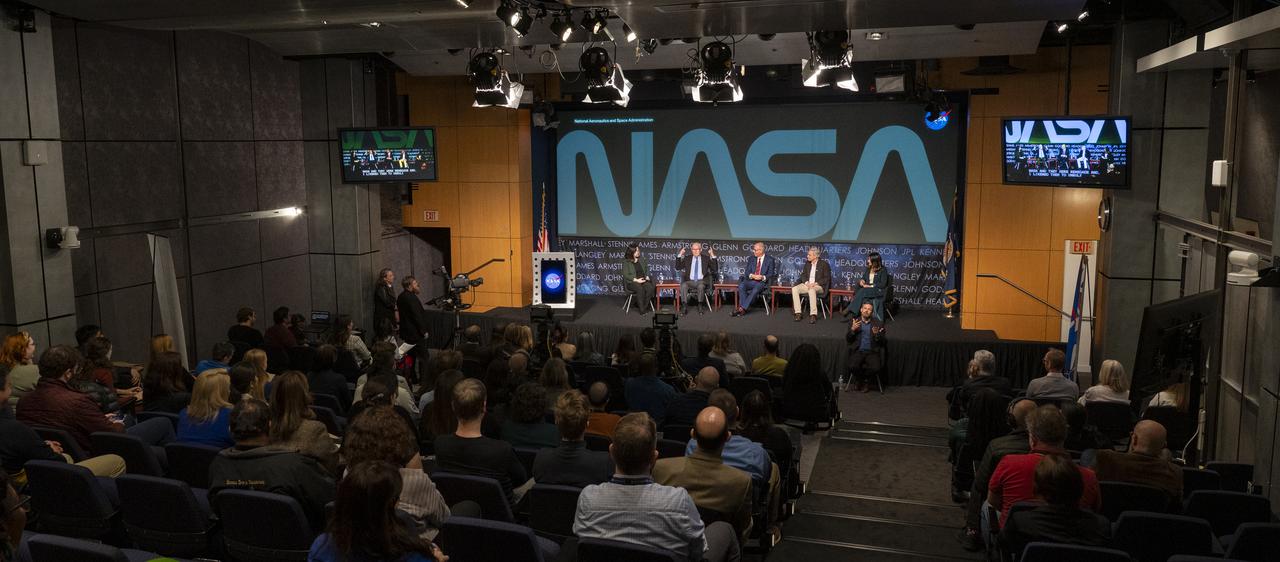
From left to right, moderator and Washington Post design reporter Shelly Tan, creator of the NASA worm logotype Richard Danne, Pentagram designer Michael Bierut, NASA entertainment and branding liaison Bert Ulrich, and Amazon Music head of live event merchandise Julia Heiser, participate in a panel discussion during a Richard Danne dedication event, Monday, Nov. 6, 2023, at the Mary W. Jackson NASA Headquarters building in Washington. Photo Credit: (NASA/Keegan Barber)
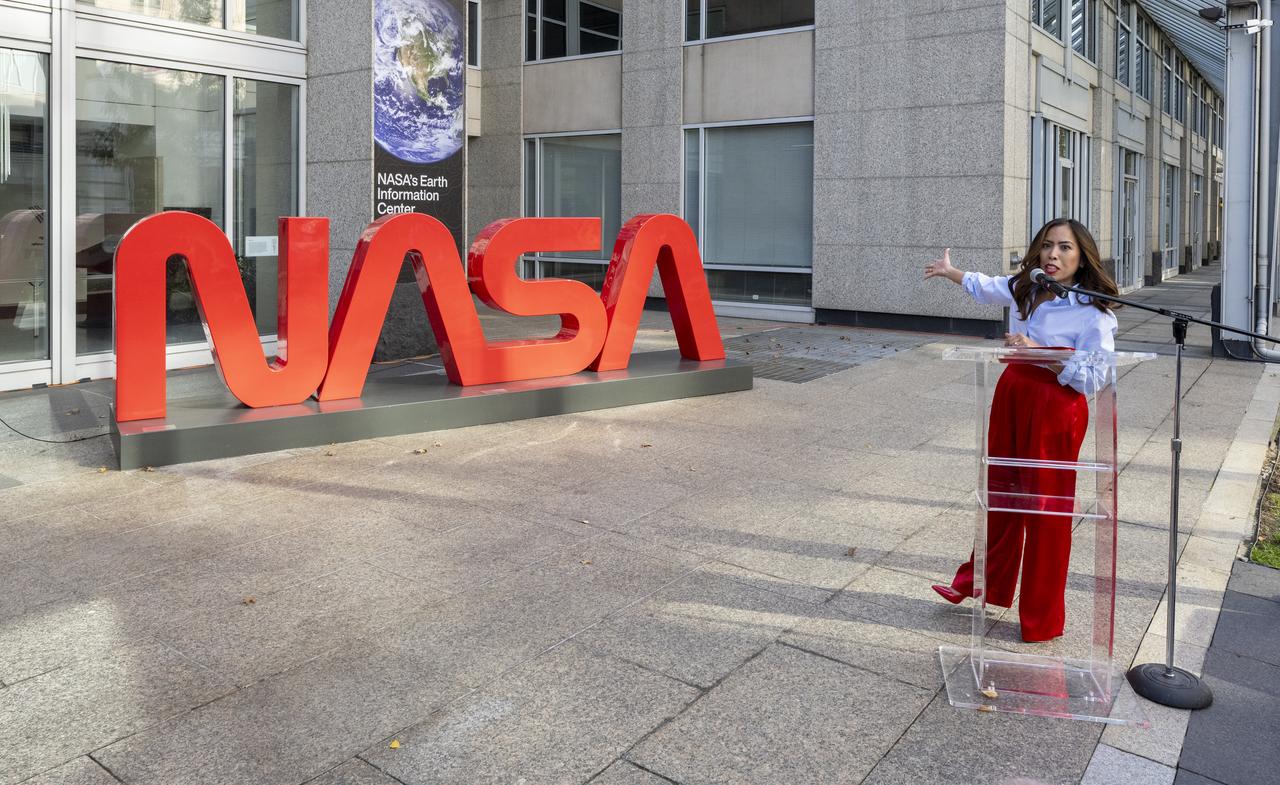
NASA Public Affairs Specialist Megan Cruz delivers remarks during a dedication event for Richard Danne, creator of the NASA worm logotype, Monday, Nov. 6, 2023, at the Mary W. Jackson NASA Headquarters building in Washington. Photo Credit: (NASA/Keegan Barber)
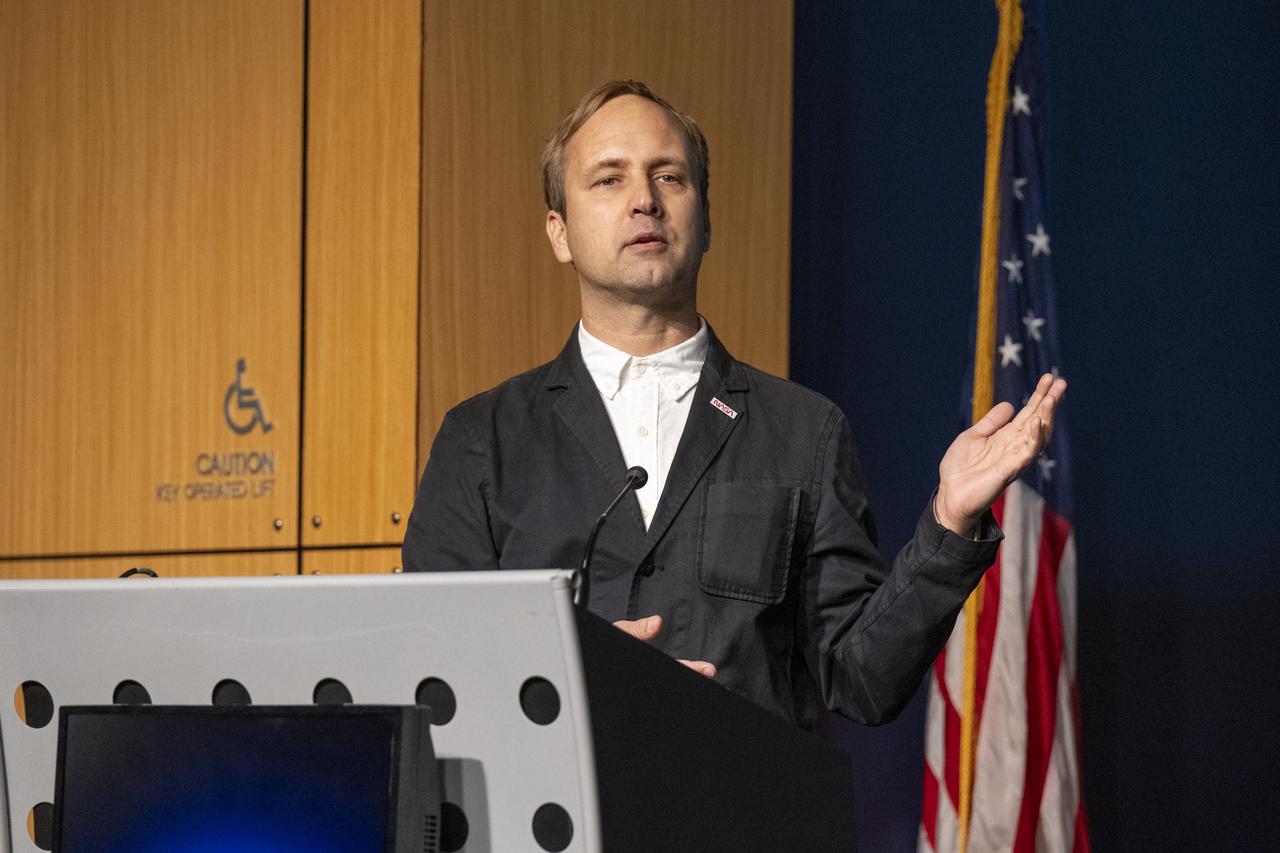
NASA Creative Art Director David Rager delivers remarks during a dedication event for Richard Danne, creator of the NASA worm logotype, Monday, Nov. 6, 2023, at the Mary W. Jackson NASA Headquarters building in Washington. Photo Credit: (NASA/Keegan Barber)
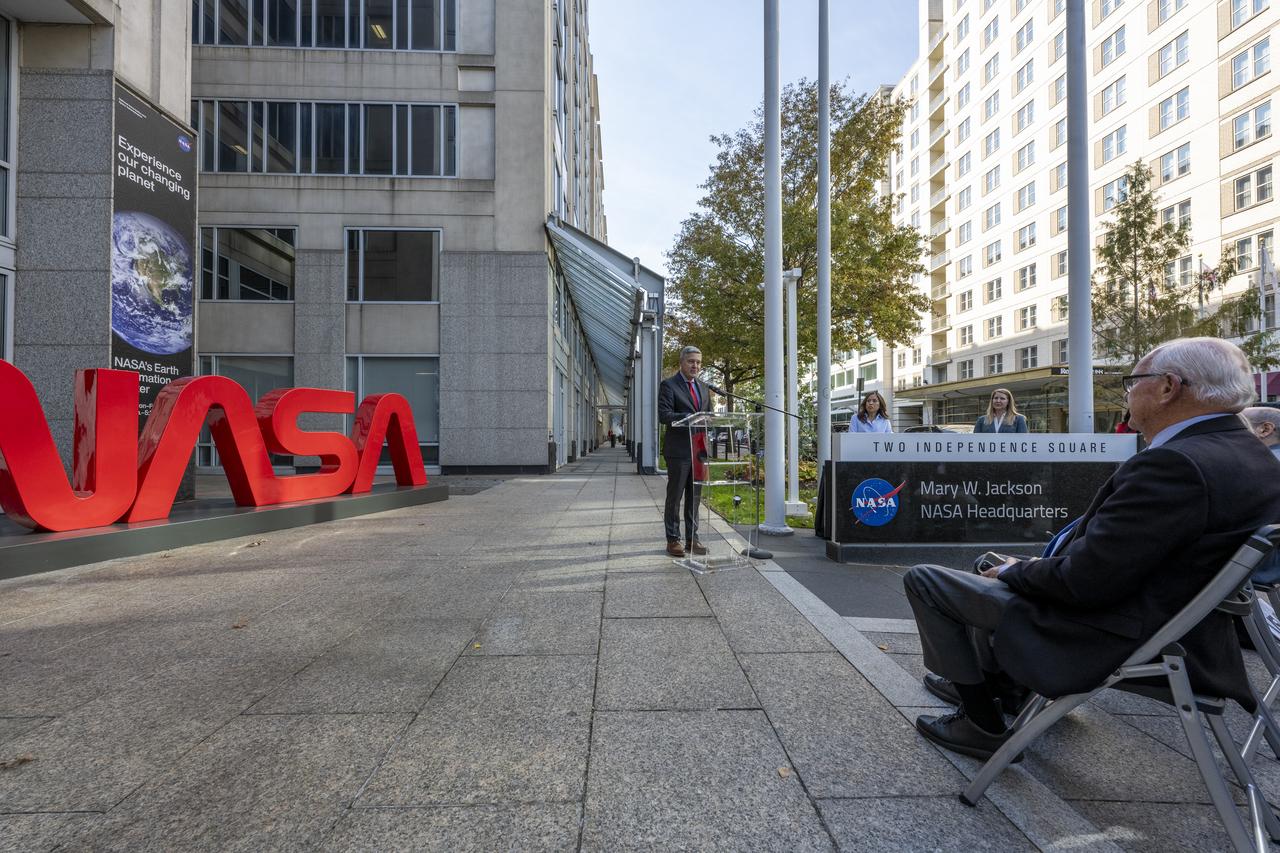
NASA Associate Administrator Bob Cabana delivers remarks during a dedication event for Richard Danne, creator of the NASA worm logotype, Monday, Nov. 6, 2023, at the Mary W. Jackson NASA Headquarters building in Washington. Photo Credit: (NASA/Keegan Barber)
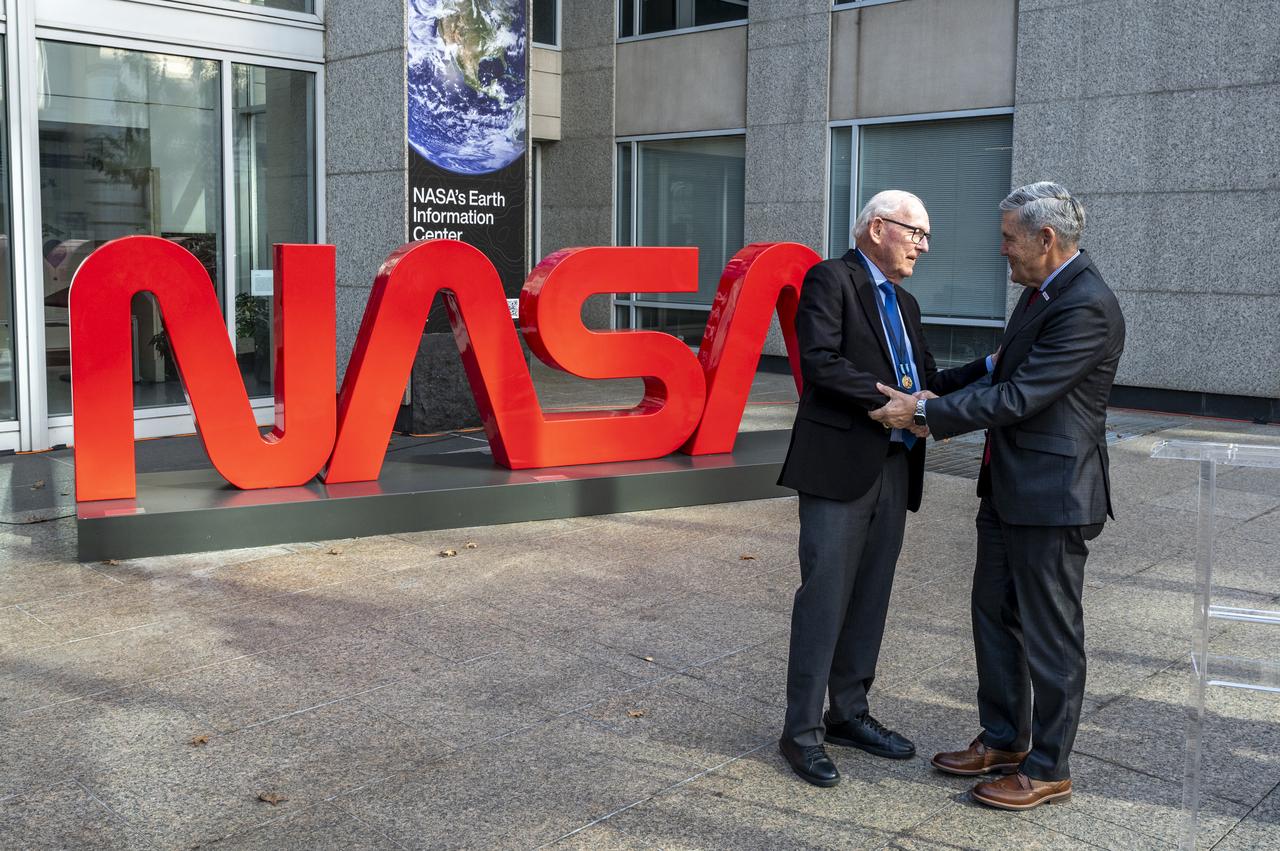
NASA Associate Administrator Bob Cabana, right, shakes hands with Richard Danne after awarding him the Exceptional Public Achievement Medal for his outstanding achievement in creating the NASA worm logotype, Monday, Nov. 6, 2023, at the Mary W. Jackson NASA Headquarters building in Washington. Photo Credit: (NASA/Keegan Barber)
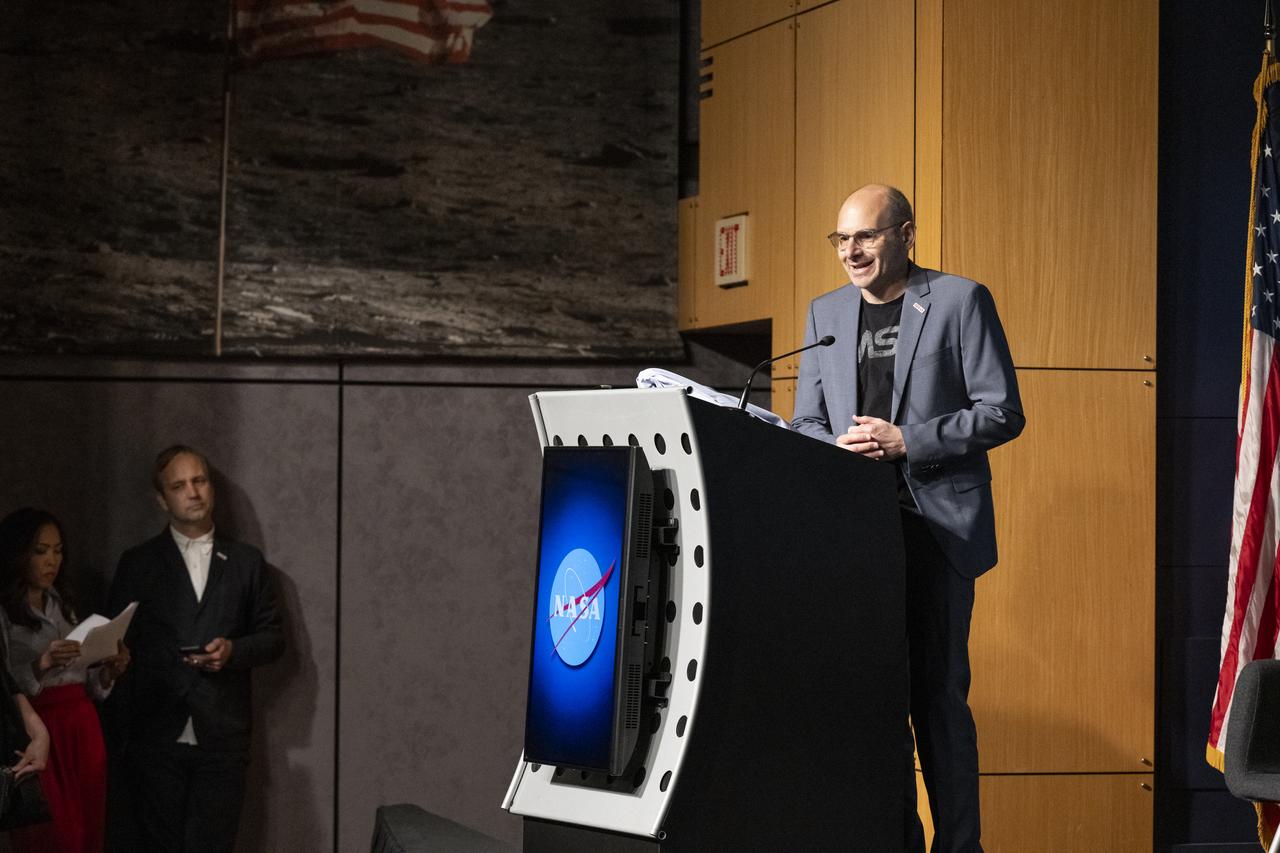
Associate Administrator for Communications Marc Etkind delivers remarks during a dedication event for Richard Danne, creator of the NASA worm logotype, Monday, Nov. 6, 2023, at the Mary W. Jackson NASA Headquarters building in Washington. Photo Credit: (NASA/Keegan Barber)
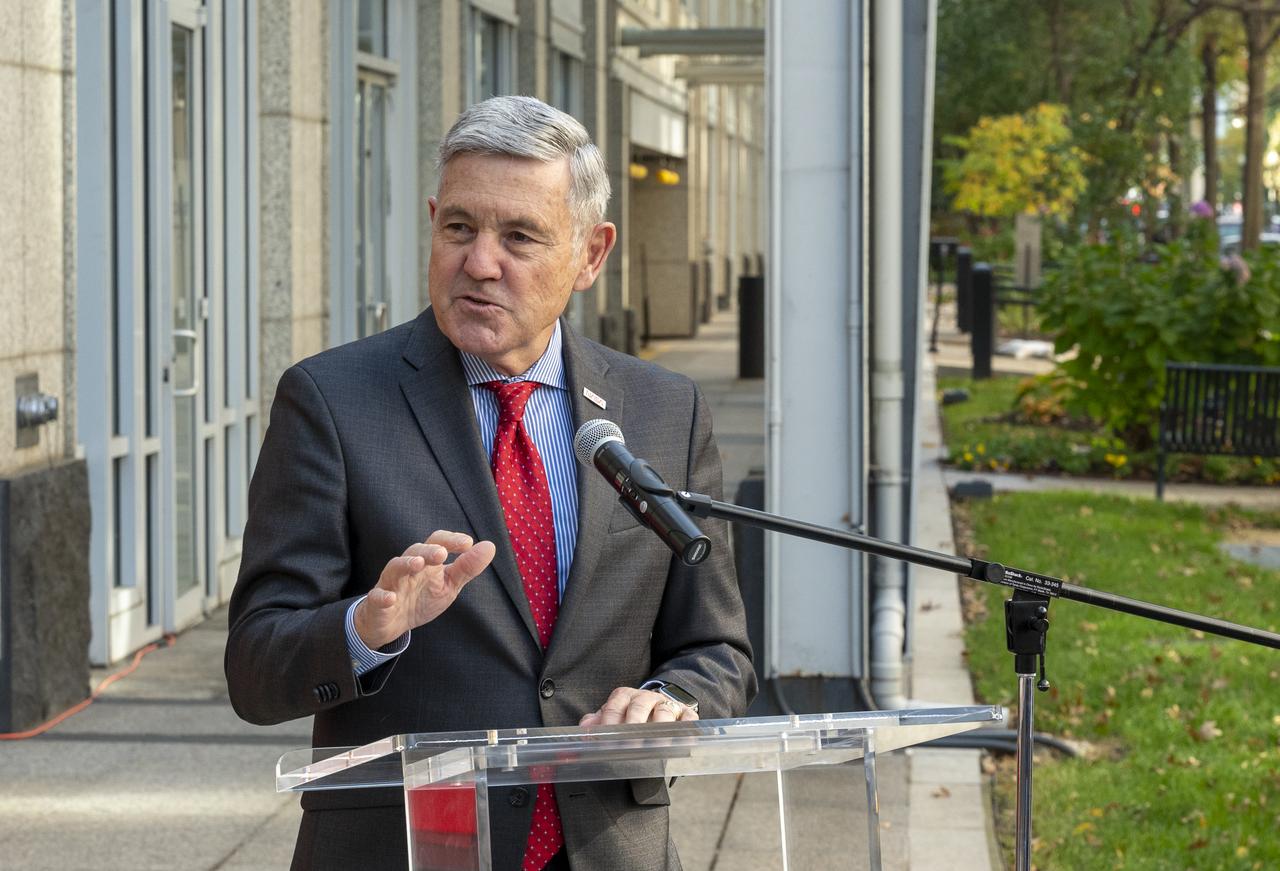
NASA Associate Administrator Bob Cabana delivers remarks during a dedication event for Richard Danne, creator of the NASA worm logotype, Monday, Nov. 6, 2023, at the Mary W. Jackson NASA Headquarters building in Washington. Photo Credit: (NASA/Keegan Barber)
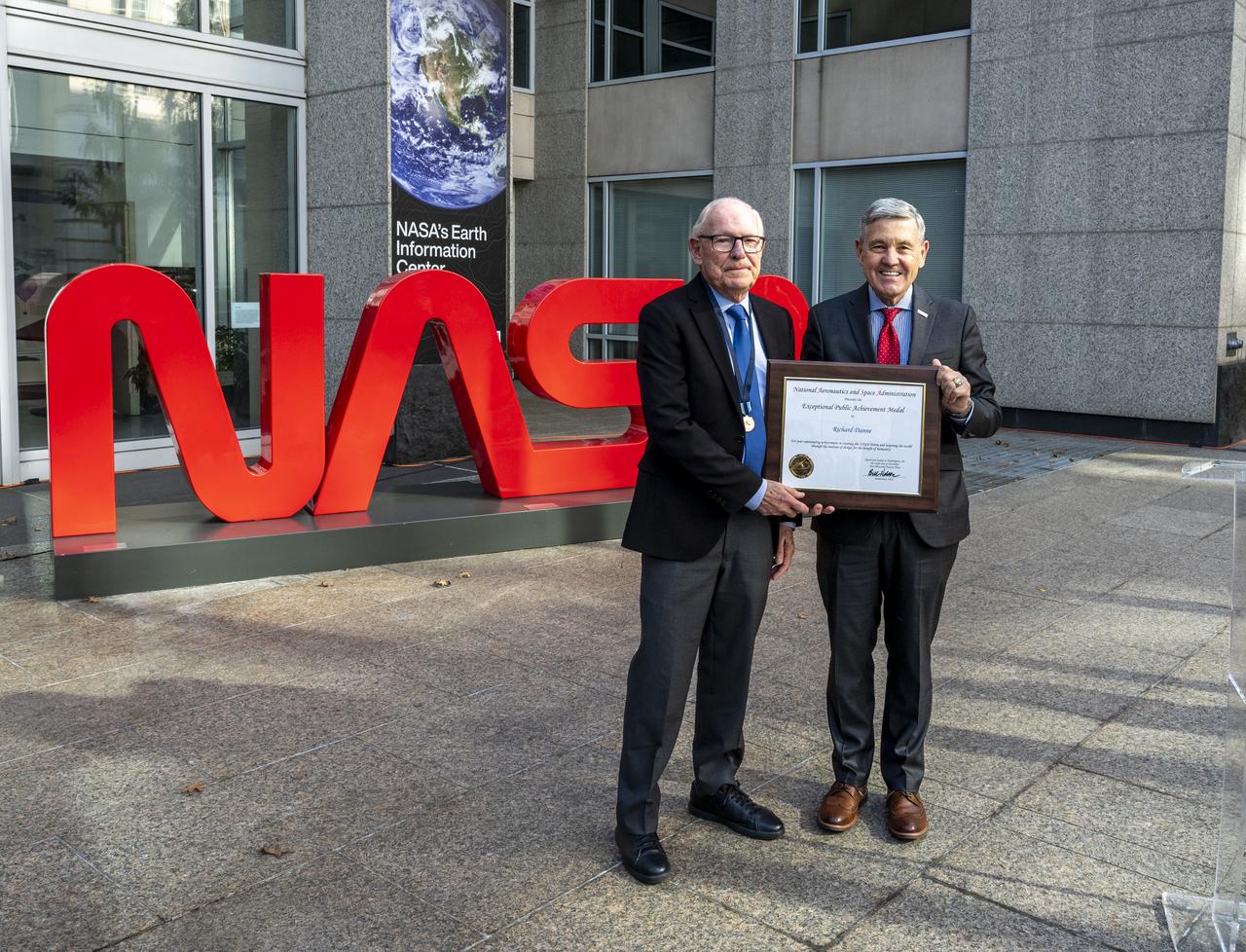
NASA Associate Administrator Bob Cabana, right, poses for a photo with Richard Danne after awarding him the Exceptional Public Achievement Medal for his outstanding achievement in creating the NASA worm logotype, Monday, Nov. 6, 2023, at the Mary W. Jackson NASA Headquarters building in Washington. Photo Credit: (NASA/Keegan Barber)
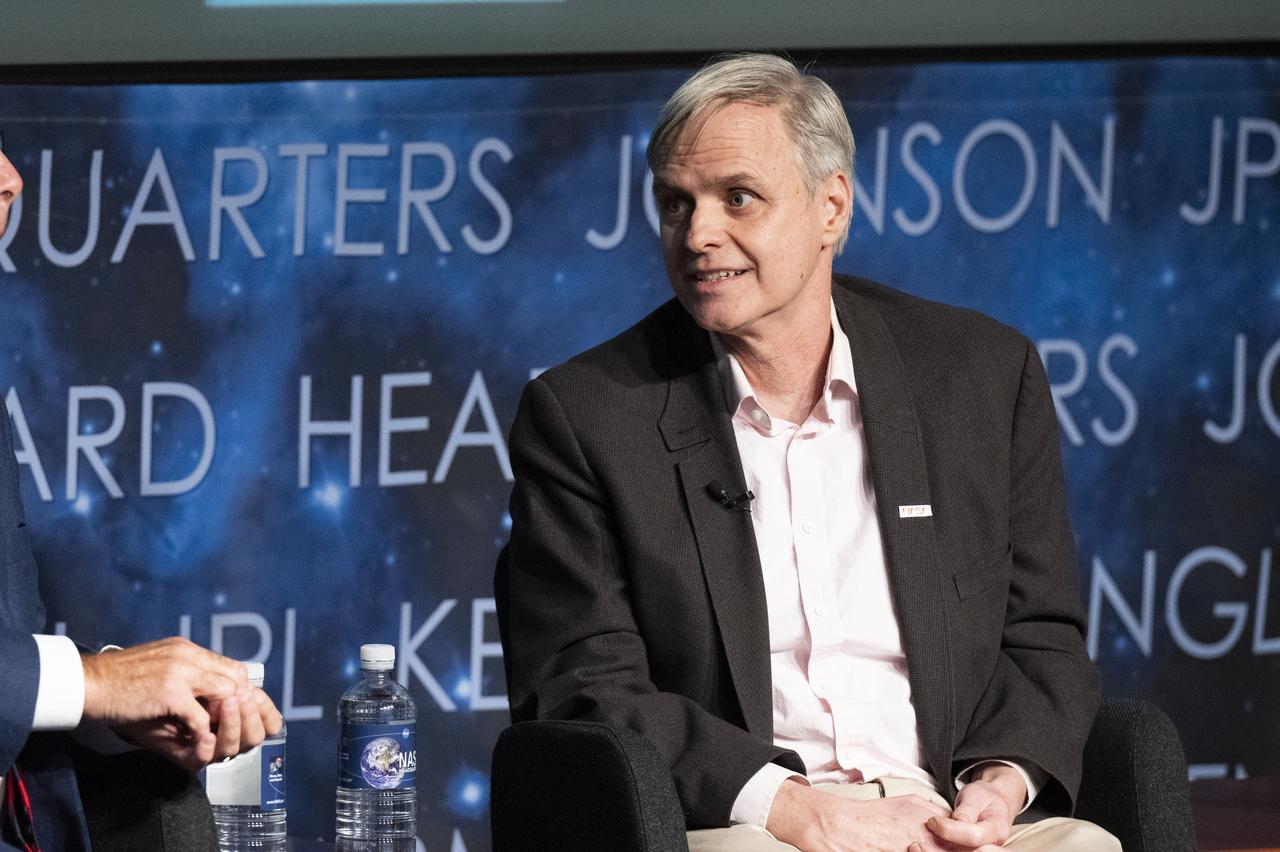
NASA entertainment and branding liaison Bert Ulrich participates in a panel discussion during a Richard Danne dedication event, Monday, Nov. 6, 2023, at the Mary W. Jackson NASA Headquarters building in Washington. Photo Credit: (NASA/Keegan Barber)
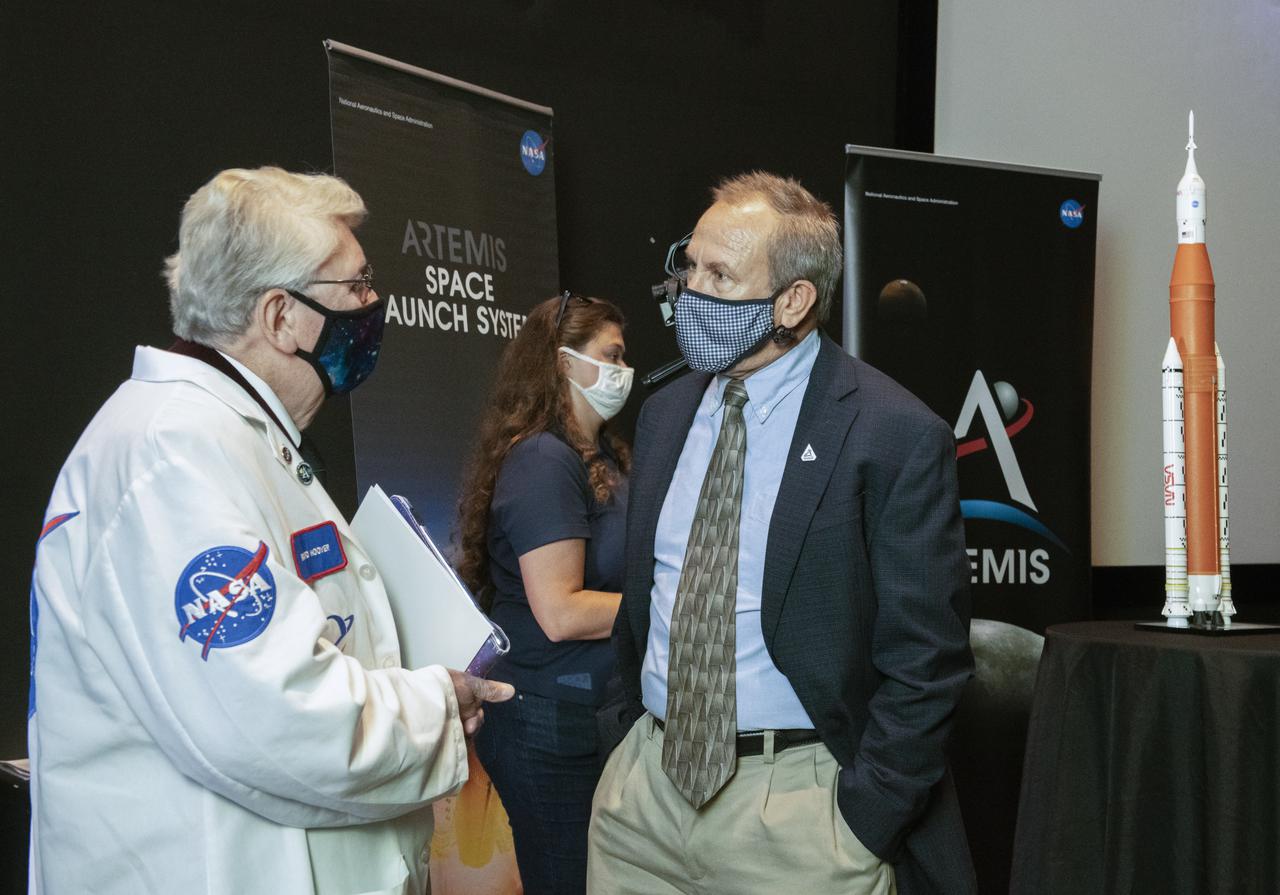
Dr. Richard Hoover talks to David Beaman, SLS Systems Engineering and Integration Manager, at conclusion of Chamber Media Briefing event at USSRC
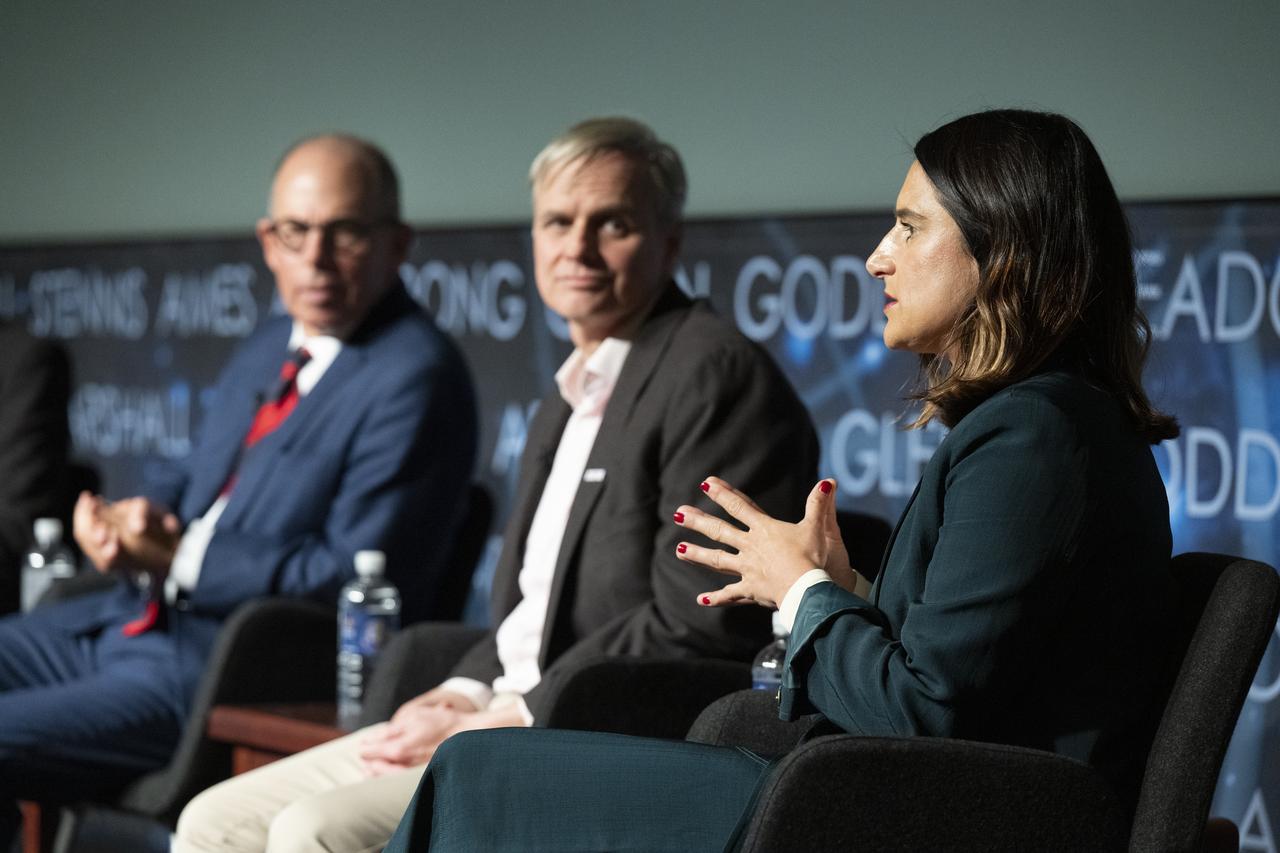
From left to right, Pentagram designer Michael Bierut, NASA entertainment and branding liaison Bert Ulrich, and Amazon Music head of live event merchandise Julia Heiser, participate in a panel discussion during a Richard Danne dedication event, Monday, Nov. 6, 2023, at the Mary W. Jackson NASA Headquarters building in Washington. Photo Credit: (NASA/Keegan Barber)
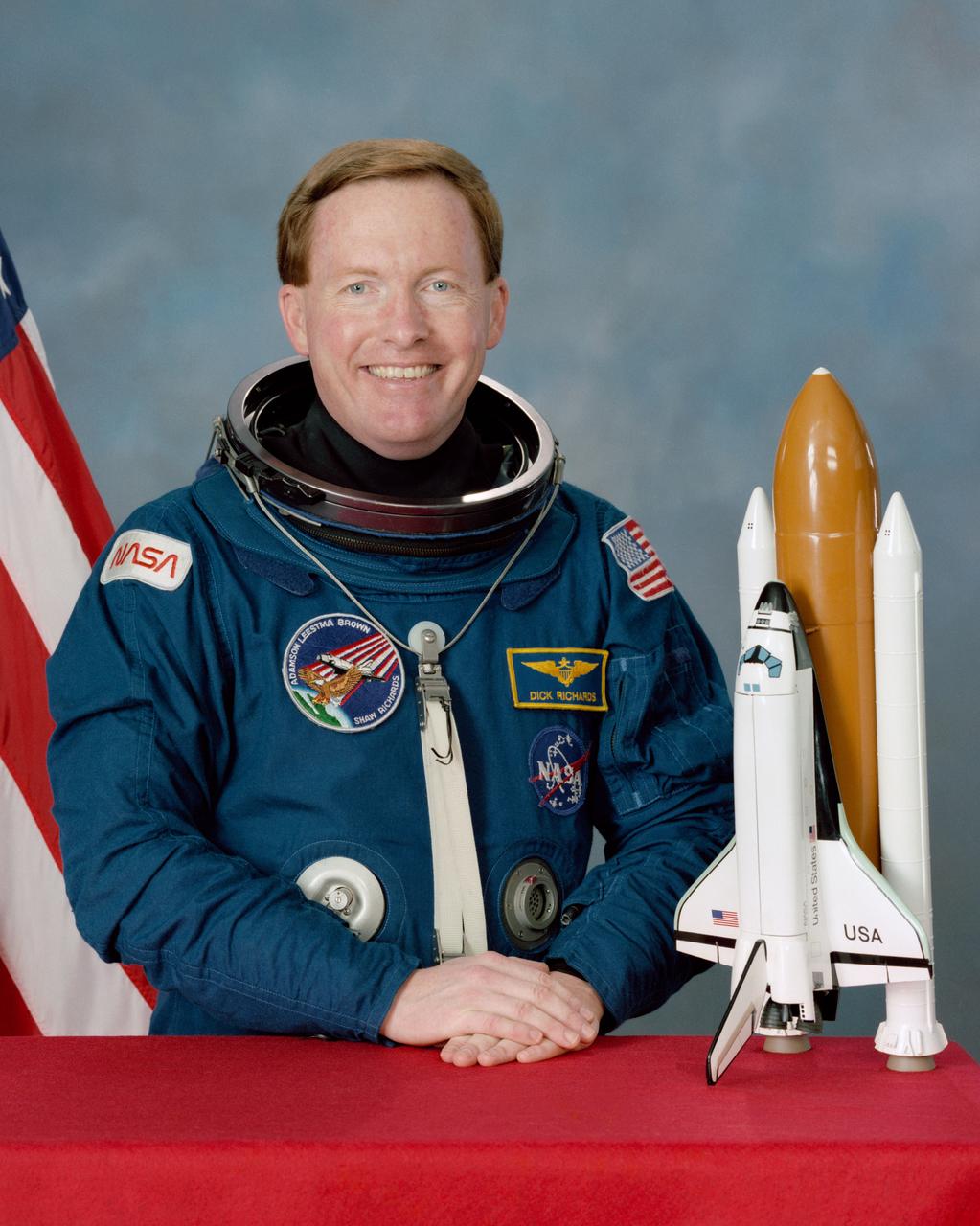
S89-29425 (20 March 1989) --- Astronaut Richard N. Richards.
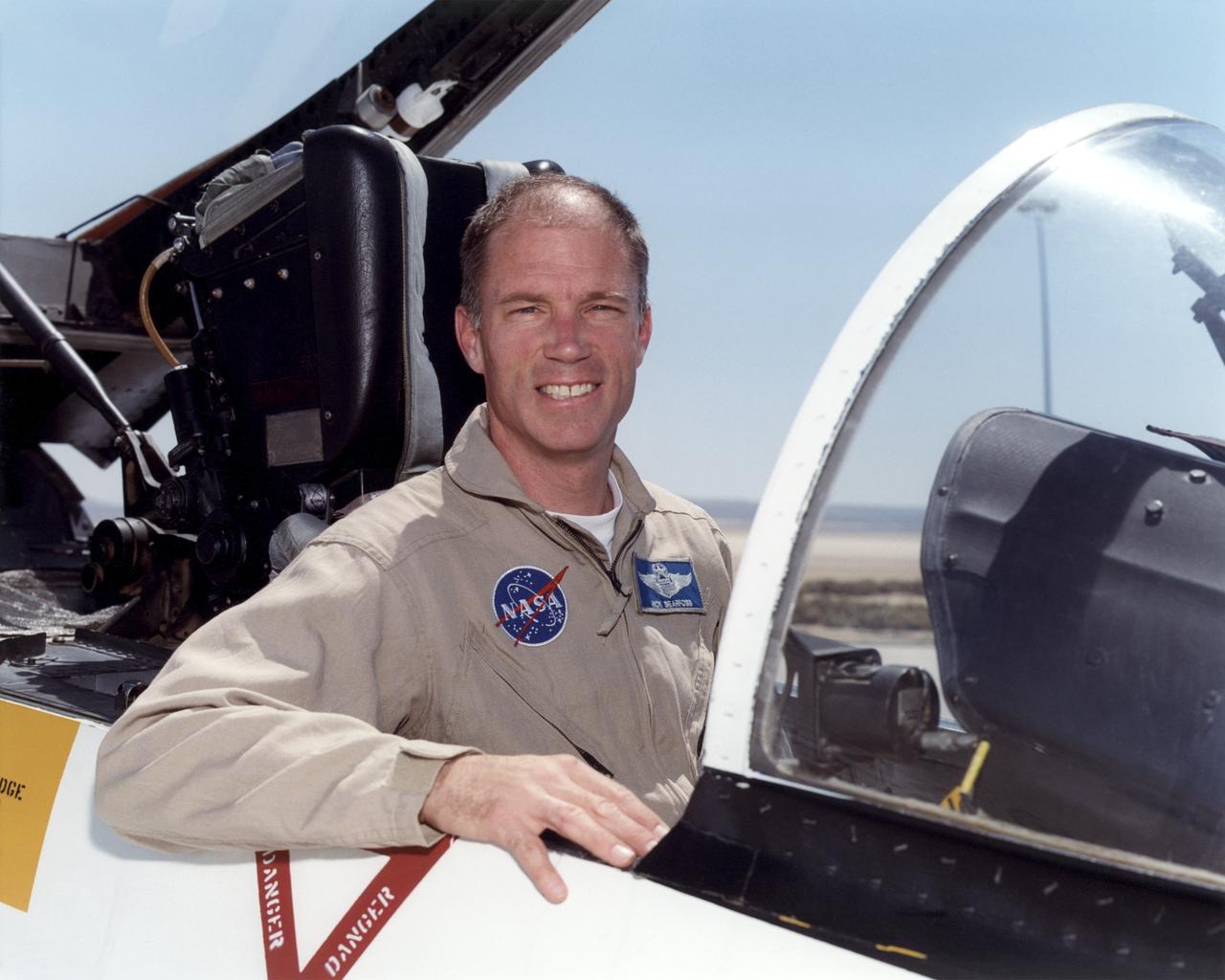
Richard A. Searfoss became a research pilot in the Flight Crew Branch of NASA's Dryden Flight Research Center, Edwards, Calif., in July 2001. He brought to Dryden more than 5,000 hours of military flying time and 939 hours in space. Searfoss served in the U.S. Air Force for more than 20 years, retiring with the rank of colonel. Following graduation in 1980 from Undergraduate Pilot Training at Williams Air Force Base, Ariz., Searfoss flew F-111s at RAF Lakenheath, England, and Mountain Home Air Force Base, Idaho. In 1988 he attended the U.S. Naval Test Pilot School, Patuxent River, Md., as a U.S. Air Force exchange officer. He was an instructor pilot at the U.S. Air Force Test Pilot School, Edwards Air Force Base, Calif., when selected for the astronaut program in January 1990. Searfoss became an astronaut in July 1991. A veteran of three space flights, Searfoss has logged 39 days in space. He served as STS-58 pilot on the seven-person life science research mission aboard Space Shuttle Columbia, launching from NASA's Kennedy Space Center, Fla., on Oct. 18, 1993, and landing at Edwards Air Force Base, Calif., on Nov. 1, 1993. The crew performed a number of medical experiments on themselves and 48 rats, expanding knowledge of human and animal physiology. Searfoss flew his second mission as pilot of STS-76 aboard the Space Shuttle Atlantis. During this nine-day mission, which launched March 22, 1996, the crew preformed the third docking of an American spacecraft with the Russian space station Mir. The crew transported to Mir nearly two tons of water, food, supplies, and scientific equipment, as well as U.S. Astronaut Shannon Lucid to begin her six-month stay in space. Completing 145 orbits, STS-76 landed at Edwards Air Force Base, Calif., on March 31, 1996. Searfoss commanded a seven-person crew on the STS-90 Neurolab mission launched on April 17, 1998. The crew served as both experiment subjects and operators for life science experiments focusing on the effects of m
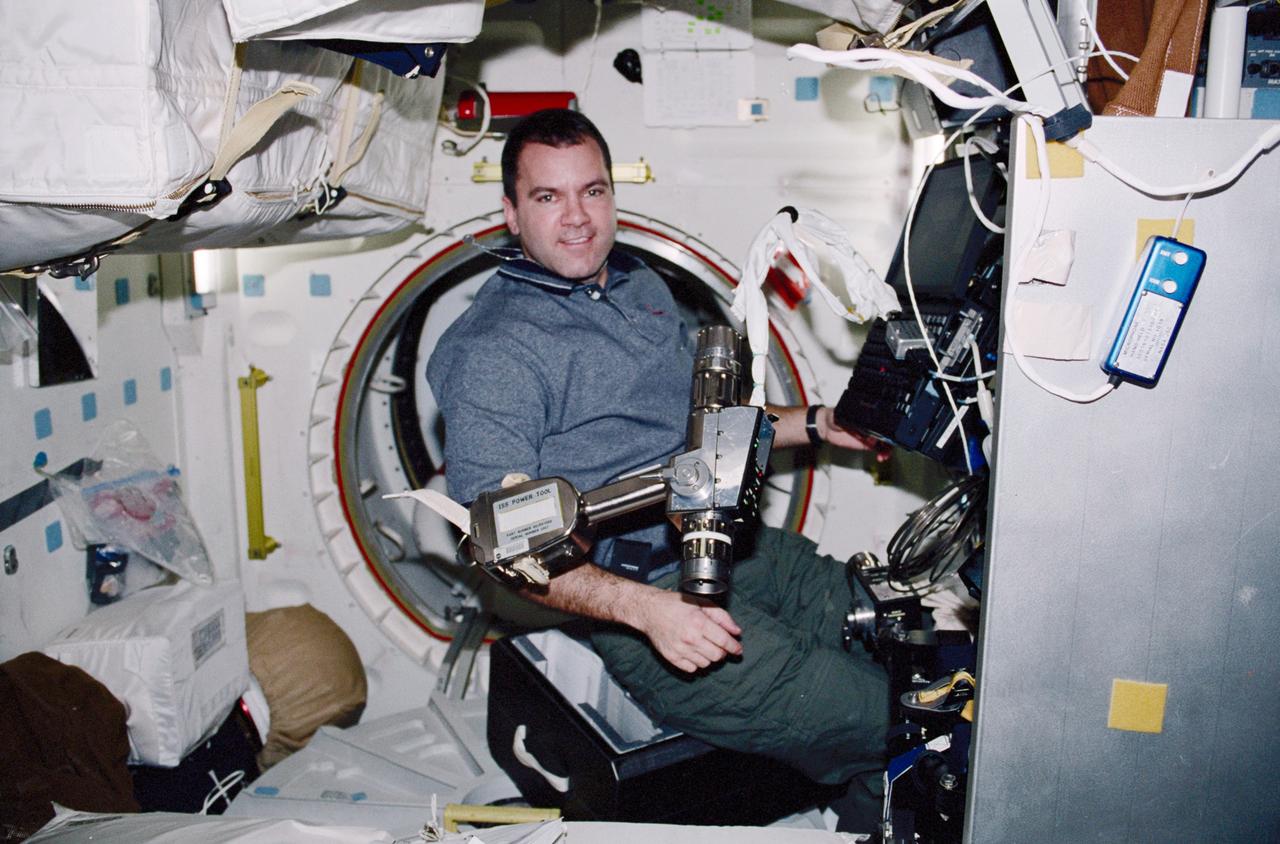
STS102-346-027 (8-21 March 2001) --- Astronaut Paul W. Richards, STS-102 mission specialist, consults data on a lap top computer on the Space Shuttle Discovery’s mid deck. An International Space Station (ISS) pistol grip tool floats near Richards.
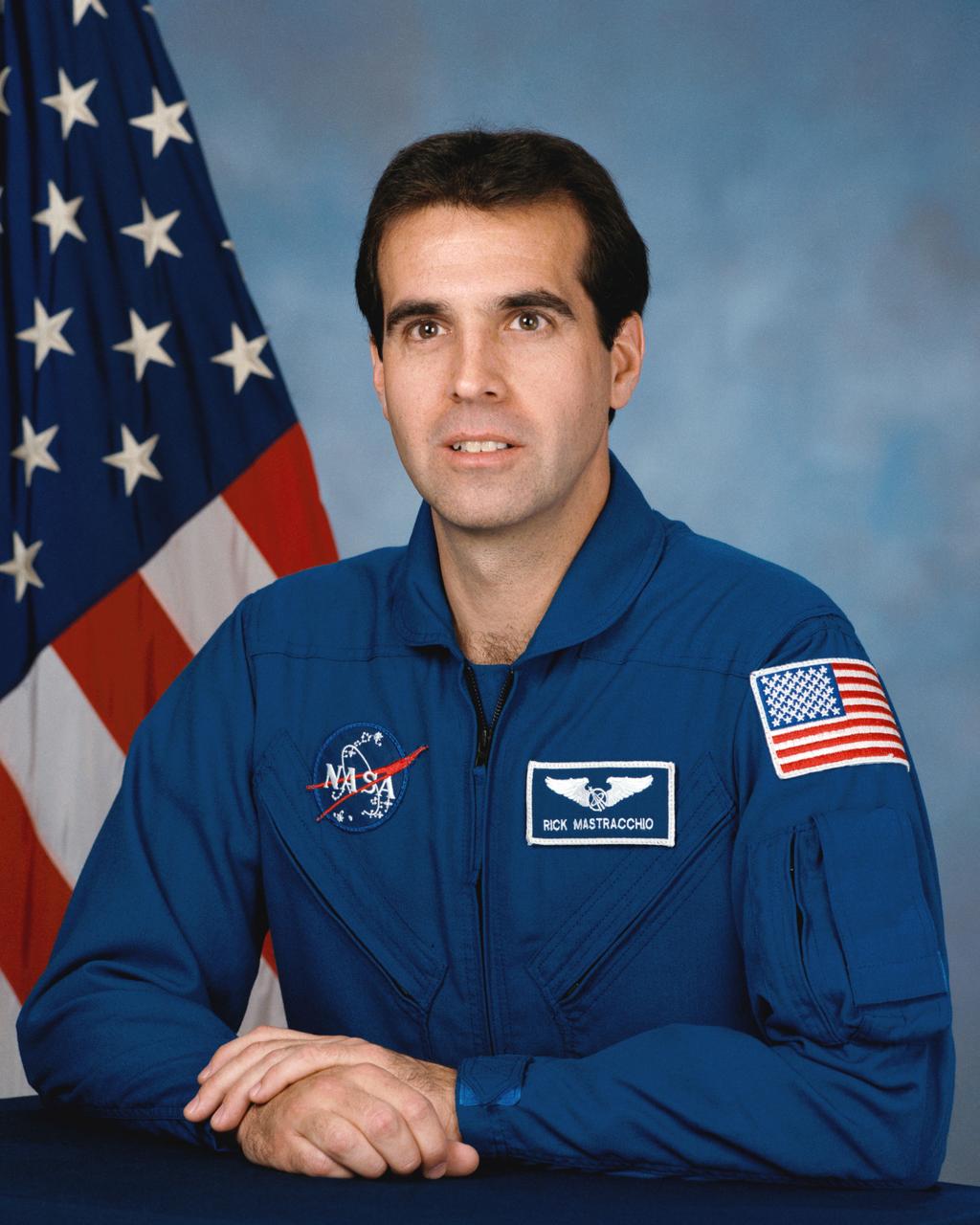
S96-16635 (1996) --- Astronaut Richard Mastracchio.
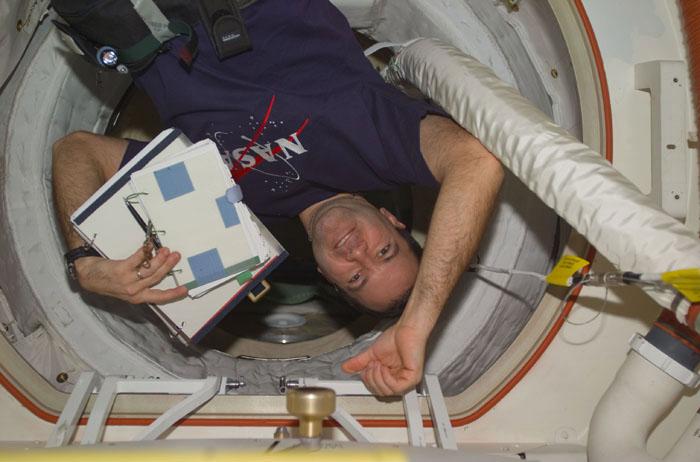
STS102-E-5235 (17 March 2001) --- Astronaut Paul W. Richards, mission specialist, totes a clip board and a notebook as he passes through a hatchway. Richards, along with his STS-102 crew mates, joined the International Space Station (ISS) crew members in moving supplies. The image was recorded with a digital still camera.
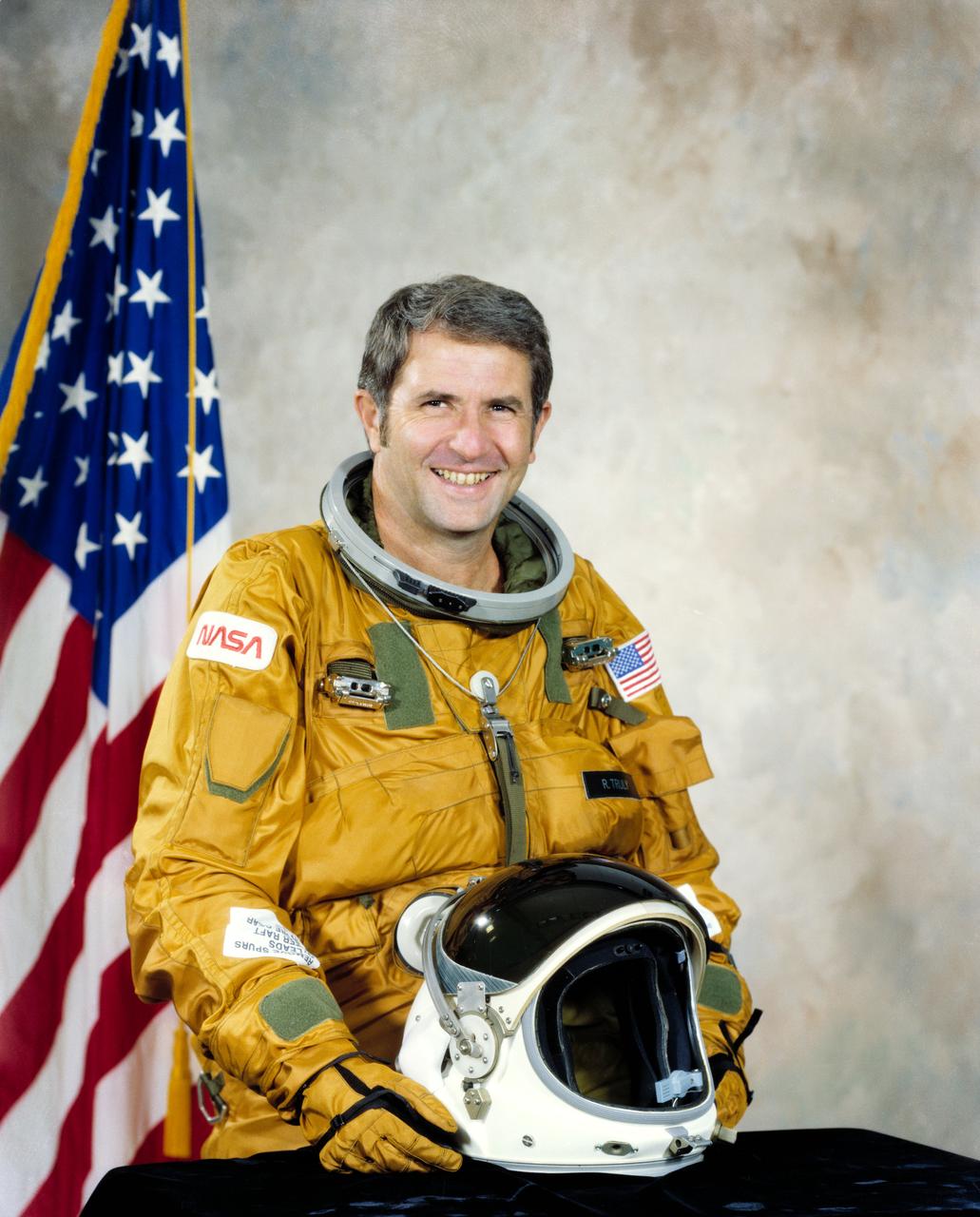
S79-36527 (Oct. 1979) --- Astronaut Richard H. Truly.

S90-45098 (November 1990) --- Astronaut Richard O. Covey.
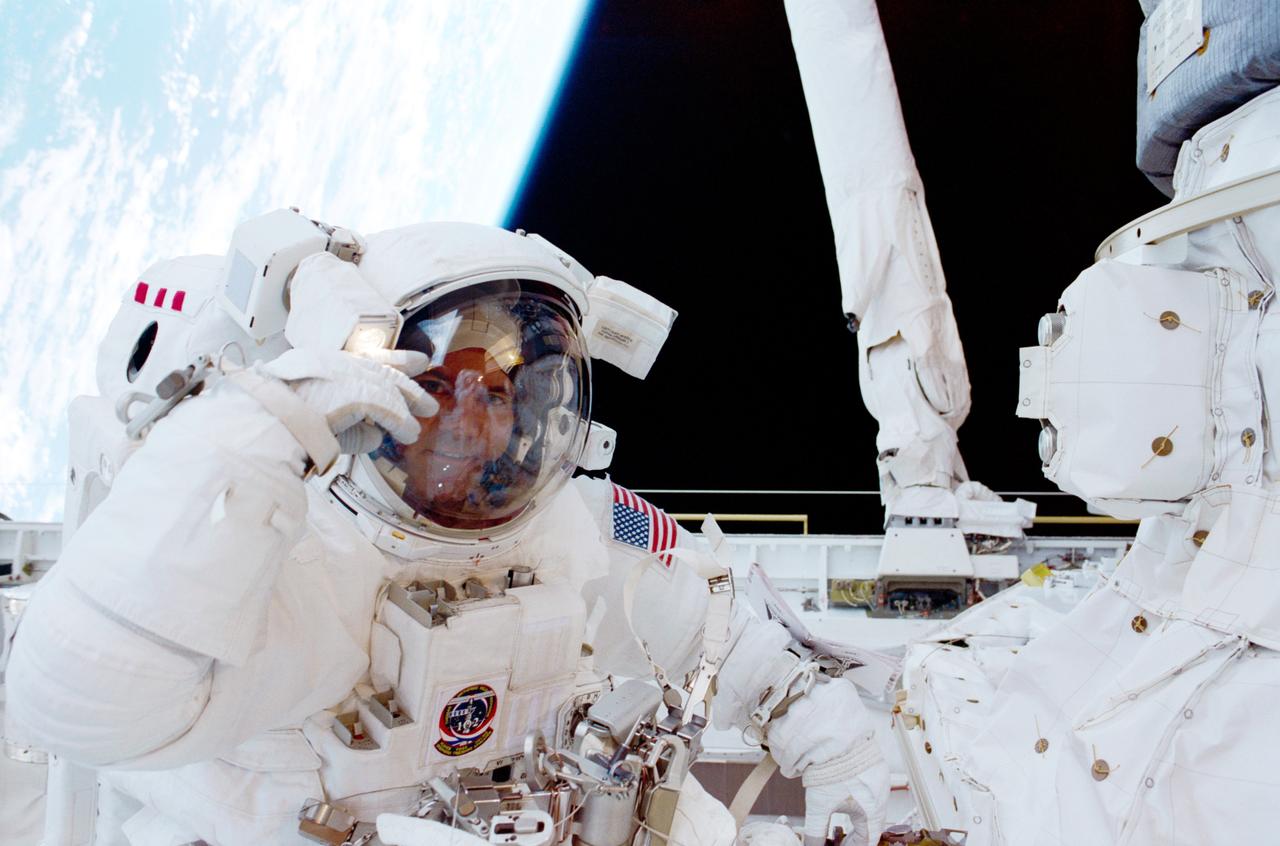
STS102-315-031 (13 March 2001) --- Astronaut Paul W. Richards, STS-102 mission specialist, works in the cargo bay of the Space Shuttle Discovery during the second of two scheduled STS-102 space walks.
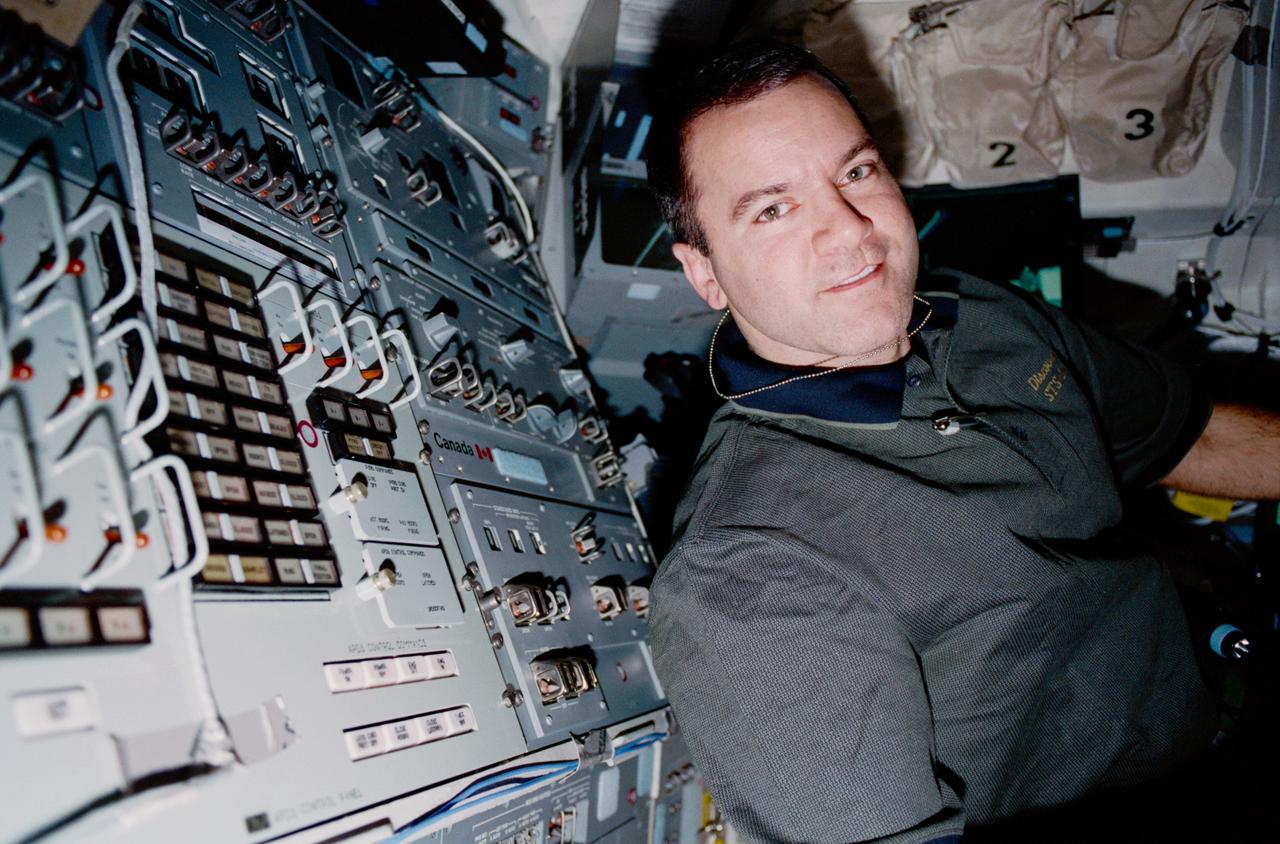
STS102-317-030 (8-21 March 2001)--- Astronaut Paul W. Richards, mission specialist, is photographed on the aft flight deck of the orbiting Space Shuttle Discovery during the STS-102 mission.
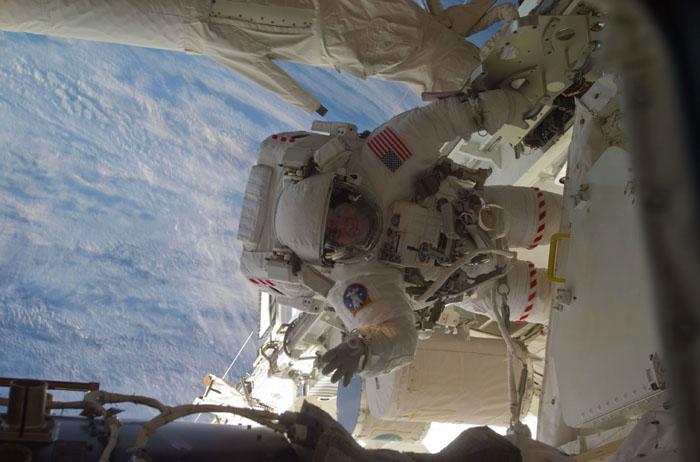
STS102-E-5194 (13 March 2001) --- Astronaut Paul W. Richards, mission specialist, waves toward his crew mate during the second STS-102 space walk. The picture was taken with a digital still camera.
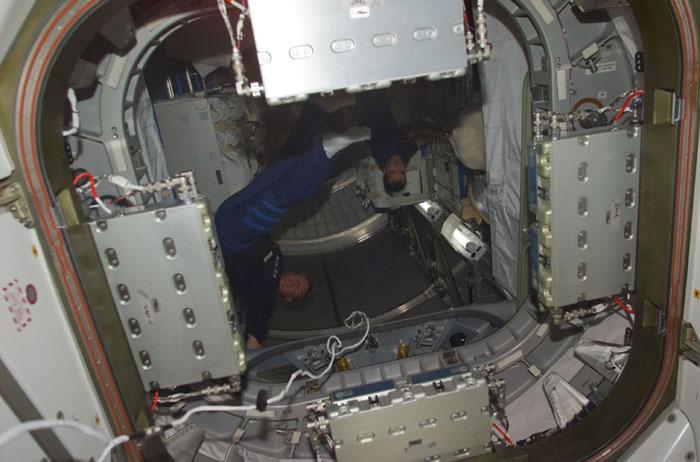
STS102-E-5239 (17 March 2001) --- Astronauts Andrew S.W. Thomas (left) and Paul W. Richards, STS-102 mission specialists, are at work in the Leonardo cargo module. The image was recorded with a digital still camera.
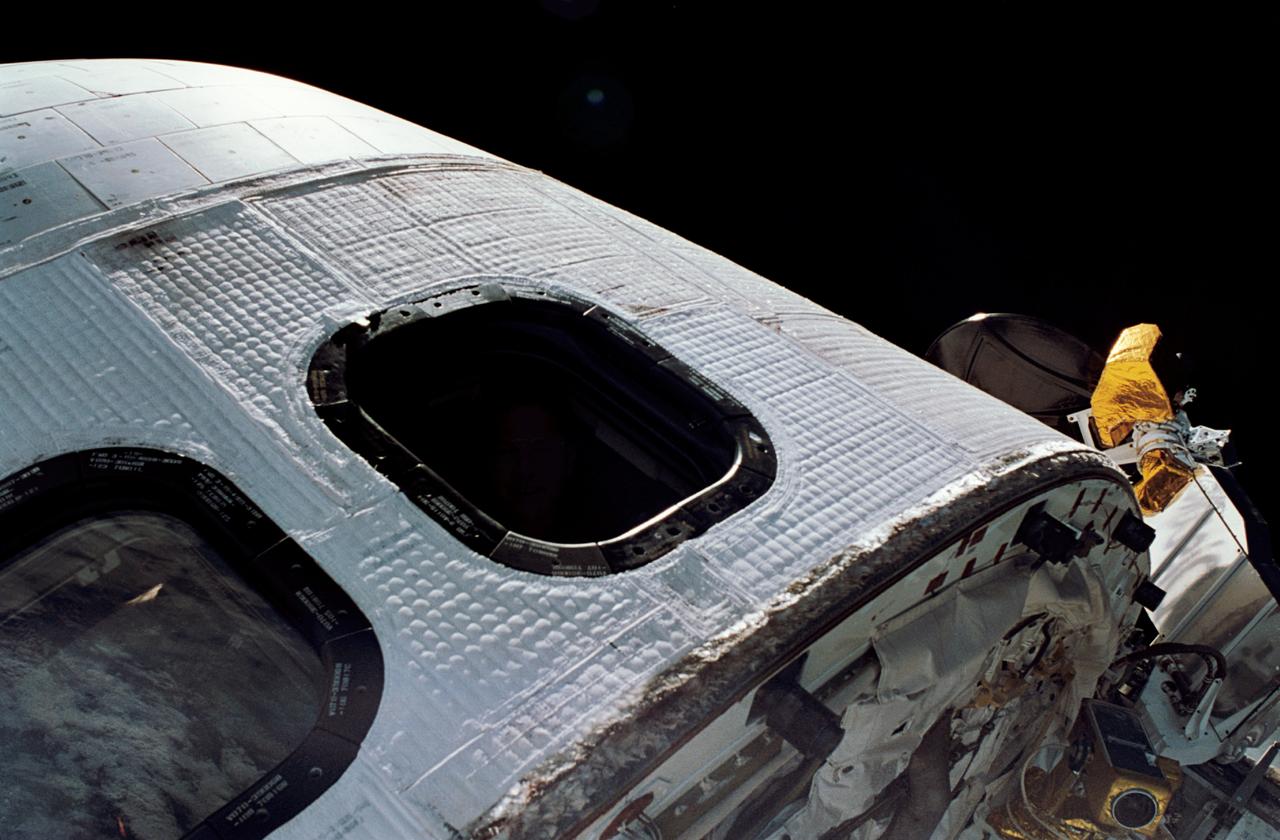
STS064-310-005 (16 Sept. 1994) --- Astronaut Richard N. Richards, STS-64 commander, looks through one of the space shuttle Discovery's overhead flight deck windows to view the Extravehicular Activity (EVA) activities of astronauts Carl J. Meade, who took this picture, and Mark C. Lee. Wearing spacesuits in and around the space shuttle Discovery's cargo bay, astronauts Meade and Lee took turns trying out the new EVA test hardware called Simplified Aid for EVA Rescue (SAFER). Photo credit: NASA or National Aeronautics and Space Administration
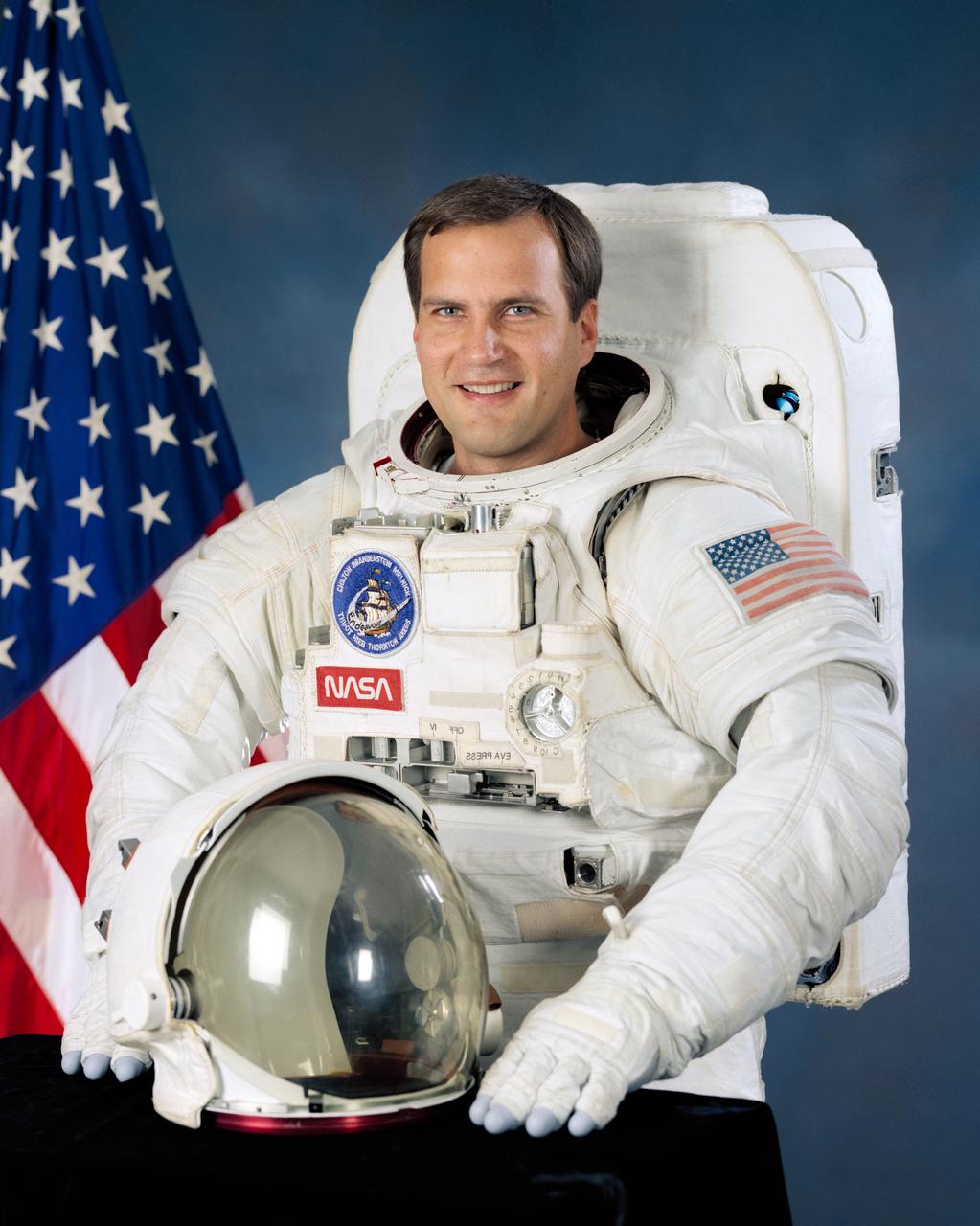
S92-41511 (1992) --- Astronaut Richard J. Hieb.

STS102-329-007 (8-21 March 2001) --- Astronaut Paul W. Richards, STS-102 mission specialist, is about to enjoy some coffee with cream while on the Space Shuttle Discovery’s aft flight deck.
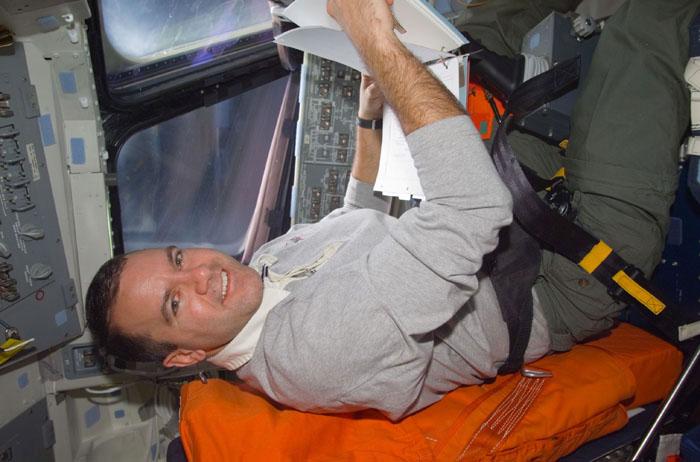
STS102-E-5010 (9 March 2001) --- Astronaut Paul W. Richards, mission specialist, temporarily occupies the commander's station on the forward flight deck of Earth-orbiting Space Shuttle Discovery during late Flight Day 1 activity.
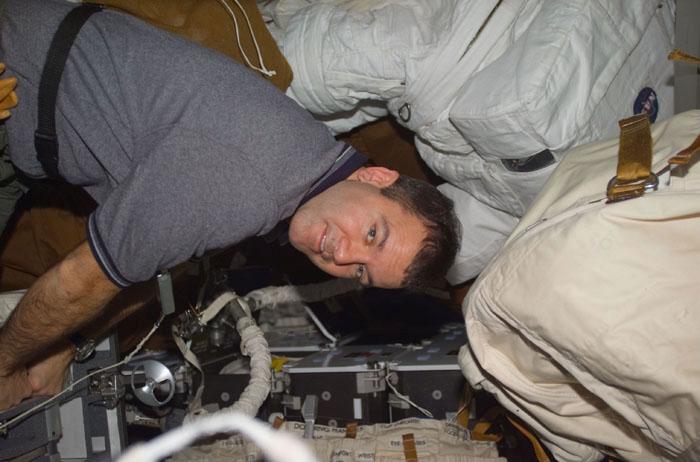
STS102-E-5211 (14 March 2001) --- Astronaut Paul W. Richards, mission specialist, participates in the task of moving equipment and supplies between the Space Shuttle Discovery and the International Space Station (ISS). The image was recorded with a digital still camera.
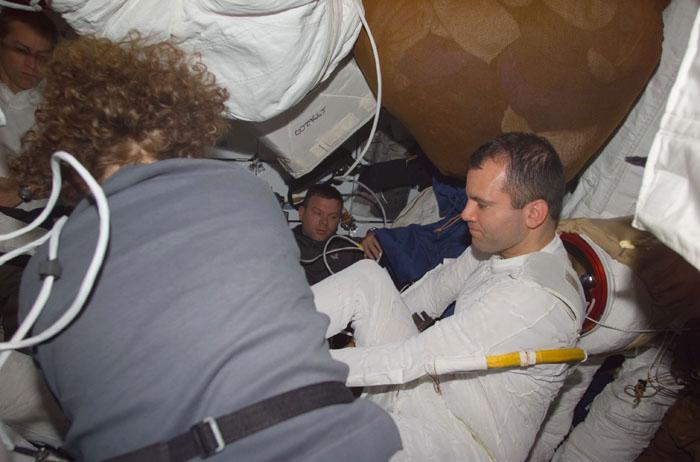
STS102-E-5162 (13 March 2001) --- Astronaut Susan J. Helms assists astronaut Paul W. Richards, mission specialist, during suit donning on Discovery's mid deck. Shortly afterward,Richards joined astronaut Andrew S.W. Thomas for the second STS-102 space walk.
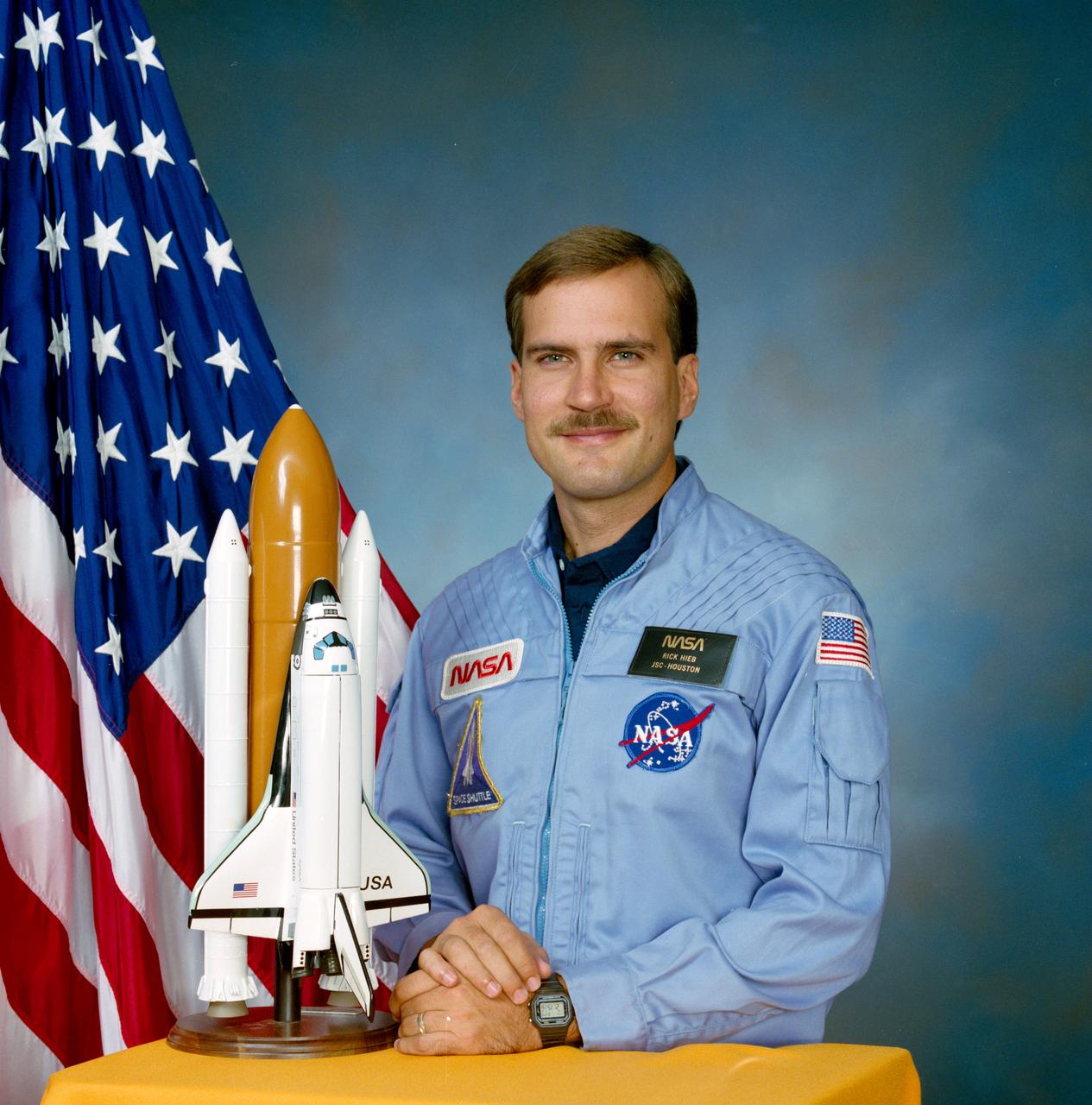
S85-41893 (Oct 1985) --- Astronaut Richard J. Hieb.

S78-35295 (20 Sept 1978) --- Astronaut Richard M. Mullane

S78-35298 (20 Sept 1978) Astronaut Richard O. Covey, 1978 ASCAN.

JSC2000-03747 (15 March 2000) --- Astronaut Richard M. Linnehan, mission specialist.

S64-31459 (10 Sept. 1964) --- Astronaut Richard F. Gordon Jr. portrait. Photo credit: NASA
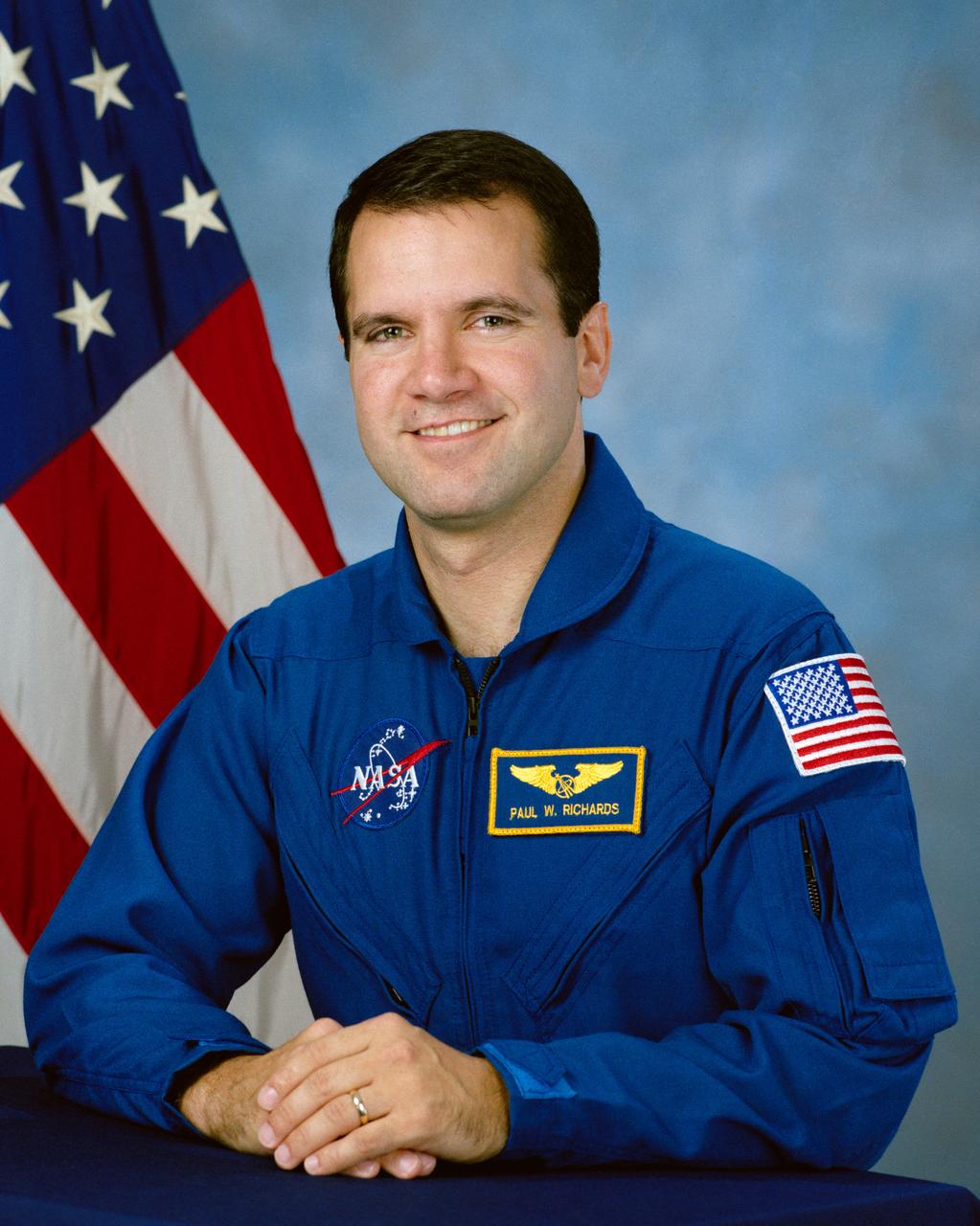
S96-16630 (21 Aug 1996) --- Astronaut Paul W. Richards, 1996 ASCAN/mission specialist.
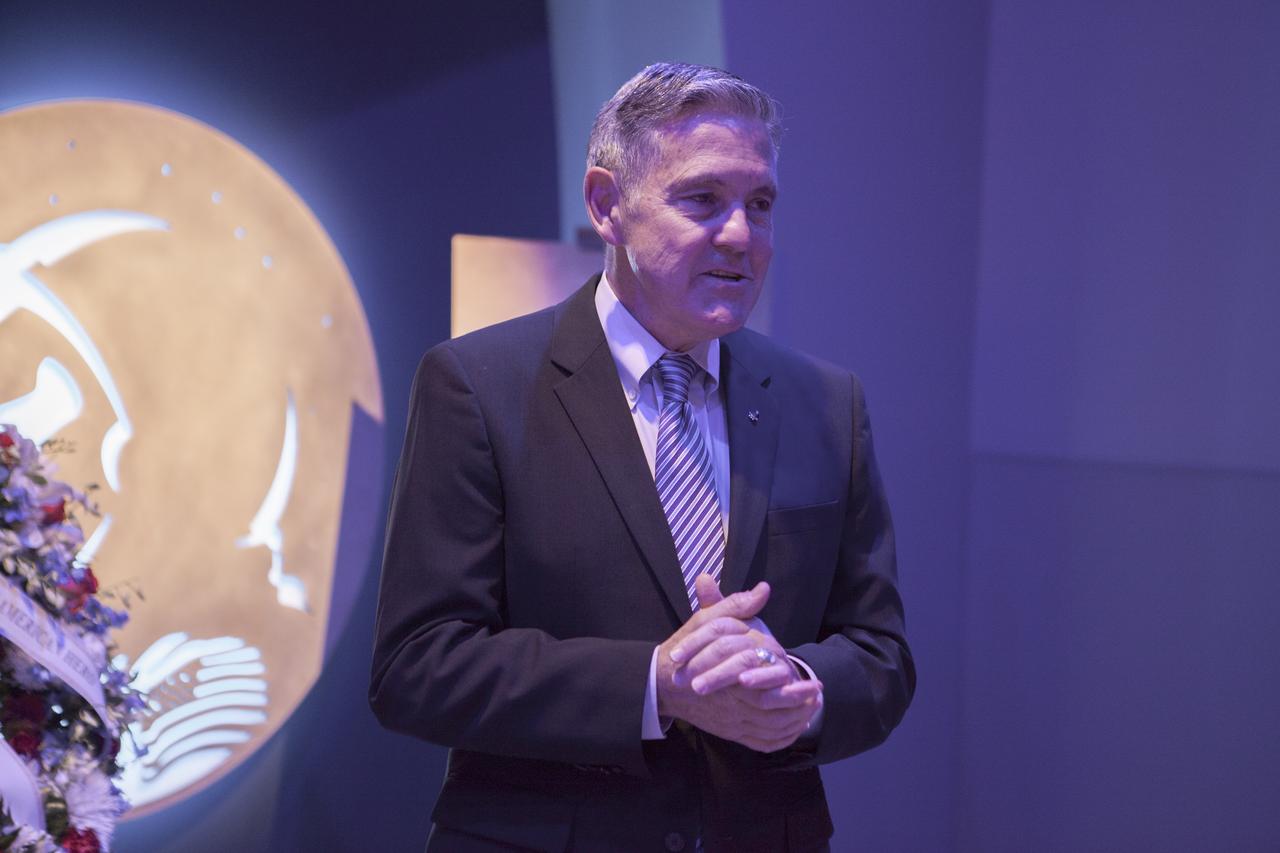
In the Heroes and Legends exhibit at the Kennedy Space Center Visitor Complex, Center Director Bob Cabana speaks during a ceremony honoring the memory of former NASA astronaut Richard Gordon. Having performed two spacewalks during Gemini XI in 1966, Gordon later served as command module pilot on Apollo 12 in 1969. Gordon died Nov. 6, 2017, at the age of 88.
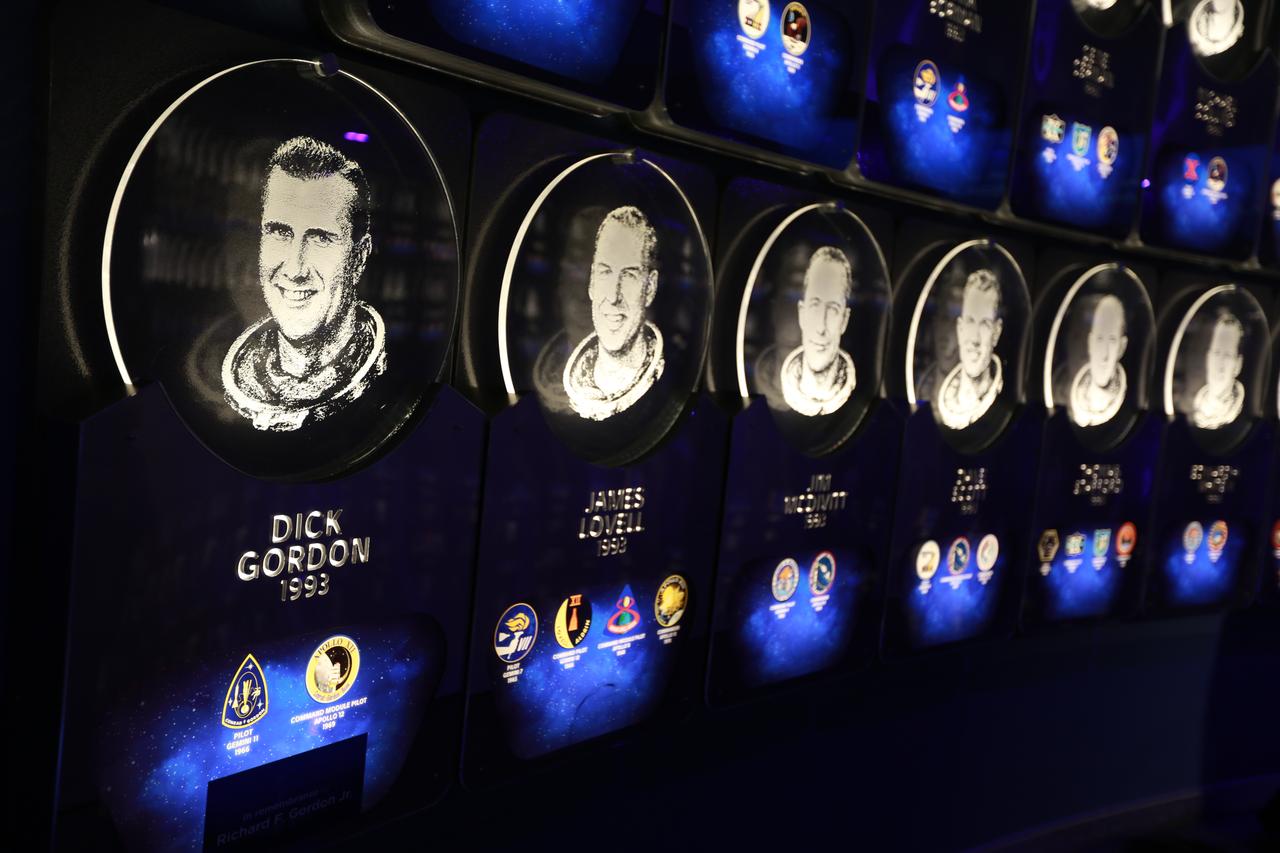
In the Heroes and Legends exhibit at the Kennedy Space Center Visitor Complex, former NASA astronaut Richard Gordon's plaque is seen among others enshrined in the U.S. Astronaut Hall of Fame. Gordon performed two spacewalks during Gemini XI in 1966 and was command module pilot on Apollo 12 in 1969. Gordon died Nov. 6, 2017, at the age of 88.
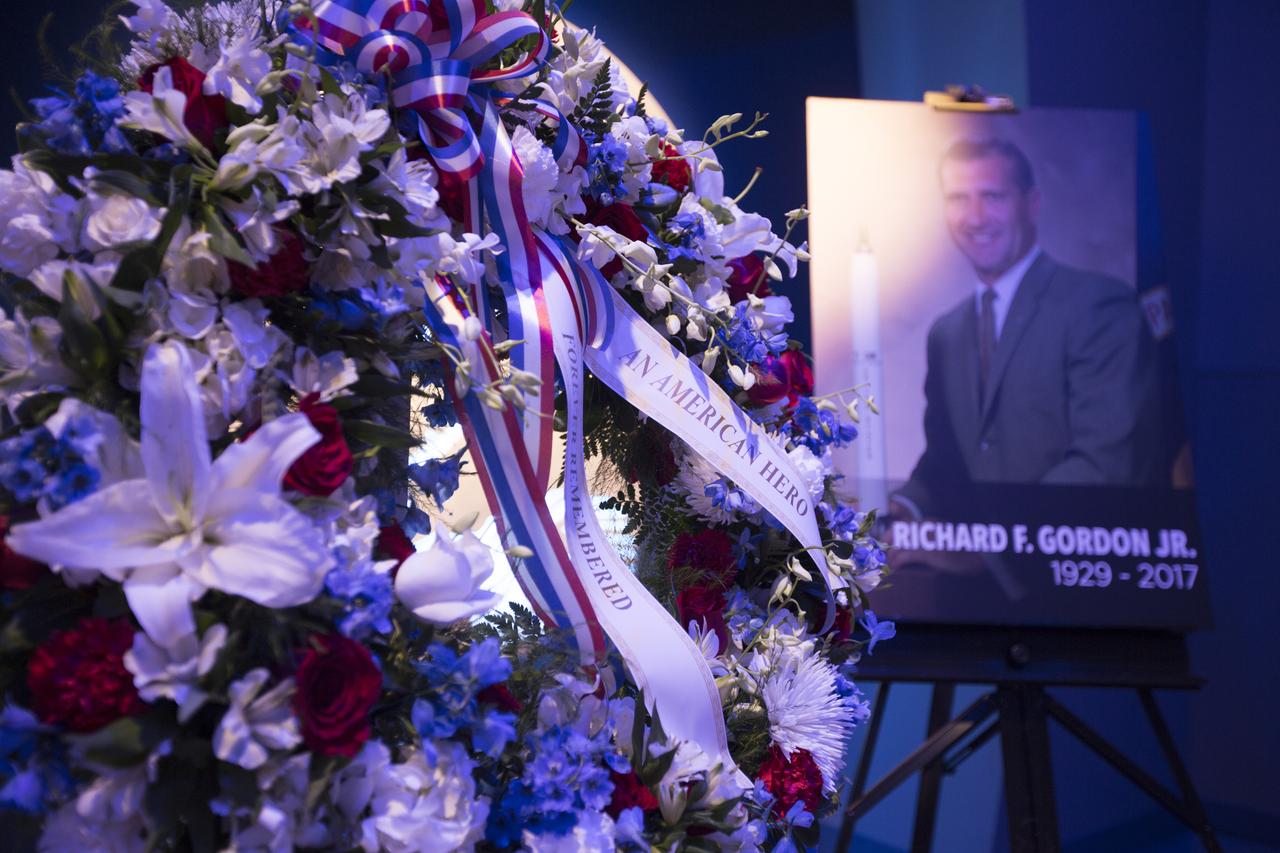
In the Heroes and Legends exhibit at the Kennedy Space Center Visitor Complex, a memorial wreath was placed following a ceremony to honor the memory of former NASA astronaut Richard Gordon. He performed two spacewalks during Gemini XI in 1966 and was command module pilot on Apollo 12 in 1969. Gordon died Nov. 6, 2017, at the age of 88.
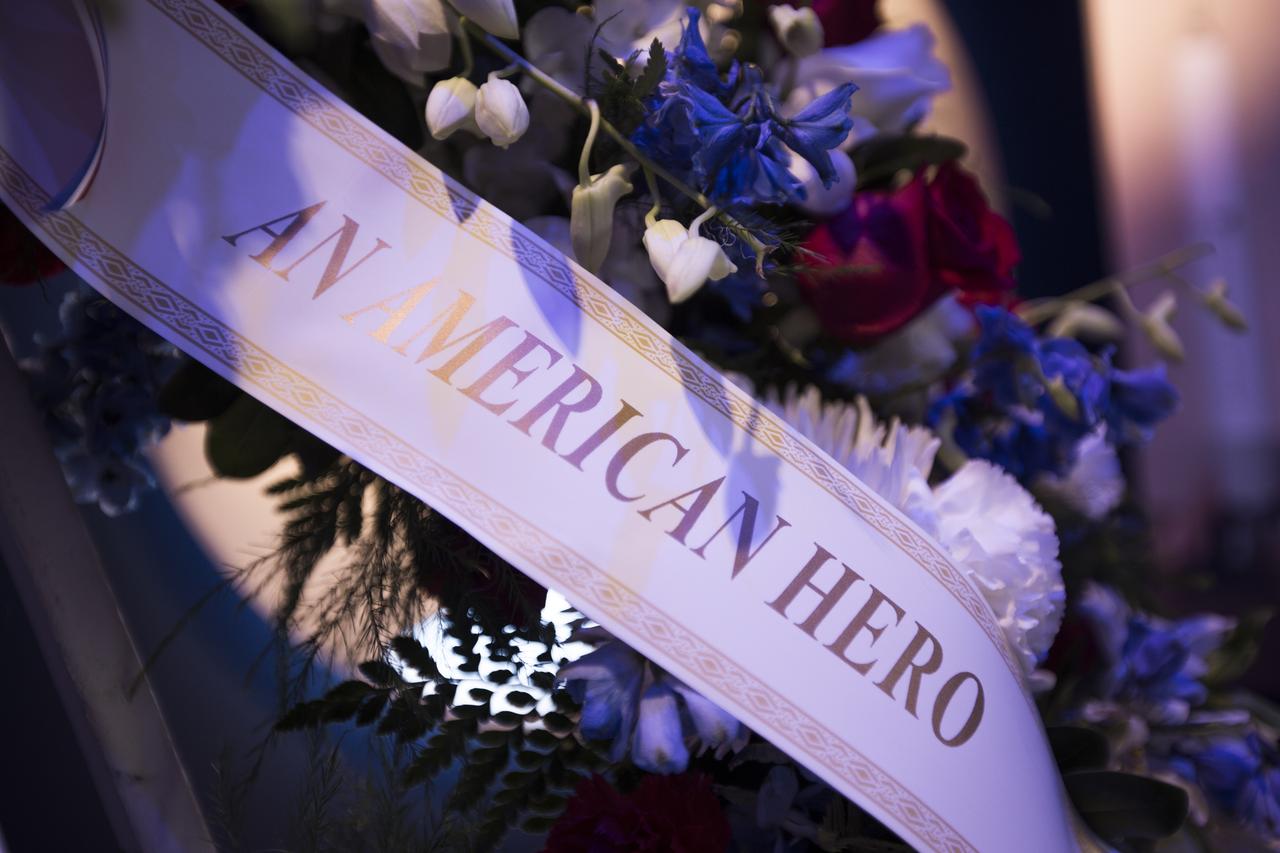
In the Heroes and Legends exhibit at the Kennedy Space Center Visitor Complex, a memorial wreath was placed following a ceremony to honor the memory of former NASA astronaut Richard Gordon. He performed two spacewalks during Gemini XI in 1966 and was command module pilot on Apollo 12 in 1969. Gordon died Nov. 6, 2017, at the age of 88.
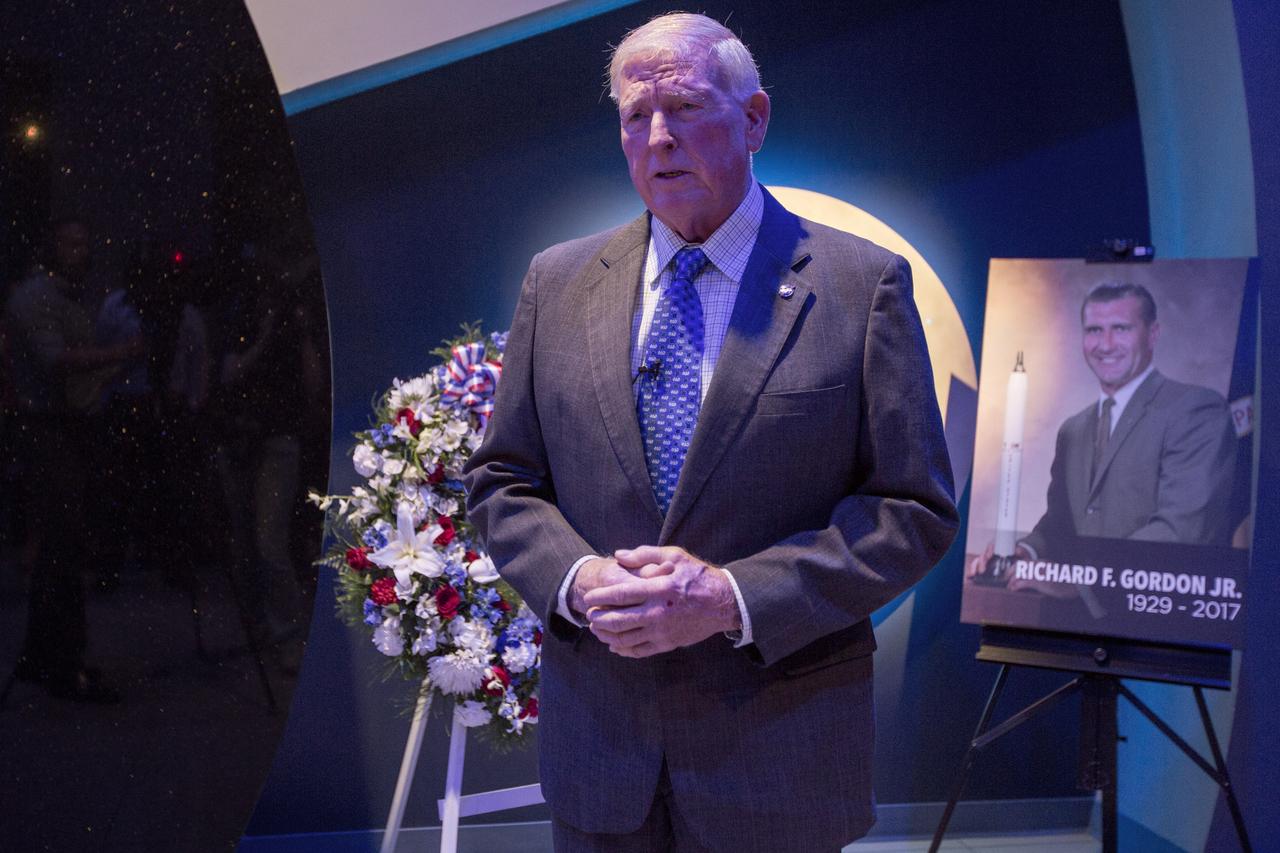
In the Heroes and Legends exhibit at the Kennedy Space Center Visitor Complex, space shuttle astronaut Jon McBride, speaks at a ceremony to honoring the memory of former NASA astronaut Richard Gordon. Having performed two spacewalks during Gemini XI in 1966, Gordon later served as command module pilot on Apollo 12 in 1969. Gordon died Nov. 6, 2017, at the age of 88.
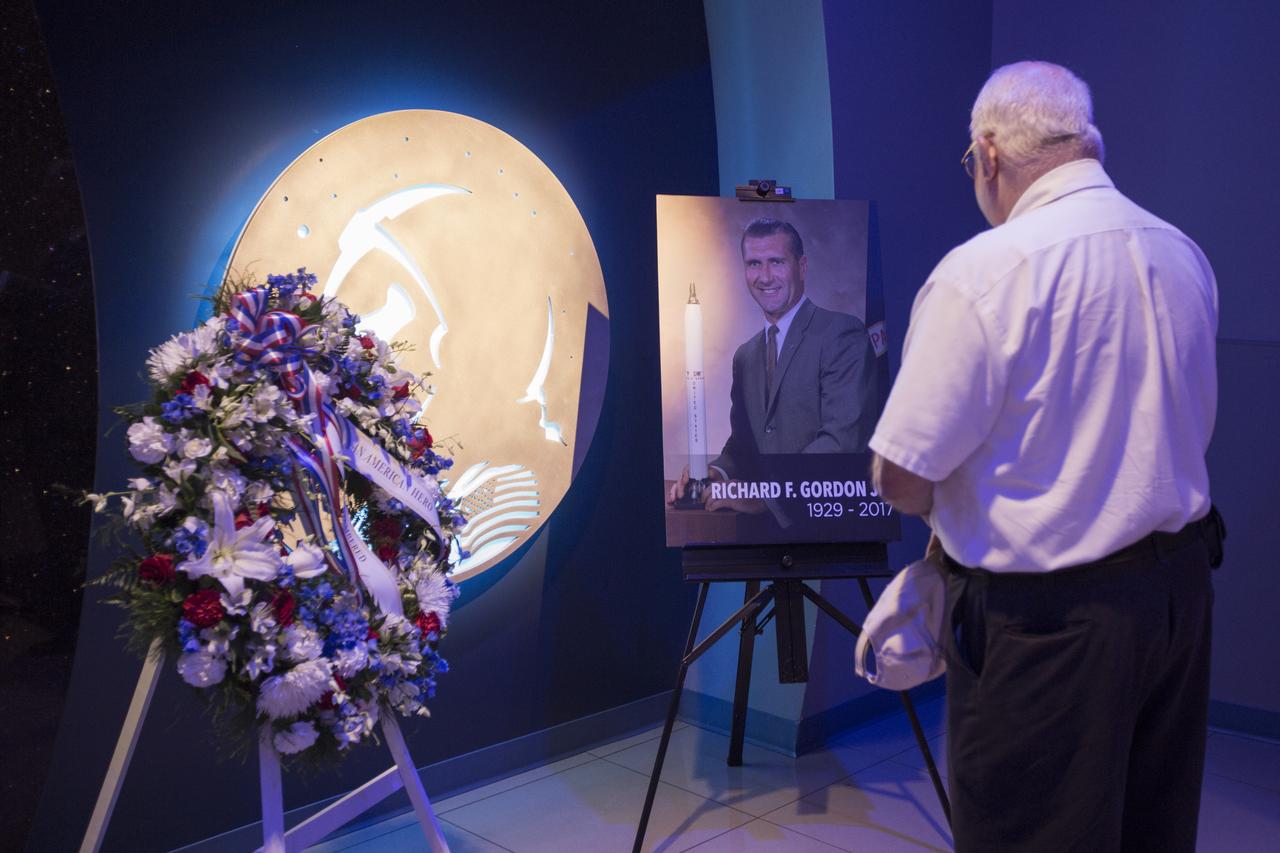
In the Heroes and Legends exhibit at the Kennedy Space Center Visitor Complex, a guest pays respect to former NASA astronaut Richard Gordon. A memorial wreath was placed following a ceremony to honor the memory of Gordon who performed two spacewalks during Gemini XI in 1966 and served as command module pilot on Apollo 12 in 1969. Gordon died Nov. 6, 2017, at the age of 88.
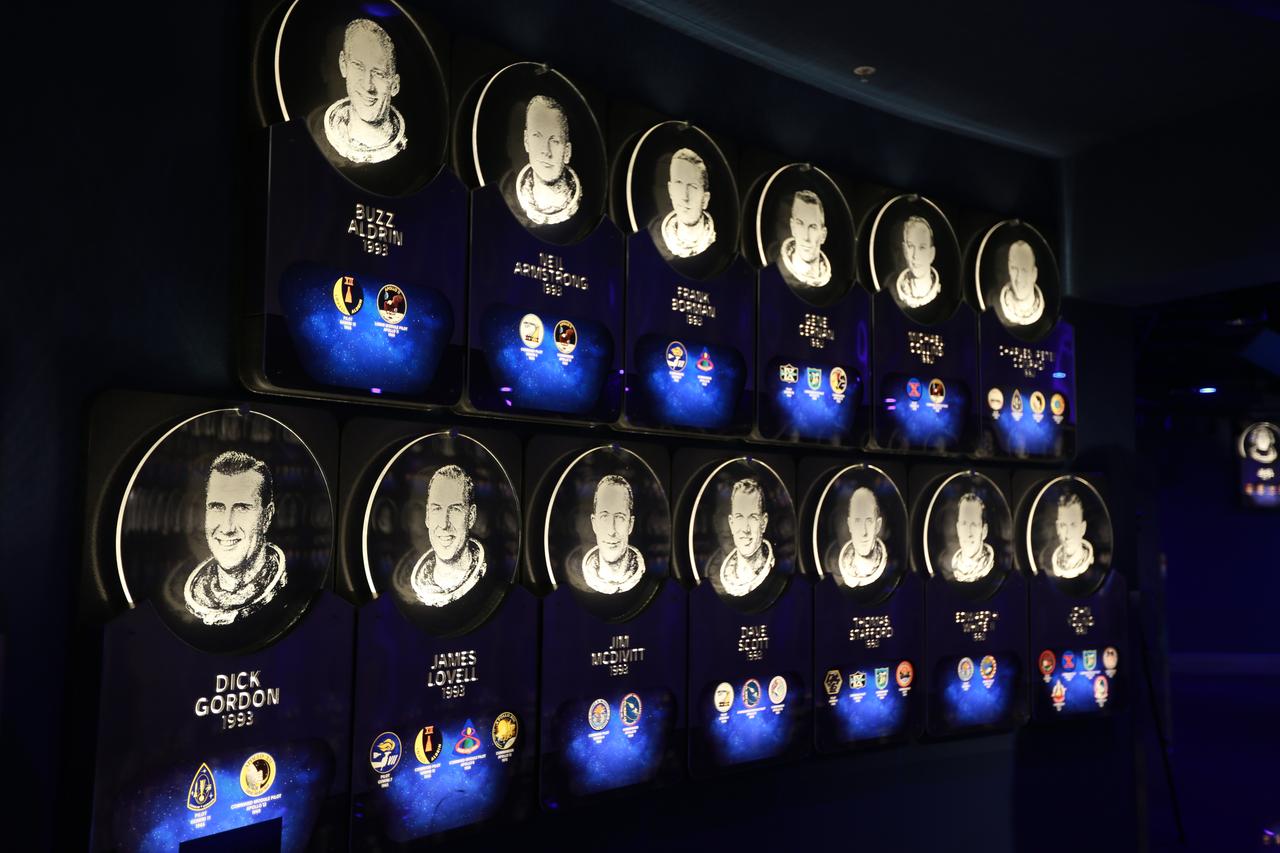
In the Heroes and Legends exhibit at the Kennedy Space Center Visitor Complex, former NASA astronaut Richard Gordon's plaque is seen among others enshrined in the U.S. Astronaut Hall of Fame. Gordon performed two spacewalks during Gemini XI in 1966 and was command module pilot on Apollo 12 in 1969. Gordon died Nov. 6, 2017, at the age of 88.
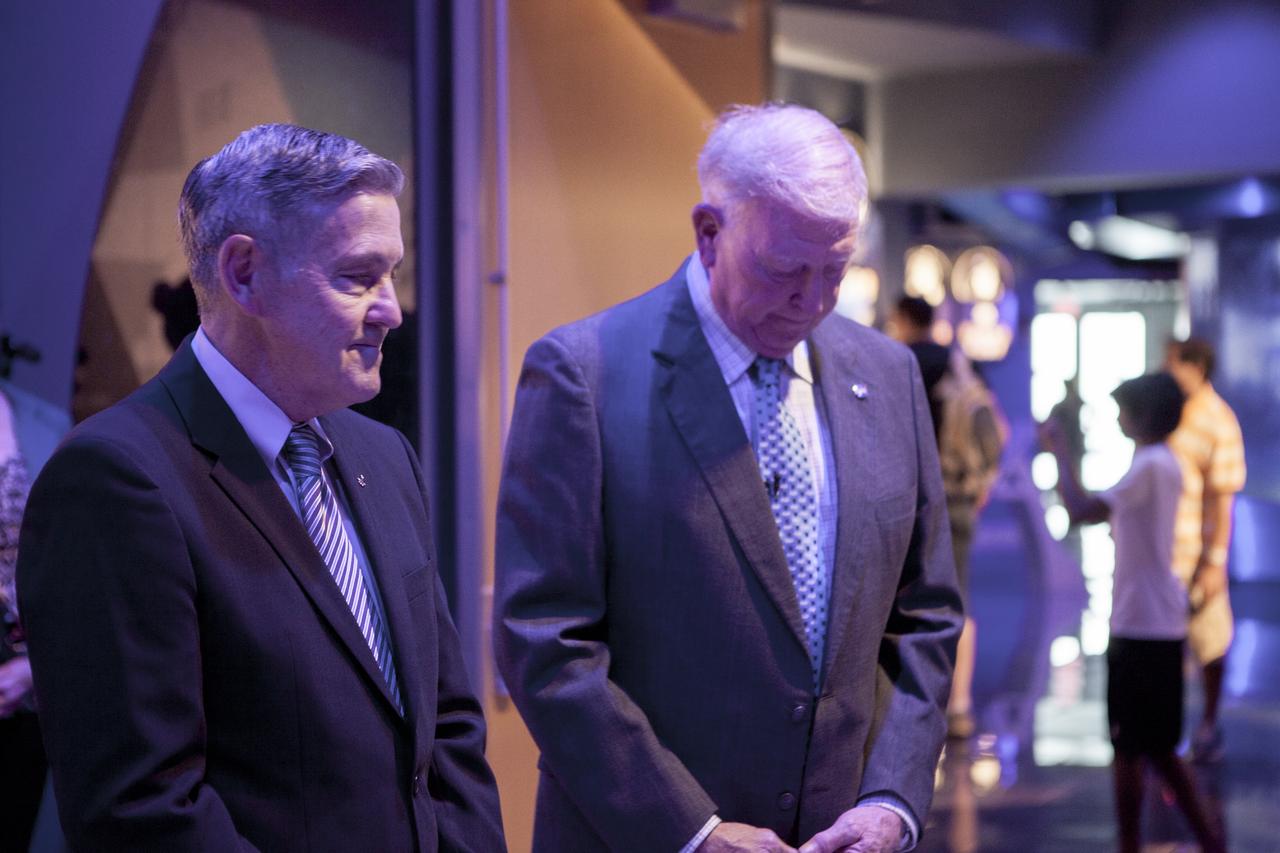
In the Heroes and Legends exhibit at the Kennedy Space Center Visitor Complex, Center Director Bob Cabana and space shuttle astronaut Jon McBride participate in a ceremony to honoring the memory of former NASA astronaut Richard Gordon. Having performed two spacewalks during Gemini XI in 1966, Gordon later served as command module pilot on Apollo 12 in 1969. Gordon died Nov. 6, 2017, at the age of 88.
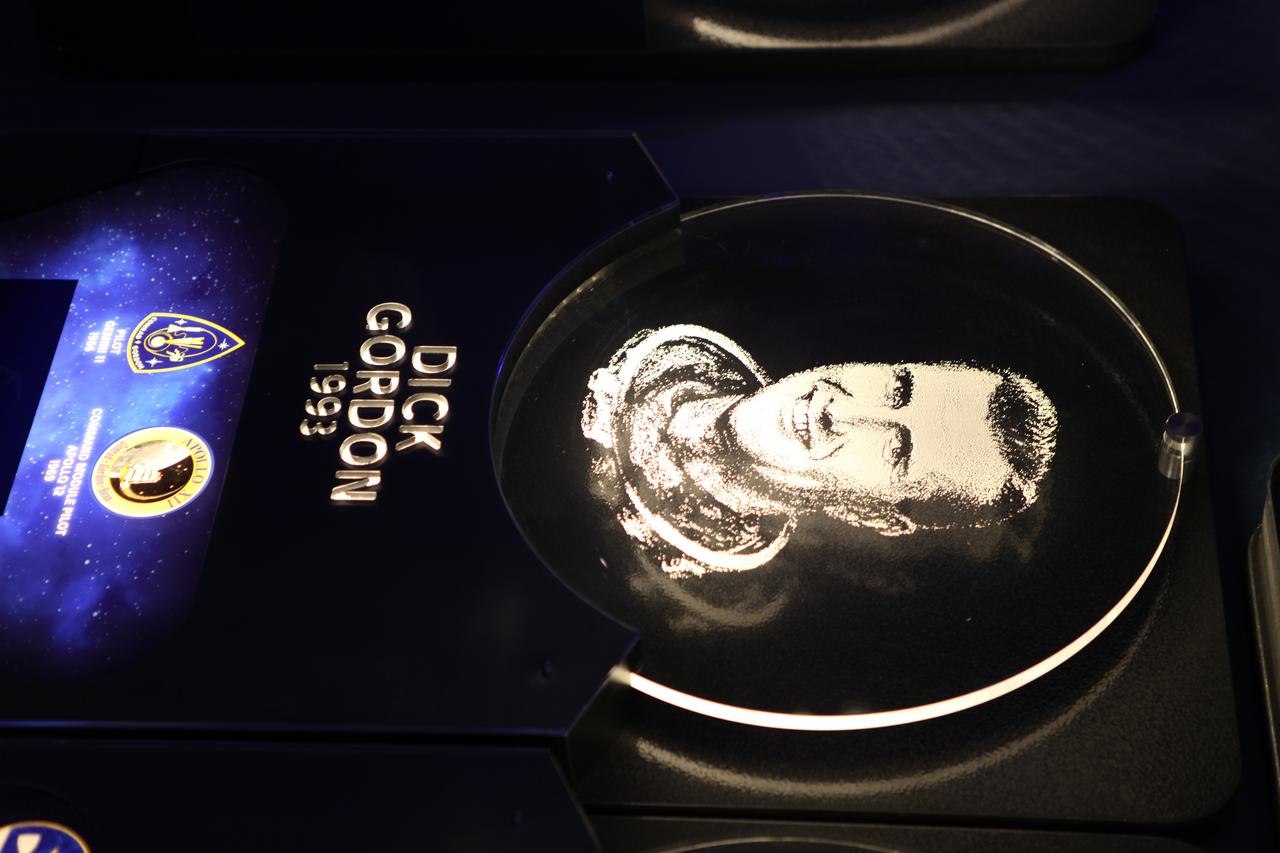
In the Heroes and Legends exhibit at the Kennedy Space Center Visitor Complex, former NASA astronaut Richard Gordon's plaque is seen among other enshrines of the U.S. Astronaut Hall of Fame. Gordon performed two spacewalks during Gemini XI in 1966 and was command module pilot on Apollo 12 in 1969. Gordon died Nov. 6, 2017, at the age of 88.
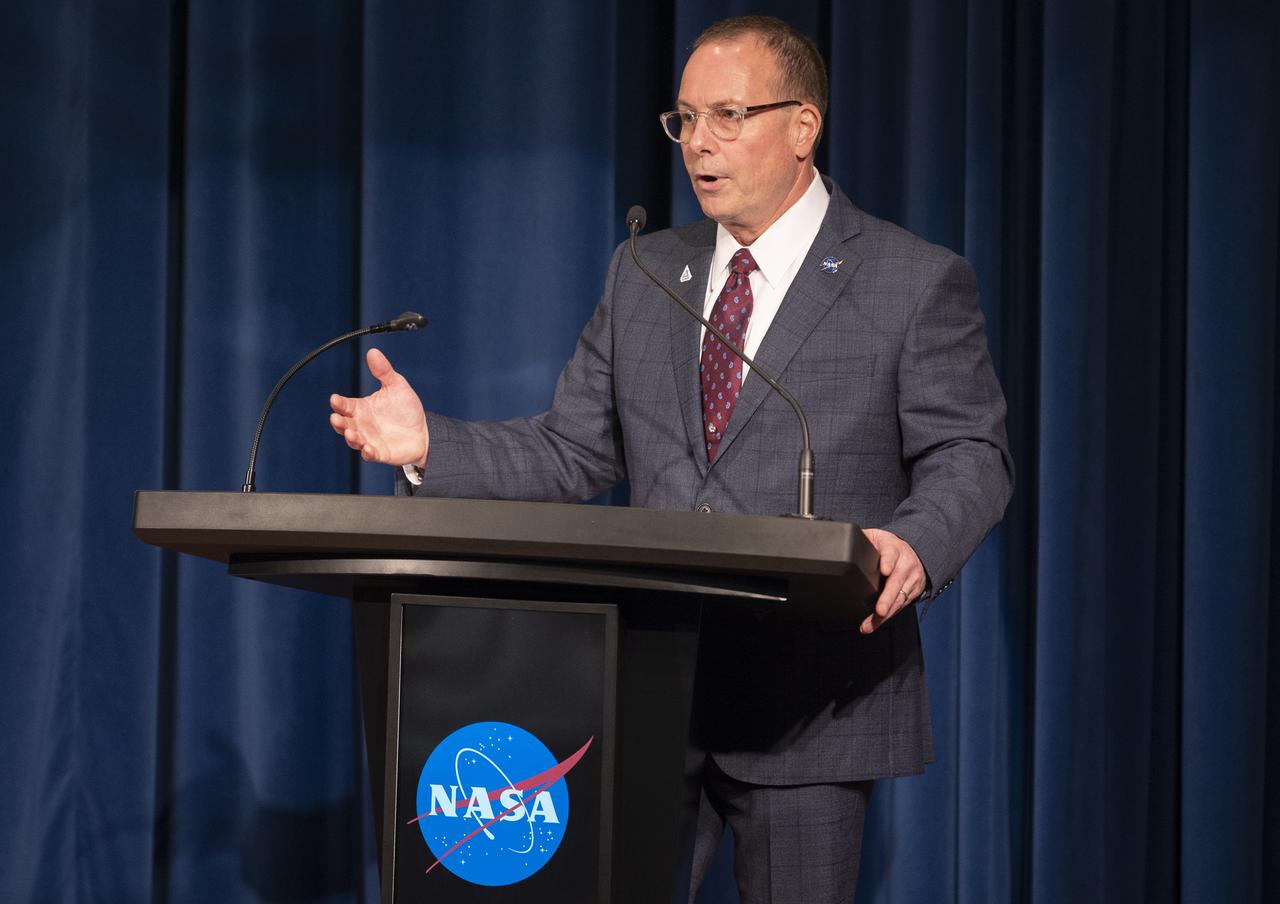
Richard Gilbrech, Director of NASA's Stennis Space Center, speaks at an all-hands for employees following the State of NASA address, Monday, Feb. 10, 2020, at NASA’s Stennis Space Center near Bay St. Louis, Mississippi. Photo Credit: (NASA/Joel Kowsky)
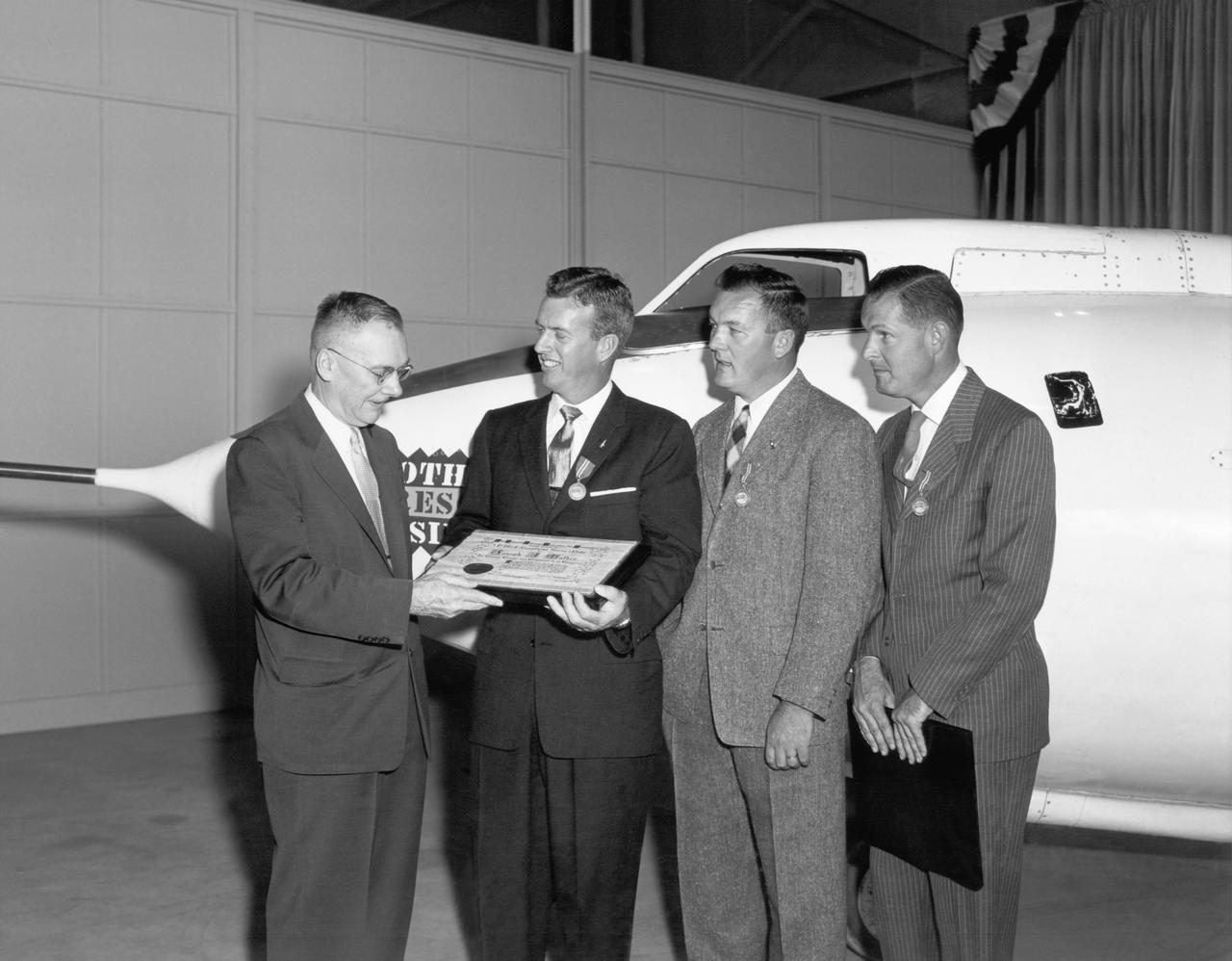
Hugh Dryden (far left) presents the NACA Exceptional Service Medal award at the NACA High Speed Flight Station. He awarded (L-R) Joe Walker (X-1A research pilot), Stan Butchart (pilot of the B-29 mothership),and Richard Payne (X-1A crew chief) in recognition of their research extending knowledge of swept wing flight.
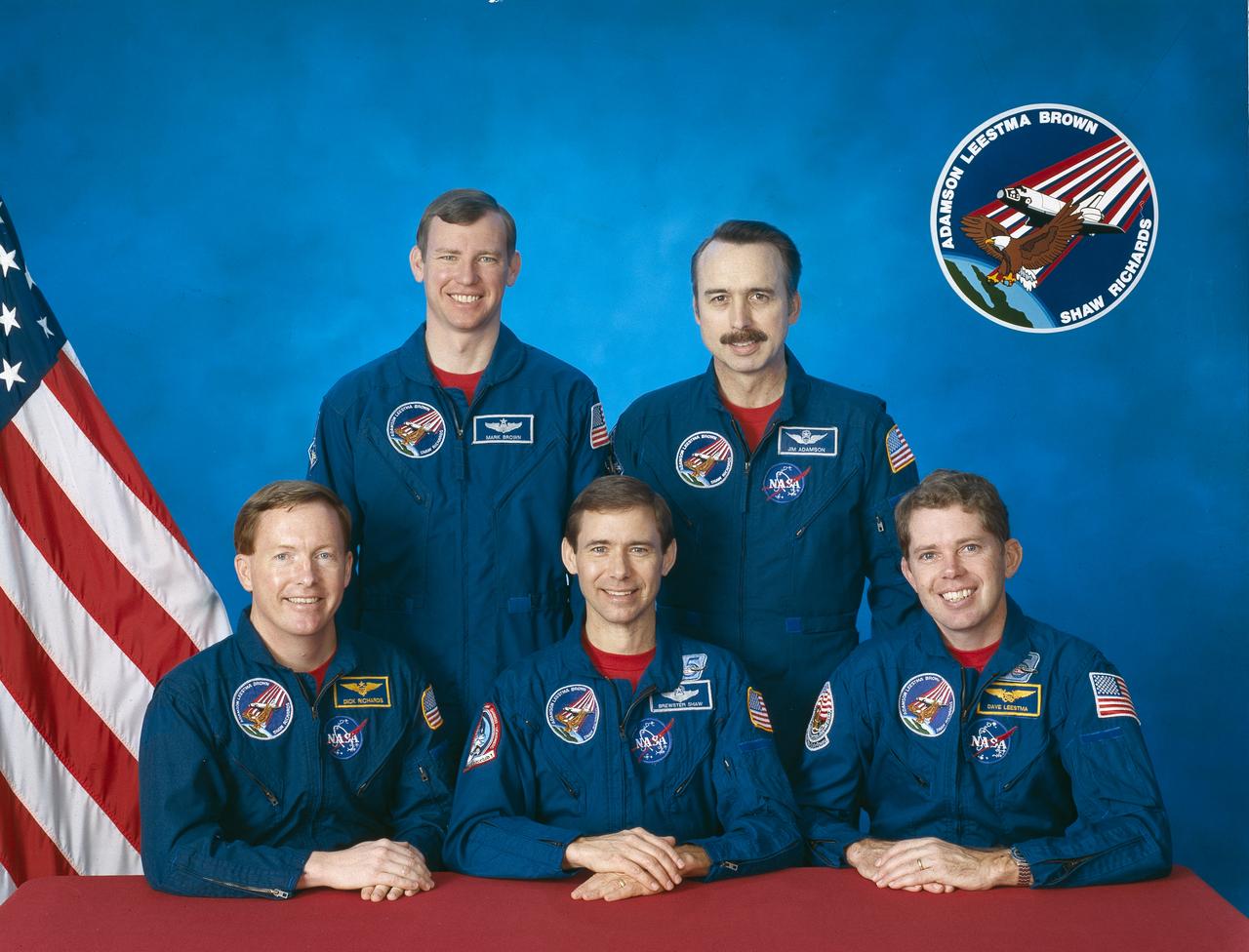
Five astronauts composed the STS-28 crew. Seated from left to right are Richard N. (Dick) Richards, pilot; Brewster H. Shaw, commander; and David C. Leestma, mission specialist 2. Standing, from left to right , are Mark N. Brown, mission specialist 3; and James C. (Jim) Adamson, mission specialist 1. Launched aboard the Space Shuttle Columbia on August 8, 1989, the STS-28 mission was the 4th mission dedicated to the Department of Defense.
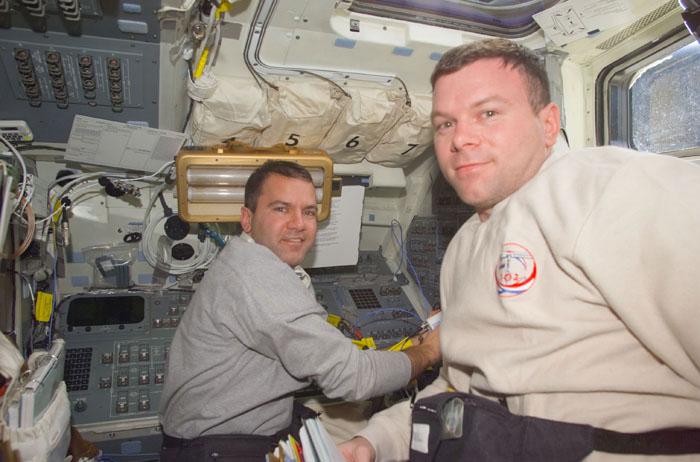
STS102-E-5025 (9 March 2001) --- Astronauts Paul W. Richards (left), mission specialist, and James M. Kelly, pilot, prepare for tasks on the flight deck of the Space Shuttle Discovery during STS-102 Flight Day 1 activity.
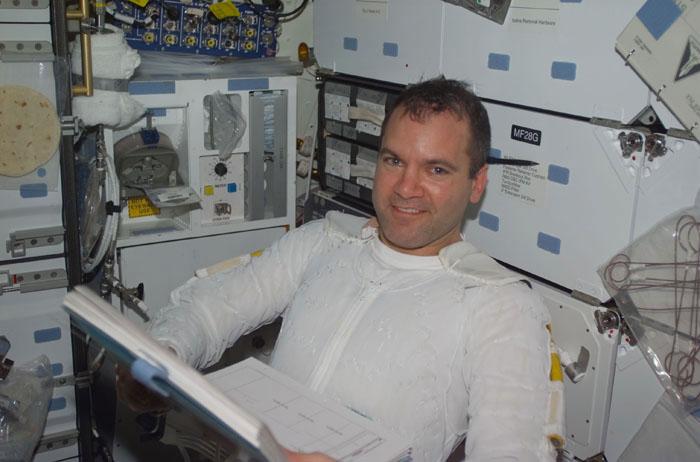
STS102-E-5207 (13 March 2001) --- Astronaut Paul W. Richards, following the second STS-102 space walk, still wears the thermal undergarment for his extravehicular mobility unit (EMU) space suit, as he looks over flight data near the galley on Discovery's mid deck. The photograph was taken with a digital still camera.
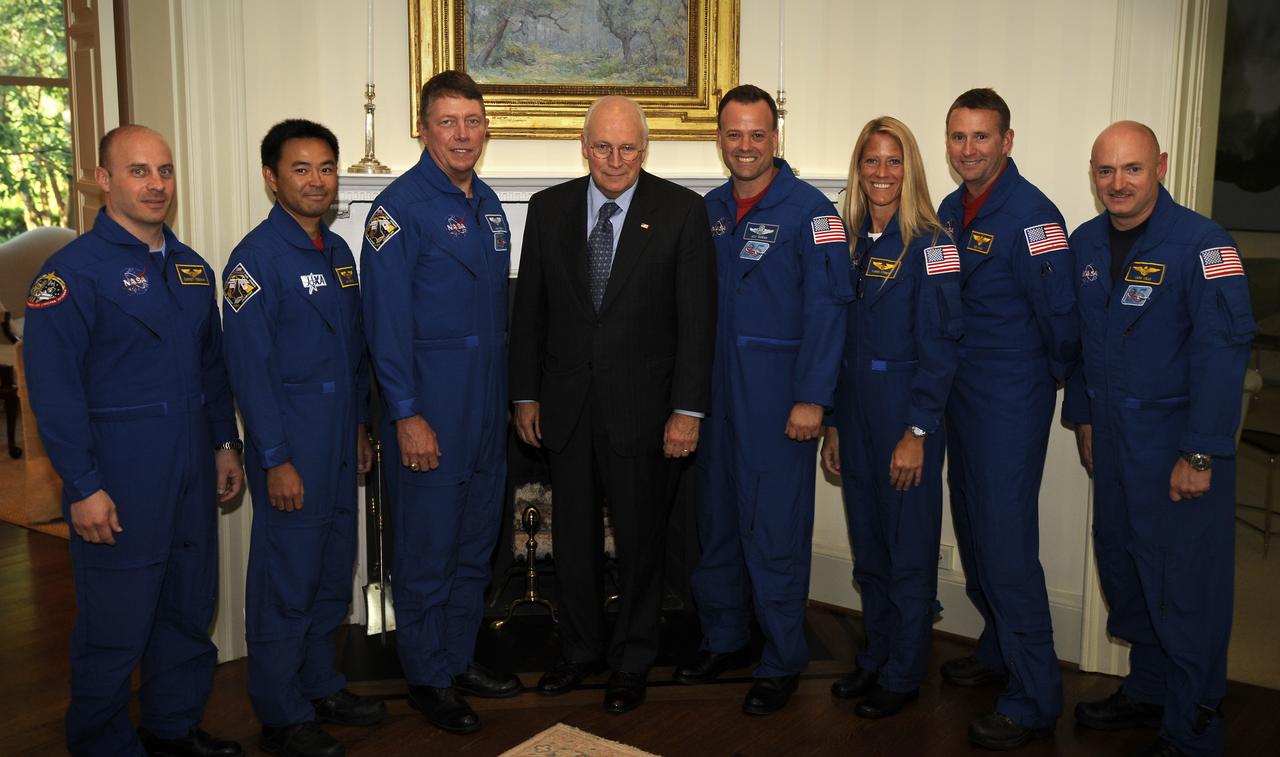
Vice President Richard B. Cheney, center, poses with astronauts from the STS-124 mission at the Vice President's residence Wednesday July 16, 2008, in Washington. Crew members from left are: NASA Astronaut Garrett Reisman, Japan Aerospace Exploration Agency (JAXA) astronaut Akihiko Hoshide, Mission Specialist Mike Fossum, Mission Specialist Ron Garan, Mission Specialist Karen Nyberg, Pilot Ken Ham and Commander Mark Kelly. Photo Credit: (NASA/Bill Ingalls)

Visitors pose for a photo with former NASA astronaut Paul Richards at the Earth Day event on Thursday, April 19, 2018 at Union Station in Washington, D.C. Photo Credit: (NASA/Aubrey Gemignani)
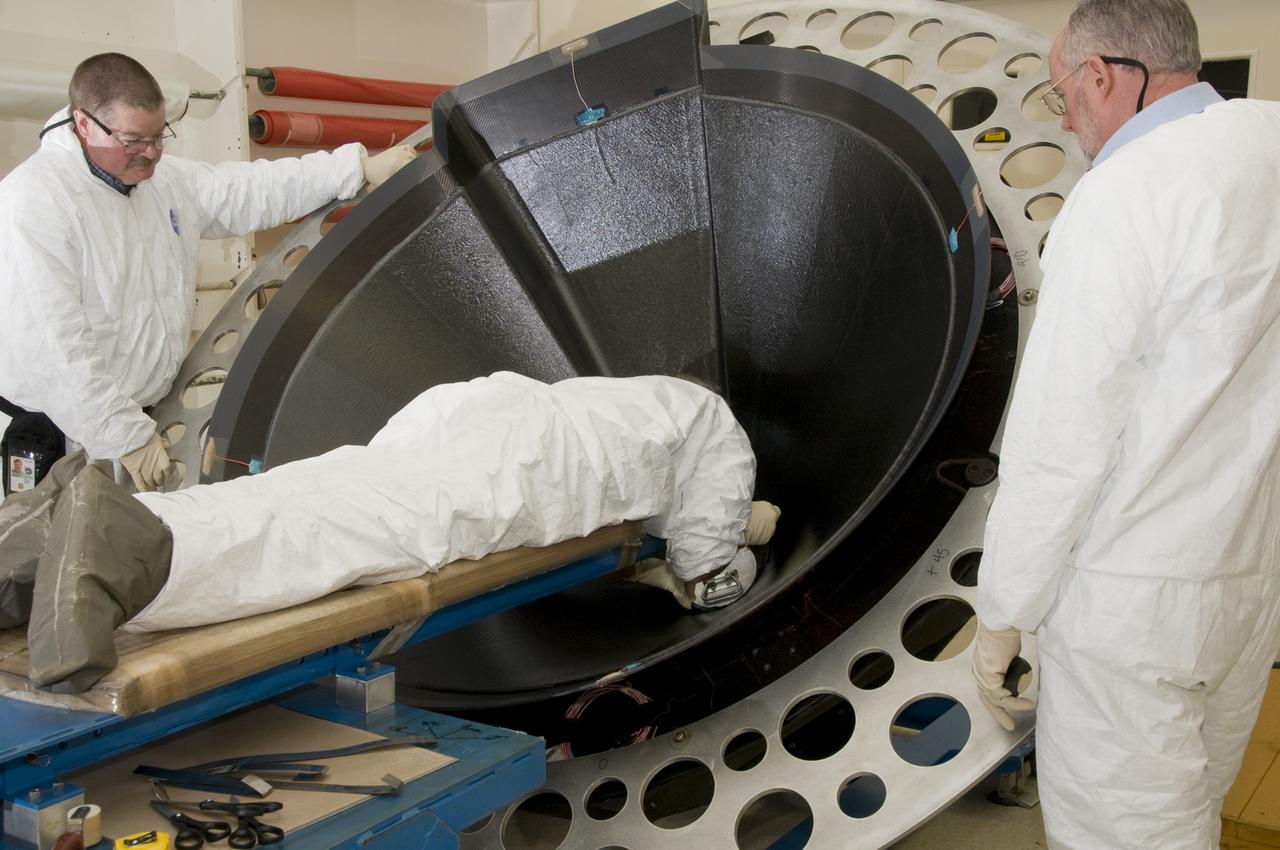
STEVE FRANKLIN, LEFT, AND RICHARD WELCH STAND READY TO ASSIST ED KIRSCH AS HE INSTALLS A ROUND PIECE OF COMPOSITE MATERIAL IN THE "BEANIE CAP" AT THE VERY TOP INSIDE THE COMPOSITE NOSE CONE.
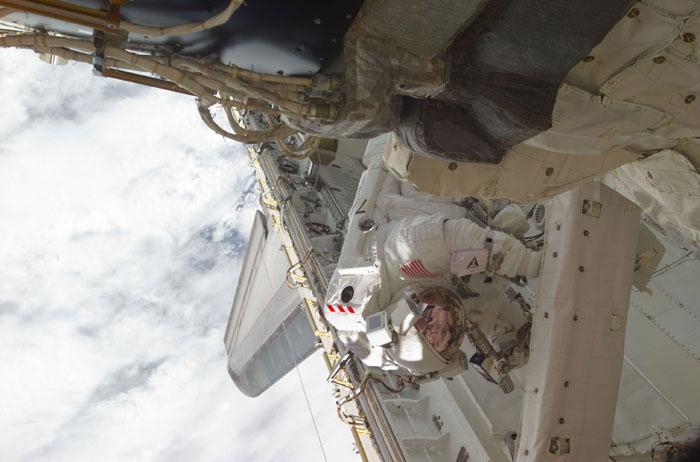
STS102-E-5163 (13 March 2001) --- Astronaut Paul W. Richards, mission specialist, is pictured in Discovery's cargo bay during the second STS-102 space walk. The photograph was taken with a digital still camera.
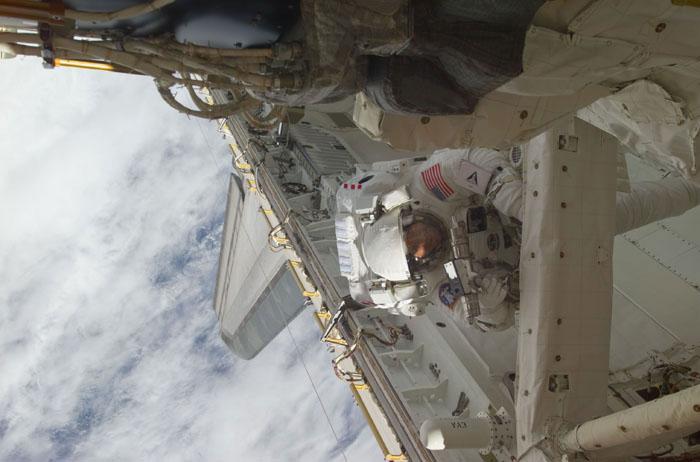
STS102-E-5166 (13 March 2001) --- Astronaut Paul W. Richards, mission specialist, uses a hand tool during the second STS-102 space walk. The photograph was taken with a digital still camera.
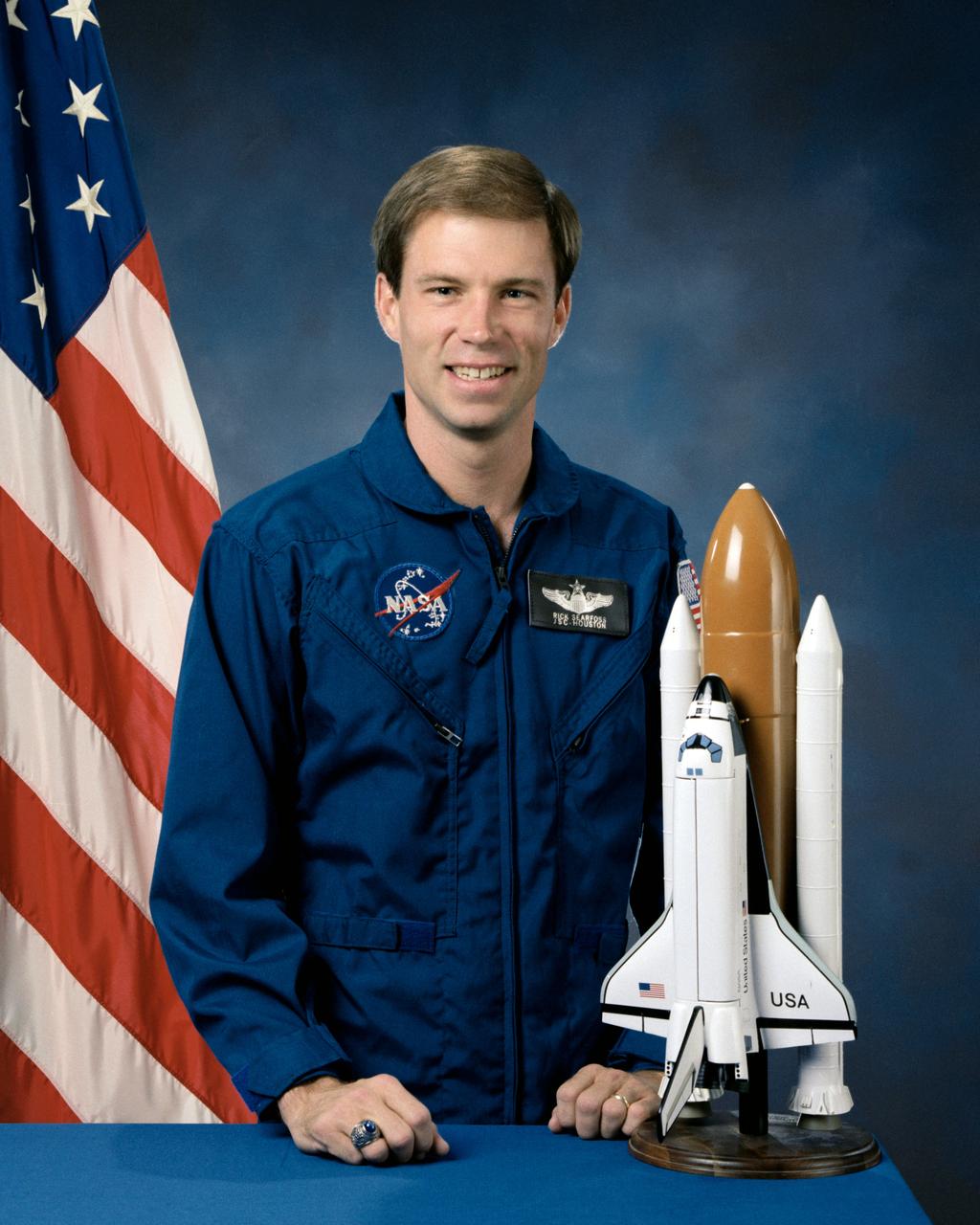
S90-46295 (17 Aug. 1990) --- Astronaut Richard A. Searfoss, pilot.
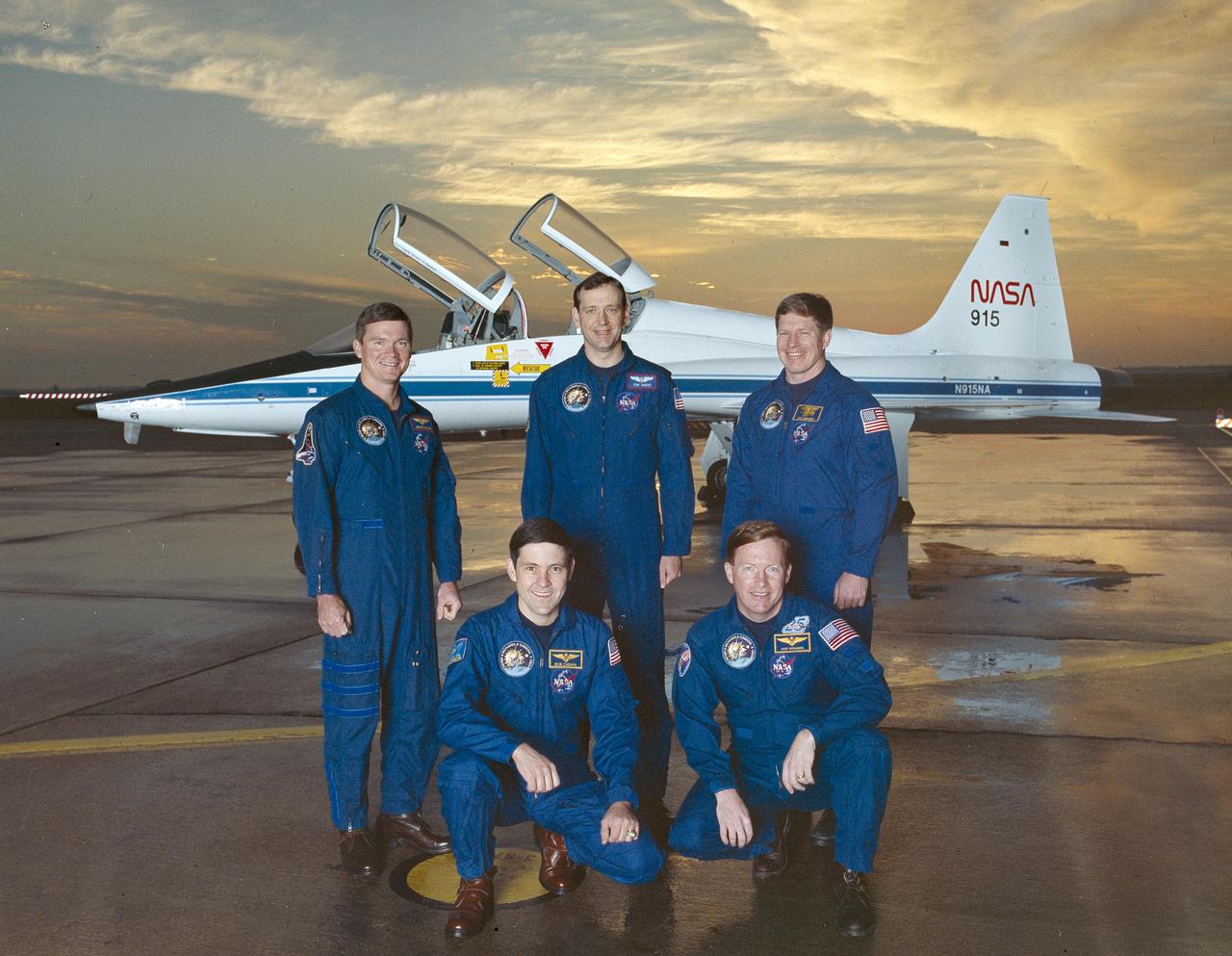
The 5 member crew of the STS-41 mission included (left to right): Bruce E. Melnick, mission specialist 2; Robert D. Cabana, pilot; Thomas D. Akers, mission specialist 3; Richard N. Richards, commander; and William M. Shepherd, mission specialist 1. Launched aboard the Space Shuttle Discovery on October 6, 1990 at 7:47:15 am (EDT), the primary payload for the mission was the ESA built Ulysses Space Craft made to explore the polar regions of the Sun. Other main payloads and experiments included the Shuttle Solar Backscatter Ultraviolet (SSBUV) experiment and the INTELSAT Solar Array Coupon (ISAC).
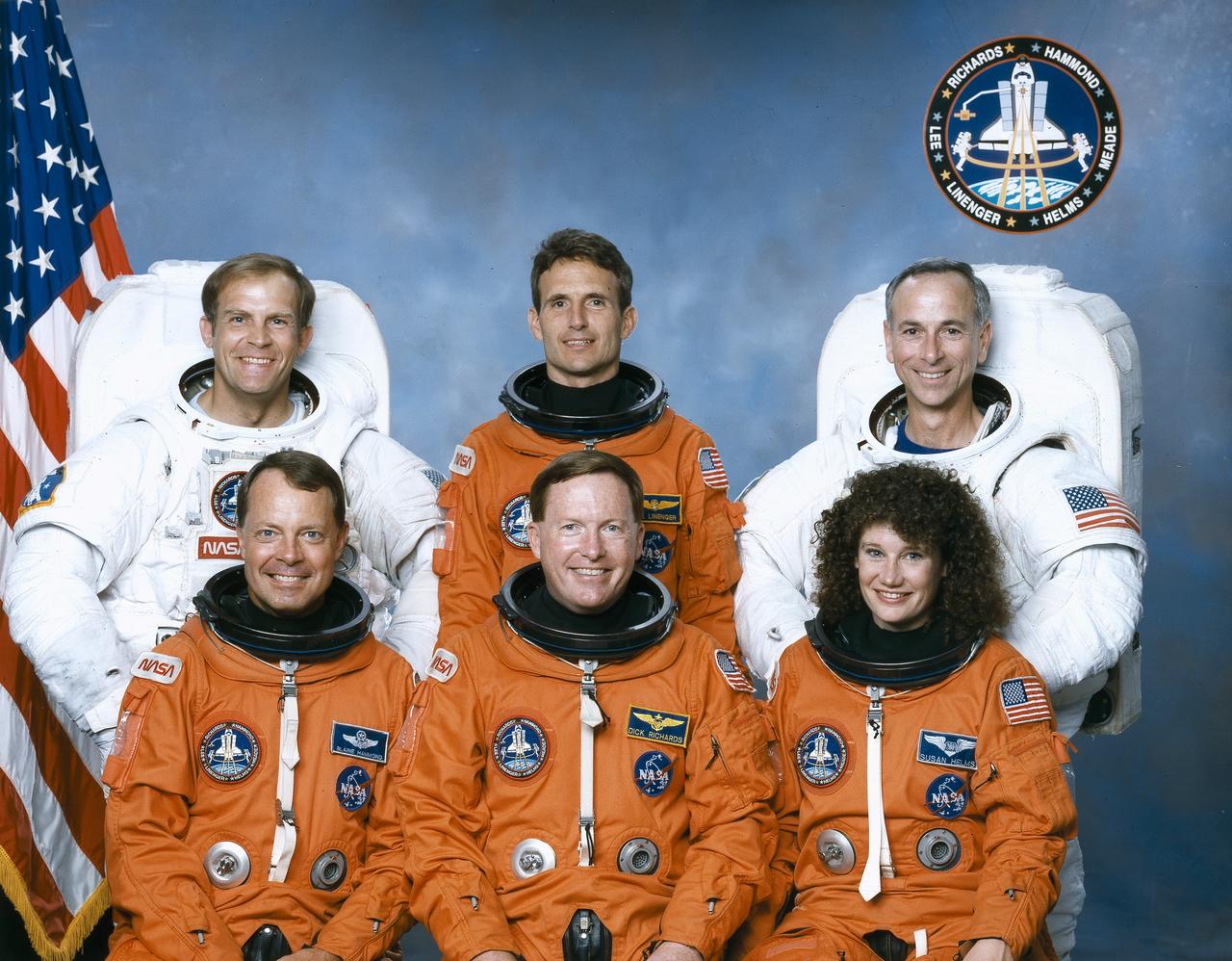
The crew assigned to the STS-64 mission included Richard N. Richards, commander (center front); L. Blaine Hammond Jr., pilot (front left); and Susan J. Helms, mission specialist (front right). On the back row, from left to right, are Mark C. Lee, Jerry M. Linenger, and Carl J. Meade, all mission specialists. Launched aboard the Space Shuttle Discovery on September 9, 1994 at 6:22:55 pm (EDT), the STS-64 mission marked the first flight of the Lidar In-Space Technology Experiment (LITE) and the first untethered Extravehicular Activity (EVA) in ten years.
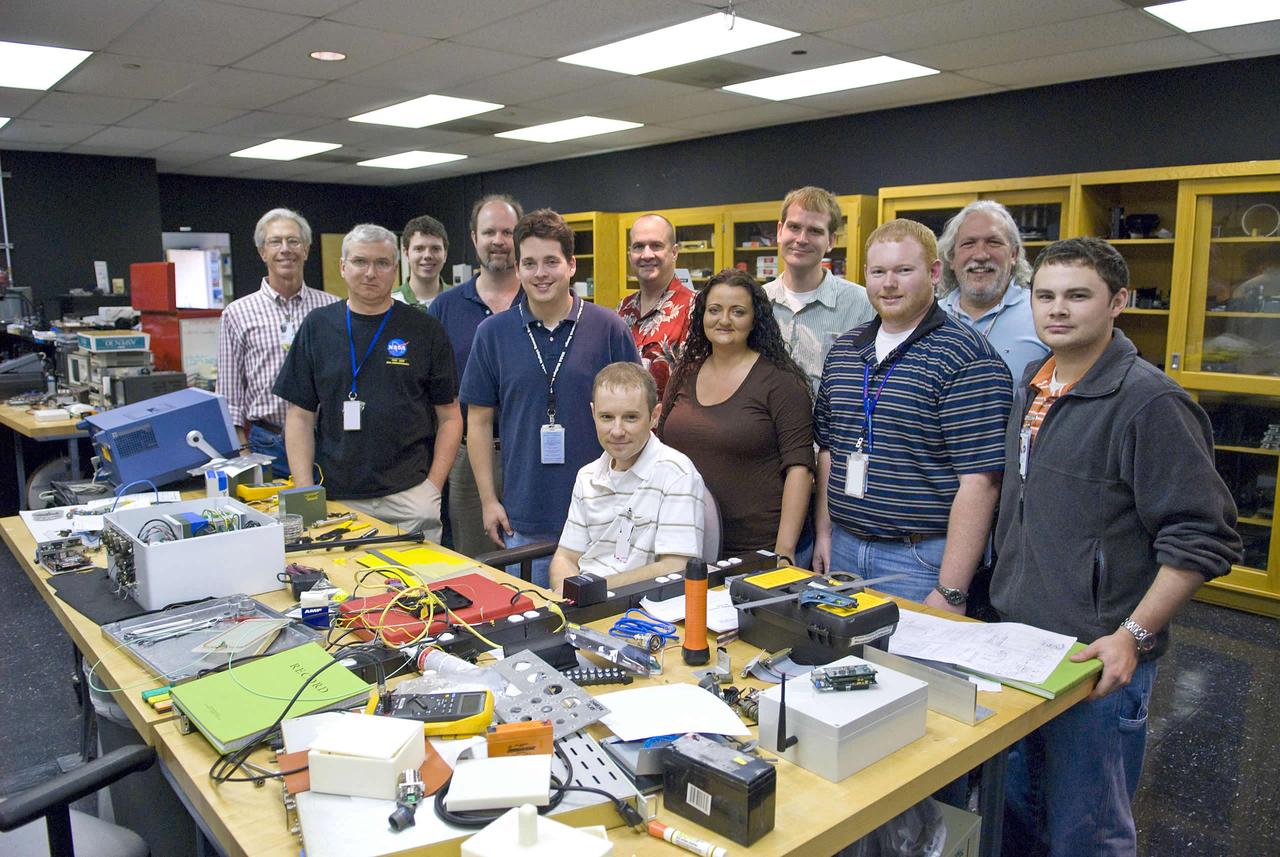
Engineers working on the smart and intelligent sensor payload project include (l to r): Ed Conley (NASA), Mark Mitchell (Jacobs Technology), Luke Richards (NASA), Robert Drackett (Jacobs Technology), Mark Turowski (Jacobs Technology) , Richard Franzl (seated, Jacobs Technology), Greg McVay (Jacobs Technology), Brianne Guillot (Jacobs Technology), Jon Morris (Jacobs Technology), Stephen Rawls (NASA), John Schmalzel (NASA) and Andrew Bracey (NASA).
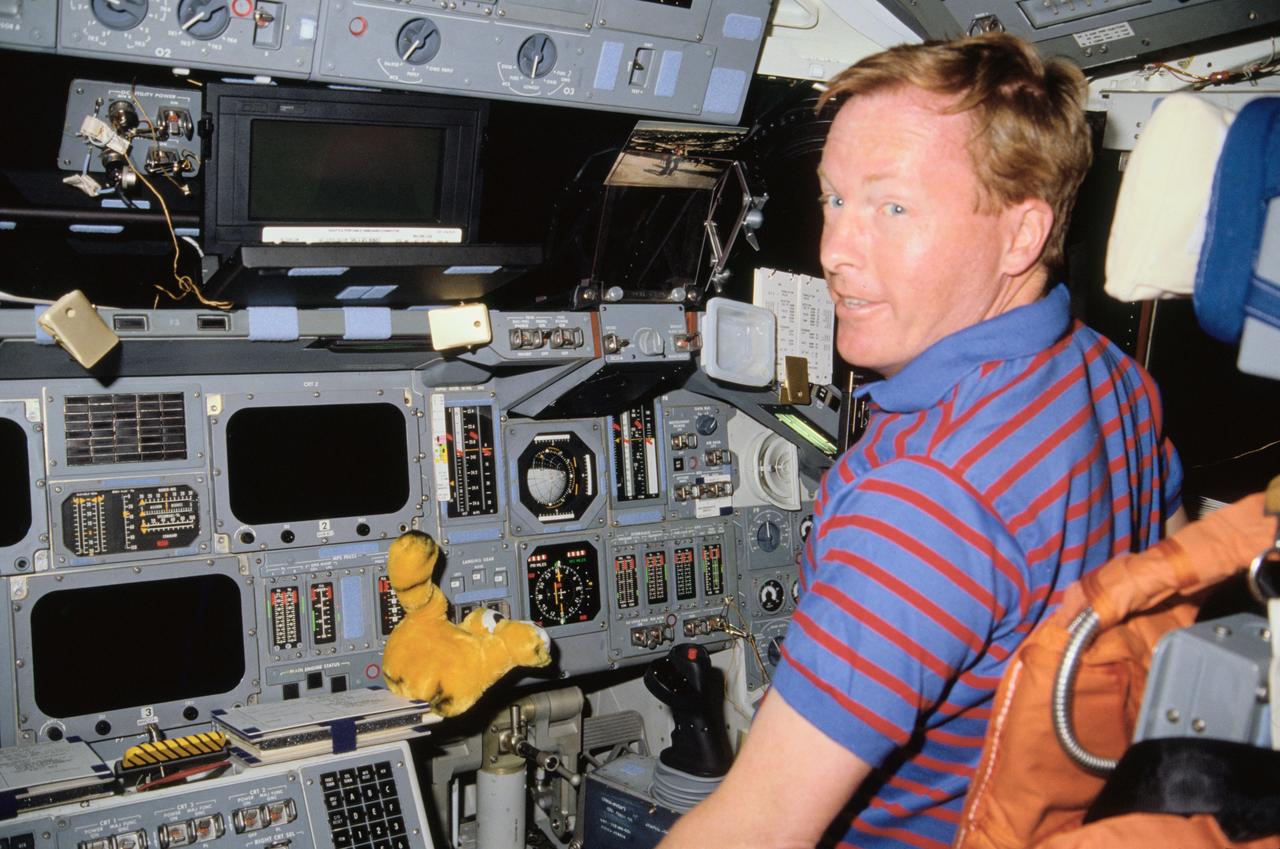
STS028-06-031 (August 1989) --- Astronaut Richard N. Richards, pilot, is captured with a 35mm camera at the pilot's station on the flight deck of the space shuttle Columbia during the STS-28 flight. Nearby is a tiger. Richards is an alumnus of the University of Missouri, whose mascot is a tiger.
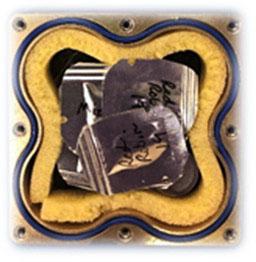
jsc2021e009429 (3/2/2021) --- Materials International Space Station Experiment-14-NASA (MISSE-14-NASA) continues a series of tests by NASA Glenn Research Center on how the harsh environment of space affects the performance and durability of various materials. Seed packets in the Equipment (EUE) container. Image courtesy of Jeff Richards.
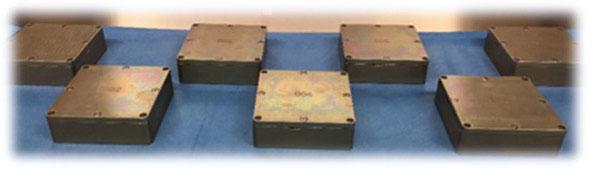
jsc2021e009430 (3/2/2021) --- Materials International Space Station Experiment-14-NASA (MISSE-14-NASA) continues a series of tests by NASA Glenn Research Center on how the harsh environment of space affects the performance and durability of various materials. MISSE-Seed sample containers ready for turnover. Image courtesy of Jeff Richards.
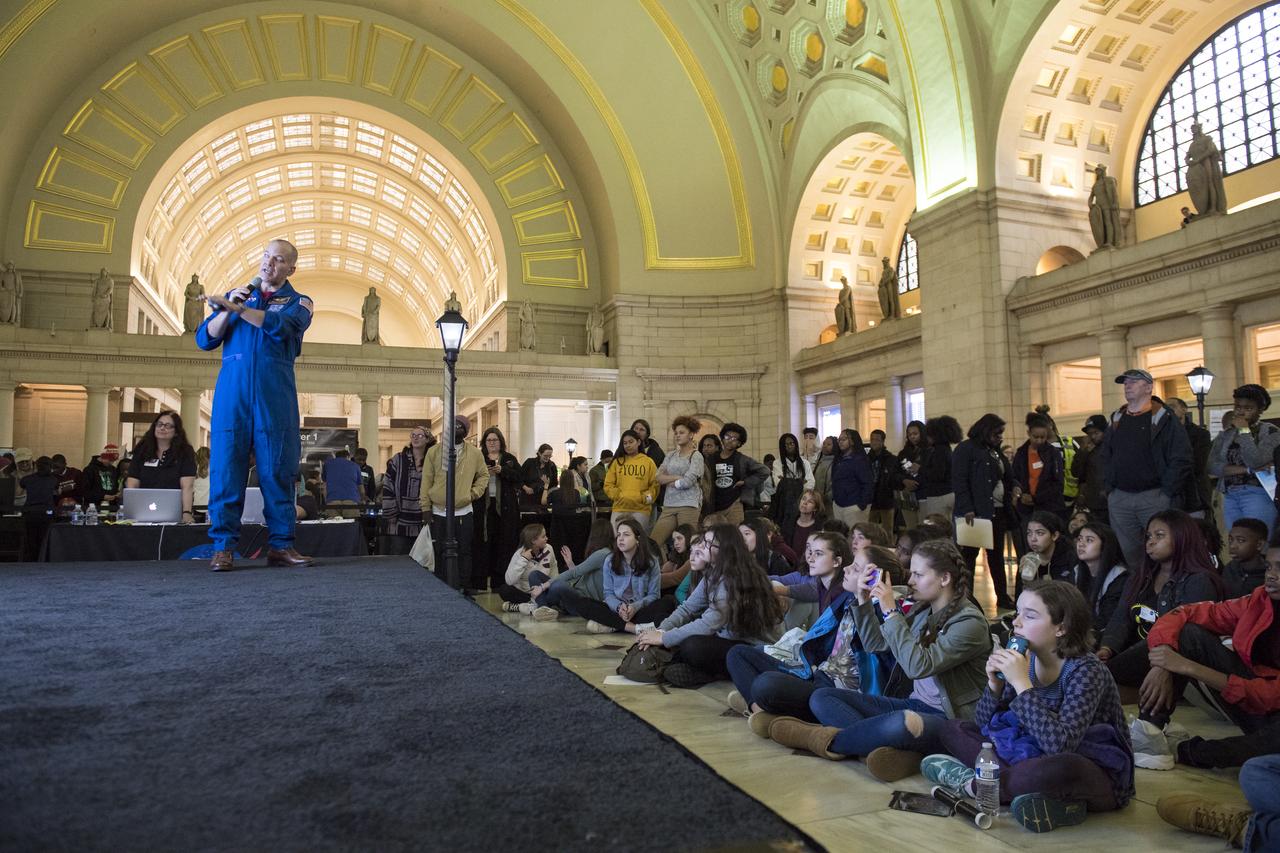
Former NASA astronaut, Paul Richards, speaks about his experience viewing Earth from space at NASA's Earth Day event on Thursday, April 19, 2018 at Union Station in Washington, D.C. Photo Credit: (NASA/Aubrey Gemignani)
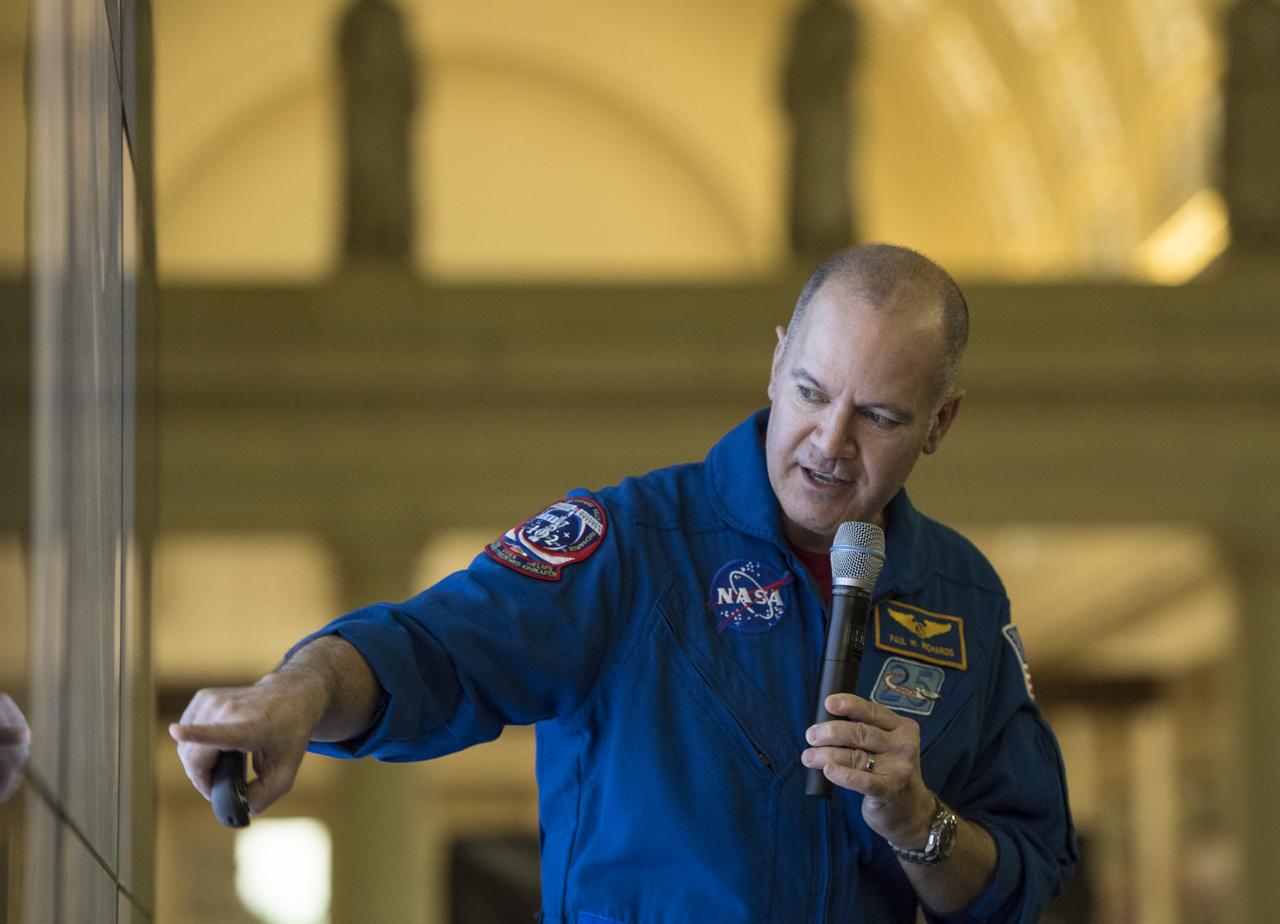
Former NASA astronaut, Paul Richards, speaks about his experience viewing Earth from space at NASA's Earth Day event on Thursday, April 19, 2018 at Union Station in Washington, D.C. Photo Credit: (NASA/Aubrey Gemignani)

S85-31767 (1985) --- Astronaut Richard O. Covey NOTE: Covey, pilot for STS 51-I, was named on Jan. 9, 1987 for the same position on NASA?s first planned STS mission since the January 1986 Challenger accident. The flight is tentatively scheduled for February 1988.
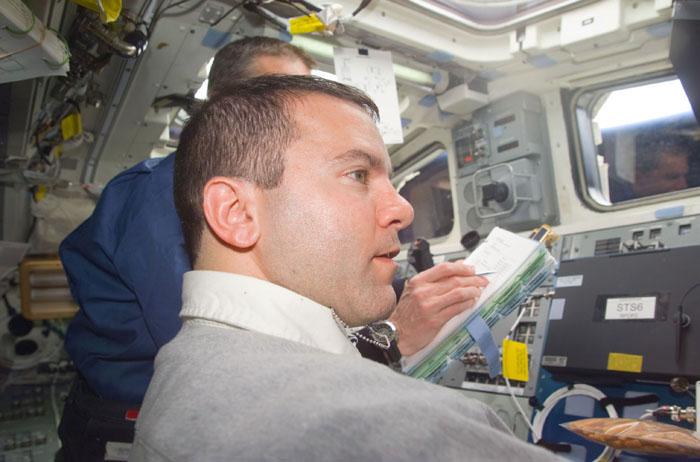
STS102-E-5027 (9 March 2001) --- Astronaut Paul W. Richards, mission specialist, listens to a readout from astronaut James M. Wetherbee (partially obscured in background), STS-102 mission commander, during Flight Day 1 work on the flight deck of the Space Shuttle Discovery.

S66-50756 (15 Sept. 1966) --- The Gemini-11 prime crew, astronauts Charles Conrad Jr. (right) and Richard F. Gordon Jr. stand on the deck of the USS Guam after being recovered by helicopter from the splashdown area. Photo credit: NASA
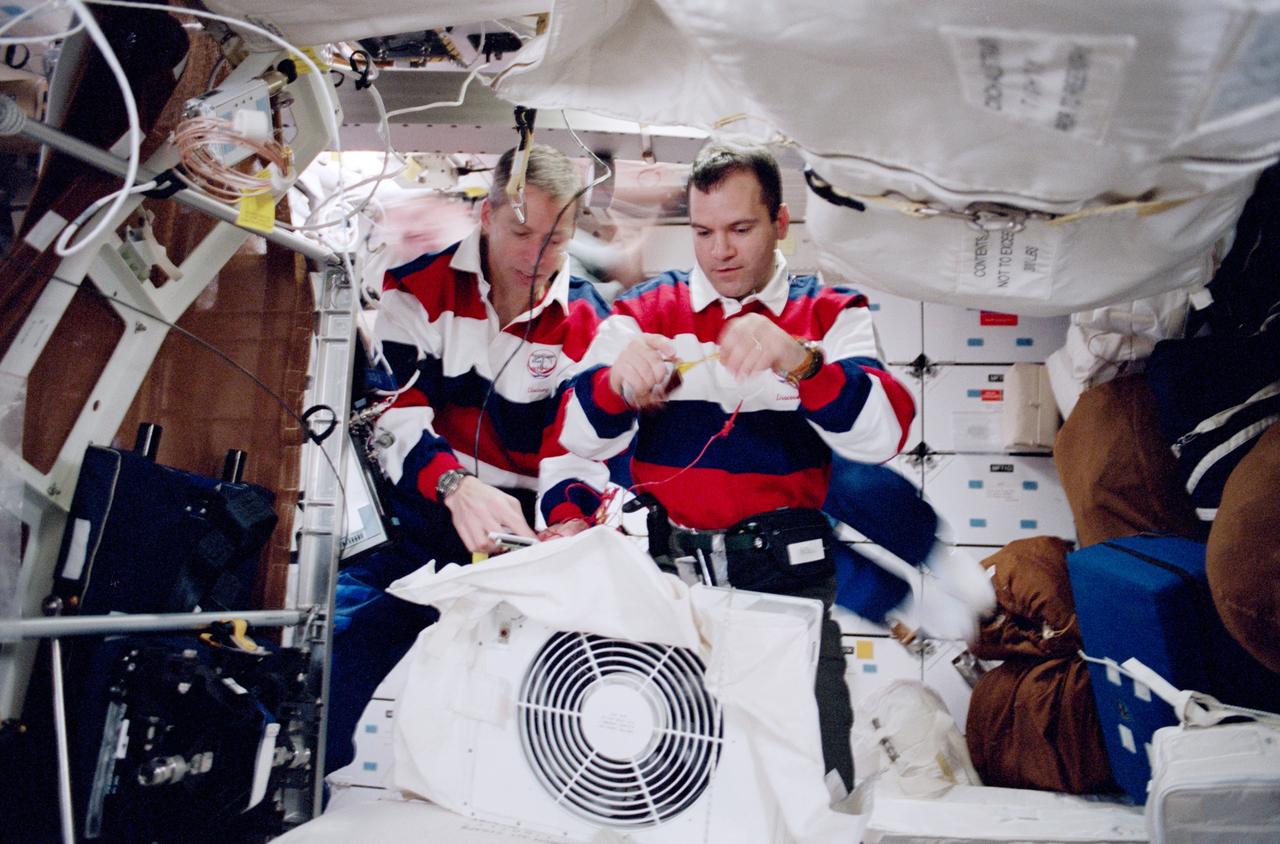
STS102-324-004 (8-21 March 2001) --- Onboard the mid deck of the Earth-orbiting Space Shuttle Discovery, astronauts James D. Wetherbee, STS-102 commander (left) and Paul W. Richards, mission specialist, are photographed performing in-flight maintenance on the cabin fan.
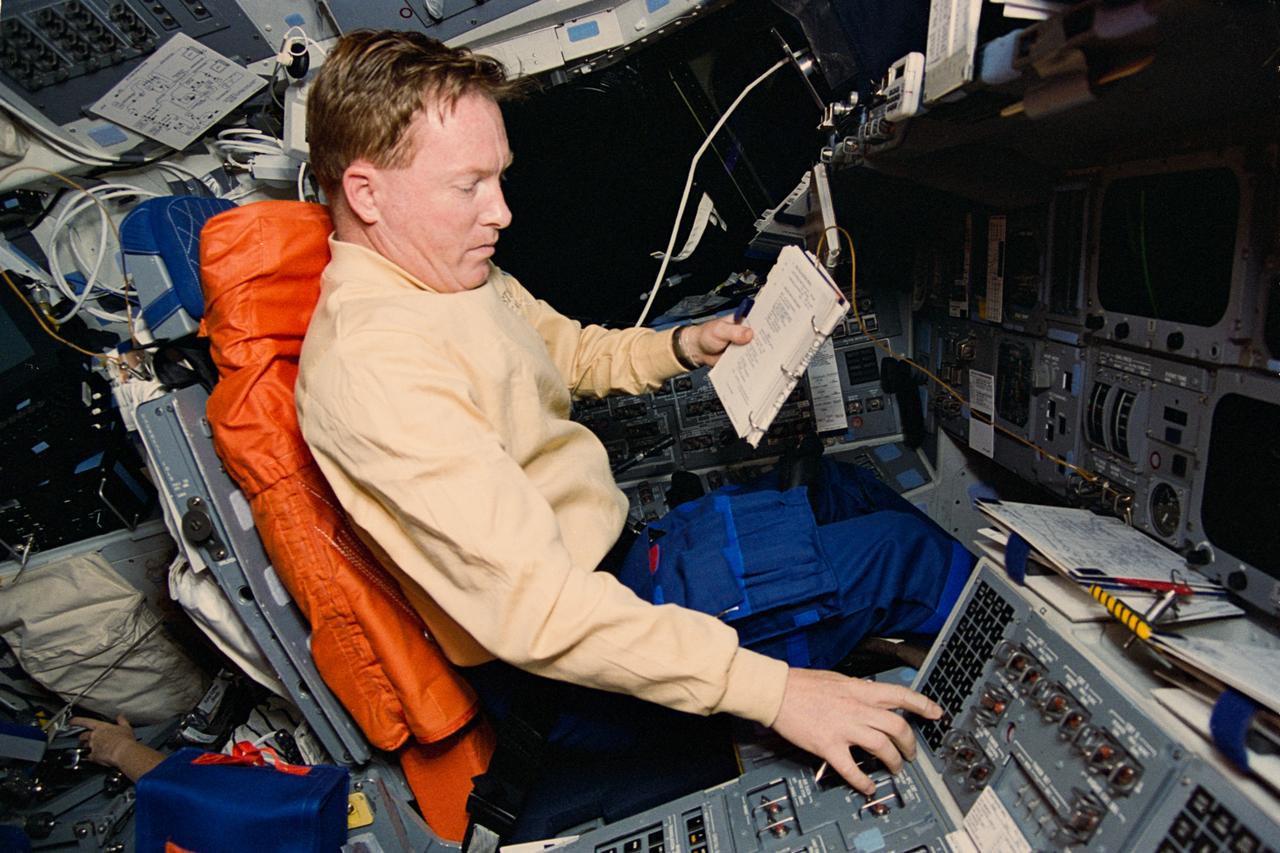
STS064-08-032 (10 Sept. 1994) --- At the commander's station on the space shuttle Discovery's forward flight deck, astronaut Richard N. Richards, STS-64 mission commander, initiates a thruster firing of the spacecraft during operations with the Shuttle Plume Impingement Flight Experiment (SPIFEX). Photo credit: NASA or National Aeronautics and Space Administration

Richard F. Gordon Jr. climbing into training simulator. Astronaut Richard (Dick) Gordon, died in November 2017, at his home in California. He was 88. Gordon orbited the Moon on Apollo 12 in 1969 while two other astronauts walked on it. The Apollo 12 crew capsule can be seen at Langley's official visitor center, the Virginia Air and Space Center in Hampton VA. NASA 2017 Annual report, Celebrating 100 years.page 23 Milestones.

S89-39471 (17 July 1989) --- STS-28 Columbia, Orbiter Vehicle (OV) 102, Pilot Richard N. Richards, adjusts launch and entry suit (LES) neck ring after donning launch and entry helmet (LEH). Richards prepares for shuttle emergency egress (bailout) procedures in the Johnson Space Center (JSC) Mockup and Integration Laboratory Bldg 9A.
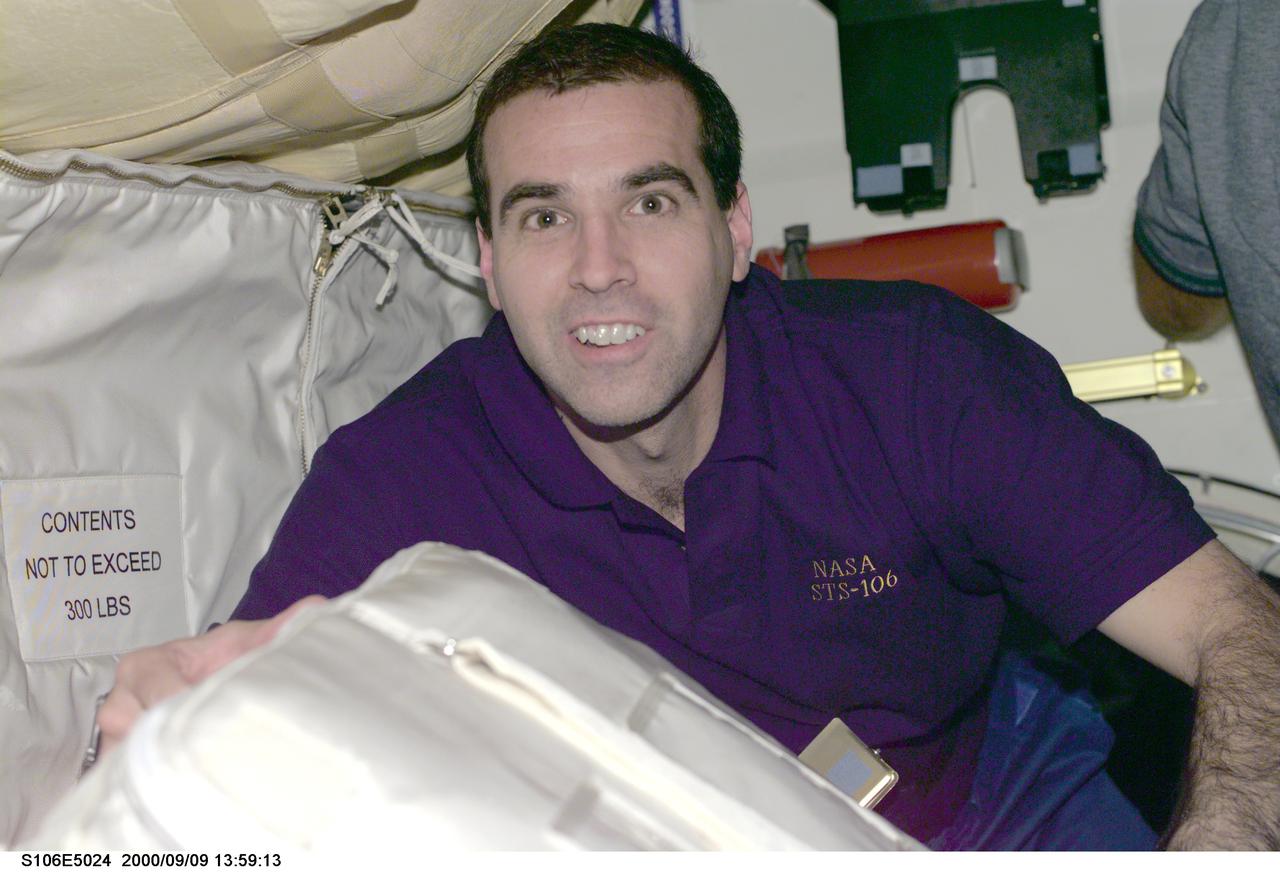
S106-E-5024 (9 September 2000) --- Astronaut Richard A. Mastracchio, mission specialist, moves some of the bulkier supply packages onboard the Space Shuttle Atlantis in preparation for the upcoming docking with the International Space Station (ISS).

S66-54590 (13 Sept. 1966) --- Astronaut Richard F. Gordon Jr., Gemini-11 pilot, prepares to open spacecraft hatch to jettison used equipment. Photo credit: NASA
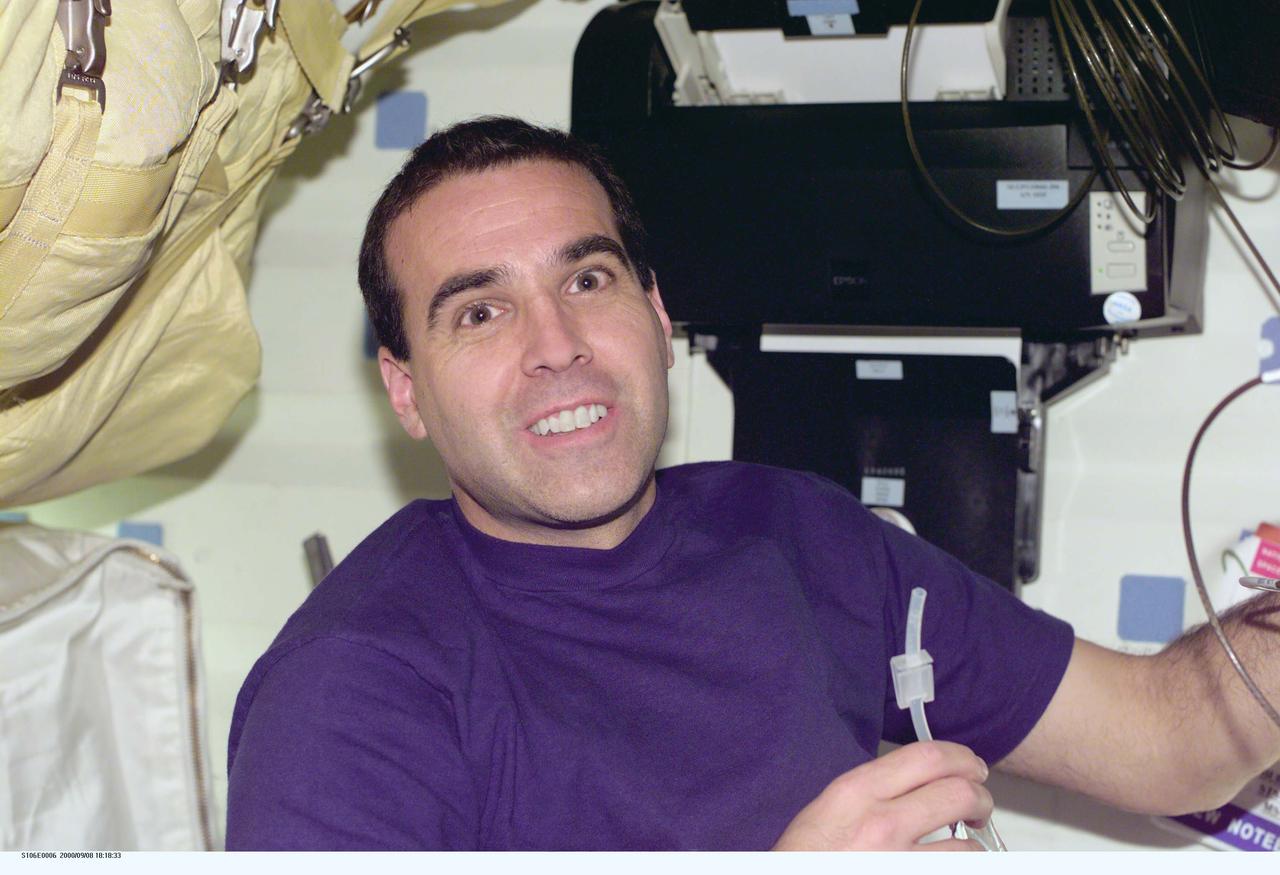
S106-E-5006 (8 September 2000) --- Astronaut Richard A. Mastracchio, mission specialist, takes a break during early tasks onboard the Earth-orbiting Space Shuttle Atlantis.
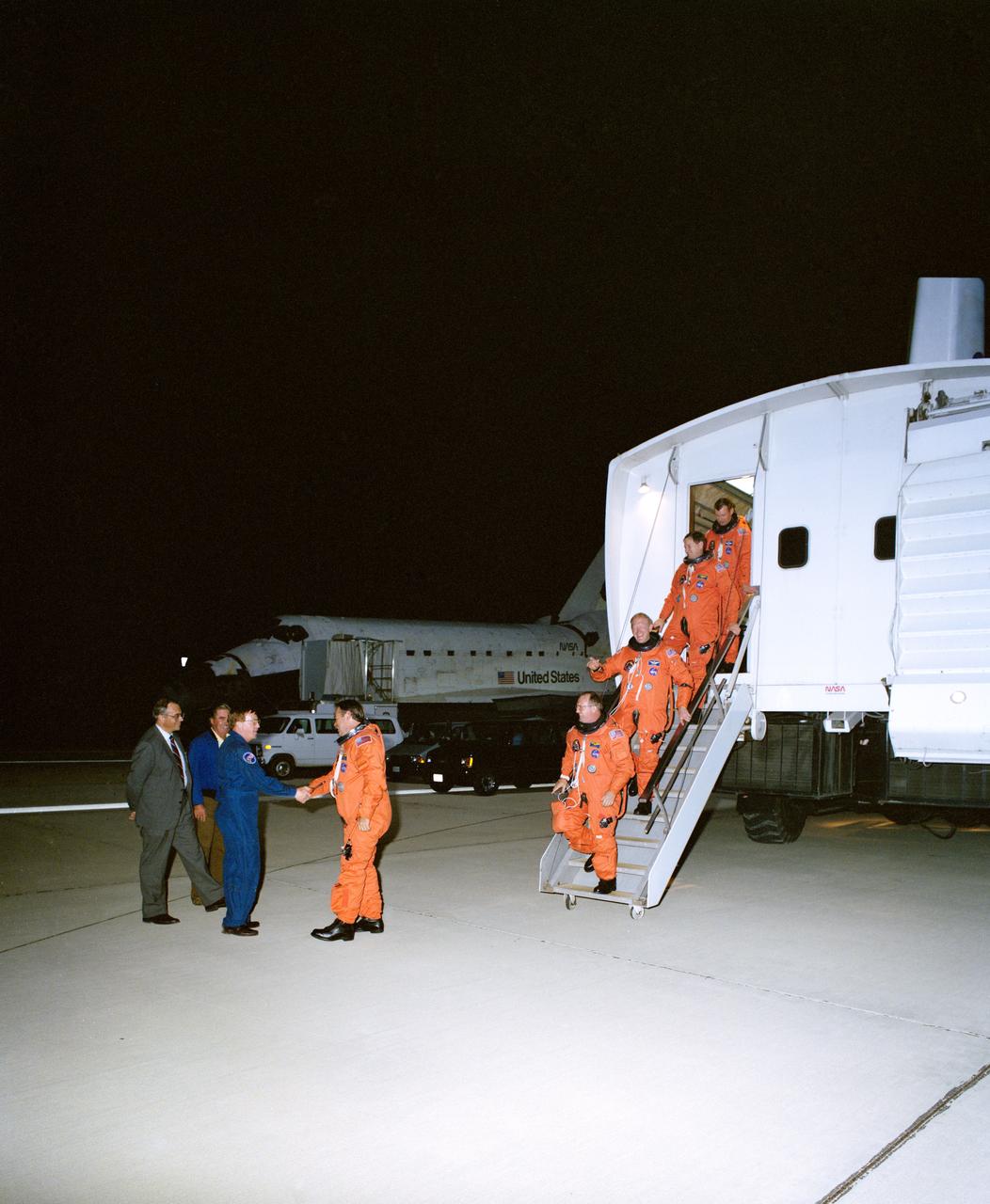
STS048-S-180 (18 Sept 1991) --- Having just completed a successful six day mission in Earth orbit, the five astronaut crewmembers for NASA's STS-48 spaceflight egress the crew transport vehicle (CTV). Astronaut John O. Creighton shakes hands with astronaut Richard N. Richards, who had earlier flown a NASA aircraft for weather checkout in the landing area. Following the mission commander are astronauts James F. Buchli, Charles D. (Sam) Gemar, Kenneth S. Reightler and Mark N. Brown. Discovery can be seen in the background. The Edwards Air Force Base landing occurred at 12:38:38 a.m. (PDT), September 18, 1991.
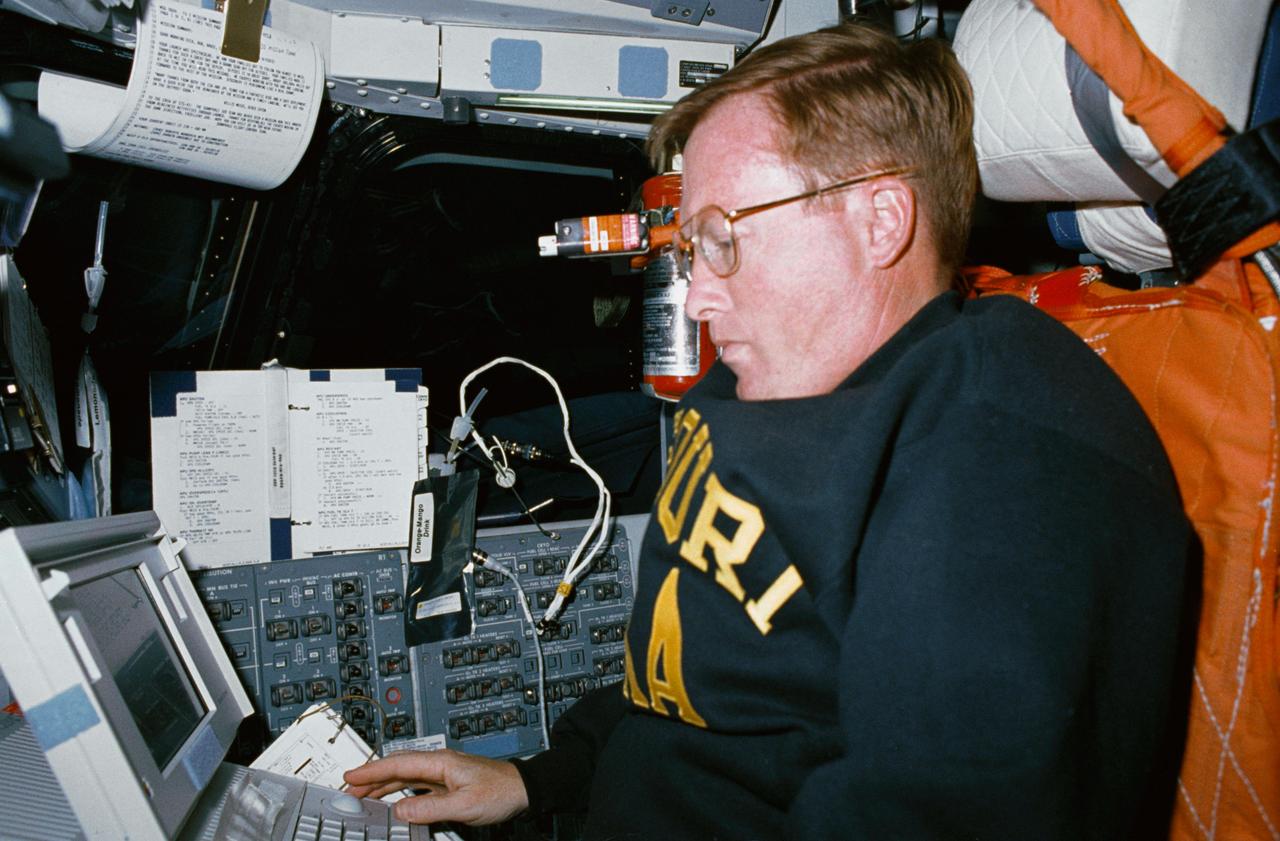
STS041-01-002 (6-10 Oct 1990) --- Astronaut Richard N. Richards, STS 41 mission commander, "borrows" the pilot's station to utilize a Shuttle portable onboard computer during the four-day flight. The photo was made with a 35mm camera.
jsc2021e009428 (3/2/2021) --- Materials International Space Station Experiment-14-NASA (MISSE-14-NASA) continues a series of tests by NASA Glenn Research Center on how the harsh environment of space affects the performance and durability of various materials. Example of germination test prior to MISSE-Seed science integration. Image courtesy of Jeff Richards.
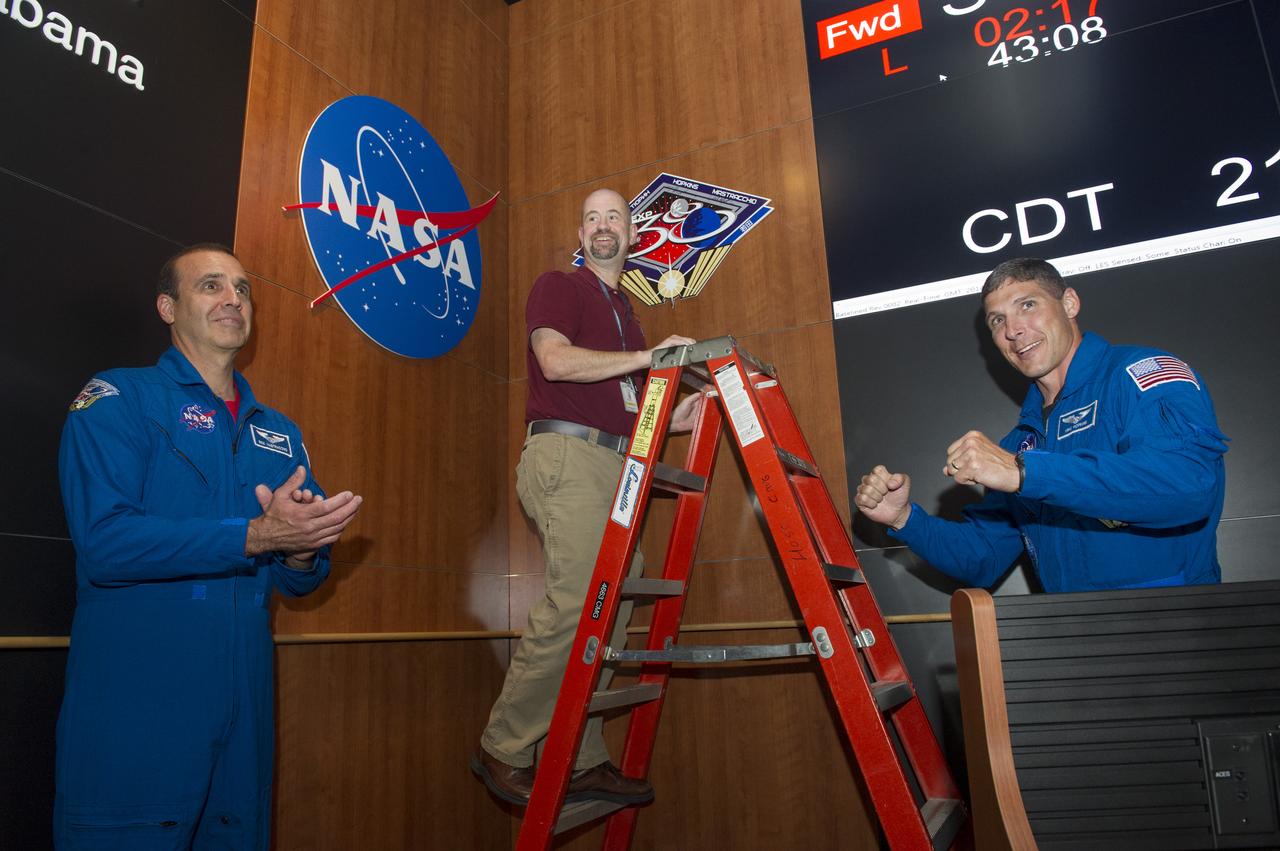
NASA ASTRONAUTS RICHARD MASTRACCHIO, LEFT, AND MICHAEL HOPKINS FLANK ED LITKENHOUS, A PAYLOAD ACTIVITY REQUIREMENTS COORDINATOR IN THE PAYLOAD OPERATIONS AND INTEGRATION CENTER (POIC), AS HE HANGS THE ASTRONAUTS' MISSION PLAQUE ON THE WALL OF THE POIC IN THE MARSHALL CENTER'S BUILDING 4663. THE PLAQUE JOINED THE LOGOS FROM PREVIOUS MISSIONS HANGING AROUND THE ROOM, RECOGNIZING THE COLLABORATION BETWEEN THE ORBITING ASTRONAUTS AND THE HUNTSVILLE-BASED TEAM
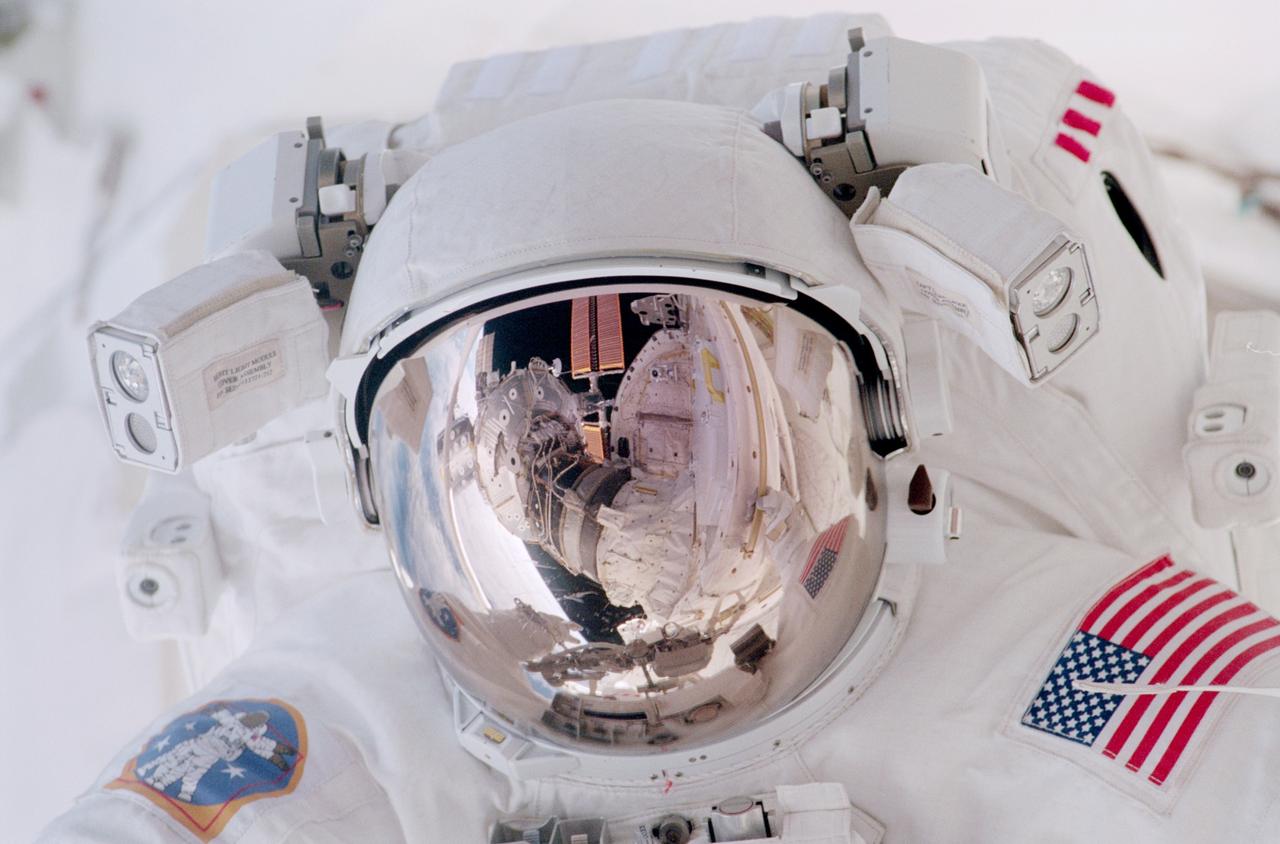
STS102-346-021 (8-21 March 2001) --- The Space Shuttle Discovery;s cargo bay, International Space Station (ISS), and the Earth;s horizon are reflected in the helmet visor of astronaut Paul W. Richards, STS-102 mission specialist, while participating in extravehicular activity during the flight;s second space walk.
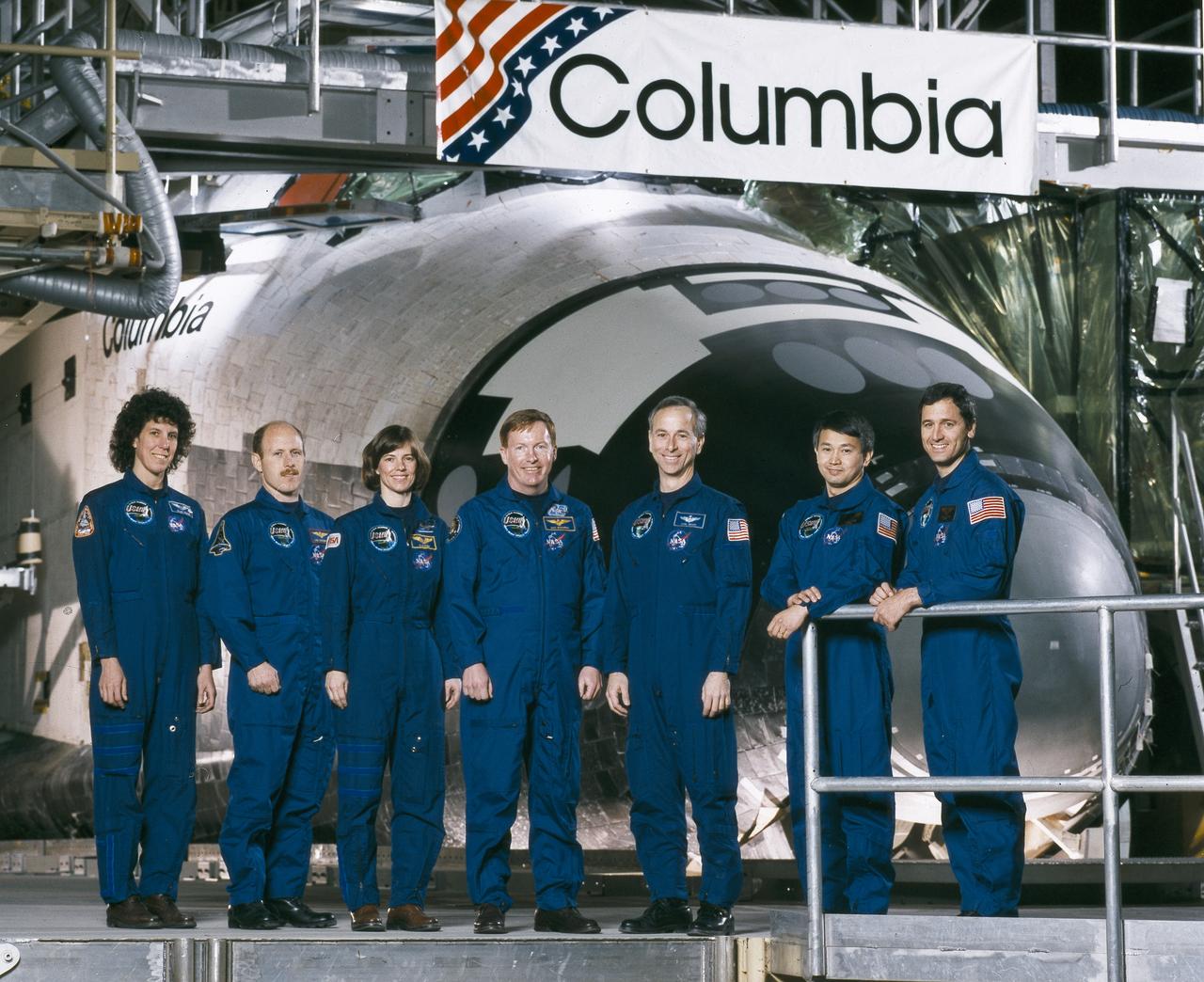
The STS-50 crew portrait includes (from left to right): Ellen S. Baker, mission specialist; Kenneth D. Bowersox, pilot; Bonnie J. Dunbar, payload commander; Richard N. Richards, commander; Carl J. Meade, mission specialist; Eugene H. Trinh, payload specialist; and Lawrence J. DeLucas, payload specialist. Launched aboard the Space Shuttle Columbia on June 25, 1992 at 12:12:23 pm (EDT), the primary payload for the mission was the U.S. Microgravity Laboratory-1 (USML-1) featuring a pressurized Spacelab module.
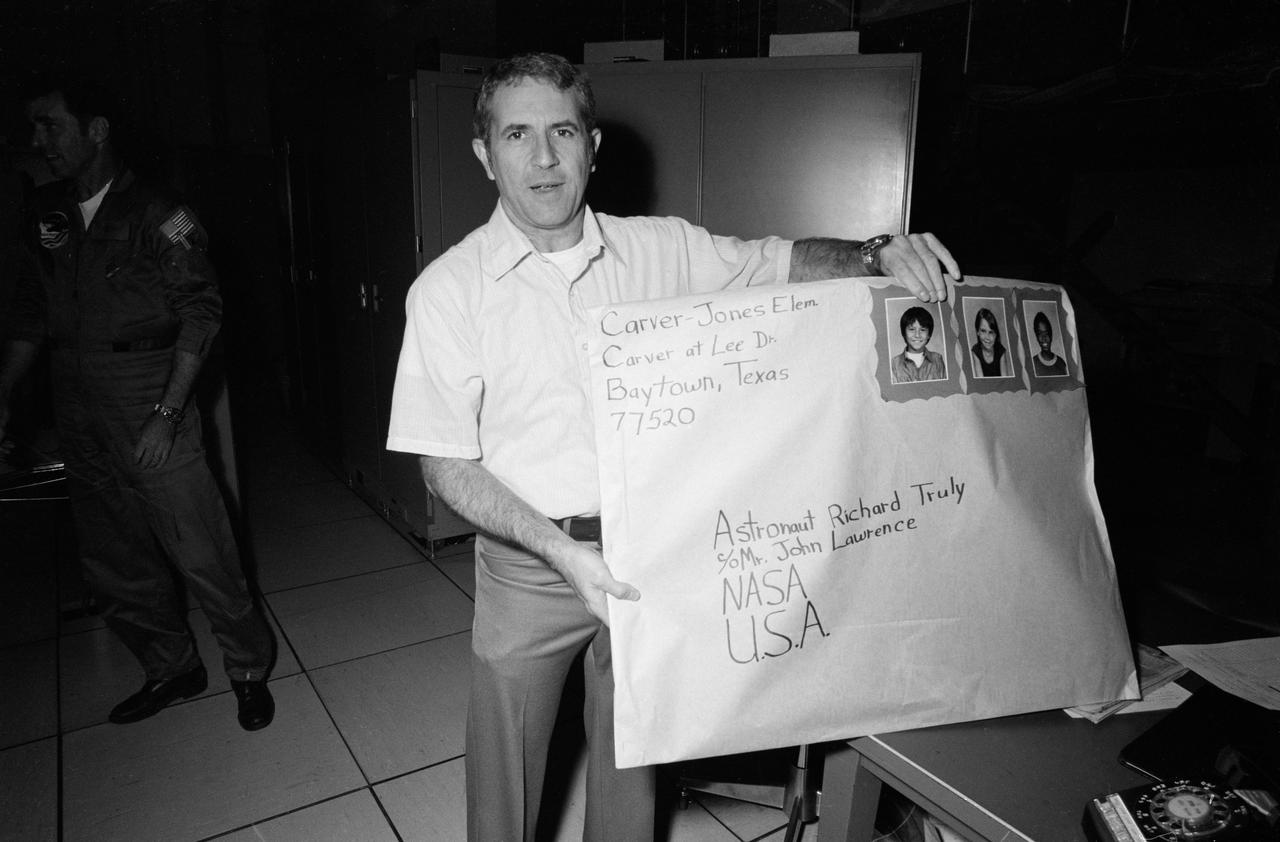
S81-39418 (10 Nov. 1981) --- Aware that astronaut Richard H. Truly, pictured, would be difficult to reach on his 44th birthday Nov. 12, pupils at Carver-Jones Elementary School in Baytown, Texas made certain the STS-2 pilot got his birthday card early. Some art pupils of Shirley Dynum got together and decided that they?d like to custom-make Truly a nice remembrance for a day expected to be filled with remembrances. Nov. 12 is also the date for launch of NASA?s second space shuttle flight in the space shuttle Columbia, with astronauts Truly and Joe H. Engle, commander, at the flight deck. In fact, only moments after this photo was taken, the two departed from JSC to Ellington Air Force Base from which they took T-38 flights to the launch facility in Florida. Photo credit: NASA
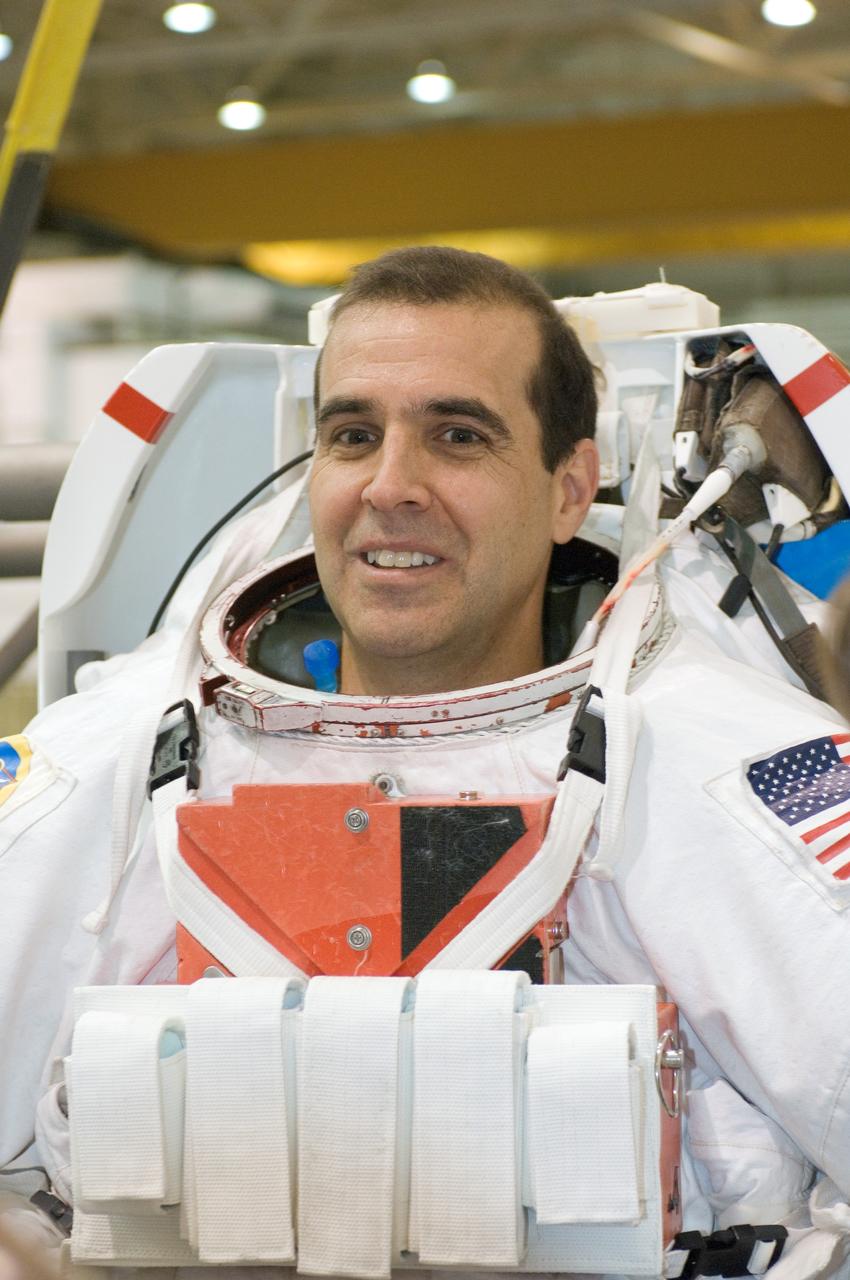
JSC2007-E-00790 (4 Jan. 2007) --- Astronaut Richard A. (Rick) Mastracchio, STS-118 mission specialist, attired in a training version of the Extravehicular Mobility Unit (EMU) spacesuit, awaits a training session in the waters of the Neutral Buoyancy Laboratory (NBL) near Johnson Space Center.
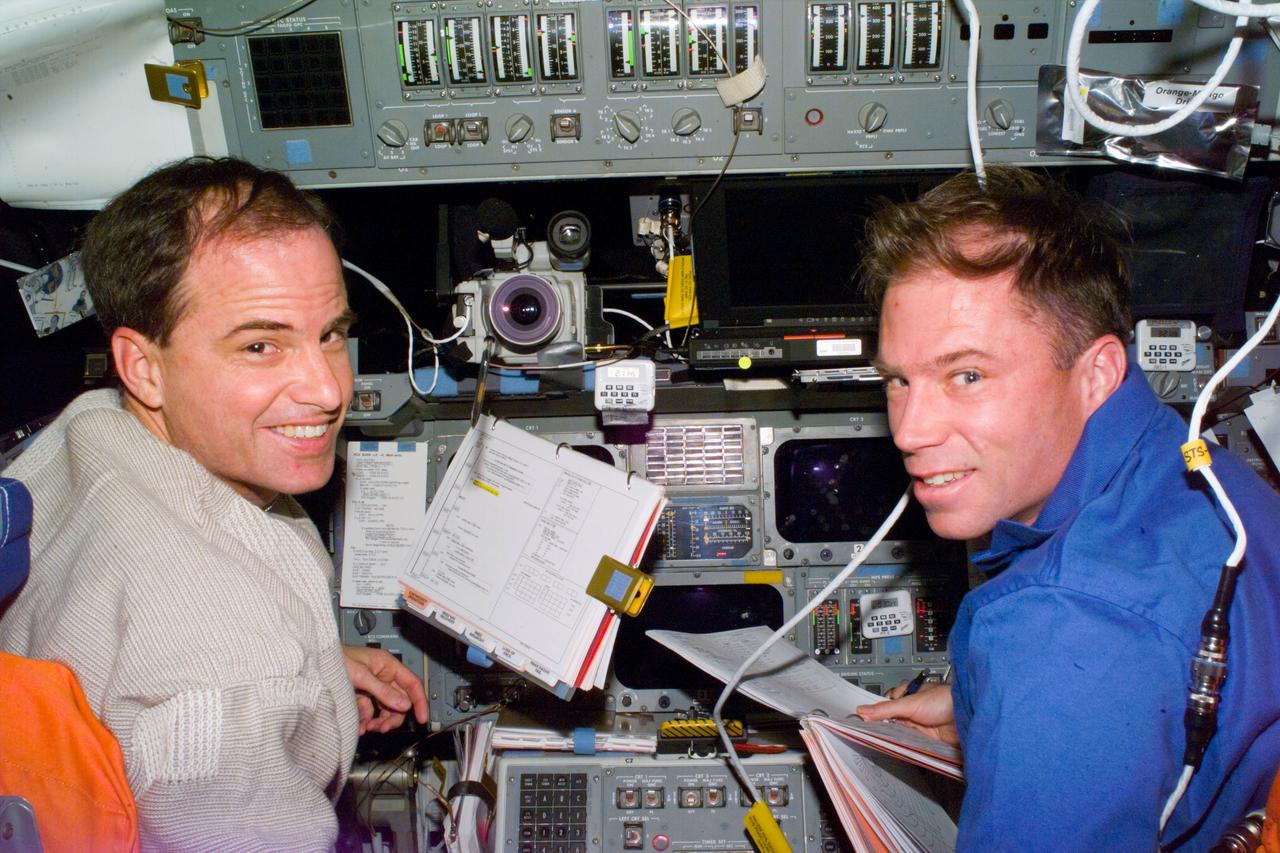
S76-E-5138 (24 March 1996) --- Astronauts Kevin P. Chilton (left) and Richard A. Searfoss man the commander and pilot stations, respectively, for the rendezvous and docking procedures with Russia's Mir Space Station. The image was recorded with a 35mm Electronic Still Camera (ESC) and downlinked at a later time to ground controllers in Houston, Texas.
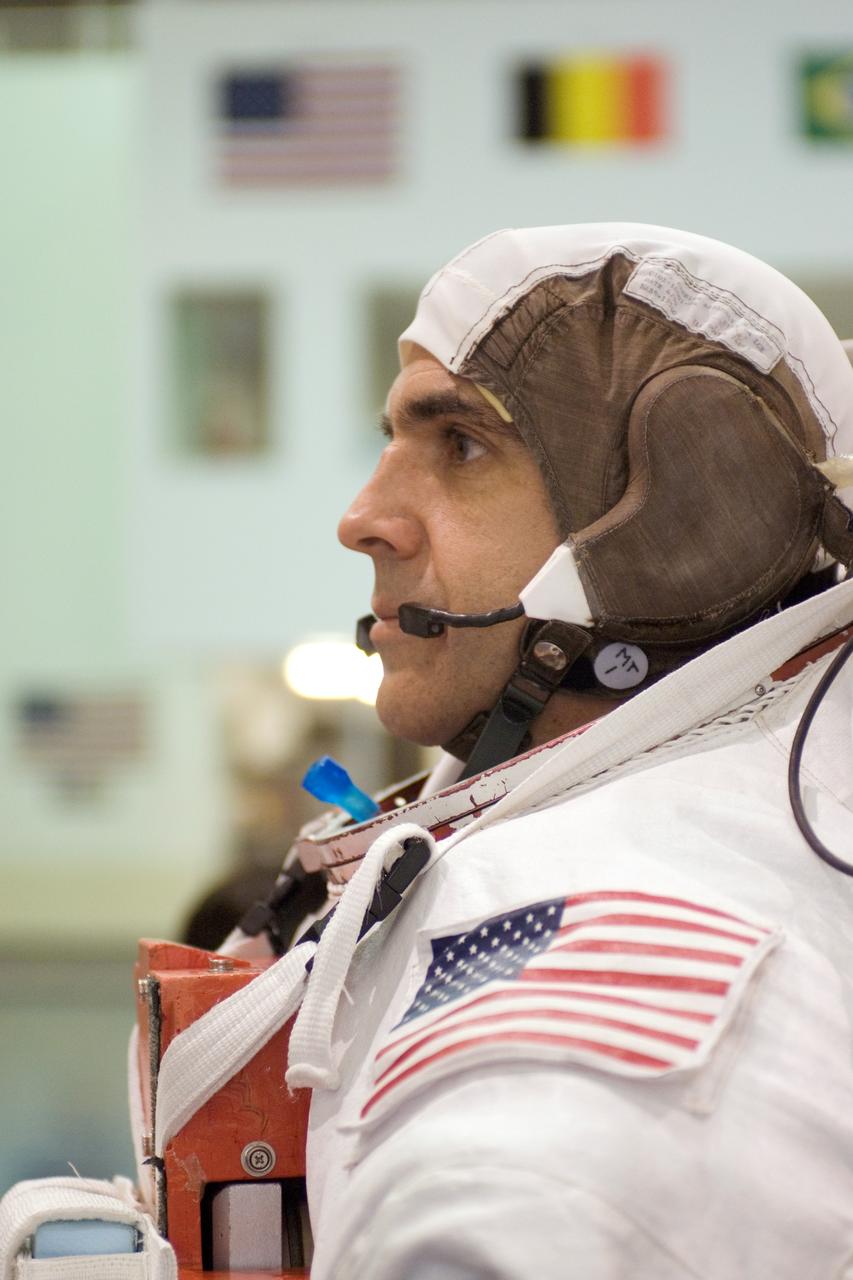
JSC2007-E-00793 (4 Jan. 2007) --- Astronaut Richard A. (Rick) Mastracchio, STS-118 mission specialist, attired in a training version of the Extravehicular Mobility Unit (EMU) spacesuit, awaits a training session in the waters of the Neutral Buoyancy Laboratory (NBL) near Johnson Space Center.
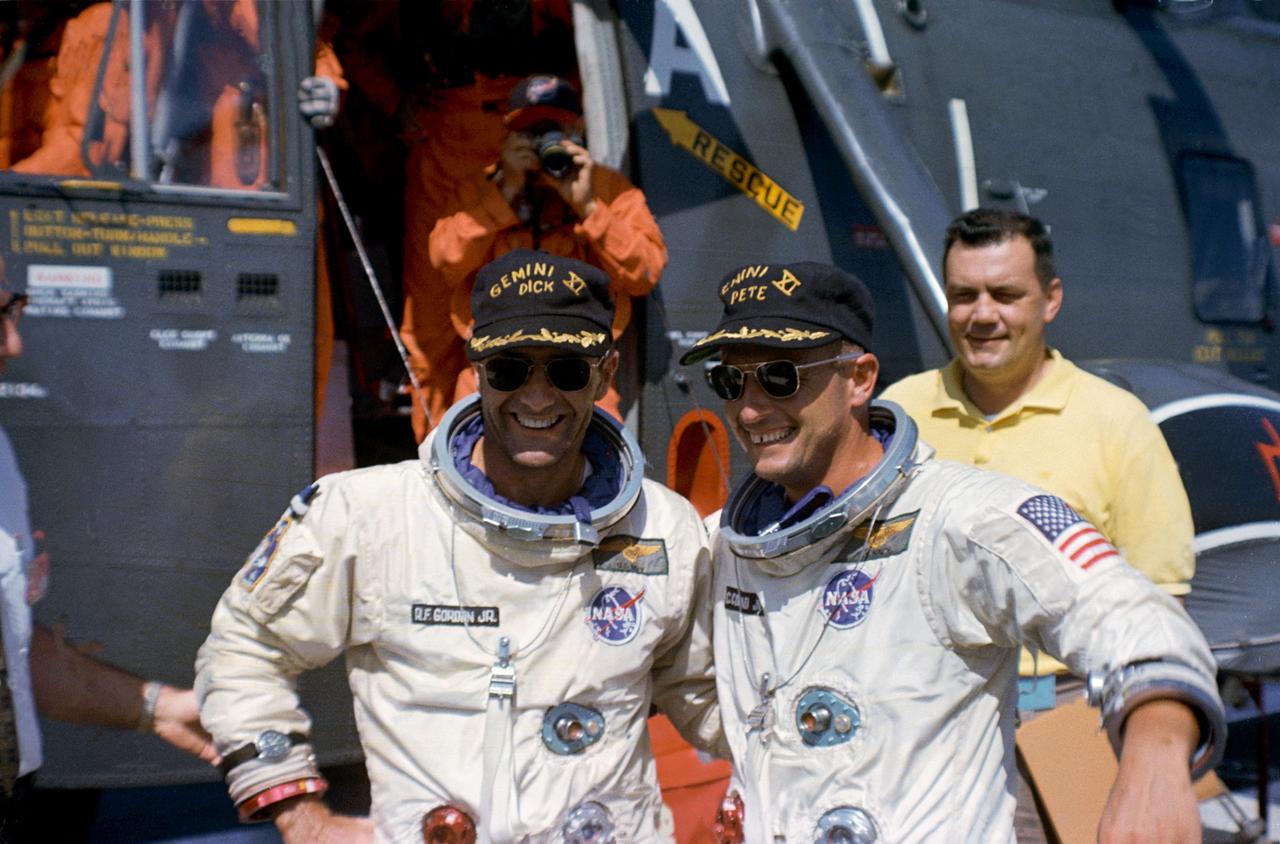
S66-50752 (15 Sept. 1966) --- The Gemini-11 prime crew, astronauts Charles Conrad Jr. (right) and Richard F. Gordon Jr. pose in front of the recovery helicopter which brought them to the USS Guam. Photo credit: NASA
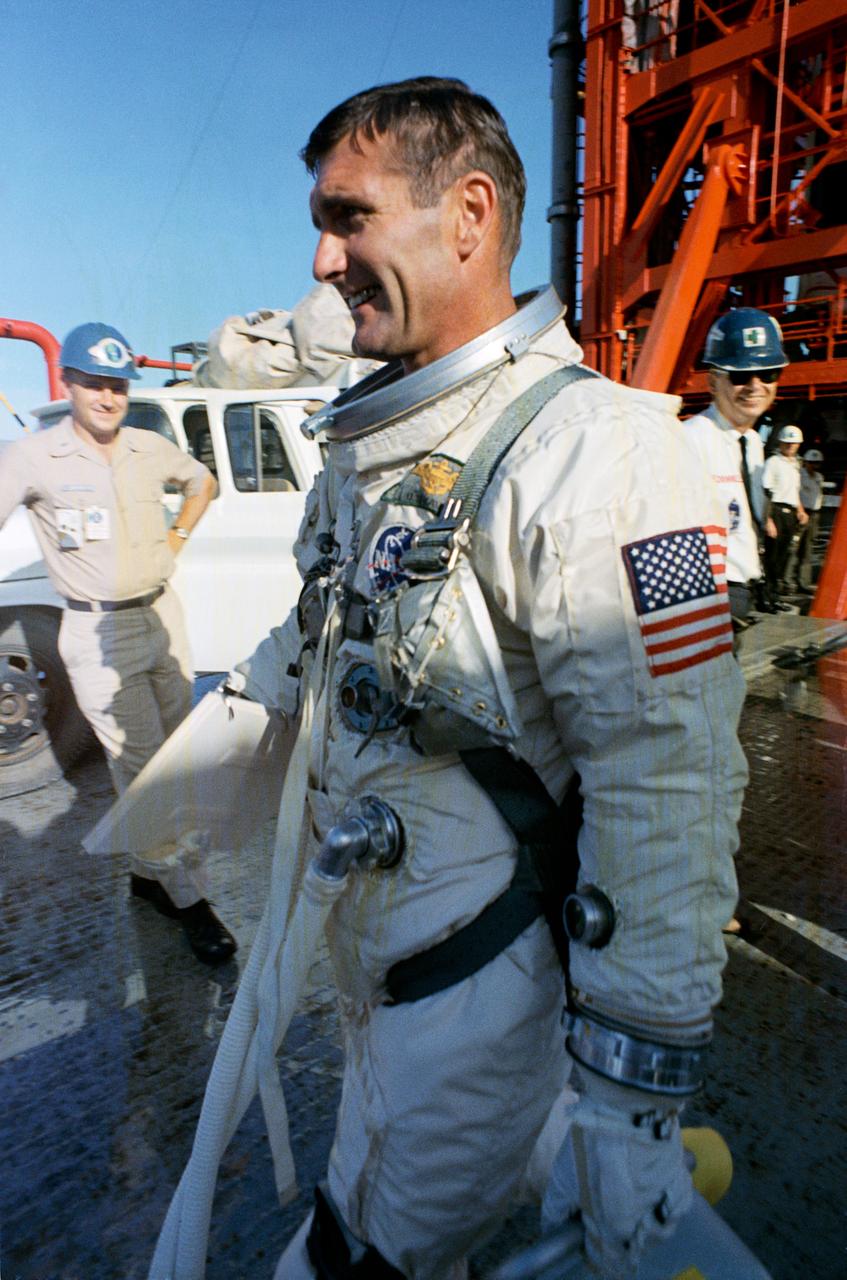
S66-50775 (10 Sept. 1966) --- Astronaut Richard F. Gordon Jr., pilot, walks away from Pad 19 following postponement of the Gemini-11 spaceflight. The mission was rescheduled for Sept. 12, 1966. Photo credit: NASA
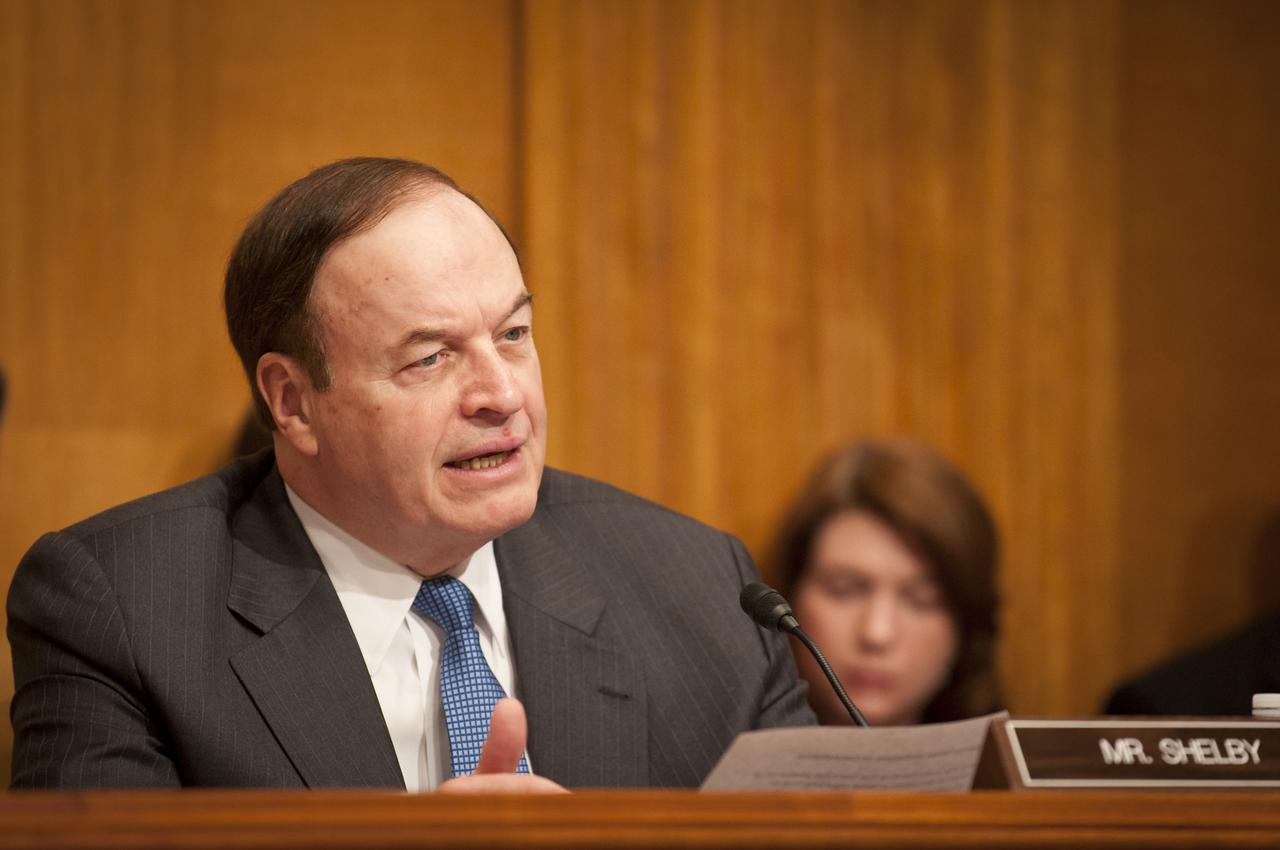
Sen. Richard Shelby, R-Ala., questions NASA Administrator Charles Bolden during a Senate Subcommittee on Commerce, Justice, Science, and Related Agencies of the Appropriations Committee hearing concerning the FY 2011 NASA Budget, Thursday, April 22, 2010 at the Dirksen Senate Office Building in Washington. Photo Credit: (NASA/Bill Ingalls)
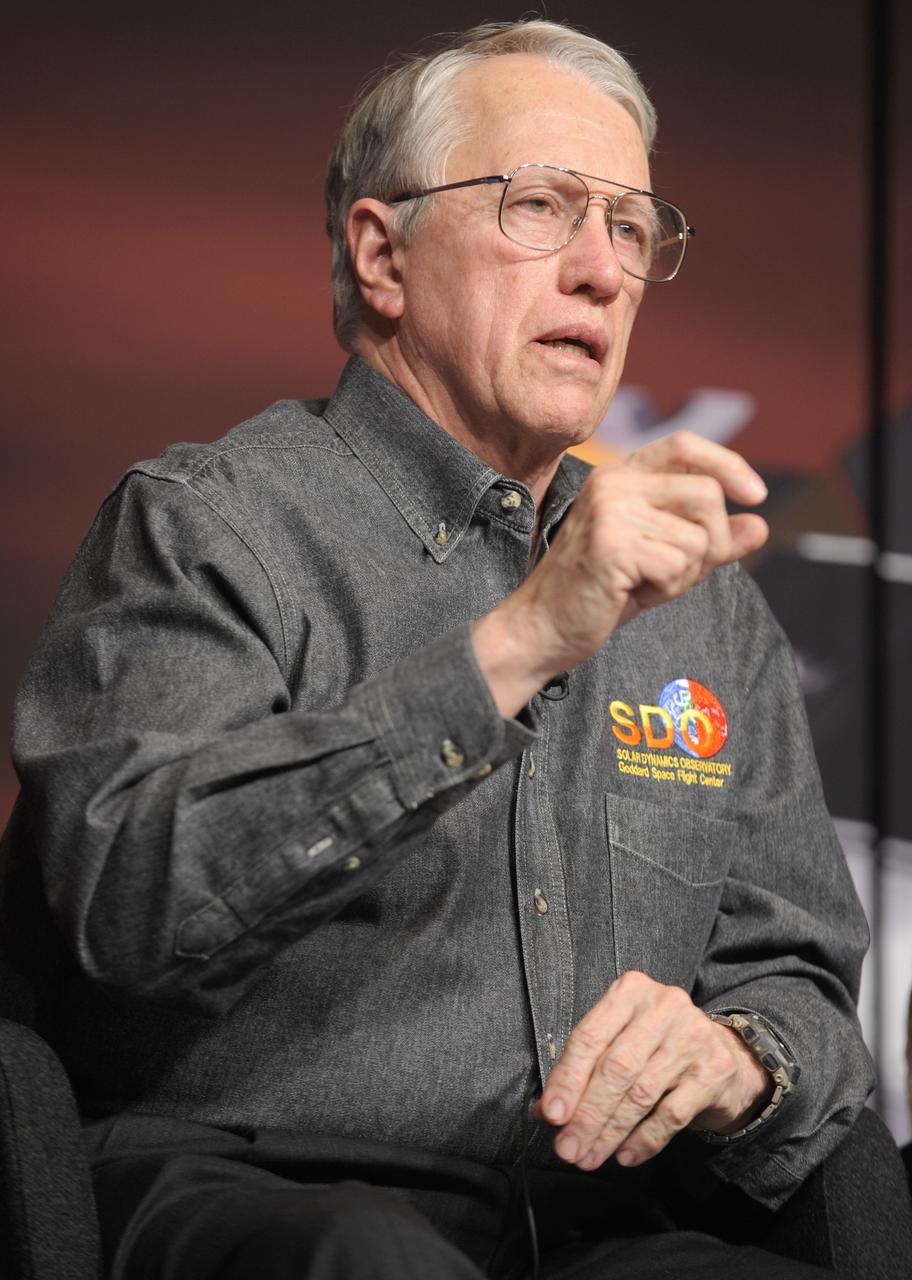
Richard Fisher, Heliophysics Division Director at NASA Headquarters, speaks during a briefing to discuss the upcoming launch of NASA's Solar Dynamic Observatory, or SDO, Thursday, Jan. 21, 2010, at NASA Headquarters in Washington. The mission is to study the Sun and its dynamic behavior. Photo Credit: (NASA/Paul E. Alers)
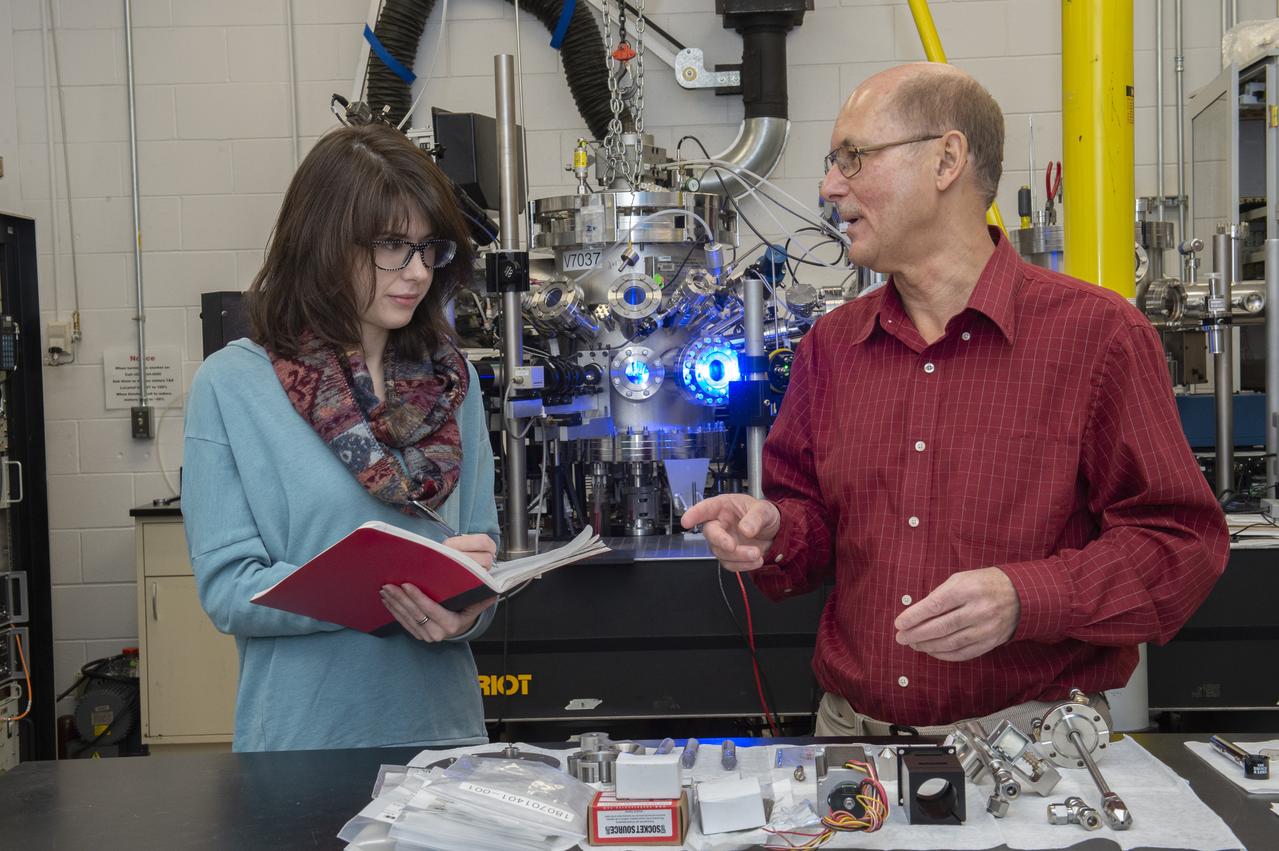
Dr. Richard Weber and Ms. Emma Clark from Materials Development Inc. during a visit to the MSFC electrostatic levitation (ESL) laboratory. Here they are preparing for ESL tests in support of Dr. Weber's NASA grant "Microgravity Investigation of Thermophysical Properties of Supercooled Molten Metal Oxides" (NNX17AH73G).
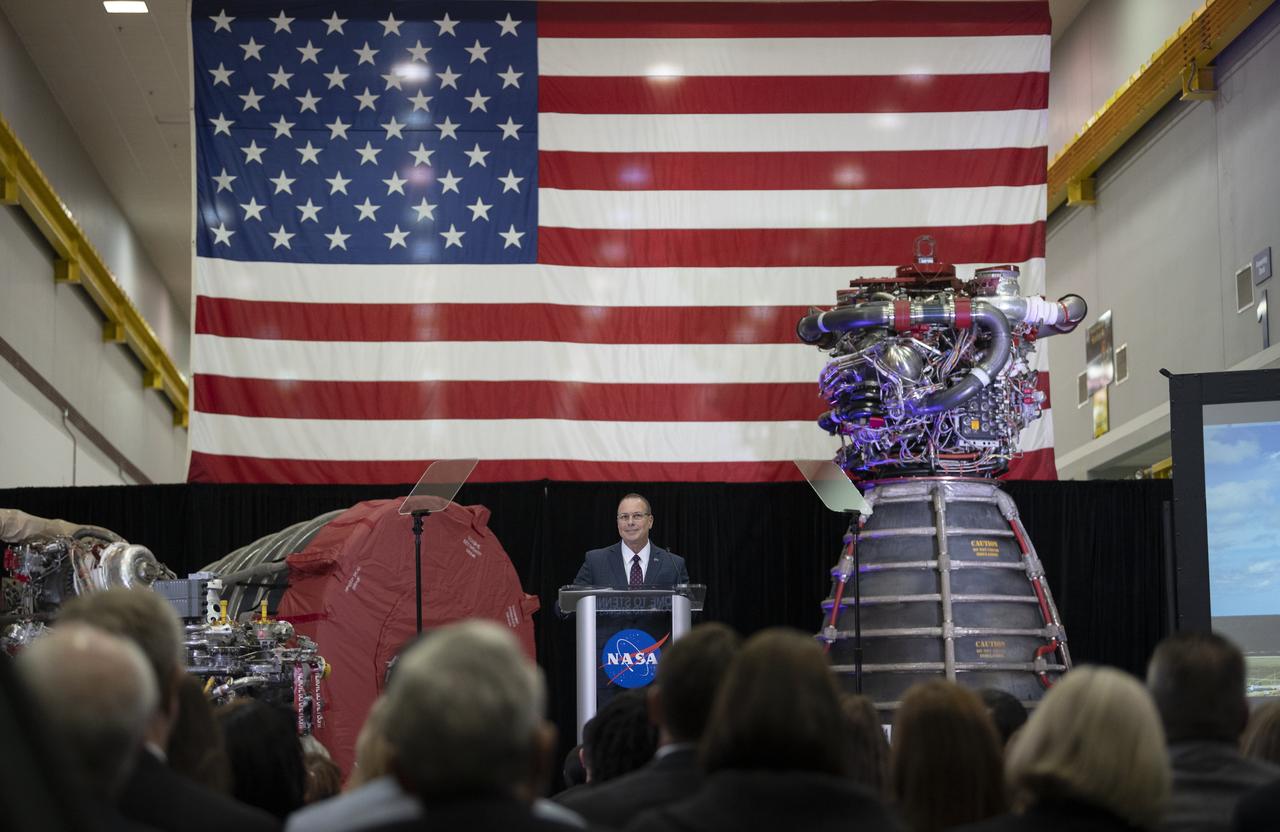
Richard Gilbrech, Director of NASA's Stennis Space Center, welcomes everyone to the State of NASA address, Monday, Feb. 10, 2020, at Aerojet Rocketdyne’s facility at NASA’s Stennis Space Center near Bay St. Louis, Mississippi. Photo Credit: (NASA/Joel Kowsky)
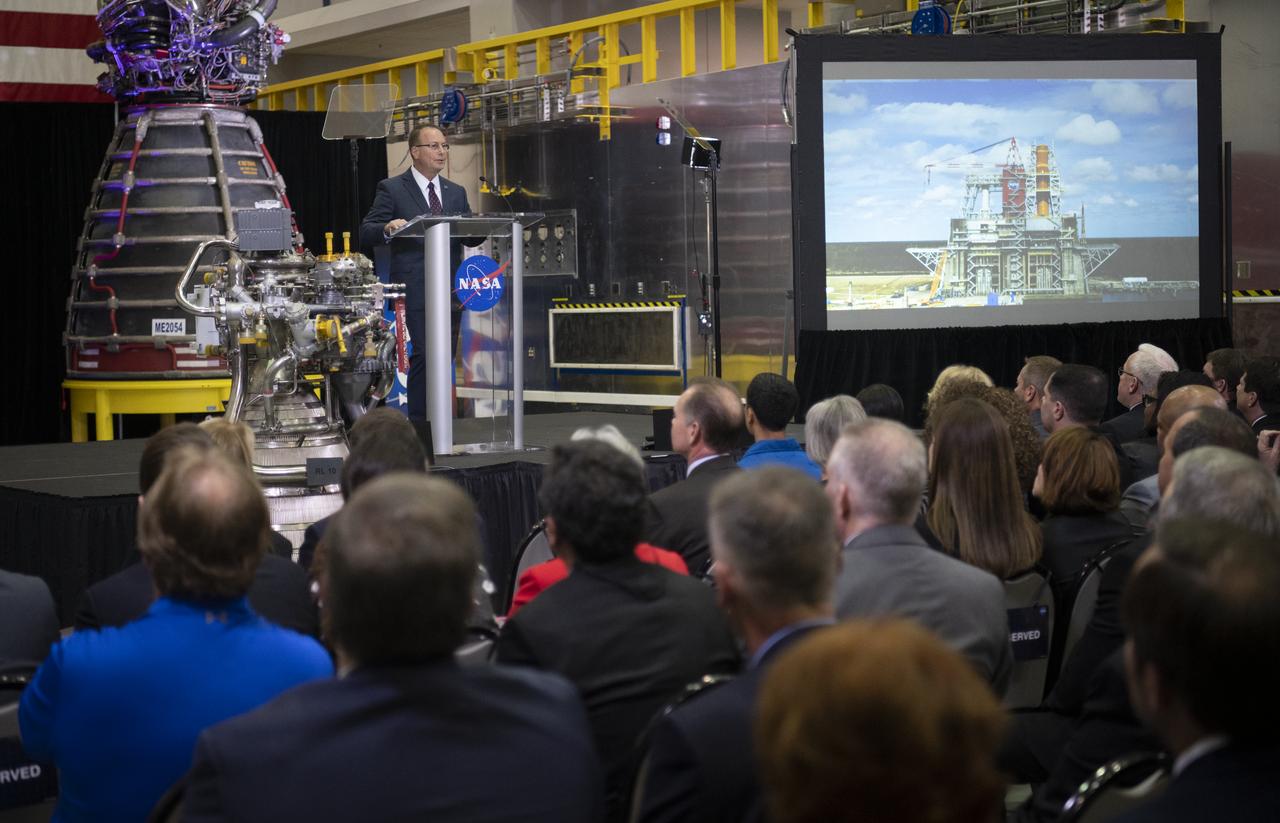
Richard Gilbrech, Director of NASA's Stennis Space Center, welcomes everyone to the State of NASA address, Monday, Feb. 10, 2020, at Aerojet Rocketdyne’s facility at NASA’s Stennis Space Center near Bay St. Louis, Mississippi. Photo Credit: (NASA/Joel Kowsky)