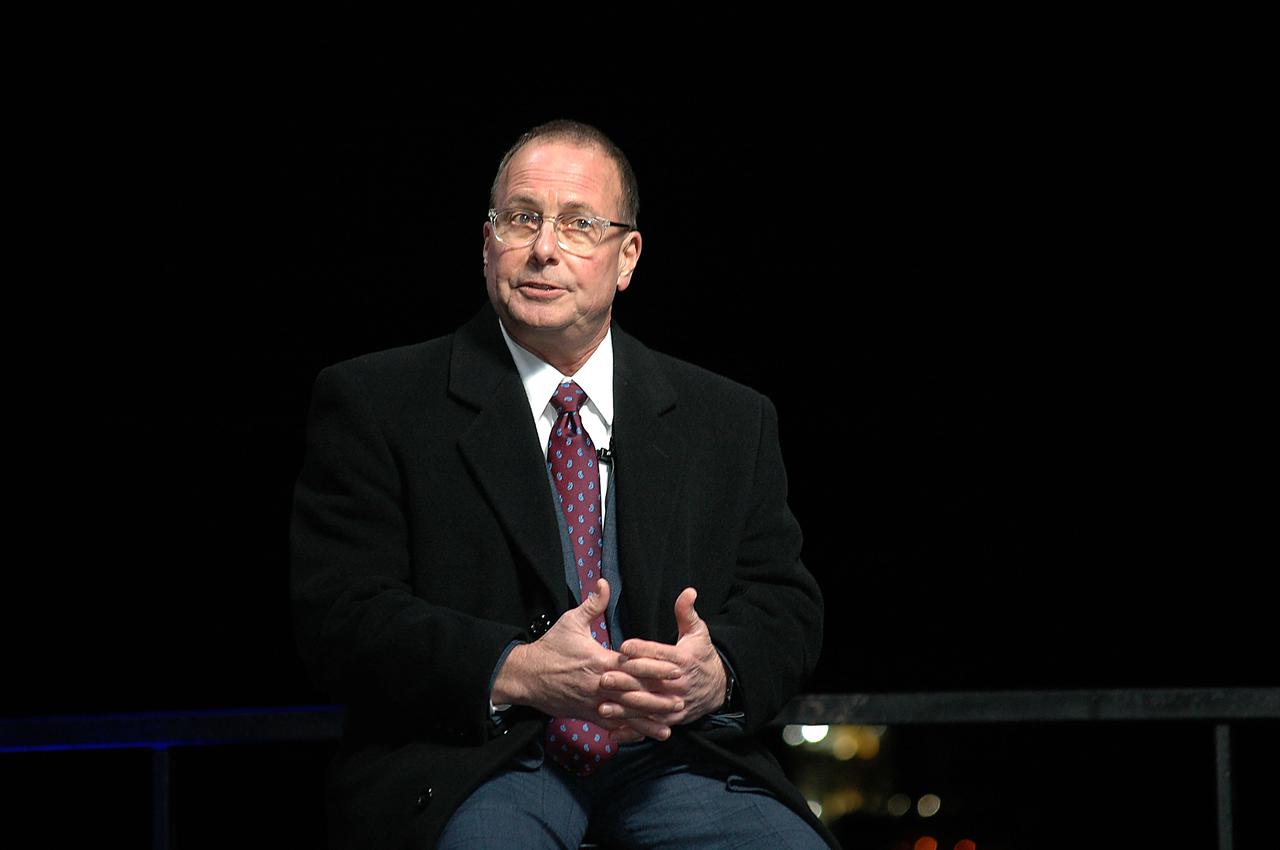
Stennis Space Center Director Rick Gilbrech participates in a press conference following the Green Run hot fire test of the core stage for NASA’s Space Launch System (SLS) rocket on Saturday, January 16, 2021. NASA conducted a hot fire test of the core stage’s four RS-25 engines on the B-2 Test Stand at Stennis Space Center near Bay St. Louis, Mississippi. Scheduled for as long as eight minutes, the engines fired for a little more than one minute to generate a combined 1.6 million pounds of thrust, just as will occur during an actual launch. The hot fire is the final test of the Green Run test series, a comprehensive assessment of the SLS core stage prior to launching the Artemis I mission to the Moon.
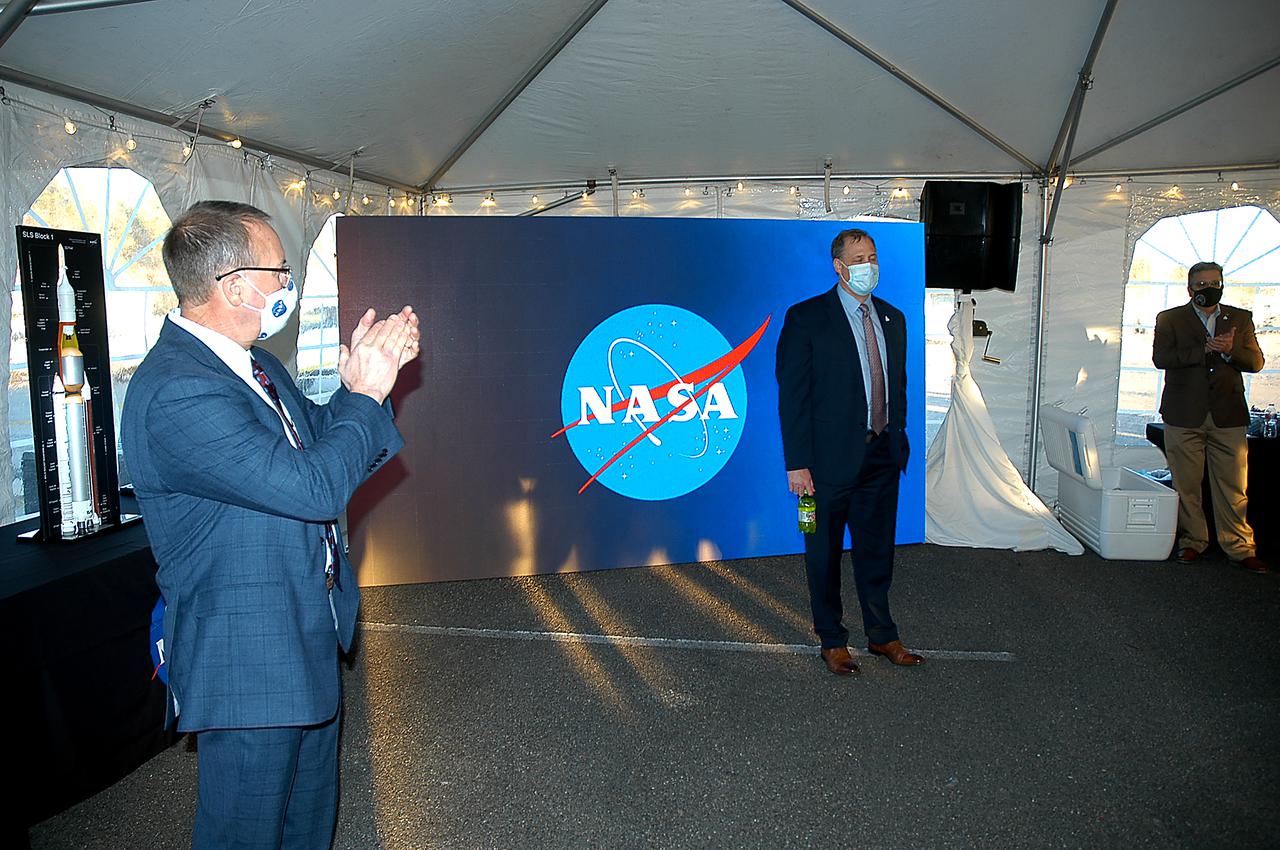
Outgoing NASA Administrator Jim Bridenstine (right) receives a round of applause from Stennis Director Rick Gilbrech and guests for comments following the Green Run hot fire test of the core stage for NASA’s Space Launch System (SLS) rocket at Stennis Space Center near Bay St. Louis, Mississippi, on Saturday, January 16, 2021. NASA conducted a hot fire test of the core stage’s four RS-25 engines on the B-2 Test Stand at Stennis. Scheduled for as long as eight minutes, the engines fired for a little more than one minute to generate a combined 1.6 million pounds of thrust, just as will occur during an actual launch. The hot fire is the final test of the Green Run test series, a comprehensive assessment of the SLS core stage prior to launching the Artemis I mission to the Moon. (NASA/Michael Badon)
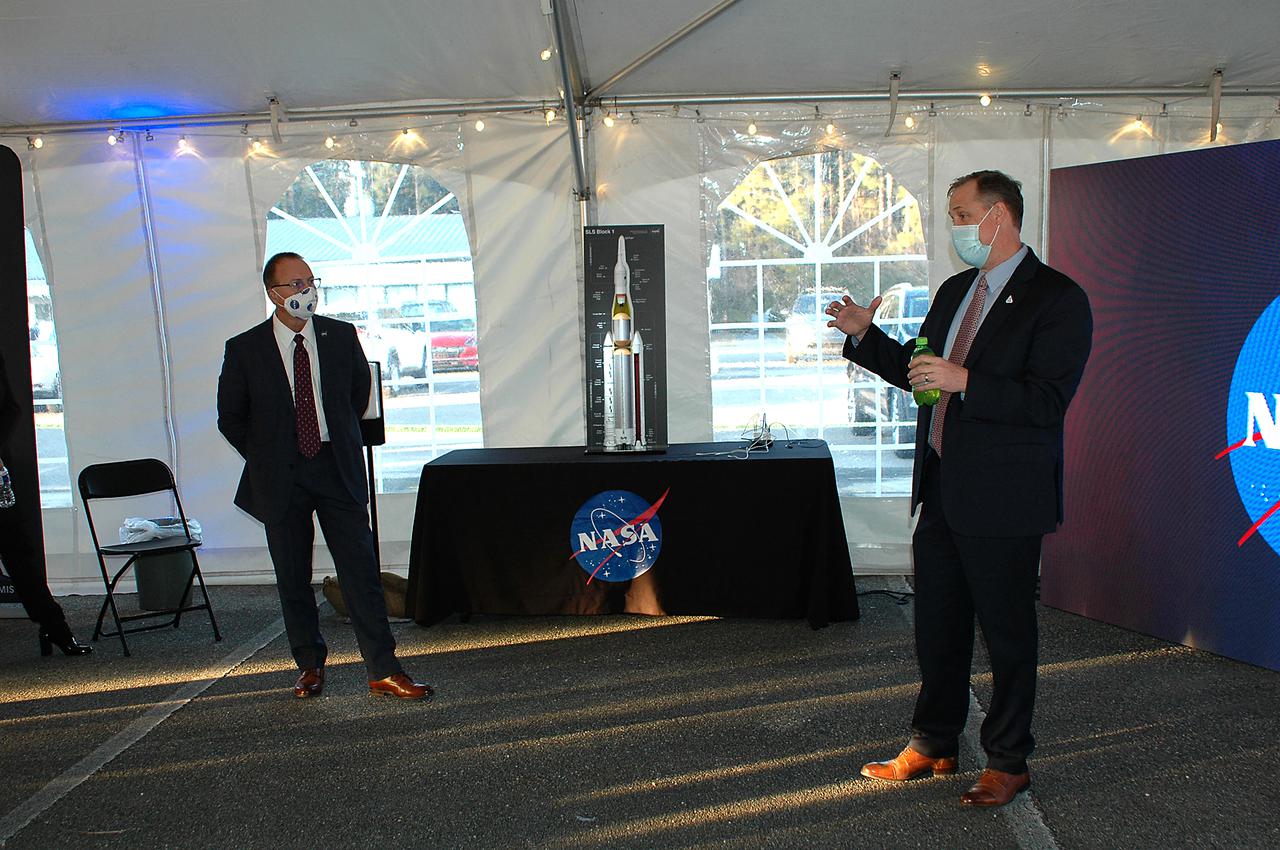
Outgoing NASA Administrator Jim Bridenstine (right), as Stennis Director Rick Gilbrech looks on, speaks to guests following the Green Run hot fire test of the core stage for NASA’s Space Launch System (SLS) rocket at Stennis Space Center near Bay St. Louis, Mississippi, on Saturday, January 16, 2021. NASA conducted a hot fire test of the core stage’s four RS-25 engines on the B-2 Test Stand at Stennis. Scheduled for as long as eight minutes, the engines fired for a little more than one minute to generate a combined 1.6 million pounds of thrust, just as will occur during an actual launch. The hot fire is the final test of the Green Run test series, a comprehensive assessment of the SLS core stage prior to launching the Artemis I mission to the Moon.
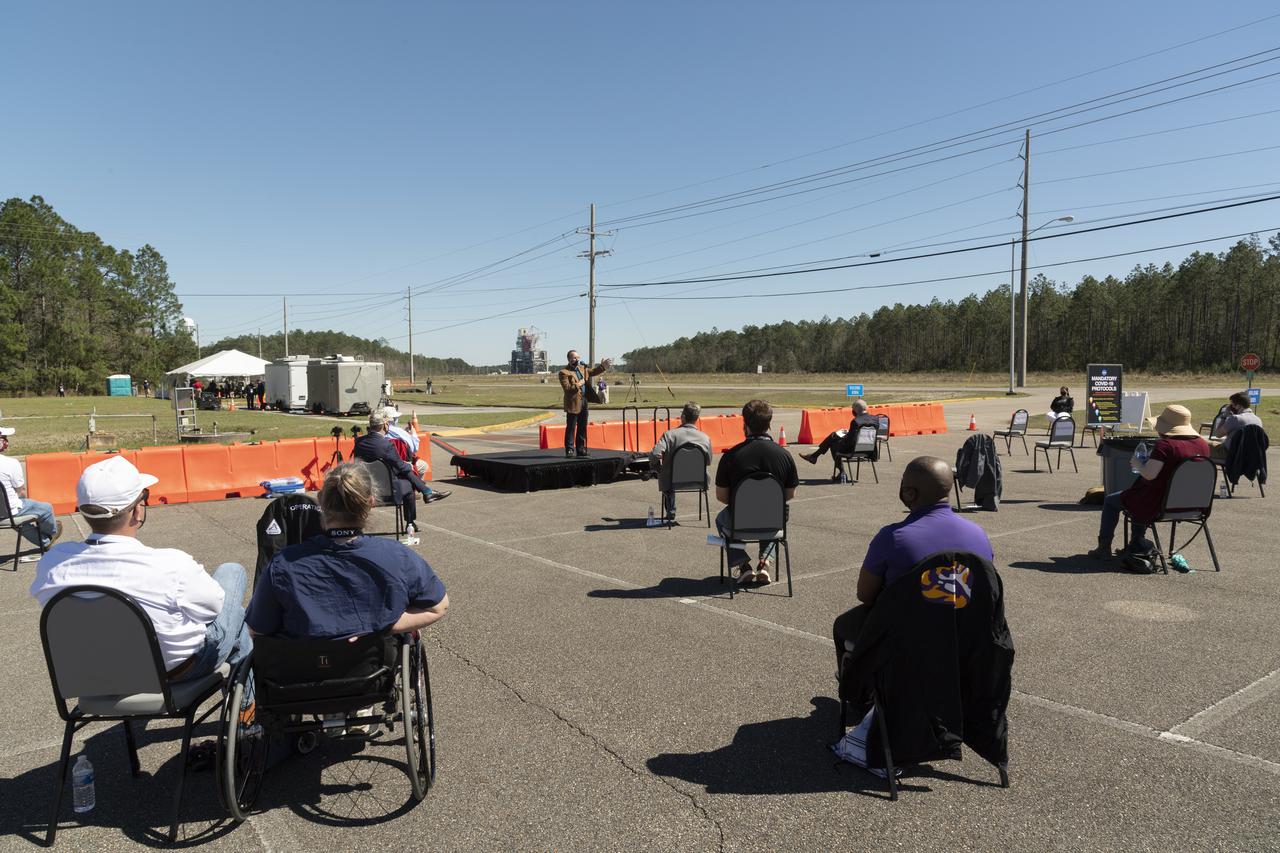
Rick Gilbrech, director of NASA's Stennis Space Center, speaks to invited guests ahead of a second hot fire test of the core stage for the first flight of NASA’s Space Launch System rocket in the B-2 Test Stand, Thursday, March 18, 2021, at NASA’s Stennis Space Center near Bay St. Louis, Mississippi. The hot fire test is the final stage of the Green Run test series, a comprehensive assessment of the Space Launch System’s core stage prior to launching the Artemis I mission to the Moon. Photo Credit: (NASA/Robert Markowitz)
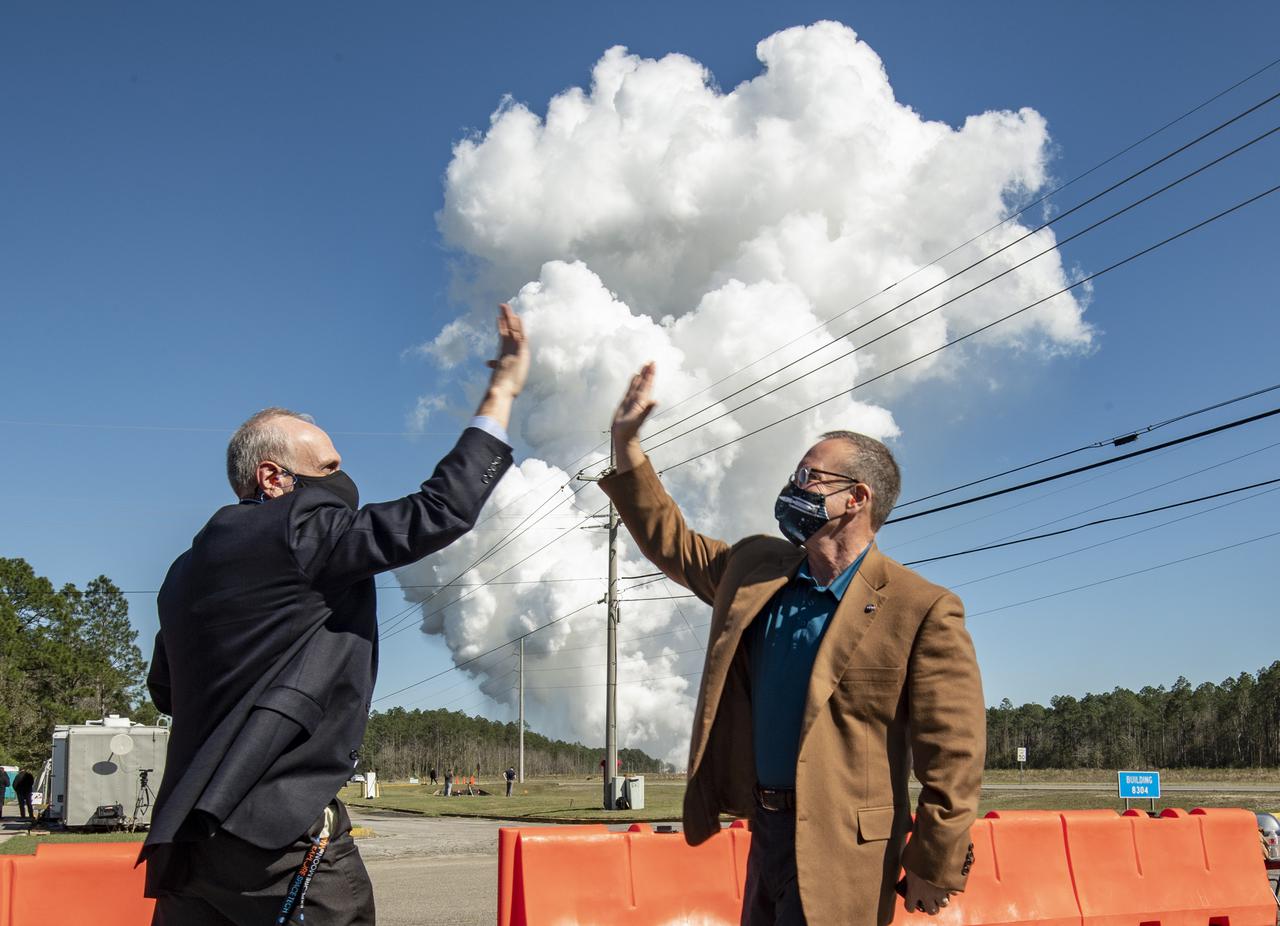
Acting NASA Administrator Steve Jurczyk, left, and Rick Gilbrech, director of NASA's Stennis Space Center, right, high five following a second hot fire test of the core stage for the first flight of NASA’s Space Launch System rocket in the B-2 Test Stand, Thursday, March 18, 2021, at NASA’s Stennis Space Center near Bay St. Louis, Mississippi. The four RS-25 engines fired for the full-duration of 8 minutes during the test and generated 1.6 million pounds of thrust. The hot fire test is the final stage of the Green Run test series, a comprehensive assessment of the Space Launch System’s core stage prior to launching the Artemis I mission to the Moon. Photo Credit: (NASA/Robert Markowitz)
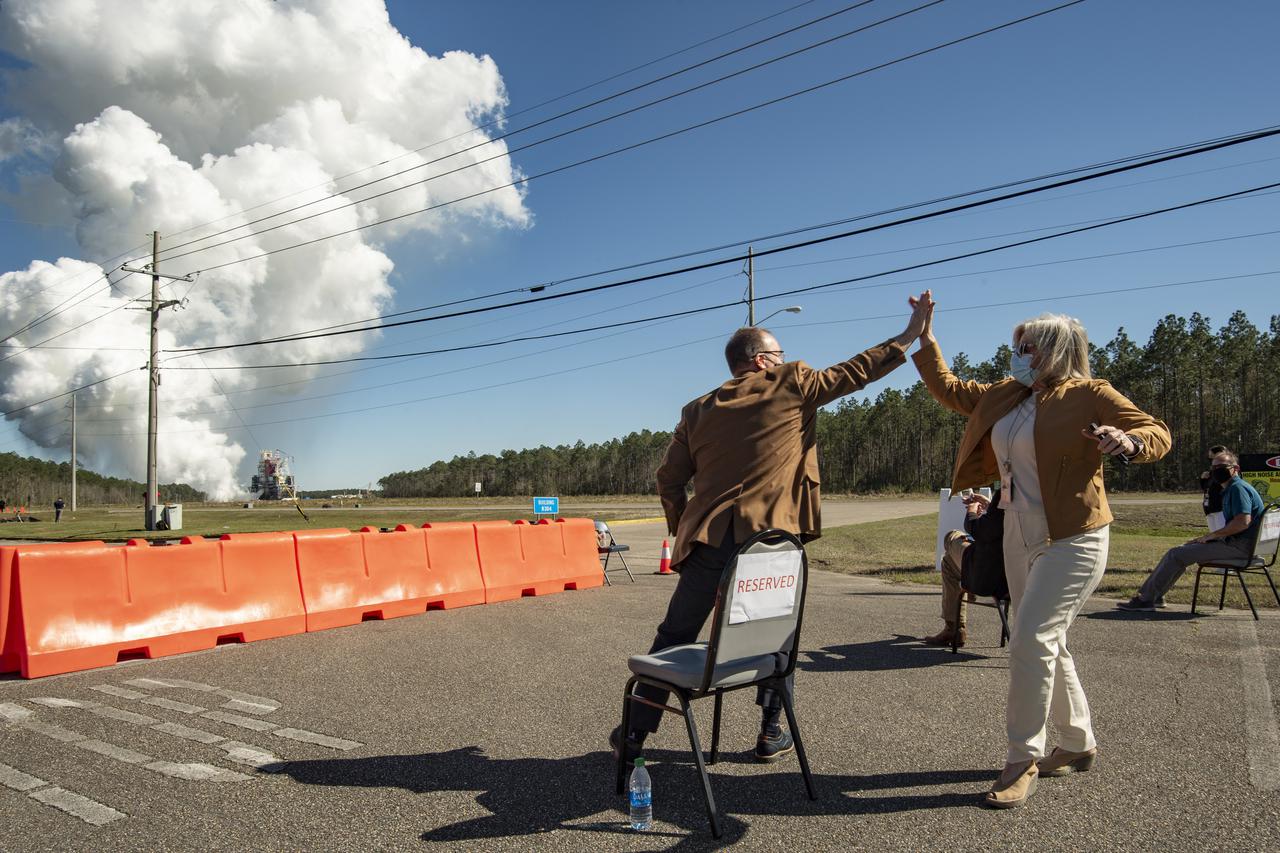
Rick Gilbrech, director of NASA's Stennis Space Center, left, and Jody Singer, director of NASA's Marshall Space Flight Center, right, high five following a second hot fire test of the core stage for the first flight of NASA’s Space Launch System rocket in the B-2 Test Stand, Thursday, March 18, 2021, at NASA’s Stennis Space Center near Bay St. Louis, Mississippi. The four RS-25 engines fired for the full-duration of 8 minutes during the test and generated 1.6 million pounds of thrust. The hot fire test is the final stage of the Green Run test series, a comprehensive assessment of the Space Launch System’s core stage prior to launching the Artemis I mission to the Moon. Photo Credit: (NASA/Robert Markowitz)
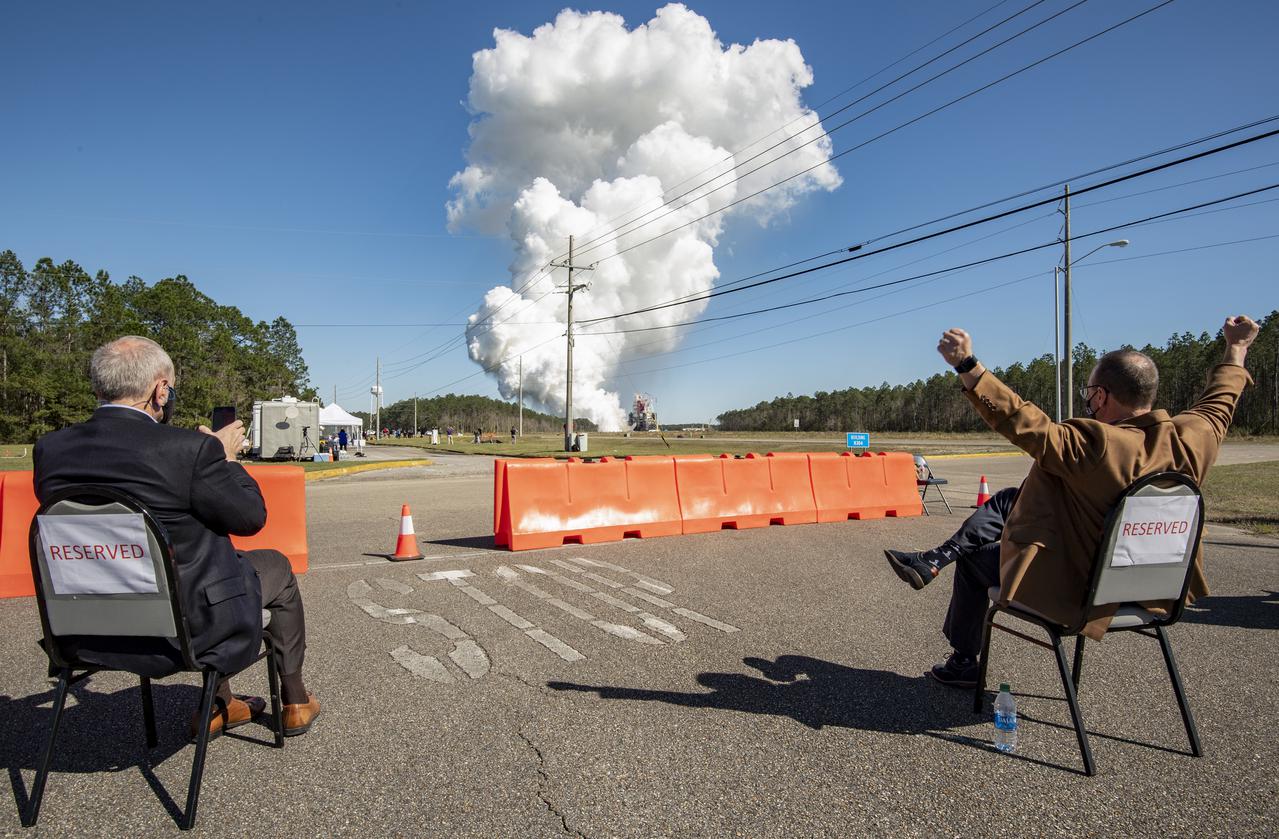
Acting NASA Administrator Steve Jurczyk, left, and Rick Gilbrech, director of NASA's Stennis Space Center, right, watch as the core stage for the first flight of NASA’s Space Launch System rocket undergoes a second hot fire test in the B-2 Test Stand, Thursday, March 18, 2021, at NASA’s Stennis Space Center near Bay St. Louis, Mississippi. The four RS-25 engines fired for the full-duration of 8 minutes during the test and generated 1.6 million pounds of thrust. The hot fire test is the final stage of the Green Run test series, a comprehensive assessment of the Space Launch System’s core stage prior to launching the Artemis I mission to the Moon. Photo Credit: (NASA/Robert Markowitz)

New Stennis Director Rick Gilbrech (r) shakes hands with his predecessor, Patrick Scheuermann, following announcement of the leadership change during an all hands session Sept. 25. Scheuermann ended his tenure at Stennis to become director of Marshall Space Flight Center in Huntsville, Ala. Gilbrech previously served as director at Stennis in 2006-7.

New Stennis Director Rick Gilbrech (r) shakes hands with his predecessor, Patrick Scheuermann, following announcement of the leadership change during an all hands session Sept. 25. Scheuermann ended his tenure at Stennis to become director of Marshall Space Flight Center in Huntsville, Ala. Gilbrech previously served as director at Stennis in 2006-7.
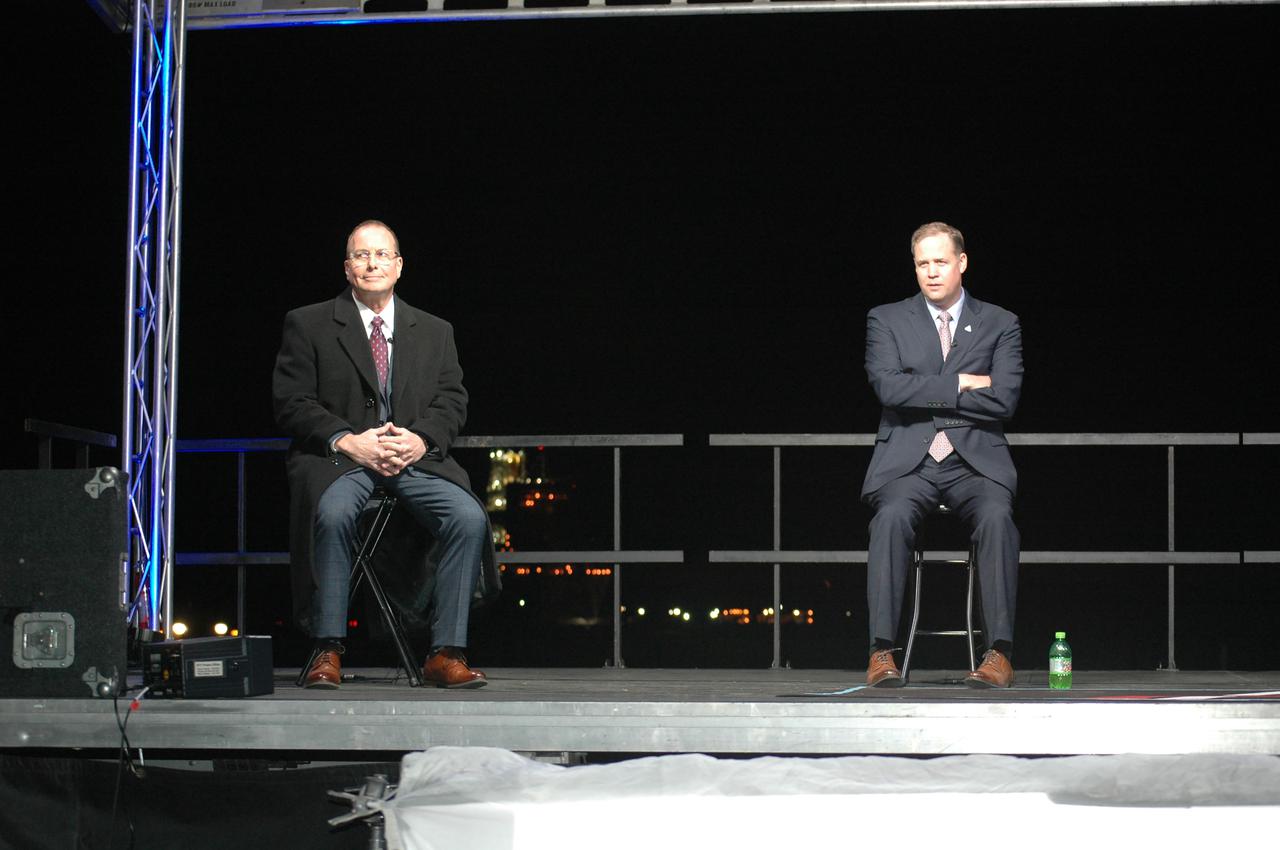
Outgoing NASA Administrator Jim Bridenstine (right) and Stennis Space Center Director Rick Gilbrech participate in a press conference following the Green Run hot fire test of the core stage for NASA’s Space Launch System (SLS) rocket on Saturday, January 16, 2021. NASA conducted a hot fire test of the core stage’s four RS-25 engines on the B-2 Test Stand at Stennis Space Center near Bay St. Louis, Mississippi. Scheduled for as long as eight minutes, the engines fired for a little more than one minute to generate a combined 1.6 million pounds of thrust, just as will occur during an actual launch. The hot fire is the final test of the Green Run test series, a comprehensive assessment of the SLS core stage prior to launching the Artemis I mission to the Moon.
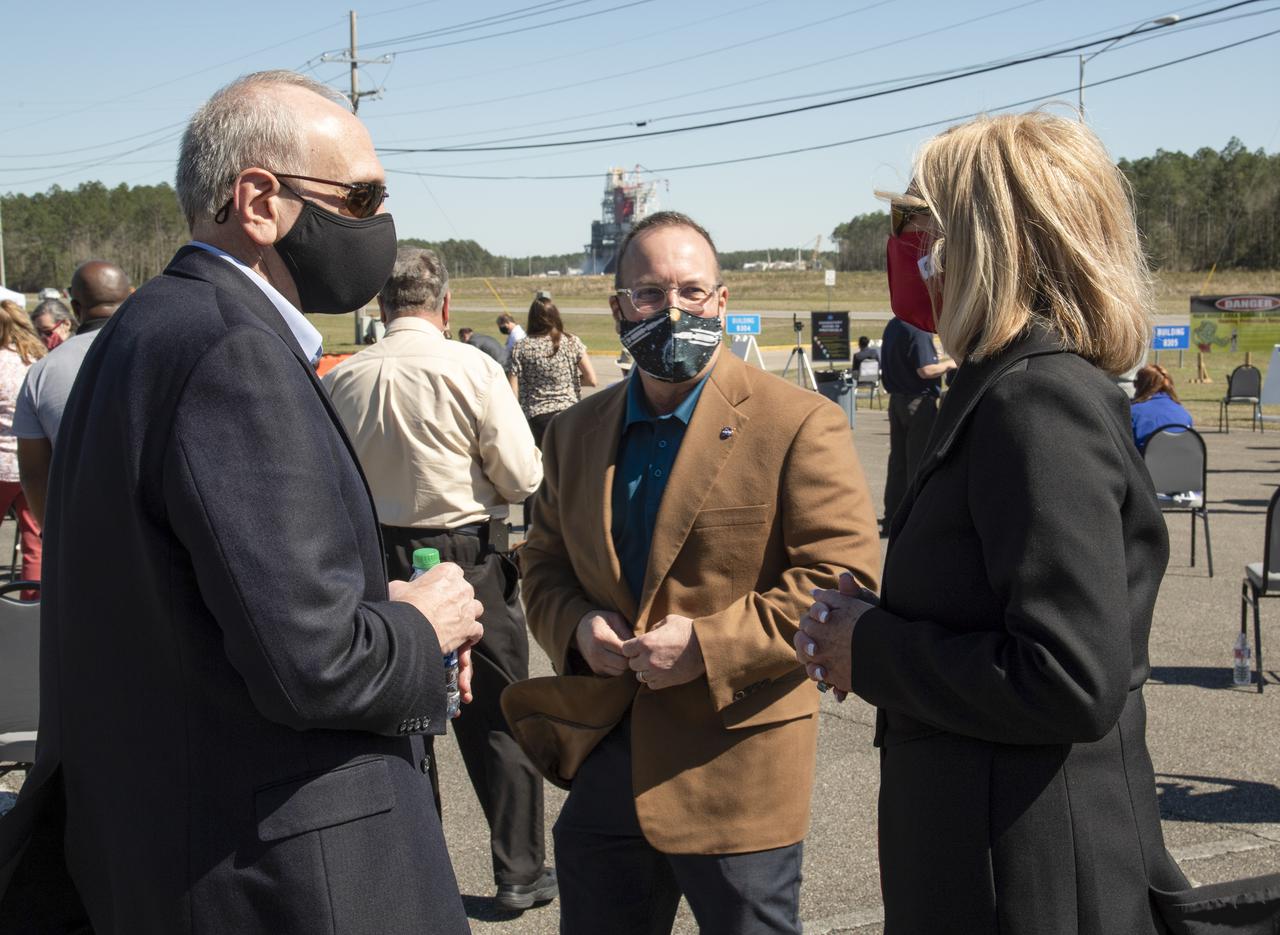
Acting NASA Administrator Steve Jurczyk, left, Rick Gilbrech, director of NASA's Stennis Space Center, center, and Lynn Fitch, Attorney General of Mississippi, right, are seen in the viewing area prior to a second hot fire test of the core stage for the first flight of NASA’s Space Launch System rocket in the B-2 Test Stand, Thursday, March 18, 2021, at NASA’s Stennis Space Center near Bay St. Louis, Mississippi. The four RS-25 engines fired for the full-duration of 8 minutes during the test and generated 1.6 million pounds of thrust. The hot fire test is the final stage of the Green Run test series, a comprehensive assessment of the Space Launch System’s core stage prior to launching the Artemis I mission to the Moon. Photo Credit: (NASA/Robert Markowitz)
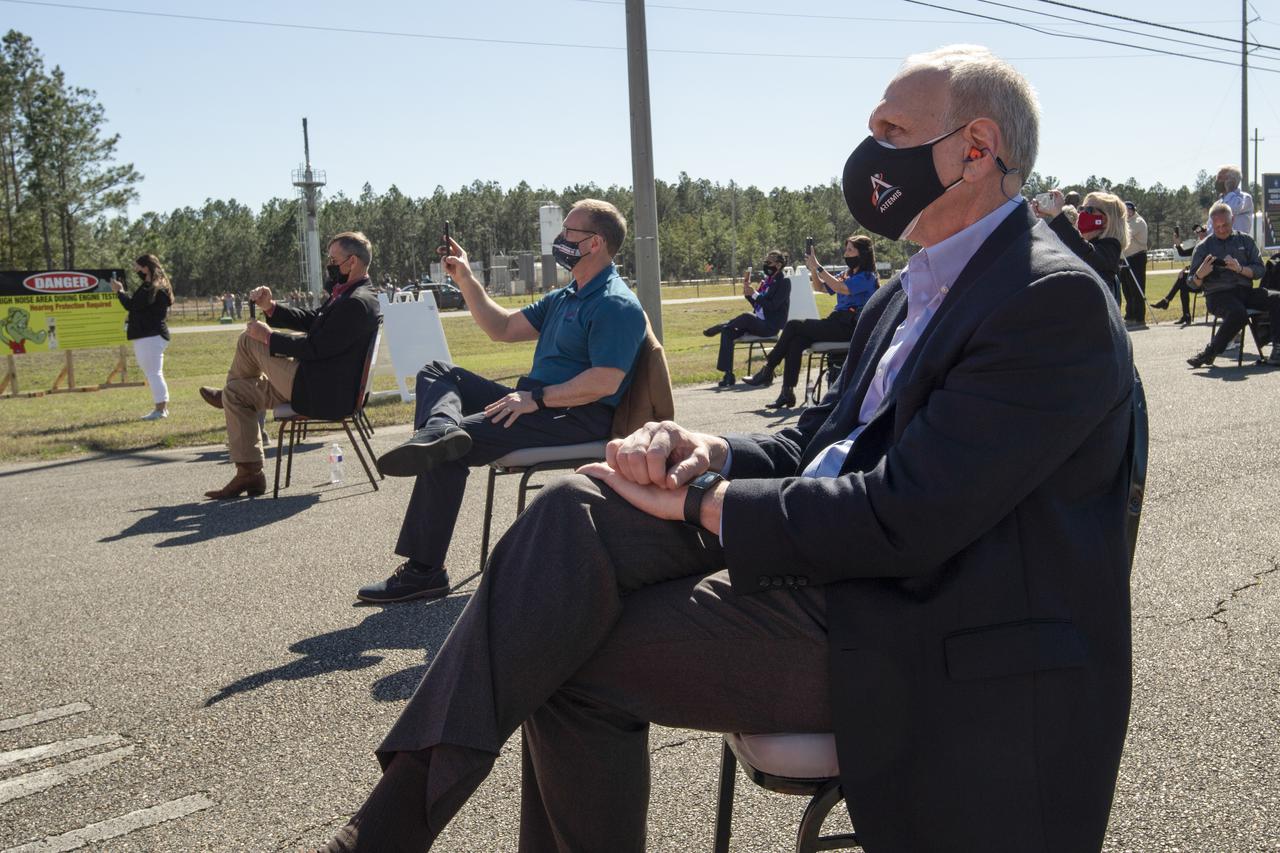
Acting NASA Administrator Steve Jurczyk, right, and Rick Gilbrech, director of NASA's Stennis Space Center, center, watch as the core stage for the first flight of NASA’s Space Launch System rocket undergoes a second hot fire test in the B-2 Test Stand, Thursday, March 18, 2021, at NASA’s Stennis Space Center near Bay St. Louis, Mississippi. The four RS-25 engines fired for the full-duration of 8 minutes during the test and generated 1.6 million pounds of thrust. The hot fire test is the final stage of the Green Run test series, a comprehensive assessment of the Space Launch System’s core stage prior to launching the Artemis I mission to the Moon. Photo Credit: (NASA/Robert Markowitz)
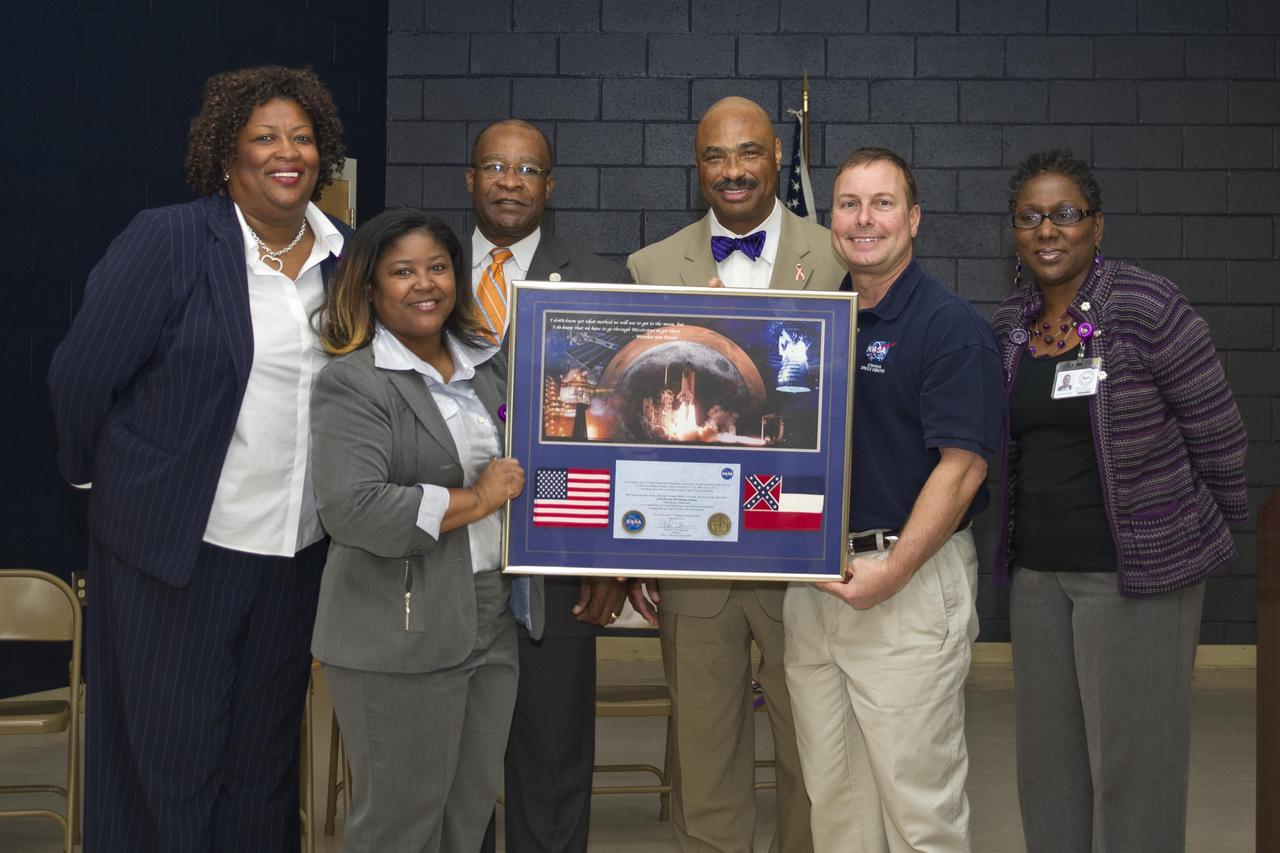
Stennis Deputy Director Rick Gilbrech (second from right) presents a commemorative plaque to Lillie Burney Elementary School officials, including (l to r): Lillie Burney Principal Deborah Smith; Assistant Principal Dr. Bobbie Trussell; Hattiesburg Mayor Johnny DuPree; Hattiesburg Public School District Superintendent James Bacchus; Gilbrech; and District Assistant Superintendent Dr. Edna Thomas. NASA senior staff members from Stennis visited the Hattiesburg, Miss., school Jan. 27, 2012, for a morning of activities and outreach to students and school officials.
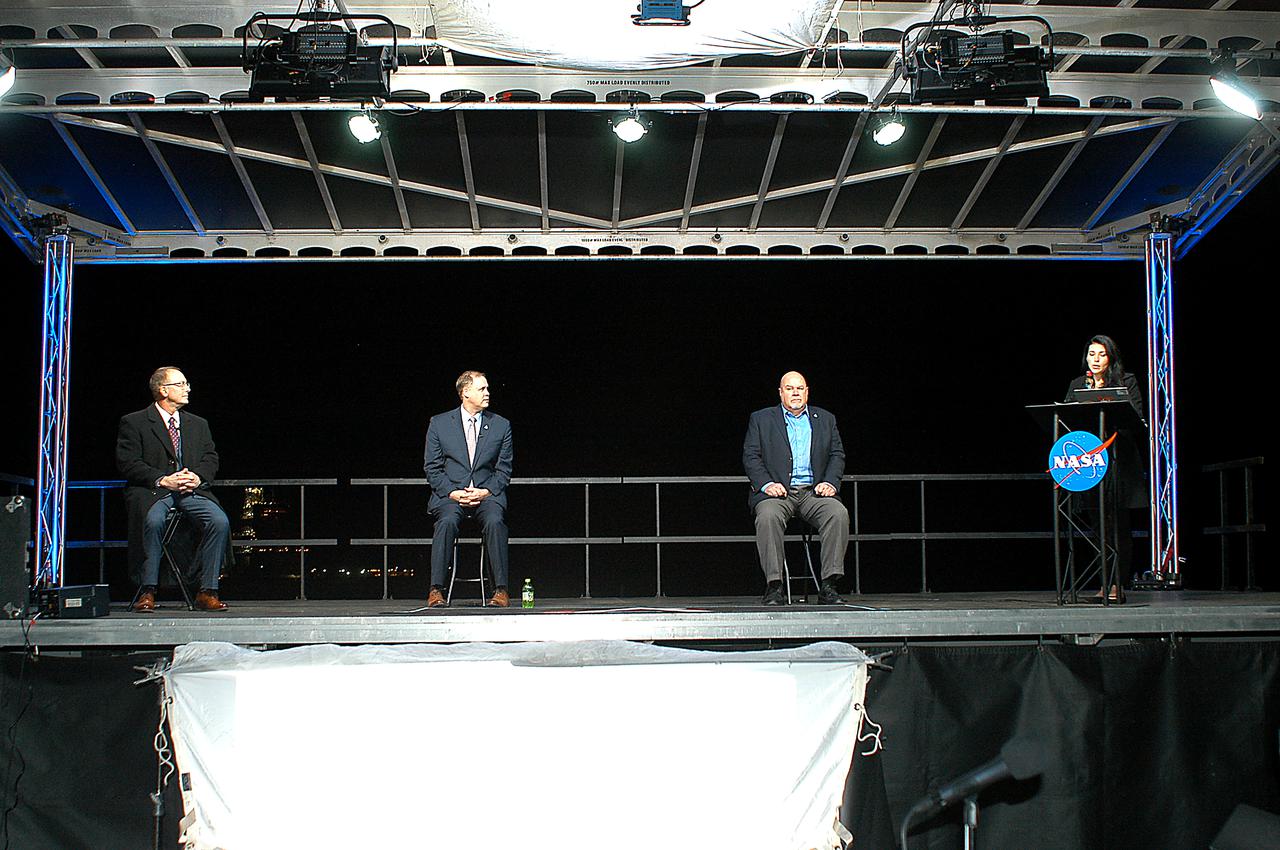
Outgoing NASA Associate Administrator for Communications Bettina Inclan (far right) hosts a press conference following the Green Run hot fire test of the core stage for NASA’s Space Launch System (SLS) rocket on Saturday, January 16, 2021. Seated press conference participants included outgoing NASA Administrator Jim Bridenstine (center), Stennis Space Center Director Rick Gilbrech (left) and SLS Program Manager John Honeycutt from Marshall Space Flight Center. NASA conducted a hot fire test of the core stage’s four RS-25 engines on the B-2 Test Stand at Stennis Space Center near Bay St. Louis, Mississippi. Scheduled for as long as eight minutes, the engines fired for a little more than one minute to generate a combined 1.6 million pounds of thrust, just as will occur during an actual launch. The hot fire is the final test of the Green Run test series, a comprehensive assessment of the SLS core stage prior to launching the Artemis I mission to the Moon.
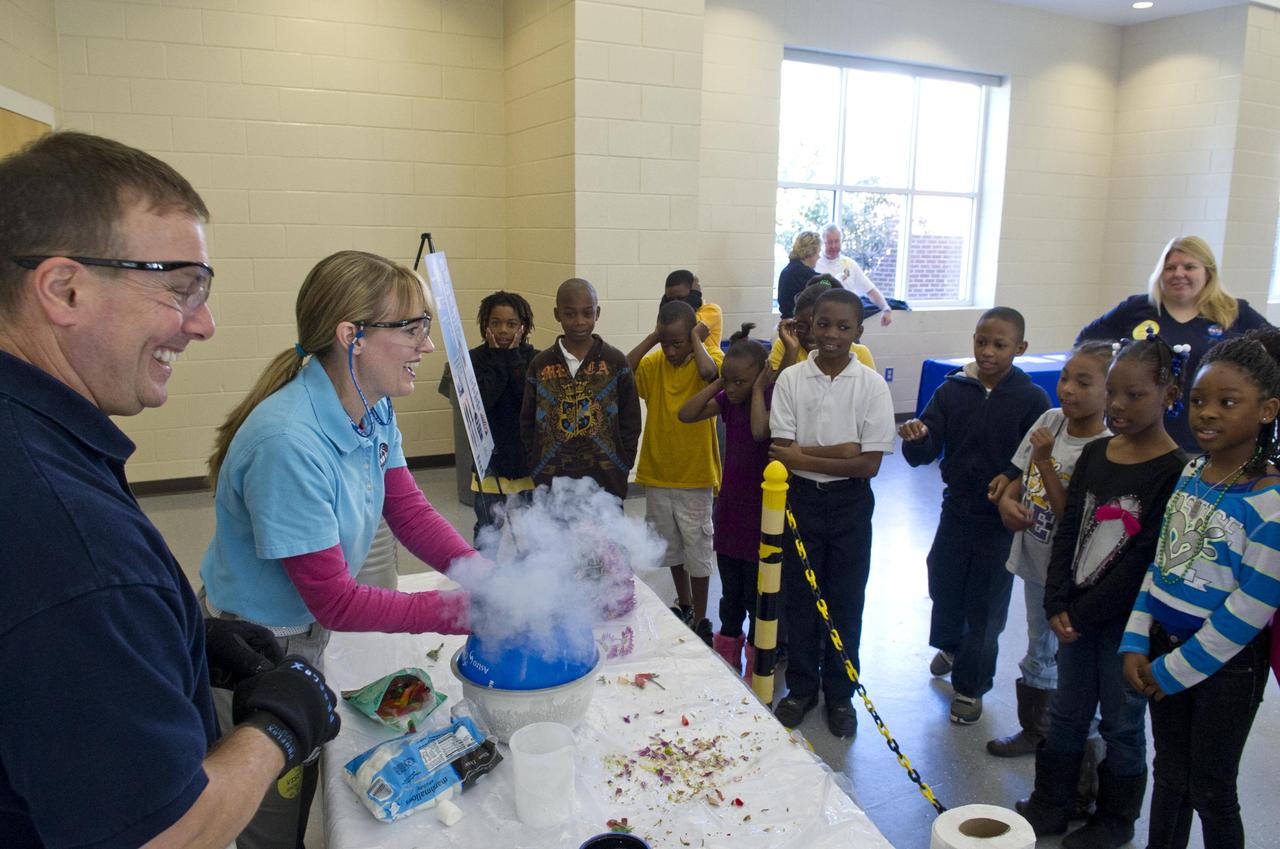
Rick Gilbrech (l), deputy director at Stennis Space Center, and Katie Wallace, director of the Stennis Education Office, team up for a cryogenics presentation at Lillie Burney Elementary School in Hattiesburg, Miss. NASA senior staff members from Stennis Space Center visited the school Jan. 27, 2012, for a morning of activities and outreach to students and school officials.
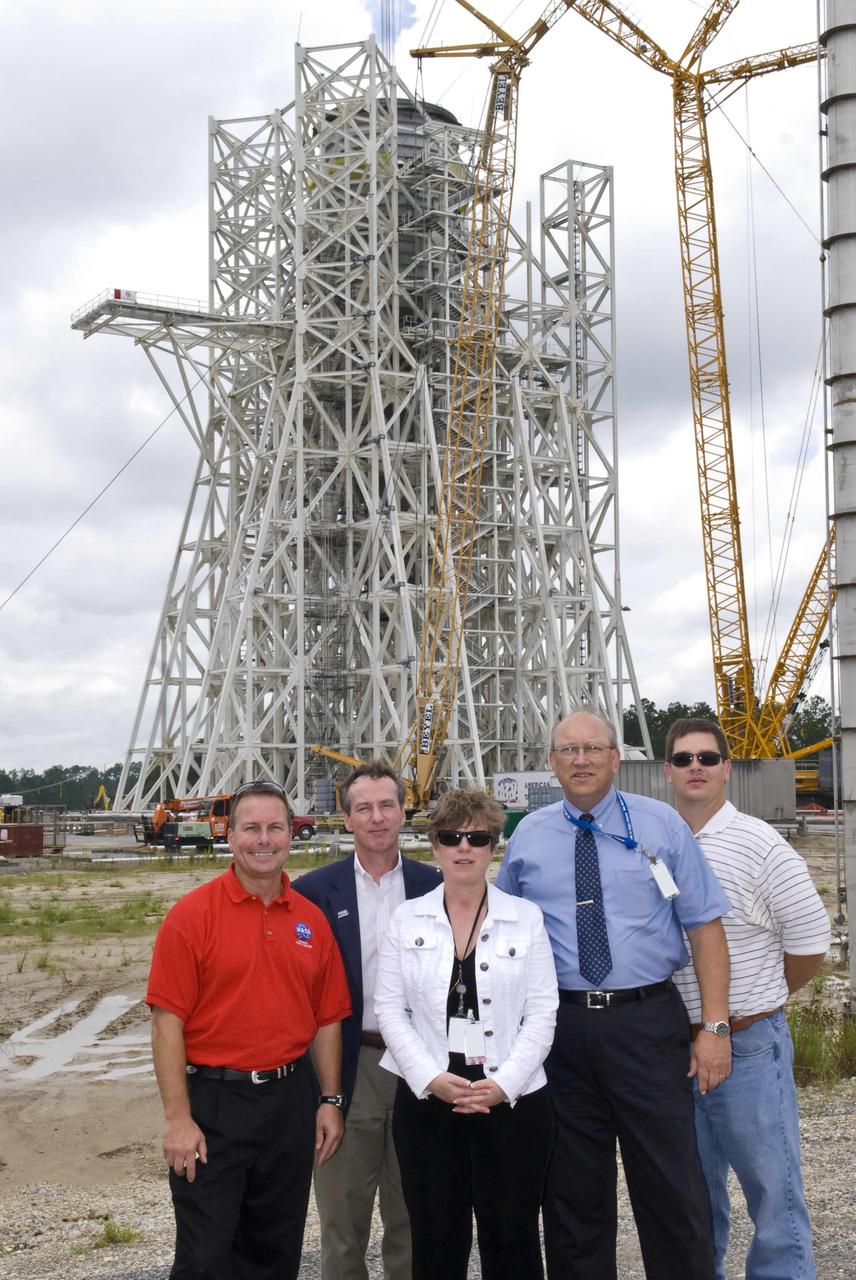
NASA Chief Financial Officer Elizabeth Robinson (center) visited John C. Stennis Space Center on Aug. 17, touring facilities and the A-3 Test Stand construction site. Joining her on the tour of the facility were: (l to r) Deputy Director Rick Gilbrech, Stennis Chief Financial Officer Jim Bevis, Project Directorate representative Randy Holland and engineer Tom Rich.
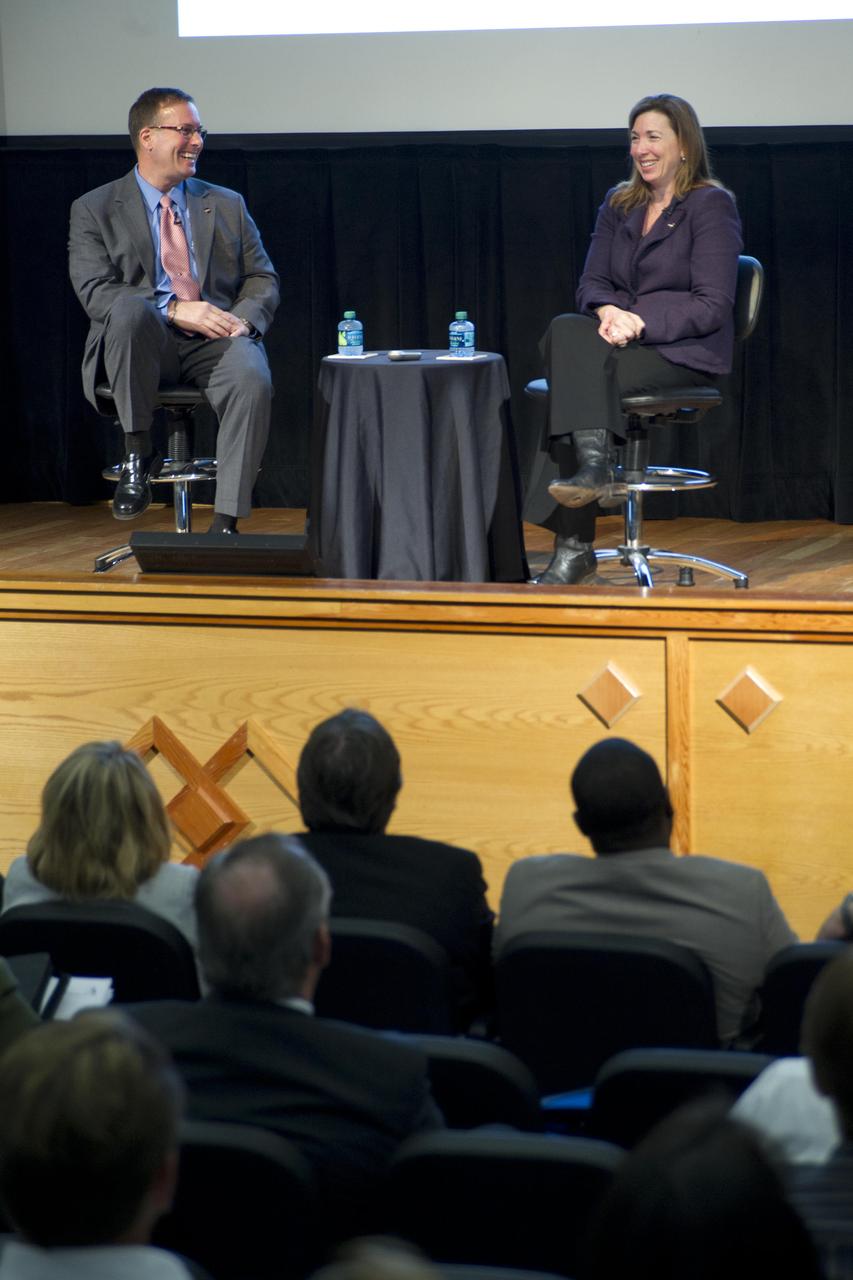
NASA Deputy Administrator Lori Garver (right) and Stennis Space Center Deputy Director Rick Gilbrech address NASA employees during a Feb. 23, 2012, all hands meeting onsite. Garver visited Stennis Space Center to meet with senior managers, members of the media and NASA employees to discuss the space agency's proposed budget for fiscal year 2013.
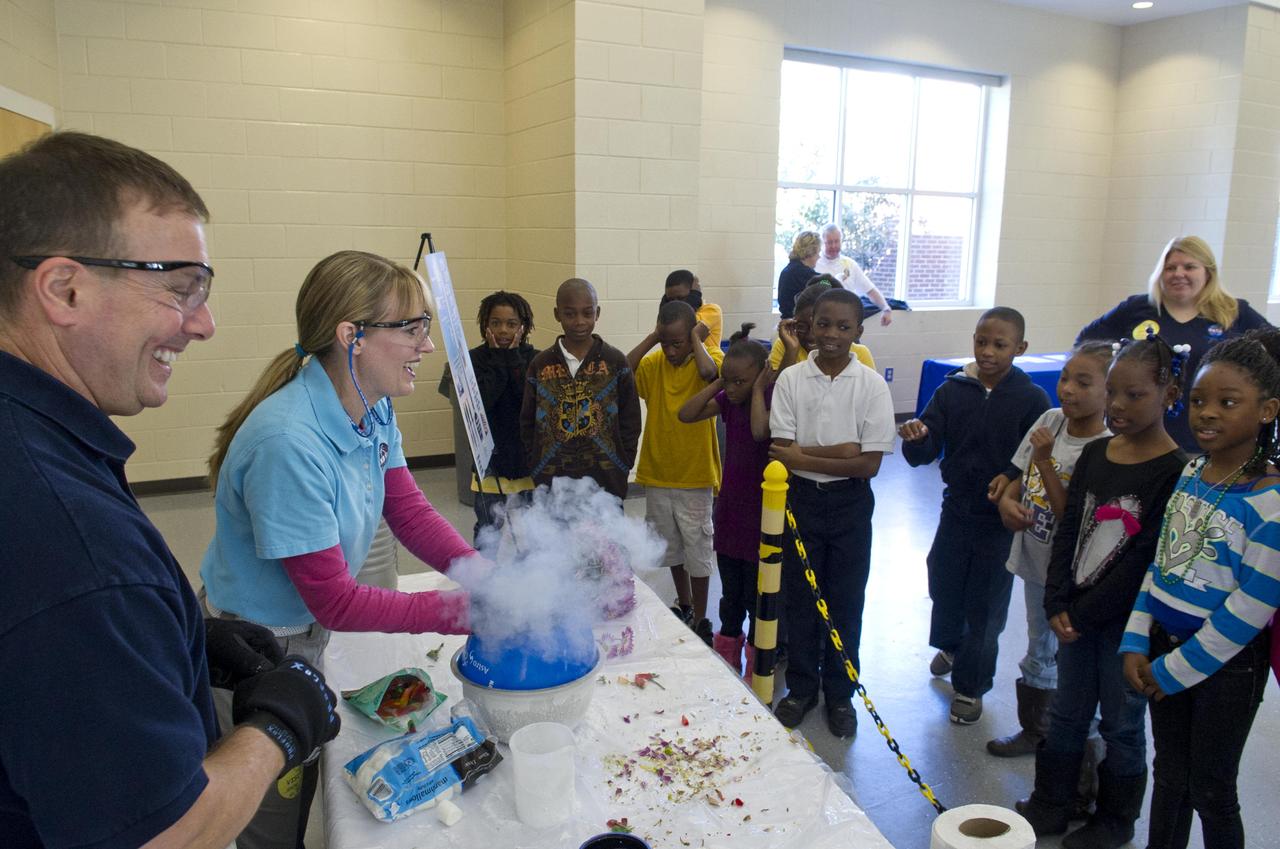
Rick Gilbrech (l), deputy director at Stennis Space Center, and Katie Wallace, director of the Stennis Education Office, team up for a cryogenics presentation at Lillie Burney Elementary School in Hattiesburg, Miss. NASA senior staff members from Stennis Space Center visited the school Jan. 27, 2012, for a morning of activities and outreach to students and school officials.
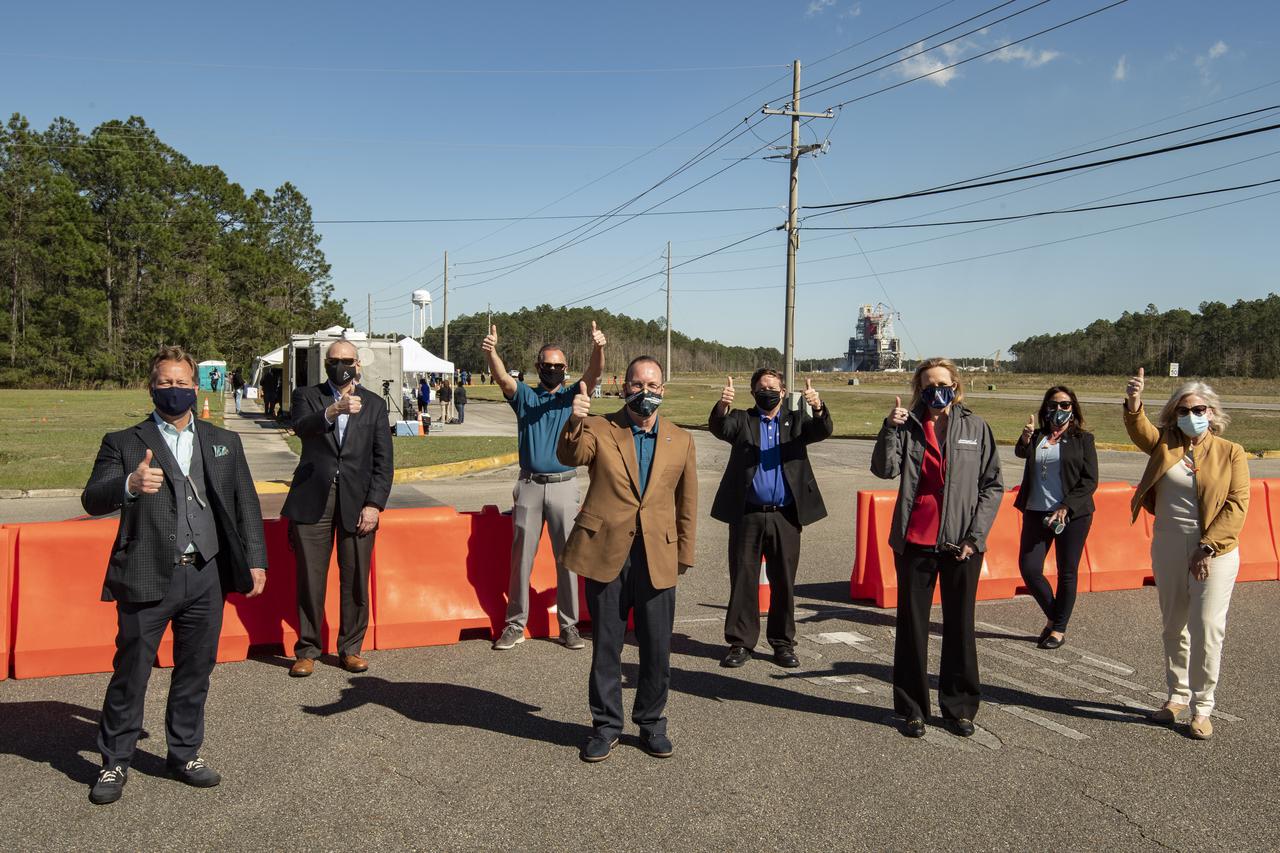
From left: Jim Maser, senior vice president of the Space Business Unit of Aerojet Rocketdyne; acting NASA Administrator Steve Jurzyck; John Bailey, associate director of NASA's Stennis Space Center; Rick Gilbrech, director of NASA's Stennis Space Center; Mike McDaniel, general manager of Aerojet Rocketdyne at Stennis Space Center; Amy Growder, chief operating officer of Aerojet Rocketdyne; Mary Byrd, associate director of NASA’s Marshall Space Flight Center; and Jody Singer, director of NASA's Marshall Space Flight Center; pose for a picture giving a thumbs-up following a second hot fire test of the core stage for the first flight of NASA’s Space Launch System rocket in the B-2 Test Stand, Thursday, March 18, 2021, at NASA’s Stennis Space Center near Bay St. Louis, Mississippi. The four RS-25 engines fired for the full-duration of 8 minutes during the test and generated 1.6 million pounds of thrust. The hot fire test is the final stage of the Green Run test series, a comprehensive assessment of the Space Launch System’s core stage prior to launching the Artemis I mission to the Moon. Photo Credit: (NASA/Robert Markowitz)

NASA officials and elected leaders were on hand for the groundbreaking ceremony of the NASA Shared Services Center Feb. 24, 2006, on the grounds of Stennis Space Center. The NSSC provides agency centralized administrative processing, human resources, procurement and financial services. From left, Louisiana Economic Development Secretary Mike Olivier, Stennis Space Center Director Rick Gilbrech, Computer Sciences Corp. President Michael Laphen, NASA Deputy Administrator Shana Dale, Rep. Gene Taylor, Sen. Trent Lott, Mississippi Gov. Haley Barbour, NASA Administrator Mike Griffin and Shared Services Center Executive Director Arbuthnot use golden shovels to break ground at the site.
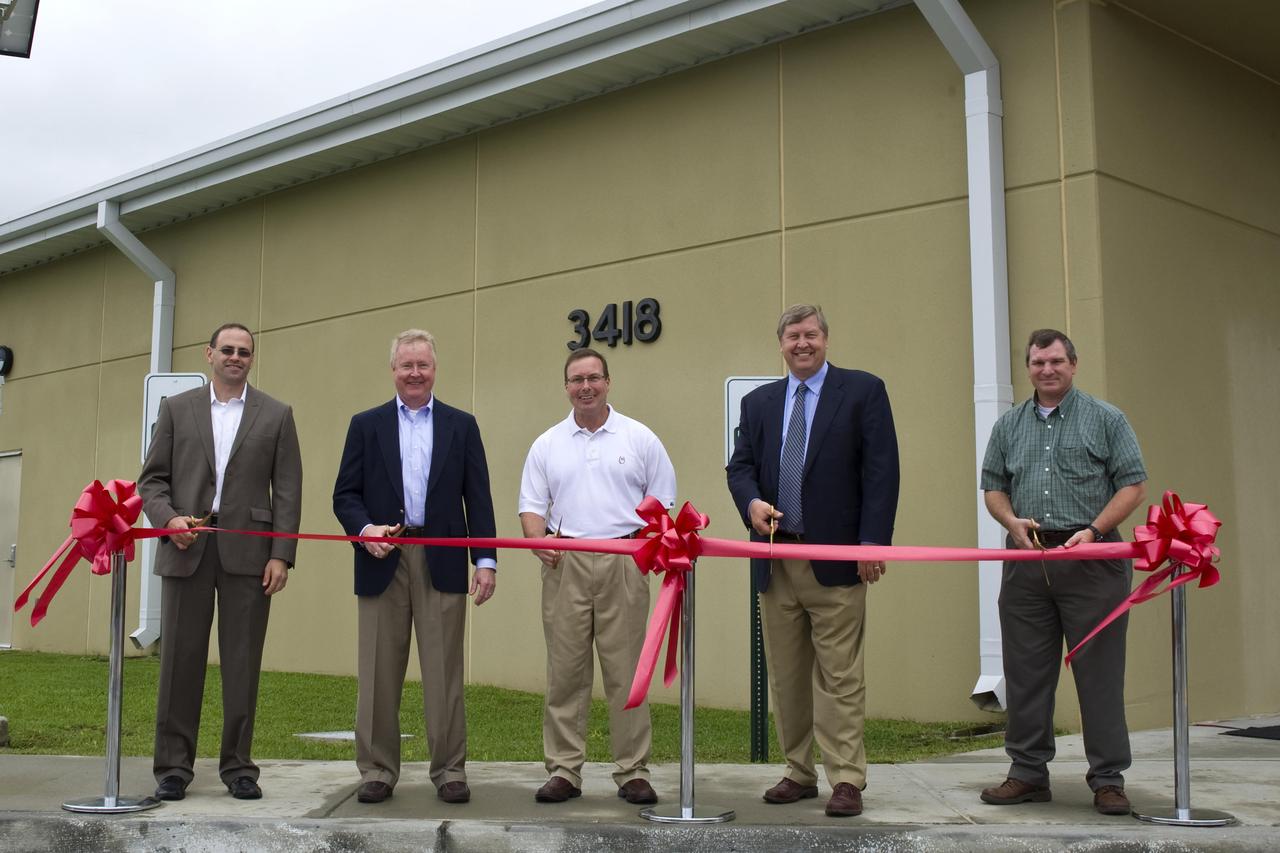
NASA cut the ribbon on a new cryogenics control center at John C. Stennis Space Center on March 30. The new facility is part of a project to strengthen Stennis facilities to withstand the impacts of future storms like hurricane Katrina in 2005. Participants in the ribbon-cutting included (l to r): Jason Zuckerman, director of project management for The McDonnel Group; Keith Brock, director of the NASA Project Directorate at Stennis; Stennis Deputy Director Rick Gilbrech; Steve Jackson, outgoing program manager of the Jacobs Technology NASA Test Operations Group; and Troy Frisbie, Cryo Control Center Construction project manager for NASA Center Operations at Stennis.
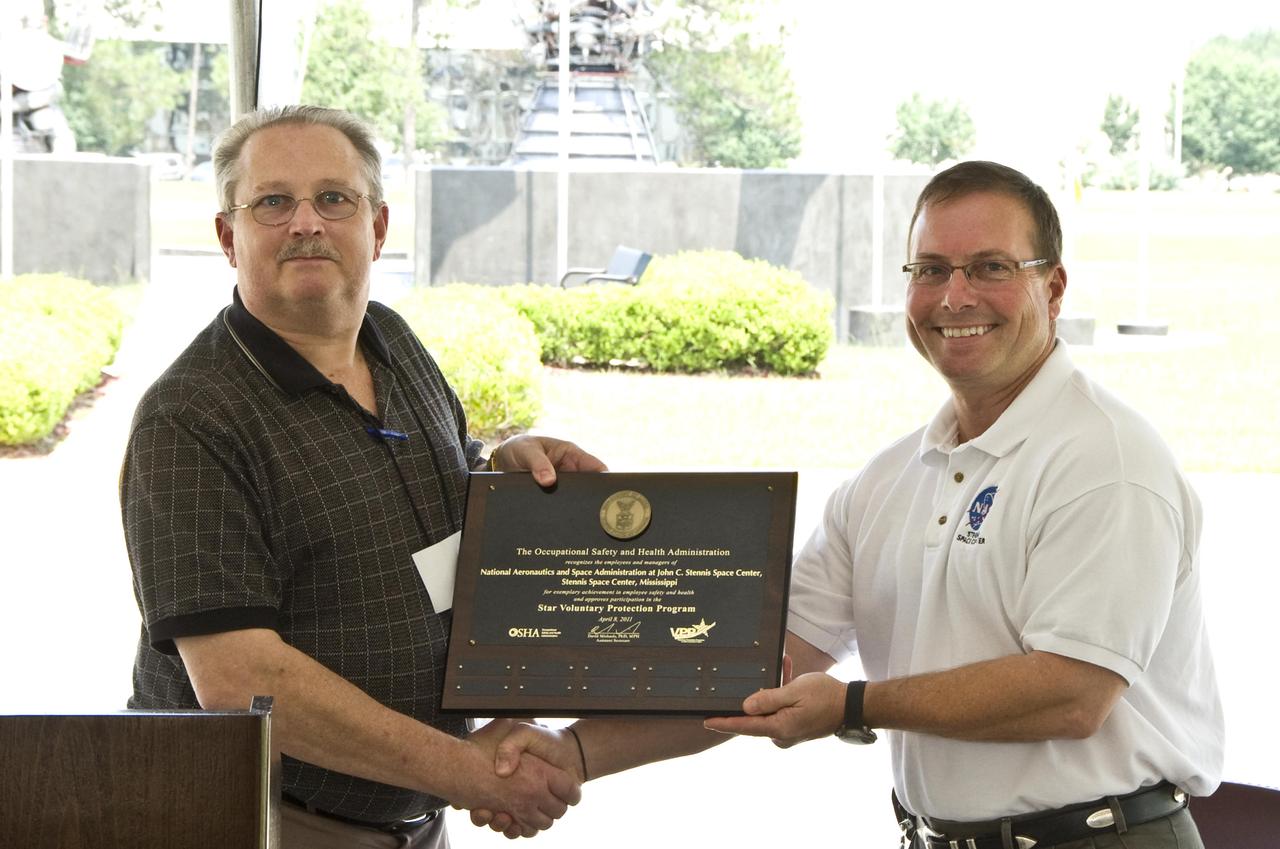
Stennis Space Center Deputy Director Rick Gilbrech (right) accepts a plaque designating the test facility as a Voluntary Protection Program Star site. Presenting the plaque is Clyde Payne, area director for the Occupational Safety and Health Administration in Jackson, Miss. OSHA established VPP in 1982 as a proactive safety management model to recognize excellence in safety and health. Since then, more than 2,000 organizations have been designated VPP Star sites. To reach that goal, an organization must demonstrate comprehensive and successful safety and health management programs in the workplace.
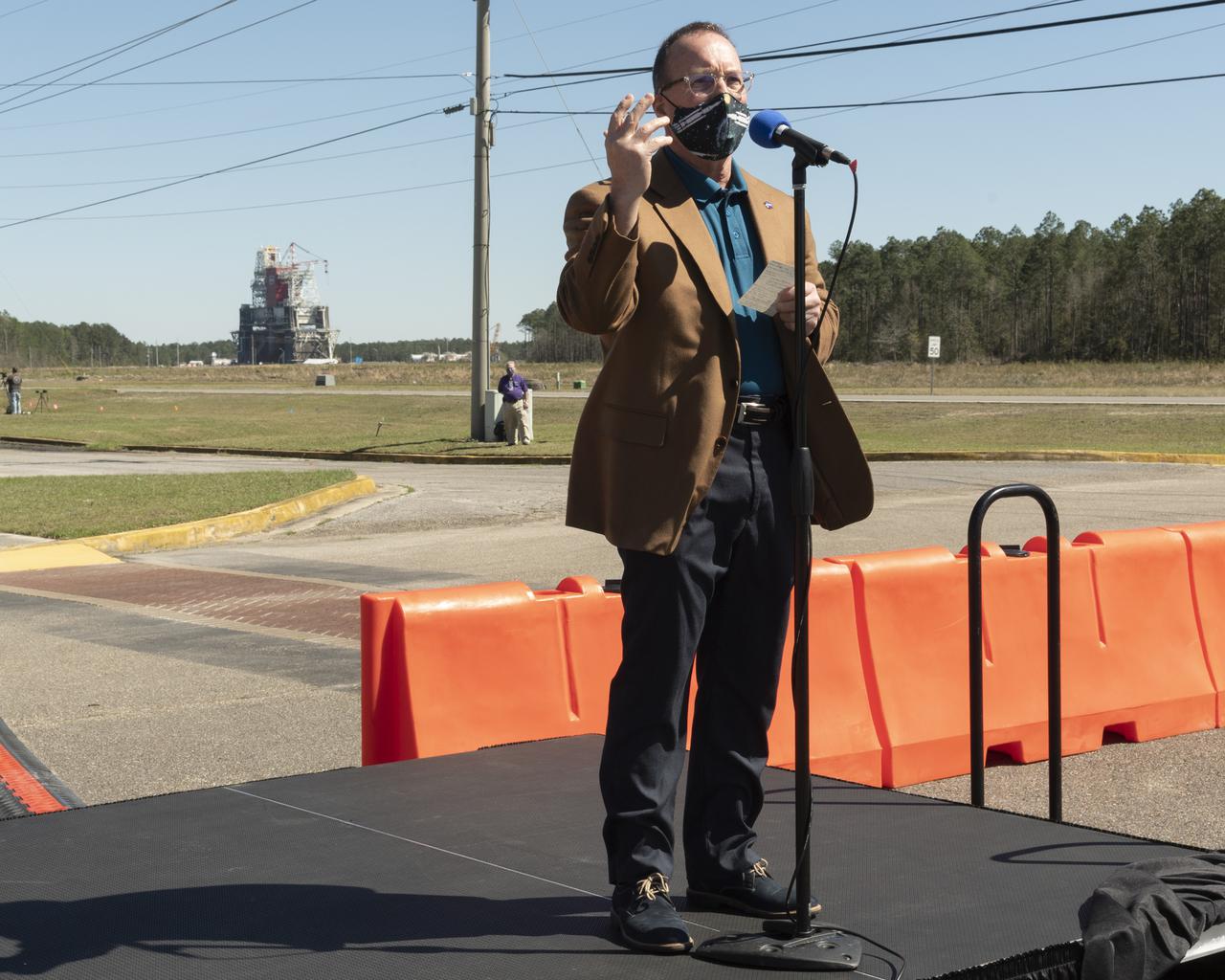
Rick Gilbrech, director of NASA's Stennis Space Center, speaks to invited guests ahead of a second hot fire test of the core stage for the first flight of NASA’s Space Launch System rocket in the B-2 Test Stand, Thursday, March 18, 2021, at NASA’s Stennis Space Center near Bay St. Louis, Mississippi. The hot fire test is the final stage of the Green Run test series, a comprehensive assessment of the Space Launch System’s core stage prior to launching the Artemis I mission to the Moon. Photo Credit: (NASA/Robert Markowitz)
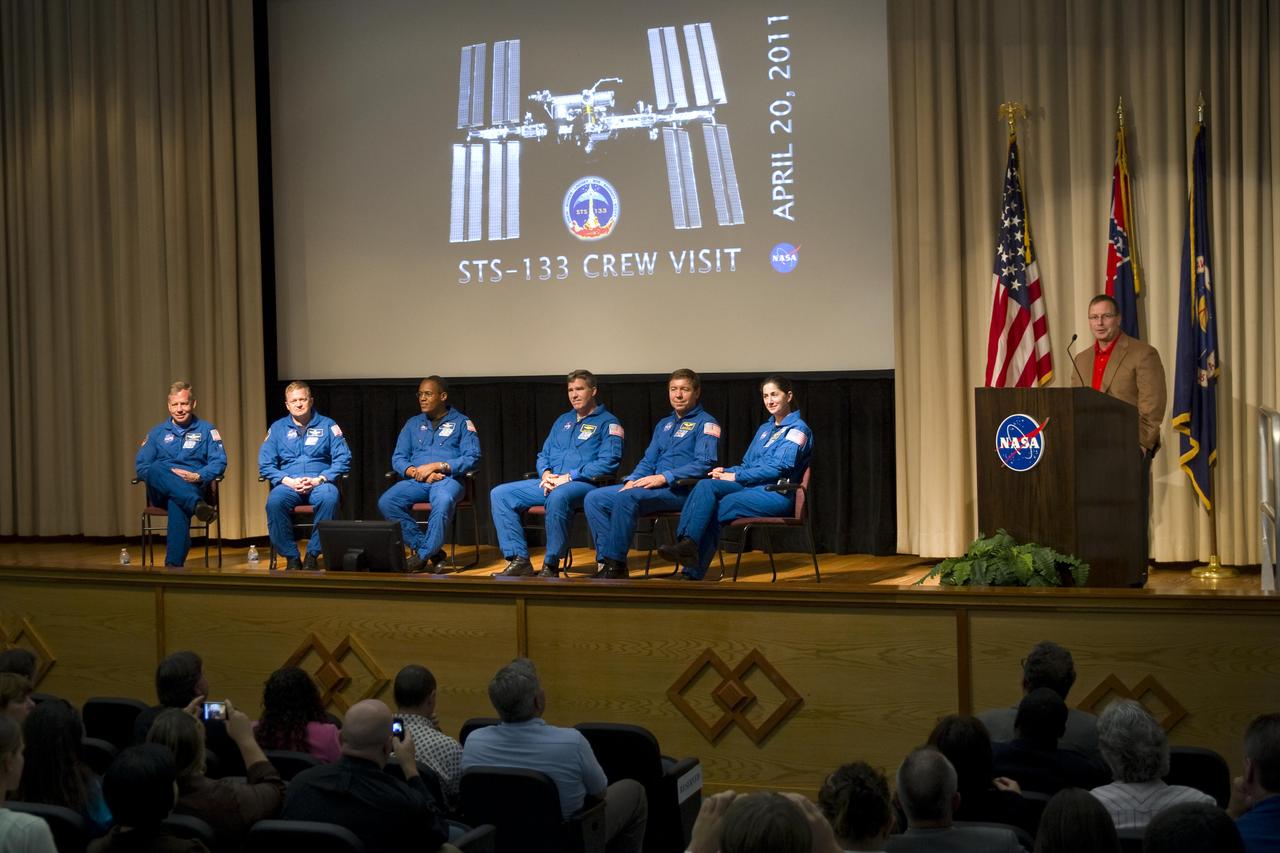
Stennis Space Center Deputy Director Rick Gilbrech (far right) welcomes members of the STS-133 shuttle mission crew during an April 20 visit. The mission was the final flight for the space shuttle Discovery, which now becomes the first of the three-orbiter fleet to be retired. During the visit to Stennis, Mission Commander Steven Lindsey ( l to r), Pilot Eric Boe and mission specialists Alvin Drew, Steven Bowen, Michael Barratt and Nicole Stott recapped their historic flight and thanked site employees for providing main engines that performed 'as advertised.'
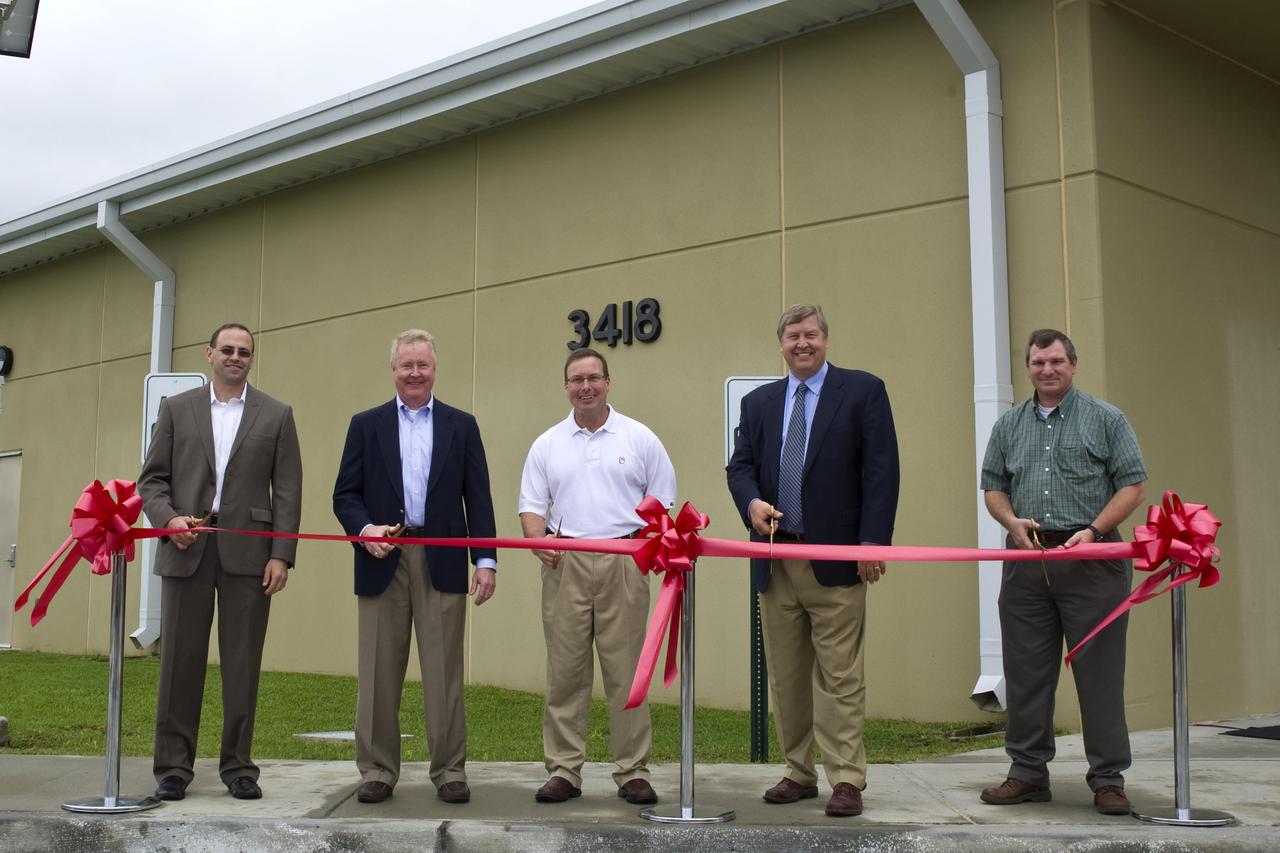
NASA cut the ribbon on a new cryogenics control center at John C. Stennis Space Center on March 30. The new facility is part of a project to strengthen Stennis facilities to withstand the impacts of future storms like hurricane Katrina in 2005. Participants in the ribbon-cutting included (l to r): Jason Zuckerman, director of project management for The McDonnel Group; Keith Brock, director of the NASA Project Directorate at Stennis; Stennis Deputy Director Rick Gilbrech; Steve Jackson of Jacobs Technology; and Troy Frisbie, Cryo Control Center Construction project manager for NASA Center Operations at Stennis.
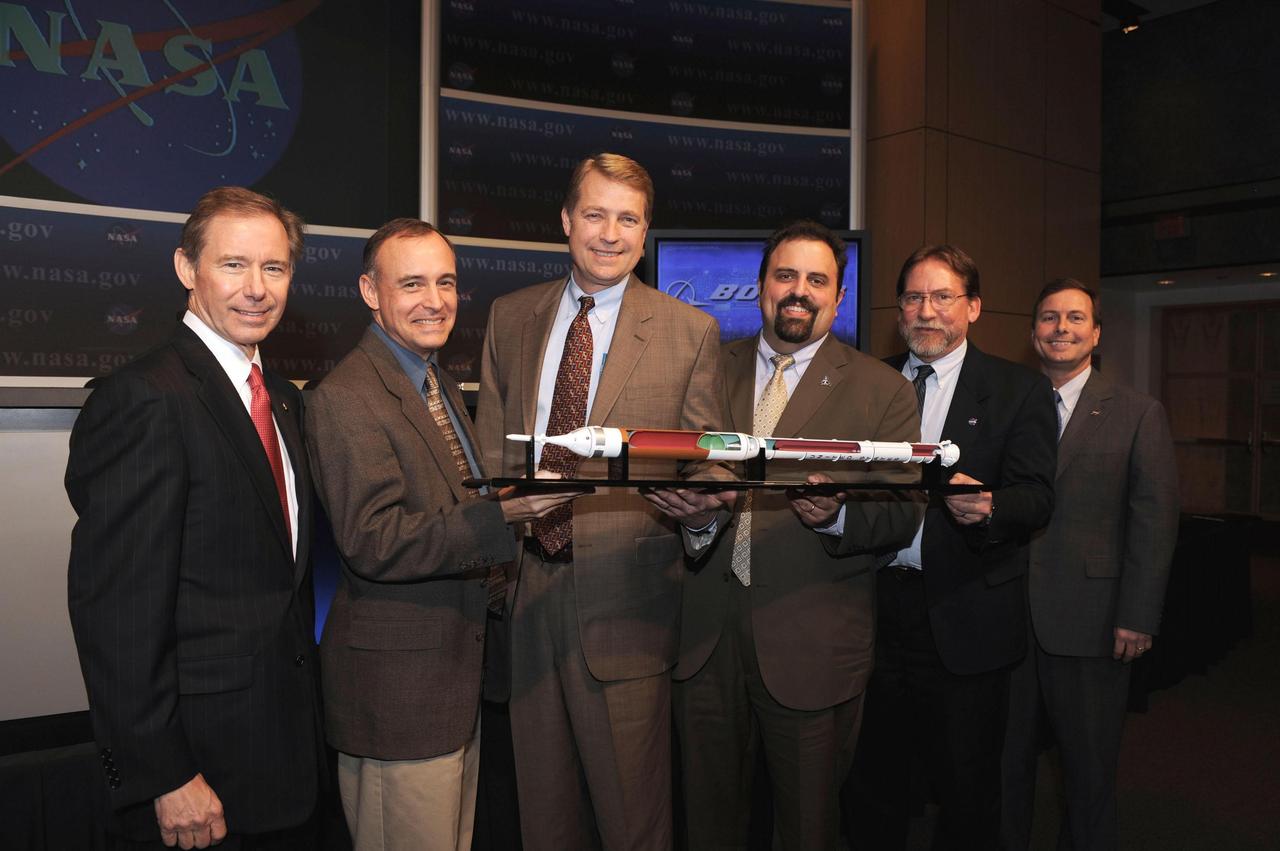
WASHINGTON, D.C. -- (From left) Brewster Shaw, vice president and genral manager of Boeing Space Exploration; Jeff Hanley, Constellation Program manager; Danny Davis, Upper Stage Element manager; Steve Cook, Ares Project manager; Doug Cooke, deputy associate administrator for Exploration Systems; and Rick Gilbrech, associate administrator for Space Exploration, stand with a model of the Ares I rocket on Dec. 12, 2007, at NASA Headquarters in Washington. NASA has selected The Boeing Company of Huntsville, Ala., as the prime contractor to produce, deliver and install avionics systsems for the Ares I rocket that will launch the Orion crew exploration vehicle into orbit. The selection is the final major contract award for Ares I. Photo credit: NASA/Paul E. Alers