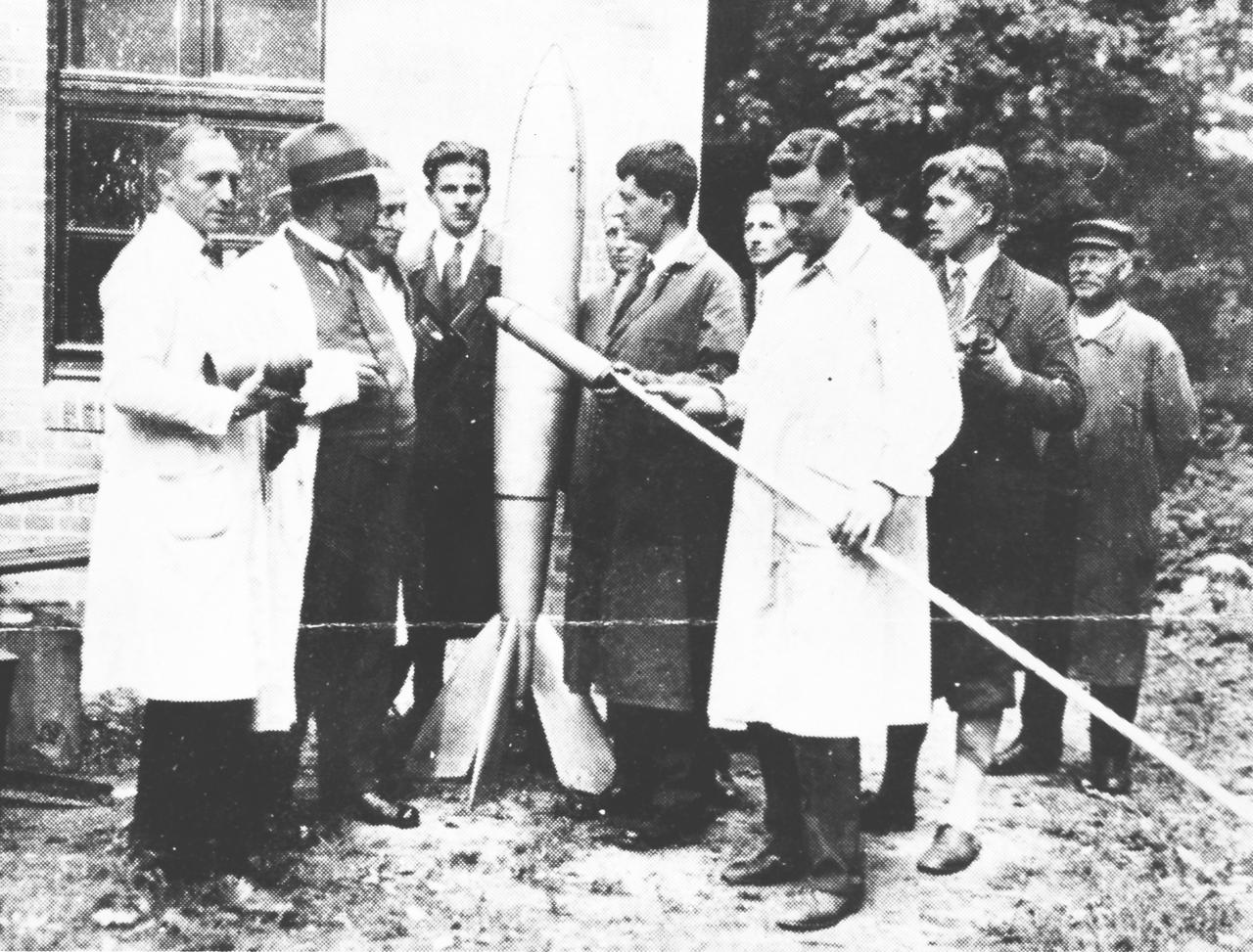
Dr. von Braun was among a famous group of rocket experimenters in Germany in the 1930s. This photograph is believed to be made on the occasion of Herman Oberth's Kegelduese liquid rocket engine being certified as to performance during firing. From left to right are R. Nebel, Dr. Ritter, Mr. Baermueller, Kurt Heinish, Herman Oberth, Klaus Riedel, Wernher von Braun, and an unidentified person.
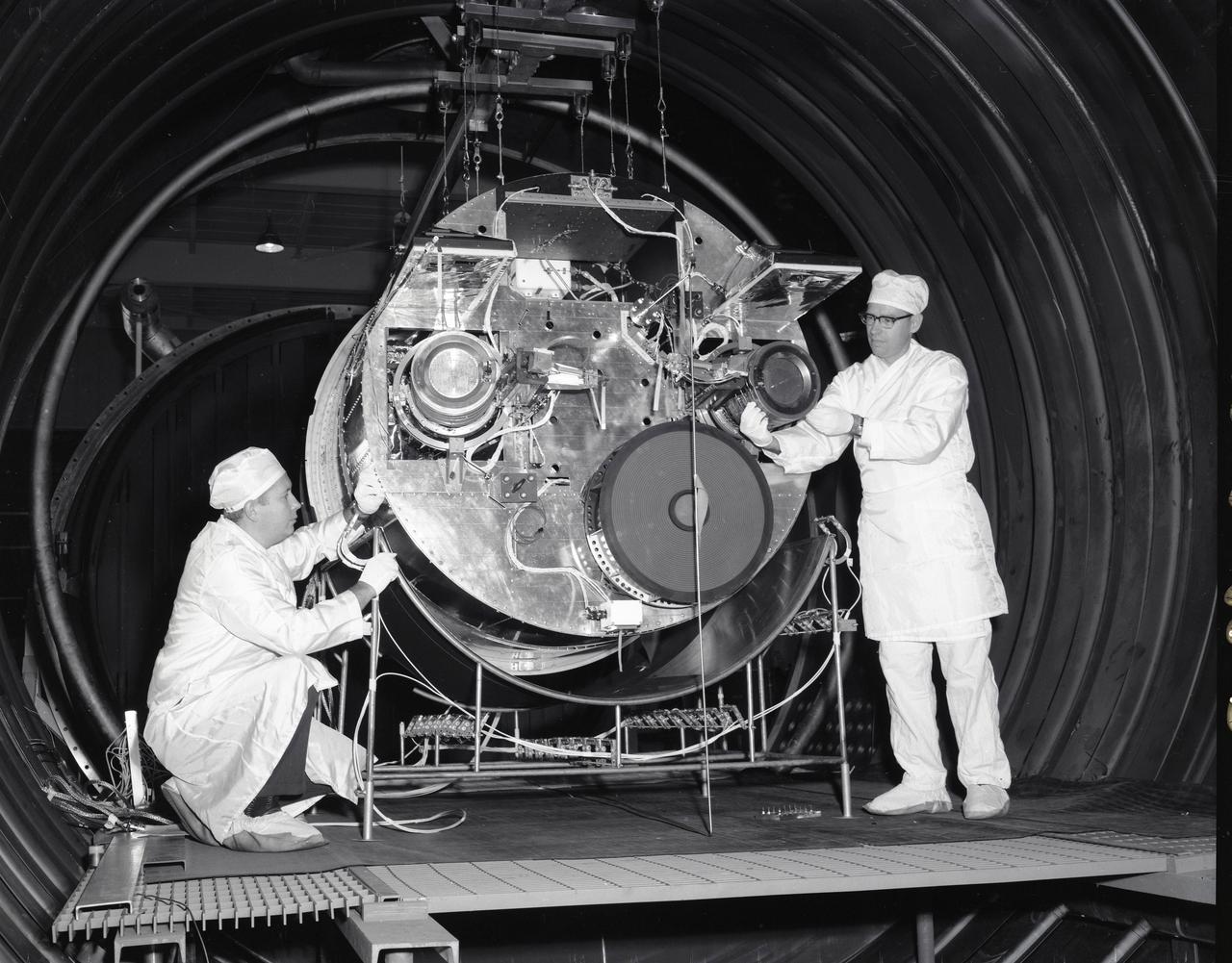
SPACE ELECTRIC ROCKET TEST, SERT II IN TANK 5
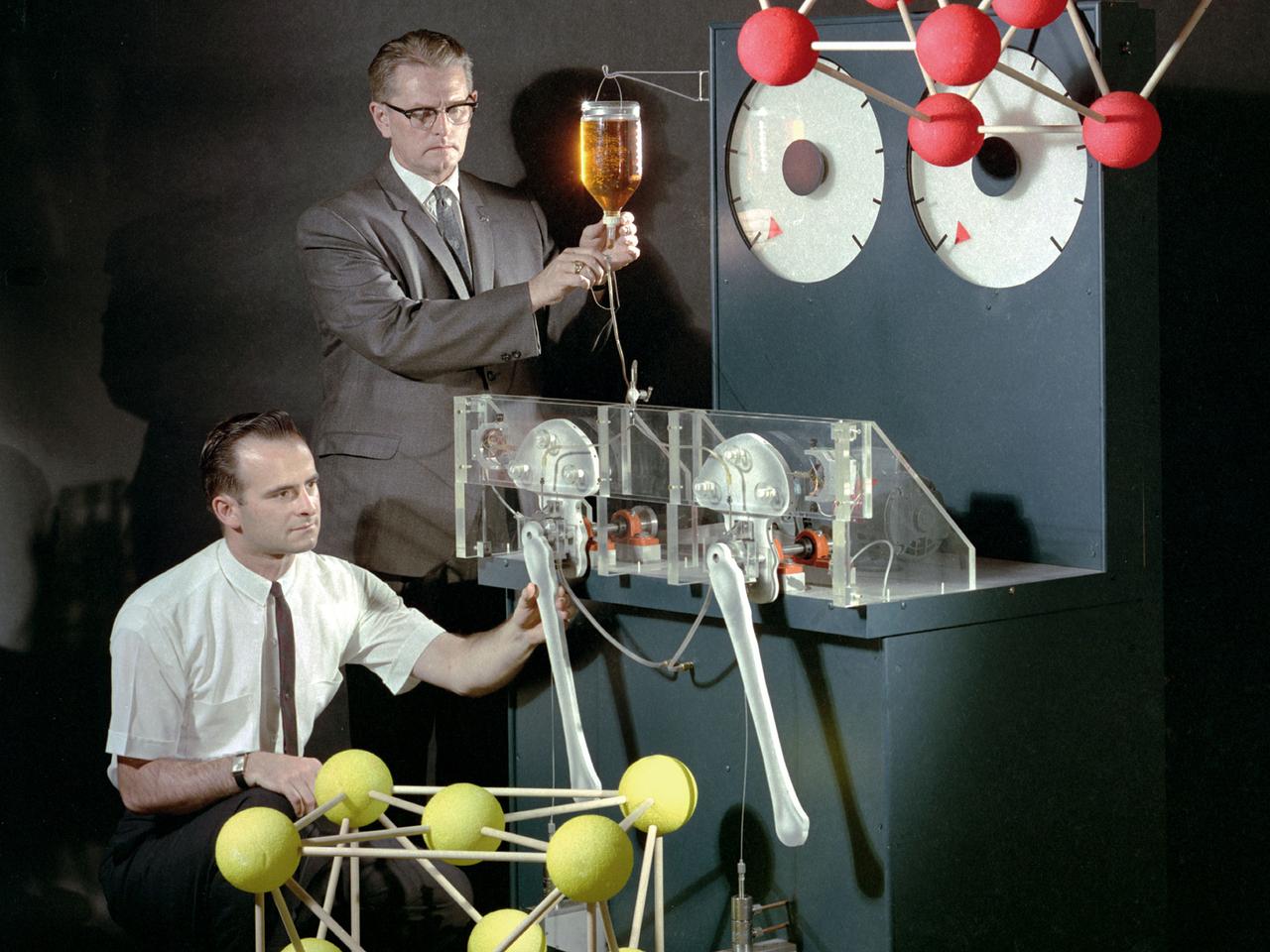
Robert Johnson, top, sets the lubricant flow while Donald Buckley adjusts the bearing specimen on an artificial hip simulator at the National Aeronautics and Space Administration (NASA) Lewis Research Center. The simulator was supplemented by large crystal lattice models to demonstrate the composition of different bearing alloys. This this image by NASA photographer Paul Riedel was used for the cover of the August 15, 1966 edition of McGraw-Hill Product Engineering. Johnson was chief of Lubrication Branch and Buckley head of the Space Environment Lubrication Section in the Fluid System Components Division. In 1962 they began studying the molecular structure of metals. Their friction and wear testing revealed that the optimal structure for metal bearings was a hexagonal crystal structure with proper molecular space. Bearing manufacturers traditionally preferred cubic structures over hexagonal arrangements. Buckley and Johnson found that even though the hexagonal structural was not as inherently strong as its cubic counterpart, it was less likely to cause a catastrophic failure. The Lewis researchers concentrated their efforts on cobalt-molybdenum and titanium alloys for high temperatures applications. The alloys had a number of possible uses, included prosthetics. The alloys were similar in composition to the commercial alloys used for prosthetics, but employed the longer lasting hexagonal structure.
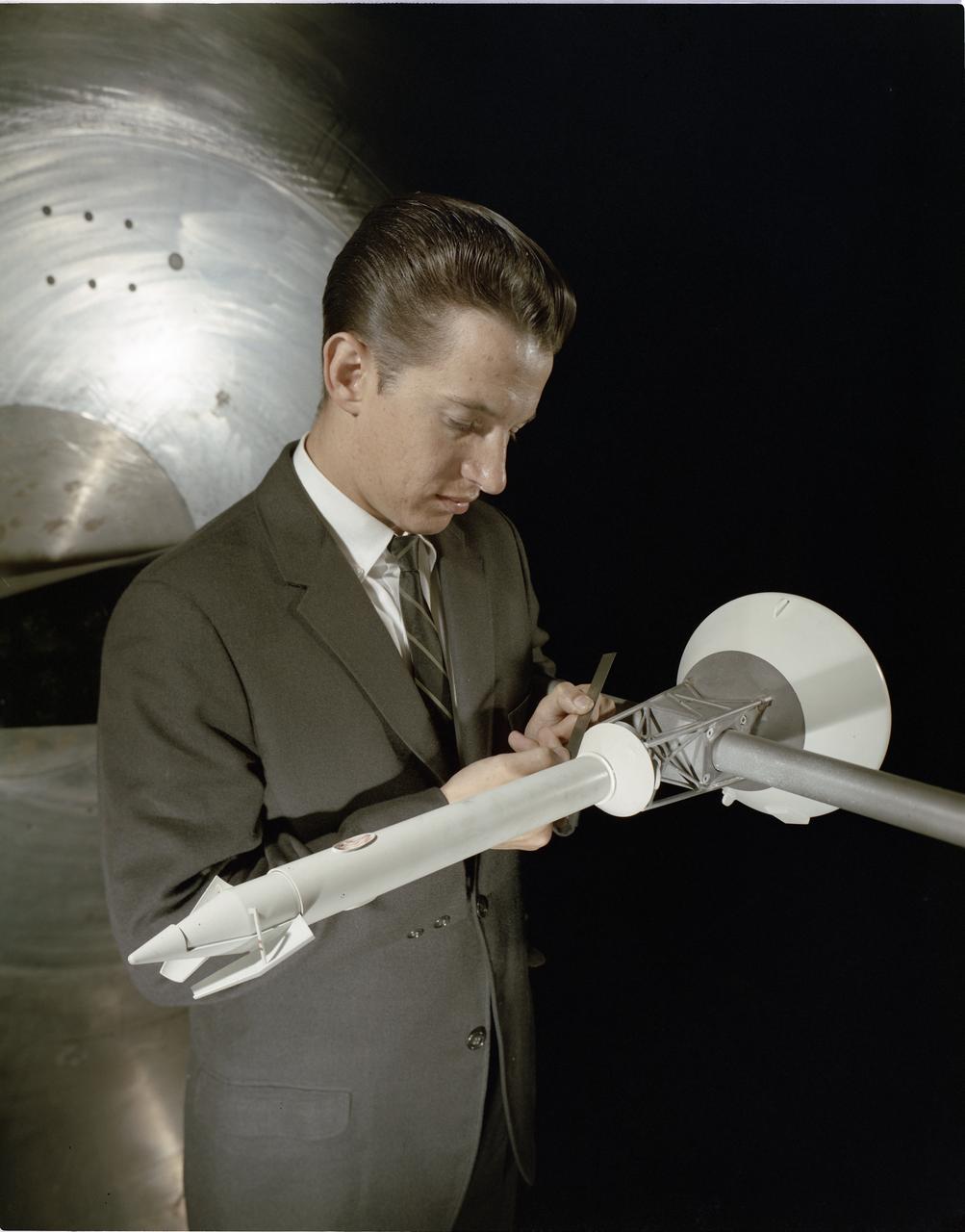
APOLLO STABILITY TEST IN THE 8X6 FOOT WIND TUNNEL - MODEL IS SHOWN WITH MODULE TOWER AND CANARDS
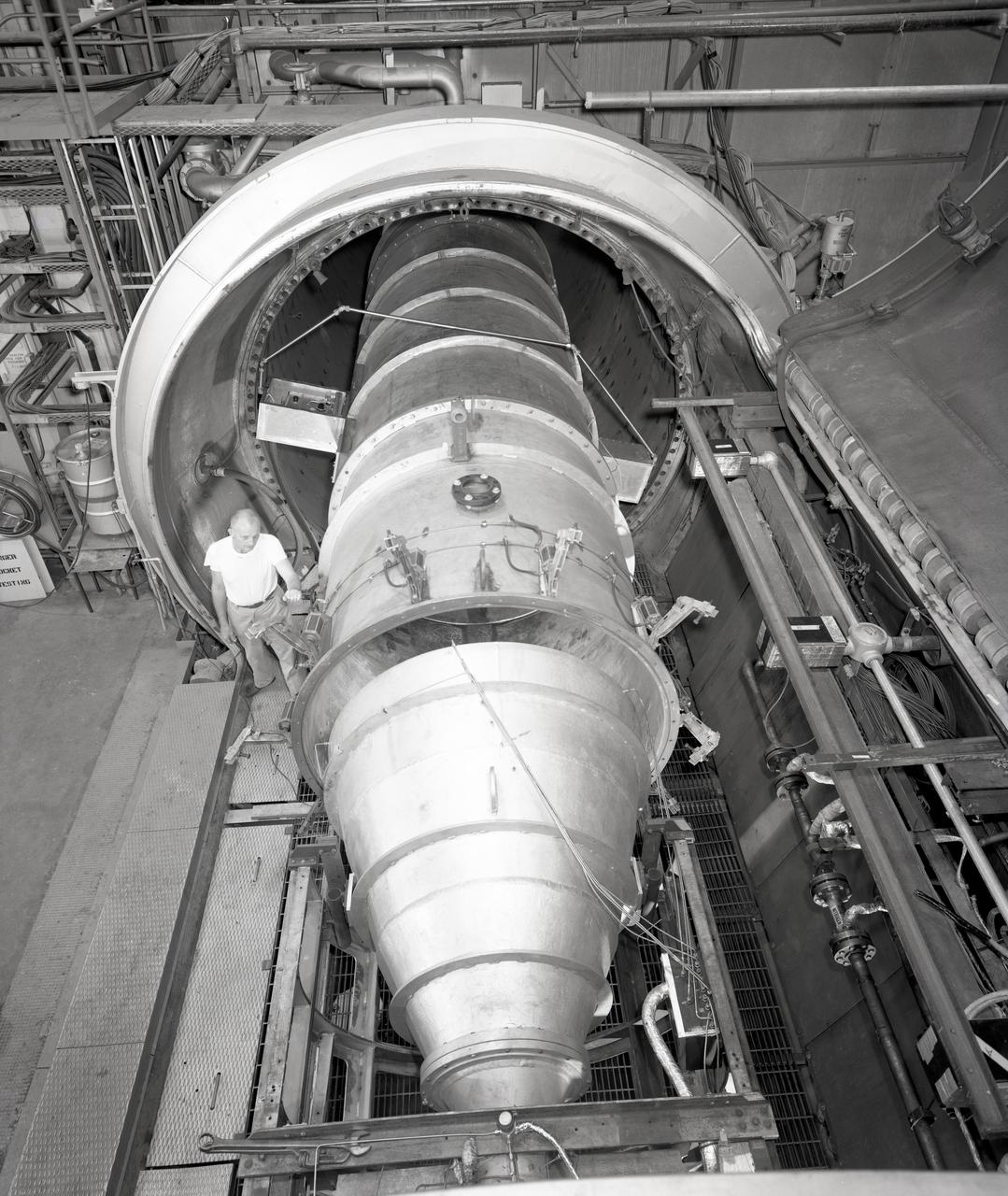
Apollo Contour Engine Model being tested in the NASA Lewis Research Center, Propulsion Systems Laboratory, PSL
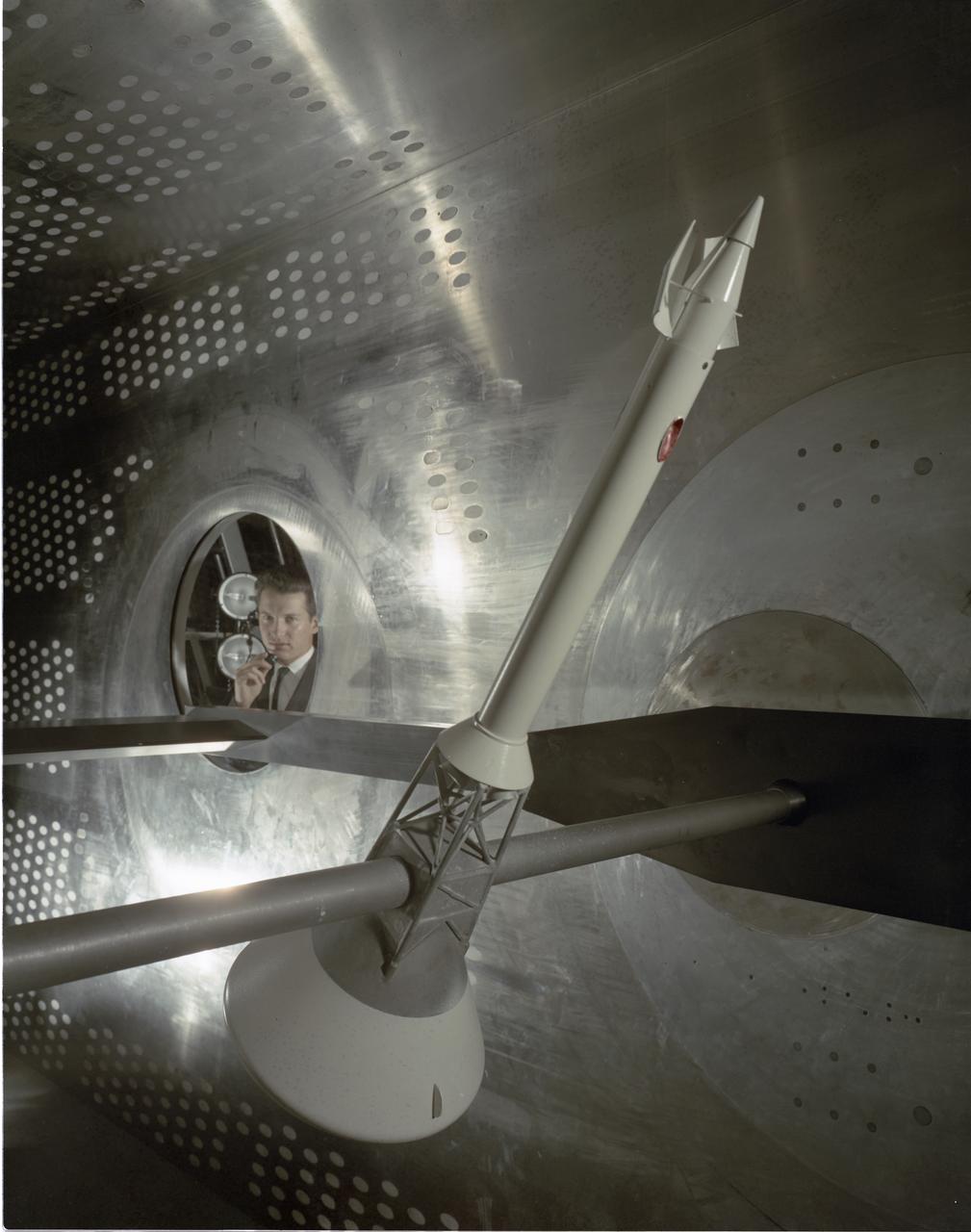
.059 SCALE MODEL OF APOLLO LAUNCH ESCAPE SYSTEM
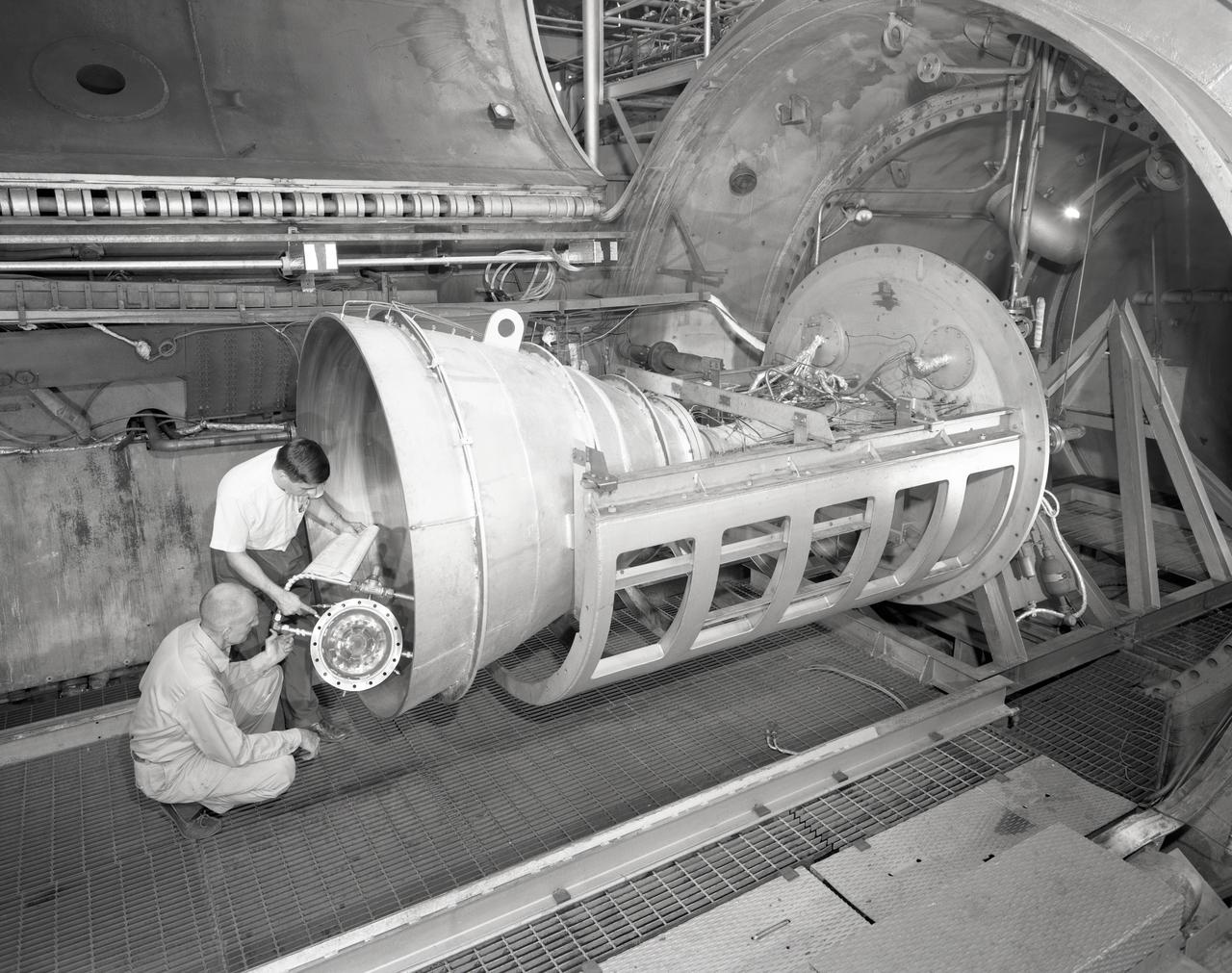
Apollo Contour Engine Model being tested in the NASA Lewis Research Center, Propulsion Systems Laboratory, PSL